EP3138675A1 - Uv-stable and superhydrophobic wood surface - Google Patents
Uv-stable and superhydrophobic wood surface Download PDFInfo
- Publication number
- EP3138675A1 EP3138675A1 EP15183867.9A EP15183867A EP3138675A1 EP 3138675 A1 EP3138675 A1 EP 3138675A1 EP 15183867 A EP15183867 A EP 15183867A EP 3138675 A1 EP3138675 A1 EP 3138675A1
- Authority
- EP
- European Patent Office
- Prior art keywords
- solution
- wood material
- wood
- treatment
- hours
- Prior art date
- Legal status (The legal status is an assumption and is not a legal conclusion. Google has not performed a legal analysis and makes no representation as to the accuracy of the status listed.)
- Withdrawn
Links
- 239000002023 wood Substances 0.000 title claims abstract description 261
- 230000003075 superhydrophobic effect Effects 0.000 title claims description 10
- XLOMVQKBTHCTTD-UHFFFAOYSA-N Zinc monoxide Chemical compound [Zn]=O XLOMVQKBTHCTTD-UHFFFAOYSA-N 0.000 claims abstract description 265
- 239000000463 material Substances 0.000 claims abstract description 142
- 239000011787 zinc oxide Substances 0.000 claims abstract description 134
- 238000000034 method Methods 0.000 claims abstract description 60
- 230000002209 hydrophobic effect Effects 0.000 claims abstract description 24
- 238000001035 drying Methods 0.000 claims abstract description 21
- 238000007654 immersion Methods 0.000 claims abstract description 14
- VXUYXOFXAQZZMF-UHFFFAOYSA-N titanium(IV) isopropoxide Chemical compound CC(C)O[Ti](OC(C)C)(OC(C)C)OC(C)C VXUYXOFXAQZZMF-UHFFFAOYSA-N 0.000 claims abstract description 9
- 150000003752 zinc compounds Chemical class 0.000 claims abstract description 8
- 239000000243 solution Substances 0.000 claims description 124
- 238000000576 coating method Methods 0.000 claims description 78
- 239000011248 coating agent Substances 0.000 claims description 69
- XLYOFNOQVPJJNP-UHFFFAOYSA-N water Substances O XLYOFNOQVPJJNP-UHFFFAOYSA-N 0.000 claims description 54
- 229910001868 water Inorganic materials 0.000 claims description 51
- LFQSCWFLJHTTHZ-UHFFFAOYSA-N Ethanol Chemical compound CCO LFQSCWFLJHTTHZ-UHFFFAOYSA-N 0.000 claims description 47
- ONDPHDOFVYQSGI-UHFFFAOYSA-N zinc nitrate Chemical compound [Zn+2].[O-][N+]([O-])=O.[O-][N+]([O-])=O ONDPHDOFVYQSGI-UHFFFAOYSA-N 0.000 claims description 22
- 230000008859 change Effects 0.000 claims description 21
- VKYKSIONXSXAKP-UHFFFAOYSA-N hexamethylenetetramine Chemical compound C1N(C2)CN3CN1CN2C3 VKYKSIONXSXAKP-UHFFFAOYSA-N 0.000 claims description 20
- 238000012360 testing method Methods 0.000 claims description 18
- 230000008569 process Effects 0.000 claims description 17
- VYPSYNLAJGMNEJ-UHFFFAOYSA-N Silicium dioxide Chemical compound O=[Si]=O VYPSYNLAJGMNEJ-UHFFFAOYSA-N 0.000 claims description 16
- 230000000087 stabilizing effect Effects 0.000 claims description 14
- VHUUQVKOLVNVRT-UHFFFAOYSA-N Ammonium hydroxide Chemical compound [NH4+].[OH-] VHUUQVKOLVNVRT-UHFFFAOYSA-N 0.000 claims description 13
- 229920005610 lignin Polymers 0.000 claims description 13
- 230000006641 stabilisation Effects 0.000 claims description 13
- 238000011105 stabilization Methods 0.000 claims description 13
- 239000000908 ammonium hydroxide Substances 0.000 claims description 11
- 239000003086 colorant Substances 0.000 claims description 11
- 230000006378 damage Effects 0.000 claims description 10
- 239000003960 organic solvent Substances 0.000 claims description 10
- 238000001157 Fourier transform infrared spectrum Methods 0.000 claims description 9
- 238000002441 X-ray diffraction Methods 0.000 claims description 9
- 150000003863 ammonium salts Chemical class 0.000 claims description 8
- 229910052681 coesite Inorganic materials 0.000 claims description 8
- 229910052906 cristobalite Inorganic materials 0.000 claims description 8
- 238000010438 heat treatment Methods 0.000 claims description 8
- 239000000377 silicon dioxide Substances 0.000 claims description 8
- 229910052682 stishovite Inorganic materials 0.000 claims description 8
- 229910052905 tridymite Inorganic materials 0.000 claims description 8
- 239000004246 zinc acetate Substances 0.000 claims description 8
- ZOIORXHNWRGPMV-UHFFFAOYSA-N acetic acid;zinc Chemical compound [Zn].CC(O)=O.CC(O)=O ZOIORXHNWRGPMV-UHFFFAOYSA-N 0.000 claims description 7
- 239000002243 precursor Substances 0.000 claims description 7
- BOTDANWDWHJENH-UHFFFAOYSA-N Tetraethyl orthosilicate Chemical compound CCO[Si](OCC)(OCC)OCC BOTDANWDWHJENH-UHFFFAOYSA-N 0.000 claims description 6
- -1 alkyl chain thiols Chemical class 0.000 claims description 6
- 239000007864 aqueous solution Substances 0.000 claims description 6
- 230000015556 catabolic process Effects 0.000 claims description 6
- 238000006731 degradation reaction Methods 0.000 claims description 6
- 230000007423 decrease Effects 0.000 claims description 5
- 235000021355 Stearic acid Nutrition 0.000 claims description 4
- OQCDKBAXFALNLD-UHFFFAOYSA-N octadecanoic acid Natural products CCCCCCCC(C)CCCCCCCCC(O)=O OQCDKBAXFALNLD-UHFFFAOYSA-N 0.000 claims description 4
- 239000008117 stearic acid Substances 0.000 claims description 4
- 238000005096 rolling process Methods 0.000 claims description 3
- BLRPTPMANUNPDV-UHFFFAOYSA-N Silane Chemical compound [SiH4] BLRPTPMANUNPDV-UHFFFAOYSA-N 0.000 claims description 2
- 235000014113 dietary fatty acids Nutrition 0.000 claims description 2
- 239000000194 fatty acid Substances 0.000 claims description 2
- 229930195729 fatty acid Natural products 0.000 claims description 2
- 150000004665 fatty acids Chemical class 0.000 claims description 2
- 239000005055 methyl trichlorosilane Substances 0.000 claims description 2
- 229910000077 silane Inorganic materials 0.000 claims description 2
- 150000004756 silanes Chemical class 0.000 claims description 2
- 230000000063 preceeding effect Effects 0.000 claims 1
- 230000006750 UV protection Effects 0.000 abstract description 7
- 241000218657 Picea Species 0.000 description 39
- 239000010410 layer Substances 0.000 description 22
- GWEVSGVZZGPLCZ-UHFFFAOYSA-N Titan oxide Chemical compound O=[Ti]=O GWEVSGVZZGPLCZ-UHFFFAOYSA-N 0.000 description 18
- 238000010899 nucleation Methods 0.000 description 18
- 239000007787 solid Substances 0.000 description 15
- 238000002360 preparation method Methods 0.000 description 14
- QGZKDVFQNNGYKY-UHFFFAOYSA-N Ammonia Chemical compound N QGZKDVFQNNGYKY-UHFFFAOYSA-N 0.000 description 13
- 210000002421 cell wall Anatomy 0.000 description 12
- 238000000224 chemical solution deposition Methods 0.000 description 12
- 239000000306 component Substances 0.000 description 11
- 239000002073 nanorod Substances 0.000 description 11
- 239000000047 product Substances 0.000 description 11
- 235000011114 ammonium hydroxide Nutrition 0.000 description 10
- 239000000126 substance Substances 0.000 description 10
- 239000002585 base Substances 0.000 description 9
- 210000004027 cell Anatomy 0.000 description 9
- 229920002678 cellulose Polymers 0.000 description 9
- 239000001913 cellulose Substances 0.000 description 9
- 239000013078 crystal Substances 0.000 description 9
- 230000004048 modification Effects 0.000 description 9
- 238000012986 modification Methods 0.000 description 9
- 239000002904 solvent Substances 0.000 description 9
- YWYZEGXAUVWDED-UHFFFAOYSA-N triammonium citrate Chemical group [NH4+].[NH4+].[NH4+].[O-]C(=O)CC(O)(CC([O-])=O)C([O-])=O YWYZEGXAUVWDED-UHFFFAOYSA-N 0.000 description 8
- 239000003637 basic solution Substances 0.000 description 7
- 235000010299 hexamethylene tetramine Nutrition 0.000 description 7
- 239000004312 hexamethylene tetramine Substances 0.000 description 7
- 238000001878 scanning electron micrograph Methods 0.000 description 7
- CSCPPACGZOOCGX-UHFFFAOYSA-N Acetone Chemical compound CC(C)=O CSCPPACGZOOCGX-UHFFFAOYSA-N 0.000 description 6
- 238000003491 array Methods 0.000 description 6
- 230000000694 effects Effects 0.000 description 6
- 239000011265 semifinished product Substances 0.000 description 6
- 229910002651 NO3 Inorganic materials 0.000 description 5
- 235000008124 Picea excelsa Nutrition 0.000 description 5
- 125000003118 aryl group Chemical group 0.000 description 5
- 230000000903 blocking effect Effects 0.000 description 5
- 238000007598 dipping method Methods 0.000 description 5
- 239000007788 liquid Substances 0.000 description 5
- 239000000203 mixture Substances 0.000 description 5
- 229910000069 nitrogen hydride Inorganic materials 0.000 description 5
- 239000002245 particle Substances 0.000 description 5
- 229920000642 polymer Polymers 0.000 description 5
- NLXLAEXVIDQMFP-UHFFFAOYSA-N Ammonia chloride Chemical compound [NH4+].[Cl-] NLXLAEXVIDQMFP-UHFFFAOYSA-N 0.000 description 4
- 229920002488 Hemicellulose Polymers 0.000 description 4
- 239000006096 absorbing agent Substances 0.000 description 4
- 238000005259 measurement Methods 0.000 description 4
- QIQXTHQIDYTFRH-UHFFFAOYSA-N octadecanoic acid Chemical compound CCCCCCCCCCCCCCCCCC(O)=O QIQXTHQIDYTFRH-UHFFFAOYSA-N 0.000 description 4
- 230000004224 protection Effects 0.000 description 4
- 238000001228 spectrum Methods 0.000 description 4
- 239000000758 substrate Substances 0.000 description 4
- 238000012876 topography Methods 0.000 description 4
- 241000446313 Lamella Species 0.000 description 3
- OKKJLVBELUTLKV-UHFFFAOYSA-N Methanol Chemical compound OC OKKJLVBELUTLKV-UHFFFAOYSA-N 0.000 description 3
- 229910021529 ammonia Inorganic materials 0.000 description 3
- 230000008901 benefit Effects 0.000 description 3
- 230000015572 biosynthetic process Effects 0.000 description 3
- 125000002915 carbonyl group Chemical group [*:2]C([*:1])=O 0.000 description 3
- 238000009833 condensation Methods 0.000 description 3
- 230000005494 condensation Effects 0.000 description 3
- 239000008367 deionised water Substances 0.000 description 3
- 229910021641 deionized water Inorganic materials 0.000 description 3
- 238000000151 deposition Methods 0.000 description 3
- 230000008021 deposition Effects 0.000 description 3
- 238000011065 in-situ storage Methods 0.000 description 3
- 238000003760 magnetic stirring Methods 0.000 description 3
- 238000004519 manufacturing process Methods 0.000 description 3
- 239000011259 mixed solution Substances 0.000 description 3
- VLKZOEOYAKHREP-UHFFFAOYSA-N n-Hexane Chemical compound CCCCCC VLKZOEOYAKHREP-UHFFFAOYSA-N 0.000 description 3
- 238000007539 photo-oxidation reaction Methods 0.000 description 3
- 239000000843 powder Substances 0.000 description 3
- 239000012047 saturated solution Substances 0.000 description 3
- 239000007921 spray Substances 0.000 description 3
- 239000002344 surface layer Substances 0.000 description 3
- 238000009281 ultraviolet germicidal irradiation Methods 0.000 description 3
- 238000004383 yellowing Methods 0.000 description 3
- VPKQPPJQTZJZDB-UHFFFAOYSA-N 3,3,4,4,5,5,6,6,7,7,8,8,8-tridecafluorooctyl prop-2-enoate Chemical compound FC(F)(F)C(F)(F)C(F)(F)C(F)(F)C(F)(F)C(F)(F)CCOC(=O)C=C VPKQPPJQTZJZDB-UHFFFAOYSA-N 0.000 description 2
- SRBFZHDQGSBBOR-IOVATXLUSA-N D-xylopyranose Chemical compound O[C@@H]1COC(O)[C@H](O)[C@H]1O SRBFZHDQGSBBOR-IOVATXLUSA-N 0.000 description 2
- WQZGKKKJIJFFOK-GASJEMHNSA-N Glucose Natural products OC[C@H]1OC(O)[C@H](O)[C@@H](O)[C@@H]1O WQZGKKKJIJFFOK-GASJEMHNSA-N 0.000 description 2
- 229920002522 Wood fibre Polymers 0.000 description 2
- 238000010521 absorption reaction Methods 0.000 description 2
- 230000004075 alteration Effects 0.000 description 2
- 238000012512 characterization method Methods 0.000 description 2
- 238000007385 chemical modification Methods 0.000 description 2
- 239000003795 chemical substances by application Substances 0.000 description 2
- 230000003247 decreasing effect Effects 0.000 description 2
- WNAHIZMDSQCWRP-UHFFFAOYSA-N dodecane-1-thiol Chemical compound CCCCCCCCCCCCS WNAHIZMDSQCWRP-UHFFFAOYSA-N 0.000 description 2
- 238000005516 engineering process Methods 0.000 description 2
- 239000007888 film coating Substances 0.000 description 2
- 238000009501 film coating Methods 0.000 description 2
- 239000011521 glass Substances 0.000 description 2
- 239000003365 glass fiber Substances 0.000 description 2
- 239000008103 glucose Substances 0.000 description 2
- 238000000731 high angular annular dark-field scanning transmission electron microscopy Methods 0.000 description 2
- 238000002173 high-resolution transmission electron microscopy Methods 0.000 description 2
- 230000003993 interaction Effects 0.000 description 2
- 238000002386 leaching Methods 0.000 description 2
- JLUFWMXJHAVVNN-UHFFFAOYSA-N methyltrichlorosilane Chemical compound C[Si](Cl)(Cl)Cl JLUFWMXJHAVVNN-UHFFFAOYSA-N 0.000 description 2
- 238000000386 microscopy Methods 0.000 description 2
- 238000000879 optical micrograph Methods 0.000 description 2
- 238000001782 photodegradation Methods 0.000 description 2
- 239000004033 plastic Substances 0.000 description 2
- 235000013824 polyphenols Nutrition 0.000 description 2
- 238000006884 silylation reaction Methods 0.000 description 2
- 238000005507 spraying Methods 0.000 description 2
- 239000010875 treated wood Substances 0.000 description 2
- PISDRBMXQBSCIP-UHFFFAOYSA-N trichloro(3,3,4,4,5,5,6,6,7,7,8,8,8-tridecafluorooctyl)silane Chemical compound FC(F)(F)C(F)(F)C(F)(F)C(F)(F)C(F)(F)C(F)(F)CC[Si](Cl)(Cl)Cl PISDRBMXQBSCIP-UHFFFAOYSA-N 0.000 description 2
- HLWCOIUDOLYBGD-UHFFFAOYSA-N trichloro(decyl)silane Chemical compound CCCCCCCCCC[Si](Cl)(Cl)Cl HLWCOIUDOLYBGD-UHFFFAOYSA-N 0.000 description 2
- AVYKQOAMZCAHRG-UHFFFAOYSA-N triethoxy(3,3,4,4,5,5,6,6,7,7,8,8,8-tridecafluorooctyl)silane Chemical compound CCO[Si](OCC)(OCC)CCC(F)(F)C(F)(F)C(F)(F)C(F)(F)C(F)(F)C(F)(F)F AVYKQOAMZCAHRG-UHFFFAOYSA-N 0.000 description 2
- NMEPHPOFYLLFTK-UHFFFAOYSA-N trimethoxy(octyl)silane Chemical compound CCCCCCCC[Si](OC)(OC)OC NMEPHPOFYLLFTK-UHFFFAOYSA-N 0.000 description 2
- 239000002025 wood fiber Substances 0.000 description 2
- 239000011701 zinc Substances 0.000 description 2
- RNWHGQJWIACOKP-UHFFFAOYSA-N zinc;oxygen(2-) Chemical class [O-2].[Zn+2] RNWHGQJWIACOKP-UHFFFAOYSA-N 0.000 description 2
- XIOUDVJTOYVRTB-UHFFFAOYSA-N 1-(1-adamantyl)-3-aminothiourea Chemical compound C1C(C2)CC3CC2CC1(NC(=S)NN)C3 XIOUDVJTOYVRTB-UHFFFAOYSA-N 0.000 description 1
- PAWQVTBBRAZDMG-UHFFFAOYSA-N 2-(3-bromo-2-fluorophenyl)acetic acid Chemical compound OC(=O)CC1=CC=CC(Br)=C1F PAWQVTBBRAZDMG-UHFFFAOYSA-N 0.000 description 1
- PNWFFTWFSDDZTE-UHFFFAOYSA-N 2-aminoethanol;copper Chemical compound [Cu].NCCO PNWFFTWFSDDZTE-UHFFFAOYSA-N 0.000 description 1
- NIXOWILDQLNWCW-UHFFFAOYSA-M Acrylate Chemical compound [O-]C(=O)C=C NIXOWILDQLNWCW-UHFFFAOYSA-M 0.000 description 1
- USFZMSVCRYTOJT-UHFFFAOYSA-N Ammonium acetate Chemical compound N.CC(O)=O USFZMSVCRYTOJT-UHFFFAOYSA-N 0.000 description 1
- 239000005695 Ammonium acetate Substances 0.000 description 1
- WQZGKKKJIJFFOK-QTVWNMPRSA-N D-mannopyranose Chemical compound OC[C@H]1OC(O)[C@@H](O)[C@@H](O)[C@@H]1O WQZGKKKJIJFFOK-QTVWNMPRSA-N 0.000 description 1
- 238000000305 Fourier transform infrared microscopy Methods 0.000 description 1
- 238000005033 Fourier transform infrared spectroscopy Methods 0.000 description 1
- 229910004298 SiO 2 Inorganic materials 0.000 description 1
- 238000003917 TEM image Methods 0.000 description 1
- 238000003848 UV Light-Curing Methods 0.000 description 1
- 230000032912 absorption of UV light Effects 0.000 description 1
- 230000021736 acetylation Effects 0.000 description 1
- 238000006640 acetylation reaction Methods 0.000 description 1
- 239000000654 additive Substances 0.000 description 1
- 239000002390 adhesive tape Substances 0.000 description 1
- 150000001298 alcohols Chemical class 0.000 description 1
- 150000001335 aliphatic alkanes Chemical class 0.000 description 1
- WQZGKKKJIJFFOK-PHYPRBDBSA-N alpha-D-galactose Chemical compound OC[C@H]1O[C@H](O)[C@H](O)[C@@H](O)[C@H]1O WQZGKKKJIJFFOK-PHYPRBDBSA-N 0.000 description 1
- 235000019257 ammonium acetate Nutrition 0.000 description 1
- 229940043376 ammonium acetate Drugs 0.000 description 1
- 235000019270 ammonium chloride Nutrition 0.000 description 1
- PYMYPHUHKUWMLA-UHFFFAOYSA-N arabinose Natural products OCC(O)C(O)C(O)C=O PYMYPHUHKUWMLA-UHFFFAOYSA-N 0.000 description 1
- 150000008365 aromatic ketones Chemical class 0.000 description 1
- SRBFZHDQGSBBOR-UHFFFAOYSA-N beta-D-Pyranose-Lyxose Natural products OC1COC(O)C(O)C1O SRBFZHDQGSBBOR-UHFFFAOYSA-N 0.000 description 1
- WQZGKKKJIJFFOK-VFUOTHLCSA-N beta-D-glucose Chemical compound OC[C@H]1O[C@@H](O)[C@H](O)[C@@H](O)[C@@H]1O WQZGKKKJIJFFOK-VFUOTHLCSA-N 0.000 description 1
- 229920001222 biopolymer Polymers 0.000 description 1
- 238000010504 bond cleavage reaction Methods 0.000 description 1
- 230000001680 brushing effect Effects 0.000 description 1
- 239000006227 byproduct Substances 0.000 description 1
- 239000011093 chipboard Substances 0.000 description 1
- 239000011247 coating layer Substances 0.000 description 1
- 150000001875 compounds Chemical class 0.000 description 1
- 238000010276 construction Methods 0.000 description 1
- 238000005336 cracking Methods 0.000 description 1
- 238000005520 cutting process Methods 0.000 description 1
- 238000006356 dehydrogenation reaction Methods 0.000 description 1
- 238000002845 discoloration Methods 0.000 description 1
- 238000002003 electron diffraction Methods 0.000 description 1
- 230000007613 environmental effect Effects 0.000 description 1
- 238000005530 etching Methods 0.000 description 1
- 238000011156 evaluation Methods 0.000 description 1
- 238000002474 experimental method Methods 0.000 description 1
- 239000012467 final product Substances 0.000 description 1
- 230000002538 fungal effect Effects 0.000 description 1
- 229930182830 galactose Natural products 0.000 description 1
- 150000004676 glycans Chemical class 0.000 description 1
- 238000000024 high-resolution transmission electron micrograph Methods 0.000 description 1
- 230000007062 hydrolysis Effects 0.000 description 1
- 238000006460 hydrolysis reaction Methods 0.000 description 1
- 230000005660 hydrophilic surface Effects 0.000 description 1
- 230000005661 hydrophobic surface Effects 0.000 description 1
- 125000002887 hydroxy group Chemical group [H]O* 0.000 description 1
- 238000003384 imaging method Methods 0.000 description 1
- 238000010884 ion-beam technique Methods 0.000 description 1
- 239000003446 ligand Substances 0.000 description 1
- 238000011068 loading method Methods 0.000 description 1
- 230000007774 longterm Effects 0.000 description 1
- 239000013627 low molecular weight specie Substances 0.000 description 1
- 238000003754 machining Methods 0.000 description 1
- 239000011159 matrix material Substances 0.000 description 1
- 239000002086 nanomaterial Substances 0.000 description 1
- 239000002105 nanoparticle Substances 0.000 description 1
- 229920005615 natural polymer Polymers 0.000 description 1
- 231100000252 nontoxic Toxicity 0.000 description 1
- 230000003000 nontoxic effect Effects 0.000 description 1
- 230000000269 nucleophilic effect Effects 0.000 description 1
- 230000035515 penetration Effects 0.000 description 1
- 150000002978 peroxides Chemical class 0.000 description 1
- ISWSIDIOOBJBQZ-UHFFFAOYSA-N phenol group Chemical group C1(=CC=CC=C1)O ISWSIDIOOBJBQZ-UHFFFAOYSA-N 0.000 description 1
- 230000001699 photocatalysis Effects 0.000 description 1
- 238000006552 photochemical reaction Methods 0.000 description 1
- 238000006116 polymerization reaction Methods 0.000 description 1
- 150000008442 polyphenolic compounds Chemical class 0.000 description 1
- 229920001282 polysaccharide Polymers 0.000 description 1
- 239000005017 polysaccharide Substances 0.000 description 1
- 239000011253 protective coating Substances 0.000 description 1
- 238000004445 quantitative analysis Methods 0.000 description 1
- 230000005855 radiation Effects 0.000 description 1
- 239000002516 radical scavenger Substances 0.000 description 1
- 230000002940 repellent Effects 0.000 description 1
- 239000005871 repellent Substances 0.000 description 1
- 238000007788 roughening Methods 0.000 description 1
- 230000007281 self degradation Effects 0.000 description 1
- 239000004065 semiconductor Substances 0.000 description 1
- 238000000926 separation method Methods 0.000 description 1
- 238000004088 simulation Methods 0.000 description 1
- 239000002356 single layer Substances 0.000 description 1
- 238000013097 stability assessment Methods 0.000 description 1
- 229910001220 stainless steel Inorganic materials 0.000 description 1
- 239000010935 stainless steel Substances 0.000 description 1
- 238000003860 storage Methods 0.000 description 1
- 238000004381 surface treatment Methods 0.000 description 1
- 239000013501 sustainable material Substances 0.000 description 1
- 238000003786 synthesis reaction Methods 0.000 description 1
- 230000009897 systematic effect Effects 0.000 description 1
- 238000009210 therapy by ultrasound Methods 0.000 description 1
- 238000001106 transmission high energy electron diffraction data Methods 0.000 description 1
- 239000002966 varnish Substances 0.000 description 1
- 238000004078 waterproofing Methods 0.000 description 1
- 229910052984 zinc sulfide Inorganic materials 0.000 description 1
Images





Classifications
-
- B—PERFORMING OPERATIONS; TRANSPORTING
- B27—WORKING OR PRESERVING WOOD OR SIMILAR MATERIAL; NAILING OR STAPLING MACHINES IN GENERAL
- B27K—PROCESSES, APPARATUS OR SELECTION OF SUBSTANCES FOR IMPREGNATING, STAINING, DYEING, BLEACHING OF WOOD OR SIMILAR MATERIALS, OR TREATING OF WOOD OR SIMILAR MATERIALS WITH PERMEANT LIQUIDS, NOT OTHERWISE PROVIDED FOR; CHEMICAL OR PHYSICAL TREATMENT OF CORK, CANE, REED, STRAW OR SIMILAR MATERIALS
- B27K3/00—Impregnating wood, e.g. impregnation pretreatment, for example puncturing; Wood impregnation aids not directly involved in the impregnation process
- B27K3/16—Inorganic impregnating agents
- B27K3/22—Compounds of zinc or copper
-
- B—PERFORMING OPERATIONS; TRANSPORTING
- B27—WORKING OR PRESERVING WOOD OR SIMILAR MATERIAL; NAILING OR STAPLING MACHINES IN GENERAL
- B27K—PROCESSES, APPARATUS OR SELECTION OF SUBSTANCES FOR IMPREGNATING, STAINING, DYEING, BLEACHING OF WOOD OR SIMILAR MATERIALS, OR TREATING OF WOOD OR SIMILAR MATERIALS WITH PERMEANT LIQUIDS, NOT OTHERWISE PROVIDED FOR; CHEMICAL OR PHYSICAL TREATMENT OF CORK, CANE, REED, STRAW OR SIMILAR MATERIALS
- B27K3/00—Impregnating wood, e.g. impregnation pretreatment, for example puncturing; Wood impregnation aids not directly involved in the impregnation process
- B27K3/007—Impregnating wood, e.g. impregnation pretreatment, for example puncturing; Wood impregnation aids not directly involved in the impregnation process employing compositions comprising nanoparticles
-
- B—PERFORMING OPERATIONS; TRANSPORTING
- B27—WORKING OR PRESERVING WOOD OR SIMILAR MATERIAL; NAILING OR STAPLING MACHINES IN GENERAL
- B27K—PROCESSES, APPARATUS OR SELECTION OF SUBSTANCES FOR IMPREGNATING, STAINING, DYEING, BLEACHING OF WOOD OR SIMILAR MATERIALS, OR TREATING OF WOOD OR SIMILAR MATERIALS WITH PERMEANT LIQUIDS, NOT OTHERWISE PROVIDED FOR; CHEMICAL OR PHYSICAL TREATMENT OF CORK, CANE, REED, STRAW OR SIMILAR MATERIALS
- B27K3/00—Impregnating wood, e.g. impregnation pretreatment, for example puncturing; Wood impregnation aids not directly involved in the impregnation process
- B27K3/02—Processes; Apparatus
- B27K3/025—Controlling the process
-
- B—PERFORMING OPERATIONS; TRANSPORTING
- B27—WORKING OR PRESERVING WOOD OR SIMILAR MATERIAL; NAILING OR STAPLING MACHINES IN GENERAL
- B27K—PROCESSES, APPARATUS OR SELECTION OF SUBSTANCES FOR IMPREGNATING, STAINING, DYEING, BLEACHING OF WOOD OR SIMILAR MATERIALS, OR TREATING OF WOOD OR SIMILAR MATERIALS WITH PERMEANT LIQUIDS, NOT OTHERWISE PROVIDED FOR; CHEMICAL OR PHYSICAL TREATMENT OF CORK, CANE, REED, STRAW OR SIMILAR MATERIALS
- B27K3/00—Impregnating wood, e.g. impregnation pretreatment, for example puncturing; Wood impregnation aids not directly involved in the impregnation process
- B27K3/02—Processes; Apparatus
- B27K3/0278—Processes; Apparatus involving an additional treatment during or after impregnation
-
- B—PERFORMING OPERATIONS; TRANSPORTING
- B27—WORKING OR PRESERVING WOOD OR SIMILAR MATERIAL; NAILING OR STAPLING MACHINES IN GENERAL
- B27K—PROCESSES, APPARATUS OR SELECTION OF SUBSTANCES FOR IMPREGNATING, STAINING, DYEING, BLEACHING OF WOOD OR SIMILAR MATERIALS, OR TREATING OF WOOD OR SIMILAR MATERIALS WITH PERMEANT LIQUIDS, NOT OTHERWISE PROVIDED FOR; CHEMICAL OR PHYSICAL TREATMENT OF CORK, CANE, REED, STRAW OR SIMILAR MATERIALS
- B27K3/00—Impregnating wood, e.g. impregnation pretreatment, for example puncturing; Wood impregnation aids not directly involved in the impregnation process
- B27K3/16—Inorganic impregnating agents
- B27K3/20—Compounds of alkali metals or ammonium
-
- B—PERFORMING OPERATIONS; TRANSPORTING
- B27—WORKING OR PRESERVING WOOD OR SIMILAR MATERIAL; NAILING OR STAPLING MACHINES IN GENERAL
- B27K—PROCESSES, APPARATUS OR SELECTION OF SUBSTANCES FOR IMPREGNATING, STAINING, DYEING, BLEACHING OF WOOD OR SIMILAR MATERIALS, OR TREATING OF WOOD OR SIMILAR MATERIALS WITH PERMEANT LIQUIDS, NOT OTHERWISE PROVIDED FOR; CHEMICAL OR PHYSICAL TREATMENT OF CORK, CANE, REED, STRAW OR SIMILAR MATERIALS
- B27K3/00—Impregnating wood, e.g. impregnation pretreatment, for example puncturing; Wood impregnation aids not directly involved in the impregnation process
- B27K3/16—Inorganic impregnating agents
- B27K3/32—Mixtures of different inorganic impregnating agents
-
- B—PERFORMING OPERATIONS; TRANSPORTING
- B32—LAYERED PRODUCTS
- B32B—LAYERED PRODUCTS, i.e. PRODUCTS BUILT-UP OF STRATA OF FLAT OR NON-FLAT, e.g. CELLULAR OR HONEYCOMB, FORM
- B32B15/00—Layered products comprising a layer of metal
- B32B15/04—Layered products comprising a layer of metal comprising metal as the main or only constituent of a layer, which is next to another layer of the same or of a different material
- B32B15/10—Layered products comprising a layer of metal comprising metal as the main or only constituent of a layer, which is next to another layer of the same or of a different material of wood
-
- C—CHEMISTRY; METALLURGY
- C09—DYES; PAINTS; POLISHES; NATURAL RESINS; ADHESIVES; COMPOSITIONS NOT OTHERWISE PROVIDED FOR; APPLICATIONS OF MATERIALS NOT OTHERWISE PROVIDED FOR
- C09D—COATING COMPOSITIONS, e.g. PAINTS, VARNISHES OR LACQUERS; FILLING PASTES; CHEMICAL PAINT OR INK REMOVERS; INKS; CORRECTING FLUIDS; WOODSTAINS; PASTES OR SOLIDS FOR COLOURING OR PRINTING; USE OF MATERIALS THEREFOR
- C09D15/00—Woodstains
-
- C—CHEMISTRY; METALLURGY
- C09—DYES; PAINTS; POLISHES; NATURAL RESINS; ADHESIVES; COMPOSITIONS NOT OTHERWISE PROVIDED FOR; APPLICATIONS OF MATERIALS NOT OTHERWISE PROVIDED FOR
- C09D—COATING COMPOSITIONS, e.g. PAINTS, VARNISHES OR LACQUERS; FILLING PASTES; CHEMICAL PAINT OR INK REMOVERS; INKS; CORRECTING FLUIDS; WOODSTAINS; PASTES OR SOLIDS FOR COLOURING OR PRINTING; USE OF MATERIALS THEREFOR
- C09D5/00—Coating compositions, e.g. paints, varnishes or lacquers, characterised by their physical nature or the effects produced; Filling pastes
- C09D5/32—Radiation-absorbing paints
-
- C—CHEMISTRY; METALLURGY
- C09—DYES; PAINTS; POLISHES; NATURAL RESINS; ADHESIVES; COMPOSITIONS NOT OTHERWISE PROVIDED FOR; APPLICATIONS OF MATERIALS NOT OTHERWISE PROVIDED FOR
- C09D—COATING COMPOSITIONS, e.g. PAINTS, VARNISHES OR LACQUERS; FILLING PASTES; CHEMICAL PAINT OR INK REMOVERS; INKS; CORRECTING FLUIDS; WOODSTAINS; PASTES OR SOLIDS FOR COLOURING OR PRINTING; USE OF MATERIALS THEREFOR
- C09D7/00—Features of coating compositions, not provided for in group C09D5/00; Processes for incorporating ingredients in coating compositions
- C09D7/40—Additives
- C09D7/60—Additives non-macromolecular
- C09D7/61—Additives non-macromolecular inorganic
-
- C—CHEMISTRY; METALLURGY
- C09—DYES; PAINTS; POLISHES; NATURAL RESINS; ADHESIVES; COMPOSITIONS NOT OTHERWISE PROVIDED FOR; APPLICATIONS OF MATERIALS NOT OTHERWISE PROVIDED FOR
- C09D—COATING COMPOSITIONS, e.g. PAINTS, VARNISHES OR LACQUERS; FILLING PASTES; CHEMICAL PAINT OR INK REMOVERS; INKS; CORRECTING FLUIDS; WOODSTAINS; PASTES OR SOLIDS FOR COLOURING OR PRINTING; USE OF MATERIALS THEREFOR
- C09D7/00—Features of coating compositions, not provided for in group C09D5/00; Processes for incorporating ingredients in coating compositions
- C09D7/40—Additives
- C09D7/66—Additives characterised by particle size
- C09D7/67—Particle size smaller than 100 nm
-
- C—CHEMISTRY; METALLURGY
- C30—CRYSTAL GROWTH
- C30B—SINGLE-CRYSTAL GROWTH; UNIDIRECTIONAL SOLIDIFICATION OF EUTECTIC MATERIAL OR UNIDIRECTIONAL DEMIXING OF EUTECTOID MATERIAL; REFINING BY ZONE-MELTING OF MATERIAL; PRODUCTION OF A HOMOGENEOUS POLYCRYSTALLINE MATERIAL WITH DEFINED STRUCTURE; SINGLE CRYSTALS OR HOMOGENEOUS POLYCRYSTALLINE MATERIAL WITH DEFINED STRUCTURE; AFTER-TREATMENT OF SINGLE CRYSTALS OR A HOMOGENEOUS POLYCRYSTALLINE MATERIAL WITH DEFINED STRUCTURE; APPARATUS THEREFOR
- C30B29/00—Single crystals or homogeneous polycrystalline material with defined structure characterised by the material or by their shape
- C30B29/10—Inorganic compounds or compositions
- C30B29/16—Oxides
-
- C—CHEMISTRY; METALLURGY
- C30—CRYSTAL GROWTH
- C30B—SINGLE-CRYSTAL GROWTH; UNIDIRECTIONAL SOLIDIFICATION OF EUTECTIC MATERIAL OR UNIDIRECTIONAL DEMIXING OF EUTECTOID MATERIAL; REFINING BY ZONE-MELTING OF MATERIAL; PRODUCTION OF A HOMOGENEOUS POLYCRYSTALLINE MATERIAL WITH DEFINED STRUCTURE; SINGLE CRYSTALS OR HOMOGENEOUS POLYCRYSTALLINE MATERIAL WITH DEFINED STRUCTURE; AFTER-TREATMENT OF SINGLE CRYSTALS OR A HOMOGENEOUS POLYCRYSTALLINE MATERIAL WITH DEFINED STRUCTURE; APPARATUS THEREFOR
- C30B29/00—Single crystals or homogeneous polycrystalline material with defined structure characterised by the material or by their shape
- C30B29/60—Single crystals or homogeneous polycrystalline material with defined structure characterised by the material or by their shape characterised by shape
-
- C—CHEMISTRY; METALLURGY
- C30—CRYSTAL GROWTH
- C30B—SINGLE-CRYSTAL GROWTH; UNIDIRECTIONAL SOLIDIFICATION OF EUTECTIC MATERIAL OR UNIDIRECTIONAL DEMIXING OF EUTECTOID MATERIAL; REFINING BY ZONE-MELTING OF MATERIAL; PRODUCTION OF A HOMOGENEOUS POLYCRYSTALLINE MATERIAL WITH DEFINED STRUCTURE; SINGLE CRYSTALS OR HOMOGENEOUS POLYCRYSTALLINE MATERIAL WITH DEFINED STRUCTURE; AFTER-TREATMENT OF SINGLE CRYSTALS OR A HOMOGENEOUS POLYCRYSTALLINE MATERIAL WITH DEFINED STRUCTURE; APPARATUS THEREFOR
- C30B7/00—Single-crystal growth from solutions using solvents which are liquid at normal temperature, e.g. aqueous solutions
- C30B7/14—Single-crystal growth from solutions using solvents which are liquid at normal temperature, e.g. aqueous solutions the crystallising materials being formed by chemical reactions in the solution
-
- B—PERFORMING OPERATIONS; TRANSPORTING
- B27—WORKING OR PRESERVING WOOD OR SIMILAR MATERIAL; NAILING OR STAPLING MACHINES IN GENERAL
- B27K—PROCESSES, APPARATUS OR SELECTION OF SUBSTANCES FOR IMPREGNATING, STAINING, DYEING, BLEACHING OF WOOD OR SIMILAR MATERIALS, OR TREATING OF WOOD OR SIMILAR MATERIALS WITH PERMEANT LIQUIDS, NOT OTHERWISE PROVIDED FOR; CHEMICAL OR PHYSICAL TREATMENT OF CORK, CANE, REED, STRAW OR SIMILAR MATERIALS
- B27K2240/00—Purpose of the treatment
- B27K2240/70—Hydrophobation treatment
-
- B—PERFORMING OPERATIONS; TRANSPORTING
- B27—WORKING OR PRESERVING WOOD OR SIMILAR MATERIAL; NAILING OR STAPLING MACHINES IN GENERAL
- B27K—PROCESSES, APPARATUS OR SELECTION OF SUBSTANCES FOR IMPREGNATING, STAINING, DYEING, BLEACHING OF WOOD OR SIMILAR MATERIALS, OR TREATING OF WOOD OR SIMILAR MATERIALS WITH PERMEANT LIQUIDS, NOT OTHERWISE PROVIDED FOR; CHEMICAL OR PHYSICAL TREATMENT OF CORK, CANE, REED, STRAW OR SIMILAR MATERIALS
- B27K2240/00—Purpose of the treatment
- B27K2240/90—UV-protection
-
- B—PERFORMING OPERATIONS; TRANSPORTING
- B27—WORKING OR PRESERVING WOOD OR SIMILAR MATERIAL; NAILING OR STAPLING MACHINES IN GENERAL
- B27K—PROCESSES, APPARATUS OR SELECTION OF SUBSTANCES FOR IMPREGNATING, STAINING, DYEING, BLEACHING OF WOOD OR SIMILAR MATERIALS, OR TREATING OF WOOD OR SIMILAR MATERIALS WITH PERMEANT LIQUIDS, NOT OTHERWISE PROVIDED FOR; CHEMICAL OR PHYSICAL TREATMENT OF CORK, CANE, REED, STRAW OR SIMILAR MATERIALS
- B27K3/00—Impregnating wood, e.g. impregnation pretreatment, for example puncturing; Wood impregnation aids not directly involved in the impregnation process
- B27K3/34—Organic impregnating agents
- B27K3/346—Grafting onto wood fibres
-
- B—PERFORMING OPERATIONS; TRANSPORTING
- B27—WORKING OR PRESERVING WOOD OR SIMILAR MATERIAL; NAILING OR STAPLING MACHINES IN GENERAL
- B27K—PROCESSES, APPARATUS OR SELECTION OF SUBSTANCES FOR IMPREGNATING, STAINING, DYEING, BLEACHING OF WOOD OR SIMILAR MATERIALS, OR TREATING OF WOOD OR SIMILAR MATERIALS WITH PERMEANT LIQUIDS, NOT OTHERWISE PROVIDED FOR; CHEMICAL OR PHYSICAL TREATMENT OF CORK, CANE, REED, STRAW OR SIMILAR MATERIALS
- B27K3/00—Impregnating wood, e.g. impregnation pretreatment, for example puncturing; Wood impregnation aids not directly involved in the impregnation process
- B27K3/52—Impregnating agents containing mixtures of inorganic and organic compounds
-
- B—PERFORMING OPERATIONS; TRANSPORTING
- B82—NANOTECHNOLOGY
- B82Y—SPECIFIC USES OR APPLICATIONS OF NANOSTRUCTURES; MEASUREMENT OR ANALYSIS OF NANOSTRUCTURES; MANUFACTURE OR TREATMENT OF NANOSTRUCTURES
- B82Y30/00—Nanotechnology for materials or surface science, e.g. nanocomposites
-
- C—CHEMISTRY; METALLURGY
- C08—ORGANIC MACROMOLECULAR COMPOUNDS; THEIR PREPARATION OR CHEMICAL WORKING-UP; COMPOSITIONS BASED THEREON
- C08K—Use of inorganic or non-macromolecular organic substances as compounding ingredients
- C08K3/00—Use of inorganic substances as compounding ingredients
- C08K3/18—Oxygen-containing compounds, e.g. metal carbonyls
- C08K3/20—Oxides; Hydroxides
- C08K3/22—Oxides; Hydroxides of metals
- C08K2003/2296—Oxides; Hydroxides of metals of zinc
Definitions
- the present invention relates to a method for the treatment of wood material for protection against UV exposure and weathering as well as a wood material with resistance to UV exposure and weathering.
- Wood is an excellent and widely used sustainable material for various applications such as construction and furniture, but it is prone to degradation under UV exposure. UV degradation leads to colour changes, surface alterations, and even to the destruction of wood material in presence of water, which strongly affects the reliability of wood in various applications.
- the highly branched phenolic polymer lignin is the best UV absorber in comparison to hemicellulose and cellulose.
- UV light in the solar spectrum can induce lignin degradation via photo-oxidation.
- the natural polymers undergo bond cleavage and hydrogen abstraction resulting in the formation of radicals or peroxides which finally decompose and generate the coloured and hydrophilic by-products (chromophores).
- Lignin is fragmented into low molecular weight species (such as water soluble polyphenols), which are washed away with the flow of water in outdoor applications. This exposes the underlying structure and leads to a degraded surface, which is more prone to fungal attack.
- the photochemical reactions induced by UV radiation result in a significant surface alteration of wood such as loss of gloss and surface roughening, affecting its aesthetic appeal.
- Wood surface coatings with inorganic nanoparticles as UV absorbers have the main drawback of leaching of added particles over time, lowering the protection efficiency, and necessitating regular application of new layers.
- a mix of inorganic UV absorbers and a clear organic coating to obtain highly durable and efficient UV protection coating was tested.
- ZnO-based acrylate coatings were applied to reduce yellowing under UV exposure.
- the self-degradation of the applied polymers limits their long-term performance in photo-stabilizing wood.
- In-situ coating of the substrate with a semiconductor layer via a liquid route which has been developed by chemists for solar cell or transparent conductive electrodes, is emerging as a facile and promising method for wood UV protection.
- a ZnO nanorod array with a strong scattering effect to visible light diminishes the aesthetic appearance of wood surfaces. More importantly, the low crystalline coating exhibits poor durability under weathering conditions.
- the inventors disclose a ZnO or titania based treatment method for protection of wood against UV as well as to achieve water repellent wood surfaces.
- the novelty of this invention is an in-situ treatment method to treat the rough wood surface (uneven topography with cut-open cells) with titania or ZnO nanorod arrays or a continuous film in the assistance of capping agents without exceeding temperature of 120°C in case of ZnO or 200°C in case of titania at any step.
- a super-hydrophobic wood surface with low water drop adhesion can be achieved.
- the problem underlying the present invention is to provide the means for a durable treatment of wood materials to increase their photostability and weathering resistance using an environmentally friendly, easy to use, and economic method. This problem is solved by the subject-matter of the independent claims.
- titania or ZnO nanorod arrays or continuous films deposited onto the surface and/or within the first cell layer of wood material yield a UV-stable wood surface.
- the natural appearance of the surface of the wood material is preserved after treatment.
- the UV-stable wood material can be further protected against the influence of environmental factors by deposition of thin SiO 2 blocking layers onto the surface of ZnO nanorod arrays or continuous films in a conformational manner. This treatment also stabilizes hydrophobic molecules that may be introduced to the surface against a photo catalytic effect of ZnO in the presence of UV light.
- the ZnO treated wood material with or without the SiO 2 treatment might be treated with hydrophobic molecules to yield a UV-stable and super-hydrophobic wood surface with low water drop adhesion.
- the disclosed invention is a treatment of wood materials comprised of titania or ZnO nanorod arrays or a continuous film and hydrophobic molecules obtained by an in-situ coating method.
- This UV-stable and super-hydrophobic wood treatment with low water drop adhesion is obtained without exceeding temperatures of 120°C in case of ZnO or 200°C in case of titania at any step of the process.
- the presented method can be easily scaled-up for large scale surface modification.
- a method for treatment of wood material comprising a first and in some cases a second treatment step.
- the first treatment step comprises the steps of provision of a first solution, immersion of the wood material into the first solution and drying of the wood material.
- this step comprises the steps of provision of a second solution, immersion of the wood material into the second solution and drying of the wood material.
- a wood material is provided that is characterized by its resistance to UV exposure and weathering.
- the first aspect of the invention relates to a method for treatment of wood material that comprises a first and in some cases a second treatment step.
- a first solution comprising zinc oxide in an aqueous solution or titanium(IV) isopropoxide (TTIP; CAS No: 546-68-9) in an organic solvent, in particular an alcohol, more particular ethanol, is provided.
- TTIP titanium(IV) isopropoxide
- the wood material is immersed in the first solution and afterwards transferred to an oven suitable for drying of the wood material.
- the method additionally comprises a second treatment step.
- a second solution comprising a zinc compound is provided and the wood material obtained by the first treatment step is immersed in the second solution and dried afterwards.
- coating relates to depositions on the surface of materials as well as depositions on the surface that additionally penetrate into the upper layers of the material.
- the first solution comprising zinc oxide has a pH > 7, in particular a pH 8-14, more particular a pH 9-13, most particular pH 10 to 12.
- the first solution has a pH of around 11, particular pH 11.
- the second solution has a pH ⁇ 7, in particular a pH 7-14, more particular a pH 8-13, most particular pH 10 to 12.
- the second solution has a pH of around 11,4, particular 11,4.
- the first solution comprising zinc oxide has a pH > 7, in particular a pH 8-14, more particular a pH 9-13, most particular pH 10 to 12 and the second solution has a pH ⁇ 7, in particular a pH 7-14, more particular a pH 8-13, most particular pH 10 to 12.
- the first solution has a pH of around 11, particular pH 11 and the second solution has a pH of around 11,4, particular 11,4.
- the first solution comprises zinc oxide with a concentration of 30 to 60 mM ZnO, particularly 40 to 55 mM ZnO, more particularly 40 to 50 mM ZnO and most particularly 50 mM ZnO.
- the first solution comprising titanium(IV) isopropoxide (TTIP) with a concentration from 1 wt% to 10 wt%, in particular 2 wt% to 8 wt%, more particular 4 wt% to 6 wt%.
- TTIP titanium(IV) isopropoxide
- the wood material in the first treatment step is immersed into the first solution comprising zinc oxide for 30 seconds up to 5 minutes, particularly 3 minutes to 5 minutes, more particularly 5 minutes.
- the wood material in the first treatment step is immersed into the first solution comprising TTIP for 12 hours up to 36 hours, in particular 14 hours to 24 hours, more particular 24 hours.
- the wood material is immersed in the second treatment step into the second solution for at least 5 minutes, in particular 5 minutes to 240 minutes, more particular 30 minutes to 150 minutes, most particular 120 minutes.
- the second solution has a temperature of 70°C to 110°C, in particular 70°C to 90°C, more particular 85°C.
- the drying of the wood material is performed at a temperature of 80°C to 110°C, particularly 90°C to 110°C more particularly 110°C.
- the drying of the wood material is performed for at least 2 minutes, particularly 2 to 30 minutes, more particularly 10 minutes.
- drying of the wood material is performed at a temperature of 50°C to 80°C, in particular 60°C to 80°C, more particular 65°C for at least 2 hours, in particular 2h to 16h, more particular 4h to 12h.
- the zinc compound of the second solution is selected from zinc oxide, zinc nitrate and zinc acetate.
- the second solution comprises zinc oxide or zinc nitrate with a concentration higher than that of a saturated zinc oxide or zinc nitrate solution, in particular a zinc oxide solution with a concentration higher than that of a saturated zinc oxide solution.
- saturated solution refers to a solution of a substance that cannot dissolve more of that substance under standard conditions. Addition of more substance yields a separate phases (solid).
- concentration of a saturated solution depends on parameters such as temperature, pressure, solvent, pH and other compounds present in the solution. Changes to these parameters that further increase the solubility of the substance results in solutions that with a concentration that is higher than that of a saturated solution.
- the second solution comprises zinc oxide with a concentration of 40 to 65 mM, particularly 40 to 55 mM, more particularly 50 mM.
- the second solution comprises zinc nitrate with a concentration of 40 to 65mM, particularly 40 to 55 mM more particularly 50 mM.
- the second solution comprises zinc acetate with a concentration of 40 to 110 mM, particularly 50 to 100 mM.
- the second solution comprises zinc oxide and ammonium hydroxyl.
- the second solution comprises zinc oxide and at least one ammonium salt.
- the second solution comprises zinc oxide and ammonium hydroxyl and at least one ammonium salt.
- the second solution comprises zinc nitrate and hexamethylentetramine (HMTA; CAS 100-97-0).
- HMTA hexamethylentetramine
- the second solution comprises zinc nitrate, hexamethylentetramine and at least one ammonium salt.
- the second solution comprises zinc acetate and hexamethylentetramine.
- the second solution comprises zinc acetate, hexamethylentetramine and at least one ammonium salt.
- ammonium salt is selected from ammonium citrate [(NH 4 ) 3 (C 6 H 5 O 7 )], ammonium nitrate [NH 4 NO 3 ], ammonium acetate [CH 3 COONH 4 ] and ammonium chloride [NH 4 Cl].
- Ammonium salt or HMTA is used to increase the solubility of zinc compounds, in particular zinc oxide, zinc nitrate or zinc acetate.
- the second solution is an aqueous solution.
- the wood material in the second treatment step is immersed into the second solution for at least 5 minutes, particularly 5 minutes to 240 minutes, more particularly 30 minutes to 150 minutes, most particularly 120 minutes.
- the second solution in the second treatment step has a temperature of 70°C to 110°C, particularly 70°C to 90°C, more particularly 85°C.
- the wood material in the second treatment step is dried at a temperature of 50°C to 80°C, particularly 60°C to 80°C, more particularly 65°C.
- the wood material in the second treatment step is dried for at least 2 hours, particularly 2h to 16h, more particularly 4h to 12h.
- the time and temperature of drying in the second treatment step may be increased depending on the size of the wood material.
- a non-limiting example is wood material of the dimensions radial (R) x tangential (T) x longitudinal (L) dimensions: 5x25x40 mm requiring a drying of at least 5 minutes at 60°C, preferably 60°C for 2 hours.
- Wood material of smaller or larger dimension might require proportionally shorter or longer, respectively and/or lower temperatures. In general requires wood material of larger dimensions longer drying time than wood material of smaller dimensions.
- the first and/or second treatment step is repeated at least once.
- the method according to the first aspect of the invention in case of the first solution comprising zinc oxide further comprises a stabilization step.
- the stabilization step is further comprising in this sequential order the steps of:
- the stabilizing solution comprises a precursor of SiO 2 , water and organic solvent and ammonium hydroxide.
- the stabilizing solution comprises as a precursor of SiO 2 tetraethyl orthosilicate.
- the stabilizing solution comprises ammonium hydroxide, tetraethyl orthosilicate as a precursor of SiO 2 , and water and organic solvent, particularly water and alcohol, more particularly water and ethanol.
- the stabilizing solution comprises water and organic solvent, particularly water and alcohol, more particularly water and ethanol.
- the stabilizing solution comprises ammonium hydroxide.
- the wood material is immersed into the stabilizing solution for 1h to 6h, particularly 2h to 5h and more particularly 3h to 4h.
- the volume ratios of water to organic solvent, in particular alcohol, more particularly ethanol ranges from 20:100 to 20:70.
- the volume ratios of water to ammonium hydroxide range from 20:0.5 to 20:1.5.
- the volume ratios of water to tetraethyl orthosilicate range from 20000:10 to 20000:60.
- the method according to the first aspect of the invention further comprises a hydrophobization step comprising in this sequential order, the steps of:
- the method comprises, in case of the first solution comprising ZnO, the first treatment step, the second treatment step, the stabilization step and a hydrophobization step.
- the method comprises the first treatment step, the second treatment step and a hydrophobization step.
- the method comprises, in case of the first solution comprising ZnO, the first treatment step, the second treatment step and the stabilization step.
- the hydrophobic solution comprises an organic solvent particularly alkanes or alcohols, more particularly hexane, ethanol or methanol.
- the hydrophobic solution comprises a hydrophobic molecule selected from:
- the immersion time has a duration of 0.5 hours to 12 hours, particularly 2h to 12 hours, more particularly 4h to 12h, most particularly 12h.
- the heat treatment is performed at a temperature of 50°C to 80°C, particularly 60°C to 70°C, more particularly 65°C, for a duration of 0.5 hours to 3 hours, particularly 3 hours.
- a wood material is provided.
- the wood material is characterized by the visibility of the natural appearance of the surface of the wood material and at least one of the following properties.
- Wood material has a characteristic surface comprising the grain and texture of the wood material. These surface properties are the reason for the aesthetic appearance of wood surfaces and are therefore advantageous properties of wood materials.
- the contact angle of a water drop on the surface of the wood material is measured.
- the term contact angle refers to the angle formed by the intersection of the liquid-solid interface and the liquid-vapor interface.
- a contact angle smaller than 90° indicates a hydrophilic surface
- a contact angle between 90° and 150° indicates a hydrophobic surface
- contact angles above 150° indicate a superhydrophobic surface.
- a more adequate characterization of the wettability properties of surface can be obtained by measuring dynamic contact angles.
- the contact angle measured by expanding the liquid is referred to as the advancing contact angle and the contact angle formed by contracting the liquid is referred to as the receding contact angle.
- Known methods to measure a contact angle include direct measurement by goniometers.
- a rolling-off angle refers to the tilting angle of a surface when a drop of water on this surface starts to roll-off the tilted surface. The smaller a rolling off angle is the less strongly the water drop adheres to the surface.
- the colour of the wood material can be measured by commercially available devices such as for example the Chroma Meter CR-200 (MINOLTA, Japan).
- CIE L*a*b* colourspace refers to an absolute colour space adopted by the International Commission on Illumintaion (CIE) and includes all perceivable colours. It is defined by the dimension L * for lightness, a * for red/green opponent colours and b * for yellow/blue opponent colours.
- the red/green opponent colours are represented by a *, with green at negative a * values and red at positive a * values.
- the yellow/blue opponent colours are represented by b* , with blue at negative b * values and yellow at positive b * values.
- the factors L *, a * and b * can be measured with commercially available devices such as for example the Chroma Meter CR-200 (MINOLTA, Japan).
- UV exposure is performed with an electrical input of the lamp of 400 W.
- the lamp has sunlight simulation spectra..
- Resistance of wood material to weathering can be measured in wood material subject to accelerated weathering in suitable devices.
- a suitable device is the QUV Accelerated Weathering Tester (Q-LAB, United States) that follows the European standard EN 927-6:2006 (E).
- Q-LAB QUV Accelerated Weathering Tester
- E European standard EN 927-6:2006
- an exposure cycle of one week consists of a condensation period followed by a sub-cycle of water spray and UV-A 340 nm irradiation as given in Table 1.
- Resistance of wood material to mechanical damage can be tested with devices such as a micro scratch tester. These devices allow to physically damage the surface and uppermost layers of the wood material in a defined way. The applied force as well as the depth of penetration can be adjusted precisely. Microscopy can be used to determine the damage done to surface coatings as well as to the surface of the wood material itself.
- Simpler and non-quantitative methods to assess the resistance of wood material to mechanical damage are the tape-and-peel test or the blade scratch test. Whereas the former test comprises the use of an adhesive tape that is repeatedly attached and removed to the surface, the latter comprises the use of a blade that is scratched repeatedly on the surface of the wood material. Microscopy techniques can in both cases be used to assess if the damage is only restricted to the directly damaged area or if parts of the surface coating or wood surface is peeling off.
- a wood material particularly comprising the features according to the second aspect of the invention obtainable by a process according to the method of the first aspect of the invention is provided.
- the wood material is a surface coating for wood material.
- wood material refers to any material comprising wood as an essential part, in particular solid wood products, wood-containing base materials, wood-based materials, semi-finished products or components.
- wood refers to a material comprising the three primary components lignin, cellulose, and hemicellulose.
- Lignin is a three dimensional aromatic polymer that is part of the cell wall matrix.
- Cellulose is a non-branching chain of up to several thousand glucose molecules.
- hemicelluloses are branched polysaccharides comprising different sugar molecules such as glucose, xylose, mannose, galactose etc.
- Wood typically comprises about 40 to 50 wt. % of cellulose, about 20 to 35 wt. % of hemicellulose, and about 15 to 30 wt. % of lignin.
- solid wood product refers to timber products, which consist basically of solid wood or solid wood parts.
- Solid wood describes wood-containing base materials, whose profiles are carved out from a tree trunk and are potentially processed further by cutting/machining, without changing the texture of the wood.
- Solid wood products can be used to produce components, semi-finished products or products.
- wood-containing base materials refers to all wood-containing materials, which can be used as base materials for the production of wood-based material, components, semi-finished products, products or solid wood products.
- Wood-containing base materials can include wooden particles or wood pieces, for instance, which are used in the production of chipboards, oriented strand boards or other wood-based materials. Wood-containing base materials are especially used in the production of wood-based materials.
- wood-based materials refers to a material, which is re-assembled and consists of fibres, particles, or layers of wood of different shape, size and thicknesses.
- the particles can, for example, comprise wood strips, wood chips or wood fibers of the same or of different types of wood, of a certain size or of different sizes.
- semi-finished products refers to base material products, for instance a plate, a pole or a tube, which can be processed further to the actual finished product (the final product).
- a semi-finished product can include an appropriately cut piece of solid-wood or comprise different wood-containing base materials.
- a semi-finished product can also be wood chips or wood stripes.
- component refers to a part (for instance a solid wood product, a wood-containing base material and/or a wood-based material) of a larger complex.
- a complex can be a building or a storage product, like a showcase, or a part of furniture.
- the components in particular different components can form the complex together, given an appropriate composition.
- the technical problem in wood surface modification is how to cover the rough wood surface (uneven topography with lumen and cut-open cells wall) with a continuous and complete coating of ZnO.
- a strong adhesion between the inorganic coating and wood surface is necessary to prevent the separation of the coating.
- the inorganic coating should possess a high degree of crystallinity to achieve a certain transparency for aesthetic reasons and to avoid etching underwater spraying.
- a novel seeding method is disclosed to modify the wood surface with a thin seeding layer by dipping wood material into a basic solution of Zinc Oxide before drying.
- This liquid based seeding method enables to seed the rough wood surface completely and to form a strong interface between the seeding layer and the wood surface.
- the synthesis of ZnO nanorod arrays or dense coatings can specifically be selected.
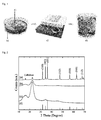
- the chemical bath deposition process is illustrated in Fig. 1 .
- the process of wood treatment with ZnO in basic solvent according to the invention comprises the following steps:
- a UV curing chamber (UVACUBE 400, Honle Goup) was used as a light source for the short-time irradiation to assess the UV protection efficiency of the coating.
- Table 1 Exposure cycle Step Function Temperature Duration Condition 1 Condensation (45 ⁇ 3) °C 24 h 2 Subcycle Step 3+4 144 h consisting of 48x cycles of 3 h consisting of steps 3 and 4 3 UV (60 ⁇ 3) °C 2.5 h Irradiance set point 0.89 W/(m 2 nm) at 340 nm 4 Spray 0.5 h 6 L/min to 7 L/min, UV off
- the ZnO coating of the wood surface was characterized by x-ray diffraction (XRD) ( Fig. 2 ).
- XRD x-ray diffraction
- Spruce wood exhibits a couple of strong diffraction peaks at 16.4° and 22.4°, which can be attributed to the cellulose crystals inside the wood structure.
- the XRD pattern of wood with a seeding layer has no diffraction peak belonging to ZnO. However, the diffraction peaks of cellulose crystals are suppressed. It reveals that the wood surface was covered with an amorphous ZnO seeding layer after dipping into the zinc oxide dissolved ammonia solution and heat treatment.
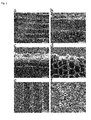
- the dense and continuous ZnO film coating on the wood surface was further investigated by SEM from radial section and cross section. It demonstrates that the wood surface is covered with a conformal ZnO film which also covers the lumen surface of the first cell layer ( Fig. 3a and b). A similar result can be observed from the SEM image acquired from the transverse plane which indicates that ZnO film follows the topography of the rough wood surface ( Fig. 3c ).
- the higher magnification SEM images demonstrate that the wood surface is covered by a dense and continuous ZnO layer with an average thickness of about 3.5 ⁇ m, while the surface of the inner, intact lumen of the most top cell layer is also covered by ZnO film with a thickness of about 600 nm ( Fig. 3d ).
- the latter indicates that the precursor solution penetrated through the outermost wood cell wall during the CBD process.
- the morphology of the ZnO coating surveyed from the tangential plane demonstrates that the ZnO crystal is highly crystalline with a flat end face ( Fig. 3e,f ). ZnO crystals are merging together with twinned boundaries.
- Low magnification TEM imaging demonstrates that ZnO coating is tightly covering the cell wall surface without any crevices ( Fig. 4a ).
- SAED pattern indicates that the dense ZnO film grows, as expected, along the [001] wurtzite direction ( Fig. 4b ). From the HRTEM image of the cell wall and ZnO interface ( Fig.
- a micro scratch tester was used to characterize the practical adhesion failure of the ZnO coating with a 10 ⁇ m tip in 1 mm length ( Fig. 5 ).
- the friction coefficient increased sharply in the first 50 ⁇ m, where the tip penetrated into a depth of about 25 ⁇ m.
- the tip was mainly in contact with the ZnO coating.
- the increment in the friction coefficient is minor, because the tip had cut through the coating and mainly contacted with the wood substrate which was soft compared to the ZnO coating.
- the micro tip penetrated into a depth of about 160 ⁇ m as the loading increased from 3 mN to 1000 mN.
- the optical microscopy image of the wood surface after the scratch test reveals no obvious peeling off from the ZnO coating.
- the ZnO coating had a strong interaction with the wood substrate because of the coordination effect. Therefore, the ZnO coating will be shoved off along the grain boundary following substrate when the tip penetrated into wood instead of peeling off. It reveals that the coating has a strong adhesion to the wood surface, and is robust to mechanical scratch.
- a non-quantitative tape-and-peel test and a blade scratch were used to evaluate the coating adhesion at the macro scale. The ZnO coating followed the surface topography of the wood surface, which displayed almost no change after 100 cycles of the tape-and-peel test. In the harsher blade scratch, the continuous and dense ZnO coating was grinded into rough particles and the surface became white. However, the ZnO coating was still on the wood surface after the brushing with compressed air. The mechanical property characterization demonstrates that the ZnO coating has strong adhesion and can withstand most of the mechanical damage in outdoor application.
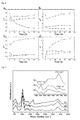
- the UV protection efficiency of the modified wood was assessed by alternating UV exposure and color measurement ( FIG. 6 ).
- the unmodified sample lost lightness from 77.9 to 69.5, while the modified sample experienced a minute increment from 73.9 to 75.2 ( Fig. 6a ).
- the redness index ( a *) of the unmodified sample underwent a decrease in the first 6 h and then increased up to 8.0 ( Fig. 6b ).
- the value of a * decreased from 0.34 to -0.54 and then remained rather constant during the irradiation for the dense ZnO coating sample.
- Fig. 6c demonstrates that the non-modified spruce has an apparent yellow shift with an increment in the value of b * from 25.8 to 32.9.
- Fig. 7a and b indicates that the absorption of UV light yields significant intensity changes in the FT-IR spectra of the wood surface without coating.
- the characteristic aromatic lignin band at 1507.3 cm -1 was absent after 102 h UV exposure, which is linked to the strong formation of the new carbonyl absorption centered at 1723.1 cm -1 (non-conjugated aliphatic carbonyls). It reveals that UV irradiation induced the photooxidation of lignin on the spruce wood surface without modification.
- the disclosed invention takes advantage of the coordination effect of Zn[(OH) x (NH 3 ) y ] 2-x complexes to hydroxyl, carbonyl groups of lignocellulose to coat the uneven wood surface with conformal ZnO film via chemical bath deposition.
- the morphologies of ZnO coatings can be selectively controlled from rough nanorods to a continuous and dense film using different capping agents.
- the high crystallinity and continuity of the ZnO crystals in the dense film not only endows the coating with effective UV blocking properties, but also makes it more stable during weathering.
- the dense film renders the coating more transparent for preserving the aesthetic appeal of the wood surface.
- the study with advanced S/TEM indicates a wood surface interlocking with ZnO dendritic crystal whisker at the interface, which results in the strong interaction between the inorganic coating and the wood biopolymer.
- the process of wood material preparation using Zinc nitrate hexahydrate and hexamethylenetetramine (HMTA) and including a hydrophobization step according to the invention comprises the following steps:
- the process of wood material preparation with ZnO including the addition of a SiO 2 blocking layer and a hydrophobization step according to the invention comprises the following procedures:
- the coating process contains the hydrolysis initiated by the nucleophilic ligands in wood and polymerization reactions of the precursor, which is titanium tetraisopropoxide (TTIP) in this report.
- TTIP titanium tetraisopropoxide
- 2 mL TTIP was injected into 20 mL ethanol solution.
- 2 pieces of spruce sample 50 ⁇ 50 ⁇ 5mm in longitudinal ⁇ tangential ⁇ radical in dimension
- the samples were removed from the solution followed by drying in the oven at 65°C for 2 hours, 120°C for 1 hour and 180°C for 0.5 hour.
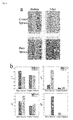
- the UV protection effect of the modified sample was assessed by UV exposure in the UV chamber combined with color measurement. As shown in Figure 11a and b , the bare spruce exhibits larger change in lightness and becomes more red compared to the modified counterpart. The most obvious difference was observed in the yellowing index ( Figure 11c ). The yellowing index (b) increases from 20 to 32 after 144 hours UV exposure in the unmodified sample, while it increase from 19.5 to 21.5 in the modified one. The appearance and total color change of the samples with or without UV exposure was shown in Figure 11 d.
Landscapes
- Chemical & Material Sciences (AREA)
- Life Sciences & Earth Sciences (AREA)
- Engineering & Computer Science (AREA)
- Wood Science & Technology (AREA)
- Inorganic Chemistry (AREA)
- Materials Engineering (AREA)
- Organic Chemistry (AREA)
- Forests & Forestry (AREA)
- Crystallography & Structural Chemistry (AREA)
- Metallurgy (AREA)
- Nanotechnology (AREA)
- General Chemical & Material Sciences (AREA)
- Chemical Kinetics & Catalysis (AREA)
- Chemical And Physical Treatments For Wood And The Like (AREA)
Abstract
The invention relates to a method for treatment of wood material. In a first treatment step comprises the provision of a solution comprising zinc oxide or titanium(IV) isopropoxide and immersion of the wood material into the solution. After drying of the wood material a second treatment step is following in case of the first solution comprising zinc oxide. The second treatment step comprises the provision of a solution comprising a zinc compound and immersion of the wood material from the first treatment step into the solution followed by drying of the wood material. In a second aspect the invention relates to a wood material characterized by the visibility of the natural appearance of the surface and at least one other property relating to UV resistance, weathering resistance, mechanical resistance or hydrophobic properties.
Description
- The present invention relates to a method for the treatment of wood material for protection against UV exposure and weathering as well as a wood material with resistance to UV exposure and weathering.
- Wood is an excellent and widely used sustainable material for various applications such as construction and furniture, but it is prone to degradation under UV exposure. UV degradation leads to colour changes, surface alterations, and even to the destruction of wood material in presence of water, which strongly affects the reliability of wood in various applications.
- Among the chemical components comprised in wood material, the highly branched phenolic polymer lignin is the best UV absorber in comparison to hemicellulose and cellulose. As a result, UV light in the solar spectrum can induce lignin degradation via photo-oxidation. The natural polymers undergo bond cleavage and hydrogen abstraction resulting in the formation of radicals or peroxides which finally decompose and generate the coloured and hydrophilic by-products (chromophores). Lignin is fragmented into low molecular weight species (such as water soluble polyphenols), which are washed away with the flow of water in outdoor applications. This exposes the underlying structure and leads to a degraded surface, which is more prone to fungal attack. In consequence, the photochemical reactions induced by UV radiation result in a significant surface alteration of wood such as loss of gloss and surface roughening, affecting its aesthetic appeal. Hence, there has been a widespread interest in preventing the photo-degradation of wood.
- In the prior art different techniques to protect wood materials are known, which include chemical modification of the wood polymers, surface treatment with additives (organic and inorganic UV absorbers, radical scavengers), and finishing (varnishes and opaque coatings). Chemical modification of wood was typically carried out by bonding chemicals to the cell wall polymers that stabilize the colour of wood, such as acetylation and silylation. However, acetylated wood exhibited a colour stabilization effect only for 28 days, thereafter, the stabilization effect steadily diminishes and discoloration starts (Hon et al., Wood Fiber Sci. 27, 360-367; 1995). Silylation, thermal and copper ethanolamine treatment also caused the colour changing of wood specimens inevitably (Deka, M. et al. Wood Sci. Technol. 42, 5-20, 2008). Moreover, the photo degradation and leaching out of the organic molecules from the modified wood can be harmful to the environment and make the application of wood materials unsustainable. Wood surface coatings with inorganic nanoparticles as UV absorbers have the main drawback of leaching of added particles over time, lowering the protection efficiency, and necessitating regular application of new layers. In an attempt to overcome this limitation, a mix of inorganic UV absorbers and a clear organic coating to obtain highly durable and efficient UV protection coating was tested. ZnO-based acrylate coatings were applied to reduce yellowing under UV exposure. However, the self-degradation of the applied polymers limits their long-term performance in photo-stabilizing wood. In-situ coating of the substrate with a semiconductor layer via a liquid route, which has been developed by chemists for solar cell or transparent conductive electrodes, is emerging as a facile and promising method for wood UV protection. However, a ZnO nanorod array with a strong scattering effect to visible light diminishes the aesthetic appearance of wood surfaces. More importantly, the low crystalline coating exhibits poor durability under weathering conditions.
- Here the inventors disclose a ZnO or titania based treatment method for protection of wood against UV as well as to achieve water repellent wood surfaces. The novelty of this invention is an in-situ treatment method to treat the rough wood surface (uneven topography with cut-open cells) with titania or ZnO nanorod arrays or a continuous film in the assistance of capping agents without exceeding temperature of 120°C in case of ZnO or 200°C in case of titania at any step. By further modifying the surface layer with hydrophobic molecules, a super-hydrophobic wood surface with low water drop adhesion can be achieved.
- The problem underlying the present invention is to provide the means for a durable treatment of wood materials to increase their photostability and weathering resistance using an environmentally friendly, easy to use, and economic method. This problem is solved by the subject-matter of the independent claims.
- The finding was made that titania or ZnO nanorod arrays or continuous films deposited onto the surface and/or within the first cell layer of wood material yield a UV-stable wood surface. The natural appearance of the surface of the wood material is preserved after treatment.
- Furthermore, the UV-stable wood material can be further protected against the influence of environmental factors by deposition of thin SiO2 blocking layers onto the surface of ZnO nanorod arrays or continuous films in a conformational manner. This treatment also stabilizes hydrophobic molecules that may be introduced to the surface against a photo catalytic effect of ZnO in the presence of UV light.
- Additionally, the ZnO treated wood material with or without the SiO2 treatment might be treated with hydrophobic molecules to yield a UV-stable and super-hydrophobic wood surface with low water drop adhesion.
- The disclosed invention is a treatment of wood materials comprised of titania or ZnO nanorod arrays or a continuous film and hydrophobic molecules obtained by an in-situ coating method. This UV-stable and super-hydrophobic wood treatment with low water drop adhesion is obtained without exceeding temperatures of 120°C in case of ZnO or 200°C in case of titania at any step of the process. The presented method can be easily scaled-up for large scale surface modification.
- According to a first aspect of the invention a method for treatment of wood material comprising a first and in some cases a second treatment step is provided. The first treatment step comprises the steps of provision of a first solution, immersion of the wood material into the first solution and drying of the wood material. In case of a second treatment step this step comprises the steps of provision of a second solution, immersion of the wood material into the second solution and drying of the wood material.
- According to a second aspect of the invention a wood material is provided that is characterized by its resistance to UV exposure and weathering.
- According to a third aspect of the invention a wood material obtainable by a process according to the first aspect of the invention is provided
- The first aspect of the invention relates to a method for treatment of wood material that comprises a first and in some cases a second treatment step. In the first treatment step a first solution comprising zinc oxide in an aqueous solution or titanium(IV) isopropoxide (TTIP; CAS No: 546-68-9) in an organic solvent, in particular an alcohol, more particular ethanol, is provided. The wood material is immersed in the first solution and afterwards transferred to an oven suitable for drying of the wood material.
- In case that the first solution comprises zinc oxide the method additionally comprises a second treatment step. In the second treatment step a second solution comprising a zinc compound is provided and the wood material obtained by the first treatment step is immersed in the second solution and dried afterwards.
- In the context of the present specification the term coating relates to depositions on the surface of materials as well as depositions on the surface that additionally penetrate into the upper layers of the material.
- In certain embodiments, the first solution comprising zinc oxide has a pH > 7, in particular a pH 8-14, more particular a pH 9-13, most
particular pH 10 to 12. - In certain embodiments, the first solution has a pH of around 11, particular pH 11.
- In certain embodiments, the second solution has a pH ≥ 7, in particular a pH 7-14, more particular a pH 8-13, most
particular pH 10 to 12. - In certain embodiments, the second solution has a pH of around 11,4, particular 11,4.
- In certain embodiments, the first solution comprising zinc oxide has a pH > 7, in particular a pH 8-14, more particular a pH 9-13, most
particular pH 10 to 12 and the second solution has a pH ≥ 7, in particular a pH 7-14, more particular a pH 8-13, mostparticular pH 10 to 12. - In certain embodiments, the first solution has a pH of around 11, particular pH 11 and the second solution has a pH of around 11,4, particular 11,4.
- In certain embodiments, the first solution comprises zinc oxide with a concentration of 30 to 60 mM ZnO, particularly 40 to 55 mM ZnO, more particularly 40 to 50 mM ZnO and most particularly 50 mM ZnO.
- In certain embodiments, the first solution comprising titanium(IV) isopropoxide (TTIP) with a concentration from 1 wt% to 10 wt%, in particular 2 wt% to 8 wt%, more particular 4 wt% to 6 wt%.
- In the context of the present specification the term percentage by weight (wt%) refers to the ratio of the mass of one substance to the mass of the total mixture multiplied by 100. Percentage by weight is calculated according to formula:

- In certain embodiments, in the first treatment step the wood material is immersed into the first solution comprising zinc oxide for 30 seconds up to 5 minutes, particularly 3 minutes to 5 minutes, more particularly 5 minutes.
- In certain embodiments, in the first treatment step the wood material is immersed into the first solution comprising TTIP for 12 hours up to 36 hours, in particular 14 hours to 24 hours, more particular 24 hours.
- In certain embodiments, the wood material is immersed in the second treatment step into the second solution for at least 5 minutes, in particular 5 minutes to 240 minutes, more particular 30 minutes to 150 minutes, most particular 120 minutes.
- In certain embodiments, the second solution has a temperature of 70°C to 110°C, in particular 70°C to 90°C, more particular 85°C.
- In certain embodiments in the first treatment step in case of the first solution comprising zinc oxide the drying of the wood material is performed at a temperature of 80°C to 110°C, particularly 90°C to 110°C more particularly 110°C.
- In certain embodiments in the first treatment step in case the first solution comprising zinc oxide the drying of the wood material is performed for at least 2 minutes, particularly 2 to 30 minutes, more particularly 10 minutes.
- In certain embodiments in the first treatment step in case of the first solution comprising TTIP drying of the wood material is performed in three steps:
- at a temperature of 50°C to 80°C, in particular 65°C, in the first step, and
- at a temperature of 50°C to 150°C, in particular 120°C, in the second step, and
- at a temperature of 50°C to 200°C, in particular 180°C, in the third step;
- at least 1 hour, in particular between 1 hour and 3 hours, more particular 2 hours in the first step, and
- at least 30 minutes and 2 hours, in particular 1 hour, in the second step, and
- between 15 minutes and 1 hour, in particular 30 minutes in the third step.
- In certain embodiments in the second treatment step drying of the wood material is performed at a temperature of 50°C to 80°C, in particular 60°C to 80°C, more particular 65°C for at least 2 hours, in particular 2h to 16h, more particular 4h to 12h.
- In certain embodiments, the zinc compound of the second solution is selected from zinc oxide, zinc nitrate and zinc acetate.
- In certain embodiments, the second solution comprises zinc oxide or zinc nitrate with a concentration higher than that of a saturated zinc oxide or zinc nitrate solution, in particular a zinc oxide solution with a concentration higher than that of a saturated zinc oxide solution.
- In the context of the present specification the term saturated solution refers to a solution of a substance that cannot dissolve more of that substance under standard conditions. Addition of more substance yields a separate phases (solid). The concentration of a saturated solution depends on parameters such as temperature, pressure, solvent, pH and other compounds present in the solution. Changes to these parameters that further increase the solubility of the substance results in solutions that with a concentration that is higher than that of a saturated solution.
- In certain embodiments, the second solution comprises zinc oxide with a concentration of 40 to 65 mM, particularly 40 to 55 mM, more particularly 50 mM.
- In certain embodiments, the second solution comprises zinc nitrate with a concentration of 40 to 65mM, particularly 40 to 55 mM more particularly 50 mM.
- In certain embodiments, the second solution comprises zinc acetate with a concentration of 40 to 110 mM, particularly 50 to 100 mM.
- In certain embodiments, the second solution comprises zinc oxide and ammonium hydroxyl.
- In certain embodiments, the second solution comprises zinc oxide and at least one ammonium salt.
- In certain embodiments, the second solution comprises zinc oxide and ammonium hydroxyl and at least one ammonium salt.
- In certain embodiments, the second solution comprises zinc nitrate and hexamethylentetramine (HMTA; CAS 100-97-0).
- In certain embodiments, the second solution comprises zinc nitrate, hexamethylentetramine and at least one ammonium salt.
- In certain embodiments, the second solution comprises zinc acetate and hexamethylentetramine.
- In certain embodiments, the second solution comprises zinc acetate, hexamethylentetramine and at least one ammonium salt.
- In certain embodiments the ammonium salt is selected from ammonium citrate [(NH4)3(C6H5O7)], ammonium nitrate [NH4NO3], ammonium acetate [CH3COONH4] and ammonium chloride [NH4Cl].
- Ammonium salt or HMTA is used to increase the solubility of zinc compounds, in particular zinc oxide, zinc nitrate or zinc acetate.
- In certain embodiments, the second solution is an aqueous solution.
- In certain embodiments the wood material in the second treatment step is immersed into the second solution for at least 5 minutes, particularly 5 minutes to 240 minutes, more particularly 30 minutes to 150 minutes, most particularly 120 minutes.
- In certain embodiments the second solution in the second treatment step has a temperature of 70°C to 110°C, particularly 70°C to 90°C, more particularly 85°C.
- In certain embodiments, the wood material in the second treatment step is dried at a temperature of 50°C to 80°C, particularly 60°C to 80°C, more particularly 65°C.
- In certain embodiments, the wood material in the second treatment step is dried for at least 2 hours, particularly 2h to 16h, more particularly 4h to 12h.
- In certain embodiments, the time and temperature of drying in the second treatment step may be increased depending on the size of the wood material.
- A non-limiting example is wood material of the dimensions radial (R) x tangential (T) x longitudinal (L) dimensions: 5x25x40 mm requiring a drying of at least 5 minutes at 60°C, preferably 60°C for 2 hours. Wood material of smaller or larger dimension might require proportionally shorter or longer, respectively and/or lower temperatures. In general requires wood material of larger dimensions longer drying time than wood material of smaller dimensions.
- In certain embodiments, the first and/or second treatment step is repeated at least once.
- In certain embodiments, the method according to the first aspect of the invention in case of the first solution comprising zinc oxide further comprises a stabilization step. The stabilization step is further comprising in this sequential order the steps of:
- provision of a stabilizing solution comprising a precursor of SiO2,
- immersion of the wood material obtained after completion of the first and second treatment step into the stabilizing solution.
- In certain embodiments, the stabilizing solution comprises a precursor of SiO2, water and organic solvent and ammonium hydroxide.
- In certain embodiments, the stabilizing solution comprises as a precursor of SiO2 tetraethyl orthosilicate.
- In certain embodiments, the stabilizing solution comprises ammonium hydroxide, tetraethyl orthosilicate as a precursor of SiO2, and water and organic solvent, particularly water and alcohol, more particularly water and ethanol.
- In certain embodiments, the stabilizing solution comprises water and organic solvent, particularly water and alcohol, more particularly water and ethanol.
- In certain embodiments, the stabilizing solution comprises ammonium hydroxide.
- In certain embodiments, the wood material is immersed into the stabilizing solution for 1h to 6h, particularly 2h to 5h and more particularly 3h to 4h.
- In certain embodiments, in the stabilization solution the volume ratios of water to organic solvent, in particular alcohol, more particularly ethanol, ranges from 20:100 to 20:70.
- In certain embodiments, in the stabilization solution the volume ratios of water to ammonium hydroxide range from 20:0.5 to 20:1.5.
- In certain embodiments, in the stabilization solution the volume ratios of water to tetraethyl orthosilicate range from 20000:10 to 20000:60.
- In certain embodiments, in the stabilization solution the volume ratios of:
- water to organic solvent, in particular alcohol, more particularly ethanol, ranges from 20:100 to 20:70; and
- water to ammonium hydroxide range from 20:0.5 to 20:1.5, and
- water to tetraethyl orthosilicate range from 20000:10 to 20000:60.
- In certain embodiments, the method according to the first aspect of the invention further comprises a hydrophobization step comprising in this sequential order, the steps of:
- i. provision of a hydrophobic solution comprising a hydrophobic molecule, in particular a long alkyl chain thiols, organic silanes, fatty acids, aromatic azide or fluorinated organic silane molecules,
- ii. immersion of the wood material obtained after completion of the first and second treatment step or the wood material obtained after completion of the stabilization step into the hydrophobic solution and
- iii. heat treatment of the wood material.
- In certain embodiments, the method comprises, in case of the first solution comprising ZnO, the first treatment step, the second treatment step, the stabilization step and a hydrophobization step.
- In certain embodiments, the method comprises the first treatment step, the second treatment step and a hydrophobization step.
- In certain embodiments, the method comprises, in case of the first solution comprising ZnO, the first treatment step, the second treatment step and the stabilization step.
- In certain embodiments, the hydrophobic solution comprises an organic solvent particularly alkanes or alcohols, more particularly hexane, ethanol or methanol.
- In certain embodiments, the hydrophobic solution comprises a hydrophobic molecule selected from:
- 1H,1H,2H,2H-Perfluorooctyltriethoxysilane (CAS: 51851-37-7);
- Trichloro(1 H, 1H,2H,2H-perfluorooctyl)silane (CAS: 78560-45-9),
- decyltrichlorosilane (CH3(CH2)9SiCl3; CAS: 13829-21-5),
- 3,3,4,4,5,5,6,6,7,7,8,8,8-tridecafluorooctyl acrylate; CAS: 17527-29-6),
- stearic acid (CAS: 57-11-4)
- methyltrichlorosilane (CAS: 75-79-6),
- 1-Dodecanethiol (CAS: 112-55-0),
- Trimethoxy(octyl)silane (CAS: 3069-40-7).
- In certain embodiments in the hydrophobization step the immersion time has a duration of 0.5 hours to 12 hours, particularly 2h to 12 hours, more particularly 4h to 12h, most particularly 12h.
- In certain embodiments in the hydrophobization step the heat treatment is performed at a temperature of 50°C to 80°C, particularly 60°C to 70°C, more particularly 65°C, for a duration of 0.5 hours to 3 hours, particularly 3 hours.
- According to a second aspect of the invention a wood material is provided. The wood material is characterized by the visibility of the natural appearance of the surface of the wood material and at least one of the following properties.
- I. the resistance to UV induced changes in perceivable colour, wherein the said wood material has no decrease in lightness (L*) after at least 100 hours of UV exposure, and/or;
- II. the resistance to UV induced changes in perceivable colour, wherein the said wood material has a change of red/green opponent colours (a*) of less than 2, in particular less than 1, after at least 100 hours of UV exposure, and/or
- III. the resistance to UV induced changes in perceivable colour, wherein the said wood material has a change of yellow/blue opponent colours (b*) of less than 5, in particular less than 3, after at least 100 hours of UV exposure, and/or
- IV. the wood material has a resistance to UV induced changes in perceivable colour, wherein the wood material has a total colour change (ΔE) of less than 4, particularly less than 3, after at least 100 hours of UV exposure, and/or
- V. the wood material also has resistance to weathering induced changes in perceivable colour, wherein the said wood material has a total colour change (ΔE) of less than 4, particularly less than 3, after at least 100 hours of accelerated weathering as defined in table 1, and/or
- VI. the wood material is characterized by the absence of X-ray diffraction peaks at degrees two-theta having a margin of error +/- 0.2 degrees 2-theta: 16.4° and 22.4°, and/or
- VII. the counts for the X-ray diffraction peak at degrees two-theta 22.4° having a margin of error +/- 0.2 degrees 2-theta is below 20000, in particular below 15000, more particular below 13000.
- VIII. the wood material is characterized by the presence of X-ray diffraction peaks at degrees two-theta having a margin of error +/- 0.2 degrees 2-theta: 31.77°, 34.42°, 36.25°, 47.54°, 62.86°, and/or
- IX. the wood material has resistance to UV induced degradation of lignin, wherein the band characteristic for lignin in the FT-IR spectrum at 1507.3 cm-1 is not significantly changed after 100 h of UV exposure as compared to wood material without UV exposure, and/or
- X. the wood material has after at least 100 hours of UV exposure no significant increase in the band representing non-conjugated aliphatic carbonyls in the FT-IR spectrum at 1723.1 cm-1 as compared to wood material without UV exposure, and/or
- XI. superhydrophobic properties, wherein the advancing contact angle of a water drop is between 150° and 165°, in particular between 155° and 160°, most particular 160° and the receding contact angle of a water drop is between 145° and 165°, in particular between 150° and 160°, more particular between 155° and 160°, most particular 156°, the rolling of angle of water drop is 1.6°, and/or
- XII. wood material comprising a coating, wherein the coating is resistant to mechanical damage and retains at least one of the properties I. to X after a blade scratch test or a tape-and-peel test.
- Wood material has a characteristic surface comprising the grain and texture of the wood material. These surface properties are the reason for the aesthetic appearance of wood surfaces and are therefore advantageous properties of wood materials.
- In some embodiments the contact angle of a water drop on the surface of the wood material is measured. The term contact angle refers to the angle formed by the intersection of the liquid-solid interface and the liquid-vapor interface. In case the liquid used is water a contact angle smaller than 90° indicates a hydrophilic surface, a contact angle between 90° and 150° indicates a hydrophobic surface and contact angles above 150° indicate a superhydrophobic surface. In other words the higher the contact angle between a solid surface and a water droplet is the less hydrophilic and the more hydrophobic the solid surface is. A more adequate characterization of the wettability properties of surface can be obtained by measuring dynamic contact angles. The contact angle measured by expanding the liquid is referred to as the advancing contact angle and the contact angle formed by contracting the liquid is referred to as the receding contact angle. Known methods to measure a contact angle include direct measurement by goniometers. In the context of this specification a rolling-off angle refers to the tilting angle of a surface when a drop of water on this surface starts to roll-off the tilted surface. The smaller a rolling off angle is the less strongly the water drop adheres to the surface.
- In some embodiments the colour of the wood material can be measured by commercially available devices such as for example the Chroma Meter CR-200 (MINOLTA, Japan). The colours are recorded in the CIE L*a*b* colourspace, whereas the dimensions L*a*b* can be used to calculate the total colour change (ΔE) according to this equation

- In the context of the present specification, the term CIE L*a*b* colourspace refers to an absolute colour space adopted by the International Commission on Illumintaion (CIE) and includes all perceivable colours. It is defined by the dimension L* for lightness, a* for red/green opponent colours and b* for yellow/blue opponent colours. The lightness, L*, represents black at L*=0, and white at L*=100. The red/green opponent colours are represented by a*, with green at negative a* values and red at positive a* values. The yellow/blue opponent colours are represented by b*, with blue at negative b* values and yellow at positive b* values. Total colour changes of perceivable colours can be calculated from L*, a* and b* according to the following equation

- In some embodiments UV exposure is performed with an electrical input of the lamp of 400 W. The lamp has sunlight simulation spectra..
- Resistance of wood material to weathering can be measured in wood material subject to accelerated weathering in suitable devices. One such example of a suitable device is the QUV Accelerated Weathering Tester (Q-LAB, United States) that follows the European standard EN 927-6:2006 (E). In some embodiments an exposure cycle of one week consists of a condensation period followed by a sub-cycle of water spray and UV-A 340 nm irradiation as given in Table 1.
- Resistance of wood material to mechanical damage can be tested with devices such as a micro scratch tester. These devices allow to physically damage the surface and uppermost layers of the wood material in a defined way. The applied force as well as the depth of penetration can be adjusted precisely. Microscopy can be used to determine the damage done to surface coatings as well as to the surface of the wood material itself.
- Simpler and non-quantitative methods to assess the resistance of wood material to mechanical damage are the tape-and-peel test or the blade scratch test. Whereas the former test comprises the use of an adhesive tape that is repeatedly attached and removed to the surface, the latter comprises the use of a blade that is scratched repeatedly on the surface of the wood material. Microscopy techniques can in both cases be used to assess if the damage is only restricted to the directly damaged area or if parts of the surface coating or wood surface is peeling off.
- A coating of which at least a single layer, that can impart the properties of the coating to the wood material, remains intact after mechanical insult, such as a tape-and-peel test or a blade scratch test, is deemed resistant to mechanical damage.
- According to a third aspect of the invention a wood material particularly comprising the features according to the second aspect of the invention obtainable by a process according to the method of the first aspect of the invention is provided.
- In certain embodiments according to the second and third aspect of the invention the wood material is a surface coating for wood material.
- In the context of the present specification, the term wood material refers to any material comprising wood as an essential part, in particular solid wood products, wood-containing base materials, wood-based materials, semi-finished products or components.
- In the context of the present specification, the term wood refers to a material comprising the three primary components lignin, cellulose, and hemicellulose. Lignin is a three dimensional aromatic polymer that is part of the cell wall matrix. Cellulose is a non-branching chain of up to several thousand glucose molecules. In contrast hemicelluloses are branched polysaccharides comprising different sugar molecules such as glucose, xylose, mannose, galactose etc. Wood typically comprises about 40 to 50 wt. % of cellulose, about 20 to 35 wt. % of hemicellulose, and about 15 to 30 wt. % of lignin.
- In the context of the present specification, the term solid wood product refers to timber products, which consist basically of solid wood or solid wood parts. Solid wood describes wood-containing base materials, whose profiles are carved out from a tree trunk and are potentially processed further by cutting/machining, without changing the texture of the wood. Solid wood products can be used to produce components, semi-finished products or products.
- In the context of the present specification, the term wood-containing base materials refers to all wood-containing materials, which can be used as base materials for the production of wood-based material, components, semi-finished products, products or solid wood products. Wood-containing base materials can include wooden particles or wood pieces, for instance, which are used in the production of chipboards, oriented strand boards or other wood-based materials. Wood-containing base materials are especially used in the production of wood-based materials.
- In the context of the present specification, the term wood-based materials refers to a material, which is re-assembled and consists of fibres, particles, or layers of wood of different shape, size and thicknesses. The particles can, for example, comprise wood strips, wood chips or wood fibers of the same or of different types of wood, of a certain size or of different sizes.
- In the context of the present specification, the term semi-finished products refers to base material products, for instance a plate, a pole or a tube, which can be processed further to the actual finished product (the final product). A semi-finished product can include an appropriately cut piece of solid-wood or comprise different wood-containing base materials. According to the invention, a semi-finished product can also be wood chips or wood stripes.
- In the context of the present specification, the term component refers to a part (for instance a solid wood product, a wood-containing base material and/or a wood-based material) of a larger complex. A complex can be a building or a storage product, like a showcase, or a part of furniture. The components (in particular different components) can form the complex together, given an appropriate composition.
- Wherever alternatives for single separable features such as, for example, a treatment duration or temperature, a solution component or immersion duration are laid out herein as "embodiments", it is to be understood that such alternatives may be combined freely to form discrete embodiments of the invention disclosed herein.
- The invention is further illustrated by the following examples and figures, from which further embodiments and advantages can be drawn. These examples are meant to illustrate the invention but not to limit its scope.
-
-
Fig. 1 shows a schematic illustration of the chemical bath deposition process for wood surface modification. a) Norway spruce, b) seeding solvent: ZnO, NH3·H2O, c) baking at 110°C, d) growth at 80°C; Growth solution 1: ZnO, NH3·H2O, Ammonium citrate and NH4NO3; Growth solution 2: Zn(NO3)2, HMTA -
Fig. 2 shows the X-ray diffraction pattern of Norway spruce with a dense ZnO coating (a), Norway spruce with a seed layer (b), and Norway spruce without any treatment (c). The reference powder diffraction pattern of ZnO (JCPDS 36-1451) is shown for comparison (d). Asterisk (*) denotes the position of characteristic cellulose peaks. -
Fig. 3 shows (a) SEM images of the radial plane of Norway spruce acquired from the early wood region; (b) SEM images of the wood cell structures with ZnO coating; (c) High magnification SEM image acquired from the squared area shown in b; (d) The SEM image of transverse plane of spruce wood with ZnO coating on the tangential plane; (e) SEM acquired from the tangential plane of spruce wood with ZnO coating, and (f) the high magnification SEM image acquired from the squared area shown in b. -
Fig. 4 shows (a) Low magnification TEM image of wood lamina with ZnO coating prepared by focus ion beam; ML=middle lamella, S1=secondary wall S1 1, S2=secondary wall S2 2, S3=Secondary cell wall S3. (b) Selective area electron diffraction (SAED) pattern from the square area noted in the inset; (c) High resolution TEM (HRTEM) image from the ZnO and wood cell wall interface; (d) HAADF-STEM image acquired from the ZnO and wood cell wall interface. -
Fig.5 shows (a) Applied parameters and feedback curves of the micro scratch test. (b) Optical microscopy image acquired from the dense ZnO coating wood surface after scratch test. The scratch profile started from left to right end was marked with black notes. -
Fig. 6 shows (a) Dependence of lightness factor (L*) on the irradiation time. (b) The variation of the redness factor (a*) of spruce versus the irradiation time. (c) The variation of yellowness (b*) of the samples as a function of irradiation time. (d) Total color change difference ΔE as a function of irradiation time. (■) spruce with dense ZnO coating; (●) spruce with ZnO nanorod array coating; (A) spruce without any modification. -
Fig. 7 shows FT-IR spectra of spruce wood before (b) and after (a) UV irradiation, as well as the dense ZnO coating spruce wood after UV irradiation (c); inset: zoom of the carbonyl and aromatic absorption region. -
Fig. 8 shows (a) FT-IR spectra acquired from the cross section of spruce wood. The spectra were acquired along middle lamella from the most top (point 1) to the third cell layer (point 5) as noted in (b). (c) FT-IR spectra acquired from the cross section of ZnO coating spruce wood after 102 h UV treatment. The spectra were acquired along middle lamella from the most top (point 1) to the third cell layer (point 5) as noted in (d) -
Fig. 9 shows (a) Changes in the appearance of modified and non-modified spruce wood during the accelerated weathering test. Notably the bare spruce shows marked cracks in the surface after weathering. In contrast, no cracks can be observed in the treated wood material after weathering. (b) Difference of lightness (L*), redness (a*), yellowness (b*) as well as total colour changes (ΔE) in the surface of spruce wood with or without modification during weathering test. -
Fig. 10 shows water repellency. (a) Snapshots from the measurement of advancing and receding contact angles and roll-off of a water droplet measured on the ZnO nanorods arrays modified wood surface. (b) Extremely low water adhesion confirmed by push and pull of a water droplet to the superhydrophobic surface. (c) Behavior of coffee droplets on the ZnO modified superhydrophobic wood surface (left) and bare wood surface (right), respectively. -
Fig. 11 shows changes of a) lightness (L*), b) redness (a*), c) yellowness (b*) in the surface of spruce wood with (TiO2 coating, ■) or without modification (spruce reference, ●) during UV exposure for 144 hours. d) Changes in the appearance of modified (TiO2 coating) and non-modified spruce wood (spruce reference) during UV exposure for 144 hours. Notably the bare spruce shows much higher total colour changes (ΔE=15.9) as compared to modified spruce (ΔE=6.4). - The technical problem in wood surface modification is how to cover the rough wood surface (uneven topography with lumen and cut-open cells wall) with a continuous and complete coating of ZnO. A strong adhesion between the inorganic coating and wood surface is necessary to prevent the separation of the coating. Finally, the inorganic coating should possess a high degree of crystallinity to achieve a certain transparency for aesthetic reasons and to avoid etching underwater spraying.
- In this specification, a novel seeding method is disclosed to modify the wood surface with a thin seeding layer by dipping wood material into a basic solution of Zinc Oxide before drying. This liquid based seeding method enables to seed the rough wood surface completely and to form a strong interface between the seeding layer and the wood surface. By adjusting the amount of ammonium citrate in the growth process, the synthesis of ZnO nanorod arrays or dense coatings can specifically be selected. The chemical bath deposition process is illustrated in
Fig. 1 . - The process of wood treatment with ZnO in basic solvent according to the invention comprises the following steps:
-
- 1) Preparation of basic solution of zinc oxide containing 50mM ZnO and 5M NH3 by magnetic stirring assisted solubilisation (dissolving solid zinc oxide in aqueous solution of ammonia), the as-prepared solution was denoted as seeding solvent. Ammonium hydroxide (28 wt%; Alfa Aesar) was used to prepare basic solution.
- 2) Preparation of the growth solution containing NH4NO3 (8.02g, Sigma Aldrich, p.a. grade), ammonium citrate (0.195g, Alfa Aesar, p.a. grade) and ZnO powder (8.145g, Sigma Aldrich, p.a. grade) and 132 ml of NH4OH (28 wt%, Alfa Aesar). The components were loaded into a plastic bottle before pouring 18 MΩ cm deionized water until the total volume reached 2 L. The growth solution was stirred for 12 hours and stored at room temperature until usage. 200 mL growth solution was filtered (1 µm glass fiber filters) into a glass flask followed by adding 0.1356 g of ammonium citrate.
- 3) Spruce wood slices (radial (R) × tangential (T) × longitudinal (L) dimensions: 5×25×40 mm) were firstly ultrasonically cleaned in a mixed solution of ethanol and acetone for 30 min, and then stored in the artificial climate room with a temperature of 20°C and a relative humidity of 65%.
- 4) Dipping the wood slice into the seeding solvent described in step 1) for 3 minutes before transferring it into the oven at 110°C for 2 min. In order to obtain a dense and continuous ZnO coating, the seeding procedure was repeated for three times to ensure that the wood surface was completely seeded.
- 5) After pre-heating the growth solution at 90°C for 15 min, the seeded spruce slices were immersed into the growth solution. Chemical bath deposition was carried out at 90°C for 150 minutes. After the chemical bath deposition, the wood samples were washed with water and dried in an oven at a temperature of 65°C for 12 hours.
- A UV curing chamber (UVACUBE 400, Honle Goup) was used as a light source for the short-time irradiation to assess the UV protection efficiency of the coating.
- Exposure of the wood coating to artificial weathering using fluorescent UV lamps and water was carried out in the QUV Accelerated Weathering Tester (Q-LAB, United State) following the European standard EN 927-6:2006 (E). An exposure cycle of one week consists of a condensation period followed by a sub-cycle of water spray and UV-A 340 irradiation as given in Table 1.
Table 1: Exposure cycle Step Function Temperature Duration Condition 1 Condensation (45±3) °C 24 h 2 Subcycle Step 3+4144 h consisting of 48x cycles of 3 h consisting of steps 3 UV (60±3) °C 2.5 h Irradiance set point 0.89 W/(m2nm) at 340 nm 4 Spray 0.5 h 6 L/min to 7 L/min, UV off - Colour evaluation of the wood samples before and after UV exposure and water spraying were determined in the CIE L*, a* and b* system with the Chroma Meter CR-200 (MINOLTA, Japan). L* represents the lightness from black (0) to white (100), while a* and b* were the chromaticity indices where +a* was the red, -a* was the green, +b* was the yellow, -b* was the blue directions. The total colour change was defined according to equation (1):

- The ZnO coating of the wood surface was characterized by x-ray diffraction (XRD) (
Fig. 2 ). Spruce wood exhibits a couple of strong diffraction peaks at 16.4° and 22.4°, which can be attributed to the cellulose crystals inside the wood structure. The XRD pattern of wood with a seeding layer, has no diffraction peak belonging to ZnO. However, the diffraction peaks of cellulose crystals are suppressed. It reveals that the wood surface was covered with an amorphous ZnO seeding layer after dipping into the zinc oxide dissolved ammonia solution and heat treatment. After the chemical bath deposition process, a series of diffraction peaks assigned to hexagonal ZnO (JCPDS 36-1451) were observed. On the other hand, the diffraction peaks of cellulose crystals almost disappeared, because the wood surface was covered by a continuous, dense and highly crystalline ZnO film. The high crystallinity of ZnO coating contribute to their excellent durability under weathering conditions. - The dense and continuous ZnO film coating on the wood surface was further investigated by SEM from radial section and cross section. It demonstrates that the wood surface is covered with a conformal ZnO film which also covers the lumen surface of the first cell layer (
Fig. 3a and b). A similar result can be observed from the SEM image acquired from the transverse plane which indicates that ZnO film follows the topography of the rough wood surface (Fig. 3c ). The higher magnification SEM images demonstrate that the wood surface is covered by a dense and continuous ZnO layer with an average thickness of about 3.5 µm, while the surface of the inner, intact lumen of the most top cell layer is also covered by ZnO film with a thickness of about 600 nm (Fig. 3d ). The latter indicates that the precursor solution penetrated through the outermost wood cell wall during the CBD process. The morphology of the ZnO coating surveyed from the tangential plane demonstrates that the ZnO crystal is highly crystalline with a flat end face (Fig. 3e,f ). ZnO crystals are merging together with twinned boundaries. Low magnification TEM imaging demonstrates that ZnO coating is tightly covering the cell wall surface without any crevices (Fig. 4a ). SAED pattern indicates that the dense ZnO film grows, as expected, along the [001] wurtzite direction (Fig. 4b ). From the HRTEM image of the cell wall and ZnO interface (Fig. 4c ), (100) lattice planes of hexagonal ZnO as well as the diffraction contrast image from cellulose crystal in the wood cell wall were observed. The lattice-resolved image indicates that the wood cell wall and ZnO coating interface is fused. From the HAADF-STEM image (Fig. 4d ), the seeding layer that is in direct contact with the cell wall is made of dendritic crystal whiskers, which allows for the strong adherence to the wood cell wall. - A micro scratch tester was used to characterize the practical adhesion failure of the ZnO coating with a 10 µm tip in 1 mm length (
Fig. 5 ). The friction coefficient increased sharply in the first 50 µm, where the tip penetrated into a depth of about 25 µm. In this stage, the tip was mainly in contact with the ZnO coating. After that, the increment in the friction coefficient is minor, because the tip had cut through the coating and mainly contacted with the wood substrate which was soft compared to the ZnO coating. The micro tip penetrated into a depth of about 160 µm as the loading increased from 3 mN to 1000 mN. However, the optical microscopy image of the wood surface after the scratch test, reveals no obvious peeling off from the ZnO coating. As discussed above, the ZnO coating had a strong interaction with the wood substrate because of the coordination effect. Therefore, the ZnO coating will be shoved off along the grain boundary following substrate when the tip penetrated into wood instead of peeling off. It reveals that the coating has a strong adhesion to the wood surface, and is robust to mechanical scratch. A non-quantitative tape-and-peel test and a blade scratch were used to evaluate the coating adhesion at the macro scale. The ZnO coating followed the surface topography of the wood surface, which displayed almost no change after 100 cycles of the tape-and-peel test. In the harsher blade scratch, the continuous and dense ZnO coating was grinded into rough particles and the surface became white. However, the ZnO coating was still on the wood surface after the brushing with compressed air. The mechanical property characterization demonstrates that the ZnO coating has strong adhesion and can withstand most of the mechanical damage in outdoor application. - The UV protection efficiency of the modified wood was assessed by alternating UV exposure and color measurement (
Fig. 6 ). During the UV exposure, the unmodified sample lost lightness from 77.9 to 69.5, while the modified sample experienced a minute increment from 73.9 to 75.2 (Fig. 6a ). The redness index (a*) of the unmodified sample underwent a decrease in the first 6 h and then increased up to 8.0 (Fig. 6b ). In comparison, the value of a* decreased from 0.34 to -0.54 and then remained rather constant during the irradiation for the dense ZnO coating sample.Fig. 6c demonstrates that the non-modified spruce has an apparent yellow shift with an increment in the value of b* from 25.8 to 32.9. However, for the sample with dense ZnO coating, b* slightly decreased from 14.8 to 11.36 in the first 18 h, and further experienced a slow increment to finally reach 12.3. The total color difference ΔE as a function of the irradiation time is given inFig. 6d . ΔE shows a systematic trend of increase with increasing irradiation time for unmodified spruce, which shows a total color change of 11 after 102 hours of UV exposure. In comparison, the total color change of the modified sample is clearly limited (about 3.0). These results demonstrate that a wood surface with a dense ZnO coating is sufficiently protected against color changes induced by UV exposure. For comparison between the two nanostructure morphologies the UV-stability of spruce wood with a ZnO nanorod array is shown. - The change in chemical structure of wood was further analyzed by FT-IR spectroscopy (
Fig. 7). Fig. 7a and b indicates that the absorption of UV light yields significant intensity changes in the FT-IR spectra of the wood surface without coating. The characteristic aromatic lignin band at 1507.3 cm-1 was absent after 102 h UV exposure, which is linked to the strong formation of the new carbonyl absorption centered at 1723.1 cm-1 (non-conjugated aliphatic carbonyls). It reveals that UV irradiation induced the photooxidation of lignin on the spruce wood surface without modification. In order to analyze the change in the chemical structure of the ZnO coating spruce after UV exposure, an experiment was carried out by removing the coating layer via ultrasonic treatment in 2 wt% HCl. The FT-IR spectrum was acquired from the surface after drying in the oven at 65°C for 3 h. Although, the aromatic lignin band at 1507.3 cm-1, as well as the C=O stretch of conjugated or aromatic ketones (between 1600-1700 cm-1) have a slight decrease, there is no increment in the intensity between 1700-1750 cm-1 (Fig. 7 ). It reveals that the UV induced photooxidation is suppressed by the ZnO coating. The decline in the intensity of aromatic peak only happened in the outmost layer. It was further confirmed by FT-IR microscopy which was applied to study the lignin degradation on the cross section (Fig. 8 ). - Accelerated weathering tests were carried out based on the European standard: EN 927-6:2006. As a result, there is not only a colour change but also cracking observed from the bare spruce slice after the weathering test (
Fig. 9a ). However, the samples with surface coating, experience almost no colour change except a slight surface haze. This indicates that the ZnO coating forms a transparent protective coating, which serves not only as a UV blocking, but also as a waterproofing layer which reduces dimensional changes of the wood and as a result the occurrence of cracks due to weathering. Accurate colour change was quantified by the CIE L*, a* and b* system with the Chroma Meter (Fig. 9b ). - Without wishing to be bound by theory the disclosed invention takes advantage of the coordination effect of Zn[(OH)x(NH3)y]2-x complexes to hydroxyl, carbonyl groups of lignocellulose to coat the uneven wood surface with conformal ZnO film via chemical bath deposition. The morphologies of ZnO coatings can be selectively controlled from rough nanorods to a continuous and dense film using different capping agents. The high crystallinity and continuity of the ZnO crystals in the dense film not only endows the coating with effective UV blocking properties, but also makes it more stable during weathering. The dense film renders the coating more transparent for preserving the aesthetic appeal of the wood surface. The study with advanced S/TEM indicates a wood surface interlocking with ZnO dendritic crystal whisker at the interface, which results in the strong interaction between the inorganic coating and the wood biopolymer.
- The process of wood material preparation using Zinc nitrate hexahydrate and hexamethylenetetramine (HMTA) and including a hydrophobization step according to the invention comprises the following steps:
-
- 1) Preparation of basic solution of zinc oxide containing 50mM ZnO and 5M NH3 by magnetic stirring assisted solubilisation (dissolving solid zinc oxide in aqueous solution of ammonia), the as-prepared solution was denoted as seeding solvent. Ammonium hydroxide (28 wt%; Alfa Aesar) was used to prepare basic solution.
- 2) Preparation of the growth solution containing 80g Zn(NO3)·6H2O and 35g hexamethylenetetramine (HMTA) were loaded into a stainless steel container before pouring deionized water until the total volume reach 6L.
- 3) Spruce wood slices (radial (R) × tangential (T) × longitudinal (L) dimensions: 15×1.5×65 cm) were cut and stored in the artificial climate room with a temperature of 20°C and a relative humidity of 65%.
- 4) Dipping the wood slice into the seeding solvent described in step 1) for 5 minutes before transferring it into the oven at 80°C for 10 minutes. In order to obtain a dense and continuous ZnO coating, the seeding procedure was repeated for three times to ensure that the wood surface was completely seeded.
- 5) After pre-heating the growth solution to 45°C, two seeded spruce slices were immersed into the growth solution. Chemical bath deposition was carried out at 85°C for 120 minutes. After the chemical bath deposition, the wood samples were washed with water and dried in an oven at a temperature of 60°C for 2 hours. The same procedure was repeated one more time to obtain a high quality ZnO coating.
-
- 1) Preparation of a hydrophobic solution containing 5mM stearic acid in ethanol solution,
- 2) Immersing the wood slices obtained from process I. into the hydrophobic solution for 12 h.
- 3) The wood slices were subsequently put in to an oven and heated up to 65°C for 2 h to secure the strong bonding of hydrophobic molecules.
- The process of wood material preparation with ZnO including the addition of a SiO2 blocking layer and a hydrophobization step according to the invention comprises the following procedures:
-
- 1) Preparation of basic solution of zinc oxide containing 50mM ZnO and 5M NH3 by magnetic stirring assisted solubilisation (dissolving solid zinc oxide in aqueous solution of ammonia), the as-prepared solution was denoted as seeding solvent. Ammonium hydroxide (28 wt%; Alfa Aesar) was used to prepare basic solution.
- 2) Preparation of the growth solution containing NH4NO3 (8.02g, Sigma Aldrich, p.a. grade), ammonium citrate (0.195g, Alfa Aesar, p.a. grade) and ZnO powder (8.145g, Sigma Aldrich, p.a. grade) and 132 ml of NH4OH (28 wt%, Alfa Aesar). The components were loaded into a plastic bottle before pouring 18 MΩ cm deionized water until the total volume reached 2 L. The growth solution was stirred for 12 hours and stored at room temperature until usage. 200 mL growth solution was filtered (1 µm glass fiber filters) into a glass flask followed by adding 0.1356 g of ammonium citrate.
- 3) Spruce wood slices (radial (R) × tangential (T) × longitudinal (L) dimensions: 5×25×40 mm) were firstly ultrasonically cleaned in a mixed solution of ethanol and acetone for 30 min, and then stored in the artificial climate room with a temperature of 20°C and a relative humidity of 65%.
- 4) Dipping the wood slice into the seeding solvent described in step 1) for 3 minutes before transferring it into the oven at 110°C for 2 min. In order to obtain a dense and continuous ZnO coating, the seeding procedure was repeated for three times to ensure that the wood surface was completely seeded.
- 5) After pre-heating the growth solution at 90°C for 15 min, the seeded spruce slices were immersed into the growth solution. Chemical bath deposition was carried out at 90°C for 150 minutes. After the chemical bath deposition, the wood samples were washed with water and dried in an oven at a temperature of 65°C for 12 hours.
-
- 1) Preparation of stabilizing solution containing tetraethyl orthosilicate (32 µL), water (80 mL), ethanol (20 mL) and ammonium hydroxide (1 mL, 25%).
- 2) Immersing the wood slices obtained from process I. into the stabilizing solution for a duration of 3 hours at room temperature.
-
- 1) Preparation of a hydrophobic solution containing 5mM stearic acid in ethanol solution,
- 2) Immersing the wood slices obtained from process II. into the hydrophobic solution for 12 h.
- 3) The wood slices were subsequently put in to an oven and heated up to 65°C for 2 h to secure the strong bonding of hydrophobic molecules.
-
- 1) The treatment of wood material as described is facile, mild and economic. Both the seeding and growth process can be finished in a short time compared to current technologies.
- 2) The treatment method via a facile aqueous based chemical bath deposition process was carried out in a non-toxic and mild condition (without exceeding temperature of 120°C at any step).
- 3) The morphology of the ZnO coating can be tailored by adjusting the concentration of ammonium citrate, to selectively synthesize ZnO nanorods array coatings or dense ZnO film coatings.
- 4) The coating is mechanically robust and hardly separated from the wood surface.
- 5) Both UV protection and superhydrophobic wood surface modification are combined in this invention.
- 6) The disclosed method is efficient and can be easily scaled-up for large scale surface modification, in order to make wood more reliable in building facade applications.
- The coating process contains the hydrolysis initiated by the nucleophilic ligands in wood and polymerization reactions of the precursor, which is titanium tetraisopropoxide (TTIP) in this report. 2 mL TTIP was injected into 20 mL ethanol solution. Then, 2 pieces of spruce sample (50 × 50 × 5mm in longitudinal × tangential × radical in dimension) were immersed into the mixed solution for 24 hours at room temperature. The samples were removed from the solution followed by drying in the oven at 65°C for 2 hours, 120°C for 1 hour and 180°C for 0.5 hour.
- The UV protection effect of the modified sample was assessed by UV exposure in the UV chamber combined with color measurement. As shown in
Figure 11a and b , the bare spruce exhibits larger change in lightness and becomes more red compared to the modified counterpart. The most obvious difference was observed in the yellowing index (Figure 11c ). The yellowing index (b) increases from 20 to 32 after 144 hours UV exposure in the unmodified sample, while it increase from 19.5 to 21.5 in the modified one. The appearance and total color change of the samples with or without UV exposure was shown inFigure 11 d.
Claims (15)
- A method for treatment of wood material comprisinga) a first treatment step comprising the steps ofi. provision of a first solution comprising:- zinc oxide in aqueous solution, or- titanium(IV) isopropoxide (TTIP) and an organic solvent, in particular an alcohol, more particular ethanol; andii. immersion of said wood material into said first solution; andiii. drying of said wood material;b) in case of the first solution comprising zinc oxide the method additionally comprises a second treatment step comprising the steps of:i. provision of a second solution comprising a zinc compound; andii. immersion of said wood material into said second solution; andiii. drying of said wood material.
- The method for treatment of wood material according to claim 1, wherein in case of the first solution comprising zinc oxide:- the first solution has a pH > 7, in particular a pH 8-14, more particular a pH 9-13, most particular a pH 10 to 12, and/or- the second solution has a pH ≥ 7, in particular a pH 7-14, more particular a pH 8-13, most particular a pH 10 to 12.
- The method for treatment of wood material according to any one of the preceding claims, wherein the first solution comprises- zinc oxide with a concentration of 30 to 60mM ZnO, in particular 40 to 55mM ZnO, more particular 40 to 50mM ZnO and most particular 50mM ZnO or- TTIP with a concentration from 1 wt% to 10 wt%, in particular 2 wt% to 8 wt%, more particular 4 wt% to 6 wt%
- The method for treatment of wood material according to any one of the preceding claims, wherein.- said wood material is immersed in the first treatment step into the first solution:and/or- in case of the first solution comprising zinc oxide for 30 seconds up to 5 minutes, in particular 3 minutes to 5 minutes, more particular 5 minutes, and- in case of the first solution comprising titanium(IV) isopropoxide for 12 hours up to 36 hours, in particular 14 hours to 24 hours, more particular 24 hours,- said wood material is immersed in the second treatment step into the second solution for at least 5 minutes, in particular 5 minutes to 240 minutes, more particular 30 minutes to 150 minutes, most particular 120 minutes, and/or- the second solution has a temperature of 70°C to 110°C, in particular 70°C to 90°C, more particular 85°C.
- The method for treatment of wood material according to any one of the preceding claims, wherein drying of said wood material is performed:- in the first treatment step- in case of the first solution comprising zinc oxide at a temperature of 80°C to 110°C, in particular 90°C to 110°C, more particular 110°C, for at least 2 minutes, in particular 2 to 30 minutes, more particular 10 minutes, or- in case of the first solution comprising titanium(IV) isopropoxide drying of said wood material is performed in in three steps with increasing temperatures after each step with temperatures between 50°C and 200°C and a drying time between 15 minutes and 3 hours in each of the three steps; and/or- in the second treatment step at a temperature of 50°C to 80°C, in particular 60°C to 80°C, more particular 65°C for at least 2 hours, in particular 2h to 16h, more particular 4h to 12h.
- The method for treatment of wood material according to any one of the preceding claims, wherein the zinc compound of said second solution is selected from zinc oxide, zinc nitrate and zinc acetate, particular zinc nitrate.
- The method for treatment of wood material according to any one of the preceding claims, wherein:- in case said zinc compound is zinc oxide the second solution additionally comprises ammonium hydroxyl and/or at least one ammonium salt, and- in case said zinc compound is zinc nitrate or zinc acetate, the second solution additionally comprises hexamethylentetramine and/or at least one ammonium salt.
- The method for treatment of wood material according to any one of the preceding claims, wherein the second solution comprises:- zinc oxide with a concentration of 40 to 65 mM, in particular 40 to 55 mM, more particular 50 mM, or- zinc nitrate with a concentration of 40 to 65 mM, in particular 40 to 55 mM, more particular 50 mM, or- zinc acetate with a concentration of 40 to 110 mM, in particular 50 to 100 mM.
- The method for treatment of wood material according to any one of the preceding claims in case of the first solution comprising zinc oxide further comprising a stabilization step after step b) comprising the steps of:i. provision of a stabilizing solution comprising a precursor of SiO2,ii. immersion of said wood material into said stabilizing solution, wherein the duration of immersion into the stabilizing solution is 1h to 6h, in particular 2h to 5h and more particular 3h to 4h.
- The method for treatment of wood material according to claim 9, wherein the stabilizing solution comprises:- tetraethyl orthosilicate, and/or- ammonium hydroxide, and/or- water and organic solvent, in particular water and alcohol, more particular water and ethanol.
- The method for treatment of wood material according to any one of claims 9 to 10, wherein the volume ratios in the stabilization solution of:i. water to organic solvent ranges from 20:100 to 20:70, and/orii. water to ammonium hydroxide ranges from 20:0.5 to 20:1.5, and/oriii. water to tetraethyl orthosilicate range from 20000:10 to 20000:60.
- The method for treatment of wood material according to any one of the preceeding claims further comprising a hydrophobization step comprising the steps of:i. provision of a hydrophobic solution comprising a hydrophobic molecule, in particular a long alkyl chain thiols, organic silanes, fatty acids, aromatic azide or fluorinated organic silane molecules, in particular the hydrophobic molecule is selected from:- 1H,1H,2H,2H-Perfluorooctyltriethoxysilane,- Trichloro (1H,1H,2H,2H-perfluorooctyl) silane,- methyltrichlorosilane,- decyltrichlorosilane,- 3,3,4,4,5,5,6,6,7,7,8,8,8-tridecafluorooctyl acrylate,- 1-Dodecanethiol,- Trimethoxy(octyl)silane and- stearic acid;ii. immersion of said wood material into said hydrophobic solution,iii. heat treatment of said wood material.
- The method for treatment of wood material according to any one of claims 12 and 13, wherein:- the immersion time is between 0.5h to 12h, in particular 2h to 12h more particular 4h to 12h, most particular 12h and/or- the heat treatment is performed at a temperature of 50°C to 80°C, in particular 60°C to 70°C, more particular 65°C, for a duration of 0.5 hours to 3 hours, in particular 3 hours
- A wood material characterized by the visibility of the natural appearance of the surface of said wood material and at least one of the following properties:I. the resistance to UV induced changes in perceivable colour, wherein the said wood material has no decrease in lightness (L*) after at least 100 hours of UV exposure, and/or;II. the resistance to UV induced changes in perceivable colour, wherein the said wood material has a change of red/green opponent colours (a*) of less than 2, in particular less than 1, after at least 100 hours of UV exposure, and/orIII. the resistance to UV induced changes in perceivable colour, wherein the said wood material has a change of yellow/blue opponent colours (b*) of less than 5, in particular less than 3, after at least 100 hours of UV exposure, and/orIV. the resistance to UV induced changes in perceivable colour, wherein the said wood material has a total colour change (ΔE) of less than 4, in particular less than 3, after at least 100 hours of UV exposure, and/orV. the resistance to weathering induced changes in perceivable colour, wherein the said wood material has a total colour change (ΔE) of less than 4, in particular less than 3, after at least 100 hours of accelerated weathering as defined in table 1 and/or;VI. the absence of X-ray diffraction peaks at degrees two-theta having a margin of error +/- 0.2 degrees 2-theta: 16.4° and 22.4°; and/orVII. the counts for the X-ray diffraction peak at degrees two-theta 22.4° having a margin of error +/- 0.2 degrees 2-theta is below 20000, in particular below 15000, more particular below 13000; and/orVIII. the presence of X-ray diffraction peaks at degrees two-theta having a margin of error +/- 0.2 degrees 2-theta: 31.77°, 34.42°, 36.25°, 47.54° and 62.86°, and/or;IX. the resistance to UV induced degradation of lignin, wherein the band in the FT-IR spectrum at 1507.3 cm-1 is not significantly changed after at least 100 h of UV exposure, and/or;X. the resistance to an UV induced increase in the band in the FT-IR spectrum at 1723.1 cm-1 after at least 100 h of UV exposure, and/orXI. superhydrophobic properties, wherein the advancing contact angle of a water drop is between 150° and 165°, in particular between 155° and 160°, most particular 160° and the receding contact angle of a water drop is between 145° and 165°, in particular between 150° and 160°, more particular between 155° and 160°, most particular 156°, the rolling off angle of water drop is 1.6°, and/orXII. wood material comprising a coating, wherein the coating is resistant to mechanical damage and retains at least one of the properties I. to X after a blade scratch test or a tape-and-peel test.
- A wood material particularly comprising the features of claim 14 obtainable by a process according to the method of any one of claims 1 to 8, 9 to 11 and/or 12 to 13.
Priority Applications (4)
| Application Number | Priority Date | Filing Date | Title |
|---|---|---|---|
| EP15183867.9A EP3138675A1 (en) | 2015-09-04 | 2015-09-04 | Uv-stable and superhydrophobic wood surface |
| EP16760498.2A EP3344424A1 (en) | 2015-09-04 | 2016-09-05 | Uv-stable and superhydrophobic wood surface |
| PCT/EP2016/070866 WO2017037290A1 (en) | 2015-09-04 | 2016-09-05 | Uv-stable and superhydrophobic wood surface |
| US15/757,363 US20180257256A1 (en) | 2015-09-04 | 2016-09-05 | Uv-stable and superhydrophobic wood surface |
Applications Claiming Priority (1)
| Application Number | Priority Date | Filing Date | Title |
|---|---|---|---|
| EP15183867.9A EP3138675A1 (en) | 2015-09-04 | 2015-09-04 | Uv-stable and superhydrophobic wood surface |
Publications (1)
| Publication Number | Publication Date |
|---|---|
| EP3138675A1 true EP3138675A1 (en) | 2017-03-08 |
Family
ID=54145563
Family Applications (2)
| Application Number | Title | Priority Date | Filing Date |
|---|---|---|---|
| EP15183867.9A Withdrawn EP3138675A1 (en) | 2015-09-04 | 2015-09-04 | Uv-stable and superhydrophobic wood surface |
| EP16760498.2A Withdrawn EP3344424A1 (en) | 2015-09-04 | 2016-09-05 | Uv-stable and superhydrophobic wood surface |
Family Applications After (1)
| Application Number | Title | Priority Date | Filing Date |
|---|---|---|---|
| EP16760498.2A Withdrawn EP3344424A1 (en) | 2015-09-04 | 2016-09-05 | Uv-stable and superhydrophobic wood surface |
Country Status (3)
| Country | Link |
|---|---|
| US (1) | US20180257256A1 (en) |
| EP (2) | EP3138675A1 (en) |
| WO (1) | WO2017037290A1 (en) |
Cited By (3)
| Publication number | Priority date | Publication date | Assignee | Title |
|---|---|---|---|---|
| CN109333714A (en) * | 2018-11-21 | 2019-02-15 | 湖北彩砼新材料有限公司 | A kind of preparation method and its timber of super-hydrophobic magnetic timber |
| CN110936452A (en) * | 2019-11-27 | 2020-03-31 | 西南林业大学 | Construction method of typical needle leaf super-hydrophobic surface |
| CN112359620A (en) * | 2020-11-27 | 2021-02-12 | 阜南县嘉盛柳木工艺品有限公司 | Processing method for improving color fastness of reactive dye on wicker handicraft |
Families Citing this family (3)
| Publication number | Priority date | Publication date | Assignee | Title |
|---|---|---|---|---|
| CN115093790A (en) * | 2021-03-24 | 2022-09-23 | 中国科学院青海盐湖研究所 | Preparation method of magnesium alloy surface super-hydrophobic anticorrosive coating |
| CN115464734B (en) * | 2022-09-30 | 2023-06-20 | 西南民族大学 | Precursor solution and its application and preparation method of hydrophobic and low hygroscopic wood material |
| CN115446944B (en) * | 2022-10-13 | 2023-08-08 | 南京林业大学 | Method for preparing gradient wettability conical wood needle and radiation device thereof |
Citations (1)
| Publication number | Priority date | Publication date | Assignee | Title |
|---|---|---|---|---|
| US3945834A (en) * | 1972-09-01 | 1976-03-23 | Canadian Patents And Development Limited | Aqueous compositions for lumber treatment |
Family Cites Families (7)
| Publication number | Priority date | Publication date | Assignee | Title |
|---|---|---|---|---|
| MXPA02010296A (en) * | 2000-05-11 | 2003-04-25 | Ciba Sc Holding Ag | Process for the staining of wood with aqueous wood stains. |
| AU2003221682A1 (en) * | 2002-04-08 | 2003-10-27 | Jodi Haenke | Materials and methods for controlling wood-boring insects |
| US7955711B2 (en) * | 2007-11-20 | 2011-06-07 | Preventive Technology, Inc. | Wood treatment solution and process |
| CA2730491C (en) * | 2008-07-17 | 2016-07-26 | Union Carbide Chemicals & Plastics Technology Llc | Post-impregnation treatments to improve distribution of metal biocides in an impregnated substrate |
| US10632645B2 (en) * | 2012-03-29 | 2020-04-28 | Nisus Corporation | Method of treating wood |
| CA2967755C (en) * | 2014-11-12 | 2024-05-14 | University Of Houston System | Weather-resistant, fungal-resistant, and stain-resistant coatings and methods of applying on wood, masonry, or other porous materials |
| CN104624454A (en) * | 2014-12-31 | 2015-05-20 | 南宁银杉实业有限责任公司 | Cedarwood surface hydrophobic modification method |
-
2015
- 2015-09-04 EP EP15183867.9A patent/EP3138675A1/en not_active Withdrawn
-
2016
- 2016-09-05 EP EP16760498.2A patent/EP3344424A1/en not_active Withdrawn
- 2016-09-05 WO PCT/EP2016/070866 patent/WO2017037290A1/en not_active Ceased
- 2016-09-05 US US15/757,363 patent/US20180257256A1/en not_active Abandoned
Patent Citations (1)
| Publication number | Priority date | Publication date | Assignee | Title |
|---|---|---|---|---|
| US3945834A (en) * | 1972-09-01 | 1976-03-23 | Canadian Patents And Development Limited | Aqueous compositions for lumber treatment |
Non-Patent Citations (2)
| Title |
|---|
| DEKA, M. ET AL., WOOD SCI. TECHNOL., vol. 42, 2008, pages 5 - 20 |
| HON ET AL., WOOD FIBER SCI., vol. 27, 1995, pages 360 - 367 |
Cited By (3)
| Publication number | Priority date | Publication date | Assignee | Title |
|---|---|---|---|---|
| CN109333714A (en) * | 2018-11-21 | 2019-02-15 | 湖北彩砼新材料有限公司 | A kind of preparation method and its timber of super-hydrophobic magnetic timber |
| CN110936452A (en) * | 2019-11-27 | 2020-03-31 | 西南林业大学 | Construction method of typical needle leaf super-hydrophobic surface |
| CN112359620A (en) * | 2020-11-27 | 2021-02-12 | 阜南县嘉盛柳木工艺品有限公司 | Processing method for improving color fastness of reactive dye on wicker handicraft |
Also Published As
| Publication number | Publication date |
|---|---|
| US20180257256A1 (en) | 2018-09-13 |
| EP3344424A1 (en) | 2018-07-11 |
| WO2017037290A1 (en) | 2017-03-09 |
Similar Documents
| Publication | Publication Date | Title |
|---|---|---|
| US20180257256A1 (en) | Uv-stable and superhydrophobic wood surface | |
| Amrollahi et al. | In-situ growth of ceria nanoparticles on graphene oxide nanoplatelets to be used as a multifunctional (UV shield/radical scavenger/anticorrosive) hybrid compound for exterior coatings | |
| US20100062032A1 (en) | Doped Titanium Dioxide Coatings and Methods of Forming Doped Titanium Dioxide Coatings | |
| DE2738026C2 (en) | ||
| EP3218438B1 (en) | Weather-resistant, fungal-resistant, and stain-resistant coatings and methods of applying on wood, masonry, or other porous materials | |
| CN1250412A (en) | Discoloration prevention in pyrithione-containing coating compositions | |
| US20220220332A1 (en) | Coating composition and anti-fog member, anti-fouling member, laminate and anti-bacterial product using same | |
| Shen et al. | Antiweathering properties of a thermally treated wood surface by two-step treatment with titanium dioxide nanoparticle growth and polydimethylsiloxane coating | |
| EP3119848B1 (en) | Hydrophobization of hard coat paint surfaces | |
| Lu et al. | Preparation of superhydrophobic wood surfaces via in-situ synthesis of Cu2 (OH) 3Cl nano-flowers and impregnating PF&STA to improve chemical and mechanical durability | |
| Harandi et al. | Multifunctional PVB nanocomposite wood coating by cellulose nanocrystal/ZnO nanofiller: Hydrophobic, water uptake, and UV-resistance properties | |
| DE60105358T2 (en) | Coated fiber material and coating solution for its production | |
| DE112010002848B4 (en) | Coating agent for a solar cell module and method for producing the solar cell module | |
| WO2014121930A1 (en) | Dry mortar which can be defined according to a special testing method, and related subject matter of the invention | |
| CA2735747A1 (en) | Titanium dioxide coatings and methods of forming titanium dioxide coatings having reduced crystallite size | |
| EP2957404B1 (en) | Method of wood surface protection against light and agent for implementation of this method | |
| KR101607481B1 (en) | Method for manufacturing silica coated zinc oxide nanoparticle, method for manufacturing silica coated zinc oxide - polymer resin matrix using the same and use thereof | |
| DE102015105661A1 (en) | Optoelectronic device with a mixture comprising a silicone and a fluoro-organic additive | |
| WO2010089295A1 (en) | Zinc oxide particles which have been modified with phosphonocarboxylic acid and use of zinc oxide particles | |
| Guo et al. | Real test-bed studies at the ETH House of Natural Resources-wood surface protection for outdoor applications | |
| KR102104481B1 (en) | Method of preparing core-shell zinc oxide particles | |
| WO2017037289A2 (en) | Multi-repellent wood veneer and paper surface coating | |
| JP5255552B2 (en) | Hydrophilic coating composition, method for preparing hydrophilic coating composition, hydrophilic coating layer and building material | |
| WO2005053862A1 (en) | Method for coating a substrate | |
| US20040191502A1 (en) | Hydrophilic surface composition and method |
Legal Events
| Date | Code | Title | Description |
|---|---|---|---|
| PUAI | Public reference made under article 153(3) epc to a published international application that has entered the european phase |
Free format text: ORIGINAL CODE: 0009012 |
|
| AK | Designated contracting states |
Kind code of ref document: A1 Designated state(s): AL AT BE BG CH CY CZ DE DK EE ES FI FR GB GR HR HU IE IS IT LI LT LU LV MC MK MT NL NO PL PT RO RS SE SI SK SM TR |
|
| AX | Request for extension of the european patent |
Extension state: BA ME |
|
| STAA | Information on the status of an ep patent application or granted ep patent |
Free format text: STATUS: THE APPLICATION IS DEEMED TO BE WITHDRAWN |
|
| 18D | Application deemed to be withdrawn |
Effective date: 20170909 |