EP3137529B1 - Process for making a polymer polyol - Google Patents
Process for making a polymer polyol Download PDFInfo
- Publication number
- EP3137529B1 EP3137529B1 EP15720625.1A EP15720625A EP3137529B1 EP 3137529 B1 EP3137529 B1 EP 3137529B1 EP 15720625 A EP15720625 A EP 15720625A EP 3137529 B1 EP3137529 B1 EP 3137529B1
- Authority
- EP
- European Patent Office
- Prior art keywords
- process according
- polyol
- extruder
- rotor
- stabilizer
- Prior art date
- Legal status (The legal status is an assumption and is not a legal conclusion. Google has not performed a legal analysis and makes no representation as to the accuracy of the status listed.)
- Active
Links
Images
Classifications
-
- C—CHEMISTRY; METALLURGY
- C08—ORGANIC MACROMOLECULAR COMPOUNDS; THEIR PREPARATION OR CHEMICAL WORKING-UP; COMPOSITIONS BASED THEREON
- C08G—MACROMOLECULAR COMPOUNDS OBTAINED OTHERWISE THAN BY REACTIONS ONLY INVOLVING UNSATURATED CARBON-TO-CARBON BONDS
- C08G18/00—Polymeric products of isocyanates or isothiocyanates
- C08G18/06—Polymeric products of isocyanates or isothiocyanates with compounds having active hydrogen
- C08G18/28—Polymeric products of isocyanates or isothiocyanates with compounds having active hydrogen characterised by the compounds used containing active hydrogen
- C08G18/40—High-molecular-weight compounds
- C08G18/63—Block or graft polymers obtained by polymerising compounds having carbon-to-carbon double bonds on to polymers
- C08G18/633—Block or graft polymers obtained by polymerising compounds having carbon-to-carbon double bonds on to polymers onto polymers of compounds having carbon-to-carbon double bonds
-
- C—CHEMISTRY; METALLURGY
- C08—ORGANIC MACROMOLECULAR COMPOUNDS; THEIR PREPARATION OR CHEMICAL WORKING-UP; COMPOSITIONS BASED THEREON
- C08F—MACROMOLECULAR COMPOUNDS OBTAINED BY REACTIONS ONLY INVOLVING CARBON-TO-CARBON UNSATURATED BONDS
- C08F257/00—Macromolecular compounds obtained by polymerising monomers on to polymers of aromatic monomers as defined in group C08F12/00
-
- C—CHEMISTRY; METALLURGY
- C08—ORGANIC MACROMOLECULAR COMPOUNDS; THEIR PREPARATION OR CHEMICAL WORKING-UP; COMPOSITIONS BASED THEREON
- C08G—MACROMOLECULAR COMPOUNDS OBTAINED OTHERWISE THAN BY REACTIONS ONLY INVOLVING UNSATURATED CARBON-TO-CARBON BONDS
- C08G18/00—Polymeric products of isocyanates or isothiocyanates
- C08G18/06—Polymeric products of isocyanates or isothiocyanates with compounds having active hydrogen
- C08G18/08—Processes
- C08G18/0838—Manufacture of polymers in the presence of non-reactive compounds
- C08G18/0842—Manufacture of polymers in the presence of non-reactive compounds in the presence of liquid diluents
- C08G18/0861—Manufacture of polymers in the presence of non-reactive compounds in the presence of liquid diluents in the presence of a dispersing phase for the polymers or a phase dispersed in the polymers
- C08G18/0871—Manufacture of polymers in the presence of non-reactive compounds in the presence of liquid diluents in the presence of a dispersing phase for the polymers or a phase dispersed in the polymers the dispersing or dispersed phase being organic
- C08G18/0876—Manufacture of polymers in the presence of non-reactive compounds in the presence of liquid diluents in the presence of a dispersing phase for the polymers or a phase dispersed in the polymers the dispersing or dispersed phase being organic the dispersing or dispersed phase being a polyol
-
- C—CHEMISTRY; METALLURGY
- C08—ORGANIC MACROMOLECULAR COMPOUNDS; THEIR PREPARATION OR CHEMICAL WORKING-UP; COMPOSITIONS BASED THEREON
- C08G—MACROMOLECULAR COMPOUNDS OBTAINED OTHERWISE THAN BY REACTIONS ONLY INVOLVING UNSATURATED CARBON-TO-CARBON BONDS
- C08G18/00—Polymeric products of isocyanates or isothiocyanates
- C08G18/06—Polymeric products of isocyanates or isothiocyanates with compounds having active hydrogen
- C08G18/28—Polymeric products of isocyanates or isothiocyanates with compounds having active hydrogen characterised by the compounds used containing active hydrogen
- C08G18/40—High-molecular-weight compounds
- C08G18/63—Block or graft polymers obtained by polymerising compounds having carbon-to-carbon double bonds on to polymers
- C08G18/636—Block or graft polymers obtained by polymerising compounds having carbon-to-carbon double bonds on to polymers characterised by the presence of a dispersion-stabiliser
-
- C—CHEMISTRY; METALLURGY
- C08—ORGANIC MACROMOLECULAR COMPOUNDS; THEIR PREPARATION OR CHEMICAL WORKING-UP; COMPOSITIONS BASED THEREON
- C08G—MACROMOLECULAR COMPOUNDS OBTAINED OTHERWISE THAN BY REACTIONS ONLY INVOLVING UNSATURATED CARBON-TO-CARBON BONDS
- C08G18/00—Polymeric products of isocyanates or isothiocyanates
- C08G18/06—Polymeric products of isocyanates or isothiocyanates with compounds having active hydrogen
- C08G18/70—Polymeric products of isocyanates or isothiocyanates with compounds having active hydrogen characterised by the isocyanates or isothiocyanates used
- C08G18/72—Polyisocyanates or polyisothiocyanates
-
- C—CHEMISTRY; METALLURGY
- C08—ORGANIC MACROMOLECULAR COMPOUNDS; THEIR PREPARATION OR CHEMICAL WORKING-UP; COMPOSITIONS BASED THEREON
- C08J—WORKING-UP; GENERAL PROCESSES OF COMPOUNDING; AFTER-TREATMENT NOT COVERED BY SUBCLASSES C08B, C08C, C08F, C08G or C08H
- C08J3/00—Processes of treating or compounding macromolecular substances
- C08J3/005—Processes for mixing polymers
-
- C—CHEMISTRY; METALLURGY
- C08—ORGANIC MACROMOLECULAR COMPOUNDS; THEIR PREPARATION OR CHEMICAL WORKING-UP; COMPOSITIONS BASED THEREON
- C08J—WORKING-UP; GENERAL PROCESSES OF COMPOUNDING; AFTER-TREATMENT NOT COVERED BY SUBCLASSES C08B, C08C, C08F, C08G or C08H
- C08J3/00—Processes of treating or compounding macromolecular substances
- C08J3/02—Making solutions, dispersions, lattices or gels by other methods than by solution, emulsion or suspension polymerisation techniques
- C08J3/09—Making solutions, dispersions, lattices or gels by other methods than by solution, emulsion or suspension polymerisation techniques in organic liquids
-
- C—CHEMISTRY; METALLURGY
- C08—ORGANIC MACROMOLECULAR COMPOUNDS; THEIR PREPARATION OR CHEMICAL WORKING-UP; COMPOSITIONS BASED THEREON
- C08J—WORKING-UP; GENERAL PROCESSES OF COMPOUNDING; AFTER-TREATMENT NOT COVERED BY SUBCLASSES C08B, C08C, C08F, C08G or C08H
- C08J9/00—Working-up of macromolecular substances to porous or cellular articles or materials; After-treatment thereof
-
- C—CHEMISTRY; METALLURGY
- C08—ORGANIC MACROMOLECULAR COMPOUNDS; THEIR PREPARATION OR CHEMICAL WORKING-UP; COMPOSITIONS BASED THEREON
- C08L—COMPOSITIONS OF MACROMOLECULAR COMPOUNDS
- C08L71/00—Compositions of polyethers obtained by reactions forming an ether link in the main chain; Compositions of derivatives of such polymers
- C08L71/02—Polyalkylene oxides
-
- C—CHEMISTRY; METALLURGY
- C08—ORGANIC MACROMOLECULAR COMPOUNDS; THEIR PREPARATION OR CHEMICAL WORKING-UP; COMPOSITIONS BASED THEREON
- C08L—COMPOSITIONS OF MACROMOLECULAR COMPOUNDS
- C08L75/00—Compositions of polyureas or polyurethanes; Compositions of derivatives of such polymers
- C08L75/04—Polyurethanes
-
- C—CHEMISTRY; METALLURGY
- C08—ORGANIC MACROMOLECULAR COMPOUNDS; THEIR PREPARATION OR CHEMICAL WORKING-UP; COMPOSITIONS BASED THEREON
- C08J—WORKING-UP; GENERAL PROCESSES OF COMPOUNDING; AFTER-TREATMENT NOT COVERED BY SUBCLASSES C08B, C08C, C08F, C08G or C08H
- C08J2205/00—Foams characterised by their properties
- C08J2205/06—Flexible foams
-
- C—CHEMISTRY; METALLURGY
- C08—ORGANIC MACROMOLECULAR COMPOUNDS; THEIR PREPARATION OR CHEMICAL WORKING-UP; COMPOSITIONS BASED THEREON
- C08J—WORKING-UP; GENERAL PROCESSES OF COMPOUNDING; AFTER-TREATMENT NOT COVERED BY SUBCLASSES C08B, C08C, C08F, C08G or C08H
- C08J2371/00—Characterised by the use of polyethers obtained by reactions forming an ether link in the main chain; Derivatives of such polymers
- C08J2371/02—Polyalkylene oxides
-
- C—CHEMISTRY; METALLURGY
- C08—ORGANIC MACROMOLECULAR COMPOUNDS; THEIR PREPARATION OR CHEMICAL WORKING-UP; COMPOSITIONS BASED THEREON
- C08J—WORKING-UP; GENERAL PROCESSES OF COMPOUNDING; AFTER-TREATMENT NOT COVERED BY SUBCLASSES C08B, C08C, C08F, C08G or C08H
- C08J2425/00—Characterised by the use of homopolymers or copolymers of compounds having one or more unsaturated aliphatic radicals, each having only one carbon-to-carbon double bond, and at least one being terminated by an aromatic carbocyclic ring; Derivatives of such polymers
- C08J2425/02—Homopolymers or copolymers of hydrocarbons
- C08J2425/04—Homopolymers or copolymers of styrene
- C08J2425/08—Copolymers of styrene
- C08J2425/12—Copolymers of styrene with unsaturated nitriles
Definitions
- This invention relates to a continuous process for making a polymer polyol, the polymer polyol produced according to the said process and its applications.
- WO 2009/155427 describes a melt dispersion process for making polymer polyols by dispersion polystyrene via a mechanical dispersion process into a polyol by using a stabilizer consisting of 30 to 90 % of styrene or a mixture of styrene and one or more other low molecular weight monomers.
- Polymer polyols also known as filled polyols, are viscous fluids comprising fine particles dispersed in polyols.
- solids used include styrene-acrylonitrile co-polymers and poly-ureas. The solids are typically prepared by in situ polymerization of monomers in the base polyol. Polymer polyols are commonly used for the production of polyurethane foams.
- melt emulsification is, however, an entirely different process. Since there is no chemical polymerization reaction, the dispersion is created through a physical (i. e. mechanical) process. Therefore, the melt emulsification method also requires different stabilizers.
- melt emulsification is defined in WO2009/155427 as follows: Another way of dispersion the previously-formed polymer is to melt it, and then blend the molten polymer with the polyol under shear. The shearing action breaks the molten polymer into small droplets which become dispersed in the polyol phase. This process is described in US patent No. 6,623,827 . That patent describes a process wherein a previously-formed polymer is melted in an extruder, mixed with a surfactant and a polyether polyol, and subsequently mixed with more of with the polyether polyol. The mixture is then cooled to solidify the particles.
- Polymer polyol production processes usually encounter the problem of how to achieve small average particle sizes and uniform particles. Additionally, it is not always easy to obtain low viscosities in the produced polymer polyol dispersions, and furthermore, in some cases the produced polymer polyol dispersions segregate and are not stable.
- EP2297219 B1 discloses a method for making a polymer polyol, comprising (a) mixing a melted thermoplastic polystyrene polymer with a liquid polyol in the presence of a stabilizer under conditions sufficient to disperse the polystyrene polymer in the form of droplets within a continuous phase of the liquid polyol and (b) cooling the polymer polyol to solidify the polystyrene polymer, wherein the stabilizer; includes a copolymer of (1) from 1.0 to 70 % by weight of a branched polyol which has a molecular weight of from 4000 to 20,000, from 0.2 to 1.2 polymerizable ethylenically unsaturated groups per molecule and from 3 to 8 hydroxyl groups per molecule with (2) from 30 to 90 % by weight of styrene or a mixture of styrene and one or more other low molecular weight monomers.
- a stabilizer is prepared from s
- the inventive process aims to overcome the mentioned problems.
- it aims for small average particle sizes and uniform particles, and, preferably, a low viscosity.
- the process for making a polymer polyol should preferably also be easy to perform.
- one object of the present invention is a continuous process for making a polymer polyol, comprising mixing at least one melted thermoplastic styrene-acrylonitrile-copolymer (TP) with at least one polyol (P) in the presence of at least one stabilizer (S), comprising from 10 to 70% by weight, preferably 30 to 60% by weight, more preferably 40 to 55% by weight, based on the sum of all components, at least one polyol P2, and at least one polyol CSP which comprises the reaction product of at least one macromere M, styrene and acrylonitrile in P2, optionally with an initiator and/ or a chain transfer agent, wherein the content of macromere M of the stabilizer (S) is between 30-70 wt%, preferably 35 to 54 wt%, based on the sum of all components, and/or wherein the polyol CSP is preferably comb-structured , and wherein, in a first step (1), TP, P and S are fed
- Further objects of this invention include a polymer polyol, obtainable by the inventive process, and a process for the production of a polyurethane, comprising reacting at least one polymer polyol obtainable by the inventive process and optionally at least one further polyether polyol with at least one di- or polyisocyanate and optionally a blowing agent.
- a macromere is defined as a molecule which comprises one or more polymerizable double bonds and one or more hydroxyl-terminated polyether tails.
- Various macromeres are known and have previously been used to stabilize polymer polyols by co-polymerization with one or more ethylenically unsaturated monomers (such as, for example, styrene and acrylonitrile). Because of similarities in chemical composition, the polyether tail(s) energetically favor association with the polyol molecules in the continuous phase rather than with the styrene-acrylonitrile co-polymer.
- the polyether tails extend into the continuous phase, thereby forming a "brush" layer near the particle-fluid interface which screens the attractive van der Waals forces between particles. This phenomenon is known as steric stabilization. In order to form a brush layer which effectively screens van der Waals forces several conditions must be met.
- the polyether tails must be similar in chemical composition to the continuous phase so that they fully extend into the continuous phase and do not adsorb to the particles. Also, the surface coverage and molecular weight must be high enough so that the interfacial brush layer is sufficiently thick to prevent agglomeration of the solid particles.
- U.S. Patent 6,013,731 teaches several techniques, including reaction of a polyol with unsaturated isocyanates (such as isocyanatoethylmethacrylate (IEM) or ⁇ , ⁇ -dimethyl metaisopropenyl benzylisocyanate (i.e. TMI)), or reaction of a polyol with maleic acid or maleic anhydride, followed by isomerization of the maleate bond to the more reactive fumarate bond.
- unsaturated isocyanates such as isocyanatoethylmethacrylate (IEM) or ⁇ , ⁇ -dimethyl metaisopropenyl benzylisocyanate (i.e. TMI)
- reaction of a polyol with maleic acid or maleic anhydride followed by isomerization of the maleate bond to the more reactive fumarate bond.
- a macromere prepared by transesterification of a vinylalkoxy silane with a polyol has been disclosed in EP
- EP 1 675 885 gives a definition of the term preformed stabilizer:
- a pre-formed stabilizer is particularly useful for preparing a polymer polyol having a lower viscosity at a high solids content.
- a macromere is reacted with monomers to form a co-polymer of composed of macromere and monomers.
- These co-polymers comprising a macromere and monomers are commonly referred to as pre-formed stabilizers (PFS).
- Reaction conditions may be controlled such that a portion of the co-polymer precipitates from solution to form a solid.
- a dispersion having a low solids content e.g., 3 to 15 % by weight
- the reaction conditions are controlled such that the particle size is small, thereby enabling the particles to function as "seeds" in the polymer polyol reaction.
- U.S. Patent 5,196,476 discloses a pre-formed stabilizer composition prepared by polymerizing a macromere and one or more ethylenically unsaturated monomers in the presence of a free-radical polymerization initiator and a liquid diluent in which the pre-formed stabilizer is essentially insoluble.
- EP 0,786,480 discloses a process for the preparation of a pre-formed stabilizer by polymerizing, in the presence of a free-radical initiator, from 5 to 40 % by weight of one or more ethylenically unsaturated monomers in the presence of a liquid polyol comprising at least 30 % by weight (based on the total weight of the polyol) of a coupled polyol which may contain induced unsaturation.
- a liquid polyol comprising at least 30 % by weight (based on the total weight of the polyol) of a coupled polyol which may contain induced unsaturation.
- the coupled polyol is necessary to achieve a small particle size in the pre-formed stabilizer, which preferably ranges from 0.1 to 0.7 micron.
- Patents 6,013,731 and 5,990,185 also disclose pre-formed stabilizer compositions comprising the reaction product of a polyol, a macromere, at least one ethylenically unsaturated monomer, and a free radical polymerization initiator.
- Macromeres based on multi-functional polyols and which have multiple sites of reactive unsaturation are described in U.S. Patent 5,196,476 .
- concentration of unsaturation when making macromeres by the maleic anhydride route. If the ratio of moles of unsaturation per mole of polyol is too high, then there is a higher probability that species will be formed which have more than one double bond per molecule.
- the '476 patent employs from about 0,5 to about 1.5 moles, and preferably from about 0.7 to about 1.1 moles, of the reactive unsaturated compound for each mole of the alkoxylated polyol adduct.
- PFS preformed stabilizers
- the inventive melt emulsification process involves only physical mixing of the components, rather than a chemical reaction.
- the PFS are added during the radical polymerization.
- the dwell times are different, and there is no further radical polymerization taking place in the melt emulsification process.
- the stabilizers (S) used in the inventive melt emulsification process usually have a viscosity between 1000 and 100000 mPas, preferably 5000 to 80000 mPas at 25 °C, determined according to DIN EN ISO 3219 at a shear rate of 100 1/s.
- stabilizers (S) used in the inventive melt emulsification process usually have an OH number of 1 to 100, preferably 1 to 50, even more preferably 10 to 40 mg KOH/g.
- the viscosity of the stabilisers and polyols was, unless indicated otherwise, determined at 25°C in accordance with DIN EN ISO 3219 from 1994 by means of a Rheotec RC20 rotational viscometer using the spindle CC 25 DIN (spindle diameter: 12.5 mm; internal diameter of measuring cylinder: 13.56 mm) at a shear rate of 100 1/s (instead of 50 /1s).
- the particle size distribution of the dispersion was determined by static laser diffraction using a Mastersizer 2000 (Malvern Instruments Ltd) after dilution of the sample with isopropanol in order to obtain an optical concentration suitable for the measurement.
- a dispersing module Hydro SM was used for the dispersion of the sample with a stirrer speed of 2500 rpm.
- the calculation of the particle size distribution was performed by the Mastersizer 2000 using Fraunhofer theory.
- the diameter D10 (x 10,3 ) defines the particle size at which 10 percent of the disperse phase volume of the particles are smaller.
- the diameter D50 (x 50,3 ) defines the particle size at which 50 percent of the disperse phase volume of the particles are smaller.
- the diameter D90 (x 90,3 ) defines the particle size at which 90 percent of the disperse phase volume of the particles are smaller.
- the inventive stabilizer (S) comprises from 10 to 70% by weight, preferably 30 to 60% by weight, more preferably 40 to 55% by weight, based on the sum of all components, at least one polyol P2, and at least one polyol CSP which comprises the reaction product of at least one macromere M, styrene and acrylonitrile in P2, optionally with an initiator and/ or a chain transfer agent, wherein the content of macromere M of the stabilizer (S) is between 35 to 54 wt%, based on the sum of all components, and/or wherein the polyol CSP is preferably comb-structured.
- the stabilizer (S) consists of one or two polyols P2 and one or two polyols CSP which comprise the reaction product of at least one macromere M, styrene and acrylonitrile in P2, optionally with an initiator selected from the group consisting of azo initiators and peroxide initiators, and/ or a chain transfer agent selected from the group consisting of dodecane thiol, isopropanol and 2-butanol.
- the stabilizer (S) consists of one or two polyols P2 one or two polyols CSP which consist of the reaction product of a macromere M, styrene and acrylonitrile in P2.
- the macromere M has an average molecular weight of from 1000 to 50000 g/mol, preferably 2000 to 30000 g/mol, more preferably 3000 to 20,000 g/mol.
- the macromere M has from 0.2 to 1.2 polymerizable ethylenically unsaturated groups per molecule in average and/or from 2 to 8 hydroxyl groups per molecule.
- the macromere M is obtained by reacting TMI with a polyether polyol PM, optionally in the presence of a Lewis acid catalyst.
- the polyether polyol PM used in the production of the macromere M is selected from the group consisting of three- and sixfunctional polyether polyols, preferably from the group consisting of glycerine, sorbitol and 1,1,1-trimethylol propane (TMP).
- TMP 1,1,1-trimethylol propane
- the ratio of styrene to acrylonitrile is greater than 1:1, preferentially greater 1:1.5, most preferred greater 1:2.
- the viscosity of the stabilizer is between 1000 and 100000 mPas, preferably 5000 to 80000 mPas at 25 °C, determined according to DIN EN ISO 3219 and a shear rate of 100 1/s.
- the overall content of styrene of the stabilizer (S) is between 0,5-20 wt%, preferably 4 to 15 wt%, and/or the overall content of acrylonitrile of the stabilizer (S) is between 0,5-15 wt%, preferably 2 to 7 wt%, and/or the overall content of polyol P2 of the stabilizer (S) is between 20-70 wt%, preferably 32 to 55 wt%.
- no additional solvent is used in the stabilizer.
- a macromere is defined as a molecule which comprises one or more polymerizable double bonds and one or more polymerizable double bonds and one or more hydroxyl-terminated polyether chains.
- a number of methods for inducing reactive unsaturation into a polyol are known in the art. The synthesis of useful macromere is described in WO2005/003200 (page 10, line 26).
- Macromere A is a product obtained by reaction of a three-functional polyether polyol with 1,1-Dimethyl meta-isopropenylbenzylisocyanat (TMI). The viscosity was 1440 mPas at 25 °C and the OH value was 23 mg KOH/g.
- a reactor was charged with a carrier polyol, a portion of the macromere A, a chain transfer agent and heated to 125°C.
- a mixture of carrier polyol, initiator, styrene, acrylonitrile and macromere A were added over 100 minutes.
- the reaction mixture was stirred for another 20 minutes at 125 °C.
- the mixture was subsequently evacuated under reduced pressure for 120 minutes at 125 °C to remove residual monomers.
- the obtained stabilizer is characterized and used without further purification.
- Table 1 Experiment Nr. styrene in weight% Acrylonitrile in weight%.
- the following dispersions were obtained by using commercially available styrene-acrylonitrile copolymer types with different compositions of styrene and acrylonitrile.
- styrene-acrylonitrile copolymer types with different compositions of styrene and acrylonitrile.
- Starex® types from Samsung, Luran® types from Styrolution, Lustran® types from Ineos can be used.
- the twin screw extruder used has an L/D (ratio of length and diameter) of 42, and is divided into a number of process zones, each zone corresponding to one barrel.
- the extruder is composed of 10 barrels plus extruder head.
- Styrene acrylonitrile copolymer with a styrene to acrylonitrile rate of 65/35) is cold fed into barrel 1 under nitrogen atmosphere in granulate form and via a gravimetric dosing unit. Shear and heat transfer through the barrels contribute to the melting of the polymer.
- Lupranol® 2095 and stabilizer are dosed individually in the liquid form using gear pumps.
- Both are pre-heated and injected into the extruder at approximately 180°C.
- the stabilizer is injected into extruder barrel 3 and the polyol can be dosed in barrels 4 and 7. Both or either feed points for the polyol are possible and defined for each experiment in the table below.
- the screw configuration is optimized for melting the polymer upstream, later mixing it with the stabilizer and finally emulsifying the mixture in polyol, by use of appropriate kneading, mixing, forward and reverse elements.
- the extruder outlet is connected to a rotor-stator device via a heated pipe with a three-way valve for sample collection.
- a buffer tank can be installed between the extruder and the rotor-stator device to decouple these two devices and ensure a constant filling degree of the extruder.
- a "Process-Pilot” (IKA®-Werke,GmbH & Co. KG, Staufen, Germany) rotor-stator device was used to carry out the experiments.
- the machine was equipped with three successive rotor-stator combinations ("generators").
- the rotors were mounted on the same shaft and driven with the same rotational speed.
- Generator 1 at the inlet was equipped with coarse teeth, generator 2 with medium and generator 3 with fine teeth.
- the circumferential speed (tip speed) of the rotors is adjustable in a wide range up to approx. 41 m/s.
- the product was fed from a buffer tank by means of a gear pump.
- the product temperature at the inlet of the rotor-stator device was in the range of 160 to 250°, preferentially 180 °C to 220 °C
- Another three-way valve is installed after the rotor stator device for sample collection.
- a stripping column can be installed to remove any residual material.
- the product was cooled to 60 °C.
- a recipe comprised of the 40 wt% of SAN, 15 wt% stabilizer 1 and 45 wt% Lupranol® 2095 was used. All the SAN was fed into the extruder in zone 1, all the stabilizer was injected into extruder zone 3 and all the Lupranol® was injected into extruder zone 4.
- the respective extruder processing parameters such as barrel temperature profile, screw rotation speed and throughput can be found in Table 2.
- the extruder set-up used is schematically represented in Fig. 2 .
- the viscosity of the sample collected after rotor stator device was 6837 mPas determined at 25°C in accordance with DIN EN ISO 3219 from 1994.
- This example shows the important influence of the rotor-stator device in order to obtain small and uniform particles.
- the particle size D90 could be reduced by a factor higher than 10. Dosing of the polyol after the PFS was observed to be beneficial for efficient stabilization.
- a recipe comprised of the 40 wt% of SAN, 15 wt% stabilizer 1 and 45 wt% Lupranol® 2095 was used.
- SAN was fed into the extruder in zone 1, all the stabilizer was injected into extruder zone 3 and Lupranol® 2095 was injected into extruder zone 7.
- the respective extruder processing parameters such as barrel temperature profile, screw rotation speed and throughput can be found in Table 2.
- the extruder set-up used is schematically represented in Fig. 2 .
- the viscosity of the sample collected after rotor stator device was 10266 mPas determined at 25°C in accordance with DIN EN ISO 3219 from 1994.
- This example shows once again the important influence of the rotor-stator device in order to obtain small and uniform particles.
- Alteration of the dosing position of the carrier polyol leads to a significant decrease in particle size.
- Dosing of the polyol at a later stage (zone 7 instead of zone 4) of the extruder may be important for obtaining smaller particles This difference is observed after the extruder in comparison to example 1 and consequently after the rotor-stator device.
- the particle size D90 after extruder could be reduced by a factor of 6 compared to example 1 and by using a rotor-stator device the particle size D90 could be reduced again by a factor of 7.
- the viscosity of the sample collected after rotor stator device was 7145 mPas determined at 25°C in accordance with DIN EN ISO 3219 from 1994
- a recipe comprised of the 41 wt% of SAN, 12 wt% stabilizer 1 and 47 wt% Lupranol® 2095 was used.
- SAN was fed into the extruder in zone 1, all the stabilizer was injected into extruder zone 3.
- Lupranol® 2095 dosing was split between extruder zones 4 and 7 with 30 wt% and 17 wt% respectively.
- the respective extruder processing parameters such as barrel temperature profile, screw rotation speed and throughput can be found in Table 2.
- the extruder set-up used is schematically represented in Fig. 2 .
- the polymer polyol obtainable by the inventive process may be used for the production of polyurethanes, in particular for flexible polyurethane foams.
- Polymer polyols made according to the present invention may be reacted with polyisocyanate.
- the polyisocyanates may be selected from the group comprising aliphatic, cycloaliphatic, arylaliphatic and aromatic isocyanates. Among them, aromatic polyisocyanates are preferred. Examples of suitable aromatic isocyanates include 2 , 4'-, 2,6-isomers of toluene diisocyanate (TDI), 4,4'-, 2,4' and 2,2'-isomers of diphenylmethane diisocyante (MDI), or mixtures thereof.
- TDI toluene diisocyanate
- MDI diphenylmethane diisocyante
- a blowing agent may also be used.
- the polymer polyols obtainable by the inventive process may be used in a variety of applications.
- the may be used for the production of polyurethane (PU) foams, like microcellular foams, flexible foams, formed flexible foams, viscoelastic foams, rigid foams for construction or insulation applications, or PU elastomers, thermoplastic polyurethanes (TPU), PU coatings, PU sealants, PU adhesives, surfactants, lubricants, dispersants, concrete liquefiers. as seed or starting material for the production of polymer polyols, as seed or starting material for aqueous polymer dispersions, as seed or starting material
- PU polyurethane
- the polymer polyols obtainable by the inventive process are used for the production of flexible polyurethane foams.
- Preferred applications of the polyurethane foams include footware applications and applications in the car sector and furniture, for example car seats.
Landscapes
- Chemical & Material Sciences (AREA)
- Organic Chemistry (AREA)
- Health & Medical Sciences (AREA)
- Chemical Kinetics & Catalysis (AREA)
- Medicinal Chemistry (AREA)
- Polymers & Plastics (AREA)
- Dispersion Chemistry (AREA)
- Engineering & Computer Science (AREA)
- Manufacturing & Machinery (AREA)
- Materials Engineering (AREA)
- Polyurethanes Or Polyureas (AREA)
- Processes Of Treating Macromolecular Substances (AREA)
- Addition Polymer Or Copolymer, Post-Treatments, Or Chemical Modifications (AREA)
- Polymerisation Methods In General (AREA)
Description
- This invention relates to a continuous process for making a polymer polyol, the polymer polyol produced according to the said process and its applications.
-
WO 2009/155427 (Dow ) describes a melt dispersion process for making polymer polyols by dispersion polystyrene via a mechanical dispersion process into a polyol by using a stabilizer consisting of 30 to 90 % of styrene or a mixture of styrene and one or more other low molecular weight monomers. - Polymer polyols, also known as filled polyols, are viscous fluids comprising fine particles dispersed in polyols. Examples of solids used include styrene-acrylonitrile co-polymers and poly-ureas. The solids are typically prepared by in situ polymerization of monomers in the base polyol. Polymer polyols are commonly used for the production of polyurethane foams.
- Melt emulsification is, however, an entirely different process. Since there is no chemical polymerization reaction, the dispersion is created through a physical (i. e. mechanical) process. Therefore, the melt emulsification method also requires different stabilizers.
- The term melt emulsification is defined in
WO2009/155427 as follows:
Another way of dispersion the previously-formed polymer is to melt it, and then blend the molten polymer with the polyol under shear. The shearing action breaks the molten polymer into small droplets which become dispersed in the polyol phase. This process is described inUS patent No. 6,623,827 . That patent describes a process wherein a previously-formed polymer is melted in an extruder, mixed with a surfactant and a polyether polyol, and subsequently mixed with more of with the polyether polyol. The mixture is then cooled to solidify the particles. - Polymer polyol production processes usually encounter the problem of how to achieve small average particle sizes and uniform particles. Additionally, it is not always easy to obtain low viscosities in the produced polymer polyol dispersions, and furthermore, in some cases the produced polymer polyol dispersions segregate and are not stable.
-
EP2297219 B1 discloses a method for making a polymer polyol, comprising (a) mixing a melted thermoplastic polystyrene polymer with a liquid polyol in the presence of a stabilizer under conditions sufficient to disperse the polystyrene polymer in the form of droplets within a continuous phase of the liquid polyol and (b) cooling the polymer polyol to solidify the polystyrene polymer, wherein the stabilizer; includes a copolymer of (1) from 1.0 to 70 % by weight of a branched polyol which has a molecular weight of from 4000 to 20,000, from 0.2 to 1.2 polymerizable ethylenically unsaturated groups per molecule and from 3 to 8 hydroxyl groups per molecule with (2) from 30 to 90 % by weight of styrene or a mixture of styrene and one or more other low molecular weight monomers. In the examples 1-18, a stabilizer is prepared from styrene, a TMI-capped polyol and a carrier polyol. A polyol and stabilizer mixture is then mixed with polystyrene. - The inventive process aims to overcome the mentioned problems. Thus, it aims for small average particle sizes and uniform particles, and, preferably, a low viscosity.
- Moreover, the polymer polyol dispersion should be stable for a prolonged time (the stability may be determined by storing samples for a prolonged time and visually inspecting them before and after the storage period of, usually, six months. When no precipitation has been formed at the bottom of the sample container (i. e. no phase separation), the sample is considered to be stable.).
- The process for making a polymer polyol should preferably also be easy to perform.
- Surprisingly, the mentioned problems could be overcome by the inventive process, as defined in claim 1 and the following claims.
- Thus, one object of the present invention is a continuous process for making a polymer polyol, comprising mixing at least one melted thermoplastic styrene-acrylonitrile-copolymer (TP) with at least one polyol (P) in the presence of at least one stabilizer (S), comprising from 10 to 70% by weight, preferably 30 to 60% by weight, more preferably 40 to 55% by weight, based on the sum of all components, at least one polyol P2, and at least one polyol CSP which comprises the reaction product of at least one macromere M, styrene and acrylonitrile in P2, optionally with an initiator and/ or a chain transfer agent, wherein the content of macromere M of the stabilizer (S) is between 30-70 wt%, preferably 35 to 54 wt%, based on the sum of all components, and/or wherein the polyol CSP is preferably comb-structured , and wherein, in a first step (1), TP, P and S are fed into an extruder (E) to form an initial dispersion, and the initial dispersion obtained from the extruder is then fed, in a second step (2), into at least one rotor-stator device (RS) comprising at least one rotor-stator combination, and (3) the dispersion is cooled below the Tg of the thermoplastic styrene-acrylonitrile-copolymer (TP) after passing all of the rotor-stators (RS) to obtain the final polymer polyol, wherein a macromere is defined as a molecule which comprises one or more polymerizable double bonds and one or more hydroxyl-terminated polyether tails.
- Further objects of this invention include a polymer polyol, obtainable by the inventive process, and a process for the production of a polyurethane, comprising reacting at least one polymer polyol obtainable by the inventive process and optionally at least one further polyether polyol with at least one di- or polyisocyanate and optionally a blowing agent.
- As mentioned above, a macromere is defined as a molecule which comprises one or more polymerizable double bonds and one or more hydroxyl-terminated polyether tails. Various macromeres are known and have previously been used to stabilize polymer polyols by co-polymerization with one or more ethylenically unsaturated monomers (such as, for example, styrene and acrylonitrile). Because of similarities in chemical composition, the polyether tail(s) energetically favor association with the polyol molecules in the continuous phase rather than with the styrene-acrylonitrile co-polymer. The polyether tails extend into the continuous phase, thereby forming a "brush" layer near the particle-fluid interface which screens the attractive van der Waals forces between particles. This phenomenon is known as steric stabilization. In order to form a brush layer which effectively screens van der Waals forces several conditions must be met. The polyether tails must be similar in chemical composition to the continuous phase so that they fully extend into the continuous phase and do not adsorb to the particles. Also, the surface coverage and molecular weight must be high enough so that the interfacial brush layer is sufficiently thick to prevent agglomeration of the solid particles.
- A number of methods for inducing reactive unsaturation into a polyol, thereby forming a macromere, are known in the art.
U.S. Patent 6,013,731 teaches several techniques, including reaction of a polyol with unsaturated isocyanates (such as isocyanatoethylmethacrylate (IEM) or α,α-dimethyl metaisopropenyl benzylisocyanate (i.e. TMI)), or reaction of a polyol with maleic acid or maleic anhydride, followed by isomerization of the maleate bond to the more reactive fumarate bond. A macromere prepared by transesterification of a vinylalkoxy silane with a polyol has been disclosed inEP 0,162,589 . -
EP 1 675 885 gives a definition of the term preformed stabilizer:
A pre-formed stabilizer (PFS) is particularly useful for preparing a polymer polyol having a lower viscosity at a high solids content. In the pre-formed stabilizer processes, a macromere is reacted with monomers to form a co-polymer of composed of macromere and monomers. These co-polymers comprising a macromere and monomers are commonly referred to as pre-formed stabilizers (PFS). Reaction conditions may be controlled such that a portion of the co-polymer precipitates from solution to form a solid. In many applications, a dispersion having a low solids content (e.g., 3 to 15 % by weight) is obtained. Preferably, the reaction conditions are controlled such that the particle size is small, thereby enabling the particles to function as "seeds" in the polymer polyol reaction. - For example,
U.S. Patent 5,196,476 discloses a pre-formed stabilizer composition prepared by polymerizing a macromere and one or more ethylenically unsaturated monomers in the presence of a free-radical polymerization initiator and a liquid diluent in which the pre-formed stabilizer is essentially insoluble.EP 0,786,480 discloses a process for the preparation of a pre-formed stabilizer by polymerizing, in the presence of a free-radical initiator, from 5 to 40 % by weight of one or more ethylenically unsaturated monomers in the presence of a liquid polyol comprising at least 30 % by weight (based on the total weight of the polyol) of a coupled polyol which may contain induced unsaturation. These pre-formed stabilizers can be used to prepare polymer polyols which are stable and have a narrow particle size distribution. The coupled polyol is necessary to achieve a small particle size in the pre-formed stabilizer, which preferably ranges from 0.1 to 0.7 micron.U.S. Patents 6,013,731 and5,990,185 also disclose pre-formed stabilizer compositions comprising the reaction product of a polyol, a macromere, at least one ethylenically unsaturated monomer, and a free radical polymerization initiator. - It is known that large, bulky molecules are effective macromeres because less material can be used to sterically stabilize the particles. See, for example,
EP 0786480 . Generally speaking, this is due to the fact that a highly branched polymer has a considerably larger excluded volume than a linear molecule (such as, e.g., a monol), and therefore less of the branched polymer is required.U.S. Patent 5,196,476 discloses that functionalities of 2 and higher, and preferably 3 and higher, are suitable to prepare macromeres. - Macromeres based on multi-functional polyols and which have multiple sites of reactive unsaturation are described in
U.S. Patent 5,196,476 . As described therein, there is an upper limit to the concentration of unsaturation when making macromeres by the maleic anhydride route. If the ratio of moles of unsaturation per mole of polyol is too high, then there is a higher probability that species will be formed which have more than one double bond per molecule. Typically, the '476 patent employs from about 0,5 to about 1.5 moles, and preferably from about 0.7 to about 1.1 moles, of the reactive unsaturated compound for each mole of the alkoxylated polyol adduct. - As explained above, preformed stabilizers (PFS) are in principle known in the art for processes to form a dispersion by radical polymerization. However, the requirements for stabilizers to be used in the inventive melt emulsification process are different (even though the manufacturing of the stabilizers may be similar).
- The inventive melt emulsification process involves only physical mixing of the components, rather than a chemical reaction. In the conventional methods (radical polymerization), the PFS are added during the radical polymerization. Thus, the dwell times are different, and there is no further radical polymerization taking place in the melt emulsification process.
- The stabilizers (S) used in the inventive melt emulsification process usually have a viscosity between 1000 and 100000 mPas, preferably 5000 to 80000 mPas at 25 °C, determined according to DIN EN ISO 3219 at a shear rate of 100 1/s.
- Furthermore, stabilizers (S) used in the inventive melt emulsification process usually have an OH number of 1 to 100, preferably 1 to 50, even more preferably 10 to 40 mg KOH/g.
The hydroxyl number was, unless indicated otherwise, determined in accordance with DIN 53240 from 2012 (DIN = "Deutsche Industrienorm", i. e. German industry standard). - The viscosity of the stabilisers and polyols was, unless indicated otherwise, determined at 25°C in accordance with DIN EN ISO 3219 from 1994 by means of a Rheotec RC20 rotational viscometer using the spindle CC 25 DIN (spindle diameter: 12.5 mm; internal diameter of measuring cylinder: 13.56 mm) at a shear rate of 100 1/s (instead of 50 /1s).
- The particle size distribution of the dispersion was determined by static laser diffraction using a Mastersizer 2000 (Malvern Instruments Ltd) after dilution of the sample with isopropanol in order to obtain an optical concentration suitable for the measurement. For the dispersion of the sample a dispersing module Hydro SM was used with a stirrer speed of 2500 rpm. The calculation of the particle size distribution was performed by the Mastersizer 2000 using Fraunhofer theory.
- The diameter D10 (x10,3) defines the particle size at which 10 percent of the disperse phase volume of the particles are smaller. The diameter D50 (x50,3) defines the particle size at which 50 percent of the disperse phase volume of the particles are smaller. The diameter D90 (x90,3) defines the particle size at which 90 percent of the disperse phase volume of the particles are smaller. A more detailed description is available in DIN ISO 9276-2, 2009.
- In one embodiment, the inventive stabilizer (S) comprises from 10 to 70% by weight, preferably 30 to 60% by weight, more preferably 40 to 55% by weight, based on the sum of all components, at least one polyol P2, and at least one polyol CSP which comprises the reaction product of at least one macromere M, styrene and acrylonitrile in P2, optionally with an initiator and/ or a chain transfer agent, wherein the content of macromere M of the stabilizer (S) is between 35 to 54 wt%, based on the sum of all components, and/or wherein the polyol CSP is preferably comb-structured.
- In another embodiment, the stabilizer (S) consists of one or two polyols P2 and one or two polyols CSP which comprise the reaction product of at least one macromere M, styrene and acrylonitrile in P2, optionally with an initiator selected from the group consisting of azo initiators and peroxide initiators, and/ or a chain transfer agent selected from the group consisting of dodecane thiol, isopropanol and 2-butanol.
- In another embodiment, the stabilizer (S) consists of one or two polyols P2 one or two polyols CSP which consist of the reaction product of a macromere M, styrene and acrylonitrile in P2.
- In another embodiment, the macromere M has an average molecular weight of from 1000 to 50000 g/mol, preferably 2000 to 30000 g/mol, more preferably 3000 to 20,000 g/mol.
- In another embodiment, the macromere M has from 0.2 to 1.2 polymerizable ethylenically unsaturated groups per molecule in average and/or from 2 to 8 hydroxyl groups per molecule.
- In another embodiment, the macromere M is obtained by reacting TMI with a polyether polyol PM, optionally in the presence of a Lewis acid catalyst.
- In another embodiment, the polyether polyol PM used in the production of the macromere M is selected from the group consisting of three- and sixfunctional polyether polyols, preferably from the group consisting of glycerine, sorbitol and 1,1,1-trimethylol propane (TMP).
- In another embodiment, the ratio of styrene to acrylonitrile is greater than 1:1, preferentially greater 1:1.5, most preferred greater 1:2.
- In another embodiment, the viscosity of the stabilizer is between 1000 and 100000 mPas, preferably 5000 to 80000 mPas at 25 °C, determined according to DIN EN ISO 3219 and a shear rate of 100 1/s.
- In another embodiment, the overall content of styrene of the stabilizer (S) is between 0,5-20 wt%, preferably 4 to 15 wt%, and/or the overall content of acrylonitrile of the stabilizer (S) is between 0,5-15 wt%, preferably 2 to 7 wt%, and/or the overall content of polyol P2 of the stabilizer (S) is between 20-70 wt%, preferably 32 to 55 wt%.
- In another embodiment, no additional solvent is used in the stabilizer.
- General procedure for synthesizing a stabilizer:
A macromere is defined as a molecule which comprises one or more polymerizable double bonds and one or more polymerizable double bonds and one or more hydroxyl-terminated polyether chains. A number of methods for inducing reactive unsaturation into a polyol are known in the art. The synthesis of useful macromere is described inWO2005/003200 (page 10, line 26). Macromere A is a product obtained by reaction of a three-functional polyether polyol with 1,1-Dimethyl meta-isopropenylbenzylisocyanat (TMI). The viscosity was 1440 mPas at 25 °C and the OH value was 23 mg KOH/g. - A reactor was charged with a carrier polyol, a portion of the macromere A, a chain transfer agent and heated to 125°C. A mixture of carrier polyol, initiator, styrene, acrylonitrile and macromere A were added over 100 minutes. The reaction mixture was stirred for another 20 minutes at 125 °C. The mixture was subsequently evacuated under reduced pressure for 120 minutes at 125 °C to remove residual monomers. The obtained stabilizer is characterized and used without further purification.
Table 1 Experiment Nr. styrene in weight% Acrylonitrile in weight%. Macromere A in weight% carrier Polyol OH-value in mg KOH/g Viscosity in mPas 1 7,8 4,2 50 (1531) 37 25,3 14990 - The following dispersions were obtained by using commercially available styrene-acrylonitrile copolymer types with different compositions of styrene and acrylonitrile. For example Starex® types from Samsung, Luran® types from Styrolution, Lustran® types from Ineos can be used.
- Extruder setup, dosing of polyol, stabilizer, SAN (Flow rates, temperature):
The twin screw extruder used has an L/D (ratio of length and diameter) of 42, and is divided into a number of process zones, each zone corresponding to one barrel. The extruder is composed of 10 barrels plus extruder head. Styrene acrylonitrile copolymer with a styrene to acrylonitrile rate of 65/35) is cold fed into barrel 1 under nitrogen atmosphere in granulate form and via a gravimetric dosing unit. Shear and heat transfer through the barrels contribute to the melting of the polymer. Lupranol® 2095 and stabilizer are dosed individually in the liquid form using gear pumps. Both are pre-heated and injected into the extruder at approximately 180°C. The stabilizer is injected into extruder barrel 3 and the polyol can be dosed in barrels 4 and 7. Both or either feed points for the polyol are possible and defined for each experiment in the table below. The screw configuration is optimized for melting the polymer upstream, later mixing it with the stabilizer and finally emulsifying the mixture in polyol, by use of appropriate kneading, mixing, forward and reverse elements. - The extruder outlet is connected to a rotor-stator device via a heated pipe with a three-way valve for sample collection. A buffer tank can be installed between the extruder and the rotor-stator device to decouple these two devices and ensure a constant filling degree of the extruder.
- A "Process-Pilot" (IKA®-Werke,GmbH & Co. KG, Staufen, Germany) rotor-stator device was used to carry out the experiments. The machine was equipped with three successive rotor-stator combinations ("generators"). The rotors were mounted on the same shaft and driven with the same rotational speed. Generator 1 at the inlet was equipped with coarse teeth, generator 2 with medium and generator 3 with fine teeth. The circumferential speed (tip speed) of the rotors is adjustable in a wide range up to approx. 41 m/s. The product was fed from a buffer tank by means of a gear pump. The product temperature at the inlet of the rotor-stator device was in the range of 160 to 250°, preferentially 180 °C to 220 °C Another three-way valve is installed after the rotor stator device for sample collection. Optionally a stripping column can be installed to remove any residual material. The product was cooled to 60 °C.
- A recipe comprised of the 40 wt% of SAN, 15 wt% stabilizer 1 and 45 wt% Lupranol® 2095 was used. All the SAN was fed into the extruder in zone 1, all the stabilizer was injected into extruder zone 3 and all the Lupranol® was injected into extruder zone 4. The respective extruder processing parameters such as barrel temperature profile, screw rotation speed and throughput can be found in Table 2. The extruder set-up used is schematically represented in
Fig. 2 .
The sample collected after the extruder had a particle size of D50= 8,955 µm, D90= 88,658 µm. The sample collected after the rotor-stator device had a particle size of D50 = 2,089 µm, D90= 8,469. - The viscosity of the sample collected after rotor stator device was 6837 mPas determined at 25°C in accordance with DIN EN ISO 3219 from 1994.
- This example shows the important influence of the rotor-stator device in order to obtain small and uniform particles. By using a rotor-stator device the particle size D90 could be reduced by a factor higher than 10. Dosing of the polyol after the PFS was observed to be beneficial for efficient stabilization.
- A recipe comprised of the 40 wt% of SAN, 15 wt% stabilizer 1 and 45 wt% Lupranol® 2095 was used. SAN was fed into the extruder in zone 1, all the stabilizer was injected into extruder zone 3 and Lupranol® 2095 was injected into extruder zone 7. The respective extruder processing parameters such as barrel temperature profile, screw rotation speed and throughput can be found in Table 2. The extruder set-up used is schematically represented in
Fig. 2 . - The sample collected after the extruder had a particle size of D50= 5,455 µm, D90= 14,852 µm. The sample collected after the rotor-stator device had a particle size of D50 = 1,410 µm, D90= 2,116.
- The viscosity of the sample collected after rotor stator device was 10266 mPas determined at 25°C in accordance with DIN EN ISO 3219 from 1994.
-
Cavitron speed: 265 Hz Cooling temp: 60°C - This example shows once again the important influence of the rotor-stator device in order to obtain small and uniform particles. Alteration of the dosing position of the carrier polyol leads to a significant decrease in particle size. Dosing of the polyol at a later stage (zone 7 instead of zone 4) of the extruder may be important for obtaining smaller particles This difference is observed after the extruder in comparison to example 1 and consequently after the rotor-stator device. By dosing the Lupranol® 2095 at a later stage in the extruder the particle size D90 after extruder could be reduced by a factor of 6 compared to example 1 and by using a rotor-stator device the particle size D90 could be reduced again by a factor of 7.
- The sample collected after the rotor-stator device had a particle size of D50 = 1,343 µm, D90= 1,949.
- The viscosity of the sample collected after rotor stator device was 7145 mPas determined at 25°C in accordance with DIN EN ISO 3219 from 1994
-
Cavitron speed: 265 Hz Cooling temp: 60°C - A recipe comprised of the 41 wt% of SAN, 12 wt% stabilizer 1 and 47 wt% Lupranol® 2095 was used. SAN was fed into the extruder in zone 1, all the stabilizer was injected into extruder zone 3. Lupranol® 2095 dosing was split between extruder zones 4 and 7 with 30 wt% and 17 wt% respectively. The respective extruder processing parameters such as barrel temperature profile, screw rotation speed and throughput can be found in Table 2. The extruder set-up used is schematically represented in
Fig. 2 . - This example shows that the dosing of polyol can be split up in different parts of the extruder, in this case with a decrease in particle size distribution. As mentioned above, it is important that the polyol is dosed after the stabilizer. By using a split polyol dosing the particle size D90 could be reduced by 9%, compared to example 2.
- Some figures have been added to illustrate some aspects of the present invention.
-
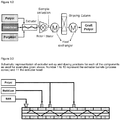
Figure 1 shows an exemplary set-up of devices for the inventive process. Optionally, a stripping column is used to remove residual volatile components, like styrene or acrylonitrile. In a preferred embodiment of the inventive process, at least one stripping column is used. Thus, the amount of residual styrene in the product may be reduced to levels below 20 ppm and the amount of acrylonitrile below 5 ppm. Optionally at least one filter can be installed. -
Figure 2 shows a preferred embodiment of the inventive process, where in the first place, SAN is added to the extruder (E) into the first process zone, and then, later on, stabilizer (S) and polyol (P) are added successively into separate process zones of the extruder (E). - The polymer polyol obtainable by the inventive process may be used for the production of polyurethanes, in particular for flexible polyurethane foams.
- Polymer polyols made according to the present invention may be reacted with polyisocyanate. The polyisocyanates may be selected from the group comprising aliphatic, cycloaliphatic, arylaliphatic and aromatic isocyanates. Among them, aromatic polyisocyanates are preferred. Examples of suitable aromatic isocyanates include 2 , 4'-, 2,6-isomers of toluene diisocyanate (TDI), 4,4'-, 2,4' and 2,2'-isomers of diphenylmethane diisocyante (MDI), or mixtures thereof. Optionally, a blowing agent may also be used.
- The polymer polyols obtainable by the inventive process may be used in a variety of applications. Inter alia, the may be used for the production of polyurethane (PU) foams, like microcellular foams, flexible foams, formed flexible foams, viscoelastic foams, rigid foams for construction or insulation applications, or PU elastomers, thermoplastic polyurethanes (TPU), PU coatings, PU sealants, PU adhesives, surfactants, lubricants, dispersants, concrete liquefiers. as seed or starting material for the production of polymer polyols, as seed or starting material for aqueous polymer dispersions, as seed or starting material
- In one embodiment, the polymer polyols obtainable by the inventive process are used for the production of flexible polyurethane foams. Preferred applications of the polyurethane foams include footware applications and applications in the car sector and furniture, for example car seats.
| (GK 3496-024-01: example 1; GK 3496-024-02: example 2; GK 3496-030.01: example 3) | ||||||||||||||||
| Experiment number | Barrel set temperature | RPM | Throughput | Throughput | Throughput | Throughput | ||||||||||
| Zone 1 | Zone 2 | Zone 3 | Zone 4 | Zone 5 | | Zone 7 | | Zone 9 | | | Polymer Zone 1 | Stabilizer Zone 3 | Polyol Zone 4 | Polyol Zone 7 | ||
| [°C] | [°C] | [°C] | [°C] | [°C] | [°C] | [°C] | [°C] | [°C] | [°C] | [°C] | [min-1] | [kg/h] | [kg/h] | [kg/h] | [kg/h] | |
| GK3496-024-01 | 30 | 230 | 210 | 210 | 190 | 190 | 190 | 190 | 190 | 190 | 190 | 500 | 2,4 | 0,9 | 2,7 | |
| GK3496-024-02 | 30 | 230 | 210 | 210 | 190 | 190 | 190 | 190 | 190 | 190 | 190 | 500 | 2,4 | 0,9 | 2,7 | |
| GK3496-030-01 | 30 | 230 | 210 | 210 | 190 | 190 | 190 | 190 | 190 | 190 | 190 | 500 | 4,920 | 1,44 | 3,60 | 2,040 |
Claims (30)
- Continuous process for making a polymer polyol, comprising mixing at least one melted thermoplastic styrene-acrylonitrile-copolymer (TP) with at least one polyol (P) in the presence of at least one stabilizer (S), comprising from 10 to 70% by weight, preferably 30 to 60% by weight, more preferably 40 to 55% by weight, based on the sum of all components, at least one polyol P2, and at least one polyol CSP which comprises the reaction product of at least one macromere M, styrene and acrylonitrile in P2, optionally with an initiator and/ or a chain transfer agent, wherein the content of macromere M of the stabilizer (S) is between 30-70 wt%, preferably 35 to 54 wt%, based on the sum of all components, and/or wherein the polyol CSP is preferably comb-structured , and wherein, in a first step (1), TP, P and S are fed into an extruder (E) to form an initial dispersion, and the initial dispersion obtained from the extruder is then fed, in a second step (2), into at least one rotor-stator device (RS) comprising at least one rotor-stator combination, and (3) the dispersion is cooled below the Tg of the thermoplastic styrene-acrylonitrile-copolymer (TP) after passing all of the rotor-stators (RS) to obtain the final polymer polyol, wherein a macromonomere is defined as a molecule which comprises one or more polymerizable double bonds and one or more hydroxyl-terminated polyether tails.
- Process according to claim 1, wherein the extruder (E) is divided into at least two, preferably at least three separate process zones, more preferably at least four separate process zones and an extruder head.
- Process according to claim 1 or 2, wherein TP is fed into the first process zone Z1 of the extruder E, S is fed into the second process zone Z2 or a later process zone, and P is fed into one of the process zones following the process zone of addition of S, wherein the terms "first" and "second" refer to the flow direction of the reaction mixture in the extruder E.
- Process according to any of claims 1 to 3, wherein there is at least one process zone of the extruder E with no addition of components between the addition of the stabilizer S and the addition of the polyol P.
- Process according to any of claims 1 to 4, wherein P is fed into at least two different process zones of the extruder E.
- Process according to any of claims 1 to 5, wherein the extruder (E) is operated at a barrel temperature in the range of between 160° to 250 °C, preferably 180° to 210 °C in at least one of the process zones, preferably in all of the process zones but the first.
- Process according to any of claims 1 to 6, wherein the extruder (E) has a rotation speed in the range of 400 to 1200 rpm, preferably 500 to 900 rpm.
- Process according to any of claims 1 to 7, wherein a stripping column or stripping-vessel is used after the rotor-stator device to remove volatile material.
- Process according to any of claims 1 to 8, wherein at least one, preferably all of the at least one-level rotor-stator devices (RS) are operated at a set temperature in the range of between 160° to 250 °C, preferably 180 °C to 220 °C.
- Process according to any of claims 1 to 9, wherein at least one, preferably all of the rotor-stator devices (RS) have a circumferential speed in the range of 10 to 60 s-1, preferably 20 to 50 s-1.
- Process according to any of claims 1 to 10, wherein at least one, preferably all of the rotor-stator devices comprise at least two, preferably at least three rotor-stator combinations.
- Process according to any of claims 1 to 11, wherein the single rotor-stator combinations have differing teeth, wherein preferably, the first rotor-stator combination has coarse teeth, and the next rotor-stator combination in the flow direction has medium fine teeth, and the third rotor-stator combination in the flow direction has fine teeth.
- Process according to any of claims 1 to 12, wherein the polyol (P) is added to the extruder (E) at a temperature of above 100 °C, preferably above 150 °C.
- Process according to any of claims 1 to 13, wherein the stabilizer (S) is added to the extruder (E) at a temperature of above 100 °C, preferably above 150 °C.
- Process according to any of claims 1 to 14, wherein the polyol (P) is liquid at room temperature.
- Process according to any of claims 1 to 15, wherein the polyol (P) is selected from the group of polyols used for slabstock foam applications and polyols used for molded foam applications.
- Process according to any of claims 1 to 16, wherein the polyol (P) has an average OH value between 20 and 300 mg KOH/g, preferentially between 25 and 100 mg KOH/g.
- Process according to any of claims 1 to 17, wherein the polyol (P) has an average functionality between 2 and 6, preferentially between 2.5 and 4.
- Process according to any of claims 1 to 18, wherein the product has an average particle size of D50 below 25 µm, preferentially below 10 µm, most preferentially below 5 µm, as determined by static laser diffraction.
- Process according to any of claims 1 to 19, wherein the polyol P2 contained in the stabilizer S is selected from polyether polyols (PEOLs), preferably from the group consisting of PEOLs with a molecular weight between 1000 and 6000 g/mol, more preferably selected from the group consisting of PEOLs with a molecular weight between 2000 and 5000 g/mol.
- Process according to any of claims 1 to 20, wherein the macromere M contained in the stabilizer S has an average molecular weight of from 1000 to 50000 g/mol, preferably 2000 to 30000 g/mol, more preferably 3000 to 20,000 g/mol.
- Process according to any of claims 1 to 21, wherein the macromere M contained in the stabilizer S is obtained by reacting 1,1-dimethyl meta isopropenyl benzyl isocyanat (TMI) with a polyether polyol PM, selected from the group consisting of three- and sixfunctional polyether polyols, preferably from the group consisting of glycerine, sorbitol and 1,1,1-trimethylol propane (TMP), optionally in the presence of a Lewis acid catalyst.
- Process according to any of claims 1 to 22, wherein the ratio of styrene to acrylonitrile in the polyol CSP contained in the stabilizer S is greater than 1:1, preferentially greater 1:1.5, most preferred greater 1:2.
- Process according to any of claims 1 to 23, wherein the chain transfer agent optionally used in the production of the stabilizer S is selected from the group consisting of dodecane thiol, isopropanol and 2-butanol, and/ or the initiator optionally used in the production of the stabilizer S is selected from the group consisting of azoisobutyro nitrile (AIBN) and Dimethyl 2,2'-azobis(2-methylpropionate).
- Process according to any of claims 1 to 24, wherein the ratio of styrene to acrylonitrile in the styrene-acrylonitrile-copolymer (TP) is greater than 1:1, preferentially greater 1:1.5, most preferred greater 1:2.
- Process according to any of claims 1 to 25, wherein the dispersion is cooled below the Tg of the thermoplastic styrene-acrylonitrile-copolymer (TP) within a maximum time range of four hours after passing all of the rotor-stator devices (RS), preferably within a maximum time range of two hours, more preferably one hour.
- Process according to any of claims 1 to 26, wherein the dispersion is cooled to a temperature of equal to or less than 60 °C, preferably below 50 °C, within a maximum time range of four hours after passing all of the rotor-stator devices (RS), preferably within a maximum time range of two hours, more preferably one hour.
- Process according to any of claims 1 to 27, wherein the polymer polyol has a monomodal, bimodal or multimodal particle size distribution, preferably a monomodal distribution.
- Polymer polyol, obtainable by the process according to any of claims 1 to 28.
- Process for the production of a polyurethane, comprising reacting at least one polymer polyol obtainable by the process according to any of claims 1 to 28 and optionally at least one further polyether polyol with at least one di- or polyisocyanate and optionally a blowing agent.
Applications Claiming Priority (2)
| Application Number | Priority Date | Filing Date | Title |
|---|---|---|---|
| EP14166515 | 2014-04-30 | ||
| PCT/EP2015/058467 WO2015165761A1 (en) | 2014-04-30 | 2015-04-20 | Process for making a polymer polyol |
Publications (2)
| Publication Number | Publication Date |
|---|---|
| EP3137529A1 EP3137529A1 (en) | 2017-03-08 |
| EP3137529B1 true EP3137529B1 (en) | 2020-06-17 |
Family
ID=50677961
Family Applications (1)
| Application Number | Title | Priority Date | Filing Date |
|---|---|---|---|
| EP15720625.1A Active EP3137529B1 (en) | 2014-04-30 | 2015-04-20 | Process for making a polymer polyol |
Country Status (11)
| Country | Link |
|---|---|
| US (1) | US10370479B2 (en) |
| EP (1) | EP3137529B1 (en) |
| JP (1) | JP6715185B2 (en) |
| KR (1) | KR102450069B1 (en) |
| CN (1) | CN106459346B (en) |
| ES (1) | ES2818108T3 (en) |
| HU (1) | HUE050534T2 (en) |
| MX (1) | MX384711B (en) |
| RU (1) | RU2713651C2 (en) |
| SA (1) | SA516380147B1 (en) |
| WO (1) | WO2015165761A1 (en) |
Families Citing this family (6)
| Publication number | Priority date | Publication date | Assignee | Title |
|---|---|---|---|---|
| BR112016024799A2 (en) * | 2014-04-30 | 2017-08-15 | Basf Se | stabilizer for polyol polymer production processes |
| CN110283308B (en) * | 2019-06-21 | 2024-12-03 | 南京金栖化工集团有限公司 | A method for preparing a stabilizer for synthesizing polymer polyols |
| CN112708037B (en) * | 2019-10-25 | 2022-07-12 | 中国石油化工股份有限公司 | Polymer polyol with wide particle size distribution, and preparation method and application thereof |
| BR112023000178A2 (en) | 2020-07-08 | 2023-01-31 | Dow Global Technologies Llc | METHOD FOR PRODUCING A POLYMERIC POLYOL, AND, POLYMERIC POLYOL |
| KR102832049B1 (en) * | 2022-06-14 | 2025-07-10 | 금호석유화학 주식회사 | Polymer polyol and process for producing the same |
| KR20250113993A (en) * | 2022-12-01 | 2025-07-28 | 시카 테크놀러지 아게 | Two-component polyurethane composition with adjustable pot life for spray applications |
Family Cites Families (19)
| Publication number | Priority date | Publication date | Assignee | Title |
|---|---|---|---|---|
| GB8410480D0 (en) | 1984-04-24 | 1984-05-31 | Bp Chem Int Ltd | Preparation of polymer polyols |
| US5196476A (en) | 1990-06-12 | 1993-03-23 | Arco Chemical Technology, L.P. | Polymer/polyol and preformed stabilizer systems |
| US5494957A (en) * | 1991-04-22 | 1996-02-27 | The Dow Chemical Company | Stabilizers for preparing polymer polyols, and process for preparing polymer polyols |
| CA2078318C (en) | 1991-09-20 | 1999-04-13 | Terry Lee Petzold | Carbody to crawler connection |
| DE69518423T2 (en) * | 1995-10-10 | 2000-12-14 | Bayer Ag | Continuous process for the production of very stable, very finely divided, low-viscosity polymer polyols with a low average particle size |
| KR19990066959A (en) | 1995-10-23 | 1999-08-16 | 나닌크 요하네스 에프,베르너 페터 요트 | Polymer Polyols and Preformed Stabilizer Systems |
| US5854386A (en) * | 1997-08-25 | 1998-12-29 | Arco Chemical Technology, L.P. | Stabilizers for polymer polyols |
| US6013731A (en) * | 1997-12-16 | 2000-01-11 | Arco Chemical Technology L.P. | Stabilizer based on high molecular weight polyols having low monol content for polymer polyol production |
| BR0114521B1 (en) * | 2000-10-05 | 2011-09-20 | process for preparing a stable dispersion, composition and formulation of polyurethane foam. | |
| US6475588B1 (en) | 2001-08-07 | 2002-11-05 | General Electric Company | Colored digital versatile disks |
| US7148288B2 (en) | 2003-06-27 | 2006-12-12 | Basf Corporation | Process for formation of preformed stabilizer polyols |
| US20050085613A1 (en) | 2003-10-16 | 2005-04-21 | Adkins Rick L. | Novel unsaturated macromers for preformed stabilizers and polymer polyols |
| RU2265031C1 (en) * | 2004-04-28 | 2005-11-27 | Еганов Владимир Федорович | Method of preparing polymer-polyol and dispersed polyol composition |
| US7759423B2 (en) * | 2004-08-02 | 2010-07-20 | Bayer Materialscience Llc | Polymer polyols with ultra-high solids contents |
| US20070060690A1 (en) | 2005-09-09 | 2007-03-15 | Bayer Materialscience Llc | Low viscosity polymer polyols characterized by a high hydroxyl number |
| ES2385289T3 (en) | 2008-06-19 | 2012-07-20 | Dow Global Technologies Llc | Fusion dispersion process for manufacturing polymer polyols |
| US10239985B2 (en) | 2008-12-23 | 2019-03-26 | Covestro Llc | Polymer polyols comprising a natural oil base polyol, polyurethane foams comprising these polymer polyols and processes for their preparation |
| US8146458B2 (en) * | 2009-07-27 | 2012-04-03 | Eaton Corporation | Locking differential having improved torque capacity |
| WO2012154393A2 (en) * | 2011-05-12 | 2012-11-15 | Dow Global Technologies Llc | Stabilizer polymerization process and process for making polymer polyols |
-
2015
- 2015-04-20 EP EP15720625.1A patent/EP3137529B1/en active Active
- 2015-04-20 MX MX2016014296A patent/MX384711B/en unknown
- 2015-04-20 US US15/306,338 patent/US10370479B2/en active Active
- 2015-04-20 ES ES15720625T patent/ES2818108T3/en active Active
- 2015-04-20 KR KR1020167033275A patent/KR102450069B1/en active Active
- 2015-04-20 JP JP2016565481A patent/JP6715185B2/en active Active
- 2015-04-20 HU HUE15720625A patent/HUE050534T2/en unknown
- 2015-04-20 RU RU2016146803A patent/RU2713651C2/en active
- 2015-04-20 CN CN201580022734.2A patent/CN106459346B/en active Active
- 2015-04-20 WO PCT/EP2015/058467 patent/WO2015165761A1/en not_active Ceased
-
2016
- 2016-10-25 SA SA516380147A patent/SA516380147B1/en unknown
Non-Patent Citations (1)
| Title |
|---|
| None * |
Also Published As
| Publication number | Publication date |
|---|---|
| CN106459346B (en) | 2020-02-21 |
| MX384711B (en) | 2025-03-14 |
| RU2713651C2 (en) | 2020-02-06 |
| JP6715185B2 (en) | 2020-07-01 |
| MX2016014296A (en) | 2017-02-06 |
| SA516380147B1 (en) | 2020-03-22 |
| US20170044297A1 (en) | 2017-02-16 |
| KR20170002494A (en) | 2017-01-06 |
| KR102450069B1 (en) | 2022-09-30 |
| RU2016146803A (en) | 2018-05-30 |
| US10370479B2 (en) | 2019-08-06 |
| HUE050534T2 (en) | 2020-12-28 |
| RU2016146803A3 (en) | 2018-10-19 |
| CN106459346A (en) | 2017-02-22 |
| JP2017514959A (en) | 2017-06-08 |
| ES2818108T3 (en) | 2021-04-09 |
| EP3137529A1 (en) | 2017-03-08 |
| WO2015165761A1 (en) | 2015-11-05 |
Similar Documents
| Publication | Publication Date | Title |
|---|---|---|
| US10370479B2 (en) | Process for making a polymer polyol | |
| CN102137881B (en) | Melt Dispersion Process for Preparation of Polymer Polyols | |
| CN1858082A (en) | Polyurethane foams made with vegetable oil hydroxylate, polymer polyol and aliphatic polyhydroxy alcohol | |
| CN1541235A (en) | Method for producing polyurethane product using polymer polyol in which carrier polyol is tertiary amine polyol | |
| WO2009138379A2 (en) | Method for producing polyol dispersions | |
| JPH05247109A (en) | Preparation of polymer polyol | |
| JP2009108306A (en) | Method for producing fine particle-dispersed polyol and method for producing polyurethane resin | |
| WO2019177903A1 (en) | Flexible polyurethane foam having prolonged recovery time | |
| EP2841502A2 (en) | Dispersion of a functionalized polyolefin in a polyol | |
| CN103384684A (en) | High-concentration polymer polyol and method for manufacturing same | |
| EP3137527B1 (en) | Stabilizer for polymer polyol production processes | |
| CN107949592A (en) | Copolymer polyols and functional additive in dispersed phase | |
| CN101218299B (en) | Microparticle-dispersed polyol composition, method for producing polymer polyol, and method for producing polyurethane resin | |
| EP3224291B1 (en) | Synthesis of polymer polyols in unsaturated polyols, polymer polyols and their use | |
| EP2496619A2 (en) | Liquid isocyanate composition | |
| JP2009040946A (en) | Method for manufacturing polymer polyol | |
| CN112368315B (en) | Process for producing rigid polyurethane foam and its use as thermal insulation material | |
| CN101245134B (en) | Process for preparing urea modified polyether polylol | |
| CN101039974A (en) | Process for making a PIPA-polyol | |
| KR101909076B1 (en) | Preparing method of nylon 4 homopolymer bead | |
| CN105622861B (en) | A method of continuously preparing polymer polyatomic alcohol | |
| JP2025511223A (en) | Method for converting solid polyurethane moldings | |
| JP2010235727A (en) | Method for producing polymer polyol and polyurethane resin |
Legal Events
| Date | Code | Title | Description |
|---|---|---|---|
| STAA | Information on the status of an ep patent application or granted ep patent |
Free format text: STATUS: THE INTERNATIONAL PUBLICATION HAS BEEN MADE |
|
| PUAI | Public reference made under article 153(3) epc to a published international application that has entered the european phase |
Free format text: ORIGINAL CODE: 0009012 |
|
| STAA | Information on the status of an ep patent application or granted ep patent |
Free format text: STATUS: REQUEST FOR EXAMINATION WAS MADE |
|
| 17P | Request for examination filed |
Effective date: 20161130 |
|
| AK | Designated contracting states |
Kind code of ref document: A1 Designated state(s): AL AT BE BG CH CY CZ DE DK EE ES FI FR GB GR HR HU IE IS IT LI LT LU LV MC MK MT NL NO PL PT RO RS SE SI SK SM TR |
|
| AX | Request for extension of the european patent |
Extension state: BA ME |
|
| DAV | Request for validation of the european patent (deleted) | ||
| DAX | Request for extension of the european patent (deleted) | ||
| STAA | Information on the status of an ep patent application or granted ep patent |
Free format text: STATUS: EXAMINATION IS IN PROGRESS |
|
| 17Q | First examination report despatched |
Effective date: 20170920 |
|
| GRAP | Despatch of communication of intention to grant a patent |
Free format text: ORIGINAL CODE: EPIDOSNIGR1 |
|
| STAA | Information on the status of an ep patent application or granted ep patent |
Free format text: STATUS: GRANT OF PATENT IS INTENDED |
|
| INTG | Intention to grant announced |
Effective date: 20200108 |
|
| GRAS | Grant fee paid |
Free format text: ORIGINAL CODE: EPIDOSNIGR3 |
|
| GRAA | (expected) grant |
Free format text: ORIGINAL CODE: 0009210 |
|
| STAA | Information on the status of an ep patent application or granted ep patent |
Free format text: STATUS: THE PATENT HAS BEEN GRANTED |
|
| AK | Designated contracting states |
Kind code of ref document: B1 Designated state(s): AL AT BE BG CH CY CZ DE DK EE ES FI FR GB GR HR HU IE IS IT LI LT LU LV MC MK MT NL NO PL PT RO RS SE SI SK SM TR |
|
| REG | Reference to a national code |
Ref country code: GB Ref legal event code: FG4D |
|
| REG | Reference to a national code |
Ref country code: CH Ref legal event code: EP |
|
| REG | Reference to a national code |
Ref country code: IE Ref legal event code: FG4D |
|
| REG | Reference to a national code |
Ref country code: DE Ref legal event code: R096 Ref document number: 602015054331 Country of ref document: DE |
|
| REG | Reference to a national code |
Ref country code: AT Ref legal event code: REF Ref document number: 1281216 Country of ref document: AT Kind code of ref document: T Effective date: 20200715 |
|
| REG | Reference to a national code |
Ref country code: NL Ref legal event code: FP |
|
| PG25 | Lapsed in a contracting state [announced via postgrant information from national office to epo] |
Ref country code: SE Free format text: LAPSE BECAUSE OF FAILURE TO SUBMIT A TRANSLATION OF THE DESCRIPTION OR TO PAY THE FEE WITHIN THE PRESCRIBED TIME-LIMIT Effective date: 20200617 Ref country code: GR Free format text: LAPSE BECAUSE OF FAILURE TO SUBMIT A TRANSLATION OF THE DESCRIPTION OR TO PAY THE FEE WITHIN THE PRESCRIBED TIME-LIMIT Effective date: 20200918 Ref country code: NO Free format text: LAPSE BECAUSE OF FAILURE TO SUBMIT A TRANSLATION OF THE DESCRIPTION OR TO PAY THE FEE WITHIN THE PRESCRIBED TIME-LIMIT Effective date: 20200917 Ref country code: FI Free format text: LAPSE BECAUSE OF FAILURE TO SUBMIT A TRANSLATION OF THE DESCRIPTION OR TO PAY THE FEE WITHIN THE PRESCRIBED TIME-LIMIT Effective date: 20200617 Ref country code: LT Free format text: LAPSE BECAUSE OF FAILURE TO SUBMIT A TRANSLATION OF THE DESCRIPTION OR TO PAY THE FEE WITHIN THE PRESCRIBED TIME-LIMIT Effective date: 20200617 |
|
| REG | Reference to a national code |
Ref country code: LT Ref legal event code: MG4D |
|
| PG25 | Lapsed in a contracting state [announced via postgrant information from national office to epo] |
Ref country code: BG Free format text: LAPSE BECAUSE OF FAILURE TO SUBMIT A TRANSLATION OF THE DESCRIPTION OR TO PAY THE FEE WITHIN THE PRESCRIBED TIME-LIMIT Effective date: 20200917 Ref country code: RS Free format text: LAPSE BECAUSE OF FAILURE TO SUBMIT A TRANSLATION OF THE DESCRIPTION OR TO PAY THE FEE WITHIN THE PRESCRIBED TIME-LIMIT Effective date: 20200617 Ref country code: LV Free format text: LAPSE BECAUSE OF FAILURE TO SUBMIT A TRANSLATION OF THE DESCRIPTION OR TO PAY THE FEE WITHIN THE PRESCRIBED TIME-LIMIT Effective date: 20200617 Ref country code: HR Free format text: LAPSE BECAUSE OF FAILURE TO SUBMIT A TRANSLATION OF THE DESCRIPTION OR TO PAY THE FEE WITHIN THE PRESCRIBED TIME-LIMIT Effective date: 20200617 |
|
| REG | Reference to a national code |
Ref country code: AT Ref legal event code: MK05 Ref document number: 1281216 Country of ref document: AT Kind code of ref document: T Effective date: 20200617 |
|
| REG | Reference to a national code |
Ref country code: HU Ref legal event code: AG4A Ref document number: E050534 Country of ref document: HU |
|
| PG25 | Lapsed in a contracting state [announced via postgrant information from national office to epo] |
Ref country code: AL Free format text: LAPSE BECAUSE OF FAILURE TO SUBMIT A TRANSLATION OF THE DESCRIPTION OR TO PAY THE FEE WITHIN THE PRESCRIBED TIME-LIMIT Effective date: 20200617 |
|
| PG25 | Lapsed in a contracting state [announced via postgrant information from national office to epo] |
Ref country code: RO Free format text: LAPSE BECAUSE OF FAILURE TO SUBMIT A TRANSLATION OF THE DESCRIPTION OR TO PAY THE FEE WITHIN THE PRESCRIBED TIME-LIMIT Effective date: 20200617 Ref country code: CZ Free format text: LAPSE BECAUSE OF FAILURE TO SUBMIT A TRANSLATION OF THE DESCRIPTION OR TO PAY THE FEE WITHIN THE PRESCRIBED TIME-LIMIT Effective date: 20200617 Ref country code: IT Free format text: LAPSE BECAUSE OF FAILURE TO SUBMIT A TRANSLATION OF THE DESCRIPTION OR TO PAY THE FEE WITHIN THE PRESCRIBED TIME-LIMIT Effective date: 20200617 Ref country code: SM Free format text: LAPSE BECAUSE OF FAILURE TO SUBMIT A TRANSLATION OF THE DESCRIPTION OR TO PAY THE FEE WITHIN THE PRESCRIBED TIME-LIMIT Effective date: 20200617 Ref country code: AT Free format text: LAPSE BECAUSE OF FAILURE TO SUBMIT A TRANSLATION OF THE DESCRIPTION OR TO PAY THE FEE WITHIN THE PRESCRIBED TIME-LIMIT Effective date: 20200617 Ref country code: EE Free format text: LAPSE BECAUSE OF FAILURE TO SUBMIT A TRANSLATION OF THE DESCRIPTION OR TO PAY THE FEE WITHIN THE PRESCRIBED TIME-LIMIT Effective date: 20200617 Ref country code: PT Free format text: LAPSE BECAUSE OF FAILURE TO SUBMIT A TRANSLATION OF THE DESCRIPTION OR TO PAY THE FEE WITHIN THE PRESCRIBED TIME-LIMIT Effective date: 20201019 |
|
| PG25 | Lapsed in a contracting state [announced via postgrant information from national office to epo] |
Ref country code: PL Free format text: LAPSE BECAUSE OF FAILURE TO SUBMIT A TRANSLATION OF THE DESCRIPTION OR TO PAY THE FEE WITHIN THE PRESCRIBED TIME-LIMIT Effective date: 20200617 Ref country code: SK Free format text: LAPSE BECAUSE OF FAILURE TO SUBMIT A TRANSLATION OF THE DESCRIPTION OR TO PAY THE FEE WITHIN THE PRESCRIBED TIME-LIMIT Effective date: 20200617 Ref country code: IS Free format text: LAPSE BECAUSE OF FAILURE TO SUBMIT A TRANSLATION OF THE DESCRIPTION OR TO PAY THE FEE WITHIN THE PRESCRIBED TIME-LIMIT Effective date: 20201017 |
|
| REG | Reference to a national code |
Ref country code: DE Ref legal event code: R097 Ref document number: 602015054331 Country of ref document: DE |
|
| REG | Reference to a national code |
Ref country code: ES Ref legal event code: FG2A Ref document number: 2818108 Country of ref document: ES Kind code of ref document: T3 Effective date: 20210409 |
|
| PLBE | No opposition filed within time limit |
Free format text: ORIGINAL CODE: 0009261 |
|
| STAA | Information on the status of an ep patent application or granted ep patent |
Free format text: STATUS: NO OPPOSITION FILED WITHIN TIME LIMIT |
|
| PG25 | Lapsed in a contracting state [announced via postgrant information from national office to epo] |
Ref country code: DK Free format text: LAPSE BECAUSE OF FAILURE TO SUBMIT A TRANSLATION OF THE DESCRIPTION OR TO PAY THE FEE WITHIN THE PRESCRIBED TIME-LIMIT Effective date: 20200617 |
|
| 26N | No opposition filed |
Effective date: 20210318 |
|
| PG25 | Lapsed in a contracting state [announced via postgrant information from national office to epo] |
Ref country code: SI Free format text: LAPSE BECAUSE OF FAILURE TO SUBMIT A TRANSLATION OF THE DESCRIPTION OR TO PAY THE FEE WITHIN THE PRESCRIBED TIME-LIMIT Effective date: 20200617 |
|
| PG25 | Lapsed in a contracting state [announced via postgrant information from national office to epo] |
Ref country code: MC Free format text: LAPSE BECAUSE OF FAILURE TO SUBMIT A TRANSLATION OF THE DESCRIPTION OR TO PAY THE FEE WITHIN THE PRESCRIBED TIME-LIMIT Effective date: 20200617 |
|
| GBPC | Gb: european patent ceased through non-payment of renewal fee |
Effective date: 20210420 |
|
| PG25 | Lapsed in a contracting state [announced via postgrant information from national office to epo] |
Ref country code: LU Free format text: LAPSE BECAUSE OF NON-PAYMENT OF DUE FEES Effective date: 20210420 |
|
| PG25 | Lapsed in a contracting state [announced via postgrant information from national office to epo] |
Ref country code: LI Free format text: LAPSE BECAUSE OF NON-PAYMENT OF DUE FEES Effective date: 20210430 Ref country code: CH Free format text: LAPSE BECAUSE OF NON-PAYMENT OF DUE FEES Effective date: 20210430 Ref country code: GB Free format text: LAPSE BECAUSE OF NON-PAYMENT OF DUE FEES Effective date: 20210420 |
|
| PG25 | Lapsed in a contracting state [announced via postgrant information from national office to epo] |
Ref country code: IE Free format text: LAPSE BECAUSE OF NON-PAYMENT OF DUE FEES Effective date: 20210420 |
|
| PG25 | Lapsed in a contracting state [announced via postgrant information from national office to epo] |
Ref country code: IS Free format text: LAPSE BECAUSE OF FAILURE TO SUBMIT A TRANSLATION OF THE DESCRIPTION OR TO PAY THE FEE WITHIN THE PRESCRIBED TIME-LIMIT Effective date: 20201017 |
|
| PG25 | Lapsed in a contracting state [announced via postgrant information from national office to epo] |
Ref country code: CY Free format text: LAPSE BECAUSE OF FAILURE TO SUBMIT A TRANSLATION OF THE DESCRIPTION OR TO PAY THE FEE WITHIN THE PRESCRIBED TIME-LIMIT Effective date: 20200617 |
|
| PG25 | Lapsed in a contracting state [announced via postgrant information from national office to epo] |
Ref country code: MK Free format text: LAPSE BECAUSE OF FAILURE TO SUBMIT A TRANSLATION OF THE DESCRIPTION OR TO PAY THE FEE WITHIN THE PRESCRIBED TIME-LIMIT Effective date: 20200617 |
|
| PG25 | Lapsed in a contracting state [announced via postgrant information from national office to epo] |
Ref country code: TR Free format text: LAPSE BECAUSE OF FAILURE TO SUBMIT A TRANSLATION OF THE DESCRIPTION OR TO PAY THE FEE WITHIN THE PRESCRIBED TIME-LIMIT Effective date: 20200617 |
|
| PG25 | Lapsed in a contracting state [announced via postgrant information from national office to epo] |
Ref country code: MT Free format text: LAPSE BECAUSE OF FAILURE TO SUBMIT A TRANSLATION OF THE DESCRIPTION OR TO PAY THE FEE WITHIN THE PRESCRIBED TIME-LIMIT Effective date: 20200617 |
|
| PGFP | Annual fee paid to national office [announced via postgrant information from national office to epo] |
Ref country code: NL Payment date: 20250424 Year of fee payment: 11 |
|
| PGFP | Annual fee paid to national office [announced via postgrant information from national office to epo] |
Ref country code: DE Payment date: 20250428 Year of fee payment: 11 |
|
| PGFP | Annual fee paid to national office [announced via postgrant information from national office to epo] |
Ref country code: ES Payment date: 20250513 Year of fee payment: 11 |
|
| PGFP | Annual fee paid to national office [announced via postgrant information from national office to epo] |
Ref country code: HU Payment date: 20250411 Year of fee payment: 11 |
|
| PGFP | Annual fee paid to national office [announced via postgrant information from national office to epo] |
Ref country code: BE Payment date: 20250424 Year of fee payment: 11 |
|
| PGFP | Annual fee paid to national office [announced via postgrant information from national office to epo] |
Ref country code: FR Payment date: 20250424 Year of fee payment: 11 |