EP3136712A1 - Imaging apparatus and method - Google Patents
Imaging apparatus and method Download PDFInfo
- Publication number
- EP3136712A1 EP3136712A1 EP15275187.1A EP15275187A EP3136712A1 EP 3136712 A1 EP3136712 A1 EP 3136712A1 EP 15275187 A EP15275187 A EP 15275187A EP 3136712 A1 EP3136712 A1 EP 3136712A1
- Authority
- EP
- European Patent Office
- Prior art keywords
- interest
- region
- radiation source
- single pixel
- dimensional image
- Prior art date
- Legal status (The legal status is an assumption and is not a legal conclusion. Google has not performed a legal analysis and makes no representation as to the accuracy of the status listed.)
- Ceased
Links
Images

Classifications
-
- G—PHYSICS
- G02—OPTICS
- G02F—OPTICAL DEVICES OR ARRANGEMENTS FOR THE CONTROL OF LIGHT BY MODIFICATION OF THE OPTICAL PROPERTIES OF THE MEDIA OF THE ELEMENTS INVOLVED THEREIN; NON-LINEAR OPTICS; FREQUENCY-CHANGING OF LIGHT; OPTICAL LOGIC ELEMENTS; OPTICAL ANALOGUE/DIGITAL CONVERTERS
- G02F1/00—Devices or arrangements for the control of the intensity, colour, phase, polarisation or direction of light arriving from an independent light source, e.g. switching, gating or modulating; Non-linear optics
- G02F1/35—Non-linear optics
- G02F1/39—Non-linear optics for parametric generation or amplification of light, infrared or ultraviolet waves
-
- G—PHYSICS
- G01—MEASURING; TESTING
- G01S—RADIO DIRECTION-FINDING; RADIO NAVIGATION; DETERMINING DISTANCE OR VELOCITY BY USE OF RADIO WAVES; LOCATING OR PRESENCE-DETECTING BY USE OF THE REFLECTION OR RERADIATION OF RADIO WAVES; ANALOGOUS ARRANGEMENTS USING OTHER WAVES
- G01S17/00—Systems using the reflection or reradiation of electromagnetic waves other than radio waves, e.g. lidar systems
- G01S17/02—Systems using the reflection of electromagnetic waves other than radio waves
- G01S17/06—Systems determining position data of a target
- G01S17/46—Indirect determination of position data
-
- G—PHYSICS
- G01—MEASURING; TESTING
- G01S—RADIO DIRECTION-FINDING; RADIO NAVIGATION; DETERMINING DISTANCE OR VELOCITY BY USE OF RADIO WAVES; LOCATING OR PRESENCE-DETECTING BY USE OF THE REFLECTION OR RERADIATION OF RADIO WAVES; ANALOGOUS ARRANGEMENTS USING OTHER WAVES
- G01S17/00—Systems using the reflection or reradiation of electromagnetic waves other than radio waves, e.g. lidar systems
- G01S17/88—Lidar systems specially adapted for specific applications
- G01S17/89—Lidar systems specially adapted for specific applications for mapping or imaging
-
- G—PHYSICS
- G01—MEASURING; TESTING
- G01S—RADIO DIRECTION-FINDING; RADIO NAVIGATION; DETERMINING DISTANCE OR VELOCITY BY USE OF RADIO WAVES; LOCATING OR PRESENCE-DETECTING BY USE OF THE REFLECTION OR RERADIATION OF RADIO WAVES; ANALOGOUS ARRANGEMENTS USING OTHER WAVES
- G01S7/00—Details of systems according to groups G01S13/00, G01S15/00, G01S17/00
- G01S7/48—Details of systems according to groups G01S13/00, G01S15/00, G01S17/00 of systems according to group G01S17/00
- G01S7/481—Constructional features, e.g. arrangements of optical elements
- G01S7/4816—Constructional features, e.g. arrangements of optical elements of receivers alone
-
- G—PHYSICS
- G01—MEASURING; TESTING
- G01S—RADIO DIRECTION-FINDING; RADIO NAVIGATION; DETERMINING DISTANCE OR VELOCITY BY USE OF RADIO WAVES; LOCATING OR PRESENCE-DETECTING BY USE OF THE REFLECTION OR RERADIATION OF RADIO WAVES; ANALOGOUS ARRANGEMENTS USING OTHER WAVES
- G01S7/00—Details of systems according to groups G01S13/00, G01S15/00, G01S17/00
- G01S7/48—Details of systems according to groups G01S13/00, G01S15/00, G01S17/00 of systems according to group G01S17/00
- G01S7/481—Constructional features, e.g. arrangements of optical elements
- G01S7/4817—Constructional features, e.g. arrangements of optical elements relating to scanning
-
- H—ELECTRICITY
- H04—ELECTRIC COMMUNICATION TECHNIQUE
- H04N—PICTORIAL COMMUNICATION, e.g. TELEVISION
- H04N23/00—Cameras or camera modules comprising electronic image sensors; Control thereof
- H04N23/95—Computational photography systems, e.g. light-field imaging systems
Definitions
- This invention relates generally to an imaging apparatus and method and, more particularly, to a distributed ghost imaging apparatus and method for enabling long-range and/or wide angled imaging of targets.
- Modern tactical aircraft use a number of imaging aids to view external objects/scenes; and visible, infrared and/or narrow-spectrum optical devices are used in various applications to form an image of a scene.
- Real-time acquisition of high-resolution, wide field of regard and high dynamic range images is essential for many military and civilian surveillance applications.
- an imaging device may be mounted on a gimbal, with a steering subsystem being provided to enable the imaging device to be steered to cover a required field of view.
- relatively large optical systems i.e. long focal length and large sensing aperture
- the imaging components which tend to be bulky and complex, are affixed to the host platform, which makes a significant contribution to the overall size, weight and power associated with the host platform subsystems.
- imaging apparatus for a host platform having an external surface, the apparatus comprising a plurality of single pixel detectors distributed about said external surface, each single pixel detector being configured to receive radiation reflected by an object or region of interest and generate two-dimensional image data representative thereof, the apparatus further comprising an image processing module for receiving said two-dimensional image data from each of a plurality of single pixel detectors and reconstructing a three-dimensional image of said object or region of interest using a ghost imaging algorithm.
- the apparatus may further comprise a radiation source module including a radiation source.
- the radiation source module may include a control device configured to adjustably direct an output of said radiation source onto an object or region of interest.
- the radiation source module may comprise a target acquisition device for detecting an object or region of interest and generating a signal configured to cause said control device to direct said radiation source output to irradiate said detected object or region of interest.
- the radiation source module may also comprise a tracking device for tracking relative movement between the host platform and an object or region of interest and generating a signal configured to cause said control device to adjust the direction of said radiation source output such that irradiation thereby of said object or region of interest is maintained.
- the radiation source may comprise a structured light source comprising a laser and a spatial light modulator through which light from said laser passes before irradiating said object or region of interest.
- the ghost imaging algorithm may be a computational ghost imaging algorithm.
- the spatial light modulator may be configured to provide a time varying mask through which light from said laser passes to irradiate said object or region of interest, said apparatus further comprising a storage module for receiving data representative of a mask configuration and associated time.
- the mask may be of spatially random configuration.
- the spatial light modulator may comprise a digital micromirror device including a programmable on/off duty cycle for effecting said time varying mask.
- the radiation source may be provided on the host platform, at any suitable location. However, in some exemplary embodiments, the radiation source may be provided at a location geographically separated from said host platform. For example, the radiation source may be provided on another platform, thereby decreasing the size, weight and power overhead in relation to the host platform itself.
- the radiation source may comprise a photon source for generating a photon beam and an optical device located within said photon beam configured to split photons from said beam into two or more entangled photons, and may be configured to direct at least one of said entangled photons toward said object or region of interest and another of said entangled photons to a detector
- the apparatus may comprise a quantum correlation circuit configured to generate said two-dimensional image data
- said ghost imaging algorithm may comprise a quantum ghost imaging algorithm.
- the optical device may comprise a nonlinear crystal.
- At least some of said single pixel detectors may include a wireless data transceiver configured to enable wireless data communication therebetween.
- the wireless data transceiver may comprise a short wavelength radio frequency transceiver.
- the above-mentioned wireless data communication may comprise communication between said single pixel detectors of one or more relevancy parameters indicative of one or more similarities between respective states of said detectors.
- a state may comprise, for example, pointing angle and/or field of regard of a respective single pixel detector. If a relevancy parameter is determined to be met between two or more single pixel detectors, the apparatus may be configured to cause the respective two-dimensional image data output thereby to be integrated.
- the single pixel detectors are distributed about the external surface or skin of the host platform. They may be parasitically mounted thereon but, in an alternative exemplary embodiment, they may be integrally mounted within said external surface.
- the single pixel detectors may each include a local energy source for supplying electrical energy thereto.
- an imaging method for a host platform having an external surface comprising providing a plurality of single pixel detectors distributed about said external surface, each single pixel detector being configured to receive radiation reflected by an object or region of interest and generate two-dimensional image data representative thereof, the method further comprising configuring an image processing module to receive said two-dimensional image data from each of a plurality of single pixel detectors and reconstruct a three-dimensional image of said object or region of interest using a ghost imaging algorithm.
- a radiation source module for apparatus as described above, comprising a radiation source, a control device configured to adjustably direct an output of said radiation source, and a target acquisition device for detecting an object or region of interest and generating a control signal configured to cause said control device to direct said output of said radiation source onto said object or region of interest.
- the radiation source module may further include a tracking device for tracking relative movement between the host platform and the object or region of interest and generating a signal configured cause the control device to adjust the direction of the radiation source output so as to maintain irradiation thereby of the object or region of interest.
- CGI Computational ghost Imaging
- a structured light source to illuminate an object or region of interest and a single pixel detector to receive the reflections.
- the detector produces a two dimensional image of the object or region of interest, where the resulting image is a function of the level and type of illumination structure used by the illuminating system (i.e. the structured light source).
- a system according to an exemplary embodiment of the present invention comprises a plurality of single pixel detectors 10, a structured light source comprising a continuous wave (CW) or pulsed power laser (PPL) 12 and a spatial light modulator (SLM) 14, and an image processing module 16.
- CW continuous wave
- PPL pulsed power laser
- SLM spatial light modulator
- Each single pixel detector 10 comprises a single photon detector configured to record a measurement as an output voltage, representative of the quantity of light detected by the photon detector.
- the detector further includes an A/D converter or microprocessor for converting the above-mentioned measurement into a suitable digital representation thereof, and a local energy source.
- the energy source may, for example, comprise an electrical cell, such as a Lithium-ion cell or the like, but may alternatively comprise a device that harvests energy from the local environment through, for example, solar irradiation (e.g. using a solar photo-voltaic device), vibration (e.g. using a piezo device), or thermal differences (e.g. using a thermionic device).
- solar irradiation e.g. using a solar photo-voltaic device
- vibration e.g. using a piezo device
- thermal differences e.g. using a thermionic device.
- suitable energy sources for a single pixel detector will be known to
- a plurality of such single pixel detectors are utilised, which are applied parasitically to the skin or external surface of a platform, or integrated therein so as to form a fundamental part of its structure.
- Each single pixel detector may hereinafter be referred to as a 'node', with each node including a short wavelength radio frequency transceiver (e.g. 60 GHz) for wirelessly communicating its digital output to other nodes.
- the respective outputs of the single pixel detectors are also communicably coupled to the image processing module 16.
- the structured light source in this exemplary embodiment of the present invention comprises a continuous wave (CW) or pulsed power laser (PPL) 12 and a spatial light modulator (SLM) 14.
- the SLM is configured to provide a time varying (spatially random) 'mask' through which the laser light passes and thus gains spatial information, which it ultimately conveys to the object or region of interest 18 and then, by reflection, to one or more single photon detectors.
- the SLM 14 may, for example, comprise a digital micromirror device (DMD) having multiple (thousands or even millions of) individually controlled micromirrors built on top of an associated CMOS memory cell.
- DMD digital micromirror device
- Each micromirror can be oriented in one of two directions: the 'on' position or state allows light to pass through, and the 'off' position or state reflects light incident thereon, thereby effectively blocking its passage through the device.
- a controller loads each underlying memory cell with a '1' (on) or a '0' (off), and a mirror reset pulse, when subsequently applied, causes each micromirror to be electrostatically deflected about a hinge to the deflection angle corresponding to the state specified by the value held in the associated memory cell.
- the on/off duty cycle of each micromirror is fully programmable, such that the DMD can be readily used to provide the above-mentioned time-varying 'mask'.
- the structured light source may be provided on the same platform as the single pixel detectors (the 'host' platform) but may, alternatively, be located on another platform that is geographically separated from the host platform, thereby further decreasing the space, weight and power considerations in relation to the host platform.
- each single pixel detector system can only output a single value corresponding to a time interval, which value is communicated to the image processing module 16.
- the illumination 'mask' being used at a given time is known, then it is possible to create a multiplexed, two-dimensional image from a larger number of these pixel values by correlating the known spatial information from the captured signals.
- a number of processes for achieving this will be known to a person skilled in the art, such as those that employ Hadamard 2D matrices for example, and the present invention is not in any way intended to be limited in this regard.
- the image processing module 16 receives the measurements from the single pixel detectors and creates a multiplexed two-dimensional image of the object or region of interest 18.
- the multiplexed image can be fully reconstructed using any known computational ghost imaging algorithm, such as an inverse Hadamard transform for example, but, once again, the present invention is not intended to be in any way limited in this regard.
- each single pixel detector includes a short wavelength radio frequency transceiver for enabling it to communicate its digital output to other nodes.
- at least some exemplary embodiments of the present invention may include the facility whereby digital outputs from a plurality of single pixel detectors (captured during the same time interval and, therefore, using the same 'mask') can be correlated according to a predetermined one or more parameters (or 'relevancy') and, subsequently, integrated before use thereof in the image reconstruction process.
- All of the nodes will have a fixed, known pointing angle and field of regard relative to each other and the host platform.
- the absolute pointing angle and field of regard can additionally be determined by the host platform's inertial measurement unit.
- a plurality (or "cluster") of nodes can be determined or known to have a similar pointing angle and field of regard with respect to the object or region of interest.
- the digital signals output by each of these nodes may be integrated, and the integrated signal then used in the subsequent image reconstructions process.
- Such integration may be effected substantially simultaneously (either in the image processing module or in a processing module of one or more selected/predetermined nodes) and prior to the image reconstruction process, and thus contributes to an element of decentralisation of the overall image processing function.
- similar image signals can be combined to enhance the resolution of the resultant image and/or boost the image signal above any noise, without significant additional processing overhead.
- correlation on the basis of 'relevancy' is not necessarily limited to pointing angle and field of regard, and it is envisaged that other correlation parameters may be used/incorporated.
- Quantum ghost imaging utilises a concept known as quantum entanglement which means that multiple particles are linked together in a way such that the measurement of one particle's quantum state determines the possible states of the other particles. Measurements of physical properties such as position, momentum, spin, polarization, etc. performed on entangled particles are found to be appropriately correlated.
- quantum ghost imaging a succession of entangled photon pairs is created and, for each pair, one of the photons is sent towards the object or region of interest and the other is held back (and contained, for example, in a fibre-optic loop). When a reflected photon is received from the object/region of interest, a correlation check is performed with the photon(s) previously held back.
- the correlation is positive, then the contribution made by the reflected photon(s) to the ultimate formation of the image is accepted.
- a negative correlation would result in the photon(s) contribution being discounted, as they are not the photons used to illuminate the object/region and, therefore, potentially represent noise that would otherwise pollute or corrupt the image of the object/region.
- a system comprises a plurality of single pixel detectors 100 and an image processing module 160.
- the system further comprises a light source comprising a photon source, such as a laser 120 and an optical device such as a nonlinear crystal 140 for causing a source photon to be split into two, entangled photons.
- Nonlinear optic (NLO) crystals for generating entangled photons are known, and examples include beta Barium Borate (BBO), Silver Gallium Sulfide (AgGaS 2 ) and Silver Gallium Selenide (AgGaSe 2 ).
- the source photon can be split into more than two entangled photons, as required.
- a photon source and optical device arrangement will be provided in respect of each single pixel camera, and co-located therewith, so as to retain the required spatial information (on the basis that the source location in relation to the object or region of interest is thus known).
- each photon source 120 fires photon pulses into the non linear crystal 140, which causes each source photon to be split into two (or more) entangled photons. At least one of the entangled photons is directed (by the crystal or other optical elements, not shown) into a fibre optic loop or other storage device 190 in the image processing module 160 and the remaining entangled photon(s) is/are directed toward the object or region of interest 180.
- the photons reaching the object or region of interest 180 are reflected back to the single pixel detectors 10 which create respective digital signals representative of the photons incident thereon, retaining the respective physical properties of the received photon(s).
- the image processing module 160 receives the digital outputs from the single pixel cameras and includes a quantum correlation circuit (QC) including a quantum detector configured to compare each photon received from the single pixel camera against photons contained within the fibre-optic loop to determine if it is a photon which originated from the source. If it is determined not to have originated from the source, the photon is discarded as noise. If the photon is determined to have originated from the source, it is used to generate respective two-dimensional image data. The image processing module 160 then creates a multiplexed two-dimensional image of the object or region of interest 180, as before. Finally, the multiplexed image can be fully reconstructed using any known ghost imaging algorithm.
- QC quantum correlation circuit
- each single pixel detector module could include its own quantum correlation circuit that has access to the fibre-optic loop or other storage device 190.
- the respective QC circuit upon receipt of a photon, the respective QC circuit would transmit a request to the storage device 190 for data representative of the original entangled photons and use the returned data to perform the require quantum correlation in respect of the received photon.
- the data returned to the QC circuit in response to a request therefrom might be in a converted form, wherein the central processing module includes means for converting the stored photons from an entangled state into another state (e.g. radio frequency) for transmission to the individual QC circuit(s).
- the light source may be part of a radiation source module including some means for ensuring that the radiation is directed and maintained on the object or region of interest.
- the module may, for example, include a target acquisition device for scanning the environment within the field of regard of the imaging apparatus and identifying an object to be imaged.
- the object or region of interest can be manually defined and light source electronically driven and guided accordingly, but in either case, the module may further comprise a motion tracking device for tracking relative movement between the host platform and the object or region of interest and generating a signal configured to operate a guide mechanism for guiding the light source such that the radiation emitted thereby consistently and accurately irradiates the object or region of interest.
Landscapes
- Physics & Mathematics (AREA)
- Engineering & Computer Science (AREA)
- General Physics & Mathematics (AREA)
- Nonlinear Science (AREA)
- Radar, Positioning & Navigation (AREA)
- Computer Networks & Wireless Communication (AREA)
- Remote Sensing (AREA)
- Electromagnetism (AREA)
- Signal Processing (AREA)
- Multimedia (AREA)
- Theoretical Computer Science (AREA)
- Computing Systems (AREA)
- Optics & Photonics (AREA)
- Studio Devices (AREA)
- Optical Radar Systems And Details Thereof (AREA)
Abstract
Imaging apparatus for a host platform having an external surface, the apparatus comprising a plurality of single pixel detectors (10) distributed about said external surface, each single pixel detector being configured to receive radiation reflected by an object or region of interest (18) and generate two-dimensional image data representative thereof, the apparatus further comprising an image processing module (16) for receiving said two-dimensional image data from each of a plurality of single pixel detectors (10) and reconstructing a three-dimensional image of said object or region of interest (18) using a ghost imaging algorithm.
Description
- This invention relates generally to an imaging apparatus and method and, more particularly, to a distributed ghost imaging apparatus and method for enabling long-range and/or wide angled imaging of targets.
- Modern tactical aircraft use a number of imaging aids to view external objects/scenes; and visible, infrared and/or narrow-spectrum optical devices are used in various applications to form an image of a scene. Real-time acquisition of high-resolution, wide field of regard and high dynamic range images is essential for many military and civilian surveillance applications. In order to achieve a wide field of regard, an imaging device may be mounted on a gimbal, with a steering subsystem being provided to enable the imaging device to be steered to cover a required field of view. In order to achieve long range imaging, relatively large optical systems (i.e. long focal length and large sensing aperture) are required; and in all cases, the imaging components, which tend to be bulky and complex, are affixed to the host platform, which makes a significant contribution to the overall size, weight and power associated with the host platform subsystems.
- It is an object of aspects of the present invention to address at least some of these issues, and provide an imaging apparatus that can be readily configured to have a wide field of regard and/or long range imaging capability, without significant detriment to the size, weight and power contribution of the imaging system to the overall host platform, whilst retaining an adequate resolution, such that real-time acquisition of high resolution, wide field of regard and/or high dynamic range images can be achieved in environments such as airborne platforms, where size, weight and power considerations may be critical.
- In accordance with an aspect of the present invention, there is provided imaging apparatus for a host platform having an external surface, the apparatus comprising a plurality of single pixel detectors distributed about said external surface, each single pixel detector being configured to receive radiation reflected by an object or region of interest and generate two-dimensional image data representative thereof, the apparatus further comprising an image processing module for receiving said two-dimensional image data from each of a plurality of single pixel detectors and reconstructing a three-dimensional image of said object or region of interest using a ghost imaging algorithm.
- In an exemplary embodiment of the present invention, the apparatus may further comprise a radiation source module including a radiation source. The radiation source module may include a control device configured to adjustably direct an output of said radiation source onto an object or region of interest. In an exemplary embodiment, the radiation source module may comprise a target acquisition device for detecting an object or region of interest and generating a signal configured to cause said control device to direct said radiation source output to irradiate said detected object or region of interest. The radiation source module may also comprise a tracking device for tracking relative movement between the host platform and an object or region of interest and generating a signal configured to cause said control device to adjust the direction of said radiation source output such that irradiation thereby of said object or region of interest is maintained.
- In a first exemplary embodiment, the radiation source may comprise a structured light source comprising a laser and a spatial light modulator through which light from said laser passes before irradiating said object or region of interest. In this case, the ghost imaging algorithm may be a computational ghost imaging algorithm. The spatial light modulator may be configured to provide a time varying mask through which light from said laser passes to irradiate said object or region of interest, said apparatus further comprising a storage module for receiving data representative of a mask configuration and associated time. The mask may be of spatially random configuration. In an exemplary implementation, the spatial light modulator may comprise a digital micromirror device including a programmable on/off duty cycle for effecting said time varying mask. The radiation source may be provided on the host platform, at any suitable location. However, in some exemplary embodiments, the radiation source may be provided at a location geographically separated from said host platform. For example, the radiation source may be provided on another platform, thereby decreasing the size, weight and power overhead in relation to the host platform itself.
- In a second exemplary embodiment, the radiation source may comprise a photon source for generating a photon beam and an optical device located within said photon beam configured to split photons from said beam into two or more entangled photons, and may be configured to direct at least one of said entangled photons toward said object or region of interest and another of said entangled photons to a detector, wherein the apparatus may comprise a quantum correlation circuit configured to generate said two-dimensional image data, and said ghost imaging algorithm may comprise a quantum ghost imaging algorithm. In this case, the optical device may comprise a nonlinear crystal.
- At least some of said single pixel detectors may include a wireless data transceiver configured to enable wireless data communication therebetween. For example, the wireless data transceiver may comprise a short wavelength radio frequency transceiver. The above-mentioned wireless data communication may comprise communication between said single pixel detectors of one or more relevancy parameters indicative of one or more similarities between respective states of said detectors. A state may comprise, for example, pointing angle and/or field of regard of a respective single pixel detector. If a relevancy parameter is determined to be met between two or more single pixel detectors, the apparatus may be configured to cause the respective two-dimensional image data output thereby to be integrated.
- As stated above, the single pixel detectors are distributed about the external surface or skin of the host platform. They may be parasitically mounted thereon but, in an alternative exemplary embodiment, they may be integrally mounted within said external surface.
- The single pixel detectors may each include a local energy source for supplying electrical energy thereto.
- In accordance with another aspect of the present invention, there is provided an imaging method for a host platform having an external surface, the method comprising providing a plurality of single pixel detectors distributed about said external surface, each single pixel detector being configured to receive radiation reflected by an object or region of interest and generate two-dimensional image data representative thereof, the method further comprising configuring an image processing module to receive said two-dimensional image data from each of a plurality of single pixel detectors and reconstruct a three-dimensional image of said object or region of interest using a ghost imaging algorithm.
- In accordance with yet another aspect of the present invention, there is provided a radiation source module for apparatus as described above, comprising a radiation source, a control device configured to adjustably direct an output of said radiation source, and a target acquisition device for detecting an object or region of interest and generating a control signal configured to cause said control device to direct said output of said radiation source onto said object or region of interest. In this case, the radiation source module may further include a tracking device for tracking relative movement between the host platform and the object or region of interest and generating a signal configured cause the control device to adjust the direction of the radiation source output so as to maintain irradiation thereby of the object or region of interest.
- These and other aspects of the present invention will become apparent from the following specific description in which embodiments of the present invention will now be described by way of examples only and with reference to the accompanying drawings, in which:
-
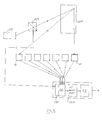
Figure 1 is a schematic block diagram of imaging apparatus according to a first exemplary embodiment of the present invention; and -
Figure 2 is a schematic block diagram of imaging apparatus according to a second exemplary embodiment of the present invention. - In general, Computational Ghost Imaging (CGI) involves the use of a structured light source to illuminate an object or region of interest and a single pixel detector to receive the reflections. The detector produces a two dimensional image of the object or region of interest, where the resulting image is a function of the level and type of illumination structure used by the illuminating system (i.e. the structured light source).
- Referring to
Figure 1 of the drawings, a system according to an exemplary embodiment of the present invention comprises a plurality ofsingle pixel detectors 10, a structured light source comprising a continuous wave (CW) or pulsed power laser (PPL) 12 and a spatial light modulator (SLM) 14, and animage processing module 16. - Each
single pixel detector 10 comprises a single photon detector configured to record a measurement as an output voltage, representative of the quantity of light detected by the photon detector. The detector further includes an A/D converter or microprocessor for converting the above-mentioned measurement into a suitable digital representation thereof, and a local energy source. The energy source may, for example, comprise an electrical cell, such as a Lithium-ion cell or the like, but may alternatively comprise a device that harvests energy from the local environment through, for example, solar irradiation (e.g. using a solar photo-voltaic device), vibration (e.g. using a piezo device), or thermal differences (e.g. using a thermionic device). However, other suitable energy sources for a single pixel detector will be known to a person skilled in the art and the present invention is in no way intended to be limited in this regard. - In a system according to an exemplary embodiment of the present invention, a plurality of such single pixel detectors are utilised, which are applied parasitically to the skin or external surface of a platform, or integrated therein so as to form a fundamental part of its structure. Each single pixel detector may hereinafter be referred to as a 'node', with each node including a short wavelength radio frequency transceiver (e.g. 60 GHz) for wirelessly communicating its digital output to other nodes. The respective outputs of the single pixel detectors are also communicably coupled to the
image processing module 16. - As stated above, the structured light source in this exemplary embodiment of the present invention comprises a continuous wave (CW) or pulsed power laser (PPL) 12 and a spatial light modulator (SLM) 14. The SLM is configured to provide a time varying (spatially random) 'mask' through which the laser light passes and thus gains spatial information, which it ultimately conveys to the object or region of
interest 18 and then, by reflection, to one or more single photon detectors. Thus, theSLM 14 may, for example, comprise a digital micromirror device (DMD) having multiple (thousands or even millions of) individually controlled micromirrors built on top of an associated CMOS memory cell. Each micromirror can be oriented in one of two directions: the 'on' position or state allows light to pass through, and the 'off' position or state reflects light incident thereon, thereby effectively blocking its passage through the device. A controller loads each underlying memory cell with a '1' (on) or a '0' (off), and a mirror reset pulse, when subsequently applied, causes each micromirror to be electrostatically deflected about a hinge to the deflection angle corresponding to the state specified by the value held in the associated memory cell. The on/off duty cycle of each micromirror is fully programmable, such that the DMD can be readily used to provide the above-mentioned time-varying 'mask'. However, other methods of providing a time-varying (spatially random) 'mask' through which then laser light passes to gain the required spatial information will be known to a person skilled in the art, and the present invention is not necessarily intended to be limited in this regard. Furthermore, it will be appreciated that the structured light source may be provided on the same platform as the single pixel detectors (the 'host' platform) but may, alternatively, be located on another platform that is geographically separated from the host platform, thereby further decreasing the space, weight and power considerations in relation to the host platform. - In use, laser light passes through the
SLM 14, thus gaining spatial information which is conveyed to the object or region ofinterest 18. Light is then reflected therefrom, back to thesingle pixel detectors 10. Each single pixel detector system can only output a single value corresponding to a time interval, which value is communicated to theimage processing module 16. However, if the illumination 'mask' being used at a given time is known, then it is possible to create a multiplexed, two-dimensional image from a larger number of these pixel values by correlating the known spatial information from the captured signals. A number of processes for achieving this will be known to a person skilled in the art, such as those that employ Hadamard 2D matrices for example, and the present invention is not in any way intended to be limited in this regard. Thus, irrespective of the process used, theimage processing module 16 receives the measurements from the single pixel detectors and creates a multiplexed two-dimensional image of the object or region ofinterest 18. Finally, the multiplexed image can be fully reconstructed using any known computational ghost imaging algorithm, such as an inverse Hadamard transform for example, but, once again, the present invention is not intended to be in any way limited in this regard. - As stated above, each single pixel detector includes a short wavelength radio frequency transceiver for enabling it to communicate its digital output to other nodes. Thus, it is envisaged that at least some exemplary embodiments of the present invention may include the facility whereby digital outputs from a plurality of single pixel detectors (captured during the same time interval and, therefore, using the same 'mask') can be correlated according to a predetermined one or more parameters (or 'relevancy') and, subsequently, integrated before use thereof in the image reconstruction process.
- All of the nodes will have a fixed, known pointing angle and field of regard relative to each other and the host platform. The absolute pointing angle and field of regard can additionally be determined by the host platform's inertial measurement unit. Thus, for example, there may be circumstances whereby a plurality (or "cluster") of nodes can be determined or known to have a similar pointing angle and field of regard with respect to the object or region of interest. In this case, the digital signals output by each of these nodes may be integrated, and the integrated signal then used in the subsequent image reconstructions process. Such integration may be effected substantially simultaneously (either in the image processing module or in a processing module of one or more selected/predetermined nodes) and prior to the image reconstruction process, and thus contributes to an element of decentralisation of the overall image processing function. Thus, similar image signals can be combined to enhance the resolution of the resultant image and/or boost the image signal above any noise, without significant additional processing overhead. It will be appreciated by a person skilled in the art that correlation on the basis of 'relevancy' is not necessarily limited to pointing angle and field of regard, and it is envisaged that other correlation parameters may be used/incorporated.
- Overall, therefore, due to the utilisation of multiple, spatially distributed single pixel detectors about a platform skin, a wide range of viewing angles can be achieved and, therefore, a wide field of regard system achieved, subject only to the availability of the structured illumination source to illuminate an object or region of interest. Furthermore, the above-described coherent integration of detector pixel responses allows for improvements in system sensitivity and, therefore, an increase in the imaging or detection range of the system. Still further, both of these objects are achieved by the use of single pixel, largely independent detectors, which are considered to be highly advantageous in many applications, as they can be readily affixed to, or incorporated into, any platform without significant space, weight or power issues arising.
- Quantum ghost imaging utilises a concept known as quantum entanglement which means that multiple particles are linked together in a way such that the measurement of one particle's quantum state determines the possible states of the other particles. Measurements of physical properties such as position, momentum, spin, polarization, etc. performed on entangled particles are found to be appropriately correlated. In quantum ghost imaging, a succession of entangled photon pairs is created and, for each pair, one of the photons is sent towards the object or region of interest and the other is held back (and contained, for example, in a fibre-optic loop). When a reflected photon is received from the object/region of interest, a correlation check is performed with the photon(s) previously held back. If the correlation is positive, then the contribution made by the reflected photon(s) to the ultimate formation of the image is accepted. A negative correlation would result in the photon(s) contribution being discounted, as they are not the photons used to illuminate the object/region and, therefore, potentially represent noise that would otherwise pollute or corrupt the image of the object/region.
- Referring now to
Figure 2 of the drawings, a system according to another exemplary embodiment of the present invention comprises a plurality of single pixel detectors 100 and animage processing module 160. The system further comprises a light source comprising a photon source, such as alaser 120 and an optical device such as anonlinear crystal 140 for causing a source photon to be split into two, entangled photons. Nonlinear optic (NLO) crystals for generating entangled photons are known, and examples include beta Barium Borate (BBO), Silver Gallium Sulfide (AgGaS2) and Silver Gallium Selenide (AgGaSe2). However, other examples of nonlinear crystals will be known to a person skilled in the art, and the present invention is not in any way intended to be limited in this regard. It will be further appreciated by a person skilled in the art that the source photon can be split into more than two entangled photons, as required. In this case, a photon source and optical device arrangement will be provided in respect of each single pixel camera, and co-located therewith, so as to retain the required spatial information (on the basis that the source location in relation to the object or region of interest is thus known). - In use, each
photon source 120 fires photon pulses into the nonlinear crystal 140, which causes each source photon to be split into two (or more) entangled photons. At least one of the entangled photons is directed (by the crystal or other optical elements, not shown) into a fibre optic loop orother storage device 190 in theimage processing module 160 and the remaining entangled photon(s) is/are directed toward the object or region ofinterest 180. The photons reaching the object or region ofinterest 180 are reflected back to thesingle pixel detectors 10 which create respective digital signals representative of the photons incident thereon, retaining the respective physical properties of the received photon(s). Theimage processing module 160 receives the digital outputs from the single pixel cameras and includes a quantum correlation circuit (QC) including a quantum detector configured to compare each photon received from the single pixel camera against photons contained within the fibre-optic loop to determine if it is a photon which originated from the source. If it is determined not to have originated from the source, the photon is discarded as noise. If the photon is determined to have originated from the source, it is used to generate respective two-dimensional image data. Theimage processing module 160 then creates a multiplexed two-dimensional image of the object or region ofinterest 180, as before. Finally, the multiplexed image can be fully reconstructed using any known ghost imaging algorithm. - In an alternative exemplary embodiment, each single pixel detector module could include its own quantum correlation circuit that has access to the fibre-optic loop or
other storage device 190. Thus, in this case, upon receipt of a photon, the respective QC circuit would transmit a request to thestorage device 190 for data representative of the original entangled photons and use the returned data to perform the require quantum correlation in respect of the received photon. In this case, the data returned to the QC circuit in response to a request therefrom might be in a converted form, wherein the central processing module includes means for converting the stored photons from an entangled state into another state (e.g. radio frequency) for transmission to the individual QC circuit(s). - In both exemplary embodiments, and others, the light source may be part of a radiation source module including some means for ensuring that the radiation is directed and maintained on the object or region of interest. In an exemplary embodiment, the module may, for example, include a target acquisition device for scanning the environment within the field of regard of the imaging apparatus and identifying an object to be imaged. Alternatively, of course, the object or region of interest can be manually defined and light source electronically driven and guided accordingly, but in either case, the module may further comprise a motion tracking device for tracking relative movement between the host platform and the object or region of interest and generating a signal configured to operate a guide mechanism for guiding the light source such that the radiation emitted thereby consistently and accurately irradiates the object or region of interest.
- It will be apparent to a person skilled in the art, from the foregoing description, that modifications and variations can be made to the described embodiments without departing from the scope of the invention as defined in the appended claims.
Claims (15)
- Imaging apparatus for a host platform having an external surface, the apparatus comprising a plurality of single pixel detectors distributed about said external surface, each single pixel detector being configured to receive radiation reflected by an object or region of interest and generate two-dimensional image data representative thereof, the apparatus further comprising an image processing module for receiving said two-dimensional image data from each of a plurality of single pixel detectors and reconstructing a three-dimensional image of said object or region of interest using a ghost imaging algorithm.
- Apparatus according to claim 1, further comprising a radiation source module including a radiation source.
- Apparatus according to claim 2, wherein the radiation source module includes a control device configured to adjustably direct an output of said radiation source onto an object or region of interest.
- Apparatus according to claim 2 or claim 3, wherein the radiation source module comprises a target acquisition device for detecting an object or region of interest and generating a signal configured to cause said control device to direct said radiation source output to irradiate said detected object or region of interest.
- Apparatus according to any of claims 2 to 4, wherein the radiation source module comprises a tracking device for tracking relative movement between the host platform and an object or region of interest and generating a signal configured to cause said control device to adjust the direction of said radiation source output such that irradiation thereby of said object or region of interest is maintained.
- Apparatus according to any of claims 2 to 5, wherein the radiation source comprises a structured light source comprising a laser and a spatial light modulator through which light from said laser passes before irradiating said object or region of interest.
- Apparatus according to claim 6, wherein the spatial light modulator is configured to provide a time varying mask through which light from said laser passes to irradiate said object or region of interest, said apparatus further comprising a storage module for receiving data representative of a mask configuration and associated time.
- Apparatus according to any of claims 2 to 5, wherein the radiation source comprises a photon source for generating a photon beam and an optical device located within said photon beam configured to split photons from said beam into two or more entangled photons, and may be configured to direct at least one of said entangled photons toward said object or region of interest and another of said entangled photons to a detector, wherein the apparatus may comprise a quantum correlation circuit configured to generate said two-dimensional image data, and said ghost imaging algorithm comprises a quantum ghost imaging algorithm.
- Apparatus according to claim 8, wherein the optical device comprises a nonlinear crystal.
- Apparatus according to any of the preceding claims, wherein at least some of said single pixel detectors include a wireless data transceiver configured to enable wireless data communication therebetween.
- Apparatus according to any of the preceding claims, wherein said single pixel detectors are parasitically mounted on said host platform, or integrally mounted within said external surface thereof.
- Apparatus according to any of the preceding claims, wherein the single pixel detectors each include a local energy source for supplying electrical energy thereto.
- An imaging method for a host platform having an external surface, the method comprising providing a plurality of single pixel detectors distributed about said external surface, each single pixel detector being configured to receive radiation reflected by an object or region of interest and generate two-dimensional image data representative thereof, the method further comprising configuring an image processing module to receive said two-dimensional image data from each of a plurality of single pixel detectors and reconstruct a three-dimensional image of said object or region of interest using a ghost imaging algorithm.
- A radiation source module for apparatus according to any of claims 2 to 12, comprising a radiation source, a control device configured to adjustably direct an output of said radiation source, and a target acquisition device for detecting an object or region of interest and generating a control signal configured to cause said control device to direct said output of said radiation source onto said object or region of interest.
- A module according to claim 14, including a tracking device for tracking relative movement between the host platform and the object or region of interest and generating a signal configured cause the control device to adjust the direction of the radiation source output so as to maintain irradiation thereby of the object or region of interest.
Priority Applications (4)
| Application Number | Priority Date | Filing Date | Title |
|---|---|---|---|
| EP15275187.1A EP3136712A1 (en) | 2015-08-25 | 2015-08-25 | Imaging apparatus and method |
| PCT/GB2016/052620 WO2017033003A1 (en) | 2015-08-25 | 2016-08-23 | Imaging apparatus and method |
| US15/754,094 US10394103B2 (en) | 2015-08-25 | 2016-08-23 | Imaging apparatus and method having an image processing module reconstructing a three dimensional image from two dimensional image data using a ghost imaging algorithm |
| EP16758240.2A EP3341967B1 (en) | 2015-08-25 | 2016-08-23 | Imaging apparatus and method |
Applications Claiming Priority (1)
| Application Number | Priority Date | Filing Date | Title |
|---|---|---|---|
| EP15275187.1A EP3136712A1 (en) | 2015-08-25 | 2015-08-25 | Imaging apparatus and method |
Publications (1)
| Publication Number | Publication Date |
|---|---|
| EP3136712A1 true EP3136712A1 (en) | 2017-03-01 |
Family
ID=54011669
Family Applications (1)
| Application Number | Title | Priority Date | Filing Date |
|---|---|---|---|
| EP15275187.1A Ceased EP3136712A1 (en) | 2015-08-25 | 2015-08-25 | Imaging apparatus and method |
Country Status (1)
| Country | Link |
|---|---|
| EP (1) | EP3136712A1 (en) |
Cited By (6)
| Publication number | Priority date | Publication date | Assignee | Title |
|---|---|---|---|---|
| CN105388486A (en) * | 2015-12-15 | 2016-03-09 | 西安电子科技大学 | Ghost imaging system and imaging method based on fiber array pseudo-thermal light |
| CN108107441A (en) * | 2018-02-01 | 2018-06-01 | 北京理工大学 | The integrated apparatus and method of a kind of achievable ranging and ghost imaging |
| CN109360163A (en) * | 2018-09-26 | 2019-02-19 | 深圳积木易搭科技技术有限公司 | A kind of fusion method and emerging system of high dynamic range images |
| CN109975827A (en) * | 2019-04-04 | 2019-07-05 | 北京航天控制仪器研究所 | A kind of imaging method and system of remote anti-atmospheric turbulance |
| WO2021180807A3 (en) * | 2020-03-11 | 2021-11-11 | Fraunhofer-Gesellschaft zur Förderung der angewandten Forschung e.V. | System and method for image reconstruction using an optical assembly for active lighting with individual photons |
| WO2022222122A1 (en) * | 2021-04-23 | 2022-10-27 | Shenzhen Xpectvision Technology Co., Ltd. | Imaging methods using an image sensor with multiple radiation detectors |
Citations (3)
| Publication number | Priority date | Publication date | Assignee | Title |
|---|---|---|---|---|
| US20100258708A1 (en) * | 2007-12-06 | 2010-10-14 | U.S. Government As Represented By The Secretary Of The Army | Method and system for lidar using quantum properties |
| US20100294916A1 (en) * | 2007-12-06 | 2010-11-25 | U.S. Government As Represented By The Secretary Of The Army | Method and system for creating an image using the quantum properties of sound or quantum particles |
| CN104063623A (en) * | 2014-07-09 | 2014-09-24 | 北京航空航天大学 | Aircraft forecast guidance scheme based on quantum imaging |
-
2015
- 2015-08-25 EP EP15275187.1A patent/EP3136712A1/en not_active Ceased
Patent Citations (3)
| Publication number | Priority date | Publication date | Assignee | Title |
|---|---|---|---|---|
| US20100258708A1 (en) * | 2007-12-06 | 2010-10-14 | U.S. Government As Represented By The Secretary Of The Army | Method and system for lidar using quantum properties |
| US20100294916A1 (en) * | 2007-12-06 | 2010-11-25 | U.S. Government As Represented By The Secretary Of The Army | Method and system for creating an image using the quantum properties of sound or quantum particles |
| CN104063623A (en) * | 2014-07-09 | 2014-09-24 | 北京航空航天大学 | Aircraft forecast guidance scheme based on quantum imaging |
Non-Patent Citations (3)
| Title |
|---|
| BARRY L. STANN ET AL: "MEMS-scanned ladar sensor for small ground robots", MEDICAL IMAGING 2002: PACS AND INTEGRATED MEDICAL INFORMATION SYSTEMS: DESIGN AND EVALUATION, vol. 7684, 22 April 2010 (2010-04-22), 1000 20th St. Bellingham WA 98225-6705 USA, pages 76841E, XP055250611, ISSN: 0277-786X, ISBN: 978-1-5106-0167-3, DOI: 10.1117/12.850388 * |
| MATTHEW P. EDGAR ET AL: "3D computational ghost imaging", MEDICAL IMAGING 2002: PACS AND INTEGRATED MEDICAL INFORMATION SYSTEMS: DESIGN AND EVALUATION, vol. 8899, 16 October 2013 (2013-10-16), 1000 20th St. Bellingham WA 98225-6705 USA, pages 889902, XP055251458, ISSN: 0277-786X, ISBN: 978-1-5106-0167-3, DOI: 10.1117/12.2032739 * |
| WILLIAM RUFF ET AL: "Performance of an FM/cw prototype ladar using a 32-element linear self-mixing detector array", MEDICAL IMAGING 2002: PACS AND INTEGRATED MEDICAL INFORMATION SYSTEMS: DESIGN AND EVALUATION, vol. 5086, 22 August 2003 (2003-08-22), 1000 20th St. Bellingham WA 98225-6705 USA, pages 58 - 69, XP055250646, ISSN: 0277-786X, ISBN: 978-1-5106-0167-3, DOI: 10.1117/12.485873 * |
Cited By (8)
| Publication number | Priority date | Publication date | Assignee | Title |
|---|---|---|---|---|
| CN105388486A (en) * | 2015-12-15 | 2016-03-09 | 西安电子科技大学 | Ghost imaging system and imaging method based on fiber array pseudo-thermal light |
| CN108107441A (en) * | 2018-02-01 | 2018-06-01 | 北京理工大学 | The integrated apparatus and method of a kind of achievable ranging and ghost imaging |
| CN108107441B (en) * | 2018-02-01 | 2021-06-08 | 北京理工大学 | Integrated device and method capable of realizing distance measurement and ghost imaging |
| CN109360163A (en) * | 2018-09-26 | 2019-02-19 | 深圳积木易搭科技技术有限公司 | A kind of fusion method and emerging system of high dynamic range images |
| CN109975827A (en) * | 2019-04-04 | 2019-07-05 | 北京航天控制仪器研究所 | A kind of imaging method and system of remote anti-atmospheric turbulance |
| CN109975827B (en) * | 2019-04-04 | 2021-09-07 | 北京航天控制仪器研究所 | A long-distance anti-atmospheric turbulence imaging method and system |
| WO2021180807A3 (en) * | 2020-03-11 | 2021-11-11 | Fraunhofer-Gesellschaft zur Förderung der angewandten Forschung e.V. | System and method for image reconstruction using an optical assembly for active lighting with individual photons |
| WO2022222122A1 (en) * | 2021-04-23 | 2022-10-27 | Shenzhen Xpectvision Technology Co., Ltd. | Imaging methods using an image sensor with multiple radiation detectors |
Similar Documents
| Publication | Publication Date | Title |
|---|---|---|
| EP3341967B1 (en) | Imaging apparatus and method | |
| Lum et al. | Frequency-modulated continuous-wave LiDAR compressive depth-mapping | |
| GB2541675A (en) | Imaging apparatus and method | |
| EP3161520B1 (en) | Compressive scanning lidar | |
| Horaud et al. | An overview of depth cameras and range scanners based on time-of-flight technologies | |
| CN106796293B (en) | Linear Mode Computational Sensing LADAR | |
| JP2022132492A (en) | Method and System for Stable and Wide Range Illumination Waveforms for Depth Sensing in 3D Imaging | |
| EP4107546B1 (en) | Selective power efficient three-dimensional imaging | |
| US20130021474A1 (en) | Rolling-shutter imaging system with synchronized scanning illumination and methods for higher-resolution imaging | |
| EP3281035B1 (en) | Method and apparatus for computational ghost imaging | |
| US20100258708A1 (en) | Method and system for lidar using quantum properties | |
| US11675064B2 (en) | Optical radar apparatus | |
| Sher et al. | Low intensity LiDAR using compressed sensing and a photon number resolving detector | |
| Albota et al. | The airborne optical systems testbed (AOSTB) | |
| Choudhury et al. | Simultaneous enhancement of scanning area and imaging speed for a MEMS mirror based high resolution LiDAR | |
| Tsui et al. | Using a Time of Flight method for underwater 3-dimensional depth measurements and point cloud imaging | |
| KR102926361B1 (en) | Active imaging system | |
| Burkard et al. | Histogram formation and noise reduction in biaxial MEMS-based SPAD light detection and ranging systems | |
| EP3078986A1 (en) | Method and apparatus for computational ghost imaging | |
| Yu et al. | Design of single photon three-dimensional imaging system | |
| GB2537160A (en) | Method and apparatus for computational ghost imaging | |
| Lum et al. | Frequency Modulated Continuous Wave Compressive Depth Mapping | |
| Ouyang et al. | 3D imaging using compressive line sensing serial imaging system | |
| Grasser et al. | Versatile illumination platform and fast optical switch to give standard observation camera gated active imaging capacity |
Legal Events
| Date | Code | Title | Description |
|---|---|---|---|
| PUAI | Public reference made under article 153(3) epc to a published international application that has entered the european phase |
Free format text: ORIGINAL CODE: 0009012 |
|
| AK | Designated contracting states |
Kind code of ref document: A1 Designated state(s): AL AT BE BG CH CY CZ DE DK EE ES FI FR GB GR HR HU IE IS IT LI LT LU LV MC MK MT NL NO PL PT RO RS SE SI SK SM TR |
|
| AX | Request for extension of the european patent |
Extension state: BA ME |
|
| 18R | Application refused |
Effective date: 20170713 |