EP3136284A1 - Personal information anonymization method, personal information anonymization program, and information processing apparatus - Google Patents
Personal information anonymization method, personal information anonymization program, and information processing apparatus Download PDFInfo
- Publication number
- EP3136284A1 EP3136284A1 EP16180105.5A EP16180105A EP3136284A1 EP 3136284 A1 EP3136284 A1 EP 3136284A1 EP 16180105 A EP16180105 A EP 16180105A EP 3136284 A1 EP3136284 A1 EP 3136284A1
- Authority
- EP
- European Patent Office
- Prior art keywords
- groups
- anonymization
- personal information
- data
- information
- Prior art date
- Legal status (The legal status is an assumption and is not a legal conclusion. Google has not performed a legal analysis and makes no representation as to the accuracy of the status listed.)
- Granted
Links
Images




Classifications
-
- G—PHYSICS
- G06—COMPUTING OR CALCULATING; COUNTING
- G06F—ELECTRIC DIGITAL DATA PROCESSING
- G06F21/00—Security arrangements for protecting computers, components thereof, programs or data against unauthorised activity
- G06F21/60—Protecting data
- G06F21/62—Protecting access to data via a platform, e.g. using keys or access control rules
- G06F21/6218—Protecting access to data via a platform, e.g. using keys or access control rules to a system of files or objects, e.g. local or distributed file system or database
- G06F21/6245—Protecting personal data, e.g. for financial or medical purposes
- G06F21/6254—Protecting personal data, e.g. for financial or medical purposes by anonymising data, e.g. decorrelating personal data from the owner's identification
-
- H—ELECTRICITY
- H04—ELECTRIC COMMUNICATION TECHNIQUE
- H04L—TRANSMISSION OF DIGITAL INFORMATION, e.g. TELEGRAPHIC COMMUNICATION
- H04L63/00—Network architectures or network communication protocols for network security
- H04L63/04—Network architectures or network communication protocols for network security for providing a confidential data exchange among entities communicating through data packet networks
- H04L63/0407—Network architectures or network communication protocols for network security for providing a confidential data exchange among entities communicating through data packet networks wherein the identity of one or more communicating identities is hidden
- H04L63/0421—Anonymous communication, i.e. the party's identifiers are hidden from the other party or parties, e.g. using an anonymizer
-
- H—ELECTRICITY
- H04—ELECTRIC COMMUNICATION TECHNIQUE
- H04L—TRANSMISSION OF DIGITAL INFORMATION, e.g. TELEGRAPHIC COMMUNICATION
- H04L63/00—Network architectures or network communication protocols for network security
- H04L63/04—Network architectures or network communication protocols for network security for providing a confidential data exchange among entities communicating through data packet networks
- H04L63/0407—Network architectures or network communication protocols for network security for providing a confidential data exchange among entities communicating through data packet networks wherein the identity of one or more communicating identities is hidden
Definitions
- the embodiments discussed herein are related to a personal information anonymization method, a personal information anonymization program, and an information processing apparatus.
- the information may include customers' information and personal information.
- an operation in the cloud computing, or the like in a case of a purpose of using information, by laws and guidelines, including the Act on the Protection of Personal Information (so-called "Personal Information Protection Act"), there is obligation to properly process the information so as not to identify a certain person.
- the information is processed to be in a state in which the person is not easily specified, that is, is anonymized, with an aim to further utilize information by an Information and Communication Technology, the information may be provided to a third party without permission of the person.
- a personal information anonymization method including classifying each of a plurality of data including personal information into any one of a plurality of groups based on a degree of commonality of the personal information; performing, for each of the groups, an anonymization process that standardizes the personal information of each of data belonging to each of the groups; calculating, for each of the groups, a total number of the data belonging to each of the groups; classifying the groups based on the total number; and outputting a classification result.
- the well-informed person evaluates the anonymized data.
- An objective evaluation is difficult.
- a large amount of data such as Big Data or the like is subject to use, a large amount of time is consumed with expertise to confirm whether the data are anonymized as desired.
- the anonymized data are easily evaluated.
- FIG. 1 is a diagram illustrating a network configuration of the anonymization system in the embodiment.
- a server 100 and multiple client terminals 3 are connected via a network 2.
- the personal information corresponds to information related to a specific individual.
- an anonymization process includes at least one of a process for preventing from specifying the individual and a process for preventing from differentiating individuals.
- the server 100 includes an anonymization part 40 that anonymizes data (which may be the personal information) provided from each of the client terminals 3, and performs the anonymization process to report an anonymization degree to each of the client terminals 3.
- data which may be the personal information
- the client terminal 3 uses a service, which is provided by the server 100 to anonymize the personal information, and acquires, from the server 100, an anonymized file 1b, which the server 100 has anonymized from a non-anonymized file 1a.
- the non-anonymized file 1a includes items, which are other than an individual name and subject to be used.
- the embodiment will be described in which an entity of the non-anonymized file 1a is retained inside the client terminal 3. The embodiment is not limited to this configuration. Alternatively, the entity of the non-anonymized file 1a may be externally maintained.
- the client terminal 3 connects to the server 100 via the network 2. After that, the client terminal 3 has the server 100 conduct the anonymization process corresponding to a desired anonymization degree (k value) via the network 2. In the following, procedures will be described.
- the client terminal 3 sends an anonymization condition setting request 8a including an anonymization condition (including the k value), which is indicated by a user and corresponds to the non-anonymized file 1a, to the server 100.
- the server 100 sets the anonymization condition in response to the anonymization condition setting request 8a of the client terminal 3.
- the client terminal 3 In response to an operation of the user indicating the non-anonymized file 1a to anonymize the non-anonymized file 1a, the client terminal 3 sends an anonymization execution request 8b to the server 100.
- the server 100 performs the anonymization process by the k value indicated by the anonymization condition, which the client terminal 3 sets with respect to the non-anonymized file 1a, in response to the anonymization execution request 8b.
- the client terminal 3 sends an anonymization evaluation request 8c to the server 100.
- the server 100 evaluates an anonymization state based on a result from performing the anonymization process, that is, by using the anonymized file 1b.
- the server 100 provides evaluation information 1c with respect to the anonymized file 1b.
- the client terminal 3 sends an ambiguity request 8d of the anonymization result to the server 100 in response to an operation for making the anonymized file 1b ambiguous after the evaluation information 1c is displayed.
- the ambiguity request 8d includes an expected k value 1d.
- the server 100 makes the anonymized file 1b ambiguous in accordance with the expected k value 1d indicated by the ambiguity request 8d.
- An ambiguity process for making the anonymized file 1b ambiguous is regarded as a process, which copies or sanitizes the personal information of the anonymized file 1b acquired as a result of the anonymization process as if the expected k value 1d indicated by the ambiguity request 8d is satisfied.
- the client terminal 3 sends a condition review request 8e to the server 100 in response to an operation for reviewing the anonymization process by the user.
- the server 100 calculates a recommended k value 1e based on the evaluation information 1c and sends the recommended k value 1e to the client terminal 3.
- the client terminal 3 When receiving the recommended k value 1e, the client terminal 3 sends the anonymization condition setting request 8a indicating the recommended k value 1e to the server 100, and repeats the above described procedures 1 to 5.
- the server 100 provides the evaluation information 1c indicating to what degree the anonymized file 1b realizes anonymity. Based on the evaluation information 1c, the anonymity of the anonymized file 1b and/or a review of the anonymization process is performed.
- the k value indicates a state in which k individuals are not specified respectively by k sets of the personal information (corresponding to k records) in the anonymized file 1b.
- the k value corresponds to a number of the individuals who are not specified in each of groups (a number of records in which the individuals are not specified) for each of combinations of the anonymization items.
- the sets of the personal information (the records) are less than k sets (the k records), the individuals may be specified.
- the anonymization item is regarded as an item of which a value is anonymized in the non-anonymized file 1a.
- the k value may indicate a common degree among multiple sets of the personal information.
- the records are classified into the groups by common portions in the multiple sets of the personal information, and a ratio of the number of the records in each of the groups is acquired with respect to a total number of the records of the anonymized file 1b. Then, the graph is displayed to indicate the ratio for each of the k values and/or the ratio for each of the common portions. Hence, it is possible to easily conduct an anonymization result.
- the server 100 conducting the anonymization process includes a hardware configuration as illustrated in FIG. 2.
- FIG. 2 is a diagram illustrating the hardware configuration of the server.
- the server 100 is regarded as an information processing apparatus controlled by a computer, and includes a Central Processing Unit (CPU) 11a, a main storage device 12a, an auxiliary storage device 13a, an input device 14a, a display device 15a, a communication InterFace (I/F) 17a, and a drive device 18a, which are mutually connected via a bus B1.
- CPU Central Processing Unit
- main storage device 12a includes a main storage device 12a, an auxiliary storage device 13a, an input device 14a, a display device 15a, a communication InterFace (I/F) 17a, and a drive device 18a, which are mutually connected via a bus B1.
- I/F communication InterFace
- the CPU 11a corresponds to a processor that controls the server 100 in accordance with a program stored in the main storage device 12a.
- the main storage device 12a includes a Random Access Memory (RAM), a Read Only Memory (ROM), and the like, and stores or temporarily stores the program to be executed by the CPU 11a, data used in a process of the CPU 11a, data acquired in the process of the CPU 11a, and the like.
- RAM Random Access Memory
- ROM Read Only Memory
- a Hard Disk Drive (HDD) or the like is used as the auxiliary storage device 13a, and stores data such as programs for various processes, and the like.
- a part of the program stored in the auxiliary storage device 13a is loaded to the auxiliary storage device 13a, and is executed by the CPU 11a to realize the various processes.
- a storage part 130a corresponds to the main storage device 12a and/or the auxiliary storage device 13a.
- the input device 14a includes a mouse, a keyboard, and the like, and is used by a server administrator to input various information items for the processes conducted by the server 100.
- the display device 15a displays multiple information items under control of the CPU 11.
- the input device 14a and the display device 15a may be formed as an integrated user interface such as a touch panel or the like.
- the communication I/F 17a controls communications such as wired or wireless communications through a network.
- the communication I/F 17a is not limited to the wired or wireless communications.
- the program realizing a process conducted by the server 100 in the embodiment may be provided to the server 100 with a recording medium 19a such as a Compact Disc Read-Only Memory (CD-ROM).
- a recording medium 19a such as a Compact Disc Read-Only Memory (CD-ROM).
- the drive device 18a interfaces between the recording medium 19a (which may be the CD-ROM or the like) set to the drive device 18a and the server 100.
- the recording medium 19a which may be the CD-ROM or the like
- respective programs realizing various processes according to the embodiment described below are stored in the recording medium 19a.
- the programs stored in the recording medium 19a are installed to the server 100 through the drive device 18a. After being installed, the programs become executable in the server 100.
- the recording medium 19a storing the programs is not limited to the CD-ROM, and may be a computer-readable, non-transitory, and tangible medium.
- the recording medium 19a may be a Digital Versatile Disk (DVD), a Universal Serial Bus (USB) memory, and a semiconductor memory such as a flash memory may be used as well as the CD-ROM.
- DVD Digital Versatile Disk
- USB Universal Serial Bus
- semiconductor memory such as a flash memory
- FIG. 3 is a diagram illustrating a hardware configuration of the client terminal.
- the client terminal 3 may be an information processing terminal controlled by the computer such as a tablet terminal, a mobile terminal, or the like, and includes a Central Processing Unit (CPU) 11b, a main storage device 12b, a user I/F 16b, a communication I/F 17b, and a drive device 18b, which are mutually connected via a bus B2.
- CPU Central Processing Unit
- the CPU 11b corresponds to a processor controlling the client terminal 3 in accordance with a program stored in the main storage device 12b.
- the RAM, the ROM, and the like may be used as the main storage device 12b, and store or temporarily store the program to be executed by the CPU 11b, data used in a process of the CPU 11b, data acquired in the process of the CPU 11b, and the like.
- the program stored in the main storage device 12b causes the CPU 11b to perform various processes.
- the user I/F 16b displays various information items under control of the CPU 11b.
- the user I/F 16b may be a touch panel or the like enabling the user to conduct input operations and the like.
- the communication I/F 17b is not limited to the wireless or wired communications.
- the program realizing the process conducted by the client terminal 3 may be downloaded from an external apparatus through the network 2.
- the program may be stored beforehand in the main storage device 12b or a recording medium 19b of the client terminal 3.
- a storage part 130b corresponds to the main storage device 12b and/or the auxiliary storage device 13b.
- the drive device 18b interfaces a recording medium 19b (which may be a Secure Digital (SD) memory card or the like) set to the drive device 18b and the client terminal 3.
- the recording medium 19b may be a computer-readable, non-transitory, and tangible medium.
- the client terminal 3 may be a desktop terminal, a notebook terminal, a laptop terminal, a mobile terminal, or the like.
- FIG. 4 is a flowchart for briefly explaining an entire process in the anonymization system.
- the client terminal 3 when receiving a setting of the anonymization condition from the user, the client terminal 3 sends the anonymization condition setting request 8a to the server 100 (step S61).
- the server 100 stores the anonymization condition indicated by the anonymization condition setting request 8a.
- the client terminal 3 sends the anonymization execution request 8b to the server 100 in response to an operation of the user to conduct the anonymization process (step S62).
- the server 100 conducts the anonymization process with respect to the non-anonymized file 1a indicated by the anonymization execution request 8b.
- the evaluation information 1c being generated is displayed by the circle graph or the bar graph at the user I/F 16b of the client terminal 3.
- step S64 it is determined in response to the operation of the user whether the user selects auto-ambiguity, after the evaluation information 1c is displayed (step S64).
- the client terminal 3 sends the ambiguity request 8d to the server 100.
- the server 100 conducts a process to improve anonymity of the anonymized file 1b in accordance with the expected k value 1d of the user (step S65).
- step S66 determines whether a condition review is selected.
- the client terminal 3 sends the condition review request 8e to the server 100.
- the server 100 sends the recommended k value 1e to the client terminal 3. After that, at the client terminal 3, the processes described above are repeated from step S61 in order of the anonymization process in which the recommended k value 1e is set as the anonymization condition.
- step S66 the entire process is terminated in the anonymization system 1000. That is, the client terminal 3 receives the anonymized file 1b from the server 100. The personal information being anonymized is used under control of the user.
- FIG. 5 is a diagram illustrating the examples of functional configurations of the client terminal and the server.
- the server 100 includes an anonymization part 40 that anonymizes the personal information in the non-anonymized file 1a, which the client terminal 3 indicates, in response to the anonymization execution request 8b.
- the anonymization part 40 further includes a condition setting part 41, a data anonymization part 42, an evaluation target information generation part 43a, a first graph process part 43b, a second graph process part 43c, an ambiguity process part 44, and a condition review part 45.
- the parts 41, 42, 43a, 43b, 43c, 44, and 45 are realized by corresponding processes, which the program installed into the server 100 causes the CPU 11a of the server 100 to perform.
- the storage part 130a stores anonymity condition setting information 51, the anonymized file 1b, evaluation target information 53a, first evaluated information 53b, second evaluated information 53c, statistics information 59, and the like.
- the condition setting part 41 receives the anonymization condition setting request 8a sent from the client terminal 3 through the communication I/F 17a, and conducts a condition setting process to set the anonymity condition setting information 51 indicating the anonymization condition indicated in the anonymization condition setting request 8a.
- the anonymization condition includes the k value, more than one combination of the anonymization items, and the like. After storing the anonymity condition setting information 51, the condition setting part 41 sends a setting completion notice to the client terminal 3.
- the data anonymization part 42 receives the anonymization execution request 8b sent from the client terminal 3 through the communication I/F 17a, and performs the anonymization process in accordance with the anonymity condition setting information 51 stored in the storage part 130a with respect to the non-anonymized file 1a indicated in the anonymization execution request 8b. After performing the anonymization process, the data anonymization part 42 sends an execution completion notice to the client terminal 3 through the communication I/F 17a.
- the anonymization process may be called "k- anonymization process", which anonymizes each set of the personal information in the non-anonymized file 1a not to specify the individuals being less than or equal to k different persons from the personal information in accordance with the anonymization condition defined beforehand.
- the evaluation target information generation part 43a preforms an evaluation target information generation process.
- the evaluation target information generation part 43a receives the anonymization evaluation request 8c sent from the client terminal 3 through the communication I/F 17a, and generates the evaluation target information 53a by grouping the personal information in the anonymized file 1b for each of the combinations of values of the anonymization items.
- the evaluation target information 53a is stored in the storage part 130a.
- the evaluation target information generation part 43a performs the evaluation target information generation process that classifies the sets of the personal information into the groups for each of the values of the anonymization items, and generates the evaluation target information 53a.
- the evaluation target information generation part 43a acquires the k value from the number of sets of the personal information (that is, the number of the records) for each of the groups, and acquires the statistics information 59 by calculating the ratio with respect to the total number of the sets of the personal information (that is, the number of the records) of the anonymized file 1b for each of the groups.
- the statistics information 59, the k value, the ratio, and the like are indicated for each of the groups.
- the first graph process part 43b performs a first graph process.
- the first graph process part 43b creates the first evaluated information 53b indicating the ratio for each of the k values by using the statistics information 59a stored in the storage part 130a, and stores the first evaluated information 53b in the storage part 130a.
- the first graph part 43b creates a circle graph 33b based on the first evaluated information 53b, and sends the evaluation information 1c indicating the created circle graph 33b to the client terminal 3 through the communication I/F 17a.
- the first evaluated information 53b may be included in the evaluation information 1c.
- the circle graph 33b may be drawn based on the first evaluated information 53b, and may be displayed at the user I/F 16b.
- the second graph process part 43c performs a second graph process.
- the second graph process part 43c creates the second evaluated information 53c indicating the ratio for each of the k values by using the statistics information 59a stored in the storage part 130a, and stores the second evaluated information 53c in the storage part 130a.
- the second graph process part 43c creates a bar graph 33c based on the second evaluated information 53c, and sends the evaluation information 1c indicating the created bar graph 33c to the client terminal 3 through the communication I/F 17a.
- the evaluation information 1c may include the second evaluated information 53c.
- the bar graph 33c may be drawn based on the second evaluated information 53c, and may be displayed at the user I/F 16b.
- the user may select the circle graph 33b, the bar graph 33c, or both the circle graph 33b and the bar graph 33c as the evaluation target information 53, and a user's selection is indicated in the anonymization evaluation request 8c.
- the ambiguity process part 44 receives the ambiguity request 8d sent from the client terminal 3 through the communication I/F 17a, and performs the ambiguity process.
- the ambiguity process part 44 specifies the records belonging to the groups satisfying less than the expected k value 1d indicated by the ambiguity request 8d from the anonymized file 1b, and makes the personal information in the records ambiguous. By the ambiguity process, there is no personal information being less than the expected k value 1d in the anonymized file 1b.
- the ambiguity process part 44 calculates the k value and the ratio for each of the groups, again, updates the statistics information 59, and sends an ambiguity completion notice to the client terminal 3 through the communication I/F 17a.
- the updated statistics information 59 may be sent to the client terminal 3.
- the client terminal 3 may send an update request of the evaluation information 1c to the server 100.
- the server 100 provides the circle graph 33b and/or the bar graph 33c to the client terminal 3, and the client terminal 3 displays the updated circle graph 33b and/or the bar graph 33c at the user I/F 16b.
- the condition review part 45 performs a condition review process.
- the condition review part 45 receives the condition review request 8e sent from the client terminal 3 through the communication I/F 17a.
- the condition review part 45 acquires the k value of a highest ratio as the recommended k value 1e based on the second evaluated information 53c stored in the storage part 130a with respect to the anonymized file 1b. Then, the condition review part 45 sends the recommended k value 1e to the client terminal 3 through the communication I/F 17a.
- the client terminal 3 includes an anonymization condition setting part 31, an anonymization execution part 32, an evaluation information generation part 33, an anonymization improvement part 34, and a k value acquisition part 35.
- the parts 31 to 35 are realized by a process, which the program installed to the client terminal 3 causes the CPU 11b of the client terminal 3 to perform.
- the parts 31 to 35 may be realized by script codes, which are provided from the server 100, are controlled by the server 100, and operate on a Web browser.
- the storage part 130b may temporarily store the non-anonymized file 1a, the evaluation information 1c, the expected k value, the expected k value, and the like.
- the anonymization condition setting part 31 performs an anonymization condition setting process.
- the anonymization condition setting part 31 acquires the k value representing the anonymization degree, one or more items to be anonymized (the anonymization items), or the like from the user, sends the anonymization condition setting request 8a to the server 100 through the communication I/F 17b, and makes the server 100 set the anonymization condition.
- the anonymization condition setting part 31 may display a setting screen for setting the k value, the anonymization items, and the like at the user I/F 16b, and may acquire these values from the user.
- the anonymization condition setting part 31 terminates the anonymization condition setting process.
- the anonymization execution part 32 performs an anonymization execution process.
- the anonymization execution part 32 sends the anonymization execution request 8b to the server 100 through the communication I/F 17b in response to an operation of executing the anonymization process with the anonymization condition set by the user.
- the server 100 anonymizes the personal information.
- the anonymization execution part 32 may display an anonymization execution screen at the user I/F 16b and may acquire a storage location of a file from the user.
- the anonymization execution screen may include an area to indicate the file to be anonymized, a button to execute the anonymization of the file.
- the anonymization execution request 8b may include the entity of the non-anonymized file 1a, and may indicate the storage location.
- the anonymization execution part 32 may receive the execution completion notice sent from the server 100 through the communication I/F 17b, and terminates the anonymization execution process.
- the evaluation information generation part 33 sends the anonymization evaluation request 8c to the server 100 through the communication I/F 17b, in response to an operation of the user pertinent to generation of the evaluation information or an end of the anonymization execution process.
- the server 100 evaluates the anonymity with respect to the anonymized file 1b.
- the client terminal 3 receives the evaluation information 1c from the server 100, and performs an evaluation information generation process for displaying the evaluation information 1c at the user I/F 16b.
- the evaluation information generation part 33 displays the circle graph 33b and/or the bar graph 33c at the user I/F 16b based on the evaluation information 1c received from the server 100, and terminates the evaluation information generation process.
- a screen displaying the circle graph 33b and/or the bar graph 33c at the user I/F 16b it is preferable to display an "auto-ambiguity" button to improve the ambiguity, a "condition review” button to review the anonymization condition, and the like.
- the anonymization improvement part 34 performs an anonymization improvement process.
- the anonymization improvement part 34 sends the ambiguity request 8d to the server 100 through the communication I/F 17b in response to an operation of the user indicating the "auto-anonymization".
- the server 100 makes the personal information in the anonymized file 1b ambiguous in accordance with the expected k value 1d indicated by the ambiguity request 8d.
- the anonymization improvement part 34 terminates the anonymization improvement process.
- the k value acquisition part 35 performs a k value acquisition process.
- the k value acquisition part 35 sends the condition review request 8e to the server 100 through the communication I/F 17b in response to an operation of the user indicating the "condition review".
- the server 100 reviews the anonymization condition with respect to the non-anonymized file 1a.
- the client terminal 3 receives the recommended k value 1e from the server 100.
- FIG. 6 is a diagram illustrating the anonymization process.
- a file including the personal information pertinent to an injury and disease history is illustrated as an example of the non-anonymized file 1a.
- a difference will be described between a case of the anonymization process other than the k-anonymization process and a case of the k-anonymization process.
- a masking anonymization process will be described.
- the non-anonymized file 1a includes items such as "NAME”, “ADDRESS”, “GENDER”, “AGE”, “DIAGNOSTIC RESULT”, and the like.
- the anonymization process the item “NAME” is sanitized from the non-anonymized file 1a, the anonymization items are set from the items “ADDRESS”, “GENDER”, “AGE”, “DIAGNOSTIC RESULT”, and the like.
- the items "ADDRESS”, “GENDER”, and “AGE” are set as the anonymization items.
- the non-anonymized file 1a depicted in FIG. 6 there is only one record for a combination of the address "HEIWAJIMA 2, OTA-KU, TOKYO", the gender "M” (male), and the age "75".
- an individual "AAA BBB” is highly likely to be specified without the name.
- the personal information is anonymized by rounding item values to reduce precision, by masking the item values by deleting the item values and replacing the item values, with predetermined values, and the like.
- a data example is depicted in a case in which the non-anonymized file 1a is masked to be anonymized.
- a region is rounded into prefectural governments with respect to the address. Since the precision of the address is reduced, it becomes difficult to specify the individuals. However, the precision is lower, if the masked file 1m is used for a trend analysis based on a region. Also, in a case of masking the personal information for the age, it becomes difficult to specify the individuals. On the other hand, it is impossible to conduct an analysis based on the age. Accordingly, effective data are not provided by the masked file 1m in light of utilization.
- the anonymized file 1b indicates a result from making values of the address and the age ambiguous.
- precision of the item values are made to be rough until the number of the records having the same item values is not reduced less than or equal to two. However, the precision may not be made to be uniformly rough for all records.
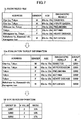
- FIG. 7 is a diagram for explaining the evaluation target information generation process.
- the evaluation target information generation part 43a of the server 100 generates the evaluation target information 53a by applying a group ID for each of the combinations of three items of the anonymized file 1b: the address, the gender, and the age.
- the evaluation target information 53a corresponds to a file to which the group ID is added to existing items of the anonymized file 1b. That is, the evaluation target information 53a includes the items of the address, the gender, the age, the diagnostic result, the group ID, and the like.
- the records indicating the address "Ota-ku, Tokyo", the gender "M”, and the age “60s to 70s” are classified into a group "G001".
- the records indicating the address "Tokyo”, the gender “F”, and the age “10s to 20s” are classified into a group “G002”.
- the records indicating the address "Nakahara-ku, Kawasaki-shi, Kanagawa-ken, Tokyo", the gender "M”, and the age “60s to 70s” are classified into a group "G003".
- the evaluation target information generation part 43a refers to the evaluation target information 53a, and acquires the k value by counting the records having the same group ID for each of the groups. Accordingly, the k value indicates the count of the records having the same values for the anonymization items, in this example, the same values for the combination of the address, the gender, and the age.
- the evaluation target information generation part 43a calculates the ratio with respect to the total number of the records of the evaluation target information 53a for each of the group IDs, and generates the statistics information 59.
- the statistics information 59 includes the items of the group ID, the k value, the ratio, and the like.
- the statistics information 59 indicates the k value "2" and the ratio "33%” for the group ID "G001", the k value “3” and the ratio “50%” for the group ID "G002”, and the k value "1” and the ratio "17%” for the group ID "G003".
- a different k value is indicated.
- FIG. 8 is a diagram illustrating an example of an evaluation result screen displayed at the client terminal.
- a display example at the user I/F 16b of the client terminal 3 is depicted.
- the display example depicts the circle graph 33b generated by the first graph process part 43b of the anonymization part 40 of the server 100 based on the statistics information 59.
- an evaluation result screen G91 is displayed at the user I/F 16b based on the evaluation information 1c received from the server 100 by the evaluation information generation part 33.
- the evaluation result screen G91 includes a first display area 91a, a second display area 91b, and the like.
- the first display area 91a corresponds to an area for displaying various information items according to the anonymization process.
- the second display area 91b corresponds to an area for displaying the evaluation result acquired by evaluating the anonymization state of the anonymized file 1b.
- the first display area 91a displays basic information pertinent to anonymization requested from the client terminal 3 to the server 100.
- the first display area 91a may display information of a request ID, a request date, a completed date, a preprocessed code count, a post-processed code count, an anonymized file, the k value, the anonymized items, and the like.
- the anonymized file 1b which is acquired by anonymizing the non-anonymized file 1a and is stored in the storage part 130a of the server 100, is displayed for user to download from the client terminal 3 to the server 100.
- the anonymization condition used for the anonymization is indicated at items "K VALUE" and "ANONYMIZED ITEMS”.
- the second display area 91b displays the evaluation result of the anonymization state.
- the second display area 91b may display a total number of the groups 91c (a number of combinations of anonymization item values) of the anonymized file 1b, the circle graph 33b (or the bar graph 33c), a "GRAPH SWITCH” button 91e, an "AUTO-AMBIGUITY” button 91f, a "REVIEW CONDITION” button 91g, and the like.
- a screen G92 is displayed to indicate the records of interest.
- the contents of this record may indicate the address "Nakahara-ku, Kawasaki-shi, Kanagawa-ken", the gender "M”, the age “60s to 70s", the diagnostic result "influenza", and the group ID "G003". It is possible for the user to concretely review the contents of each of the records, which do not satisfy the anonymization condition.
- the circle graph 33b is changed to the bar graph 33c.
- the circle graph 33d is displayed.
- the user selects the "AUTO-AMBIGUITY" button 91f.
- the ambiguity request 8d is sent to the server 100.
- the ambiguity process part 44 has the evaluation target information generation part 43a, the first graph process part 43b, and the second graph process part 43c conduct corresponding processes, and sends the evaluation information 1c as an ambiguity result to the client terminal 3. In this manner, it is possible to update information in the second display area 91b of the evaluation result screen G91 being displayed at the user I/F 16b at the client terminal 3.
- the user refers to the circle graph 33b (or the bar graph 33c) being updated in the second display area 91b.
- the user selects the "REVIEW CONDITION” button 91g.
- the condition review request 8e is sent to the server 100.
- the anonymization condition is reviewed by the condition review part 45, and the recommended k value 1e acquired by the review is provided to the client terminal 3.
- the anonymization condition setting process is conducted by the anonymization condition setting part 31, again.
- the recommended k value 1e is indicated as the anonymization condition in the anonymization condition setting request 8a, and is sent to the server 100.
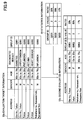
- FIG. 9 is a diagram for explaining the second graph process.
- the second graph process part 43c of the anonymization part 40 of the server 100 refers to the evaluation target information 53a, the statistic information 59 stored in the storage part 130a, generates the second evaluated information 53c, and stores the generated second evaluated information 53c in the storage part 130a.
- the anonymization items (the address, the gender, and the age) are added to the second evaluated information 53c.
- the second graph process part 43c acquires the records having the same group IDs of respective records of the statistics information 59, from the evaluation target information 53a, sets values of the address, the gender and the age of each of the acquired records to the second evaluated information 53b, and completes the second evaluated information 53c. After that, the second graph process part 43c sorts the second evaluated information 53c in a predetermined order.
- the second evaluated information 53c may be sorted in an ascending order of the ratio, the anonymization items, the k value, or the like.
- the bar graph 33c is drawn based on the ratio.
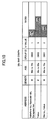
- FIG. 10 is a diagram illustrating an example of the bar graph.
- the bar graph 33c depicted in FIG. 10 for the item "RATIO" of the second evaluated information 53c, bars representing respective numerical values are displayed with these numerical values.
- a display of the bar graph 33c is not limited to this example depicted in FIG. 10 .
- the bar graph 33c is displayed in the second display area 91b.
- the ambiguity request 8d is sent from the client terminal 3 to the server 100.
- the ambiguity process which is conducted by the ambiguity process part 44 of the anonymization part 40 at the server 100, will be described with reference to FIG. 11 and FIG. 12 .
- FIG. 11 is a diagram for explaining the ambiguity process.
- the ambiguity process part 44 refers to the statistics information 59 being stored in the storage part 130a based on the expected k value 1d indicated by the ambiguity request 8d, and acquires one or more group IDs.
- the acquired group ID is "G003".
- the ambiguity process part 44 searches for the records of the group ID "G003" from the anonymized file 1b, copies all retrieved records, and generates the evaluation target information 53a-2. Each of the retrieved records is repeatedly copied at least until a repetition count reaches the expected k value 1d. If there is the k value greater than the expected k value 1d, each of the retrieved records may be repeatedly copied until the repetition count reaches a highest k value.
- the evaluation target information 53a-2 in which a record 9r of the group ID "G003" is copied, is acquired.
- FIG. 11 a copying example is depicted. Instead, the retrieved records may be deleted to make the evaluation target information 53a-2 ambiguous. Also, the user may set copy or deletion when the user selects the "AUTO-AMBIGUITY" button 91f.
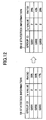
- FIG. 12 is a diagram illustrating an update example of the statistics information by the ambiguity process.
- the ambiguity process part 44 updates the statistics information 59 by using the evaluation target information 53a acquired by the ambiguity process, and obtains the statistics information 59-2.
- the k value of the group ID "G003" is changed from “1” to "2", and the k value is two or more for all groups. Accordingly, the anonymized file 1b satisfying the expected k value is provided.
- the ratio of the group ID "G001”, that is, the ratio of the records (the personal information), which are specified by “G001", respective to the combinations of values of the anonymization items is changed from “33%” to "29%”.
- the ratio of the group ID "G002”, that is, the ratio of the records (the personal information), which are specified by “G002", respective to the combinations of values of the anonymization items is changed from "50%” to "43%”.
- the ratio of the group ID "G003 that is, the ratio of the records (the personal information), which are specified by “G003", respective to the combinations of values of the anonymization items is changed from "17%” to "29%.
- the ambiguity process part 44 instructs at least one of the first graph process part 43b and the second graph process part 43c to generate the first evaluated information 53b and the second evaluated information 53c by using the evaluation target information 53a-2 and the statistics information 59-2. Then, the evaluation information 1c after the ambiguity process is provided to the client terminal 3.
- the condition review part 45 determines the k value of the highest ratio as the recommended k value 1e based on the second evaluated information 53c (the bar graph 33c). In this case, the recommended k value 1e is "3".
- the k value of a smallest ratio is set as the recommended k value 1e among the multiple k values.
- the user of the client terminal 3 it is possible for the user of the client terminal 3 to easily evaluate the anonymization state of the anonymized file 1b.
- the circle graph 33 indicating the ratios of respective k values and/or the bar graph 33c indicating the ratio for each of combinations of the values of the anonymization items, it is possible for the user to easily evaluate the anonymization based on objective numeral values. Accordingly, it is possible to reduce time spent to evaluate the anonymized file 1b.
- the server 100 it is possible for the server 100 to easily evaluate the anonymized file 1b for the user.
Landscapes
- Engineering & Computer Science (AREA)
- Computer Security & Cryptography (AREA)
- General Engineering & Computer Science (AREA)
- Bioethics (AREA)
- General Health & Medical Sciences (AREA)
- Health & Medical Sciences (AREA)
- Theoretical Computer Science (AREA)
- Computer Hardware Design (AREA)
- Medical Informatics (AREA)
- Physics & Mathematics (AREA)
- Software Systems (AREA)
- General Physics & Mathematics (AREA)
- Databases & Information Systems (AREA)
- Computing Systems (AREA)
- Computer Networks & Wireless Communication (AREA)
- Signal Processing (AREA)
- Information Retrieval, Db Structures And Fs Structures Therefor (AREA)
- Management, Administration, Business Operations System, And Electronic Commerce (AREA)
Abstract
Description
- The embodiments discussed herein are related to a personal information anonymization method, a personal information anonymization program, and an information processing apparatus.
- Recently, due to wide use of cloud computing and diversification of businesses and communication devices such as smart phones, information accumulated by an on-premise system (by a computer system within an enterprise) has been accumulated and utilized by an external system, which does not belong to the enterprise or its organization.
- The information may include customers' information and personal information. On the other hand, in a business operation, an operation in the cloud computing, or the like, in a case of a purpose of using information, by laws and guidelines, including the Act on the Protection of Personal Information (so-called "Personal Information Protection Act"), there is obligation to properly process the information so as not to identify a certain person.
- Also, regarding the Law about the protection of the personal information and the Law to revise a part of the law about the number use to distinguish the authorized individual in the administrative procedure (the 189th 2015 Diet under discussion) in Japan, the following contents have been under discussion. If the information is processed to be in a state in which the person is not easily specified, that is, is anonymized, with an aim to further utilize information by an Information and Communication Technology, the information may be provided to a third party without permission of the person.
- In a view of anonymizing and using data, a technology and the like have been known to receive various kinds of k-anonymized data from multiple data providing agents and to evaluate whether the received k-anonymized data are acceptable.
-
-
Japanese Laid-open Patent Publication No. 2014-71618 -
Japanese Laid-open Patent Publication No. 2014-86037 - According to one aspect of the embodiment, there is provided a personal information anonymization method, including classifying each of a plurality of data including personal information into any one of a plurality of groups based on a degree of commonality of the personal information; performing, for each of the groups, an anonymization process that standardizes the personal information of each of data belonging to each of the groups; calculating, for each of the groups, a total number of the data belonging to each of the groups; classifying the groups based on the total number; and outputting a classification result.
-
-
FIG. 1 is a diagram illustrating a network configuration of an anonymization system in an embodiment; -
FIG. 2 is a diagram illustrating a hardware configuration of a server; -
FIG. 3 is a diagram illustrating a hardware configuration of a client terminal; -
FIG. 4 is a flowchart for briefly explaining an entire process in the anonymization system; -
FIG. 5 is a diagram illustrating examples of functional configurations of the client terminal and the server; -
FIG. 6 is a diagram illustrating an anonymization process; -
FIG. 7 is a diagram for explaining an evaluation target information generation process; -
FIG. 8 is a diagram illustrating an example of an evaluation result screen displayed at the client terminal; -
FIG. 9 is a diagram for explaining a second graph process; -
FIG. 10 is a diagram illustrating an example of a bar graph; -
FIG. 11 is a diagram for explaining an ambiguity process; and -
FIG. 12 is a diagram illustrating an update example of statistics information by the ambiguity process. - Regarding a related technology, there is a view that protection from specifying individuals is not assured by anonymized data. In a current state, the anonymized data are approved by being visually observed by a well-informed person or by being verified by a third party committee set up in the organization.
- At a final stage, the well-informed person evaluates the anonymized data. An objective evaluation is difficult. In addition, in a case in which a huge amount of data such as Big Data or the like is subject to use, a large amount of time is consumed with expertise to confirm whether the data are anonymized as desired.
- At the final stage of an anonymity evaluation by the well-informed person, it is not easy to comprehend to what degree the data are anonymized or to comprehend information pertinent to non-anonymized data.
- In an embodiment describe below, the anonymized data are easily evaluated.
- Preferred embodiments of the present invention will be described with reference to the accompanying drawings. An anonymization system in an embodiment will be described, in which personal information is anonymized and evaluated.
FIG. 1 is a diagram illustrating a network configuration of the anonymization system in the embodiment. In ananonymization system 1000, aserver 100, andmultiple client terminals 3 are connected via anetwork 2. The personal information corresponds to information related to a specific individual. In the embodiment, an anonymization process includes at least one of a process for preventing from specifying the individual and a process for preventing from differentiating individuals. - The
server 100 includes ananonymization part 40 that anonymizes data (which may be the personal information) provided from each of theclient terminals 3, and performs the anonymization process to report an anonymization degree to each of theclient terminals 3. - The
client terminal 3 uses a service, which is provided by theserver 100 to anonymize the personal information, and acquires, from theserver 100, ananonymized file 1b, which theserver 100 has anonymized from a non-anonymizedfile 1a. Thenon-anonymized file 1a includes items, which are other than an individual name and subject to be used. The embodiment will be described in which an entity of the non-anonymizedfile 1a is retained inside theclient terminal 3. The embodiment is not limited to this configuration. Alternatively, the entity of the non-anonymizedfile 1a may be externally maintained. - In the
anonymization system 1000, an exchange between theclient terminal 3 and theserver 100 will be briefly described in a case of anonymizing the personal information. Theclient terminal 3 connects to theserver 100 via thenetwork 2. After that, theclient terminal 3 has theserver 100 conduct the anonymization process corresponding to a desired anonymization degree (k value) via thenetwork 2. In the following, procedures will be described. - The
client terminal 3 sends an anonymizationcondition setting request 8a including an anonymization condition (including the k value), which is indicated by a user and corresponds to the non-anonymizedfile 1a, to theserver 100. Theserver 100 sets the anonymization condition in response to the anonymizationcondition setting request 8a of theclient terminal 3. - In response to an operation of the user indicating the non-anonymized
file 1a to anonymize the non-anonymizedfile 1a, theclient terminal 3 sends ananonymization execution request 8b to theserver 100. Theserver 100 performs the anonymization process by the k value indicated by the anonymization condition, which theclient terminal 3 sets with respect to the non-anonymizedfile 1a, in response to theanonymization execution request 8b. - The
client terminal 3 sends ananonymization evaluation request 8c to theserver 100. In response to theanonymization evaluation request 8c, theserver 100 evaluates an anonymization state based on a result from performing the anonymization process, that is, by using theanonymized file 1b. In the embodiment, theserver 100 providesevaluation information 1c with respect to the anonymizedfile 1b. - By providing the
evaluation information 1c, the following one or more graphs are displayed at the client terminal 3: - a circle graph representing a ratio for each of k values
- a bar graph representing a ratio for each of combinations of anonymization items.
- The
client terminal 3 sends anambiguity request 8d of the anonymization result to theserver 100 in response to an operation for making theanonymized file 1b ambiguous after theevaluation information 1c is displayed. Theambiguity request 8d includes an expectedk value 1d. - The
server 100 makes theanonymized file 1b ambiguous in accordance with the expectedk value 1d indicated by theambiguity request 8d. An ambiguity process for making theanonymized file 1b ambiguous is regarded as a process, which copies or sanitizes the personal information of theanonymized file 1b acquired as a result of the anonymization process as if the expectedk value 1d indicated by theambiguity request 8d is satisfied. - The
client terminal 3 sends acondition review request 8e to theserver 100 in response to an operation for reviewing the anonymization process by the user. When receiving thecondition review request 8e, theserver 100 calculates a recommendedk value 1e based on theevaluation information 1c and sends the recommendedk value 1e to theclient terminal 3. - When receiving the recommended
k value 1e, theclient terminal 3 sends the anonymizationcondition setting request 8a indicating the recommendedk value 1e to theserver 100, and repeats the above describedprocedures 1 to 5. - As described above, in the embodiment, the
server 100 provides theevaluation information 1c indicating to what degree theanonymized file 1b realizes anonymity. Based on theevaluation information 1c, the anonymity of theanonymized file 1b and/or a review of the anonymization process is performed. - The k value indicates a state in which k individuals are not specified respectively by k sets of the personal information (corresponding to k records) in the
anonymized file 1b. The k value corresponds to a number of the individuals who are not specified in each of groups (a number of records in which the individuals are not specified) for each of combinations of the anonymization items. On the other hand, when the sets of the personal information (the records) are less than k sets (the k records), the individuals may be specified. The anonymization item is regarded as an item of which a value is anonymized in thenon-anonymized file 1a. - The anonymization of k=2 is to anonymize data file impossible to specify more than one individual from more than one set of the personal information. Only information common among all sets of the personal information for the more than one individual is retained, and information, which is not common, is sanitized. In this case, there is a group, to which only one individual belongs, in the
anonymized file 1b. - The anonymization of k=3 to anonymize data indicates to anonymize the data file impossible to specify more than two individuals from more than two sets of the personal information. Only information common among all sets of the personal information for the more than two individuals is retained, and information, which is not common, is sanitized. In this case, there is at least one of a group to which two individuals belong and in which each of the two individuals is not specified, and a group to which only one individual belongs. The k value may indicate a common degree among multiple sets of the personal information.
- In the embodiment, with respect to the
anonymized file 1b acquired by anonymizing the personal information, the records are classified into the groups by common portions in the multiple sets of the personal information, and a ratio of the number of the records in each of the groups is acquired with respect to a total number of the records of theanonymized file 1b. Then, the graph is displayed to indicate the ratio for each of the k values and/or the ratio for each of the common portions. Hence, it is possible to easily conduct an anonymization result. - The
server 100 conducting the anonymization process includes a hardware configuration as illustrated inFIG. 2. FIG. 2 is a diagram illustrating the hardware configuration of the server. InFIG. 2 , theserver 100 is regarded as an information processing apparatus controlled by a computer, and includes a Central Processing Unit (CPU) 11a, amain storage device 12a, anauxiliary storage device 13a, aninput device 14a, adisplay device 15a, a communication InterFace (I/F) 17a, and adrive device 18a, which are mutually connected via a bus B1. - The
CPU 11a corresponds to a processor that controls theserver 100 in accordance with a program stored in themain storage device 12a. Themain storage device 12a includes a Random Access Memory (RAM), a Read Only Memory (ROM), and the like, and stores or temporarily stores the program to be executed by theCPU 11a, data used in a process of theCPU 11a, data acquired in the process of theCPU 11a, and the like. - A Hard Disk Drive (HDD) or the like is used as the
auxiliary storage device 13a, and stores data such as programs for various processes, and the like. A part of the program stored in theauxiliary storage device 13a is loaded to theauxiliary storage device 13a, and is executed by theCPU 11a to realize the various processes. Astorage part 130a corresponds to themain storage device 12a and/or theauxiliary storage device 13a. - The
input device 14a includes a mouse, a keyboard, and the like, and is used by a server administrator to input various information items for the processes conducted by theserver 100. Thedisplay device 15a displays multiple information items under control of the CPU 11. Theinput device 14a and thedisplay device 15a may be formed as an integrated user interface such as a touch panel or the like. The communication I/F 17a controls communications such as wired or wireless communications through a network. The communication I/F 17a is not limited to the wired or wireless communications. - The program realizing a process conducted by the
server 100 in the embodiment may be provided to theserver 100 with arecording medium 19a such as a Compact Disc Read-Only Memory (CD-ROM). - The
drive device 18a interfaces between therecording medium 19a (which may be the CD-ROM or the like) set to thedrive device 18a and theserver 100. - Also, respective programs realizing various processes according to the embodiment described below are stored in the
recording medium 19a. The programs stored in therecording medium 19a are installed to theserver 100 through thedrive device 18a. After being installed, the programs become executable in theserver 100. - The
recording medium 19a storing the programs is not limited to the CD-ROM, and may be a computer-readable, non-transitory, and tangible medium. As the computer-readable recording medium, therecording medium 19a may be a Digital Versatile Disk (DVD), a Universal Serial Bus (USB) memory, and a semiconductor memory such as a flash memory may be used as well as the CD-ROM. -
FIG. 3 is a diagram illustrating a hardware configuration of the client terminal. InFIG. 3 , theclient terminal 3 may be an information processing terminal controlled by the computer such as a tablet terminal, a mobile terminal, or the like, and includes a Central Processing Unit (CPU) 11b, amain storage device 12b, a user I/F 16b, a communication I/F 17b, and adrive device 18b, which are mutually connected via a bus B2. - The
CPU 11b corresponds to a processor controlling theclient terminal 3 in accordance with a program stored in themain storage device 12b. The RAM, the ROM, and the like may be used as themain storage device 12b, and store or temporarily store the program to be executed by theCPU 11b, data used in a process of theCPU 11b, data acquired in the process of theCPU 11b, and the like. The program stored in themain storage device 12b causes theCPU 11b to perform various processes. - The user I/
F 16b displays various information items under control of theCPU 11b. The user I/F 16b may be a touch panel or the like enabling the user to conduct input operations and the like. The communication I/F 17b is not limited to the wireless or wired communications. - The program realizing the process conducted by the
client terminal 3 may be downloaded from an external apparatus through thenetwork 2. Alternatively, the program may be stored beforehand in themain storage device 12b or arecording medium 19b of theclient terminal 3. Astorage part 130b corresponds to themain storage device 12b and/or the auxiliary storage device 13b. - The
drive device 18b interfaces arecording medium 19b (which may be a Secure Digital (SD) memory card or the like) set to thedrive device 18b and theclient terminal 3. Therecording medium 19b may be a computer-readable, non-transitory, and tangible medium. - The
client terminal 3 may be a desktop terminal, a notebook terminal, a laptop terminal, a mobile terminal, or the like. -
FIG. 4 is a flowchart for briefly explaining an entire process in the anonymization system. Referring toFIG. 4 , in theanonymization system 1000, when receiving a setting of the anonymization condition from the user, theclient terminal 3 sends the anonymizationcondition setting request 8a to the server 100 (step S61). Theserver 100 stores the anonymization condition indicated by the anonymizationcondition setting request 8a. - After that, the
client terminal 3 sends theanonymization execution request 8b to theserver 100 in response to an operation of the user to conduct the anonymization process (step S62). Theserver 100 conducts the anonymization process with respect to thenon-anonymized file 1a indicated by theanonymization execution request 8b. - After that, the
server 100 generates theevaluation information 1c by totaling the number of records for each of the k values (k=1, 2, 3, ...) of theanonymized file 1b (step S63). Theevaluation information 1c being generated is displayed by the circle graph or the bar graph at the user I/F 16b of theclient terminal 3. - At the
client terminal 3, it is determined in response to the operation of the user whether the user selects auto-ambiguity, after theevaluation information 1c is displayed (step S64). When the auto-ambiguity is selected (YES of step S64), theclient terminal 3 sends theambiguity request 8d to theserver 100. Theserver 100 conducts a process to improve anonymity of theanonymized file 1b in accordance with the expectedk value 1d of the user (step S65). - On the other hand, when the auto-ambiguity is not selected (NO of step S64), the
client terminal 3 determines whether a condition review is selected (step S66). When the condition review is selected (YES of step SS66), theclient terminal 3 sends thecondition review request 8e to theserver 100. Theserver 100 sends the recommendedk value 1e to theclient terminal 3. After that, at theclient terminal 3, the processes described above are repeated from step S61 in order of the anonymization process in which the recommendedk value 1e is set as the anonymization condition. - On the other hand, when the condition review is not selected (NO of step S66), the entire process is terminated in the
anonymization system 1000. That is, theclient terminal 3 receives theanonymized file 1b from theserver 100. The personal information being anonymized is used under control of the user. - Next, examples of functional configurations of the
client terminal 3 and theserver 100 will be described in theanonymization system 1000.FIG. 5 is a diagram illustrating the examples of functional configurations of the client terminal and the server. - First, a functional configuration of the
server 100 will be described. InFIG. 5 , theserver 100 includes ananonymization part 40 that anonymizes the personal information in thenon-anonymized file 1a, which theclient terminal 3 indicates, in response to theanonymization execution request 8b. - The
anonymization part 40 further includes acondition setting part 41, adata anonymization part 42, an evaluation targetinformation generation part 43a, a firstgraph process part 43b, a secondgraph process part 43c, an ambiguity process part 44, and acondition review part 45. Theparts server 100 causes theCPU 11a of theserver 100 to perform. - In the
server 100, thestorage part 130a stores anonymitycondition setting information 51, theanonymized file 1b,evaluation target information 53a, first evaluatedinformation 53b, second evaluatedinformation 53c,statistics information 59, and the like. - The
condition setting part 41 receives the anonymizationcondition setting request 8a sent from theclient terminal 3 through the communication I/F 17a, and conducts a condition setting process to set the anonymitycondition setting information 51 indicating the anonymization condition indicated in the anonymizationcondition setting request 8a. The anonymization condition includes the k value, more than one combination of the anonymization items, and the like. After storing the anonymitycondition setting information 51, thecondition setting part 41 sends a setting completion notice to theclient terminal 3. - The data anonymization
part 42 receives theanonymization execution request 8b sent from theclient terminal 3 through the communication I/F 17a, and performs the anonymization process in accordance with the anonymitycondition setting information 51 stored in thestorage part 130a with respect to thenon-anonymized file 1a indicated in theanonymization execution request 8b. After performing the anonymization process, the data anonymizationpart 42 sends an execution completion notice to theclient terminal 3 through the communication I/F 17a. - The anonymization process may be called "k- anonymization process", which anonymizes each set of the personal information in the
non-anonymized file 1a not to specify the individuals being less than or equal to k different persons from the personal information in accordance with the anonymization condition defined beforehand. - The evaluation target
information generation part 43a preforms an evaluation target information generation process. In the evaluation target information generation process, the evaluation targetinformation generation part 43a receives theanonymization evaluation request 8c sent from theclient terminal 3 through the communication I/F 17a, and generates theevaluation target information 53a by grouping the personal information in theanonymized file 1b for each of the combinations of values of the anonymization items. Theevaluation target information 53a is stored in thestorage part 130a. - The evaluation target
information generation part 43a performs the evaluation target information generation process that classifies the sets of the personal information into the groups for each of the values of the anonymization items, and generates theevaluation target information 53a. The evaluation targetinformation generation part 43a acquires the k value from the number of sets of the personal information (that is, the number of the records) for each of the groups, and acquires thestatistics information 59 by calculating the ratio with respect to the total number of the sets of the personal information (that is, the number of the records) of theanonymized file 1b for each of the groups. By thestatistics information 59, the k value, the ratio, and the like are indicated for each of the groups. - The first
graph process part 43b performs a first graph process. In the first graph process, the firstgraph process part 43b creates the first evaluatedinformation 53b indicating the ratio for each of the k values by using the statistics information 59a stored in thestorage part 130a, and stores the first evaluatedinformation 53b in thestorage part 130a. Thefirst graph part 43b creates acircle graph 33b based on the first evaluatedinformation 53b, and sends theevaluation information 1c indicating the createdcircle graph 33b to theclient terminal 3 through the communication I/F 17a. - The first evaluated
information 53b may be included in theevaluation information 1c. Alternatively, at theclient terminal 3, thecircle graph 33b may be drawn based on the first evaluatedinformation 53b, and may be displayed at the user I/F 16b. - The second
graph process part 43c performs a second graph process. In the second graph process, the secondgraph process part 43c creates the second evaluatedinformation 53c indicating the ratio for each of the k values by using the statistics information 59a stored in thestorage part 130a, and stores the second evaluatedinformation 53c in thestorage part 130a. The secondgraph process part 43c creates abar graph 33c based on the second evaluatedinformation 53c, and sends theevaluation information 1c indicating the createdbar graph 33c to theclient terminal 3 through the communication I/F 17a. - The
evaluation information 1c may include the second evaluatedinformation 53c. Alternatively, at theclient terminal 3, thebar graph 33c may be drawn based on the second evaluatedinformation 53c, and may be displayed at the user I/F 16b. - At the
client terminal 3, the user may select thecircle graph 33b, thebar graph 33c, or both thecircle graph 33b and thebar graph 33c as the evaluation target information 53, and a user's selection is indicated in theanonymization evaluation request 8c. - The ambiguity process part 44 receives the
ambiguity request 8d sent from theclient terminal 3 through the communication I/F 17a, and performs the ambiguity process. In the anonymization process, the ambiguity process part 44 specifies the records belonging to the groups satisfying less than the expectedk value 1d indicated by theambiguity request 8d from theanonymized file 1b, and makes the personal information in the records ambiguous. By the ambiguity process, there is no personal information being less than the expectedk value 1d in theanonymized file 1b. - After the ambiguity process, the ambiguity process part 44 calculates the k value and the ratio for each of the groups, again, updates the
statistics information 59, and sends an ambiguity completion notice to theclient terminal 3 through the communication I/F 17a. The updatedstatistics information 59 may be sent to theclient terminal 3. Alternatively, theclient terminal 3 may send an update request of theevaluation information 1c to theserver 100. In this case, theserver 100 provides thecircle graph 33b and/or thebar graph 33c to theclient terminal 3, and theclient terminal 3 displays the updatedcircle graph 33b and/or thebar graph 33c at the user I/F 16b. - The
condition review part 45 performs a condition review process. In the condition review process, thecondition review part 45 receives thecondition review request 8e sent from theclient terminal 3 through the communication I/F 17a. Thecondition review part 45 acquires the k value of a highest ratio as the recommendedk value 1e based on the second evaluatedinformation 53c stored in thestorage part 130a with respect to theanonymized file 1b. Then, thecondition review part 45 sends the recommendedk value 1e to theclient terminal 3 through the communication I/F 17a. - Next, the example of the functional configuration of the
client terminal 3 will be described. InFIG. 5 , theclient terminal 3 includes an anonymizationcondition setting part 31, ananonymization execution part 32, an evaluationinformation generation part 33, ananonymization improvement part 34, and a kvalue acquisition part 35. Theparts 31 to 35 are realized by a process, which the program installed to theclient terminal 3 causes theCPU 11b of theclient terminal 3 to perform. Alternatively, theparts 31 to 35 may be realized by script codes, which are provided from theserver 100, are controlled by theserver 100, and operate on a Web browser. - At the
client terminal 3, thestorage part 130b may temporarily store thenon-anonymized file 1a, theevaluation information 1c, the expected k value, the expected k value, and the like. - The anonymization
condition setting part 31 performs an anonymization condition setting process. In the anonymization condition setting process, the anonymizationcondition setting part 31 acquires the k value representing the anonymization degree, one or more items to be anonymized (the anonymization items), or the like from the user, sends the anonymizationcondition setting request 8a to theserver 100 through the communication I/F 17b, and makes theserver 100 set the anonymization condition. - The anonymization
condition setting part 31 may display a setting screen for setting the k value, the anonymization items, and the like at the user I/F 16b, and may acquire these values from the user. When receiving the setting completion notice sent from theserver 100 through the communication I/F 17b, the anonymizationcondition setting part 31 terminates the anonymization condition setting process. - The
anonymization execution part 32 performs an anonymization execution process. In the anonymization execution process, theanonymization execution part 32 sends theanonymization execution request 8b to theserver 100 through the communication I/F 17b in response to an operation of executing the anonymization process with the anonymization condition set by the user. Theserver 100 anonymizes the personal information. - The
anonymization execution part 32 may display an anonymization execution screen at the user I/F 16b and may acquire a storage location of a file from the user. The anonymization execution screen may include an area to indicate the file to be anonymized, a button to execute the anonymization of the file. Theanonymization execution request 8b may include the entity of thenon-anonymized file 1a, and may indicate the storage location. Theanonymization execution part 32 may receive the execution completion notice sent from theserver 100 through the communication I/F 17b, and terminates the anonymization execution process. - The evaluation
information generation part 33 sends theanonymization evaluation request 8c to theserver 100 through the communication I/F 17b, in response to an operation of the user pertinent to generation of the evaluation information or an end of the anonymization execution process. Theserver 100 evaluates the anonymity with respect to theanonymized file 1b. After that, theclient terminal 3 receives theevaluation information 1c from theserver 100, and performs an evaluation information generation process for displaying theevaluation information 1c at the user I/F 16b. - The evaluation
information generation part 33 displays thecircle graph 33b and/or thebar graph 33c at the user I/F 16b based on theevaluation information 1c received from theserver 100, and terminates the evaluation information generation process. At a screen displaying thecircle graph 33b and/or thebar graph 33c at the user I/F 16b, it is preferable to display an "auto-ambiguity" button to improve the ambiguity, a "condition review" button to review the anonymization condition, and the like. - The
anonymization improvement part 34 performs an anonymization improvement process. In the anonymization improvement process, theanonymization improvement part 34 sends theambiguity request 8d to theserver 100 through the communication I/F 17b in response to an operation of the user indicating the "auto-anonymization". Theserver 100 makes the personal information in theanonymized file 1b ambiguous in accordance with the expectedk value 1d indicated by theambiguity request 8d. When receiving the ambiguity completion notice sent from theserver 100 through the communication I/F 17b, theanonymization improvement part 34 terminates the anonymization improvement process. - The k
value acquisition part 35 performs a k value acquisition process. In the k value acquisition process, the kvalue acquisition part 35 sends thecondition review request 8e to theserver 100 through the communication I/F 17b in response to an operation of the user indicating the "condition review". Theserver 100 reviews the anonymization condition with respect to thenon-anonymized file 1a. As a result, theclient terminal 3 receives the recommendedk value 1e from theserver 100. - Next, the anonymization process of the personal information by the
anonymization part 40 of theserver 100 in the embodiment will be described with reference to a data example. First, the anonymization process by theanonymization part 40 of theserver 100 will be described. -
FIG. 6 is a diagram illustrating the anonymization process. InFIG. 6 , a file including the personal information pertinent to an injury and disease history is illustrated as an example of thenon-anonymized file 1a. A difference will be described between a case of the anonymization process other than the k-anonymization process and a case of the k-anonymization process. As an example of the anonymization process other than the k-anonymization process, a masking anonymization process will be described. - The
non-anonymized file 1a includes items such as "NAME", "ADDRESS", "GENDER", "AGE", "DIAGNOSTIC RESULT", and the like. By the anonymization process, the item "NAME" is sanitized from thenon-anonymized file 1a, the anonymization items are set from the items "ADDRESS", "GENDER", "AGE", "DIAGNOSTIC RESULT", and the like. - In this example, the items "ADDRESS", "GENDER", and "AGE" are set as the anonymization items. In the
non-anonymized file 1a depicted inFIG. 6 , there is only one record for a combination of the address "HEIWAJIMA 2, OTA-KU, TOKYO", the gender "M" (male), and the age "75". Thus, an individual "AAA BBB" is highly likely to be specified without the name. - In the masking anonymization process, for one or more items, the personal information is anonymized by rounding item values to reduce precision, by masking the item values by deleting the item values and replacing the item values, with predetermined values, and the like.
- For a
masked file 1m, a data example is depicted in a case in which thenon-anonymized file 1a is masked to be anonymized. - In this data example, a region is rounded into prefectural governments with respect to the address. Since the precision of the address is reduced, it becomes difficult to specify the individuals. However, the precision is lower, if the
masked file 1m is used for a trend analysis based on a region. Also, in a case of masking the personal information for the age, it becomes difficult to specify the individuals. On the other hand, it is impossible to conduct an analysis based on the age. Accordingly, effective data are not provided by themasked file 1m in light of utilization. - The k-anonymization process will be briefly described in a case of k=2. That is, the
anonymized file 1b is acquired when thenon-anonymized file 1a is anonymized while allowing two or more records having the same values of the anonymization items. - The
anonymized file 1b indicates a result from making values of the address and the age ambiguous. In theanonymized file 1b, precision of the item values are made to be rough until the number of the records having the same item values is not reduced less than or equal to two. However, the precision may not be made to be uniformly rough for all records. - In the
anonymized file 1b, there are two records of the address "Ota-ku, Tokyo", and there are two records of the address "Tokyo". Accordingly, with respect to a part of the records, it is possible to acquire the personal information related to the region specified in detail more than the prefectural governments. Hence, it is possible to conduct regional analysis. - Regarding the age, there are at least two records for each of the age "60s to 70s" and the age "10s to 20s". It is possible to analyze each of the age "60s to 70s" and the age "10s to 20s".
-
FIG. 7 is a diagram for explaining the evaluation target information generation process. InFIG. 7 , the evaluation targetinformation generation part 43a of theserver 100 generates theevaluation target information 53a by applying a group ID for each of the combinations of three items of theanonymized file 1b: the address, the gender, and the age. Theevaluation target information 53a corresponds to a file to which the group ID is added to existing items of theanonymized file 1b. That is, theevaluation target information 53a includes the items of the address, the gender, the age, the diagnostic result, the group ID, and the like. - In this example, the records indicating the address "Ota-ku, Tokyo", the gender "M", and the age "60s to 70s" are classified into a group "G001". The records indicating the address "Tokyo", the gender "F", and the age "10s to 20s" are classified into a group "G002". The records indicating the address "Nakahara-ku, Kawasaki-shi, Kanagawa-ken, Tokyo", the gender "M", and the age "60s to 70s" are classified into a group "G003".
- Two records are classified into the group "G001", three records are classified into the group "G002", and one record is classified into the group "G003".
- The evaluation target
information generation part 43a refers to theevaluation target information 53a, and acquires the k value by counting the records having the same group ID for each of the groups. Accordingly, the k value indicates the count of the records having the same values for the anonymization items, in this example, the same values for the combination of the address, the gender, and the age. - The evaluation target
information generation part 43a calculates the ratio with respect to the total number of the records of theevaluation target information 53a for each of the group IDs, and generates thestatistics information 59. Thestatistics information 59 includes the items of the group ID, the k value, the ratio, and the like. - In this example, the
statistics information 59 indicates the k value "2" and the ratio "33%" for the group ID "G001", the k value "3" and the ratio "50%" for the group ID "G002", and the k value "1" and the ratio "17%" for the group ID "G003". For each of the groups, a different k value is indicated. However, there may be two or more groups indicating the same k value. -
FIG. 8 is a diagram illustrating an example of an evaluation result screen displayed at the client terminal. InFIG. 8 , a display example at the user I/F 16b of theclient terminal 3 is depicted. The display example depicts thecircle graph 33b generated by the firstgraph process part 43b of theanonymization part 40 of theserver 100 based on thestatistics information 59. - At the
client terminal 3, an evaluation result screen G91 is displayed at the user I/F 16b based on theevaluation information 1c received from theserver 100 by the evaluationinformation generation part 33. The evaluation result screen G91 includes afirst display area 91a, asecond display area 91b, and the like. - The
first display area 91a corresponds to an area for displaying various information items according to the anonymization process. Thesecond display area 91b corresponds to an area for displaying the evaluation result acquired by evaluating the anonymization state of theanonymized file 1b. - The
first display area 91a displays basic information pertinent to anonymization requested from theclient terminal 3 to theserver 100. Thefirst display area 91a may display information of a request ID, a request date, a completed date, a preprocessed code count, a post-processed code count, an anonymized file, the k value, the anonymized items, and the like. At an item "ANONYMIZED FILE", theanonymized file 1b, which is acquired by anonymizing thenon-anonymized file 1a and is stored in thestorage part 130a of theserver 100, is displayed for user to download from theclient terminal 3 to theserver 100. Also, the anonymization condition used for the anonymization is indicated at items "K VALUE" and "ANONYMIZED ITEMS". - The
second display area 91b displays the evaluation result of the anonymization state. Thesecond display area 91b may display a total number of thegroups 91c (a number of combinations of anonymization item values) of theanonymized file 1b, thecircle graph 33b (or thebar graph 33c), a "GRAPH SWITCH"button 91e, an "AUTO-AMBIGUITY"button 91f, a "REVIEW CONDITION"button 91g, and the like. - As an example, the
circle graph 33b may indicate a ratio of the number of the records having the k value greater than the anonymization condition set by the user, a ratio of the number of the records having the k value of the anonymization condition, and a ratio of the number of the records having the k value smaller than the anonymization condition. If the anonymization process is conducted with the anonymization condition "k=3", the ratio of k>3, the ratio of k=3, and the ratio of k<3 are indicated. The records of k=3 and k>3 satisfy the anonymization condition. - When the user selects an area of the ratio of k<3 on the
circle graph 33b displayed as described above, a screen G92 is displayed to indicate the records of interest. As an example of the screen G92, contents of one record of k=1 is displayed for the records of k<3. The contents of this record may indicate the address "Nakahara-ku, Kawasaki-shi, Kanagawa-ken", the gender "M", the age "60s to 70s", the diagnostic result "influenza", and the group ID "G003". It is possible for the user to concretely review the contents of each of the records, which do not satisfy the anonymization condition. - In this example, when the user selects the "GRAPH SWITCH"
button 91e, thecircle graph 33b is changed to thebar graph 33c. In a state of displaying thebar graph 33c, if thegraph switch button 91e is selected, the circle graph 33d is displayed. - In a case of making the contents of the records ambiguous after the user confirms the contents of the records, which do not satisfy the anonymization condition in the screen G92, the user selects the "AUTO-AMBIGUITY"
button 91f. When the "AUTO-AMBIGUITY"button 91f is selected, the user may set a desired k value (the expected k value). Also, the expected k value may not be set. In this case, the k value (=3) of the anonymization condition is set as a default value. In response to selection of the "AUTO-AMBIGUITY"button 91f, theambiguity request 8d is sent to theserver 100. - In the
server 100, after the ambiguity process by the ambiguity process part 44, the ambiguity process part 44 has the evaluation targetinformation generation part 43a, the firstgraph process part 43b, and the secondgraph process part 43c conduct corresponding processes, and sends theevaluation information 1c as an ambiguity result to theclient terminal 3. In this manner, it is possible to update information in thesecond display area 91b of the evaluation result screen G91 being displayed at the user I/F 16b at theclient terminal 3. - The user refers to the
circle graph 33b (or thebar graph 33c) being updated in thesecond display area 91b. When the user decides to review the anonymization condition, the user selects the "REVIEW CONDITION"button 91g. In response to the "REVIEW CONDITION"button 91g, thecondition review request 8e is sent to theserver 100. - At the
server 100, the anonymization condition is reviewed by thecondition review part 45, and the recommendedk value 1e acquired by the review is provided to theclient terminal 3. At theclient terminal 3, when receiving the recommendedk value 1e, the anonymization condition setting process is conducted by the anonymizationcondition setting part 31, again. In the anonymization condition setting process, the recommendedk value 1e is indicated as the anonymization condition in the anonymizationcondition setting request 8a, and is sent to theserver 100. -
FIG. 9 is a diagram for explaining the second graph process. InFIG. 9 , the secondgraph process part 43c of theanonymization part 40 of theserver 100 refers to theevaluation target information 53a, thestatistic information 59 stored in thestorage part 130a, generates the second evaluatedinformation 53c, and stores the generated second evaluatedinformation 53c in thestorage part 130a. - In addition to the existing items of the
statistic information 59, the anonymization items (the address, the gender, and the age) are added to the second evaluatedinformation 53c. - The second
graph process part 43c acquires the records having the same group IDs of respective records of thestatistics information 59, from theevaluation target information 53a, sets values of the address, the gender and the age of each of the acquired records to the second evaluatedinformation 53b, and completes the second evaluatedinformation 53c. After that, the secondgraph process part 43c sorts the second evaluatedinformation 53c in a predetermined order. The second evaluatedinformation 53c may be sorted in an ascending order of the ratio, the anonymization items, the k value, or the like. Thebar graph 33c is drawn based on the ratio. -
FIG. 10 is a diagram illustrating an example of the bar graph. In thebar graph 33c depicted inFIG. 10 , for the item "RATIO" of the second evaluatedinformation 53c, bars representing respective numerical values are displayed with these numerical values. A display of thebar graph 33c is not limited to this example depicted inFIG. 10 . - In the evaluation result screen G91 displayed at the
client terminal 3 as depicted inFIG. 8 , thebar graph 33c is displayed in thesecond display area 91b. - When the user selects the "AUTO-AMBIGUITY"
button 91f in thesecond display area 91b, theambiguity request 8d is sent from theclient terminal 3 to theserver 100. The ambiguity process, which is conducted by the ambiguity process part 44 of theanonymization part 40 at theserver 100, will be described with reference toFIG. 11 andFIG. 12 . -
FIG. 11 is a diagram for explaining the ambiguity process. InFIG. 11 , the ambiguity process part 44 refers to thestatistics information 59 being stored in thestorage part 130a based on the expectedk value 1d indicated by theambiguity request 8d, and acquires one or more group IDs. In the following, a case of indicating k=2 by the expectedk value 1d will be described. In this example, the acquired group ID is "G003". - The ambiguity process part 44 searches for the records of the group ID "G003" from the
anonymized file 1b, copies all retrieved records, and generates theevaluation target information 53a-2. Each of the retrieved records is repeatedly copied at least until a repetition count reaches the expectedk value 1d. If there is the k value greater than the expectedk value 1d, each of the retrieved records may be repeatedly copied until the repetition count reaches a highest k value. - As a result, the
evaluation target information 53a-2, in which arecord 9r of the group ID "G003" is copied, is acquired. InFIG. 11 , a copying example is depicted. Instead, the retrieved records may be deleted to make theevaluation target information 53a-2 ambiguous. Also, the user may set copy or deletion when the user selects the "AUTO-AMBIGUITY"button 91f. -
FIG. 12 is a diagram illustrating an update example of the statistics information by the ambiguity process. InFIG. 12 , the ambiguity process part 44 updates thestatistics information 59 by using theevaluation target information 53a acquired by the ambiguity process, and obtains the statistics information 59-2. - In the statistics information 59-2, the k value of the group ID "G003" is changed from "1" to "2", and the k value is two or more for all groups. Accordingly, the
anonymized file 1b satisfying the expected k value is provided. - The ratio of the group ID "G001", that is, the ratio of the records (the personal information), which are specified by "G001", respective to the combinations of values of the anonymization items is changed from "33%" to "29%". The ratio of the group ID "G002", that is, the ratio of the records (the personal information), which are specified by "G002", respective to the combinations of values of the anonymization items is changed from "50%" to "43%". The ratio of the group ID "G003", that is, the ratio of the records (the personal information), which are specified by "G003", respective to the combinations of values of the anonymization items is changed from "17%" to "29%".
- The ambiguity process part 44 instructs at least one of the first
graph process part 43b and the secondgraph process part 43c to generate the first evaluatedinformation 53b and the second evaluatedinformation 53c by using theevaluation target information 53a-2 and the statistics information 59-2. Then, theevaluation information 1c after the ambiguity process is provided to theclient terminal 3. - Referring back to
FIG. 10 , by using the data example of thebar graph 33c, an example of the condition review process by thecondition review part 45 will be described. Thecondition review part 45 determines the k value of the highest ratio as the recommendedk value 1e based on the second evaluatedinformation 53c (thebar graph 33c). In this case, the recommendedk value 1e is "3". - When there are multiple k values of the highest ratio, the k value of a smallest ratio is set as the recommended
k value 1e among the multiple k values. In general, the smaller the ratio of the k value is, the more the personal information is acceptable to be used. Hence, the k value of the smallest ratio is applied. - As described above, in the embodiment, it is possible for the user of the
client terminal 3 to easily evaluate the anonymization state of theanonymized file 1b. By referring to thecircle graph 33 indicating the ratios of respective k values and/or thebar graph 33c indicating the ratio for each of combinations of the values of the anonymization items, it is possible for the user to easily evaluate the anonymization based on objective numeral values. Accordingly, it is possible to reduce time spent to evaluate theanonymized file 1b. - Also, it is possible for the user to make all records of the
anonymized file 1b ambiguous by indicating the expectedk value 1d until the expectedk value 1d is satisfied. - Moreover, in a case of reviewing the anonymization condition, it is possible for the user to perform the anonymization process with the recommended
k value 1e, and to refer to an evaluation of the recommendedk value 1e. - As described above, in the embodiment, it is possible for the
server 100 to easily evaluate theanonymized file 1b for the user.
Claims (9)
- A personal information anonymization method, comprising:classifying each of a plurality of data including personal information into any one of a plurality of groups based on a degree of commonality of the personal information;performing, for each of the groups, an anonymization process (42) that standardizes the personal information of each of data belonging to each of the groups;calculating, for each of the groups, a total number of the data belonging to each of the groups;classifying the groups based on the total number; andoutputting a classification result (1c).
- The personal information anonymization method as claimed in claim 1, wherein the classification result (1c) includes a number of the plurality of the groups having a total number of specific data, and information indicating a ratio of the specific data to whole plurality of the groups.
- The personal information anonymization method as claimed in claim 1, further comprising:adding, by the computer (100), one or more data including the personal information corresponding to anonymized personal information of data belonging to another group different from the specific group in the plurality of the groups, so as to include same data in the other group as the data in the specific group having a largest number of the data among the plurality of the groups.
- The personal information anonymization method as claimed in claim 1, further comprising:specifying groups, to which the data belonging are less than a reference number, among the plurality of the groups when receiving an input of the reference number with respect to the data classified into each of the plurality of the groups; andcopying the data in each of the specified groups until the sets of the data become greater than or equal to the reference number.
- The personal information anonymization method as claimed in claim 1, further comprising:specifying groups, each of which the data are less than a reference number, among the plurality of the groups, when receiving an input of the reference number with respect to the data classified into each of the plurality of the groups; anddeleting the data belonging to the specified groups.
- The personal information anonymization method as claimed in any one of claims 1 to 5, wherein the computer (100) repeats a process including:outputting the total number of the data belonging to a group having a highest ratio among ratios of total numbers of the data belonging to respective groups with respect to the data of whole groups, when receiving a request of reviewing a common degree among a plurality of the personal information;calculating the total number of the data by conducting the anonymization process (42) by setting the total number of the data belonging to the group having the highest ratio
to the common degree, the group being output; andoutputting the classification result (1c) from classifying the plurality of the groups based on the total number of the data. - The personal information anonymization method as claimed in claim 6, wherein the computer (100) performs, with respect to the personal information of the data, the anonymization process (42) that anonymizes a common portion of the personal information while allowing specifying individuals less than a number based on the common degree.
- A personal information anonymization program that causes a computer (100) to execute a process comprising:classifying each of a plurality of data including personal information into any one of a plurality of groups based on a degree of commonality of the personal information;performing, for each of the groups, an anonymization process (42) that standardizes the personal information of each of data belonging to each of the groups;calculating, for each of the groups, a total number of the data belonging to each of the groups;classifying the groups based on the total number; andoutputting a classification result (1c).
- An information processing apparatus, comprising:a calculation unit configured toclassify each of sets of data including personal information into one of multiple groups,perform an anonymization process (42), that standardizes the personal information of the sets of the data belonging to a group, for each of the multiple groups, andcalculate a total number of the sets of the data belonging to the group for each of the multiple groups; andan output unit configured toclassify the multiple groups based on the total number of the sets of the data, andoutput a classification result (1c).
Applications Claiming Priority (1)
| Application Number | Priority Date | Filing Date | Title |
|---|---|---|---|
| JP2015171057A JP6597066B2 (en) | 2015-08-31 | 2015-08-31 | Personal information anonymization method, program, and information processing apparatus |
Publications (2)
| Publication Number | Publication Date |
|---|---|
| EP3136284A1 true EP3136284A1 (en) | 2017-03-01 |
| EP3136284B1 EP3136284B1 (en) | 2020-03-18 |
Family
ID=56551186
Family Applications (1)
| Application Number | Title | Priority Date | Filing Date |
|---|---|---|---|
| EP16180105.5A Active EP3136284B1 (en) | 2015-08-31 | 2016-07-19 | Personal information anonymization method, personal information anonymization program, and information processing apparatus |
Country Status (3)
| Country | Link |
|---|---|
| US (1) | US10289869B2 (en) |
| EP (1) | EP3136284B1 (en) |
| JP (1) | JP6597066B2 (en) |
Cited By (1)
| Publication number | Priority date | Publication date | Assignee | Title |
|---|---|---|---|---|
| US20210334406A1 (en) * | 2020-03-27 | 2021-10-28 | EMC IP Holding Company LLC | Intelligent and reversible data masking of computing environment information shared with external systems |
Families Citing this family (14)
| Publication number | Priority date | Publication date | Assignee | Title |
|---|---|---|---|---|
| JP6484657B2 (en) | 2017-03-17 | 2019-03-13 | 新日鉄住金ソリューションズ株式会社 | Information processing apparatus, information processing method, and program |
| US10963590B1 (en) * | 2018-04-27 | 2021-03-30 | Cisco Technology, Inc. | Automated data anonymization |
| JP7164333B2 (en) * | 2018-06-27 | 2022-11-01 | 株式会社日立製作所 | Personal information analysis system |
| US20210240853A1 (en) * | 2018-08-28 | 2021-08-05 | Koninklijke Philips N.V. | De-identification of protected information |
| US20220215129A1 (en) * | 2019-05-21 | 2022-07-07 | Nippon Telegraph And Telephone Corporation | Information processing apparatus, information processing method and program |
| US12045366B2 (en) | 2019-05-21 | 2024-07-23 | Nippon Telegraph And Telephone Corporation | Information processing apparatus, information processing method and program |
| JP7168076B2 (en) * | 2019-05-21 | 2022-11-09 | 日本電信電話株式会社 | Information processing device, information processing method and program |
| JP7176625B2 (en) * | 2019-05-21 | 2022-11-22 | 日本電信電話株式会社 | Information processing device, information processing method and program |
| US12423327B2 (en) | 2019-05-21 | 2025-09-23 | Nippon Telegraph And Telephone Corporation | Information processing apparatus, information processing method and program for anonymizing data |
| US11176275B2 (en) * | 2019-07-08 | 2021-11-16 | International Business Machines Corporation | De-identifying source entity data |
| JP7287207B2 (en) * | 2019-09-13 | 2023-06-06 | 富士通株式会社 | Information processing device, control program and control method |
| JP7031084B2 (en) * | 2020-01-14 | 2022-03-07 | 三菱電機株式会社 | Anonymous processing evaluation system, anonymous processing evaluation method and anonymous processing evaluation program |
| JP7281598B2 (en) * | 2020-03-11 | 2023-05-25 | 株式会社日立国際電気 | Terminal equipment and RF power supply |
| JP2022121227A (en) * | 2021-02-08 | 2022-08-19 | 富士フイルムビジネスイノベーション株式会社 | Information processing device, and program |
Citations (5)
| Publication number | Priority date | Publication date | Assignee | Title |
|---|---|---|---|---|
| JP2014071618A (en) | 2012-09-28 | 2014-04-21 | Hitachi Systems Ltd | Granularity management device, and granularity management method for anonymized data |
| JP2014086037A (en) | 2012-10-26 | 2014-05-12 | Toshiba Corp | Anonymized data modification system |
| US20140189858A1 (en) * | 2012-12-27 | 2014-07-03 | Industrial Technology Research Institute | Generation Method and Device for generating anonymous dataset, and method and device for risk evaluation |
| WO2014109277A1 (en) * | 2013-01-10 | 2014-07-17 | 日本電気株式会社 | Information processing device and information processing method |
| WO2014181541A1 (en) * | 2013-05-09 | 2014-11-13 | 日本電気株式会社 | Information processing device that verifies anonymity and method for verifying anonymity |
Family Cites Families (3)
| Publication number | Priority date | Publication date | Assignee | Title |
|---|---|---|---|---|
| US20140201847A1 (en) * | 2011-09-02 | 2014-07-17 | Nec Corporation | Anonymization device and anonymization method |
| JPWO2014006851A1 (en) * | 2012-07-02 | 2016-06-02 | 日本電気株式会社 | Anonymization device, anonymization system, anonymization method, and anonymization program |
| JP6078437B2 (en) * | 2013-08-28 | 2017-02-08 | 株式会社日立ソリューションズ | Personal information anonymization system |
-
2015
- 2015-08-31 JP JP2015171057A patent/JP6597066B2/en not_active Expired - Fee Related
-
2016
- 2016-07-19 EP EP16180105.5A patent/EP3136284B1/en active Active
- 2016-07-20 US US15/214,819 patent/US10289869B2/en active Active
Patent Citations (7)
| Publication number | Priority date | Publication date | Assignee | Title |
|---|---|---|---|---|
| JP2014071618A (en) | 2012-09-28 | 2014-04-21 | Hitachi Systems Ltd | Granularity management device, and granularity management method for anonymized data |
| JP2014086037A (en) | 2012-10-26 | 2014-05-12 | Toshiba Corp | Anonymized data modification system |
| US20140189858A1 (en) * | 2012-12-27 | 2014-07-03 | Industrial Technology Research Institute | Generation Method and Device for generating anonymous dataset, and method and device for risk evaluation |
| WO2014109277A1 (en) * | 2013-01-10 | 2014-07-17 | 日本電気株式会社 | Information processing device and information processing method |
| US20150339488A1 (en) * | 2013-01-10 | 2015-11-26 | Nec Corporation | Information processing device, information processing method and medium |
| WO2014181541A1 (en) * | 2013-05-09 | 2014-11-13 | 日本電気株式会社 | Information processing device that verifies anonymity and method for verifying anonymity |
| US20160117526A1 (en) * | 2013-05-09 | 2016-04-28 | Nec Corporation | Information processing device, method for verifying anonymity and method |
Cited By (2)
| Publication number | Priority date | Publication date | Assignee | Title |
|---|---|---|---|---|
| US20210334406A1 (en) * | 2020-03-27 | 2021-10-28 | EMC IP Holding Company LLC | Intelligent and reversible data masking of computing environment information shared with external systems |
| US11960623B2 (en) * | 2020-03-27 | 2024-04-16 | EMC IP Holding Company LLC | Intelligent and reversible data masking of computing environment information shared with external systems |
Also Published As
| Publication number | Publication date |
|---|---|
| EP3136284B1 (en) | 2020-03-18 |
| JP6597066B2 (en) | 2019-10-30 |
| US10289869B2 (en) | 2019-05-14 |
| JP2017049693A (en) | 2017-03-09 |
| US20170061156A1 (en) | 2017-03-02 |
Similar Documents
| Publication | Publication Date | Title |
|---|---|---|
| EP3136284B1 (en) | Personal information anonymization method, personal information anonymization program, and information processing apparatus | |
| US11551818B2 (en) | Computer system and method of presenting information related to basis of predicted value output by predictor | |
| US8549478B2 (en) | Graphical user interface input element identification | |
| Williford et al. | Dealing with highly skewed hospital length of stay distributions: the use of Gamma mixture models to study delivery hospitalizations | |
| US10572236B2 (en) | System and method for updating or modifying an application without manual coding | |
| US20080222319A1 (en) | Apparatus, method, and program for outputting information | |
| US9530095B2 (en) | Method and system for exploring the associations between drug side-effects and therapeutic indications | |
| US10510122B2 (en) | Data-driven concepts for processing claims | |
| TW201513035A (en) | Correlation display system, correlation display method, and correlation display program | |
| US10332622B2 (en) | Method, apparatus, and computer program product for facilitating query initiation and query response | |
| US12259852B2 (en) | Managing file revisions from multiple reviewers | |
| CN111383768B (en) | Medical data regression analysis method, device, electronic equipment and computer-readable medium | |
| Wang et al. | Inference on semiparametric transformation model with general interval-censored failure time data | |
| CN103971191B (en) | Worker thread management method and equipment | |
| US20120016890A1 (en) | Assigning visual characteristics to records | |
| CN113592662B (en) | Intelligent processing method, device, equipment and medium for data information | |
| CN114092139A (en) | Resource monitoring method and device, computer equipment and storage medium | |
| US20220335364A1 (en) | Personnel arrangement apparatus, and arrangement method, and program | |
| US20260031206A1 (en) | Medical data management apparatus, medical data management program, and medical data management method | |
| US20240320275A1 (en) | Information processing apparatus, non-transitory computer readable medium storing information processing program, and information processing method | |
| CN112258224B (en) | Information generation method, device, terminal, system and storage medium | |
| Kerley et al. | pyPheWAS Explorer: a visualization tool for exploratory analysis of phenome-disease associations | |
| US20160162993A1 (en) | Data-driven concepts for processing claims | |
| US9460164B2 (en) | Apparatus and method for single action approval of legally categorized documents | |
| CN118642950A (en) | Black box testing method, device and equipment based on graphical user interface |
Legal Events
| Date | Code | Title | Description |
|---|---|---|---|
| PUAI | Public reference made under article 153(3) epc to a published international application that has entered the european phase |
Free format text: ORIGINAL CODE: 0009012 |
|
| STAA | Information on the status of an ep patent application or granted ep patent |
Free format text: STATUS: THE APPLICATION HAS BEEN PUBLISHED |
|
| AK | Designated contracting states |
Kind code of ref document: A1 Designated state(s): AL AT BE BG CH CY CZ DE DK EE ES FI FR GB GR HR HU IE IS IT LI LT LU LV MC MK MT NL NO PL PT RO RS SE SI SK SM TR |
|
| AX | Request for extension of the european patent |
Extension state: BA ME |
|
| STAA | Information on the status of an ep patent application or granted ep patent |
Free format text: STATUS: REQUEST FOR EXAMINATION WAS MADE |
|
| 17P | Request for examination filed |
Effective date: 20170529 |
|
| RBV | Designated contracting states (corrected) |
Designated state(s): AL AT BE BG CH CY CZ DE DK EE ES FI FR GB GR HR HU IE IS IT LI LT LU LV MC MK MT NL NO PL PT RO RS SE SI SK SM TR |
|
| STAA | Information on the status of an ep patent application or granted ep patent |
Free format text: STATUS: EXAMINATION IS IN PROGRESS |
|
| 17Q | First examination report despatched |
Effective date: 20171108 |
|
| GRAP | Despatch of communication of intention to grant a patent |
Free format text: ORIGINAL CODE: EPIDOSNIGR1 |
|
| STAA | Information on the status of an ep patent application or granted ep patent |
Free format text: STATUS: GRANT OF PATENT IS INTENDED |
|
| INTG | Intention to grant announced |
Effective date: 20191205 |
|
| GRAS | Grant fee paid |
Free format text: ORIGINAL CODE: EPIDOSNIGR3 |
|
| GRAA | (expected) grant |
Free format text: ORIGINAL CODE: 0009210 |
|
| STAA | Information on the status of an ep patent application or granted ep patent |
Free format text: STATUS: THE PATENT HAS BEEN GRANTED |
|
| AK | Designated contracting states |
Kind code of ref document: B1 Designated state(s): AL AT BE BG CH CY CZ DE DK EE ES FI FR GB GR HR HU IE IS IT LI LT LU LV MC MK MT NL NO PL PT RO RS SE SI SK SM TR |
|
| REG | Reference to a national code |
Ref country code: GB Ref legal event code: FG4D |
|
| REG | Reference to a national code |
Ref country code: DE Ref legal event code: R096 Ref document number: 602016031868 Country of ref document: DE |
|
| REG | Reference to a national code |
Ref country code: AT Ref legal event code: REF Ref document number: 1246770 Country of ref document: AT Kind code of ref document: T Effective date: 20200415 Ref country code: IE Ref legal event code: FG4D |
|
| PG25 | Lapsed in a contracting state [announced via postgrant information from national office to epo] |
Ref country code: RS Free format text: LAPSE BECAUSE OF FAILURE TO SUBMIT A TRANSLATION OF THE DESCRIPTION OR TO PAY THE FEE WITHIN THE PRESCRIBED TIME-LIMIT Effective date: 20200318 Ref country code: NO Free format text: LAPSE BECAUSE OF FAILURE TO SUBMIT A TRANSLATION OF THE DESCRIPTION OR TO PAY THE FEE WITHIN THE PRESCRIBED TIME-LIMIT Effective date: 20200618 Ref country code: FI Free format text: LAPSE BECAUSE OF FAILURE TO SUBMIT A TRANSLATION OF THE DESCRIPTION OR TO PAY THE FEE WITHIN THE PRESCRIBED TIME-LIMIT Effective date: 20200318 |
|
| REG | Reference to a national code |
Ref country code: NL Ref legal event code: MP Effective date: 20200318 |
|
| PG25 | Lapsed in a contracting state [announced via postgrant information from national office to epo] |
Ref country code: SE Free format text: LAPSE BECAUSE OF FAILURE TO SUBMIT A TRANSLATION OF THE DESCRIPTION OR TO PAY THE FEE WITHIN THE PRESCRIBED TIME-LIMIT Effective date: 20200318 Ref country code: LV Free format text: LAPSE BECAUSE OF FAILURE TO SUBMIT A TRANSLATION OF THE DESCRIPTION OR TO PAY THE FEE WITHIN THE PRESCRIBED TIME-LIMIT Effective date: 20200318 Ref country code: GR Free format text: LAPSE BECAUSE OF FAILURE TO SUBMIT A TRANSLATION OF THE DESCRIPTION OR TO PAY THE FEE WITHIN THE PRESCRIBED TIME-LIMIT Effective date: 20200619 Ref country code: HR Free format text: LAPSE BECAUSE OF FAILURE TO SUBMIT A TRANSLATION OF THE DESCRIPTION OR TO PAY THE FEE WITHIN THE PRESCRIBED TIME-LIMIT Effective date: 20200318 Ref country code: BG Free format text: LAPSE BECAUSE OF FAILURE TO SUBMIT A TRANSLATION OF THE DESCRIPTION OR TO PAY THE FEE WITHIN THE PRESCRIBED TIME-LIMIT Effective date: 20200618 |
|
| REG | Reference to a national code |
Ref country code: LT Ref legal event code: MG4D |
|
| PG25 | Lapsed in a contracting state [announced via postgrant information from national office to epo] |
Ref country code: NL Free format text: LAPSE BECAUSE OF FAILURE TO SUBMIT A TRANSLATION OF THE DESCRIPTION OR TO PAY THE FEE WITHIN THE PRESCRIBED TIME-LIMIT Effective date: 20200318 |
|
| PG25 | Lapsed in a contracting state [announced via postgrant information from national office to epo] |
Ref country code: EE Free format text: LAPSE BECAUSE OF FAILURE TO SUBMIT A TRANSLATION OF THE DESCRIPTION OR TO PAY THE FEE WITHIN THE PRESCRIBED TIME-LIMIT Effective date: 20200318 Ref country code: LT Free format text: LAPSE BECAUSE OF FAILURE TO SUBMIT A TRANSLATION OF THE DESCRIPTION OR TO PAY THE FEE WITHIN THE PRESCRIBED TIME-LIMIT Effective date: 20200318 Ref country code: PT Free format text: LAPSE BECAUSE OF FAILURE TO SUBMIT A TRANSLATION OF THE DESCRIPTION OR TO PAY THE FEE WITHIN THE PRESCRIBED TIME-LIMIT Effective date: 20200812 Ref country code: SK Free format text: LAPSE BECAUSE OF FAILURE TO SUBMIT A TRANSLATION OF THE DESCRIPTION OR TO PAY THE FEE WITHIN THE PRESCRIBED TIME-LIMIT Effective date: 20200318 Ref country code: CZ Free format text: LAPSE BECAUSE OF FAILURE TO SUBMIT A TRANSLATION OF THE DESCRIPTION OR TO PAY THE FEE WITHIN THE PRESCRIBED TIME-LIMIT Effective date: 20200318 Ref country code: IS Free format text: LAPSE BECAUSE OF FAILURE TO SUBMIT A TRANSLATION OF THE DESCRIPTION OR TO PAY THE FEE WITHIN THE PRESCRIBED TIME-LIMIT Effective date: 20200718 Ref country code: RO Free format text: LAPSE BECAUSE OF FAILURE TO SUBMIT A TRANSLATION OF THE DESCRIPTION OR TO PAY THE FEE WITHIN THE PRESCRIBED TIME-LIMIT Effective date: 20200318 Ref country code: SM Free format text: LAPSE BECAUSE OF FAILURE TO SUBMIT A TRANSLATION OF THE DESCRIPTION OR TO PAY THE FEE WITHIN THE PRESCRIBED TIME-LIMIT Effective date: 20200318 |
|
| REG | Reference to a national code |
Ref country code: AT Ref legal event code: MK05 Ref document number: 1246770 Country of ref document: AT Kind code of ref document: T Effective date: 20200318 |
|
| REG | Reference to a national code |
Ref country code: DE Ref legal event code: R097 Ref document number: 602016031868 Country of ref document: DE |
|
| PLBE | No opposition filed within time limit |
Free format text: ORIGINAL CODE: 0009261 |
|
| STAA | Information on the status of an ep patent application or granted ep patent |
Free format text: STATUS: NO OPPOSITION FILED WITHIN TIME LIMIT |
|
| PG25 | Lapsed in a contracting state [announced via postgrant information from national office to epo] |
Ref country code: ES Free format text: LAPSE BECAUSE OF FAILURE TO SUBMIT A TRANSLATION OF THE DESCRIPTION OR TO PAY THE FEE WITHIN THE PRESCRIBED TIME-LIMIT Effective date: 20200318 Ref country code: DK Free format text: LAPSE BECAUSE OF FAILURE TO SUBMIT A TRANSLATION OF THE DESCRIPTION OR TO PAY THE FEE WITHIN THE PRESCRIBED TIME-LIMIT Effective date: 20200318 Ref country code: IT Free format text: LAPSE BECAUSE OF FAILURE TO SUBMIT A TRANSLATION OF THE DESCRIPTION OR TO PAY THE FEE WITHIN THE PRESCRIBED TIME-LIMIT Effective date: 20200318 Ref country code: AT Free format text: LAPSE BECAUSE OF FAILURE TO SUBMIT A TRANSLATION OF THE DESCRIPTION OR TO PAY THE FEE WITHIN THE PRESCRIBED TIME-LIMIT Effective date: 20200318 |
|
| 26N | No opposition filed |
Effective date: 20201221 |
|
| PG25 | Lapsed in a contracting state [announced via postgrant information from national office to epo] |
Ref country code: PL Free format text: LAPSE BECAUSE OF FAILURE TO SUBMIT A TRANSLATION OF THE DESCRIPTION OR TO PAY THE FEE WITHIN THE PRESCRIBED TIME-LIMIT Effective date: 20200318 Ref country code: MC Free format text: LAPSE BECAUSE OF FAILURE TO SUBMIT A TRANSLATION OF THE DESCRIPTION OR TO PAY THE FEE WITHIN THE PRESCRIBED TIME-LIMIT Effective date: 20200318 |
|
| REG | Reference to a national code |
Ref country code: CH Ref legal event code: PL |
|
| REG | Reference to a national code |
Ref country code: BE Ref legal event code: MM Effective date: 20200731 |
|
| PG25 | Lapsed in a contracting state [announced via postgrant information from national office to epo] |
Ref country code: CH Free format text: LAPSE BECAUSE OF NON-PAYMENT OF DUE FEES Effective date: 20200731 Ref country code: LU Free format text: LAPSE BECAUSE OF NON-PAYMENT OF DUE FEES Effective date: 20200719 Ref country code: LI Free format text: LAPSE BECAUSE OF NON-PAYMENT OF DUE FEES Effective date: 20200731 |
|
| PG25 | Lapsed in a contracting state [announced via postgrant information from national office to epo] |
Ref country code: BE Free format text: LAPSE BECAUSE OF NON-PAYMENT OF DUE FEES Effective date: 20200731 Ref country code: SI Free format text: LAPSE BECAUSE OF FAILURE TO SUBMIT A TRANSLATION OF THE DESCRIPTION OR TO PAY THE FEE WITHIN THE PRESCRIBED TIME-LIMIT Effective date: 20200318 |
|
| PG25 | Lapsed in a contracting state [announced via postgrant information from national office to epo] |
Ref country code: IE Free format text: LAPSE BECAUSE OF NON-PAYMENT OF DUE FEES Effective date: 20200719 |
|
| PG25 | Lapsed in a contracting state [announced via postgrant information from national office to epo] |
Ref country code: TR Free format text: LAPSE BECAUSE OF FAILURE TO SUBMIT A TRANSLATION OF THE DESCRIPTION OR TO PAY THE FEE WITHIN THE PRESCRIBED TIME-LIMIT Effective date: 20200318 Ref country code: MT Free format text: LAPSE BECAUSE OF FAILURE TO SUBMIT A TRANSLATION OF THE DESCRIPTION OR TO PAY THE FEE WITHIN THE PRESCRIBED TIME-LIMIT Effective date: 20200318 Ref country code: CY Free format text: LAPSE BECAUSE OF FAILURE TO SUBMIT A TRANSLATION OF THE DESCRIPTION OR TO PAY THE FEE WITHIN THE PRESCRIBED TIME-LIMIT Effective date: 20200318 |
|
| PG25 | Lapsed in a contracting state [announced via postgrant information from national office to epo] |
Ref country code: MK Free format text: LAPSE BECAUSE OF FAILURE TO SUBMIT A TRANSLATION OF THE DESCRIPTION OR TO PAY THE FEE WITHIN THE PRESCRIBED TIME-LIMIT Effective date: 20200318 Ref country code: AL Free format text: LAPSE BECAUSE OF FAILURE TO SUBMIT A TRANSLATION OF THE DESCRIPTION OR TO PAY THE FEE WITHIN THE PRESCRIBED TIME-LIMIT Effective date: 20200318 |
|
| PGFP | Annual fee paid to national office [announced via postgrant information from national office to epo] |
Ref country code: GB Payment date: 20220606 Year of fee payment: 7 |
|
| PGFP | Annual fee paid to national office [announced via postgrant information from national office to epo] |
Ref country code: FR Payment date: 20220609 Year of fee payment: 7 |
|
| PGFP | Annual fee paid to national office [announced via postgrant information from national office to epo] |
Ref country code: DE Payment date: 20220531 Year of fee payment: 7 |
|
| REG | Reference to a national code |
Ref country code: DE Ref legal event code: R119 Ref document number: 602016031868 Country of ref document: DE |
|
| GBPC | Gb: european patent ceased through non-payment of renewal fee |
Effective date: 20230719 |
|
| PG25 | Lapsed in a contracting state [announced via postgrant information from national office to epo] |
Ref country code: DE Free format text: LAPSE BECAUSE OF NON-PAYMENT OF DUE FEES Effective date: 20240201 Ref country code: GB Free format text: LAPSE BECAUSE OF NON-PAYMENT OF DUE FEES Effective date: 20230719 |
|
| PG25 | Lapsed in a contracting state [announced via postgrant information from national office to epo] |
Ref country code: FR Free format text: LAPSE BECAUSE OF NON-PAYMENT OF DUE FEES Effective date: 20230731 |