EP3136026A1 - Combined autologous biologic and cold therapy treatment of skin injuries - Google Patents
Combined autologous biologic and cold therapy treatment of skin injuries Download PDFInfo
- Publication number
- EP3136026A1 EP3136026A1 EP16185385.8A EP16185385A EP3136026A1 EP 3136026 A1 EP3136026 A1 EP 3136026A1 EP 16185385 A EP16185385 A EP 16185385A EP 3136026 A1 EP3136026 A1 EP 3136026A1
- Authority
- EP
- European Patent Office
- Prior art keywords
- autologous blood
- blood component
- compartment
- recited
- tray assembly
- Prior art date
- Legal status (The legal status is an assumption and is not a legal conclusion. Google has not performed a legal analysis and makes no representation as to the accuracy of the status listed.)
- Withdrawn
Links
- 208000028990 Skin injury Diseases 0.000 title claims abstract description 48
- 238000011282 treatment Methods 0.000 title abstract description 11
- 238000002560 therapeutic procedure Methods 0.000 title abstract description 8
- 239000012503 blood component Substances 0.000 claims abstract description 129
- 238000007710 freezing Methods 0.000 claims abstract description 25
- 230000008014 freezing Effects 0.000 claims abstract description 25
- 210000004623 platelet-rich plasma Anatomy 0.000 claims abstract description 9
- 238000000034 method Methods 0.000 claims description 35
- 210000004369 blood Anatomy 0.000 claims description 22
- 239000008280 blood Substances 0.000 claims description 22
- 239000003102 growth factor Substances 0.000 claims description 13
- 239000000203 mixture Substances 0.000 claims description 8
- 239000000306 component Substances 0.000 claims description 7
- 239000012530 fluid Substances 0.000 claims description 6
- 238000007789 sealing Methods 0.000 claims description 6
- 238000004891 communication Methods 0.000 claims description 5
- 230000035876 healing Effects 0.000 abstract description 10
- 230000000712 assembly Effects 0.000 description 20
- 238000000429 assembly Methods 0.000 description 20
- 238000001356 surgical procedure Methods 0.000 description 8
- 239000000463 material Substances 0.000 description 6
- 208000027418 Wounds and injury Diseases 0.000 description 4
- 206010061218 Inflammation Diseases 0.000 description 3
- 206010072170 Skin wound Diseases 0.000 description 3
- 230000006378 damage Effects 0.000 description 3
- 238000003306 harvesting Methods 0.000 description 3
- 230000004054 inflammatory process Effects 0.000 description 3
- 208000014674 injury Diseases 0.000 description 3
- 239000000155 melt Substances 0.000 description 3
- IJGRMHOSHXDMSA-UHFFFAOYSA-N Atomic nitrogen Chemical compound N#N IJGRMHOSHXDMSA-UHFFFAOYSA-N 0.000 description 2
- 230000009286 beneficial effect Effects 0.000 description 2
- 230000008901 benefit Effects 0.000 description 2
- 210000001185 bone marrow Anatomy 0.000 description 2
- 230000000977 initiatory effect Effects 0.000 description 2
- 229920001296 polysiloxane Polymers 0.000 description 2
- 238000000926 separation method Methods 0.000 description 2
- 230000008467 tissue growth Effects 0.000 description 2
- NMWKYTGJWUAZPZ-WWHBDHEGSA-N (4S)-4-[[(4R,7S,10S,16S,19S,25S,28S,31R)-31-[[(2S)-2-[[(1R,6R,9S,12S,18S,21S,24S,27S,30S,33S,36S,39S,42R,47R,53S,56S,59S,62S,65S,68S,71S,76S,79S,85S)-47-[[(2S)-2-[[(2S)-4-amino-2-[[(2S)-2-[[(2S)-2-[[(2S)-2-[[(2S)-2-[[(2S)-2-amino-3-methylbutanoyl]amino]-3-methylbutanoyl]amino]-3-hydroxypropanoyl]amino]-3-(1H-imidazol-4-yl)propanoyl]amino]-3-phenylpropanoyl]amino]-4-oxobutanoyl]amino]-3-carboxypropanoyl]amino]-18-(4-aminobutyl)-27,68-bis(3-amino-3-oxopropyl)-36,71,76-tribenzyl-39-(3-carbamimidamidopropyl)-24-(2-carboxyethyl)-21,56-bis(carboxymethyl)-65,85-bis[(1R)-1-hydroxyethyl]-59-(hydroxymethyl)-62,79-bis(1H-imidazol-4-ylmethyl)-9-methyl-33-(2-methylpropyl)-8,11,17,20,23,26,29,32,35,38,41,48,54,57,60,63,66,69,72,74,77,80,83,86-tetracosaoxo-30-propan-2-yl-3,4,44,45-tetrathia-7,10,16,19,22,25,28,31,34,37,40,49,55,58,61,64,67,70,73,75,78,81,84,87-tetracosazatetracyclo[40.31.14.012,16.049,53]heptaoctacontane-6-carbonyl]amino]-3-methylbutanoyl]amino]-7-(3-carbamimidamidopropyl)-25-(hydroxymethyl)-19-[(4-hydroxyphenyl)methyl]-28-(1H-imidazol-4-ylmethyl)-10-methyl-6,9,12,15,18,21,24,27,30-nonaoxo-16-propan-2-yl-1,2-dithia-5,8,11,14,17,20,23,26,29-nonazacyclodotriacontane-4-carbonyl]amino]-5-[[(2S)-1-[[(2S)-1-[[(2S)-3-carboxy-1-[[(2S)-1-[[(2S)-1-[[(1S)-1-carboxyethyl]amino]-4-methyl-1-oxopentan-2-yl]amino]-4-methyl-1-oxopentan-2-yl]amino]-1-oxopropan-2-yl]amino]-1-oxopropan-2-yl]amino]-3-(1H-imidazol-4-yl)-1-oxopropan-2-yl]amino]-5-oxopentanoic acid Chemical compound CC(C)C[C@H](NC(=O)[C@H](CC(C)C)NC(=O)[C@H](CC(O)=O)NC(=O)[C@H](C)NC(=O)[C@H](Cc1c[nH]cn1)NC(=O)[C@H](CCC(O)=O)NC(=O)[C@@H]1CSSC[C@H](NC(=O)[C@@H](NC(=O)[C@@H]2CSSC[C@@H]3NC(=O)[C@H](Cc4ccccc4)NC(=O)[C@H](CCC(N)=O)NC(=O)[C@@H](NC(=O)[C@H](Cc4c[nH]cn4)NC(=O)[C@H](CO)NC(=O)[C@H](CC(O)=O)NC(=O)[C@@H]4CCCN4C(=O)[C@H](CSSC[C@H](NC(=O)[C@@H](NC(=O)CNC(=O)[C@H](Cc4c[nH]cn4)NC(=O)[C@H](Cc4ccccc4)NC3=O)[C@@H](C)O)C(=O)N[C@@H](CCCNC(N)=N)C(=O)N[C@@H](Cc3ccccc3)C(=O)N[C@@H](CC(C)C)C(=O)N[C@@H](C(C)C)C(=O)N[C@@H](CCC(N)=O)C(=O)N[C@@H](CCC(O)=O)C(=O)N[C@@H](CC(O)=O)C(=O)N[C@@H](CCCCN)C(=O)N3CCC[C@H]3C(=O)N[C@@H](C)C(=O)N2)NC(=O)[C@H](CC(O)=O)NC(=O)[C@H](CC(N)=O)NC(=O)[C@H](Cc2ccccc2)NC(=O)[C@H](Cc2c[nH]cn2)NC(=O)[C@H](CO)NC(=O)[C@@H](NC(=O)[C@@H](N)C(C)C)C(C)C)[C@@H](C)O)C(C)C)C(=O)N[C@@H](Cc2c[nH]cn2)C(=O)N[C@@H](CO)C(=O)NCC(=O)N[C@@H](Cc2ccc(O)cc2)C(=O)N[C@@H](C(C)C)C(=O)NCC(=O)N[C@@H](C)C(=O)N[C@@H](CCCNC(N)=N)C(=O)N1)C(=O)N[C@@H](C)C(O)=O NMWKYTGJWUAZPZ-WWHBDHEGSA-N 0.000 description 1
- IJRKANNOPXMZSG-SSPAHAAFSA-N 2-hydroxypropane-1,2,3-tricarboxylic acid;(2r,3s,4r,5r)-2,3,4,5,6-pentahydroxyhexanal Chemical compound OC[C@@H](O)[C@@H](O)[C@H](O)[C@@H](O)C=O.OC(=O)CC(O)(C(O)=O)CC(O)=O IJRKANNOPXMZSG-SSPAHAAFSA-N 0.000 description 1
- CURLTUGMZLYLDI-UHFFFAOYSA-N Carbon dioxide Chemical compound O=C=O CURLTUGMZLYLDI-UHFFFAOYSA-N 0.000 description 1
- 102000018233 Fibroblast Growth Factor Human genes 0.000 description 1
- 108050007372 Fibroblast Growth Factor Proteins 0.000 description 1
- 102000010780 Platelet-Derived Growth Factor Human genes 0.000 description 1
- 108010038512 Platelet-Derived Growth Factor Proteins 0.000 description 1
- 102000006747 Transforming Growth Factor alpha Human genes 0.000 description 1
- 102000004887 Transforming Growth Factor beta Human genes 0.000 description 1
- 108090001012 Transforming Growth Factor beta Proteins 0.000 description 1
- 101800004564 Transforming growth factor alpha Proteins 0.000 description 1
- 206010052428 Wound Diseases 0.000 description 1
- 230000001195 anabolic effect Effects 0.000 description 1
- 239000003146 anticoagulant agent Substances 0.000 description 1
- 229940127219 anticoagulant drug Drugs 0.000 description 1
- 210000000601 blood cell Anatomy 0.000 description 1
- 235000011089 carbon dioxide Nutrition 0.000 description 1
- 230000006041 cell recruitment Effects 0.000 description 1
- 239000012141 concentrate Substances 0.000 description 1
- 230000008472 epithelial growth Effects 0.000 description 1
- 229940126864 fibroblast growth factor Drugs 0.000 description 1
- 230000036512 infertility Effects 0.000 description 1
- 238000002347 injection Methods 0.000 description 1
- 239000007924 injection Substances 0.000 description 1
- 239000007788 liquid Substances 0.000 description 1
- 238000012986 modification Methods 0.000 description 1
- 230000004048 modification Effects 0.000 description 1
- 229910052757 nitrogen Inorganic materials 0.000 description 1
- 210000002381 plasma Anatomy 0.000 description 1
- 102000004169 proteins and genes Human genes 0.000 description 1
- 108090000623 proteins and genes Proteins 0.000 description 1
- 239000000243 solution Substances 0.000 description 1
- 210000000130 stem cell Anatomy 0.000 description 1
- ZRKFYGHZFMAOKI-QMGMOQQFSA-N tgfbeta Chemical compound C([C@H](NC(=O)[C@H](C(C)C)NC(=O)CNC(=O)[C@H](CCC(O)=O)NC(=O)[C@H](CCCNC(N)=N)NC(=O)[C@H](CC(N)=O)NC(=O)[C@H](CC(C)C)NC(=O)[C@H]([C@@H](C)O)NC(=O)[C@H](CCC(O)=O)NC(=O)[C@H]([C@@H](C)O)NC(=O)[C@H](CC(C)C)NC(=O)CNC(=O)[C@H](C)NC(=O)[C@H](CO)NC(=O)[C@H](CCC(N)=O)NC(=O)[C@@H](NC(=O)[C@H](C)NC(=O)[C@H](C)NC(=O)[C@@H](NC(=O)[C@H](CC(C)C)NC(=O)[C@@H](N)CCSC)C(C)C)[C@@H](C)CC)C(=O)N[C@@H]([C@@H](C)O)C(=O)N[C@@H](C(C)C)C(=O)N[C@@H](CC=1C=CC=CC=1)C(=O)N[C@@H](C)C(=O)N1[C@@H](CCC1)C(=O)N[C@@H]([C@@H](C)O)C(=O)N[C@@H](CC(N)=O)C(=O)N[C@@H](CCC(O)=O)C(=O)N[C@@H](C)C(=O)N[C@@H](CC=1C=CC=CC=1)C(=O)N[C@@H](CCCNC(N)=N)C(=O)N[C@@H](C)C(=O)N[C@@H](CC(C)C)C(=O)N1[C@@H](CCC1)C(=O)N1[C@@H](CCC1)C(=O)N[C@@H](CCCNC(N)=N)C(=O)N[C@@H](CCC(O)=O)C(=O)N[C@@H](CCCNC(N)=N)C(=O)N[C@@H](CO)C(=O)N[C@@H](CCCNC(N)=N)C(=O)N[C@@H](CC(C)C)C(=O)N[C@@H](CC(C)C)C(O)=O)C1=CC=C(O)C=C1 ZRKFYGHZFMAOKI-QMGMOQQFSA-N 0.000 description 1
Images






Classifications
-
- A—HUMAN NECESSITIES
- A61—MEDICAL OR VETERINARY SCIENCE; HYGIENE
- A61K—PREPARATIONS FOR MEDICAL, DENTAL OR TOILETRY PURPOSES
- A61K35/00—Medicinal preparations containing materials or reaction products thereof with undetermined constitution
- A61K35/12—Materials from mammals; Compositions comprising non-specified tissues or cells; Compositions comprising non-embryonic stem cells; Genetically modified cells
- A61K35/14—Blood; Artificial blood
- A61K35/19—Platelets; Megacaryocytes
-
- A—HUMAN NECESSITIES
- A01—AGRICULTURE; FORESTRY; ANIMAL HUSBANDRY; HUNTING; TRAPPING; FISHING
- A01N—PRESERVATION OF BODIES OF HUMANS OR ANIMALS OR PLANTS OR PARTS THEREOF; BIOCIDES, e.g. AS DISINFECTANTS, AS PESTICIDES OR AS HERBICIDES; PEST REPELLANTS OR ATTRACTANTS; PLANT GROWTH REGULATORS
- A01N1/00—Preservation of bodies of humans or animals, or parts thereof
- A01N1/10—Preservation of living parts
- A01N1/14—Mechanical aspects of preservation; Apparatus or containers therefor
-
- A—HUMAN NECESSITIES
- A01—AGRICULTURE; FORESTRY; ANIMAL HUSBANDRY; HUNTING; TRAPPING; FISHING
- A01N—PRESERVATION OF BODIES OF HUMANS OR ANIMALS OR PLANTS OR PARTS THEREOF; BIOCIDES, e.g. AS DISINFECTANTS, AS PESTICIDES OR AS HERBICIDES; PEST REPELLANTS OR ATTRACTANTS; PLANT GROWTH REGULATORS
- A01N1/00—Preservation of bodies of humans or animals, or parts thereof
- A01N1/10—Preservation of living parts
- A01N1/16—Physical preservation processes
- A01N1/162—Temperature processes, e.g. following predefined temperature changes over time
-
- A—HUMAN NECESSITIES
- A61—MEDICAL OR VETERINARY SCIENCE; HYGIENE
- A61K—PREPARATIONS FOR MEDICAL, DENTAL OR TOILETRY PURPOSES
- A61K35/00—Medicinal preparations containing materials or reaction products thereof with undetermined constitution
- A61K35/12—Materials from mammals; Compositions comprising non-specified tissues or cells; Compositions comprising non-embryonic stem cells; Genetically modified cells
- A61K35/14—Blood; Artificial blood
- A61K35/16—Blood plasma; Blood serum
-
- A—HUMAN NECESSITIES
- A61—MEDICAL OR VETERINARY SCIENCE; HYGIENE
- A61K—PREPARATIONS FOR MEDICAL, DENTAL OR TOILETRY PURPOSES
- A61K35/00—Medicinal preparations containing materials or reaction products thereof with undetermined constitution
- A61K35/12—Materials from mammals; Compositions comprising non-specified tissues or cells; Compositions comprising non-embryonic stem cells; Genetically modified cells
- A61K35/28—Bone marrow; Haematopoietic stem cells; Mesenchymal stem cells of any origin, e.g. adipose-derived stem cells
-
- A—HUMAN NECESSITIES
- A61—MEDICAL OR VETERINARY SCIENCE; HYGIENE
- A61K—PREPARATIONS FOR MEDICAL, DENTAL OR TOILETRY PURPOSES
- A61K35/00—Medicinal preparations containing materials or reaction products thereof with undetermined constitution
- A61K35/12—Materials from mammals; Compositions comprising non-specified tissues or cells; Compositions comprising non-embryonic stem cells; Genetically modified cells
- A61K35/48—Reproductive organs
- A61K35/54—Ovaries; Ova; Ovules; Embryos; Foetal cells; Germ cells
- A61K35/545—Embryonic stem cells; Pluripotent stem cells; Induced pluripotent stem cells; Uncharacterised stem cells
-
- A—HUMAN NECESSITIES
- A61—MEDICAL OR VETERINARY SCIENCE; HYGIENE
- A61K—PREPARATIONS FOR MEDICAL, DENTAL OR TOILETRY PURPOSES
- A61K9/00—Medicinal preparations characterised by special physical form
- A61K9/0012—Galenical forms characterised by the site of application
- A61K9/0014—Skin, i.e. galenical aspects of topical compositions
-
- A—HUMAN NECESSITIES
- A61—MEDICAL OR VETERINARY SCIENCE; HYGIENE
- A61L—METHODS OR APPARATUS FOR STERILISING MATERIALS OR OBJECTS IN GENERAL; DISINFECTION, STERILISATION OR DEODORISATION OF AIR; CHEMICAL ASPECTS OF BANDAGES, DRESSINGS, ABSORBENT PADS OR SURGICAL ARTICLES; MATERIALS FOR BANDAGES, DRESSINGS, ABSORBENT PADS OR SURGICAL ARTICLES
- A61L26/00—Chemical aspects of, or use of materials for, wound dressings or bandages in liquid, gel or powder form
- A61L26/0057—Ingredients of undetermined constitution or reaction products thereof
-
- A—HUMAN NECESSITIES
- A61—MEDICAL OR VETERINARY SCIENCE; HYGIENE
- A61J—CONTAINERS SPECIALLY ADAPTED FOR MEDICAL OR PHARMACEUTICAL PURPOSES; DEVICES OR METHODS SPECIALLY ADAPTED FOR BRINGING PHARMACEUTICAL PRODUCTS INTO PARTICULAR PHYSICAL OR ADMINISTERING FORMS; DEVICES FOR ADMINISTERING FOOD OR MEDICINES ORALLY; BABY COMFORTERS; DEVICES FOR RECEIVING SPITTLE
- A61J1/00—Containers specially adapted for medical or pharmaceutical purposes
- A61J1/05—Containers specially adapted for medical or pharmaceutical purposes for collecting, storing or administering blood, plasma or medical fluids ; Infusion or perfusion containers
-
- A—HUMAN NECESSITIES
- A61—MEDICAL OR VETERINARY SCIENCE; HYGIENE
- A61J—CONTAINERS SPECIALLY ADAPTED FOR MEDICAL OR PHARMACEUTICAL PURPOSES; DEVICES OR METHODS SPECIALLY ADAPTED FOR BRINGING PHARMACEUTICAL PRODUCTS INTO PARTICULAR PHYSICAL OR ADMINISTERING FORMS; DEVICES FOR ADMINISTERING FOOD OR MEDICINES ORALLY; BABY COMFORTERS; DEVICES FOR RECEIVING SPITTLE
- A61J1/00—Containers specially adapted for medical or pharmaceutical purposes
- A61J1/14—Details; Accessories therefor
- A61J1/1412—Containers with closing means, e.g. caps
- A61J1/1425—Snap-fit type
Definitions
- Autologous blood components may be frozen in a plurality of individual doses. Each dose can subsequently be applied in frozen form to treat skin injuries.
- Healing injuries involves a complex series of events where proteins in the blood called growth factors are released to signal for the healing process to begin.
- growth factors are derived from small blood cells called platelets. Increased growth factor levels improve the recruitment of cells to an injury site and optimize the environment for healing.
- autologous blood components that are derived from the patient, such as platelet rich plasma, have been used in various surgical procedures to provide a concentrated level of beneficial growth factors at the point of care.
- the treatment may include applying autologous blood components, including but not limited to platelet rich plasma, to a skin injury in a manner that influences the healing process.
- autologous blood components including but not limited to platelet rich plasma
- a tray assembly for freezing autologous blood components includes, among other things, a tray body and a plurality of compartments formed in the tray body, each of the plurality of compartments configured to receive an individual dose of an autologous blood component.
- the autologous blood component includes platelet rich plasma.
- a rack is received over the tray body to at least partially cover each of the plurality of compartments.
- At least one handle is removably connected to the rack.
- a handle extends into each of the plurality of compartments.
- a first portion of the handle extends into each of the plurality of compartments and a second portion of the handle protrudes outwardly from each of the plurality of compartments.
- the tray body is made from a flexible material.
- the flexible material includes silicone.
- a label is affixed to the tray body and configured to inscribe patient information.
- a handle extends from the tray body.
- a handle extends into each of the plurality of compartments, and each handle includes a label for inscribing patient information.
- a surface of the tray body circumscribes each of the plurality of compartments.
- a surgical method incomes, among other things, freezing an autologous blood component in a plurality of individual doses using a tray assembly that includes a plurality of compartments each configured to receive one of the plurality of individual doses.
- the method includes harvesting a blood sample from a patient prior to the step of freezing the autologous blood component.
- the method includes separating the autologous blood component from the blood sample prior to the step of freezing the autologous blood component.
- the method includes applying a first dose of the plurality of individual doses to a skin injury while the first dose in still frozen.
- the method includes removing the first dose from the tray assembly using a handle at least partially imbedded inside the first dose.
- a tray assembly for freezing autologous blood components includes, among other things, a tray body, a compartment formed in the tray body and configured to receive a dose of an autologous blood component and a lid connectable to the compartment in a manner that covers the dose.
- the autologous blood component includes platelet rich plasma.
- an extension extends from the lid into the compartment.
- the extension includes a lip.
- a port is formed in the lid and configured to communicate the dose into the compartment.
- a cap is received over the port.
- an extension is in fluid communication with the port.
- the extension includes a passage adapted to communicate the dose from the port into the compartment.
- the compartment includes a threaded portion and the lid is attached to the compartment via the threaded portion.
- the tray body is a plastic component.
- a surgical method includes, among other things, introducing an autologous blood component into a compartment of a tray assembly, freezing the autologous blood component inside the compartment, removing the autologous blood component from the compartment and applying the autologous blood component to a skin injury while the autologous blood component is still at least partially frozen.
- the method includes sealing the compartment after introducing the autologous blood component.
- sealing the compartment includes placing a cap over a port.
- removing the autologous blood component from the compartment includes unscrewing a lid that covers an opening of the compartment.
- the method includes obtaining the autologous blood component from a blood sample prior to introducing the autologous blood component.
- introducing the autologous blood component includes attaching a syringe to a port that opens into the compartment.
- introducing the autologous blood component includes injecting the autologous blood component into the compartment using the syringe.
- freezing the autologous blood component artificially releases growth factors within the autologous blood component.
- the surgical technique includes applying autologous blood components, such as platelet rich plasma, to a skin injury to influence the healing process.
- autologous blood components such as platelet rich plasma
- the surgical technique includes freezing an autologous blood component in a plurality of individual doses and later applying a dose of the plurality of individual doses to a skin injury while the dose is still frozen.
- Various tray assembly designs may be utilized to separate and freeze the autologous blood components in the plurality of individual doses.
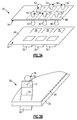
- FIGS 1A and 1B illustrate a tray assembly 10 configured for freezing autologous blood components.
- the autologous blood components described in this disclosure may be a fluid or composition that includes platelet rich plasma, platelet-poor plasma, bone marrow aspirate, bone marrow concentrate and stem cells, or any other platelet enriched blood components or combinations of blood components.
- the autologous blood components may have a platelet concentration that is greater than that found in a patient's whole blood.
- the autologous blood components may also include certain growth factors. Non-limiting examples of growth factors include platelet derived growth factor, fibroblast growth factor, transforming growth factor ⁇ , transforming growth factor ⁇ , and epithelial growth factor.
- the exemplary tray assembly 10 may include a tray body 12 having a plurality of compartments 14. Each compartment 14 is sized and shaped to receive a single, individual dose 15 (see Figure 1B ) of an autologous blood component.
- the tray body 12 includes nine compartments 14 that act as individual receptacles for receiving a single dose of an autologous blood component.
- a greater or fewer number of compartments may be employed by the tray assembly 10 within the scope of this disclosure.
- the tray body 12 may additionally include a handle 17 for handling and/or transporting the tray assembly 10.
- one or more labels 23 are provided on the tray body 12. The labels 23 may be used for inscribing patient information, such as to identify the patient, for example.
- the tray body 12 may be made of a non-rigid or flexible material. Silicone is one suitable flexible material that could be employed to construct the tray body 12. However, other materials could alternatively be utilized within the scope of this disclosure.
- the tray body 12, including each compartment 14, may be bent, flexed, or otherwise manipulated in order to remove a dose 15, which may be in frozen form, of the autologous blood component from the compartment 14.
- a force F1 may be applied to surfaces 19 of the tray body 12 that surround or circumscribe the compartment 14.
- a force F2 may be applied to a bottom surface 21 of the compartment 14 to remove the dose 15 from the compartment 14.
- the dose 15 can subsequently be used to treat a skin injury, as further discussed below.
- a handle 16 may extend into each compartment 14 to aid in removal of the dose 15 of the frozen autologous blood component from the tray assembly 10.
- a single handle 16 may extend into each compartment 14 of the tray assembly 10 to aid in removing each dose 15.
- each handle 16 includes a first portion 18 that extends inside the compartments 14 (i.e., inside the dose 15) and a second portion 20 that protrudes outwardly of each compartment 14.
- the first portions 18 of each handle 16 may include one or more openings 22 and one or more ribs 28 that are configured to improve the bond between the dose 15 and the handle 16 as the dose 15 freezes around the handle 16.
- a label 25 may be affixed to the handle 16 for inscribing various patient information.
- FIGS 3A and 3B illustrate another exemplary tray assembly 30 for receiving and freezing individual doses of autologous blood components.
- the tray assembly 30 includes a tray body 32 and a rack 34 that can be placed over the tray body 32.
- the tray body 32 includes a plurality of compartments 36 for receiving individual doses of an autologous blood component for subsequent freezing of the individual doses.
- each compartment 36 is thimble shaped and is sized to be approximately one centimeter in length by one centimeter in width by one centimeter in depth (i.e., one centimeter cubed).
- other shapes and sizes are also contemplated.
- the rack 34 is positioned over top of the tray body 32 to at least partially cover the compartments 36.
- the rack 34 may simply rest on a top surface 44 of the tray body 32 or could be removably secured to the tray body 32 in any known manner.
- the rack 34 may additionally include a plurality of handles 38 that extend into the compartments 36 once the rack 34 is positioned over the tray body 32.
- the rack 34 centers each handle 38 within its respective compartment 36 and maintains a positioning of each handle 38 prior to freezing the autologous blood components.
- each handle 38 includes a first portion 40 that extends from a first side of the rack 34 and into the one of the compartments 36 and a second portion 42 that extends from an opposite side of the rack 34 in a direction away from the compartments 36.
- each handle 38 may be removed from the rack 34 to remove a dose 15 of a frozen autologous blood component from the tray body 32.
- each handle 38 could be removed about a perforation 48 formed in the rack 34. Removal of a portion of the rack 34 that is circumscribed by the perforation 48 forms a collar 35 of each handle 38.
- the collars 35 of each handle 38 snap into the rack 34 about the perimeter of the perforations 48 such that the collars 35 are disposed directly above the compartments 36.
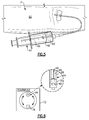
- FIG. 4 illustrates an exemplary applicator device 50 for applying a frozen autologous blood component to a skin injury.
- the applicator device 50 may include a tube 52 configured to receive an autologous blood component.
- the tube 52 may receive a frozen dose 15 of an autologous blood component.
- a handle 38 may be attached to the frozen dose 15, and the frozen dose 15 may be pushed through the tube 52 using the handle 38 to apply the frozen dose 15 to a skin injury.
- the collar 35 of the handle 38 applies a force against frozen dose 15 to move it within the tube 52.
- the frozen dose 15 of the autologous blood component provides pain and inflammation cold therapy, and as the frozen dose 15 slowly melts, the appliation device 50 applies the autlogoous blood component to the treatment site with ideal distribution over a relaitvley broad area similar to a popsicle-like applicator.
- FIGS 5-9 schematically illustrate an exemplary surgical technique for treating a skin injury using frozen autologous blood components.
- the term "skin injury” is intended to denote any type of skin injury or wound resulting from tearing, cutting and/or puncturing the skin.
- the skin injury is a superficial skin injury that is generally limited to the outer layers of the skin.
- Figures 5 through 9 illustrate, in sequential order, one non-limiting embodiment for performing a surgical technique to treat a skin injury. It should be understood; however, that fewer or additional steps than are recited below could be performed and that the recited order of steps is not intended to limit this disclosure.
- a blood sample 60 may be harvested from a body 62 of a Patient P.
- the blood sample 60 may be harvested from venous whole blood of the Patient P.
- the blood sample 60 is a sample of approximately 10 ml of blood and is harvested using a double chamber syringe 64 that includes an inner chamber 66 and an outer chamber 68.
- An anticoagulant such as ACD-A anticoagulant citrate dextrose solution, may optionally be added to the double chamber syringe 64 prior to obtaining the blood sample 60.
- the blood sample 60 is initially collected within the outer chamber 68 of the double chamber syringe 64.
- an autologous blood component 70 may be separated from the blood sample 60. This separation can be achieved using a centrifuge 72 (shown schematically) or by using other known separating techniques.
- the double chamber syringe 64 and an appropriate counterbalance 74 are inserted into the centrifuge 72 and then spun at approximately 1500 RPM for around five minutes to separate the autologous blood component 70 from the blood sample 60.
- the autologous blood component 70 can be extracted from the outer chamber 68 into the inner chamber 66 of the double chamber syringe 64 via a plunger 69. The inner chamber 66 can then be removed from the outer chamber 68 of the double chamber syringe 64.
- the autologous blood component 70 may next be divided into a plurality of individual doses 15 by injecting a portion of the autologous blood component 70 into each compartment C of a sterile tray assembly T.
- the inner chamber 66 which is removable from the double chamber syringe 64, may be used to inject the autologous blood components 70 into each compartment C.
- the tray assembly T may be configured like any of the tray assemblies described above to store multiple doses of the autologous blood component 70.
- the individual doses 15 may then be frozen in the tray assembly T for later use. This is shown schematically in Figure 8 .
- the tray assembly T may be positioned within a freezer 80 to freeze the individual doses 15 of the autologous blood component 70.
- the individual doses 15 may be rapidly frozen within the tray assembly T using liquid nitrogen or dry ice. Other freezing methodologies could also be used to freeze the individual doses 15 of the autologous blood component 70.
- one of the individual doses 15 of the frozen autologous blood component 70 may be removed from the tray assembly T when subsequently needed for treating a skin injury 90 of the Patient P.
- the skin injury 90 may be located anywhere on the Patient P.
- the Patient P is the same patient from which the autologous blood component 70 was originally harvested.
- the individual dose 15 may be applied to the skin injury 90 in frozen form to provide a combined autologous biological and cold therapy treatment for treating the skin injury 90.
- the individual dose 15 of the frozen autologous blood component 70 initially provides pain and inflammation cold therapy to the skin injury 90, and as the individual dose 15 slowly melts, the autlogoous blood component 70 is distributed over the skin injury 90.
- the high level of platelets and associated growth factors of the autologous blood component 70 triggers initiation of the healing proces and may enhance healing of the skin injury 90 as well as promote tissue growth.
- the remaining individual doses 15 of the autologous blood component 70 may be kept frozen for later use to treat the same skin injury or other superficial skin injuries or wounds.
- a 4 to 5 cc harvest of autologus blood compnents can create up to six or more frozen dosage treatments that lower treatment costs, reduce the necssity to withraw blood during subsequent doctor office visits, and speed up treatment since the patient can apply the frozen doses themselves either alone in an exam room, locker room or even at home.
- the various tray assemblies, handles, applicators, syringes, etc. described herein may be part of a surgical instrumentaiton set or kit for treating skin injuries.
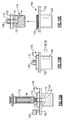
- FIGS 10A-10D illustrate another tray assembly 100 and an exemplary surgical technique for preparing a frozen autologous blood component for treating a skin injury.
- the tray assembly 100 includes a tray body 102 and one or more compartments 104 formed in the tray body 102.
- the tray assembly 100 may be made of plastic or any other suitable materials.
- Each compartment 104 is configured to receive an individual dose of an autologous blood component B.
- a lid 106 of the tray assembly 100 is adapted to cover the receptacle of the compartment 104.
- a cap 108 may be used to cover a port 110 formed in the lid 106.
- the cap 108 is removed from the port 110 of the lid 106 for connecting a syringe 112 containing an autologous blood component B to the port 110.
- the syringe 112 has previously been used to obtain a blood sample from a patient and to separate the autologous blood component B from the blood sample.
- the port 110 is a luer-type connector adapted to lockingly receive a tip of the syringe 112.
- other types of connections are also contemplated within the scope of this disclosure.
- the autologous blood component B is injected into the receptacle defined by the compartment 104.
- the syringe 112 is then removed from the port 110 and the cap 108 can be replaced over the port 110 (see Figure 10B ) to maintain sterility of the autologous blood component B.
- the procedure described in the previous two paragraphs can be repeated for each compartment 104 of the tray assembly 100 to prepare a plurality of individual doses of autologous blood components B. The individual doses are then frozen in the tray assembly 100 for later use.
- Freezing the doses in the manner described above activates the autologous blood components B. More particularly, the freezing process causes the platelets within the autologous blood components B to lyse, or break down, thereby artificially releasing anabolic growth factors that are highly beneficial for treating skin injuries and other types of injuries.
- a frozen dose 114 of the autologous blood component B may be subsequently removed from the compartment 104 of the tray assembly 100 to treat a skin injury. Removal may include unscrewing the lid 106 from a threaded portion 116 of one of the compartments 104 of the tray assembly 100.
- An extension 118 may extend from an underside of the lid 106 and into the compartment 104. The extension 118 extends into the autologous blood component B once the lid 106 is received over the compartment 104 (see Figure 10A ), and during the freezing process, the autologous blood component B freezes around the extension 118 to form the frozen dose 114. In this way, the lid 106 can be used to loosen and remove the frozen dose 114 from the tray assembly 100.
- the extension 118 may include a lip 119 designed to enhance the interconnection between the extension 118 and the frozen dose 114 of the autologous blood component B.
- the extension 118 includes a passage 121 that is in fluid communication with the port 110. In this way, autologous blood components B that are injected into the port 110 may flow through the passage 121 and into the receptacle established by the compartment 104.
- the lid 106 includes multiple extensions 118 that are not in fluid communication with the port 110 (see, for example, Figure 10E ).
- the frozen dose 114 of the autologous blood component B which has been previously removed from the tray assembly 100, is used to treat a skin injury 120 of a Patient P.
- the frozen dose 114 of the autologous blood component B is applied to the skin injury 120 while still frozen to provide a combined autologous biological and cold therapy treatment for treating the skin injury 120.
- the frozen dose 114 initially provides pain and inflammation cold therapy to the skin injury 120, and as the frozen dose 114 slowly melts, the already activated autlogoous blood components B are distributed over the skin injury 120.
- the high level of platelets and associated growth factors of the autologous blood components B trigger initiation of the healing proces and may enhance healing of the skin injury 120 and promote tissue growth. Any remaining doses of the autologous blood component may be kept frozen within the tray assemlby 100 for later use to treat the same skin injury or other superficial skin injuries or wounds.
Landscapes
- Health & Medical Sciences (AREA)
- Life Sciences & Earth Sciences (AREA)
- Cell Biology (AREA)
- Developmental Biology & Embryology (AREA)
- Chemical & Material Sciences (AREA)
- General Health & Medical Sciences (AREA)
- Public Health (AREA)
- Engineering & Computer Science (AREA)
- Animal Behavior & Ethology (AREA)
- Veterinary Medicine (AREA)
- Epidemiology (AREA)
- Immunology (AREA)
- Hematology (AREA)
- Medicinal Chemistry (AREA)
- Pharmacology & Pharmacy (AREA)
- Zoology (AREA)
- Biomedical Technology (AREA)
- Virology (AREA)
- Biotechnology (AREA)
- Reproductive Health (AREA)
- Gynecology & Obstetrics (AREA)
- Dermatology (AREA)
- Materials Engineering (AREA)
- Chemical Kinetics & Catalysis (AREA)
- Dentistry (AREA)
- Wood Science & Technology (AREA)
- Environmental Sciences (AREA)
- Medicines Containing Material From Animals Or Micro-Organisms (AREA)
- Medical Preparation Storing Or Oral Administration Devices (AREA)
- Mechanical Engineering (AREA)
Abstract
Description
- This application is a continuation-in-part of
U.S. Patent Application No. 14/833,659, which was filed on August 24, 2015 - This disclosure relates to a method and apparatus for treating skin injuries or other superficial wounds. Autologous blood components may be frozen in a plurality of individual doses. Each dose can subsequently be applied in frozen form to treat skin injuries.
- Healing injuries involves a complex series of events where proteins in the blood called growth factors are released to signal for the healing process to begin. Many growth factors are derived from small blood cells called platelets. Increased growth factor levels improve the recruitment of cells to an injury site and optimize the environment for healing. Accordingly, autologous blood components that are derived from the patient, such as platelet rich plasma, have been used in various surgical procedures to provide a concentrated level of beneficial growth factors at the point of care.
- This disclosure describes a combined autologous biologic and cold therapy treatment for treating various skin injuries. The treatment may include applying autologous blood components, including but not limited to platelet rich plasma, to a skin injury in a manner that influences the healing process.
- A tray assembly for freezing autologous blood components according to an exemplary aspect of the present disclosure includes, among other things, a tray body and a plurality of compartments formed in the tray body, each of the plurality of compartments configured to receive an individual dose of an autologous blood component.
- In a further non-limiting embodiment of the foregoing tray assembly, the autologous blood component includes platelet rich plasma.
- In a further non-limiting embodiment of either of the foregoing tray assemblies, a rack is received over the tray body to at least partially cover each of the plurality of compartments.
- In a further non-limiting embodiment of any of the foregoing tray assemblies, at least one handle is removably connected to the rack.
- In a further non-limiting embodiment of any of the foregoing tray assemblies, a handle extends into each of the plurality of compartments.
- In a further non-limiting embodiment of any of the foregoing tray assemblies, a first portion of the handle extends into each of the plurality of compartments and a second portion of the handle protrudes outwardly from each of the plurality of compartments.
- In a further non-limiting embodiment of any of the foregoing tray assemblies, the tray body is made from a flexible material.
- In a further non-limiting embodiment of any of the foregoing tray assemblies, the flexible material includes silicone.
- In a further non-limiting embodiment of any of the foregoing tray assemblies, a label is affixed to the tray body and configured to inscribe patient information.
- In a further non-limiting embodiment of any of the foregoing tray assemblies, a handle extends from the tray body.
- In a further non-limiting embodiment of any of the foregoing tray assemblies, a handle extends into each of the plurality of compartments, and each handle includes a label for inscribing patient information.
- In a further non-limiting embodiment of any of the foregoing tray assemblies, a surface of the tray body circumscribes each of the plurality of compartments.
- A surgical method according to another exemplary aspect of the present disclosure incomes, among other things, freezing an autologous blood component in a plurality of individual doses using a tray assembly that includes a plurality of compartments each configured to receive one of the plurality of individual doses.
- In a further non-limiting embodiment of the foregoing method, the method includes harvesting a blood sample from a patient prior to the step of freezing the autologous blood component.
- In a further non-limiting embodiment of either of the foregoing methods, the method includes separating the autologous blood component from the blood sample prior to the step of freezing the autologous blood component.
- In a further non-limiting embodiment of any of the foregoing methods, the method includes applying a first dose of the plurality of individual doses to a skin injury while the first dose in still frozen.
- In a further non-limiting embodiment of any of the foregoing methods, the method includes removing the first dose from the tray assembly using a handle at least partially imbedded inside the first dose.
- A tray assembly for freezing autologous blood components according to an exemplary aspect of the present disclosure includes, among other things, a tray body, a compartment formed in the tray body and configured to receive a dose of an autologous blood component and a lid connectable to the compartment in a manner that covers the dose.
- In a further non-limited embodiment of the foregoing tray assembly, the autologous blood component includes platelet rich plasma.
- In a further non-limited embodiment of either of the foregoing tray assemblies, an extension extends from the lid into the compartment.
- In a further non-limiting embodiment of any of the foregoing tray assemblies, the extension includes a lip.
- In a further non-limiting embodiment of any of the foregoing tray assemblies, a port is formed in the lid and configured to communicate the dose into the compartment.
- In a further non-limiting embodiment of any of the foregoing tray assemblies, a cap is received over the port.
- In a further non-limiting embodiment of any of the foregoing tray assemblies, an extension is in fluid communication with the port.
- In a further non-limiting embodiment of any of the foregoing tray assemblies, the extension includes a passage adapted to communicate the dose from the port into the compartment.
- In a further non-limiting embodiment of any of the foregoing tray assemblies, the compartment includes a threaded portion and the lid is attached to the compartment via the threaded portion.
- In a further non-limiting embodiment of any of the foregoing tray assemblies, the tray body is a plastic component.
- A surgical method according to another exemplary aspect of the present disclosure includes, among other things, introducing an autologous blood component into a compartment of a tray assembly, freezing the autologous blood component inside the compartment, removing the autologous blood component from the compartment and applying the autologous blood component to a skin injury while the autologous blood component is still at least partially frozen.
- In a further non-limiting embodiment of the foregoing methods, the method includes sealing the compartment after introducing the autologous blood component.
- In a further non-limiting embodiment of either of the foregoing methods, sealing the compartment includes placing a cap over a port.
- In a further non-limiting embodiment of any of the foregoing methods, removing the autologous blood component from the compartment includes unscrewing a lid that covers an opening of the compartment.
- In a further non-limiting embodiment of any of the foregoing methods, the method includes obtaining the autologous blood component from a blood sample prior to introducing the autologous blood component.
- In a further non-limiting embodiment of any of the foregoing methods, introducing the autologous blood component includes attaching a syringe to a port that opens into the compartment.
- In a further non-limiting embodiment of any of the foregoing methods, introducing the autologous blood component includes injecting the autologous blood component into the compartment using the syringe.
- In a further non-limiting embodiment of any of the foregoing methods, freezing the autologous blood component artificially releases growth factors within the autologous blood component.
- The embodiments, examples and alternatives of the preceding paragraphs, the claims, or the following description and drawings, including any of their various aspects or respective individual features, may be practiced independently or in any combination. Features described in connection with one embodiment are applicable to all embodiments, unless such features are incompatible.
- The various features and advantages of this disclosure will become apparent to those skilled in the art from the following detailed description. The drawings that accompany the detailed description can be briefly described as follows.
-
-
Figures 1A and 1B illustrate a tray assembly for freezing an autologous blood component according to a first embodiment of this disclosure. -
Figure 2 illustrates a tray assembly according to a second embodiment of this disclosure. -
Figures 3A and 3B illustrate a tray assembly according to yet another embodiment of this disclosure. -
Figure 4 illustrates an applicator device for applying a frozen dose of an autologous blood component to a skin injury. -
Figure 5 schematically illustrates harvesting a blood sample from a patient. -
Figure 6 schematically illustrates separation of an autologous blood component from the blood sample. -
Figure 7 schematically illustrates injection of the autologous blood component into a plurality of individual compartments of a tray assembly. -
Figure 8 schematically illustrates freezing the autologous blood components in a tray assembly. -
Figure 9 schematically illustrates the use of a frozen dose of an autologous blood component for treating a skin injury of the patient. -
Figures 10A, 10B, 10C and10D schematically illustrate a tray assembly and an associated surgical technique for treating a skin injury using frozen autologous blood components. -
Figure 10E illustrates a lid of a tray assembly. - This disclosure describes a surgical technique for treating skin injuries. The surgical technique includes applying autologous blood components, such as platelet rich plasma, to a skin injury to influence the healing process.
- In some embodiments, the surgical technique includes freezing an autologous blood component in a plurality of individual doses and later applying a dose of the plurality of individual doses to a skin injury while the dose is still frozen. Various tray assembly designs may be utilized to separate and freeze the autologous blood components in the plurality of individual doses. These and other features are described in greater detail in the following paragraphs of this detailed description.
-
Figures 1A and 1B illustrate atray assembly 10 configured for freezing autologous blood components. The autologous blood components described in this disclosure may be a fluid or composition that includes platelet rich plasma, platelet-poor plasma, bone marrow aspirate, bone marrow concentrate and stem cells, or any other platelet enriched blood components or combinations of blood components. The autologous blood components may have a platelet concentration that is greater than that found in a patient's whole blood. The autologous blood components may also include certain growth factors. Non-limiting examples of growth factors include platelet derived growth factor, fibroblast growth factor, transforming growth factor β, transforming growth factor α, and epithelial growth factor. - The
exemplary tray assembly 10 may include atray body 12 having a plurality ofcompartments 14. Eachcompartment 14 is sized and shaped to receive a single, individual dose 15 (seeFigure 1B ) of an autologous blood component. In the illustrated non-limiting embodiment, thetray body 12 includes ninecompartments 14 that act as individual receptacles for receiving a single dose of an autologous blood component. However, a greater or fewer number of compartments may be employed by thetray assembly 10 within the scope of this disclosure. - In another non-limiting embodiment, the
tray body 12 may additionally include ahandle 17 for handling and/or transporting thetray assembly 10. In yet another non-limiting embodiment, one ormore labels 23 are provided on thetray body 12. Thelabels 23 may be used for inscribing patient information, such as to identify the patient, for example. - The
tray body 12 may be made of a non-rigid or flexible material. Silicone is one suitable flexible material that could be employed to construct thetray body 12. However, other materials could alternatively be utilized within the scope of this disclosure. - Referring now primarily to
Figure 1B , thetray body 12, including eachcompartment 14, may be bent, flexed, or otherwise manipulated in order to remove adose 15, which may be in frozen form, of the autologous blood component from thecompartment 14. For example, in one non-limiting embodiment, a force F1 may be applied tosurfaces 19 of thetray body 12 that surround or circumscribe thecompartment 14. At the same time the forces F1 are applied, a force F2 may be applied to a bottom surface 21 of thecompartment 14 to remove thedose 15 from thecompartment 14. Thedose 15 can subsequently be used to treat a skin injury, as further discussed below. - In another non-limiting embodiment, shown in
Figure 2 , ahandle 16 may extend into eachcompartment 14 to aid in removal of thedose 15 of the frozen autologous blood component from thetray assembly 10. In other words, asingle handle 16 may extend into eachcompartment 14 of thetray assembly 10 to aid in removing eachdose 15. In one non-limiting embodiment, each handle 16 includes a first portion 18 that extends inside the compartments 14 (i.e., inside the dose 15) and asecond portion 20 that protrudes outwardly of eachcompartment 14. The first portions 18 of each handle 16 may include one ormore openings 22 and one ormore ribs 28 that are configured to improve the bond between thedose 15 and thehandle 16 as thedose 15 freezes around thehandle 16. In another non-limiting embodiment, alabel 25 may be affixed to thehandle 16 for inscribing various patient information. -
Figures 3A and 3B illustrate anotherexemplary tray assembly 30 for receiving and freezing individual doses of autologous blood components. Thetray assembly 30 includes atray body 32 and arack 34 that can be placed over thetray body 32. Thetray body 32 includes a plurality ofcompartments 36 for receiving individual doses of an autologous blood component for subsequent freezing of the individual doses. In one non-limiting embodiment, eachcompartment 36 is thimble shaped and is sized to be approximately one centimeter in length by one centimeter in width by one centimeter in depth (i.e., one centimeter cubed). However, other shapes and sizes are also contemplated. - In another non-limiting embodiment, the
rack 34 is positioned over top of thetray body 32 to at least partially cover thecompartments 36. Therack 34 may simply rest on atop surface 44 of thetray body 32 or could be removably secured to thetray body 32 in any known manner. - The
rack 34 may additionally include a plurality ofhandles 38 that extend into thecompartments 36 once therack 34 is positioned over thetray body 32. Therack 34 centers each handle 38 within itsrespective compartment 36 and maintains a positioning of each handle 38 prior to freezing the autologous blood components. In one non-limiting embodiment, each handle 38 includes afirst portion 40 that extends from a first side of therack 34 and into the one of thecompartments 36 and asecond portion 42 that extends from an opposite side of therack 34 in a direction away from thecompartments 36. - Referring now primarily to
Figure 3B , each handle 38 may be removed from therack 34 to remove adose 15 of a frozen autologous blood component from thetray body 32. For example, each handle 38 could be removed about aperforation 48 formed in therack 34. Removal of a portion of therack 34 that is circumscribed by theperforation 48 forms acollar 35 of each handle 38. In one non-limiting embodiment, thecollars 35 of each handle 38 snap into therack 34 about the perimeter of theperforations 48 such that thecollars 35 are disposed directly above thecompartments 36. -
Figure 4 illustrates anexemplary applicator device 50 for applying a frozen autologous blood component to a skin injury. Theapplicator device 50 may include atube 52 configured to receive an autologous blood component. For example, in one non-limiting embodiment, thetube 52 may receive afrozen dose 15 of an autologous blood component. Ahandle 38 may be attached to thefrozen dose 15, and thefrozen dose 15 may be pushed through thetube 52 using thehandle 38 to apply thefrozen dose 15 to a skin injury. In one non-limiting embodiment, thecollar 35 of thehandle 38 applies a force againstfrozen dose 15 to move it within thetube 52. Thefrozen dose 15 of the autologous blood component provides pain and inflammation cold therapy, and as thefrozen dose 15 slowly melts, theappliation device 50 applies the autlogoous blood component to the treatment site with ideal distribution over a relaitvley broad area similar to a popsicle-like applicator. -
Figures 5-9 , with continued reference toFigures 1-4 , schematically illustrate an exemplary surgical technique for treating a skin injury using frozen autologous blood components. In this disclosure, the term "skin injury" is intended to denote any type of skin injury or wound resulting from tearing, cutting and/or puncturing the skin. In one non-limiting embodiment, the skin injury is a superficial skin injury that is generally limited to the outer layers of the skin.Figures 5 through 9 illustrate, in sequential order, one non-limiting embodiment for performing a surgical technique to treat a skin injury. It should be understood; however, that fewer or additional steps than are recited below could be performed and that the recited order of steps is not intended to limit this disclosure. - Referring first to
Figure 5 , ablood sample 60 may be harvested from abody 62 of a Patient P. Theblood sample 60 may be harvested from venous whole blood of the Patient P. In one non-limiting embodiment, theblood sample 60 is a sample of approximately 10 ml of blood and is harvested using adouble chamber syringe 64 that includes aninner chamber 66 and anouter chamber 68. An anticoagulant, such as ACD-A anticoagulant citrate dextrose solution, may optionally be added to thedouble chamber syringe 64 prior to obtaining theblood sample 60. Theblood sample 60 is initially collected within theouter chamber 68 of thedouble chamber syringe 64. - Next, as shown in
Figure 6 , anautologous blood component 70 may be separated from theblood sample 60. This separation can be achieved using a centrifuge 72 (shown schematically) or by using other known separating techniques. In one non-limiting embodiment, thedouble chamber syringe 64 and anappropriate counterbalance 74 are inserted into thecentrifuge 72 and then spun at approximately 1500 RPM for around five minutes to separate theautologous blood component 70 from theblood sample 60. Once separated, theautologous blood component 70 can be extracted from theouter chamber 68 into theinner chamber 66 of thedouble chamber syringe 64 via aplunger 69. Theinner chamber 66 can then be removed from theouter chamber 68 of thedouble chamber syringe 64. - Referring to
Figure 7 , theautologous blood component 70 may next be divided into a plurality ofindividual doses 15 by injecting a portion of theautologous blood component 70 into each compartment C of a sterile tray assembly T. Theinner chamber 66, which is removable from thedouble chamber syringe 64, may be used to inject theautologous blood components 70 into each compartment C. The tray assembly T may be configured like any of the tray assemblies described above to store multiple doses of theautologous blood component 70. - The individual doses 15 may then be frozen in the tray assembly T for later use. This is shown schematically in
Figure 8 . In one non-limiting embodiment, the tray assembly T may be positioned within afreezer 80 to freeze theindividual doses 15 of theautologous blood component 70. In another embodiment, theindividual doses 15 may be rapidly frozen within the tray assembly T using liquid nitrogen or dry ice. Other freezing methodologies could also be used to freeze theindividual doses 15 of theautologous blood component 70. - Referring now primarily to
Figure 9 , one of theindividual doses 15 of the frozenautologous blood component 70 may be removed from the tray assembly T when subsequently needed for treating askin injury 90 of the Patient P. Theskin injury 90 may be located anywhere on the Patient P. In one non-limiting embodiment, the Patient P is the same patient from which theautologous blood component 70 was originally harvested. - The
individual dose 15 may be applied to theskin injury 90 in frozen form to provide a combined autologous biological and cold therapy treatment for treating theskin injury 90. For example, theindividual dose 15 of the frozenautologous blood component 70 initially provides pain and inflammation cold therapy to theskin injury 90, and as theindividual dose 15 slowly melts, theautlogoous blood component 70 is distributed over theskin injury 90. The high level of platelets and associated growth factors of theautologous blood component 70 triggers initiation of the healing proces and may enhance healing of theskin injury 90 as well as promote tissue growth. The remainingindividual doses 15 of theautologous blood component 70 may be kept frozen for later use to treat the same skin injury or other superficial skin injuries or wounds. - A 4 to 5 cc harvest of autologus blood compnents can create up to six or more frozen dosage treatments that lower treatment costs, reduce the necssity to withraw blood during subsequent doctor office visits, and speed up treatment since the patient can apply the frozen doses themselves either alone in an exam room, locker room or even at home. Finally, although described individually above, the various tray assemblies, handles, applicators, syringes, etc. described herein may be part of a surgical instrumentaiton set or kit for treating skin injuries.
-
Figures 10A-10D illustrate anothertray assembly 100 and an exemplary surgical technique for preparing a frozen autologous blood component for treating a skin injury. Thetray assembly 100 includes atray body 102 and one ormore compartments 104 formed in thetray body 102. Thetray assembly 100 may be made of plastic or any other suitable materials. Eachcompartment 104 is configured to receive an individual dose of an autologous blood component B. Alid 106 of thetray assembly 100 is adapted to cover the receptacle of thecompartment 104. Acap 108 may be used to cover aport 110 formed in thelid 106. - Referring first to
Figure 10A , thecap 108 is removed from theport 110 of thelid 106 for connecting asyringe 112 containing an autologous blood component B to theport 110. Thesyringe 112 has previously been used to obtain a blood sample from a patient and to separate the autologous blood component B from the blood sample. In a non-limiting embodiment, theport 110 is a luer-type connector adapted to lockingly receive a tip of thesyringe 112. However, other types of connections are also contemplated within the scope of this disclosure. - Once the
syringe 112 is connected to theport 110, the autologous blood component B is injected into the receptacle defined by thecompartment 104. Thesyringe 112 is then removed from theport 110 and thecap 108 can be replaced over the port 110 (seeFigure 10B ) to maintain sterility of the autologous blood component B. The procedure described in the previous two paragraphs can be repeated for eachcompartment 104 of thetray assembly 100 to prepare a plurality of individual doses of autologous blood components B. The individual doses are then frozen in thetray assembly 100 for later use. - Freezing the doses in the manner described above activates the autologous blood components B. More particularly, the freezing process causes the platelets within the autologous blood components B to lyse, or break down, thereby artificially releasing anabolic growth factors that are highly beneficial for treating skin injuries and other types of injuries.
- Referring now primarily to
Figure 10C , afrozen dose 114 of the autologous blood component B may be subsequently removed from thecompartment 104 of thetray assembly 100 to treat a skin injury. Removal may include unscrewing thelid 106 from a threadedportion 116 of one of thecompartments 104 of thetray assembly 100. Anextension 118 may extend from an underside of thelid 106 and into thecompartment 104. Theextension 118 extends into the autologous blood component B once thelid 106 is received over the compartment 104 (seeFigure 10A ), and during the freezing process, the autologous blood component B freezes around theextension 118 to form thefrozen dose 114. In this way, thelid 106 can be used to loosen and remove thefrozen dose 114 from thetray assembly 100. Theextension 118 may include alip 119 designed to enhance the interconnection between theextension 118 and thefrozen dose 114 of the autologous blood component B. - In another non-limiting embodiment, the
extension 118 includes apassage 121 that is in fluid communication with theport 110. In this way, autologous blood components B that are injected into theport 110 may flow through thepassage 121 and into the receptacle established by thecompartment 104. In yet another non-limiting embodiment, thelid 106 includesmultiple extensions 118 that are not in fluid communication with the port 110 (see, for example,Figure 10E ). - Finally, referring primarily to
Figure 10D , thefrozen dose 114 of the autologous blood component B, which has been previously removed from thetray assembly 100, is used to treat askin injury 120 of a Patient P. Thefrozen dose 114 of the autologous blood component B is applied to theskin injury 120 while still frozen to provide a combined autologous biological and cold therapy treatment for treating theskin injury 120. For example, thefrozen dose 114 initially provides pain and inflammation cold therapy to theskin injury 120, and as thefrozen dose 114 slowly melts, the already activated autlogoous blood components B are distributed over theskin injury 120. The high level of platelets and associated growth factors of the autologous blood components B trigger initiation of the healing proces and may enhance healing of theskin injury 120 and promote tissue growth. Any remaining doses of the autologous blood component may be kept frozen within thetray assemlby 100 for later use to treat the same skin injury or other superficial skin injuries or wounds. - Although the different non-limiting embodiments are illustrated as having specific components, the embodiments of this disclosure are not limited to those particular combinations. It is possible to use some of the components or features from any of the non-limiting embodiments in combination with features or components from any of the other non-limiting embodiments.
- It should be understood that like reference numerals identify corresponding or similar elements throughout the several drawings. It should also be understood that although a particular component arrangement is disclosed and illustrated in these exemplary embodiments, other arrangements could also benefit from the teachings of this disclosure.
- The foregoing description shall be interpreted as illustrative and not in any limiting sense. A worker of ordinary skill in the art would understand that certain modifications could come within the scope of this disclosure. For these reasons, the following claims should be studied to determine the true scope and content of this disclosure. The following numbered paragraphs (paras.) contain further statements of various aspects of the present invention:-
- 1. A tray assembly for freezing autologous blood components, comprising:
- a tray body;
- a compartment formed in said tray body and configured to receive a dose of an autologous blood component; and
- a lid connectable to said compartment to cover said dose.
- 2. The tray assembly as recited in para 1, wherein said autologous blood component includes platelet rich plasma.
- 3. The tray assembly as recited in para 1, comprising an extension that extends from said lid into said compartment.
- 4. The tray assembly as recited in para 3, wherein said extension includes a lip.
- 5. The tray assembly as recited in para 1, comprising a port formed in said lid and configured to communicate said dose into said compartment.
- 6. The tray assembly as recited in para 5, comprising a cap received over said port.
- 7. The tray assembly as recited in para 5, comprising an extension in fluid communication with said port.
- 8. The tray assembly as recited in para 7, wherein said extension includes a passage adapted to communicate said dose from said port into said compartment.
- 9. The tray assembly as recited in para 1, wherein said compartment includes a threaded portion and said lid is attached to said compartment via said threaded portion.
- 10. The tray assembly as recited in para 1, wherein said tray body is a plastic component.
- 11. A surgical method, comprising:
- introducing an autologous blood component into a compartment of a tray assembly;
- freezing the autologous blood component inside the compartment;
- removing the autologous blood component from the compartment; and
- applying the autologous blood component to a skin injury while the autologous blood component is still at least partially frozen.
- 12. The method as recited in para 11, comprising sealing the compartment after introducing the autologous blood component.
- 13. The method as recited in
para 12, wherein sealing the compartment includes placing a cap over a port. - 14. The method as recited in para 11, wherein removing the autologous blood component from the compartment includes unscrewing a lid that covers an opening of the compartment.
- 15. The method as recited in para 11, comprising obtaining the autologous blood component from a blood sample prior to introducing the autologous blood component.
- 16. The method as recited in para 11, wherein introducing the autologous blood component includes attaching a syringe to a port that opens into the compartment.
- 17. The method as recited in
para 16, wherein introducing the autologous blood component includes injecting the autologous blood component into the compartment using the syringe. - 18. The method as recited in para 11, wherein freezing the autologous blood component artificially releases growth factors within the autologous blood component.
Claims (15)
- A tray assembly for freezing autologous blood components, comprising:a tray body;a compartment formed in said tray body and configured to receive a dose of an autologous blood component; anda lid connectable to said compartment to cover said dose.
- The tray assembly as recited in claim 1, wherein said autologous blood component includes platelet rich plasma.
- The tray assembly as recited in claim 1, comprising an extension that extends from said lid into said compartment.
- The tray assembly as recited in claim 3, wherein said extension includes a lip.
- The tray assembly as recited in claim 1, comprising a port formed in said lid and configured to communicate said dose into said compartment.
- The tray assembly as recited in claim 5, comprising (i) a cap received over said port, or (ii) an extension in fluid communication with said port.
- The tray assembly as recited in claim 6 (ii), wherein said extension includes a passage adapted to communicate said dose from said port into said compartment.
- The tray assembly as recited in claim 1, wherein said compartment includes a threaded portion and said lid is attached to said compartment via said threaded portion.
- The tray assembly as recited in claim 1, wherein said tray body is a plastic component.
- A composition for use in a surgical method for treating a skin injury, wherein said composition comprises an autologous blood component, the method comprising:introducing an autologous blood component into a compartment of a tray assembly;freezing the autologous blood component inside the compartment;removing the autologous blood component from the compartment; andapplying the autologous blood component to a skin injury while the autologous blood component is still at least partially frozen.
- The composition for use as recited in claim 10, comprising (i) sealing the compartment after introducing the autologous blood component, or (ii) obtaining the autologous blood component from a blood sample prior to introducing the autologous blood component.
- The composition for use as recited in claim 11 (i), wherein sealing the compartment includes placing a cap over a port.
- The composition for use as recited in claim 10, wherein (i) removing the autologous blood component from the compartment includes unscrewing a lid that covers an opening of the compartment, or (ii) introducing the autologous blood component includes attaching a syringe to a port that opens into the compartment.
- The composition for use as recited in claim 13 (ii), wherein introducing the autologous blood component includes injecting the autologous blood component into the compartment using the syringe.
- The composition for use as recited in claim 10, wherein freezing the autologous blood component artificially releases growth factors within the autologous blood component.
Applications Claiming Priority (2)
| Application Number | Priority Date | Filing Date | Title |
|---|---|---|---|
| US14/833,659 US10213461B2 (en) | 2015-08-24 | 2015-08-24 | Combined autologous biologic and cold therapy treatment of skin injuries |
| US15/005,514 US20170056450A1 (en) | 2015-08-24 | 2016-01-25 | Combined autologous biologic and cold therapy treatment of skin injuries |
Publications (1)
| Publication Number | Publication Date |
|---|---|
| EP3136026A1 true EP3136026A1 (en) | 2017-03-01 |
Family
ID=56920477
Family Applications (1)
| Application Number | Title | Priority Date | Filing Date |
|---|---|---|---|
| EP16185385.8A Withdrawn EP3136026A1 (en) | 2015-08-24 | 2016-08-23 | Combined autologous biologic and cold therapy treatment of skin injuries |
Country Status (2)
| Country | Link |
|---|---|
| US (1) | US20170056450A1 (en) |
| EP (1) | EP3136026A1 (en) |
Cited By (1)
| Publication number | Priority date | Publication date | Assignee | Title |
|---|---|---|---|---|
| WO2019150355A1 (en) | 2018-01-30 | 2019-08-08 | Reddress Ltd. | Blood applicator for tissue treatment |
Families Citing this family (1)
| Publication number | Priority date | Publication date | Assignee | Title |
|---|---|---|---|---|
| TWI756028B (en) * | 2021-01-21 | 2022-02-21 | 科歐思股份有限公司 | Freezer |
Citations (3)
| Publication number | Priority date | Publication date | Assignee | Title |
|---|---|---|---|---|
| WO2010086848A2 (en) * | 2009-01-27 | 2010-08-05 | Alon Kushnir | Wound dressings, methods and apparatus for making same and storage and use thereof |
| US20120156184A1 (en) * | 2010-11-24 | 2012-06-21 | Vaclav Prochazka | Methods and materials for treating burn injuries |
| US20140121640A1 (en) * | 2012-10-30 | 2014-05-01 | The Cleveland Clinic Foundation | Multipurpose membranes, methods for forming, and applications thereof |
Family Cites Families (3)
| Publication number | Priority date | Publication date | Assignee | Title |
|---|---|---|---|---|
| US8177738B2 (en) * | 2009-07-28 | 2012-05-15 | Arthrex, Inc. | Bone void filling tube and shear mechanism |
| US9402409B2 (en) * | 2012-09-05 | 2016-08-02 | Shotcicle Llc | Frozen pops with drinkable liquid or edible solid center |
| WO2015195508A1 (en) * | 2014-06-15 | 2015-12-23 | Amnio Technology Llc | Frozen therapeutic dose and package |
-
2016
- 2016-01-25 US US15/005,514 patent/US20170056450A1/en not_active Abandoned
- 2016-08-23 EP EP16185385.8A patent/EP3136026A1/en not_active Withdrawn
Patent Citations (3)
| Publication number | Priority date | Publication date | Assignee | Title |
|---|---|---|---|---|
| WO2010086848A2 (en) * | 2009-01-27 | 2010-08-05 | Alon Kushnir | Wound dressings, methods and apparatus for making same and storage and use thereof |
| US20120156184A1 (en) * | 2010-11-24 | 2012-06-21 | Vaclav Prochazka | Methods and materials for treating burn injuries |
| US20140121640A1 (en) * | 2012-10-30 | 2014-05-01 | The Cleveland Clinic Foundation | Multipurpose membranes, methods for forming, and applications thereof |
Non-Patent Citations (2)
| Title |
|---|
| ALICE ROFFI ET AL: "Does Platelet-Rich Plasma Freeze-Thawing Influence Growth Factor Release and Their Effects on Chondrocytes and Synoviocytes?", BIOMED RESEARCH INTERNATIONAL, vol. 5, no. 96, 17 July 2014 (2014-07-17), US, pages 423 - 10, XP055329455, ISSN: 2314-6133, DOI: 10.1007/s00167-011-1837-x * |
| ZOKU ET AL: "ZOKU MiniPops Instruction manual", 31 December 2013 (2013-12-31), XP055451993, Retrieved from the Internet <URL:https://cdn.shopify.com/s/files/1/0038/1592/files/Mini_Pops.pdf?1442> [retrieved on 20180216] * |
Cited By (1)
| Publication number | Priority date | Publication date | Assignee | Title |
|---|---|---|---|---|
| WO2019150355A1 (en) | 2018-01-30 | 2019-08-08 | Reddress Ltd. | Blood applicator for tissue treatment |
Also Published As
| Publication number | Publication date |
|---|---|
| US20170056450A1 (en) | 2017-03-02 |
Similar Documents
| Publication | Publication Date | Title |
|---|---|---|
| US12220518B2 (en) | Triple syringe and methods of making platelet-enriched plasma and use thereof | |
| US8727133B2 (en) | Method for the preparation of at least one compound from blood, and extraction device for use in the execution of said method | |
| US6849051B2 (en) | Devices and methods for extraction of bone marrow | |
| US5744360A (en) | Methods for harvesting adipose tissue containing autologous microvascular endothelial cells | |
| EP2806914B1 (en) | A system and method for obtaining a cellular sample enriched with defined cells such as platelet rich plasma(prp) | |
| US8361042B1 (en) | Fat harvesting container | |
| US20100331726A1 (en) | Medical Device with Incorporated Disinfecting Wipe and Method of Using Same | |
| JP2023123767A (en) | Methods and kits for preservation of adipose tissue grafts | |
| JP2021502814A (en) | Preservation tissue products and related methods | |
| WO2012003873A1 (en) | Device and method for collecting platelet concentrate | |
| US20170056450A1 (en) | Combined autologous biologic and cold therapy treatment of skin injuries | |
| JP7193170B2 (en) | How to store platelet-rich plasma | |
| CN109364529B (en) | Preparation method and device of autologous platelet-rich plasma for treating pressure injury | |
| KR20200031609A (en) | Methods, devices and kits for the manufacture of PRP | |
| US10213461B2 (en) | Combined autologous biologic and cold therapy treatment of skin injuries | |
| WO2005123164A1 (en) | Applicator and method for applying lock solution in a catheter | |
| RU2859181C1 (en) | Method of plasma treatment for the course of treatment | |
| WO2014098909A1 (en) | Fat harvesting container | |
| CN110693906A (en) | Comprehensive extraction method of autologous white blood cells and platelet plasma |
Legal Events
| Date | Code | Title | Description |
|---|---|---|---|
| PUAI | Public reference made under article 153(3) epc to a published international application that has entered the european phase |
Free format text: ORIGINAL CODE: 0009012 |
|
| AK | Designated contracting states |
Kind code of ref document: A1 Designated state(s): AL AT BE BG CH CY CZ DE DK EE ES FI FR GB GR HR HU IE IS IT LI LT LU LV MC MK MT NL NO PL PT RO RS SE SI SK SM TR |
|
| AX | Request for extension of the european patent |
Extension state: BA ME |
|
| 17P | Request for examination filed |
Effective date: 20170731 |
|
| RBV | Designated contracting states (corrected) |
Designated state(s): AL AT BE BG CH CY CZ DE DK EE ES FI FR GB GR HR HU IE IS IT LI LT LU LV MC MK MT NL NO PL PT RO RS SE SI SK SM TR |
|
| 17Q | First examination report despatched |
Effective date: 20180315 |
|
| STAA | Information on the status of an ep patent application or granted ep patent |
Free format text: STATUS: THE APPLICATION IS DEEMED TO BE WITHDRAWN |
|
| 18D | Application deemed to be withdrawn |
Effective date: 20200303 |