EP3135673A2 - Condensed-cyclic compound and organic light emitting device comprising the same - Google Patents
Condensed-cyclic compound and organic light emitting device comprising the same Download PDFInfo
- Publication number
- EP3135673A2 EP3135673A2 EP16179781.6A EP16179781A EP3135673A2 EP 3135673 A2 EP3135673 A2 EP 3135673A2 EP 16179781 A EP16179781 A EP 16179781A EP 3135673 A2 EP3135673 A2 EP 3135673A2
- Authority
- EP
- European Patent Office
- Prior art keywords
- group
- substituted
- unsubstituted
- salt
- fluorenyl
- Prior art date
- Legal status (The legal status is an assumption and is not a legal conclusion. Google has not performed a legal analysis and makes no representation as to the accuracy of the status listed.)
- Withdrawn
Links
- 0 C*([C@](C)CC1)[C@]1C=C Chemical compound C*([C@](C)CC1)[C@]1C=C 0.000 description 24
- MJVYZYPBABJSPO-UHFFFAOYSA-N CC1(C)c(cc(cc2)N(c(cc3)ccc3-c3ccccc3)c(cc3)ccc3-c3cccc4c3Oc3ccccc3O4)c2-c2ccccc12 Chemical compound CC1(C)c(cc(cc2)N(c(cc3)ccc3-c3ccccc3)c(cc3)ccc3-c3cccc4c3Oc3ccccc3O4)c2-c2ccccc12 MJVYZYPBABJSPO-UHFFFAOYSA-N 0.000 description 2
- LOFKPPGNRIPWGG-UHFFFAOYSA-N CC(C1)C=Cc(c2c3ccc(I)c2)c1[n]3-c1ccccc1 Chemical compound CC(C1)C=Cc(c2c3ccc(I)c2)c1[n]3-c1ccccc1 LOFKPPGNRIPWGG-UHFFFAOYSA-N 0.000 description 1
- CEJWBWDYUGZAST-PLNGDYQASA-N CC(C12)=C(/C=C\C=C)C=C1C=CC2N Chemical compound CC(C12)=C(/C=C\C=C)C=C1C=CC2N CEJWBWDYUGZAST-PLNGDYQASA-N 0.000 description 1
- WEZUANGZLJGHQT-UHFFFAOYSA-N CC(CC=C)c1c(C)ccc(N)c1C Chemical compound CC(CC=C)c1c(C)ccc(N)c1C WEZUANGZLJGHQT-UHFFFAOYSA-N 0.000 description 1
- HBXFEYLCTMTRPD-UHFFFAOYSA-N CC1(C)C(C=CCC2)=C2c(cc2)c1cc2N(c1cc2ccc(cccc3)c3c2cc1)c1ccc2Oc3ccccc3Oc2c1 Chemical compound CC1(C)C(C=CCC2)=C2c(cc2)c1cc2N(c1cc2ccc(cccc3)c3c2cc1)c1ccc2Oc3ccccc3Oc2c1 HBXFEYLCTMTRPD-UHFFFAOYSA-N 0.000 description 1
- NOFBWPJCPDAIRE-UHFFFAOYSA-N CC1(C)c(cc(cc2)N(c(cc3)ccc3-c3c(cccc4)c4ccc3)c3ccc4Oc5ccccc5Oc4c3)c2-c2c1cccc2 Chemical compound CC1(C)c(cc(cc2)N(c(cc3)ccc3-c3c(cccc4)c4ccc3)c3ccc4Oc5ccccc5Oc4c3)c2-c2c1cccc2 NOFBWPJCPDAIRE-UHFFFAOYSA-N 0.000 description 1
- VWPKCBBVYBUOPO-UHFFFAOYSA-N CC1(C)c(cc(cc2)N(c(cc34)ccc3-c3ccccc3C4(c3ccccc3)c3ccccc3)c(cc3)cc4c3Oc(cccc3)c3O4)c2-c2ccccc12 Chemical compound CC1(C)c(cc(cc2)N(c(cc34)ccc3-c3ccccc3C4(c3ccccc3)c3ccccc3)c(cc3)cc4c3Oc(cccc3)c3O4)c2-c2ccccc12 VWPKCBBVYBUOPO-UHFFFAOYSA-N 0.000 description 1
- WBFMCFPPIXXBOG-UHFFFAOYSA-N CC1(C)c(cc(cc2)N(c3ccc4Oc5ccccc5Oc4c3)c3cc(-c4ccccc4)cc(-c4ccccc4)c3)c2-c2c1cccc2 Chemical compound CC1(C)c(cc(cc2)N(c3ccc4Oc5ccccc5Oc4c3)c3cc(-c4ccccc4)cc(-c4ccccc4)c3)c2-c2c1cccc2 WBFMCFPPIXXBOG-UHFFFAOYSA-N 0.000 description 1
- ABYUGCVOIOYOMM-UHFFFAOYSA-N CC1(C)c(cc(cc2)N(c3ccc4Oc5ccccc5Oc4c3)c3ccc(-c4ccccc4)c4c3cccc4)c2-c2ccccc12 Chemical compound CC1(C)c(cc(cc2)N(c3ccc4Oc5ccccc5Oc4c3)c3ccc(-c4ccccc4)c4c3cccc4)c2-c2ccccc12 ABYUGCVOIOYOMM-UHFFFAOYSA-N 0.000 description 1
- BCSBUSDTSLRLSZ-UHFFFAOYSA-N CC1(C)c(cc(cc2)N(c3ccncc3)c3ccc4Oc(cccc5)c5Oc4c3)c2-c2c1cccc2 Chemical compound CC1(C)c(cc(cc2)N(c3ccncc3)c3ccc4Oc(cccc5)c5Oc4c3)c2-c2c1cccc2 BCSBUSDTSLRLSZ-UHFFFAOYSA-N 0.000 description 1
- PAAXNOHOVURDOG-UHFFFAOYSA-N CC1(C)c(cc(cc2)Nc(cc3)ccc3-c3ccc4Oc(cccc5)c5Oc4c3)c2-c2ccccc12 Chemical compound CC1(C)c(cc(cc2)Nc(cc3)ccc3-c3ccc4Oc(cccc5)c5Oc4c3)c2-c2ccccc12 PAAXNOHOVURDOG-UHFFFAOYSA-N 0.000 description 1
- MDXDVIZNOLZVJF-UHFFFAOYSA-N CC1C(C(C2C3)(c(cccc4)c4C2=CC=C3Nc2c3Oc4ccccc4Oc3ccc2)c2ccccc2)=CC=CC1 Chemical compound CC1C(C(C2C3)(c(cccc4)c4C2=CC=C3Nc2c3Oc4ccccc4Oc3ccc2)c2ccccc2)=CC=CC1 MDXDVIZNOLZVJF-UHFFFAOYSA-N 0.000 description 1
- HVTMTIFEGRDRHF-UHFFFAOYSA-N Cc(cc1)ccc1-c(cc1)ccc1N(c1ccccc1)c(cc1c2c3CCC=C2)ccc1[n]3-c(cc1)ccc1F Chemical compound Cc(cc1)ccc1-c(cc1)ccc1N(c1ccccc1)c(cc1c2c3CCC=C2)ccc1[n]3-c(cc1)ccc1F HVTMTIFEGRDRHF-UHFFFAOYSA-N 0.000 description 1
- AACQFBWUAGLHMA-PLNGDYQASA-N Cc1c(N)[n](/C=C\C=C)c(N)n1 Chemical compound Cc1c(N)[n](/C=C\C=C)c(N)n1 AACQFBWUAGLHMA-PLNGDYQASA-N 0.000 description 1
- KTIGGQXUSNNTRK-UHFFFAOYSA-N Cc1c(N)[n](cccc2)c2n1 Chemical compound Cc1c(N)[n](cccc2)c2n1 KTIGGQXUSNNTRK-UHFFFAOYSA-N 0.000 description 1
- OBHCESPUDHSKLB-UHFFFAOYSA-N Cc1c(ccc(c2c(cc3)c(C)c4)c4N(c4cccc5c4cccc5)c4ccccn4)c2c3c(N(c2cccc3c2cccc3)c2ccccn2)c1 Chemical compound Cc1c(ccc(c2c(cc3)c(C)c4)c4N(c4cccc5c4cccc5)c4ccccn4)c2c3c(N(c2cccc3c2cccc3)c2ccccn2)c1 OBHCESPUDHSKLB-UHFFFAOYSA-N 0.000 description 1
- STJUMSJJUXDNJD-UHFFFAOYSA-N Cc1ccc(N(c2ccccc2)c2c(ccc(cc3)c4c(cc5)c3N(c3ccccc3)c3ccc(C)cn3)c4c5cc2)nc1 Chemical compound Cc1ccc(N(c2ccccc2)c2c(ccc(cc3)c4c(cc5)c3N(c3ccccc3)c3ccc(C)cn3)c4c5cc2)nc1 STJUMSJJUXDNJD-UHFFFAOYSA-N 0.000 description 1
- LDZYRENCLPUXAX-UHFFFAOYSA-N Cc1nc(cccc2)c2[nH]1 Chemical compound Cc1nc(cccc2)c2[nH]1 LDZYRENCLPUXAX-UHFFFAOYSA-N 0.000 description 1
- VGGGRWRBGXENKI-UHFFFAOYSA-N Clc1cccc2c1Oc1ccccc1O2 Chemical compound Clc1cccc2c1Oc1ccccc1O2 VGGGRWRBGXENKI-UHFFFAOYSA-N 0.000 description 1
- AOJTVGWJRKCJQF-UHFFFAOYSA-N NC(C1)C=CC(c2ccccc22)=C1C2(c1ccccc1)c1ccccc1 Chemical compound NC(C1)C=CC(c2ccccc22)=C1C2(c1ccccc1)c1ccccc1 AOJTVGWJRKCJQF-UHFFFAOYSA-N 0.000 description 1
- HSIYJKUTMUOWPE-UHFFFAOYSA-N Nc1ccc(c2ccccc2[s]2)c2c1 Chemical compound Nc1ccc(c2ccccc2[s]2)c2c1 HSIYJKUTMUOWPE-UHFFFAOYSA-N 0.000 description 1
- VYKNKECYDXNQHK-UHFFFAOYSA-N c(cc1)ccc1-[n](c1ccccc1c1c2)c1ccc2N(c(cc1)ccc1-c1c2Oc(cccc3)c3Oc2ccc1)c(cc1)cc2c1c1ccccc1[o]2 Chemical compound c(cc1)ccc1-[n](c1ccccc1c1c2)c1ccc2N(c(cc1)ccc1-c1c2Oc(cccc3)c3Oc2ccc1)c(cc1)cc2c1c1ccccc1[o]2 VYKNKECYDXNQHK-UHFFFAOYSA-N 0.000 description 1
- UMUPJRQVOSCLEN-UHFFFAOYSA-N c1ccc(C2(c(cc(cc3)N(c(cc4)cc5c4c(cccc4)c4[s]5)c4ccc5Oc6ccccc6Oc5c4)c3-c3ccccc23)c2ccccc2)cc1 Chemical compound c1ccc(C2(c(cc(cc3)N(c(cc4)cc5c4c(cccc4)c4[s]5)c4ccc5Oc6ccccc6Oc5c4)c3-c3ccccc23)c2ccccc2)cc1 UMUPJRQVOSCLEN-UHFFFAOYSA-N 0.000 description 1
- XUQPANIYQJMLEF-UHFFFAOYSA-N c1ccc(C2(c(cc(cc3)N(c(cc4)ccc4-c4cccc5c4Oc4ccccc4O5)c(cc4)cc5c4c(cccc4)c4[o]5)c3-c3ccccc23)c2ccccc2)cc1 Chemical compound c1ccc(C2(c(cc(cc3)N(c(cc4)ccc4-c4cccc5c4Oc4ccccc4O5)c(cc4)cc5c4c(cccc4)c4[o]5)c3-c3ccccc23)c2ccccc2)cc1 XUQPANIYQJMLEF-UHFFFAOYSA-N 0.000 description 1
- RKUTWYNRXOAEBI-UHFFFAOYSA-N c1ccc(C2(c(cc(cc3)N(c4ccc(c5ccccc5[o]5)c5c4)c4ccc5Oc6ccccc6Oc5c4)c3-c3ccccc23)c2ccccc2)cc1 Chemical compound c1ccc(C2(c(cc(cc3)N(c4ccc(c5ccccc5[o]5)c5c4)c4ccc5Oc6ccccc6Oc5c4)c3-c3ccccc23)c2ccccc2)cc1 RKUTWYNRXOAEBI-UHFFFAOYSA-N 0.000 description 1
Images

Classifications
-
- C—CHEMISTRY; METALLURGY
- C07—ORGANIC CHEMISTRY
- C07D—HETEROCYCLIC COMPOUNDS
- C07D319/00—Heterocyclic compounds containing six-membered rings having two oxygen atoms as the only ring hetero atoms
- C07D319/10—1,4-Dioxanes; Hydrogenated 1,4-dioxanes
- C07D319/14—1,4-Dioxanes; Hydrogenated 1,4-dioxanes condensed with carbocyclic rings or ring systems
- C07D319/24—[b,e]-condensed with two six-membered rings
-
- C—CHEMISTRY; METALLURGY
- C07—ORGANIC CHEMISTRY
- C07D—HETEROCYCLIC COMPOUNDS
- C07D405/00—Heterocyclic compounds containing both one or more hetero rings having oxygen atoms as the only ring hetero atoms, and one or more rings having nitrogen as the only ring hetero atom
- C07D405/02—Heterocyclic compounds containing both one or more hetero rings having oxygen atoms as the only ring hetero atoms, and one or more rings having nitrogen as the only ring hetero atom containing two hetero rings
- C07D405/04—Heterocyclic compounds containing both one or more hetero rings having oxygen atoms as the only ring hetero atoms, and one or more rings having nitrogen as the only ring hetero atom containing two hetero rings directly linked by a ring-member-to-ring-member bond
-
- C—CHEMISTRY; METALLURGY
- C07—ORGANIC CHEMISTRY
- C07D—HETEROCYCLIC COMPOUNDS
- C07D405/00—Heterocyclic compounds containing both one or more hetero rings having oxygen atoms as the only ring hetero atoms, and one or more rings having nitrogen as the only ring hetero atom
- C07D405/02—Heterocyclic compounds containing both one or more hetero rings having oxygen atoms as the only ring hetero atoms, and one or more rings having nitrogen as the only ring hetero atom containing two hetero rings
- C07D405/12—Heterocyclic compounds containing both one or more hetero rings having oxygen atoms as the only ring hetero atoms, and one or more rings having nitrogen as the only ring hetero atom containing two hetero rings linked by a chain containing hetero atoms as chain links
-
- C—CHEMISTRY; METALLURGY
- C07—ORGANIC CHEMISTRY
- C07D—HETEROCYCLIC COMPOUNDS
- C07D405/00—Heterocyclic compounds containing both one or more hetero rings having oxygen atoms as the only ring hetero atoms, and one or more rings having nitrogen as the only ring hetero atom
- C07D405/14—Heterocyclic compounds containing both one or more hetero rings having oxygen atoms as the only ring hetero atoms, and one or more rings having nitrogen as the only ring hetero atom containing three or more hetero rings
-
- C—CHEMISTRY; METALLURGY
- C07—ORGANIC CHEMISTRY
- C07D—HETEROCYCLIC COMPOUNDS
- C07D407/00—Heterocyclic compounds containing two or more hetero rings, at least one ring having oxygen atoms as the only ring hetero atoms, not provided for by group C07D405/00
- C07D407/02—Heterocyclic compounds containing two or more hetero rings, at least one ring having oxygen atoms as the only ring hetero atoms, not provided for by group C07D405/00 containing two hetero rings
- C07D407/12—Heterocyclic compounds containing two or more hetero rings, at least one ring having oxygen atoms as the only ring hetero atoms, not provided for by group C07D405/00 containing two hetero rings linked by a chain containing hetero atoms as chain links
-
- C—CHEMISTRY; METALLURGY
- C07—ORGANIC CHEMISTRY
- C07D—HETEROCYCLIC COMPOUNDS
- C07D407/00—Heterocyclic compounds containing two or more hetero rings, at least one ring having oxygen atoms as the only ring hetero atoms, not provided for by group C07D405/00
- C07D407/14—Heterocyclic compounds containing two or more hetero rings, at least one ring having oxygen atoms as the only ring hetero atoms, not provided for by group C07D405/00 containing three or more hetero rings
-
- C—CHEMISTRY; METALLURGY
- C07—ORGANIC CHEMISTRY
- C07D—HETEROCYCLIC COMPOUNDS
- C07D409/00—Heterocyclic compounds containing two or more hetero rings, at least one ring having sulfur atoms as the only ring hetero atoms
- C07D409/02—Heterocyclic compounds containing two or more hetero rings, at least one ring having sulfur atoms as the only ring hetero atoms containing two hetero rings
- C07D409/12—Heterocyclic compounds containing two or more hetero rings, at least one ring having sulfur atoms as the only ring hetero atoms containing two hetero rings linked by a chain containing hetero atoms as chain links
-
- H—ELECTRICITY
- H10—SEMICONDUCTOR DEVICES; ELECTRIC SOLID-STATE DEVICES NOT OTHERWISE PROVIDED FOR
- H10K—ORGANIC ELECTRIC SOLID-STATE DEVICES
- H10K85/00—Organic materials used in the body or electrodes of devices covered by this subclass
- H10K85/60—Organic compounds having low molecular weight
- H10K85/615—Polycyclic condensed aromatic hydrocarbons, e.g. anthracene
-
- H—ELECTRICITY
- H10—SEMICONDUCTOR DEVICES; ELECTRIC SOLID-STATE DEVICES NOT OTHERWISE PROVIDED FOR
- H10K—ORGANIC ELECTRIC SOLID-STATE DEVICES
- H10K85/00—Organic materials used in the body or electrodes of devices covered by this subclass
- H10K85/60—Organic compounds having low molecular weight
- H10K85/631—Amine compounds having at least two aryl rest on at least one amine-nitrogen atom, e.g. triphenylamine
-
- H—ELECTRICITY
- H10—SEMICONDUCTOR DEVICES; ELECTRIC SOLID-STATE DEVICES NOT OTHERWISE PROVIDED FOR
- H10K—ORGANIC ELECTRIC SOLID-STATE DEVICES
- H10K85/00—Organic materials used in the body or electrodes of devices covered by this subclass
- H10K85/60—Organic compounds having low molecular weight
- H10K85/631—Amine compounds having at least two aryl rest on at least one amine-nitrogen atom, e.g. triphenylamine
- H10K85/633—Amine compounds having at least two aryl rest on at least one amine-nitrogen atom, e.g. triphenylamine comprising polycyclic condensed aromatic hydrocarbons as substituents on the nitrogen atom
-
- H—ELECTRICITY
- H10—SEMICONDUCTOR DEVICES; ELECTRIC SOLID-STATE DEVICES NOT OTHERWISE PROVIDED FOR
- H10K—ORGANIC ELECTRIC SOLID-STATE DEVICES
- H10K85/00—Organic materials used in the body or electrodes of devices covered by this subclass
- H10K85/60—Organic compounds having low molecular weight
- H10K85/631—Amine compounds having at least two aryl rest on at least one amine-nitrogen atom, e.g. triphenylamine
- H10K85/636—Amine compounds having at least two aryl rest on at least one amine-nitrogen atom, e.g. triphenylamine comprising heteroaromatic hydrocarbons as substituents on the nitrogen atom
-
- H—ELECTRICITY
- H10—SEMICONDUCTOR DEVICES; ELECTRIC SOLID-STATE DEVICES NOT OTHERWISE PROVIDED FOR
- H10K—ORGANIC ELECTRIC SOLID-STATE DEVICES
- H10K85/00—Organic materials used in the body or electrodes of devices covered by this subclass
- H10K85/60—Organic compounds having low molecular weight
- H10K85/649—Aromatic compounds comprising a hetero atom
-
- H—ELECTRICITY
- H10—SEMICONDUCTOR DEVICES; ELECTRIC SOLID-STATE DEVICES NOT OTHERWISE PROVIDED FOR
- H10K—ORGANIC ELECTRIC SOLID-STATE DEVICES
- H10K85/00—Organic materials used in the body or electrodes of devices covered by this subclass
- H10K85/60—Organic compounds having low molecular weight
- H10K85/649—Aromatic compounds comprising a hetero atom
- H10K85/657—Polycyclic condensed heteroaromatic hydrocarbons
- H10K85/6572—Polycyclic condensed heteroaromatic hydrocarbons comprising only nitrogen in the heteroaromatic polycondensed ring system, e.g. phenanthroline or carbazole
-
- H—ELECTRICITY
- H10—SEMICONDUCTOR DEVICES; ELECTRIC SOLID-STATE DEVICES NOT OTHERWISE PROVIDED FOR
- H10K—ORGANIC ELECTRIC SOLID-STATE DEVICES
- H10K85/00—Organic materials used in the body or electrodes of devices covered by this subclass
- H10K85/60—Organic compounds having low molecular weight
- H10K85/649—Aromatic compounds comprising a hetero atom
- H10K85/657—Polycyclic condensed heteroaromatic hydrocarbons
- H10K85/6574—Polycyclic condensed heteroaromatic hydrocarbons comprising only oxygen in the heteroaromatic polycondensed ring system, e.g. cumarine dyes
-
- H—ELECTRICITY
- H10—SEMICONDUCTOR DEVICES; ELECTRIC SOLID-STATE DEVICES NOT OTHERWISE PROVIDED FOR
- H10K—ORGANIC ELECTRIC SOLID-STATE DEVICES
- H10K85/00—Organic materials used in the body or electrodes of devices covered by this subclass
- H10K85/60—Organic compounds having low molecular weight
- H10K85/649—Aromatic compounds comprising a hetero atom
- H10K85/657—Polycyclic condensed heteroaromatic hydrocarbons
- H10K85/6576—Polycyclic condensed heteroaromatic hydrocarbons comprising only sulfur in the heteroaromatic polycondensed ring system, e.g. benzothiophene
-
- H—ELECTRICITY
- H10—SEMICONDUCTOR DEVICES; ELECTRIC SOLID-STATE DEVICES NOT OTHERWISE PROVIDED FOR
- H10K—ORGANIC ELECTRIC SOLID-STATE DEVICES
- H10K50/00—Organic light-emitting devices
- H10K50/10—OLEDs or polymer light-emitting diodes [PLED]
- H10K50/14—Carrier transporting layers
- H10K50/15—Hole transporting layers
-
- H—ELECTRICITY
- H10—SEMICONDUCTOR DEVICES; ELECTRIC SOLID-STATE DEVICES NOT OTHERWISE PROVIDED FOR
- H10K—ORGANIC ELECTRIC SOLID-STATE DEVICES
- H10K85/00—Organic materials used in the body or electrodes of devices covered by this subclass
- H10K85/60—Organic compounds having low molecular weight
- H10K85/615—Polycyclic condensed aromatic hydrocarbons, e.g. anthracene
- H10K85/626—Polycyclic condensed aromatic hydrocarbons, e.g. anthracene containing more than one polycyclic condensed aromatic rings, e.g. bis-anthracene
Definitions
- the present invention reltates to compounds useful in organic light-emitting device and organic light-emitting devices comprising the same.
- OLEDs Organic light-emitting devices
- OLEDs are self-emission devices that have wide viewing angles, high contrast ratios, and short response times.
- OLEDs exhibit high luminances, low driving voltages, and fast response speed characteristics, and produce full-color images.
- An OLED may include a first electrode on a substrate, and a hole transport region, an emission layer, an electron transport region, and a second electrode sequentially positioned on the first electrode. Holes provided from the first electrode may move toward the emission layer through the hole transport region, and electrons provided from the second electrode may move toward the emission layer through the electron transport region. The holes and the electrons may recombine in the emission layer to produce excitons. These excitons change (e.g., decay or transition) from an excited state to a ground state to thereby generate light.
- the present invention provides a condensed-cyclic compound and an organic light-emitting device comprising the same.
- the condensed-cyclic compound of the present invention is represented by Formula 1: wherein, in Formula 1,
- the present invention also provides an organic light-emitting device comprising: a first electrode; a second electrode facing the first electrode; and an organic layer between the first electrode and the second electrode, wherein the organic layer comprises an emission layer and at least one of the condensed-cyclic compounds described above.
- Figure 1 illustrates a schematic cross-sectional view of an organic light-emitting device, according to one or more embodiments of the present disclosure.
- the term “and/or” includes any and all combinations of one or more of the associated listed items. Expressions such as “at least one of”, “one of”, “at least one selected from”, and “one selected from” when preceding a list of elements, modify the entire list of elements and do not modify the individual elements of the list.
- the condensed-cyclic compound of the present invention is represented by Formula 1:
- X 1 and X 2 may each independently be selected from O and S. In some embodiments, X 1 and X 2 may each be O, but embodiments of the present disclosure are not limited thereto.
- R 1 to R 8 may each independently be selected from a group represented by Formula 2, hydrogen, deuterium, -F, -Cl, -Br, -I, a hydroxyl group, a cyano group, a nitro group, a carboxylic acid group or a salt thereof, a sulfonic acid group or a salt thereof, a phosphoric acid group or a salt thereof, a substituted or unsubstituted C 1 -C 60 alkyl group, a substituted or unsubstituted C 2 -C 60 alkenyl group, a substituted or unsubstituted C 2 -C 60 alkynyl group, a substituted or unsubstituted C 1 -C 60 alkoxy group, a substituted or unsubstituted C 3 -C 10 cycloalkyl group, a substituted or unsubstituted C 1 -C 10 heterocycloalkyl group, a substituted or unsubsti
- R 1 to R 8 is a group represented by Formula 2:
- L 1 may be selected from a substituted or unsubstituted C 3 -C 10 cycloalkylene group, a substituted or unsubstituted C 1 -C 10 heterocycloalkylene group, a substituted or unsubstituted C 3 -C 10 cycloalkenylene group, a substituted or unsubstituted C 1 -C 10 heterocycloalkenylene group, a substituted or unsubstituted C 6 -C 60 arylene group, a substituted or unsubstituted C 1 -C 60 heteroarylene group, a substituted or unsubstituted divalent non-aromatic condensed polycyclic group, and a substituted or unsubstituted divalent non-aromatic condensed heteropolycyclic group.
- L 1 may be selected from: a phenylene group, a pentalenylene group, an indenylene group, a naphthylene group, an azulenylene group, a heptalenylene group, an indacenylene group, an acenaphthylene group, a fluorenylene group, a spiro-fluorenylene group, a benzofluorenylene group, a dibenzofluorenylene group, a phenalenylene group, a phenanthrenylene group, an anthracenylene group, a fluoranthenylene group, a triphenylenylene group, a pyrenylene group, a chrysenylene group, a naphthacenylene group, a picenylene group, a perylenylene group, a pentaphenylene group, a hexacenylene group,
- L 1 may be selected from the group represented by Formulae 3-1 to 3-41:
- L 1 may be selected from:
- a1 may be an integer selected from o to 3.
- a1 in Formula 2 indicates the number of L 1 moieties. When a1 is 2 or more, each L 1 moiety may be independently selected from the above groups.
- *-(L 1 ) a1 -*' may be a single bond.
- a1 may be selected from o, 1, and 2, but embodiments of the present disclosure are not limited thereto.
- *-(L 1 ) a1 -*' may be selected from a single bond and the group represented by Formulae 4-1 to Formula 4-36, but embodiments of the present disclosure are not limited thereto:
- Ar 1 and Ar 2 may each independently be selected from a substituted or unsubstituted C 3 -C 10 cycloalkyl group, a substituted or unsubstituted C 1 -C 10 heterocycloalkyl group, a substituted or unsubstituted C 3 -C 10 cycloalkenyl group, a substituted or unsubstituted C 1 -C 10 heterocycloalkenyl group, a substituted or unsubstituted C 6 -C 60 aryl group, a substituted or unsubstituted C 1 -C 60 heteroaryl group, a substituted or unsubstituted monovalent non-aromatic condensed polycyclic group, and a substituted or unsubstituted monovalent non-aromatic condensed heteropolycyclic group.
- Ar 1 and Ar 2 may each independently be selected from:
- Ar 1 and Ar 2 may each independently be selected from the group represented by Formulae 5-1 to 5-79:
- Ar 1 and Ar 2 may each independently be selected from the group represented by Formulae 6-1 to 6-54:
- R 1 to R 8 may each independently be selected from:
- R 1 to R 8 may each independently be selected from:
- R 1 to R 8 may be a group represented by Formula 2.
- R 3 and R 4 may be a group represented by Formula 2.
- the condensed-cyclic compound represented by Formula 1 may be further represented by one of Formulae 1A and 1B:
- X 1 , X 2 , L 1 , a1, Ar 1 , Ar 2 , and R 1 to R 8 may each be the same as described earlier herein.
- X 1 and X 2 may each independently be selected from O and S
- L 1 may be selected from the group represented by Formulae 3-1 to 3-41
- a1 may be selected from o
- Ar 1 and Ar 2 may each independently be selected from the group represented by Formulae 5-1 to 5-79
- R 1 to R 8 may each independently be selected from:
- X 1 and X 2 may be O
- R 1 , R 2 and R 4 to R 8 in formula 1A are hydrogen
- R 1 to R 3 and R 5 to R 8 in formula 1B are hydrogen
- *-(L 1 ) a1 -*' may be selected from a single bond and the group represented by Formulae 4-1 to 4-36
- Ar 1 and Ar 2 may each independently be selected from the group represented by Formulae 6-1 to 6-54.
- the condensed-cyclic compound represented by Formula 1 may be represented by one of Compounds 1 to 117, but embodiments of the present disclosure are not limited thereto:
- the condensed-cyclic compound represented by Formula 1 may have a high glass transition temperature (Tg) and/or a high melting point. Accordingly, an organic light-emitting device may have improved heat resistance to Joule heating generated in an organic layer of the organic light-emitting device and between the organic layer and an electrode, and/or an improved resistance to high temperatures. Therefore an organic light-emitting device including the condensed-cyclic compound represented by Formula 1 may retain high durability during storing and/or driving.
- Tg glass transition temperature
- an organic light-emitting device may have improved heat resistance to Joule heating generated in an organic layer of the organic light-emitting device and between the organic layer and an electrode, and/or an improved resistance to high temperatures. Therefore an organic light-emitting device including the condensed-cyclic compound represented by Formula 1 may retain high durability during storing and/or driving.
- X 1 and X 2 may each independently be selected from O and S.
- the electron donating abilities of dibenzo-dioxane may facilitate hole injection and transfer thereby provide excellent hole transfer characteristics.
- at least one selected from R 1 to R 8 is a monoamine-based compound represented by Formula 2.
- the condensed-cyclic compound represented by Formula 1 may act as a hole transport material having a suitable energy level and band-gap. Accordingly, an organic light-emitting device including the condensed-cyclic compound may have improved efficiency and/or a long lifespan.
- the condensed-cyclic compound represented by Formula 1 may be synthesized using a suitable organic synthetic method. Methods of synthesizing the condensed-cyclic compound should be readily apparent to those of ordinary skill in the art by referring to examples used herein.
- At least one of the condensed-cyclic compounds represented by Formula 1 may be present between a pair of electrodes in an organic light-emitting device.
- the condensed-cyclic compound may be present in a hole transport region (e.g., in a hole transport layer).
- the condensed-cyclic compound may be present in an emission layer. Accordingly, aspects of embodiments of the present disclosure provide an organic light-emitting device comprising a first electrode; a second electrode facing the first electrode; and an organic layer between the first electrode and the second electrode that may comprise an emission layer; wherein the organic layer comprises at least one condensed-cyclic compound represented by Formula 1.
- the expression “the (organic layer) comprises at least one condensed-cyclic compound” may refer to an (organic layer) comprising only one of the condensed-cyclic compounds represented by Formula 1, or may refer to may refer to an (organic layer) comprising two different condensed-cyclic compounds represented by Formula 1.
- the organic layer may comprise only Compound 1 as the condensed-cyclic compound.
- Compound 1 may be present in the hole transport layer of the organic light-emitting device.
- the organic layer may comprise Compound 1 and Compound 2 as condensed-cyclic compounds.
- Compound 1 and Compound 2 may be in the same layer (for example, both Compound 1 and Compound 2 may be in a hole transport layer), and/or in different layers (for example, Compound 1 may be in a hole transport layer and Compound 2 may be in an emission layer).
- the organic layer may comprise i) a hole transport region between the first electrode (anode) and the emission layer, comprising at least one selected from a hole injection layer, a hole transport layer, a buffer layer, and an electron blocking layer and ii) an electron transport region between the emission layer and the second electrode (cathode) that comprises at least one selected from a hole blocking layer, an electron transport layer, and an electron injection layer.
- At least one selected from the hole transport region and the emission layer may comprise at least one condensed-cyclic compound represented by Formula 1.
- the hole transport region may comprise a hole transport layer, wherein the hole transport layer may comprise the at least one condensed-cyclic compound represented by Formula 1.
- organic layer may refer to a single layer and/or a plurality of layers between the first electrode and the second electrode in an organic light-emitting device.
- the "organic layer” may include other materials besides an organic material.
- the drawing illustrates a schematic view of an organic light-emitting device 10, according to an embodiment of the present disclosure.
- the organic light-emitting device 10 may include a first electrode 10, an organic layer 150, and a second electrode 190.
- a substrate may be under the first electrode 110 or on the second electrode 190.
- the substrate may be a glass substrate and/or a transparent plastic substrate, each with excellent mechanical strength, thermal stability, transparency, surface smoothness, ease of handling, and/or water resistance.
- the first electrode 110 may be formed by depositing and/or sputtering a material for forming the first electrode on the substrate.
- the material for the first electrode may be selected from materials with a high work function that facilitate hole injection.
- the first electrode 110 may be a reflective electrode, a semi-transmissive electrode, and/or a transmissive electrode.
- the material for the first electrode 110 may be a transparent and highly conductive material. Non-limiting examples of such a material may include indium tin oxide (ITO), indium zinc oxide (IZO), tin oxide (SnO 2 ), and zinc oxide (ZnO).
- the first electrode 110 is a semi-transmissive electrode and/or a reflective electrode
- at least one selected from magnesium (Mg), aluminum (Al), aluminum-lithium (Al-Li), calcium (Ca), magnesium-indium (Mg-In), and/or magnesium-silver (Mg-Ag) may be used as a material for forming the first electrode.
- the first electrode 110 may have a single-layer structure, and/or a multi-layer structure including a plurality of layers.
- the first electrode 110 may have a triple-layer structure of ITO/Ag/ITO, but embodiments of the present disclosure are not limited thereto.
- the organic layer 150 may be on the first electrode 110.
- the organic layer 150 may comprise an emission layer.
- the organic layer 150 may further comprise a hole transport region between the first electrode and the emission layer and/or an electron transport region between the emission layer and the second electrode.
- the hole transport region may comprise at least one selected from a hole injection layer (HIL), a hole transport layer (HTL), a buffer layer, and an electron blocking layer (EBL), and the electron transport region may comprise at least one selected from a hole blocking layer (HBL), an electron transport layer (ETL), and an electron injection layer (EIL), but embodiments of the present disclosure are not limited thereto.
- HIL hole injection layer
- HTL hole transport layer
- EBL electron blocking layer
- EIL electron injection layer
- the hole transport region may have a single-layered structure including a single material, a single-layered structure including a plurality of different materials, and/or a multilayered structure having a plurality of layers including a plurality of different materials.
- the hole transport region may have a single-layered structure formed of a plurality of different materials, a structure of hole injection layer/hole transport layer, a structure of hole injection layer/hole transport layer/buffer layer, a structure of hole injection layer/buffer layer, a structure of hole transport layer/buffer layer, and/or a structure of hole injection layer/hole transport layer/electron blocking layer, wherein layers of each structure are sequentially stacked on the first electrode 110 in the stated order, but embodiments of the present disclosure are not limited thereto.
- the hole injection layer may be formed on the first electrode 110 using one or more suitable methods, for example, vacuum deposition, spin coating, casting, a Langmuir-Blodgett (LB) method, ink-jet printing, laser printing, and/or laser-induced thermal imaging (LITI).
- suitable methods for example, vacuum deposition, spin coating, casting, a Langmuir-Blodgett (LB) method, ink-jet printing, laser printing, and/or laser-induced thermal imaging (LITI).
- the vacuum deposition may be performed at a temperature of about 100°C to about 500°C, at a vacuum degree of about 10 -8 Torr to about 10 -3 Torr, and at a vacuum deposition rate of about 0.01 Angstroms per second ( ⁇ /sec) to about 100 ⁇ /sec, depending on the compound for forming the hole injection layer, and the structure of the hole injection layer to be formed.
- the spin coating may be performed at a coating rate of about 2,000 revolutions per minute (rpm) to about 5,000 rpm, and at a temperature of about 80°C to 200°C, depending on the compound for forming the hole injection layer and the structure of a hole injection layer to be formed.
- the hole transport layer may be formed on the first electrode 110 and/or on the hole injection layer using one or more suitable methods, such as vacuum deposition, spin coating, casting, an LB method, ink-jet printing, laser printing, and/or LITI.
- suitable methods such as vacuum deposition, spin coating, casting, an LB method, ink-jet printing, laser printing, and/or LITI.
- the conditions for vacuum deposition and coating may be similar to the vacuum deposition and coating conditions used for forming the hole injection layer.
- the hole transport region may comprise the condensed-cyclic compound represented by Formula 1.
- the hole transport region may comprise a hole transport layer, wherein the hole transport layer may comprise the condensed-cyclic compound represented by Formula 1.
- the hole transport region may comprise at least one selected from m-MTDATA, TDATA, 2-TNATA, NPB, ⁇ -NPB, TPD, a spiro-TPD, a spiro-NPB, methylated-NPB, TAPC, HMTPD, 4A'A"-tris( N -carbazolyl)triphenylamine (TCTA), polyaniline/dodecylbenzene sulfonic acid (PANI/DBSA), poly(3,4-ethylene dioxythiophene)/poly(4-styrenesulfonate) (PEDOT/PSS), polyaniline/camphor sulfonic acid (PANI/CSA), (polyaniline)/poly(4-styrenesulfonate) (PANI/PSS), a compound represented by Formula 201 below, and a compound represented by Formula 202:
- L 201 to L 205 may each independently be selected from:
- the compound represented by Formula 201 may be further represented by Formula 201A:
- the compound represented by Formula 201 may be further represented by Formula 201A-1, but embodiments of the present disclosure are not limited thereto:
- the compound represented by Formula 202 may be further represented by Formula 202A, but embodiments of the present disclosure are not limited thereto:
- L 201 to L 203 , xa1 to xa3, xa5, and R 202 to R 204 may each be the same as described earlier herein.
- R 211 and R 212 may be the same as described earlier herein in connection with R 203 ; and
- R 213 to R 216 may each independently be selected from hydrogen, deuterium, -F, -Cl, -Br, -I, a hydroxyl group, a cyano group, a nitro group, an amino group, an amidino group, a hydrazine group, a hydrazone group, a carboxylic acid group or a salt thereof, a sulfonic acid group or a salt thereof, a phosphoric acid group or a salt thereof, a C 1 -C 60 alkyl group, a C 2 -C 60 alkenyl group, a C 2 -C 60 alkynyl group, a C 1
- the compound represented by Formula 201 and the compound represented by Formula 202 may be selected from Compounds HT 1 to HT 20 , but embodiments of the present disclosure are not limited thereto:
- the thickness of the hole transport region may be about 100 ⁇ to about 10,000 ⁇ , and in some embodiments, about 100 ⁇ to about 1,000 ⁇ .
- the thickness of the hole injection layer may be about 100 ⁇ to about 10,000 ⁇ , and in some embodiments, about 100 ⁇ to about 1,000 ⁇ ; the thickness of the hole transport layer may be about 50 ⁇ to about 2,000 ⁇ , and in some embodiments, about 100 ⁇ to about 1,500 ⁇ .
- excellent hole transport characteristics may be obtained without a substantial increase in driving voltage.
- the hole transport region may further comprise a charge-generating material in addition to the abovementioned materials to improve conductive properties.
- the charge-generating material may be homogeneously and/or non-homogeneously dispersed throughout the hole transport region.
- the charge-generating material may be, for example, a p-dopant.
- the p-dopant may be selected from a quinone derivative, a metal oxide, and a cyano group-containing compound, but embodiments of the present disclosure are not limited thereto.
- Non-limiting examples of the p-dopant may include quinone derivatives (such as tetracyanoquinonedimethane (TCNQ) and/or 2,3,5,6-tetrafluoro-tetracyano-1,4-benzoquinonedimethane (F 4 -TCNQ)); metal oxides (such as a tungsten oxide and/or a molybdenum oxide); and Compound HT-D 1 , but embodiments of the present disclosure are not limited thereto:
- quinone derivatives such as tetracyanoquinonedimethane (TCNQ) and/or 2,3,5,6-tetrafluoro-tetracyano-1,4-benzoquinonedimethane (F 4 -TCNQ)
- metal oxides such as a tungsten oxide and/or a molybdenum oxide
- Compound HT-D 1 but embodiments of the present disclosure are not limited thereto:
- the hole transport region may further comprise, in addition to the hole injection layer and the hole transport layer, at least one selected from a buffer layer and an electron blocking layer. Since the buffer layer may compensate for an optical resonance distance according to a wavelength of light emitted from the emission layer (e.g., be used to adjust the optical resonance distance to match the wavelength of light emitted from the emission layer), the light-emission efficiency of the resulting organic light-emitting device may be improved. Materials included in the hole transport region may be used as materials in the buffer layer. In some embodiments, the electron blocking layer prevents or reduces injection of electrons from the electron transport region.
- An emission layer may be formed on the first electrode 110 and/or on the hole transport region using one or more suitable methods, such as vacuum deposition, spin coating, casting, an LB method, ink-jet printing, laser printing, and/or LITI.
- suitable methods such as vacuum deposition, spin coating, casting, an LB method, ink-jet printing, laser printing, and/or LITI.
- the deposition and coating conditions used for the emission layer may be similar to the deposition and coating conditions used for the hole injection layer.
- the emission layer may be patterned into a red emission layer, a green emission layer, and/or a blue emission layer, according to a sub-pixel.
- the emission layer may have a stacked structure of a red emission layer, a green emission layer, and a blue emission layer, and/or may include a red-light emission material, a green-light emission material, and a blue-light emission material, which are mixed with each other in a single layer to emit white light.
- the emission layer may comprise a host and/or a dopant.
- the host may comprise at least one selected from an anthracene-based compound, arylamine-based compound, and a styryl-based compound.
- the host may further include a compound represented by Formula 301: Formula 301 Ar 301 -[(L 301 ) xb1 -R 301 ] xb2 .
- Ar 301 may be selected from:
- the host may include a compound represented by Formula 30 1A :
- L 301 , R 301 , xb1, and xb2 may each be the same as described herein in connection with Formula 301.
- the compound represented by Formula 301 may include at least one compound selected from Compounds H 1 to H 42 , but embodiments of the present disclosure are not limited thereto:
- the host may include at least one selected from Compounds H 43 to H 49 , but embodiments of the present disclosure are not limited thereto:
- the host may include at least one selected from TPBi, TBADN, ADN (also known as “DNA”), CBP, CDBP, TCP, and MADN:
- the dopant in the emission layer may include at least one selected from a fluorescent dopant and a phosphorescent dopant.
- the phosphorescent dopant may include an organometallic compound including at least one selected from iridium (Ir), platinum (Pt), osmium (Os), titanium (Ti), zirconium (Zr), hafnium (Hf), europium (Eu), terbium (Tb), thulium (Tm), rhodium (Rh), and copper (Cu).
- organometallic compound including at least one selected from iridium (Ir), platinum (Pt), osmium (Os), titanium (Ti), zirconium (Zr), hafnium (Hf), europium (Eu), terbium (Tb), thulium (Tm), rhodium (Rh), and copper (Cu).
- the phosphorescent dopant may include an organometallic complex represented by Formula 401:
- Q 401 to Q 407 , Q 411 to Q 417 , and Q 421 to Q 427 may be the same as described herein in connection with Q 1 .
- L 401 may be any suitable monovalent, divalent, and/or trivalent organic ligand.
- L 401 may be selected from a halogen ligand (e.g., Cl and/or F), a diketone ligand (e.g., acetylacetonate, 1,3-diphenyl-1,3-propanedionate, 2,2,6,6-tetramethyl-3,5-heptanedionate, and/or hexafluoroacetonate), a carboxylic acid ligand (e.g., picolinate, dimethyl-3-pyrazolecarboxylate, and/or benzoate), a carbon monoxide ligand, an isonitrile ligand, a cyano ligand, and a phosphorous ligand (e.g., phosphine and/or phosphite), but embodiments of the present disclosure are not limited thereto.
- a halogen ligand e.g.
- a 401 in Formula 401 includes a plurality of substituents
- the plurality of substituents of A 401 may be bound (e.g., coupled) to each other to form a saturated or unsaturated ring.
- a 402 in Formula 401 includes a plurality of substituents
- the plurality of substituents of A 402 may be bound (e.g., coupled) to each other to form a saturated or unsaturated ring.
- a plurality of ligands in Formula 401 may be identical to or different from each other.
- a linking group e.g., a C 1 -C 5 alkylene group, -N(R')- (where R' may be a C 1 -C 10 alkyl group and/or a C 6 -C 20 aryl group
- the phosphorescent dopant may include at least one selected from Compounds PD 1 to PD 75 , but embodiments of the present disclosure are not limited thereto:
- the phosphorescent dopant may include PtOEP:
- the fluorescent dopant may include at least one selected from DPVBi, DPAVBi, TBPe, DCM, DCJTB, Coumarin 6, and C 545 T:
- the fluorescent dopant may include a compound represented by Formula 501:
- the fluorescent dopant may include at least one selected from compounds FD1 to FD9:
- the amount of the dopant in the emission layer may be about 0.01 part by weight to about 15 parts by weight based on 100 parts by weight of the host, but embodiments of the present disclosure are not limited thereto.
- the thickness of the emission layer may be about 100 ⁇ to about 1,000 ⁇ , and in some embodiments, about 200 ⁇ to about 600 ⁇ . When the thickness of the emission layer is within these ranges, excellent light-emission characteristics may be achieved without a substantial increase in driving voltage.
- An electron transport region may be on the emission layer.
- the electron transport region may include at least one selected from a hole blocking layer, an electron transport layer (ETL), and an electron injection layer, but embodiments of the present disclosure are not limited thereto.
- ETL electron transport layer
- the electron transport region may have a structure of electron transport layer/ electron injection layer and/or a structure of hole blocking layer/ electron transport layer/ electron injection layer, wherein layers of each structure are sequentially stacked on the emission layer in the stated order, but embodiments of the present disclosure are not limited thereto.
- the organic layer 150 of the organic light-emitting device 10 may include an electron transport region between the emission layer and the second electrode 190.
- the hole blocking layer may be formed on the emission layer using one or more suitable methods, such as vacuum deposition, spin coating, casting, an LB method, ink-jet printing, laser printing, and/or LITI.
- suitable methods such as vacuum deposition, spin coating, casting, an LB method, ink-jet printing, laser printing, and/or LITI.
- deposition and coating conditions for the hole blocking layer may be determined by referring to the deposition and coating conditions for the hole injection layer.
- the hole blocking layer may include, for example, at least one selected from BCP and Bphen, but embodiments of the present disclosure are not limited thereto:
- the thickness of the hole blocking layer may be about 20 ⁇ to about 1,000 ⁇ , and in some embodiments, about 30 ⁇ to about 300 ⁇ . When the thickness of the hole blocking layer is within these ranges, excellent hole blocking characteristics may be achieved without a substantial increase in driving voltage.
- the electron transport region may include an electron transport layer.
- the electron transport layer may be formed on the emission layer and/or the hole blocking layer using one or more suitable methods, such as vacuum deposition, spin coating, casting, an LB method, ink-jet printing, laser printing, and/or LITI.
- suitable methods such as vacuum deposition, spin coating, casting, an LB method, ink-jet printing, laser printing, and/or LITI.
- the vacuum deposition and coating conditions used for the electron transport layer may be determined by referring to the vacuum deposition and coating conditions used for the hole injection layer.
- the electron transport layer may include at least one selected from a compound represented by Formula 601 and a compound represented by Formula 602: Formula 601 Ar 601 -[(L 601 ) xe1 -E 601 ] xe2 .
- the compound represented by Formula 601 and the compound represented by Formula 602 may each independently be selected from Compounds ET 1 to ET 15 :
- the electron transport layer may include at least one selected from BCP, Bphen, Alq 3 , BAlq, TAZ, and NTAZ.
- the thickness of the electron transport layer may be about 100 ⁇ to about 1,000 ⁇ , and in some embodiments, about 150 ⁇ to about 500 ⁇ . When the thickness of the electron transport layer is within these ranges, excellent electron transport characteristics may be achieved without a substantial increase in driving voltage.
- the electron transport layer may further comprise a metal-containing material in addition to the materials described above.
- the metal-containing material may comprise a Li complex.
- the Li complex may be selected from, e.g., Compound ET-D1 (lithium quinolate, LiQ) and ET-D2:
- the electron transport region may comprise an electron injection layer that facilitates electron injection from the second electrode 190.
- the electron injection layer may be formed on the electron transport layer using one or more suitable methods, such as vacuum deposition, spin coating, casting, an LB method, ink-jet printing, laser printing, and/or LITI.
- suitable methods such as vacuum deposition, spin coating, casting, an LB method, ink-jet printing, laser printing, and/or LITI.
- the vacuum deposition and coating conditions used for the electron injection layer may be similar to the vacuum deposition and coating conditions used for the hole injection layer.
- the electron injection layer may comprise at least one selected from LiF, NaCl, CsF, Li 2 O, BaO, and LiQ.
- the thickness of the electron injection layer may be about 1 ⁇ to about 100 ⁇ , and in some embodiments, about 3 ⁇ to about 90 ⁇ . When the thickness of the electron injection layer is within these ranges, excellent electron injection characteristics may be achieved without a substantial increase in driving voltage.
- the second electrode 190 may be on the organic layer 150.
- the second electrode 190 may be a cathode that is an electron injection electrode.
- a material for forming the second electrode 190 may be a material having a low work function, for example, a metal, an alloy, an electrically conductive compound, and/or a mixture thereof.
- Non-limiting examples of the material for forming the second electrode 190 may include lithium (Li), magnesium (Mg), aluminum (Al), aluminum-lithium (Al-Li), calcium (Ca), magnesium-indium (Mg-In), and magnesium-silver (Mg-Ag).
- the material for forming the second electrode 190 may be ITO and/or IZO.
- the second electrode 190 may be a semi-transmissive electrode and/or a transmissive electrode.
- C 1 -C 60 alkyl group refers to a linear or branched aliphatic hydrocarbon monovalent group having 1 to 60 carbon atoms e.g. 1 to 30 carbon atoms, 1 to 20 carbon atoms, 1 to 10 carbon atoms, 1 to 6 carbon atoms or 1 to 4 carbon atoms. Non-limiting examples thereof may include a methyl group, an ethyl group, a propyl group, an iso-butyl group, a sec -butyl group, a tert -butyl group, a pentyl group, an iso-amyl group, and a hexyl group.
- C 1 -C 60 alkylene group refers to a divalent group having substantially the same structure as the C 1 -C 60 alkyl group.
- C 1 -C 60 alkoxy group refers to a monovalent group represented by -O-A 101 (where A 101 is the C 1 -C 60 alkyl group). Non-limiting examples thereof may include a methoxy group, an ethoxy group, and an isopropyloxy group.
- C 2 -C 60 alkenyl group refers to a hydrocarbon group having at least one carbon-carbon double bond in the body (e.g., middle) or at the terminus of the C 2 -C 60 alkyl group. Non-limiting examples thereof may include an ethenyl group, a propenyl group, and a butenyl group.
- C 2 -C 60 alkenylene group refers to a divalent group having substantially the same structure as the C 2 -C 60 alkenyl group.
- C 2 -C 60 alkynyl group refers to a hydrocarbon group having at least one carbon-carbon triple bond in the body (e.g., middle) or at the terminus of the C 2 -C 60 alkyl group. Non-limiting examples thereof may include an ethynyl group and a propynyl group.
- C 2 -C 60 alkynylene group refers to a divalent group having substantially the same structure as the C 2 -C 60 alkynyl group.
- C 3 -C 10 cycloalkyl group refers to a monovalent monocyclic saturated hydrocarbon group including 3 to 10 carbon atoms. Non-limiting examples thereof may include a cyclopropyl group, a cyclobutyl group, a cyclopentyl group, a cyclohexyl group, and a cycloheptyl group.
- C 3 -C 10 cycloalkylene group refers to a divalent group having substantially the same structure as the C 3 -C 10 cycloalkyl group.
- C 1 -C 10 heterocycloalkyl group refers to a monovalent monocyclic group including at least one heteroatom (e.g. 1, 2, 3, 4 or 5 hereoatoms) selected from N, O, Si, P, and S as a ring-forming atom and 1 to 10 carbon atoms e.g. 1, 2, 3, 4 or 5 ring carbon atoms. Non-limiting examples thereof may include a tetrahydrofuranyl group and a tetrahydrothiophenyl group.
- C 1 -C 10 heterocycloalkylene group refers to a divalent group having substantially the same structure as the C 1 -C 10 heterocycloalkyl group.
- C 3 -C 10 cycloalkenyl group refers to a monovalent monocyclic group that has 3 to 10 carbon atoms and at least one double bond in its ring, and is not aromatic. Non-limiting examples thereof may include a cyclopentenyl group, a cyclohexenyl group, and a cycloheptenyl group.
- C 3 -C 10 cycloalkenylene group refers to a divalent group having substantially the same structure as the C 3 -C 10 cycloalkenyl group.
- C 1 -C 10 heterocycloalkenyl group refers to a monovalent monocyclic group including at least one heteroatom (e.g. 1, 2, 3, 4 or 5 hereoatoms) selected from N, O, Si, P, and S as a ring-forming atom, 1 to 10 carbon atoms e.g. 1, 2, 3, 4 or 5 ring carbon atoms, and at least one double bond in its ring.
- Non-limiting examples of the C 1 -C 10 heterocycloalkenyl group may include a 2,3-hydrofuranyl group and a 2,3-hydrothiophenyl group.
- C 1 -C 10 heterocycloalkenylene group refers to a divalent group having substantially the same structure as the C 1 -C 10 heterocycloalkenyl group.
- C 6 -C 60 aryl group refers to a monovalent group having a carbocyclic aromatic system having 6 to 60 carbon atoms e.g. 6 to 20 ring carbon atoms, 6 to 14 ring cabon atoms or 6 to 10 ring carbon atoms.
- C 6 -C 60 arylene group refers to a divalent group having a carbocyclic aromatic system having 6 to 60 carbon atoms.
- Non-limiting examples of the C 6 -C 60 aryl group may include a phenyl group, a biphenyl group, a terphenyl group, a naphthyl group, an anthracenyl group, a phenanthrenyl group, a pyrenyl group, and a chrysenyl group.
- the C 6 -C 60 aryl group and the C 6 -C 60 arylene group each include a plurality of rings, the rings may be fused to each other.
- C 1 -C 60 heteroaryl group refers to a monovalent group having a carbocyclic aromatic system including at least one heteroatom (e.g. 1, 2, 3, 4 or 5 hereoatoms) selected from N, O, Si, P, and S as a ring-forming atom and 1 to 60 carbon atoms, e.g. 1 to 19 ring carbon atoms, 1 to 13 ring cabon atoms or 1 to 9 ring carbon atoms.
- C 1 -C 60 heteroarylene group refers to a divalent group having a carbocyclic aromatic system including at least one heteroatom selected from N, O, P, and S as a ring-forming atom and 1 to 60 carbon atoms.
- Non-limiting examples of the C 1 -C 60 heteroaryl group may include a pyridinyl group, a pyrimidinyl group, a pyrazinyl group, a pyridazinyl group, a triazinyl group, a quinolinyl group, and an isoquinolinyl group.
- the C 1 -C 60 heteroaryl group and the C 1 -C 60 heteroarylene group each include a plurality of rings, the rings may be fused to each other.
- C 6 -C 60 aryloxy group refers to a group represented by -O-A 102 (where A 102 is the C 6 -C 60 aryl group).
- C 6 -C 60 arylthio group refers to a group represented by -S-A 103 (where A 103 is the C 6 -C 60 aryl group).
- the term "monovalent non-aromatic condensed polycyclic group” as used herein refers to a monovalent group that has two or more rings condensed (e.g., fused) to each other, and has only carbon atoms as ring-forming atoms (for example, the number of carbon atoms may be 8 to 60), wherein the molecular structure as a whole is non-aromatic.
- a non-limiting example of the monovalent non-aromatic condensed polycyclic group may include a fluorenyl group.
- divalent non-aromatic condensed polycyclic group refers to a divalent group having substantially the same structure as the monovalent non-aromatic condensed polycyclic group.
- the term "monovalent non-aromatic condensed heteropolycyclic group” as used herein refers to a monovalent group that has two or more rings condensed (e.g., fused) to each other, has a heteroatom (e.g. 1, 2, 3, 4 or 5 hereoatoms) selected from N, O, Si, P, and S, in addition to carbon atoms as ring-forming atoms (for example, the number of carbon atoms may be 2 to 60), wherein the molecular structure as a whole is non-aromatic.
- a non-limiting example of the monovalent non-aromatic condensed heteropolycyclic group may include a carbazolyl group.
- divalent non-aromatic condensed hetero-polycyclic group refers to a divalent group having substantially the same structure as the monovalent non-aromatic condensed hetero-polycyclic group.
- a 15 Ohms per square centimeter ( ⁇ /cm 2 ) (1,200 ⁇ ) ITO glass substrate (available from Corning Co., Ltd) was cut to a size of 50 millimeters (mm) x 50 mm x 0.7 mm, sonicated in isopropyl alcohol and pure water for 5 minutes in each solvent, cleaned with ultraviolet rays for 30 minutes, treated with ozone, and was then mounted on a vacuum deposition apparatus.
- 2-TNATA was vacuum-deposited on the ITO anode of the glass substrate to form a hole injection layer having a thickness of about 600 ⁇ .
- Compound 4 was then vacuum-deposited on the hole injection layer to form a hole transport layer having a thickness of about 300 ⁇ , thereby forming a hole transport region.
- ADN 9,10-di(naphthalen-2-yl)anthracene
- TPD N,N,N',N'-tetraphenyl-pyrene-1,6-diamine
- Alq 3 was vacuum-deposited on the emission layer to form an electron transport layer having a thickness of about 300 ⁇ . Then, LiF was vacuum-deposited on the electron transport layer to form an electron injection layer having a thickness of about 10 ⁇ , thereby forming an electron transport region.
- Aluminum was vacuum-deposited on the electron transport region to form a cathode having a thickness of about 3,000 ⁇ , thereby completing the manufacture of an organic light-emitting device.
- Organic light-emitting devices were manufactured in the same manner as in Example 1, except that the compounds listed in Table 2 were used instead of Compound 4 in the formation of a hole transport layer.
- Driving voltages, current densities, luminances, emission colors, efficiencies, and half-lifespans (@100 mA/cm 2 ) of the organic light-emitting devices prepared in Examples 1 to 16 and Comparative Examples 1 to 3 were evaluated using a PR650 Spectroscan Source Measurement Unit. (available from PhotoResearch). The evaluation results are shown in Table 2.
- the organic light-emitting device including the condensed-cyclic compound may have a low driving voltage, improved efficiency, improved luminance, and long lifespan.
- any numerical range recited herein is intended to include all sub-ranges of the same numerical precision subsumed within the recited range.
- a range of "1.0 to 10.0" is intended to include all subranges between (and including) the recited minimum value of 1.0 and the recited maximum value of 10.0, that is, having a minimum value equal to or greater than 1.0 and a maximum value equal to or less than 10.0, such as, for example, 2.4 to 7.6.
- Any maximum numerical limitation recited herein is intended to include all lower numerical limitations subsumed therein and any minimum numerical limitation recited in this specification is intended to include all higher numerical limitations subsumed therein. Accordingly, Applicant reserves the right to amend this specification, including the claims, to expressly recite any sub-range subsumed within the ranges expressly recited herein.
Landscapes
- Chemical & Material Sciences (AREA)
- Organic Chemistry (AREA)
- Engineering & Computer Science (AREA)
- Materials Engineering (AREA)
- Physics & Mathematics (AREA)
- Spectroscopy & Molecular Physics (AREA)
- Electroluminescent Light Sources (AREA)
- Plural Heterocyclic Compounds (AREA)
Abstract

Description
- The present invention reltates to compounds useful in organic light-emitting device and organic light-emitting devices comprising the same.
- Organic light-emitting devices (OLEDs) are self-emission devices that have wide viewing angles, high contrast ratios, and short response times. In addition, OLEDs exhibit high luminances, low driving voltages, and fast response speed characteristics, and produce full-color images.
- An OLED may include a first electrode on a substrate, and a hole transport region, an emission layer, an electron transport region, and a second electrode sequentially positioned on the first electrode. Holes provided from the first electrode may move toward the emission layer through the hole transport region, and electrons provided from the second electrode may move toward the emission layer through the electron transport region. The holes and the electrons may recombine in the emission layer to produce excitons. These excitons change (e.g., decay or transition) from an excited state to a ground state to thereby generate light.
- The present invention provides a condensed-cyclic compound and an organic light-emitting device comprising the same.
- The condensed-cyclic compound of the present invention is represented by Formula 1:


- X1 and X2 are each independently selected from O and S,
- R1 to R8 are each independently selected from a group represented by Formula 2, hydrogen, deuterium, -F, -Cl, -Br, -I, a hydroxyl group, a cyano group, a nitro group, a carboxylic acid group or a salt thereof, a sulfonic acid group or a salt thereof, a phosphoric acid group or a salt thereof, a substituted or unsubstituted C1-C60 alkyl group, a substituted or unsubstituted C2-C60 alkenyl group, a substituted or unsubstituted C2-C60 alkynyl group, a substituted or unsubstituted C1-C60 alkoxy group, a substituted or unsubstituted C3-C10 cycloalkyl group, a substituted or unsubstituted C1-C10 heterocycloalkyl group, a substituted or unsubstituted C3-C10cycloalkenyl group, a substituted or unsubstituted C1-C10 heterocycloalkenyl group, a substituted or unsubstituted C6-C60 aryl group, a substituted or unsubstituted C6-C60 aryloxy group, a substituted or unsubstituted C6-C60 arylthio group, a substituted or unsubstituted C1-C60 heteroaryl group, a substituted or unsubstituted monovalent non-aromatic condensed polycyclic group, a substituted or unsubstituted monovalent non-aromatic condensed heteropolycyclic group, and -Si(Q1)(Q2)(Q3),
- provided that one of R1 to R8 is a group represented by Formula 2,

- L1 is selected from a substituted or unsubstituted C3-C10 cycloalkylene group, a substituted or unsubstituted C1-C10 heterocycloalkylene group, a substituted or unsubstituted C3-C10 cycloalkenylene group, a substituted or unsubstituted C1-C10 heterocycloalkenylene group, a substituted or unsubstituted C6-C60 arylene group, a substituted or unsubstituted C1-C60 heteroarylene group, a substituted or unsubstituted divalent non-aromatic condensed polycyclic group, and a substituted or unsubstituted divalent non-aromatic condensed heteropolycyclic group,
- a1 is an integer selected from o to 3, and when a1 is 2 or more, each L1 moiety is independently selected from the above described groups,
- Ar1 and Ar2 are each independently selected from a substituted or unsubstituted C3-C10 cycloalkyl group, a substituted or unsubstituted C1-C10 heterocycloalkyl group, a substituted or unsubstituted C3-C10 cycloalkenyl group, a substituted or unsubstituted C1-C10 heterocycloalkenyl group, a substituted or unsubstituted C6-C60 aryl group, a substituted or unsubstituted C1-C60 heteroaryl group, a substituted or unsubstituted monovalent non-aromatic condensed polycyclic group, and a substituted or unsubstituted monovalent non-aromatic condensed heteropolycyclic group,
- and at least one substituent of the substituted C3-C10 cycloalkylene group, substituted C1-C10 heterocycloalkylene group, substituted C3-C10 cycloalkenylene group, substituted C1-C10 heterocycloalkenylene group, substituted C6-C60 arylene group, substituted C1-C60 heteroarylene group, substituted divalent non-aromatic condensed polycyclic group, substituted divalent non-aromatic condensed heteropolycyclic group, substituted C1-C60 alkyl group, substituted C2-C60 alkenyl group, substituted C2-C60 alkynyl group, substituted C1-C60 alkoxy group, substituted C3-C10 cycloalkyl group, substituted C1-C10 heterocycloalkyl group, substituted C3-C10cycloalkenyl group, substituted C1-C10 heterocycloalkenyl group, substituted C6-C60 aryl group, substituted C6-C60 aryloxy group, substituted C6-C60 arylthio group, substituted C1-C60 heteroaryl group, substituted monovalent non-aromatic condensed polycyclic group, and substituted monovalent non-aromatic condensed heteropolycyclic group is selected from:
- deuterium, -F, -Cl, -Br, -I, a hydroxyl group, a cyano group, a nitro group, an amino group, an amidino group, a hydrazine group, a hydrazone group, a carboxylic acid group or a salt thereof, a sulfonic acid group or a salt thereof, a phosphoric acid group or a salt thereof, a C1-C60 alkyl group, a C2-C60 alkenyl group, a C2-C60 alkynyl group, and a C1-C60 alkoxy group;
- a C1-C60 alkyl group, a C2-C60 alkenyl group, a C2-C60 alkynyl group, and a C1-C60 alkoxy group, each substituted with at least one selected from deuterium, -F, -Cl, -Br, -I, a hydroxyl group, a cyano group, a nitro group, an amino group, an amidino group, a hydrazine group, a hydrazone group, a carboxylic acid group or a salt thereof, a sulfonic acid group or a salt thereof, a phosphoric acid group or a salt thereof, a C3-C10cycloalkyl group, a C1-C10 heterocycloalkyl group, a C3-C10 cycloalkenyl group, a C1-C10 heterocycloalkenyl group, a C6-C60 aryl group, a C6-C60 aryloxy group, a C6-C60 arylthio group, a C1-C60 heteroaryl group, a monovalent non-aromatic condensed polycyclic group, a monovalent non-aromatic condensed heteropolycyclic group, and -Si(Q11)(Q12)(Q13);
- a C3-C10 cycloalkyl group, a C1-C10 heterocycloalkyl group, a C3-C10 cycloalkenyl group, a C1-C10 heterocycloalkenyl group, a C6-C60 aryl group, a C6-C60 aryloxy group, a C6-C60 arylthio group, a C1-C60 heteroaryl group, a monovalent non-aromatic condensed polycyclic group, and a monovalent non-aromatic condensed heteropolycyclic group;
- a C3-C10 cycloalkyl group, a C1-C10 heterocycloalkyl group, a C3-C10 cycloalkenyl group, a C1-C10 heterocycloalkenyl group, a C6-C60 aryl group, a C6-C60 aryloxy group, a C6-C60 arylthio group, a C1-C60 heteroaryl group, a monovalent non-aromatic condensed polycyclic group, and a monovalent non-aromatic condensed heteropolycyclic group, each substituted with at least one selected from deuterium, -F, -Cl, -Br, -I, a hydroxyl group, a cyano group, a nitro group, an amino group, an amidino group, a hydrazine group, a hydrazone group, a carboxylic acid group or a salt thereof, a sulfonic acid group or a salt thereof, a phosphoric acid group or a salt thereof, a C1-C60 alkyl group, a C2-C60 alkenyl group, a C2-C60 alkynyl group, a C1-C60 alkoxy group, a C3-C10 cycloalkyl group, a C1-C10 heterocycloalkyl group, a C3-C10 cycloalkenyl group, a C1-C10 heterocycloalkenyl group, a C6-C60 aryl group, a C6-C60 aryloxy group, a C6-C60 arylthio group, a C1-C60 heteroaryl group, a monovalent non-aromatic condensed polycyclic group, a monovalent non-aromatic condensed heteropolycyclic group, and -Si(Q21)(Q22)(Q23); and
-
-Si(Q31)(Q32)(Q33),
wherein Q1 to Q3, Q11 to Q13, Q21 to Q23, and Q31 to Q33 are each independently selected from hydrogen, deuterium, -F, -Cl, -Br, -I, a hydroxyl group, a cyano group, a nitro group, an amino group, an amidino group, a hydrazine group, a hydrazone group, a carboxylic acid group or a salt thereof, a sulfonic acid group or a salt thereof, a phosphoric acid group or a salt thereof, a C1-C60 alkyl group, a C2-C60 alkenyl group, a C2-C60 alkynyl group, a C1-C60 alkoxy group, a C3-C10cycloalkyl group, a C1-C10 heterocycloalkyl group, a C3-C10 cycloalkenyl group, a C1-C10 heterocycloalkenyl group, a C6-C60 aryl group, a C1-C60 heteroaryl group, a monovalent non-aromatic condensed polycyclic group, and a monovalent non-aromatic condensed heteropolycyclic group. - The present invention also provides an organic light-emitting device comprising: a first electrode; a second electrode facing the first electrode; and an organic layer between the first electrode and the second electrode, wherein the organic layer comprises an emission layer and at least one of the condensed-cyclic compounds described above.
-
Figure 1 illustrates a schematic cross-sectional view of an organic light-emitting device, according to one or more embodiments of the present disclosure. - As used herein, the term "and/or" includes any and all combinations of one or more of the associated listed items. Expressions such as "at least one of", "one of", "at least one selected from", and "one selected from" when preceding a list of elements, modify the entire list of elements and do not modify the individual elements of the list.
- In the drawing, the thickness of layers, films, panels, regions, etc., may be exaggerated for clarity. Like reference numerals designate like elements throughout the specification. It will be understood that when an element such as a layer, film, region, or substrate is referred to as being "on" another element, it can be directly on the other element or intervening element(s) may also be present. In contrast, when an element is referred to as being "directly on" another element, no intervening elements are present. As used herein, unless otherwise specified (i.e. unless a group or substituent is specified as being "substituted" or "unsubstituted or substituted") a group or substituent is typically unsubstituted.
- As used herein, when a group or substituent is described as being substituted, it is typically substituted with one one more (e.g. 1, 2, 3, or 4) substituents.
- The condensed-cyclic compound of the present invention is represented by Formula 1:
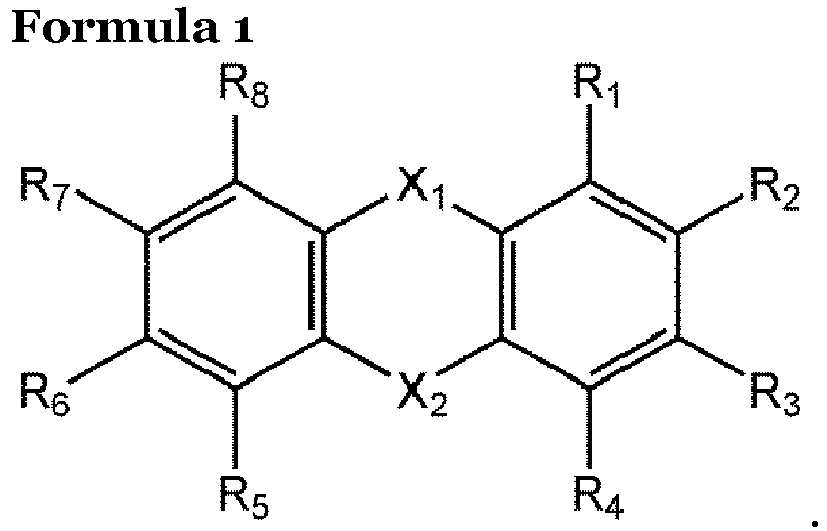
- In Formula 1, X1 and X2 may each independently be selected from O and S. In some embodiments, X1 and X2 may each be O, but embodiments of the present disclosure are not limited thereto.
- In Formula 1, R1 to R8 may each independently be selected from a group represented by Formula 2, hydrogen, deuterium, -F, -Cl, -Br, -I, a hydroxyl group, a cyano group, a nitro group, a carboxylic acid group or a salt thereof, a sulfonic acid group or a salt thereof, a phosphoric acid group or a salt thereof, a substituted or unsubstituted C1-C60 alkyl group, a substituted or unsubstituted C2-C60 alkenyl group, a substituted or unsubstituted C2-C60 alkynyl group, a substituted or unsubstituted C1-C60 alkoxy group, a substituted or unsubstituted C3-C10 cycloalkyl group, a substituted or unsubstituted C1-C10 heterocycloalkyl group, a substituted or unsubstituted C3-C10 cycloalkenyl group, a substituted or unsubstituted C1-C10 heterocycloalkenyl group, a substituted or unsubstituted C6-C60 aryl group, a substituted or unsubstituted C6-C60 aryloxy group, a substituted or unsubstituted C6-C60 arylthio group, a substituted or unsubstituted C1-C60 heteroaryl group, a substituted or unsubstituted monovalent non-aromatic condensed polycyclic group, a substituted or unsubstituted monovalent non-aromatic condensed heteropolycyclic group, and -Si(Q1)(Q2)(Q3).
- In Formula 1, one selected from R1 to R8 is a group represented by Formula 2:

- In Formula 2,
L1 may be selected from a substituted or unsubstituted C3-C10 cycloalkylene group, a substituted or unsubstituted C1-C10 heterocycloalkylene group, a substituted or unsubstituted C3-C10 cycloalkenylene group, a substituted or unsubstituted C1-C10 heterocycloalkenylene group, a substituted or unsubstituted C6-C60 arylene group, a substituted or unsubstituted C1-C60 heteroarylene group, a substituted or unsubstituted divalent non-aromatic condensed polycyclic group, and a substituted or unsubstituted divalent non-aromatic condensed heteropolycyclic group. - In some embodiments, in Formula 2, L1 may be selected from: a phenylene group, a pentalenylene group, an indenylene group, a naphthylene group, an azulenylene group, a heptalenylene group, an indacenylene group, an acenaphthylene group, a fluorenylene group, a spiro-fluorenylene group, a benzofluorenylene group, a dibenzofluorenylene group, a phenalenylene group, a phenanthrenylene group, an anthracenylene group, a fluoranthenylene group, a triphenylenylene group, a pyrenylene group, a chrysenylene group, a naphthacenylene group, a picenylene group, a perylenylene group, a pentaphenylene group, a hexacenylene group, a pentacenylene group, a rubicenylene group, a coronenylene group, an ovalenylene group, a pyrrolylene group, a thiophenylene group, a furanylene group, an imidazolylene group, a pyrazolylene group, a thiazolylene group, an isothiazolylene group, an oxazolylene group, an isoxazolylene group, a pyridinylene group, a pyrazinylene group, a pyrimidinylene group, a pyridazinylene group, an isoindolylene group, an indolylene group, an indazolylene group, a purinylene group, a quinolinylene group, an isoquinolinylene group, a benzoquinolinylene group, a phthalazinylene group, a naphthyridinylene group, a quinoxalinylene group, a quinazolinylene group, a cinnolinylene group, a carbazolylene group, a phenanthridinylene group, an acridinylene group, a phenanthrolinylene group, a phenazinylene group, a benzimidazolylene group, a benzofuranylene group, a benzothiophenylene group, an isobenzothiazolylene group, a benzoxazolylene group, an isobenzoxazolylene group, a triazolylene group, a tetrazolylene group, an oxadiazolylene group, a triazinylene group, a dibenzofuranylene group, a dibenzothiophenylene group, a benzocarbazolylene group, a dibenzocarbazolylene group, a thiadiazolylene group, an imidazopyridinylene group, and an imidazopyrimidinylene group; and
a phenylene group, a pentalenylene group, an indenylene group, a naphthylene group, an azulenylene group, a heptalenylene group, an indacenylene group, an acenaphthylene group, a fluorenylene group, a spiro-fluorenylene group, a benzofluorenylene group, a dibenzofluorenylene group, a phenalenylene group, a phenanthrenylene group, an anthracenylene group, a fluoranthenylene group, a triphenylenylene group, a pyrenylene group, a chrysenylene group, a naphthacenylene group, a picenylene group, a perylenylene group, a pentaphenylene group, a hexacenylene group, a pentacenylene group, a rubicenylene group, a coronenylene group, an ovalenylene group, a pyrrolylene group, a thiophenylene group, a furanylene group, an imidazolylene group, a pyrazolylene group, a thiazolylene group, an isothiazolylene group, an oxazolylene group, an isoxazolylene group, a pyridinylene group, a pyrazinylene group, a pyrimidinylene group, a pyridazinylene group, an isoindolylene group, an indolylene group, an indazolylene group, a purinylene group, a quinolinylene group, an isoquinolinylene group, a benzoquinolinylene group, a phthalazinylene group, a naphthyridinylene group, a quinoxalinylene group, a quinazolinylene group, a cinnolinylene group, a carbazolylene group, a phenanthridinylene group, an acridinylene group, a phenanthrolinylene group, a phenazinylene group, a benzimidazolylene group, a benzofuranylene group, a benzothiophenylene group, an isobenzothiazolylene group, a benzoxazolylene group, an isobenzoxazolylene group, a triazolylene group, a tetrazolylene group, an oxadiazolylene group, a triazinylene group, a dibenzofuranylene group, a dibenzothiophenylene group, a benzocarbazolylene group, a dibenzocarbazolylene group, a thiadiazolylene group, an imidazopyridinylene group, and an imidazopyrimidinylene group, each substituted with at least one (e.g. 1, 2, 3 or 4) groups selected from deuterium, -F, -Cl, -Br, -I, a hydroxyl group, a cyano group, a nitro group, an amino group, an amidino group, a hydrazine group, a hydrazone group, a carboxylic acid group or a salt thereof, a sulfonic acid group or a salt thereof, a phosphoric acid group or a salt thereof, a C1-C20 alkyl group, a C1-C20 alkoxy group, a cyclopentyl group, a cyclohexyl group, a cycloheptyl group, a cyclopentenyl group, a cyclohexenyl group, a phenyl group, a biphenyl group, a terphenyl group, a pentalenyl group, an indenyl group, a naphthyl group, an azulenyl group, a heptalenyl group, an indacenyl group, an acenaphthyl group, a fluorenyl group, a spiro-fluorenyl group, a benzofluorenyl group, a dibenzofluorenyl group, a phenalenyl group, a phenanthrenyl group, an anthracenyl group, a fluoranthenyl group, a triphenylenyl group, a pyrenyl group, a chrysenyl group, a naphthacenyl group, a picenyl group, a perylenyl group, a pentaphenyl group, a hexacenyl group, a pentacenyl group, a rubicenyl group, a coronenyl group, an ovalenyl group, a pyrrolyl group, a thiophenyl group, a furanyl group, an imidazolyl group, a pyrazolyl group, a thiazolyl group, an isothiazolyl group, an oxazolyl group, an isoxazolyl group, a pyridinyl group, a pyrazinyl group, a pyrimidinyl group, a pyridazinyl group, an isoindolyl group, an indolyl group, an indazolyl group, a purinyl group, a quinolinyl group, an isoquinolinyl group, a benzoquinolinyl group, a phthalazinyl group, a naphthyridinyl group, a quinoxalinyl group, a quinazolinyl group, a cinnolinyl group, a carbazolyl group, a phenanthridinyl group, an acridinyl group, a phenanthrolinyl group, a phenazinyl group, a benzimidazolyl group, a benzofuranyl group, a benzothiophenyl group, an isobenzothiazolyl group, a benzoxazolyl group, an isobenzoxazolyl group, a triazolyl group, a tetrazolyl group, an oxadiazolyl group, a triazinyl group, a dibenzofuranyl group, a dibenzothiophenyl group, a benzocarbazolyl group, a dibenzocarbazolyl group, a thiadiazolyl group, an imidazopyridinyl group, and an imidazopyrimidinyl group. - According to an embodiment, in Formula 2, L1 may be selected from the group represented by Formulae 3-1 to 3-41:
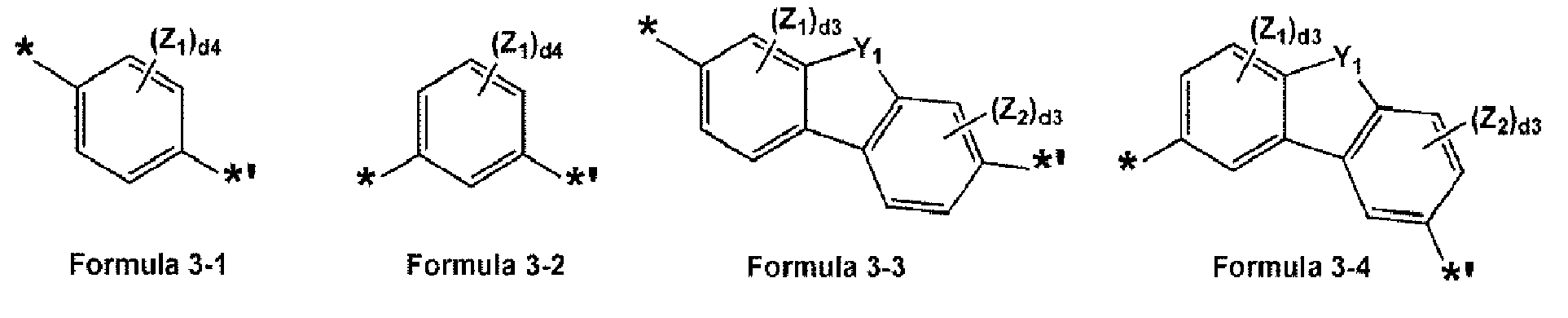


- In Formulae 3-1 to 3-41,
- Y1 may be selected from O, S, C(Z3)(Z4), N(Z5), and Si(Z6)(Z7), and
- Z1 to Z7 may each independently be selected from hydrogen, deuterium, -F, -Cl, -Br, -I, a hydroxyl group, a cyano group, a nitro group, an amino group, an amidino group, a hydrazine group, a hydrazone group, a carboxylic acid group or a salt thereof, a sulfonic acid group or a salt thereof, a phosphoric acid group or a salt thereof, a C1-C20 alkyl group, a C1-C20 alkoxy group, a phenyl group, a biphenyl group, a terphenyl group, a naphthyl group, a fluorenyl group, a spiro-fluorenyl group, a benzofluorenyl group, a dibenzofluorenyl group, a phenanthrenyl group, an anthracenyl group, a pyrenyl group, a chrysenyl group, a pyridinyl group, a pyrazinyl group, a pyrimidinyl group, a pyridazinyl group, a quinolinyl group, an isoquinolinyl group, a quinoxalinyl group, a quinazolinyl group, a carbazolyl group, a triazinyl group, and -S1(Q33)(Q34)(Q35),
- wherein Q33 to Q35 may each independently be selected from a C1-C10 alkyl group, a C1-C10 alkoxy group, a phenyl group, a biphenyl group, a terphenyl group, and a naphthyl group,
- d2 may be an integer selected from 1 and 2,
- d3 may be an integer selected from 1 to 3,
- d4 may be an integer selected from 1 to 4,
- d5 may be an integer selected from 1 to 5,
- d6 may be an integer selected from 1 to 6,
- d8 may be an integer selected from 1 to 8, and
- * and *' each indicate a binding site to an adjacent atom.
- In some embodiments, in Formula 2, L1 may be selected from:
- a phenylene group, a naphthylene group, a fluorenylene group, a benzofuranylene group, a pyridinylene group, a pyrimidinylene group, and a triazinylene group; and
- a phenylene group, a naphthylene group, a fluorenylene group, a benzofuranylene group, a pyridinylene group, a pyrimidinylene group, and a triazinylene group, each substituted with at least one (e.g. 1, 2, 3 or 4) groups selected from deuterium, -F, -Cl, -Br, -I, a hydroxyl group, a cyano group, a nitro group, an amino group, an amidino group, a hydrazine group, a hydrazone group, a carboxylic acid group or a salt thereof, a sulfonic acid group or a salt thereof, a phosphoric acid group or a salt thereof, a C1-C20 alkyl group, a C1-C20 alkoxy group, a phenyl group, a biphenyl group, a terphenyl group, a naphthyl group, a fluorenyl group, a spiro-fluorenyl group, a benzofluorenyl group, a dibenzofluorenyl group, a phenanthrenyl group, an anthracenyl group, a pyrenyl group, a chrysenyl group, a pyridinyl group, a pyrazinyl group, a pyrimidinyl group, a pyridazinyl group, a quinolinyl group, an isoquinolinyl group, a quinoxalinyl group, a quinazolinyl group, a carbazolyl group, and a triazinyl group, but embodiments of the present disclosure are not limited thereto.
- In Formula 2, a1 may be an integer selected from o to 3. a1 in Formula 2 indicates the number of L1 moieties. When a1 is 2 or more, each L1 moiety may be independently selected from the above groups. In some embodiments, when a1 is o, *-(L1)a1-*' may be a single bond. In some embodiments, a1 may be selected from o, 1, and 2, but embodiments of the present disclosure are not limited thereto.
- According to an embodiment, in Formula 2, *-(L1)a1-*' may be selected from a single bond and the group represented by Formulae 4-1 to Formula 4-36, but embodiments of the present disclosure are not limited thereto:


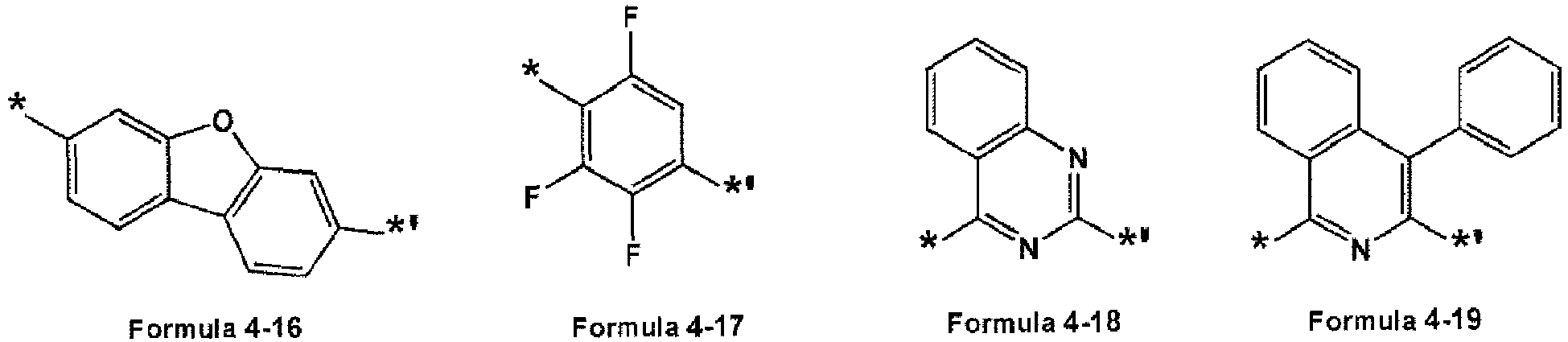


- In Formulae 4-1 to 4-36, *and *' each indicate a binding site to an adjacent atom. In Formula 2, Ar1 and Ar2 may each independently be selected from a substituted or unsubstituted C3-C10 cycloalkyl group, a substituted or unsubstituted C1-C10 heterocycloalkyl group, a substituted or unsubstituted C3-C10 cycloalkenyl group, a substituted or unsubstituted C1-C10 heterocycloalkenyl group, a substituted or unsubstituted C6-C60 aryl group, a substituted or unsubstituted C1-C60 heteroaryl group, a substituted or unsubstituted monovalent non-aromatic condensed polycyclic group, and a substituted or unsubstituted monovalent non-aromatic condensed heteropolycyclic group.
- In some embodiments, in Formula 2, Ar1 and Ar2 may each independently be selected from:
- a substituted or unsubstituted phenyl group, a substituted or unsubstituted biphenyl group, a substituted or unsubstituted terphenyl group, a substituted or unsubstituted pentalenyl group, a substituted or unsubstituted indenyl group, a substituted or unsubstituted naphthyl group, a substituted or unsubstituted azulenyl group, a substituted or unsubstituted heptalenyl group, a substituted or unsubstituted indacenyl group, a substituted or unsubstituted acenaphthyl group, a substituted or unsubstituted fluorenyl group, a substituted or unsubstituted spirofluorenyl group, a substituted or unsubstituted benzofluorenyl group, a substituted or unsubstituted dibenzofluorenyl group, a substituted or unsubstituted phenalenyl group, a substituted or unsubstituted phenanthrenyl group, a substituted or unsubstituted anthracenyl group, a substituted or unsubstituted fluoranthenyl group, a substituted or unsubstituted triphenylenyl group, a substituted or unsubstituted pyrenyl group, a substituted or unsubstituted chrysenyl group, a substituted or unsubstituted naphthacenyl group, a substituted or unsubstituted picenyl group, a substituted or unsubstituted perylenyl group, a substituted or unsubstituted pentaphenyl group, a substituted or unsubstituted hexacenyl group, a substituted or unsubstituted pentacenyl group, a substituted or unsubstituted rubicenyl group, a substituted or unsubstituted coronenyl group, a substituted or unsubstituted ovalenyl group, a substituted or unsubstituted pyrrolyl group, a substituted or unsubstituted thiophenyl group, a substituted or unsubstituted furanyl group, a substituted or unsubstituted imidazolyl group, a substituted or unsubstituted pyrazolyl group, a substituted or unsubstituted thiazolyl group, a substituted or unsubstituted isothiazolyl group, a substituted or unsubstituted oxazolyl group, a substituted or unsubstituted isoxazolyl group, a substituted or unsubstituted pyridinyl group, a substituted or unsubstituted pyrazinyl group, a substituted or unsubstituted pyrimidinyl group, a substituted or unsubstituted pyridazinyl group, a substituted or unsubstituted isoindolyl group, a substituted or unsubstituted indolyl group, a substituted or unsubstituted indazolyl group, a substituted or unsubstituted purinyl group, a substituted or unsubstituted quinolinyl group, a substituted or unsubstituted isoquinolinyl group, a substituted or unsubstituted benzoquinolinyl group, a substituted or unsubstituted phthalazinyl group, a substituted or unsubstituted naphthyridinyl group, a substituted or unsubstituted quinoxalinyl group, a substituted or unsubstituted quinazolinyl group, a substituted or unsubstituted cinnolinyl group, a substituted or unsubstituted carbazolyl group, a substituted or unsubstituted phenanthridinyl group, a substituted or unsubstituted acridinyl group, a substituted or unsubstituted phenanthrolinyl group, a substituted or unsubstituted phenazinyl group, a substituted or unsubstituted benzimidazolyl group, a substituted or unsubstituted benzofuranyl group, a substituted or unsubstituted benzothiophenyl group, a substituted or unsubstituted isobenzothiazolyl group, a substituted or unsubstituted benzoxazolyl group, a substituted or unsubstituted isobenzoxazolyl group, a substituted or unsubstituted triazolyl group, a substituted or unsubstituted tetrazolyl group, a substituted or unsubstituted oxadiazolyl group, a substituted or unsubstituted triazinyl group, a substituted or unsubstituted benzocarbazolyl group, a substituted or unsubstituted dibenzocarbazolyl group, a substituted or unsubstituted thiadiazolyl group, a substituted or unsubstituted imidazopyridinyl group, a substituted or unsubstituted imidazopyrimidinyl group, a substituted or unsubstituted benzoxanthenyl group, a substituted or unsubstituted dibenzodioxinyl group, and -Si(Q1)(Q2)(Q3), and
- at least one substituent of the substituted phenyl group, substituted biphenyl group, substituted terphenyl group, substituted pentalenyl group, substituted indenyl group, substituted naphthyl group, substituted azulenyl group, substituted heptalenyl group, substituted indacenyl group, substituted acenaphthyl group, substituted fluorenyl group, substituted spiro-fluorenyl group, substituted benzofluorenyl group, substituted dibenzofluorenyl group, substituted phenalenyl group, substituted phenanthrenyl group, substituted anthracenyl group, substituted fluoranthenyl group, substituted triphenylenyl group, substituted pyrenyl group, substituted chrysenyl group, substituted naphthacenyl group, substituted picenyl group, substituted perylenyl group, substituted pentaphenyl group, substituted hexacenyl group, substituted pentacenyl group, substituted rubicenyl group, substituted coronenyl group, substituted ovalenyl group, substituted pyrrolyl group, substituted thiophenyl group, substituted furanyl group, substituted imidazolyl group, substituted pyrazolyl group, substituted thiazolyl group, substituted isothiazolyl group, substituted oxazolyl group, substituted isoxazolyl group, substituted pyridinyl group, substituted pyrazinyl group, substituted pyrimidinyl group, substituted pyridazinyl group, substituted isoindolyl group, substituted indolyl group, substituted indazolyl group, substituted purinyl group, substituted quinolinyl group, substituted isoquinolinyl group, substituted benzoquinolinyl group, substituted phthalazinyl group, substituted naphthyridinyl group, substituted quinoxalinyl group, substituted quinazolinyl group, substituted cinnolinyl group, substituted carbazolyl group, substituted phenanthridinyl group, substituted acridinyl group, substituted phenanthrolinyl group, substituted phenazinyl group, substituted benzimidazolyl group, substituted benzofuranyl group, substituted benzothiophenyl group, substituted isobenzothiazolyl group, substituted benzoxazolyl group, substituted isobenzoxazolyl group, substituted triazolyl group, substituted tetrazolyl group, substituted oxadiazolyl group, substituted triazinyl group, substituted benzocarbazolyl group, substituted dibenzocarbazolyl group, substituted thiadiazolyl group, substituted imidazopyridinyl group, substituted imidazopyrimidinyl group, substituted benzoxanthenyl group, and substituted dibenzodioxinyl group may be selected from:
- deuterium, -F, -Cl, -Br, -I, a hydroxyl group, a cyano group, a nitro group, an amino group, an amidino group, a hydrazine group, a hydrazone group, a carboxylic acid group or a salt thereof,
- a sulfonic acid group or a salt thereof, a phosphoric acid group or a salt thereof, a C1-C20 alkyl group, and a C1-C20 alkoxy group;
- a C1-C20 alkyl group and a C1-C20 alkoxy group, each substituted with at least one (e.g. 1, 2, 3 or 4) groups selected from deuterium, -F, -Cl, -Br, -I, a hydroxyl group, a cyano group, a nitro group, an amino group, an amidino group, a hydrazine group, a hydrazone group, a carboxylic acid group or a salt thereof, a sulfonic acid group or a salt thereof, and a phosphoric acid group or a salt thereof;
- a phenyl group, a biphenyl group, a terphenyl group, a naphthyl group, a fluorenyl group, a spiro-fluorenyl group, a benzofluorenyl group, a dibenzofluorenyl group, a phenanthrenyl group, an anthracenyl group, a pyrenyl group, a chrysenyl group, a carbazolyl group, a benzocarbazolyl group, and a dibenzocarbazolyl group;
a phenyl group, a naphthyl group, a pyridinyl group, a fluorenyl group, a spiro-fluorenyl group, a benzofluorenyl group, a dibenzofluorenyl group, a phenanthrenyl group, an anthracenyl group, a pyrenyl group, a chrysenyl group, a carbazolyl group, a benzocarbazolyl group, and a dibenzocarbazolyl group, each substituted with at least one selected from deuterium, -F, -Cl, - Br, -I, a hydroxyl group, a cyano group, a nitro group, an amino group, an amidino group, a hydrazine group, a hydrazone group, a carboxylic acid group or a salt thereof, a sulfonic acid group or a salt thereof, a phosphoric acid group or a salt thereof, a C1-C20 alkyl group, a C1-C20 alkoxy group, a phenyl group, a naphthyl group, and a pyridinyl group; and -
-Si(Q31)(Q32)(Q33),
wherein Q31 to Q33 may each independently be selected from hydrogen, deuterium, - F, -Cl, -Br, -I, a hydroxyl group, a cyano group, a nitro group, an amino group, an amidino group, a hydrazine group, a hydrazone group, a carboxylic acid group or a salt thereof, a sulfonic acid group or a salt thereof, a phosphoric acid group or a salt thereof, a C1-C20 alkyl group, a C1-C20 alkoxy group, a phenyl group, a biphenyl group, a terphenyl group, a naphthyl group, a fluorenyl group, a spiro-fluorenyl group, a benzofluorenyl group, a dibenzofluorenyl group, a phenanthrenyl group, an anthracenyl group, a pyrenyl group, a chrysenyl group, and a carbazolyl group. - In some embodiments, in Formula 2, Ar1 and Ar2 may each independently be selected from the group represented by Formulae 5-1 to 5-79:








- In Formulae 5-1 to 5-79,
- Y31 and Y32 may each independently be selected from O, S, C(Z33)(Z34), N(Z35), and S1(Z36) (Z37),
- Z31 to Z37 may each independently be selected from hydrogen, deuterium, -F, -Cl, - Br, -I, a hydroxyl group, a cyano group, a nitro group, an amino group, an amidino group, a hydrazine group, a hydrazone group, a carboxylic acid group or a salt thereof, a sulfonic acid group or a salt thereof, a phosphoric acid group or a salt thereof, a C1-C20 alkyl group, and a C1-C20 alkoxy group;
- a C1-C20 alkyl group and a C1-C20 alkoxy group, each substituted with at least one selected from deuterium, -F, -Cl, -Br, -I, a hydroxyl group, a cyano group, a nitro group, an amino group, an amidino group, a hydrazine group, a hydrazone group, a carboxylic acid group or a salt thereof, a sulfonic acid group or a salt thereof, and a phosphoric acid group or a salt thereof;
- a phenyl group, a biphenyl group, a terphenyl group, a naphthyl group, a fluorenyl group, a spiro-fluorenyl group, a benzofluorenyl group, a dibenzofluorenyl group, a phenanthrenyl group, an anthracenyl group, a pyrenyl group, a chrysenyl group, a carbazolyl group, a benzocarbazolyl group, and a dibenzocarbazolyl group;
- a phenyl group, a biphenyl group, a terphenyl group, a naphthyl group, a pyridinyl group, a fluorenyl group, a spiro-fluorenyl group, a benzofluorenyl group, a dibenzofluorenyl group, a phenanthrenyl group, an anthracenyl group, a pyrenyl group, a chrysenyl group, a carbazolyl group, a benzocarbazolyl group, and a dibenzocarbazolyl group, each substituted with at least one selected from deuterium, -F, -Cl, -Br, -I, a hydroxyl group, a cyano group, a nitro group, an amino group, an amidino group, a hydrazine group, a hydrazone group, a carboxylic acid group or a salt thereof, a sulfonic acid group or a salt thereof, a phosphoric acid group or a salt thereof, a C1-C20 alkyl group, a C1-C20 alkoxy group, a phenyl group, a biphenyl group, a terphenyl group, a naphthyl group, and a pyridinyl group; and
-
-Si(Q31)(Q32)(Q33),
and - Z33 and Z34 may be optionally linked (e.g., coupled) to each other to form a saturated or unsaturated 3 to 20 membered carbocyclic or heterocyclic ring (e.g. a spirofluorenyl group, the spirocarbon being the atom to which Z33 and Z34 are attached),
- wherein Q31 to Q33 may each independently be selected from hydrogen, deuterium, - F, -Cl, -Br, -I, a hydroxyl group, a cyano group, a nitro group, an amino group, an amidino group, a hydrazine group, a hydrazone group, a carboxylic acid group or a salt thereof, a sulfonic acid group or a salt thereof, a phosphoric acid group or a salt thereof, a C1-C20 alkyl group, a C1-C20 alkoxy group, a phenyl group, a biphenyl group, a terphenyl group, a naphthyl group, a fluorenyl group, a spiro-fluorenyl group, a benzofluorenyl group, a dibenzofluorenyl group, a phenanthrenyl group, an anthracenyl group, a pyrenyl group, a chrysenyl group, and a carbazolyl group,
- e2 may be an integer selected from 1 and 2,
- e3 may be an integer selected from 1 to 3,
- e4 may be an integer selected from 1 to 4,
- e5 may be an integer selected from 1 to 5,
- e6 may be an integer selected from 1 to 6,
- e7 may be an integer selected from 1 to 7,
- e9 may be an integer selected from 1 to 9, and
- indicates a binding site to an adjacent atom.
- In some embodiments, in Formula 2, Ar1 and Ar2 may each independently be selected from the group represented by Formulae 6-1 to 6-54:



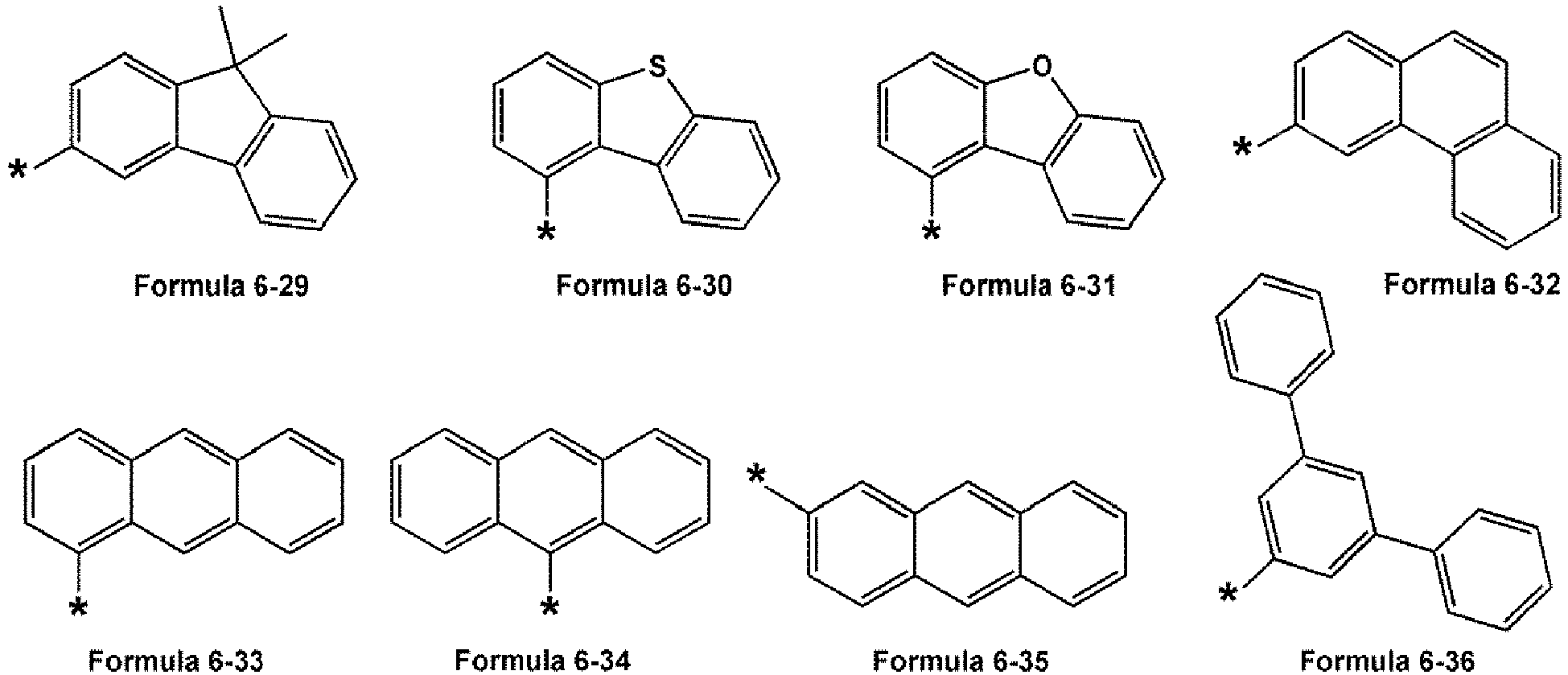
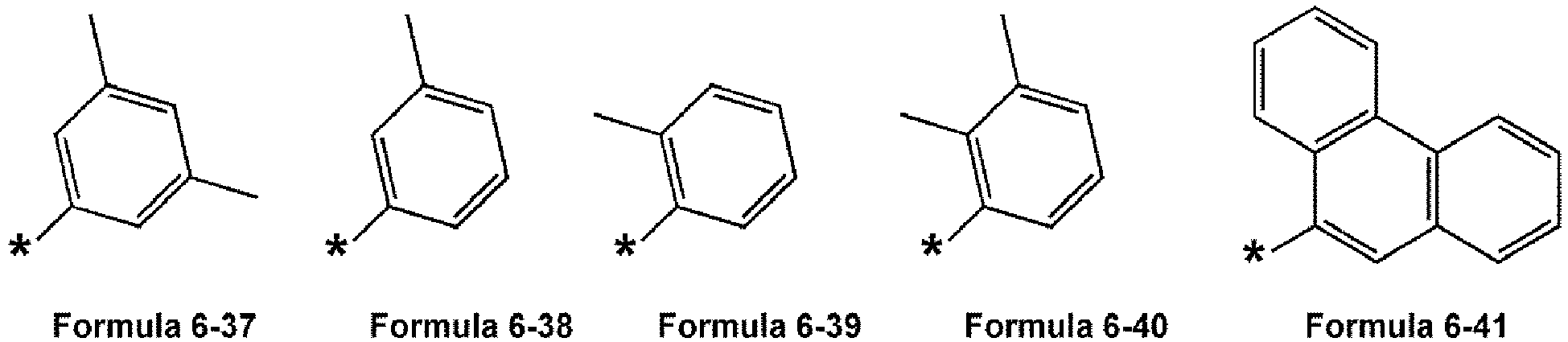


- In Formulae 6-1 to 6-54, indicates a binding site to an adjacent atom.
- In Formula 1, R1 to R8 may each independently be selected from:
- a group represented by Formula 2, hydrogen, deuterium, -F, -Cl, -Br, -I, a hydroxyl group, a cyano group, a nitro group, a carboxylic acid group or a salt thereof, a sulfonic acid group or a salt thereof, a phosphoric acid group or a salt thereof, a C1-C20 alkyl group, and a C1-C20 alkoxy group;
- a phenyl group, a biphenyl group, a terphenyl group, a naphthyl group, a fluorenyl group, a spiro-fluorenyl group, a benzofluorenyl group, a dibenzofluorenyl group, a phenanthrenyl group, an anthracenyl group, a triphenylenyl group, a pyrenyl group, a chrysenyl group, a pyrrolyl group, a thiophenyl group, a furanyl group, an imidazolyl group, a pyrazolyl group, a thiazolyl group, an isothiazolyl group, an oxazolyl group, an isoxazolyl group, a pyridinyl group, a pyrazinyl group, a pyrimidinyl group, a pyridazinyl group, a quinolinyl group, an isoquinolinyl group, a benzoquinolinyl group, a quinoxalinyl group, a quinazolinyl group, a carbazolyl group, a benzimidazolyl group, a benzofuranyl group, a benzothiophenyl group, an isobenzothiazolyl group, a benzoxazolyl group, an isobenzoxazolyl group, an oxadiazolyl group, a triazinyl group, a dibenzofuranyl group, a dibenzothiophenyl group, an imidazopyridinyl group, and an imidazopyrimidinyl group;
- a phenyl group, a biphenyl group, a terphenyl group, a naphthyl group, a fluorenyl group, a spiro-fluorenyl group, a benzofluorenyl group, a dibenzofluorenyl group, a phenanthrenyl group, an anthracenyl group, a triphenylenyl group, a pyrenyl group, a chrysenyl group, a pyrrolyl group, a thiophenyl group, a furanyl group, an imidazolyl group, a pyrazolyl group, a thiazolyl group, an isothiazolyl group, an oxazolyl group, an isoxazolyl group, a pyridinyl group, a pyrazinyl group, a pyrimidinyl group, a pyridazinyl group, a quinolinyl group, an isoquinolinyl group, a benzoquinolinyl group, a quinoxalinyl group, a quinazolinyl group, a carbazolyl group, a benzimidazolyl group, a benzofuranyl group, a benzothiophenyl group, an isobenzothiazolyl group, a benzoxazolyl group, an isobenzoxazolyl group, an oxadiazolyl group, a triazinyl group, a dibenzofuranyl group, a dibenzothiophenyl group, an imidazopyridinyl group, and an imidazopyrimidinyl group, each substituted with at least one (e.g. 1, 2, 3, or 4) selected from deuterium, -F, -Cl, -Br, -I, a hydroxyl group, a cyano group, a nitro group, an amino group, an amidino group, a hydrazine group, a hydrazone group, a carboxylic acid group or a salt thereof, a sulfonic acid group or a salt thereof, a phosphoric acid group or a salt thereof, a C1-C10 alkyl group, a C1-C10 alkoxy group, a phenyl group, a biphenyl group, a terphenyl group, a naphthyl group, a fluorenyl group, a spiro-fluorenyl group, a benzofluorenyl group, a dibenzofluorenyl group, a phenanthrenyl group, an anthracenyl group, a triphenylenyl group, a pyrenyl group, a chrysenyl group, a pyrrolyl group, a thiophenyl group, a furanyl group, an imidazolyl group, a pyrazolyl group, a thiazolyl group, an isothiazolyl group, an oxazolyl group, an isoxazolyl group, a pyridinyl group, a pyrazinyl group, a pyrimidinyl group, a pyridazinyl group, a quinolinyl group, an isoquinolinyl group, a benzoquinolinyl group, a quinoxalinyl group, a quinazolinyl group, a carbazolyl group, a benzimidazolyl group, a benzofuranyl group, a benzothiophenyl group, an isobenzothiazolyl group, a benzoxazolyl group, an isobenzoxazolyl group, an oxadiazolyl group, a triazinyl group, a dibenzofuranyl group, a dibenzothiophenyl group, an imidazopyridinyl group, an imidazopyrimidinyl group, and -Si(Q31)(Q32)(Q33); and
-
-Si(Q1)(Q2)(Q3),
wherein Q1 to Q3 and Q31 to Q33 may each independently be selected from a C1-C10 alkyl group, a C1-C10 alkoxy group, a phenyl group, a biphenyl group, a terphenyl group, and a naphthyl group. - In some embodiments, in Formula 1, R1 to R8 may each independently be selected from:
- a group represented by Formula 2, hydrogen, deuterium, -F, -Cl, -Br, -I, a hydroxyl group, a cyano group, a nitro group, a carboxylic acid group or a salt thereof, a sulfonic acid group or a salt thereof, a phosphoric acid group or a salt thereof, a C1-C10 alkyl group, and a C1-C10 alkoxy group;
- a phenyl group, a biphenyl group, a terphenyl group, a naphthyl group, a pyridinyl group, a pyrimidinyl group, and a triazinyl group;
- a phenyl group, a biphenyl group, a terphenyl group, a naphthyl group, a pyridinyl group, a pyrimidinyl group, and a triazinyl group, each substituted with at least one (e.g. 1, 2, 3 or 4) groups selected from deuterium, -F, -Cl, -Br, -I, a hydroxyl group, a cyano group, a nitro group, an amino group, an amidino group, a hydrazine group, a hydrazone group, a carboxylic acid group or a salt thereof, a sulfonic acid group or a salt thereof, a phosphoric acid group or a salt thereof, a C1-C10 alkyl group, a C1-C10 alkoxy group, a phenyl group, a biphenyl group, a terphenyl group, a naphthyl group, a pyridinyl group, a pyrimidinyl group, a triazinyl group, and -Si(Q31)(Q30)(Q33); and
-
-Si(Q1)(Q2)(Q3),
wherein Q1 to Q3 and Q31 to Q33 may each independently be selected from a C1-C10 alkyl group, a C1-C10 alkoxy group, a phenyl group, a biphenyl group, a terphenyl group, and a naphthyl group, but embodiments of the present disclosure are not limited thereto. - In Formula 1, one selected from R1 to R8 may be a group represented by Formula 2. In some embodiments, in Formula 1, one selected from R3 and R4 may be a group represented by Formula 2.
- In some embodiments, the condensed-cyclic compound represented by Formula 1 may be further represented by one of Formulae 1A and 1B:


- In Formulae 1A and 1B, X1, X2, L1, a1, Ar1, Ar2, and R1 to R8 may each be the same as described earlier herein.
- In some embodiments, in Formulae 1A and 1B,
X1 and X2 may each independently be selected from O and S,
L1 may be selected from the group represented by Formulae 3-1 to 3-41,
a1 may be selected from o, 1, and 2,
Ar1 and Ar2 may each independently be selected from the group represented by Formulae 5-1 to 5-79, and
R1 to R8 may each independently be selected from: - hydrogen, deuterium, -F, -Cl, -Br, -I, a hydroxyl group, a cyano group, a nitro group, a carboxylic acid group or a salt thereof, a sulfonic acid group or a salt thereof, a phosphoric acid group or a salt thereof, a C1-C10 alkyl group, and a C1-C10 alkoxy group;
- a phenyl group, a biphenyl group, a terphenyl group, a naphthyl group, a pyridinyl group, a pyrimidinyl group, and a triazinyl group;
- a phenyl group, a biphenyl group, a terphenyl group, a naphthyl group, a pyridinyl group, a pyrimidinyl group, and a triazinyl group, each substituted with at least one (e.g. 1, 2, 3 or 4) groups selected from deuterium, -F, -Cl, -Br, -I, a hydroxyl group, a cyano group, a nitro group, an amino group, an amidino group, a hydrazine group, a hydrazone group, a carboxylic acid group or a salt thereof, a sulfonic acid group or a salt thereof, a phosphoric acid group or a salt thereof, a C1-C10 alkyl group, a C1-C10 alkoxy group, a phenyl group, a naphthyl group, a pyridinyl group, a pyrimidinyl group, a triazinyl group, and -Si(Q31)(Q32)(Q33); and
-
-Si(Q1)(Q2)(Q3),
wherein Q1 to Q3 and Q31 to Q33 may each independently be selected from a C1-C10 alkyl group, a C1-C10 alkoxy group, a phenyl group, a biphenyl group, a terphenyl group, and a naphthyl group, but embodiments of the present disclosure are not limited thereto. - In some embodiments, in Formulae 1A and 1B,
X1 and X2 may be O,
R1, R2 and R4 to R8 in formula 1A are hydrogen,
R1 to R3 and R5 to R8 in formula 1B are hydrogen,
*-(L1)a1-*' may be selected from a single bond and the group represented by Formulae 4-1 to 4-36, and
Ar1 and Ar2 may each independently be selected from the group represented by Formulae 6-1 to 6-54. - In some embodiments, the condensed-cyclic compound represented by Formula 1 may be represented by one of Compounds 1 to 117, but embodiments of the present disclosure are not limited thereto:


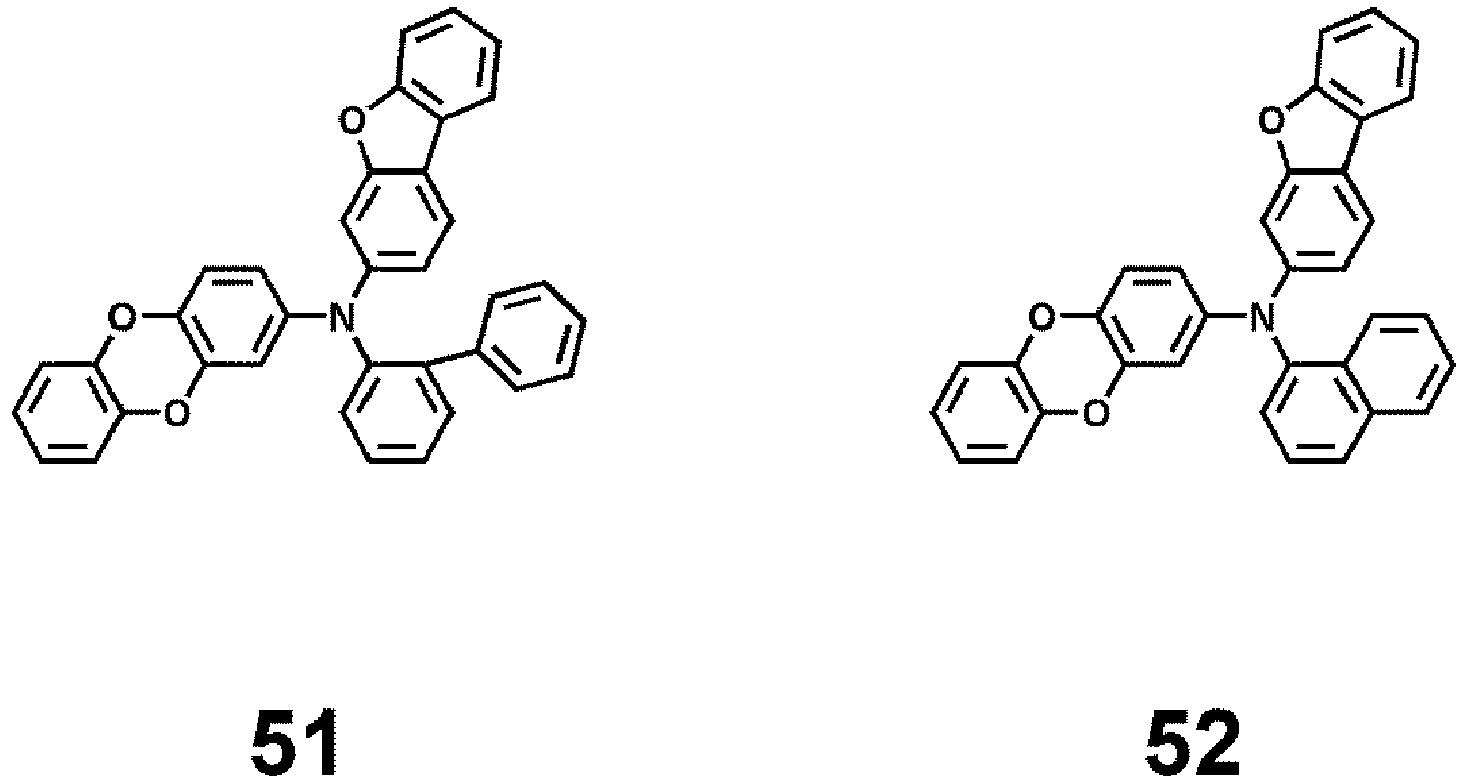


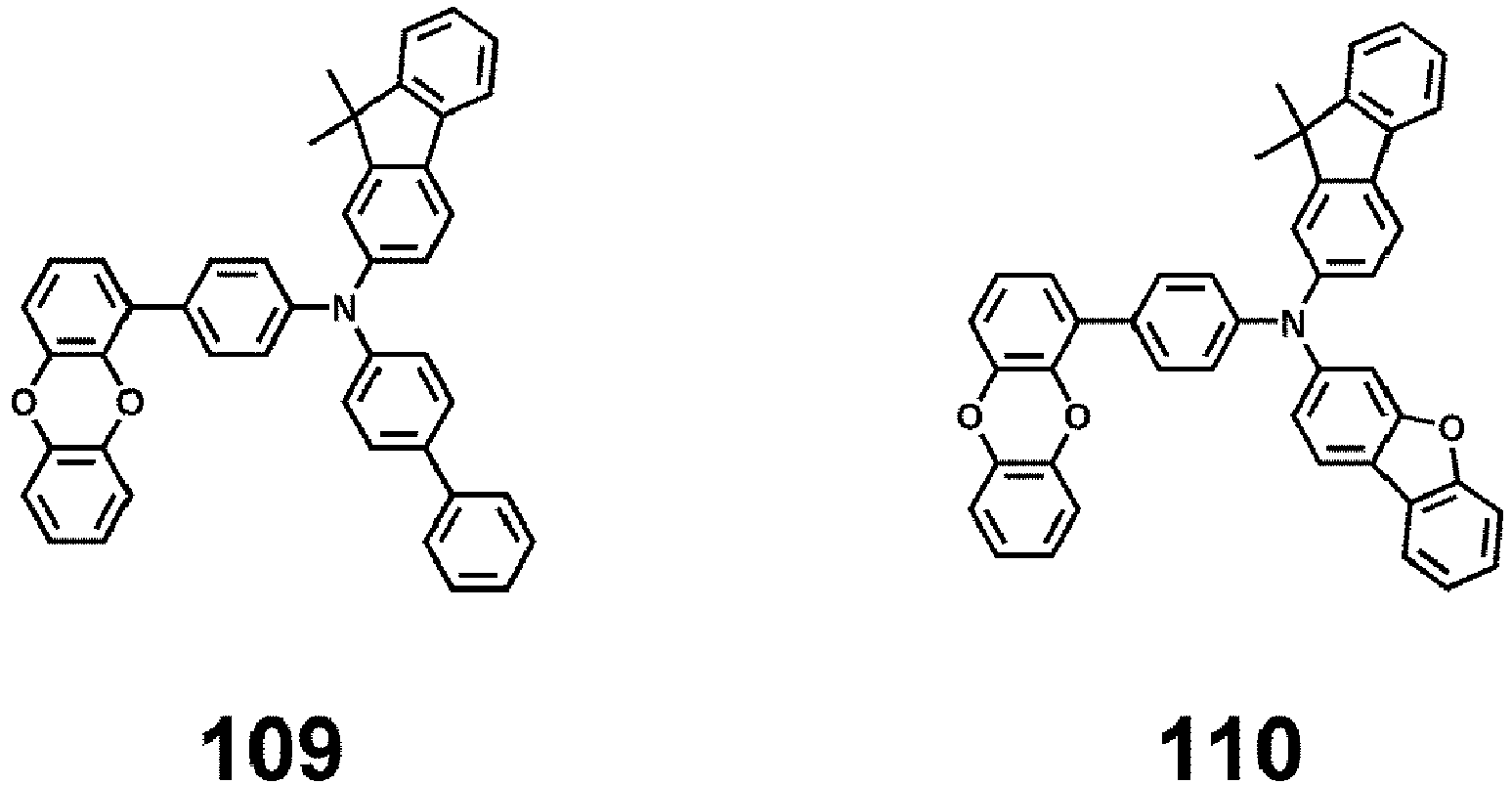


- Since the condensed-cyclic compound represented by Formula 1 compises a condensed ring core represented by Formula 1', the condensed-cyclic compound represented by Formula 1 may have a high glass transition temperature (Tg) and/or a high melting point. Accordingly, an organic light-emitting device may have improved heat resistance to Joule heating generated in an organic layer of the organic light-emitting device and between the organic layer and an electrode, and/or an improved resistance to high temperatures. Therefore an organic light-emitting device including the condensed-cyclic compound represented by Formula 1 may retain high durability during storing and/or driving.


- In some embodiments, in the condensed-cyclic compound represented by Formula 1, X1 and X2 may each independently be selected from O and S. The electron donating abilities of dibenzo-dioxane may facilitate hole injection and transfer thereby provide excellent hole transfer characteristics. Further, in the condensed-cyclic compound represented by Formula 1, at least one selected from R1 to R8 is a monoamine-based compound represented by Formula 2. Thus the condensed-cyclic compound represented by Formula 1 may act as a hole transport material having a suitable energy level and band-gap. Accordingly, an organic light-emitting device including the condensed-cyclic compound may have improved efficiency and/or a long lifespan.
- The condensed-cyclic compound represented by Formula 1 may be synthesized using a suitable organic synthetic method. Methods of synthesizing the condensed-cyclic compound should be readily apparent to those of ordinary skill in the art by referring to examples used herein.
- At least one of the condensed-cyclic compounds represented by Formula 1 may be present between a pair of electrodes in an organic light-emitting device. For example, the condensed-cyclic compound may be present in a hole transport region (e.g., in a hole transport layer). In some embodiments, the condensed-cyclic compound may be present in an emission layer. Accordingly, aspects of embodiments of the present disclosure provide an organic light-emitting device comprising a first electrode; a second electrode facing the first electrode; and an organic layer between the first electrode and the second electrode that may comprise an emission layer; wherein the organic layer comprises at least one condensed-cyclic compound represented by Formula 1.
- As used herein, the expression "the (organic layer) comprises at least one condensed-cyclic compound" may refer to an (organic layer) comprising only one of the condensed-cyclic compounds represented by Formula 1, or may refer to may refer to an (organic layer) comprising two different condensed-cyclic compounds represented by Formula 1.
- For example, the organic layer may comprise only Compound 1 as the condensed-cyclic compound. In this regard, Compound 1 may be present in the hole transport layer of the organic light-emitting device. In some embodiments, the organic layer may comprise Compound 1 and Compound 2 as condensed-cyclic compounds. In these embodiments, Compound 1 and Compound 2 may be in the same layer (for example, both Compound 1 and Compound 2 may be in a hole transport layer), and/or in different layers (for example, Compound 1 may be in a hole transport layer and Compound 2 may be in an emission layer).
- The organic layer may comprise i) a hole transport region between the first electrode (anode) and the emission layer, comprising at least one selected from a hole injection layer, a hole transport layer, a buffer layer, and an electron blocking layer and ii) an electron transport region between the emission layer and the second electrode (cathode) that comprises at least one selected from a hole blocking layer, an electron transport layer, and an electron injection layer. At least one selected from the hole transport region and the emission layer may comprise at least one condensed-cyclic compound represented by Formula 1. In some embodiments, the hole transport region may comprise a hole transport layer, wherein the hole transport layer may comprise the at least one condensed-cyclic compound represented by Formula 1.
- As used herein, the term "organic layer" may refer to a single layer and/or a plurality of layers between the first electrode and the second electrode in an organic light-emitting device. The "organic layer" may include other materials besides an organic material.
- The drawing illustrates a schematic view of an organic light-emitting
device 10, according to an embodiment of the present disclosure. The organic light-emittingdevice 10 may include afirst electrode 10, anorganic layer 150, and asecond electrode 190. - Hereinafter, a structure and a method of manufacturing the organic light-emitting device according to an embodiment of the present disclosure will each be described with reference to the drawing.
- Referring to the drawing, a substrate may be under the
first electrode 110 or on thesecond electrode 190. The substrate may be a glass substrate and/or a transparent plastic substrate, each with excellent mechanical strength, thermal stability, transparency, surface smoothness, ease of handling, and/or water resistance. - The
first electrode 110 may be formed by depositing and/or sputtering a material for forming the first electrode on the substrate. When thefirst electrode 110 is an anode, the material for the first electrode may be selected from materials with a high work function that facilitate hole injection. Thefirst electrode 110 may be a reflective electrode, a semi-transmissive electrode, and/or a transmissive electrode. The material for thefirst electrode 110 may be a transparent and highly conductive material. Non-limiting examples of such a material may include indium tin oxide (ITO), indium zinc oxide (IZO), tin oxide (SnO2), and zinc oxide (ZnO). When thefirst electrode 110 is a semi-transmissive electrode and/or a reflective electrode, at least one selected from magnesium (Mg), aluminum (Al), aluminum-lithium (Al-Li), calcium (Ca), magnesium-indium (Mg-In), and/or magnesium-silver (Mg-Ag) may be used as a material for forming the first electrode. - The
first electrode 110 may have a single-layer structure, and/or a multi-layer structure including a plurality of layers. For example, thefirst electrode 110 may have a triple-layer structure of ITO/Ag/ITO, but embodiments of the present disclosure are not limited thereto. - The
organic layer 150 may be on thefirst electrode 110. Theorganic layer 150 may comprise an emission layer. - The
organic layer 150 may further comprise a hole transport region between the first electrode and the emission layer and/or an electron transport region between the emission layer and the second electrode. - The hole transport region may comprise at least one selected from a hole injection layer (HIL), a hole transport layer (HTL), a buffer layer, and an electron blocking layer (EBL), and the electron transport region may comprise at least one selected from a hole blocking layer (HBL), an electron transport layer (ETL), and an electron injection layer (EIL), but embodiments of the present disclosure are not limited thereto.
- The hole transport region may have a single-layered structure including a single material, a single-layered structure including a plurality of different materials, and/or a multilayered structure having a plurality of layers including a plurality of different materials.
- For example, the hole transport region may have a single-layered structure formed of a plurality of different materials, a structure of hole injection layer/hole transport layer, a structure of hole injection layer/hole transport layer/buffer layer, a structure of hole injection layer/buffer layer, a structure of hole transport layer/buffer layer, and/or a structure of hole injection layer/hole transport layer/electron blocking layer, wherein layers of each structure are sequentially stacked on the
first electrode 110 in the stated order, but embodiments of the present disclosure are not limited thereto. - When the hole transport region comprises a hole injection layer, the hole injection layer may be formed on the
first electrode 110 using one or more suitable methods, for example, vacuum deposition, spin coating, casting, a Langmuir-Blodgett (LB) method, ink-jet printing, laser printing, and/or laser-induced thermal imaging (LITI). - When the hole injection layer is formed by vacuum deposition, the vacuum deposition may be performed at a temperature of about 100°C to about 500°C, at a vacuum degree of about 10-8 Torr to about 10-3 Torr, and at a vacuum deposition rate of about 0.01 Angstroms per second (Å/sec) to about 100 Å/sec, depending on the compound for forming the hole injection layer, and the structure of the hole injection layer to be formed.
- When a hole injection layer is formed by spin coating, the spin coating may be performed at a coating rate of about 2,000 revolutions per minute (rpm) to about 5,000 rpm, and at a temperature of about 80°C to 200°C, depending on the compound for forming the hole injection layer and the structure of a hole injection layer to be formed.
- When the hole transport region comprises a hole transport layer, the hole transport layer may be formed on the
first electrode 110 and/or on the hole injection layer using one or more suitable methods, such as vacuum deposition, spin coating, casting, an LB method, ink-jet printing, laser printing, and/or LITI. When the hole transport layer is formed by vacuum deposition and/or spin coating, the conditions for vacuum deposition and coating may be similar to the vacuum deposition and coating conditions used for forming the hole injection layer. - The hole transport region may comprise the condensed-cyclic compound represented by Formula 1. In some embodiments, the hole transport region may comprise a hole transport layer, wherein the hole transport layer may comprise the condensed-cyclic compound represented by Formula 1.
- In some embodiments, the hole transport region may comprise at least one selected from m-MTDATA, TDATA, 2-TNATA, NPB, β-NPB, TPD, a spiro-TPD, a spiro-NPB, methylated-NPB, TAPC, HMTPD, 4A'A"-tris(N-carbazolyl)triphenylamine (TCTA), polyaniline/dodecylbenzene sulfonic acid (PANI/DBSA), poly(3,4-ethylene dioxythiophene)/poly(4-styrenesulfonate) (PEDOT/PSS), polyaniline/camphor sulfonic acid (PANI/CSA), (polyaniline)/poly(4-styrenesulfonate) (PANI/PSS), a compound represented by Formula 201 below, and a compound represented by Formula 202:


- In Formulae 201 and 202,
- L201 to L205 may each independently be selected from the same groups described herein in connection with L1,
- xa1 to xa4 may each independently be selected from o, 1, 2, and 3,
- xa5 may be selected from 1, 2, 3, 4, and 5, and
- R201 to R204 may each independently be selected from a substituted or unsubstituted C3-C10 cycloalkyl group, a substituted or unsubstituted C1-C10 heterocycloalkyl group, a substituted or unsubstituted C3-C10cycloalkenyl group, a substituted or unsubstituted C1-C10 heterocycloalkenyl group, a substituted or unsubstituted C6-C60 aryl group, a substituted or unsubstituted C6-C60 aryloxy group, a substituted or unsubstituted C6-C60 arylthio group, a substituted or unsubstituted C1-C60 heteroaryl group, a substituted or unsubstituted monovalent non-aromatic condensed polycyclic group, and a substituted or unsubstituted monovalent non-aromatic condensed heteropolycyclic group.
- In some embodiments, in Formulae 201 and 202,
- L201 to L205 may each independently be selected from:
- a phenylene group, a naphthylene group, a fluorenylene group, a spiro-fluorenylene group, a benzofluorene group, a dibenzofluorene group, a phenanthrenylene group, an anthracenylene group, a pyrenylene group, a chrysenylene group, a pyridinylene group, a pyrazinylene group, a pyrimidinylene group, a pyridazinylene group, a quinolinylene group, an isoquinolinylene group, a quinoxalinylene group, a quinazolinylene group, a carbazolylene group, and a triazinylene group; and
- a phenylene group, a naphthylene group, a fluorenylene group, a spiro-fluorenylene group, a benzofluorenylene group, a dibenzofluorenylene group, a phenanthrenylene group, an anthracenylene group, a pyrenylene group, a chrysenylene group, a pyridinylene group, a pyrazinylene group, a pyrimidinylene group, a pyridazinylene group, a quinolinylene group, an isoquinolinylene group, a quinoxalinylene group, a quinazolinylene group, a carbazolylene group, and a triazinylene group, each substituted with at least one (e.g. 1, 2, 3 or 4) groups selected from deuterium, -F, -Cl, -Br, -I, a hydroxyl group, a cyano group, a nitro group, an amino group, an amidino group, a hydrazine group, a hydrazone group, a carboxylic acid group or a salt thereof, a sulfonic acid group or a salt thereof, a phosphoric acid group or a salt thereof, a C1-C20 alkyl group, a C1-C20 alkoxy group, a phenyl group, a biphenyl group, a terphenyl group, a naphthyl group, a fluorenyl group, a spiro-fluorenyl group, a benzofluorenyl group, a dibenzofluorenyl group, a phenanthrenyl group, an anthracenyl group, a pyrenyl group, a chrysenyl group, a pyridinyl group, a pyrazinyl group, a pyrimidinyl group, a pyridazinyl group, an isoindolyl group, a quinolinyl group, an isoquinolinyl group, a quinoxalinyl group, a quinazolinyl group, a carbazolyl group, and a triazinyl group,
- xa1 to xa4 may each independently be selected from o, 1, and 2,
- xa5 may be selected from 1, 2, and 3, and
- R201 to R204 may each independently be selected from:
- a phenyl group, a biphenyl group, a terphenyl group, a naphthyl group, a fluorenyl group, a spiro-fluorenyl group, a benzofluorenyl group, a dibenzofluorenyl group, a phenanthrenyl group, an anthracenyl group, a pyrenyl group, a chrysenyl group, a pyridinyl group, a pyrazinyl group, a pyrimidinyl group, a pyridazinyl group, a quinolinyl group, an isoquinolinyl group, a quinoxalinyl group, a quinazolinyl group, a carbazolyl group, and a triazinyl group; and
- a phenyl group, a biphenyl group, a terphenyl group, a naphthyl group, a fluorenyl group, a spiro-fluorenyl group, a benzofluorenyl group, a dibenzofluorenyl group, a phenanthrenyl group, an anthracenyl group, a pyrenyl group, a chrysenyl group, a pyridinyl group, a pyrazinyl group, a pyrimidinyl group, a pyridazinyl group, a quinolinyl group, an isoquinolinyl group, a quinoxalinyl group, a quinazolinyl group, a carbazolyl group, and a triazinyl group, each substituted with at least one (e.g. 1, 2, 3 or 4) groups selected from deuterium, -F, -Cl, -Br, -I, a hydroxyl group, a cyano group, a nitro group, an amino group, an amidino group, a hydrazine group, a hydrazone group, a carboxylic acid group or a salt thereof, a sulfonic acid group or a salt thereof, a phosphoric acid group or a salt thereof, a C1-C20 alkyl group, a C1-C20 alkoxy group, a phenyl group, a biphenyl group, a terphenyl group, a naphthyl group, an azulenyl group, a fluorenyl group, a spiro-fluorenyl group, a benzofluorenyl group, a dibenzofluorenyl group, a phenanthrenyl group, an anthracenyl group, a pyrenyl group, a chrysenyl group, a pyridinyl group, a pyrazinyl group, a pyrimidinyl group, a pyridazinyl group, a quinolinyl group, an isoquinolinyl group, a quinoxalinyl group, a quinazolinyl group, a carbazolyl group, and a triazinyl group, but embodiments are not limited thereto.
- The compound represented by Formula 201 may be further represented by Formula 201A:

- In some embodiments, the compound represented by Formula 201 may be further represented by Formula 201A-1, but embodiments of the present disclosure are not limited thereto:


- In some embodiments, the compound represented by Formula 202 may be further represented by Formula 202A, but embodiments of the present disclosure are not limited thereto:

- In Formulae 201A, 201A-1, and 202A, L201 to L203, xa1 to xa3, xa5, and R202 to R204 may each be the same as described earlier herein. R211 and R212 may be the same as described earlier herein in connection with R203; and R213 to R216 may each independently be selected from hydrogen, deuterium, -F, -Cl, -Br, -I, a hydroxyl group, a cyano group, a nitro group, an amino group, an amidino group, a hydrazine group, a hydrazone group, a carboxylic acid group or a salt thereof, a sulfonic acid group or a salt thereof, a phosphoric acid group or a salt thereof, a C1-C60 alkyl group, a C2-C60 alkenyl group, a C2-C60 alkynyl group, a C1-C60 alkoxy group, a C3-C10 cycloalkyl group, a C1-C10 heterocycloalkyl group, a C3-C10cycloalkenyl group, a C1-C10 heterocycloalkenyl group, a C6-C60 aryl group, a C6-C60 aryloxy group, a C6-C60 arylthio group, a C1-C60 heteroaryl group, a monovalent non-aromatic condensed polycyclic group, and a monovalent non-aromatic condensed heteropolycyclic group.
- The compound represented by Formula 201 and the compound represented by Formula 202 may be selected from Compounds HT1 to HT20, but embodiments of the present disclosure are not limited thereto:
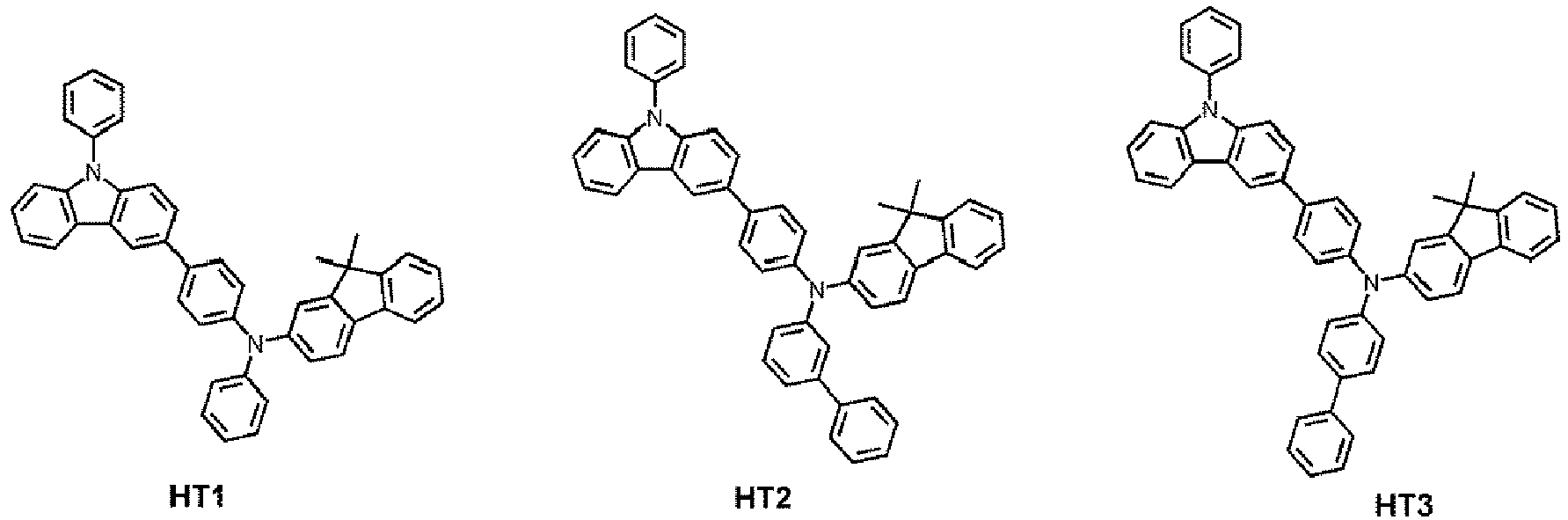

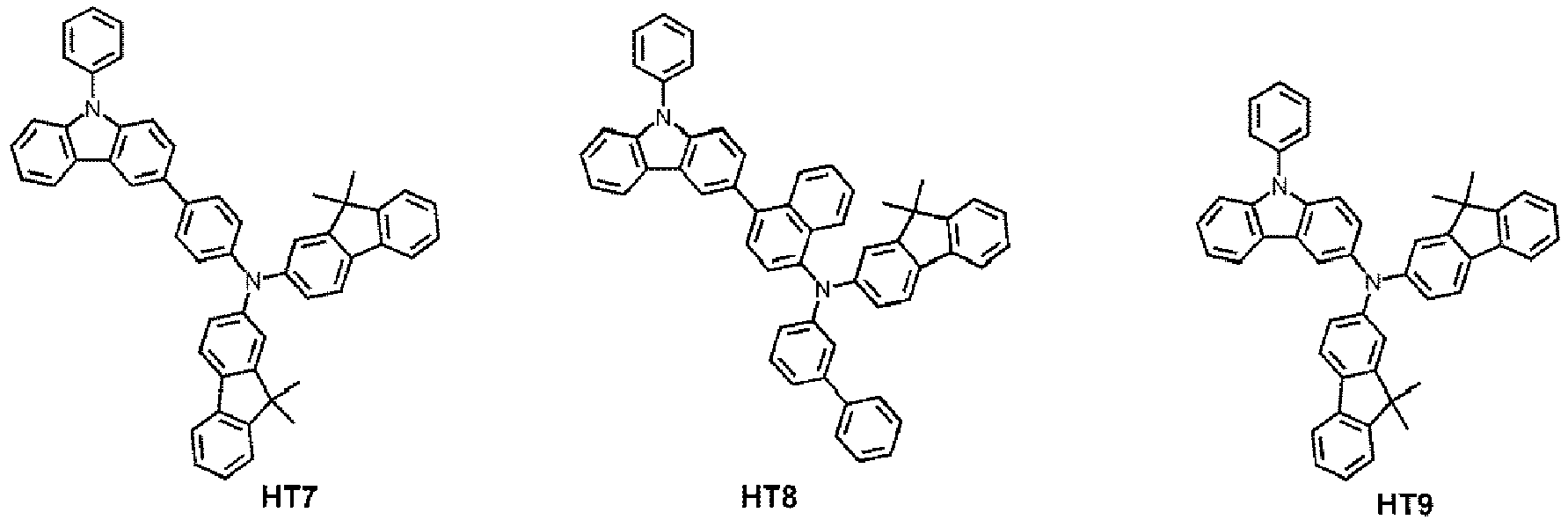


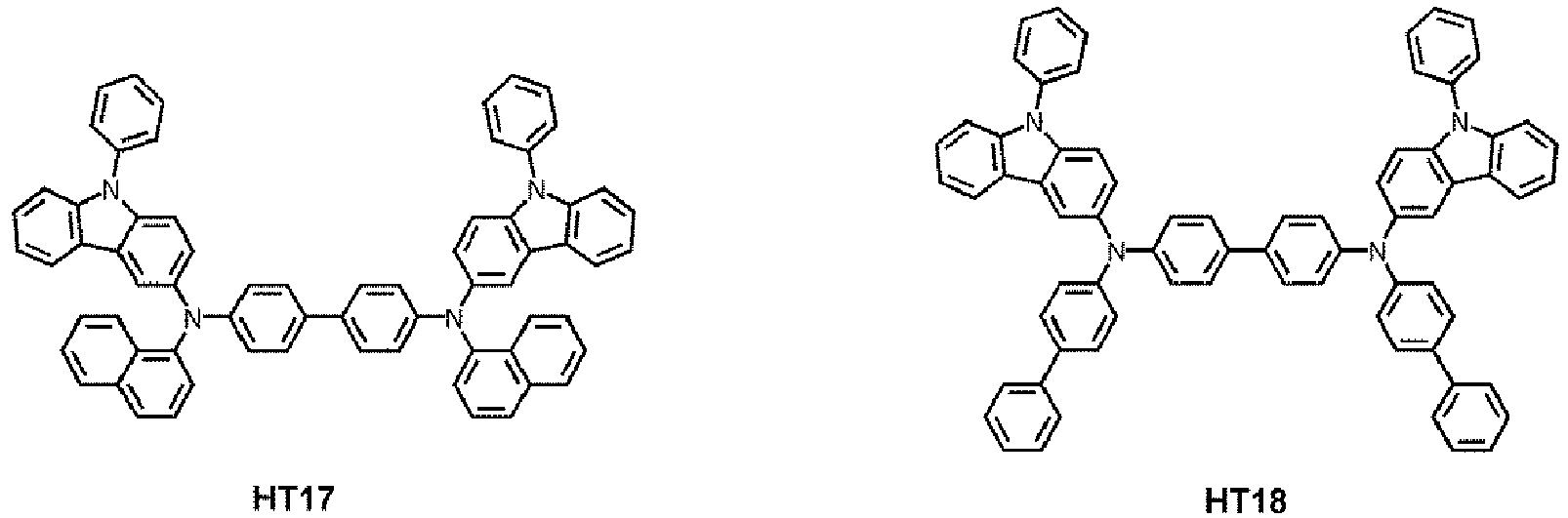

- The thickness of the hole transport region may be about 100 Å to about 10,000 Å, and in some embodiments, about 100 Å to about 1,000 Å. When the hole transport region comprises a hole injection layer and a hole transport layer, the thickness of the hole injection layer may be about 100 Å to about 10,000 Å, and in some embodiments, about 100 Å to about 1,000 Å; the thickness of the hole transport layer may be about 50 Å to about 2,000 Å, and in some embodiments, about 100 Å to about 1,500 Å. When the thicknesses of the hole transport region, the hole injection layer, and the hole transport layer are within these ranges, excellent hole transport characteristics may be obtained without a substantial increase in driving voltage.
- The hole transport region may further comprise a charge-generating material in addition to the abovementioned materials to improve conductive properties. The charge-generating material may be homogeneously and/or non-homogeneously dispersed throughout the hole transport region.
- The charge-generating material may be, for example, a p-dopant. The p-dopant may be selected from a quinone derivative, a metal oxide, and a cyano group-containing compound, but embodiments of the present disclosure are not limited thereto. Non-limiting examples of the p-dopant may include quinone derivatives (such as tetracyanoquinonedimethane (TCNQ) and/or 2,3,5,6-tetrafluoro-tetracyano-1,4-benzoquinonedimethane (F4-TCNQ)); metal oxides (such as a tungsten oxide and/or a molybdenum oxide); and Compound HT-D1, but embodiments of the present disclosure are not limited thereto:

- The hole transport region may further comprise, in addition to the hole injection layer and the hole transport layer, at least one selected from a buffer layer and an electron blocking layer. Since the buffer layer may compensate for an optical resonance distance according to a wavelength of light emitted from the emission layer (e.g., be used to adjust the optical resonance distance to match the wavelength of light emitted from the emission layer), the light-emission efficiency of the resulting organic light-emitting device may be improved. Materials included in the hole transport region may be used as materials in the buffer layer. In some embodiments, the electron blocking layer prevents or reduces injection of electrons from the electron transport region.
- An emission layer may be formed on the
first electrode 110 and/or on the hole transport region using one or more suitable methods, such as vacuum deposition, spin coating, casting, an LB method, ink-jet printing, laser printing, and/or LITI. When the emission layer is formed by vacuum deposition and/or spin coating, the deposition and coating conditions used for the emission layer may be similar to the deposition and coating conditions used for the hole injection layer. - When the organic light-emitting
device 10 is a full color organic light-emitting device, the emission layer may be patterned into a red emission layer, a green emission layer, and/or a blue emission layer, according to a sub-pixel. In some embodiments, the emission layer may have a stacked structure of a red emission layer, a green emission layer, and a blue emission layer, and/or may include a red-light emission material, a green-light emission material, and a blue-light emission material, which are mixed with each other in a single layer to emit white light. - The emission layer may comprise a host and/or a dopant. The host may comprise at least one selected from an anthracene-based compound, arylamine-based compound, and a styryl-based compound.
- In some embodiments, the host may further include a compound represented by Formula 301:
Formula 301 Ar301-[(L301)xb1-R301]xb2.
- In Formula 301,
Ar301 may be selected from: - a naphthalene, a heptalene, a fluorene, a spiro-fluorene, a benzofluorene, a dibenzofluorene, a phenalene, a phenanthrene, an anthracene, a fluoranthene, a triphenylene, a pyrene, a chrysene, a naphthacene, a picene, a perylene, a pentaphene, and an indenoanthracene; and
- a naphthalene, a heptalene, a fluorene, a spiro-fluorene, a benzofluorene, a dibenzofluorene, a phenalene, a phenanthrene, an anthracene, a fluoranthene, a triphenylene, a pyrene, a chrysene, a naphthacene, a picene, a perylene, a pentaphene, and an indenoanthracene, each substituted with at least one (e.g. 1, 2, 3 or 4) groups selected from deuterium, -F, -Cl, -Br, -I, a hydroxyl group, a cyano group, a nitro group, an amino group, an amidino group, a hydrazine group, a hydrazone group, a carboxylic acid group or a salt thereof, a sulfonic acid group or a salt thereof, a phosphoric acid group or a salt thereof, a C1-C60 alkyl group, a C2-C60 alkenyl group, a C2-C60 alkynyl group, a C1-C60 alkoxy group, a C3-C10 cycloalkyl group, a C1-C10 heterocycloalkyl group, a C3-C10 cycloalkenyl group, a C1-C10 heterocycloalkenyl group, a C6-C60 aryl group, a C6-C60 aryloxy group, a C6-C60 arylthio group, a C1-C60 heteroaryl group, a monovalent non-aromatic condensed polycyclic group, a monovalent non-aromatic condensed heteropolycyclic group, and -Si(Q301)(Q302)(Q303), wherein Q301 to Q303 may be each independently selected from hydrogen, a C1-C60 alkyl group, a C2-C60 alkenyl group, a C6-C60 aryl group, and a C1-C60 heteroaryl group,
- L301 may be the same as described herein in connection with L1,
- R301 may be selected from:
- a C1-C20 alkyl group and a C1-C20 alkoxy group;
- a C1-C20 alkyl group and a C1-C20 alkoxy group, each substituted with at least one (e.g. 1, 2, 3 or 4) groups selected from deuterium, -F, -Cl, -Br, -I, a hydroxyl group, a cyano group, a nitro group, an amino group, an amidino group, a hydrazine group, a hydrazone group, a carboxylic acid group or a salt thereof, a sulfonic acid group or a salt thereof, a phosphoric acid group or a salt thereof, a phenyl group, a biphenyl group, a terphenyl group, a naphthyl group, a fluorenyl group, a spiro-fluorenyl group, a benzofluorenyl group, a dibenzofluorenyl group, a phenanthrenyl group, an anthracenyl group, a pyrenyl group, a chrysenyl group, a pyridinyl group, a pyrazinyl group, a pyrimidinyl group, a pyridazinyl group, a quinolinyl group, an isoquinolinyl group, a quinoxalinyl group, a quinazolinyl group, a carbazolyl group, and a triazinyl group;
- a phenyl group, a biphenyl group, a terphenyl group, a naphthyl group, a fluorenyl group, a spiro-fluorenyl group, a benzofluorenyl group, a dibenzofluorenyl group, a phenanthrenyl group, an anthracenyl group, a pyrenyl group, a chrysenyl group, a pyridinyl group, a pyrazinyl group, a pyrimidinyl group, a pyridazinyl group, a quinolinyl group, an isoquinolinyl group, a quinoxalinyl group, a quinazolinyl group, a carbazole group, and a triazinyl group; and
- a phenyl group, a naphthyl group, a fluorenyl group, a spiro-fluorenyl group, a benzofluorenyl group, a dibenzofluorenyl group, a phenanthrenyl group, an anthracenyl group, a pyrenyl group, a chrysenyl group, a pyridinyl group, a pyrazinyl group, a pyrimidinyl group, a pyridazinyl group, a quinolinyl group, an isoquinolinyl group, a quinoxalinyl group, a quinazolinyl group, a carbazole group, and a triazinyl group, each substituted with at least one (e.g. 1, 2, 3 or 4) groups selected from deuterium, -F, -Cl, -Br, -I, a hydroxyl group, a cyano group, a nitro group, an amino group, an amidino group, a hydrazine group, a hydrazone group, a carboxylic acid group or a salt thereof, a sulfonic acid group or a salt thereof, a phosphoric acid group or a salt thereof, a C1-C20 alkyl group, a C1-C20 alkoxy group, a phenyl group, a biphenyl group, a terphenyl group, a naphthyl group, a fluorenyl group, a spirofluorenyl group, a benzofluorenyl group, a dibenzofluorenyl group, a phenanthrenyl group, an anthracenyl group, a pyrenyl group, a chrysenyl group, a pyridinyl group, a pyrazinyl group, a pyrimidinyl group, a pyridazinyl group, a quinolinyl group, an isoquinolinyl group, a quinoxalinyl group, a quinazolinyl group, a carbazolyl group, and a triazinyl group,
- xb1 may be selected from 0, 1, 2, and 3, and
- xb2 may be selected from 1, 2, 3, and 4.
- In some embodiments, in Formula 301,
- L301 may be selected from:
- a phenylene group, a naphthylene group, a fluorenylene group, a spiro-fluorenylene group, a benzofluorenylene group, a dibenzofluorenylene group, a phenanthrenylene group, an anthracenylene group, a pyrenylene group, and a chrysenylene group; and
- a phenylene group, a naphthylene group, a fluorenylene group, a spiro-fluorenylene group, a benzofluorenylene group, a dibenzofluorenylene group, a phenanthrenylene group, an anthracenylene group, a pyrenylene group, and a chrysenylene group, each substituted with at least one (e.g. 1, 2, 3 or 4) groups selected from deuterium, -F, -Cl, -Br, -I, a hydroxyl group, a cyano group, a nitro group, an amino group, an amidino group, a hydrazine group, a hydrazone group, a carboxylic acid group or a salt thereof, a sulfonic acid group or a salt thereof, a phosphoric acid group or a salt thereof, a C1-C20 alkyl group, a C1-C20 alkoxy group, a phenyl group, a biphenyl group, a terphenyl group, a naphthyl group, a fluorenyl group, a spirofluorenyl group, a benzofluorenyl group, a dibenzofluorenyl group, a phenanthrenyl group, an anthracenyl group, a pyrenyl group, and a chrysenyl group, and
- R301 may be selected from:
- a C1-C20 alkyl group and a C1-C20 alkoxy group;
- a C1-C20 alkyl group and a C1-C20 alkoxy group, each substituted with at least one (e.g. 1, 2, 3 or 4) groups selected from deuterium, -F, -Cl, -Br, -I, a hydroxyl group, a cyano group, a nitro group, an amino group, an amidino group, a hydrazine group, a hydrazone group, a carboxylic acid group or a salt thereof, a sulfonic acid group or a salt thereof, a phosphoric acid group or a salt thereof, a phenyl group, a biphenyl group, a terphenyl group, a naphthyl group, a fluorenyl group, a spiro-fluorenyl group, a benzofluorenyl group, a dibenzofluorenyl group, a phenanthrenyl group, an anthracenyl group, a pyrenyl group, and a chrysenyl group;
- a phenyl group, a biphenyl group, a terphenyl group, a naphthyl group, a fluorenyl group, a spiro-fluorenyl group, a benzofluorenyl group, a dibenzofluorenyl group, a phenanthrenyl group, an anthracenyl group, a pyrenyl group, and a chrysenyl group; and
- a phenyl group, a biphenyl group, a terphenyl group, a naphthyl group, a fluorenyl group, a spiro-fluorenyl group, a benzofluorenyl group, a dibenzofluorenyl group, a phenanthrenyl group, an anthracenyl group, a pyrenyl group, and a chrysenyl group, each substituted with at least one (e.g. 1, 2, 3 or 4) groups selected from deuterium, -F, -Cl, -Br, -I, a hydroxyl group, a cyano group, a nitro group, an amino group, an amidino group, a hydrazine group, a hydrazone group, a carboxylic acid group or a salt thereof, a sulfonic acid group or a salt thereof, a phosphoric acid group or a salt thereof, a C1-C20 alkyl group, a C1-C20 alkoxy group, a phenyl group, a biphenyl group, a terphenyl group, a naphthyl group, a fluorenyl group, a spiro-fluorenyl group, a benzofluorenyl group, a dibenzofluorenyl group, a phenanthrenyl group, an anthracenyl group, a pyrenyl group, and a chrysenyl group, but embodiments are not limited thereto.
- In some embodiment, the host may include a compound represented by Formula 301A:

- In Formula 301A, L301, R301, xb1, and xb2 may each be the same as described herein in connection with Formula 301.
- The compound represented by Formula 301 may include at least one compound selected from Compounds H1 to H42, but embodiments of the present disclosure are not limited thereto:


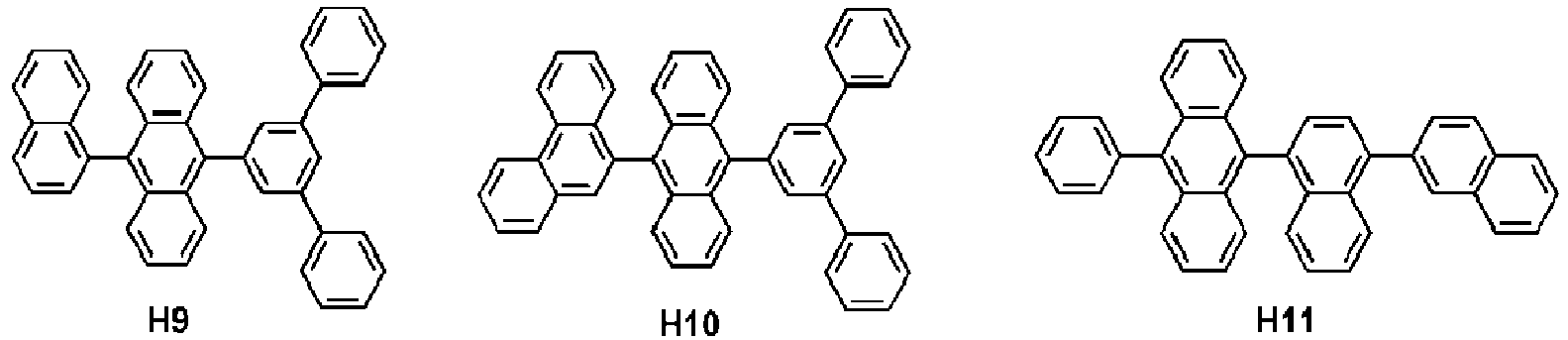


- In some embodiments, the host may include at least one selected from Compounds H43 to H49, but embodiments of the present disclosure are not limited thereto:


- In some embodiments, the host may include at least one selected from TPBi, TBADN, ADN (also known as "DNA"), CBP, CDBP, TCP, and MADN:


- The dopant in the emission layer may include at least one selected from a fluorescent dopant and a phosphorescent dopant.
- In some embodiments, the phosphorescent dopant may include an organometallic compound including at least one selected from iridium (Ir), platinum (Pt), osmium (Os), titanium (Ti), zirconium (Zr), hafnium (Hf), europium (Eu), terbium (Tb), thulium (Tm), rhodium (Rh), and copper (Cu).
- In some embodiments, the phosphorescent dopant may include an organometallic complex represented by Formula 401:


- In Formula 401,
- M may be selected from iridium (Ir), platinum (Pt), osmium (Os), titanium (Ti), zirconium (Zr), hafnium (Hf), europium (Eu), terbium (Tb), and thulium (Tm),
- X401 to X404 may each independently be selected from nitrogen and carbon,
- A401 and A402 rings may each independently be selected from a substituted or unsubstituted benzene, a substituted or unsubstituted naphthalene, a substituted or unsubstituted fluorene, a substituted or unsubstituted spiro-fluorene, a substituted or unsubstituted indene, a substituted or unsubstituted pyrrole, a substituted or unsubstituted thiophene, a substituted or unsubstituted furan, a substituted or unsubstituted imidazole, a substituted or unsubstituted pyrazole, a substituted or unsubstituted thiazole, a substituted or unsubstituted isothiazole, a substituted or unsubstituted oxazole, a substituted or unsubstituted isoxazole, a substituted or unsubstituted pyridine, a substituted or unsubstituted pyrazine, a substituted or unsubstituted pyrimidine, a substituted or unsubstituted pyridazine, a substituted or unsubstituted quinoline, a substituted or unsubstituted isoquinoline, a substituted or unsubstituted benzoquinoline, a substituted or unsubstituted quinoxaline, a substituted or unsubstituted quinazoline, a substituted or unsubstituted carbazole, a substituted or unsubstituted benzimidazole, a substituted or unsubstituted benzofuran, a substituted or unsubstituted benzothiophene, a substituted or unsubstituted isobenzothiophene, a substituted or unsubstituted benzoxazole, a substituted or unsubstituted isobenzoxazole, a substituted or unsubstituted triazole, a substituted or unsubstituted oxadiazole, a substituted or unsubstituted triazine, a substituted or unsubstituted dibenzofuran, and a substituted or unsubstituted dibenzothiophene,
- at least one substituent of the substituted benzene, substituted naphthalene, substituted fluorene, substituted spiro-fluorene, substituted indene, substituted pyrrole, substituted thiophene, substituted furan, substituted imidazole, substituted pyrazole, substituted thiazole, substituted isothiazole, substituted oxazole, substituted isoxazole, substituted pyridine, substituted pyrazine, substituted pyrimidine, substituted pyridazine, substituted quinoline, substituted isoquinoline, substituted benzoquinoline, substituted quinoxaline, substituted quinazoline, substituted carbazole, substituted benzimidazole, substituted benzofuran, substituted benzothiophene, substituted isobenzothiophene, substituted benzoxazole, substituted isobenzoxazole, substituted triazole, substituted oxadiazole, substituted triazine, substituted dibenzofuran, and substituted dibenzothiophene may be selected from:
- deuterium, -F, -Cl, -Br, -I, a hydroxyl group, a cyano group, a nitro group, an amino group, an amidino group, a hydrazine group, a hydrazone group, a carboxylic acid group or a salt thereof, a sulfonic acid group or a salt thereof, a phosphoric acid group or a salt thereof, a C1-C60 alkyl group, a C2-C60 alkenyl group, a C2-C60 alkynyl group, and a C1-C60 alkoxy group;
- a C1-C60 alkyl group, a C2-C60 alkenyl group, a C2-C60 alkynyl group, and a C1-C60 alkoxy group, each substituted with at least one (e.g. 1, 2, 3 or 4) groups selected from deuterium, -F, -Cl, -Br, -I, a hydroxyl group, a cyano group, a nitro group, an amino group, an amidino group, a hydrazine group, a hydrazone group, a carboxylic acid group or a salt thereof, a sulfonic acid group or a salt thereof, a phosphoric acid group or a salt thereof, a C3-C10 cycloalkyl group, a C1-C10 heterocycloalkyl group, a C3-C10 cycloalkenyl group, a C1-C10 heterocycloalkenyl group, a C6-C60 aryl group, a C6-C60 aryloxy group, C6-C60 arylthio group, C1-C60 heteroaryl group, a monovalent non-aromatic condensed polycyclic group, a monovalent non-aromatic condensed heteropolycyclic group, -N(Q401)(Q402), -Si(Q403)(Q404)(Q405), and - B(Q406)(Q407);
- a C3-C10 cycloalkyl group, a C1-C10 heterocycloalkyl group, a C3-C10 cycloalkenyl group, a C1-C10 heterocycloalkenyl group, a C6-C60 aryl group, a C6-C60 aryloxy group, a C6-C60 arylthio group, a C1-C60 heteroaryl group, a monovalent non-aromatic condensed polycyclic group, and a monovalent non-aromatic condensed heteropolycyclic group;
- a C3-C10 cycloalkyl group, a C1-C10 heterocycloalkyl group, a C3-C10cycloalkenyl group, a C1-C10 heterocycloalkenyl group, a C6-C60 aryl group, a C6-C60 aryloxy group, a C6-C60 arylthio group, a C1-C60 heteroaryl group, a monovalent non-aromatic condensed polycyclic group, and a monovalent non-aromatic condensed heteropolycyclic group, each substituted with at least one (e.g. 1, 2, 3 or 4) groups selected from deuterium, -F, -Cl, -Br, -I, a hydroxyl group, a cyano group, a nitro group, an amino group, an amidino group, a hydrazine group, a hydrazone group, a carboxylic acid group or a salt thereof, a sulfonic acid group or a salt thereof, a phosphoric acid group or a salt thereof, a C1-C60 alkyl group, a C2-C60 alkenyl group, a C2-C60 alkynyl group, a C1-C60 alkoxy group, a C3-C10 cycloalkyl group, a C1-C10 heterocycloalkyl group, a C3-C10 cycloalkenyl group, a C1-C10 heterocycloalkenyl group, a C6-C60 aryl group, a C6-C60 aryloxy group, a C6-C60 arylthio group, a C1-C60 heteroaryl group, a monovalent non-aromatic condensed polycyclic group, a monovalent non-aromatic condensed heteropolycyclic group, -N(Q411)(Q412), -Si(Q413)(Q414)(Q415), and -B(Q416)(Q417); and
-
-N(Q421)(Q422), -Si(Q423)(Q424)(Q425), and -B(Q426)(Q427),
- L401 may be an organic ligand,
- xc1 may be selected from 1, 2, and 3, and
- xc2 may be selected from o, 1, 2, and 3.
- Q401 to Q407, Q411 to Q417, and Q421 to Q427 may be the same as described herein in connection with Q1.
- L401 may be any suitable monovalent, divalent, and/or trivalent organic ligand. For example, L401 may be selected from a halogen ligand (e.g., Cl and/or F), a diketone ligand (e.g., acetylacetonate, 1,3-diphenyl-1,3-propanedionate, 2,2,6,6-tetramethyl-3,5-heptanedionate, and/or hexafluoroacetonate), a carboxylic acid ligand (e.g., picolinate, dimethyl-3-pyrazolecarboxylate, and/or benzoate), a carbon monoxide ligand, an isonitrile ligand, a cyano ligand, and a phosphorous ligand (e.g., phosphine and/or phosphite), but embodiments of the present disclosure are not limited thereto.
- When A401 in Formula 401 includes a plurality of substituents, the plurality of substituents of A401 may be bound (e.g., coupled) to each other to form a saturated or unsaturated ring.
- When A402 in Formula 401 includes a plurality of substituents, the plurality of substituents of A402 may be bound (e.g., coupled) to each other to form a saturated or unsaturated ring.
- When xc1 in Formula 401 is two or more, a plurality of ligands

- The phosphorescent dopant may include at least one selected from Compounds PD1 to PD75, but embodiments of the present disclosure are not limited thereto:


- In some embodiments, the phosphorescent dopant may include PtOEP:

- The fluorescent dopant may include at least one selected from DPVBi, DPAVBi, TBPe, DCM, DCJTB, Coumarin 6, and C545T:


- In some embodiments, the fluorescent dopant may include a compound represented by Formula 501:

- In Formula 501,
- Ar501 may be selected from a naphthalene, a heptalene, a fluorene, a spiro-fluorene, a benzofluorene, a dibenzofluorene, a phenalene, a phenanthrene, an anthracene, a fluoranthene, a triphenylene, a pyrene, a chrysene, a naphthacene, a picene, a perylene, a pentaphene, and an indenoanthracene; and
- a naphthalene, a heptalene, a fluorene, a spiro-fluorene, a benzofluorene, a dibenzofluorene, a phenalene, a phenanthrene, an anthracene, a fluoranthene, a triphenylene, a pyrene, a chrysene, a naphthacene, a picene, a perylene, a pentaphene, and an indenoanthracene, each substituted with at least one (e.g. 1, 2, 3 or 4) groups selected from deuterium, -F, -Cl, -Br, -I, a hydroxyl group, a cyano group, a nitro group, an amino group, an amidino group, a hydrazine group, a hydrazone group, a carboxylic acid group or a salt thereof, a sulfonic acid group or a salt thereof, a phosphoric acid group or a salt thereof, a C1-C60 alkyl group, a C2-C60 alkenyl group, a C2-C60 alkynyl group, a C1-C60 alkoxy group, a C3-C10 cycloalkyl group, a C1-C10 heterocycloalkyl group, a C3-C10 cycloalkenyl group, a C1-C10 heterocycloalkenyl group, a C6-C60 aryl group, a C6-C60 aryloxy group, a C6-C60 arylthio group, a C1-C60 heteroaryl group, a monovalent non-aromatic condensed polycyclic group, a monovalent non-aromatic condensed heteropolycyclic group, and -Si(Q501)(Q502)(Q503), wherein Q501 to Q503 may be each independently selected from hydrogen, a C1-C60 alkyl group, a C2-C60 alkenyl group, a C6-C60 aryl group, and a C1-C60 heteroaryl group,
- L501 to L503 may be the same as described herein in connection with L1,
- R and R502 may each independently be selected from:
- a phenyl group, a naphthyl group, a fluorenyl group, a spiro-fluorenyl group, a benzofluorenyl group, a dibenzofluorenyl group, a phenanthrenyl group, an anthracenyl group, a pyrenyl group, a chrysenyl group, a pyridinyl group, a pyrazinyl group, a pyrimidinyl group, a pyridazinyl group, a quinolinyl group, an isoquinolinyl group, a quinoxalinyl group, a quinazolinyl group, a carbazole group, a triazinyl group, a dibenzofuranyl group, and a dibenzothiophenyl group; and
- a phenyl group, a naphthyl group, a fluorenyl group, a spiro-fluorenyl group, a benzofluorenyl group, a dibenzofluorenyl group, a phenanthrenyl group, an anthracenyl group, a pyrenyl group, a chrysenyl group, a pyridinyl group, a pyrazinyl group, a pyrimidinyl group, a pyridazinyl group, a quinolinyl group, an isoquinolinyl group, a quinoxalinyl group, a quinazolinyl group, a carbazolyl group, a triazinyl group, a dibenzofuranyl group, and a dibenzothiophenyl group, each substituted with at least one (e.g. 1, 2, 3 or 4) groups selected from deuterium, -F, -Cl, -Br, -I, a hydroxyl group, a cyano group, a nitro group, an amino group, an amidino group, a hydrazine group, a hydrazone group, a carboxylic acid group or a salt thereof, a sulfonic acid group or a salt thereof, a phosphoric acid group or a salt thereof, a C1-C20 alkyl group, a C1-C20 alkoxy group, a phenyl group, a naphthyl group, a fluorenyl group, a spiro-fluorenyl group, a benzofluorenyl group, a dibenzofluorenyl group, a phenanthrenyl group, an anthracenyl group, a pyrenyl group, a chrysenyl group, a pyridinyl group, a pyrazinyl group, a pyrimidinyl group, a pyridazinyl group, a quinolinyl group, an isoquinolinyl group, a quinoxalinyl group, a quinazolinyl group, a carbazolyl group, a triazinyl group, a dibenzofuranyl group, and a dibenzothiophenyl group,
- xd1 to xd3 may each independently be selected from 0, 1, 2, and 3, and
- xd4 may be selected from 1, 2, 3, and 4.
- The fluorescent dopant may include at least one selected from compounds FD1 to FD9:
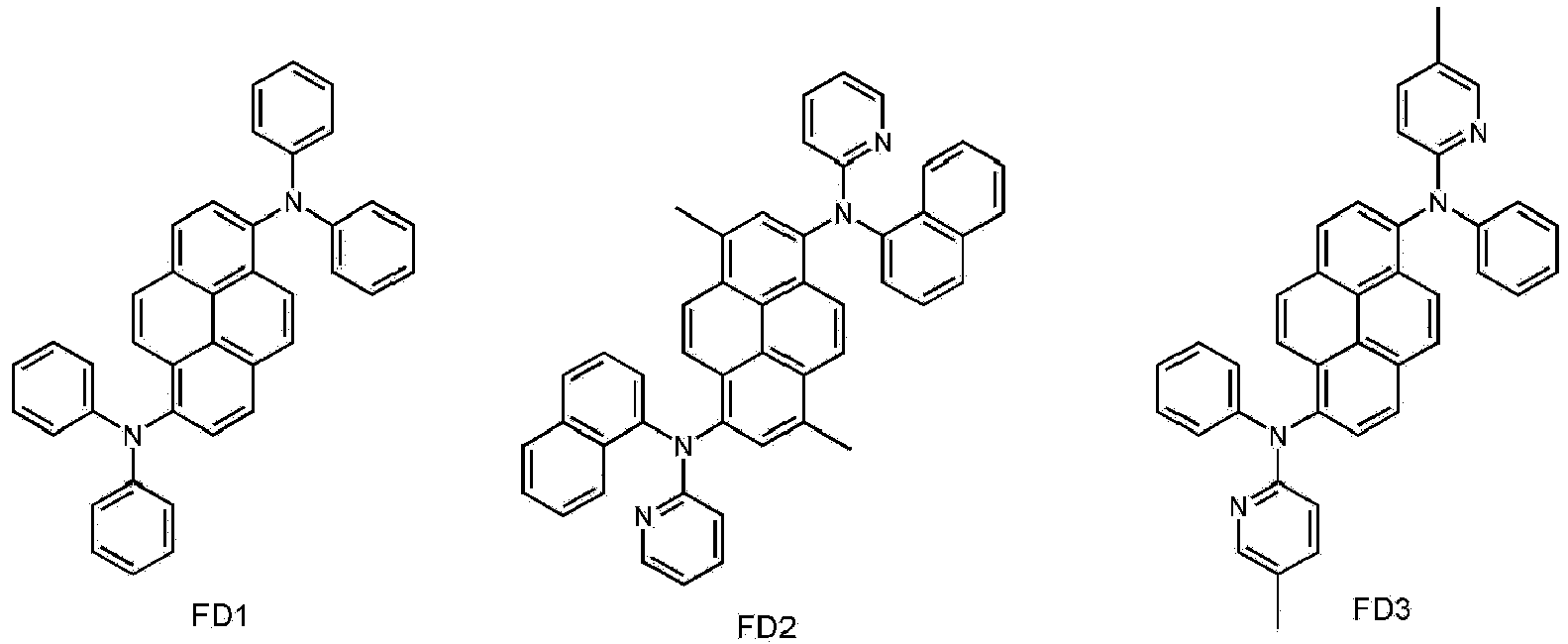


- The amount of the dopant in the emission layer may be about 0.01 part by weight to about 15 parts by weight based on 100 parts by weight of the host, but embodiments of the present disclosure are not limited thereto.
- The thickness of the emission layer may be about 100 Å to about 1,000 Å, and in some embodiments, about 200 Å to about 600 Å. When the thickness of the emission layer is within these ranges, excellent light-emission characteristics may be achieved without a substantial increase in driving voltage.
- An electron transport region may be on the emission layer.
- The electron transport region may include at least one selected from a hole blocking layer, an electron transport layer (ETL), and an electron injection layer, but embodiments of the present disclosure are not limited thereto.
- In some embodiments, the electron transport region may have a structure of electron transport layer/ electron injection layer and/or a structure of hole blocking layer/ electron transport layer/ electron injection layer, wherein layers of each structure are sequentially stacked on the emission layer in the stated order, but embodiments of the present disclosure are not limited thereto.
- In some embodiments, the
organic layer 150 of the organic light-emittingdevice 10 may include an electron transport region between the emission layer and thesecond electrode 190. - When the electron transport region includes a hole blocking layer, the hole blocking layer may be formed on the emission layer using one or more suitable methods, such as vacuum deposition, spin coating, casting, an LB method, ink-jet printing, laser printing, and/or LITI. When the hole blocking layer is formed by vacuum deposition and/or spin coating, deposition and coating conditions for the hole blocking layer may be determined by referring to the deposition and coating conditions for the hole injection layer.
- The hole blocking layer may include, for example, at least one selected from BCP and Bphen, but embodiments of the present disclosure are not limited thereto:

- The thickness of the hole blocking layer may be about 20 Å to about 1,000 Å, and in some embodiments, about 30 Å to about 300 Å. When the thickness of the hole blocking layer is within these ranges, excellent hole blocking characteristics may be achieved without a substantial increase in driving voltage.
- The electron transport region may include an electron transport layer. The electron transport layer may be formed on the emission layer and/or the hole blocking layer using one or more suitable methods, such as vacuum deposition, spin coating, casting, an LB method, ink-jet printing, laser printing, and/or LITI. When the electron transport layer is formed by vacuum deposition and/or spin coating, the vacuum deposition and coating conditions used for the electron transport layer may be determined by referring to the vacuum deposition and coating conditions used for the hole injection layer.
- In some embodiments, the electron transport layer may include at least one selected from a compound represented by Formula 601 and a compound represented by Formula 602:
Formula 601 Ar601-[(L601)xe1-E601]xe2.
- In Formula 601,
- Ar601 may be selected from:
- a naphthalene, a heptalene, a fluorene, a spiro-fluorene, a benzofluorene, a dibenzofluorene, a phenalene, a phenanthrene, an anthracene, a fluoranthene, a triphenylene, a pyrene, a chrysene, a naphthacene, a picene, a perylene, a pentaphene, and an indenoanthracene; and
- a naphthalene, a heptalene, a fluorene, a spiro-fluorene, a benzofluorene, a dibenzofluorene, a phenalene, a phenanthrene, an anthracene, a fluoranthene, a triphenylene, a pyrene, a chrysene, a naphthacene, a picene, a perylene, a pentaphene, and an indenoanthracene, each substituted with at least one (e.g. 1, 2, 3 or 4) groups selected from deuterium, -F, -Cl, -Br, -I, a hydroxyl group, a cyano group, a nitro group, an amino group, an amidino group, a hydrazine group, a hydrazone group, a carboxylic acid group or a salt thereof, a sulfonic acid group or a salt thereof, a phosphoric acid group or a salt thereof, a C1-C60 alkyl group, a C2-C60 alkenyl group, a C2-C60 alkynyl group, a C1-C60 alkoxy group, a C3-C10 cycloalkyl group, a C1-C10 heterocycloalkyl group, a C3-C10 cycloalkenyl group, a C1-C10 heterocycloalkenyl group, a C6-C60 aryl group, a C6-C60 aryloxy group, a C6-C60 arylthio group, a C1-C60 heteroaryl group, a monovalent non-aromatic condensed polycyclic group, a monovalent non-aromatic condensed heteropolycyclic group, and -Si(Q301)(Q302)(Q303), wherein Q301 to Q303 may be each independently selected from hydrogen, a C1-C60 alkyl group, a C2-C60 alkenyl group, a C6-C60 aryl group, and a C2-C60 heteroaryl group,
- L601 may be the same as described herein in connection with L1,
- E601 may be selected from:
- a pyrrolyl group, a thiophenyl group, a furanyl group, an imidazolyl group, a pyrazolyl group, a thiazolyl group, an isothiazolyl group, an oxazolyl group, an isoxazolyl group, a pyridinyl group, a pyrazinyl group, a pyrimidinyl group, a pyridazinyl group, an isoindolyl group, an indolyl group, an indazolyl group, a purinyl group, a quinolinyl group, an isoquinolinyl group, a benzoquinolinyl group, a phthalazinyl group, a naphthyridinyl group, a quinoxalinyl group, a quinazolinyl group, a cinnolinyl group, a carbazolyl group, a phenanthridinyl group, an acridinyl group, a phenanthrolinyl group, a phenazinyl group, a benzimidazolyl group, a benzofuranyl group, a benzothiophenyl group, an isobenzothiazolyl group, a benzoxazolyl group, an isobenzoxazolyl group, a triazolyl group, a tetrazolyl group, an oxadiazolyl group, a triazinyl group, a dibenzofuranyl group, a dibenzothiophenyl group, a benzocarbazolyl group, a dibenzocarbazolyl group, an imidazopyridinyl group, and an imidazopyrimidinyl group; and
- a pyrrolyl group, a thiophenyl group, a furanyl group, an imidazolyl group, a pyrazolyl group, a thiazolyl group, an isothiazolyl group, an oxazolyl group, an isoxazolyl group, a pyridinyl group, a pyrazinyl group, a pyrimidinyl group, a pyridazinyl group, an isoindolyl group, an indolyl group, an indazolyl group, a purinyl group, a quinolinyl group, an isoquinolinyl group, a benzoquinolinyl group, a phthalazinyl group, a naphthyridinyl group, a quinoxalinyl group, a quinazolinyl group, a cinnolinyl group, a carbazolyl group, a phenanthridinyl group, an acridinyl group, a phenanthrolinyl group, a phenazinyl group, a benzimidazolyl group, a benzofuranyl group, a benzothiophenyl group, an isobenzothiazolyl group, a benzoxazolyl group, an isobenzoxazolyl group, a triazolyl group, a tetrazolyl group, an oxadiazolyl group, a triazinyl group, a dibenzofuranyl group, a dibenzothiophenyl group, a benzocarbazolyl group, a dibenzocarbazolyl group, an imidazopyridinyl group, and an imidazopyrimidinyl group, each substituted with at least one (e.g. 1, 2, 3 or 4) groups selected from deuterium, -F, -Cl, -Br, -I, a hydroxyl group, a cyano group, a nitro group, an amino group, an amidino group, a hydrazine group, a hydrazone group, a carboxylic acid group or a salt thereof, a sulfonic acid group or a salt thereof, a phosphoric acid group or a salt thereof, a C1-C20 alkyl group, a C1-C20 alkoxy group, a phenyl group, a biphenyl group, a terphenyl group, a pentalenyl group, an indenyl group, a naphthyl group, an azulenyl group, a heptalenyl group, an indacenyl group, an acenaphthyl group, a fluorenyl group, a spiro-fluorenyl group, a benzofluorenyl group, a dibenzofluorenyl group, a phenalenyl group, a phenanthrenyl group, an anthracenyl group, a fluoranthenyl group, a triphenylenyl group, a pyrenyl group, a chrysenyl group, a naphthacenyl group, a picenyl group, a perylenyl group, a pentaphenyl group, a hexacenyl group, a pentacenyl group, a rubicenyl group, a coronenyl group, an ovalenyl group, a pyrrolyl group, a thiophenyl group, a furanyl group, an imidazolyl group, a pyrazolyl group, a thiazolyl group, an isothiazolyl group, an oxazolyl group, an isoxazolyl group, a pyridinyl group, a pyrazinyl group, a pyrimidinyl group, a pyridazinyl group, an isoindolyl group, an indolyl group, an indazolyl group, a purinyl group, a quinolinyl group, an isoquinolinyl group, a benzoquinolinyl group, a phthalazinyl group, a naphthyridinyl group, a quinoxalinyl group, a quinazolinyl group, a cinnolinyl group, a carbazolyl group, a phenanthridinyl group, an acridinyl group, a phenanthrolinyl group, a phenazinyl group, a benzimidazolyl group, a benzofuranyl group, a benzothiophenyl group, an isobenzothiazolyl group, a benzoxazolyl group, an isobenzoxazolyl group, a triazolyl group, a tetrazolyl group, an oxadiazolyl group, a triazinyl group, a dibenzofuranyl group, a dibenzothiophenyl group, a benzocarbazolyl group, a dibenzocarbazolyl group, an imidazopyridinyl group, and an imidazopyrimidinyl group,
- xe1 may be selected from 0, 1, 2, and 3, and
- xe2 may be selected from 1, 2, 3, and 4.
- In Formula 602,
- X611 may be selected from N and C-(L611)xe611-R611; X612 may be selected from N and C-(L612)xe612-R612; X613 may be selected from N and C-(L613)xe613-R613; and at least one selected from X611 to X613 may be N,
- L611 to L616 may each independently be selected from the same groups described herein in connection with L1,
- R611 to R616 may each independently be selected from:
- a phenyl group, a biphenyl group, a terphenyl group, a naphthyl group, a fluorenyl group, a spiro-fluorenyl group, a benzofluorenyl group, a dibenzofluorenyl group, a phenanthrenyl group, an anthracenyl group, a pyrenyl group, a chrysenyl group, a pyridinyl group, a pyrazinyl group, a pyrimidinyl group, a pyridazinyl group, a quinolinyl group, an isoquinolinyl group, a quinoxalinyl group, a quinazolinyl group, a carbazolyl group, and a triazinyl group; and
- a phenyl group, a biphenyl group, a terphenyl group, a naphthyl group, a fluorenyl group, a spiro-fluorenyl group, a benzofluorenyl group, a dibenzofluorenyl group, a phenanthrenyl group, an anthracenyl group, a pyrenyl group, a chrysenyl group, a pyridinyl group, a pyrazinyl group, a pyrimidinyl group, a pyridazinyl group, a quinolinyl group, an isoquinolinyl group, a quinoxalinyl group, a quinazolinyl group, carbazolyl, and a triazinyl group, each substituted with at least one (e.g. 1, 2, 3 or 4) groups selected from deuterium, -F, - Cl, -Br, -I, a hydroxyl group, a cyano group, a nitro group, an amino group, an amidino group, a hydrazine group, a hydrazone group, a carboxylic acid group or a salt thereof, a sulfonic acid group or a salt thereof, a phosphoric acid group or a salt thereof, a C1-C20 alkyl group, a C1-C20 alkoxy group, a phenyl group, a biphenyl group, a terphenyl group, a naphthyl group, an azulenyl group, a fluorenyl group, a spiro-fluorenyl group, a benzofluorenyl group, a dibenzofluorenyl group, a phenanthrenyl group, an anthracenyl group, a pyrenyl group, a chrysenyl group, a pyridinyl group, a pyrazinyl group, a pyrimidinyl group, a pyridazinyl group, a quinolinyl group, an isoquinolinyl group, a quinoxalinyl group, a quinazolinyl group, a carbazolyl group, and a triazinyl group, and
- xe611 to xe616 may each independently be selected from 0, 1, 2, and 3.
- The compound represented by Formula 601 and the compound represented by Formula 602 may each independently be selected from Compounds ET1 to ET15:


- In some embodiments, the electron transport layer may include at least one selected from BCP, Bphen, Alq3, BAlq, TAZ, and NTAZ.


- The thickness of the electron transport layer may be about 100 Å to about 1,000 Å, and in some embodiments, about 150 Å to about 500 Å. When the thickness of the electron transport layer is within these ranges, excellent electron transport characteristics may be achieved without a substantial increase in driving voltage.
- The electron transport layer may further comprise a metal-containing material in addition to the materials described above.
- The metal-containing material may comprise a Li complex. The Li complex may be selected from, e.g., Compound ET-D1 (lithium quinolate, LiQ) and ET-D2:
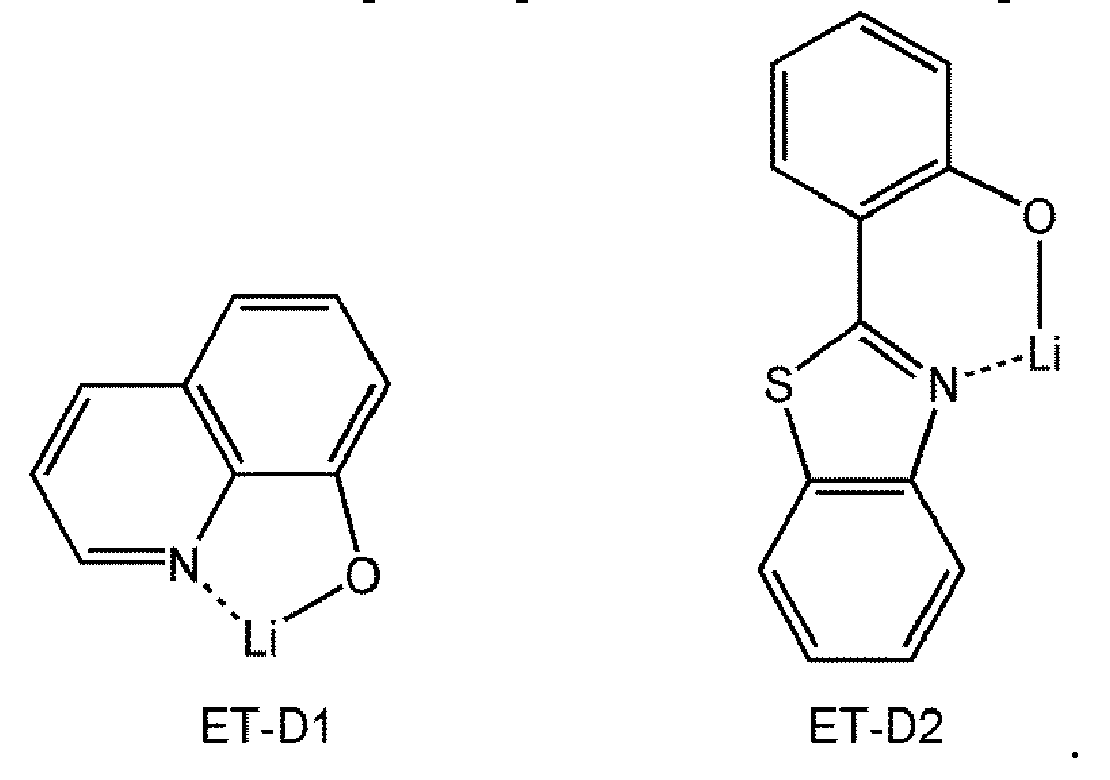
- The electron transport region may comprise an electron injection layer that facilitates electron injection from the
second electrode 190. - The electron injection layer may be formed on the electron transport layer using one or more suitable methods, such as vacuum deposition, spin coating, casting, an LB method, ink-jet printing, laser printing, and/or LITI. When the electron injection layer is formed by vacuum deposition and/or spin coating, the vacuum deposition and coating conditions used for the electron injection layer may be similar to the vacuum deposition and coating conditions used for the hole injection layer.
- The electron injection layer may comprise at least one selected from LiF, NaCl, CsF, Li2O, BaO, and LiQ.
- The thickness of the electron injection layer may be about 1 Å to about 100 Å, and in some embodiments, about 3 Å to about 90 Å. When the thickness of the electron injection layer is within these ranges, excellent electron injection characteristics may be achieved without a substantial increase in driving voltage.
- The
second electrode 190 may be on theorganic layer 150. Thesecond electrode 190 may be a cathode that is an electron injection electrode. In this regard, a material for forming thesecond electrode 190 may be a material having a low work function, for example, a metal, an alloy, an electrically conductive compound, and/or a mixture thereof. Non-limiting examples of the material for forming thesecond electrode 190 may include lithium (Li), magnesium (Mg), aluminum (Al), aluminum-lithium (Al-Li), calcium (Ca), magnesium-indium (Mg-In), and magnesium-silver (Mg-Ag). In some embodiments, the material for forming thesecond electrode 190 may be ITO and/or IZO. Thesecond electrode 190 may be a semi-transmissive electrode and/or a transmissive electrode. - Hereinbefore the organic light-emitting
device 10 has been described with reference to the drawing, but embodiments of the present disclosure are not limited thereto. - The term "C1-C60 alkyl group" as used herein refers to a linear or branched aliphatic hydrocarbon monovalent group having 1 to 60 carbon atoms e.g. 1 to 30 carbon atoms, 1 to 20 carbon atoms, 1 to 10 carbon atoms, 1 to 6 carbon atoms or 1 to 4 carbon atoms. Non-limiting examples thereof may include a methyl group, an ethyl group, a propyl group, an iso-butyl group, a sec-butyl group, a tert-butyl group, a pentyl group, an iso-amyl group, and a hexyl group. The term "C1-C60 alkylene group" as used herein refers to a divalent group having substantially the same structure as the C1-C60 alkyl group.
- The term "C1-C60 alkoxy group" as used herein refers to a monovalent group represented by -O-A101 (where A101 is the C1-C60 alkyl group). Non-limiting examples thereof may include a methoxy group, an ethoxy group, and an isopropyloxy group.
- The term "C2-C60 alkenyl group" as used herein refers to a hydrocarbon group having at least one carbon-carbon double bond in the body (e.g., middle) or at the terminus of the C2-C60 alkyl group. Non-limiting examples thereof may include an ethenyl group, a propenyl group, and a butenyl group. The term "C2-C60 alkenylene group" as used herein refers to a divalent group having substantially the same structure as the C2-C60 alkenyl group.
- The term "C2-C60 alkynyl group" as used herein refers to a hydrocarbon group having at least one carbon-carbon triple bond in the body (e.g., middle) or at the terminus of the C2-C60 alkyl group. Non-limiting examples thereof may include an ethynyl group and a propynyl group. The term "C2-C60 alkynylene group" as used herein refers to a divalent group having substantially the same structure as the C2-C60 alkynyl group.
- The term "C3-C10 cycloalkyl group" as used herein refers to a monovalent monocyclic saturated hydrocarbon group including 3 to 10 carbon atoms. Non-limiting examples thereof may include a cyclopropyl group, a cyclobutyl group, a cyclopentyl group, a cyclohexyl group, and a cycloheptyl group. The term "C3-C10 cycloalkylene group" as used herein refers to a divalent group having substantially the same structure as the C3-C10 cycloalkyl group.
- The term "C1-C10 heterocycloalkyl group" as used herein refers to a monovalent monocyclic group including at least one heteroatom (e.g. 1, 2, 3, 4 or 5 hereoatoms) selected from N, O, Si, P, and S as a ring-forming atom and 1 to 10 carbon atoms e.g. 1, 2, 3, 4 or 5 ring carbon atoms. Non-limiting examples thereof may include a tetrahydrofuranyl group and a tetrahydrothiophenyl group. The term "C1-C10 heterocycloalkylene group" as used herein refers to a divalent group having substantially the same structure as the C1-C10 heterocycloalkyl group.
- The term "C3-C10 cycloalkenyl group" as used herein refers to a monovalent monocyclic group that has 3 to 10 carbon atoms and at least one double bond in its ring, and is not aromatic. Non-limiting examples thereof may include a cyclopentenyl group, a cyclohexenyl group, and a cycloheptenyl group. The term "C3-C10 cycloalkenylene group" as used herein refers to a divalent group having substantially the same structure as the C3-C10 cycloalkenyl group.
- The term "C1-C10 heterocycloalkenyl group" as used herein refers to a monovalent monocyclic group including at least one heteroatom (e.g. 1, 2, 3, 4 or 5 hereoatoms) selected from N, O, Si, P, and S as a ring-forming atom, 1 to 10 carbon atoms e.g. 1, 2, 3, 4 or 5 ring carbon atoms, and at least one double bond in its ring. Non-limiting examples of the C1-C10 heterocycloalkenyl group may include a 2,3-hydrofuranyl group and a 2,3-hydrothiophenyl group. The term "C1-C10 heterocycloalkenylene group" as used herein refers to a divalent group having substantially the same structure as the C1-C10 heterocycloalkenyl group.
- The term "C6-C60 aryl group" as used herein refers to a monovalent group having a carbocyclic aromatic system having 6 to 60 carbon atoms e.g. 6 to 20 ring carbon atoms, 6 to 14 ring cabon atoms or 6 to 10 ring carbon atoms. The term "C6-C60 arylene group" as used herein refers to a divalent group having a carbocyclic aromatic system having 6 to 60 carbon atoms. Non-limiting examples of the C6-C60 aryl group may include a phenyl group, a biphenyl group, a terphenyl group, a naphthyl group, an anthracenyl group, a phenanthrenyl group, a pyrenyl group, and a chrysenyl group. When the C6-C60 aryl group and the C6-C60 arylene group each include a plurality of rings, the rings may be fused to each other.
- The term "C1-C60 heteroaryl group" as used herein refers to a monovalent group having a carbocyclic aromatic system including at least one heteroatom (e.g. 1, 2, 3, 4 or 5 hereoatoms) selected from N, O, Si, P, and S as a ring-forming atom and 1 to 60 carbon atoms, e.g. 1 to 19 ring carbon atoms, 1 to 13 ring cabon atoms or 1 to 9 ring carbon atoms. The term "C1-C60 heteroarylene group" as used herein refers to a divalent group having a carbocyclic aromatic system including at least one heteroatom selected from N, O, P, and S as a ring-forming atom and 1 to 60 carbon atoms. Non-limiting examples of the C1-C60 heteroaryl group may include a pyridinyl group, a pyrimidinyl group, a pyrazinyl group, a pyridazinyl group, a triazinyl group, a quinolinyl group, and an isoquinolinyl group. When the C1-C60 heteroaryl group and the C1-C60 heteroarylene group each include a plurality of rings, the rings may be fused to each other.
- The term "C6-C60 aryloxy group" as used herein refers to a group represented by -O-A102 (where A102 is the C6-C60 aryl group). The term "C6-C60 arylthio group" as used herein refers to a group represented by -S-A103 (where A103 is the C6-C60 aryl group).
- The term "monovalent non-aromatic condensed polycyclic group" as used herein refers to a monovalent group that has two or more rings condensed (e.g., fused) to each other, and has only carbon atoms as ring-forming atoms (for example, the number of carbon atoms may be 8 to 60), wherein the molecular structure as a whole is non-aromatic. A non-limiting example of the monovalent non-aromatic condensed polycyclic group may include a fluorenyl group. The term "divalent non-aromatic condensed polycyclic group" as used herein refers to a divalent group having substantially the same structure as the monovalent non-aromatic condensed polycyclic group.
- The term "monovalent non-aromatic condensed heteropolycyclic group" as used herein refers to a monovalent group that has two or more rings condensed (e.g., fused) to each other, has a heteroatom (e.g. 1, 2, 3, 4 or 5 hereoatoms) selected from N, O, Si, P, and S, in addition to carbon atoms as ring-forming atoms (for example, the number of carbon atoms may be 2 to 60), wherein the molecular structure as a whole is non-aromatic. A non-limiting example of the monovalent non-aromatic condensed heteropolycyclic group may include a carbazolyl group. The term "divalent non-aromatic condensed hetero-polycyclic group" as used herein refers to a divalent group having substantially the same structure as the monovalent non-aromatic condensed hetero-polycyclic group.
- In the present specification, the substituted C3-C10 cycloalkylene group, substituted C1-C10 heterocycloalkylene group, substituted C3-C10 cycloalkenylene group, substituted C1-C10 heterocycloalkenylene group, substituted C6-C60 arylene group, substituted C1-C60 heteroarylene group, substituted divalent non-aromatic condensed polycyclic group, substituted divalent non-aromatic condensed heteropolycyclic group, substituted C1-C60 alkyl group, substituted C2-C60 alkenyl group, substituted C2-C60 alkynyl group, substituted C1-C60 alkoxy group, substituted C3-C10 cycloalkyl group, substituted C1-C10 heterocycloalkyl group, substituted C3-C10 cycloalkenyl group, substituted C1-C10 heterocycloalkenyl group, substituted C6-C60 aryl group, substituted C6-C60 aryloxy group, substituted C6-C60 arylthio group, substituted C1-C60 heteroaryl group, substituted monovalent non-aromatic condensed polycyclic group, and substituted monovalent non-aromatic condensed heteropolycyclic group may be substituted with at least one (e.g. 1, 2, 3 or 4) groups selected from:
- deuterium, -F, -Cl, -Br, -I, a hydroxyl group, a cyano group, a nitro group, an amino group, an amidino group, a hydrazine group, a hydrazone group, a carboxylic acid group or a salt thereof, a sulfonic acid group or a salt thereof, a phosphoric acid group or a salt thereof, a C1-C60 alkyl group, a C2-C60 alkenyl group, a C2-C60 alkynyl group, and a C1-C60 alkoxy group;
- a C1-C60 alkyl group, a C2-C60 alkenyl group, a C2-C60 alkynyl group, and a C1-C60 alkoxy group, each substituted with at least one (e.g. 1, 2, 3 or 4) groups selected from deuterium, -F, -Cl, -Br, -I, a hydroxyl group, a cyano group, a nitro group, an amino group, an amidino group, a hydrazine group, a hydrazone group, a carboxylic acid group or a salt thereof, a sulfonic acid group or a salt thereof, a phosphoric acid group or a salt thereof, a C3-C10 cycloalkyl group, a C1-C10 heterocycloalkyl group, a C3-C10 cycloalkenyl group, a C1-C10 heterocycloalkenyl group, a C6-C60 aryl group, a C6-C60 aryloxy group, a C6-C60 arylthio group, a C1-C60 heteroaryl group, a monovalent non-aromatic condensed polycyclic group, a monovalent non-aromatic condensed heteropolycyclic group, and -Si(Q11)(Q12)(Q13);
- a C3-C10 cycloalkyl group, a C1-C10 heterocycloalkyl group, a C3-C10 cycloalkenyl group, a C1-C10 heterocycloalkenyl group, a C6-C60 aryl group, a C6-C60 aryloxy group, a C6-C60 arylthio group, a C1-C60 heteroaryl group, a monovalent non-aromatic condensed polycyclic group, and a monovalent non-aromatic condensed heteropolycyclic group;
- a C3-C10 cycloalkyl group, a C1-C10 heterocycloalkyl group, a C3-C10 cycloalkenyl group, a C1-C10 heterocycloalkenyl group, a C6-C60 aryl group, a C6-C60 aryloxy group, a C6-C60 arylthio group, a C1-C60 heteroaryl group, a monovalent non-aromatic condensed polycyclic group, and a monovalent non-aromatic condensed heteropolycyclic group, each substituted with at least one (e.g. 1, 2, 3 or 4) groups selected from deuterium, -F, -Cl, -Br, -I, a hydroxyl group, a cyano group, a nitro group, an amino group, an amidino group, a hydrazine group, a hydrazone group, a carboxylic acid group or a salt thereof, a sulfonic acid group or a salt thereof, a phosphoric acid group or a salt thereof, a C1-C60 alkyl group, a C2-C60 alkenyl group, a C2-C60 alkynyl group, a C1-C60 alkoxy group, a C3-C10 cycloalkyl group, a C1-C10 heterocycloalkyl group, a C3-C10 cycloalkenyl group, a C1-C10 heterocycloalkenyl group, a C6-C60 aryl group, a C6-C60 aryloxy group, a C6-C60 arylthio group, a C1-C60 heteroaryl group, a monovalent non-aromatic condensed polycyclic group, a monovalent non-aromatic condensed heteropolycyclic group, and -Si(Q21)(Q22)(Q23); and
-
-Si(Q31)(Q32)(Q33),
- wherein Q1 to Q3, Q11 to Q13, Q21 to Q23, and Q31 to Q33 may each independently be selected from hydrogen, deuterium, -F, -Cl, -Br, -I, a hydroxyl group, a cyano group, a nitro group, an amino group, an amidino group, a hydrazine group, a hydrazone group, a carboxylic acid group or a salt thereof, a sulfonic acid group or a salt thereof, a phosphoric acid group or a salt thereof, a C1-C60 alkyl group, a C2-C60 alkenyl group, a C2-C60 alkynyl group, a C1-C60 alkoxy group, a C3-C10 cycloalkyl group, a C1-C10 heterocycloalkyl group, a C3-C10 cycloalkenyl group, a C1-C10 heterocycloalkenyl group, a C6-C60 aryl group, a C1-C60 heteroaryl group, a monovalent non-aromatic condensed polycyclic group, and a monovalent non-aromatic condensed heteropolycyclic group.
- The term "Ph" as used herein refers to a phenyl group. The term "Me" as used herein refers to a methyl group. The term "Et" as used herein refers to an ethyl group. The terms "ter-Bu", "t-Bu" and "But" as used herein refer to a tert-butyl group.
- Hereinafter, an organic light-emitting device according to an example embodiment of the present disclosure will be described in more detail with reference to Synthesis Examples and Examples. The wording "B was used instead of A" used in describing Synthesis Examples means that a molar equivalent of A was substituted for a molar equivalent of B.
- Compound 4 was synthesized following Reaction Scheme 1-1:

- 2.18 g (10 mmol) of 2-chlorodibenzo[b,e][1,4]dioxane, 3.14 g (15 mmol) of 9,9-dimethyl-9H-fluoren-2-amine, 0.45 g (0.5 mmol) of Pd2(dba)3, 0.1 g (0.5 mmol) of P(fBu)3, and 2.25 g (20.0 mmol) of KOtBu were dissolved in 250 mL, and the mixture was stirred at a temperature of about 85°C for about 7 hours. The resulting mixture was cooled to room temperature, and an organic layer was extracted therefrom three times using 150 mL of water and 150 mL of diethyl ether. The obtained organic layer was dried using magnesium sulfate (MgSO4), filtered, and the solvent was removed therefrom by evaporation. The obtained residue was separated and purified through silica gel chromatography to obtain 3.32 g of Intermediate A-1 (yield: 85%). The compound thus obtained was identified by liquid chromatography-mass spectrometry (LC-MS).
C27H21NO2: M+ 391.2
- 3.32 g (8.5 mmol) of Intermediate A-1, 4.98 g (13.5 mmol) of 3-iodo-9-phenyl-9H-carbazole, 0.45 g (0.5 mmol) of Pd2(dba)3, 0.1 g (0.5 mmol) of P(tBu)3, and 2.25 g (20.0 mmol) of KOtBu were dissolved in 150 mL of toluene and stirred at a temperature of about 85°C for 2 hours. The resulting mixture was cooled to room temperature, and an organic layer was extracted therefrom three times using 100 mL of water and 100 mL of diethyl ether. The obtained organic layer was dried using magnesium sulfate (MgSO4), filtered, and the solvent was removed therefrom by evaporation. The obtained residue was separated and purified through silica gel chromatography to obtain 4.35 g of Compound 4 (yield: 81%). The obtained compound was identified by LC-MS.
C45H32N2O2: M+ 632.4
- 3.58 g (yield: 75.6%) of Compound 18 was obtained in substantially the same manner used to synthesize Compound 4 in Synthesis Example 1, except that 3-bromo-dibenzo[b,d]furan was used instead of 3-iodo-9-phenyl-9H-carbazole. The compound thus obtained was confirmed by LC-MS and nuclear magnetic resonance (NMR).
C39H27NO3: M+557.2
- Compound 22 was synthesized following Reaction Scheme 1-2:


- 3.08 g (yield: 81%) of Intermediate A-2 was obtained in the same manner used to synthesize Intermediate A-1 in Synthesis Example 1, except that [1,1'-biphenyl]-4-amine was used instead of 9,9-dimethyl-9H-fluoren-2-amine. The compound thus obtained was identified by LC-MS.
C24H17NO2: M+ 351.1
- 3.42 g (yield: 84.1%) of Compound 22 was obtained in the same manner used to synthesize Compound 4 in Synthesis Example 1, except that Intermediate A-2 was used instead of Intermediate A-1. The compound thus obtained was confirmed by LC-MS and NMR.
C42H28N2O2: M+ 592.3
- Compound 29 was synthesized following Reaction Scheme 1-3:
-

- 3.17 g (yield: 78%) of Intermediate A-3 was obtained in substantially the same manner used to synthesize Intermediate A-1 in Synthesis Example 1, except that dibenzo[b,d]furan-3-amine was used instead of 9,9-dimethyl-9H-fluoren-2-amine. The compound thus obtained was identified by LC-MS.
C24H15NO3: M+365.1
- 3.87 g (yield: 87.3%) of Compound 29 was obtained in substantially the same manner used to synthesize Compound 4 in Synthesis Example 1, except that Intermediate A-3 was used instead of Intermediate A-1. The compound thus obtained was identified by LC-MS and NMR.
C42H26N2O3: M+606.2
-


- 4.38 g (yield: 84%) of Intermediate A-4 was obtained in substantially the same manner used to synthesize Intermediate A-1 in Synthesis Example 1, except that 9,9-diphenyl-9H-fluoren-2-amine was used instead of 9,9-dimethyl-9H-fluoren-2-amine. The compound thus obtained was identified by LC-MS.
C37H25NO2: M+515.2
- 2.49 g (yield: 64.2%) of Compound 40 was obtained in substantially the same manner used to synthesize Compound 4 in Synthesis Example 1, except that Intermediate A-4 was used instead of Intermediate A-1, and 2-bromo-1,1'-biphenyl was used instead of 3-iodo-9-phenyl-9H-carbazole. The compound thus obtained was confirmed by LC-MS and NMR.
C49H33NO2: M+667.4
- 3.17 g (yield: 80.5%) of Compound 44 was obtained in substantially the same manner used to synthesize Compound 4 in Synthesis Example 1, except that Intermediate A-4 was used instead of Intermediate A-1, and 4-bromodibenzo[b,d]furan was used instead of 3-iodo-9-phenyl-9H-carbazole. The compound thus obtained was identified by LC-MS and NMR.
C49H31NO3: M+681.2
- 3.02 g (yield: 71.4%) of Compound 50 was obtained in substantially the same manner used to synthesize Compound 4 in Synthesis Example 1, except that Intermediate A-3 was used instead of Intermediate A-1, and 9-(4-bromophenyl)-9H-carbazole was used instead of 3-iodo-9-phenyl-9H-carbazole. The compound thus obtained was identified by LC-MS and NMR.
C42H26N2O3: M+606.2
- 3.16 g (yield: 77.4%) of Compound 59 was obtained in substantially the same manner used to synthesize Compound 4 in Synthesis Example 1, except that 3-bromo-dibenzo[b,d]furan was used instead of 2-iodo-9-phenyl-9H-carbazole. The compound thus obtained was identified by LC-MS and NMR.
C39H27NO3: M+557.2
- Compound 69 was synthesized following Reaction Scheme 2-1:

- 8.72 g (40.0 mmol) of 2-chlorodibenzo[b,e][1,4]dioxane, 20.2 g (80 mmol) of bis(pinacolato)diboron, 3.26 g (4 mmol) of [1,1'-bis(diphenylphosphino)ferrocene]dichloropalladium(II) complex, and 11.76 g (120 mmol) of potassium acetate were dissolved in 500 mL of toluene and stirred at a temperature of about 70°C for about 5 hours. The resulting mixture was cooled to room temperature, and an organic layer was extracted therefrom three times using 300 mL of water and 300 mL of diethyl ether. The obtained organic layer was dried using MgSO4, filtered, and the solvent was removed therefrom by evaporation. The obtained residue was separated and purified through silica gel chromatography to obtain 6.12 g of Intermediate B-1 (yield: 49.3%). The compound thus obtained was identified by LC-MS.
C18H19 BO4: M+ 310.2
- 6.12 g (19.7 mmol) of Intermediate B-1, 8.46 g (30 mmol) of 1-bromo-4-iodobenzene, 1.15 g (1 mmol) of tetrakis(triphenylphosphine)palladium (Pd(PPh3)4), and 4.15 g (30 mmol) of K2CO3 were dissolved in 300 mL of a mixture solution of THF/H2O (at a volume ratio of 9:1), and stirred at 70°C for 5 hours. The resulting mixture was cooled to room temperature, and an organic layer was extracted therefrom three times using 150 mL of water and 150 mL of diethyl ether. The obtained organic layer was dried using MgSO4, filtered, and the solvent was removed therefrom by evaporation. The obtained residue was separated and purified through silica gel chromatography to obtain 4.64 g of Intermediate B-2 (yield: 69.6%). The compound thus obtained was identified by LC-MS.
C18H11 BrO2: M+ 338.0
- 3.35 g (9.5 mmol) of Intermediate B-2, 3.14 g (15 mmol) of 9,9-dimethyl-9H-fluoren-2-amine, 0.45 g (0.5 mmol) of Pd2(dba)3, 0.1 g (0.5 mmol) of P(tBu)3, and 2.25 g (20.0 mmol) of KOtBu were dissolved in 250 mL of toluene and stirred at a temperature of about 85°C for 7 hours. The resulting mixture was cooled to room temperature, and an organic layer was extracted therefrom three times using 150 mL of water and 150 mL of diethyl ether. The obtained organic layer was dried using MgSO4, filtered, and the solvent was removed therefrom by evaporation. The obtained residue was separated and purified through silica gel chromatography to obtain 3.59 g of Intermediate B-3 (yield: 80.9%). The compound thus obtained was identified by LC-MS.
C33H25NO2: M+467.2
- 4.08 g (yield: 74.9%) of Compound 69 was obtained in substantially the same manner used to synthesize Compound 4 in Synthesis Example 1, except that Intermediate B-3 was used instead of Intermediate A-1. The compound thus obtained was identified by LC-MS and NMR.
C51H36N2O2: M+708.3
- 2.97 g (yield: 61.7%) of Compound 71 was obtained in substantially the same manner used to synthesize Compound 4 in Synthesis Example 1, except that Intermediate B-3 was used instead of Intermediate A-1, and 4-bromo-4'-fluoro-1,1'-biphenyl was used instead of 3-iodo-9-phenyl-9H-carbazole. The compound thus obtained was identified by LC-MS and NMR.
C45H32FNO2: M+637.2
- Compound 22 was synthesized following Reaction Scheme 2-2:


- 3.17 g (yield: 78%) of Intermediate B-4 was obtained in substantially the same manner used to synthesize Intermediate B-3 in Synthesis Example 9 except that dibenzo[b,d]furan-3-amine was used instead of 9,9-dimethyl-9H-fluoren-2-amine. The compound thus obtained was identified by LC-MS.
C30H19NO3: M+441.2
- 2.98 g (yield: 71.8%) of Compound 76 was obtained in substantially the same manner used to synthesize Compound 4 in Synthesis Example 1, except that Intermediate B-4 was used instead of Intermediate A-1. The compound thus obtained was identified by LC-MS and NMR.
C48H30N2O3: M+682.2
- Compound 81 was synthesized following Reaction Scheme 2-3:

- 4.73 g (yield: 67 %) of Intermediate B-5 was obtained in substantially the same manner used to synthesize Intermediate B-2 in Synthesis Example 9, except that 1,4-bibromonaphthalene was used instead of 1-bromo-4-iodobenzene. The compound thus obtained was identified by LC-MS.
C22H13BrO2: M+338.0
- 4.04 g (yield: 87 %) of Intermediate B-6 was obtained in substantially the same manner used to synthesize Intermediate B-3 in Synthesis Example 9, except that Intermediate B-5 was used instead of Intermediate B-2. The compound thus obtained was identified by LC-MS.
C37H27NO2: M+ 517.2
- 3.39 g (yield: 78.1%) of Compound 81 was obtained in substantially the same manner used to synthesize Compound 4 in Synthesis Example 1, except that Intermediate B-6 was used instead of Intermediate A-1. The compound thus obtained was identified by LC-MS and NMR.
C55H38N2O2: M+758.3
- Compound 86 was synthesized following Reaction Scheme 2-4:

- 4.25 g (yield: 70 %) of Intermediate B-7 was obtained in substantially the same manner used to synthesize Intermediate B-2 in Synthesis Example 9, except that 2,7-diiodo-9,9-dimethyl-9H-fluorene was used instead of 1-bromo-4-iodobenzene. The compound thus obtained was identified by LC-MS.
C27H19IO2: M+502.1
- 4.20 g (yield: 89 %) of Intermediate B-8 was obtained in substantially the same manner used to synthesize Intermediate B-3 in Synthesis Example 9 except that Intermediate B-7 was used instead of Intermediate B-2, and dibenzo[b,d]furan-3-amine was used instead of 9,9-dimethyl-9H-fluoren-2-amine. The compound thus obtained was identified by LC-MS.
C39H27NO3: M+557.2
- 3.39 g (yield: 78.1%) of Compound 86 was obtained in substantially the same manner used to synthesize Compound 4 in Synthesis Example 1, except that Intermediate B-8 was used instead of Intermediate A-1, and 4-bromo-1,1'-biphenyl was used instead of 3-iodo-9-phenyl-9H-carbazole. The compound thus obtained was identified by LC-MS and NMR.
C55H38N2O2: M+709.3
- Compound 88 was synthesized following Reaction Scheme 3-1:

- 3.14 g (yield: 70%) of Intermediate C-1 was obtained in substantially the same manner used to synthesize Intermediate A-1 in Synthesis Example 1, except that 1-chlorodibenzo[b,e][1,4]dioxane was used instead of 2-chlorodibenzo[b,e][1,4]dioxane. The compound thus obtained was identified by LC-MS.
C27H21NO2: M+ 391.2
- 3.81 g (yield: 83.7%) of Compound 88 was obtained in substantially the same manner used to synthesize Compound 4 in Synthesis Example 1, except that Intermediate C-1 was used instead of Intermediate A-1. The compound thus obtained was identified by LC-MS and NMR.
C45H32N2O2: M+632.3
- Compound 95 was synthesized following Reaction Scheme 3-2:

- 3.91 g (yield: 73%) of Intermediate C-2 was obtained in substantially the same manner used to synthesize Intermediate A-1 in Synthesis Example 1, except that 1-chlorodibenzo[b,e][1,4]dioxane was used instead of 2-chlorodibenzo[b,e][1,4]dioxane, and 9,9-diphenyl-9H-fluoren-2-amine was used instead of 9,9-dimethyl-9H-fluoren-2-amine. The compound thus obtained was identified by LC-MS.
C37H25NO2: M+515.2
- 4.18 g (yield: 82.1%) of Compound 95 was obtained in substantially the same manner used to synthesize Compound 4 in Synthesis Example 1, except that Intermediate C-2 was used instead of Intermediate A-1. The compound thus obtained was identified by LC-MS and NMR.
C55H36N2O2: M+756.3
- Compound 108 was synthesized following Reaction Scheme 4-1:

- 4.36 g (20.0 mmol) of 1-chlorodibenzo[b,e][1,4]dioxane, 10.1 g (40 mmol) of bis(pinacolato) diboron, 1.63 g (2 mmol) of [1,1'-bis(diphenylphosphino)ferrocene]dichloropalladium(II) complex, and 5.88 g (60 mmol) of potassium acetate were dissolved in 300 mL of toluene and stirred at a temperature of about 70°C for about 5 hours. The resulting mixture was cooled to room temperature, and an organic layer was extracted therefrom three times using 200 mL of water and 200 mL of diethyl ether. The obtained organic layer was dried using MgSO4, filtered, and the solvent was removed therefrom by evaporation. The obtained residue was separated and purified through silica gel chromatography to obtain 3.17 g of Intermediate D-1 (yield: 51%). The compound thus obtained was identified by LC-MS.
C18H19BO4: M+310.1
- 3.17 g (10.2 mmol) of Intermediate D-1, 4.23 g (15 mmol) of 1-bromo-4-iodobenzene, 1.15 g (1 mmol) of tetrakis(triphenylphosphine)palladium (Pd(PPh3)4), and 2.76 g (20 mmol) of K2CO3 were dissolved in 200 mL of a mixture of THF/H2O (at a volume ratio of 9:1), and stirred at 70°C for 5 hours. The resulting mixture was cooled to room temperature, and an organic layer was extracted therefrom three times using 80 mL of water and 8o mL of diethyl ether. The obtained organic layer was dried by using MgSO4, filtered, and the solvent was removed therefrom by evaporation. The obtained residue was separated and purified through silica gel chromatography to obtain 2.28 g of Intermediate D-2 (yield: 66%). The compound thus obtained was identified by LC-MS.
C18H11BrO2:M+338.0
- 2.28 g (6.7 mmol) of Intermediate D-2, 2.1 g (10 mmol) of 9,9-dimethyl-9H-fluoren-2-amine, 0.45 g (0.5 mmol) of Pd2(dba)3, 0.1 g (0.5 mmol) of P(tBu)3, and 2.25 g (20.0 mmol) of KOtBu were dissolved in 250 mL of toluene and stirred at a temperature of about 85°C for 7 hours. The result mixture was cooled to room temperature, and an organic layer was extracted therefrom three times using 150 mL of water and 150 mL of diethyl ether. The obtained organic layer was dried by using MgSO4, filtered, and the solvent was removed therefrom by evaporation. The obtained residue was separated and purified through silica gel chromatography to obtain 2.61 g of Intermediate D-3 (yield: 83 %). The compound thus obtained was identified by LC-MS.
C33H27NO2: M+469.2
- 3.13 g (yield: 79.4%) of Compound 108 was obtained in the same manner used to synthesize Compound 4 in Synthesis Example 1, except that Intermediate D-3 was used instead of Intermediate A-1. The compound thus obtained was identified by LC-MS and NMR.
C51H36N2O2: M+ 708.3
Table 1 Compound 1H NMR (CDCl3, 400 MHz) LC-MS found calc. 4 δ= 7.79(d, 1H), 7.44(d, 1H), 7.38(d, 1H), 7.16-7-10(m, 632.4 632.73 5H), 7.05-6.88(m, 6H), 6.80-6.55(m, 8H), 6.52(d, 1H), 6.35(dd, 1H), 6.29(d, 1H), 6.22(d, 1H), 1.72(s, 6H) 8 δ= 7.52(t, 2H), 7.45(d, 1H), 7.24(d, 1H), 7.18(d, 1H), 7.10(d, 1H), 7.05(dd, 1H), 6.96(t, 1H), 6.84(dd, 2H), 6.78-6.55(m, 8H), 6.43(d, 1H), 6.34(dd, 2H), 1.67(s, 6H) 557.2 557.65 22 δ= 7.91(d, 1H), 7.32(dd, 2H), 7.25-7.19(m, 8H), 7.15-7.00(m, 7H), 6.81-6.64(m, 4H), 6.60-6.55(m, 3H), 6.42(d, 1H), 6.36(d, 1H), 6.28(d, 1H) 592.3 592.7 29 δ= 7.93(d, 1H), 7.57(dd, 2H), 7.30-7.22(m, 5H), 7.16-6.99(m, 8H), 6.93(d, 1H), 6.83-6.60(m, 6H), 6.49(d, 1H), 6.37(dd, 2H) 606.2 606.68 40 δ= 7.66(d, 1H), 7.40(dd, 2H), 7.34-7.22(m, 5H), 7.13-6.99(m, 12H), 6.91-6-59(m, 9H), 6.49(d, 1H), 6.44(d, 1H), 6.35(dd, 2H) 667.4 667.81 44 δ= 7.69(d, 1H), 7.66(d, 1H), 7.52(d, 1H), 7.50(d, 1H), 7.35-7.23(m, 3H), 7.15-7-01(m, 12H), 6.90-6.66(m, 9H), 6.53(dd, 1H), 6.42(d, 1H), 6.38(d, 1H) 681.2 681.79 50 δ= 7.94(dd, 2H), 7.65(dd, 2H), 7.36(d, 1H), 7.25-7-05(m, 10H), 6.98-6.66(m, 7H), 6.56-6.50(m, 3H), 6.41(d, 1H) 606.2 606.68 59 δ= 7.57(dd, 1H), 7-50(d, 1H), 7.42(d, 1H), 7.31-7.07(m, 6H), 6.92-6.60(m, 9H), 6.46(dd, 1H), 6.40(d, 1H), 6.31(d, 1H), 1.69(s, 6H) 557.2 557.65 69 δ= 8.07(d, 1H), 7.63(dd, 2H), 7.39-7.10(m, 15H), 7.02-6.97(m, 3H), 6.93-6.75(m, 5H), 6.64(dd, 1H), 6.49(dd, 2H), 6.41(d, 1H), 1.62(s, 6H) 708.3 708.86 71 δ= 7.70(d, 1H), 7.47-7.17(m, 10H), 7.10-7.05(m, 3H), 637.2 637.75 7.01-6.82(m, 6H), 6.66(dd, 1H), 6.55-6.47(m, 4H), 6.38(d, 1H), 1.66(s, 6H), 76 δ= 8.10(d, 1H), 7.71(dd, 2H), 7.44(d, 1H), 7.41-7.37(m, 4H), 7.32-7.12(m, 12H), 7.05(dd, 1H), 6.98-6.78(m, 6H), 6.68(dd, 2H), 6.51(d, 1H) 682.2 682.78 81 δ= 8.01(d, 1H), 7.76(d, 1H), 7.56(dd, 2H), 7.42(dd, 1H), 7.37(d, 1H), 7.31-7.04(m, 16H), 6.98-6.93(m, 3H), 6.84-6.70(m, 4H), 6.64(d, 1H), 6.50(d, 1H), 6.31(d, 1H), 1.65(s, 6H) 758.3 758.92 86 δ= 7.61(dd, 2H), 7.43(d, 1H), 7.38(dd, 2H), 7.34(d, 1H), 7.29-7.16(m, 8H), 7.06-6.99(m, 5H), 6.87-6.70(m, 7H), 6.49(dd, 2H), 6.36(d, 1H), 1.69(s, 6H) 709.3 709.85 88 δ= 8.02(d, 1H), 7.63(d, 1H), 7.58(d, 1H), 7.34-7.29(m, 5H), 7.23.7.08(m, 6H), 6.96-6.69(m, 9H), 6.40(d, 1H), 6.29(dd, 1H), 6.14(t, 1H), 1.67(s, 6H) 632.3 632.76 95 δ= 7.97(d, 1H), 7.64(d, 1H), 7.33-6.98(m, 23H), 6.90-6.76(m, 5H), 6.67(d, 1H), 6.58(dd, 1H), 6.46(d, 1H), 6.39(dd, 1H), 6.32(d, 1H), 6.16(t, 1H) 756.3 756.91 108 δ= 7.99(d, 1H), 7.55(m, 2H), 7.31-7.05(m, 13H), 6.97-6.70(m, 10H), 6.58(d, 1H), 6.48(dd, 2H), 6.35(d, 1H), 1.64(s, 6H), 708.3 708.86 - A 15 Ohms per square centimeter (Ω/cm2) (1,200 Å) ITO glass substrate (available from Corning Co., Ltd) was cut to a size of 50 millimeters (mm) x 50 mm x 0.7 mm, sonicated in isopropyl alcohol and pure water for 5 minutes in each solvent, cleaned with ultraviolet rays for 30 minutes, treated with ozone, and was then mounted on a vacuum deposition apparatus.
- 2-TNATA was vacuum-deposited on the ITO anode of the glass substrate to form a hole injection layer having a thickness of about 600 Å. Compound 4 was then vacuum-deposited on the hole injection layer to form a hole transport layer having a thickness of about 300 Å, thereby forming a hole transport region.
- On the hole transport region, 9,10-di(naphthalen-2-yl)anthracene (ADN) (host) and N,N,N',N'-tetraphenyl-pyrene-1,6-diamine (TPD) (dopant) were co-deposited at a weight ratio of about 98:2 to form an emission layer having a thickness of about 300 Å.
- Alq3 was vacuum-deposited on the emission layer to form an electron transport layer having a thickness of about 300 Å. Then, LiF was vacuum-deposited on the electron transport layer to form an electron injection layer having a thickness of about 10 Å, thereby forming an electron transport region.
- Aluminum was vacuum-deposited on the electron transport region to form a cathode having a thickness of about 3,000 Å, thereby completing the manufacture of an organic light-emitting device.

- Organic light-emitting devices were manufactured in the same manner as in Example 1, except that the compounds listed in Table 2 were used instead of Compound 4 in the formation of a hole transport layer.
- Driving voltages, current densities, luminances, emission colors, efficiencies, and half-lifespans (@100 mA/cm2) of the organic light-emitting devices prepared in Examples 1 to 16 and Comparative Examples 1 to 3 were evaluated using a PR650 Spectroscan Source Measurement Unit. (available from PhotoResearch). The evaluation results are shown in Table 2.
Table 2 Hole transport layer Driving voltage (V) Current density (mA/cm2) Luminance (cd/m2) Efficiency (cd/A) Emission color Half lifespan (hr @100 mA/cm2) Example 1 Compound 4 5.29 50 3435 6.87 blue 382 Example 2 Compound 18 5.36 50 3135 6.27 blue 358 Example 3 Compound 22 5.44 50 3160 6.32 blue 345 Example 4 Compound 29 5.32 50 3285 6.57 blue 354 Example 5 Compound 40 5.83 50 3095 6.19 blue 319 Example 6 Compound 44 5.74 50 3115 6.23 blue 337 Example 7 Compound 50 6.17 50 3025 6.05 blue 323 Example 8 Compound 59 5.27 50 3095 6.19 blue 349 Example 9 Compound 69 5.38 50 3305 6.61 blue 347 Example 10 Compound 71 5.46 50 3215 6.43 blue 352 Example 11 Compound 76 5.57 50 3145 6.29 blue 317 Example 12 Compound 81 5.84 50 3065 6.13 blue 297 Example 13 Compound 86 5.95 50 3035 6.07 blue 311 Example 14 Compound 88 5.39 50 2935 5.87 blue 304 Example 15 Compound 95 5.63 50 3190 6.38 blue 332 Example 16 Compound 108 5.43 50 3280 6.56 blue 347 Comparative Example1 NPB 7.07 50 2545 5.09 blue 268 Comparative Example 2 Compound A 6.76 50 2130 4.26 blue 280 Comparative Example 3 Compound B 9.48 50 1305 2.61 blue 163 


- According to Table 2, it was found that the organic light-emitting devices prepared in Examples 1 to 16 had low driving voltages, high luminances, high efficiencies, and long lifespans compared to the organic light-emitting devices prepared in Comparative Examples 1 to 3.
- As described above, according to one or more example embodiments, the organic light-emitting device including the condensed-cyclic compound may have a low driving voltage, improved efficiency, improved luminance, and long lifespan.
- It should be understood that example embodiments described herein should be considered in a descriptive sense only and not for purposes of limitation. Descriptions of features or aspects within each example embodiment should typically be considered as available for other similar features or aspects in other example embodiments.
- As used herein, the terms "use", "using", and "used" may be considered synonymous with the terms "utilize", "utilizing", and "utilized", respectively. Further, the use of "may" when describing embodiments of the present disclosure refers to "one or more embodiments of the present disclosure".
- As used herein, the terms "substantially", "about", and similar terms are used as terms of approximation and not as terms of degree, and are intended to account for the inherent deviations in measured or calculated values that would be recognized by those of ordinary skill in the art.
- Also, any numerical range recited herein is intended to include all sub-ranges of the same numerical precision subsumed within the recited range. For example, a range of "1.0 to 10.0" is intended to include all subranges between (and including) the recited minimum value of 1.0 and the recited maximum value of 10.0, that is, having a minimum value equal to or greater than 1.0 and a maximum value equal to or less than 10.0, such as, for example, 2.4 to 7.6. Any maximum numerical limitation recited herein is intended to include all lower numerical limitations subsumed therein and any minimum numerical limitation recited in this specification is intended to include all higher numerical limitations subsumed therein. Accordingly, Applicant reserves the right to amend this specification, including the claims, to expressly recite any sub-range subsumed within the ranges expressly recited herein.
- While one or more example embodiments have been described with reference to the drawing, it will be understood by those of ordinary skill in the art that various changes in form and details may be made therein without departing from the scope as defined by the following claims.
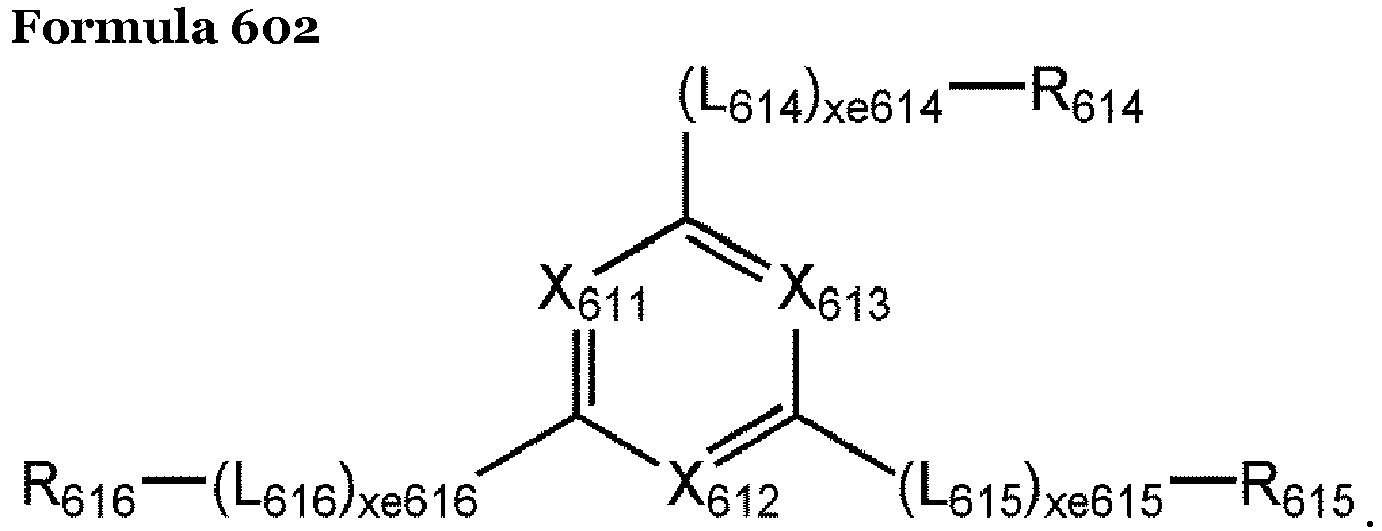
Claims (15)
- A condensed-cyclic compound represented by Formula 1:
 X1 and X2 are each independently selected from O and S,R1 to R8 are each independently selected from a group represented by Formula 2, hydrogen, deuterium, -F, -Cl, -Br, -I, a hydroxyl group, a cyano group, a nitro group, a carboxylic acid group or a salt thereof, a sulfonic acid group or a salt thereof, a phosphoric acid group or a salt thereof, a substituted or unsubstituted C1-C60 alkyl group, a substituted or unsubstituted C2-C60 alkenyl group, a substituted or unsubstituted C2-C60 alkynyl group, a substituted or unsubstituted C1-C60 alkoxy group, a substituted or unsubstituted C3-C10 cycloalkyl group, a substituted or unsubstituted C1-C10 heterocycloalkyl group, a substituted or unsubstituted C3-C10 cycloalkenyl group, a substituted or unsubstituted C1-C10 heterocycloalkenyl group, a substituted or unsubstituted C6-C60 aryl group, a substituted or unsubstituted C6-C60 aryloxy group, a substituted or unsubstituted C6-C60 arylthio group, a substituted or unsubstituted C1-C60 heteroaryl group, a substituted or unsubstituted monovalent non-aromatic condensed polycyclic group, a substituted or unsubstituted monovalent non-aromatic condensed heteropolycyclic group, and -Si(Q1)(Q2)(Q3),provided that one of R1 to R8 is a group represented by Formula 2,
 L1 is selected from a substituted or unsubstituted C3-C10 cycloalkylene group, a substituted or unsubstituted C1-C10 heterocycloalkylene group, a substituted or unsubstituted C3-C10 cycloalkenylene group, a substituted or unsubstituted C1-C10 heterocycloalkenylene group, a substituted or unsubstituted C6-C60 arylene group, a substituted or unsubstituted C1-C60 heteroarylene group, a substituted or unsubstituted divalent non-aromatic condensed polycyclic group, and a substituted or unsubstituted divalent non-aromatic condensed heteropolycyclic group,a1 is an integer selected from 0 to 3, and when a1 is 2 or more, each L1 moiety is independently selected from the above described groups,Ar1 and Ar2 are each independently selected from a substituted or unsubstituted C3-C10 cycloalkyl group, a substituted or unsubstituted C1-C10 heterocycloalkyl group, a substituted or unsubstituted C3-C10 cycloalkenyl group, a substituted or unsubstituted C1-C10 heterocycloalkenyl group, a substituted or unsubstituted C6-C60 aryl group, a substituted or unsubstituted C1-C60 heteroaryl group, a substituted or unsubstituted monovalent non-aromatic condensed polycyclic group, and a substituted or unsubstituted monovalent non-aromatic condensed heteropolycyclic group,and at least one substituent of the substituted C3-C10 cycloalkylene group, substituted C1-C10 heterocycloalkylene group, substituted C3-C10 cycloalkenylene group, substituted C1-C10 heterocycloalkenylene group, substituted C6-C60 arylene group, substituted C1-C60 heteroarylene group, substituted divalent non-aromatic condensed polycyclic group, substituted divalent non-aromatic condensed heteropolycyclic group, substituted C1-C60 alkyl group, substituted C2-C60 alkenyl group, substituted C2-C60 alkynyl group, substituted C1-C60 alkoxy group, substituted C3-C10 cycloalkyl group, substituted C1-C10 heterocycloalkyl group, substituted C3-C10 cycloalkenyl group, substituted C1-C10 heterocycloalkenyl group, substituted C6-C60 aryl group, substituted C6-C60 aryloxy group, substituted C6-C60 arylthio group, substituted C1-C60 heteroaryl group, substituted monovalent non-aromatic condensed polycyclic group, and substituted monovalent non-aromatic condensed heteropolycyclic group is selected from:deuterium, -F, -Cl, -Br, -I, a hydroxyl group, a cyano group, a nitro group, an amino group, an amidino group, a hydrazine group, a hydrazone group, a carboxylic acid group or a salt thereof, a sulfonic acid group or a salt thereof, a phosphoric acid group or a salt thereof, a C1-C60 alkyl group, a C2-C60 alkenyl group, a C2-C60 alkynyl group, and a C1-C60 alkoxy group;a C1-C60 alkyl group, a C2-C60 alkenyl group, a C2-C60 alkynyl group, and a C1-C60 alkoxy group, each substituted with at least one selected from deuterium, -F, -Cl, -Br, -I, a hydroxyl group, a cyano group, a nitro group, an amino group, an amidino group, a hydrazine group, a hydrazone group, a carboxylic acid group or a salt thereof, a sulfonic acid group or a salt thereof, a phosphoric acid group or a salt thereof, a C3-C10 cycloalkyl group, a C1-C10 heterocycloalkyl group, a C3-C10 cycloalkenyl group, a C1-C10 heterocycloalkenyl group, a C6-C60 aryl group, a C6-C60 aryloxy group, a C6-C60 arylthio group, a C1-C60 heteroaryl group, a monovalent non-aromatic condensed polycyclic group, a monovalent non-aromatic condensed heteropolycyclic group, and -Si(Q11)(Q12)(Q13);a C3-C10 cycloalkyl group, a C1-C10 heterocycloalkyl group, a C3-C10 cycloalkenyl group, a C1-C10 heterocycloalkenyl group, a C6-C60 aryl group, a C6-C60 aryloxy group, a C6-C60 arylthio group, a C1-C60 heteroaryl group, a monovalent non-aromatic condensed polycyclic group, and a monovalent non-aromatic condensed heteropolycyclic group;a C3-C10 cycloalkyl group, a C1-C10 heterocycloalkyl group, a C3-C10 cycloalkenyl group, a C1-C10 heterocycloalkenyl group, a C6-C60 aryl group, a C6-C60 aryloxy group, a C6-C60 arylthio group, a C1-C60 heteroaryl group, a monovalent non-aromatic condensed polycyclic group, and a monovalent non-aromatic condensed heteropolycyclic group, each substituted with at least one selected from deuterium, -F, -Cl, -Br, -I, a hydroxyl group, a cyano group, a nitro group, an amino group, an amidino group, a hydrazine group, a hydrazone group, a carboxylic acid group or a salt thereof, a sulfonic acid group or a salt thereof, a phosphoric acid group or a salt thereof, a C1-C60 alkyl group, a C2-C60 alkenyl group, a C2-C60 alkynyl group, a C1-C60 alkoxy group, a C3-C10 cycloalkyl group, a C1-C10 heterocycloalkyl group, a C3-C10 cycloalkenyl group, a C1-C10 heterocycloalkenyl group, a C6-C60 aryl group, a C6-C60 aryloxy group, a C6-C60 arylthio group, a C1-C60 heteroaryl group, a monovalent non-aromatic condensed polycyclic group, a monovalent non-aromatic condensed heteropolycyclic group, and -Si(Q21)(Q22)(Q23); and
-Si(Q31)(Q32)(Q33),
wherein Q1 to Q3, Q11 to Q13, Q21 to Q23, and Q31 to Q33 are each independently selected from hydrogen, deuterium, -F, -Cl, -Br, -I, a hydroxyl group, a cyano group, a nitro group, an amino group, an amidino group, a hydrazine group, a hydrazone group, a carboxylic acid group or a salt thereof, a sulfonic acid group or a salt thereof, a phosphoric acid group or a salt thereof, a C1-C60 alkyl group, a C2-C60 alkenyl group, a C2-C60 alkynyl group, a C1-C60 alkoxy group, a C3-C10 cycloalkyl group, a C1-C10 heterocycloalkyl group, a C3-C10 cycloalkenyl group, a C1-C10 heterocycloalkenyl group, a C6-C60 aryl group, a C1-C60 heteroaryl group, a monovalent non-aromatic condensed polycyclic group, and a monovalent non-aromatic condensed heteropolycyclic group. - The condensed-cyclic compound of claim 1, wherein X1 and X2 are each O and/or wherein a1 is 0, 1, or 2.
- The condensed-cyclic compound of claim 1 or 2, wherein L1 is selected from:a phenylene group, a pentalenylene group, an indenylene group, a naphthylene group, an azulenylene group, a heptalenylene group, an indacenylene group, an acenaphthylene group, a fluorenylene group, a spiro-fluorenylene group, a benzofluorenylene group, a dibenzofluorenylene group, a phenalenylene group, a phenanthrenylene group, an anthracenylene group, a fluoranthenylene group, a triphenylenylene group, a pyrenylene group, a chrysenylene group, a naphthacenylene group, a picenylene group, a perylenylene group, a pentaphenylene group, a hexacenylene group, a pentacenylene group, a rubicenylene group, a coronenylene group, an ovalenylene group, a pyrrolylene group, a thiophenylene group, a furanylene group, an imidazolylene group, a pyrazolylene group, a thiazolylene group, an isothiazolylene group, an oxazolylene group, an isoxazolylene group, a pyridinylene group, a pyrazinylene group, a pyrimidinylene group, a pyridazinylene group, an isoindolylene group, an indolylene group, an indazolylene group, a purinylene group, a quinolinylene group, an isoquinolinylene group, a benzoquinolinylene group, a phthalazinylene group, a naphthyridinylene group, a quinoxalinylene group, a quinazolinylene group, a cinnolinylene group, a carbazolylene group, a phenanthridinylene group, an acridinylene group, a phenanthrolinylene group, a phenazinylene group, a benzimidazolylene group, a benzofuranylene group, a benzothiophenylene group, an isobenzothiazolylene group, a benzoxazolylene group, an isobenzoxazolylene group, a triazolylene group, a tetrazolylene group, an oxadiazolylene group, a triazinylene group, a dibenzofuranylene group, a dibenzothiophenylene group, a benzocarbazolylene group, a dibenzocarbazolylene group, a thiadiazolylene group, an imidazopyridinylene group, and an imidazopyrimidinylene group; anda phenylene group, a pentalenylene group, an indenylene group, a naphthylene group, an azulenylene group, a heptalenylene group, an indacenylene group, an acenaphthylene group, a fluorenylene group, a spiro-fluorenylene group, a benzofluorenylene group, a dibenzofluorenylene group, a phenalenylene group, a phenanthrenylene group, an anthracenylene group, a fluoranthenylene group, a triphenylenylene group, a pyrenylene group, a chrysenylene group, a naphthacenylene group, a picenylene group, a perylenylene group, a pentaphenylene group, a hexacenylene group, a pentacenylene group, a rubicenylene group, a coronenylene group, an ovalenylene group, a pyrrolylene group, a thiophenylene group, a furanylene group, an imidazolylene group, a pyrazolylene group, a thiazolylene group, an isothiazolylene group, an oxazolylene group, an isoxazolylene group, a pyridinylene group, a pyrazinylene group, a pyrimidinylene group, a pyridazinylene group, an isoindolylene group, an indolylene group, an indazolylene group, a purinylene group, a quinolinylene group, an isoquinolinylene group, a benzoquinolinylene group, a phthalazinylene group, a naphthyridinylene group, a quinoxalinylene group, a quinazolinylene group, a cinnolinylene group, a carbazolylene group, a phenanthridinylene group, an acridinylene group, a phenanthrolinylene group, a phenazinylene group, a benzimidazolylene group, a benzofuranylene group, a benzothiophenylene group, an isobenzothiazolylene group, a benzoxazolylene group, an isobenzoxazolylene group, a triazolylene group, a tetrazolylene group, an oxadiazolylene group, a triazinylene group, a dibenzofuranylene group, a dibenzothiophenylene group, a benzocarbazolylene group, a dibenzocarbazolylene group, a thiadiazolylene group, an imidazopyridinylene group, and an imidazopyrimidinylene group, a phenylene group, a pentalenylene group, an indenylene group, a naphthylene group, an azulenylene group, a heptalenylene group, an indacenylene group, an acenaphthylene group, a fluorenylene group, a spiro-fluorenylene group, a benzofluorenylene group, a dibenzofluorenylene group, a phenalenylene group, a phenanthrenylene group, an anthracenylene group, a fluoranthenylene group, a triphenylenylene group, a pyrenylene group, a chrysenylene group, a naphthacenylene group, a picenylene group, a perylenylene group, a pentaphenylene group, a hexacenylene group, a pentacenylene group, a rubicenylene group, a coronenylene group, an ovalenylene group, a pyrrolylene group, a thiophenylene group, a furanylene group, an imidazolylene group, a pyrazolylene group, a thiazolylene group, an isothiazolylene group, an oxazolylene group, an isoxazolylene group, a pyridinylene group, a pyrazinylene group, a pyrimidinylene group, a pyridazinylene group, an isoindolylene group, an indolylene group, an indazolylene group, a purinylene group, a quinolinylene group, an isoquinolinylene group, a benzoquinolinylene group, a phthalazinylene group, a naphthyridinylene group, a quinoxalinylene group, a quinazolinylene group, a cinnolinylene group, a carbazolylene group, a phenanthridinylene group, an acridinylene group, a phenanthrolinylene group, a phenazinylene group, a benzimidazolylene group, a benzofuranylene group, a benzothiophenylene group, an isobenzothiazolylene group, a benzoxazolylene group, an isobenzoxazolylene group, a triazolylene group, a tetrazolylene group, an oxadiazolylene group, a triazinylene group, a dibenzofuranylene group, a dibenzothiophenylene group, a benzocarbazolylene group, a dibenzocarbazolylene group, a thiadiazolylene group, an imidazopyridinylene group, and an imidazopyrimidinylene group, each substituted with at least one selected from deuterium, -F, -Cl, -Br, -I, a hydroxyl group, a cyano group, a nitro group, an amino group, an amidino group, a hydrazine group, a hydrazone group, a carboxylic acid group or a salt thereof, a sulfonic acid group or a salt thereof, a phosphoric acid group or a salt thereof, a C1-C20 alkyl group, a C1-C20 alkoxy group, a cyclopentyl group, a cyclohexyl group, a cycloheptyl group, a cyclopentenyl group, a cyclohexenyl group, a phenyl group, a biphenyl group, a terphenyl group, a pentalenyl group, an indenyl group, a naphthyl group, an azulenyl group, a heptalenyl group, an indacenyl group, an acenaphthyl group, a fluorenyl group, a spiro-fluorenyl group, a benzofluorenyl group, a dibenzofluorenyl group, a phenalenyl group, a phenanthrenyl group, an anthracenyl group, a fluoranthenyl group, a triphenylenyl group, a pyrenyl group, a chrysenyl group, a naphthacenyl group, a picenyl group, a perylenyl group, a pentaphenyl group, a hexacenyl group, a pentacenyl group, a rubicenyl group, a coronenyl group, an ovalenyl group, a pyrrolyl group, a thiophenyl group, a furanyl group, an imidazolyl group, a pyrazolyl group, a thiazolyl group, an isothiazolyl group, an oxazolyl group, an isoxazolyl group, a pyridinyl group, a pyrazinyl group, a pyrimidinyl group, a pyridazinyl group, an isoindolyl group, an indolyl group, an indazolyl group, a purinyl group, a quinolinyl group, an isoquinolinyl group, a benzoquinolinyl group, a phthalazinyl group, a naphthyridinyl group, a quinoxalinyl group, a quinazolinyl group, a cinnolinyl group, a carbazolyl group, a phenanthridinyl group, an acridinyl group, a phenanthrolinyl group, a phenazinyl group, a benzimidazolyl group, a benzofuranyl group, a benzothiophenyl group, an isobenzothiazolyl group, a benzoxazolyl group, an isobenzoxazolyl group, a triazolyl group, a tetrazolyl group, an oxadiazolyl group, a triazinyl group, a dibenzofuranyl group, a dibenzothiophenyl group, a benzocarbazolyl group, a dibenzocarbazolyl group, a thiadiazolyl group, an imidazopyridinyl group, and an imidazopyrimidinyl group.
- The condensed-cyclic compound of any one of the preceding caims, wherein L1 is selected from the group represented by Formulae 3-1 to 3-41:





 Y1 is O, S, C(Z3)(Z4), N(Z5), or Si(Z6)(Z7), andZ1 to Z7 are each independently selected from hydrogen, deuterium, -F, -Cl, -Br, -I, a hydroxyl group, a cyano group, a nitro group, an amino group, an amidino group, a hydrazine group, a hydrazone group, a carboxylic acid group or a salt thereof, a sulfonic acid group or a salt thereof, a phosphoric acid group or a salt thereof, a C1-C20 alkyl group, a C1-C20 alkoxy group, a phenyl group, a biphenyl group, a terphenyl group, a naphthyl group, a fluorenyl group, a spiro-fluorenyl group, a benzofluorenyl group, a dibenzofluorenyl group, a phenanthrenyl group, an anthracenyl group, a pyrenyl group, a chrysenyl group, a pyridinyl group, a pyrazinyl group, a pyrimidinyl group, a pyridazinyl group, a quinolinyl group, an isoquinolinyl group, a quinoxalinyl group, a quinazolinyl group, a carbazolyl group, a triazinyl group, and -Si(Q33)(Q34)(Q35),wherein Q33 to Q35 are each independently selected from a C1-C10 alkyl group, a C1-C10 alkoxy group, a phenyl group, a biphenyl group, a terphenyl group, and a naphthyl group,d2 is an integer selected from 1 and 2,d3 is an integer selected from 1 to 3,d4 is an integer selected from 1 to 4,d5 is an integer selected from 1 to 5,d6 is an integer selected from 1 to 6,d8 is an integer selected from 1 to 8, and* and *' each indicate a binding site to an adjacent atom.
 - The condensed-cyclic compound of any one of the preceding claims, wherein *-(L1)a1-*' is selected from a single bond and the group represented by Formulae 4-1 to 4-36:


- The condensed-cyclic compound of any one of the preceding claims, wherein Ar1 and Ar2 are each independently:a substituted or unsubstituted phenyl group, a substituted or unsubstituted biphenyl group, a substituted or unsubstituted terphenyl group, a substituted or unsubstituted pentalenyl group, a substituted or unsubstituted indenyl group, a substituted or unsubstituted naphthyl group, a substituted or unsubstituted azulenyl group, a substituted or unsubstituted heptalenyl group, a substituted or unsubstituted indacenyl group, a substituted or unsubstituted acenaphthyl group, a substituted or unsubstituted fluorenyl group, a substituted or unsubstituted spiro-fluorenyl group, a substituted or unsubstituted benzofluorenyl group, a substituted or unsubstituted dibenzofluorenyl group, a substituted or unsubstituted phenalenyl group, a substituted or unsubstituted phenanthrenyl group, a substituted or unsubstituted anthracenyl group, a substituted or unsubstituted fluoranthenyl group, a substituted or unsubstituted triphenylenyl group, a substituted or unsubstituted pyrenyl group, a substituted or unsubstituted chrysenyl group, a substituted or unsubstituted naphthacenyl group, a substituted or unsubstituted picenyl group, a substituted or unsubstituted perylenyl group, a substituted or unsubstituted pentaphenyl group, a substituted or unsubstituted hexacenyl group, a substituted or unsubstituted pentacenyl group, a substituted or unsubstituted rubicenyl group, a substituted or unsubstituted coronenyl group, a substituted or unsubstituted ovalenyl group, a substituted or unsubstituted pyrrolyl group, a substituted or unsubstituted thiophenyl group, a substituted or unsubstituted furanyl group, a substituted or unsubstituted imidazolyl group, a substituted or unsubstituted pyrazolyl group, a substituted or unsubstituted thiazolyl group, a substituted or unsubstituted isothiazolyl group, a substituted or unsubstituted oxazolyl group, a substituted or unsubstituted isoxazolyl group, a substituted or unsubstituted pyridinyl group, a substituted or unsubstituted pyrazinyl group, a substituted or unsubstituted pyrimidinyl group, a substituted or unsubstituted pyridazinyl group, a substituted or unsubstituted isoindolyl group, a substituted or unsubstituted indolyl group, a substituted or unsubstituted indazolyl group, a substituted or unsubstituted purinyl group, a substituted or unsubstituted quinolinyl group, a substituted or unsubstituted isoquinolinyl group, a substituted or unsubstituted benzoquinolinyl group, a substituted or unsubstituted phthalazinyl group, a substituted or unsubstituted naphthyridinyl group, a substituted or unsubstituted quinoxalinyl group, a substituted or unsubstituted quinazolinyl group, a substituted or unsubstituted cinnolinyl group, a substituted or unsubstituted carbazolyl group, a substituted or unsubstituted phenanthridinyl group, a substituted or unsubstituted acridinyl group, a substituted or unsubstituted phenanthrolinyl group, a substituted or unsubstituted phenazinyl group, a substituted or unsubstituted benzimidazolyl group, a substituted or unsubstituted benzofuranyl group, a substituted or unsubstituted benzothiophenyl group, a substituted or unsubstituted isobenzothiazolyl group, a substituted or unsubstituted benzoxazolyl group, a substituted or unsubstituted isobenzoxazolyl group, a substituted or unsubstituted triazolyl group, a substituted or unsubstituted tetrazolyl group, a substituted or unsubstituted oxadiazolyl group, a substituted or unsubstituted triazinyl group, a substituted or unsubstituted benzocarbazolyl group, a substituted or unsubstituted dibenzocarbazolyl group, a substituted or unsubstituted thiadiazolyl group, a substituted or unsubstituted imidazopyridinyl group, a substituted or unsubstituted imidazopyrimidinyl group, a substituted or unsubstituted benzoxanthenyl group, a substituted or unsubstituted dibenzodioxinyl group, and -Si(Q1)(Q2)(Q3), andat least one substituent of the substituted phenyl group, substituted biphenyl group, substituted terphenyl group, substituted pentalenyl group, substituted indenyl group, substituted naphthyl group, substituted azulenyl group, substituted heptalenyl group, substituted indacenyl group, substituted acenaphthyl group, substituted fluorenyl group, substituted spiro-fluorenyl group, substituted benzofluorenyl group, substituted dibenzofluorenyl group, substituted phenalenyl group, substituted phenanthrenyl group, substituted anthracenyl group, substituted fluoranthenyl group, substituted triphenylenyl group, substituted pyrenyl group, substituted chrysenyl group, substituted naphthacenyl group, substituted picenyl group, substituted perylenyl group, substituted pentaphenyl group, substituted hexacenyl group, substituted pentacenyl group, substituted rubicenyl group, substituted coronenyl group, substituted ovalenyl group, substituted pyrrolyl group, substituted thiophenyl group, substituted furanyl group, substituted imidazolyl group, substituted pyrazolyl group, substituted thiazolyl group, substituted isothiazolyl group, substituted oxazolyl group, substituted isoxazolyl group, substituted pyridinyl group, substituted pyrazinyl group, substituted pyrimidinyl group, substituted pyridazinyl group, substituted isoindolyl group, substituted indolyl group, substituted indazolyl group, substituted purinyl group, substituted quinolinyl group, substituted isoquinolinyl group, substituted benzoquinolinyl group, substituted phthalazinyl group, substituted naphthyridinyl group, substituted quinoxalinyl group, substituted quinazolinyl group, substituted cinnolinyl group, substituted carbazolyl group, substituted phenanthridinyl group, substituted acridinyl group, substituted phenanthrolinyl group, substituted phenazinyl group, substituted benzimidazolyl group, substituted benzofuranyl group, substituted benzothiophenyl group, substituted isobenzothiazolyl group, substituted benzoxazolyl group, substituted isobenzoxazolyl group, substituted triazolyl group, substituted tetrazolyl group, substituted oxadiazolyl group, substituted triazinyl group, substituted benzocarbazolyl group, substituted dibenzocarbazolyl group, substituted thiadiazolyl group, substituted imidazopyridinyl group, substituted imidazopyrimidinyl group, substituted benzoxanthenyl group, and substituted dibenzodioxinyl group is selected from:deuterium, -F, -Cl, -Br, -I, a hydroxyl group, a cyano group, a nitro group, an amino group, an amidino group, a hydrazine group, a hydrazone group, a carboxylic acid group or a salt thereof, a sulfonic acid group or a salt thereof, a phosphoric acid group or a salt thereof, a C1-C20 alkyl group, and a C1-C20 alkoxy group;a C1-C20 alkyl group and a C1-C20 alkoxy group, each substituted with at least one selected from deuterium, -F, -Cl, -Br, -I, a hydroxyl group, a cyano group, a nitro group, an amino group, an amidino group, a hydrazine group, a hydrazone group, a carboxylic acid group or a salt thereof, a sulfonic acid group or a salt thereof, and a phosphoric acid group or a salt thereof;a phenyl group, a biphenyl group, a terphenyl group, a naphthyl group, a fluorenyl group, a spiro-fluorenyl group, a benzofluorenyl group, a dibenzofluorenyl group, a phenanthrenyl group, an anthracenyl group, a pyrenyl group, a chrysenyl group, a carbazolyl group, a benzocarbazolyl group, and a dibenzocarbazolyl group;a phenyl group, a biphenyl group, a terphenyl group, a naphthyl group, a pyridinyl group, a fluorenyl group, a spiro-fluorenyl group, a benzofluorenyl group, a dibenzofluorenyl group, a phenanthrenyl group, an anthracenyl group, a pyrenyl group, a chrysenyl group, a carbazolyl group, a benzocarbazolyl group, and a dibenzocarbazolyl group, each substituted with at least one selected from deuterium, -F, -Cl, -Br, -I, a hydroxyl group, a cyano group, a nitro group, an amino group, an amidino group, a hydrazine group, a hydrazone group, a carboxylic acid group or a salt thereof, a sulfonic acid group or a salt thereof, a phosphoric acid group or a salt thereof, a C1-C20 alkyl group, a C1-C20 alkoxy group, a phenyl group, a naphthyl group, and a pyridinyl group; andwherein Q1 to Q3 and Q31 to Q33 are each independently selected from hydrogen, deuterium, -F, -Cl, -Br, -I, a hydroxyl group, a cyano group, a nitro group, an amino group, an amidino group, a hydrazine group, a hydrazone group, a carboxylic acid group or a salt thereof, a sulfonic acid group or a salt thereof, a phosphoric acid group or a salt thereof, a C1-C20 alkyl group, a C1-C20 alkoxy group, a phenyl group, a biphenyl group, a terphenyl group, a naphthyl group, a fluorenyl group, a spiro-fluorenyl group, a benzofluorenyl group, a dibenzofluorenyl group, a phenanthrenyl group, an anthracenyl group, a pyrenyl group, a chrysenyl group, and a carbazolyl group.
-Si(Q31)(Q32)(Q33),
- The condensed-cyclic compound of any one of the preceding claims, wherein Ar1 and Ar2 are each independently selected from the group represented by Formulae 5-1 to 5-79:


 Y31 and Y32 are each independently selected from O, S, C(Z33)(Z34), N(Z35), and Si(Z36)(Z37),Z31 to Z37 are each independently selected from hydrogen, deuterium, -F, -Cl, -Br, -I, a hydroxyl group, a cyano group, a nitro group, an amino group, an amidino group, a hydrazine group, a hydrazone group, a carboxylic acid group or a salt thereof, a sulfonic acid group or a salt thereof, a phosphoric acid group or a salt thereof, a C1-C20 alkyl group, and a C1-C20 alkoxy group;a C1-C20 alkyl group and a C1-C20 alkoxy group, each substituted with at least one selected from deuterium, -F, -Cl, -Br, -I, a hydroxyl group, a cyano group, a nitro group, an amino group, an amidino group, a hydrazine group, a hydrazone group, a carboxylic acid group or a salt thereof, a sulfonic acid group or a salt thereof, and a phosphoric acid group or a salt thereof;a phenyl group, a biphenyl group, a terphenyl group, a naphthyl group, a fluorenyl group, a spiro-fluorenyl group, a benzofluorenyl group, a dibenzofluorenyl group, a phenanthrenyl group, an anthracenyl group, a pyrenyl group, a chrysenyl group, a carbazolyl group, a benzocarbazolyl group, and a dibenzocarbazolyl group;a phenyl group, a biphenyl group, a terphenyl group, a naphthyl group, a pyridinyl group, a fluorenyl group, a spiro-fluorenyl group, a benzofluorenyl group, a dibenzofluorenyl group, a phenanthrenyl group, an anthracenyl group, a pyrenyl group, a chrysenyl group, a carbazolyl group, a benzocarbazolyl group, and a dibenzocarbazolyl group, each substituted with at least one selected from deuterium, -F, -Cl, -Br, -I, a hydroxyl group, a cyano group, a nitro group, an amino group, an amidino group, a hydrazine group, a hydrazone group, a carboxylic acid group or a salt thereof, a sulfonic acid group or a salt thereof, a phosphoric acid group or a salt thereof, a C1-C20 alkyl group, a C1-C20 alkoxy group, a phenyl group, a naphthyl group, and a pyridinyl group; and
-Si(Q31)(Q32)(Q33), and
Z33 and Z34 are optionally linked to each other to form a saturated or unsaturated 3 to 20 membered carbocyclic or heterocyclic ring,wherein Q31 to Q33 are each independently selected from hydrogen, deuterium, -F, -Cl, - Br, -I, a hydroxyl group, a cyano group, a nitro group, an amino group, an amidino group, a hydrazine group, a hydrazone group, a carboxylic acid group or a salt thereof, a sulfonic acid group or a salt thereof, a phosphoric acid group or a salt thereof, a C1-C20 alkyl group, a C1-C20 alkoxy group, a phenyl group, a biphenyl group, a terphenyl group, a naphthyl group, a fluorenyl group, a spiro-fluorenyl group, a benzofluorenyl group, a dibenzofluorenyl group, a phenanthrenyl group, an anthracenyl group, a pyrenyl group, a chrysenyl group, and a carbazolyl group,e2 is an integer selected from 1 and 2,e3 is an integer selected from 1 to 3,e4 is an integer selected from 1 to 4,e5 is an integer selected from 1 to 5,e6 is an integer selected from 1 to 6,e7 is an integer selected from 1 to 7,e9 is an integer selected from 1 to 9, and
* indicates a binding site to an adjacent atom. - The condensed-cyclic compound of any one of the preceding claims, wherein Ar1 and Ar2 are each independently selected from the group represented by Formulae 6-1 to 6-54:


- The condensed-cyclic compound of any one of the preceding claims, wherein R1 to R8 are each independently selected from a group represented by Formula 2, hydrogen, deuterium, -F, -Cl, -Br, -I, a hydroxyl group, a cyano group, a nitro group, an amino group, an amidino group, a hydrazine group, a hydrazone group, a carboxylic acid group or a salt thereof, a sulfonic acid group or a salt thereof, a phosphoric acid group or a salt thereof, a substituted or unsubstituted C1-C20 alkyl group, a substituted or unsubstituted C1-C20 alkoxy group, a substituted or unsubstituted C6-C20 aryl group, a substituted or unsubstituted C1-C20 heteroaryl group, a substituted or unsubstituted monovalent non-aromatic condensed polycyclic group, a substituted or unsubstituted monovalent non-aromatic condensed heteropolycyclic group, and
-Si(Q1)(Q2)(Q3).
- The condensed-cyclic compound of any one of the preceding claims, wherein R1 to R8 are each independently selected from:a group represented by Formula 2, hydrogen, deuterium, -F, -Cl, -Br, -I, a hydroxyl group, a cyano group, a nitro group, a carboxylic acid group or a salt thereof, a sulfonic acid group or a salt thereof, a phosphoric acid group or a salt thereof, a C1-C20 alkyl group, and a C1-C20 alkoxy group;a phenyl group, a biphenyl group, a terphenyl group, a naphthyl group, a fluorenyl group, a spiro-fluorenyl group, a benzofluorenyl group, a dibenzofluorenyl group, a phenanthrenyl group, an anthracenyl group, a triphenylenyl group, a pyrenyl group, a chrysenyl group, a pyrrolyl group, a thiophenyl group, a furanyl group, an imidazolyl group, a pyrazolyl group, a thiazolyl group, an isothiazolyl group, an oxazolyl group, an isoxazolyl group, a pyridinyl group, a pyrazinyl group, a pyrimidinyl group, a pyridazinyl group, a quinolinyl group, an isoquinolinyl group, a benzoquinolinyl group, a quinoxalinyl group, a quinazolinyl group, a carbazolyl group, a benzimidazolyl group, a benzofuranyl group, a benzothiophenyl group, an isobenzothiazolyl group, a benzoxazolyl group, an isobenzoxazolyl group, an oxadiazolyl group, a triazinyl group, a dibenzofuranyl group, a dibenzothiophenyl group, an imidazopyridinyl group, and an imidazopyrimidinyl group;a phenyl group, a biphenyl group, a terphenyl group, a naphthyl group, a fluorenyl group, a spiro-fluorenyl group, a benzofluorenyl group, a dibenzofluorenyl group, a phenanthrenyl group, an anthracenyl group, a triphenylenyl group, a pyrenyl group, a chrysenyl group, a pyrrolyl group, a thiophenyl group, a furanyl group, an imidazolyl group, a pyrazolyl group, a thiazolyl group, an isothiazolyl group, an oxazolyl group, an isoxazolyl group, a pyridinyl group, a pyrazinyl group, a pyrimidinyl group, a pyridazinyl group, a quinolinyl group, an isoquinolinyl group, a benzoquinolinyl group, a quinoxalinyl group, a quinazolinyl group, a carbazolyl group, a benzimidazolyl group, a benzofuranyl group, a benzothiophenyl group, an isobenzothiazolyl group, a benzoxazolyl group, an isobenzoxazolyl group, an oxadiazolyl group, a triazinyl group, a dibenzofuranyl group, a dibenzothiophenyl group, an imidazopyridinyl group, and an imidazopyrimidinyl group, each substituted with at least one selected from deuterium, -F, -Cl, -Br, -I, a hydroxyl group, a cyano group, a nitro group, an amino group, an amidino group, a hydrazine group, a hydrazone group, a carboxylic acid group or a salt thereof, a sulfonic acid group or a salt thereof, a phosphoric acid group or a salt thereof, a C1-C10 alkyl group, a C1-C10 alkoxy group, a phenyl group, a naphthyl group, a fluorenyl group, a spiro-fluorenyl group, a benzofluorenyl group, a dibenzofluorenyl group, a phenanthrenyl group, an anthracenyl group, a triphenylenyl group, a pyrenyl group, a chrysenyl group, a pyrrolyl group, a thiophenyl group, a furanyl group, an imidazolyl group, a pyrazolyl group, a thiazolyl group, an isothiazolyl group, an oxazolyl group, an isoxazolyl group, a pyridinyl group, a pyrazinyl group, a pyrimidinyl group, a pyridazinyl group, a quinolinyl group, an isoquinolinyl group, a benzoquinolinyl group, a quinoxalinyl group, a quinazolinyl group, a carbazolyl group, a benzimidazolyl group, a benzofuranyl group, a benzothiophenyl group, an isobenzothiazolyl group, a benzoxazolyl group, an isobenzoxazolyl group, an oxadiazolyl group, a triazinyl group, a dibenzofuranyl group, a dibenzothiophenyl group, an imidazopyridinyl group, an imidazopyrimidinyl group, and -Si(Q31)(Q32)(Q33); and
-Si(Q1)(Q2)(Q3),
wherein Q1 to Q3 and Q31 to Q33 are each independently selected from a C1-C10 alkyl group, a C1-C10 alkoxy group, a phenyl group, a biphenyl group, a terphenyl group, and a naphthyl group. - The condensed-cyclic compound of any one of the preceding claims, wherein R1 to R8 are each independently selected from:a group represented by Formula 2, hydrogen, deuterium, -F, -Cl, -Br, -I, a hydroxyl group, a cyano group, a nitro group, a carboxylic acid group or a salt thereof, a sulfonic acid group or a salt thereof, a phosphoric acid group or a salt thereof, a C1-C10 alkyl group, and a C1-C10 alkoxy group;a phenyl group, a biphenyl group, a terphenyl group, a naphthyl group, a pyridinyl group, a pyrimidinyl group, and a triazinyl group;a phenyl group, a naphthyl group, a pyridinyl group, a pyrimidinyl group, and a triazinyl group, each substituted with at least one selected from deuterium, -F, -Cl, -Br, -I, a hydroxyl group, a cyano group, a nitro group, an amino group, an amidino group, a hydrazine group, a hydrazone group, a carboxylic acid group or a salt thereof, a sulfonic acid group or a salt thereof, a phosphoric acid group or a salt thereof, a C1-C10 alkyl group, a C1-C10 alkoxy group, a phenyl group, a biphenyl group, a terphenyl group, a naphthyl group, a pyridinyl group, a pyrimidinyl group, a triazinyl group, and -Si(Q31)(Q32)(Q33); and
-Si(Q1)(Q2)(Q3),
wherein Q1 to Q3 and Q31 to Q33 are each independently selected from a C1-C10 alkyl group, a C1-C10 alkoxy group, a phenyl group, a biphenyl group, a terphenyl group, and a naphthyl group;preferably wherein R1, R2, and R5 to R8 are hydrogen, one of R3 and R4 is a group represented by Formula 2, and the other of R3 and R4 is hydrogen. - The condensed-cyclic compound of claim 1 represented by one of Formulae 1A and 1B:


 wherein, in Formulae 1A and 1B, X1, X2, L1, a1, Ar1, Ar2, and R1 to R8 are each as defined in any one of the preceeding claims;preferably wherein:X1 and X2 are each O,R1, R2 and R4 to R8 in Formula 1A are each hydrogen,R1 to R3 and R5 to R8 in Formula 1B are each hydrogen,*-(L1)a1-*' is a single bond or selected from the group represented by Formulae 4-1 to 4-36, as defined in claim 5, andAr1 and Ar2 are each independently selected from the group represented by Formulae 6-1 to 6-54, as defined in claim 8.
 - The condensed-cyclic compound of claim 1 represented by one of Compounds 1 to 117:


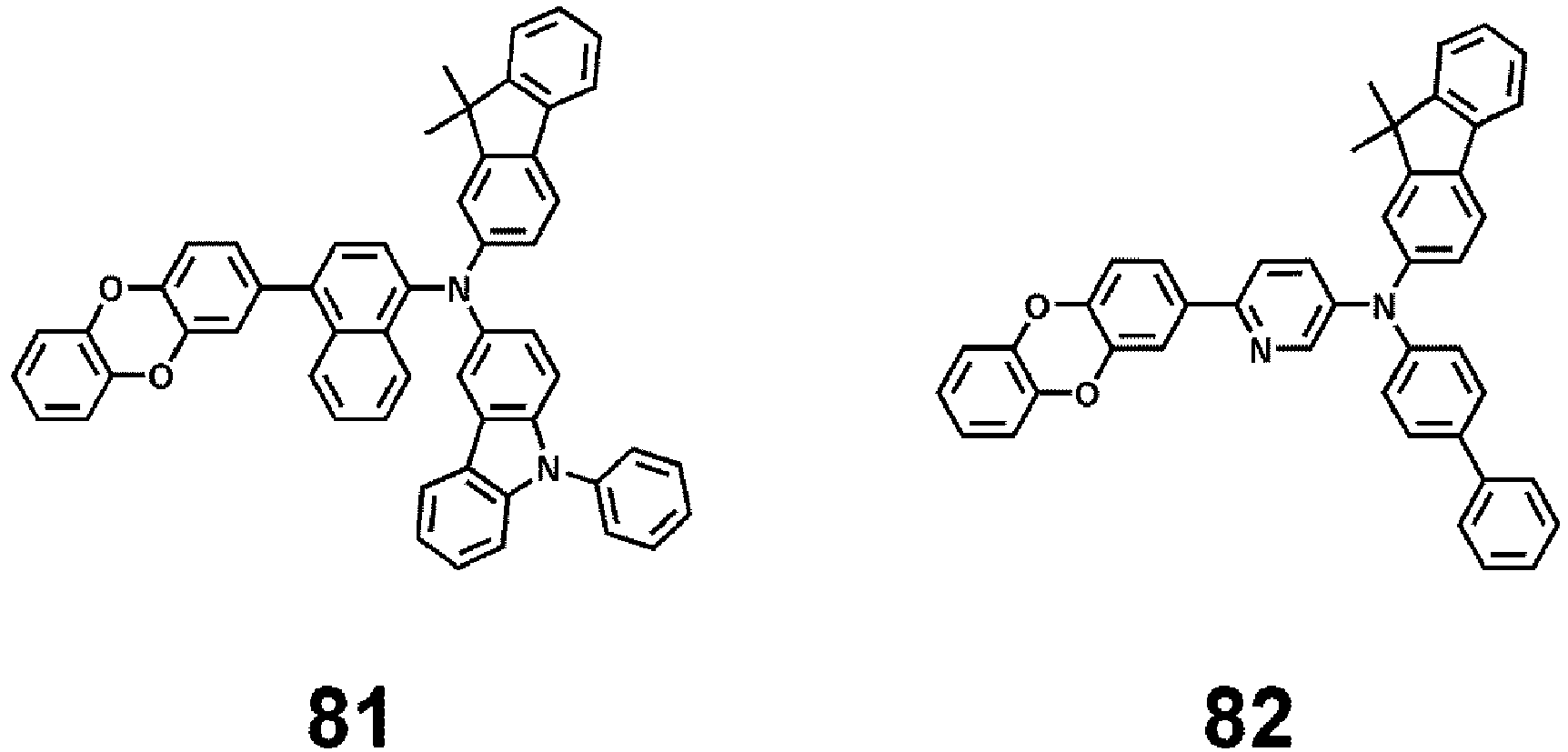


- An organic light-emitting device comprising:a first electrode;a second electrode facing the first electrode; andan organic layer between the first electrode and the second electrode,wherein the organic layer comprises an emission layer and the condensed-cyclic compound of any one of the preceding claims.
- The organic light-emitting device of claim 14, wherein:the first electrode is an anode,the second electrode is a cathode, andthe organic layer comprises i) a hole transport region that is between the first electrode and the emission layer and comprises at least one selected from a hole injection layer, a hole transport layer, a buffer layer, and an electron blocking layer, and ii) an electron transport region that is between the emission layer and the second electrode and comprises at least one selected from a hole blocking layer, an electron transport layer, and an electron injection layer;wherein the hole transport region preferably comprises the condensed-cyclic compound;and wherein the hole transport region optionally further comprises a charge-generating material.
Applications Claiming Priority (1)
| Application Number | Priority Date | Filing Date | Title |
|---|---|---|---|
| KR1020150121827A KR101863942B1 (en) | 2015-08-28 | 2015-08-28 | Condensed-cyclic compound and organic light emitting device comprising the same |
Publications (2)
| Publication Number | Publication Date |
|---|---|
| EP3135673A2 true EP3135673A2 (en) | 2017-03-01 |
| EP3135673A3 EP3135673A3 (en) | 2017-05-31 |
Family
ID=56464062
Family Applications (1)
| Application Number | Title | Priority Date | Filing Date |
|---|---|---|---|
| EP16179781.6A Withdrawn EP3135673A3 (en) | 2015-08-28 | 2016-07-15 | Condensed-cyclic compound and organic light emitting device comprising the same |
Country Status (5)
| Country | Link |
|---|---|
| US (1) | US10361373B2 (en) |
| EP (1) | EP3135673A3 (en) |
| JP (1) | JP7313108B2 (en) |
| KR (1) | KR101863942B1 (en) |
| CN (1) | CN106478592A (en) |
Families Citing this family (15)
| Publication number | Priority date | Publication date | Assignee | Title |
|---|---|---|---|---|
| KR102029336B1 (en) * | 2012-08-21 | 2019-10-07 | 제일모직 주식회사 | Compound for organic optoelectronic device, organic light emitting diode including the same and display including the organic light emitting diode |
| KR102376967B1 (en) * | 2015-02-13 | 2022-03-22 | 삼성디스플레이 주식회사 | Condensed-cyclic compound and organic light emitting device comprising the same |
| KR102424983B1 (en) * | 2017-05-16 | 2022-07-26 | 솔루스첨단소재 주식회사 | Organic light-emitting compound and organic electroluminescent device using the same |
| CN110494430B (en) * | 2017-10-19 | 2022-05-27 | 株式会社Lg化学 | Novel compound and organic light-emitting element using same |
| KR102512719B1 (en) | 2017-11-07 | 2023-03-23 | 삼성디스플레이 주식회사 | Condensed-cyclic compound and organic light emitting device comprising the same |
| KR102087487B1 (en) * | 2017-11-30 | 2020-03-10 | 주식회사 엘지화학 | New compound and organic light emitting device comprising the same |
| KR102587493B1 (en) * | 2018-02-08 | 2023-10-11 | 솔루스첨단소재 주식회사 | Organic light-emitting compound and organic electroluminescent device using the same |
| CN109004102B (en) * | 2018-06-11 | 2020-10-27 | 吉林奥来德光电材料股份有限公司 | application of a compound |
| CN108976166A (en) * | 2018-06-11 | 2018-12-11 | 吉林奥来德光电材料股份有限公司 | A kind of compound and its preparation method and application |
| CN110885333A (en) * | 2018-09-11 | 2020-03-17 | 江苏三月光电科技有限公司 | Compound with benzo [1,2-b:5,4-b' ] dibenzofuran as core and application thereof |
| CN109824522A (en) * | 2019-03-29 | 2019-05-31 | 吉林奥来德光电材料股份有限公司 | An organic light-emitting compound and its preparation method and application |
| WO2021179880A1 (en) * | 2020-03-09 | 2021-09-16 | 陕西莱特光电材料股份有限公司 | Nitrogen-containing organic compound, and electronic device and apparatus comprising same |
| CN114685552B (en) * | 2020-12-25 | 2023-08-22 | 陕西莱特光电材料股份有限公司 | Nitrogen-containing compound, electronic component and electronic device |
| CN114957187B (en) * | 2021-02-24 | 2025-05-02 | 阜阳欣奕华新材料科技股份有限公司 | Compounds and organic electroluminescent devices and display devices |
| CN119143742A (en) * | 2023-06-15 | 2024-12-17 | 京东方科技集团股份有限公司 | Functional layer material, light emitting device, and display panel |
Family Cites Families (23)
| Publication number | Priority date | Publication date | Assignee | Title |
|---|---|---|---|---|
| TW200535134A (en) | 2004-02-09 | 2005-11-01 | Nippon Steel Chemical Co | Aminodibenzodioxin derivative and organic electroluminescent device using same |
| US8012606B2 (en) | 2005-08-03 | 2011-09-06 | Nippon Steel Chemical Co., Ltd. | Heterocyclic compound and organic electroluminescent device using the same |
| JP2011178742A (en) | 2010-03-03 | 2011-09-15 | Hodogaya Chem Co Ltd | Compound having phenoxazine ring structure or phenothiazine ring structure and organic electroluminescent element |
| EP2371828B1 (en) * | 2010-04-01 | 2018-01-10 | Samsung Display Co., Ltd. | Condensed-Cyclic Compound and Organic Light-Emitting Device Including the Same |
| KR20110119206A (en) * | 2010-04-27 | 2011-11-02 | 다우어드밴스드디스플레이머티리얼 유한회사 | Novel organic light emitting compound and organic light emitting device comprising the same |
| KR20120042633A (en) * | 2010-08-27 | 2012-05-03 | 롬엔드하스전자재료코리아유한회사 | Novel organic electroluminescent compounds and organic electroluminescent device using the same |
| WO2012026780A1 (en) | 2010-08-27 | 2012-03-01 | Rohm And Haas Electronic Materials Korea Ltd. | Novel organic electroluminescent compounds and organic electroluminescent device using the same |
| WO2012157474A1 (en) | 2011-05-13 | 2012-11-22 | シャープ株式会社 | Compound, field effect transistor, method for manufacturing field effect transistor, solar cell, organic light-emitting element, composition, array for display devices, and display device |
| KR101807925B1 (en) | 2012-07-23 | 2017-12-11 | 메르크 파텐트 게엠베하 | Compounds and organic electroluminescent devices |
| KR102029336B1 (en) | 2012-08-21 | 2019-10-07 | 제일모직 주식회사 | Compound for organic optoelectronic device, organic light emitting diode including the same and display including the organic light emitting diode |
| KR101537005B1 (en) * | 2012-09-28 | 2015-07-20 | 제일모직 주식회사 | Compound for organic optoelectronic device, organic light emitting diode including the same and display including the organic light emitting diode |
| KR101565604B1 (en) * | 2012-11-28 | 2015-11-03 | 에스에프씨 주식회사 | Novel organic electroluminescent compounds and organic electroluminescent device using the same |
| KR20140108117A (en) | 2013-02-28 | 2014-09-05 | 에스에프씨 주식회사 | Organic electro luminescent compounds and organic electroluminescent device using the same |
| KR102138582B1 (en) * | 2013-05-15 | 2020-07-28 | 에스에프씨 주식회사 | An electroluminescent compound and an electroluminescent device comprising the same |
| JP6370030B2 (en) * | 2013-05-30 | 2018-08-08 | Tdk株式会社 | Compound for organic electroluminescence device and organic electroluminescence device using the same |
| KR20140145428A (en) | 2013-06-13 | 2014-12-23 | 에스케이케미칼주식회사 | Compound for organic electroluminescent device and organic electroluminescent device comprising the same |
| CN103483312A (en) * | 2013-09-03 | 2014-01-01 | 太仓碧奇新材料研发有限公司 | Triarylamine thianthrene organic electronic material and preparation method thereof |
| JP2015109370A (en) * | 2013-12-05 | 2015-06-11 | Tdk株式会社 | Electroluminescent device |
| WO2015099438A1 (en) | 2013-12-27 | 2015-07-02 | 주식회사 두산 | Organic light-emitting compound and organic electroluminescent element using same |
| KR101641417B1 (en) * | 2013-12-27 | 2016-07-20 | 주식회사 두산 | Organic lighting-emitting compound and organic electroluminescent device using the same |
| KR20150102734A (en) * | 2014-02-28 | 2015-09-07 | 머티어리얼사이언스 주식회사 | Organic compounds for an organic electroluminescent device and an organic electroluminescent device comprising the same |
| KR101738607B1 (en) * | 2014-02-28 | 2017-05-22 | 머티어리얼사이언스 주식회사 | Organic electroluminescent device |
| CN104844587B (en) | 2015-04-29 | 2018-06-01 | 深圳市华星光电技术有限公司 | Conjugated compound containing phenoxazine thiophene structure and preparation method thereof and organic electroluminescent diode apparatus |
-
2015
- 2015-08-28 KR KR1020150121827A patent/KR101863942B1/en active Active
-
2016
- 2016-03-04 US US15/061,710 patent/US10361373B2/en active Active
- 2016-06-08 JP JP2016114565A patent/JP7313108B2/en active Active
- 2016-07-14 CN CN201610552691.5A patent/CN106478592A/en active Pending
- 2016-07-15 EP EP16179781.6A patent/EP3135673A3/en not_active Withdrawn
Non-Patent Citations (1)
| Title |
|---|
| None |
Also Published As
| Publication number | Publication date |
|---|---|
| US10361373B2 (en) | 2019-07-23 |
| CN106478592A (en) | 2017-03-08 |
| JP2017043598A (en) | 2017-03-02 |
| KR101863942B1 (en) | 2018-07-06 |
| US20170062720A1 (en) | 2017-03-02 |
| EP3135673A3 (en) | 2017-05-31 |
| JP7313108B2 (en) | 2023-07-24 |
| KR20170026813A (en) | 2017-03-09 |
Similar Documents
| Publication | Publication Date | Title |
|---|---|---|
| EP3135673A2 (en) | Condensed-cyclic compound and organic light emitting device comprising the same | |
| EP3680948B1 (en) | Organic light-emitting device | |
| KR102552274B1 (en) | Condensed-cyclic compound and organic light emitting device comprising the same | |
| KR102606275B1 (en) | Organic light emitting device | |
| KR102163721B1 (en) | Condensed compound and organic light emitting device including the same | |
| KR102806395B1 (en) | Organic light emitting device | |
| KR102830964B1 (en) | Condensed-cyclic compound and organic light emitting device comprising the same | |
| EP2907815A2 (en) | Condensed cyclic compound and organic light-emitting device including the same | |
| KR20150134248A (en) | Carbazole-based compound and organic light emitting device including the same | |
| KR102510392B1 (en) | Carbazole-based compound and organic light-emitting device including the same | |
| KR20150133089A (en) | Condensed cyclic compound and organic light emitting device including the same | |
| KR102390370B1 (en) | Condensed cyclic compound and organic light emitting device including the same | |
| KR102572715B1 (en) | Condensed-cyclic compound and organic light emitting device comprising the same | |
| KR102332593B1 (en) | Compound and Organic light emitting device comprising same | |
| KR102938606B1 (en) | Condensed compound and organic light emitting diode comprising the same | |
| KR102322011B1 (en) | Condensed-cyclic compound and organic light emitting device comprising the same | |
| KR102328676B1 (en) | Condensed-cyclic compound and organic light emitting device comprising the same | |
| KR102696804B1 (en) | Organic light emitting device | |
| KR102628848B1 (en) | Condensed compound and organic light-emitting device including the same | |
| KR20160099157A (en) | An organic light emitting device | |
| KR102364221B1 (en) | Condensed-cyclic compound and organic light emitting device comprising the same | |
| KR102304716B1 (en) | Amine-based compounds and organic light-emitting device including the same | |
| KR102562893B1 (en) | Condensed compound and organic light emitting diode comprising the same | |
| KR102698886B1 (en) | Organic light emitting device | |
| KR102491872B1 (en) | Condensed-cyclic compound and organic light-emitting device comprising the same |
Legal Events
| Date | Code | Title | Description |
|---|---|---|---|
| PUAI | Public reference made under article 153(3) epc to a published international application that has entered the european phase |
Free format text: ORIGINAL CODE: 0009012 |
|
| STAA | Information on the status of an ep patent application or granted ep patent |
Free format text: STATUS: THE APPLICATION HAS BEEN PUBLISHED |
|
| AK | Designated contracting states |
Kind code of ref document: A2 Designated state(s): AL AT BE BG CH CY CZ DE DK EE ES FI FR GB GR HR HU IE IS IT LI LT LU LV MC MK MT NL NO PL PT RO RS SE SI SK SM TR |
|
| AX | Request for extension of the european patent |
Extension state: BA ME |
|
| PUAL | Search report despatched |
Free format text: ORIGINAL CODE: 0009013 |
|
| RIC1 | Information provided on ipc code assigned before grant |
Ipc: C07D 405/12 20060101ALI20170418BHEP Ipc: C07D 407/12 20060101ALI20170418BHEP Ipc: C09K 11/07 20060101ALI20170418BHEP Ipc: C07D 409/12 20060101ALI20170418BHEP Ipc: C07D 407/14 20060101ALI20170418BHEP Ipc: H01L 51/00 20060101ALI20170418BHEP Ipc: C07D 319/24 20060101ALI20170418BHEP Ipc: C07D 405/14 20060101AFI20170418BHEP |
|
| AK | Designated contracting states |
Kind code of ref document: A3 Designated state(s): AL AT BE BG CH CY CZ DE DK EE ES FI FR GB GR HR HU IE IS IT LI LT LU LV MC MK MT NL NO PL PT RO RS SE SI SK SM TR |
|
| AX | Request for extension of the european patent |
Extension state: BA ME |
|
| STAA | Information on the status of an ep patent application or granted ep patent |
Free format text: STATUS: REQUEST FOR EXAMINATION WAS MADE |
|
| 17P | Request for examination filed |
Effective date: 20171127 |
|
| RBV | Designated contracting states (corrected) |
Designated state(s): AL AT BE BG CH CY CZ DE DK EE ES FI FR GB GR HR HU IE IS IT LI LT LU LV MC MK MT NL NO PL PT RO RS SE SI SK SM TR |
|
| STAA | Information on the status of an ep patent application or granted ep patent |
Free format text: STATUS: EXAMINATION IS IN PROGRESS |
|
| 17Q | First examination report despatched |
Effective date: 20190911 |
|
| STAA | Information on the status of an ep patent application or granted ep patent |
Free format text: STATUS: THE APPLICATION IS DEEMED TO BE WITHDRAWN |
|
| 18D | Application deemed to be withdrawn |
Effective date: 20200818 |