EP3134107B1 - Use of a hiv derived accessory protein for the reactivation of latent hiv - Google Patents
Use of a hiv derived accessory protein for the reactivation of latent hiv Download PDFInfo
- Publication number
- EP3134107B1 EP3134107B1 EP15720010.6A EP15720010A EP3134107B1 EP 3134107 B1 EP3134107 B1 EP 3134107B1 EP 15720010 A EP15720010 A EP 15720010A EP 3134107 B1 EP3134107 B1 EP 3134107B1
- Authority
- EP
- European Patent Office
- Prior art keywords
- hiv
- protein
- tat
- reactivation
- latent
- Prior art date
- Legal status (The legal status is an assumption and is not a legal conclusion. Google has not performed a legal analysis and makes no representation as to the accuracy of the status listed.)
- Active
Links
Classifications
-
- C—CHEMISTRY; METALLURGY
- C07—ORGANIC CHEMISTRY
- C07K—PEPTIDES
- C07K14/00—Peptides having more than 20 amino acids; Gastrins; Somatostatins; Melanotropins; Derivatives thereof
- C07K14/005—Peptides having more than 20 amino acids; Gastrins; Somatostatins; Melanotropins; Derivatives thereof from viruses
-
- A—HUMAN NECESSITIES
- A61—MEDICAL OR VETERINARY SCIENCE; HYGIENE
- A61K—PREPARATIONS FOR MEDICAL, DENTAL OR TOILETRY PURPOSES
- A61K38/00—Medicinal preparations containing peptides
- A61K38/16—Peptides having more than 20 amino acids; Gastrins; Somatostatins; Melanotropins; Derivatives thereof
- A61K38/162—Peptides having more than 20 amino acids; Gastrins; Somatostatins; Melanotropins; Derivatives thereof from virus
-
- A—HUMAN NECESSITIES
- A61—MEDICAL OR VETERINARY SCIENCE; HYGIENE
- A61K—PREPARATIONS FOR MEDICAL, DENTAL OR TOILETRY PURPOSES
- A61K45/00—Medicinal preparations containing active ingredients not provided for in groups A61K31/00 - A61K41/00
- A61K45/06—Mixtures of active ingredients without chemical characterisation, e.g. antiphlogistics and cardiaca
-
- C—CHEMISTRY; METALLURGY
- C07—ORGANIC CHEMISTRY
- C07K—PEPTIDES
- C07K2319/00—Fusion polypeptide
- C07K2319/70—Fusion polypeptide containing domain for protein-protein interaction
- C07K2319/71—Fusion polypeptide containing domain for protein-protein interaction containing domain for transcriptional activaation, e.g. VP16
-
- C—CHEMISTRY; METALLURGY
- C12—BIOCHEMISTRY; BEER; SPIRITS; WINE; VINEGAR; MICROBIOLOGY; ENZYMOLOGY; MUTATION OR GENETIC ENGINEERING
- C12N—MICROORGANISMS OR ENZYMES; COMPOSITIONS THEREOF; PROPAGATING, PRESERVING, OR MAINTAINING MICROORGANISMS; MUTATION OR GENETIC ENGINEERING; CULTURE MEDIA
- C12N2740/00—Reverse transcribing RNA viruses
- C12N2740/00011—Details
- C12N2740/10011—Retroviridae
- C12N2740/16011—Human Immunodeficiency Virus, HIV
- C12N2740/16033—Use of viral protein as therapeutic agent other than vaccine, e.g. apoptosis inducing or anti-inflammatory
-
- C—CHEMISTRY; METALLURGY
- C12—BIOCHEMISTRY; BEER; SPIRITS; WINE; VINEGAR; MICROBIOLOGY; ENZYMOLOGY; MUTATION OR GENETIC ENGINEERING
- C12N—MICROORGANISMS OR ENZYMES; COMPOSITIONS THEREOF; PROPAGATING, PRESERVING, OR MAINTAINING MICROORGANISMS; MUTATION OR GENETIC ENGINEERING; CULTURE MEDIA
- C12N2740/00—Reverse transcribing RNA viruses
- C12N2740/00011—Details
- C12N2740/10011—Retroviridae
- C12N2740/16011—Human Immunodeficiency Virus, HIV
- C12N2740/16311—Human Immunodeficiency Virus, HIV concerning HIV regulatory proteins
- C12N2740/16322—New viral proteins or individual genes, new structural or functional aspects of known viral proteins or genes
Definitions
- the present disclosure relates to the use of a protein comprising at least a HIV-derived accessory protein tat (trans-activator of transcription) or any derivative thereof for the reactivation of latent human immunodeficiency virus (HIV) from cells in an HIV-infected individual.
- a protein comprising at least a HIV-derived accessory protein tat (trans-activator of transcription) or any derivative thereof for the reactivation of latent human immunodeficiency virus (HIV) from cells in an HIV-infected individual.
- HIV-derived accessory protein tat trans-activator of transcription
- HIV latent human immunodeficiency virus
- HAART Highly active antiretroviral therapy
- HAART can suppress HIV-1 levels in plasma to below the limit of detection of clinical assays ( ⁇ 50 copies/ml) and reduce the morbidity and mortality of HIV-1 infection.
- HAART alone fails to cure HIV infection.
- HAART leaves latent integrated proviruses unaffected.
- Latent viral genomes reside in a small pool of infected resting memory CD4+ T-cells that constitute a stable viral reservoir. In these cells, the provirus remains transcriptionally silent as long as the host cells are in a quiescent state. This allows the virus to evade host immune surveillance and rebound quickly following discontinuation of HAART.
- the remarkable stability of the latent viral reservoir necessitates lifelong HAART. Given the potential for toxicity and resistance, elimination of the latent reservoir has been proposed as a goal worthy of a major scientific effort.
- Therapies targeting the latent reservoir generally involve reactivation of latent virus.
- Expression of viral genes renders infected cells susceptible to viral cytopathic effects and immune clearance.
- this reactivation strategy could ultimately purge latent virus from infected individuals.
- latent viruses respond to T-cell activation signals initial attempts to deplete the latent reservoir through T-cell reception (TCR) stimulation using anti-CD3 antibodies proved toxic. The toxicity likely resulted from global T-cell activation with subsequent release of pro-inflammatory cytokines. Therefore, an ideal treatment should reactivate latent HIV-1, but avoid overall T-cell activation.
- the current invention aims to using a deletion mutant of the HIV-derived accessory protein tat ( t rans- a ctivator of t ranscription) for the reactivation and subsequent eradication of latent HIV.
- the full length tat protein [86-101 aa] is translated from two different exons where exon-1 [1-72 aa] contains all domains essential for trans-activation. Mutagenesis experiments surprisingly identified the first 57 N-terminal amino acids of wild type tat as minimal reactivation domain (Table 2).
- Tat 66 amino acid deletion mutant [T66] with a reactivation capacity close to full length exon 1 Tat72 (Table 2) potently activates HIV in latently infected cell lines (Table 3) and primary CD4 cells (Table 4).
- the activity of Tat derivatives was evaluated ex vivo on patient-derived latently infected CD4 cells and compared with the most potent reference compounds known to reactivate latent HIV in vitro and ex vivo.
- PHA Physicalhaemagglutinin
- PMA Phorbol myristate acetate
- SAHA suberoyl anilide hydroxamic acid
- the current invention relates to a protein consisting of the first 66 N-terminal amino acids (T66) of the wild-type human immunodeficiency virus (HIV)-derived accessory protein Tat and having the amino acid sequence of SeqIdNo.3, and its use for HIV eradication.
- HIV latent human immunodeficiency virus
- the description below concerns a method of reactivating latent HIV present in a host cell by exposing a HIV infected cell with a HIV-derived accessory protein tat (trans-activator of transcription) or any derivative thereof.
- Tat stands for, as mentioned above, "Trans-Activator of Transcription" and Tat consists of between 86 and 101 amino acids depending on the subtype.
- tat is a protein which is encoded for by the tat gene in HIV-1.
- Tat is a regulatory protein that drastically enhances the efficiency of viral transcription.
- said protein comprises at least a wild-type HIV-derived accessory protein tat for the reactivation of latent HIV but more preferably said protein comprises at least the first 57 N-terminal amino acids of wild-type tat (86-101 aa) for the reactivation of latent HIV.
- Said protein may also comprise at least the first 60 N-terminal amino acids of wild-type tat (86-101 aa) for the reactivation of latent HIV.
- Said 57 amino acids are represented by the following SEQ ID No. 1: MEPVDPRLEPWKHPGSQPKTACTNCYCKKCCFHCQVCFMTKALGISYGRKKRR QRRR.
- the mentioned 60 amino acids are represented by the following SEQ ID No; 2: MEPVDPRLEPWKHPGSQPKTACTNCYCKKCCFHCQVCFMTKALGISYGRKKRR QRRRAHQ
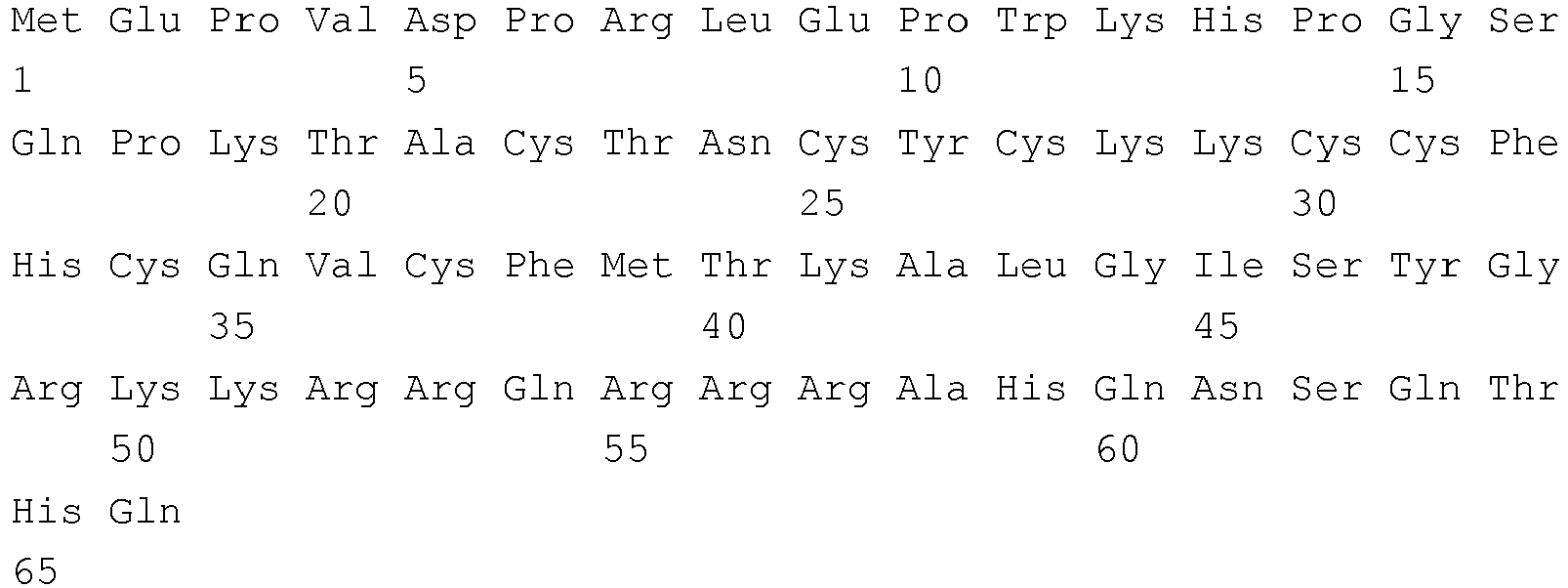
- the 66 amino acid deletion mutant [T66] according to the invention with a reactivation capacity close to full length exon 1 Tat72 has the amino acid sequence of SEQ ID NO 3:
- amino acid is meant, for purposes of the specification and claims and in reference to the protein according to the present invention, to refer to a molecule that has at least one free amine group and at least one free carboxyl group and may further comprise one or more free chemical reactive group other than an amine or a carboxyl group (e.g., a hydroxyl, a sulfhydryl, etc).
- the amino acid may be a naturally occurring amino acid (e.g., L-amino acid and is depicted in this specification as a capital letter in the sequence), a non-naturally occurring amino acid (e.g., D-amino acid and is depicted in this specification as a small letter in the sequence), a synthetic amino acid, a modified amino acid, an amino acid derivative, an amino acid precursor, and a conservative substitution.
- a naturally occurring amino acid e.g., L-amino acid and is depicted in this specification as a capital letter in the sequence
- a non-naturally occurring amino acid e.g., D-amino acid and is depicted in this specification as a small letter in the sequence
- synthetic amino acid e.g., a synthetic amino acid, a modified amino acid, an amino acid derivative, an amino acid precursor, and a conservative substitution.
- amino acids incorporated into a protein will depend, in part, on the specific physical, chemical or biological characteristics required of the protein. Such characteristics are determined, in part, by determination of helicity and activity.
- amino acids in a synthetic protein may be comprised of one or more of naturally occurring (L-) amino acid and non-naturally occurring (D-) amino acid.
- a “conservative substitution” is used in this specification to mean one or more amino acids substitution in the sequence of the protein such that the protein still demonstrate the unexpected, improved biological activity. This includes substitutions of amino acids having substantially the same charge, size, hydrophilicity, and/or aromaticity as the amino acid replaced.
- transactivation domains of host transcription factors such as NFkB or NFAT.
- TAD transactivation domains
- Table 5 shows the increased activity of T66 linked to TADs from NFkB p65 and NFAT2.
- Another option would be to add a cell-targeting moiety to HIV tat such as anti-CD3 antibody or IL7 to target the transactivator more specifically to cells that are known to harbor latent HIV.
- the T66 protein is used in a concentration of 1 ⁇ M to 10 ⁇ M, preferably of 2 ⁇ M to 5 ⁇ M.
- HIV can be eradicated by addition of an antiviral agent such as a small molecule and/or antibody directed towards HIV in order to realize a cure of HIV.
- an antiviral agent such as a small molecule and/or antibody directed towards HIV in order to realize a cure of HIV.
- Part of the invention is also a pharmaceutical composition
- a pharmaceutical composition comprising the protein above referenced and a pharmaceutically accepted carrier.
- To the present invention also belongs a method for treating a subject with human immunodeficiency virus (HIV) comprising the steps of:
- Tat variant % Tat72 activity 1-66 92.2 ( ⁇ 12.7) 1-64 77.2 ( ⁇ 10.8) 1-60 77.2 ( ⁇ 10.8) 1-57 40.2 ( ⁇ 2.3) 1-50 0.0 (NA)
- Activity is expressed in % with respect to the activity achieved by full length Tat72 exon-1 set to 100 %. Shown data are mean values [n ⁇ 4] with indicated (standard deviation).
- Tat-mediated transactivation was determined by triple plasmid transfection of HEK293 cells with pEF-T, a Tat expression plasmid, LTR-FLuc, a HIV LTR-controlled firefly luciferase reporter plasmid and pEF1-RLuc, a EF1 ⁇ promoter driven Renilla luciferase reporter plasmid. Luciferase reporter activities were assessed 24 h post transfection using the Dual-Glo luciferase assay [Promega]. The measured HIV LTR luciferase data were normalized by Renilla luciferase data retrieved from the pEF1-RLuc plasmid.
- LTR activity is expressed as percentage of wild type exon-1 Tat72 activity.
- Table 3 Titration of tat protein variants on latent HIV LTR-GFP reporter cell line. Tat [ ⁇ g] 100 80 70 60 50 40 30 0 T72 93.7 93.8 88.8 76.3 60.4 47.2 18.6 1.2 T66 94.5 93.9 87.6 88.7 87.0 53.8 45.7 1.0 T60 93.3 95.8 95.2 92.1 87.0 33.4 28.5 1.1
- MT4-LTR-GFP cells were incubated overnight with different Tat variants at the indicated concentration [ ⁇ g/ml]. LTR activation was determined by flow cytometry.
- Table 4 Ex vivo activation of CD4 cells with Tat protein T60, T66, and T86.
- Tat % Activity (PMA / PHA) Donor 1 Donor 2 Donor 3 Donor 4 Donor 5 T60 405 / 328 ND 213 / 196 ND ND / 254 T66 838 / 680 1121 / 986 530 / 487 ND / 479 ND / 636 T86 ND ND ND ND / 436 ND / 408
- CD4 + T cells were isolated from 200 ml whole blood using CD4 microbeads (Miltenyi Biotec) according to manufacturer's protocol. Blood originates from HIV-infected individuals under long-term HAART with undetectable plasma virus. Ten to twenty replicates of cell pools plated at 1x10 6 CD4 + T cells / well were incubated overnight with compounds or mock controls (DMSO/PBS). Total RNA was isolated from each replicate using the Magmax 96 Total RNA isolation kit (Ambion) following the manufacturer's protocol. Duplicate cDNA reactions were performed on each RNA replicate using SuperScript III First-Strand Synthesis kit (Invitrogen) according to the manufacturer's protocol.
- Quantitative real-time PCR was conducted on each cDNA applying gag-specific primers and the nucleic acid detection dye Sybr Green I [Invitrogen]. Standard curves were generated using cDNA synthesized from in vitro transcribed RNA. The detection limit of the QPCR assay was determined to be within 1-10 copies / reaction. Cycle threshold (ct) values ⁇ 40 were excluded from the analysis. The Wilcoxon rank sum test was used to calculate the statistical significance of the relative HIV-1 gag RNA copy number between different conditions. Table 5: T66 fusion proteins result in increased activation when compared to T66.
Landscapes
- Health & Medical Sciences (AREA)
- Life Sciences & Earth Sciences (AREA)
- Chemical & Material Sciences (AREA)
- General Health & Medical Sciences (AREA)
- Medicinal Chemistry (AREA)
- Gastroenterology & Hepatology (AREA)
- Organic Chemistry (AREA)
- Proteomics, Peptides & Aminoacids (AREA)
- Virology (AREA)
- Veterinary Medicine (AREA)
- Public Health (AREA)
- Pharmacology & Pharmacy (AREA)
- Epidemiology (AREA)
- Animal Behavior & Ethology (AREA)
- Bioinformatics & Cheminformatics (AREA)
- Immunology (AREA)
- Biochemistry (AREA)
- Biophysics (AREA)
- Genetics & Genomics (AREA)
- Molecular Biology (AREA)
- Engineering & Computer Science (AREA)
- Peptides Or Proteins (AREA)
- Medicines That Contain Protein Lipid Enzymes And Other Medicines (AREA)
- Pharmaceuticals Containing Other Organic And Inorganic Compounds (AREA)
Description
- The present disclosure relates to the use of a protein comprising at least a HIV-derived accessory protein tat (trans-activator of transcription) or any derivative thereof for the reactivation of latent human immunodeficiency virus (HIV) from cells in an HIV-infected individual.
- Highly active antiretroviral therapy (HAART) can suppress HIV-1 levels in plasma to below the limit of detection of clinical assays (<50 copies/ml) and reduce the morbidity and mortality of HIV-1 infection. However, HAART alone fails to cure HIV infection. In particular, HAART leaves latent integrated proviruses unaffected. Latent viral genomes reside in a small pool of infected resting memory CD4+ T-cells that constitute a stable viral reservoir. In these cells, the provirus remains transcriptionally silent as long as the host cells are in a quiescent state. This allows the virus to evade host immune surveillance and rebound quickly following discontinuation of HAART. The remarkable stability of the latent viral reservoir necessitates lifelong HAART. Given the potential for toxicity and resistance, elimination of the latent reservoir has been proposed as a goal worthy of a major scientific effort.
- Therapies targeting the latent reservoir generally involve reactivation of latent virus. Expression of viral genes renders infected cells susceptible to viral cytopathic effects and immune clearance. Along with HAART, this reactivation strategy could ultimately purge latent virus from infected individuals. While latent viruses respond to T-cell activation signals initial attempts to deplete the latent reservoir through T-cell reception (TCR) stimulation using anti-CD3 antibodies proved toxic. The toxicity likely resulted from global T-cell activation with subsequent release of pro-inflammatory cytokines. Therefore, an ideal treatment should reactivate latent HIV-1, but avoid overall T-cell activation.
- However, despite global extensive research efforts, there still exists a high unmet medical need for reliable, safe and convenient compounds able to reactivate latent HIV from above mentioned reservoir in HIV-infected patients.
- The current invention aims to using a deletion mutant of the HIV-derived accessory protein tat (trans-activator of transcription) for the reactivation and subsequent eradication of latent HIV. The full length tat protein [86-101 aa] is translated from two different exons where exon-1 [1-72 aa] contains all domains essential for trans-activation. Mutagenesis experiments surprisingly identified the first 57 N-terminal amino acids of wild type tat as minimal reactivation domain (Table 2). The 66 amino acid deletion mutant [T66] with a reactivation capacity close to full length exon 1 Tat72 (Table 2) potently activates HIV in latently infected cell lines (Table 3) and primary CD4 cells (Table 4). The activity of Tat derivatives was evaluated ex vivo on patient-derived latently infected CD4 cells and compared with the most potent reference compounds known to reactivate latent HIV in vitro and ex vivo. Unexpectedly Tat 66 protein induced HIV activation and exceeded by far the reactivation achieved by reference compounds such as PHA (Phytohaemagglutinin), PMA (Phorbol myristate acetate), and SAHA (suberoyl anilide hydroxamic acid). The inclusion of a tat-derived protein in a treatment regimen will be essential to cure HIV infected people. The document
US2005221288 describes variant Tat proteins and their use in a method of selectively activating cells latently infected with HIV. - The current invention relates to a protein consisting of the first 66 N-terminal amino acids (T66) of the wild-type human immunodeficiency virus (HIV)-derived accessory protein Tat and having the amino acid sequence of SeqIdNo.3, and its use for HIV eradication.
- The below description describes the use of a protein comprising at least a HIV-derived accessory protein tat (trans-activator of transcription) or any derivative thereof for the reactivation of latent human immunodeficiency virus (HIV) from cells present in a HIV-infected patient.
- Alternatively it can be expressed that the description below concerns a method of reactivating latent HIV present in a host cell by exposing a HIV infected cell with a HIV-derived accessory protein tat (trans-activator of transcription) or any derivative thereof.
- Tat stands for, as mentioned above, "Trans-Activator of Transcription" and Tat consists of between 86 and 101 amino acids depending on the subtype.
- Also, in molecular biology, tat is a protein which is encoded for by the tat gene in HIV-1. Tat is a regulatory protein that drastically enhances the efficiency of viral transcription.
- Preferably said protein comprises at least a wild-type HIV-derived accessory protein tat for the reactivation of latent HIV but more preferably said protein comprises at least the first 57 N-terminal amino acids of wild-type tat (86-101 aa) for the reactivation of latent HIV.
- Said protein may also comprise at least the first 60 N-terminal amino acids of wild-type tat (86-101 aa) for the reactivation of latent HIV.
- Said 57 amino acids are represented by the following SEQ ID No. 1: MEPVDPRLEPWKHPGSQPKTACTNCYCKKCCFHCQVCFMTKALGISYGRKKRR QRRR.
- The mentioned 60 amino acids are represented by the following SEQ ID No; 2: MEPVDPRLEPWKHPGSQPKTACTNCYCKKCCFHCQVCFMTKALGISYGRKKRR QRRRAHQ
- The 66 amino acid deletion mutant [T66] according to the invention with a reactivation capacity close to full length exon 1 Tat72 has the amino acid sequence of SEQ ID NO 3:

- In Table 1 below substitutions are provided for each position in these SEQ ID NO: 1, 2 and 3 respectively which are feasible in order to obtain a protein falling within the scope of the present description.
Table 1: Primary T66 amino acid sequence with indicated substitutions No T66 Substitutions 1. M 2. E D 3. P L 4. V I 5. D N 6. P H 7. R N/S/K 8. L I 9. E D 10. P 11. W 12. K N/E/Q/H 13. H Q/R 14. P S 15. G 16. S 17. Q R/K 18. P 19. K R/T/A/I/S/Q/N/E/G/P 20. T 21. A P/D/N/E/S 22. C 23. T N/S 24. N K/P/T/S/A/Q/R/G 25. C 26. Y F 27. C 28. K 29. K R/H/A/M/V/Q/E/S/I/Y 30. C 31. C S 32. F Y/W/L/M 33. H 34. C 35. Q L/P/Y/I/V/M/A/T 36. V L/W/A/I/S/Y/M/D/K/H/N/R/T/F/C 37. C 38. F L 39. M T/Q/I/L/H/V/A/S 40. T K/N/H/Q/S/R/A/T/D 41. K 42. A G 43. L 44. G S/R 45. I T/V/L 46. S F/Y/V/I/C/P/L/H/R 47. Y H/N 48. G 49. R K 50. K R 51. K R 52. R W/Q 53. R K/S/G/T/Q/N 54. Q H/R/P/L/K/S 55. R Q/H 56. R H/P/Q/T/S 57. R G/S/T/N/K/A/P/Q 58. A T/P/S 59. H P/S/A/T 60. Q P/H/R/E/K/N/Y/L 61. N S/D/G/R/C/A/H 62. S N/G/Y/R/D/C/H 63. Q K/E/G/P/S/T/A/R 64. T D/A/I/N/S/P/G/V/H/E/L 65. H N/D/Y/R 66. Q K - By the term "amino acid" is meant, for purposes of the specification and claims and in reference to the protein according to the present invention, to refer to a molecule that has at least one free amine group and at least one free carboxyl group and may further comprise one or more free chemical reactive group other than an amine or a carboxyl group (e.g., a hydroxyl, a sulfhydryl, etc). The amino acid may be a naturally occurring amino acid (e.g., L-amino acid and is depicted in this specification as a capital letter in the sequence), a non-naturally occurring amino acid (e.g., D-amino acid and is depicted in this specification as a small letter in the sequence), a synthetic amino acid, a modified amino acid, an amino acid derivative, an amino acid precursor, and a conservative substitution.
- A person skilled in the art would know that the choice of amino acids incorporated into a protein will depend, in part, on the specific physical, chemical or biological characteristics required of the protein. Such characteristics are determined, in part, by determination of helicity and activity. For example, a skilled person would know that amino acids in a synthetic protein may be comprised of one or more of naturally occurring (L-) amino acid and non-naturally occurring (D-) amino acid.
- A "conservative substitution" is used in this specification to mean one or more amino acids substitution in the sequence of the protein such that the protein still demonstrate the unexpected, improved biological activity. This includes substitutions of amino acids having substantially the same charge, size, hydrophilicity, and/or aromaticity as the amino acid replaced.
- For the L-natural amino acids, as known in the art, the following abbreviations were used:
Symbol Name 3-Letter 1-Letter Alanine Ala A Arginine Arg R Asparagine Asn N Aspartic acid Asp D Cysteine Cys C Glutamic Acid Glu E Glutamine Gln Q Glycine Gly G Histidine His H Isoleucine Ile I Leucine Leu L Lysine Lys K Methionine Met M Phenylalanine Phe F Proline Pro P Serine Ser S Threonine Thr T Tryptophan Trp W Tyrosine Tyr Y Valine Val V - Furthermore it is herein described the use of any of the above mentioned proteins wherein said protein comprises in addition another protein forming a fusion protein. Examples of such domains fused to HIV tat are transactivation domains (TAD) of host transcription factors such as NFkB or NFAT. By using the specific recruitment of Tat to the HIV LTR, additional transactivation domains are delivered in close proximity to the HIV promoter and surprisingly result in additional activation. Table 5 shows the increased activity of T66 linked to TADs from NFkB p65 and NFAT2. Another option would be to add a cell-targeting moiety to HIV tat such as anti-CD3 antibody or IL7 to target the transactivator more specifically to cells that are known to harbor latent HIV.
- The T66 protein is used in a concentration of 1 µM to 10 µM, preferably of 2 µM to 5 µM.
- After the use of the protein according to the invention HIV can be eradicated by addition of an antiviral agent such as a small molecule and/or antibody directed towards HIV in order to realize a cure of HIV.
- Part of the invention is also a pharmaceutical composition comprising the protein above referenced and a pharmaceutically accepted carrier.
- To the present invention also belongs a method for treating a subject with human immunodeficiency virus (HIV) comprising the steps of:
- a) administering to said subject an effective amount of the pharmaceutical composition comprising the protein according to the invention and a pharmaceutically accepted carrier;
and - b) administering to said subject an effective amount of one or more anti-viral agent.
-
Table 2: HIV LTR transactivation by Tat C-terminal deletion mutants. Tat variant % Tat72 activity 1-66 92.2 (±12.7) 1-64 77.2 (±10.8) 1-60 77.2 (±10.8) 1-57 40.2 (±2.3) 1-50 0.0 (NA) - Activity is expressed in % with respect to the activity achieved by full length Tat72 exon-1 set to 100 %. Shown data are mean values [n ≥ 4] with indicated (standard deviation).
- Tat-mediated transactivation was determined by triple plasmid transfection of HEK293 cells with pEF-T, a Tat expression plasmid, LTR-FLuc, a HIV LTR-controlled firefly luciferase reporter plasmid and pEF1-RLuc, a EF1α promoter driven Renilla luciferase reporter plasmid. Luciferase reporter activities were assessed 24 h post transfection using the Dual-Glo luciferase assay [Promega]. The measured HIV LTR luciferase data were normalized by Renilla luciferase data retrieved from the pEF1-RLuc plasmid. LTR activity is expressed as percentage of wild type exon-1 Tat72 activity.
Table 3: Titration of tat protein variants on latent HIV LTR-GFP reporter cell line. Tat [µg] 100 80 70 60 50 40 30 0 T72 93.7 93.8 88.8 76.3 60.4 47.2 18.6 1.2 T66 94.5 93.9 87.6 88.7 87.0 53.8 45.7 1.0 T60 93.3 95.8 95.2 92.1 87.0 33.4 28.5 1.1 - MT4-LTR-GFP cells were incubated overnight with different Tat variants at the indicated concentration [µg/ml]. LTR activation was determined by flow cytometry.
Table 4: Ex vivo activation of CD4 cells with Tat protein T60, T66, and T86. Tat % Activity (PMA / PHA) Donor 1 Donor 2 Donor 3 Donor 4 Donor 5 T60 405 / 328 ND 213 / 196 ND ND / 254 T66 838 / 680 1121 / 986 530 / 487 ND / 479 ND / 636 T86 ND ND ND ND / 436 ND / 408 - Activation of latent HIV from primary CD4+ T cells by overnight incubation with different Tat proteins. Indicated numbers represent HIV activation in percentage to reference compounds PMA and PHA set to 100 %. The shown % increase compared to PMA/PHA is statistically significant (p < 0.01).
- CD4+ T cells were isolated from 200 ml whole blood using CD4 microbeads (Miltenyi Biotec) according to manufacturer's protocol. Blood originates from HIV-infected individuals under long-term HAART with undetectable plasma virus. Ten to twenty replicates of cell pools plated at 1x10⁶ CD4+ T cells / well were incubated overnight with compounds or mock controls (DMSO/PBS). Total RNA was isolated from each replicate using the Magmax 96 Total RNA isolation kit (Ambion) following the manufacturer's protocol. Duplicate cDNA reactions were performed on each RNA replicate using SuperScript III First-Strand Synthesis kit (Invitrogen) according to the manufacturer's protocol. Quantitative real-time PCR (QPCR) was conducted on each cDNA applying gag-specific primers and the nucleic acid detection dye Sybr Green I [Invitrogen]. Standard curves were generated using cDNA synthesized from in vitro transcribed RNA. The detection limit of the QPCR assay was determined to be within 1-10 copies / reaction. Cycle threshold (ct) values ≥ 40 were excluded from the analysis. The Wilcoxon rank sum test was used to calculate the statistical significance of the relative HIV-1 gag RNA copy number between different conditions.
Table 5: T66 fusion proteins result in increased activation when compared to T66. pEF-T ID FLUC RLUC FLUCnorm Fold % T66 T66 15437 267 37049 26 100 T66-NFK114 25480 380 42918 30 116 T66-NFAT2C 22614 304 47674 33 129 Cell control 1450 641 1448 1 4 - Triple plasmid transfection of HEK293 cells with pEF-T (Tat expression plasmid), LTR-FLuc (HIV LTR-controlled firefly luciferase reporter plasmid) and pEF1-RLuc (EF1α promoter driven Renilla luciferase reporter plasmid). Luciferase reporter activities were assessed 24 h post transfection using the Dual-Glo luciferase assay [Promega]. The measured HIV LTR luciferase data were normalized by Renilla luciferase data collected from the co-transfected pEF1-RLuc signal. LTR activation is either expressed as fold increase over cell control or as percentage of T66 activity.
-
- <110> Janssen Sciences Ireland UC
- <120> Use of a HIV derived accessory protein for the reactivation of latent HIV
- <130> TIP 319 PCT
- <150>
EP14165811.2
<151> 2015-04-24 - <160> 3
- <170> BiSSAP 1.2
- <210> 1
<211> 57
<212> PRT
<213> Human immunodeficiency virus 1 - <400> 1

- <210> 2
<211> 60
<212> PRT
<213> Human immunodeficiency virus 1 - <400> 2

- <210> 3
<211> 66
<212> PRT
<213> Human immunodeficiency virus 1 - <400> 3
Claims (5)
- A protein consisting of the first 66 N-terminal amino acids (T66) of the wild-type human immunodeficiency virus (HIV)-derived accessory protein Tat and having the amino acid sequence of SEQ ID NO:3.
- A pharmaceutical composition comprising a pharmaceutically accepted carrier and a protein according to claim 1.
- A composition according to claim 2 for use in a method of treating infection with HIV in a subject, the method also comprising administering one or more anti-viral agent directed towards HIV.
- A protein according to claim 1 or a fusion protein consisting of a protein according to claim 1 and another protein, wherein said other protein is a transactivation domain (TAD) of a host transcription factor, for use in a method for eradicating HIV comprising reactivation of latent HIV from cells present in a HIV-infected patient and after reactivation, addition of an anti-viral agent such as a small molecule and/or antibody directed towards HIV.
- A protein or fusion protein for use according to claim 4, wherein the protein or the fusion protein is used in a concentration of 1 µM to 10 µM.
Applications Claiming Priority (2)
| Application Number | Priority Date | Filing Date | Title |
|---|---|---|---|
| EP14165811 | 2014-04-24 | ||
| PCT/EP2015/058747 WO2015162192A1 (en) | 2014-04-24 | 2015-04-23 | Use of a hiv derived accessory protein for the reactivation of latent hiv |
Publications (2)
| Publication Number | Publication Date |
|---|---|
| EP3134107A1 EP3134107A1 (en) | 2017-03-01 |
| EP3134107B1 true EP3134107B1 (en) | 2020-05-27 |
Family
ID=50679847
Family Applications (1)
| Application Number | Title | Priority Date | Filing Date |
|---|---|---|---|
| EP15720010.6A Active EP3134107B1 (en) | 2014-04-24 | 2015-04-23 | Use of a hiv derived accessory protein for the reactivation of latent hiv |
Country Status (4)
| Country | Link |
|---|---|
| US (2) | US20170044218A1 (en) |
| EP (1) | EP3134107B1 (en) |
| ES (1) | ES2804750T3 (en) |
| WO (1) | WO2015162192A1 (en) |
Families Citing this family (3)
| Publication number | Priority date | Publication date | Assignee | Title |
|---|---|---|---|---|
| WO2023218420A1 (en) * | 2022-05-13 | 2023-11-16 | Janssen Pharmaceuticals, Inc. | Mrna compositions for inducing latent hiv-1 reversal |
| EP4431527A1 (en) * | 2023-03-17 | 2024-09-18 | Medizinische Hochschule Hannover | Fusion protein for localized activation of t-cells |
| EP4735033A2 (en) * | 2023-06-30 | 2026-05-06 | The Trustees of the University of Pennsylvania | Mrna-encoded tat with attenuated cytotoxicity for hiv and siv latency reversal |
Family Cites Families (13)
| Publication number | Priority date | Publication date | Assignee | Title |
|---|---|---|---|---|
| US6969584B2 (en) * | 1997-06-12 | 2005-11-29 | Rigel Pharmaceuticals, Inc. | Combinatorial enzymatic complexes |
| US6589763B1 (en) | 1998-11-26 | 2003-07-08 | Heinrich-Pette-Institute | Retroviral hybrid vectors pseudotyped with LCMV |
| US20010008627A1 (en) * | 1999-01-22 | 2001-07-19 | Soll David R. | Hiv-encoded chemoattractant |
| KR100465589B1 (en) | 2001-04-20 | 2005-01-13 | 허만욱 | Anti-obesity polypeptides |
| EP1279404A1 (en) * | 2001-07-26 | 2003-01-29 | Istituto Superiore di Sanità | Use of HIV-1 tat, fragments or derivatives thereof, to target or to activate antigen-presenting cells, to deliver cargo molecules for vaccination or to treat other diseases |
| US7244814B2 (en) * | 2002-02-21 | 2007-07-17 | University Of Medicine & Dentistry Of New Jersey | Variant Tat proteins and methods for use thereof |
| WO2004056391A1 (en) | 2002-12-20 | 2004-07-08 | The University Of New South Wales | A method of immunisation and agents useful for same |
| DE102004034461B4 (en) | 2004-07-16 | 2008-02-07 | Chemotherapeutisches Forschungsinstitut Georg-Speyer-Haus | Gene Therapy of Solid Tumors by Retroviral Arenavirus Glycoprotein-Pseudotyped Vectors |
| US8247613B2 (en) * | 2006-04-17 | 2012-08-21 | The J. David Gladstone Institutes | Methods and compositions for the synergistic activation of latent HIV |
| WO2011043830A2 (en) * | 2009-10-09 | 2011-04-14 | New York University | Methods, agents and peptides for inducing an innate immune response in hiv vaccination |
| GB201004656D0 (en) * | 2010-03-19 | 2010-05-05 | Ensoli Barbara | Immune therapy |
| JP2013531482A (en) * | 2010-05-18 | 2013-08-08 | ザ ユーエイビー リサーチ ファンデーション | Latent human immunodeficiency virus reactivation |
| WO2012018856A2 (en) * | 2010-08-02 | 2012-02-09 | Virxsys Corporation | Hiv vaccine therapy with concomitant antiviral monotherapy |
-
2015
- 2015-04-23 ES ES15720010T patent/ES2804750T3/en active Active
- 2015-04-23 EP EP15720010.6A patent/EP3134107B1/en active Active
- 2015-04-23 WO PCT/EP2015/058747 patent/WO2015162192A1/en not_active Ceased
- 2015-04-23 US US15/306,218 patent/US20170044218A1/en not_active Abandoned
-
2019
- 2019-07-02 US US16/460,872 patent/US11098085B2/en not_active Expired - Fee Related
Non-Patent Citations (1)
| Title |
|---|
| None * |
Also Published As
| Publication number | Publication date |
|---|---|
| US20170044218A1 (en) | 2017-02-16 |
| WO2015162192A1 (en) | 2015-10-29 |
| US11098085B2 (en) | 2021-08-24 |
| ES2804750T3 (en) | 2021-02-09 |
| EP3134107A1 (en) | 2017-03-01 |
| US20190337992A1 (en) | 2019-11-07 |
Similar Documents
| Publication | Publication Date | Title |
|---|---|---|
| Rosenberg et al. | HIV-associated nephropathies: epidemiology, pathology, mechanisms and treatment | |
| Chong et al. | A lipopeptide HIV-1/2 fusion inhibitor with highly potent in vitro, ex vivo, and in vivo antiviral activity | |
| US8034899B2 (en) | HIV fusion inhibitor peptides with improved biological properties | |
| US11098085B2 (en) | Use of a HIV derived accessory protein for the reactivation of latent HIV | |
| WO2008124013A1 (en) | Novel formulations for delivery of antiviral peptide therapeutics | |
| US20210000895A1 (en) | Exosome targeting of cd4+ expressing cells | |
| EP3613762A1 (en) | Potent hiv inhibiting lipopeptide, derivative thereof, pharmaceutical composition thereof and use thereof | |
| WO2009095500A1 (en) | Inhibitors of lentiviral replication | |
| CN109535232B (en) | Polypeptide, preparation method thereof and application of polypeptide in inhibiting HIV (acquired immune deficiency syndrome virus) | |
| RU2290197C2 (en) | Pharmaceutical agent for treatment of hiv-infection, composition containing thereof and methods for its using | |
| AU2007328228B2 (en) | Peptide and treatment for HIV-1 infection | |
| EP0917585B1 (en) | Vectors for delivering viral and oncogenic inhibitors | |
| Yu et al. | Therapeutic efficacy and resistance selection of a lipopeptide fusion inhibitor in simian immunodeficiency virus-infected rhesus macaques | |
| TWI281497B (en) | Inhibitors for viral infection targeting integrase n-terminal region | |
| WO2015188334A1 (en) | Tat protein and preparation method and use thereof | |
| US20050221288A1 (en) | Variant tat proteins and methods for use thereof | |
| WO2018141089A1 (en) | Hiv inhibiting broad-spectrum lipopeptide, derivatives thereof, pharmaceutical compositions thereof, and use thereof | |
| JP4144876B2 (en) | HIV-1 replication inhibitor | |
| US7754687B2 (en) | Methods of inhibiting viral infection | |
| US20190367567A1 (en) | Peptides and Uses for Managing Viral Infections | |
| WO2005068496A1 (en) | Modulating viral transcription | |
| Harakidas | Development of systems for the isolation of cellular cofactors involved in HIV-1 rev function | |
| Croyle et al. | 892. Purification of Recombinant Lentiviral V 892. Purification of Recombinant Lentiviral Vector by Anion Exchange Chromatography | |
| HK1067531B (en) | A pharmaceutical composition for treating hiv infection | |
| KR20070031854A (en) | Virus transcription regulation |
Legal Events
| Date | Code | Title | Description |
|---|---|---|---|
| STAA | Information on the status of an ep patent application or granted ep patent |
Free format text: STATUS: THE INTERNATIONAL PUBLICATION HAS BEEN MADE |
|
| PUAI | Public reference made under article 153(3) epc to a published international application that has entered the european phase |
Free format text: ORIGINAL CODE: 0009012 |
|
| STAA | Information on the status of an ep patent application or granted ep patent |
Free format text: STATUS: REQUEST FOR EXAMINATION WAS MADE |
|
| 17P | Request for examination filed |
Effective date: 20161124 |
|
| AK | Designated contracting states |
Kind code of ref document: A1 Designated state(s): AL AT BE BG CH CY CZ DE DK EE ES FI FR GB GR HR HU IE IS IT LI LT LU LV MC MK MT NL NO PL PT RO RS SE SI SK SM TR |
|
| AX | Request for extension of the european patent |
Extension state: BA ME |
|
| DAV | Request for validation of the european patent (deleted) | ||
| DAX | Request for extension of the european patent (deleted) | ||
| STAA | Information on the status of an ep patent application or granted ep patent |
Free format text: STATUS: EXAMINATION IS IN PROGRESS |
|
| 17Q | First examination report despatched |
Effective date: 20180302 |
|
| RAP1 | Party data changed (applicant data changed or rights of an application transferred) |
Owner name: JANSSEN SCIENCES IRELAND UNLIMITED COMPANY |
|
| GRAP | Despatch of communication of intention to grant a patent |
Free format text: ORIGINAL CODE: EPIDOSNIGR1 |
|
| STAA | Information on the status of an ep patent application or granted ep patent |
Free format text: STATUS: GRANT OF PATENT IS INTENDED |
|
| INTG | Intention to grant announced |
Effective date: 20200110 |
|
| GRAS | Grant fee paid |
Free format text: ORIGINAL CODE: EPIDOSNIGR3 |
|
| GRAA | (expected) grant |
Free format text: ORIGINAL CODE: 0009210 |
|
| STAA | Information on the status of an ep patent application or granted ep patent |
Free format text: STATUS: THE PATENT HAS BEEN GRANTED |
|
| AK | Designated contracting states |
Kind code of ref document: B1 Designated state(s): AL AT BE BG CH CY CZ DE DK EE ES FI FR GB GR HR HU IE IS IT LI LT LU LV MC MK MT NL NO PL PT RO RS SE SI SK SM TR |
|
| REG | Reference to a national code |
Ref country code: GB Ref legal event code: FG4D |
|
| REG | Reference to a national code |
Ref country code: CH Ref legal event code: EP |
|
| REG | Reference to a national code |
Ref country code: AT Ref legal event code: REF Ref document number: 1273834 Country of ref document: AT Kind code of ref document: T Effective date: 20200615 |
|
| REG | Reference to a national code |
Ref country code: DE Ref legal event code: R096 Ref document number: 602015053320 Country of ref document: DE |
|
| REG | Reference to a national code |
Ref country code: NL Ref legal event code: FP |
|
| REG | Reference to a national code |
Ref country code: LT Ref legal event code: MG4D |
|
| PG25 | Lapsed in a contracting state [announced via postgrant information from national office to epo] |
Ref country code: LT Free format text: LAPSE BECAUSE OF FAILURE TO SUBMIT A TRANSLATION OF THE DESCRIPTION OR TO PAY THE FEE WITHIN THE PRESCRIBED TIME-LIMIT Effective date: 20200527 Ref country code: FI Free format text: LAPSE BECAUSE OF FAILURE TO SUBMIT A TRANSLATION OF THE DESCRIPTION OR TO PAY THE FEE WITHIN THE PRESCRIBED TIME-LIMIT Effective date: 20200527 Ref country code: PT Free format text: LAPSE BECAUSE OF FAILURE TO SUBMIT A TRANSLATION OF THE DESCRIPTION OR TO PAY THE FEE WITHIN THE PRESCRIBED TIME-LIMIT Effective date: 20200928 Ref country code: SE Free format text: LAPSE BECAUSE OF FAILURE TO SUBMIT A TRANSLATION OF THE DESCRIPTION OR TO PAY THE FEE WITHIN THE PRESCRIBED TIME-LIMIT Effective date: 20200527 Ref country code: IS Free format text: LAPSE BECAUSE OF FAILURE TO SUBMIT A TRANSLATION OF THE DESCRIPTION OR TO PAY THE FEE WITHIN THE PRESCRIBED TIME-LIMIT Effective date: 20200927 Ref country code: GR Free format text: LAPSE BECAUSE OF FAILURE TO SUBMIT A TRANSLATION OF THE DESCRIPTION OR TO PAY THE FEE WITHIN THE PRESCRIBED TIME-LIMIT Effective date: 20200828 Ref country code: NO Free format text: LAPSE BECAUSE OF FAILURE TO SUBMIT A TRANSLATION OF THE DESCRIPTION OR TO PAY THE FEE WITHIN THE PRESCRIBED TIME-LIMIT Effective date: 20200827 |
|
| PG25 | Lapsed in a contracting state [announced via postgrant information from national office to epo] |
Ref country code: HR Free format text: LAPSE BECAUSE OF FAILURE TO SUBMIT A TRANSLATION OF THE DESCRIPTION OR TO PAY THE FEE WITHIN THE PRESCRIBED TIME-LIMIT Effective date: 20200527 Ref country code: BG Free format text: LAPSE BECAUSE OF FAILURE TO SUBMIT A TRANSLATION OF THE DESCRIPTION OR TO PAY THE FEE WITHIN THE PRESCRIBED TIME-LIMIT Effective date: 20200827 Ref country code: RS Free format text: LAPSE BECAUSE OF FAILURE TO SUBMIT A TRANSLATION OF THE DESCRIPTION OR TO PAY THE FEE WITHIN THE PRESCRIBED TIME-LIMIT Effective date: 20200527 Ref country code: LV Free format text: LAPSE BECAUSE OF FAILURE TO SUBMIT A TRANSLATION OF THE DESCRIPTION OR TO PAY THE FEE WITHIN THE PRESCRIBED TIME-LIMIT Effective date: 20200527 |
|
| REG | Reference to a national code |
Ref country code: AT Ref legal event code: MK05 Ref document number: 1273834 Country of ref document: AT Kind code of ref document: T Effective date: 20200527 |
|
| PG25 | Lapsed in a contracting state [announced via postgrant information from national office to epo] |
Ref country code: AL Free format text: LAPSE BECAUSE OF FAILURE TO SUBMIT A TRANSLATION OF THE DESCRIPTION OR TO PAY THE FEE WITHIN THE PRESCRIBED TIME-LIMIT Effective date: 20200527 |
|
| PG25 | Lapsed in a contracting state [announced via postgrant information from national office to epo] |
Ref country code: CZ Free format text: LAPSE BECAUSE OF FAILURE TO SUBMIT A TRANSLATION OF THE DESCRIPTION OR TO PAY THE FEE WITHIN THE PRESCRIBED TIME-LIMIT Effective date: 20200527 Ref country code: RO Free format text: LAPSE BECAUSE OF FAILURE TO SUBMIT A TRANSLATION OF THE DESCRIPTION OR TO PAY THE FEE WITHIN THE PRESCRIBED TIME-LIMIT Effective date: 20200527 Ref country code: SM Free format text: LAPSE BECAUSE OF FAILURE TO SUBMIT A TRANSLATION OF THE DESCRIPTION OR TO PAY THE FEE WITHIN THE PRESCRIBED TIME-LIMIT Effective date: 20200527 Ref country code: EE Free format text: LAPSE BECAUSE OF FAILURE TO SUBMIT A TRANSLATION OF THE DESCRIPTION OR TO PAY THE FEE WITHIN THE PRESCRIBED TIME-LIMIT Effective date: 20200527 Ref country code: DK Free format text: LAPSE BECAUSE OF FAILURE TO SUBMIT A TRANSLATION OF THE DESCRIPTION OR TO PAY THE FEE WITHIN THE PRESCRIBED TIME-LIMIT Effective date: 20200527 Ref country code: AT Free format text: LAPSE BECAUSE OF FAILURE TO SUBMIT A TRANSLATION OF THE DESCRIPTION OR TO PAY THE FEE WITHIN THE PRESCRIBED TIME-LIMIT Effective date: 20200527 |
|
| REG | Reference to a national code |
Ref country code: ES Ref legal event code: FG2A Ref document number: 2804750 Country of ref document: ES Kind code of ref document: T3 Effective date: 20210209 |
|
| PG25 | Lapsed in a contracting state [announced via postgrant information from national office to epo] |
Ref country code: SK Free format text: LAPSE BECAUSE OF FAILURE TO SUBMIT A TRANSLATION OF THE DESCRIPTION OR TO PAY THE FEE WITHIN THE PRESCRIBED TIME-LIMIT Effective date: 20200527 Ref country code: PL Free format text: LAPSE BECAUSE OF FAILURE TO SUBMIT A TRANSLATION OF THE DESCRIPTION OR TO PAY THE FEE WITHIN THE PRESCRIBED TIME-LIMIT Effective date: 20200527 |
|
| REG | Reference to a national code |
Ref country code: DE Ref legal event code: R097 Ref document number: 602015053320 Country of ref document: DE |
|
| PLBE | No opposition filed within time limit |
Free format text: ORIGINAL CODE: 0009261 |
|
| STAA | Information on the status of an ep patent application or granted ep patent |
Free format text: STATUS: NO OPPOSITION FILED WITHIN TIME LIMIT |
|
| 26N | No opposition filed |
Effective date: 20210302 |
|
| PG25 | Lapsed in a contracting state [announced via postgrant information from national office to epo] |
Ref country code: SI Free format text: LAPSE BECAUSE OF FAILURE TO SUBMIT A TRANSLATION OF THE DESCRIPTION OR TO PAY THE FEE WITHIN THE PRESCRIBED TIME-LIMIT Effective date: 20200527 |
|
| PG25 | Lapsed in a contracting state [announced via postgrant information from national office to epo] |
Ref country code: MC Free format text: LAPSE BECAUSE OF FAILURE TO SUBMIT A TRANSLATION OF THE DESCRIPTION OR TO PAY THE FEE WITHIN THE PRESCRIBED TIME-LIMIT Effective date: 20200527 |
|
| PG25 | Lapsed in a contracting state [announced via postgrant information from national office to epo] |
Ref country code: LU Free format text: LAPSE BECAUSE OF NON-PAYMENT OF DUE FEES Effective date: 20210423 |
|
| PGFP | Annual fee paid to national office [announced via postgrant information from national office to epo] |
Ref country code: IE Payment date: 20230310 Year of fee payment: 9 Ref country code: FR Payment date: 20230309 Year of fee payment: 9 |
|
| PG25 | Lapsed in a contracting state [announced via postgrant information from national office to epo] |
Ref country code: HU Free format text: LAPSE BECAUSE OF FAILURE TO SUBMIT A TRANSLATION OF THE DESCRIPTION OR TO PAY THE FEE WITHIN THE PRESCRIBED TIME-LIMIT; INVALID AB INITIO Effective date: 20150423 |
|
| PGFP | Annual fee paid to national office [announced via postgrant information from national office to epo] |
Ref country code: IT Payment date: 20230310 Year of fee payment: 9 Ref country code: GB Payment date: 20230302 Year of fee payment: 9 Ref country code: BE Payment date: 20230315 Year of fee payment: 9 |
|
| PG25 | Lapsed in a contracting state [announced via postgrant information from national office to epo] |
Ref country code: CY Free format text: LAPSE BECAUSE OF FAILURE TO SUBMIT A TRANSLATION OF THE DESCRIPTION OR TO PAY THE FEE WITHIN THE PRESCRIBED TIME-LIMIT Effective date: 20200527 |
|
| PGFP | Annual fee paid to national office [announced via postgrant information from national office to epo] |
Ref country code: NL Payment date: 20230314 Year of fee payment: 9 |
|
| PGFP | Annual fee paid to national office [announced via postgrant information from national office to epo] |
Ref country code: ES Payment date: 20230511 Year of fee payment: 9 Ref country code: DE Payment date: 20230228 Year of fee payment: 9 Ref country code: CH Payment date: 20230501 Year of fee payment: 9 |
|
| PG25 | Lapsed in a contracting state [announced via postgrant information from national office to epo] |
Ref country code: MK Free format text: LAPSE BECAUSE OF FAILURE TO SUBMIT A TRANSLATION OF THE DESCRIPTION OR TO PAY THE FEE WITHIN THE PRESCRIBED TIME-LIMIT Effective date: 20200527 |
|
| PG25 | Lapsed in a contracting state [announced via postgrant information from national office to epo] |
Ref country code: TR Free format text: LAPSE BECAUSE OF FAILURE TO SUBMIT A TRANSLATION OF THE DESCRIPTION OR TO PAY THE FEE WITHIN THE PRESCRIBED TIME-LIMIT Effective date: 20200527 |
|
| PG25 | Lapsed in a contracting state [announced via postgrant information from national office to epo] |
Ref country code: MT Free format text: LAPSE BECAUSE OF FAILURE TO SUBMIT A TRANSLATION OF THE DESCRIPTION OR TO PAY THE FEE WITHIN THE PRESCRIBED TIME-LIMIT Effective date: 20200527 |
|
| REG | Reference to a national code |
Ref country code: DE Ref legal event code: R119 Ref document number: 602015053320 Country of ref document: DE |
|
| REG | Reference to a national code |
Ref country code: CH Ref legal event code: PL |
|
| REG | Reference to a national code |
Ref country code: NL Ref legal event code: MM Effective date: 20240501 |
|
| GBPC | Gb: european patent ceased through non-payment of renewal fee |
Effective date: 20240423 |
|
| REG | Reference to a national code |
Ref country code: BE Ref legal event code: MM Effective date: 20240430 |
|
| PG25 | Lapsed in a contracting state [announced via postgrant information from national office to epo] |
Ref country code: DE Free format text: LAPSE BECAUSE OF NON-PAYMENT OF DUE FEES Effective date: 20241105 |
|
| PG25 | Lapsed in a contracting state [announced via postgrant information from national office to epo] |
Ref country code: NL Free format text: LAPSE BECAUSE OF NON-PAYMENT OF DUE FEES Effective date: 20240501 Ref country code: BE Free format text: LAPSE BECAUSE OF NON-PAYMENT OF DUE FEES Effective date: 20240430 |
|
| PG25 | Lapsed in a contracting state [announced via postgrant information from national office to epo] |
Ref country code: GB Free format text: LAPSE BECAUSE OF NON-PAYMENT OF DUE FEES Effective date: 20240423 |
|
| PG25 | Lapsed in a contracting state [announced via postgrant information from national office to epo] |
Ref country code: FR Free format text: LAPSE BECAUSE OF NON-PAYMENT OF DUE FEES Effective date: 20240430 |
|
| PG25 | Lapsed in a contracting state [announced via postgrant information from national office to epo] |
Ref country code: NL Free format text: LAPSE BECAUSE OF NON-PAYMENT OF DUE FEES Effective date: 20240501 Ref country code: GB Free format text: LAPSE BECAUSE OF NON-PAYMENT OF DUE FEES Effective date: 20240423 Ref country code: FR Free format text: LAPSE BECAUSE OF NON-PAYMENT OF DUE FEES Effective date: 20240430 Ref country code: DE Free format text: LAPSE BECAUSE OF NON-PAYMENT OF DUE FEES Effective date: 20241105 Ref country code: BE Free format text: LAPSE BECAUSE OF NON-PAYMENT OF DUE FEES Effective date: 20240430 Ref country code: CH Free format text: LAPSE BECAUSE OF NON-PAYMENT OF DUE FEES Effective date: 20240430 |
|
| PG25 | Lapsed in a contracting state [announced via postgrant information from national office to epo] |
Ref country code: IE Free format text: LAPSE BECAUSE OF NON-PAYMENT OF DUE FEES Effective date: 20240423 |
|
| PG25 | Lapsed in a contracting state [announced via postgrant information from national office to epo] |
Ref country code: IT Free format text: LAPSE BECAUSE OF NON-PAYMENT OF DUE FEES Effective date: 20240423 |
|
| REG | Reference to a national code |
Ref country code: ES Ref legal event code: FD2A Effective date: 20250603 |
|
| PG25 | Lapsed in a contracting state [announced via postgrant information from national office to epo] |
Ref country code: ES Free format text: LAPSE BECAUSE OF NON-PAYMENT OF DUE FEES Effective date: 20240424 |