EP3132794A1 - Composition for promoting remyelination in nerve cells comprising 2,5-dihydroxybenzenesulfonic acid and use thereof - Google Patents
Composition for promoting remyelination in nerve cells comprising 2,5-dihydroxybenzenesulfonic acid and use thereof Download PDFInfo
- Publication number
- EP3132794A1 EP3132794A1 EP16183584.8A EP16183584A EP3132794A1 EP 3132794 A1 EP3132794 A1 EP 3132794A1 EP 16183584 A EP16183584 A EP 16183584A EP 3132794 A1 EP3132794 A1 EP 3132794A1
- Authority
- EP
- European Patent Office
- Prior art keywords
- mammal
- pmp22
- demyelination
- disease
- nerve cell
- Prior art date
- Legal status (The legal status is an assumption and is not a legal conclusion. Google has not performed a legal analysis and makes no representation as to the accuracy of the status listed.)
- Granted
Links
Images


Classifications
-
- A—HUMAN NECESSITIES
- A61—MEDICAL OR VETERINARY SCIENCE; HYGIENE
- A61K—PREPARATIONS FOR MEDICAL, DENTAL OR TOILETRY PURPOSES
- A61K31/00—Medicinal preparations containing organic active ingredients
- A61K31/185—Acids; Anhydrides, halides or salts thereof, e.g. sulfur acids, imidic, hydrazonic or hydroximic acids
-
- A—HUMAN NECESSITIES
- A61—MEDICAL OR VETERINARY SCIENCE; HYGIENE
- A61K—PREPARATIONS FOR MEDICAL, DENTAL OR TOILETRY PURPOSES
- A61K31/00—Medicinal preparations containing organic active ingredients
- A61K31/185—Acids; Anhydrides, halides or salts thereof, e.g. sulfur acids, imidic, hydrazonic or hydroximic acids
- A61K31/19—Carboxylic acids, e.g. valproic acid
- A61K31/192—Carboxylic acids, e.g. valproic acid having aromatic groups, e.g. sulindac, 2-aryl-propionic acids, ethacrynic acid
-
- A—HUMAN NECESSITIES
- A61—MEDICAL OR VETERINARY SCIENCE; HYGIENE
- A61P—SPECIFIC THERAPEUTIC ACTIVITY OF CHEMICAL COMPOUNDS OR MEDICINAL PREPARATIONS
- A61P25/00—Drugs for disorders of the nervous system
Definitions
- the present disclosure relates to a composition for preventing or treating a disease associated with demyelination of nerve cells in a mammal, a composition for promoting remyelination or suppressing demyelination of nerve cells in a mammal, a composition for reducing expression of PMP22 in nerve cells of a mammal, a method of preventing or treating a disease associated with demyelination of nerve cells in a mammal, a method of promoting remyelination or suppressing demyelination of nerve cells in a mammal, and a method of reducing expression of PMP22 in nerve cells of a mammal.
- Demyelinating diseases are diseases of the nervous system in which the myelin sheaths of neurons are damaged. This damage impairs the conduction of signals in the affected nerves, which sequentially causes deficiency in sensation, movement, cognition, or other functions depending on which nerves are affected.
- Demyelinating diseases may include diseases affecting the central nervous system and peripheral nervous system.
- Demyelinating diseases of the peripheral nervous system include Guillain-Barre Syndrome and Charcot Marie Tooth (CMT) diseases.
- Demyelinating diseases of the central nervous system include multiple sclerosis. Ascorbic acid has been shown to be effective against peripheral nerve disease in animal models; however, this compound fails in clinical tests. Therefore, there is a need for a drug for the fundamental treatment of demyelinating diseases.
- compositions for preventing or treating a disease associated with demyelination of nerve cells in a mammal comprising 2,5-dihydroxybenzenesulfonic acid, or a pharmaceutically acceptable salt or solvate thereof.
- compositions for use in preventing or treating a disease associated with demyelination of nerve cells in a mammal in vivo the composition comprising 2,5-dihydroxybenzenesulfonic acid, or a pharmaceutically acceptable salt or solvate thereof.
- compositions for promoting remyelination or suppressing demyelination of nerve cells in a mammal comprising 2,5-dihydroxybenzenesulfonic acid, or a pharmaceutically acceptable salt or solvate thereof.
- composition for use in promoting remyelination or suppressing demyelination of nerve cells in a mammal in vivo the composition comprising 2,5-dihydroxybenzenesulfonic acid, or a pharmaceutically acceptable salt or solvate thereof.
- compositions for reducing expression of peripheral myelin protein 22 (PMP22) in nerve cells of a mammal the composition comprising 2,5-dihydroxybenzenesulfonic acid, or a pharmaceutically acceptable salt or solvate thereof.
- compositions for use in reducing expression of peripheral myelin protein 22 (PMP22) in nerve cells of a mammal in vivo the composition comprising 2,5-dihydroxybenzenesulfonic acid, or a pharmaceutically acceptable salt or solvate thereof.
- a method of preventing or treating a disease associated with demyelination of a nerve cell in a mammal comprising administering an effective amount of 2,5-dihydroxybenzenesulfonic acid or a pharmaceutically acceptable salt or solvate thereof into the mammal to thereby prevent or treat a disease associated with demyelination of the nerve cell of the mammal.
- 2,5-dihydroxybenzenesulfonic acid or a pharmaceutically acceptable salt or solvate thereof for preventing or treating a disease associated with demyelination of a nerve cell in a mammal in vitro.
- a method of promoting remyelination or suppressing demyelination of a nerve cell in a mammal comprising administering an effective amount of 2,5-dihydroxybenzenesulfonic acid or a pharmaceutically acceptable salt or solvate thereof into the mammal to thereby promote remyelination or suppress demyelination in the nerve cell of the mammal.
- 2,5-dihydroxybenzenesulfonic acid or a pharmaceutically acceptable salt or solvate thereof for promoting remyelination or suppressing demyelination of a nerve cell in a mammal in vitro.
- a method of reducing expression of PMP22 in a nerve cell of a mammal comprising administering an effective amount of 2,5-dihydroxybenzenesulfonic acid or a pharmaceutically acceptable salt or solvate thereof into a mammal to thereby reduce expression of PMP22 in the nerve cell of the mammal. Also provided is the use of 2,5-dihydroxybenzenesulfonic acid or a pharmaceutically acceptable salt or solvate thereof for reducing expression of PMP22 in a nerve cell of a mammal in vitro.
- a composition for preventing or treating a disease associated with demyelination of nerve cells in a mammal including 2,5-dihydroxybenzenesulfonic acid, or a pharmaceutically acceptable salt or solvate thereof.
- the composition may be for the use in treating a disease associated with demyelination of nerve cells in a mammal in vivo.
- compositions for promoting remyelination or suppressing demyelination of nerve cells in a mammal including 2,5-dihydroxybenzenesulfonic acid, or a pharmaceutically acceptable salt or solvate thereof.
- the composition may be for the use in treating a disease associated with demyelination of nerve cells in a mammal in vivo.
- a composition for reducing expression of peripheral myelin protein 22 (PMP22) in nerve cells of a mammal the composition including 2,5-dihydroxybenzenesulfonic acid, or a pharmaceutically acceptable salt or solvate thereof.
- the composition may be for the use in treating a disease associated with demyelination of nerve cells in a mammal in vivo.
- the 2,5-dihydroxybenzenesulfonic acid may be in the form of a pharmaceutically acceptable salt thereof.
- the pharmaceutically acceptable salt may include acid addition salts that are commonly used in the pharmaceutical field, for example, salts derived from inorganic acids such as hydrochloric acid, hydrobromic acid, sulfuric acid, sulfamic acid, phosphoric acid, or nitric acid; and salts derived from organic acids such as acetic acid, propionic acid, succinic acid, glycolic acid, stearic acid, citric acid, maleic acid, malonic acid, methanesulfonic acid, tartaric acid, malic acid, phenylacetic acid, glutamic acid, benzoic acid, salicylic acid, 2-acetoxy-benzoic acid, fumaric acid, toluenesulfonic acid, oxalic acid, or trifluoroacetic acid.
- Examples of the pharmaceutically acceptable salt may include base addition salts, for example, salts derived from bases such as ammonium, dimethylamine, monomethylamine, monoethylamine, or diethylamine.
- Examples of the pharmaceutically acceptable salt may include common metal salts, for example, salts derived from metals such as lithium, sodium, potassium, magnesium, or calcium. The above-listed acid addition salts, base addition salts, and metal salts may be prepared according to a common method in the art.
- a base addition salt or a metal salt may be obtained by reacting an ionic form of 2,5-dihydroxybenzenesulfonic acid, i.e., 2,5-dihydroxybenzene sulfonate, with an appropriate base (for example, diethylamine) or metal ion (for example, calcium, magnesium, or sodium ion).
- an appropriate base for example, diethylamine
- metal ion for example, calcium, magnesium, or sodium ion
- the resulting base addition salt may be 2,5-dihydroxybenzene sulfonate diethylammonium salt (hereinafter, "ethamsylate").
- a pharmaceutically acceptable salt of 2,5-dihydroxybenzenesulfonic acid may have a structure of Formula 1.
- M may be [NH 4-x R x ] + , wherein x may be 0, 1, 2, 3, or 4; and when x>1, R(s) may be the same as or differ from each other, for example, may be a branched or unbranched C 1-4 -alkyl-radical.
- the 2,5-dihydroxybenzenesulfonic acid may be in the form of a solvate thereof.
- solvate refers a complex or aggregate that consists of or comprises at least one solute molecule, that is, a compound represented by Formula 1 or a pharmaceutically acceptable salt of the compound; and at least one solvent molecule.
- the solvate may be, for example, a complex or aggregate formed with water, methanol, ethanol, isopropanol, or acetic acid.
- the 2,5-dihydroxybenzenesulfonic acid may be in the form of a stereoisomer of the compound thereof.
- the stereoisomer include all types of stereoisomers such as enantiomers and diastereomers.
- the 2,5-dihydroxybenzenesulfonic acid compound may be in a stereoisomerically pure form of a stereoisomer or a mixture of at least two stereoisomers, for example, a racemic mixture. Isolation of a specific stereoisomer may be performed by using one of the known methods in the art.
- the 2,5-dihydroxybenzenesulfonic acid may be chemically synthesized or commercially purchasable.
- the composition may be a pharmaceutical composition.
- the composition may further include a pharmaceutically acceptable carrier.
- pharmaceutically acceptable carrier denotes a material that is used in combination with an active ingredient, that is, generally, an inert material, to help application of the active ingredient.
- examples of the pharmaceutically acceptable carrier may include, in general, a pharmaceutically acceptable excipient, additive, or diluent.
- Examples of the pharmaceutically acceptable carrier may include at least one selected from the group consisting of a filler, a binder, a disintegrant, a buffer, a preservative, an antioxidant, a lubricant, a flavoring agent, a thickener, a coloring agent, an emulsifier, a suspending agent, a stabilizer, and an isotonic agent.
- the composition may include 2,5-dihydroxybenzenesulfonic acid or a pharmaceutically acceptable salt or solvate thereof, at a "therapeutically effective amount".
- therapeutically effective amount refers to a sufficient amount that produces a therapeutic effect when administered to a subject in need of treatment.
- treatment refers to treatment of a disease or medical condition, for example, a disease associated with demyelination of a subject such as a mammal, including humans, and the meaning of treatment is: (a) ameliorating the disease or medical condition such as by eliminating or causing regression of the disease or medical condition of a patient; (b) suppressing the disease or medical condition such as by slowing or arresting the development of the disease or medical condition of a patient; or (c) alleviating a symptom of the disease or medical condition of a patient to any degree.
- the composition also may be used for the preventative (prophylactic) treatment of a disease or medical condition.
- the composition may include an "effective amount of 2,5-dihydroxybenzenesulfonic acid or a pharmaceutically acceptable salt or solvate thereof for promoting remyelination of a nerve cell in a mammal" or "an effective amount of 2,5-dihydroxybenzenesulfonic acid or a pharmaceutically acceptable salt or solvate thereof for reducing expression of PMP22 in a nerve cell of a mammal".
- the "effective amount” may be appropriately selected by one of ordinary skill in the art.
- the "effective amount" may be in a range of about 0.01 mg to about 10,000 mg, 0.1 mg to about 1000 mg, about 1 mg to about 100 mg, about 0.01 mg to about 1000 mg, about 0.01 mg to about 100 mg, about 0.01 mg to about 10 mg, or about 0.01 mg to about 1 mg.
- the composition may include 2,5-dihydroxybenzenesulfonic acid or a pharmaceutically acceptable salt or solvate thereof as an active ingredient.
- active ingredient refers to an ingredient enabling a function of the composition as described above, but excludes the case where the amount of the active ingredient is so small to act like impurities.
- the composition may be prepared for oral administration or parenteral administration including intravenous, intraperitoneal, subcutaneous, rectal, and topical administration.
- the composition may be formulated into various forms such as tablets, capsules, aqueous solutions, or suspensions.
- an excipient such as lactose or corn starch and a lubricant such as magnesium stearate may be added thereto in general.
- lactose and/or dried corn starch may be used as a diluent.
- active ingredients may be attached to an emulsifier and/ or a suspending agent.
- a predetermined sweetening agent and/or a flavoring agent may be added to the composition.
- a sterilized solution of the active ingredients is generally prepared, wherein the pH of the sterilized solution needs to be appropriately adjusted and buffered.
- the total concentration of solutes needs to be controlled to render the formulated composition isotonic.
- the composition may be formulated into an aqueous solution including a pharmaceutically acceptable carrier such as salt water at a pH of 7.4.
- the aqueous solution may be administered to intramuscular or intraneural blood flow of a patient by local bolus injection.
- 2,5-dihydroxybenzenesulfonic acid or a pharmaceutically acceptable salt or solvate thereof may suppress demyelination or recover demyelinated neurons by remyelinating neurons.
- the composition may be used in combination with at least one other treatment agent for treating a disease associated with demyelination.
- the composition may include 2,5-dihydroxybenzenesulfonic acid or a pharmaceutically acceptable salt or solvate thereof without any other active ingredient for treating a disease associated with demyelination.
- the composition may be used to treat a disease associated with demyelination in nerve cells of a mammal.
- the disease associated with demyelination of neurons refers to a nervous system disease with damaged myelin sheaths of neurons.
- the damage of myelin sheaths of neurons may include any damage reducing signal conduction in neurons, including separation of myelin bound to neurons, or amount reduction or structural deformation of myelin. This damage impairs the conduction of signals in the affected nerves, which, in turn, causes deficiency in sensation, movement, cognition, or other functions depending on which nerves are involved.
- the disease may include diseases affecting the central nervous system (referred to also as “central nervous system demyelinating diseases”) and peripheral nervous system (referred to also as “peripheral nervous system demyelinating diseases”).
- the central nervous system demyelinating diseases may include: multiple sclerosis; Devic's disease; inflammatory demyelinating diseases; central nervous system neuropathies such as those caused by Vitamin B12 deficiency; myelopathies such as Tabes dorsalis; leukoencephalopathies such as progressive multifocal leukoencephalopathy; leukodystrophies; Guillain-Barre Syndrome; and chronic inflammatory demyelinating polyneuropathy, which is a chronic counterpart of Guillain-Barre Syndrome; or a combination thereof.
- the peripheral nervous system demyelinating diseases may include anti-MAG peripheral neuropathy, Charcot Marie Tooth (CMT) disease, copper deficiency, progressive inflammatory neuropathy, or a combination thereof.
- CMT Charcot Marie Tooth
- the disease associated with demyelination of a neuron may be multiple sclerosis, Guillain-Barre Syndrome, CMT disease, or a combination thereof.
- the CMT disease may be a CMT1A sub-type, a CMT1 E sub-type, or a CMT3 sub-type.
- the disease associated with demyelination of neurons may be caused from overexpression of PMP22.
- PMP22 is a protein which is encoded in humans by the PMP22 gene.
- the integral membrane protein encoded by this gene is a hydrophobic tetraspan glycoprotein expressed mainly in Schwann cells and is a major component of compact myelin in the peripheral nervous system.
- PMP22 is a major component of compact myelin in the peripheral nervous system
- the composition according to an embodiment as described above may be effective on not only the nerve cells of the peripheral nervous system but also the nerve cells of the central nervous system. PMP22 is known to interact with myelin protein zero.
- CMT1A is the most common form of the disease, which at least 60% of all CMT patients belong to.
- CMT1A is caused by a duplication of the PMP22 gene on Chromosome 17. This CMT disease may be caused from not only having two copies of the gene, but also having three copies of the gene, including two copies on a chromosome and one copy on another chromosome.
- the mammal may be a human.
- the mammal may have demyelinated neurons and/or a disease associated with demyelination.
- the overexpression of PMP22 in the nerve cell may be in progress or in completion.
- the nerve cell may be in progress or completion of demyelination caused from overexpression of PMP22.
- the nerve cell may be in the peripheral nervous system and/or the central nervous system.
- the nerve cell may be present or may live in vivo or in vitro.
- compositions for preventing or treating a disease associated with overexpression of PMP22 in a nerve cell of a mammal including 2,5-dihydroxybenzenesulfonic acid, or a pharmaceutically acceptable salt or solvate thereof.
- compositions for use in preventing or treating a disease associated with overexpression of PMP22 in a nerve cell of a mammal in vivo the composition including 2,5-dihydroxybenzenesulfonic acid, or a pharmaceutically acceptable salt or solvate thereof.
- the "overexpression of PMP22” refers to increased expression of PMP22 compared to normal nerve cells without damage in myelin sheaths (e.g., nerve cells of a normal, healthy patient).
- the expression of PMP22 may be measured at either the mRNA level or protein level.
- the mRNA level may br measusred by using RNA isolation, nucleic acid amplification method such polymerase chain reaction including RT-PCR, etc.
- the protein level may be measured by isolation of the protein using chromatography such ion exchange, size exclusion, affinity chromatography etc., filtration, salting out, etc.
- the protein level may be measured by using a detection method.
- a detection method using an antibody specific a PMP22 such as enzyme linked immunosorbent assay may be used.
- the "overexpression of PMP22” refers to increased expression of PMP22 compared to that of normal nerve cells, for example, by 5% or more, 10% or more, 50% or more, 100% or more, 5% to 100%, 10% to 100%, 20% to 100%, 5% to 80%, 5% to 50%, 10% to 50% increased expression.
- a method of preventing or treating a disease associated with demyelination in a nerve cell of a mammal including administering an effective amount of 2,5-dihydroxybenzenesulfonic acid or a pharmaceutically acceptable salt or solvate thereof into the mammal to thereby prevent or treat a disease associated with demyelination of the nerve cell of the mammal.
- 2,5-dihydroxybenzenesulfonic acid or a pharmaceutically acceptable salt or solvate thereof for preventing or treating a disease associated with demyelination in a nerve cell of a mammal in vitro.
- a method of promoting remyelination or suppressing demyelination in a nerve cell of a mammal including administering an effective amount of 2,5-dihydroxybenzenesulfonic acid or a pharmaceutically acceptable salt or solvate thereof into the mammal to thereby promote remyelination or suppress demyelination in the nerve cell of the mammal.
- 2,5-dihydroxybenzenesulfonic acid or a pharmaceutically acceptable salt or solvate thereof for promoting remyelination or suppressing demyelination in a nerve cell of a mammal in vitro.
- a method of reducing expression of PMP22 in a nerve cell of a mammal including administering an effective amount of 2,5-dihydroxybenzenesulfonic acid or a pharmaceutically acceptable salt or solvate thereof into the mammal to thereby reduce expression of PMP22 in the nerve cell of the mammal. Also provided is the use of 2,5-dihydroxybenzenesulfonic acid or a pharmaceutically acceptable salt or solvate thereof for reducing expression of PMP22 in a nerve cell of a mammal in vitro.
- the demyelination may occur in a nerve cell of the central nervous system or peripheral nervous system.
- the demyelination may be caused from overexpression of PMP22.
- the disease associated with demyelination in a nerve cell of a mammal may be CMT disease, Dejerine-Sottas disease, hereditary neuropathy with liability to pressure palsy (HNPP), multiple sclerosis, or Guillain-Barre syndrome.
- a disease associated with demyelination may be treated by the promotion of remyelination or the suppression of demyelination in a nerve cell of a mammal.
- the nerve cell may be in progress or completion of demyelination caused from overexpression of PMP22.
- the demyelination may occur in a nerve cell of the central nervous system or peripheral nervous system.
- a disease associated with demyelination may be treated by the reduction in expression of PMP22 in a nerve cell of a mammal.
- the nerve cell may be in progress or completion of demyelination caused from overexpression of PMP22.
- the demyelination may occur in a nerve cell of the central nervous system or peripheral nervous system.
- a route of the administration may be appropriately selected by one of ordinary skill in the art.
- the route of the administration may be oral, parenteral, or local or topical administration.
- the local administration may be administration to a nervous system, for example, the brain.
- An administration amount may vary depending on the condition of a patient, an administration route, and a doctor's decision.
- An effective administration amount may be obtained based on a dose-response curve obtained through an in vitro or animal model test.
- a ratio and/or concentration of the compound, i.e., 2,5-dihydroxybenzenesulfonic acid or a pharmaceutically acceptable salt or solvate thereof in a composition according to any of the above-described embodiments may be determined depending on chemical characteristics, an administration route, and a therapeutic administration amount.
- An amount of administration to a subject may be an effective amount of, for example, about 1 ⁇ g/kg to about 1 g/kg per day, or about 0.1 mg/kg to about 500 mg/kg per day. The amount may vary depending on an age, weight, sensitiveness, or symptoms of the subject.
- the method/use may further include collecting related information about demyelination of a nerve cell in the subject before the administration/use.
- the related information about the demyelination may include a demyelination level, a demyelination rate, a demyelination type, and the like.
- the related information about the demyelination may be obtained by observing the nerve cell with an optical or fluorescent microscope or by using a myelin sheath-specific marker.
- the method/use may further include measuring demyelination of a nerve cell.
- the nerve cell may originate from a subject who is suspected of having a disease associated with demyelination, or potentially having the disease.
- the method/use may also further include determining whether demyelination is in progress or completion faster than in a control group, based on the collected related information about demyelination.
- the control group may have a myelination level that is similar to that of normal nerve cells originating from a subject without demyelinating disease or to that of normal nerve cells of a normal subject.
- the method/use may include administering 2,5-dihydroxybenzenesulfonic acid, or a pharmaceutically acceptable salt or solvate thereof to a subject, i.e., a mammal that is determined to be in progress or completion of demyelination more than in the control group in the determination step.
- the method/use may further include measuring an expression level of PMP22 in the subject or a nerve cell of the subject before the administration/use.
- the expression level of PMP22 may be measured at either the mRNA level or protein level.
- the expression level of PMP22 may be measured by amplification (for example, a polymerization chain reaction (PCR)), Southern blotting, or sequence analysis using an mRNA-specific primer nucleotide, or by separation of a PMP22 expression protein, Western blotting, or the like.
- the nerve cell may originate from a subject having a disease associated with demyelination or potentially having a risk of the disease.
- the method/use may further include determining whether a measured expression level of PMP22 obtained in the measurement step is higher than an expression level in a control group.
- the control group may have a myelination level that is similar to that of normal nerve cells originating from a subject without demyelinating disease or to that of normal nerve cells of a normal, healthy subject.
- the method/use may include administering 2,5-dihydroxybenzenesulfonic acid, or a pharmaceutically acceptable salt or solvate thereof to a subject, i.e., a mammal that is determined to have a higher expression level of PMP22 than that in the control group in the determination step.
- the higher expression level of PMP22 may be at least about 1%, about 5%, about 10%, about 20%, about 50%, about 100%, about 200%, about 500%, about 1000%, about 1 to about 1000%, about 5 to about 1000%, about 10 to about 1000%, about 20 to about 1000%, about 50 to about 1000%, about 100 to about 1000%, about 200 to about 1000%, or about 500 to about 1000%.
- a method of promoting remyelination or suppressing demyelination in a nerve cell of a mammal including contacting the nerve cell of the mammal with an effective amount of 2,5-dihydroxybenzenesulfonic acid or a pharmaceutically acceptable salt or solvate thereof to thereby promote remyelination or suppress demyelination in the nerve cell of the mammal.
- the nerve cell may be a nerve cell separated from a subject or a nerve cell that lives in vitro.
- a method of reducing expression of PMP22 in a nerve cell of a mammal comprises contacting the nerve cell of the mammal with an effective amount of 2,5-dihydroxybenzenesulfonic acid or a pharmaceutically acceptable salt or solvate thereof to thereby reduce expression of PMP22 in the nerve cell of the mammal.
- the nerve cell may be a nerve cell separated from a subject or a nerve cell that lives in vitro.
- the contacting may be performed in a liquid medium, for example, in a culture medium of the nerve cell or a buffer.
- Rat Schwann cells were inoculated at a concentration of about 10 5 cells/mL into each well of a 12-well plate including 2 mL of a Dulbecco's Modified Eagle's Medium (DMEM) containing 10% fetal bovine serum (FBS), 100 units/mL of penicillin, and 100 units/mL of streptomycin, and incubated in a 5%-CO 2 incubator at about 37°C to a cell density of about 60% to about 65%. Then, ethamsylate (diethyl ammonium 2,5-dihydroxybenzene sulfonic acid ("ES”), available from Selleckchem, TX) was added to the wells at different concentrations, followed by incubation under the same conditions for about 24 hours.
- DMEM Dulbecco's Modified Eagle's Medium
- FBS fetal bovine serum
- streptomycin 100 units/mL of penicillin
- streptomycin 100 units/mL of streptomycin
- Rat Schwann cells are often used in in vitro models for neuronal function and differentiation.
- the rat Schwann cells used herein were modified to consistently overexpress the human PMP22 gene by lentiviral mediated integration of PMP22 into a chromosome and selective use of puromycin-resistant markers, thereby constructing a new rat Schwann PMP22 cell model.
- the rat Schwann cells (ATCC number; CRL-2768) were purchased from the American Type Culture Collection (ATCC).
- the resulting rat Schwann cells were washed with phosphate buffered saline (PBS), followed by adding a lysis solution containing a 0.5% triton X-100 in PBS thereto, collecting the cells using a scraper, leaving the cells on ice for about 30 minutes, and then disrupting the cells.
- PBS phosphate buffered saline
- BCA bicinchoninic acid
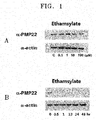
- FIG. 1 illustrates the results of PMP22 gene expression analysis by Western blotting of rat Schwann cells including PMP22 overexpressed in the presence of ethamsylate.
- a and B are both Western blotting images, wherein panel A shows PMP22 protein expression in cells treated with 0.1 ⁇ M, 1 ⁇ M, 10 ⁇ M, and 100 ⁇ M of ethamsylate in dimethyl sulfoxide (DMSO) for about 24 hours.
- DMSO dimethyl sulfoxide
- Panel B of Fig. 1 shows PMP22 protein expression in cells treated with 10 ⁇ M of ethamsylate for 0, 0.5, 1, 12, 24, and 48 hours, wherein "0 hour” indicates a control group to which ethamsylate was not added.
- Transformed Zebrafish in which genes respectively encoding an Mbp:EGFP fusion protein and a Claudink:EGFP fusion protein that are specifically expressed in myelin and emit fluorescence by using promoters of a myelin basic protein (MBP) gene and a Claudink gene were prepared, by transforming Zebrafish cells with genes respectively encoding an Mbp:EGFP fusion protein and a Claudink:EGFP fusion protein.
- MBP myelin basic protein
- the NfsB virulence gene encodes a nitroreductase (NTR) enzyme. NTRs do not cause any cytotoxicity in typical zebrafish.
- zebrafish i.e., transformed zebrafish that express the NfsB virulence gene specifically in differentiated oligodendrocytes and Schwann cells were prepared by using promoters of mbp and claudink genes that specifically operate in differentiated myelin to express myelin-specific genes bound to myelin, and using the Gal4-UAS transactivator system. Next, it was confirmed that the NfsB virulence gene was myelin-specifically expressed in the transformed zebrafish.
- this animal model is also referred to as zebrafish (Mbp (or claudink):gal4::UAS:nfsB (NTR, toxin)::UAS:gfp).
- Mbp or claudink
- NTR toxin
- the transformed zebrafish were then cultured in a culture medium free of MTZ for 1 day, followed by a recovery period.
- This study described in greater detail below, confirmed that natural remyelination occurred in the demyelinated central nervous system and peripheral nervous system and that ES drug has an effect of promoting remyelination.
- 100 zebrafish were incubated in egg water or an embryo medium (EM) (including 15 mM NaCl, 0.5 mM KCI, 1 mM CaCl 2 , 1 mM MgSO 4 , 0.15 mM KH 2 PO 4 , 0.05 mM NH 2 PO 4 , and 0.7 mM NaHCO 3 ) in a water bath at about 28.5°C containing 1 L of water for 4.5 dpf (days post-fertilization) from the date of birth, and 10 mM of MTZ (Sigma) dissolved in an EM including 0.2% DMSO was then added thereto for 36 hours of demyelination.
- EM embryo medium
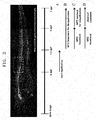
- the zebrafish were moved to wells of a 96-well plate containing different drugs, and then incubated at about 28.5°C ( FIG. 2 panel B). Some of the zebrafish were allowed to be remyelinated by removing MTZ from the EM by washing the demyelinated zebrafish with a new EM three times after 6 dpf from the date of birth ( FIG. 2 panel C). Another group of zebrafish was incubated under the same conditions as in panel C, except that 10 ⁇ M of ES was added ( FIG. 2 panel D, wherein "chemical treatment” refers to ES treatment). A control group was incubated under the same conditions except that 0.2% of DMSO, instead of MTZ, was added.
- FIG. 2 provides a microscopic image of zebrafish (Mbp:gal4::UAS:nfsB (NTR, toxin)::UAS:gfp) obtained using a confocal laser microscope.
- a white dashed-line box delimits a region of myelin to monitor remyelination in the central nervous system and the peripheral nervous system.
- the central brightest region corresponds to the central nervous system, and a relatively dark region under the central nervous system region corresponds to the peripheral nervous system.
- panels A-D below the confocal laser microscopic image provide a schematic illustration of experimental processes, i.e., of myelination from 3 dpf from the date of birth (A), addition of MTZ at 4.5 dpf (B), washing out or removing MTZ at 6 dpf (hereinafter, also referred to as "Recovery 1 day") (C), and addition of 10 ⁇ M of ES (D).
- Mbp(claudink) in the indication of "Zebrafish (Mbp(claudink):gal4::UAS:nfsB (NTR, toxin)::UAS:gfp)" means that either "Mbp” or "claudink” promoter may be equally used in transformed zebrafish.
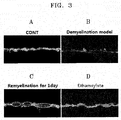
- FIG. 3 illustrates the results of green fluorescent protein (GFP)-fluorescence microscopy using a confocal laser microscope on myelin surrounding axons of the posterior lateral line nerves (PLLs) of the zebrafish (Mbp:gal4::UAS:nfsB (NTR, toxin)::UAS:gfp) incubated under various conditions.
- FIG. 3 panels A, B, C, and D, illustrate the results of experiments performed as described above in connection with A, B, C, and D and the experimental processes in FIG. 2 .
- the zebrafish were incubated in the absence of MTZ and ethamsylate as in FIG.
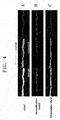
- FIG. 4 illustrates the results of GFP-fluorescence (green) microscopy and immunofluorescence microscopy with staining of acetylated-tubulin (red fluorescence), using a confocal laser microscope on myelin of the peripheral nervous system of the zebrafish (Claudink:gal4::UAS:nfsB (NTR, toxin)::UAS:gfp) incubated under various conditions. Claudink promoters that more specifically operate on myelin than Mbp promoters may be used to more quantitatively observe demyelination and remyelination in nerve cells.
- NTR, toxin acetylated-tubulin
- claudink and ac-tubulin denote a green fluorescent image by GFP expressed specifically in myelin by the claudink promoter and a red fluorescent image with immunostaining of acetylated-tubulin expressed specifically in axons, respectively, and "merge” denotes a merged image of the two images.
- the immunostaining of acetylated-tubulin was performed using anti-mouse acetylated-tubulin primary antibody and Alexa647-conjugated anti-mouse secondary antibody to measure blue fluorescence, followed by blue to red conversion for high-contrast imaging to green fluorescence.
- FIG. 4 “PLL myelin” indicates myelin surrounding axons of the PLLs. As shown in FIG. 4 , ES was found to promote remyelination.
- FIG. 4 panels A, B, and C denote the same experimental processes as A, B, and D of FIG. 2 , respectively, under the same conditions.
- FIG. 5 illustrates a ratio of myelinated axons to total axons, obtained from the fluorescence intensities of the fluorescent images in FIG. 4 .
- "Cont”, “MTZ”, and “Ethamsylate” indicate the results from panels A, B, and C of FIG. 4 , respectively.
- the ratio of myelinated axons to total axons is represented as a percentage ratio of the green fluorescence intensity of GFP expressed specifically in myelin by the claudink promoter to the red fluorescence intensity from the immunostaining by acetylated-tubulin expressed specifically in axons shown in FIG. 4 .
- the ratio of myelinated axons to total axons was significantly higher in the presence of ES than in the MTZ treated sample, indicating that ES promotes myelination in demyelinated nerve cells.
- FIG. 6 illustrates the results of GFP-originated fluorescence microscopy and red fluorescence microscopy with immunostaining by acetylated-tubulin that is expressed specific to axons, by using a confocal laser microscope on sections of Mauthner axons and myelin in the central nervous system of the zebrafish (ClaudinK:gal4::UAS:nfsB (NTR, toxin)::UAS:gfp) incubated under various conditions.
- FIGS. 6 , panels A, B, and C indicate the results from the same experimental processes as panels A, B, and D in FIGS. 2 and 3 , respectively, under the same conditions.
- FIG. 6 panels A, B, and C indicate the results from the same experimental processes as panels A, B, and D in FIGS. 2 and 3 , respectively, under the same conditions.
- panel A denotes a control group cultured in a medium including neither MTZ nor ES.
- the axon and fiber diameters were obtained by calculating the diameters from the intensities of GFP-originated fluorescence and red axonal fluorescence with the Image J program.
- FIG. 7 is a schematic illustration of the definition of a g-ratio as a diameter ratio of axon to nerve fiber.
- FIG. 8 is a graph of g-ratio obtained from the results of FIG. 6 .
- "Cont”, “MTZ”, and “Ethamsylate” indicate the results from A, B, and C of FIG. 6 , respectively.
- the ethamsylate treatment group had a remarkably reduced g-ratio compared to the MTZ treatment group, indicating that the myelin layer of axons became significantly thicker in the ethamsylate treatment group.
- the damaged or demyelinated nerve cells in the central nervous system of the zebrafish incubated in the presence of MTZ were regenerated or remyelinated with a significantly higher efficiency when incubated in the presence of ethamsylate than the other cases.
- a composition for preventing or treating a disease associated with demyelination of a nerve cell in a mammal may prevent or treat the disease associated with demyelination of nerve cells in the mammal.
- a composition for promoting remyelination or suppressing demyelination of nerve cells in a mammal may promote remyelination or suppress demyelination of nerve cells in a mammal.
- a composition for reducing expression of PMP22 in a nerve cell of a mammal may reduce expression of PMP22 in nerve cells of a mammal.
- a method of preventing or treating a disease associated with demyelination in nerve cells of a mammal may efficiently prevent or treat a disease associated with demyelination in nerve cells of the mammal.
- a method of promoting remyelination or suppressing demyelination in nerve cells of a mammal may efficiently promote remyelination or suppress demyelination in nerve cells of the mammal.
- a method of reducing expression of PMP22 in nerve cells of a mammal may reduce expression of PMP22 in the nerve cells of the mammal.
Landscapes
- Health & Medical Sciences (AREA)
- Chemical & Material Sciences (AREA)
- Medicinal Chemistry (AREA)
- Pharmacology & Pharmacy (AREA)
- Life Sciences & Earth Sciences (AREA)
- Animal Behavior & Ethology (AREA)
- General Health & Medical Sciences (AREA)
- Public Health (AREA)
- Veterinary Medicine (AREA)
- Epidemiology (AREA)
- Engineering & Computer Science (AREA)
- Bioinformatics & Cheminformatics (AREA)
- Biomedical Technology (AREA)
- Neurology (AREA)
- Neurosurgery (AREA)
- Chemical Kinetics & Catalysis (AREA)
- General Chemical & Material Sciences (AREA)
- Nuclear Medicine, Radiotherapy & Molecular Imaging (AREA)
- Organic Chemistry (AREA)
- Pharmaceuticals Containing Other Organic And Inorganic Compounds (AREA)
- Acyclic And Carbocyclic Compounds In Medicinal Compositions (AREA)
Abstract
Description
- The present disclosure relates to a composition for preventing or treating a disease associated with demyelination of nerve cells in a mammal, a composition for promoting remyelination or suppressing demyelination of nerve cells in a mammal, a composition for reducing expression of PMP22 in nerve cells of a mammal, a method of preventing or treating a disease associated with demyelination of nerve cells in a mammal, a method of promoting remyelination or suppressing demyelination of nerve cells in a mammal, and a method of reducing expression of PMP22 in nerve cells of a mammal.
- Demyelinating diseases are diseases of the nervous system in which the myelin sheaths of neurons are damaged. This damage impairs the conduction of signals in the affected nerves, which sequentially causes deficiency in sensation, movement, cognition, or other functions depending on which nerves are affected. Demyelinating diseases may include diseases affecting the central nervous system and peripheral nervous system. Demyelinating diseases of the peripheral nervous system include Guillain-Barre Syndrome and Charcot Marie Tooth (CMT) diseases. Demyelinating diseases of the central nervous system include multiple sclerosis. Ascorbic acid has been shown to be effective against peripheral nerve disease in animal models; however, this compound fails in clinical tests. Therefore, there is a need for a drug for the fundamental treatment of demyelinating diseases.
- Provided is a composition for preventing or treating a disease associated with demyelination of nerve cells in a mammal, the composition comprising 2,5-dihydroxybenzenesulfonic acid, or a pharmaceutically acceptable salt or solvate thereof. Also provided is a composition for use in preventing or treating a disease associated with demyelination of nerve cells in a mammal in vivo, the composition comprising 2,5-dihydroxybenzenesulfonic acid, or a pharmaceutically acceptable salt or solvate thereof.
- Provided is a composition for promoting remyelination or suppressing demyelination of nerve cells in a mammal, the composition comprising 2,5-dihydroxybenzenesulfonic acid, or a pharmaceutically acceptable salt or solvate thereof. Also provided is a composition for use in promoting remyelination or suppressing demyelination of nerve cells in a mammal in vivo, the composition comprising 2,5-dihydroxybenzenesulfonic acid, or a pharmaceutically acceptable salt or solvate thereof.
- Provided is a composition for reducing expression of peripheral myelin protein 22 (PMP22) in nerve cells of a mammal, the composition comprising 2,5-dihydroxybenzenesulfonic acid, or a pharmaceutically acceptable salt or solvate thereof. Also provided is a composition for use in reducing expression of peripheral myelin protein 22 (PMP22) in nerve cells of a mammal in vivo, the composition comprising 2,5-dihydroxybenzenesulfonic acid, or a pharmaceutically acceptable salt or solvate thereof.
- Provided is a method of preventing or treating a disease associated with demyelination of a nerve cell in a mammal, the method comprising administering an effective amount of 2,5-dihydroxybenzenesulfonic acid or a pharmaceutically acceptable salt or solvate thereof into the mammal to thereby prevent or treat a disease associated with demyelination of the nerve cell of the mammal. Also provided is use of 2,5-dihydroxybenzenesulfonic acid or a pharmaceutically acceptable salt or solvate thereof for preventing or treating a disease associated with demyelination of a nerve cell in a mammal in vitro.
- Provided is a method of promoting remyelination or suppressing demyelination of a nerve cell in a mammal, the method comprising administering an effective amount of 2,5-dihydroxybenzenesulfonic acid or a pharmaceutically acceptable salt or solvate thereof into the mammal to thereby promote remyelination or suppress demyelination in the nerve cell of the mammal. Also provided is the use of 2,5-dihydroxybenzenesulfonic acid or a pharmaceutically acceptable salt or solvate thereof for promoting remyelination or suppressing demyelination of a nerve cell in a mammal in vitro.
- Provided is a method of reducing expression of PMP22 in a nerve cell of a mammal, the method comprising administering an effective amount of 2,5-dihydroxybenzenesulfonic acid or a pharmaceutically acceptable salt or solvate thereof into a mammal to thereby reduce expression of PMP22 in the nerve cell of the mammal. Also provided is the use of 2,5-dihydroxybenzenesulfonic acid or a pharmaceutically acceptable salt or solvate thereof for reducing expression of PMP22 in a nerve cell of a mammal in vitro.
- Additional aspects will be set forth in part in the description which follows and, in part, will be apparent from the description, or may be learned by practice of the presented exemplary embodiments.
- These and/or other aspects will become apparent and more readily appreciated from the following description of the exemplary embodiments, taken in conjunction with the accompanying drawings in which:
-
FIG. 1 illustrates the results of PMP22 gene expression analysis by Western blotting of rat Schwann cells including PMP22 overexpressed in the presence of ethamsylate (ES) at varied concentrations (panel A) and exposure times (panel B); -
FIG. 2 provides a microscopic image of zebrafish (Mbp:gal4::UAS:nfsB (NTR, toxin)::UAS:gfp) obtained using a confocal laser microscope, and schematic illustration of experimental procedures for myelination, demyelination, and remyelination (panels A-D); -
FIG. 3 illustrates the results of green fluorescent protein (GFP)-fluorescence microscopy using a confocal laser microscope on myelin surrounding axons of the posterior lateral line nerves (PLLs) of the zebrafish (Mbp:gal4::UAS:nfsB (NTR, toxin)::UAS:gfp) incubated under various conditions (panels A-D); -
FIG. 4 illustrates the results of GFP-fluorescence (green) microscopy and immunofluorescence microscopy with staining of acetylated-tubulin (red fluorescence), using a confocal laser microscope on myelin of the peripheral nervous system of the zebrafish (Claudink:gal4::UAS:nfsB (NTR, toxin)::UAS:gfp) incubated under various conditions (panels A-C); -
FIG. 5 illustrates a ratio of myelinated axons to total axons, obtained from the fluorescence intensities of the fluorescent images inFIG. 4 ; -
FIG. 6 illustrates the results of GFP-originated fluorescence microscopy and red fluorescence microscopy with immunostaining of acetylated-tubulin that is expressed specific to axons, using a confocal laser microscope on sections of Mauthner axons and myelin in the central nervous system of the zebrafish (ClaudinK:gal4::UAS:nfsB (NTR, toxin)::UAS:gfp) incubated under various conditions (panels A-C); -
FIG. 7 is a schematic illustration of the definition of a g-ratio as a diameter ratio of axon to nerve fiber; and -
FIG. 8 is a graph of the g-ratio obtained from the results ofFIG. 6 . - Reference will now be made in detail to exemplary embodiments, examples of which are illustrated in the accompanying drawings, wherein like reference numerals refer to like elements throughout. In this regard, the present exemplary embodiments may have different forms and should not be construed as being limited to the descriptions set forth herein. Accordingly, the exemplary embodiments are merely described below, by referring to the figures, to explain aspects. As used herein, the term "and/or" includes any and all combinations of one or more of the associated listed items. Expressions such as "at least one of," when preceding a list of elements, modify the entire list of elements and do not modify the individual elements of the list.
- According to a first aspect of the present disclosure, there is provided a composition for preventing or treating a disease associated with demyelination of nerve cells in a mammal, the composition including 2,5-dihydroxybenzenesulfonic acid, or a pharmaceutically acceptable salt or solvate thereof. The composition may be for the use in treating a disease associated with demyelination of nerve cells in a mammal in vivo.
- According to a second aspect of the present disclosure, there is provided a composition for promoting remyelination or suppressing demyelination of nerve cells in a mammal, the composition including 2,5-dihydroxybenzenesulfonic acid, or a pharmaceutically acceptable salt or solvate thereof. The composition may be for the use in treating a disease associated with demyelination of nerve cells in a mammal in vivo.
- According to a third aspect of the present disclosure, there is provided a composition for reducing expression of peripheral myelin protein 22 (PMP22) in nerve cells of a mammal, the composition including 2,5-dihydroxybenzenesulfonic acid, or a pharmaceutically acceptable salt or solvate thereof. The composition may be for the use in treating a disease associated with demyelination of nerve cells in a mammal in vivo.
- In the compositions according to the first, second, and third aspects of the present disclosure, the 2,5-dihydroxybenzenesulfonic acid may be in the form of a pharmaceutically acceptable salt thereof. Examples of the pharmaceutically acceptable salt may include acid addition salts that are commonly used in the pharmaceutical field, for example, salts derived from inorganic acids such as hydrochloric acid, hydrobromic acid, sulfuric acid, sulfamic acid, phosphoric acid, or nitric acid; and salts derived from organic acids such as acetic acid, propionic acid, succinic acid, glycolic acid, stearic acid, citric acid, maleic acid, malonic acid, methanesulfonic acid, tartaric acid, malic acid, phenylacetic acid, glutamic acid, benzoic acid, salicylic acid, 2-acetoxy-benzoic acid, fumaric acid, toluenesulfonic acid, oxalic acid, or trifluoroacetic acid. Examples of the pharmaceutically acceptable salt may include base addition salts, for example, salts derived from bases such as ammonium, dimethylamine, monomethylamine, monoethylamine, or diethylamine. Examples of the pharmaceutically acceptable salt may include common metal salts, for example, salts derived from metals such as lithium, sodium, potassium, magnesium, or calcium. The above-listed acid addition salts, base addition salts, and metal salts may be prepared according to a common method in the art. For example, a base addition salt or a metal salt may be obtained by reacting an ionic form of 2,5-dihydroxybenzenesulfonic acid, i.e., 2,5-dihydroxybenzene sulfonate, with an appropriate base (for example, diethylamine) or metal ion (for example, calcium, magnesium, or sodium ion). For example, the resulting base addition salt may be 2,5-dihydroxybenzene sulfonate diethylammonium salt (hereinafter, "ethamsylate").
- A pharmaceutically acceptable salt of 2,5-dihydroxybenzenesulfonic acid may have a structure of
Formula 1.
- In
Formula 1, M may be [NH4-xRx]+, wherein x may be 0, 1, 2, 3, or 4; and when x>1, R(s) may be the same as or differ from each other, for example, may be a branched or unbranched C1-4-alkyl-radical. - The 2,5-dihydroxybenzenesulfonic acid may be in the form of a solvate thereof. The term "solvate" refers a complex or aggregate that consists of or comprises at least one solute molecule, that is, a compound represented by Formula 1 or a pharmaceutically acceptable salt of the compound; and at least one solvent molecule. The solvate may be, for example, a complex or aggregate formed with water, methanol, ethanol, isopropanol, or acetic acid.
- The 2,5-dihydroxybenzenesulfonic acid may be in the form of a stereoisomer of the compound thereof. Examples of the stereoisomer include all types of stereoisomers such as enantiomers and diastereomers. The 2,5-dihydroxybenzenesulfonic acid compound may be in a stereoisomerically pure form of a stereoisomer or a mixture of at least two stereoisomers, for example, a racemic mixture. Isolation of a specific stereoisomer may be performed by using one of the known methods in the art.
- The 2,5-dihydroxybenzenesulfonic acid may be chemically synthesized or commercially purchasable.
- In the first, second, and third aspects of the present disclosure, the composition may be a pharmaceutical composition. The composition may further include a pharmaceutically acceptable carrier. The term "pharmaceutically acceptable carrier" as used herein denotes a material that is used in combination with an active ingredient, that is, generally, an inert material, to help application of the active ingredient. Examples of the pharmaceutically acceptable carrier may include, in general, a pharmaceutically acceptable excipient, additive, or diluent. Examples of the pharmaceutically acceptable carrier may include at least one selected from the group consisting of a filler, a binder, a disintegrant, a buffer, a preservative, an antioxidant, a lubricant, a flavoring agent, a thickener, a coloring agent, an emulsifier, a suspending agent, a stabilizer, and an isotonic agent.
- The composition may include 2,5-dihydroxybenzenesulfonic acid or a pharmaceutically acceptable salt or solvate thereof, at a "therapeutically effective amount". In the composition, the term "therapeutically effective amount" as used herein refers to a sufficient amount that produces a therapeutic effect when administered to a subject in need of treatment. The term "treatment" as used herein refers to treatment of a disease or medical condition, for example, a disease associated with demyelination of a subject such as a mammal, including humans, and the meaning of treatment is: (a) ameliorating the disease or medical condition such as by eliminating or causing regression of the disease or medical condition of a patient; (b) suppressing the disease or medical condition such as by slowing or arresting the development of the disease or medical condition of a patient; or (c) alleviating a symptom of the disease or medical condition of a patient to any degree. The composition also may be used for the preventative (prophylactic) treatment of a disease or medical condition.
- The composition may include an "effective amount of 2,5-dihydroxybenzenesulfonic acid or a pharmaceutically acceptable salt or solvate thereof for promoting remyelination of a nerve cell in a mammal" or "an effective amount of 2,5-dihydroxybenzenesulfonic acid or a pharmaceutically acceptable salt or solvate thereof for reducing expression of PMP22 in a nerve cell of a mammal". The "effective amount" may be appropriately selected by one of ordinary skill in the art. For example, the "effective amount" may be in a range of about 0.01 mg to about 10,000 mg, 0.1 mg to about 1000 mg, about 1 mg to about 100 mg, about 0.01 mg to about 1000 mg, about 0.01 mg to about 100 mg, about 0.01 mg to about 10 mg, or about 0.01 mg to about 1 mg.
- The composition may include 2,5-dihydroxybenzenesulfonic acid or a pharmaceutically acceptable salt or solvate thereof as an active ingredient. The term "active ingredient" refers to an ingredient enabling a function of the composition as described above, but excludes the case where the amount of the active ingredient is so small to act like impurities.
- The composition may be prepared for oral administration or parenteral administration including intravenous, intraperitoneal, subcutaneous, rectal, and topical administration. Thus, the composition may be formulated into various forms such as tablets, capsules, aqueous solutions, or suspensions. In the case of tablets for oral administration, an excipient such as lactose or corn starch and a lubricant such as magnesium stearate may be added thereto in general. In the case of capsules for oral administration, lactose and/or dried corn starch may be used as a diluent. When an aqueous suspending agent for oral administration is needed, active ingredients may be attached to an emulsifier and/ or a suspending agent. If necessary, a predetermined sweetening agent and/or a flavoring agent may be added to the composition. For intraneural, intramuscular, intraperitoneal, subcutaneous, and intravenous administration, a sterilized solution of the active ingredients is generally prepared, wherein the pH of the sterilized solution needs to be appropriately adjusted and buffered. For intravenous administration, the total concentration of solutes needs to be controlled to render the formulated composition isotonic. The composition may be formulated into an aqueous solution including a pharmaceutically acceptable carrier such as salt water at a pH of 7.4. The aqueous solution may be administered to intramuscular or intraneural blood flow of a patient by local bolus injection.
- 2,5-dihydroxybenzenesulfonic acid or a pharmaceutically acceptable salt or solvate thereof may suppress demyelination or recover demyelinated neurons by remyelinating neurons.
- The composition may be used in combination with at least one other treatment agent for treating a disease associated with demyelination. Alternatively, the composition may include 2,5-dihydroxybenzenesulfonic acid or a pharmaceutically acceptable salt or solvate thereof without any other active ingredient for treating a disease associated with demyelination.
- The composition may be used to treat a disease associated with demyelination in nerve cells of a mammal. The disease associated with demyelination of neurons (hereinafter, also referred to as "demyelinating disease") refers to a nervous system disease with damaged myelin sheaths of neurons. The damage of myelin sheaths of neurons may include any damage reducing signal conduction in neurons, including separation of myelin bound to neurons, or amount reduction or structural deformation of myelin. This damage impairs the conduction of signals in the affected nerves, which, in turn, causes deficiency in sensation, movement, cognition, or other functions depending on which nerves are involved. The disease may include diseases affecting the central nervous system (referred to also as "central nervous system demyelinating diseases") and peripheral nervous system (referred to also as "peripheral nervous system demyelinating diseases"). The central nervous system demyelinating diseases may include: multiple sclerosis; Devic's disease; inflammatory demyelinating diseases; central nervous system neuropathies such as those caused by Vitamin B12 deficiency; myelopathies such as Tabes dorsalis; leukoencephalopathies such as progressive multifocal leukoencephalopathy; leukodystrophies; Guillain-Barre Syndrome; and chronic inflammatory demyelinating polyneuropathy, which is a chronic counterpart of Guillain-Barre Syndrome; or a combination thereof. The peripheral nervous system demyelinating diseases may include anti-MAG peripheral neuropathy, Charcot Marie Tooth (CMT) disease, copper deficiency, progressive inflammatory neuropathy, or a combination thereof. For example, the disease associated with demyelination of a neuron may be multiple sclerosis, Guillain-Barre Syndrome, CMT disease, or a combination thereof. The CMT disease may be a CMT1A sub-type, a CMT1 E sub-type, or a CMT3 sub-type.
- In some embodiments of the composition, the disease associated with demyelination of neurons may be caused from overexpression of PMP22. PMP22 is a protein which is encoded in humans by the PMP22 gene. The integral membrane protein encoded by this gene is a hydrophobic tetraspan glycoprotein expressed mainly in Schwann cells and is a major component of compact myelin in the peripheral nervous system. Although PMP22 is a major component of compact myelin in the peripheral nervous system, the composition according to an embodiment as described above may be effective on not only the nerve cells of the peripheral nervous system but also the nerve cells of the central nervous system. PMP22 is known to interact with myelin protein zero. Various mutations of the gene are causes of CMT1A, Dejerine-Scottas disease, and hereditary neuropathy with liability to pressure palsy (HNPP). CMT1A is the most common form of the disease, which at least 60% of all CMT patients belong to. CMT1A is caused by a duplication of the PMP22 gene on Chromosome 17. This CMT disease may be caused from not only having two copies of the gene, but also having three copies of the gene, including two copies on a chromosome and one copy on another chromosome.
- In some embodiments of the composition, the mammal may be a human. The mammal may have demyelinated neurons and/or a disease associated with demyelination.
- In some embodiments of the composition, the overexpression of PMP22 in the nerve cell may be in progress or in completion. The nerve cell may be in progress or completion of demyelination caused from overexpression of PMP22. The nerve cell may be in the peripheral nervous system and/or the central nervous system. The nerve cell may be present or may live in vivo or in vitro.
- According to another aspect of the present disclosure, there is provided a composition for preventing or treating a disease associated with overexpression of PMP22 in a nerve cell of a mammal, the composition including 2,5-dihydroxybenzenesulfonic acid, or a pharmaceutically acceptable salt or solvate thereof. Also provided is a composition for use in preventing or treating a disease associated with overexpression of PMP22 in a nerve cell of a mammal in vivo, the composition including 2,5-dihydroxybenzenesulfonic acid, or a pharmaceutically acceptable salt or solvate thereof. As used herein, the "overexpression of PMP22" refers to increased expression of PMP22 compared to normal nerve cells without damage in myelin sheaths (e.g., nerve cells of a normal, healthy patient). The expression of PMP22 may be measured at either the mRNA level or protein level. The mRNA level may br measusred by using RNA isolation, nucleic acid amplification method such polymerase chain reaction including RT-PCR, etc. The protein level may be measured by isolation of the protein using chromatography such ion exchange, size exclusion, affinity chromatography etc., filtration, salting out, etc. The protein level may be measured by using a detection method. For example, a detection method using an antibody specific a PMP22 such as enzyme linked immunosorbent assay may be used. The "overexpression of PMP22" refers to increased expression of PMP22 compared to that of normal nerve cells, for example, by 5% or more, 10% or more, 50% or more, 100% or more, 5% to 100%, 10% to 100%, 20% to 100%, 5% to 80%, 5% to 50%, 10% to 50% increased expression.
- According to another aspect of the present disclosure, there is provided use of 2,5-dihydroxybenzenesulfonic acid defined above, or a pharmaceutically acceptable salt or solvate thereof in treating a disease associated with demyelination, preferably in vitro.
- According to another aspect of the present disclosure, there is provided use of 2,5-dihydroxybenzenesulfonic acid defined above or a pharmaceutically acceptable salt or solvate thereof in preparing a medication for treating a disease associated with demyelination.
- According to a fourth aspect of the present disclosure, there is provided a method of preventing or treating a disease associated with demyelination in a nerve cell of a mammal, the method including administering an effective amount of 2,5-dihydroxybenzenesulfonic acid or a pharmaceutically acceptable salt or solvate thereof into the mammal to thereby prevent or treat a disease associated with demyelination of the nerve cell of the mammal. Also provided is the use of 2,5-dihydroxybenzenesulfonic acid or a pharmaceutically acceptable salt or solvate thereof for preventing or treating a disease associated with demyelination in a nerve cell of a mammal in vitro.
- According to a fifth aspect of the present disclosure, there is provided a method of promoting remyelination or suppressing demyelination in a nerve cell of a mammal, the method including administering an effective amount of 2,5-dihydroxybenzenesulfonic acid or a pharmaceutically acceptable salt or solvate thereof into the mammal to thereby promote remyelination or suppress demyelination in the nerve cell of the mammal. Also provided is the use of 2,5-dihydroxybenzenesulfonic acid or a pharmaceutically acceptable salt or solvate thereof for promoting remyelination or suppressing demyelination in a nerve cell of a mammal in vitro.
- According to a sixth aspect of the present disclosure, there is provided a method of reducing expression of PMP22 in a nerve cell of a mammal, the method including administering an effective amount of 2,5-dihydroxybenzenesulfonic acid or a pharmaceutically acceptable salt or solvate thereof into the mammal to thereby reduce expression of PMP22 in the nerve cell of the mammal. Also provided is the use of 2,5-dihydroxybenzenesulfonic acid or a pharmaceutically acceptable salt or solvate thereof for reducing expression of PMP22 in a nerve cell of a mammal in vitro.
- In the fourth, fifth, and six aspects of the present disclosure, unless otherwise defined, the same terms as those used in connection with the first, second, and third aspects of the present disclosure are understood as having the same meaning as described in the first, second, and third aspects.
- In the fourth aspect of the present disclosure, the demyelination may occur in a nerve cell of the central nervous system or peripheral nervous system. The demyelination may be caused from overexpression of PMP22. The disease associated with demyelination in a nerve cell of a mammal may be CMT disease, Dejerine-Sottas disease, hereditary neuropathy with liability to pressure palsy (HNPP), multiple sclerosis, or Guillain-Barre syndrome.
- In the fifth aspect of the present disclosure, a disease associated with demyelination may be treated by the promotion of remyelination or the suppression of demyelination in a nerve cell of a mammal. The nerve cell may be in progress or completion of demyelination caused from overexpression of PMP22. The demyelination may occur in a nerve cell of the central nervous system or peripheral nervous system.
- In the sixth aspect of the present disclosure, a disease associated with demyelination may be treated by the reduction in expression of PMP22 in a nerve cell of a mammal. The nerve cell may be in progress or completion of demyelination caused from overexpression of PMP22. The demyelination may occur in a nerve cell of the central nervous system or peripheral nervous system.
- In the methods according to the fourth, fifth, and sixth aspects of the present disclosure, a route of the administration may be appropriately selected by one of ordinary skill in the art. For example, the route of the administration may be oral, parenteral, or local or topical administration. The local administration may be administration to a nervous system, for example, the brain.
- An administration amount may vary depending on the condition of a patient, an administration route, and a doctor's decision. An effective administration amount may be obtained based on a dose-response curve obtained through an in vitro or animal model test. A ratio and/or concentration of the compound, i.e., 2,5-dihydroxybenzenesulfonic acid or a pharmaceutically acceptable salt or solvate thereof in a composition according to any of the above-described embodiments may be determined depending on chemical characteristics, an administration route, and a therapeutic administration amount. An amount of administration to a subject may be an effective amount of, for example, about 1 µg/kg to about 1 g/kg per day, or about 0.1 mg/kg to about 500 mg/kg per day. The amount may vary depending on an age, weight, sensitiveness, or symptoms of the subject.
- In the fourth, fifth, and sixth aspects of the present disclosure, the method/use may further include collecting related information about demyelination of a nerve cell in the subject before the administration/use. The related information about the demyelination may include a demyelination level, a demyelination rate, a demyelination type, and the like. The related information about the demyelination may be obtained by observing the nerve cell with an optical or fluorescent microscope or by using a myelin sheath-specific marker. Accordingly, in the fourth, fifth, and sixth aspects of the present disclosure, the method/use may further include measuring demyelination of a nerve cell. The nerve cell may originate from a subject who is suspected of having a disease associated with demyelination, or potentially having the disease. The method/use may also further include determining whether demyelination is in progress or completion faster than in a control group, based on the collected related information about demyelination. The control group may have a myelination level that is similar to that of normal nerve cells originating from a subject without demyelinating disease or to that of normal nerve cells of a normal subject. The method/use may include administering 2,5-dihydroxybenzenesulfonic acid, or a pharmaceutically acceptable salt or solvate thereof to a subject, i.e., a mammal that is determined to be in progress or completion of demyelination more than in the control group in the determination step.
- In the fourth, fifth, and sixth aspects of the present disclosure, the method/use may further include measuring an expression level of PMP22 in the subject or a nerve cell of the subject before the administration/use. The expression level of PMP22 may be measured at either the mRNA level or protein level. The expression level of PMP22 may be measured by amplification (for example, a polymerization chain reaction (PCR)), Southern blotting, or sequence analysis using an mRNA-specific primer nucleotide, or by separation of a PMP22 expression protein, Western blotting, or the like. The nerve cell may originate from a subject having a disease associated with demyelination or potentially having a risk of the disease. The method/use may further include determining whether a measured expression level of PMP22 obtained in the measurement step is higher than an expression level in a control group. The control group may have a myelination level that is similar to that of normal nerve cells originating from a subject without demyelinating disease or to that of normal nerve cells of a normal, healthy subject. The method/use may include administering 2,5-dihydroxybenzenesulfonic acid, or a pharmaceutically acceptable salt or solvate thereof to a subject, i.e., a mammal that is determined to have a higher expression level of PMP22 than that in the control group in the determination step. The higher expression level of PMP22 may be at least about 1%, about 5%, about 10%, about 20%, about 50%, about 100%, about 200%, about 500%, about 1000%, about 1 to about 1000%, about 5 to about 1000%, about 10 to about 1000%, about 20 to about 1000%, about 50 to about 1000%, about 100 to about 1000%, about 200 to about 1000%, or about 500 to about 1000%.
- According to another aspect of the present disclosure, there is provided a method of promoting remyelination or suppressing demyelination in a nerve cell of a mammal, the method including contacting the nerve cell of the mammal with an effective amount of 2,5-dihydroxybenzenesulfonic acid or a pharmaceutically acceptable salt or solvate thereof to thereby promote remyelination or suppress demyelination in the nerve cell of the mammal. The nerve cell may be a nerve cell separated from a subject or a nerve cell that lives in vitro.
- According to another aspect of the present disclosure, there is provided a method of reducing expression of PMP22 in a nerve cell of a mammal, the method comprises contacting the nerve cell of the mammal with an effective amount of 2,5-dihydroxybenzenesulfonic acid or a pharmaceutically acceptable salt or solvate thereof to thereby reduce expression of PMP22 in the nerve cell of the mammal. The nerve cell may be a nerve cell separated from a subject or a nerve cell that lives in vitro.
- In the methods according to the above-described aspects of the present disclosure, the contacting may be performed in a liquid medium, for example, in a culture medium of the nerve cell or a buffer.
- One or more embodiments of the present disclosure will now be described in detail with reference to the following examples.
- Rat Schwann cells were inoculated at a concentration of about 105 cells/mL into each well of a 12-well plate including 2 mL of a Dulbecco's Modified Eagle's Medium (DMEM) containing 10% fetal bovine serum (FBS), 100 units/mL of penicillin, and 100 units/mL of streptomycin, and incubated in a 5%-CO2 incubator at about 37°C to a cell density of about 60% to about 65%. Then, ethamsylate (diethyl ammonium 2,5-dihydroxybenzene sulfonic acid ("ES"), available from Selleckchem, TX) was added to the wells at different concentrations, followed by incubation under the same conditions for about 24 hours. Rat Schwann cells are often used in in vitro models for neuronal function and differentiation. The rat Schwann cells used herein were modified to consistently overexpress the human PMP22 gene by lentiviral mediated integration of PMP22 into a chromosome and selective use of puromycin-resistant markers, thereby constructing a new rat Schwann PMP22 cell model. The rat Schwann cells (ATCC number; CRL-2768) were purchased from the American Type Culture Collection (ATCC).
- After 2 mL of the culture medium was removed, the resulting rat Schwann cells were washed with phosphate buffered saline (PBS), followed by adding a lysis solution containing a 0.5% triton X-100 in PBS thereto, collecting the cells using a scraper, leaving the cells on ice for about 30 minutes, and then disrupting the cells. Using a bicinchoninic acid (BCA) protein assay, the amount of protein in each sample was normalized to 1 ug/uL, followed by sodium dodecyl sulfate polyacrylamide gel electrophoresis (SDS-PAGE, Invitrogen) and Western blotting with rabbit anti-PMP22 (Novus biological) and rabbit anti-actin (Sigma) primary antibodies and horseradish peroxidase (HRP)-conjugated anti-rabbit secondary antibody.
-
FIG. 1 illustrates the results of PMP22 gene expression analysis by Western blotting of rat Schwann cells including PMP22 overexpressed in the presence of ethamsylate. InFIG. 1 , A and B are both Western blotting images, wherein panel A shows PMP22 protein expression in cells treated with 0.1 µM, 1 µM, 10 µM, and 100 µM of ethamsylate in dimethyl sulfoxide (DMSO) for about 24 hours. In panel A ofFIG. 1 , "C" indicates a control group including DMSO as a solvent instead of ethamsylate. The experiment was repeated 4 times (n=4). Panel B ofFig. 1 shows PMP22 protein expression in cells treated with 10 µM of ethamsylate for 0, 0.5, 1, 12, 24, and 48 hours, wherein "0 hour" indicates a control group to which ethamsylate was not added. - As shown in panel A of
FIG. 1 , increased concentrations of ethamsylate led to a decrease in the amount of PMP22 protein expressed. It was also found that the expression level of PMP22 protein after incubation for 0.5, 1, 12, 24, and 48 hours in a culture medium containing 10µM of ethamsylate was decreased compared to the control group (panel B inFIG. 1 ). - Transformed Zebrafish (Danio rerio) in which genes respectively encoding an Mbp:EGFP fusion protein and a Claudink:EGFP fusion protein that are specifically expressed in myelin and emit fluorescence by using promoters of a myelin basic protein (MBP) gene and a Claudink gene were prepared, by transforming Zebrafish cells with genes respectively encoding an Mbp:EGFP fusion protein and a Claudink:EGFP fusion protein. Specifically, the NfsB virulence gene encodes a nitroreductase (NTR) enzyme. NTRs do not cause any cytotoxicity in typical zebrafish. However, when metronidazole (MTZ) is added to cells, the cells convert MTZ into a cytotoxic material by using NTR, which induces apoptosis. Genetically engineered zebrafish, i.e., transformed zebrafish that express the NfsB virulence gene specifically in differentiated oligodendrocytes and Schwann cells were prepared by using promoters of mbp and claudink genes that specifically operate in differentiated myelin to express myelin-specific genes bound to myelin, and using the Gal4-UAS transactivator system. Next, it was confirmed that the NfsB virulence gene was myelin-specifically expressed in the transformed zebrafish.
- When the MTZ substrate was added to a culture medium of the transformed zebrafish that express the nfsB virulence gene specifically in oligodendrocytes and Schwann cells, it was found that apoptosis was induced in the oligodendrocytes and Schwann cells of the transformed zebrafish in which the promoters of mbp and claudink genes specifically operate, and demyelination was consequentially induced. As a result, an animal model of demyelination that is induced in the presence of MTZ was established. Hereinafter, this animal model is also referred to as zebrafish (Mbp (or claudink):gal4::UAS:nfsB (NTR, toxin)::UAS:gfp). After removing the added MTZ substrate from the culture medium, the transformed zebrafish were then cultured in a culture medium free of MTZ for 1 day, followed by a recovery period. This study, described in greater detail below, confirmed that natural remyelination occurred in the demyelinated central nervous system and peripheral nervous system and that ES drug has an effect of promoting remyelination.
- 100 zebrafish were incubated in egg water or an embryo medium (EM) (including 15 mM NaCl, 0.5 mM KCI, 1 mM CaCl2, 1 mM MgSO4, 0.15 mM KH2PO4, 0.05 mM NH2PO4, and 0.7 mM NaHCO3) in a water bath at about 28.5°C containing 1 L of water for 4.5 dpf (days post-fertilization) from the date of birth, and 10 mM of MTZ (Sigma) dissolved in an EM including 0.2% DMSO was then added thereto for 36 hours of demyelination. The zebrafish were moved to wells of a 96-well plate containing different drugs, and then incubated at about 28.5°C (
FIG. 2 panel B). Some of the zebrafish were allowed to be remyelinated by removing MTZ from the EM by washing the demyelinated zebrafish with a new EM three times after 6 dpf from the date of birth (FIG. 2 panel C). Another group of zebrafish was incubated under the same conditions as in panel C, except that 10 µM of ES was added (FIG. 2 panel D, wherein "chemical treatment" refers to ES treatment). A control group was incubated under the same conditions except that 0.2% of DMSO, instead of MTZ, was added. -
FIG. 2 provides a microscopic image of zebrafish (Mbp:gal4::UAS:nfsB (NTR, toxin)::UAS:gfp) obtained using a confocal laser microscope. In the microscopic image ofFIG. 2 , a white dashed-line box delimits a region of myelin to monitor remyelination in the central nervous system and the peripheral nervous system. The central brightest region corresponds to the central nervous system, and a relatively dark region under the central nervous system region corresponds to the peripheral nervous system. InFIG. 2 , panels A-D below the confocal laser microscopic image provide a schematic illustration of experimental processes, i.e., of myelination from 3 dpf from the date of birth (A), addition of MTZ at 4.5 dpf (B), washing out or removing MTZ at 6 dpf (hereinafter, also referred to as "Recovery 1 day") (C), and addition of 10µM of ES (D). The experiment was performed till 7 dpf by a multiple of 18 (n=18). InFIG. 2 , "Mbp(claudink)" in the indication of "Zebrafish (Mbp(claudink):gal4::UAS:nfsB (NTR, toxin)::UAS:gfp)" means that either "Mbp" or "claudink" promoter may be equally used in transformed zebrafish. -
FIG. 3 illustrates the results of green fluorescent protein (GFP)-fluorescence microscopy using a confocal laser microscope on myelin surrounding axons of the posterior lateral line nerves (PLLs) of the zebrafish (Mbp:gal4::UAS:nfsB (NTR, toxin)::UAS:gfp) incubated under various conditions.FIG. 3 , panels A, B, C, and D, illustrate the results of experiments performed as described above in connection with A, B, C, and D and the experimental processes inFIG. 2 . When the zebrafish were incubated in the absence of MTZ and ethamsylate as inFIG. 3 panel A, sufficient myelin was present in the peripheral nervous system of the zebrafish (FIG. 3 panel A). When the zebrafish were cultured in the presence of MTZ from about 4.5 dpf to 7 dpf (for about 2.5 days), nearly no GFP fluorescence was observed, indicating that most myelin was removed (FIG. 3 panel B). When the zebrafish cultured in the presence of MTZ from 4.5 dpf to 6 dpf was further incubated from 6 dpf to 7 dpf (for about 1 day) in a medium to which no ES was added after removing MTZ from the medium by washing, myelin in the peripheral nervous system was still partially not myelinated (see white dashed-line regions inFIG. 3 panel C). On the other hand, when the zebrafish cultured in the presence of MTZ from 4.5 dpf to 6 dpf were further incubated from 6 dpf to 7 dpf (for about 1 day) in a medium to which ES was added after removing MTZ from the medium by washing, myelin in the peripheral nervous system was completely remyelinated so that GFP-originated green fluorescence was observed in the all the regions (FIG. 3 panel D). InFIG. 3 , the intensity of green fluorescence is proportional to the degree of myelination. -
FIG. 4 illustrates the results of GFP-fluorescence (green) microscopy and immunofluorescence microscopy with staining of acetylated-tubulin (red fluorescence), using a confocal laser microscope on myelin of the peripheral nervous system of the zebrafish (Claudink:gal4::UAS:nfsB (NTR, toxin)::UAS:gfp) incubated under various conditions. Claudink promoters that more specifically operate on myelin than Mbp promoters may be used to more quantitatively observe demyelination and remyelination in nerve cells. InFIG. 4 , "claudink" and "ac-tubulin" denote a green fluorescent image by GFP expressed specifically in myelin by the claudink promoter and a red fluorescent image with immunostaining of acetylated-tubulin expressed specifically in axons, respectively, and "merge" denotes a merged image of the two images. The immunostaining of acetylated-tubulin was performed using anti-mouse acetylated-tubulin primary antibody and Alexa647-conjugated anti-mouse secondary antibody to measure blue fluorescence, followed by blue to red conversion for high-contrast imaging to green fluorescence. Hereinafter, immunostaining of acetylated-tubulin is performed in the same manner as described here. InFIG. 4 , "PLL myelin" indicates myelin surrounding axons of the PLLs. As shown inFIG. 4 , ES was found to promote remyelination.FIG. 4 panels A, B, and C denote the same experimental processes as A, B, and D ofFIG. 2 , respectively, under the same conditions. -
FIG. 5 illustrates a ratio of myelinated axons to total axons, obtained from the fluorescence intensities of the fluorescent images inFIG. 4 . InFIG. 5 , "Cont", "MTZ", and "Ethamsylate" indicate the results from panels A, B, and C ofFIG. 4 , respectively. The ratio of myelinated axons to total axons is represented as a percentage ratio of the green fluorescence intensity of GFP expressed specifically in myelin by the claudink promoter to the red fluorescence intensity from the immunostaining by acetylated-tubulin expressed specifically in axons shown inFIG. 4 . - As shown in
FIGS. 4 and5 , the ratio of myelinated axons to total axons was significantly higher in the presence of ES than in the MTZ treated sample, indicating that ES promotes myelination in demyelinated nerve cells. -
FIG. 6 illustrates the results of GFP-originated fluorescence microscopy and red fluorescence microscopy with immunostaining by acetylated-tubulin that is expressed specific to axons, by using a confocal laser microscope on sections of Mauthner axons and myelin in the central nervous system of the zebrafish (ClaudinK:gal4::UAS:nfsB (NTR, toxin)::UAS:gfp) incubated under various conditions.FIGS. 6 , panels A, B, and C indicate the results from the same experimental processes as panels A, B, and D inFIGS. 2 and3 , respectively, under the same conditions. InFIG. 6 , panel A denotes a control group cultured in a medium including neither MTZ nor ES. The axon and fiber diameters were obtained by calculating the diameters from the intensities of GFP-originated fluorescence and red axonal fluorescence with the Image J program. -
FIG. 7 is a schematic illustration of the definition of a g-ratio as a diameter ratio of axon to nerve fiber. -
FIG. 8 is a graph of g-ratio obtained from the results ofFIG. 6 . InFIG. 8 , "Cont", "MTZ", and "Ethamsylate" indicate the results from A, B, and C ofFIG. 6 , respectively. As shown inFIG. 8 , the ethamsylate treatment group had a remarkably reduced g-ratio compared to the MTZ treatment group, indicating that the myelin layer of axons became significantly thicker in the ethamsylate treatment group. As shown inFIGS. 6 and8 , the damaged or demyelinated nerve cells in the central nervous system of the zebrafish incubated in the presence of MTZ were regenerated or remyelinated with a significantly higher efficiency when incubated in the presence of ethamsylate than the other cases. - As described above in the embodiments above, according to the one or more embodiments, a composition for preventing or treating a disease associated with demyelination of a nerve cell in a mammal may prevent or treat the disease associated with demyelination of nerve cells in the mammal. A composition for promoting remyelination or suppressing demyelination of nerve cells in a mammal, as described in the embodiments above, may promote remyelination or suppress demyelination of nerve cells in a mammal. A composition for reducing expression of PMP22 in a nerve cell of a mammal, as described in the embodiments above, may reduce expression of PMP22 in nerve cells of a mammal. A method of preventing or treating a disease associated with demyelination in nerve cells of a mammal, as described in the embodiments above, may efficiently prevent or treat a disease associated with demyelination in nerve cells of the mammal. A method of promoting remyelination or suppressing demyelination in nerve cells of a mammal, as described in the embodiments above, may efficiently promote remyelination or suppress demyelination in nerve cells of the mammal. A method of reducing expression of PMP22 in nerve cells of a mammal, as described in the embodiments above, may reduce expression of PMP22 in the nerve cells of the mammal.
- It should be understood that exemplary embodiments described herein should be considered in a descriptive sense only. Descriptions of features or aspects within each exemplary embodiment should typically be considered as available for other similar features or aspects in other exemplary embodiments.
Claims (15)
- A pharmaceutical composition for use in preventing or treating a disease associated with demyelination of a nerve cell in a mammal, the pharmaceutical composition comprising 2,5-dihydroxybenzenesulfonic acid or a pharmaceutically acceptable salt or solvate thereof.
- The pharmaceutical composition for use of claim 1, wherein the disease is a disease associated with overexpression of PMP22.
- The pharmaceutical composition for use of claim 1 or 2, wherein the nerve cell overexpresses PMP22.
- A pharmaceutical composition for use in promoting remyelination or suppressing demyelination in a nerve cell of a mammal, the composition comprising 2,5-dihydroxybenzenesulfonic acid, or a pharmaceutically acceptable salt or solvate thereof.
- The pharmaceutical composition for use of claim 4, wherein the nerve cell is in progress or completion of demyelination caused from overexpression of PMP22.
- The pharmaceutical composition for use of claim 4 or 5, wherein the nerve cell overexpresses PMP22.
- A pharmaceutical composition for use in reducing expression of PMP22 in a nerve cell of a mammal, the composition comprising 2,5-dihydroxybenzenesulfonic acid, or a pharmaceutically acceptable salt or solvate thereof.
- The pharmaceutical composition for use of claim 7, wherein the composition is a pharmaceutical composition for preventing or treating a disease associated with demyelination in a nerve cell of a mammal or a disease associated with overexpression of PMP22.
- The pharmaceutical composition for use of any one of claims 1 to 8, wherein the pharmaceutically acceptable salt thereof is diethylamine 2,5-dihydroxybenzene sulfonate.
- The pharmaceutical composition for use of any one of claims 1 to 3, 8 and 9, wherein the disease is multiple sclerosis, Guillain-Barre syndrome, Charcot Marie Tooth (CMT) disease, Dejerine-Sottas disease, or hereditary neuropathy with liability to pressure palsy (HNPP), wherein the disease preferably is Charcot Marie Tooth (CMT) subtype CMT1A, CMT1 E, or CMT3.
- Use of 2,5-dihydroxybenzenesulfonic acid or a pharmaceutically acceptable salt or solvate thereof for promoting remyelination or suppressing demyelination of a nerve cell of a mammal, or preventing or treating a disease associated with demyelination of a nerve cell of a mammal.
- The use of claim 11, wherein the mammal overexpresses PMP22 or has a disease associated with demyelination of nerve cells.
- The use of claim 11 or 12, wherein the disease is a disease associated with overexpression of PMP22.
- The use of any one of claims 11 to 13, wherein the disease is multiple sclerosis, Guillain-Barre syndrome, Charcot Marie Tooth (CMT) disease, Dejerine-Sottas disease, or hereditary neuropathy with liability to pressure palsy (HNPP), wherein the disease preferably is Charcot Marie Tooth (CMT) subtype CMT1A, CMT1 E, or CMT3.
- A method of reducing expression of PMP22 in a nerve cell of a mammal, the method comprising administering an effective amount of 2,5-dihydroxybenzenesulfonic acid or a pharmaceutically acceptable salt or solvate thereof to the mammal to thereby reduce expression of PMP22 in the nerve cell of the mammal.
Applications Claiming Priority (1)
| Application Number | Priority Date | Filing Date | Title |
|---|---|---|---|
| KR1020150118267A KR102526648B1 (en) | 2015-08-21 | 2015-08-21 | Composition for promoting myelination in nerve cell comprising 2,5-dihydroxybenzenesulfonic acid and use thereof |
Publications (2)
| Publication Number | Publication Date |
|---|---|
| EP3132794A1 true EP3132794A1 (en) | 2017-02-22 |
| EP3132794B1 EP3132794B1 (en) | 2019-05-29 |
Family
ID=56618078
Family Applications (1)
| Application Number | Title | Priority Date | Filing Date |
|---|---|---|---|
| EP16183584.8A Active EP3132794B1 (en) | 2015-08-21 | 2016-08-10 | Composition for promoting remyelination in nerve cells comprising 2,5-dihydroxybenzenesulfonic acid and use thereof |
Country Status (4)
| Country | Link |
|---|---|
| US (1) | US9782371B2 (en) |
| EP (1) | EP3132794B1 (en) |
| KR (1) | KR102526648B1 (en) |
| CN (1) | CN106619595B (en) |
Families Citing this family (1)
| Publication number | Priority date | Publication date | Assignee | Title |
|---|---|---|---|---|
| KR102216752B1 (en) | 2019-06-03 | 2021-02-17 | 국제뇌교육종합대학원대학교 산학협력단 | A composition comprising extracts of Dendropanax morbiferus for preventing or treating demyelinating disease |
Family Cites Families (6)
| Publication number | Priority date | Publication date | Assignee | Title |
|---|---|---|---|---|
| FR2842422B1 (en) * | 2002-07-16 | 2006-06-30 | Univ Aix Marseille Ii | COMPOSITIONS FOR THE TREATMENT OF PERIPHERAL NEUROPATHIES, PREPARATION AND USES |
| ES2208123A1 (en) * | 2002-11-29 | 2004-06-01 | Laboratorios Del Dr. Esteve, S.A. | Use of 2,5-dihydroxybenzenesulfonic compounds for the treatment of disorders based on an impairment of no production and/or of regulation of edhf function |
| US20070149618A1 (en) * | 2004-02-17 | 2007-06-28 | Action Medicines, S.L. | Methods of use for 2,5-dihydroxybenzene sulfonic acid compounds for the treatment of cancer, rosacea and psoriasis |
| RU2355413C1 (en) * | 2007-12-06 | 2009-05-20 | Закрытое Акционерное Общество "Биоген Технолоджиз" | Pharmaceutical preparation for treating demyelinating diseases of nervous system, preparation favouring recovery of myelin sheath of nerve fibre, and method of treating demyelinating diseases of nervous system |
| US20140080787A1 (en) * | 2012-09-18 | 2014-03-20 | National Institutes of Health, US Dept of Health and Human Services | Method for the Treatment of Neuropathies Associated with Charcot-Marie-Tooth 1A (CMT1A) Disease |
| KR102364840B1 (en) * | 2014-11-05 | 2022-02-18 | 삼성전자주식회사 | Pharmaceutical composition for treating a disease associated with demyelination of neuron and method of using the same |
-
2015
- 2015-08-21 KR KR1020150118267A patent/KR102526648B1/en active Active
-
2016
- 2016-07-05 US US15/202,341 patent/US9782371B2/en active Active
- 2016-08-10 EP EP16183584.8A patent/EP3132794B1/en active Active
- 2016-08-22 CN CN201610701834.4A patent/CN106619595B/en active Active
Non-Patent Citations (3)
| Title |
|---|
| MATHIS STÉPHANE ET AL: "Therapeutic options in Charcot-Marie-Tooth diseases", EXPERT REVIEW OF NEUROTHERAPEUTICS, INFORMA UK LTD, UK, vol. 15, no. 4, April 2015 (2015-04-01), pages 355 - 366, XP009192984, ISSN: 1744-8360, DOI: 10.1586/14737175.2015.1017471 * |
| SUHYUN KIM: "Promotion of Remyelination by Sulfasalazine in a Transgenic Zebrafish Model of Demyelination", MOLECULES AND CELLS, vol. 38, no. 11, 6 November 2015 (2015-11-06), KR, pages 1013 - 1021, XP055251015, ISSN: 1016-8478, DOI: 10.14348/molcells.2015.0246 * |
| Y. FANG ET AL: "A novel model of demyelination and remyelination in a GFP-transgenic zebrafish", BIOLOGY OPEN, vol. 4, no. 1, 19 December 2014 (2014-12-19), pages 62 - 68, XP055335172, DOI: 10.1242/bio.201410736 * |
Also Published As
| Publication number | Publication date |
|---|---|
| US9782371B2 (en) | 2017-10-10 |
| CN106619595B (en) | 2021-03-05 |
| KR102526648B1 (en) | 2023-04-27 |
| EP3132794B1 (en) | 2019-05-29 |
| KR20170022802A (en) | 2017-03-02 |
| US20170049730A1 (en) | 2017-02-23 |
| CN106619595A (en) | 2017-05-10 |
Similar Documents
| Publication | Publication Date | Title |
|---|---|---|
| Wang et al. | Nicotinamide mononucleotide protects against β-amyloid oligomer-induced cognitive impairment and neuronal death | |
| Flippo et al. | An emerging role for mitochondrial dynamics in schizophrenia | |
| Lin et al. | Cortical parvalbumin GABAergic deficits with α7 nicotinic acetylcholine receptor deletion: implications for schizophrenia | |
| Brittain et al. | Neuroprotection against traumatic brain injury by a peptide derived from the collapsin response mediator protein 2 (CRMP2) | |
| JP7079937B2 (en) | Compositions and Methods for Treating Pulmonary Vascular Diseases | |
| JP7320282B2 (en) | Antibody fragment that degrades and removes abnormal TDP-43 | |
| Clark et al. | Negative regulation of Vsx1 by its paralog Chx10/Vsx2 is conserved in the vertebrate retina | |
| Boscia et al. | The Na+/Ca2+ exchangers in demyelinating diseases | |
| MX2013004577A (en) | TREATMENT OF MeCP2-ASSOCIATED DISORDERS. | |
| Zhang et al. | Dl-3-n-butylphthalide promotes neurite outgrowth of primary cortical neurons by Sonic Hedgehog signaling via upregulating Gap43 | |
| Do et al. | Fursultiamine alleviates choroidal neovascularization by suppressing inflammation and metabolic reprogramming | |
| Ye et al. | Unique uterine localization and regulation may differentiate LPA3 from other lysophospholipid receptors for its role in embryo implantation | |
| Fritzen et al. | Neuronal nitric oxide synthase (NOS-I) knockout increases the survival rate of neural cells in the hippocampus independentlyof BDNF | |
| JP2020536936A (en) | How to treat diseases related to ciliopathy | |
| EP3132794B1 (en) | Composition for promoting remyelination in nerve cells comprising 2,5-dihydroxybenzenesulfonic acid and use thereof | |
| Nicolas et al. | A postzygotic de novo NCDN mutation identified in a sporadic FTLD patient results in neurochondrin haploinsufficiency and altered FUS granule dynamics | |
| Yao et al. | Developmental exposure to nonylphenol leads to depletion of the neural precursor cell pool in the hippocampal dentate gyrus | |
| US9820997B2 (en) | Pharmaceutical composition for treating disease associated with demyelination of neurons and method of using the pharmaceutical composition | |
| WO2007089774A2 (en) | Compositions and methods for treating cognitive disorders | |
| Vaňátko | Identification of changes in membrane properties of astrocytes in a mouse model of amyotrophic lateral sclerosis | |
| Abhyankar | Retinal and Müller Cell Dysfunction in APOE4-Knock in Mouse Model of Alzheimer’s Disease | |
| Xue et al. | Hemorrhagic shock and reperfusion induced cognitive impairment through HIF3α/SIRT1 | |
| Vanacore | Distribution, identity and fate of Fgf18-expressing cells in the adult mouse Subventricular zone | |
| Shaposhnykov | Neuronal store-operated calcium entry in neuronal function and inflammation-induced neurodegeneration | |
| Wang et al. | Tincr protects against cognitive decline by upregulating MYPT1 mediated phosphorylation of structural protein NM IIA in microglia |
Legal Events
| Date | Code | Title | Description |
|---|---|---|---|
| PUAI | Public reference made under article 153(3) epc to a published international application that has entered the european phase |
Free format text: ORIGINAL CODE: 0009012 |
|
| STAA | Information on the status of an ep patent application or granted ep patent |
Free format text: STATUS: THE APPLICATION HAS BEEN PUBLISHED |
|
| AK | Designated contracting states |
Kind code of ref document: A1 Designated state(s): AL AT BE BG CH CY CZ DE DK EE ES FI FR GB GR HR HU IE IS IT LI LT LU LV MC MK MT NL NO PL PT RO RS SE SI SK SM TR |
|
| AX | Request for extension of the european patent |
Extension state: BA ME |
|
| STAA | Information on the status of an ep patent application or granted ep patent |
Free format text: STATUS: REQUEST FOR EXAMINATION WAS MADE |
|
| 17P | Request for examination filed |
Effective date: 20170822 |
|
| RBV | Designated contracting states (corrected) |
Designated state(s): AL AT BE BG CH CY CZ DE DK EE ES FI FR GB GR HR HU IE IS IT LI LT LU LV MC MK MT NL NO PL PT RO RS SE SI SK SM TR |
|
| STAA | Information on the status of an ep patent application or granted ep patent |
Free format text: STATUS: EXAMINATION IS IN PROGRESS |
|
| 17Q | First examination report despatched |
Effective date: 20181004 |
|
| GRAP | Despatch of communication of intention to grant a patent |
Free format text: ORIGINAL CODE: EPIDOSNIGR1 |
|
| STAA | Information on the status of an ep patent application or granted ep patent |
Free format text: STATUS: GRANT OF PATENT IS INTENDED |
|
| INTG | Intention to grant announced |
Effective date: 20190116 |
|
| GRAS | Grant fee paid |
Free format text: ORIGINAL CODE: EPIDOSNIGR3 |
|
| GRAA | (expected) grant |
Free format text: ORIGINAL CODE: 0009210 |
|
| STAA | Information on the status of an ep patent application or granted ep patent |
Free format text: STATUS: THE PATENT HAS BEEN GRANTED |
|
| AK | Designated contracting states |
Kind code of ref document: B1 Designated state(s): AL AT BE BG CH CY CZ DE DK EE ES FI FR GB GR HR HU IE IS IT LI LT LU LV MC MK MT NL NO PL PT RO RS SE SI SK SM TR |
|
| REG | Reference to a national code |
Ref country code: GB Ref legal event code: FG4D |
|
| REG | Reference to a national code |
Ref country code: CH Ref legal event code: EP |
|
| REG | Reference to a national code |
Ref country code: AT Ref legal event code: REF Ref document number: 1137857 Country of ref document: AT Kind code of ref document: T Effective date: 20190615 |
|
| REG | Reference to a national code |
Ref country code: DE Ref legal event code: R096 Ref document number: 602016014517 Country of ref document: DE |
|
| REG | Reference to a national code |
Ref country code: IE Ref legal event code: FG4D |
|
| REG | Reference to a national code |
Ref country code: NL Ref legal event code: MP Effective date: 20190529 |
|
| REG | Reference to a national code |
Ref country code: LT Ref legal event code: MG4D |
|
| PG25 | Lapsed in a contracting state [announced via postgrant information from national office to epo] |
Ref country code: ES Free format text: LAPSE BECAUSE OF FAILURE TO SUBMIT A TRANSLATION OF THE DESCRIPTION OR TO PAY THE FEE WITHIN THE PRESCRIBED TIME-LIMIT Effective date: 20190529 Ref country code: PT Free format text: LAPSE BECAUSE OF FAILURE TO SUBMIT A TRANSLATION OF THE DESCRIPTION OR TO PAY THE FEE WITHIN THE PRESCRIBED TIME-LIMIT Effective date: 20190930 Ref country code: SE Free format text: LAPSE BECAUSE OF FAILURE TO SUBMIT A TRANSLATION OF THE DESCRIPTION OR TO PAY THE FEE WITHIN THE PRESCRIBED TIME-LIMIT Effective date: 20190529 Ref country code: AL Free format text: LAPSE BECAUSE OF FAILURE TO SUBMIT A TRANSLATION OF THE DESCRIPTION OR TO PAY THE FEE WITHIN THE PRESCRIBED TIME-LIMIT Effective date: 20190529 Ref country code: NO Free format text: LAPSE BECAUSE OF FAILURE TO SUBMIT A TRANSLATION OF THE DESCRIPTION OR TO PAY THE FEE WITHIN THE PRESCRIBED TIME-LIMIT Effective date: 20190829 Ref country code: FI Free format text: LAPSE BECAUSE OF FAILURE TO SUBMIT A TRANSLATION OF THE DESCRIPTION OR TO PAY THE FEE WITHIN THE PRESCRIBED TIME-LIMIT Effective date: 20190529 Ref country code: LT Free format text: LAPSE BECAUSE OF FAILURE TO SUBMIT A TRANSLATION OF THE DESCRIPTION OR TO PAY THE FEE WITHIN THE PRESCRIBED TIME-LIMIT Effective date: 20190529 Ref country code: HR Free format text: LAPSE BECAUSE OF FAILURE TO SUBMIT A TRANSLATION OF THE DESCRIPTION OR TO PAY THE FEE WITHIN THE PRESCRIBED TIME-LIMIT Effective date: 20190529 |
|
| PG25 | Lapsed in a contracting state [announced via postgrant information from national office to epo] |
Ref country code: GR Free format text: LAPSE BECAUSE OF FAILURE TO SUBMIT A TRANSLATION OF THE DESCRIPTION OR TO PAY THE FEE WITHIN THE PRESCRIBED TIME-LIMIT Effective date: 20190830 Ref country code: BG Free format text: LAPSE BECAUSE OF FAILURE TO SUBMIT A TRANSLATION OF THE DESCRIPTION OR TO PAY THE FEE WITHIN THE PRESCRIBED TIME-LIMIT Effective date: 20190829 Ref country code: LV Free format text: LAPSE BECAUSE OF FAILURE TO SUBMIT A TRANSLATION OF THE DESCRIPTION OR TO PAY THE FEE WITHIN THE PRESCRIBED TIME-LIMIT Effective date: 20190529 Ref country code: RS Free format text: LAPSE BECAUSE OF FAILURE TO SUBMIT A TRANSLATION OF THE DESCRIPTION OR TO PAY THE FEE WITHIN THE PRESCRIBED TIME-LIMIT Effective date: 20190529 |
|
| REG | Reference to a national code |
Ref country code: AT Ref legal event code: MK05 Ref document number: 1137857 Country of ref document: AT Kind code of ref document: T Effective date: 20190529 |
|
| PG25 | Lapsed in a contracting state [announced via postgrant information from national office to epo] |
Ref country code: DK Free format text: LAPSE BECAUSE OF FAILURE TO SUBMIT A TRANSLATION OF THE DESCRIPTION OR TO PAY THE FEE WITHIN THE PRESCRIBED TIME-LIMIT Effective date: 20190529 Ref country code: AT Free format text: LAPSE BECAUSE OF FAILURE TO SUBMIT A TRANSLATION OF THE DESCRIPTION OR TO PAY THE FEE WITHIN THE PRESCRIBED TIME-LIMIT Effective date: 20190529 Ref country code: EE Free format text: LAPSE BECAUSE OF FAILURE TO SUBMIT A TRANSLATION OF THE DESCRIPTION OR TO PAY THE FEE WITHIN THE PRESCRIBED TIME-LIMIT Effective date: 20190529 Ref country code: CZ Free format text: LAPSE BECAUSE OF FAILURE TO SUBMIT A TRANSLATION OF THE DESCRIPTION OR TO PAY THE FEE WITHIN THE PRESCRIBED TIME-LIMIT Effective date: 20190529 Ref country code: NL Free format text: LAPSE BECAUSE OF FAILURE TO SUBMIT A TRANSLATION OF THE DESCRIPTION OR TO PAY THE FEE WITHIN THE PRESCRIBED TIME-LIMIT Effective date: 20190529 Ref country code: RO Free format text: LAPSE BECAUSE OF FAILURE TO SUBMIT A TRANSLATION OF THE DESCRIPTION OR TO PAY THE FEE WITHIN THE PRESCRIBED TIME-LIMIT Effective date: 20190529 Ref country code: SK Free format text: LAPSE BECAUSE OF FAILURE TO SUBMIT A TRANSLATION OF THE DESCRIPTION OR TO PAY THE FEE WITHIN THE PRESCRIBED TIME-LIMIT Effective date: 20190529 |
|
| PG25 | Lapsed in a contracting state [announced via postgrant information from national office to epo] |
Ref country code: SM Free format text: LAPSE BECAUSE OF FAILURE TO SUBMIT A TRANSLATION OF THE DESCRIPTION OR TO PAY THE FEE WITHIN THE PRESCRIBED TIME-LIMIT Effective date: 20190529 Ref country code: IT Free format text: LAPSE BECAUSE OF FAILURE TO SUBMIT A TRANSLATION OF THE DESCRIPTION OR TO PAY THE FEE WITHIN THE PRESCRIBED TIME-LIMIT Effective date: 20190529 |
|
| REG | Reference to a national code |
Ref country code: DE Ref legal event code: R097 Ref document number: 602016014517 Country of ref document: DE Ref country code: DE Ref legal event code: R119 Ref document number: 602016014517 Country of ref document: DE |
|
| PG25 | Lapsed in a contracting state [announced via postgrant information from national office to epo] |
Ref country code: TR Free format text: LAPSE BECAUSE OF FAILURE TO SUBMIT A TRANSLATION OF THE DESCRIPTION OR TO PAY THE FEE WITHIN THE PRESCRIBED TIME-LIMIT Effective date: 20190529 |
|
| PLBE | No opposition filed within time limit |
Free format text: ORIGINAL CODE: 0009261 |
|
| STAA | Information on the status of an ep patent application or granted ep patent |
Free format text: STATUS: NO OPPOSITION FILED WITHIN TIME LIMIT |
|
| PG25 | Lapsed in a contracting state [announced via postgrant information from national office to epo] |
Ref country code: PL Free format text: LAPSE BECAUSE OF FAILURE TO SUBMIT A TRANSLATION OF THE DESCRIPTION OR TO PAY THE FEE WITHIN THE PRESCRIBED TIME-LIMIT Effective date: 20190529 |
|
| 26N | No opposition filed |
Effective date: 20200303 |
|
| PG25 | Lapsed in a contracting state [announced via postgrant information from national office to epo] |
Ref country code: LI Free format text: LAPSE BECAUSE OF NON-PAYMENT OF DUE FEES Effective date: 20190831 Ref country code: LU Free format text: LAPSE BECAUSE OF NON-PAYMENT OF DUE FEES Effective date: 20190810 Ref country code: CH Free format text: LAPSE BECAUSE OF NON-PAYMENT OF DUE FEES Effective date: 20190831 Ref country code: MC Free format text: LAPSE BECAUSE OF FAILURE TO SUBMIT A TRANSLATION OF THE DESCRIPTION OR TO PAY THE FEE WITHIN THE PRESCRIBED TIME-LIMIT Effective date: 20190529 Ref country code: SI Free format text: LAPSE BECAUSE OF FAILURE TO SUBMIT A TRANSLATION OF THE DESCRIPTION OR TO PAY THE FEE WITHIN THE PRESCRIBED TIME-LIMIT Effective date: 20190529 |
|
| REG | Reference to a national code |
Ref country code: BE Ref legal event code: MM Effective date: 20190831 |
|
| PG25 | Lapsed in a contracting state [announced via postgrant information from national office to epo] |
Ref country code: IE Free format text: LAPSE BECAUSE OF NON-PAYMENT OF DUE FEES Effective date: 20190810 Ref country code: DE Free format text: LAPSE BECAUSE OF NON-PAYMENT OF DUE FEES Effective date: 20200303 |
|
| PG25 | Lapsed in a contracting state [announced via postgrant information from national office to epo] |
Ref country code: BE Free format text: LAPSE BECAUSE OF NON-PAYMENT OF DUE FEES Effective date: 20190831 |
|
| REG | Reference to a national code |
Ref country code: DE Ref legal event code: R073 Ref document number: 602016014517 Country of ref document: DE |
|
| REG | Reference to a national code |
Ref country code: DE Ref legal event code: R074 Ref document number: 602016014517 Country of ref document: DE |
|
| PG25 | Lapsed in a contracting state [announced via postgrant information from national office to epo] |
Ref country code: CY Free format text: LAPSE BECAUSE OF FAILURE TO SUBMIT A TRANSLATION OF THE DESCRIPTION OR TO PAY THE FEE WITHIN THE PRESCRIBED TIME-LIMIT Effective date: 20190529 |
|
| PG25 | Lapsed in a contracting state [announced via postgrant information from national office to epo] |
Ref country code: IS Free format text: LAPSE BECAUSE OF FAILURE TO SUBMIT A TRANSLATION OF THE DESCRIPTION OR TO PAY THE FEE WITHIN THE PRESCRIBED TIME-LIMIT Effective date: 20190929 |
|
| PG25 | Lapsed in a contracting state [announced via postgrant information from national office to epo] |
Ref country code: HU Free format text: LAPSE BECAUSE OF FAILURE TO SUBMIT A TRANSLATION OF THE DESCRIPTION OR TO PAY THE FEE WITHIN THE PRESCRIBED TIME-LIMIT; INVALID AB INITIO Effective date: 20160810 Ref country code: MT Free format text: LAPSE BECAUSE OF FAILURE TO SUBMIT A TRANSLATION OF THE DESCRIPTION OR TO PAY THE FEE WITHIN THE PRESCRIBED TIME-LIMIT Effective date: 20190529 Ref country code: DE Free format text: LAPSE BECAUSE OF NON-PAYMENT OF DUE FEES Effective date: 20200303 |
|
| PGRI | Patent reinstated in contracting state [announced from national office to epo] |
Ref country code: DE Effective date: 20210422 |
|
| PG25 | Lapsed in a contracting state [announced via postgrant information from national office to epo] |
Ref country code: MK Free format text: LAPSE BECAUSE OF FAILURE TO SUBMIT A TRANSLATION OF THE DESCRIPTION OR TO PAY THE FEE WITHIN THE PRESCRIBED TIME-LIMIT Effective date: 20190529 |
|
| P01 | Opt-out of the competence of the unified patent court (upc) registered |
Effective date: 20230530 |
|
| PGFP | Annual fee paid to national office [announced via postgrant information from national office to epo] |
Ref country code: DE Payment date: 20250708 Year of fee payment: 10 |
|
| PGFP | Annual fee paid to national office [announced via postgrant information from national office to epo] |
Ref country code: GB Payment date: 20250710 Year of fee payment: 10 |
|
| PGFP | Annual fee paid to national office [announced via postgrant information from national office to epo] |
Ref country code: FR Payment date: 20250708 Year of fee payment: 10 |