EP3129376B1 - Substituted 4,5,6,7-tetrahydro-pyrazolo[1,5-a]pyrazine derivatives and 5,6,7,8-tetrahydro-4h-pyrazolo[1,5-a][1,4]diazepine derivatives as ros1 inhibitors - Google Patents
Substituted 4,5,6,7-tetrahydro-pyrazolo[1,5-a]pyrazine derivatives and 5,6,7,8-tetrahydro-4h-pyrazolo[1,5-a][1,4]diazepine derivatives as ros1 inhibitors Download PDFInfo
- Publication number
- EP3129376B1 EP3129376B1 EP15713436.2A EP15713436A EP3129376B1 EP 3129376 B1 EP3129376 B1 EP 3129376B1 EP 15713436 A EP15713436 A EP 15713436A EP 3129376 B1 EP3129376 B1 EP 3129376B1
- Authority
- EP
- European Patent Office
- Prior art keywords
- alkyl
- substituted
- hydrogen
- alkyloxy
- formula
- Prior art date
- Legal status (The legal status is an assumption and is not a legal conclusion. Google has not performed a legal analysis and makes no representation as to the accuracy of the status listed.)
- Active
Links
- 0 CC(*)=C(C=C*1)C1=*C=N Chemical compound CC(*)=C(C=C*1)C1=*C=N 0.000 description 22
- GFIVXLYMKYQFQZ-UHFFFAOYSA-N CC(C)c1ccc(COc(cc2)ccc2-c2c(C(N(CC3)C(C)CO)=O)[n]3nc2-c2ccncc2)cc1 Chemical compound CC(C)c1ccc(COc(cc2)ccc2-c2c(C(N(CC3)C(C)CO)=O)[n]3nc2-c2ccncc2)cc1 GFIVXLYMKYQFQZ-UHFFFAOYSA-N 0.000 description 2
- CHKFMILYVQIMHQ-UHFFFAOYSA-N CC(C)c1ccc(COc(cc2)ccc2-c2c(C(N(CCO)CC3)=O)[n]3nc2-c2ccncc2)cc1 Chemical compound CC(C)c1ccc(COc(cc2)ccc2-c2c(C(N(CCO)CC3)=O)[n]3nc2-c2ccncc2)cc1 CHKFMILYVQIMHQ-UHFFFAOYSA-N 0.000 description 2
- DCROOERPUMVEHR-UHFFFAOYSA-N CC(C)c1ccc(COc(cc2)ccc2-c2c(CNC(C3)=O)[n]3nc2-c2ccncc2)cc1 Chemical compound CC(C)c1ccc(COc(cc2)ccc2-c2c(CNC(C3)=O)[n]3nc2-c2ccncc2)cc1 DCROOERPUMVEHR-UHFFFAOYSA-N 0.000 description 2
- FVAYUDBHYLUGHN-UHFFFAOYSA-N CC(C)(CN)c1ccc(COc(cc2)ccc2-c2c(C(NCC3)=O)[n]3nc2-c2ccncc2)cc1 Chemical compound CC(C)(CN)c1ccc(COc(cc2)ccc2-c2c(C(NCC3)=O)[n]3nc2-c2ccncc2)cc1 FVAYUDBHYLUGHN-UHFFFAOYSA-N 0.000 description 1
- PFLREYWCHLSMSC-UHFFFAOYSA-N CC(C)(COCCN(CC[n](c1c2Br)nc2-c2ccncc2)C1=O)[Si+](C)C Chemical compound CC(C)(COCCN(CC[n](c1c2Br)nc2-c2ccncc2)C1=O)[Si+](C)C PFLREYWCHLSMSC-UHFFFAOYSA-N 0.000 description 1
- MXINPUCXBASWSA-UHFFFAOYSA-N CC(C)(c1ccc(COc(cc2)ccc2-c2c(C(N(CCO)CC3)=O)[n]3nc2-c2ccncc2)cc1)C#N Chemical compound CC(C)(c1ccc(COc(cc2)ccc2-c2c(C(N(CCO)CC3)=O)[n]3nc2-c2ccncc2)cc1)C#N MXINPUCXBASWSA-UHFFFAOYSA-N 0.000 description 1
- BYDHIEHVXVDBOJ-UHFFFAOYSA-N CC(C)C1=CC=C(CO)C/C1=[O]/CCOC Chemical compound CC(C)C1=CC=C(CO)C/C1=[O]/CCOC BYDHIEHVXVDBOJ-UHFFFAOYSA-N 0.000 description 1
- NUDYXWBBKPUQOU-UHFFFAOYSA-N CC(C)c(c(F)c1)ccc1C(OC)=O Chemical compound CC(C)c(c(F)c1)ccc1C(OC)=O NUDYXWBBKPUQOU-UHFFFAOYSA-N 0.000 description 1
- FOMXINWQRXGEHI-UHFFFAOYSA-N CC(C)c(cc(c(CO)c1)F)c1F Chemical compound CC(C)c(cc(c(CO)c1)F)c1F FOMXINWQRXGEHI-UHFFFAOYSA-N 0.000 description 1
- CEEAHFHNWZUBDJ-VQHVLOKHSA-N CC(C)c(cc1)ccc1C(/C=C/c(cc(cc1)Br)c1O)=O Chemical compound CC(C)c(cc1)ccc1C(/C=C/c(cc(cc1)Br)c1O)=O CEEAHFHNWZUBDJ-VQHVLOKHSA-N 0.000 description 1
- ZJKBCLKAEIBWBW-UHFFFAOYSA-N CC(C)c(ccc(COc1ccc(B2OC(C)(C)C(C)(C)O2)cc1)c1)c1/[O]=C/COC Chemical compound CC(C)c(ccc(COc1ccc(B2OC(C)(C)C(C)(C)O2)cc1)c1)c1/[O]=C/COC ZJKBCLKAEIBWBW-UHFFFAOYSA-N 0.000 description 1
- DHEYZMMJXQPARU-UHFFFAOYSA-N CC(C)c1c(CC(CO)O)cc(COc(cc2)ccc2-c2c(C(NCC3)=O)[n]3nc2-c2ccncc2)cc1 Chemical compound CC(C)c1c(CC(CO)O)cc(COc(cc2)ccc2-c2c(C(NCC3)=O)[n]3nc2-c2ccncc2)cc1 DHEYZMMJXQPARU-UHFFFAOYSA-N 0.000 description 1
- OUTGZTHDUXXKFP-UHFFFAOYSA-N CC(C)c1c(CCNC(OC(C)(C)C)=O)cc(COc(cc2)ccc2-c2c(C(NCC3)=O)[n]3nc2-c2ccncc2)cc1 Chemical compound CC(C)c1c(CCNC(OC(C)(C)C)=O)cc(COc(cc2)ccc2-c2c(C(NCC3)=O)[n]3nc2-c2ccncc2)cc1 OUTGZTHDUXXKFP-UHFFFAOYSA-N 0.000 description 1
- KLXLTMNNUUTRTF-UHFFFAOYSA-N CC(C)c1c(CCNC)cc(COc(cc2)ccc2-c2c(C(NCC3)=O)[n]3nc2-c2ccncc2)cc1 Chemical compound CC(C)c1c(CCNC)cc(COc(cc2)ccc2-c2c(C(NCC3)=O)[n]3nc2-c2ccncc2)cc1 KLXLTMNNUUTRTF-UHFFFAOYSA-N 0.000 description 1
- KHZFZARWAMFDBU-UHFFFAOYSA-N CC(C)c1cc(C)c(COc(cc2)ccc2-c2c(C(N(CC3)C(OC(C)(C)C)=O)=O)[n]3nc2-c2ccncc2)cc1 Chemical compound CC(C)c1cc(C)c(COc(cc2)ccc2-c2c(C(N(CC3)C(OC(C)(C)C)=O)=O)[n]3nc2-c2ccncc2)cc1 KHZFZARWAMFDBU-UHFFFAOYSA-N 0.000 description 1
- WCDZXXWOPMRHPN-UHFFFAOYSA-N CC(C)c1cc(C)c(COc2ccc(B3OC(C)(C)C(C)(C)O3)cc2)cc1 Chemical compound CC(C)c1cc(C)c(COc2ccc(B3OC(C)(C)C(C)(C)O3)cc2)cc1 WCDZXXWOPMRHPN-UHFFFAOYSA-N 0.000 description 1
- AKUIEZSNOSNFEU-UHFFFAOYSA-N CC(C)c1cc(F)c(COc(cc2)ccc2-c2c(C(N(CC3OC(C)(C)OC3)CC3)=O)[n]3nc2-c2ccncc2)c(F)c1 Chemical compound CC(C)c1cc(F)c(COc(cc2)ccc2-c2c(C(N(CC3OC(C)(C)OC3)CC3)=O)[n]3nc2-c2ccncc2)c(F)c1 AKUIEZSNOSNFEU-UHFFFAOYSA-N 0.000 description 1
- KXZRIYRYYUJJGE-UHFFFAOYSA-N CC(C)c1ccc(C(C)Oc2ccc(B3OC(C)(C)C(C)(C)O3)cc2)cc1 Chemical compound CC(C)c1ccc(C(C)Oc2ccc(B3OC(C)(C)C(C)(C)O3)cc2)cc1 KXZRIYRYYUJJGE-UHFFFAOYSA-N 0.000 description 1
- HTVCLWRJVFSPDH-UHFFFAOYSA-N CC(C)c1ccc(C(CC2)Oc(cc3)c2cc3Br)cc1 Chemical compound CC(C)c1ccc(C(CC2)Oc(cc3)c2cc3Br)cc1 HTVCLWRJVFSPDH-UHFFFAOYSA-N 0.000 description 1
- WROFRBBYPWROJU-UHFFFAOYSA-N CC(C)c1ccc(C(COc(cccc2)c2O)O)cc1 Chemical compound CC(C)c1ccc(C(COc(cccc2)c2O)O)cc1 WROFRBBYPWROJU-UHFFFAOYSA-N 0.000 description 1
- ORQYOEKIDDSUJY-UHFFFAOYSA-N CC(C)c1ccc(C2Oc(ccc(-c3c(C(NCC4)=O)[n]4nc3-c3ccncc3)c3)c3NC2)cc1 Chemical compound CC(C)c1ccc(C2Oc(ccc(-c3c(C(NCC4)=O)[n]4nc3-c3ccncc3)c3)c3NC2)cc1 ORQYOEKIDDSUJY-UHFFFAOYSA-N 0.000 description 1
- NQCHLBWTIMZSIB-UHFFFAOYSA-N CC(C)c1ccc(C2Oc(ccc(B3OC(C)(C)C(C)(C)O3)c3)c3OC2)cc1 Chemical compound CC(C)c1ccc(C2Oc(ccc(B3OC(C)(C)C(C)(C)O3)c3)c3OC2)cc1 NQCHLBWTIMZSIB-UHFFFAOYSA-N 0.000 description 1
- QBHJEGVHGUDFLM-UHFFFAOYSA-N CC(C)c1ccc(C2Oc(ccc(Br)c3)c3N(C)C2)cc1 Chemical compound CC(C)c1ccc(C2Oc(ccc(Br)c3)c3N(C)C2)cc1 QBHJEGVHGUDFLM-UHFFFAOYSA-N 0.000 description 1
- GTGGFUMAADKOAQ-UHFFFAOYSA-N CC(C)c1ccc(C2Oc(ncc(-c3c(C(NCC4)=O)[n]4nc3-c3ccncc3)c3)c3NC2)cc1 Chemical compound CC(C)c1ccc(C2Oc(ncc(-c3c(C(NCC4)=O)[n]4nc3-c3ccncc3)c3)c3NC2)cc1 GTGGFUMAADKOAQ-UHFFFAOYSA-N 0.000 description 1
- IJXOPJDSPOFBHD-UHFFFAOYSA-N CC(C)c1ccc(C2Oc(ncc(B3OC(C)(C)C(C)(C)O3)c3)c3NC2)cc1 Chemical compound CC(C)c1ccc(C2Oc(ncc(B3OC(C)(C)C(C)(C)O3)c3)c3NC2)cc1 IJXOPJDSPOFBHD-UHFFFAOYSA-N 0.000 description 1
- MHOYWTGXOONXHR-UHFFFAOYSA-N CC(C)c1ccc(COc(c(F)c2)cc(F)c2Br)cc1 Chemical compound CC(C)c1ccc(COc(c(F)c2)cc(F)c2Br)cc1 MHOYWTGXOONXHR-UHFFFAOYSA-N 0.000 description 1
- JWJXFNZDGJHSKC-UHFFFAOYSA-N CC(C)c1ccc(COc(c(OC)cc(-c2c(C(N(CCO)CC3)=O)[n]3nc2-c2ccncc2)c2)c2OC)cc1 Chemical compound CC(C)c1ccc(COc(c(OC)cc(-c2c(C(N(CCO)CC3)=O)[n]3nc2-c2ccncc2)c2)c2OC)cc1 JWJXFNZDGJHSKC-UHFFFAOYSA-N 0.000 description 1
- XMAYAXMVARJDCX-UHFFFAOYSA-N CC(C)c1ccc(COc(cc(c(B2OC(C)(C)C(C)(C)O2)c2)F)c2F)cc1 Chemical compound CC(C)c1ccc(COc(cc(c(B2OC(C)(C)C(C)(C)O2)c2)F)c2F)cc1 XMAYAXMVARJDCX-UHFFFAOYSA-N 0.000 description 1
- CHNQLNLHWUXWGN-UHFFFAOYSA-N CC(C)c1ccc(COc(cc2)ccc2-c2c(C(N(CC(CO)O)CC3)=O)[n]3nc2-c2ccncc2)cc1 Chemical compound CC(C)c1ccc(COc(cc2)ccc2-c2c(C(N(CC(CO)O)CC3)=O)[n]3nc2-c2ccncc2)cc1 CHNQLNLHWUXWGN-UHFFFAOYSA-N 0.000 description 1
- NIPXGVSKPIOZCO-UHFFFAOYSA-N CC(C)c1ccc(COc(cc2)ccc2-c2c(C(N(CC(NC)=O)CC3)=O)[n]3nc2-c2ccncc2)cc1 Chemical compound CC(C)c1ccc(COc(cc2)ccc2-c2c(C(N(CC(NC)=O)CC3)=O)[n]3nc2-c2ccncc2)cc1 NIPXGVSKPIOZCO-UHFFFAOYSA-N 0.000 description 1
- PPZCOMKRYZYDGZ-UHFFFAOYSA-N CC(C)c1ccc(COc(cc2)ccc2-c2c(C(N(CC3(C)COC3)CC3)=O)[n]3nc2-c2ccncc2)cc1 Chemical compound CC(C)c1ccc(COc(cc2)ccc2-c2c(C(N(CC3(C)COC3)CC3)=O)[n]3nc2-c2ccncc2)cc1 PPZCOMKRYZYDGZ-UHFFFAOYSA-N 0.000 description 1
- JRDMUIJIURJGAA-UHFFFAOYSA-N CC(C)c1ccc(COc(cc2)ccc2-c2c(C(N(CC3OC(C)(C)OC3)CC3)=O)[n]3nc2-c2ccncc2)c(F)c1F Chemical compound CC(C)c1ccc(COc(cc2)ccc2-c2c(C(N(CC3OC(C)(C)OC3)CC3)=O)[n]3nc2-c2ccncc2)c(F)c1F JRDMUIJIURJGAA-UHFFFAOYSA-N 0.000 description 1
- SCOHTDBYIKOSLU-UHFFFAOYSA-N CC(C)c1ccc(COc(cc2)ccc2-c2c(C(N(CC3OC(C)(C)OC3)CC3)=O)[n]3nc2-c2ccncc2)cc1 Chemical compound CC(C)c1ccc(COc(cc2)ccc2-c2c(C(N(CC3OC(C)(C)OC3)CC3)=O)[n]3nc2-c2ccncc2)cc1 SCOHTDBYIKOSLU-UHFFFAOYSA-N 0.000 description 1
- SNSKPVLAXIARLO-UHFFFAOYSA-N CC(C)c1ccc(COc(cc2)ccc2-c2c(C(N(CCCN)CC3)=O)[n]3nc2-c2ccncc2)cc1 Chemical compound CC(C)c1ccc(COc(cc2)ccc2-c2c(C(N(CCCN)CC3)=O)[n]3nc2-c2ccncc2)cc1 SNSKPVLAXIARLO-UHFFFAOYSA-N 0.000 description 1
- HGKLFTOVQXLFFE-UHFFFAOYSA-N CC(C)c1ccc(COc(cc2)ccc2-c2c(C(N(CCN(C)C(OC(C)(C)C)=O)CC3)=O)[n]3nc2-c2ccncc2)cc1 Chemical compound CC(C)c1ccc(COc(cc2)ccc2-c2c(C(N(CCN(C)C(OC(C)(C)C)=O)CC3)=O)[n]3nc2-c2ccncc2)cc1 HGKLFTOVQXLFFE-UHFFFAOYSA-N 0.000 description 1
- SWCYHAGMVZYKPJ-UHFFFAOYSA-N CC(C)c1ccc(COc(cc2)ccc2-c2c(C(N(CCN)CC3)=O)[n]3nc2-c2ccncc2)cc1 Chemical compound CC(C)c1ccc(COc(cc2)ccc2-c2c(C(N(CCN)CC3)=O)[n]3nc2-c2ccncc2)cc1 SWCYHAGMVZYKPJ-UHFFFAOYSA-N 0.000 description 1
- IDQNAELVVVZRQV-UHFFFAOYSA-N CC(C)c1ccc(COc(cc2)ccc2-c2c(C(N(CCN)CC3)=O)[n]3nc2-c2ccncn2)cc1 Chemical compound CC(C)c1ccc(COc(cc2)ccc2-c2c(C(N(CCN)CC3)=O)[n]3nc2-c2ccncn2)cc1 IDQNAELVVVZRQV-UHFFFAOYSA-N 0.000 description 1
- AWFQEVUBPUPZKF-UHFFFAOYSA-N CC(C)c1ccc(COc(cc2)ccc2-c2c(C(N(CCOCCO)CC3)=O)[n]3nc2-c2ccncc2)cc1 Chemical compound CC(C)c1ccc(COc(cc2)ccc2-c2c(C(N(CCOCCO)CC3)=O)[n]3nc2-c2ccncc2)cc1 AWFQEVUBPUPZKF-UHFFFAOYSA-N 0.000 description 1
- FCKHUQJXUMCJBD-UHFFFAOYSA-N CC(C)c1ccc(COc(cc2)ccc2-c2c(C(NCC3)=O)[n]3nc2-c2ccncc2)cc1 Chemical compound CC(C)c1ccc(COc(cc2)ccc2-c2c(C(NCC3)=O)[n]3nc2-c2ccncc2)cc1 FCKHUQJXUMCJBD-UHFFFAOYSA-N 0.000 description 1
- NWKBHDFHFXWMEQ-UHFFFAOYSA-N CC(C)c1ccc(COc(cc2)ccc2-c2c(C(NCC3)=O)[n]3nc2-c2ccncc2C#N)cc1 Chemical compound CC(C)c1ccc(COc(cc2)ccc2-c2c(C(NCC3)=O)[n]3nc2-c2ccncc2C#N)cc1 NWKBHDFHFXWMEQ-UHFFFAOYSA-N 0.000 description 1
- OXIFXZKNKVSAHH-UHFFFAOYSA-N CC(C)c1ccc(COc(cc2)ccc2-c2c(CN(CC(C)O)CC3)[n]3nc2-c2ccncc2)cc1 Chemical compound CC(C)c1ccc(COc(cc2)ccc2-c2c(CN(CC(C)O)CC3)[n]3nc2-c2ccncc2)cc1 OXIFXZKNKVSAHH-UHFFFAOYSA-N 0.000 description 1
- SIIVRYQORCURPJ-UHFFFAOYSA-N CC(C)c1ccc(COc(cc2)ccc2-c2c(CN(CCN)CC3)[n]3nc2-c2ccncc2)cc1 Chemical compound CC(C)c1ccc(COc(cc2)ccc2-c2c(CN(CCN)CC3)[n]3nc2-c2ccncc2)cc1 SIIVRYQORCURPJ-UHFFFAOYSA-N 0.000 description 1
- MMEXURMQDJWFMI-GJLREOHPSA-N CC(C)c1ccc(COc(cc2)ccc2/C(/C(c2ccncc2)=N)=C2/NCCN(CC(CN3)OC3=O)C2=O)cc1 Chemical compound CC(C)c1ccc(COc(cc2)ccc2/C(/C(c2ccncc2)=N)=C2/NCCN(CC(CN3)OC3=O)C2=O)cc1 MMEXURMQDJWFMI-GJLREOHPSA-N 0.000 description 1
- HQPUWNJOBMURIA-AJBJHBMTSA-N CC(C)c1ccc(COc(cc2)ccc2/C(/C(c2ccncc2)=N)=C2/NCCN(CC(N(C)C)=O)C2=O)cc1 Chemical compound CC(C)c1ccc(COc(cc2)ccc2/C(/C(c2ccncc2)=N)=C2/NCCN(CC(N(C)C)=O)C2=O)cc1 HQPUWNJOBMURIA-AJBJHBMTSA-N 0.000 description 1
- XPTPSNWOWRLUBX-ZDFLMIKISA-N CC(C)c1ccc(COc(cc2)ccc2/C(/C(c2ccncc2)=N)=C2/NCCN(CC(NCCO)=O)C2)cc1 Chemical compound CC(C)c1ccc(COc(cc2)ccc2/C(/C(c2ccncc2)=N)=C2/NCCN(CC(NCCO)=O)C2)cc1 XPTPSNWOWRLUBX-ZDFLMIKISA-N 0.000 description 1
- JFOYOFAMOVAUTI-UHFFFAOYSA-O CC(C)c1ccc(COc(cc2)ccc2C(C(c2ccncc2)=N)=C(C2)[NH2+]CCN2C(C(C)O)=O)cc1 Chemical compound CC(C)c1ccc(COc(cc2)ccc2C(C(c2ccncc2)=N)=C(C2)[NH2+]CCN2C(C(C)O)=O)cc1 JFOYOFAMOVAUTI-UHFFFAOYSA-O 0.000 description 1
- CVESAHGLOMXGCV-UHFFFAOYSA-N CC(C)c1ccc(COc(ccc(-c2c(C(NCC3)=O)[n]3nc2-c2ccncc2)c2)c2Cl)cc1 Chemical compound CC(C)c1ccc(COc(ccc(-c2c(C(NCC3)=O)[n]3nc2-c2ccncc2)c2)c2Cl)cc1 CVESAHGLOMXGCV-UHFFFAOYSA-N 0.000 description 1
- BIMIFAAYNOCMSS-UHFFFAOYSA-N CC(C)c1ccc(COc(cnc(C(Cc2ccncc2)=O)c2)c2OC)cc1 Chemical compound CC(C)c1ccc(COc(cnc(C(Cc2ccncc2)=O)c2)c2OC)cc1 BIMIFAAYNOCMSS-UHFFFAOYSA-N 0.000 description 1
- HLASLIOLXOBWBZ-UHFFFAOYSA-N CC(C)c1ccc(COc2ccc(-c3c(C(NCC4)=O)[n]4nc3-c3ccncc3)c(C#N)c2)cc1 Chemical compound CC(C)c1ccc(COc2ccc(-c3c(C(NCC4)=O)[n]4nc3-c3ccncc3)c(C#N)c2)cc1 HLASLIOLXOBWBZ-UHFFFAOYSA-N 0.000 description 1
- LZDLMSJRFDBIJQ-UHFFFAOYSA-N CC(C)c1ccc(COc2ccc(-c3c(C(NCC4)=O)[n]4nc3-c3ccncc3)c(Cl)c2)cc1 Chemical compound CC(C)c1ccc(COc2ccc(-c3c(C(NCC4)=O)[n]4nc3-c3ccncc3)c(Cl)c2)cc1 LZDLMSJRFDBIJQ-UHFFFAOYSA-N 0.000 description 1
- FGTRYIMXGUQGJX-UHFFFAOYSA-N CC(C)c1ccc(COc2ccc(-c3c(CN(CC(NC)=O)CC4)[n]4nc3-c3ccncc3)c(F)c2)cc1 Chemical compound CC(C)c1ccc(COc2ccc(-c3c(CN(CC(NC)=O)CC4)[n]4nc3-c3ccncc3)c(F)c2)cc1 FGTRYIMXGUQGJX-UHFFFAOYSA-N 0.000 description 1
- HKOXSEFPSLEODF-UHFFFAOYSA-N CC(C)c1cccc(COc2ccc(B3OC(C)(C)C(C)(C)O3)cc2)c1 Chemical compound CC(C)c1cccc(COc2ccc(B3OC(C)(C)C(C)(C)O3)cc2)c1 HKOXSEFPSLEODF-UHFFFAOYSA-N 0.000 description 1
- PVUJALZTXWUERB-UHFFFAOYSA-N CC(C)c1ncc(COc2ccc(B3OC(C)(C)C(C)(C)O3)cc2)cn1 Chemical compound CC(C)c1ncc(COc2ccc(B3OC(C)(C)C(C)(C)O3)cc2)cn1 PVUJALZTXWUERB-UHFFFAOYSA-N 0.000 description 1
- XXGMDUAMBRZPMZ-UHFFFAOYSA-N CC(CNCc1c2-c(cc3)ccc3OCc3ccc(C4CC4)cc3)[n]1nc2-c1ccncc1 Chemical compound CC(CNCc1c2-c(cc3)ccc3OCc3ccc(C4CC4)cc3)[n]1nc2-c1ccncc1 XXGMDUAMBRZPMZ-UHFFFAOYSA-N 0.000 description 1
- QLRSETBQSLNBNC-UHFFFAOYSA-N CC(C[n]1nc2-c3ccncc3)NCc1c2-c(cc1)ccc1OCc1ccc(C2CC2)cc1 Chemical compound CC(C[n]1nc2-c3ccncc3)NCc1c2-c(cc1)ccc1OCc1ccc(C2CC2)cc1 QLRSETBQSLNBNC-UHFFFAOYSA-N 0.000 description 1
- OYKXAMTVOJEZJP-UHFFFAOYSA-N CC1(C)OB(c(cc2)ccc2OCc2cc(C#N)ccc2)OC1(C)C Chemical compound CC1(C)OB(c(cc2)ccc2OCc2cc(C#N)ccc2)OC1(C)C OYKXAMTVOJEZJP-UHFFFAOYSA-N 0.000 description 1
- WWHKUPQIPGDPFH-UHFFFAOYSA-N CC1(C)OB(c(cc2)ccc2OCc2ccc(C(F)(F)F)cc2)OC1(C)C Chemical compound CC1(C)OB(c(cc2)ccc2OCc2ccc(C(F)(F)F)cc2)OC1(C)C WWHKUPQIPGDPFH-UHFFFAOYSA-N 0.000 description 1
- GTMNLGYYYDLUTP-UHFFFAOYSA-N CC1(c2ccncc2)NN(CCN(CC(CO)O)C2=O)C2=C1c(cc1)ccc1OCc1cnc(C2CC2)cc1 Chemical compound CC1(c2ccncc2)NN(CCN(CC(CO)O)C2=O)C2=C1c(cc1)ccc1OCc1cnc(C2CC2)cc1 GTMNLGYYYDLUTP-UHFFFAOYSA-N 0.000 description 1
- ZSCXXWVIWNCBSB-UHFFFAOYSA-N CC1Oc(ccc(C)c2)c2OC1 Chemical compound CC1Oc(ccc(C)c2)c2OC1 ZSCXXWVIWNCBSB-UHFFFAOYSA-N 0.000 description 1
- QHGHZLSXEBDLFD-UHFFFAOYSA-N CCC(C)c1ccc(COc(cc2)ccc2-c2c(C(NCC3)=O)[n]3nc2-c2ccncc2)cc1 Chemical compound CCC(C)c1ccc(COc(cc2)ccc2-c2c(C(NCC3)=O)[n]3nc2-c2ccncc2)cc1 QHGHZLSXEBDLFD-UHFFFAOYSA-N 0.000 description 1
- VBNYWQQDUKSAEG-UHFFFAOYSA-N CCOC(c([n](CC(C1)(CN1C(OC(C)(C)C)=O)NC(OC(C)(C)C)=O)nc1-c2ccncc2)c1-c(cc1)ccc1OCc1ccc(C2CC2)cc1)=O Chemical compound CCOC(c([n](CC(C1)(CN1C(OC(C)(C)C)=O)NC(OC(C)(C)C)=O)nc1-c2ccncc2)c1-c(cc1)ccc1OCc1ccc(C2CC2)cc1)=O VBNYWQQDUKSAEG-UHFFFAOYSA-N 0.000 description 1
- FTQKSYXXTRUQSS-UHFFFAOYSA-N CCOC(c([n](CCN)nc1-c2ccnc(N)n2)c1-c(cc1)ccc1OCc1ccc(C(C)C)cc1)=O Chemical compound CCOC(c([n](CCN)nc1-c2ccnc(N)n2)c1-c(cc1)ccc1OCc1ccc(C(C)C)cc1)=O FTQKSYXXTRUQSS-UHFFFAOYSA-N 0.000 description 1
- IYIDCCWPIVWNSY-UHFFFAOYSA-N CCOC(c([n](CCNC(OC(C)(C)C)=O)nc1-c2ccncc2)c1-c(cc1)ccc1O)=O Chemical compound CCOC(c([n](CCNC(OC(C)(C)C)=O)nc1-c2ccncc2)c1-c(cc1)ccc1O)=O IYIDCCWPIVWNSY-UHFFFAOYSA-N 0.000 description 1
- UGVCYVJFBNWBOD-UHFFFAOYSA-N CCOC(c([n](CCNC(OC(C)(C)C)=O)nc1-c2ccncc2)c1-c(cc1)ccc1OCc(cc1)ccc1OC)=O Chemical compound CCOC(c([n](CCNC(OC(C)(C)C)=O)nc1-c2ccncc2)c1-c(cc1)ccc1OCc(cc1)ccc1OC)=O UGVCYVJFBNWBOD-UHFFFAOYSA-N 0.000 description 1
- WRFWNGBCECGILF-UHFFFAOYSA-N CCOC(c([n](CCNC(OC(C)(C)C)=O)nc1-c2ccncc2)c1-c(cc1)ccc1OCc1ccc(C(C)C)cc1)=O Chemical compound CCOC(c([n](CCNC(OC(C)(C)C)=O)nc1-c2ccncc2)c1-c(cc1)ccc1OCc1ccc(C(C)C)cc1)=O WRFWNGBCECGILF-UHFFFAOYSA-N 0.000 description 1
- DFKAGHKGFKUVNP-UHFFFAOYSA-N CCOC(c([n](CCNC(OC(C)(C)C)=O)nc1-c2ccncc2F)c1-c(cc1)ccc1OCc1ccc(C(C)C)cc1)=O Chemical compound CCOC(c([n](CCNC(OC(C)(C)C)=O)nc1-c2ccncc2F)c1-c(cc1)ccc1OCc1ccc(C(C)C)cc1)=O DFKAGHKGFKUVNP-UHFFFAOYSA-N 0.000 description 1
- QHVUOZGYQHNVAX-UHFFFAOYSA-N COC(c(c(F)c1F)ccc1Br)=O Chemical compound COC(c(c(F)c1F)ccc1Br)=O QHVUOZGYQHNVAX-UHFFFAOYSA-N 0.000 description 1
- HNSIXLHZOCEWLB-UHFFFAOYSA-N COC(c(cc1)ccc1OCc1ccc(C2CC2)nc1)=O Chemical compound COC(c(cc1)ccc1OCc1ccc(C2CC2)nc1)=O HNSIXLHZOCEWLB-UHFFFAOYSA-N 0.000 description 1
- UFIVYANDEPWNIH-UHFFFAOYSA-N COC(c1ccc(COc(cc2)ccc2-c2c(C(NCC3)=O)[n]3nc2-c2ccncc2)cc1)=O Chemical compound COC(c1ccc(COc(cc2)ccc2-c2c(C(NCC3)=O)[n]3nc2-c2ccncc2)cc1)=O UFIVYANDEPWNIH-UHFFFAOYSA-N 0.000 description 1
- RMXCAYMAUMDPNJ-UHFFFAOYSA-N COC(c1cccc(COc(cc2)ccc2-c2c(C(NCC3)=O)[n]3nc2-c2ccncc2)c1)=O Chemical compound COC(c1cccc(COc(cc2)ccc2-c2c(C(NCC3)=O)[n]3nc2-c2ccncc2)c1)=O RMXCAYMAUMDPNJ-UHFFFAOYSA-N 0.000 description 1
- HSZJFVOGWUTLEP-UHFFFAOYSA-N COc1ccc(COc(cc2)ccc2-c2c(C(NCC3)=O)[n]3nc2-c2ccncn2)cc1 Chemical compound COc1ccc(COc(cc2)ccc2-c2c(C(NCC3)=O)[n]3nc2-c2ccncn2)cc1 HSZJFVOGWUTLEP-UHFFFAOYSA-N 0.000 description 1
- KXRXXLPCCMRETH-UHFFFAOYSA-N O=C(c1c2-c(cc3)ccc3OCc3cc(C(F)(F)F)ccc3)NCC[n]1nc2-c1ccncc1 Chemical compound O=C(c1c2-c(cc3)ccc3OCc3cc(C(F)(F)F)ccc3)NCC[n]1nc2-c1ccncc1 KXRXXLPCCMRETH-UHFFFAOYSA-N 0.000 description 1
- NBAZMBMTGDGNHP-UHFFFAOYSA-N O=C(c1c2-c(cc3)ccc3OCc3ccccc3)NCC[n]1nc2-c1ccncc1 Chemical compound O=C(c1c2-c(cc3)ccc3OCc3ccccc3)NCC[n]1nc2-c1ccncc1 NBAZMBMTGDGNHP-UHFFFAOYSA-N 0.000 description 1
- IDDCSUZYAFIMHM-UHFFFAOYSA-N O=C(c1c2C3=CCNCC3)NCC[n]1nc2-c1ccncc1 Chemical compound O=C(c1c2C3=CCNCC3)NCC[n]1nc2-c1ccncc1 IDDCSUZYAFIMHM-UHFFFAOYSA-N 0.000 description 1
- UKYGFQDLBLKCOB-UHFFFAOYSA-N OCCN(CC[n](c1c2-c(c(F)c3)ccc3OCc(cc3)ccc3OC(F)(F)F)nc2-c2ccncc2)C1=O Chemical compound OCCN(CC[n](c1c2-c(c(F)c3)ccc3OCc(cc3)ccc3OC(F)(F)F)nc2-c2ccncc2)C1=O UKYGFQDLBLKCOB-UHFFFAOYSA-N 0.000 description 1
- XYYCXXQKFPCYIN-UHFFFAOYSA-N OCCN(CC[n](c1c2-c(cc3)ccc3OCc3ccc(C4CC4)cc3F)nc2-c2ccncc2)C1=O Chemical compound OCCN(CC[n](c1c2-c(cc3)ccc3OCc3ccc(C4CC4)cc3F)nc2-c2ccncc2)C1=O XYYCXXQKFPCYIN-UHFFFAOYSA-N 0.000 description 1
Classifications
-
- A—HUMAN NECESSITIES
- A61—MEDICAL OR VETERINARY SCIENCE; HYGIENE
- A61K—PREPARATIONS FOR MEDICAL, DENTAL OR TOILETRY PURPOSES
- A61K31/00—Medicinal preparations containing organic active ingredients
- A61K31/33—Heterocyclic compounds
- A61K31/395—Heterocyclic compounds having nitrogen as a ring hetero atom, e.g. guanethidine or rifamycins
- A61K31/495—Heterocyclic compounds having nitrogen as a ring hetero atom, e.g. guanethidine or rifamycins having six-membered rings with two or more nitrogen atoms as the only ring heteroatoms, e.g. piperazine or tetrazines
- A61K31/505—Pyrimidines; Hydrogenated pyrimidines, e.g. trimethoprim
- A61K31/519—Pyrimidines; Hydrogenated pyrimidines, e.g. trimethoprim ortho- or peri-condensed with heterocyclic rings
-
- A—HUMAN NECESSITIES
- A61—MEDICAL OR VETERINARY SCIENCE; HYGIENE
- A61K—PREPARATIONS FOR MEDICAL, DENTAL OR TOILETRY PURPOSES
- A61K31/00—Medicinal preparations containing organic active ingredients
- A61K31/33—Heterocyclic compounds
- A61K31/395—Heterocyclic compounds having nitrogen as a ring hetero atom, e.g. guanethidine or rifamycins
- A61K31/495—Heterocyclic compounds having nitrogen as a ring hetero atom, e.g. guanethidine or rifamycins having six-membered rings with two or more nitrogen atoms as the only ring heteroatoms, e.g. piperazine or tetrazines
- A61K31/4985—Pyrazines or piperazines ortho- or peri-condensed with heterocyclic ring systems
-
- A—HUMAN NECESSITIES
- A61—MEDICAL OR VETERINARY SCIENCE; HYGIENE
- A61P—SPECIFIC THERAPEUTIC ACTIVITY OF CHEMICAL COMPOUNDS OR MEDICINAL PREPARATIONS
- A61P35/00—Antineoplastic agents
-
- C—CHEMISTRY; METALLURGY
- C07—ORGANIC CHEMISTRY
- C07B—GENERAL METHODS OF ORGANIC CHEMISTRY; APPARATUS THEREFOR
- C07B59/00—Introduction of isotopes of elements into organic compounds ; Labelled organic compounds per se
- C07B59/002—Heterocyclic compounds
-
- C—CHEMISTRY; METALLURGY
- C07—ORGANIC CHEMISTRY
- C07D—HETEROCYCLIC COMPOUNDS
- C07D487/00—Heterocyclic compounds containing nitrogen atoms as the only ring hetero atoms in the condensed system, not provided for by groups C07D451/00 - C07D477/00
- C07D487/02—Heterocyclic compounds containing nitrogen atoms as the only ring hetero atoms in the condensed system, not provided for by groups C07D451/00 - C07D477/00 in which the condensed system contains two hetero rings
- C07D487/04—Ortho-condensed systems
-
- C—CHEMISTRY; METALLURGY
- C07—ORGANIC CHEMISTRY
- C07D—HETEROCYCLIC COMPOUNDS
- C07D487/00—Heterocyclic compounds containing nitrogen atoms as the only ring hetero atoms in the condensed system, not provided for by groups C07D451/00 - C07D477/00
- C07D487/02—Heterocyclic compounds containing nitrogen atoms as the only ring hetero atoms in the condensed system, not provided for by groups C07D451/00 - C07D477/00 in which the condensed system contains two hetero rings
- C07D487/10—Spiro-condensed systems
-
- C—CHEMISTRY; METALLURGY
- C07—ORGANIC CHEMISTRY
- C07D—HETEROCYCLIC COMPOUNDS
- C07D487/00—Heterocyclic compounds containing nitrogen atoms as the only ring hetero atoms in the condensed system, not provided for by groups C07D451/00 - C07D477/00
- C07D487/12—Heterocyclic compounds containing nitrogen atoms as the only ring hetero atoms in the condensed system, not provided for by groups C07D451/00 - C07D477/00 in which the condensed system contains three hetero rings
- C07D487/20—Spiro-condensed systems
-
- C—CHEMISTRY; METALLURGY
- C07—ORGANIC CHEMISTRY
- C07D—HETEROCYCLIC COMPOUNDS
- C07D519/00—Heterocyclic compounds containing more than one system of two or more relevant hetero rings condensed among themselves or condensed with a common carbocyclic ring system not provided for in groups C07D453/00 or C07D455/00
-
- C—CHEMISTRY; METALLURGY
- C07—ORGANIC CHEMISTRY
- C07F—ACYCLIC, CARBOCYCLIC OR HETEROCYCLIC COMPOUNDS CONTAINING ELEMENTS OTHER THAN CARBON, HYDROGEN, HALOGEN, OXYGEN, NITROGEN, SULFUR, SELENIUM OR TELLURIUM
- C07F9/00—Compounds containing elements of Groups 5 or 15 of the Periodic Table
- C07F9/02—Phosphorus compounds
- C07F9/547—Heterocyclic compounds, e.g. containing phosphorus as a ring hetero atom
- C07F9/6561—Heterocyclic compounds, e.g. containing phosphorus as a ring hetero atom containing systems of two or more relevant hetero rings condensed among themselves or condensed with a common carbocyclic ring or ring system, with or without other non-condensed hetero rings
-
- C—CHEMISTRY; METALLURGY
- C07—ORGANIC CHEMISTRY
- C07B—GENERAL METHODS OF ORGANIC CHEMISTRY; APPARATUS THEREFOR
- C07B2200/00—Indexing scheme relating to specific properties of organic compounds
- C07B2200/05—Isotopically modified compounds, e.g. labelled
Definitions
- the present invention relates to substituted 4,5,6,7-tetrahydro-pyrazolo[1,5-a]pyrazine derivatives and 5,6,7,8-tetrahydro-4 H -pyrazolo[1,5- a ][1,4]diazepine derivatives useful as ROS1 inhibitors.
- the invention further relates to processes for preparing such compounds, pharmaceutical compositions comprising said compounds as an active ingredient as well as the use of said compounds as a medicament.
- Ros1 is a receptor tyrosine kinase closely related to the ALK and LTK kinases based on sequence similarity of their kinase domains.
- the Ros1 protein is composed of an extracellular domain containing several fibronectin-like repeats and a cytoplasmic kinase domain.
- the function of Ros1 has not been fully elucidated, but the presence of fibronectin domains suggests a role in cell adhesion or interactions with the extracellular matrix.
- endogenous Ros1 ligands have not yet been identified. Its expression in adult humans has been detected in several tissues, such as the kidney, cerebellum, and gastrointestinal tract, but appears to be low or absent in other tissues.
- ROS1 deficient mice are healthy and viable, but males are infertile due to defects in the epididymis that result in incomplete spermatocyte maturation.
- NSCLC non-small cell lung cancer
- glioblastoma cholangiocarcinoma
- colorectal cancer gastric adenocarcinoma
- gastric adenocarcinoma ovarian cancer
- angiosarcoma epithelioid hemangioendothelioma
- melanoma inflammatory myofibroblastic tumors.
- These rearrangements result in proteins that contain the C-terminal kinase domain of Ros1 fused to the N-terminal domains of a number of different unrelated proteins.
- Several of these fusion proteins have been shown to be oncogenic.
- Ros1 inhibition negatively affects proliferation of engineered Ba/F3 cells expressing Ros1 fusion proteins as well as the proliferation of NSCLC patient derived HCC78 cells that harbor a SLC34A2-ROS1 fusion. Ros1 inhibition also negatively affects growth of engineered Ba/F3 and HEK293 tumors containing Ros1 fusion proteins in mice.
- crizotinib (Xalkori®)
- crizotinib has been shown to reduce tumors and significantly prolong survival in patients with ROS1 rearrangements.
- resistance is seen and in one report this has been linked to a G2032R mutation in the Ros1 kinase domain that is expected to affect crizotinib binding.
- WO-2004/058176 discloses acyclic pyrazole compounds for the inhibition of mitogen activated protein kinase-activated protein kinase-2.
- J. Med. Chem., 2011, 54, 5820-5835 discloses pyrazolo derivatives as phosphodiesterase subtype-10 inhibitors.
- WO-2009/140128 discloses compounds and compositions as kinase inhibitors.
- Ros1 kinase inhibitors thereby opening new avenues for the treatment or prevention of cancer, in particular non-small cell lung cancer (specifically adenocarcinoma), cholangiocarcinoma, glioblastoma, colorectal cancer, gastric adenocarcinoma, ovarian cancer, angiosarcoma, epithelioid hemangioendothelioma, inflammatory myofibroblastic tumors, breast cancer and chronic myelogenous leukemia.
- Ros1 kinase inhibitors that are not affected by mutations that abrogate inhibition of the first wave of Ros1 inhibitors.
- the compounds of the present invention are useful as ROS1 inhibitors.
- the compounds according to the invention and compositions thereof may be useful for the treatment or prevention, in particular for the treatment, of cancer, in particular non-small cell lung cancer (specifically adenocarcinoma), cholangiocarcinoma, glioblastoma, colorectal cancer, gastric adenocarcinoma, ovarian cancer, angiosarcoma, epithelioid hemangioendothelioma, inflammatory myofibroblastic tumors, breast cancer and chronic myelogenous leukemia, and the like.
- cancer in particular non-small cell lung cancer (specifically adenocarcinoma), cholangiocarcinoma, glioblastoma, colorectal cancer, gastric adenocarcinoma, ovarian cancer, angiosarcoma, epithelioid hemangioendothelioma, inflammatory myofibroblastic tumors, breast
- This invention concerns compounds of formula (I) tautomers and stereoisomeric forms thereof, wherein
- the present invention also concerns methods for the preparation of compounds of the present invention and pharmaceutical compositions comprising them.
- the compounds of the present invention were found to inhibit ROS1, and therefore may be useful in the treatment or prevention, in particular in the treatment, of cancer, in particular non-small cell lung cancer (specifically adenocarcinoma), cholangiocarcinoma, glioblastoma, colorectal cancer, gastric adenocarcinoma, ovarian cancer, angiosarcoma, epithelioid hemangioendothelioma, inflammatory myofibroblastic tumors, breast cancer and chronic myelogenous leukemia, and the like.
- the compounds of the present invention may also have utility in male contraception.
- the compounds of Formula (I) and N-oxides, pharmaceutically acceptable addition salts, and solvates thereof may be suitable in the treatment or prevention, in particular in the treatment, of cancer.
- the present invention also concerns the use of compounds of Formula (I) and N-oxides, pharmaceutically acceptable addition salts, and solvates thereof, for the manufacture of a medicament for the inhibition of ROS1, for the treatment or prevention of cancer.
- the present invention will now be further described. In the following passages, different aspects of the invention are defined in more detail. Each aspect so defined may be combined with any other aspect or aspects unless clearly indicated to the contrary. In particular, any feature indicated as being preferred or advantageous may be combined with any other feature or features indicated as being preferred or advantageous.
- substituted is used in the present invention, it is meant, unless otherwise is indicated or is clear from the context, to indicate that one or more hydrogens, in particular from 1 to 3 hydrogens, preferably 1 or 2 hydrogens, more preferably 1 hydrogen, on the atom or radical indicated in the expression using "substituted” are replaced with a selection from the indicated group, provided that the normal valency is not exceeded, and that the substitution results in a chemically stable compound, i.e. a compound that is sufficiently robust to survive isolation to a useful degree of purity from a reaction mixture, and formulation into a therapeutic agent.
- radical or group is defined as “optionally substituted” in the present invention, it is meant that said radical or group is unsubstituted or is substituted.
- C x-y (where x and y are integers) as used herein refers to the number of carbon atoms in a given group.
- a C 1-6 alkyl group contains from 1 to 6 carbon atoms
- a C 3-6 cycloalkyl group contains from 3 to 6 carbon atoms
- a C 1-4 alkoxy group contains from 1 to 4 carbon atoms, and so on.
- halo as a group or part of a group is generic for fluoro, chloro, bromo, iodo unless otherwise is indicated or is clear from the context.
- 'mono- or polyhaloC 1-4 alkyl' or 'mono- or polyhaloC 1-6 alkyl' as used herein as a group or part of a group refers to a C 1-4 alkyl or C 1-6 alkyl group as defined herein wherein one or more than one hydrogen atom is replaced with a halogen. There may be one, two, three or more hydrogen atoms replaced with a halogen, so the 'mono- or polyhaloC 1-4 alkyl' or 'mono- or polyhaloC 1-6 alkyl' may have one, two, three or more halogens. Examples of such groups include fluoroethyl, fluoromethyl, trifluoromethyl or trifluoroethyl and the like.
- C 1-6 alkyl refers to a hydrocarbyl radical of Formula C n H 2n+1 wherein n is a number ranging from 1 to 6.
- C 1-6 alkyl groups comprise from 1 to 6 carbon atoms, preferably from 1 to 4 carbon atoms, more preferably from 1 to 3 carbon atoms, still more preferably 1 to 2 carbon atoms.
- Alkyl groups may be linear or branched and may be substituted as indicated herein. When a subscript is used herein following a carbon atom, the subscript refers to the number of carbon atoms that the named group may contain.
- C 1-6 alkyl includes all linear, or branched alkyl groups with between 1 and 6 carbon atoms, and thus includes such as for example methyl, ethyl, n -propyl, i -propyl, 2-methyl-ethyl, butyl and its isomers (e.g. n -butyl, iso butyl and tert -butyl), pentyl and its isomers, hexyl and its isomers, and the like.
- C 1-4 alkyl refers to a hydrocarbyl radical of Formula C n H 2n+1 wherein n is a number ranging from 1 to 4.
- C 1-4 alkyl groups comprise from 1 to 4 carbon atoms, preferably from 1 to 3 carbon atoms, more preferably 1 to 2 carbon atoms.
- C 1-4 alkyl groups may be linear or branched and may be substituted as indicated herein. When a subscript is used herein following a carbon atom, the subscript refers to the number of carbon atoms that the named group may contain.
- C 1-4 alkyl includes all linear, or branched alkyl groups with between 1 and 4 carbon atoms, and thus includes methyl, ethyl, n -propyl, i -propyl, 2-methyl-ethyl, butyl and its isomers (e.g. n -butyl, iso butyl and tert -butyl), and the like.
- C 1-6 alkyloxy refers to a radical having the Formula -OR b wherein R b is C 1-6 alkyl.
- suitable alkyloxy include methyloxy, ethyloxy, propyloxy, isopropyloxy, butyloxy, isobutyloxy, sec- butyloxy, tert -butyloxy, pentyloxy, and hexyloxy.
- C 1-4 alkyloxy refers to a radical having the Formula -OR c wherein R c is C 1-4 alkyl.
- suitable C 1-4 alkyloxy include methyloxy (also methoxy), ethyloxy (also ethoxy), propyloxy, isopropyloxy, butyloxy, isobutyloxy, sec -butyloxy and tert -butyloxy.
- C 3-8 cycloalkyl alone or in combination, refers to a cyclic saturated hydrocarbon radical having from 3 to 8 carbon atoms.
- suitable C 3-8 cycloalkyl include cyclopropyl, cyclobutyl, cyclopentyl, cyclohexyl, cycloheptyl and cyclooctyl.
- C 3-6 cycloalkyl alone or in combination, refers to a cyclic saturated hydrocarbon radical having from 3 to 6 carbon atoms.
- suitable C 3-6 cycloalkyl include cyclopropyl, cyclobutyl, cyclopentyl and cyclohexyl.
- C 2-4 alkenyl or "C 2-6 alkenyl” as used herein as a group or part of a group refers to a linear or branched hydrocarbon group containing from 2 to 4 or 2 to 6 carbon atoms and containing a carbon carbon double bond such as, but not limited to, ethenyl, propenyl, butenyl, pentenyl, 1-propen-2-yl, hexenyl and the like.
- C 2-4 alkynyl or “C 2-6 alkynyl” as used herein as a group or part of a group refers to a linear or branched hydrocarbon group having from 2 to 4 or 2 to 6 carbon atoms and containing a carbon carbon triple bond.
- cyanoC 1-6 alkyl means C 1-6 alkyl substituted with one cyano.
- hydroxyC 2-6 alkenyl means C 2-6 alkenyl substuted with one hydroxy.
- hydroxyC 2-6 alkynyl means C 2-6 alkynyl substituted with one hydroxy.
- the 4, 5 or 6 membered saturated heterocyclyls (e.g. in the definition of R 14 ), contain 1, 2 or 3 heteroatoms selected from O, S and N, in particular 1 or 2 heteroatoms, in particular selected from O and N.
- 4, 5 or 6 membered saturated heterocyclyls include, but are not limited to, pyrrolidinyl, dioxolanyl, oxazolidinyl, oxetanyl, tetrahydrofuranyl, and the like.
- 6-membered aromatic heterocyclyls containing one or two nitrogen atoms include, but are not limited to, pyrimidinyl, pyridinyl, pyrazinyl and the like.
- 6-membered partially saturated heterocyclyls containing one or two nitrogen atoms include, but are not limited to, 1,2,3,6-tetrahydro-pyridinyl and the like.
- the 1,2,3,6-tetrahydro-pyridinyl is attached with its nitrogen atom to variable Y.
- 6-membered saturated heterocyclyls containing one or two nitrogen atoms include, but are not limited to, piperidinyl and the like.
- the piperidinyl is attached with its nitrogen atom to the pyrazolyl ring.
- X is -CH 2 -CHR 1 -, it is intended that the carbon atom with the R 1 substituent is attached to the nitrogen atom of the pyrazole ring.
- Z is -CH 2 -C ⁇ C-, it is intended that the CH 2 group is attached to variable Y.
- subject refers to an animal, preferably a mammal (e.g. cat, dog, primate or human), more preferably a human, who is or has been the object of treatment, observation or experiment.
- a mammal e.g. cat, dog, primate or human
- terapéuticaally effective amount means that amount of active compound or pharmaceutical agent that elicits the biological or medicinal response in a tissue system, animal or human that is being sought by a researcher, veterinarian, medicinal doctor or other clinician, which includes alleviation or reversal of the symptoms of the disease or disorder being treated.
- composition is intended to encompass a product comprising the specified ingredients in the specified amounts, as well as any product which results, directly or indirectly, from combinations of the specified ingredients in the specified amounts.
- treatment is intended to refer to all processes wherein there may be a slowing, interrupting, arresting or stopping of the progression of a disease, but does not necessarily indicate a total elimination of all symptoms.
- substituents may replace any hydrogen atom bound to a carbon or nitrogen atom of the ring system.
- the invention includes all stereoisomers of the compounds of the invention either as a pure stereoisomer or as a mixture of two or more stereoisomers.
- Enantiomers are stereoisomers that are non-superimposable mirror images of each other.
- a 1:1 mixture of a pair of enantiomers is a racemate or racemic mixture.
- Diastereomers or diastereoisomers
- the substituents may be in the E or the Z configuration.
- Substituents on bivalent cyclic (partially) saturated radicals may have either the cis- or trans-configuration; for example if a compound contains a disubstituted cycloalkyl group, the substituents may be in the cis or trans configuration. Therefore, the invention includes enantiomers, diastereomers, racemates, E isomers, Z isomers, cis isomers, trans isomers and mixtures thereof, whenever chemically possible.
- the absolute configuration is specified according to the Cahn-Ingold-Prelog system.
- the configuration at an asymmetric atom is specified by either R or S.
- Resolved stereoisomers whose absolute configuration is not known can be designated by (+) or (-) depending on the direction in which they rotate plane polarized light.
- resolved enantiomers whose absolute configuration is not known can be designated by (+) or (-) depending on the direction in which they rotate plane polarized light.
- stereoisomer is substantially free, i.e. associated with less than 50%, preferably less than 20%, more preferably less than 10%, even more preferably less than 5%, in particular less than 2% and most preferably less than 1%, of the other stereoisomers.
- a compound of Formula (I) is for instance specified as (R)
- a compound of Formula (I) is for instance specified as E
- Z Z isomer
- a compound of Formula (I) is for instance specified as cis, this means that the compound is substantially free of the trans isomer.
- salts of the compounds of Formula (I), N-oxides and solvates thereof are those wherein the counterion is pharmaceutically acceptable.
- salts of acids and bases which are non-pharmaceutically acceptable may also find use, for example, in the preparation or purification of a pharmaceutically acceptable compound. All salts, whether pharmaceutically acceptable or not are included within the ambit of the present invention.
- the pharmaceutically acceptable addition salts as mentioned hereinabove or hereinafter are meant to comprise the therapeutically active non-toxic acid and base addition salt forms which the compounds of Formula (I), N-oxides and solvates thereof, are able to form.
- the pharmaceutically acceptable acid addition salts can conveniently be obtained by treating the base form with such appropriate acid.
- Appropriate acids comprise, for example, inorganic acids such as hydrohalic acids, e.g. hydrochloric or hydrobromic acid, sulfuric, nitric, phosphoric and the like acids; or organic acids such as, for example, acetic, propanoic, hydroxyacetic, lactic, pyruvic, oxalic (i.e.
- ethanedioic malonic
- succinic i.e. butanedioic acid
- maleic fumaric, malic, tartaric, citric, methanesulfonic, ethanesulfonic, benzenesulfonic, p-toluenesulfonic, cyclamic, salicylic, p-aminosalicylic, pamoic and the like acids.
- said salt forms can be converted by treatment with an appropriate base into the free base form.
- the compounds of Formula (I), N-oxides and solvates thereof containing an acidic proton may also be converted into their non-toxic metal or amine addition salt forms by treatment with appropriate organic and inorganic bases.
- Appropriate base salt forms comprise, for example, the ammonium salts, the alkali and earth alkaline metal salts, e.g. the lithium, sodium, potassium, magnesium, calcium salts and the like, salts with organic bases, e.g.
- primary, secondary and tertiary aliphatic and aromatic amines such as methylamine, ethylamine, propylamine, isopropylamine, the four butylamine isomers, dimethylamine, diethylamine, diethanolamine, dipropylamine, diisopropylamine, di-n-butylamine, pyrrolidine, piperidine, morpholine, trimethylamine, triethylamine, tripropylamine, quinuclidine, pyridine, quinoline and isoquinoline; the benzathine, N-methyl-D-glucamine, hydrabamine salts, and salts with amino acids such as, for example, arginine, lysine and the like.
- the salt form can be converted by treatment with acid into the free acid form.
- solvate comprises the hydrates and solvent addition forms which the compounds of Formula (I) are able to form, as well as N-oxides and pharmaceutically acceptable addition salts thereof. Examples of such forms are e.g. hydrates, alcoholates and the like.
- the compounds of the invention as prepared in the processes described below may be synthesized in the form of mixtures of enantiomers, in particular racemic mixtures of enantiomers, that can be separated from one another following art-known resolution procedures.
- a manner of separating the enantiomeric forms of the compounds of Formula (I), and N-oxides, pharmaceutically acceptable addition salts, and solvates thereof involves liquid chromatography using a chiral stationary phase.
- Said pure stereochemically isomeric forms may also be derived from the corresponding pure stereochemically isomeric forms of the appropriate starting materials, provided that the reaction occurs stereospecifically.
- Radiolabelled compounds of Formula (I) may comprise a radioactive isotope selected from the group of 2 H, 3 H, 11 C, 18 F, 122 I, 123 I, 125 I, 131 I, 75 Br , 76 Br, 77 Br and 82 Br.
- the radioactive isotope is selected from the group of 2 H 3 H, 11 C and 18 F. More preferably, the radioactive isotope is 2 H.
- deuterated compounds are intended to be included within the scope of the present invention
- a compound means 1 compound or more than 1 compound.
- Another embodiment of the present invention relates to those compounds of formula (I) and the N-oxides, the pharmaceutically acceptable addition salts, and the solvates thereof, or any subgroup thereof as mentioned in any of the other embodiments wherein the bicycles of formula (a-1), (a-2), (a-3) and (a-4) are limited to bicycles of formula (a-1a), (a-2a), (a-3a), (a-4a) and (a-4b) having the following structures:
- Another embodiment of the present invention relates to those compounds of formula (I) and the N-oxides, the pharmaceutically acceptable addition salts, and the solvates thereof, or any subgroup thereof as mentioned in any of the other embodiments wherein one or more of the following restrictions apply:
- Another embodiment of the present invention relates to those compounds of formula (I) and the N-oxides, the pharmaceutically acceptable addition salts, and the solvates thereof, or any subgroup thereof as mentioned in any of the other embodiments wherein one or more of the following restrictions apply:
- Another embodiment of the present invention relates to those compounds of formula (I) and the N-oxides, the pharmaceutically acceptable addition salts, and the solvates thereof, or any subgroup thereof as mentioned in any of the other embodiments wherein one or more of the following restrictions apply:
- the present invention relates to those compounds of formula (I) and the N-oxides, the pharmaceutically acceptable addition salts, and the solvates thereof, or any subgroup thereof as mentioned in any of the other embodiments, wherein Y is O.
- the present invention relates to those compounds of formula (I) and the N-oxides, the pharmaceutically acceptable addition salts, and the solvates thereof, or any subgroup thereof as mentioned in any of the other embodiments, wherein each R 8 is independently hydrogen; C 1-4 alkyloxy; hydroxyl; cyano; or halo; or a R 8 substituent on an atom adjacent to the atom carrying the Y-Z substituent may be taken together with the R 6 substituent of Z, by which ring A together with Y-Z forms a bicycle of formula (a-1), (a-2), (a-3) or (a-4).
- the present invention relates to those compounds of formula (I) and the N-oxides, the pharmaceutically acceptable addition salts, and the solvates thereof, or any subgroup thereof as mentioned in any of the other embodiments, wherein ring A is phenyl or a 6-membered saturated, partially saturated or aromatic heterocyclyl, in particular phenyl or a 6-membered aromatic heterocyclyl, said heterocyclyl containing one or two nitrogen atoms; wherein the phenyl or the heterocyclyl is optionally substituted with one or two R 8 substituents; each R 8 is independently hydrogen; C 1-4 alkyloxy; hydroxyl; cyano; C 1-4 alkyl or halo.
- the present invention relates to those compounds of formula (I) and the N-oxides, the pharmaceutically acceptable addition salts, and the solvates thereof, or any subgroup thereof as mentioned in any of the other embodiments, wherein ring A is phenyl or a 6-membered saturated, partially saturated or aromatic heterocyclyl, in particular phenyl or a 6-membered aromatic heterocyclyl, said heterocyclyl containing one or two nitrogen atoms; wherein the phenyl or the heterocyclyl is optionally substituted with one or two R 8 substituents; each R 8 is independently hydrogen; C 1-4 alkyloxy; hydroxyl; cyano; or halo.
- the present invention relates to those compounds of formula (I) and the N-oxides, the pharmaceutically acceptable addition salts, and the solvates thereof, or any subgroup thereof as mentioned in any of the other embodiments, wherein ring A is phenyl or a 6-membered saturated, partially saturated or aromatic heterocyclyl, said heterocyclyl containing one or two nitrogen atoms; wherein the phenyl or the heterocyclyl is substituted with one R 8 substituent on an atom adjacent to the atom carrying the Y-Z substituent, and said R 8 substituent is taken together with the R 6 substituent of Z (Z is -CHR 6 -), by which ring A together with Y-Z forms a bicycle of formula (a-1), (a-2), (a-3) or (a-4).
- the present invention relates to those compounds of formula (I) and the N-oxides, the pharmaceutically acceptable addition salts, and the solvates thereof, or any subgroup thereof as mentioned in any of the other embodiments, wherein ring A is phenyl or a 6-membered aromatic heterocyclyl, said heterocyclyl containing one or two nitrogen atoms; wherein the phenyl or the heterocyclyl is substituted with one R 8 substituent on an atom adjacent to the atom carrying the Y-Z substituent, and said R 8 substituent is taken together with the R 6 substituent of Z (Z is -CHR 6 -), by which ring A together with Y-Z forms a bicycle of formula (a-1a), (a-2a), (a-3a), (a-4a) or (a-4b).
- the present invention relates to those compounds of formula (I) and the N-oxides, the pharmaceutically acceptable addition salts, and the solvates thereof, or any subgroup thereof as mentioned in any of the other embodiments, wherein ring A is phenyl or a 6-membered aromatic heterocyclyl, said heterocyclyl containing one or two nitrogen atoms, in particular ring A is phenyl; wherein the phenyl or the heterocyclyl is optionally substituted with one or two R 8 substituents.
- the present invention relates to those compounds of formula (I) and the N-oxides, the pharmaceutically acceptable addition salts, and the solvates thereof, or any subgroup thereof as mentioned in any of the other embodiments, wherein ring A is phenyl or a 6-membered aromatic heterocyclyl, said heterocyclyl containing one or two nitrogen atoms.
- the present invention relates to those compounds of formula (I) and the N-oxides, the pharmaceutically acceptable addition salts, and the solvates thereof, or any subgroup thereof as mentioned in any of the other embodiments, wherein ring A is phenyl.
- the present invention relates to those compounds of formula (I) and the N-oxides, the pharmaceutically acceptable addition salts, and the solvates thereof, or any subgroup thereof as mentioned in any of the other embodiments, wherein each R 8 is independently hydrogen; C 1-4 alkyloxy; hydroxyl; cyano; or halo.
- the present invention relates to those compounds of formula (I) and the N-oxides, the pharmaceutically acceptable addition salts, and the solvates thereof, or any subgroup thereof as mentioned in any of the other embodiments, wherein each R 8 is independently hydrogen; C 1-4 alkyloxy; hydroxyl; cyano; or halo; or a R 8 substituent on an atom adjacent to the atom carrying the Y-Z substituent may be taken together with the R 6 substituent of Z, by which ring A together with Y-Z forms a bicycle of formula (a-1a), (a-2a), (a-3a), (a-4a), or (a-4b).
- the present invention relates to those compounds of formula (I) and the N-oxides, the pharmaceutically acceptable addition salts, and the solvates thereof, or any subgroup thereof as mentioned in any of the other embodiments, wherein Z is -CHR 6 - and Y is O.
- the present invention relates to those compounds of formula (I) and the N-oxides, the pharmaceutically acceptable addition salts, and the solvates thereof, or any subgroup thereof as mentioned in any of the other embodiments, wherein R 8 is other than C 1-4 alkyl.
- the present invention relates to those compounds of formula (I) and the N-oxides, the pharmaceutically acceptable addition salts, and the solvates thereof, or any subgroup thereof as mentioned in any of the other embodiments, wherein ring A is phenyl or a 6-membered aromatic heterocyclyl, said heterocyclyl containing one or two nitrogen atoms; wherein the phenyl or the heterocyclyl is optionally substituted with one or two R 8 substituents; each R 8 is independently hydrogen; C 1-4 alkyloxy; hydroxyl; cyano; or halo; or a R 8 substituent on an atom adjacent to the atom carrying the Y-Z substituent may be taken together with the R 6 substituent of Z, by which ring A together with Y-Z forms a bicycle of formula (a-1), (a-2), (a-3) or (a-4); and Y is -O-.
- the present invention relates to those compounds of formula (I) and the N-oxides, the pharmaceutically acceptable addition salts, and the solvates thereof, or any subgroup thereof as mentioned in any of the other embodiments, wherein when ring A together with Y-Z forms a bicycle, this bicycle is of formula (a-1), (a-2), (a-3) or (a-4); in particular (a-1a), (a-2a), (a-3a), (a-4a), or (a-4b).
- the present invention relates to those compounds of formula (I) and the N-oxides, the pharmaceutically acceptable addition salts, and the solvates thereof, or any subgroup thereof as mentioned in any of the other embodiments, wherein R 14 is a 5-membered saturated heterocycle which is optionally substituted with one, two or three substituents selected from the group consisting of oxo, C 1-4 alkyl, halogen, cyano, hydroxyl, C 1-6 alkyloxy and NR 9a R 9b ; in particular wherein R 14 is a 5-membered saturated heterocycle which is substituted with one or two substituents selected from the group consisting of oxo or C 1-4 alkyl.
- the present invention relates to those compounds of formula (I) and the N-oxides, the pharmaceutically acceptable addition salts, and the solvates thereof, or any subgroup thereof as mentioned in any of the other embodiments, wherein R 14 is a 5-membered saturated heterocycle selected from 1-pyrolidinyl, 1,3-dioxolan-4-yl, 5-oxazolidinyl, 3-oxetanyl and tetrahydro-2-furanyl, each optionally substituted with one, two or three substituents selected from the group consisting of oxo, C 1-4 alkyl, halogen, cyano, hydroxyl, C 1-6 alkyloxy and NR 9a R 9b ; in particular wherein R 14 is a 5-membered saturated heterocycle selected from 1-pyrolidinyl, 1,3-dioxolan-4-yl, 5-oxazolidinyl, 3-oxetanyl and tetrahydro-2-furanyl, each substituted with
- the present invention relates to those compounds of formula (I) and the N-oxides, the pharmaceutically acceptable addition salts, and the solvates thereof, or any subgroup thereof as mentioned in any of the other embodiments, wherein R 1a is hydrogen; C 1-6 alkyl; mono-or polyhaloC 1-6 alkyl; C 1-6 alkyl substituted with one or two hydroxyl groups; or C 1-6 alkyl substituted with one -NR 9a R 9b .
- the present invention relates to those compounds of formula (I) and the N-oxides, the pharmaceutically acceptable addition salts, and the solvates thereof, or any subgroup thereof as mentioned in any of the other embodiments, wherein R 2a is hydrogen; C 1-6 alkyl; mono-or polyhaloC 1-6 alkyl; C 1-6 alkyl substituted with one or two hydroxyl groups; or C 1-6 alkyl substituted with one substituent selected from the group consisting of -NR 9a R 9b , cyano and C 1-4 alkyloxy; R 2b is hydrogen or C 1-6 alkyl; or R 2a and R 2b are taken together to form -CH 2 -CH 2 -, -CH 2 -NR 2c -CH 2 -, -CH 2 -CH 2 -CH 2 -, -CH 2 -O-CH 2 -, -CH 2 -CH 2 -CH 2 -CH 2 -, -CH 2 -CH 2 -NR 2c
- the present invention relates to those compounds of formula (I) and the N-oxides, the pharmaceutically acceptable addition salts, and the solvates thereof, or any subgroup thereof as mentioned in any of the other embodiments, wherein R 5b is hydrogen; C 1-6 alkyl; C 3-6 cycloalkyl optionally substituted with one cyano; hydroxyl; cyano; mono-or polyhaloC 1-6 alkyloxy; mono-or polyhaloC 1-6 alkyl; C 1-4 alkyl substituted with one or two hydroxyl groups; C 2-6 alkenyl; C 1-4 alkyloxy; -Si(CH 3 ) 3 ; C 1-6 alkyl substituted with one R 12 ; or C 1-6 alkyloxy substituted with one R 12 .
- the present invention relates to those compounds of formula (I) and the N-oxides, the pharmaceutically acceptable addition salts, and the solvates thereof, or any subgroup thereof as mentioned in any of the other embodiments, wherein R 5b is C 1-6 alkyl; C 3-6 cycloalkyl optionally substituted with one cyano; mono-or polyhaloC 1-6 alkyloxy; mono-or polyhaloC 1-6 alkyl; C 1-4 alkyl substituted with one hydroxyl group; C 2-6 alkenyl; -Si(CH 3 ) 3 ; C 1-6 alkyl substituted with one R 12 ; or C 1-6 alkyl-O-carbonyl-.
- the present invention relates to those compounds of formula (I) and the N-oxides, the pharmaceutically acceptable addition salts, and the solvates thereof, or any subgroup thereof as mentioned in any of the other embodiments, wherein R 5b is C 1-6 alkyl; C 3-6 cycloalkyl optionally substituted with one cyano; mono-or polyhaloC 1-6 alkyloxy; mono-or polyhaloC 1-6 alkyl; C 1-4 alkyl substituted with one hydroxyl group; C 2-6 alkenyl; -Si(CH 3 ) 3 ; C 1-6 alkyl substituted with one R 12 ; or C 1-6 alkyl-O-carbonyl-; and wherein R 8 is other than C 1-4 alkyl.
- the present invention relates to those compounds of formula (I) and the N-oxides, the pharmaceutically acceptable addition salts, and the solvates thereof, or any subgroup thereof as mentioned in any of the other embodiments, wherein ring A is phenyl or a 6-membered aromatic heterocyclyl, said heterocyclyl containing one or two nitrogen atoms; wherein the phenyl or the heterocyclyl is optionally substituted with one or two R 8 substituents; each R 8 is independently hydrogen; C 1-4 alkyloxy; hydroxyl; cyano; or halo; or a R 8 substituent on an atom adjacent to the atom carrying the Y-Z substituent may be taken together with the R 6 substituent of Z, by which ring A together with Y-Z forms a bicycle of formula (a-1), (a-2), (a-3) or (a-4); x 2 is CR 5b ; R 5b is C 1-6 alkyl; C 3-6 cycloalkyl optionally substituted with
- the present invention relates to those compounds of formula (I) and the N-oxides, the pharmaceutically acceptable addition salts, and the solvates thereof, or any subgroup thereof as mentioned in any of the other embodiments, wherein ring A is phenyl or a 6-membered aromatic heterocyclyl, said heterocyclyl containing one or two nitrogen atoms; wherein the phenyl or the heterocyclyl is optionally substituted with one or two R 8 substituents; each R 8 is independently hydrogen; C 1-4 alkyloxy; cyano; or halo; or a R 8 substituent on an atom adjacent to the atom carrying the Y-Z substituent may be taken together with the R 6 substituent of Z, by which ring A together with Y-Z forms a bicycle of formula (a-1a), (a-2a), (a-3a), (a-4a) or (a-4b); x 2 is CR 5b ; R 5b is C 1-6 alkyl; C 3-6 cycloalkyl
- the present invention relates to those compounds of formula (I) and the N-oxides, the pharmaceutically acceptable addition salts, and the solvates thereof, or any subgroup thereof as mentioned in any of the other embodiments, wherein ring A is phenyl or a 6-membered aromatic heterocyclyl, said heterocyclyl containing one or two nitrogen atoms; wherein the phenyl or the heterocyclyl is optionally substituted with one or two R 8 substituents; each R 8 is independently hydrogen; C 1-4 alkyloxy; hydroxyl; cyano; or halo; in particular each R 8 is independently hydrogen; C 1-4 alkyloxy; cyano; or halo; x 2 is CR 5b ; R 5b is C 1-6 alkyl; C 3-6 cycloalkyl optionally substituted with one cyano; mono-or polyhaloC 1-6 alkyloxy; mono-or polyhaloC 1-6 alkyl; C 1-4 alkyl substituted with one hydroxyl
- the present invention relates to those compounds of formula (I) and the N-oxides, the pharmaceutically acceptable addition salts, and the solvates thereof, or any subgroup thereof as mentioned in any of the other embodiments, wherein X is - CR 1 R 1a -; in particular CH 2 .
- the present invention relates to those compounds of formula (I) and the N-oxides, the pharmaceutically acceptable addition salts, and the solvates thereof, or any subgroup thereof as mentioned in any of the other embodiments, wherein R 1 and R 1a are hydrogen.
- the present invention relates to those compounds of formula (I) and the N-oxides, the pharmaceutically acceptable addition salts, and the solvates thereof, or any subgroup thereof as mentioned in any of the other embodiments, wherein -Y-Z-is -O-CH 2 -.
- the present invention relates to those compounds of formula (I) and the N-oxides, the pharmaceutically acceptable addition salts, and the solvates thereof, or any subgroup thereof as mentioned in any of the other embodiments, wherein Z is CHR 6 , in particular CH 2 .
- the present invention relates to those compounds of formula (I) and the N-oxides, the pharmaceutically acceptable addition salts, and the solvates thereof, or any subgroup thereof as mentioned in any of the other embodiments, wherein R 6 is H.
- the present invention relates to those compounds of formula (I) and the N-oxides, the pharmaceutically acceptable addition salts, and the solvates thereof, or any subgroup thereof as mentioned in any of the other embodiments, wherein R 3 is hydrogen or C 1-6 alkyl substituted with one or two, in particular one, hydroxyl groups.
- the present invention relates to those compounds of formula (I) and the N-oxides, the pharmaceutically acceptable addition salts, and the solvates thereof, or any subgroup thereof as mentioned in any of the other embodiments, wherein R 2a and R 2b are hydrogen.
- the present invention relates to those compounds of formula (I) and the N-oxides, the pharmaceutically acceptable addition salts, and the solvates thereof, or any subgroup thereof as mentioned in any of the other embodiments, wherein R 4a and R 4b are hydrogen.
- the present invention relates to those compounds of formula (I) and the N-oxides, the pharmaceutically acceptable addition salts, and the solvates thereof, or any subgroup thereof as mentioned in any of the other embodiments, wherein x 1 and x 3 are CH; and x 2 is CR 5b .
- the present invention relates to those compounds of formula (I) and the N-oxides, the pharmaceutically acceptable addition salts, and the solvates thereof, or any subgroup thereof as mentioned in any of the other embodiments, wherein x 2 is CR 5b ; R 5b is C 1-6 alkyl; C 3-6 cycloalkyl optionally substituted with one cyano; hydroxyl; mono-or polyhaloC 1-6 alkyloxy; mono-or polyhaloC 1-6 alkyl; C 1-4 alkyl substituted with one or two hydroxyl groups; C 2-6 alkenyl; -Si(CH 3 ) 3 ; C 1-6 alkyl substituted with one R 12 ; C 1-6 alkyl-O-carbonyl-; C 1-6 alkyloxy substituted with one R 12 .
- the present invention relates to those compounds of formula (I) and the N-oxides, the pharmaceutically acceptable addition salts, and the solvates thereof, or any subgroup thereof as mentioned in any of the other embodiments, wherein R 5b is C 1-6 alkyl; C 3-6 cycloalkyl optionally substituted with one cyano; hydroxyl; mono-or polyhaloC 1-6 alkyloxy; mono-or polyhaloC 1-6 alkyl; C 1-4 alkyl substituted with one or two hydroxyl groups; C 2-6 alkenyl; -Si(CH 3 ) 3 ; C 1-6 alkyl substituted with one R 12 ; C 1-6 alkyl-O-carbonyl-; C 1-6 alkyloxy substituted with one R 12 .
- the present invention relates to those compounds of formula (I) and the N-oxides, the pharmaceutically acceptable addition salts, and the solvates thereof, or any subgroup thereof as mentioned in any of the other embodiments, wherein R 5a and R 5c each independently are selected from the group consisting of hydrogen; hydroxyl; cyano; halo; C 1-6 alkyl; C 1-6 alkyl substituted with one or two hydroxyl groups; mono-or polyhaloC 1-6 alkyl; mono-or polyhaloC 1-6 alkyloxy; C 1-6 alkyloxyC 1-6 alkyl wherein each of the C 1-6 alkyl groups are optionally substituted with one or two hydroxyl groups; C 2-6 alkenyl; C 1-6 alkyloxy; C 1-6 alkyloxy substituted with one or two hydroxyl groups; C 1-6 alkyloxyC 1-6 alkyloxy wherein each of the C 1-6 alkyl groups are optionally substituted with one or two hydroxyl groups.
- the present invention relates to those compounds of formula (I) and the N-oxides, the pharmaceutically acceptable addition salts, and the solvates thereof, or any subgroup thereof as mentioned in any of the other embodiments, wherein R 3 is hydrogen; C 1-6 alkyl; mono-or polyhaloC 1-6 alkyl; C 1-6 alkyl substituted with one or two hydroxyl groups; C 1-6 alkyl substituted with one or two hydroxyl groups and one C 1-6 alkyloxy; C 1-6 alkylcarbonyloxy-; C 1-6 alkyl substituted with one R 11 ; C 1-6 alkyloxy optionally substituted with one -NR 10a R 10b ; C 2-6 alkenyl; C 2-6 alkynyl; hydroxyC 2-6 alkenyl; hydroxyC 2-6 alkynyl; C 1-6 alkyloxyC 2-6 alkenyl; C 1-6 alkyloxyC 2-6 alkenyl; C 1-6 alkyloxyC 2-6 alkynyl;
- the present invention relates to those compounds of formula (I) and the N-oxides, the pharmaceutically acceptable addition salts, and the solvates thereof, or any subgroup thereof as mentioned in any of the other embodiments, wherein R 15 is hydrogen.
- the present invention relates to those compounds of formula (I) and the N-oxides, the pharmaceutically acceptable addition salts, and the solvates thereof, or any subgroup thereof as mentioned in any of the other embodiments, wherein R 15 is hydrogen or F, in particular F.
- the present invention relates to those compounds of formula (I) and the N-oxides, the pharmaceutically acceptable addition salts, and the solvates thereof, or any subgroup thereof as mentioned in any of the other embodiments, wherein R 7a is hydrogen, halo, trifluoromethyl or cyano; R 7 is hydrogen, -NH 2 , -NHCH 3 , -NH(CH 2 CH 3 ), methyl, -CH 2 OH, halo or cyano.
- the present invention relates to those compounds of formula (I) and the N-oxides, the pharmaceutically acceptable addition salts, and the solvates thereof, or any subgroup thereof as mentioned in any of the other embodiments, wherein R 7a is hydrogen; R 7 is hydrogen, -NH 2 , -CH 2 OH, halo or cyano.
- the present invention relates to those compounds of formula (I) and the N-oxides, the pharmaceutically acceptable addition salts, and the solvates thereof, or any subgroup thereof as mentioned in any of the other embodiments, wherein ring A is phenyl optionally substituted with one or two R 8 substituents; each R 8 is independently hydrogen; C 1-4 alkyloxy; cyano; or halo; Y is -O-; Z is -CH 2 -; R 15 is H; x 1 and x 3 are CH; x 2 is CR 5b ; R 5b is isopropyl.
- the present invention relates to those compounds of formula (I) and the N-oxides, the pharmaceutically acceptable addition salts, and the solvates thereof, or any subgroup thereof as mentioned in any of the other embodiments, wherein x 1 and x 3 are CH; x 2 is CR 5b ; R 5b is isopropyl.
- the present invention relates to those compounds of formula (I) and the N-oxides, the pharmaceutically acceptable addition salts, and the solvates thereof, or any subgroup thereof as mentioned in any of the other embodiments, wherein y 1 and y 2 are CH.
- Another embodiment of the present invention relates to those compounds of formula (I) and the N-oxides, the pharmaceutically acceptable addition salts, and the solvates thereof, or any subgroup thereof as mentioned in any of the other embodiments wherein one or more of the following restrictions apply:
- the present invention relates to those compounds of formula (I) and the N-oxides, the pharmaceutically acceptable addition salts, and the solvates thereof, or any subgroup thereof as mentioned in any of the other embodiments, wherein x 2 is CR 5b ; R 5b is isopropyl.
- the present invention relates to those compounds of formula (I) and the N-oxides, the pharmaceutically acceptable addition salts, and the solvates thereof, or any subgroup thereof as mentioned in any of the other embodiments, wherein C 1-6 alkyl is limited to C 1-4 alkyl.
- the present invention relates to those compounds of formula (I) and the N-oxides, the pharmaceutically acceptable addition salts, and the solvates thereof, or any subgroup thereof as mentioned in any of the other embodiments, wherein R 7a is hydrogen, halo, trifluoromethyl or cyano; R 7 is hydrogen, -NH 2 , -NHCH 3 , -NH(CH 2 CH 3 ), methyl, -CH 2 OH, halo or cyano.
- the present invention relates to those compounds of formula (I) and the N-oxides, the pharmaceutically acceptable addition salts, and the solvates thereof, or any subgroup thereof as mentioned in any of the other embodiments, wherein R 8 is not taken together with the R 6 substituent of Z to form a bicycle.
- the present invention relates to those compounds of formula (I) and the N-oxides, the pharmaceutically acceptable addition salts, and the solvates thereof, or any subgroup thereof as mentioned in any of the other embodiments, wherein R 14 is a 4, 5 or 6 membered saturated heterocyclyl which is optionally substituted with one, two or three substituents selected from the group consisting of oxo, C 1-4 alkyl, halogen, cyano, hydroxyl, C 1-6 alkyloxy and NR 9a R 9b .
- the present invention relates to a subgroup of formula (I) and the N-oxides, the pharmaceutically acceptable addition salts, and the solvates thereof, as defined in the general reaction schemes.
- the compound of Formula (I) is selected from the group consisting of tautomers and stereoisomeric forms thereof, and the N-oxides, the pharmaceutically acceptable addition salts, and the solvates thereof.
- compounds of the present invention may also be prepared by analogous reaction protocols as described in the general schemes below, combined with standard synthetic processes commonly used by those skilled in the art of organic chemistry.
- reaction work-up refers to the series of manipulations required to isolate and purify the product(s) of a chemical reaction such as for example quenching, column chromatography, extraction).
- microwave heating may be used instead of conventional heating to shorten the overall reaction time.
- An intermediate of formula (VI) can be reacted with an intermediate of formula (VII), wherein W1 represents a suitable halogen, such as for example bromide, in the presence of suitable pre-catalyst, such as for example ( SP -4-4)-[2'-(amino- ⁇ N )[1,1'-biphenyl]-2-yl- ⁇ C ]chloro[dicyclohexyl[2',4',6'-tris(1-methylethyl)[1,1'-biphenyl]-2-yl]phosphine]-palladium (X-Phos aminobiphenyl palladium chloride precatalyst; X-Phos Pd G2), a suitable base, such as potassium phosphate (K 3 PO 4 ), and a suitable solvent or solvent mixture, such as for example THF and water, resulting in a compound of formula (Ia).
- suitable pre-catalyst such as for example ( SP -4
- an intermediate of formula (VIII) can be reacted with N-Bromosuccinimide (NBS) in the presence of a suitable solvent, such as for example DCM or DMF, resulting in an intermediate of formula (IX) which can be reacted in a next step with an intermediate of formula (X) in the presence of Triphenylphosphine (PPh 3 ), a suitable Mitsunobu reagent, such as for example Di- tert- butylazodicarboxylate (DBAD) and a suitable solvent, such as for example THF, resulting in an intermediate of formula (XI).
- NPS N-Bromosuccinimide
- a suitable solvent such as for example DCM or DMF
- An intermediate of formula (XI) can then be deprotected in the presence of a suitable acid, such as for example Trifluoroacetic acid (TFA) and a suitable solvent, such as for example DCM.
- a suitable acid such as for example Trifluoroacetic acid (TFA)
- a suitable solvent such as for example DCM.
- the resulting intermediate can be converted into an intermediate of formula (II) in the presence of a suitable base, such as for example cesium carbonate (Cs 2 CO 3 ) or sodium bicarbonate (NaHCO 3 ) and a suitable solvent, such as for example MeOH or water.
- a suitable base such as for example cesium carbonate (Cs 2 CO 3 ) or sodium bicarbonate (NaHCO 3 )
- a suitable solvent such as for example MeOH or water.
- Such an intermediate of formula (IVh) can be prepared according to the following reaction scheme 1e, wherein ring A1' is optionally substituted phenyl or an optionally substituted 6-membered aromatic heterocyclyl containing one or two nitrogen atoms, and wherein all other variables are as defined before:
- a compound of formula (Ia) wherein ring A1 is limited to A1' (no bicycles), wherein R 2b is hydrogen and X is CH 2 , hereby named a compound of formula (Ia2) can also be prepared according to the following reaction scheme 7.
- a compound of formula (I), wherein Y is O and Ring A is saturated, and wherein all other variables are as defined before, hereby named a compound of formula (Im) or (In) can be prepared according to the following reaction scheme 10:
- reaction products may be isolated from the reaction medium and, if necessary, further purified according to methodologies generally known in the art such as, for example, extraction, crystallization, trituration and chromatography.
- stereoisomers can be isolated chromatographically by Supercritical fluid chromatography using polysaccharide-based chiral stationary.
- the chirally pure forms of the compounds of Formula (I) form a preferred group of compounds. It is therefore that the chirally pure forms of the intermediates and their salt forms are particularly useful in the preparation of chirally pure compounds of Formula (I). Also enantiomeric mixtures of the intermediates are useful in the preparation of compounds of Formula (I) with the corresponding configuration.
- the compounds of the present invention inhibit ROS1 kinase activity.
- the compounds of the present invention are potent and selective Ros1 inhibitors.
- the compounds and compositions thereof will be useful in providing a means of preventing the growth or inducing apoptosis of neoplasias. It is therefore anticipated that the compounds or compositions thereof will prove useful in treating or preventing, in particular treating, proliferative disorders such as cancers. In addition, the compounds of the invention could be useful in the treatment of diseases in which there is a disorder of proliferation, apoptosis or differentiation.
- cancers which may be treated (or inhibited) include, but are not limited to, a carcinoma, for example a carcinoma of the bladder, breast, colon (e.g. colorectal carcinomas such as colon adenocarcinoma and colon adenoma), kidney, urothelial, uterus, epidermis, liver, lung (for example adenocarcinoma, small cell lung cancer and non-small cell lung carcinomas, squamous lung cancer), oesophagus, head and neck, gall bladder, ovary, pancreas (e.g. exocrine pancreatic carcinoma), stomach, gastrointestinal (also known as gastric) cancer (e.g.
- a carcinoma for example a carcinoma of the bladder, breast, colon (e.g. colorectal carcinomas such as colon adenocarcinoma and colon adenoma), kidney, urothelial, uterus, epidermis, liver, lung (for example adenocarcinoma, small cell
- gastrointestinal stromal tumours cervix, endometrium, thyroid, prostate, or skin (for example squamous cell carcinoma or dermatofibrosarcoma protuberans); pituitary cancer, a hematopoietic tumour of lymphoid lineage, for example leukemia, acute lymphocytic leukemia, chronic lymphocytic leukemia, B-cell lymphoma (e.g.
- T-cell lymphoma diffuse large B-cell lymphoma
- Hodgkin's lymphoma Hodgkin's lymphoma
- non-Hodgkin's lymphoma hairy cell lymphoma
- Burkett's lymphoma a hematopoietic tumour of myeloid lineage, for example leukemias, acute and chronic myelogenous leukemias, chronic myelomonocytic leukemia (CMML), myeloproliferative disorder, myeloproliferative syndrome, myelodysplastic syndrome, or promyelocytic leukemia; multiple myeloma; thyroid follicular cancer; hepatocellular cancer, a tumour of mesenchymal origin (e.g.
- Ewing's sarcoma for example fibrosarcoma or rhabdomyosarcoma; a tumour of the central or peripheral nervous system, for example astrocytoma, neuroblastoma, glioma (such as glioblastoma multiforme) or schwannoma; melanoma; seminoma; teratocarcinoma; osteosarcoma; xeroderma pigmentosum; keratoctanthoma; thyroid follicular cancer; or Kaposi's sarcoma.
- astrocytoma neuroblastoma
- glioma such as glioblastoma multiforme
- schwannoma schwannoma
- melanoma seminoma
- osteosarcoma xeroderma pigmentosum
- keratoctanthoma thyroid follicular cancer
- Kaposi's sarcoma Kaposi'sarcoma.
- cancers which may be treated (or inhibited) include non-small cell lung cancer (specifically adenocarcinoma), cholangiocarcinoma, glioblastoma, colorectal cancer, gastric adenocarcinoma, ovarian cancer, angiosarcoma, epithelioid hemangioendothelioma, inflammatory myofibroblastic tumors, breast cancer and chronic myelogenous leukemia.
- non-small cell lung cancer specifically adenocarcinoma
- cholangiocarcinoma cholangiocarcinoma
- glioblastoma glioblastoma
- colorectal cancer gastric adenocarcinoma
- gastric adenocarcinoma ovarian cancer
- angiosarcoma epithelioid hemangioendothelioma
- inflammatory myofibroblastic tumors breast cancer and chronic myelogenous leukemia.
- the compounds of the invention and compositions thereof may be useful for use in the treatment or prevention, in particular in the treatment, of non-small-cell lung cancer, cholangiocarcinoma, and glioblastoma multiforme.
- all or some of the compounds of the invention and compositions thereof may be useful for use in reducing tumors or prolonging survival in patients with a G2032R mutation in the Ros1 kinase domain.
- all or some the compounds of the invention and compositions thereof may be useful for use in reducing tumors or prolonging survival in patients with a L2026M mutation in the Ros1 kinase domain.
- the compounds of the invention can also be used in the treatment of hematopoetic diseases of abnormal cell proliferation whether pre-malignant or stable such as myeloproliferative diseases.
- Myeloproliferative diseases (“MPD”s) are a group of diseases of the bone marrow in which excess cells are produced. They are related to, and may evolve into, myelodysplastic syndrome. Myeloproliferative diseases include polycythemia vera, essential thrombocythemia and primary myelofibrosis. A further haematological disorder is hypereosinophilic syndrome. T-cell lymphoproliferative diseases include those derived from natural Killer cells.
- the disease or condition comprising abnormal cell growth in one embodiment is a cancer.
- the compounds of the invention and compositions thereof may be useful in treating other conditions which result from disorders in proliferation such as type II or non-insulin dependent diabetes mellitus, autoimmune diseases, head trauma, stroke, epilepsy, neurodegenerative diseases such as Alzheimer's, motor neurone disease, progressive supranuclear palsy, corticobasal degeneration and Pick's disease for example autoimmune diseases and neurodegenerative diseases.
- disorders in proliferation such as type II or non-insulin dependent diabetes mellitus, autoimmune diseases, head trauma, stroke, epilepsy, neurodegenerative diseases such as Alzheimer's, motor neurone disease, progressive supranuclear palsy, corticobasal degeneration and Pick's disease for example autoimmune diseases and neurodegenerative diseases.
- ROS is also known to play a role in apoptosis, proliferation, differentiation and transcription and therefore the compounds of the invention could also be useful in the treatment of the following diseases other than cancer; chronic inflammatory diseases, for example systemic lupus erythematosus, autoimmune mediated glomerulonephritis, rheumatoid arthritis, psoriasis, inflammatory bowel disease, autoimmune diabetes mellitus, Eczema hypersensitivity reactions, asthma, COPD, rhinitis, and upper respiratory tract disease; cardiovascular diseases for example cardiac hypertrophy, restenosis, atherosclerosis; neurodegenerative disorders, for example Alzheimer's disease, AIDS-related dementia, Parkinson's disease, amyotropic lateral sclerosis, retinitis pigmentosa, spinal muscular atropy and cerebellar degeneration; glomerulonephritis; myelodysplastic syndromes, ischemic injury associated myocardial infarctions, stroke and reperfusion injury, arrhythmia, at
- the compounds of the present invention and compositions thereof may also have utility in male contraception.
- the compounds of the present invention may also have therapeutic applications in sensitising tumour cells for radiotherapy and chemotherapy.
- the compounds of the present invention may be used as "radiosensitizer” and/or “chemosensitizer” or can be given in combination with another “radiosensitizer” and/or “chemosensitizer”.
- radiosensitizer is defined as a molecule, preferably a low molecular weight molecule, administered to animals in therapeutically effective amounts to increase the sensitivity of the cells to ionizing radiation and/or to promote the treatment of diseases which are treatable with ionizing radiation.
- chemosensitizer is defined as a molecule, preferably a low molecular weight molecule, administered to animals in therapeutically effective amounts to increase the sensitivity of cells to chemotherapy and/or promote the treatment of diseases which are treatable with chemotherapeutics.
- hypoxic cell radiosensitizers e.g., 2- nitroimidazole compounds, and benzotriazine dioxide compounds
- non-hypoxic cell radiosensitizers e.g., halogenated pyrimidines
- various other potential mechanisms of action have been hypothesized for radiosensitizers in the treatment of disease.
- radiosensitizers include, but are not limited to, the following: metronidazole, misonidazole, desmethylmisonidazole, pimonidazole, etanidazole, nimorazole, mitomycin C, RSU 1069, SR 4233, EO9, RB 6145, nicotinamide, 5-bromodeoxyuridine (BUdR), 5- iododeoxyuridine (IUdR), bromodeoxycytidine, fluorodeoxyuridine (FudR), hydroxyurea, cisplatin, and therapeutically effective analogs and derivatives of the same.
- Photodynamic therapy (PDT) of cancers employs visible light as the radiation activator of the sensitizing agent.
- photodynamic radiosensitizers include the following, but are not limited to: hematoporphyrin derivatives, Photofrin, benzoporphyrin derivatives, tin etioporphyrin, pheoborbide-a, bacteriochlorophyll-a, naphthalocyanines, phthalocyanines, zinc phthalocyanine, and therapeutically effective analogs and derivatives of the same.
- Radiosensitizers may be administered in conjunction with a therapeutically effective amount of one or more other compounds, including but not limited to: compounds which promote the incorporation of radiosensitizers to the target cells; compounds which control the flow of therapeutics, nutrients, and/or oxygen to the target cells; chemotherapeutic agents which act on the tumour with or without additional radiation; or other therapeutically effective compounds for treating cancer or other diseases.
- Chemosensitizers may be administered in conjunction with a therapeutically effective amount of one or more other compounds, including but not limited to: compounds which promote the incorporation of chemosensitizers to the target cells; compounds which control the flow of therapeutics, nutrients, and/or oxygen to the target cells; chemotherapeutic agents which act on the tumour or other therapeutically effective compounds for treating cancer or other disease.
- Calcium antagonists for example verapamil, are found useful in combination with antineoplastic agents to establish chemosensitivity in tumor cells resistant to accepted chemotherapeutic agents and to potentiate the efficacy of such compounds in drug-sensitive malignancies.
- the invention relates to compounds of Formula (I) and N-oxides, pharmaceutically acceptable addition salts, and solvates thereof, for use as a medicament.
- the invention also relates to compounds of Formula (I) and N-oxides, pharmaceutically acceptable addition salts, and solvates thereof, for use in the inhibition of ROS, in particular ROS1, kinase activity.
- the compounds of the present invention can be "anti-cancer agents", which term also encompasses “anti-tumor cell growth agents” and “anti-neoplastic agents”.
- the invention also relates to compounds of Formula (I) and N-oxides, pharmaceutically acceptable addition salts, and solvates thereof, for use in the treatment of diseases mentioned above.
- the invention also relates to compounds of Formula (I) and N-oxides, pharmaceutically acceptable addition salts, and solvates thereof, for the treatment or prevention, in particular for the treatment, of said diseases.
- the invention also relates to compounds of Formula (I) and N-oxides, pharmaceutically acceptable addition salts, and solvates thereof, for the treatment or prevention, in particular in the treatment, of ROS, in particular ROS1, mediated diseases or conditions.
- the invention also relates to the use of compounds of Formula (I) and N-oxides, pharmaceutically acceptable addition salts, and solvates thereof, for the manufacture of a medicament.
- the invention also relates to the use of compounds of Formula (I) and N-oxides, pharmaceutically acceptable addition salts, and solvates thereof, for the manufacture of a medicament for the inhibition of ROS, in particular ROS1.
- the invention also relates to the use of compounds of Formula (I) and N-oxides, pharmaceutically acceptable addition salts, and solvates thereof, for the manufacture of a medicament for the treatment or prevention, in particular for the treatment, of any one of the disease conditions mentioned hereinbefore.
- the invention also relates to the use of compounds of Formula (I) and N-oxides, pharmaceutically acceptable addition salts, and solvates thereof, for the manufacture of a medicament for the treatment of any one of the disease conditions mentioned hereinbefore.
- the compounds of Formula (I) and N-oxides, pharmaceutically acceptable addition salts, and solvates thereof, can be administered to mammals, preferably humans for the treatment or prevention of any one of the diseases mentioned hereinbefore.
- Said methods comprise the administration, i.e. the systemic or topical administration, preferably oral administration, of an effective amount of a compound of Formula (I) or a N-oxide, a pharmaceutically acceptable addition salt, or a solvate thereof, to warm-blooded animals, including humans.
- An effective therapeutic daily amount would be from about 0.005 mg/kg to 50 mg/kg, in particular 0.01 mg/kg to 50 mg/kg body weight, more in particular from 0.01 mg/kg to 25 mg/kg body weight, preferably from about 0.01 mg/kg to about 15 mg/kg, more preferably from about 0.01 mg/kg to about 10 mg/kg, even more preferably from about 0.01 mg/kg to about 1 mg/kg, most preferably from about 0.05 mg/kg to about 1 mg/kg body weight.
- the amount of a compound according to the present invention, also referred to here as the active ingredient, which is required to achieve a therapeutically effect will of course, vary on case-by-case basis, for example with the particular compound, the route of administration, the age and condition of the recipient, and the particular disorder or disease being treated.
- a method of treatment may also include administering the active ingredient on a regimen of between one and four intakes per day.
- the compounds according to the invention are preferably formulated prior to administration.
- suitable pharmaceutical formulations are prepared by known procedures using well known and readily available ingredients.
- Combination therapy includes administration of a single pharmaceutical dosage formulation which contains a compound of Formula (I), a N-oxide, a pharmaceutically acceptable addition salt, or a solvate thereof, and one or more additional therapeutic agents, as well as administration of the compound of Formula (I), a N-oxide, a pharmaceutically acceptable addition salt, or a solvate thereof, and each additional therapeutic agents in its own separate pharmaceutical dosage formulation.
- a compound of Formula (I), a N-oxide, a pharmaceutically acceptable addition salt, or a solvate thereof, and a therapeutic agent may be administered to the patient together in a single oral dosage composition such as a tablet or capsule, or each agent may be administered in separate oral dosage formulations.
- the active ingredient While it is possible for the active ingredient to be administered alone, it is preferable to present it as a pharmaceutical composition.
- the present invention further provides a pharmaceutical composition
- a pharmaceutical composition comprising a pharmaceutically acceptable carrier and, as active ingredient, a therapeutically effective amount of a compound of Formula (I), a N-oxide, a pharmaceutically acceptable addition salt, or a solvate thereof.
- the carrier or diluent must be "acceptable” in the sense of being compatible with the other ingredients of the composition and not deleterious to the recipients thereof.
- the subject compounds may be formulated into various pharmaceutical forms for administration purposes.
- the compounds according to the invention in particular the compounds of Formula (I) and N-oxides, pharmaceutically acceptable addition salts, and solvates thereof, or any subgroup or combination thereof may be formulated into various pharmaceutical forms for administration purposes.
- compositions there may be cited all compositions usually employed for systemically administering drugs.
- compositions of this invention an effective amount of the particular compound as the active ingredient is combined in intimate admixture with a pharmaceutically acceptable carrier, which carrier may take a wide variety of forms depending on the form of preparation desired for administration.
- a pharmaceutically acceptable carrier which carrier may take a wide variety of forms depending on the form of preparation desired for administration.
- These pharmaceutical compositions are desirable in unitary dosage form suitable, in particular, for administration orally, rectally, percutaneously, by parenteral injection or by inhalation.
- any of the usual pharmaceutical media may be employed such as, for example, water, glycols, oils, alcohols and the like in the case of oral liquid preparations such as suspensions, syrups, elixirs, emulsions and solutions; or solid carriers such as starches, sugars, kaolin, diluents, lubricants, binders, disintegrating agents and the like in the case of powders, pills, capsules and tablets. Because of their ease in administration, tablets and capsules represent the most advantageous oral dosage unit forms in which case solid pharmaceutical carriers are obviously employed.
- the carrier will usually comprise sterile water, at least in large part, though other ingredients, for example, to aid solubility, may be included.
- Injectable solutions for example, may be prepared in which the carrier comprises saline solution, glucose solution or a mixture of saline and glucose solution.
- Injectable solutions for example, may be prepared in which the carrier comprises saline solution, glucose solution or a mixture of saline and glucose solution.
- Injectable solutions containing a compound of Formula (I), a N-oxide, a pharmaceutically acceptable addition salt, or a solvate thereof, may be formulated in an oil for prolonged action.
- oils for this purpose are, for example, peanut oil, sesame oil, cottonseed oil, corn oil, soybean oil, synthetic glycerol esters of long chain fatty acids and mixtures of these and other oils.
- injectable suspensions may also be prepared in which case appropriate liquid carriers, suspending agents and the like may be employed.
- solid form preparations that are intended to be converted, shortly before use, to liquid form preparations.
- the carrier optionally comprises a penetration enhancing agent and/or a suitable wetting agent, optionally combined with suitable additives of any nature in minor proportions, which additives do not introduce a significant deleterious effect on the skin.
- Said additives may facilitate the administration to the skin and/or may be helpful for preparing the desired compositions.
- These compositions may be administered in various ways, e.g., as a transdermal patch, as a spot-on, as an ointment.
- Acid or base addition salts of compounds of Formula (I) due to their increased water solubility over the corresponding base or acid form, are more suitable in the preparation of aqueous compositions.
- Unit dosage form refers to physically discrete units suitable as unitary dosages, each unit containing a predetermined quantity of active ingredient calculated to produce the desired therapeutic effect in association with the required pharmaceutical carrier.
- unit dosage forms are tablets (including scored or coated tablets), capsules, pills, powder packets, wafers, suppositories, injectable solutions or suspensions and the like, and segregated multiples thereof.
- ⁇ -, ⁇ - or ⁇ -cyclodextrins or their derivatives in particular hydroxyalkyl substituted cyclodextrins, e.g. 2-hydroxypropyl- ⁇ -cyclodextrin or sulfobutyl- ⁇ -cyclodextrin.
- co-solvents such as alcohols may improve the solubility and/or the stability of the compounds according to the invention in pharmaceutical compositions.
- the pharmaceutical composition will preferably comprise from 0.05 to 99 % by weight, more preferably from 0.1 to 70 % by weight, even more preferably from 0.1 to 50 % by weight of the compound of Formula (I), a N-oxide, a pharmaceutically acceptable addition salt, or a solvate thereof, and from 1 to 99.95 % by weight, more preferably from 30 to 99.9 % by weight, even more preferably from 50 to 99.9 % by weight of a pharmaceutically acceptable carrier, all percentages being based on the total weight of the composition.
- a combination of a compound of the present invention with another anticancer agent is envisaged, especially for use as a medicine, more specifically for use in the treatment of cancer or related diseases.
- the compounds of the invention may be advantageously employed in combination with one or more other medicinal agents, more particularly, with other anti-cancer agents or adjuvants in cancer therapy.
- anti-cancer agents or adjuvants supporting agents in the therapy
- the present invention further relates to a product containing as first active ingredient a compound according to the invention and as further active ingredient one or more anticancer agents, as a combined preparation for simultaneous, separate or sequential use in the treatment of patients suffering from cancer.
- the one or more other medicinal agents and the compound according to the present invention may be administered simultaneously (e.g. in separate or unitary compositions) or sequentially in either order. In the latter case, the two or more compounds will be administered within a period and in an amount and manner that is sufficient to ensure that an advantageous or synergistic effect is achieved.
- the preferred method and order of administration and the respective dosage amounts and regimes for each component of the combination will depend on the particular other medicinal agent and compound of the present invention being administered, their route of administration, the particular tumour being treated and the particular host being treated.
- the optimum method and order of administration and the dosage amounts and regime can be readily determined by those skilled in the art using conventional methods and in view of the information set out herein.
- the weight ratio of the compound according to the present invention and the one or more other anticancer agent(s) when given as a combination may be determined by the person skilled in the art. Said ratio and the exact dosage and frequency of administration depends on the particular compound according to the invention and the other anticancer agent(s) used, the particular condition being treated, the severity of the condition being treated, the age, weight, gender, diet, time of administration and general physical condition of the particular patient, the mode of administration as well as other medication the individual may be taking, as is well known to those skilled in the art. Furthermore, it is evident that the effective daily amount may be lowered or increased depending on the response of the treated subject and/or depending on the evaluation of the physician prescribing the compounds of the instant invention. A particular weight ratio for the present compound of Formula (I) and another anticancer agent may range from 1/10 to 10/1, more in particular from 1/5 to 5/1, even more in particular from 1/3 to 3/1.
- the platinum coordination compound is advantageously administered in a dosage of 1 to 500mg per square meter (mg/m 2 ) of body surface area, for example 50 to 400 mg/m 2 , particularly for cisplatin in a dosage of about 75 mg/m 2 and for carboplatin in about 300mg/m 2 per course of treatment.
- the camptothecin compound is advantageously administered in a dosage of 0.1 to 400 mg per square meter (mg/m 2 ) of body surface area, for example 1 to 300 mg/m 2 , particularly for irinotecan in a dosage of about 100 to 350 mg/m 2 and for topotecan in about 1 to 2 mg/m 2 per course of treatment.
- the anti-tumour podophyllotoxin derivative is advantageously administered in a dosage of 30 to 300 mg per square meter (mg/m 2 ) of body surface area, for example 50 to 250mg/m 2 , particularly for etoposide in a dosage of about 35 to 100 mg/m 2 and for teniposide in about 50 to 250 mg/m 2 per course of treatment.
- the anti-tumour vinca alkaloid is advantageously administered in a dosage of 2 to 30 mg per square meter (mg/m 2 ) of body surface area, particularly for vinblastine in a dosage of about 3 to 12 mg/m 2 , for vincristine in a dosage of about 1 to 2 mg/m 2 , and for vinorelbine in dosage of about 10 to 30 mg/m 2 per course of treatment.
- the anti-tumour nucleoside derivative is advantageously administered in a dosage of 200 to 2500 mg per square meter (mg/m 2 ) of body surface area, for example 700 to 1500 mg/m 2 , particularly for 5-FU in a dosage of 200 to 500mg/m 2 , for gemcitabine in a dosage of about 800 to 1200 mg/m 2 and for capecitabine in about 1000 to 2500 mg/m 2 per course of treatment.
- the alkylating agents such as nitrogen mustard or nitrosourea is advantageously administered in a dosage of 100 to 500 mg per square meter (mg/m 2 ) of body surface area, for example 120 to 200 mg/m 2 , particularly for cyclophosphamide in a dosage of about 100 to 500 mg/m 2 , for chlorambucil in a dosage of about 0.1 to 0.2 mg/kg, for carmustine in a dosage of about 150 to 200 mg/m 2 , and for lomustine in a dosage of about 100 to 150 mg/m 2 per course of treatment.
- mg/m 2 body surface area
- cyclophosphamide in a dosage of about 100 to 500 mg/m 2
- chlorambucil in a dosage of about 0.1 to 0.2 mg/kg
- carmustine in a dosage of about 150 to 200 mg/m 2
- lomustine in a dosage of about 100 to 150 mg/m 2 per course of treatment.
- the anti-tumour anthracycline derivative is advantageously administered in a dosage of 10 to 75 mg per square meter (mg/m 2 ) of body surface area, for example 15 to 60 mg/m 2 , particularly for doxorubicin in a dosage of about 40 to 75 mg/m 2 , for daunorubicin in a dosage of about 25 to 45mg/m 2 , and for idarubicin in a dosage of about 10 to 15 mg/m 2 per course of treatment.
- the antiestrogen agent is advantageously administered in a dosage of about 1 to 100 mg daily depending on the particular agent and the condition being treated.
- Tamoxifen is advantageously administered orally in a dosage of 5 to 50 mg, preferably 10 to 20 mg twice a day, continuing the therapy for sufficient time to achieve and maintain a therapeutic effect.
- Toremifene is advantageously administered orally in a dosage of about 60mg once a day, continuing the therapy for sufficient time to achieve and maintain a therapeutic effect.
- Anastrozole is advantageously administered orally in a dosage of about 1mg once a day.
- Droloxifene is advantageously administered orally in a dosage of about 20-100mg once a day.
- Raloxifene is advantageously administered orally in a dosage of about 60mg once a day.
- Exemestane is advantageously administered orally in a dosage of about 25mg once a day.
- Antibodies are advantageously administered in a dosage of about 1 to 5 mg per square meter (mg/m 2 ) of body surface area, or as known in the art, if different.
- Trastuzumab is advantageously administered in a dosage of 1 to 5 mg per square meter (mg/m 2 ) of body surface area, particularly 2 to 4mg/m 2 per course of treatment. These dosages may be administered for example once, twice or more per course of treatment, which may be repeated for example every 7, 14, 21 or 28 days.
- NaH sodium hydride (60% in mineral oil);
- DCM dichloromethane;
- TAF tetrabutylammonium fluoride;
- Pd(tBu 3 P) 2 means bis[tris(1,1-dimethylethyl)phosphine]-palladium;
- Quant.” means quantitative;
- Ac means acetyl;
- MeI means iodomethane;
- Sat.” means saturated;
- DBU means 1,8-diazabicyclo[5.4.0]undecene-7;
- LAH means lithium aluminium hydride;
- NBS means N -bromosuccinimide;
- sol means solution;
- prep.” means preparative;
- MeMgCl means Methylmagnesium chloride;
- nBuLi means n-butyllithium;
- aq means aqueous;
- Int Means Intermediate;
- Co means compound; "r
- Int. 1 or 1 is 3-(4-pyridinyl)-1 H -pyrazole-5-carboxylic acid, ethyl ester';
- Int. 6 or 6 is '4-(1-methylethyl)-benzenemethanol';
- Int. 7 or 7 is '4-hydroxybenzeneboronic acid pinacol ester';
- Int. 8 or 8 is '(1-(bromomethyl)-4-(1-methylethyl)-benzene)';
- Int. 9 or 9 is '4-[[4-(1-methylethyl)phenyl]methoxy]-benzoic acid, methyl ester';
- 13 or 13 " is '4-[[4-(1-methylethyl)phenyl]methoxy]-benzaldehyde';
- Int. 19 or 19 " is '2-cyano-3-[4-[(4-methoxyphenyl)-methoxy]phenyl]-2-propenoic acid, ethyl ester';
- Int. 29 or 29 " is '6-cyclopropyl-3-pyridinemethanol';
- Int. 31 or 31 " is '4-cyclopropyl-benzenemethanol';
- Int. 33 or 33 " is '4-hydroxybenzoic acid, methyl ester';
- Int. 39 or 39 " is '4-hydroxy-2-fluorophenylboronic acid pinacol ester'.
- DBAD (31.9 g, 0.139 mol) was added portionwise to a sol. of 11 (51 g, 0.116 mol), Boc-glycinol (27.9 g, 0.173 mol), PPh 3 (36.4 g, 0.139 mol) in THF (960 mL) at r.t. under N 2 flow. The mixture was stirred for 2h at r.t., poured into H 2 O and K 2 CO 3 and extracted with EtOAc. The organic layer was dried (MgSO 4 ), filtered and evaporated until dryness to give 154 g of a residue.
- the residue was purified by chromatography over silica gel (irregular SiOH 35-40 ⁇ m, 330g, mobile phase gradient from 100% DCM to 97% DCM, 3% CH 3 OH, 0.1% NH 4 OH). The pure fractions were collected and evaporated until dryness to give 126.1 g of a residue.
- the residue was purified by achiral SFC on (2-ethylpyridine 6 ⁇ m 150x21.2m, mobile phase 90% CO 2 , 10% MeOH). The pure fractions were collected and evaporated until dryness to give 59.6 g of Int. 12 (88%).
- DBAD (2.01 g, 8.71 mmol) was added to a mixture of 7 (1.48 g, 6.70 mmol), 29 (6-cyclopropyl-3-pyridinemethanol) (1.3 g, 8.71 mmol) and PPh 3 supp. (2.91 g, 8.71 mmol) in DCM (30 mL).
- the r.m. was stirred under N 2 for 17h at r.t.
- the sol. was filtered and the residual polymer was washed with DCM. Then, the filtrate was evaporated in vacuo to give 4.80 g of a residue. This residue was purified by prep.
- a sol. of 9 (2.0 g, 7.0 mmol) and 2-(4-methyl-2-pyridinyl)-imidodicarbonic acid, 1,3-bis(1,1-dimethylethyl) ester (2.17 g, 7.0 mmol) in dry THF (20 mL) was treated with LiHMDS (14 mL, 14 mmol) at 0°C (addition over 10 min). After stirring for 1h at 0°C, the reaction was allowed to warm to r.t. and was stirred for 17h. The reaction was quenched with a 10% aq. sol. of NH 4 Cl (50 mL). The mixture was extracted with DCM.
- MeMgCl (0.567 mL, 1.68 mmol) was added to a stirred suspension of Co. 9a (153 mg, 0.337 mmol) in THF (5mL) under N2 at 0 °C. The mixture was stirred at 0° C for 5 min, and then it was warmed to r.t. and stirred for 2h. The r.m. was quenched with 10% NH 4 Cl sol., and treated with EtOAc and a mixture of MeOH/DCM (90:10). The organic layer was separated, washed with brine, dried over MgSO 4 , filtered and concentrated in vacuo to afford 143 mg of a white solid.
- the solid was purified by trituration with DCM, filtration and washing with DCM, to give a solid that was dried in vacuo.
- the residue (100 mg) was purified by achiral SFC (diethylaminopropyl 5 ⁇ m 150x21.2mm; Mobile phase gradient: from 0.3% iPrNH 2 , 80% CO 2 , 20% MeOH to 0.3% iPrNH 2 , 60% CO 2 , 40% MeOH).
- the fractions were collected and concentrated in vacuo to yield 74 mg which was purified by Reverse phase (X-Bridge-C18 5 ⁇ m 30*150mm; Mobile phase gradient: from 80% (NH 4 HCO 3 0.5% aq. sol.), 20% ACN to 100% ACN).
- TBDMS-Cl (0.77 g, 5.1 mmol) was added to a sol. of 55 (1.2 g, 3.4 mmol) and imidazole (0.70 g, 10 mmol) in dry DCM (33 mL) at r.t. The mixture was stirred at r.t. for 75 min. The r.m. was quenched with water and extracted with DCM. The organic layer was decanted, washed with water then brine, dried over MgSO 4 , filtered and evaporated to dryness to give 1.69 g of Int. 56 (100%, colorless oil). The product was used like this for the next step.
- the oil was purified by prep. LC (irregular SiOH 15-40 ⁇ m, 50 g, MERCK, Mobile phase gradient: from 100% Heptane to 90% Heptane, 10% EtOAc). The pure fractions were collected and solvent was evaporated until dryness to give 1.10 g of Int. 72 , colorless oil (72%).
- TBAF (0.86 mL, 0.86 mmol) was added dropwise to a sol. of 77 (0.442 g, 0.72 mmol) in THF (4 mL) at r.t.. The mixture was stirred for 3h at rt. The mixture was poured into water and basified with K 2 CO 3 , extrated with EtOAc. The organic layer was dried over MgSO 4 , filtered and evaporated until dryness to give 422 mg of a residue. The residue was purified by prep.
- Example A28 Preparation of Co. 23a and Co. 23
- nBuLi 1.6N in hexane (4.25 mL, 6.8 mmol) was added to a stirred sol. of 82 (2.34 g, 6.48 mmol) in anhydrous THF (30 mL) at -78°C under N 2 .
- the mixture was stirred at - 78 °C for 30 min, and then isopropoxyboronic acid pinacol ester (1.36 mL, 6.67 mmol) was added at -78 °C under N 2 .
- the r.m. was stirred at -78 °C for 75 min.
- the crude material was dissolved in water and extracted with EtOAc.
- the solid was purified by prep. LC (irregular SiOH 15-40 ⁇ m, 220 g, Grace, mobile phase gradient: Heptane 100% to EtOAc 30%, Heptane 70%). The pure fractions were collected and solvent was evaporated until dryness to give 3.26 g of Int. 89 , white solid (60%).
- the organic layer was separated, dried over MgSO 4 , filtered off and evaporated in vacuo to yield 1.85 g of a sticky brown solid.
- the solid was purified by prep. LC (Irregular SiOH 50 ⁇ m, 80 g Grace, mobile phase gradient: from DCM 100% to DCM 85%, MeOH 15%). The fractions were collected and evaporated in vacuo to give 333 mg of a yellow solid. This solid was triturated with pentane. The solvent was removed in vacuo and the remaining solid was purified by prep. LC (Irregular SiOH 50 ⁇ m, 40 g Grace, mobile phase gradient: from DCM 100% to DCM 90%, MeOH 10%).
- the solid was purified by prep. LC (Irregular SiOH 50 ⁇ m, 120 g Grace, mobile phase gradient: from DCM 100% to DCM 97%, MeOH 3%). The fractions were collected and evaporated in vacuo to give 510 mg of Int. 90 , yellow oil with a purety of 70%. The product was used as such as for the next step.
- the organic phase was dried over MgSO 4 , filtered and evaporated in vacuo to give 874 mg of black oil.
- the black oil was purified by prep. LC (irregular SiOH 15-40 ⁇ m, 30 g Merck, mobile phase gradient: from DCM 100% to DCM 95%, MeOH 5%). The pure fractions were collected and evaporated until dryness to give 200 mg of a white solid which was tritured with Et 2 O, filtered off and dried to give 196 mg of Co. 33 , white solid (83%). m.p.: 151°C (DSC).
- TBAF (1.49 mL, 1.49 mmol) was added dropwise to a sol. of 122 (0.76 g, 1.24 mmol) in THF (7 mL) at r.t.. The mixture was stirred for 15h. The mixture was evaporated until dryness. The residue was purified by prep. LC (25g of SiOH 30 ⁇ m Interchim, mobile phase gradient from 100% DCM to 95% DCM 5% MeOH 0.1% NH 4 OH). The fractions were collected and evaporated until dryness to give 0.47 g of racemic Co. This racemic Co. and 0.53g of another batch were put together to give 1g of racemic Co.
- Example A61 Preparation of Co. 58a and Co. 58
- Example A62 Preparation of Co. 238, Co. 59a and Co. 59
- Co. 238 (650 mg, 1.12 mmol), HCl 3N (1.9mL, 5.6mmol) in ACN (20mL) was heated at 70°C for 1.5 h. The mixture was cooled to r.t. and the insoluble was filtered, washed with ACN and Et 2 O and dried to give 379 mg of Co. 59a (HCl salt; .2 HCl .1.78 H 2 O) (58%). Part of Co. 59a was converted to the free base (Co. 59).
- Formaldehyde (46.7 ⁇ L, 0.623 mmol) was added to a sol. of Co. 59 (100 mg, 0.21 mmol) in DCM (2 mL) and THF (1 mL) at r.t. The mixture was stirred for 1h then sodium triacetoxyborohydride (88 mg, 0.415 mmol) was added and the r.m. was stirred for 15h. The mixture was poured into water and K 2 CO 3 and extracted with DCM. The organic layer was dried over MgSO 4 , filtered and evaporated until dryness. The residue (103 mg) was purified by prep.
- Methanesulfonyl chloride (49 ⁇ L, 0.64 mmol) was added dropwise to a sol. of Co. 2 (205 mg, 0.43 mmol) and Et 3 N (178 ⁇ L, 1.3 mmol) in dry DCM (5 mL) at 0°C under N 2 atmosphere. The r.m. was stirred at 0°C for 2h. Water was added and the mixture was extracted with DCM. The organic layer was separated, dried over MgSO 4 , filtered and the solvent was evaporated until dryness to give 280 mg of Int. mixture 126 , yellow solid. The solid was used in the next reaction step without further purification.
- DBAD (123 mg, 0.533 mmol) was added to a stirred sol. of 133 (140 mg, 0.296 mmol), Boc-glycinol (86 mg, 0.533 mmol) and PPh 3 (140 mg, 0.533 mmol) in dry DCE (3 mL) at r.t. under N 2 .
- the r.m. was stirred at r.t. for 20 h, and then water and EtOAc were added.
- the organic layer was washed with brine, dried over MgSO 4 , filtered and evaporated in vacuo to give 490 mg of yellow oil. This oil was purified by prep.
Landscapes
- Chemical & Material Sciences (AREA)
- Organic Chemistry (AREA)
- Health & Medical Sciences (AREA)
- Life Sciences & Earth Sciences (AREA)
- General Health & Medical Sciences (AREA)
- Pharmacology & Pharmacy (AREA)
- Medicinal Chemistry (AREA)
- Animal Behavior & Ethology (AREA)
- Public Health (AREA)
- Veterinary Medicine (AREA)
- Epidemiology (AREA)
- Chemical Kinetics & Catalysis (AREA)
- General Chemical & Material Sciences (AREA)
- Nuclear Medicine, Radiotherapy & Molecular Imaging (AREA)
- Molecular Biology (AREA)
- Biochemistry (AREA)
- Pharmaceuticals Containing Other Organic And Inorganic Compounds (AREA)
- Nitrogen Condensed Heterocyclic Rings (AREA)
Description
- The present invention relates to substituted 4,5,6,7-tetrahydro-pyrazolo[1,5-a]pyrazine derivatives and 5,6,7,8-tetrahydro-4H-pyrazolo[1,5-a][1,4]diazepine derivatives useful as ROS1 inhibitors. The invention further relates to processes for preparing such compounds, pharmaceutical compositions comprising said compounds as an active ingredient as well as the use of said compounds as a medicament.
- Ros1 is a receptor tyrosine kinase closely related to the ALK and LTK kinases based on sequence similarity of their kinase domains. The Ros1 protein is composed of an extracellular domain containing several fibronectin-like repeats and a cytoplasmic kinase domain. The function of Ros1 has not been fully elucidated, but the presence of fibronectin domains suggests a role in cell adhesion or interactions with the extracellular matrix. However, endogenous Ros1 ligands have not yet been identified. Its expression in adult humans has been detected in several tissues, such as the kidney, cerebellum, and gastrointestinal tract, but appears to be low or absent in other tissues. Its expression in the developing kidney and intestine suggests that it may have a role in epithelial-mesenchymal transition. ROS1 deficient mice are healthy and viable, but males are infertile due to defects in the epididymis that result in incomplete spermatocyte maturation.
- Several distinct genomic rearrangements involving ROS1 have been detected in a variety of cancers including non-small cell lung cancer (NSCLC), glioblastoma, cholangiocarcinoma, colorectal cancer, gastric adenocarcinoma, ovarian cancer, angiosarcoma, epithelioid hemangioendothelioma, melanoma, and inflammatory myofibroblastic tumors. These rearrangements result in proteins that contain the C-terminal kinase domain of Ros1 fused to the N-terminal domains of a number of different unrelated proteins. Several of these fusion proteins have been shown to be oncogenic. Expression in fibroblasts promotes their proliferation, growth in soft agar, and ability to form tumors in mice. Expression in murine Ba/F3 cells renders them independent of IL-3 for growth and promotes their ability to form tumors in mice (Takeuchi K, et al., Nat Med. 2012, 18:378-81; Gu TL, et al., PLoS One 2011, 6:e15640). The rate of oncogenic Ros1 fusions is generally low, ranging from 1-2% in NSCLC (Kim MH, et al., Lung Cancer 2014, 83:389-95; Takeuchi K, et al., Nat Med. 2012, 18:378-81; Davies KD, et al., Clin Cancer Res. 2012, 18:4570-9; Li C, et al., PLoS One 2011, 6:e28204; Rimkunas VM, et al., Clin Cancer Res. 2012, 18:4449-57), but may be relatively high in other cancers, up to 9% in cholangiocarcinoma (Gu TL, et al., PLoS One 2011, 6(1):e15640) and 17% in spitzoid (melanoma) tumors (Wiesner T, et al., Nat Commun. 2014, 5:3116).
- Because of the similarity between ALK and Ros1 kinase domains, many ALK inhibitors also inhibit Ros1. Ros1 inhibition negatively affects proliferation of engineered Ba/F3 cells expressing Ros1 fusion proteins as well as the proliferation of NSCLC patient derived HCC78 cells that harbor a SLC34A2-ROS1 fusion. Ros1 inhibition also negatively affects growth of engineered Ba/F3 and HEK293 tumors containing Ros1 fusion proteins in mice.
- Recently, a number of inhibitors described to have activity on Ros1 have entered clinical testing. The first, crizotinib (Xalkori®), has been shown to reduce tumors and significantly prolong survival in patients with ROS1 rearrangements. However, following an initial response, resistance is seen and in one report this has been linked to a G2032R mutation in the Ros1 kinase domain that is expected to affect crizotinib binding.
-
WO-2004/058176 discloses acyclic pyrazole compounds for the inhibition of mitogen activated protein kinase-activated protein kinase-2. - J. Med. Chem., 2011, 54, 5820-5835 discloses pyrazolo derivatives as phosphodiesterase subtype-10 inhibitors.
-
WO-2009/140128 discloses compounds and compositions as kinase inhibitors. - There is thus a strong need for novel Ros1 kinase inhibitors thereby opening new avenues for the treatment or prevention of cancer, in particular non-small cell lung cancer (specifically adenocarcinoma), cholangiocarcinoma, glioblastoma, colorectal cancer, gastric adenocarcinoma, ovarian cancer, angiosarcoma, epithelioid hemangioendothelioma, inflammatory myofibroblastic tumors, breast cancer and chronic myelogenous leukemia. In a particular embodiment, there is a need for Ros1 kinase inhibitors that are not affected by mutations that abrogate inhibition of the first wave of Ros1 inhibitors.
- It is accordingly an object of the present invention to provide such compounds.
- It has been found that the compounds of the present invention are useful as ROS1 inhibitors. The compounds according to the invention and compositions thereof, may be useful for the treatment or prevention, in particular for the treatment, of cancer, in particular non-small cell lung cancer (specifically adenocarcinoma), cholangiocarcinoma, glioblastoma, colorectal cancer, gastric adenocarcinoma, ovarian cancer, angiosarcoma, epithelioid hemangioendothelioma, inflammatory myofibroblastic tumors, breast cancer and chronic myelogenous leukemia, and the like.
- This invention concerns compounds of formula (I)
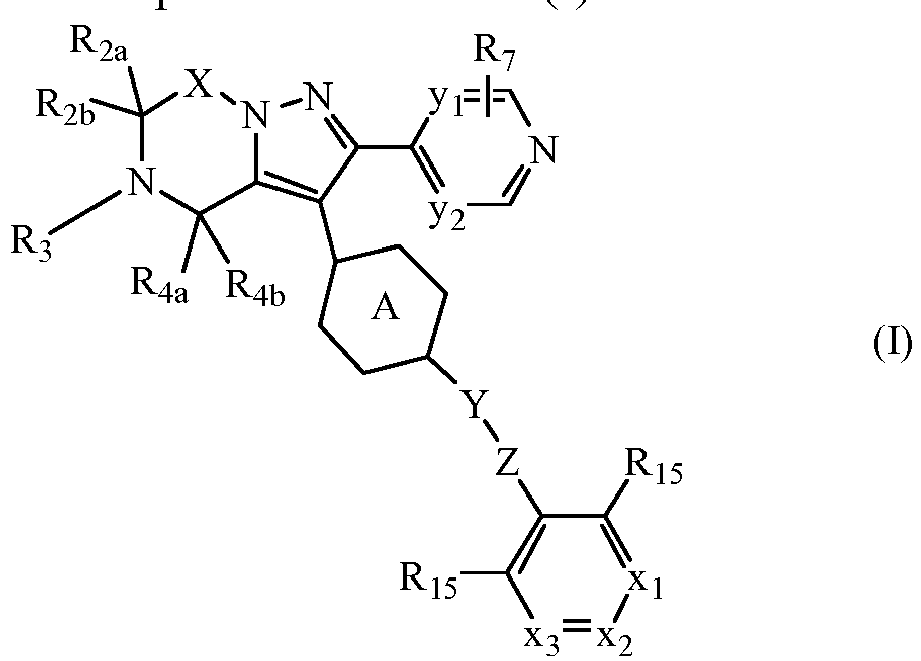
- y1 is CR7a or N;
- y2 is CH or N;
- R7a is hydrogen, halo, trifluoromethyl or cyano;
- R7 is hydrogen, -NH2, -NHCH3, -NH(CH2CH3), methyl, -CH2OH, halo or cyano;
- or when y1 represents CR7a, this R7a can be taken together with a R7 on an adjacent carbon atom to form -CH=CH-NH- or -N=CH-NH-;
- X is -CR1R1a-, -CH2-CHR1-;
- R1 is hydrogen or C1-6alkyl;
- R1a is hydrogen; C1-6alkyl; mono-or polyhaloC1-6alkyl; C1-6alkyl substituted with one or two hydroxyl groups; C1-6alkyl substituted with one -NR9aR9b; or -C(=O)-NR9aR9b;
- R2a is hydrogen; C1-6alkyl; mono-or polyhaloC1-6alkyl; C1-6alkyl substituted with one or two hydroxyl groups; or C1-6alkyl substituted with one substituent selected from the group consisting of -NR9aR9b, cyano and C1-4alkyloxy;
- R2b is hydrogen or C1-6alkyl; or R2a and R2b are taken together to form -CH2-CH2-, -CH2-NR2c-CH2-, -CH2-CH2-CH2-, -CH2-O-CH2-, -CH2-CH2-CH2-CH2-, -CH2-CH2-NR2c-CH2- or =O;
- R2c is hydrogen; C1-4alkyl optionally substituted with one or two hydroxyl groups; mono-or polyhaloC1-6alkyl; C1-6alkyloxy; C1-6alkyl substituted with one cyano group; or C1-6alkyl substituted with one -NR9aR9b;
- R3 is hydrogen; C1-6alkyl; mono-or polyhaloC1-6alkyl; C1-6alkyl substituted with one or two hydroxyl groups; C1-6alkyl substituted with one or two hydroxyl groups and one C1-6alkyloxy; C1-6alkylcarbonyl- optionally substituted with one or two hydroxyl groups; mono-or polyhaloC1-6alkylcarbonyl-; R10aR10bN-C1-6alkylcarbonyl-; C1-6alkyl-O-carbonyl-; C1-6alkylcarbonyloxy-; C1-6alkyl substituted with one R11; C1-6alkyloxy optionally substituted with one -NR10aR10b; C2-6alkenyl; C2-6alkynyl;
- hydroxyC2-6alkenyl; hydroxyC2-6alkynyl; C1-6alkyloxyC2-6alkenyl;
- C1-6alkyloxyC2-6alkynyl; C2-6alkenyl substituted with one -NR10aR10b; C2-6alkynyl substituted with one -NR10aR10b; C1-6alkyl substituted with one or two hydroxyl groups and one -NR10aR10b; -C1-6alkyl-C(R13)=N-O-R13; -S(=O)2-C1-6alkyl; -S(=O)2-NR9aR9b;
- C1-6alkyl substituted with one -(C=O)-R14; C1-6alkyl substituted with one or two hydroxyl groups and one R14; C1-6alkyl substituted with one R14; C2-6alkenyl substituted with one R14; C2-6alkynyl substituted with one R14; or R14;
- R4a is hydrogen;
- R4b is hydrogen; or
- R4a and R4b are taken together to form =O;
- Y is -O- or -C(=O)-;
- Z is -CHR6- or -CH2-C≡C-;
- R6 is hydrogen; C1-4alkyl-O-carbonyl-; C1-4alkyl; C1-4alkyl substituted with one or two hydroxyl groups; C1-4alkyl substituted with one -NR9aR9b; or -C(=O)-NR9aR9b;
- Ring A is phenyl or a 6-membered saturated, partially saturated or aromatic heterocyclyl, said heterocyclyl containing one or two nitrogen atoms; wherein the phenyl or the heterocyclyl is optionally substituted with one or two R8 substituents; each R8 is independently hydrogen; C1-4alkyloxy; hydroxyl; cyano; C1-4alkyl or halo; or a R8 substituent on an atom adjacent to the atom carrying the Y-Z substituent may be taken together with the R6 substituent of Z, by which ring A together with Y-Z forms a bicycle of formula (a-1), (a-2), (a-3) or (a-4):


- R9a and R9b each independently represent hydrogen; mono-or polyhaloC1-4alkyl;
- C1-4alkylcarbonyl-; C1-4alkyl-O-carbonyl-; C1-4alkyl substituted with one or two hydroxyl groups; or C1-4alkyl optionally substituted with one substituent selected from the group consisting of C1-4alkyloxy, cyano, amino and mono-or di(C1-4alkyl)amino;
- R10a and R10b each independently represent hydrogen; C1-4alkyl; cyanoC1-6alkyl;
- C1-6alkyl substituted with one NR9aR9b; C1-6alkyl substituted with one -C(=O)-NR9aR9b; C1-6alkyloxy optionally substituted with one or two hydroxyl groups;
- C1-6alkyloxyC1-6alkyl wherein each C1-6alkyl is optionally substituted with one or two hydroxyl groups; R14; C1-6alkyl substituted with one R14; -(C=O)-R14;
- C1-6alkylcarbonyl-; C1-6alkyl-O-carbonyl-; mono-or polyhaloC1-6alkylcarbonyl-substituted with one or two hydroxyl groups; mono-or polyhaloC1-6alkyl substituted with one or two hydroxyl groups; mono-or polyhaloC1-6alkylcarbonyl-; C1-6alkyl substituted with one -Si(CH3)3; -S(=O)2-C1-6alkyl optionally substituted with one or more halo substituents; -S(=O)2-NR9aR9b;
- C1-6alkyl substituted with one -S(=O)2-C1-6alkyl wherein -S(=O)2-C1-6alkyl is optionally substituted with one or more halo substituents;
- C1-6alkyl substituted with one -S(=O)2-NR9aR9b;
- C1-6alkyl substituted with one -NH-S(=O)2-C1-6alkyl wherein -NH-S(=O)2-C1-6alkyl is optionally substituted on a carbon atom with one or more halo substituents;
- C1-6alkyl substituted with one -NH-S(=O)2-NR9aR9b;
- mono-or polyhaloC1-4alkyl; or C1-4alkyl substituted with one or two hydroxyl groups; R11 is cyano; -NR10aR10b; C1-6alkyloxy optionally substituted with one or two hydroxyl groups; -S(=O)2-C1-6alkyl; -S(=O)2-NR9aR9b; -NR13-S(=O)2-C1-6alkyl; -NR13-S(=O)2-NR9aR9b; C1-6alkylcarbonyloxy-; -C(=O)-NR10aR10b; -O-C(=O)-NR10aR10b; -COOH; -P(=O)(OH)2; or -P(=O)(O-C1-4alkyl)2;
- R12 is -NR9aR9b, C1-6alkyloxy, or cyano;
- R13 is hydrogen or C1-4alkyl;
- R14 is a C3-8cycloalkyl; or a 4, 5 or 6 membered saturated heterocyclyl which is optionally substituted with one, two or three substituents selected from the group consisting of oxo, C1-4alkyl, halogen, cyano, hydroxyl, C1-6alkyloxy and NR9aR9b;
- x1 is CR5a or N;
- x2 is CR5b or N;
- x3 is CR5c or N;
- each R15 is independently selected from the group consisting of hydrogen, methyl, halo, C1-4alkyloxy and hydroxyl;
- R5a and R5c each independently are selected from the group consisting of hydrogen; hydroxyl; cyano; halo; C1-6alkyl; C1-6alkyl substituted with one or two hydroxyl groups; mono-or polyhaloC1-6alkyl; mono-or polyhaloC1-6alkyloxy; C1-6alkyl substituted with one -NR9aR9b ; C1-6alkyl substituted with one cyano; C1-6alkyloxyC1-6alkyl wherein each of the C1-6alkyl groups are optionally substituted with one or two hydroxyl groups; C2-6alkenyl; C1-6alkyl-O-carbonyl-; C1-6alkyloxy; C1-6alkyloxy substituted with one or two hydroxyl groups; C1-6alkyloxyC1-6alkyloxy wherein each of the C1-6alkyl groups are optionally substituted with one or two hydroxyl groups; C1-6alkyloxy substituted with one cyano; and C1-6alkyloxy substituted with one -NR9aR9b;
- R5b is hydrogen; C1-6alkyl; C3-6cycloalkyl optionally substituted with one cyano; hydroxyl; cyano; mono-or polyhaloC1-6alkyloxy; mono-or polyhaloC1-6alkyl; C1-4alkyl substituted with one or two hydroxyl groups; C2-6alkenyl; C1-4alkyloxy; -Si(CH3)3; C1-6alkyl substituted with one R12; C1-6alkyl-O-carbonyl-; or C1-6alkyloxy substituted with one R12;
- and the N-oxides, the pharmaceutically acceptable addition salts, and the solvates thereof.
- The present invention also concerns methods for the preparation of compounds of the present invention and pharmaceutical compositions comprising them.
- The compounds of the present invention were found to inhibit ROS1, and therefore may be useful in the treatment or prevention, in particular in the treatment, of cancer, in particular non-small cell lung cancer (specifically adenocarcinoma), cholangiocarcinoma, glioblastoma, colorectal cancer, gastric adenocarcinoma, ovarian cancer, angiosarcoma, epithelioid hemangioendothelioma, inflammatory myofibroblastic tumors, breast cancer and chronic myelogenous leukemia, and the like. The compounds of the present invention may also have utility in male contraception.
- In view of the aforementioned pharmacology of the compounds of Formula (I) and N-oxides, pharmaceutically acceptable addition salts, and solvates thereof, it follows that they may be suitable for use as a medicament.
- In particular the compounds of Formula (I) and N-oxides, pharmaceutically acceptable addition salts, and solvates thereof, may be suitable in the treatment or prevention, in particular in the treatment, of cancer.
- The present invention also concerns the use of compounds of Formula (I) and N-oxides, pharmaceutically acceptable addition salts, and solvates thereof, for the manufacture of a medicament for the inhibition of ROS1, for the treatment or prevention of cancer. The present invention will now be further described. In the following passages, different aspects of the invention are defined in more detail. Each aspect so defined may be combined with any other aspect or aspects unless clearly indicated to the contrary. In particular, any feature indicated as being preferred or advantageous may be combined with any other feature or features indicated as being preferred or advantageous.
- When describing the compounds of the invention, the terms used are to be construed in accordance with the following definitions, unless a context dictates otherwise.
- When any variable occurs more than one time in any constituent or in any formula (e.g. formula (I)), its definition in each occurence is independent of its definition at every other occurrence.
- Whenever the term "substituted" is used in the present invention, it is meant, unless otherwise is indicated or is clear from the context, to indicate that one or more hydrogens, in particular from 1 to 3 hydrogens, preferably 1 or 2 hydrogens, more preferably 1 hydrogen, on the atom or radical indicated in the expression using "substituted" are replaced with a selection from the indicated group, provided that the normal valency is not exceeded, and that the substitution results in a chemically stable compound, i.e. a compound that is sufficiently robust to survive isolation to a useful degree of purity from a reaction mixture, and formulation into a therapeutic agent.
- Whenever a radical or group is defined as "optionally substituted" in the present invention, it is meant that said radical or group is unsubstituted or is substituted.
- Lines drawn from substituents into ring systems indicate that the bond may be attached to any of the suitable ring atoms.
- The prefix "Cx-y" (where x and y are integers) as used herein refers to the number of carbon atoms in a given group. Thus, a C1-6alkyl group contains from 1 to 6 carbon atoms, a C3-6cycloalkyl group contains from 3 to 6 carbon atoms, a C1-4alkoxy group contains from 1 to 4 carbon atoms, and so on.
- The term "halo" as a group or part of a group is generic for fluoro, chloro, bromo, iodo unless otherwise is indicated or is clear from the context.
- The term 'mono- or polyhaloC1-4alkyl' or 'mono- or polyhaloC1-6alkyl' as used herein as a group or part of a group refers to a C1-4alkyl or C1-6alkyl group as defined herein wherein one or more than one hydrogen atom is replaced with a halogen. There may be one, two, three or more hydrogen atoms replaced with a halogen, so the 'mono- or polyhaloC1-4alkyl' or 'mono- or polyhaloC1-6alkyl' may have one, two, three or more halogens. Examples of such groups include fluoroethyl, fluoromethyl, trifluoromethyl or trifluoroethyl and the like.
- The term "C1-6alkyl" as a group or part of a group refers to a hydrocarbyl radical of Formula CnH2n+1 wherein n is a number ranging from 1 to 6. C1-6alkyl groups comprise from 1 to 6 carbon atoms, preferably from 1 to 4 carbon atoms, more preferably from 1 to 3 carbon atoms, still more preferably 1 to 2 carbon atoms. Alkyl groups may be linear or branched and may be substituted as indicated herein. When a subscript is used herein following a carbon atom, the subscript refers to the number of carbon atoms that the named group may contain. Thus, for example, C1-6alkyl includes all linear, or branched alkyl groups with between 1 and 6 carbon atoms, and thus includes such as for example methyl, ethyl, n-propyl, i-propyl, 2-methyl-ethyl, butyl and its isomers (e.g. n-butyl, isobutyl and tert-butyl), pentyl and its isomers, hexyl and its isomers, and the like.
- The term "C1-4alkyl" as a group or part of a group refers to a hydrocarbyl radical of Formula CnH2n+1 wherein n is a number ranging from 1 to 4. C1-4alkyl groups comprise from 1 to 4 carbon atoms, preferably from 1 to 3 carbon atoms, more preferably 1 to 2 carbon atoms. C1-4alkyl groups may be linear or branched and may be substituted as indicated herein. When a subscript is used herein following a carbon atom, the subscript refers to the number of carbon atoms that the named group may contain. C1-4alkyl includes all linear, or branched alkyl groups with between 1 and 4 carbon atoms, and thus includes methyl, ethyl, n-propyl, i-propyl, 2-methyl-ethyl, butyl and its isomers (e.g. n-butyl, isobutyl and tert-butyl), and the like.
- The term "C1-6alkyloxy" as a group or part of a group refers to a radical having the Formula -ORb wherein Rb is C1-6alkyl. Non-limiting examples of suitable alkyloxy include methyloxy, ethyloxy, propyloxy, isopropyloxy, butyloxy, isobutyloxy, sec-butyloxy, tert-butyloxy, pentyloxy, and hexyloxy.
- The term "C1-4alkyloxy" as a group or part of a group refers to a radical having the Formula -ORc wherein Rc is C1-4alkyl. Non-limiting examples of suitable C1-4alkyloxy include methyloxy (also methoxy), ethyloxy (also ethoxy), propyloxy, isopropyloxy, butyloxy, isobutyloxy, sec-butyloxy and tert-butyloxy.
- The term "C1-6alkylcarbonyl" as a group or part of a group refers to a radical -C(=O)-C1-6alkyl. The term "C1-4alkylcarbonyl" as a group or part of a group refers to a radical -C(=O)-C1-4alkyl.
- The term "C3-8cycloalkyl" alone or in combination, refers to a cyclic saturated hydrocarbon radical having from 3 to 8 carbon atoms. Non-limiting examples of suitable C3-8cycloalkyl include cyclopropyl, cyclobutyl, cyclopentyl, cyclohexyl, cycloheptyl and cyclooctyl.
- The term "C3-6cycloalkyl" alone or in combination, refers to a cyclic saturated hydrocarbon radical having from 3 to 6 carbon atoms. Non-limiting examples of suitable C3-6cycloalkyl include cyclopropyl, cyclobutyl, cyclopentyl and cyclohexyl.
- The term "C2-4alkenyl" or "C2-6alkenyl" as used herein as a group or part of a group refers to a linear or branched hydrocarbon group containing from 2 to 4 or 2 to 6 carbon atoms and containing a carbon carbon double bond such as, but not limited to, ethenyl, propenyl, butenyl, pentenyl, 1-propen-2-yl, hexenyl and the like.
- The term "C2-4alkynyl" or "C2-6alkynyl" as used herein as a group or part of a group refers to a linear or branched hydrocarbon group having from 2 to 4 or 2 to 6 carbon atoms and containing a carbon carbon triple bond.
- The term "cyanoC1-6alkyl" means C1-6alkyl substituted with one cyano.
- The term "hydroxyC2-6alkenyl" means C2-6alkenyl substuted with one hydroxy.
- The term "hydroxyC2-6alkynyl" means C2-6alkynyl substituted with one hydroxy.
- In particular, the 4, 5 or 6 membered saturated heterocyclyls (e.g. in the definition of R14), contain 1, 2 or 3 heteroatoms selected from O, S and N, in particular 1 or 2 heteroatoms, in particular selected from O and N.
- Examples of 4, 5 or 6 membered saturated heterocyclyls include, but are not limited to, pyrrolidinyl, dioxolanyl, oxazolidinyl, oxetanyl, tetrahydrofuranyl, and the like.
- Examples of 6-membered aromatic heterocyclyls containing one or two nitrogen atoms (e.g. in the definition of ring A), include, but are not limited to, pyrimidinyl, pyridinyl, pyrazinyl and the like.
- Examples of 6-membered partially saturated heterocyclyls containing one or two nitrogen atoms (e.g. in the definition of ring A), include, but are not limited to, 1,2,3,6-tetrahydro-pyridinyl and the like. In a particular embodiment, the 1,2,3,6-tetrahydro-pyridinyl is attached with its nitrogen atom to variable Y.
- Examples of 6-membered saturated heterocyclyls containing one or two nitrogen atoms (e.g. in the definition of ring A), include, but are not limited to, piperidinyl and the like. In a particular embodiment, the piperidinyl is attached with its nitrogen atom to the pyrazolyl ring.
- In case R7a is taken together with a R7 on an adjacent carbon atom to form -CH=CH-NH-, it is intended that the CH in position alpha


- In case R7a is taken together with a R7 on an adjacent carbon atom to form -N=CH-NH-, it is intended that the nitrogen in position alpha


- In case X is -CH2-CHR1-, it is intended that the carbon atom with the R1 substituent is attached to the nitrogen atom of the pyrazole ring. In case Z is -CH2-C≡C-, it is intended that the CH2 group is attached to variable Y.
- It will be clear that when a R8 substituent on an atom adjacent to the atom carrying the Y-Z substituent is taken together with the R6 substituent of Z, compounds of formula (I-a-1), (I-a-2),(I-a-3) and (I-a-4) are formed:

- The term "subject" as used herein, refers to an animal, preferably a mammal (e.g. cat, dog, primate or human), more preferably a human, who is or has been the object of treatment, observation or experiment.
- The term "therapeutically effective amount" as used herein, means that amount of active compound or pharmaceutical agent that elicits the biological or medicinal response in a tissue system, animal or human that is being sought by a researcher, veterinarian, medicinal doctor or other clinician, which includes alleviation or reversal of the symptoms of the disease or disorder being treated.
- The term "composition" is intended to encompass a product comprising the specified ingredients in the specified amounts, as well as any product which results, directly or indirectly, from combinations of the specified ingredients in the specified amounts.
- The term "treatment", as used herein, is intended to refer to all processes wherein there may be a slowing, interrupting, arresting or stopping of the progression of a disease, but does not necessarily indicate a total elimination of all symptoms.
- The term "compounds of the invention" as used herein, is meant to include the compounds of Formula (I) and N-oxides, pharmaceutically acceptable addition salts, and solvates thereof.
- As used herein, any chemical formula with bonds shown only as solid lines and not as solid wedged or hashed wedged bonds, or otherwise indicated as having a particular configuration (e.g. R, S) around one or more atoms, contemplates each possible stereoisomer, or mixture of two or more stereoisomers.
- Whenever one of the ring systems, is substituted with one or more substituents, those substituents may replace any hydrogen atom bound to a carbon or nitrogen atom of the ring system.
- Hereinbefore and hereinafter, the term "compound of Formula (I)" is meant to include the stereoisomers thereof and the tautomeric forms thereof.
- The terms "stereoisomers", "stereoisomeric forms" or "stereochemically isomeric forms" hereinbefore or hereinafter are used interchangeably.
- The invention includes all stereoisomers of the compounds of the invention either as a pure stereoisomer or as a mixture of two or more stereoisomers.
- Enantiomers are stereoisomers that are non-superimposable mirror images of each other. A 1:1 mixture of a pair of enantiomers is a racemate or racemic mixture. Diastereomers (or diastereoisomers) are stereoisomers that are not enantiomers, i.e. they are not related as mirror images. If a compound contains a double bond, the substituents may be in the E or the Z configuration. Substituents on bivalent cyclic (partially) saturated radicals may have either the cis- or trans-configuration; for example if a compound contains a disubstituted cycloalkyl group, the substituents may be in the cis or trans configuration. Therefore, the invention includes enantiomers, diastereomers, racemates, E isomers, Z isomers, cis isomers, trans isomers and mixtures thereof, whenever chemically possible.
- The meaning of all those terms, i.e. enantiomers, diastereomers, racemates, E isomers, Z isomers, cis isomers, trans isomers and mixtures thereof are known to the skilled person.
- The absolute configuration is specified according to the Cahn-Ingold-Prelog system. The configuration at an asymmetric atom is specified by either R or S. Resolved stereoisomers whose absolute configuration is not known can be designated by (+) or (-) depending on the direction in which they rotate plane polarized light. For instance, resolved enantiomers whose absolute configuration is not known can be designated by (+) or (-) depending on the direction in which they rotate plane polarized light.
- When a specific stereoisomer is identified, this means that said stereoisomer is substantially free, i.e. associated with less than 50%, preferably less than 20%, more preferably less than 10%, even more preferably less than 5%, in particular less than 2% and most preferably less than 1%, of the other stereoisomers. Thus, when a compound of Formula (I) is for instance specified as (R), this means that the compound is substantially free of the (S) isomer; when a compound of Formula (I) is for instance specified as E, this means that the compound is substantially free of the Z isomer; when a compound of Formula (I) is for instance specified as cis, this means that the compound is substantially free of the trans isomer.
- Some of the compounds of Formula (I) may also exist in their tautomeric form. Such forms in so far as they may exist, are intended to be included within the scope of the present invention.
- It follows that a single compound may exist in both stereoisomeric and tautomeric form.
- For therapeutic use, salts of the compounds of Formula (I), N-oxides and solvates thereof, are those wherein the counterion is pharmaceutically acceptable. However, salts of acids and bases which are non-pharmaceutically acceptable may also find use, for example, in the preparation or purification of a pharmaceutically acceptable compound. All salts, whether pharmaceutically acceptable or not are included within the ambit of the present invention.
- The pharmaceutically acceptable addition salts as mentioned hereinabove or hereinafter are meant to comprise the therapeutically active non-toxic acid and base addition salt forms which the compounds of Formula (I), N-oxides and solvates thereof, are able to form. The pharmaceutically acceptable acid addition salts can conveniently be obtained by treating the base form with such appropriate acid. Appropriate acids comprise, for example, inorganic acids such as hydrohalic acids, e.g. hydrochloric or hydrobromic acid, sulfuric, nitric, phosphoric and the like acids; or organic acids such as, for example, acetic, propanoic, hydroxyacetic, lactic, pyruvic, oxalic (i.e. ethanedioic), malonic, succinic (i.e. butanedioic acid), maleic, fumaric, malic, tartaric, citric, methanesulfonic, ethanesulfonic, benzenesulfonic, p-toluenesulfonic, cyclamic, salicylic, p-aminosalicylic, pamoic and the like acids. Conversely said salt forms can be converted by treatment with an appropriate base into the free base form.
- The compounds of Formula (I), N-oxides and solvates thereof containing an acidic proton may also be converted into their non-toxic metal or amine addition salt forms by treatment with appropriate organic and inorganic bases. Appropriate base salt forms comprise, for example, the ammonium salts, the alkali and earth alkaline metal salts, e.g. the lithium, sodium, potassium, magnesium, calcium salts and the like, salts with organic bases, e.g. primary, secondary and tertiary aliphatic and aromatic amines such as methylamine, ethylamine, propylamine, isopropylamine, the four butylamine isomers, dimethylamine, diethylamine, diethanolamine, dipropylamine, diisopropylamine, di-n-butylamine, pyrrolidine, piperidine, morpholine, trimethylamine, triethylamine, tripropylamine, quinuclidine, pyridine, quinoline and isoquinoline; the benzathine, N-methyl-D-glucamine, hydrabamine salts, and salts with amino acids such as, for example, arginine, lysine and the like. Conversely the salt form can be converted by treatment with acid into the free acid form.
- The term solvate comprises the hydrates and solvent addition forms which the compounds of Formula (I) are able to form, as well as N-oxides and pharmaceutically acceptable addition salts thereof. Examples of such forms are e.g. hydrates, alcoholates and the like.
- The compounds of the invention as prepared in the processes described below may be synthesized in the form of mixtures of enantiomers, in particular racemic mixtures of enantiomers, that can be separated from one another following art-known resolution procedures. A manner of separating the enantiomeric forms of the compounds of Formula (I), and N-oxides, pharmaceutically acceptable addition salts, and solvates thereof, involves liquid chromatography using a chiral stationary phase. Said pure stereochemically isomeric forms may also be derived from the corresponding pure stereochemically isomeric forms of the appropriate starting materials, provided that the reaction occurs stereospecifically. Preferably if a specific stereoisomer is desired, said compound would be synthesized by stereospecific methods of preparation. These methods will advantageously employ enantiomerically pure starting materials.
- In the framework of this application, an element, in particular when mentioned in relation to a compound of Formula (I), comprises all isotopes and isotopic mixtures of this element, either naturally occurring or synthetically produced, either with natural abundance or in an isotopically enriched form. Radiolabelled compounds of Formula (I) may comprise a radioactive isotope selected from the group of 2H, 3H, 11C, 18F, 122I, 123I, 125I, 131I, 75Br , 76Br, 77Br and 82Br. Preferably, the radioactive isotope is selected from the group of 2H 3H, 11C and 18F. More preferably, the radioactive isotope is 2H. In particular, deuterated compounds are intended to be included within the scope of the present invention
- As used in the specification and the appended claims, the singular forms "a", "an," and "the" also include plural referents unless the context clearly dictates otherwise. For example, "a compound" means 1 compound or more than 1 compound.
- In an embodiment, the present invention concerns novel compounds of Formula (I), tautomers and stereoisomeric forms thereof, wherein
y1 is CR7a or N;
y2 is CH;
R7a is hydrogen;
R7 is hydrogen, -NH2, -NHCH3, -NH(CH2CH3), methyl, -CH2OH, halo or cyano;
or when y1 represents CR7a, this R7a can be taken together with a R7 on an adjacent carbon atom to form -CH=CH-NH- or -N=CH-NH-;
X is -CR1R1a-, -CH2-CHR1-;
R1 is hydrogen or C1-6alkyl;
R1a is hydrogen;
R2a is hydrogen; C1-6alkyl; mono-or polyhaloC1-6alkyl; C1-6alkyl substituted with one or two hydroxyl groups; or C1-6alkyl substituted with one substituent selected from the group consisting of -NR9aR9b, cyano and C1-4alkyloxy;
R2b is hydrogen; or
R2a and R2b are taken together to form -CH2-CH2-, -CH2-NR2c-CH2-, -CH2-CH2-CH2-, -CH2-O-CH2-, -CH2-CH2-CH2-CH2-, -CH2-CH2-NR2c-CH2- or =O;
R2c is hydrogen; C1-4alkyl optionally substituted with one or two hydroxyl groups; mono-or polyhaloC1-6alkyl; C1-6alkyloxy; C1-6alkyl substituted with one cyano group; or C1-6alkyl substituted with one -NR9aR9b;
R3 is hydrogen; C1-6alkyl; mono-or polyhaloC1-6alkyl; C1-6alkyl substituted with one or two hydroxyl groups; C1-6alkyl substituted with one or two hydroxyl groups and one C1-6alkyloxy; C1-6alkylcarbonyl- optionally substituted with one or two hydroxyl groups; mono-or polyhaloC1-6alkylcarbonyl-; R10aR10bN-C1-6alkylcarbonyl-; C1-6alkyl-O-carbonyl-; C1-6alkylcarbonyloxy-; C1-6alkyl substituted with one R11; C1-6alkyloxy optionally substituted with one -NR10aR10b; C1-6alkyl substituted with one or two hydroxyl groups and one -NR10a,R10b; -S(=O)2-C1-6alkyl; -S(=O)2-NR9aR9b; C1-6alkyl substituted with one -(C=O)-R14; C1-6alkyl substituted with one or two hydroxyl groups and one R14; C1-6alkyl substituted with one R14; or R14;
R4a is hydrogen;
R4b is hydrogen; or
R4a and R4b are taken together to form =O;
Y is -O- or -C(=O)-; in particular Y is -O-;
Z is -CHR6- or -CH2-C≡C-;
R6 is hydrogen; C1-4alkyl-O-carbonyl-; C1-4alkyl; C1-4alkyl substituted with one or two hydroxyl groups; C1-4alkyl substituted with one -NR9aR9b; or -C(=O)-NR9aR9b;
Ring A is phenyl or a 6-membered saturated, partially saturated or aromatic heterocyclyl, in particular phenyl or a 6-membered aromatic heterocyclyl, said heterocyclyl containing one or two nitrogen atoms; wherein the phenyl or the heterocyclyl is optionally substituted with one or two R8 substituents;
each R8 is independently hydrogen; C1-4alkyloxy; hydroxyl; cyano; C1-4alkyl or halo; or a R8 substituent on an atom adjacent to the atom carrying the Y-Z substituent may be taken together with the R6 substituent of Z, by which ring A together with Y-Z forms a bicycle of formula (a-1), (a-2), (a-3) or (a-4);
R9a and R9b each independently represent hydrogen; mono-or polyhaloC1-4alkyl; C1-4alkylcarbonyl-; C1-4alkyl-O-carbonyl-; C1-4alkyl substituted with one or two hydroxyl groups; or C1-4alkyl optionally substituted with one substituent selected from the group consisting of C1-4alkyloxy, cyano, amino and mono-or di(C1-4alkyl)amino;
R10a and R10b each independently represent hydrogen; C1-4alkyl; cyanoC1-6alkyl; C1-6alkyl substituted with one NR9aR9b; C1-6alkyl substituted with one -C(=O)-NR9aR9b; C1-6alkyloxy optionally substituted with one or two hydroxyl groups; C1-6alkyloxyC1-6alkyl wherein each C1-6alkyl is optionally substituted with one or two hydroxyl groups; C1-6alkylcarbonyl-; C1-6alkyl-O-carbonyl-;
mono-or polyhaloC1-6alkylcarbonyl- substituted with one or two hydroxyl groups;
mono-or polyhaloC1-6alkyl substituted with one or two hydroxyl groups;
mono-or polyhaloC1-6alkylcarbonyl-; mono-or polyhaloC1-4alkyl; or C1-4alkyl substituted with one or two hydroxyl groups;
R11 is cyano; -NR10aR10b; C1-6alkyloxy optionally substituted with one or two hydroxyl groups; -S(=O)2-C1-6alkyl; -S(=O)2-NR9aR9b; -NR13-S(=O)2-C1-6alkyl; -NR13-S(=O)2-NR9aR9b; C1-6alkylcarbonyloxy-; -C(=O)-NR10aR10b; -O-C(=O)-NR10aR10b; -COOH; -P(=O)(OH)2; or -P(=O)(O-C1-4alkyl)2;
R12 is -NR9aR9b, C1-6alkyloxy, or cyano;
R13 is hydrogen or C1-4alkyl;
R14 is a 4, 5 or 6 membered saturated heterocyclyl which is optionally substituted with one, two or three substituents selected from the group consisting of oxo, C1-4alkyl, halogen, cyano, hydroxyl, C1-6alkyloxy and NR9aR9b;
x1 is CR5a or N;
x2 is CR5b;
x3 is CR5c or N;
each R15 is independently selected from the group consisting of hydrogen, methyl, halo, C1-4alkyloxy and hydroxyl;
R5a and R5c each independently are selected from the group consisting of hydrogen; hydroxyl; cyano; halo; C1-6alkyl; C1-6alkyl substituted with one or two hydroxyl groups; mono-or polyhaloC1-6alkyl; mono-or polyhaloC1-6alkyloxy; C1-6alkyl substituted with one -NR9aR9b ; C1-6alkyl substituted with one cyano; C1-6alkyloxyC1-6alkyl wherein each of the C1-6alkyl groups are optionally substituted with one or two hydroxyl groups; C2-6alkenyl; C1-6alkyl-O-carbonyl-; C1-6alkyloxy; C1-6alkyloxy substituted with one or two hydroxyl groups; C1-6alkyloxyC1-6alkyloxy wherein each of the C1-6alkyl groups are optionally substituted with one or two hydroxyl groups; C1-6alkyloxy substituted with one cyano; and C1-6alkyloxy substituted with one -NR9aR9b;
R5b is hydrogen; C1-6alkyl; C3-6cycloalkyl optionally substituted with one cyano; hydroxyl; cyano; mono-or polyhaloC1-6alkyloxy; mono-or polyhaloC1-6alkyl; C1-4alkyl substituted with one or two hydroxyl groups; C2-6alkenyl; C1-4alkyloxy; -Si(CH3)3; C1-6alkyl substituted with one R12; C1-6alkyl-O-carbonyl-; or C1-6alkyloxy substituted with one R12;
and the N-oxides, the pharmaceutically acceptable addition salts, and the solvates thereof. - In an embodiment, the present invention concerns novel compounds of Formula (I), tautomers and stereoisomeric forms thereof, wherein
y1 is CR7a or N;
y2 is CH;
R7a is hydrogen;
R7 is hydrogen, -NH2, -NHCH3, -NH(CH2CH3), methyl, -CH2OH, halo or cyano;
or when y1 represents CR7a, this R7a can be taken together with a R7 on an adjacent carbon atom to form -CH=CH-NH- or -N=CH-NH-;
X is -CR1R1a-, -CH2-CHR1-;
R1 is hydrogen or C1-6alkyl;
R1a is hydrogen;
R2a is hydrogen; C1-6alkyl; mono-or polyhaloC1-6alkyl; C1-6alkyl substituted with one or two hydroxyl groups; or C1-6alkyl substituted with one substituent selected from the group consisting of -NR9aR9b, cyano and C1-4alkyloxy;
R2b is hydrogen; or
R2a and R2b are taken together to form -CH2-CH2-, -CH2-NR2c-CH2-, -CH2-CH2-CH2-, -CH2-O-CH2-, -CH2-CH2-CH2-CH2-, -CH2-CH2-NR2c-CH2- or =O;
R2c is hydrogen; C1-4alkyl optionally substituted with one or two hydroxyl groups; mono-or polyhaloC1-6alkyl; C1-6alkyloxy; C1-6alkyl substituted with one cyano group; or C1-6alkyl substituted with one -NR9aR9b;
R3 is hydrogen; C1-6alkyl; mono-or polyhaloC1-6alkyl; C1-6alkyl substituted with one or two hydroxyl groups; C1-6alkyl substituted with one or two hydroxyl groups and one C1-6alkyloxy; C1-6alkylcarbonyl- optionally substituted with one or two hydroxyl groups; mono-or polyhaloC1-6alkylcarbonyl-; R10aR10bN-C1-6alkylcarbonyl-; C1-6alkyl-O-carbonyl-; C1-6alkylcarbonyloxy-; C1-6alkyl substituted with one R11; C1-6alkyloxy optionally substituted with one -NR10aR10b; C1-6alkyl substituted with one or two hydroxyl groups and one -NR10a,R10b; -S(=O)2-C1-6alkyl; -S(=O)2-NR9aR9b; C1-6alkyl substituted with one -(C=O)-R14; C1-6alkyl substituted with one or two hydroxyl groups and one R14; C1-6alkyl substituted with one R14; or R14;
R4a is hydrogen;
R4b is hydrogen; or
R4a and R4b are taken together to form =O;
Y is -O- or -C(=O)-; in particular Y is -O-;
Z is -CHR6- or -CH2-C≡C-;
R6 is hydrogen; C1-4alkyl-O-carbonyl-; C1-4alkyl; C1-4alkyl substituted with one or two hydroxyl groups; C1-4alkyl substituted with one -NR9aR9b; or -C(=O)-NR9aR9b;
Ring A is phenyl or a 6-membered aromatic heterocyclyl, said heterocyclyl containing one or two nitrogen atoms; wherein the phenyl or the heterocyclyl is optionally substituted with one or two R8 substituents;
each R8 is independently hydrogen; C1-4alkyloxy; hydroxyl; cyano; or halo;
or a R8 substituent on an atom adjacent to the atom carrying the Y-Z substituent may be taken together with the R6 substituent of Z, by which ring A together with Y-Z forms a bicycle of formula (a-1), (a-2), (a-3) or (a-4);
R9a and R9b each independently represent hydrogen; mono-or polyhaloC1-4alkyl; C1-4alkylcarbonyl-; C1-4alkyl-O-carbonyl-; C1-4alkyl substituted with one or two hydroxyl groups; or C1-4alkyl optionally substituted with one substituent selected from the group consisting of C1-4alkyloxy, cyano, amino and mono-or di(C1-4alkyl)amino; R10a and R10b each independently represent hydrogen; C1-4alkyl; cyanoC1-6alkyl; C1-6alkyl substituted with one NR9aR9b; C1-6alkyl substituted with one -C(=O)-NR9aR9b; C1-6alkyloxy optionally substituted with one or two hydroxyl groups; C1-6alkyloxyC1-6alkyl wherein each C1-6alkyl is optionally substituted with one or two hydroxyl groups; C1-6alkylcarbonyl-; C1-6alkyl-O-carbonyl-;
mono-or polyhaloC1-6alkylcarbonyl- substituted with one or two hydroxyl groups; mono-or polyhaloC1-6alkyl substituted with one or two hydroxyl groups;
mono-or polyhaloC1-6alkylcarbonyl-; mono-or polyhaloC1-4alkyl; or C1-4alkyl substituted with one or two hydroxyl groups;
R11 is cyano; -NR10aR10b; C1-6alkyloxy optionally substituted with one or two hydroxyl groups; -S(=O)2-C1-6alkyl; -S(=O)2-NR9aR9b; -NR13-S(=O)2-C1-6alkyl; -NR13-S(=O)2-NR9aR9b; C1-6alkylcarbonyloxy-; -C(=O)-NR10aR10b; -O-C(=O)-NR10aR10b; -COOH;
-P(=O)(OH)2; or -P(=O)(O-C1-4alkyl)2;
R12 is -NR9aR9b, C1-6alkyloxy, or cyano;
R13 is hydrogen or C1-4alkyl;
R14 is a 4, 5 or 6 membered saturated heterocyclyl which is optionally substituted with one, two or three substituents selected from the group consisting of oxo, C1-4alkyl, halogen, cyano, hydroxyl, C1-6alkyloxy and NR9aR9b;
x1 is CR5a or N;
x2 is CR5b;
x3 is CR5c or N;
each R15 is independently selected from the group consisting of hydrogen, methyl, halo, C1-4alkyloxy and hydroxyl;
R5a and R5c each independently are selected from the group consisting of hydrogen; hydroxyl; cyano; halo; C1-6alkyl; C1-6alkyl substituted with one or two hydroxyl groups; mono-or polyhaloC1-6alkyl; mono-or polyhaloC1-6alkyloxy; C1-6alkyl substituted with one -NR9aR9b ; C1-6alkyl substituted with one cyano; C1-6alkyloxyC1-6alkyl wherein each of the C1-6alkyl groups are optionally substituted with one or two hydroxyl groups; C2-6alkenyl; C1-6alkyl-O-carbonyl-; C1-6alkyloxy; C1-6alkyloxy substituted with one or two hydroxyl groups; C1-6alkyloxyC1-6alkyloxy wherein each of the C1-6alkyl groups are optionally substituted with one or two hydroxyl groups; C1-6alkyloxy substituted with one cyano; and C1-6alkyloxy substituted with one -NR9aR9b;
R5b is C1-6alkyl; C3-6cycloalkyl optionally substituted with one cyano; mono-or polyhaloC1-6alkyloxy; mono-or polyhaloC1-6alkyl; C1-4alkyl substituted with one hydroxyl group; C2-6alkenyl; -Si(CH3)3; C1-6alkyl substituted with one R12; or C1-6alkyl-O-carbonyl-;
and the N-oxides, the pharmaceutically acceptable addition salts, and the solvates thereof. - In an embodiment, the present invention concerns novel compounds of Formula (I), tautomers and stereoisomeric forms thereof, wherein
y1 is CR7a or N;
y2 is CH or N;
R7a is hydrogen, halo, trifluoromethyl or cyano;
R7 is hydrogen, -NH2, -NHCH3, -NH(CH2CH3), methyl, -CH2OH, halo or cyano;
or when y1 represents CR7a, this R7a can be taken together with a R7 on an adjacent carbon atom to form -CH=CH-NH- or -N=CH-NH-;
X is -CR1R1a-, -CH2-CHR1-;
R1 is hydrogen or C1-6alkyl;
R1a is hydrogen; C1-6alkyl; mono-or polyhaloC1-6alkyl; C1-6alkyl substituted with one or two hydroxyl groups; C1-6alkyl substituted with one -NR9aR9b; or -C(=O)-NR9aR9b; R2a is hydrogen; C1-6alkyl; mono-or polyhaloC1-6alkyl; C1-6alkyl substituted with one or two hydroxyl groups; or C1-6alkyl substituted with one substituent selected from the group consisting of -NR9aR9b, cyano and C1-4alkyloxy;
R2b is hydrogen or C1-6alkyl; or
R2a and R2b are taken together to form -CH2-CH2-, -CH2-NR2c-CH2-, -CH2-CH2-CH2-, -CH2-O-CH2-, -CH2-CH2-CH2-CH2-, -CH2-CH2-NR2c-CH2- or =O;
R2c is hydrogen; C1-4alkyl optionally substituted with one or two hydroxyl groups; mono-or polyhaloC1-6alkyl; C1-6alkyloxy; C1-6alkyl substituted with one cyano group; or C1-6alkyl substituted with one -NR9aR9b;
R3 is hydrogen; C1-6alkyl; mono-or polyhaloC1-6alkyl; C1-6alkyl substituted with one or two hydroxyl groups; C1-6alkyl substituted with one or two hydroxyl groups and one C1-6alkyloxy; C1-6alkylcarbonyl- optionally substituted with one or two hydroxyl groups; mono-or polyhaloC1-6alkylcarbonyl-; R10aR10bN-C1-6alkylcarbonyl-; C1-6alkyl-O-carbonyl-; C1-6alkylcarbonyloxy-; C1-6alkyl substituted with one R11; C1-6alkyloxy optionally substituted with one -NR10aR10b; C2-6alkenyl; C2-6alkynyl; hydroxyC2-6alkenyl; hydroxyC2-6alkynyl; C1-6alkylosyC2-6alkenyl; C1-6alkyloxyC2-6alkynyl; C2-6alkenyl substituted with one -NR10aR10b; C2-6alkynyl substituted with one -NR10aR10b; C1-6alkyl substituted with one or two hydroxyl groups and one -NR10aR10b; -C1-6alkyl-C(R13)=N-O-R13; -S(=O)2-C1-6alkyl; -S(=O)2-NR9aR9b; C1-6alkyl substituted with one -(C=O)-R14; C1-6alkyl substituted with one or two hydroxyl groups and one R14; C1-6alkyl substituted with one R14; C2-6alkenyl substituted with one R14; C2-6alkynyl substituted with one R14; or R14;
R4a is hydrogen;
R4b is hydrogen; or
R4a and R4b are taken together to form =O;
Y is -O- or -C(=O)-; in particular Y is -O-;
Z is -CHR6- or -CH2-C≡C-;
R6 is hydrogen; C1-4alkyl-O-carbonyl-; C1-4alkyl; C1-4alkyl substituted with one or two hydroxyl groups; C1-4alkyl substituted with one -NR9aR9b; or -C(=O)-NR9aR9b;
Ring A is phenyl or a 6-membered saturated, partially saturated or aromatic heterocyclyl, said heterocyclyl containing one or two nitrogen atoms; wherein the phenyl or the heterocyclyl is optionally substituted with one or two R8 substituents; in particular ring A is phenyl or a 6-membered aromatic heterocyclyl, said heterocyclyl containing one or two nitrogen atoms; wherein the phenyl or the heterocyclyl is optionally substituted with one or two R8 substituents;
each R8 is independently hydrogen; C1-4alkyloxy; hydroxyl; cyano; or halo;
R9a and R9b each independently represent hydrogen; mono-or polyhaloC1-4alkyl; C1-4alkylcarbonyl-; C1-4alkyl-O-carbonyl-; C1-4alkyl substituted with one or two hydroxyl groups; or C1-4alkyl optionally substituted with one substituent selected from the group consisting of C1-4alkyloxy, cyano, amino and mono-or di(C1-4alkyl)amino; R10a and R10b each independently represent hydrogen; C1-4alkyl; cyanoC1-6alkyl; C1-6alkyl substituted with one NR9aR9b; C1-6alkyl substituted with one -C(=O)-NR9aR9b; C1-6alkyloxy optionally substituted with one or two hydroxyl groups; C1-6alkyloxyC1-6alkyl wherein each C1-6alkyl is optionally substituted with one or two hydroxyl groups; R14; C1-6alkyl substituted with one R14; -(C=O)-R14; C1-6alkylcarbonyl-; C1-6alkyl-O-carbonyl-; mono-or polyhaloC1-6alkylcarbonyl- substituted with one or two hydroxyl groups; mono-or polyhaloC1-6alkyl substituted with one or two hydroxyl groups; mono-or polyhaloC1-6alkylcarbonyl-; C1-6alkyl substituted with one -Si(CH3)3; -S(=O)2-C1-6alkyl optionally substituted with one or more halo substituents; -S(=O)2-NR9aR9b; C1-6alkyl substituted with one -S(=O)2-C1-6alkyl wherein -S(=O)2-C1-6alkyl is optionally substituted with one or more halo substituents;
C1-6alkyl substituted with one -S(=O)2-NR9aR9b;
C1-6alkyl substituted with one -NH-S(=O)2-C1-6alkyl wherein -NH-S(=O)2-C1-6alkyl is optionally substituted on a carbon atom with one or more halo substituents;
C1-6alkyl substituted with one -NH-S(=O)2-NR9aR9b;
mono-or polyhaloC1-4alkyl; or C1-4alkyl substituted with one or two hydroxyl groups; R11 is cyano; -NR10aR10b; C1-6alkyloxy optionally substituted with one or two hydroxyl groups; -S(=O)2-C1-6alkyl; -S(=O)2-NR9aR9b; -NR13-S(=O)2-C1-6alkyl; -NR13-S(=O)2-NR9aR9b; C1-6alkylcarbonyloxy-; -C(=O)-NR10aR10b; -O-C(=O)-NR10aR10b; -COOH; -P(=O)(OH)2; or -P(=O)(O-C1-4alkyl)2;
R12 is -NR9aR9b, C1-6alkyloxy, or cyano;
R13 is hydrogen or C1-4alkyl;
R14 is a C3-8cycloalkyl; or a 4, 5 or 6 membered saturated heterocyclyl which is optionally substituted with one, two or three substituents selected from the group consisting of oxo, C1-4alkyl, halogen, cyano, hydroxyl, C1-6alkyloxy and NR9aR9b;
x1 is CR5a or N;
x2 is CR5b or N;
x3 is CR5c or N;
each R15 is independently selected from the group consisting of hydrogen, methyl, halo, C1-4alkyloxy and hydroxyl;
R5a and R5c each independently are selected from the group consisting of hydrogen; hydroxyl; cyano; halo; C1-6alkyl; C1-6alkyl substituted with one or two hydroxyl groups; mono-or polyhaloC1-6alkyl; mono-or polyhaloC1-6alkyloxy; C1-6alkyl substituted with one -NR9aR9b ; C1-6alkyl substituted with one cyano; C1-6alkyloxyC1-6alkyl wherein each of the C1-6alkyl groups are optionally substituted with one or two hydroxyl groups; C2-6alkenyl; C1-6alkyl-O-carbonyl-; C1-6alkyloxy; C1-6alkyloxy substituted with one or two hydroxyl groups; C1-6alkyloxyC1-6alkyloxy wherein each of the C1-6alkyl groups are optionally substituted with one or two hydroxyl groups; C1-6alkyloxy substituted with one cyano; and C1-6alkyloxy substituted with one -NR9aR9b;
R5b is hydrogen; C1-6alkyl; C3-6cycloalkyl optionally substituted with one cyano; hydroxyl; cyano; mono-or polyhaloC1-6alkyloxy; mono-or polyhaloC1-6alkyl; C1-4alkyl substituted with one or two hydroxyl groups; C2-6alkenyl; C1-4alkyloxy; -Si(CH3)3; C1-6alkyl substituted with one R12; C1-6alkyl-O-carbonyl-; or C1-6alkyloxy substituted with one R12;
and the N-oxides, the pharmaceutically acceptable addition salts, and the solvates thereof. - Another embodiment of the present invention relates to those compounds of formula (I) and the N-oxides, the pharmaceutically acceptable addition salts, and the solvates thereof, or any subgroup thereof as mentioned in any of the other embodiments wherein the bicycles of formula (a-1), (a-2), (a-3) and (a-4) are limited to bicycles of formula (a-1a), (a-2a), (a-3a), (a-4a) and (a-4b) having the following structures:


- In an embodiment, the present invention concerns novel compounds of Formula (I), tautomers and stereoisomeric forms thereof, wherein
y1 is CR7a or N;
y2 is CH;
R7a is hydrogen;
R7 is hydrogen, -NH2, -CH2OH, halo or cyano;
or when y1 represents CR7a, this R7a can be taken together with a R7 on an adjacent carbon atom to form -CH=CH-NH-;
X is -CR1R1a-, -CH2-CHR1-;
R1 is hydrogen or C1-6alkyl;
R1a is hydrogen;
R2a is hydrogen; C1-6alkyl; C1-6alkyl substituted with one hydroxyl group; or C1-6alkyl substituted with one -NR9aR9b substituent;
R2b is hydrogen; or
R2a and R2b are taken together to form -CH2-CH2-, -CH2-NR2c-CH2- or =O;
R2c is hydrogen; or C1-6alkyl substituted with one -NR9aR9b;
R3 is hydrogen; C1-6alkyl; C1-6alkyl substituted with one or two hydroxyl groups; C1-6alkyl substituted with one or two hydroxyl groups and one C1-6alkyloxy; R10aR10bN-C1-6alkylcarbonyl-; C1-6alkyl-O-carbonyl-; C1-6alkyl substituted with one R11; C1-6alkyl substituted with one -(C=O)-R14; or C1-6alkyl substituted with one R14;
R4a is hydrogen;
R4b is hydrogen; or
R4a and R4b are taken together to form =O;
Y is -O- or -C(=O)-;
Z is -CHR6- or -CH2-C≡C-;
R6 is hydrogen; C1-4alkyl-O-carbonyl-; C1-4alkyl; C1-4alkyl substituted with one hydroxyl group; C1-4alkyl substituted with one -NR9aR9b; or -C(=O)-NR9aR9b;
Ring A is phenyl or a 6-membered saturated, partially saturated or aromatic heterocyclyl, said heterocyclyl containing one or two nitrogen atoms; wherein the phenyl or the heterocyclyl is optionally substituted with one or two R8 substituents; each R8 is independently hydrogen; C1-4alkyloxy; cyano; C1-4alkyl or halo;
or a R8 substituent on an atom adjacent to the atom carrying the Y-Z substituent may be taken together with the R6 substituent of Z, by which ring A together with Y-Z forms a bicycle of formula (a-1a), (a-2a), (a-3a), (a-4a) or (a-4b):

R10a and R10b each independently represent hydrogen; C1-4alkyl; C1-6alkyl-O-carbonyl-; mono-or polyhaloC1-4alkyl; or C1-4alkyl substituted with one hydroxyl group;
R11 is cyano; -NR10aR10b; C1-6alkyloxy optionally substituted with one hydroxyl group; -S(=O)2-C1-6alkyl; C1-6alkylcarbonyloxy-; -C(=O)-NR10aR10b; -COOH; or -P(=O)(O-C1-4alkyl)2;
R12 is -NR9aR9b, C1-6alkyloxy, or cyano;
R13 is hydrogen or C1-4alkyl;
R14 is a 5 membered saturated heterocyclyl which is optionally substituted with one, two or three substituents selected from the group consisting of oxo and C1-4alkyl;
x1 is CR5a or N;
x2 is CR5b;
x3 is CR5c or N;
each R15 is independently selected from the group consisting of hydrogen, methyl, halo, and C1-4alkyloxy;
R5a and R5c each independently are selected from the group consisting of hydrogen; hydroxyl; cyano; halo; C1-6alkyl substituted with one or two hydroxyl groups; C1-6alkyl substituted with one -NR9aR9b ; C1-6alkyloxyC1-6alkyl; C1-6alkyloxy; C1-6alkyloxy substituted with one hydroxyl group; C1-6alkyloxyC1-6alkyloxy;
R5b is hydrogen; C1-6alkyl; C3-6cycloalkyl optionally substituted with one cyano; cyano; mono-or polyhaloC1-6alkyloxy; mono-or polyhaloC1-6alkyl; C1-4alkyl substituted with one hydroxyl group; C2-6alkenyl; C1-4alkyloxy; -Si(CH3)3; C1-6alkyl substituted with one R12; or C1-6alkyl-O-carbonyl-;
and the N-oxides, the pharmaceutically acceptable addition salts, and the solvates thereof. - In an embodiment, the present invention concerns novel compounds of Formula (I), tautomers and stereoisomeric forms thereof, wherein
y1 is CH or N;
y2 is CH;
R7 is hydrogen or -NH2;
X is CH2;
R2a is hydrogen;
R2b is hydrogen; or
R2a and R2b are taken together to form -CH2-CH2- or -CH2-NH-CH2-;
R3 is hydrogen; C1-6alkyl; C1-6alkyl substituted with one or two hydroxyl groups; C1-6alkyl substituted with one R11; or C1-6alkyl substituted with one R14;
R4a is hydrogen;
R4b is hydrogen; or
R4a and R4b are taken together to form =O;
Y is -O-;
Z is -CHR6-;
R6 is hydrogen;
Ring A is phenyl or pyridinyl; wherein the phenyl or pyridinyl is optionally substituted with one or two R8 substituents;
each R8 is independently hydrogen; C1-4alkyloxy; cyano; or halo;
or a R8 substituent on an atom adjacent to the atom carrying the Y-Z substituent may be taken together with the R6 substituent of Z, by which ring A together with Y-Z forms a bicycle of formula (a-3a);
R11 is C1-6alkyloxy optionally substituted with one hydroxyl group; or -C(=O)-NR10aR10b;
R10a and R10b each independently represent hydrogen or C1-4alkyl;
R14 is a 5 membered saturated heterocyclyl which is optionally substituted with one, two or three substituents selected from the group consisting of C1-4alkyl;
x1 is CR5a or N;
x2 is CR5b;
x3 is CR5c;
each R15 is hydrogen;
R5a is hydrogen or C1-6alkyloxyC1-6alkyl;
R5b is C1-6alkyl; C3-6cycloalkyl; mono-or polyhaloC1-6alkyloxy; C2-6alkenyl; C1-6alkyl substituted with one cyano; C1-4alkyloxy; or C1-6alkyl-O-carbonyl-;
R5c is hydrogen;
and the N-oxides, the pharmaceutically acceptable addition salts, and the solvates thereof. - In an embodiment, the present invention concerns novel compounds of Formula (I), tautomers and stereoisomeric forms thereof, wherein
y1 is CH;
y2 is CH;
R7 is hydrogen;
X is CH2;
R2a is hydrogen;
R2b is hydrogen;
R3 is hydrogen; or C1-6alkyl substituted with one or two hydroxyl groups;
R4a and R4b are taken together to form =O;
Y is -O-;
Z is -CH2-;
Ring A is phenyl optionally substituted with one or two R8 substituents;
each R8 is independently hydrogen; C1-4alkyloxy; cyano; or F;
x1 is CH;
x2 is CR5b;
x3 is CH;
each R15 is hydrogen;
R5b is C1-6alkyl; C3-6cycloalkyl; mono-or polyhaloC1-6alkyloxy; C2-6alkenyl; C1-6alkyl substituted with one cyano; or C1-6alkyl-O-carbonyl-; in particular R5b is isopropyl or cyclopropyl;
and the N-oxides, the pharmaceutically acceptable addition salts, and the solvates thereof. - Another embodiment of the present invention relates to those compounds of formula (I) and the N-oxides, the pharmaceutically acceptable addition salts, and the solvates thereof, or any subgroup thereof as mentioned in any of the other embodiments wherein one or more of the following restrictions apply:
- (i) y2 is CH;
- (ii) R7a is hydrogen;
- (iii) R7 is hydrogen, -NH2, -CH2OH, halo or cyano;
or when y1 represents CR7a, this R7a can be taken together with a R7 on an adjacent carbon atom to form -CH=CH-NH-; - (iv) R1a is hydrogen;
- (v) R2a is hydrogen; C1-6alkyl; C1-6alkyl substituted with one hydroxyl group; or C1-6alkyl substituted with one -NR9aR9b substituent;
R2b is hydrogen; or
R2a and R2b are taken together to form -CH2-CH2-, -CH2-NR2c-CH2- or =O; - (vi) R2c is hydrogen; or C1-6alkyl substituted with one -NR9aR9b;
- (vii) R3 is hydrogen; C1-6alkyl; C1-6alkyl substituted with one or two hydroxyl groups; C1-6alkyl substituted with one or two hydroxyl groups and one C1-6alkyloxy; R10aR10bN-C1-6alkylcarbonyl-; C1-6alkyl-O-carbonyl-; C1-6alkyl substituted with one R11; C1-6alkyl substituted with one -(C=O)-R14; or C1-6alkyl substituted with one R14;
- (viii) Y is -O- or -C(=O)-;
Z is -CHR6- or -CH2-C≡C-;
R6 is hydrogen; C1-4alkyl-O-carbonyl-; C1-4alkyl; C1-4alkyl substituted with one hydroxyl group; C1-4alkyl substituted with one -NR9aR9b; or -C(=O)-NR9aR9b;
each R8 is independently hydrogen; C1-4alkyloxy; cyano; C1-4alkyl or halo;
or a R8 substituent on an atom adjacent to the atom carrying the Y-Z substituent may be taken together with the R6 substituent of Z, by which ring A together with Y-Z forms a bicycle of formula (a-1a), (a-2a), (a-3a), (a-4a) or (a-4b):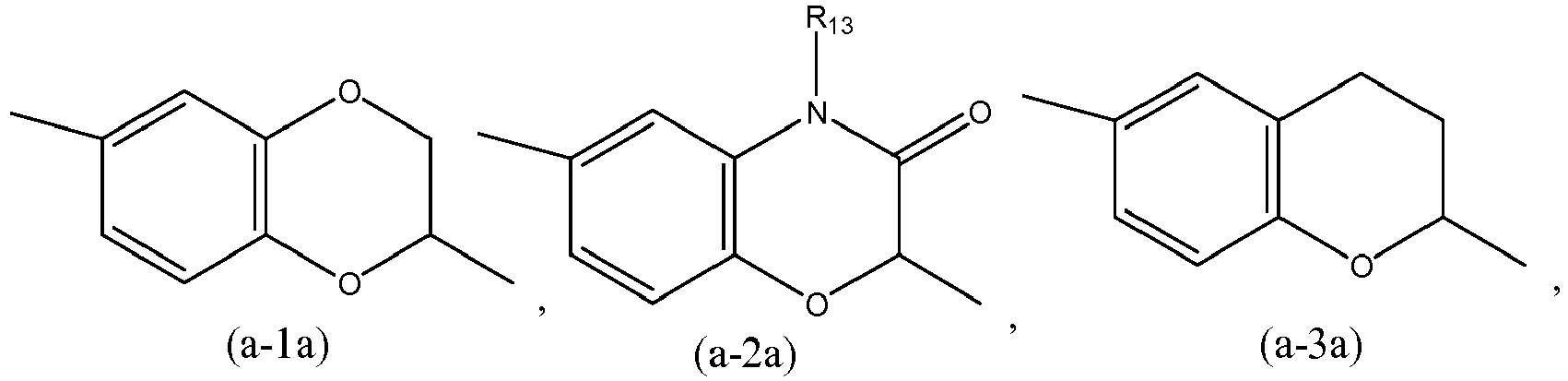
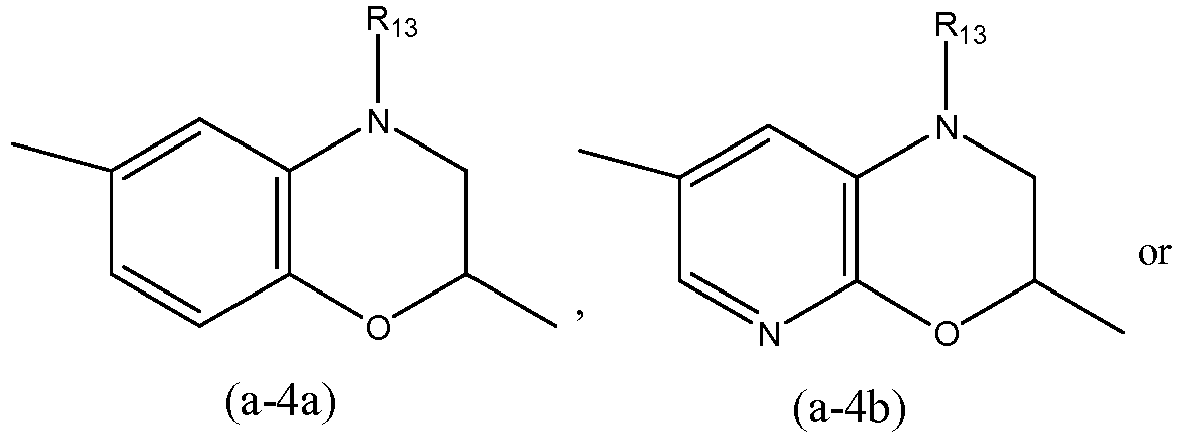
- (ix) R9a and R9b each independently represent hydrogen; C1-4alkyl substituted with one hydroxyl group; or C1-4alkyl;
- (x) R10a and R10b each independently represent hydrogen; C1-4alkyl; C1-6alkyl-O-carbonyl-; mono-or polyhaloC1-4alkyl; or C1-4alkyl substituted with one hydroxyl group;
- (xi) R11 is cyano; -NR10aR10b; C1-6alkyloxy optionally substituted with one hydroxyl group; -S(=O)2-C1-6alkyl; C1-6alkylcarbonyloxy-; -C(=O)-NR10aR10b; -COOH; or
-P(=O)(O-C1-4alkyl)2; - (xii) R14 is a 5 membered saturated heterocyclyl which is optionally substituted with one, two or three substituents selected from the group consisting of oxo and C1-4alkyl;
- (xiii) R6 is hydrogen; C1-4alkyl-O-carbonyl-; C1-4alkyl; C1-4alkyl substituted with one hydroxyl group; C1-4alkyl substituted with one -NR9aR9b; or -C(=O)-NR9aR9b;
- (xiv) x2 is CR5b;
- (xv) each R15 is independently selected from the group consisting of hydrogen, methyl, halo,
and C1-4alkyloxy; - (xvi) R5a and R5c each independently are selected from the group consisting of hydrogen; hydroxyl; cyano; halo; C1-6alkyl substituted with one or two hydroxyl groups; C1-6alkyl substituted with one -NR9aR9b ; C1-6alkyloxyC1-6alkyl; C1-6alkyloxy; C1-6alkyloxy substituted with one hydroxyl group; C1-6alkyloxyC1-6alkyloxy;
- (xvii) R5b is hydrogen; C1-6alkyl; C3-6cycloalkyl optionally substituted with one cyano; cyano; mono-or polyhaloC1-6alkyloxy; mono-or polyhaloC1-6alkyl; C1-4alkyl substituted with one hydroxyl group; C2-6alkenyl; C1-4alkyloxy; -Si(CH3)3; C1-6alkyl substituted with one R12; or C1-6alkyl-O-carbonyl-.
- Another embodiment of the present invention relates to those compounds of formula (I) and the N-oxides, the pharmaceutically acceptable addition salts, and the solvates thereof, or any subgroup thereof as mentioned in any of the other embodiments wherein one or more of the following restrictions apply:
- (i) y1 is CH or N;
- (ii) y2 is CH;
- (iii) R7 is hydrogen or -NH2;
- (iv) X is CH2;
- (v) R2a is hydrogen;
R2b is hydrogen; or
R2a and R2b are taken together to form -CH2-CH2- or -CH2-NH-CH2-; - (vi) R3 is hydrogen; C1-6alkyl; C1-6alkyl substituted with one or two hydroxyl groups; C1-6alkyl substituted with one R11; or C1-6alkyl substituted with one R14;
- (vii) R4a is hydrogen;
R4b is hydrogen; or
R4a and R4b are taken together to form =O; - (viii) Y is -O-;
Z is -CHR6-;
R6 is hydrogen;
Ring A is phenyl or pyridinyl; wherein the phenyl or pyridinyl is optionally substituted with one or two R8 substituents;
each R8 is independently hydrogen; C1-4alkyloxy; cyano; or halo;
or a R8 substituent on an atom adjacent to the atom carrying the Y-Z substituent may be taken together with the R6 substituent of Z, by which ring A together with Y-Z forms a bicycle of formula (a-3a); - (ix) R11 is C1-6alkyloxy optionally substituted with one hydroxyl group; or -C(=O)-NR10aR10b;
R10a and R10b each independently represent hydrogen or C1-4alkyl; - (x) R14 is a 5 membered saturated heterocyclyl which is optionally substituted with one, two or three substituents selected from the group consisting of C1-4alkyl;
- (xi) x1 is CR5a or N;
x2 is CR5b;
x3 is CR5c; - (xiii) each R15 is hydrogen;
- (xiv) R5a is hydrogen or C1-6alkyloxyC1-6alkyl;
- (xv) R5b is C1-6alkyl; C3-6cycloalkyl; mono-or polyhaloC1-6alkyloxy; C2-6alkenyl; C1-6alkyl substituted with one cyano; C1-4alkyloxy; or C1-6alkyl-O-carbonyl-;
- (xvi) R5c is hydrogen.
- Another embodiment of the present invention relates to those compounds of formula (I) and the N-oxides, the pharmaceutically acceptable addition salts, and the solvates thereof, or any subgroup thereof as mentioned in any of the other embodiments wherein one or more of the following restrictions apply:
- (i) y1 is CH;
- (ii) y2 is CH;
- (iii) R7 is hydrogen;
- (iv) X is CH2;
- (v) R2a is hydrogen;
- (vi) R2b is hydrogen;
- (vii) R3 is hydrogen; or C1-6alkyl substituted with one or two hydroxyl groups;
- (viii) R4a and R4b are taken together to form =O;
- (ix) Ring A is phenyl optionally substituted with one or two R8 substituents; each R8 is independently hydrogen; C1-4alkyloxy; cyano; or F;
- (x) Y is -O-;
- (xi) Z is -CH2-;
- (xii) x1 is CH;
x2 is CR5b;
x3 is CH; - (xiii) each R15 is hydrogen;
- (xiv) R5b is C1-6alkyl; C3-6cycloalkyl; mono-or polyhaloC1-6alkyloxy; C2-6alkenyl; C1-6alkyl substituted with one cyano; or C1-6alkyl-O-carbonyl-; in particular R5b is isopropyl or cyclopropyl.
- In an embodiment, the present invention relates to those compounds of formula (I) and the N-oxides, the pharmaceutically acceptable addition salts, and the solvates thereof, or any subgroup thereof as mentioned in any of the other embodiments, wherein Y is O.
- In an embodiment, the present invention relates to those compounds of formula (I) and the N-oxides, the pharmaceutically acceptable addition salts, and the solvates thereof, or any subgroup thereof as mentioned in any of the other embodiments, wherein each R8 is independently hydrogen; C1-4alkyloxy; hydroxyl; cyano; or halo; or a R8 substituent on an atom adjacent to the atom carrying the Y-Z substituent may be taken together with the R6 substituent of Z, by which ring A together with Y-Z forms a bicycle of formula (a-1), (a-2), (a-3) or (a-4).
- In an embodiment, the present invention relates to those compounds of formula (I) and the N-oxides, the pharmaceutically acceptable addition salts, and the solvates thereof, or any subgroup thereof as mentioned in any of the other embodiments, wherein ring A is phenyl or a 6-membered saturated, partially saturated or aromatic heterocyclyl, in particular phenyl or a 6-membered aromatic heterocyclyl, said heterocyclyl containing one or two nitrogen atoms; wherein the phenyl or the heterocyclyl is optionally substituted with one or two R8 substituents;
each R8 is independently hydrogen; C1-4alkyloxy; hydroxyl; cyano; C1-4alkyl or halo. - In an embodiment, the present invention relates to those compounds of formula (I) and the N-oxides, the pharmaceutically acceptable addition salts, and the solvates thereof, or any subgroup thereof as mentioned in any of the other embodiments, wherein ring A is phenyl or a 6-membered saturated, partially saturated or aromatic heterocyclyl, in particular phenyl or a 6-membered aromatic heterocyclyl, said heterocyclyl containing one or two nitrogen atoms; wherein the phenyl or the heterocyclyl is optionally substituted with one or two R8 substituents;
each R8 is independently hydrogen; C1-4alkyloxy; hydroxyl; cyano; or halo. - In an embodiment, the present invention relates to those compounds of formula (I) and the N-oxides, the pharmaceutically acceptable addition salts, and the solvates thereof, or any subgroup thereof as mentioned in any of the other embodiments, wherein ring A is phenyl or a 6-membered saturated, partially saturated or aromatic heterocyclyl, said heterocyclyl containing one or two nitrogen atoms; wherein the phenyl or the heterocyclyl is substituted with one R8 substituent on an atom adjacent to the atom carrying the Y-Z substituent, and said R8 substituent is taken together with the R6 substituent of Z (Z is -CHR6-), by which ring A together with Y-Z forms a bicycle of formula (a-1), (a-2), (a-3) or (a-4).
- In an embodiment, the present invention relates to those compounds of formula (I) and the N-oxides, the pharmaceutically acceptable addition salts, and the solvates thereof, or any subgroup thereof as mentioned in any of the other embodiments, wherein ring A is phenyl or a 6-membered aromatic heterocyclyl, said heterocyclyl containing one or two nitrogen atoms; wherein the phenyl or the heterocyclyl is substituted with one R8 substituent on an atom adjacent to the atom carrying the Y-Z substituent, and said R8 substituent is taken together with the R6 substituent of Z (Z is -CHR6-), by which ring A together with Y-Z forms a bicycle of formula (a-1a), (a-2a), (a-3a), (a-4a) or (a-4b).
- In an embodiment, the present invention relates to those compounds of formula (I) and the N-oxides, the pharmaceutically acceptable addition salts, and the solvates thereof, or any subgroup thereof as mentioned in any of the other embodiments, wherein ring A is phenyl or a 6-membered aromatic heterocyclyl, said heterocyclyl containing one or two nitrogen atoms, in particular ring A is phenyl; wherein the phenyl or the heterocyclyl is optionally substituted with one or two R8 substituents.
- In an embodiment, the present invention relates to those compounds of formula (I) and the N-oxides, the pharmaceutically acceptable addition salts, and the solvates thereof, or any subgroup thereof as mentioned in any of the other embodiments, wherein ring A is phenyl or a 6-membered aromatic heterocyclyl, said heterocyclyl containing one or two nitrogen atoms.
- In an embodiment, the present invention relates to those compounds of formula (I) and the N-oxides, the pharmaceutically acceptable addition salts, and the solvates thereof, or any subgroup thereof as mentioned in any of the other embodiments, wherein ring A is phenyl.
- In an embodiment, the present invention relates to those compounds of formula (I) and the N-oxides, the pharmaceutically acceptable addition salts, and the solvates thereof, or any subgroup thereof as mentioned in any of the other embodiments, wherein each R8 is independently hydrogen; C1-4alkyloxy; hydroxyl; cyano; or halo.
- In an embodiment, the present invention relates to those compounds of formula (I) and the N-oxides, the pharmaceutically acceptable addition salts, and the solvates thereof, or any subgroup thereof as mentioned in any of the other embodiments, wherein each R8 is independently hydrogen; C1-4alkyloxy; hydroxyl; cyano; or halo; or a R8 substituent on an atom adjacent to the atom carrying the Y-Z substituent may be taken together with the R6 substituent of Z, by which ring A together with Y-Z forms a bicycle of formula (a-1a), (a-2a), (a-3a), (a-4a), or (a-4b).
- In an embodiment, the present invention relates to those compounds of formula (I) and the N-oxides, the pharmaceutically acceptable addition salts, and the solvates thereof, or any subgroup thereof as mentioned in any of the other embodiments, wherein Z is -CHR6- and Y is O.
- In an embodiment, the present invention relates to those compounds of formula (I) and the N-oxides, the pharmaceutically acceptable addition salts, and the solvates thereof, or any subgroup thereof as mentioned in any of the other embodiments, wherein R8 is other than C1-4alkyl.
- In an embodiment, the present invention relates to those compounds of formula (I) and the N-oxides, the pharmaceutically acceptable addition salts, and the solvates thereof, or any subgroup thereof as mentioned in any of the other embodiments, wherein ring A is phenyl or a 6-membered aromatic heterocyclyl, said heterocyclyl containing one or two nitrogen atoms; wherein the phenyl or the heterocyclyl is optionally substituted with one or two R8 substituents;
each R8 is independently hydrogen; C1-4alkyloxy; hydroxyl; cyano; or halo; or a R8 substituent on an atom adjacent to the atom carrying the Y-Z substituent may be taken together with the R6 substituent of Z, by which ring A together with Y-Z forms a bicycle of formula (a-1), (a-2), (a-3) or (a-4); and
Y is -O-. - In an embodiment, the present invention relates to those compounds of formula (I) and the N-oxides, the pharmaceutically acceptable addition salts, and the solvates thereof, or any subgroup thereof as mentioned in any of the other embodiments, wherein when ring A together with Y-Z forms a bicycle, this bicycle is of formula (a-1), (a-2), (a-3) or (a-4); in particular (a-1a), (a-2a), (a-3a), (a-4a), or (a-4b).
- In an embodiment, the present invention relates to those compounds of formula (I) and the N-oxides, the pharmaceutically acceptable addition salts, and the solvates thereof, or any subgroup thereof as mentioned in any of the other embodiments, wherein R14 is a 5-membered saturated heterocycle which is optionally substituted with one, two or three substituents selected from the group consisting of oxo, C1-4alkyl, halogen, cyano, hydroxyl, C1-6alkyloxy and NR9aR9b; in particular wherein R14 is a 5-membered saturated heterocycle which is substituted with one or two substituents selected from the group consisting of oxo or C1-4alkyl.
- In an embodiment, the present invention relates to those compounds of formula (I) and the N-oxides, the pharmaceutically acceptable addition salts, and the solvates thereof, or any subgroup thereof as mentioned in any of the other embodiments, wherein R14 is a 5-membered saturated heterocycle selected from 1-pyrolidinyl, 1,3-dioxolan-4-yl, 5-oxazolidinyl, 3-oxetanyl and tetrahydro-2-furanyl, each optionally substituted with one, two or three substituents selected from the group consisting of oxo, C1-4alkyl, halogen, cyano, hydroxyl, C1-6alkyloxy and NR9aR9b; in particular wherein R14 is a 5-membered saturated heterocycle selected from 1-pyrolidinyl, 1,3-dioxolan-4-yl, 5-oxazolidinyl, 3-oxetanyl and tetrahydro-2-furanyl, each substituted with one or two substituents selected from the group consisting of oxo and C1-4alkyl.
- In an embodiment, the present invention relates to those compounds of formula (I) and the N-oxides, the pharmaceutically acceptable addition salts, and the solvates thereof, or any subgroup thereof as mentioned in any of the other embodiments, wherein R1a is hydrogen; C1-6alkyl; mono-or polyhaloC1-6alkyl; C1-6alkyl substituted with one or two hydroxyl groups; or C1-6alkyl substituted with one -NR9aR9b.
- In an embodiment, the present invention relates to those compounds of formula (I) and the N-oxides, the pharmaceutically acceptable addition salts, and the solvates thereof, or any subgroup thereof as mentioned in any of the other embodiments, wherein R2a is hydrogen; C1-6alkyl; mono-or polyhaloC1-6alkyl; C1-6alkyl substituted with one or two hydroxyl groups; or C1-6alkyl substituted with one substituent selected from the group consisting of -NR9aR9b, cyano and C1-4alkyloxy;
R2b is hydrogen or C1-6alkyl; or
R2a and R2b are taken together to form -CH2-CH2-, -CH2-NR2c-CH2-, -CH2-CH2-CH2-, -CH2-O-CH2-, -CH2-CH2-CH2-CH2-, -CH2-CH2-NR2c-CH2-. - In an embodiment, the present invention relates to those compounds of formula (I) and the N-oxides, the pharmaceutically acceptable addition salts, and the solvates thereof, or any subgroup thereof as mentioned in any of the other embodiments, wherein R5b is hydrogen; C1-6alkyl; C3-6cycloalkyl optionally substituted with one cyano; hydroxyl; cyano; mono-or polyhaloC1-6alkyloxy; mono-or polyhaloC1-6alkyl; C1-4alkyl substituted with one or two hydroxyl groups; C2-6alkenyl; C1-4alkyloxy; -Si(CH3)3; C1-6alkyl substituted with one R12; or C1-6alkyloxy substituted with one R12.
- In an embodiment, the present invention relates to those compounds of formula (I) and the N-oxides, the pharmaceutically acceptable addition salts, and the solvates thereof, or any subgroup thereof as mentioned in any of the other embodiments, wherein R5b is C1-6alkyl; C3-6cycloalkyl optionally substituted with one cyano; mono-or polyhaloC1-6alkyloxy; mono-or polyhaloC1-6alkyl; C1-4alkyl substituted with one hydroxyl group; C2-6alkenyl; -Si(CH3)3; C1-6alkyl substituted with one R12; or C1-6alkyl-O-carbonyl-.
- In an embodiment, the present invention relates to those compounds of formula (I) and the N-oxides, the pharmaceutically acceptable addition salts, and the solvates thereof, or any subgroup thereof as mentioned in any of the other embodiments, wherein R5b is C1-6alkyl; C3-6cycloalkyl optionally substituted with one cyano; mono-or polyhaloC1-6alkyloxy; mono-or polyhaloC1-6alkyl; C1-4alkyl substituted with one hydroxyl group; C2-6alkenyl; -Si(CH3)3; C1-6alkyl substituted with one R12; or C1-6alkyl-O-carbonyl-; and wherein R8 is other than C1-4alkyl.
- In an embodiment, the present invention relates to those compounds of formula (I) and the N-oxides, the pharmaceutically acceptable addition salts, and the solvates thereof, or any subgroup thereof as mentioned in any of the other embodiments, wherein ring A is phenyl or a 6-membered aromatic heterocyclyl, said heterocyclyl containing one or two nitrogen atoms; wherein the phenyl or the heterocyclyl is optionally substituted with one or two R8 substituents;
each R8 is independently hydrogen; C1-4alkyloxy; hydroxyl; cyano; or halo; or a R8 substituent on an atom adjacent to the atom carrying the Y-Z substituent may be taken together with the R6 substituent of Z, by which ring A together with Y-Z forms a bicycle of formula (a-1), (a-2), (a-3) or (a-4);
x2 is CR5b; R5b is C1-6alkyl; C3-6cycloalkyl optionally substituted with one cyano; mono-or polyhaloC1-6alkyloxy; mono-or polyhaloC1-6alkyl; C1-4alkyl substituted with one hydroxyl group; C2-6alkenyl; -Si(CH3)3; C1-6alkyl substituted with one R12; or C1-6alkyl-O-carbonyl-. - In an embodiment, the present invention relates to those compounds of formula (I) and the N-oxides, the pharmaceutically acceptable addition salts, and the solvates thereof, or any subgroup thereof as mentioned in any of the other embodiments, wherein ring A is phenyl or a 6-membered aromatic heterocyclyl, said heterocyclyl containing one or two nitrogen atoms; wherein the phenyl or the heterocyclyl is optionally substituted with one or two R8 substituents;
each R8 is independently hydrogen; C1-4alkyloxy; cyano; or halo; or a R8 substituent on an atom adjacent to the atom carrying the Y-Z substituent may be taken together with the R6 substituent of Z, by which ring A together with Y-Z forms a bicycle of formula (a-1a), (a-2a), (a-3a), (a-4a) or (a-4b);
x2 is CR5b; R5b is C1-6alkyl; C3-6cycloalkyl optionally substituted with one cyano; mono-or polyhaloC1-6alkyloxy; mono-or polyhaloC1-6alkyl; C1-4alkyl substituted with one hydroxyl group; C2-6alkenyl; -Si(CH3)3; C1-6alkyl substituted with one R12; or C1-6alkyl-O-carbonyl-. - In an embodiment, the present invention relates to those compounds of formula (I) and the N-oxides, the pharmaceutically acceptable addition salts, and the solvates thereof, or any subgroup thereof as mentioned in any of the other embodiments, wherein ring A is phenyl or a 6-membered aromatic heterocyclyl, said heterocyclyl containing one or two nitrogen atoms; wherein the phenyl or the heterocyclyl is optionally substituted with one or two R8 substituents;
each R8 is independently hydrogen; C1-4alkyloxy; hydroxyl; cyano; or halo; in particular each R8 is independently hydrogen; C1-4alkyloxy; cyano; or halo;
x2 is CR5b; R5b is C1-6alkyl; C3-6cycloalkyl optionally substituted with one cyano; mono-or polyhaloC1-6alkyloxy; mono-or polyhaloC1-6alkyl; C1-4alkyl substituted with one hydroxyl group; C2-6alkenyl; -Si(CH3)3; C1-6alkyl substituted with one R12; or C1-6alkyl-O-carbonyl-. - In an embodiment, the present invention relates to those compounds of formula (I) and the N-oxides, the pharmaceutically acceptable addition salts, and the solvates thereof, or any subgroup thereof as mentioned in any of the other embodiments, wherein X is - CR1R1a-; in particular CH2.
- In an embodiment, the present invention relates to those compounds of formula (I) and the N-oxides, the pharmaceutically acceptable addition salts, and the solvates thereof, or any subgroup thereof as mentioned in any of the other embodiments, wherein R1 and R1a are hydrogen.
- In an embodiment, the present invention relates to those compounds of formula (I) and the N-oxides, the pharmaceutically acceptable addition salts, and the solvates thereof, or any subgroup thereof as mentioned in any of the other embodiments, wherein -Y-Z-is -O-CH2-.
- In an embodiment, the present invention relates to those compounds of formula (I) and the N-oxides, the pharmaceutically acceptable addition salts, and the solvates thereof, or any subgroup thereof as mentioned in any of the other embodiments, wherein Z is CHR6, in particular CH2.
- In an embodiment, the present invention relates to those compounds of formula (I) and the N-oxides, the pharmaceutically acceptable addition salts, and the solvates thereof, or any subgroup thereof as mentioned in any of the other embodiments, wherein R6 is H.
- In an embodiment, the present invention relates to those compounds of formula (I) and the N-oxides, the pharmaceutically acceptable addition salts, and the solvates thereof, or any subgroup thereof as mentioned in any of the other embodiments, wherein R3 is hydrogen or C1-6alkyl substituted with one or two, in particular one, hydroxyl groups.
- In an embodiment, the present invention relates to those compounds of formula (I) and the N-oxides, the pharmaceutically acceptable addition salts, and the solvates thereof, or any subgroup thereof as mentioned in any of the other embodiments, wherein R2a and R2b are hydrogen.
- In an embodiment, the present invention relates to those compounds of formula (I) and the N-oxides, the pharmaceutically acceptable addition salts, and the solvates thereof, or any subgroup thereof as mentioned in any of the other embodiments, wherein R4a is hydrogen; R4b is hydrogen; or R4a and R4b are taken together to form =O.
- In an embodiment, the present invention relates to those compounds of formula (I) and the N-oxides, the pharmaceutically acceptable addition salts, and the solvates thereof, or any subgroup thereof as mentioned in any of the other embodiments, wherein R4a and R4b are hydrogen.
- In an embodiment, the present invention relates to those compounds of formula (I) and the N-oxides, the pharmaceutically acceptable addition salts, and the solvates thereof, or any subgroup thereof as mentioned in any of the other embodiments, wherein R4a and R4b are taken together to form =O.
- In an embodiment, the present invention relates to those compounds of formula (I) and the N-oxides, the pharmaceutically acceptable addition salts, and the solvates thereof, or any subgroup thereof as mentioned in any of the other embodiments, wherein x1 and x3 are CH; and x2 is CR5b.
- In an embodiment, the present invention relates to those compounds of formula (I) and the N-oxides, the pharmaceutically acceptable addition salts, and the solvates thereof, or any subgroup thereof as mentioned in any of the other embodiments, wherein x2 is CR5b; R5b is C1-6alkyl; C3-6cycloalkyl optionally substituted with one cyano; hydroxyl; mono-or polyhaloC1-6alkyloxy; mono-or polyhaloC1-6alkyl; C1-4alkyl substituted with one or two hydroxyl groups; C2-6alkenyl; -Si(CH3)3; C1-6alkyl substituted with one R12; C1-6alkyl-O-carbonyl-; C1-6alkyloxy substituted with one R12.
- In an embodiment, the present invention relates to those compounds of formula (I) and the N-oxides, the pharmaceutically acceptable addition salts, and the solvates thereof, or any subgroup thereof as mentioned in any of the other embodiments, wherein R5b is C1-6alkyl; C3-6cycloalkyl optionally substituted with one cyano; hydroxyl; mono-or polyhaloC1-6alkyloxy; mono-or polyhaloC1-6alkyl; C1-4alkyl substituted with one or two hydroxyl groups; C2-6alkenyl; -Si(CH3)3; C1-6alkyl substituted with one R12; C1-6alkyl-O-carbonyl-; C1-6alkyloxy substituted with one R12.
- In an embodiment, the present invention relates to those compounds of formula (I) and the N-oxides, the pharmaceutically acceptable addition salts, and the solvates thereof, or any subgroup thereof as mentioned in any of the other embodiments, wherein R5a and R5c each independently are selected from the group consisting of hydrogen; hydroxyl; cyano; halo; C1-6alkyl; C1-6alkyl substituted with one or two hydroxyl groups; mono-or polyhaloC1-6alkyl; mono-or polyhaloC1-6alkyloxy; C1-6alkyloxyC1-6alkyl wherein each of the C1-6alkyl groups are optionally substituted with one or two hydroxyl groups; C2-6alkenyl; C1-6alkyloxy; C1-6alkyloxy substituted with one or two hydroxyl groups; C1-6alkyloxyC1-6alkyloxy wherein each of the C1-6alkyl groups are optionally substituted with one or two hydroxyl groups.
- In an embodiment, the present invention relates to those compounds of formula (I) and the N-oxides, the pharmaceutically acceptable addition salts, and the solvates thereof, or any subgroup thereof as mentioned in any of the other embodiments, wherein R3 is hydrogen; C1-6alkyl; mono-or polyhaloC1-6alkyl; C1-6alkyl substituted with one or two hydroxyl groups; C1-6alkyl substituted with one or two hydroxyl groups and one C1-6alkyloxy; C1-6alkylcarbonyloxy-; C1-6alkyl substituted with one R11; C1-6alkyloxy optionally substituted with one -NR10aR10b; C2-6alkenyl; C2-6alkynyl; hydroxyC2-6alkenyl; hydroxyC2-6alkynyl; C1-6alkyloxyC2-6alkenyl; C1-6alkyloxyC2-6alkynyl; C2-6alkenyl substituted with one -NR10aR10b; C2-6alkynyl substituted with one -NR10aR10b; C1-6alkyl substituted with one or two hydroxyl groups and one -NR10aR10b; -C1-6alkyl-C(R13)=N-O-R13; -S(=O)2-C1-6alkyl; -S(=O)2-NR9aR9b; C1-6alkyl substituted with one -(C=O)-R14; C1-6alkyl substituted with one or two hydroxyl groups and one R14; C1-6alkyl substituted with one R14; C2-6alkenyl substituted with one R14; C2-6alkynyl substituted with one R14; or R14.
- In an embodiment, the present invention relates to those compounds of formula (I) and the N-oxides, the pharmaceutically acceptable addition salts, and the solvates thereof, or any subgroup thereof as mentioned in any of the other embodiments, wherein R15 is hydrogen.
- In an embodiment, the present invention relates to those compounds of formula (I) and the N-oxides, the pharmaceutically acceptable addition salts, and the solvates thereof, or any subgroup thereof as mentioned in any of the other embodiments, wherein R15 is hydrogen or F, in particular F.
- In an embodiment, the present invention relates to those compounds of formula (I) and the N-oxides, the pharmaceutically acceptable addition salts, and the solvates thereof, or any subgroup thereof as mentioned in any of the other embodiments, wherein R7a is hydrogen, halo, trifluoromethyl or cyano;
R7 is hydrogen, -NH2, -NHCH3, -NH(CH2CH3), methyl, -CH2OH, halo or cyano. - In an embodiment, the present invention relates to those compounds of formula (I) and the N-oxides, the pharmaceutically acceptable addition salts, and the solvates thereof, or any subgroup thereof as mentioned in any of the other embodiments, wherein R7a is hydrogen; R7 is hydrogen, -NH2, -CH2OH, halo or cyano.
- In an embodiment, the present invention relates to those compounds of formula (I) and the N-oxides, the pharmaceutically acceptable addition salts, and the solvates thereof, or any subgroup thereof as mentioned in any of the other embodiments, wherein ring A is phenyl optionally substituted with one or two R8 substituents;
each R8 is independently hydrogen; C1-4alkyloxy; cyano; or halo;
Y is -O-; Z is -CH2-; R15 is H; x1 and x3 are CH; x2 is CR5b; R5b is isopropyl. - In an embodiment, the present invention relates to those compounds of formula (I) and the N-oxides, the pharmaceutically acceptable addition salts, and the solvates thereof, or any subgroup thereof as mentioned in any of the other embodiments, wherein y1 and y2 are CH; R7 is H; X is CH2; R2a and R2b are H;
R4a and R4b are taken together to form =O;
ring A is phenyl optionally substituted with one or two R8 substituents;
each R8 is independently hydrogen; C1-4alkyloxy; cyano; or halo;
Y is -O-; Z is -CH2-; R15 is H; x1 and x3 are CH; x2 is CR5b; R5b is isopropyl. - In an embodiment, the present invention relates to those compounds of formula (I) and the N-oxides, the pharmaceutically acceptable addition salts, and the solvates thereof, or any subgroup thereof as mentioned in any of the other embodiments, wherein y1 and y2 are CH; R7 is H; X is CH2; R2a and R2b are H;
R4a and R4b are taken together to form =O;
ring A is phenyl; Y is -O-; Z is -CH2-; R15 is H; x1 and x3 are CH; x2 is CR5b; R5b is isopropyl. - In an embodiment, the present invention relates to those compounds of formula (I) and the N-oxides, the pharmaceutically acceptable addition salts, and the solvates thereof, or any subgroup thereof as mentioned in any of the other embodiments, wherein x1 and x3 are CH; x2 is CR5b; R5b is isopropyl.
- In an embodiment, the present invention relates to those compounds of formula (I) and the N-oxides, the pharmaceutically acceptable addition salts, and the solvates thereof, or any subgroup thereof as mentioned in any of the other embodiments, wherein y1 and y2 are CH.
- Another embodiment of the present invention relates to those compounds of formula (I) and the N-oxides, the pharmaceutically acceptable addition salts, and the solvates thereof, or any subgroup thereof as mentioned in any of the other embodiments wherein one or more of the following restrictions apply:
- (i) y1 and y2 are CH;
- (ii) R7 is H;
- (iii) X is CH2;
- (iv) R2a and R2b are H;
- (v) R4a and R4b are taken together to form =O;
- (vi) ring A is phenyl optionally substituted with one or two R8 substituents; each R8 is independently hydrogen; C1-4alkyloxy; cyano; or halo;
- (vii) Y is -O-;
- (viii) Z is -CH2-;
- (ix) R15 is H;
- (x) x1 and x3 are CH;
- (xi) x2 is CR5b; R5b is isopropyl.
- In an embodiment, the present invention relates to those compounds of formula (I) and the N-oxides, the pharmaceutically acceptable addition salts, and the solvates thereof, or any subgroup thereof as mentioned in any of the other embodiments, wherein x2 is CR5b; R5b is isopropyl.
- In an embodiment, the present invention relates to those compounds of formula (I) and the N-oxides, the pharmaceutically acceptable addition salts, and the solvates thereof, or any subgroup thereof as mentioned in any of the other embodiments, wherein C1-6alkyl is limited to C1-4alkyl.
- In an embodiment, the present invention relates to those compounds of formula (I) and the N-oxides, the pharmaceutically acceptable addition salts, and the solvates thereof, or any subgroup thereof as mentioned in any of the other embodiments, wherein R7a is hydrogen, halo, trifluoromethyl or cyano;
R7 is hydrogen, -NH2, -NHCH3, -NH(CH2CH3), methyl, -CH2OH, halo or cyano. - In an embodiment, the present invention relates to those compounds of formula (I) and the N-oxides, the pharmaceutically acceptable addition salts, and the solvates thereof, or any subgroup thereof as mentioned in any of the other embodiments, wherein R8 is not taken together with the R6 substituent of Z to form a bicycle.
- In an embodiment, the present invention relates to those compounds of formula (I) and the N-oxides, the pharmaceutically acceptable addition salts, and the solvates thereof, or any subgroup thereof as mentioned in any of the other embodiments, wherein R14 is a 4, 5 or 6 membered saturated heterocyclyl which is optionally substituted with one, two or three substituents selected from the group consisting of oxo, C1-4alkyl, halogen, cyano, hydroxyl, C1-6alkyloxy and NR9aR9b.
- In an embodiment, the present invention relates to a subgroup of formula (I) and the N-oxides, the pharmaceutically acceptable addition salts, and the solvates thereof, as defined in the general reaction schemes.
- In an embodiment the compound of Formula (I) is selected from the group consisting of

and the N-oxides, the pharmaceutically acceptable addition salts, and the solvates thereof. - In an embodiment the compound of Formula (I) is

- In an embodiment the compound of Formula (I) is

- All possible combinations of the above-indicated embodiments are considered to be embraced within the scope of this invention.
- In this section, as in all other sections unless the context indicates otherwise, references to formula (I) also include all other sub-groups and examples thereof as defined herein.
- The general preparation of some typical examples of the compounds of Formula (I) is described hereunder and in the specific examples, and are generally prepared from starting materials which are either commercially available or prepared by standard synthetic processes commonly used by those skilled in the art. The following schemes are only meant to represent examples of the invention and are in no way meant to be a limit of the invention.
- Alternatively, compounds of the present invention may also be prepared by analogous reaction protocols as described in the general schemes below, combined with standard synthetic processes commonly used by those skilled in the art of organic chemistry.
- The skilled person will realize that in the reactions described in the Schemes, it may be necessary to protect reactive functional groups, for example hydroxy, amino, or carboxy groups, where these are desired in the final product, to avoid their unwanted participation in the reactions. Conventional protecting groups can be used in accordance with standard practice.
- The skilled person will realize that in the reactions described in the Schemes, it may be advisable or necessary to perform the reaction under an inert atmosphere, such as for example under N2-gas atmosphere, for example when NaH is used in the reaction.
- It will be apparent for the skilled person that it may be necessary to cool the reaction mixture before reaction work-up (refers to the series of manipulations required to isolate and purify the product(s) of a chemical reaction such as for example quenching, column chromatography, extraction).
- The skilled person will realize that heating the reaction mixture under stirring may enhance the reaction outcome. In some reactions microwave heating may be used instead of conventional heating to shorten the overall reaction time.
- The skilled person will realize that intermediates and final compounds shown in the schemes below may be further functionalized according to methods well-known by the person skilled in the art.
- All variables are defined as mentioned hereabove unless otherwise is indicated or is clear from the context.
- In general, compounds of formula (Ia1), (Ia), (Ib), (Ic), (Id), (Ie) (If) and (Ig) can be prepared according to reaction Scheme 1. In scheme 1 the following definitions apply:
- Yx is defined as O;
- ring A1 is phenyl or a 6-membered aromatic heterocyclyl containing one or two nitrogen atoms; wherein the phenyl or the heterocyclyl is optionally substituted with one or two R8 substituents;
- each R8 is independently hydrogen; C1-4alkyloxy; hydroxyl; cyano; C1-4alkyl or halo; or a R8 substituent of ring A1 on an atom adjacent to the atom carrying the Yx-Z substituent is taken together with the R6 substituent of Z, by which ring A1 together with Yx-Z forms a bicycle;
- R, R' and R" are functional groups within the limits of the scope;
- and all other variables in Scheme 1 are defined according to the scope of the present invention.

- 1 : an intermediate of formula (II) can be reacted with an intermediate of formula (IV) in the presence of suitable catalyst, such as for example palladium (II) acetate or [1,1'-bis(diphenylphosphino-kP)ferrocene]dichloropalladium (PdCl2dppf), a suitable base, such as for example potassium phosphate (K3PO4) or cesium carbonate (Cs2CO3), and a suitable solvent or solvent mixture, such as for example dimethylformamide or dioxane and water, resulting in a compound of formula (Ia). This type of reaction can also be performed in the presence of a suitable ligand, such as for example tricyclohexylphosphine.
- 2 : an intermediate of formula (II) can be reacted with tert-butoxycarbonyl anhydride (Boc2O) in the presence of a suitable base, such as for example triethylamine (Et3N), a suitable catalyst, such as for example 4-dimethylaminopyridine (DMAP) and a suitable solvent, such as for example tetrahydrofuran, resulting in an intermediate of formula (III).
- 3 : an intermediate of formula (III) can be reacted with an intermediate of formula (IV) in the presence of suitable catalyst, such as for example [1,1'-bis(diphenylphosphino-kP)ferrocene]dichloropalladium (PdCl2dppf), a suitable base, such as potassium phosphate (K3PO4), and a suitable solvent or solvent mixture, such as for example dioxane and water, resulting in a compound of formula (Ia1).
- 4 : a compound of formula (Ia1) can be deprotected to a compound of formula (Ia) with a suitable acid, such as for example HCl and a suitable solvent, such as for example acetonitrile or an acohol, e.g. methanol.
- 5 : a compound of formula (Ia) can be reacted with an intermediate of formula R3-W, wherein W represents a suitable leaving group, such as for example iodide, bromide, chloride or tosylate, in the presence of suitable base, such as for example sodium hydride, and a suitable solvent, such as for example N,N-dimethylformamide or dimethylsulfoxide, resulting in a compound of formula (Ib).
- 6 : a compound of formula (Ib) can be converted into a compound of formula (Id) by reaction with lithiumaluminiumhydride in the presence of a suitable solvent, such as for example tetrahydrofuran.
- 7 : a compound of formula (Ia) can be converted into a compound of formula (Ic) by reaction with lithiumaluminiumhydride in the presence of a suitable solvent, such as for example tetrahydrofuran.
- 8 : a compound of formula (Ic) can be reacted with an intermediate of formula R3-W, wherein W represents a suitable leaving group, such as for example iodide, bromide, chloride or tosylate, in the presence of suitable base, such as for example sodium hydride, Et3N or K2CO3, and a suitable solvent, such as for example N,N-dimethylformamide or dimethylsulfoxide, resulting in a compound of formula (Id).
- 9 : a compound of formula (Ic) can be reacted with an intermediate of formula R-COOH, in the presence of a suitable peptide coupling agent, such as for example 2-(7-aza-1H-benzotriazole-1-yl)-1,1,3,3-tetramethyluronium hexafluorophosphate (HATU) or carbonyldiimidazole (CDI), a suitable base, such as for example, diisopropylethylamine (DIPEA), and a suitable solvent, such as for example dichloromethane or tetrahydrofuran, resulting in a compound of formula (Ie).
Or alternatively a compound of formula (Ic) can be reacted with an intermediate of formula R-CO-Cl, in the presence of a suitable base, such as for example DIPEA, and a suitable solvent, such as for example dichloromethane. - 10 : a compound of formula (If) can be prepared by reacting a compound of formula (Ia) and an intermediate of formula (V) in the presence of a suitable base, such as for example sodium hydride, and a suitable solvent, such as for example dimethylformamide.
- 11 : a compound of formula (Ia) can be converted into a compound of formula (Ig) in the presence of a suitable oxidizing agent, such as for example meta-chloroperbenzoic acid (mCpBA), and a suitable solvent, such as for example dichloromethane.
- Compounds of formula (Ia), wherein all variables are as defined before, can also be prepared according to the following reaction scheme 1a.

- An intermediate of formula (VI) can be reacted with an intermediate of formula (VII), wherein W1 represents a suitable halogen, such as for exemple bromide, in the presence of suitable pre-catalyst, such as for example (SP-4-4)-[2'-(amino-κN)[1,1'-biphenyl]-2-yl-κC]chloro[dicyclohexyl[2',4',6'-tris(1-methylethyl)[1,1'-biphenyl]-2-yl]phosphine]-palladium (X-Phos aminobiphenyl palladium chloride precatalyst; X-Phos Pd G2), a suitable base, such as potassium phosphate (K3PO4), and a suitable solvent or solvent mixture, such as for example THF and water, resulting in a compound of formula (Ia).
- Intermediates of formula (II), wherein all variables are as defined before, can be prepared according to the following reaction scheme 1b.

- In Scheme 1b, an intermediate of formula (VIII) can be reacted with N-Bromosuccinimide (NBS) in the presence of a suitable solvent, such as for example DCM or DMF, resulting in an intermediate of formula (IX) which can be reacted in a next step with an intermediate of formula (X) in the presence of Triphenylphosphine (PPh3), a suitable Mitsunobu reagent, such as for example Di-tert-butylazodicarboxylate (DBAD) and a suitable solvent, such as for example THF, resulting in an intermediate of formula (XI).
- An intermediate of formula (XI) can then be deprotected in the presence of a suitable acid, such as for exemple Trifluoroacetic acid (TFA) and a suitable solvent, such as for exemple DCM. The resulting intermediate can be converted into an intermediate of formula (II) in the presence of a suitable base, such as for exemple cesium carbonate (Cs2CO3) or sodium bicarbonate (NaHCO3) and a suitable solvent, such as for exemple MeOH or water.
- Intermediates of formula (IV), wherein ring A1 is limited to A1' (no bicycles formed with Yx-Z), hereby named an intermediate of formula (IVa), can be prepared according to the following reaction scheme 1c. Ring A1' is optionally substituted phenyl or an optionally substituted 6-membered aromatic heterocyclyl containing one or two nitrogen atoms (thus does not form a bicyclic ring with Yx-Z), and all other variables are as defined before.

- 1 : an intermediate of formula (XII) can be reacted with an intermediate of formula (XIII) in the presence of triphenylphosphine (PPh3), a suitable Mitsunobu reagent, such as for example DBAD and a suitable solvent, such as for example Dichloromethane (DCM) or THF, resulting in an intermediate of formula (IV).
- 2 : an intermediate of formula (XIVa) can be reacted with an intermediate of formula (XIII) in the presence of a suitable base, such as for example K2CO3 or Ag2CO3, and a suitable solvent, such as for example CH3CN or DMF, resulting in an intermediate of formula (IVa)
- 3 : an intermediate of formula (XII) can be reacted with an intermediate of formula (XV), wherein W1 represents a suitable halogen, such as for example iodide or bromide, and wherein W2 represents a suitable leaving group, such as for example chloride, fluoride or bromide, in the presence of a suitable base, such as for example Sodium hydride (NaH) and a suitable solvent, such as for example DMF, resulting in an intermediate of formula (VIIa).
- 4 : an intermediate of formula (XIVa) can be reacted with an intermediate of formula (XVIII), wherein W1 represents a suitable halogen, such as for example iodide or bromide, in the presence of a suitable base, such as for example K2CO3 or Ag2CO3, and a suitable solvent, such as for example CH3CN or DMF, resulting in an intermediate of formula (VIIa).
- 5 : an intermediate of formula (VIIa) can be reacted with intermediates of formula (XIX) or (XX) in the presence of a suitable base, such as for example nBuLi or Potassium acetate (AcOK), and a suitable solvent, such as for example THF or dioxane resulting in an intermediate of formula (IVa).
- Intermediates of formula (IV) wherein Yx-Z forms a bicycle with ring A1 as shown in intermediates of formula (IVb), (IVc) and (IVd), can be prepared according to the following reaction scheme 1d-1. In scheme 1d-1, all variables are as defined before:

- 1 : an intermediate of formula (XXI) can be reacted with an intermediate of formula (XXII), wherein W3 represents an hydroxyl, in the presence of PPh3, a suitable Mitsunobu reagent, such as for example DBAD and a suitable solvent, such as for example THF resulting in an intermediate of formula (XXIII).
An intermediate of formula (XXI) can also be reacted with an intermediate of formula (XXII), wherein W3 represents a bromide, in the presence of a suitable base, such as for example NaH and a suitable solvent, such as for example THF resulting in an intermediate of formula (XXIII). - 2 : An intermediate of formula (XXIII) can be converted into an intermediate of formula (VIIb) by reaction with Fe in the presence of a suitable solvent, such as for example acetic acid (AcOH).
- 3 : An intermediate of formula (VIIb), (VIIc) or (VIId) can be reacted with Bis(pinacolato)diboron in the presence of a suitable base, such as for example potassium acetate (AcOK), a suitable catalyst, such as for example PdCl2(dppf) and a suitable solvent, such as for example 1,2-dimethoxyethane (DME) resulting in an intermediate of formula (IVb), (IVc) or (IVd) respectively.
- 4 : an intermediate of formula (VIIb) can be reduced in an intermediate of formula (VIIc) by reaction with LAH in the presence of a suitable solvent, such as for example THF.
- 5 : an intermediate of formula (VIIc) can be reacted with an intermediate of formula R13-W, wherein W represents a suitable leaving group, such as for example iodide, in the presence of a suitable base, such as for example K2CO3 and a suitable solvent, such as for example DMF, resulting in an intermediate of formula (VIId).
- Intermediates of formula (IV) wherein Yx-Z forms a bicycle with ring A1 as shown in intermediate (IVf), can be prepared according to the following reaction scheme 1d-2. In scheme 1d-2, all variables are as defined before:

- 1 : an intermediate of formula (XXVI) can be reacted with an intermediate of formula (XXVII) in the presence of a suitable base, such as for example Et3N, and a suitable solvent, such as for example 2-propanol (iPrOH), resulting in a mixture of intermediate of formula (XXVIII) and intermediate of formula (XXIX).
- 2 : a mixture of intermediate of formula (XXVIII) and an intermediate of formula (XXIX) can be converted into an intermediate of formula (XXX) by reaction with NaBH4 in the presence of a suitable solvent or solvent mixture, such as for example THF and MeOH.
- 3 : an intermediate of formula (XXX) can be converted into an intermediate of formula (XXXI) by reaction with PPh3, a suitable Mitsunobu reagent, such as for example DBAD and a suitable solvent, such as for example DCM.
- 4 : an intermediate of formula (XXXI) can be reacted with NBS in the presence of a suitable solvent, such as for example AcOH, resulting in an intermediate of formula (VIIf).
- 5 : An intermediate of formula (VIIf) can be reacted with Bis(pinacolato)diboron in the presence of a suitable base, such as for example AcOK, a suitable catalyst, such as for example PdCl2(dppf) and a suitable solvent, such as for example DME resulting in an intermediate of formula (IVf).
- Intermediates of formula (IV) wherein Yx-Z forms a bicycle with ring A1, as shown in an intermediate of formula (IVg), can be prepared according to the following reaction scheme 1d-3. In scheme 1d-3, all variables are as defined before:

- 1 : an intermediate of formula (XXXII) can be reacted with an intermediate of formula (XXXIII) in the presence of a suitable base, such as for example KOH, and a suitable solvent, such as for example EtOH, resulting in an intermediate of formula (XXXIV).
- 2 : an intermediate of formula (XXXIV) can be converted into an intermediate of formula (XXXV) by reaction with NaBH4 in the presence of Indium Chloride and a suitable solvent, such as for example acetonitrile.
- 3 : an intermediate of formula (XXXV) can be converted into an intermediate of formula (VIIg) by reaction with PPh3, a suitable Mitsunobu reagent, such as for example DBAD and a suitable solvent, such as for example DCM.
- 4 : An intermediate of formula (VIIg) can be reacted with Bis(pinacolato)diboron in the presence of a suitable base, such as for example AcOK, a suitable catalyst, such as for example PdCl2(dppf) and a suitable solvent, such as for example DME resulting in an intermediate of formula (IVg).
- By preparing derivatives of intermediates of formula (IV) wherein the general Y definition is carbonyl and wherein Z is CHR6, hereby named an intermediate of formula (IVh), more compounds of formula (I) can be prepared by using analogous reaction protocols as described above or below and/or reaction protocols known by the skilled person.
- Such an intermediate of formula (IVh) can be prepared according to the following reaction scheme 1e, wherein ring A1' is optionally substituted phenyl or an optionally substituted 6-membered aromatic heterocyclyl containing one or two nitrogen atoms, and wherein all other variables are as defined before:

- 1 : an intermediate of formula (XIV) can be converted into an intermediate of formula (XVI) by reaction with magnesium and a suitable solvent, such as for example THF or diethyl ether (Et2O). This type of reaction can also be performed in the presence of a suitable reagent, such as for example 1,2-dibromoethane.
- 2 : an intermediate of formula (XVI) can be reacted with an intermediate of formula (XVII) in the presence of a suitable solvent, such as for example methyltetrahydrofuran (Methyl-THF) or THF, resulting in an intermediate of formula (VIIh)
- 3 : an intermediate of formula (VIIh) can be reacted with an intermediate of formula (XX) in the presence of a suitable base, such as for example AcOK, and a suitable solvent, such as for example dioxane resulting in an intermediate of formula (IVh).
- Compounds of formula (Ic) and (Ic1), wherein all variables are as defined before, can also be prepared according to the following reaction scheme 2.

- 1 : an intermediate of formula (VIII) can be reacted with an intermediate of formula (X), in the presence of PPh3, a suitable Mitsunobu reagent, such as for example DBAD and a suitable solvent, such as for example THF resulting in an intermediate of formula (XXXVI).
- 2 : an intermediate of formula (XXXVI) or (II) can be converted into an intermediate of formula (XXXVII) in the presence of a suitable acid, such as for example TFA, and a suitable solvent, such as for example DCM.
- 3 : an intermediate of formula (XXXVII) can be converted into an intermediate of formula (XXXVIII) by reaction with lithium aluminium hydride in the presence of a suitable solvent, such as for example THF.
- 4 : an intermediate of formula (XXXVIII) can be reacted with NBS in the presence of a suitable solvent or solvent mixture, such as for example AcOH or AcOH and DCM, resulting in an intermediate of formula (XXXIX).
- 5 : an intermediate of formula (XXXIX) can be reacted with Boc2O in the presence of a suitable base, such as for example Et3N, and a suitable solvent, such as for example DCM, resulting in an intermediate of formula (XXXX).
- 6 : an intermediate of formula (IV) can be reacted with an intermediate of formula (XXXVIII) or (XXXIX) in the presence of suitable catalyst, such as for example [1,1'-bis(diphenylphosphino-kP)ferrocene]dichloropalladium (PdCl2dppf), a suitable base, such as for example potassium phosphate (K3PO4) and a suitable solvent or solvent mixture, such as for example dioxane and water, resulting in a compound of formula (Ic).
- 7 : a compound of formula (Ic1) can be converted in a compound of formula (Ic) in a presence of a suitable acid, such as for example HCl, and a suitable solvent, such as for example MeOH.
- Compounds of formula (Ia) and (Ic) wherein ring A1 is limited to A1' (no bicycles) hereby named compounds of formula (Ia-a) and (Ic-a), can also be prepared by the synthesis protocol described in Scheme 3a wherein ring A1' and all other variables are as defined before,

- 1 : an intermediate of formula (XII) can be reacted with an intermediate of formula (XXXXI), in the presence of PPh3, a suitable Mitsunobu reagent, such as for example DBAD and a suitable solvent, such as for example THF resulting in an intermediate of formula (XXXXII).
- 2 : an intermediate of formula (XXXXII) can be reacted with an intermediate of formula (XXXXIII), in the presence of a suitable base, such as for example LiHMDS, and a suitable solvent, such as for example THF, resulting in an intermediate of formula (XXXXIV).
- 3 : an intermediate of formula (XXXXIV) can be reacted with an intermediate of formula (XXXXV), in the presence of a suitable base, such as for example DBU, and a suitable solvent, such as for example CH3CN, resulting in an intermediate of formula (XXXXVI).
- 4 : an intermediate of formula (XXXXVI) can be reacted with an intermediate of formula (X), in the presence of PPh3, a suitable Mitsunobu reagent, such as for example DBAD and a suitable solvent, such as for example THF or DCE resulting in an intermediate of formula (XXXXVII).
- 5-6-7 : an intermediate of formula (XXXXVII) can be reacted with lithium aluminium hydride in the presence of a suitable solvent, such as for example THF. The resulting intermediate can be reacted with methanesulfonyl chloride in the presence of a suitable base, such as for example Et3N, and a suitable solvent, such as for example DCM. The resulting intermediate can be reacted with a suitable base, such as for example NaH, and a suitable solvent, such as for example DMF, resulting in a compound of formula (Ic1-a).
- 8 : a compound of formula (Ic1-a) can be reacted into a compound of formula (Ic-a) in the presence of a suitable acid, such as for example HCl, an d a suitable solvent, such as for example CH3CN.
- 9 : an intermediate of formula (XXXXVI) can be reacted with an intermediate of formula (XXXXVIII), in the presence of PPh3, a suitable Mitsunobu reagent, such as for example DBAD and a suitable solvent, such as for example THF, resulting in an intermediate of formula (XLIX).
- 10 : an intermediate of formula (XLIX) can be deprotected to a compound of formula (Ia-a) with hydrazine hydrate and a suitable solvent, such as for example EtOH.
- 11 : an intermediate of formula (XXXXVII) can be deprotected with a suitable acid, such as for example HCl, and a suitable solvent, such as for example dioxane or ACN. The resulting intermediate can be converted into a compound of formula (Ia) in the presence of a suitable base, such as for example Cs2CO3 or K2CO3, and a suitable solvent, such as for example DCM or MeOH.
- 12 : a compound of formula (Ia-a) can be converted into a compound of formula (Ic-a) by reaction with lithiumaluminiumhydride in the presence of a suitable solvent, such as for example tetrahydrofuran or DME.
- A compound of formula (Ib-a) wherein ring A1' is as defined before (no bicycles), and wherein all other variables are as defined before, can be prepared by the synthesis protocol described in Scheme 3b:
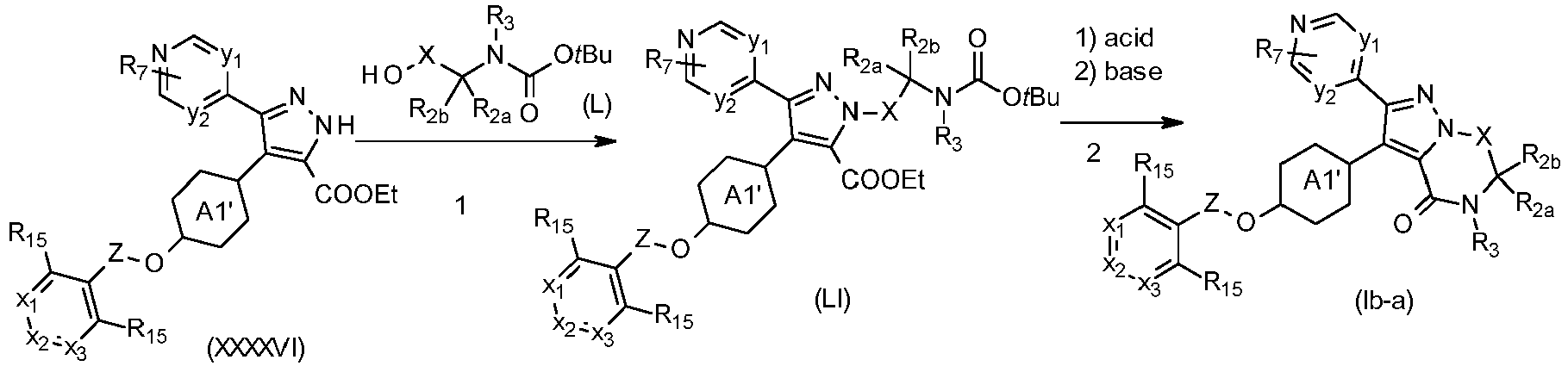
- 1 : an intermediate of formula (XXXXVI) can be reacted with an intermediate of formula (L) (tBu is tert-butyl), in the presence of PPh3, a suitable Mitsunobu reagent, such as for example DBAD and a suitable solvent, such as for example THF resulting in an intermediate of formula (LI).
- 2 : an intermediate of formula (LI) can be deprotected with a suitable acid, such as for example HCl, and a suitable solvent, such as for example dioxane or ACN. The resulting intermediate can be converted into a compound of formula (Ib-a) in the presence of a suitable base, such as for example Cs2CO3, and a suitable solvent, such as for example DCM or MeOH.
- Compounds of formula (Ib), wherein R4a and R4b are taken together to form =O, and (Id), wherein R4a and R4b are hydrogen, can also be prepared according to the following reaction scheme 4.

- 1 : an intermediate of formula (II), wherein R4a and R4b are taken together to form =O, or (XXXIX), wherein R4a and R4b are hydrogen, can be reacted with an intermediate of formula R3-W, wherein W represents a suitable leaving group, such as for example iodide, bromide, chloride or tosylate, in the presence of suitable base, such as for example sodium hydride, Et3N or K2CO3, and a suitable solvent, such as for example N,N-dimethylformamide or dimethylsulfoxide, resulting in an intermediate of formula (LII-a), wherein R4a and R4b are taken together to form =O or (LII), wherein R4a and R4b are hydrogen.
- 2 : an intermediate of formula (LII-a) or (LII) can be reacted with an intermediate of formula (IV) in the presence of suitable catalyst, such as for example [1,1'-bis(diphenylphosphino-kP)ferrocene]dichloropalladium (PdCl2dppf), a suitable base, such as potassium phosphate (K3PO4), and a suitable solvent or solvent mixture, such as for example dioxane and water, resulting in a compound of formula (Ib), wherein R4a and R4b are taken together to form =O or (Id), wherein R4a and R4b are hydrogen.
- Intermediates of formula (LI) wherein all variables are as defined before (Et means ethyl) can also be prepared according to the following reaction scheme 5:

- 1 : an intermediate of formula (XIVa) can be reacted with an intermediate of formula (LIII) in the presence of a suitable base, such as for example K2CO3, and a suitable solvent, such as for example CH3CN, resulting in an intermediate of formula (LIV).
- 2 : an intermediate of formula ((LIV) can be reacted with an intermediate of formula (LV) in the presence of a suitable base, such as for example piperidine, and a suitable solvent, such as for example EtOH, resulting in an intermediate of formula (LVI).
- 3 : an intermediate of formula (LVI) can be converted into an intermediate of formula (LVIII) by reaction with an intermediate of formula (LVII) (= trimethylsilyldiazomethane) in the presence of a suitable base, such as for example nBuLi and a suitable solvent, such as for example THF.
- 4 : an intermediate of formula (LVIII)) can be reacted with NBS in the presence of a suitable solvent, such as for example ACN, resulting in an intermediate of formula (LIX).
- 5 : an intermediate of formula (LIX) can be reacted with an intermediate of formula (L) in the presence of PPh3, a suitable Mitsunobu reagent, such as for example DBAD and a suitable solvent, such as for example THF, resulting in an intermediate of formula (LX).
- 6 : an intermediate of formula (LX) can be reacted with an intermediate of formula (LXI) in the presence of suitable catalyst, such as for example Palladium acetate (Pd(OAc)2), a suitable ligand, such as for example PCy3 a suitable base, such as potassium phosphate (K3PO4), and a suitable solvent or solvent mixture, such as for example dioxane and water, resulting in an intermediate of formula (LI).
- Intermediates of formula (LI) can also be prepared according to the following reaction scheme 5a:

- 1 : an intermediate of formula (LX) can be reacted with bis(pinacolato)diboron (Bispin) in the presence of a suitable catalyst, such as for example PdCl2(dppf), a suitable base, such as for example AcOK and a suitable solvent, such as for example DME, resulting in an intermediate of formula (LXII).
- 2 : an intermediate of formula (LXII) can be reacted with an intermediate of formula (LXIII) in the presence of suitable catalyst, such as for example Palladium acetate (Pd(OAc)2), a suitable ligand, such as for example tricyclohexylphosphine (PCy3) a suitable base, such as potassium phosphate (K3PO4), and a suitable solvent or solvent mixture, such as for example dioxane and water, resulting in an intermediate of formula (LI).
- Intermediates of formula (LI) can also be prepared according to the following reaction scheme 5b.

- 1 : an intermediate of formula (LVIa) can be converted into an intermediate of formula (LVIIIa) by reaction with an intermediate of formula (LVII) in the presence of a suitable base, such as for example nBuLi and a suitable solvent, such as for example THF
- 2 : an intermediate of formula (LVIIIa) can be reacted with NBS in the presence of a suitable solvent, such as for example ACN, resulting in an intermediate of formula (LIXa).
- 3 : an intermediate of formula (LIXa) can be reacted with an intermediate of formula (L) in the presence of PPh3, a suitable Mitsunobu reagent, such as for example DBAD and a suitable solvent, such as for example THF, resulting in an intermediate of formula (LXa).
- 4 : an intermediate of formula (LXa) can be reacted with an intermediate of formula (LXI) in the presence of suitable catalyst, such as for example Palladium acetate (Pd(OAc)2), a suitable ligand, such as for example PCy3 a suitable base, such as potassium phosphate (K3PO4), and a suitable solvent or solvent mixture, such as for example dioxane and water, resulting in an intermediate of formula (LIb).
- 5 : an intermediate of formula (LIb) can be converted into a compound of formula (LXIII) by hydrogenation in the presence of a suitable catalyst, such as for example Pd/C 10%, and a suitable solvent, such as for example EtOH.
- 6 : an intermediate of formula (LXIII) can be reacted with an intermediate of formula (XII) in the presence of PPh3, a suitable Mitsunobu reagent, such as for example DBAD and a suitable solvent, such as for example THF, resulting in an intermediate of formula (LI).
- With the synthesis method in Scheme 5c, intermediates of formula (LI-x) can be prepared, which also includes the possibility that ring A1 forms a bicyclic ring with Z-Yx. All variables in Scheme 5c are defined as mentioned before.

- 1 : an intermediate of formula (IX) can be reacted with an intermediate of formula (L), in the presence of PPh3, a suitable Mitsunobu reagent, such as for example DBAD and a suitable solvent, such as for example THF resulting in an intermediate of formula (LXIV).
- 2 : an intermediate of formula (IV) can be reacted with an intermediate of formula (LXIV) in the presence of a suitable catalyst, such as for example PdCl2dppf, a suitable base, such as for example potassium phosphate (K3PO4) and a suitable solvent or solvent mixture, such as for example dioxane and water, resulting in an intermediate of formula (LI-x).
- Compounds of formula (Ib-a) and (Ib-b) wherein all variables are defined as before, can be prepared according to the following reaction scheme 6.

- 1 : an intermediate of formula (LXa) can be converted into an intermediate of formula (LXV) by reaction with a suitable acid, such as for example HCl, and a suitable solvent, such as for example dioxane.
- 2 : an intermediate of formula (LXV) can be converted into an intermediate of formula (LXVI) by reaction with a suitable base, such as for example Cs2CO3, and a suitable solvent, such as for example MeOH.
- 3 : an intermediate of formula (LXVI) can be reacted with an intermediate of formula (XIVa) in the presence of a suitable base, such as for example K2CO3, and a suitable solvent, such as for example DMF, resulting in an intermediate of formula (LXVIII). This type of reaction can also be performed in the presence of a suitable reagent, such as for example NaI.
- 4 : an intermediate of formula (LXVIII) can be reacted with an intermediate of formula (LXI) in the presence of suitable catalyst, such as for example Palladium acetate (Pd(OAc)2), a suitable ligand, such as for example PCy3 a suitable base, such as potassium phosphate (K3PO4), and a suitable solvent or solvent mixture, such as for example dioxane and water, resulting in a compound of formula (Ib-a).
- 5 : an intermediate of formula (LXa) can be reacted with an intermediate of formula (LXI) in the presence of suitable catalyst, such as for example Palladium acetate (Pd(OAc)2), a suitable ligand, such as for example PCy3 a suitable base, such as potassium phosphate (K3PO4), and a suitable solvent or solvent mixture, such as for example dioxane and water, resulting in an intermediate of formula (LIb).
- 6 : an intermediate of formula (LIb) can be deprotected with a suitable acid, such as for example HCl, and a suitable solvent, such as for example dioxane or ACN. The resulting intermediate can be converted into a compound of formula (Ib-b) in the presence of a suitable base, such as for example Cs2CO3 or K2CO3, and a suitable solvent, such as for example DCM or MeOH.
- 7 : a compound of formula (Ib-b) can be converted into an intermediate of formula (LXVII) by reaction with a suitable acid, such as for example TFA, and a suitable solvent, such as for example toluene.
- 8 : an intermediate of formula (LXVII) can be reacted with an intermediate of formula (XIVa) in the presence of a suitable base, such as for example K2CO3, and a suitable solvent, such as for example DMF, resulting in a compound of formula (Ib-a).
- A compound of formula (Ia) wherein ring A1 is limited to A1' (no bicycles), wherein R2b is hydrogen and X is CH2, hereby named a compound of formula (Ia2) can also be prepared according to the following reaction scheme 7.

- 1 : an intermediate of formula (XXXXVI) can be converted into an intermediate of formula (LXIX) by reaction with a suitable base, such as for example KOH, and a suitable solvent or solvent mixture, such as for example EtOH and water.
- 2 : an intermediate of formula (LXIX) can be reacted with an intermediate of formula (LXX) in the presence of a suitable peptide coupling agent, such as for example HATU, a suitable base, such as for example, DIPEA, and a suitable solvent, such as for example DMF, resulting in an intermediate of formula (LXXI).
- 3 : an intermediate of formula (LXXI) can be converted into an intermediate of formula (LXXII) by reaction with a suitable acid, such as for example methanesulfonic acid, HCl or TFA, and a suitable solvent, such as for example acetone or DCM.
- 4 : an intermediate of formula (LXXII) can be converted into a compound of formula (Ia2) by hydrogenation in the presence of a suitable catalyst, such as for example Pd/C 10% or PtO2, and a suitable solvent, such as for example EtOH or MeOH.
- Compounds of formula (Ia3), wherein all variables are defined as described before, can also be prepared according to the following reaction scheme 8.
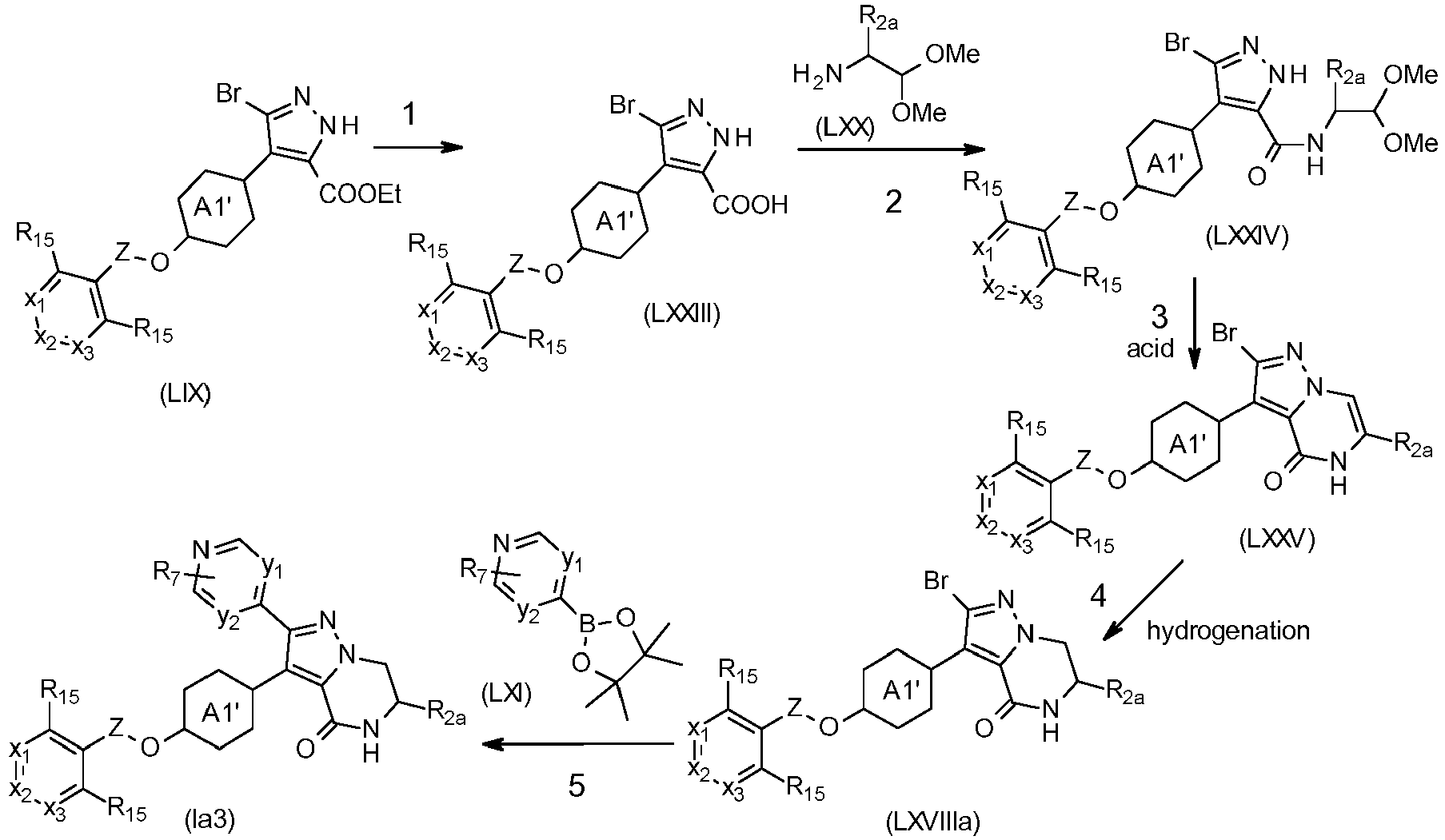
- 1 : an intermediate of formula (LIX) can be converted into an intermediate of formula (LXXIII) by reaction with a suitable base, such as for example KOH, and a suitable solvent or solvent mixture, such as for example EtOH and water.
- 2 : an intermediate of formula (LXXIII) can be reacted with an intermediate of formula (LXX) in the presence of a suitable peptide coupling agent, such as for example HATU, a suitable base, such as for example, DIPEA, and a suitable solvent, such as for example DMF, resulting in an intermediate of formula (LXXIV).
- 3 : an intermediate of formula (LXXIV) can be converted into an intermediate of formula (LXXV) by reaction with a suitable acid, such as for example methanesulfonic acid, HCl or TFA, and a suitable solvent, such as for example acetone or DCM.
- 4 : an intermediate of formula (LXXV) can be converted into a compound of formula (LXVIIIa) by hydrogenation in the presence of a suitable catalyst, such as for example Pd/C 10% or PtO2, and a suitable solvent, such as for example EtOH or MeOH.
- 5 : an intermediate of formula (LXVIII) can be reacted with an intermediate of formula (LXI) in the presence of suitable catalyst, such as for example Palladium acetate (Pd(OAc)2), a suitable ligand, such as for example PCy3 a suitable base, such as potassium phosphate (K3PO4), and a suitable solvent or solvent mixture, such as for example dioxane and water, resulting in a compound of formula (Ia3).
- A compound of formula (I), wherein Y is C=O and Ring A is partially saturated, and wherein all other variables are as defined before, hereby named a compound of formula (I-j) or (I-k), can be prepared according to the following reaction scheme 9:

- 1 : an intermediate of formula (II) or (XXXIX) can be reacted with an intermediate of formula (LXXIX) in the presence of suitable catalyst, such as for example Palladium acetate (PdCl2dppf), a suitable base, such as Na2CO3, and a suitable solvent, such as for example dioxane, resulting in an intermediate of formula (LXXX).
- 2 : an intermediate of formula (LXXX) can be deprotected to an intermediate of formula (LXXXI) by reaction with a suitable acid, such as for example HCl, and a suitable solvent, such as for example ACN.
- 3 : an intermediate of formula(LXXXI) can be reacted with an intermediate of formula (LXXXII) in the presence of a suitable base, such as for example Et3N, and a suitable solvent, such as for example DCM, resulting in a compound of formula (Ij), wherein R4a and R4b are taken together to form =O, or a compound of formula (Ik), wherein R4a and R4b are hydrogen.
- A compound of formula (I), wherein Y is O and Ring A is saturated, and wherein all other variables are as defined before, hereby named a compound of formula (Im) or (In) can be prepared according to the following reaction scheme 10:

- 1 : an intermediate of formula (LXXXIII) can be deprotected to an intermediate of formula (LXXXIV) by reaction with a suitable acid, such as for example HCl, in the presence of a suitable solvent, such as for example ACN.
- 2 : an intermediate of formula (II) or (XXXIX) can be reacted with an intermediate of formula (LXXXIV) in the presence of suitable catalyst, such as for example (SP-4-4)-[2-[2-(amino-κN)ethyl]phenyl-κC]chloro[dicyclohexyl[3,6-dimethoxy-2',4',6'-tris(1-methylethyl)[1,1'-biphenyl]-2-yl]phosphine-κP]-palladium (BrettPhos Palladacycle), a suitable base, such as NaOtBu, and a suitable solvent, such as for example toluene, resulting in a compound of formula (Im), wherein R4a and R4b are taken together to form =O, and a compound of formula (In), wherein R4a and R4b are hydrogen.
- 3 : an intermediate of formula (LXXXIV) can be reacted with an intermediate of formula (LXIV) in the presence of a suitable base, such as for example Cs2CO3, suitable catalysts, such as for example CuI and 2-acetylcyclohexanone, and a suitable solvent, such as for example DMF, resulting in an intermediate of formula (LXXXV).
- 4 : an intermediate of formula (LXXXV) can be deprotected by reaction with a suitable acid, such as for example HCl, in the presence of a suitable solvent, such as for example ACN. The resulting intermediate can be converted into a compound of formula (Im), wherein R4a and R4b are taken together to form =O, by reaction with suitable peptide coupling reagents, such as for example 1-hydroxy-benzotriazole and 1-(3-dimethylaminopropyl)-3-ethylcarbodiimide HCl, a suitable base, such as for example, Et3N, and a suitable solvent, such as for example DCM.
-

- 1 : an intermediate of formula (XXXXVI) can be converted into an intermediate of formula (LXXVI) by reaction with LAH in the presence of a suitable solvent, such as for example THF.
- 2 : an intermediate of formula (LXXVI) can be reacted with an intermediate of formula (XXIV) in the presence of a suitable base, such as for example DBU, and a suitable solvent, such as for example THF, resulting in an intermediate of formula (LXXVII).
- 3 : an intermediate of formula (LXXVII) can be reacted with an intermediate of formula (XXV) in the presence of a suitable base, such as for example K2CO3, and a suitable solvent, such as for example DMF, resulting in an intermediate of formula (LXXVIII).
- 4 : an intermediate of formula (LXXVIII) can be converted into a compound of formula (Ih) by hydrogenation in the presence of a suitable catalyst, such as for example Nickel of Raney, and a suitable solvent, such as for example EtOH.
- In all these preparations, the reaction products may be isolated from the reaction medium and, if necessary, further purified according to methodologies generally known in the art such as, for example, extraction, crystallization, trituration and chromatography. In particular, stereoisomers can be isolated chromatographically by Supercritical fluid chromatography using polysaccharide-based chiral stationary.
- The chirally pure forms of the compounds of Formula (I) form a preferred group of compounds. It is therefore that the chirally pure forms of the intermediates and their salt forms are particularly useful in the preparation of chirally pure compounds of Formula (I). Also enantiomeric mixtures of the intermediates are useful in the preparation of compounds of Formula (I) with the corresponding configuration.
- It has been found that the compounds of the present invention inhibit ROS1 kinase activity. In particular, the compounds of the present invention are potent and selective Ros1 inhibitors.
- As a consequence of their activity in inhibiting ROS kinases, the compounds and compositions thereof will be useful in providing a means of preventing the growth or inducing apoptosis of neoplasias. It is therefore anticipated that the compounds or compositions thereof will prove useful in treating or preventing, in particular treating, proliferative disorders such as cancers. In addition, the compounds of the invention could be useful in the treatment of diseases in which there is a disorder of proliferation, apoptosis or differentiation.
- Examples of cancers which may be treated (or inhibited) include, but are not limited to, a carcinoma, for example a carcinoma of the bladder, breast, colon (e.g. colorectal carcinomas such as colon adenocarcinoma and colon adenoma), kidney, urothelial, uterus, epidermis, liver, lung (for example adenocarcinoma, small cell lung cancer and non-small cell lung carcinomas, squamous lung cancer), oesophagus, head and neck, gall bladder, ovary, pancreas (e.g. exocrine pancreatic carcinoma), stomach, gastrointestinal (also known as gastric) cancer (e.g. gastrointestinal stromal tumours), cervix, endometrium, thyroid, prostate, or skin (for example squamous cell carcinoma or dermatofibrosarcoma protuberans); pituitary cancer, a hematopoietic tumour of lymphoid lineage, for example leukemia, acute lymphocytic leukemia, chronic lymphocytic leukemia, B-cell lymphoma (e.g. diffuse large B-cell lymphoma), T-cell lymphoma, Hodgkin's lymphoma, non-Hodgkin's lymphoma, hairy cell lymphoma, or Burkett's lymphoma; a hematopoietic tumour of myeloid lineage, for example leukemias, acute and chronic myelogenous leukemias, chronic myelomonocytic leukemia (CMML), myeloproliferative disorder, myeloproliferative syndrome, myelodysplastic syndrome, or promyelocytic leukemia; multiple myeloma; thyroid follicular cancer; hepatocellular cancer, a tumour of mesenchymal origin (e.g. Ewing's sarcoma), for example fibrosarcoma or rhabdomyosarcoma; a tumour of the central or peripheral nervous system, for example astrocytoma, neuroblastoma, glioma (such as glioblastoma multiforme) or schwannoma; melanoma; seminoma; teratocarcinoma; osteosarcoma; xeroderma pigmentosum; keratoctanthoma; thyroid follicular cancer; or Kaposi's sarcoma.
- In particular examples of cancers which may be treated (or inhibited) include non-small cell lung cancer (specifically adenocarcinoma), cholangiocarcinoma, glioblastoma, colorectal cancer, gastric adenocarcinoma, ovarian cancer, angiosarcoma, epithelioid hemangioendothelioma, inflammatory myofibroblastic tumors, breast cancer and chronic myelogenous leukemia.
- In an embodiment, the compounds of the invention and compositions thereof may be useful for use in the treatment or prevention, in particular in the treatment, of non-small-cell lung cancer, cholangiocarcinoma, and glioblastoma multiforme.
- In an embodiment, all or some of the compounds of the invention and compositions thereof may be useful for use in reducing tumors or prolonging survival in patients with a G2032R mutation in the Ros1 kinase domain.
- In an embodiment, all or some the compounds of the invention and compositions thereof may be useful for use in reducing tumors or prolonging survival in patients with a L2026M mutation in the Ros1 kinase domain.
- The compounds of the invention can also be used in the treatment of hematopoetic diseases of abnormal cell proliferation whether pre-malignant or stable such as myeloproliferative diseases. Myeloproliferative diseases ("MPD"s) are a group of diseases of the bone marrow in which excess cells are produced. They are related to, and may evolve into, myelodysplastic syndrome. Myeloproliferative diseases include polycythemia vera, essential thrombocythemia and primary myelofibrosis. A further haematological disorder is hypereosinophilic syndrome. T-cell lymphoproliferative diseases include those derived from natural Killer cells.
- Thus, in the pharmaceutical compositions, uses or methods of this invention for treating a disease or condition comprising abnormal cell growth, the disease or condition comprising abnormal cell growth in one embodiment is a cancer.
- The compounds of the invention and compositions thereof may be useful in treating other conditions which result from disorders in proliferation such as type II or non-insulin dependent diabetes mellitus, autoimmune diseases, head trauma, stroke, epilepsy, neurodegenerative diseases such as Alzheimer's, motor neurone disease, progressive supranuclear palsy, corticobasal degeneration and Pick's disease for example autoimmune diseases and neurodegenerative diseases.
- ROS is also known to play a role in apoptosis, proliferation, differentiation and transcription and therefore the compounds of the invention could also be useful in the treatment of the following diseases other than cancer; chronic inflammatory diseases, for example systemic lupus erythematosus, autoimmune mediated glomerulonephritis, rheumatoid arthritis, psoriasis, inflammatory bowel disease, autoimmune diabetes mellitus, Eczema hypersensitivity reactions, asthma, COPD, rhinitis, and upper respiratory tract disease; cardiovascular diseases for example cardiac hypertrophy, restenosis, atherosclerosis; neurodegenerative disorders, for example Alzheimer's disease, AIDS-related dementia, Parkinson's disease, amyotropic lateral sclerosis, retinitis pigmentosa, spinal muscular atropy and cerebellar degeneration; glomerulonephritis; myelodysplastic syndromes, ischemic injury associated myocardial infarctions, stroke and reperfusion injury, arrhythmia, atherosclerosis, toxin-induced or alcohol related liver diseases, haematological diseases, for example, chronic anemia and aplastic anemia; degenerative diseases of the musculoskeletal system, for example, osteoporosis and arthritis, aspirin-sensitive rhinosinusitis, cystic fibrosis, multiple sclerosis, kidney diseases and cancer pain.
- The compounds of the present invention and compositions thereof may also have utility in male contraception.
- The compounds of the present invention may also have therapeutic applications in sensitising tumour cells for radiotherapy and chemotherapy.
- Hence the compounds of the present invention may be used as "radiosensitizer" and/or "chemosensitizer" or can be given in combination with another "radiosensitizer" and/or "chemosensitizer".
- The term "radiosensitizer", as used herein, is defined as a molecule, preferably a low molecular weight molecule, administered to animals in therapeutically effective amounts to increase the sensitivity of the cells to ionizing radiation and/or to promote the treatment of diseases which are treatable with ionizing radiation.
- The term "chemosensitizer", as used herein, is defined as a molecule, preferably a low molecular weight molecule, administered to animals in therapeutically effective amounts to increase the sensitivity of cells to chemotherapy and/or promote the treatment of diseases which are treatable with chemotherapeutics.
- Several mechanisms for the mode of action of radiosensitizers have been suggested in the literature including: hypoxic cell radiosensitizers (e.g., 2- nitroimidazole compounds, and benzotriazine dioxide compounds) mimicking oxygen or alternatively behave like bioreductive agents under hypoxia; non-hypoxic cell radiosensitizers (e.g., halogenated pyrimidines) can be analogoues of DNA bases and preferentially incorporate into the DNA of cancer cells and thereby promote the radiation-induced breaking of DNA molecules and/or prevent the normal DNA repair mechanisms; and various other potential mechanisms of action have been hypothesized for radiosensitizers in the treatment of disease.
- Many cancer treatment protocols currently employ radiosensitizers in conjunction with radiation of x-rays. Examples of x-ray activated radiosensitizers include, but are not limited to, the following: metronidazole, misonidazole, desmethylmisonidazole, pimonidazole, etanidazole, nimorazole, mitomycin C, RSU 1069, SR 4233, EO9, RB 6145, nicotinamide, 5-bromodeoxyuridine (BUdR), 5- iododeoxyuridine (IUdR), bromodeoxycytidine, fluorodeoxyuridine (FudR), hydroxyurea, cisplatin, and therapeutically effective analogs and derivatives of the same.
- Photodynamic therapy (PDT) of cancers employs visible light as the radiation activator of the sensitizing agent. Examples of photodynamic radiosensitizers include the following, but are not limited to: hematoporphyrin derivatives, Photofrin, benzoporphyrin derivatives, tin etioporphyrin, pheoborbide-a, bacteriochlorophyll-a, naphthalocyanines, phthalocyanines, zinc phthalocyanine, and therapeutically effective analogs and derivatives of the same.
- Radiosensitizers may be administered in conjunction with a therapeutically effective amount of one or more other compounds, including but not limited to: compounds which promote the incorporation of radiosensitizers to the target cells; compounds which control the flow of therapeutics, nutrients, and/or oxygen to the target cells; chemotherapeutic agents which act on the tumour with or without additional radiation; or other therapeutically effective compounds for treating cancer or other diseases.
- Chemosensitizers may be administered in conjunction with a therapeutically effective amount of one or more other compounds, including but not limited to: compounds which promote the incorporation of chemosensitizers to the target cells; compounds which control the flow of therapeutics, nutrients, and/or oxygen to the target cells; chemotherapeutic agents which act on the tumour or other therapeutically effective compounds for treating cancer or other disease. Calcium antagonists, for example verapamil, are found useful in combination with antineoplastic agents to establish chemosensitivity in tumor cells resistant to accepted chemotherapeutic agents and to potentiate the efficacy of such compounds in drug-sensitive malignancies.
- The invention relates to compounds of Formula (I) and N-oxides, pharmaceutically acceptable addition salts, and solvates thereof, for use as a medicament.
- The invention also relates to compounds of Formula (I) and N-oxides, pharmaceutically acceptable addition salts, and solvates thereof, for use in the inhibition of ROS, in particular ROS1, kinase activity.
- The compounds of the present invention can be "anti-cancer agents", which term also encompasses "anti-tumor cell growth agents" and "anti-neoplastic agents".
- The invention also relates to compounds of Formula (I) and N-oxides, pharmaceutically acceptable addition salts, and solvates thereof, for use in the treatment of diseases mentioned above.
- The invention also relates to compounds of Formula (I) and N-oxides, pharmaceutically acceptable addition salts, and solvates thereof, for the treatment or prevention, in particular for the treatment, of said diseases.
- The invention also relates to compounds of Formula (I) and N-oxides, pharmaceutically acceptable addition salts, and solvates thereof, for the treatment or prevention, in particular in the treatment, of ROS, in particular ROS1, mediated diseases or conditions.
- The invention also relates to the use of compounds of Formula (I) and N-oxides, pharmaceutically acceptable addition salts, and solvates thereof, for the manufacture of a medicament.
- The invention also relates to the use of compounds of Formula (I) and N-oxides, pharmaceutically acceptable addition salts, and solvates thereof, for the manufacture of a medicament for the inhibition of ROS, in particular ROS1.
- The invention also relates to the use of compounds of Formula (I) and N-oxides, pharmaceutically acceptable addition salts, and solvates thereof, for the manufacture of a medicament for the treatment or prevention, in particular for the treatment, of any one of the disease conditions mentioned hereinbefore.
- The invention also relates to the use of compounds of Formula (I) and N-oxides, pharmaceutically acceptable addition salts, and solvates thereof, for the manufacture of a medicament for the treatment of any one of the disease conditions mentioned hereinbefore.
- The compounds of Formula (I) and N-oxides, pharmaceutically acceptable addition salts, and solvates thereof, can be administered to mammals, preferably humans for the treatment or prevention of any one of the diseases mentioned hereinbefore.
- In view of the utility of the compounds of Formula (I) and N-oxides, pharmaceutically acceptable addition salts, and solvates thereof, there is provided a method of treating warm-blooded animals, including humans, suffering from or a method of preventing warm-blooded animals, including humans, to suffer from any one of the diseases mentioned hereinbefore.
- Said methods comprise the administration, i.e. the systemic or topical administration, preferably oral administration, of an effective amount of a compound of Formula (I) or a N-oxide, a pharmaceutically acceptable addition salt, or a solvate thereof, to warm-blooded animals, including humans.
- Those of skill in the treatment of such diseases could determine the effective therapeutic daily amount from the test results presented hereinafter. An effective therapeutic daily amount would be from about 0.005 mg/kg to 50 mg/kg, in particular 0.01 mg/kg to 50 mg/kg body weight, more in particular from 0.01 mg/kg to 25 mg/kg body weight, preferably from about 0.01 mg/kg to about 15 mg/kg, more preferably from about 0.01 mg/kg to about 10 mg/kg, even more preferably from about 0.01 mg/kg to about 1 mg/kg, most preferably from about 0.05 mg/kg to about 1 mg/kg body weight. The amount of a compound according to the present invention, also referred to here as the active ingredient, which is required to achieve a therapeutically effect will of course, vary on case-by-case basis, for example with the particular compound, the route of administration, the age and condition of the recipient, and the particular disorder or disease being treated.
- A method of treatment may also include administering the active ingredient on a regimen of between one and four intakes per day. In these methods of treatment the compounds according to the invention are preferably formulated prior to administration. As described herein below, suitable pharmaceutical formulations are prepared by known procedures using well known and readily available ingredients.
- The compounds of the present invention, that can be suitable to treat or prevent cancer or cancer-related conditions, may be administered alone or in combination with one or more additional therapeutic agents. Combination therapy includes administration of a single pharmaceutical dosage formulation which contains a compound of Formula (I), a N-oxide, a pharmaceutically acceptable addition salt, or a solvate thereof, and one or more additional therapeutic agents, as well as administration of the compound of Formula (I), a N-oxide, a pharmaceutically acceptable addition salt, or a solvate thereof, and each additional therapeutic agents in its own separate pharmaceutical dosage formulation. For example, a compound of Formula (I), a N-oxide, a pharmaceutically acceptable addition salt, or a solvate thereof, and a therapeutic agent may be administered to the patient together in a single oral dosage composition such as a tablet or capsule, or each agent may be administered in separate oral dosage formulations.
- While it is possible for the active ingredient to be administered alone, it is preferable to present it as a pharmaceutical composition.
- Accordingly, the present invention further provides a pharmaceutical composition comprising a pharmaceutically acceptable carrier and, as active ingredient, a therapeutically effective amount of a compound of Formula (I), a N-oxide, a pharmaceutically acceptable addition salt, or a solvate thereof.
- The carrier or diluent must be "acceptable" in the sense of being compatible with the other ingredients of the composition and not deleterious to the recipients thereof.
- For ease of administration, the subject compounds may be formulated into various pharmaceutical forms for administration purposes. The compounds according to the invention, in particular the compounds of Formula (I) and N-oxides, pharmaceutically acceptable addition salts, and solvates thereof, or any subgroup or combination thereof may be formulated into various pharmaceutical forms for administration purposes. As appropriate compositions there may be cited all compositions usually employed for systemically administering drugs.
- To prepare the pharmaceutical compositions of this invention, an effective amount of the particular compound as the active ingredient is combined in intimate admixture with a pharmaceutically acceptable carrier, which carrier may take a wide variety of forms depending on the form of preparation desired for administration. These pharmaceutical compositions are desirable in unitary dosage form suitable, in particular, for administration orally, rectally, percutaneously, by parenteral injection or by inhalation. For example, in preparing the compositions in oral dosage form, any of the usual pharmaceutical media may be employed such as, for example, water, glycols, oils, alcohols and the like in the case of oral liquid preparations such as suspensions, syrups, elixirs, emulsions and solutions; or solid carriers such as starches, sugars, kaolin, diluents, lubricants, binders, disintegrating agents and the like in the case of powders, pills, capsules and tablets. Because of their ease in administration, tablets and capsules represent the most advantageous oral dosage unit forms in which case solid pharmaceutical carriers are obviously employed. For parenteral compositions, the carrier will usually comprise sterile water, at least in large part, though other ingredients, for example, to aid solubility, may be included. Injectable solutions, for example, may be prepared in which the carrier comprises saline solution, glucose solution or a mixture of saline and glucose solution. Injectable solutions, for example, may be prepared in which the carrier comprises saline solution, glucose solution or a mixture of saline and glucose solution. Injectable solutions containing a compound of Formula (I), a N-oxide, a pharmaceutically acceptable addition salt, or a solvate thereof, may be formulated in an oil for prolonged action. Appropriate oils for this purpose are, for example, peanut oil, sesame oil, cottonseed oil, corn oil, soybean oil, synthetic glycerol esters of long chain fatty acids and mixtures of these and other oils. Injectable suspensions may also be prepared in which case appropriate liquid carriers, suspending agents and the like may be employed. Also included are solid form preparations that are intended to be converted, shortly before use, to liquid form preparations. In the compositions suitable for percutaneous administration, the carrier optionally comprises a penetration enhancing agent and/or a suitable wetting agent, optionally combined with suitable additives of any nature in minor proportions, which additives do not introduce a significant deleterious effect on the skin. Said additives may facilitate the administration to the skin and/or may be helpful for preparing the desired compositions. These compositions may be administered in various ways, e.g., as a transdermal patch, as a spot-on, as an ointment. Acid or base addition salts of compounds of Formula (I) due to their increased water solubility over the corresponding base or acid form, are more suitable in the preparation of aqueous compositions.
- It is especially advantageous to formulate the aforementioned pharmaceutical compositions in unit dosage form for ease of administration and uniformity of dosage. Unit dosage form as used herein refers to physically discrete units suitable as unitary dosages, each unit containing a predetermined quantity of active ingredient calculated to produce the desired therapeutic effect in association with the required pharmaceutical carrier. Examples of such unit dosage forms are tablets (including scored or coated tablets), capsules, pills, powder packets, wafers, suppositories, injectable solutions or suspensions and the like, and segregated multiples thereof.
- In order to enhance the solubility and/or the stability of the compounds of Formula (I) and N-oxides, pharmaceutically acceptable addition salts, and solvates thereof, in pharmaceutical compositions, it can be advantageous to employ α-, β- or γ-cyclodextrins or their derivatives, in particular hydroxyalkyl substituted cyclodextrins, e.g. 2-hydroxypropyl-β-cyclodextrin or sulfobutyl-β-cyclodextrin. Also co-solvents such as alcohols may improve the solubility and/or the stability of the compounds according to the invention in pharmaceutical compositions.
- Depending on the mode of administration, the pharmaceutical composition will preferably comprise from 0.05 to 99 % by weight, more preferably from 0.1 to 70 % by weight, even more preferably from 0.1 to 50 % by weight of the compound of Formula (I), a N-oxide, a pharmaceutically acceptable addition salt, or a solvate thereof, and from 1 to 99.95 % by weight, more preferably from 30 to 99.9 % by weight, even more preferably from 50 to 99.9 % by weight of a pharmaceutically acceptable carrier, all percentages being based on the total weight of the composition.
- As another aspect of the present invention, a combination of a compound of the present invention with another anticancer agent is envisaged, especially for use as a medicine, more specifically for use in the treatment of cancer or related diseases.
- For the treatment of the above conditions, the compounds of the invention may be advantageously employed in combination with one or more other medicinal agents, more particularly, with other anti-cancer agents or adjuvants in cancer therapy. Examples of anti-cancer agents or adjuvants (supporting agents in the therapy) include but are not limited to:
- platinum coordination compounds for example cisplatin optionally combined with amifostine, carboplatin or oxaliplatin;
- taxane compounds for example paclitaxel, paclitaxel protein bound particles (Abraxane™) or docetaxel;
- topoisomerase I inhibitors such as camptothecin compounds for example irinotecan, SN-38, topotecan, topotecan hcl;
- topoisomerase II inhibitors such as anti-tumour epipodophyllotoxins or podophyllotoxin derivatives for example etoposide, etoposide phosphate or teniposide;
- anti-tumour vinca alkaloids for example vinblastine, vincristine or vinorelbine;
- anti-tumour nucleoside derivatives for example 5-fluorouracil, leucovorin, gemcitabine, gemcitabine hcl, capecitabine, cladribine, fludarabine, nelarabine;
- alkylating agents such as nitrogen mustard or nitrosourea for example cyclophosphamide, chlorambucil, carmustine, thiotepa, mephalan (melphalan), lomustine, altretamine, busulfan, dacarbazine, estramustine, ifosfamide optionally in combination with mesna, pipobroman, procarbazine, streptozocin, temozolomide, uracil;
- anti-tumour anthracycline derivatives for example daunorubicin, doxorubicin optionally in combination with dexrazoxane, doxil, idarubicin, mitoxantrone, epirubicin, epirubicin hcl, valrubicin;
- molecules that target the IGF-1 receptor for example picropodophilin;
- tetracarcin derivatives for example tetrocarcin A;
- glucocorticoids for example prednisone;
- antibodies for example trastuzumab (HER2 antibody), rituximab (CD20 antibody), gemtuzumab, gemtuzumab ozogamicin, cetuximab, pertuzumab, bevacizumab, alemtuzumab, eculizumab, ibritumomab tiuxetan, nofetumomab, panitumumab, tositumomab, CNTO 328;
- estrogen receptor antagonists or selective estrogen receptor modulators or inhibitors of estrogen synthesis for example tamoxifen, fulvestrant, toremifene, droloxifene, faslodex, raloxifene or letrozole;
- aromatase inhibitors such as exemestane, anastrozole, letrazole, testolactone and vorozole;
- differentiating agents such as retinoids, vitamin D or retinoic acid and retinoic acid metabolism blocking agents (RAMBA) for example accutane;
- DNA methyl transferase inhibitors for example azacytidine or decitabine;
- antifolates for example premetrexed disodium;
- antibiotics for example antinomycin D, bleomycin, mitomycin C, dactinomycin, carminomycin, daunomycin, levamisole, plicamycin, mithramycin;
- antimetabolites for example clofarabine, aminopterin, cytosine arabinoside or methotrexate, azacitidine, cytarabine, floxuridine, pentostatin, thioguanine;
- apoptosis inducing agents and antiangiogenic agents such as Bcl-2 inhibitors for example YC 137, BH 312, ABT 737, gossypol, HA 14-1, TW 37 or decanoic acid;
- tubuline-binding agents for example combrestatin, colchicines or nocodazole;
- kinase inhibitors (e.g. EGFR (epithelial growth factor receptor) inhibitors, MTKI (multi target kinase inhibitors), mTOR inhibitors) for example flavoperidol, imatinib mesylate, erlotinib, gefitinib, dasatinib, lapatinib, lapatinib ditosylate, sorafenib, sunitinib, sunitinib maleate, temsirolimus;
- farnesyltransferase inhibitors for example tipifarnib;
- histone deacetylase (HDAC) inhibitors for example sodium butyrate, suberoylanilide hydroxamic acid (SAHA), depsipeptide (FR 901228), NVP-LAQ824, R306465, JNJ-26481585, trichostatin A, vorinostat;
- Inhibitors of the ubiquitin-proteasome pathway for example PS-341, MLN .41 or bortezomib;
- Yondelis;
- Telomerase inhibitors for example telomestatin;
- Matrix metalloproteinase inhibitors for example batimastat, marimastat, prinostat or metastat;
- Recombinant interleukins for example aldesleukin, denileukin diftitox, interferon alfa 2a, interferon alfa 2b, peginterferon alfa 2b;
- MAPK inhibitors;
- Retinoids for example alitretinoin, bexarotene, tretinoin;
- Arsenic trioxide;
- Asparaginase;
- Steroids for example dromostanolone propionate, megestrol acetate, nandrolone (decanoate, phenpropionate), dexamethasone;
- Gonadotropin releasing hormone agonists or antagonists for example abarelix, goserelin acetate, histrelin acetate, leuprolide acetate;
- Thalidomide, lenalidomide;
- Mercaptopurine, mitotane, pamidronate, pegademase, pegaspargase, rasburicase
- BH3 mimetics for example ABT-737;
- MEK inhibitors for example PD98059, AZD6244, CI-1040;
- colony-stimulating factor analogs for example filgrastim, pegfilgrastim, sargramostim; erythropoietin or analogues thereof (e.g. darbepoetin alfa); interleukin 11; oprelvekin; zoledronate, zoledronic acid; fentanyl; bisphosphonate; palifermin;
- a steroidal cytochrome P450 17alpha-hydroxylase-17,20-lyase inhibitor (CYP17), e.g. abiraterone, abiraterone acetate;
- Glycolysis inhibitors, such as 2-deoxyglucose;
- mTOR inhibitors such as rapamycins and rapalogs, and mTOR kinase inhibitors
- PI3K inhibitors and dual mTOR/PI3K inhibitors;
- autophagy inhibitors, such as chloroquine and hydroxy-chloroquine;
- androgen receptor antagonist drugs, e.g. enzalutamide or ARN-509;
- antibodies that re-activate the immune response to tumors, for example nivolumab (anti-PD-1), lambrolizumab (anti-PD-1), ipilimumab (anti-CTLA4), and MPDL3280A (anti-PD-L1).
- The present invention further relates to a product containing as first active ingredient a compound according to the invention and as further active ingredient one or more anticancer agents, as a combined preparation for simultaneous, separate or sequential use in the treatment of patients suffering from cancer.
- The one or more other medicinal agents and the compound according to the present invention may be administered simultaneously (e.g. in separate or unitary compositions) or sequentially in either order. In the latter case, the two or more compounds will be administered within a period and in an amount and manner that is sufficient to ensure that an advantageous or synergistic effect is achieved. It will be appreciated that the preferred method and order of administration and the respective dosage amounts and regimes for each component of the combination will depend on the particular other medicinal agent and compound of the present invention being administered, their route of administration, the particular tumour being treated and the particular host being treated. The optimum method and order of administration and the dosage amounts and regime can be readily determined by those skilled in the art using conventional methods and in view of the information set out herein.
The weight ratio of the compound according to the present invention and the one or more other anticancer agent(s) when given as a combination may be determined by the person skilled in the art. Said ratio and the exact dosage and frequency of administration depends on the particular compound according to the invention and the other anticancer agent(s) used, the particular condition being treated, the severity of the condition being treated, the age, weight, gender, diet, time of administration and general physical condition of the particular patient, the mode of administration as well as other medication the individual may be taking, as is well known to those skilled in the art. Furthermore, it is evident that the effective daily amount may be lowered or increased depending on the response of the treated subject and/or depending on the evaluation of the physician prescribing the compounds of the instant invention. A particular weight ratio for the present compound of Formula (I) and another anticancer agent may range from 1/10 to 10/1, more in particular from 1/5 to 5/1, even more in particular from 1/3 to 3/1. - The platinum coordination compound is advantageously administered in a dosage of 1 to 500mg per square meter (mg/m2) of body surface area, for example 50 to 400 mg/m2, particularly for cisplatin in a dosage of about 75 mg/m2 and for carboplatin in about 300mg/m2 per course of treatment.
- The taxane compound is advantageously administered in a dosage of 50 to 400 mg per square meter (mg/m2) of body surface area, for example 75 to 250 mg/m2, particularly for paclitaxel in a dosage of about 175 to 250 mg/m2 and for docetaxel in about 75 to 150 mg/m2 per course of treatment.
- The camptothecin compound is advantageously administered in a dosage of 0.1 to 400 mg per square meter (mg/m2) of body surface area, for example 1 to 300 mg/m2, particularly for irinotecan in a dosage of about 100 to 350 mg/m2 and for topotecan in about 1 to 2 mg/m2 per course of treatment.
- The anti-tumour podophyllotoxin derivative is advantageously administered in a dosage of 30 to 300 mg per square meter (mg/m2) of body surface area, for example 50 to 250mg/m2, particularly for etoposide in a dosage of about 35 to 100 mg/m2 and for teniposide in about 50 to 250 mg/m2 per course of treatment.
- The anti-tumour vinca alkaloid is advantageously administered in a dosage of 2 to 30 mg per square meter (mg/m2) of body surface area, particularly for vinblastine in a dosage of about 3 to 12 mg/m2 , for vincristine in a dosage of about 1 to 2 mg/m2 , and for vinorelbine in dosage of about 10 to 30 mg/m2 per course of treatment.
- The anti-tumour nucleoside derivative is advantageously administered in a dosage of 200 to 2500 mg per square meter (mg/m2) of body surface area, for example 700 to 1500 mg/m2, particularly for 5-FU in a dosage of 200 to 500mg/m2, for gemcitabine in a dosage of about 800 to 1200 mg/m2 and for capecitabine in about 1000 to 2500 mg/m2 per course of treatment.
- The alkylating agents such as nitrogen mustard or nitrosourea is advantageously administered in a dosage of 100 to 500 mg per square meter (mg/m2) of body surface area, for example 120 to 200 mg/m2, particularly for cyclophosphamide in a dosage of about 100 to 500 mg/m2, for chlorambucil in a dosage of about 0.1 to 0.2 mg/kg, for carmustine in a dosage of about 150 to 200 mg/m2 , and for lomustine in a dosage of about 100 to 150 mg/m2 per course of treatment.
- The anti-tumour anthracycline derivative is advantageously administered in a dosage of 10 to 75 mg per square meter (mg/m2) of body surface area, for example 15 to 60 mg/m2, particularly for doxorubicin in a dosage of about 40 to 75 mg/m2, for daunorubicin in a dosage of about 25 to 45mg/m2, and for idarubicin in a dosage of about 10 to 15 mg/m2 per course of treatment.
- The antiestrogen agent is advantageously administered in a dosage of about 1 to 100 mg daily depending on the particular agent and the condition being treated. Tamoxifen is advantageously administered orally in a dosage of 5 to 50 mg, preferably 10 to 20 mg twice a day, continuing the therapy for sufficient time to achieve and maintain a therapeutic effect. Toremifene is advantageously administered orally in a dosage of about 60mg once a day, continuing the therapy for sufficient time to achieve and maintain a therapeutic effect. Anastrozole is advantageously administered orally in a dosage of about 1mg once a day. Droloxifene is advantageously administered orally in a dosage of about 20-100mg once a day. Raloxifene is advantageously administered orally in a dosage of about 60mg once a day. Exemestane is advantageously administered orally in a dosage of about 25mg once a day.
- Antibodies are advantageously administered in a dosage of about 1 to 5 mg per square meter (mg/m2) of body surface area, or as known in the art, if different. Trastuzumab is advantageously administered in a dosage of 1 to 5 mg per square meter (mg/m2) of body surface area, particularly 2 to 4mg/m2 per course of treatment.
These dosages may be administered for example once, twice or more per course of treatment, which may be repeated for example every 7, 14, 21 or 28 days. - The following examples illustrate the present invention. In case no specific stereochemistry is indicated for a stereocenter of a compound, this means that the compound was obtained as a mixture of the R and the S enantiomers.
For a number of compounds, melting points (m.p.) were determined with a DSC 1 STARe System from Mettler Toledo. Melting points were measured with a temperature gradient of 10°C/minute up to 350 °C. Melting points are given by peak values. - Hereinafter, the term "NaH" means sodium hydride (60% in mineral oil); "DCM" means dichloromethane; "TBAF" means tetrabutylammonium fluoride; "Pd(tBu3P)2 " means bis[tris(1,1-dimethylethyl)phosphine]-palladium; "quant." means quantitative; "Ac" means acetyl; "MeI" means iodomethane; "sat." means saturated; "DBU" means 1,8-diazabicyclo[5.4.0]undecene-7; "LAH" means lithium aluminium hydride; "NBS" means N-bromosuccinimide; "sol." means solution; "prep." means preparative; "MeMgCl" means Methylmagnesium chloride; "nBuLi" means n-butyllithium; "aq." means aqueous; "Int." Means Intermediate; "Co." means compound; "r.t." means room temperature; "r.m." means reaction mixture; "KOAc" means potassium acetate; "AcONH4" means ammonium acetate; "BisPin" means bis(pinacolato)diboron; "DCE" means 1,2-dichloroethane; "DIPE" means diisopropyl ether; "Boc" or "BOC" means tert-butoxycarbonyl; "CDI" means 1,1'-carbonyldiimidazole; "N-Boc sarcosine" means N-[(1,1-dimethylethoxy)carbonyl]-N-methyl-Glycine; "Boc-glycinol" means N-(tert-Butoxycarbonyl)ethanolamine; "(BOC)2O" means di-tert-butyl dicarbonate; "ACN" means acetonitrile; "EDCI" means N'-(ethylcarbonimidoyl)-N,N-dimethyl-1,3-propanediamine monohydrochloride; ; "HOBT" means 1-hydroxy-1H-benzotriazole; "TBDPS" means tert-butyldiphenylsilyl; "OTBDPS" means tert-butyldiphenylsilyloxy; "TBDMS" means tert-butyldimethylsilyl; "TBDMSO" or "OTBDMS" means tert-butyldimethylsilyloxy; "S-Phos" means 2-dicyclohexylphosphino-2',6'-dimethoxybiphenyl; "LiHMDS" means lithium hexamethyldisilazane; "DMAP" means 4-(dimethylamino)pyridine; "MeOH" means methanol; "PCy3" means tricyclohexylphosphine; "LC" means liquid chromatography; "LCMS" means Liquid Chromatography/Mass spectrometry; "HATU" means 1-[bis(dimethylamino)methylene]-1H-[1,2,3]triazolo[4,5-b]pyridin-1-ium 3-oxide hexafluorophosphate; "HPLC" means high-performance liquid chromatography; "TFA" means trifluoroacetic acid; "m.p." means melting point; "N2" means nitrogen; "DBAD" means di-tert-butyl azodicarboxylate; "RP" means reversed phase; "min" means minute(s); "EtOAc" means ethyl acetate; "Et3N" means triethylamine; "EtOH" means ethanol; "THF" means tetrahydrofuran; "Celite®" means diatomaceous earth; "DMF" means N,N-dimethyl formamide; "DMSO" means dimethyl sulfoxide; 'iPrOH" means 2-propanol; "iPrNH2" means isopropylamine; "SFC" means Supercritical Fluid Chromatography; "DIPEA" means N,N-diisopropylethylamine; "Pd(PPh3)4" means tetrakis(triphenylphosphine)palladium; "w/v" means weight/volume; "PPh3" means triphenylphosphine ; "PPh3 supp." means triphenylphosphine supported (polymer bound); "Ft2O" means diethyl ether; "Pd/C" means palladium on carbon; "Pt/C" means platina on carbon; "Pd(OAc)2" means palladium(II) acetate ; "Et" means ethyl; "Me" means methyl; "h" means hours; "precatalyst" means (SP-4-4)-[2'-(amino-κN)[1,1'-biphenyl]-2-yl-κC]chloro[dicyclohexyl[2',4',6'-tris(1-methylethyl)[1,1'-biphenyl]-2-yl]phosphine]-palladium (CAS registry number [1310584-14-5]); and "PdCl2(dppf)" means [1,1'-bis(diphenylphosphino-κP)ferrocene]dichloropalladium.
- Hereinafter, "Int. 1 or 1 " is 3-(4-pyridinyl)-1H-pyrazole-5-carboxylic acid, ethyl ester'; "Int. 6 or 6 " is '4-(1-methylethyl)-benzenemethanol'; "Int. 7 or 7 " is '4-hydroxybenzeneboronic acid pinacol ester'; "Int. 8 or 8 " is '(1-(bromomethyl)-4-(1-methylethyl)-benzene)'; "Int. 9 or 9 " is '4-[[4-(1-methylethyl)phenyl]methoxy]-benzoic acid, methyl ester'; "Int. 13 or 13 " is '4-[[4-(1-methylethyl)phenyl]methoxy]-benzaldehyde'; "Int. 19 or 19" is '2-cyano-3-[4-[(4-methoxyphenyl)-methoxy]phenyl]-2-propenoic acid, ethyl ester'; "Int. 29 or 29 " is '6-cyclopropyl-3-pyridinemethanol'; "Int. 31 or 31 " is '4-cyclopropyl-benzenemethanol'; "Int. 33 or 33 " is '4-hydroxybenzoic acid, methyl ester'; "Int. 39 or 39 " is '4-hydroxy-2-fluorophenylboronic acid pinacol ester'.
-

- A sol. of 1 (3-(4-pyridinyl)-1H pyrazole-5-carboxylic acid, ethyl ester) (34.7g; 160mmol) in DCM (464mL) was treated with NBS (31.3g; 176mmol) and stirred at r.t. for 20 h. The crude mixture was concentrated in vacuo and then taken up in Et2O (200mL) and filtered on a glass frit. The solid was washed with Et2O (100mL) and twice with MeOH and Et2O (10mL/40mL). The solid was collected and dried in vacuo to give 43.57g of the Int. 2 (92%).
-

- To a mixture of 2 (Int. 2) (25 g, 84.4 mmol), tert-butyl N-(2-hydroxyethyl)carbamate (20.4 g, 126 mmol) and PPh3 supp. (39.6 g, 127 mmol) in dry THF (700 mL) was added DBAD (29.2 g, 126.6 mmol). The mixture was stirred for 4 h at r.t. then filtered through a glass frit. The filtrate was evaporated in vacuo to give 79.8 g of a residue which was purified by chromatography over silica gel (Irregular SiOH 35-40µm; 330g; mobile phase from 100% DCM to 97% DCM, 3% MeOH, 0.1% NH4OH). The pure fractions were collected and evaporated to give 33.2 g of Int. 3 (90%).
-

- TFA (49.5 mL, 646 mmol) was added to a sol. of 3 (35.5 g, 80.8 mmol) in DCM (320 mL) and the r.m. was stirred at r.t. for 17 h. The r.m. was quenched with a sat. sol. of NaHCO3 (2000 mL) and stirred for 10 min. The precipitate was filtered on a glass frit and washed with Et2O and dried in vacuo to give 23 g of a residue as a white solid. The residue was put in suspension in MeOH (150 mL) and treated with Cs2CO3 (5.27 g, 16.2 mmol). The r.m. was stirred at r.t. for 17 h. The crude mixture was filtered through a glass frit. The white precipitate was washed with water (2x 50mL), with MeOH (2x 10mL) and with Et2O (4x 50mL). The white precipitate was collected and dried in vacuo to afford 17.8 g of Int. 4 as a white solid (75%).
-

- To a suspension of 7 (4-hydroxybenzeneboronic acid pinacol ester) (5.00 g, 22.7 mmol), 6 (4-(1-methylethyl)-benzenemethanol) (5.12 g, 34.1 mmol), PPh3 supp. (8.94 g, 34.1 mmol) in dry DCM (150 mL) was added DBAD (7.85 g, 34.1 mmol) and the r.m. was stirred at r.t. for 18 h. The r.m. was then filtered through a glass frit and washed with EtOAc. The filtrate was evaporated in vacuo to give a residue (27g) as a yellow oil. The residue was purified by chromatography over silica gel (irregular SiOH 15-40µm, 150g, mobile phase: 90% Heptane, 10% EtOAc). The pure fractions were collected and the solvent evaporated to give 8.00 g of 5 as a white gum (Quant.). Alternative method for the synthesis of Int. 5:
A sol. of 7 (7.00 g, 31.8 mmol) in ACN (75 mL) was treated with K2CO3 (5.28 g, 38.2 mmol) and 8 (1-(bromomethyl)-4-(1-methylethyl)-benzene) (6.03 mL, 35.0 mmol) at r.t. The r.m. was stirred at r.t. overnight. Then, the r.m. was filtered on a pad of Celite® and washed with DCM. The solvents were evaporated to a volume of 100 mL and Et2O and heptane were added. The solvents were evaporated in vacuo to afford 12.36 g of a residue as a yellow solid. This residue was purified by prep. LC (Regular SiOH 50 µm, 220 g Grace, mobile phase gradient from Heptane 100% to Heptane 80%, EtOAc 20%). The fractions were collected and the solvent was evaporated to give 9.88 g of the Int. 5 as a white sticky solid (88%). -

- A mixture of 4 (9.5 g, 32.4 mmol), 5 (22.8 g, 64.7 mmol), K3PO4 (27.5 g, 0.13 mol) in 1,4-dioxane (165 mL) and H2O (60 mL) was carefully purged with N2. PCy3 (1.8 g, 6.5 mmol) and Pd(OAc)2 (0.73 g, 3.2 mmol) were added and the r.m. was purged again with N2. The r.m. was stirred for 18 h at 80°C. The crude material was poured in water and EtOAc was added. This mixture was filtered through a pad of Celite®. The pad of Celite® was washed twice with a hot sol. of DCM+MeOH and the filtrate was evaporated until dryness, then diluted in DCM (500 mL) and purified by chromatography over silica gel (irregular SiOH 15-40 µm, 400 g, mobile phase gradient from 100% DCM to 95% DCM, 5% MeOH, 0.1% NH4OH). The pure fractions were collected and evaporated until dryness to give 6.4 g of a first residue and 2.25 g of a second residue. The first residue was washed with MeOH, filtered and dried to yield 6.07 g of Co. 1 (43%). m.p.: 264°C (DSC). The second residue was washed with MeOH, filtered and dried to yield 2.02 g of Co. 1 (95% pure) (14%).
-
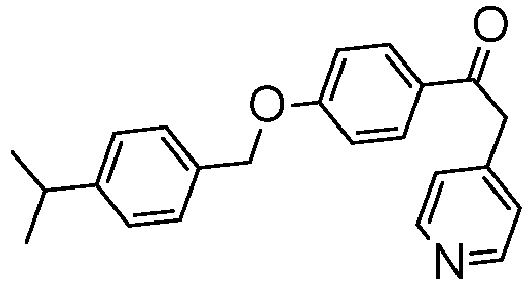
- In a dry flask under N2, a sol. of 9 (4-[[4-(1-methylethyl)phenyl]methoxy]-benzoic acid, methyl ester) (45 g, 0.158 mol) and 4-picoline (16.9 mL, 0.174 mol) in THF (350 mL) was cooled to 0°C and treated with LiHMDS (316.5 mL, 0.317 mol) (slow addition). The r.m. was stirred at r.t. for 20 h and quenched with a sat. aq. sol. of NH4Cl. EtOAc was added and the insoluble was filtered, washed with H2O then Et2O and dried to yield 33.7 g of a first batch of 10 (62%). The organic layer was extracted and evaporated. The residue was crystallized from Et2O and H2O, filtered and dried to give 17.22 g of a 2nd batch of Int. 10 (31%). The organic layer was extracted and evaporated to give 5.8 g of a residue. The residue was purified by chromatography over silica gel (SiOH 35-40µm, 80g, mobile phase gradient from 100% DCM to 98% DCM, 2% MeOH). The pure fractions were collected and evaporated to yield 1.14 g of the third batch of Int. 10 (2%) (Global yield 95%)
-

- Quantities were divided into four parts of 10 .
- To a suspension of 10 (93 g, 0.269 mol) in ACN (837 mL) was added DBU (68.5 mL, 0.458 mol) and ethyldiazoacetate (45.3 mL, 0.431mol). The mixture was stirred at r.t. for 1h. The mixture was poured into a sat. aq. sol. of NaHCO3 and extracted with EtOAc. The aq. mixture was filtered, the filter was washed with EtOAc and the filter residue was dried to yield 66.44 g of the first batch of Int. 11 (56%). The organic layer was dried (MgSO4), filtered and evaporated to give 75g of a residue. The residue was purified by chromatography over silica gel (irregular SiOH 35-40µm, 2x330g, mobile phase gradient from 100% DCM to 95% DCM, 5% MeOH, 0.1% NH4OH). The pure fractions were collected and evaporated to give 28.95 g of the second batch of Int. 11 (24%). Global yield: 80%.
-

- DBAD (31.9 g, 0.139 mol) was added portionwise to a sol. of 11 (51 g, 0.116 mol), Boc-glycinol (27.9 g, 0.173 mol), PPh3 (36.4 g, 0.139 mol) in THF (960 mL) at r.t. under N2 flow. The mixture was stirred for 2h at r.t., poured into H2O and K2CO3 and extracted with EtOAc. The organic layer was dried (MgSO4), filtered and evaporated until dryness to give 154 g of a residue. The residue was purified by chromatography over silica gel (irregular SiOH 35-40µm, 330g, mobile phase gradient from 100% DCM to 97% DCM, 3% CH3OH, 0.1% NH4OH). The pure fractions were collected and evaporated until dryness to give 126.1 g of a residue. The residue was purified by achiral SFC on (2-ethylpyridine 6µm 150x21.2m, mobile phase 90% CO2, 10% MeOH). The pure fractions were collected and evaporated until dryness to give 59.6 g of Int. 12 (88%).
- A solution of 12 (54.6 g, 0.093 mol) and HCl 3N (155 mL, 0.465 mol) in ACN (1600 mL) was stirred at 80°C for 2h. The solvent was evaporated, a sat. aq. sol. of NaHCO3 was added and the mixture was stirred at r.t. The organic layer was extracted with DCM, dried (MgSO4) and concentrated. The residue was stirred for 3 days with Cs2CO3 (61 g, 0.187 mol) in MeOH (2700 mL) at r.t. The mixture was filtered, the filter was washed with MeOH and the filter residue was dried to give 37.4 g of Co. 1 (88%).
-
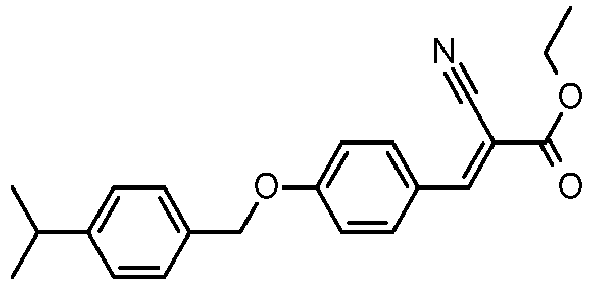
- To a sol. of ethylcyanoacetate (2.6 mL, 24 mmol) in EtOH (15 mL) was added 13 (4-[[4-(1-methylethyl)phenyl]methoxy]-benzaldehyde) (5.9 g, 23mmol) and piperidine (46.0 µL; 0.46 mmol). The mixture was refluxed for 2h then allowed to cool down to r.t. overnight. The precipitate formed was filtered on a glass frit and was dried in vacuo to give 6.8 g of Int. 14 as white needles (84%).
-

- To a sol. of trimethylsilyldiazomethane (40 mL, 80 mmol) in dry THF (100 mL) at - 78°C under N2 was added nBuLi (50 mL, 80mmol) dropwise. The sol. was stirred for 30 min at -78°C and a sol. of 14 (18.6 g, 53.33 mmol) in dry THF (100 mL) was added dropwise at -78°C. The sol. was stirred for 1h at -78°C then at r.t. for 16h. EtOAc was added and the organic layer was washed twice with a sat. aq. sol. of NaHCO3, dried (MgSO4), filtered off and evaporated in vacuo to give a brown residue. The residue was purified by filtration on silica with a mixture of 97% DCM 3% MeOH to give 16.6 g of Int. 15 as a brown residue (71%).
-

- To a sol. of 15 (3.8 g, 8.7 mmol) in ACN (80 mL) was added NBS (1.63 g, 9.1 mmol) in ACN (40 mL) and the pale brown mixture was stirred at r.t. for 18h. The solvent was removed in vacuo and EtOAc and a sat. aq. sol. of K2CO3 were added to the residue. The organic layer was separated, dried over MgSO4, filtered off and evaporated in vacuo to give 4.04 g of a brown oil. The residue was purified by prep. LC (Irregular SiOH 15-40µm, 80g GraceResolv™, mobile phase gradient from 80% heptane, 20% EtOAc to 70% heptanes, 30% EtOAc). The pure fractions were collected and evaporated until dryness to give 2.5 g of Int. 16 as a beige foam (65%).
-

- To a mixture of 16 (1.4 g, 3.2 mmol), Boc-Glycinol (0.76 g, 4.7 mmol) and PPh3 supp. (1.5 g, 4.7 mmol) in dry THF (51 mL) was added DBAD (1.1 g, 4.7 mmol). The mixture was stirred at r.t. for 4 h. The mixture was filtered through a pad of Celite®, concentrated and purified by chromatography over silica gel (irregular SiOH 30µm; 80g; mobile phase 70% Heptane, 30% EtOAc). The fractions were collected and evaporated until dryness to give 2.35 g of Int. 17 (used like this in the next step) and 0.24 g of Int. 18.
-

- In a schlenk tube, a mixture of 17 (0.3 g, 0.51 mmol), 4-(4,4,5,5-tetramethylL-1,3,2-dioxaborolan-2-yl)pyridine (314 mg, 1.5 mmol), K3PO4 (0.43 g, 2.0 mmol) in 1,4-dioxane (1.4 mL) and H2O (0.5 mL) was carefully degassed with N2. PCy3 (30 mg, 0.11 mmol) and Pd(OAc)2 (12 mg, 0.054 mmol) were added and the r.m. was purged again with N2. The r.m. was stirred overnight at 80°C. The crude material was dissolved in water (50mL) and extracted with DCM. The organic phase was dried (MgSO4), filtered and evaporated in vacuo. This residue was purified by chromatography over silica gel (irregular SiOH 15-40µm, 24g Interchim, mobile phase gradient from 98% DCM, 2% MeOH, 0.1% NH4OH to 96% DCM, 4% MeOH, 0.1% NH4OH). The pure fractions were collected and evaporated to give 0.166 g of Int. 12 as a colorless oil (56%).
- A mixture of 12 (166 mg, 0.28 mmol) and an aq. sol. of HCl 3N (0.47 mL, 1.4 mmol) in ACN (5 mL) was heated at 80°C for 2h. The solvent was evaporated and an aq. sol. of K2CO3 10% (20 mL) was added. The mixture was extracted with DCM, dried and concentrated. The residue was taken up in MeOH and the white solid formed was filtered and dried to give 27 mg of the first batch of Co. 1 (22%). The filtrate was concentrated and the residue was washed with water. The white solid in suspension was filtrated and dried to yield 74 mg of a 2nd batch of Co. 1 as a beige powder (59%).
-

- To a sol. of Trimethylsilyldiazomethane (17.1mL, 34.2 mmol) in dry THF (40 mL) at - 78°C under N2 was added dropwise nBuLi (21.4 mL, 34.2 mmol). The sol. was stirred for 30 min at -78°C and a suspension of 19 (2-cyano-3-[4-[(4-methoxyphenyl)methoxy]phenyl]-2-propenoic acid, ethyl ester) (7.7g, 22.8 mmol) in dry THF (60 mL) was added dropwise at -78°C. The sol. was stirred for 1h at -78°C then at r.t. for 16h. EtOAc was added and the organic layer was washed twice with a sat. aq. sol. of NaHCO3, dried (MgSO4), filtered off and evaporated in vacuo to give a brown solid. The residue was triturated in Et2O and filtered on a glass frit to give 4.59 g of Int. 20 as a pale brown solid (47%).
-

- To a suspension of 20 (9.2 g, 21.67 mmol) in ACN (190 mL) was added NBS (3.86 g, 21.67 mmol) in ACN (95 mL) and the pale brown mixture was stirred at r.t. for 18h. The solvent was removed in vacuo. DCM and a sat. aq. sol. of NaHCO3 were added to the residue. The organic layer was separated, washed 2x with a aq. sol. of K2CO3 10%, dried (MgSO4), filtered off and evaporated in vacuo to give 9.07 g of Int. 21 as a brown solid (97%).
-

- To a suspension of 21 (2.0 g, 4.6 mmol), Boc-Glycinol (1.1 mL, 7.0 mmol) and diphenylphosphinopolystyrene (2.2 g, 7.0 mmol) in dry THF (60 mL) was added DBAD (1.6 g, 7.0 mmol). The mixture was stirred at r.t. for 4 h. The sol. was filtered through a pad of Celite®, the polymer was washed with EtOAc and the filtrate was evaporated in vacuo. The residue was purified by chromatography over silica gel (Regular SiOH, 30µm, 80g GraceResolv™, mobile phase gradient from 75% Heptane, 25% EtOAc to 70% Heptane, 30% EtOAc). The fractions were collected and evaporated until dryness to give 2.58 g of Int. 22 as a yellow solid used without further purification for the next step.
-

- A mixture of 22 (2.5 g, 4.4 mmol), 4-(4,4,5,5-tetramethylL-1,3,2-dioxaborolan-2-yl)pyridine (2.7 g, 13 mmol), K3PO4 (3.7 g, 17 mmol) in 1,4-dioxane (11 mL) and distilled water (4.) was carefully degassed with N2. PCy3 (256 mg, 0.91 mmol) and Pd(OAc)2 (103 mg, 0.46 mmol) were added and the r.m. was purged again with N2. The r.m. was stirred overnight at 80°C. The crude material was dissolved in water (100 mL) and extracted with DCM. The organic phase was dried over MgSO4, filtered through a pad of Celite® and evaporated in vacuo. This residue was purified by chromatography over silica gel (irregular SiOH 30µm, 80g, mobile phase from 40% Heptane, 60% EtOAc to 20% Heptane, 80% EtOAc). The pure fractions were collected and evaporated until dryness to give 1.49 g of Int. 23 as a beige powder (60%).
-

- Pd/C (10%) (520 mg, 0.49 mmol) was added to a N2 degassed sol. of 23 (1.4 g, 2.4 mmol) in EtOH (28 mL). The mixture was hydrogenated under 4 bars of H2 pressure overnight at r.t. The mixture was filtered through a pad of Celite® which was washed with EtOAc, MeOH and DCM. The combined filtrates were concentrated. The residue (863 mg) was purified by chromatography over silica gel (Regular SiOH ; 30µm, 40g, mobile phase gradient from 98% DCM, 2% MeOH, 0.1% NH4OH to 96% DCM, 4% MeOH, 0.1% NH4OH). The pure fractions were collected and evaporated until dryness to give 160 mg of Int. 24 as a colorless oil (14%).
-

- To a mixture of 24 (158 mg, 0.35 mmol), 6 (79 mg, 0.53 mmol) and PPh3 (164 mg, 0.53 mmol) in dry THF (11 mL) was added DBAD (121 mg, 0.53 mmol). The mixture was stirred at r.t. overnight. The mixture was filtered through a pad of Celite®, washed with DCM and the solvent was concentratred. The residue was purified by chromatography over silica gel (irregular SiOH 15-40µm, 12g, mobile phase gradient from 98% DCM, 2% MeOH, 0.1% NH4OH to 94% DCM, 6% MeOH, 0.1% NH4OH) to give 140 mg of the Int. 12 (69%).
- Finally, Int. 12 was reacted to Co. 1 by analogous methods as described in Example A2.d or A3.e.
-

- To a suspension of 4 (7.5 g, 34.1 mmol), DMAP (0.83 g, 6.8 mmol), Et3N (14.3 mL, 102 mmol) in THF (170 mL), (Boc)2O was added portionwise at r.t. The r.m. was stirred at r.t. for 3 h. H2O and DCM were added. The organic layer was extracted, dried over MgSO4, filtered and evaporated. The residue was purified by prep. LC (Irregular SiOH 35-40µm, 120g GraceResolv™, mobile phase gradient from 100% DCM to 95% DCM 5% MeOH 0.1% NH4OH). The fractions were collected and evaporated until dryness to give 12.4 g of Int. 25 (92%).
-

- A mixture of 25 (29.4 g, 74.8 mmol), 5 (34.2 g, 97.2 mmol), K3PO4 (63.5 g, 300 mmol) in 1,4-dioxane (380 mL) and H2O (120 mL) was purged with N2 for 10min. Then PdCl2(dppf) (6.1 g, 7.5 mmol) was added and purged with N2 for 10min. The reaction was heated to 72°C for 3h. The mixture was poured into a aq. sol. of K2CO3 and extrated with EtOAc . The organic layer was dried over MgSO4, filtered and evaporated until dryness. The residue was purified by prep. LC (irregular SiOH 220g 35-40µm GraceResolv™ + 300g 30µm Interchim, mobile phase gradient from 100% DCM to 95% DCM, 5% MeOH, 0.1% NH4OH). The fractions were collected and evaporated until dryness to give two fractions : 28 g of impure Co.70 and 20.6 g of the Co. 70. The impure fraction (28g) was purified by prep. LC (irregular SiOH 220g + 330g 35-40µm GraceResolv™, mobile phase gradient from 100% DCM to 95% DCM, 5% MeOH, 0.1% NH4OH). The pure fractions were collected and evaporated until dryness to give 11.14 g of Co. 70. Global yield : 31.7g of Co. 70 (79%).
- A sol. of Co. 70 (34.6 g, 64.2 mmol) and HCl 3N (215 mL) in ACN (1700 mL) was heated to 80°C for 1h. Ice was added and the mixture was basified with K2CO3 and stirred for 10min. The mixture was filtered off, washed with H2O then ACN and dried to give 24.55 g of Co. 1 (87%). m.p.: 262°C (DSC).
-

- NaH (60%) (1.64 g, 41mmol) was slowly added to a suspension of Co. 1 (12g , 27.4 mmol) in DMF (180 mL) at r.t. under N2. The mixture was stirred for 2h. Then (2-bromomethoxy)-tert-butyldimethylsilane (7mL, 32.8 mmol) was added and the r.m. was stirred for 15h. The reaction was poured into water and K2CO3 and extracted with EtOAc. The organic layer was evaporated until dryness. The residue was taken up with DCM, dried over MgSO4, filtered and evaporated until dryness. The residue was purified by prep. LC (Irregular silica gel 35-40µm, 330g GraceResolv™, mobile phase gradient from 100% DCM to 95% DCM, 5% MeOH, 0.1% NH4OH). The fractions were collected and evaporated to give 15.52 g of Int. 27 (95%).
-

- TBAF (1M in THF) (30.6 mL, 30.6 mmol) was added dropwise to a sol. of 27 (15.2 g, 25.5 mmol) in THF (150 mL) at room temperature. The mixture was stirred for 2 days. The mixture was evaporated. The residue was purified by prep. LC (Irregular silica gel SiOH 35-40µm, 330g GraceResolv™, mobile phase gradient from 100% DCM to 95% DCM, 5% MeOH, 0.1% NH4OH). The fractions were collected and evaporated until dryness to give 11.9 g of Co. 2 (97%).
-
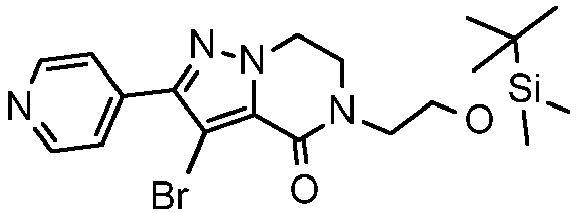
- NaH (60%) (4.9 g, 123 mmol) was added to a suspension of 4 (30 g, 102 mmol) in DMSO (450 mL) at r.t. under N2. The mixture was stirred for 2h. (2-Bromomethoxy)-tert-butyldimethylsilane (26.35 mL, 123mmol) was added and stirred for 24h. The mixture was poured into a sat. aq. sol. of K2CO3 and extracted with EtOAc. The organic layer was evaporated until dryness. The residue was taken up with DCM, filtered and the filtrate was evaporated until dryness. The residue was purified by prep. LC (Irregular silica gel 35-40µm, 330gGraceResolv™, gradient from 100% DCM to 95% DCM, 5% MeOH, 0.1% NH4OH). The fractions were collected and evaporated until dryness to give 37.3 g of the Int. 28 (81%).
-

- 28 (26 g, 57.6 mmol), 5 (26.4 g, 74.9 mmol) and K3PO4 (47 g, 230 mmol) in 1,4-dioxane (270 mL) and H2O (91 mL) in a sealed reactor were purged with N2 for 10min. PdCl2(dppf) (4.7 g, 5.8 mmol) was added and purged with N2 for 10min. The mixture was heated to 82°C for 20h. The r.m. was poured into a sat. aq. sol. of K2CO3 and extracted with EtOAc. The organic layer was dried over MgSO4, filtered and evaporated until dryness. The residue was purified by prep. LC (irregular SiOH 35-40µm, 330g GraceResolv™, gradient from 100% DCM to 97% DCM, 3% MeOH, 0.1% NH4OH). The fractions were collected and evaporated until dryness to give 32 g of Int. 27 (97%).
-

- DBAD (2.01 g, 8.71 mmol) was added to a mixture of 7 (1.48 g, 6.70 mmol), 29 (6-cyclopropyl-3-pyridinemethanol) (1.3 g, 8.71 mmol) and PPh3 supp. (2.91 g, 8.71 mmol) in DCM (30 mL). The r.m. was stirred under N2 for 17h at r.t. The sol. was filtered and the residual polymer was washed with DCM. Then, the filtrate was evaporated in vacuo to give 4.80 g of a residue. This residue was purified by prep. LC (irregular SiOH 15-40 µm, 50 g Merck, mobile phase gradient: from Heptane 100% to EtOAc 20%, Heptane 80%). The pure fractions were collected and solvent was evaporated until dryness to give 2.22 g of the Int. 30 as a white solid (94%).
-

- In a Schlenk tube, a mixture of 4 (0.3 g, 1.02 mmol), 30 (1.08 g, 3.07 mmol), K3PO4 (0.869 g, 4.09 mmol) in 1,4-dioxane (4.5 mL) and H2O (1.5 mL) was carefully purged with N2. PCy3 (57 mg, 0.205 mmol) and Pd(OAc)2 (23 mg, 102µmol) were added and the r.m. was purged again with N2. The Schlenk tube was then sealed and the r.m. was stirred for 17 h at 80°C. The crude material was dissolved in water (7 mL) and filtered on glass frit. The grey precipitate was washed with water (2x 20mL) and with Et2O (2x 40mL). The solid was collected to afford 360 mg of a residue as a grey solid. This residue was purified by prep. LC (irregular SiOH 15-40 µm, 30 g Merck, mobile phase gradient: from DCM 100% to DCM 90%, MeOH 10%) to give 260 mg of Co. 3 as a white solid (58%). m.p.: 276°C (DSC).
-

- Under N2, DBAD (15.5 g, 67 mmol) was added portionwise to a sol. of 31 (4-cyclopropyl-benzenemethanol) (10 g, 67 mmol), 7 (15 g, 67 mmol), PPh3 (17.7 g, 67 mmol) in dry THF (500 mL). The r.m. was stirred at r.t. overnight. THF was evaporated to give 64 g of a residue as a yellow oil. The crude residue was purified by prep. LC (irregular SiOH 30 µm 220 + 330 g GraceResolv™, mobile phase: 90% Heptane, 10% EtOAc). The pure fractions were collected and solvent evaporated to give 19.7 g of Int. 32 as white solid (83%).
-

- A mixture of 4 (1 g, 3.4 mmol), 32 (2.39g, 6.8 mmol), K3PO4 (2.9 g, 13.6 mmol) in 1,4-dioxane (17 mL) and H2O (6.2 mL) was carefully purged with N2. Pd(OAc)2 (0.077 g, 0.34 mmol) and PCy3 (0.19 g, 0.68 mmol) were added and the r.m. was purged again with N2. The r.m. was stirred for 20h at 80°C. The mixture was poured into water and EtOAc was added. The mixture was filtered off and washed with DCM and MeOH. The different organic layers were put together, dried over MgSO4, filtered and evaporated until dryness to give 2.5g of a residue. This residue was purified by prep. LC (regular of SiOH 30µm, 40g Interchim, mobile phase gradient from 100% DCM to 95% DCM, 5% MeOH, 0.1% NH4OH). The fractions were collected and evaporated until dryness to give a residue which was crystallized from MeOH, filtered and dried to give 0.708 g. The product was purified by prep. LC on (irregular SiOH 15-40µm 30g MERCK, mobile phase 0.1% NH4OH, 98% DCM, 2% MeOH). The pure fractions were collected and the solvent was evaporated until dryness to give 600 mg which was crystallized from Et2O, filtered and dried to give 587 mg of Co. 4 (39%). m.p.: 262°C (dsc).
-

- To a mixture of 33 (3.94 g, 25.9 mmol), 31 (4.60 g, 31.0 mmol) and diphenylphosphinopolystyrene (10.3 g, 31.0 mmol) in dry THF (40 mL) was added DBAD (7.15 g, 31.0 mmol). The mixture was stirred at r.t. for 18 h, then filtered on a glass frit and the solid was washed with EtOAc. The filtrate was evaporated in vacuo to give a residue as a yellow solid. The residue was triturated with Et2O to give 4.50 g of Int. 34 as an off-white solid (62%).
-

- In a dry flask under N2, a sol. of 34 (4.50 g, 15.9 mmol) and 4-picoline (1.71 mL, 17.5 mmol) in THF (30 mL) was cooled to 0°C and treated with LiHMDS (47.8 mL, 47.8 mmol) (slow addition over 10 min). The r.m. was stirred at r.t. for 17 h and quenched with a sat. aq. sol. of NH4Cl. The insoluble was filtered off, washed with Et2O and dried in vacuo to give 4.52 g of Int. 35 as a yellow solid (83%).
-

- To a suspension of 35 (4.50 g, 13.1 mmol) in ACN (45 mL) in a sealed tube was added DBU (1.96 mL, 13.1 mmol) and ethyl diazoacetate (2.34 mL, 22.3 mmol). The mixture was heated at 100°C for 2h then cooled down to r.t. The solvent was removed in vacuo and the residue was diluted with DCM. The organic layer was successively washed with a sat. aq. sol. of NaHCO3 and water, dried (MgSO4), filtered and evaporated in vacuo to give a brown residue. The residue was dissolved in DCM and a precipitate was filtered to give 2.84 g of Int. 36 as a pale yellow solid (49%). The filtrate was purified by prep. LC (Irregular SiOH 15-40 µm, 50 g Merck, mobile phase gradient: from DCM 100% to DCM 90%, MeOH 10%). The pure fractions were collected and solvent was evaporated to give 754 mg of Int. 36 as yellow solid (13%). Global yield: 62%.
-

- To a mixture of 36 (0.615 g, 1.40 mmol), 1-(boc-amino)cyclopropylmethanol (0.275 g, 1.47 mmol) and diphenylphosphinopolystyrene (0.933 g, 2.80 mmol) in dry THF (12 mL) was added DBAD (0.644 g, 2.80 mmol). The mixture was stirred for 72 h at r.t. then filtered through a glass frit and washed with EtOAc. The filtrate was evaporated in vacuo to give 1.54 g of yellow oil. The residue was purified by prep. LC (Irregular SiOH, 15-40 µm, 50 g Merck, mobile phase gradient: from DCM 100% to DCM 60%, EtOAc 40%) to give 636 mg of Int. 37 as a white foam (75%).
-
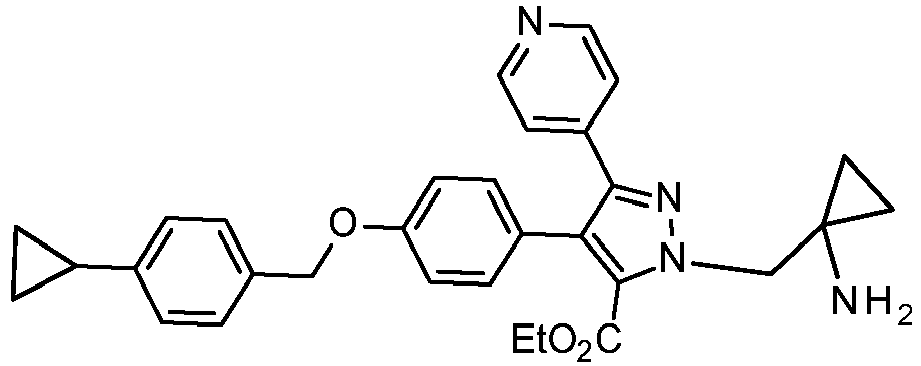
- To a sol. of 37 (0.636 g, 1.05 mmol) in 1,4-dioxane (8 mL) was added HCl 4M in dioxane (2.10 mL, 8.36 mmol). The sol. was stirred at r.t. for 18h and was then poured out into Et2O. The precipitate was filtered through a glass frit to give 584 mg of Int. 38 as a white solid (100%).
-

- To a sol. of 38 (0.584 g, 1.07 mmol) in MeOH (10 mL) was added Cs2CO3 (1.75 g, 5.36 mmol) and the mixture was stirred at r.t. for 4 h. The solvent was removed in vacuo and water (25 mL) and DCM (25 mL) were added to the residue. The layers were separated and the aq. layer was extracted with DCM (25 mL). The organic layers were combined, dried over MgSO4, filtered off and evaporated in vacuo to give 419 mg of Co. 5 as a white solid (85%). m.p.: 239°C (DSC).
-

- Under N2, a sol. of 40 (4-bromo-3-fluorophenol) (11g, 58mmol) in ACN (150mL) was treated with K2CO3 (16g, 117mmol) and 8 (4-isopropylbenzyl bromide) (9.7mL, 58mmol) and the r.m. was stirred under reflux for 2h. The sol. was filtrated and concentrated to give 18.9 g of Int. 41 , colorless oil (100%) which was used like this in the next step.
-

- First method: In a sealed tube, a mixture of 41 (1.00 g, 3.09 mmol), KOAc (0.911 g, 9.28 mmol), BisPin (0.943 g, 3.71 mmol) in DME (9 mL) was carefully purged with N2. PdCl2(dppf) (0.253 g, 0.309 mmol) was added and the r.m. was purged again with N2. The r.m. was stirred for 17 h at 100°C. The r.m. was diluted with EtOAc and washed with water (once) and with brine (3x). The organic phase was dried over MgSO4, filtered and evaporated in vacuo to give 2.00 g of a brown oil. The residue was purified by prep. LC (irregular SiOH 15-40 µm, 50 g, MERCK, Mobile phase gradient from 100% Heptane to 80% Heptane, 20% EtOAc). The pure fractions were collected and solvent evaporated to give 903 mg of Int. 42 , colorless oil (79%).
- Second method: To a sol. of 39 (4-hydroxy-2-fluorophenylboronic acid pinacol ester) (1.10 g, 4.62 mmol) in ACN (45mL) were added 8 (0.985 g, 4.62 mmol) and K2CO3 (1.28 g, 9.24 mmol). The reaction was heated at 80°C for 2h and cooled down to r.t. The mixture was filtered on a glass frit and evaporated in vacuo to give 1.78 g of Int. 42 , colorless oil which crystallized as a white solid (100%). Int. 42 was used without purification in the next step.
-

- In a microwave vial, a mixture of 4 (0.594 g, 2.0 mmol), 42 (1.5 g, 4.0 mmol), K3PO4 (1.72 g, 8.1 mmol) in 1,4-dioxane (9.0 mL) and H2O (3.2 mL) was carefully purged with N2. PdCl2(dppf) (0.166 g, 202 µmol) was added and the r.m. was purged again with N2. The r.m. was heated at 80°C overnight. The crude material was diluted in DCM and washed with a sat. sol. of NaHCO3. The organic layer was dried over MgSO4, filtered and evaporated in vacuo to afford brown oil. The oil was purified by prep. LC (irregular SiOH 15-40 µm, 40 g GraceResolv™, mobile phase gradient: from DCM 100% to DCM 97%, MeOH 3%). The pure fractions were collected and solvent was evaporated until dryness to give 905 mg of a beige solide which was crystallized from MeOH, washed with Et2O, filtrated and dried to give 560 mg of Co. 6 as a white powder (61%). m.p. 271°C (dsc).
-

- A sol. of 9 (2.0 g, 7.0 mmol) and 2-(4-methyl-2-pyridinyl)-imidodicarbonic acid, 1,3-bis(1,1-dimethylethyl) ester (2.17 g, 7.0 mmol) in dry THF (20 mL) was treated with LiHMDS (14 mL, 14 mmol) at 0°C (addition over 10 min). After stirring for 1h at 0°C, the reaction was allowed to warm to r.t. and was stirred for 17h. The reaction was quenched with a 10% aq. sol. of NH4Cl (50 mL). The mixture was extracted with DCM. The organic layers were collected and evaporated in vacuo and the residue was purified by prep. LC (Irregular SiOH 15-40 µm, 80 g GraceResolv™, mobile phase gradient: heptane/EtOAc from 80/20 to 60/40). The pure fractions were collected and evaporated to give 1.98 g of Int. 43 , white solid (61%).
-

- To a suspension of 43 (1.0 g, 2.1 mmol) in ACN (7.7 mL) in a sealed tube was added DBU (0.33 mL, 2.2 mmol) and ethyl diazoacetate (0.39 mL, 3.7 mmol). The mixture was heated at 100°C for 2h then cooled down to r.t. The solvent was removed in vacuo and the residue was diluted in EtOAc. The organic layer was washed with a sat. aq. sol. of NaHCO3, water, dried over MgSO4, filtered off and evaporated in vacuo. The residue was purified by prep. LC (irregular SiOH 15-40 µm, 40 g GraceResolv™, mobile phase gradient, from 70% Heptane, 30% EtOAc to 60% Heptane, 40% EtOAc). The pure fractions were collected and solvent was evaporated until dryness to give 504 mg of Int. 44 , beige powder (42%).
-
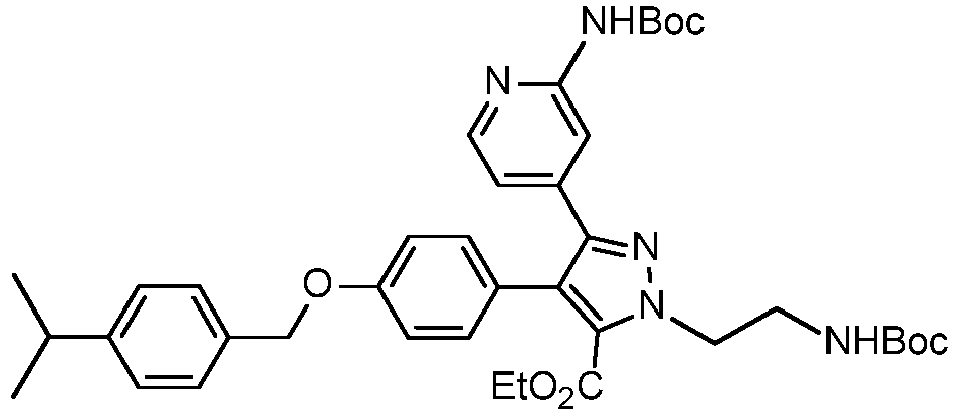
- To a mixture of 44 (0.428 g, 0.77 mmol), Boc-Glycinol (0.149 g, 0.92 mmol) and PPh3 (0.242 g, 0.92 mmol) in dry THF (20 mL) was added DBAD (0.212 g, 0.92 mmol). The mixture was stirred for 4h at r.t. The mixture was concentrated and the residue was purified by prep. LC (irregular SiOH 15-40 µm, 40 g GraceResolv™, Mobile phase: 70%heptane, 30% EtOAc). The pure fractions were collected and solvent was evaporated until dryness to give 0.55g of Int. 45 as a white solid (100%).
-

- A solution of 45 (0.75 g, 1.1 mmol), HCl (3N) (1.8 mL, 5.4 mmol), in ACN (19 mL) was stirred at 80°C for 3 h. ACN was concentrated, K2CO3 10% aq was added and the mixture was extracted with DCM. The organic layer was dried over MgSO4, filtered and evaporated in vacuo to give 0.49 g of Int. 46 , white solid (92%).
-

- To a sol. of 46 (0.49 g, 0.98 mol) in MeOH (28 mL) was added Cs2CO3 (1.6 g, 4.9 mmol) and the mixture was stirred at r.t. overnight. The mixture was filtered, the white solid was collected and dried to give 0.28 g of Co. 7, white solid (63%). m.p.: 267°C (dsc).
-

- NaH 60% (0.275 g, 6.87 mmol) was added to a stirred suspension of 6 (0.967 g, 6.44 mmol) and 5-bromo-2-chloro-3-methoxypyridine (0.955 g, 4.29 mmol) in dry THF (16 mL) at 0°C under N2. The mixture was stirred 10 min at 0°C under N2, and the vial was sealed. Then the r.m. was stirred at 110 °C using one single mode microwave (Biotage Initiator EXP 60) with a power output ranging from 0 to 400 W for 140 min. [fixed hold time]. The crude mixture was quenched with water and extracted with EtOAc. The organic layer was separated, washed with brine, dried over MgSO4, filtered and concentrated in vacuo. The solid residue was purified by trituration with MeOH, filtration and washing with MeOH, to give 0.785g of Int. 47 , white solid (54%).
-

- In a sealed tube, a mixture of 47 (751 mg, 2.23 mmol), BisPin (681 mg, 2.68 mmol) and KOAc (658 mg, 6.70 mmol) in DME (12.5 mL) was carefully purged with N2. PdCl2(dppf) (183 mg, 0.223 mmol) was added and the r.m. was purged again with N2. The r.m. was stirred for 17 h at 100°C. The r.m. was diluted with EtOAc and water. The organic layer was washed with brine, dried over MgSO4, filtered and evaporated in vacuo to give 572 mg of a solid. The residue was purified by prep. LC (irregular SiOH 15-40 µm, 50 g, Merck, Mobile phase gradient: from 100% Heptane to 60% Heptane, 40% EtOAc). The pure fractions were collected and solvent was evaporated until dryness to give 335 mg of Int. 48 , solid (39%).
-

- A mixture of 4 (128 mg, 0.437mmol), 48 (335 mg, 0.874 mmol), K3PO4 (371 mg, 1.75 mmol) in 1,4-dioxane (3 mL) and H2O (1 mL) was carefully purged with N2. PCy3 (25 mg, 87 µmol) and Pd(OAc)2 (10 mg, 43.7 µmol) were added, and the r.m. was purged again with N2, and stirred for 15h at 80°C. The crude material was treated with water and extracted with DCM. The organic layer was washed with brine, dried over MgSO4, filtered and evaporated in vacuo to give a black solid. The solid was purified by prep. LC on (irregular SiOH 15-40µm 24g Grace, Mobile phase gradient: from 100% DCM to 8% MeOH, 92% DCM). The fractions were combined and the solvent was removed in vacuo to give 146 mg of a white solid. The solid was purified by Reverse phase on (X-Bridge-C18 5µm 30*150mm, Mobile phase: Gradient from 40% formic acid 0.1%, 60% MeOH to 100% MeOH). The pure fractions were isolated and concentrated in vacuo to yield 110 mg of Co. 8, white solid (54%). m.p. 135°C (dsc).
-

- 7 (1.1 g, 4.85 mmol), methyl 4-(bromomethyl)benzoate (1.1 g, 4.8 mmol), K2CO3 (1g, 7.2 mmol) in ACN (20 mL) were stirred at r.t. for 8 h. Then, the mixture treated with water and extracted with EtOAc. The organic phase was dried over MgSO4, filtered and evaporated in vacuo to give a solid. The solid was purified by prep. LC (irregular SiOH 15-40 µm, 40 g Grace, mobile phase: 70% heptanes, 30% EtOAc). The pure fractions were collected and solvent was evaporated to give 1.5g of Int. 49 (87%).
-

- In a sealed tube, a mixture of 4 (438 mg, 1.5 mmol), 49 (0.5 g, 1.3 mmol), K3PO4 (1.1 g, 5.4 mmol) in 1,4-dioxane (8 mL) and H2O (2mL) was carefully purged with N2. PCy3 (80 mg, 0.28 mmol) and Pd(OAc)2 (32 mg, 0.1 mmol) were added and the r.m. was purged again with N2. The r.m. was stirred for 8h at 80°C. Water and DCM were added, the mixture was extracted, the organic layer was separated, dried over MgSO4, filtered and evaporated until dryness to give 0.8g of a residue. The residue was purified by prep. LC on (irregular SiOH 15-40µm 30g Merck, Mobile phase: 0.1% NH4OH, 96% DCM, 4% MeOH). The pure fractions were collected and the solvent evaporated until dryness to give 250 mg of Co. 9a. (41%, dsc m.p.: 254°C).
-

- MeMgCl (0.567 mL, 1.68 mmol) was added to a stirred suspension of Co. 9a (153 mg, 0.337 mmol) in THF (5mL) under N2 at 0 °C. The mixture was stirred at 0° C for 5 min, and then it was warmed to r.t. and stirred for 2h. The r.m. was quenched with 10% NH4Cl sol., and treated with EtOAc and a mixture of MeOH/DCM (90:10). The organic layer was separated, washed with brine, dried over MgSO4, filtered and concentrated in vacuo to afford 143 mg of a white solid. The solid was purified by trituration with DCM, filtration and washing with DCM, to give a solid that was dried in vacuo. The residue (100 mg) was purified by achiral SFC (diethylaminopropyl 5µm 150x21.2mm; Mobile phase gradient: from 0.3% iPrNH2, 80% CO2, 20% MeOH to 0.3% iPrNH2, 60% CO2, 40% MeOH). The fractions were collected and concentrated in vacuo to yield 74 mg which was purified by Reverse phase (X-Bridge-C18 5µm 30*150mm; Mobile phase gradient: from 80% (NH4HCO3 0.5% aq. sol.), 20% ACN to 100% ACN). The fractions were collected and concentrated in vacuo to give 28 mg of a solid residue. The resulting solid was suspended in ACN and water (20/80), freezed and dried in vacuo to afford 20 mg of Co. 9, white solid (13%). m.p.: 290°C (dsc).
-

- To a suspension of 7 (2.5 g, 11.3 mmol), 2-[4-(hydroxymethyl)phenyl]-2-methylpropanenitrile (1.8 g, 10.3 mmol), PPh3 supp (3.8 g, 12.3 mmol) in dry DCM (50 mL) was added DBAD (2.8 g, 12.3 mmol) and the r.m. was stirred at r.t. for 18 h. The mixture was filtered through Celite®, washed with DCM and the filtrate was evaporated until dryness. The residue (7g) was purified by prep. LC (irregular SiOH 35-40µm, 90g GraceResolv™, gradient from 95% heptanes, 5% EtOAc to 80% heptanes, 20% EtOAc). The fractions were collected and evaporated until dryness to give 2.1g of Int. 51 (54%).
-

- A mixture of 4 (400 mg, 1.36 mmol), 51 (0.77 g, 2 mmol), K3PO4 (1.16 g, 5.46 mmol) in 1,4-dioxane (7 mL) and H2O (3mL) was carefully purged with N2. PCy3 (80.4 mg, 0.29 mmol) and Pd(OAc)2 (32 mg, 0.14 mmol) were added and the r.m. was purged again with N2. The r.m. was stirred for 8h at 80°C. The crude material was poured in water and EtOAc was added. The mixture was filtered through Celite®. The organic phase was dried over MgSO4, filtered and evaporated in vacuo to give 1.5g of a pale yellow solid. The solid was taken up in Et2O, the precipitate was filtered off and dried in vacuo to give 700 mg of a residue. The residue was purified by prep. LC on (Stability Silica 5µm 150x30.0mm, mobile phase Gradient: from NH4OH/DCM/MeOH 0.2/98/2 to NH4OH/DCM/MeOH 0.8/92/8). The pure fractions were collected and solvent was evaporated until dryness to give 250 mg which was crystallized from Et2O, filtered and dried to give 210 mg of Co. 10 (33%). m.p.: 280°C (dsc).
-

- To a sol. of 3-bromo-4-(1-methylethyl)-benzoic acid, methyl ester (1.2 g, 4.7 mmol) in dry DMF (36 mL) degazed under N2 were added Pd(PPh3)4 (270 mg, 0.23 mmol) and allyltri-N-butyltin (1.85 g, 5.6 mmol). The mixture was flushed again with N2 for 5 min and heated at 80 °C overnight. After cooling, the mixture was partitioned between EtOAc and brine, and the organic layer was washed twice with brine, dried and concentrated to give 3.5 g of yellow oil. This oil was purified by prep. LC (irregular SiOH 15-40 µm, 80 g, GraceResolv™, Mobile phase gradient: from 95% heptane, 5% EtOAc to 90% heptane, 10% EtOAc). The pure fractions were collected and solvent was evaporated to give 900 mg of Int. 52 , colorless oil (88%).
-

- 52 (900 mg, 4.1 mmol) in dry THF (6.5 mL) was added dropwise to a suspension of LAH (188 mg, 4.9 mmol) in dry THF (6.5 mL) at 0°C under N2. The mixture was stirred for 30min. H2O (1 mL) then DCM were added very slowly and stirred for 20min. The mixture was filtered on a pad of Celite® and the filtrate was dried over MgSO4, filtered and evaporated until dryness to give 845 mg of Int. 53 , colorless oil (100%).
-
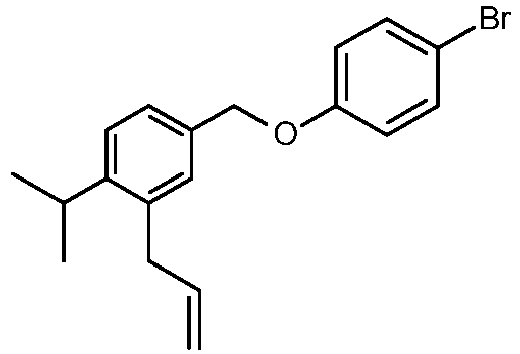
- To a suspension of 53 (6.52 g, 34 mmol), 4-bromophenol (5.9 g, 34 mmol) and PPh3 (9.0 g, 34 mmol) in dry THF (210 mL) was added DBAD (7.9 g, 34 mmol). The mixture was stirred at r.t. overnight. The sol. was evaporated in vacuo to give 35 g of yellow oil. The residue was purified by prep. LC (Regular SiOH, 30 µm, 330 g GraceResolv™, mobile phase gradient: from 95% heptanes, 5% EtOAc to 90% heptane, 10% EtOAc). The pure fractions were collected and solvent was evaporated until dryness to give 9.6 g of Int. 54 , pale yellow oil (81%).
-

- A sol. of 54 (2.0 g, 5.8 mmol) in MeOH (23 mL) was cooled to -78 °C. Ozone was bubbled through the sol. until a red color developed (15 min). The excess of ozone was removed with a N2 purge and the residue was partitioned between EtOAc and NH4Cl 10% aq. The organic layer was washed with brine twice, dried over MgSO4 and concentrated to give 2.2 g of colorless oil. The crude product was purified by prep. LC (irregular SiOH 30 µm, 40 g Interchim, mobile phase gradient from 80% heptane, 20% EtOAc to 70% heptanes, 30% EtOAc). The pure fractions were collected and solvent was evaporated until dryness to give 1.21 g of Int. 55 (60%, colorless oil).
-

- Under N2, TBDMS-Cl (0.77 g, 5.1 mmol) was added to a sol. of 55 (1.2 g, 3.4 mmol) and imidazole (0.70 g, 10 mmol) in dry DCM (33 mL) at r.t. The mixture was stirred at r.t. for 75 min. The r.m. was quenched with water and extracted with DCM. The organic layer was decanted, washed with water then brine, dried over MgSO4, filtered and evaporated to dryness to give 1.69 g of Int. 56 (100%, colorless oil). The product was used like this for the next step.
-

- In a microwave vial, a mixture of 56 (1.69 g, 3.6 mmol), KOAc (1.1 g, 11 mmol), BisPin (1.4 g, 5.5 mmol) in DME (11 mL) was carefully purged with N2. PdCl2(dppf) (0.30 g, 0.36 mmol) was added and the r.m. was purged again with N2. The r.m. was stirred overnight at 100°C. The r.m. was diluted with EtOAc and washed with water (once) and with brine (3 times). The organic phase was dried over MgSO4, filtered on a pad of Celite® and evaporated in vacuo to give 3.3 g of a brown oil. The residue was purified by prep. LC (irregular SiOH 15-40 µm, 80 g, Interchim, Mobile phase gradient: from 95% Heptane, 5% EtOAc, to 90% Heptane, 10% EtOAc). The pure fractions were collected and solvent was evaporated to give 1.2 g of Int. 57 (65%, colorless oil).
-

- In a microwave vial, a mixture of 3 (0.86 g, 2.0 mmol), 57 (1.2 g, 2.35 mmol), K3PO4 (1.2 g, 5.9 mmol) in 1,4-dioxane (8.6 mL) and H2O (3.1 mL) was carefully purged with N2. PdCl2(dppf) (0.16 g, 0.20 mmol) was added and the r.m. was purged again with N2. The r.m. was heated at 80°C overnight. The r.m. was diluted with EtOAc and washed with water (once) and with brine (3 times). The organic layer was dried over MgSO4, filtered on a pad of Celite® and evaporated in vacuo to give a residue. The residue was purified by prep. LC (irregular SiOH 30 µm, 40 g, Interchim, Mobile phase: 60%heptane, 40% EtOAc). The pure fractions were collected and the solvent was evaporated until dryness to give 1.1g of Int. 58 76%.
-
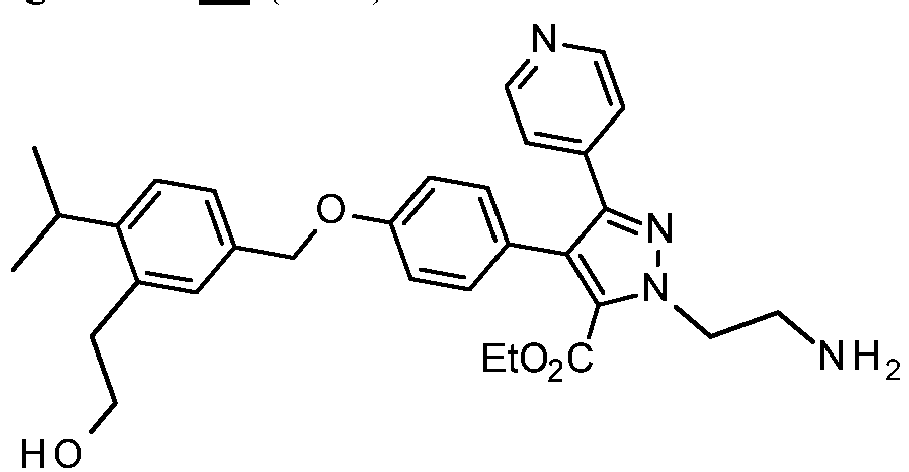
- A solution of 58 (1.1 g, 1.5 mmol), HCl 3N (2.5 mL, 7.4 mmol), in ACN (26 mL) was stirred at 80°C for 2h. The mixture was concentrated, and NaHCO3 sat aq (25 mL) was added and the mixture was stirred at r.t. 15 min and extracted with DCM. The organic layer was separated, dried and concentrated to give 780 mg of Int. 59 (100%). This residue was used like this for the next step.
-

- To a sol. of 59 (780 mg, 1.5 mmol) in MeOH (42 mL) was added Cs2CO3 (2.4 g, 7.4 mmol) and the mixture was stirred at r.t. overnight. The mixture was filtered and the white solid was collected and dried to give 180 mg. The filtrate was concentrated and taken in DCM and washed once with brine, dried over MgSO4 and concentrated. The crude product was purified by prep. LC (irregular SiOH 30 µm, 25 g Interchim, mobile phase gradient from DCM/MeOH/NH4OH 97/3/0.1 to 96/4/0.1). The pure fractions were collected and solvent was evaporated to give 460 mg of white solid. The solid was washed in Et2O, dried and added to the first solid to give 500 mg. This solid was crystallized from isopropanol, filtrated and dried to give 470 mg of Co. 11, white solid (66%). m.p.: 195°C (dsc).
-

- A mixture of 4 (800 mg, 2.73 mmol) in THF (16 mL) was carefully purged with N2. Isopropylmagnesium chloride 2M in THF (5.5 mL, 10.9 mmol) was added at 0°C and then the r.m. was stirred 4h at r.t. Isopropoxyboronic acid pinacol ester (2.3 mL, 10.9 mmol) was added at 0°C and the r.m. was stirred at r.t. for 90 min. The sol. was diluted in DCM and water and extracted with DCM. The organic layer was dried over MgSO4, filtered and evaporated in vacuo to give 915 mg of Int. 60 , white solid (99%).
-

- A sol. of 2-bromo-5-hydroxypyridine (800 mg, 4.60 mmol) in ACN (6 mL) and DMF (2 mL) was treated with K2CO3 (763 mg, 5.52 mmol) and 8 (0.833 mL, 4.83 mmol) at r.t. The r.m. was stirred for 16 h at r.t. Then water and EtOAc were added, and the organic layer was washed with brine, dried over MgSO4, filtered and evaporated in vacuo to afford a solid. The solid was purified by prep. LC (Irregular SiOH 15-40 µm, 80 g Grace, mobile phase gradient: from Heptane 100% to Heptane 50%, EtOAc 50%). The pure fractions were collected and solvent was evaporated until dryness to give 840 mg of Int. 61 (60%).
-

- A mixture of 60 (417 mg, 1.23 mmol), 61 (751 mg, 2.45 mmol), K3PO4 (781 mg, 3.68 mmol) in THF (5 mL) and H2O (5 mL) was carefully purged with N2. Precatalyst (96 mg, 123 µmol) was added and the r.m. was purged again with N2. The r.m. was stirred at r.t. for 18h. The crude material was dissolved in water (20 mL) and extracted with EtOAc (2x 40mL). The organic layer was separated and evaporated in vacuo. The residue (500 mg yellow oil) was purified by prep. LC (irregular SiOH 15-40 µm, 30 g Merck, mobile phase gradient: from DCM 100% to DCM 90%, MeOH 10%) to give 290 mg of Co. 12, white solid (54%). m.p.: 84 °C (DSC).
-

- In a 20 mL microwave tube, a mixture of 17 (1.67 g, 2.85 mmol), KOAc (0.84 g, 8.5 mmol), BisPin (1.1 g, 4.3 mmol) in DME (8 mL) was carefully purged with N2. PdCl2(dppf) (233 mg, 0.29 mmol) was added and the r.m. was purged again with N2. The r.m. was stirred overnight at 100°C. The r.m. was diluted with EtOAc and washed with water (once) and with brine (twice). The organic layer was dried over MgSO4, filtered on a pad of Celite® and evaporated in vacuo to give a brown oil. This oil was purified by prep. LC (irregular SiOH 15-40 µm, 40 g, GraceResolv™, Mobile phase gradient: from 70% Heptane, 30% EtOAc to 50% Heptane, 50% EtOAc). The fractions were collected and solvent was evaporated to give 630 mg of a mixture of Int. 62 and another product (initial 17 without Br). This mixture was used as such for the next step.
-
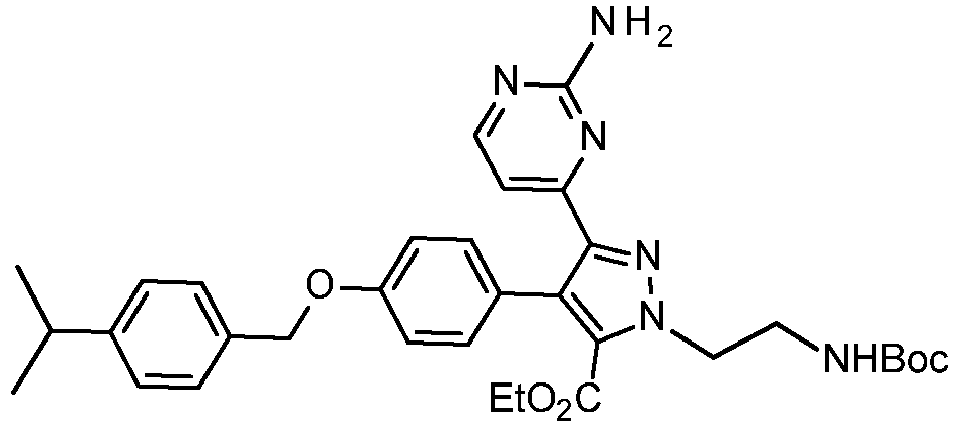
- A mixture of 62 (impure) (630 mg, 0.99 mmol), 2-amino-4-bromopyrimidine (173 mg, 0.99 mmol), K3PO4 (633 mg, 2.98 mmol) in 1,4-dioxane (2.5 mL) and H2O (1.1 mL) was carefully degassed with N2. Pd(OAc)2 (47 mg, 0.21 mmol) and PCy3 (29 mg, 0.10 mmol) were added and the r.m. was purged again with N2. The r.m. was stirred overnight at 80°C. The crude material was dissolved in water (30 mL) and extracted with DCM (2x). The organic layer was dried over MgSO4, filtered throught a pad of Celite® and evaporated in vacuo to give 800 mg of yellow oil. This residue was purified by prep. LC (irregular SiOH 30 µm, 40g Interchim, mobile phase gradient from 98% DCM, 2% MeOH, 0.1% NH4OH to 95% DCM, 5% MeOH, 0.1% NH4OH). The pure fractions were collected and solvent was evaporated to give 170 mg of Int. 63 , yellow oil (28%).
-

- A solution of 63 (0.2 g, 0.33 mmol), HCl 3N (0.55 mL, 1.7 mmol), in ACN (6 mL) was heated at 80°C for 2h. ACN was concentrated, and NaHCO3 sat aq (50 mL) was slowly added and the mixture was extracted with DCM, dried over MgSO4 and concentrated until dryness to give 135 mg of Int. 64 (81%). This residue was used like this in the next step.
-

- To a sol. of 64 (0.14 g, 0.28 mmol) in MeOH (8 mL) was added Cs2CO3 (0.46 g, 1.4 mmol) and the mixture was stirred at r.t. for 3 days. The mixture was concentrated and taken in DCM, the solid was filtered and the filtrate was concentrated to give 162 mg of a residue. The residue was purified by prep. LC on (Stability Silica 5µm 150x30.0mm), mobile phase (Gradient from NH4OH/DCM/MeOH 0.2/98/2 to NH4OH/DCM/MeOH 1/90/10). The pure fractions were collected and solvent was evaporated until dryness to give 9 mg of Co 13, white solid (7%).
-

- Under N2, a sol. of 4-bromo-2,5-difluorophenol (12 g, 58 mmol) in ACN (150 mL) was treated with K2CO3 (16 g, 117 mmol) and 8 (9.7 mL, 58 mmol) and the r.m. was stirred under reflux for 2h. The sol. was filtered and concentrated to give 20 g of Int. 65, colorless oil (100%). The product was used like this in the next step.
-

- In a Schlenk tube, a mixture of 65 (10.0 g, 29 mmol), KOAc (8.6 g, 88 mmol), BisPin (11 g, 44 mmol) in dry DME (150 mL) was carefully purged with N2. PdCl2(dppf) (2.4 g, 2.9 mmol) was added and the r.m. was purged again with N2. The r.m. was stirred overnight at 100°C. The r.m. was diluted with EtOAc and washed with water (1x) and with brine (2x). The organic layer was dried over MgSO4 and evaporated in vacuo to give brown oil. The oil was purified by prep. LC (irregular SiOH 15-40 µm, 330 g, GraceResolv™, Mobile phase: Heptane 90%, EtOAc 10%). The pure fractions were collected and solvent was evaporated until dryness to give 10.9 g of Int. 66 , yellow oil (96%).
-

- A sol. of 4 (660 mg, 2.25 mmol) and 66 (1.74 g, 4.50 mmol) in 1,4-dioxane (10 mL) and H2O (8 mL) was treated with K3PO4 (1.43 g, 6.76 mmol) and purged with N2. PdCl2(dppf) (184 mg, 0.225 mmol) was then added and the r.m. was carefully purged with N2. The mixture was heated at 120°C using one single mode microwave (Biotage Initiator EXP 60) with a power output ranging from 0 to 400 W for 25 min [fixed hold time]. The crude mixture was diluted with DCM and washed with water. The organic layer was dried over MgSO4 and evaporated to afford a brown residue. The residue was purified by prep. LC (Irregular SiOH 15-40 µm, 80 g Grace, mobile phase gradient: from DCM 100% to DCM 94%, MeOH 6%). The fractions containing pure Co. were combined and evaporated in vacuo to afford of Co. 14, white solid (13%). m.p.: 226°C and 231°C (DSC). The fractions containing impure Co. 14 were combined and evaporated in vacuo to afford 221mg of Co. 14, brown solid (global yield: 33%).
-

- To a sol. of 4-bromo-2,6-difluorophenol (1 g, 4.79 mmol), 8 (0.84 mL, 5.02 mmol) in DMF (10 mL) was added K2CO3 (0.727 g, 5.26 mmol). The mixture was stirred at r.t. for 2h. Water and DCM were added and the product was extracted with DCM. The organic layer was separated, dried, filtered and evaporated until dryness. The residue was purified by prep. LC on (Irregular SiOH 15-40µm 50g Merck, mobile phase: 80/20 Heptane/EtOAc). The pure fractions were collected and solvent was evaporated until dryness to give 1.62g of Int. 67 (99%).
-

- In a sealed tube, a mixture of 67 (1.62 g, 4.75 mmol), BisPin (2.41 g, 9.5 mmol), KOAc (1.4 g, 14.2 mmol) in DME (15 mL) was carefully purged with N2. PdCl2(dppf) (0.117 g, 0.142 mmol) was added and the r.m. was purged again with N2. The mixture was heated at 100°C overnight. EtOAc and water were added and the mixture was extracted with EtOAc. The organic layer was separated, dried, filtered and evaporated until dryness to give 3.29 g of a residue. The residue was purified by prep. LC on (Irregular SiOH 15-40µm 50g Merck, mobile phase (90/10 Heptane/EtOAc). The pure fractions were collected and evaporated until dryness to give and 1.03 g of Int. 68 (56%).
-

- In a microwave vial, a mixture of 4 (0.3 g, 1.02 mmol), 68 (0.516 g, 1.33 mmol), K3PO4 (0.911 g, 4.29 mmol) in 1,4-dioxane (4.8 mL) and H2O (1.6 mL) was carefully purged with N2. PCy3 (60 mg, 0.214 mmol) and Pd(OAc)2 (24 mg, 0.11 mmol) were added and the r.m. was purged again with N2. The r.m. was stirred for 16 h at 80°C. The crude material was put in water and extracted with EtOAc. The organic layer was dried over MgSO4, filtered and evaporated in vacuo to give 756 mg of a residue. The residue was purified by prep. LC on (Stability Silica 5µm 150x30.0mm, mobile phase gradient from NH4OH/DCM/MeOH 0.2/98/2 to NH4OH/DCM/MeOH 0.8/92/8). The pure fractions were collected and evaporated to give 212 mg of a residue which was crystallized from DIPE, filtered and dried to give 189 mg of Co. 15 (39%).
-

- Under N2, a sol. of 4-bromo-2,3-difluorophenol (5.00 g, 23.9 mmol) in DMF (25 mL) was treated with K2CO3 (3.97 g, 28.7 mmol) and 8 (4.80 mL, 28.7 mmol) and the r.m. was stirred for 18 h at rt, then extracted with water and EtOAc. The organic layer was washed with brine (twice), dried over MgSO4, filtered off and evaporated in vacuo to give 9.49 g of Int. 69, colorless oil (100%).
-

- A mixture of 69 (7.30 g, 19.3 mmol), BisPin (7.34g, 28.9 mmol) and KOAc (5.67 g, 57.8 mmol) in DME (90 mL) was carefully purged with N2. PdCl2(dppf) (1.58 g, 1.93 mmol) was added and the r.m. was purged again with N2. The r.m. was stirred at 18h at 100°C. The r.m. was diluted with EtOAc and water. The organic layer was washed with brine, dried over MgSO4, filtered and evaporated in vacuo to give 15.0 g of a brown solid. The solid was purified by prep. LC (irregular SiOH 15-40 µm, 150 g, Merck, mobile phase gradient: fomr Heptane 100% to Heptane 60%, EtOAc 40%). The pure fractions were collected and solvent was evaporated to give 6.60 g of Int. 70 , colorless oil 88%.
-

- A stirred sol. of 4 (551 mg, 1.88 mmol), 70 (1.54 g, 3.97 mmol) and K3PO4 (1.2 g, 5.64 mmol) in 1,4-dioxane (8 mL) and H2O (7.5 mL) was purged with N2, and then PdCl2(dppf) (84 mg, 0.102 mmol) was added at rt. The resulting mixture was purged again with N2, and stirred at 120°C using one single mode microwave (Biotage Initiator EXP 60) with a power output ranging from 0 to 400 W for 30min. [fixed hold time]. DCM and water were added, the organic layer was separated, dried over MgSO4, filtered off and evaporated in vacuo to afford 2.07 g of a viscous black oil. This oil was purified by prep. LC (Irregular SiOH 50 µm, 120 g Grace, mobile phase gradient: from DCM 100% to DCM 92%, MeOH 8%). The fractions were collected and evaporated in vacuo. The solid (273 mg, pale grey solid) was crystallized from MeOH, filtered off and dried in vacuo to yield 111 mg of Co. 16, white solid (12%). m.p.: 214 °C (DSC).
-

- Under N2, a sol. of 4-bromo-3,5-difluorophenol (3.0 g, 14.4 mmol) in ACN (37 mL) was treated with K2CO3 (4.0 g, 29 mmol) and 8 (2.4 mL, 14.4 mmol) and the r.m. was stirred under reflux for 2h. The sol. was filtered and concentrated to give 4.9 g of Int. 71 , colorless oil (100%). The product was used like this in the next step.
-

- In a sealed tube, a mixture of 71 (1.34 g, 3.92 mmol), BisPin (1.15 g, 11.7 mmol), KOAc (1.19 g, 4.70 mmol) in DME (13 mL) was carefully purged with N2. PdCl2(dppf) (321 mg, 0.392 mmol) was added and the r.m. was purged again with N2. The r.m. was stirred for 17 h at 100°C. The r.m. was diluted with EtOAc and washed with water (once) and with brine (thrice). The organic phase was dried over MgSO4, filtered and evaporated in vacuo to give 2.50 g of brown oil. The oil was purified by prep. LC (irregular SiOH 15-40 µm, 50 g, MERCK, Mobile phase gradient: from 100% Heptane to 90% Heptane, 10% EtOAc). The pure fractions were collected and solvent was evaporated until dryness to give 1.10 g of Int. 72 , colorless oil (72%).
-

- In a microwave vial, a mixture of 3 (570 mg, 1.3 mmol), 72 (1.0 g, 2.6 mmol), K3PO4 (1.1 g, 5.2 mmol) in 1,4-dioxane (5.7 mL) and H2O (2.0 mL) was carefully purged with N2. Precatalyst (100 mg, 130 µmol) was added and the r.m. was purged again with N2. The resulting mixture was stirred at 120°C using one single mode microwave (Biotage Initiator EXP 60) with a power output ranging from 0 to 400 W for 1h. [fixed hold time]. The r.m. was diluted with EtOAc and washed with water (once) and with brine (3x). The organic phase was dried over MgSO4, filtered on a pad of Celite® and evaporated in vacuo to give 1.4 g of a yellow oil. The oil was purified by prep. LC (irregular SiOH 15-40 µm, 40 g, Interchim, Mobile phase: DCM/MeOH/NH4OH, gradient from 98/2/0.1 to 96/4/0.1). The pure fractions were collected and solvent was evaporated until dryness to give 65 mg of Int. 73 (8%).
-
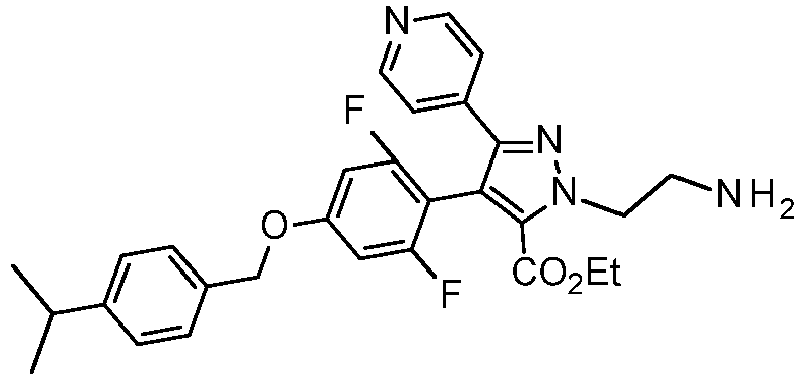
- A solution of 73 (65 mg, 0.11 mmol), HCl 3N (0.18 mL, 0.53 mmol), in ACN (2 mL) was stirred at 80°C for 2h. ACN was concentrated, and NaHCO3 sat aq (25mL) was added and the mixture was stirred at r.t. 15 min, extracted with DCM, dried and concentrated to give 63 mg of Int. 74 (quant.). This residue was used like this in the next step.
-

- To a sol. of 74 (63 mg, 0.12 mmol) in MeOH (3.5 mL) was added Cs2CO3 (0.20 g, 0.61 mmol) and the mixture was stirred at r.t. overnight. The mixture was concentrated and taken in DCM and washed once with water, dried over MgSO4 and concentrated. The crude product was purified by prep. LC (irregular SiOH 30 µm, 12 g GraceResolv™, mobile phase gradient from DCM/MeOH/NH4OH 98:2:0.1 to 96/4/0.1). The fractions were collected and solvent was evaporated until dryness to give 37 mg, white solide. This solid was purified again by prep. LC on (irregular 15-40µm 30g Merck, mobile phase: 0.1% NH4OH, 97% DCM, 3% MeOH. The pure fractions were collected and solvent was evaporated until dryness to give 22 mg of Co. 17, white solid (38%). m.p.: 235°C (dsc)
-

- To a sol. of 4-bromo-2-fluorophenol (5 g, 26.1 mmol), 8 (4.6 mL; 27.5 mmol) in ACN (50 mL) was added K2CO3 (3.98 g, 28.8 mmol). The mixture was stirred at r.t. overnight. Water and DCM were added and the product was extracted with DCM. The organic layer was separated, dried, filtered and evaporated until dryness. The residue was purified by prep. LC on (Irregular SiOH 15-40µm 50g Merck, mobile phase: 80/20 Heptane/EtOAc). The pure fractions were collected and evaporated until dryness to give 8.2 g of Int. 75 (97%).
-

- First method: In a sealed tube, a mixture of 75 (3 g, 9.3 mmol), BisPin (4.7 g, 18.6 mmol), KOAc (2.73 g, 27.8 mmol) in DME (30 mL) was purged with N2. PdCl2(dppf) (0.228 g, 0.278 mmol) was added and the r.m. was purged again with N2. The mixture was heated at 100°C overnight. EtOAc and water were added and the mixture was extracted with EtOAc. The organic layer was separated, dried, filtered and evaporated until dryness to give 6.7g of a residue. The residue was purified by prep. LC on (Irregular SiOH 15-40µm 90g Merck, mobile phase: 90/10 Heptane/EtOAc). The pure fractions were collected and evaporated until dryness to 3.56 g of Int. 76 , 100%.
- Second method: A sol. of 3-fluoro-4-hydroxyphenylboronic acid pinacol ester (0.91 g, 3.82 mmol) in ACN (10 mL) was treated with K2CO3 (0.634 g, 4.56 mmol) and 8 (0.725 mL, 4.2 mmol) at r.t. The r.m. was stirred for 18 h at r.t. Then water and DCM were added, and the organic layer was washed with brine, separated, dried over MgSO4, filtered and concentrated in vacuo to afford 1.46 g of a residue. The residue was purified by prep. LC on (Irregular SiOH 15-40µm 50g Merck, mobile phase: 90/10 Heptane/EtOAc). The pure fractions were collected and evaporated until dryness to give 677 mg of Int. 76 , 48%.
-

- In a microwave vial, a mixture of 4 (0.3 g, 1.02 mmol), 76 (0.53 g, 1.43 mmol), K3PO4 (0.91 g, 4.29 mmol) in 1,4-dioxane (4.8 mL) and H2O (1.6 mL) was carefully purged with N2. PCy3 (60 mg, 0.214 mmol) and Pd(OAc)2 (24 mg, 0.107 mmol) were added and the r.m. was purged again with N2. The r.m. was stirred for 16 h at 80°C. The crude material was dissolved in water and extracted with EtOAc. The organic layer was dried over MgSO4, filtered and evaporated in vacuo to give 881 mg of a residue. The residue was purified by prep. LC on (irregular 15-40µm 30g Merck, mobile phase: NH4OH/DCM/MeOH 0.3/97/3). The pure fractions were collected and the solvent was evaporated until dryness to give 330 mg which was crystallized from DIPE, filtered and dried to give 317 mg of Co. 18 (68%). m.p.: 241°C (dsc).
-
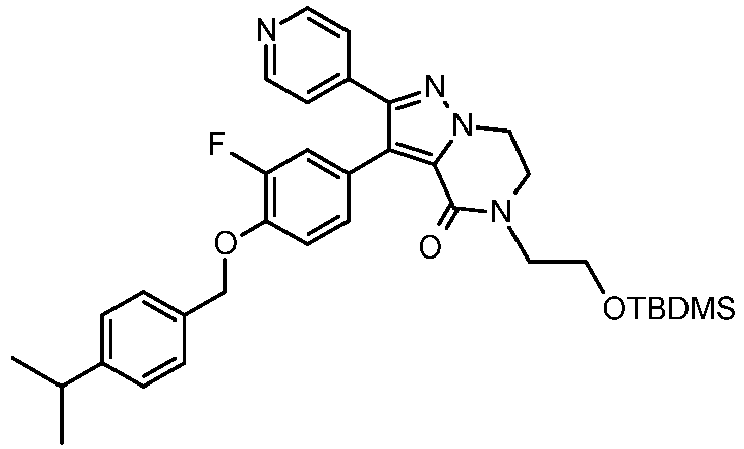
- In a microwave vial, a mixture of 28 (0.4 g, 0.886 mmol), 76 (0.427 g, 1.15 mmol), K3PO4 (0.788 g, 3.7 mmol) in 1,4-dioxane (4.2 mL) and H2O (1.4 mL) was carefully purged with N2. PdCl2(dppf) (73 mg, 0.09 mmol) was added and the r.m. was purged again with N2. The r.m. was stirred for 16 h at 80°C. The crude material was dissolved in water and extracted with EtOAc. The organic phase was dried over MgSO4, filtered and evaporated in vacuo to give 838 mg of a residue. The residue was purified by prep. LC on (Irregular SiOH 15-40µm 50g Merck, mobile phase gradient: from DCM 100% to DCM 97%, MeOH 3%). The pure fractions were collected and evaporated until dryness to give 370 mg of Int. 77 , 68%.
-

- TBAF (0.86 mL, 0.86 mmol) was added dropwise to a sol. of 77 (0.442 g, 0.72 mmol) in THF (4 mL) at r.t.. The mixture was stirred for 3h at rt. The mixture was poured into water and basified with K2CO3, extrated with EtOAc. The organic layer was dried over MgSO4, filtered and evaporated until dryness to give 422 mg of a residue. The residue was purified by prep. LC (Stationary phase: Stability Silica 5µm 150x30.0mm), Mobile phase: Gradient from NH4OH/DCM/MeOH 0.2/98/2 to NH4OH/DCM/MeOH 0.9/90/9). The pure fractions were collected and evaporated until dryness to give 230 mg which was crystallized from Et2O, filtered and dried to give 196 mg of Co. 19 (54%) m.p.: 172°C (dsc).
-

- Under N2, a sol. of Co. 16 (915 mg, 1.93 mmol) in dry DMSO (17 mL) was treated with NaH (60%) (116 mg, 2.89 mmol). The r.m. was stirred at r.t. for 2h. Then, (2-bromomethoxy)-tert-butyldimethylsilane (496 µL, 2.31 mmol) was added and the reaction was stirred at r.t. for 17 h. The crude mixture was poured in EtOAc and washed with brine. The organic layer was dried over MgSO4 and evaporated in vacuo to afford 1.00 g of a crude mixture containing 29% of Int. 78 (brown residue). The residue was used as such for the next reaction step.
-

- A sol. of mixture with 78 (1.00 g) in THF (35 mL) was treated with TBAF (790 µL, 790 µmol) and stirred at r.t. for 4 h. The crude mixture was then diluted in DCM, washed with water and brine. The organic layer was dried over MgSO4 and evaporated in vacuo to afford a brown residue. The residue was purified by prep. LC (irregular SiOH 15-40 µm, 30 g, GraceResolv™, Mobile phase gradient: from DCM 100% to DCM 94%, MeOH 6%). The pure fractions were collected and solvent was evaporated to give 162 mg of Co. 20, white solid. m.p.: 138°C (DSC).
-

- NaH (60%) (0.50 g, 12 mmol) was added slowly to a suspension of Co. 6 (3.8 g, 8.3 mmol) in dry DMF (49 mL) at r.t. under N2. The mixture was stirred for 2h then (2-bromomethoxy)-tert-butyldimethylsilane (2.1 mL, 10 mmol) was added and the resulting mixture was stirred overnight. Water was added and the mixture was concentrated under reduced pressure. The residue was taken up in EtOAc and washed five times with brine. The organic layer was dried on MgSO4, filtered and concentrated to give 4.7 g of a mixture of 79 (50%) and the deprotected product (35%) as a yellow oil. This crude mixture was used like this in the next step.
-

- TBAF (9.2 mL, 9.2 mmol) was added dropwise to a sol. of the mixture with 79 (4.7 g, 7.6 mmol) in THF (75 mL) at r.t. The mixture was stirred overnight at r.t. The mixture was concentrated and the residue was purified by prep. LC (Regular SiOH, 30 µm, 120 g GraceResolv™, mobile phase: DCM/MeOH/NH4OH 98/2/0.1). The fractions were collected and solvent was evaporated until dryness to give 2.5g of a residue. The residue was purified by achiral SFC (Stationary phase: diethylaminopropyl 5µm 150x21.2mm, Mobile phase: 90% CO2, 10% MeOH). The pure fractions were collected and solvent was evaporated to give 2.1 g which was crystallized from Et2O, filtrated and dried to give 1.9 g of Co. 21, white solid (50%). m.p.: 141°C (dsc).
-
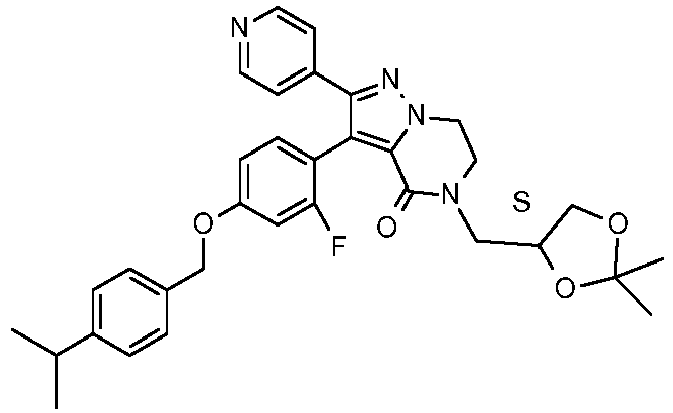
- NaH (60%) (79 mg, 2.0 mmol) was added to Co. 6 (0.60 g, 1.3 mmol) in DMF (8 mL) at r.t. under N2. The mixture was stirred for 2h then (R)-(-)-2,2-dimethyl-1,3-dioxolane-4-ylmethyl P-toluenesulfonate (0.57 g, 2.0 mmol) was added and the mixture was stirred overnight. Water was added and the mixture was diluted with 150 mL of EtOAc and washed 4x with brine. The organic layer was dried on MgSO4 and evaporated until dryness to give a white solid. The solid was purified by prep. LC (irregular SiOH 15-40 µm, 12g, GraceResolv™, Mobile phase: DCM/MeOH/NH4OH, 98/2/0.1). The pure fractions were collected and solvent was evaporated until dryness to give 200 mg of Co. 22a (S), colorless oil (27%).
-

- A sol. of Co. 22a (0.2 g, 0.35 mmol) and HCl 3N (0.58 mL, 1.7 mmol) in 1,4-dioxane (7.8 mL) was heated to reflux for 3 h. The mixture was cooled to r.t., poured into sat. NaHCO3 and extracted with DCM. The organic layer was dried over MgSO4, filtered and evaporated until dryness. The residue was purified by prep. LC (irregular SiOH 15-40 µm, 4 g, GraceResolv™, Mobile phase: DCM/MeOH/NH4OH, from 97/3/0.1 to 95/5/0.1). The pure fractions were collected and the solvent was evaporated until dryness to give 150 mg of colorless oil. This oil was taken in Et2O and triturated and the white solid formed was progressively solubilized in Ft2O. The sol. was left standing at r.t. overnight. Then, the solid was filtrated and dried to give 110 mg of Co. 22 (S), white powder (59%). m.p.: 188°C (dsc); [α]d: -18.42 ° (589 nm, c 0.2715 w/v %, DMF, 20 °C).
-

- NaH (60%) (79 mg, 2.0 mmol) was added to Co. 6 (0.60 g, 1.3 mmol) in DMF (8 mL) at r.t. under N2. The mixture was stirred for 2h then (S)-(-)-2,2-dimethyl-1,3-dioxolane-4-ylmethyl P-toluenesulfonate (0.57 g, 2.0 mmol) was added and the mixture was stirred overnight. Water was added and the mixture was diluted with 200 mL of EtOAc and washed four times with brine. The organic layer was dried on MgSO4 and evaporated until dryness to give 0.80 g, white solid. The residue was purified by prep. LC (irregular SiOH 15-40 µm, 12 g, GraceResolv™, Mobile phase: DCM/MeOH/NH4OH, 98/2/0.1). The pure fractions were collected and solvent was evaporated until dryness to give 165 mg of Co. 23a (R), colorless oil (22%).
-
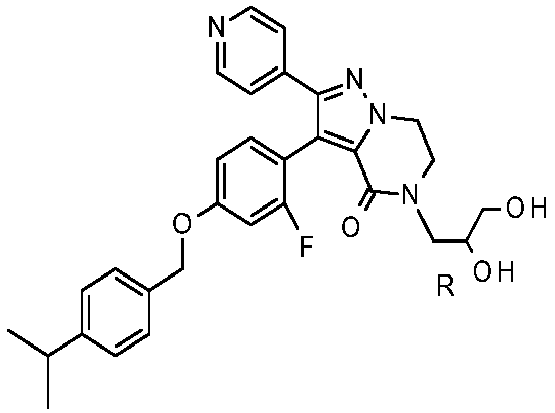
- A sol. of Co. 23a (0.165 g, 0.29 mmol) and HCl 3N (0.4 8mL, 1.5 mmol) in 1,4-dioxane (6.4 mL) was heated to reflux for 2h. The mixture was cooled to r.t., poured into sat. NaHCO3 and extracted with DCM. The organic layer was dried (MgSO4), filtered and evaporated until dryness. The residue was purified by prep. LC (irregular SiOH 15-40 µm, 4 g, GraceResolv™, Mobile phase: DCM/MeOH/NH4OH from 97/3/0.1 to 95/5/0.1). The pure fractions were collected and solvent was evaporated until dryness to give 114 mg of colorless oil. This oil was crystallized from Et2O and the white solid formed was filtrated and dried to give 92 mg of Co. 23 (R), white powder (60%). m.p.: 192°C (dsc); [α]d: +18.59 ° (589 nm, c 0.2475 w/v %, DMF, 20 °C).
-

- A sol. of 4-bromo-3-chlorophenol (2.00 g, 9.64 mmol) in ACN (25 mL) was treated with K2CO3 (1.6 g, 11.6 mmol) and 8 (1.83 mL, 10.6 mmol) at r.t. The r.m. was stirred for 17h at r.t. Then, water and DCM were added, and the organic layer was washed with brine, separated, dried over MgSO4, filtered and concentrated in vacuo to afford 3.43 g of a residue. The residue was purified by prep. LC (irregular SiOH 15-40 µm, 120 g Grace, mobile phase gradient: from Heptane 100% to Heptane 85%, EtOAc 15%). The pure fractions were collected and solvent was evaporated until dryness to give 3.07 g of Int. 82 , white solid (88%).
-

- nBuLi 1.6N in hexane (4.25 mL, 6.8 mmol) was added to a stirred sol. of 82 (2.34 g, 6.48 mmol) in anhydrous THF (30 mL) at -78°C under N2. The mixture was stirred at - 78 °C for 30 min, and then isopropoxyboronic acid pinacol ester (1.36 mL, 6.67 mmol) was added at -78 °C under N2. The r.m. was stirred at -78 °C for 75 min. The crude material was dissolved in water and extracted with EtOAc. The organic phase was washed with brine, dried over MgSO4, filtered and evaporated in vacuo to give 2.37 g of a residue. The residue was purified by prep. LC (irregular SiOH 15-40 µm, 120 g Grace, mobile phase gradient: from Heptane 100% to EtOAc 20%, Heptane 80%). The pure fractions were collected and solvent was evaporated to give 1.91 g of a solid. The solid was purified by prep. LC (irregular SiOH 15-40 µm, 50 g Grace, mobile phase gradient: from Heptane 100% to EtOAc 20%, Heptane 80%). The pure fractions were collected and solvent was evaporated until dryness to give 1.12 g of Int. 83 (45%).
-

- A sol. of 4 (258 mg, 0.882 mmol), 83 (750 mg, 1.94 mmol) and K3PO4 (655 mg, 3.09 mmol) in 1,4-dioxane (3.8 mL) and H2O (1.2 mL) in a sealed tube was purged with N2. Precatalyst (69 mg, 88.2 µmol) was added, the mixture was purged again with N2 and stirred at 130°C using one single mode microwave (Biotage Initiator EXP 60) with a power output ranging from 0 to 400 W for 15 min [fixed hold time]. The r.m. was treated with DCM and water, and the organic layer was separated, washed with brine and evaporated in vacuo to yield 1.5 g of a yellow solid. The solid was purified by prep. LC (irregular SiOH 15-40µm 300g Merck, mobile phase: 0.1% NH4OH, 97% DCM, 3% MeOH). The pure fractions were collected and the solvent was removed in vacuo to give 98 mg of a pale yellow solid which was triturated with pentane, and the solvent was removed in vacuo to yield 69 mg of Co. 24, white solid (17%). m.p.: 267°C (DSC).
-

- To a sol. of 4-bromo-2-chlorophenol (0.6 g, 2.89 mmol), 8 (0.508 mL, 3.04 mmol) in DMF (6 mL) was added K2CO3 (0.44 g, 3.18 mmol). The mixture was stirred at r.t. for 2h. Water and DCM were added and the product was extracted with DCM. The organic layer was separated, dried, filtered and evaporated until dryness to give 933mg of Int. 84 95%.
-

- In a sealed tube, a mixture of 84 (0.5 g, 1.47 mmol), BisPin (0.486 g, 1.91 mmol), KOAc (0.433 g, 4.42 mmol) in DME (7 mL) was carefully purged with N2. PdCl2(dppf) (36 mg, 0.044 mmol) was added and the r.m. was purged again with N2. The mixture was heated at 100°C overnight. EtOAc and water were added and the mixture was extracted with EtOAc. The organic layer was separated, dried, filtered and evaporated to give 89 2mg of a residue. The residue was purified by prep. LC on (Irregular SiOH 15-40µm 50g Merck, mobile phase: 80/20 Heptane/EtOAc. The pure fractions were collected and evaporated to give 437 mg of Int. 85 (77%).
-

- In a microwave vial, a mixture of 4 (251 mg, 0.86 mmol), 85 (430 mg, 1.11 mmol), K3PO4 (761 mg, 3.59 mmol) in 1,4-dioxane (1.6 mL) and H2O (0.53 mL) was carefully purged with N2. PCy3 (50 mg, 0.18 mmol) and Pd(OAc)2 (20 mg ; 0.09 mmol) were added and the r.m. was purged again with N2. The r.m. was stirred for 16 h at 80°C. The crude material was dissolved in water and extracted with EtOAc. The organic phase was dried over MgSO4, filtered and evaporated in vacuo to give 765 mg of a residue. The residue was purified by prep. LC on (irregular 15-40µm 30g Merck, mobile phase: NH4OH/DCM/MeOH 0.3/97/3). The pure fractions were collected and the solvent was evaporated until dryness to give 250 mg which was crystallized from DIPE, filtered and dried to give 188 mg of Co. 25 (46%). m.p.: 251°C (dsc).
-
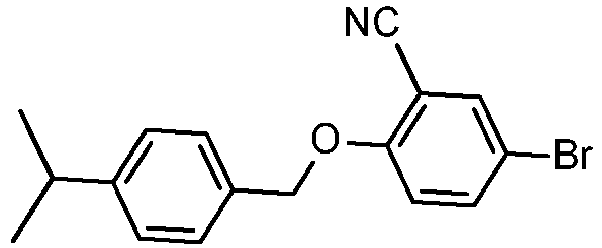
- To a sol. of 5-bromo-2-hydroxybenzonitrile (0.6g, 3.03mmol), 8 (0.532mL, 3.18mmol) in DMF (6mL) was added K2CO3 (0.46g, 3.33mmol). The mixture was stirred at r.t. for 2h. Water and DCM were added and the product was extracted with DCM. The organic layer was separated, dried, filtered and evaporated until dryness to give 1g of Int. 86 (100%).
-
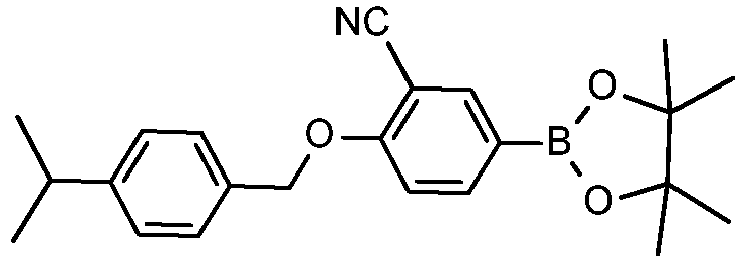
- In a sealed tube, a mixture of 86 (0.296 g, 0.896 mmol), BisPin (0.455 g, 1.79 mmol), KOAc (0.264 g, 2.69 mmol) in DME (5 mL) was carefully purged with N2. PdCl2(dppf) (22 mg, 0.027mmol) was added and the r.m. was purged again with N2. The mixture was heated at 100°C overnight. EtOAc and water were added and the mixture was extracted with EtOAc. The organic layer was separated, dried, filtered and evaporated. The residue (644 mg) was purified by prep. LC on (Irregular SiOH 15-40µm 50g Merck, mobile phase: 80/20 Heptane/EtOAc). The pure fractions were collected and evaporated to give 370 mg of Int. 87 (100%).
-

- In a microwave vial, a mixture of 4 (0.17 g, 0.58 mmol), 87 (0.371 g, 0.86 mmol), K3PO4 (0.516 g, 2.43 mmol) in 1,4-dioxane (2.72 mL) and H2O (0.91 mL) was carefully purged with N2. PCy3 (34 mg, 0.122 mmol) and Pd(OAc)2 (14 mg, 0.061 mmol) were added and the r.m. was purged again with N2. The r.m. was stirred for 16 h at 80°C. The crude material was dissolved in water and extracted with EtOAc. The organic phase was dried over MgSO4, filtered and evaporated in vacuo to give 332 mg of a residue. The residue was purified by prep. LC on (irregular 15-40µm 50g Merck, mobile phase: NH4OH/DCM/MeOH 0.2/96/4). The pure fractions were collected and the solvent was evaporated until dryness to give 85 mg which was crystallized from DIPE, filtered and dried to give 84 mg of Co. 26 (31%). m.p.: 235°C (dsc).
-

- A sol. of 2-bromo-5-hydroxybenzonitrile (6.29 g, 31.8 mmol) in ACN (90 mL) and DMF (10 mL) was treated with K2CO3 (4.83 g, 34.9 mmol) and 8 (7.11 g, 33.4 mmol) at rt. The r.m. was stirred for 18 h at r.t. Then, water and EtOAc were added, and the organic layer was washed with brine, separated, dried over MgSO4, filtered and concentrated in vacuo to afford 11.4 g of Int. 88 , white solid (quant.).
-

- A mixture of 88 (4.72 g, 14.3 mmol), BisPin (5.45 g, 21.4 mmol) and KOAc (4.21 g, 42.9 mmol) in DME (90 mL) was carefully purged with N2. PdCl2(dppf) (1.17 g, 1.43 mmol) was added and the r.m. was purged again with N2. The r.m. was stirred at 100°C for 18 h. The r.m. was diluted with EtOAc and water. The organic layer was washed with brine and sat NaHCO3 sol., dried over MgSO4, filtered and evaporated in vacuo to give 9.09 g of a black solid. The solid was purified by prep. LC (irregular SiOH 15-40 µm, 220 g, Grace, mobile phase gradient: Heptane 100% to EtOAc 30%, Heptane 70%). The pure fractions were collected and solvent was evaporated until dryness to give 3.26 g of Int. 89 , white solid (60%).
-

- A sol. of 4 (0.8 g, 2.73 mmol), 89 (1.85 g, 4.91 mmol) and Cs2CO3 (2.22 g, 6.82 mmol) in DMF (16 mL) in a sealed tube was purged with N2. Pd(PPh3)4 (0.315 g, 0.273 mmol) was added, and the mixture was purged again with N2 and stirred at 150°C using one single mode microwave (Biotage Initiator EXP 60) with a power output ranging from 0 to 400 W for 30 min [fixed hold time]. The crude mixture was diluted with a DCM/MeOH sol. (95/5) and brine. The organic layer was separated, dried over MgSO4, filtered off and evaporated in vacuo to yield 1.85 g of a sticky brown solid. The solid was purified by prep. LC (Irregular SiOH 50 µm, 80 g Grace, mobile phase gradient: from DCM 100% to DCM 85%, MeOH 15%). The fractions were collected and evaporated in vacuo to give 333 mg of a yellow solid. This solid was triturated with pentane. The solvent was removed in vacuo and the remaining solid was purified by prep. LC (Irregular SiOH 50 µm, 40 g Grace, mobile phase gradient: from DCM 100% to DCM 90%, MeOH 10%). The fractions were combined and evaporated in vacuo to give 180 mg of a pale yellow solid which was crystallized from a mixture of Et2O/EtOH (3/1). The solvents were removed, and the remaining solid was triturated with Et2O. The solid was filtered and dried to give 135 mg of Co. 27, pale yellow solid (11%). m.p.: 268 °C (DSC)
-

- A sol. of 28 (1.20 g, 2.66 mmol), 89 (1.81 g, 4.79 mmol) and Cs2CO3 (2.17 g, 6.65 mmol) in DMF (16 mL) in a sealed tube was purged with N2. Pd(PPh3)4 (0.307 g, 0.266 mmol) was added, and the mixture was purged again with N2 and stirred at 150°C using one single mode microwave (Biotage Initiator EXP 60) with a power output ranging from 0 to 400 W for 30 min [fixed hold time]. Then, additional 89 (1.00 g, 2.66 mmol), Cs2CO3 (0.866 g, 2.66 mmol) and Pd(PPh3)4 (0.154 g, 0.133 mmol) were added, and the mixture was purged again with N2 and stirred at 150°C using one single mode microwave (Biotage Initiator EXP 60) with a power output ranging from 0 to 400 W for 15 min [fixed hold time]. The crude mixture was concentrated in vacuo, and then diluted with a DCM/MeOH sol. (95/5) and water. The organic layer was separated, washed with brine, dried over MgSO4, filtered off and evaporated in vacuo to yield 3.69 g of a sticky brown solid. The solid was purified by prep. LC (Irregular SiOH 50 µm, 120 g Grace, mobile phase gradient: from DCM 100% to DCM 97%, MeOH 3%). The fractions were collected and evaporated in vacuo to give 510 mg of Int. 90 , yellow oil with a purety of 70%. The product was used as such as for the next step.
-

- TBAF (0.580 mL, 0.580 mmol) was added to a stirred sol. of 90 (510 mg, 0.574 mmol) in THF (5 mL) at 0°C, and the r.m. was stirred at r.t. for 18 h. The crude mixture was diluted with water and a sol. of DCM/MeOH (96:4). The organic layer was separated, washed with brine, dried over MgSO4, filtered and evaporated in vacuo. The residue (790 mg) was purified by prep. LC (Irregular SiOH 50 µm, 30 g Grace, mobile phase gradient: from DCM 100% to DCM 94%, MeOH 6%). The fractions were collected and evaporated in vacuo to give 231 mg of a white solid. This solid was solubilized in MeOH (1 mL). The solvent was allowed to evaporate slowly to give 230 mg of Co. 28, crystalline white solid (79%). m.p.: 185 °C (DSC).
-

- To a sol. of 2,6-dimethyl-4-iodophenol (2.48 g, 10 mmol), 8 (1.76 mL, 10.5 mmol) in ACN (25 mL) was added K2CO3 (1.52 g, 11 mmol). The mixture was stirred at r.t. overnight. Water and DCM were added and the product was extracted with DCM. The organic layer was separated, dried, filtered and evaporated until dryness to give 3.43 g of a residue. The residue was purified by prep. LC on (Irregular SiOH 15-40µm 50g Merck, mobile phase: 90/10 Heptane/EtOAc). The pure fractions were collected and evaporated until dryness to give 2.5 g of Int. 91 (66%).
-

- In a sealed tube, a mixture of 91 (2.45 g, 6.44 mmol), BisPin (2.45 g, 9.66 mmol), KOAc (1.89 g, 19.3 mmol) in DME (25 mL) was carefully purged with N2. PdCl2(dppf) (0.158 g, 0.193 mmol) was added and the r.m. was purged again with N2. The mixture was heated at 100°C overnight. EtOAc and water were added and the mixture was extracted with EtOAc. The organic layer was separated, dried, filtered and evaporated until dryness to give 4.09 g of a residue. The residue was purified by prep. LC on (Irregular SiOH 15-40µm 90g Merck, mobile phase: 90/10 Heptane/EtOAc). The pure fractions were collected and evaporated until dryness to 2.43g of Int. 92 (yield 99%; purity 75%). The product was used as such for the next reaction step.
-

- In a microwave vial, a mixture of 4 (0.4 g, 1.37 mmol), 92 (0.843 g, 1.77 mmol), K3PO4 (1.21 g, 5.72 mmol) in 1,4-dioxane (6.4 mL) and H2O (2.13 mL) was carefully purged with N2. PdCl2(dppf) (112 mg, 0.14 mmol) was added and the r.m. was purged again with N2. The r.m. was stirred for 16 h at 80°C. The crude material was dissolved in water and extracted with EtOAc. The organic phase was dried over MgSO4, filtered and evaporated in vacuo to give 1.16 g of a residue. The residue was purified by prep. LC (Stationary phase: irregular SiOH 15-40µm 300g Merck, Mobile phase: NH4OH/DCM/MeOH 0.2/97/3). The pure fractions were collected and evaporated until dryness to give 475 mg which was crystallized from Et2O, filtered and dried to give 443mg of Co. 29 (70%). m.p.: 260°C (dsc)
-

- In a microwave vial, a mixture of 28 (0.6 g, 1.33 mmol), 92 (0.758 g, 1.6 mmol), K3PO4 (1.13 g, 5.3 mmol) in 1,4-dioxane (5.84 mL) and H2O (2 mL) was carefully purged with N2. PdCl2(dppf) (109 mg, 0.13 mmol) was added and the r.m. was purged again with N2. The r.m. was heated at 80°C overnight. The r.m. was diluted with EtOAc and washed with water (once) and with brine (twice). The organic phase was dried over MgSO4, filtered on a pad of Celite® and evaporated in vacuo to give 1.39 g of an oil. This oil was purified by prep. LC (irregular SiOH 30 µm, 40 g Interchim, mobile phase: DCM/MeOH/NH4OH 98/2/0.1.) The pure fractions were collected and evaporated until dryness to give 111 mg of 93 and 648mg of a 2nd residue. The 2nd residue was purified by prep. LC (irregular SiOH 30µm, 40g Interchim, mobile phase: DCM/MeOH/NH4OH 98/2/0.1). The pure fractions were collected and evaporated until dryness to give 588 mg of 93 . Both fractions were combined to yield 699mg of Int. 93 (84%).
-

- TBAF (1.44 mL, 1.44 mmol) was added dropwise to a sol. of 93 (0.752 g, 1.2 mmol) in THF (12 mL) at r.t. The mixture was stirred for 3h at r.t. EtOAc and water were added. The organic layer was separated, dried, filtered and evaporated until dryness to give 626 mg of a residue. The residue was purified by prep. LC (Regular SiOH, 30 µm, 12g GraceResolv™, mobile phase gradient: DCM/MeOH/NH4OH from 98/2/0.1 to 96/4/0.1). The pure fractions were collected and evaporated until dryness to give 317 mg which was crystallized from Et2O, filtered and dried to give 218 mg of Co. 30 (35%). m.p.: 170°C (dsc).
-

- To a sol. of 4-bromo-2-methylphenol (2.5g, 13.4mmol), 8 (2.35mL, 14mmol) in ACN (25mL) was added K2CO3 (2.03g, 14.7mmol). The mixture was stirred at r.t. overnight. Water and DCM were added and the product was extracted with DCM. The organic layer was separated, dried, filtered and evaporated until dryness to give 4.33g of Int. 94 (100%).
-

- In a sealed tube, a mixture of 94 (3 g, 9.4 mmol), BisPin (3.58 g, 14 mmol), KOAc (2.77 g, 28.2 mmol) in DME (30 mL) was carefully purged with N2. PdCl2(dppf) (0.230 g , 0.282 mmol) was added and the r.m. was purged again with N2. The mixture was heated at 100°C overnight. EtOAc and water were added and the mixture was extracted with EtOAc. The organic layer was separated, dried, filtered and evaporated until dryness to give 6g of a residue. The residue was purified by prep. LC on (Irregular SiOH 15-40µm 90g Merck, mobile phase: 90/10 Heptane/EtOAc). The fractions were collected and evaporated until dryness to give 1.34 g of a first fraction and 1.11 g of a second fraction.Both fractions were purified by prep. LC on (Irregular SiOH 15-40µm 50g Merck, mobile phase: from 98/2 Heptane/EtOAc to 95/5 Heptane/EtOAc). The pure fractions were collected and evaporated to give 1.46 g of Int. 95 (42%).
-

- In a microwave vial, a mixture of 28 (0.7 g, 1.55 mmol), 95 (0.738 g, 2.02 mmol), K3PO4 (1.32 g, 6.2 mmol) in 1,4-dioxane (6.8 mL) and H2O (2.42 mL) was carefully purged with N2. PdCl2(dppf) (127 mg, 0.16 mmol) was added and the r.m. was purged again with N2. The r.m. was heated at 80°C overnight. The r.m. was diluted with EtOAc and washed with water (once) and with brine (3x). The organic phase was dried over MgSO4, filtered and evaporated in vacuo to give 1.73 g of a residue. The residue was purified by prep. LC (irregular SiOH 30 µm, 40 g Interchim, mobile phase: from DCM 100% to DCM/MeOH/NH4OH 97/3/0.1). The pure fractions were collected and evaporated until dryness to give 1.2 g of Int. 96 (100%).
-

- TBAF (2.36 mL, 2.36 mmol) was added dropwise to a sol. of 96 (1.2 g, 1.96 mmol) in THF (20 mL) at r.t.. The mixture was stirred for 3h at r.t. EtOAc and water were added. The organic layer was separated, dried, filtered and evaporated until dryness to give 980 mg of a residue. The residue was purified by prep. LC (Regular SiOH, 30 µm, 24g GraceResolv™, mobile phase gradient: from DCM 100% to DCM/MeOH/NH4OH, 95/5/0.1). The pure fractions were collected and evaporated until dryness to give 780 mg which was crystallized from DIPE, filtered and dried to give 491 mg of Co. 31 (50%).
-

- A flask was charged with 4-hydroxy-3-methoxyphenyl boronic acid pinacol ester (1.50 g, 6.00 mmol), 6 (1.35 g, 9.00 mmol), diphenylphosphinopolystyrene (3.00 g, 9.00 mmol) and DCM (40 mL). DBAD (2.07 g, 9.00 mmol) was then added and the r.m. was stirred at r.t. for 17 h. After filtration on a glass frit, the residual polymer was washed with DCM. The filtrate was evaporated in vacuo to afford yelow oil. This oil was purified by prep. LC (irregular SiOH 15-40 µm, 80 g Grace, dry loading, mobile phase gradient: from 100% heptane to heptane 90%, EtOAc 10%). The pure fractions were collected and solvent was evaporated until dryness to give 1.61 g of Int. 97 , white solid (70%).
-
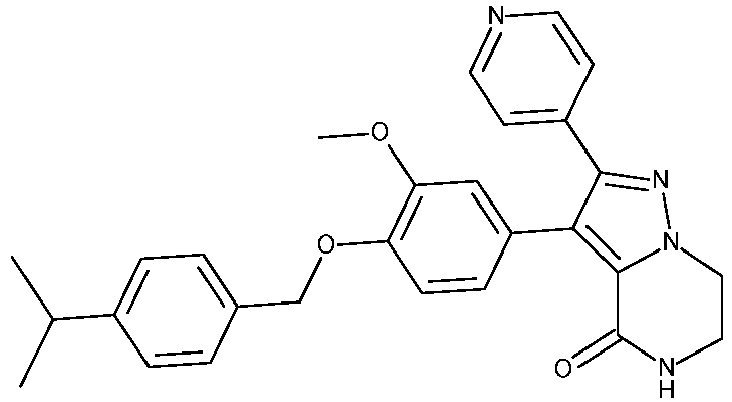
- In a Schlenk tube, a mixture of 4 (250 mg, 0.853 mmol), 97 (815 mg, 2.13 mmol), K3PO4 (724 mg, 3.41 mmol) in 1,4-dioxane (6 mL) and H2O (2 mL) was carefully purged with N2. Pd(OAc)2 (19 mg, 85.3 µmol) and PCy3 (48 mg, 171 µmol) were added and the r.m. was purged again with N2. The Schlenk tube was then sealed and the r.m. was stirred for 17 h at 80°C. The crude mixture was then diluted in DCM and washed with water (2x 20mL). The organic layer was collected, dried over MgSO4 and evaporated in vacuo to afford brown oil. The oil was purified by prep. LC (irregular SiOH 15-40 µm, 40 g Merck, Mobile phase gradient: from 100% DCM to DCM 95%, MeOH 5%) to give 330 mg of Co. 32, white solid (83%). m.p.: 187 °C (DSC).
-

- NaH (60%) (655 mg, 216.4 mmol) was added to a suspension of 4 (4.00 g, 13.6 mmol) in DMSO (50 mL) at r.t. under N2. The mixture was stirred for 2h. MeI (1020 µL, 16.4 mmol) was added and the mixture was stirred for 2h. The mixture was poured into water and extracted with EtOAc. The organic layer was dried over MgSO4, filtered and evaporated until dryness to give 5.00 g of Int. 98 , yellow solid (quant.).

- In a sealed tube, a mixture of 98 (154 mg, 501 µmol), 97 (766 mg, 2.00 mmol), K3PO4 (425 mg, 2.00 mmol) in 1,4-dioxane (3 mL) and H2O (1 mL) was carefully purged with N2. PCy3 (28 mg, 100 µmol) and Pd(OAc)2 (11 mg, 50.1 µmol) were added and the r.m. was purged again with N2. The r.m. was stirred for 17 h at 100°C. The crude material was dissolved in water (20 mL) and extracted with EtOAc (2x 40mL). The organic phase was dried over MgSO4, filtered and evaporated in vacuo to give 874 mg of black oil. The black oil was purified by prep. LC (irregular SiOH 15-40 µm, 30 g Merck, mobile phase gradient: from DCM 100% to DCM 95%, MeOH 5%). The pure fractions were collected and evaporated until dryness to give 200 mg of a white solid which was tritured with Et2O, filtered off and dried to give 196 mg of Co. 33, white solid (83%). m.p.: 151°C (DSC).
-
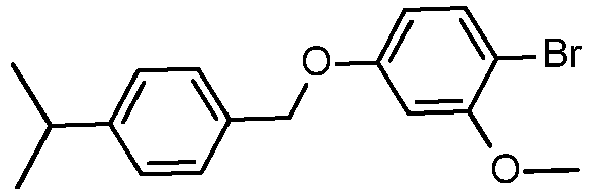
- Under N2, a sol. of 4-bromo-3-methoxyphenol (4.00 g, 19.7 mmol) in ACN (19 mL) was treated with K2CO3 (3.00 g, 21.7 mmol) and 8 (3.63 mL, 21.7 mmol) and the r.m. was stirred for 18 h at r.t., then extracted with water and EtOAc. The organic layer was washed with brine (twice), dried over MgSO4, filtered off and evaporated in vacuo to give 7.99 g of yellow oil. This oil was diluted in Et2O and washed with brine (3x50mL), the organic phase was dried over MgSO4, filtered and evaporated in vacuo to give 6.8 g of Int. 99 , yellow oil (quant.).
-

- A mixture of 99 (5.57 g, 16.6 mmol) in dry THF (70 mL) was carefully purged with N2. nBuLi 1.6N in hexane (11.4 mL, 18.3 mmol) was added at -78°C and th r.m. was stirred 2h at -78°C. Isopropoxyboronic acid pinacol ester(3.8 mL, 18.3 mmol) was added at-78°C and the r.m. was stirred for 3h at -78°C. The sol. was diluted in DCM and water. The organic layer was washed with HCl 1N, dried over MgSO4, filtered and evaporated in vacuo to give 7.7g of colorless oil. This oil was purified by prep. LC (irregular SiOH 15-40 µm, 30 g Merck, mobile phase: Heptane 50%, EtOAc 50%). The pure fractions were collected and solvent was avaporated to give 6.6 g of Int. 100 (quant.).
-

- In a sealed tube, a mixture of 4 (500 mg, 1.71 mmol), 100 (1.63 g, 4.26 mmol), K3PO4 (1.45 g, 6.82 mmol) in 1,4-dioxane (8 mL) and H2O (2.6 mL) was carefully purged with N2. PCy3 (96 mg, 341 µmol) and Pd(OAc)2 (38 mg, 171 µmol) were added and the r.m. was purged again with N2. The r.m. was stirred for 18h at 100°C. The crude material was dissolved in water and extracted with EtOAc. The organic phase was dried over MgSO4, filtered and evaporated in vacuo to give 1.20 g of brown oil. This oil was purified by prep. LC (irregular SiOH 15-40 µm, 30 g Merck, mobile phase gradient: from DCM 100% to DCM 95%, MeOH 5%). The pure fractions were collected and solvent was evaporated to give 205 mg of a white solid. The solid was triturated in pentane and evaporated in vacuo to give 175 mg of Co. 34, white solid (16%). m.p.: 276°C (DSC).
-

- To a sol. of 4-bromo-2,6-dimethoxyphenol (2 g, 8.6 mmol), 8 (1.5 mL, 9 mmol) in ACN (25 mL) was added K2CO3 (1.31 g, 9.4 mmol). The mixture was stirred at r.t. overnight. Water and DCM were added and the product was extracted with DCM. The organic layer was separated, dried, filtered and evaporated until dryness to give 3.37 g of a residue. The residue was purified by prep. LC on (Irregular SiOH 15-40µm 50g Merck, mobile phase: 90/10 Heptane/EtOAc). The fraction was collected and evaporated until dryness to give 2.82 g which was purified again by prep. LC on (Irregular SiOH 15-40µm 50g Merck, mobile phase: 95/5 Heptane/EtOAc). The pure fractions were collected and evaporated until dryness to give 1.82 g of Int. 101 (58%).
-

- In a sealed tube, a mixture of 101 (1.82 g, 4.98 mmol), BisPin (1.9 g, 7.47 mmol), KOAc (1.47 g, 14.9 mmol) in DME (20 mL) was carefully purged with N2. PdCl2(dppf) (0.122 g, 0.15 mmol) was added and the r.m. was purged again with N2. The mixture was heated at 100°C overnight. EtOAc and water were added and the mixture was extracted with EtOAc. The organic layer was separated, dried, filtered and evaporated until dryness to give 3.05 g of a residue. The residue was purified by prep. LC on (Irregular SiOH 15-40µm 50g Merck, mobile phase: 90/10 Heptane/EtOAc). The pure fraction was collected and evaporated until dryness to give 1.79 g of Int. 102 (87%; 80% purity). The product was used like that for the next step.
-

- In a microwave vial, a mixture of 4 (0.3 g, 1.02 mmol), 102 (0.686 g, 1.33 mmol), K3PO4 (0.911 g, 4.29 mmol) in 1,4-dioxane (4.8 mL) and H2O (1.6 mL) was carefully purged with N2. PdCl2(dppf) (84 mg, 0.1 mmol) was added and the r.m. was purged again with N2. The r.m. was stirred for 16 h at 80°C. The crude material was dissolved in water and extracted with EtOAc. The organic phase was dried over MgSO4, filtered and evaporated in vacuo to give 759 mg of a residue. The residue was purified by prep. LC (Stationary phase: irregular 15-40µm 24g Grace, mobile phase gradient: from DCM 100% to 0.1% NH4OH, 95% DCM, 5% MeOH). The pure fractions were collected and evaporated until dryness to give 290 mg which was crystallized in Et2O, filtered and dried to give 255 mg of Co. 35 (50%). m.p.: 192°C (dsc).
-

- In a microwave vial, a mixture of 28 (0.7 g, 1.55 mmol), 102 (0.96 g, 1.86 mmol), K3PO4 (1.32 g, 6.2 mmol) in 1,4-dioxane (6.8 mL) and H2O (2.42 mL) was carefully purged with N2. PdCl2(dppf) (127 mg, 0.16 mmol) was added and the r.m. was purged again with N2. The r.m. was heated at 80°C overnight. The r.m. was diluted with EtOAc and washed with water (once) and with brine (3x). The organic phase was dried over MgSO4, filtered on a pad of Celite® and evaporated in vacuo to give 1.3 g of a residue. The residue was purified by prep. LC (irregular SiOH 30 µm, 40 g Interchim, mobile phase: from DCM 100% to DCM/MeOH/NH4OH 97/3/0.1). The pure fractions were collected and evaporated until dryness to give 0.538 g of Int. 103 (53%).
-

- TBAF (0.93 mL, 0.93 mmol) was added dropwise to a sol. of 103 (509 mg, 0.775 mmol) in THF (8 mL) at r.t. The mixture was stirred for 3h at r.t. EtOAc and water were added. The organic layer was separated, dried, filtered and evaporated until dryness to give 463 mg of a residue. The residue was purified by prep. LC (Regular SiOH, 30 µm, 12g GraceResolv™, mobile phase gradient: from DCM 100% to DCM/MeOH/NH4OH 95/5/0.1). The pure fractions were collected and evaporated until dryness. The residue (330 mg) was crystallized from DIPE, filtered and dried to give 303 mg of Co. 36 (72%). m.p.: 176°C (dsc).
-

- DBAD (7.6 g, 33 mmol) was added to a sol. of ethyl-3,4-dihydroxybenzoate (4 g, 22 mmol), PPh3 supp. (10.3 g, 33 mmol), 6 (4 mL, 26.3 mmol) in THF (100 mL). The mixture was stirred at r.t. for 5 h. Water and EtOAc were added, the mixture was extracted, the organic layer was separated, dried over MgSO4, filtered and evaporated until dryness to give 14.2 g of a residue. The residue was purified by prep. LC on (Irregular SiOH 20-45µm 450g MATREX, mobile phase: 85% Heptane, 15% EtOAc). The pure fractions were collected and solvent was evaporated until dryness to give 2.2g of Int. 104 (32%).
-

- A solution of 104 (1.5 g, 4.8 mmol), 2-bromopropane (0.5 ml, 5.2 mmol), K2CO3 (1 g, 7.1 mmol) in ACN (20ml) was stirred at 80°C for 18h. Water and EtOAc were added, the mixture was extracted, the organic layer was separated, dried over MgSO4, filtered and evaporated. The residue was purified by prep. LC on (Irregular SiOH 20-45 µm 450g MATREX, mobile phase: 85% Heptane, 15% EtOAc). The pure fractions were collected and solvent was evaporated until dryness to give 1.1g of Int. 105 (65%).
-

- A sol. of 105 (1 g, 2.8 mmol) and 4-picoline (0.3 ml, 3.1 mmol) in dry THF (30 mL) was treated with LiHMDS (5.6 ml, 5.6 mmol) at 0°C (addition over 10 min). After stirring for 1h at 0°C, the reaction was allowed to warm to r.t. and was stirred for a weekend. The reaction was quenched with a 10% aq. sol. of NH4Cl (50mL). The mixture was extracted with DCM. The organic layer was separated, dried over MgSO4, filtered and evaporated. The residue was purified by prep. LC (Irregular SiOH 20-45µm 80g MATREX, mobile phase: 95/5/0.1 DCM/MeOH/NH4OH). The pure fractions were collected and the solvent was evaporated to give 900 mg of Int. 106 (80%).
-

- To a suspension of 106 (900 mg, 2.23 mmol) in ACN (5 mL) was added DBU (0.33 mL, 2.23 mmol) and ethyl diazoacetate (0.4 mL, 3.8 mmol). The mixture was stirred at r.t. for 2h. The solvent was removed in vacuo and the residue was diluted in EtOAc. The organic layer was washed with a sat. aq. sol. of NaHCO3, dried over MgSO4, filtered off and evaporated in vacuo. The residue was purified by prep. LC (irregular SiOH 15-40 µm, 40 g Grace, mobile phase: 97/3 DCM/MeOH). The pure fractions were collected and the solvent was evaporated until dryness to give 460 mg of Int. 107 (41%, beige powder).
-

- To a mixture of 107 (460 mg, 0.921 mmol), Boc-Glycinol (222 mg, 1.4 mmol) and PPh3 supp. (362 mg, 1.4 mmol) in dry THF (10 mL) was added DBAD (318 mg, 1.4 mmol). The mixture was stirred for 4h at r.t. The mixture was filtered and the filtrate was evaporated until dryness to give 1.4 g of a residue. The residue was purified by prep. LC on (irregular SiOH 15-40µm 300g Merck, mobile phase: 59% Heptane, 6% MeOH, 35% EtOAc). The pure fractions were collected and the solvent was evaporated until dryness to give 320 mg of Int. 108 (54%).
-

- A solution of 108 (250 mg, 0.39 mmol) and HCl 3N (0.65 mL, 1.9 mmol) in ACN (5mL) was stirred at 80°C for 2h. K2CO3 10% and EtOAc were added and the mixture was extracted. The organic layer was separated, dried over MgSO4, filtered and evaporated to give 250 mg of Int. 109 (100%).
-

- To a sol. of 109 (250 mg, 0.46 mmol) in MeOH (10 mL) was added Cs2CO3 (750 mg, 2.3 mmol) and the mixture was stirred at r.t. overnight. The mixture was filtered, the white solid was collected, washed with Et2O and dried to give 138 mg. The solid was taken up in H2O and DCM and extracted. The organic layer was separated, dried over MgSO4, filtered and evaporated. The residue was taken up in Et2O, the precipitate was filtered off and dried to give 97 mg of Co. 37 (42%). m.p.: 206°C (dsc).
-

- NaH 60% (274 mg, 6.8 mmol) was added slowly to a suspension of Co. 1 (2 g, 4.6 mmol) in dry DMSO (40 mL) at r.t. under N2. The mixture was stirred for 2h. Then, methyl-2-bromopropionate (1.02 mL, 9.1 mmol) was added and the final mixture was stirred for 20h. The mixture was poured into water and K2CO3, and extracted with EtOAc. The organic layer was evaporated until dryness. The residue was taken up with DCM, dried over MgSO4, filtered and evaporated until dryness to give 2.6 g. The residue was purified by prep. LC (80g of SiOH 30µm Interchim, mobile phase gradient: from 100% DCM to 95% DCM 5% MeOH 0.1% NH4OH). The pure fractions were collected and evaporated until dryness to give 2.47 g of Int. 120 (100%).
-

- 120 (2.47 g, 4.7 mmol) in THF (20 mL) was added dropwise to a suspension of LAH (268 mg, 7.06 mmol) in THF (30 mL) at 0°C under N2. The mixture was stirred for 1.5h. Ice water was added dropwise then DCM was added. The mixture was filtered and the filtrate was dried over MgSO4, filtered and evaporated until dryness to give 2.6 g which was purified by prep. LC (80g of irregular SiOH 30µm Interchim, graduent from 100% DCM to 95% DCM 5% CH3OH 0.1% NH4OH). The fractions were collected and evaporated until dryness to give 0.467g of a residue. This residue was purified by achiral SFC (Stationary phase: AMINO 6µm 150x21.2mm), Mobile phase: 80% CO2, 20% MeOH). The fractions were collected and evaporated until dryness to give 290 mg which was purified by chiral SFC (Stationary phase: Chiralpak IC 5µm 250x20mm), Mobile phase: 60% CO2, 40% iPrOH). The pure fractions were collected and evaporated until dryness to give 130 mg of a first residue and 130 mg of a second residue. The first residue was crystallized from Et2O, filtered and dried to give 97 mg of Co. 39 (4%). m.p.: 144°C (dsc). The second residue was crystallized from Et2O, filtered and dried to give 100 mg of Co. 38 (4%). m.p.: 144°C (dsc).
Co. 39: [α]d: +19.74 ° (589 nm, c 0.309 w/v %, DMF, 20 °C);
Co. 38: [α]d: -18.36 ° (589 nm, c 0.305 w/v %, DMF, 20 °C). -

- NaH 60% (0.82 g, 20.5 mmol) was added to Co. 1 (6 g, 13.7 mmol) in DMF (160 mL) at r.t. under N2. The mixture was stirred for 2h then (R)-(-)-2,2-dimethyl-1,3-dioxolane-4-ylmethyl P-toluenesulfonate (5.9 g, 20.5 mmol) was added portionwise and stirred for 15h. The mixture was poured into water and K2CO3 and extracted with EtOAc. The organic layer was evaporated until dryness. The residue was taken up with DCM, dried over MgSO4, filtered and evaporated until dryness to give 14g which was purified by prep. LC (Stationary phase: Irregular SiOH 20-45µm 450g MATREX, Mobile phase: 0.1% NH4OH, 98% DCM, 2% MeOH). The pure fractions were collected and evaporated until dryness to give 4.4 g of a residue (58%). A part of the residue was crystallized from Et2O, filtered and dried to give 258 mg of Co. 40 (S).
m.p.: 113°C (dsc); [α]d: -16.95 ° (589 nm, c 0.295 w/v %, meOH, 20 °C). -

- Co. 40 (3.7 g, 6.7 mmol), HCl 3N (11.1 mL, 33.5 mmol) in 1,4-dioxane (140 mL) were heated to 80°C for 0.5h. The mixture was cooled to r.t., poured into water and K2CO3 and extracted with EtOAc. The organic layer was dried over MgSO4, filtered and evaporated until dryness. The residue was purified by prep. LC (80g of SiOH 30 µm Interchim, mobile phase gradient: from 100% DCM to 90% DCM 10% CH3OH 0.1% NH4OH). The fractions were collected and evaporated until dryness to give a residue which was crystallized from Et2O, filtered and dried to give 2.97 g of Co. 41 (S) (87%). m.p.: 191°C (dsc); [α]d: -18.85 ° (589 nm, c 0.2705 w/v %, DMF, 20 °C)
-

- NaH 60% (0.684 g, 17.1 mmol) was added to Co. 1 (5 g, 11.4 mmol) in DMF (125 mL) at r.t. under N2. The mixture was stirred for 2h then (S)-(-)-2,2-dimethyl-1,3-dioxolane-4-ylmethyl P-toluenesulfonate (4.9 g, 17.1 mmol) in DMF (10 mL) was added dropwise and stirred for 15 h at rt. The mixture was poured into water and K2CO3 and extracted with EtOAc. The organic layer was evaporated until dryness. The residue was taken up with DCM, dried over MgSO4, filtered and evaporated until dryness to give 9.7g which was purified by prep. LC (120 g of silica gel 30µm Interchim, mobile phase gradient: from 100% DCM to 95% DCM 5% CH3OH 0.1% NH4OH). The desired fractions were collected and evaporated until dryness to give 2.12 g of a first residue and 2.1 g of a second residue. The second residue was purified by prep. LC (80g of silica gel 30µm Interchim, mobile phase gradient: from 100% DCM to 95% DCM 5% CH3OH 0.1% NH4OH). The fractions were collected and evaporated until dryness to give 1.58 g a residue. The first residue and the last one were brought together to give 3.7g of Co. 42 (59%). A part of Co. 42 was crystallized from Et2O, filtered and dried to give 250 mg of Co. 42 (R). m.p.: 114°C (dsc); [α]d: +9.98 ° (589 nm, c 0.2405 w/v %, meOH, 20 °C).
-

- Co. 42 (3.17 g, 5.7 mmol), HCl 3N (9.6 mL, 28.7 mmol) in 1,4-dioxane (120 mL) were heated to 80°C for 1h. The mixture was cooled to r.t., poured into water and K2CO3 and extracted with EtOAc. The organic layer was dried over MgSO4, filtered and evaporated until dryness to give 3.36 g. The residue was purified by prep. LC (80g of SiOH 30 µm Interchim, mobile phase gradient: from 100% DCM to 90% DCM 10% CH3OH 0.1% NH4OH). The fractions were collected and evaporated until dryness to give 2.76 g of a residue which was crystallized from Et2O, filtered and dried to give 2.56 g of Co. 43 (R) (87%). m.p.: 190 °C (dsc); [α]d: +17.39 ° (589 nm, c 0.2875 w/v %, DMF, 20 °C).
-

- NaH 60% (55 mg, 1.4 mmol) was added slowly to a suspension of Co. 1 (0.4 g, 0.91 mmol) in dry DMSO (5 mL) at r.t. under N2. The mixture was stirred for 2h then 3-bromo-1,2-propanediol (88 µL, 1.0 mmol) was added and stirred overnight. Water was added and the mixture was filtered, dissolved in DCM with CH3OH. The organic layer was separated, dried on MgSO4 and evaporated until dryness to give 530 mg of a residue. This residue was purified by prep. LC (irregular SiOH 30 µm, 25g, Interchim, mobile phase gradient: DCM/MeOH/NH4OH from 96/4/0.1 to 92/8/0.1). The pure fractions were collected and solvent was evaporated until dryness to give colorless oil. This oil was taken up in Et2O and triturated. The white solid formed was filtrated and dried to give 294 mg of Co. 44, white solid (63%). m.p.: 192°C (dsc).
-

- Tert-butyldimethylsilyl chloride (0.44 g, 2.9 mmol) was added to a sol. of 1-chloro-3-isopropoxy-2-propanol (0.3 g, 1.9 mmol) and imidazole (0.4 g, 5.8 mmol) in DCM (19 mL) at r.t. The r.m. was stirred at r.t. overnight. The mixture was quenched with water and extracted with DCM. The organic layer was decanted, washed with H2O then brine, dried (MgSO4), filtered and evaporated to dryness to give 0.5 g of Int. 121 , colorless oil (purity 70%), used as such for the next step.
-

- NaH 60% (71 mg, 1.8 mmol) was added slowly to a suspension of Co. 1 (0.52 g, 1.2 mmol) in dry DMF (7.1 mL) at r.t. under N2. The mixture was stirred for 2h then 121 (500 mg, 1.3 mmol) in dry DMF (4 mL) was added and the r.m. was stirred overnight. Water was added and the mixture was concentrated under reduced pressure. The residue was taken in EtOAc and washed (5x) with brine. The organic layer was dried on MgSO4, filtered and concentrated to give 0.4 g of a residue. The residue was purified by prep. LC (Stationary phase: Sunfire Silica 5µm 150x30.0mm, mobile phase gradient: from 71% Heptane, 1% MeOH (+10% NH4OH), 28% EtOAc to 20% MeOH (+10% NH4OH), 80% EtOAc). The pure fractions were collected and solvent was evaporated until dryness to give 72 mg which was taken in Et2O and triturated. The white solid formed was filtrated and dried to give 45 mg of Co. 45, white solid (7%). m.p.: 148°C (dsc).
-

- NaH 60% (137 mg, 3.4 mmol) was added to a sol. of Co. 1 (1 g, 2.28 mmol) in DMSO (20 mL) at r.t. under N2. The mixture was stirred for 2h. (2-Bromo-1-methylethoxy)(1,1-dimethylethyl)dimethyl silane (0.87 g, 3.4 mmol) was added and the r.m. was stirred for 3 days. The mixture was poured into water, K2CO3 and extracted with EtOAc. The organic layer was evaporated until dryness to give 1.21 g. The residue was taken up in DCM, dried over MgSO4, filtered and evaporated until dryness to give 1.1 g. The residue was purified by prep. LC on (25g of SiOH 30µm Interchim, mobile phase: DCM 100% to 0.1% NH4OH, 95% DCM, 5% CH3OH). The pure fractions were collected and solvent was evaporated until dryness to give 0.68 g of Int. 122 (49%).
-
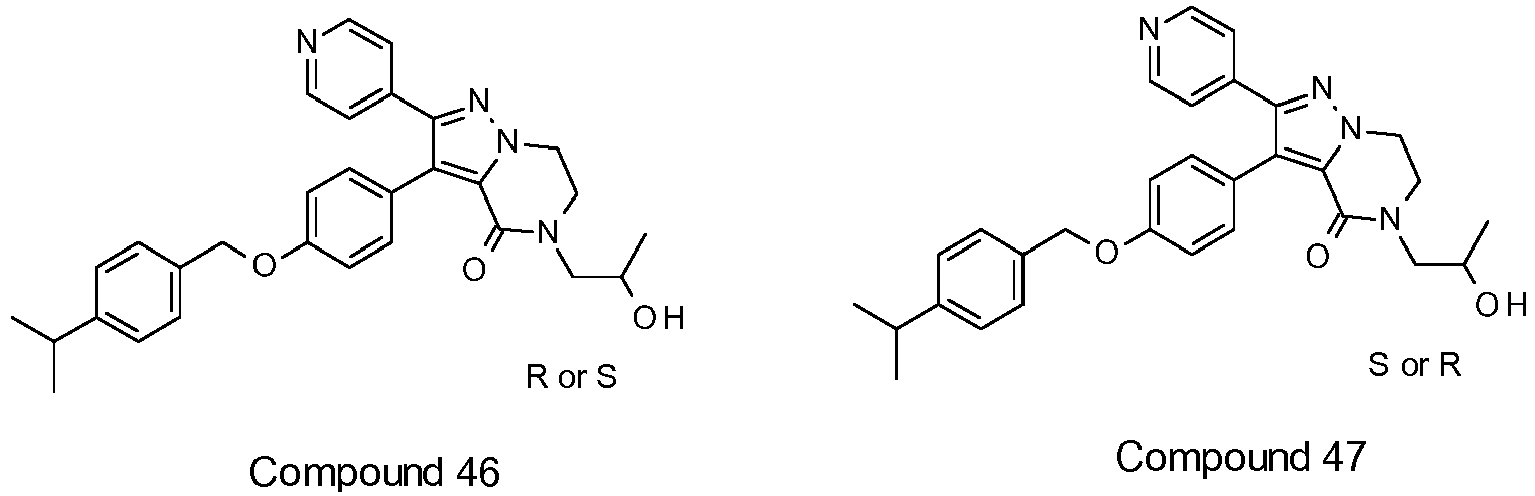
- TBAF (1.49 mL, 1.49 mmol) was added dropwise to a sol. of 122 (0.76 g, 1.24 mmol) in THF (7 mL) at r.t.. The mixture was stirred for 15h. The mixture was evaporated until dryness. The residue was purified by prep. LC (25g of SiOH 30µm Interchim, mobile phase gradient from 100% DCM to 95% DCM 5% MeOH 0.1% NH4OH). The fractions were collected and evaporated until dryness to give 0.47 g of racemic Co. This racemic Co. and 0.53g of another batch were put together to give 1g of racemic Co. which was purified by chiral SFC on (Chiralpak IC 5µm 250x20mm), mobile phase (50% CO2, 50% iPrOH). The fractions were collected and solvent was evaporated until dryness to give 485 mg of a first enantiomer and 467 mg of a second enantiomer. The first one was purified again by achiral SFC on (Amino 6µm 150x21.2mm), mobile phase (80% CO2, 20% MeOH). The fractions were collected and solvent was evaporated until dryness to give 340 mg of the first enantiomer which was crystallized in Et2O, filtered and dried to give 288 mg of Co. 46 (global yield: 13%). m.p.: 177°C (dsc). The second enantiomer (467 mg) was crystallized in Et2O, filtered and dried to give 395 mg of Co. 47 (global yield: 17%). m.p.: 177°C (dsc).
Co. 46: [α]d: -27.34 ° (589 nm, c 0.256 w/v %, DMF, 20 °C);
Co. 47: [α]d: +27.06 ° (589 nm, c 0.3585 w/v %, DMF, 20 °C). -

- In a sealed tube, a mixture of 98 (250 mg, 0.81 mmol), 5 (1.15 g, 3.26 mmol), K3PO4 (724 mg, 3.41 mmol) in 1,4-dioxane (3.8 mL) and H2O (1.3 mL) was carefully purged with N2. PCy3 (48 mg, 0.171 mmol) and Pd(OAc)2 (19 mg, 0.085 mmol) were added and the r.m. was purged again with N2. The r.m. was stirred for 17h at 100°C. The crude material was dissolved in water (10 mL) and extracted with Et2O (2x 40mL). The organic phase was dried over MgSO4, filtered and evaporated in vacuo to give 1.10 g of yellow oil. This oil was purified by prep. LC (irregular SiOH 15-40 µm, 30 g Merck, mobile phase gradient: from DCM 100% to DCM 90%, MeOH 10%). The pure fractions were collected and solvent was evaporated until dryness to give 270 mg of Co. 48, white solid (73%). m.p.: 155°C (dsc).
-

- NaH 60% (41 mg, 1 mmol) was added slowly to a suspension of Co. 1 (0.3 g, 0.68 mmol) in DMSO (4 mL) at r.t. under N2. The mixture was stirred for 2h then 2-iodopropane (0.137 mL, 1.4 mmol) was added and stirred for 17 h. Water was added, the mixture was filtered and washed with water. The residue was dissolved in DCM, dried over MgSO4, filtered and evaporated until dryness to give 0.34 g which was purified by prep. LC (irregular SiOH 12g 35-40µm GraceResolv™, mobile phase gradient from 100% DCM to 95% DCM 5% MeOH 0.1% NH4OH). The fractions were collected and evaporated until dryness to give 203 mg of Co. 49 (62%). This batch was put together with another one (125mg) and crystallized from Et2O, filtered and dried to give 289 mg of Co. 49 (global yield 44%). m.p.: 168°C (dsc).
-

- NaH 60% (55 mg, 1.4 mmol) was added slowly to a suspension of Co. 1 (0.4 g, 0.91 mmol) in dry DMSO (5mL) at r.t. under N2. The mixture was stirred for 2h then 2-bromo ethyl methyl ether (94 µL, 1.0 mmol) was added and the r.m. was stirred overnight. Water was added and the insoluble was filtered, then dissolved in DCM, dried over MgSO4 and evaporated to give 580 mg. The residue was purified by prep. LC (Regular SiOH, 30 µm, 25 g Interchim, mobile phase gradient: DCM/ MeOH/NH4OH from 98/2/0.1 to 97/3/0.1). The pure fractions were collected and solvent was evaporated to give 390 mg of colorless oil. This oil was taken up in Et2O and the solid formed was filtrated and dried to give 360 mg of Co. 50, white solid (79%). m.p.: 167°C (dsc).
-

- NaH 60% (0.34 g, 8.6 mmol) was added portionwise to a suspension of Co. 1 (2.5 g, 5.7 mmol) in dry DMSO (31 mL) at r.t. under N2. The mixture was stirred for 2h then 1-chloro-2-methyl-2-propanol (0.66 mL, 6.3 mmol) was added and the r.m. was stirred for overnight. Water was added and the insoluble was filtered, then dissolved in DCM, dried on MgSO4 and evaporated until dryness to give 2.9 g, white solid. The solid was purified by prep. LC (Stationary phase: irregular SiOH 15-40µm, 300g MERCK, mobile phase): 0.1% NH4OH, 98% DCM, 2% MeOH). The pure fractions were collected and the solvent was evaporated until dryness to give 290 mg of 2.1g of Co. 1 and Co. 51, white solid (10%). m.p. : 211°C (dsc).
-

- NaH 60% (53 mg, 1.3 mmol) was added slowly to a suspension of Co. 1 (0.39 g, 0.89 mmol) in dry DMSO (5 mL) at r.t. under N2. The mixture was stirred for 2h then 2-bromoethyl-methylsulfone (183 mg, 0.98 mmol) was added and the r.m. was stirred overnight. Water was added and the insoluble was filtered off, then dissolved in DCM and MeOH, dried on MgSO4 and evaporated until dryness to give 780 mg, beige solid. The residue was purified by prep. LC (irregular SiOH 30 µm, 25 g, Interchim, Mobile phase: DCM 97%, MeOH 3%, NH4OH 0.1%). The fractions were collected and the solvent was evaporated to give 450 mg of colorless oil. The residue was purified again by prep. LC on (Stability Silica 5µm 150x30.0mm, mobile phase gradient: from 100% DCM to NH4OH/DCM/MeOH 0.8/92/8). The pure fractions were collected and solvent was evaporated. The white solid obtained was triturated in Et2O, filtrated and dried to give 245 mg of Co. 52, white powder (51%). m.p.: 219°C (dsc).
-

- TBAF (23.3 mL, 23.3 mmol) was added dropwise to a sol. of 27 (11.58 g, 19.4 mmol) in THF (100 mL) at r.t.. The mixture was stirred for 15h. The mixture was evaporated until dryness to give 18 g. The residue was purified by prep. LC (330g of SiOH 35-40µm GraceResolv™, mobile phase gradient: from 100% DCM to 95% DCM 5% MeOH 0.1% NH4OH). The fractions were collected and evaporated until dryness to give 8.76 g (94%). Another batch (4 g) was purified by prep. LC (120g of SiOH 35-40µm GraceResolv™, mobile phase gradient: from 100% DCM to 96% DCM 4% MeOH 0.1% NH4OH). The fractions were collected and evaporated until dryness to give 3.11 g of a residue. Both residues (8.76 g and 3.11 g) were put together and gave 11.8 g which was crystallized from Et2O, filtered and dried to give 10.64 g of a mixture (majority Co. 2 and 8% of Co. 53). This mixture was purified by achiral SFC (Stationary phase: Amino 6µm 150x21.2mm, mobile phase: 80% CO2, 20% MeOH). The fractions were collected and evaporated until dryness to give 9.5 g of Co. 2 and 0.81 g of a residue. This residue was purified by achiral SFC (Stationary phase: Amino 6µm 150x21.2mm, mobile phase: 80% CO2, 20% MeOH). The pure fractions were collected and solvent was evaporated to give 641 mg which was crystallized from Et2O, filtered and dried to give 557 mg of Co. 53. m.p.: 121°C (dsc).
-

- NaH 60% (54.7 mg, 1.4 mmol) was added slowly to a suspension of Co. 1 (0.4 g, 0.9 mmol) in DMSO (5 mL) at r.t. under N2. The mixture was stirred for 2h, then 2-(chloromethyl)-2-methyl-1,3-epoxypropane (0.12 mL, 1 mmol) was added and the r.m. was stirred for 24h. Water was added and the insoluble was filtered off. The insoluble was dissolved in DCM and MeOH, dried over MgSO4 and evaporated until dryness to give 0.49 g of a residue. The residue was purified by prep. LC on (Stability Silica 5µm 150x30.0mm, mobile phase gradient from: NH4OH/DCM/MeOH 0.2/98/2 to NH4OH/DCM/MeOH 1/90/10). The pure fractions were collected and solvent was evaporated until dryness to give a residue (272 mg) which was crystallized from Et2O, filtered and dried to give 256 mg of product (traces impurities). The product (256mg) was taken up with MeOH, filtered and dried to give 221mg of Co. 54 (46%). m.p.: 204°C (dsc).
-

- NaH 60% (55 mg, 1.4 mmol) was added portionwise to a suspension of Co. 1 (0.4 g, 0.91 mmol) in dry DMF (5.5 mL) at r.t. under N2. The mixture was stirred for 2h then tetrahydrofurfuryl bromide (0.18 g, 1.0 mmol) was added and the r.m. was stirred overnight. Water was added and the mixture was diluted with 150 mL of EtOAc and washed 4x with brine. The organic layer was dried on MgSO4 and evaporated until dryness. The residue (0.55g) was purified by prep. LC (irregular SiOH 15-40 µm, 12 g, GraceResolv™, Mobile phase: DCM/MeOH/NH4OH, 97/3/0.1). The fractions were collected and solvent was evaporated until dryness to give 195 mg of white solid. This fraction was purified again by prep. LC (Stationary phase: Sunfire Silica 5µm 150x30.0mm, mobile phase gradient: from 71% Heptane, 1% MeOH, 28% EtOAc to 20% MeOH, 80% EtOAc). The pure fractions were collected and solvent was evaporated until dryness to give 150 mg which was crystallized from Et2O, filtrated and dried to give 90 mg of Co. 55, white solid (19%). m.p.: 165°C (dsc).
-
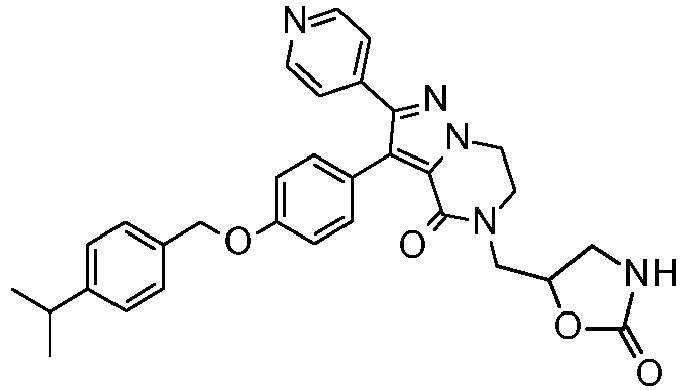
- NaH 60% (82 mg, 0.21 mmol) was added slowly to a suspension of Co. 1 (0.60 g, 1.4 mmol) in dry DMF (8.0 mL) at r.t. under N2. The mixture was stirred for 2h then tert-butyl N-(2-oxiranyl-methyl) carbamate (355mg, 2.1mmol) was added and the r.m. was stirred overnight. Water was added and the mixture was concentrated under reduced pressure. The residue was taken up in EtOAc and washed with brine. The organic layer was dried over MgSO4, filtered and concentrated to give 1.13g. The residue was purified by prep. LC (Stationary phase: irregular SiOH 15-40µm 300g Merck, mobile phase gradient: from 42% Heptane, 8% MeOH (+10% NH4OH), 50% EtOAc to 40% Heptane, 10% MeOH (+10% NH4OH), 50% EtOAc). The pure fractions were collected and the solvent was evaporated until dryness to give 390 mg of Co. 1 and 27 mg of a white powder residue. The residue was taken in Et2O, triturated and the white solid formed was filtrated and dried to give 17 mg of Co. 56 (2.3%).
-

- NaH 60% (55 mg, 1.4 mmol) was added portionwise to a suspension of Co. 1 (0.40 g, 0.91 mmol) in dry DMF (5.5 mL) at r.t. under N2. The mixture was stirred for 2h then 3-bromopropionitrile (0.13 g, 1.0 mmol) was added and the r.m. was stirred overnight at r.t. Water was added and the mixture was diluted with 150 mL of EtOAc and washed 4x with brine. The organic layer was dried on MgSO4 and evaporated until dryness to give 0.62 g. The residue was purified by prep. LC (irregular SiOH 15-40 µm, 12g, GraceResolv™, Mobile phase: DCM/MeOH/NH4OH, 98/2/0.1). The pure fractions were collected and the solvent was evaporated until dryness to give 211 mg of colorless oil. This oil was triturated in Et2O. The solid formed was filtered and dried to give 132 mg of Co. 57, white solid (29%). m.p.: 158°C (dsc).
-

- NaH 60% (68 mg, 1.7 mmol) was added slowly to a suspension of Co. 1 (0.5 g, 1.1 mmol) in dry DMF (7.0mL) at r.t. under N2. The mixture was stirred for 2h then tert-butyl N-(3-bromopropyl) carbamate (543 mg, 2.3 mmol) was added and the r.m. was stirred overnight. Water was added and the mixture was concentrated. The residue was taken in EtOAc and washed 3x with brine, dried and concentrated to give 680 mg of Co. 58a, white solid (100%). The product was used like this in the next step.
-
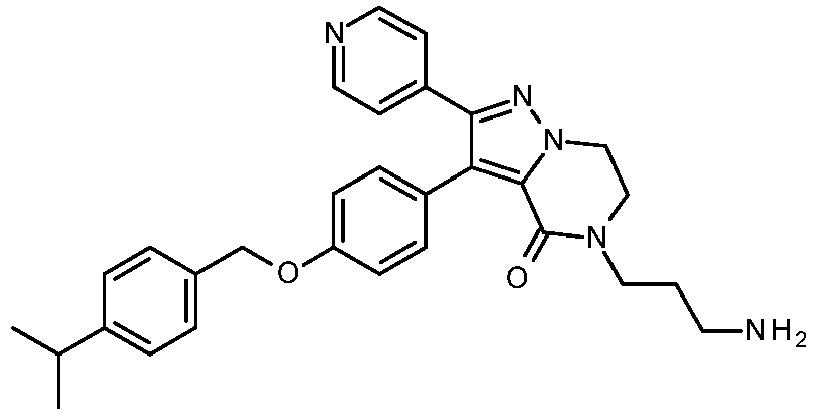
- A solution of Co. 58a (680 mg, 1.1 mmol), HCl 3N (1.9 mL, 5.7mmol), in ACN (20mL) was stirred at 80°C for 2h. The mixture was concentrated, and NaHCO3 sat aq (100 mL) was added and the mixture was stirred at r.t. for 15 min, extracted with DCM, dried and concentrated. The residue (550 mg) was purified by prep. LC (Regular SiOH, 30 µm, 12 g Interchim, mobile phase gradient: DCM/MeOH/NH4OH from 88/12/0.1). The pure fractions were collected and solvent was evaporated until dryness to give 340 mg as an oil. This oil was taken in Et2O. The solid formed was filtered and dried to give 192 mg of Co. 58, white solid (34%).
-

- NaH 60% (0.41 g, 10.3 mmol) was added slowly to a suspension of Co. 1 (3 g, 6.8 mmol) in dry DMSO (45 mL) at r.t. under N2. The mixture was stirred for 2h then tert-butyl N-(2-bromoethyl) carbamate (2.3 g, 10.26 mmol) was added and the r.m. was stirred for 20h. The mixture was poured into water and EtOAc was added. The insoluble was filtered and washed with EtOAc. K2CO3 was added to the filtrate and the organic layer was extracted, separated and evaporated until dryness. The residue was taken up with DCM, dried over MgSO4, filtered and evaporated until dryness to give 2.08 g of a residue. The residue was purified by prep. LC (Stationary phase: Irregular SiOH 20-45µm 450g MATREX, mobile phase: 40% Heptane, 10% MeOH, 50% EtOAc). The pure fractions were collected and the solvent was evaporated to give 1.2g of Co. 238 (30%).
-

- Co. 238 (650 mg, 1.12 mmol), HCl 3N (1.9mL, 5.6mmol) in ACN (20mL) was heated at 70°C for 1.5 h. The mixture was cooled to r.t. and the insoluble was filtered, washed with ACN and Et2O and dried to give 379 mg of Co. 59a (HCl salt; .2 HCl .1.78 H2O) (58%). Part of Co. 59a was converted to the free base (Co. 59).
-

- NaH 60% (50.2 mg, 1.3 mmol) was added to Co. 238 (487 mg, 0.84 mmol) in DMF (8 mL) at r.t. under N2. The mixture was stirred for 2h, then MeI (62.5 µL, 1 mmol) was added dropwise and stirred for 2.5h. The mixture was poured into water and K2CO3 and extracted with EtOAc. The organic layer was dried over MgSO4, filtered and evaporated until dryness. The residue (0.7 g) was purified by prep. LC (40g of SiOH 15µm Interchim, mobile phase gradient from 100% DCM to 96% DCM 4% MeOH 0.1% NH4OH). The fractions were collected and evaporated until dryness to give 308 mg of Co. 60a (62%).
-
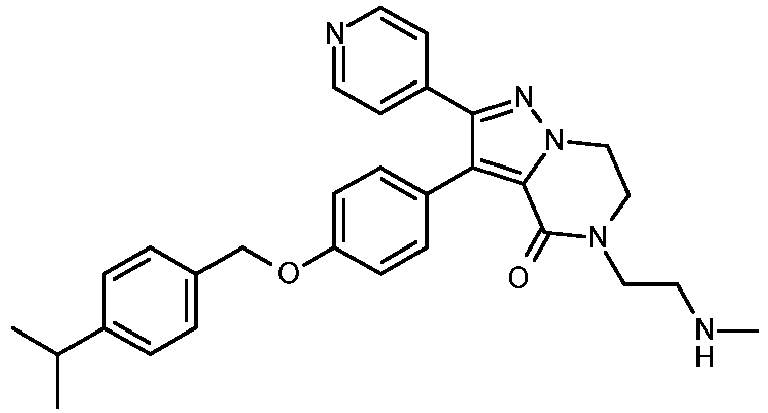
- Co. 60a (308 mg, 0.52 mmol) and HCl 3N (0.86 mL, 2.6 mmol) in ACN (10 mL) was heated at 70°C for 1.5 h, cooled to r.t. and the mixture was poured into water and K2CO3 and extracted with DCM. The organic layer was dried over MgSO4, filtered and evaporated until dryness. The residue (0.22 g) was purified by achiral SFC (Stationary phase: Amino 6µm 150x21.2mm, mobile phase: 70% CO2, 30% MeOH (0.3% iPrNH2)). The pure fractions were collected and the solvent was evaporated until dryness to give 180 mg which was crystallized from Et2O, filtered and dried to give 131 mg of Co. 60 (51%).
-

- Formaldehyde (46.7 µL, 0.623 mmol) was added to a sol. of Co. 59 (100 mg, 0.21 mmol) in DCM (2 mL) and THF (1 mL) at r.t. The mixture was stirred for 1h then sodium triacetoxyborohydride (88 mg, 0.415 mmol) was added and the r.m. was stirred for 15h. The mixture was poured into water and K2CO3 and extracted with DCM. The organic layer was dried over MgSO4, filtered and evaporated until dryness. The residue (103 mg) was purified by prep. LC (Stationary phase: irregular 15-40µm 30g Merck, mobile phase: 1% NH4OH, 69% toluene, 30% iPrOH). The pure fractions were collected and solvent was evaporated until dryness to give 30mg of Co. 61 (28%).
-

- Methanesulfonyl chloride (49 µL, 0.64 mmol) was added dropwise to a sol. of Co. 2 (205 mg, 0.43 mmol) and Et3N (178 µL, 1.3 mmol) in dry DCM (5 mL) at 0°C under N2 atmosphere. The r.m. was stirred at 0°C for 2h. Water was added and the mixture was extracted with DCM. The organic layer was separated, dried over MgSO4, filtered and the solvent was evaporated until dryness to give 280 mg of Int. mixture 126 , yellow solid. The solid was used in the next reaction step without further purification.
-

- In a microwave vial, a sol. of 126 (225 mg, 0.43 mmol) in 2,2,2-trifluoroethylamine (6.3 mL, 80 mmol) was stirred at 80°C overnight. Water was added and the mixture was extracted with DCM. The organic layer was separated, dried over MgSO4, filtered and the solvent was concentrated to obtain a residue (120 mg). The aq. layer was basified with NaHCO3 sat. and extracted 3x with DCM, dried and concentrated. This residue was combined with the earlier residue (120 mg) to give 220 mg of yellow oil. This oil was purified by prep. LC (Stationary phase: Stability Silica 5µm 150x30.0mm, mobile phase: Gradient from 100% DCM to NH4OH/DCM/MeOH 0.9/91/9). The pure fractions were collected and evaporated until dryness to give 46 mg of Co. 62, beige solid (17%).
-

- NaH 60% (27.4 mg, 0.68 mmol) was added to a sol. of Co. 1 (200 mg, 0.46 mmol) in DMSO (4 mL) at r.t. under N2. The mixture was stirred for 2h. 2-bromo-N-methylacetamide (104 mg, 0.68 mmol) was added and stirred for 15h. The mixture was poured into water and extracted with EtOAc (another batch with 102mg of initial reactant, Co. 1 was put together for work up). The organic layer was dried over MgSO4, filtered and evaporated until dryness to give 0.35g. The residue was purified by prep. LC on (Stability Silica 5µm 150x30.0mm, mobile phase gradient: from NH4OH/DCM/MeOH 0.2/98/2 to NH4OH/DCM/MeOH 0.8/92/8). The pure fractions were collected and solvent was evaporated to give 290 mg which was crystallized from Et2O, filtered and dried to give 233 mg of Co. 63, (global yield : 66%). m.p.: 161°C (dsc).
-

- NaH 60% (72 mg, 1.8mmol) was added portionwise to a suspension of Co. 1 (0.52 g, 1.2 mmol) in dry DMF (7.1 mL) at r.t. under N2. The mixture was stirred for 2h then N,N-dimethylchloroacetamide (0.18 mL, 1.8 mmol) was added and the r.m. was stirred overnight at r.t. Water was added and the mixture was concentrated under reduced pressure. The residue was taken in EtOAc and washed 5x with brine. The organic layer was dried over MgSO4, filtrated and concentrated. The residue was purified by prep. LC (irregular SiOH 15-40 µm, 25 g, Interchim, mobile phase: DCM/MeOH/NH4OH, 97/3/0.1). The pure fractions were collected and solvent was evaporated until dryness to give 0.46 g of colorless oil. This oil was triturated in Et2O. The solid formed was filtered and dried to give 390 mg of Co. 64, white solid (63%).
-

- NaH 60% (72 mg, 1.8 mmol) was added portionwise to a suspension of Co. 1 (0.52 g, 1.2 mmol) in dry DMF (7.1 mL) at r.t. under N2. The mixture was stirred for 2h then N-isopropyl-2-chloroacetamide (0.24 g, 1.8 mmol) was added and stirred overnight at r.t. Water was added and the mixture was concentrated under reduced pressure. The residue was taken in EtOAc and washed 5x with brine. The organic layer was dried over MgSO4, filtrated and concentrated to give 0.7 g. The residue was purified by prep. LC (irregular SiOH 15-40 µm, 25 g, GraceResolv™, mobile phase: DCM/MeOH/NH4OH, 97/3/0.1). The pure fractions were collected and solvent was evaporated until dryness to give 500 mg of colorless oil. This oil was triturated in Et2O. The solid formed was filtered and dried to give to give 312 mg of Co. 65, white solid (49%).
-

- NaH 60% (68 mg, 1.7 mmol) was added slowly to a suspension of Co. 1 (0.50 g, 1.1 mmol) in dry DMSO (6.3 mL) at r.t. under N2. The mixture was stirred for 2h and then methylbromoacetate (0.12 mL, 1.25 mmol) was added and stirred overnight. Water was added and the mixture was concentrated under reduced pressure. The solid obtained was triturated in EtOAc and the white solid formed was filtered and dried to give 400 mg of beige solid (70%). 290 mg of solid was used in a next step, and the other 110 mg was taken in water, the aq. layer was acidified with HCl 3N and extracted with DCM. The organic layer was dried on MgSO4, filtered and evaporated to give 75 mg of Co. 66, white solid.
-

- NaH 60% (68 mg, 1.7 mmol) was added slowly to a suspension of Co. 1 (0.5 g, 1.1 mmol) in dry DMF (7.0 mL) at r.t. under N2. The mixture was stirred for 2h then (2-bromoethoxy-1,1,2,2-d4)(1,1-dimethylethyl)dimethyl-silane (554 mg, 2.3 mmol) was added and the r.m. was stirred overnight. Water was added and the mixture was concentrated. The residue was taken in EtOAc and washed 3x with brine, dried over MgSO4, filtered and concentrated to give 750 mg of Int. 127 , yellow oil as a mixture which was used like this in the next step.
-

- TBAF (1.0 mL, 1.0 mmol) was added dropwise to a sol. of 127 (0.75 g, 0.88 mmol) in THF (8.5 mL) at r.t. The mixture was stirred overnight at r.t. The mixture was concentrated and the residue was purified by prep. LC (Regular SiOH, 30 µm, 25 g GraceResolv™, mobile phase: DCM/MeOH/NH4OH 96/4/0.1). The pure fractions were collected and the solvent was evaporated until dryness to give 360 mg of colorless oil which was triturated in Et2O. The white solid formed was filtered, washed and dried to give 0.286 g of Co. 67, white solid (67%). m.p.: 179°C (dsc).
-

- NaH 60% (27.4 mg, 0.68 mmol) was added to Co. 1 (0.2 g, 0.46 mmol) in DMSO (2.8 mL) at r.t. under N2. The mixture was stirred for 2h then diethyl-2-bromoethylphosphonate (0.13 mL, 0.68 mmol) was added and the r.m. was stirred for 20h. The mixture was poured into water, K2CO3 was added and extracted with EtOAc. The organic layer was evaporated until dryness. The residue was taken up with EtOAc and water. The organic layer was extracted, dried over MgSO4, filtered and evaporated. The residue (0.27 g) was purified by prep. LC (25g of irregular SiOH 35-40µm GraceResolv™, mobile phase gradient from 100% DCM to 95% DCM 5% MeOH 0.1% NH4OH). The pure fractions were collected and evaporated to give 0.2g which was crystallized from DIPE, filtered and dried to give 137 mg of Co. 68 (50%). m.p.: 90°C (dsc).
-

- NaH 60% (480 mg, 12 mmol) was added slowly to a suspension of Co. 1 (3.5 g, 8.0 mmol) in dry DMF (47 mL) at r.t. under N2. The mixture was stirred for 2h then (R)-(+) propylene oxide (1.1 mL, 16 mmol) was added and stirred overnight. Water was added and the mixture was concentrated under reduced pressure. The residue was taken in EtOAc and washed 5x with brine. The organic layer was dried on MgSO4, filtrated and concentrated to give 5.9 g. The residue was purified by prep. LC (irregular SiOH 15-40 µm, 120 g GraceResolv™, mobile phase gradient: from 100% DCM to DCM 95%, MeOH 5%). The fractions were collected and evaporated until dryness to give 1.2g of initial reactant Co. 1 and a residue which was purified by prep. LC (Stationary phase: irregular SiOH 15-40µm 300g MERCK, mobile phase: 42% Heptane, 8% MeOH (+10% NH4OH), 50% EtOAc). The pure fractions were collected and the solvent was evaporated to give 1.02 g which was triturated in Et2O and the white solid formed was filtrated and dried to give 450 mg of Co. 69 (R) (10%).
-

- A sol. of 6 (3.1 g, 20 mmol) in dry DMF (50 mL) was treated at 0°C with NaH 60% (818 mg, 20 mmol). After stirring for 1h at r.t., 5-bromo-2-fluoropyridine (3.0 g, 17 mmol) was added and the r.m. was stirred at r.t. for 3 days. The r.m. was quenched with water 200mL and the white solid formed was filtrated. This solid was solubilized in EtOAc and dried on MgSO4, filtrated and concentrated to give 5.9 g of Int. 128 , white solid (100%).
-

- BisPin (5.2 g, 20 mmol) and KOAc (3.3 g, 34 mmol) were added to a sol. of 128 (5.2 g, 17 mmol) in 1,4-dioxane (57 mL). The sol. was purged with N2 and charged with PdCl2(PPh3)2 (0.60 g, 0.85 mmol). The resulting sol. was purged again with N2 and stirred at 80°C for 17h. After dilution in EtOAc, the crude material was washed with water and brine. The organic layer was dried over MgSO4 and evaporated to afford 12 g of brown oil. This oil was purified by prep. LC (irregular SiOH 15-40 µm, 120 g GraceResolv™, mobile phase: heptane/EtOAc 80/20). The pure fractions were collected and solvent was evaporated to give 5.6 g of Int. 129 , brown solid (93%).
-

- In a Schlenk tube, a mixture of 4 (150 mg, 0.512 mmol), 129 (452 mg, 1.28 mmol), K3PO4 (434 mg, 2.05 mmol) in 1,4-dioxane (3.75 mL) and H2O (1.5 mL) was carefully purged with N2. Pd(OAc)2 (11 mg, 51.2 µmol) and PCy3 (29 mg, 102 µmol) were added and the r.m. was purged again with N2. The Schlenk tube was then sealed and the r.m. was stirred for 17 h at 80°C. The crude mixture was then diluted in DCM and washed with water (2 x 10mL). The organic layer was collected, dried over MgSO4 and evaporated in vacuo to afford brown oil. This oil was purified by prep. LC (irregular SiOH 15-40 µm, 50 g Merck, Mobile phase gradient: from 100% DCM to DCM 95%, MeOH 5%). The pure fractions were collected and solvent was evaporated until dryness to give 169 mg of Co. 71, white solid (75%). m.p.: 199 °C (dsc).
-

- A sol. of 5-[[4-(1-methylethyl)phenyl]methoxy]-4-oxo-4H-pyran-2-carboxylic acid (2.82 g, 9.78 mmol) in NH3 (28% in water) (18 mL) was stirred at 90 °C for 4h. Then the solvent was evaporated in vacuo to afford 2.13 g of Int. 130 , brown solid (76%).
-
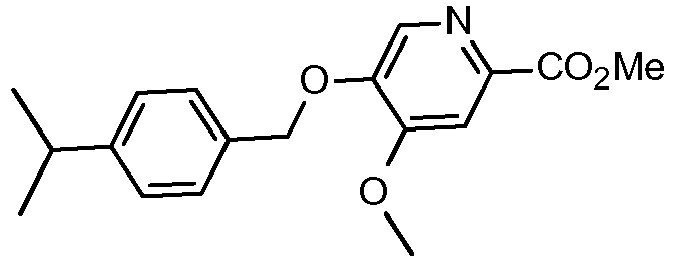
- (Trimethylsilyl)diazomethane, 2M in hexane (10.4 mL, 20.8 mmol) was added to a stirred sol. of 130 (1.05 g, 3.66 mmol) in MeOH (5 mL) and toluene (20 mL) at 0°C under N2. The crude mixture was stirred warming to r.t. for 1 h, and then water and EtOAc were added. The organic layer was washed with brine, separated, dried over MgSO4, filtered and evaporated in vacuo to afford 830 mg of a brown solid. Another batch, 400mg was combined to 830mg, and the mixture was purified by prep. LC (irregular SiOH 15-40 µm, 45 g Grace, mobile phase gradient: from EtOAc 10%, Heptane 90% to EtOAc 75%, Heptane 25%). The pure fractions were collected and solvent was evaporated until dryness to give 370 mg of Int. 131 (global yield: 22%).
-

- In a dry flask under N2, a sol. of 131 (283 mg, 0.897 mmol) and 4-picoline (0.140 mL, 1.44 mmol) in THF (7 mL) was cooled to 0°C and treated with LiHMDS (1.80 mL, 1.80 mmol). The r.m. was stirred at r.t. for 20 h. The crude mixture was quenched with an aq. sol. of NH4Cl, and EtOAc was added. The organic layer was washed with brine, dried over MgSO4, filtered and evaporated in vacuo to yield 295 mg of Int. 132 , a brown solid (66%) which was used as such in the next reaction step.
-

- A suspension of 132 (287 mg, 0.572 mmol) in ACN (5 mL) was treated with DBU (103 µL, 0.686 mmol) then with ethyl diazoacetate (96 µL, 0.915 mmol). The r.m. was stirred at r.t. for 20 h. Then, EtOAc and water were added, and the organic layer was washed with brine, separated, dried over MgSO4, filtered and evaporated in vacuo to yield 330 mg of a brown solid. The solid was purified by prep. LC (irregular SiOH 15-40 µm, 24 g, GraceResolv™, mobile phase gradient: from DCM 100% to DCM 93%, MeOH 7%). The pure fractions were collected and solvent was evaporated until dryness to give 169 mg of Int. 133 , pale yellow solid (63%).
-

- DBAD (123 mg, 0.533 mmol) was added to a stirred sol. of 133 (140 mg, 0.296 mmol), Boc-glycinol (86 mg, 0.533 mmol) and PPh3 (140 mg, 0.533 mmol) in dry DCE (3 mL) at r.t. under N2. The r.m. was stirred at r.t. for 20 h, and then water and EtOAc were added. The organic layer was washed with brine, dried over MgSO4, filtered and evaporated in vacuo to give 490 mg of yellow oil. This oil was purified by prep. LC (irregular SiOH 15-40 µm, 24 g, GraceResolv™, mobile phase gradient: from DCM 100% to EtOAc 100%). The pure fractions were collected and solvent was evaporated until dryness to give 203 mg of Int. 134 , viscous yellow solid (100%).
-

- A sol. of 134 (190 mg, 0.309 mmol) and HCl 3N (0.514 mL, 1.54 mmol) in ACN (5 mL) was stirred at 80°C for 90 min. Then, EtOAc and a sat. sol. of NaHCO3 were added, and the r.m. was stirred at r.t. for 20h. Water and more EtOAc were added, and the organic layer was separated, washed with brine, dried over MgSO4, filtered and evaporated in vacuo. The residue (114 mg) was purified by prep. LC (Irregular SiOH 50 µm, 10 g Grace, mobile phase gradient: from DCM 100% to DCM 92%, MeOH 8%). The fractions were collected and evaporated in vacuo to give 79 mg of a white solid. This solid was dissolved in MeOH, and the solvent was allowed to evaporate slowly. After crystallization, the remaining solvent was removed. The solid was dried for 4h, yielding 70 mg of Co. 72, white solid (48%). m.p.: 231 °C (DSC).
-

- To a sol. of 2-hydroxy-4-fluoropyridine (1.0 g, 8.8 mmol) in ACN (23 mL) was added dropwise N-bromosuccinimide (1.6 g, 8.8 mmol) in ACN (23 mL) at r.t. in darkness. The sol. was stirred at r.t. for 3 days. The solvent was removed in vacuo. EtOAc and a sat. aq. sol. of brine were added to the residue, the organic layer was washed, separated, dried on MgSO4, filtered and evaporated in vacuo to give 1.44 g of a white solid. This solid was taken in DCM and the solid was filtered. The filtrate was concentrated and the purification was carried out by prep. LC (Interchim, 40 g, mobile phase: DCM/MeOH/NH4OH, 96/4/0.1). The pure fractions were collected and the solvent was evaporated until dryness to give 540 mg of Int. 135 , white solid (32%).
-

- 8 (0.49 mL, 2.9 mmol) was added to a sol. of 135 (0.54 g, 2.0 mmol) and Ag2CO3 (2.3 g, 8.4 mmol) in ACN (15mL). The mixture was stirred overnight at 80 °C. The mixture was filtrated on celite® and the filtrate was concentrated to give 0.76 g, white oil. This oil was taken in DCM and the white solid was filtrated off. The filtrate was concentrated and it was purified by prep. LC (irregular SiOH 15-40 µm, 25 g GraceResolv™, mobile phase gradient: heptane/EtOAc from 100/0 to 93/7). The pure fractions were collected and solvent was evaporated until dryness to give 350 mg of Int. 136 , colorless oil (39%).
-

- In a microwave vial, BisPin (0.33 g, 1.3 mmol) and KOAc (0.21 g, 2.2 mmol) were added to a sol. of 136 (0.35 g, 1.1 mmol) in 1,4-dioxane (3.6 mL). The sol. was purged with N2 and charged with PdCl2(dppf) (38 mg, 54 µmol). The resulting sol. was purged again with N2 and stirred at 80°C for 17h. After dilution in EtOAc, the crude material was washed with water and brine. The organic layer was dried over MgSO4 and evaporated to afford 680 mg of dark oil. This oil was purified by prep. LC (irregular SiOH 15-40 µm, 12 g GraceResolv™, mobile phase: heptane/EtOAc 90/10). The pure fractions were collected and evaporated until dryness to give 390 mg of Int. 137 , colorless oil (97%).
-

- In a microwave vial, a mixture of 4 (0.26 g, 0.88 mmol), 137 (0.39 g, 1.1 mmol), K3PO4 (0.74 g, 3.5 mmol) in 1,4-dioxane (3.8 mL) and H2O (1.4 mL) was carefully purged with N2. PdCl2(dppf) (72 mg, 88 µmol) was added and the r.m. was purged again with N2. The r.m. was heated at 80°C overnight. The r.m. was diluted with EtOAc and washed with water (once) and with brine (3 times). The organic phase was dried over MgSO4, filtered on a pad of Celite® and evaporated in vacuo to give 550 mg, brown solid. The solid was purified by prep. LC (Stationary phase: Spherical bare silica 5µm 150x30.0mm, mobile phase gradient: from NH4OH/DCM/MeOH 0.1/99/1 to NH4OH/DCM/MeOH 0.7/93/7). The pure fractions were collected and solvent was evaporated until dryness to give 61 mg of colorless product which was crystallized from Et2O. The solid was filtrated and dried to give 33 mg of Co. 73, white solid (8%). m.p.: 207°C (dsc).
-

- A sol. of 6 (3.1 g, 20 mmol) in dry DMF (60 mL) was treated at 0°C with NaH 60% (0.99 g, 25 mmol). After stirring for 1h at r.t., 2,6-difluoro-pyridine (2.4 g, 21 mmol) was added and the r.m. was stirred at r.t. overnight. The r.m. was quenched with water 200 mL and the mixture was extracted with DCM 3x. The organic layer was dried and concentrated to give 5.7 g of Int. 138 , colorless oil (100%, purity 89%) which was used like this in the next step.
-

- To a sol. of 138 (4.7 g, 17 mmol) in ACN (60 mL) was slowly added N-bromosuccinimide (3.0 g, 17 mmol) in ACN (60 mL) at r.t. The sol. was stirred at 80°C overnight. The solvent was removed in vacuo and the residue was taken in EtOAc and washed with NaCl sat, NaHCO3, filtrated and dried. The residue and the mixture was purified by prep. LC (irregular SiOH 15-40 µm, 120 g Interchim, mobile phase: heptane/EtOAc, 98/2). The fractions were collected and solvent was evaporated to give 3.0 g. This fraction was purified by prep. LC (irregular SiOH 15-40 µm, 40 g Interchim, mobile phase: heptane/EtOAc, 98/2). The pure fractions were collected and solvent was evaporated until dryness to give 2.6 g Int. 139 , colorless oil (47%, purity: 80%) which was used such as for the next step.
-

- BisPin (0.94 g, 3.7 mmol) and KOAc (0.61 g, 6.2 mmol) were added to a sol. of 139 (1g, 3.1 mmol) in 1,4-dioxane (10 mL). The sol. was purged with N2 and charged with PdCl2(dppf) (0.11 g, 0.15 mmol). The resulting sol. was purged again with N2 and stirred at 80°C for 17h. After dilution in EtOAc, the crude material was washed with water and brine. The organic layer was dried over MgSO4 and evaporated to afford dark oil. This oil was purified by prep. LC (irregular SiOH 15-40 µm, 25 g GraceResolv™, mobile phase: heptane/EtOAc 90/10). The fractions were collected and solvent was evaporated until dryness to give 1.1 g of Int. 140 , yellow oil (48%, purity 50%) which was used like this in the next step.
-

- In a microwave vial, a mixture of 4 (0.72 g, 2.5 mmol), 140 (1.1 g, 3.0 mmol), K3PO4 (2.1 g, 10 mmol) in 1,4-dioxane (11 mL) and H2O (4 mL) was carefully purged with N2. PdCl2(dppf) (200 mg, 0.25 mmol) was added and the r.m. was purged again with N2. The r.m. was heated at 80°C overnight. The r.m. was diluted with EtOAc and washed with water (once) and with brine (3 times). The organic phase was dried over MgSO4, filtered on a pad of Celite® and evaporated in vacuo to give a brown solid. It was purified by prep. LC (irregular SiOH 15-40 µm, 40 g GraceResolv™, mobile phase: DCM 96%, MeOH 4%). The fractions were collected and solvent was evaporated until dryness to give 610 mg of white solid. The solid was purified by prep. LC (Stationary phase: Spherical bare silica 5µm 150x30.0mm, mobile phase gradient: from NH4OH/DCM/MeOH 0.2/98/2 to NH4OH/DCM/MeOH 0.9/91/9). The pure fractions were collected and solvent was evaporated until dryness to give 152 mg of a white solid which was triturated with Et2O. The solid was filtrated and dried to give 0.129 g of Co. 74, white solid (11%, mp: 275°C).
-

- A sol. of 6 (4.66 g, 31.0 mmol) in dry THF (200 mL) was treated with NaH 60% (1.29 g, 32.3 mmol) and stirred at r.t. for 10 min. 5-bromo-2-chloropyrimidine (5.00 g, 25.8 mmol) was then added and the r.m. was stirred at r.t. for 17 h. The r.m. was then heated at 70°C for 5 extra h and concentrated in vacuo. The concentrate was taken up with EtOAc, washed with water and brine, dried over MgSO4 and evaporated in vacuo to give yellow oil. This oil was purified by prep. LC (irregular SiOH 15-40 µm, 80 g, Grace, dry loading, mobile phase: heptane 80% to EtOAc 20%). The pure fractions were collected and solvent was evaporated to give 5.92g of Int. 141, white solid (75%).
-

- In a Schlenk tube, a sol. of 141 (3.0 g, 9.77 mmol), BisPin (4.96 g, 19.5 mmol) and KOAc (2.88 g, 29.3 mmol) in DME (60 mL) was purged with N2. PdCl2(dppf) (800 mg, 0.977 mmol) was added to the mixture and the mixture was purged with N2 again. The reaction was heated at 110°C for 17 h then poured in EtOAc. The organic layer was washed with water and brine, dried over MgSO4 and evaporated in vacuo to give a black residue. The residue was filtered through a short pad of silica gel (eluent: EtOAc 100%) and the filtrate was evaporated in vacuo to give a brown solid. This solid was purified by prep. LC (irregular SiOH 15-40 µm, 80 g, Grace, dry loading, mobile phase: heptane 80% to EtOAc 20%). The pure fractions were collected and solvent was evaporated to give 2.20g of Int. 142, white solid (64%).
-
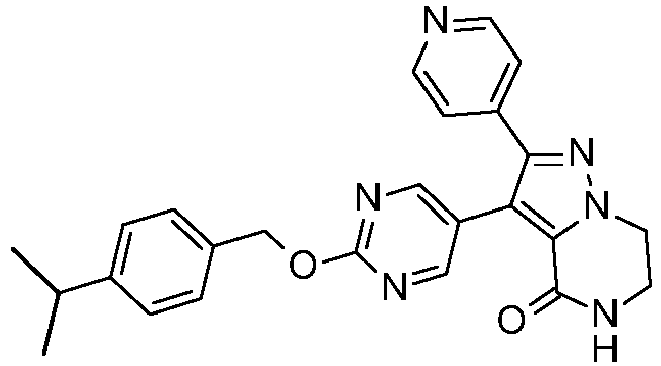
- A sol. of 4 (400 mg, 1.37 mmol) and 142 (967 mg, 2.73 mmol) in 1,4-dioxane (8 mL) and H2O (4 mL) was treated with K3PO4 (869 mg, 4.09 mmol) and purged with N2. PdCl2(dppf) (112 mg, 137 µmol) was then added and the r.m. was carefully purged with N2. The mixture was heated at 120°C using one single mode microwave (Biotage Initiator EXP 60) with a power output ranging from 0 to 400 W for 20 min [fixed hold time]. The r.m. was poured in DCM/MeOH (95/5) and washed with water and brine. The organic layer was dried over MgSO4 and evaporated in vacuo to give a black residue which was purified by prep. LC (irregular SiOH 15-40µm, 45g, Merck, dry loading, mobile phase gradient: from DCM 100% to DCM 92%, MeOH 8%). The pure fractions were collected and solvent was evaporated until dryness to give 170mg of an off-white solid. The solid was crystallized from EtOH, filtered on a glass frit and washed with Et2O. The solid was collected and dried in vacuo to give 145 mg of a white solid which was solubilized in MeOH. The solvent was allowed to evaporate slowly overnight. The solid was triturated in Et2O, filtered and dried in vacuo to give 132 mg of Co. 75 (white solid; 22%). m.p.: 126°C (dsc).
-

- Under N2, a sol. of 2,5-dibromopyrazine (1.97 g, 8.28 mmol) and 6 (1.57 mL, 9.94 mmol) in dry DMF (45 mL) was treated with NaH 60% (397 mg, 9.94 mmol) and stirred at r.t. for 18 h. The r.m. was poured in EtOAc and water, and the organic layer was washed with brine (twice), dried over MgSO4, filtered and evaporated in vacuo to give 2.83 g, brown oil. This oil was purified by prep. LC (irregular SiOH 15-40 µm, 120 g, GraceResolv™, mobile phase gradient: from heptane 100% to heptane 50%, EtOAc 50%). The pure fractions were collected and solvent was evaporated until dryness to give 2.25 g of Int. 143 , yellow oil (88%).
-

- A mixture of 60 (304 mg, 0.894 mmol), 143 (549 mg, 1.79 mmol), K3PO4 (569 mg, 2.68 mmol) in THF (6 mL) and H2O (3 mL) was carefully purged with N2. Precatalyst (70 mg, 89.4 µmol) was added and the r.m. was purged again with N2. The r.m. was stirred at r.t. for 66h, and then a sol. of DCM/MeOH 95:5 and water were added. The organic layer was washed with brine, separated and evaporated in vacuo to afford 3.00 g of a solid. The solid was diluted in a sol. of DCM/MeOH 50:50, and filtered off. The filtrate was evaporated in vacuo to yield 930 mg of a pale yellow solid. This solid was purified by prep. LC (Irregular SiOH 50 µm, 40 g Grace, mobile phase gradient: from DCM 100% to DCM 91%, MeOH 9%). The desired fractions were collected and evaporated in vacuo to give 188 mg of a white solid. The residue was purified by achiral SFC (Stationary phase: 2-ethylpyridine 6µm 150x30mm, mobile phase: 85% CO2, 15% MeOH (0.3% iPrNH2). The pure fractions were collected and solvent was evaporated until dryness to yield 126 mg which was crystallized from EtOH. The solid was filtered, washed with Et2O, and dried in vacuo to yield 81 mg of Co. 76, white solid (21%). m.p.: 225 °C (dsc).
-

- 4 (1.9 g, 6.5 mmol), N-Boc-1,2,5,6-tetrahydropyridine-4-boronic acid pinacol ester (2 g, 6.5 mmol), Na2CO3 (13 mL, 13 mmol) in 1,4-dioxane (21 mL) were degassed with N2. PdCl2(dppf) (0.53 g, 0.65 mmol) was added and heated to 110°C in sealed tube for 20h. The mixture was poured into water and extracted with EtOAc. The organic layer was dried over MgSO4, filtered and evaporated until dryness to give 3.5g. The residue was purified by LC prep. (80g of SiOH 30µm Interchim, mobile phase gradient: from 100% DCM to 90/10/0.1 DCM/CH3OH/NH4OH). The pure fractions were collected and evaporated until dryness to give 2.3g of Int. 153 (89%).
-

- HCl 3N (9.7 mL, 29.08 mmol) was added to 153 (2.3 g, 5.8 mmol) in ACN (100 mL). The mixture was heated for 30min at 80°C and poured into water, basified with K2CO3 and extracted with EtOAc. The organic layer was dried over MgSO4, filtered and evaporated until dryness to give 0.62 g of Int. 154 (36%).
-

- 4-(1-methylethyl)-benzeneacetyl chloride (0.31 g, 1.56 mmol) in DCM (4 mL) was added dropwise to a sol. of 154 (384 mg, 1.3 mmol), Et3N (0.27 mL, 1.95 mmol) in DCM (11 mL) at 5°C. The mixture was stirred for 15h and poured into water. The organic layer was separated, dried over MgSO4, filtered and evaporated to give a residue (0.63 g) which was purified by prep. LC (40g of SiOH 15µm Interchim, mobile phase gradient from 100% DCM to 90% DCM 10%, MeOH 0.1%, NH4OH). The fractions were collected and evaporated until dryness to give 315mg which was crystallized from Et2O, filtered and dried to give 246 mg of Co. 77 (41%).
-

- To a sol. of 2-methyl-4-(1-methylethyl)-benzenemethanol (0.97 g, 5.9 mmol), 7 (1.3 g, 5.9 mmol), PPh3 (1.7 g, 6.5 mmol) in dry DCM (40 mL) was added DBAD (1.5 g, 6.5 mmol) and the r.m. was stirred at r.t. for 2 days. The mixture was poured into water and the organic layer was extracted, dried over MgSO4, filtered and evaporated until dryness to give 6 g. The residue was tritured in heptane and the solid formed was filtered off. The filtrate was concentrated and injected to be purified by prep. LC (80g of irregular SiOH 35-40µm GraceResolv™, mobile phase gradient: from 100% heptane to 80% heptane 20% EtOAc). The fractions were collected and evaporated until dryness to give 1.7g of Int. 155 (78%)
-

- 25 (0.97 g, 2.5 mmol), 155 (0.94 g, 2.5mmol), K3PO4 (2.1 g, 9.8 mmol) in 1,4-dioxane (13 mL) and H2O (3.5 mL) were purged with N2 for 10min. Then, PdCl2(dppf) (0.2 g, 0.25 mmol) was added and purged with N2 for 10min. The mixture was heated to 75°C for 15h, cooled to r.t., poured into water and K2CO3 and extracted with EtOAc. The organic layer was dried over MgSO4, filtered and dried to give 1.9 g. The residue was purified by prep. LC (40g of irregular SiOH 35-40µm GraceResolv™, mobile phase gradient: from 100% DCM to 90% DCM 10% MeOH 0.1% NH4OH). The pure fractions were collected and solvent was evaporated until dryness to give 510 mg of Co. 78a (37%).
-

- Co. 78a (510 mg, 0.92 mmol), ACN (24 mL), HCl 3N (3 mL) were heated to 80°C for 1h. The mixture was cooled to r.t., poured into water and basified with K2CO3 and EtOAc was added. The insoluble was filtered and the organic layer was separated, dried over MgSO4, filtered and evaporated until dryness. The residue was purified by prep. LC (40g of SiOH 30µm Interchim, mobile phase gradient: from 100% DCM to 90% DCM 10% MeOH 0.1% NH4OH). The pure fractions were collected and evaporated until dryness to give 153 mg which was crystallized from Et2O, filtered and dried to give 136 mg of Co. 78 (33%). m.p.: 247°C (dsc).
-

- To a suspension of 3-(acetoxy)-4-(1-methylethyl)-benzenemethanol (498 mg, 2.39 mmol), 7 (632 mg, 2.87 mmol), PPh3 supp. (661 mg, 2.87 mmol) in dry DCM (10 mL) was added DBAD (897 mg, 2.87 mmol) and the r.m. was stirred at r.t. for 18 h. The insoluble was filtered through Celite®, washed with DCM. Water was added and the organic layer was separated, dried, filtered and concentrated to give 1.66 g. The residue was purified by prep. LC on (Irregular SiOH 30µm 40g Interchim, mobile phase gradient: from Heptane 95/EtOAc 5 to Heptane 90/EtOAc 10). The pure fractions were collected and evaporated until dryness to give 413 mg of Int. 157 (42%).
-

- In a microwave vial, a mixture of 28 (0.413 g, 0.92 mmol), 157 (0.413 g, 1 mmol), K3PO4 (0.78 g, 3.7 mmol) in 1,4-dioxane (4 mL) and H2O (1.43 mL) was carefully purged with N2. PdCl2(dppf) (75 mg, 0.09 mmol) was added and the r.m. was purged again with N2. The r.m. was heated at 80°C overnight. The r.m. was diluted with EtOAc and washed with water (once) and with brine (3 times). The organic phase was dried over MgSO4, filtered and evaporated in vacuo to give 792 mg. The residue was purified by prep. LC (irregular SiOH 30 µm, 40 g Interchim, mobile phase gradient: from DCM 100% to DCM/MeOH/NH4OH 95/5/0.1). The fractions were collected and solvent was evaporated until dryness to give 270 mg of Int. 158 (purity 50%) and 271mg of Int. 160 (purity 79%). 158 and 160 were used as such for the next steps.
-

- To a sol. of 158 (270 mg, 0.41 mmol) in MeOH (4 mL) was added KOH (69 mg, 1.24 mmol) and the mixture was heated at 50°C for 3h. Water and DCM were added and the organic layer was separated, dried, filtered and concentrated until dryness to give 235 mg of Int. 160 as a (crude) mixture which was used as such for the next step.
-

- TBAF (1.03 mL, 1.03 mmol) was added dropwise to a sol. of 160 (506 mg) in THF (8.5 mL) at r.t. The mixture was stirred for 3h at r.t. EtOAc and water were added. The organic layer was separated, dried, filtered and evaporated until dryness to give 395 mg. The residue was purified by prep. LC (Regular SiOH, 30 µm, 12g GraceResolv™, mobile phase gradient: from DCM 100% to DCM/MeOH/NH4OH 95/5/0.1). The pure fractions were collected and evaporated until dryness to give 291 mg which was crystallized from DIPE, filtered and dried to give 265 mg of Co. 79. m.p.: 236°C (dsc).
-

- To a suspension of 3-methoxy-4-isopropylbenzenemethanol (0.29 g, 1.6 mmol), 7 (0.425 g, 1.93 mmol), DBAD (0.45 g, 1.93 mmol) in dry DCM (5 mL) was added PPh3 supp. (0.6 g, 1.93 mmol) and the r.m. was stirred at r.t. for 18 h. The insoluble was filtered through Celite®, washed with DCM. Water was added and the organic layer was separated, dried, filtered and concentrated until dryness to give 1.07 g. The residue was purified by prep. LC on (Irregular SiOH 15-40µm 30g Merck, mobile phase: 90/10 Heptane/EtOAc). The pure fractions were collected and evaporated until dryness to give 411mg of Int. 161 (67%).
-

- In a microwave vial, a mixture of 4 (0.25 g, 0.853 mmol), 161 (0.391 g, 1.023 mmol), K3PO4 (0.76 g, 3.58 mmol) in 1,4-dioxane (4 mL) and H2O (1.33 mL) was carefully purged with N2. PCy3 (50 mg, 0.179 mmol) and Pd(OAc)2 (20 mg, 0.089 mmol) were added and the r.m. was purged again with N2. The r.m. was stirred for 16 h at 80°C. The crude material was dissolved in water and extracted with EtOAc. The organic phase was dried over MgSO4, filtered and evaporated in vacuo to give 506 mg. The residue was purified by prep. LC on (irregular SiOH 15-40µm 300g Merck, mobile phase: 40% Heptane, 10% MeOH (+10% NH4OH), 50% EtOAc). The desired fractions were combined and the solvent was removed in vacuo to give 80 mg which was crystallized from DIPE, filtered and dried to give 70 mg of Co. 80 (18%). m.p.: 232°C (dsc).
-

- A mixture of 7 (2.20 g, 10.0 mmol), 6-(1-methylethyl)-3-pyridinemethanol (1.97 g, 13.0 mmol) and PPh3 (3.41 g, 13.0 mmol) in dry THF (30 mL) was treated with DBAD (2.99 g, 13.0 mmol) and stirred at r.t. for 2h. The r.m. was poured in water and DCM. The organic layer was separated, washed with water, dried over MgSO4 and evaporated in vacuo to afford yellow oil. The oil was purified by prep. LC (irregular SiOH 15-40 µm, 80 g Grace Resolv, solid loading, mobile phase gradient: from heptane 80%, EtOAc 20% to heptane 60%, EtOAc 40%). The pure fractions were collected and solvent evaporated until dryness to give 4.08 g of Int. 162 , colorless oil (Quant.).
-

- A sol. of 28 (800 mg, 1.77 mmol) and 162 (1.25 g, 3.54 mmol) in 1,4-dioxane (11 mL) and H2O (5.5 mL) was treated with K3PO4 (1.13 g, 5.32 mmol) and purged with N2. PdCl2(dppf) (145 mg, 0.177 mmol) was then added and the r.m. was carefully purged with N2. The mixture was heated at 120°C using one single mode microwave (Biotage Initiator EXP 60) with a power output ranging from 0 to 400 W for 30 min [fixed hold time]. The crude mixture was diluted with DCM and washed with water. The organic layer was dried over MgSO4 and evaporated to afford a brown residue. The brown residue was purified by prep. LC (irregular SiOH 15-40 µm, 80 g, GraceResolv™, solid loading, Mobile phase gradient: from DCM 100% to DCM 94%, MeOH 6%). The pure fractions were collected and solvent evaporated to give 1.30 g of Int. 163 , yellow oil which was used such as for the next step.
-

- A sol. of 163 (1.30 g, 2.18 mmol) in THF (40 mL) was treated with TBAF (1.74 mL, 1.74 mmol) and stirred for 2h at r.t. The r.m. was poured in H2O and extracted 2x with DCM. The organic layers were combined, dried over MgSO4 and evaporated in vacuo to afford yellow oil. The oil was purified by prep. LC (irregular SiOH 15-40 µm, 80 g, GraceResolv™, solid loading, Mobile phase gradient: from DCM 100% to DCM 94%, MeOH 6%). The pure fractions were collected and solvent evaporated to give 540 mg of Co. 81, white solid (51%). m.p.: 93°C (DSC).
-

- A stirred sol. of 55 (1.02 g, 2.92 mmol), BisPin (1.11 g, 4.38 mmol) and KOAc (860 mg, 8.76 mmol) in E (15 mL) was carefully purged with N2, and PdCl2(dppf) (239 mg, 292 µmol) was added. The r.m. was purged again with N2, and stirred for 18 h at 100°C. The r.m. was diluted with EtOAc and washed with water and brine. The organic layer was dried over MgSO4 and evaporated in vacuo. The black residue was purified by prep. LC (irregular SiOH 15-40 µm, 40 g, Merck, mobile phase gradient: from heptane 80%, EtOAc 20% to heptane 60%, EtOAc 40%). The pure fractions were collected and solvent was evaporated to give 1.10 g of Int. 164 (95%).
-

- A mixture of 98 (600 mg, 1.95 mmol), 164 (1.16 g, 2.93 mmol) and KOAc (1.04 g, 4.88 mmol) in 1,4-dioxane (12 mL) and H2O (6 mL) was purged with N2. PdCl2(dppf) (160 mg; 195 µmol) was then added. The mixture was purged again with N2 and heated at 120°C using one single mode microwave (Biotage Initiator EXP 60) with a power output ranging from 0 to 400 W for 25 min [fixed hold time]. The r.m. was then poured in DCM and water. The organic layer was separated. The aq. layer was extracted again with DCM. The organic layers were combined, dried over MgSO4 and evaporated in vacuo. The brown residue was purified by prep. LC (irregular SiOH 15-40 µm, 80 g, GraceResolv™, dry loading, mobile phase gradient: from DCM 100% to DCM 96%, MeOH 4%). The pure fractions were collected and solvent was evaporated until dryness to give 744 mg of a residue, beige foam. This residue was purified by prep. LC (irregular SiOH 15-40 µm, 45 g, Merck, dry loading, mobile phase gradient: from DCM 100% to DCM 95%, MeOH 5%). The pure fractions were collected and solvent was evaporated to give 460 mg of a residue which was purified again by Reverse phase (Stationary phase: X-Bridge-C18 5µm 30*150mm; Mobile phase Gradient: from 80% (NH4HCO3 0.5% aq. sol.), 20% ACN to 100% ACN). The fractions containing the pure product were combined and evaporated in vacuo to give 340 mg, a white foam. The residue was finally dissolved in a small amount of MeOH and triturated while Et2O was added. The white solid was filtered on a glass frit and washed with Et2O. The solid was collected and dried in vacuo to afford 225 mg of Co. 82, white solid (23%).
-

- A mixture of 28 (0.680 g, 1.51 mmol), 164 (0.963 g, 2.26 mmol) and K3PO4 (0.959 g, 4.52 mmol) in 1,4-dioxane (9 mL) and H2O (4 mL) was purged with N2. PdCl2(dppf) (0.100 g, 0.122 mmol) was then added. The mixture was purged again with N2 and stirred at 120°C using one single mode microwave (Biotage Initiator EXP 60) with a power output ranging from 0 to 400 W for 25 min [fixed hold time]. Then, a sol. of DCM/MeOH (94:6) and water were added. The organic layer was washed with brine, dried over MgSO4, filtered and evaporated in vacuo to give a dark solid. The solid was purified by prep. LC (Irregular SiOH 50 µm, 80 g Grace, mobile phase gradient: from DCM 100% to DCM 94%, MeOH 6%). The desired fractions were evaporated in vacuo to yield 1.10 g of Int. 165 , oil (97 %, purity 85%) used as such for the next step.
-

- TBAF (1.47 mL, 1.47 mmol) was added to a stirred sol. of 165 (1.10 g, 1.46 mmol) in 1,4-dioxane (14 mL) at 0°C, and the r.m. was stirred at r.t. for 18 h. The crude mixture was diluted with water and a sol. of DCM/MeOH (96/4). The organic layer was washed with brine, dried over MgSO4, filtered and evaporated in vacuo to afford 790 mg of a solid. This solid was purified by prep. LC (Irregular SiOH 50 µm, 50 g Grace, mobile phase gradient: from DCM 100% to DCM 94%, MeOH 6%). The desired fractions were collected and evaporated in vacuo to give 253 mg which was solubilized in MeOH (1mL). The solvent was allowed to slowly evaporate, yielding 246 mg of Co. 83, crystalline white solid (32%). m.p.: 176 °C (DSC).
-

- NaH 60% (53 mg, 1.3 mmol) was added slowly to a suspension of 55 (0.30 g, 0.88 mmol) in THF (5.0 mL) at r.t. under N2. The mixture was stirred for 2h then MeI (0.08 mL, 1.3 mmol) was added and stirred overnight. Water was added and the mixture was extracted with DCM (3x), dried on MgSO4 and evaporated until dryness and give 334 mg of yellow oil. This oil was purified by prep. LC (irregular SiOH 15-40 µm, 12 g, GraceResolv™, Mobile phase: Heptane/EtOAc, 95/5). The pure fractions were collected and solvent was evaporated to give 253 mg of Int. 166 (79%).
-

- In a microwave vial, a mixture of 166 (0.25 g, 0.69 mmol), KOAc (0.20 g, 2.1 mmol), BisPin (0.26 g, 1.0 mmol) in DME (2 mL) was carefully purged with N2. PdCl2(dppf) (56 mg, 69 µmol) was added and the r.m. was purged again with N2. The r.m. was stirred overnight at 100°C. The r.m. was diluted with EtOAc and washed with water (1x) and with brine (3x). The organic phase was dried over MgSO4, filtered on a pad of Celite® and evaporated in vacuo to give 530 mg of brown oil. This oil was purified by prep. LC (irregular SiOH 15-40 µm, 12 g, GraceResolv™, Mobile phase: Heptane/EtOAc, gradient from 95/5 to 90/10). The pure fractions were collected and solvent was evaporated until dryness to give 307 mg of Int. 167 , colorless oil (100%).
-

- In a microwave vial, a mixture of 4 (167 mg, 0.57 mmol), 167 (0.28 g, 0.68 mmol), K3PO4 (0.36 g, 1.7 mmol) in 1,4-dioxane (2.5 mL) and H2O (0.89 mL) was carefully purged with N2. PdCl2(dppf) (47 mg, 57 µmol) was added and the r.m. was purged again with N2. The r.m. was heated at 80°C overnight. The r.m. was diluted with EtOAc and washed with water (once) and with brine (3 times). The organic layer was dried over MgSO4, filtered on a pad of Celite® and evaporated in vacuo to give 295 mg of brown oil. This oil was purified by prep. LC (irregular SiOH 30 µm, 25 g, Interchim, Mobile phase: DCM/MeOH/NH4OH 97/3/0.1). The pure fractions were collected and solvent was evaporated until dryness to give 230 mg of white solid. This solid was washed with Et2O, filtered and dried to give 210 mg of Co. 84, white solid (74%). m.p.: 208°C (dsc).
-

- LAH (5.52g, 145mmol) was added to a stirred sol. of methyl-3-bromo-4-isopropylbenzoate (34.0g, 132mmol) in THF (600mL) at -20°C. The r.m. was stirred at -20°C for 2h. The r.m. was quenched with H2O (5.26mL), NaOH 3N (5.52mL) and H2O (16mL). The cake was filtered and washed (DCM). The filtrate was evaporated in vacuo to give 20.0g of Int. 168 , yellow oil (66%).
-
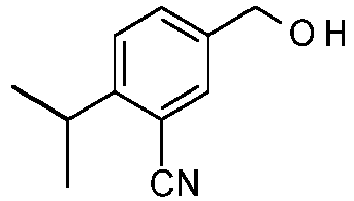
- Pd(PPh3)4 (1.6g, 1.4mmol) was added to a mixture of 168 (3.2g, 14mmol) and Zn(CN)2 (1.7g, 14mmol) in DMF (10mL) in a sealed tube. The mixture was heated at 120°C for 60 min using one single mode microwave (Biotage) with a power output ranging from 0 to 400 W. The r.m. was cooled to r.t., poured into ice water and extracted (DCM). The organic layer was separated, dried over MgSO4, filtered and the solvent was evaporated until dryness to give 2.6g. The residue was purified by prep. LC on (Irregular SiOH 15-40µm 50g Merck, mobile phase: 70/30 heptane/EtOAc). The pure fraction was collected and evaporated to give 1.4g of Int. 169 (57%).
-

- DBAD (1.3 g, 5.5 mmol) was added portionwise to a sol. of 69 (0.8 g, 4.6 mmol), 7 (1.2 g, 5.5 mmol), PPh3 supp. (1.7 g, 5.5 mmol) in dry THF (30 mL). The mixture was stirred at r.t. overnight. The mixture was filtered. The filtrate was evaporated to give 3.7 g yellow oil. The crude residue was purified by prep. LC (irregular SiOH 30µm 80g Interchim, mobile phase: heptane/EtOAc 90/10). The pure fractions were collected and solvent was evaporated until dryness to give 1.0 g of Int. 170, colorless oil which crystallized in white solid (58%).
-

- A mixture of 4 (867 mg, 2.96 mmol), 170 (0.93 g, 2.5 mmol), K3PO4 (1.57 g, 7.4 mmol) in 1,4-dioxane (11 mL) and H2O (4 mL) was carefully purged with N2. PdCl2(dppf) (201.7 mg, 0.25 mmol) were added and the r.m. was purged again with N2. The r.m. was stirred for 8h at 80°C in a sealed tube. Water and DCM were added, the mixture was extracted, the organic layer was separated, dried over MgSO4, filtered and evaporated. The residue was purified by prep. LC on (irregular 15-40µm 30g Merck, mobile phase: 98% DCM, 2% MeOH). The pure fractions were collected and the solvent evaporated until dryness to give 570 mg which was crystallized from Et2O, the precipitate was filtered off and dried to give 453mg of Co. 85 (40%). m.p.: 240°C (dsc).
-
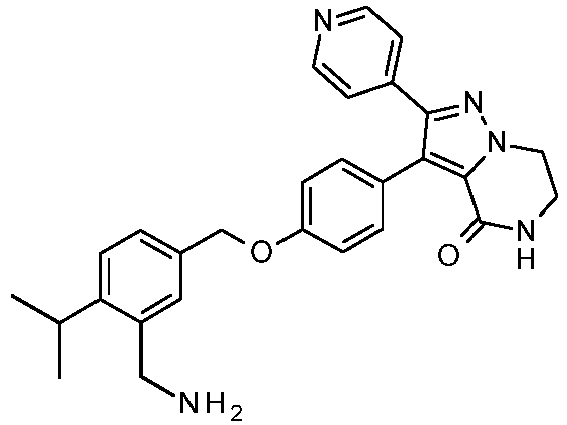
- A solution of Co. 85 (280 mg, 0.604 mmol), MeOH/NH3 (10 mL), Ni Raney (300 mg), THF (5 mL), DCM (5 mL) was hydrogenated under a 3 bars pressure at r.t. overnight. The catalyst was filtered over a Celite® pad, the filtrate was evaporated and the residue was purified by prep. LC (irregular SiOH 30 µm, 25 g, Interchim, Mobile phase gradient: DCM/MeOH/NH4OH from 96/4/0.1 to 92/8/0.1). The pure fractions were put together and evaporated. The residue was taken up in Et2O, filtrated and dried to give 15 mg of Co. 86 (5%).
-
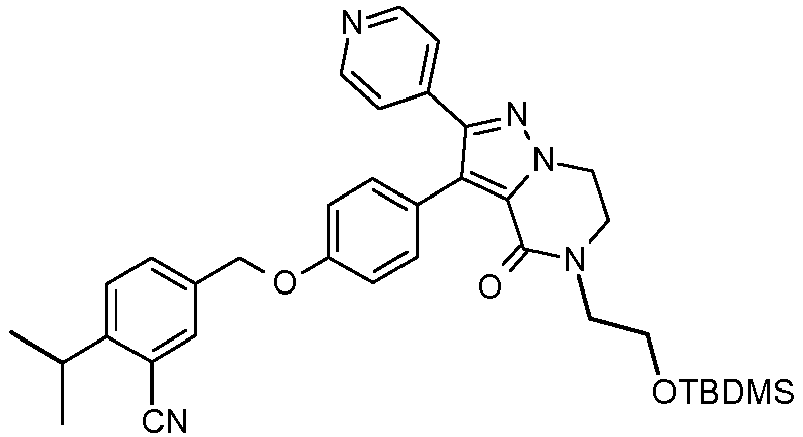
- In a microwave vial, a mixture of 28 (0.5 g, 1.1 mmol), 170 (0.5 g, 1.3 mmol), K3PO4 (0.94 g, 4.4 mmol) in 1,4-dioxane (4.9 mL) and H2O (1.7 mL) was carefully purged with N2. PdCl2(dppf) (90 mg, 0.11 mmol) was added and the r.m. was purged again with N2. The r.m. was heated at 80°C overnight. The r.m. was diluted with EtOAc and washed with water (once) and with brine (3 times). The organic phase was dried over MgSO4, filtered on a pad of Celite® and evaporated in vacuo to give a residue. The residue was purified by prep. LC (irregular SiOH 30 µm, 40 g Interchim, mobile phase: DCM/MeOH/NH4OH 98/2/0.1). The pure fractions were collected and solvent was evaporated until dryness to give 0.72 g of Int. 171, beige solid (100%).
-

- TBAF (1.4 mL, 1.4 mmol) was added dropwise to a sol. of 171 (0.72 g, 1.2 mmol) in THF (11 mL) at r.t.. The mixture was stirred overnight at r.t. The mixture was concentrated and the residue was purified by prep. LC (Regular SiOH, 30 µm, 25 g GraceResolv™, mobile phase: DCM/MeOH/NH4OH 98/2/0.1). The pure fractions were collected and the solvent was evaporated until dryness to give 0.38 g which was triturated in Et2O. The white solid formed was filtered and dried to give 0.32 g of Co. 87 (55%). m.p.: 160°C (dsc).
-

- DBAD (99 mg, 0.43 mmol) was added portionwise to a sol. of 55 (100 mg, 0.29 mmol), phthalimide (63 mg, 0.43 mmol), diphenylphosphinopolystyrene (134 mg, 0.43 mmol) in THF (3.3 mL) at r.t. under N2. The mixture was stirred for 3 days. The mixture was filtrated through a pad of Celite®, washed with EtOAc and concentrated. The crude residue was purified by prep. LC (irregular SiOH 35-40 µm 12 g GraceResolv™, mobile phase gradient: heptane/EtOAc from 90/10 to 85/15). The pure fractions were collected and solvent was evaporated until dryness to give 63 mg of Int. 172 (46%).
-

- In a microwave vial, hydrazine hydrate (230 µL, 2.4 mmol) was added to a suspension of 172 (380 mg, 0.79 mmol) in EtOH (5 mL) and the mixture was heated at 70°C for 1h. The white solid was filtered and washed with EtOH to give 295 mg of Int. 173 (used like this in the next step).
-

- BoC2O (203 mg, 0.93 mmol) and Et3N (0.35 mL, 2.5 mmol) were added to a suspension of 173 (295 mg, 0.85 mmol) in DCM (4.5 mL). The mixture was stirred at r.t. overnight. The mixture was diluted with DCM and quenched with water. The organic layer was decanted, washed with water, with NaHCO3, dried over MgSO4, filtered and evaporated to give 300 mg of Int. 174 , colorless oil (79%).
-

- In a microwave vial, a mixture of 174 (0.30 g, 0.67 mmol), KOAc (0.20 g, 2.0 mmol), BisPin (0.26 g, 1.0 mmol) in DME (5.1 mL) was carefully purged with N2. PdCl2(dppf) (55 mg, 67 µmοl) was added and the r.m. was purged again with N2. The r.m. was stirred overnight at 100°C. The r.m. was diluted with EtOAc and washed with water (once) and with brine (3 times). The organic phase was dried over MgSO4, filtered on a pad of Celite® and evaporated in vacuo to give 540 mg. The residue was purified by prep. LC (irregular SiOH 15-40 µm, 12 g, GraceResolv™, mobile phase gradient: Heptane/EtOAc, from 85/15 to 80/20). The pure fractions were collected and solvent was evaporated until dryness to give 333 mg of Int. 175, colorless oil (100%).
-

- In a microwave vial, a mixture of 4 (164 mg, 0.56 mmol), 175 (333 mg, 0.67 mmol), K3PO4 (357 mg, 1.68 mmol) in 1,4-dioxane (2.5 mL) and H2O (0.8 mL) was carefully purged with N2. PdCl2(dppf) (46 mg, 56 µmοl) was added and the r.m. was purged again with N2. The r.m. was heated at 80°C overnight. The r.m. was diluted with EtOAc and washed with water (once) and with brine (3 times). The organic phase was dried over MgSO4, filtered on a pad of celite® and evaporated in vacuo to give 390 mg. The residue was purified by prep. LC (irregular SiOH 30 µm, 12 g, GraceResolv™, Mobile phase gradient: DCM/MeOH/NH4OH from 98/2/0.1 to 97/3/0.1). The pure fractions were collected and solvent was evaporated until dryness to give 220 mg of Co. 88a, white solid (68%).
-

- A solution of Co. 88a (220 mg, 0.38 mmol), HCl 3N (0.63 mL, 1.9 mmol), in ACN (6.7 mL) was stirred at 80°C for 2h. The mixture was concentrated, and NaHCO3 sat aq was added and the mixture was stirred at r.t. 15 min. The mixture was extracted with DCM, dried, filtered and concentrated to give 213 mg of a solid. This solid was triturated in Et2O, filtrated and dried to give 127 mg of Co. 88, beige powder (70%). m.p.: 181°C (dsc).
-

- A solution of Methyl 4-bromo-3-hydroxybenzoate (2.5 g, 10.8 mmol), (2-bromoethoxy)-tert-butyldimethylsilane (2.5 mL, 11.9 mmol), K2CO3 (2.2 g, 16.2 mmol) in ACN (50 mL) was stirred at 80°C overnight. Water and EtOAc were added, the mixture was extracted, the organic layer was separated, dried over MgSO4, filtered and evaporated. The residue was purified by prep. LC (Regular SiOH, 30 µm, 120g Grace, mobile phase: 80/20 heptane/EtOAc). The pure fractions were collected and the solvent was evaporated until dryness to give 3.2g of Int. 177 (76%).
-

- A solution of 177 (3.2 g, 8.2 mmol), Pd(tBu3P)2 (210 mg, 0.4 mmol), CsF (2.7 g, 18 mmol), 2-isopropenyl-4,4,5,5-tetramethyl-1,3,2-dioxaborolane (1.5 g, 9 mmol) in THF (30 mL) was refluxed overnight. Water and EtOAc were added, the mixture was filtered over a Celite® pad, washed with EtOAc. The mixture was extracted, the organic layer was separated, dried over MgSO4, filtered and evaporated until dryness to give 3.4 g. The residue was purified by prep. LC on (irregular SiOH 30 µm, 90g, GraceResolv™, Mobile phase: 80/20 heptane/EtOAc). The pure fractions were collected and evaporated till dryness yielding 2.5 g of Int. 178 (87%).
-

- A solution of 178 (2.5 g, 7.1 mmol), ammonium formate (2.6 g, 43 mmol), Pd/C 10% (379 mg, 0.3 mmol) in THF (10 mL) and MeOH (30 mL) were refluxed for 90 min. The mixture was filtered through Celite®, washed with EtOAc, and the filtrate was concentrated to give 3.8 g. Water and EtOAc were added, the mixture was extracted, the organic layer was separated, dried over MgSO4, filtered and dried to give 2.2 g of Int. 179 (87%) used as such for the next step.
-

- LAH (310 mg, 8.2 mmol) was added carefully at 5°C to a sol. of 179 (2.4 g, 6.8 mmol) in THF (40 mL). The mixture was stirred at r.t. for 1h. Water was carefully added at 5°C and EtOAc were added, the mixture was extracted, the organic layer was separated, dried over MgSO4, filtered and evaporated until dryness to give 2.4g of Int. 180 (quant.).
-

- DBAD (0.7 g, 2.9 mmol) was added portionwise to 180 (640 mg, 2 mmol), 7 (520 mg, 2.4 mmol), PPh3 supp. (0.9 g, 3 mmol) in THF (10 mL). The mixture was stirred at r.t. overnight. PPh3 supp. was filtered and the filtrate was evaporated. The residue was purified by prep. LC on (Stability Silica 5µm 150x30.0mm, Mobile phase Gradient from 85% Heptane, 15% EtOAc to 100% EtOAc). The pure fractions were collected and the solvent was evaporated to give 260 mg of Int. 181 (25%).
-

- In a microwave vial, a mixture of 4 (768 mg, 2.6 mmol), 181 (1.15 g, 2.2 mmol), K3PO4 (1.4 g, 6.5 mmol) in 1,4-dioxane (10 mL) and H2O (3 mL) was carefully purged with N2. PdCl2(dppf) (179 mg, 218 mmol) was added and the r.m. was purged again with N2. The r.m. was heated at 80°C overnight. The r.m. was diluted with EtOAc and washed with water (once) and with brine (3x). The organic phase was dried over MgSO4, filtered on a pad of Celite® and evaporated in vacuo. The residue was purified by prep. LC (Stationary phase: irregular SiOH 15-40µm 300g Merck, mobile phase: 43% Heptane, 7% MeOH, 50% EtOAc). The pure fractions were collected and evaporated till dryness to give 640 mg of Int. 182 (48%).
-

- TBAF (0.45 mL, 0.45 mmol) was added dropwise to a sol. of 182 (230 mg, 0.375 mmol) in THF (5 mL) at r.t.. The mixture was stirred 90 min at r.t. The mixture was poured into water, extracted with DCM. The organic layer was dried over MgSO4, filtered and evaporated until dryness. The residue was purified by prep. LC (Regular SiOH, 30 µm, 25 g grace, mobile phase gradient: DCM/MeOH/NH4OH from 97/3/0.1 to 94/6/0.1). The pure fractions were collected and solvent was evaporated until dryness to give 170 mg which was purified by achiral SFC on (Chiralpak IA 5µm 250*20mm, mobile phase: 50% CO2, 50% MeOH). The pure fractions were collected and evaporated till dryness to give 105 mg. The product was crystallized from Et2O. The solid was filtered off and dried to give 91 mg of Co. 89 (49%).
-

- Methyl 4-bromo-3-hydroxybenzoate (2g, 8.6mmol), 2-bromo ethyl methylether (0.9mL, 9.5mmol), K2CO3 (1.8g, 13mmol) in ACN (40ml) at 80°C overnight. Water and EtOAc were added, the mixture was extracted, the organic layer was separated, dried over MgSO4, filtered and evaporated. The residue was purified by prep. LC on (Irregular SiOH 20-45µm 450g MATREX, Mobile phase: 85% heptane, 15% EtOAc). The pure fractions were collected and solvent was evaporated until dryness to give 2.1g of Int. 183 (84%).
-

- A solution of 183 (1.9 g, 6.6 mmol), CsF (2.2 g, 14.4 mmol), 2-isopropenyl-4,4,5,5-tetramethyl-1,3,2-dioxaborolane (1.2 g, 7.2 mmol), Pd(tBu3P)2 (168 mg, 0.3 mmol) in THF (30 mL) was refluxed overnight. Water and EtOAc were added, the mixture was filtered over Celite®, washed with EtOAc. The organic layer was separated, dried over MgSO4, filtered and evaporated. The residue was purified by prep. LC on (Irregular SiOH 20-45µm 40g Grace, mobile phase: 85% heptane, 15% EtOAc). The pure fractions were collected and the solvent was evaporated until dryness to give 560 mg of Int. 184 (34%).
-

- A solution of 184 (450 mg, 1.8 mmol), ammonium formate (658 mg, 10.8 mmol), 10% Pd/C (95 mg, 0.09 mmol) in THF (3mL) and MeOH (10mL) was refluxed for 30 min. The mixture (combined with another batch) was filtered through Celite®, washed with EtOAc, and the filtrate was concentrated until dryness to give 590 mg of Int. 185 (global yield 100%).
-

- LAH (106 mg, 2.8 mmol) was added carefully at 5°C to a sol. of 185 (590 mg, 2.3 mmol) in THF (10 mL). The mixture was stirred at r.t. for 1h. Water was carefully added at 5°C and EtOAc was added, the mixture was extracted, the organic layer was separated, dried over MgSO4, filtered and evaporated until dryness to give 450 mg of Int. 186 (86%).
-

- DBAD (692 mg, 3 mmol) was added portionwise to 186 (450 mg, 2 mmol), 7 (529 mg, 2.4 mmol), PPh3 supp. (0.94 g, 3 mmol) in THF (10 mL). The mixture was stirred at r.t. overnight. PPh3 supp. was filtered and the filtrate was evaporated. The residue was purified by prep. LC on (Stability Silica 5µm 150x30.0mm, mobile phase gradient: from 85% heptane, 15% EtOAc to 100% EtOAc). The pure fractions were collected and solvent was evaporated until dryness to give 350 mg of a first residue and 300 mg of second residue. The last residue was purified by prep. LC on (Stability Silica 5µm 150x30.0mm, mobile phase Gradient: from 85% heptane, 15% EtOAc to 100% EtOAc). The pure fractions were collected and solvent was evaporated to give 160 mg of Int. 187. Both fractions (350 mg and 160 mg) were put together to give 510 mg of Int. 187 (60%).
-

- A mixture of 4 (265 mg, 0.9 mmol), 187 (0.35 g, 0.82 mmol), K3PO4 (0.7 g, 3.3 mmol) in 1,4-dioxane (5 mL) and H2O (1.2 mL) was carefully purged with N2. PCy3 (48 mg, 0.17 mmol) and Pd(OAc)2 (19 mg, 0.09 mmol) were added and the r.m. was purged again with N2. The r.m. was stirred for 8h at 80°C in a sealed tube. Water and DCM were added, the mixture was extracted, the organic layer was separated, dried over MgSO4, filtered and evaporated until dryness to give 530 mg. The residue was purified by prep. LC on (irregular 15-40µm 30g Merck, mobile phase: 0.1% NH4OH, 98% DCM, 2% MeOH). The pure fractions were collected and the solvent evaporated until dryness to give 130 mg which was taken up in Et2O. The solid was filtered off and dried to give 90 mg of Co. 90 (21%). m.p.: 209°C (dsc).
-

- Under N2 atmosphere, to a sol. of 54 (0.75 g, 2.2 mmol) in acetone (16 mL) and H2O (2 mL), was successively added 4-methylmorpholine-4-oxide (305 mg, 2.6 mmol) and OsO4 2.5% in butanol (1.5 mL, 0.11 mmol). The mixture was stirred at r.t. overnight. An aq. sol. of Na2SO3 sol. (7.5 mL, 10%) was added to the r.m. and the mixture was stirred for 30 min at r.t. Then, the solvent was evaporated in vacuo and the residue was extracted with EtOAc (30 mL). The extract was washed with brine (3× 10mL) and the organic layer, after drying over MgSO4 and filtration, was evaporated until dryness to give 1g, brown oil. This oil and another batch were purified by prep. LC (irregular SiOH 30 µm, 25 g, Interchim, Mobile phase: heptane/EtOAc 60/40). The pure fractions were collected and solvent was evaporated until dryness to give 820 mg of Int. 188, white solid (global yield: 88%).
-

- Under N2, tert-butyldimethylsilyl chloride (0.97 g, 6.4 mmol) was added to a sol. of 188 (0.82g, 2.1 mmol) and imidazole (0.87 g, 13 mmol) in dry DCM (21 mL) at r.t. The mixture was stirred at r.t. for 1h. The mixture was quenched with water and extracted with DCM. The organic layer was decanted, washed with water then brine, dried over MgSO4, filtered and evaporated to dryness to give 1.29 g of Int. 189, colorless oil (99%).
-

- In a microwave vial, a mixture of 189 (1.3 g, 2.1 mmol), KOAc (0.63 g, 6.4 mmol), BisPin (0.82 g, 3.2 mmol) in DME (6.2 mL) was carefully purged with N2. PdCl2(dppf) (0.18 g, 0.21 mmol) was added and the r.m. was purged again with N2. The r.m. was stirred overnight at 100°C. The r.m. was diluted with EtOAc and washed with water (once) and with brine (3 times). The organic layer was dried over MgSO4, filtered on a pad of Celite® and evaporated in vacuo to give a brown oil. This oil was purified by prep. LC (irregular SiOH 15-40 µm, 40 g, Interchim, Mobile phase gradient: Heptane/EtOAc, from 95/5 to 90/10). The pure fractions were collected and solvent was evaporated until dryness to give 0.6 g of Int. 190, colorless oil (52%).
-

- In a microwave vial, a mixture of 3 (0.41 g, 0.93 mmol), 190 (0.60 g, 1.1 mmol), K3PO4 (0.59 g, 2.8 mmol) in 1,4-dioxane (4.1 mL) and H2O (1.5 mL) was carefully purged with N2. PdCl2(dppf) (75 mg, 92 µmοl) was added and the r.m. was purged again with N2. The r.m. was heated at 80°C for 3 days. The r.m. was diluted with EtOAc and washed with water (once) and with brine (3 times). The organic phase was dried over MgSO4, filtered on a pad of Celite® and evaporated in vacuo to give 1.2 g, brown oil. This oil was purified by prep. LC (irregular SiOH 30 µm, 25 g, Interchim, Mobile phase gradient: heptane/EtOAc from 60/40 to 45/55). The pure fractions were collected and solvent was evaporated until dryness to give 0.5g of Int. 191, colorless oil (70%).
-

- A solution of 191 (0.50 g, 0.65 mmol), HCl 3N (1.1 mL, 3.2 mmol), in ACN (11 mL) was stirred at 80°C for 2h. The mixture was concentrated, and NaHCO3 sat. aq. (25mL) was added and the mixture was extracted with DCM, dried and evaporated until dryness to give 0.36 g of Int. 192 (quant.). This residue was used like this in the next step.
-

- To a sol. of 192 (360 mg, 0.64 mmol) in MeOH (18 mL) was added Cs2CO3 (1.1 g, 3.2 mmol) and the mixture was stirred at r.t. overnight. The mixture was concentrated and taken in DCM and washed once with brine, dried of MgSO4 and concentrated till dryness to give 520 mg, white solid. The crude product was purified by prep. LC (irregular SiOH 30 µm, 12 g graceResolv™, mobile phase gradient from DCM/MeOH/NH4OH 97:3:0.1 to 95/5/0.1). The pure fractions were collected and solvent was evaporated until dryness to give 190 mg of white solid which was purified by prep. LC (Stationary phase: Stability Silica 5µm 150x30.0mm, mobile phase gradient: from 47% EtOAc, 3% MeOH (+0.2%NH4OH), 50% Heptane to 75% EtOAc, 25% MeOH(+0.2% NH4OH)). The pure fractions were collected and solvent was evaporated until dryness to give 130 mg. This residue was purified by achiral SFC (Stationary phase: Diethylaminopropyl 5µm 150x21.2mm, mobile phase: CO2, MeOH (0.3% iPrNH2)) followed by prep. LC (Stationary phase: irregular 15-40µm 30g Merck, mobile phase: 0.5% NH4OH, 95% DCM, 5% MeOH). 108 mg of white solid was collected and it was washed with Et2O. The white solid was filtered and dried to give 90mg of Co. 91 (27%).
-

- Under N2, a sol. of [(4-bromo-2-fluorobenzyl)oxy](tert-butyl)dimethylsilane (6.0 g, 18.8 mmol) in dry THF (50 mL) was treated with isopropylmagnesium chloride 2M in THF (47.0 mL, 94.0 mmol) at r.t. The r.m. was then purged with N2 and PdCl2(dppf) (1.54 g, 1.88 mmol) was added. The r.m. was purged again with N2 and stirred at 50°C for 5h. After being quenched with water, the r.m. was diluted with Et2O, washed with water (1x) and brine (2x). The organic layer was dried over MgSO4 and evaporated in vacuo to afford a brown residue. The residue was supported on silica gel and purified through a short pad of silica (mobile phase: heptane 90%, Et2O 10%). The filtrate was collected and evaporated in vacuo to give 5.0 g of Int. 193, yellow oil (94%).
-
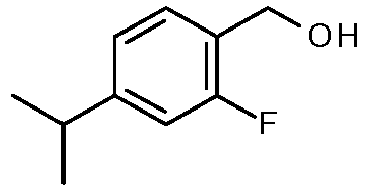
- A sol. of 193 (5.0 g, 17.7 mmol) in THF (150 mL) was cooled to 0°C and treated with TBAF (21.2 mL, 21.2 mmol). The r.m. was stirred for 90 min at 0°C, concentrated and poured in Et2O. The organic layer was washed with water (3x 50mL), dried over MgSO4 and evaporated in vacuo to afford a yellow oil (3.3 g) which was purified by prep. LC (irregular SiOH 15-40µm, 80g GraceResolv™, Mobile phase gradient: from heptane 100% to heptane 50%, EtOAc 50%). The pure fractions were collected and solvent evaporated to give 2.18 g Int. 194 (colorless oil; 73%).
-

- To a sol. of 194 (1.12 g, 6.66 mmol) in dry Et2O (19 mL) at 0 °C was added dropwise Phosphorus tribromide (0.626 mL, 6.66 mmol). The ice bath was removed and the reaction stirred for 3h. Then, water was carefully added to the mixture, and the layers were separated. The organic layer was washed with brine, dried over MgSO4, filtered off and evaporated in vacuo to afford 1.49 g of Int. 195, colorless liquid (97%).
-

- A sol. of 195 (1.49 g, 5.87 mmol) in ACN (15 mL) was treated with K2CO3 (1.10 g, 7.98 mmol) and 7 (1.17 g, 5.32 mmol) at r.t. The r.m. was stirred for 20h at r.t. DMF (11mL) was added and the r.m. was stirred at r.t. for 90h. Water and EtOAc were added, and the organic layer was washed with brine, separated, dried over MgSO4, filtered and concentrated in vacuo to afford 2.07 g, pale oil. This oil was purified by prep. LC (Irregular SiOH 50 µm, 80 g Grace, mobile phase gradient: from Heptane 100% to EtOAC 10%, Heptane 90%). The fractions were collected and evaporated in vacuo to give 360 mg of Int. 196, colorless oil which crystallized in a solid (68%).
-

- PdCl2(dppf) (0.141 g, 0.172 mmol) was added to a stirred sol. of 28 (0.778 g, 1.72 mmol), 196 (1.33 g, 3.45 mmol) and K3PO4 (1.10 g, 5.17 mmol) in 1,4-dioxane (10.6 mL) and H2O (5.3 mL) at r.t., under N2. The resulting mixture was stirred at 120 °C using one single mode microwave (Biotage Initiator EXP 60) with a power output ranging from 0 to 400 W for 30 min. [fixed hold time]. The crude material was diluted with DCM and water, and the organic layer was washed with brine, dried over MgSO4, filtered and evaporated in vacuo to give 2.4 g, dark oil. This oil was purified by prep. LC (Irregular SiOH 50 µm, 80 g Grace, mobile phase gradient: from DCM 100% to EtOAc 60%, DCM 40%). The fractions were collected and evaporated in vacuo to give 1.03 g of Int. 197 , pale yellow oil (89%).
-

- TBAF (1.85 mL, 1.85 mmol) was added to a stirred sol. of 197 (1.03 g, 1.54 mmol) in THF (12 mL) at 0°C, and the r.m. was stirred at 0 °C for 90 min. The crude mixture was diluted with brine and EtOAc. The organic layer was dried over MgSO4, filtered and evaporated in vacuo to afford 790 mg of a sticky solid. This solid was purified by prep. LC (Irregular SiOH 50 µm, 80 g Grace, mobile phase gradient: from DCM 100% to DCM 92%, MeOH 8%). The fractions were collected and evaporated in vacuo to give 735 mg of colorless sticky oil. This oil was triturated with pentane, and the solvent was removed in vacuo to yield 640 mg of white amorphous solid. So it was crystallized from MeOH, and the solvent was evaporated in vacuo to yield 560mg of white solid. This solid was purified by prep. LC (Irregular SiOH 50 µm, 80 g Grace, mobile phase gradient: from DCM 100% to DCM 95%, MeOH 5%). The fractions were collected and evaporated in vacuo to give 555 mg, white solid. The residue was purified by achiral SFC (Stationary phase: Chiralpak AD-H 5µm 250x20mm, mobile phase: 70% CO2, 30% mixture of MeOH/iPrOH 50/50 v/v). The pure fractions were collected and solvent evaporated until dryness to give a colorless oil which was crystallized from ACN, filtered and dried to give 331 mg of Co. 92, white solid (43%). m.p.: 132 °C (dsc).
-

- A sol. of methyl 4-bromo-3-fluorobenzoate (= 4-Bromo-3-fluorobenzoic acid methyl ester) (1.22 g, 5.24 mmol) and potassium isopropenyltrifluoroborate (1.60 g, 10.5 mmol) in isopropanol (14 mL) was treated with Et3N (2.92 mL, 21.0 mmol) and purged with N2. PdCl2(dppf) (215 mg, 262 µmοl) was then added and the r.m. was carefully purged with N2. The mixture was heated at 120°C using one single mode microwave (Biotage Initiator EXP 60) with a power output ranging from 0 to 400 W for 30 min [fixed hold time]. The crude mixtures were combined and diluted with EtOAc and washed with water and brine. The organic layer was dried over MgSO4 and evaporated to afford 4.53 g of Int. 198 , brown oil (quant. but impurities), used as such for the next step.
-

- A catalytic amount of Pd/C 10% (600 mg, 564 µmol) was added into a sol. of 198 (4.53 g, 23.3 mmol) in EtOH (50 mL). The r.m. was hydrogenated (7 bars) for 3 h at r.t. The sol. was filtered through a short pad of Celite® and evaporated to afford a red residue. The residue was filtered through a pad of silica gel (mobile phase: Et2O). The filtrate was evaporated until dryness to afford 2.79 g of Int. 199, yellow oil (61%).
-

- A sol. of 199 (2.69 g, 13.1 mmol) in Et2O (50 mL) was cooled to 0°C and treated with LAH (1.04g, 27.4 mmol). The r.m. was stirred at 0°C for 90 min. then quenched with water (1.0 mL), a 3N sol. of NaOH (1.0 mL) and water (3 mL). The sol. was filtered on a glass frit and the filtrate was evaporated. The yellow oil was purified by prep. LC (irregular SiOH 15-40 µm, 40 g Merck, Mobile phase gradient: from heptane 80%, EtOAc 20% to heptane 70%, EtOAc 30%). The pure fractions were collected and solvent evaporated to give 1.25 g of Int. 200 , colorless oil (52%).
-
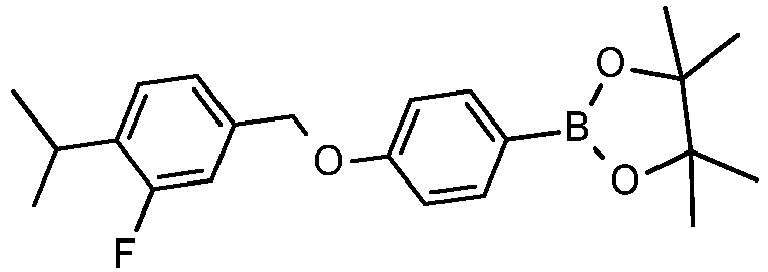
- A sol. of 7 (1.36 g, 6.19 mmol) and 200 (1.25 g, 7.43 mmol) in dry THF (20 mL) was treated with PPh3 (1.95 g, 7.43 mmol) and DBAD (1.71 g, 7.43 mmol). The r.m. was stirred at r.t. for 17 h then concentrated in vacuo. The concentrate was poured in EtOAc, washed with water, dried over MgSO4 and evaporated in vacuo to give an oil. The oil was purified prep. LC (irregular SiOH 15-40 µm, 45 g, Merck, dry loading, mobile phase gradient: from heptane 90%, EtOAc 10% to heptane 70%, EtOAc 30%). The pure fractions were collected and solvent evaporated until dryness to give 2.25g of Int. 201, white solid (98%).
-

- A sol. of 28 (1.20 g, 2.66 mmol) and 201 (1.97 g, 5.32 mmol) in 1,4-dioxane (12 mL) and H2O (6 mL) was treated with K3PO4 (1.69 g, 7.98 mmol) and purged with N2. PdCl2(dppf) (218 mg, 266 µmοl) was then added and the r.m. was carefully purged with N2. The mixture was heated at 120°C using one single mode microwave (Biotage Initiator EXP 60) with a power output ranging from 0 to 400 W for 30 min [fixed hold time]. The crude mixture was poured in DCM and water. The organic layer was separated, dried over MgSO4 and evaporated in vacuo to give a black residue. The residue was purified by prep. LC (Irregular SiOH 50 µm, 80 g Grace, mobile phase gradient: from DCM 100% to DCM 94%, MeOH 6%). The pure fractions were collected and solvent evaporated until dryness to give 1.53 g of Int. 202, white solid (94%).
-

- TBAF (2.51 mL, 2.51 mmol) was added to a stirred sol. of 202 (1.53 g, 2.49 mmol) in THF (25 mL) at 0°C, and the r.m. was stirred at 0 °C for 90 min. The crude mixture was diluted with water and a sol. of DCM/MeOH (95:5). The organic layer was washed with brine, dried over MgSO4, filtered and evaporated in vacuo to afford 1.52 g. The residue was purified by prep. LC (Irregular SiOH 50 µm, 80 g Grace, mobile phase gradient: from DCM 100% to DCM 92%, MeOH 8%). The desired fractions were collected and evaporated in vacuo to give 572 mg, sticky oil which was crystallized from EtOH, filtered and dried to give 224 mg, white solid. The filtrate and the solid were combined and evaporated in vacuo to give 417 mg of a residue. This residue was purified by achiral SFC (Stationary phase: Chiralpak IA 5µm 250*20mm, mobile phase: 70% CO2, 30% mixture of MeOH/iPrOH 50/50 v/v). The pure fractions were collected and solvent evaporated until dryness to give 267 mg which was crystallized from EtOH, filtered and dried to give 256 mg of Co. 93, white solid (45%). m.p.: 183°C (dsc).
-

- Tert-butyldiphenylchlorosilane (4.3 mL, 17 mmol) was added to a sol. of 4-bromo-2,6-difluorobenzyl alcohol (2.5 g, 11 mmol) and imidazole (2.3 g, 33 mmol) in DCM (106 mL) at r.t. The mixture was stirred at r.t. overnight. The mixture was quenched with water and extracted with DCM. The organic layer was decanted, washed with water then brine, dried over MgSO4, filtered and evaporated to dryness to give 7.5 g, colorless oil. This oil was purified by prep. LC (irregular SiOH 30 µm 120 g GraceResolv™, mobile phase gradient: heptane/EtOAc from 95/15 to 85/15/0.1). The desired fractions were collected and solvent evaporated to give 6.2 g of Int. 203 , colorless oil used as such as for the next step.
-

- In a microwave vial, a mixture of 203 (2.0 g, 4.3 mmol), CsF (1.5 g, 9.5 mmol) and 2-isopropenyl-4,4,5,5-tetramethyl-1,3,2-dioxaborolane (0.9 mL, 4.8 mmol) in dry THF (40 mL) was purged with N2. Pd(tBu3P)2 (111 mg, 0.22 mmol) was added and the mixture was purged again with N2 and heated at 80°C overnight. Water and EtOAc were added, the organic layer was separated, washed with brine, dried over MgSO4, filtered on Celite® and evaporated. The residue was purified by prep. LC (Regular SiOH, 30 µm, 80 g GraceResolv™, mobile phase: Heptane/EtOAc 95/5). The pure fractions were collected and solvent evaporated to give 1.8 g of Int. 204 , yellow oil (98%).
-

- A solution of 204 (1.8 g, 4.3 mmol), ammonium formate (1.6 g, 26 mmol), Pd/C 10% (226 mg, 0.21 mmol) in THF (7 mL) and MeOH (22 mL) was refluxed for 30min. The mixture was filtered through Celite®, washed with EtOAc, and the filtrate was concentrated. The residue was partitioned between water and EtOAc. The organic layer was separated, dried over MgSO4, filtered and evaporated until dryness to give 1.7g of Int. 205, colorless oil (94%).
-

- TBAF (4.8 mL, 4.8 mmol) was added dropwise to a sol. of 205 (1.7 g, 4.0 mmol) in THF (39 mL) at r.t. The mixture was stirred for 10h at r.t. The mixture was concentrated and the residue was purified by prep. LC (Regular SiOH, 30 µm, 40 g GraceResolv™, mobile phase: Heptane/EtOAc 80/20). The pure fractions were collected and solvent evaporated until dryness to give 1.2g of crude Int. 206 , used like this in the next step.
-

- Under N2, DBAD (1.4 g, 6.2 mmol) was added portionwise to a sol. of 206 (1.2 g, 5.1 mmol), 7 (1.4 g, 6.2 mmol), PPh3 supp. (1.9 g, 6.2 mmol) in dry THF (30 mL). The r.m. was stirred at r.t. for 3 days. PPh3 supp. was filtered and the filtrate was evaporated to give 5.0 g, yellow oil. The crude residue was purified by prep. LC (irregular SiOH 30 µm 80 g GraceResolv™, mobile phase: heptane/EtOAc 90/10). The pure fractions were collected and the solvent evaporated until dryness to give 1.45 g of Int. 207, yellow solid (72%).
-

- In a microwave vial, a mixture of 28 (0.48 g, 1.1 mmol), 207 (0.5 g, 1.3 mmol), K3PO4 (0.91 g, 4.3 mmol) in 1,4-dioxane (4.7 mL) and H2O (1.7 mL) was carefully purged with N2. PdCl2(dppf) (88 mg, 0.11 mmol) was added and the r.m. was purged again with N2. The r.m. was heated at 80°C overnight. The r.m. was diluted with EtOAc and washed with water (once) and with brine (3x). The organic phase was dried over MgSO4, filtered on a pad of Celite® and evaporated in vacuo to give 1g, brown oil. This oil was purified by prep. LC (irregular SiOH 30 µm, 25 g Interchim, mobile phase gradient: DCM/MeOH/NH4OH from 100/0/0 to 98/2/0.1). The pure fractions were collected and solvent evaporated until dryness to give 0.44 g of Int. 208, yellow oil used like this in the next step.
-

- TBAF (0.84 mL, 0.84 mmol) was added dropwise to a sol. of 208 (0.44 g, 0.69 mmol) in THF (7 mL) at r.t. The mixture was stirred overnight at r.t. The mixture was concentrated. The residue was purified by prep. LC (Regular SiOH, 30 µm, 12 g GraceResolv™, mobile phase: DCM/MeOH/NH4OH 97/3/0.1). The pure fractions were collected and solvent evaporated until dryness to give 210 mg which was triturated in Et2O. The white solid was filtrated, washed and dried to give 145 mg of Co. 94, white solid (40%). m.p.: 194°C (dsc).
-

- NaH 60% (2.5 g, 61.4 mmol) was added to 4 (12 g, 41 mmol) in DMSO (120 mL) at r.t. under N2. The mixture stirred for 2h then (R)-(-)-2,2-dimethyl-1,3-dioxolane-4-ylmethyl p-toluenesulfonate (14 g;49.1 mmol) was added portionwise and the r.m. was stirred for 15h. The mixture was poured into water and K2CO3 and extracted with EtOAc. The organic layer was evaporated until dryness. The residue was taken up with DCM and water. The organic layer was extracted, dried over MgSO4, filtered and evaporated to give 15g. The residue was purified by prep. LC (120g of irregular SiOH 35-40µm GraceResolv™, mobile phase gradient: from 100% DCM to 95% DCM 5% CH3OH 0.1% NH4OH). The fractions were collected and evaporated to give 8 g of Int. 209 (S) (48%).
-

- In a microwave vial, a mixture of 209 (0.44 g, 1.1 mmol), 207 (0.5 g, 1.3 mmol), K3PO4 (0.91 g, 4.3 mmol) in 1,4-dioxane (4.7 mL) and H2O (1.7 mL) was carefully purged with N2. PdCl2(dppf) (88 mg, 0.11 mmol) was added and the r.m. was purged again with N2. The r.m. was heated at 80°C overnight. The r.m. was diluted with EtOAc and washed with water (once) and with brine (3 times). The organic phase was dried over MgSO4, filtered on a pad of Celite® and evaporated in vacuo to give 0.85 g, brown oil. This oil was purified by prep. LC (irregular SiOH 30 µm, 25 g Interchim, mobile phase gradient: DCM/MeOH/NH4OH from 100/0/0 to 98/2/0.1). The fractions were collected and evaporated until dryness to give 0.3g of Co. 95a (S), yellow oil (47%).
-

- A sol. of Co. 95a (0.3 g, 0.51 mmol) and HCl 3N (0.85 mL, 2.5 mmol) in 1,4-dioxane (11 mL) were heated to reflux for 1 h. The mixture was cooled to r.t., poured into sat. NaHCO3 and extracted with DCM. The organic layer was dried over MgSO4, filtered and evaporated until dryness. The residue was purified by prep. LC (irregular SiOH 15-40 µm, 4 g, GraceResolv™, Mobile phase gradient: DCM/MeOH/NH4OH, from 97/3/0.1 to 95/5/0.1). The desired fractions were collected and evaporated until dryness to give 141 mg. The residue was purified again, by prep. LC (Stationary phase: irregular SiOH 15-40µm 300g Merck, Mobile phase: 40% Heptane, 10% MeOH, 50% EtOAc). The pure fractions were collected and the solvent evaporated to give 103 mg of white solid. The solid was triturated in Et2O, filtrated and dried to give 99 mg of Co. 95 (S), white powder (35%). m.p.: 227°C (dsc); [α]d: -18.24 ° (589 nm, c 0.34 w/v %, DMF, 20 °C)
-

- NaH 60% (1.64 g, 41 mmol) was added to 4 (8 g, 27.3 mmol) in DMSO (80 mL) at r.t. under N2. The mixture was stirred for 2h then (S)-(-)-2,2-dimethyl-1,3-dioxolane-4-ylmethyl P-toluenesulfonate (9.4 g, 32.7 mmol) was added portionwise and the r.m. was stirred for 15h. The mixture was poured into water and K2CO3 and extracted with EtOAc. The organic layer was evaporated until dryness. The residue was taken up with DCM and water. The organic layer was separated, dried over MgSO4, filtered and evaporated until dryness to give 10.75 g. The residue was purified by prep. LC (120g of irregular SiOH 35-40µm GraceResolv™, mobile phase gradient: from 100% DCM to 95% DCM 5% CH3OH 0.1% NH4OH). The fractions were collected and evaporated until dryness to give 5.55 g of Int. 211 (R) (50%).
-
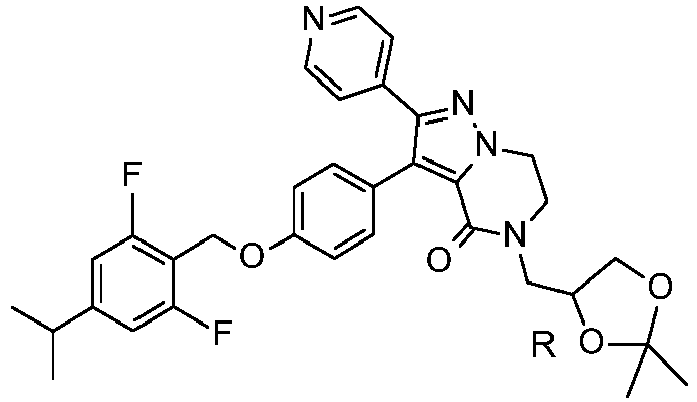
- In a microwave vial, a mixture of 211 (0.41 g, 1.0 mmol), 207 (0.47 g, 1.2 mmol), K3PO4 (0.86 g, 4.0 mmol) in 1,4-dioxane (4.4 mL) and H2O (1.6 mL) was carefully purged with N2. PdCl2(dppf) (83 mg, 0.10 mmol) was added and the r.m. was purged again with N2. The r.m. was heated at 80°C overnight. The r.m. was diluted with EtOAc and washed with water (once) and with brine (3 times). The organic layer was dried over MgSO4, filtered on a pad of Celite® and evaporated in vacuo to give 1.1g, brown oil. The mixture was purified by prep. LC (irregular SiOH 30 µm, 25 g Interchim, mobile phase: DCM/MeOH/NH4OH 98/2/0.1). The fractions were collected and evaporated until dryness to give 0.2 g of Co. 96a (R), colorless oil.
-

- A sol. of Co. 96a (0.2 g, 0.34 mmol) and HCl 3N (0.57 mL, 1.7 mmol) in 1,4-dioxane (7.5 mL) were heated to reflux for 1 h. The mixture was cooled to r.t., poured into sat. NaHCO3 and extracted with DCM. The organic layer was dried over MgSO4, filtrated and evaporated until dryness to give 190 mg, colorless oil. This oil was purified by prep. LC (Stationary phase: Sunfire Silica 5µm 150x30.0mm, Mobile phase Gradient: from 0.2% NH4OH, 98% DCM, 2% MeOH to 1% NH4OH, 90% DCM, 10% MeOH). The pure fractions were collected and solvent evaporated until dryness to give 63 mg of white solid. This solid was triturated in Et2O, filtrated and dried to give 50 mg of Co. 96 (R), white solid (27%). m.p.: 228°C (dsc); [α]d: +17.22 ° (589 nm, c 0.302 w/v %, DMF, 20 °C)
-

- In a microwave vial, a mixture of methyl 4-bromo-2,5-difluorobenzoate (1.5 g, 6.0 mmol), CsF (2.0 g, 13 mmol) and 2-isopropenyl-4,4,5,5-tetramethyl-1,3,2-dioxaborolane (1.2 mL, 6.6mmol) in dry THF (60 mL) was purged with N2. Pd(tBu3P)2 (153 mg, 0.30 mmol) was added and the mixture was purged again with N2 and heated at 80°C overnight. Water and EtOAc were added, the organic layer was separated, washed with brine, dried on MgSO4, filtered over Celite® and evaporated to give 2 g. The residue was purified by prep. LC (Regular SiOH, 30 µm, 40 g Interchim, mobile phase: Heptane/EtOAc 95/5). The pure fractions were collected and solvent evaporated until dryness to give 1g of Int. 213, yellow oil (79%).
-

- 213 (1.0 g, 4.7 mmol) in dry THF (7.5 mL) was added dropwise to a suspension of LAH (0.39 g, 10 mmol) in dry THF (7.5 mL) at 0°C under N2. The mixture was stirred overnight at r.t. Water (1.4 mL) then DCM (75 mL) were added very slowly and the mixture was stirred for 20min. MgSO4 was added and the insoluble was filtered on a pad of Celite® and evaporated until dryness to give 0.89 g of Int. 214 , pale brown oil (100%).
-

- A solution of 214 (0.89 g, 4.8 mmol), ammonium formate (1.8 g, 29 mmol), Pd/C 10% (258 mg, 0.24 mmol) in THF (7mL) and MeOH (22 mL) was refluxed for 30 min. The mixture was filtered through Celite®, washed with EtOAc, and the filtrate was concentrated. The residue was partitioned between water and EtOAc. The organic layer was separated, dried on MgSO4, filtered and evaporated until dryness to give 0.83 g of Int. 215, colorless oil (92%).
-
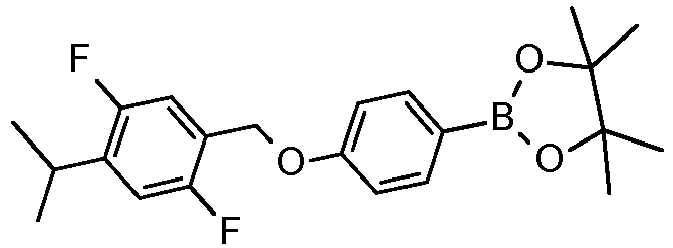
- Under N2, DBAD (1.2 g, 5.3 mmol) was added portionwise to a sol. of 215 (0.83 g, 4.5 mmol), 7 (1.2 g, 5.3 mmol), PPh3 supp. (1.7 g, 5.3 mmol) in dry THF (30 mL). The mixture was stirred at r.t. overnight. PPh3 supp. was filtered and the filtrate was evaporated to give 4.0 g, yellow oil. The crude residue was purified by prep. LC (irregular SiOH 30 µm 120 g GraceResolve™, mobile phase: heptane/EtOAc 90/10). The pure fractions were collected and solvent evaporated until dryness to give 1.26 g of Int. 216 , pale yellow oil (73%).
-

- In a microwave vial, a mixture of 28 (0.42 g, 0.94 mmol), 216 (0.4 g, 1.0 mmol), K3PO4 (0.80g, 3.7 mmol) in 1,4-dioxane (4.1 mL) and H2O (1.5 mL) was carefully purged with N2. PdCl2(dppf) (77 mg, 0.10 mmol) was added and the r.m. was purged again with N2. The r.m. was heated at 80°C overnight. The r.m. was diluted with EtOAc and washed with water (once) and with brine (3 times). The organic phase was dried over MgSO4, filtered on a pad of Celite® and evaporated in vacuo to give 0.9 g, brown oil. The crude was purified by prep. LC (irregular SiOH 30 µm, 25 g GraceResolve™, mobile phase: DCM/MeOH/NH4OH 98/2/0.1). The pure fractions were collected and solvent evaporated until dryness to give 0.55 g of Int. 217 , pale yellow oil (93%).
-

- TBAF (1.0 mL, 1.0 mmol) was added dropwise to a sol. of 217 (0.55 g, 0.87 mmol) in THF (8.5 mL) at r.t. The mixture was stirred overnight at r.t.. The mixture was concentrated and the residue was purified by prep. LC (Regular SiOH, 30 µm, 25 g GraceResolv™, mobile phase gradient: DCM/MeOH/NH4OH from 97/3/0.1 to 95/5/0.1). The pure fractions were collected and solvent evaporated until dryness to give 370 mg which was triturated in Et2O. The white solid formed was filtrated, washed and dried to give 0.23 g, white solid. The white solid and filtrate were put together and evaporated to give a residue. The residue was purified by achiral SFC (Stationary phase: Amino 6µm 150x21.2mm, Mobile phase: 85% CO2, 15% MeOH (0.3% iPrNH2)). The pure fractions were collected and solvent evaporated until dryness to give 287 mg which was triturated in Et2O. The white solid formed was filtrated and dried to give 199 mg of Co. 97, white solid (44%). m.p.: 147°C (dsc).
-

- In a microwave vial, a mixture of 209 (0.38 g, 0.94 mmol), 216 (0.4 g, 1.0 mmol), K3PO4 (0.80 g, 3.7 mmol) in 1,4-dioxane (4.1 mL) and H2O (1.5 mL) was carefully purged with N2. PdCl2(dppf) (77 mg, 0.10 mmol) was added and the r.m. was purged again with N2. The r.m. was heated at 80°C overnight. The r.m. was diluted with EtOAc and washed with water (1x) and with brine (3x). The organic layer was dried over MgSO4, filtered on a pad of Celite® and evaporated in vacuo to give a brown oil (1g). The crude was purified by prep. LC (irregular SiOH 30 µm, 25 g Interchim, mobile phase: DCM/MeOH/NH4OH 98/2/0.1). The pure fractions were collected and solvent evaporated until dryness to give 0.43g of Co. 98a (S), beige powder (78%).
-

- A sol. of Co. 98a (0.43 g, 0.73 mmol) and HCl 3N (1.2 mL, 3.6 mmol) in 1,4-dioxane (16 mL) were heated to reflux for 1 h. The mixture was cooled to r.t., poured into sat. NaHCO3 and extracted with DCM. The organic layer was dried over MgSO4, filtered and evaporated until dryness. The residue was purified by prep. LC (irregular SiOH 15-40 µm, 12g, GraceResolv™, Mobile phase gradient: DCM/MeOH/NH4OH, from 96/4/0.1 to 95/5/0.1). The pure fractions were collected and solvent evaporated until dryness to give 350 mg, colorless oil. This oil was crystallized from Et2O and the white solid formed was filtrated and dried to give 318 mg. The solid was purified by achiral SFC (Stationary phase: Amino 6µm 150x21.2mm, Mobile phase: 80% CO2, 20% MeOH (0.3% iPrNH2)). The pure fractions were collected and solvent evaporated to give 241 mg, white solid, which was triturated in Et2O, filtrated and dried to give 215 mg of Co. 98 (S), white solid (54%). m.p.: 184°C (dsc); [α]d: -17.99 ° (589 nm, c 0.339 w/v %, DMF, 20 °C).
-

- In a microwave vial, a mixture of 211 (0.38 g, 0.94 mmol), 216 (0.4 g, 1.0 mmol), K3PO4 (0.80 g, 3.7 mmol) in 1,4-dioxane (4.1 mL) and H2O (1.5 mL) was carefully purged with N2. PdCl2(dppf) (77 mg, 0.10 mmol) was added and the r.m. was purged again with N2. The r.m. was heated at 80°C overnight. The r.m. was diluted with EtOAc and washed with water (once) and with brine (3 times). The organic phase was dried over MgSO4, filtered on a pad of Celite® and evaporated in vacuo to give a brown oil. This oil was purified by prep. LC (irregular SiOH 30 µm, 25g Interchim, mobile phase: DCM/MeOH/NH4OH 98/2/0.1). The pure fractions were collected and solvent evaporated until dryness to give 0.32 g of Co. 99a (R), colorless oil (58%).
-
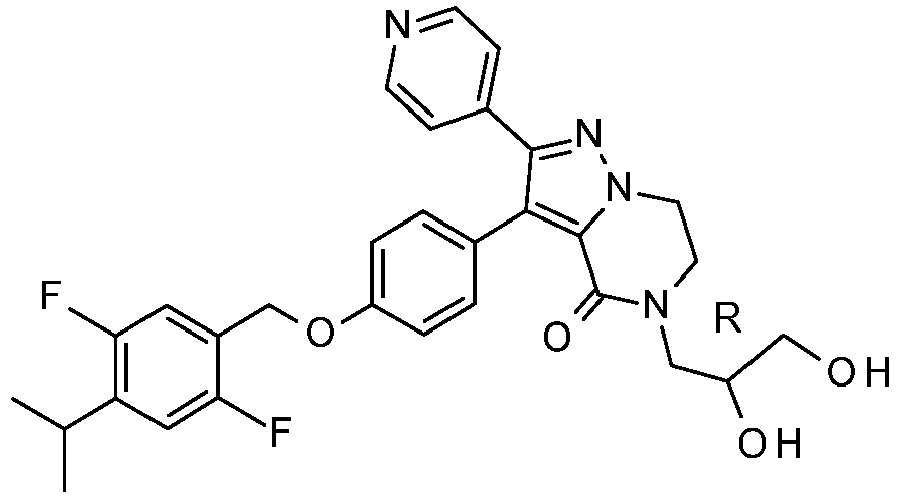
- A sol. of Co. 99a (0.32 g, 0.54 mmol) and HCl 3N (0.91 mL, 2.7 mmol) in 1,4-dioxane (12 mL) were heated to reflux for 1 h. The mixture was cooled to r.t., poured into sat. NaHCO3 and extracted with DCM. The organic layer was dried over MgSO4, filtered and evaporated until dryness to give 300 mg. The residue was purified by achiral SFC (Stationary phase: Amino 6µm 150x21.2mm, Mobile phase: 80% CO2, 20% MeOH (0.3% iPrNH2)). The pure fractions were collected and solvent evaporated until dryness to give 191 mg of white solid. This solid was triturated in Et2O, filtrated and dried to give 160 mg of Co. 99 (R), white solid (54%). m.p.: 183°C (dsc); [α]d: +17.82 ° (589 nm, c 0.331 w/v %, DMF, 20 °C).
-

- H2SO4 (1.1 mL, 21 mmol) was slowly added to a sol. of 4-bromo-2,3-difluorobenzoic acid (2.5 g, 10.5 mmol) in MeOH (40 mL). The mixture was heated at 50°C for 3 days. The mixture was concentrated in vacuo and the residue was partitioned between EtOAc and water and basified with K2CO3. The combined organic layers were washed with brine, dried (MgSO4), filtered and concentrated in vacuo to give 2.6 g of Int. 220, colorless oil which crystallized in white solid (98%).
-

- In a schlenk, a mixture of 220 (2. 5g,), CsF (3.3 g, 22 mmol) and 2-isopropenyl-4,4,5,5-tetramethyl-1,3,2-dioxaborolane (2.0 mL, 11 mmol) in dry THF (60 mL) was purged with N2. Pd(tBu3P)2 (254 mg, 0.50 mmol) was added and the mixture was purged again with N2 and heated at 80°C overnight. Water and EtOAc were added, the organic layer was separated, washed with brine, dried on MgSO4, filtered over Celite® and evaporated. The residue was purified by prep. LC (Regular SiOH, 30 µm, 80g GraceResolv™, mobile phase: Heptane/EtOAc 95/5). The pure fractions were collected and solvent evaporated to give 1.8 g of Int. 221 , yellow oil (85%).
-

- 221 (1.8 g, 8.5 mmol) in dry THF (14 mL) was added dropwise to a suspension of LAH (0.39 g, 10 mmol) in dry THF (14 mL) at 0°C under N2. The mixture was stirred for 30 min. Water (1.4 mL) then DCM (75 mL) were added very slowly and stirred overnight. MgSO4 was added and the insoluble was filtered on a pad of Celite® and the filtrate evaporated until dryness to give 1.5g of Int. mixture 222, brown oil. The mixture was used like this in the next step.
-

- 222 (1. 5g, 8.1 mmol), ammonium formate (3.0 g, 49 mmol), Pd/C 10% (433 mg, 0.41 mmol), THF (14 mL) and MeOH (44 mL) were refluxed for 30 min. The mixture was filtered through Celite®, washed with EtOAc, and the filtrate was concentrated. The residue was partitioned between brine and EtOAc. The organic layer was separated, dried on MgSO4, filtered and evaporated until dryness to give 1.47 g of Int. 223, colorless oil (97%).
-

- Under N2, DBAD (2.2 g, 9.5 mmol) was added portionwise to a sol. of 223 (1.47 g, 7.9 mmol), 7 (2.1 g, 9.5 mmol), PPh3 supp. (3.0 g, 9.5 mmol) in dry THF (60 mL). The mixture was stirred at r.t. for 3days. PPh3 supp. was filtered and the filtrate was evaporated to give 8 g, yellow oil. The crude residue was purified by prep. LC (irregular SiOH 30 µm 120 g GraceResolv™, mobile phase: heptane/EtOAc 90/10). The pure fractions were collected and solvent evaporated until dryness to give 2.36 g of Int. 224, pale yellow oil which crystallized in beige solid (77%).
-

- In a microwave vial, a mixture of 28 (0.42 g, 0.94 mmol), 224 (0.4 g, 1.0 mmol), K3PO4 (0.80 g, 3.7 mmol) in 1,4-dioxane (4.1mL) and H2O (1.5mL) was carefully purged with N2. PdCl2(dppf) (77 mg, 0.10 mmol) was added and the r.m. was purged again with N2. The r.m. was heated at 80°C overnight. The r.m. was diluted with EtOAc and washed with water (once) and with brine (3 times). The organic phase was dried over MgSO4, filtered on a pad of Celite® and evaporated in vacuo to give 1g of a residue which was purified by prep. LC (irregular SiOH 30 µm, 25g GraceResolv™, mobile phase: DCM/MeOH/NH4OH 98/2/0.1). The pure fractions were collected and solvent evaporated until dryness to give 0.6 g of Int. 225, yellow oil (100%).
-

- TBAF (1.1 mL, 1.1 mmol) was added dropwise to a sol. of 225 (0.60 g, 0.95 mmol) in THF (9.3 mL) at r.t. The mixture was stirred overnight at r.t. The mixture was concentrated and the residue was purified by prep. LC (Regular SiOH, 30 µm, 25 g GraceResolv™, mobile phase gradient: DCM/MeOH/NH4OH from 96/4/0.1 to 95/5/0.1).The pure fractions were collected and solvent evaporated until dryness to give 450 mg. This residue was purified by prep. LC (Stationary phase: Sunfire C18 Xbridge 5µm 150x30.0mm, Mobile phase Gradient: from 70% (NH4HCO3 0.5% aq. sol.), 30% ACN to 100% ACN). 295 mg was collected and triturated in Et2O. The white solid formed was filtrated, washed and dried to give 257 mg of Co. 100, white solid (52%). m.p.: 172°C (dsc).
-

- In a microwave vial, a mixture of 209 (0.38 g, 0.94 mmol), 224 (0.4 g, 1.), K3PO4 (0.80 g, 3.7 mmol) in 1,4-dioxane (4.1 mL) and H2O (1.5 mL) was carefully purged with N2. PdCl2(dppf) (77 mg, 0.10 mmol) was added and the r.m. was purged again with N2. The r.m. was heated at 80°C overnight. The r.m. was diluted with EtOAc and washed with water (once) and with brine (3 times). The organic phase was dried over MgSO4, filtered on a pad of Celite® and evaporated in vacuo to give brown oil. This oil was purified by prep. LC (irregular SiOH 30 µm, 25g Interchim, mobile phase: DCM/MeOH/NH4OH 98/2/0.1). The desired fractions were collected and solvent evaporated until dryness to give 0.33g of Co. 101a (S), beige powder (60%).
-

- A sol. of Co. 101a (0.32 g, 0.54 mmol) and HCl 3N (0.91 mL, 2.7 mmol) in 1,4-dioxane (12 mL) were heated to reflux for 1 h. The mixture was cooled to r.t., poured into sat. NaHCO3 and extracted with DCM. The organic layer was dried over MgSO4, filtered and evaporated until dryness to give 0.4 g, colorless oil. This oil was purified by prep. LC (Stationary phase: Sunfire C18 Xbridge 5µm 150x30.0mm, Mobile phase Gradient: from 70% (NH4HCO3 0.5% aq. sol.), 30% ACN to 100% ACN). The pure fractions were collected and solvent evaporated until dryness to give 210 mg which was triturated in Et2O. The white solid formed was filtrated, washed and dried to give 0.18 g of Co. 101 (S), white solid (61%). m.p.: 192°C (dsc); [α]d: -19.88 ° (589 nm, c 0.2515 w/v %, DMF, 20 °C)
-

- In a microwave vial, a mixture of 211 (0.38 g, 0.), 224 (0.4g , 1.0 mmol), K3PO4 (0.80 g, 3.7 mmol) in 1,4-dioxane (4.1 mL) and H2O (1.5 mL) was carefully purged with N2. PdCl2(dppf) (77 mg, 0.10 mmol) was added and the r.m. was purged again with N2. The r.m. was heated at 80°C overnight. The r.m. was diluted with EtOAc and washed with water (once) and with brine (3 times). The organic phase was dried over MgSO4, filtered on a pad of celite® and evaporated in vacuo to give brown oil. The crude mixture was purified by prep. LC (irregular SiOH 30 µm, 25g Interchim, mobile phase: DCM/MeOH/NH4OH 98/2/0.1). The pure fractions were collected and solvent evaporated until dryness to give 0.48 g of Co. 102a (R), colorless oil (87%).
-

- A sol. of Co. 102a (0.48 g, 0.82 mmol) and HCl 3N (1.4 mL, 4.1 mmol) in 1,4-dioxane (18 mL) were heated to reflux for 1 h. The mixture was cooled to r.t., poured into sat. NaHCO3 and extracted with DCM. The organic layer was dried over MgSO4, filtered and evaporated until dryness to give 520 mg, colorless oil. The crude was purified by prep. LC (Stationary phase: Sunfire C18 Xbridge 5µm 150x30.0mm, Mobile phase Gradient: from 70% (NH4HCO3 0.5% aq. sol.), 30% ACN to 100% ACN). The pure fractions were collected and solvent evaporated until dryness to give 241 mg which was triturated in Et2O. The white solid formed was filtrated, washed and dried to give 215 mg of Co. 102 (R), white solid (48%). m.p. = 191°C (dsc); [α]d: +19.28 ° (589 nm, c 0.249 w/v %, DMF, 20 °C).
-

- DBAD (446 mg, 1.94 mmol) was added to a stirred sol. of 7 (305 mg, 1.38 mmol), (2-isopropylpyrimidin-5-yl)methanol (295 mg, 1.94 mmol) and PPh3 supp. (606 mg, 1.94 mmol) in THF (7 mL) under N2 at r.t. The mixture was stirred at r.t. for 16 h. Then, additional PPh3 supp. (130 mg; 0.416mmol) and DBAD (96 mg, 0.416 mmol) were added under N2, and the mixture was stirred at r.t. for 16 h. The crude mixture was filtered off and the filtrate was evaporated in vacuo to give an oil. The oil was purified by prep. LC (Irregular SiOH 15-40 µm, 80g Grace, mobile phase gradient: from Heptane 100% to EtOAc 50%, Heptane 50%). The desired fractions were collected and solvent evaporated until dryness to give 800 mg of a solid which was purified by prep. LC (Irregular SiOH 15-40 µm, 30 g Grace, mobile phase gradient: from Heptane 100% to EtOAc 40%, Heptane 60%). The pure fractions were collected and solvent evaporated until dryness to give 590 mg of Int. 228 , solid (90%, purity 75%), used as such as for the next step.
-

- A mixture of 4 (150 mg, 0.512 mmol), 228 (590 mg, 1.25 mmol), K3PO4 (434 mg, 2.05 mmol) in 1,4-dioxane (3 mL) and H2O (1 mL) was carefully purged with N2. PCy3 (29 mg, 0.102 mmol) and Pd(OAc)2 (11 mg, 51.2 µmοl) were added and the r.m. was purged again with N2, and stirred for 68 h at 80°C. The crude material was treated with water and extracted with DCM. The organic phase was washed with brine, dried over MgSO4, filtered and evaporated in vacuo to give a black solid. The solid was purified by prep. LC on (irregular SiOH 15-40µm 24g Grace, Mobile phase gradient: from DCM 100% to MeOH 10%, DCM 90%). The desired fractions were combined and the solvent was removed in vacuo to give 175 mg, white solid. The solid was purified by achiral SFC on (2-ethylpyridine 6µm 150x21.2mm; Mobile phase: 0.3% iPrNH2, 80% CO2, 20% MeOH). The pure fractions were collected and concentrated in vacuo to yield 161 mg of Co. 103, white solid (71%). m.p.: 235 °C (dsc).
-
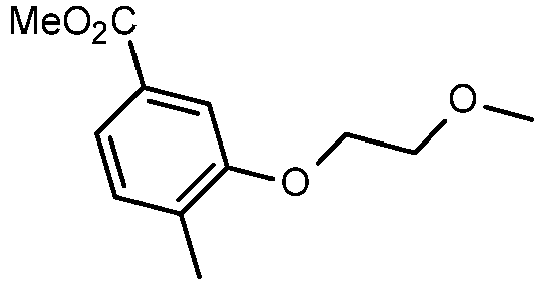
- Methyl 3-hydroxy-4-methylbenzoate (2.5 g, 15 mmol), 2-bromoethyl methyl ether (1.5 mL, 16.5 mmol), K2CO3 (3.1 g, 22.5 mmol) in ACN (40 mL) at 80°C overnight. Water and EtOAc were added, the mixture was extracted, the organic layer was separated, dried over MgSO4, filtered and evaporated. The residue was purified by prep. LC on (Irregular SiOH 20-45µm 40g GRACE, Mobile phase gradient: 100% DCM to 99/1 DCM/MeOH). The pure fractions were collected and solvent evaporated until dryness to give 2.8g of Int. 229 (78%).
-

- LAH (287 mg, 7.5 mmol) was added carefully at 5°C to a sol. of 229 (1.5 g, 6.3 mmol) in THF (20 mL). The mixture was stirred at r.t. for 1h. Water was carefully added at 5°C and EtOAc were added. The mixture was extracted, the organic layer was separated, dried over MgSO4, filtered and evaporated to give 1.2 g of Int. 230 (97%).
-

- 230 (1.2 g, 6.1 mmol), 7 (1.6 g, 7.3 mmol), PPh3 supp. (2.4 g, 9.2 mmol) in THF (40 mL). DBAD (2.1 g, 9.2 mmol) was added portionwise at r.t. and the mixture was stirred at r.t. overnight. Water and EtOAc were added, the mixture was extracted, the organic layer was separated, dried over MgSO4, filtered and evaporated. The residue was purified by prep. LC on (irregular 15-40µm 30g Merck, Mobile phase: 60/40 heptane/EtOAc). The pure fractions were collected and the solvent evaporated until dryness to give 1.2 g of Int. 231 (49%).
-

- A mixture of 4 (400 mg, 1.36 mmol), 231 (0.71 g, 1.8 mmol), K3PO4 (1.16 g, 5.46 mmol) in 1,4-dioxane (7 mL) and H2O (3 mL) was carefully purged with N2. PCy3 (80.4 mg, 0.29 mmol) and Pd(OAc)2 (32 mg, 0.14 mmol) were added and the r.m. was purged again with N2. The r.m. was stirred for 8h at 80°C. The crude material was poured in water and DCM, the residue was taken up in DCM and the precipitate was filtered off. The mother layer was evaporated and the residue was purified by prep. LC on (Irregular SiOH 20-45µm 40g MATREX, Mobile phase: 97/3 DCM/MeOH). The pure fractions were collected and solvent evaporated until dryness to give 150 mg of a residue which was taken up in Et2O, the precipitate was filtered off and dried to give 79 mg of Co. 104 (12%). m.p.: 190°C (dsc).
-
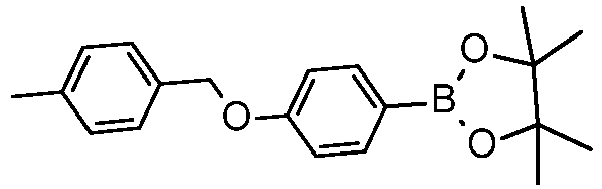
- A sol. of 4-methybenzylbromide (1.06 g, 4.81 mmol) in ACN (10 mL) was treated with K2CO3 (0.798 g, 5.78 mmol) and 7 (0.98 g, 5.3 mmol) at r.t. The r.m. was stirred for 18 h at r.t. Then, water and DCM were added, and the organic layer was washed with brine, separated, dried over MgSO4, filtered and concentrated in vacuo to give 1.6 g of Int. 232 (100%).
-

- In a microwave vial, a mixture of 4 (300 mg, 1.02 mmol), 232 (431 mg, 1.33 mmol), K3PO4 (911 mg, 4.29 mmol) in 1,4-dioxane (4.8 mL) and H2O (1.6 mL) was carefully purged with N2. PCy3 (60 mg, 0.214 mmol) and Pd(OAc)2 (24 mg, 0.107 mmol) were added and the r.m. was purged again with N2. The r.m. was stirred for 16 h at 80°C. The crude material was dissolved in water and extracted with EtOAc. The organic phase was dried over MgSO4, filtered and evaporated in vacuo to give 530 mg of crude residue. The residue was purified by prep. LC on (Stability Silica 5µm 150x30.0mm, Mobile phase Gradient: from 0.2% NH4OH, 98% DCM, 2% MeOH to 1% NH4OH, 89% DCM, 10% MeOH). The pure fractions were collected and the solvent was evaporated. 255 mg was obtained as a white solid. The solid was taken up in Et2O, filtrated and dried to give 225 mg of Co. 105, white powder (54%). m.p.: 259°C (dsc).
-

- DBAD (3.8 g, 16.4 mmol) was added portionwise to a mixture of 4-(1-methylpropyl)-benzenemethanol (1.8 g, 11 mmol), 7 (2.4 g, 11 mmol), PPh3 supp. (5.1 g, 16.4 mmol) in THF (30mL) at r.t. The mixture was stirred for 15h, filtered and washed with EtOAc. The filtrate was poured into water and K2CO3. The organic layer was dried over MgSO4, filtered and evaporated until dryness to give 7 g. The residue was purified by prep. LC (120g of SiOH 35-40µm GraceResolv™, mobile phase gradient: from 95% heptane 5% EtOAc to 80% heptane 20% EtOAc). The fractions were collected and evaporated until dryness to give 3.3 g which was crystallized from heptane, filtered and dried to give 0.726 g of Int. 233 (18%). The filtrate was evaporated until dryness to give 2.6 g. This residue was purified by prep. LC (Stationary phase: irregular SiOH 15-40µm 300g MERCK, Mobile phase: 95% Heptane, 0.3% MeOH, 5% EtOAc). The desired fractions were collected and evaporated until dryness to give 1.75 g of Int. 233. The both fractions were put together to give 2.47g of Int. 233 (Global yield: 62%).
-

- A mixture of 4 (380 mg, 1.3 mmol), 233 (726 mg, 2 mmol), K3PO4 (1.1 g, 5.2 mmol) in 1,4-dioxane (7 mL) and H2O (2.5 mL) was carefully purged with N2. PCy3 (72.7 mg, 0.26 mmol) and Pd(OAc)2 (29.1 g, 0.13 mmol) were added and the r.m. was purged again with N2. The r.m. was stirred for 18h at 80°C. Water and K2CO3 were added then EtOAc. The mixture was filtered and the organic layer was extracted, dried over MgSO4, filtered and evaporated until dryness. The residue was purified by prep. LC (40g of irregular SiOH 35-40µm GraceResolv™, mobile phase gradient: from 100% DCM to 95% DCM 5% CH3OH 0.1% NH4OH). The fractions were collected and evaporated until dryness. The product was crystallized from Et2O, filtered and dried to give 188 mg of Co. 106 (32%). m.p.: 229 °C (dsc).
-

- NaH 60% (0.115 g, 2.9 mmol) was added to a suspension of Co. 106 (1 g, 2.21 mmol) in DMF (15 mL) at r.t. under N2. The mixture was stirred for 2h. (2-bromoethoxy)-tert-butyldimethylsilane (0.57 mL, 2.65 mmol) was added and stirred for 20h. The mixture was poured into water and K2CO3 and extracted with EtOAc. The organic layer was dried (MgSO4), filtered and evaporated until dryness. The residue was purified by prep. LC (120 g of irregular SiOH 35-40µm GraceResolv™, mobile phase gradient: from 100% DCM to 97% DCM 3% CH3OH 0.1% NH4OH). The fractions were collected and evaporated to give 1.07 g of Int. 234 (79%).
-

- TBAF (2.1 mL, 2.1 mmol) was added dropwise to a sol. of 234 (1.1 g, 1.8 mmol) in THF (17 mL) at r.t. The mixture was stirred overnight at r.t. The mixture was concentrated and the residue was purified by prep. LC (Regular SiOH, 30 µm, 40g Interchim, mobile phase gradient: DCM/MeOH/NH4OH from 98/2/0.1 to 96/4/0.1). The pure fractions were collected and solvent evaporated until dryness to give colorless oil which was crystallized from Et2O. The white solid formed was filtrated, washed and dried to give 0.64 g of Co. 107 (74%). m.p.: 163°C (dsc).
-

- DBAD (3.8 g, 16.4 mmol) was added portionwise to a mixture of 4-iso-butylbenzyl alcohol (1.8 g, 11 mmol), 7 (2.4 g, 11 mmol), PPh3 supp. (5.1 g, 16.4 mmol) in THF (30 mL) at r.t.. The mixture was stirred for 15h. The insoluble was filtered and washed with EtOAc. The filtrate was poured in water and K2CO3. The organic layer was extracted, dried over MgSO4, filtered and evaporated until dryness to give 7.9 g. Heptane was added and the insoluble was filtered. The filtrate was purified by prep. LC (120g of SiOH 35-40µm GraceResolv™, mobile phase gradient: from 100% heptane to 90% heptane 10% EtOAc). The fractions were collected and evaporated until dryness to give 2.8 g. The residue was purified by prep. LC (Stationary phase: irregular SiOH 15-40µm 300g MERCK, Mobile phase: 95% Heptane, 0.3% MeOH, 5% EtOAc). The pure fractions were collected and solvent evaporated until dryness to give 1.8 g of Int. 235 (37%).
-
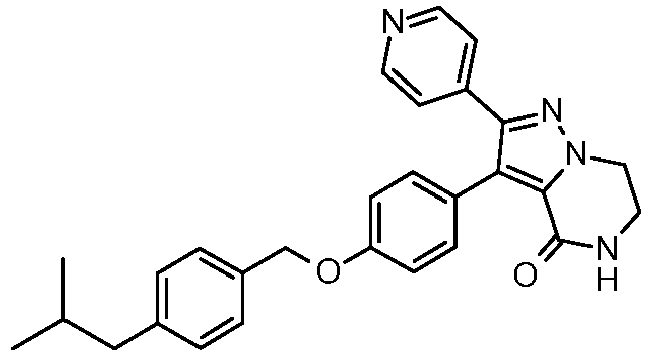
- A mixture of 4 (0.96 g, 3.3 mmol), 235 (1.8 g, 4.9 mmol), K3PO4 (2.8 g, 13.1 mmol) in 1,4-dioxane (20 mL) and H2O (2.5 mL) was carefully purged with N2 in sealed tube. PCy3 (184 mg, 0.655 mmol) and Pd(OAc)2 (73.6 mg, 0.33 mmol) were added and the r.m. was purged again with N2. The r.m. was stirred for 18h at 80°C. Water and K2CO3 were added then EtOAc. The mixture was filtered and the organic layer was extracted, dried over MgSO4, filtered and evaporated until dryness to give 2 g. The residue was crystallized from MeOH, filtered and dried to give 1.33 g which was purified by prep. LC (40g of SiOH 30µm Interchim, mobile phase gradient: from 100% DCM to 95% DCM, 5% CH3OH, 0.1% NH4OH). The pure fractions were collected and evaporated until dryness to give 0.88 g which was crystallized from MeOH, filtered and dried to give 249 mg of Co. 108 (17%). m.p.: 233°C (dsc).
-

- NaH 60% (78.1 mg, 1.9 mmol) was added to a suspension of Co. 108 (0.68 g, 1.5 mmol) in DMF (10 mL) at r.t. under N2. The mixture was stirred for 2h. (2-bromoethoxy)-tert-butyldimethylsilane (0.39 mL, 1.8 mmol) was added and stirred for 20h. The mixture was poured into water and K2CO3, and extracted with EtOAc. The organic layer was dried over MgSO4, filtered and evaporated until dryness. The residue was purified by prep. LC (120g of irregular SiOH 35-40µm GraceResolv™, mobile phase gradient: from 100% DCM to 97% DCM, 3% CH3OH, 0.1% NH4OH). The fractions were collected and evaporated until dryness to give 0.75 g of Int. 236 (86 %).
-

- TBAF (1.5 mL, 1.5 mmol) was added dropwise to a sol. of 236 (0.75 g, 1.3 mmol) in THF (12 mL) at r.t. The mixture was stirred overnight at r.t. The mixture was concentrated and the residue was purified by prep. LC (Regular SiOH, 30 µm, 25g Interchim, mobile phase: DCM/MeOH/NH4OH, 98/2/0.1). The pure fractions were collected and solvent evaporated until dryness to give 0.60 g, colorless oil which was crystallized from Et2O. The white solid formed was filtrated, washed and dried to give 0.38 g of Co. 109 (62%).
-

- To a suspension of (3-isopropylphenyl)methanol (586 mg, 2.66 mmol), 7 (520 mg, 2.77 mmol), PPh3 supp. (2.86 g, 3.46 mmol) in dry THF (30 mL) was added DBAD (797 mg, 3.46 mmol) and the r.m. was stirred at r.t. for 18h. The r.m. was then filtered through a glass frit and washed with EtOAc. The filtrate was evaporated in vacuo to give 1.88 g. The residue was purified by prep. LC (irregular SiOH 15-40 µm, solid loading, 30 g Merck, mobile phase: heptane 90%, EtOAc 10%). The pure fractions were collected and solvent evaporated until dryness to give 710 mg of Int. 237 , colorless oil 76%.
-

- In a sealed tube, a mixture of 4 (197 mg, 0.672 mmol), 237 (710 mg, 2.015 mmol), K3PO4 (570 mg, 2.69 mmol) in 1,4-dioxane (3 mL) and H2O (1 mL) was purged with N2. PCy3 (38 mg, 0.134 mmol) and Pd(OAc)2 (15 mg, 67.2 µmοl) were added and the r.m. was purged again with N2. The tube was then sealed and the r.m. was stirred for 18h at 80°C. The crude material was dissolved in water (30 mL) and extracted with EtOAc (2x 40mL). The organic phase was dried over MgSO4, filtered and evaporated in vacuo to give 600 mg, brown oil. This oil was purified by prep. LC (irregular SiOH 15-40µm, 30g Merck, mobile phase gradient: from DCM 100% to DCM 95%, MeOH 5%). The pure fractions were collected and solvent evaporated until dryness to give 269 mg, white solid. The solid was washed by Et2O, filtered and dried to give 202 mg of Co. 110, white solid (69%). m.p.: 268°C (dsc).
-

- To a suspension of 4-(1-methylethenyl)-benzenemethanol (0.675 g, 4.56 mmol), 7 (1.2 g, 5.47 mmol), DBAD (1.26 g, 5.47 mmol) in dry DCM (10 mL) was added PPh3 supp. (1.7 g, 5.47 mmol) and the r.m. was stirred at r.t. for 18 h. The insoluble was filtered through Celite®, washed with DCM. Water was added and the organic layer was separated, dried, filtered and concentrated until dryness to give 2.76 g. The residue was purified by prep. LC on (Irregular SiOH 15-40µm 50g Merck, Mobile phase: Heptane 90/EtOAc 10). The fractions were collected and evaporated until dryness to give 648 mg of Int. 238 (40%, purity 70%). The Co. was used as such for the next step.
-

- In a microwave vial, a mixture of 28 (0.663 g, 1.47 mmol), 238 (0.617 g, 1.76 mmol), K3PO4 (1.25 g, 5.87 mmol) in 1,4-dioxane (6.5 mL) and H2O (2.3 mL) was carefully purged with N2. PdCl2(dppf) (120 mg, 0.15 mmol) was added and the r.m. was purged again with N2. The r.m. was heated at 80°C overnight. The r.m. was diluted with EtOAc and washed with water (1x) and with brine (3x). The organic phase was dried over MgSO4, filtered on a pad of Celite® and evaporated in vacuo to give 1.39 g. The residue was purified by prep. LC (Stationary phase: irregular SiOH 15-40µm 300g Merck, Mobile phase: 0.1% NH4OH, 99% DCM, 1% MeOH). The desired fractions were collected and solvent evaporated until dryness to give 736 mg. This residue was purified again by achiral SFC (Stationary phase: Amino 6µm 150x21.2mm, Mobile phase: 90% CO2, 10% MeOH). The pure fractions were collected and the solvent evaporated until dryness to give 385 mg of Int. 239 (44%).
-

- TBAF (0.78 mL, 0.78 mmol) was added dropwise to a sol. of 239 (0.385 g, 0.65 mmol) in THF (6 mL) at r.t. The mixture was stirred for 3h at r.t.. EtOAc and water were added. The organic layer was separated, dried, filtered and evaporated until dryness to give 356 mg. The residue was purified by prep. LC (Regular SiOH, 30 µm, 12g GraceResolv™, mobile phase gradient: from DCM 100% to DCM/MeOH/NH4OH 95/5/0.1). The pure fractions were collected and evaporated until dryness to give 282 mg which was crystallized from DIPE, filtered and dried to give 235 mg of Co. 111 (76%). m.p.: 165°C (dsc).
-

- In a Schlenk tube, a mixture of 4 (700 mg, 2.39 mmol), 4-(4'-methoxybenzyloxy)phenylboronic acid (1.85 g, 7.16 mmol), K3PO4 (2.03 g, 9.55 mmol) in 1,4-dioxane (10.5 mL) and H2O (3.5 mL) was carefully purged with N2. PCy3 (134 mg, 0.478 mmol) and Pd(OAc)2 (54 mg, 239 µmοl) were added and the r.m. was purged again with N2. The Schlenk tube was then sealed and the r.m. was stirred for 17 h at 80°C. The crude material was dissolved in water (17mL) and filtered on glass frit. The grey precipitate was washed with water (2x 20mL) and with Et2O (2x 40mL). The solid was collected to afford 1.40 g which was purified by prep. LC (irregular SiOH 15-40 µm, 50g Merck, mobile phase gradient: from DCM 100% to DCM 85%, MeOH 15%). The pure fractions were collected and solvent evaporated to give 700 mg of Co. 112, white solid (69%).
-

- A sol. of 7 (500 mg, 2.27 mmol) in ACN (5 mL) and DMF (1 mL) was treated with K2CO3 (377 mg, 2.73 mmol) and 3-methoxybenzyl bromide (360 µL, 2.50 mmol) at r.t. The r.m. was stirred for 54h at rt. Then water and EtOAc were added, and the organic layer was washed with brine, separated, dried over MgSO4, filtered and concentrated in vacuo to afford 800 mg of Int. 240 , colorless oil (quant. yield).
-
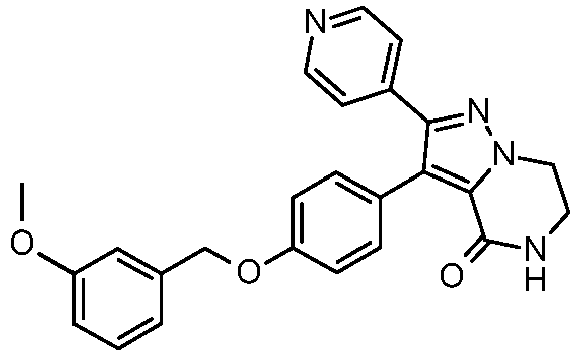
- In a sealed tube, a mixture of 4 (230 mg, 0.784 mmol), 240 (800 mg, 2.35 mmol), K3PO4 (665 mg, 3.14 mmol) in 1,4-dioxane (3.5 mL) and H2O (1.2 mL) was carefully purged with N2. PCy3 (44 mg, 0.157 mmol) and Pd(OAc)2 (18 mg, 78.4 µmοl) were added and the r.m. was purged again with N2. The sealed tube was then sealed and the r.m. was stirred for 17 h at 80°C. The crude material was dissolved in water (10 mL) and extracted with EtOAc (2 x 40mL). The organic phase was dried over MgSO4, filtered and evaporated in vacuo to give 640 mg. The residue was purified by prep. LC (irregular SiOH 15-40 µm, 30g Merck, mobile phase gradient: from DCM 100% to DCM 90%, MeOH 10%). The pure fractions were collected and solvent evaporated until dryness to give 50 mg, white solid, which was washed by Et2O, filtered and dired to give 36 mg of Co. 113, a white solid (11%). m.p.: 242°C (dsc).
-

- A sol. of 7 (700 mg, 3.18 mmol), 4-isopropoxybenzylalcohol (793 mg, 4.77 mmol) and PPh3 (1.25 g, 4.77 mmol) in dry DCM (20 mL) was treated with DBAD (1.10 g; 4.77 mmol) and stirred at r.t. for 18h. The crude mixture was diluted with water and EtOAc. The organic layer was separated, dried over MgSO4, filtered and evaporated in vacuo to give 590 mg of residue was purified by prep. LC (Irregular SiOH 15-40µm, 30g Merck, mobile phase gradient: from DCM 100% to MeOH 3%, DCM 97%). The desired fractions were collected and solvent evaporated until dryness to give 590 mg of a solid wich was purified by prep. LC (Irregular SiOH 15-40µm, 24g Grace, mobile phase gradient from Heptane 100% to EtOAc 40%, Heptane 60%). The pure fractions were collected and solvent evaporated to give 472 mg of Int. 241 (solid; 40%).
-

- A mixture of 4 (120 mg, 0.409 mmol), 241 (471 mg, 1.02 mmol), K3PO4 (348 mg, 1.64 mmol) in 1,4-dioxane (2.1 mL) and H2O (0.7 mL) was carefully purged with N2. PCy3 (23 mg, 81.9 µmοl) and Pd(OAc)2 (9 mg, 40.9 µmοl) were added and the r.m. was purged again with N2, and stirred for 17h at 80°C. The crude material was dissolved in water and extracted with DCM. The organic phase was dried over MgSO4, filtered and evaporated in vacuo to give 447 mg, brown solid. The crude residue was purified by prep. LC on (irregular SiOH 15-40µm 300g MERCK, Mobile phase: 95% DCM, 5% MeOH). The desired fractions were combined and the solvent was removed in vacuo to give 100 mg of Co. 114, white solid (54%). m.p.: 252 °C (dsc).
-

- In a microwave vial, a mixture of 28 (0.8 g, 1.77 mmol), 49 (0.848 g, 2.3mmol), K3PO4 (1.51 g, 7.1 mmol) in 1,4-dioxane (7.8 mL) and H2O (2.8 mL) was carefully purged with N2. PdCl2(dppf) (0.145 g, 0.18 mmol) was added and the r.m. was purged again with N2. The r.m. was heated at 80°C overnight. The r.m. was diluted with EtOAc and washed with water and with brine. The organic phase was dried over MgSO4, filtered and evaporated in vacuo to give 1.66 g. The residue was purified by prep. LC (irregular SiOH 30 µm, 40g Interchim, mobile phase gradient: from DCM 100% to DCM/MeOH/NH4OH 97/3/0.1). The pure fractions were collected and evaporated until dryness to give 1.11 g of Int. 242 (100%).
-

- MeMgCl (3.05 mL, 9.06 mmol) was added to a stirred suspension of 242 (1.11 g, 1.81 mmol) in THF (17 mL) under N2 at 0 °C. The mixture was stirred at 0° C for 5 min, and then it was warmed to r.t. and stirred for 2h. The r.m. was quenched with 10% NH4Cl sol., and treated with EtOAc. The organic layer was separated, washed with brine, dried over MgSO4, filtered and concentrated in vacuo to afford 1.09 g of Int. 243 (quant.), used as such for next step.
-

- TBAF (2.02 mL, 2.02 mmol) was added dropwise to a sol. of 243 (1.03 g, 1.68 mmol) in THF (17 mL) at r.t.. The mixture was stirred for 3h at r.t. EtOAc and water were added. The organic layer was separated, dried, filtered and evaporated until dryness to give 712 mg. The residue was purified by prep. LC (Regular SiOH, 30 µm, 24g GraceResolv™, mobile phase gradient: from DCM 100% to DCM/MeOH/NH4OH 95/5/0.1). The pure fractions were collected and evaporated until dryness to give 490 mg which was crystallized from Et2O, filtered and dried to give 413 mg of Co. 115, white solid (49%). m.p.: 193°C (dsc).
-

- DBAD (2.04 g, 8.86 mmol) was added to a mixture of 7 (1.50 g, 6.82 mmol), 4-(trifluoromethoxy)benzyl acohol (1.28 mL; 8.86 mmol) and PPh3 supp. (2.95 g; 8.86 mmol) in DCM (30mL) and the r.m. was stirred under N2 for 17 h at rt. The r.m. was then filtered through a glass frit and washed with EtOAc. After concentration of the filtrate, the residue was purified by prep. LC (irregular SiOH 15-40 µm, solid loading, 30g Merck, mobile phase: heptane 80%, EtOAc 20%). The pure fractions were collected and solvent evaporated until dryness to give 2.00g of Int. 244 , yellow oil (74%).
-

- In a microwave vial, a mixture of 4 (150 mg, 512 µmοl), 244 (504 mg, 1.28 mmol), K3PO4 (455 mg, 2.15 mmol) in 1,4-dioxane (2.4 mL) and H2O (0.8 mL) was carefully purged with N2. PCy3 (30 mg, 107 µmοl) and Pd(OAc)2 (12 mg, 53.6 µmοl) were added and the r.m. was purged again with N2. The r.m. was stirred for 17 h at 80°C. The crude material was dissolved in water (10 mL) and extracted with EtOAc (2x 40 mL). The organic phase was dried over MgSO4, filtered and evaporated in vacuo to give 400 mg, brown solid. The solid was purified by prep. LC (irregular SiOH 15-40 µm, 30g Merck, mobile phase gradient: from DCM 100% to DCM 90%, MeOH 10%). The pure fractions were collected and solvent evaporated until dryness to give 180 mg of Co. 116, white solid (73%). m.p.: 260 °C (dsc).
-

- In a microwave vial, a mixture of 28 (0.7 g, 1.55 mmol), 244 (0.935 g, 2 mmol), K3PO4 (1.32 g, 6.2 mmol) in 1,4-dioxane (6.8 mL) and H2O (2.42 mL) was carefully purged with N2. PdCl2(dppf) (127 mg, 0.155 mmol) was added and the r.m. was purged again with N2. The r.m. was heated at 80°C overnight. The r.m. was diluted with EtOAc and washed with water (1x) and with brine (3x). The organic phase was dried over MgSO4, filtered and evaporated in vacuo to give 2.17 g. The residue was purified by prep. LC (irregular SiOH 30 µm, 40 g Interchim, mobile phase: from DCM 100% to DCM/MeOH/NH4OH 97/3/0.1). The pure fractions were collected and evaporated until dryness to give 923 mg of Int. 245 (93%, purity 85%), used as such for the next step.
-

- TBAF (1.73 mL, 1.73 mmol) was added dropwise to a sol. of 245 (920 mg, 1.44 mmol) in THF (14 mL) at r.t. The mixture was stirred for 3h at r.t. EtOAc and water were added. The organic layer was separated, dried, filtered and evaporated until dryness to give 865 mg. The residue was purified by prep. LC (Regular SiOH, 30 µm, 12g GraceResolv™, mobile phase gradient: from DCM 100% to DCM/MeOH/NH4OH 95/5/0.1). The pure fractions were collected and evaporated until dryness to give 345 mg which was crystallized from DIPE, filtered and dried to give 319 mg of Co. 117 (42%). m.p.: 134°C (dsc).
-

- A sol. of 7 (0.76 g, 3.45 mmol) in ACN (10 mL) was treated with K2CO3 (0.572 g, 4.14 mmol) and 4-(difluoromethoxy)benzyl bromide (0.9 g, 3.8 mmol) at r.t. The r.m. was stirred for 18 h at r.t. Then, water and DCM were added, and the organic layer was washed with brine, separated, dried over MgSO4, filtered and concentrated in vacuo to give 1.29 g. The residue was purified by prep. LC on (Irregular SiOH 15-40µm 30g Merck, Mobile phase: DCM 100%). The pure fractions were collected and evaporated until dryness to give 0.73 g of Int. 246 (56%).
-

- In a microwave vial, a mixture of 4 (0.3 g, 1.023 mmol), 246 (0.5 g, 1.33 mmol), K3PO4 (0.91 g, 4.29 mmol) in 1,4-dioxane (4.8 mL) and H2O (1.6 mL) was carefully purged with N2. PCy3 (60 mg, 0.214 mmol) and Pd(OAc)2 (24 mg, 0.11 mmol) were added and the r.m. was purged again with N2. The r.m. was stirred for 16h at 80°C. The crude material was dissolved in water and extracted with EtOAc. The organic phase was dried over MgSO4, filtered and evaporated in vacuo to give 745 mg. The residue was purified by prep. LC on (irregular SiOH 15-40µm 300g MERCK, Mobile phase: 40% Heptane, 10% MeOH (+10% NH4OH), 50% EtOAc). The desired fractions were combined and the solvent was removed in vacuo to give 295 mg which was crystallized from DIPE, filtered and dried to give 287 mg of Co. 118 (61%). m.p.: 250°C (dsc).
-
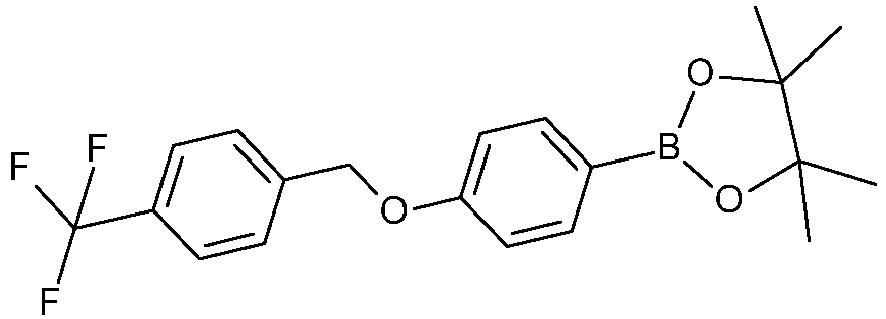
- DBAD (2.04 g, 8.86 mmol) was added to a mixture of 7 (1.50 g; 6.82 mmol), 4-(trifluoromethyl)benzyl alcohol (1.21 mL, 8.86 mmol) and PPh3 supp. (2.95 g, 8.86 mmol) in DCM (30 mL) and the r.m. was stirred under N2 for 17 h at rt. The r.m. was then filtered through a glass frit and washed with EtOAc. The sol. was concentrated to give 5.50 g, yellow oil. The residue was purified by prep. LC (irregular SiOH 15-40 µm, solid loading, 50g Merck, mobile phase: heptane 80%, EtOAc 20%). The pure fractions were collected and solvent evaporated until dryness to give 2.23g of Int. 247 , yellow oil (87%).
-

- In a sealed tube, a mixture of 4 (150 mg, 512 µmοl), 247 (484 mg, 1.28 mmol), K3PO4 (455 mg, 2.15 mmol) in 1,4-dioxane (2.4 mL) and H2O (0.8 mL) was carefully purged with N2. PCy3 (30 mg, 107 µmοl) and Pd(OAc)2 (12 mg, 53.6 µmοl) were added and the r.m. was purged again with N2. The r.m. was stirred for 17h at 80°C. The crude material was dissolved in water (10mL) and extracted with EtOAc (2 x 40mL). The organic phase was dried over MgSO4, filtered and evaporated in vacuo to give 400mg, brown solid. The residue was purified by prep. LC (irregular SiOH 15-40µm, 30 g Merck, mobile phase gradient: from DCM 100% to DCM 90%, MeOH 10%). The pure fractions were collected and solvent evaporated until dryness to give 109 mg of Co. 119, white solid (46 %). m.p.: 280 °C (dsc).
-

- K2CO3 (0.455 g, 3.29 mmol) and 3-(trifluoromethyl)benzyl alcohol (0.479 mL, 3.14 mmol) were successively added to a sol. of 7 (0.345 g, 1.57 mmol) in ACN (7.84 mL). The r.m. was stirred at r.t. for 18h. K2CO3 (0.130 g, 0.941 mmol) and 3-(trifluoromethyl)benzyl alcohol (0.120 mL, 0.784 mmol) were then successively added again. After 3h at r.t., the r.m. was filtrated, washed with EtOAc and concentrated to dryness. The residue was purified by column chromatography over silica gel (15-40 µm, 50g, mobile phase gradient: cyclohexane/DCM 50/50 to 0/100). The product fractions were collected and the solvent was evaporated until dryness to give 0.560 g of Int. 248, white solid (94%).
-

- A sol. of 4 (0.14 3g, 0.488 mmol), 248 (0.554 g, 1.46 mmol) and K3PO4 (0.414 g, 1.95 mmol) in 1,4-dioxane/H2O, 3/1 (2.9 mL) was degassed with an Ar-stream for 20 min and Pd(OAc)2 (0.011 g, 0.049 mmol) and PCy3 (0.027 g, 0.098 mmol) were then successively added. The r.m. was heated at 80 °C for 16h and at 120 °C for 20h. The r.m. was diluted with water (10mL) and extracted with EtOAc (3x 20mL).The combined organic layers were washed with a sat. aq. NaCl sol. (20mL), filtered and concentrated to dryness. The combined aq. layers were extracted with a mixture DCM/MeOH (9/1, 3 x 50mL), dried over sodium sulfate, filtered and concentrated to dryness. The residues were combined to afford 0.517 g, white powder. The powder was purified by column chromatography over silica gel (15-40 µm, 40g, mobile phase gradient: DCM/MeOH 97/3 to 95/5). The pure fractions were collected and the solvent was evaporated to afford 0.115g, white powder which was triturated in pentane (2 mL), filtered, washed with pentane (2 mL) and Et2O (2 x 1mL) and dried to give 0.104g of Co. 120, white solid (46%). m.p.: 293°C (dsc).
-
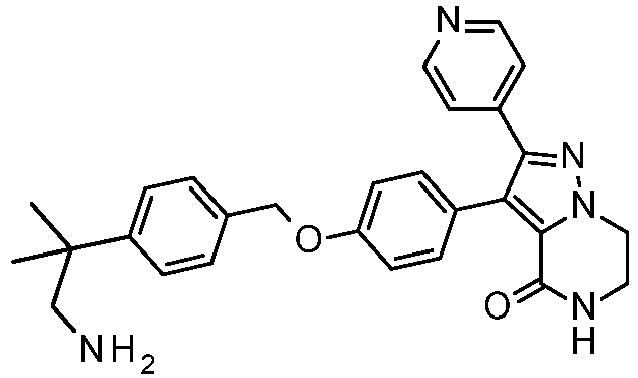
- Co. 10 (210 mg, 0.45 mmol), Ni (210 mg) in MeOH (5 mL) was hydrogenated under 3 bars at r.t. for 4 h. The catalyst was filtered over a Celite® pad, the filtrate was evaporated. The residue was purified by prep. LC (Irregular SiOH 35-40 µm 40g GraceResolv™, mobile phase: 90/10/0.1 DCM/MeOH/NH4OH). The fractions were collected and evaporated to give 106 mg of intial Co., Co. 10 and 49 mg of a residue. This residue was taken up in Et2O, the precipitate was filtered off and dried to give 39 mg which was purified again by prep. LC (Irregular SiOH 35-40µm 40g GraceResolv™, mobile phase: 95/5/0.1 DCM/MeOH/NH4OH). The fractions were collected and evaporated to give 15 mg of Co. 121 (7%). m.p.: 233°C (dsc).
-

- NaH 60% (33.6 mg, 0.8 mmol) was added slowly to a suspension of Co. 10 (260 mg, 0.56 mmol) in DMSO (5.0 mL) at r.t. under N2. The mixture was stirred for 2h, then (2-bromoethoxy)-tert-butyldimethylsilane (128 µl, 0.62 mmol) was added and stirred overnight. Water and DCM were added, the mixture was extracted, the organic layer was separated, dried over MgSO4, filtered and evaporated until dryness to give 440 mg of Int. 249 (mixture with Co. 122). The mixture was used as such for the final step.
-

- TBAF (0.90 mL, 0.90 mmol) was added dropwise to a sol. of 249 (440 mg, 0.71 mmol) in THF (10mL) at r.t. The mixture was stirred 90 min at r.t. and poured into water, extrated with DCM. The organic layer was dried over MgSO4, filtered and evaporated until dryness. The residue was purified by prep. LC (Regular SiOH, 30 µm, 25g grace, mobile phase gradient: DCM/MeOH/NH4OH from 97/3/0.1 to 94/6/0.1). The pure fractions were collected and solvent evaporated until dryness to give 150 mg. The residue was crystallized from Et2O, the solid was filtered off and dried to give 120 mg of Co. 122 (33%). m.p.: 199°C (dsc).
-

- PPh3 supp. (1.55 g, 4.97 mmol) and DBAD (1.15 g, 4.97 mmol) were added to a stirred sol. of 7 (912 mg, 4.14 mmol) and 1-[4-(hydroxymethyl)phenyl]cyclopropane-1-carbonitrile (970 mg, 4.14 mmol) in anhydrous DCM (20 mL) under N2 at r.t. The r.m. was stirred at r.t. for 2h, and then the crude mixture was filtered off and the filtrate was diluted with DCM and sat NaHCO3. The organic layer was separated, dried over MgSO4, filtered and evaporated in vacuo to give 2.81 g, brown solid. The solid was purified by prep. LC (Irregular SiOH 50 µm, 120g Grace, mobile phase gradient: from DCM 40%, Heptane 60% to DCM 100%). The desired fractions were collected and evaporated in vacuo to give 910 mg of Int. 250 (a solid) which was used as such for the next reaction step.
-

- A mixture of 4 (0.464 g, 1.58 mmol), 250 (0.900 g, 2.40 mmol) and K3PO4 (1.01 g, 4.75 mmol) in 1,4-dioxane (9 mL) and H2O (3 mL) was carefully purged with N2. PCy3 (89 mg, 0.317 mmol) and Pd(OAc)2 (36 mg, 0.158 mmol) were added and the r.m. was purged again with N2. The r.m. was stirred for 18 h at 80°C. The crude material was dissolved in water and extracted with DCM. The organic phase was washed with brine, dried over MgSO4, filtered and evaporated in vacuo to give 2.29 g, yellow solid. The solid was purified by prep. LC (irregular SiOH 15-40 µm, 80 g Grace, mobile phase gradient: from DCM 100% to DCM 95%, MeOH 5%). The desired fractions were collected and solvent evaporated to give 253 mg, white solid. The residue was purified by prep. LC (Stationary phase: X-Bridge-C18 5µm 30*150mm, Mobile phase gradient: from 70% (NH4HCO3 0.5% aq. sol.), 30% ACN to 100% ACN). The desired fractions were isolated and evaporated in vacuo to yield 70 mg of Co. 123, white solid (10%). m.p.: 260 °C (dsc).
-

- A sol. of 7 (1.5 g, 6.82 mmol) in ACN (15 mL) and DMF (3 mL) was treated with C (1.13 g; 8.18 mmol) and 3-(bromomethyl)benzonitrile (1.55 g, 7.50 mmol) at rt. The r.m. was stirred for 36h at r.t. Water and EtOAc were added, and the organic layer was washed with brine, separated, dried over MgSO4, filtered and evaporated in vacuo to afford 2.63 g of Int. 251 , (quant. yield).
-

- A mixture of 4 (0.87 g, 2.98 mmol), 251 (2.63 g, 7.45 mmol), K3PO4 (2.53 g, 11.9 mmol) in 1,4-dioxane (12 mL) and H2O (4 mL) was carefully purged with N2. PCy3 (167 mg, 0.596 mmol) and Pd(OAc)2 (67 mg, 0.298 mmol) were added, and the r.m. was purged again with N2. The r.m. was stirred for 17h at 80°C. The crude material was dissolved in water and extracted with EtOAc. The organic phase was washed with brine, dried over MgSO4, filtered and evaporated in vacuo to give a solid. This solid was purified by prep. LC (irregular SiOH 15-40 µm, 120g Grace, mobile phase gradient: from DCM 100% to DCM 89%, MeOH 11%). The pure fractions were collected and solvent evaporated until dryness to give 1.09 g, white solid. The solid was triturated with DCM, filtered and dried to yield 576 mg of Co. 124, white solid (46%). m.p.: 238 °C (dsc).
-

- 4-(2-hydroxy-1,1-dimethylethyl)-benzoic acid,ethyl ester (0.513g, 2.3mmol), tertbutyldimethylsilyl chloride (0.522g, 3.46mmol), and imidazole (0.47g, 6.92mmol) in DMF (6mL) was stirred at r.t. for 3h. Water and DCM were added and the mixture was extracted with DCM. The organic layer was dried, filtered and evaporated to give 667mg of Int. 252 (86%).
-

- LAH (36 mg, 0.94 mmol) was added carefully at 5°C to a sol. of 252 (210 mg, 0.62 mmol) in THF (3 mL). The mixture was stirred at r.t. for 1h. Water was carefully added at 5°C and EtOAc was added. The mixture was extracted, the organic layer was separated, dried over MgSO4, filtered and evaporated to give 180 mg of Int. 253 (98%).
-

- To a suspension of 253 (0.515 g, 1.75 mmol), 7 (0.462 g, 2.1 mmol), DBAD (0.483 g, 2.1 mmol) in dry DCM (6 mL) was added PPh3 supp. (0.656 g, 2.1 mmol) and the r.m. was stirred at r.t. for 18h. The insoluble was filtered through Celite®, washed with DCM. Water was added and the organic layer was separated, dried, filtered and concentrated until dryness to give 1.29 g. The residue was purified by prep. LC on (Irregular SiOH 15-40µm 50g Merck, Mobile phase gradient: from 100% Heptane to 95/5 Heptane/EtOAc). The pure fractions were collected and evaporated until dryness to give 625 mg of Int. 254 (72%).
-

- In a microwave vial, a mixture of 4 (0.218 g, 0.744 mmol), 254 (0.6 g, 0.967 mmol), K3PO4 (0.662 g, 3.12 mmol) in 1,4-dioxane (3.5 mL) and H2O (1.2 mL) was carefully purged with N2. PdCl2(dppf) (61mg, 0.074 mmol) was added and the r.m. was purged again with N2. The r.m. was stirred for 16 h at 80 °C. The crude material was dissolved in water and extracted with EtOAc. The organic phase was dried over MgSO4, filtered and evaporated in vacuo to give 828 mg. The residue was purified by prep. LC (Stationary phase: irregular 15-40µm 30g Merck, Mobile phase: NH4OH/DCM/MeOH 0.4/96/4) to give 180 mg of Int. 255 (42%).
-

- TBAF (0.37 mL, 0.37 mmol) was added dropwise to a sol. of 255 (0.18 g, 0.31 mmol) in THF (3.0 mL) at r.t. The mixture was stirred 2h at r.t. 1 equivalent of TBAF was added and the reaction was let at r.t. overnight to complete the reaction. The mixture was evaporated to dryness and purified by prep. LC (irregular SiOH 15-40 µm, 12g, GraceResolv™, Mobile phase: DCM/MeOH/NH4OH, 96/4/0.1). The pure fractions were collected and solvent was evaporated until dryness to give 110 mg, white solid. The solid was triturated in Ft2O, filtrated and dried to give 97 mg of Co. 125, white solid (67%). m.p.: 280°C (dsc).
-

- To a sol. of 4-(2-hydroxy-1,1-dimethylethyl)-benzoic acid, ethyl ester (0.54 g, 2.43 mmol) in DMF (8 mL) was added MeI (0.76 mL, 12.1 mmol) and NaH 60% (0.146 g, 3.65 mmol). The mixture was stirred at r.t. for 3h. The reaction was quenched with water, and extracted with EtOAc. The organic layer was separated, whashed with K2CO3 10%, dried over MgSO4, filtered and concentrated to give 566 mg of Int. 256 (99%, mixture of ethyl and methyl ester 88/12 was observed).
-

- LAH (0.111 g, 2.92 mmol) was added carefully at 10°C to a sol. of 256 (0.46 g, 1.95 mmol) in THF (6 mL). Cooled bath was removed immediately and the mixture was stirred at r.t. for 1h. Water was carefully added at 5°C and EtOAc was added, the mixture was extracted, the organic layer was separated, dried over MgSO4, filtered and evaporated to give 370 mg of Int. 257 (98%).
-

- To a suspension of 257 (0.37 g, 1.91 mmol), 7 (0.504 g, 2.2 9mmol), PPh3 supp. (0.716 g, 2.29 mmol) in dry DCM (6 mL) was added DBAD (0.528 g, 2.29 mmol) and the r.m. was stirred at r.t. for 18 h. The insoluble was filtered through Celite® pad, washed with DCM. Water was added and the organic layer was separated, dried, filtered and concentrated until dryness to give 1.45 g. The residue was purified by prep. LC on (Irregular SiOH 15-40µm 50g Merck, Mobile phase gradient: from 95/5 Heptane/ EtOAc to 90/10 Heptane/EtOAc). The pure fractions were collected and evaporated until dryness to give 421 mg of Int. 258 (56%).
-

- In a microwave vial, a mixture of 4 (0.2 g, 0.682 mmol), 258 (0.439 g, 0.887 mmol), K3PO4 (0.607 g, 2.86 mmol) in 1,4-dioxane (3.2 mL) and H2O (1 mL) was carefully purged with N2. PdCl2(dppf) (56 mg, 0.068 mmol) was added and the r.m. was purged again with N2. The r.m. was stirred for 16 h at 80°C. The crude material was dissolved in water and extracted with EtOAc. The organic phase was dried over MgSO4, filtered and evaporated in vacuo to give 680 mg. The residue was purified by prep. LC (Stationary phase: Stability Silica 5µm 150x30.0mm, Mobile phase gradient: from 0.2% NH4OH, 98% DCM, 2% MeOH to 1% NH4OH, 89% DCM, 10% MeOH). The pure fractions were collected and solvent was evaporated until dryness to give 85 mg which was crystallized from Et2O, filtered and dried to give 46 mg of Co. 126 (14%). m.p.: 212°C (dsc).
-

- A mixture of 2-phenyl-1-propanol acetate (3.0 g, 16.8 mmol) and Alpha,alpha dichloromethyl methyl ether (3.87 g, 33.7 mmol) in dry DCM (15 mL) was cooled to 0°C and treated with Titanium(IV) chloride 1M in DCM (84 mL, 84.2 mmol) over 15 min. The r.m. was then warmed to r.t. and stirred for 17h at r.t. The crude mixture was poured into ice. DCM was added and the organic layer was separated, washed with brine, dried over MgSO4 and evaporated in vacuo to afford 3.8g of Int. 259 , black oil (quant.), used as such for the next step.
-

- A sol. of 259 (3.70 g, 17.9 mmol) in THF (40 mL) was treated with NaBH4 (1.36 g, 35.9 mmol) and stirred at r.t. for 1h. After addition of water and DCM, the organic layer was separated, washed with brine, dried over MgSO4 and evaporated in vacuo to give 3.6 g. The crude mixture was purified by prep. LC (irregular SiOH 15-40 µm, 120g, GraceResolv™, solid loading, mobile phase gradient: from heptane 60%, EtOAc 40% to heptane 20%, EtOAc 80%). The pure fractions were collected and solvent evaporated until dryness to give 2.19 g of Int. 260 , yellow oil (59%).
-

- A mixture of 260 (2.19 g, 10.5 mmol), 7 (1.78 g; 8.09 mmol), PPh3 (2.76 g, 10.5 mmol) in dry THF (50 mL) was treated with DBAD (2.42 g, 10.5 mmol) and stirred at r.t. for 2h30. The r.m. was then poured in DCM, washed with water, dried over MgSO4 and evaporated in vacuo to afford a residue. The residue was purified by prep. LC (irregular SiOH 15-40 µm, 120 g, GraceResolv™, solid loading, mobile phase gradient: from heptane 90%, EtOAc 10% to heptane 60%, EtOAc 40%). The pure fractions were collected and solvent evaporated until dryness to give 3.18 g of Int. 261 , colorless oil (96%).
-

- A mixture of 4 (500 mg, 1.71 mmol), 261 (1.40 g, 3.41 mmol) and K3PO4 (1.27 g, 5.97 mmol) in 1,4-dioxane (5 mL) and H2O (10 mL) was purged with N2. Then, PdCl2(dppf) (140 mg, 171 µmol) was added. The mixture was purged again with N2 and heated at 120°C using one single mode microwave (Biotage Initiator EXP 60) with a power output ranging from 0 to 400 W for 30 min [fixed hold time]. The r.m. was poured in MeOH (20mL) and stirred at 100°C for 2h and poured in DCM and water. The organic layer was separated, washed with brine, dried over MgSO4 and evaporated in vacuo. The brown residue was purified by prep. LC (irregular SiOH 15-40µm, 80g, GraceResolv™, Mobile phase gradient: from DCM 100% to DCM 92%, MeOH 8%). The pure fractions were collected and solvent evaporated to give 720 mg of off-white solid. The solid was triturated in MeOH. After filtration, the white solid was washed with Ft2O, collected and dried in vacuo to afford 558 mg of Co. 127, white solid (72%). m.p.: 259°C (dsc).
-

- In a microwave vial, a mixture of 28 (0.8 g, 1.77 mmol), 261 (0.945 g, 2.3 mmol), K3PO4 (1.51 g, 7.09 mmol) in 1,4-dioxane (7.8 mL) and H2O (2.8 mL) was carefully purged with N2. PdCl2(dppf) (0.145 g, 0.18 mmol) was added and the r.m. was purged again with N2. The r.m. was heated at 80°C overnight. The r.m. was diluted with EtOAc and washed with water and with brine. The organic phase was dried over MgSO4, filtered and evaporated in vacuo to give 2.5 g. The residue was purified by prep. LC (irregular SiOH 15-40µm, 80g grace, mobile phase gradient: from DCM 100% to DCM/MeOH/NH4OH 97/3/0.1). The desired fractions were collected and evaporated until dryness to give 1.3 g. The residue was purified by prep. LC (Regular SiOH 30 µm, 40g Interchim, liquid loading, mobile phase gradient: DCM 100% to DCM 97%, MeOH 3%). The pure fractions were collected and the solvent was evaporated until dryness to give 996 mg of Int. 262 (yield 86%; purity 100%) and 229 mg of impure Int. 262 (yield 20%; purity 78%). Both fractions were combined and used as such, together, for the next step. Global yield: 1.2g of Int. 262 .
-

- TBAF (2.25 mL, 2.25 mmol) was added dropwise to a sol. of 262 (1.23 g, 1.89 mmol) in THF (18 mL) at r.t. The mixture was stirred for 2h at r.t. EtOAc and water were added. The organic layer was separated, dried, filtered and evaporated until dryness to give 1.04 g of Int. 263 (100%).
-

- To a sol. of 263 (1g, 1.85 mmol) in MeOH (12 mL) was added Potassium hydroxide (399 mg, 5.55 mmol) and the mixture was heated at 50°C for 3h. The solid formed was filtered and washed from Et2O then pourred into water and extracted with DCM and few MeOH several times. The organic layer was separated, dried, filtered and evaporated until dryness to give 764 mg. The residue was purified by prep. LC (irregular SiOH 15-40 µm, 24g grace, mobile phase gradient: from DCM 100% to DCM/MeOH/NH4OH 94/6/0.1). The pure fractions were collected and evaporated until dryness to give 648 mg which was crystallized from Et2O, filtered and dried to give 538 mg. This residue was purified by achiral SFC (Stationary phase: Chiralpak IA 5µm 250*20mm, Mobile phase: 55% CO2, 45% MeOH (0.3% iPrNH2)). The pure fractions were collected and evaporated until dryness to give 400 mg which was crystallized from Et2O, filtered off and dried to give 384 mg of Co. 128 (42%).
-

- In a schlenk tube, a mixture of 28 (4.0 g, 8.9 mmol), 32 (3.4 g, 9.8 mmol), K3PO4 (7.5 g, 35 mmol) in 1,4-dioxane (39 mL) and H2O (14 mL) was carefully purged with N2. PdCl2(dppf) (726 mg, 0.89 mmol) was added and the r.m. was purged again with N2. The r.m. was heated at 80°C overnight. The r.m. was diluted with EtOAc and washed with water (once) and with brine (3 times). The organic phase was dried over MgSO4, filtered on a pad of Celite® and evaporated in vacuo to give 7.5g of Int. 264 , brown oil (quant. , purity 70%). The Co. was used like this in the next step.
-
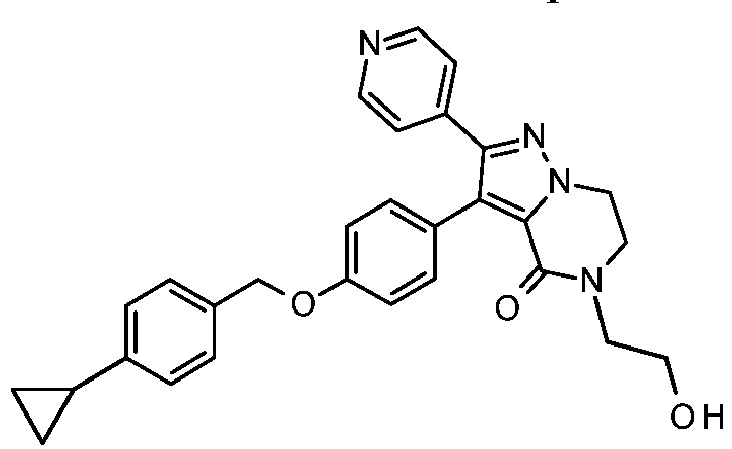
- TBAF (10.6 mL, 10.6 mmol) was added dropwise to a sol. of 264 (7.5 g, 8.8 mmol, 70%) in THF (86 mL) at r.t. The mixture was stirred overnight at r.t. The mixture was concentrated and the residue was purified by prep. LC (Regular SiOH, 30 µm, 120g GraceResolv™, mobile phase: DCM/MeOH/NH4OH 96/4/0.1). The desired fractions were collected and solvent evaporated until dryness to give 4.0 g of colorless oil which was triturated in Et2O. The white solide formed was filtrated, washed and dried to give 3.22g, white solide (3% of TBAF). The residue was added to the previous filtrate and evaporated to give 4.0 g, grey solid and it was purified by achiral SFC (Stationary phase: 2-ethylpyridine 6µm 150x21.2mm, Mobile phase: 80% CO2, 20% MeOH (0.3% iPrNH2)). The pure fractions were collected and solvent evaporated until dryness to give 2.96 g which was triturated in Et2O. The white solid formed was filtrated and dried to give 2.85 g of Co. 129, white solid (67%). m.p.: 194°C (dsc).
-

- To a suspension of 7 (0.3g, 1.36mmol), benzyl alcohol (0.169mL, 1.63mmol), PPh3 supp. (0.43g, 1.63mmol) in dry DCM (10mL) was added DBAD (0.377g, 1.63mmol) and the r.m. was stirred at r.t. for 18 h. The insoluble was filtered through Celite®, washed with DCM. Water was added and the organic layer was separated, dried, filtered and concentrated until dryness to give 756mg. The residue was purified by prep. LC (irregular SiOH 15-40µm 30g Merck, mobile phase gradient: from DCM 100% to DCM 98%, MeOH 2%). The fractions were collected and evaporated until dryness to give 217mg of Int. 265 (51%).
-

- In a microwave vial, a mixture of 4 (0.137 g, 0.466 mmol), 265 (0.217 g, 0.7 mmol), K3PO4 (0.415 g, 1.96 mmol) in 1,4-dioxane (2.19 mL) and H2O (0.73 mL) was carefully purged with N2. PCy3 (27 mg, 0.098 mmol) and Pd(OAc)2 (11 mg, 0.049 mmol) were added and the r.m. was purged again with N2. The r.m. was stirred for 16 h at 80°C. The crude material was dissolved in water and extracted with EtOAc. The organic phase was dried over MgSO4, filtered and evaporated in vacuo to give 272 mg. The residue was purified by prep. LC on (Sunfire Silica 5µm 150x30.0mm, Mobile phase Gradient: from 70% Heptane, 2% MeOH, 28% EtOAc to 20% MeOH, 80% EtOAc). The pure fractions were collected and evaporated until dryness to give 42 mg which was crystallized from DIPE, filtered and dried to give 40 mg of Co. 130 (22%). m.p.: 260°C (dsc).
-

- 7 (2.00g, 9.09mmol) was dissolved in ACN (20mL). K2CO3 (1.51g, 10.9mmol) and methyl 3-(bromomethyl)benzoate (2.19g, 9.54mmol) were added. The r.m. was stirred for 2h at r.t. An extra amount of methyl 3-(bromomethyl)benzoate (0.208g, 0.909mmol) was then added, as well as DMF (1mL). The r.m. was stirred at r.t. for 17 h. The crude mixture was diluted in EtOAc, washed with water and brine (3 times). The organic layer was separated, dried over MgSO4 and evaporated in vacuo to afford 3.82g of Int. 266 , pale pink oil (Quant.).
-

- A mixture of 4 (800 mg, 2.73 mmol), 266 (2.01 g, 5.46 mmol), K3PO4 (1.74 g, 8.19 mmol) in 1,4-dioxane (45 mL) and H2O (15 mL) was carefully purged with N2. PCy3 (153 mg, 0.546 mmol) and Pd(OAc)2 (61 mg, 273 µmol) were added, and the r.m. was purged again with N2. The r.m. was stirred for 17 h at 80°C. The crude material was dissolved in water and extracted 2x with DCM. The organic phase was separated, dried over MgSO4, filtered and evaporated in vacuo to give a solid. The solid was purified by prep. LC (irregular SiOH 15-40 µm, 30 g Merck, dry loading, mobile phase gradient: from DCM 100% to DCM 95%, MeOH 5%). The pure fractions were collected and solvent evaporated until dryness to give 782 mg, white solid. The solid was triturated in pentane and the supernatant was removed. This operation was repeated twice and the solid was dried in vacuo to give 700mg of Co. 131, white solid (56%). m.p.: 222 °C (dsc).
-
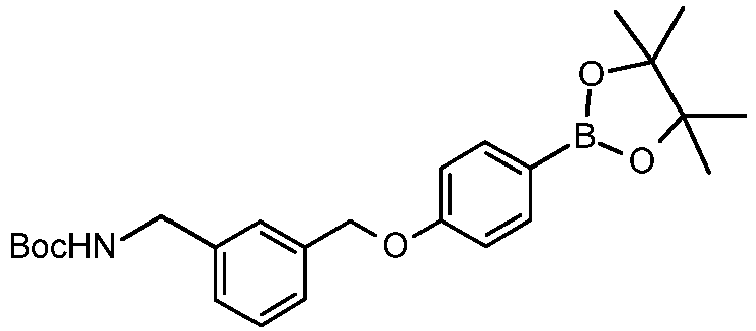
- A mixture of 7 (337 mg, 1.53 mmol), (3-hydroxymethyl-benzyl)-carbamic acid tert-butyl ester (450 mg, 1.84 mmol) and PPh3 supp. (523 mg, 1.99 mmol) in DCM (15 mL) was treated with DBAD (459 mg, 1.99 mmol) and stirred at r.t. for 17 h. Silica gel was added and the crude mixture was directly evaporated in vacuo to afford a silica supported material. The material was purified by prep. LC (irregular SiOH 15-40µm, 40g Merck, mobile phase: DCM 100%). The pure fractions were collected and solvent evaporated to give 470mg of Int. 267 , colorless oil (70%).
-

- A mixture of 4 (180 mg, 0.614 mmol), 267 (470 mg, 1.07 mmol), K3PO4 (391 mg, 1.84 mmol) in 1,4-dioxane (10 mL) and H2O (4 mL) was carefully purged with N2. PCy3 (34 mg, 0.123 mmol) and Pd(OAc)2 (14 mg, 61.4 µmol) were added, and the r.m. was purged again with N2. The r.m. was stirred for 17h at 80°C. The crude material was dissolved in water and extracted 2x with DCM. The organic phase was separated, dried over MgSO4, filtered and evaporated in vacuo to give a solid. The solid was purified by prep. LC (irregular SiOH 15-40 µm, 30g Merck, mobile phase gradient: from DCM 100% to DCM 95%, MeOH 5%). The pure fractions were collected and solvent evaporated until dryness to give 300 mg, white solid. This solid was triturated in pentane and the supernatant was removed. This operation was repeated 2x and the solid was dried in vacuo to afford 280mg of Co. 132, white solid (87%). m.p.: 186 °C and 194 °C (dsc).
-

- A sol. of Co. 132 (230 mg, 0.438 mmol) in HCl 3N (5 mL) and EtOH (5 mL) was stirred for 17h at r.t. The r.m. was diluted in DCM and basified with a sat. aq. sol. of NaHCO3. The organic layer was separated, dried over MgSO4 and evaporated in vacuo to afford 180mg. The solid was triturated in Et2O and the supernatant was removed. This operation was repeated twice and the white powder was dried in vacuo to afford 150mg. This solid was purified by prep. LC (irregular SiOH 15-40 µm, 12g Merck, mobile phase gradient: from DCM 98%, MeOH 2% to DCM 95%, MeOH 4.8%, NH4OH 0.2%). The pure fractions were collected and solvent evaporated until dryness to give 132 mg of Co. 133, white solid (71%). m.p.: 154 °C and 238 °C (dsc).
-

- NaH (825 mg, 20.6 mmol) was added slowly to a suspension of Co. 4 (6 g, 13.75 mmol) in dry DMF (80 mL) at r.t. under N2. The mixture was stirred for 2h then (R)-(+)-propylene oxide (1.92 mL, 27.5 mmol) was added and stirred overnight. The mixture was poured into water and K2CO3 and extracted with EtOAc. The organic layer was evaporated until dryness to give 6.7 g. The residue was purified by prep. LC (120g of SiOH 35-40µm GraceResolv™, mobile phase gradient: from 100% DCM to 90% DCM, 10% CH3OH, 0.1% NH4OH). The desired fractions were collected and the solvent was evaporated to give a residue (2.96 g) which was crystallized from Et2O, filtered and dried to give 2.71 g of Co. 134 (R) (40%). m.p.: 196°C (dsc); [α]d: -25.87 ° (589 nm, c 0.2435 w/v %, DMF, 20 °C)
-

- NaH (0.825 g, 20.6 mmol) was added portionwise to a suspension of Co. 4 (6 g, 13.75 mmol) in DMF (80 mL) at r.t. under N2. The mixture was stirred for 2h. (S)-(-)-propylene oxide (1.92 mL, 27.5 mmol) was added dropwise and stirred for 20h. The mixture was poured into water and K2CO3 and extracted with EtOAc. The organic layer was evaporated until dryness to give 6.6 g. The residue was purified by prep. LC (120g of SiOH 35-40µm GraceResolv™, mobile phase gradient: from 100% DCM to 90% DCM, 10% MeOH, 0.1% NH4OH). The desired fractions were collected and evaporated to give a residue (2.96 g) which was crystallized from Et2O, filtered and dried to give 2.74 g of Co. 135 (S) (40%). m.p.: 197°C; (dsc); [α]d: +23.76 ° (589 nm, c 0.2525 w/v %, DMF, 20 °C)
-
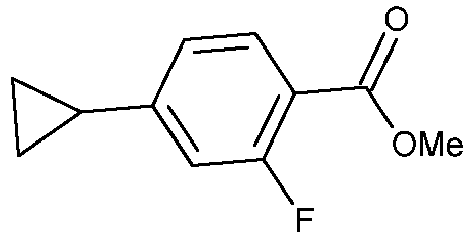
-

- 268 (1.0 g, 5.1 mmol) in dry THF (9 mL) was added dropwise to a suspension of LAH (0.24 g, 6.2 mmol) in dry THF (9 mL) at 0°C under N2. The mixture was stirred for 30min. Water (0.9 mL) then DCM (75 mL) were added very slowly and stirred for 20min. MgSO4 was added and the insoluble was filtered on a pad of Celite® and evaporated until dryness to give 0.82 g of Int. 269 , colorless oil used like this in the next step.
-

- DBAD (1.4 g, 5.9 mmol) was added portionwise to a sol. of 269 (0.82 g, 4.9mmol), 7 (1.3 g, 5.9 mmol), PPh3 supp. (1.9 g, 5.9 mmol) in dry THF (30 mL). The mixture was stirred at r.t. overnight. PPh3 supp. was filtered and the filtrate was evaporated to give a yellow oil. The crude residue was purified by prep. LC (irregular SiOH 30µm 80g Interchim, mobile phase: heptane/EtOAc 90/10). The desired fractions were collected and solvent evaporated until dryness to give 0.75 g of Int. 270 , pale yellow solid (41%).
-
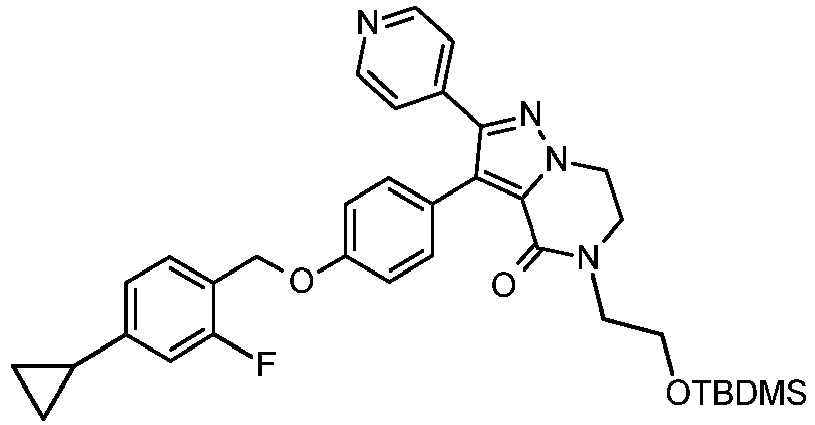
- In a microwave vial, a mixture of 28 (0.77 g, 1.7 mmol), 270 (0.75 g, 2.0 mmol), K3PO4 (1.4 g, 6.8 mmol) in 1,4-dioxane (7.5 mL) and H2O (2.7 mL) was carefully purged with N2. PdCl2(dppf) (140 mg, 0.17 mmol) was added and the r.m. was purged again with N2. The r.m. was heated at 80°C overnight. The r.m. was diluted with EtOAc and washed with water (once) and with brine (3 times). The organic phase was dried over MgSO4, filtered on a pad of Celite® and evaporated in vacuo to give brown solid. The solid was purified by prep. LC (irregular SiOH 30 µm, 40 g Interchim, mobile phase: DCM/MeOH/NH4OH 98/2/0.1). The desired fractions were collected and solvent evaporated until dryness to give 0.8 g of Int. 271 , colorless oil (77%).
-

- TBAF (1.6 mL, 1.6 mmol) was added dropwise to a sol. of 271 (0.8 g, 1.3 mmol) in THF (13 mL) at r.t. The mixture was stirred overnight at r.t. The mixture was concentrated and the residue was purified by prep. LC (Regular SiOH, 30µm, 25g Interchim, mobile phase: DCM/MeOH/NH4OH 98/2/0.1). The pure fractions were collected and solvent evaporated to give 0.29g of a colorless oil wich was crystallized from Et2O. The white solid formed was filtrated, washed and dried to give 276mg of Co. 136, white solid (42%). m.p.: 183°C (dsc).
-

- In a microwave vial, a mixture of methyl 4-bromo-3-fluorobenzoate (1.00 g 4.3 mmol), cyclopropylboronic acid (1.1 g, 13 mmol) and KF (0.75 g, 13 mmol) in dry toluene (10 mL) was purged with N2. Pd(PPh3)4 (0.25 g, 0.22 mmol) was added and the mixture was purged again with N2 and heated at 150°C for 2h. The crude was partitioned between DCM and water. The organic layer was separated, dried over MgSO4, filtered through a pad of silica gel and evaporated in vacuo to give 0.85 g of Int. 272 (quant.) which was used as such in the next reaction step.
-

- 272 (1.0 g, 5.1 mmol) in dry THF (9 mL) was added dropwise to a suspension of LAH (0. , 6.2 mmol) in dry THF (9 mL) at 0°C under N2. The mixture was stirred for 30min. Water (0.9 mL) then DCM (75 mL) were added very slowly and stirred for 20min. MgSO4 was added and the insoluble was filtered on a pad of Celite® and evaporated until dryness to give 0.88g of Int. 273 , brown oil (quant.) used like this in the next step.
-

- DBAD (1.4 g, 5.9 mmol) was added portionwise to a sol. of 273 (0.82 g, 4.9 mmol), 7 (1.3 g, 5.9 mmol), PPh3 supp. (1.9 g, 5.9 mmol) in dry THF (30 mL). The mixture was stirred at r.t. overnight. The resine was filtered and the filtrate was evaporated to give 4.3g , yellow oil. The crude residue was purified by prep. LC (irregular SiOH 30µm 80g GraceResolv™, mobile phase: heptane/EtOAc 90/10). The desired fractions were collected and solvent evaporated until dryness to give 1.5 g of Int. 274 as a pale yellow oil used as such for the next reaction step.
-

- In a microwave vial, a mixture of 28 (1.1 g, 2.4 mmol), 274 (1.5 g, 2.9 mmol), K3PO4 (2.0 g, 9.5 mmol) in 1,4-dioxane (10 mL) and H2O (3.7 mL) was carefully purged with N2. PdCl2(dppf) (194 mg, 0.24 mmol) was added and the r.m. was purged again with N2. The r.m. was heated at 80°C overnight. The r.m. was diluted with EtOAc and washed with water (once) and with brine (3 times). The organic phase was dried over MgSO4, filtered on a pad of Celite® and evaporated in vacuo to give brown oil. The oil was purified by prep. LC (irregular SiOH 30 µm, 80g Interchim, mobile phase: DCM/MeOH/NH4OH 99/1/0.1). The desired fractions were collected and solvent evaporated until dryness to give 1.52 g of Int. 275 , colorless oil (100%).
-

- TBAF (2.9 mL, 2.9 mmol) was added dropwise to a sol. of 275 (1.5 g, 2.5 mmol) in THF (24 mL) at r.t. The mixture was stirred overnight at r.t. The mixture was concentrated and the residue was purified by prep. LC (Regular SiOH, 30 µm, 40 g GraceResolv™, mobile phase gradient: DCM/MeOH/NH4OH from 98/2/0.1 to 96/4/0.1). The pure fractions were collected and solvent evaporated to give white foam which was triturated in Et2O. The white solid formed was filtrated, washed and dried to give 0.84g of Co. 137, white solid (69%). m.p.: 185°C (dsc).
-

- In a sealed tube, a mixture of 30 (200 mg, 651 µmol), 98 (915 mg, 2.61 mmol), K3PO4 (579 mg, 2.73 mmol) in 1,4-dioxane (3 mL) and H2O (1 mL) was carefully purged with N2. PCy3 (38 mg, 136 µmol) and Pd(OAc)2 (15 mg, 68.2 µmol) were added and the r.m. was purged again with N2. The r.m. was stirred for 17h at 100°C. The crude material was dissolved in water (10mL) and extracted with EtOAc (2 x 40mL). The organic phase was dried over MgSO4, filtered and evaporated in vacuo to give 1.18 g, yellow oil. The crude mixture was purified by prep. LC (irregular SiOH 15-40 µm, 30g Merck, mobile phase gradient: from DCM 100% to DCM 90%, MeOH 10%). The pure fractions were collected and solvent evaporated until dryness to give 230 mg. The residue was purified by achiral SFC on (2-ethylpyridine 6µm 150x21.2mm, mobile phase: 80% CO2, 20% MeOH). The pure fractions were collected and solvent evaporated until dryness to give 216 mg of Co. 138, white solid (73%). m.p.: 175 °C (dsc).
-
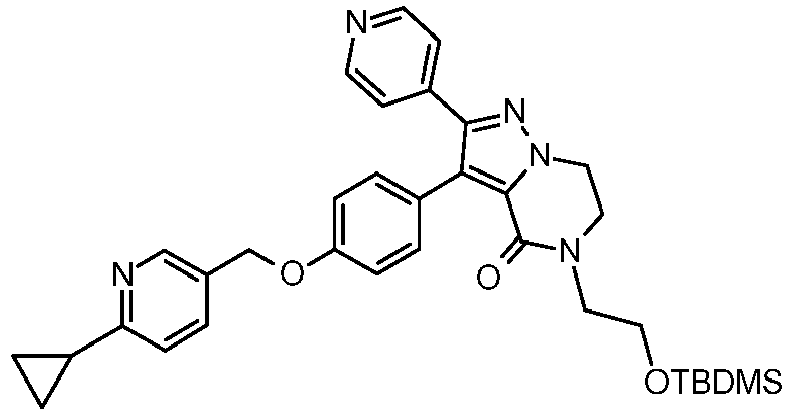
- PdCl2(dppf) (0.109 g, 0.133 mmol) was added to a stirred sol. purged with N2 of 28 (0.600 g, 1.33 mmol), 30 (0.983 g, 2.66 mmol) and K3PO4 (0.846 g, 3.99 mmol) in 1,4-dioxane (7.5 mL) and H2O (2.5 mL) at r.t. The resulting mixture was purged again with N2, and stirred at 120 °C using one single mode microwave (Biotage Initiator EXP 60) with a power output ranging from 0 to 400 W for 30 min. [fixed hold time]. The crude material was diluted with a sol. of DCM/MeOH (95:5) and water, and the organic layer was washed with brine, dried over MgSO4, filtered and evaporated in vacuo to give brown oil. This oil was purified by prep. LC (Irregular SiOH 50 µm, 80g Grace, mobile phase gradient: from DCM 100% to MeOH 6%, DCM 94%). The desired fractions were collected and evaporated in vacuo to give 667 mg of Int. 276 (76%).
-

- To a stirred sol. of 276 (667 mg, 1.01 mmol) in THF (10 mL) at 0°C was added TBAF (1.02 mL, 1.02 mmol), and the r.m. was stirred warming to r.t. for 17 h. The mixture was diluted with water and a sol. of DCM/MeOH (95:5). The organic layer was washed (brine), dried (MgSO4), filtered and evaporated in vacuo to afford an oil (590 mg) which was purified by prep. LC (Irregular SiOH 50µm, 80g Grace, mobile phase gradient: from DCM 100% to DCM 93%, MeOH 7%). The desired fractions were collected and evaporated in vacuo to give a sticky oil. The oil was triturated with a mixture of Et2O/EtOH (3/1) and a solid was formed. The solvents were removed in vacuo to yield 266 mg of Co. 139, white solid (55%). m.p.: 97 °C (dsc).
-

- NaH 60% (41 mg, 1 mmol) was added to 4 (0.2 g, 0.68 mmol) in DMSO (2 mL) at r.t. under N2. The mixture was stirred for 2h then 2,2-dimethyl-1,3-dioxolan-4-ylmethyl p-toluenesulfonate (0.29 g, 1 mmol) was added portionwise and the r.m. stirred for 2days. The mixture was poured into water and K2CO3 and extracted with EtOAc. The organic layer was evaporated until dryness. The residue was taken up with DCM, stirred for 20min then filtered. The filtrate was dried (MgSO4), filtered and evaporated until dryness to give 0.26 g. The residue was purified by prep. LC (24g of SiOH 35-40µm GraceResolv™, mobil phase gradient: from 100% DCM to 95% DCM, 5% CH3OH, 0.1% NH4OH). The fractions were collected and evaporated to give 194 mg of Int. 277 (70%).
-

- 277 (800 mg, 1.96 mmol), 30 (1.04 g, 2.95mmol), K3PO4 (1.25 g, 5.89 mmol) in 1,4-dioxane (8 mL) and H2O (4 mL), in a sealed tube, were purged with N2 for 10 min. Then, PdCl2(dppf) (161 mg, 0.196 mmol) was added. The resulting mixture was purged again with N2, and stirred at 120 °C using one single mode microwave (Biotage Initiator EXP 60) with a power output ranging from 0 to 400 W for 30 min. [fixed hold time]. The mixture was diluted in water and extracted with EtOAc. The organic layer was dried over MgSO4, filtered and evaporated to give 1.08 g of Co. 140a, brown oil (quant.). The crude Co. 140a was used as such as for the next step.
-

- A sol. of Co. 140a (1.08 g, 1.95 mmol), HCl 3N (3.3 mL, 9.77 mmol) in 1,4-dioxane (40 mL) were heated to 80°C for 30 min. The mixture was quenched with a 10% sol. of K2CO3 and extracted with EtOAc. The organic layer was separated, dried over MgSO4, filtered and evaporated in vacuo to give 800 mg, brown oil. This oil was purified by prep. LC (irregular SiOH 15-40 µm, 80g, Interchim, mobile phase gradient: from DCM 100% to DCM 94%, MeOH 6%). The desired fractions were collected and solvent evaporated until dryness to give 350 mg, grey solid. The solid was purified by prep. LC (irregular SiOH 15-40 µm, 45g, Merck, mobile phase gradient: from DCM 100% to DCM 95%, MeOH 5%). The desired fractions were collected and solvent evaporated until dryness to give 310 mg, white solid (31%). The white solid was dissolved in MeOH and concentrated in vacuo to afford a thick oil. The oil was triturated with gradual addition of Et2O to give a white precipitate. The precipitate was filtered off and washed with Et2O. The solid was collected and dried in vacuo to give 292 mg. This 292mg was recrystallized in EtOH (two times) overnight to give 158mg of Co. 140, white solid (15%).
-

- Pd(PPh3)4 (0.78g, 0.68mmol) was added to a mixture of 4-bromo-3-chlorobenzyl alcohol (1.5g, 6.78mmol) and Zn(CN)2 (0.404g, 3.39mmol) in DMF (15mL) in a sealed tube. The mixture was heated at 120°C for 30 min using one single mode microwave (Biotage) with a power output ranging from 0 to 400 W. The r.m. was cooled to r.t., poured into ice water and extracted with DCM. The organic layer was separated, dried over MgSO4, filtered and the solvent was evaporated until dryness. The residue was purified (with another batch, initial reactant 0.2g) by prep. LC on (Irregular SiOH 15-40µm 50g Merck, Mobile phase gradient: from DCM 100% to DCM 97%, MeOH 3%). The pure fractions were collected and solvent evaporated until dryness to give 1.15g of Int. 279 (89%).
-

- To a suspension of 279 (0.6 g, 3.58 mmol), 7 (0.945 g, 4.3 mmol), DBAD (0.989 g, 4.3mmol) in dry DCM (8 mL) was added PPh3 supp. (1.34 g, 4.3 mmol) and the r.m. was stirred at r.t. for 18 h. The insoluble was filtered through Celite®, washed with DCM. Water was added and the organic layer was separated, dried, filtered and concentrated until dryness to give 2.4g. The residue was purified by prep. LC on (Irregular SiOH 15-40µm 50g Merck, Mobile phase: DCM 100%). The pure fractions were collected and evaporated until dryness to give 679 mg of Int. 280 (51%).
-

- In a microwave vial, a mixture of 4 (0.3 g, 1.02 mmol), 280 (0.492 g, 1.33 mmol), K3PO4 (0.91 1g, 4.29mmol) in 1,4-dioxane (4.8 mL) and H2O (1.6 mL) was carefully purged with N2. PdCl2(dppf) (84 mg, 0.1mmol) was added and the r.m. was purged with N2. The r.m. was stirred for 16 h at 80°C. The crude material was dissolved in water and extracted with EtOAc. The organic phase was dried over MgSO4, filtered and evaporated in vacuo to give 680 mg. The residue was purified by prep. LC (Stationary phase: irregular 15-40µm 30g Merck, Mobile phase: 0.5% NH4OH, 94.5% DCM, 5% MeOH). The pure fractions were collected and evaporated to give 330 mg which was crystallized in Et2O, filtered and dired to give 275 mg of Co. 141 (59%). m.p.: 257 °C (dsc).
-

- The reaction was performed in anhydrous conditions under Ar-atmosphere. K2CO3 (0.240 g, 1.73 mmol) and (3-bromo-1-propynyl)benzene (75 % in toluene) (0.293 mL, 1.59 mmol) were successively added to a sol. of 7 (0.345 g, 1.57 mmol) in ACN (7.22 mL). The r.m. was stirred at r.t. for 18h. K2CO3 (0.372 g, 2.69 mmol) and (3-bromo-1-propynyl)benzene (0.300 mL, 2.17mmol) were then successively added again. After 22h at r.t., the r.m. was filtrated, washed with EtOAc and concentrated to dryness. The residue was purified by prep. LC (15-40µm, 50g, mobile phase gradient: cyclohexane/DCM: 80/20 to 0/100). The pure fractions were collected and the solvent was evaporated to give 0.435g of Int. 281 , yellow solid (90%).
-

- In a Schlenk tube, a mixture of 4 (125 mg, 0.426 mmol), 281 (427 mg, 1.), K3PO4 (362mg, 1.) in 1,4-dioxane (1.8 mL) and H2O (0.6 mL) was carefully purged with N2. PCy3 (24 mg, 85.2 µmol) and Pd(OAc)2 (10mg, 42.6µmol) were added and the r.m. was purged again with N2. The Schlenk tube was then sealed and the r.m. was stirred for 17h at 80°C. The crude material was dissolved in water (20 mL) and extracted with EtOAc (2x 40mL). The organic phase was dried over MgSO4, filtered and evaporated in vacuo to give 300 mg, yellow oil. The crude mixture was purified by prep. LC (irregular SiOH 15-40 µm, 30g Merck, mobile phase gradient: from DCM 100% to DCM 60%, Acetone 40%). The pure fractions were collected and solvent evaporated to give 90 mg of Co. 142, white solid (50%). m.p.: 245°C (DSC).
-

- DBAD (1.05 g, 4.57 mmol) was added to a stirred sol. of 1-(4-iso-propylphenyl)ethanol (500 mg, 3.04 mmol), 7 (1.01 g, 4.57 mmol) and PPh3 supp. (1.52 g, 4.57 mmol) in THF (18 mL) under N2 at r.t., and the mixture was stirred at r.t. for 16h. The crude mixture was filtered off and the filtrate was evaporated in vacuo to give an oil which was purified by prep. LC (Irregular SiOH 15-40µm, 120g Grace, mobile phase gradient: from Heptane 100% to EtOAc 30%, Heptane 70%). The pure fractions were collected and solvent evaporated to give 554 mg of Int. 282 , solid (50%).
-

- A mixture of 4 (150 mg, 0. 512 mmol), 282 (469 mg, 1.28 mmol), K3PO4 (434 mg, 2.05 mmol) in 1,4-dioxane (2.4 mL) and H2O (0.8 mL) was carefully purged with N2. PCy3 (29 mg, 0.102 mmol) and Pd(OAc)2 (11 mg, 51.2 µmol) were added and the r.m. was purged with N2. The r.m. was stirred at 80°C for 17h. Then, additional 282 (100 mg, 0.273 mmol), PCy3 (14 mg, 49.8 µmol) and Pd(OAc)2 (6 mg, 25.6 µmol) were added under N2 at r.t. The mixture was stirred at 80°C for 16h. The crude material was dissolved in water and extracted with DCM. The organic phase was dried over MgSO4, filtered and evaporated in vacuo to give a solid which was purified by prep. LC (irregular SiOH 15-40µm, 30g Merck, mobile phase gradient: from DCM/MeOH 100/0 to 95/5). The pure fractions were collected and solvent evaporated to give 153 mg, white solid. The solid was triturated with Et2O, and the solvent was separated. The solid was washed 2x with Et2O and dried in vacuo to yield 105 mg of Co. 143, white solid (45%) m.p.: 217 °C (dsc).
-

- In a microwave vial, a mixture of 28 (1.078 g, 2.39 mmol), 282 (2.1 g, 2.87 mmol), K3PO4 (2.03 g, 9.56 mmol) in 1,4-dioxane (10.5 mL) and H2O (3.7 mL) was carefully purged with N2. PdCl2(dppf) (196 mg, 0.24 mmol) was added and the r.m. was purged again with N2. The r.m. was heated at 80°C overnight. The r.m. was diluted with EtOAc and washed with water (once) and with brine (3 times). The organic phase was dried over MgSO4, filtered on a pad of Celite® and evaporated in vacuo to give 3.41 g. The residue was purified by prep. LC (Stationary phase: irregular SiOH 15-40µm 300g MERCK, Mobile phase: 0.1% NH4OH, 99% DCM, 1% MeOH). The pure fractions were collected and evaporated until dryness to give 850 mg of Int. 283 (58%).
-

- TBAF (1.67 mL, 1.67 mmol) was added dropwise to a sol. of 283 (0.85 g, 1.39 mmol) in THF (14 mL) at r.t. The mixture was stirred for 3h at r.t. EtOAc and water were added. The organic layer was separated, dried, filtered and evaporated until dryness to give 845 mg. The crude mixture was purified by prep. LC (Stationary phase: Sunfire Silica 5µm 150x30.0mm, Mobile phase Gradient: from 0.2% NH4OH, 98% DCM, 2% MeOH to 1.1% NH4OH, 89% DCM, 10% MeOH). The pure fractions were collected and evaporated until dryness to give 512 mg. The residue was purified by chiral SFC (Stationary phase: Chiralcel OD-H 5µm 250x20mm, Mobile phase: 75% CO2, 25% MeOH(0.3% iPrNH2)). The pure fractions were collected and evaporated until dryness to give 238 mg of a first compound and 247mg of a second compound. The first compound was crystallized from DIPE, filtered and dried to give 182 mg of Co. 144 (26%) m.p.: 148°C (dsc). The second compound was crystallized from DIPE, filtered and dried to give 188 mg of Co. 145 (27%). m.p.: polymorph: 148°C and 162°C (dsc); Co. 144: [α]d: -48.19 ° (589 nm, c 0.249 w/v %, DMF, 20 °C); Co. 145 : [α]d: +47.79 ° (589 nm, c 0.249 w/v %, DMF, 20 °C)
-

- A sol. of methyl 2-hydroxy-2-[(4-(propan-2-yl)]acetate (500 mg, 2.40 mmol), 7 (687 mg, 3.12 mmol) and PPh3 (756 mg, 2.88 mmol) in dry DCM (12 mL) was treated with DBAD (663 mg, 2.88 mmol) and stirred at r.t. for 19h. Then, EtOAc and brine were added, and the organic layer was separated, dried over MgSO4, filtered and evaporated in vacuo to afford 3.03 g, pale yellow oil. This oil was purified by prep. LC (irregular SiOH 15-40 µm, 120g, GraceResolv™, mobile phase gradient: from heptane 100% to heptane/EtOAc 70/30). The pure fractions were collected and solvent evaporated until dryness to give 760 mg of Int. 284 , sticky colorless solid (77%).
-

- A mixture of 4 (0.298 g, 1.02 mmol), 284 (0.750 g, 1.83 mmol) and K3PO4 (0.539 g, 2.54 mmol) in 1,4-dioxane (3mL) and H2O (1.5 mL) was purged with N2. PdCl2(dppf) (71 mg, 86.3 µmol) was then added. The mixture was purged again with N2 and stirred at 120°C using one single mode microwave (Biotage Initiator EXP 60) with a power output ranging from 0 to 400 W for 20 min [fixed hold time]. Then a sol. of DCM/MeOH (95:5) and water were added. The organic layer was separated, washed with brine, separated, dried over MgSO4, filtered and evaporated in vacuo to yield 570 mg, solid. The residue was purified by prep. LC (Irregular SiOH 50 µm, 40g Grace, mobile phase gradient: from DCM 100% to DCM 93%, MeOH 7%). The desired fractions were evaporated in vacuo to give 226 mg of Co. 146a, white solid (45%).
-

- NaBH4 (76 mg, 2.01 mmol) was added to a stirred suspension of Co. 146a (166 mg, 0.334 mmol) in dry THF (4 mL) and MeOH (0.75 mL) at r.t. under N2. The r.m. was stirred at 50 °C for 3h, and then a sat. sol. of NaHCO3 and EtOAc were added. The organic layer was washed with brine, separated, dried over MgSO4, filtered and evaporated in vacuo to yield 198 mg, white solid. The residue was purified by prep. LC (Irregular SiOH 50 µm, 40g Grace, mobile phase gradient: from DCM 100% to DCM 91%, MeOH 9%). The desired fractions were evaporated in vacuo to give 66 mg, white solid. The solid was triturated in MeOH, and the solvent was allowed to evaporate slowly. The afforded solid was collected and dried in vacuo at 50°C for 1h to yield 65 mg of Co. 146, white solid (41%). m.p.: 228 °C and 238 °C (dsc- polymorphous compound).
-

- BOC-anhydride (122 mg, 0.558 mmol) and DMAP (68 mg, 0.558 mmol) were added to a stirred sol. of 2-amino-1-(4-isopropylphenyl)ethanol (100 mg, 0.558 mmol) in ACN (3mL) at rt. The r.m. was stirred at r.t. for 2h. Another batch (717mg of initial reactant) was combined with this reaction and the sol. was diluted in DCM and washed successively with HCl 1N and sat. NaHCO3. The organic phase was dried over MgSO4, filtered and evaporated in vacuo. The residue was purified by prep. LC (irregular SiOH 15-40 µm, 50g, Merck, Mobile phase gradient: DCM/MeOH, from 100/0 to 80/20 The pure fractions were collected and solvent evaporated until dryness to give 500mg of Int. 286 , white solid (global yield: 39%).
-

- DBAD (495 mg, 2.15 mmol) was added to a mixture of 7 (473 mg, 2.15 mmol), 286 (400 mg, 1.43 mmol) and PPh3 supp. (563 mg, 2.15 mmol) in DCM (4 mL) and the r.m. was stirred under N2 for 17h at r.t. The sol. was filtered and the residual polymer was washed with DCM. The filtrate was evaporated in vacuo. The residue was purified by prep. LC (irregular SiOH 15-40 µm, 50g Merck, mobile phase gradient: from Heptane 100% to EtOAc 10%, Heptane 90%). The pure fractions were collected and solvent evaporated to give 200 mg of Int. 287 , white gum (29%).
-

- A sol. of 4 (82 mg, 0.277 mmol) and 287 (200 mg, 0.415 mmol) in 1,4-dioxane (2 mL) and H2O (1 mL) was treated with K3PO4 (176 mg, 0.831 mmol) and purged with N2. PdCl2(dppf) (23 mg, 27.7 µmol) was then added and the r.m. was carefully purged with N2. The mixture was heated at 120°C using one single mode microwave (Biotage Initiator EXP 60) with a power output ranging from 0 to 400 W for 30 min [fixed hold time]. HCl 3N (2.5mL) was then slowly added and the sol. was stirred at r.t. for 18h. The r.m. was diluted with EtOAc and washed with aq. NaHCO3 (twice). The organic phase was dried over MgSO4, filtered and evaporated in vacuo to give 260mg, brown oil. The residue was purified by prep. LC (irregular SiOH 15-40 µm, 50g, MERCK, Mobile phase gradient: from DCM 100 % to DCM 95%, MeOH 95%). The pure fractions were collected and solvent evaporated until dryness to give 75mg of Co. 147, white solid. m.p.: 178°C (dsc).
-

- To a sol. of 1-(4-methoxyphenyl)-2-[4-(propan-2-yl)phenyl]ethan-1-one (6.26 g, 23.3 mmol) in acetic acid (43 mL) was added hydriodic acid 57% in water (14 mL, 167 mmol). The sol. was refluxed for 72h and cooled down to 0°C. Water was carefully added and the precipitate was filtered on a glass frit. The brown solid obtained was washed with Et2O and dried in vacuo to give 798 mg, beige solid (13%). The Et2O filtrate was evaporated in vacuo and coevaporated with toluene (3 times). The residue was taken up in DCM and the precipitate was filtered on a glass frit, washed with DCM and dried in vacuo to give 2.07 g of pale brown solid (35%). The DCM filtrate was evaporated again, the residue was taken up in a minimum of DCM, the precipitate was filtered on a glass frit and dried in vacuo to give 687 mg of pale brown solid (12%). The three solids were put together to give 3.55g of Int. 288 (60%).
-

- To a sol. of 288 (798 mg, 3.14 mmol) in DCM (7 mL) were added DMAP (38.3 mg, 0.314 mmol), Et3N (1.31 mL, 9.41 mmol) and N-phenyltrifluoromethanesulfonimide (1.68 g, 4.71 mmol). The sol. was stirred at r.t. for 90 min then concentrated in vacuo. The residue was purified by prep. LC (Irregular SiOH 15-40 µm, 50g Merck, solid deposit, mobile phase gradient: from heptane 100% to heptane 80, EtOAc 20%). The pure fractions were collected and solvent evaporated until dryness to give 1.17 g of Int. 289 , yellow oil which crystallized (97%).
-

- To a sol. of 289 (1.10 g, 2.85 mmol) in DME (12 mL) in a schlenk tube were added BisPin (1.08 g, 4.27 mmol) and KOAc (838 mg, 8.54 mmol). The mixture was carefully purged with N2 and PdCl2(dppf) (233 mg, 0.285 mmol) was added. The mixture was purged again with N2 and heated at 80°C for 18h. EtOAc and water were added, the organic layer was separated, dried over MgSO4, filtered off and evaporated in vacuo to give a brown oil. This oil was triturated in Et2O and the precipitate was filtered off on a glass frit. The filtrate was evaporated in vacuo to give a black residue. This residue was dissolved in MeOH, water was added and the mixture was evaporated in vacuo (process repeated 3x). The residue was diluted in DCM, dried over MgSO4, filtered off and evaporated in vacuo to give 942 mg of Int. 290 , black solid (91%).
-

- A mixture of 4 (2.94 g, 10.0 mmol), 290 (3.65 g, 10.0 mmol) and K3PO4 (8.51 g, 40.1 mmol) in 1,4-dioxane (50 mL) and H2O (10 mL) in a Schlenk tube was purged with N2. PdCl2(dppf) (820 mg, 1.00 mmol) was added, the mixture was purged again with N2 and heated at 80°C for 18h. Another batch (reactant 0.3g of 4 , in the sames conditions) was combined with this reaction. The mixture was diluted with DCM and water and the organic layer was separated, dried over MgSO4, filtered off and evaporated in vacuo to give 15 g of brown oil. This oil was purified by prep. LC (Irregular SiOH 15-40 µm, 330g Grace, solid deposit, mobile phase gradient: from DCM 100% to DCM 95%, iPrOH 5%). The pure fractions were collected and solvent evaporated until dryness to give a beige solid which was triturated in Et2O. The precipitate was filtered on a glass frit to give 3.20 g of Co. 148, off-white solid (global yield 64%, purity 97%). 405 mg of 3.2 g was purified by achiral SFC (Stationary phase: diethylaminopropyl 5µm 150x21.2mm, Mobile phase: 85% CO2, 15% MeOH (0.3% iPrNH2)). The pure fractions were collected and solvent evaporated until dryness to give 289 mg which was crystallized from iPrOH. The precipitate was filtered on a glass frit and the solid was washed with Et2O twice then dried under high vacuum at 50°C for 18h to give 178 mg of Co. 148, white solid. m.p.: 259°C (dsc).
-

- Under N2, to a suspension of methyl vanillate (2.0 g, 11 mmol), 4-isopropylbenzyl alcohol (1.7 mL, 11 mmol), PPh3 supp. (3.4 g, 11 mmol) in dry DCM (48 mL) was added DBAD (2.5 g, 11 mmol) and the r.m. was stirred at r.t. for 3 h. The mixture was filtrated throught a Celite® pad, evaporated in vacuo to give a colorless oil. This oil was purified by prep. LC (irregular SiOH 30 µm, 120g Interchim, mobile phase gradient: heptane/EtOAc, from 90/10 to 80/20). The pure fractions were collected and solvent evaporated to give 2.22 g of Int. 291 , white solid (64%).
-

- A sol. of 291 (2.2 g, 7.0 mmol) and 2-(4-methyl-2-pyridinyl)-imidodicarbonic acid, 1,3-bis(1,1-dimethylethyl) ester (2.17 g, 7.0 mmol) in dry THF (20 mL) was treated with LiHMDS (14 mL, 14 mmol) at 0°C (addition over 10 min). After stirring for 1h at 0°C, the reaction was allowed to warm to r.t. and was stirred for 17 h. The reaction was quenched with a 10% aq. sol. of NH4Cl (50mL). The mixture was extracted with DCM. The organic layer was collected and evaporated in vacuo and the residue was taken in Et2O, the solid formed was filtrated and dried to afford 1.59 g of Int. 292 , beige powder (46%).
-

- To a suspension of 292 (1.6 g, 3.2 mmol) in ACN (12 mL) was added 1,8-diazabicyclo(5.4.0)undec-7-ene (0.49 mL, 3.2 mmol) and ethyl diazoacetate (0.58 mL, 5.5 mmol). The mixture was heated at 100°C for 2h then cooled down to r.t. The solvent was removed in vacuo and the residue was diluted in EtOAc. The organic layer was washed with a sat. aq. sol. of NaHCO3, dried over MgSO4, filtered off and evaporated in vacuo. The residue was purified by prep. LC (irregular SiOH 15-40 µm, 80g GraceResolv™, mobile phase gradient: from Heptane/EtOAc 70/30 to 60/40). The pure fractions were collected and solvent evaporated until dryness to give 670 mg of Int. 293 , beige powder (35%).
-

- To a mixture of 293 (330 mg, 0.56 mmol), Boc-glycinol (136 mg, 0.84 mmol) and PPh3 supp. (703 mg, 0.84 mmol) in dry THF (9 mL) was added DBAD (194 mg, 0.84 mmol). The mixture was stirred at r.t. for 12h. The mixture was filtrated through a Celite® pad, concentrated and purified by prep. LC (irregular SiOH 30 µm, 40g Interchim, Mobile phase gradient: from heptane/EtOAc 75/25 to 70/30). The pure fractions were collected and solvent evaporated until dryness to give 251 mg of Int. 294 , white solid (61%).
-

- 294 (250 mg, 0.34 mmol), HCl 3N (0.57 mL, 1.7 mmol), in ACN (6.1 mL) at 80°C for 3 h. The mixture was concentrated, and K2CO3 10% aq (20 mL) was added and the mixture was extracted with DCM, dried and concentrated. The mixture was put in DCM, filtrated and the filtrate was purified by prep. LC (Irregular SiOH 15-40 µm, 12g GraceResolv™, mobile phase gradient: DCM/MeOH/NH4OH from 98/2/0.1 to 95/5/0.1) to give 58 mg of Co. 149, white solid (35%). m.p.: 179°C (dsc).
-

- To a mixture of 293 (260 mg, 0.44 mmol), 2-(N-Boc-methylamino)ethanol (116 mg, 0.66 mmol) and PPh3 supp. (554 mg, 0.66 mmol) in dry THF (7 mL) was added DBAD (153 mg, 0.66 mmol). The mixture was stirred at r.t. for 3 h. The mixture was filtrated throught a celite® pad, concentrated and purified by prep. LC (irregular SiOH 30 µm, 40g Interchim, Mobile phase gradient: from heptane/EtOAc 75/25 to 70/30). The pure fractions were collected and solvent evaporated until dryness to give 270 mg of Int. 295 , white solid (82%).
-

- 295 (270 mg, 0.36 mmol), HCl 3N (0.61 mL, 1.8 mmol), in ACN (6.4 mL) at 80°C for 2h. The mixture was concentrated, K2CO3 10% aq (20 mL) was added and the mixture was stirred at r.t. for 30 min. The mixture was extracted with DCM (twice) and the organic layer was dried over MgSO4, filtrated and evaporated. The residue was purified by prep. LC (Irregular SiOH 15-40 µm, 12g GraceResolv™, mobile phase gradient: DCM/MeOH/NH4OH from 98/2/0.1 to 95/5/0.1). The pure fractions were collected and solvent evaporated until dryness to give 105 mg of Co. 150, white powder (58%).
-

- A sol. of 17 (800 mg, 1.36 mmol), 3-fluoro-4-pyridineboronic acide pinacol ester (608 mg, 2.73 mmol) and Na2CO3 (434 mg, 4.09 mmol) in toluene (10 mL), EtOH (5 mL) and H2O (2 mL) in a sealed tube was purged with N2. PdCl2(dppf) (112 mg, 0.136 mmol) was added, the mixture was purged again with N2 and heated at 130°C using one single mode microwave (Biotage Initiator EXP 60) with a power output ranging from 0 to 400 W for 5 min [fixed hold time]. The mixture was diluted with DCM and washed with water. The organic layer was separated, dried over MgSO4, filtered off and evaporated in vacuo to give 1.54 g, brown oil. This oil was purified by prep. LC (Irregular SiOH 15-40 µm, 80g Grace, mobile phase gradient: from DCM 100% to DCM 90%, acetone 10%). The pure fractions were collected and solvent evaporated until dryness to give 720 mg of Int. 296 , yellow oil (78%).
-

- To a sol. of 296 (720 mg, 1.20 mmol) in ACN (15 mL) was added HCl 3N (2.00 mL, 5.97 mmol). The sol. was heated at 80°C for 2h, cooled down to r.t. and the solvent was removed in vacuo. DCM and a sat. aq. sol. of NaHCO3 were added to the residue, the mixture was stirred at r.t. for 10min and the organic layer was separated, dried over MgSO4, filtered off and evaporated in vacuo to give a brown oil which crystallized. The crude mixture was purified by prep. LC (Irregular SiOH 15-40 µm, 25g Merck, solid deposit, mobile phase gradient: from DCM 100% to DCM 80%, acetone 20%). The pure fractions were collected and solvent evaporated until dryness to give 363mg of Co. 151, white solid (67%). m.p.: 228°C, 235°C (dsc - polymorphous compound).
-

- HCl 3N (8.37 mL, 33.5 mmol) was added to a sol. of 22 (3.91 g, 5.58 mmol) in 1,4-dioxane (30 mL) and the sol. was stirred for 60 h at 50°C. The precipitate formed was filtered on a glass frit and washed with Et2O to give 2.75 g of Int. 297 , white solid (quant. yield).
-

- To a sol. of 297 (2.75 g, 5.93 mmol) in MeOH (40 mL) was added Cs2CO3 (9.66 g, 29.7 mmol) and the mixture was stirred at r.t. for 1h. The solvent was removed in vacuo and the yellow solid obtained was dissolved in a minimum of water and acidified until pH3 with a 1N aq. sol. of HCl. The white precipitate formed was filtered on a glass frit, washed with Et2O (3 times) and dried to give 1.86g of Int. 298 , white solid (quant, yield).
-
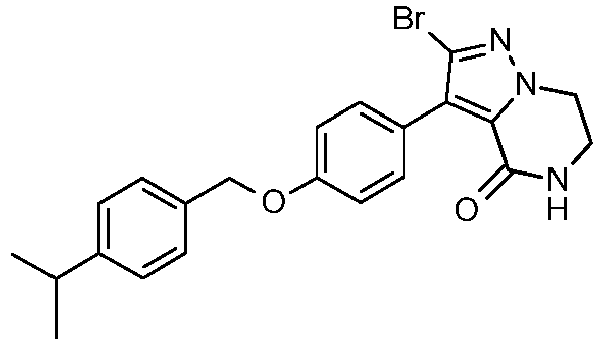
- To a sol. of 298 (1.00 g, 3.25 mmol) in DMF (10 mL) were added K2CO3 (673 mg, 4.87 mmol), NaI (24.3 mg, 162 µmol) and 4-isopropylbenzyl bromide (543 µL, 3.25 mmol). The mixture was heated at 150°C for 18h and 4-isopropylbenzyl bromide (543 µL, 3.25 mmol) was added. The mixture was heated at 150°C for 20 h and cooled down to r.t. Water and DCM were added to the crude mixture. The precipitate was filtered off on a glass frit to give a white solid. The organic layer was separated, dried over MgSO4, filtered off and evaporated in vacuo to give a white solid. Both solids were combined, dissolved in a mixture of DCM/MeOH and purified by prep. LC (Irregular SiOH 15-40 µm, 25g Merck, solid deposit, mobile phase gradient: from DCM 100% to DCM 90%, acetone 10%). The pure fractions were collected and solvent evaporated to give 1.00 g of Int. 299 , white solid (70%).
- In a sealed tube, a mixture of 299 (130 mg, 295 µmol), 3-fluoro-4-pyridineboronic acide pinacol ester (132 mg, 590 µmol), K3PO4 (251 mg, 1.18 mmol) in 1,4-dioxane (1.40 mL) and H2O (0.50 mL) was carefully purged with N2. PCy3 (16.6 mg, 59.1 µmol) and Pd(OAc)2 (6.63 mg, 29.5µmol) were added, the r.m. was purged again with N2 and heated at 100°C for 18h. After cooling down to rt, EtOAc and water were added to the crude mixture. The organic layer was separated, dried over MgSO4, filtered off and evaporated in vacuo to give 137 mg of brown oil. This 137 mg was combined with 103 mg from another batch and purified by prep. LC (Irregular SiOH 15-40 µm, 10g Merck, mobile phase gradient: from DCM 100% to DCM 80%, acetone 20%). The pure fractions were collected and solvent evaporated until dryness to give 65 mg of Co. 151, white solid (27%). m.p.: 222°C (dsc).
-

- To a sol. of 2-fluoro-4-hydroxybenzaldehyde (1.3 g, 9.4 mmol) in ACN (34 mL) was added K2CO3 (3.2 g, 23 mmol) and 8 (2.1 g, 9.8 mmol), the r.m. was heated at 70 °C for 2h. Then, the mixture was allowed to cool down to rt, filtered and concentrated to give 2.67 g of Int. 300 , colorless oil which quickly crystallized in white solid (100%).
-

- To a sol. of ethyl cyanoacetate (1.1 mL, 10.3 mmol) in EtOH (6.5 mL) was added 300 (2.67 g, 9.8 mmol) and piperidine (19 µL, 0.20mmol). The mixture was refluxed for 2h and then, allowed to cool down to r.t. overnight. The precipitate formed was filtered on a glass frit to give 2.68 g of Int. 301 , pale yellow powder (74%).
-

- To a sol. of trimethylsilyldiazomethane (5.47 mL, 11 mmol) in dry THF (15 mL) at - 78°C under N2 was added n-BuLi 1.6M in hexane (6.8 mL, 11 mmol) dropwise. The sol. was stirred for 30 min at -78°C and a sol. of 301 (2.68 g, 7.3 mmol) in dry THF (15 mL) was added dropwise at -78°C. The sol. was stirred for 1h at -78°C then at r.t. for 16h. EtOAc was added and the organic layer was washed twice with a sat. aq. sol. of NaHCO3, dried over MgSO4, filtered off and evaporated in vacuo to give brown oil. The residue was purified by prep. LC (Irregular SiOH 30 µm, 40g Interchim, mobile phase gradient: from heptane/EtOAc, 75/25 to 65/35). The pure fractions were collected and solvent evaporated until dryness to give 2.0 g of Int. 302 , orange solid (60%).
-

- To a sol. of 302 (2.0 g, 4.4 mmol) in ACN (40 mL) was added dropwise a sol. of N-Bromosuccinimide (0.82 g, 4.6mmol) in ACN (20mL) and the pale brown mixture was stirred at r.t. for 18h. The solvent was removed in vacuo and EtOAc and a sat. aq. sol. of K2CO3 was added to the residue. The organic layer was separated, dried over MgSO4, filtered off and evaporated in vacuo to give brown oil. The residue was purified by prep. LC (Irregular SiOH 30 µm, 40g Interchim, mobile phase gradient: from heptane/EtOAc, 80/20 to 70/30). The desired fractions were collected and solvent evaporated to give 510 mg of Int. 303 , yellow solid (25%).
-
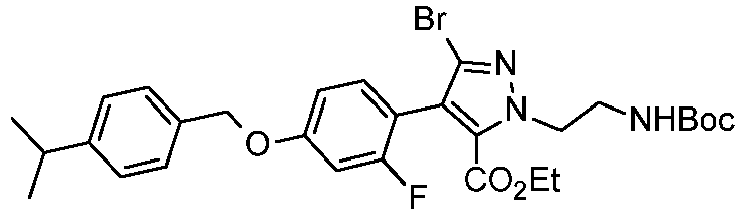
- To a mixture of 303 (0.51 g, 1.1 mmol), Boc-Glycinol (267 mg, 1.7 mmol) and PPh3 supp. (0.52 g, 1.7 mmol) in dry THF (18 mL) was added DBAD (0.38 g, 1.7 mmol). The mixture was stirred at r.t. for 3 days. The mixture was filtrated throught a Celite® pad, concentrated and purified by prep. LC (irregular SiOH 30 µm, 25g Interchim, Mobile phase gradient: heptane/EtOAc, from 80/20 to 60/40). The desired fractions were collected and solvent evaporated until dryness to give 735 mg of Int. 304 , white solid. This was a mixture 60/40 of 60% Int. 304 and 40% of a dibrominated Co. This mixture was used as such in the next reaction step.
-

- A mixture of 304 (0.35 g, 0.58 mmol), 3-fluoro-4-pyridineboronic acide pinacol ester (0.26 g, 1.2 mmol), K3PO4 (0.49 g, 2.3 mmol) in 1,4-dioxane (1.5 mL) and H2O (0.5 mL) was carefully degazed with N2. PCy3 (34 mg, 0.12 mmol) and Pd(OAc)2 (14 mg, 61 µmol) were added and the r.m. was purged again with N2. The r.m. was stirred overnight at 80°C for a day. The crude material was dissolved in water (50 mL) and extracted with DCM. The organic phase was dried over MgSO4, filtered throught a pad of Celite® and evaporated in vacuo. This residue was purified by prep. LC (irregular SiOH 30 µm, 25g Interchim, mobile phase gradient: from DCM/MeOH/NH4OH 98/2/0.1 to 97/3/0.1). The pure fractions were collected and solvent evaporated until dryness to give 100 mg of Int. 305 , pale yellow oil (28%).
-

- 305 (100 mg, 0.16 mmol), HCl 3N (0.27 mL, 0.81 mmol), in ACN (2.9 mL) was stirred at 80°C for 2h. The mixture was concentrated, and NaHCO3 sat aq (25 mL) was added and the mixture was stirred at r.t. 15min, extracted with DCM, dried, filtered and concentrated to give 33 mg of Int. 306 . This residue was used as such without further purification in the cyclisation step.
-

- To a sol. of 306 (33 mg, 0.064 mmol) in MeOH (1.8 mL) was added Cs2SO4 (0.10 g, 0.32 mmol) and the mixture was stirred at r.t. overnight. The mixture was concentrated and taken in water and extracted with DCM. The organic layer was dried on MgSO4 and concentrated to give 17 mg. The residue was purified by prep. LC on (Stability Silica 5µm 150x30.0mm, Mobile phase Gradient: from NH4OH/DCM/MeOH 0.2/98/2 to NH4OH/DCM/MeOH 0.8/92/8). The pure fractions were collected and solvent evaporated until dryness to give 12 mg of Co. 152, white solid (40%). m.p.: 262°C (dsc).
-

- A sol. of 17 (553 mg, 0.943 mmol), 3-cyanopyridine-4-boronic acid pinacol ester (434 mg, 1.89 mmol) and Na2CO3 (300 mg, 2.83 mmol) in toluene (6.3 mL), EtOH (3.2 mL) and H2O (1.3 mL) in a sealed tube was purged with N2. PdCl2(dppf) (77.2 mg, 94.3 µmol) was added, the mixture was purged again with N2 and heated at 130°C using one single mode microwave (Biotage Initiator EXP 60) with a power output ranging from 0 to 400 W for 5 min [fixed hold time]. The crude was diluted with DCM and washed with water. The organic layer was separated, dried over MgSO4, filtered off and evaporated in vacuo to give 1.16 g. The crude was purified by prep. LC (Irregular SiOH 15-40 µm, 80g Grace, mobile phase gradient: from DCM 100% to DCM 80%, EtOAc 20%). The pure fractions were collected and solvent evaporated until dryness to give 84 mg of Int. 307 , colorless oil (18%).
-

- To a sol. of 307 (108 mg, 0.177 mmol) in ACN (2 mL) was added HCl 3N (295 µL, 0. ). The sol. was heated at 80°C for 10 min then stirred at r.t. for 10 min. DCM and a sat. aq. sol. of NaHCO3 were added to the residue, the mixture was stirred at r.t. for 10 min and the organic layer was separated, dried over MgSO4, filtered off and evaporated in vacuo to give 95 mg of Int. 308 , pale yellow oil (quant. yield).
-

- To a sol. of 308 (120 mg, 0.235 mmol) in MeOH (2.5 mL) was added Cs2CO3 (384 mg, 1.18 mmol) and the mixture was stirred at r.t. for 15min. The solvent was removed in vacuo and the residue was dissolved in DCM and water. The organic layer was separated, dried over MgSO4, filtered off and evaporated in vacuo to give 96 mg, pale beige solid. The residue was purified by prep. LC (Irregular SiOH 15-40 µm, 10g Merck, mobile phase gradient: from DCM 100% to DCM 98%, MeOH 2%). The pure fractions were collected and solvent evaporated until dryness to give 79 mg of Co. 153, white solid (72%). m.p.: 225°C (dsc).
-

- A sol. of 17 (800 mg, 1.36 mmol), 3-chloro-4-pyridineboronic acid pinacol ester (653 mg, 2.73 mmol) and Na2CO3 (434 mg, 4.09 mmol) in toluene (10 mL), EtOH (5 mL) and H2O (2 mL) in a sealed tube was purged with N2. PdCl2(dppf) (112 mg, 0.136 mmol) was added, the mixture was purged again with N2 and heated at 130°C using one single mode microwave (Biotage Initiator EXP 60) with a power output ranging from 0 to 400 W for 5 min [fixed hold time]. The mixture was diluted with DCM and washed with water. The organic layer was separated, dried over MgSO4, filtered off and evaporated in vacuo to give 2.07 g, brown oil. The crude was purified by prep. LC (Irregular SiOH 15-40 µm, 80g Grace, mobile phase gradient: from DCM 100% to DCM 90%, acetone 10%). The pure fractions were collected and solvent evaporated until dryness to give 900 mg of Int. 309 , yellow oil (95%).
-

- To a sol. of 309 (900 mg, 1.45 mmol) in ACN (20 mL) was added HCl 3N (2.42 mL, 7.27 mmol). The sol. was heated at 80°C for 2h, cooled down to r.t. and the solvent was removed in vacuo. DCM and a sat. aq. sol. of NaHCO3 were added to the residue, the mixture was stirred at r.t. for 10min and the organic layer was separated, dried over MgSO4, filtered off and evaporated in vacuo. The brown oil was purified by prep. LC (Irregular SiOH 15-40 µm, 30g Merck, mobile phase gradient: from DCM 100% to DCM 80%, acetone 20%). The pure fractions were collected and the solvent evaporated to give 458 mg of Co. 154, white solid (67%). m.p.: 207°C (dsc).
-

- A mixture of 17 (650 mg, 1.11 mmol), 7-azaindole-4-boronic acid pinacol ester (325 mg, 1.33 mmol) and K3PO4 (941 mg, 4.43 mmol) in 1,4-dioxane (5 mL) and H2O (1.2 mL) in a sealed tube was purged with N2. PdCl2(dppf) (91.0 mg, 0.111 mmol) was added, the mixture was purged again with N2 and heated at 80°C for 18 h. This mixture and another batch (with 142mg of 17 in the same conditions) were combined, diluted with DCM and washed with water. The organic layer was separated, dried over MgSO4, filtered off and evaporated in vacuo to give brown oil. The crude was purified by prep. LC (Irregular SiOH 15-40 µm, 80g Grace, mobile phase gradient: from DCM 100% to DCM 80%, acetone 20%). The pure fractions were collected and solvent evaporated until dryness to give 478 mg of Int. 310 , orange foam (57%).
-

- To a sol. of 310 (478 mg, 0.766 mmol) in ACN (6 mL) was added HCl 3N (1.28 mL, 3.83 mmol). The sol. was heated at 50°C for 3h then stirred at r.t. for 18h. DCM and a sat. aq. sol. of NaHCO3 were added. The organic layer was separated, dried over MgSO4, filtered off and evaporated in vacuo to give 398 mg of Int. 311 , brown oil (99%).
-

- To a sol. of 311 (398 mg, 0.76 mmol) in MeOH (8 mL) was added Cs2CO3 (1.24 g, 3.80 mmol) and the mixture was stirred at r.t. for 15min. The solvent was removed in vacuo and the residue was dissolved in DCM and water. The organic layer was separated, dried over MgSO4, filtered off and evaporated in vacuo to give beige solid. This solid was purified by prep. LC (Irregular SiOH 15-40 µm, 12g Grace, DCM 100% to DCM 95%, iPrOH 5%). The pure fractions were collected and solvent evaporated until dryness to give 289 mg, white solid (80%). 249 mg of this white solid was crystallized from MeCN. The precipitate was filtered on a glass frit and the filtrate was evaporated in vacuo. The residue was recrystallized again from ACN and the precipitate was filtered on a glass frit (process repeated 2x). The solids were combined and dried in high vacuum at 55°C for 3h to give 185 mg of Co. 155, white solid (51%). m.p.: 266°C (dsc).
-

- To a suspension of 299 (264 mg, 600 µmol) in DMSO ( ) at r.t. under N2 was added NaH 60% (28.8 mg, 719 µmol). The mixture was stirred at r.t. for 2h and (2-bromoethoxy)-tert-butyldimethylsilane (154 µL, 719 µmol) was added. The r.m. was stirred at r.t. for 2h. Water and EtOAc were added. The organic layer was separated, washed with a sat. aq. sol. of NaCl (3 times), dried over MgSO4, filtered and evaporated in vacuo to give 368 mg of Int. 312 , yellow oil (quant.). The crude Int. 312 was used as such in the next reaction step without purification.
-

- A mixture of 312 (150 mg, 251 µmol), 7-azaindole-4-boronic acid pinacol ester (73.4 mg, 301mmol) and K3PO4 (213 mg, 1.00 mmol) in 1,4-dioxane (2.25 mL) and H2O (450 µL) in a sealed tube was purged with N2. PdCl2(dppf) (20.5 mg, 25.1 µmol) was added, the mixture was purged again with N2 and heated at 80°C for 18h. DCM and water were added to the crude mixture. The organic layer was separated, dried over MgSO4, filtered off and evaporated in vacuo to give 300mg, brown oil. The residue was purified by prep. LC (Irregular SiOH 15-40 µm, 12g Grace, mobile phase gradient: from DCM 100% to DCM 95%, MeOH 5%). The pure fractions were collected and solvent evaporated until dryness to give 107 mg of Int. 313 , yellow oil (67%).
-
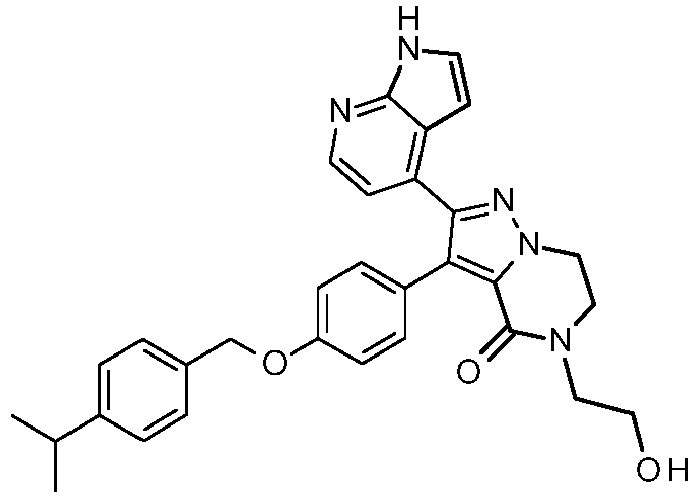
- To a sol. of 313 (107 mg, 0.168 mmol) in THF (4 mL) at 0 °C was added TBAF (252 µL, 0.252 mmol). The r.m. was allowed to warm to r.t. and stirred for 1h. The crude mixture was diluted with water and DCM. The organic layer was separated, dried over MgSO4, filtered off and evaporated in vacuo to give 90 mg, pale yellow oil. The residue was purified by prep. LC (Irregular SiOH 15-40 µm, 4g Grace, mobile phase gradient: from DCM 100% to DCM 95%, MeOH 5%). The pure fractions were collected and solvent evaporated until dryness to give 72 mg of colorless oil (82%) which was crystallized from Et2O and dried in vacuo to give 56 mg of Co. 156, white solid (64%). m.p.: 219°C (dsc).
-

- In a dry flask and under N2 atmosphere, a sol. of Ethyl 4-(4-methoxybenzyloxy)benzoate (2.00 g, 6.99 mmol) and 4-methylpyrimidine (723 mg, 7.68 mmol) in dry THF (10 mL) was cooled to 0°C and treated with LiHMDS (14.0 mL, 14.0 mmol) (slow addition over 10 min). After the end of the addition, the r.m. was allowed to warm to r.t. and stirred for 17 h. The r.m. was then poured in a 10% aq. sol. of NH4Cl (100 mL). The mixture was filtered on a glass frit. The precipitate was washed with water (2 x 50 mL) and with Et2O (2x 50 mL). The solid was dissolved in a mixture of DCM and MeOH. The organic sol. was dried over MgSO4 and evaporated in vacuo to give 2.14 g of Int. 314 , white solid (92%).
-
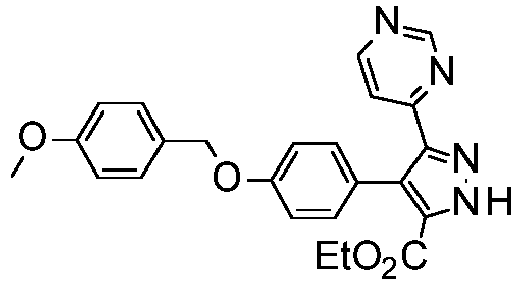
- To a suspension of 314 (5.00 g, 15.0 mmol) in ACN (50 mL) in a sealed tube was added DBU (2.24 mL, 15.0 mmol) and ethyldiazoacetate (2.67 mL, 25.4 mmol). The mixture was heated at 60°C for 2h then cooled down to r.t. The solvent was removed in vacuo and the residue was diluted in DCM. The organic layer was washed with a sat. aq. sol. of NaHCO3, water, dried over MgSO4, filtered off and evaporated in vacuo to give 5.32 g, brown oil. This experiment and another batch (with 500mg of 314 in the same conditions) were combined and purified by prep. LC (Irregular SiOH 15-40 µm, 220g Grace, mobile phase gradient: from DCM 100% to DCM 95%, MeOH 5%). The pure fractions were collected and solvent evaporated until dryness to give 3.54 g. The residue was dissolved in DCM and a precipitate was filtered to give 2.30 g of Int. 315 , yellow solid. The filtrate was purified by prep. LC (Irregular SiOH 15-40 µm, 80g Grace, mobile phase gradient: from DCM 100% to DCM 50%, EtOAc 50%). The pure fractions were collected and solvent evaporated to give 784 mg of Int. 315 , yellow solid (global yield: 4.32g, 44%).
-

- To a suspension of 315 (3.00 g, 6.97 mmol), N-(2-hydroxyethyl)phtalimide (1.60 g, 8.36 mmol) and diphenylphosphinopolystyrene (2.79 g, 8.36 mmol) in dry THF (60 mL) was added DBAD (1.93 g, 8.36 mmol). The mixture was stirred for 20h at r.t. then filtered through a glass frit and washed with EtOAc. The filtrate was evaporated in vacuo to give 8.20 g, yellow oil. The residue was purified by prep. LC (Irregular SiOH, 15-40 µm, 150g Merck, mobile phase gradient: from DCM 100% to DCM 70%, acetone 30%). The pure fractions were collected and solvent evaporated until dryness to give 2.82 g of Int. 316 , off-white solid (67%).
-

- To a mixture of 316 (2.82 g, 4.67 mmol) in EtOH (50 mL) was added hydrazine hydrate (668 µL, 7.01mmol) and the mixture was heated at 70°C for 4h. The precipitate formed was filtered on a glass frit to give 1.84 g of a white solid which was dissolved in a mixture of DCM/MeOH/EtOAc and the precipitate filtered on a glass frit. The solid was washed with MeOH and dried to give 986 mg of Co. 157, white solid (49%). m.p.: 264°C (DSC).
-

- To a sol. of Co. 157 (200 mg, 0.468 mmol) in toluene (8 mL) in a sealed tube was added TFA (1.00 mL, 13.1mmol) and the mixture was heated at 75°C for 5h. The yellow sol. was evaporated in vacuo and coevaporated 3x with toluene. The yellow residue was triturated in Et2O and filtered on a glass frit to give 222 mg of Int. 317 , yellow solid (quant. yield, trifluoroacetate salt).
-

- To a sol. of 317 (100 mg, 0.237 mmol) in DMF (2 mL) was added K2CO3 (98.4 mg, 0.712 mmol) and 8 (41.7 µL, 0.249 mmol). The mixture was heated at 50°C for 18h and refluxed for 18h. 8 (20.0 µL, 0.119 mmol) and K2CO3 (16.4 mg, 0.119 mmol) were added and the mixture was refluxed for 60h. 8 (20.0 µL, 0.119mmol) and K2CO3 (16.4mg, 0.119mmol) were then added and the mixture was refluxed for 18h. DCM was added to the residue and the organic layer was washed with water, dried over MgSO4, filtered off and evaporated in vacuo to give 125 mg, yellow residue. The residue was purified by prep. LC (Irregular SiOH 15-40 µm, 10g Merck, mobile phase gradient: from DCM 100% to DCM 50%, acetone 50%). The desired fractions were collected and solvent evaporated until dryness to give 46 mg, off-white residue. This residue was purified again by prep. LC on (Irregular SiOH 15-40µm, 30g Merck, mobile phase: 96% DCM, 4% MeOH, 0.1% NH3 aq). The pure fractions were collected and solvent evaporated until dryness to give 24 mg of Co. 158, white solid (23%). m.p.: 252°C (DSC).
-

- In a dry flask and under N2 atmosphere, a sol. of 9 (16.8 g, 59 mmol) and 4-methylpyrimidine (6.1 g, 65 mmol) in dry THF (118 mL) was cooled to 0°C and treated with LiHMDS (118 mL, 118 mmol) dropwise. The r.m. was allowed to warm to r.t. (over 1h) and stirred for 17 h at this temperature. The r.m. was then poured in a 10% aq. sol. of NH4Cl (300 mL). The mixture was extracted with DCM, dried on MgSO4 and concentrated. The residue was taken up in Et2O and the solid was filtrated, washed with Et2O and dried to give 19.2 g of Int. 318 , gold solid (94%).
-

- A suspension of 318 (23.7 g, 68.4 mmol) in ACN (400 mL) was treated with DBU (17.4 mL, 116 mmol) then with ethyl diazoacetate (11.5 mL, 109 mmol). The r.m. was stirred at r.t. for 3 h. The r.m. was poured in a sat. sol. of NaHCO3 and extracted with EtOAc. The organic layer was washed with brine, dried over MgSO4 and evaporated in vacuo to give black oil. The oil was purified by prep. LC (irregular SiOH 15-40 µm, 220g, Grace, mobile phase gradient: from DCM 100% to DCM 98%, MeOH 2%). The pure fractions were collected and solvent evaporated until dryness to give 21.1g of Int. 319 (yield: 70%).
-

- A sol. of 319 (13.8 g, 31.2 mmol) and Boc-Glycinol (7.24 mL, 46.8 mmol) in dry THF (250 mL) was treated with diphenylphosphinopolystyrene (14.6 g, 46.8 mmol) then with DBAD (10.8 g, 46.8 mmol). The r.m. was stirred at r.t. for 17 h, under N2. The crude mixture was filtered through Celite® and evaporated in vacuo to give black oil. The oil was purified by prep. LC (irregular SiOH 15-40 µm, 220g, Grace, dry loading, mobile phase gradient: from DCM 100% to DCM 96%, MeOH 4%). The fractions were collected and solvent evaporated until dryness to give 16.6g of brown oil (which contained 2 isomers). This oil was purified by prep. LC (Stationary phase: Irregular SiOH 20-45µm 450g MATREX, Mobile phase: Gradient from NH4OH/DCM/iPrOH 0.2/98/2 to NH4OH/DCM/iPrOH 0.3/97/3). The pure fractions were collected and solvent evaporated until dryness to give 8.40 g of Int. 320 , orange solid (46%).
-

- A mixture of 320 (3.7 g, 6.3 mmol), HCl 3N (10.5 mL, 32 mmol), in ACN (110 mL) was stirred at 80°C for 2h. The mixture was concentrated, and NaHCO3 sat aq (200 mL) was added and the mixture was stirred at r.t. 15min, extracted with DCM, dried and evaporated until dryness to give 3.05 g of Int. 321 (99%). The yellow solid obtained was used like in the next step.
- To a solution of 321 (1.62 g, 3.3 mmol) in MeOH (100 mL) was added Cs2CO3 (5.4 g, 17 mmol) and the mixture was stirred at r.t. for 3 days. The mixture was filtrated, the white solid was collected, washed with Et2O and dried to give 1.07 g of Co. 158 (73%). m.p.: 259°C (dsc).
-

- NaH 60% (68 mg, 1.7 mmol) was added slowly to a suspension of Co. 158 (0.50 g, 1.1 mmol) in DMF (6.8 mL) at r.t. under N2. The mixture was stirred for 2h then (2-bromoethoxy)-tert-butyldimethylsilane (0.28 mL, 1.4 mmol) was added and the r.m. stirred overnight. Water was added and the mixture was concentrated under reduced pressure. The residue was taken up in EtOAc and washed 5x with brine. The organic layer was dried, filtered and concentrated to give 0.68 g of Int. 322 (yellow oil; quant.), used as such in the next step.
-

- TBAF (1.4 mL, 1.4 mmol) was added dropwise to a sol. of 322 (0.68 g, 1.1 mmol) in THF (11 mL) at r.t.. The mixture was stirred overnight at r.t.. The mixture was concentrated and the residue was purified by prep. LC (Regular SiOH, 30 µm, 25g GraceResolv™, mobile phase: DCM/MeOH/NH4OH, 95/5/0.1). The pure fractions were collected and solvent evaporated until dryness to give 450 mg of colorless oil which was crystallized from Et2O. The white solid formed was filtrated, washed and dried to give 0.42 g of Co. 159, white solid (77%). m.p.: 160°C (dsc).
-

- NaH 60% (41 mg, 1.0 mmol) was added slowly to a suspension of Co. 158 (0.30 g, 0.68 mmol) in DMSO (3.8 mL) at r.t. under N2. The mixture was stirred for 2h (until a sol. was observed in the flask), then 2-iodopropane (75 µL; 0.75 mmol) was added and stirred overnight. Water was added and the insoluble was filtered, dissolved in DCM and MeOH, dried on MgSO4 and evaporated until dryness to give 300 mg of white solid. The residue was purified by prep. LC (Regular SiOH, 30 µm, 25g Interchim, mobile phase gradient: DCM/MeOH/NH4OH, from 98/2/0.1 to 96/4/0.1). The pure fractions were collected and solvent evaporated until dryness to give 125 mg, colorless oil. This oil was taken in Et2O, concentrated and dried to give 121 mg of Co. 160, white solid (37%). m.p.: 166°C (dsc).
-

- To a suspension of Co. 158 (300 mg, 0.683 mmol) in DMSO (5.4 mL) was added NaH 60% (41.0 mg, 1.02 mmol). The mixture was stirred at r.t. for 4h to obtain a clear yellow sol. and 2,2-dimethyl-1,3-dioxolan-4-ylmethyl p-toluenesulfonate (215 mg, 0.751 mmol) was added. The sol. was heated at 50°C for 20h. DCM and water were added, the organic layer was separated, dried, filtered off and evaporated in vacuo. The residue (670 mg) was purified by prep. LC (Irregular SiOH 15-40µm, 30g Merck, mobile phase gradient: from DCM 100% to DCM 95%, MeOH 5%). The pure fractions were collected and solvent evaporated to give 260 mg of Co. 161a (60%).
-

- A sol. of Co. 161a (210 mg, 379 µmol) and HCl 3N (632 µL, 1.90 mmol) in 1,4-dioxane (8 mL) was stirred at r.t. for 1h. The mixture was poured into a sat. aq. sol. of NaHCO3 and extracted with DCM. The organic layer was separated, dried over MgSO4, filtered and evaporated in vacuo to give 190 mg of Co. 161, white solid (98%). m.p.: 209°C (DSC).
-

- To a suspension of Co. 158 (150 mg, 341 µmol) in DMSO (2 mL) at r.t. under N2 was slowly added NaH 60% (20.5 mg, 512 µmol). The mixture was stirred at r.t. for 2h until complete solubilization then tert-Butyl(2-(2-chloroethoxy)ethoxy)dimethylsilane (245 mg, 1.02 mmol) in DMSO (500 µL) was added. The sol. was heated at 80°C for 18h then cooled down to r.t. and water and DCM were added. The organic layer was separated, dried over MgSO4, filtered off and evaporated in vacuo to give 640 mg of Int. 324 , used as such in the next step without purification.
-

- To a sol. of 324 (220 mg, 0.343 mmol) in THF (10 mL) at 0°C was added TBAF (514 µL, 0.514 mmol), and the sol. was stirred at 0 °C for 2h then at r.t. for 18h. The sol. was diluted with water and DCM, the organic layer was separated, washed with a sat. aq. sol. of NaCl, dried over MgSO4, filtered off and evaporated in vacuo to give 266 mg. The residue was purified by prep. LC (Stationary phase: Stability Silica 5µm 150x30.0mm, Mobile phase Gradient: from 50% Heptane, 3% MeOH (+10% NH4OH), 47% EtOAc to 25% MeOH (+10% NH4OH), 75% EtOAc). The pure fractions were collected and solvent evaporated to give 119 mg, colorless oil (66%). The Co. was diluted in a minimum of DCM and pentane was added until precipitation. The mixture was evaporated in vacuo to give 114 mg of Co. 162, off-white solid (63%).
-

- NaH 60% (55 mg, 1.4 mmol) was added slowly to a suspension of Co. 158 (0.40 g, 0.91 mmol) in DMSO (5.0 mL) at r.t. under N2. The mixture was stirred for 2h (until complete solubilization), then 2-(chloromethyl)-2-methyl-1,3-epoxypropane (110 µL, 1.0 mmol) was added and the r.m. stirred overnight. Water was added and the insoluble was filtrated, dissolved in DCM, dried on MgSO4 and evaporated until dryness to give 620 mg, white solid. The residue was purified by prep. LC (Regular SiOH, 30 µm, 25g Interchim, mobile phase gradient: DCM/MeOH/NH4OH, from 98/2/0.1 to 96/4/0.1). The desired fractions were collected and solvent evaporated until dryness to give 450 mg, colorless oil. This residue was purified by prep. LC on (irregular 15-40µm 50g Merck, Mobile phase: 0.1% NH4OH, 97% DCM, 3% MeOH). The desired fractions were collected and solvent evaporated until dryness 300 mg which was purified by achiral SFC on (2-ethylpyridine 6µm 150x21.2mm, Mobile phase: 85% CO2, 15% MeOH). The pure fractions were collected and solvent evaporated until dryness to give 260 mg of Co. 163, white solid (55%).
-

- To a suspension of Co. 158 (300 mg, 0.683 mmol) in DMF (6 mL) at r.t. under N2 atmosphere was added NaH 60% (41.0 mg, 1.02 mmol). The mixture was stirred at r.t. until complete solubilization of the mixture (2h). Then 2-bromo-N-methylacetamide (124 mg, 0.819 mmol) was added and the sol. was stirred at r.t. for 3h. EtOAc and water were added and the organic layer was separated, washed with a sat. aq. sol. of NaCl (twice), dried over MgSO4, filtered off and evaporated in vacuo. The residue (382 mg) was purified by prep. LC (Irregular SiOH 15-40 µm, 12g Grace, mobile phase gradient: from DCM 100% to DCM 80%, iPrOH 20%). The pure fractions were collected and solvent evaporated until dryness to give 222 mg of colorless film which crystallized on standing. The precipitate was filtered on a glass frit to give a white solid (159 mg) of Co. 164 (46%). m.p.: 97 °C and 157 °C (DSC).
-

- NaH 60% (55 mg, 1.4 mmol) was added slowly to a suspension of Co. 158 (0.4 g, 0.91 mmol) in dry DMSO (5 mL) at r.t. under N2. The mixture was stirred for 2h then Boc-1-amino-2-bromoethane (224 mg, 1.0 mmol) was added and the r.m. stirred for 3 days. Water was added and the insoluble was filtered, dissolved in DCM and MeOH, dried over MgSO4 and evaporated until dryness to give 550 mg of Co. 165a as a crude (mixture with starting material) which was used as such in the next reaction step.
-

- A mixture of Co. 165a (550 mg, 0.94 mmol), HCl 3N (1.6 mL, 4.7 mmol), in ACN (17 mL) was stirred at 80°C for 2h. The mixture was concentrated, and NaHCO3 sat aq (200 mL) was added and the mixture was stirred at r.t. 15 min, extracted with DCM, dried, filtered and concentrated. The residue was purified by prep. LC (Regular SiOH, 30 µm, 25g Interchim, mobile phase gradient: DCM/MeOH/NH4OH, from 95/5/0.1 to 80/20/0.1). The pure fractions were collected and solvent evaporated until dryness to give 258 mg, colorless oil. This oil was taken in Et2O, concentrated and dried to give 210 mg of Co. 165, white solid (46%).
-

- In a dry flask and under N2 atmosphere, a sol. of 34 (12.6 g, 45 mmol) and 4-methylpyrimidine (4.6 g, 49 mmol) in dry THF (90 mL) was cooled to 0°C and treated with LiHMDS (90 mL, 90 mmol) dropwise. The r.m. was allowed to warm to r.t. (over 1h) and stirred for 17h at this temperature. The r.m. was then poured in a 10% aq. sol. of NH4Cl (400 mL). The mixture was extracted with DCM, dried on MgSO4 and concentrated. The residue was taken up in Et2O and the solid was filtrated, washed with Et2O and dried to give 13 g of Int. 326 , yellow solid (85%).
-

- To a suspension of 326 (13 g, 38 mmol) in ACN (135 mL) was added DBU (5.6 mL, 38 mmol) and Ethyl diazoacetate (6.7 mL, 64 mmol). The mixture was heated for 3h at 60°C then cooled down to r.t. The solvent was removed in vacuo and the residue was diluted in EtOAc. The organic layer was washed with a sat. aq. sol. of NaHCO3 (2*500 mL), dried over MgSO4, filtered off and evaporated in vacuo to give 19 g of brown residue. The residue was purified by prep. LC (irregular SiOH 15-40µm, 330g GraceResolv™, mobile phase gradient, from DCM/MeOH/ NH4OH, 100/0/0 to 97/3/0.1). The desired fractions were collected and solvent evaporated to give 7.16 g of Int. 327 , brown solid (43%) used as such for the next step.
-

- To a suspension of 327 (7.16 g, 16 mmol), Boc-Glycinol (3.9 g, 24 mmol) and Diphenylphosphinopolystryrene (7.6 g, 24 mmol) in dry THF (210 mL) was added DBAD (5.6g, 24mmol). The mixture was stirred at r.t. overnight. The sol. was filtrated through a pad of Celite®, and the polymer was washed with EtOAc and the filtrate was evaporated in vacuo. The residue was purified by prep. LC (Regular SiOH, 30 µm, 330g GraceResolv™, mobile phase gradient: DCM/MeOH/NH4OH, from 100/0/0 to 97/3/0.1). The desired fractions were collected and solvent evaporated until dryness to give 4.13 g of Int. 328 , brown solid (crude).
-

- A solution of 328 (4.13 g, 7.1 mmol), HCl 3N (11.8 mL, 35mmol), in ACN (125 mL) was stirred at 80°C for 2h. The mixture was concentrated, and NaHCO3 sat aq (200 mL) was added and the mixture was stirred at r.t. 15min, extracted with DCM, dried, filtered and concentrated to give 3.44 g of Int. 329, orange oil (quant.). This residue was used like this in the next step.
-

- To a sol. of 329 (3.44 g, 7.1 mmol) in MeOH (203 mL) was added Cs2CO3 (4.6 g, 14 mmol) and the mixture was stirred at r.t. for overnight. The mixture was filtered. The white solid was collected, washed with Et2O and dried to give 1.66 g of Co. 166, white solid (53%). M.p.: 268°C (dsc).
-

- NaH 60% (77 mg, 1.9 mmol) was added slowly to a suspension of Co. 166 (0.56 g, 1.3 mmol) in DMF (7.6 mL) at r.t. under N2. The mixture was stirred for 2h then (2-bromoethoxy)-tert-butyldimethylsilane (0.32 mL, 1.5 mmol) was added and stirred overnight. Water was added and the mixture was concentrated under reduced pressure. The residue was taken in EtOAc and washed 5x with brine. The organic layer was dried on MgSO4, filtered and concentrated to give 0.76 g of Int. 330 , yellow oil (quant : 80% of Int. 330 and 20% of Co. 167). This mixture was used like this in the deprotection step.
-

- TBAF (1.5 mL, 1.5 mmol) was added dropwise to a sol. of 330 (0.76 g, 1.3 mmol) in THF (12.5 mL) at r.t. The mixture was stirred overnight at r.t. The mixture was concentrated and the residue was purified by prep. LC (Regular SiOH, 30 µm, 25 g GraceResolv™, mobile phase: DCM/MeOH/NH4OH 95/5/0.1). The pure fractions were collected and solvent evaporated until dryness to give colorless oil which was crystallized from Et2O. The white solid formed was filtrated, washed and dried to give 0.49 g of Co. 167 (80%).
-

- Under N2 atmosphere, to a sol. of 4-hydroxybenzoic acid methyl ester (6.9 g, 45 mmol), 29 (6.7 g, 45 mmol), PPh3 (11.8 g, 45 mmol) in THF (275 mL) was added DBAD (10.3 g, 45 mmol) and the r.m. was stirred at r.t. overnight. The mixture was evaporated in vacuo to give colorless oil (40g) which was purified by prep. LC (irregular SiOH 15-40 µm, 330g GraceResolv™, mobile phase: heptane/EtOAc 85/15). The desired fractions were collected and solvent evaporated to give 20.2 g, white solid. This solid was purified by prep. LC (Stationary phase: Irregular SiOH 20-45µm 450g MATREX, Mobile phase: 65% Heptane, 2% MeOH, 33% EtOAc). The pure fractions were collected and solvent evaporated to give 7.5 g of Int. 331 white solid (59%).
-

- In a dry flask and under N2 atmosphere, a sol. of 331 (7.5 g, 26 mmol) and 4-methylpyrimidine (2.7 g, 29 mmol) in dry THF (53 mL) was cooled to 0°C and treated with LiHMDS (53 mL, 53 mmol) dropwise. The r.m. was allowed to warm to r.t. (over 1 h) and stirred for 17 h at this temperature. The r.m. was then poured in a 10% aq. sol. of NH4Cl (300 mL). The mixture was extracted with DCM, dried over MgSO4 and concentrated. The residue was taken up in Et2O and the solid was filtrated, washed with Et2O and dried to give 8.0 g of Int. 332 , gold solid (87%).
-

- To a suspension of 332 (8.0 g, 23 mmol) in ACN (73 mL) was added DBU (5.9 mL, 39 mmol) and Ethyl diazoacetate (3.9 mL, 37 mmol). The mixture was stirred at r.t. for 1h then cooled down to rt. The solvent was removed in vacuo and the residue was diluted in DCM. The organic layer was washed with a sat. aq. sol. of NaHCO3, dried over MgSO4, filtered off and evaporated in vacuo. The residue was purified by prep. LC (irregular SiOH 15-40 µm, 220g GraceResolv™, mobile phase gradient, from DCM/MeOH/NH4OH, 100/0/0 to 95/5/0.1). The desired fractions were collected and solvent evaporated to give 7.7 g of Int. 333 , brown oil (with impurities).
-

- To a suspension of 333 (7.7 g, 17 mmol), Boc-Glycinol (3.1 g, 19 mmol) and Diphenylphosphinostyrene (6.0 g, 19 mmol) in THF (226 mL) was added DBAD (4.4 g, 19 mmol). The mixture was stirred at r.t. overnight. The sol. was filtered through a pad of Celite®, and the polymer was washed with EtOAc and the filtrate was evaporated in vacuo. The residue was purified by prep. LC (Regular SiOH, 30 µm, 220g GraceResolv™, mobile phase gradient: DCM/MeOH/NH4OH, from 100/0/0 to 97/3/0.1). The desired fractions were collected and solvent evaporated until dryness to give 6.0 g of Int. 334 , yellow oil (59%).
-

- A solution of 334 (6.0 g,10 mmol), HCl 3N (17 mL, 51 mmol), in ACN (182 mL) was stirred at 80°C for 2h. The mixture was concentrated, and NaHCO3 sat aq (200 mL) was added and the mixture was stirred at r.t. 15min, extracted with DCM, dried, filtered and concentrated to give 4.2g of Int. 335 (mixture Int. 335 and Co. 168). The red solid obtained was used like this in the next step.
-

- To a sol. of 335 (4.2 g, 8.7 mmol) in MeOH (250 mL) was added Cs2CO3 (14 g, 43 mmol) and the mixture was stirred at r.t. for overnight. The mixture was filtered. The white solid was collected, washed with Et2O and dried to give 2.6 g of white solid (68%). 300 mg of 2.6 g was taken in DCM and washed with brine twice. The organic layer was then dried over MgSO4, filtrated and concentrated to give a white solid which was triturated in Et2O. The white solid was filtrated and dried to give 250 mg of Co. 168, white solid. m.p.: 254°C (dsc).
-

- NaH 60% (55 mg, 1.4 mmol) was added slowly to a suspension of Co. 168 (0.40 g, 0.91 mmol) in dry DMF (5.4 mL) at r.t. under N2. The mixture was stirred for 2h then (2-bromoethoxy)-tert-butyldimethylsilane (0.23 mL, 0.1 mmol) was added and the r.m. stirred overnight. Water was added and the mixture was concentrated under reduced pressure. The residue was taken in EtOAc and washed 5x with brine. The organic layer was dried on MgSO4, filtered and concentrated to give 0.47 g of Int. 336 (mixture of Int. 336 (30%) and Co. 169 (70%)). This crude mixture was used like this in the deprotection step.
-

- TBAF (0.95 mL, 0.95 mmol) was added dropwise to a sol. of mixture 336 (0.47 g) in THF (7.7 mL) at r.t. The mixture was stirred overnight at r.t. The mixture was concentrated and the residue was purified by prep. LC (Regular SiOH, 30 µm, 25g GraceResolv™, mobile phase: DCM/MeOH/NH4OH 96/4/0.1). The desired fractions were collected and solvent evaporated to give 340 mg of colorless oil. This oil was purified by achiral SFC (Stationary phase: Amino 6µm 150x21.2mm, Mobile phase: 80% CO2, 20% MeOH). The pure fractions were collected and the solvent evaporated to give 206 mg of white solid. The solid was triturated in Et2O, filtered, washed and dried to give 0.19 g of Co. 169, white solid (50%). m.p.: 143°C (dsc).
-

- To a sol. of Co. 1 (133 mg, 0.303 mmol) in DCM (10 mL) at 0 °C was added portionwise 3-chloroperoxybenzoic acid (157 mg, 0.91 mmol). The r.m. was allowed to warm to r.t. and stirred overnight. The mixture was diluted with DCM and washed with a 10% sol. of Na2CO3. The organic layer was dried over MgSO4, filtered and evaporated in vacuo. The residue (225 mg) was purified by prep. LC (Regular SiOH 50 µm, 24g Grace, dry loading, mobile phase gradient: from DCM 100% to DCM 90%, MeOH 10%). The pure fractions were collected and solvent evaporated until dryness to give 88 mg of Co. 170, white solid (64%).
-
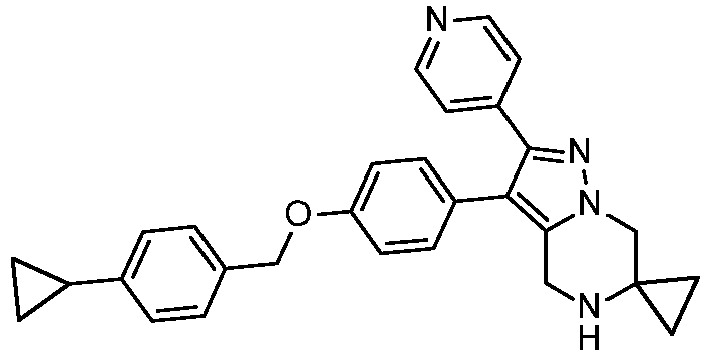
- LAH (98.5 mg, 2.59 mmol) was added to a sol. of Co. 5 (200 mg, 0.432 mmol) in dry ethylene glycol dimethyl ether (8 mL). The r.m. was heated at 60°C for 8h and quenched with water (100 µL, very slow addition) and a 3N sol. of NaOH (100 µL). Et2O was added and the crude mixture was filtered on a glass frit. The precipitate was washed with Et2O and the filtrate was evaporated in vacuo to give 330 mg, yellow residue. The residue was purified by prep. LC (Irregular SiOH, 15-40 µm, 24g Grace, mobile phase gradient: from DCM 100% to DCM 50%, acetone 50%). The pure fractions were collected and solvent evaporated until dryness to give 118 mg of Co. 171, white solid (49%). m.p. : 152°C (DSC).
-

- A sol. of Co. 4 (150 mg, 0.344 mmol) in dry THF (15 mL) was treated with LAH (52 mg, 1.37 mmol). The r.m. was stirred at room temperature for 18h, then quenched with addition of water (75 µL, very slow addition), a 3N sol. of NaOH (75 µL) and water (250 µL). The crude mixture was filtered on glass frit and the filtrate was taken up in EtOAc, dried, filtered and evaporated in vacuo to afford 130mg, white solid. The residue was purified by prep. LC (irregular SiOH 15-40 µm, 50g Merck, mobile phase gradient: from DCM 100% to DCM 90%, MeOH 10%). The pure fractions were collected and solvent evaporated until dryness to give 82 mg of Co. 172, white solid (56%). m.p.: 215°C (DSC).
-

- A sol. of 2-pyridin-4-yl-4,5,6,7-tetrahydropyrazolo[1,5-α]pyrazine (3.98 g, 19.9mmol) in HOAc (80 mL) was treated with N-bromosuccinimide (3.89 g, 21.9 mmol) and stirred at r.t. for 2h. The crude mixture was taken up in a sol. of K2CO3 10% and diluted in DCM. The organic phase was dried over MgSO4, filtered and evaporated in vacuo. The crude mixture was coevaporated with toluene (2 times) to give 8.11g, yellow oil. This oil was dissolved in DCM and the precipitate which formed was filtered to give 760 mg of Int. 337 , yellow solid (14%). The filtrate was concentrated in vacuo and purified by prep. LC (irregular SiOH 15-40 µm, 30g Merck, mobile phase gradient: from DCM 100% to DCM 90%, MeOH 10%). The pure fractions were collected and solvent evaporated to give 3.30 g of Int. 337 , yellow solid (59%). (Global yield: 73%).
- In a sealed tube, a mixture of 337 (379 mg, 1.36 mmol), 32 (951 mg, 2.72 mmol), K3PO4 (1.15 g, 5.43 mmol) in 1,4-dioxane (7 mL) and H2O (2.4mL) was carefully purged with N2. PdCl2(dppf) (111 mg, 0.136 mmol) was added and the r.m. was purged again with N2. The sealed tube was then sealed and the r.m. was stirred for 17 h at 80°C. The r.m. was diluted with EtOAc and washed with water (once) and with brine (twice). The organic phase was dried over MgSO4, filtered and evaporated in vacuo to give 1.30 g, brown oil. The residue was purified by prep. LC (irregular SiOH 15-40 µm, 50g Merck, mobile phase gradient: from DCM 100% to DCM 95%, MeOH 5%). The desired fractions were collected and solvent evaporated until dryness to give 350 mg, white solid which was triturated in Et2O. The supernatent was removed and the solid was dried in vacuo to give 320 mg. The product was purified by prep. LC (on Spherical SiOH 10µm 60g PharmPrep Merck, mobile phase gradient: from DCM 98%, MeOH 2% to DCM 95 %, MeOH 5 %). The pure fractions were collected and solvent evaporated until dryness to give 210 mg of Co. 172, white solid (37 %). m.p.: 209°C (DSC).
-

- To a sol. of Co. 1 (330 mg, 0.753 mmol) in dry THF (17 mL) was added LAH (114 mg, 3.01 mmol) and the r.m. was stirred for 20h at r.t., then quenched with addition of water (214 µL, very slow addition), a 3N sol. of NaOH (214 µL) and water (642 µL). The crude mixture was filtered on glass frit, the cake was washed with EtOAc and the filtrate was evaporated in vacuo to afford 300 mg of a white solid which was purified by prep. LC (irregular SiOH 15-40 µm, 30g Merck, mobile phase gradient: DCM/MeOH from 100/0 to 90/10). The pure fractions were collected and solvent evaporated to give 185 mg of Co. 173, white solid (58%). m.p.: 194°C (DSC).
-

- 2-Bromo-N-methylacetamide (0.252 g, 1.66 mmol) was added to a sol. of Co. 173 (0.4 g, 0.923 mmol) and K2CO3 (0.255 g, 1.85 mmol) in DMF (6 mL) at rt. The r.m. was stirred at r.t. for 16h, and then water and EtOAc were added. The organic layer was washed with brine, separated, dried over MgSO4, filtered and concentrated in vacuo to give 574 mg. The residue was combined with another batch (0.2g of Co. 173 in the same conditions) and purified by prep. LC on (irregular 15-40µm 30g Merck, Mobile phase: 0.5% NH4OH, 96% DCM, 4% MeOH). The pure fractions were collected and solvent was removed in vacuo to give 340 mg which was crystallized from DIPE, filtered and dried to give 279 mg of Co. 174 (40%). m.p.: 185°C (dsc).
-

- Ethylbromoacetate (276 µL, 2.49 mmol) was added to a sol. of Co. 173 (600 mg, 1.39 mmol) and K2CO3 (383 mg, 2.77 mmol) in DMF (9 mL) at r.t. The r.m. was then stirred at 55°C for 2h, then water and EtOAc were added. The organic layer was washed with brine, separated, dried over MgSO4, filtered and concentrated in vacuo to afford 850 mg of Int. 338 , red oil (crude), which was used as such in the next reaction step.
-

- In a sealed tube, a mixture of 338 (850 mg, 1.67 mmol), ethanolamine (5.0 mL, 83.2 mmol), Magnesium chloride hydrate (475 mg, 4.99 mmol) in 1,4-dioxane (10 mL) was heated at 180°C using one single mode microwave (Biotage Initiator EXP 60) with a power output ranging from 0 to 400 W for 1h [fixed hold time]. Water and EtOAc were added to the mixture. The organic layer was washed with brine, separated, dried over MgSO4, filtered and evaporated in vacuo. The residue (500 mg, brown oil) was purified by prep. LC (irregular SiOH 15-40µm, 80g Grace, mobile phase gradient: from DCM 100% to DCM 92%, MeOH 8%). The pure fractions were collected and solvent evaporated to give 280 mg, yellow oil, which was diluted in a minimum amount of MeOH and triturated in Et2O. The supernatant was removed and the solid formed was dried in vacuo to give 250 mg of Co. 175, white solid. m.p.: 189 °C (DSC).
-
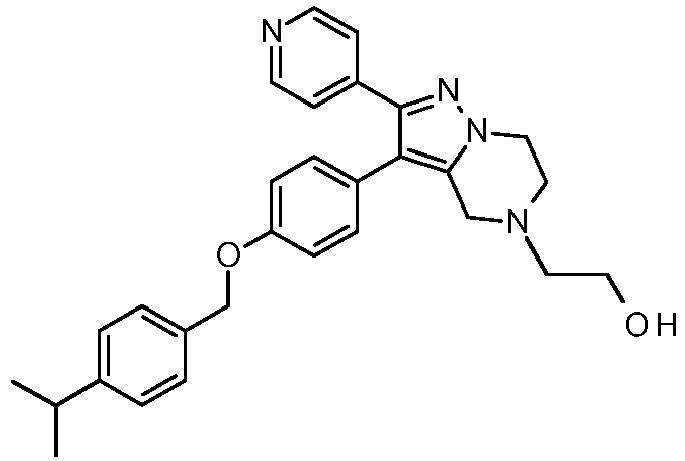
- (2-Bromoethoxy)-tert-butyldimethysilane (0.133 mL, 0.612 mmol) was added to a stirred sol. of Co. 173 (200 mg, 0.471 mmol) and Et3N (0.131 mL, 0.942 mmol) in DMF (2.5 mL) at r.t. The r.m. was stirred at 60 °C for 43h. Then, further (2-bromoethoxy)-tert-butyldimethysilane (31 µL, 0.141 mmol) was added at r.t., and the r.m. was stirred at 60 °C for 16h. The crude material was dissolved in water and extracted with EtOAc. The organic phase was washed with brine, dried over MgSO4, filtered and evaporated in vacuo to give 250 mg, oil. Then, the oil was dissolved in THF (3mL), and TBAF (0.942 mL, 0.942 mmol) was added at r.t. The r.m. was stirred at r.t. for 4h. The crude material was diluted in a mixture of MeOH/DCM 8/92, and water was added. The organic phase was separated, washed with brine (twice), dried over MgSO4, filtered and evaporated in vacuo. The residue (348 mg) was purified by prep. LC (irregular SiOH 15-40 µm, 12g Grace, Mobile phase gradient: from DCM 100% to DCM 88%, MeOH 12%). The desired fractions were combined and the solvent was removed in vacuo. The residue (307 mg) was dissolved in a mixture of MeOH/DCM 2/98, and water was added. The organic phase was separated, washed with brine (twice), dried over MgSO4, filtered and evaporated in vacuo to give 108 mg, pale brown solid. The solid was dissolved in EtOAc, and water was added. The organic phase was separated, washed with brine, dried over MgSO4, filtered and evaporated in vacuo to give oil. The oil was triturated with a sol. of pentane/MeOH 70/30, and the solvents were removed in vacuo to afford 105 mg of Co. 176, pale brown solid (48%).
-

- (2-Bromoethoxy)-tert-butyldimethysilane (1.2 mL, 5.73 mmol) was added to a stirred sol. of 337 (1.00 g, 3.58 mmol) and Et3N (1 mL, 7.17 mmol) in DMF (20 mL) at r.t. The r.m. was stirred at 60°C for 18h. The crude material was dissolved in water and extracted with EtOAc. The organic phase was washed with brine, dried over MgSO4, filtered and evaporated in vacuo to give 2.00 g, brown oil. The residue was purified by prep. LC (irregular SiOH 15-40 µm, 50g Grace, Mobile phase gradient: from DCM 100% to DCM 95%, MeOH 5%). The pure fractions were collected and solvent evaporated until dryness to give 1.00 g, colorless oil. This oil was dissolved in water and extracted with EtOAc. The organic phase was washed with brine (twice), dried over MgSO4, filtered and evaporated in vacuo to give 690 mg of Int. 339 , colorless oil (44%).
-

- In a sealed tube, a mixture of 339 (400 mg, 0.914 mmol), 5 (644 mg, 1.83mmol), K3PO4 (777 mg, 3.66 mmol) in 1,4-dioxane (4 mL) and H2O (1.4 mL) was carefully purged with N2. PdCl2(dppf) (75 mg, 91.4 µmol) was added and the r.m. was purged again with N2. The sealed tube was then sealed and the r.m. was stirred for 17 h at 80°C. The r.m. was diluted with EtOAc and washed with water (once) and with brine (2 times). The organic phase was dried over MgSO4, filtered and evaporated in vacuo to give 1.50 g, brown oil. The residue was purified by prep. LC (irregular SiOH 15-40 µm, 50g Merck, mobile phase gradient: from DCM 100% to DCM 95%, MeOH 5%). The desired fractions were collected and solvent evaporated until dryness to give 570 mg of Int. 340 , orange oil (quant.). The product was used as such for the next step.
- A sol. of 340 (570 mg, 0.978 mmol) in THF (10 mL) was treated with TBAF (1.20 mL, 1.17 mmol) and stirred at 0°C for 4h. The crude material was dissolved in water and extracted with EtOAc. The organic phase was washed with brine, dried over MgSO4, filtered and evaporated in vacuo to give 600 mg, brown oil. This oil was purified by prep. LC (irregular SiOH 15-40 µm, 50g Merck, mobile phase gradient: from DCM 100% to DCM 95%, MeOH 5%). The pure fractions were collected and solvent evaporated until dryness to give 275 mg, yellow oil. This oil was triturated in Et2O and the precipitate was dried in vacuo to give 275 mg, white solid. The white solid was diluted in DCM and Et2O and the sol. was allowed to evaporate for 4h, the white solid was dried in vacuo to give 275 mg of Co. 176, orange solid. m.p.: 150°C (DSC).
-

- 2-Bromo-N,N-dimethylacetamide (268 mg, 1.62 mmol) was added to a sol. of Co. 173 (500 mg, 1.15 mmol) and K2CO3 (319 mg, 2.31 mmol) in DMF (7.5 mL) at r.t. The r.m. was stirred at 55°C for 2h. Then, water and EtOAc were added. The organic layer was separated, washed with brine, dried over MgSO4 and evaporated in vacuo to afford brown oil. The oil was purified by prep. LC (irregular SiOH 15-40 µm, 80g, GraceResolv™, mobile phase gradient: from DCM 100% to DCM 94%, MeOH 6%). The pure fractions were collected and solvent evaporated until dryness to give 170 mg, yellow solid. This solid was combined with another batch (0.4g of Co. 173 as initial reactant in the same conditions), dissolved in EtOH and evaporated in vacuo to give a yellow foam which was dissolved in iPrOH (200 µL) to get a thick oil. The thick oil was triturated while Et2O was slowly added. The solid formed was filtered on a glass frit, washed with Et2O and dried in vacuo to give 190 mg of Co. 177, pale yellow solid (global yield: 15%). m.p.: 95°C (DSC).
-

- 2-Bromo-N-isopropylacetamide (150 mg, 0.831 mmol) was added to a sol. of Co. 173 (300 mg, 0.693 mmol) and K2CO3 (191 mg, 1.39 mmol) in DMF (5 mL) at r.t. The r.m. was stirred at 55°C for 2h and poured in a mixture of water and EtOAc. The organic layer was separated, washed with brine (3x), dried over MgSO4 and evaporated in vacuo to give orange oil. The oil was purified by prep. LC (irregular SiOH 15-40 µm, 40g Grace Resolv, mobile phase gradient: from DCM 100% to DCM 94%, MeOH 6%). The pure fractions were collected and solvent evaporated until dryness to give 180 mg of white solid. The solid was dissolved in MeOH (1mL) and the MeOH was allowed to slowly evaporate overnight. The solid was crushed and dried in vacuo to give 180 mg of Co. 178, white solid (50%). m.p.: 188°C (DSC).
-
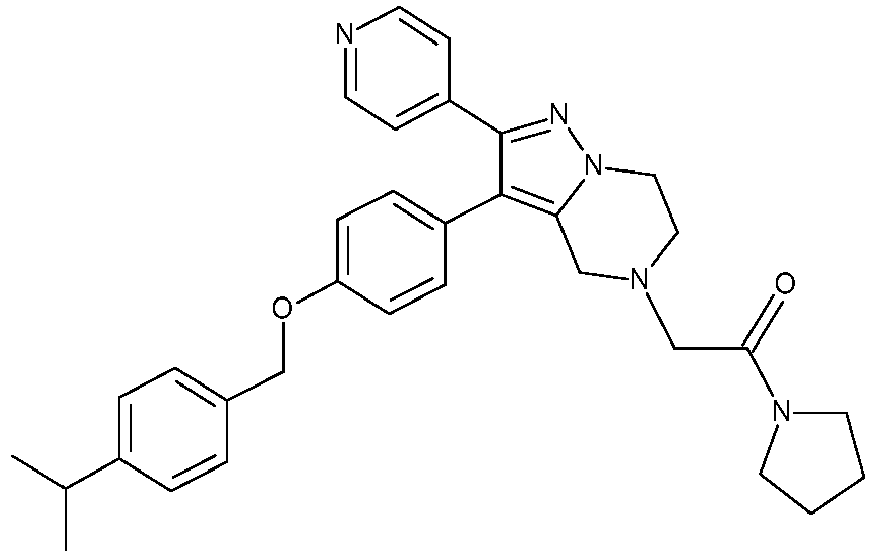
- A sol. of 2-bromo-1-(1-pyrrolidinyl)-ethanone (137 mg, 0.715 mmol) in DMF (0.5 mL) was added to a sol. of Co. 173 (172 mg, 0.397 mmol) and K2CO3 (110 mg, 0.794 mmol) in DMF (2.5 mL) at r.t. The r.m. was stirred at r.t. for 17h, and water and EtOAc were added. The organic layer was washed with brine, separated, dried (MgSO4), filtered and evaporated in vacuo. The residue (204 mg) was purified by prep. LC (irregular SiOH 15-40µm, 12g Grace, mobile phase gradient: from DCM 100% to DCM 90%, MeOH 10%). The pure fractions were collected and solvent evaporated to give a sticky solid. The solid was triturated with pentane, filtered off and dried to yield 71 mg of Co. 179, pale yellow solid (33%).
-

- Lactic Acid 85% (61 µL, 0.693 mmol) was added to a stirred sol. of HATU (298 mg, 0.785 mmol) and DIPEA (143 µL, 0.831 mmol) in DCM (3.5 mL) at r.t. under N2. The mixture was stirred at r.t. for 65 min. Then, Co. 173 (200 mg, 0.462 mmol) was added, and the crude mixture was stirred for 17h. Further additions of Lactic Acid 85% (40 µL, 0.462 mmol), HATU (211 mg, 0.555 mmol) and DIPEA (119 µL, 0.693 mmol) were done at r.t. under N2, and the mixture was stirred at r.t. for 16h. Then, water and a mixture of MeOH/DCM (4/96) were added. The organic layer was separated, washed with brine, separated, dried over MgSO4, filtered and evaporated in vacuo to afford 256 mg. The residue was purified by prep. LC (irregular SiOH 15-40 µm, 30g Grace, mobile phase gradient: from DCM 100% to DCM 91%, MeOH 9%). The desired fractions were collected and solvent evaporated to give 171 mg, white solid. This white solid was purified by prep. LC (irregular SiOH 15-40µm, 12g Grace, mobile phase gradient: from DCM 100% to DCM 91%, MeOH 9%). The desired fractions were collected and solvent evaporated to give 128 mg, white solid. This residue was purified by achiral SFC (diethylaminopropyl 5µm 150x21.2mm, Mobile phase: 80% CO2, 20% MeOH). The desired fractions were combined and the solvent was removed in vacuo to give colorless oil. The oil was triturated with pentane, and the solvent was evaporated in vacuo to yield 90 mg, white solid. The residue was purified by Reverse phase (X-Bridge-C18 5µm 30*150mm, Mobile phase: Gradient from 70% (NH4HCO3 0.5% aq. sol.), 30% ACN to 100% ACN). The pure fractions were collected and the solvent was removed in vacuo to give colorless oil. The oil was dissolved in DCM and the solvent was evaporated in vacuo. The remaining sticky solid was triturated with pentane, and the solvent was evaporated in vacuo to yield 50 mg of Co. 180, white solid (22%).
-

- DIPEA (0.203 mL, 1.18 mmol) was added to a stirred sol. of Co. 173 (100 mg, 0.236 mmol) in DCM (2 mL) at 0 °C under N2. Then, 2-(dimethylamino)-acetyl chloride, hydrochloride (88 mg, 0.471 mmol) was added at 0 °C under N2, and the mixture was stirred at r.t. for 16h. The crude material was quenched with water and extracted with DCM. The organic phase was washed with brine, dried over MgSO4, filtered and evaporated in vacuo to give a solid which was purified by prep. LC (irregular SiOH 15-40µm 12g Grace, Mobile phase gradient: from DCM 100% to DCM 88 %, MeOH 12%). The desired fractions were combined and the solvent was removed in vacuo to give 83 mg, white solid. The residue was purified by Reverse phase (X-Bridge-C18 5µm 30*150mm; Mobile phase gradient: from 50% (NH4HCO3 0.5% aq. sol.), 50% MeOH to 100% MeOH). The pure fractions were collected and solvent evaporated to afford 55 mg, pale oil. The oil was diluted with Et2O and then concentrated in vacuo to give 53 mg of Co. 181, waxy solid (44%).
-

- N-Boc-sarcosine (152mg, 0.801 mmol) was added to a sol. of CDI (130 mg, 0.801 mmol) in dry THF (1 mL) at r.t. under N2. The mixture was stirred for 90min at r.t., and then added over 25min to a sol. of Co. 173 (200 mg, 0.400 mmol) in THF (1.5 mL) at r.t. under N2. The r.m. was stirred for 16h at r.t., and then a sol. of additional N-Boc-sarcosine (152 mg, 0.801 mmol) and CDI (130 mg, 0.801 mmol) in dry THF (1 mL) was added slowly at r.t. The r.m. was stirred for 2h at r.t. TFA (1 mL, 26.1 mmol) was added at r.t., and the r.m. was stirred for 22h. Then, additional TFA (1 mL, 26.1 mmol) was added, and the r.m. was stirred for 18h. Then, the r.m. was heated at 80°C, and stirred for 160 min at 80°C. The crude material was dissolved in water and extracted with EtOAc. The organic phase was washed with brine, dried over MgSO4, filtered and evaporated in vacuo to give oil. The oil was purified by prep. LC (irregular SiOH 15-40µm, 12g Grace, mobile phase gradient: from DCM 100% to DCM 90%, MeOH 9%, aq. NH3 1%). The pure fractions were collected and solvent evaporated to give 158 mg of Co. 182, white solid (80%).
-

- To a suspension of 36 (396 mg, 0.902 mmol), 1-Boc-3-(Boc-amino)azetidine-3-methanol (300 mg, 0.992 mmol) and diphenylphosphinostyrene (601 mg, 1.80 mmol) in dry THF (8 mL) was added DBAD (415 mg, 1.80 mmol). The mixture was stirred at r.t. for 18h. THF (4 mL) was added and the mixture was stirred at r.t. for 18h, then, heated at 50°C for 20h and refluxed for 68h. The crude mixture was then filtered through a glass frit and washed with EtOAc. The filtrate was evaporated in vacuo to give 1.26 g, yellow oil. The residue was purified by prep. LC (Irregular SiOH, 15-40 µm, 50g Merck, mobile phase gradient: from DCM 100% to DCM 50%, EtOAc 50%). The pure fractions were collected and solvent evaporated until dryness to give 596 mg of Int. 341 , off-white foam (91%).
-

- To a sol. of 341 (596 mg, 0.823 mmol) in 1,4-dioxane (6 mL) was added HCl 4N in dioxane (1.65 mL, 6.59 mmol). The mixture was stirred at r.t. for 18h and HCl 4N in dioxane (0.823 mL, 3.29 mmol) was added. The mixture was stirred for 4h then poured in Et2O. The precipitate was filtered through a glass frit to give 470 mg of Int. 342 , off-white solid (salt HCl, quant. yield).
-

- To a sol. of 342 (470 mg, 0.839 mmol) in MeOH (5 mL) was added Cs2CO3 (1.37 g, 4.20 mmol) and the mixture was stirred at r.t. for 18h. The solvent was removed in vacuo and water and DCM were added. The layers were separated and the aq. layer was extracted with DCM. The organic layers were combined, dried over MgSO4, filtered off and evaporated in vacuo to give 334 mg of white solid. 120 mg of this solid was purified by prep. LC (Irregular SiOH, 15-40µm, 24g Grace, mobile phase: DCM/MeOH/NH3(aq.) 90/10/0.5). The pure fractions were collected and solvent evaporated to give 108 mg of Co. 183, white solid. m.p.: 173°C (DSC).
-

- To a sol. of 31 (1mL, 6.63mmol) in dry Et2O (20mL) at 0°C was added dropwise PBr3 (620µL, 6.63mmol). The ice bath was removed and the r.m. was stirred for 2h. Then, water was carefully added to the mixture and the layers separated. The organic one was washed with a sat. sol. of NaCl, dried (MgSO4) and evaporated in vacuo to afford 1.38g of Int. 343 , colorless liquid (99%).
-

- Under N2, a sol. of 4-bromo-3-fluorophenol (1.14 g, 5.94 mmol) in DMF (6 mL) was treated with K2CO3 (903 mg, 6.54 mmol) and 343 (1.38 g, 6.54 mmol) and the r.m. was stirred for 18h at r.t. An extra amount of 1-(bromomethyl)-4-cyclopropyl-benzene (0.125 g, 0.594 mmol) was added and the r.m. was stirred for 4h, and was then extracted with water and EtOAc. The organic layer was washed with brine (2x), dried (MgSO4), filtered off and evaporated in vacuo to give 2.40 g of a colorless oil. The residue was purified by prep. LC (irregular SiOH 15-40µm, 30g Merck, mobile phase: DCM 100%). The pure fractions were collected and solvent evaporated to give 1.20 g of Int. 344 , white solid (63%, purity 90%).
-
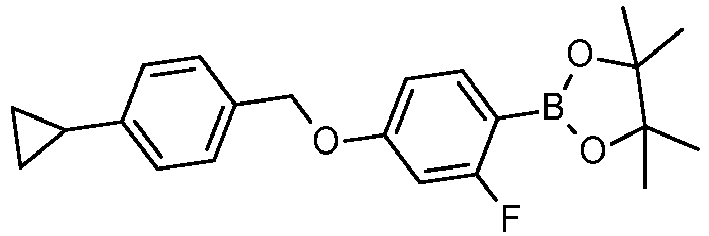
- In a sealed tube, a mixture of 344 (1.20 g, 3.74 mmol), BisPin (1.10 g, 11.2 mmol), KOAc (1.14 g, 4.48 mmol) in DME (11 mL) was carefully purged with N2. PdCl2(dppf) (306 mg, 0.374 mmol) was added and the r.m. was purged again with N2. The r.m. was stirred for 17h at 100°C. The r.m. was diluted with EtOAc and washed with water (once) and with brine (3 times). The organic phase was dried over MgSO4, filtered and evaporated in vacuo to give 2.00 g, brown oil. The residue was purified by prep. LC (irregular SiOH 15-40 µm, 50g, MERCK, Mobile phase: Heptane/EtOAc, gradient from 100/0 to 90/10). The pure fractions were collected and solvent evaporated unil dryness to give 1.03 g of Int. 345 , colorless oil (75%).
-

- Et3N (180 µL, 1.29 mmol) was added to a mixture of 337 (300 mg, 1.08 mmol) and Boc2O (281 mg, 1.29 mmol) in DCM (5 mL). The r.m. was then stirred for 3 h at rt. The sol. was diluted with EtOAc and washed with water (once) and with K2CO3 10% (2 times). The organic phase was dried over MgSO4, filtered and evaporated in vacuo to give 400 mg of Int. 346 , orange oil (98%).
-

- In a sealed tube, a mixture of 346 (330 mg, 870 µmol), 345 (641 mg, 1.74 mmol), K3PO4 (739 mg, 3.48 mmol) in 1,4-dioxane (7 mL) and H2O (1.7 mL) was carefully purged with N2. PdCl2(dppf) (71 mg, 87.0 µmol) was added and the r.m. was purged with N2. The sealed tube was then sealed and the r.m. was stirred for 17h at 80°C. The r.m. was diluted with EtOAc and washed with water (once) and with brine (2 times). The organic phase was dried (MgSO4),filtered and evaporated in vacuo to give 900 mg, brown oil. The residue was purified by prep. LC (irregular SiOH 15-40µm, 50g Merck, mobile phase gradient: from DCM 100% to DCM 95%, MeOH 5%). The pure fractions were collected and solvent evaporated to give 370 mg of Co. 184a, yellow oil (79%).
-

- A sol. of Co. 184a (370 mg, 684 µmol) in MeOH (10 mL) and HCl 3N (5 mL) was stirred at 45°C for 1h30. The sol. was then quenched with sat. NaHCO3 and extracted with DCM. The organic phase was dried over MgSO4, filtered and evaporated in vacuo to give 250 mg. The residue was purified by prep. LC (irregular SiOH 15-40 µm, 30g Merck, mobile phase gradient: from DCM 100% to DCM 95%, MeOH 5%). The pure fractions were collected and solvent evaporated to give 127 mg of Co. 184, pink solid (42%). m.p.: 195°C and 339°C, polymorph (DSC).
-

- A sol. of Co. 48 (120 mg, 0.265 mmol) in dry THF (6 mL) was treated with LAH (40 mg, 1.06 mmol). The r.m. was stirred at r.t. for 18h, then, quenched with addition of water (75µL, very slow addition), a 3N sol. of NaOH (75 µL) and water (190 µL). The crude mixture was filtered on glass frit, the cake was washed with EtOAc and the filtrate was, dried, filtered and evaporated in vacuo to afford 160 mg. The residue was purified by prep. LC (irregular SiOH 15-40 µm, 50g Merck, mobile phase gradient: from DCM 100% to DCM 95%, MeOH 5%). The pure fractions were collected and solvent evaporated until dryness to give 71 mg, colorless oil which was crystallized from Et2O, filtered and dried to give 71 mg of Co. 185, white solid (61%). m.p.: 120 °C (DSC).
-

- A sol. of Co. 3 (112 mg, 256 µmol) in dry THF (2 mL) was treated with LAH (58 mg, 1.54 mmol). The r.m. was stirred at r.t. for 18h, then, quenched successively with addition of water (60 µL, very slow addition), a 3N sol. of NaOH (60 µL) and water (180 µL). The crude mixture was filtered on glass frit. The cake was washed with EtOAc, and the filtrate was evaporated in vacuo to afford 80 mg. The residue was purified by prep. LC (irregular SiOH 15-40 µm, 30g Merck, mobile phase gradient: from DCM 100% to DCM 90%, MeOH 10%). The pure fractions were collected and solvent evaporated until dryness to give 75 mg of Co. 186, white solid (69%). m.p.: 195 °C (DSC).
-

- In a sealed tube, a mixture of 339 (240 mg, 549 µmol), 42 (406 mg, 1.10 mmol), K3PO4 (466 mg, 2.20 mmol) in 1,4-dioxane (5 mL) and H2O (1.2 mL) was carefully purged with N2. PdCl2(dppf) (45 mg, 54.9 µmol) was added and the r.m. was purged again with N2. The sealed tube was then sealed and the r.m. was stirred for 17 h at 80°C. The r.m. was diluted with EtOAc and washed with water (once) and with brine (2 times). The organic phase was dried over MgSO4, filtered and evaporated in vacuo to give 500 mg, brown oil. The residue was purified by prep. LC (irregular SiOH 15-40 µm, 50g Merck, mobile phase gradient: from DCM 100% to DCM 95%, MeOH 5%). The desired fractions were collected and solvent evaporated until dryness to give 320 mg of Int. 348 , orange oil. The mixture was used as such for the next step without further purification.
-

- A sol. of 348 (320 mg, 0.533 mmol) in THF (5 mL) was treated with TBAF (640 µL, 0.639 mmol) and stirred at 0°C for 2h. The crude material was dissolved in water and extracted with EtOAc. The organic phase was washed with brine, dried over MgSO4, filtered and evaporated in vacuo to give 350 mg, brown oil. The residue was purified by prep. LC (irregular SiOH 15-40 µm, 30g Merck, mobile phase gradient: from DCM 100% to DCM 98%, MeOH 2%). The pure fractions were collected and solvent evaporated to give 123 mg, yellow oil. This oil was diluted in pentane and evaporated in vacuo to give 123 mg of Co. 187, white solid (46%).
-

- A sol. of Co. 112 (195 mg, 0.457 mmol) in dry THF (12 mL) was treated with LAH (69 mg, 1.83 mmol). The r.m. was stirred at r.t. for 18h, then, quenched with addition of water (100 µL, very slow addition), a 3N sol. of NaOH (100 µL) and water (300 µL). The crude mixture was filtered on glass frit and the filtrate was taken up in EtOAc and evaporated in vacuo to afford 200mg, white solid. The residue was purified by prep. LC (irregular SiOH 15-40µm, 50g Merck, mobile phase gradient: from DCM 100% to DCM 90%, MeOH 10%). The pure fractions were collected and solvent evaporated until dryness to give 130 mg, white solid. The solid was triturated in Et2O and evaporated in vacuo to give 115 mg of Co. 188, white solid (61%). m.p.: 192°C and 342°C (DSC - polymorphous compound).
-

- To a mixture of 36 (700 mg, 1.59 mmol), N-Boc-2-amino-1-propanol (558 mg, 3.19 mmol) and diphenylphosphinopolystyrene (1.06 g, 3.19 mmol) in dry THF (13 mL) was added DBAD (734 mg, 3.19 mmol). The mixture was stirred for 2h at r.t. then filtered through a glass frit and washed with EtOAc. The filtrate was evaporated in vacuo to give 2.00 g, yellow oil. This oil was purified by prep. LC (Irregular SiOH, 15-40 µm, 80g Grace, mobile phase gradient: from DCM 100% to DCM 98%, MeOH 2%). The desired fractions were collected and solvent evaporated to give 1.20 g, pale yellow oil. The residue was purified again by prep. LC (Irregular SiOH, 15-40 µm, 30g Merck, mobile phase gradient: from DCM 100% to DCM 60%, EtOAc 40%). The pure fractions were collected and solvent evaporated to give 753 mg of Int. 349, white foam (79%).
-

- To a sol. of 349 (753 mg, 1.26 mmol) in 1,4-dioxane (10 mL) was added HCl 4N in dioxane (2.50 mL, 10.1 mmol). The sol. was stirred at r.t. for 18h, then, poured with Et2O. The supernatant was removed and the remaining solid was dried in vacuo. The residue was triturated 3x in Et2O to give 686 mg of Int. 350 , pale yellow solid (HCl salt, quant. yield).
-

- To a sol. of 350 (686 mg, 1.29 mmol) in MeOH (8 mL) was added Cs2CO3 (2.10 g, 6.43 mmol) and the mixture was stirred at r.t. for 6h. The solvent was removed in vacuo and water (25 mL) and DCM (25 mL) were added to the residue. The layers were separated and the aq. layer was extracted with DCM (25 mL). The organic layers were combined, dried over MgSO4, filtered off and evaporated in vacuo to give 507 mg, white solid. The residue was triturated in Et2O and and the solid was filtered off on a glass frit to give 503 mg, white solid. The solid was triturated in a mixture of DCM/EtOAc 90/10 and was filtered off on a glass frit and dried to give 315 mg of Co. 189, white solid (54%). m.p.: 249°C (DSC).
-

- LAH (88.5 mg, 2.33 mmol) was added to a sol. of Co. 189 (175 mg, 0.388 mmol) in dry THF (30 mL). The r.m. was stirred at r.t. for 18h and LAH (44.2 mg, 1.17 mmol) was then added. The r.m. was stirred for an additional 18h and quenched with addition of water (145 µL, very slow addition) and a 3N sol. of NaOH (145 µL). Et2O was added and the crude mixture was filtered on a glass frit. The precipitate was washed with Et2O and the filtrate was evaporated in vacuo to give 280 mg, yellow residue. The residue purified by prep. LC (Irregular SiOH, 15-40 µm, 24g Grace, mobile phase gradient: from DCM 100% to DCM 50%, acetone 50%). The pure fractions were collected and solvent evaporated until dryness to give 137 mg of Co. 190, white solid (69%). m.p.: 166°C and 177°C (polymorph, DSC).
-
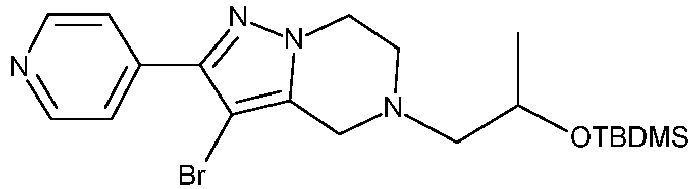
- (2-bromo-1-methylethoxy)(1,1-dimethylethyl)dimethylsilane (2.59 g, 7.17 mmol) was added to a stirred sol. of 337 (1.00 g, 3.58 mmol) and Et3N (1mL, 7.17 mmol) in DMF (20 mL) at r.t. The r.m. was stirred at 60 °C for 7 days. The crude material was dissolved in water and extracted with EtOAc. The organic phase was washed with brine, dried over MgSO4, filtered and evaporated in vacuo to give 350 mg of a brown oil. An extra amount of (2-bromo-1-methylethoxy)(1,1-dimethylethyl)dimethylsilane (2.59 g, 7.17 mmol) and Et3N (1 mL, 7.17 mmol) in DMF (20 ml) was added to the mixture. The r.m. was then stirred at 60 °C for 1 week. The crude material was dissolved in water and extracted with EtOAc. The organic phase was washed with brine, dried over MgSO4, filtered and evaporated in vacuo to give 4.47 g, brown oil. The residue was purified by prep. LC (irregular SiOH 15-40 µm, 50g Grace, Mobile phase gradient: from DCM 100%, to DCM 95%, MeOH 5%). The desired fractions were collected and solvent evaporated until dryness to give 640 mg, colorless oil. This oil was dissolved in water and extracted with EtOAc. The organic phase was washed with brine (2x), dried over MgSO4, filtered and evaporated in vacuo to give 530 mg of Int. 351 , colorless oil (33%).
-

- In a sealed tube, a mixture of 351 (530 mg, 1.17mmol), 5 (827 mg, 2.35 mmol), K3PO4 (997 mg, 4.70 mmol) in 1,4-dioxane (5 mL) and H2O (1.8 mL) was carefully purged with N2. PdCl2(dppf) (96 mg, 117 µmol) was added and the r.m. was purged again with N2. The sealed tube was then sealed and the r.m. was stirred for 17h at 80°C. The r.m. was diluted with EtOAc and washed with H2O (1x) and brine (2x). The organic phase was dried (MgSO4), filtered and evaporated in vacuo to give 1.20 g, brown oil. The residue was purified by prep. LC (irregular SiOH 15-40 µm, 50g Merck, mobile phase gradient: from DCM 100% to DCM 95%, MeOH 5%). The pure fractions were collected and solvent evaporated to give 570 mg of Int. 352 , orange oil (82%).
-

- A sol. of 352 (576 mg, 0.965 mmol) in THF (9 mL) was treated with TBAF (1.2 mL, 1.16 mmol) and stirred at 0°C for 1h, then stirred at r.t. for 18h. The crude material was dissolved in water and extracted with EtOAc. The organic phase was washed with brine, dried over MgSO4, filtered and evaporated in vacuo to give 400 mg. The residue was purified by prep. LC (irregular SiOH 15-40 µm, 30g Merck, mobile phase gradient: from DCM 100% to DCM 95%, MeOH 5%). The pure fractions were collected and solvent evaporated to give 305 mg, white solid. The solid was purified by chiral SFC (Stationary phase: Chiralpak AD-H 5µm 250x20mm, Mobile phase: 70% CO2, 30% mixture of EtOH/iPrOH 50/50 v/v). The pure fractions were collected and solvent evaporated to give 117 mg of Co. 191 as a white solid (25%, m.p.: 148°C (DSC)) and 116 mg of Co. 192 as a white solid (25%, m.p.: 151°C (DSC)). Co. 191: [α]d: -6.44 ° (589 nm, c 0.3105 w/v %, DMF, 20 °C). Co. 192: [α]d: +6.85 ° (589 nm, c 0.292 w/v %, DMF, 20 °C).
-

- DBAD (1.1 g, 5.0 mmol) was added portionwise to a sol. of 11 (2.0 g, 4.5 mmol), N-(tert-butoxycarbonyl)-O-(tert-butyldimethylsilyl)serinol (1.5 g, 5.0 mmol), diphenylphosphino-polystyrene (1.6 g, 5.0 mmol) in THF (53 mL) at r.t. under N2. The mixture was stirred overnight at r.t. The mixture was filtrated throught a pad of Celite®, washed with EtOAc and concentrated to give 4.7 g. The crude residue was purified by prep. LC (irregular SiOH 35-40 µm 120g GraceResolv™, mobile phase: heptane/EtOAc from 80/20 to 70/30). The pure fractions were collected and solvent evaporated until dryness to give 2.41 g of Int. 353 as a colorless oil (73%).
-

- 353 (277 mg, 0.38 mmol) and HCl 3N (0.63 mL, 1.9 mmol) in ACN (6.7 mL) was stirred at 80°C for 2h. The mixture was concentrated, NaHCO3 sat aq (50 mL) was added and the mixture was stirred at r.t. for 15min. Subsequently, the mixture was extracted with DCM, dried filtered and evaporated to give 197 mg of Int. 354 (100%).
-

- To a sol. of 354 (197 mg, 0.38 mmol) in MeOH (11 mL) was added Cs2CO3 (0.62 g, 1.9 mmol) and the mixture was stirred at r.t. overnight. The mixture was concentrated and taken in DCM and washed once with brine, dried over MgSO4, filtered and concentrated. The crude product was purified by prep. LC (irregular SiOH 30 µm, 12g GraceResolv™, mobile phase gradient: from DCM/MeOH/NH4OH 97/3/0.1 to 95/5/0.1). The pure fractions were collected and solvent evaporated until dryness to give 146 mg, white solid. The solide was washed in Et2O, filtrated and dried to give 136 mg of Co. 193, white solid (76%). m.p.: 254°C (dsc).
-

- Methanesulfonyl chloride (64 µL, 0.83 mmol) was added dropwise to a sol. of Co. 193 (260 mg, 0.56 mmol) and Et3N (232 µL, 1.7 mmol) in dry DCM (5 mL) at r.t. under N2 atmosphere. The r.m. was strired at r.t. for 1h. Water was added and the mixture was extracted with DCM. The organic layer was separated, dried over MgSO4, filtered and the solvent was concentrated to give 300mg of Int. 355 , colorless oil (99%).
-

- In a microwave vial, a sol. of 355 (240 mg, 0.44 mmol) in methylamine in 2M THF (4.4 mL, 8.8 mmol) was strired at 80°C for 3 days. The mixture was concentrated to give 440 mg, yellow oil. The residue was purified by prep. LC (Stationary phase: irregular 15-40µm 30g Merck, Mobile phase: 0.5% NH4OH, 96% DCM, 4% MeOH). The pure fractions were collected and solvent evaporated until dryness to give 46 mg which was triturated in Et2O and the white solide formed was filtrated and dried to give 23 mg of Co. 194, white powder (11%). m.p.: 230°C (dsc).
-
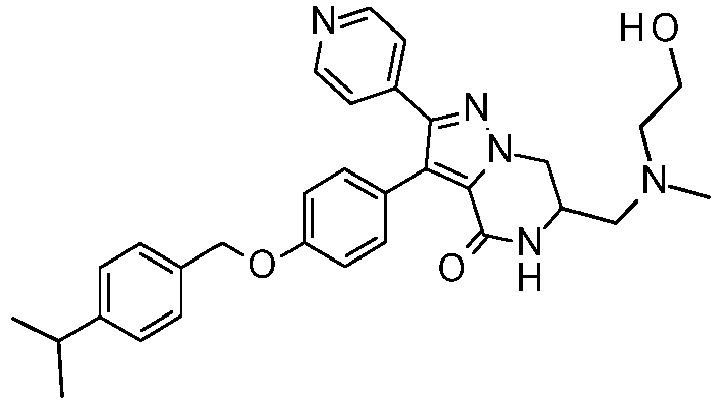
- In a microwave vial, a sol. of 355 (300 mg, 0.55 mmol) and 2-(methylamino)ethanol (0.88 mL, 11 mmol) in THF (4.5 mL) was strired at 80°C overnight. The mixture was concentrated to give 1.3 g of yellow oil. The residue was purified by prep. LC (Stationary phase: irregular SiOH 15-40µm 300g Merck, Mobile phase: 0.5% NH4OH, 96% DCM, 4% MeOH). The pure fractions were collected and solvent evaporated until dryness to give 105 mg which was crystallized from DIPE, filtered and dried to give 82 mg of Co. 195 (28%). m.p.: 193°C (dsc).
-

- Under N2, Tert-butyldimethylsilyl chloride (0.12 g, 0.79 mmol) was added to a sol. of Co. 193 (0.25 g, 0.53 mmol) and imidazole (0.11 g, 1.6 mmol) in dry DCM (5.1 mL) at r.t. The mixture was strirred at r.t. for 4h. The mixture was quenched with water and extracted with DCM. The organic layer was decanted, washed with water then brine, dried over MgSO4, filtered and evaporated to dryness to give 320 mg of crude Int. 356 , white foam (quant.). The crude Int. 356 was used like this in the next step.
-
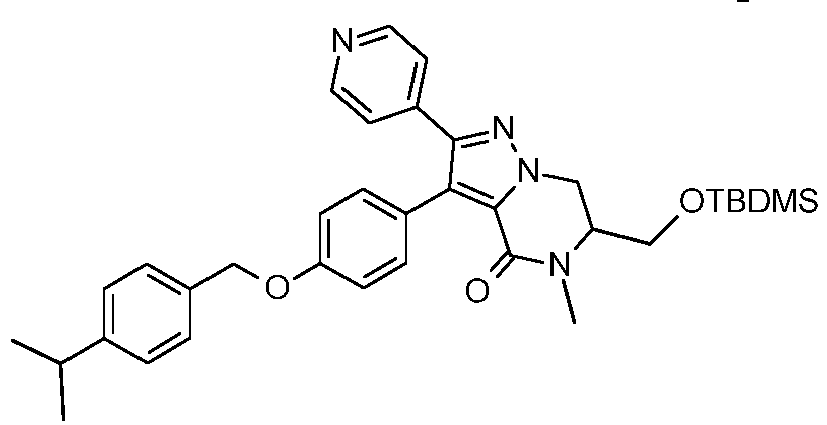
- NaH 60% (33 mg, 0.82 mmol) was added slowly to a suspension of 356 (0.32 g, 0.55 mmol, 80%) in dry THF (3.1 mL) at r.t. under N2. The mixture was stirred for 2h, then, MeI (51 µL, 0.82 mmol) was added and stirred for 3 days at r.t. Water was added and the mixture was extracted with DCM (3x), dried over MgSO4 and evaporated until dryness and give 0.33 g of Int. 357 , pale yellow oil (quant.). The residue was used like this in the next step.
-

- TBAF (2.2 mL, 2.2 mmol) was added dropwise to a sol. of 357 (1.1 g, 1.8 mmol) in THF (18 mL) at r.t. The mixture was stirred overnight at r.t. The mixture was concentrated and the residue was purified by prep. LC (Regular SiOH, 30 µm, 40g Interchim, mobile phase gradient: DCM/MeOH/NH4OH, from 98/2/0.1 to 97/3/0.1). The pure fractions were collected and solvent evaporated until dryness to give 380 mg of colorless oil. This oil was purified again by prep. LC (Stationary phase: Sunfire Silica 5µm 150x30.0mm, Mobile phase Gradient: from NH4OH/DCM/MeOH 0.2/98/2 to NH4OH/DCM/MeOH 1/90/10). The pure fractions were collected and solvent evaporated until dryness to give 230 mg of white solide which was triturated in DIPE. The white solid was filtrated and dried to give 175 mg of Co. 196 (20%).
-

- To a mixture of 36 (350 mg, 0.796 mmol), 1-(Boc-amino)-2-propanol (279 mg, 1.59 mmol) and diphenylphosphinostyrene (531 mg, 1.59 mmol) in dry THF (6.50 mL) was added DBAD (367 mg, 1.59 mmol). The mixture was stirred for 2h at r.t., then, filtered through a glass frit and washed with EtOAc. The filtrate was evaporated in vacuo to give 1.00 g, yellow oil. The residue was purified by prep. LC (Irregular SiOH, 15-40 µm, 50g Merck, mobile phase gradient: from DCM 100% to DCM 99%, MeOH 1%). The pure fractions were collected and solvent evaporated until dryness to give 290 mg of Int. 358 , colorless oil (61%).
-

- To a sol. of 358 (290 mg, 0.486 mmol) in 1,4-dioxane (4 mL) was added HCl 4N in dioxane (0.970 mL, 3.89 mmol). The sol. was stirred at r.t. for 18h. Then, Et2O was added. The supernatant was removed and the remaining solid was dried in vacuo. The residue was triturated 3x in Et2O, filtered and dried to give 248 mg of Int. 359 , pale yellow solid (96%).
-

- To a sol. of 359 (248 mg, 0.465 mmol) in MeOH (2 mL) was added Cs2CO3 (758 mg, 2.33 mmol) and the mixture was stirred at r.t. for 6h. The solvent was removed in vacuo and water and DCM were added to the residue. The layers were separated and the aq. layer was extracted with DCM. The organic layers were combined, dried over MgSO4, filtered off and evaporated in vacuo to give 190 mg, white solid. The solid was triturated in Et2O and the solid was filtered on a glass frit to give 140 mg of Co. 197a, white solid (67%).
-

- LAH (55.6 mg, 1.47 mmol) was added to a sol. of Co. 197a (110 mg, 0.244 mmol) in dry THF (11 mL). The r.m. was stirred at r.t. for 18h and quenched with water (60 µL, very slow addition) and a 3N sol. of NaOH (60 µL). Et2O was added and the crude mixture was filtered on a glass frit. The precipitate was washed with Et2O and the filtrate was evaporated in vacuo to give 127 mg, white residue. The residue was purified by prep. LC (Irregular SiOH, 15-40 µm, 10g Merck, mobile phase gradient: from DCM 100% to DCM 95%, MeOH 5%). The desired fractions were collected and solvent was evaporated until dryness to give 117 mg. The residue was purified again by prep. LC (Irregular SiOH, 15-40 µm, 10g Merck, mobile phase gradient: from DCM 100% to DCM 50%, acetone 50%). The pure fractions were collected and solvent was evaporated until dryness to give 115 mg, white solid. The white solid was purified by achiral SFC on (diethylaminopropyl 5µm 150x21.2mm, Mobile phase: iPrNH2/CO2/MeOH 0.3/70/30). The pure fractions were collected and solvent was evaporated to give 65 mg, colorless oil, which crystallized to give Co. 197 as a yellow solid (48%). m.p.: 153°C (DSC).
-

- 1-Boc-4-hydroxypiperidine (8g, 39.7mmol) was added to a suspension of NaH 60% (2.8g, 119mmol) in THF (100mL). The mixture was stirred at r.t. for 10min, 8 (8.6mL, 51.7mmol) was added. The mixture was stirred at r.t. for 16h. Water and EtOAc were added, the mixture was extracted with EtOAc. The organic layer was separated, dried over MgSO4, filtered and evaporated. The residue was purified by prep. LC on (Irregular SiOH 20-45µm 40g MATREX, Mobile phase: 70% Heptane, 30% EtOAc). The pure fractions were collected and solvent evaporated until dryness to give 12.4g of Int. 361 (94%).
-

- A mixture of 361 (0.223g, 0.67mmol), HCl 3N (0.89mL, 2.68mmol) in ACN (4mL) was heated at 60°C for 1h. K2CO3 10% and EtOAc were added and the mixture was extracted. The organic layer was separated, dried over MgSO4, filtered and evaporated to give 150mg of Int. 362 (96%).
-

- In a sealed tube, 3 (1 g, 2.3 mmol), CuI (44 mg, 228 µmol), Cs2CO3 (2.2 g, 6.8 mmol), 362 (610 mg, 2.6 mmol) in DMF (20 mL) was purged with N2 (3x). Then, 2-acetylcyclohexanone (59.2 µl, 455 µmol) was added and the r.m. was stirred at 100°C overnight. Water and EtOAc were added and the mixture was extracted. The organic layer was separated, dried over MgSO4, filtered and evaporated to give 540 mg of a 1st residue. The aquous layer was acidified by HCl 3N and extracted with EtOAc. The organic layer was separated, dried over MgSO4, filtered and evaporated to give 220 mg of a 2nd residue. The 1st residue was purified by prep. LC (Irregular SiOH 20-45µm 40g MATREX, mobile phase: 85/15/1, DCM/MeOH/NH4OH). The pure fractions were collected and the solvent evaporated to give 22mg of Int. 363 (1.7%). The 2nd residue was purified by prep. LC (Irregular SiOH 20-45µm 40g MATREX, mobile phase: 85/15/1, DCM/MeOH/NH4OH). The pure fractions were collected and the solvent evaporated until dryness to give 22 mg of Int. 363 (1.7%). The both fractions were put together for the next step (44mg of Int. 363 ; 3.4%).
-

- A mixture of 363 (27 mg, 47.9 µmol), HCl 3N (0.16 mL, 0.48 mmol) in ACN (2 mL) was heated at 80°C for 4 h. K2CO3 10% was added and the mixture was stirred at r.t. for 2h. The mixture was extracted with EtOAc, the organic layer was separated, dired over MgSO4, filtered and evaporated until dryness to give 16 mg of crude Int. 364 which was used as such for the next step.
-

- 364 (16 mg, 0.03 mmol), EDCI (8 mg, 0.05 mmol), HOBT (7 mg, 0.05 mmol), Et3N (14 µl, 0.1mmol) in DCM (3 mL) was stirred at r.t. overnight. Water and DCM were added and the mixture was extracted. The organic layer was separated, dried over MgSO4, filtered and evaporated. The residue was purified by prep. LC on (Irregular SiOH 20-45µm 4g GRACE, Mobile phase: 97/3, DCM/MeOH). The desired fractions were collected and solvent evaporated until dryness to give 8 mg which was purified by prep. LC on (Irregular SiOH 20-45µm 4g GRACE, Mobile phase: 97/3, DCM/MeOH). The pure fractions were collected and solvent evaporated until dryness to give 2 mg of Co. 198 (13%).
-

- KOH 60% in H2O (30 mL, 321 mmol) was added to a stirred sol. of 4'-isopropylacetophenone (10.00 g, 61.6 mmol) and 5-bromosalicylaldehyde (13.6 g; 67.8 mmol) in EtOH (30 mL) at 0°C. The r.m. was then stirred at r.t. for 4h. The r.m. was diluted in DCM and quenched with HCl 1N. The precipitate was filtered and washed with water and DCM. The cake was dried in vacuo to give 19.8 g of Int. 365 red solid (93%).
-

- 365 (10 g, 29.0 mmol) was added to a stirred sol. of NaBH4 (1.64 g, 43.4 mmol) and indium chloride (3.20 g, 14.5 mmol) in ACN (120 mL) at r.t. The r.m. was then stirred at r.t. for 4h. MeOH (30 mL) and NaBH4 (2.2 g, 57.9 mmol) were added to the mixture. The sol. was then stirred 1h at r.t. The sol. was then evaporated in vacuo. The residue was disolved in Et2O and washed with water (2x). The organic phase was dried (MgSO4),filtered and evaporated in vacuo to give 9.00 g of Int. 366 (89%).
-

- DBAD (5.93 g, 25.8 mmol) was added to a stirred sol. of 366 (6.00 g, 17.2 mmol) and PPh3 supp. (8.05 g, 25.8 mmol) in DCM (70 mL) at rt. The r.m. was stirred at r.t. for 18h. Water was added to the mixture and the sol. was extracted with DCM. The organic phase was dried over MgSO4, filtered and evaporated in vacuo. The residue was purified by prep. LC (irregular SiOH 15-40 µm, 80g, Merck, Mobile phase: Heptane/EtOAc, 95/5). The pure fractions were collected and solvent evaporated until dryness to give 3.14g of Int. 367 , white solid (55%).
-

- A mixture of 367 (3.14 g, 9.48 mmol), BisPin (3.61 g, 14.2 mmol) and KOAc (2.79 g, 28.4 mmol) in DME (45mL) was carefully purged with N2. PdCl2(dppf) (776 mg, 0.948 mmol) was added and the r.m. was purged again with N2. The r.m. was stirred at 18h at 100°C. The r.m. was diluted with EtOAc and water. The organic layer was washed with brine, dried over MgSO4, filtered and evaporated in vacuo to give brown solid. The residue was purified by prep. LC (irregular SiOH 15-40 µm, 80g, Merck, Mobile phase: DCM 100%). The pure fractions were collected and solvent evaporated until dryness to give 4.15 of Int. 368 , yellow solid (quant.).
-

- A sol. of 4 (500 mg, 1.71 mmol) and 368 (1.29 g, 3.41 mmol) in 1,4-dioxane (10 mL) and H2O (5 mL) was treated with K3PO4 (1.09 g, 5.12 mmol) and purged with N2. PdCl2(dppf) (140 mg, 171 µmol) was added and the r.m. was carefully purged with N2. The mixture was heated at 120°C using one single mode microwave (Biotage Initiator EXP 60) with a power output ranging from 0 to 400 W for 30 min [fixed hold time]. The r.m. was diluted with EtOAc and washed with water (1x) and with brine (2x). The organic phase was dried (MgSO4),filtered and evaporated in vacuo. The residue was purified by prep. LC (irregular SiOH 15-40 µm, 50g, Merck, Mobile phase gradient: from DCM 100 % to DCM 95%, MeOH 5%. The pure fractions were collected and solvent evaporated until dryness to give 900 mg of a yellow solid which was recrystallized in EtOH. The precipitate which was formed after cooling was filtered, collected and dried in vacuo to give 500 mg of Co. 199 as a white solid (63%).
-
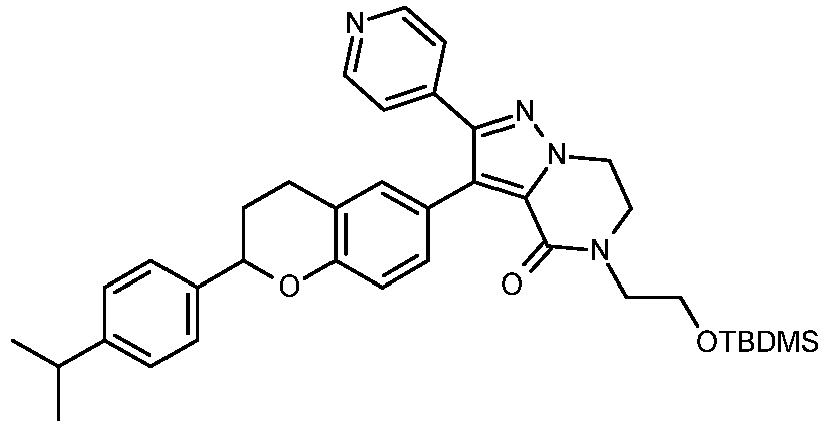
- NaH 60% (28 mg, 0.710 mmol) was added slowly to a suspension of Co. 199 (220 mg, 0.474 mmol) in DMF (3.5 mL) at r.t. under N2. The mixture was stirred for 2h, then (2-bromoethoxy)-tert-butyldimethylsilane (121 µL, 0.568 mmol) was added and stirred for 18h. Water and K2CO3 were added and the mixture was extracted with EtOAc. The organic layer was dried (MgSO4),filtered and evaporated in vacuo to give 300 mg of Int. 369 used as such for the next step.
-

- TBAF (722 µL, 722 µmol) was added dropwise to a sol. of 369 (300 mg, 482 µmol, 80%) in THF (3 mL) at r.t. and the sol. was stirred for 18h. The mixture was evaporated in vacuo to give 250 mg of a brown oil. The residue was purified by prep. LC (irregular SiOH 15-40 µm, 50 g, MERCK, Mobile phase gradient: from DCM 100 % to DCM 95%, MeOH 5%. The pure fractions were collected and solvent evaporated to give 156 mg of Co. 200 as a white solid (64%).
-

- A mixture of 2-bromo-1-(4-isopropylphenyl)ethanone (4.0 g, 16.6 mmol), 1,2-benzenediol (1.83 g, 16.6 mmol) and Et3N (2.8 mL, 19.9 mmol) in iPrOH (40 mL) was stirred at 70°C for 4h. The crude mixture was diluted in EtOAc washed with 1M HCl and water, dried over MgSO4 and evaporated in vacuo to give brown oil. The residue was purified by prep. LC (irregular SiOH 15-40µm, 80g, GraceResolv™, dry loading, mobile phase: DCM 100%). The desired fractions were collected and solvent evaporated unil dryness to give 1.58 g of Int. mixture 370 , yellow oil (35%; mixture 1/2). The mixture was used as such for the next reaction step.
-

- A sol. of 370 (1.58g, 5.85 mmol) in dry THF (10 mL) and MeOH (2 mL) was treated with NaBH4 (884 mg, 23.4 mmol) and stirred at r.t. for 4 h. The r.m. was diluted in EtOAc and a 1M aq. sol. of HCl. The organic layer was separated, washed with water, dried over MgSO4 and evaporated in vacuo to give 1.66 g of Int. 371 , yellow oil (Quant.).
-
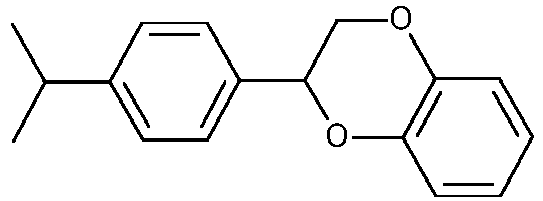
- A sol. of 371 (1.66 g, 6.10 mmol) and PPh3 (2.24 g, 8.53 mmol) in DCM (30 mL) was treated with DBAD (1.97 g, 8.53 mmol) and stirred at r.t. for 17h. The r.m. was poured in a 1M aq. sol. of HCl. The organic layer was separated, dried over MgSO4 and evaporated in vacuo to give 5.2g of a yellow oil. The residue was purified by prep. LC (irregular SiOH 15-40 µm, 120g, Grace, mobile phase: heptane 80%, EtOAc 20%). The pure fractions were collected and solvent evaporated until dryness to give 1.59 g of Int. 372 as a yellow oil (Quant.).
-
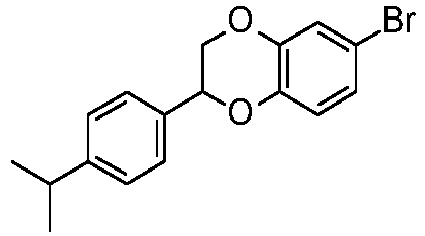
- A sol. of 372 (1.42 g, 5.58 mmol) in HOAc (30 mL) was treated with NBS (0.994 g, 5.58 mmol) and stirred at 60°C for 17 h. The r.m. was diluted in DCM, washed with a 10% sol. of K2CO3, dried over MgSO4 and evaporated in vacuo to give 1.77 g of Int. 373 (95%; impure), used as such in the next step without any purification.
-

- A stirred sol. of 373 (1.77 g, 5.31 mmol), BisPin (2.02 g, 7.97 mmol) and KOAc (1.56 g, 15.) in DME (30 mL) was carefully purged with N2, and PdCl2(dppf) (348 mg, 425 µmol) was added. The r.m. was purged again with N2 and stirred for 18h at 105°C. The r.m. was poured in EtOAc and water. The organic layer was separated, washed with brine and evaporated in vacuo to give a black residue. The residue was purified by prep. LC (irregular SiOH 15-40 µm, 80g, Grace, dry loading, mobile phase gradient: from heptane 90%, EtOAc 10% to heptane 80%, EtOAc 20%). The pure fractions were collected and solvent evaporated until dryness to give 1.89 g of Int. 374 (94%; impure), used as such in the next step without any purification.
-

- A sol. of 4 (899 mg, 3.07 mmol) and 374 (1.75g, 4.60 mmol) in 1,4-dioxane (12 mL) and H2O (6 mL) was treated with K3PO4 (1.30 g, 6.14 mmol) and purged with N2. PdCl2(dppf) (201 mg, 245 µmol) was added and the r.m. was carefully purged with N2. The mixture was heated at 120°C using one single mode microwave (Biotage Initiator EXP 60) with a power output ranging from 0 to 400 W for 25 min [fixed hold time]. The r.m. was poured in water and in DCM/MeOH (98/2). The organic layer was separated, dried over MgSO4 and evaporated in vacuo to give black oil. The oil was purified by prep. LC (irregular SiOH 15-40 µm, 220g, Grace, mobile phase gradient: from DCM 100% to DCM 96%, MeOH 4%). The desired fractions were collected and solvent evaporated to give 1.47g of yellow foam (mixture 2 isomers). The residue was purified by achiral SFC (Stationary phase: Chiralpak IA 5µm 250*20mm, Mobile phase: 55% CO2, 45% iPrOH). The pure fractions were combined and evaporated in vacuo to give 410 mg of product which was recrystallized from EtOH. The white solid was collected by filtration, washed with Et2O and dried in vacuo to afford 300 mg of Co. 201, white solid (21%). m.p.: 290°C (DSC).
-

- Under N2, a sol. of Co. 14 (211 mg, 0.445 mmol) in dry DMSO (4 mL) was treated with NaH 60% (27 mg, 0.667 mmol). The r.m. was stirred at r.t. for 2h. Then, (2-bromoethoxy)-tert-butyldimethylsilane (0.114 mL, 0.534 mmol) was added and the reaction was stirred at r.t. for 17h. TBAF (0.222 mL, 0.222 mmol) was then added and the r.m. was stirred for 2h at r.t. The mixture was poured in EtOAc (150 mL) and washed with brine (5x 40 mL). The organic layer was dried over MgSO4 and evaporated in vacuo to afford 220 mg of Int. 375 as a brown residue which was used as such for the next step.
-

- A sol. of mixture 375 (220 mg, 0.348 mmol) in THF (8 mL) was treated with TBAF (0.174 mL, 0.174 mmol) and stirred at r.t. for 72 h. The crude mixture was then diluted in DCM, washed with water and brine. The organic layer was dried over MgSO4 and evaporated in vacuo to afford a brown residue. The residue was purified by prep. LC (irregular SiOH 15-40 µm, 30g, GraceResolv™, Mobile phase gradient: from DCM 100% to DCM 94%, MeOH 6%). The pure fractions were collected and solvent evaporated until dryness to give 115 mg of Co. 203 as an off-white solid (64%). m.p.: 193°C (DSC).
-

- In a microwave vial, a mixture of 28 (3.4 g, 7.5 mmol), 66 (3.5 g, 9.0 mmol), K3PO4 (6.4 g, 30 mmol) in 1,4-dioxane (33 mL) and H2O (11 mL) was carefully purged with N2. PdCl2(dppf) (620 mg, 0.75 mmol) was added and the r.m. was purged again with N2. The r.m. was heated at 80°C overnight. The r.m. was diluted with EtOAc and washed with water (1x) and with brine (3x). The organic phase was dried over MgSO4, filtered on a pad of Celite® and evaporated in vacuo to give brown oil. The oil was purified by prep. LC (irregular SiOH 30 µm, 120g GraceResolv™, mobile phase: DCM/MeOH/NH4OH 99/1/0.1). The pure fractions were collected and solvent evaporated until dryness to give 3.0 g of Int. 375 , pale yellow oil (63%).
- TBAF (5.7 mL, 5.7 mmol) was added dropwise to a sol. of 375 (3.0 g, 4.7 mmol) in THF (46mL) at r.t. The mixture was stirred overnight at r.t. The mixture was concentrated (5.1 g) and the residue was purified by prep. LC (Regular SiOH, 30 µm, 80g GraceResolv™, mobile phase: DCM/MeOH/NH4OH 98/2/0.1). The pure fractions were collected and solvent evaporated to give colorless oil wich was triturated in Et2O. The white solide formed was filtrated, washed and dried to give 1.26 g of Co. 203 as a white solid (51% first batch). m.p.: 195°C (dsc). The filtrate was concentrated and the residue was triturated in Et2O, filtrated and dried to give 0.27g of Co. 203 as a white solid (11%, second batch). m.p.: 197°C (dsc).
-

- To a sol. of 53 (10.0 g, 52.6 mmol) and 4-bromo-3-fluorophenol (10.0 g, 52.6 mmol) in dry DCM (265 mL) were added PPh3 (15.2 g, 57.8 mmol) and DBAD (13.3 g, 57.8 g) at r.t. The r.m. was stirred at r.t. for 17h. Then, EtOAc and brine were added, and the organic layer was dried over MgSO4, filtered and evaporated in vacuo to afford 50.9g of a residue which was filtered over silica washing with a sol. EtOAc/Heptane (30:70) to give 36.9 g, sticky brown solid. This solid was purified by prep. LC (Irregular SiOH 50 µm, 750g Grace, mobile phase gradient: from Heptane 90%, DCM 10% to Heptane 60%, DCM 40%). The desired fractions were collected and solvent evaporated in vacuo to give 13.8 g of Int. 376 , pale oil as a mixture which was used as such for the next step.
-

- A sol. of mixture 376 (3.00 g, 8.26 mmol) in DCM (60 mL) was cooled to -78 °C. O3 was bubbled through the sol. (10 min). The excess of O3 was removed (N2 purge) and NaBH4 (1.25 g, 33.0 mmol) and EtOH (20mL) were added. The sol. was warmed to r.t. and stirred for 4h. Then water and DCM were added, and the organic layer was washed (brine), dried (MgSO4),filtered and evaporated in vacuo. The residue (3.2g) was purified by prep. LC (Irregular SiOH 50µm, 120g Grace, mobile phase gradient: from Heptane 100% to Heptane 60%, EtOAc 40%). The desired fractions were collected and evaporated in vacuo to give 1.07 g of Int. 377 , colorless oil (35%).
-

- A mixture of 377 (2.85 g, 7.76 mmol), BisPin (3.94 g, 15.5 mmol) and KOAc (2.29 g, 23.3 mmol) in DME (80 mL) was carefully purged with N2. PdCl2(dppf) (0.635 g, 0.776 mmol) was added and the r.m. was purged with N2. The r.m. was stirred at 100°C for 18h. The r.m. was diluted with EtOAc and water. The organic layer was washed with brine, dried over MgSO4, filtered and evaporated in vacuo to give 7.2 g of a black solid. The residue was purified by prep. LC (irregular SiOH 15-40 µm, 220g, Grace, Mobile phase gradient: EtOAc 10%, Heptane 90% to EtOAc 40%, Heptane 60%). The pure fractions were collected and solvent evaporated to give 1.93 g of Int. 378 as a sticky oil (60%).
-

- A mixture of 4 (280 mg, 0.955 mmol), 378 (0.652 g, 1.43 mmol) and K3PO4 (0.507 g, 2.39 mmol) in 1,4-dioxane (3 mL) and H2O (1.5 mL) was purged with N2. PdCl2(dppf) (78 mg, 95.5 µmol) was then added. The mixture was purged again with N2 and stirred at 120°C using one single mode microwave (Biotage Initiator EXP 60) with a power output ranging from 0 to 400 W for 25 min [fixed hold time]. Then, a sol. of DCM/MeOH (95/5) and water were added. The organic layer was separated, washed with brine, dried over MgSO4, filtered and evaporated in vacuo to yield 620 mg of a brown solid. The residue was purified by prep. LC (Irregular SiOH 50 µm, 40g Grace, mobile phase gradient: from DCM 100% to DCM 94%, MeOH 6%). The desired fractions were collected and evaporated in vacuo to give 289 mg of a pale beige solid. The residue was purified by achiral SFC (Stationary phase: 2-ethylpyridine 6µm 150x30mm, Mobile phase: 75% CO2, 25% MeOH). The pure fractions were collected and solvent evaporated until dryness to yield 220 mg of Co. 204 as a white solid (46%). m.p.: 223 °C (DSC).
-

- A mixture of 28 (0.680 g, 1.506 mmol), 378 (1.03 g, 2.26 mmol) and K3PO4 (0.959 g, 4.52 mmol) in 1,4-dioxane (9 mL) and H2O (3.5 mL) was purged with N2. PdCl2(dppf) (0.123 g, 0.151 mmol) was then added. The mixture was purged again with N2 and stirred at 120°C using one single mode microwave (Biotage Initiator EXP 60) with a power output ranging from 0 to 400 W for 25 min [fixed hold time]. Then, a sol. of DCM/MeOH (95/5) and water were added. The organic layer was washed with brine, dried over MgSO4, filtered and evaporated in vacuo to yield 2.20 g, brown solid which was purified by prep. LC (Irregular SiOH50 µm, 80g Grace, mobile phase gradient: from DCM 100% to DCM 94%, MeOH 6%). The desired fractions were collected and evaporated in vacuo to give 800 mg of Int. 379 used as such for the next step.
-
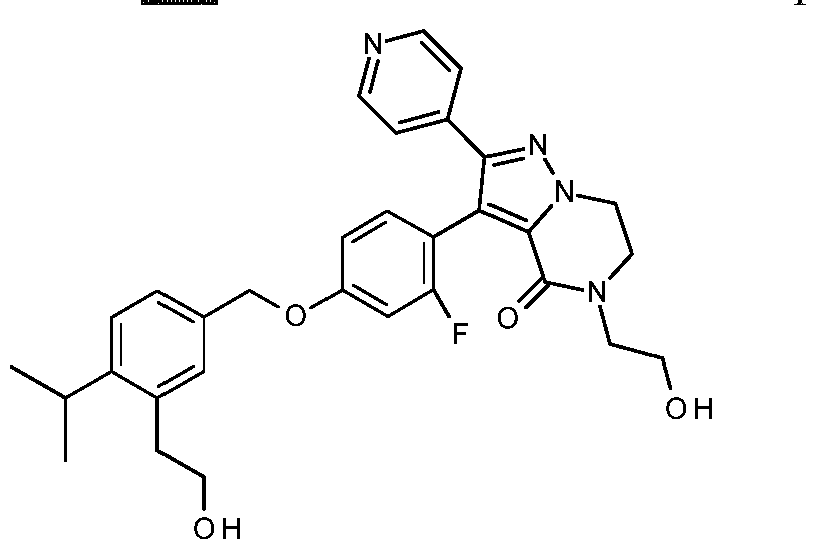
- TBAF (0.858 mL, 0.858 mmol) was added to a stirred sol. of 379 (800 mg, 0.850 mmol) in THF (11 mL) at 0°C, and the r.m. was stirred at r.t. for 2h. The crude mixture was diluted with water and a sol. of DCM/MeOH (96/4). The organic layer was washed with brine, dried over MgSO4, filtered and evaporated in vacuo to afford 690 mg, solid. The solid was purified by prep. LC (Irregular SiOH 50 µm, 30g Grace, mobile phase gradient: from DCM 100% to DCM 91%, MeOH 9%). The desired fractions were collected and evaporated in vacuo to give 412 mg, white solid. The solid was triturated with DIPE, filtered off, washed with Et2O and dried in vacuo to yield 385mg, white solid which was solubilized in MeOH (1mL). The solvent was allowed to evaporate slowly to give 374mg of Co. 205, crystalline white solid (81%). m.p.: 151 °C (DSC).
-

- To a suspension of 4-(trifluoromethoxy)-benzyl alcohol (1mL, 10.4mmol), 4-bromo-3-fluorophenol (1.58g, 8.28mmol), DBAD (1.9g, 8.28mmol) in dry DCM (20mL) was added PPh3 supp. (2.59g, 8.28mmol) and the r.m. was stirred at r.t. for 18h. The insoluble was filtered through Celite®, washed with DCM. Water was added and the organic layer was separated, dried, filtered and concentrated. The residue (4.24g) was purified by prep. LC on (Irregular SiOH 15-40µm 80g Grace, Mobile phase: Heptane/EtOAc 98/2). The pure fractions were collected and evaporated until dryness to give 1.76g of Int. 380 (70%).
-

- In a sealed tube, a mixture of 380 (1.82 g, 4.98 mmol), BisPin (1.9 g, 7.47 mmol), KOAc (1.47 g, 14.9 mmol) in DME (20 mL) was carefully purged with N2. PdCl2(dppf) (0.122 g, 0.15 mmol) was added and the r.m. was purged again with N2. The mixture was heated at 100°C overnight. EtOAc and water were added and the mixture was extracted with EtOAc. The organic layer was separated, dried, filtered and evaporated until dryness to give 3.3g. The residue was purified by prep. LC on (Irregular SiOH 15-40µm 50g Merck, Mobile phase: 90/10 Heptane/EtOAc). The pure fractions were collected and evaporated until dryness to give 495 mg of Int. 381 (24%).
-
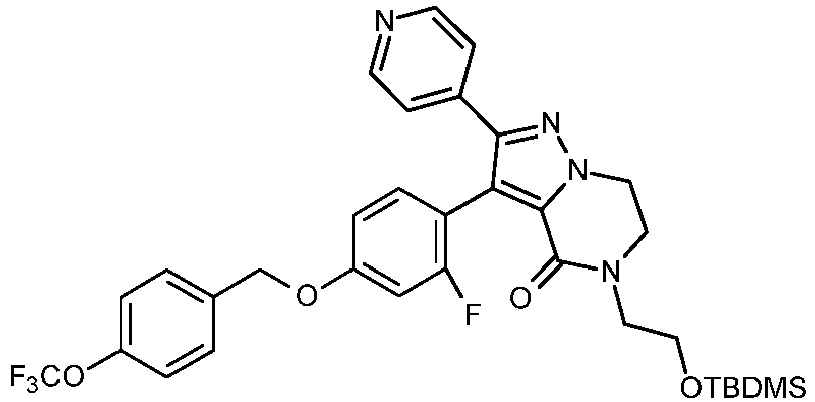
- In a microwave vial, a mixture of 28 (0.7 g, 1.55 mmol), 381 (0.799 g, 1.94 mmol), K3PO4 (1.32 g, 6.2 mmol) in 1,4-dioxane (6.8 mL) and H2O (2.4 mL) was carefully purged with N2. PdCl2(dppf) (127 mg, 0.16 mmol) was added and the r.m. was purged again with N2. The r.m. was heated at 80°C overnight. The r.m. was diluted with EtOAc and washed with water (once) and with brine (3x). The organic phase was dried over MgSO4, filtered and evaporated in vacuo to give 1.65g. The residue was purified by prep. LC (irregular SiOH 30 µm, 40g Interchim, mobile phase: from DCM 100% to DCM/MeOH/NH4OH 97/3/0.1). The pure fractions were collected and evaporated until dryness to give 717 mg of Int. 382 (70%).
-

- TABF (1.3 mL, 1.3 mmol) was added dropwise to a sol. of 382 (715 mg, 1.09 mmol) in THF (11 mL) at r.t.. The mixture was stirred for 3h at r.t. EtOAc and water were added. The organic layer was separated, dried, filtered and evaporated until dryness to give 646 mg. The residue was purified by prep. LC (Regular SiOH, 30 µm, 24g GraceResolv™, mobile phase gradient: from DCM 100% to DCM/MeOH/NH4OH 95/5/0.1). The pure fractions were collected and evaporated until dryness to give 421 mg which was crystallized from DIPE, filtered and dried to give 390 mg of Co. 206 (66%). m.p.: 140°C (dsc).
-

- DBAD (3.14 g, 13.7 mmol) was added to a mixture of 3-fluoro-4-hydroxybenzeneboronic acid pinacol ester (2.50 g, 10.5 mmol), 6-cyclopropyl-3-pyridinemethanol (2.04 g, 13.6 mmol) and PPh3 (3.58 g, 13.7 mmol) in dry THF (75 mL) and the r.m. was stirred under N2 for 20h at r.t. The crude mixture was diluted with EtOAc and water, and the organic layer was washed with brine, dried over MgSO4, filtered and evaporated in vacuo to give 12.8 g. The residue was purified by prep. LC (irregular SiOH 15-40 µm, 330g Grace, mobile phase gradient: from Heptane 100% to EtOAc 40%, Heptane 60%). The pure fractions were collected and solvent was evaporated until dryness to give 3.1g of Int. 383 , colorless oil (76%).
-

- PdCl2(dppf) (0.109 g, 0.133 mmol) was added to a stirred sol. of 28 (0.600 g, 1.33 mmol), 383 (1.03 g, 2.66 mmol) and K3PO4 (0.846 g, 3.99 mmol) in 1,4-dioxane (7.5 mL) and H2O (2.5 mL) at r.t. under N2. The resulting mixture was stirred at 120 °C using one single mode microwave (Biotage Initiator EXP 60) with a power output ranging from 0 to 400 W for 30 min. [fixed hold time]. The crude material was diluted with DCM and water, and the organic layer was washed with brine, dried (MgSO4), filtered and evaporated in vacuo to yield 1.9 g of a dark oil. The residue was purified by prep. LC (Irregular SiOH 50 µm, 80g Grace, mobile phase gradient: from DCM 100% to MeOH/DCM 8/92). The desired fractions were collected and evaporated in vacuo to give 796 mg of Int. 384 , oil used as such for the next step.
-

- To a stirred sol. of 384 (796 mg, 0.973 mmol) in C (10 mL) at 0°C was added TBAF (0.982 mL, 0.982 mmol), and the r.m. was stirred at 0 °C for 3h. The crude mixture was diluted with water and a sol. of DCM/MeOH (95/5). The organic layer was washed with brine, separated, dried over MgSO4, filtered and evaporated in vacuo to afford 490 mg, oil. This oil was purified by prep. LC (Irregular SiOH 50 µm, 40g Grace, mobile phase gradient: from DCM 100% to DCM 92%, MeOH 8%). The desired fractions were collected and evaporated in vacuo to give 410 mg of sticky pale rose solid which was crystallized from MeOH and triturated in a mixture of Et2O/MeOH (3/1). The solvents were evaporated in vacuo and the affording solid was dried under high vacuum at 55°C to yield 360 mg of white solid which was recrystallized in EtOH, filtered on a glass frit and dried in vacuo to give 234 mg of white solid which was triturated with Et2O, and the solvent was evaporated in vacuo to yield 156 mg of a white solid which was dried in vacuo at 50 °C for 20h to yield 145 mg of Co. 207 as a white solid (30%).
-

- 277 (800 mg, 1.96 mmol), 383 (1.04 g, 2.95 mmol), K3PO4 (1.25 g, 5.89 mmol) in 1,4-dioxane (8 mL) and H2O (4 mL), were purged with N2 for 10min. Then, PdCl2(dppf) (161 mg, 0.196 mmol) was added and purged with N2 for 10min. The resulting mixture was stirred at 120°C using one single mode microwave (Biotage Initiator EXP 60) with a power output ranging from 0 to 400 W for 30 min. [fixed hold time]. The mixture was diluted in water and extrated with EtOAc. The organic layer was dried over MgSO4, filtered and evaporated to give 1.20 g of Co. 208a, brown oil (quant.). The product was used for the next step without further purification.
-

- Co. 208a (1.08 g, 1.90 mmol), HCl 3N (3.16mL, 9.48 mmol) in 1,4-dioxane (40 mL) were heated to 80°C for 30 min. The mixture was quenched with a 10% sol. of K2CO3 and extracted with EtOAc. The organic layer was separated, dried over MgSO4, filtered and evaporated in vacuo to give 880 mg of brown oil. The residue was purified by prep. LC (irregular SiOH 15-40 µm, 80g, GraceResolv™, dry loading, mobile phase gradient: from DCM 100% to DCM 92%, MeOH 8%). The desired fractions were collected and solvent evaporated to give 570 mg, brown solid (57%). The solid was recrystallized in EtOH to give 450 mg, grey solid which was purified by prep. LC (irregular SiOH 15-40 µm, 80g, GraceResolv™, dry loading, mobile phase gradient: from DCM 100% to DCM 92%, MeOH 8%). The pure fractions were collected and solvent evaporated to give 410mg, white solid. The solid was recrystallized in EtOH three times to give 228 mg of Co. 208 as a white solid (23%). m.p.: 116°C and 126°C (DSC).
-

- A mixture of 337 (600 mg, 2.15 mmol), 2-bromo-N-methyl-acetamide (392 mg, 2.58 mmol) and K2CO3 (743 mg, 5.37 mmol) in DMF (8 mL) was stirred for 2h at 55°C. The r.m. was then poured in DCM and water. The organic layer was separated, dried over MgSO4 and evaporated in vacuo to afford brown oil. The residue was purified by prep. LC (irregular SiOH 15-40µm, 40g Gotech, mobile phase gradient: from DCM 100% to DCM 94%, MeOH 6%). The pure fractions were collected and solvent evaporated until dryness to give 314 mg of Int. 386 , yellow solid (42%).
-

- A mixture of 386 (314 mg, 0.897 mmol), 42 (664 mg, 1.79 mmol) and K3PO4 (571 mg, 2.69 mmol) in 1,4-dioxane (8 mL) and H2O (4 mL) was purged with N2. PdCl2(dppf) (73 mg, 93.8 µmol) was then added. The mixture was purged again with N2 and heated at 120°C using one single mode microwave (Biotage Initiator EXP 60) with a power output ranging from 0 to 400 W for 35 min [fixed hold time]. The r.m. was then poured in DCM and water. The organic layer was separated. The aq. layer was extracted again with DCM. The organic layers were combined, dried over MgSO4 and evaporated in vacuo to afford a brown residue. The residue was purified by prep. LC (irregular SiOH 15-40 µm, 80g, GraceResolv™, dry loading, mobile phase gradient: from DCM 100% to DCM 92%, MeOH 8%). The desired fractions were collected and solvent evaporated to give 240 mg of a grey solid. The solid was combined with another batch (initial reactant 386 , 280 mg, in the same conditions of reaction) and purified by prep. LC (irregular SiOH 15-40 µm, 40g, Merck, mobile phase gradient: from DCM 100% to DCM 94%, MeOH 6%). The pure fractions were collected and solvent evaporated to give 280 mg of an off-white solid. The solid was dissolved in a small amount of MeOH and allowed to evaporate slowly overnight. The residue was scratched in Et2O to obtain a white solid in suspension. The suspension was filtered off and the white precipitate was washed with Et2O and dried in vacuo to give 238 mg of Co. 209 as a white solid (global yield: 27%). m.p.: 175°C, 159°C (polymorph, DSC).
-

- Bromoacetonitrile (43 µL, 0.601 mmol) was added to a stirred suspension of Co. 173 (250 mg, 0.501 mmol) and K2CO3 (104 mg, 0.751 mmol) in DMF (3 mL) at r.t. The r.m. was stirred at r.t. for 16h, and then it was diluted with EtOAc and water. The organic layer was washed with brine, separated, dried over MgSO4, filtered and evaporated in vacuo to afford 289mg of Co. 210a, pale yellow solid (quant., purity 85%). The product was used as such for the next step.
-

- LAH (59 mg, 1.55 mmol) was added to a stirred sol. of Co. 210a (240 mg, 0.518 mmol) in THF (4.5 mL) under N2 at 0 °C. The r.m. was stirred at r.t. for 2h. Then, the crude mixture was quenched with addition of water (60 µL, very slow addition), a 3N sol. of NaOH (60 µL) and water (190 µL). The crude mixture was filtered on a glass frit, the cake was washed with EtOAc and the filtrate was evaporated in vacuo to afford 194 mg of oil. The residue was purified by prep. LC (irregular SiOH 15-40µm, 12g Grace, Mobile phase gradient: from DCM 100% to DCM 90%, MeOH 9%, NH4OH 1%). The fractions were combined and the solvent was removed in vacuo to give 108 mg, pale yellow oil. Then, MeOH (2mL) and fumaric acid (25 mg, 0.215 mmol) were added, and the solvent was removed in vacuo to afford a sticky solid. The solid was triturated with Et2O, and the solvent removed in vacuo to yield 130 mg of Co. 210, pale brown solid (45%; fumarate salt (0.79 eq fumarate)). m.p.: 197 °C (DSC).
-

- A mixture of 98 (152 mg, 0.495 mmol), 129 (350 mg, 0.990 mmol) and K3PO4 (420 mg, 1.98 mmol) in 1,4-dioxane (3 mL) and H2O (1 mL) was carefully purged with N2. PCy3 (28 mg, 99.0 µmol) and Pd(OAc)2 (11 mg, 49.5 µmol) were added and the r.m. was purged again with N2. The r.m. was stirred for 67h at 80°C. The crude material was dissolved in water and extracted with EtOAc. The organic phase was washed with brine, dried (MgSO4),filtered and evaporated in vacuo to give a solid which was purified by prep. LC (irregular SiOH 15-40µm, 24g Grace, mobile phase gradient: from DCM/MeOH from 100/0 to 91/9). The pure fractions were collected and evaporated to give 261 mg of a solid. The solid was purified by trituration with pentane to afford 206 mg of a solid. This solid was purified by achiral SFC (2-ethylpyridine 6µm 150x21.2mm. Mobile phase: 80% CO2, 20% MeOH). The desired fractions were isolated and evaporated in vacuo to yield 161 mg of Co. 211 as a white solid (72%). m.p.: 57 °C (DSC).
-
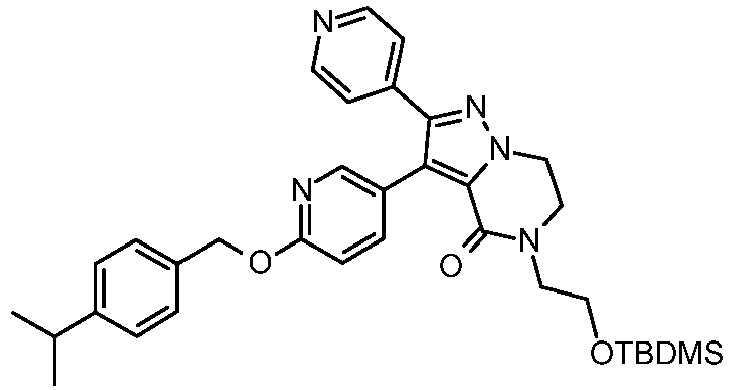
- NaH 60% (48 mg, 1.2 mmol) was added slowly to a suspension of Co. 71 (0.35 g, 0.80 mmol) in dry DMF (4.7mL) at r.t. under N2. The mixture was stirred for 2h then (2-bromoethoxy)-tert-butyldimethylsilane (0.20 mL, 0.96 mmol) was added and stirred overnight. Water was added and the mixture was concentrated under reduced pressure. The residue was taken in EtOAc and washed 5x with brine. The organic layer was dried on MgSO4, filtrated and concentrated to give 0.45g of Int. 388 , yellow oil. This crude mixture was used like this in the next step.
-

- TBAF (0.9 mL, 0.9 mmol) was added dropwise to a sol. of 388 (0.45 g, 0.75 mmol) in THF (7.4 mL) at r.t. The mixture was stirred overnight at r.t. The mixture was concentrated and the residue was purified by prep. LC (Regular SiOH, 30 µm, 25g GraceResolv™, mobile phase: DCM/MeOH/NH4OH 96/4/0.1). The pure fractions were collected and solvent evaporated until dryness to give 350 mg of colorless oil which was triturated in Et2O. The white solid formed was filtered, washed and dried to give 175 mg of Co. 212 as a white solid (48%). m.p.: polymorph 138°C, 161°C (polymorph, dsc).
-

- NaH 60% (48 mg, 1.2 mmol) was added slowly to a suspension of Co. 71 (0.35 g, 0.80 mmol) in dry DMF (4.7 mL) at r.t. under N2. The mixture was stirred for 2h then 2-bromoethyl-methylsulfone (164 mg, 0.88 mmol) was added and stirred overnight. Water was added and the mixture was concentrated under reduced pressure. The residue was taken in EtOAc and washed 5x with brine. The organic layer was dried on MgSO4, filtrated and concentrated to give 0.30g. The white solid obtained was triturated in Et2O, filtrated and dried to give 296 mg of Co. 213 as a white powder (68%). m.p.: 200°C (dsc).
-

- NaH 60% (57 mg, 1.4 mmol) was added slowly to a suspension of Co. 158 (0.42 g, 0.96 mmol) in DMSO (5.2 mL) at r.t. under N2. The mixture was stirred for 2h, then, MeI (65 µL, 1 mmol) was added and stirred overnight. Water was added and the insoluble was filtered, dissolved in DCM and MeOH, dried on MgSO4 and evaporated until dryness. The residue was purified by prep. LC (Regular SiOH, 30 µm, 25g Interchim, mobile phase gradient: DCM/MeOH/NH4OH from 98/2/0.1 to 96/4/0.1). The pure fractions were collected and solvent evaporated to give 372 mg of colorless oil which was crystallized from Et2O, filtered and dried to give 283 mg of Co. 214 as a white solid (65%). m.p.: 160°C (dsc).
-

- (SP-4-4)-[2-[2-(amino-κN)ethyl]phenyl-κC]chloro[dicyclohexyl[3,6-dimethoxy-2',4',6'-tris(1-methylethyl)[1,1'-biphenyl]-2-yl]phosphine-κP]-palladium (BrettPhos Palladacycle) (260 mg, 0.33 mmol) was added to a degassed suspension of 98 (500 mg, 1.6 mmol), 4-[(4-isopropylphenyl)methoxy]piperidine ( 362 ) (417 mg, 1.8 mmol), NaOtBu (469 mg, 4.9 mmol) in toluene (10 mL). The r.m. was heated at 90°C for a weekend. Water and EtOAc were added, the mixture was filtered over a Celite® pad. The filtrate was extracted, the organic layer was separated, dried over MgSO4, filtered and evaporated. The residue was purified by prep. LC (Irregular SiOH 20-45µm 40g MATREX, mobile phase: 70/29/1 toluene/iPrOH/NH4OH). The fractions were collected and the solvent evaporated until dryness. The residue was again purified by prep. LC (irregular 15-40µm 30g Merck, Mobile phase: 99% DCM, 1% MeOH). The pure fractions were collected and evaporated. The residue was crystallized from Et2O, the solid was filtered off and dried to give 40 mg of Co. 215 (5.3%). m.p.: 140°C (dsc).
-

- To a sol. of 2-methoxy-4-isopropyl-benzenemethanol (3.14 g, 17.4 mmol), 7 (3.8 g, 17.4 mmol), PPh3 (5 g, 19.2 mmol) in dry DCM (120 mL) was added DBAD (4.4 g, 19.2 mmol) and the r.m. was stirred at r.t. for 15h. The mixture was poured into water. The organic layer was extracted, dried over MgSO4, filtered and evaporated until dryness. The residue was taken up in heptane, stirred for 1.5h and filtered. The filtrate was purified by prep. LC (120g of irregular SiOH 35-40µm GraceResolv™, mobile phase gradient: from 100% heptane to 80% heptane 20% EtOAc). The pure fractions were collected and evaporated until dryness to give 2.26g of Int. 391 (34%).
-

- A mixture of 4 (0.5 g, 1.7 mmol), 391 (0.72 g, 1.9 mmol), K3PO4 (1.45 g, 6.8 mmol) in 1,4-dioxane (10 mL) and H2O (2.7 mL) was purged with N2 for 15min. Then, PdCl2(dppf) (0.14 g, 0.17 mmol) was added and purged again for 10min. The mixture was heated to 80°C for 15h and cooled to r.t. The mixture was poured into water, and K2CO3 and EtOAc were added. The insoluble was filtered and the organic layer was extrated, dried over MgSO4, filtered and evaporated to give 1g. The residue was purified by prep. LC (40g of irregular SiOH 35-40µm GraceResolv™, mobile phase gradient from 100% DCM to 95% DCM 5% CH3OH 0.1% NH4OH). The pure fractions were collected and evaporated until dryness to give 510 mg which was crystallized from MeOH, filtered and dried to give 439 mg of Co. 216 (55%). m.p.: 200°C (dsc).
-

- EDCI (1.2g, 6.2mmol) was added to a sol. of α-hydroxy-4-(1-methylethyl) benzene acetic acid (0.8g, 4.1mmol), HOBT (0.8g, 6.2mmol), DIPEA (1mL, 6.2mmol) methylamine (0.46mL, 5.3mmol) in DCM (25mL). The mixture was stirred at r.t. for 8 h. Water and DCM were added, the mixture was extracted. The organic layer was separated, dried over MgSO4, filtered and evaporated. The residue was purified by prep. LC (irregular SiOH 15-40 µm, 24g, GraceResolv™, Mobile phase: 98/2 DCM/MeOH). The pure fractions were collected and evaporated until dryness to give yielding 500mg of Int. 392 (59%).
-

- A sol. of 392 (500 mg, 2.40 mmol), 7 (690 mg, 3.12 mmol) and PPh3 (759 mg, 2.89 mmol) in dry DCM (12 mL) was treated with DBAD (666 mg, 2.89 mmol) and stirred at r.t. for 19h. Then, EtOAc and brine were added, and the organic layer was separated, dried over MgSO4, filtered and evaporated in vacuo. The residue was purified by prep. LC (irregular SiOH 15-40 µm, 120g, GraceResolv™, mobile phase gradient: from heptane 100% to heptane 70%, EtOAc 30%). The desired fractions were collected and solvent evaporated until dryness to give 320 mg of Int. 393 used as such for the next step.
-
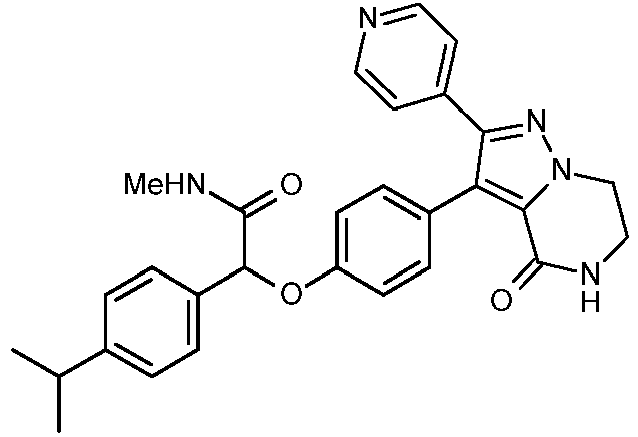
- A mixture of 4 (327 mg, 1.12 mmol), 393 (305 mg, 0.7 mmol) and K3PO4 (395 mg, 1.9 mmol) in 1,4-dioxane (3 mL) and H2O (1.5 mL) was purged with N2. PdCl2(dppf) (71 mg, 86 mmol) was added. The mixture was purged with N2 and stirred at 120°C using one single mode microwave (Biotage Initiator EXP 60) with a power output ranging from 0 to 400 W for 20 min [fixed hold time]. Then a sol. of DCM/MeOH 95/5 and water were added. The organic layer was separated, washed (brine), separated, dried (MgSO4), filtered and evaporated in vacuo. The residue was purified by prep. LC (Irregular SiOH 50µm, 24g Grace, mobile phase gradient: from DCM 100% to DCM 93%, MeOH 7%). The desired fractions were evaporated in vacuo to give 110 mg. The residue was crystallized from Et2O and the precipitate was filtered off and dried to give 92 mg of Co. 217 (25%).
-

- EDCI (1.2 g, 6.2 mmol) and HOBT (0.8g , 6.2 mmol) were slowly added to a mixture of Hydroxy(4-isopropylphenyl)acetic acid (0.8 g, 4.1 mmol), DIPEA (1 mL, 6.2 mmol), ethanolamine (0.3 mL, 5.3 mmol) in DCM (25 mL). The mixture was stirred at r.t. for 24h. Water and DCM were added. The mixture was extracted, the organic layer was separated, dried over MgSO4, filtered and evaporated. The residue was purified by prep. LC (irregular SiOH 15-40µm, 24g, GraceResolv™, Mobile phase: 98/2 DCM/MeOH). The pure fractions were collected and evaporated until dryness to give 400 mg of Int. 394 (41%).
-

- Tert-butyldimethylsilyl chloride (0.28 g, 1.8 mmol) was added to a sol. 394 (400 mg, 1.7 mmol), imidazole (0.15 g, 2.2 mmol) in DCM (5 mL). The mixture was stirred at r.t. overnight. Water and DCM were added and the mixture was extracted. The organic layer was separated, dried over MgSO4, filtered and evaporated. The residue was purified by prep. LC (irregular SiOH 15-40 µm, 24g, GraceResolv™, Mobile phase: Heptane 70%, EtOAc 30%). The pure fractions were collected and evaporated until dryness to give 220 mg of Int. 395 (37%).
-

- A sol. of 395 (185 mg, 0.5 mmol), 7 (150 mg, 0.7 mmol) and PPh3 (207 mg, 0.8 mmol) in dry THF (5 mL) was degased under N2 and, then, treated with DBAD (181 mg, 0.8 mmol) and stirred at r.t. for 19h. DCM and brine were added, and the organic layer was separated, dried over MgSO4, filtered and evaporated in vacuo. The residue was purified by prep. LC (irregular SiOH 15-40 µm, 12g, GraceResolv™, mobile phase gradient: from heptane 100% to heptane 70%, EtOAc 30%). The desired fractions were collected and solvent evaporated until dryness to give 130 mg of Int. 396 (45%, purity 80%). The product was used as such for the next step.
-

- A mixture of 4 (103 mg, 0.3 mmol), 396 (130 mg, 0.23 mmol) and K3PO4 (124 mg, 0.6 mmol) in 1,4-dioxane (2 mL) and H2O (0.6 mL) was purged with N2. PdCl2(dppf) (23 mg, 28 mmol) was then added. The mixture was purged again with N2 and stirred at 110°C overnight. Water and DCM were added and the mixture was extracted. The organic layer was separated, dried over MgSO4, filtered and evaporated to give 81 mg. The residue was purified by prep. LC (Stationary phase: Spherical bare silica 5µm 150x30.0mm, Mobile phase gradient: from 70% Heptane, 2% MeOH (+10% NH4OH), 28% EtOAc to 20% MeOH (+10% NH4OH), 80% EtOAc). The pure fractions were collected and evaporated to give 21 mg of Int. 397 (14%).
-

- 397 (21 mg, 0.033 mmol), TBAF (49 µl, 0.049 mmol) in THF (5 mL) was stirred at r.t. overnight. The mixture was evaporated till dryness and was purified by prep. LC (Stationary phase: Irregular SiOH 20-45µm 24g MATREX, Mobile phase: 95/5/0.1, DCM/MeOH/NH4OH). The pure fractions were put together and evaporated till dryness to give 15 mg. The residue was purified by Reverse phase (Stationary phase: X-Bridge-C18 5µm 30*150mm, Mobile phase gradient: from 90% (NH4HCO3 0.5% aq. sol.), 10% ACN to 100% ACN). The pure fractions were put together and evaporated till dryness. The residue was taken up in Et2O and the precipitate was filtered off and dried to give 14 mg of Co. 218 (81%).
-

- LAH bis(THF) in Toluene (15.9 mL, 15.9 mmol) was added to a stirred suspension of 320 (4.65 g, 7.94 mmol) in dry THF (70 mL) under N2 at -50°C. The r.m. was stirred at -50 °C for 20 min, and then quenched carefully with water (3 mL), a 3M sol. of NaOH (3 mL) and water (9 mL). EtOAc was added, and the crude mixture was filtered on glass frit, the cake was washed with EtOAc and the filtrate was evaporated in vacuo to afford 4.30 g of Int. 398 , pale brown solid (100%).
-

- Et3N (0.679 mL, 4.89 mmol) and methanesulfonyl chloride (0.354 mL, 4.58 mmol) were added to a stirred sol. of 398 (1.66 g, 3.05mmol) in dry DCM (35 mL) at 0 °C. The r.m. was stirred at r.t. for 18h. Then, sat. sol. of NaHCO3 and DCM were added, and the organic layer was washed with brine, separated, dried over MgSO4, filtered and evaporated in vacuo to yield 1.76 g of Int. 399 , brown solid (quant.).
-

- NaH 60% (250 mg, 6.26 mmol) was added to a stirred sol. of 399 (1.76 g, 3.13 mmol) in dry DMF (32 mL) at 0 °C under N2. The r.m. was stirred at r.t. for 2h. Then, water and EtOAc were added, and the organic layer was washed with brine, dried over MgSO4, filtered and evaporated in vacuo to yield 1.59 g of Co. 219a, brown solid. The product was used as such for the next step.
-
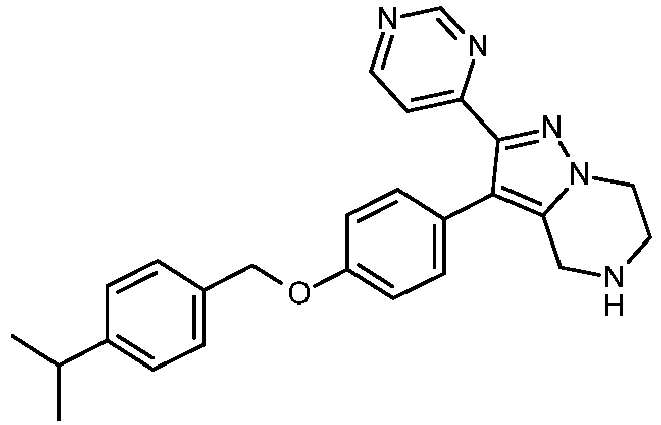
- HCl 3N (4 mL) was added to a stirred sol. of Co. 219a (1.59 g, 2.57 mmol) in ACN (20 mL) at rt. The r.m. was stirred at 50°C for 3h. EtOAc and water were added, and the organic layer was washed with brine, dried over MgSO4, filtered and evaporated in vacuo to yield 910 mg, brown solid. 310mg of 910mg were purified by prep. LC (Regular SiOH 50 µm, 12g Grace, mobile phase: DCM 100% to DCM 88%, MeOH 12%). The fractions containing the desired Co. were evaporated in vacuo to yield 60 mg, sticky pale yellow solid. The solid was triturated in a mixture of pentane/Et2O (1:1), and the solvents were removed to afford 48 mg of Co. 219 as a white solid. m.p.: 150 °C (DSC).
-

- (2-bromoethoxy)-tert-butyldimethylsilane (0.214 mL, 0.987 mmol) was added to a stirred sol. of Co. 219 (280 mg, 0.658 mmol) and Et3N (0.183 mL, 1.32 mmol) in DMF (4 mL) at r.t. The r.m. was stirred at 60°C for 22h. The crude material was dissolved in water and extracted with EtOAc. The organic phase was washed with brine, dried over MgSO4, filtered and evaporated in vacuo to give 386mg of an oil. The oil was dissolved in THF (4.5 mL), and TBAF (1.32 mL, 1.32 mmol) was added at r.t. The r.m. was stirred at r.t. for 16h. The crude material was diluted in a mixture of DCM/MeOH (92/8) and water was added. The organic phase was separated, washed with brine (2x), dried (MgSO4), filtered and evaporated in vacuo to give 260 mg of brown solid. The residue was purified by prep. LC (irregular SiOH 15-40µm, 12g Grace, Mobile phase gradient: from DCM 100% to DCM 92%, MeOH 8%). The desired fractions were combined and the solvent was removed in vacuo to give 18mg of Co. 220 as a sticky solid (6%).
-

- Ethylbromoacetate (0.117 mL, 1.06 mmol) was added to a sol. of Co. 219 (300 mg, 0.705 mmol) and K2CO3 (175 mg, 1.27 mmol) in DMF (4.5 mL) at r.t. The r.m. was then stirred at 55°C for 4h, then water and EtOAc were added. The organic layer was washed with brine, separated, dried over MgSO4, filtered and concentrated in vacuo to afford 312 mg of Int. 401 , red oil (74%, purity 85%). The product was used without further purification for the next step.
-

- Triazabicyclo[4.4.0]dec-5-ene (TBD) (51 mg, 0.357 mmol) and methylamine 2M in THF (0.668 mL, 1.34 mmol) were added to a stirred sol. of 401 (228 mg, 0.446 mmol) in dry toluene (8 mL) at r.t. The r.m. was stirred at 50°C for 80 min, and then EtOAc and sat. NH4Cl sol. were added. The organic layer was washed with brine, dried over MgSO4, filtered and evaporated in vacuo to yield 198 mg of brown solid. The solid was purified by prep. LC (Regular SiOH 50 µm, 12g Grace, liquid loading, mobile phase: DCM 100% to DCM 80%, MeOH 15%, aquous NH3 5%). The desired fractions were evaporated in vacuo to yield 40 mg of sticky red solid. This solid was purified by achiral SFC (Stationary phase: Amino 6µm 150x21.2mm, Mobile phase: 80% CO2, 20% MeOH (0.3% iPrNH2)). The desired fractions were collected and evaporated in vacuo to yield 17 mg of Co. 221 as a viscous yellow solid (8%).
-

- A sol. of 4-methyl-7H-pyrrazolo[2,3-d]pyrimidine (3.11 g, 23.4 mmol) in DMF (40 mL) was cooled to 0°C and treated with NaH 60% (1.40 g, 35.0 mmol). The r.m. was stirred at 0°C for 2h then 2-(trimethylsilyl)ethoxymethyl chloride (4.96 mL, 28.0 mmol) was added. The r.m. was stirred at r.t. for 2h and diluted in EtOAc. The organic layer was washed with water and brine (twice), dried over MgSO4 and evaporated in vacuo to give brown oil. The oil was purified by prep. LC (irregular SiOH 15-40 µm, 80g, Grace, mobile phase gradient: from DCM 100% to DCM 96%, MeOH 4%). The desired fractions were collected and solvent evaporated until dryness to give 3.53 g. The residue was purified by prep. LC (irregular SiOH 15-40 µm, 80g, Grace, mobile phase gradient: from DCM 100% to DCM 96%, MeOH 4%). The pure fractions were collected and solvent evaporated until dryness to give 1.56 g of Int. 402 as a brown oil (25%).
-

- A sol. of ethyl-4-hydroxybenzoate (10 g, 60.2 mmol) in ACN (150 mL) and DMF (10 mL) was treated with K2CO3 (10.0 g, 72.2 mmol) and 8 (13.5 g, 63.2mmol). The r.m. was stirred at 50°C for 17h. After concentration, the sol. was poured in EtOAc, washed with water (50mL), brine (4x 50mL) and water (50mL). The organic layer was dried over MgSO4 and evaporated to give yellow oil. The oil was triturated in cold pentane to obtain a solid. After filtration on a glass frit, the solid was washed with cold pentane, collected and dried in vacuo to give 16.2g of Int. 403 as a white solid (90%).
-

- In a dry flask and under N2 atmosphere, a sol. of 402 (1.56 g, 5.92 mmol) and 403 (1.77 g, 5.92 mmol) in dry THF (15mL) was cooled to 0°C and treated with LiHMDS (11.8 mL, 11.8 mmol) over 10 min. The r.m. was allowed to warm to r.t. and stirred for 17h at this temperature. The r.m. was then poured in a 10% aq. sol. of NH4Cl. The mixture was extracted with DCM, dried on MgSO4 and concentrated in vacuo to give a beige solid. The solid was triturated in pentane, filtered and dried in vacuo to give 1.96 g of Int. 404 as a yellow solid (64%).
-

- A sol. of 404 (1.55 g, 3.01 mmol) and etyl diazoacetate (0.506 mL, 4.81 mmol) in ACN (25 mL) was treated with DBU (0.764 mL, 5.11 mmol) and stirred at r.t. for 17 h. The r.m. was diluted in EtOAc and a sat. sol. of NaHCO3. The organic layer was separated, washed with brine, dried over MgSO4 and evaporated in vacuo to give a brown residue. The residue was purified by prep. LC (irregular SiOH 15 µm, 80g, Interchim, mobile phase gradient: from DCM 100% to DCM 95%, MeOH 5%). The pure fractions were collected and solvent evaporated until dryness to give 1.13 g of Int. 405 as a reddish oil (61%).
-
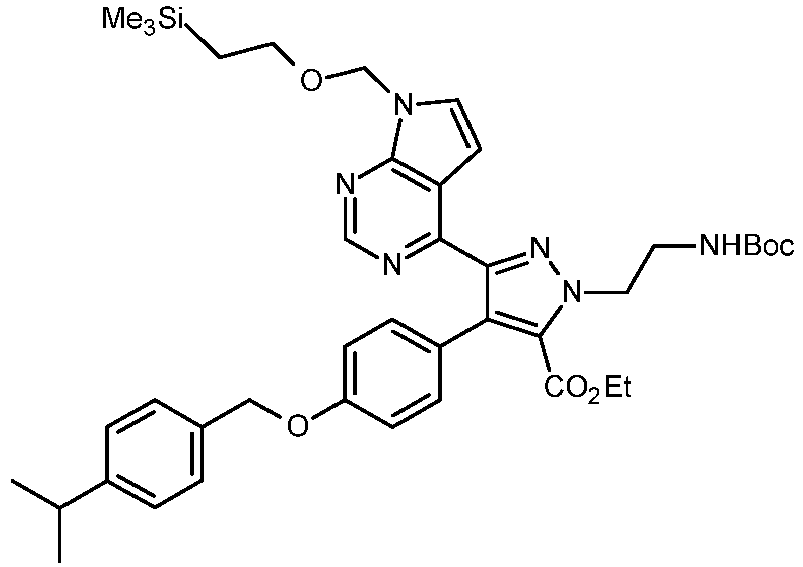
- A mixture of 405 (1.13 g, 1.85 mmol), tert-buthyl-N-(2-hydroxyethyl)carbamate (447 mg, 2.77 mmol) and PPh3 supp. (0.866 mg, 2.77 mmol) in dry THF (40 mL) was treated with DBAD (638 mg, 2.77 mmol) and stirred at r.t. for 24 h. The r.m. was filtered through Celite® and the filtrate was evaporated in vacuo to give a red residue. The residue was purified by prep. LC (spheric SiOH 50 µm, 80g, Grace, mobile phase gradient: from DCM 100% to DCM 95%, MeOH 5%). The pure fractions were collected and solvent evaporated until dryness to give 1.61g of Int. 406 as a reddish oil (Quant.).
-
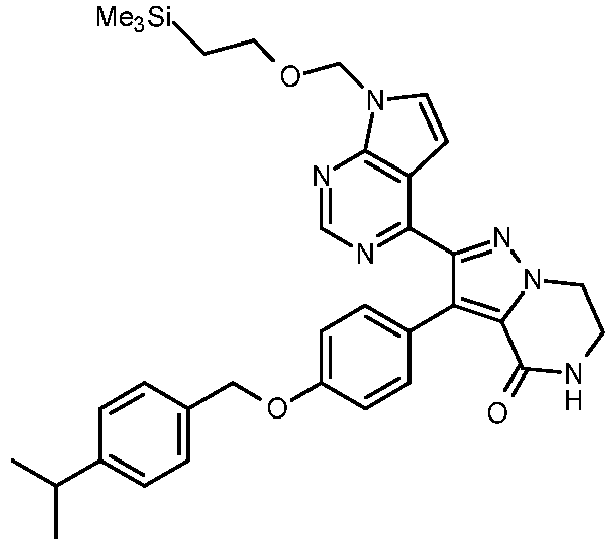
- A sol. of 406 (1.61 g, 2.13 mmol) in ACN (35 mL) was treated with HCl 3N (3.55 mL, 10.7 mmol) and stirred at 90°C for 4 h. The r.m. was diluted with DCM and washed with a sat. sol. of NaHCO3. The organic layer was dried over MgSO4 and evaporated in vacuo to give a yellow oil. The oil was dissolved in MeOH (40 mL), treated with Cs2CO3 (2.08 g, 6.40 mmol) and stirred at r.t. for 1h. The r.m. was concentrated in vacuo and diluted with DCM. The organic layer was washed with water and directly evaporated in vacuo. The precipitate was washed with water and with Et2O, collected and dried in vacuo to give 700 mg of Int. 407 as a grey solid (54%).
-

- A sol. of 406 (300 mg, 493 µmol) in DCM (7.5 mL) was cooled to 0°C and treated with boron trifluoride diethyl etherate (243 µL, 1.97 mmol). The r.m. was stirred at 0°C for 2h then at r.t. for 2h. An extra amount of boron trifluoride diethyl etherate (122 µL, 0.986 mmol) was added to the mixture which was stirred at r.t. for one extra h. The r.m. was quenched with a sat. sol. of NaHCO3 and DCM was evaporated in vacuo. MeOH was added and the mixture was stirred at r.t. for 24 h. The r.m. was diluted with water and extracted twice with DCM. The organic layers were combined, dried over MgSO4 and evaporated in vacuo to give a white residue. The residue was purified by prep. LC (irregular SiOH 15-40 µm, 40g, Merck, dry loading, mobile phase gradient: from DCM 100%, to DCM 90°C, MeOH 10%). The desired fractions were collected and solvent evaporated until dryness to give 141 mg, white solid. The solid was dissolved in THF (10mL) and NaOH 1N (1mL). The r.m. was stirred at r.t. for 17h and diluted in water. The mixture was extracted twice with DCM/MeOH (95:5). The organic layers were combined, dried over MgSO4 and evaporated in vacuo to give 75 mg of white solid. The solid was purified by prep. LC (irregular SiOH 15-40 µm, 12g, Grace, dry loading, mobile phase gradient: from DCM 100%, to DCM 90°C, MeOH 10%). The pure fractions were collected and solvent evaporated until dryness to give 64 mg of Co. 222, white solid (27%). m.p.: 238°C (DSC).
-

- NaH 60% (0.272 g, 7.92 mmol) was added to a stirred sol. of methyl 2-hydroxy-2-[4-(propan-2-yl)phenyl]acetate (1.5 g, 7.2 mmol) in THF (75 mL) at 0°C. The mixture was stirred for 5min and then 5-bromo-2-chloro-3-nitropyridine (1.71 g, 7.2 mmol) was added portionwise. The mixture was stirred at r.t. for 16h. The mixture was treated with water and extracted with EtOAc. The organic layer was separated, dried (MgSO4), filtered and the solvents were evaporated in vacuo to give 3g which was crystallized from DIPE. The precipitate was filtered off and dried in vacuo to yield 1.29g of Int. 408 44%.
-

- Fe (0.7 g, 12.56 mmol) was added to a stirred sol. of 408 (1.285 g, 3.14 mmol) in Acetic Acid (15 mL) in a sealed tube and under N2. The mixture was stirred at 60°C for 8h. The mixture was diluted with EtOAc and filtered through a Celite® pad. The filtrate was concentrated, diluted with EtOAc and washed with sat NaHCO3. The organic layer was separated, dried (MgSO4), filtered and the solvents evaporated in vacuo to yield 0.6g of Int. 409 (55%).
-

- LAH in 1M THF (4.9 mL, 4.896 mmol) was added to a sol. of 409 (0.85 g, 2.45 mmol) in THF (40 mL) at -78°C under N2. The reaction was stirred at -78°C for 5 min and, then, was allowed to warm to r.t. slowly and stirred at r.t. for 4h. EtOAc followed by Water were added dropwise to the mixture at -5°C. The suspension was filtered through a pad of Celite®. The organic layer was separated, dried over MgSO4, filtered and the solvent was evaporated to give 0.4 g. The residue was purified by prep. LC (Irregular SiOH 15-40µm 25g Merck, mobile phase from: 100% DCM to 98% DCM 2% MeOH). The pure fractions were collected and the solvent was evaporated to give 0.19 g of Int. 410 (23%). The product was used as such for the next step.
-

- A mixture of 410 (0.16 g, 0.48 mmol), BisPin (0.183 g, 0.72 mmol) and KOAc (0.141 g, 1.44 mmol) in DME (3.6 mL) was carefully purged with N2. PdCl2(dppf) (31 mg, 0.038 mmol) was added and the r.m. was purged again with N2. The r.m. was stirred at 100°C for 4h. The crude mixture was diluted with EtOAc and filtered over Celite®. The filtrate was washed with water and brine, and the organic layer was separated, dried over MgSO4, filtered and evaporated in vacuo to yield 0.27g of Int. 411 used in the next step without purification.
-

- A mixture of 411 (0.27 g, 0.71 mmol), 4 (0.138 g, 0.473 mmol) and K3PO4 (0251 g, 1.183 mmol) in 1,4-dioxane (2.75 mL) and H2O (1.375 mL) was purged with N2. PdCl2(dppf) (31 mg, 37 µmol) was then added. The mixture was purged again with N2 and stirred at 120°C using one single mode microwave (Biotage Initiator EXP 60) with a power output ranging from 0 to 400 W for 20 min [fixed hold time]. The crude mixture was diluted with a sol. of DCM and water. The organic layer was separated, washed with brine, separated, dried over MgSO4, filtered and evaporated in vacuo to yield 570 mg. The residue was purified by prep. LC (Irregular SiOH 15-40µm 30g Merck, mobile phase gradient: from 100% DCM to 98% DCM, 2% MeOH). The pure fractions were collected and the solvent was evaporated until dryness. The residue was crystallized from DIPE. The precipitate was filtered off and dried to give 15 mg of Co. 223 (7%).
-
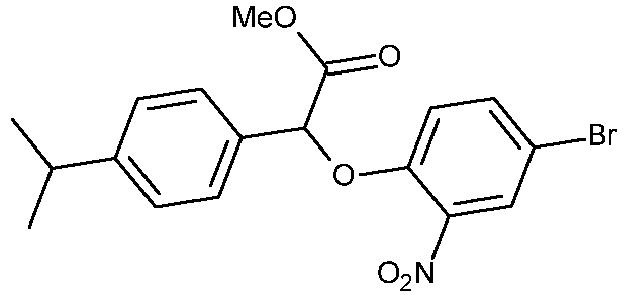
- A sol. of methyl 2-hydroxy-2-[4-(propan-2-yl)phenyl]acetate (3.00 g, 14.4 mmol), 4-bromo-2-nitrophenol (4.08 g, 18.7 mmol) and PPh3 (4.53 g, 17.3 mmol) in dry THF (77 mL) was treated with DBAD (3.98 g, 17.3 mmol) and stirred at r.t. for 18h. Then, EtOAc and water were added. The organic layer was washed with brine, a 10% sol. of K2CO3 and brine, and then separated, dried (MgSO4), filtered and evaporated in vacuo to yield 16.3 g of orange oil which was filtered over silica, eluting with a sol. of Heptane/EtOAc (70/30). The filtrate was evaporated in vacuo to yield 9.02 g of a yellow solid. The residue was purified by prep. LC (irregular SiOH 15-40µm, 330g, GraceResolv™, mobile phase gradient: heptane/EtOAc from 100/0 to 50/50). The pure fractions were collected and solvent evaporated to give 5.30 g of Int. 412 as pale yellow oil (85%).
-

- Fe (1.91 g, 34.2 mmol) was added to a stirred sol. of 412 (720 mg, 1.71 mmol) in acetic acid (15 mL) at r.t. The r.m. was stirred at 50°C for 20h. The crude mixture was diluted with EtOAc and filtered through Celite®.Water was added to the filtrate, and the organic layer was then treated with sat. NaHCO3, washed with water, dried over MgSO4, filtered and evaporated in vacuo to yield 520 mg of Int. 413 , white solid (88%).
-

- LAH (658 mg, 17.3 mmol) was added to a stirred sol. of 413 (1.50 g, 4.33 mmol) in dry THF (40 mL) at r.t. under N2. The r.m. was stirred at 50°C for 2h. The sol. was quenched with addition of water (660 µL, very slow addition), a 3N sol. of NaOH (660 µL) and water (1.98 mL). The crude mixture was filtered on glass frit, the cake was washed with EtOAc and the filtrate was evaporated in vacuo to afford 1.36g of Int. 414 as pale brown solid (94%).
-

- A mixture of 414 (1.68 g, 5.06 mmol), BisPin (1.93 g, 7.) and KOAc (1.49 g, 15.2 mmol) in DME (38 mL) was carefully purged with N2. PdCl2(dppf) (331 mg, 0.405mmol) was added and the r.m. was purged again with N2. The r.m. was stirred at 100°C for 4h. The crude mixture was diluted with EtOAc and filtered over Celite®. The filtrate was washed with water and brine, and the organic layer was separated, dried over MgSO4, filtered and evaporated in vacuo to yield 3.34 g of black solid. The residue was purified by prep. LC (Irregular SiOH 50 µm, 120g Grace, mobile phase gradient: from Heptane 100% to Heptane 65%, EtOAc 35%). The desired fractions were evaporated in vacuo to give 1.52 g of Int. 415, pale yellow solid (79%).
-

- A mixture of 4 (0.2 g, 0.688 mmol), 415 (0.47 g, 1.239 mmol) and K3PO4 (0.365 g, 1.721 mmol) in 1,4-dioxane (4 mL) and H2O (2 L) was purged with N2. PdCl2(dppf) (45 mg, 55 µmol) was then added. The mixture was purged again with N2 and stirred at 120°C using one single mode microwave (Biotage Initiator EXP 60) with a power output ranging from 0 to 400 W for 20 min [fixed hold time]. The crude mixture was diluted with a sol. of DCM and water. The organic layer was separated, washed with brine, separated, dried over MgSO4, filtered and evaporated in vacuo to yield 0.96 g which was combined with another batch resulting of 50 mg of 4 ). The residue was purified by prep. LC (Stationary phase: Spherical bare silica 5µm 150x30.0mm, Mobile phase Gradient: from NH4OH/DCM/MeOH 0.2/98/2 to 1.3/87/13. The pure fractions were collected and the solvent was evaporated to give 0.088 g of Co. 226 (22%) which was combined with another batch of Co. 226 (0.08 g) for enantiomeric separation. Co. 226 was purified by chiral SFC (Stationary phase: Chiralcel OJ-H 5µm 250x20mm, Mobile phase: 70% CO2, 30% EtOH). The pure fractions were collected and the solvent was evaporated untll dryness. The 1st residue (0.078g) was crystallized from DIPE. The precipitate was filtered off and dried to give 0.068g of Co. 224 (S or R; 8%). The 2nd residue (0.085g) was crystallized from DIPE. The precipitate was filtered off and dried to give 0.068 g of Co. 225 (R or S; 8%). Co. 224: [α]d: -28.35 ° (589 nm, c 0.254 w/v %, DMF, 20 °C); Co. 225: [α]d: +27.23 ° (589 nm, c 0.235 w/v %, DMF, 20 °C).
-

- A mixture of 414 (0.38 g, 1.14 mmol), Iodomethane (0.752 mL, 1.72 mmol) and K2CO3 (0.474 g, 3.43 mmol) in DMF (10 mL) was heated at 80°C overnight. The r.m. was cooled to r.t., poured into ice water and extracted with DCM. The organic layer was washed with brine, separated, dried over MgSO4, filtered and the solvent was evaporated until dryness to give 0.45g of Int. 416 which was used in the next step without purification.
-

- In a microwave vial, a mixture of 60 (0.35 g, 0.514 mmol), 416 (0.148 g, 0.429 mmol), K3PO4 (0.364 g, 1.715 mmol) in 1,4-dioxane (3.5 mL) and H2O (1.05 mL) was carefully purged with N2. PdCl2(dppf) (35 mg, 0.043 mmol) was added and the r.m. was purged again with N2. The r.m. was heated at 80°C overnight. The r.m. was diluted with EtOAc, filtered off on a pad of Celite® and washed with EtOAc. The organic layer was washed with water (once) and with brine (3x). The organic phase was dried over MgSO4, filtered and evaporated in vacuo to give 0.4g. The residue was put together with another batch (0.1g of reactant 60 in the same conditions) and purified by prep. LC (Irregular SiOH 15-40µm, 40g Merck, mobile phase gradient: from 100% DCM to 98% DCM, 2% MeOH, 0.1% NH4Cl. The desired fractions were collected and the solvent was evaporated until dryness to give 0.09 g. The residue was purified by prep. LC (Stationary phase: Spherical bare silica 5µm 150x30.0mm, Mobile phase Gradient: from NH4OH/DCM/MeOH 0.2/98/2 to NH4OH/DCM/MeOH 0.8/92/8). The pure fractions were collected and the solvent was evaporated. The residue (0.04 g) was crystallized from DIPE. The precipitate was filtered off and dried to give 0.023 g of Co. 227 (global yield: 9%). m.p.: 291°C (DSC).
-

- Prepared by using an analogous reaction protocol as described for Co. 197 starting from Int. 36 using 3-(boc-amino)-1-propanol. Yield: 91%; m.p.: 235°C (DSC).
-

- Prepared by using an analogous reaction protocol as described for Co. 3 starting from Int. 4 using

-

- Prepared by using an analogous reaction protocol as described for Co. 3 starting from Int. 4 using

-

- Prepared by using an analogous reaction protocol as described for Co. 226 starting from Int. 4 using

-

- Prepared by using an analogous reaction protocol as described for Co. 6 starting from Int. 4 using

-

- A mixture of 17 (300 mg, 0.511 mmol), methyl 4-(4,4,5,5-tetramethyl-1,3,2-dioxaborolan-2-yl)picolinate (202 mg, 0.767 mmol) and K3PO4 (434 mg, 2.05 mmol) in DME (10 mL) in a sealed tube was purged with N2. Pd2dba3 (23.4 mg, 25.6 µmol) and PtBu3.BF4 (Tri-tert-butylphosphonium tetrafluoroborate) (14.8 mg, 51.2 µmol) were added, the mixture was purged again with N2 and heated at 120°C using one single mode microwave (Biotage Initiator EXP 60) with a power output ranging from 0 to 400 W for 45 min [fixed hold time]. The crude mixture was quenched with water and extracted with DCM. The organic layer was separated, dried over MgSO4, filtered off and evaporated in vacuo to give a yellow oil. The residue (368 mg) was purified by prep. LC (Irregular SiOH 15-40 µm, 24 g Grace, DCM deposit, mobile phase: heptane 50%, EtOAc 50%). The pure fractions were collected and solvent evaporated to give 210 mg of Int. 417 as a white residue (60%).
-

- To a sol. of 417 (210 mg, 0.327 mmol) in ACN (2.50 mL) was added an aq. sol. of HCl 3N (545 µL, 1.63 mmol) and the sol. was heated at 60°C for 1 h. After cooling down to r.t., a mixture of DCM and a sat. aq. sol. of NaHCO3 was added. The organic layer was separated, dried over MgSO4, filtered off and evaporated in vacuo to give 154 mg of Int. 418 as a white solid (87%).
-

- To a sol. of 418 (154 mg, 0.284 mmol) in MeOH (3 mL) was added Cs2CO3 (462 mg, 1.42 mmol) and the mixture was stirred at r.t. for 2h. The solvent was removed in vacuo. The residue was taken up with water and DCM. The organic layer was separated, dried over MgSO4, filtered off and evaporated in vacuo to give 33 mg of a first batch of Int. 420 as white solid (23%). The aq. layer was extracted again with a mixture of DCM/MeOH 90/10. The organic layer was dried over MgSO4, filtered off and evaporated in vacuo to give 8 mg of a second batch of Int. 420 as white solid (6%). The aq. layer was acidified with a 1N aq. sol. of HCl until pH 6-7 and extracted again with DCM. The organic layer was dried over MgSO4, filtered off and evaporated in vacuo to give 87 mg of Int. 419 as pale yellow solid (64%).
-

- A sol. of Int. 420 (33 mg, 66.5 µmol) in THF (2 mL) and MeOH (0.4 mL) was treated with NaBH4 (15 mg, 399 µmol) and stirred at 60°C for 17 h. The r.m. was poured in DCM and water. The organic layer was separated. The aq. layer was extracted twice with DCM/MeOH (95/5). The organic layers were combined, dried over MgSO4 and evaporated in vacuo to give 27 mg of Co. 233 as a white solid (87%). M.p.: 232°C (DSC).
-
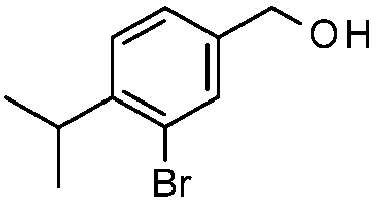
- LiAlH4 (5.52 g, 145 mmol) was added to a stirred sol. of methyl-3-bromo-4-isopropylbenzoate (34.0 g; 132 mmol) in THF (600 mL) at -20°C. The r.m. was stirred at -20°C for 2h. Then, the r.m. was quenched with 5.26 mL of H2O, 5.52 mL of NaOH 3N and 16 mL of H2O. The mixture was filtered and washed with DCM. The filtrate was evaporated in vacuo to give 20.0 g of Int. 421 as a yellow oil (66%).
-

- Tert-butyldimethylsilylchloride (15.8 g, 105 mmol) was added to a sol. of 421 (20.0 g, 87.3 mmol) and imidazole (8.91 g, 131 mmol) in DCM (400 mL) at r.t. The mixture was stirred at r.t. for 18h. The mixture was quenched with water and extracted with DCM. The organic layer was decanted, washed with water then brine, dried over MgSO4, filtered and evaporated in vacuo to give a yellow oil. This residue (29.85 g) was purified by prep. LC (Stationary phase: Irregular SiOH 20-45µm 450g MATREX, Mobile phase: 100% Heptane). The pure fractions were collected and solvent evaporated until dryness to give 15.0 g of Int. 422 as a white solid. The product was used without further purification for the next step.
-

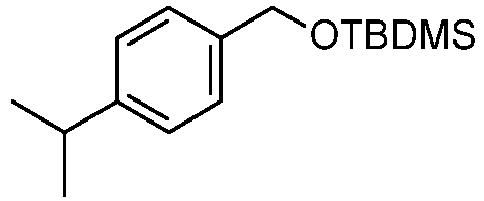
- t-Butyl Lithium 1.6M in pentane (7 mL, 11.2 mmol) was added to a stirred sol. under N2 of 422 (2.00 g; 3.50 mol) in dry THF (20 mL) at -78 °C. The mixture was stirred at-78 °C for 30 min, and then DMF (3.8 mL, 51.7 mmol) was added at -78°C. The r.m. was stirred at -78 °C to r.t. for 18h, and then quenched with water. DCM was added, and the organic layer was washed with brine, dried over MgSO4, filtered and evaporated in vacuo to give 2.00 g of a mixture of Int. 423 and Int. 424 (423/424 = 2/1) as a yellow oil. This mixture was used without further purification for the next step.
-

- AcONH4 (316 mg, 4.10 mmol) was added to a stirred sol. of a mixture of 423 and 424 (2.00 g, 6.84 mmol) in CH3-NO2 (517 mL). The mixture was stirred at 60°C for 18h. The r.m. was quenched with water and DCM was added. The organic layer was washed with brine, dried over MgSO4, filtered and evaporated in vacuo to give an orange oil. This residue (1.8 g) was purified by prep. LC (irregular SiOH 15-40 µm, 50 g, MERCK, Mobile phase: from Heptane 100 % to heptane 95%, EtOAc 5%). The pure fractions were collected and solvent evaporated until dryness to give 750 mg of Int. 425 as a yellow oil (33%).
-

- LiAlH4 (283 mg, 7.45 mmol) was added to a stirred sol. of 425 (1.0 g, 2.98 mmol) in Et2O (30 mL) at 0°C and the sol. was stirred at 0°C for 1h. To the sol. was added 280 µL of H2O, 280 µL of an aq. sol. of NaOH 3N and 840µL of H2O. The precipitate was filtered and the filtrate was evaporated in vacuo to give a yellow oil. This residue (0.9 g) was purified by prep. LC (irregular SiOH 15-40 µm, 50 g, MERCK, Mobile phase: from DCM 100 % to DCM 80%, MeOH(10%NH3) 20%). The pure fractions were collected and solvent evaporated until dryness to give 250 mg of Int. 426 as a colorless oil.
-

- Boc2O (266 mg, 1.22 mmol), Et3N (0.169 mL, 1.219 mmol) and DMAP (10 mg, 81.3 µmol) were added to a stirred sol. of 426 (250 mg, 0.813 mmol) in ACN (4 mL) at r.t. The r.m. was stirred at r.t. for 72h and the sol. was diluted in DCM. The organic layer was washed successively with an aq. sol. of HCl 1N and a sat. aq. sol. NaHCO3. The organic phase was dried over MgSO4, filtered and evaporated in vacuo to give 210 mg of Int. 427 (63%).
-

- A suspension of Int. 422 (1.0 g, 2.91 mmol), potassium tert-butyl-2-N(2-trifluoroboranuidyl)ethylcarbamate (951 mg, 3.79 mmol), Cs2CO3 (2.85 g, 8.74 mmol) in toluene (15 mL) and H2O (5 mL) was carefully purged with N2. Pd(OAc)2 (33 mg, 146 µmol) and S-Phos (136 mg, 291 µmol) were added to the mixture. The r.m. was purged again with N2 and stirred at 110°C for 17 h. After dilution in EtOAc, the organic layer was washed with water and brine, dried over MgSO4 and evaporated in vacuo. The residue was purified by prep. LC (spherical SiOH 30 µm, 40 g, Interchim, dry loading, mobile phase gradient: from heptane 100% to heptane 80%, EtOAc 20%). The pure fractions were collected and solvent evaporated until dryness to give 650 mg of Int. 427 as a colorless oil (55%).
-

- NaH (60% dispersion in mineral oil) (650 mg, 16.3 mmol) was added to a mixture of 427 (4.44 g, 10.9 mmol) in THF (40 mL) at 0°C. The r.m. was stirred at r.t. for 30 min. MeI (1.4 mL, 21.8 mmol) was then added to the sol. and the mixture was stirred at r.t. for 18h. The sol. was diluted in DCM and washed with water. The organic phase was dried over MgSO4, filtered and evaporated in vacuo to give 4.30 g of Int. 428 as a red oil (94%).
-

- A sol. of TBAF 1M in THF (20.4 mL, 20.4 mmol) was added to a mixture of 428 (4.30 g, 10.2 mmol) in THF (50 mL) and the r.m. was stirred for 17h at r.t. The sol. was diluted in DCM and washed with water. The organic phase was dried over MgSO4, filtered and evaporated in vacuo to give a red oil. This oil (4.71 g) was purified by prep. LC (irregular SiOH 15-40 µm, 50 g Merck, mobile phase gradient: from EtOAc 20%, Heptane 80% to EtOAc 50%, Heptane 50%). The pure fractions were collected and solvent evaporated to give 2.50 g of Int. 429 as a white gum.
-

- Prepared by using an analogous reaction protocol as described for Int. 30 starting from Int. 7 using Int. 429 (60%).
-

- Prepared by using an analogous reaction protocol as described for Co. 31 starting from Int. 4 using Int. 430. Yield: 57%; m.p.: 166°C and 200°C (polymorph, DSC).
-

- Prepared by using an analogous reaction protocol as described for Co. 31 starting from Int. 28 using Int. 430. Yield: 56%.
-
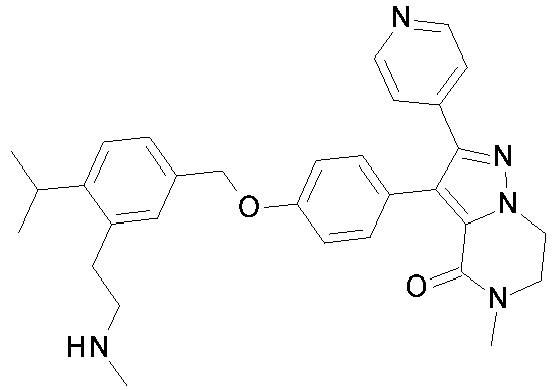
- Prepared by using an analogous reaction protocol as described for Co. 31, starting from Int. 98 using Int. 430. Yield: 62%.
-

- LiAlH4 (0.172 g, 1.36 mmol) was added portionwise to a sol. of 11 (1.00 g, 2.26 mmol) in THF (23 mL) at 0°C under Ar. The resulting sol. was stirred at r.t. for 3 days. The r.m. was quenched by adding EtOAc followed by H2O. The organic layer was washed with "rochelle salts" and brine, dried over Na2SO4, filtered off and concentrated to afford a yellow solid. This residue (0.803 g) was triturated in MeOH and filtered to give 0.755 g of a yellow solid. This second residue was co-evaporated with DCM and dried in vacuo to give 0.665 g of Int. 431 as an off-white solid (73%).
-

- To a suspension of 431 (0.665 g, 1.66 mmol) in THF (10 mL) at r.t. under Ar was added diphenylphosphorylazide (0.400 mL, 1.83 mmol) and DBU (0.297mL, 1.99 mmol). The resulting mixture was stirred at r.t. for 18h. An additional amount of diphenylphosphorylazide (0.200 mL, 0.916 mmol) and DBU (0.150mL, 1.00mmol) were added and the mixture was stirred at r.t. for 3h. The r.m. was quenched by adding an aq. sat. sol. of NaHCO3 (30 mL). The aq. layer was extracted twice with EtOAc (2x 30mL) and the combined organic layers were dried over Na2SO4, filtered off and concentrated to dryness to a yellow gum. This residue (1.26 g) was purified by prep. LC (irregular SiOH 15-40 µm, mobile phase gradient: from DCM 98%, MeOH 2% to DCM 95%, MeOH 5%). The pure fractions were collected and solvent evaporated until dryness to give 0.370 g of Int. 432 as an off-white solid (52%).
-

- To a sol. of 432 (347 mg, 0.817 mmol) and K2CO3 (249 mg, 1.80 mmol) in DMF (6 mL) was added ethylbromoacetate (0.108 mL, 0.981 mmol) at r.t. The r.m. was stirred at r.t. for 18h. Then, the crude mixture was diluted with EtOAc and water, and the organic layer was washed with brine, dried over MgSO4, filtered and evaporated in vacuo to a viscous orange solid. This residue (0.43g) was purified by prep. LC (Regular SiOH 50µm, liquid loading, 24g Grace, DCM 100 % to DCM 30% EtOAc 70%) to give 247 mg of Int. 433 as a cream solid (66%).
-

- To a stirred sol. of 433 (254 mg, 0.497 mmol) in EtOH (8 mL) was added Raney Nickel (29 mg, 0.497 mmol) at r.t. The r.m. was hydrogenated at r.t. under atmospheric pressure for 1h. The crude mixture was filtered off through a pad of Celite® which was washed with EtOH. The filtrate was evaporated in vacuo. The residue (0.185 g) was diluted in EtOH (3mL) and EtOAc (3 mL), and an extra amount of Raney Nickel (555 mg, 9.45 mmol) was added. The r.m. was hydrogenated at r.t. under atmospheric pressure for 2h. The crude mixture was filtered off through a pad of Celite® which was washed with DCM and EtOAc. The filtrate was evaporated in vacuo. The residue (0.130 g) was triturated in Et2O, and the solvent was removed. The solid was dried in vacuo to yield 105 mg of Co. 237 as a white solid (48%). m.p.: 281 °C (DSC).
- The compounds listed in Table 1 below have been prepared. The values of salt stoichiometry or acid content in the compounds as provided herein, are those obtained experimentally and may vary dependent on the analytical method used (for compound 210, 1H NMR was used; and for compound 59a, 1H NMR and elemental analysis was used).
- In case no salt form is indicated, the compound was obtained as a free base. Salt forms of the free bases can easily be obtained by using typical procedures known to those skilled in the art. For example Compound 1 (free base) was converted into a HCl salt, a methanesulfonate salt and a sulfate salt.
Table 1: Compounds 

Compound 1; Method A1/A2/A3/A4/A5 Compound 5; Method A10 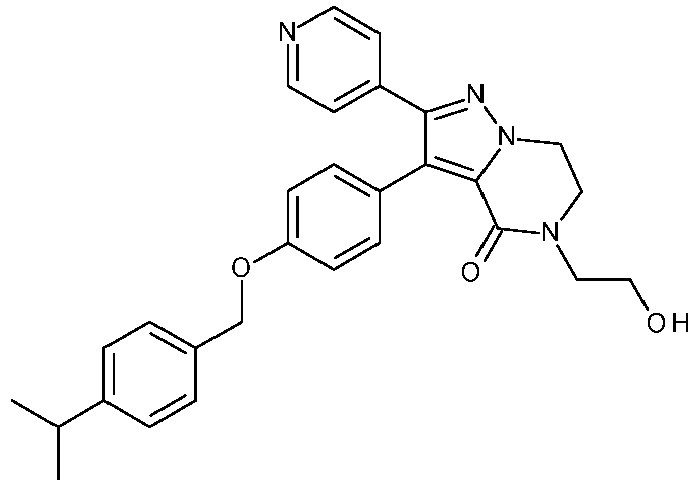

Compound 2; Method A6/A7/A56 Compound 6; Method A11 1 

Compound 3; Method A8 Compound 7; Method A12 

Compound 4; Method A9 Compound 8; Method A13 

Compound 9; Method A14 Compound 13; Method A18 

Compound 10; Method A15 Compound 14; Method A19 

Compound 11; Method A16 Compound 15; Method A20 
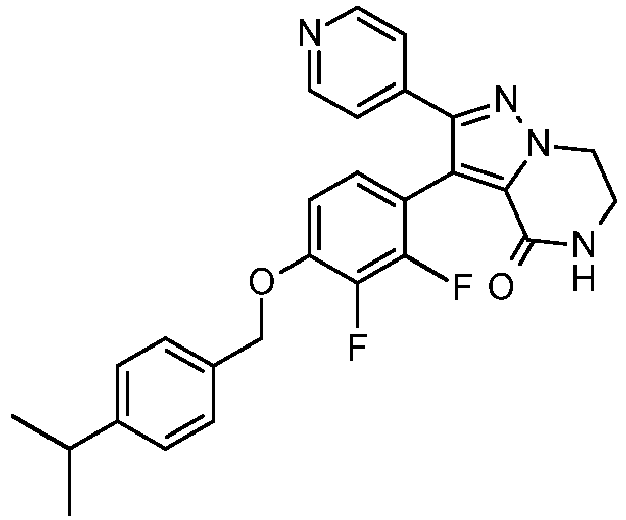
Compound 12; Method A17 Compound 16; Method 21 

Compound 17; Method A22 Compound 21; Method A26 

Compound 18; Method A23 Compound 22; Method A27 
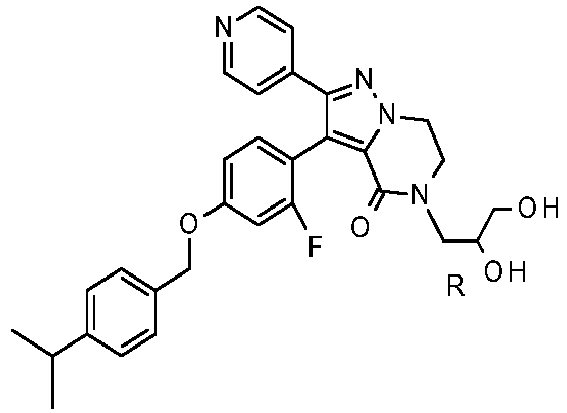
Compound 19; Method A24 Compound 23; Method A28 

Compound 20; Method A25 Compound 24; Method A29 

Compound 25; Method A30 Compound 29; Method A34 

Compound 26; Method A31 Compound 30; Method A35 
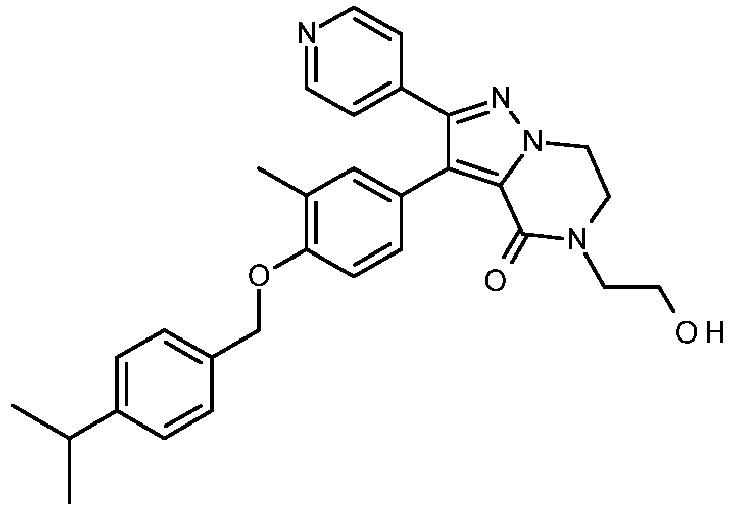
Compound 27; Method A32 Compound 31; Method A36 

Compound 28; Method A33 Compound 32; Method A37 

Compound 33; Method A38 Compound 37; Method A42 

Compound 34; Method A39 Compound 38; Method A43 

Compound 35; Method A40 Compound 39; Method A43 

Compound 36; Method 41 Compound 40; Method A44 

Compound 41; Method A45 Compound 46; Method A50 

Compound 42; Method A46 Compound 47; Method A50 

Compound 43; Method A47 Compound 48; Method A51 

Compound 44; Method A48 Compound 49; Method A52 
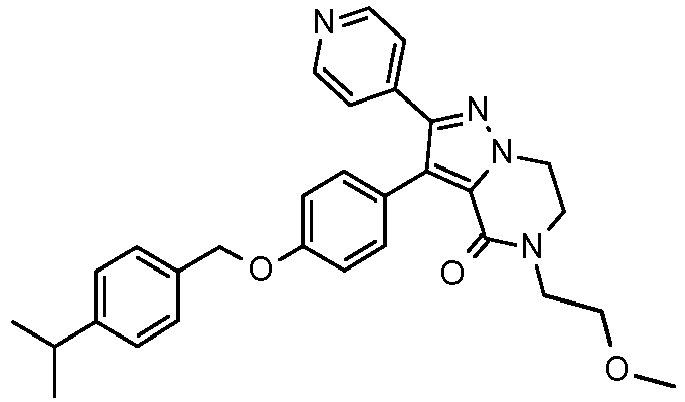
Compound 45; Method A49 Compound 50; Method A53 

Compound 51; Method A54 Compound 56; Method A59 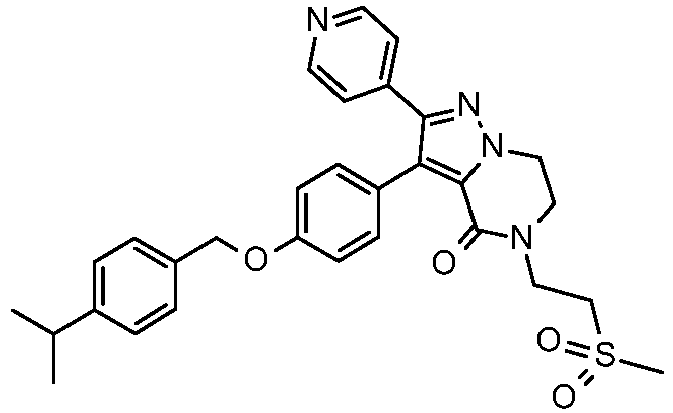

Compound 52; Method A55 Compound 57; Method A60 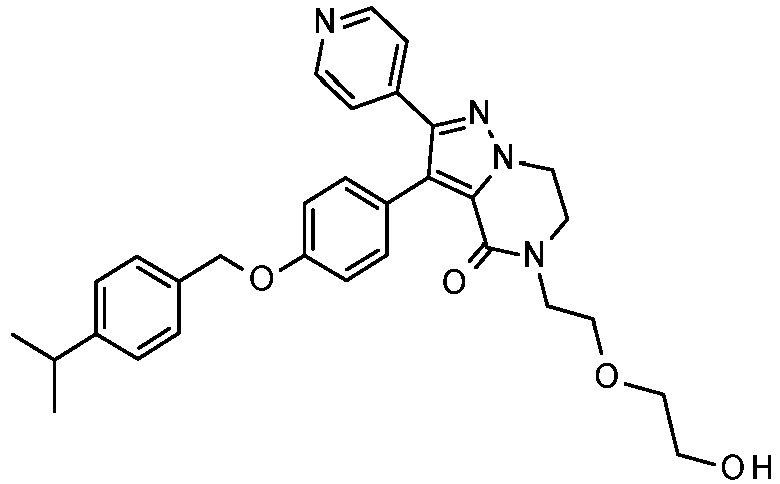
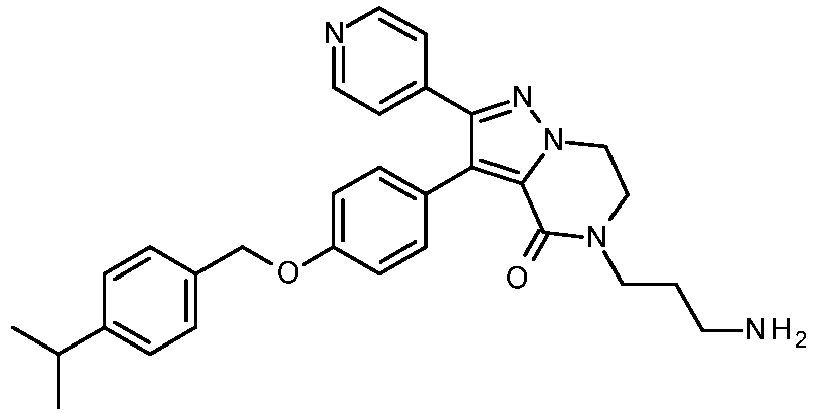
Compound 53; Method A56 Compound 58; Method A61 

Compound 54; Method A57 Compound 59; Method A62 

Compound 55; Method A58 Compound 60; Method A63 

Compound 61; Method A64 Compound 66; Method A69 

Compound 62; Method A65 Compound 67; Method A70 

Compound 63; Method A66 Compound 68; Method A71 

Compound 64; Method A67 Compound 69; Method A72 
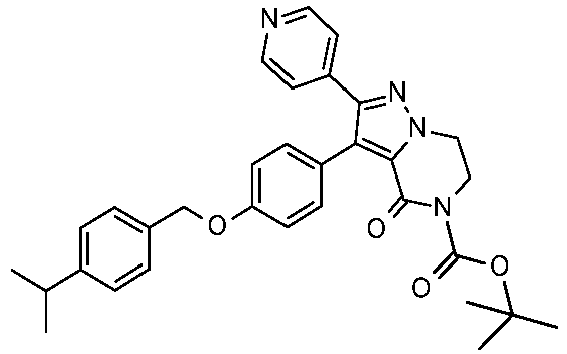
Compound 65; Method A68 Compound 70; Method A5.b 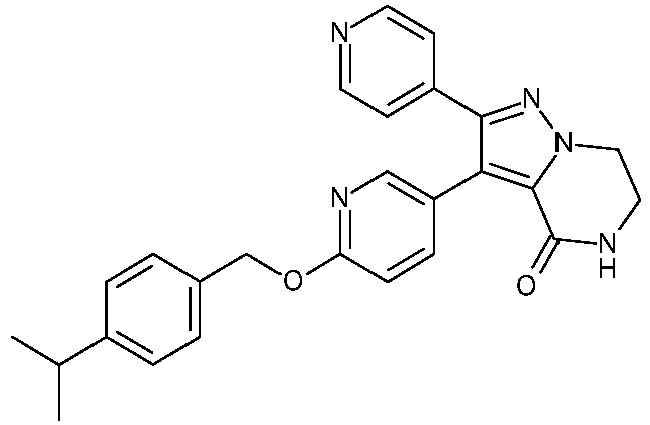

Compound 71; Method A73 Compound 76; Method A78 

Compound 72; Method A74 Compound 77; Method A79 

Compound 73; Method A75 Compound 78; Method A80 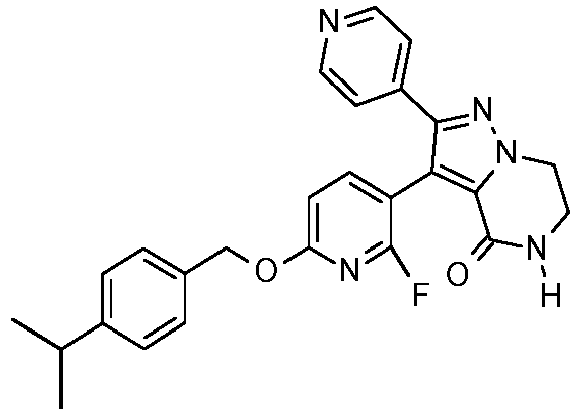

Compound 74; Method A76 Compound 79; Method A81 
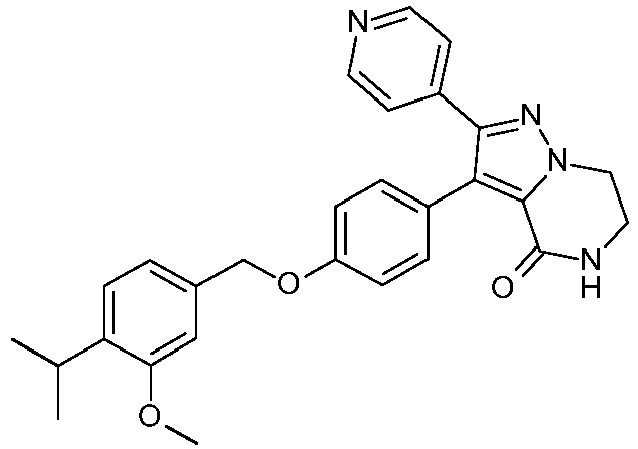
Compound 75; Method A77 Compound 80; Method A82 

Compound 81; Method A83 Compound 85; Method A87 

Compound 82; Method A84 Compound 86; Method A87 

Compound 83; Method A85 Compound 87; Method A88 

Compound 84; Method A86 Compound 88; Method A89 

Compound 89; Method A90 Compound 93; Method A94 

Compound 90; Method A91 Compound 94; Method A95 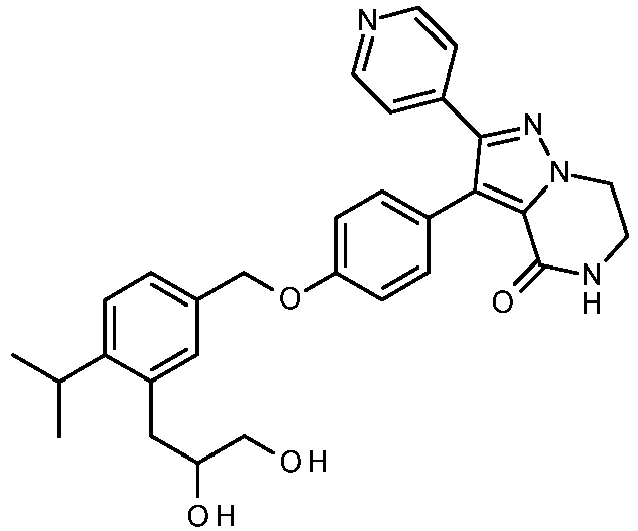

Compound 91; Method A92 Compound 95; Method A96 

Compound 92; Method A93 Compound 96; Method A97 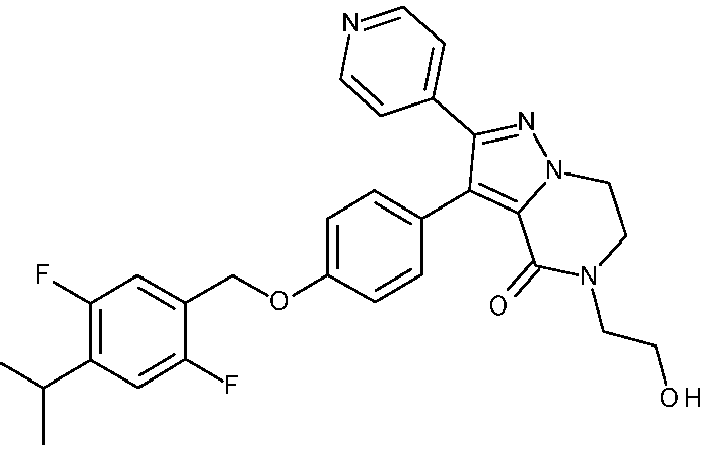

Compound 97; Method A98 Compound 102; Method A103 

Compound 98; Method A99 Compound 103; Method A104 

Compound 99; Method A100 Compound 104; Method A105 

Compound 100; Method A101 Compound 105; Method A106 

Compound 101; Method A102 Compound 110; Method A111 

Compound 106; Method A107 Compound 111; Method A112 
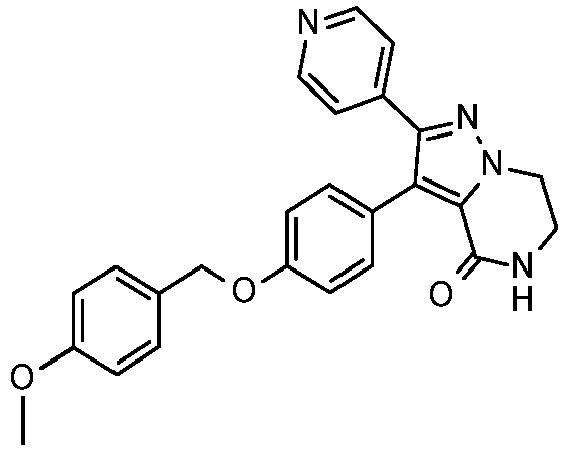
Compound 107; Method A108 Compound 112; Method A113 

Compound 108; Method A109 Compound 113; Method A114 

Compound 109; Method A110 Compound 114; Method A115 

Compound 9a; Method A14 Compound 119; Method A120 

Compound 115; Method A116 Compound 120; Method A121 

Compound 116; Method A117 Compound 121; Method A122 

Compound 117; Method A118 Compound 122; Method A123 

Compound 118; Method A119 Compound 123; Method A124 

Compound 124; Method A125 Compound 129 ; Method A130 

Compound 125; Method A126 Compound 130; Method A131 

Compound 126; Method A127 Compound 131; Method A132 

Compound 127; Method A128 Compound 132; Method A133 
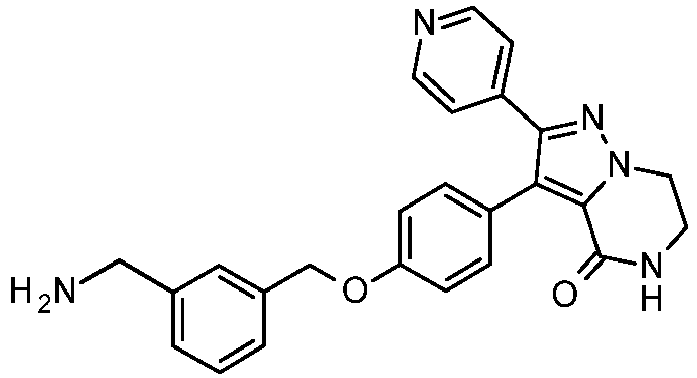
Compound 128; Method A129 Compound 133; Method A133 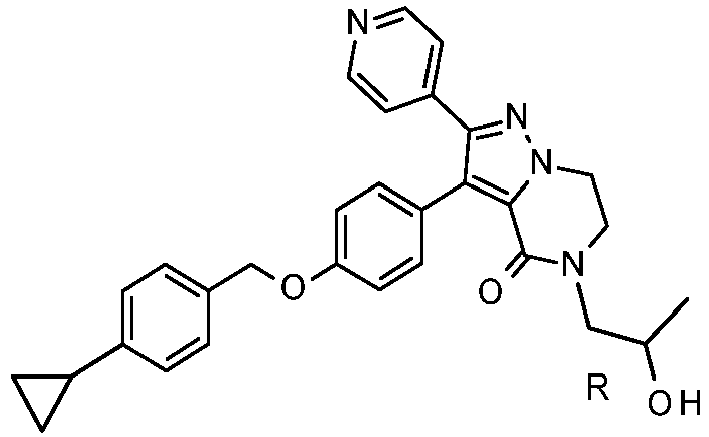

Compound 134; Method A134 Compound 139; Method A139 

Compound 135; Method A135 Compound 140; Method A140 

Compound 136; Method A136 Compound 141; Method A141 

Compound 137; Method A137 Compound 142; Method A142 
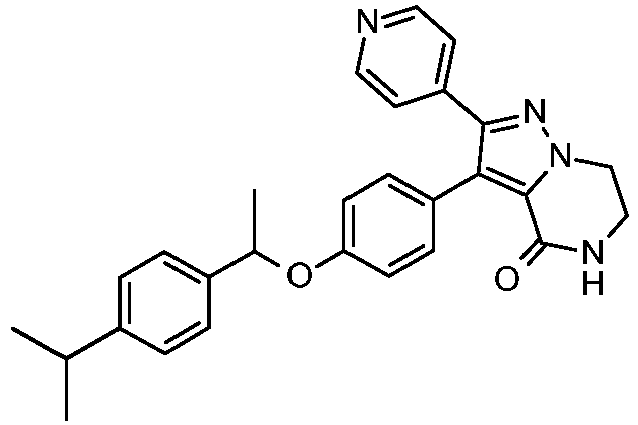
Compound 138; Method A138 Compound 143; Method A143 

Compound 144; Method A144 Compound 149; Method A148 

Compound 145; Method A144 Compound 150; Method A149 

Compound 146; Method A145 Compound 151; Method A150 

Compound 147; Method A146 Compound 152; Method A151 

Compound 148; Method A147 Compound 153; Method A152 
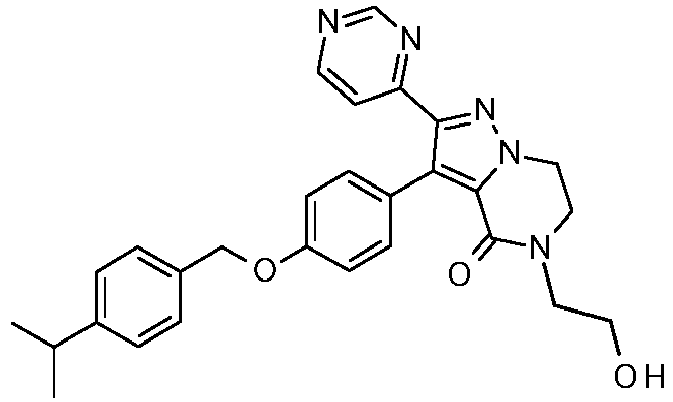
Compound 154; Method A153 Compound 159; Method A158 

Compound 155; Method A154 Compound 160; Method A159 

Compound 156; Method A155 Compound 161; Method A160 

Compound 157; Method A156 Compound 162; Method A161 

Compound 158; Method A157 Compound 163; Method A162 

Compound 164; Method A163 Compound 169; Method A168 

Compound 165; Method A164 Compound 170; Method A169 

Compound 166; Method A165 Compound 171; Method A170 

Compound 167; Method A166 Compound 172; Method A171 

Compound 168; Method A167 Compound 173; Method A172 

Compound 174; Method A173 Compound 179; Method A178 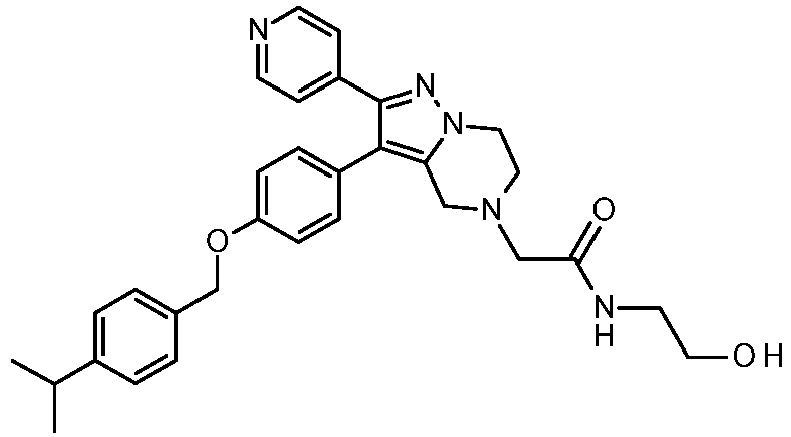

Compound 175; Method A174 Compound 180; Method A179 

Compound 176; Method A175 Compound 181; Method A180 

Compound 177; Method A176 Compound 182; Method A181 

Compound 178; Method A177 Compound 183; Method A182 

Compound 184; Method A183 Compound 189; Method A188 

Compound 185; Method A184 Compound 190; Method A189 

Compound 186; Method A185 Compound 191; Method A190 

Compound 187; Method A186 Compound 192; Method A190 

Compound 188; Method A187 Compound 193; Method A191 

Compound 194; Method A192 Compound 199; Method A197 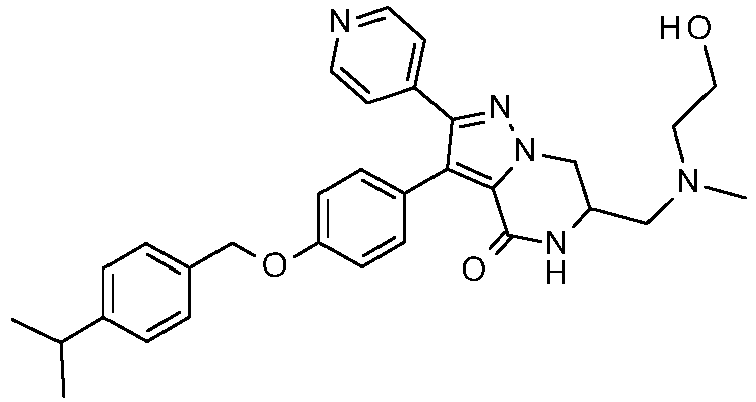
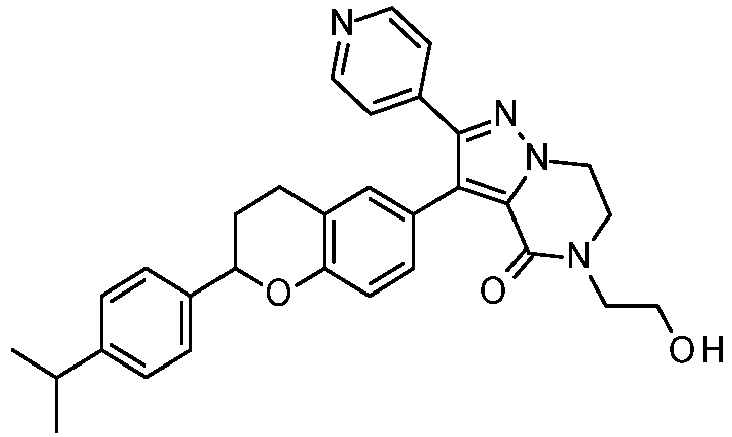
Compound 195; Method A193 Compound 200; Method A198 

Compound 196; Method A194 Compound 201; Method A199 

Compound 197; Method A195 Compound 210a; Method A207 

Compound 198; Method A196 Compound 203; Method A200 

Compound 204; Method A201 Compound 209; Method A206 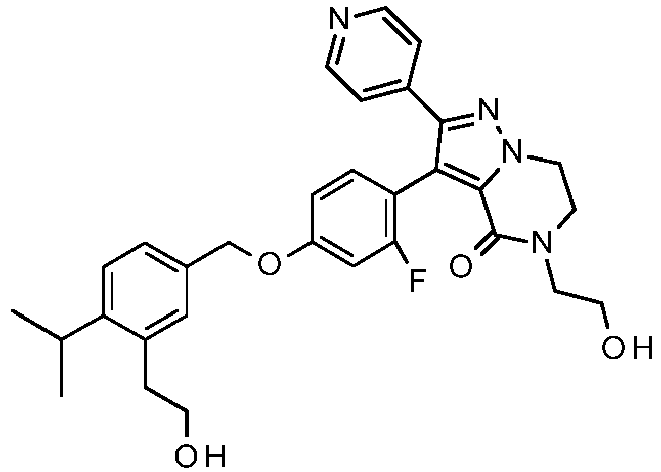

Compound 205; Method A202 Compound 210; Method A207 

Compound 206; Method A203 Compound 211; Method A208 

Compound 207; Method A204 Compound 212; Method A209 

Compound 208; Method A205 Compound 213; Method A210 
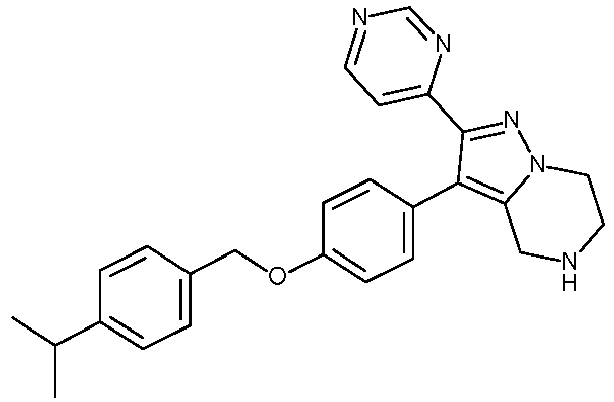
Compound 214; Method A211 Compound 219; Method A216 
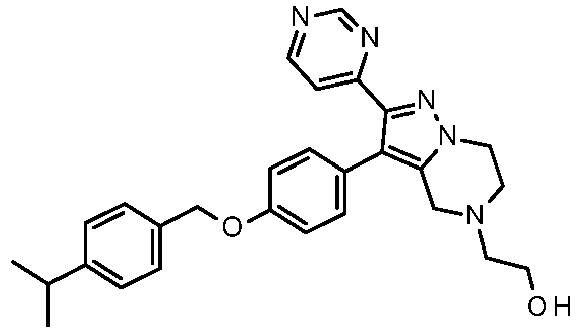
Compound 215; Method A212 Compound 220; Method A217 

Compound 216; Method A213 Compound 221; Method A218 

Compound 217; Method A214 Compound 222; Method A219 

Compound 218; Method A215 Compound 223; Method A220 

Compound 226; Method A221 Compound 229; Method A224 

Compound 224; Method A221 Compound 230; Method A225 

Compound 225; Method A221 Compound 231; Method A226 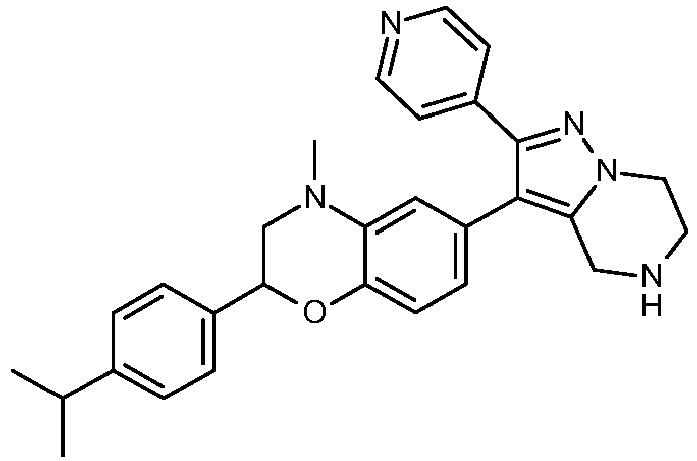

Compound 227; Method A222 Compound 232; Method A227 

Compound 228; Method A223 Compound 233; Method A228 

Compound 234; Method A229 Compound 236; Method A231 

Compound 235; Method A230 Compound 237; Method A232 
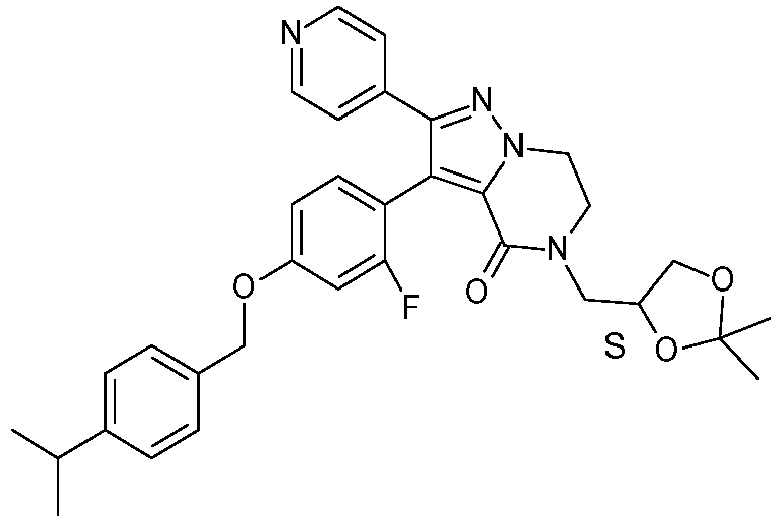
Compound 59a; Method A61 Compound 22a; Method A27 

Compound 23a; Method A28 Compound 58a; Method A61 

Compound 238; Method A62 Compound 60a; Method A63 

Compound 78a; Method A80 Compound 88a; Method A89 

Compound 95a; Method A96 Compound 96a; Method A97 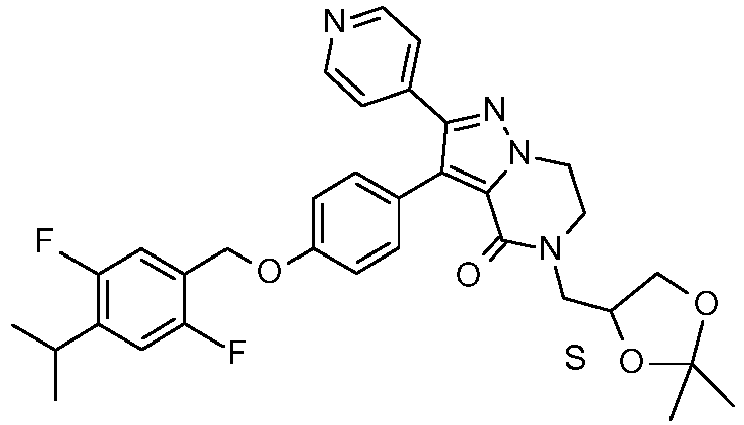

Compound 98a; Method A99 Compound 99a; Method A100 
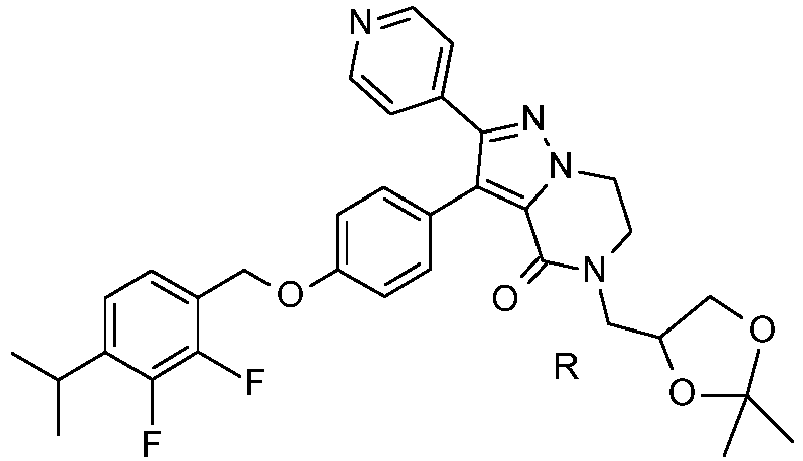
Compound 101a; Method A102 Compound 102a; Method A103 

Compound 140a; Method A140 Compound 146a; Method A145 

Compound 161a; Method A160 Compound 165a; Method A164 

Compound 184a; Method A183 Compound 197a; Method A195 

Compound 208a; Method A205 Compound 219a; Method A216 - The High Performance Liquid Chromatography (HPLC) measurement was performed using a LC pump, a diode-array (DAD) or a UV detector and a column as specified in the respective methods. If necessary, additional detectors were included (see table of methods below).
Flow from the column was brought to the Mass Spectrometer (MS) which was configured with an atmospheric pressure ion source. It is within the knowledge of the skilled person to set the tune parameters (e.g. scanning range, dwell time...) in order to obtain ions allowing the identification of the compound's nominal monoisotopic molecular weight (MW). Data acquisition was performed with appropriate software.
Compounds are described by their experimental retention times (Rt) and ions. If not specified differently in the table of data, the reported molecular ion corresponds to the [M+H]+ (protonated molecule) and/or [M-H]- (deprotonated molecule). In case the compound was not directly ionizable the type of adduct is specified (i.e. [M+NH4] +, [M+HCOO]-, etc...). For molecules with multiple isotopic patterns (Br, Cl..), the reported value is the one obtained for the lowest isotope mass. All results were obtained with experimental uncertainties that are commonly associated with the method used. - Hereinafter, "SQD" means Single Quadrupole Detector, "RT" room temperature, "BEH" bridged ethylsiloxane/silica hybrid, "HSS" High Strength Silica, "DAD" Diode Array Detector.
Table 2: LCMS Method codes (Flow expressed in mL/min; column temperature (T) in °C; Run time in minutes). LCMS Method Instrument Column Mobile phase gradient Flow Column T Run time (1) Waters: Acquity UPLC® - DAD and Quattro Micro™ Waters: BEH C18 (1.7µm, 2.1x100mm) A: 95% CH3COONH4 7mM / 5% CH3CN, B: CH3CN 84.2% A for 0.49min, to 10.5% A in 2.18min, held for 1.94min, back to 84.2% A in 0.73min, held for 0.73min. 0.343 6.2 40 (2) Waters: Acquity UPLC® H-Class - DAD and SQD 2 Waters: BEH C18 (1.7µm, 2.1x100mm) A: 95% CH3COONH4 7mM / 5% CH3CN, B: CH3CN 84.2% A for 0.49min, to 10.5% A in 1.81min, held for 2.31min, back to 84.2% A in 0..73min, held for 0.73min. 0.343 6.1 40 (3) Agilent: 1100/1200 - DAD and MSD Agilent: Eclipse® C18 (5µm, 4.6x150mm) A: CF3COOH 0.1% in water, B: CH3CN 98% A for 3min, to 100% B in 12min, held for 5min, back to 98% A in 2min, held for 6min. 1 28 RT (4) Waters: Acquity UPLC® H-Class - DAD and SQD 2 Macherey Nagel: Nucleoshell ® RP18 (2.7µm, 3x50mm) A: 95% CH3COONH4 7mM / 5% CH3CN, B: CH3CN 95% A for 0.25min, to 5% A in 0.75min, held for 1.9min, back to 95% A in 0.3min, held for 0.3min. 0.6 3.5 40 (5) Waters: Alliance® - DAD and ZQ™ Waters: XBridge™ C18 (3.5µm, 4.6x100mm) A: CH3COONH4 7mM, B: CH3CN 80% A fur 0.5min, to 10% A in 4.5min, held for 4min,back to 80% Ain 1.5min, held for 1.5min 0.8 12 30 (6) Waters: Acquity UPLC® H-Class - DAD and SQD 2 Thermo Scientific™: Accucore® RP MS C18 (2.6µm, 3x50mm) A: 95% CH3COONH4 7mM / 5% CH3CN, B: CH3CN 95% A for 0.25min, to 5% A in 0.75min, held for 1.9min, back to 95% A in 0.3min, held for 0.3min. 0.6 3.5 40 - For a number of compounds, melting points (m.p.) were determined with a DSC 1 STARe System from Mettler Toledo. Melting points were measured with a temperature gradient of 10°C/minute up to 350 °C. Melting points are given by peak values.
- The melting points for compounds 1, 151, 158, 172, 203 and 204 are reported in the experimental part ('exp').
- The results of the analytical measurements are shown in table 3.


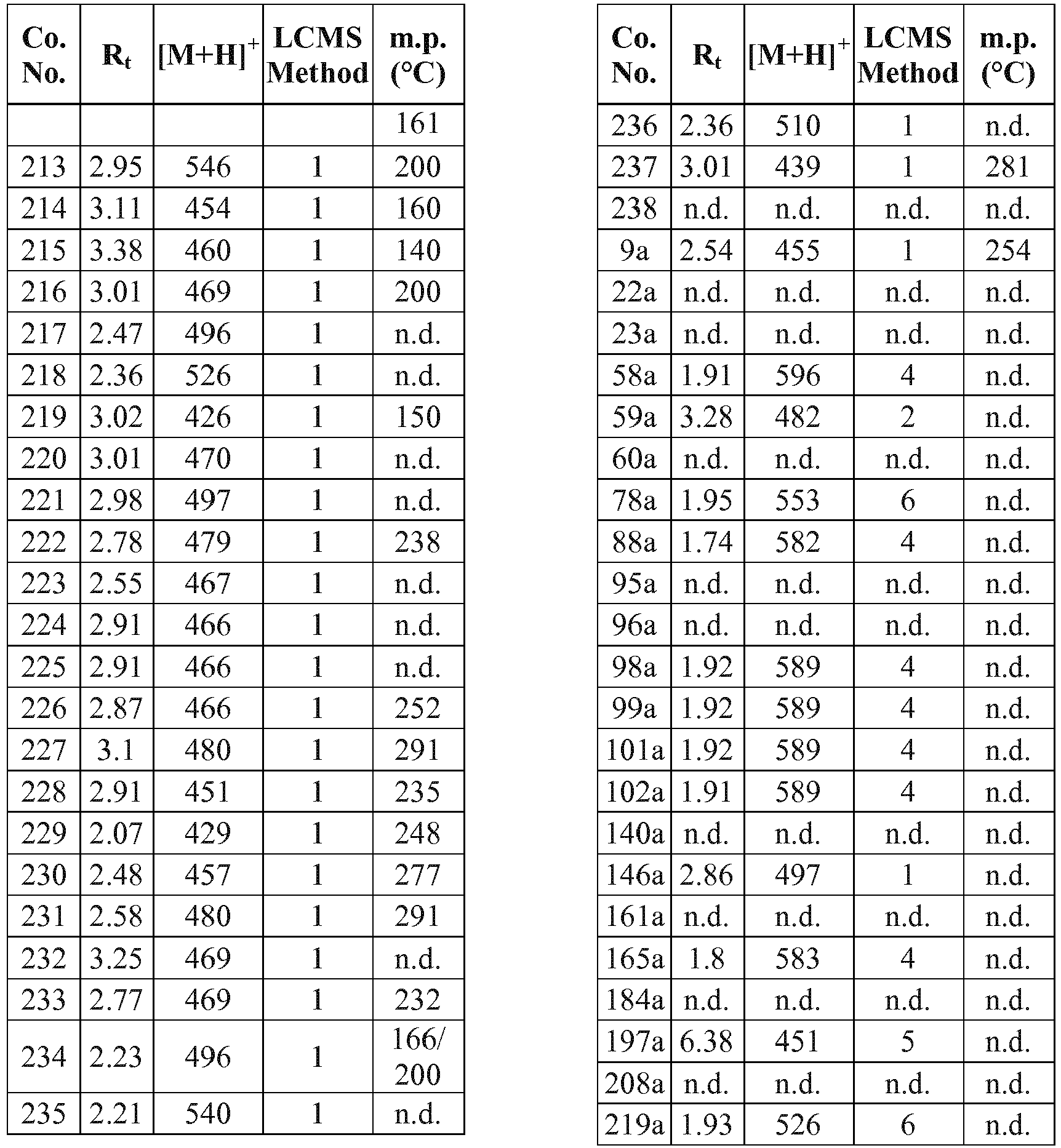
- NMR experiment was carried out using a Bruker Avance 500 spectrometer equipped with a reverse triple-resonance (1H, 13C, 15N TXI) probe head with z gradients and operating at 500 MHz for the proton and 125 MHz for carbon, or using using a Bruker 400 spectrometer equipped with a reverse resonance (1H, 13C, SEI) probe head with z gradients and operating at 400 MHz for the proton.
Table 4: 1H NMR results Co. No. 1H NMR result 1 (500 MHz, DMSO-d6) δ ppm 8.46 (d, J = 6.0 Hz, 2H), 8.22 (br. s., 1H), 7.39 (d, J = 8.5 Hz, 2H), 7.23 - 7.31 (m, 4H), 7.19 (d, J = 8.5 Hz, 2H), 6.99 (d, J = 8.5 Hz, 2H), 5.07 (s, 2H), 4.43 (t, J = 6.0 Hz, 2H), 3.61 - 3.70 (m, 2H), 2.90 (spt, J = 6.9 Hz, 1H), 1.21 (d, J = 6.9 Hz, 6H) 2 (500 MHz, DMSO-d6) δ ppm 8.46 (d, J = 5.7 Hz, 2H), 7.39 (d, J = 8.5 Hz, 2H), 7.22 - 7.31 (m, 4H), 7.18 (d, J = 8.5 Hz, 2H), 6.99 (d, J = 8.5 Hz, 2H), 5.07 (s, 2H), 4.80 (br. s., 1H), 4.48 (t, J = 5.8 Hz, 2H), 3.90 (t, J = 5.8 Hz, 2H), 3.51 - 3.59 (m, 2H), 3.44 - 3.52 (m, 2H), 2.90 (spt, J = 6.6 Hz, 1H), 1.21 (d, J = 6.6 Hz, 6H) 3 (400 MHz, DMSO-d6) δ ppm 8.50 (d, J = 2.0 Hz, 1H), 8.46 (d, J = 6.1 Hz, 2H), 8.22 (br. s., 1H), 7.74 (dd, J = 2.0, 7.8 Hz, 1H), 7.33 (d, J = 7.8 Hz, 1H), 7.25 (d, J = 6.1 Hz, 2H), 7.20 (d, J = 8.6 Hz, 2H), 7.00 (d, J = 8.6 Hz, 2H), 5.09 (s, 2H), 4.43 (t, J = 6.1 Hz, 2H), 3.61 - 3.69 (m, 2H), 2.07 - 2.17 (m, 1H), 0.89 - 1.00 (m, 4H) 4 (500 MHz, DMSO-d6) δ ppm 8.46 (d, J = 6.0 Hz, 2H), 8.23 (br. s., 1H), 7.34 (d, J = 7.9 Hz, 2H), 7.25 (d, J = 6.0 Hz, 2H), 7.18 (d, J = 8.5 Hz, 2H), 7.10 (d, J = 8.5 Hz, 2H), 6.98 (d, J = 7.9 Hz, 2H), 5.05 (s, 2H), 4.43 (t, J = 6.0 Hz, 2H), 3.62 - 3.68 (m, 2H), 1.89 - 1.97 (m, 1H), 0.92 - 0.98 (m, 2H), 0.65 - 0.70 (m, 2H) 5 (400 MHz, DMSO-d6) δ ppm 8.37 - 8.55 (m, 3H), 7.35 (d, J = 8.1 Hz, 2H), 7.26 (d, J = 5.6 Hz, 2H), 7.21 (d, J = 8.6 Hz, 2H), 7.10 (d, J = 8.1 Hz, 2H), 6.98 (d, J = 8.6 Hz, 2H), 5.06 (s, 2H), 4.41 (s, 2H), 1.87 - 1.99 (m, 1H), 0.87 - 1.03 (m, 6H), 0.63 - 0.72 (m, 2H) 6 (500 MHz, DMSO-d6) δ ppm 8.49 (d, J = 6.0 Hz, 2H), 8.28 (br. s., 1H), 7.40 (d, J = 7.9 Hz, 2H), 7.26 - 7.32 (m, 4H), 7.23 (t, J = 8.6 Hz, 1H), 6.95 (dd, J = 2.2, 11.7 Hz, 1H), 6.88 (dd, J = 2.2, 8.6 Hz, 1H), 5.10 (s, 2H), 4.45 (t, J = 6.0 Hz, 2H), 3.62 - 3.70 (m, 2H), 2.91 (spt, J = 6.8 Hz, 1H), 1.21 (d, J = 6.8 Hz, 6H) 7 (500 MHz, DMSO-d6) δ ppm 8.18 (br. s., 1H), 7.73 (d, J = 5.4 Hz, 1H), 7.39 (d, J = 7.9 Hz, 2H), 7.27 (d, J = 7.9 Hz, 2H), 7.17 (d, J = 8.5 Hz, 2H), 6.96 (d, J = 8.5 Hz, 2H), 6.57 (d, J = 1.4 Hz, 1H), 6.20 (dd, J = 1.4, 5.4 Hz, 1H), 5.87 (s, 2H), 5.06 (s, 2H), 4.38 (t, J = 6.2 Hz, 2H), 3.60 - 3.66 (m, 2H), 2.90 (spt, J = 6.8 Hz, 1H), 1.21 (d, J = 6.8 Hz, 6H) 10 (500 MHz, DMSO-d6) δ ppm 8.46 (d, J = 6.3 Hz, 2H), 8.24 (br. s., 1H), 7.51 - 7.59 (m, 4H), 7.25 (d, J = 6.3 Hz, 2H), 7.20 (d, J = 8.5 Hz, 2H), 7.00 (d, J = 8.5 Hz, 2H), 5.14 (s, 2H), 4.43 (t, J = 6.0 Hz, 2H), 3.62 - 3.68 (m, 2H), 1.70 (s, 6H) 18 (500 MHz, DMSO-d6) δ ppm 8.48 (d, J = 6.0 Hz, 2H), 8.28 (br. s., 1H), 7.40 (d, J = 8.2 Hz, 2H), 7.29 (d, J = 8.2 Hz, 2H), 7.26 (d, J = 6.0 Hz, 2H), 7.22 (t, J = 8.8 Hz, 1H), 7.19 (dd, J= 1.7, 12.4 Hz, 1H), 6.96 (d, J = 8.8 Hz, 1H), 5.15 (s, 2H), 4.43 (t, J = 5.8 Hz, 2H), 3.63 - 3.68 (m, 2H), 2.91 (spt, J = 6.9 Hz, 1H), 1.21 (d, J = 6.9 Hz, 6H) 19 (500 MHz, DMSO-d6) δ ppm 8.48 (d, J = 5.7 Hz, 2H), 7.40 (d, J = 7.9 Hz, 2H), 7.29 (d, J = 7.9 Hz, 2H), 7.26 (d, J = 5.7 Hz, 2H), 7.15 - 7.25 (m, 2H), 6.95 (d, J = 8.2 Hz, 1H), 5.15 (s, 2H), 4.80 (t, J = 5.2 Hz, 1H), 4.49 (t, J = 5.8 Hz, 2H), 3.90 (t, J = 5.8 Hz, 2H), 3.52 - 3.58 (m, 2H), 3.46 - 3.51 (m, 2H), 2.91 (spt, J = 6.8 Hz, 1H), 1.21 (d, J = 6.8 Hz, 6H) 20 (500 MHz, DMSO-d6) δ ppm 8.49 (d, J = 6.0 Hz, 2H), 7.40 (d, J = 7.9 Hz, 2H), 7.27 - 7.32 (m, 4H), 7.23 (t, J = 8.6 Hz, 1H), 6.94 (dd, J = 2.2, 11.7 Hz, 1H), 6.88 (dd, J = 2.2, 8.6 Hz, 1H), 5.10 (s, 2H), 4.81 (t, J = 4.7 Hz, 1H), 4.51 (t, J = 5.9 Hz, 2H), 3.91 (t, J = 5.9 Hz, 2H), 3.52 - 3.58 (m, 2H), 3.45 - 3.50 (m, 2H), 2.91 (spt, J = 6.9 Hz, 1H), 1.21 (d, J = 6.9 Hz, 6H) 21 (500 MHz, DMSO-d6) δ ppm 8.24-8.61 (m, 2H), 7.40 (d, J = 8.2 Hz, 2H), 7.26-7.32 (m, 4H), 7.23 (t, J = 8.6 Hz, 1H), 6.94 (dd, J = 2.2, 11.7 Hz, 1H), 6.88 (dd, J = 2.2, 8.6 Hz, 1H), 5.10 (s, 2H), 4.80 (t, J = 5.5 Hz, 1H), 4.51 (t, J = 6.0 Hz, 2H), 3.92 (t, J = 6.0 Hz, 2H), 3.55 (q, J = 5.5 Hz, 2H), 3.45-3.50 (m, 2H), 2.91 (spt, J = 6.9 Hz, 1H), 1.21 (d, J = 6.9 Hz, 6H) 28 (500 MHz, DMSO-d6)δ ppm 8.49 (d, J = 6.3 Hz, 2H), 7.57 (d, J = 2.5 Hz, 1H), 7.41 (d, J = 8.2 Hz, 2H), 7.34 - 7.39 (m, 2H), 7.30 (d, J = 8.2 Hz, 2H), 7.22 (d, J = 6.3 Hz, 2H), 5.16 (s, 2H), 4.82 (t, J = 5.2 Hz, 1H), 4.49 - 4.61 (m, 2H), 3.91 - 3.96 (m, 2H), 3.55 (q, J = 5.2 Hz, 2H), 3.46 - 3.51 (m, 2H), 2.91 (spt, J = 6.9 Hz, 1H), 1.21 (d, J = 6.9 Hz, 6H) 32 (500 MHz, DMSO-d6) δ ppm 8.47 (d, J = 6.0 Hz, 2H), 8.23 (t, J = 2.7 Hz, 1H), 7.39 (d, J = 8.2 Hz, 2H), 7.24 - 7.32 (m, 4H), 7.02 (d, J = 8.2 Hz, 1H), 6.91 (d, J = 1.9 Hz, 1H), 6.75 (dd, J = 1.9, 8.2 Hz, 1H), 5.04 (s, 2H), 4.39 - 4.47 (m, 2H), 3.61 - 3.69 (m, 5H), 2.90 (spt, J = 6.9 Hz, 1H), 1.21 (d, J = 6.9 Hz, 6H) 44 (500 MHz, DMSO-d6)δ ppm 8.46 (d, J = 6.0 Hz, 2H), 7.39 (d,J= 8.2 Hz, 2H), 7.23 - 7.31 (m, 4H), 7.18 (d, J = 8.8 Hz, 2H), 6.99 (d, J = 8.8 Hz, 2H), 5.07 (s, 2H), 4.89 (d, J = 5.0 Hz, 1H), 4.58 (t, J = 5.7 Hz, 1H), 4.49 (t, J = 6.0 Hz, 2H), 3.84 - 4.01 (m, 2H), 3.66 - 3.75 (m, 1H), 3.61 (dd, J = 4.0, 13.7 Hz, 1H), 3.21 - 3.40 (m, 3H), 2.90 (spt, J = 6.9 Hz, 1H), 1.21 (d, J = 6.9 Hz, 6H) 46 (500 MHz, DMSO-d6)δ ppm 8.46 (d, J = 6.0 Hz, 2H), 7.39 (d, J = 8.2 Hz, 2H), 7.23 - 7.31 (m, 4H), 7.18 (d, J = 8.8 Hz, 2H), 6.99 (d, J = 8.8 Hz, 2H), 5.07 (s, 2H), 4.82 (d, J = 4.7 Hz, 1H), 4.49 (t, J = 6.0 Hz, 2H), 3.82 - 3.98 (m, 3H), 3.45 (dd, J = 4.3, 13.5 Hz, 1H), 3.22 (dd, J = 7.6, 13.5 Hz, 1H), 2.90 (spt, J = 6.9 Hz, 1H), 1.21 (d, J = 6.9 Hz, 6H), 1.04 (d, J = 6.0 Hz, 3H) 47 (500 MHz, DMSO-d6)δ ppm 8.46 (d, J = 6.0 Hz, 2H), 7.39 (d, J = 8.2 Hz, 2H), 7.23 - 7.32 (m, 4H), 7.18 (d, J = 8.8 Hz, 2H), 6.99 (d, J = 8.8 Hz, 2H), 5.07 (s, 2H), 4.82 (d, J = 5.0 Hz, 1H), 4.49 (t, J = 6.0 Hz, 2H), 3.80 - 3.98 (m, 3H), 3.45 (dd, J = 4.1, 13.6 Hz, 1H), 3.22 (dd, J = 7.6, 13.6 Hz, 1H), 2.90 (spt, J = 6.9 Hz, 1H), 1.21 (d, J = 6.9 Hz, 6H), 1.04 (d, J = 6.0 Hz, 3H) 49 (500 MHz, DMSO-d6)δ ppm 8.46 (d, J = 6.3 Hz, 2H), 7.39 (d, J = 8.2 Hz, 2H), 7.22 - 7.31 (m, 4H), 7.18 (d, J = 8.8 Hz, 2H), 6.99 (d, J = 8.8 Hz, 2H), 5.08 (s, 2H), 4.68 (spt, J = 6.7 Hz, 1H), 4.42 - 4.51 (m, 2H), 3.68 - 3.79 (m, 2H), 2.90 (spt, J= 6.9 Hz, 1H), 1.21 (d, J = 6.9 Hz, 6H), 1.13 (d, J = 6.7 Hz, 6H) 51 (500 MHz, DMSO-d6) δ ppm 8.46 (d, J = 6.0 Hz, 2H), 7.39 (d, J = 8.2 Hz, 2H), 7.23 - 7.31 (m, 4H), 7.17 (d, J = 8.5 Hz, 2H), 6.98 (d, J = 8.5 Hz, 2H), 5.07 (s, 2H), 4.61 (s, 1H), 4.46 - 4.54 (m, 2H), 3.94 - 4.03 (m, 2H), 3.37 (s, 2H), 2.90 (spt, J = 6.9 Hz, 1H), 1.21 (d, J = 6.9 Hz, 6H), 1.09 (s, 6H) 53 (500 MHz, DMSO-d6) δ ppm 8.46 (d, J = 6.0 Hz, 2H), 7.39 (d, J = 8.2 Hz, 2H), 7.28 (d, J = 8.2 Hz, 2H), 7.26 (d, J = 6.0 Hz, 2H), 7.18 (d, J = 8.5 Hz, 2H), 6.99 (d, J = 8.5 Hz, 2H), 5.07 (s, 2H), 4.59 (t, J = 5.5 Hz, 1H), 4.48 (t, J = 6.0 Hz, 2H), 3.91 (t, J = 6.0 Hz, 2H), 3.54 - 3.62 (m, 4H), 3.46 - 3.51 (m, 2H), 3.41 - 3.45 (m, 2H), 2.90 (spt, J = 6.9 Hz, 1H), 1.21 (d, J = 6.9 Hz, 6H) 54 (500 MHz, DMSO-d6) δ ppm 8.47 (d, J = 5.7 Hz, 2H), 7.39 (d, J = 8.2 Hz, 2H), 7.28 (d, J = 8.2 Hz, 2H), 7.25 (d, J = 5.7 Hz, 2H), 7.17 (d, J = 8.5 Hz, 2H), 6.99 (d, J = 8.5 Hz, 2H), 5.07 (s, 2H), 4.47- 4.55 (m, 4H), 4.17 (d, J = 5.7 Hz, 2H), 3.86 (t, J = 5.8 Hz, 2H), 3.63 (s, 2H), 2.90 (spt, J = 6.9 Hz, 1H), 1.29 (s, 3H), 1.21 (d, J = 6.9 Hz, 6H) 63 (500 MHz, DMSO-d6)δ ppm 8.47 (d, J = 4.7 Hz, 2H), 7.87 - 7.99 (m, 1H), 7.39 (d, J = 7.6 Hz, 2H), 7.23 - 7.32 (m, 4H), 7.18 (d, J = 8.2 Hz, 2H), 6.99 (d, J = 8.2 Hz, 2H), 5.07 (s, 2H), 4.47 - 4.59 (m, 2H), 4.04 (s, 2H), 3.83 - 3.93 (m, 2H), 2.90 (spt, J = 6.9 Hz, 1H), 2.59 (d, J = 4.1 Hz, 3H), 1.21 (d, J = 6.9 Hz, 6H) 70 (500 MHz, DMSO-d6)δ 8.47 (d, J = 6 Hz, 2H), 7.40 (d, J = 7.9 Hz, 2H), 7.28 (d, J = 7.9 Hz, 2H), 7.25 (d, J = 6 Hz, 2H), 7.20 (d, J = 8.5 Hz, 2H), 7.03 (d, J = 8.5 Hz, 2H), 5.08 (s, 2H), 4.51 - 4.58 (m, 2H), 4.20 - 4.25 (m, 2H), 2.90 (spt, J = 6.9 Hz, 1H), 1.46(s,9H), 1.21 (d, J = 6.9Hz, 6H) 71 (500 MHz, DMSO-d6)δ ppm 8.51 (d, J = 6.0 Hz, 2H), 8.32 (br. s., 1H), 8.06 (d, J = 2.5 Hz, 1H), 7.62 (dd, J = 2.5, 8.5 Hz, 1H), 7.39 (d, J = 8.2 Hz, 2H), 7.29 (d, J = 6.0 Hz, 2H), 7.26 (d, J = 8.2 Hz, 2H), 6.87 (d, J = 8.5 Hz, 1H), 5.31 (s, 2H), 4.45 (t, J = 6.0 Hz, 2H), 3.63 - 3.70 (m, 2H), 2.89 (spt, J = 6.9 Hz, 1H), 1.21 (d, J = 6.9 Hz, 6H) 84 (500 MHz, DMSO-d6) δ ppm 8.46 (d, J = 6.3 Hz, 2H), 8.24 (br. s., 1H), 7.24 - 7.32 (m, 5H), 7.19 (d, J = 8.8 Hz, 2H), 6.99 (d, J = 8.8 Hz, 2H), 5.03 (s, 2H), 4.43 (t,J = 6.0 Hz, 2H), 3.62 - 6.68 (m, 2H), 3.49 (t, J = 7.1 Hz, 2H), 3.25 (s, 3H), 3.16 (spt, J = 6.9 Hz, 1H), 2.88 (t, J = 7.1 Hz, 2H), 1.19 (d, J = 6.9 Hz, 6H) 111 (500 MHz, DMSO-d6) δ ppm 8.46 (d, J = 5.0 Hz, 2H), 7.54 (d, J = 7.9 Hz, 2H), 7.45 (d, J = 7.9 Hz, 2H), 7.25 (d, J = 5.0 Hz, 2H), 7.18 (d, J = 8.2 Hz, 2H), 7.00 (d, J = 8.2 Hz, 2H), 5.45 (s, 1H), 5.09 - 5.17 (m, 3H), 4.79 (t, J = 5.0 Hz, 1H), 4.48 (t, J = 5.4 Hz, 2H), 3.90 (t, J = 5.4 Hz, 2H), 3.45 - 3.59 (m, 4H), 2.12 (s, 3H) 112 (500 MHz, DMSO-d6) δ ppm 8.47 (d, J = 4.7 Hz, 2H), 8.23 (br. s., 1H), 7.41 (d, J = 8.2 Hz, 2H), 7.26 (d, J = 4.7 Hz, 2H), 7.18 (d, J = 8.2 Hz, 2H), 6.92 - 7.02 (m, 4H), 5.03 (s, 2H), 4.43 (t, J = 5.2 Hz, 2H), 3.77 (s, 3H), 3.61 - 3.69 (m, 2H) 116 (400 MHz, DMSO-d6) δ ppm 8.46 (d, J = 6.1 Hz, 2H), 8.23 (br. s., 1H), 7.62 (d, J = 8.6 Hz, 2H), 7.41 (d, J = 8.6 Hz, 2H), 7.25 (d, J = 6.1 Hz, 2H), 7.20 (d, J = 8.6 Hz, 2H), 7.01 (d, J = 8.6 Hz, 2H), 5.17 (s, 2H), 4.43 (t, J = 6.1 Hz, 2H), 3.61 - 3.69 (m, 2H) 138 (500 MHz, DMSO-d6) δ ppm 8.50 (d, J = 2.2 Hz, 1H), 8.46 (d, J = 6.3 Hz, 2H), 7.74 (dd, J = 2.2, 8.2 Hz, 1H), 7.33 (d, J = 8.2 Hz, 1H), 7.25 (d, J = 6.3 Hz, 2H), 7.18 (d, J = 8.8 Hz, 2H), 7.00 (d, J = 8.8 Hz, 2H), 5.09 (s, 2H), 4.50 (t, J = 6.0 Hz, 2H), 3.83 (t, J = 6.0 Hz, 2H), 2.97 (s, 3H), 2.07 - 2.16 (m, 1H), 0.89 - 0.99 (m, 4H) 158 (500 MHz, DMSO-d6) δ ppm 9.01 (s, 1H), 8.74 (d, J = 5.4 Hz, 1H), 8.26 (br. s., 1H), 7.58 (d, J = 5.4 Hz, 1H), 7.39 (d, J = 8.2 Hz, 2H), 7.27 (d, J = 8.2 Hz, 2H), 7.22 (d, J = 8.8 Hz, 2H), 6.93 (d, J = 8.8 Hz, 2H), 5.06 (s, 2H), 4.45 (t, J = 5.8 Hz, 2H), 3.62 - 3.69 (m, 2H), 2.90 (spt, J = 6.9 Hz, 1H), 1.21 (d, J = 6.9 Hz, 6H) 159 (500 MHz, DMSO-d6) δ ppm 9.01 (s, 1H), 8.74 (d, J = 5.0 Hz, 1H), 7.58 (d, J = 5.0 Hz, 1H), 7.39 (d, J = 7.9 Hz, 2H), 7.28 (d, J = 7.9 Hz, 2H), 7.22 (d, J = 8.5 Hz, 2H), 6.93 (d, J = 8.5 Hz, 2H), 5.06 (s, 2H), 4.80 (t, J = 5.2 Hz, 1H), 4.51 (t, J = 5.7 Hz, 2H), 3.91 (t, J = 5.7 Hz, 2H), 3.44 - 3.62 (m, 4H), 2.90 (spt, J = 6.7 Hz, 1H), 1.21 (d, J = 6.7 Hz, 6H) 171 (400 MHz, DMSO-d6) δ ppm 8.45 (d, J = 6.1 Hz, 2H), 7.30 - 7.38 (m, 4H), 7.07 - 7.16 (m, 4H), 7.02 (d, J = 8.6 Hz, 2H), 5.04 (s, 2H), 4.04 (s, 2H), 3.82 (d, J = 7.2 Hz, 2H), 2.96 (t, J = 7.2 Hz, 1H), 1.87 - 1.99 (m, 1H), 0.91 - 0.99 (m, 2H), 0.63 - 0.76 (m, 6H) 172 (400 MHz, DMSO-d6) δ ppm 8.45 (d, J = 6.1 Hz, 2H), 7.28 - 7.37 (m, 4H), 7.07 - 7.16 (m, 4H), 7.02 (d, J = 8.6 Hz, 2H), 5.04 (s, 2H), 4.08 (t, J = 5.3 Hz, 2H), 3.82 (d, J = 4.4 Hz, 2H), 3.12 - 3.19 (m, 2H), 2.59 - 2.67 (m, 1H), 1.86 - 1.99 (m, 1H), 0.91 - 0.99 (m, 2H), 0.63 - 0.71 (m, 2H) 174 (500 MHz, DMSO-d6) δ ppm 8.46 (d, J = 6.0 Hz, 2H), 7.86 (q, J = 4.3 Hz, 1H), 7.39 (d, J = 8.2 Hz, 2H), 7.32 (d, J = 6.0 Hz, 2H), 7.28 (d, J = 8.2 Hz, 2H), 7.11 (d, J = 8.8 Hz, 2H), 7.07 (d, J = 8.8 Hz, 2H), 5.06 (s, 2H), 4.26 (t, J = 5.4 Hz, 2H), 3.67 (s, 2H), 3.18 (s, 2H), 3.01 (t, J = 5.4 Hz, 2H), 2.90 (spt, J = 6.9 Hz, 1H), 2.58 (d, J = 4.3 Hz, 3H), 1.21 (d, J = 6.9 Hz, 6H) 183 (400 MHz, DMSO-d6) δ ppm 8.92 (s, 1H), 8.47 (d, J = 6.1 Hz, 2H), 7.34 (d, J = 8.1 Hz, 2H), 7.26 (d, J = 6.1 Hz, 2H), 7.18 (d, J = 8.6 Hz, 2H), 7.10 (d, J = 8.1 Hz, 2H), 6.98 (d, J = 8.6 Hz, 2H), 5.06 (s, 2H), 4.68 (s, 2H), 3.63 (d, J = 8.6 Hz, 2H), 3.37 (d, J = 8.6 Hz, 2H), 2.7 (br.s, 1H), 1.86 - 1.99 (m, 1H), 0.91 - 1.00 (m, 2H), 0.63 - 0.72 (m, 2H) 200 (400 MHz, DMSO-d6)δ ppm 8.48 (d, J = 5.6 Hz, 2H), 7.38 (d, J = 8.1 Hz, 2H), 7.26 - 7.33 (m, 4H), 7.06 (d, J = 2.0 Hz, 1H), 6.95 (dd, J = 2.0, 8.1 Hz, 1H), 6.78 (d, J = 8.1 Hz, 1H), 5.08 - 5.15 (m, 1H), 4.79 (t, J = 5.3 Hz, 1H), 4.48 (t, J = 6.1 Hz, 2H), 3.90 (t, J = 6.1 Hz, 2H), 3.53 - 3.59 (m, 2H), 3.47 - 3.52 (m, 2H), 2.86 - 3.00 (m, 2H), 2.61 - 2.72 (m, 1H), 2.10 - 2.20 (m, 1H), 1.94 - 2.09 (m, 1H), 1.22 (d, J = 7.1 Hz, 6H) 22a (400 MHz, DMSO-d6)δ ppm 8.49 (d, J=5.56 Hz, 2H), 7.40 (d, J=8.08 Hz, 2H), 7.26-7.34 (m, 4H), 7.22 (s, 1H), 6.80-6.98 (m, 2H), 5.10 (s, 2H), 4.52 (br. s., 2H), 4.19-4.32 (m, 1H), 3.90-4.25 (m, 3H), 3.55-3.69 (m, 2H), 3.42-3.55 (m, 1H), 2.87-2.97 (m, 1H), 1.36 (s, 3H), 1.27 (s, 3H), 1.22 (d, J=7.07 Hz, 6H) 238 (400 MHz, DMSO-d6)δ ppm 8.46 (d, J=6.06 Hz, 2H), 7.39 (d, J=8.08 Hz, 2H), 7.23-7.32 (m, 4H), 7.18 (d, J=8.59 Hz, 2H), 6.98 (d, J=8.59 Hz, 2H), 6.84-6.93 (m, 1H), 5.08 (s, 2H), 4.50 (t, J=6.06 Hz, 2H), 3.78-3.92 (m, 2H), 3.46 (t, J=5.81 Hz, 2H), 3.13 (d, J=6.06 Hz, 2H), 2.90 (td, J=6.69, 13.89 Hz, 1H), 1.32 (s, 9H), 1.21 (d, J=6.69 Hz, 6H) 60a (500 MHz, DMSO-d6) δ ppm 8.34-8.52 (m, 2H), 7.39 (d, J=8.20 Hz, 2H), 7.28 (d, J=8.20 Hz, 2H), 7.24 (d, J=5.67 Hz, 2H), 7.17 (d, J=8.83 Hz, 2H), 6.99 (d, J=8.83 Hz, 2H), 5.07 (s, 2H), 4.44-4.54 (m, 2H), 3.83-3.90 (m., 2H), 3.53-3.59 (m., 2H), 3.35-3.42 (m, 2H), 2.84-2.95 (m, 1H), 2.79 (s, 3H), 1.27 (s, 9H), 1.21 (d, J=6.94 Hz, 6H) 95a (400 MHz, DMSO-d6) δ ppm 8.43-8.52 (m, 2H), 7.27 (d, J=6.06 Hz, 2H), 7.21 (d, J=8.59 Hz, 2H), 7.10 (d, J=9.09 Hz, 2H), 7.02 (d, J=8.59 Hz, 2H), 5.09 (s, 2H), 4.44-4.54 (m, 2H), 4.21-4.33 (m, 1H), 3.91-4.04 (m, 3H), 3.42-3.70 (m, 3H), 2.85-3.02 (m, 1H), 1.36 (s, 3H), 1.27 (s, 3H), 1.22 (d, J=7.07 Hz, 6H) 96a (400 MHz, DMSO-d6) δ ppm 8.43-8.51 (m, 2H), 7.25-7.30 (m, 2H), 7.18-7.23 (m, 2H), 7.07-7.12 (m, 2H), 6.95-7.04 (m, 2H), 5.01-5.12 (m, 2H), 4.41-4.54 (m, 2H), 4.20-4.32 (m, 1H), 3.87-4.03 (m, 3H), 3.57-3.69 (m, 2H), 3.43-3.55 (m, 1H), 2.88-3.02 (m, 1H), 1.32-1.38 (m, 3H), 1.24-1.28 (m, 3H), 1.18-1.24 (m, 6H) 161a (400 MHz, DMSO-d6) δ ppm 9.01 (d, J=1.52 Hz, 1H), 8.74 (d, J=5.56 Hz, 1H), 7.58 (dd, J=1.52, 5.56 Hz, 1H), 7.39 (d, J=8.08 Hz, 2H), 7.27 (d, J=8.08 Hz, 2H), 7.22 (d, J=9.09 Hz, 2H), 6.93 (d, J=9.09 Hz, 2H), 5.06 (s, 2H), 4.43-4.55 (m, 2H), 4.20-4.32 (m, 1H), 3.86-4.02 (m, 3H), 3.42-3.70 (m, 3H), 2.85-2.95 (m, 1H), 1.36 (s, 3H), 1.27 (s, 3H), 1.21 (d, J=7.07 Hz, 6H) 184a (400 MHz, DMSO-d6) δ ppm 8.47 (d, J=6.06 Hz, 2H), 7.35 (d, J=8.08 Hz, 2H), 7.31 (d, J=6.06 Hz, 2H), 7.22 (t, J=8.59 Hz, 1H), 7.11 (d, J=8.08 Hz, 2H), 7.03 (dd, J=2.27, 11.87 Hz, 1H), 6.93 (dd, J=2.27, 8.59 Hz, 1H), 5.09 (s, 2H), 4.47 (s, 2H), 4.24 (t, J=5.31 Hz, 2H), 3.84-3.91 (m, 2H), 1.87-1.97 (m, 1H), 1.42 (s, 9H), 0.87-1.00 (m, 2H), 0.61-0.72 (m, 2H) - Compounds were spotted onto white 384-well Proxiplate plus plates (Perkin Elmer) to which 5 µl of enzyme mix (0.5 µg/ml Ros1 enzyme, 50 mM Tris-HCl pH7.5, 1 mM EGTA, 10 mM MgCl2, 0.01% Tween-20) and 5 µl of substrate mix (6 µg/ml IRS-Tide [American Peptide Company], 20 µM ATP, 13.33 µCi/ml ATP (adenosine 5'-triphosphate) P33, 50 mM Tris-HCl pH7.5, 1 mM EGTA (ethylene glycol-bis(2-aminoethylether)-N,N,N',N'-tetraacetic acid), 10 mM MgCl2, 0.01% Tween-20) were added. After incubation for 120 minutes at room temperature, 10 µl of stop reaction buffer (5 mM EDTA, 50 µM ATP, 0.1% BSA (bovine serum albumin), 0.1% Triton X-100, 50 mM Tris-HCl pH7.5, 1 mM EGTA, 10 mM MgCl2, 0.01% Tween-20) containing 2 mg/ml streptavidin coupled polystyrene imaging beads (Amersham Biosciences) was added and incubated for 15 minutes at room temperature. Plates were centrifuged for 3 minutes at 1500 rpm and signals detected in a LEADseeker imaging system (GE).
- In this assay, the inhibitory effects of different compound concentrations (ranging from 10 µM to 0.3 nM) were determined and used to calculate an IC50 (M) and pIC50 (-logIC50) value.
- This assay was carried out with Ba/F3 cells containing three different versions of Ros1: the wild-type protein, protein with a mutation at the gatekeeper residue (L2026M), and protein with a mutation identified in a tumor from a patient that became resistant to crizotinib (Xalkori®) treatment (G2032R). Compounds were solubilized in 100% DMSO (dimethyl sulfoxide) and sprayed into polystyrene, tissue culture treated 384-well plates. A 50 µl volume of cell culture medium (phenol red free RPMI-1640, 10% FBS (fetal bovine serum), 2 mM L-Glutamine) containing 20000 Ba/F3-Ros1 cells was added to each well and the plates were placed in an incubator at 37°C and 5% CO2. After 24 hours, 10 µl of Alamar Blue solution (0.5 mM K3Fe(CN)6, 0.5 mM K4Fe(CN)6, 0.15 mM Resazurin and 100 mM Phosphate Buffer) was added to the wells, incubated for 4 hours at 37°C and 5% CO2 before RFU's (Relative Fluorescence Units) (ex. 540 nm., em. 590 nm.) were measured in a fluorescence plate reader.
- In this assay, the inhibitory effects of different compound concentrations (ranging from 10 µM to 0.3 nM) were determined and used to calculate an IC50 (M) and pIC50 (-logIC50) value.
- As a counter-screen the same experiment was performed for the wild-type protein in the presence of 10 ng/ml murine IL-3.
- Approximately 1000 HCC78 non-small cell lung cancer cells in 180 µl of cell culture medium (RPMI-1640, 10% FBS, 2 mM L-Glutamine, 10 mM Hepes, 1 mM sodium pyruvate, 4.5 g/L glucose, 1.5 g/L sodium bicarbonate, 25 µg/ml Gentamycin) were seeded in each well of a 96-well polystyrene, tissue-culture treated plate and incubated at 37°C and 5% CO2. After 24 hours, compounds were diluted in cell culture medium from which 20 µl was added to the wells containing cells and incubated for 4 days at 37°C and 5% CO2. A 5 mg/ml solution of the tetrazolium dye MTT was prepared in PBS (phosphate-buffered saline) and 25 µl was added to each well. After 2 hours the medium was removed and replaced by 125 µL of 4/1 DMSO/glycine buffer (0.1M glycine, 0.1M NaCl, pH 10.5) before absorbance was determined at 538 nm.
- In this assay, the inhibitory effects of different compound concentrations (ranging from 10 µM to 30 nM) were determined and used to calculate an EC50 (M) and pEC50 (-logEC50) value.
- Approximately 20000 HCC78 non-small cell lung cancer cells in 180 µl of cell culture medium (RPMI-1640, 10% FBS, 2 mM L-Glutamine, 10 mM Hepes, 1 mM sodium pyruvate, 4.5 g/L glucose, 1.5 g/L sodium bicarbonate, 25 µg/ml Gentamycin) were seeded in each well of a 96-well polystyrene, poly-D-lysine coated plate and incubated at 37°C and 5% CO2. After 24 hours, compounds were diluted in cell culture medium from which 20 µl was added to the wells containing cells and incubated for 4 hours at 37°C and 5% CO2. The medium was removed and the cells were fixed by adding 100 µl of 5% formaldehyde in TBS (tris-buffered saline) (50 mM Tris.HCl, pH 7.4, 150 mM NaCl) and incubating for 15 minutes at room temperature. The formaldehyde was removed and replaced with methanol for 10 minutes at room temperature, after which the cells were washed 3 times with TBS containing 1% Triton X-100 and incubated in Odyssee (Li-Cor) blocking buffer for 1 hour at room temperature. The cells were then incubated with the primary rabbit antibody directed against Ros pY2274 (cst-3078) diluted 1/200 in blocking buffer for 24 hours at room temperature. The cells were washed three times with TBS containing 0.1% Triton X-100 and incubated with a secondary anti-rabbit antibody conjugated to the fluorescent dye Alexafluor 680 in blocking buffer for 1 hour at room temperature. The cells were washed three times with TBS containing 0.1% Triton X-100 and left to dry before measuring RFUs (Relative Fluorescence Units) at 700 nm using a fluorescence imager.
- The same experiment was performed using total Ros1 antibody (sc-6347) diluted 1/1000 instead of Ros1 pY2274 antibody and an anti-goat antibody conjugated to IRDye800cw as a secondary antibody. RFUs were measured at 800 nM. The signals from total Ros1 detection were used to normalize the Ros1pY2274 values.
- In this assay, the inhibitory effects of different compound concentrations (ranging from 10 µM to 3 nM) were determined and used to calculate an IC50 (M) and pIC50 (-logIC50) value.
- The results of the above in vitro test are shown in table 5:
Co. ROS1 pIC50 BaF3-ROS1-IL3 pIC50 BaF3-ROS1+IL3 pIC50 Ba/F3 Ros1 L2026M (-IL-3) pIC50 Ba/3 Ros1 G2032R (-IL-3) pIC50 HCC-78 PROL pEC50 HCC78-pRos1 pIC50 Co. 112 6.8 6.8 <5 5.8 6.0 6.5 Co. 1 7.6 7.6 <5 7.3 7.0 6.9 7.6 Co. 3 7.1 7.3 <5 7.0 6.1 7.1 Co. 4 7.4 7.6 <5 7.4 6.8 6.7 7.1 Co. 172 6.2 6.4 <5 6.3 5.2 5.4 6.5 Co. 188 5.4 5.5 <5 Co. 228 6.4 6.3 <5 5.7 6.3 Co. 48 7.5 7.1 <5 6.4 7.2 Co. 32 8.2 8.0 <5 8.0 7.3 7.3 7.8 Co. 189 7.5 7.1 <5 6.7 7.4 Co. 5 7.6 7.6 <5 7.5 6.5 7.3 Co. 138 7.0 6.9 <5 6.8 6.0 6.3 6.5 Co. 185 6.9 6.3 <5 6.1 6.8 Co. 71 7.6 7.7 <5 7.6 7.0 7.0 7.4 Co. 119 6.7 7.2 <5 6.9 6.4 6.5 Co. 197 6.1 5.8 <5 Co. 190 6.2 6.1 <5 Co. 171 6.4 6.2 <5 6.0 5.8 6.3 Co. 116 6.9 7.3 <5 7.3 6.6 6.6 6.8 Co. 173 6.4 6.1 <5 5.8 6.5 Co. 157 6.0 6.1 <5 Co. 143 6.0 6.4 5.3 6.0 Co. 229 <5 <5 <5 Co. 114 6.3 6.4 <5 Co. 6 8.0 7.9 <5 7.7 7.4 7.2 7.8 Co. 183 6.7 6.0 <5 5.6 5.8 6.4 Co. 103 5.9 6.0 <5 5.7 5.4 Co. 7 7.4 7.4 <5 7.4 6.8 6.6 7.0 Co. 8 8.2 7.9 <5 7.8 7.4 7.6 Co. 158 7.3 7.4 <5 7.4 6.5 6.5 6.9 Co. 181 6.1 5.7 5.3 5.7 5.9 Co. 9 6.2 6.4 <5 6.2 5.7 5.6 Co. 120 6.6 6.6 <5 Co. 124 5.7 5.7 <5 Co. 33 8.0 7.7 <5 7.4 >7.5 7.9 Co. 142 6.9 6.9 <5 6.4 6.4 6.9 Co. 182 5.9 5.7 5.3 Co. 149 8.1 7.6 <5 7.4 >7.5 7.9 Co. 150 8.1 7.6 <5 7.4 7.4 8.0 Co. 110 6.9 6.9 <5 Co. 113 6.1 6.0 <5 Co. 211 7.5 7.3 <5 7.3 Co. 49 7.4 7.3 <5 7.2 6.9 7.0 7.5 Co. 10 7.1 7.1 <5 6.9 6.6 6.8 7.6 Co. 2 7.7 7.6 <5 7.4 7.1 6.9 7.6 Co. 12 6.5 6.5 <5 6.7 6.1 6.3 Co. 151 7.5 7.4 <5 7.1 7.2 7.7 Co. 130 5.5 5.8 <5 Co. 198 6.6 6.6 <5 Co. 174 6.7 6.8 <5 6.8 6.4 6.1 6.6 Co. 54 7.1 7.3 <5 7.2 6.6 7.1 7.7 Co. 214 7.5 7.4 <5 7.3 7.0 7.5 Co. 160 7.4 7.3 <5 7.3 7.0 7.5 Co. 165 6.7 6.7 <5 6.5 5.9 6.2 Co. 186 6.0 6.2 <5 Co. 210 7.2 6.3 5.2 Co. 26 6.4 6.6 <5 6.5 6.1 6.2 Co. 163 6.9 7.1 <5 7.1 6.9 6.5 Co. 176 6.8 6.9 <5 7.1 7.1 Co. 18 8.0 7.7 <5 7.7 7.3 7.4 Co. 25 6.9 6.8 <5 6.5 6.3 Co. 59 7.2 6.4 5.3 ∼6.1 6.3 Co. 59a 7.2 6.6 5.2 Co. 104 5.9 6.1 <5 Co. 179 6.3 6.4 <5 Co. 50 7.3 7.1 <5 7.2 6.8 Co. 166 7.2 6.9 <5 Co. 105 6.9 7.0 <5 6.6 6.8 Co. 37 5.6 5.4 <5 Co. 121 5.0 6.3 <5 5.9 6.0 Co. 170 5.2 5.2 <5 Co. 9a 5.6 <5 <5 Co. 122 6.9 6.9 <5 7.1 7.2 Co. 159 7.3 7.3 <5 7.2 6.4 7.2 Co. 15 7.4 7.5 <5 7.5 7.3 Co. 132 5.4 5.7 <5 Co. 154 7.0 6.9 <5 7.1 6.5 Co. 133 <5 5.6 <5 Co. 21 8.0 7.8 <5 7.6 7.4 7.4 Co. 180 6.3 6.5 <5 Co. 131 6.2 6.2 <5 Co. 90 7.1 7.2 <5 7.4 6.8 Co. 13 7.7 7.5 <5 Co. 17 6.3 6.8 <5 Co. 34 6.5 6.6 <5 Co. 153 7.4 7.5 <5 6.8 6.5 Co. 63 7.0 7.1 <5 7.3 6.7 6.4 Co. 80 6.9 6.9 <5 Co. 118 6.8 7.1 <5 Co. 152 8.0 8.0 <5 8.1 7.2 Co. 11 8.0 7.7 <5 7.8 7.5 Co. 24 8.1 7.8 <5 8.2 8.8 Co. 84 7.6 7.7 <5 7.2 7.0 7.5 Co. 44 7.3 7.4 <5 6.9 6.8 6.6 Co. 230 <5 5.2 <5 Co. 215 6.9 7.0 <5 7.2 6.6 Co. 187 7.1 7.2 <5 6.4 7.0 Co. 89 7.5 7.6 <5 7.1 6.7 Co. 52 7.3 7.6 <5 6.9 6.6 Co. 51 7.1 7.2 <5 7.3 6.6 7.0 Co. 193 7.1 7.3 <5 6.3 6.7 Co. 77 6.5 6.3 <5 6.3 5.7 Co. 53 7.4 7.4 <5 6.9 7.0 7.0 Co. 47 7.3 7.3 <5 7.5 6.9 7.1 Co. 46 7.3 7.5 <5 7.1 6.9 7.0 Co. 66 6.6 5.1 <5 Co. 88 7.9 7.1 <5 6.8 7.1 Co. 14 8.2 7.8 <5 8.2 >7.5 Co. 184 7.0 7.3 <5 6.6 6.6 Co. 19 7.9 8.2 <5 8.0 7.5 >7.5 Co. 194 7.1 6.6 5.2 6.2 6.3 Co. 62 6.7 7.0 <5 6.6 6.3 Co. 123 7.4 7.4 <5 7.1 6.4 Co. 16 7.0 7.4 <5 7.1 6.4 Co. 203 8.4 8.2 <5 8.0 8.0 Co. 85 7.4 7.4 <5 7.1 6.5 Co. 61 6.3 <5 5.9 6.2 Co. 195 6.9 6.7 <5 7.0 6.1 Co. 191 6.8 6.9 <5 7.0 6.3 Co. 192 6.8 6.9 <5 6.9 6.2 Co. 60 7.2 6.6 5.4 6.2 6.2 Co. 86 8.0 7.2 <5 6.9 6.3 Co. 39 7.1 7.3 <5 7.0 6.8 Co. 38 7.9 7.9 <5 7.5 7.3 Co. 106 7.6 7.5 <5 Co. 20 7.0 6.9 <5 7.0 5.8 Co. 125 6.5 6.7 <5 Co. 127 6.4 6.6 <5 Co. 57 7.6 7.7 <5 Co. 178 6.7 6.6 <5 Co. 141 6.2 6.4 <5 Co. 108 6.9 7.0 <5 Co. 43 7.3 7.4 <5 7.3 6.9 Co. 126 6.7 6.9 <5 6.6 5.9 Co. 55 6.9 7.0 <5 6.8 6.1 Co. 40 7.0 6.9 <5 6.4 5.4 Co. 42 6.4 6.7 <5 6.3 5.9 Co. 41 7.5 7.4 <5 6.6 7.1 Co. 23 7.9 7.7 <5 7.2 7.2 Co. 22 7.9 7.8 <5 7.4 7.7 Co. 91 7.5 7.3 <5 6.6 7.2 Co. 129 7.2 7.4 <5 7.0 7.0 Co. 87 7.4 7.3 <5 7.2 6.7 Co. 107 7.7 7.7 <5 7.4 7.1 Co. 109 7.0 7.1 <5 7.2 6.4 Co. 65 7.0 7.2 <5 6.7 6.5 Co. 136 7.2 7.1 <5 6.6 6.5 Co. 64 7.1 7.1 <5 6.6 6.2 Co. 81 7.2 7.3 <5 6.5 6.8 Co. 196 6.8 6.9 <5 6.4 6.2 Co. 175 7.0 6.9 5.3 6.8 6.4 Co. 27 7.8 7.7 <5 7.1 7.7 Co. 137 6.9 6.8 <5 6.4 6.4 Co. 56 7.4 7.5 <5 7.0 6.9 Co. 139 6.9 6.8 <5 6.0 7.0 Co. 207 7.7 7.1 <5 6.5 6.3 Co. 94 7.0 7.0 <5 6.6 6.4 Co. 29 <5 <5 <5 <5 <5 Co. 95 6.8 6.8 <5 6.4 Co. 92 7.3 7.2 <5 6.7 6.7 Co. 155 7.5 7.8 <5 7.5 7.1 Co. 209 7.2 7.5 5.3 7.5 6.3 Co. 30 <5 <5 <5 <5 <5 Co. 93 7.1 7.2 <5 7.0 6.4 Co. 161 7.3 7.1 <5 6.7 6.5 Co. 45 6.8 6.7 <5 6.6 5.9 Co. 68 6.5 6.7 5.6 6.5 5.6 Co. 96 6.8 6.9 <5 6.6 5.9 Co. 177 6.7 6.9 <5 6.6 6.4 Co. 164 6.8 7.0 <5 6.7 6.1 Co. 208 7.2 6.8 <5 6.3 6.4 Co. 167 6.9 7.2 <5 6.2 6.3 Co. 98 6.6 6.8 <5 6.6 6.5 Co. 35 5.3 5.7 <5 5.8 <5 Co. 111 6.9 7.1 <5 6.7 6.6 6.2 Co. 36 5.3 5.8 <5 5.7 <5 Co. 97 6.8 6.9 <5 6.3 <5 5.5 Co. 99 6.3 6.6 <5 6.0 5.7 Co. 140 6.6 6.4 <5 5.8 5.7 Co. 148 5.2 5.5 <5 5.9 5.8 Co. 144 5.9 6.3 <5 5.7 5.0 Co. 145 5.5 5.8 <5 5.1 <5.5 Co. 79 7.6 7.8 <5 7.3 5.6 Co. 205 8.1 7.8 <5 7.5 Co. 100 6.7 6.9 <5 6.3 Co. 101 6.4 6.7 <5 6.4 Co. 102 6.1 6.7 <5 6.4 Co. 213 7.0 7.0 <5 6.4 Co. 212 7.4 7.3 <5 6.8 Co. 204 8.2 7.9 <5 7.8 Co. 169 6.0 6.2 <5 5.6 Co. 168 6.4 6.5 <5 6.2 Co. 70 5.5 6.4 <5 6.1 Co. 83 7.7 7.6 <5 7.2 Co. 82 8.0 7.6 <5 7.3 Co. 75 7.9 7.9 <5 7.5 7.2 Co. 117 6.9 7.0 <5 6.9 6.6 Co. 31 5.8 6.3 <5 5.9 5.2 Co. 162 7.1 7.2 <5 7.1 6.4 Co. 28 7.8 7.8 <5 7.7 7.3 7.2 Co. 206 7.4 7.5 <5 ∼7.4 7.0 Co. 199 6.7 7.1 <5 7.5 5.9 Co. 74 7.8 8.1 <5 7.5 7.9 Co. 73 7.8 7.9 <5 7.4 6.9 Co. 146 5.7 6.2 <5 7.6 5.4 Co. 200 6.9 7.3 <5 6.3 6.6 6.5 Co. 147 5.4 5.4 5.4 6.7 5.4 Co. 115 5.9 6.3 <5 <5 5.8 Co. 69 7.2 7.4 <5 <5 6.7 Co. 76 6.6 6.8 <5 7.0 6.1 Co. 72 7.2 7.2 <5 6.0 6.6 Co. 201 7.6 7.8 <5 7.4 7.4 Co. 156 7.2 8.0 <5 7.0 7.7 Co. 58 7.7 7.3 5.2 7.0 6.0 Co. 134 7.1 7.3 <5 7.0 6.7 Co. 135 6.8 7.3 <5 7.0 6.5 Co. 128 5.9 6.6 <5 6.2 6.0 Co. 226 6.2 7.1 <5 6.8 6.3 Co. 67 7.6 7.9 <5 7.1 Co. 231 6.1 6.4 <5 5.7 Co. 232 5.7 6.7 <5 6.5 5.6 Co. 233 6.1 6.5 <5 5.9 5.6 Co. 234 7.7 7.1 <5 6.7 6.9 Co. 78 6.6 7.1 <5 6.9 6.1 Co. 235 7.6 6.7 <5 6.5 6.5 Co. 236 7.8 7.6 5.4 7.4 6.9 Co. 216 7.2 7.3 <5 6.9 6.2 Co. 217 6.4 6.3 <5 6.0 5.5 Co. 223 6.4 6.5 <5 Co. 219 5.9 6.0 <5 Co. 224 6.4 6.7 <5 Co. 225 6.5 6.7 <5 Co. 218 6.7 6.3 <5 Co. 222 6.7 7.0 <5 Co. 220 6.3 6.5 <5 Co. 227 6.1 6.3 <5 Co. 221 6.3 6.5 <5 Co. 237 6.1 6.8 <5 - Approximately 2 x 10⁶ Ba/F3 cells containing either wild-type, L2026M or G2032R mutant Ros1 were inoculated into the inguinal region of NMRI nude mice. When the resulting tumors reached a size of 250 to 350 mm3, mice were randomly assigned to the different treatment groups (8 to 12 mice per group). Compounds formulated in 20% cyclodextrin were administered to the mice by oral gavage at various doses for 10-days once (QD) or twice (BID) a day. Tumor sizes were determined by caliper measurement on day 1 prior to treatment and then twice weekly for the duration of the study using the commonly following formula: tumor volume (mm3) = (a × b2/2); where 'a' represents the length, and 'b' the width of the tumor. Treatment/control (T/C) ratios were calculated at the end of the study based on the change in final relative tumor volumes.
Tumor model Co. Dose (mg/kg) administration frequency T/C (%) number of mice per group Ba/F3-Ros1 wild-type Co. 1 1.56 QD 88 12 Ba/F3-Ros1 wild-type Co. 1 3.125 QD 75 12 Ba/F3-Ros1 wild-type Co. 1 6.25 QD 35 12 Ba/F3-Ros1 wild-type Co. 1 12.5 QD 12 12 Ba/F3-Ros1 wild-type Co. 1 25 QD -27 12 Ba/F3-Ros1 wild-type Co. 1 6.25 BID 50 8 Ba/F3-Ros1 wild-type Co. 1 12.5 BID 20 8 Ba/F3-Ros1 wild-type Co. 1 25 BID -13 8 Ba/F3-Ros1 wild-type Co. 2 12.5 QD 61 12 Ba/F3-Ros1 wild-type Co. 2 25 QD 46 12 Ba/F3-Ros1 wild-type Co.2 50 QD 20 12 Ba/F3-Ros1 wild-type Co. 2 3.125 BID 91 12 Ba/F3-Ros1 wild-type Co. 2 6.25 BID 67 12 Ba/F3-Ros1 wild-type Co. 2 12.5 BID 47 12 Ba/F3-Ros1 wild-type Co. 2 25 BID 5 12 Ba/F3-Ros1 wild-type Co. 2 50 BID -15 12 Ba/F3-Ros1 wild-type Co. 2 12.5 BID 51 8 Ba/F3-Ros1 wild-type Co. 2 25 BID 41 8 Ba/F3-Ros1 wild-type Co. 2 50 BID 32 8 Ba/F3-Ros1 wild-type Co. 2 100 BID -22 8 Ba/F3-Ros1 L2026M Co. 1 25 QD 42 8 Ba/F3-Ros1 L2026M Co. 1 25 BID -11 8 Ba/F3-Ros1 L2026M Co. 1 6.25 BID 94 8 Ba/F3-Ros1 L2026M Co. 1 12.5 BID 23 8 Ba/F3-Ros1 L2026M Co. 1 25 BID 24 8 Ba/F3-Ros1 L2026M Co. 2 12.5 BID 82 8 Ba/F3-Ros1 L2026M Co. 2 25 BID 50 8 Ba/F3-Ros1 L2026M Co. 2 50 BID 28 8 Ba/F3-Ros1 L2026M Co. 2 100 BID -32 8 Ba/F3-Ros1 G2032R Co. 1 6.25 BID 79 8 Ba/F3-Ros1 G2032R Co. 1 12.5 BID 43 8 Ba/F3-Ros1 G2032R Co. 1 25 BID 7 8 Ba/F3-Ros1 G2032R Co. 2 12.5 BID 89 8 Ba/F3-Ros1 G2032R Co. 2 25 BID 55 8 Ba/F3-Ros1 G2032R Co. 2 50 BID 18 8 Ba/F3-Ros1 G2032R Co. 2 100 BID -16 8 - "Active ingredient" (a.i.) as used throughout these examples relates to a compound of Formula (I), including any tautomer or stereoisomeric form thereof, or a N-oxide, a pharmaceutically acceptable addition salt or a solvate thereof; in particular to any one of the exemplified compounds.
- Typical examples of recipes for the formulation of the invention are as follows:
-
Active ingredient 5 to 50 mg Di-calcium phosphate 20 mg Lactose 30 mg Talcum 10 mg Magnesium stearate 5 mg Potato starch ad 200 mg - An aqueous suspension is prepared for oral administration so that each milliliter contains 1 to 5 mg of active ingredient, 50 mg of sodium carboxymethyl cellulose, 1 mg of sodium benzoate, 500 mg of sorbitol and water ad 1 ml.
- A parenteral composition is prepared by stirring 1.5 % (weight/volume) of active ingredient in 0.9 % NaCl solution or in 10 % by volume propylene glycol in water.
-
Active ingredient 5 to 1000 mg Stearyl alcohol 3 g Lanoline 5 g White petroleum 15 g Water ad 100 g - In this Example, active ingredient can be replaced with the same amount of any of the compounds according to the present invention, in particular by the same amount of any of the exemplified compounds.
Claims (15)
- A compound of Formula (I)
 y1 is CR7a or N;y2 is CH or N;R7a is hydrogen, halo, trifluoromethyl or cyano;R7 is hydrogen, -NH2, -NHCH3, -NH(CH2CH3), methyl, -CH2OH, halo or cyano;or when y1 represents CR7a, this R7a can be taken together with a R7 on an adjacent carbon atom to form -CH=CH-NH- or -N=CH-NH-;X is -CR1R1a-, -CH2-CHR1-;R1 is hydrogen or C1-6alkyl;R1a is hydrogen; C1-6alkyl; mono-or polyhaloC1-6alkyl; C1-6alkyl substituted with one ortwo hydroxyl groups; C1-6alkyl substituted with one -NR9aR9b; or -C(=O)-NR9aR9b;R2a is hydrogen; C1-6alkyl; mono-or polyhaloC1-6alkyl; C1-6alkyl substituted with one ortwo hydroxyl groups; or C1-6alkyl substituted with one substituent selected from the group consisting of -NR9aR9b, cyano and C1-4alkyloxy;R2b is hydrogen or C1-6alkyl; orR2a and R2b are taken together to form -CH2-CH2-, -CH2-NR2c-CH2-, -CH2-CH2-CH2-, -CH2-O-CH2-, -CH2-CH2-CH2-CH2-, -CH2-CH2-NR2c-CH2- or =O;R2c is hydrogen; C1-4alkyl optionally substituted with one or two hydroxyl groups;mono-or polyhaloC1-6alkyl; C1-6alkyloxy; C1-6alkyl substituted with one cyano group;or C1-6alkyl substituted with one -NR9aR9b;R3 is hydrogen; C1-6alkyl; mono-or polyhaloC1-6alkyl; C1-6alkyl substituted with one ortwo hydroxyl groups; C1-6alkyl substituted with one or two hydroxyl groups and one C1-6alkyloxy; C1-6alkylcarbonyl- optionally substituted with one or two hydroxyl groups; mono-or polyhaloC1-6alkylcarbonyl-; R10aR10bN-C1-6alkylcarbonyl-; C1-6alkyl-O-carbonyl-; C1-6alkylcarbonyloxy-; C1-6alkyl substituted with one R11; C1-6alkyloxy optionally substituted with one -NR10aR10b; C2-6alkenyl; C2-6alkynyl;hydroxyC2-6alkenyl; hydroxyC2-6alkynyl; C1-6alkyloxyC2-6alkenyl;C1-6alkyloxyC2-6alkynyl; C2-6alkenyl substituted with one -NR10aR10b; C2-6alkynyl substituted with one -NR10aR10b; C1-6alkyl substituted with one or two hydroxyl groups and one -NR10aR10b; -C1-6alkyl-C(R13)=N-O-R13; -S(=O)2-C1-6alkyl; -S(=O)2-NR9aR9b;C1-6alkyl substituted with one -(C=O)-R14; C1-6alkyl substituted with one or two hydroxyl groups and one R14; C1-6alkyl substituted with one R14; C2-6alkenyl substituted with one R14; C2-6alkynyl substituted with one R14; or R14;R4a is hydrogen;R4b is hydrogen; orR4a and R4b are taken together to form =O;Y is -O- or -C(=O)-;Z is -CHR6- or -CH2-C=C-;R6 is hydrogen; C1-4alkyl-O-carbonyl-; C1-4alkyl; C1-4alkyl substituted with one or two hydroxyl groups; C1-4alkyl substituted with one -NR9aR9b; or -C(=O)-NR9aR9b;Ring A is phenyl or a 6-membered saturated, partially saturated or aromatic heterocyclyl, said heterocyclyl containing one or two nitrogen atoms; wherein the phenyl or the heterocyclyl is optionally substituted with one or two R8 substituents;each R8 is independently hydrogen; C1-4alkyloxy; hydroxyl; cyano; C1-4alkyl or halo;or a R8 substituent on an atom adjacent to the atom carrying the Y-Z substituent may be taken together with the R6 substituent of Z, by which ring A together with Y-Z forms a bicycle of formula (a-1), (a-2), (a-3) or (a-4):
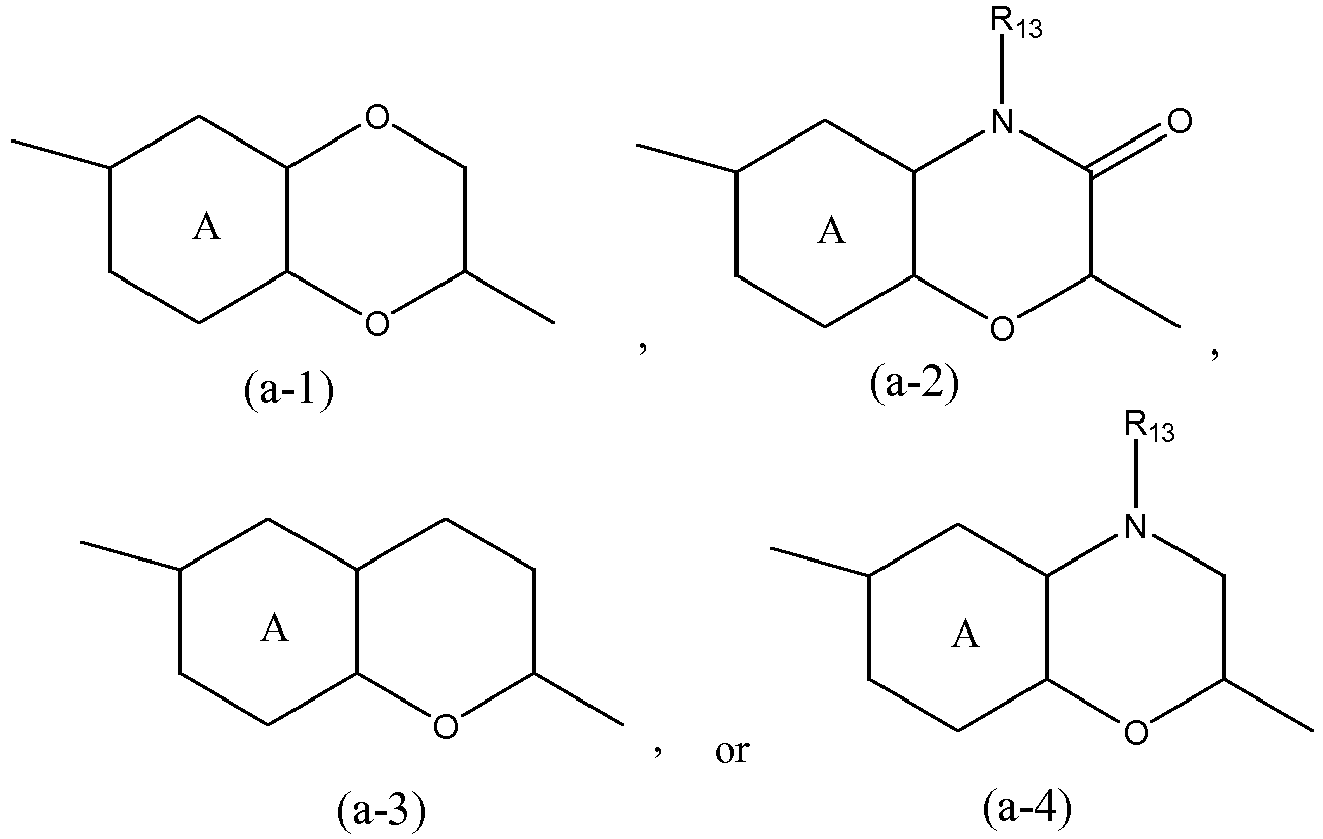 R9a and R9b each independently represent hydrogen; mono-or polyhaloC1-4alkyl; C1-4alkylcarbonyl-; C1-4alkyl-O-carbonyl-; C1-4alkyl substituted with one or two hydroxyl groups; or C1-4alkyl optionally substituted with one substituent selected from the group consisting of C1-4alkyloxy, cyano, amino and mono-or di(C1-4alkyl)amino;R10a and R10b each independently represent hydrogen; C1-4alkyl; cyanoC1-6alkyl; C1-6alkyl substituted with one NR9aR9b; C1-6alkyl substituted with one -C(=O)-NR9aR9b; C1-6alkyloxy optionally substituted with one or two hydroxyl groups; C1-6alkyloxyC1-6alkyl wherein each C1-6alkyl is optionally substituted with one or two hydroxyl groups; R14; C1-6alkyl substituted with one R14; -(C=O)-R14;C1-6alkylcarbonyl-; C1-6alkyl-O-carbonyl-; mono-or polyhaloC1-6alkylcarbonyl- substituted with one or two hydroxyl groups; mono-or polyhaloC1-6alkyl substituted with one or two hydroxyl groups; mono-or polyhaloC1-6alkylcarbonyl-; C1-6alkyl substituted with one -Si(CH3)3; -S(=O)2-C1-6alkyl optionally substituted with one or more halo substituents; -S(=O)2-NR9aR9b;C1-6alkyl substituted with one -S(=O)2-C1-6alkyl wherein -S(=O)2-C1-6alkyl is optionally substituted with one or more halo substituents;C1-6alkyl substituted with one -S(=O)2-NR9aR9b;C1-6alkyl substituted with one -NH-S(=O)2-C1-6alkyl wherein -NH-S(=O)2-C1-6alkyl is optionally substituted on a carbon atom with one or more halo substituents;C1-6alkyl substituted with one -NH-S(=O)2-NR9aR9b;mono-or polyhaloC1-4alkyl; or C1-4alkyl substituted with one or two hydroxyl groups; R11 is cyano; -NR10aR10b; C1-6alkyloxy optionally substituted with one or two hydroxyl groups; -S(=O)2-C1-6alkyl; -S(=O)2-NR9aR9b; -NR13-S(=O)2-C1-6alkyl; -NR13-S(=O)2-NR9aR9b; C1-6alkylcarbonyloxy-; -C(=O)-NR10aR10b; -O-C(=O)-NR10aR10b; -COOH; -P(=O)(OH)2; or -P(=O)(O-C1-4alkyl)2;R12 is -NR9aR9b, C1-6alkyloxy, or cyano;R13 is hydrogen or C1-4alkyl;R14 is a C3-8cycloalkyl; or a 4, 5 or 6 membered saturated heterocyclyl which is optionally substituted with one, two or three substituents selected from the group consisting of oxo, C1-4alkyl, halogen, cyano, hydroxyl, C1-6alkyloxy and NR9aR9b;x1 is CR5a or N;x2 is CR5b or N;x3 is CR5c or N;each R15 is independently selected from the group consisting of hydrogen, methyl, halo, C1-4alkyloxy and hydroxyl;R5a and R5c each independently are selected from the group consisting of hydrogen; hydroxyl; cyano; halo; C1-6alkyl; C1-6alkyl substituted with one or two hydroxyl groups; mono-or polyhaloC1-6alkyl; mono-or polyhaloC1-6alkyloxy; C1-6alkyl substituted with one -NR9aR9b ; C1-6alkyl substituted with one cyano; C1-6alkyloxyC1-6alkyl wherein each of the C1-6alkyl groups are optionally substituted with one or two hydroxyl groups;C2-6alkenyl; C1-6alkyl-O-carbonyl-; C1-6alkyloxy; C1-6alkyloxy substituted with one ortwo hydroxyl groups; C1-6alkyloxyC1-6alkyloxy wherein each of the C1-6alkyl groups are optionally substituted with one or two hydroxyl groups; C1-6alkyloxy substituted with one cyano; and C1-6alkyloxy substituted with one -NR9aR9b;R5b is hydrogen; C1-6alkyl; C3-6cycloalkyl optionally substituted with one cyano; hydroxyl; cyano; mono-or polyhaloC1-6alkyloxy; mono-or polyhaloC1-6alkyl; C1-4alkyl substituted with one or two hydroxyl groups; C2-6alkenyl; C1-4alkyloxy; -Si(CH3)3; C1-6alkyl substituted with one R12; C1-6alkyl-O-carbonyl-; or C1-6alkyloxy substituted with one R12;or a N-oxide, a pharmaceutically acceptable addition salt or a solvate thereof.
 - The compound according to claim 1, wherein
y1 is CR7a or N;
y2 is CH;
R7a is hydrogen;
R7 is hydrogen, -NH2, -NHCH3, -NH(CH2CH3), methyl, -CH2OH, halo or cyano;
or when y1 represents CR7a, this R7a can be taken together with a R7 on an adjacent carbon atom to form -CH=CH-NH- or -N=CH-NH-;
X is -CR1R1a-, -CH2-CHR1-;
R1 is hydrogen or C1-6alkyl;
R1a is hydrogen;
R2a is hydrogen; C1-6alkyl; mono-or polyhaloC1-6alkyl; C1-6alkyl substituted with one or two hydroxyl groups; or C1-6alkyl substituted with one substituent selected from the group consisting of -NR9aR9b, cyano and C1-4alkyloxy;
R2b is hydrogen; or
R2a and R2b are taken together to form -CH2-CH2-, -CH2-NR2c-CH2-, -CH2-CH2-CH2-, -CH2-O-CH2-, -CH2-CH2-CH2-CH2-, -CH2-CH2-NR2c-CH2- or =O;
R2c is hydrogen; C1-4alkyl optionally substituted with one or two hydroxyl groups; mono-or polyhaloC1-6alkyl; C1-6alkyloxy; C1-6alkyl substituted with one cyano group; or C1-6alkyl substituted with one -NR9aR9b;
R3 is hydrogen; C1-6alkyl; mono-or polyhaloC1-6alkyl; C1-6alkyl substituted with one or two hydroxyl groups; C1-6alkyl substituted with one or two hydroxyl groups and one C1-6alkyloxy; C1-6alkylcarbonyl- optionally substituted with one or two hydroxyl groups; mono-or polyhaloC1-6alkylcarbonyl-; R10aR10bN-C1-6alkylcarbonyl-; C1-6alkyl-O-carbonyl-; C1-6alkylcarbonyloxy-; C1-6alkyl substituted with one R11; C1-6alkyloxy optionally substituted with one -NR10aR10b; C1-6alkyl substituted with one or two hydroxyl groups and one -NR10aR10b; -S(=O)2-C1-6alkyl; -S(=O)2-NR9aR9b; C1-6alkyl substituted with one -(C=O)-R14; C1-6alkyl substituted with one or two hydroxyl groups and one R14; C1-6alkyl substituted with one R14; or R14;
R4a is hydrogen;
R4b is hydrogen; or
R4a and R4b are taken together to form =O;
Y is -O- or -C(=O)-;
Z is -CHR6- or -CH2-C=C-;
R6 is hydrogen; C1-4alkyl-O-carbonyl-; C1-4alkyl; C1-4alkyl substituted with one or two hydroxyl groups; C1-4alkyl substituted with one -NR9aR9b; or -C(=O)-NR9aR9b;
Ring A is phenyl or a 6-membered saturated, partially saturated or aromatic heterocyclyl, said heterocyclyl containing one or two nitrogen atoms; wherein the phenyl or the heterocyclyl is optionally substituted with one or two R8 substituents; each R8 is independently hydrogen; C1-4alkyloxy; hydroxyl; cyano; C1-4alkyl or halo; or a R8 substituent on an atom adjacent to the atom carrying the Y-Z substituent may be taken together with the R6 substituent of Z, by which ring A together with Y-Z forms a bicycle of formula (a-1), (a-2), (a-3) or (a-4);
R9a and R9b each independently represent hydrogen; mono-or polyhaloC1-4alkyl; C1-4alkylcarbonyl-; C1-4alkyl-O-carbonyl-; C1-4alkyl substituted with one or two hydroxyl groups; or C1-4alkyl optionally substituted with one substituent selected from the group consisting of C1-4alkyloxy, cyano, amino and mono-or di(C1-4alkyl)amino; R10a and R10b each independently represent hydrogen; C1-4alkyl; cyanoC1-6alkyl; C1-6alkyl substituted with one NR9aR9b; C1-6alkyl substituted with one -C(=O)-NR9aR9b; C1-6alkyloxy optionally substituted with one or two hydroxyl groups; C1-6alkyloxyC1-6alkyl wherein each C1-6alkyl is optionally substituted with one or two hydroxyl groups; C1-6alkylcarbonyl-; C1-6alkyl-O-carbonyl-;
mono-or polyhaloC1-6alkylcarbonyl- substituted with one or two hydroxyl groups; mono-or polyhaloC1-6alkyl substituted with one or two hydroxyl groups; mono-or polyhaloC1-6alkylcarbonyl-; mono-or polyhaloC1-4alkyl; or C1-4alkyl substituted with one or two hydroxyl groups;
R11 is cyano; -NR10aR10b; C1-6alkyloxy optionally substituted with one or two hydroxyl groups; -S(=O)2-C1-6alkyl; -S(=O)2-NR9aR9b; -NR13-S(=O)2-C1-6alkyl; -NR13-S(=O)2-NR9aR9b; C1-6alkylcarbonyloxy-; -C(=O)-NR10aR10b; -O-C(=O)-NR10aR10b; -COOH; -P(=O)(OH)2; or -P(=O)(O-C1-4alkyl)2;
R12 is -NR9aR9b, C1-6alkyloxy, or cyano;
R13 is hydrogen or C1-4alkyl;
R14 is a 4, 5 or 6 membered saturated heterocyclyl which is optionally substituted with one, two or three substituents selected from the group consisting of oxo, C1-4alkyl, halogen, cyano, hydroxyl, C1-6alkyloxy and NR9aR9b;
x1 is CR5a or N;
x2 is CR5b;
x3 is CR5c or N;
each R15 is independently selected from the group consisting of hydrogen, methyl, halo, C1-4alkyloxy and hydroxyl;
R5a and R5c each independently are selected from the group consisting of hydrogen; hydroxyl; cyano; halo; C1-6alkyl; C1-6alkyl substituted with one or two hydroxyl groups; mono-or polyhaloC1-6alkyl; mono-or polyhaloC1-6alkyloxy; C1-6alkyl substituted with one -NR9aR9b ; C1-6alkyl substituted with one cyano; C1-6alkyloxyC1-6alkyl wherein each of the C1-6alkyl groups are optionally substituted with one or two hydroxyl groups; C2-6alkenyl; C1-6alkyl-O-carbonyl-; C1-6alkyloxy; C1-6alkyloxy substituted with one or two hydroxyl groups; C1-6alkyloxyC1-6alkyloxy wherein each of the C1-6alkyl groups are optionally substituted with one or two hydroxyl groups; C1-6alkyloxy substituted with one cyano; and C1-6alkyloxy substituted with one -NR9aR9b;
R5b is hydrogen; C1-6alkyl; C3-6cycloalkyl optionally substituted with one cyano; hydroxyl; cyano; mono-or polyhaloC1-6alkyloxy; mono-or polyhaloC1-6alkyl; C1-4alkyl substituted with one or two hydroxyl groups; C2-6alkenyl; C1-4alkyloxy; -Si(CH3)3; C1-6alkyl substituted with one R12; C1-6alkyl-O-carbonyl-; or C1-6alkyloxy substituted with one R12. - The compound according to claim 1, wherein
y1 is CR7a or N;
y2 is CH;
R7a is hydrogen;
R7 is hydrogen, -NH2, -CH2OH, halo or cyano;
or when y1 represents CR7a, this R7a can be taken together with a R7 on an adjacent carbon atom to form -CH=CH-NH-;
X is -CR1R1a-, -CH2-CHR1-;
R1 is hydrogen or C1-6alkyl;
R1a is hydrogen;
R2a is hydrogen; C1-6alkyl; C1-6alkyl substituted with one hydroxyl group; or C1-6alkyl substituted with one -NR9aR9b substituent;
R2b is hydrogen; or
R2a and R2b are taken together to form -CH2-CH2-, -CH2-NR2c-CH2- or =O;
R2c is hydrogen; or C1-6alkyl substituted with one -NR9aR9b;
R3 is hydrogen; C1-6alkyl; C1-6alkyl substituted with one or two hydroxyl groups;
C1-6alkyl substituted with one or two hydroxyl groups and one C1-6alkyloxy; R10aR10bN-C1-6alkylcarbonyl-; C1-6alkyl-O-carbonyl-; C1-6alkyl substituted with one R11; C1-6alkyl substituted with one -(C=O)-R14; or C1-6alkyl substituted with one R14;
R4a is hydrogen;
R4b is hydrogen; or
R4a and R4b are taken together to form =O;
Y is -O- or -C(=O)-;
Z is -CHR6- or -CH2-C=C-;
R6 is hydrogen; C1-4alkyl-O-carbonyl-; C1-4alkyl; C1-4alkyl substituted with one hydroxyl group; C1-4alkyl substituted with one -NR9aR9b; or -C(=O)-NR9aR9b;
Ring A is phenyl or a 6-membered saturated, partially saturated or aromatic heterocyclyl, said heterocyclyl containing one or two nitrogen atoms; wherein the phenyl or the heterocyclyl is optionally substituted with one or two R8 substituents;
each R8 is independently hydrogen; C1-4alkyloxy; cyano; C1-4alkyl or halo;
or a R8 substituent on an atom adjacent to the atom carrying the Y-Z substituent may be taken together with the R6 substituent of Z, by which ring A together with Y-Z forms a bicycle of formula (a-1a), (a-2a), (a-3a), (a-4a) or (a-4b):

R10a and R10b each independently represent hydrogen; C1-4alkyl; C1-6alkyl-O-carbonyl-; mono-or polyhaloC1-4alkyl; or C1-4alkyl substituted with one hydroxyl group;
R11 is cyano; -NR10aR10b; C1-6alkyloxy optionally substituted with one hydroxyl group; -S(=O)2-C1-6alkyl; C1-6alkylcarbonyloxy-; -C(=O)-NR10aR10b; -COOH; or -P(=O)(O-C1-4alkyl)2;
R12 is -NR9aR9b, C1-6alkyloxy, or cyano;
R13 is hydrogen or C1-4alkyl;
R14 is a 5 membered saturated heterocyclyl which is optionally substituted with one, two or three substituents selected from the group consisting of oxo and C1-4alkyl;
x1 is CR5a or N;
x2 is CR5b;
x3 is CR5c or N;
each R15 is independently selected from the group consisting of hydrogen, methyl, halo, and C1-4alkyloxy;
R5a and R5c each independently are selected from the group consisting of hydrogen; hydroxyl; cyano; halo; C1-6alkyl substituted with one or two hydroxyl groups; C1-6alkyl substituted with one -NR9aR9b ; C1-6alkyloxyC1-6alkyl; C1-6alkyloxy; C1-6alkyloxy substituted with one hydroxyl group; C1-6alkyloxyC1-6alkyloxy;
R5b is hydrogen; C1-6alkyl; C3-6cycloalkyl optionally substituted with one cyano; cyano; mono-or polyhaloC1-6alkyloxy; mono-or polyhaloC1-6alkyl; C1-4alkyl substituted with one hydroxyl group; C2-6alkenyl; C1-4alkyloxy; -Si(CH3)3; C1-6alkyl substituted with one R12; or C1-6alkyl-O-carbonyl-. - The compound according to claim 1, wherein
y1 is CH or N;
y2 is CH;
R7 is hydrogen or -NH2;
X is CH2;
R2a is hydrogen;
R2b is hydrogen; or
R2a and R2b are taken together to form -CH2-CH2- or -CH2-NH-CH2-;
R3 is hydrogen; C1-6alkyl; C1-6alkyl substituted with one or two hydroxyl groups; C1-6alkyl substituted with one R11; or C1-6alkyl substituted with one R14;
R4a is hydrogen;
R4b is hydrogen; or
R4a and R4b are taken together to form =O;
Y is -O-;
Z is -CHR6-;
R6 is hydrogen;
Ring A is phenyl or pyridinyl; wherein the phenyl or pyridinyl is optionally substituted with one or two R8 substituents;
each R8 is independently hydrogen; C1-4alkyloxy; cyano; or halo;
or a R8 substituent on an atom adjacent to the atom carrying the Y-Z substituent may be taken together with the R6 substituent of Z, by which ring A together with Y-Z forms a bicycle of formula (a-3a);
R11 is C1-6alkyloxy optionally substituted with one hydroxyl group; or -C(=O)-NR10aR10b;
R10a and R10b each independently represent hydrogen or C1-4alkyl;
R14 is a 5 membered saturated heterocyclyl which is optionally substituted with one, two or three substituents selected from the group consisting of C1-4alkyl;
x1 is CR5a or N;
x2 is CR5b;
x3 is CR5c;
each R15 is hydrogen;
R5a is hydrogen or C1-6alkyloxyC1-6alkyl;
R5b is C1-6alkyl; C3-6cycloalkyl; mono-or polyhaloC1-6alkyloxy; C2-6alkenyl; C1-6alkyl substituted with one cyano; C1-4alkyloxy; or C1-6alkyl-O-carbonyl-;
R5c is hydrogen. - The compound according to claim 1, wherein
y1 is CH;
y2 is CH;
R7 is hydrogen;
X is CH2;
R2a is hydrogen;
R2b is hydrogen;
R3 is hydrogen; C1-6alkyl substituted with one or two hydroxyl groups;
R4a and R4b are taken together to form =O;
Y is -O-;
Z is -CH2-;
Ring A is phenyl optionally substituted with one or two R8 substituents;
each R8 is independently hydrogen; C1-4alkyloxy; cyano; or F;
x1 is CH;
x2 is CR5b;
x3 is CH;
each R15 is hydrogen;
R5b is isopropyl or cyclopropyl. - The compound according to claim 1, wherein ring A is phenyl or a 6-membered saturated, partially saturated or aromatic heterocyclyl, said heterocyclyl containing one or two nitrogen atoms; wherein the phenyl or the heterocyclyl is optionally substituted with one or two R8 substituents;
each R8 is independently hydrogen; C1-4alkyloxy; hydroxyl; cyano; or halo. - The compound according to claim 6, wherein ring A is phenyl or a 6-membered aromatic heterocyclyl, said heterocyclyl containing one or two nitrogen atoms; wherein the phenyl or the heterocyclyl is optionally substituted with one or two R8 substituents; each R8 is independently hydrogen; C1-4alkyloxy; hydroxyl; cyano; or halo.
- The compound according to claim 1, wherein ring A is phenyl or a 6-membered saturated, partially saturated or aromatic heterocyclyl, said heterocyclyl containing one or two nitrogen atoms; wherein the phenyl or the heterocyclyl is substituted with one R8 substituent on an atom adjacent to the atom carrying the Y-Z substituent, and said R8 substituent is taken together with the R6 substituent of Z, by which ring A together with Y-Z forms a bicycle of formula (a-1), (a-2), (a-3) or (a-4).
- The compound according to claim 1, wherein x1 and x3 are CH; x2 is CR5b; R5b is isopropyl.
- The compound according to claim 1, wherein y1 and y2 are CH.
- The compound according to claim 1 wherein the compound is selected from the group consisting of
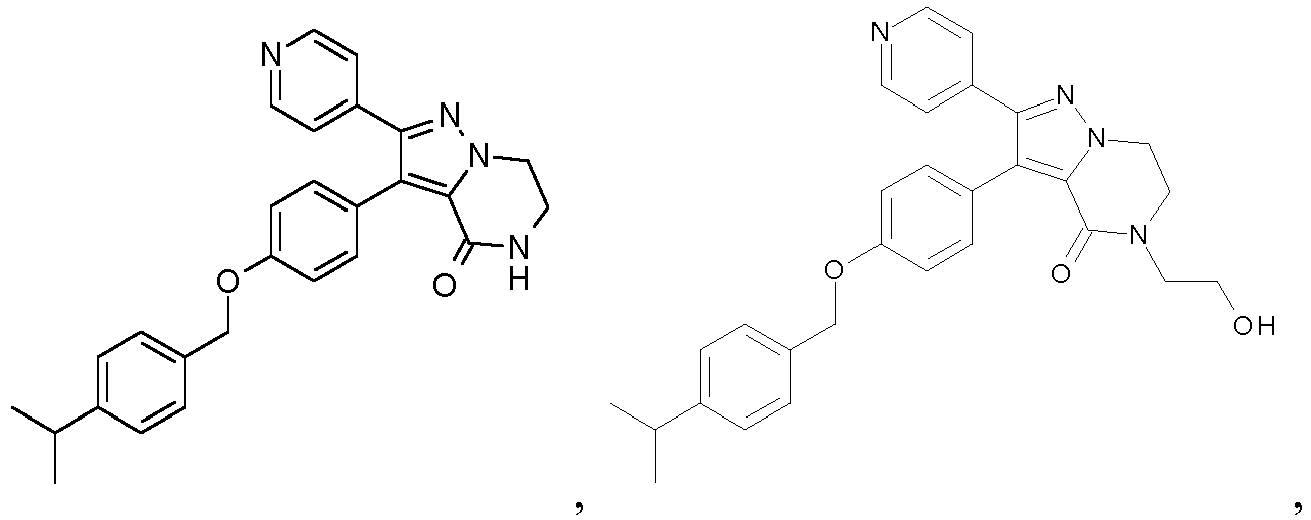
and N-oxides, pharmaceutically acceptable addition salts, and solvates thereof. - A pharmaceutical composition comprising a pharmaceutically acceptable carrier and, as active ingredient, a therapeutically effective amount of a compound according to any one of claims 1 to 11.
- A compound as defined in any one of claims 1 to 11 for use as a medicament.
- A compound as defined in any one of claims 1 to 11 for use in the treatment or prevention of a disease or condition selected from non-small cell lung cancer, cholangiocarcinoma, glioblastoma, colorectal cancer, gastric adenocarcinoma, ovarian cancer, angiosarcoma, epithelioid hemangioendothelioma, inflammatory myofibroblastic tumors, breast cancer and chronic myelogenous leukemia.
- The compound according to claim 14 wherein the disease or condition is selected from non-small-cell lung cancer, cholangiocarcinoma, and glioblastoma multiforme.
Applications Claiming Priority (2)
| Application Number | Priority Date | Filing Date | Title |
|---|---|---|---|
| EP14161950 | 2014-03-27 | ||
| PCT/EP2015/056498 WO2015144799A1 (en) | 2014-03-27 | 2015-03-26 | SUBSTITUTED 4,5,6,7-TETRAHYDRO-PYRAZOLO[1,5-a]PYRAZINE DERIVATIVES AND 5,6,7,8-TETRAHYDRO-4H-PYRAZOLO[1,5-a][1,4]DIAZEPINE DERIVATIVES AS ROS1 INHIBITORS |
Publications (2)
| Publication Number | Publication Date |
|---|---|
| EP3129376A1 EP3129376A1 (en) | 2017-02-15 |
| EP3129376B1 true EP3129376B1 (en) | 2018-12-26 |
Family
ID=50389872
Family Applications (1)
| Application Number | Title | Priority Date | Filing Date |
|---|---|---|---|
| EP15713436.2A Active EP3129376B1 (en) | 2014-03-27 | 2015-03-26 | Substituted 4,5,6,7-tetrahydro-pyrazolo[1,5-a]pyrazine derivatives and 5,6,7,8-tetrahydro-4h-pyrazolo[1,5-a][1,4]diazepine derivatives as ros1 inhibitors |
Country Status (13)
| Country | Link |
|---|---|
| US (1) | US10280170B2 (en) |
| EP (1) | EP3129376B1 (en) |
| JP (1) | JP6522646B2 (en) |
| KR (1) | KR102455519B1 (en) |
| CN (1) | CN106164076B (en) |
| AU (1) | AU2015238296B2 (en) |
| BR (1) | BR112016022105B1 (en) |
| CA (1) | CA2940918C (en) |
| EA (1) | EA032255B1 (en) |
| ES (1) | ES2715676T3 (en) |
| IL (1) | IL247947B (en) |
| MX (1) | MX367914B (en) |
| WO (1) | WO2015144799A1 (en) |
Families Citing this family (12)
| Publication number | Priority date | Publication date | Assignee | Title |
|---|---|---|---|---|
| EP3342777B1 (en) * | 2015-08-28 | 2023-01-11 | Sekisui Medical Co., Ltd. | Benzyl compound |
| TWI782056B (en) | 2017-07-14 | 2022-11-01 | 日商鹽野義製藥股份有限公司 | A fused ring derivative having a mgat2 inhibitoy activity |
| CN112204027A (en) * | 2018-06-08 | 2021-01-08 | 贝达药业股份有限公司 | ERK inhibitor and application thereof |
| MX2021008050A (en) * | 2019-01-11 | 2021-08-05 | Shionogi & Co | DIHYDROPYRAZOLOPYRAZINONE DERIVATIVE THAT HAS MONOACYLGLYCEROL ACYLTRANFERASE 2 (MGAT2) INHIBITOR ACTIVITY. |
| JP7068743B2 (en) * | 2019-01-11 | 2022-05-17 | 塩野義製薬株式会社 | A pharmaceutical composition containing a condensed ring derivative having MGAT2 inhibitory activity. |
| EA202192575A1 (en) | 2019-03-21 | 2022-01-14 | Онксео | DBAIT COMPOUNDS IN COMBINATION WITH KINASE INHIBITORS FOR CANCER TREATMENT |
| CN114761006A (en) | 2019-11-08 | 2022-07-15 | Inserm(法国国家健康医学研究院) | Methods of treating cancer resistant to kinase inhibitors |
| WO2021148581A1 (en) | 2020-01-22 | 2021-07-29 | Onxeo | Novel dbait molecule and its use |
| TW202229282A (en) * | 2020-09-30 | 2022-08-01 | 美商史考皮恩治療有限公司 | Methods for treating cancer |
| CN114315866B (en) * | 2020-09-30 | 2023-10-31 | 烟台药物研究所 | Synthesis method of levamisole hydrochloride |
| US20250276972A1 (en) * | 2020-12-15 | 2025-09-04 | Gritscience Biopharmaceuticals Co.,Ltd. | Compounds as casein kinase inhibitors |
| CN114957259A (en) * | 2021-02-25 | 2022-08-30 | 南京明德新药研发有限公司 | Cyano-substituted aromatic bicyclic compound and application thereof |
Family Cites Families (16)
| Publication number | Priority date | Publication date | Assignee | Title |
|---|---|---|---|---|
| US5356897A (en) | 1991-09-09 | 1994-10-18 | Fujisawa Pharmaceutical Co., Ltd. | 3-(heteroaryl)-pyrazololi[1,5-a]pyrimidines |
| US7662826B2 (en) | 2002-04-23 | 2010-02-16 | Shionogi & Co., Ltd. | Pyrazolo [1,5-a] pyrimidine derivative and nad (p) h oxidase inhibitor containing the same |
| EP1572113B1 (en) | 2002-08-26 | 2017-05-17 | Takeda Pharmaceutical Company Limited | Calcium receptor modulating compound and use thereof |
| ZA200504898B (en) * | 2002-12-20 | 2006-11-29 | Pharmacia Corp | Acyclic pyrazole compounds |
| JP2005343889A (en) | 2004-05-06 | 2005-12-15 | Taisho Pharmaceut Co Ltd | Imidazopyridine derivatives |
| PL2217600T3 (en) * | 2007-12-12 | 2013-04-30 | Du Pont | Fungicidal bicyclic pyrazoles |
| US20100324073A1 (en) | 2007-12-21 | 2010-12-23 | Wyeth Llc | Pyrazolo [1,5-A] Pyrimidine Compounds |
| US20100029657A1 (en) | 2008-02-29 | 2010-02-04 | Wyeth | Bridged, Bicyclic Heterocyclic or Spiro Bicyclic Heterocyclic Derivatives of Pyrazolo[1, 5-A]Pyrimidines, Methods for Preparation and Uses Thereof |
| MX2010010968A (en) | 2008-04-07 | 2010-10-26 | Irm Llc | Compounds and compositions as protein kinase inhibitors. |
| AU2009233963B2 (en) * | 2008-04-07 | 2011-10-06 | Irm Llc | Compounds and compositions as kinase inhibitors |
| KR101324804B1 (en) * | 2008-05-13 | 2013-11-01 | 아이알엠 엘엘씨 | Fused nitrogen containing heterocycles and compositions thereof as kinase inhibitors |
| JP2012528175A (en) * | 2009-05-27 | 2012-11-12 | アボット・ラボラトリーズ | Pyrimidine inhibitors of kinase activity |
| AU2010254151B2 (en) | 2009-05-28 | 2013-11-28 | Cook Medical Technologies Llc | Tacking device and methods of deployment |
| WO2011153553A2 (en) * | 2010-06-04 | 2011-12-08 | The Regents Of The University Of California | Methods and compositions for kinase inhibition |
| RU2014102935A (en) * | 2011-08-02 | 2015-09-10 | Пфайзер Инк. | CRYZOTINIB FOR USE IN CANCER TREATMENT |
| TWI585088B (en) | 2012-06-04 | 2017-06-01 | 第一三共股份有限公司 | Imidazo[1,2-b]indole derivatives as kinase inhibitors |
-
2015
- 2015-03-26 ES ES15713436T patent/ES2715676T3/en active Active
- 2015-03-26 WO PCT/EP2015/056498 patent/WO2015144799A1/en not_active Ceased
- 2015-03-26 MX MX2016012668A patent/MX367914B/en active IP Right Grant
- 2015-03-26 CA CA2940918A patent/CA2940918C/en active Active
- 2015-03-26 JP JP2016559326A patent/JP6522646B2/en active Active
- 2015-03-26 EP EP15713436.2A patent/EP3129376B1/en active Active
- 2015-03-26 KR KR1020167028572A patent/KR102455519B1/en active Active
- 2015-03-26 EA EA201691930A patent/EA032255B1/en not_active IP Right Cessation
- 2015-03-26 CN CN201580016470.XA patent/CN106164076B/en active Active
- 2015-03-26 BR BR112016022105-2A patent/BR112016022105B1/en active IP Right Grant
- 2015-03-26 AU AU2015238296A patent/AU2015238296B2/en active Active
- 2015-03-26 US US15/129,582 patent/US10280170B2/en active Active
-
2016
- 2016-09-21 IL IL247947A patent/IL247947B/en active IP Right Grant
Non-Patent Citations (1)
| Title |
|---|
| None * |
Also Published As
| Publication number | Publication date |
|---|---|
| JP2017508779A (en) | 2017-03-30 |
| BR112016022105A2 (en) | 2017-08-15 |
| JP6522646B2 (en) | 2019-05-29 |
| AU2015238296A1 (en) | 2016-09-08 |
| AU2015238296B2 (en) | 2018-10-18 |
| EP3129376A1 (en) | 2017-02-15 |
| CN106164076A (en) | 2016-11-23 |
| EA032255B1 (en) | 2019-04-30 |
| KR102455519B1 (en) | 2022-10-14 |
| WO2015144799A1 (en) | 2015-10-01 |
| CA2940918A1 (en) | 2015-10-01 |
| MX367914B (en) | 2019-09-11 |
| CN106164076B (en) | 2019-03-26 |
| BR112016022105B1 (en) | 2023-01-31 |
| CA2940918C (en) | 2023-10-24 |
| MX2016012668A (en) | 2016-12-14 |
| US10280170B2 (en) | 2019-05-07 |
| KR20160137576A (en) | 2016-11-30 |
| IL247947B (en) | 2019-03-31 |
| ES2715676T3 (en) | 2019-06-05 |
| US20170174690A1 (en) | 2017-06-22 |
| EA201691930A1 (en) | 2017-02-28 |
Similar Documents
| Publication | Publication Date | Title |
|---|---|---|
| EP3129376B1 (en) | Substituted 4,5,6,7-tetrahydro-pyrazolo[1,5-a]pyrazine derivatives and 5,6,7,8-tetrahydro-4h-pyrazolo[1,5-a][1,4]diazepine derivatives as ros1 inhibitors | |
| EP3971187B1 (en) | Inhibitor containing bicyclic derivative, preparation method therefor and use thereof | |
| EP4606803A1 (en) | Kras g12d degradation agent, and preparation method and use therefor | |
| EP3121175B1 (en) | 1,3-benzodioxole derivatives as ezh1 and/or ezh2 inhibitors | |
| EP3126364B1 (en) | Macrocylic pyrimidine derivatives | |
| EP2963043B1 (en) | Tetrahydroimidazo[1,5-d][1,4]oxazepine derivative | |
| EP3138842B1 (en) | Polyfluorinated compounds acting as bruton's tyrosine kinase inhibitors | |
| EP3126366B1 (en) | Substituted 4,5,6,7-tetrahydro-pyrazolo[1,5-a]pyrimidine derivatives and 2,3-dihydro-1h-imidazo[1,2-b]pyrazole derivatives as ros1 inhibitors | |
| EP3943496A1 (en) | Wee1 inhibitor and preparation and use thereof | |
| JP2017508779A5 (en) | ||
| EP4086253A1 (en) | Biphenyl derivative inhibitor, preparation method therefor and use thereof | |
| EP3178818A1 (en) | Pyrazolyl quinoxaline kinase inhibitors | |
| EP3359533B1 (en) | Quinoxaline and pyridopyrazine derivatives as pi3kbeta inhibitors | |
| EP4328219A1 (en) | Sos1 degrading agent and preparation method therefor and application thereof | |
| EP3233862B1 (en) | Imidazopyridazine derivatives as pi3kbeta inhibitors | |
| EP3233839B1 (en) | Heterocyclyl linked imidazopyridazine derivatives as pi3kbeta inhibitors | |
| EP3472160B1 (en) | Bicyclic pyridine, pyrazine, and pyrimidine derivatives as pi3k beta inhibitors | |
| HK1233629A1 (en) | 1,3-benzodioxole derivatives as ezh1 and/or ezh2 inhibitors | |
| HK1239688A (en) | Pyrazolyl quinoxaline kinase inhibitors | |
| HK1233629B (en) | 1,3-benzodioxole derivatives as ezh1 and/or ezh2 inhibitors | |
| HK1217697B (en) | Tetrahydroimidazo[1,5-d][1,4]oxazepine derivative |
Legal Events
| Date | Code | Title | Description |
|---|---|---|---|
| STAA | Information on the status of an ep patent application or granted ep patent |
Free format text: STATUS: THE INTERNATIONAL PUBLICATION HAS BEEN MADE |
|
| PUAI | Public reference made under article 153(3) epc to a published international application that has entered the european phase |
Free format text: ORIGINAL CODE: 0009012 |
|
| STAA | Information on the status of an ep patent application or granted ep patent |
Free format text: STATUS: REQUEST FOR EXAMINATION WAS MADE |
|
| 17P | Request for examination filed |
Effective date: 20161027 |
|
| AK | Designated contracting states |
Kind code of ref document: A1 Designated state(s): AL AT BE BG CH CY CZ DE DK EE ES FI FR GB GR HR HU IE IS IT LI LT LU LV MC MK MT NL NO PL PT RO RS SE SI SK SM TR |
|
| AX | Request for extension of the european patent |
Extension state: BA ME |
|
| GRAP | Despatch of communication of intention to grant a patent |
Free format text: ORIGINAL CODE: EPIDOSNIGR1 |
|
| STAA | Information on the status of an ep patent application or granted ep patent |
Free format text: STATUS: GRANT OF PATENT IS INTENDED |
|
| INTG | Intention to grant announced |
Effective date: 20180301 |
|
| GRAJ | Information related to disapproval of communication of intention to grant by the applicant or resumption of examination proceedings by the epo deleted |
Free format text: ORIGINAL CODE: EPIDOSDIGR1 |
|
| STAA | Information on the status of an ep patent application or granted ep patent |
Free format text: STATUS: REQUEST FOR EXAMINATION WAS MADE |
|
| RAP1 | Party data changed (applicant data changed or rights of an application transferred) |
Owner name: JANSSEN PHARMACEUTICA NV |
|
| INTC | Intention to grant announced (deleted) | ||
| GRAP | Despatch of communication of intention to grant a patent |
Free format text: ORIGINAL CODE: EPIDOSNIGR1 |
|
| STAA | Information on the status of an ep patent application or granted ep patent |
Free format text: STATUS: GRANT OF PATENT IS INTENDED |
|
| INTG | Intention to grant announced |
Effective date: 20180809 |
|
| GRAS | Grant fee paid |
Free format text: ORIGINAL CODE: EPIDOSNIGR3 |
|
| GRAA | (expected) grant |
Free format text: ORIGINAL CODE: 0009210 |
|
| STAA | Information on the status of an ep patent application or granted ep patent |
Free format text: STATUS: THE PATENT HAS BEEN GRANTED |
|
| AK | Designated contracting states |
Kind code of ref document: B1 Designated state(s): AL AT BE BG CH CY CZ DE DK EE ES FI FR GB GR HR HU IE IS IT LI LT LU LV MC MK MT NL NO PL PT RO RS SE SI SK SM TR |
|
| AX | Request for extension of the european patent |
Extension state: BA ME |
|
| REG | Reference to a national code |
Ref country code: GB Ref legal event code: FG4D |
|
| REG | Reference to a national code |
Ref country code: CH Ref legal event code: EP |
|
| REG | Reference to a national code |
Ref country code: AT Ref legal event code: REF Ref document number: 1081244 Country of ref document: AT Kind code of ref document: T Effective date: 20190115 |
|
| REG | Reference to a national code |
Ref country code: DE Ref legal event code: R096 Ref document number: 602015022245 Country of ref document: DE |
|
| REG | Reference to a national code |
Ref country code: IE Ref legal event code: FG4D |
|
| REG | Reference to a national code |
Ref country code: SE Ref legal event code: TRGR |
|
| PG25 | Lapsed in a contracting state [announced via postgrant information from national office to epo] |
Ref country code: LT Free format text: LAPSE BECAUSE OF FAILURE TO SUBMIT A TRANSLATION OF THE DESCRIPTION OR TO PAY THE FEE WITHIN THE PRESCRIBED TIME-LIMIT Effective date: 20181226 Ref country code: BG Free format text: LAPSE BECAUSE OF FAILURE TO SUBMIT A TRANSLATION OF THE DESCRIPTION OR TO PAY THE FEE WITHIN THE PRESCRIBED TIME-LIMIT Effective date: 20190326 Ref country code: NO Free format text: LAPSE BECAUSE OF FAILURE TO SUBMIT A TRANSLATION OF THE DESCRIPTION OR TO PAY THE FEE WITHIN THE PRESCRIBED TIME-LIMIT Effective date: 20190326 Ref country code: FI Free format text: LAPSE BECAUSE OF FAILURE TO SUBMIT A TRANSLATION OF THE DESCRIPTION OR TO PAY THE FEE WITHIN THE PRESCRIBED TIME-LIMIT Effective date: 20181226 Ref country code: HR Free format text: LAPSE BECAUSE OF FAILURE TO SUBMIT A TRANSLATION OF THE DESCRIPTION OR TO PAY THE FEE WITHIN THE PRESCRIBED TIME-LIMIT Effective date: 20181226 Ref country code: LV Free format text: LAPSE BECAUSE OF FAILURE TO SUBMIT A TRANSLATION OF THE DESCRIPTION OR TO PAY THE FEE WITHIN THE PRESCRIBED TIME-LIMIT Effective date: 20181226 |
|
| REG | Reference to a national code |
Ref country code: NL Ref legal event code: MP Effective date: 20181226 |
|
| REG | Reference to a national code |
Ref country code: LT Ref legal event code: MG4D |
|
| PG25 | Lapsed in a contracting state [announced via postgrant information from national office to epo] |
Ref country code: RS Free format text: LAPSE BECAUSE OF FAILURE TO SUBMIT A TRANSLATION OF THE DESCRIPTION OR TO PAY THE FEE WITHIN THE PRESCRIBED TIME-LIMIT Effective date: 20181226 Ref country code: AL Free format text: LAPSE BECAUSE OF FAILURE TO SUBMIT A TRANSLATION OF THE DESCRIPTION OR TO PAY THE FEE WITHIN THE PRESCRIBED TIME-LIMIT Effective date: 20181226 Ref country code: GR Free format text: LAPSE BECAUSE OF FAILURE TO SUBMIT A TRANSLATION OF THE DESCRIPTION OR TO PAY THE FEE WITHIN THE PRESCRIBED TIME-LIMIT Effective date: 20190327 |
|
| REG | Reference to a national code |
Ref country code: ES Ref legal event code: FG2A Ref document number: 2715676 Country of ref document: ES Kind code of ref document: T3 Effective date: 20190605 |
|
| REG | Reference to a national code |
Ref country code: AT Ref legal event code: MK05 Ref document number: 1081244 Country of ref document: AT Kind code of ref document: T Effective date: 20181226 |
|
| PG25 | Lapsed in a contracting state [announced via postgrant information from national office to epo] |
Ref country code: NL Free format text: LAPSE BECAUSE OF FAILURE TO SUBMIT A TRANSLATION OF THE DESCRIPTION OR TO PAY THE FEE WITHIN THE PRESCRIBED TIME-LIMIT Effective date: 20181226 |
|
| PG25 | Lapsed in a contracting state [announced via postgrant information from national office to epo] |
Ref country code: CZ Free format text: LAPSE BECAUSE OF FAILURE TO SUBMIT A TRANSLATION OF THE DESCRIPTION OR TO PAY THE FEE WITHIN THE PRESCRIBED TIME-LIMIT Effective date: 20181226 Ref country code: PT Free format text: LAPSE BECAUSE OF FAILURE TO SUBMIT A TRANSLATION OF THE DESCRIPTION OR TO PAY THE FEE WITHIN THE PRESCRIBED TIME-LIMIT Effective date: 20190426 Ref country code: PL Free format text: LAPSE BECAUSE OF FAILURE TO SUBMIT A TRANSLATION OF THE DESCRIPTION OR TO PAY THE FEE WITHIN THE PRESCRIBED TIME-LIMIT Effective date: 20181226 |
|
| PG25 | Lapsed in a contracting state [announced via postgrant information from national office to epo] |
Ref country code: IS Free format text: LAPSE BECAUSE OF FAILURE TO SUBMIT A TRANSLATION OF THE DESCRIPTION OR TO PAY THE FEE WITHIN THE PRESCRIBED TIME-LIMIT Effective date: 20190426 Ref country code: EE Free format text: LAPSE BECAUSE OF FAILURE TO SUBMIT A TRANSLATION OF THE DESCRIPTION OR TO PAY THE FEE WITHIN THE PRESCRIBED TIME-LIMIT Effective date: 20181226 Ref country code: SM Free format text: LAPSE BECAUSE OF FAILURE TO SUBMIT A TRANSLATION OF THE DESCRIPTION OR TO PAY THE FEE WITHIN THE PRESCRIBED TIME-LIMIT Effective date: 20181226 Ref country code: SK Free format text: LAPSE BECAUSE OF FAILURE TO SUBMIT A TRANSLATION OF THE DESCRIPTION OR TO PAY THE FEE WITHIN THE PRESCRIBED TIME-LIMIT Effective date: 20181226 Ref country code: RO Free format text: LAPSE BECAUSE OF FAILURE TO SUBMIT A TRANSLATION OF THE DESCRIPTION OR TO PAY THE FEE WITHIN THE PRESCRIBED TIME-LIMIT Effective date: 20181226 |
|
| REG | Reference to a national code |
Ref country code: DE Ref legal event code: R097 Ref document number: 602015022245 Country of ref document: DE |
|
| PG25 | Lapsed in a contracting state [announced via postgrant information from national office to epo] |
Ref country code: AT Free format text: LAPSE BECAUSE OF FAILURE TO SUBMIT A TRANSLATION OF THE DESCRIPTION OR TO PAY THE FEE WITHIN THE PRESCRIBED TIME-LIMIT Effective date: 20181226 Ref country code: DK Free format text: LAPSE BECAUSE OF FAILURE TO SUBMIT A TRANSLATION OF THE DESCRIPTION OR TO PAY THE FEE WITHIN THE PRESCRIBED TIME-LIMIT Effective date: 20181226 Ref country code: MC Free format text: LAPSE BECAUSE OF FAILURE TO SUBMIT A TRANSLATION OF THE DESCRIPTION OR TO PAY THE FEE WITHIN THE PRESCRIBED TIME-LIMIT Effective date: 20181226 |
|
| PLBE | No opposition filed within time limit |
Free format text: ORIGINAL CODE: 0009261 |
|
| STAA | Information on the status of an ep patent application or granted ep patent |
Free format text: STATUS: NO OPPOSITION FILED WITHIN TIME LIMIT |
|
| PG25 | Lapsed in a contracting state [announced via postgrant information from national office to epo] |
Ref country code: LU Free format text: LAPSE BECAUSE OF NON-PAYMENT OF DUE FEES Effective date: 20190326 |
|
| 26N | No opposition filed |
Effective date: 20190927 |
|
| PG25 | Lapsed in a contracting state [announced via postgrant information from national office to epo] |
Ref country code: SI Free format text: LAPSE BECAUSE OF FAILURE TO SUBMIT A TRANSLATION OF THE DESCRIPTION OR TO PAY THE FEE WITHIN THE PRESCRIBED TIME-LIMIT Effective date: 20181226 |
|
| PG25 | Lapsed in a contracting state [announced via postgrant information from national office to epo] |
Ref country code: TR Free format text: LAPSE BECAUSE OF FAILURE TO SUBMIT A TRANSLATION OF THE DESCRIPTION OR TO PAY THE FEE WITHIN THE PRESCRIBED TIME-LIMIT Effective date: 20181226 |
|
| VS25 | Lapsed in a validation state [announced via postgrant information from nat. office to epo] |
Ref country code: MA Free format text: LAPSE BECAUSE OF FAILURE TO SUBMIT A TRANSLATION OF THE DESCRIPTION OR TO PAY THE FEE WITHIN THE PRESCRIBED TIME-LIMIT Effective date: 20181226 |
|
| PG25 | Lapsed in a contracting state [announced via postgrant information from national office to epo] |
Ref country code: MT Free format text: LAPSE BECAUSE OF NON-PAYMENT OF DUE FEES Effective date: 20190326 |
|
| PG25 | Lapsed in a contracting state [announced via postgrant information from national office to epo] |
Ref country code: CY Free format text: LAPSE BECAUSE OF FAILURE TO SUBMIT A TRANSLATION OF THE DESCRIPTION OR TO PAY THE FEE WITHIN THE PRESCRIBED TIME-LIMIT Effective date: 20181226 |
|
| PG25 | Lapsed in a contracting state [announced via postgrant information from national office to epo] |
Ref country code: HU Free format text: LAPSE BECAUSE OF FAILURE TO SUBMIT A TRANSLATION OF THE DESCRIPTION OR TO PAY THE FEE WITHIN THE PRESCRIBED TIME-LIMIT; INVALID AB INITIO Effective date: 20150326 |
|
| PGFP | Annual fee paid to national office [announced via postgrant information from national office to epo] |
Ref country code: SE Payment date: 20220210 Year of fee payment: 8 |
|
| PG25 | Lapsed in a contracting state [announced via postgrant information from national office to epo] |
Ref country code: MK Free format text: LAPSE BECAUSE OF FAILURE TO SUBMIT A TRANSLATION OF THE DESCRIPTION OR TO PAY THE FEE WITHIN THE PRESCRIBED TIME-LIMIT Effective date: 20181226 |
|
| P01 | Opt-out of the competence of the unified patent court (upc) registered |
Effective date: 20230530 |
|
| REG | Reference to a national code |
Ref country code: SE Ref legal event code: EUG |
|
| PG25 | Lapsed in a contracting state [announced via postgrant information from national office to epo] |
Ref country code: SE Free format text: LAPSE BECAUSE OF NON-PAYMENT OF DUE FEES Effective date: 20230327 |
|
| PGFP | Annual fee paid to national office [announced via postgrant information from national office to epo] |
Ref country code: ES Payment date: 20250404 Year of fee payment: 11 |
|
| PGFP | Annual fee paid to national office [announced via postgrant information from national office to epo] |
Ref country code: CH Payment date: 20250401 Year of fee payment: 11 |
|
| REG | Reference to a national code |
Ref country code: CH Ref legal event code: U11 Free format text: ST27 STATUS EVENT CODE: U-0-0-U10-U11 (AS PROVIDED BY THE NATIONAL OFFICE) Effective date: 20260401 |
|
| PGFP | Annual fee paid to national office [announced via postgrant information from national office to epo] |
Ref country code: GB Payment date: 20260209 Year of fee payment: 12 |
|
| PGFP | Annual fee paid to national office [announced via postgrant information from national office to epo] |
Ref country code: DE Payment date: 20260204 Year of fee payment: 12 Ref country code: IE Payment date: 20260211 Year of fee payment: 12 |
|
| PGFP | Annual fee paid to national office [announced via postgrant information from national office to epo] |
Ref country code: BE Payment date: 20260216 Year of fee payment: 12 Ref country code: IT Payment date: 20260220 Year of fee payment: 12 |
|
| PGFP | Annual fee paid to national office [announced via postgrant information from national office to epo] |
Ref country code: FR Payment date: 20260209 Year of fee payment: 12 |