EP3127877A1 - Method of manufacturing glass bent sheet - Google Patents
Method of manufacturing glass bent sheet Download PDFInfo
- Publication number
- EP3127877A1 EP3127877A1 EP16179455.7A EP16179455A EP3127877A1 EP 3127877 A1 EP3127877 A1 EP 3127877A1 EP 16179455 A EP16179455 A EP 16179455A EP 3127877 A1 EP3127877 A1 EP 3127877A1
- Authority
- EP
- European Patent Office
- Prior art keywords
- glass
- bent sheet
- manufacturing
- heating
- pigment
- Prior art date
- Legal status (The legal status is an assumption and is not a legal conclusion. Google has not performed a legal analysis and makes no representation as to the accuracy of the status listed.)
- Granted
Links
Images
Classifications
-
- C—CHEMISTRY; METALLURGY
- C03—GLASS; MINERAL OR SLAG WOOL
- C03B—MANUFACTURE, SHAPING, OR SUPPLEMENTARY PROCESSES
- C03B32/00—Thermal after-treatment of glass products not provided for in groups C03B19/00, C03B25/00 - C03B31/00 or C03B37/00, e.g. crystallisation, eliminating gas inclusions or other impurities; Hot-pressing vitrified, non-porous, shaped glass products
- C03B32/02—Thermal crystallisation, e.g. for crystallising glass bodies into glass-ceramic articles
-
- C—CHEMISTRY; METALLURGY
- C03—GLASS; MINERAL OR SLAG WOOL
- C03B—MANUFACTURE, SHAPING, OR SUPPLEMENTARY PROCESSES
- C03B23/00—Re-forming shaped glass
- C03B23/02—Re-forming glass sheets
- C03B23/023—Re-forming glass sheets by bending
-
- C—CHEMISTRY; METALLURGY
- C03—GLASS; MINERAL OR SLAG WOOL
- C03C—CHEMICAL COMPOSITION OF GLASSES, GLAZES OR VITREOUS ENAMELS; SURFACE TREATMENT OF GLASS; SURFACE TREATMENT OF FIBRES OR FILAMENTS MADE FROM GLASS, MINERALS OR SLAGS; JOINING GLASS TO GLASS OR OTHER MATERIALS
- C03C10/00—Devitrified glass ceramics, i.e. glass ceramics having a crystalline phase dispersed in a glassy phase and constituting at least 50% by weight of the total composition
- C03C10/0018—Devitrified glass ceramics, i.e. glass ceramics having a crystalline phase dispersed in a glassy phase and constituting at least 50% by weight of the total composition containing SiO2, Al2O3 and monovalent metal oxide as main constituents
- C03C10/0027—Devitrified glass ceramics, i.e. glass ceramics having a crystalline phase dispersed in a glassy phase and constituting at least 50% by weight of the total composition containing SiO2, Al2O3 and monovalent metal oxide as main constituents containing SiO2, Al2O3, Li2O as main constituents
-
- C—CHEMISTRY; METALLURGY
- C03—GLASS; MINERAL OR SLAG WOOL
- C03C—CHEMICAL COMPOSITION OF GLASSES, GLAZES OR VITREOUS ENAMELS; SURFACE TREATMENT OF GLASS; SURFACE TREATMENT OF FIBRES OR FILAMENTS MADE FROM GLASS, MINERALS OR SLAGS; JOINING GLASS TO GLASS OR OTHER MATERIALS
- C03C17/00—Surface treatment of glass, not in the form of fibres or filaments, by coating
- C03C17/02—Surface treatment of glass, not in the form of fibres or filaments, by coating with glass
- C03C17/04—Surface treatment of glass, not in the form of fibres or filaments, by coating with glass by fritting glass powder
-
- C—CHEMISTRY; METALLURGY
- C03—GLASS; MINERAL OR SLAG WOOL
- C03C—CHEMICAL COMPOSITION OF GLASSES, GLAZES OR VITREOUS ENAMELS; SURFACE TREATMENT OF GLASS; SURFACE TREATMENT OF FIBRES OR FILAMENTS MADE FROM GLASS, MINERALS OR SLAGS; JOINING GLASS TO GLASS OR OTHER MATERIALS
- C03C3/00—Glass compositions
- C03C3/04—Glass compositions containing silica
- C03C3/076—Glass compositions containing silica with 40% to 90% silica, by weight
- C03C3/083—Glass compositions containing silica with 40% to 90% silica, by weight containing aluminium oxide or an iron compound
-
- C—CHEMISTRY; METALLURGY
- C03—GLASS; MINERAL OR SLAG WOOL
- C03C—CHEMICAL COMPOSITION OF GLASSES, GLAZES OR VITREOUS ENAMELS; SURFACE TREATMENT OF GLASS; SURFACE TREATMENT OF FIBRES OR FILAMENTS MADE FROM GLASS, MINERALS OR SLAGS; JOINING GLASS TO GLASS OR OTHER MATERIALS
- C03C3/00—Glass compositions
- C03C3/04—Glass compositions containing silica
- C03C3/076—Glass compositions containing silica with 40% to 90% silica, by weight
- C03C3/089—Glass compositions containing silica with 40% to 90% silica, by weight containing boron
- C03C3/091—Glass compositions containing silica with 40% to 90% silica, by weight containing boron containing aluminium
-
- C—CHEMISTRY; METALLURGY
- C03—GLASS; MINERAL OR SLAG WOOL
- C03C—CHEMICAL COMPOSITION OF GLASSES, GLAZES OR VITREOUS ENAMELS; SURFACE TREATMENT OF GLASS; SURFACE TREATMENT OF FIBRES OR FILAMENTS MADE FROM GLASS, MINERALS OR SLAGS; JOINING GLASS TO GLASS OR OTHER MATERIALS
- C03C8/00—Enamels; Glazes; Fusion seal compositions being frit compositions having non-frit additions
- C03C8/02—Frit compositions, i.e. in a powdered or comminuted form
-
- C—CHEMISTRY; METALLURGY
- C03—GLASS; MINERAL OR SLAG WOOL
- C03C—CHEMICAL COMPOSITION OF GLASSES, GLAZES OR VITREOUS ENAMELS; SURFACE TREATMENT OF GLASS; SURFACE TREATMENT OF FIBRES OR FILAMENTS MADE FROM GLASS, MINERALS OR SLAGS; JOINING GLASS TO GLASS OR OTHER MATERIALS
- C03C8/00—Enamels; Glazes; Fusion seal compositions being frit compositions having non-frit additions
- C03C8/14—Glass frit mixtures having non-frit additions, e.g. opacifiers, colorants, mill-additions
- C03C8/16—Glass frit mixtures having non-frit additions, e.g. opacifiers, colorants, mill-additions with vehicle or suspending agents, e.g. slip
-
- C—CHEMISTRY; METALLURGY
- C03—GLASS; MINERAL OR SLAG WOOL
- C03C—CHEMICAL COMPOSITION OF GLASSES, GLAZES OR VITREOUS ENAMELS; SURFACE TREATMENT OF GLASS; SURFACE TREATMENT OF FIBRES OR FILAMENTS MADE FROM GLASS, MINERALS OR SLAGS; JOINING GLASS TO GLASS OR OTHER MATERIALS
- C03C2217/00—Coatings on glass
- C03C2217/40—Coatings comprising at least one inhomogeneous layer
- C03C2217/43—Coatings comprising at least one inhomogeneous layer consisting of a dispersed phase in a continuous phase
- C03C2217/44—Coatings comprising at least one inhomogeneous layer consisting of a dispersed phase in a continuous phase characterized by the composition of the continuous phase
- C03C2217/45—Inorganic continuous phases
- C03C2217/452—Glass
-
- C—CHEMISTRY; METALLURGY
- C03—GLASS; MINERAL OR SLAG WOOL
- C03C—CHEMICAL COMPOSITION OF GLASSES, GLAZES OR VITREOUS ENAMELS; SURFACE TREATMENT OF GLASS; SURFACE TREATMENT OF FIBRES OR FILAMENTS MADE FROM GLASS, MINERALS OR SLAGS; JOINING GLASS TO GLASS OR OTHER MATERIALS
- C03C2217/00—Coatings on glass
- C03C2217/40—Coatings comprising at least one inhomogeneous layer
- C03C2217/43—Coatings comprising at least one inhomogeneous layer consisting of a dispersed phase in a continuous phase
- C03C2217/46—Coatings comprising at least one inhomogeneous layer consisting of a dispersed phase in a continuous phase characterized by the dispersed phase
- C03C2217/48—Coatings comprising at least one inhomogeneous layer consisting of a dispersed phase in a continuous phase characterized by the dispersed phase having a specific function
- C03C2217/485—Pigments
-
- F—MECHANICAL ENGINEERING; LIGHTING; HEATING; WEAPONS; BLASTING
- F24—HEATING; RANGES; VENTILATING
- F24C—DOMESTIC STOVES OR RANGES ; DETAILS OF DOMESTIC STOVES OR RANGES, OF GENERAL APPLICATION
- F24C15/00—Details
- F24C15/02—Doors specially adapted for stoves or ranges
Definitions
- the present invention relates to a method of manufacturing a bent sheet of a crystallized glass having a light-shielding layer formed thereon.
- a low-expansion crystallized glass has been used as a window for a combustion device, a fireproof window, equipment for cooking with heat, or the like because of excellent heat resistance.
- the window for a combustion device is fixed to a metallic frame of a combustion device body through a gasket, an adhesive, or the like.
- a gasket an adhesive
- a light-shielding layer is formed on at least a part of a window glass so as to cover a portion of the gasket or the adhesive (see, for example, Japanese Patent Application Laid-open Nos. 2007-39294 and 2010-96390 ). Further, in order to reduce the portion of the gasket or the adhesive, a flat glass sheet is heated, to thereby produce a glass bent sheet.
- a method of manufacturing a bent sheet of a crystallized glass having a light-shielding layer formed thereon includes a printing step of printing a paste including glass powder that contains an alkali metal oxide as a component and a pigment onto a flat sheet-shaped glass substrate formed of a glass before crystallization (crystallizable glass), a bending step of subjecting the glass substrate having the paste printed thereon to bending work by heating, and a crystallization step of crystallizing the crystallizable glass by heating.
- the paste is sintered to form a light-shielding layer by heating.
- a component of the surface of the crystallizable glass before crystallization and a component (e.g., an alkali metal oxide) of the glass powder may react with each other by heating to generate a crystal of ⁇ -spodumene.
- a component e.g., an alkali metal oxide
- the glass powder does not flow easily, and hence a pigment is not dissolved easily in the glass powder. Then, there arises a problem in that the color of the light-shielding layer becomes different from an original color of the pigment expressed by dissolution of the pigment in the glass powder.
- the present invention has been made in view of the above-mentioned circumstances, and it is a technical object of the present invention to provide a method of manufacturing a bent sheet of a crystallized glass in which a formed light-shielding layer exhibits an original color of a pigment.
- a method of manufacturing a glass bent sheet according to one embodiment of the present invention comprises: printing a paste including glass powder that contains an alkali metal oxide as a component and a pigment onto a flat sheet-shaped glass substrate formed of a LAS-based crystallizable glass; performing bending work to the glass substrate having the paste printed thereon by heating; and crystallizing the crystallizable glass by heating, the method further comprising, after the printing and before the performing bending work and the crystallizing, provisionally sintering the paste printed onto the glass substrate by heating at a temperature equal to or higher than a softening point of the glass powder plus 20°C and lower than a highest heating temperature in the crystallizing.
- the above-mentioned configuration comprises the provisional sintering step of heating the paste after the printing step and before the bending step and the crystallization step.
- the paste is heated at a temperature equal to or higher than the softening point of the glass powder plus 20 °C.
- the glass powder is dissolved immediately.
- the reaction of the alkali metal oxide of the glass powder or the crystallizable glass is suppressed, and hence the generation of a crystal of ⁇ -spodumene is suppressed. Therefore, in the provisional sintering step, the glass powder can flow easily, and the pigment is dissolved easily in the glass powder.
- the color of a light-shielding layer to be formed can exhibit an original color of the pigment. That is, in the method of manufacturing a glass bent sheet according to the embodiment of the present invention, a bent sheet of a crystallized glass, in which the formed light-shielding layer exhibits the original color of the pigment, can be manufactured.
- the paste is heated at a temperature lower than the highest heating temperature in the crystallization step.
- the heating temperature in the provisionally sintering be from 700°C to 760°C.
- the color of the light-shielding layer to be formed can reliably exhibit the original color of the pigment, and the situation in which the glass substrate cannot be subjected to the bending work in the bending step after the provisional sintering step can be avoided.
- the crystallizable glass comprise as a composition, in terms of mass%, 55% to 75% of SiO 2 , 20.5% to 27% of Al 2 O 3 , 2% or more of Li 2 O, 1.5% to 3% of TiO 2 , 3.8% to 5% of TiO 2 +ZrO 2 , 0.1% to 0.5% of SnO 2 , and 0% to 1% of V 2 O 5 .
- the pigment comprise a Co-based black pigment.
- the glass powder be formed of a B 2 O 3 -SiO 2 -based glass.
- the method of manufacturing a bent sheet of a crystallized glass in which a formed light-shielding layer exhibits an original color of a pigment can be provided.
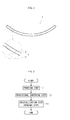
- FIG. 1 is a schematic sectional view for illustrating a glass bent sheet 1 to be manufactured by a manufacturing method according to an embodiment of the present invention.
- the glass bent sheet 1 is a sheet to be used as a window glass for a combustion device.
- the glass bent sheet 1 has a shape in which the entire glass bent sheet 1 is curved in a cross-section along one of vertical and horizontal directions thereof.
- the glass bent sheet 1 comprises a glass substrate 2 having a bent sheet shape and a light-shielding layer 3 formed on at least a part of front and back surfaces of the glass substrate 2.
- the thickness of the glass substrate 2 is, for example, from 3 mm to 8 mm, preferably from 4 mm to 5 mm. When the thickness of the glass substrate 2 is less than 3 mm, there is a risk in that the strength may become insufficient. When the thickness of the glass substrate 2 is more than 8 mm, there is a risk in that a manufacturing cost may increase.
- the glass substrate 2 is formed of a Li 2 O-Al 2 O 3 -SiO 2 -based (hereinafter referred to as "LAS-based") crystallized glass containing an alkali metal oxide. More specifically, the glass substrate 2 comprises as a composition, in terms of mass%, 55% to 75% of SiO 2 , 20.5% to 27% of Al 2 O 3 , 2% to 19.1% of Li 2 O, 1.5% to 3% of TiO 2 , 3.8% to 5% of TiO 2 +ZrO 2 , 0.1% to 0.5% of SnO 2 , and 0% to 1% of V 2 O 5 and comprises a ⁇ -quartz solid solution as a main crystal for crystallization. With such composition, the glass substrate 2 is not deformed easily and hence can be used in a window for a combustion device.
- LAS-based Li 2 O-Al 2 O 3 -SiO 2 -based
- the thermal expansion coefficient at from 30°C to 380°C of the glass substrate 2 be from -1 ⁇ 10 -7 /°C to 12 ⁇ 10 -7 /°C, and it is more preferred that the thermal expansion coefficient at from 30°C to 750°C of the glass substrate 2 (after crystallization) be from -1 ⁇ 10 -7 /°C to 15 ⁇ 10 -7 /°C. With such thermal expansion coefficient, the glass substrate 2 is not deformed easily and hence can be used in a window for a combustion device.
- the light-shielding layer 3 comprises inorganic pigment powder as a pigment and glass powder.
- the content of each powder in the light-shielding layer 3 is as described below.
- the content of the inorganic pigment powder in the light-shielding layer 3 is, for example, from 30 wt% to 50 wt%, preferably from 40 wt% to 50 wt%, and the content of the glass powder in the light-shieling layer 3 is, for example, from 50 wt% to 70 wt%, preferably from 50 wt% to 60 wt%.
- the content of the inorganic pigment powder is less than 30 wt%, there is a risk in that cracks may occur in the light-shielding layer 3 when heat treatment is performed for forming the light-shielding layer 3, or when heating and cooling are repeated in use as a window glass for a combustion device. Further, a light-shielding property is not obtained easily. Meanwhile, when the content of the inorganic pigment powder is more than 50 wt%, the light-shielding layer 3 becomes porous, and hence there is a risk in that smear may occur when water, an adhesive, or the like adheres to the light-shielding layer 3.
- the thickness of the light-shielding layer 3 is, for example, from 1 ⁇ m to 10 ⁇ m, preferably from 2 ⁇ m to 5 ⁇ m.
- the thickness of the light-shielding layer 3 is less than 1 ⁇ m, there is a risk in that a light-shielding property may become insufficient.
- the thickness of the light-shielding layer 3 is more than 10 ⁇ m, there is a risk in that cracks may occur in a manufacturing step or at a time of use of a combustion device. Further, the occurrence of the cracks may cause smear.
- the inorganic pigment powder aCo-basedblackpigment, a Cr-Cu-Mn-Mo-based black pigment, a Ti-based white pigment, and the like can be used.
- the Cr-Cu-Mn-Mo-based inorganic pigment powder comprises as a composition, in terms of mass%, 48% to 72% of a Cr compound, 25% to 45% of a Cu compound, 3% to 5% of a Mn compound, and 0% to 3% of a Mo compound.
- B 2 O 3 -SiO 2 -based glass, Na 2 O-CaO-SiO 2 -based glass, Li 2 O-Al 2 O 3 -SiO 2 -based glass, and the like can be used.
- the B 2 O 3 -SiO 2 -based glass powder comprises as a composition, in terms of mass%, 59% to 66.3% of SiO 2 , 18% to 20% of B 2 O 3 , 5.5% to 7.5% of Al 2 O 3 , 5.5% to 6.5% of Na 2 O, 2.5% to 3.5% of BaO, 1.5% to 2.5% of K 2 O, and 0.7% to 1.0% of L 2 O.
- the method of manufacturing the glass bent sheet 1 comprises a printing step S1, a provisional sintering step S2, and a crystallization step S3.
- a bending step is performed in the crystallization step S3.
- a paste including glass powder that contains an alkali metal oxide as a component and a pigment is printed onto the flat sheet-shaped glass substrate 2 formed of a LAS-based glass before crystallization (hereinafter referred to as "crystallizable glass").
- the flat sheet-shaped glass substrate 2 formed of a LAS-based crystallizable glass is prepared. Further, inorganic pigment powder as a pigment and glass powder are mixed, and an organic solvent or the like is added to the mixture to provide a paste. The obtained paste is printed onto the surface of the flat sheet-shaped glass substrate 2.
- a printing method for example, screen printing or transfer printing can be used. The screen printing is preferred because the light-shielding layer 3 having uniform thickness can be formed easily and efficiently.
- the paste is provisionally sintered by heating the flat sheet-shaped glass substrate 2 having the paste printed thereon at a temperature equal to or higher than a softening point of the glass powder plus 20°C and lower than the highest heating temperature in the crystallization step S3.
- the paste is sintered to form the light-shielding layer 3.
- the provisional sintering step S2 is performed through heating at from 700°C to 760°C in a heating furnace.
- the heating temperature in the provisional sintering step S2 is lower than 700°C, the reaction of the alkali metal oxide of the glass powder or the crystallizable glass occurs before the glass powder is dissolved to generate ⁇ -spodumene on the surface of the glass in the provisional sintering step S2, and the pigment does not flow easily on the surface of the glass due to the ⁇ -spodumene.
- the heating temperature in the provisional sintering step S2 is higher than 760°C, the crystallization of the glass starts, and it becomes difficult to perform bending work in the later bending step.
- the provisional sintering step S2 it is not necessarily required to heat the entire glass substrate 2 having the paste printed thereon in the heating furnace or the like, and the periphery of a portion having the paste printed thereon may be locally heated.
- the crystallization step S3 is performed in the heating furnace.
- the bending step is performed in a part of the crystallization step S3. That is, in the crystallization step S3, the bending work is performed by heating the flat sheet-shaped glass substrate 2 having the paste printed thereon, and simultaneously, the crystallizable glass is crystallized by heating.
- a region having a relatively low heating temperature (low-temperature region) and a region having a relatively high heating temperature (high-temperature region) are arranged in the heating furnace.
- the heating furnace is configured so that the glass substrate 2 to be heated moves from the low-temperature region to the high-temperature region.
- the glass substrate 2 is subjected to the bending work, and a crystal nucleus of a ⁇ -quartz solid solution is formed in the glass substrate 2. Then, the growth of the crystal of the ⁇ -quartz solid solution is accelerated in the high-temperature region, with the result that the glass substrate 2 is crystallized.
- the flat sheet-shaped glass substrate 2 having the paste printed thereon is placed in the heating furnace in a state of being mounted on a refractory 4 serving as a mold. Then, as represented by the dotted line in FIG. 3 , the glass substrate 2 is curved into a shape following the mold in the low-temperature region in the heating furnace. Thus, the glass substrate 2 is subjected to the bending work.
- the highest heating temperature in the heating furnace is, for example, from 850°C to 950°C, preferably from 870°C to 930°C.
- the heating temperature in the heating furnace is lower than 850°C, there is a risk in that the crystallization of the crystallizable glass may not be performed sufficiently.
- the heating temperature in the heating furnace is higher than 950°C, there is a risk in that a manufacturing cost may increase.
- the bending step is performed in a part of the crystallization step S3.
- the present invention is not limited thereto, and a bending step S4 may be performed separately from the crystallization step S3 as illustrated in FIG. 4 .
- Such manufacturing method is adopted, for example, when the glass bent sheet 1 to be manufactured has a bent portion 1a as illustrated in FIG. 5 .
- the bending work is performed by local heating. That is, in the bending step S4, the periphery of a portion to become the bent portion 1a in the flat sheet-shaped glass substrate 2 having the paste printed thereon is bent by local heating to form the bent portion 1a.
- the crystallizations step S3 the glass substrate 2 having the bent portion 1a formed therein is heated in the heating furnace to be crystallized.
- the other points are the same as those illustrated in FIG. 2 , and hence the description thereof is omitted.
- the method comprises the provisional sintering step S2 of heating the paste after the printing step S1 and before the bending step S4 and the crystallization step S3.
- the paste is heated at a temperature equal to or higher than the softening point of the glass powder plus 20°C.
- the glass powder is dissolved immediately.
- the reaction of the alkali metal oxide of the glass powder or the crystallizable glass is suppressed, and the generation of a crystal of ⁇ -spodumene is suppressed. Therefore, in the provisional sintering step S2, the glass powder flows easily, and the pigment is dissolved easily in the glass powder.
- the color of the light-shielding layer 3 to be formed can exhibit an original color of the pigment. That is, in the method of manufacturing the glass bent sheet 1 according to this embodiment, the bent sheet 1 of the crystallized glass, in which the formed light-shielding layer 3 exhibits the original color of the pigment, can be manufactured.
- the paste is heated at a temperature lower than the highest heating temperature in the crystallization step S3.
- the crystallization of the crystallizable glass of the glass substrate 2 is suppressed in the provisional sintering step S2.
- the situation in which the glass substrate 2 cannot be subjected to the bending work in the crystallization step S3 and the bending step S4 after the provisional sintering step S2 can be avoided.
- the inventors of the present application produced a window glass for a combustion device by changing the heating temperature in provisional sintering (provisional sintering temperature) in the method of manufacturing a glass bent sheet according to the present invention and evaluated the characteristics thereof.
- a commercially available black inorganic pigment (Co-based) and B 2 O 3 -SiO 2 -based glass powder (content of B 2 O 3 : 19mass%, content of SiO 2 : 63 mass%) having a softening point of 675°C were mixed in a mass ratio of 1:1, and a resin and an organic solvent were added to the mixture to produce a paste.
- the paste was screen-printed onto a crystallizable glass substrate having dimensions of 1,000 ⁇ 1, 000x4.5 mm. Then, the paste was provisionally sintered at a temperature shown in Tables 1 and 2 for 30 minutes and sintered at 870°C to perform bending work and crystallization, to thereby provide a window glass for a combustion device (Examples 1 to 6, Comparative Examples 2 to 4). Further, as Comparative Example 1, a window glass for a combustion device was produced in the same steps except that provisional sintering was not performed.
- Each of the obtained window glasses for a combustion device was evaluated for each item of crystal growth, color, and bending workability by the following method.
- the evaluation results of Examples are shown in Table 1, and the evaluation results of Comparative Examples are shown in Table 2.
- the crystal growth was evaluated by subjecting the obtained printed portion to XRD measurement. The case where a peak of ⁇ -spodumene was observed was evaluated as " ⁇ ”, and the case where a peak of ⁇ -spodumene was not observed was evaluated as " ⁇ ".
- the color was evaluated by observation with the naked eye.
- the case where an original color of the used inorganic pigment powder (black) was exhibited was evaluated as " ⁇ "
- the case where discoloration occurred and a color different from the original color was exhibited was evaluated as " ⁇ ”.
- the bending workability wasevaluated asdescribed below.
- a product satisfying the following conditions was evaluated as a satisfactory product: with respect to a predetermined product shape, the dimension shape in the case where a glass was subjected to bending work so as to follow a mold having an arc-like cross-section in sintering at 870°C had an arc length of ⁇ 2.0 mm, and the entire height in the case where the glass was placed so that the curved surface was arranged in a vertical direction fell within an error range of ⁇ 1.5 mm.
- Example 1 Example 2
- Example 3 Example 4
- Example 5 Example 6 Provisional sintering temperature (°C) 700 720 740 760 780 800 Crystal growth ⁇ ⁇ ⁇ ⁇ ⁇ ⁇ Color ⁇ ⁇ ⁇ ⁇ ⁇ ⁇ Bending workability ⁇ ⁇ ⁇ ⁇ ⁇ ⁇ Table 2 Comparative Example 1 Comparative Example 2 Comparative Example 3 Comparative Example 4 Provisional sintering temperature (°C) - 640 660 680 Crystal growth ⁇ ⁇ ⁇ ⁇ Color ⁇ ⁇ ⁇ ⁇ Bending workability ⁇ ⁇ ⁇ ⁇ ⁇ ⁇
- the present invention is not limited to the foregoing description and various modifications may be made within the scope of the technical concept of the present invention.
- the glass bent sheet manufactured by the manufacturing method of the present invention is used as a window glass for a combustion device.
- the present invention is not limited thereto, and for example, the glass bent sheet may be used as a fireproof window, equipment for cooking with heat, or the like.
Landscapes
- Chemical & Material Sciences (AREA)
- Engineering & Computer Science (AREA)
- Materials Engineering (AREA)
- Organic Chemistry (AREA)
- Chemical Kinetics & Catalysis (AREA)
- Geochemistry & Mineralogy (AREA)
- General Chemical & Material Sciences (AREA)
- Life Sciences & Earth Sciences (AREA)
- Ceramic Engineering (AREA)
- Crystallography & Structural Chemistry (AREA)
- Dispersion Chemistry (AREA)
- Physics & Mathematics (AREA)
- Thermal Sciences (AREA)
- Glass Compositions (AREA)
- Re-Forming, After-Treatment, Cutting And Transporting Of Glass Products (AREA)
Description
- The present invention relates to a method of manufacturing a bent sheet of a crystallized glass having a light-shielding layer formed thereon.
- Hitherto, a low-expansion crystallized glass has been used as a window for a combustion device, a fireproof window, equipment for cooking with heat, or the like because of excellent heat resistance.
- The window for a combustion device is fixed to a metallic frame of a combustion device body through a gasket, an adhesive, or the like. In this case, when the gasket or the adhesive is visually recognized from outside, a design property is impaired. Therefore, a light-shielding layer is formed on at least a part of a window glass so as to cover a portion of the gasket or the adhesive (see, for example,
Japanese Patent Application Laid-open Nos. 2007-39294 2010-96390 - In the related art, a method of manufacturing a bent sheet of a crystallized glass having a light-shielding layer formed thereon includes a printing step of printing a paste including glass powder that contains an alkali metal oxide as a component and a pigment onto a flat sheet-shaped glass substrate formed of a glass before crystallization (crystallizable glass), a bending step of subjecting the glass substrate having the paste printed thereon to bending work by heating, and a crystallization step of crystallizing the crystallizable glass by heating. In the crystallization step, the paste is sintered to form a light-shielding layer by heating.
- However, in the crystallization step of a LAS-based crystallized glass, a component of the surface of the crystallizable glass before crystallization and a component (e.g., an alkali metal oxide) of the glass powder may react with each other by heating to generate a crystal of β-spodumene. When this crystal is generated on the surface of a glass sheet, the glass powder does not flow easily, and hence a pigment is not dissolved easily in the glass powder. Then, there arises a problem in that the color of the light-shielding layer becomes different from an original color of the pigment expressed by dissolution of the pigment in the glass powder.
- As a method of solving the above-mentioned problem, there is given a method involving reducing the amounts of elements (e.g., an alkali metal oxide) that are liable to react with the crystallizable glass in the glass powder. In this method, however, the amount of a crystal having a negative expansion rate precipitated in the glass decreases, and it is difficult for the crystallized glass to keep a low thermal expansion coefficient. Further, in general, the glass powder having a reduced amount of the alkali metal oxide is not dissolved easily by heating, and hence it is difficult to manufacture a crystallized glass sheet with such glass powder. Thus, in the related-art manufacturing method, it is difficult to manufacture a crystallized glass sheet having a bent shape in which a formed light-shielding layer exhibits an original color of a pigment.
- The present invention has been made in view of the above-mentioned circumstances, and it is a technical object of the present invention to provide a method of manufacturing a bent sheet of a crystallized glass in which a formed light-shielding layer exhibits an original color of a pigment.
- A method of manufacturing a glass bent sheet according to one embodiment of the present invention, which is devised to achieve the above-mentioned object, comprises: printing a paste including glass powder that contains an alkali metal oxide as a component and a pigment onto a flat sheet-shaped glass substrate formed of a LAS-based crystallizable glass; performing bending work to the glass substrate having the paste printed thereon by heating; and crystallizing the crystallizable glass by heating, the method further comprising, after the printing and before the performing bending work and the crystallizing, provisionally sintering the paste printed onto the glass substrate by heating at a temperature equal to or higher than a softening point of the glass powder plus 20°C and lower than a highest heating temperature in the crystallizing.
- The above-mentioned configuration comprises the provisional sintering step of heating the paste after the printing step and before the bending step and the crystallization step. In addition, in the provisional sintering step, the paste is heated at a temperature equal to or higher than the softening point of the glass powder plus 20 °C. Thus, in the provisional sintering step, the glass powder is dissolved immediately. With this, in the provisional sintering step, the reaction of the alkali metal oxide of the glass powder or the crystallizable glass is suppressed, and hence the generation of a crystal of β-spodumene is suppressed. Therefore, in the provisional sintering step, the glass powder can flow easily, and the pigment is dissolved easily in the glass powder. As a result, the color of a light-shielding layer to be formed can exhibit an original color of the pigment. That is, in the method of manufacturing a glass bent sheet according to the embodiment of the present invention, a bent sheet of a crystallized glass, in which the formed light-shielding layer exhibits the original color of the pigment, can be manufactured.
- Further, in the provisional sintering step, the paste is heated at a temperature lower than the highest heating temperature in the crystallization step. With this, in the provisional sintering step, the crystallization of the crystallizable glass of the glass substrate is suppressed. Thus, in the bending step after the provisional sintering step, the situation in which the glass substrate cannot be subjected to the bending work can be avoided.
- In the configuration described above, it is preferred that the heating temperature in the provisionally sintering be from 700°C to 760°C.
- According to this configuration, the color of the light-shielding layer to be formed can reliably exhibit the original color of the pigment, and the situation in which the glass substrate cannot be subjected to the bending work in the bending step after the provisional sintering step can be avoided.
- In the configuration described above, it is preferred that the crystallizable glass comprise as a composition, in terms of mass%, 55% to 75% of SiO2, 20.5% to 27% of Al2O3, 2% or more of Li2O, 1.5% to 3% of TiO2, 3.8% to 5% of TiO2+ZrO2, 0.1% to 0.5% of SnO2, and 0% to 1% of V2O5.
- According to this configuration, the above-mentioned effect can be exhibited more reliably.
- In the configuration described above, it is preferred that the pigment comprise a Co-based black pigment.
- According to this configuration, the above-mentioned effect can be exhibited more reliably.
- In the configuration described above, it is preferred that the glass powder be formed of a B2O3-SiO2-based glass.
- According to this configuration, the above-mentioned effect can be exhibited more reliably.
- As described above, according to the present invention, the method of manufacturing a bent sheet of a crystallized glass in which a formed light-shielding layer exhibits an original color of a pigment can be provided.
-
-
FIG. 1 is a schematic sectional view for illustrating a glass bent sheet to be manufactured by a method of manufacturing aglassbentsheet according to an embodiment of the present invention. -
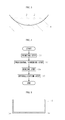
FIG. 2 is a flowchart for illustrating the method of manufacturing a glass bent sheet. -
FIG. 3 is a view for illustrating a bending step. -
FIG. 4 is a flowchart for illustrating a modified example of the method of manufacturing a glass bent sheet. -
FIG. 5 is a schematic sectional view for illustrating a glass bent sheet to be manufactured by the method of manufacturing a glass bent sheet according to the modified example. - A description is made below of an embodiment of the present invention with reference to the drawings.
-
FIG. 1 is a schematic sectional view for illustrating aglass bent sheet 1 to be manufactured by a manufacturing method according to an embodiment of the present invention. Theglass bent sheet 1 is a sheet to be used as a window glass for a combustion device. Theglass bent sheet 1 has a shape in which the entireglass bent sheet 1 is curved in a cross-section along one of vertical and horizontal directions thereof. Theglass bent sheet 1 comprises aglass substrate 2 having a bent sheet shape and a light-shielding layer 3 formed on at least a part of front and back surfaces of theglass substrate 2. - The thickness of the
glass substrate 2 is, for example, from 3 mm to 8 mm, preferably from 4 mm to 5 mm. When the thickness of theglass substrate 2 is less than 3 mm, there is a risk in that the strength may become insufficient. When the thickness of theglass substrate 2 is more than 8 mm, there is a risk in that a manufacturing cost may increase. - The
glass substrate 2 is formed of a Li2O-Al2O3-SiO2-based (hereinafter referred to as "LAS-based") crystallized glass containing an alkali metal oxide. More specifically, theglass substrate 2 comprises as a composition, in terms of mass%, 55% to 75% of SiO2, 20.5% to 27% of Al2O3, 2% to 19.1% of Li2O, 1.5% to 3% of TiO2, 3.8% to 5% of TiO2+ZrO2, 0.1% to 0.5% of SnO2, and 0% to 1% of V2O5 and comprises a β-quartz solid solution as a main crystal for crystallization. With such composition, theglass substrate 2 is not deformed easily and hence can be used in a window for a combustion device. - It is preferred that the thermal expansion coefficient at from 30°C to 380°C of the glass substrate 2 (after crystallization) be from -1×10⁻⁷/°C to 12×10-7/°C, and it is more preferred that the thermal expansion coefficient at from 30°C to 750°C of the glass substrate 2 (after crystallization) be from -1×10⁻⁷/°C to 15×10-7/°C. With such thermal expansion coefficient, the
glass substrate 2 is not deformed easily and hence can be used in a window for a combustion device. - The light-
shielding layer 3 comprises inorganic pigment powder as a pigment and glass powder. The content of each powder in the light-shielding layer 3 is as described below. The content of the inorganic pigment powder in the light-shielding layer 3 is, for example, from 30 wt% to 50 wt%, preferably from 40 wt% to 50 wt%, and the content of the glass powder in the light-shieling layer 3 is, for example, from 50 wt% to 70 wt%, preferably from 50 wt% to 60 wt%. When the content of the inorganic pigment powder is less than 30 wt%, there is a risk in that cracks may occur in the light-shielding layer 3 when heat treatment is performed for forming the light-shielding layer 3, or when heating and cooling are repeated in use as a window glass for a combustion device. Further, a light-shielding property is not obtained easily. Meanwhile, when the content of the inorganic pigment powder is more than 50 wt%, the light-shielding layer 3 becomes porous, and hence there is a risk in that smear may occur when water, an adhesive, or the like adheres to the light-shielding layer 3. - The thickness of the light-
shielding layer 3 is, for example, from 1 µm to 10 µm, preferably from 2 µm to 5 µm. When the thickness of the light-shielding layer 3 is less than 1 µm, there is a risk in that a light-shielding property may become insufficient. Meanwhile, when the thickness of the light-shielding layer 3 is more than 10 µm, there is a risk in that cracks may occur in a manufacturing step or at a time of use of a combustion device. Further, the occurrence of the cracks may cause smear. - As the inorganic pigment powder, aCo-basedblackpigment, a Cr-Cu-Mn-Mo-based black pigment, a Ti-based white pigment, and the like can be used.
- The Cr-Cu-Mn-Mo-based inorganic pigment powder comprises as a composition, in terms of mass%, 48% to 72% of a Cr compound, 25% to 45% of a Cu compound, 3% to 5% of a Mn compound, and 0% to 3% of a Mo compound.
- As the glass powder, B2O3-SiO2-based glass, Na2O-CaO-SiO2-based glass, Li2O-Al2O3-SiO2-based glass, and the like can be used.
- The B2O3-SiO2-based glass powder comprises as a composition, in terms of mass%, 59% to 66.3% of SiO2, 18% to 20% of B2O3, 5.5% to 7.5% of Al2O3, 5.5% to 6.5% of Na2O, 2.5% to 3.5% of BaO, 1.5% to 2.5% of K2O, and 0.7% to 1.0% of L2O.
- Next, the method of manufacturing the glass
bent sheet 1 according to the embodiment of the present invention is described with reference to a flowchart ofFIG. 2 . - The method of manufacturing the glass
bent sheet 1 comprises a printing step S1, a provisional sintering step S2, and a crystallization step S3. In this case, a bending step is performed in the crystallization step S3. - In the printing step S1, a paste including glass powder that contains an alkali metal oxide as a component and a pigment is printed onto the flat sheet-shaped
glass substrate 2 formed of a LAS-based glass before crystallization (hereinafter referred to as "crystallizable glass"). - More specifically, first, the flat sheet-shaped
glass substrate 2 formed of a LAS-based crystallizable glass is prepared. Further, inorganic pigment powder as a pigment and glass powder are mixed, and an organic solvent or the like is added to the mixture to provide a paste. The obtained paste is printed onto the surface of the flat sheet-shapedglass substrate 2. There is no particular limitation on a printing method, and for example, screen printing or transfer printing can be used. The screen printing is preferred because the light-shielding layer 3 having uniform thickness can be formed easily and efficiently. - In the provisional sintering step S2, which is performed after the printing step S1 and before the crystallization step S3, the paste is provisionally sintered by heating the flat sheet-shaped
glass substrate 2 having the paste printed thereon at a temperature equal to or higher than a softening point of the glass powder plus 20°C and lower than the highest heating temperature in the crystallization step S3. Through heating in the provisional sintering step S2, the paste is sintered to form the light-shielding layer 3. - Specifically, the provisional sintering step S2 is performed through heating at from 700°C to 760°C in a heating furnace. When the heating temperature in the provisional sintering step S2 is lower than 700°C, the reaction of the alkali metal oxide of the glass powder or the crystallizable glass occurs before the glass powder is dissolved to generate β-spodumene on the surface of the glass in the provisional sintering step S2, and the pigment does not flow easily on the surface of the glass due to the β-spodumene. When the heating temperature in the provisional sintering step S2 is higher than 760°C, the crystallization of the glass starts, and it becomes difficult to perform bending work in the later bending step.
- In the provisional sintering step S2, it is not necessarily required to heat the
entire glass substrate 2 having the paste printed thereon in the heating furnace or the like, and the periphery of a portion having the paste printed thereon may be locally heated. - The crystallization step S3 is performed in the heating furnace. In addition, the bending step is performed in a part of the crystallization step S3. That is, in the crystallization step S3, the bending work is performed by heating the flat sheet-shaped
glass substrate 2 having the paste printed thereon, and simultaneously, the crystallizable glass is crystallized by heating. - More specifically, a region having a relatively low heating temperature (low-temperature region) and a region having a relatively high heating temperature (high-temperature region) are arranged in the heating furnace. The heating furnace is configured so that the
glass substrate 2 to be heated moves from the low-temperature region to the high-temperature region. In the low-temperature region, theglass substrate 2 is subjected to the bending work, and a crystal nucleus of a β-quartz solid solution is formed in theglass substrate 2. Then, the growth of the crystal of the β-quartz solid solution is accelerated in the high-temperature region, with the result that theglass substrate 2 is crystallized. - For the bending step, as represented by the solid line in
FIG. 3 , the flat sheet-shapedglass substrate 2 having the paste printed thereon is placed in the heating furnace in a state of being mounted on a refractory 4 serving as a mold. Then, as represented by the dotted line inFIG. 3 , theglass substrate 2 is curved into a shape following the mold in the low-temperature region in the heating furnace. Thus, theglass substrate 2 is subjected to the bending work. - The highest heating temperature in the heating furnace is, for example, from 850°C to 950°C, preferably from 870°C to 930°C. When the heating temperature in the heating furnace is lower than 850°C, there is a risk in that the crystallization of the crystallizable glass may not be performed sufficiently. When the heating temperature in the heating furnace is higher than 950°C, there is a risk in that a manufacturing cost may increase.
- In the foregoing description, the bending step is performed in a part of the crystallization step S3. However, the present invention is not limited thereto, and a bending step S4 may be performed separately from the crystallization step S3 as illustrated in
FIG. 4 . - Such manufacturing method is adopted, for example, when the glass
bent sheet 1 to be manufactured has a bent portion 1a as illustrated inFIG. 5 . In this case, in the bending step S4, the bending work is performed by local heating. That is, in the bending step S4, the periphery of a portion to become the bent portion 1a in the flat sheet-shapedglass substrate 2 having the paste printed thereon is bent by local heating to form the bent portion 1a. Then, in the crystallizations step S3, theglass substrate 2 having the bent portion 1a formed therein is heated in the heating furnace to be crystallized. The other points are the same as those illustrated inFIG. 2 , and hence the description thereof is omitted. - In the method of manufacturing the glass
bent sheet 1 according to the embodiment of the present invention configured as described above, the following effects can be exhibited. - The method comprises the provisional sintering step S2 of heating the paste after the printing step S1 and before the bending step S4 and the crystallization step S3. In addition, in the provisional sintering step S2, the paste is heated at a temperature equal to or higher than the softening point of the glass powder plus 20°C. Thus, in the provisional sintering step S2, the glass powder is dissolved immediately. With this, in the provisional sintering step S2, the reaction of the alkali metal oxide of the glass powder or the crystallizable glass is suppressed, and the generation of a crystal of β-spodumene is suppressed. Therefore, in the provisional sintering step S2, the glass powder flows easily, and the pigment is dissolved easily in the glass powder. As a result, the color of the light-
shielding layer 3 to be formed can exhibit an original color of the pigment. That is, in the method of manufacturing the glassbent sheet 1 according to this embodiment, thebent sheet 1 of the crystallized glass, in which the formed light-shielding layer 3 exhibits the original color of the pigment, can be manufactured. - Further, in the provisional sintering step S2, the paste is heated at a temperature lower than the highest heating temperature in the crystallization step S3. With this, the crystallization of the crystallizable glass of the
glass substrate 2 is suppressed in the provisional sintering step S2. Thus, the situation in which theglass substrate 2 cannot be subjected to the bending work in the crystallization step S3 and the bending step S4 after the provisional sintering step S2 can be avoided. - The inventors of the present application produced a window glass for a combustion device by changing the heating temperature in provisional sintering (provisional sintering temperature) in the method of manufacturing a glass bent sheet according to the present invention and evaluated the characteristics thereof.
- First, a commercially available black inorganic pigment (Co-based) and B2O3-SiO2-based glass powder (content of B2O3: 19mass%, content of SiO2: 63 mass%) having a softening point of 675°C were mixed in a mass ratio of 1:1, and a resin and an organic solvent were added to the mixture to produce a paste.
- Next, the paste was screen-printed onto a crystallizable glass substrate having dimensions of 1,000×1, 000x4.5 mm. Then, the paste was provisionally sintered at a temperature shown in Tables 1 and 2 for 30 minutes and sintered at 870°C to perform bending work and crystallization, to thereby provide a window glass for a combustion device (Examples 1 to 6, Comparative Examples 2 to 4). Further, as Comparative Example 1, a window glass for a combustion device was produced in the same steps except that provisional sintering was not performed.
- Each of the obtained window glasses for a combustion device was evaluated for each item of crystal growth, color, and bending workability by the following method. The evaluation results of Examples are shown in Table 1, and the evaluation results of Comparative Examples are shown in Table 2.
- The crystal growth was evaluated by subjecting the obtained printed portion to XRD measurement. The case where a peak of β-spodumene was observed was evaluated as "×", and the case where a peak of β-spodumene was not observed was evaluated as "○".
- The color was evaluated by observation with the naked eye. The case where an original color of the used inorganic pigment powder (black) was exhibited was evaluated as "○", and the case where discoloration occurred and a color different from the original color was exhibited was evaluated as "×".
- The bending workability wasevaluated asdescribed below. The case where a satisfactory product ratio when 30 sheets of each sample were subjected to the bending work was 90% or more was evaluated as "○". The case where the satisfactory product ratio was 70% or more and less than 90% was evaluated as "Δ". The case where the satisfactory product ratio was less than 70% was evaluated as "×". Whether or not a product was satisfactory was determined as described below. That is, a product satisfying the following conditions was evaluated as a satisfactory product: with respect to a predetermined product shape, the dimension shape in the case where a glass was subjected to bending work so as to follow a mold having an arc-like cross-section in sintering at 870°C had an arc length of ±2.0 mm, and the entire height in the case where the glass was placed so that the curved surface was arranged in a vertical direction fell within an error range of ±1.5 mm.
Table 1 Example 1 Example 2 Example 3 Example 4 Example 5 Example 6 Provisional sintering temperature (°C) 700 720 740 760 780 800 Crystal growth ○ ○ ○ ○ ○ ○ Color ○ ○ ○ ○ ○ ○ Bending workability ○ ○ ○ ○ Δ Δ Table 2 Comparative Example 1 Comparative Example 2 Comparative Example 3 Comparative Example 4 Provisional sintering temperature (°C) - 640 660 680 Crystal growth × × × × Color × × × × Bending workability ○ ○ ○ ○ - In the window glass for a combustion device of each of Examples 1 to 4, a peak of β-spodumene was not observed, a black color was exhibited, and bending workability was satisfactory. In the window glass for a combustion device of each of Examples 5 and 6, a black color was exhibited, but bending workability was not sufficient. It is considered that the crystallization of the glass proceeded, and hence the glass was not bent sufficiently.
- Meanwhile, in the window glass for a combustion device of each of Comparative Examples 1 to 4, a black color was not exhibited.
- The present invention is not limited to the foregoing description and various modifications may be made within the scope of the technical concept of the present invention. For example, in the foregoing description, the glass bent sheet manufactured by the manufacturing method of the present invention is used as a window glass for a combustion device. However, the present invention is not limited thereto, and for example, the glass bent sheet may be used as a fireproof window, equipment for cooking with heat, or the like.
Claims (5)
- A method of manufacturing a glass bent sheet, comprising:printing a paste including glass powder that contains an alkali metal oxide as a component and a pigment onto a flat sheet-shaped glass substrate formed of a LAS-based crystallizable glass;performing bending work to the glass substrate having the paste printed thereon by heating; andcrystallizing the crystallizable glass by heating,the method further comprising, after the printing and before the performing bending work and the crystallizing, provisionally sintering the paste printed onto the glass substrate by heating at a temperature equal to or higher than a softening point of the glass powder plus 20°C and lower than a highest heating temperature in the crystallizing.
- The method of manufacturing a glass bent sheet according to claim 1, wherein the heating temperature in the provisionally sintering is from 700°C to 760°C.
- The method of manufacturing a glass bent sheet according to claim 1 or 2, wherein the crystallizable glass comprises as a composition, in terms of mass%, 55% to 75% of SiO2, 20.5% to 27% of Al2O3, 2% or more of Li2O, 1.5% to 3% of TiO2, 3.8% to 5% of TiO2+ZrO2, 0.1% to 0.5% of SnO2, and 0% to 1% of V2O5.
- The method of manufacturing a glass bent sheet according to any one of claims 1 to 3, wherein the pigment comprises a Co-based black pigment.
- The method of manufacturing a glass bent sheet according to any one of claims 1 to 4, wherein the glass powder is formed of a B2O3-SiO2-based glass.
Applications Claiming Priority (1)
| Application Number | Priority Date | Filing Date | Title |
|---|---|---|---|
| JP2015153370A JP6471865B2 (en) | 2015-08-03 | 2015-08-03 | Manufacturing method of glass curved plate |
Publications (2)
| Publication Number | Publication Date |
|---|---|
| EP3127877A1 true EP3127877A1 (en) | 2017-02-08 |
| EP3127877B1 EP3127877B1 (en) | 2018-12-19 |
Family
ID=56411530
Family Applications (1)
| Application Number | Title | Priority Date | Filing Date |
|---|---|---|---|
| EP16179455.7A Active EP3127877B1 (en) | 2015-08-03 | 2016-07-14 | Method of manufacturing a bent glass-ceramic sheet |
Country Status (2)
| Country | Link |
|---|---|
| EP (1) | EP3127877B1 (en) |
| JP (1) | JP6471865B2 (en) |
Citations (6)
| Publication number | Priority date | Publication date | Assignee | Title |
|---|---|---|---|---|
| US20020148255A1 (en) * | 2001-04-11 | 2002-10-17 | Robert Vandal | Method of making a vehicle window with opaque layer |
| US6517943B1 (en) * | 1998-08-13 | 2003-02-11 | Eurokera | Decorated glass-ceramic plate |
| JP2007039294A (en) | 2005-08-05 | 2007-02-15 | Nippon Electric Glass Co Ltd | Glass composition for decoration and crystallized glass substrate for decoration |
| JP2010096390A (en) | 2008-10-15 | 2010-04-30 | Nippon Electric Glass Co Ltd | Window glass for combustion apparatus |
| US20110154857A1 (en) * | 2007-02-05 | 2011-06-30 | Holger Waldschmidt | Method of making a coated three-dimensionally shaped glass ceramic body, especially a fireplace or oven viewing window pane |
| EP2806215A1 (en) * | 2012-01-19 | 2014-11-26 | Nippon Electric Glass Co., Ltd. | Windowpane for combustion apparatuses |
Family Cites Families (4)
| Publication number | Priority date | Publication date | Assignee | Title |
|---|---|---|---|---|
| JP3342114B2 (en) * | 1992-12-18 | 2002-11-05 | 旭硝子株式会社 | Ceramic color composition and method for producing curved glass plate using the same |
| DE19721737C1 (en) * | 1997-05-24 | 1998-11-12 | Schott Glas | Lead- and cadmium-free glass composition for glazing, enamelling and decorating glasses or glass ceramics as well as processes for the production of a glass ceramic coated with them |
| JP5131664B2 (en) * | 2008-09-24 | 2013-01-30 | 中島産業株式会社 | Black pigment, method for producing the same, black ceramic paste using the same, and plate glass product using the same |
| DE102010032113B9 (en) * | 2010-07-23 | 2017-06-22 | Schott Ag | Transparent or transparent colored lithium aluminum silicate glass-ceramic with adjustable thermal expansion and its use |
-
2015
- 2015-08-03 JP JP2015153370A patent/JP6471865B2/en active Active
-
2016
- 2016-07-14 EP EP16179455.7A patent/EP3127877B1/en active Active
Patent Citations (6)
| Publication number | Priority date | Publication date | Assignee | Title |
|---|---|---|---|---|
| US6517943B1 (en) * | 1998-08-13 | 2003-02-11 | Eurokera | Decorated glass-ceramic plate |
| US20020148255A1 (en) * | 2001-04-11 | 2002-10-17 | Robert Vandal | Method of making a vehicle window with opaque layer |
| JP2007039294A (en) | 2005-08-05 | 2007-02-15 | Nippon Electric Glass Co Ltd | Glass composition for decoration and crystallized glass substrate for decoration |
| US20110154857A1 (en) * | 2007-02-05 | 2011-06-30 | Holger Waldschmidt | Method of making a coated three-dimensionally shaped glass ceramic body, especially a fireplace or oven viewing window pane |
| JP2010096390A (en) | 2008-10-15 | 2010-04-30 | Nippon Electric Glass Co Ltd | Window glass for combustion apparatus |
| EP2806215A1 (en) * | 2012-01-19 | 2014-11-26 | Nippon Electric Glass Co., Ltd. | Windowpane for combustion apparatuses |
Also Published As
| Publication number | Publication date |
|---|---|
| EP3127877B1 (en) | 2018-12-19 |
| JP2017031010A (en) | 2017-02-09 |
| JP6471865B2 (en) | 2019-02-20 |
Similar Documents
| Publication | Publication Date | Title |
|---|---|---|
| DE102014014322B4 (en) | Tellurate-Fügeglas with processing temperatures ≦ 400 ° C. | |
| US8178453B2 (en) | Non-lead glass | |
| DE60016461T2 (en) | METHOD FOR TREATING GLASSES AND GLASSES FOR PREPARING DISPLAY TOUCHS | |
| EP2135316B1 (en) | Sealing materials, a solid oxide fuel cell utilizing such materials and methods of making the same | |
| JP2738036B2 (en) | Glass composition for substrates | |
| US8507392B2 (en) | LAS-type float glass | |
| EP2607326B1 (en) | Alkali-free glass | |
| EP3392217B1 (en) | Chemically resistant glass and its use | |
| EP2284131A1 (en) | Crystallizable glass and crystallized glass obtained by crystallizing the same | |
| EP2816018B1 (en) | Vitreous or at least partially crystalline material for jointing and its use | |
| WO2015108013A1 (en) | Composite powder and paste of composite powder | |
| EP2368859A1 (en) | Durable glass enamel composition | |
| CN112969668A (en) | Low temperature fired lead-free glass frit and paste and vacuum glass assembly using the same | |
| EP3878825A1 (en) | Transparent coloured lithium aluminium silicate glass ceramic with matched thermal expansion and its use | |
| EP2657200A1 (en) | Li2O-A12O3-SiO2 CHRYSTALLIZABLE GLASS AND Li2O-A12O3-SiO2 CRYSTALLISED GLASS OBTAINED BY CHRYTALLIZING SAME | |
| KR20140125780A (en) | Coefficient of thermal expansion filler for vanadium-based frit materials and/or methods of making and/or using the same | |
| JP4347796B2 (en) | Durable glass enamel composition | |
| US7161117B2 (en) | Window glass for vehicles equipped with a conductor and its production process | |
| JP6260770B2 (en) | Glass, glass powder, composite powder and glass plate with colored layer | |
| JPH06234547A (en) | Ceramic color composition and production of curved glass plate using the same | |
| EP3127877B1 (en) | Method of manufacturing a bent glass-ceramic sheet | |
| JP2004269322A (en) | Ceramic color composition, ceramic color paste, method for producing glass plate with ceramic color layer | |
| TWI498304B (en) | Alkali-free glass and method for manufacturing the same | |
| WO2024213548A1 (en) | Glass-ceramic materials and frit compositions for enamel coatings | |
| JP2000154038A (en) | Method for producing ceramic color composition and curved glass plate |
Legal Events
| Date | Code | Title | Description |
|---|---|---|---|
| PUAI | Public reference made under article 153(3) epc to a published international application that has entered the european phase |
Free format text: ORIGINAL CODE: 0009012 |
|
| STAA | Information on the status of an ep patent application or granted ep patent |
Free format text: STATUS: THE APPLICATION HAS BEEN PUBLISHED |
|
| AK | Designated contracting states |
Kind code of ref document: A1 Designated state(s): AL AT BE BG CH CY CZ DE DK EE ES FI FR GB GR HR HU IE IS IT LI LT LU LV MC MK MT NL NO PL PT RO RS SE SI SK SM TR |
|
| AX | Request for extension of the european patent |
Extension state: BA ME |
|
| STAA | Information on the status of an ep patent application or granted ep patent |
Free format text: STATUS: REQUEST FOR EXAMINATION WAS MADE |
|
| 17P | Request for examination filed |
Effective date: 20170424 |
|
| RBV | Designated contracting states (corrected) |
Designated state(s): AL AT BE BG CH CY CZ DE DK EE ES FI FR GB GR HR HU IE IS IT LI LT LU LV MC MK MT NL NO PL PT RO RS SE SI SK SM TR |
|
| STAA | Information on the status of an ep patent application or granted ep patent |
Free format text: STATUS: EXAMINATION IS IN PROGRESS |
|
| 17Q | First examination report despatched |
Effective date: 20171220 |
|
| GRAP | Despatch of communication of intention to grant a patent |
Free format text: ORIGINAL CODE: EPIDOSNIGR1 |
|
| STAA | Information on the status of an ep patent application or granted ep patent |
Free format text: STATUS: GRANT OF PATENT IS INTENDED |
|
| INTG | Intention to grant announced |
Effective date: 20180926 |
|
| RIN1 | Information on inventor provided before grant (corrected) |
Inventor name: KANAZAWA, TOSHIAKI Inventor name: TSUCHIYA, TAKESHI |
|
| GRAS | Grant fee paid |
Free format text: ORIGINAL CODE: EPIDOSNIGR3 |
|
| GRAA | (expected) grant |
Free format text: ORIGINAL CODE: 0009210 |
|
| STAA | Information on the status of an ep patent application or granted ep patent |
Free format text: STATUS: THE PATENT HAS BEEN GRANTED |
|
| AK | Designated contracting states |
Kind code of ref document: B1 Designated state(s): AL AT BE BG CH CY CZ DE DK EE ES FI FR GB GR HR HU IE IS IT LI LT LU LV MC MK MT NL NO PL PT RO RS SE SI SK SM TR |
|
| REG | Reference to a national code |
Ref country code: GB Ref legal event code: FG4D |
|
| REG | Reference to a national code |
Ref country code: CH Ref legal event code: EP |
|
| REG | Reference to a national code |
Ref country code: IE Ref legal event code: FG4D |
|
| REG | Reference to a national code |
Ref country code: DE Ref legal event code: R096 Ref document number: 602016008365 Country of ref document: DE |
|
| REG | Reference to a national code |
Ref country code: AT Ref legal event code: REF Ref document number: 1078510 Country of ref document: AT Kind code of ref document: T Effective date: 20190115 |
|
| REG | Reference to a national code |
Ref country code: NL Ref legal event code: MP Effective date: 20181219 |
|
| PG25 | Lapsed in a contracting state [announced via postgrant information from national office to epo] |
Ref country code: HR Free format text: LAPSE BECAUSE OF FAILURE TO SUBMIT A TRANSLATION OF THE DESCRIPTION OR TO PAY THE FEE WITHIN THE PRESCRIBED TIME-LIMIT Effective date: 20181219 Ref country code: LT Free format text: LAPSE BECAUSE OF FAILURE TO SUBMIT A TRANSLATION OF THE DESCRIPTION OR TO PAY THE FEE WITHIN THE PRESCRIBED TIME-LIMIT Effective date: 20181219 Ref country code: BG Free format text: LAPSE BECAUSE OF FAILURE TO SUBMIT A TRANSLATION OF THE DESCRIPTION OR TO PAY THE FEE WITHIN THE PRESCRIBED TIME-LIMIT Effective date: 20190319 Ref country code: NO Free format text: LAPSE BECAUSE OF FAILURE TO SUBMIT A TRANSLATION OF THE DESCRIPTION OR TO PAY THE FEE WITHIN THE PRESCRIBED TIME-LIMIT Effective date: 20190319 Ref country code: FI Free format text: LAPSE BECAUSE OF FAILURE TO SUBMIT A TRANSLATION OF THE DESCRIPTION OR TO PAY THE FEE WITHIN THE PRESCRIBED TIME-LIMIT Effective date: 20181219 Ref country code: LV Free format text: LAPSE BECAUSE OF FAILURE TO SUBMIT A TRANSLATION OF THE DESCRIPTION OR TO PAY THE FEE WITHIN THE PRESCRIBED TIME-LIMIT Effective date: 20181219 |
|
| REG | Reference to a national code |
Ref country code: LT Ref legal event code: MG4D |
|
| REG | Reference to a national code |
Ref country code: AT Ref legal event code: MK05 Ref document number: 1078510 Country of ref document: AT Kind code of ref document: T Effective date: 20181219 |
|
| PG25 | Lapsed in a contracting state [announced via postgrant information from national office to epo] |
Ref country code: RS Free format text: LAPSE BECAUSE OF FAILURE TO SUBMIT A TRANSLATION OF THE DESCRIPTION OR TO PAY THE FEE WITHIN THE PRESCRIBED TIME-LIMIT Effective date: 20181219 Ref country code: GR Free format text: LAPSE BECAUSE OF FAILURE TO SUBMIT A TRANSLATION OF THE DESCRIPTION OR TO PAY THE FEE WITHIN THE PRESCRIBED TIME-LIMIT Effective date: 20190320 Ref country code: SE Free format text: LAPSE BECAUSE OF FAILURE TO SUBMIT A TRANSLATION OF THE DESCRIPTION OR TO PAY THE FEE WITHIN THE PRESCRIBED TIME-LIMIT Effective date: 20181219 Ref country code: AL Free format text: LAPSE BECAUSE OF FAILURE TO SUBMIT A TRANSLATION OF THE DESCRIPTION OR TO PAY THE FEE WITHIN THE PRESCRIBED TIME-LIMIT Effective date: 20181219 |
|
| PG25 | Lapsed in a contracting state [announced via postgrant information from national office to epo] |
Ref country code: NL Free format text: LAPSE BECAUSE OF FAILURE TO SUBMIT A TRANSLATION OF THE DESCRIPTION OR TO PAY THE FEE WITHIN THE PRESCRIBED TIME-LIMIT Effective date: 20181219 |
|
| PG25 | Lapsed in a contracting state [announced via postgrant information from national office to epo] |
Ref country code: PL Free format text: LAPSE BECAUSE OF FAILURE TO SUBMIT A TRANSLATION OF THE DESCRIPTION OR TO PAY THE FEE WITHIN THE PRESCRIBED TIME-LIMIT Effective date: 20181219 Ref country code: CZ Free format text: LAPSE BECAUSE OF FAILURE TO SUBMIT A TRANSLATION OF THE DESCRIPTION OR TO PAY THE FEE WITHIN THE PRESCRIBED TIME-LIMIT Effective date: 20181219 Ref country code: IT Free format text: LAPSE BECAUSE OF FAILURE TO SUBMIT A TRANSLATION OF THE DESCRIPTION OR TO PAY THE FEE WITHIN THE PRESCRIBED TIME-LIMIT Effective date: 20181219 Ref country code: ES Free format text: LAPSE BECAUSE OF FAILURE TO SUBMIT A TRANSLATION OF THE DESCRIPTION OR TO PAY THE FEE WITHIN THE PRESCRIBED TIME-LIMIT Effective date: 20181219 Ref country code: PT Free format text: LAPSE BECAUSE OF FAILURE TO SUBMIT A TRANSLATION OF THE DESCRIPTION OR TO PAY THE FEE WITHIN THE PRESCRIBED TIME-LIMIT Effective date: 20190419 |
|
| PG25 | Lapsed in a contracting state [announced via postgrant information from national office to epo] |
Ref country code: RO Free format text: LAPSE BECAUSE OF FAILURE TO SUBMIT A TRANSLATION OF THE DESCRIPTION OR TO PAY THE FEE WITHIN THE PRESCRIBED TIME-LIMIT Effective date: 20181219 Ref country code: IS Free format text: LAPSE BECAUSE OF FAILURE TO SUBMIT A TRANSLATION OF THE DESCRIPTION OR TO PAY THE FEE WITHIN THE PRESCRIBED TIME-LIMIT Effective date: 20190419 Ref country code: EE Free format text: LAPSE BECAUSE OF FAILURE TO SUBMIT A TRANSLATION OF THE DESCRIPTION OR TO PAY THE FEE WITHIN THE PRESCRIBED TIME-LIMIT Effective date: 20181219 Ref country code: SM Free format text: LAPSE BECAUSE OF FAILURE TO SUBMIT A TRANSLATION OF THE DESCRIPTION OR TO PAY THE FEE WITHIN THE PRESCRIBED TIME-LIMIT Effective date: 20181219 Ref country code: SK Free format text: LAPSE BECAUSE OF FAILURE TO SUBMIT A TRANSLATION OF THE DESCRIPTION OR TO PAY THE FEE WITHIN THE PRESCRIBED TIME-LIMIT Effective date: 20181219 |
|
| REG | Reference to a national code |
Ref country code: DE Ref legal event code: R097 Ref document number: 602016008365 Country of ref document: DE |
|
| PLBE | No opposition filed within time limit |
Free format text: ORIGINAL CODE: 0009261 |
|
| STAA | Information on the status of an ep patent application or granted ep patent |
Free format text: STATUS: NO OPPOSITION FILED WITHIN TIME LIMIT |
|
| PG25 | Lapsed in a contracting state [announced via postgrant information from national office to epo] |
Ref country code: AT Free format text: LAPSE BECAUSE OF FAILURE TO SUBMIT A TRANSLATION OF THE DESCRIPTION OR TO PAY THE FEE WITHIN THE PRESCRIBED TIME-LIMIT Effective date: 20181219 Ref country code: DK Free format text: LAPSE BECAUSE OF FAILURE TO SUBMIT A TRANSLATION OF THE DESCRIPTION OR TO PAY THE FEE WITHIN THE PRESCRIBED TIME-LIMIT Effective date: 20181219 |
|
| 26N | No opposition filed |
Effective date: 20190920 |
|
| PG25 | Lapsed in a contracting state [announced via postgrant information from national office to epo] |
Ref country code: MC Free format text: LAPSE BECAUSE OF FAILURE TO SUBMIT A TRANSLATION OF THE DESCRIPTION OR TO PAY THE FEE WITHIN THE PRESCRIBED TIME-LIMIT Effective date: 20181219 Ref country code: SI Free format text: LAPSE BECAUSE OF FAILURE TO SUBMIT A TRANSLATION OF THE DESCRIPTION OR TO PAY THE FEE WITHIN THE PRESCRIBED TIME-LIMIT Effective date: 20181219 |
|
| REG | Reference to a national code |
Ref country code: CH Ref legal event code: PL |
|
| PG25 | Lapsed in a contracting state [announced via postgrant information from national office to epo] |
Ref country code: TR Free format text: LAPSE BECAUSE OF FAILURE TO SUBMIT A TRANSLATION OF THE DESCRIPTION OR TO PAY THE FEE WITHIN THE PRESCRIBED TIME-LIMIT Effective date: 20181219 |
|
| REG | Reference to a national code |
Ref country code: BE Ref legal event code: MM Effective date: 20190731 |
|
| PG25 | Lapsed in a contracting state [announced via postgrant information from national office to epo] |
Ref country code: LI Free format text: LAPSE BECAUSE OF NON-PAYMENT OF DUE FEES Effective date: 20190731 Ref country code: LU Free format text: LAPSE BECAUSE OF NON-PAYMENT OF DUE FEES Effective date: 20190714 Ref country code: BE Free format text: LAPSE BECAUSE OF NON-PAYMENT OF DUE FEES Effective date: 20190731 Ref country code: CH Free format text: LAPSE BECAUSE OF NON-PAYMENT OF DUE FEES Effective date: 20190731 |
|
| PG25 | Lapsed in a contracting state [announced via postgrant information from national office to epo] |
Ref country code: IE Free format text: LAPSE BECAUSE OF NON-PAYMENT OF DUE FEES Effective date: 20190714 |
|
| GBPC | Gb: european patent ceased through non-payment of renewal fee |
Effective date: 20200714 |
|
| PG25 | Lapsed in a contracting state [announced via postgrant information from national office to epo] |
Ref country code: GB Free format text: LAPSE BECAUSE OF NON-PAYMENT OF DUE FEES Effective date: 20200714 |
|
| PG25 | Lapsed in a contracting state [announced via postgrant information from national office to epo] |
Ref country code: CY Free format text: LAPSE BECAUSE OF FAILURE TO SUBMIT A TRANSLATION OF THE DESCRIPTION OR TO PAY THE FEE WITHIN THE PRESCRIBED TIME-LIMIT Effective date: 20181219 |
|
| PG25 | Lapsed in a contracting state [announced via postgrant information from national office to epo] |
Ref country code: MT Free format text: LAPSE BECAUSE OF FAILURE TO SUBMIT A TRANSLATION OF THE DESCRIPTION OR TO PAY THE FEE WITHIN THE PRESCRIBED TIME-LIMIT Effective date: 20181219 Ref country code: HU Free format text: LAPSE BECAUSE OF FAILURE TO SUBMIT A TRANSLATION OF THE DESCRIPTION OR TO PAY THE FEE WITHIN THE PRESCRIBED TIME-LIMIT; INVALID AB INITIO Effective date: 20160714 |
|
| PG25 | Lapsed in a contracting state [announced via postgrant information from national office to epo] |
Ref country code: MK Free format text: LAPSE BECAUSE OF FAILURE TO SUBMIT A TRANSLATION OF THE DESCRIPTION OR TO PAY THE FEE WITHIN THE PRESCRIBED TIME-LIMIT Effective date: 20181219 |
|
| P01 | Opt-out of the competence of the unified patent court (upc) registered |
Effective date: 20230418 |
|
| PGFP | Annual fee paid to national office [announced via postgrant information from national office to epo] |
Ref country code: FR Payment date: 20250610 Year of fee payment: 10 |
|
| PGFP | Annual fee paid to national office [announced via postgrant information from national office to epo] |
Ref country code: DE Payment date: 20250528 Year of fee payment: 10 |