EP3127554A1 - Medicine for suppressing malignant tumor metastasis - Google Patents
Medicine for suppressing malignant tumor metastasis Download PDFInfo
- Publication number
- EP3127554A1 EP3127554A1 EP15773890.7A EP15773890A EP3127554A1 EP 3127554 A1 EP3127554 A1 EP 3127554A1 EP 15773890 A EP15773890 A EP 15773890A EP 3127554 A1 EP3127554 A1 EP 3127554A1
- Authority
- EP
- European Patent Office
- Prior art keywords
- amino
- malonamide
- metastasis
- medicament
- malignant tumor
- Prior art date
- Legal status (The legal status is an assumption and is not a legal conclusion. Google has not performed a legal analysis and makes no representation as to the accuracy of the status listed.)
- Withdrawn
Links
- 0 C[*@]([C@]1[C@](C)C1)C=C1[C@]2[C@](*)CC(C)[C@@]2C1 Chemical compound C[*@]([C@]1[C@](C)C1)C=C1[C@]2[C@](*)CC(C)[C@@]2C1 0.000 description 26
- DEEOTNHVUVRBES-UHFFFAOYSA-N C=CC1C2=CCCCC12 Chemical compound C=CC1C2=CCCCC12 DEEOTNHVUVRBES-UHFFFAOYSA-N 0.000 description 1
- ATZVODBHQATWOA-UHFFFAOYSA-N CC(C)S(C1=CCCC=C1)(=O)=O Chemical compound CC(C)S(C1=CCCC=C1)(=O)=O ATZVODBHQATWOA-UHFFFAOYSA-N 0.000 description 1
- SNVWIJIMNHKGCX-HNNXBMFYSA-N CCC(CC1)CCN1[C@H](C1)Sc2c1cccc2 Chemical compound CCC(CC1)CCN1[C@H](C1)Sc2c1cccc2 SNVWIJIMNHKGCX-HNNXBMFYSA-N 0.000 description 1
- GAEUYJVHVCEFHP-UHFFFAOYSA-N CCCC1C(CC)CCC1 Chemical compound CCCC1C(CC)CCC1 GAEUYJVHVCEFHP-UHFFFAOYSA-N 0.000 description 1
- QLHHILCFDDDTPU-UHFFFAOYSA-N CCC[O](C)(C)NC Chemical compound CCC[O](C)(C)NC QLHHILCFDDDTPU-UHFFFAOYSA-N 0.000 description 1
Images




Classifications
-
- A—HUMAN NECESSITIES
- A61—MEDICAL OR VETERINARY SCIENCE; HYGIENE
- A61K—PREPARATIONS FOR MEDICAL, DENTAL OR TOILETRY PURPOSES
- A61K31/00—Medicinal preparations containing organic active ingredients
- A61K31/33—Heterocyclic compounds
- A61K31/395—Heterocyclic compounds having nitrogen as a ring hetero atom, e.g. guanethidine or rifamycins
- A61K31/535—Heterocyclic compounds having nitrogen as a ring hetero atom, e.g. guanethidine or rifamycins having six-membered rings with at least one nitrogen and one oxygen as the ring hetero atoms, e.g. 1,2-oxazines
- A61K31/5375—1,4-Oxazines, e.g. morpholine
-
- A—HUMAN NECESSITIES
- A61—MEDICAL OR VETERINARY SCIENCE; HYGIENE
- A61K—PREPARATIONS FOR MEDICAL, DENTAL OR TOILETRY PURPOSES
- A61K31/00—Medicinal preparations containing organic active ingredients
- A61K31/16—Amides, e.g. hydroxamic acids
- A61K31/18—Sulfonamides
-
- A—HUMAN NECESSITIES
- A61—MEDICAL OR VETERINARY SCIENCE; HYGIENE
- A61K—PREPARATIONS FOR MEDICAL, DENTAL OR TOILETRY PURPOSES
- A61K31/00—Medicinal preparations containing organic active ingredients
- A61K31/185—Acids; Anhydrides, halides or salts thereof, e.g. sulfur acids, imidic, hydrazonic or hydroximic acids
- A61K31/19—Carboxylic acids, e.g. valproic acid
- A61K31/195—Carboxylic acids, e.g. valproic acid having an amino group
- A61K31/197—Carboxylic acids, e.g. valproic acid having an amino group the amino and the carboxyl groups being attached to the same acyclic carbon chain, e.g. gamma-aminobutyric acid [GABA], beta-alanine, epsilon-aminocaproic acid or pantothenic acid
-
- A—HUMAN NECESSITIES
- A61—MEDICAL OR VETERINARY SCIENCE; HYGIENE
- A61K—PREPARATIONS FOR MEDICAL, DENTAL OR TOILETRY PURPOSES
- A61K31/00—Medicinal preparations containing organic active ingredients
- A61K31/21—Esters, e.g. nitroglycerine, selenocyanates
- A61K31/215—Esters, e.g. nitroglycerine, selenocyanates of carboxylic acids
- A61K31/216—Esters, e.g. nitroglycerine, selenocyanates of carboxylic acids of acids having aromatic rings, e.g. benactizyne, clofibrate
-
- A—HUMAN NECESSITIES
- A61—MEDICAL OR VETERINARY SCIENCE; HYGIENE
- A61K—PREPARATIONS FOR MEDICAL, DENTAL OR TOILETRY PURPOSES
- A61K31/00—Medicinal preparations containing organic active ingredients
- A61K31/21—Esters, e.g. nitroglycerine, selenocyanates
- A61K31/27—Esters, e.g. nitroglycerine, selenocyanates of carbamic or thiocarbamic acids, meprobamate, carbachol, neostigmine
-
- A—HUMAN NECESSITIES
- A61—MEDICAL OR VETERINARY SCIENCE; HYGIENE
- A61K—PREPARATIONS FOR MEDICAL, DENTAL OR TOILETRY PURPOSES
- A61K31/00—Medicinal preparations containing organic active ingredients
- A61K31/275—Nitriles; Isonitriles
- A61K31/277—Nitriles; Isonitriles having a ring, e.g. verapamil
-
- A—HUMAN NECESSITIES
- A61—MEDICAL OR VETERINARY SCIENCE; HYGIENE
- A61K—PREPARATIONS FOR MEDICAL, DENTAL OR TOILETRY PURPOSES
- A61K31/00—Medicinal preparations containing organic active ingredients
- A61K31/33—Heterocyclic compounds
- A61K31/335—Heterocyclic compounds having oxygen as the only ring hetero atom, e.g. fungichromin
- A61K31/34—Heterocyclic compounds having oxygen as the only ring hetero atom, e.g. fungichromin having five-membered rings with one oxygen as the only ring hetero atom, e.g. isosorbide
- A61K31/341—Heterocyclic compounds having oxygen as the only ring hetero atom, e.g. fungichromin having five-membered rings with one oxygen as the only ring hetero atom, e.g. isosorbide not condensed with another ring, e.g. ranitidine, furosemide, bufetolol, muscarine
-
- A—HUMAN NECESSITIES
- A61—MEDICAL OR VETERINARY SCIENCE; HYGIENE
- A61K—PREPARATIONS FOR MEDICAL, DENTAL OR TOILETRY PURPOSES
- A61K31/00—Medicinal preparations containing organic active ingredients
- A61K31/33—Heterocyclic compounds
- A61K31/335—Heterocyclic compounds having oxygen as the only ring hetero atom, e.g. fungichromin
- A61K31/357—Heterocyclic compounds having oxygen as the only ring hetero atom, e.g. fungichromin having two or more oxygen atoms in the same ring, e.g. crown ethers, guanadrel
-
- A—HUMAN NECESSITIES
- A61—MEDICAL OR VETERINARY SCIENCE; HYGIENE
- A61K—PREPARATIONS FOR MEDICAL, DENTAL OR TOILETRY PURPOSES
- A61K31/00—Medicinal preparations containing organic active ingredients
- A61K31/33—Heterocyclic compounds
- A61K31/335—Heterocyclic compounds having oxygen as the only ring hetero atom, e.g. fungichromin
- A61K31/357—Heterocyclic compounds having oxygen as the only ring hetero atom, e.g. fungichromin having two or more oxygen atoms in the same ring, e.g. crown ethers, guanadrel
- A61K31/36—Compounds containing methylenedioxyphenyl groups, e.g. sesamin
-
- A—HUMAN NECESSITIES
- A61—MEDICAL OR VETERINARY SCIENCE; HYGIENE
- A61K—PREPARATIONS FOR MEDICAL, DENTAL OR TOILETRY PURPOSES
- A61K31/00—Medicinal preparations containing organic active ingredients
- A61K31/33—Heterocyclic compounds
- A61K31/38—Heterocyclic compounds having sulfur as a ring hetero atom
- A61K31/381—Heterocyclic compounds having sulfur as a ring hetero atom having five-membered rings
-
- A—HUMAN NECESSITIES
- A61—MEDICAL OR VETERINARY SCIENCE; HYGIENE
- A61K—PREPARATIONS FOR MEDICAL, DENTAL OR TOILETRY PURPOSES
- A61K31/00—Medicinal preparations containing organic active ingredients
- A61K31/33—Heterocyclic compounds
- A61K31/395—Heterocyclic compounds having nitrogen as a ring hetero atom, e.g. guanethidine or rifamycins
- A61K31/40—Heterocyclic compounds having nitrogen as a ring hetero atom, e.g. guanethidine or rifamycins having five-membered rings with one nitrogen as the only ring hetero atom, e.g. sulpiride, succinimide, tolmetin, buflomedil
-
- A—HUMAN NECESSITIES
- A61—MEDICAL OR VETERINARY SCIENCE; HYGIENE
- A61K—PREPARATIONS FOR MEDICAL, DENTAL OR TOILETRY PURPOSES
- A61K31/00—Medicinal preparations containing organic active ingredients
- A61K31/33—Heterocyclic compounds
- A61K31/395—Heterocyclic compounds having nitrogen as a ring hetero atom, e.g. guanethidine or rifamycins
- A61K31/40—Heterocyclic compounds having nitrogen as a ring hetero atom, e.g. guanethidine or rifamycins having five-membered rings with one nitrogen as the only ring hetero atom, e.g. sulpiride, succinimide, tolmetin, buflomedil
- A61K31/403—Heterocyclic compounds having nitrogen as a ring hetero atom, e.g. guanethidine or rifamycins having five-membered rings with one nitrogen as the only ring hetero atom, e.g. sulpiride, succinimide, tolmetin, buflomedil condensed with carbocyclic rings, e.g. carbazole
-
- A—HUMAN NECESSITIES
- A61—MEDICAL OR VETERINARY SCIENCE; HYGIENE
- A61K—PREPARATIONS FOR MEDICAL, DENTAL OR TOILETRY PURPOSES
- A61K31/00—Medicinal preparations containing organic active ingredients
- A61K31/33—Heterocyclic compounds
- A61K31/395—Heterocyclic compounds having nitrogen as a ring hetero atom, e.g. guanethidine or rifamycins
- A61K31/40—Heterocyclic compounds having nitrogen as a ring hetero atom, e.g. guanethidine or rifamycins having five-membered rings with one nitrogen as the only ring hetero atom, e.g. sulpiride, succinimide, tolmetin, buflomedil
- A61K31/403—Heterocyclic compounds having nitrogen as a ring hetero atom, e.g. guanethidine or rifamycins having five-membered rings with one nitrogen as the only ring hetero atom, e.g. sulpiride, succinimide, tolmetin, buflomedil condensed with carbocyclic rings, e.g. carbazole
- A61K31/4035—Isoindoles, e.g. phthalimide
-
- A—HUMAN NECESSITIES
- A61—MEDICAL OR VETERINARY SCIENCE; HYGIENE
- A61K—PREPARATIONS FOR MEDICAL, DENTAL OR TOILETRY PURPOSES
- A61K31/00—Medicinal preparations containing organic active ingredients
- A61K31/33—Heterocyclic compounds
- A61K31/395—Heterocyclic compounds having nitrogen as a ring hetero atom, e.g. guanethidine or rifamycins
- A61K31/40—Heterocyclic compounds having nitrogen as a ring hetero atom, e.g. guanethidine or rifamycins having five-membered rings with one nitrogen as the only ring hetero atom, e.g. sulpiride, succinimide, tolmetin, buflomedil
- A61K31/403—Heterocyclic compounds having nitrogen as a ring hetero atom, e.g. guanethidine or rifamycins having five-membered rings with one nitrogen as the only ring hetero atom, e.g. sulpiride, succinimide, tolmetin, buflomedil condensed with carbocyclic rings, e.g. carbazole
- A61K31/404—Indoles, e.g. pindolol
-
- A—HUMAN NECESSITIES
- A61—MEDICAL OR VETERINARY SCIENCE; HYGIENE
- A61K—PREPARATIONS FOR MEDICAL, DENTAL OR TOILETRY PURPOSES
- A61K31/00—Medicinal preparations containing organic active ingredients
- A61K31/33—Heterocyclic compounds
- A61K31/395—Heterocyclic compounds having nitrogen as a ring hetero atom, e.g. guanethidine or rifamycins
- A61K31/41—Heterocyclic compounds having nitrogen as a ring hetero atom, e.g. guanethidine or rifamycins having five-membered rings with two or more ring hetero atoms, at least one of which being nitrogen, e.g. tetrazole
-
- A—HUMAN NECESSITIES
- A61—MEDICAL OR VETERINARY SCIENCE; HYGIENE
- A61K—PREPARATIONS FOR MEDICAL, DENTAL OR TOILETRY PURPOSES
- A61K31/00—Medicinal preparations containing organic active ingredients
- A61K31/33—Heterocyclic compounds
- A61K31/395—Heterocyclic compounds having nitrogen as a ring hetero atom, e.g. guanethidine or rifamycins
- A61K31/41—Heterocyclic compounds having nitrogen as a ring hetero atom, e.g. guanethidine or rifamycins having five-membered rings with two or more ring hetero atoms, at least one of which being nitrogen, e.g. tetrazole
- A61K31/415—1,2-Diazoles
-
- A—HUMAN NECESSITIES
- A61—MEDICAL OR VETERINARY SCIENCE; HYGIENE
- A61K—PREPARATIONS FOR MEDICAL, DENTAL OR TOILETRY PURPOSES
- A61K31/00—Medicinal preparations containing organic active ingredients
- A61K31/33—Heterocyclic compounds
- A61K31/395—Heterocyclic compounds having nitrogen as a ring hetero atom, e.g. guanethidine or rifamycins
- A61K31/41—Heterocyclic compounds having nitrogen as a ring hetero atom, e.g. guanethidine or rifamycins having five-membered rings with two or more ring hetero atoms, at least one of which being nitrogen, e.g. tetrazole
- A61K31/4164—1,3-Diazoles
-
- A—HUMAN NECESSITIES
- A61—MEDICAL OR VETERINARY SCIENCE; HYGIENE
- A61K—PREPARATIONS FOR MEDICAL, DENTAL OR TOILETRY PURPOSES
- A61K31/00—Medicinal preparations containing organic active ingredients
- A61K31/33—Heterocyclic compounds
- A61K31/395—Heterocyclic compounds having nitrogen as a ring hetero atom, e.g. guanethidine or rifamycins
- A61K31/41—Heterocyclic compounds having nitrogen as a ring hetero atom, e.g. guanethidine or rifamycins having five-membered rings with two or more ring hetero atoms, at least one of which being nitrogen, e.g. tetrazole
- A61K31/4164—1,3-Diazoles
- A61K31/4184—1,3-Diazoles condensed with carbocyclic rings, e.g. benzimidazoles
-
- A—HUMAN NECESSITIES
- A61—MEDICAL OR VETERINARY SCIENCE; HYGIENE
- A61K—PREPARATIONS FOR MEDICAL, DENTAL OR TOILETRY PURPOSES
- A61K31/00—Medicinal preparations containing organic active ingredients
- A61K31/33—Heterocyclic compounds
- A61K31/395—Heterocyclic compounds having nitrogen as a ring hetero atom, e.g. guanethidine or rifamycins
- A61K31/41—Heterocyclic compounds having nitrogen as a ring hetero atom, e.g. guanethidine or rifamycins having five-membered rings with two or more ring hetero atoms, at least one of which being nitrogen, e.g. tetrazole
- A61K31/4192—1,2,3-Triazoles
-
- A—HUMAN NECESSITIES
- A61—MEDICAL OR VETERINARY SCIENCE; HYGIENE
- A61K—PREPARATIONS FOR MEDICAL, DENTAL OR TOILETRY PURPOSES
- A61K31/00—Medicinal preparations containing organic active ingredients
- A61K31/33—Heterocyclic compounds
- A61K31/395—Heterocyclic compounds having nitrogen as a ring hetero atom, e.g. guanethidine or rifamycins
- A61K31/41—Heterocyclic compounds having nitrogen as a ring hetero atom, e.g. guanethidine or rifamycins having five-membered rings with two or more ring hetero atoms, at least one of which being nitrogen, e.g. tetrazole
- A61K31/42—Oxazoles
-
- A—HUMAN NECESSITIES
- A61—MEDICAL OR VETERINARY SCIENCE; HYGIENE
- A61K—PREPARATIONS FOR MEDICAL, DENTAL OR TOILETRY PURPOSES
- A61K31/00—Medicinal preparations containing organic active ingredients
- A61K31/33—Heterocyclic compounds
- A61K31/395—Heterocyclic compounds having nitrogen as a ring hetero atom, e.g. guanethidine or rifamycins
- A61K31/41—Heterocyclic compounds having nitrogen as a ring hetero atom, e.g. guanethidine or rifamycins having five-membered rings with two or more ring hetero atoms, at least one of which being nitrogen, e.g. tetrazole
- A61K31/42—Oxazoles
- A61K31/421—1,3-Oxazoles, e.g. pemoline, trimethadione
-
- A—HUMAN NECESSITIES
- A61—MEDICAL OR VETERINARY SCIENCE; HYGIENE
- A61K—PREPARATIONS FOR MEDICAL, DENTAL OR TOILETRY PURPOSES
- A61K31/00—Medicinal preparations containing organic active ingredients
- A61K31/33—Heterocyclic compounds
- A61K31/395—Heterocyclic compounds having nitrogen as a ring hetero atom, e.g. guanethidine or rifamycins
- A61K31/41—Heterocyclic compounds having nitrogen as a ring hetero atom, e.g. guanethidine or rifamycins having five-membered rings with two or more ring hetero atoms, at least one of which being nitrogen, e.g. tetrazole
- A61K31/42—Oxazoles
- A61K31/423—Oxazoles condensed with carbocyclic rings
-
- A—HUMAN NECESSITIES
- A61—MEDICAL OR VETERINARY SCIENCE; HYGIENE
- A61K—PREPARATIONS FOR MEDICAL, DENTAL OR TOILETRY PURPOSES
- A61K31/00—Medicinal preparations containing organic active ingredients
- A61K31/33—Heterocyclic compounds
- A61K31/395—Heterocyclic compounds having nitrogen as a ring hetero atom, e.g. guanethidine or rifamycins
- A61K31/41—Heterocyclic compounds having nitrogen as a ring hetero atom, e.g. guanethidine or rifamycins having five-membered rings with two or more ring hetero atoms, at least one of which being nitrogen, e.g. tetrazole
- A61K31/425—Thiazoles
- A61K31/426—1,3-Thiazoles
-
- A—HUMAN NECESSITIES
- A61—MEDICAL OR VETERINARY SCIENCE; HYGIENE
- A61K—PREPARATIONS FOR MEDICAL, DENTAL OR TOILETRY PURPOSES
- A61K31/00—Medicinal preparations containing organic active ingredients
- A61K31/33—Heterocyclic compounds
- A61K31/395—Heterocyclic compounds having nitrogen as a ring hetero atom, e.g. guanethidine or rifamycins
- A61K31/41—Heterocyclic compounds having nitrogen as a ring hetero atom, e.g. guanethidine or rifamycins having five-membered rings with two or more ring hetero atoms, at least one of which being nitrogen, e.g. tetrazole
- A61K31/425—Thiazoles
- A61K31/428—Thiazoles condensed with carbocyclic rings
-
- A—HUMAN NECESSITIES
- A61—MEDICAL OR VETERINARY SCIENCE; HYGIENE
- A61K—PREPARATIONS FOR MEDICAL, DENTAL OR TOILETRY PURPOSES
- A61K31/00—Medicinal preparations containing organic active ingredients
- A61K31/33—Heterocyclic compounds
- A61K31/395—Heterocyclic compounds having nitrogen as a ring hetero atom, e.g. guanethidine or rifamycins
- A61K31/435—Heterocyclic compounds having nitrogen as a ring hetero atom, e.g. guanethidine or rifamycins having six-membered rings with one nitrogen as the only ring hetero atom
- A61K31/438—The ring being spiro-condensed with carbocyclic or heterocyclic ring systems
-
- A—HUMAN NECESSITIES
- A61—MEDICAL OR VETERINARY SCIENCE; HYGIENE
- A61K—PREPARATIONS FOR MEDICAL, DENTAL OR TOILETRY PURPOSES
- A61K31/00—Medicinal preparations containing organic active ingredients
- A61K31/33—Heterocyclic compounds
- A61K31/395—Heterocyclic compounds having nitrogen as a ring hetero atom, e.g. guanethidine or rifamycins
- A61K31/435—Heterocyclic compounds having nitrogen as a ring hetero atom, e.g. guanethidine or rifamycins having six-membered rings with one nitrogen as the only ring hetero atom
- A61K31/44—Non condensed pyridines; Hydrogenated derivatives thereof
-
- A—HUMAN NECESSITIES
- A61—MEDICAL OR VETERINARY SCIENCE; HYGIENE
- A61K—PREPARATIONS FOR MEDICAL, DENTAL OR TOILETRY PURPOSES
- A61K31/00—Medicinal preparations containing organic active ingredients
- A61K31/33—Heterocyclic compounds
- A61K31/395—Heterocyclic compounds having nitrogen as a ring hetero atom, e.g. guanethidine or rifamycins
- A61K31/435—Heterocyclic compounds having nitrogen as a ring hetero atom, e.g. guanethidine or rifamycins having six-membered rings with one nitrogen as the only ring hetero atom
- A61K31/44—Non condensed pyridines; Hydrogenated derivatives thereof
- A61K31/4402—Non condensed pyridines; Hydrogenated derivatives thereof only substituted in position 2, e.g. pheniramine, bisacodyl
-
- A—HUMAN NECESSITIES
- A61—MEDICAL OR VETERINARY SCIENCE; HYGIENE
- A61K—PREPARATIONS FOR MEDICAL, DENTAL OR TOILETRY PURPOSES
- A61K31/00—Medicinal preparations containing organic active ingredients
- A61K31/33—Heterocyclic compounds
- A61K31/395—Heterocyclic compounds having nitrogen as a ring hetero atom, e.g. guanethidine or rifamycins
- A61K31/435—Heterocyclic compounds having nitrogen as a ring hetero atom, e.g. guanethidine or rifamycins having six-membered rings with one nitrogen as the only ring hetero atom
- A61K31/44—Non condensed pyridines; Hydrogenated derivatives thereof
- A61K31/4406—Non condensed pyridines; Hydrogenated derivatives thereof only substituted in position 3, e.g. zimeldine
-
- A—HUMAN NECESSITIES
- A61—MEDICAL OR VETERINARY SCIENCE; HYGIENE
- A61K—PREPARATIONS FOR MEDICAL, DENTAL OR TOILETRY PURPOSES
- A61K31/00—Medicinal preparations containing organic active ingredients
- A61K31/33—Heterocyclic compounds
- A61K31/395—Heterocyclic compounds having nitrogen as a ring hetero atom, e.g. guanethidine or rifamycins
- A61K31/435—Heterocyclic compounds having nitrogen as a ring hetero atom, e.g. guanethidine or rifamycins having six-membered rings with one nitrogen as the only ring hetero atom
- A61K31/44—Non condensed pyridines; Hydrogenated derivatives thereof
- A61K31/4409—Non condensed pyridines; Hydrogenated derivatives thereof only substituted in position 4, e.g. isoniazid, iproniazid
-
- A—HUMAN NECESSITIES
- A61—MEDICAL OR VETERINARY SCIENCE; HYGIENE
- A61K—PREPARATIONS FOR MEDICAL, DENTAL OR TOILETRY PURPOSES
- A61K31/00—Medicinal preparations containing organic active ingredients
- A61K31/33—Heterocyclic compounds
- A61K31/395—Heterocyclic compounds having nitrogen as a ring hetero atom, e.g. guanethidine or rifamycins
- A61K31/435—Heterocyclic compounds having nitrogen as a ring hetero atom, e.g. guanethidine or rifamycins having six-membered rings with one nitrogen as the only ring hetero atom
- A61K31/44—Non condensed pyridines; Hydrogenated derivatives thereof
- A61K31/4427—Non condensed pyridines; Hydrogenated derivatives thereof containing further heterocyclic ring systems
- A61K31/4439—Non condensed pyridines; Hydrogenated derivatives thereof containing further heterocyclic ring systems containing a five-membered ring with nitrogen as a ring hetero atom, e.g. omeprazole
-
- A—HUMAN NECESSITIES
- A61—MEDICAL OR VETERINARY SCIENCE; HYGIENE
- A61K—PREPARATIONS FOR MEDICAL, DENTAL OR TOILETRY PURPOSES
- A61K31/00—Medicinal preparations containing organic active ingredients
- A61K31/33—Heterocyclic compounds
- A61K31/395—Heterocyclic compounds having nitrogen as a ring hetero atom, e.g. guanethidine or rifamycins
- A61K31/435—Heterocyclic compounds having nitrogen as a ring hetero atom, e.g. guanethidine or rifamycins having six-membered rings with one nitrogen as the only ring hetero atom
- A61K31/44—Non condensed pyridines; Hydrogenated derivatives thereof
- A61K31/445—Non condensed piperidines, e.g. piperocaine
-
- A—HUMAN NECESSITIES
- A61—MEDICAL OR VETERINARY SCIENCE; HYGIENE
- A61K—PREPARATIONS FOR MEDICAL, DENTAL OR TOILETRY PURPOSES
- A61K31/00—Medicinal preparations containing organic active ingredients
- A61K31/33—Heterocyclic compounds
- A61K31/395—Heterocyclic compounds having nitrogen as a ring hetero atom, e.g. guanethidine or rifamycins
- A61K31/435—Heterocyclic compounds having nitrogen as a ring hetero atom, e.g. guanethidine or rifamycins having six-membered rings with one nitrogen as the only ring hetero atom
- A61K31/44—Non condensed pyridines; Hydrogenated derivatives thereof
- A61K31/445—Non condensed piperidines, e.g. piperocaine
- A61K31/4465—Non condensed piperidines, e.g. piperocaine only substituted in position 4
-
- A—HUMAN NECESSITIES
- A61—MEDICAL OR VETERINARY SCIENCE; HYGIENE
- A61K—PREPARATIONS FOR MEDICAL, DENTAL OR TOILETRY PURPOSES
- A61K31/00—Medicinal preparations containing organic active ingredients
- A61K31/33—Heterocyclic compounds
- A61K31/395—Heterocyclic compounds having nitrogen as a ring hetero atom, e.g. guanethidine or rifamycins
- A61K31/435—Heterocyclic compounds having nitrogen as a ring hetero atom, e.g. guanethidine or rifamycins having six-membered rings with one nitrogen as the only ring hetero atom
- A61K31/44—Non condensed pyridines; Hydrogenated derivatives thereof
- A61K31/445—Non condensed piperidines, e.g. piperocaine
- A61K31/4523—Non condensed piperidines, e.g. piperocaine containing further heterocyclic ring systems
- A61K31/454—Non condensed piperidines, e.g. piperocaine containing further heterocyclic ring systems containing a five-membered ring with nitrogen as a ring hetero atom, e.g. pimozide, domperidone
-
- A—HUMAN NECESSITIES
- A61—MEDICAL OR VETERINARY SCIENCE; HYGIENE
- A61K—PREPARATIONS FOR MEDICAL, DENTAL OR TOILETRY PURPOSES
- A61K31/00—Medicinal preparations containing organic active ingredients
- A61K31/33—Heterocyclic compounds
- A61K31/395—Heterocyclic compounds having nitrogen as a ring hetero atom, e.g. guanethidine or rifamycins
- A61K31/435—Heterocyclic compounds having nitrogen as a ring hetero atom, e.g. guanethidine or rifamycins having six-membered rings with one nitrogen as the only ring hetero atom
- A61K31/47—Quinolines; Isoquinolines
-
- A—HUMAN NECESSITIES
- A61—MEDICAL OR VETERINARY SCIENCE; HYGIENE
- A61K—PREPARATIONS FOR MEDICAL, DENTAL OR TOILETRY PURPOSES
- A61K31/00—Medicinal preparations containing organic active ingredients
- A61K31/33—Heterocyclic compounds
- A61K31/395—Heterocyclic compounds having nitrogen as a ring hetero atom, e.g. guanethidine or rifamycins
- A61K31/435—Heterocyclic compounds having nitrogen as a ring hetero atom, e.g. guanethidine or rifamycins having six-membered rings with one nitrogen as the only ring hetero atom
- A61K31/47—Quinolines; Isoquinolines
- A61K31/472—Non-condensed isoquinolines, e.g. papaverine
-
- A—HUMAN NECESSITIES
- A61—MEDICAL OR VETERINARY SCIENCE; HYGIENE
- A61K—PREPARATIONS FOR MEDICAL, DENTAL OR TOILETRY PURPOSES
- A61K31/00—Medicinal preparations containing organic active ingredients
- A61K31/33—Heterocyclic compounds
- A61K31/395—Heterocyclic compounds having nitrogen as a ring hetero atom, e.g. guanethidine or rifamycins
- A61K31/495—Heterocyclic compounds having nitrogen as a ring hetero atom, e.g. guanethidine or rifamycins having six-membered rings with two or more nitrogen atoms as the only ring heteroatoms, e.g. piperazine or tetrazines
-
- A—HUMAN NECESSITIES
- A61—MEDICAL OR VETERINARY SCIENCE; HYGIENE
- A61K—PREPARATIONS FOR MEDICAL, DENTAL OR TOILETRY PURPOSES
- A61K31/00—Medicinal preparations containing organic active ingredients
- A61K31/33—Heterocyclic compounds
- A61K31/395—Heterocyclic compounds having nitrogen as a ring hetero atom, e.g. guanethidine or rifamycins
- A61K31/495—Heterocyclic compounds having nitrogen as a ring hetero atom, e.g. guanethidine or rifamycins having six-membered rings with two or more nitrogen atoms as the only ring heteroatoms, e.g. piperazine or tetrazines
- A61K31/496—Non-condensed piperazines containing further heterocyclic rings, e.g. rifampin, thiothixene or sparfloxacin
-
- A—HUMAN NECESSITIES
- A61—MEDICAL OR VETERINARY SCIENCE; HYGIENE
- A61K—PREPARATIONS FOR MEDICAL, DENTAL OR TOILETRY PURPOSES
- A61K31/00—Medicinal preparations containing organic active ingredients
- A61K31/33—Heterocyclic compounds
- A61K31/395—Heterocyclic compounds having nitrogen as a ring hetero atom, e.g. guanethidine or rifamycins
- A61K31/495—Heterocyclic compounds having nitrogen as a ring hetero atom, e.g. guanethidine or rifamycins having six-membered rings with two or more nitrogen atoms as the only ring heteroatoms, e.g. piperazine or tetrazines
- A61K31/4965—Non-condensed pyrazines
-
- A—HUMAN NECESSITIES
- A61—MEDICAL OR VETERINARY SCIENCE; HYGIENE
- A61K—PREPARATIONS FOR MEDICAL, DENTAL OR TOILETRY PURPOSES
- A61K31/00—Medicinal preparations containing organic active ingredients
- A61K31/33—Heterocyclic compounds
- A61K31/395—Heterocyclic compounds having nitrogen as a ring hetero atom, e.g. guanethidine or rifamycins
- A61K31/495—Heterocyclic compounds having nitrogen as a ring hetero atom, e.g. guanethidine or rifamycins having six-membered rings with two or more nitrogen atoms as the only ring heteroatoms, e.g. piperazine or tetrazines
- A61K31/505—Pyrimidines; Hydrogenated pyrimidines, e.g. trimethoprim
-
- A—HUMAN NECESSITIES
- A61—MEDICAL OR VETERINARY SCIENCE; HYGIENE
- A61K—PREPARATIONS FOR MEDICAL, DENTAL OR TOILETRY PURPOSES
- A61K31/00—Medicinal preparations containing organic active ingredients
- A61K31/33—Heterocyclic compounds
- A61K31/395—Heterocyclic compounds having nitrogen as a ring hetero atom, e.g. guanethidine or rifamycins
- A61K31/495—Heterocyclic compounds having nitrogen as a ring hetero atom, e.g. guanethidine or rifamycins having six-membered rings with two or more nitrogen atoms as the only ring heteroatoms, e.g. piperazine or tetrazines
- A61K31/505—Pyrimidines; Hydrogenated pyrimidines, e.g. trimethoprim
- A61K31/517—Pyrimidines; Hydrogenated pyrimidines, e.g. trimethoprim ortho- or peri-condensed with carbocyclic ring systems, e.g. quinazoline, perimidine
-
- A—HUMAN NECESSITIES
- A61—MEDICAL OR VETERINARY SCIENCE; HYGIENE
- A61K—PREPARATIONS FOR MEDICAL, DENTAL OR TOILETRY PURPOSES
- A61K31/00—Medicinal preparations containing organic active ingredients
- A61K31/33—Heterocyclic compounds
- A61K31/395—Heterocyclic compounds having nitrogen as a ring hetero atom, e.g. guanethidine or rifamycins
- A61K31/495—Heterocyclic compounds having nitrogen as a ring hetero atom, e.g. guanethidine or rifamycins having six-membered rings with two or more nitrogen atoms as the only ring heteroatoms, e.g. piperazine or tetrazines
- A61K31/505—Pyrimidines; Hydrogenated pyrimidines, e.g. trimethoprim
- A61K31/519—Pyrimidines; Hydrogenated pyrimidines, e.g. trimethoprim ortho- or peri-condensed with heterocyclic rings
-
- A—HUMAN NECESSITIES
- A61—MEDICAL OR VETERINARY SCIENCE; HYGIENE
- A61K—PREPARATIONS FOR MEDICAL, DENTAL OR TOILETRY PURPOSES
- A61K31/00—Medicinal preparations containing organic active ingredients
- A61K31/33—Heterocyclic compounds
- A61K31/395—Heterocyclic compounds having nitrogen as a ring hetero atom, e.g. guanethidine or rifamycins
- A61K31/55—Heterocyclic compounds having nitrogen as a ring hetero atom, e.g. guanethidine or rifamycins having seven-membered rings, e.g. azelastine, pentylenetetrazole
- A61K31/554—Heterocyclic compounds having nitrogen as a ring hetero atom, e.g. guanethidine or rifamycins having seven-membered rings, e.g. azelastine, pentylenetetrazole having at least one nitrogen and one sulfur as ring hetero atoms, e.g. clothiapine, diltiazem
-
- A—HUMAN NECESSITIES
- A61—MEDICAL OR VETERINARY SCIENCE; HYGIENE
- A61K—PREPARATIONS FOR MEDICAL, DENTAL OR TOILETRY PURPOSES
- A61K45/00—Medicinal preparations containing active ingredients not provided for in groups A61K31/00 - A61K41/00
- A61K45/06—Mixtures of active ingredients without chemical characterisation, e.g. antiphlogistics and cardiaca
-
- A—HUMAN NECESSITIES
- A61—MEDICAL OR VETERINARY SCIENCE; HYGIENE
- A61K—PREPARATIONS FOR MEDICAL, DENTAL OR TOILETRY PURPOSES
- A61K9/00—Medicinal preparations characterised by special physical form
- A61K9/0012—Galenical forms characterised by the site of application
- A61K9/0053—Mouth and digestive tract, i.e. intraoral and peroral administration
-
- A—HUMAN NECESSITIES
- A61—MEDICAL OR VETERINARY SCIENCE; HYGIENE
- A61P—SPECIFIC THERAPEUTIC ACTIVITY OF CHEMICAL COMPOUNDS OR MEDICINAL PREPARATIONS
- A61P35/00—Antineoplastic agents
- A61P35/04—Antineoplastic agents specific for metastasis
-
- A—HUMAN NECESSITIES
- A61—MEDICAL OR VETERINARY SCIENCE; HYGIENE
- A61P—SPECIFIC THERAPEUTIC ACTIVITY OF CHEMICAL COMPOUNDS OR MEDICINAL PREPARATIONS
- A61P43/00—Drugs for specific purposes, not provided for in groups A61P1/00-A61P41/00
Definitions
- the present invention relates to a novel medicament for suppressing or preventing the metastasis of a malignant tumor, such as carcinoma, the medicament comprising, as an active ingredient, a non-peptidic angiotensin type 2 receptor agonist.
- the present invention also relates to a vasoprotective agent comprising a non-peptidic angiotensin type 2 receptor agonist, and to a novel medicament for suppressing or preventing the metastasis of a malignant tumor, such as carcinoma, the medicament comprising, as an active ingredient, the vasoprotective agent.
- the present invention also relates to a novel treatment or prevention method etc. for suppressing or preventing the metastasis of a malignant tumor.
- the present invention further relates to a medicament for suppressing or preventing malignant tumor cells from colonizing or invading vascular endothelium, and also relates to a method for suppressing or preventing malignant tumor cells from colonizing or invading vascular endothelium.
- Malignant tumors represented by carcinoma are diseases caused by abnormal growth of cells, and the most distinctive characteristic of malignant tumors is invasion into the surrounding tissue and metastasis to other organs. It has been long known that the leading cause of death for malignant tumor patients is not the growth of the primary lesion but multiple organ failure resulting from distant metastasis of the tumor cells. However, control of malignant tumor metastasis has not yet been achieved so far and is one of the most crucial issues in the whole area of cancer treatment.
- Metastasis of an epithelial malignant tumor is considered to be caused by various physiological phenomena of cancer cells, such as the acquisition of motility and migrating ability typified by epithelial to mesenchymal transition (hereinafter, abbreviated to "EMT”), invasion into the surrounding tissue, migration and invasion into blood vessels and lymphatic vessels, colonization in vascular endothelium of distant tissue, metastatic lesion formation, etc.
- EMT epithelial to mesenchymal transition
- tumor cells that have become malignant and acquired motility and migrating ability invade blood vessels etc., colonize vascular endothelium of distant tissue, invade the tissue, and then form a metastatic lesion.
- Non Patent Literature 1 interaction between endothelial selectins of blood vessels, in particular capillary vessels, and selectin ligands expressed on tumor cells is involved in the colonization of circulating tumor cells in vascular endothelium.
- inflammatory cytokines IL-1 ⁇ , TNF- ⁇
- Non Patent Literature 2 and 3 inflammatory cytokines caused by surgery or a surgery-induced infection systemically and locally promote the adhesion of tumor cells to vascular endothelium cells and facilitate the metastasis of the tumor cells to distant tissue and tumor recurrence at the primary site.
- an anticancer agent and/or an antitumor agent is administered to a tumor-bearing patient usually for the purpose of reducing the size of the primary focus, and the effect of the anticancer agent and/or the antitumor agent is judged by the reduction percentage.
- an anticancer/antitumor agent is often harmful to normal tissue, and so-called "adverse effects" that cause various organ disorders appear at a high rate. Therefore, chronic dosing of an anticancer agent and/or an antitumor agent causes problems of such serious side effects. For this reason, in actual cancer treatment, the administration of an anticancer agent and/or an antitumor agent has often to be restricted in terms of the amount and duration, leading to shortened life expectancy.
- angiotensinogen is converted, via renin, into angiotensin I, which is further converted by converting enzymes, such as angiotensin converting enzyme (ACE), into angiotensin II (AngII), which has various strong physiological functions.
- converting enzymes such as angiotensin converting enzyme (ACE), into angiotensin II (AngII), which has various strong physiological functions.
- AT1 receptors angiotensin receptors type 1 (hereinafter referred to as AT1 receptors) and AT2 receptors have been identified.
- AT1 receptors angiotensin receptors type 1
- AT2 receptors angiotensin receptors type 1
- the hitherto known effects of AngII, such as pressor effect, vasoconstriction effect, etc. have been understood to be mainly mediated by classical AT1 receptors.
- the functions of AT2 receptors have been rapidly revealed in recent years.
- AT2 receptors antagonize AT1 receptors in many cells and tissues, and act in the direction of inhibiting the onset and progress of diseases, in particular, in the direction of pressure lowering, cell growth inhibition, hypertrophy inhibition, apoptosis promotion, and extracellular matrix production inhibition.
- AT2 receptors are widely and highly expressed in a fetal period, but the expression level rapidly decreases after birth.
- diseases such as vascular disorders, and cardiovascular remodeling after myocardial infarction
- re-expression of AT2 receptors occurs in a tissue-specific manner, and the importance of AT2 receptors in the inhibition of the onset and progress of various diseases attracts attention.
- Target diseases include many groups of diseases in which the renin-angiotensin-aldosterone system (hereafter referred to as RAAS) is involved, for example, metabolic diseases and circulatory diseases. Specific examples thereof include cerebral infarction, renal disease, heart disease, hypertension, diabetes mellitus, metabolic syndrome, etc.
- RAAS renin-angiotensin-aldosterone system
- Non-peptidic AT2 receptor agonist As a non-peptidic AT2 receptor agonist, so far disclosed are 3-phenyl-2-thiophenesulfonamide and a biphenyl sulfonamide compound (Non Patent Literature 5 and 6, Patent Literature 1 to 9).
- CGP44112A which is a peptidic AT2 receptor agonist, inhibits the growth of cancer cells and promotes apoptosis, and thereby inhibits the metastasis of colorectal cancer to the liver (Non Patent Literature 7).
- sulfonyl malonamide derivatives are known as an AT2 receptor agonist, but it is not disclosed that the derivatives suppress cancer metastasis (Patent Literature 10).
- sulfonyl malonamide derivatives are known as an herbicide (Patent Literature 11).
- non-peptidic AT2 receptor ligands in particular, non-peptidic AT2 receptor agonists, suppress the metastasis of a malignant tumor (it has especially been unknown that they suppress the metastasis of a malignant tumor without targeting the malignant tumor itself).
- Patent Literature 12 discloses medicines for suppressing or preventing the metastasis of a malignant tumor, the medicines comprising, as an active ingredient, vascular endothelial intracellular cGMP enhancers, such as a natriuretic peptide receptor GC-A agonist, but does not disclose the effects of a non-peptidic AT2 receptor ligand, in particular, a non-peptidic AT2 receptor agonist, on the metastasis of a malignant tumor.
- vascular endothelial intracellular cGMP enhancers such as a natriuretic peptide receptor GC-A agonist
- the present inventors conducted extensive research to achieve the above-mentioned objectives. As a result, the inventors found that treatment using an anticancer agent and/or an antitumor agent can cause exacerbation or augmentation of distant metastasis of a malignant tumor such as carcinoma, that a non-peptidic angiotensin type 2 receptor ligand, in particular a non-peptidic angiotensin type 2 receptor agonist can effectively suppress such exacerbation or augmentation of the metastasis of a malignant tumor, and that such a non-peptidic angiotensin type 2 receptor agonist can suppress or prevent the metastasis of a malignant tumor (as well as the exacerbation and/or augmentation of a malignant tumor caused by an anticancer agent and/or an antitumor agent) by vascular protection in the host, i.e., by a mechanism completely different from that of direct effect on cancer cells as described in Non Patent Literature 7. Based on the findings, the present inventors completed the present invention
- the non-peptidic angiotensin type 2 receptor ligand of the present invention acts protectively on vascular endothelium and thereby effectively inhibits the colonization (adhesion) and invasion of malignant tumor cells to vascular endothelium during the process of metastasis.
- the adhesion and invasion of malignant tumor cells to vascular endothelium are processes common to the metastasis of tumor cells. Therefore, by inhibiting malignant tumor cells from colonizing or invading vascular endothelium, the metastasis of any and all malignant tumors can be suppressed or prevented effectively.
- Such a metastasis suppressing effect based on a vasoprotective effect is different from the effect that is exerted on a malignant tumor itself and suppresses the growth and the metastasis of the tumor by inhibiting angiogenesis or by suppressing DNA synthesis in the malignant tumor.
- the metastasis of a malignant tumor includes distant metastasis of a malignant tumor (cells) and recurrence of a malignant tumor (recurrence at the site of the primary lesion (primary tumor)).
- the "suppressing or preventing the metastasis of a malignant tumor” means suppressing or preventing distant metastasis of a malignant tumor and/or suppressing or preventing recurrence of a malignant tumor (recurrence at the site of the primary lesion).
- the medicament (or also called medicinal composition, hereinafter the same holds true) of the present invention comprises, as an active ingredient, a non-peptidic angiotensin type 2 receptor agonist (hereinafter, may be referred to as AT2 receptor agonist).
- AT2 receptor agonist non-peptidic angiotensin type 2 receptor agonist
- the medicament of the present invention is also useful for suppressing or preventing the metastasis (exacerbation and/or augmentation of the metastasis) of a malignant tumor caused by an anticancer agent and/or an antitumor agent.
- the medicament of the present invention is also useful for suppressing or preventing the exacerbation and/or augmentation of the metastasis of a malignant tumor associated with vascular inflammation.
- the medicament of the present invention is also useful for suppressing or preventing the exacerbation and/or augmentation of the metastasis of a malignant tumor associated with vascular inflammation caused by surgery.
- a non-peptidic angiotensin type 2 receptor agonist has a vasoprotective effect (vasoprotective function) and thereby can suppress or prevent the colonization or invasion of malignant tumor cells to vascular endothelium, and as a result, can effectively suppress or prevent the metastasis of a malignant tumor (as well as the exacerbation and/or augmentation of the metastasis of a malignant tumor caused by an anticancer agent and/or an antitumor agent). Therefore, the present invention includes a vasoprotective agent comprising a non-peptidic angiotensin type 2 receptor agonist.
- Such a vasoprotective agent is required to comprise at least a non-peptidic angiotensin type 2 receptor agonist, and may further comprise another vasoprotective ingredient (for example, another metastasis-suppressing agent described later, or the like).
- a non-peptidic angiotensin type 2 receptor agonist (or the medicament or the vasoprotective agent) has various kinds of functions, and provides novel applications based on the functions. Therefore, the present invention also includes the following (i) to (v).
- the non-peptidic angiotensin type 2 receptor agonist of the present invention may be, for example, a compound represented by the following general formula (I) or a pharmacologically acceptable salt thereof.
- R 1 represents 2-naphthyl, trans- ⁇ -styryl, phenethyl, 3-phenoxypropyl, or 4-phenylbutyl; one of R 2 and R 3 represents a hydrogen atom, and the other represents isopropyl, isobutyl, neopentyl, allyl, -CH 2 -R 5 ⁇ wherein R 5 represents optionally substituted C 3-10 cycloalkyl, optionally substituted heterocycle, or -CO-NR 6 R 7 (wherein R 6 and R 7 may be the same or different, and each represent a hydrogen atom, C 1-6 alkyl, optionally substituted aryl, or optionally substituted heteroaryl, or R 5 and R 6 together with the nitrogen atom to which they are
- non-peptidic angiotensin type 2 receptor agonist may be at least one kind of compound selected from N,N-diethyl-2- ⁇ 4-[(2,6-difluorobenzoyl)amino]benzyl ⁇ -N'-(2-naphthylsulfonyl)malonamide,
- the metastasis of a malignant tumor may be, for example, metastasis to at least one kind selected from the lung, the bone, the liver, and the brain (for example, metastasis to at least one kind selected from the lung and the liver).
- the malignant tumor may be, for example, at least one kind selected from epithelial malignant tumor, non-epithelial malignant tumor, and melanoma (the malignant tumor may be, for example, melanoma).
- the patient as a subject of administration may be a patient who is to undergo or who has undergone resection of a malignant tumor.
- the patient as a subject of administration may be a patient who is receiving or who has received administration of an anticancer agent and/or an antitumor agent.
- the non-peptidic angiotensin type 2 receptor agonist may be used together with an anticancer agent and/or an antitumor agent. Therefore, the medicament of the present invention (the non-peptidic angiotensin type 2 receptor agonist or the vasoprotective agent) may be for use together with an anticancer agent and/or an antitumor agent (for example, a platinum-based antitumor agent).
- the non-peptidic angiotensin type 2 receptor agonist is useful for suppressing or preventing exacerbation and/or augmentation of the metastasis caused by an anticancer agent and/or an antitumor agent, but for effective expression of such a suppressive or preventive function, it is preferable to administer the non-peptidic angiotensin type 2 receptor agonist from before the administration of the anticancer agent and/or the antitumor agent to the patient (for example, from one or more days before the start of the administration of the anticancer agent and/or the antitumor agent).
- Peptidic agonists such as those in Non Patent Literature 7 decompose in the living body, and therefore, are not suitable for oral administration.
- the angiotensin type 2 receptor agonist of the present invention is non-peptidic and therefore suitable for oral administration, and the orally administered agonist effectively exhibits the above-mentioned functions.
- the medicament (the non-peptidic angiotensin type 2 receptor agonist or the vasoprotective agent) of the present invention may be specifically used for oral administration (i.e., as a medicament for oral administration, or an oral preparation).
- the target tissue of the present invention is blood vessels and perivascular tissue (preferably vascular endothelium but not limited to vascular endothelial cells), and the malignant tumor metastasis suppressing effect is exerted by controlling the host's physiology.
- the treatment method has a completely different mechanism from the conventional one and is a novel technology applicable to any and all malignant tumors regardless of the kind or the nature of the malignant tumor.
- the present invention suppresses or prevents the colonization and invasion of malignant tumor cells to vascular endothelium, and owing to such a vasoprotective effect, effectively suppresses or prevents the metastasis of a malignant tumor.
- the medicament, the treatment or prevention method, etc. of the present invention have an excellent effect of effectively suppressing or preventing the metastasis of a malignant tumor.
- the medicament, the treatment or prevention method, etc. of the present invention can effectively suppress or prevent the metastasis of a malignant tumor through a vasoprotective effect.
- the medicament, the treatment or prevention method, etc. of the present invention suppresses or prevents the colonization and invasion of malignant tumor cells to vascular endothelium in the process of the metastasis of a malignant tumor.
- the medicament, the treatment or prevention method, etc. of the present invention exerts an excellent metastasis suppressing/preventing effect.
- an anticancer agent and/or an antitumor agent for example, a platinum-based antitumor agent, such as cisplatin (CDDP)
- an antitumor agent for example, a platinum-based antitumor agent, such as cisplatin (CDDP)
- CDDP cisplatin
- the medicament or the like of the present invention through its vasoprotective effect, suppresses the adhesion of malignant tumor cells to the vascular endothelium induced by administration of an anticancer agent and/or an antitumor agent, and thus exerts an excellent tumor metastasis suppressing effect (suppressing effect on tumor metastasis (distant tumor metastasis) and/or suppressing effect on tumor recurrence). Therefore, the use of the medicament or the like of the present invention effectively suppresses or prevents exacerbation and/or augmentation of the metastasis of a malignant tumor caused by an anticancer agent and/or an antitumor agent.
- the medicament or the like of the present invention through its vasoprotective effect, suppresses surgery-induced or promoted adhesion of malignant tumor cells to vascular endothelial cells in the whole body or part of the body, and thus has an excellent tumor metastasis suppressing effect. Further, the medicament or the like of the present invention, due to its vasoprotective effect, has an effect of efficiently suppressing the metastasis (as well as exacerbation and/or augmentation of the metastasis) of a malignant tumor associated with vascular inflammation (for example, vascular inflammation caused by surgery).
- the present invention can prevents or suppresses the metastasis of a malignant tumor, prevents the recurrence after therapeutic resection of a tumor, and also effectively suppresses or prevents the metastasis of a malignant tumor that is hard to resect. As a result, an extended survival period can be obtained.
- angiotensin type 2 receptor agonists non-peptidic agonists are used.
- the molecular weight of such an agonist is, for example, 1000 or less, preferably 800 or less, and an AT2 receptor agonist having a molecular weight of 300 to 700 is particularly preferred.
- the non-peptidic angiotensin type 2 receptor agonist of the present invention is not particularly limited, and examples thereof include sulfonamide compounds [for example, a 3-phenyl-2-thiophene sulfonamide compound, a biphenyl sulfonamide compound, and a sulfonyl malonamide compound], etc.
- Specific examples of the AT2 receptor agonist include the compounds described in WO 2008/156142 , WO 2002/096883 , etc.
- non-peptidic angiotensin type 2 receptor agonist preferred as the non-peptidic angiotensin type 2 receptor agonist are sulfonyl malonamide compounds.
- the compound (I) shown below described in WO 2008/156142 or a pharmacologically acceptable salt thereof is preferred.
- R 1 represents 2-naphthyl, trans- ⁇ -styryl, phenethyl, 3-phenoxypropyl, or 4-phenylbutyl; one of R 2 and R 3 represents a hydrogen atom, and the other represents isopropyl, isobutyl, neopentyl, allyl, -CH 2 -R 5 ⁇ wherein R 5 represents optionally substituted C 3-10 cycloalkyl, optionally substituted heterocycle, or -CO-NR 6 R 7 (wherein R 6 and R 7 may be the same or different, and each represent a hydrogen atom, C 1-6 alkyl, optionally substituted aryl, or optionally substituted heteroaryl, or R 5 and R 6 together with the nitrogen atom to which they are bonded may form optionally substituted cyclic amino) ⁇ , - (CH 2 ) 2 -R 5' (wherein R 5' represents cyano or C 1-6 alkoxy), or -(CH 2 )
- the C 1-6 alkyl means a linear or branched hydrocarbon group having 1 to 6 carbon atoms, and examples thereof include methyl, ethyl, propyl, isopropyl, butyl, isobutyl, sec-butyl, tert-butyl, pentyl, isopentyl, neopentyl, hexyl, isohexyl, etc.
- the C 2-6 alkenyl described later means a linear or branched unsaturated hydrocarbon group having 2 to 6 carbon atoms and one or more carbon-carbon double bonds, and examples thereof include vinyl, allyl, 1-propenyl, isopropenyl, 2-butenyl, 1,3-butadienyl, 2-methyl-2-propenyl, prenyl, isopentenyl, 2-hexenyl, etc.
- the C 2-6 alkynyl described later means a linear or branched unsaturated hydrocarbon group having 2 to 6 carbon atoms and one or more carbon-carbon triple bonds, and examples thereof include ethynyl, 2-propynyl, 2-butynyl, 3-butynyl, 3-pentynyl, 5-hexynyl, etc.
- the C 1-6 alkoxy means the same as the above “C 1-6 alkyl", and examples thereof include methoxy, ethoxy, propoxy, isopropoxy, butoxy, pentyloxy, hexyloxy, etc.
- the C 3-10 cycloalkyl means a saturated cyclic hydrocarbon group having 3 to 10 carbon atoms, and examples thereof include cyclopropyl, cyclobutyl, cyclopentyl, cyclohexyl, cycloheptyl, etc.
- the cycloalkyl may be condensed with a benzene ring to form an indane (for example, indan-1-yl, indan-2-yl, etc.), a tetrahydronaphthalene (for example, tetrahydronaphthalene-5-yl, tetrahydronaphthalene-6-yl, etc.), etc.
- the C 3-10 cycloalkyl C 1-6 alkyl described later means the above “C 1-6 alkyl” substituted by the above “C 3-10 cycloalkyl".
- the "C 1-6 alkyl” is preferably an alkyl having 1 to 3 carbon atoms, and examples of the C 3-10 cycloalkyl C 1-6 alkyl include cyclopropylmethyl, 2-cyclobutylethyl, 3-cyclopentylpropyl, cyclohexylmethyl, 2-cyclohexylethyl, cycloheptylmethyl, etc.
- the aryl means an aromatic hydrocarbon group preferably having 6 to 14 carbon atoms, and examples thereof include phenyl, naphthyl, etc.
- the group includes an ortho-fused bicyclic group which has 8 to 10 ring atoms and of which at least one ring is an aromatic ring (for example, indenyl etc.) etc.
- the aryl C 1-6 alkyl described later means the above “C 1-6 alkyl” substituted by the above “aryl", and examples of the aryl C 1-6 alkyl include benzyl, benzhydryl, phenethyl, 1-phenylethyl, 3-phenylpropyl, 4-phenylbutyl, 5-phenylpentyl, 6-phenylhexyl, 1-naphthylmethyl, 2-naphthylmethyl, 2-(1-naphthyl)ethyl, 2-(2-naphthyl)ethyl, 3-(2-naphthyl)propyl, 4-(2-naphthyl)butyl, etc.
- the aryl C 2-6 alkenyl described later means the above “C 2-6 alkenyl” substituted by the above “aryl”.
- the "C 2-6 alkenyl” is preferably an alkenyl having 2 to 4 carbon atoms, and examples of the aryl C 2-6 alkenyl include trans- ⁇ -styryl, cinnamyl, 3-(1-naphthyl)-2-propenyl, 3-(2-naphthyl)-2-propenyl, etc.
- the heteroaryl means an aromatic group having, in addition to carbon atoms, one or more (preferably 1 to 4) hetero atoms selected from an oxygen atom, a sulfur atom, and a nitrogen atom.
- the group includes a 5- or 6-membered monocyclic group or an ortho-fused bicyclic group which has 8 to 10 ring atoms and which is derived from the monocyclic group (in particular, a benzo derivative), a group obtainable by fusing propenylene, trimethylene, or tetramethylene to said group, a stable N-oxide of said group, etc.
- heteroaryl examples include pyrrolyl, furyl, thienyl, oxazolyl, isoxazolyl, imidazolyl, thiazolyl, isothiazolyl, pyrazolyl, triazolyl, tetrazolyl, 1,3,5-oxadiazolyl, 1,2,4-oxadiazolyl, 1,3,4-oxadiazolyl, 1,2,4-thiadiazolyl, pyridyl (2-pyridyl, 3-pyridyl, 4-pyridyl), pyrazinyl, pyrimidinyl, pyridazinyl, 1,2,4-triazinyl, 1,2,3-triazinyl, 1,3,5-triazinyl, benzoxazolyl, benzoisoxazolyl, benzothiazolyl, benzoisothiazolyl, benzoimidazolyl, oxazolopyridyl, imidazopyrida
- the heteroaryl C 1-6 alkyl described later means the above "C 1-6 alkyl” substituted by the above "heteroaryl".
- the "C 1-6 alkyl” is preferably an alkyl having 1 to 5 carbon atoms, and examples of the heteroaryl C 1-6 alkyl include 2-pyridylmethyl, 3-pyridylmethyl, 4-pyridylmethyl, 2-(2-pyridyl)ethyl, 2-(3-pyridyl)ethyl, 2-(4-pyridyl)ethyl, 3-(2-pyridyl)propyl, 3-(3-pyridyl)propyl, 3-(4-pyridyl)propyl, 2-thienylmethyl, 3-thienylmethyl, 2-(2-thienyl)ethyl, 3-(2-thienyl)propyl, 4-pyrazolylmethyl, 2-(4-pyrazolyl)ethyl, 3-(4-pyrazolyl)
- the heterocycle means a cyclic hydrocarbon group having 1 to 3 hetero atoms selected from a nitrogen atom, an oxygen atom, a sulfur atom, etc.
- the group is non-aromatic and may be saturated or partially unsaturated.
- the group includes not only a monocycle but also a spiro ring, and preferred is a 4-to 7-membered monocycle or a 10- or 11-membered spiro ring.
- heterocycle examples include azetidinyl, pyrrolidinyl, piperidinyl, piperazinyl, morpholino, 1,4-diazepanyl, 1,2,5,6-tetrahydropyridyl, tetrahydropyranyl, cyclopentanespiro-4'-piperidinyl, etc.
- heterocycle may have an aromatic ring condensed therewith.
- condensed ring examples include indolinyl, isoindolinyl, 1,2,3,4-tetrahydroquinolyl, 1,2,3,4-tetrahydroisoquinolyl, spiro[indan-1,4'-piperidin]-1'-yl, etc.
- the cyclic amino means a cyclic hydrocarbon group containing at least one nitrogen atom, the nitrogen atom serving as the site of bonding of the group.
- This ring may contain, in addition to the nitrogen atom, 1 to 3 hetero atoms of the same kind or different kinds selected from, for example, a nitrogen atom, an oxygen atom, and a sulfur atom.
- the group is non-aromatic and may be saturated or partially unsaturated.
- the group includes not only a monocycle but also a spiro ring, and preferred is a 4- to 7-membered monocycle or a 10- or 11-membered spiro ring.
- cyclic amino examples include azetidino, pyrrolidino, piperidino, piperazino, morpholino, 1,4-diazepan-1-yl, 1,2,5,6-tetrahydropyridino, tetrahydroimidazolino, cyclopentanespiro-4'-piperidino, etc.
- the cyclic amino may have an aromatic ring condensed therewith.
- the condensed ring include indolino, isoindolino, 1,2,3,4-tetrahydroquinolino, 1,2,3,4-tetrahydroisoquinolino, spiro[indan-1,4'-piperidin]-1'-yl, etc.
- halogen atom examples include a chlorine atom, a bromine atom, a fluorine atom, and an iodine atom.
- substituent(s) in the "optionally substituted C 3-10 cycloalkyl", the “optionally substituted heterocycle”, the “optionally substituted aryl”, the “optionally substituted phenyl”, the “optionally substituted heteroaryl”, and the “optionally substituted cyclic amino” include one to three substituents selected from the following substituent group A.
- Substituent group A a halogen atom (as defined above), hydroxyl, nitro, cyano, trifluoromethyl, trifluoromethoxy, C 1-6 alkyl (as defined above), C 2-6 alkenyl (as defined above), C 2-6 alkynyl (as defined above), C 1-6 alkoxy, C 1-6 alkyl thio, C 1-6 alkyl sulfinyl, C 3-10 cycloalkyl (as defined above), C 3-10 cycloalkyl C 1-6 alkyl (as defined above), aryl (as defined above), aryloxy, aryl C 1-6 alkyl (as defined above), aryl C 2-6 alkenyl (as defined above), aryl C 2-6 alkynyl, heteroaryl (as defined above), heteroaryloxy, heteroaryl C 1-6 alkyl (as defined above), heterocycle (as defined above), oxo, -COOR
- the above substituent(s) may further have one to three substituents selected from the substituent group B at a substitutable position(s).
- Substituent group B a halogen atom (as defined above), hydroxyl, nitro, cyano, trifluoromethyl, trifluoromethoxy, C 1-6 alkyl (as defined above), C 2-6 alkenyl (as defined above), C 2-6 alkynyl (as defined above), C 1-6 alkoxy, C 1-6 alkyl thio, C 1-6 alkyl sulfinyl, C 3-10 cycloalkyl (as defined above), C 3-10 cycloalkyl C 1-6 alkyl (as defined above), aryl (as defined above), aryloxy, aryl C 1-6 alkyl (as defined above), aryl C 2-6 alkenyl (as defined above), aryl C 2-6 alkynyl, heteroaryl (as defined above), heteroaryloxy, heteroaryl C 1-6 alkyl (as defined above), heterocycle (as defined above), oxo, -COOR
- C 1-6 alkyl moiety of the "C 1-6 alkoxy” means the same as the above “C 1-6 alkyl", and examples of the C 1-6 alkyl include methoxy, ethoxy, propoxy, isopropoxy, butoxy, pentyloxy, hexyloxy, etc.
- C 1-6 alkyl moiety of the "C 1-6 alkyl thio” means the same as the above “C 1-6 alkyl", and examples of the C 1-6 alkyl thio include methylthio, ethylthio, propylthio, isopropylthio, butylthio, pentylthio, hexylthio, etc.
- C 1-6 alkyl moiety of the "C 1-6 alkyl sulfinyl” means the same as the above “C 1-6 alkyl", and examples of the C 1-6 alkyl sulfinyl include methylsulfinyl, ethylsulfinyl, propylsulfinyl, isopropylsulfinyl, butylsulfinyl, pentylsulfinyl, hexylsulfinyl, etc.
- aryl moiety of the aryloxy means the same as the above "aryl", and examples of the aryloxy include phenoxy, 1-naphthoxy, 2-naphthoxy, etc.
- the aryl C 2-6 alkynyl means the above “C 2-6 alkynyl” substituted by the above "aryl”.
- the "C 2-6 alkynyl” is preferably an alkynyl having 2 to 4 carbon atoms, and examples thereof include phenylethynyl etc.
- heteroaryl moiety of the heteroaryloxy means the same as the above “heteroaryl", and examples of the heteroaryloxy include 2-pyridyloxy, 2-benzothiazolyloxy, etc.
- R a to R j each represent a hydrogen atom, C 1-6 alkyl (as defined above), aryl (as defined above), aryl C 1-6 alkyl (as defined above), heteroaryl (as defined above), or heteroaryl C 1-6 alkyl (as defined above), and these groups may further have one to three substituents selected from the substituent group A at a substitutable position(s).
- the R b and R c , R e and R f , and R i and R j in the -NR b R c , -NR e R f , and -NR i R j may form a cyclic amino (as defined above) together with the nitrogen atom to which they are bonded; the cyclic amino may further have one to three substituents selected from the substituent group A at a substitutable position (s).
- the cyclic amino that -NR e R f may form includes oxo-containing cyclic amino groups (for example, 2-pyrrolidinon-1-yl, 1-oxoisoindolin-2-yl, succinimide, oxazolidin-2-one-3-yl, 2-benzoxazolinon-3-yl, phthalimide, 4-quinazolinon-3-yl, etc.).
- oxo-containing cyclic amino groups for example, 2-pyrrolidinon-1-yl, 1-oxoisoindolin-2-yl, succinimide, oxazolidin-2-one-3-yl, 2-benzoxazolinon-3-yl, phthalimide, 4-quinazolinon-3-yl, etc.
- T 1 to T 3 each represent C 1-6 alkyl (as defined above), C 2-6 alkenyl (as defined above), C 2-6 alkynyl (as defined above), C 3-10 cycloalkyl (as defined above), C 3-10 cycloalkyl C 1-6 alkyl (as defined above), aryl (as defined above), aryl C 1-6 alkyl (as defined above), heteroaryl (as defined above), heteroaryl C 1-6 alkyl (as defined above), a cyclic amino (as defined above), or a heterocycle (as defined above), and these groups may have one to three substituents selected from the substituent group A at a substitutable position(s).
- Examples of the aryl or heteroaryl having one to three substituents selected from the substituent group A include 2-aminophenyl, 2-amino-5-fluorophenyl, 2-amino-6-fluorophenyl, 2-fluorophenyl, 4-methoxypheny, 5-chloro-2-pyridyl, etc.
- non-peptidic angiotensin type 2 receptor agonist of the present invention include the following compounds of Examples 1 to 588 described in WO 2008/156142 .
- Table 1 Table 1 1 same substituent as above R 1 R 2 R 3 R 4 1 H 2 ⁇ ⁇ ⁇ 3 ⁇ ⁇ ⁇ 4 ⁇ ⁇ ⁇ 5 ⁇ ⁇ ⁇ 6 ⁇ ⁇ 7 ⁇ ⁇ ⁇ 8 ⁇ ⁇ ⁇ Table 2
- Example Q 1 PhCO 1 7 10 Ac 18 11 19 12 20 13 21 14 22 15 23 16 24
- Table 6 (-continue)
- non-peptidic angiotensin type 2 receptor agonists in the present invention are the following compounds and pharmacologically acceptable salts thereof. N,N-diethyl-2- ⁇ 4-[(2,6-difluorobenzoyl)amino]benzyl ⁇ -N'-(2-naphthylsulfonyl)malonamide,
- non-peptidic angiotensin type 2 receptor agonist in the present invention, the following compounds and pharmacologically acceptable salts thereof are preferred.
- the AT2 receptor agonist may be in the form of a pharmacologically acceptable salt thereof.
- the pharmacologically acceptable salt include inorganic acid addition salts (for example, salts with hydrochloric acid, hydrobromic acid, hydroiodic acid, sulfuric acid, phosphoric acid, etc.), organic acid addition salts (for example, salts with methanesulfonic acid, benzenesulfonic acid, p-toluenesulfonic acid, formic acid, acetic acid, trifluoroacetic acid, oxalic acid, citric acid, malonic acid, fumaric acid, glutaric acid, adipic acid, maleic acid, tartaric acid, succinic acid, mandelic acid, malic acid, pantothenic acid, methylsulfuric acid, etc.), inorganic base addition salts (for example, salts with sodium, potassium, calcium, magnesium, etc.), salts with amino acid (for example, salts with glutamic acid, aspart
- the AT2 receptor agonist may show polymorphism, and in cases where the molecule comprises one or more chiral carbons, optical isomers and stereoisomers can exist.
- the AT2 receptor agonist may be in the form of a hydrate or a solvate.
- the AT2 receptor agonist can exist as one or more tautomers. Therefore, the AT2 receptor agonist includes any of the above-mentioned stereoisomers, optical isomers, polymorphs, tautomers, and any mixtures thereof.
- One kind of the AT2 receptor agonist or a combination of two or more kinds thereof may be used.
- the AT2 receptor agonist can be synthesized by a known method (for example, the method described in WO 2008/156142 ).
- the medicament of the present invention is not particularly limited as long as it comprises the above-mentioned AT2 receptor agonist (or the vasoprotective agent) as an active ingredient.
- the medicament may further comprise a publicly known pharmacologically acceptable inert carrier, excipient, diluent, etc.
- the above medicament is administered to a patient.
- the metastasis of a malignant tumor can be appropriately suppressed or prevented. Further, the present invention exerts an excellent metastasis suppressing effect even on a malignant tumor of which the metastasis has been exacerbated or augmented by an anticancer and/or antitumor agent (for example, a platinum-based antitumor agent, such as cisplatin).
- an anticancer and/or antitumor agent for example, a platinum-based antitumor agent, such as cisplatin.
- the present invention exerts an excellent effect even on the metastasis of a malignant tumor of a patient who has undergone resection of a tumor, radiotherapy, or laser ablation treatment. Therefore, according to the present invention, it is also possible to suppress or prevent the metastasis of a malignant tumor.
- the metastasis suppressing effect according to the present invention is exerted in a manner other than cell-killing or cytostatic action on a malignant tumor itself.
- the effect is different from that of common anticancer/antitumor agents which acts on the malignant tumor itself, and is an effect brought by a protecting action on the blood vessels or other vessels of the host (for example, a malignant tumor patient).
- the present invention Since the effect of the present invention is exerted on the host, the present invention exerts an excellent metastasis suppressing effect on any and all kinds of malignant tumors (for example, carcinomas) regardless of their kind.
- malignant tumors for example, carcinomas
- the AT2 receptor agonist (or the medicament or the vasoprotective agent, hereinafter the same holds true in similar descriptions) of the present invention for suppressing or preventing the metastasis of a malignant tumor is suitable also as a AT2 receptor agonist for suppressing or preventing malignant tumor cells from colonizing or invading vascular endothelium.
- the method for suppressing or preventing the metastasis of a malignant tumor, and the treatment or prevention method of the present invention are suitable also as a method for suppressing or preventing malignant tumor cells from colonizing or invading vascular endothelium.
- the medicament (or the AT2 receptor agonist), the method for suppressing or preventing the metastasis of a malignant tumor, and the treatment or prevention method of the present invention is suitable for suppressing or preventing the metastasis of any and all kinds of malignant tumors.
- they are suitable for suppressing or preventing colonization (adhesion) and invasion of malignant tumor cells to vascular endothelium during the process of blood-borne metastasis.
- the present invention is useful not only for suppression and prevention of the metastasis of a malignant tumor and for prevention etc. of the metastasis after therapeutic resection of a tumor but also for effective suppression or prevention of the metastasis of a malignant tumor that is hard to resect.
- An objective of the present invention is to suppress or prevent the metastasis of a malignant tumor, and the intended patients are usually those with a malignant tumor.
- the kind of the malignant tumor is not particularly limited, and examples thereof include various types, for example, epithelial malignant tumor, such as carcinoma; non-epithelial malignant tumor, such as sarcoma; and melanoma.
- malignant tumor examples include lung cancer (non-small cell lung cancer, small cell lung cancer, malignant mesothelioma, etc.), gastric cancer, colon cancer, liver cancer, kidney cancer, bladder cancer, pancreatic cancer, thyroid cancer, breast cancer, uterine cancer, ovarian cancer, prostatic cancer, bone tumor, brain tumor, etc.
- lung cancer non-small cell lung cancer, small cell lung cancer, malignant mesothelioma, etc.
- gastric cancer colon cancer
- liver cancer kidney cancer
- bladder cancer pancreatic cancer
- thyroid cancer breast cancer
- uterine cancer ovarian cancer
- prostatic cancer prostatic cancer
- bone tumor brain tumor, etc.
- An objective of the present invention is to suppress or prevent the metastasis of a malignant tumor
- the site of metastasis can be any and all organs and tissues throughout the body because metastasis occurs in such a manner that malignant tumor cells released from a primary tumor (primary lesion) enter the blood circulatory system or the lymph system and are diffused to other parts of the body.
- Malignant tumor cells tend to metastasize to, in particular, organs and tissues where thin blood vessels such as capillaries are dense and the blood flow is high.
- examples of the most common metastasis site include the lung, the bone, the liver, and the brain.
- the lung and the liver are significant as sites of metastasis.
- the metastasis to, for example, tissues or organs, such as the lung, the bone, the liver, and the brain, more preferably to the lung or the liver is suppressed or prevented effectively.
- the malignant tumor may be a primary tumor or a metastatic tumor, and the medicament (or the AT2 receptor agonist or the vasoprotective agent, hereinafter the same holds true in similar descriptions) of the present invention may be administered at any time after the detection of a malignant tumor, such as carcinoma, in a patient.
- a malignant tumor such as carcinoma
- continuous administration or regular administration at certain intervals is preferred.
- the medicament of the present invention is preferably administered to a patient who is to undergo or who has undergone resection of a malignant tumor.
- a patient who is receiving or who has received administration of an anticancer agent and/or an antitumor agent is also preferable as a subject of administration of the medicament of the present invention.
- the anticancer agent and/or the antitumor agent is, for example, one or more kinds of anticancer and/or antitumor agents that are other than the medicament of the present invention and can be used together with the medicament of the present invention. Such other anticancer and/or antitumor agents will be described later.
- resection of a malignant tumor such as carcinoma
- efficient suppression of the metastasis of the malignant tumor can be achieved as follows.
- the medicament is administered to the patient for protection of blood vessels before the resection, and then the resection is performed.
- the blood vessel protection is continued until the influence of inflammatory cytokines produced after the resection disappears.
- the administration is started about 1 week or more, preferably about 10 days or more before the resection, and continued until about 1 week or more, preferably about 10 days or more after the resection.
- the dosage form and the administration route of the medicament of the present invention are not particularly limited, and one or more kinds of oral or parenteral dosage forms can be selected depending on the conditions of the patient.
- One or more of oral dosage forms and one or more of parenteral dosage forms can be used in combination. Since the medicament of the present invention can be used, in particular, as an oral medicament (oral agent), it can be easily administered.
- the medicament of the present invention can be used in combination with at least one of other metastasis-suppressing agents.
- a metastasis-suppressing agent for example, a GC-A agonist, a GC-B agonist, a NEP inhibitor, a PDE5 inhibitor, a NO donor, an eNOS activator, a GC-C agonist, a cGMP analog, etc. as described in WO 2012/118042 can preferably be used.
- continuous administration with the use of an infusion pump, a catheter, etc. is preferably performed.
- the duration of the continuous administration is several hours to several days (for example, about 3 to 14 days, preferably about 3 to 7 days).
- a metastasis-suppressing agent for example, at least one kind of vasoprotective agent selected from (i) an angiotensin II receptor antagonist, (ii) a HMG-CoA reductase inhibitor, (iii) ghrelin or its derivatives, and (iv) adrenomedullin or its derivatives; or a pharmacologically acceptable salt thereof as described in, for example, PCT/JP 2013/077140 are also preferred.
- vasoprotective agent selected from (i) an angiotensin II receptor antagonist, (ii) a HMG-CoA reductase inhibitor, (iii) ghrelin or its derivatives, and (iv) adrenomedullin or its derivatives; or a pharmacologically acceptable salt thereof as described in, for example, PCT/JP 2013/077140 are also preferred.
- An angiotensin II receptor antagonist has an effect of hindering angiotensin II from binding to an angiotensin II receptor (AT1 receptor).
- the angiotensin II receptor antagonist used as an active ingredient of said another metastasis-suppressing agent may be any agent as long as it has the effect.
- angiotensin II receptor antagonist preferred as the angiotensin II receptor antagonist are, for example, one or more kinds of eprosartan, valsartan, telmisartan, irbesartan, tasosartan, olmesartan, olmesartan medoxomil, and azilsartan; and more preferred are one or more kinds of valsartan, telmisartan, irbesartan, azilsartan, and olmesartan medoxomil.
- angiotensin II receptor antagonist is administered (in combination) with an anticancer agent and/or an antitumor agent, as described later, preferred are one or more kinds of losartan, candesartan cilexetil, valsartan, telmisartan, irbesartan, azilsartan, and olmesartan medoxomil.
- the angiotensin II receptor antagonist as said another metastasis-suppressing agent is particularly preferably telmisartan.
- a HMG-CoA reductase inhibitor has an effect of specifically inhibiting HMG-CoA reductase.
- the HMG-CoA reductase inhibitor used as an active ingredient of said another metastasis-suppressing agent may be any agent as long as it has the effect.
- HMG-CoA reductase inhibitor used as an active ingredient of said another metastasis-suppressing agent examples include natural substances derived from microorganisms, semisynthetic substances derived from such natural substances, and completely synthetic compounds, and specific examples thereof include pravastatin, lovastatin, simvastatin, fluvastatin, rivastatin, atorvastatin, pitavastatin, and rosuvastatin. Among them, preferred are pravastatin, simvastatin, fluvastatin, rivastatin, atorvastatin, pitavastatin, and rosuvastatin, and particularly preferred is pitavastatin.
- angiotensin II receptor antagonist As the above angiotensin II receptor antagonist and the above HMG-CoA reductase inhibitor, commercially available agents or compounds may be used, for example.
- Ghrelin acts on the growth hormone secretagogue receptor 1a (GHS-R1a) and thereby promotes secretion of a growth hormone (GH) from the pituitary.
- ghrelin has an amino acid sequence usually composed of 28 amino acid residues (or 27 amino acid residues) and having a structure in which the 3rd amino acid residue from the amino terminus is acylated with a fatty acid.
- human or nonhuman mammalian rat, mouse, porcine, bovine, equine, ovine, canine, etc., for example
- ghrelin the following amino acid sequences and acylated structures are known ( WO 01/07475 ).
- ghrelin has a structure in which the side chain hydroxyl group of the amino acid residue (serine (S) residue etc.) at the 3rd position from the amino terminus is acylated with a fatty acid, such as octanoic acid and decanoic acid.
- human ghrelin is a peptide having an amino acid sequence represented by SEQ ID NO: 1 or 2, in which the amino acid residue (serine residue) at the 3rd position from the amino terminus is a modified amino acid residue having a side chain (hydroxyl group) acylated with a fatty acid (n-octanoic acid).
- ghrelin preferred is mammalian ghrelin.
- mammalian ghrelin human or nonhuman mammalian (rat, mouse, porcine, bovine, equine, ovine, canine, etc.) ghrelin can be used. It is preferred for each individual to use ghrelin of the same species. For example, it is preferred for a human to use human ghrelin.
- Examples of a ghrelin derivative include those having a structure similar to that of ghrelin and having effects similar to those of ghrelin, i.e., an agonistic effect on the growth hormone secretagogue receptor 1a (GHS-R1a) to promote secretion of a growth hormone (GH) from the pituitary.
- GLS-R1a growth hormone secretagogue receptor 1a
- ghrelin and a derivative thereof include a peptide having a structure selected from the following (1) to (3) and having an agonistic effect on the growth hormone secretagogue receptor 1a.
- amino acid sequence represented by any one of SEQ ID NOs: 1 to 10 in the above (1) to (3) is, for example in cases where the medicament of the present invention is applied to a human, preferably "an amino acid sequence represented by SEQ ID NO: 1 or 2".
- Examples of the fatty acid introduced into the side chain in the above (1) to (3) include fatty acids having 2, 4, 6, 8, 10, 12, 14, 16, or 18 carbon atoms, preferably octanoic acid, decanoic acid, or a monoenoic or polyenoic acid thereof, and more preferably octanoic acid (having 8 carbon atoms, n-octanoic acid, etc.).
- the number of amino acids intended by the "one to several amino acids are deleted, substituted, and/or added" is not particularly limited as long as the peptide consisting of the amino acid sequence or a derivative thereof has the desired effect (i.e., an agonistic effect on the growth hormone secretagogue receptor 1a).
- the number is, for example, about 1 to 9, preferably about 1 to 4, more preferably about 1 to 3, still more preferably about 1 or 2, and particularly preferably about 1.
- the addition includes insertion.
- substitution or the like In cases of substitution or the like with amino acids having similar properties (charge and/or polarity), the desired functions are generally retained even if not a few amino acids have been substituted or the like. In cases where substitution or the like occurs at two or more positions, the substitution or the like in all the positions may be deletion only, substitution only, or addition only, or a combination of two or more of deletion, substitution, and addition.
- amino acid sequence of the ghrelin derivatives used herein (for example, the above (2) and (3))
- sequence corresponding to from the amino terminus to at least the 4th position, preferably to the 5th position, more preferably to the 10th position of the amino acid sequence of natural ghrelin (for example, an amino acid sequence represented by any one of SEQ ID NOs: 1 to 10) is conserved.
- the amino acid sequence of the ghrelin derivatives used herein usually has a sequence identity of about 70% or more, preferably about 80% or more, more preferably about 90% or more, particularly preferably about 95% or more, and most preferably about 97% or more with the amino acid sequence of natural ghrelin.
- ghrelin derivatives examples include those in which the carboxyl terminus of the above-exemplified structure is not ended as a carboxylic acid but amidated so as to mimic a peptide bond. Such a modification makes it possible to find out the minimum unit of activity in a shorter amino acid sequence.
- Another example of other ghrelin derivatives may be the one in which a basic amino acid is added to or an amino acid in the form of an amide, such as -Lys-NH 2 , is introduced to the carboxyl terminus as desired.
- ghrelin derivatives can be designed appropriately referring to, for example, literature by Matsumoto et al. (Structural similarity of ghrelin derivatives to peptidyl growth hormone secretagogues. Matsumoto, M, Kitajima Y, Iwanami T, Hayashi Y, Tanaka S, Minamitake Y, Hosoda H, Kojima M, Matsuo H, Kangawa K. Biochem Biophys Res Commun. 2001 Jun 15; 284 (3) : 655-9 ).
- ghrelin used herein or a derivative thereof has an agonistic effect on the growth hormone secretagogue receptor 1a can be determined by the method described in literature by Matsumoto et al. ( Structure-activity relationship of ghrelin: pharmacological study of ghrelin peptides. Matsumoto M, Hosoda H, Kitajima Y, Morozumi N, Minamitake Y, Tanaka, S, Matsuo H, Kojima M, Hayashi Y, Kangawa K. Biochem Biophys Res Commun. 2001 Sep 14; 287(1): 142-6 .) using, as an indicator, physiological effect via the growth hormone secretagogue receptor 1a, such as increase in an intracellular calcium ion concentration.
- the ghrelin or a derivative thereof is brought into contact with growth hormone secretagogue receptor 1a, and whether the ghrelin or a derivative thereof increases an intracellular calcium ion concentration by binding to the receptor is examined.
- the increase in the intracellular calcium ion concentration is observed, the compound is regarded as having the agonistic effect.
- Examples of other forms of the ghrelin derivative used herein include a nucleic acid which encodes ghrelin or a ghrelin derivative having the peptide structure as described above.
- the nucleic acid should be designed to express, when administered in vivo, the ghrelin or its derivatives having the peptide structure as described above.
- Ghrelin and a derivative thereof can be synthesized by a conventional method, for example, a chemical synthesis.
- amino acids with protecting groups are condensed by a liquid phase method and/or a solid phase method for peptide chain elongation, and then the protecting groups are all removed with use of an acid.
- the resulting crude product is purified by, for example, separation and refinement methods, such as gel filtration, ultrafiltration, dialysis, sodium dodecyl sulfate polyacrylamide gel electrophoresis (SDS-PAGE), and various chromatographic technologies. It is also possible to selectively acylate the side chain of the amino acid in a targeted position with use of an acylating enzyme or an acryltransferase.
- a production method as a combination of a conventional recombinant DNA technology and a chemical synthesis may be employed.
- a fragment having a modified amino acid residue is produced by chemical synthesis
- another fragment not having a modified amino acid residue is separately produced by recombinant DNA technology, and then the fragments are fused together to give ghrelin or a derivative thereof(see aforementioned Patent Literature 1).
- Ghrelin and a derivative thereof can be isolated from a natural material.
- amino acid include any and all amino acids, such as L-amino acids, D-amino acids, ⁇ -amino acids, ⁇ -amino acids, ⁇ -amino acids, natural amino acids, and synthetic amino acids. Preferred are natural amino acids.
- Adrenomedullin is a polypeptide having a vasodilatory effect and an antihypertensive effect (blood pressure lowering effect).
- a bioactive form of adrenomedullin activated adrenomedullin
- PAMP palladium phosphate
- Adrenomedullin exerts an effect of increasing intracellular cAMP in platelets, vascular endothelial cells, and smooth muscle cells, a platelet aggregation suppressing effect, and a strong vasodilatory and antihypertensive effect.
- adrenomedullin means activated adrenomedullin unless otherwise stated.
- SEQ ID NO: 11 shows the cDNA base sequence of an adrenomedullin precursor.
- SEQ ID NO: 12 shows the amino acid sequence of the adrenomedullin precursor.
- the amino acid sequence of SEQ ID NO: 12 is an amino acid sequence encoded by the base sequence of SEQ ID NO: 11.
- SEQ ID NO: 13 shows the amino acid sequence of adrenomedullin (activated form).
- SEQ ID NO: 14 shows the amino acid sequence of PAMP.
- adrenomedullin in addition to human adrenomedullin, adrenomedullin of other animals, such as rat, mouse, porcine, bovine, etc. can be used. Preferred is adrenomedullin of a mammal. It is preferred for each individual to use adrenomedullin of the same species. For example, it is preferred for a human to use human adrenomedullin.
- Examples of the adrenomedullin derivative used herein include those having a structure similar to that of adrenomedullin and having effects similar to those of adrenomedullin (an effect of increasing cAMP in platelets or a vasodilatory and/or antihypertensive effect).
- the adrenomedullin derivative used herein is preferably a polypeptide having an effect of increasing cAMP in platelets, a vasodilatory effect, and an antihypertensive effect.
- Adrenomedullin derivatives include precursors of adrenomedullin. Also, adrenomedullin derivatives include PAMP.
- adrenomedullin and a derivative thereof used in the present invention include a polypeptide having a structure selected from the following (1) to (3):
- the nucleic acid may be either RNA or DNA, but DNA is preferred.
- the adrenomedullin or a derivative thereof used in the present invention is preferably adrenomedullin (activated form), and more preferably adrenomedullin of a mammal.
- the above (1) is preferably a polypeptide having an amino acid sequence represented by SEQ ID NO: 13.
- the number of amino acids intended by the "one to several amino acids are deleted, substituted, and/or added" is not particularly limited as long as the peptide consisting of the amino acid sequence has the desired function.
- the number is usually about 30 or less (about 1 to 30), preferably about 15 or less (about 1 to 15), more preferably about 5 or less (about 1 to 5) (for example, preferably about 3 or less (about 1 to 3)), still more preferably about 1 or 2, and particularly preferably about 1.
- substitution or the like with amino acids having similar properties charge and/or polarity
- the desired functions are generally retained even if not a few amino acids have been substituted or the like.
- substitution or the like in all the positions may be deletion only, substitution only, or addition only, or a combination of two or more of deletion, substitution, and addition.
- the amino acid sequence of the adrenomedullin derivative used herein usually has a sequence identity of about 70% or more, preferably about 80% or more, more preferably about 90% or more, particularly preferably about 95% or more, and most preferably about 97% or more with the amino acid sequence of natural adrenomedullin (for example, SEQ ID NO: 12, 13, or 14).
- the stringent conditions usually means conditions containing 6 M urea, 0.4% SDS, and 0.5 x SSC, or hybridization conditions having similar stringency.
- conditions of higher stringency for example, conditions containing 6 M urea, 0.4% SDS, and 0.1 x SSC, isolation of a DNA with higher homology can be expected.
- the DNA isolated in the conditions has a high homology or identity at the amino acid level with the amino acid sequence of the targeted protein.
- a nucleic acid capable of hybridizing to a nucleic acid consisting of the base sequence of SEQ ID NO: 11 under stringent conditions is preferably a DNA which usually has a sequence identity of about 90% or more, preferably about 95% or more, and more preferably about 98% or more with a DNA consisting of a base sequence complementary to SEQ ID NO: 11 and which encodes a polypeptide having an effect of increasing cAMP in platelets or a vasodilatory and/or antihypertensive effect.
- adrenomedullin or a derivative thereof has an effect of increasing cAMP in platelets or a vasodilatory and/or antihypertensive effect can be determined by conducting the tests described in literature by Kitamura et al. (Adrenomedullin (11-26): a novel endogenous hypertensive peptide isolated from bovine adrenal medulla. Kitamura K, Matsui E, Kato J, Katoh F, Kita T, Tsuji T, Kangawa K, Eto T. Peptides. 2001 Nov; 22 (11) : 1713-8 .) and literature by Champion et al. (Structure-activity relationships of adrenomedullin in the circulation and adrenal gland. Champion HC, Nussdorfer GG, Kadowitz PJ. Regul Pept. 1999 Nov 30; 85(1): 1-8 ).
- Examples of other forms of the adrenomedullin derivative used herein include a nucleic acid which encodes adrenomedullin or an adrenomedullin derivative having the polypeptide structure as described above.
- the nucleic acid should be designed to express, when administered in vivo, the adrenomedullin or its derivatives having the peptide structure as described above.
- Adrenomedullin and its derivatives can be produced by a conventional recombinant DNA technology or a chemical synthesis, or a combination thereof, etc. Alternatively, they can be isolated from a natural material.
- amino acids with protecting groups are condensed by a liquid phase method and/or a solid phase method for peptide chain elongation, and then the protecting groups are all removed with use of an acid.
- the resulting crude product is purified by, for example, separation and refinement methods, such as gel filtration, ultrafiltration, dialysis, sodium dodecyl sulfate polyacrylamide gel electrophoresis (SDS-PAGE), and various chromatographic technologies, to give adrenomedullin or its derivatives.
- the active ingredient in the medicinal composition described in PCT/JP 2013/077140 may be in a free form or in the form of a pharmacologically acceptable salt thereof.
- the salt include a salt with an inorganic base, a salt with an organic base, a salt with an inorganic acid, a salt with an organic acid, a salt with a basic or acidic amino acid, etc.
- the salt with an inorganic base include alkali metal salts, such as a sodium salt and a potassium salt; alkaline earth metal salts, such as a calcium salt and a magnesium salt; an aluminum salt; an ammonium salt; and the like.
- Preferred examples of the salt with an organic base include salts with trimethylamine, triethylamine, pyridine, picoline, ethanolamine, diethanolamine, triethanolamine, dicyclohexylamine, N,N'-dibenzylethylenediamine, and the like.
- Preferred examples of the salt with an inorganic acid include salts with hydrochloric acid, hydrobromic acid, nitric acid, sulfuric acid, phosphoric acid, and the like.
- Preferred examples of the salt with an organic acid include salts with formic acid, acetic acid, trifluoroacetic acid, fumaric acid, oxalic acid, tartaric acid, maleic acid, citric acid, succinic acid, malic acid, methanesulfonic acid, benzenesulfonic acid, p-toluenesulfonic acid, and the like.
- Preferred examples of the salt with a basic amino acid include salts with arginine, lysine, ornithine, and the like; and preferred examples of the salt with an acidic amino acid include salts with aspartic acid, glutamic acid, and the like.
- the agent is preferably administered about once to 3 times daily.
- the agent is preferably orally administered in a daily amount of about 1 to 100 mg/kg body weight as an active ingredient, and the dosage is comparable to or less than that used for hypertension or hypercholesterolemia.
- the administration rate is, for example, continuous administration of about 0.1 ⁇ g/kg ⁇ min or less, preferably about 0.08 ⁇ g/kg-min or less, or the like.
- the administration rate is usually, for example, continuous administration of about 0.1 ⁇ g/kg-min or less, preferably about 0.05 ⁇ g/kg-min or less, or the like.
- the duration of the continuous administration of ghrelin, adrenomedullin, or a derivative thereof is usually about one day or longer, and preferably about 1 day to about 2 weeks.
- a preferred administration method is intravenous administration, or the like.
- a preferable frequency of the administration is, for example, about 4 times or less daily.
- parenteral administration for example, intravenous administration, continuous administration with the use of an infusion pump, a catheter, etc. is preferred.
- each can be administered over the above-mentioned administration duration appropriate for the administration method.
- the active ingredient may be mixed with a publicly known pharmacologically acceptable inert carrier, excipient, diluent, etc. to be formed into a medicinal composition, and administered to an individual by an administration method conventionally used in the pharmaceutical field, i.e., oral administration or parenteral administration, such as permucosal administration, intravenous administration, intramuscular administration, and subcutaneous administration.
- a publicly known pharmacologically acceptable inert carrier, excipient, diluent, etc. to be formed into a medicinal composition, and administered to an individual by an administration method conventionally used in the pharmaceutical field, i.e., oral administration or parenteral administration, such as permucosal administration, intravenous administration, intramuscular administration, and subcutaneous administration.
- the active ingredient in said another metastasis-suppressing agent is a peptide substance
- it may be orally administered as a formulation resistant to degradation in the digestive tract, for example, a microcapsule formulation based on liposomes encapsulating the peptide as the active ingredient.
- the administration can be performed not through the mucosa of the digestive tract but through, for example, the rectal, nasal, or sublingual mucosa.
- the active ingredient can be administered to an individual in the form of, for example, a suppository, a nasal spray, an inhalant, a sublingual tablet, etc.
- such formulations may be used that the peptide retention in the blood is improved by adopting various controlled-release formulations or long-acting formulations which comprise a biodegradable polymer represented by polysaccharide such as dextran, polyamine, PEG, etc. as a carrier.
- a biodegradable polymer represented by polysaccharide such as dextran, polyamine, PEG, etc.
- the nucleic acid (such as a gene encoding a peptide substance) may be introduced into a patient via intravenous injection, intramuscular injection, local injection, or the like using a viral vector such as a retrovirus, an adenovirus, and an adeno-associated virus, or using a plasmid etc.
- the dosage of the medicament of the present invention varies with the route of administration, the target disease, and the symptoms, the body weight, or the age of the patient, and can be appropriately set depending on the purpose of administration.
- the dosage for example, for oral administration to an adult
- the dosage is 0.01 to 1000 mg/kg body weight per day, more preferably 0.05 to 500 mg/kg body weight per day as the AT2 receptor agonist, and the appropriately set dosage is preferably administered once a day or several times a day in divided doses.
- the administration frequency of the active ingredient in the medicament, the treatment or prevention method, or the like of the present invention is not particularly limited and varies with the active ingredient to be used, the route of administration, and the specific disease to be treated.
- the medicament, the treatment or prevention method, or the like of the present invention when combined with at least one of other usually used anticancer and/or antitumor agents, can achieve more effective treatment of a malignant tumor.
- the present invention encompasses such a combination treatment with another anticancer agent and/or another antitumor agent.
- An example of such a combination treatment is an embodiment in which the medicament of the present invention is administered to a patient who is receiving or who has received administration of an anticancer agent and/or an antitumor agent. Since the medicament of the present invention can control the metastasis and invasion of tumor cells, appropriate administration of the medicament during a treatment using another anticancer agent and/or another antitumor agent can increase the efficiency of the treatment and can improve the prognosis of the treatment.
- the medicament of the present invention By using the medicament of the present invention with at least one of other usually used anticancer agents and/or antitumor agents, an effect of effectively suppressing or preventing exacerbation and/or augmentation of the metastasis of a malignant tumor caused by the anticancer agent(s) and/or the antitumor agent(s) can also be obtained.
- the medicament of the present invention is preferably used for suppressing or preventing exacerbation and/or augmentation of the metastasis of a malignant tumor caused by an anticancer agent and/or an antitumor agent.
- the present invention encompasses a method for suppressing or preventing exacerbation and/or augmentation of the metastasis of a malignant tumor caused by an anticancer agent and/or an antitumor agent, the method comprising administering the medicament (or an effective amount thereof) to a patient.
- the dosage of the anticancer agent and/or the antitumor agent is not particularly limited and is set as appropriate depending on the type of the agent, the type of disease (malignant tumor); the age, body weight, and degree of the symptoms of the individual (patient) ; and the route of administration, and may be a usually used amount.
- the dosage of the medicament of the present invention varies with the type of disease (malignant tumor); the age, body weight, and degree of the symptoms of the individual (patient); and the route of administration, and can be appropriately selected.
- the AT2 receptor agonist is administered in an amount of, for example, about 0.01 to 1000 mg/kg body weight per day, preferably 0.05 to 500 mg/kg body weight per day, and the appropriately set dosage is preferably administered (for example, orally administered) once a day or several times a day in divided doses.
- the medicament of the present invention is used with an anticancer agent and/or an antitumor agent
- the medicament is preferably administered before (or prior to) the administration of the anticancer agent and/or the antitumor agent.
- the medicament of the present invention is administered at least before the administration of the anticancer agent and/or the antitumor agent, and after that, can be continuously administered for a period necessary for the treatment.
- an anticancer agent and/or an antitumor agent for example, a platinum-based antitumor agent, such as cisplatin
- efficient suppression of the metastasis (distant metastasis and recurrence) of a malignant tumor can be achieved as follows.
- the medicament of the present invention is administered to the patient for preliminary protection of blood vessels, and then the anticancer agent and/or the antitumor agent is administered.
- the blood vessel protection is continued until the anticancer agent and/or the antitumor agent is eliminated from the body.
- the administration of the medicament of the present invention may be started about 1 or more days (for example, 3 or more days), preferably 1 week or more, and more preferably about 10 days or more before the start of the administration of the anticancer agent and/or the antitumor agent.
- the administration of the medicament of the present invention is preferably continued for about 1 or more days (for example, 3 or more days), preferably for 1 week or more, and more preferably for about 10 days or more after the end of the administration of the anticancer agent and/or the antitumor agent.
- an anticancer agent and/or an antitumor agent for example, a platinum-based antitumor agent, such as cisplatin
- one or more kinds of oral or parenteral agents can be selected as the medicament for the present invention depending on the conditions of the patient.
- One or more of oral agents and one or more of parenteral agents can be used in combination.
- the medicament of the present invention can be used in combination with at least one of said other metastasis-suppressing agents.
- the medicament of the present invention and at least one of said other metastasis-suppressing agents used in combination can be administered at the same time or at different times.
- an anticancer agent and/or the antitumor agent for example, a platinum-based antitumor agent, such as cisplatin
- the medicament of the present invention and at least one of said other metastasis-suppressing agents used in combination can be administered at the same time or at different times.
- the administration of the medicament of the present invention is usually started about 1 week or more, preferably about 10 days or more before the start of the administration of the anticancer agent and/or the antitumor agent, and preferably continued until about 1 week or more, preferably about 10 days or more after the end of the administration of the anticancer agent and/or the antitumor agent.
- the dosage form and the administration route of the medicament of the present invention are not particularly limited, and one or more kinds of oral or parenteral dosage forms can be selected depending on the conditions of the patient.
- One or more of oral dosage forms and one or more of parenteral dosage forms can be used in combination.
- continuous administration in cases where one or more of other metastasis-suppressing agents are parenterally, for example intravenously administered, continuous administration with the use of an infusion pump, a catheter, etc. is preferably performed.
- the duration of the continuous administration is about several hours to several days (for example, about 3 to 14 days, preferably about 3 to 7 days).
- each can be administered over the above-mentioned administration duration appropriate for the administration method.
- the administration is performed depending on the conditions of the patient preferably as follows.
- the medicament of the present invention or said another metastasis-suppressing agent is orally administered.
- the medicament of the present invention or said another metastasis-suppressing agent is parenterally administered, and after recovery, the medicament of the present invention or said another metastasis-suppressing agent is orally administered.
- Examples of the anticancer agent and/or the antitumor agent used in combination with the medicament of the present invention include an alkylating agent, an antimetabolite, an antitumor antibiotic, a plant-derived antitumor substance, a BRM (biological response modifier), a hormone, a vitamin, an anticancer antibody, a molecular targeted agent, a platinum-based antitumor agent, another anticancer agent, another antitumor agent, etc.
- preferred as an anticancer agent or an antitumor agent used in combination with the medicament of the present invention is a platinum-based antitumor agent.
- alkylating agent examples include alkylating agents, such as nitrogen mustard, nitrogen mustard N-oxide and chlorambucil; aziridine alkylating agents, such as carboquone and thiotepa; epoxide alkylating agents, such as dibromomannitol and dibromodulcitol; nitrosourea alkylating agents, such as carmustine, lomustine, semustine, nimustine hydrochloride, streptozocin, chlorozotocin, and ranimustine; busulfan, improsulfan tosilate, dacarbazine, etc.
- alkylating agents such as nitrogen mustard, nitrogen mustard N-oxide and chlorambucil
- aziridine alkylating agents such as carboquone and thiotepa
- epoxide alkylating agents such as dibromomannitol and dibromodulcitol
- nitrosourea alkylating agents such
- antimetabolites examples include purine antimetabolites, such as 6-mercaptopurine, 6-thioguanine, and thioinosine; pyrimidine antimetabolites, such as fluorouracil, tegafur, tegafur-uracil, carmofur, doxifluridine, broxuridine, cytarabine, and enocitabine; folate antimetabolites, such as methotrexate and trimetrexate; etc.
- purine antimetabolites such as 6-mercaptopurine, 6-thioguanine, and thioinosine
- pyrimidine antimetabolites such as fluorouracil, tegafur, tegafur-uracil, carmofur, doxifluridine, broxuridine, cytarabine, and enocitabine
- folate antimetabolites such as methotrexate and trimetrexate
- antitumor antibiotic examples include anthracycline antibiotic antitumor agents, such as mitomycin-C, bleomycin, peplomycin, daunorubicin, aclarubicin, doxorubicin, pirarubicin, THP-adriamycin, 4'-epidoxorubicin, and epirubicin; chromomycin A3; actinomycin-D; etc.
- anthracycline antibiotic antitumor agents such as mitomycin-C, bleomycin, peplomycin, daunorubicin, aclarubicin, doxorubicin, pirarubicin, THP-adriamycin, 4'-epidoxorubicin, and epirubicin
- chromomycin A3 actinomycin-D
- actinomycin-D etc.
- Examples of the plant-derived antitumor substance include vinca alkaloids, such as vindesine, vincristine, and vinblastine; taxanes, such as paclitaxel and docetaxel; epipodophyllotoxins, such as etoposide and teniposide; etc.
- Examples of the BRM include a tumor necrosis factor, indomethacin, etc.
- hormones examples include hydrocortisone, dexamethasone, methylprednisolone, prednisolone, prasterone, betamethasone, triamcinolone, oxymetholone, nandrolone, methenolone, fosfestrol, ethinylestradiol, chlormadinone, medroxyprogesterone, etc.
- vitamin C examples include vitamin C and vitamin A.
- antitumor antibody and the molecular targeted agent examples include trastuzumab, rituximab, cetuximab, nimotuzumab, denosumab, bevacizumab, infliximab, imatinib mesylate, gefitinib, erlotinib, sunitinib, lapatinib, sorafenib, etc.
- platinum-based antitumor agent examples include cisplatin, carboplatin, oxaliplatin, etc. Among them, cisplatin is preferred.
- said another anticancer agent and/or said another antitumor agent include tamoxifen, camptothecin, ifosfamide, cyclophosphamide, melphalan, L-asparaginase, aceglatone, sizofiran, picibanil, procarbazine, pipobroman, neocarzinostatin, hydroxyurea, ubenimex, krestin, etc.
- the medicament of the present invention When the medicament of the present invention is administered in combination with an anticancer/antitumor agent (and/or a metastasis-suppressing agent), the medicament and the anticancer/antitumor agent (and/or the metastasis-suppressing agent) may be contained as active ingredients in a single formulation or in separate formulations.
- the combination of the medicament and the anticancer agent and/or the antitumor agent is not particularly limited.
- the platinum-based antitumor agent to be used in combination with the medicament of the present invention is preferably cisplatin.
- “combined administration" of multiple active ingredients or drugs means that a subject to receive the administration takes all the combined active ingredients or drugs into the body in a certain period of time.
- the active ingredients may be administered as a single formulation containing all the ingredients (so-called compounding agent).
- the active ingredients may be separately formulated into separate formulations and then separately administered (so-called administration based on combined use).
- the timing of the administration is not particularly limited.
- the formulations may be administered simultaneously, on the same day at certain time intervals, or on different days. In cases where two or more active ingredients are administered at different timings of the same day or on different days, the order of administration of the active ingredients is not particularly limited.
- each formulation is administered according to each administration method, and therefore the frequency of the administration may be the same or different among the formulations.
- the administration method route of administration
- the administration method may be the same or different among the formulations. It is not necessary that all the active ingredients are present in the body at the same time. As long as all the active ingredients are taken into the body during a certain period of time (for example, one month, preferably one week, more preferably several days, still more preferably one day), it is allowable that one active ingredient has already disappeared from the body when another active ingredient is administered.
- CDDP cisplatin
- angiotensin type 2 receptor agonist As an angiotensin type 2 receptor agonist, the following compounds were used.
- Mouse melanoma B16-F10 was purchased fromATCC, and cultured in Dulbecco's Modified Eagle Medium (DMEM) (Life Technologies Corp.) containing 10% fetal calf serum (FCS) under 5% CO 2 at 37°C.
- DMEM Dulbecco's Modified Eagle Medium
- FCS fetal calf serum
- the cells in a semiconfluent state were treated with EDTA-trypsin (a 0.1 to 0.125% solution), centrifuged, and then suspended in serum free DMEM so as to be 3 ⁇ 10 6 cells/mL.
- the melanoma cell suspension 100 ⁇ L/mouse, 3 ⁇ 10 5 cells was injected to the tail vein of the mice.
- CDDP cisplatin
- Compound A As an angiotensin type 2 receptor agonist, Compound A was used.
- a 0.5% carboxymethylcellulose aqueous solution prepared so as to contain 30 mg/kg of Compound A was orally given from 4 days before the start of the CDDP administration to the end of the experiment (14 days after the injection of melanoma cells) in a continuous manner.
- CDDP carboxymethylcellulose aqueous solution not containing the agent was orally given for the experiment.
- n 5.
- Fig. 1 and Fig. 2 “Control” indicates the lung and the number of nodules of control mice (neither CDDP injection nor oral administration of Compound A was performed), “AT2A” indicates the lung and the number of nodules of mice for which only oral administration of Compound A was performed, “CDDP” indicates the lung and the number of nodules of mice for which only CDDP injection was performed, and “AT2A + CDDP” indicates the lung and the number of nodules of mice for which CDDP injection and oral administration of Compound A were performed.
- black parts are nodules (metastatic foci) formed by metastasized melanoma.
- Fig. 1 and Fig. 2 show that administration of cisplatin (CDDP) augmented the lung metastasis of tumor cells but Compound A significantly suppressed the CDDP-induced exacerbation of the lung metastasis. It was also revealed that, even without CDDP administration, Compound A is capable of suppressing the lung metastasis of tumor cells.
- CDDP cisplatin
- mice Eight-week-old male C57BL6 mice (purchased from Japan SLC, Inc.) were used. Lipopolysaccharide (LPS) in an amount of 1 mg/kg was injected to the tail vein of each mouse, and mouse melanoma B16-F10 was injected to the tail vein 4 to 5 hours later. At this time, mouse melanoma was injected into the tail vein on the different side from the tail vein to which LPS was injected. Mouse melanoma B16-F10 was purchased from ATCC, and cultured in DMEM (Life Technologies Corp.) containing 10% FCS under 5% CO 2 at 37°C.
- DMEM Life Technologies Corp.
- the cells in a semiconfluent state were treated with EDTA-trypsin (a 0.01 to 0.125% solution) and then centrifuged.
- EDTA-trypsin a 0.01 to 0.125% solution
- Compounds A to E were used as an angiotensin type 2 receptor agonist.
- the cells were suspended in serum free DMEM so as to be 3 ⁇ 10 6 cells/mL for Compound A administration group, and 2 ⁇ 10 6 cells/mL for Compound B to E administration groups.
- the melanoma cell suspension (100 ⁇ L/mouse) at a density of 3 ⁇ 10 5 cells for Compound A administration group or at a density of 2 ⁇ 10 5 cells/mL for Compound B to E administration groups was injected to the tail vein of the mice.
- a 0.5% carboxymethylcellulose aqueous solution prepared so as to contain 30 mg/kg ⁇ day of the agent (each of Compounds A to E) was orally given from 4 days before the start of the LPS administration to the end of the experiment (14 days after the injection of melanoma cells) in a continuous manner.
- n 5.
- the leftmost in the upper row is the lungs of a control mouse (neither LPS injection nor oral administration of Compound A was performed), the 2nd to the 5th from the left in the upper row are the lungs of mice for which only LPS injection was performed, the leftmost in the lower row is the lungs of a mouse for which only oral administration of Compound A was performed, and the 2nd to the 5th from the left in the lower row are the lungs of mice for which LPS injection and oral administration of Compound A were performed.
- black parts are nodules (metastatic foci) formed by metastasized melanoma.
- Fig. 4 “Control” indicates the lungs of control mice (neither LPS injection nor oral administration of the agent (any of Compounds B to E) was performed), "LPS” indicates the lungs of mice for which only LPS injection was performed, “LPS + AT2B” indicates the lungs of mice for which LPS injection and oral administration of Compound B were performed, “LPS + AT2C” indicates the lungs of mice for which LPS injection and oral administration of Compound C were performed, “LPS + AT2D” indicates the lungs of mice for which LPS injection and oral administration of Compound D were performed, and “LPS + AT2E” indicates the lungs of mice for which LPS injection and oral administration of Compound E were performed.
- black parts are nodules (metastatic foci) formed by metastasized melanoma.
- Control indicates the number of nodules of control mice (neither LPS injection nor oral administration of the agent was performed)
- AT2A indicates the number of nodules of mice for which only oral administration of Compound A was performed
- LPS indicates the number of nodules of mice for which only LPS injection was performed
- LPS (AT2A) indicates the number of nodules of mice for which LPS injection and oral administration of Compound A were performed
- Control indicates the number of nodules of control mice (neither LPS injection nor oral administration of the agent was performed)
- LPS indicates the number of nodules of mice for which only LPS injection was performed
- LPS (AT2B) indicates the number of nodules of mice for which LPS injection and oral administration of Compound B were performed.
- Control indicates the number of nodules of control mice (neither LPS injection nor oral administration of the agent was performed)
- LPS indicates the number of nodules of mice for which only LPS injection was performed
- LPS (AT2C) indicates the number of nodules of mice for which LPS injection and oral administration of Compound C were performed.
- Control indicates the number of nodules of control mice (neither LPS injection nor oral administration of the agent was performed)
- LPS indicates the number of nodules of mice for which only LPS injection was performed
- LPS (AT2D) indicates the number of nodules of mice for which LPS injection and oral administration of Compound D were performed.
- Control indicates the number of nodules of control mice (neither LPS injection nor oral administration of the agent was performed)
- LPS indicates the number of nodules of mice for which only LPS injection was performed
- LPS (AT2E) indicates the number of nodules of mice for which LPS injection and oral administration of Compound E were performed.
- Figs. 3 to 9 show that administration of any of Compounds A to E suppressed the LPS-induced lung metastasis of tumor cells, and in particular, Compounds A and E significantly suppressed the lung metastasis of tumor cells. It was also revealed that, even without LPS administration, Compound A suppresses the lung metastasis of tumor cells.
- the results suggest the potential efficacy of the medicament of the present invention in suppressing the exacerbation and/or augmentation of the metastasis of a malignant tumor associated with vascular inflammation (for example, vascular inflammation caused by surgery).
- Wild-type and angiotensin type 2 receptor knockout C57BL6 mice (both types were 4-week old, male, and purchased from Charles River Japan) were used. Lipopolysaccharide (LPS) in an amount of 1 mg/kg was injected to the tail vein of each mouse, and mouse melanoma B16-F10 was injected to the tail vein 4 to 5 hours later. At this time, mouse melanoma was injected into the tail vein on the different side from the tail vein to which LPS was injected.
- Mouse melanoma B16-F10 was purchased from ATCC, and cultured in DMEM (Life Technologies Corp.) containing 10% FCS under 5% CO 2 at 37°C.
- the cells in a semiconfluent state were treated with EDTA-trypsin (a 0.01 to 0.125% solution), centrifuged, and then suspended in serum free DMEM so as to be 2.5 ⁇ 10 6 cells/mL.
- the melanoma cell suspension (100 ⁇ L/mouse, 2.5 ⁇ 10 5 cells) was injected to the tail vein of the mice.
- Compound A As an angiotensin type 2 receptor agonist, Compound A was used.
- a 0.5% carboxymethylcellulose aqueous solution (0.2 mg/mL) prepared so as to contain 30 mg/kg ⁇ day of Compound A was orally given from 4 days before the start of the LPS administration to the end of the experiment (14 days after the injection of melanoma cells) in a continuous manner.
- n 4.
- Fig. 10 The lung metastasis of the tumor cells 14 days after the tumor cell injection was observed. The results are shown in Fig. 10 .
- Fig. 10 “WT” indicates the lungs of control wild-type mice (neither LPS injection nor oral administration of the agent was performed), “WT (LPS) " indicates the lungs of wild-type mice for which only LPS injection was performed, “WT (AT2 agonist + LPS)” indicates the lungs of wild-type mice for which LPS injection and oral administration of the agent (Compound A) were performed, “AT2R-KO (cont)” indicates the lungs of control angiotensin type 2 receptor knockout mice (neither LPS injection nor oral administration of the agent was performed), “AT2R-KO (LPS)” indicates the lungs of angiotensin receptor type 2 knockout mice for which only LPS injection was performed, “AT2R-KO (AT2 agonist + LPS)” indicates the lungs of angiotensin type 2 receptor knockout mice for which LPS injection and oral administration of the agent (Compound A) were performed.
- black parts are nodules (metastatic foci)
- Control indicates the number of nodules of control mice (neither LPS injection nor oral administration of the agent was performed)
- LPS indicates the number of nodules of mice for which only LPS injection was performed
- AT2 agonist + LPS indicates the number of nodules of mice for which LPS injection and oral administration of the agent (Compound A) were performed.
- Fig. 10 and Fig. 11 show that administration of LPS augmented the lung metastasis of a malignant tumor in both the wild-type mice and angiotensin type 2 receptor knockout mice.
- administration of the angiotensin type 2 receptor agonist suppressed the lung metastasis of the malignant tumor, but in angiotensin type 2 receptor knockout mice, administration of the angiotensin type 2 receptor agonist did not suppress the lung metastasis of the malignant tumor.
- angiotensin type 2 receptors are involved in the suppression of the lung metastasis of a malignant tumor, and therefore, it is expected that angiotensin type 2 receptor agonists suppress the exacerbation and/or augmentation of the metastasis of a malignant tumor.
- the present invention provides an excellent medicament capable of suppressing the metastasis of a malignant tumor, a method for suppressing or preventing the metastasis, and a method for treating or preventing the metastasis of a malignant tumor. Further, the present invention exerts an excellent metastasis suppressing effect even on a malignant tumor of which the metastasis has been exacerbated by an anticancer agent and/or an antitumor agent. Therefore, the present invention is useful in the fields of medicine etc.
Landscapes
- Health & Medical Sciences (AREA)
- Chemical & Material Sciences (AREA)
- Medicinal Chemistry (AREA)
- Pharmacology & Pharmacy (AREA)
- Life Sciences & Earth Sciences (AREA)
- Animal Behavior & Ethology (AREA)
- General Health & Medical Sciences (AREA)
- Public Health (AREA)
- Veterinary Medicine (AREA)
- Epidemiology (AREA)
- Emergency Medicine (AREA)
- Chemical Kinetics & Catalysis (AREA)
- General Chemical & Material Sciences (AREA)
- Nuclear Medicine, Radiotherapy & Molecular Imaging (AREA)
- Organic Chemistry (AREA)
- Nutrition Science (AREA)
- Physiology (AREA)
- Oncology (AREA)
- Engineering & Computer Science (AREA)
- Bioinformatics & Cheminformatics (AREA)
- Acyclic And Carbocyclic Compounds In Medicinal Compositions (AREA)
- Pharmaceuticals Containing Other Organic And Inorganic Compounds (AREA)
- Medicines That Contain Protein Lipid Enzymes And Other Medicines (AREA)
Abstract
Description
- The present invention relates to a novel medicament for suppressing or preventing the metastasis of a malignant tumor, such as carcinoma, the medicament comprising, as an active ingredient, a non-peptidic angiotensin type 2 receptor agonist. The present invention also relates to a vasoprotective agent comprising a non-peptidic angiotensin type 2 receptor agonist, and to a novel medicament for suppressing or preventing the metastasis of a malignant tumor, such as carcinoma, the medicament comprising, as an active ingredient, the vasoprotective agent. The present invention also relates to a novel treatment or prevention method etc. for suppressing or preventing the metastasis of a malignant tumor. The present invention further relates to a medicament for suppressing or preventing malignant tumor cells from colonizing or invading vascular endothelium, and also relates to a method for suppressing or preventing malignant tumor cells from colonizing or invading vascular endothelium.
- Malignant tumors represented by carcinoma are diseases caused by abnormal growth of cells, and the most distinctive characteristic of malignant tumors is invasion into the surrounding tissue and metastasis to other organs. It has been long known that the leading cause of death for malignant tumor patients is not the growth of the primary lesion but multiple organ failure resulting from distant metastasis of the tumor cells. However, control of malignant tumor metastasis has not yet been achieved so far and is one of the most crucial issues in the whole area of cancer treatment.
- Metastasis of an epithelial malignant tumor (carcinoma) is considered to be caused by various physiological phenomena of cancer cells, such as the acquisition of motility and migrating ability typified by epithelial to mesenchymal transition (hereinafter, abbreviated to "EMT"), invasion into the surrounding tissue, migration and invasion into blood vessels and lymphatic vessels, colonization in vascular endothelium of distant tissue, metastatic lesion formation, etc.
- Also in a non-epithelial malignant tumor (sarcoma etc.), tumor cells that have become malignant and acquired motility and migrating ability invade blood vessels etc., colonize vascular endothelium of distant tissue, invade the tissue, and then form a metastatic lesion.
- In this process, interaction between endothelial selectins of blood vessels, in particular capillary vessels, and selectin ligands expressed on tumor cells is involved in the colonization of circulating tumor cells in vascular endothelium (Non Patent Literature 1). It is also known that inflammatory cytokines (IL-1β, TNF-α) promote the adhesion of tumor cells to vascular endothelium cells (Non Patent Literature 2 and 3). For example, inflammatory cytokines caused by surgery or a surgery-induced infection systemically and locally promote the adhesion of tumor cells to vascular endothelium cells and facilitate the metastasis of the tumor cells to distant tissue and tumor recurrence at the primary site (Non Patent Literature 1 to 3).
- In the prevailing pharmacological treatment for cancer, an anticancer agent and/or an antitumor agent is administered to a tumor-bearing patient usually for the purpose of reducing the size of the primary focus, and the effect of the anticancer agent and/or the antitumor agent is judged by the reduction percentage. However, an anticancer/antitumor agent is often harmful to normal tissue, and so-called "adverse effects" that cause various organ disorders appear at a high rate. Therefore, chronic dosing of an anticancer agent and/or an antitumor agent causes problems of such serious side effects. For this reason, in actual cancer treatment, the administration of an anticancer agent and/or an antitumor agent has often to be restricted in terms of the amount and duration, leading to shortened life expectancy.
- Meanwhile, in the living body, angiotensinogen is converted, via renin, into angiotensin I, which is further converted by converting enzymes, such as angiotensin converting enzyme (ACE), into angiotensin II (AngII), which has various strong physiological functions.
- As a receptor to which the aforementioned AngII binds, angiotensin receptors type 1 (hereinafter referred to as AT1 receptors) and AT2 receptors have been identified. The hitherto known effects of AngII, such as pressor effect, vasoconstriction effect, etc. have been understood to be mainly mediated by classical AT1 receptors. Meanwhile, the functions of AT2 receptors have been rapidly revealed in recent years. AT2 receptors antagonize AT1 receptors in many cells and tissues, and act in the direction of inhibiting the onset and progress of diseases, in particular, in the direction of pressure lowering, cell growth inhibition, hypertrophy inhibition, apoptosis promotion, and extracellular matrix production inhibition. AT2 receptors are widely and highly expressed in a fetal period, but the expression level rapidly decreases after birth. However, it has become known that, under certain diseases, such as vascular disorders, and cardiovascular remodeling after myocardial infarction, re-expression of AT2 receptors occurs in a tissue-specific manner, and the importance of AT2 receptors in the inhibition of the onset and progress of various diseases attracts attention.
- General pharmacological effects that can be predicted to be exerted as a result of activating AT2 receptors are also reported in a paper by de Gasparo and others (Non Patent Literature 4), and AT2 receptor agonists are expected to exert therapeutic or preventive effects on various diseases in the medical use. Target diseases include many groups of diseases in which the renin-angiotensin-aldosterone system (hereafter referred to as RAAS) is involved, for example, metabolic diseases and circulatory diseases. Specific examples thereof include cerebral infarction, renal disease, heart disease, hypertension, diabetes mellitus, metabolic syndrome, etc.
- As a non-peptidic AT2 receptor agonist, so far disclosed are 3-phenyl-2-thiophenesulfonamide and a biphenyl sulfonamide compound (Non Patent Literature 5 and 6, Patent Literature 1 to 9).
- Also, it is described that CGP44112A, which is a peptidic AT2 receptor agonist, inhibits the growth of cancer cells and promotes apoptosis, and thereby inhibits the metastasis of colorectal cancer to the liver (Non Patent Literature 7).
- Meanwhile, sulfonyl malonamide derivatives are known as an AT2 receptor agonist, but it is not disclosed that the derivatives suppress cancer metastasis (Patent Literature 10). In addition, sulfonyl malonamide derivatives are known as an herbicide (Patent Literature 11).
- However, it has been unknown that non-peptidic AT2 receptor ligands, in particular, non-peptidic AT2 receptor agonists, suppress the metastasis of a malignant tumor (it has especially been unknown that they suppress the metastasis of a malignant tumor without targeting the malignant tumor itself).
- Patent Literature 12 discloses medicines for suppressing or preventing the metastasis of a malignant tumor, the medicines comprising, as an active ingredient, vascular endothelial intracellular cGMP enhancers, such as a natriuretic peptide receptor GC-A agonist, but does not disclose the effects of a non-peptidic AT2 receptor ligand, in particular, a non-peptidic AT2 receptor agonist, on the metastasis of a malignant tumor.
-
- PTL 1:
WO 02/096883 - PTL 2:
WO 06/109058 - PTL 3:
WO 03/064414 - PTL 4:
WO 04/046128 - PTL 5:
WO 04/046137 - PTL 6:
WO 04/085420 - PTL 7:
WO 06/109056 - PTL 8:
WO 06/109058 - PTL 9:
WO 04/046141 - PTL 10:
WO 2008/156142 - PTL 11:
IN Patent No. 178290 - PTL 12:
WO 2012/118042 -
- NPL 1: Braedon McDonald et al., Int. J. Cancer 125, 1298-1305 (2009)
- NPL 2: Miranda Ten Kate et al., Int. J. Cancer 112, 943-950 (2004)
- NPL 3: Ge Yu et al., Surg Endosc, 24, 2860-2870 (2010)
- NPL 4: Pharmacol. Rev., 52, 415-472 (2000)
- NPL 5: J. Med. Chem., 47, 5995-6008 (2004)
- NPL 6: J. Med. Chem., 49, 7160-7168 (2006)
- NPL 7: Cancer Cell International, 10; 19 (2010)
- A major objective of the present invention is to provide a novel medicament etc. for suppressing or preventing the metastasis of a malignant tumor, such as carcinoma. Another objective of the present invention is to provide a novel treatment or prevention method for suppressing or preventing the metastasis of a malignant tumor. Another objective of the present invention is to provide a medicament for suppressing or preventing malignant tumor cells from colonizing or invading vascular endothelium, and also a method for suppressing or preventing malignant tumor cells from colonizing or invading vascular endothelium. The other objectives of the present invention will become clear from the following descriptions.
- The present inventors conducted extensive research to achieve the above-mentioned objectives. As a result, the inventors found that treatment using an anticancer agent and/or an antitumor agent can cause exacerbation or augmentation of distant metastasis of a malignant tumor such as carcinoma, that a non-peptidic angiotensin type 2 receptor ligand, in particular a non-peptidic angiotensin type 2 receptor agonist can effectively suppress such exacerbation or augmentation of the metastasis of a malignant tumor, and that such a non-peptidic angiotensin type 2 receptor agonist can suppress or prevent the metastasis of a malignant tumor (as well as the exacerbation and/or augmentation of a malignant tumor caused by an anticancer agent and/or an antitumor agent) by vascular protection in the host, i.e., by a mechanism completely different from that of direct effect on cancer cells as described in Non Patent Literature 7. Based on the findings, the present inventors completed the present invention.
- That is, the non-peptidic angiotensin type 2 receptor ligand of the present invention, in particular the non-peptidic angiotensin type 2 receptor agonist, acts protectively on vascular endothelium and thereby effectively inhibits the colonization (adhesion) and invasion of malignant tumor cells to vascular endothelium during the process of metastasis. The adhesion and invasion of malignant tumor cells to vascular endothelium are processes common to the metastasis of tumor cells. Therefore, by inhibiting malignant tumor cells from colonizing or invading vascular endothelium, the metastasis of any and all malignant tumors can be suppressed or prevented effectively. Such a metastasis suppressing effect based on a vasoprotective effect is different from the effect that is exerted on a malignant tumor itself and suppresses the growth and the metastasis of the tumor by inhibiting angiogenesis or by suppressing DNA synthesis in the malignant tumor.
- In the present invention, the metastasis of a malignant tumor (cells) includes distant metastasis of a malignant tumor (cells) and recurrence of a malignant tumor (recurrence at the site of the primary lesion (primary tumor)). The "suppressing or preventing the metastasis of a malignant tumor" means suppressing or preventing distant metastasis of a malignant tumor and/or suppressing or preventing recurrence of a malignant tumor (recurrence at the site of the primary lesion).
- That is, the medicament (or also called medicinal composition, hereinafter the same holds true) of the present invention comprises, as an active ingredient, a non-peptidic angiotensin type 2 receptor agonist (hereinafter, may be referred to as AT2 receptor agonist). Such a medicament of the present invention is useful for suppressing or preventing the metastasis of a malignant tumor.
- The medicament of the present invention is also useful for suppressing or preventing the metastasis (exacerbation and/or augmentation of the metastasis) of a malignant tumor caused by an anticancer agent and/or an antitumor agent.
- The medicament of the present invention is also useful for suppressing or preventing the exacerbation and/or augmentation of the metastasis of a malignant tumor associated with vascular inflammation. The medicament of the present invention is also useful for suppressing or preventing the exacerbation and/or augmentation of the metastasis of a malignant tumor associated with vascular inflammation caused by surgery.
- A non-peptidic angiotensin type 2 receptor agonist has a vasoprotective effect (vasoprotective function) and thereby can suppress or prevent the colonization or invasion of malignant tumor cells to vascular endothelium, and as a result, can effectively suppress or prevent the metastasis of a malignant tumor (as well as the exacerbation and/or augmentation of the metastasis of a malignant tumor caused by an anticancer agent and/or an antitumor agent). Therefore, the present invention includes a vasoprotective agent comprising a non-peptidic angiotensin type 2 receptor agonist. Such a vasoprotective agent is required to comprise at least a non-peptidic angiotensin type 2 receptor agonist, and may further comprise another vasoprotective ingredient (for example, another metastasis-suppressing agent described later, or the like).
- As described above, a non-peptidic angiotensin type 2 receptor agonist (or the medicament or the vasoprotective agent) has various kinds of functions, and provides novel applications based on the functions. Therefore, the present invention also includes the following (i) to (v).
- (i) A non-peptidic angiotensin type 2 receptor agonist (or the vasoprotective agent) for use in the suppression or prevention of the metastasis of a malignant tumor.
- (ii) A non-peptidic angiotensin type 2 receptor agonist (or the vasoprotective agent) for use in the suppression or prevention of the exacerbation and/or augmentation of the metastasis of a malignant tumor caused by an anticancer and/or antitumor agent.
- (iii) A medicament (or the vasoprotective agent) for suppressing or preventing the colonization or invasion of malignant tumor cells to vascular endothelium, the medicament (or the vasoprotective agent) comprising, as an active ingredient, a non-peptidic angiotensin type 2 receptor agonist.
- (iv) A method for suppressing or preventing the colonization or invasion of malignant tumor cells to vascular endothelium, the method comprising administering, to a patient, a non-peptidic angiotensin type 2 receptor agonist or the vasoprotective agent (or an effective amount thereof).
- (v) A non-peptidic angiotensin type 2 receptor agonist (or the vasoprotective agent) for use in the suppression or prevention of the colonization or invasion of malignant tumor cells to vascular endothelium.
- In the present invention, the non-peptidic angiotensin type 2 receptor agonist of the present invention may be, for example, a compound represented by the following general formula (I) or a pharmacologically acceptable salt thereof.

one of R2 and R3 represents a hydrogen atom, and the other represents isopropyl, isobutyl, neopentyl, allyl, -CH2-R5 {wherein R5 represents optionally substituted C3-10 cycloalkyl, optionally substituted heterocycle, or -CO-NR6R7 (wherein R6 and R7 may be the same or different, and each represent a hydrogen atom, C1-6 alkyl, optionally substituted aryl, or optionally substituted heteroaryl, or R5 and R6 together with the nitrogen atom to which they are bonded may form optionally substituted cyclic amino)}, -(CH2)2-R5' (wherein R5' represents cyano or C1-6 alkoxy), or -(CH2)n-Ar (wherein n represents an integer of 1 to 3, and Ar represents optionally substituted phenyl or optionally substituted heteroaryl) or R2 and R3 together with the carbon atom to which they are bonded may form the moiety of the following formula:
R4 represents di (C1-6 alkyl) amino or the moiety of the following formula:
- In particular, the non-peptidic angiotensin type 2 receptor agonist may be at least one kind of compound selected from N,N-diethyl-2-{4-[(2,6-difluorobenzoyl)amino]benzyl}-N'-(2-naphthylsulfonyl)malonamide,
- (2S)-2-[4-(benzoylamino)benzyl]-N,N-diethyl-N'-(2-naphthyls ulfonyl)malonamide,
- (2S)-N,N-diethyl-2-{4-[(2-fluorobenzoyl)amino]benzyl}-N'-(2 -naphthylsulfonyl)malonamide,
- (2S)-N,N-diethyl-2-{4-[(3-fluorobenzoyl)amino]benzyl}-N'-(2 -naphthylsulfonyl)malonamide,
- (2S)-N,N-diethyl-2-{4-[(2,4-difluorobenzoyl)amino]benzyl}-N '-(2-naphthylsulfonyl)malonamide,
- (2S)-N,N-diethyl-2-{4-[(4-methylbenzoyl)amino]benzyl}-N'-(2 -naphthylsulfonyl)malonamide,
- (2S)-N,N-diethyl-N'-(2-naphthylsulfonyl)-2-{4-[(2-thienoyl) amino]benzyl}malonamide,
- (2S)-N,N-diethyl-2-{4-[(2-furoyl)amino]benzyl}-N'-(2-naphth ylsulfonyl)malonamide,
- (2S)-2-{4-[(2-amino-5-fluorobenzoyl)amino]benzyl}-N,N-dieth yl-N'-(2-naphthylsulfonyl)malonamide,
- (2S)-2-{4-[(2-amino-6-fluorobenzoyl)amino]benzyl}-N,N-dieth yl-N'-(2-naphthylsulfonyl)malonamide,
- (2S)-N,N-diethyl-N'-(2-naphthylsulfonyl)-2-{4-[(2-pyridylca rbonyl)amino]benzyl}malonamide,
- (2S)-2-{4-[(2-amino-4-chlorobenzoyl)amino]benzyl}-N,N-dieth yl-N'-(2-naphthylsulfonyl)malonamide,
- (2S)-2-{4-[(2-aminobenzoyl)amino]benzyl}-N,N-diethyl-N'-(2-naphthylsulfonyl)malonamide,
- (2S)-2-{4-[(2-amino-5-chlorobenzoyl)amino]benzyl}-N,N-dieth yl-N'-(2-naphthylsulfonyl)malonamide,
- (2S)-2-{4-[(2-amino-4,5-difluorobenzoyl)amino]benzyl}-N,N-d iethyl-N'-(2-naphthylsulfonyl)malonamide,
- (2S)-2-{4-[(2-amino-4-fluorobenzoyl)amino]benzyl}-N,N-dieth yl-N'-(2-naphthylsulfonyl)malonamide,
- (2S)-2-{4-[(2-amino-5-methylbenzoyl)amino]benzyl}-N,N-dieth yl-N'-(2-naphthylsulfonyl)malonamide,
- 2-(4-fluorobenzyl)-N-isopropyl-N-(3-pyridyl)-N'-((E)-styryl sulfonyl)malonamide,
- 2-allyl-N-(4-fluorophenyl)-N-isopropyl-N'-((E)-styrylsulfon yl)malonamide,
- N-(4-fluorophenyl)-2-isobutyl-N-isopropyl-N'-((E)-styrylsul fonyl)malonamide,
- N-(4-fluorophenyl)-2-isobutyl-N-isopropyl-N'-phenethylsulfo nylmalonamide,
- N-(4-fluorophenyl)-2-isobutyl-N-isopropyl-N'-(2-naphthylsul fonyl)malonamide,
- (2S or 2R)-2-cyclopropylmethyl-N-(4-fluorophenyl)-N-isopropyl-N'-( (E)-2-styrylsulfonyl)malonamide,
- 2-cyclopropylmethyl-N-(4-fluorophenyl)-N-isopropyl-N'-phene thylsulfonylmalonamide, and
- 2-cyclopropylmethyl-N-(4-fluorophenyl)-N-isopropyl-N'-(2-na phthylsulfonyl)malonamide,
- In the present invention, the metastasis of a malignant tumor may be, for example, metastasis to at least one kind selected from the lung, the bone, the liver, and the brain (for example, metastasis to at least one kind selected from the lung and the liver). Also, in the present invention, the malignant tumor may be, for example, at least one kind selected from epithelial malignant tumor, non-epithelial malignant tumor, and melanoma (the malignant tumor may be, for example, melanoma).
- In the present invention, the patient as a subject of administration may be a patient who is to undergo or who has undergone resection of a malignant tumor. Also, the patient as a subject of administration may be a patient who is receiving or who has received administration of an anticancer agent and/or an antitumor agent.
- The non-peptidic angiotensin type 2 receptor agonist may be used together with an anticancer agent and/or an antitumor agent. Therefore, the medicament of the present invention (the non-peptidic angiotensin type 2 receptor agonist or the vasoprotective agent) may be for use together with an anticancer agent and/or an antitumor agent (for example, a platinum-based antitumor agent).
- As described above, the non-peptidic angiotensin type 2 receptor agonist is useful for suppressing or preventing exacerbation and/or augmentation of the metastasis caused by an anticancer agent and/or an antitumor agent, but for effective expression of such a suppressive or preventive function, it is preferable to administer the non-peptidic angiotensin type 2 receptor agonist from before the administration of the anticancer agent and/or the antitumor agent to the patient (for example, from one or more days before the start of the administration of the anticancer agent and/or the antitumor agent).
- Peptidic agonists such as those in Non Patent Literature 7 decompose in the living body, and therefore, are not suitable for oral administration. In contrast, the angiotensin type 2 receptor agonist of the present invention is non-peptidic and therefore suitable for oral administration, and the orally administered agonist effectively exhibits the above-mentioned functions.
- Therefore, the medicament (the non-peptidic angiotensin type 2 receptor agonist or the vasoprotective agent) of the present invention may be specifically used for oral administration (i.e., as a medicament for oral administration, or an oral preparation).
- Many of treatment agents against malignant tumor metastasis that are currently used or under development suppress the metastasis through a mechanism of controlling the malignant tumor itself. However, the target tissue of the present invention is blood vessels and perivascular tissue (preferably vascular endothelium but not limited to vascular endothelial cells), and the malignant tumor metastasis suppressing effect is exerted by controlling the host's physiology. The treatment method has a completely different mechanism from the conventional one and is a novel technology applicable to any and all malignant tumors regardless of the kind or the nature of the malignant tumor. For example, the present invention suppresses or prevents the colonization and invasion of malignant tumor cells to vascular endothelium, and owing to such a vasoprotective effect, effectively suppresses or prevents the metastasis of a malignant tumor.
- The medicament, the treatment or prevention method, etc. of the present invention have an excellent effect of effectively suppressing or preventing the metastasis of a malignant tumor. In particular, the medicament, the treatment or prevention method, etc. of the present invention can effectively suppress or prevent the metastasis of a malignant tumor through a vasoprotective effect. For example, the medicament, the treatment or prevention method, etc. of the present invention suppresses or prevents the colonization and invasion of malignant tumor cells to vascular endothelium in the process of the metastasis of a malignant tumor. Thus, the medicament, the treatment or prevention method, etc. of the present invention exerts an excellent metastasis suppressing/preventing effect.
- The inventors found that administration of an anticancer agent and/or an antitumor agent (for example, a platinum-based antitumor agent, such as cisplatin (CDDP)) causes vascular endothelial disorder, which promotes the adhesion and invasion of malignant tumor cells to the vascular endothelium and thus facilitates the metastasis of a malignant tumor. The medicament or the like of the present invention, through its vasoprotective effect, suppresses the adhesion of malignant tumor cells to the vascular endothelium induced by administration of an anticancer agent and/or an antitumor agent, and thus exerts an excellent tumor metastasis suppressing effect (suppressing effect on tumor metastasis (distant tumor metastasis) and/or suppressing effect on tumor recurrence). Therefore, the use of the medicament or the like of the present invention effectively suppresses or prevents exacerbation and/or augmentation of the metastasis of a malignant tumor caused by an anticancer agent and/or an antitumor agent.
- Further, the medicament or the like of the present invention, through its vasoprotective effect, suppresses surgery-induced or promoted adhesion of malignant tumor cells to vascular endothelial cells in the whole body or part of the body, and thus has an excellent tumor metastasis suppressing effect. Further, the medicament or the like of the present invention, due to its vasoprotective effect, has an effect of efficiently suppressing the metastasis (as well as exacerbation and/or augmentation of the metastasis) of a malignant tumor associated with vascular inflammation (for example, vascular inflammation caused by surgery).
- With such excellent effects, the present invention can prevents or suppresses the metastasis of a malignant tumor, prevents the recurrence after therapeutic resection of a tumor, and also effectively suppresses or prevents the metastasis of a malignant tumor that is hard to resect. As a result, an extended survival period can be obtained.
-
-
Fig. 1 shows micrographs of lungs at 2 weeks after the injection of mouse melanoma B16-F10 tumor cells into the tail vein of mice in a tail vein injection metastasis test where injection of CDDP and/or oral administration of Compound A were performed. -
Fig. 2 shows a graph showing the number of nodules formed due to lung metastasis at 2 weeks after the injection of mouse melanoma B16-F10 tumor cells into the tail vein of mice in a tail vein injection metastasis test where injection of CDDP and/or oral administration of Compound A were performed. -
Fig. 3 shows micrographs of lungs at 2 weeks after the injection of mouse melanoma B16-F10 tumor cells into the tail vein of mice in a tail vein injection metastasis test where injection of LPS and/or oral administration of Compound A were performed. -
Fig. 4 shows micrographs of lungs at 2 weeks after the injection of mouse melanoma B16-F10 tumor cells into the tail vein of mice in a tail vein injection metastasis test where injection of LPS and/or oral administration of Compounds B to E were performed. -
Fig. 5 shows a graph showing the number of nodules formed due to lung metastasis at 2 weeks after the injection of mouse melanoma B16-F10 tumor cells into the tail vein of mice in a tail vein injection metastasis test where injection of LPS and/or oral administration of Compound A were performed. -
Fig. 6 shows a graph showing the number of nodules formed due to lung metastasis at 2 weeks after the injection of mouse melanoma B16-F10 tumor cells into the tail vein of mice in a tail vein injection metastasis test where injection of LPS and/or oral administration of Compound B were performed. -
Fig. 7 shows a graph showing the number of nodules formed due to lung metastasis at 2 weeks after the injection of mouse melanoma B16-F10 tumor cells into the tail vein of mice in a tail vein injection metastasis test where injection of LPS and/or oral administration of Compound C were performed. -
Fig. 8 shows a graph showing the number of nodules formed due to lung metastasis at 2 weeks after the injection of mouse melanoma B16-F10 tumor cells into the tail vein of mice in a tail vein injection metastasis test where injection of LPS and/or oral administration of Compound D were performed. -
Fig. 9 shows a graph showing the number of nodules formed due to lung metastasis at 2 weeks after the injection of mouse melanoma B16-F10 tumor cells into the tail vein of mice in a tail vein injection metastasis test where injection of LPS and/or oral administration of Compound E were performed. -
Fig. 10 shows micrographs of lungs at 2 weeks after the injection of mouse melanoma B16-F10 tumor cells into the tail vein of angiotensin type 2 receptor knockout mice in a tail vein injection metastasis test where injection of LPS and/or oral administration of Compound A were performed. -
Fig. 11 shows a graph showing the number of nodules formed due to lung metastasis at 2 weeks after the injection of mouse melanoma B16-F10 tumor cells into the tail vein of angiotensin type 2 receptor knockout mice in a tail vein injection metastasis test where injection of LPS and/or oral administration of Compound A were performed. - In the present invention, among angiotensin type 2 receptor agonists, non-peptidic agonists are used. The molecular weight of such an agonist is, for example, 1000 or less, preferably 800 or less, and an AT2 receptor agonist having a molecular weight of 300 to 700 is particularly preferred.
- The non-peptidic angiotensin type 2 receptor agonist of the present invention is not particularly limited, and examples thereof include sulfonamide compounds [for example, a 3-phenyl-2-thiophene sulfonamide compound, a biphenyl sulfonamide compound, and a sulfonyl malonamide compound], etc. Specific examples of the AT2 receptor agonist include the compounds described in
WO 2008/156142 ,WO 2002/096883 , etc. - Among them, preferred as the non-peptidic angiotensin type 2 receptor agonist are sulfonyl malonamide compounds. In particular, the compound (I) shown below described in
WO 2008/156142 or a pharmacologically acceptable salt thereof is preferred. -
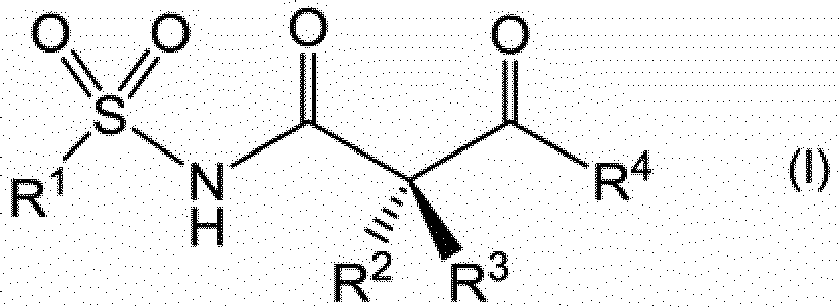
one of R2 and R3 represents a hydrogen atom, and the other represents isopropyl, isobutyl, neopentyl, allyl, -CH2-R5 {wherein R5 represents optionally substituted C3-10 cycloalkyl, optionally substituted heterocycle, or -CO-NR6R7 (wherein R6 and R7 may be the same or different, and each represent a hydrogen atom, C1-6 alkyl, optionally substituted aryl, or optionally substituted heteroaryl, or R5 and R6 together with the nitrogen atom to which they are bonded may form optionally substituted cyclic amino)} , - (CH2)2-R5' (wherein R5' represents cyano or C1-6 alkoxy), or -(CH2)n-Ar (wherein n represents an integer of 1 to 3, and Ar represents optionally substituted phenyl or optionally substituted heteroaryl) or R2 and R3 together with the carbon atom to which they are bonded may form the moiety of the following formula:
R4 represents di (C1-6 alkyl) amino or the moiety of the following formula:
- Hereinafter, each substituent in the above general formula (I) will be described in detail.
- The C1-6 alkyl means a linear or branched hydrocarbon group having 1 to 6 carbon atoms, and examples thereof include methyl, ethyl, propyl, isopropyl, butyl, isobutyl, sec-butyl, tert-butyl, pentyl, isopentyl, neopentyl, hexyl, isohexyl, etc.
- The C2-6 alkenyl described later means a linear or branched unsaturated hydrocarbon group having 2 to 6 carbon atoms and one or more carbon-carbon double bonds, and examples thereof include vinyl, allyl, 1-propenyl, isopropenyl, 2-butenyl, 1,3-butadienyl, 2-methyl-2-propenyl, prenyl, isopentenyl, 2-hexenyl, etc.
- The C2-6 alkynyl described later means a linear or branched unsaturated hydrocarbon group having 2 to 6 carbon atoms and one or more carbon-carbon triple bonds, and examples thereof include ethynyl, 2-propynyl, 2-butynyl, 3-butynyl, 3-pentynyl, 5-hexynyl, etc.
- The C1-6 alkoxy means the same as the above "C1-6 alkyl", and examples thereof include methoxy, ethoxy, propoxy, isopropoxy, butoxy, pentyloxy, hexyloxy, etc.
- The C3-10 cycloalkyl means a saturated cyclic hydrocarbon group having 3 to 10 carbon atoms, and examples thereof include cyclopropyl, cyclobutyl, cyclopentyl, cyclohexyl, cycloheptyl, etc. The cycloalkyl may be condensed with a benzene ring to form an indane (for example, indan-1-yl, indan-2-yl, etc.), a tetrahydronaphthalene (for example, tetrahydronaphthalene-5-yl, tetrahydronaphthalene-6-yl, etc.), etc.
- The C3-10 cycloalkyl C1-6 alkyl described later means the above "C1-6 alkyl" substituted by the above "C3-10 cycloalkyl". The "C1-6 alkyl" is preferably an alkyl having 1 to 3 carbon atoms, and examples of the C3-10 cycloalkyl C1-6 alkyl include cyclopropylmethyl, 2-cyclobutylethyl, 3-cyclopentylpropyl, cyclohexylmethyl, 2-cyclohexylethyl, cycloheptylmethyl, etc.
- The aryl means an aromatic hydrocarbon group preferably having 6 to 14 carbon atoms, and examples thereof include phenyl, naphthyl, etc. The group includes an ortho-fused bicyclic group which has 8 to 10 ring atoms and of which at least one ring is an aromatic ring (for example, indenyl etc.) etc.
- The aryl C1-6 alkyl described later means the above "C1-6 alkyl" substituted by the above "aryl", and examples of the aryl C1-6 alkyl include benzyl, benzhydryl, phenethyl, 1-phenylethyl, 3-phenylpropyl, 4-phenylbutyl, 5-phenylpentyl, 6-phenylhexyl, 1-naphthylmethyl, 2-naphthylmethyl, 2-(1-naphthyl)ethyl, 2-(2-naphthyl)ethyl, 3-(2-naphthyl)propyl, 4-(2-naphthyl)butyl, etc.
- The aryl C2-6 alkenyl described later means the above "C2-6 alkenyl" substituted by the above "aryl". The "C2-6 alkenyl" is preferably an alkenyl having 2 to 4 carbon atoms, and examples of the aryl C2-6 alkenyl include trans-β-styryl, cinnamyl, 3-(1-naphthyl)-2-propenyl, 3-(2-naphthyl)-2-propenyl, etc.
- The heteroaryl means an aromatic group having, in addition to carbon atoms, one or more (preferably 1 to 4) hetero atoms selected from an oxygen atom, a sulfur atom, and a nitrogen atom. The group includes a 5- or 6-membered monocyclic group or an ortho-fused bicyclic group which has 8 to 10 ring atoms and which is derived from the monocyclic group (in particular, a benzo derivative), a group obtainable by fusing propenylene, trimethylene, or tetramethylene to said group, a stable N-oxide of said group, etc. Examples of the heteroaryl include pyrrolyl, furyl, thienyl, oxazolyl, isoxazolyl, imidazolyl, thiazolyl, isothiazolyl, pyrazolyl, triazolyl, tetrazolyl, 1,3,5-oxadiazolyl, 1,2,4-oxadiazolyl, 1,3,4-oxadiazolyl, 1,2,4-thiadiazolyl, pyridyl (2-pyridyl, 3-pyridyl, 4-pyridyl), pyrazinyl, pyrimidinyl, pyridazinyl, 1,2,4-triazinyl, 1,2,3-triazinyl, 1,3,5-triazinyl, benzoxazolyl, benzoisoxazolyl, benzothiazolyl, benzoisothiazolyl, benzoimidazolyl, oxazolopyridyl, imidazopyridazinyl, thianaphthenyl, isothianaphthenyl, benzofuranyl, isobenzofuranyl, benzothienyl, chromenyl, isoindolyl, indolyl, indazolyl, isoquinolyl, quinolyl, phthalazinyl, quinoxalinyl, quinazolinyl, cinnolinyl, 2,1,3-benzoxadiazolyl, benzoxazinyl, pteridinyl, etc.
- The heteroaryl C1-6 alkyl described later means the above "C1-6 alkyl" substituted by the above "heteroaryl". The "C1-6 alkyl" is preferably an alkyl having 1 to 5 carbon atoms, and examples of the heteroaryl C1-6 alkyl include 2-pyridylmethyl, 3-pyridylmethyl, 4-pyridylmethyl, 2-(2-pyridyl)ethyl, 2-(3-pyridyl)ethyl, 2-(4-pyridyl)ethyl, 3-(2-pyridyl)propyl, 3-(3-pyridyl)propyl, 3-(4-pyridyl)propyl, 2-thienylmethyl, 3-thienylmethyl, 2-(2-thienyl)ethyl, 3-(2-thienyl)propyl, 4-pyrazolylmethyl, 2-(4-pyrazolyl)ethyl, 3-(4-pyrazolyl)propyl, 2-thiazolylmethyl, 4-thiazolylmethyl, 5-thiazolylmethyl, 2-(2-thiazolyl)ethyl, 3-(2-thiazolyl)propyl, 2-(4-thiazolyl)ethyl, 3-(4-thiazolyl)propyl, 2-(5-thiazolyl)ethyl, 3-(5-thiazolyl)propyl, 2-oxazolylmethyl, 4-oxazolylmethyl, 5-oxazolylmethyl, 2-(2-oxazolyl)ethyl, 3-(2-oxazolyl)propyl, 2-(4-oxazolyl)ethyl, 3-(4-oxazolyl)propyl, 2-(5-oxazolyl)ethyl, 3-(5-oxazolyl)propyl, 4-(1,2,3-triazolyl)methyl, 5-tetrazolylmethyl, 2-(5-tetrazolyl)ethyl, 1-imidazolylmethyl, 2-(1-imidazolyl)ethyl, 6-benzoxazolylmethyl, 1-benzoimidazolylmethyl, etc.
- The heterocycle means a cyclic hydrocarbon group having 1 to 3 hetero atoms selected from a nitrogen atom, an oxygen atom, a sulfur atom, etc. The group is non-aromatic and may be saturated or partially unsaturated. The group includes not only a monocycle but also a spiro ring, and preferred is a 4-to 7-membered monocycle or a 10- or 11-membered spiro ring. Examples of the heterocycle include azetidinyl, pyrrolidinyl, piperidinyl, piperazinyl, morpholino, 1,4-diazepanyl, 1,2,5,6-tetrahydropyridyl, tetrahydropyranyl, cyclopentanespiro-4'-piperidinyl, etc.
- Further, the heterocycle may have an aromatic ring condensed therewith. Examples of the condensed ring include indolinyl, isoindolinyl, 1,2,3,4-tetrahydroquinolyl, 1,2,3,4-tetrahydroisoquinolyl, spiro[indan-1,4'-piperidin]-1'-yl, etc.
- The cyclic amino means a cyclic hydrocarbon group containing at least one nitrogen atom, the nitrogen atom serving as the site of bonding of the group. This ring may contain, in addition to the nitrogen atom, 1 to 3 hetero atoms of the same kind or different kinds selected from, for example, a nitrogen atom, an oxygen atom, and a sulfur atom. The group is non-aromatic and may be saturated or partially unsaturated. The group includes not only a monocycle but also a spiro ring, and preferred is a 4- to 7-membered monocycle or a 10- or 11-membered spiro ring. Examples of the cyclic amino include azetidino, pyrrolidino, piperidino, piperazino, morpholino, 1,4-diazepan-1-yl, 1,2,5,6-tetrahydropyridino, tetrahydroimidazolino, cyclopentanespiro-4'-piperidino, etc.
- Further, the cyclic amino may have an aromatic ring condensed therewith. Examples of the condensed ring include indolino, isoindolino, 1,2,3,4-tetrahydroquinolino, 1,2,3,4-tetrahydroisoquinolino, spiro[indan-1,4'-piperidin]-1'-yl, etc.
- Examples of the halogen atom include a chlorine atom, a bromine atom, a fluorine atom, and an iodine atom.
- Examples of the substituent(s) in the "optionally substituted C3-10 cycloalkyl", the "optionally substituted heterocycle", the "optionally substituted aryl", the "optionally substituted phenyl", the "optionally substituted heteroaryl", and the "optionally substituted cyclic amino" include one to three substituents selected from the following substituent group A.
- Substituent group A: a halogen atom (as defined above), hydroxyl, nitro, cyano, trifluoromethyl, trifluoromethoxy, C1-6 alkyl (as defined above), C2-6 alkenyl (as defined above), C2-6 alkynyl (as defined above), C1-6 alkoxy, C1-6 alkyl thio, C1-6 alkyl sulfinyl, C3-10 cycloalkyl (as defined above), C3-10 cycloalkyl C1-6 alkyl (as defined above), aryl (as defined above), aryloxy, aryl C1-6 alkyl (as defined above), aryl C2-6 alkenyl (as defined above), aryl C2-6 alkynyl, heteroaryl (as defined above), heteroaryloxy, heteroaryl C1-6 alkyl (as defined above), heterocycle (as defined above), oxo, -COORa, -CH2COORa, -OCH2COORa, -CONRbRc, -CH2CONRbRc, -OCH2CONRbRc, -COO(CH2)2NReRf, -CONRdSO2T1, -NReRf, -NRgCHO, -NRgCOT2, -NRgCOOT2, -NRgCONRiRJ, -NRhSO2T3, -NHC(=NH)NH2, -COT2, -SO2T3, methylenedioxy, and ethyleneoxy.
- The above substituent(s) may further have one to three substituents selected from the substituent group B at a substitutable position(s).
- Substituent group B: a halogen atom (as defined above), hydroxyl, nitro, cyano, trifluoromethyl, trifluoromethoxy, C1-6 alkyl (as defined above), C2-6 alkenyl (as defined above), C2-6 alkynyl (as defined above), C1-6 alkoxy, C1-6 alkyl thio, C1-6 alkyl sulfinyl, C3-10 cycloalkyl (as defined above), C3-10 cycloalkyl C1-6 alkyl (as defined above), aryl (as defined above), aryloxy, aryl C1-6 alkyl (as defined above), aryl C2-6 alkenyl (as defined above), aryl C2-6 alkynyl, heteroaryl (as defined above), heteroaryloxy, heteroaryl C1-6 alkyl (as defined above), heterocycle (as defined above), oxo, -COORa, -CH2COORa, -OCH2COORa, -CONRbRc, -CH2CONRbRc, -OCH2CONRbRc, -COO(CH2)2NReRf, -CONRdSO2T1, -NReRf, -NRgCHO, -NRgCOT2, -NRgCOOT2, -NRgCONRiRj, -NRhSO2T3, -NHC(=NH)NH2, -COT2, -SO2T3, methylenedioxy, and ethyleneoxy.
- The "C1-6 alkyl" moiety of the "C1-6 alkoxy" means the same as the above "C1-6 alkyl", and examples of the C1-6 alkyl include methoxy, ethoxy, propoxy, isopropoxy, butoxy, pentyloxy, hexyloxy, etc.
- The "C1-6 alkyl" moiety of the "C1-6 alkyl thio" means the same as the above "C1-6 alkyl", and examples of the C1-6 alkyl thio include methylthio, ethylthio, propylthio, isopropylthio, butylthio, pentylthio, hexylthio, etc.
- The "C1-6 alkyl" moiety of the "C1-6 alkyl sulfinyl" means the same as the above "C1-6 alkyl", and examples of the C1-6 alkyl sulfinyl include methylsulfinyl, ethylsulfinyl, propylsulfinyl, isopropylsulfinyl, butylsulfinyl, pentylsulfinyl, hexylsulfinyl, etc.
- The aryl moiety of the aryloxy means the same as the above "aryl", and examples of the aryloxy include phenoxy, 1-naphthoxy, 2-naphthoxy, etc.
- The aryl C2-6 alkynyl means the above "C2-6 alkynyl" substituted by the above "aryl". The "C2-6 alkynyl" is preferably an alkynyl having 2 to 4 carbon atoms, and examples thereof include phenylethynyl etc.
- The "heteroaryl" moiety of the heteroaryloxy means the same as the above "heteroaryl", and examples of the heteroaryloxy include 2-pyridyloxy, 2-benzothiazolyloxy, etc.
- Also, Ra to Rj each represent a hydrogen atom, C1-6 alkyl (as defined above), aryl (as defined above), aryl C1-6 alkyl (as defined above), heteroaryl (as defined above), or heteroaryl C1-6 alkyl (as defined above), and these groups may further have one to three substituents selected from the substituent group A at a substitutable position(s).
- The Rb and Rc, Re and Rf, and Ri and Rj in the -NRbRc, -NReRf, and -NRiRj may form a cyclic amino (as defined above) together with the nitrogen atom to which they are bonded; the cyclic amino may further have one to three substituents selected from the substituent group A at a substitutable position (s). The cyclic amino that -NReRf may form includes oxo-containing cyclic amino groups (for example, 2-pyrrolidinon-1-yl, 1-oxoisoindolin-2-yl, succinimide, oxazolidin-2-one-3-yl, 2-benzoxazolinon-3-yl, phthalimide, 4-quinazolinon-3-yl, etc.).
- T1 to T3 each represent C1-6 alkyl (as defined above), C2-6 alkenyl (as defined above), C2-6 alkynyl (as defined above), C3-10 cycloalkyl (as defined above), C3-10 cycloalkyl C1-6 alkyl (as defined above), aryl (as defined above), aryl C1-6 alkyl (as defined above), heteroaryl (as defined above), heteroaryl C1-6 alkyl (as defined above), a cyclic amino (as defined above), or a heterocycle (as defined above), and these groups may have one to three substituents selected from the substituent group A at a substitutable position(s). Examples of the aryl or heteroaryl having one to three substituents selected from the substituent group A include 2-aminophenyl, 2-amino-5-fluorophenyl, 2-amino-6-fluorophenyl, 2-fluorophenyl, 4-methoxypheny, 5-chloro-2-pyridyl, etc.
- More specific examples of the non-peptidic angiotensin type 2 receptor agonist of the present invention include the following compounds of Examples 1 to 588 described in
WO 2008/156142 .Table 1 Table 1 
1: same substituent as above 
R1 R2 R3 R4 1 

H 
2 ↑ ↑ ↑ 
3 ↑ ↑ ↑ 
4 ↑ ↑ ↑ 
5 ↑ ↑ ↑ 
6 ↑ 
↑ 
7 ↑ 
↑ ↑ 8 ↑ 
↑ ↑ Table 2 Table 2 
Example Q1 Example Q1 9 PhCO 1 7 
10 Ac 18 
11 
19 
12 
20 
13 
21 
14 
22 
15 
23 
16 
24 
Table 3 Table 2 (-continue) 25 
36 
26 
37 
27 
38 
28 
39 
29 
40 
30 
41 
31 
42 
32 
43 
33 
44 
34 
45 
35 
46 
Table 4 Table 2 (-continue) 47 
56 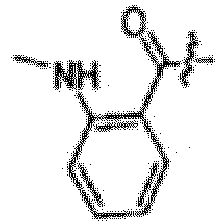
48 
57 
49 
58 
50 
59 
51 
60 
52 
61 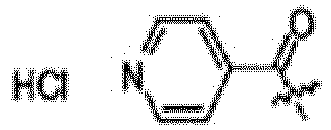
53 
62 
54 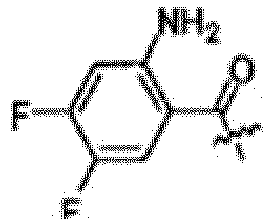
63 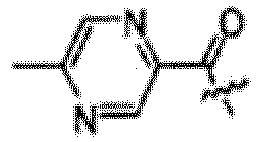
55 
64 
Table 5 Table 2 (-continue) 65 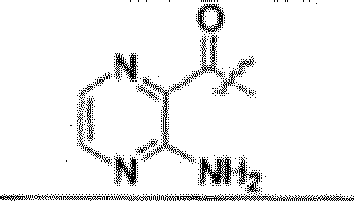
74 
66 
75 
67 
76 
68 
7 7 
69 
78 
70 
7 9 
71 
80 
7 2 
81 
73 
82 
Table 6 Table 2 (-continue) 83 
87 PhOCO 84 
88 PhNHCO 85 
89 
86 
90 
Table 7 Table 3 
Example Q2 Example Q2 91 NO2 100 
92 PhCONH 101 
93 
102 NH2 94 
103 
95 
104 
96 
105 
97 
106 
98 
107 
99 
108 
Table 8 Table 4 
↑ : same substituent as above Example R1 R2 R3 R4 109 

H 
110 ↑ 
↑ ↑ 111 ↑ 
↑ ↑ 112 ↑ 
↑ ↑ 113 ↑ 
↑ ↑ 114 ↑ 
↑ ↑ 115 ↑ 
↑ ↑ 116 ↑ 
↑ ↑ 117 ↑ 
↑ ↑ Table 9 Table 4 (-continue) 118 ↑ 
↑ ↑ 119 ↑ 
↑ ↑ 120 ↑ 
↑ ↑ 121 ↑ 
↑ ↑ 122 ↑ 
↑ ↑ 123 ↑ 
↑ ↑ 124 ↑ 
↑ ↑ 125 ↑ 
↑ ↑ 126 ↑ 
↑ ↑ 127 ↑ 
↑ ↑ Table 10 Table 4 (-continue) 128 ↑ 
↑ ↑ 129 ↑ 
↑ ↑ 130 ↑ 
↑ ↑ 131 ↑ 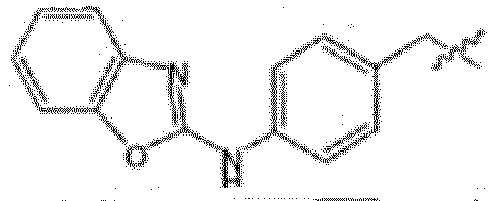
↑ ↑ 132 ↑ 
↑ ↑ 133 ↑ 
↑ ↑ 134 ↑ 
↑ ↑ 135 ↑ 
↑ ↑ 136 ↑ 
↑ ↑ Table 11 Table 4 (-continue) 137 ↑ 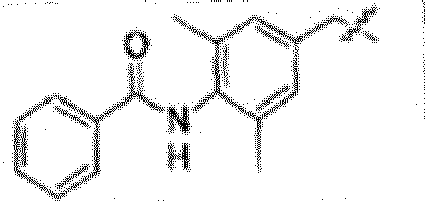
↑ ↑ 138 ↑ 
↑ ↑ 139 ↑ 
↑ ↑ 140 ↑ 
↑ ↑ 141 ↑ 
↑ ↑ 142 ↑ 
↑ ↑ 143 ↑ 
↑ ↑ 144 ↑ 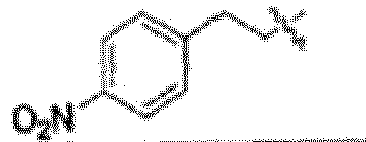
↑ ↑ Table 12 Table 4 (-continue) 145 ↑ 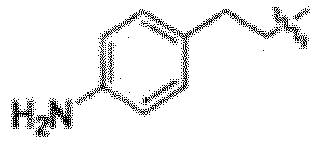
↑ ↑ 146 ↑ 
↑ ↑ 147 ↑ 
↑ ↑ 148 ↑ 
↑ ↑ 149 ↑ 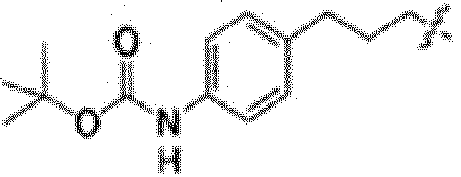
↑ ↑ 150 ↑ 
↑ ↑ 151 ↑ 
↑ ↑ 152 ↑ 
↑ ↑ 153 ↑ 
↑ ↑ 154 ↑ 
↑ ↑ 155 ↑ 
↑ ↑ 156 ↑ 
↑ ↑ Table 13 Table 4 (-continue) 157 ↑ 
↑ ↑ 158 ↑ 
↑ ↑ 159 ↑ 
↑ ↑ 160 ↑ 
↑ ↑ 161 ↑ 
↑ ↑ 162 ↑ 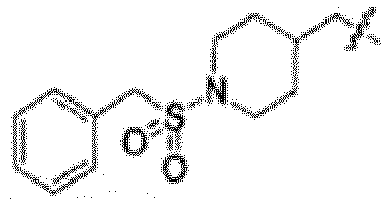
↑ ↑ 163 ↑ 
↑ ↑ 164 ↑ 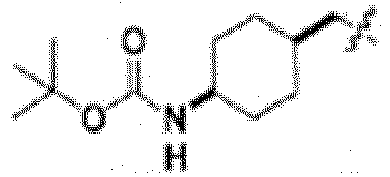
↑ ↑ 165 ↑ 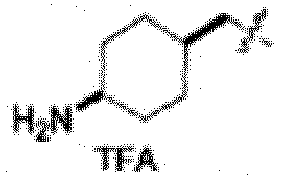
↑ ↑ Table 14 Table 4 (-continue) 166 ↑ 
↑ ↑ 167 ↑ 
↑ ↑ 168 ↑ 
↑ ↑ 169 ↑ 
↑ ↑ 170 ↑ 
↑ ↑ 171 ↑ 
↑ ↑ 172 ↑ 
↑ ↑ 173 ↑ 
↑ ↑ 174 ↑ 
↑ ↑ Table 15 Table 4 (-continue) 175 ↑ 
↑ ↑ 176 ↑ 
↑ ↑ 177 

↑ ↑ 178 

↑ ↑ 179 ↑ 
↑ ↑ 180 

↑ ↑ 181 ↑ 
↑ ↑ 182 

↑ ↑ 183 ↑ 
↑ ↑ 184 

↑ ↑ Table 16 Table 4 (-continue) 185 ↑ 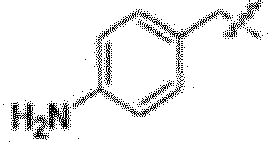
↑ ↑ 186 

↑ ↑ 187 ↑ 
↑ ↑ 188 

↑ ↑ 189 ↑ 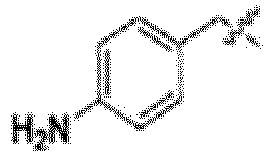
↑ ↑ 190 

↑ ↑ 191 ↑ 
↑ ↑ 192 
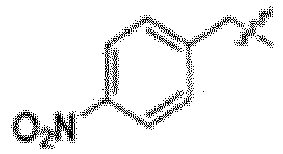
↑ ↑ 193 ↑ 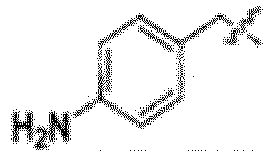
↑ ↑ 194 

↑ ↑ 195 ↑ 
↑ ↑ Table 17 Table 4 (-continue) 196 

↑ ↑ 191 ↑ 
↑ ↑ 198 
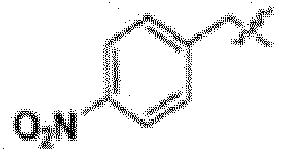
↑ ↑ 199 ↑ 
↑ ↑ 200 

↑ ↑ 201 ↑ 
↑ ↑ 202 ↑ 
↑ ↑ 203 
↑ ↑ ↑ 204 

↑ ↑ 205 ↑ 
↑ ↑ Table 18 Table 4 (-continue) 206 ↑ 
↑ ↑ 207 ↑ 
↑ ↑ 208 ↑ 
↑ ↑ 209 ↑ 
↑ ↑ 210 ↑ 
↑ ↑ 211 ↑ 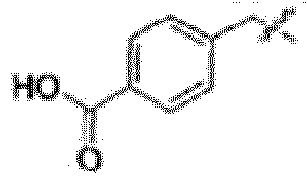
↑ ↑ 212 ↑ 
↑ ↑ 213 ↑ 
↑ ↑ 214 ↑ 
↑ ↑ 215 ↑ 
↑ ↑ 216 ↑ 
↑ ↑ Table 19 Table 4 (-continue) 217 ↑ 
↑ ↑ 218 ↑ 
↑ ↑ 219 

↑ ↑ 220 ↑ 
↑ ↑ 221 ↑ 
↑ ↑ 222 ↑ 
↑ ↑ 223 

↑ ↑ 224 ↑ 
↑ ↑ 225 

↑ ↑ 226 ↑ 
↑ ↑ Table 20 Table 4 (-continue) 227 

↑ 
228 ↑ ↑ ↑ 
229 ↑ ↑ ↑ 
230 ↑ ↑ ↑ 
231 ↑ ↑ ↑ 
232 ↑ 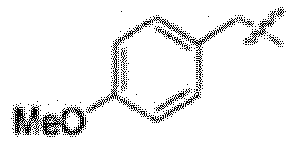
↑ 
233 ↑ ↑ ↑ 
234 ↑ ↑ ↑ 
235 ↑ 
↑ 
236 ↑ 
↑ ↑ Table 21 Table 4 (-continue) 237 ↑ 

238 ↑ 
↑ ↑ 239 ↑ ↑ 
240 ↑ ↑ ↑ 
241 ↑ ↑ ↑ 
242 ↑ ↑ ↑ 
243 ↑ ↑ ↑ 
244 ↑ ↑ ↑ 
245 ↑ ↑ ↑ 
246 ↑ ↑ ↑ 
Table 22 Table 4 (-continue) 247 ↑ ↑ ↑ 
248 ↑ ↑ ↑ 
249 ↑ ↑ ↑ 
250 ↑ ↑ ↑ 
251 ↑ ↑ ↑ 
252 ↑ 
↑ 
253 ↑ 
↑ 
254 ↑ 
↑ 
255 ↑ 
↑ 
256 ↑ 
↑ 
Table 23 Table 4 (-continue) 257 ↑ 
↑ 
268 ↑ 
↑ 
259 ↑ 
↑ 
260 ↑ 
↑ 
261 ↑ 
↑ 
262 ↑ 
↑ 
263 ↑ 
↑ 
264 ↑ 
↑ 
265 

↑ 
Table 24 Table 4 (-continue) 266 
↑ ↑ 267 

↑ ↑ 268 ↑ 
↑ ↑ 269 ↑ 
↑ ↑ 270 

↑ ↑ 271 

↑ ↑ 272 

↑ ↑ 273 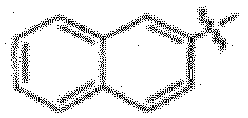

↑ ↑ 274 

↑ ↑ 275 

↑ ↑ 276 ↑ 
↑ ↑ Table 25 Table 4 (-continue) 277 
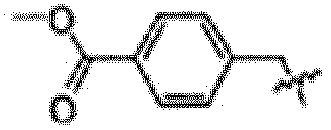
↑ ↑ 278 ↑ 
↑ ↑ 279 

↑ ↑ 280 
↑ ↑ ↑ 281 ↑ 
↑ ↑ 282 ↑ 
↑ ↑ 283 ↑ 
↑ ↑ 284 
↑ ↑ ↑ 285 ↑ 
↑ ↑ 286 

↑ ↑ Table 26 Table 4 (-continue) 287 
↑ ↑ ↑ 288 ↑ 
↑ ↑ 289 

↑ ↑ 290 ↑ 
↑ ↑ 291 ↑ 
↑ ↑ 292 ↑ 
↑ ↑ 293 

↑ ↑ 294 ↑ 
↑ ↑ 295 ↑ 
↑ ↑ 296 ↑ 
↑ ↑ Table 27 Table 4 (-continue) 297 
↑ ↑ ↑ 298 ↑ 
↑ ↑ 299 ↑ 
↑ ↑ 300 ↑ 
↑ ↑ 301 ↑ 
↑ ↑ 302 ↑ 
↑ ↑ 303 

↑ ↑ 304 

↑ ↑ 305 ↑ 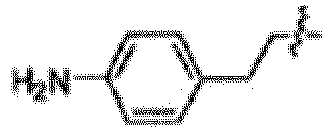
↑ ↑ 306 

↑ ↑ 307 
↑ ↑ ↑ Table 28 Table 4 (-contmue) 308 

↑ 
309 ↑ ↑ ↑ 
310 ↑ 
↑ ↑ 311 
↑ ↑ ↑ 312 

↑ ↑ 313 
↑ ↑ ↑ 314 

↑ ↑ 315 
↑ ↑ ↑ 316 ↑ 
↑ ↑ 317 ↑ ↑ ↑ 
Table 29 Table 4 (-continue) 318 

↑ 
319 
↑ ↑ ↑ 320 

↑ ↑ 321 
↑ ↑ ↑ 322 

↑ 
323 ↑ ↑ ↑ 
324 ↑ ↑ ↑ 
325 ↑ ↑ ↑ 
326 ↑ ↑ ↑ 
327 ↑ ↑ ↑ 
Table 30 Table 4 (-continue) 328 ↑ ↑ ↑ 
329 ↑ ↑ ↑ 
330 ↑ ↑ ↑ 
331 

↑ 
332 ↑ 
↑ ↑ 333 

↑ ↑ 334 ↑ 
↑ ↑ 335 

↑ ↑ 336 ↑ 
↑ ↑ Table 31 Table 4 (-continue) 337 ↑ 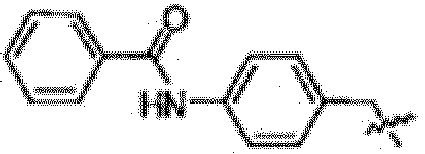
↑ ↑ 338 

↑ ↑ 339 

↑ ↑ 340 ↑ 
↑ ↑ 341 
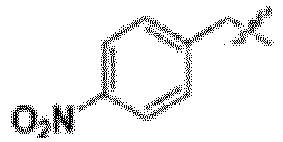
↑ ↑ 342 ↑ 
↑ ↑ 343 

↑ ↑ 344 
↑ ↑ ↑ 345 ↑ 
↑ ↑ 346 
↑ ↑ ↑ Table 32 Table 4 (-continue) 347 
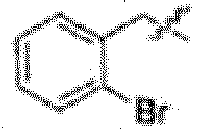
↑ ↑ 348 
↑ ↑ ↑ 349 
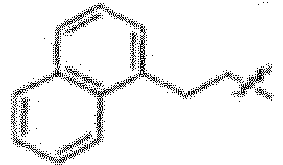
↑ ↑ 350 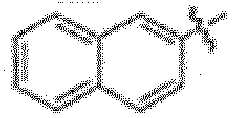
↑ ↑ ↑ 351 

↑ ↑ 352 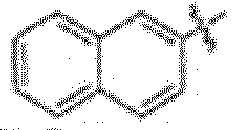
↑ ↑ ↑ 353 

↑ ↑ 354 
↑ ↑ ↑ 355 

↑ ↑ 356 
↑ ↑ ↑ 357 

↑ ↑ Table 33 Table 4 (-continue) 358 
↑ ↑ ↑ 359 

↑ ↑ 360 
↑ ↑ ↑ 361 

↑ ↑ 362 
↑ ↑ ↑ 363 
↑ ↑ ↑ 364 

↑ ↑ 365 
↑ ↑ ↑ 366 
↑ ↑ ↑ 367 

↑ ↑ Table 34 Table 4 (-continue) 368 ↑ 
↑ ↑ 369 
↑ ↑ ↑ 370 ↑ 
↑ ↑ 371 

↑ ↑ 372 ↑ 
↑ ↑ 373 ↑ 
↑ ↑ 374 ↑ 
↑ ↑ 375 ↑ 
↑ ↑ 376 ↑ 
↑ ↑ Table 35 Table 4 (-continue) 377 ↑ 
↑ ↑ 378 ↑ 
↑ ↑ 379 ↑ 
↑ ↑ 380 ↑ 
↑ ↑ 388 ↑ 
↑ 
382 ↑ 
↑ ↑ 383 ↑ 
↑ 
384 ↑ 
↑ ↑ Table 36 Table 4 (-continue) 385 ↑ 
↑ 
386 ↑ 
↑ ↑ 387 ↑ 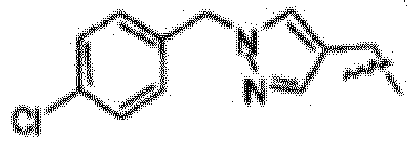
↑ ↑ 388 ↑ 
↑ ↑ 389 

↑ ↑ 390 ↑ 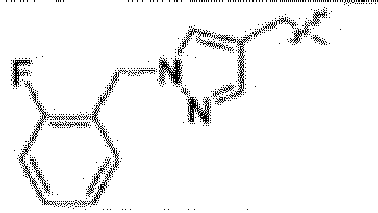
↑ ↑ 391 ↑ 
↑ ↑ 392 ↑ 
↑ ↑ Table 37 Table 4 (-continue) 393 ↑ 
↑ ↑ 394 

↑ 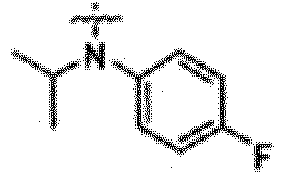
395 ↑ 
↑ ↑ 396 ↑ ↑ ↑ 
397 
↑ ↑ 
398 

↑ 
399 
↑ ↑ ↑ 400 
↑ ↑ ↑ 400 

↑ ↑ Table 38 Table 4 (-continue) 402 

↑ ↑ 403 
↑ ↑ ↑ 404 

↑ 
405 

↑ 
406 ↑ ↑ ↑ 
407 ↑ ↑ ↑ 
408 ↑ ↑ ↑ 
409 ↑ ↑ ↑ 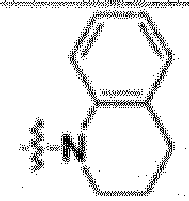
Table 39 Table 4 (-continue) 410 ↑ ↑ ↑ 
411 ↑ ↑ ↑ 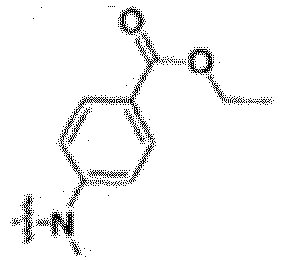
412 ↑ ↑ ↑ 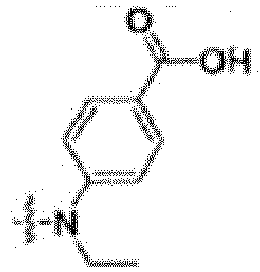
413 ↑ ↑ ↑ 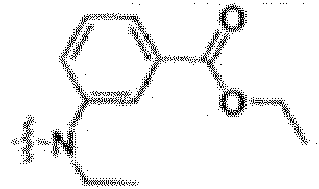
414 ↑ ↑ ↑ 
415 ↑ ↑ ↑ 
416 ↑ ↑ ↑ 
417 ↑ ↑ ↑ 
Table 40 Table 4 (-continue) 418 ↑ ↑ ↑ 
419 ↑ ↑ ↑ 
420 
↑ ↑ 
421 ↑ ↑ ↑ 
422 ↑ ↑ ↑ 
423 ↑ ↑ ↑ 
424 ↑ ↑ ↑ 
425 

↑ ↑ 426 ↑ 
↑ ↑ Table 41 Table 4 (-continue) 427 ↑ 
↑ 
428 ↑ 
↑ 
429 ↑ 
↑ ↑ 430 ↑ ↑ ↑ 
431 ↑ 
↑ 
432 ↑ 
↑ ↑ 433 ↑ 
↑ 
434 ↑ 
↑ ↑ Table 42 Table 4 (-continue) 435 ↑ 
↑ ↑ 436 
↑ ↑ 
437 ↑ 
↑ 
438 

↑ 
439 ↑ 
↑ ↑ 440 ↑ 
↑ ↑ 441 ↑ 
↑ ↑ Table 43 Table 4 (-continue) 442 ↑ 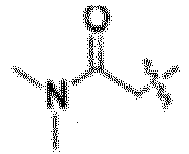
↑ 
443 ↑ 
↑ ↑ 444 

↑ 
445 
↑ ↑ 
446 ↑ ↑ ↑ 
447 ↑ ↑ ↑ 
448 ↑ ↑ ↑ 
449 ↑ ↑ ↑ 
450 ↑ ↑ ↑ 
Table 44 Table 4 (-continue) 451 ↑ ↑ ↑ 
452 ↑ ↑ ↑ 
463 ↑ ↑ ↑ 
454 ↑ ↑ ↑ 
455 
↑ ↑ ↑ 456 
↑ ↑ 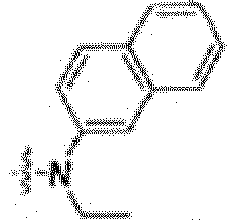
457 ↑ ↑ ↑ 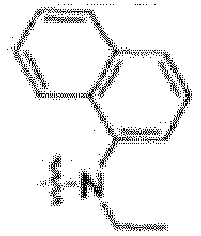
458 
↑ ↑ 
Table 45 Table 4 (-continue) 459 
↑ ↑ 
460 ↑ ↑ ↑ 
461 ↑ ↑ ↑ 
462 ↑ ↑ ↑ 
463 ↑ ↑ ↑ 
464 t ↑ ↑ 
465 ↑ ↑ ↑ 
466 ↑ ↑ ↑ 
Table 46 Table 4 (-continue) 467 ↑ ↑ ↑ 
468 ↑ ↑ ↑ 
469 ↑ ↑ ↑ 
470 ↑ ↑ ↑ 
471 ↑ ↑ ↑ 
4 7 2 ↑ ↑ ↑ 
4 7 3 ↑ ↑ ↑ 
474 ↑ ↑ ↑ 
Table 47 Table 4 (-continued) 475 ↑ ↑ ↑ 
476 ↑ ↑ ↑ 
477 ↑ ↑ ↑ 
478 ↑ ↑ ↑ 
479 ↑ ↑ ↑ 
480 ↑ ↑ ↑ 
481 ↑ ↑ ↑ 
Table 48 Table 4 (-continued) 482 ↑ ↑ ↑ 
483 ↑ ↑ ↑ 
484 ↑ ↑ ↑ 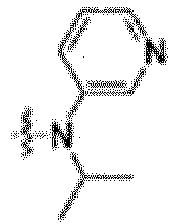
485 ↑ ↑ ↑ 
486 ↑ 
↑ 
487 ↑ 
↑ 
488 ↑ ↑ ↑ 
Table 49 Table 4 (-continue) 489 ↑ ↑ ↑ 
490 ↑ 
↑ ↑ 491 ↑ 
↑ ↑ 492 
↑ ↑ ↑ 493 
↑ ↑ ↑ 494 
↑ ↑ ↑ 495 
↑ ↑ ↑ 496 
↑ ↑ ↑ 497 
↑ ↑ ↑ 498 
↑ ↑ ↑ Table 50 Table 4 (-continued) 499 
↑ ↑ 
500 ↑ ↑ ↑ 
501 ↑ ↑ ↑ 
502 ↑ ↑ ↑ 
503 ↑ ↑ ↑ 
504 ↑ ↑ ↑ 
505 ↑ ↑ ↑ 
506 ↑ ↑ ↑ 
Table 51 Table 4 (-continue) 507 ↑ ↑ ↑ 
508 ↑ ↑ ↑ 
509 
↑ ↑ 
510 
↑ ↑ ↑ 511 
↑ ↑ ↑ 512 

↑ ↑ 513 ↑ 
↑ ↑ 514 ↑ 
↑ 
Table 52 Table 4 (-continued) 515 ↑ ↑ ↑ 
516 ↑ (optically active form) ↑ ↑ 517 

↑ ↑ 518 
↑ ↑ ↑ 519 
↑ ↑ ↑ 520 
↑ ↑ ↑ 521 
↑ ↑ ↑ 522 
↑ ↑ ↑ 523 
↑ ↑ ↑ 524 
↑ ↑ ↑ Table 53 Table 4 (-continue) 525 
↑ ↑ ↑ 526 
↑ ↑ ↑ 527 
↑ ↑ ↑ 528 
↑ ↑ ↑ 529 
↑ ↑ ↑ 530 
↑ ↑ ↑ 531 
↑ ↑ ↑ 532 
↑ ↑ 
533 ↑ ↑ ↑ 
Table 54 Table 4 (continue) 534 ↑ ↑ ↑ 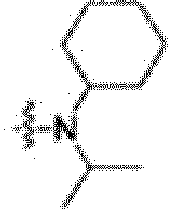
535 
↑ ↑ 
536 
↑ ↑ ↑ 537 
↑ ↑ ↑ 538 

↑ ↑ 539 ↑ 
↑ ↑ 540 ↑ 
↑ ↑ 541 ↑ 
↑ ↑ 542 ↑ 
↑ 
543 
↑ ↑ ↑ Table 55 Table 4 (-continue) 544 
↑ ↑ 
545 

↑ 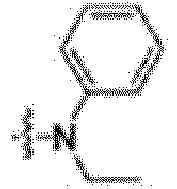
546 
↑ ↑ ↑ 547 ↑ 
↑ 
548 ↑ 
↑ ↑ 549 

↑ 
550 ↑ 
↑ ↑ 551 ↑ 
↑ ↑ 552 ↑ 
↑ ↑ Table 56 Table 4 (-continue) 553 ↑ 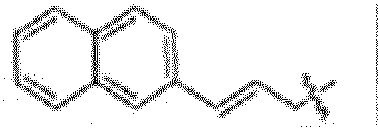
↑ ↑ 554 ↑ 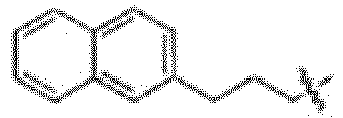
↑ ↑ 555 ↑ 
↑ ↑ 556 ↑ 
↑ ↑ 557 ↑ 
↑ ↑ 558 ↑ 
↑ ↑ 559 ↑ 
↑ ↑ 560 ↑ 
↑ ↑ 561 ↑ 
↑ ↑ 562 ↑ 
↑ ↑ Table 57 Table 4 (-continue) 563 ↑ 
↑ ↑ 564 ↑ 
↑ ↑ 565 ↑ 
↑ ↑ 566 ↑ 
↑ ↑ 567 ↑ 
↑ ↑ 568 
F, F 
569 ↑ Me, Me 
570 ↑ 

571 ↑ ↑ 
572 ↑ ↑ 
573 ↑ 
↑ Table 58 Table 4 (-continue) 574 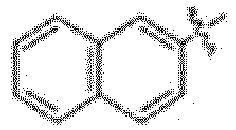
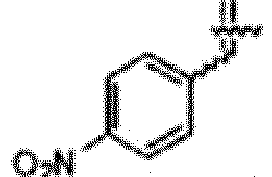
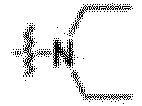
575 ↑ 
↑ 576 ↑ 
H ↑ 577 ↑ 
↑ ↑ 578 ↑ 
↑ ↑ 579 ↑ 
↑ ↑ 580 ↑ 
↑ ↑ 581 ↑ 
↑ ↑ Table 59 Table 4 (-continue) 582 ↑ 
↑ ↑ 583 ↑ 
↑ ↑ 584 ↑ 
↑ ↑ 585 ↑ 
↑ ↑ 586 ↑ 
↑ ↑ 587 ↑ 
↑ ↑ 588 

↑ ↑ - Particularly preferred non-peptidic angiotensin type 2 receptor agonists in the present invention are the following compounds and pharmacologically acceptable salts thereof. N,N-diethyl-2-{4-[(2,6-difluorobenzoyl)amino]benzyl}-N'-(2-naphthylsulfonyl)malonamide,
- (2S)-2-[4-(benzoylamino)benzyl]-N,N-diethyl-N'-(2-naphthyls ulfonyl)malonamide,
- (2S)-N,N-diethyl-2-{4-[(2-fluorobenzoyl)amino]benzyl}-N'-(2 -naphthylsulfonyl)malonamide,
- (2S)-N,N-diethyl-2-{4-[(3-fluorobenzoyl)amino]benzyl}-N'-(2 -naphthylsulfonyl)malonamide,
- (2S)-N,N-diethyl-2-{4-[(2,4-difluorobenzoyl)amino]benzyl}-N '-(2-naphthylsulfonyl)malonamide,
- (2S)-N,N-diethyl-2-{4-[(4-methylbenzoyl)amino]benzyl}-N'-(2 -naphthylsulfonyl)malonamide,
- (2S)-N,N-diethyl-N'-(2-naphthylsulfonyl)-2-{4-[(2-thienoyl) amino]benzyl}malonamide,
- (2S)-N,N-diethyl-2-{4-[(2-furoyl)amino]benzyl}-N'-(2-naphth ylsulfonyl)malonamide,
- (2S)-2-{4-[(2-amino-5-fluorobenzoyl)amino]benzyl}-N,N-dieth yl-N'-(2-naphthylsulfonyl)malonamide,
- (2S)-2-{4-[(2-amino-6-fluorobenzoyl)amino]benzyl}-N,N-dieth yl-N'-(2-naphthylsulfonyl)malonamide,
- (2S)-N,N-diethyl-N'-(2-naphthylsulfonyl)-2-{4-[(2-pyridylca rbonyl)amino]benzyl}malonamide,
- (2S)-2-{4-[(2-amino-4-chlorobenzoyl)amino]benzyl}-N,N-dieth yl-N'-(2-naphthylsulfonyl)malonamide,
- (2S)-2-{4-[(2-aminobenzoyl)amino]benzyl}-N,N-diethyl-N'-(2-naphthylsulfonyl)malonamide,
- (2S)-2-{4-[(2-amino-5-chlorobenzoyl)amino]benzyl}-N,N-dieth yl-N'-(2-naphthylsulfonyl)malonamide,
- (2S)-2-{4-[(2-amino-4,5-difluorobenzoyl)amino]benzyl}-N,N-d iethyl-N'-(2-naphthylsulfonyl)malonamide,
- (2S)-2-{4-[(2-amino-4-fluorobenzoyl)amino]benzyl}-N,N-dieth yl-N'-(2-naphthylsulfonyl)malonamide,
- (2S)-2-{4-[(2-amino-5-methylbenzoyl)amino]benzyl}-N,N-dieth yl-N'-(2-naphthylsulfonyl)malonamide,
- 2-(4-fluorobenzyl)-N-isopropyl-N-(3-pyridyl)-N'-((E)-styryl sulfonyl)malonamide,
- 2-allyl-N-(4-fluorophenyl)-N-isopropyl-N'-((E)-styrylsulfon yl)malonamide,
- N-(4-fluorophenyl)-2-isobutyl-N-isopropyl-N'-((E)-styrylsul fonyl)malonamide,
- N-(4-fluorophenyl)-2-isobutyl-N-isopropyl-N'-phenethylsulfo nylmalonamide,
- N-(4-fluorophenyl)-2-isobutyl-N-isopropyl-N'-(2-naphthylsul fonyl)malonamide,
- (2S or 2R)-2-cyclopropylmethyl-N-(4-fluorophenyl)-N-isopropyl-N'-( (E)-2-styrylsulfonyl)malonamide,
- 2-cyclopropylmethyl-N-(4-fluorophenyl)-N-isopropyl-N'-phene thylsulfonylmalonamide, and
- 2-cyclopropylmethyl-N-(4-fluorophenyl)-N-isopropyl-N'-(2-na phthylsulfonyl)malonamide.
- Among them, as the non-peptidic angiotensin type 2 receptor agonist in the present invention, the following compounds and pharmacologically acceptable salts thereof are preferred.
- (2S)-2-[4-(benzoylamino)benzyl]-N,N-diethyl-N'-(2-naphthyls ulfonyl)malonamide,
- (2S)-2-{4-[(2-amino-6-fluorobenzoyl)amino]benzyl}-N,N-dieth yl-N'-(2-naphthylsulfonyl)malonamide,
- (2S)-2-{4-[(2-amino-4-chlorobenzoyl)amino]benzyl}-N,N-dieth yl-N'-(2-naphthylsulfonyl)malonamide,
- 2-allyl-N-(4-fluorophenyl)-N-isopropyl-N'-((E)-styrylsulfon yl)malonamide, and
- N-(4-fluorophenyl)-2-isobutyl-N-isopropyl-N'-((E)-styrylsul fonyl)malonamide.
- The AT2 receptor agonist may be in the form of a pharmacologically acceptable salt thereof. Examples of the pharmacologically acceptable salt include inorganic acid addition salts (for example, salts with hydrochloric acid, hydrobromic acid, hydroiodic acid, sulfuric acid, phosphoric acid, etc.), organic acid addition salts (for example, salts with methanesulfonic acid, benzenesulfonic acid, p-toluenesulfonic acid, formic acid, acetic acid, trifluoroacetic acid, oxalic acid, citric acid, malonic acid, fumaric acid, glutaric acid, adipic acid, maleic acid, tartaric acid, succinic acid, mandelic acid, malic acid, pantothenic acid, methylsulfuric acid, etc.), inorganic base addition salts (for example, salts with sodium, potassium, calcium, magnesium, etc.), salts with amino acid (for example, salts with glutamic acid, aspartic acid, arginine, lysine etc.), etc.
- The AT2 receptor agonist may show polymorphism, and in cases where the molecule comprises one or more chiral carbons, optical isomers and stereoisomers can exist. The AT2 receptor agonist may be in the form of a hydrate or a solvate. In addition, depending on the existence of an unsaturated bond, the type of substituent(s), pH, etc., the AT2 receptor agonist can exist as one or more tautomers. Therefore, the AT2 receptor agonist includes any of the above-mentioned stereoisomers, optical isomers, polymorphs, tautomers, and any mixtures thereof.
- One kind of the AT2 receptor agonist or a combination of two or more kinds thereof may be used.
- The AT2 receptor agonist can be synthesized by a known method (for example, the method described in
WO 2008/156142 ). - The medicament of the present invention is not particularly limited as long as it comprises the above-mentioned AT2 receptor agonist (or the vasoprotective agent) as an active ingredient. The medicament may further comprise a publicly known pharmacologically acceptable inert carrier, excipient, diluent, etc. In the treatment or prevention method for suppressing or preventing the metastasis of a malignant tumor, it is preferred that the above medicament is administered to a patient.
- Utilizing the medicament (or the AT2 receptor agonist), the vasoprotective agent, the method for suppressing or preventing the metastasis of a malignant tumor, and the treatment or prevention method of the present invention, the metastasis of a malignant tumor can be appropriately suppressed or prevented. Further, the present invention exerts an excellent metastasis suppressing effect even on a malignant tumor of which the metastasis has been exacerbated or augmented by an anticancer and/or antitumor agent (for example, a platinum-based antitumor agent, such as cisplatin). Similarly, the present invention exerts an excellent effect even on the metastasis of a malignant tumor of a patient who has undergone resection of a tumor, radiotherapy, or laser ablation treatment. Therefore, according to the present invention, it is also possible to suppress or prevent the metastasis of a malignant tumor.
- Usually, the metastasis suppressing effect according to the present invention is exerted in a manner other than cell-killing or cytostatic action on a malignant tumor itself. The effect is different from that of common anticancer/antitumor agents which acts on the malignant tumor itself, and is an effect brought by a protecting action on the blood vessels or other vessels of the host (for example, a malignant tumor patient).
- Since the effect of the present invention is exerted on the host, the present invention exerts an excellent metastasis suppressing effect on any and all kinds of malignant tumors (for example, carcinomas) regardless of their kind.
- The AT2 receptor agonist (or the medicament or the vasoprotective agent, hereinafter the same holds true in similar descriptions) of the present invention for suppressing or preventing the metastasis of a malignant tumor is suitable also as a AT2 receptor agonist for suppressing or preventing malignant tumor cells from colonizing or invading vascular endothelium.
- The method for suppressing or preventing the metastasis of a malignant tumor, and the treatment or prevention method of the present invention are suitable also as a method for suppressing or preventing malignant tumor cells from colonizing or invading vascular endothelium.
- The medicament (or the AT2 receptor agonist), the method for suppressing or preventing the metastasis of a malignant tumor, and the treatment or prevention method of the present invention is suitable for suppressing or preventing the metastasis of any and all kinds of malignant tumors. In particular, they are suitable for suppressing or preventing colonization (adhesion) and invasion of malignant tumor cells to vascular endothelium during the process of blood-borne metastasis.
- Because of these excellent effects, the present invention is useful not only for suppression and prevention of the metastasis of a malignant tumor and for prevention etc. of the metastasis after therapeutic resection of a tumor but also for effective suppression or prevention of the metastasis of a malignant tumor that is hard to resect.
- An objective of the present invention is to suppress or prevent the metastasis of a malignant tumor, and the intended patients are usually those with a malignant tumor. The kind of the malignant tumor is not particularly limited, and examples thereof include various types, for example, epithelial malignant tumor, such as carcinoma; non-epithelial malignant tumor, such as sarcoma; and melanoma.
- Examples of the malignant tumor include lung cancer (non-small cell lung cancer, small cell lung cancer, malignant mesothelioma, etc.), gastric cancer, colon cancer, liver cancer, kidney cancer, bladder cancer, pancreatic cancer, thyroid cancer, breast cancer, uterine cancer, ovarian cancer, prostatic cancer, bone tumor, brain tumor, etc.
- An objective of the present invention is to suppress or prevent the metastasis of a malignant tumor, and the site of metastasis can be any and all organs and tissues throughout the body because metastasis occurs in such a manner that malignant tumor cells released from a primary tumor (primary lesion) enter the blood circulatory system or the lymph system and are diffused to other parts of the body. Malignant tumor cells tend to metastasize to, in particular, organs and tissues where thin blood vessels such as capillaries are dense and the blood flow is high. In the case of a solid tumor, examples of the most common metastasis site include the lung, the bone, the liver, and the brain. In particular, the lung and the liver are significant as sites of metastasis. According to the present invention, the metastasis to, for example, tissues or organs, such as the lung, the bone, the liver, and the brain, more preferably to the lung or the liver is suppressed or prevented effectively.
- The malignant tumor may be a primary tumor or a metastatic tumor, and the medicament (or the AT2 receptor agonist or the vasoprotective agent, hereinafter the same holds true in similar descriptions) of the present invention may be administered at any time after the detection of a malignant tumor, such as carcinoma, in a patient. In view of the general practice for metastasis suppression, continuous administration or regular administration at certain intervals is preferred.
- The medicament of the present invention is preferably administered to a patient who is to undergo or who has undergone resection of a malignant tumor. A patient who is receiving or who has received administration of an anticancer agent and/or an antitumor agent is also preferable as a subject of administration of the medicament of the present invention. The anticancer agent and/or the antitumor agent is, for example, one or more kinds of anticancer and/or antitumor agents that are other than the medicament of the present invention and can be used together with the medicament of the present invention. Such other anticancer and/or antitumor agents will be described later.
- In cases where resection of a malignant tumor, such as carcinoma, is conducted, efficient suppression of the metastasis of the malignant tumor can be achieved as follows. The medicament is administered to the patient for protection of blood vessels before the resection, and then the resection is performed. The blood vessel protection is continued until the influence of inflammatory cytokines produced after the resection disappears. Usually, the administration is started about 1 week or more, preferably about 10 days or more before the resection, and continued until about 1 week or more, preferably about 10 days or more after the resection.
- The dosage form and the administration route of the medicament of the present invention are not particularly limited, and one or more kinds of oral or parenteral dosage forms can be selected depending on the conditions of the patient. One or more of oral dosage forms and one or more of parenteral dosage forms can be used in combination. Since the medicament of the present invention can be used, in particular, as an oral medicament (oral agent), it can be easily administered.
- The medicament of the present invention can be used in combination with at least one of other metastasis-suppressing agents. As such a metastasis-suppressing agent, for example, a GC-A agonist, a GC-B agonist, a NEP inhibitor, a PDE5 inhibitor, a NO donor, an eNOS activator, a GC-C agonist, a cGMP analog, etc. as described in
WO 2012/118042 can preferably be used. - In cases where one or more of said other metastasis-suppressing agents are parenterally, for example intravenously administered, continuous administration with the use of an infusion pump, a catheter, etc. is preferably performed. The duration of the continuous administration is several hours to several days (for example, about 3 to 14 days, preferably about 3 to 7 days).
- As such a metastasis-suppressing agent, for example, at least one kind of vasoprotective agent selected from (i) an angiotensin II receptor antagonist, (ii) a HMG-CoA reductase inhibitor, (iii) ghrelin or its derivatives, and (iv) adrenomedullin or its derivatives; or a pharmacologically acceptable salt thereof as described in, for example,
PCT/JP 2013/077140 - An angiotensin II receptor antagonist has an effect of hindering angiotensin II from binding to an angiotensin II receptor (AT1 receptor). The angiotensin II receptor antagonist used as an active ingredient of said another metastasis-suppressing agent may be any agent as long as it has the effect.
- Examples of the angiotensin II receptor antagonist used as an active ingredient of said another metastasis-suppressing agent include losartan, eprosartan, candesartan, candesartan cilexetil, valsartan, telmisartan, irbesartan, tasosartan, olmesartan, olmesartan medoxomil, and azilsartan. Among them, preferred as the angiotensin II receptor antagonist are, for example, one or more kinds of eprosartan, valsartan, telmisartan, irbesartan, tasosartan, olmesartan, olmesartan medoxomil, and azilsartan; and more preferred are one or more kinds of valsartan, telmisartan, irbesartan, azilsartan, and olmesartan medoxomil. In cases where the angiotensin II receptor antagonist is administered (in combination) with an anticancer agent and/or an antitumor agent, as described later, preferred are one or more kinds of losartan, candesartan cilexetil, valsartan, telmisartan, irbesartan, azilsartan, and olmesartan medoxomil. The angiotensin II receptor antagonist as said another metastasis-suppressing agent is particularly preferably telmisartan.
- A HMG-CoA reductase inhibitor has an effect of specifically inhibiting HMG-CoA reductase. The HMG-CoA reductase inhibitor used as an active ingredient of said another metastasis-suppressing agent may be any agent as long as it has the effect.
- Examples of the HMG-CoA reductase inhibitor used as an active ingredient of said another metastasis-suppressing agent include natural substances derived from microorganisms, semisynthetic substances derived from such natural substances, and completely synthetic compounds, and specific examples thereof include pravastatin, lovastatin, simvastatin, fluvastatin, rivastatin, atorvastatin, pitavastatin, and rosuvastatin. Among them, preferred are pravastatin, simvastatin, fluvastatin, rivastatin, atorvastatin, pitavastatin, and rosuvastatin, and particularly preferred is pitavastatin.
- As the above angiotensin II receptor antagonist and the above HMG-CoA reductase inhibitor, commercially available agents or compounds may be used, for example.
- Ghrelin acts on the growth hormone secretagogue receptor 1a (GHS-R1a) and thereby promotes secretion of a growth hormone (GH) from the pituitary.
- Also, ghrelin has an amino acid sequence usually composed of 28 amino acid residues (or 27 amino acid residues) and having a structure in which the 3rd amino acid residue from the amino terminus is acylated with a fatty acid.
- In more detail, regarding human or nonhuman mammalian (rat, mouse, porcine, bovine, equine, ovine, canine, etc., for example) ghrelin, the following amino acid sequences and acylated structures are known (
WO 01/07475 -
- Human:
- GSS(n-octanoyl)FLSPEHQRVQQRKESKKPPAKLQPR (SEQ ID NO: 1)
- GSS(n-octanoyl)FLSPEHQRVQRKESKKPPAKLQPR (SEQ ID NO: 2)
- Rat:
- GSS(n-octanoyl)FLSPEHQKAQQRKESKKPPAKLQPR (SEQ ID NO: 3)
- GSS(n-octanoyl)FLSPEHQKAQRKESKKPPAKLQPR (SEQ ID NO: 4)
- Mouse:
- GSS(n-octanoyl)FLSPEHQKAQQRKESKKPPAKLQPR (SEQ ID NO: 5)
- Porcine:
- GSS(n-octanoyl)FLSPEHQKVQQRKESKKPAAKLKPR (SEQ ID NO: 6)
- Bovine:
- GSS(n-octanoyl)FLSPEHQKLQRKEAKKPSGRLKPR (SEQ ID NO: 7)
- Ovine:
- GSS(n-octanoyl)FLSPEHQKLQRKEPKKPSGRLKPR (SEQ ID NO: 8)
- Canine:
- GSS(n-octanoyl)FLSPEHQKLQQRKESKKPPAKLQPR (SEQ ID NO: 9)
- Equine:
- GSS(n-butanoyl)FLSPEHHKVQHRKESKKPPAKLKPR (SEQ ID NO: 10)
- (In the above sequences, each amino acid residue is represented by the single character expression).
- As shown above, ghrelin has a structure in which the side chain hydroxyl group of the amino acid residue (serine (S) residue etc.) at the 3rd position from the amino terminus is acylated with a fatty acid, such as octanoic acid and decanoic acid.
- For example, human ghrelin is a peptide having an amino acid sequence represented by SEQ ID NO: 1 or 2, in which the amino acid residue (serine residue) at the 3rd position from the amino terminus is a modified amino acid residue having a side chain (hydroxyl group) acylated with a fatty acid (n-octanoic acid).
- As the ghrelin used herein, preferred is mammalian ghrelin. For example, human or nonhuman mammalian (rat, mouse, porcine, bovine, equine, ovine, canine, etc.) ghrelin can be used. It is preferred for each individual to use ghrelin of the same species. For example, it is preferred for a human to use human ghrelin.
- Examples of a ghrelin derivative include those having a structure similar to that of ghrelin and having effects similar to those of ghrelin, i.e., an agonistic effect on the growth hormone secretagogue receptor 1a (GHS-R1a) to promote secretion of a growth hormone (GH) from the pituitary.
- Specific examples of the ghrelin and a derivative thereof include a peptide having a structure selected from the following (1) to (3) and having an agonistic effect on the growth hormone secretagogue receptor 1a.
-
- (1) A peptide having an amino acid sequence represented by any one of SEQ ID NOs: 1 to 10 in which the amino acid residue at the 3rd position from the amino terminus is a modified amino acid residue having a side chain acylated with a fatty acid;
- (2) A peptide having an amino acid sequence represented by any one of SEQ ID NOs: 1 to 10 in which one to several amino acids are deleted, substituted, and/or added and the amino acid residue at the 3rd position from the amino terminus is a modified amino acid residue having a side chain acylated with a fatty acid; and
- (3) A peptide having an amino acid sequence represented by any one of SEQ ID NOs: 1 to 10 in which the sequence from the amino terminus to at least the 4th position is conserved, one to several amino acids are deleted, substituted, and/or added in a position other than the conserved sequence, and the amino acid residue at the 3rd position from the amino terminus is a modified amino acid residue having a side chain acylated with a fatty acid.
- The "amino acid sequence represented by any one of SEQ ID NOs: 1 to 10" in the above (1) to (3) is, for example in cases where the medicament of the present invention is applied to a human, preferably "an amino acid sequence represented by SEQ ID NO: 1 or 2".
- Examples of the fatty acid introduced into the side chain in the above (1) to (3) include fatty acids having 2, 4, 6, 8, 10, 12, 14, 16, or 18 carbon atoms, preferably octanoic acid, decanoic acid, or a monoenoic or polyenoic acid thereof, and more preferably octanoic acid (having 8 carbon atoms, n-octanoic acid, etc.).
- In the above (2) and (3), the number of amino acids intended by the "one to several amino acids are deleted, substituted, and/or added" (hereinafter the "deleted, substituted, and/or added" is sometimes referred to as "substituted or the like") is not particularly limited as long as the peptide consisting of the amino acid sequence or a derivative thereof has the desired effect (i.e., an agonistic effect on the growth hormone secretagogue receptor 1a). The number is, for example, about 1 to 9, preferably about 1 to 4, more preferably about 1 to 3, still more preferably about 1 or 2, and particularly preferably about 1. As used herein, the addition includes insertion. In cases of substitution or the like with amino acids having similar properties (charge and/or polarity), the desired functions are generally retained even if not a few amino acids have been substituted or the like. In cases where substitution or the like occurs at two or more positions, the substitution or the like in all the positions may be deletion only, substitution only, or addition only, or a combination of two or more of deletion, substitution, and addition.
- In the amino acid sequence of the ghrelin derivatives used herein (for example, the above (2) and (3)), it is preferred that the sequence corresponding to from the amino terminus to at least the 4th position, preferably to the 5th position, more preferably to the 10th position of the amino acid sequence of natural ghrelin (for example, an amino acid sequence represented by any one of SEQ ID NOs: 1 to 10) is conserved.
- Preferably, the amino acid sequence of the ghrelin derivatives used herein (for example, the above (2) and (3)) usually has a sequence identity of about 70% or more, preferably about 80% or more, more preferably about 90% or more, particularly preferably about 95% or more, and most preferably about 97% or more with the amino acid sequence of natural ghrelin.
- Examples of other ghrelin derivatives include those in which the carboxyl terminus of the above-exemplified structure is not ended as a carboxylic acid but amidated so as to mimic a peptide bond. Such a modification makes it possible to find out the minimum unit of activity in a shorter amino acid sequence. Another example of other ghrelin derivatives may be the one in which a basic amino acid is added to or an amino acid in the form of an amide, such as -Lys-NH2, is introduced to the carboxyl terminus as desired.
- Other ghrelin derivatives can be designed appropriately referring to, for example, literature by Matsumoto et al. (Structural similarity of ghrelin derivatives to peptidyl growth hormone secretagogues. Matsumoto, M, Kitajima Y, Iwanami T, Hayashi Y, Tanaka S, Minamitake Y, Hosoda H, Kojima M, Matsuo H, Kangawa K. Biochem Biophys Res Commun. 2001 Jun 15; 284 (3) : 655-9).
- Whether the ghrelin used herein or a derivative thereof has an agonistic effect on the growth hormone secretagogue receptor 1a can be determined by the method described in literature by Matsumoto et al. (Structure-activity relationship of ghrelin: pharmacological study of ghrelin peptides. Matsumoto M, Hosoda H, Kitajima Y, Morozumi N, Minamitake Y, Tanaka, S, Matsuo H, Kojima M, Hayashi Y, Kangawa K. Biochem Biophys Res Commun. 2001 Sep 14; 287(1): 142-6.) using, as an indicator, physiological effect via the growth hormone secretagogue receptor 1a, such as increase in an intracellular calcium ion concentration.
- In more detail, for example, the ghrelin or a derivative thereof is brought into contact with growth hormone secretagogue receptor 1a, and whether the ghrelin or a derivative thereof increases an intracellular calcium ion concentration by binding to the receptor is examined. When the increase in the intracellular calcium ion concentration is observed, the compound is regarded as having the agonistic effect.
- Examples of other forms of the ghrelin derivative used herein include a nucleic acid which encodes ghrelin or a ghrelin derivative having the peptide structure as described above. The nucleic acid should be designed to express, when administered in vivo, the ghrelin or its derivatives having the peptide structure as described above.
- Ghrelin and a derivative thereof can be synthesized by a conventional method, for example, a chemical synthesis. For example, amino acids with protecting groups are condensed by a liquid phase method and/or a solid phase method for peptide chain elongation, and then the protecting groups are all removed with use of an acid. The resulting crude product is purified by, for example, separation and refinement methods, such as gel filtration, ultrafiltration, dialysis, sodium dodecyl sulfate polyacrylamide gel electrophoresis (SDS-PAGE), and various chromatographic technologies. It is also possible to selectively acylate the side chain of the amino acid in a targeted position with use of an acylating enzyme or an acryltransferase.
- Also, a production method as a combination of a conventional recombinant DNA technology and a chemical synthesis may be employed. In this case, for example, a fragment having a modified amino acid residue is produced by chemical synthesis, another fragment not having a modified amino acid residue is separately produced by recombinant DNA technology, and then the fragments are fused together to give ghrelin or a derivative thereof(see aforementioned Patent Literature 1).
- Ghrelin and a derivative thereof can be isolated from a natural material.
- As used herein, "amino acid" include any and all amino acids, such as L-amino acids, D-amino acids, α-amino acids, β-amino acids, γ-amino acids, natural amino acids, and synthetic amino acids. Preferred are natural amino acids.
- Adrenomedullin is a polypeptide having a vasodilatory effect and an antihypertensive effect (blood pressure lowering effect). In the living body, from a precursor of adrenomedullin, a bioactive form of adrenomedullin (activated adrenomedullin) and PAMP (proadrenomedullin N-
terminal 20 peptide) are biosynthesized (hereinafter, PAMP will be included in adrenomedullin derivatives). Adrenomedullin exerts an effect of increasing intracellular cAMP in platelets, vascular endothelial cells, and smooth muscle cells, a platelet aggregation suppressing effect, and a strong vasodilatory and antihypertensive effect. - As used herein, adrenomedullin means activated adrenomedullin unless otherwise stated.
- Regarding human adrenomedullin and its precursor, the amino acid sequences and the cDNA sequences are known.
- SEQ ID NO: 11 shows the cDNA base sequence of an adrenomedullin precursor. SEQ ID NO: 12 shows the amino acid sequence of the adrenomedullin precursor. The amino acid sequence of SEQ ID NO: 12 is an amino acid sequence encoded by the base sequence of SEQ ID NO: 11. SEQ ID NO: 13 shows the amino acid sequence of adrenomedullin (activated form). SEQ ID NO: 14 shows the amino acid sequence of PAMP.
- As the adrenomedullin used herein, in addition to human adrenomedullin, adrenomedullin of other animals, such as rat, mouse, porcine, bovine, etc. can be used. Preferred is adrenomedullin of a mammal. It is preferred for each individual to use adrenomedullin of the same species. For example, it is preferred for a human to use human adrenomedullin.
- Examples of the adrenomedullin derivative used herein include those having a structure similar to that of adrenomedullin and having effects similar to those of adrenomedullin (an effect of increasing cAMP in platelets or a vasodilatory and/or antihypertensive effect). The adrenomedullin derivative used herein is preferably a polypeptide having an effect of increasing cAMP in platelets, a vasodilatory effect, and an antihypertensive effect.
- Adrenomedullin derivatives include precursors of adrenomedullin. Also, adrenomedullin derivatives include PAMP.
- Specific examples of the adrenomedullin and a derivative thereof used in the present invention include a polypeptide having a structure selected from the following (1) to (3):
- (1) a polypeptide having an amino acid sequence represented by SEQ ID NO: 12, 13, or 14,
- (2) a polypeptide having an amino acid sequence represented by SEQ ID NO: 12, 13, or 14 in which one to several amino acids are deleted, substituted, and/or added, and
- (3) a polypeptide encoded by a nucleic acid capable of hybridizing to a nucleic acid consisting of a base sequence represented by SEQ ID NO: 11 under stringent conditions;
- In the above (3), the nucleic acid may be either RNA or DNA, but DNA is preferred.
- The adrenomedullin or a derivative thereof used in the present invention is preferably adrenomedullin (activated form), and more preferably adrenomedullin of a mammal. The above (1) is preferably a polypeptide having an amino acid sequence represented by SEQ ID NO: 13.
- In the above (2) of the adrenomedullin or a derivative thereof, the number of amino acids intended by the "one to several amino acids are deleted, substituted, and/or added" is not particularly limited as long as the peptide consisting of the amino acid sequence has the desired function. The number is usually about 30 or less (about 1 to 30), preferably about 15 or less (about 1 to 15), more preferably about 5 or less (about 1 to 5) (for example, preferably about 3 or less (about 1 to 3)), still more preferably about 1 or 2, and particularly preferably about 1. In cases of substitution or the like with amino acids having similar properties (charge and/or polarity), the desired functions are generally retained even if not a few amino acids have been substituted or the like. In cases where substitution or the like occurs at two or more positions, the substitution or the like in all the positions may be deletion only, substitution only, or addition only, or a combination of two or more of deletion, substitution, and addition.
- Preferably, the amino acid sequence of the adrenomedullin derivative used herein usually has a sequence identity of about 70% or more, preferably about 80% or more, more preferably about 90% or more, particularly preferably about 95% or more, and most preferably about 97% or more with the amino acid sequence of natural adrenomedullin (for example, SEQ ID NO: 12, 13, or 14).
- As used herein, the stringent conditions usually means conditions containing 6 M urea, 0.4% SDS, and 0.5 x SSC, or hybridization conditions having similar stringency. Using conditions of higher stringency, for example, conditions containing 6 M urea, 0.4% SDS, and 0.1 x SSC, isolation of a DNA with higher homology can be expected. The DNA isolated in the conditions has a high homology or identity at the amino acid level with the amino acid sequence of the targeted protein.
- In the present invention, for example, a nucleic acid capable of hybridizing to a nucleic acid consisting of the base sequence of SEQ ID NO: 11 under stringent conditions is preferably a DNA which usually has a sequence identity of about 90% or more, preferably about 95% or more, and more preferably about 98% or more with a DNA consisting of a base sequence complementary to SEQ ID NO: 11 and which encodes a polypeptide having an effect of increasing cAMP in platelets or a vasodilatory and/or antihypertensive effect.
- The identity of amino acid sequences or base sequences can usually be determined using the algorithm BLAST by Karlin and Altschul. Based on the algorithm of BLAST, programs called BLASTN or BLASTX have been developed. In cases where analysis of a base sequence is performed using BLASTN, the parameters are set as "score = 100" and "wordlength = 12", for example. In cases where analysis of an amino acid sequence is performed using BLASTX, the parameters are set as "score = 50" and "wordlength = 3", for example. In cases where the BLAST and Gapped BLAST programs are used, the default parameters of each program are used. Detailed procedures of these analyzing methods are publicly known.
- Whether the adrenomedullin or a derivative thereof has an effect of increasing cAMP in platelets or a vasodilatory and/or antihypertensive effect can be determined by conducting the tests described in literature by Kitamura et al. (Adrenomedullin (11-26): a novel endogenous hypertensive peptide isolated from bovine adrenal medulla. Kitamura K, Matsui E, Kato J, Katoh F, Kita T, Tsuji T, Kangawa K, Eto T. Peptides. 2001 Nov; 22 (11) : 1713-8.) and literature by Champion et al. (Structure-activity relationships of adrenomedullin in the circulation and adrenal gland. Champion HC, Nussdorfer GG, Kadowitz PJ. Regul Pept. 1999 Nov 30; 85(1): 1-8).
- Examples of other forms of the adrenomedullin derivative used herein include a nucleic acid which encodes adrenomedullin or an adrenomedullin derivative having the polypeptide structure as described above. The nucleic acid should be designed to express, when administered in vivo, the adrenomedullin or its derivatives having the peptide structure as described above.
- Adrenomedullin and its derivatives can be produced by a conventional recombinant DNA technology or a chemical synthesis, or a combination thereof, etc. Alternatively, they can be isolated from a natural material.
- In cases where chemical synthesis is employed, for example, amino acids with protecting groups are condensed by a liquid phase method and/or a solid phase method for peptide chain elongation, and then the protecting groups are all removed with use of an acid. The resulting crude product is purified by, for example, separation and refinement methods, such as gel filtration, ultrafiltration, dialysis, sodium dodecyl sulfate polyacrylamide gel electrophoresis (SDS-PAGE), and various chromatographic technologies, to give adrenomedullin or its derivatives.
- The active ingredient in the medicinal composition described in
PCT/JP 2013/077140 - Preferred examples of the salt with an inorganic base include alkali metal salts, such as a sodium salt and a potassium salt; alkaline earth metal salts, such as a calcium salt and a magnesium salt; an aluminum salt; an ammonium salt; and the like.
- Preferred examples of the salt with an organic base include salts with trimethylamine, triethylamine, pyridine, picoline, ethanolamine, diethanolamine, triethanolamine, dicyclohexylamine, N,N'-dibenzylethylenediamine, and the like.
- Preferred examples of the salt with an inorganic acid include salts with hydrochloric acid, hydrobromic acid, nitric acid, sulfuric acid, phosphoric acid, and the like.
- Preferred examples of the salt with an organic acid include salts with formic acid, acetic acid, trifluoroacetic acid, fumaric acid, oxalic acid, tartaric acid, maleic acid, citric acid, succinic acid, malic acid, methanesulfonic acid, benzenesulfonic acid, p-toluenesulfonic acid, and the like.
- Preferred examples of the salt with a basic amino acid include salts with arginine, lysine, ornithine, and the like; and preferred examples of the salt with an acidic amino acid include salts with aspartic acid, glutamic acid, and the like.
- In cases where an angiotensin II receptor antagonist or a HMG-CoA reductase inhibitor as an active ingredient of said another metastasis-suppressing agent is orally administered, the agent is preferably administered about once to 3 times daily. For example, in cases where an angiotensin II receptor antagonist or a HMG-CoA reductase inhibitor is used, the agent is preferably orally administered in a daily amount of about 1 to 100 mg/kg body weight as an active ingredient, and the dosage is comparable to or less than that used for hypertension or hypercholesterolemia.
- In cases where the active ingredient of said another metastasis-suppressing agent is ghrelin or a derivative thereof, the administration rate is, for example, continuous administration of about 0.1 µg/kg·min or less, preferably about 0.08 µg/kg-min or less, or the like.
- In cases where the active ingredient of said another metastasis-suppressing agent is adrenomedullin or a derivative thereof, the administration rate is usually, for example, continuous administration of about 0.1 µg/kg-min or less, preferably about 0.05 µg/kg-min or less, or the like.
- The duration of the continuous administration of ghrelin, adrenomedullin, or a derivative thereof is usually about one day or longer, and preferably about 1 day to about 2 weeks. In the continuous administration, a preferred administration method is intravenous administration, or the like.
- For example, in cases where ghrelin, adrenomedullin, or a derivative thereof is orally administered, a preferable frequency of the administration is, for example, about 4 times or less daily. In cases of parenteral administration, for example, intravenous administration, continuous administration with the use of an infusion pump, a catheter, etc. is preferred.
- In cases where the medicament of the present invention and another metastasis-suppressing agent are used in combination, each can be administered over the above-mentioned administration duration appropriate for the administration method.
- In said another metastasis-suppressing agent, usually, the active ingredient may be mixed with a publicly known pharmacologically acceptable inert carrier, excipient, diluent, etc. to be formed into a medicinal composition, and administered to an individual by an administration method conventionally used in the pharmaceutical field, i.e., oral administration or parenteral administration, such as permucosal administration, intravenous administration, intramuscular administration, and subcutaneous administration.
- For example, in cases where the active ingredient in said another metastasis-suppressing agent is a peptide substance, it may be orally administered as a formulation resistant to degradation in the digestive tract, for example, a microcapsule formulation based on liposomes encapsulating the peptide as the active ingredient. The administration can be performed not through the mucosa of the digestive tract but through, for example, the rectal, nasal, or sublingual mucosa. In this case, the active ingredient can be administered to an individual in the form of, for example, a suppository, a nasal spray, an inhalant, a sublingual tablet, etc. In the present invention, such formulations may be used that the peptide retention in the blood is improved by adopting various controlled-release formulations or long-acting formulations which comprise a biodegradable polymer represented by polysaccharide such as dextran, polyamine, PEG, etc. as a carrier.
- When the active ingredient in said another metastasis-suppressing agent is in the form of a nucleic acid encoding a peptide substance, the nucleic acid (such as a gene encoding a peptide substance) may be introduced into a patient via intravenous injection, intramuscular injection, local injection, or the like using a viral vector such as a retrovirus, an adenovirus, and an adeno-associated virus, or using a plasmid etc.
- The dosage of the medicament of the present invention varies with the route of administration, the target disease, and the symptoms, the body weight, or the age of the patient, and can be appropriately set depending on the purpose of administration. Generally, the dosage (for example, for oral administration to an adult) is 0.01 to 1000 mg/kg body weight per day, more preferably 0.05 to 500 mg/kg body weight per day as the AT2 receptor agonist, and the appropriately set dosage is preferably administered once a day or several times a day in divided doses.
- The administration frequency of the active ingredient in the medicament, the treatment or prevention method, or the like of the present invention is not particularly limited and varies with the active ingredient to be used, the route of administration, and the specific disease to be treated.
- The medicament, the treatment or prevention method, or the like of the present invention, when combined with at least one of other usually used anticancer and/or antitumor agents, can achieve more effective treatment of a malignant tumor. The present invention encompasses such a combination treatment with another anticancer agent and/or another antitumor agent. An example of such a combination treatment is an embodiment in which the medicament of the present invention is administered to a patient who is receiving or who has received administration of an anticancer agent and/or an antitumor agent. Since the medicament of the present invention can control the metastasis and invasion of tumor cells, appropriate administration of the medicament during a treatment using another anticancer agent and/or another antitumor agent can increase the efficiency of the treatment and can improve the prognosis of the treatment.
- By using the medicament of the present invention with at least one of other usually used anticancer agents and/or antitumor agents, an effect of effectively suppressing or preventing exacerbation and/or augmentation of the metastasis of a malignant tumor caused by the anticancer agent(s) and/or the antitumor agent(s) can also be obtained.
- The medicament of the present invention is preferably used for suppressing or preventing exacerbation and/or augmentation of the metastasis of a malignant tumor caused by an anticancer agent and/or an antitumor agent.
- The present invention encompasses a method for suppressing or preventing exacerbation and/or augmentation of the metastasis of a malignant tumor caused by an anticancer agent and/or an antitumor agent, the method comprising administering the medicament (or an effective amount thereof) to a patient.
- In cases where the medicament of the present invention is administered (in combination or together) with an anticancer agent and/or an antitumor agent, the dosage of the anticancer agent and/or the antitumor agent is not particularly limited and is set as appropriate depending on the type of the agent, the type of disease (malignant tumor); the age, body weight, and degree of the symptoms of the individual (patient) ; and the route of administration, and may be a usually used amount.
- In cases where the medicament of the present invention is administered (in combination or together) with an anticancer agent and/or an antitumor agent, the dosage of the medicament of the present invention varies with the type of disease (malignant tumor); the age, body weight, and degree of the symptoms of the individual (patient); and the route of administration, and can be appropriately selected. The AT2 receptor agonist is administered in an amount of, for example, about 0.01 to 1000 mg/kg body weight per day, preferably 0.05 to 500 mg/kg body weight per day, and the appropriately set dosage is preferably administered (for example, orally administered) once a day or several times a day in divided doses.
- In cases where the medicament of the present invention is used with an anticancer agent and/or an antitumor agent, the medicament is preferably administered before (or prior to) the administration of the anticancer agent and/or the antitumor agent. The medicament of the present invention is administered at least before the administration of the anticancer agent and/or the antitumor agent, and after that, can be continuously administered for a period necessary for the treatment.
- In cases where an anticancer agent and/or an antitumor agent (for example, a platinum-based antitumor agent, such as cisplatin) is administered, efficient suppression of the metastasis (distant metastasis and recurrence) of a malignant tumor can be achieved as follows. The medicament of the present invention is administered to the patient for preliminary protection of blood vessels, and then the anticancer agent and/or the antitumor agent is administered. The blood vessel protection is continued until the anticancer agent and/or the antitumor agent is eliminated from the body.
- Usually, the administration of the medicament of the present invention may be started about 1 or more days (for example, 3 or more days), preferably 1 week or more, and more preferably about 10 days or more before the start of the administration of the anticancer agent and/or the antitumor agent. In addition, the administration of the medicament of the present invention is preferably continued for about 1 or more days (for example, 3 or more days), preferably for 1 week or more, and more preferably for about 10 days or more after the end of the administration of the anticancer agent and/or the antitumor agent.
- In cases where an anticancer agent and/or an antitumor agent (for example, a platinum-based antitumor agent, such as cisplatin) is administered, one or more kinds of oral or parenteral agents can be selected as the medicament for the present invention depending on the conditions of the patient. One or more of oral agents and one or more of parenteral agents can be used in combination.
- The medicament of the present invention can be used in combination with at least one of said other metastasis-suppressing agents.
- In cases where an anticancer agent and/or the antitumor agent (for example, a platinum-based antitumor agent, such as cisplatin) is administered, the medicament of the present invention and at least one of said other metastasis-suppressing agents used in combination can be administered at the same time or at different times.
- In such a combined administration, the administration of the medicament of the present invention is usually started about 1 week or more, preferably about 10 days or more before the start of the administration of the anticancer agent and/or the antitumor agent, and preferably continued until about 1 week or more, preferably about 10 days or more after the end of the administration of the anticancer agent and/or the antitumor agent.
- In such a combined administration, the dosage form and the administration route of the medicament of the present invention are not particularly limited, and one or more kinds of oral or parenteral dosage forms can be selected depending on the conditions of the patient. One or more of oral dosage forms and one or more of parenteral dosage forms can be used in combination.
- In such a combined administration, in cases where one or more of other metastasis-suppressing agents are parenterally, for example intravenously administered, continuous administration with the use of an infusion pump, a catheter, etc. is preferably performed. The duration of the continuous administration is about several hours to several days (for example, about 3 to 14 days, preferably about 3 to 7 days).
- In cases where the medicament of the present invention and another metastasis-suppressing agent are used in combination, each can be administered over the above-mentioned administration duration appropriate for the administration method.
- In cases where the medicament of the present invention or another metastasis-suppressing agent is administered, the administration is performed depending on the conditions of the patient preferably as follows. For example, before resection or administration of an anticancer agent and/or an antitumor agent, the medicament of the present invention or said another metastasis-suppressing agent is orally administered. After the resection or the administration of the anticancer agent and/or the antitumor agent, i.e., during a period in which oral administration of a medicament etc. cannot be performed, the medicament of the present invention or said another metastasis-suppressing agent is parenterally administered, and after recovery, the medicament of the present invention or said another metastasis-suppressing agent is orally administered.
- Examples of the anticancer agent and/or the antitumor agent used in combination with the medicament of the present invention include an alkylating agent, an antimetabolite, an antitumor antibiotic, a plant-derived antitumor substance, a BRM (biological response modifier), a hormone, a vitamin, an anticancer antibody, a molecular targeted agent, a platinum-based antitumor agent, another anticancer agent, another antitumor agent, etc. Among them, preferred as an anticancer agent or an antitumor agent used in combination with the medicament of the present invention is a platinum-based antitumor agent.
- More specifically, examples of the alkylating agent include alkylating agents, such as nitrogen mustard, nitrogen mustard N-oxide and chlorambucil; aziridine alkylating agents, such as carboquone and thiotepa; epoxide alkylating agents, such as dibromomannitol and dibromodulcitol; nitrosourea alkylating agents, such as carmustine, lomustine, semustine, nimustine hydrochloride, streptozocin, chlorozotocin, and ranimustine; busulfan, improsulfan tosilate, dacarbazine, etc.
- Examples of various antimetabolites include purine antimetabolites, such as 6-mercaptopurine, 6-thioguanine, and thioinosine; pyrimidine antimetabolites, such as fluorouracil, tegafur, tegafur-uracil, carmofur, doxifluridine, broxuridine, cytarabine, and enocitabine; folate antimetabolites, such as methotrexate and trimetrexate; etc.
- Examples of the antitumor antibiotic include anthracycline antibiotic antitumor agents, such as mitomycin-C, bleomycin, peplomycin, daunorubicin, aclarubicin, doxorubicin, pirarubicin, THP-adriamycin, 4'-epidoxorubicin, and epirubicin; chromomycin A3; actinomycin-D; etc.
- Examples of the plant-derived antitumor substance include vinca alkaloids, such as vindesine, vincristine, and vinblastine; taxanes, such as paclitaxel and docetaxel; epipodophyllotoxins, such as etoposide and teniposide; etc.
- Examples of the BRM include a tumor necrosis factor, indomethacin, etc.
- Examples of the hormone include hydrocortisone, dexamethasone, methylprednisolone, prednisolone, prasterone, betamethasone, triamcinolone, oxymetholone, nandrolone, methenolone, fosfestrol, ethinylestradiol, chlormadinone, medroxyprogesterone, etc.
- Examples of the vitamin include vitamin C and vitamin A.
- Examples of the antitumor antibody and the molecular targeted agent include trastuzumab, rituximab, cetuximab, nimotuzumab, denosumab, bevacizumab, infliximab, imatinib mesylate, gefitinib, erlotinib, sunitinib, lapatinib, sorafenib, etc.
- Examples of the platinum-based antitumor agent include cisplatin, carboplatin, oxaliplatin, etc. Among them, cisplatin is preferred.
- Examples of said another anticancer agent and/or said another antitumor agent include tamoxifen, camptothecin, ifosfamide, cyclophosphamide, melphalan, L-asparaginase, aceglatone, sizofiran, picibanil, procarbazine, pipobroman, neocarzinostatin, hydroxyurea, ubenimex, krestin, etc.
- When the medicament of the present invention is administered in combination with an anticancer/antitumor agent (and/or a metastasis-suppressing agent), the medicament and the anticancer/antitumor agent (and/or the metastasis-suppressing agent) may be contained as active ingredients in a single formulation or in separate formulations.
- In cases where the medicament of the present invention is used with an anticancer agent and/or an antitumor agent, the combination of the medicament and the anticancer agent and/or the antitumor agent is not particularly limited. The platinum-based antitumor agent to be used in combination with the medicament of the present invention is preferably cisplatin.
- In the present invention, "combined administration" of multiple active ingredients or drugs means that a subject to receive the administration takes all the combined active ingredients or drugs into the body in a certain period of time. The active ingredients may be administered as a single formulation containing all the ingredients (so-called compounding agent). Alternatively, the active ingredients may be separately formulated into separate formulations and then separately administered (so-called administration based on combined use). In cases where the active ingredients are separately formulated, the timing of the administration is not particularly limited. The formulations may be administered simultaneously, on the same day at certain time intervals, or on different days. In cases where two or more active ingredients are administered at different timings of the same day or on different days, the order of administration of the active ingredients is not particularly limited. Normally, each formulation is administered according to each administration method, and therefore the frequency of the administration may be the same or different among the formulations. In cases where each active ingredient is separately formulated, the administration method (route of administration) may be the same or different among the formulations. It is not necessary that all the active ingredients are present in the body at the same time. As long as all the active ingredients are taken into the body during a certain period of time (for example, one month, preferably one week, more preferably several days, still more preferably one day), it is allowable that one active ingredient has already disappeared from the body when another active ingredient is administered.
- Hereinafter, the invention will be specifically described by referring to the Examples below. The Examples are merely illustrative examples of the embodiments of the present invention, and the present invention is not limited thereto.
- The experimental materials used in the Examples below were obtained and prepared as follows.
- The cisplatin (CDDP) used was CISPLATIN inj. "Maruko" (Nichi-Iko Pharmaceutical).
- As an angiotensin type 2 receptor agonist, the following compounds were used.
- Compound A: (2S)-2-[4-(benzoylamino)benzyl]-N,N-diethyl-N'-(2-naphthyls ulfonyl)malonamide
- Compound B: (2S)-2-{4-[(2-amino-6-fluorobenzoyl)amino]benzyl}-N,N-dieth yl-N'-(2-naphthylsulfonyl)malonamide
- Compound C: 2-allyl-N-(4-fluorophenyl)-N-isopropyl-N'-((E)-styrylsulfon yl)malonamide
- Compound D: N-(4-fluorophenyl)-2-isobutyl-N-isopropyl-N'-((E)-styrylsul fonyl)malonamide,
- Compound E: (2S)-2-{4-[(2-amino-4-chlorobenzoyl)amino]benzyl}-N,N-dieth yl-N'-(2-naphthylsulfonyl)malonamide
- Eight-week-old male C57BL6 mice (purchased from Japan SLC, Inc.) were used. Mouse melanoma B16-F10 was purchased fromATCC, and cultured in Dulbecco's Modified Eagle Medium (DMEM) (Life Technologies Corp.) containing 10% fetal calf serum (FCS) under 5% CO2 at 37°C. The cells in a semiconfluent state were treated with EDTA-trypsin (a 0.1 to 0.125% solution), centrifuged, and then suspended in serum free DMEM so as to be 3 × 10⁶ cells/mL. The melanoma cell suspension (100 µL/mouse, 3 × 10⁵ cells) was injected to the tail vein of the mice.
- As pretreatment, 2.5 mg/kg of cisplatin (CDDP) was injected to the tail vein of the mice 2 days before the injection of the melanoma cells into the tail vein.
- As an angiotensin type 2 receptor agonist, Compound A was used.
- To the angiotensin type 2 receptor agonist group, a 0.5% carboxymethylcellulose aqueous solution prepared so as to contain 30 mg/kg of Compound A was orally given from 4 days before the start of the CDDP administration to the end of the experiment (14 days after the injection of melanoma cells) in a continuous manner.
- To the control group, CDDP was not injected, and only a 0.5% carboxymethylcellulose aqueous solution not containing the agent was orally given for the experiment.
- In addition, for the purpose of comparison, an experiment in which CDDP was not injected and Compound A was orally administered and an experiment in which CDDP was injected and the 0.5% carboxymethylcellulose aqueous solution not containing the agent (Compound A) was orally given were performed.
- The number of animals in each group was n = 5.
- The lung metastasis of the tumor cells 14 days after the tumor cell injection was observed. The results are shown in
Fig 1. Fig. 2 shows the number of the observed nodules per animal formed due to lung metastasis (average and standard error of n = 5). - In
Fig. 1 and Fig. 2 , "Control" indicates the lung and the number of nodules of control mice (neither CDDP injection nor oral administration of Compound A was performed), "AT2A" indicates the lung and the number of nodules of mice for which only oral administration of Compound A was performed, "CDDP" indicates the lung and the number of nodules of mice for which only CDDP injection was performed, and "AT2A + CDDP" indicates the lung and the number of nodules of mice for which CDDP injection and oral administration of Compound A were performed. InFig. 1 , black parts are nodules (metastatic foci) formed by metastasized melanoma. -
Fig. 1 and Fig. 2 show that administration of cisplatin (CDDP) augmented the lung metastasis of tumor cells but Compound A significantly suppressed the CDDP-induced exacerbation of the lung metastasis. It was also revealed that, even without CDDP administration, Compound A is capable of suppressing the lung metastasis of tumor cells. - Eight-week-old male C57BL6 mice (purchased from Japan SLC, Inc.) were used. Lipopolysaccharide (LPS) in an amount of 1 mg/kg was injected to the tail vein of each mouse, and mouse melanoma B16-F10 was injected to the tail vein 4 to 5 hours later. At this time, mouse melanoma was injected into the tail vein on the different side from the tail vein to which LPS was injected. Mouse melanoma B16-F10 was purchased from ATCC, and cultured in DMEM (Life Technologies Corp.) containing 10% FCS under 5% CO2 at 37°C. The cells in a semiconfluent state were treated with EDTA-trypsin (a 0.01 to 0.125% solution) and then centrifuged. As an angiotensin type 2 receptor agonist, Compounds A to E were used. The cells were suspended in serum free DMEM so as to be 3 × 10⁶ cells/mL for Compound A administration group, and 2 × 10⁶ cells/mL for Compound B to E administration groups. The melanoma cell suspension (100 µL/mouse) at a density of 3 × 10⁵ cells for Compound A administration group or at a density of 2 × 10⁵ cells/mL for Compound B to E administration groups was injected to the tail vein of the mice.
- To the angiotensin type 2 receptor agonist group, a 0.5% carboxymethylcellulose aqueous solution (0.2 mg/mL) prepared so as to contain 30 mg/kg·day of the agent (each of Compounds A to E) was orally given from 4 days before the start of the LPS administration to the end of the experiment (14 days after the injection of melanoma cells) in a continuous manner.
- To the control group, LPS was not injected, and only a 0.5% carboxymethylcellulose aqueous solution not containing the agent (any of Compounds A to E) was orally given for the experiment.
- In addition, for the purpose of comparison, an experiment in which LPS was not injected and Compound A was orally administered and an experiment in which LPS was injected and the 0.5% carboxymethylcellulose aqueous solution not containing the agent (any of Compounds A to E) was orally given were performed.
- The number of animals in each group was n = 5.
- The lung metastasis of the tumor cells 14 days after the tumor cell injection was observed. The results are shown in
Fig. 3 and Fig. 4 .Figs. 5 to 9 show the number of the observed nodules per animal formed due to lung metastasis (average and standard error of n = 5). - In
Fig. 3 , the leftmost in the upper row is the lungs of a control mouse (neither LPS injection nor oral administration of Compound A was performed), the 2nd to the 5th from the left in the upper row are the lungs of mice for which only LPS injection was performed, the leftmost in the lower row is the lungs of a mouse for which only oral administration of Compound A was performed, and the 2nd to the 5th from the left in the lower row are the lungs of mice for which LPS injection and oral administration of Compound A were performed. InFig. 3 , black parts are nodules (metastatic foci) formed by metastasized melanoma. - In
Fig. 4 , "Control" indicates the lungs of control mice (neither LPS injection nor oral administration of the agent (any of Compounds B to E) was performed), "LPS" indicates the lungs of mice for which only LPS injection was performed, "LPS + AT2B" indicates the lungs of mice for which LPS injection and oral administration of Compound B were performed, "LPS + AT2C" indicates the lungs of mice for which LPS injection and oral administration of Compound C were performed, "LPS + AT2D" indicates the lungs of mice for which LPS injection and oral administration of Compound D were performed, and "LPS + AT2E" indicates the lungs of mice for which LPS injection and oral administration of Compound E were performed. InFig. 4 , black parts are nodules (metastatic foci) formed by metastasized melanoma. - In
Fig. 5 , "Control" indicates the number of nodules of control mice (neither LPS injection nor oral administration of the agent was performed), "AT2A" indicates the number of nodules of mice for which only oral administration of Compound A was performed, "LPS" indicates the number of nodules of mice for which only LPS injection was performed, and "LPS (AT2A)" indicates the number of nodules of mice for which LPS injection and oral administration of Compound A were performed, - In
Fig. 6 , "Control" indicates the number of nodules of control mice (neither LPS injection nor oral administration of the agent was performed), "LPS" indicates the number of nodules of mice for which only LPS injection was performed, and "LPS (AT2B)" indicates the number of nodules of mice for which LPS injection and oral administration of Compound B were performed. - In
Fig. 7 , "Control" indicates the number of nodules of control mice (neither LPS injection nor oral administration of the agent was performed), "LPS" indicates the number of nodules of mice for which only LPS injection was performed, and "LPS (AT2C)" indicates the number of nodules of mice for which LPS injection and oral administration of Compound C were performed. - In
Fig. 8 , "Control" indicates the number of nodules of control mice (neither LPS injection nor oral administration of the agent was performed), "LPS" indicates the number of nodules of mice for which only LPS injection was performed, and "LPS (AT2D)" indicates the number of nodules of mice for which LPS injection and oral administration of Compound D were performed. - In
Fig. 9 , "Control" indicates the number of nodules of control mice (neither LPS injection nor oral administration of the agent was performed), "LPS" indicates the number of nodules of mice for which only LPS injection was performed, and "LPS (AT2E)" indicates the number of nodules of mice for which LPS injection and oral administration of Compound E were performed. -
Figs. 3 to 9 show that administration of any of Compounds A to E suppressed the LPS-induced lung metastasis of tumor cells, and in particular, Compounds A and E significantly suppressed the lung metastasis of tumor cells. It was also revealed that, even without LPS administration, Compound A suppresses the lung metastasis of tumor cells. The results suggest the potential efficacy of the medicament of the present invention in suppressing the exacerbation and/or augmentation of the metastasis of a malignant tumor associated with vascular inflammation (for example, vascular inflammation caused by surgery). - Wild-type and angiotensin type 2 receptor knockout C57BL6 mice (both types were 4-week old, male, and purchased from Charles River Japan) were used. Lipopolysaccharide (LPS) in an amount of 1 mg/kg was injected to the tail vein of each mouse, and mouse melanoma B16-F10 was injected to the tail vein 4 to 5 hours later. At this time, mouse melanoma was injected into the tail vein on the different side from the tail vein to which LPS was injected. Mouse melanoma B16-F10 was purchased from ATCC, and cultured in DMEM (Life Technologies Corp.) containing 10% FCS under 5% CO2 at 37°C. The cells in a semiconfluent state were treated with EDTA-trypsin (a 0.01 to 0.125% solution), centrifuged, and then suspended in serum free DMEM so as to be 2.5 × 10⁶ cells/mL. The melanoma cell suspension (100 µL/mouse, 2.5 × 10⁵ cells) was injected to the tail vein of the mice.
- As an angiotensin type 2 receptor agonist, Compound A was used.
- To the angiotensin type 2 receptor agonist group, a 0.5% carboxymethylcellulose aqueous solution (0.2 mg/mL) prepared so as to contain 30 mg/kg·day of Compound A was orally given from 4 days before the start of the LPS administration to the end of the experiment (14 days after the injection of melanoma cells) in a continuous manner.
- To the control group, LPS was not injected, and only a 0.5% carboxymethylcellulose aqueous solution not containing the agent was orally given for the experiment.
- In addition, for the purpose of comparison, an experiment in which LPS was injected and the 0.5% carboxymethylcellulose aqueous solution not containing the agent (Compound A) was orally given was performed.
- The number of animals in each group was n = 4.
- The lung metastasis of the tumor cells 14 days after the tumor cell injection was observed. The results are shown in
Fig. 10 .Fig. 11 shows the number of the observed nodules per animal formed due to lung metastasis (average and standard error of n = 4). - In
Fig. 10 , "WT" indicates the lungs of control wild-type mice (neither LPS injection nor oral administration of the agent was performed), "WT (LPS) " indicates the lungs of wild-type mice for which only LPS injection was performed, "WT (AT2 agonist + LPS)" indicates the lungs of wild-type mice for which LPS injection and oral administration of the agent (Compound A) were performed, "AT2R-KO (cont)" indicates the lungs of control angiotensin type 2 receptor knockout mice (neither LPS injection nor oral administration of the agent was performed), "AT2R-KO (LPS)" indicates the lungs of angiotensin receptor type 2 knockout mice for which only LPS injection was performed, "AT2R-KO (AT2 agonist + LPS)" indicates the lungs of angiotensin type 2 receptor knockout mice for which LPS injection and oral administration of the agent (Compound A) were performed. InFig. 10 , black parts are nodules (metastatic foci) formed by metastasized melanoma. - In
Fig. 11 , "Control" indicates the number of nodules of control mice (neither LPS injection nor oral administration of the agent was performed), "LPS" indicates the number of nodules of mice for which only LPS injection was performed, and "AT2 agonist + LPS" indicates the number of nodules of mice for which LPS injection and oral administration of the agent (Compound A) were performed. -
Fig. 10 andFig. 11 show that administration of LPS augmented the lung metastasis of a malignant tumor in both the wild-type mice and angiotensin type 2 receptor knockout mice. In wild-type mice, administration of the angiotensin type 2 receptor agonist suppressed the lung metastasis of the malignant tumor, but in angiotensin type 2 receptor knockout mice, administration of the angiotensin type 2 receptor agonist did not suppress the lung metastasis of the malignant tumor. - The results suggest that angiotensin type 2 receptors are involved in the suppression of the lung metastasis of a malignant tumor, and therefore, it is expected that angiotensin type 2 receptor agonists suppress the exacerbation and/or augmentation of the metastasis of a malignant tumor.
- The present invention provides an excellent medicament capable of suppressing the metastasis of a malignant tumor, a method for suppressing or preventing the metastasis, and a method for treating or preventing the metastasis of a malignant tumor. Further, the present invention exerts an excellent metastasis suppressing effect even on a malignant tumor of which the metastasis has been exacerbated by an anticancer agent and/or an antitumor agent. Therefore, the present invention is useful in the fields of medicine etc.


Claims (17)
- A medicament for suppressing or preventing the metastasis of a malignant tumor, which medicament comprises, as an active ingredient, a non-peptidic angiotensin type 2 receptor agonist.
- A medicament for suppressing or preventing the exacerbation and/or augmentation of the metastasis of a malignant tumor caused by an anticancer agent and/or an antitumor agent, which medicament comprises, as an active ingredient, a non-peptidic angiotensin type 2 receptor agonist.
- A medicament for suppressing or preventing the exacerbation and/or augmentation of the metastasis of a malignant tumor associated with vascular inflammation, which medicament comprises, as an active ingredient, a non-peptidic angiotensin type 2 receptor agonist.
- The medicament according to claim 3, wherein the vascular inflammation is caused by surgery.
- The medicament according to any one of claims 1 to 4, wherein the non-peptidic angiotensin type 2 receptor agonist is a compound represented by the following general formula (I):

one of R2 and R3 represents a hydrogen atom, and the other represents isopropyl, isobutyl, neopentyl, allyl, -CH2-R5 {wherein R5 represents optionally substituted C3-10 cycloalkyl, optionally substituted heterocycle, or -CO-NR6R7 (wherein R6 and R7 may be the same or different, and each represent a hydrogen atom, C1-6 alkyl, optionally substituted aryl, or optionally substituted heteroaryl, or R5 and R6 together with the nitrogen atom to which they are bonded may form optionally substituted cyclic amino)}, -(CH2)2-R5' (wherein R5' represents cyano or C1-6 alkoxy), or -(CH2)n-Ar (wherein n represents an integer of 1 to 3, and Ar represents optionally substituted phenyl or optionally substituted heteroaryl) or R2 and R3 together with the carbon atom to which they are bonded may form the moiety of the following formula:
R4 represents di (C1-6 alkyl) amino or the moiety of the following formula:
- The medicament according to any one of claims 1 to 5, wherein the non-peptidic angiotensin type 2 receptor agonist is at least one kind of compound selected fromN,N-diethyl-2-{4-[(2,6-difluorobenzoyl)amino]benzyl}-N'-(2-naphthylsulfonyl)malonamide,(2S)-2-[4-(benzoylamino)benzyl]-N,N-diethyl-N'-(2-naphthyls ulfonyl)malonamide,(2S)-N,N-diethyl-2-{4-[(2-fluorobenzoyl)amino]benzyl}-N'-(2 -naphthylsulfonyl)malonamide,(2S)-N,N-diethyl-2-{4-[(3-fluorobenzoyl)amino]benzyl}-N'-(2 -naphthylsulfonyl)malonamide,(2S)-N,N-diethyl-2-{4-[(2,4-difluorobenzoyl)amino]benzyl}-N '-(2-naphthylsulfonyl)malonamide,(2S)-N,N-diethyl-2-{4-[(4-methylbenzoyl)amino]benzyl}-N'-(2 -naphthylsulfonyl)malonamide,(2S)-N,N-diethyl-N'-(2-naphthylsulfonyl)-2-{4-[(2-thienoyl) amino]benzyl}malonamide,(2S)-N,N-diethyl-2-{4-[(2-furoyl)amino]benzyl}-N'-(2-naphth ylsulfonyl)malonamide,(2S)-2-{4-[(2-amino-5-fluorobenzoyl)amino]benzyl}-N,N-dieth yl-N'-(2-naphthylsulfonyl)malonamide,(2S)-2-{4-[(2-amino-6-fluorobenzoyl)amino]benzyl}-N,N-dieth yl-N'-(2-naphthylsulfonyl)malonamide,(2S)-N,N-diethyl-N'-(2-naphthylsulfonyl)-2-{4-[(2-pyridylca rbonyl)amino]benzyl}malonamide,(2S)-2-{4-[(2-amino-4-chlorobenzoyl)amino]benzyl}-N,N-dieth yl-N'-(2-naphthylsulfonyl)malonamide,(2S)-2-{4-[(2-aminobenzoyl)amino]benzyl}-N,N-diethyl-N'-(2-naphthylsulfonyl)malonamide,(2S)-2-{4-[(2-amino-5-chlorobenzoyl)amino]benzyl}-N,N-dieth yl-N'-(2-naphthylsulfonyl)malonamide,(2S)-2-{4-[(2-amino-4,5-difluorobenzoyl)amino]benzyl}-N,N-d iethyl-N'-(2-naphthylsulfonyl)malonamide,(2S)-2-{4-[(2-amino-4-fluorobenzoyl)amino]benzyl}-N,N-dieth yl-N'-(2-naphthylsulfonyl)malonamide,(2S)-2-{4-[(2-amino-5-methylbenzoyl)amino]benzyl}-N,N-dieth yl-N'-(2-naphthylsulfonyl)malonamide,2-(4-fluorobenzyl)-N-isopropyl-N-(3-pyridyl)-N'-((E)-styryl sulfonyl)malonamide,2-allyl-N-(4-fluorophenyl)-N-isopropyl-N'-((E)-styrylsulfon yl)malonamide,N-(4-fluorophenyl)-2-isobutyl-N-isopropyl-N'-((E)-styrylsul fonyl)malonamide,N-(4-fluorophenyl)-2-isobutyl-N-isopropyl-N'-phenethylsulfo nylmalonamide,N-(4-fluorophenyl)-2-isobutyl-N-isopropyl-N'-(2-naphthylsul fonyl)malonamide,(2S or 2R)-2-cyclopropylmethyl-N-(4-fluorophenyl)-N-isopropyl-N'-( (E)-2-styrylsulfonyl)malonamide,2-cyclopropylmethyl-N-(4-fluorophenyl)-N-isopropyl-N'-phene thylsulfonylmalonamide, and2-cyclopropylmethyl-N-(4-fluorophenyl)-N-isopropyl-N'-(2-na phthylsulfonyl)malonamide,or a pharmacologically acceptable salt thereof.
- The medicament according to any one of claims 1 to 6, wherein the metastasis of a malignant tumor is metastasis to at least one kind selected from the lung, the bone, the liver, and the brain.
- The medicament according to any one of claims 1 to 7, wherein the metastasis of a malignant tumor is metastasis to at least one kind selected from the lung and the liver.
- The medicament according to any one of claims 1 to 8, wherein the malignant tumor is at least one kind selected from epithelial malignant tumor, non-epithelial malignant tumor, and melanoma.
- The medicament according to any one of claims 1 to 9, wherein the malignant tumor is melanoma.
- The medicament according to any one of claims 1 to 10, wherein the medicament is for administration to a subject, and the subject is a patient who is to undergo or who has undergone resection of a malignant tumor.
- The medicament according to any one of claims 1 to 11, wherein the medicament is for administration to a subject, and the subject is a patient who is receiving or who has received administration of an anticancer agent and/or an antitumor agent.
- The medicament according to any one of claims 1 to 12, which is for use in combination with an anticancer agent and/or an antitumor agent.
- The medicament according to claim 13, wherein the anticancer agent and/or the antitumor agent is a platinum-based antitumor agent.
- The medicament according to claim 13 or 14, which is for administration from before the administration of the anticancer agent and/or the antitumor agent.
- The medicament according to claim 15, which is for administration from one or more days before the start of the administration of the anticancer agent and/or the antitumor agent.
- The medicament according to any one of claims 1 to 16, which is for oral administration.
Applications Claiming Priority (2)
| Application Number | Priority Date | Filing Date | Title |
|---|---|---|---|
| JP2014077111 | 2014-04-03 | ||
| PCT/JP2015/060582 WO2015152393A1 (en) | 2014-04-03 | 2015-04-03 | Medicine for suppressing malignant tumor metastasis |
Publications (2)
| Publication Number | Publication Date |
|---|---|
| EP3127554A1 true EP3127554A1 (en) | 2017-02-08 |
| EP3127554A4 EP3127554A4 (en) | 2017-12-06 |
Family
ID=54240700
Family Applications (1)
| Application Number | Title | Priority Date | Filing Date |
|---|---|---|---|
| EP15773890.7A Withdrawn EP3127554A4 (en) | 2014-04-03 | 2015-04-03 | Medicine for suppressing malignant tumor metastasis |
Country Status (4)
| Country | Link |
|---|---|
| US (1) | US10071099B2 (en) |
| EP (1) | EP3127554A4 (en) |
| JP (1) | JPWO2015152393A1 (en) |
| WO (1) | WO2015152393A1 (en) |
Families Citing this family (2)
| Publication number | Priority date | Publication date | Assignee | Title |
|---|---|---|---|---|
| US20180280326A1 (en) * | 2015-10-05 | 2018-10-04 | National Cerebral And Cardiovascular Center | Medicament for preventing or inhibiting acute kidney injury |
| WO2017204163A1 (en) * | 2016-05-23 | 2017-11-30 | 国立研究開発法人国立循環器病研究センター | Drug for preventing or suppressing lung damage |
Family Cites Families (13)
| Publication number | Priority date | Publication date | Assignee | Title |
|---|---|---|---|---|
| IN178290B (en) | 1995-10-12 | 1997-03-22 | Rashtriya Chemicals & Fertiliz | |
| DE60222409T2 (en) | 2001-05-31 | 2008-09-25 | Vicore Pharma Ab | TRICYCLIC CONNECTIONS, USEFUL AS ANGIOTENSIN II AGONISTS |
| JP4707321B2 (en) * | 2001-05-31 | 2011-06-22 | ヴィコール・ファルマ・アーベー | Tricyclic compounds useful as angiotensin II agonists |
| WO2003064414A1 (en) | 2002-01-29 | 2003-08-07 | Vicore Pharma Ab. | Tricyclic compounds useful as angiotensin ii agonists |
| WO2004046141A1 (en) | 2002-11-21 | 2004-06-03 | Vicore Pharma Ab | New tricyclic angiotensin ii agonists |
| WO2004046137A1 (en) | 2002-11-21 | 2004-06-03 | Vicore Pharma Ab | New tricyclic angiotensin ii agonists |
| WO2004046128A1 (en) | 2002-11-21 | 2004-06-03 | Vicore Pharma Ab | New bicyclic angiotensin ii agonists |
| WO2004085420A1 (en) | 2003-03-24 | 2004-10-07 | Vicore Pharma Ab | Bicyclic compounds useful as angiotensin ii agonists |
| MX2007012633A (en) | 2005-04-12 | 2008-01-11 | Vicore Pharma Ab | New bicyclic angiotensin ii agonists. |
| KR101284573B1 (en) | 2005-04-12 | 2013-07-11 | 바이코어 파마 아베 | New tricyclic angiotensin ⅱ agonists |
| WO2008156142A1 (en) * | 2007-06-20 | 2008-12-24 | Mitsubishi Tanabe Pharma Corporation | Novel malonic acid sulfonamide derivative and pharmaceutical use thereof |
| WO2012118042A1 (en) | 2011-02-28 | 2012-09-07 | 独立行政法人国立循環器病研究センター | Medicinal agent for inhibiting metastasis of malignant tumor |
| WO2014054798A1 (en) | 2012-10-04 | 2014-04-10 | 独立行政法人国立循環器病研究センター | Drug for inhibiting malignant tumor metastasis |
-
2015
- 2015-04-03 EP EP15773890.7A patent/EP3127554A4/en not_active Withdrawn
- 2015-04-03 US US15/301,438 patent/US10071099B2/en not_active Expired - Fee Related
- 2015-04-03 JP JP2016511639A patent/JPWO2015152393A1/en active Pending
- 2015-04-03 WO PCT/JP2015/060582 patent/WO2015152393A1/en not_active Ceased
Also Published As
| Publication number | Publication date |
|---|---|
| US20170014419A1 (en) | 2017-01-19 |
| JPWO2015152393A1 (en) | 2017-04-13 |
| US10071099B2 (en) | 2018-09-11 |
| EP3127554A4 (en) | 2017-12-06 |
| WO2015152393A1 (en) | 2015-10-08 |
Similar Documents
| Publication | Publication Date | Title |
|---|---|---|
| JP5650639B2 (en) | Treatment of tumor diseases | |
| KR20150103284A (en) | A method for treating tumor by using recombinant interferon with changed spatial configuration | |
| US20240342211A1 (en) | Short-term activated dc1s and methods for their production and use | |
| US9987333B2 (en) | Method for suppressing malignant tumor metastasis | |
| US10071099B2 (en) | Medicament for suppressing malignant tumor metastasis | |
| JP6782932B2 (en) | New Uses of NPR-A Agonists | |
| EP3313526B1 (en) | B1sp fusion protein therapeutics, methods, and uses | |
| JP7605122B2 (en) | Treatment or prevention of cachexia | |
| CA2832376A1 (en) | Drug containing recombinant mistletoe lectins for treating malignant melanoma | |
| JP6038795B2 (en) | Pharmaceutical for preventing exacerbation of malignant tumor comprising a combination of natriuretic peptide receptor GC-A agonist and GC-B agonist | |
| AU2017218918B2 (en) | Administration of Recombinant Collagen 7 for the Treatment of Age Related Disorders | |
| TWI547286B (en) | A chemokine receptor antagonist and its combinational therapy | |
| RU2597795C2 (en) | Inhibitor of liquid in cavities of body accumulation | |
| TW202535366A (en) | Darolutamide in combination with braf and mek inhibitors for melanoma treatment | |
| CN1186352C (en) | HAb18G(/CD147) peptide agonist and its prepn and use | |
| WO2026105121A1 (en) | Anticancer formulations and uses thereof | |
| EP4638443A1 (en) | Transient receptor potential vanilloid 6 inhibitors | |
| HK1219891A1 (en) | Medicine for preventing or suppressing survival of cancer cells and having organic acid polymer as active ingredient | |
| EP3360573A1 (en) | Medicinal drug for preventing or inhibiting acute kidney injury | |
| HK1117406A (en) | Combinational radiotherapy and chemotherapy compositions and methods |
Legal Events
| Date | Code | Title | Description |
|---|---|---|---|
| PUAI | Public reference made under article 153(3) epc to a published international application that has entered the european phase |
Free format text: ORIGINAL CODE: 0009012 |
|
| 17P | Request for examination filed |
Effective date: 20161021 |
|
| AK | Designated contracting states |
Kind code of ref document: A1 Designated state(s): AL AT BE BG CH CY CZ DE DK EE ES FI FR GB GR HR HU IE IS IT LI LT LU LV MC MK MT NL NO PL PT RO RS SE SI SK SM TR |
|
| AX | Request for extension of the european patent |
Extension state: BA ME |
|
| DAV | Request for validation of the european patent (deleted) | ||
| DAX | Request for extension of the european patent (deleted) | ||
| RAP1 | Party data changed (applicant data changed or rights of an application transferred) |
Owner name: NATIONAL CEREBRAL AND CARDIOVASCULAR CENTER |
|
| A4 | Supplementary search report drawn up and despatched |
Effective date: 20171106 |
|
| RIC1 | Information provided on ipc code assigned before grant |
Ipc: A61K 31/18 20060101ALI20171027BHEP Ipc: A61P 43/00 20060101ALI20171027BHEP Ipc: A61K 45/00 20060101AFI20171027BHEP Ipc: A61P 35/04 20060101ALI20171027BHEP |
|
| STAA | Information on the status of an ep patent application or granted ep patent |
Free format text: STATUS: THE APPLICATION HAS BEEN WITHDRAWN |
|
| 18W | Application withdrawn |
Effective date: 20181025 |