EP3126511B1 - Melting curve analysis using pna probe, method and kit for analyzing nucleotide polymorphism using melting curve analysis - Google Patents
Melting curve analysis using pna probe, method and kit for analyzing nucleotide polymorphism using melting curve analysis Download PDFInfo
- Publication number
- EP3126511B1 EP3126511B1 EP14887849.9A EP14887849A EP3126511B1 EP 3126511 B1 EP3126511 B1 EP 3126511B1 EP 14887849 A EP14887849 A EP 14887849A EP 3126511 B1 EP3126511 B1 EP 3126511B1
- Authority
- EP
- European Patent Office
- Prior art keywords
- pna probe
- melting curve
- coupled
- dna
- pna
- Prior art date
- Legal status (The legal status is an assumption and is not a legal conclusion. Google has not performed a legal analysis and makes no representation as to the accuracy of the status listed.)
- Active
Links
Images


Classifications
-
- C—CHEMISTRY; METALLURGY
- C12—BIOCHEMISTRY; BEER; SPIRITS; WINE; VINEGAR; MICROBIOLOGY; ENZYMOLOGY; MUTATION OR GENETIC ENGINEERING
- C12Q—MEASURING OR TESTING PROCESSES INVOLVING ENZYMES, NUCLEIC ACIDS OR MICROORGANISMS; COMPOSITIONS OR TEST PAPERS THEREFOR; PROCESSES OF PREPARING SUCH COMPOSITIONS; CONDITION-RESPONSIVE CONTROL IN MICROBIOLOGICAL OR ENZYMOLOGICAL PROCESSES
- C12Q1/00—Measuring or testing processes involving enzymes, nucleic acids or microorganisms; Compositions therefor; Processes of preparing such compositions
- C12Q1/68—Measuring or testing processes involving enzymes, nucleic acids or microorganisms; Compositions therefor; Processes of preparing such compositions involving nucleic acids
- C12Q1/6813—Hybridisation assays
- C12Q1/6816—Hybridisation assays characterised by the detection means
- C12Q1/6818—Hybridisation assays characterised by the detection means involving interaction of two or more labels, e.g. resonant energy transfer
Definitions
- the present invention relates to a modified PNA probe for detecting nucleotide polymorphism of a target gene, a melting curve analysis method using a PNA probe comprising a reporter and a quencher coupled thereto, a method of analyzing the nucleotide polymorphism of the target gene using the same, and a kit for detecting the nucleotide polymorphism of the target gene containing the PNA probe, and more specifically, to a melting curve analysis method using a PNA probe, a nucleotide polymorphism analysis method through a melting curve analysis, and a nucleotide polymorphism analysis kit, wherein the PNA probe contains negative charge molecules.
- SNP single nucleotide polymorphism
- various detecting methods in which a real-time PCR technology is applied have been used.
- the various detecting methods there are an analysis method using DNA intercalating fluorescent material, a method of using a DNA probe, a method of using a PNA probe, and the like.
- a single nucleotide polymorphism analysis method using DNA intercalating fluorescent material may differentiate a change in nucleotide of PCR amplicon by a saturation concentration of the DNA intercalating fluorescent material without additional operation with respect to a product obtained after performing a PCR reaction.
- the method has a limitation in using the DNA intercalating fluorescent material, and has disadvantages in that the only one single nucleotide is capable of being analyzed and a program for analyzing a melting curve should be used [ Kirk M. Ririe, et al., ANALYTICAL BIOCHEMISTRY 245: 154160, 1997 ; U. Hladnik et al., Clin Exp Med 2:105108, 2002 ].
- the DNA probe used for the melting curve analysis there are an MGB Taqman probe, a Molecular Beacon (MB) probe, and a binary probe.
- the above-listed methods have an advantage in that an excellent differentiable ability of the SNP is shown, but have a disadvantage in that it is difficult to detect the adjacent SNPs by one reaction because the minimum length of the DNA probe is long to be about 20 ⁇ 40 mer [ Hidefumi Sasaki et al., Clin Cancer Res 11:2924-2929, 2005 ; Manna Zhang et al., HEPATOLOGY 36:3, 2002 ].
- a melting curve analysis method using a PNA probe characterized by containing negative charge molecules has advantages in that the PNA probe is capable of rapidly and strongly coupling to a target DNA as compared to the existing PNA probe, and due to the strong coupling ability, a probe having a short length is capable of being used, such that adjacent single nucleotide polymorphism is capable of being detected.
- An object of the present invention is to provide a PNA probe capable of detecting nucleotide polymorphism of a target gene.
- the PNA probe contains negative charge molecules.
- Another object of the present invention is to provide a melting curve analysis method for detecting the nucleotide polymorphism of the target gene using the PNA probe and a nucleotide polymorphism analysis method including the same.
- Another object of the present invention is to provide a kit for detecting the nucleotide polymorphism of the target gene containing the PNA probe.
- the present invention provides a PNA probe comprising a reporter and a quencher coupled thereto for detecting nucleotide polymorphism of a target gene.
- the PNA probe contains negative charge molecules, wherein the negative charge molecule may be at least one selected from a group consisting of all acids including amino acids, amino acid side chains, phosphoric acids, carboxylic acids, sulfonic acids, nitric acids and boric acids.
- the negative charge molecule may be coupled to an N terminal, a C terminal of the PNA probe, or alpha, beta or gamma position of a PNA backbone, and at least one negative charge molecule may be consecutively or intermittently coupled to a base of the probe.
- the present invention provides a melting curve analysis method using the PNA probe comprising the reporter and the quencher coupled thereto.
- the PNA probe used in the melting curve analysis method contains negative charge molecules, and due to the use of the PNA probe containing negative charge molecules, resolution of the melting curve is increased, such that it is easy to analyze a heterozygous sample.
- the PNA probe containing negative charge molecules according to the present invention may contain at least one negative charge molecules selected from a group consisting of all acids including amino acids, amino acid side chains, phosphoric acids, carboxylic acids, sulfonic acids, nitric acids and boric acids.
- the negative charge molecule may be coupled to an N terminal, a C terminal of the PNA probe, or alpha, beta or gamma position of a PNA backbone, and at least one negative charge molecule may be consecutively or intermittently coupled to a base of the probe.
- the PNA probe may contain a fluorescent material.
- the fluorescent material may be a reporter, a quencher, or an intercalating fluorescent material.
- the present invention provides a nucleotide polymorphism analysis method of a target gene using the PNA probe containing negative charge molecules.
- the nucleotide polymorphism analysis method of a target gene may be used by analyzing the melting curve.
- the PNA Since the PNA has excellent thermal stability and biological stability, and high recognition ability with respect to a target DNA and high coupling ability to the target DNA as compared to DNA, the PNA may be used as a probe of a real-time PCR technology for detecting single nucleotide polymorphism (SNP).
- SNP single nucleotide polymorphism
- the real-time PCR method uses the fluorescent material in detecting the target DNA in a sample, in order to detect the SNP at one position, there is a problem in that a probe having two fluorescent materials having different wavelengths is needed.
- the above-mentioned problem is a significant limitation in conducting a multiplex detection, and the present invention may solve the problem through the melting curve analysis of the fluorescent probe.
- the PNA probe according to the present invention may be applied to various molecule diagnostic technologies such as the following examples due to a small half width at halt maximum of the melting curve graph.
- various molecule diagnostic technologies such as the following examples due to a small half width at halt maximum of the melting curve graph.
- the melting curve may be differentiated according to a base at position at which the nucleotide polymorphism occurred, and thus, nucleotide sequence having modification may be simply figured out without a separate analysis such as a sequencing analysis.
- the melting curve analysis method for detecting the nucleotide polymorphism using the PNA probe according to the present invention may enable to conduct the multiplex detection of nucleotide polymorphism due to the increased resolution of the melting curve, and in addition, even in a case where the SNPs are adjacent to each other, the multiplex detection may be conducted.
- the present invention provides a nucleotide polymorphism analysis method of a target DNA comprising:
- the PNA probe used in the nucleotide polymorphism analysis method of the target gene, and the melting curve analysis method contains negative charge molecules
- the PNA probe containing the negative charge molecules may contain at least one negative charge molecules selected from a group consisting of all acids including amino acids, amino acid side chains, phosphoric acids, carboxylic acids, sulfonic acids, nitric acids and boric acids.
- the negative charge molecule may be coupled to an N terminal, a C terminal of the PNA probe, or alpha, beta or gamma position of a PNA backbone, and at least one negative charge molecule may be consecutively or intermittently coupled to each base of the PNA probe.
- the PNA probe used in the nucleotide polymorphism analysis method and the melting curve analysis method according to the present invention may contain a fluorescent material.
- the probe may have the reporter and the fluorescent material of the quencher capable of quenching fluorescence of the reporter coupled to both end thereof, and may contain an intercalating fluorescent material.
- the reporter may be at least one selected from a group consisting of FAM(6-carboxyfluorescein), Texas red, JOE, TAMRA, CY5 and CY3, and the quencher is preferably TAMRA(6-carboxytetramethyl-rhodamine), BHQ1, BHQ2, or Dabysyl, but the present invention is not limited thereto.
- the intercalating fluorescent material may be selected from a group consisting of acridine homodimer and derivatives thereof, acridine orange and derivatives thereof, 7-aminoactinomycin D (7-AAD) and derivatives thereof, actinomycin D and derivatives thereof, 9-amino-6-chloro-2-methoxyacridine (ACMA) and derivatives thereof, DAPI and derivatives thereof, dihydroethidium and derivatives thereof, ethidium bromide and derivatives thereof, ethidium homodimer-1 (EthD-1) and derivatives thereof, ethidium homodimer-2 (EthD-2) and derivatives thereof, ethidium monoazide and derivatives thereof, hexidium iodide and derivatives thereof, bisbenzimide, Hoechst 33258 and derivatives thereof, Hoechst 33342 and derivatives thereof, Hoechst 34580 and derivatives thereof, hydroxystilbamidine and derivatives thereof, LDS 751
- the PNA probe contains the negative charge molecules coupled thereto used in the nucleotide polymorphism analysis method of the target gene may contain the reporter and the quencher.
- the PNA probe containing the negative charge molecules, the reporter, and the quencher is hybridized with the target DNA and then a fluorescent signal is generated, and as a temperature becomes increased, the PNA probe and the target DNA are rapidly melted at an optimum melting temperature of the probe due to a negative charge effect, such that the fluorescent signal is quenched.
- the PNA probe containing the negative charges is rapidly dissociated from the target DNA to increase resolution of the melting curve.
- nucleotide polymorphism of the target DNA may be analyzed.
- the PNA probe contains the negative charge molecules coupled thereto used in the nucleotide polymorphism of the target gene may contain an intercalating fluorescent material.
- the probe contains the negative charge molecules and the intercalating fluorescent material coupled thereto is hybridized with the target DNA and then a fluorescent signal is generated, and due to a negative charge effect, the PNA probe and the target DNA are rapidly melted at an optimum melting temperature of the probe, such that the fluorescent signal is quenched.
- the melting curve analysis having the high resolution obtained according to temperature of the fluorescent signal, nucleotide polymorphism of the target DNA may be analyzed.
- the nucleotide polymorphism analysis method of the target gene according to the present invention may include analyzing the melting curve obtained by using the detection of the fluorescent signal without a direct coupling of the intercalating fluorescent material to the probe.
- the present invention provides a kit for analyzing the nucleotide polymorphism of the target gene using the melting curve analysis method of the PNA probe comprising the reporter and the quencher coupled thereto.
- the PNA probe contains negative charges
- the kit preferably contains the PNA probe comprising the reporter and the quencher coupled thereto, but the present invention is not limited thereto.
- the kit for analyzing the nucleotide polymorphism may be used by analyzing nucleotide polymorphism of a multiplex target DNA or a single target DNA.
- PNA probes shown as the following Table 1 were synthesized to be used.
- O indicates a linker
- a bold letter indicates ⁇ -glutamic acid-PNA monomer
- K indicates lysine.
- the PNA probe was prepared by synthesizing a PNA oligomer from a benzothiazole-sulfonyl (Bts) group-protected PNA monomer and a functionalized resin by a solid phase synthesis according to a method described in Korean Patent Publication No. 464261 [ Lee et al., Org. Lett., 9:3291-3293, 2007 ].
- the PNA probe may be synthesized using a 9-flourenylmethloxycarbonyl (Fmoc) or tbutoxycarbonyl (t-Boc) synthesis method [ Kim L. et al., J. Org. Chem.
- the reporter material and the quencher material were labeled on the PNA probe according to a widely known method in the art.
- a DNA oligomer synthesized by Bioneer Corporation (Korea) was used as a target DNA oligomer to be coupled to the PNA probe.
- melting curves were analyzed by experiment using samples containing PNA probes of SEQ ID NOs: 1 and 2 in Table 1 and oligomers prepared by mixing a DNA oligomer of SEQ ID NO: 10 in Table 2 with one of DNA oligomers of SEQ ID NOs: 11 to 13 in Table 2 at a ratio of 1:1, by the method of Example 1 above, respectively.
- results thereof were shown in FIG. 2 . It could be appreciated that in a case where the PNA probe comprising ⁇ -glutamic acid coupled thereto, that is, the PNA probe contains negative charge molecules introduced thereinto was used, due to an negative charge effect, the PNA probe was rapidly dissociated from the target DNA according to an increase in temperature, such that resolution of the melting curve in a heterozygous sample having SNP was remarkably increased.
- Example 3 Melting Curve Analysis of Heterozygous Sample Having Single Nucleotide Polymorphism According to Position of ⁇ -Glutamic Acid Coupled to PNA Probe
- melting curves were analyzed by experiment using samples containing PNA probes of SEQ ID NOs: 3, 4, 5, and 6 in Table 1 and DNA oligomers of SEQ ID NOs: 13 to 14 in Table 2 mixed with each other at a ratio of 1:1, by the method of Example 1 above, respectively. Results thereof were shown in FIG. 3 .
- Example 4 Melting Curve Analysis of Three Different Homozygous Samples Containing Three Different PNA Probes Comprising ⁇ -Glutamic Acid Coupled Thereto or Heterozygous Sample Including Single Nucleotide Polymorphism
- Example 4 was conducted by confirming whether or not Example 2 above is capable of being applied to a multiplex detection. Melting curves were analyzed by experiment using samples containing a combination of a PNA probe of SEQ ID NO: 2 in Table 1 and a target oligomer prepared by containing a DNA oligomer of SEQ ID NO: 10 or 11 in Table 2 or by mixing both of the DNA oligomers with each other at a ratio of 1:1, a sample containing a combination of a PNA probe of SEQ ID NO: 7 in Table 1 and a target oligomer prepared by containing a DNA oligomer of SEQ ID NO: 15 or 16 in Table 2 or by mixing both of the DNA oligomers with each other at a ratio of 1:1, and a sample containing a combination of a PNA probe of SEQ ID NO: 8 in Table 1 and a target oligomer prepared by containing a DNA oligomer of SEQ ID NO: 17 or 18 in Table 2 or by mixing both of the DNA oligomers with each
- Results thereof were shown in FIG. 4 . It was confirmed that the multiplex detection was capable of being conducted using the PNA probe comprising ⁇ -glutamic acid coupled thereto.
- Example 5 Melting Curve Analysis in Heterozygous Samples Having Adjacent Different Single Nucleotide Polymorphisms Using Three Different PNA Probes Comprising ⁇ -Glutamic Acid Coupled Thereto
- Example 5 was conducted by confirming whether or not the multiplex detection ability confirmed by Example 4 above is capable of being conducted even in a case where SNPs are adjacent to each other. Melting curves were analyzed by experiment using samples containing three PNA probes of SEQ ID NOs: 2, 7, and 8 in Table 1 and a target oligomer prepared by containing a DNA oligomer of SEQ ID NO: 19 or 20 in Table 2 or by mixing both of the DNA oligomers with each other at a ratio of 1:1.
- Results thereof were shown in FIG. 5 . It was confirmed by using the PNA probe comprising ⁇ -glutamic acid coupled thereto that the multiplex detection was capable of being conducted even in a case where SNPs were adjacent to each other.
- melting curves were analyzed by experiment using a sample containing a PNA probe of SEQ ID NO: 9 in Table 1 and a target oligomer prepared by mixing a DNA oligomer of SEQ ID NO: 21 with one of DNA oligomers of SEQ ID NOs: 22 to 24 in Table 2, at a ratio of 1:1, and a sample containing a PNA probe of SEQ ID NO: 9 in Table 1 and a target oligomer prepared by mixing a DNA oligomer of SEQ ID NO: 25 with one of DNA oligomers of SEQ ID NOs: 26 to 28 in Table 2, at a ratio of 1:1, by the method of Example 1 above, respectively.
- the PNA fluorescent probe developed in the present invention may be used for not only the melting curve analysis method clearly described in Examples above, but also all methods capable of analyzing the target DNA using the fluorescent probe, for example, real-time PCR method; however, they are only described by way of example, and the present invention is not limited thereto. It may be appreciated by those skilled in the art that all known method may be used.
- the backbone of the PNA probe according to the present invention may be coupled to the side chain of the amino acid having negative charges, such that the PNA probe may have a high recognition ability with respect to the target DNA and a high coupling ability to the target DNA and may be rapidly dissociated by heat. Therefore, the nucleotide polymorphism analysis method using the PNA probe containing negative charges of the present invention has advantages in that the nucleotide polymorphism analysis may be relatively easily performed even in a heterozygous sample showing two melting curve graphs, and two or more adjacent single nucleotide polymorphisms may be simultaneously analyzed.
- the easily performed melting curve analysis is not limited to the heterozygous sample, but may be applied to all samples including a homozygous sample.
Landscapes
- Chemical & Material Sciences (AREA)
- Organic Chemistry (AREA)
- Life Sciences & Earth Sciences (AREA)
- Zoology (AREA)
- Wood Science & Technology (AREA)
- Proteomics, Peptides & Aminoacids (AREA)
- Health & Medical Sciences (AREA)
- Engineering & Computer Science (AREA)
- Microbiology (AREA)
- Immunology (AREA)
- Physics & Mathematics (AREA)
- Molecular Biology (AREA)
- Biotechnology (AREA)
- Biophysics (AREA)
- Analytical Chemistry (AREA)
- Biochemistry (AREA)
- Bioinformatics & Cheminformatics (AREA)
- General Engineering & Computer Science (AREA)
- General Health & Medical Sciences (AREA)
- Genetics & Genomics (AREA)
- Measuring Or Testing Involving Enzymes Or Micro-Organisms (AREA)
Description
- The present invention relates to a modified PNA probe for detecting nucleotide polymorphism of a target gene, a melting curve analysis method using a PNA probe comprising a reporter and a quencher coupled thereto, a method of analyzing the nucleotide polymorphism of the target gene using the same, and a kit for detecting the nucleotide polymorphism of the target gene containing the PNA probe, and more specifically, to a melting curve analysis method using a PNA probe, a nucleotide polymorphism analysis method through a melting curve analysis, and a nucleotide polymorphism analysis kit, wherein the PNA probe contains negative charge molecules.
- A single nucleotide polymorphism (SNP), which is a genetic variation caused by substitution of one nucleotide in DNA nucleotides, brings individual difference for each person on a cause of disease, reaction to a therapeutic agent, and the like. Attention has been focused on detection and confirmation of the SNP since they are connected to new drug development as well as personalized medicine.
- In order to rapidly detect the SNP, various detecting methods in which a real-time PCR technology is applied have been used. As a representative example of the various detecting methods, there are an analysis method using DNA intercalating fluorescent material, a method of using a DNA probe, a method of using a PNA probe, and the like.
- A single nucleotide polymorphism analysis method using DNA intercalating fluorescent material may differentiate a change in nucleotide of PCR amplicon by a saturation concentration of the DNA intercalating fluorescent material without additional operation with respect to a product obtained after performing a PCR reaction. However, the method has a limitation in using the DNA intercalating fluorescent material, and has disadvantages in that the only one single nucleotide is capable of being analyzed and a program for analyzing a melting curve should be used [Kirk M. Ririe, et al., ANALYTICAL BIOCHEMISTRY 245: 154160, 1997; U. Hladnik et al., Clin Exp Med 2:105108, 2002].
- As the DNA probe used for the melting curve analysis, there are an MGB Taqman probe, a Molecular Beacon (MB) probe, and a binary probe. The above-listed methods have an advantage in that an excellent differentiable ability of the SNP is shown, but have a disadvantage in that it is difficult to detect the adjacent SNPs by one reaction because the minimum length of the DNA probe is long to be about 20∼40 mer [Hidefumi Sasaki et al., Clin Cancer Res 11:2924-2929, 2005; Manna Zhang et al., HEPATOLOGY 36:3, 2002].
- A melting curve analysis method using a PNA probe characterized by containing negative charge molecules has advantages in that the PNA probe is capable of rapidly and strongly coupling to a target DNA as compared to the existing PNA probe, and due to the strong coupling ability, a probe having a short length is capable of being used, such that adjacent single nucleotide polymorphism is capable of being detected.
-
- (Non-Patent Document 1) Chen, C.Y., et al., Clin. Chem 50:481-489, 2004
- (Non-Patent Document 2) M Beau-Faller et al., British Journal of Cancer 100:985-992, 2009
- An object of the present invention is to provide a PNA probe capable of detecting nucleotide polymorphism of a target gene. In particular, it is characterized that the PNA probe contains negative charge molecules.
- Another object of the present invention is to provide a melting curve analysis method for detecting the nucleotide polymorphism of the target gene using the PNA probe and a nucleotide polymorphism analysis method including the same.
- Another object of the present invention is to provide a kit for detecting the nucleotide polymorphism of the target gene containing the PNA probe.
-
-
FIG. 1 is a schematic view showing a PNA probe coupled to a target DNA and a melting curve graph;- (a) a case of using a PNA probe coupled to a side chain of an amino acid having negative charges.
- (b) a case of using a non-modified PNA probe.
-
FIG. 2 shows a melting curve graph obtained by coupling a PNA probe to a heterozygous sample having a single nucleotide polymorphism;- (a) a case of using a sample containing a non-modified PNA probe and DNA oligomers of SEQ ID NOs: 10 and 11 in Table 2 mixed at a ratio of 1:1.
- (b) a case of using a sample containing a PNA probe coupled to γ-glutamic acid and DNA oligomers of SEQ ID NOs: 10 and 11 in Table 2 mixed at a ratio of 1:1.
- (c) a case of using a sample containing a non-modified PNA probe and DNA oligomers of SEQ ID NOs: 10 and 12 in Table 2 mixed at a ratio of 1:1.
- (d) a case of using a sample containing a PNA probe coupled to γ-glutamic acid and DNA oligomers of SEQ ID NOs: 10 and 12 in Table 2 mixed at a ratio of 1:1.
- (e) a case of using a sample containing a non-modified PNA probe and DNA oligomers of SEQ ID NOs: 10 and 13 in Table 2 mixed at a ratio of 1:1.
- (f) a case of using a sample containing a PNA probe coupled to γ-glutamic acid and DNA oligomers of SEQ ID NOs: 10 and 13 in Table 2 mixed at a ratio of 1:1.
-
FIG. 3 shows a melting curve graph obtained by coupling the PNA probe to a heterozygous sample having a single nucleotide polymorphism;- (a) a case of a PNA probe which is not coupled to γ-glutamic acid.
- (b) a case of a PNA probe to which two γ-glutamic acids are coupled, having two nucleotides therebetween.
- (c) a case of a PNA probe to which two γ-glutamic acids are consecutively coupled, without two nucleotides therebetween.
- (d) a case of a PNA probe to which two γ-glutamic acids are coupled, having one nucleotide therebetween.
-
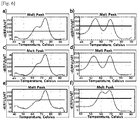
FIG. 4 shows a multiplex detection using three PNA probes to which γ-glutamic acids are coupled; a black line indicates a melting curve by a PNA probe of SEQ ID NO: 2, a blue line indicates a melting curve by a PNA probe of SEQ ID NO: 7, and a red line indicates a melting curve by a PNA probe of SEQ ID NO: 8.- (a) a case of an experiment with homozygous samples consisting of three PNA probes comprising γ-glutamic acids coupled thereto and target DNA oligomers complementary-binding to each probe.
- (b) a case of an experiment with homozygous samples consisting of three PNA probes comprising γ-glutamic acids coupled thereto and target DNA oligomers mismatching to each probe due to single nucleotide polymorphism.
- (c) a case of an experiment using heterozygous samples containing of three PNA probes comprising γ-glutamic acids coupled thereto and the target DNA oligomers used in (a) and (b) above mixed with each other at a ratio of 1:1.
-
FIG. 5 shows multiplex detection in a case where three PNA probes comprising γ-glutamic acids coupled thereto are adjacent to single nucleotide polymorphism; and a black line indicates a melting curve by a PNA probe of SEQ ID NO: 2, a blue line indicates a melting curve by a PNA probe of SEQ ID NO: 7, and a red line indicates a melting curve by a PNA probe of SEQ ID NO: 8.- (a) a case of using three PNA probes comprising γ-glutamic acids coupled thereto and a DNA oligomer of SEQ ID NO: 19 in Table 2.
- (b) a case of using three PNA probes comprising γ-glutamic acids coupled thereto and a DNA oligomer of SEQ ID NO: 20 in Table 2.
- (c) a case of using three PNA probes comprising γ-glutamic acids coupled thereto and DNA oligomers of SEQ ID NOs: 19 and 20 in Table 2 mixed with each other at a ratio of 1:1.
-
FIG. 6 shows a melting curve graph obtained by coupling the PNA probe to various heterozygous samples having a single nucleotide polymorphism;- (a) a case of using a sample containing a PNA probe of SEQ ID NO: 9 in Table 1 and DNA oligomers of SEQ ID NOs: 21 and 22 in Table 2 mixed with each other at a ratio of 1:1.
- (b) a case of using a sample containing a PNA probe of SEQ ID NO: 9 in Table 1 and DNA oligomers of SEQ ID NOs: 25 and 26 in Table 2 mixed with each other at a ratio of 1:1.
- (c) a case of using a sample containing a PNA probe of SEQ ID NO: 9 in Table 1 and DNA oligomers of SEQ ID NOs: 21 and 23 in Table 2 mixed with each other at a ratio of 1:1.
- (d) a case of using a sample containing a PNA probe of SEQ ID NO: 9 in Table 1 and DNA oligomers of SEQ ID NOs: 25 and 27 in Table 2 mixed with each other at a ratio of 1:1.
- (e) a case of using a sample containing a PNA probe of SEQ ID NO: 9 in Table 1 and DNA oligomers of SEQ ID NOs: 21 and 24 in Table 2 mixed with each other at a ratio of 1:1.
- (f) a case of using a sample containing a PNA probe of SEQ ID NO: 9 in Table 1 and DNA oligomers of SEQ ID NOs: 25 and 28 in Table 2 mixed with each other at a ratio of 1:1.
- The present invention provides a PNA probe comprising a reporter and a quencher coupled thereto for detecting nucleotide polymorphism of a target gene.
- It is characterized that the PNA probe contains negative charge molecules, wherein the negative charge molecule may be at least one selected from a group consisting of all acids including amino acids, amino acid side chains, phosphoric acids, carboxylic acids, sulfonic acids, nitric acids and boric acids.
- In addition, the negative charge molecule may be coupled to an N terminal, a C terminal of the PNA probe, or alpha, beta or gamma position of a PNA backbone, and at least one negative charge molecule may be consecutively or intermittently coupled to a base of the probe.
- The present invention provides a melting curve analysis method using the PNA probe comprising the reporter and the quencher coupled thereto.
- It is characterized that the PNA probe used in the melting curve analysis method contains negative charge molecules, and due to the use of the PNA probe containing negative charge molecules, resolution of the melting curve is increased, such that it is easy to analyze a heterozygous sample.
- The PNA probe containing negative charge molecules according to the present invention may contain at least one negative charge molecules selected from a group consisting of all acids including amino acids, amino acid side chains, phosphoric acids, carboxylic acids, sulfonic acids, nitric acids and boric acids. The negative charge molecule may be coupled to an N terminal, a C terminal of the PNA probe, or alpha, beta or gamma position of a PNA backbone, and at least one negative charge molecule may be consecutively or intermittently coupled to a base of the probe.
- In addition, the PNA probe may contain a fluorescent material. The fluorescent material may be a reporter, a quencher, or an intercalating fluorescent material.
- The present invention provides a nucleotide polymorphism analysis method of a target gene using the PNA probe containing negative charge molecules.
- The nucleotide polymorphism analysis method of a target gene may be used by analyzing the melting curve.
- Since the PNA has excellent thermal stability and biological stability, and high recognition ability with respect to a target DNA and high coupling ability to the target DNA as compared to DNA, the PNA may be used as a probe of a real-time PCR technology for detecting single nucleotide polymorphism (SNP). However, since the real-time PCR method uses the fluorescent material in detecting the target DNA in a sample, in order to detect the SNP at one position, there is a problem in that a probe having two fluorescent materials having different wavelengths is needed. The above-mentioned problem is a significant limitation in conducting a multiplex detection, and the present invention may solve the problem through the melting curve analysis of the fluorescent probe. However, in the case where the melting curve analysis is conducted using a non-modified PNA probe, since a half width at half maximum of a melting curve graph is large, there is a disadvantage in that an analysis result with the heterozygous sample is not precise. Accordingly, the present inventors tried to couple the backbone of the PNA probe to a side chain of an amino acid having negative charges, such that as temperature becomes increased, the PNA probe and the target DNA are rapidly dissociated, thereby making it possible to precisely analyze the melting curve. The simplified schematic view therefore was shown in
FIG. 1 . - The PNA probe according to the present invention may be applied to various molecule diagnostic technologies such as the following examples due to a small half width at halt maximum of the melting curve graph. For example, in a case where nucleotide polymorphism occurs in codons at various positions in a short nucleotide sequence, since resolution of the melting curve is high, whether the nucleotide polymorphism occurred at one position or at two or various positions, may be detected using one PNA probe. In addition, due to the high resolution, the melting curve may be differentiated according to a base at position at which the nucleotide polymorphism occurred, and thus, nucleotide sequence having modification may be simply figured out without a separate analysis such as a sequencing analysis.
- The melting curve analysis method for detecting the nucleotide polymorphism using the PNA probe according to the present invention may enable to conduct the multiplex detection of nucleotide polymorphism due to the increased resolution of the melting curve, and in addition, even in a case where the SNPs are adjacent to each other, the multiplex detection may be conducted.
- Further, even a case where a base forming a mismatch at a different position rather than the SNP modified position of the target DNA as well as the PNA probe to which the side chain of the amino acid having negative charges is coupled according to the present invention is introduced, may obtain an effect similar to that of the above-described case.
- The present invention provides a nucleotide polymorphism analysis method of a target DNA comprising:
- isolating a target DNA from a testing sample;
- hybridizing the target DNA with a PNA probe comprising a reporter and a quencher coupled thereto;
- obtaining a melting curve by melting a product obtained by the hybridization while changing a temperature; and
- analyzing the obtained melting curve.
- It is characterized that the PNA probe used in the nucleotide polymorphism analysis method of the target gene, and the melting curve analysis method contains negative charge molecules, wherein the PNA probe containing the negative charge molecules may contain at least one negative charge molecules selected from a group consisting of all acids including amino acids, amino acid side chains, phosphoric acids, carboxylic acids, sulfonic acids, nitric acids and boric acids. The negative charge molecule may be coupled to an N terminal, a C terminal of the PNA probe, or alpha, beta or gamma position of a PNA backbone, and at least one negative charge molecule may be consecutively or intermittently coupled to each base of the PNA probe.
- In addition, the PNA probe used in the nucleotide polymorphism analysis method and the melting curve analysis method according to the present invention may contain a fluorescent material. The probe may have the reporter and the fluorescent material of the quencher capable of quenching fluorescence of the reporter coupled to both end thereof, and may contain an intercalating fluorescent material. The reporter may be at least one selected from a group consisting of FAM(6-carboxyfluorescein), Texas red, JOE, TAMRA, CY5 and CY3, and the quencher is preferably TAMRA(6-carboxytetramethyl-rhodamine), BHQ1, BHQ2, or Dabysyl, but the present invention is not limited thereto. The intercalating fluorescent material may be selected from a group consisting of acridine homodimer and derivatives thereof, acridine orange and derivatives thereof, 7-aminoactinomycin D (7-AAD) and derivatives thereof, actinomycin D and derivatives thereof, 9-amino-6-chloro-2-methoxyacridine (ACMA) and derivatives thereof, DAPI and derivatives thereof, dihydroethidium and derivatives thereof, ethidium bromide and derivatives thereof, ethidium homodimer-1 (EthD-1) and derivatives thereof, ethidium homodimer-2 (EthD-2) and derivatives thereof, ethidium monoazide and derivatives thereof, hexidium iodide and derivatives thereof, bisbenzimide, Hoechst 33258 and derivatives thereof, Hoechst 33342 and derivatives thereof, Hoechst 34580 and derivatives thereof, hydroxystilbamidine and derivatives thereof, LDS 751 and derivatives thereof, propidium Iodide (PI) and derivatives thereof and Cy-dyes derivatives.
- The PNA probe contains the negative charge molecules coupled thereto used in the nucleotide polymorphism analysis method of the target gene may contain the reporter and the quencher. The PNA probe containing the negative charge molecules, the reporter, and the quencher is hybridized with the target DNA and then a fluorescent signal is generated, and as a temperature becomes increased, the PNA probe and the target DNA are rapidly melted at an optimum melting temperature of the probe due to a negative charge effect, such that the fluorescent signal is quenched. As compared to a PNA probe without negative charges, the PNA probe containing the negative charges is rapidly dissociated from the target DNA to increase resolution of the melting curve. Through the melting curve analysis having the high resolution obtained from the fluorescent signal according to a change in temperature, nucleotide polymorphism of the target DNA may be analyzed.
- In addition, the PNA probe contains the negative charge molecules coupled thereto used in the nucleotide polymorphism of the target gene may contain an intercalating fluorescent material. The probe contains the negative charge molecules and the intercalating fluorescent material coupled thereto is hybridized with the target DNA and then a fluorescent signal is generated, and due to a negative charge effect, the PNA probe and the target DNA are rapidly melted at an optimum melting temperature of the probe, such that the fluorescent signal is quenched. Through the melting curve analysis having the high resolution obtained according to temperature of the fluorescent signal, nucleotide polymorphism of the target DNA may be analyzed.
- Further, the nucleotide polymorphism analysis method of the target gene according to the present invention may include analyzing the melting curve obtained by using the detection of the fluorescent signal without a direct coupling of the intercalating fluorescent material to the probe.
- The present invention provides a kit for analyzing the nucleotide polymorphism of the target gene using the melting curve analysis method of the PNA probe comprising the reporter and the quencher coupled thereto.
- It is characterized that the PNA probe contains negative charges, and the kit preferably contains the PNA probe comprising the reporter and the quencher coupled thereto, but the present invention is not limited thereto.
- The kit for analyzing the nucleotide polymorphism may be used by analyzing nucleotide polymorphism of a multiplex target DNA or a single target DNA.
- Hereinafter, the present invention will be described in detail with reference to the following Examples. These examples are only for exemplifying the present invention, and it will be obvious to those skilled in the art that the scope of the present invention is not construed to be limited to these examples according to the gist of the present invention.
- In order to perform a melting curve analysis of the present invention, PNA probes shown as the following Table 1 were synthesized to be used.
-
[Table 1] Sequence of PNA Probe Used in Present Invention SEQID No. Name Sequence (N'→C') Length of Sequence 1 861-F71 
12 2 861-glu2-71-65 
12 3 858-F-78 
11 4 858-glu2-70 
11 5 858-glu270 
11 6 858-glu-270 
11 7 18-2-3 
14 8 K13_melt 
14 9 K 
13 - In Table 1 above, O indicates a linker, a bold letter indicates γ-glutamic acid-PNA monomer and K indicates lysine.
- The PNA probe was prepared by synthesizing a PNA oligomer from a benzothiazole-sulfonyl (Bts) group-protected PNA monomer and a functionalized resin by a solid phase synthesis according to a method described in Korean Patent Publication No.
464261 - As a target DNA oligomer to be coupled to the PNA probe, a DNA oligomer synthesized by Bioneer Corporation (Korea) was used.
-
[Table 2] Sequence of DNA Oligomer used in Present Invention SEQ ID NO. Name Sequence (5'→3') Length of Sequence 10 58T-61T 
30 11 58T-61A 
30 12 58T-61G 
30 13 58C-61C 
30 14 58A-61C 
30 15 Tm-13-04 CATGTACGTCCCAACTACATG 21 16 Tm-13-01 CATGTACGTCACAACTACATG 21 17 2120758-G(W) 
26 18 2120758-C 
26 19 3Target_W 
71 20 3Target_M 
71 21 K(D) CATGCGCCACCAAGCTCCATG 21 22 K(D)-0A CATGCGCCACTAAGCTCCATG 21 23 K(D)-0C CATGCGCCACGAAGCTCCATG 21 24 K(D)-0T CATGCGCCACAAAGCTCCATG 21 25 K(D)-0A CATGCGCCACTAAGCTCCATG 21 26 K(D)-1A CATGCGCCAATAAGCTCCATG 21 27 K(D)-2A CATGCGCCAGTAAGCTCCATG 21 28 K(D)-3A CATGCGCCATTAAGCTCCATG 21 - 1.25µM of PNA probes listed in Table 1 above, 0.25µM of DNA oligomers listed in Table 2 above, and PCR amplification solution (Enzynomics Co., Ltd., Korea) were added and mixed with each other, followed by reaction at 95°C for 5 minutes using real-time PCR machine (CFX96TM Real-time PCR System), temperature was decreased at a rate of 0.1°C /sec until 40°C and the reactant was maintained for five minutes, and then fluorescence was measured while increasing temperature by 0.5°C from 40°C up to 95°C, thereby conducting the melting curve analysis.
- In order to compare a difference in melting curves between PNA probe comprising γ-glutamic acid coupled thereto and a non-modified PNA probe, melting curves were analyzed by experiment using samples containing PNA probes of SEQ ID NOs: 1 and 2 in Table 1 and oligomers prepared by mixing a DNA oligomer of SEQ ID NO: 10 in Table 2 with one of DNA oligomers of SEQ ID NOs: 11 to 13 in Table 2 at a ratio of 1:1, by the method of Example 1 above, respectively.
- Results thereof were shown in
FIG. 2 . It could be appreciated that in a case where the PNA probe comprising γ-glutamic acid coupled thereto, that is, the PNA probe contains negative charge molecules introduced thereinto was used, due to an negative charge effect, the PNA probe was rapidly dissociated from the target DNA according to an increase in temperature, such that resolution of the melting curve in a heterozygous sample having SNP was remarkably increased. - In order to compare a difference in melting curves according to a position of γ-glutamic acid which is negative charge molecules coupled to the PNA probe, melting curves were analyzed by experiment using samples containing PNA probes of SEQ ID NOs: 3, 4, 5, and 6 in Table 1 and DNA oligomers of SEQ ID NOs: 13 to 14 in Table 2 mixed with each other at a ratio of 1:1, by the method of Example 1 above, respectively. Results thereof were shown in
FIG. 3 . - In a case of using a PNA probe to which two γ-glutamic acids are coupled, having two nucleotides therebetween, two melting curves were the most precisely separated from each other in the heterozygous sample having the SNP.
- Example 4 was conducted by confirming whether or not Example 2 above is capable of being applied to a multiplex detection. Melting curves were analyzed by experiment using samples containing a combination of a PNA probe of SEQ ID NO: 2 in Table 1 and a target oligomer prepared by containing a DNA oligomer of SEQ ID NO: 10 or 11 in Table 2 or by mixing both of the DNA oligomers with each other at a ratio of 1:1, a sample containing a combination of a PNA probe of SEQ ID NO: 7 in Table 1 and a target oligomer prepared by containing a DNA oligomer of SEQ ID NO: 15 or 16 in Table 2 or by mixing both of the DNA oligomers with each other at a ratio of 1:1, and a sample containing a combination of a PNA probe of SEQ ID NO: 8 in Table 1 and a target oligomer prepared by containing a DNA oligomer of SEQ ID NO: 17 or 18 in Table 2 or by mixing both of the DNA oligomers with each other at a ratio of 1:1, by the method of Example 1 above, respectively.
- Results thereof were shown in
FIG. 4 . It was confirmed that the multiplex detection was capable of being conducted using the PNA probe comprising γ-glutamic acid coupled thereto. - Example 5 was conducted by confirming whether or not the multiplex detection ability confirmed by Example 4 above is capable of being conducted even in a case where SNPs are adjacent to each other. Melting curves were analyzed by experiment using samples containing three PNA probes of SEQ ID NOs: 2, 7, and 8 in Table 1 and a target oligomer prepared by containing a DNA oligomer of SEQ ID NO: 19 or 20 in Table 2 or by mixing both of the DNA oligomers with each other at a ratio of 1:1.
- Results thereof were shown in
FIG. 5 . It was confirmed by using the PNA probe comprising γ-glutamic acid coupled thereto that the multiplex detection was capable of being conducted even in a case where SNPs were adjacent to each other. - In order to compare an effect of a PNA probe having a base forming a mismatch at a different position rather than a SNP modified position of the target DNA introduced thereinto, melting curves were analyzed by experiment using a sample containing a PNA probe of SEQ ID NO: 9 in Table 1 and a target oligomer prepared by mixing a DNA oligomer of SEQ ID NO: 21 with one of DNA oligomers of SEQ ID NOs: 22 to 24 in Table 2, at a ratio of 1:1, and a sample containing a PNA probe of SEQ ID NO: 9 in Table 1 and a target oligomer prepared by mixing a DNA oligomer of SEQ ID NO: 25 with one of DNA oligomers of SEQ ID NOs: 26 to 28 in Table 2, at a ratio of 1:1, by the method of Example 1 above, respectively.
- Results thereof were shown in
FIG. 6 . It was confirmed by using the PNA probe having a base forming a mismatch at a different position rather than a SNP modified position of the target DNA introduced thereinto that two melting curves were the most precisely separated from each other in the heterozygous sample having the SNP. - The PNA fluorescent probe developed in the present invention may be used for not only the melting curve analysis method clearly described in Examples above, but also all methods capable of analyzing the target DNA using the fluorescent probe, for example, real-time PCR method; however, they are only described by way of example, and the present invention is not limited thereto. It may be appreciated by those skilled in the art that all known method may be used.
- The backbone of the PNA probe according to the present invention may be coupled to the side chain of the amino acid having negative charges, such that the PNA probe may have a high recognition ability with respect to the target DNA and a high coupling ability to the target DNA and may be rapidly dissociated by heat. Therefore, the nucleotide polymorphism analysis method using the PNA probe containing negative charges of the present invention has advantages in that the nucleotide polymorphism analysis may be relatively easily performed even in a heterozygous sample showing two melting curve graphs, and two or more adjacent single nucleotide polymorphisms may be simultaneously analyzed. Here, the easily performed melting curve analysis is not limited to the heterozygous sample, but may be applied to all samples including a homozygous sample.
- The present invention has been described in detail based on particular features thereof, and it is obvious to those skilled in the art that these specific technologies are merely preferable embodiments and thus the scope of the present invention is not limited to the embodiments. Therefore, the substantial scope of the present invention is defined by the accompanying claims.
- Attached the document.
- <110> PANAGENE INC.
- <120> Melting curve analysis using PNA probe, Method and Kit for analyzing Nucleotide Polymorphism using melting curve analysis
- <130> PP-B1304
- <160> 28
- <170> KopatentIn 2.0
- <210> 1
<211> 12
<212> DNA
<213> Artificial Sequence - <220>
<223> 861-F71 - <400> 1
caaacagctg gg 12 - <210> 2
<211> 12
<212> DNA
<213> Artificial Sequence - <220>
<223> 861-glu2-71-65 - <400> 2
caaacagctg gg 12 - <210> 3
<211> 11
<212> DNA
<213> Artificial Sequence - <220>
<223> 858-F-78 - <400> 3
ttgggcgggc c 11 - <210> 4
<211> 11
<212> DNA
<213> Artificial Sequence - <220>
<223> 858-glu2-70 - <400> 4
ttgggcgggc c 11 - <210> 5
<211> 11
<212> DNA
<213> Artificial Sequence - <220>
<223> 858-glu270 - <400> 5
ttgggcgggc c 11 - <210> 6
<211> 11
<212> DNA
<213> Artificial Sequence - <220>
<223> 858-glu-270 - <400> 6
ttgggcgggc c 11 - <210> 7
<211> 14
<212> DNA
<213> Artificial Sequence - <220>
<223> 18-2-3 - <400> 7
tagttgggat gtac 14 - <210> 8
<211> 14
<212> DNA
<213> Artificial Sequence - <220>
<223> K13_melt - <400> 8
acgccaccag ctcc 14 - <210> 9
<211> 13
<212> DNA
<213> Artificial Sequence - <220>
<223> K - <400> 9
gagcttggtg gcg 13 - <210> 10
<211> 30
<212> DNA
<213> Artificial Sequence - <220>
<223> 58T-61T - <400> 10
cgcacccagc tgtttggcct gcccaaaatc 30 - <210> 11
<211> 30
<212> DNA
<213> Artificial Sequence - <220>
<223> 58T-61A - <400> 11
cgcacccagc agtttggcct gcccaaaatc 30 - <210> 12
<211> 30
<212> DNA
<213> Artificial Sequence - <220>
<223> 58T-61G - <400> 12
cgcacccagc ggtttggcct gcccaaaatc 30 - <210> 13
<211> 30
<212> DNA
<213> Artificial Sequence - <220>
<223> 58C-61C - <400> 13
cgcacccagc cgtttggcct gcccaaaatc 30 - <210> 14
<211> 30
<212> DNA
<213> Artificial Sequence - <220>
<223> 58A-61C - <400> 14
cgcacccagc cgtttggcca gcccaaaatc 30 - <210> 15
<211> 21
<212> DNA
<213> Artificial Sequence - <220>
<223> Tm-13-04 - <400> 15
catgtacgtc ccaactacat g 21 - <210> 16
<211> 21
<212> DNA
<213> Artificial Sequence - <220>
<223> Tm-13-01 - <400> 16
catgtacgtc acaactacat g 21 - <210> 17
<211> 26
<212> DNA
<213> Artificial Sequence - <220>
<223> 2120758-G(W) - <400> 17
aaggttggag atggtggcgt aggcta 26 - <210> 18
<211> 26
<212> DNA
<213> Artificial Sequence - <220>
<223> 2120758-C - <400> 18
aaggttggag atgctggcgt aggcta 26 - <210> 19
<211> 71
<212> DNA
<213> Artificial Sequence - <220>
<223> 3Target_W - <400> 19

- <210> 20
<211> 71
<212> DNA
<213> Artificial Sequence - <220>
<223> 3Target_M - <400> 20

- <210> 21
<211> 21
<212> DNA
<213> Artificial Sequence - <220>
<223> K(D) - <400> 21
catgcgccac caagctccat g 21 - <210> 22
<211> 21
<212> DNA
<213> Artificial Sequence - <220>
<223> K(D)-0A - <400> 22
catgcgccac taagctccat g 21 - <210> 23
<211> 21
<212> DNA
<213> Artificial Sequence - <220>
<223> K(D)-0C - <400> 23
catgcgccac gaagctccat g 21 - <210> 24
<211> 21
<212> DNA
<213> Artificial Sequence - <220>
<223> K(D)-0T - <400> 24
catgcgccac aaagctccat g 21 - <210> 25
<211> 21
<212> DNA
<213> Artificial Sequence - <220>
<223> K(D)-0A - <400> 25
catgcgccac taagctccat g 21 - <210> 26
<211> 21
<212> DNA
<213> Artificial Sequence - <220>
<223> K(D)-1A - <400> 26
catgcgccaa taagctccat g 21 - <210> 27
<211> 21
<212> DNA
<213> Artificial Sequence - <220>
<223> K(D)-2A - <400> 27
catgcgccag taagctccat g 21 - <210> 28
<211> 21
<212> DNA
<213> Artificial Sequence - <220>
<223> K(D)-3A - <400> 28
catgcgccat taagctccat g 21
Claims (7)
- A melting curve analysis method for detecting the nucleotide polymorphism of the target gene using a PNA probe comprising a reporter and a quencher coupled thereto, wherein the PNA probe contains two side chains of negatively charged amino acids which, consecutively coupled, have two nucleotides in between.
- A melting curve analysis method of claim 1, wherein the PNA probe contains intercalating fluorescent material.
- A melting curve analysis method of claim 2, wherein the intercalating fluorescent material is not directly coupled to the probe.
- A melting curve analysis method of claim 1, wherein the negative charge molecule is coupled to an alpha, beta or gamma position of a PNA backbone, and at least one negative charge molecule is consecutively or intermittently coupled to a probe.
- A nucleotide polymorphism analysis method of a target DNA, the method comprising:isolating a target DNA from a testing sample;hybridizing the target DNA with a PNA probe comprising a reporter and a quencher coupled thereto;obtaining a melting curve by melting a product obtained by the hybridization while changing a temperature; andanalyzing the obtained melting curve,wherein the PNA probe contains two negatively charged amino acid side chains which, consecutively coupled, have two nucleotides in between.
- A kit for analyzing the nucleotide polymorphism of the target gene using the melting curve analysis method of a PNA probe comprising the reporter and a quencher coupled thereto, wherein the PNA probe contains two negatively charged amino acids which, consecutively coupled, have two nucleotides in between, and wherein the PNA probe contains intercalating fluorescent material which is not directly coupled to the probe.
- The kit of claim 6, wherein the kit is used by analyzing the nucleotide polymorphism of a multiplex target DNA or a single target DNA.
Applications Claiming Priority (1)
| Application Number | Priority Date | Filing Date | Title |
|---|---|---|---|
| PCT/KR2014/002909 WO2015152446A1 (en) | 2014-04-04 | 2014-04-04 | Melting curve analysis using PNA probe, Method and Kit for analyzing Nucleotide Polymorphism using melting curve analysis |
Publications (3)
| Publication Number | Publication Date |
|---|---|
| EP3126511A1 EP3126511A1 (en) | 2017-02-08 |
| EP3126511A4 EP3126511A4 (en) | 2017-11-01 |
| EP3126511B1 true EP3126511B1 (en) | 2019-06-19 |
Family
ID=54240747
Family Applications (1)
| Application Number | Title | Priority Date | Filing Date |
|---|---|---|---|
| EP14887849.9A Active EP3126511B1 (en) | 2014-04-04 | 2014-04-04 | Melting curve analysis using pna probe, method and kit for analyzing nucleotide polymorphism using melting curve analysis |
Country Status (5)
| Country | Link |
|---|---|
| US (1) | US10227637B2 (en) |
| EP (1) | EP3126511B1 (en) |
| JP (1) | JP6523429B2 (en) |
| CN (1) | CN106414766B (en) |
| WO (1) | WO2015152446A1 (en) |
Families Citing this family (1)
| Publication number | Priority date | Publication date | Assignee | Title |
|---|---|---|---|---|
| KR101969971B1 (en) * | 2017-03-24 | 2019-04-18 | 주식회사 시선바이오머티리얼스 | Melting Curve Analysis Using bifunctional PNA probe for Microsatellite Instability (MSI) Diagnosis, and Method and Kit of Microsatellite Instability Diagnosis Using the Same |
Family Cites Families (7)
| Publication number | Priority date | Publication date | Assignee | Title |
|---|---|---|---|---|
| US6355421B1 (en) * | 1997-10-27 | 2002-03-12 | Boston Probes, Inc. | Methods, kits and compositions pertaining to PNA molecular beacons |
| US6485901B1 (en) * | 1997-10-27 | 2002-11-26 | Boston Probes, Inc. | Methods, kits and compositions pertaining to linear beacons |
| JP2005338024A (en) * | 2004-05-31 | 2005-12-08 | Toyobo Co Ltd | Sensitizing reagent, composition and method for analyzing melting curve of nucleic acid |
| US20060281099A1 (en) * | 2005-06-14 | 2006-12-14 | Bio-Rad Laboratories, Inc. | Q-melt for polymorphism detection |
| US7803543B2 (en) * | 2007-01-19 | 2010-09-28 | Chang Gung University | Methods and kits for the detection of nucleotide mutations using peptide nucleic acid as both PCR clamp and sensor probe |
| CA2824223A1 (en) * | 2011-01-14 | 2012-07-19 | Genefirst Limited | Methods, compositions, and kits for determining the presence/absence of a variant nucleic acid sequence |
| WO2013009070A2 (en) * | 2011-07-12 | 2013-01-17 | 주식회사 파나진 | Nested hybridization pna probe system having parallel binding structure |
-
2014
- 2014-04-04 CN CN201480079449.XA patent/CN106414766B/en active Active
- 2014-04-04 JP JP2017503747A patent/JP6523429B2/en active Active
- 2014-04-04 EP EP14887849.9A patent/EP3126511B1/en active Active
- 2014-04-04 US US15/300,771 patent/US10227637B2/en active Active
- 2014-04-04 WO PCT/KR2014/002909 patent/WO2015152446A1/en not_active Ceased
Non-Patent Citations (1)
| Title |
|---|
| None * |
Also Published As
| Publication number | Publication date |
|---|---|
| EP3126511A4 (en) | 2017-11-01 |
| EP3126511A1 (en) | 2017-02-08 |
| US20170067092A1 (en) | 2017-03-09 |
| JP6523429B2 (en) | 2019-05-29 |
| CN106414766A (en) | 2017-02-15 |
| CN106414766B (en) | 2019-10-08 |
| JP2017510301A (en) | 2017-04-13 |
| US10227637B2 (en) | 2019-03-12 |
| WO2015152446A1 (en) | 2015-10-08 |
Similar Documents
| Publication | Publication Date | Title |
|---|---|---|
| KR102018317B1 (en) | Melting curve analysis using PNA probe comprising reporter and quencher, Method and Kit for analyzing Nucleotide Polymorphism using melting curve analysis | |
| EP2912176B1 (en) | Method for the detection of multiple target nucleic acids using clamping probes and detection probes | |
| EP1362928B1 (en) | Genotyping by amplicon melting curve analysis | |
| US10072287B2 (en) | Methods of targeted sequencing | |
| KR101969971B1 (en) | Melting Curve Analysis Using bifunctional PNA probe for Microsatellite Instability (MSI) Diagnosis, and Method and Kit of Microsatellite Instability Diagnosis Using the Same | |
| US20060110765A1 (en) | Detection of nucleic acid variation by cleavage-amplification (CleavAmp) method | |
| KR20150028063A (en) | Liquid Type Melting Array Using Probe Comprising Reporter and Quenching and Method for Target DNA or Mutant Detection Using Liquid Type Melting Array | |
| EP3216879A1 (en) | Pna probe, kit and method for detecting human papillomavirus genotype | |
| TWI795626B (en) | Method of detecting multiple targets based on single detection probe using tag sequence snp | |
| EP3783108B1 (en) | Method for detecting target nucleic acid | |
| KR101695477B1 (en) | Method for the Determination of Blood Typing Using PNA Probe and fluorscence melting curve analysis | |
| KR101358416B1 (en) | Method for Detecting Target Genes or Their Mutations Using Ligase Reaction and Nicking Amplification Reaction | |
| EP1737978A1 (en) | Nucleic acid sequencing | |
| US20030113723A1 (en) | Method for evaluating microsatellite instability in a tumor sample | |
| US10227637B2 (en) | Melting curve analysis using PNA probe, method and kit for analyzing nucleotide polymorphism using melting curve analysis | |
| KR101847634B1 (en) | Kit for gender determination | |
| KR102923870B1 (en) | Novel peptide nucleic acid oligomer, thereof use as DNA methylation discrimination, and method for detecting DNA methylation using the same | |
| WO2004016806A1 (en) | Using a polymerase with 3' to 5' exonuclease activity to perform gene sequence analysis | |
| KR101856205B1 (en) | Allele specific primer and method for analyzing identifying genotype of the allele using same | |
| KR102079963B1 (en) | Method for Detecting Chromosomal Numeric Abnormality based on Elimination Probe and Composition for Detecting Chromosomal Numeric Abnormality | |
| KR20260019038A (en) | Method for testing gene sequence variant using oligo melting curve analysis | |
| CN101158633A (en) | Multicolor Fluorescence Multiplex Amplification Kit of 11 SNP Loci Related to Susceptibility to Lung Cancer | |
| HK40048081A (en) | Elimination probe-based method for detecting numerical chromosomal abnormalities, and nucleic acid composition for detecting numerical chromosomal abnormalities | |
| WO2000056923A2 (en) | Genetic analysis |
Legal Events
| Date | Code | Title | Description |
|---|---|---|---|
| STAA | Information on the status of an ep patent application or granted ep patent |
Free format text: STATUS: THE INTERNATIONAL PUBLICATION HAS BEEN MADE |
|
| PUAI | Public reference made under article 153(3) epc to a published international application that has entered the european phase |
Free format text: ORIGINAL CODE: 0009012 |
|
| STAA | Information on the status of an ep patent application or granted ep patent |
Free format text: STATUS: REQUEST FOR EXAMINATION WAS MADE |
|
| 17P | Request for examination filed |
Effective date: 20161013 |
|
| AK | Designated contracting states |
Kind code of ref document: A1 Designated state(s): AL AT BE BG CH CY CZ DE DK EE ES FI FR GB GR HR HU IE IS IT LI LT LU LV MC MK MT NL NO PL PT RO RS SE SI SK SM TR |
|
| AX | Request for extension of the european patent |
Extension state: BA ME |
|
| DAX | Request for extension of the european patent (deleted) | ||
| A4 | Supplementary search report drawn up and despatched |
Effective date: 20170929 |
|
| RIC1 | Information provided on ipc code assigned before grant |
Ipc: C12Q 1/68 20060101AFI20170925BHEP |
|
| STAA | Information on the status of an ep patent application or granted ep patent |
Free format text: STATUS: EXAMINATION IS IN PROGRESS |
|
| 17Q | First examination report despatched |
Effective date: 20180731 |
|
| GRAP | Despatch of communication of intention to grant a patent |
Free format text: ORIGINAL CODE: EPIDOSNIGR1 |
|
| STAA | Information on the status of an ep patent application or granted ep patent |
Free format text: STATUS: GRANT OF PATENT IS INTENDED |
|
| INTG | Intention to grant announced |
Effective date: 20190107 |
|
| GRAS | Grant fee paid |
Free format text: ORIGINAL CODE: EPIDOSNIGR3 |
|
| GRAA | (expected) grant |
Free format text: ORIGINAL CODE: 0009210 |
|
| STAA | Information on the status of an ep patent application or granted ep patent |
Free format text: STATUS: THE PATENT HAS BEEN GRANTED |
|
| AK | Designated contracting states |
Kind code of ref document: B1 Designated state(s): AL AT BE BG CH CY CZ DE DK EE ES FI FR GB GR HR HU IE IS IT LI LT LU LV MC MK MT NL NO PL PT RO RS SE SI SK SM TR |
|
| REG | Reference to a national code |
Ref country code: GB Ref legal event code: FG4D |
|
| REG | Reference to a national code |
Ref country code: CH Ref legal event code: EP |
|
| REG | Reference to a national code |
Ref country code: IE Ref legal event code: FG4D |
|
| REG | Reference to a national code |
Ref country code: AT Ref legal event code: REF Ref document number: 1145581 Country of ref document: AT Kind code of ref document: T Effective date: 20190715 |
|
| REG | Reference to a national code |
Ref country code: DE Ref legal event code: R096 Ref document number: 602014048880 Country of ref document: DE |
|
| REG | Reference to a national code |
Ref country code: NL Ref legal event code: MP Effective date: 20190619 |
|
| PG25 | Lapsed in a contracting state [announced via postgrant information from national office to epo] |
Ref country code: AL Free format text: LAPSE BECAUSE OF FAILURE TO SUBMIT A TRANSLATION OF THE DESCRIPTION OR TO PAY THE FEE WITHIN THE PRESCRIBED TIME-LIMIT Effective date: 20190619 Ref country code: SE Free format text: LAPSE BECAUSE OF FAILURE TO SUBMIT A TRANSLATION OF THE DESCRIPTION OR TO PAY THE FEE WITHIN THE PRESCRIBED TIME-LIMIT Effective date: 20190619 Ref country code: FI Free format text: LAPSE BECAUSE OF FAILURE TO SUBMIT A TRANSLATION OF THE DESCRIPTION OR TO PAY THE FEE WITHIN THE PRESCRIBED TIME-LIMIT Effective date: 20190619 Ref country code: NO Free format text: LAPSE BECAUSE OF FAILURE TO SUBMIT A TRANSLATION OF THE DESCRIPTION OR TO PAY THE FEE WITHIN THE PRESCRIBED TIME-LIMIT Effective date: 20190919 Ref country code: HR Free format text: LAPSE BECAUSE OF FAILURE TO SUBMIT A TRANSLATION OF THE DESCRIPTION OR TO PAY THE FEE WITHIN THE PRESCRIBED TIME-LIMIT Effective date: 20190619 Ref country code: LT Free format text: LAPSE BECAUSE OF FAILURE TO SUBMIT A TRANSLATION OF THE DESCRIPTION OR TO PAY THE FEE WITHIN THE PRESCRIBED TIME-LIMIT Effective date: 20190619 |
|
| REG | Reference to a national code |
Ref country code: LT Ref legal event code: MG4D |
|
| PG25 | Lapsed in a contracting state [announced via postgrant information from national office to epo] |
Ref country code: RS Free format text: LAPSE BECAUSE OF FAILURE TO SUBMIT A TRANSLATION OF THE DESCRIPTION OR TO PAY THE FEE WITHIN THE PRESCRIBED TIME-LIMIT Effective date: 20190619 Ref country code: BG Free format text: LAPSE BECAUSE OF FAILURE TO SUBMIT A TRANSLATION OF THE DESCRIPTION OR TO PAY THE FEE WITHIN THE PRESCRIBED TIME-LIMIT Effective date: 20190919 Ref country code: GR Free format text: LAPSE BECAUSE OF FAILURE TO SUBMIT A TRANSLATION OF THE DESCRIPTION OR TO PAY THE FEE WITHIN THE PRESCRIBED TIME-LIMIT Effective date: 20190920 Ref country code: LV Free format text: LAPSE BECAUSE OF FAILURE TO SUBMIT A TRANSLATION OF THE DESCRIPTION OR TO PAY THE FEE WITHIN THE PRESCRIBED TIME-LIMIT Effective date: 20190619 |
|
| REG | Reference to a national code |
Ref country code: AT Ref legal event code: MK05 Ref document number: 1145581 Country of ref document: AT Kind code of ref document: T Effective date: 20190619 |
|
| PG25 | Lapsed in a contracting state [announced via postgrant information from national office to epo] |
Ref country code: NL Free format text: LAPSE BECAUSE OF FAILURE TO SUBMIT A TRANSLATION OF THE DESCRIPTION OR TO PAY THE FEE WITHIN THE PRESCRIBED TIME-LIMIT Effective date: 20190619 Ref country code: AT Free format text: LAPSE BECAUSE OF FAILURE TO SUBMIT A TRANSLATION OF THE DESCRIPTION OR TO PAY THE FEE WITHIN THE PRESCRIBED TIME-LIMIT Effective date: 20190619 Ref country code: EE Free format text: LAPSE BECAUSE OF FAILURE TO SUBMIT A TRANSLATION OF THE DESCRIPTION OR TO PAY THE FEE WITHIN THE PRESCRIBED TIME-LIMIT Effective date: 20190619 Ref country code: PT Free format text: LAPSE BECAUSE OF FAILURE TO SUBMIT A TRANSLATION OF THE DESCRIPTION OR TO PAY THE FEE WITHIN THE PRESCRIBED TIME-LIMIT Effective date: 20191021 Ref country code: SK Free format text: LAPSE BECAUSE OF FAILURE TO SUBMIT A TRANSLATION OF THE DESCRIPTION OR TO PAY THE FEE WITHIN THE PRESCRIBED TIME-LIMIT Effective date: 20190619 Ref country code: CZ Free format text: LAPSE BECAUSE OF FAILURE TO SUBMIT A TRANSLATION OF THE DESCRIPTION OR TO PAY THE FEE WITHIN THE PRESCRIBED TIME-LIMIT Effective date: 20190619 Ref country code: RO Free format text: LAPSE BECAUSE OF FAILURE TO SUBMIT A TRANSLATION OF THE DESCRIPTION OR TO PAY THE FEE WITHIN THE PRESCRIBED TIME-LIMIT Effective date: 20190619 |
|
| PG25 | Lapsed in a contracting state [announced via postgrant information from national office to epo] |
Ref country code: ES Free format text: LAPSE BECAUSE OF FAILURE TO SUBMIT A TRANSLATION OF THE DESCRIPTION OR TO PAY THE FEE WITHIN THE PRESCRIBED TIME-LIMIT Effective date: 20190619 Ref country code: IS Free format text: LAPSE BECAUSE OF FAILURE TO SUBMIT A TRANSLATION OF THE DESCRIPTION OR TO PAY THE FEE WITHIN THE PRESCRIBED TIME-LIMIT Effective date: 20191019 Ref country code: IT Free format text: LAPSE BECAUSE OF FAILURE TO SUBMIT A TRANSLATION OF THE DESCRIPTION OR TO PAY THE FEE WITHIN THE PRESCRIBED TIME-LIMIT Effective date: 20190619 Ref country code: SM Free format text: LAPSE BECAUSE OF FAILURE TO SUBMIT A TRANSLATION OF THE DESCRIPTION OR TO PAY THE FEE WITHIN THE PRESCRIBED TIME-LIMIT Effective date: 20190619 |
|
| PG25 | Lapsed in a contracting state [announced via postgrant information from national office to epo] |
Ref country code: TR Free format text: LAPSE BECAUSE OF FAILURE TO SUBMIT A TRANSLATION OF THE DESCRIPTION OR TO PAY THE FEE WITHIN THE PRESCRIBED TIME-LIMIT Effective date: 20190619 |
|
| PG25 | Lapsed in a contracting state [announced via postgrant information from national office to epo] |
Ref country code: PL Free format text: LAPSE BECAUSE OF FAILURE TO SUBMIT A TRANSLATION OF THE DESCRIPTION OR TO PAY THE FEE WITHIN THE PRESCRIBED TIME-LIMIT Effective date: 20190619 Ref country code: DK Free format text: LAPSE BECAUSE OF FAILURE TO SUBMIT A TRANSLATION OF THE DESCRIPTION OR TO PAY THE FEE WITHIN THE PRESCRIBED TIME-LIMIT Effective date: 20190619 |
|
| PG25 | Lapsed in a contracting state [announced via postgrant information from national office to epo] |
Ref country code: IS Free format text: LAPSE BECAUSE OF FAILURE TO SUBMIT A TRANSLATION OF THE DESCRIPTION OR TO PAY THE FEE WITHIN THE PRESCRIBED TIME-LIMIT Effective date: 20200224 |
|
| REG | Reference to a national code |
Ref country code: DE Ref legal event code: R097 Ref document number: 602014048880 Country of ref document: DE |
|
| PLBE | No opposition filed within time limit |
Free format text: ORIGINAL CODE: 0009261 |
|
| STAA | Information on the status of an ep patent application or granted ep patent |
Free format text: STATUS: NO OPPOSITION FILED WITHIN TIME LIMIT |
|
| PG2D | Information on lapse in contracting state deleted |
Ref country code: IS |
|
| 26N | No opposition filed |
Effective date: 20200603 |
|
| PG25 | Lapsed in a contracting state [announced via postgrant information from national office to epo] |
Ref country code: SI Free format text: LAPSE BECAUSE OF FAILURE TO SUBMIT A TRANSLATION OF THE DESCRIPTION OR TO PAY THE FEE WITHIN THE PRESCRIBED TIME-LIMIT Effective date: 20190619 |
|
| PG25 | Lapsed in a contracting state [announced via postgrant information from national office to epo] |
Ref country code: MC Free format text: LAPSE BECAUSE OF FAILURE TO SUBMIT A TRANSLATION OF THE DESCRIPTION OR TO PAY THE FEE WITHIN THE PRESCRIBED TIME-LIMIT Effective date: 20190619 |
|
| REG | Reference to a national code |
Ref country code: CH Ref legal event code: PL |
|
| PG25 | Lapsed in a contracting state [announced via postgrant information from national office to epo] |
Ref country code: LI Free format text: LAPSE BECAUSE OF NON-PAYMENT OF DUE FEES Effective date: 20200430 Ref country code: CH Free format text: LAPSE BECAUSE OF NON-PAYMENT OF DUE FEES Effective date: 20200430 Ref country code: LU Free format text: LAPSE BECAUSE OF NON-PAYMENT OF DUE FEES Effective date: 20200404 |
|
| REG | Reference to a national code |
Ref country code: BE Ref legal event code: MM Effective date: 20200430 |
|
| PG25 | Lapsed in a contracting state [announced via postgrant information from national office to epo] |
Ref country code: BE Free format text: LAPSE BECAUSE OF NON-PAYMENT OF DUE FEES Effective date: 20200430 |
|
| PG25 | Lapsed in a contracting state [announced via postgrant information from national office to epo] |
Ref country code: IE Free format text: LAPSE BECAUSE OF NON-PAYMENT OF DUE FEES Effective date: 20200404 |
|
| PG25 | Lapsed in a contracting state [announced via postgrant information from national office to epo] |
Ref country code: MT Free format text: LAPSE BECAUSE OF FAILURE TO SUBMIT A TRANSLATION OF THE DESCRIPTION OR TO PAY THE FEE WITHIN THE PRESCRIBED TIME-LIMIT Effective date: 20190619 Ref country code: CY Free format text: LAPSE BECAUSE OF FAILURE TO SUBMIT A TRANSLATION OF THE DESCRIPTION OR TO PAY THE FEE WITHIN THE PRESCRIBED TIME-LIMIT Effective date: 20190619 |
|
| PG25 | Lapsed in a contracting state [announced via postgrant information from national office to epo] |
Ref country code: MK Free format text: LAPSE BECAUSE OF FAILURE TO SUBMIT A TRANSLATION OF THE DESCRIPTION OR TO PAY THE FEE WITHIN THE PRESCRIBED TIME-LIMIT Effective date: 20190619 |
|
| P01 | Opt-out of the competence of the unified patent court (upc) registered |
Effective date: 20230503 |
|
| PGFP | Annual fee paid to national office [announced via postgrant information from national office to epo] |
Ref country code: DE Payment date: 20250428 Year of fee payment: 12 |
|
| PGFP | Annual fee paid to national office [announced via postgrant information from national office to epo] |
Ref country code: FR Payment date: 20250428 Year of fee payment: 12 |
|
| PGFP | Annual fee paid to national office [announced via postgrant information from national office to epo] |
Ref country code: GB Payment date: 20260330 Year of fee payment: 13 |