EP3122349B1 - Compositions for the treatment of autodigestion - Google Patents
Compositions for the treatment of autodigestion Download PDFInfo
- Publication number
- EP3122349B1 EP3122349B1 EP15767838.4A EP15767838A EP3122349B1 EP 3122349 B1 EP3122349 B1 EP 3122349B1 EP 15767838 A EP15767838 A EP 15767838A EP 3122349 B1 EP3122349 B1 EP 3122349B1
- Authority
- EP
- European Patent Office
- Prior art keywords
- composition
- shock
- glucose
- peg
- grams
- Prior art date
- Legal status (The legal status is an assumption and is not a legal conclusion. Google has not performed a legal analysis and makes no representation as to the accuracy of the status listed.)
- Active
Links
Images



Classifications
-
- A—HUMAN NECESSITIES
- A61—MEDICAL OR VETERINARY SCIENCE; HYGIENE
- A61K—PREPARATIONS FOR MEDICAL, DENTAL OR TOILETRY PURPOSES
- A61K31/00—Medicinal preparations containing organic active ingredients
- A61K31/185—Acids; Anhydrides, halides or salts thereof, e.g. sulfur acids, imidic, hydrazonic or hydroximic acids
- A61K31/19—Carboxylic acids, e.g. valproic acid
- A61K31/195—Carboxylic acids, e.g. valproic acid having an amino group
-
- A—HUMAN NECESSITIES
- A61—MEDICAL OR VETERINARY SCIENCE; HYGIENE
- A61K—PREPARATIONS FOR MEDICAL, DENTAL OR TOILETRY PURPOSES
- A61K31/00—Medicinal preparations containing organic active ingredients
-
- A—HUMAN NECESSITIES
- A61—MEDICAL OR VETERINARY SCIENCE; HYGIENE
- A61K—PREPARATIONS FOR MEDICAL, DENTAL OR TOILETRY PURPOSES
- A61K31/00—Medicinal preparations containing organic active ingredients
- A61K31/185—Acids; Anhydrides, halides or salts thereof, e.g. sulfur acids, imidic, hydrazonic or hydroximic acids
- A61K31/19—Carboxylic acids, e.g. valproic acid
- A61K31/195—Carboxylic acids, e.g. valproic acid having an amino group
- A61K31/196—Carboxylic acids, e.g. valproic acid having an amino group the amino group being directly attached to a ring, e.g. anthranilic acid, mefenamic acid, diclofenac, chlorambucil
-
- A—HUMAN NECESSITIES
- A61—MEDICAL OR VETERINARY SCIENCE; HYGIENE
- A61K—PREPARATIONS FOR MEDICAL, DENTAL OR TOILETRY PURPOSES
- A61K31/00—Medicinal preparations containing organic active ingredients
- A61K31/70—Carbohydrates; Sugars; Derivatives thereof
- A61K31/7004—Monosaccharides having only carbon, hydrogen and oxygen atoms
-
- A—HUMAN NECESSITIES
- A61—MEDICAL OR VETERINARY SCIENCE; HYGIENE
- A61K—PREPARATIONS FOR MEDICAL, DENTAL OR TOILETRY PURPOSES
- A61K31/00—Medicinal preparations containing organic active ingredients
- A61K31/74—Synthetic polymeric materials
- A61K31/765—Polymers containing oxygen
-
- A—HUMAN NECESSITIES
- A61—MEDICAL OR VETERINARY SCIENCE; HYGIENE
- A61K—PREPARATIONS FOR MEDICAL, DENTAL OR TOILETRY PURPOSES
- A61K33/00—Medicinal preparations containing inorganic active ingredients
-
- A—HUMAN NECESSITIES
- A61—MEDICAL OR VETERINARY SCIENCE; HYGIENE
- A61K—PREPARATIONS FOR MEDICAL, DENTAL OR TOILETRY PURPOSES
- A61K33/00—Medicinal preparations containing inorganic active ingredients
- A61K33/04—Sulfur, selenium or tellurium; Compounds thereof
-
- A—HUMAN NECESSITIES
- A61—MEDICAL OR VETERINARY SCIENCE; HYGIENE
- A61K—PREPARATIONS FOR MEDICAL, DENTAL OR TOILETRY PURPOSES
- A61K33/00—Medicinal preparations containing inorganic active ingredients
- A61K33/14—Alkali metal chlorides; Alkaline earth metal chlorides
-
- A—HUMAN NECESSITIES
- A61—MEDICAL OR VETERINARY SCIENCE; HYGIENE
- A61K—PREPARATIONS FOR MEDICAL, DENTAL OR TOILETRY PURPOSES
- A61K47/00—Medicinal preparations characterised by the non-active ingredients used, e.g. carriers or inert additives; Targeting or modifying agents chemically bound to the active ingredient
- A61K47/02—Inorganic compounds
-
- A—HUMAN NECESSITIES
- A61—MEDICAL OR VETERINARY SCIENCE; HYGIENE
- A61K—PREPARATIONS FOR MEDICAL, DENTAL OR TOILETRY PURPOSES
- A61K47/00—Medicinal preparations characterised by the non-active ingredients used, e.g. carriers or inert additives; Targeting or modifying agents chemically bound to the active ingredient
- A61K47/06—Organic compounds, e.g. natural or synthetic hydrocarbons, polyolefins, mineral oil, petrolatum or ozokerite
- A61K47/08—Organic compounds, e.g. natural or synthetic hydrocarbons, polyolefins, mineral oil, petrolatum or ozokerite containing oxygen, e.g. ethers, acetals, ketones, quinones, aldehydes, peroxides
- A61K47/10—Alcohols; Phenols; Salts thereof, e.g. glycerol; Polyethylene glycols [PEG]; Poloxamers; PEG/POE alkyl ethers
-
- A—HUMAN NECESSITIES
- A61—MEDICAL OR VETERINARY SCIENCE; HYGIENE
- A61K—PREPARATIONS FOR MEDICAL, DENTAL OR TOILETRY PURPOSES
- A61K47/00—Medicinal preparations characterised by the non-active ingredients used, e.g. carriers or inert additives; Targeting or modifying agents chemically bound to the active ingredient
- A61K47/06—Organic compounds, e.g. natural or synthetic hydrocarbons, polyolefins, mineral oil, petrolatum or ozokerite
- A61K47/26—Carbohydrates, e.g. sugar alcohols, amino sugars, nucleic acids, mono-, di- or oligo-saccharides; Derivatives thereof, e.g. polysorbates, sorbitan fatty acid esters or glycyrrhizin
-
- A—HUMAN NECESSITIES
- A61—MEDICAL OR VETERINARY SCIENCE; HYGIENE
- A61K—PREPARATIONS FOR MEDICAL, DENTAL OR TOILETRY PURPOSES
- A61K9/00—Medicinal preparations characterised by special physical form
- A61K9/0012—Galenical forms characterised by the site of application
- A61K9/0019—Injectable compositions; Intramuscular, intravenous, arterial, subcutaneous administration; Compositions to be administered through the skin in an invasive manner
-
- A—HUMAN NECESSITIES
- A61—MEDICAL OR VETERINARY SCIENCE; HYGIENE
- A61K—PREPARATIONS FOR MEDICAL, DENTAL OR TOILETRY PURPOSES
- A61K9/00—Medicinal preparations characterised by special physical form
- A61K9/0012—Galenical forms characterised by the site of application
- A61K9/0053—Mouth and digestive tract, i.e. intraoral and peroral administration
-
- A—HUMAN NECESSITIES
- A61—MEDICAL OR VETERINARY SCIENCE; HYGIENE
- A61K—PREPARATIONS FOR MEDICAL, DENTAL OR TOILETRY PURPOSES
- A61K9/00—Medicinal preparations characterised by special physical form
- A61K9/0087—Galenical forms not covered by A61K9/02 - A61K9/7023
- A61K9/0095—Drinks; Beverages; Syrups; Compositions for reconstitution thereof, e.g. powders or tablets to be dispersed in a glass of water; Veterinary drenches
-
- A—HUMAN NECESSITIES
- A61—MEDICAL OR VETERINARY SCIENCE; HYGIENE
- A61K—PREPARATIONS FOR MEDICAL, DENTAL OR TOILETRY PURPOSES
- A61K9/00—Medicinal preparations characterised by special physical form
- A61K9/08—Solutions
-
- A—HUMAN NECESSITIES
- A61—MEDICAL OR VETERINARY SCIENCE; HYGIENE
- A61P—SPECIFIC THERAPEUTIC ACTIVITY OF CHEMICAL COMPOUNDS OR MEDICINAL PREPARATIONS
- A61P1/00—Drugs for disorders of the alimentary tract or the digestive system
-
- A—HUMAN NECESSITIES
- A61—MEDICAL OR VETERINARY SCIENCE; HYGIENE
- A61P—SPECIFIC THERAPEUTIC ACTIVITY OF CHEMICAL COMPOUNDS OR MEDICINAL PREPARATIONS
- A61P17/00—Drugs for dermatological disorders
-
- A—HUMAN NECESSITIES
- A61—MEDICAL OR VETERINARY SCIENCE; HYGIENE
- A61P—SPECIFIC THERAPEUTIC ACTIVITY OF CHEMICAL COMPOUNDS OR MEDICINAL PREPARATIONS
- A61P29/00—Non-central analgesic, antipyretic or antiinflammatory agents, e.g. antirheumatic agents; Non-steroidal antiinflammatory drugs [NSAID]
-
- A—HUMAN NECESSITIES
- A61—MEDICAL OR VETERINARY SCIENCE; HYGIENE
- A61P—SPECIFIC THERAPEUTIC ACTIVITY OF CHEMICAL COMPOUNDS OR MEDICINAL PREPARATIONS
- A61P31/00—Antiinfectives, i.e. antibiotics, antiseptics, chemotherapeutics
-
- A—HUMAN NECESSITIES
- A61—MEDICAL OR VETERINARY SCIENCE; HYGIENE
- A61P—SPECIFIC THERAPEUTIC ACTIVITY OF CHEMICAL COMPOUNDS OR MEDICINAL PREPARATIONS
- A61P31/00—Antiinfectives, i.e. antibiotics, antiseptics, chemotherapeutics
- A61P31/12—Antivirals
- A61P31/14—Antivirals for RNA viruses
-
- A—HUMAN NECESSITIES
- A61—MEDICAL OR VETERINARY SCIENCE; HYGIENE
- A61P—SPECIFIC THERAPEUTIC ACTIVITY OF CHEMICAL COMPOUNDS OR MEDICINAL PREPARATIONS
- A61P43/00—Drugs for specific purposes, not provided for in groups A61P1/00-A61P41/00
-
- A—HUMAN NECESSITIES
- A61—MEDICAL OR VETERINARY SCIENCE; HYGIENE
- A61P—SPECIFIC THERAPEUTIC ACTIVITY OF CHEMICAL COMPOUNDS OR MEDICINAL PREPARATIONS
- A61P7/00—Drugs for disorders of the blood or the extracellular fluid
-
- A—HUMAN NECESSITIES
- A61—MEDICAL OR VETERINARY SCIENCE; HYGIENE
- A61P—SPECIFIC THERAPEUTIC ACTIVITY OF CHEMICAL COMPOUNDS OR MEDICINAL PREPARATIONS
- A61P9/00—Drugs for disorders of the cardiovascular system
-
- A—HUMAN NECESSITIES
- A61—MEDICAL OR VETERINARY SCIENCE; HYGIENE
- A61P—SPECIFIC THERAPEUTIC ACTIVITY OF CHEMICAL COMPOUNDS OR MEDICINAL PREPARATIONS
- A61P9/00—Drugs for disorders of the cardiovascular system
- A61P9/06—Antiarrhythmics
-
- A—HUMAN NECESSITIES
- A61—MEDICAL OR VETERINARY SCIENCE; HYGIENE
- A61P—SPECIFIC THERAPEUTIC ACTIVITY OF CHEMICAL COMPOUNDS OR MEDICINAL PREPARATIONS
- A61P9/00—Drugs for disorders of the cardiovascular system
- A61P9/10—Drugs for disorders of the cardiovascular system for treating ischaemic or atherosclerotic diseases, e.g. antianginal drugs, coronary vasodilators, drugs for myocardial infarction, retinopathy, cerebrovascula insufficiency, renal arteriosclerosis
Definitions
- Shock is a life-threatening condition that can result from trauma, severe blood loss, heart attacks, cardiovascular dysfunction, ischemia, sepsis, and burns.
- Major classes of shock include but are not limited to cardiogenic shock, hypovolemic shock, hemorrhagic shock, anaphylactic shock, neurogenic shock, and septic (or endotoxic) shock.
- Shock can lead to multi-organ failure (also known as multi-organ dysfunction syndrome) if immediate medical treatment is not received.
- multi-organ failure also known as multi-organ dysfunction syndrome
- the intestinal barrier and walls become compromised and the digestive enzymes that are normally contained within the intestine permeate through the intestinal walls and enter the bloodstream, leading to a condition known as autodigestion, in which the body's digestive enzymes begin to digest its own tissues.
- Autodigestion is hypothesized to be a mechanism for inflammation and multi-organ failure resulting from shock.
- an aqueous composition comprising about 6.8 grams to about 8.3 grams of tranexamic acid; about 29.3 grams to about 35.8 grams of polyethylene glycol; about 25 grams to about 31 grams of glucose; and one or more electrolytes, wherein the aqueous composition is formulated in an amount of:
- compositions for use in the treatment of shock, autodigestion, multi-organ failure, intestinal ischemia, and/or hypoperfusion are also disclosed herein.
- composition described herein for use in preserving the structural integrity of the gastrointestinal tract under ischemic or hemorrhagic conditions.
- kits comprising:
- the PEG is PEG 3350.
- compositions disclosed herein comprise a non-colonic cleansing amount of PEG 3350.
- compositions disclosed herein comprise about 7.8 g of tranexamic acid, about 50.3 g of PEG 3350, about 40 g of glucose, about 5.7 g of sodium sulfate, about 1.7 g of sodium bicarbonate, about 1.5 g of sodium chloride, and about 0.7 g of potassium chloride.
- compositions disclosed herein comprise about 7.8 g of tranexamic acid and about 40 g of glucose.
- the compositions disclosed herein are formulated as aqueous solutions.
- the volume of the aqueous solution is 1000 mL.
- compositions disclosed herein comprise about 7.5 g of tranexamic acid, about 32.5 g of PEG 3350, about 28 g of glucose, about 4.0 g of sodium sulfate, about 1.2 g of sodium bicarbonate, about 1.0 g of sodium chloride, and about 0.5 g of potassium chloride.
- compositions disclosed herein comprise about 7.5 g of tranexamic acid and about 28 g of glucose.
- the compositions disclosed herein are formulated as aqueous solutions. In certain specific embodiments, the volume of the aqueous solution is 700 mL.
- compositions disclosed herein are administered for the treatment of shock, autodigestion, multi-organ failure, intestinal ischemia, or hypoperfusion.
- compositions disclosed herein are administered for the treatment of cardiogenic shock, hemorrhagic shock, or septic shock.
- compositions disclosed herein are administered for the treatment of septic shock associated with or caused by sepsis.
- compositions disclosed herein are administered for the treatment of cardiogenic shock associated with or caused by cardiovascular surgery, myocardial infarction, arrhythmia, or mechanical complications.
- compositions disclosed herein are administered for the treatment of hemorrhagic shock associated with or caused by trauma.
- compositions disclosed herein are administered for the treatment of shock associated with or caused by a hemorrhagic virus.
- the hemorrhagic virus is an Ebola virus.
- compositions disclosed herein are administered orally, or via a nasogastric, orogastric, nasojejunal, orojejunal, nasoduodenal, or percutaneous endoscopic gastrostomy tube or catheter.
- kits comprising: tranexamic acid, PEG, and one or more electrolytes are in a first container, and glucose in a second container.
- a kit comprises instructions to reconstitute the components with water to provide an aqueous formulation according to the claims.
- a kit comprises a first container comprising about 7.8 g of tranexamic acid, about 50.3 g of PEG 3350, about 5.7 g of sodium sulfate, about 1.7 g of sodium bicarbonate, about 1.5 g of sodium chloride, and about 0.7 g of potassium chloride, and a second container comprising about 40 g of glucose.
- a kit comprises a first container comprising about 7.8 g of tranexamic acid, about 50.3 g of PEG 3350, about 5.7 g of sodium sulfate, about 1.7 g of sodium bicarbonate, about 1.5 g of sodium chloride, and about 0.7 g of potassium chloride, a second container comprising about 40 g of glucose, and instructions to reconstitute the tranexamic acid, PEG, glucose, and one or more electrolytes with water to 1000 mL.
- a kit comprises a first container comprising about 7.5 g of tranexamic acid, about 32.5 g of PEG 3350, about 4.0 g of sodium sulfate, about 1.2 g of sodium bicarbonate, about 1.0 g of sodium chloride, and about 0.5 g of potassium chloride, and a second container comprising about 28 g of glucose.
- a kit comprises a first container comprising about 7.5 g of tranexamic acid, about 32.5 g of PEG 3350, about 4.0 g of sodium sulfate, about 1.2 g of sodium bicarbonate, about 1.0 g of sodium chloride, and about 0.5 g of potassium chloride, a second container comprising about 28 g of glucose, and instructions to reconstitute the tranexamic acid, PEG, glucose, and one or more electrolytes with water to 700 mL.
- a kit comprises instructions to administer the combined components orally or via a nasogastric, orogastric, nasojejunal, orojejunal, nasoduodenal, or percutaneous endoscopic gastrostomy tube or catheter.
- treat and its grammatical variants (e.g., “to treat,” “treating,” and “treatment”) refer to administration of an active pharmaceutical ingredient to a patient with the purpose of ameliorating or reducing the incidence of one or more symptoms of a condition or disease state in the patient. In some embodiments, such symptoms are chronic or acute, and such amelioration are partial or complete for some instances.
- treatment entails administering a pharmaceutical composition described herein to a patient via a route of administration disclosed herein.
- PEG refers to a polyethylene glycol polymer.
- the numerical value defines the average molecular weight of the polyethylene glycol polymer.
- PEG 3350 refers to a polyethylene glycol polymer that has an average molecular weight of 3,350 Da.
- non-colonic cleansing amount refers to an amount of a substance that does not cause significant or substantially all removal of feces and toxins from the colon and intestinal tract when administered to the gastrointestinal tract.
- Electrolytes include, but are not limited to, soluble salts, acids, or bases.
- wt% refers to the weight percent of a given component in a composition.
- an aqueous solution comprising 4 wt% glucose refers to an aqueous solution that comprises 4 grams of glucose per 100 grams of the solution.
- compositions for use in the treatment of shock, autodigestion, multi-organ failure, intestinal ischemia, or hypoperfusion comprise tranexamic acid.
- compositions disclosed herein comprise about 6.8 g, about 6.9 g, about 7.0 g, about 7.1 g, about 7.2 g, about 7.3 g, about 7.4 g, about 7.5 g, about 7.6 g, about 7.7 g, about 7.8 g, about 7.9 g, about 8.0 g, about 8.1 g, about 8.2 or about 8.3 g of tranexamic acid.
- compositions disclosed herein comprise about 7.5 g of tranexamic acid.
- compositions disclosed herein comprise about 6.8 g to about 8.3 g of tranexamic acid.
- compositions disclosed herein comprise a non-colonic cleansing amount of PEG.
- compositions disclosed herein comprise a non-colonic cleansing amount of PEG 2000, PEG 3000, PEG 3350, or PEG 4000.
- compositions disclosed herein comprise a non-colonic cleansing amount of PEG 3350.
- a non-colonic cleansing amount of PEG, e.g., PEG 3350 is about 50.3 g.
- a non-colonic cleansing amount of PEG is about 29.3 g, about 29.4 g, about 29.5 g, about 29.6 g, about 29.7 g, about 29.8 g, about 29.9 g, about 30.0 g, about 30.1 g, about 30.2 g, about 30.3 g, about 30.4 g, about 30.5 g, about 30.6 g, about 30.7 g, about 30.8 g, about 30.9 g, about 31.0 g, about 31.1 g, about 31.2 g, about 31.3 g, about 31.4 g, about 31.5 g, about 31.6 g, about 31.7 g, about 31.8 g, about 31.9 g, about 32.0 g, about 32.1 g, about 32.2 g, about 32.3 g, about 32.4 g, about 32.5 g, about 32.6 g, about 32.7 g, about 32.8 g, about 32.9 g, about 32.0 g, about 32.1 g, about 3
- a non-colonic cleansing amount of PEG e.g., PEG 3350 is about 32.5 g. In some embodiments, a non-colonic cleansing amount of PEG, e.g., PEG 3350, is about 29.3 g to about 35.8 g.
- compositions disclosed herein are formulated as aqueous solutions comprising about 4.5 wt%, about 4.6 wt%, about 4.7 wt%, about 4.8 wt%, about 4.9 wt%, about 5.0 wt%, about 5.1 wt%, about 5.2 wt%, about 5.3 wt%, about 5.4 wt%, or about 5.5 wt% of PEG.
- compositions disclosed herein are formulated as aqueous solutions comprising about 4.5 wt%, about 4.6 wt%, about 4.7 wt%, about 4.8 wt%, about 4.9 wt%, about 5.0 wt%, about 5.1 wt%, about 5.2 wt%, about 5.3 wt%, about 5.4 wt%, or about 5.5 wt% of PEG 3350.
- compositions disclosed herein are formulated as aqueous solutions comprising about 5.0 wt% of PEG.
- compositions disclosed herein are formulated as aqueous solutions comprising about 4.5 wt% to about 5.5 wt% of PEG.
- compositions disclosed herein are formulated as aqueous solutions comprising about 5.0 wt% of PEG 3350. In certain embodiments, compositions disclosed herein are formulated as aqueous solutions comprising about 4.5 wt% to about 5.5 wt% of PEG 3350.
- compositions disclosed herein are formulated as aqueous solutions comprising about 4.2 wt%, about 4.3 wt%, about 4.4 wt%, about 4.5 wt%, about 4.6 wt%, about 4.7 wt%, about 4.8 wt%, about 4.9 wt%, about 5.0 wt%, or about 5.1 wt% of PEG.
- compositions disclosed herein are formulated as aqueous solutions comprising about 4.2 wt%, about 4.3 wt%, about 4.4 wt%, about 4.5 wt%, about 4.6 wt%, about 4.7 wt%, about 4.8 wt%, about 4.9 wt%, about 5.0 wt%, or about 5.1 wt% of PEG 3350.
- compositions disclosed herein are formulated as aqueous solutions comprising about 4.6 wt% of PEG.
- compositions disclosed herein are formulated as aqueous solutions comprising about 4.2 wt% to about 5.1 wt% of PEG.
- compositions disclosed herein are formulated as aqueous solutions comprising about 4.6 wt% of PEG 3350. In certain embodiments, compositions disclosed herein are formulated as aqueous solutions comprising about 4.2 wt% to about 5.1 wt% of PEG 3350.
- compositions disclosed herein comprise glucose. In some embodiments, compositions disclosed herein comprise about 25 g, about 26 g, about 27 g, about 28 g, about 29 g, about 30 g, about 31 g, or about 40 g of glucose. In a specific embodiment, compositions disclosed herein comprise about 40 g of glucose. In a specific embodiment, compositions disclosed herein comprise about 30 g of glucose.
- compositions disclosed herein comprise about 25 g, about 26 g, about 27 g, about 28 g, about 29 g, about 30 g, or about 31 g of glucose. In a specific embodiment, compositions disclosed herein comprise about 28 g of glucose. In certain embodiments, compositions disclosed herein comprise about 25 g to about 31 g of glucose.
- compositions disclosed herein are formulated as aqueous solutions comprising about 3.3 wt%, about 3.4 wt%, about 3.5 wt%, about 3.6 wt%, about 3.7 wt%, about 3.8 wt%, about 3.9 wt%, about 4.0 wt%, about 4.1 wt%, about 4.2 wt%, about 4.3 wt%, about 4.4 wt%, about 4.5 wt%, about 4.6 wt%, about 4.7 wt%, about 4.8 wt%, or about 4.9 wt% of glucose.
- compositions disclosed herein are formulated as aqueous solutions comprising about 4 wt% of glucose.
- compositions disclosed herein are formulated as aqueous solutions comprising about 3.6 wt%, about 3.7 wt%, about 3.8 wt%, about 3.9 wt%, about 4.0 wt%, about 4.1 wt%, about 4.2 wt%, about 4.3 wt%, or about 4.4 wt% of glucose.
- compositions disclosed herein are formulated as aqueous solutions comprising about 4 wt% of glucose.
- compositions disclosed herein are formulated as aqueous solutions comprising about 3.6 wt% to about 4.4 wt% of glucose.
- compositions disclosed herein comprise one or more electrolytes.
- the one or more electrolytes comprise sodium chloride (NaC1).
- compositions disclosed herein comprise about 1.0 g, about 1.1 g, about 1.2 g, about 1.3 g, about 1.4 g, about 1.5 g, about 1.6 g, or about 1.7 of sodium chloride.
- compositions disclosed herein comprise about 1.5 g of sodium chloride.
- compositions disclosed herein comprise about 1.3 g to about 1.7 g of sodium chloride.
- compositions disclosed herein comprise about 1.1 g of sodium chloride.
- compositions disclosed herein comprise about 1.0 g to about 1.2 g of sodium chloride. In a specific embodiment, compositions disclosed herein comprise about 1.2 g of sodium chloride. In some embodiments, compositions disclosed herein comprise about 1.1 g to about 1.3 g of sodium chloride.
- compositions disclosed herein comprise about 0.9 g, about 1.0 g, or about 1.1 g of sodium chloride. In a specific embodiment, compositions disclosed herein comprise about 1.0 g of sodium chloride. In some embodiments, compositions disclosed herein comprise about 0.9 g to about 1.1 g of sodium chloride.
- compositions disclosed herein are formulated as aqueous solutions comprising about 0.13 wt%, about 0.14 wt%, about 0.15 wt%, about 0.16 wt%, about 0.17 wt% of sodium chloride. In a specific embodiment, compositions disclosed herein are formulated as aqueous solutions comprising about 0.15 wt% of sodium chloride. In some embodiments, compositions disclosed herein are formulated as aqueous solutions comprising about 0.13 wt% to about 0.17 wt% of sodium chloride.
- the one or more electrolytes comprise sodium sulfate (Na 2 SO 4 ).
- compositions disclosed herein comprise about 3.9 g, about 4.0 g, about 4.1 g, about 4.2 g, about 4.3 g, about 4.4 g, about 4.5 g, about 4.6 g, about 4.7 g, about 4.8 g, about 4.9 g, about 5.0 g, about 5.1 g, about 5.2 g, about 5.3 g, about 5.4 g, about 5.5 g, about 5.6 g, about 5.7 g, about 5.8 g, about 5.9 g, about 6.0 g, about 6.1 g, about 6.2 or about 6.3 g of sodium sulfate.
- compositions disclosed herein comprise about 5.7 g of sodium sulfate. In some embodiments, compositions disclosed herein comprise about 5.1 g to about 6.3 g of sodium sulfate. In a specific embodiment, compositions disclosed herein comprise about 4.3 g of sodium sulfate. In some embodiments, compositions disclosed herein comprise about 3.9 g to about 4.7 g of sodium sulfate. In a specific embodiment, compositions disclosed herein comprise about 4.6 g of sodium sulfate. In some embodiments, compositions disclosed herein comprise about 4.1 g to about 5.1 g of sodium sulfate.
- compositions disclosed herein comprise about 3.6 g, about 3.7 g, about 3.8 g, about 3.9 g, about 4.0 g, about 4.1 g, about 4.2 g, about 4.3 g, or about 4.4 g of sodium sulfate.
- compositions disclosed herein comprise about 4.0 g of sodium sulfate.
- compositions disclosed herein comprise about 3.6 g to about 4.4 g of sodium sulfate.
- compositions disclosed herein are formulated as aqueous solutions comprising sodium sulfate.
- the compositions disclosed herein are formulated as aqueous solutions comprising about 0.51 wt%, about 0.52 wt%, about 0.53 wt%, about 0.54 wt%, about 0.55 wt%, about 0.56 wt%, about 0.57 wt%, about 0.58 wt%, about 0.59 wt%, about 0.60 wt%, about 0.61 wt%, about 0.62 wt%, or about 0.63 wt% of sodium sulfate.
- compositions disclosed herein are formulated as aqueous solutions comprising about 0.57 wt% of sodium sulfate. In some embodiments, compositions disclosed herein are formulated as aqueous solutions comprising about 0.51 wt% to about 0.63 wt% of sodium sulfate.
- the one or more electrolytes comprise sodium bicarbonate (NaHCO 3 ).
- compositions disclosed herein comprise about 1.2 g, about 1.3 g, about 1.4 g, about 1.5 g, about 1.6 g, about 1.7 g, about 1.8 g, or about 1.9 g of sodium bicarbonate.
- compositions disclosed herein comprise about 1.7 g of sodium bicarbonate.
- compositions disclosed herein comprise about 1.5 g to about 1.9 g of sodium bicarbonate.
- compositions disclosed herein comprise about 1.3 g of sodium bicarbonate.
- compositions disclosed herein comprise about 1.2 g to about 1.4 g of sodium bicarbonate.
- compositions disclosed herein comprise about 1.4 g of sodium bicarbonate.
- compositions disclosed herein comprise about 1.3 g to about 1.5 g of sodium bicarbonate.
- compositions disclosed herein comprise about 1.1 g, about 1.2 g, or about 1.3 g of sodium bicarbonate. In a specific embodiment, compositions disclosed herein comprise about 1.2 g of sodium bicarbonate. In some embodiments, compositions disclosed herein comprise about 1.1 g to about 1.3 g of sodium bicarbonate.
- compositions disclosed herein are formulated as aqueous solutions comprising about 0.15 wt%, about 0.16 wt%, about 0.17 wt%, about 0.18 wt%, or about 0.19 wt% of sodium bicarbonate. In a specific embodiment, compositions disclosed herein are formulated as aqueous solutions comprising about 0.17 wt% of sodium bicarbonate. In some embodiments, compositions disclosed herein are formulated as aqueous solutions comprising about 0.15 wt% to about 0.19 wt% of sodium bicarbonate.
- compositions disclosed herein are formulated as aqueous solutions comprising about 0.16 wt%, about 0.17 wt%, about 0.18 wt%, or about 0.19 wt% of sodium bicarbonate. In a specific embodiment, compositions disclosed herein are formulated as aqueous solutions comprising about 0.17 wt% of sodium bicarbonate. In some embodiments, compositions disclosed herein are formulated as aqueous solutions comprising about 0.16 wt% to about 0.19 wt% of sodium bicarbonate.
- the one or more electrolytes comprise potassium chloride (KC1).
- compositions disclosed herein comprise about 0.4 g, about 0.5 g, about 0.6 g, about 0.7 g or about 0.8 g of potassium chloride. In a specific embodiment, compositions disclosed herein comprise about 0.7 g of potassium chloride. In some embodiments, compositions disclosed herein comprise about 0.6 g to about 0.8 g of potassium chloride. In a specific embodiment, compositions disclosed herein comprise about 0.5 g of potassium chloride. In some embodiments, compositions disclosed herein comprise about 0.4 g to about 0.6 g of potassium chloride. In a specific embodiment, compositions disclosed herein comprise about 0.6 g of potassium chloride. In some embodiments, compositions disclosed herein comprise about 0.5 g to about 0.7 g of potassium chloride.
- compositions disclosed herein comprise about 0.4 g, about 0.5 g, or about 0.6 g of potassium chloride. In a specific embodiment, compositions disclosed herein comprise about 0.5 g of potassium chloride. In some embodiments, compositions disclosed herein comprise about 0.4 g to about 0.6 g of potassium chloride.
- compositions disclosed herein are formulated as aqueous solutions comprising about 0.06 wt%, about 0.07 wt%, or about 0.08 wt% of potassium chloride. In a specific embodiment, compositions disclosed herein are formulated as aqueous solutions comprising about 0.07 wt% of potassium chloride. In some embodiments, compositions disclosed herein are formulated as aqueous solutions comprising about 0.06 wt% to about 0.08 wt% of potassium chloride.
- compositions disclosed herein are formulated as aqueous solutions comprising about 0.06 wt%, about 0.07 wt%, about 0.08 wt%, or about 0.09% wt of potassium chloride. In a specific embodiment, compositions disclosed herein are formulated as aqueous solutions comprising about 0.07 wt% of potassium chloride. In some embodiments, compositions disclosed herein are formulated as aqueous solutions comprising about 0.06 wt% to about 0.09 wt% of potassium chloride.
- compositions disclosed herein are formulated into any suitable dosage form, including but not limited to solutions, dispersions, self-emulsifying dispersions, solid solutions, liposomal dispersions, liquids, gels, syrups, elixirs, lyophilized formulations, powders, or multiparticulate formulations.
- Such formulations are optionally manufactured in a conventional manner, such as, by way of example only, conventional mixing, dissolving, emulsifying, and the like.
- compositions disclosed herein are formulated as a powder for reconstitution. According to the invention, the compositions disclosed herein are formulated as an aqueous solution.
- compositions disclosed herein are formulated as, an aqueous solution.
- compositions disclosed herein are formulated as a an aqueous solution, having a volume of about 630 mL, about 640 mL, about 650 mL, about 660 mL, about 670 mL, about 680 mL, about 690 mL, about 700 mL, about 710 mL, about 720 mL, about 730 mL, about 740 mL, about 750 mL, about 760 mL, about 770 mL, or about 1000 mL.
- compositions disclosed herein are formulated as an aqueous solution, having a volume of about 630 mL, about 640 mL, about 650 mL, about 660 mL, about 670 mL, about 680 mL, about 690 mL, about 700 mL, about 710 mL, about 720 mL, about 730 mL, about 740 mL, about 750 mL, about 760 mL, or about 770 mL.
- compositions disclosed herein are formulated as a solution, e.g., an aqueous solution, having a volume of about 700 mL.
- compositions disclosed herein are formulated as an aqueous solution, having a volume of about 630 mL to about 770 mL.
- compositions disclosed herein comprise about 7.8 g of tranexamic acid and about 25 g, about 26 g, about 27 g, about 28 g, about 29 g, about 30 g, about 31 g, or about 40 g of glucose. In a specific embodiment, compositions disclosed herein comprise about 7.8 g of tranexamic acid and about 40 g of glucose.
- compositions disclosed herein comprise about 6.8 g to about 8.3 g of tranexamic acid and about 25 g to about 31 g of glucose. In certain specific embodiments, compositions disclosed herein comprise about 7.5 g of tranexamic acid and about 25 g, about 26 g, about 27 g, about 28 g, about 29 g, about 30 g, or about 31 g of glucose. In a specific embodiment, compositions disclosed herein comprise about 7.5 g of tranexamic acid and about 28 g of glucose.
- compositions disclosed herein comprise about 7.8 g of tranexamic acid and about 33.9 g, about 34.0 g, about 34.1 g, about 34.2 g, about 34.3 g, about 34.4 g, about 34.5 g, about 34.6 g, about 34.7 g, about 34.8 g, about 34.9 g, about 35.0 g, about 35.1 g, about 35.2 g, about 35.3 g, about 35.4 g, about 35.5 g, about 35.6 g, about 35.7 g, about 35.8 g, or about 50.3 g of PEG 3350.
- compositions disclosed herein comprise about 6.8 g to about 8.3 g of tranexamic acid and about 29.3 g to about 35.8 g of PEG 3350. In certain specific embodiments, compositions disclosed herein comprise about 7.5 g of tranexamic acid and about 29.3 g, about 29.4 g, about 29.5 g, about 29.6 g, about 29.7 g, about 29.8 g, about 29.9 g, about 30.0 g, about 30.1 g, about 30.2 g, about 30.3 g, about 30.4 g, about 30.5 g, about 30.6 g, about 30.7 g, about 30.8 g, about 30.9 g, about 31.0 g, about 31.1 g, about 31.2 g, about 31.3 g, about 31.4 g, about 31.5 g, about 31.6 g, about 31.7 g, about 31.8 g, about 31.9 g, about 32.0 g, about 32.1 g, about
- compositions disclosed herein are formulated as aqueous solutions comprising about 7.8 g of tranexamic acid, about 5.0 wt% of PEG 3350, about 4 wt% of glucose, about 0.57 wt% of sodium sulfate, about 0.17 wt% of sodium bicarbonate, about 0.15 wt% of sodium chloride, and about 0.07 wt% of potassium chloride.
- compositions disclosed herein are formulated as aqueous solutions comprising about 6.8 g to about 8.3 g of tranexamic acid, about 4.2 wt% to about 5.1 wt% of PEG 3350, about 3.6 wt% to about 4.4 wt% of glucose, about 0.51 wt% to about 0.63 wt% of sodium sulfate, about 0.16 wt% to about 0.19 wt% of sodium bicarbonate, about 0.13 wt% to about 0.17 wt% of sodium chloride, and about 0.06 wt% to about 0.09 wt% of potassium chloride.
- compositions disclosed herein are formulated as aqueous solutions comprising about 7.5 g of tranexamic acid, about 4.6 wt% of PEG 3350, about 4 wt% of glucose, about 0.57 wt% of sodium sulfate, about 0.17 wt% of sodium bicarbonate, about 0.15 wt% of sodium chloride, and about 0.07 wt% of potassium chloride.
- compositions disclosed herein are formulated with one or more inactive ingredients or pharmaceutical excipients that provide suitable properties of the formulation.
- inactive ingredients include but are not limited to antioxidants, carriers, viscosity modulating agents, diluents, flavoring agents, preservatives, solubilizers, stabilizers, suspending agents, and surfactants. Any suitable amounts of such inactive ingredients are determined according to the particular properties desired.
- compositions for Use in Methods of Treatment are to be interpreted as references to the compounds, pharmaceutical compositions and medicaments of the present invention for use in a method for treatment of the human (or animal) body by therapy.
- compositions disclosed herein are administered for the treatment of shock, autodigestion, multi-organ failure, ischemia, or hypoperfusion.
- compositions disclosed herein are administered for the treatment of cardiogenic shock, hemorrhagic shock, or septic shock.
- ischemia is intestinal ischemia.
- compositions disclosed herein are administered for the treatment of septic shock associated with or caused by sepsis.
- compositions disclosed herein are administered for the treatment of cardiovascular shock associated with or caused by cardiovascular surgery, myocardial infarction, arrhythmia, or mechanical complications.
- a mechanical complication is a cardiovascular mechanical complication.
- compositions disclosed herein are administered for the treatment of cardiovascular shock associated with or caused by myocardial infarction or mechanical complications. Also disclosed, compositions disclosed herein are administered for the treatment of hemorrhagic or hypovolemic shock associated with or caused by trauma. Also disclosed, compositions disclosed herein may be administered for the treatment of hemorrhagic or hypovolemic shock associated with or caused by Ebola Virus Disease or other hemorrhagic virus. Also disclosed, compositions disclosed herein are administered for the treatment of intestinal ischemia or hypoperfusion that result in shock. Also disclosed, compositions disclosed herein may be administered for the treatment of Inflammatory Bowel Disease or Crohn's Disease, or complications arising from Inflammatory Bowel Disease or Crohn's Disease. Also disclosed, compositions disclosed herein may be administered for the treatment of Clostridium difficile colitis, or complications that arise from Clostridium difficile colitis.
- compositions disclosed herein are administered to a subject, e.g., a human, by multiple administration routes, either alone or concurrently, including but not limited to oral, nasogastric, orogastric, nasojejunal, orojejunal, nasoduodenal, or percutaneous endoscopic gastrostomy administration or other enteral routes.
- compositions disclosed herein are administered directly to the gastrointestinal tract.
- compositions disclosed herein are administered to the stomach.
- compositions disclosed herein are administered to the small intestine.
- compositions disclosed herein are administered via a nasogastic, orogastic, nasojejunal, orojejunal, nasoduodenal, or percutaneous endoscopic gastrostomy tube or catheter.
- compositions disclosed herein are delivered orally or by direct injection.
- compositions are administered by a single route of administration.
- compositions are administered by multiple routes of administration.
- kits wherein one or more of the components are contained in separate packages or containers along with instructions to combine the components in a single composition.
- a kit comprises instructions to reconstitute the components in a liquid carrier, such as water, to produce a liquid, e.g., aqueous, formulation comprising the components.
- the components of the compositions disclosed herein are provided in a single package or container with instructions to reconstitute them in a liquid carrier, such as water, to produce a liquid, e.g., aqueous, formulation.
- the components of the compositions disclosed herein are provided in kits wherein one or more of the components are contained in separate packages or containers, and wherein a liquid carrier, such as water, is also provided in a separate package or container in the kit, along with instructions to combine the components and liquid carrier in a single composition to produce a liquid, e.g., aqueous, formulation.
- a liquid carrier such as water
- a kit comprises instructions to administer a composition or formulation disclosed herein orally or via a nasogastic, orogastic, nasojejunal, orojejunal, nasoduodenal, or percutaneous endoscopic gastrostomy tube or catheter to a subject, e.g., a human, to treat shock, autodigestion, multi-organ failure, ischemia, or hypoperfusion.
- a kit comprises tranexamic acid and glucose packaged in separate containers.
- a kit comprises tranexamic acid, polyethylene glycol, and one or more electrolytes in a first container and glucose in a second container.
- the containers are made of any suitable packaging material and in any form suitable for the distribution of pharmaceutical products.
- a kit comprises tranexamic acid, PEG, and one or more electrolytes are in a first container, and glucose in a second container.
- a kit comprises instructions to combine the tranexamic acid, PEG, one or more electrolytes, and glucose, and reconstitute them in water.
- a kit comprises a first container comprising about 7.8 g of tranexamic acid, about 50.3 g of PEG 3350, about 5.7 g of sodium sulfate, about 1.7 g of sodium bicarbonate, about 1.5 g of sodium chloride, and about 0.7 g of potassium chloride, and a second container comprising about 40 g of glucose.
- a kit comprises a first container comprising about 7.8 g of tranexamic acid, about 50.3 g of PEG 3350, about 5.7 g of sodium sulfate, about 1.7 g of sodium bicarbonate, about 1.5 g of sodium chloride, and about 0.7 g of potassium chloride, a second container comprising about 40 g of glucose, and instructions to reconstitute the tranexamic acid, PEG, glucose, and one or more electrolytes with water to 1000 mL.
- a kit comprises a first container comprising about 7.5 g of tranexamic acid, about 32.5 g of PEG 3350, about 4.0 g of sodium sulfate, about 1.2 g of sodium bicarbonate, about 1.0 g of sodium chloride, and about 0.5 g of potassium chloride, and a second container comprising about 28 g of glucose.
- a kit comprises a first container comprising about 7.5 g of tranexamic acid, about 32.5 g of PEG 3350, about 4.0 g of sodium sulfate, about 1.2 g of sodium bicarbonate, about 1.0 g of sodium chloride, and about 0.5 g of potassium chloride, a second container comprising about 28 g of glucose, and instructions to reconstitute the tranexamic acid, PEG, glucose, and one or more electrolytes with water to 700 mL.
- a kit comprises instructions to administer the combined components orally or via a nasogastric, orogastric, nasojejunal, orojejunal, nasoduodenal, or percutaneous endoscopic gastrostomy tube or catheter.
- compositions disclosed herein are tested in animal models that are indicative of efficacy in the treatment of shock, autodigestion, multi-organ failure, trauma, sepsis, and ischemia.
- animal models include but are not limited to the minipig hemorrhagic shock model, rat hemorrhagic shock, rat superior mesentery artery occlusion shock, rodent peritonitis shock by placement of cecal material into the peritoneum, rodent endotoxin shock models, and rodent models of bacterial sepsis established through a Pseudomonas infection.
- Example 1 Exemplary Compositions
- compositions are described in Tables 1 and 2.
- the compositions according to the instant disclosure are prepared as a dry powder formulation and reconstituted as shown.
- Table 1 shows a composition for reconstitution in water to 1000 mL.
- Table 2 shows a composition for reconstitution in water to 700 mL.
- compositions upon reconstitution, are administered to a patient in need thereof, e.g., orally or directly to the gastrointestinal tract via a nasogastric, orogastric, nasojejunal, orojejunal, nasoduodenal, or percutaneous endoscopic gastrostomy tube or catheter.
- the SMAO model was used to assess the ability of a representative composition comprising PEG 3350 (Representative Formulation 1) and a comparative composition without PEG 3350 (Comparative Formulation 1) to preserve the structural integrity of the gastrointestinal tract under ischemic conditions when administered by oral gavage.
- Representative Formulation 1 comprises tranexamic acid, electrolytes, PEG 3350, and glucose
- Comparative Formulation 1 comprises tranexamic acid, electrolytes, and glucose.
- Male WISTAR rats with a weight of 360-400 grams were purchased from Charles River Laboratories, located in Wilmington, MA. All rats were maintained on a 2018 Teklad Global 18% Protein Rodent Diet (Harlan, San Diego, CA, USA) and water throughout the study period.
- Rats had ad lib access to drinking water while in the home cage the evening prior to surgery.
- rats were restrained and given 4 mL of Representative Formulation 1 or Comparative Formulation 1 by oral gavage. After administration of the test formulations, rats were returned to their home cage and given ad lib access to water. After a 3 hour period, the rats were prepared to undergo experimentally induced shock.
- Rats were secured in a supine position to a temperature controlled (water circulating heat pump) operating table. The animals were maintained at 37 °C throughout the procedures.
- the superior mesentery artery was located and tied off (occluded) to prevent blood flow to the intestine and initiate a 30 minute shock/hypoperfusion period.
- the surgical site was covered with moistened sterile gauze during the entire SMAO shock period. After the 30 minute period, the SMAO was untied (occlusion removed). Perfusion was resumed for a period of 2 hours, followed by sacrifice of the animals.
- the intestines were then harvested by tying off both ends, injecting a 10% neutral buffered formalin solution with a 30 gauge needle, and storing the intestine in a jar filled with 10% neutral buffered formalin.
- the Photoshop Text tool was used to place an n (for no damage) or a d (for damage) in proximity to each individual villi for each tissue cross section. Where a determination of damage was inconclusive, the villi were excluded from the analysis. These inconclusive villi were less than 5% of the total villi analyzed.
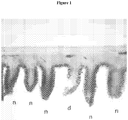
- An image demonstrating the identification methodology is in Figure 1 , which shows a cross section of the small intestine from a rat treated with an enteral formulation. Healthy villi are marked with n and damaged villi are marked with d.
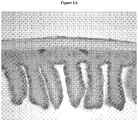
- Figures 2A and 2B show a cross section of the small intestine of a rat treated with Representative Formulation 1.
- the villi in Figure 2A appear healthy and structurally intact as the entire length of the villi are visible and completely covered in goblet cells.
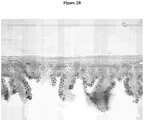
- Figure 2B shows a cross section of the small intestine of a rat treated with Comparative Formulation 1.
- the villi in Figure 2B appear to be structurally damaged with missing villi tips and atypical goblet cell staining.
- Tables 4 and 5 and Figure 3 Quantification of villi that were structurally intact after administration of the formulations and shock induction are shown in Tables 4 and 5 and Figure 3 .
- Table 4 shows the individual rat data for the quantification of the structurally intact villi.
- Table 5 summarizes the total intact villi and damaged villi observed after administration of the formulations and shock induction.
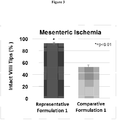
- Figure 3 shows the mean percentage of villi intact per rat after administration of the formulations and shock induction. 92.6% of villi were intact across all rats that received Representative Formulation 1, whereas only 52.8% of the villi were intact across all rats that received Comparative Formulation 1. These results are consistent with the mean values calculated from the total villi observed in Table 5.
- the SMAO model was used to assess the ability of a representative composition comprising glucose (Representative Formulation 2) and a comparative composition without glucose (Comparative Formulation 2) to preserve the structural integrity of the gastrointestinal tract under ischemic conditions when administered by direct enteral injection.
- the Representative Formulation 2 comprises tranexamic acid, electrolytes, PEG 3350, and glucose
- Comparative Formulation 2 comprises tranexamic acid, electrolytes, and PEG 3350.
- Male WISTAR rats with a weight of 360-400 grams were purchased from Charles River Laboratories, located in Wilmington, MA. All rats were maintained on a 2018 Teklad Global 18% Protein Rodent Diet (Harlan, San Diego, CA, USA) and water throughout the study period.
- Rats Food was removed from the cage the evening prior to surgery. Rats had ad lib access to drinking water while in the home cage the evening prior to surgery. Following anesthesia, an incision was made in the midline of the abdomen for isolation of the small intestine. Rats were administered 17 mL of either Representative Formulation 2 or Comparative Formulation 2 via direct injection into the intestine using a 30 gauge needle. Following formulation administration, the rats were subjected to experimentally induced shock via the SMAO procedure.
- Rats were secured in a supine position to a temperature controlled (water circulating heat pump) operating table. The animals were maintained at 37 °C throughout the procedures.
- the superior mesentery artery was located and tied off (occluded) to prevent blood flow to the intestine and initiate a 30 minute shock/hypoperfusion period.
- the surgical site was covered with moistened sterile gauze during the entire SMAO shock period. After the 30 minute period, the SMAO was untied (occlusion removed). Perfusion was resumed for a period of 2 hours, followed by sacrifice of the animals.
- the intestines were then harvested by tying off both ends, injecting a 10% neutral buffered formalin solution with a 30 gauge needle, and storing the intestines in a jar filled with 10% neutral buffered formalin.
- the Photoshop Text tool was used to place an n (for no damage) or a d (for damage) in proximity to each individual villi for each tissue cross section. Where a determination of damage was inconclusive, the villi were excluded from the analysis. These inconclusive villi were less than 5% of the total villi analyzed.
- An image demonstrating the identification methodology is in Figure 1 , which shows a cross section of the small intestine from a rat treated with an enteral formulation. Healthy villi are marked with n and damaged villi are marked with d.
- Figures 4A and 4B show a cross section of the small intestine of a rat treated with Representative Formulation 2.
- the villi in Figure 4A appear healthy and structurally intact as the entire length of the villi are visible and completely covered in goblet cells.
- Figure 4B shows a cross section of the small intestine of a rat treated with Comparative Formulation 2.
- the villi in Figure 4B appear to be structurally damaged with missing villi tips and atypical goblet cell staining.
- Tables 7 and 8 and Figure 5 Quantification of villi that are structurally intact after administration of the formulations and shock induction are shown in Tables 7 and 8 and Figure 5 .
- Table 7 shows the individual rat data for the quantification of the structurally intact villi.
- Table 8 summarizes the total intact villi and damaged villi observed after administration of the formulations and shock induction.
- Figure 5 shows the mean percentage of villi intact per rat after administration of the formulations and shock induction. 83.4% of villi were intact across all rats that received Representative Formulation 2, whereas only 51.3% of the villi were intact across all rats that received Comparative Formulation 2. These results are consistent with the mean values calculated from the total villi observed in Table 8.
- the hemorrhagic shock model was used to assess the ability of a representative composition comprising PEG 3350 (Representative Formulation 3) and a comparative composition without PEG 3350 (Comparative Formulation 3) to preserve the structural integrity of the gastrointestinal tract under hemorrhagic conditions when administered by direct stomach injection.
- the Representative Formulation 3 comprises tranexamic acid, electrolytes, PEG 3350, and glucose
- Comparative Formulation 3 comprises tranexamic acid, electrolytes, and glucose.
- Male WISTAR rats with a weight of 320-400 grams were purchased from Charles River Laboratories, located in Wilmington, MA. All rats were maintained on Charles River Laboratories feed and provided water ad libitum throughout the study period.
- Rats were secured in a supine position to a temperature controlled (water circulating heat pump) operating table. The animals were maintained at 37 °C throughout the procedures. Vital signs (systemic blood pressure or respiratory rate, body temperature) were monitored throughout the procedures.
- ketamine 75 mg/kg, I.M.
- Abdominal and inguinal regions were shaved and disinfected with alcohol.
- the right femoral artery was cannulated.
- the surgical site was covered with moistened sterile gauze during entire hemorrhagic shock period.
- Hemorrhagic shock was initiated by reduction of blood volume (about 40% of whole blood volume based on 6% body weight) to achieve a blood pressure of 4.67 kPa (35 mmHg) (47.58 cm H 2 O) for a period of 2 hours.
- each rat was heparinized with minimal concentrations of sodium heparin (0.5 USP units/ml of blood volume estimated as 6% body weight) to prevent blood coagulation during the procedure.
- the right femoral artery was connected with a 10 mL (10 cc) syringe. About 6 ml of blood was withdrawn from the femoral artery over a period of about 5-10 minutes. The syringe was then placed at 47.58 cm high above the rat body level. The syringe served as a blood reservoir that regulated blood pressure at 47.58 cm H 2 O (4.67 kPa (35 mm Hg)) automatically.
- MAP mean arterial pressure
- the intestines were then harvested by tying off both ends, injecting a 10% neutral buffered formalin solution with a 30 gauge needle, and storing the intestines in a jar filled with 10% neutral buffered formalin.
- the Photoshop Text tool was used to place an n (for no damage) or a d (for damage) in proximity to each individual villi for each tissue cross section. Where a determination of damage was inconclusive, the villi were excluded from the analysis. These inconclusive villi were less than 5% of the total villi analyzed.
- An image demonstrating the identification methodology is in Figure 1 , which shows a cross section of the small intestine from a rat treated with an enteral formulation. Healthy villi are marked with n and damaged villi are marked with d.
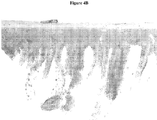
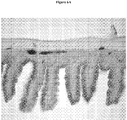
- Figures 6A and 6B show a cross section of the small intestine of a rat treated with Representative Formulation 3.
- the villi in Figure 6A appear healthy and structurally intact as the entire length of the villi are visible and completely covered in goblet cells.
- Figure 6B shows a cross section of the small intestine of a rat treated with Comparative Formulation 3.
- the villi in Figure 6B appear to be structurally damaged.
- Tables 10 and 11 and Figure 7 Quantification of villi that are structurally intact after administration of the formulations and shock induction are shown in Tables 10 and 11 and Figure 7 .
- Table 10 shows the individual rat data for the quantification of the structurally intact villi.
- Table 11 summarizes the total intact villi and damaged villi observed after administration of the formulations and shock induction.
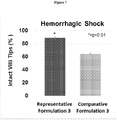
- Figure 7 shows the mean percentage of villi intact per rat after administration of the formulations and shock induction. 88.8% of villi were intact across all rats that received Representative Formulation 3, whereas only 64.1% of the villi were intact across all rats that received Comparative Formulation 3. These results are consistent with the mean values calculated from the total villi observed in Table 11.
- the secondary safety objective of this study is to assess safety and tolerability of experimental composition in patients with septic shock.
- the study is composed of four periods:
- All randomized patients will be divided between the two treatment arms in a 1:1 ratio stratified by highest total SOFA score during the screening period (known at the time of randomization); and then by percent change in serum lactate between the first and subsequent lactate measurements (separated by at least 4 hours to be used to qualify for randomization).
- a total of 250 patients are enrolled.
- the 700 mL aqueous solution formulation shown in Table 2 is administered orally or via a nasogastric, orogastric, nasojejunal, orojejunal, nasoduodenal, or percutaneous endoscopic gastrostomy tube or catheter to patients in the experimental arm.
- Patients in the placebo arm of the study receive 700 mL of a placebo solution that does not comprise tranexamic acid orally or via a nasogastric, orogastric, nasojejunal, orojejunal, nasoduodenal, or percutaneous endoscopic gastrostomy tube or catheter.
- Daily treatment is administered continuously or intermittently spread over an 8 to 24 hour period.
- 700 mL of experimental product or placebo is administered every 24 hours.
- Treatment is administered daily on Study Days 1-8, barring death or hospital discharge. Depending on the start time of the initial administration (infusion) on Study Day 1, the final administration
- the primary efficacy endpoint is the number of days alive without cardiovascular, renal, or pulmonary organ support through Day 28. Patients are classified as having organ support if organ support is required through the use of:
- the secondary efficacy endpoint is mortality rate: Date of death will be recorded for all patients who have died on or before Study Day 90. The 7-day, 28-day, and 90-day mortality and survival rates will be evaluated.
- the aqueous solution formulation shown in Table 2 is safe and well-tolerated by patients in the experimental arm.
- Patients in the experimental arm exhibit an increase in the number of days without cardiovascular, renal, or pulmonary support through Day 28 of the study as compared to patients in the placebo arm.
- Patients in the experimental arm exhibit a decrease in the rates of mortality on day 90 of the study as compared to mortality rates of patients in the placebo arm.
- the study is composed of four periods:
- a total of 100 patients are enrolled.
- the 700 mL aqueous solution formulation shown in Table 2 or a Placebo that does not comprise tranexamic acid is administered orally or via a nasogastric, orogastric, nasojejunal, orojejunal, nasoduodenal, or percutaneous endoscopic gastrostomy tube or catheter to patients on Days 0-7. If a patient continues to demonstrate organ dysfunction, the physician will continue treatment for a maximum of 10 days for some cases. Patients, investigators, persons performing the assessments, and data analysts remain blinded to the identity of the treatment from time of randomization until database lock.
- the primary efficacy endpoint is the number of days alive without cardiovascular, renal or pulmonary organ support through Day 14. Patients are classified as requiring organ support if organ support is provided through the use of:
- the secondary efficacy endpoint is mortality rate: date of death will be recorded for all patients who have died on or before Study Day 28 and Day 90. The 28-day and 90-day mortality and survival rates will be evaluated.
- the aqueous solution formulation shown in Table 2 is safe and well-tolerated by patients in the experimental arm.
- Patients in the experimental arm exhibit an increase in the number of days alive without cardiovascular, renal, or pulmonary dysfunction through Day 14 compared to Placebo.
- Patients in the experimental arm exhibit a decrease in the rates of mortality on day 90 of the study as compared to mortality rates of patients in the placebo arm.
Landscapes
- Health & Medical Sciences (AREA)
- Chemical & Material Sciences (AREA)
- Life Sciences & Earth Sciences (AREA)
- Veterinary Medicine (AREA)
- Public Health (AREA)
- General Health & Medical Sciences (AREA)
- Animal Behavior & Ethology (AREA)
- Medicinal Chemistry (AREA)
- Pharmacology & Pharmacy (AREA)
- Epidemiology (AREA)
- General Chemical & Material Sciences (AREA)
- Chemical Kinetics & Catalysis (AREA)
- Engineering & Computer Science (AREA)
- Organic Chemistry (AREA)
- Nuclear Medicine, Radiotherapy & Molecular Imaging (AREA)
- Inorganic Chemistry (AREA)
- Bioinformatics & Cheminformatics (AREA)
- Molecular Biology (AREA)
- Oil, Petroleum & Natural Gas (AREA)
- Biochemistry (AREA)
- Physiology (AREA)
- Nutrition Science (AREA)
- Dermatology (AREA)
- Cardiology (AREA)
- Heart & Thoracic Surgery (AREA)
- Oncology (AREA)
- Communicable Diseases (AREA)
- Virology (AREA)
- Pain & Pain Management (AREA)
- Rheumatology (AREA)
- Urology & Nephrology (AREA)
- Hematology (AREA)
- Diabetes (AREA)
- Vascular Medicine (AREA)
- Medicinal Preparation (AREA)
- Pharmaceuticals Containing Other Organic And Inorganic Compounds (AREA)
- Acyclic And Carbocyclic Compounds In Medicinal Compositions (AREA)
Description
- This application claims the benefit of
U.S. Provisional Application No. 61/970,247, filed March 25, 2014 U.S. Provisional Application No. 62/019,007, filed June 30, 2014 - Shock is a life-threatening condition that can result from trauma, severe blood loss, heart attacks, cardiovascular dysfunction, ischemia, sepsis, and burns. Major classes of shock include but are not limited to cardiogenic shock, hypovolemic shock, hemorrhagic shock, anaphylactic shock, neurogenic shock, and septic (or endotoxic) shock. Shock can lead to multi-organ failure (also known as multi-organ dysfunction syndrome) if immediate medical treatment is not received. Under the conditions of shock, the intestinal barrier and walls become compromised and the digestive enzymes that are normally contained within the intestine permeate through the intestinal walls and enter the bloodstream, leading to a condition known as autodigestion, in which the body's digestive enzymes begin to digest its own tissues. Autodigestion is hypothesized to be a mechanism for inflammation and multi-organ failure resulting from shock.
- Frank A. Delano et al., "Pancreatic Digestive Enzyme Blockade in the Small Intestine Prevents Insulin Resistance in Hemorrhagic Shock", SHOCK, US, (20140101), vol. 41, no. 1, pages 55 - 61, describes that hemorrhagic shock is associated with metabolic defects, including hyperglycemia and insulin resistance, but the mechanisms are unknown. Delano et al., attempts to determine the degree to which blockade of digestive enzymes affects insulin resistance in shock. The results disclosed suggest that in hemorrhagic shock elevated microvascular extracellular digestive enzyme activity causes insulin receptor dysfunction, hyperglycemia, and reduced ability to regulate blood glucose values.
- Despite the severity of shock, autodigestion, multi-organ failure, ischemia, and hypoperfusion, few therapies are available. Most efforts have focused on the modulation of individual inflammatory mediators of shock, e.g., cytokines, nitric oxide, and endotoxin, to mitigate the effects of shock. However, therapies that target particular inflammatory mediators have proven largely ineffective due to the multifaceted nature of the mediators. Thus, a need exists for therapeutics to treat shock, autodigestion, multi-organ failure, ischemia, and hypoperfusion, particularly therapeutics that preserve or help reestablish the integrity of the intestinal wall.
- Disclosed herein is an aqueous composition comprising about 6.8 grams to about 8.3 grams of tranexamic acid; about 29.3 grams to about 35.8 grams of polyethylene glycol; about 25 grams to about 31 grams of glucose; and one or more electrolytes, wherein the aqueous composition is formulated in an amount of:
- (i) about 630 mL to about 770 mL; or
- (ii) about 700 mL;
- Also disclosed herein are compositions for use in the treatment of shock, autodigestion, multi-organ failure, intestinal ischemia, and/or hypoperfusion.
- Also disclosed, is a composition described herein, for use in preserving the structural integrity of the gastrointestinal tract under ischemic or hemorrhagic conditions.
- Also disclosed, is a kit comprising:
- (a) a first container which comprises tranexamic acid; polyethylene glycol; and one or more electrolytes;
- (b) a second container which comprises glucose; and
- (c) instructions to combine the first container and the second container to form an aqueous composition described herein.
- In some embodiments, the PEG is PEG 3350. In certain embodiments, compositions disclosed herein comprise a non-colonic cleansing amount of PEG 3350. In some embodiments, compositions disclosed herein comprise about 7.8 g of tranexamic acid, about 50.3 g of PEG 3350, about 40 g of glucose, about 5.7 g of sodium sulfate, about 1.7 g of sodium bicarbonate, about 1.5 g of sodium chloride, and about 0.7 g of potassium chloride. In some embodiments, compositions disclosed herein comprise about 7.8 g of tranexamic acid and about 40 g of glucose. The compositions disclosed herein are formulated as aqueous solutions. In certain specific embodiments, the volume of the aqueous solution is 1000 mL. In some embodiments, compositions disclosed herein comprise about 7.5 g of tranexamic acid, about 32.5 g of PEG 3350, about 28 g of glucose, about 4.0 g of sodium sulfate, about 1.2 g of sodium bicarbonate, about 1.0 g of sodium chloride, and about 0.5 g of potassium chloride. In some embodiments, compositions disclosed herein comprise about 7.5 g of tranexamic acid and about 28 g of glucose. The compositions disclosed herein are formulated as aqueous solutions. In certain specific embodiments, the volume of the aqueous solution is 700 mL.
- Also disclosed, compositions disclosed herein are administered for the treatment of shock, autodigestion, multi-organ failure, intestinal ischemia, or hypoperfusion. In certain specific embodiments of the present disclosure, compositions disclosed herein are administered for the treatment of cardiogenic shock, hemorrhagic shock, or septic shock. Also disclosed, compositions disclosed herein are administered for the treatment of septic shock associated with or caused by sepsis. Also disclosed, compositions disclosed herein are administered for the treatment of cardiogenic shock associated with or caused by cardiovascular surgery, myocardial infarction, arrhythmia, or mechanical complications. Also disclosed, compositions disclosed herein are administered for the treatment of hemorrhagic shock associated with or caused by trauma. Also disclosed, compositions disclosed herein are administered for the treatment of shock associated with or caused by a hemorrhagic virus. In some embodiments, the hemorrhagic virus is an Ebola virus. In some embodiments, compositions disclosed herein are administered orally, or via a nasogastric, orogastric, nasojejunal, orojejunal, nasoduodenal, or percutaneous endoscopic gastrostomy tube or catheter.
- In some embodiments, disclosed herein is a kit comprising: tranexamic acid, PEG, and one or more electrolytes are in a first container, and glucose in a second container. In some embodiments, a kit comprises instructions to reconstitute the components with water to provide an aqueous formulation according to the claims. In some embodiments, a kit comprises a first container comprising about 7.8 g of tranexamic acid, about 50.3 g of PEG 3350, about 5.7 g of sodium sulfate, about 1.7 g of sodium bicarbonate, about 1.5 g of sodium chloride, and about 0.7 g of potassium chloride, and a second container comprising about 40 g of glucose. In some embodiments, a kit comprises a first container comprising about 7.8 g of tranexamic acid, about 50.3 g of PEG 3350, about 5.7 g of sodium sulfate, about 1.7 g of sodium bicarbonate, about 1.5 g of sodium chloride, and about 0.7 g of potassium chloride, a second container comprising about 40 g of glucose, and instructions to reconstitute the tranexamic acid, PEG, glucose, and one or more electrolytes with water to 1000 mL. In some embodiments, a kit comprises a first container comprising about 7.5 g of tranexamic acid, about 32.5 g of PEG 3350, about 4.0 g of sodium sulfate, about 1.2 g of sodium bicarbonate, about 1.0 g of sodium chloride, and about 0.5 g of potassium chloride, and a second container comprising about 28 g of glucose. In some embodiments, a kit comprises a first container comprising about 7.5 g of tranexamic acid, about 32.5 g of PEG 3350, about 4.0 g of sodium sulfate, about 1.2 g of sodium bicarbonate, about 1.0 g of sodium chloride, and about 0.5 g of potassium chloride, a second container comprising about 28 g of glucose, and instructions to reconstitute the tranexamic acid, PEG, glucose, and one or more electrolytes with water to 700 mL. In some embodiments, a kit comprises instructions to administer the combined components orally or via a nasogastric, orogastric, nasojejunal, orojejunal, nasoduodenal, or percutaneous endoscopic gastrostomy tube or catheter.
- The novel features of the invention are set forth with particularity in the appended claims. A better understanding of the features and advantages of the present invention will be obtained by reference to the following detailed description that sets forth illustrative embodiments, in which the principles of the invention are utilized, and the accompanying drawings of which:
-
Figure 1 shows a representative cross section of the small intestine from a rat treated with an enteral formulation and superior mesentery artery occlusion (SMAO). Healthy villi are marked with n and damaged villi are marked with d. -
Figures 2A and2B show the cross sections of the small intestines of rats following treatment withRepresentative Formulation 1 andComparative Formulation 1, respectively.Figure 2A shows that rat intestinal villi appear healthy and structurally intact and that the entire length of the villi is visible and completely covered in goblet cells, following administration ofRepresentative Formulation 1 and shock induction according to Example 2.Figure 2B shows that rat intestinal villi are structurally damaged, with missing villi tips and atypical goblet cell staining, following administration ofComparative Formulation 1 and shock induction according to Example 2. -
Figure 3 illustrates the percentage of villi that were structurally intact with intact epithelial lining in all rats treated in Example 2.Representative Formulation 1 preserved on average 92.6% of villi, whileComparative Formulation 1 preserved on average 52.8% of the villi. Data are averages ± SEM; n = 4 rats in each group; *=p<0.01 compared to respective treated group, ANOVA. -
Figures 4A and4B show the cross section of the small intestine from a rat treated withRepresentative Formulation 2 andComparative Formulation 2, respectively.Figure 4A shows that villi appear healthy and structurally intact and that the entire length of the villi is visible and completely covered in goblet cells, following administration ofRepresentative Formulation 2 and shock induction according to Example 3.Figure 4B shows that rat villi are structurally damaged, with missing villi tips and atypical goblet cell staining, following administration ofComparative Formulation 2 and shock induction according to Example 3. -
Figure 5 illustrates the percentage of villi that were structurally intact with intact epithelial lining in all rats treated in Example 3.Representative Formulation 2 preserved on average 83.4% of villi, whileComparative Formulation 2 preserved on average 51.3% of the villi. Data are averages ± SEM; n = 4 rats in each group; *=p<0.01 compared to respective treated group, ANOVA. -
Figures 6A and6B show the cross section of the small intestine from a rat treated withRepresentative Formulation 3 andComparative Formulation 3, respectively.Figure 6A shows that villi appear healthy and structurally intact and that the entire length of the villi is visible and completely covered in goblet cells, following administration ofRepresentative Formulation 3 and hemorrhagic shock induction according to Example 4.Figure 6B shows that rat villi are structurally damaged following administration ofComparative Formulation 3 and hemorrhagic shock induction according to Example 4. -
Figure 7 illustrates the percentage of villi that were structurally intact with intact epithelial lining in all rats treated in Example 4.Representative Formulation 3 preserved on average 88.8% of villi, whileComparative Formulation 3 preserved on average 64.1% of the villi. Data are averages ± SEM; n = 4 rats in each group; *=p<0.01 compared to respective treated group, ANOVA. - Unless defined otherwise, all technical and scientific terms used herein have the same meaning as commonly understood by one of skill in the art to which the inventions described herein belong.
- When the term "about" is present before a numerical value herein, it means ± 10% of the numerical value. For example, as used herein, the term "about 10 g" means an amount from 9 g to 11 g.
- As used herein, the terms "comprising," "including," "such as," and "for example" (or "e.g.") are used in their open, non-limiting sense.
- The term "treat" and its grammatical variants (e.g., "to treat," "treating," and "treatment") refer to administration of an active pharmaceutical ingredient to a patient with the purpose of ameliorating or reducing the incidence of one or more symptoms of a condition or disease state in the patient. In some embodiments, such symptoms are chronic or acute, and such amelioration are partial or complete for some instances. In the present context, treatment entails administering a pharmaceutical composition described herein to a patient via a route of administration disclosed herein.
- As used herein, "PEG" refers to a polyethylene glycol polymer. When "PEG" is used in combination with a numerical value, the numerical value defines the average molecular weight of the polyethylene glycol polymer. For an example PEG 3350 refers to a polyethylene glycol polymer that has an average molecular weight of 3,350 Da.
- As used herein, the term "non-colonic cleansing amount" refers to an amount of a substance that does not cause significant or substantially all removal of feces and toxins from the colon and intestinal tract when administered to the gastrointestinal tract.
- As used herein, the terms "electrolyte" and "electrolytes" are used to describe any substances that ionize when dissolved in an ionizing solvent, such as water. Electrolytes include, but are not limited to, soluble salts, acids, or bases.
- As used herein, the term "wt%" refers to the weight percent of a given component in a composition. For example, as used herein, an aqueous solution comprising 4 wt% glucose refers to an aqueous solution that comprises 4 grams of glucose per 100 grams of the solution.
- Disclosed herein are compositions for use in the treatment of shock, autodigestion, multi-organ failure, intestinal ischemia, or hypoperfusion. The compositions disclosed herein comprise tranexamic acid.
- In some embodiments, the compositions disclosed herein comprise about 6.8 g, about 6.9 g, about 7.0 g, about 7.1 g, about 7.2 g, about 7.3 g, about 7.4 g, about 7.5 g, about 7.6 g, about 7.7 g, about 7.8 g, about 7.9 g, about 8.0 g, about 8.1 g, about 8.2 or about 8.3 g of tranexamic acid. In a specific embodiment, compositions disclosed herein comprise about 7.5 g of tranexamic acid. In some embodiments, compositions disclosed herein comprise about 6.8 g to about 8.3 g of tranexamic acid.
- In some embodiments, compositions disclosed herein comprise a non-colonic cleansing amount of PEG. In certain specific embodiments, compositions disclosed herein comprise a non-colonic cleansing amount of PEG 2000, PEG 3000, PEG 3350, or PEG 4000. In a specific embodiment, compositions disclosed herein comprise a non-colonic cleansing amount of PEG 3350. In a specific embodiment, a non-colonic cleansing amount of PEG, e.g., PEG 3350 is about 50.3 g.
- In some embodiments, a non-colonic cleansing amount of PEG, e.g., PEG 3350, is about 29.3 g, about 29.4 g, about 29.5 g, about 29.6 g, about 29.7 g, about 29.8 g, about 29.9 g, about 30.0 g, about 30.1 g, about 30.2 g, about 30.3 g, about 30.4 g, about 30.5 g, about 30.6 g, about 30.7 g, about 30.8 g, about 30.9 g, about 31.0 g, about 31.1 g, about 31.2 g, about 31.3 g, about 31.4 g, about 31.5 g, about 31.6 g, about 31.7 g, about 31.8 g, about 31.9 g, about 32.0 g, about 32.1 g, about 32.2 g, about 32.3 g, about 32.4 g, about 32.5 g, about 32.6 g, about 32.7 g, about 32.8 g, about 32.9 g, about 33.0 g, about 33.1 g, about 33.2 g, about 33.3 g, about 33.4 g, about 33.5 g, about 33.6 g, about 33.7 g, about 33.8 g, about 33.9 g, about 34.0 g, about 34.1 g, about 34.2 g, about 34.3 g, about 34.4 g, about 34.5 g, about 34.6 g, about 34.7 g, about 34.8 g, about 34.9 g, about 35.0 g, about 35.1 g, about 35.2 g, about 35.3 g, about 35.4 g, about 35.5 g, about 35.6 g, about 35.7 g, or about 35.8 g. In a specific embodiment, a non-colonic cleansing amount of PEG, e.g., PEG 3350 is about 32.5 g. In some embodiments, a non-colonic cleansing amount of PEG, e.g., PEG 3350, is about 29.3 g to about 35.8 g.
- In some embodiments, compositions disclosed herein are formulated as aqueous solutions comprising about 4.5 wt%, about 4.6 wt%, about 4.7 wt%, about 4.8 wt%, about 4.9 wt%, about 5.0 wt%, about 5.1 wt%, about 5.2 wt%, about 5.3 wt%, about 5.4 wt%, or about 5.5 wt% of PEG. In certain embodiments, compositions disclosed herein are formulated as aqueous solutions comprising about 4.5 wt%, about 4.6 wt%, about 4.7 wt%, about 4.8 wt%, about 4.9 wt%, about 5.0 wt%, about 5.1 wt%, about 5.2 wt%, about 5.3 wt%, about 5.4 wt%, or about 5.5 wt% of PEG 3350. In a specific embodiment, compositions disclosed herein are formulated as aqueous solutions comprising about 5.0 wt% of PEG. In certain embodiments, compositions disclosed herein are formulated as aqueous solutions comprising about 4.5 wt% to about 5.5 wt% of PEG. In a specific embodiment, compositions disclosed herein are formulated as aqueous solutions comprising about 5.0 wt% of PEG 3350. In certain embodiments, compositions disclosed herein are formulated as aqueous solutions comprising about 4.5 wt% to about 5.5 wt% of PEG 3350.
- In some embodiments, compositions disclosed herein are formulated as aqueous solutions comprising about 4.2 wt%, about 4.3 wt%, about 4.4 wt%, about 4.5 wt%, about 4.6 wt%, about 4.7 wt%, about 4.8 wt%, about 4.9 wt%, about 5.0 wt%, or about 5.1 wt% of PEG. In some embodiments, compositions disclosed herein are formulated as aqueous solutions comprising about 4.2 wt%, about 4.3 wt%, about 4.4 wt%, about 4.5 wt%, about 4.6 wt%, about 4.7 wt%, about 4.8 wt%, about 4.9 wt%, about 5.0 wt%, or about 5.1 wt% of PEG 3350. In a specific embodiment, compositions disclosed herein are formulated as aqueous solutions comprising about 4.6 wt% of PEG. In certain embodiments, compositions disclosed herein are formulated as aqueous solutions comprising about 4.2 wt% to about 5.1 wt% of PEG. In a specific embodiment, compositions disclosed herein are formulated as aqueous solutions comprising about 4.6 wt% of PEG 3350. In certain embodiments, compositions disclosed herein are formulated as aqueous solutions comprising about 4.2 wt% to about 5.1 wt% of PEG 3350.
- The compositions disclosed herein comprise glucose. In some embodiments, compositions disclosed herein comprise about 25 g, about 26 g, about 27 g, about 28 g, about 29 g, about 30 g, about 31 g, or about 40 g of glucose. In a specific embodiment, compositions disclosed herein comprise about 40 g of glucose. In a specific embodiment, compositions disclosed herein comprise about 30 g of glucose.
- In some embodiments, compositions disclosed herein comprise about 25 g, about 26 g, about 27 g, about 28 g, about 29 g, about 30 g, or about 31 g of glucose. In a specific embodiment, compositions disclosed herein comprise about 28 g of glucose. In certain embodiments, compositions disclosed herein comprise about 25 g to about 31 g of glucose.
- In some embodiments, compositions disclosed herein are formulated as aqueous solutions comprising about 3.3 wt%, about 3.4 wt%, about 3.5 wt%, about 3.6 wt%, about 3.7 wt%, about 3.8 wt%, about 3.9 wt%, about 4.0 wt%, about 4.1 wt%, about 4.2 wt%, about 4.3 wt%, about 4.4 wt%, about 4.5 wt%, about 4.6 wt%, about 4.7 wt%, about 4.8 wt%, or about 4.9 wt% of glucose. In a specific embodiment, compositions disclosed herein are formulated as aqueous solutions comprising about 4 wt% of glucose.
- In some embodiments, compositions disclosed herein are formulated as aqueous solutions comprising about 3.6 wt%, about 3.7 wt%, about 3.8 wt%, about 3.9 wt%, about 4.0 wt%, about 4.1 wt%, about 4.2 wt%, about 4.3 wt%, or about 4.4 wt% of glucose. In a specific embodiment, compositions disclosed herein are formulated as aqueous solutions comprising about 4 wt% of glucose. In certain embodiments, compositions disclosed herein are formulated as aqueous solutions comprising about 3.6 wt% to about 4.4 wt% of glucose.
- In some embodiments, compositions disclosed herein comprise one or more electrolytes. In certain embodiments, the one or more electrolytes comprise sodium chloride (NaC1). In some embodiments, compositions disclosed herein comprise about 1.0 g, about 1.1 g, about 1.2 g, about 1.3 g, about 1.4 g, about 1.5 g, about 1.6 g, or about 1.7 of sodium chloride. In a specific embodiment, compositions disclosed herein comprise about 1.5 g of sodium chloride. In some embodiments, compositions disclosed herein comprise about 1.3 g to about 1.7 g of sodium chloride. In a specific embodiment, compositions disclosed herein comprise about 1.1 g of sodium chloride. In some embodiments, compositions disclosed herein comprise about 1.0 g to about 1.2 g of sodium chloride. In a specific embodiment, compositions disclosed herein comprise about 1.2 g of sodium chloride. In some embodiments, compositions disclosed herein comprise about 1.1 g to about 1.3 g of sodium chloride.
- In some embodiments, compositions disclosed herein comprise about 0.9 g, about 1.0 g, or about 1.1 g of sodium chloride. In a specific embodiment, compositions disclosed herein comprise about 1.0 g of sodium chloride. In some embodiments, compositions disclosed herein comprise about 0.9 g to about 1.1 g of sodium chloride.
- In some embodiments, compositions disclosed herein are formulated as aqueous solutions comprising about 0.13 wt%, about 0.14 wt%, about 0.15 wt%, about 0.16 wt%, about 0.17 wt% of sodium chloride. In a specific embodiment, compositions disclosed herein are formulated as aqueous solutions comprising about 0.15 wt% of sodium chloride. In some embodiments, compositions disclosed herein are formulated as aqueous solutions comprising about 0.13 wt% to about 0.17 wt% of sodium chloride.
- In some embodiments, the one or more electrolytes comprise sodium sulfate (Na2SO4). In some embodiments, compositions disclosed herein comprise about 3.9 g, about 4.0 g, about 4.1 g, about 4.2 g, about 4.3 g, about 4.4 g, about 4.5 g, about 4.6 g, about 4.7 g, about 4.8 g, about 4.9 g, about 5.0 g, about 5.1 g, about 5.2 g, about 5.3 g, about 5.4 g, about 5.5 g, about 5.6 g, about 5.7 g, about 5.8 g, about 5.9 g, about 6.0 g, about 6.1 g, about 6.2 or about 6.3 g of sodium sulfate. In a specific embodiment, compositions disclosed herein comprise about 5.7 g of sodium sulfate. In some embodiments, compositions disclosed herein comprise about 5.1 g to about 6.3 g of sodium sulfate. In a specific embodiment, compositions disclosed herein comprise about 4.3 g of sodium sulfate. In some embodiments, compositions disclosed herein comprise about 3.9 g to about 4.7 g of sodium sulfate. In a specific embodiment, compositions disclosed herein comprise about 4.6 g of sodium sulfate. In some embodiments, compositions disclosed herein comprise about 4.1 g to about 5.1 g of sodium sulfate.
- In some embodiments, compositions disclosed herein comprise about 3.6 g, about 3.7 g, about 3.8 g, about 3.9 g, about 4.0 g, about 4.1 g, about 4.2 g, about 4.3 g, or about 4.4 g of sodium sulfate. In a specific embodiment, compositions disclosed herein comprise about 4.0 g of sodium sulfate. In some embodiments, compositions disclosed herein comprise about 3.6 g to about 4.4 g of sodium sulfate.
- In some embodiments, compositions disclosed herein are formulated as aqueous solutions comprising sodium sulfate. In some embodiments, the compositions disclosed herein are formulated as aqueous solutions comprising about 0.51 wt%, about 0.52 wt%, about 0.53 wt%, about 0.54 wt%, about 0.55 wt%, about 0.56 wt%, about 0.57 wt%, about 0.58 wt%, about 0.59 wt%, about 0.60 wt%, about 0.61 wt%, about 0.62 wt%, or about 0.63 wt% of sodium sulfate. In a specific embodiment, compositions disclosed herein are formulated as aqueous solutions comprising about 0.57 wt% of sodium sulfate. In some embodiments, compositions disclosed herein are formulated as aqueous solutions comprising about 0.51 wt% to about 0.63 wt% of sodium sulfate.
- In some embodiments, the one or more electrolytes comprise sodium bicarbonate (NaHCO3). In some embodiments, compositions disclosed herein comprise about 1.2 g, about 1.3 g, about 1.4 g, about 1.5 g, about 1.6 g, about 1.7 g, about 1.8 g, or about 1.9 g of sodium bicarbonate. In a specific embodiment, compositions disclosed herein comprise about 1.7 g of sodium bicarbonate. In some embodiments, compositions disclosed herein comprise about 1.5 g to about 1.9 g of sodium bicarbonate. In a specific embodiment, compositions disclosed herein comprise about 1.3 g of sodium bicarbonate. In some embodiments, compositions disclosed herein comprise about 1.2 g to about 1.4 g of sodium bicarbonate. In a specific embodiment, compositions disclosed herein comprise about 1.4 g of sodium bicarbonate. In some embodiments, compositions disclosed herein comprise about 1.3 g to about 1.5 g of sodium bicarbonate.
- In some embodiments, compositions disclosed herein comprise about 1.1 g, about 1.2 g, or about 1.3 g of sodium bicarbonate. In a specific embodiment, compositions disclosed herein comprise about 1.2 g of sodium bicarbonate. In some embodiments, compositions disclosed herein comprise about 1.1 g to about 1.3 g of sodium bicarbonate.
- In some embodiments, compositions disclosed herein are formulated as aqueous solutions comprising about 0.15 wt%, about 0.16 wt%, about 0.17 wt%, about 0.18 wt%, or about 0.19 wt% of sodium bicarbonate. In a specific embodiment, compositions disclosed herein are formulated as aqueous solutions comprising about 0.17 wt% of sodium bicarbonate. In some embodiments, compositions disclosed herein are formulated as aqueous solutions comprising about 0.15 wt% to about 0.19 wt% of sodium bicarbonate.
- In some embodiments, compositions disclosed herein are formulated as aqueous solutions comprising about 0.16 wt%, about 0.17 wt%, about 0.18 wt%, or about 0.19 wt% of sodium bicarbonate. In a specific embodiment, compositions disclosed herein are formulated as aqueous solutions comprising about 0.17 wt% of sodium bicarbonate. In some embodiments, compositions disclosed herein are formulated as aqueous solutions comprising about 0.16 wt% to about 0.19 wt% of sodium bicarbonate.
- In some embodiments, the one or more electrolytes comprise potassium chloride (KC1). In some embodiments, compositions disclosed herein comprise about 0.4 g, about 0.5 g, about 0.6 g, about 0.7 g or about 0.8 g of potassium chloride. In a specific embodiment, compositions disclosed herein comprise about 0.7 g of potassium chloride. In some embodiments, compositions disclosed herein comprise about 0.6 g to about 0.8 g of potassium chloride. In a specific embodiment, compositions disclosed herein comprise about 0.5 g of potassium chloride. In some embodiments, compositions disclosed herein comprise about 0.4 g to about 0.6 g of potassium chloride. In a specific embodiment, compositions disclosed herein comprise about 0.6 g of potassium chloride. In some embodiments, compositions disclosed herein comprise about 0.5 g to about 0.7 g of potassium chloride.
- In some embodiments, compositions disclosed herein comprise about 0.4 g, about 0.5 g, or about 0.6 g of potassium chloride. In a specific embodiment, compositions disclosed herein comprise about 0.5 g of potassium chloride. In some embodiments, compositions disclosed herein comprise about 0.4 g to about 0.6 g of potassium chloride.
- In some embodiments, compositions disclosed herein are formulated as aqueous solutions comprising about 0.06 wt%, about 0.07 wt%, or about 0.08 wt% of potassium chloride. In a specific embodiment, compositions disclosed herein are formulated as aqueous solutions comprising about 0.07 wt% of potassium chloride. In some embodiments, compositions disclosed herein are formulated as aqueous solutions comprising about 0.06 wt% to about 0.08 wt% of potassium chloride.
- In some embodiments, compositions disclosed herein are formulated as aqueous solutions comprising about 0.06 wt%, about 0.07 wt%, about 0.08 wt%, or about 0.09% wt of potassium chloride. In a specific embodiment, compositions disclosed herein are formulated as aqueous solutions comprising about 0.07 wt% of potassium chloride. In some embodiments, compositions disclosed herein are formulated as aqueous solutions comprising about 0.06 wt% to about 0.09 wt% of potassium chloride.
- In some aspects of the disclosure the compositions disclosed herein are formulated into any suitable dosage form, including but not limited to solutions, dispersions, self-emulsifying dispersions, solid solutions, liposomal dispersions, liquids, gels, syrups, elixirs, lyophilized formulations, powders, or multiparticulate formulations. Such formulations are optionally manufactured in a conventional manner, such as, by way of example only, conventional mixing, dissolving, emulsifying, and the like. In some embodiments, compositions disclosed herein are formulated as a powder for reconstitution. According to the invention, the compositions disclosed herein are formulated as an aqueous solution.
- The disclosed herein are formulated as, an aqueous solution. In some embodiments, compositions disclosed herein are formulated as a an aqueous solution, having a volume of about 630 mL, about 640 mL, about 650 mL, about 660 mL, about 670 mL, about 680 mL, about 690 mL, about 700 mL, about 710 mL, about 720 mL, about 730 mL, about 740 mL, about 750 mL, about 760 mL, about 770 mL, or about 1000 mL.
- In some embodiments, compositions disclosed herein are formulated as an aqueous solution, having a volume of about 630 mL, about 640 mL, about 650 mL, about 660 mL, about 670 mL, about 680 mL, about 690 mL, about 700 mL, about 710 mL, about 720 mL, about 730 mL, about 740 mL, about 750 mL, about 760 mL, or about 770 mL. In a specific embodiment, compositions disclosed herein are formulated as a solution, e.g., an aqueous solution, having a volume of about 700 mL. In some embodiments, compositions disclosed herein are formulated as an aqueous solution, having a volume of about 630 mL to about 770 mL.
- In certain specific embodiments, compositions disclosed herein comprise about 7.8 g of tranexamic acid and about 25 g, about 26 g, about 27 g, about 28 g, about 29 g, about 30 g, about 31 g, or about 40 g of glucose. In a specific embodiment, compositions disclosed herein comprise about 7.8 g of tranexamic acid and about 40 g of glucose.
- In some embodiments, compositions disclosed herein comprise about 6.8 g to about 8.3 g of tranexamic acid and about 25 g to about 31 g of glucose. In certain specific embodiments, compositions disclosed herein comprise about 7.5 g of tranexamic acid and about 25 g, about 26 g, about 27 g, about 28 g, about 29 g, about 30 g, or about 31 g of glucose. In a specific embodiment, compositions disclosed herein comprise about 7.5 g of tranexamic acid and about 28 g of glucose.
- In certain specific embodiments, compositions disclosed herein comprise about 7.8 g of tranexamic acid and about 33.9 g, about 34.0 g, about 34.1 g, about 34.2 g, about 34.3 g, about 34.4 g, about 34.5 g, about 34.6 g, about 34.7 g, about 34.8 g, about 34.9 g, about 35.0 g, about 35.1 g, about 35.2 g, about 35.3 g, about 35.4 g, about 35.5 g, about 35.6 g, about 35.7 g, about 35.8 g, or about 50.3 g of PEG 3350.
- In some embodiments, compositions disclosed herein comprise about 6.8 g to about 8.3 g of tranexamic acid and about 29.3 g to about 35.8 g of PEG 3350. In certain specific embodiments, compositions disclosed herein comprise about 7.5 g of tranexamic acid and about 29.3 g, about 29.4 g, about 29.5 g, about 29.6 g, about 29.7 g, about 29.8 g, about 29.9 g, about 30.0 g, about 30.1 g, about 30.2 g, about 30.3 g, about 30.4 g, about 30.5 g, about 30.6 g, about 30.7 g, about 30.8 g, about 30.9 g, about 31.0 g, about 31.1 g, about 31.2 g, about 31.3 g, about 31.4 g, about 31.5 g, about 31.6 g, about 31.7 g, about 31.8 g, about 31.9 g, about 32.0 g, about 32.1 g, about 32.2 g, about 32.3 g, about 32.4 g, about 32.5 g, about 32.6 g, about 32.7 g, about 32.8 g, about 32.9 g, about 33.0 g, about 33.1 g, about 33.2 g, about 33.3 g, about 33.4 g, about 33.5 g, about 33.6 g, about 33.7 g, about 33.8 g, about 33.9 g, about 34.0 g, about 34.1 g, about 34.2 g, about 34.3 g, about 34.4 g, about 34.5 g, about 34.6 g, about 34.7 g, about 34.8 g, about 34.9 g, about 35.0 g, about 35.1 g, about 35.2 g, about 35.3 g, about 35.4 g, about 35.5 g, about 35.6 g, about 35.7 g, or about 35.8 g of PEG 3350. In a specific embodiment, compositions disclosed herein comprise about 7.5 g of tranexamic acid and about 32.5 g of PEG 3350.
- In a specific embodiment, compositions disclosed herein are formulated as aqueous solutions comprising about 7.8 g of tranexamic acid, about 5.0 wt% of PEG 3350, about 4 wt% of glucose, about 0.57 wt% of sodium sulfate, about 0.17 wt% of sodium bicarbonate, about 0.15 wt% of sodium chloride, and about 0.07 wt% of potassium chloride.
- In some embodiments, compositions disclosed herein are formulated as aqueous solutions comprising about 6.8 g to about 8.3 g of tranexamic acid, about 4.2 wt% to about 5.1 wt% of PEG 3350, about 3.6 wt% to about 4.4 wt% of glucose, about 0.51 wt% to about 0.63 wt% of sodium sulfate, about 0.16 wt% to about 0.19 wt% of sodium bicarbonate, about 0.13 wt% to about 0.17 wt% of sodium chloride, and about 0.06 wt% to about 0.09 wt% of potassium chloride. In a specific embodiment, compositions disclosed herein are formulated as aqueous solutions comprising about 7.5 g of tranexamic acid, about 4.6 wt% of PEG 3350, about 4 wt% of glucose, about 0.57 wt% of sodium sulfate, about 0.17 wt% of sodium bicarbonate, about 0.15 wt% of sodium chloride, and about 0.07 wt% of potassium chloride.
- In some embodiments, the compositions disclosed herein are formulated with one or more inactive ingredients or pharmaceutical excipients that provide suitable properties of the formulation. Such inactive ingredients include but are not limited to antioxidants, carriers, viscosity modulating agents, diluents, flavoring agents, preservatives, solubilizers, stabilizers, suspending agents, and surfactants. Any suitable amounts of such inactive ingredients are determined according to the particular properties desired.
- Compositions for Use in Methods of Treatment The references to methods of treatment in this paragraph are to be interpreted as references to the compounds, pharmaceutical compositions and medicaments of the present invention for use in a method for treatment of the human (or animal) body by therapy.
- Also disclosed, the compositions disclosed herein are administered for the treatment of shock, autodigestion, multi-organ failure, ischemia, or hypoperfusion. In certain specific embodiments or the present disclosure, compositions disclosed herein are administered for the treatment of cardiogenic shock, hemorrhagic shock, or septic shock. In some embodiments, ischemia is intestinal ischemia. Also disclosed, compositions disclosed herein are administered for the treatment of septic shock associated with or caused by sepsis. Also disclosed, compositions disclosed herein are administered for the treatment of cardiovascular shock associated with or caused by cardiovascular surgery, myocardial infarction, arrhythmia, or mechanical complications. In some embodiments, a mechanical complication is a cardiovascular mechanical complication. Also disclosed, compositions disclosed herein are administered for the treatment of cardiovascular shock associated with or caused by myocardial infarction or mechanical complications. Also disclosed, compositions disclosed herein are administered for the treatment of hemorrhagic or hypovolemic shock associated with or caused by trauma. Also disclosed, compositions disclosed herein may be administered for the treatment of hemorrhagic or hypovolemic shock associated with or caused by Ebola Virus Disease or other hemorrhagic virus. Also disclosed, compositions disclosed herein are administered for the treatment of intestinal ischemia or hypoperfusion that result in shock. Also disclosed, compositions disclosed herein may be administered for the treatment of Inflammatory Bowel Disease or Crohn's Disease, or complications arising from Inflammatory Bowel Disease or Crohn's Disease. Also disclosed, compositions disclosed herein may be administered for the treatment of Clostridium difficile colitis, or complications that arise from Clostridium difficile colitis.
- In some embodiments, the compositions disclosed herein are administered to a subject, e.g., a human, by multiple administration routes, either alone or concurrently, including but not limited to oral, nasogastric, orogastric, nasojejunal, orojejunal, nasoduodenal, or percutaneous endoscopic gastrostomy administration or other enteral routes. In some embodiments, compositions disclosed herein are administered directly to the gastrointestinal tract. In some embodiments, compositions disclosed herein are administered to the stomach. In some embodiments, compositions disclosed herein are administered to the small intestine. In certain embodiments, compositions disclosed herein are administered via a nasogastic, orogastic, nasojejunal, orojejunal, nasoduodenal, or percutaneous endoscopic gastrostomy tube or catheter. In some embodiments, compositions disclosed herein are delivered orally or by direct injection. In some embodiments of the methods disclosed herein, compositions are administered by a single route of administration. In some embodiments of the methods disclosed herein, compositions are administered by multiple routes of administration.
- In some embodiments, the components of the compositions disclosed herein are provided in kits wherein one or more of the components are contained in separate packages or containers along with instructions to combine the components in a single composition. In some embodiments, a kit comprises instructions to reconstitute the components in a liquid carrier, such as water, to produce a liquid, e.g., aqueous, formulation comprising the components. In some instances, the components of the compositions disclosed herein are provided in a single package or container with instructions to reconstitute them in a liquid carrier, such as water, to produce a liquid, e.g., aqueous, formulation. In some embodiments, the components of the compositions disclosed herein are provided in kits wherein one or more of the components are contained in separate packages or containers, and wherein a liquid carrier, such as water, is also provided in a separate package or container in the kit, along with instructions to combine the components and liquid carrier in a single composition to produce a liquid, e.g., aqueous, formulation. In some embodiments, a kit comprises instructions to administer a composition or formulation disclosed herein orally or via a nasogastic, orogastic, nasojejunal, orojejunal, nasoduodenal, or percutaneous endoscopic gastrostomy tube or catheter to a subject, e.g., a human, to treat shock, autodigestion, multi-organ failure, ischemia, or hypoperfusion.
- In certain specific embodiments, a kit comprises tranexamic acid and glucose packaged in separate containers. In some embodiments, a kit comprises tranexamic acid, polyethylene glycol, and one or more electrolytes in a first container and glucose in a second container. In some instances, the containers are made of any suitable packaging material and in any form suitable for the distribution of pharmaceutical products.
- In some embodiments, a kit comprises tranexamic acid, PEG, and one or more electrolytes are in a first container, and glucose in a second container. In some embodiments, a kit comprises instructions to combine the tranexamic acid, PEG, one or more electrolytes, and glucose, and reconstitute them in water. In some embodiments, a kit comprises a first container comprising about 7.8 g of tranexamic acid, about 50.3 g of PEG 3350, about 5.7 g of sodium sulfate, about 1.7 g of sodium bicarbonate, about 1.5 g of sodium chloride, and about 0.7 g of potassium chloride, and a second container comprising about 40 g of glucose. In some embodiments, a kit comprises a first container comprising about 7.8 g of tranexamic acid, about 50.3 g of PEG 3350, about 5.7 g of sodium sulfate, about 1.7 g of sodium bicarbonate, about 1.5 g of sodium chloride, and about 0.7 g of potassium chloride, a second container comprising about 40 g of glucose, and instructions to reconstitute the tranexamic acid, PEG, glucose, and one or more electrolytes with water to 1000 mL. In some embodiments, a kit comprises a first container comprising about 7.5 g of tranexamic acid, about 32.5 g of PEG 3350, about 4.0 g of sodium sulfate, about 1.2 g of sodium bicarbonate, about 1.0 g of sodium chloride, and about 0.5 g of potassium chloride, and a second container comprising about 28 g of glucose. In some embodiments, a kit comprises a first container comprising about 7.5 g of tranexamic acid, about 32.5 g of PEG 3350, about 4.0 g of sodium sulfate, about 1.2 g of sodium bicarbonate, about 1.0 g of sodium chloride, and about 0.5 g of potassium chloride, a second container comprising about 28 g of glucose, and instructions to reconstitute the tranexamic acid, PEG, glucose, and one or more electrolytes with water to 700 mL. In some embodiments, a kit comprises instructions to administer the combined components orally or via a nasogastric, orogastric, nasojejunal, orojejunal, nasoduodenal, or percutaneous endoscopic gastrostomy tube or catheter.
- In some embodiments, the compositions disclosed herein are tested in animal models that are indicative of efficacy in the treatment of shock, autodigestion, multi-organ failure, trauma, sepsis, and ischemia. Such animal models include but are not limited to the minipig hemorrhagic shock model, rat hemorrhagic shock, rat superior mesentery artery occlusion shock, rodent peritonitis shock by placement of cecal material into the peritoneum, rodent endotoxin shock models, and rodent models of bacterial sepsis established through a Pseudomonas infection.
- Compositions outside the scope of the claims are not part of the invention.
- Exemplary compositions are described in Tables 1 and 2. In some embodiments, the compositions according to the instant disclosure are prepared as a dry powder formulation and reconstituted as shown. Table 1 shows a composition for reconstitution in water to 1000 mL. Table 2 shows a composition for reconstitution in water to 700 mL. In some instances, upon reconstitution, compositions are administered to a patient in need thereof, e.g., orally or directly to the gastrointestinal tract via a nasogastric, orogastric, nasojejunal, orojejunal, nasoduodenal, or percutaneous endoscopic gastrostomy tube or catheter.
Table 1 Component Amount (g) for 1000 mL solution Concentration (wt%) in 1000 mL aqueous solution Tranexamic acid 7.8 ± 10% 0.78 + 10% PEG 3350 50.3 ± 10% 5.03 ± 10% Sodium Sulfate 5.7 ± 10% 0.57 ± 10% Sodium Bicarbonate 1.7 ± 10% 0.17 ± 10% Sodium Chloride 1.5 ± 10% 0.15 ± 10% Potassium Chloride 0.7 ± 10% 0.07 ± 10 % Glucose 40 ± 10% 4.0 ± 10% Table 2 Component Amount (g) for 700 mL solution Concentration (wt%) in 700 mL aqueous solution Tranexamic acid 7.5 ± 10% 1.1 ± 10% PEG 3350 32.5 ± 10% 4.6 ± 10% Sodium Sulfate 4.0 ± 10% 0.57 ± 10% Sodium Bicarbonate 1.2 ± 10% 0.17 ± 10% Sodium Chloride 1.0 ± 10% 0.15 ± 10% Potassium Chloride 0.5 ± 10% 0.07 ± 10% Glucose 28 ± 10% 4.0 ± 10% - The SMAO model was used to assess the ability of a representative composition comprising PEG 3350 (Representative Formulation 1) and a comparative composition without PEG 3350 (Comparative Formulation 1) to preserve the structural integrity of the gastrointestinal tract under ischemic conditions when administered by oral gavage.
- The materials used to prepare the formulations and their sources are shown in Table 3. All materials used were USP grade. As shown in Table 3,
Representative Formulation 1 comprises tranexamic acid, electrolytes, PEG 3350, and glucose, andComparative Formulation 1 comprises tranexamic acid, electrolytes, and glucose.Table 3 Component Representative Formulation 1 Comparative Formulation 1Source Tranexamic Acid 0.043 g 0.043 g Daiichi Sankyo PEG 3350 0.287 g 0.0 g OTC clinical grade Miralax Sodium Sulfate (Anhydrous) 0.033 g 0.033 g Sigma-Aldrich Sodium Bicarbonate 0.010 g 0.010 g Sigma-Aldrich Sodium Chloride 0.009 g 0.009 g Sigma-Aldrich Potassium Chloride 0.004 g 0.004 g Sigma-Aldrich Glucose 0.229 g 0.229 g Sigma-Aldrich Water 3.629 g 3.629 g Sterile water for injection Total Solution 4.000 mL 4.000 mL - Male WISTAR rats with a weight of 360-400 grams were purchased from Charles River Laboratories, located in Wilmington, MA. All rats were maintained on a 2018 Teklad Global 18% Protein Rodent Diet (Harlan, San Diego, CA, USA) and water throughout the study period.
- Food was removed from the cage the evening prior to surgery. Rats had ad lib access to drinking water while in the home cage the evening prior to surgery. During administration of the formulations, rats were restrained and given 4 mL of
Representative Formulation 1 orComparative Formulation 1 by oral gavage. After administration of the test formulations, rats were returned to their home cage and given ad lib access to water. After a 3 hour period, the rats were prepared to undergo experimentally induced shock. - Animals were anesthetized with ketamine/xylazine (75/4 mg/kg, I.M.). Supplemental anesthesia (ketamine/xylazine 10 % initial dose, I.M.) was administered as indicated following response to tail/toe pinch. Anesthesia was maintained throughout the experimental shock period.
- Rats were secured in a supine position to a temperature controlled (water circulating heat pump) operating table. The animals were maintained at 37 °C throughout the procedures.
- All surgical procedures were performed using aseptic techniques. Sterile drapes, heat sterilized instruments, and surgical apparel (gown, face mask, and gloves) were used. The surgical sites on the abdomen and left groin were shaved and cleaned with betadine followed by 70% alcohol.
- Following anesthetization, the superior mesentery artery was located and tied off (occluded) to prevent blood flow to the intestine and initiate a 30 minute shock/hypoperfusion period. The surgical site was covered with moistened sterile gauze during the entire SMAO shock period. After the 30 minute period, the SMAO was untied (occlusion removed). Perfusion was resumed for a period of 2 hours, followed by sacrifice of the animals.
- The intestines were then harvested by tying off both ends, injecting a 10% neutral buffered formalin solution with a 30 gauge needle, and storing the intestine in a jar filled with 10% neutral buffered formalin.
- Following at least 24 hours of incubation in formalin, an approximate 5 cm by 5 cm section of the ileum (at approximately 5/6 the length of the small intestine) was excised for structural analysis. The tissue sample was adhered to a cardboard backing and mounted for sectioning. Intestinal cross sections of 15-20 microns thickness were created on a Vibratome Series 3000 sectioning system. Free floating sections were washed overnight in water to remove formalin. Sections were then free floating stained with Alcian blue (pH 2.5) (Diagnostic BioSystems,Catalog No. KT 003) and mounted on slides for analysis.
- A
Leitz Wetzlar Dialux 20 microscope (Wetzlar, West Germany) and 20X objective was used to image tissue sections. Still images of the tissue were captured with a Spot Insight Gigabit Camera, Model No. 35.2, Diagnostic Instruments, Inc. (Sterling Heights, Michigan) and included software. Images were stored as TIFF files with no compression used. Images were loaded into Photoshop Elements 13 and enhanced to sharpen the contours of the villi. To quantify the extent of damage to the villi, villi were classified as damaged when either of the following criteria was met: - 1) Villi tips were broken away or structural damage to any portion of the villi; or
- 2) Goblet cells (normally stained blue) were practically non-existent (<3 goblet cells with no stain) from the base to the villi tip
- The Photoshop Text tool was used to place an n (for no damage) or a d (for damage) in proximity to each individual villi for each tissue cross section. Where a determination of damage was inconclusive, the villi were excluded from the analysis. These inconclusive villi were less than 5% of the total villi analyzed. An image demonstrating the identification methodology is in
Figure 1 , which shows a cross section of the small intestine from a rat treated with an enteral formulation. Healthy villi are marked with n and damaged villi are marked with d. - A total of eight rats were tested. Four received
Representative Formulation 1 by oral gavage, and four rats receivedComparative Formulation 1 by oral gavage. Representative micrographs of the villi after administration of the formulations and shock induction are shown inFigures 2A and2B .Figure 2A shows a cross section of the small intestine of a rat treated withRepresentative Formulation 1. The villi inFigure 2A appear healthy and structurally intact as the entire length of the villi are visible and completely covered in goblet cells.Figure 2B shows a cross section of the small intestine of a rat treated withComparative Formulation 1. The villi inFigure 2B appear to be structurally damaged with missing villi tips and atypical goblet cell staining. - Quantification of villi that were structurally intact after administration of the formulations and shock induction are shown in Tables 4 and 5 and
Figure 3 . Table 4 shows the individual rat data for the quantification of the structurally intact villi. Table 5 summarizes the total intact villi and damaged villi observed after administration of the formulations and shock induction.Figure 3 shows the mean percentage of villi intact per rat after administration of the formulations and shock induction. 92.6% of villi were intact across all rats that receivedRepresentative Formulation 1, whereas only 52.8% of the villi were intact across all rats that receivedComparative Formulation 1. These results are consistent with the mean values calculated from the total villi observed in Table 5.Table 4 Rats Treated with Representative Formulation I % Intact Villi Rats Treated with Comparative Formulation I % Intact Villi Rat #11 90.9% Rat #12 50.9% Rat #13 90.2% Rat #15 48.9% Rat #14 91.3% Rat #16 48.8% Rat #18 97.9% Rat #17 62.5% Mean 92.6% Mean 52.8% SEM (+/-) 1.8% SEM (+1-) 3.3% Table 5 Rat Treated with Representative Formulation 1Rates Treated with Comparative Formulation 1Number of Intact Villi 176 94 Number of Damaged Villi 14 85 Total Villi 190 179 % Intact 92.6% 52.5% - The SMAO model was used to assess the ability of a representative composition comprising glucose (Representative Formulation 2) and a comparative composition without glucose (Comparative Formulation 2) to preserve the structural integrity of the gastrointestinal tract under ischemic conditions when administered by direct enteral injection. Formulation Preparation
- The materials used to prepare the formulations and their sources are shown in Table 6. All materials used were USP grade. As shown in Table 6, the
Representative Formulation 2 comprises tranexamic acid, electrolytes, PEG 3350, and glucose, andComparative Formulation 2 comprises tranexamic acid, electrolytes, and PEG 3350.Table 6 Component Representative Formulation 1 Comparative Formulation 1Source Tranexamic Acid 0.182 g 0.182 g Daiichi Sankyo PEG 3350 1.222 g 1.222 g OTC clinical grade Miralax Sodium Sulfate (Anhydrous) 0.138 g 0.138 g Sigma-Aldrich Sodium Bicarbonate 0.041 g 0.041 g Sigma-Aldrich Sodium Chloride 0.036 g 0.036 g Sigma-Aldrich Potassium Chloride 0.017 g 0.017 g Sigma-Aldrich Glucose 0.971 g 0.0 g Sigma-Aldrich Water 15.412 g 15.412 g Sterile water for injection Total Solution 17.000 mL 17.000 mL - Male WISTAR rats with a weight of 360-400 grams were purchased from Charles River Laboratories, located in Wilmington, MA. All rats were maintained on a 2018 Teklad Global 18% Protein Rodent Diet (Harlan, San Diego, CA, USA) and water throughout the study period.
- Food was removed from the cage the evening prior to surgery. Rats had ad lib access to drinking water while in the home cage the evening prior to surgery. Following anesthesia, an incision was made in the midline of the abdomen for isolation of the small intestine. Rats were administered 17 mL of either
Representative Formulation 2 orComparative Formulation 2 via direct injection into the intestine using a 30 gauge needle. Following formulation administration, the rats were subjected to experimentally induced shock via the SMAO procedure. - Animals were anesthetized with ketamine/xylazine (75/4 mg/kg, I.M.). Supplemental anesthesia (ketamine/xylazine 10 % initial dose, I.M.) was administered as indicated following response to tail/toe pinch. Anesthesia was maintained throughout the experimental shock period.
- Rats were secured in a supine position to a temperature controlled (water circulating heat pump) operating table. The animals were maintained at 37 °C throughout the procedures.
- All surgical procedures were performed using aseptic techniques. Sterile drapes, heat sterilized instruments, and surgical apparel (gown, face mask, and gloves) were used. The surgical sites on the abdomen and left groin were shaved and cleaned with betadine followed by 70% alcohol.
- To initiate the model, following anesthesia the superior mesentery artery was located and tied off (occluded) to prevent blood flow to the intestine and initiate a 30 minute shock/hypoperfusion period. The surgical site was covered with moistened sterile gauze during the entire SMAO shock period. After the 30 minute period, the SMAO was untied (occlusion removed). Perfusion was resumed for a period of 2 hours, followed by sacrifice of the animals.
- The intestines were then harvested by tying off both ends, injecting a 10% neutral buffered formalin solution with a 30 gauge needle, and storing the intestines in a jar filled with 10% neutral buffered formalin.
- Following at least 24 hours of incubation in formalin, an approximate 5 cm by 5 cm section of the ileum (at approximately 5/6 the length of the small intestine) was excised for structural analysis. The tissue sample was adhered to a cardboard backing and mounted for sectioning. Intestinal cross sections of 15-20 microns thickness were created on a Vibratome Series 3000 sectioning system. Free floating sections were washed overnight in water to remove formalin. Sections were then free floating stained with Alcian blue (pH 2.5) (Diagnostic BioSystems,Catalog No. KT 003) and mounted on slides for analysis.
- A
Leitz Wetzlar Dialux 20 microscope (Wetzlar, West Germany) and 20X objective was used to image tissue sections. Still images of the tissue were captured with a Spot Insight Gigabit Camera, Model No. 35.2, Diagnostic Instruments, Inc. (Sterling Heights, Michigan) and included software. Images were stored as TIFF files with no compression used. Images were loaded into Photoshop Elements 13 and enhanced to sharpen the contours of the villi. To quantify the extent of damage to the villi, villi were classified as damaged when either of the following criteria were met: - 1) Villi tips were broken away or structural damage to any portion of the villi; or
- 2) Goblet cells (normally stained blue) were practically non-existent (<3 goblet cells with no stain) from the base to the villi tip
- The Photoshop Text tool was used to place an n (for no damage) or a d (for damage) in proximity to each individual villi for each tissue cross section. Where a determination of damage was inconclusive, the villi were excluded from the analysis. These inconclusive villi were less than 5% of the total villi analyzed. An image demonstrating the identification methodology is in
Figure 1 , which shows a cross section of the small intestine from a rat treated with an enteral formulation. Healthy villi are marked with n and damaged villi are marked with d. - A total of eight rats were tested. Four rats received
Representative Formulation 2 by direct enteral injection, and four rats receivedComparative Formulation 2 by direct enteral injection. Representative micrographs of the villi after administration of the formulations and shock induction are shown inFigures 4A and4B .Figure 4A shows a cross section of the small intestine of a rat treated withRepresentative Formulation 2. The villi inFigure 4A appear healthy and structurally intact as the entire length of the villi are visible and completely covered in goblet cells.Figure 4B shows a cross section of the small intestine of a rat treated withComparative Formulation 2. The villi inFigure 4B appear to be structurally damaged with missing villi tips and atypical goblet cell staining. - Quantification of villi that are structurally intact after administration of the formulations and shock induction are shown in Tables 7 and 8 and
Figure 5 . Table 7 shows the individual rat data for the quantification of the structurally intact villi. Table 8 summarizes the total intact villi and damaged villi observed after administration of the formulations and shock induction.Figure 5 shows the mean percentage of villi intact per rat after administration of the formulations and shock induction. 83.4% of villi were intact across all rats that receivedRepresentative Formulation 2, whereas only 51.3% of the villi were intact across all rats that receivedComparative Formulation 2. These results are consistent with the mean values calculated from the total villi observed in Table 8.Table 7 Rats Treated with Representative Formulation 2% Intact Villi Rats Treated with Comparative Formulation 2% Intact Villi Rat # 1 85.3 % Rat # 2 46.3% Rat #4 88.2 % Rat # 3 54.1% Rat #6 76.0% Rat #5 51.3% Rat #8 84.2 % Rat # 7 53.7% Mean 83.4% Mean 51.3% SEM (+/-) 2.6% SEM (+/-) 1.8% Table 8 Rats Treated with Representative Formulation 2Rats Treated with Comparative Formulation 2Number of Intact Villi 110 106 Number of Damaged Villi 21 102 Total Villi 131 208 % Intact 84.0% 51.0% - The hemorrhagic shock model was used to assess the ability of a representative composition comprising PEG 3350 (Representative Formulation 3) and a comparative composition without PEG 3350 (Comparative Formulation 3) to preserve the structural integrity of the gastrointestinal tract under hemorrhagic conditions when administered by direct stomach injection.
- The materials used to prepare the formulations and their sources are shown in Table 9. All materials used were USP grade. As shown in Table 9, the
Representative Formulation 3 comprises tranexamic acid, electrolytes, PEG 3350, and glucose, andComparative Formulation 3 comprises tranexamic acid, electrolytes, and glucose.Table 9 Component Representative Formulation 3 Comparative Formulation 3Source Tranexamic Acid 0.043 g 0.043 g Daiichi Sankyo PEG 3350 0.287 g 0.0 g OTC clinical grade Miralax Sodium Sulfate (Anhydrous) 0.033 g 0.033 g Sigma-Aldrich Sodium Bicarbonate 0.010 g 0.010 g Sigma-Aldrich Sodium Chloride 0.009 g 0.009 g Sigma-Aldrich Potassium Chloride 0.004 g 0.004 g Sigma-Aldrich Glucose 0.229 g 0.229 g Sigma-Aldrich Water 3.629 g 3.629 g Sterile water for injection Total Solution 4.0000 mL 4.0000 mL - Male WISTAR rats with a weight of 320-400 grams were purchased from Charles River Laboratories, located in Wilmington, MA. All rats were maintained on Charles River Laboratories feed and provided water ad libitum throughout the study period.
- Food was removed from the cage the evening prior to surgery. After placement of catheters, a small skin incision in the abdomen was made for isolation of the stomach. Following stabilization after experimentally induced shock via the hemorrhagic shock procedure, rats were administered 4 mL of either
Representative Formulation 3 orComparative Formulation 3 via a direct injection into the middle of the stomach. - Animals were anesthetized with ketamine (75 mg/kg, I.M.). Anesthesia was maintained throughout the experimental shock period.
- Rats were secured in a supine position to a temperature controlled (water circulating heat pump) operating table. The animals were maintained at 37 °C throughout the procedures. Vital signs (systemic blood pressure or respiratory rate, body temperature) were monitored throughout the procedures.
- All surgical procedures were performed using aseptic techniques. Sterile drapes, heat sterilized instruments, and surgical apparel (gown, face mask, and gloves) were used. The surgical sites on the abdomen and left groin were shaved and cleaned with betadine followed by 70% alcohol.
- To initiate the model, rats were anesthetized with ketamine (75 mg/kg, I.M.). Abdominal and inguinal regions were shaved and disinfected with alcohol. The right femoral artery was cannulated. The surgical site was covered with moistened sterile gauze during entire hemorrhagic shock period. Hemorrhagic shock was initiated by reduction of blood volume (about 40% of whole blood volume based on 6% body weight) to achieve a blood pressure of 4.67 kPa (35 mmHg) (47.58 cm H2O) for a period of 2 hours. Briefly, each rat was heparinized with minimal concentrations of sodium heparin (0.5 USP units/ml of blood volume estimated as 6% body weight) to prevent blood coagulation during the procedure. The right femoral artery was connected with a 10 mL (10 cc) syringe. About 6 ml of blood was withdrawn from the femoral artery over a period of about 5-10 minutes. The syringe was then placed at 47.58 cm high above the rat body level. The syringe served as a blood reservoir that regulated blood pressure at 47.58 cm H2O (4.67 kPa (35 mm Hg)) automatically. If the blood pressure was above 47.58 cm H2O, blood flowed into the blood reservoir. If the blood pressure was under 47.58 cm H2O, the blood from the blood reservoir was infused into blood stream circulation. Once mean arterial pressure (MAP) was stabilized, either
Representative Formulation 3 orComparative Formulation 3 was injected into the middle of the stomach. - The intestines were then harvested by tying off both ends, injecting a 10% neutral buffered formalin solution with a 30 gauge needle, and storing the intestines in a jar filled with 10% neutral buffered formalin.
- Following at least 24 hours of incubation in formalin, an approximate 5 cm by 5 cm section of the ileum (at approximately 5/6 the length of the small intestine) was excised for structural analysis. The tissue sample was adhered to a cardboard backing and mounted for sectioning. Intestinal cross sections of 15-20 microns thickness were created on a Vibratome Series 3000 sectioning system. Free floating sections were washed overnight in water to remove formalin. Sections were then free floating stained with Alcian blue (pH 2.5) (Diagnostic BioSystems, Catalog No. KT 003) and mounted on slides for analysis.
- A
Leitz Wetzlar Dialux 20 microscope (Wetzlar, West Germany) and 20X objective was used to image tissue sections. Still images of the tissue were captured with a Spot Insight Gigabit Camera, Model No. 35.2, Diagnostic Instruments, Inc. (Sterling Heights, Michigan) and included software. Images were stored as TIFF files with no compression used. Images were loaded into Photoshop Elements 13 and enhanced to sharpen the contours of the villi. To quantify the extent of damage to the villi, villi were classified as damaged when either of the following criteria were met: - 1) Villi tips were broken away or structural damage to any portion of the villi; or
- 2) Goblet cells (normally stained blue) were practically non-existent (<3 goblet cells with no stain) from the base to the villi tip
- The Photoshop Text tool was used to place an n (for no damage) or a d (for damage) in proximity to each individual villi for each tissue cross section. Where a determination of damage was inconclusive, the villi were excluded from the analysis. These inconclusive villi were less than 5% of the total villi analyzed. An image demonstrating the identification methodology is in
Figure 1 , which shows a cross section of the small intestine from a rat treated with an enteral formulation. Healthy villi are marked with n and damaged villi are marked with d. - A total of eight rats were tested. Four rats received
Representative Formulation 3 by direct stomach injection, and four rats receivedComparative Formulation 3 by direct stomach injection. Representative micrographs of the villi after administration of the formulations and shock induction are shown inFigures 6A and6B .Figure 6A shows a cross section of the small intestine of a rat treated withRepresentative Formulation 3. The villi inFigure 6A appear healthy and structurally intact as the entire length of the villi are visible and completely covered in goblet cells.Figure 6B shows a cross section of the small intestine of a rat treated withComparative Formulation 3. The villi inFigure 6B appear to be structurally damaged. - Quantification of villi that are structurally intact after administration of the formulations and shock induction are shown in Tables 10 and 11 and
Figure 7 . Table 10 shows the individual rat data for the quantification of the structurally intact villi. Table 11 summarizes the total intact villi and damaged villi observed after administration of the formulations and shock induction.Figure 7 shows the mean percentage of villi intact per rat after administration of the formulations and shock induction. 88.8% of villi were intact across all rats that receivedRepresentative Formulation 3, whereas only 64.1% of the villi were intact across all rats that receivedComparative Formulation 3. These results are consistent with the mean values calculated from the total villi observed in Table 11.Table 10 Rats Treated with Representative Formulation 3% Intact Villi Rats Treated with Comparative Formulation 3% Intact Villi Rat #701 90.7% Rat #802 65.6% Rat #704 83.3% Rat #805 66.7% Rat #705 91.1% Rat #806 62.7% Rat #706 90.0% Rat #807 61.5% Mean 88.8% Mean 64.1% SEM (+1-) 1.8% SEM (+1-) 1.2% Table 11 Rats Treated with Representative Formulation 3Rats Treated with Comparative Formulation 3Number of Intact Villi 171 105 Number of Damaged Villi 23 59 Total Villi 194 164 % Intact 88.1% 64.0% - This is a multicenter, randomized, double-blind, parallel, placebo-controlled
Phase 2 clinical study of septic shock patients to determine whether enteral administration of a formulation comprising tranexamic acid, PEG, glucose, and one or more electrolytes increases the number of days alive without cardiovascular, pulmonary, or renal replacement therapy through Day 28 compared to Placebo. - The secondary safety objective of this study is to assess safety and tolerability of experimental composition in patients with septic shock.
-
- 1. First episode of documented or suspected sepsis of peritoneal/abdominal, soft tissue, blood, or community acquired lung origin.
- 2. Must have septic shock requiring vasopressors despite adequate fluid resuscitation of 30 mL/kg crystalloid or colloid equivalent, for either an SBP <12 kPa (90 mmHg) or a MAP <8.67 kPa (65 mmHg) (i.e. must have been unable to maintain adequate blood pressure despite adequate fluid resuscitation).
- 3. Age 18 to 75 years
- The study is composed of four periods:
- Screening: This period begins when the patient has documented or suspected sepsis of peritoneal/abdominal, soft tissue, blood, or community acquired lung origin and is unable to maintain adequate blood pressure (BP, systolic BP [SBP] >12 kPa (90 mmHg) or a mean arterial pressure [MAP] >65 without vasopressor support) despite intravenous fluid resuscitation. Enteral study drug administration must start within 4 hours of randomization and no later than 24 hours after the onset of shock.
- Intervention: This period begins with the first administration of the test formulation or placebo and continues throughout treatment duration, up to 8 days pending patient refusal to take study drug, exit from hospital or death. There are no food or fluid restrictions. However, during the first 48 hours following enrollment, physicians are encouraged to delay enteral nutrition. If a patient is moved from ICU and still in the hospital, study drug administration should continue until 8 doses have been administered.
- Post-intervention: This period begins after study drug administration is complete and continues through Study Day 28 or until the patient is discharged from the hospital (if before Day 28). If a patient has been discharged from the study hospital before Study Day 28, site personnel will contact the patient or surrogate, caregiver, family member, physician, or healthcare facility to obtain the patient's survival status, organ support and functional outcome assessment.
- Follow-up: Site personnel will contact the patient, surrogate, caregiver, family member, or patient's other healthcare providers to determine survival status on Day
- All randomized patients will be divided between the two treatment arms in a 1:1 ratio stratified by highest total SOFA score during the screening period (known at the time of randomization); and then by percent change in serum lactate between the first and subsequent lactate measurements (separated by at least 4 hours to be used to qualify for randomization).
- A total of 250 patients are enrolled. The 700 mL aqueous solution formulation shown in Table 2 is administered orally or via a nasogastric, orogastric, nasojejunal, orojejunal, nasoduodenal, or percutaneous endoscopic gastrostomy tube or catheter to patients in the experimental arm. Patients in the placebo arm of the study receive 700 mL of a placebo solution that does not comprise tranexamic acid orally or via a nasogastric, orogastric, nasojejunal, orojejunal, nasoduodenal, or percutaneous endoscopic gastrostomy tube or catheter. Daily treatment is administered continuously or intermittently spread over an 8 to 24 hour period. 700 mL of experimental product or placebo is administered every 24 hours. Treatment is administered daily on Study Days 1-8, barring death or hospital discharge. Depending on the start time of the initial administration (infusion) on
Study Day 1, the final administration extends into Study Day 9. - The primary efficacy endpoint is the number of days alive without cardiovascular, renal, or pulmonary organ support through Day 28. Patients are classified as having organ support if organ support is required through the use of:
- Mechanical ventilation;
- Vasopressors to maintain adequate BP, or
- Renal replacement therapy.
- The secondary efficacy endpoint is mortality rate: Date of death will be recorded for all patients who have died on or before Study Day 90. The 7-day, 28-day, and 90-day mortality and survival rates will be evaluated.
- The aqueous solution formulation shown in Table 2 is safe and well-tolerated by patients in the experimental arm. Patients in the experimental arm exhibit an increase in the number of days without cardiovascular, renal, or pulmonary support through Day 28 of the study as compared to patients in the placebo arm. Patients in the experimental arm exhibit a decrease in the rates of mortality on day 90 of the study as compared to mortality rates of patients in the placebo arm.
- This is a multicenter, randomized, double-blind, parallel, placebo-controlled,
Phase 2 clinical study to determine whether enteral administration of a formulation comprising tranexamic acid, PEG, glucose, and one or more electrolytes prior to high risk cardiovascular surgery increases the number of days alive without cardiovascular, renal, or pulmonary dysfunction through Day 14 compared to Placebo. - All high risk cardiovascular surgery randomized patients will be divided between the 2 treatment groups in a 1:1 ratio stratified by:
- Age (<64 or >65 years of age);
- STS Cardiac Score, and
- Procedure.
- The study is composed of four periods:
- Screening and randomization (not to exceed 4 weeks): prior to cardiovascular surgery.
- Intervention: will begin with the first enteral administration of study drug 6-12 hours prior to surgery (Day 0). Treatment should continue for a minimum of 7 days (pending patient refusal to take study drug, exit from hospital, or mortality). In some cases, patients with continued organ dysfunction remain on study drug for up to 10 days as long as organ dysfunction persists.
- Post-intervention in-hospital: will start after study drug administration is stopped (Day 8) and will continue through Day 14 or until the patient is discharged from the hospital.
- Follow-up: the patient will be contacted by phone to assess functional outcomes at Day 28.
- A total of 100 patients are enrolled. The 700 mL aqueous solution formulation shown in Table 2 or a Placebo that does not comprise tranexamic acid is administered orally or via a nasogastric, orogastric, nasojejunal, orojejunal, nasoduodenal, or percutaneous endoscopic gastrostomy tube or catheter to patients on Days 0-7. If a patient continues to demonstrate organ dysfunction, the physician will continue treatment for a maximum of 10 days for some cases. Patients, investigators, persons performing the assessments, and data analysts remain blinded to the identity of the treatment from time of randomization until database lock.
- The primary efficacy endpoint is the number of days alive without cardiovascular, renal or pulmonary organ support through Day 14. Patients are classified as requiring organ support if organ support is provided through the use of:
- Mechanical ventilation;
- Vasopressors to maintain adequate blood pressure (BP); or
- Renal replacement therapy (hemodialysis, peritoneal dialysis or continuous venous hemofiltration).
- The secondary efficacy endpoint is mortality rate: date of death will be recorded for all patients who have died on or before Study Day 28 and Day 90. The 28-day and 90-day mortality and survival rates will be evaluated.
- The aqueous solution formulation shown in Table 2 is safe and well-tolerated by patients in the experimental arm. Patients in the experimental arm exhibit an increase in the number of days alive without cardiovascular, renal, or pulmonary dysfunction through Day 14 compared to Placebo. Patients in the experimental arm exhibit a decrease in the rates of mortality on day 90 of the study as compared to mortality rates of patients in the placebo arm.
- While preferred embodiments of the present invention have been shown and described herein, it will be obvious to those skilled in the art that such embodiments are provided by way of example only.
Claims (16)
- An aqueous composition comprising about 6.8 grams to about 8.3 grams of tranexamic acid; about 29.3 grams to about 35.8 grams of polyethylene glycol; about 25 grams to about 31 grams of glucose; and one or more electrolytes, wherein the aqueous composition is formulated in an amount of:(i) about 630 mL to about 770 mL; or(ii) about 700 mL;wherein the term "about" means ± 10% of each numerical value.
- The aqueous composition of claim 1, wherein the composition comprises about 7.5 g of tranexamic acid and about 28 g of glucose; wherein the term "about" means ± 10% of each numerical value.
- The aqueous composition of claim 1, wherein the composition comprises about 32.5 g of polyethylene glycol; optionally wherein the composition comprises about 7.5 g of tranexamic acid and about 32.5 g of PEG 3350; wherein the term "about" means ± 10% of each numerical value.
- The aqueous composition of any one of claims 1-3, wherein the one or more electrolytes comprise:(I) about 3.6 grams to about 4.4 grams of sodium sulfate, for example about 4.0 g of sodium sulfate; or(ii) about 1.1 grams to about 1.3 grams of sodium bicarbonate, for example about1.3 grams of sodium bicarbonate; or(iii) about 0.9 grams to about 1.1 grams of sodium chloride, for example about 1.0 g of sodium chloride; or(iv) about 0.4 grams to about 0.6 grams of potassium chloride, for example about 0.5g of potassium chloride;wherein the term "about" means ± 10% of each numerical value.
- The aqueous composition of any one of claims 1-4, wherein the polyethylene glycol is polyethylene glycol 3350.
- The aqueous composition of claim 1, comprising about 7.5 g of tranexamic acid, about 32.5 g of PEG 3350, about 28 g of glucose, about 4.0 g of sodium sulfate, about 1.2 g of sodium bicarbonate, about 1.0 g of sodium chloride, and about 0.5 g of potassium chloride;optionally wherein the aqueous composition comprises 7.5 g of tranexamic acid, 32.5 g of PEG 3350, 28 g of glucose, 4.0 g of sodium sulfate, 1.2 g of sodium bicarbonate, 1.0 g of sodium chloride, and 0.5 g of potassium chloride;wherein the term "about" means ± 10% of each numerical value.
- The aqueous composition of any one of claims 1-6 formulated in an amount of about 700 mL; wherein the term "about" means ± 10% of the numerical value.
- A composition comprising Composition A or Composition B:
Component Composition A Amount (g) Composition B Amount (g) Tranexamic acid 7.8 ± 10% 7.5 ± 10% PEG 3350 50.3 ± 10% 32.5 ± 10% Sodium Sulfate 5.7 ± 10% 4.0 ± 10% Sodium Bicarbonate 1.7 ± 10% 1.2 ± 10% Sodium Chloride 1.5 ± 10% 1.0 ± 10% Potassium Chloride 0.7 ± 10% 0.5 ± 10% Glucose 40 ± 10% 28 ± 10% wherein Composition A is reconstituted in water to 1000 mL;wherein Composition B is reconstituted in water to 700 mL. - A composition of any one of the claims 1-8 for use in treating shock, autodigestion, multi-organ failure, intestinal ischemia, or hypoperfusion.
- The composition for the use of claim 9, wherein the composition is for use in treating shock and the shock is:A: hemorrhagic shock, septic shock, cardiogenic shock, or shock associated with or caused by a hemorrhagic virus; optionally wherein:the hemorrhagic shock is associated with or caused by a trauma; orthe septic shock is associated with or caused by sepsis; orthe cardiogenic shock is associated with or caused by cardiovascular surgery, myocardial infarction, arrhythmia or mechanical complications; orB: hypovolemic shock; optionally wherein:the hypovolemic shock is associated with or caused by trauma; orthe hypovolemic shock associated with or caused by Ebola Virus Disease or other hemorrhagic virus.
- A composition of any one of the claims 1-8 for use in preserving the structural integrity of the gastrointestinal tract under ischemic or hemorrhagic conditions.
- The composition for the use of any one of claims 9-11, wherein the composition is administered orally.
- The composition for the use of any one of claims 9-12, wherein the composition is administered via a nasogastric, orogastric, nasojejunal, orojejunal, nasoduodenal, or percutaneous endoscopic gastrostomy tube or catheter.
- A kit comprising:(a) a first container which comprises tranexamic acid; polyethylene glycol; and one or more electrolytes;(b) a second container which comprises glucose; and(c) instructions to combine the first container and the second container to form an aqueous composition of any one of claims 1-8.
- The kit according to claim 14, wherein the first container comprises about 7.8 g of tranexamic acid, about 50.3 g of PEG 3350, about 5.7 g of sodium sulfate, about 1.7 g of sodium bicarbonate, about 1.5 g of sodium chloride, and about 0.7 g of potassium chloride, and wherein the second container comprises about 40 g of glucose; optionally wherein the kit further comprises instructions to reconstitute the tranexamic acid, PEG 3350, glucose, and one or more electrolytes with water to 1000 mL; wherein the term "about" means ± 10% of each numerical value.
- The kit of claim 14, wherein the first container comprises about 7.5 g of tranexamic acid, about 32.5 g of PEG 3350, about 4.0 g of sodium sulfate, about 1.2 g of sodium bicarbonate, about 1.0 g of sodium chloride, and about 0.5 g of potassium chloride, and wherein the second container comprises about 28 g of glucose; optionally wherein the kit further comprises instructions to reconstitute the tranexamic acid, PEG 3350, glucose, and one or more electrolytes with water to 700 mL; wherein the term "about" means ± 10% of each numerical value.
Priority Applications (1)
| Application Number | Priority Date | Filing Date | Title |
|---|---|---|---|
| PL15767838T PL3122349T3 (en) | 2014-03-25 | 2015-03-24 | Compositions for the treatment of autodigestion |
Applications Claiming Priority (3)
| Application Number | Priority Date | Filing Date | Title |
|---|---|---|---|
| US201461970247P | 2014-03-25 | 2014-03-25 | |
| US201462019007P | 2014-06-30 | 2014-06-30 | |
| PCT/US2015/022198 WO2015148474A1 (en) | 2014-03-25 | 2015-03-24 | Compositions for the treatment of autodigestion |
Publications (3)
| Publication Number | Publication Date |
|---|---|
| EP3122349A1 EP3122349A1 (en) | 2017-02-01 |
| EP3122349A4 EP3122349A4 (en) | 2017-10-11 |
| EP3122349B1 true EP3122349B1 (en) | 2021-12-22 |
Family
ID=54188811
Family Applications (1)
| Application Number | Title | Priority Date | Filing Date |
|---|---|---|---|
| EP15767838.4A Active EP3122349B1 (en) | 2014-03-25 | 2015-03-24 | Compositions for the treatment of autodigestion |
Country Status (14)
| Country | Link |
|---|---|
| US (4) | US9314442B2 (en) |
| EP (1) | EP3122349B1 (en) |
| JP (1) | JP6648106B2 (en) |
| KR (2) | KR20220068266A (en) |
| CN (3) | CN106572987B (en) |
| AU (1) | AU2015236283B2 (en) |
| CA (1) | CA2942358C (en) |
| DK (1) | DK3122349T3 (en) |
| ES (1) | ES2906262T3 (en) |
| MX (1) | MX376176B (en) |
| PL (1) | PL3122349T3 (en) |
| PT (1) | PT3122349T (en) |
| TW (2) | TWI669114B (en) |
| WO (1) | WO2015148474A1 (en) |
Families Citing this family (7)
| Publication number | Priority date | Publication date | Assignee | Title |
|---|---|---|---|---|
| ES2951828T3 (en) | 2010-09-23 | 2023-10-25 | Leading Biosciences Inc | Administration of serine protease inhibitors to the stomach |
| EP3122349B1 (en) | 2014-03-25 | 2021-12-22 | Leading Biosciences, Inc. | Compositions for the treatment of autodigestion |
| CN108883086B (en) * | 2016-01-11 | 2021-10-26 | 恒翼生物医药科技(上海)有限公司 | Compositions and methods for treating and preventing adhesions and ileus |
| US20200323803A1 (en) * | 2017-10-24 | 2020-10-15 | Leading BioSciences, Inc. | Compositions and methods for glucose control |
| US11666532B2 (en) | 2018-01-19 | 2023-06-06 | Hyloris Developments Sa | Tranexamic acid oral solution |
| CN110730413A (en) * | 2018-06-29 | 2020-01-24 | 阿里巴巴集团控股有限公司 | Terminal positioning method and device |
| US10980757B2 (en) | 2018-09-06 | 2021-04-20 | RTU Pharma SA | Ready-to-use tranexamic acid intravenous solution |
Family Cites Families (48)
| Publication number | Priority date | Publication date | Assignee | Title |
|---|---|---|---|---|
| JPS56158707A (en) * | 1980-04-08 | 1981-12-07 | Lion Corp | Composition for oral use |
| JP3496158B2 (en) | 1993-01-26 | 2004-02-09 | 東洋カプセル株式会社 | Gelatin capsule preparation containing tranexamic acid |
| US5578568A (en) | 1994-04-22 | 1996-11-26 | Xoma Corporation | Method of treating conditions associated with intestinal ischemia/reperfusion |
| DE19617369A1 (en) | 1996-04-30 | 1997-11-06 | Immuno Ag | Storage-stable fibrinogen preparations |
| JP3940209B2 (en) | 1996-11-14 | 2007-07-04 | 株式会社資生堂 | Solubilized cosmetics |
| US6121232A (en) | 1997-01-31 | 2000-09-19 | Omrix Biopharmaceuticals Sa | Stabilized mixture comprising fibrinogen |
| CA2301921A1 (en) | 1997-08-20 | 1999-02-25 | John Graham Goddard | Compositions containing polyethylene glycol and uses thereof |
| TWI243687B (en) | 1998-04-21 | 2005-11-21 | Teijin Ltd | Pharmaceutical composition for application to mucosa |
| DE10025001A1 (en) | 2000-05-22 | 2001-11-29 | Aventis Behring Gmbh | Tissue glue with improved anti-adhesive properties |
| US7276235B2 (en) | 1998-11-18 | 2007-10-02 | Zlb Behring Gmbh | Tissue glue with improved antiadhesive properties |
| WO2001037854A1 (en) | 1999-11-24 | 2001-05-31 | The Regents Of The University Of California | Method for treatment and prevention of physiological shock |
| US6708822B1 (en) * | 1999-11-30 | 2004-03-23 | Cutispharma, Inc. | Compositions and kits for compounding pharmaceuticals |
| US20030144212A1 (en) | 2000-07-06 | 2003-07-31 | Hoffman Keith B | Use of serine protease inhibitors to inhibit pathophysiology and neuropathology in a host |
| JP4044748B2 (en) | 2001-10-17 | 2008-02-06 | サンスター株式会社 | Oral liquid composition |
| US20040018984A1 (en) | 2002-07-17 | 2004-01-29 | Mizuo Miyazaki | Methods for preventing adhesion formation using protease inhibitors |
| GB0224909D0 (en) | 2002-10-25 | 2002-12-04 | Norgine Europe Bv | Colon cleansing compositions |
| BR0215954A (en) | 2002-11-26 | 2005-09-13 | Uc Tech | Methods of reducing the possibility of mortality in an animal, virulent expression in an intestinal pathogen, and adhesin / lectin pa-i expression in a bacterial cell, inhibiting adhesin / lectin pa-i expression in an intestinal pathogen, intestine-induced activation of adhesin / lectin pa-i, c4-hsl-induced morphological change of an intestinal pathogen, and bacterial cell adhesion in a mammalian intestine, improvement of intestinal pathogenesis, disease prevention or abnormal condition, skin and respiratory infection, sexually transmitted disease, digestive tract disorder, loss of lactating capacity in an animal, and development of a microbe-mediated epithelial disorder in a nursing-age animal, irrigation of at least a portion of the urinary tract, and for monitoring the administration of poly (ethylene glycol) (peg) to an animal, composition pharmaceuticals, kits for the prevention or therapeutic treatment of bowel-derived sepsis, and for monitoring the administration of poly (ethylene glycol), and, condoms |
| US20050025825A1 (en) | 2003-07-31 | 2005-02-03 | Xanodyne Pharmacal, Inc. | Tranexamic acid formulations with reduced adverse effects |
| JP2005068076A (en) | 2003-08-25 | 2005-03-17 | Tendou Seiyaku Kk | External liquid preparation containing tranexamic acids and cleaning agent |
| US20090215898A1 (en) | 2004-03-04 | 2009-08-27 | Xanodyne Pharmaceuticals, Inc. | Tranexamic acid formulations |
| RU2006140784A (en) * | 2004-04-20 | 2008-05-27 | Дзе Юниверсити Оф Чикаго (Us) | THERAPEUTIC DELIVERY SYSTEM CONTAINING A HIGH-MOLECULAR PEG-LIKE COMPOUND |
| AU2006255274A1 (en) | 2005-06-03 | 2006-12-14 | The University Of Chicago | Modulation of microbial pathogen-host cell interactions |
| WO2007053194A2 (en) | 2005-06-03 | 2007-05-10 | The University Of Chicago | Modulation of cell barrier dysfunction |
| US20080194611A1 (en) | 2005-06-03 | 2008-08-14 | Alverdy John C | Modulation of Cell Barrier Dysfunction |
| WO2007101264A2 (en) | 2006-02-28 | 2007-09-07 | The University Of Chicago | Method for treating endothelial and epithelial cell disorders by administering high molecular weight peg-like compounds |
| JP5465824B2 (en) | 2006-03-24 | 2014-04-09 | 第一三共ヘルスケア株式会社 | Pharmaceutical preparation and method for producing the same |
| WO2008103767A1 (en) | 2007-02-20 | 2008-08-28 | The Regents Of The University Of California | Treatment of conditions related to shock |
| JP5093841B2 (en) | 2007-07-12 | 2012-12-12 | 株式会社 資生堂 | Nonwoven impregnated cosmetics |
| US9272034B2 (en) | 2007-10-04 | 2016-03-01 | The Regents Of The University Of California | Treatment of conditions related to shock |
| WO2010087874A1 (en) | 2009-01-28 | 2010-08-05 | Anazyme, Llc | Compositions and methods for diagnosis of shock |
| WO2009132149A2 (en) | 2008-04-22 | 2009-10-29 | The Regents Of The University Of California | Treatment of conditions related to cecal ligation shock |
| PL2294012T3 (en) | 2008-05-07 | 2014-12-31 | Salix Pharmaceuticals Inc | Administration of a bowel cleanser and an antibiotic for the treatment of bowel disease |
| US7635707B1 (en) * | 2008-11-10 | 2009-12-22 | Intermune, Inc. | Pirfenidone treatment for patients with atypical liver function |
| WO2010102198A1 (en) | 2009-03-06 | 2010-09-10 | Tamarisk Technologies, L.L.C. | Microencapsulated bioactive agents for oral delivery and methods of use thereof |
| MX2011009988A (en) | 2009-03-23 | 2011-11-18 | Univ Chicago | Methods for preventing and treating radiation-induced epithelial disorders. |
| US8852155B2 (en) * | 2009-08-12 | 2014-10-07 | Medimetrics Personalized Drug Delivery | Medicine reservoir for drug delivery device |
| US20110060040A1 (en) | 2009-09-04 | 2011-03-10 | Xenoport, Inc. | Uses of acyloxyalkyl carbamate prodrugs of tranexamic acid |
| CN106913874A (en) | 2010-02-22 | 2017-07-04 | 优势医疗公司 | Methods and compositions for treating hemorrhagic conditions of the brain |
| ES2951828T3 (en) | 2010-09-23 | 2023-10-25 | Leading Biosciences Inc | Administration of serine protease inhibitors to the stomach |
| EP2621521A4 (en) | 2010-10-02 | 2014-04-23 | Univ California | MINIMAL REDUCTION OF INTESTINAL DYSFUNCTION |
| JP6148454B2 (en) * | 2011-11-11 | 2017-06-14 | ロート製薬株式会社 | Composition for external and internal use containing tranexamic acid |
| ES2375784B1 (en) | 2011-12-22 | 2013-01-24 | Laboratorios Kin S.A. | Tranexamic acid gel |
| CN103565743B (en) * | 2012-07-23 | 2016-06-22 | 上海市徐汇区中心医院 | Tranexamic acid external preparation for skin nanometer formulation and its production and use |
| US9937199B2 (en) | 2012-08-17 | 2018-04-10 | The University Of Chicago | Materials and methods for preventing and treating anastomotic leaks |
| CN103054861A (en) * | 2012-12-29 | 2013-04-24 | 北京阜康仁生物制药科技有限公司 | Compound solid preparation containing tranexamic acid |
| US20140271923A1 (en) * | 2013-03-14 | 2014-09-18 | Christopher Brian Reid | Compositions & formulations for preventing and treating chronic diseases that cluster in patients such as cardiovascular disease, diabetes, obesity, polycystic ovary syndrome, hyperlipidemia and hypertension, as well as for preventing and treating other diseases and conditions |
| EP3122349B1 (en) | 2014-03-25 | 2021-12-22 | Leading Biosciences, Inc. | Compositions for the treatment of autodigestion |
| US20150297619A1 (en) | 2014-04-17 | 2015-10-22 | The Regents Of The University Of California | Methods and compositions for preserving the mucosal barrier |
-
2015
- 2015-03-24 EP EP15767838.4A patent/EP3122349B1/en active Active
- 2015-03-24 CA CA2942358A patent/CA2942358C/en active Active
- 2015-03-24 KR KR1020227015575A patent/KR20220068266A/en not_active Ceased
- 2015-03-24 ES ES15767838T patent/ES2906262T3/en active Active
- 2015-03-24 KR KR1020167027915A patent/KR102397379B1/en not_active Expired - Fee Related
- 2015-03-24 DK DK15767838.4T patent/DK3122349T3/en active
- 2015-03-24 PT PT157678384T patent/PT3122349T/en unknown
- 2015-03-24 AU AU2015236283A patent/AU2015236283B2/en not_active Ceased
- 2015-03-24 JP JP2017502766A patent/JP6648106B2/en not_active Expired - Fee Related
- 2015-03-24 WO PCT/US2015/022198 patent/WO2015148474A1/en not_active Ceased
- 2015-03-24 PL PL15767838T patent/PL3122349T3/en unknown
- 2015-03-24 MX MX2016012248A patent/MX376176B/en active IP Right Grant
- 2015-03-24 US US14/666,926 patent/US9314442B2/en active Active
- 2015-03-24 CN CN201580020501.9A patent/CN106572987B/en active Active
- 2015-03-24 CN CN202110088873.2A patent/CN112807325A/en active Pending
- 2015-03-24 CN CN202110088870.9A patent/CN112641771B/en active Active
- 2015-03-25 TW TW105125832A patent/TWI669114B/en not_active IP Right Cessation
- 2015-03-25 TW TW104109588A patent/TWI554269B/en not_active IP Right Cessation
-
2016
- 2016-03-14 US US15/069,860 patent/US9775821B2/en not_active Expired - Fee Related
-
2017
- 2017-09-18 US US15/707,943 patent/US11123317B2/en not_active Expired - Fee Related
-
2021
- 2021-08-28 US US17/460,184 patent/US20220054439A1/en not_active Abandoned
Also Published As
Similar Documents
| Publication | Publication Date | Title |
|---|---|---|
| US20220054439A1 (en) | Compositions for the treatment of autodigestion | |
| AU2022204450B2 (en) | Uses of oxygenated cholesterol sulfates (OCS) | |
| CN109922811B (en) | Compositions containing at least one oxidized cholesterol sulfate and at least one of polyalkylene glycol, carboxymethyl cellulose, and polyoxyethylene glycerides and methods of using the same | |
| EP2624823A2 (en) | Administration of serine protease inhibitors to the stomach | |
| HK40049334A (en) | Compositions for the treatment of autodigestion | |
| HK40049334B (en) | Compositions for the treatment of autodigestion | |
| HK40051381A (en) | Compositions for the treatment of autodigestion | |
| HK40084160A (en) | Use of oxygenated cholesterol sulfates (ocs) for treating acute liver failure |
Legal Events
| Date | Code | Title | Description |
|---|---|---|---|
| STAA | Information on the status of an ep patent application or granted ep patent |
Free format text: STATUS: THE INTERNATIONAL PUBLICATION HAS BEEN MADE |
|
| PUAI | Public reference made under article 153(3) epc to a published international application that has entered the european phase |
Free format text: ORIGINAL CODE: 0009012 |
|
| STAA | Information on the status of an ep patent application or granted ep patent |
Free format text: STATUS: REQUEST FOR EXAMINATION WAS MADE |
|
| 17P | Request for examination filed |
Effective date: 20161017 |
|
| AK | Designated contracting states |
Kind code of ref document: A1 Designated state(s): AL AT BE BG CH CY CZ DE DK EE ES FI FR GB GR HR HU IE IS IT LI LT LU LV MC MK MT NL NO PL PT RO RS SE SI SK SM TR |
|
| AX | Request for extension of the european patent |
Extension state: BA ME |
|
| RIN1 | Information on inventor provided before grant (corrected) |
Inventor name: HALLAM, THOMAS Inventor name: RODENRYS, JOHN Inventor name: JACKMAN, ROBIN |
|
| DAV | Request for validation of the european patent (deleted) | ||
| DAX | Request for extension of the european patent (deleted) | ||
| A4 | Supplementary search report drawn up and despatched |
Effective date: 20170908 |
|
| RIC1 | Information provided on ipc code assigned before grant |
Ipc: A61K 33/14 20060101ALI20170904BHEP Ipc: A61K 9/00 20060101ALI20170904BHEP Ipc: A61K 33/04 20060101ALI20170904BHEP Ipc: A61K 47/10 20170101ALI20170904BHEP Ipc: A61K 31/765 20060101ALI20170904BHEP Ipc: A61K 47/02 20060101ALI20170904BHEP Ipc: A61K 31/195 20060101AFI20170904BHEP Ipc: A61K 31/7004 20060101ALI20170904BHEP Ipc: A61K 47/26 20060101ALI20170904BHEP Ipc: A61K 9/08 20060101ALI20170904BHEP |
|
| STAA | Information on the status of an ep patent application or granted ep patent |
Free format text: STATUS: EXAMINATION IS IN PROGRESS |
|
| 17Q | First examination report despatched |
Effective date: 20190313 |
|
| REG | Reference to a national code |
Ref country code: DE Ref legal event code: R079 Ref document number: 602015075940 Country of ref document: DE Free format text: PREVIOUS MAIN CLASS: A61K0031195000 Ipc: A61P0001000000 |
|
| RIC1 | Information provided on ipc code assigned before grant |
Ipc: A61P 1/00 20060101AFI20210407BHEP Ipc: A61P 7/00 20060101ALI20210407BHEP Ipc: A61P 9/00 20060101ALI20210407BHEP Ipc: A61P 17/00 20060101ALI20210407BHEP Ipc: A61P 9/10 20060101ALI20210407BHEP Ipc: A61P 31/14 20060101ALI20210407BHEP Ipc: A61P 43/00 20060101ALI20210407BHEP Ipc: A61K 9/00 20060101ALI20210407BHEP Ipc: A61K 47/10 20170101ALI20210407BHEP Ipc: A61K 47/26 20060101ALI20210407BHEP Ipc: A61K 9/08 20060101ALI20210407BHEP Ipc: A61K 31/195 20060101ALI20210407BHEP Ipc: A61K 31/7004 20060101ALI20210407BHEP Ipc: A61K 31/765 20060101ALI20210407BHEP Ipc: A61K 33/04 20060101ALI20210407BHEP Ipc: A61K 33/14 20060101ALI20210407BHEP Ipc: A61K 47/02 20060101ALI20210407BHEP Ipc: A61P 9/06 20060101ALI20210407BHEP |
|
| GRAP | Despatch of communication of intention to grant a patent |
Free format text: ORIGINAL CODE: EPIDOSNIGR1 |
|
| STAA | Information on the status of an ep patent application or granted ep patent |
Free format text: STATUS: GRANT OF PATENT IS INTENDED |
|
| INTG | Intention to grant announced |
Effective date: 20210630 |
|
| GRAS | Grant fee paid |
Free format text: ORIGINAL CODE: EPIDOSNIGR3 |
|
| GRAA | (expected) grant |
Free format text: ORIGINAL CODE: 0009210 |
|
| STAA | Information on the status of an ep patent application or granted ep patent |
Free format text: STATUS: THE PATENT HAS BEEN GRANTED |
|
| AK | Designated contracting states |
Kind code of ref document: B1 Designated state(s): AL AT BE BG CH CY CZ DE DK EE ES FI FR GB GR HR HU IE IS IT LI LT LU LV MC MK MT NL NO PL PT RO RS SE SI SK SM TR |
|
| REG | Reference to a national code |
Ref country code: GB Ref legal event code: FG4D |
|
| REG | Reference to a national code |
Ref country code: CH Ref legal event code: EP |
|
| REG | Reference to a national code |
Ref country code: DE Ref legal event code: R096 Ref document number: 602015075940 Country of ref document: DE |
|
| REG | Reference to a national code |
Ref country code: AT Ref legal event code: REF Ref document number: 1456690 Country of ref document: AT Kind code of ref document: T Effective date: 20220115 |
|
| REG | Reference to a national code |
Ref country code: IE Ref legal event code: FG4D |
|
| REG | Reference to a national code |
Ref country code: PT Ref legal event code: SC4A Ref document number: 3122349 Country of ref document: PT Date of ref document: 20220207 Kind code of ref document: T Free format text: AVAILABILITY OF NATIONAL TRANSLATION Effective date: 20220131 |
|
| REG | Reference to a national code |
Ref country code: DK Ref legal event code: T3 Effective date: 20220210 |
|
| REG | Reference to a national code |
Ref country code: NO Ref legal event code: T2 Effective date: 20211222 |
|
| REG | Reference to a national code |
Ref country code: NL Ref legal event code: FP |
|
| REG | Reference to a national code |
Ref country code: SE Ref legal event code: TRGR |
|
| REG | Reference to a national code |
Ref country code: GR Ref legal event code: EP Ref document number: 20220400258 Country of ref document: GR Effective date: 20220309 |
|
| REG | Reference to a national code |
Ref country code: LT Ref legal event code: MG9D |
|
| REG | Reference to a national code |
Ref country code: ES Ref legal event code: FG2A Ref document number: 2906262 Country of ref document: ES Kind code of ref document: T3 Effective date: 20220413 |
|
| PG25 | Lapsed in a contracting state [announced via postgrant information from national office to epo] |
Ref country code: RS Free format text: LAPSE BECAUSE OF FAILURE TO SUBMIT A TRANSLATION OF THE DESCRIPTION OR TO PAY THE FEE WITHIN THE PRESCRIBED TIME-LIMIT Effective date: 20211222 Ref country code: LT Free format text: LAPSE BECAUSE OF FAILURE TO SUBMIT A TRANSLATION OF THE DESCRIPTION OR TO PAY THE FEE WITHIN THE PRESCRIBED TIME-LIMIT Effective date: 20211222 Ref country code: FI Free format text: LAPSE BECAUSE OF FAILURE TO SUBMIT A TRANSLATION OF THE DESCRIPTION OR TO PAY THE FEE WITHIN THE PRESCRIBED TIME-LIMIT Effective date: 20211222 Ref country code: BG Free format text: LAPSE BECAUSE OF FAILURE TO SUBMIT A TRANSLATION OF THE DESCRIPTION OR TO PAY THE FEE WITHIN THE PRESCRIBED TIME-LIMIT Effective date: 20220322 |
|
| PG25 | Lapsed in a contracting state [announced via postgrant information from national office to epo] |
Ref country code: LV Free format text: LAPSE BECAUSE OF FAILURE TO SUBMIT A TRANSLATION OF THE DESCRIPTION OR TO PAY THE FEE WITHIN THE PRESCRIBED TIME-LIMIT Effective date: 20211222 Ref country code: HR Free format text: LAPSE BECAUSE OF FAILURE TO SUBMIT A TRANSLATION OF THE DESCRIPTION OR TO PAY THE FEE WITHIN THE PRESCRIBED TIME-LIMIT Effective date: 20211222 |
|
| PG25 | Lapsed in a contracting state [announced via postgrant information from national office to epo] |
Ref country code: SM Free format text: LAPSE BECAUSE OF FAILURE TO SUBMIT A TRANSLATION OF THE DESCRIPTION OR TO PAY THE FEE WITHIN THE PRESCRIBED TIME-LIMIT Effective date: 20211222 Ref country code: SK Free format text: LAPSE BECAUSE OF FAILURE TO SUBMIT A TRANSLATION OF THE DESCRIPTION OR TO PAY THE FEE WITHIN THE PRESCRIBED TIME-LIMIT Effective date: 20211222 Ref country code: RO Free format text: LAPSE BECAUSE OF FAILURE TO SUBMIT A TRANSLATION OF THE DESCRIPTION OR TO PAY THE FEE WITHIN THE PRESCRIBED TIME-LIMIT Effective date: 20211222 Ref country code: EE Free format text: LAPSE BECAUSE OF FAILURE TO SUBMIT A TRANSLATION OF THE DESCRIPTION OR TO PAY THE FEE WITHIN THE PRESCRIBED TIME-LIMIT Effective date: 20211222 Ref country code: CZ Free format text: LAPSE BECAUSE OF FAILURE TO SUBMIT A TRANSLATION OF THE DESCRIPTION OR TO PAY THE FEE WITHIN THE PRESCRIBED TIME-LIMIT Effective date: 20211222 |
|
| REG | Reference to a national code |
Ref country code: DE Ref legal event code: R097 Ref document number: 602015075940 Country of ref document: DE |
|
| PG25 | Lapsed in a contracting state [announced via postgrant information from national office to epo] |
Ref country code: IS Free format text: LAPSE BECAUSE OF FAILURE TO SUBMIT A TRANSLATION OF THE DESCRIPTION OR TO PAY THE FEE WITHIN THE PRESCRIBED TIME-LIMIT Effective date: 20220422 |
|
| PLBE | No opposition filed within time limit |
Free format text: ORIGINAL CODE: 0009261 |
|
| STAA | Information on the status of an ep patent application or granted ep patent |
Free format text: STATUS: NO OPPOSITION FILED WITHIN TIME LIMIT |
|
| PG25 | Lapsed in a contracting state [announced via postgrant information from national office to epo] |
Ref country code: MC Free format text: LAPSE BECAUSE OF FAILURE TO SUBMIT A TRANSLATION OF THE DESCRIPTION OR TO PAY THE FEE WITHIN THE PRESCRIBED TIME-LIMIT Effective date: 20211222 Ref country code: AL Free format text: LAPSE BECAUSE OF FAILURE TO SUBMIT A TRANSLATION OF THE DESCRIPTION OR TO PAY THE FEE WITHIN THE PRESCRIBED TIME-LIMIT Effective date: 20211222 |
|
| 26N | No opposition filed |
Effective date: 20220923 |
|
| PG25 | Lapsed in a contracting state [announced via postgrant information from national office to epo] |
Ref country code: LU Free format text: LAPSE BECAUSE OF NON-PAYMENT OF DUE FEES Effective date: 20220324 |
|
| PG25 | Lapsed in a contracting state [announced via postgrant information from national office to epo] |
Ref country code: SI Free format text: LAPSE BECAUSE OF FAILURE TO SUBMIT A TRANSLATION OF THE DESCRIPTION OR TO PAY THE FEE WITHIN THE PRESCRIBED TIME-LIMIT Effective date: 20211222 |
|
| PGFP | Annual fee paid to national office [announced via postgrant information from national office to epo] |
Ref country code: NO Payment date: 20230329 Year of fee payment: 9 Ref country code: IE Payment date: 20230327 Year of fee payment: 9 Ref country code: FR Payment date: 20230327 Year of fee payment: 9 Ref country code: AT Payment date: 20230303 Year of fee payment: 9 Ref country code: DK Payment date: 20230329 Year of fee payment: 9 |
|
| PGFP | Annual fee paid to national office [announced via postgrant information from national office to epo] |
Ref country code: TR Payment date: 20230313 Year of fee payment: 9 Ref country code: SE Payment date: 20230315 Year of fee payment: 9 Ref country code: PT Payment date: 20230307 Year of fee payment: 9 Ref country code: PL Payment date: 20230306 Year of fee payment: 9 Ref country code: IT Payment date: 20230321 Year of fee payment: 9 Ref country code: GR Payment date: 20230331 Year of fee payment: 9 Ref country code: GB Payment date: 20230327 Year of fee payment: 9 Ref country code: DE Payment date: 20230329 Year of fee payment: 9 Ref country code: BE Payment date: 20230327 Year of fee payment: 9 |
|
| PGFP | Annual fee paid to national office [announced via postgrant information from national office to epo] |
Ref country code: NL Payment date: 20230326 Year of fee payment: 9 |
|
| PGFP | Annual fee paid to national office [announced via postgrant information from national office to epo] |
Ref country code: ES Payment date: 20230403 Year of fee payment: 9 Ref country code: CH Payment date: 20230402 Year of fee payment: 9 |
|
| PG25 | Lapsed in a contracting state [announced via postgrant information from national office to epo] |
Ref country code: HU Free format text: LAPSE BECAUSE OF FAILURE TO SUBMIT A TRANSLATION OF THE DESCRIPTION OR TO PAY THE FEE WITHIN THE PRESCRIBED TIME-LIMIT; INVALID AB INITIO Effective date: 20150324 |
|
| PG25 | Lapsed in a contracting state [announced via postgrant information from national office to epo] |
Ref country code: MK Free format text: LAPSE BECAUSE OF FAILURE TO SUBMIT A TRANSLATION OF THE DESCRIPTION OR TO PAY THE FEE WITHIN THE PRESCRIBED TIME-LIMIT Effective date: 20211222 Ref country code: CY Free format text: LAPSE BECAUSE OF FAILURE TO SUBMIT A TRANSLATION OF THE DESCRIPTION OR TO PAY THE FEE WITHIN THE PRESCRIBED TIME-LIMIT Effective date: 20211222 |
|
| PG25 | Lapsed in a contracting state [announced via postgrant information from national office to epo] |
Ref country code: MT Free format text: LAPSE BECAUSE OF FAILURE TO SUBMIT A TRANSLATION OF THE DESCRIPTION OR TO PAY THE FEE WITHIN THE PRESCRIBED TIME-LIMIT Effective date: 20211222 |
|
| REG | Reference to a national code |
Ref country code: DE Ref legal event code: R119 Ref document number: 602015075940 Country of ref document: DE |
|
| PG25 | Lapsed in a contracting state [announced via postgrant information from national office to epo] |
Ref country code: PT Free format text: LAPSE BECAUSE OF NON-PAYMENT OF DUE FEES Effective date: 20240924 |
|
| REG | Reference to a national code |
Ref country code: DK Ref legal event code: EBP Effective date: 20240331 |
|
| REG | Reference to a national code |
Ref country code: SE Ref legal event code: EUG |
|
| PG25 | Lapsed in a contracting state [announced via postgrant information from national office to epo] |
Ref country code: PT Free format text: LAPSE BECAUSE OF NON-PAYMENT OF DUE FEES Effective date: 20240924 |
|
| REG | Reference to a national code |
Ref country code: CH Ref legal event code: PL |
|
| REG | Reference to a national code |
Ref country code: NL Ref legal event code: MM Effective date: 20240401 |
|
| REG | Reference to a national code |
Ref country code: AT Ref legal event code: MM01 Ref document number: 1456690 Country of ref document: AT Kind code of ref document: T Effective date: 20240324 |
|
| GBPC | Gb: european patent ceased through non-payment of renewal fee |
Effective date: 20240324 |
|
| PG25 | Lapsed in a contracting state [announced via postgrant information from national office to epo] |
Ref country code: NL Free format text: LAPSE BECAUSE OF NON-PAYMENT OF DUE FEES Effective date: 20240401 |
|
| REG | Reference to a national code |
Ref country code: BE Ref legal event code: MM Effective date: 20240331 |
|
| PG25 | Lapsed in a contracting state [announced via postgrant information from national office to epo] |
Ref country code: NL Free format text: LAPSE BECAUSE OF NON-PAYMENT OF DUE FEES Effective date: 20240401 |
|
| PG25 | Lapsed in a contracting state [announced via postgrant information from national office to epo] |
Ref country code: DE Free format text: LAPSE BECAUSE OF NON-PAYMENT OF DUE FEES Effective date: 20241001 |
|
| PG25 | Lapsed in a contracting state [announced via postgrant information from national office to epo] |
Ref country code: NO Free format text: LAPSE BECAUSE OF NON-PAYMENT OF DUE FEES Effective date: 20240331 |
|
| PG25 | Lapsed in a contracting state [announced via postgrant information from national office to epo] |
Ref country code: BE Free format text: LAPSE BECAUSE OF NON-PAYMENT OF DUE FEES Effective date: 20240331 Ref country code: GR Free format text: LAPSE BECAUSE OF NON-PAYMENT OF DUE FEES Effective date: 20241004 |
|
| PG25 | Lapsed in a contracting state [announced via postgrant information from national office to epo] |
Ref country code: GB Free format text: LAPSE BECAUSE OF NON-PAYMENT OF DUE FEES Effective date: 20240324 |
|
| PG25 | Lapsed in a contracting state [announced via postgrant information from national office to epo] |
Ref country code: FR Free format text: LAPSE BECAUSE OF NON-PAYMENT OF DUE FEES Effective date: 20240331 |
|
| PG25 | Lapsed in a contracting state [announced via postgrant information from national office to epo] |
Ref country code: AT Free format text: LAPSE BECAUSE OF NON-PAYMENT OF DUE FEES Effective date: 20240324 |
|
| PG25 | Lapsed in a contracting state [announced via postgrant information from national office to epo] |
Ref country code: IE Free format text: LAPSE BECAUSE OF NON-PAYMENT OF DUE FEES Effective date: 20240324 |
|
| PG25 | Lapsed in a contracting state [announced via postgrant information from national office to epo] |
Ref country code: NO Free format text: LAPSE BECAUSE OF NON-PAYMENT OF DUE FEES Effective date: 20240331 Ref country code: IE Free format text: LAPSE BECAUSE OF NON-PAYMENT OF DUE FEES Effective date: 20240324 Ref country code: GR Free format text: LAPSE BECAUSE OF NON-PAYMENT OF DUE FEES Effective date: 20241004 Ref country code: GB Free format text: LAPSE BECAUSE OF NON-PAYMENT OF DUE FEES Effective date: 20240324 Ref country code: FR Free format text: LAPSE BECAUSE OF NON-PAYMENT OF DUE FEES Effective date: 20240331 Ref country code: DE Free format text: LAPSE BECAUSE OF NON-PAYMENT OF DUE FEES Effective date: 20241001 Ref country code: BE Free format text: LAPSE BECAUSE OF NON-PAYMENT OF DUE FEES Effective date: 20240331 Ref country code: AT Free format text: LAPSE BECAUSE OF NON-PAYMENT OF DUE FEES Effective date: 20240324 Ref country code: CH Free format text: LAPSE BECAUSE OF NON-PAYMENT OF DUE FEES Effective date: 20240331 |
|
| PG25 | Lapsed in a contracting state [announced via postgrant information from national office to epo] |
Ref country code: DK Free format text: LAPSE BECAUSE OF NON-PAYMENT OF DUE FEES Effective date: 20240331 |
|
| PG25 | Lapsed in a contracting state [announced via postgrant information from national office to epo] |
Ref country code: IT Free format text: LAPSE BECAUSE OF NON-PAYMENT OF DUE FEES Effective date: 20240324 |
|
| REG | Reference to a national code |
Ref country code: ES Ref legal event code: FD2A Effective date: 20250506 |
|
| PG25 | Lapsed in a contracting state [announced via postgrant information from national office to epo] |
Ref country code: ES Free format text: LAPSE BECAUSE OF NON-PAYMENT OF DUE FEES Effective date: 20240325 |
|
| REG | Reference to a national code |
Ref country code: AT Ref legal event code: UEP Ref document number: 1456690 Country of ref document: AT Kind code of ref document: T Effective date: 20211222 |
|
| PG25 | Lapsed in a contracting state [announced via postgrant information from national office to epo] |
Ref country code: SE Free format text: LAPSE BECAUSE OF NON-PAYMENT OF DUE FEES Effective date: 20240325 |
|
| PG25 | Lapsed in a contracting state [announced via postgrant information from national office to epo] |
Ref country code: PL Free format text: LAPSE BECAUSE OF NON-PAYMENT OF DUE FEES Effective date: 20240324 |