EP3121599A1 - Analysis for atherosclerosis - Google Patents
Analysis for atherosclerosis Download PDFInfo
- Publication number
- EP3121599A1 EP3121599A1 EP15178138.2A EP15178138A EP3121599A1 EP 3121599 A1 EP3121599 A1 EP 3121599A1 EP 15178138 A EP15178138 A EP 15178138A EP 3121599 A1 EP3121599 A1 EP 3121599A1
- Authority
- EP
- European Patent Office
- Prior art keywords
- mazi
- antibody
- auto
- atherosclerosis
- process according
- Prior art date
- Legal status (The legal status is an assumption and is not a legal conclusion. Google has not performed a legal analysis and makes no representation as to the accuracy of the status listed.)
- Withdrawn
Links
- 201000001320 Atherosclerosis Diseases 0.000 title claims abstract description 50
- 238000004458 analytical method Methods 0.000 title claims abstract description 14
- 238000000034 method Methods 0.000 claims abstract description 27
- 206010039073 rheumatoid arthritis Diseases 0.000 claims abstract description 22
- 239000013610 patient sample Substances 0.000 claims abstract description 20
- 206010008190 Cerebrovascular accident Diseases 0.000 claims abstract description 18
- 208000006011 Stroke Diseases 0.000 claims abstract description 18
- 208000010125 myocardial infarction Diseases 0.000 claims abstract description 17
- 206010047115 Vasculitis Diseases 0.000 claims abstract description 10
- 208000018631 connective tissue disease Diseases 0.000 claims abstract description 10
- 201000005671 spondyloarthropathy Diseases 0.000 claims abstract description 10
- 102100038750 Myc-associated zinc finger protein Human genes 0.000 claims description 30
- 101710146400 Myc-associated zinc finger protein Proteins 0.000 claims description 23
- 239000000523 sample Substances 0.000 claims description 9
- 210000002966 serum Anatomy 0.000 claims description 9
- 210000004369 blood Anatomy 0.000 claims description 7
- 239000008280 blood Substances 0.000 claims description 7
- 239000003795 chemical substances by application Substances 0.000 claims description 7
- 208000037976 chronic inflammation Diseases 0.000 claims description 4
- 208000037893 chronic inflammatory disorder Diseases 0.000 claims description 4
- 208000037265 diseases, disorders, signs and symptoms Diseases 0.000 claims description 4
- 125000003275 alpha amino acid group Chemical group 0.000 claims description 3
- 210000003296 saliva Anatomy 0.000 claims description 3
- 210000002700 urine Anatomy 0.000 claims description 3
- 210000001124 body fluid Anatomy 0.000 claims description 2
- 239000010839 body fluid Substances 0.000 claims description 2
- 238000012360 testing method Methods 0.000 claims description 2
- 206010002556 Ankylosing Spondylitis Diseases 0.000 claims 1
- 208000035475 disorder Diseases 0.000 claims 1
- 238000002965 ELISA Methods 0.000 description 14
- 238000001514 detection method Methods 0.000 description 8
- 101000957351 Homo sapiens Myc-associated zinc finger protein Proteins 0.000 description 7
- 208000029078 coronary artery disease Diseases 0.000 description 6
- 108010000684 Matrix Metalloproteinases Proteins 0.000 description 5
- 102000002274 Matrix Metalloproteinases Human genes 0.000 description 5
- 210000002540 macrophage Anatomy 0.000 description 5
- 210000004027 cell Anatomy 0.000 description 4
- 238000005259 measurement Methods 0.000 description 4
- 208000031225 myocardial ischemia Diseases 0.000 description 4
- 239000002953 phosphate buffered saline Substances 0.000 description 4
- 208000037260 Atherosclerotic Plaque Diseases 0.000 description 3
- 108010076557 Matrix Metalloproteinase 14 Proteins 0.000 description 3
- 108091023040 Transcription factor Proteins 0.000 description 3
- 102000040945 Transcription factor Human genes 0.000 description 3
- 210000000709 aorta Anatomy 0.000 description 3
- 239000005018 casein Substances 0.000 description 3
- BECPQYXYKAMYBN-UHFFFAOYSA-N casein, tech. Chemical compound NCCCCC(C(O)=O)N=C(O)C(CC(O)=O)N=C(O)C(CCC(O)=N)N=C(O)C(CC(C)C)N=C(O)C(CCC(O)=O)N=C(O)C(CC(O)=O)N=C(O)C(CCC(O)=O)N=C(O)C(C(C)O)N=C(O)C(CCC(O)=N)N=C(O)C(CCC(O)=N)N=C(O)C(CCC(O)=N)N=C(O)C(CCC(O)=O)N=C(O)C(CCC(O)=O)N=C(O)C(COP(O)(O)=O)N=C(O)C(CCC(O)=N)N=C(O)C(N)CC1=CC=CC=C1 BECPQYXYKAMYBN-UHFFFAOYSA-N 0.000 description 3
- 235000021240 caseins Nutrition 0.000 description 3
- 201000010099 disease Diseases 0.000 description 3
- 230000008506 pathogenesis Effects 0.000 description 3
- YBJHBAHKTGYVGT-ZKWXMUAHSA-N (+)-Biotin Chemical compound N1C(=O)N[C@@H]2[C@H](CCCCC(=O)O)SC[C@@H]21 YBJHBAHKTGYVGT-ZKWXMUAHSA-N 0.000 description 2
- 102000004190 Enzymes Human genes 0.000 description 2
- 108090000790 Enzymes Proteins 0.000 description 2
- 208000031886 HIV Infections Diseases 0.000 description 2
- 208000037357 HIV infectious disease Diseases 0.000 description 2
- 108010001336 Horseradish Peroxidase Proteins 0.000 description 2
- 206010061218 Inflammation Diseases 0.000 description 2
- 102100030216 Matrix metalloproteinase-14 Human genes 0.000 description 2
- 241001465754 Metazoa Species 0.000 description 2
- 210000001367 artery Anatomy 0.000 description 2
- HVYWMOMLDIMFJA-DPAQBDIFSA-N cholesterol Chemical compound C1C=C2C[C@@H](O)CC[C@]2(C)[C@@H]2[C@@H]1[C@@H]1CC[C@H]([C@H](C)CCCC(C)C)[C@@]1(C)CC2 HVYWMOMLDIMFJA-DPAQBDIFSA-N 0.000 description 2
- 230000002526 effect on cardiovascular system Effects 0.000 description 2
- 208000033519 human immunodeficiency virus infectious disease Diseases 0.000 description 2
- 230000004054 inflammatory process Effects 0.000 description 2
- 238000002372 labelling Methods 0.000 description 2
- 210000002381 plasma Anatomy 0.000 description 2
- 239000002243 precursor Substances 0.000 description 2
- 102000004196 processed proteins & peptides Human genes 0.000 description 2
- 108090000765 processed proteins & peptides Proteins 0.000 description 2
- 108090000623 proteins and genes Proteins 0.000 description 2
- 239000013074 reference sample Substances 0.000 description 2
- QAPSNMNOIOSXSQ-YNEHKIRRSA-N 1-[(2r,4s,5r)-4-[tert-butyl(dimethyl)silyl]oxy-5-(hydroxymethyl)oxolan-2-yl]-5-methylpyrimidine-2,4-dione Chemical compound O=C1NC(=O)C(C)=CN1[C@@H]1O[C@H](CO)[C@@H](O[Si](C)(C)C(C)(C)C)C1 QAPSNMNOIOSXSQ-YNEHKIRRSA-N 0.000 description 1
- UAIUNKRWKOVEES-UHFFFAOYSA-N 3,3',5,5'-tetramethylbenzidine Chemical compound CC1=C(N)C(C)=CC(C=2C=C(C)C(N)=C(C)C=2)=C1 UAIUNKRWKOVEES-UHFFFAOYSA-N 0.000 description 1
- 208000004476 Acute Coronary Syndrome Diseases 0.000 description 1
- 102000002260 Alkaline Phosphatase Human genes 0.000 description 1
- 108020004774 Alkaline Phosphatase Proteins 0.000 description 1
- 206010002383 Angina Pectoris Diseases 0.000 description 1
- 241000283707 Capra Species 0.000 description 1
- 102000004127 Cytokines Human genes 0.000 description 1
- 108090000695 Cytokines Proteins 0.000 description 1
- 238000000018 DNA microarray Methods 0.000 description 1
- 208000032928 Dyslipidaemia Diseases 0.000 description 1
- 206010048554 Endothelial dysfunction Diseases 0.000 description 1
- 238000000729 Fisher's exact test Methods 0.000 description 1
- 208000017604 Hodgkin disease Diseases 0.000 description 1
- 208000010747 Hodgkins lymphoma Diseases 0.000 description 1
- 206010020772 Hypertension Diseases 0.000 description 1
- 206010022562 Intermittent claudication Diseases 0.000 description 1
- 208000017170 Lipid metabolism disease Diseases 0.000 description 1
- 206010028980 Neoplasm Diseases 0.000 description 1
- 208000037273 Pathologic Processes Diseases 0.000 description 1
- 102000003992 Peroxidases Human genes 0.000 description 1
- 229920001213 Polysorbate 20 Polymers 0.000 description 1
- 208000021386 Sjogren Syndrome Diseases 0.000 description 1
- 108010090804 Streptavidin Proteins 0.000 description 1
- 206010042434 Sudden death Diseases 0.000 description 1
- 208000032594 Vascular Remodeling Diseases 0.000 description 1
- 230000003213 activating effect Effects 0.000 description 1
- 206010000891 acute myocardial infarction Diseases 0.000 description 1
- VREFGVBLTWBCJP-UHFFFAOYSA-N alprazolam Chemical compound C12=CC(Cl)=CC=C2N2C(C)=NN=C2CN=C1C1=CC=CC=C1 VREFGVBLTWBCJP-UHFFFAOYSA-N 0.000 description 1
- 238000010171 animal model Methods 0.000 description 1
- 210000000628 antibody-producing cell Anatomy 0.000 description 1
- 230000006907 apoptotic process Effects 0.000 description 1
- 239000011324 bead Substances 0.000 description 1
- 102000005936 beta-Galactosidase Human genes 0.000 description 1
- 108010005774 beta-Galactosidase Proteins 0.000 description 1
- 239000012620 biological material Substances 0.000 description 1
- 229960002685 biotin Drugs 0.000 description 1
- 235000020958 biotin Nutrition 0.000 description 1
- 239000011616 biotin Substances 0.000 description 1
- 230000000903 blocking effect Effects 0.000 description 1
- 201000011510 cancer Diseases 0.000 description 1
- 210000003855 cell nucleus Anatomy 0.000 description 1
- 230000004663 cell proliferation Effects 0.000 description 1
- 230000002490 cerebral effect Effects 0.000 description 1
- 239000007795 chemical reaction product Substances 0.000 description 1
- 235000012000 cholesterol Nutrition 0.000 description 1
- 238000002591 computed tomography Methods 0.000 description 1
- 238000010968 computed tomography angiography Methods 0.000 description 1
- 210000004351 coronary vessel Anatomy 0.000 description 1
- 230000001419 dependent effect Effects 0.000 description 1
- 206010012601 diabetes mellitus Diseases 0.000 description 1
- 238000010790 dilution Methods 0.000 description 1
- 239000012895 dilution Substances 0.000 description 1
- LOKCTEFSRHRXRJ-UHFFFAOYSA-I dipotassium trisodium dihydrogen phosphate hydrogen phosphate dichloride Chemical compound P(=O)(O)(O)[O-].[K+].P(=O)(O)([O-])[O-].[Na+].[Na+].[Cl-].[K+].[Cl-].[Na+] LOKCTEFSRHRXRJ-UHFFFAOYSA-I 0.000 description 1
- 230000004064 dysfunction Effects 0.000 description 1
- 230000008694 endothelial dysfunction Effects 0.000 description 1
- 239000012530 fluid Substances 0.000 description 1
- 230000004927 fusion Effects 0.000 description 1
- 238000010353 genetic engineering Methods 0.000 description 1
- 210000004408 hybridoma Anatomy 0.000 description 1
- 238000011534 incubation Methods 0.000 description 1
- 230000003993 interaction Effects 0.000 description 1
- 208000021156 intermittent vascular claudication Diseases 0.000 description 1
- 230000000302 ischemic effect Effects 0.000 description 1
- 239000004816 latex Substances 0.000 description 1
- 229920000126 latex Polymers 0.000 description 1
- 239000002184 metal Substances 0.000 description 1
- 229910052751 metal Inorganic materials 0.000 description 1
- 244000005700 microbiome Species 0.000 description 1
- 239000002245 particle Substances 0.000 description 1
- 230000009054 pathological process Effects 0.000 description 1
- 230000002093 peripheral effect Effects 0.000 description 1
- 108040007629 peroxidase activity proteins Proteins 0.000 description 1
- 239000012071 phase Substances 0.000 description 1
- 235000010486 polyoxyethylene sorbitan monolaurate Nutrition 0.000 description 1
- 239000000256 polyoxyethylene sorbitan monolaurate Substances 0.000 description 1
- 230000029279 positive regulation of transcription, DNA-dependent Effects 0.000 description 1
- 239000000047 product Substances 0.000 description 1
- 230000002062 proliferating effect Effects 0.000 description 1
- 235000018102 proteins Nutrition 0.000 description 1
- 102000004169 proteins and genes Human genes 0.000 description 1
- 238000012216 screening Methods 0.000 description 1
- 230000000391 smoking effect Effects 0.000 description 1
- 230000015590 smooth muscle cell migration Effects 0.000 description 1
- 239000007790 solid phase Substances 0.000 description 1
- 238000001179 sorption measurement Methods 0.000 description 1
- 210000004989 spleen cell Anatomy 0.000 description 1
- 239000006228 supernatant Substances 0.000 description 1
- 238000010998 test method Methods 0.000 description 1
- 238000003325 tomography Methods 0.000 description 1
- JLEXUIVKURIPFI-UHFFFAOYSA-N tris phosphate Chemical compound OP(O)(O)=O.OCC(N)(CO)CO JLEXUIVKURIPFI-UHFFFAOYSA-N 0.000 description 1
- 238000002255 vaccination Methods 0.000 description 1
Images

Classifications
-
- G—PHYSICS
- G01—MEASURING; TESTING
- G01N—INVESTIGATING OR ANALYSING MATERIALS BY DETERMINING THEIR CHEMICAL OR PHYSICAL PROPERTIES
- G01N33/00—Investigating or analysing materials by specific methods not covered by groups G01N1/00 - G01N31/00
- G01N33/48—Biological material, e.g. blood, urine; Haemocytometers
- G01N33/50—Chemical analysis of biological material, e.g. blood, urine; Testing involving biospecific ligand binding methods; Immunological testing
- G01N33/68—Chemical analysis of biological material, e.g. blood, urine; Testing involving biospecific ligand binding methods; Immunological testing involving proteins, peptides or amino acids
- G01N33/6893—Chemical analysis of biological material, e.g. blood, urine; Testing involving biospecific ligand binding methods; Immunological testing involving proteins, peptides or amino acids related to diseases not provided for elsewhere
-
- G—PHYSICS
- G01—MEASURING; TESTING
- G01N—INVESTIGATING OR ANALYSING MATERIALS BY DETERMINING THEIR CHEMICAL OR PHYSICAL PROPERTIES
- G01N2800/00—Detection or diagnosis of diseases
- G01N2800/32—Cardiovascular disorders
- G01N2800/323—Arteriosclerosis, Stenosis
Definitions
- the present invention relates to a process for analysis of the presence of atherosclerosis in a patient sample. Further, the invention relates to a process for analysis of the risk for myocardial infarction and/or apoplexy.
- Atherosclerosis is a pathologic process causing disease of the coronary, cerebral, and peripheral arteries. Atherosclerosis may start already in childhood, and at an age between 30 and 34 years, 20 % of men and 8 % of women have advanced coronary atheromata. The pathogenesis of atherosclerosis is not entirely clear yet, but endothelial dysfunction, inflammation, and the traditional risk factors of hypertension, diabetes, dyslipidemia, and smoking play important roles. Atherosclerosis is also increased in patients suffering from chronic inflammatory disorders such as rheumatoid arthritis, spondyloarthritis, vasculitis and connective tissue diseases. Patients with these diseases have a reduced life expectancy due to increased mortality by cardiovascular complications.
- Atherosclerosis is generally asymptomatic until the atherosclerotic plaques reduce the luminal diameter of involved arteries, and angina pectoris or other ischemic complications such as apoplexy or intermittent claudication may occur.
- ruptures of vulnerable plaque may cause immediate problems, such as apoplexy, acute coronary syndromes or myocardial infarction.
- macrophages Within the vulnerable plaque, macrophages accumulate and contain macrophages large amounts of free cholesterol. The macrophages turn into foamy cells, and eventually die from apoptosis. The macrophages are activated by cytokines, and produce matrix metalloproteinases (MMPs).
- MMPs matrix metalloproteinases
- MMPs are important in the pathogenesis of atherosclerosis by participating in vascular remodeling, smooth muscle cell migration, and plaque disruption.
- MMP-14 is detected at high levels in the atherosclerotic plaque and is induced by the transcription factor MAZI (SAF-1), which is and coexpressed with MMP-14 in the macrophages present in the atherosclerotic plaques.
- MAZ protein as an autoantigen of Hodgkin's disease and of paraneoplastic dysfunction.
- MMPs matrix metalloproteinases
- the invention is also suitable to detect atherosclerosis leading to complications such as myocardial infarction and/or apoplexy in patients with chronic inflammatory disorders such as rheumatoid arthritis, connective tissue diseases, vasculitis, and/or spondyloarthritis.
- the invention achieves the object by the features of the claims and especially by providing a process for analysis of the presence of atherosclerosis in a patient sample, and preferably identifies a form of atherosclerosis that correlates to an increased risk of the patient to develop rheumatoid arthritis (RA), connective tissue diseases, vasculitis, and/or spondyloarthritis, and/or myocardial infarction and/or apoplexy.
- RA rheumatoid arthritis
- connective tissue diseases vasculitis, and/or spondyloarthritis
- myocardial infarction and/or apoplexy myocardial infarction and/or apoplexy.
- the process is based on the detection of auto-antibody specific for MAZI (Myc-associated zinc finger protein, alternatively named serum amyloid A-activating factor-1(SAF-1), purine-binding transcription factor (PUR-1)) (anti-MAZI auto-antibody) in the
- MAZI preferably has the amino acid sequence given in UniProtKB as P56270 (MAZ_HUMAN).
- the process optionally includes or consists of the analysis for the presence of the auto-antibody specific for MAZI for detecting the presence of atherosclerosis, myocardial infarction and/or apoplexy and/or rheumatoid arthritis, especially in patients with chronic inflammatory disorders, e.g. in patients with rheumatoid arthritis.
- anti-MAZI auto-antibody in a sample correlates with presence of atherosclerosis in the patient, and especially correlates with atherosclerosis having vulnerable plaques.
- the presence of vulnerable plaques is believed to correlate with an increased risk for myocardial infarction and/or apoplexy.
- MAZI also termed SAF-1
- SAF-1 a transcription factor
- the process for analysis comprises or consists of the steps of
- An elevated concentration of the anti-MAZI auto-antibody is e.g. a concentration higher than the mean concentration in samples of healthy persons, higher than the mean concentration in samples from an arbitrary group of persons, e.g. non-preselected persons, e.g. blood donors, or preferably higher than the mean concentration in samples from persons who are diagnosed as being free from atherosclerosis, including atherosclerosis in patients with rheumatoid arthritis, connective tissue diseases, vasculitis, spondyloarthritis, myocardial infarction and/or apoplexy.
- the mean concentration of the anti-MAZI auto-antibody in serum is used as a cut-off value, with concentrations elevated above the cut-off value indicating atherosclerosis with significance, especially atherosclerosis associated with vulnerable plaques.
- the cut-off value is the mean concentration of the anti-MAZI auto-antibody plus 1-fold or 2-fold the value of the standard deviation.
- a concentration of anti-MAZI auto-antibody in the patient sample higher than the cut-off value indicates presence of atherosclerosis, especially of atherosclerosis associated with vulnerable plaques, and preferably indicates an increased risk for myocardial infarction and/or apoplexy.
- the cut-off value is age-dependent, e.g. increasing with increasing age of the patient.
- the cut-off value used is optionally determined in healthy persons of an age group of a period +/- 5 years or +/- 2 to 3 years around the age of the patient from whom the sample originates, or in age groups of 45-55 years, 56-65 years, and 66 years and above.
- the process in addition to detecting the concentration of anti-MAZI auto-antibody in a patient sample by determination of the amount of antibody binding to MAZI protein comprises a parallel determination of the binding of a reference sample containing a pre-determined concentration of anti-MAZI auto-antibody to MAZI protein. More preferably, the reference sample contains a pre-determined concentration of anti-MAZI auto-antibody that is equivalent to the cut-off value.
- the process can optionally comprise the step of adding a pre-determined amount of anti-MAZI auto-antibody to an aliquot of the patient sample and/or adding a pre-determined amount of soluble MAZI protein to an aliquot of the patient sample, and determining the amount of anti-MAZI antibody in these samples, preferably in an ELISA.
- the determined concentration of anti-MAZI antibody is reduced by the amount of added anti-MAZI antibody.
- the determined concentration of anti-MAZI antibody is increased by an amount that is equimolar to the amount of added soluble MAZI protein.
- the analysis of a patient sample aliquot to which a pre-determined amount of anti-MAZI antibody and/or of a patient sample aliquot to which a pre-determined amount of MAZI protein has been added is made in parallel to the analysis of the serum sample.
- An anti-MAZI antibody can be produced by standard processes for producing antibody, e.g. using vaccination of an experimental animal with purified MAZI protein and isolating serum from the animal, and/or by the hybridoma technique for generating an antibody-producing cell line from fusion products of spleen cells of a MAZI-vaccinated animal with a proliferating cell line, or by expression of an anti-MAZI antibody in a cultivated cell or micro-organism using generally known genetic engineering processes.
- the analysis of a sample for determination of the concentration of anti-MAZI auto-antibody can be by an ELISA, using MAZI protein or peptides as a capture agent, e.g. recombinant or native or alternatively peptides derived from the MAZI sequence, that is immobilized on a support as a capture agent for the anti-MAZI auto-antibody, followed by removal of unbound sample components and detection of bound antibody, e.g. using a labelled anti-human antibody as a detection antibody, followed by removal of unbound detection antibody and measurement of the label, e.g. direct measurement of the label or measurement of a reaction product, e.g. a colour, produced by the label from an added colour precursor.
- MAZI protein or peptides as a capture agent, e.g. recombinant or native or alternatively peptides derived from the MAZI sequence, that is immobilized on a support as a capture agent for the anti-MAZI auto-antibody
- the immobilization of the capture agent can be obtained by adsorption, covalent binding or by high affinity interactions (such as streptavidin/biotin or hapten/anti-hapten-antibodies).
- the immobilized capture agent may be used in a form bound to the solid phase already at the start of the reaction, or may be immobilized later on in the test procedure.
- the procedure may be performed in fluid phase, for example in a reaction tube, or in a dry system, for example on a test strip.
- Such methods are in principle known and can be adapted for detection of the anti-MAZI autoantibody.
- the capture agent may carry a detectable group as a label, also termed direct labeling, or may be able to bind to a detectable group, also termed indirect labeling.
- the label may be from any suitable detection system, for examples enzymes, metal or latex particles, with luminescent or fluorescent groups. Preferentially, enzymes such as peroxidase, beta galactosidase or alkaline phosphatase are selected as label, and an ELISA will be performed.
- the anti-MAZI auto-antibody can comprise all antibody classes and subclasses, and accordingly, the process can comprise determination of anti-MAZI auto-antibody of any antibody class or subclass.
- ELISA was carried out using blood serum as the sample.
- Sera were diluted 1:100 in 0.1% casein in PBS-T (Tris-phosphate with 20% Tween20) for 30 min at room temperature, then washed three times using 200 ⁇ l TBS-T.
- Detection was by addition of 100 ⁇ l of a goat anti-human IgG coupled to HRP (horse radish peroxidase) as the labelled detection antibody, purchased from Jackson ImmunoResearch Europe Ltd. at a dilution of 2:10 000 or at 2 ⁇ l in 10ml 0.1% casein in PBS, and after incubating for 30 min, wells were washed three times using PBS-T, then the colour reaction was made using the colour precursor TMB (3,3',5,5'-tetramethylbenzidine) for at maximum 15 min according to the manufacturer's (Thermo Fisher Scientific, Denmark) instructions. Colour measurement was at 450nm using an ELISA reader.
- HRP horseradish peroxidase
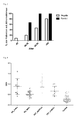
- Fig. 1 shows the concentrations of anti-MAZI auto-antibody as OD measured in the ELISA for patients who were diagnosed in PET-CT as having atherosclerosis (+), and for patients who were diagnosed in PET-CT as not having atherosclerosis (-).
- the cut-off value (broken line) of OD 1.2 was determined in parallel in 39 arbitrary sera of blood donors.
- Fig. 2 shows ELISA results in measured OD for the anti-MAZI auto-antibody of patients who were examined using a heart catheter due to suspected myocardial infarction.
- Patients who were diagnosed positive for coronary artery disease (CAD+ and CAD only) were found to have anti-MAZI auto-antibody to a significantly higher proportion than patients who were diagnosed negative for coronary artery disease (CAD-).
- Fig. 2 indicates concomitant diseases, namely rheumatoid arthritis (RA), Sjögren's syndrome (SLE), and HIV infection (HIV).
- the cut-off value was chosen as the mean concentration of the anti-MAZI auto-antibody in sera from the patients who were diagnosed as negative for coronary artery disease (CAD-) but having RA plus two-fold the standard-deviation (2SDs).
- Fig. 3 shows the proportion of patients from Figure 1 who were diagnosed for atherosclerosis in different age groups, for those patients in whom a concentration of anti-MAZI auto-antibody was found below the cut-off value of 1.2 OD (Negativ, empty columns) and for those patients in whom a concentration above the cut-off value (Positiv, black columns) was found in the ELISA.
- Fig. 4 shows ELISA results in OD for anti-MAZI auto-antibody in patients previously diagnosed positive for RA (RA Patients) and diagnosed positive for presence of ischemic heart disease (KHK+) or diagnosed negative for ischemic heart disease (KHK-).
- ischemic heart disease correlates with a significant higher concentration of the anti-MAZI auto-antibody at least in RA patients.
- PET_AORTA+ patients with atherosclerosis of the aorta (diagnosed by CT)
- PET_AORTA+ also had significantly higher serum concentrations of anti-MAZI auto-antibody compared to patients without atherosclerosis of the aorta (diagnosed by CT) (PET_AORTA-).
Landscapes
- Life Sciences & Earth Sciences (AREA)
- Health & Medical Sciences (AREA)
- Engineering & Computer Science (AREA)
- Molecular Biology (AREA)
- Chemical & Material Sciences (AREA)
- Biomedical Technology (AREA)
- Urology & Nephrology (AREA)
- Hematology (AREA)
- Immunology (AREA)
- Biotechnology (AREA)
- Microbiology (AREA)
- Cell Biology (AREA)
- Proteomics, Peptides & Aminoacids (AREA)
- Food Science & Technology (AREA)
- Medicinal Chemistry (AREA)
- Physics & Mathematics (AREA)
- Analytical Chemistry (AREA)
- Biochemistry (AREA)
- General Health & Medical Sciences (AREA)
- General Physics & Mathematics (AREA)
- Pathology (AREA)
- Peptides Or Proteins (AREA)
Abstract
The invention provides a process for analysis of the presence of atherosclerosis in a patient sample, and preferably identifies a form of atherosclerosis that correlates to an increased risk of the patient to develop rheumatoid arthritis (RA), connective tissue diseases, vasculitis, and/or spondyloarthritis, and/or myocardial infarction and/or apoplexy.
Description
- The present invention relates to a process for analysis of the presence of atherosclerosis in a patient sample. Further, the invention relates to a process for analysis of the risk for myocardial infarction and/or apoplexy.
- Atherosclerosis is a pathologic process causing disease of the coronary, cerebral, and peripheral arteries. Atherosclerosis may start already in childhood, and at an age between 30 and 34 years, 20 % of men and 8 % of women have advanced coronary atheromata. The pathogenesis of atherosclerosis is not entirely clear yet, but endothelial dysfunction, inflammation, and the traditional risk factors of hypertension, diabetes, dyslipidemia, and smoking play important roles. Atherosclerosis is also increased in patients suffering from chronic inflammatory disorders such as rheumatoid arthritis, spondyloarthritis, vasculitis and connective tissue diseases. Patients with these diseases have a reduced life expectancy due to increased mortality by cardiovascular complications.
- Atherosclerosis is generally asymptomatic until the atherosclerotic plaques reduce the luminal diameter of involved arteries, and angina pectoris or other ischemic complications such as apoplexy or intermittent claudication may occur. In addition, ruptures of vulnerable plaque may cause immediate problems, such as apoplexy, acute coronary syndromes or myocardial infarction.
- Extensive efforts have been made to identify these rupture-prone "vulnerable plaques" in order to be able to treat patients prone to sudden death early. CT angiography appears to be appropriate, but is costly and is associated with radiation exposure. Therefore, screening tools to identify patients at high risk for problems caused by vulnerable plaques are not available yet.
- Within the vulnerable plaque, macrophages accumulate and contain macrophages large amounts of free cholesterol. The macrophages turn into foamy cells, and eventually die from apoptosis. The macrophages are activated by cytokines, and produce matrix metalloproteinases (MMPs).
- MMPs are important in the pathogenesis of atherosclerosis by participating in vascular remodeling, smooth muscle cell migration, and plaque disruption. MMP-14 is detected at high levels in the atherosclerotic plaque and is induced by the transcription factor MAZI (SAF-1), which is and coexpressed with MMP-14 in the macrophages present in the atherosclerotic plaques.
- Bataller et al., Ann Neurol 2003, 53: 123-127 describes the MAZ protein as an autoantigen of Hodgkin's disease and of paraneoplastic dysfunction.
- Ray et al., The Journal of Immunology 2004, 172: 5006-5015 describes that the inflammation-responsive transcription factor SAF-1 when overexpressed in cultivated cells causes a growth-arresting signal which then stops cellular proliferation via activating expression of p21.
- Ray et al., Circ Res. 2004, 95 : 1082-1090 describes that it is known that matrix metalloproteinases (MMPs) play an important role in the pathogenesis of atherosclerosis and in plaque disruption, and show that increased binding of SAF-1 to the MMP-14 gene induces transcriptional upregulation of this gene.
- It is an object of the invention to provide for an analytical process that identifies the presence of atherosclerosis from a patient sample, especially from blood serum, but also from blood, plasma, saliva, urine or other biomaterials, and preferably identifies a form of atherosclerosis that correlates to an increased risk of cardiovascular complications. The invention is also suitable to detect atherosclerosis leading to complications such as myocardial infarction and/or apoplexy in patients with chronic inflammatory disorders such as rheumatoid arthritis, connective tissue diseases, vasculitis, and/or spondyloarthritis.
- The invention achieves the object by the features of the claims and especially by providing a process for analysis of the presence of atherosclerosis in a patient sample, and preferably identifies a form of atherosclerosis that correlates to an increased risk of the patient to develop rheumatoid arthritis (RA), connective tissue diseases, vasculitis, and/or spondyloarthritis, and/or myocardial infarction and/or apoplexy. The process is based on the detection of auto-antibody specific for MAZI (Myc-associated zinc finger protein, alternatively named serum amyloid A-activating factor-1(SAF-1), purine-binding transcription factor (PUR-1)) (anti-MAZI auto-antibody) in the sample. MAZI preferably has the amino acid sequence given in UniProtKB as P56270 (MAZ_HUMAN). The process optionally includes or consists of the analysis for the presence of the auto-antibody specific for MAZI for detecting the presence of atherosclerosis, myocardial infarction and/or apoplexy and/or rheumatoid arthritis, especially in patients with chronic inflammatory disorders, e.g. in patients with rheumatoid arthritis.
- It has been found that the presence of anti-MAZI auto-antibody in a sample correlates with presence of atherosclerosis in the patient, and especially correlates with atherosclerosis having vulnerable plaques. The presence of vulnerable plaques is believed to correlate with an increased risk for myocardial infarction and/or apoplexy.
- The correlation of anti-MAZI auto-antibody with atherosclerosis, including in patients with rheumatoid arthritis, connective tissue diseases, vasculitis, and/or spondyloarthritis, and with an increased risk for myocardial infarction and/or apoplexy is surprising, because MAZI (also termed SAF-1) is known as a transcription factor, hence a protein localized in the cell nucleus.
- The process for analysis comprises or consists of the steps of
- determining the concentration of anti-MAZI auto-antibody in a patient sample, which preferably is blood serum, but can also be another body fluid such as blood, plasma, urine or saliva,
- comparing the determined concentration of anti-MAZI auto-antibody to the concentration determined in samples of healthy persons, preferably of the same age,
- wherein an elevated concentration of anti-MAZI auto-antibody in the patient sample indicates presence of atherosclerosis, including in patients with rheumatoid arthritis, , connective tissue diseases, vasculitis, and/or of spondyloarthritis, and preferably indicates an increased risk for myocardial infarction and/or apoplexy.
- An elevated concentration of the anti-MAZI auto-antibody is e.g. a concentration higher than the mean concentration in samples of healthy persons, higher than the mean concentration in samples from an arbitrary group of persons, e.g. non-preselected persons, e.g. blood donors, or preferably higher than the mean concentration in samples from persons who are diagnosed as being free from atherosclerosis, including atherosclerosis in patients with rheumatoid arthritis, connective tissue diseases, vasculitis, spondyloarthritis, myocardial infarction and/or apoplexy. The mean concentration of the anti-MAZI auto-antibody in serum is used as a cut-off value, with concentrations elevated above the cut-off value indicating atherosclerosis with significance, especially atherosclerosis associated with vulnerable plaques. Optionally, the cut-off value is the mean concentration of the anti-MAZI auto-antibody plus 1-fold or 2-fold the value of the standard deviation.
- A concentration of anti-MAZI auto-antibody in the patient sample higher than the cut-off value indicates presence of atherosclerosis, especially of atherosclerosis associated with vulnerable plaques, and preferably indicates an increased risk for myocardial infarction and/or apoplexy.
- Optionally, the cut-off value is age-dependent, e.g. increasing with increasing age of the patient. For this embodiment, the cut-off value used is optionally determined in healthy persons of an age group of a period +/- 5 years or +/- 2 to 3 years around the age of the patient from whom the sample originates, or in age groups of 45-55 years, 56-65 years, and 66 years and above.
- Preferably, the process in addition to detecting the concentration of anti-MAZI auto-antibody in a patient sample by determination of the amount of antibody binding to MAZI protein comprises a parallel determination of the binding of a reference sample containing a pre-determined concentration of anti-MAZI auto-antibody to MAZI protein. More preferably, the reference sample contains a pre-determined concentration of anti-MAZI auto-antibody that is equivalent to the cut-off value.
- In addition or in the alternative, the process can optionally comprise the step of adding a pre-determined amount of anti-MAZI auto-antibody to an aliquot of the patient sample and/or adding a pre-determined amount of soluble MAZI protein to an aliquot of the patient sample, and determining the amount of anti-MAZI antibody in these samples, preferably in an ELISA. In an embodiment comprising the step of adding a pre-determined amount of anti-MAZI antibody to an aliquot of the patient sample, the determined concentration of anti-MAZI antibody is reduced by the amount of added anti-MAZI antibody. In an embodiment comprising the addition of soluble MAZI protein to an aliquot of the patient sample, the determined concentration of anti-MAZI antibody is increased by an amount that is equimolar to the amount of added soluble MAZI protein. Preferably, the analysis of a patient sample aliquot to which a pre-determined amount of anti-MAZI antibody and/or of a patient sample aliquot to which a pre-determined amount of MAZI protein has been added, is made in parallel to the analysis of the serum sample.
- An anti-MAZI antibody can be produced by standard processes for producing antibody, e.g. using vaccination of an experimental animal with purified MAZI protein and isolating serum from the animal, and/or by the hybridoma technique for generating an antibody-producing cell line from fusion products of spleen cells of a MAZI-vaccinated animal with a proliferating cell line, or by expression of an anti-MAZI antibody in a cultivated cell or micro-organism using generally known genetic engineering processes.
- The analysis of a sample for determination of the concentration of anti-MAZI auto-antibody can be by an ELISA, using MAZI protein or peptides as a capture agent, e.g. recombinant or native or alternatively peptides derived from the MAZI sequence, that is immobilized on a support as a capture agent for the anti-MAZI auto-antibody, followed by removal of unbound sample components and detection of bound antibody, e.g. using a labelled anti-human antibody as a detection antibody, followed by removal of unbound detection antibody and measurement of the label, e.g. direct measurement of the label or measurement of a reaction product, e.g. a colour, produced by the label from an added colour precursor.
- As an alternative to an ELISA using microtiter plates, other procedures using reaction tubes, beads, biochips etc. may be performed. The immobilization of the capture agent can be obtained by adsorption, covalent binding or by high affinity interactions (such as streptavidin/biotin or hapten/anti-hapten-antibodies). The immobilized capture agent may be used in a form bound to the solid phase already at the start of the reaction, or may be immobilized later on in the test procedure.
- The procedure may be performed in fluid phase, for example in a reaction tube, or in a dry system, for example on a test strip. Such methods are in principle known and can be adapted for detection of the anti-MAZI autoantibody.
- The capture agent may carry a detectable group as a label, also termed direct labeling, or may be able to bind to a detectable group, also termed indirect labeling. The label may be from any suitable detection system, for examples enzymes, metal or latex particles, with luminescent or fluorescent groups. Preferentially, enzymes such as peroxidase, beta galactosidase or alkaline phosphatase are selected as label, and an ELISA will be performed.
- The anti-MAZI auto-antibody can comprise all antibody classes and subclasses, and accordingly, the process can comprise determination of anti-MAZI auto-antibody of any antibody class or subclass.
- The invention is now described in greater detail by way of examples and with reference to the figures showing in
-
Fig. 1 ELISA results for anti-MAZI auto-antibody in sera of patients diagnosed by whole body CT scans to have atherosclerosis (+) and of patients without diagnosed atherosclerosis (-), -
Fig. 2 ELISA results for anti-MAZI auto-antibody in sera of patients who were examined for coronary artery disease by coronary artery catherization, -
Fig. 3 ELISA results anti-MAZI auto-antibody in sera of patients who were diagnosed for atherosclerosis by whole body CT, separately for age groups, and in -
Fig. 4 ELISA results for anti-MAZI auto-antibody in sera of rheumatoid arthritis patients who were diagnosed for ischemic heart disease and by cancer patients, in whom the presence (PET_AORTA+) or absence (PET_AORTA-) of atherosclerosis of the aorta had been examined by PET CT. - An ELISA was carried out using blood serum as the sample. 0.1 µg recombinant MAZI protein in 100µl PBS (phosphate buffered saline, pH), purchased from Abnova, Taiwan, was adsorbed for immobilization onto each well of a 96-well microtiter plate (Maxisorb, Nunc, Denmark) by incubation overnight at 5°C. The supernatant was then removed and 0.1 % casein in PBS was used for blocking for 30 min at room temperature. Sera were diluted 1:100 in 0.1% casein in PBS-T (Tris-phosphate with 20% Tween20) for 30 min at room temperature, then washed three times using 200µl TBS-T. Detection was by addition of 100µl of a goat anti-human IgG coupled to HRP (horse radish peroxidase) as the labelled detection antibody, purchased from Jackson ImmunoResearch Europe Ltd. at a dilution of 2:10 000 or at 2µl in 10ml 0.1% casein in PBS, and after incubating for 30 min, wells were washed three times using PBS-T, then the colour reaction was made using the colour precursor TMB (3,3',5,5'-tetramethylbenzidine) for at maximum 15 min according to the manufacturer's (Thermo Fisher Scientific, Denmark) instructions. Colour measurement was at 450nm using an ELISA reader.
- In non-preselected blood donor samples obtained from a blood bank, a positive reaction for anti-MAZI auto-antibody was found in 4 of 39 individuals.
- Analysis of serum from 87 patients that were examined for atherosclerosis using PET-CT (positron-emission tomography-computerized tomography) showed that patients who were diagnosed in PET-CT as having atherosclerosis had concentrations of the anti-MAZI auto-antibody above the cut-off concentration to a significantly higher extent than patients who were diagnosed in PET-CT as not having atherosclerosis.
Fig. 1 shows the concentrations of anti-MAZI auto-antibody as OD measured in the ELISA for patients who were diagnosed in PET-CT as having atherosclerosis (+), and for patients who were diagnosed in PET-CT as not having atherosclerosis (-). The cut-off value (broken line) of OD 1.2 was determined in parallel in 39 arbitrary sera of blood donors. - Analysis of the data of
Fig. 1 showed that the mean concentration of the anti-MAZI auto-antibody of all patients diagnosed as having atherosclerosis (+) is significantly higher than the mean concentration of all patients who were diagnosed in PET-CT as not having atherosclerosis (-). The concentration of the anti-MAZI auto-antibody of patients diagnosed as having atherosclerosis (+) is significantly higher also when analysing the values higher than the cut-off value by Fisher's exact test using a fourfold table. -
Fig. 2 shows ELISA results in measured OD for the anti-MAZI auto-antibody of patients who were examined using a heart catheter due to suspected myocardial infarction. Patients who were diagnosed positive for coronary artery disease (CAD+ and CAD only) were found to have anti-MAZI auto-antibody to a significantly higher proportion than patients who were diagnosed negative for coronary artery disease (CAD-).Fig. 2 indicates concomitant diseases, namely rheumatoid arthritis (RA), Sjögren's syndrome (SLE), and HIV infection (HIV). The cut-off value was chosen as the mean concentration of the anti-MAZI auto-antibody in sera from the patients who were diagnosed as negative for coronary artery disease (CAD-) but having RA plus two-fold the standard-deviation (2SDs). - These results show that the concentration of anti-MAZI auto-antibody is essentially only above the cut-off value in patients diagnosed positive for coronary artery disease, showing that an elevated concentration of the anti-MAZI auto-antibody is characteristic for coronary artery disease as one of the manifestations of atherosclerosis.
-
Fig. 3 shows the proportion of patients fromFigure 1 who were diagnosed for atherosclerosis in different age groups, for those patients in whom a concentration of anti-MAZI auto-antibody was found below the cut-off value of 1.2 OD (Negativ, empty columns) and for those patients in whom a concentration above the cut-off value (Positiv, black columns) was found in the ELISA. These data show that the presence of the anti-MAZI auto-antibody is a strong indicator for presence of atherosclerosis, especially at age groups 45 to 55 years and 55 to 65 years. -
Fig. 4 shows ELISA results in OD for anti-MAZI auto-antibody in patients previously diagnosed positive for RA (RA Patients) and diagnosed positive for presence of ischemic heart disease (KHK+) or diagnosed negative for ischemic heart disease (KHK-). This shows that an ischemic heart disease correlates with a significant higher concentration of the anti-MAZI auto-antibody at least in RA patients. In addition, patients with atherosclerosis of the aorta (diagnosed by CT) (PET_AORTA+) also had significantly higher serum concentrations of anti-MAZI auto-antibody compared to patients without atherosclerosis of the aorta (diagnosed by CT) (PET_AORTA-).
Claims (11)
- Process for analysis of the presence of atherosclerosis, characterized by determining the concentration of anti-MAZI auto-antibody in a patient sample.
- Process according to claim 1, characterized in that an elevated concentration of anti-MAZI auto-antibody is indicative of atherosclerosis and/or of an increased risk for myocardial infarction and/or of an increased risk for apoplexy.
- Process according to one of the preceding claims, characterized in that the sample originates form a patients with a chronic inflammatory disorder, e.g. a disorder selected from rheumatoid arthritis, connective tissue diseases, vasculitis, and/or spondyloarthritis, and/or myocardial infarction and/or apoplexy.
- Process according to one of the preceding claims, characterized by comparing the concentration of the anti-MAZI auto-antibody determined in the patient sample to the mean concentration of anti-MAZI auto-antibody determined in samples of an arbitrary group of persons, or in samples from persons who are diagnosed as being free from atherosclerosis, rheumatoid arthritis connective tissue diseases, vasculitis, spondyloarthritis, myocardial infarction and/or apoplexy.
- Process according to one of the preceding claims, characterized in that atherosclerosis and/or an increased risk for myocardial infarction and/or apoplexy is determined for a concentration of the anti-MAZI auto-antibody in the patient sample elevated over the mean concentration of anti-MAZI auto-antibody determined in samples of an arbitrary group of persons, or in samples from persons who are diagnosed as being free from atherosclerosis, rheumatoid arthritis, rheumatoid spondylitis, connective tissue diseases, vasculitis, spondyloarthritis, myocardial infarction and/or apoplexy.
- Process according to one of the preceding claims, characterized by analysing in parallel an aliquot of the patient sample to which a pre-determined amount of anti-MAZI antibody has been added and/or by analysing in parallel an aliquot of the patient sample to which a pre-determined amount of MAZI protein has been added.
- Process according to one of the preceding claims, characterized by the patient sample being a human body fluid selected from blood serum, blood, urine and saliva.
- Process according to one of the preceding claims, characterized by MAZI comprising or consisting of the amino acid sequence given in UniProtKB as P56270 (MAZ_HUMAN).
- Process according to one of the preceding claims, characterized in that MAZI protein is used as a capture agent for the anti-MAZI auto-antibody.
- Test kit for use in a process according to one of the preceding claims, comprising MAZI protein and a labelled anti-human antibody.
- Use of MAZI protein having the amino acid sequence given in UniProtKB as P56270 (MAZ_HUMAN) as a capture agent for anti-MAZI auto-antibody in the analysis of a sample for atherosclerosis and/or for an increased risk for myocardial infarction and/or apoplexy and/or rheumatoid arthritis.
Priority Applications (4)
| Application Number | Priority Date | Filing Date | Title |
|---|---|---|---|
| EP15178138.2A EP3121599A1 (en) | 2015-07-23 | 2015-07-23 | Analysis for atherosclerosis |
| EP16738422.1A EP3325974B1 (en) | 2015-07-23 | 2016-07-13 | Analysis for atherosclerosis |
| PCT/EP2016/066588 WO2017012929A1 (en) | 2015-07-23 | 2016-07-13 | Analysis for atherosclerosis |
| US15/746,335 US20180209991A1 (en) | 2015-07-23 | 2016-07-13 | Analysis for atherosclerosis |
Applications Claiming Priority (1)
| Application Number | Priority Date | Filing Date | Title |
|---|---|---|---|
| EP15178138.2A EP3121599A1 (en) | 2015-07-23 | 2015-07-23 | Analysis for atherosclerosis |
Publications (1)
| Publication Number | Publication Date |
|---|---|
| EP3121599A1 true EP3121599A1 (en) | 2017-01-25 |
Family
ID=53776359
Family Applications (2)
| Application Number | Title | Priority Date | Filing Date |
|---|---|---|---|
| EP15178138.2A Withdrawn EP3121599A1 (en) | 2015-07-23 | 2015-07-23 | Analysis for atherosclerosis |
| EP16738422.1A Active EP3325974B1 (en) | 2015-07-23 | 2016-07-13 | Analysis for atherosclerosis |
Family Applications After (1)
| Application Number | Title | Priority Date | Filing Date |
|---|---|---|---|
| EP16738422.1A Active EP3325974B1 (en) | 2015-07-23 | 2016-07-13 | Analysis for atherosclerosis |
Country Status (3)
| Country | Link |
|---|---|
| US (1) | US20180209991A1 (en) |
| EP (2) | EP3121599A1 (en) |
| WO (1) | WO2017012929A1 (en) |
Citations (1)
| Publication number | Priority date | Publication date | Assignee | Title |
|---|---|---|---|---|
| EP2385374A1 (en) * | 2010-05-05 | 2011-11-09 | Zora Biosciences OY | Lipidomic biomarkers for atherosclerosis and cardiovascular disease |
-
2015
- 2015-07-23 EP EP15178138.2A patent/EP3121599A1/en not_active Withdrawn
-
2016
- 2016-07-13 US US15/746,335 patent/US20180209991A1/en not_active Abandoned
- 2016-07-13 WO PCT/EP2016/066588 patent/WO2017012929A1/en not_active Ceased
- 2016-07-13 EP EP16738422.1A patent/EP3325974B1/en active Active
Patent Citations (1)
| Publication number | Priority date | Publication date | Assignee | Title |
|---|---|---|---|---|
| EP2385374A1 (en) * | 2010-05-05 | 2011-11-09 | Zora Biosciences OY | Lipidomic biomarkers for atherosclerosis and cardiovascular disease |
Non-Patent Citations (7)
Also Published As
| Publication number | Publication date |
|---|---|
| EP3325974A1 (en) | 2018-05-30 |
| WO2017012929A1 (en) | 2017-01-26 |
| US20180209991A1 (en) | 2018-07-26 |
| EP3325974B1 (en) | 2019-12-18 |
Similar Documents
| Publication | Publication Date | Title |
|---|---|---|
| CN105765382B (en) | Methods and kits for predicting risk of having cardiovascular disease or cardiovascular events | |
| US20230051905A1 (en) | Triaging method using cell free nucleosome levels | |
| EP2620770A1 (en) | Novel testing method and testing reagent for angiitis | |
| US11193943B2 (en) | Endothelial cell derived exosomes and uses thereof | |
| JP6078845B2 (en) | Method for measuring platelet activation based on soluble CLEC-2 | |
| HK1254867A1 (en) | Fasting levels of growth hormone as a predictive marker of cardiovascular risk | |
| JP2014516155A (en) | Methods for diagnosis of early rheumatoid arthritis | |
| WO2010012616A1 (en) | Blood glutathione as a biomarker for screening asymptomatic patients at risk for heart failure | |
| JP2015528912A (en) | How to diagnose scleroderma | |
| Natorska et al. | High prevalence of antinuclear antibodies in patients following venous thromboembolism | |
| JP5518836B2 (en) | Method for diagnosing pulmonary arterial hypertension | |
| EP3325974B1 (en) | Analysis for atherosclerosis | |
| US20220057501A1 (en) | Endothelial Cell Derived Exosomes and Uses Thereof | |
| WO2012140148A2 (en) | Junction plakoglobin for diagnosis of cardiovascular diseases | |
| JP2019168403A (en) | Diagnostic method, diagnostic marker and diagnostic kit for takayasu arteritis | |
| US20250130243A1 (en) | Methods and materials for identifying and treating vaccine-induced immune thrombotic thrombocytopenia | |
| JP5605375B2 (en) | Method for immunoassay of autoantibodies to Ku86, kit used therefor, and method for determining primary hepatocellular carcinoma using the same | |
| JP5939518B2 (en) | Method and diagnostic kit for diagnosing Raynaud's symptoms associated with collagen disease | |
| JP6923212B2 (en) | Predictors and testing methods for the development of arteriosclerosis | |
| WO2025012482A1 (en) | Method and means for prediction and evaluation of therapy response in rheumatoid arthritis | |
| JP4195492B1 (en) | Diagnostic agent for acute ischemic disease | |
| HK40100515A (en) | Triaging method using cell free nucleosome levels | |
| JP6672168B2 (en) | Methods and biomarkers for detecting sarcoma metastases | |
| JP5651890B2 (en) | Kit to determine the therapeutic effect of reperfusion therapy | |
| EP2663869A1 (en) | Methods and kits for predicting the risk of having a cardiovascular event in a subject |
Legal Events
| Date | Code | Title | Description |
|---|---|---|---|
| PUAI | Public reference made under article 153(3) epc to a published international application that has entered the european phase |
Free format text: ORIGINAL CODE: 0009012 |
|
| AK | Designated contracting states |
Kind code of ref document: A1 Designated state(s): AL AT BE BG CH CY CZ DE DK EE ES FI FR GB GR HR HU IE IS IT LI LT LU LV MC MK MT NL NO PL PT RO RS SE SI SK SM TR |
|
| AX | Request for extension of the european patent |
Extension state: BA ME |
|
| STAA | Information on the status of an ep patent application or granted ep patent |
Free format text: STATUS: THE APPLICATION IS DEEMED TO BE WITHDRAWN |
|
| 18D | Application deemed to be withdrawn |
Effective date: 20170726 |