EP3120920A1 - Dendrimer conjugates for determining membrane retention level and/or pore structure - Google Patents
Dendrimer conjugates for determining membrane retention level and/or pore structure Download PDFInfo
- Publication number
- EP3120920A1 EP3120920A1 EP16167110.2A EP16167110A EP3120920A1 EP 3120920 A1 EP3120920 A1 EP 3120920A1 EP 16167110 A EP16167110 A EP 16167110A EP 3120920 A1 EP3120920 A1 EP 3120920A1
- Authority
- EP
- European Patent Office
- Prior art keywords
- dendrimer
- solution
- pcr
- reaction chambers
- stranded dna
- Prior art date
- Legal status (The legal status is an assumption and is not a legal conclusion. Google has not performed a legal analysis and makes no representation as to the accuracy of the status listed.)
- Granted
Links
Images






Classifications
-
- C—CHEMISTRY; METALLURGY
- C12—BIOCHEMISTRY; BEER; SPIRITS; WINE; VINEGAR; MICROBIOLOGY; ENZYMOLOGY; MUTATION OR GENETIC ENGINEERING
- C12Q—MEASURING OR TESTING PROCESSES INVOLVING ENZYMES, NUCLEIC ACIDS OR MICROORGANISMS; COMPOSITIONS OR TEST PAPERS THEREFOR; PROCESSES OF PREPARING SUCH COMPOSITIONS; CONDITION-RESPONSIVE CONTROL IN MICROBIOLOGICAL OR ENZYMOLOGICAL PROCESSES
- C12Q1/00—Measuring or testing processes involving enzymes, nucleic acids or microorganisms; Compositions therefor; Processes of preparing such compositions
- C12Q1/68—Measuring or testing processes involving enzymes, nucleic acids or microorganisms; Compositions therefor; Processes of preparing such compositions involving nucleic acids
-
- C—CHEMISTRY; METALLURGY
- C12—BIOCHEMISTRY; BEER; SPIRITS; WINE; VINEGAR; MICROBIOLOGY; ENZYMOLOGY; MUTATION OR GENETIC ENGINEERING
- C12Q—MEASURING OR TESTING PROCESSES INVOLVING ENZYMES, NUCLEIC ACIDS OR MICROORGANISMS; COMPOSITIONS OR TEST PAPERS THEREFOR; PROCESSES OF PREPARING SUCH COMPOSITIONS; CONDITION-RESPONSIVE CONTROL IN MICROBIOLOGICAL OR ENZYMOLOGICAL PROCESSES
- C12Q1/00—Measuring or testing processes involving enzymes, nucleic acids or microorganisms; Compositions therefor; Processes of preparing such compositions
- C12Q1/68—Measuring or testing processes involving enzymes, nucleic acids or microorganisms; Compositions therefor; Processes of preparing such compositions involving nucleic acids
- C12Q1/6844—Nucleic acid amplification reactions
- C12Q1/6851—Quantitative amplification
-
- B—PERFORMING OPERATIONS; TRANSPORTING
- B01—PHYSICAL OR CHEMICAL PROCESSES OR APPARATUS IN GENERAL
- B01D—SEPARATION
- B01D65/00—Accessories or auxiliary operations, in general, for separation processes or apparatus using semi-permeable membranes
- B01D65/10—Testing of membranes or membrane apparatus; Detecting or repairing leaks
- B01D65/102—Detection of leaks in membranes
-
- B—PERFORMING OPERATIONS; TRANSPORTING
- B01—PHYSICAL OR CHEMICAL PROCESSES OR APPARATUS IN GENERAL
- B01L—CHEMICAL OR PHYSICAL LABORATORY APPARATUS FOR GENERAL USE
- B01L3/00—Containers or dishes for laboratory use, e.g. laboratory glassware; Droppers
- B01L3/50—Containers for the purpose of retaining a material to be analysed, e.g. test tubes
- B01L3/502—Containers for the purpose of retaining a material to be analysed, e.g. test tubes with fluid transport, e.g. in multi-compartment structures
-
- B—PERFORMING OPERATIONS; TRANSPORTING
- B01—PHYSICAL OR CHEMICAL PROCESSES OR APPARATUS IN GENERAL
- B01L—CHEMICAL OR PHYSICAL LABORATORY APPARATUS FOR GENERAL USE
- B01L7/00—Heating or cooling apparatus; Heat insulating devices
- B01L7/52—Heating or cooling apparatus; Heat insulating devices with provision for submitting samples to a predetermined sequence of different temperatures, e.g. for treating nucleic acid samples
-
- C—CHEMISTRY; METALLURGY
- C12—BIOCHEMISTRY; BEER; SPIRITS; WINE; VINEGAR; MICROBIOLOGY; ENZYMOLOGY; MUTATION OR GENETIC ENGINEERING
- C12Q—MEASURING OR TESTING PROCESSES INVOLVING ENZYMES, NUCLEIC ACIDS OR MICROORGANISMS; COMPOSITIONS OR TEST PAPERS THEREFOR; PROCESSES OF PREPARING SUCH COMPOSITIONS; CONDITION-RESPONSIVE CONTROL IN MICROBIOLOGICAL OR ENZYMOLOGICAL PROCESSES
- C12Q1/00—Measuring or testing processes involving enzymes, nucleic acids or microorganisms; Compositions therefor; Processes of preparing such compositions
- C12Q1/68—Measuring or testing processes involving enzymes, nucleic acids or microorganisms; Compositions therefor; Processes of preparing such compositions involving nucleic acids
- C12Q1/6876—Nucleic acid products used in the analysis of nucleic acids, e.g. primers or probes
-
- G—PHYSICS
- G01—MEASURING; TESTING
- G01N—INVESTIGATING OR ANALYSING MATERIALS BY DETERMINING THEIR CHEMICAL OR PHYSICAL PROPERTIES
- G01N15/00—Investigating characteristics of particles; Investigating permeability, pore-volume or surface-area of porous materials
- G01N15/08—Investigating permeability, pore-volume, or surface area of porous materials
-
- B—PERFORMING OPERATIONS; TRANSPORTING
- B01—PHYSICAL OR CHEMICAL PROCESSES OR APPARATUS IN GENERAL
- B01L—CHEMICAL OR PHYSICAL LABORATORY APPARATUS FOR GENERAL USE
- B01L2300/00—Additional constructional details
- B01L2300/06—Auxiliary integrated devices, integrated components
- B01L2300/0627—Sensor or part of a sensor is integrated
-
- B—PERFORMING OPERATIONS; TRANSPORTING
- B01—PHYSICAL OR CHEMICAL PROCESSES OR APPARATUS IN GENERAL
- B01L—CHEMICAL OR PHYSICAL LABORATORY APPARATUS FOR GENERAL USE
- B01L2300/00—Additional constructional details
- B01L2300/08—Geometry, shape and general structure
- B01L2300/0861—Configuration of multiple channels and/or chambers in a single devices
- B01L2300/0864—Configuration of multiple channels and/or chambers in a single devices comprising only one inlet and multiple receiving wells, e.g. for separation, splitting
-
- B—PERFORMING OPERATIONS; TRANSPORTING
- B01—PHYSICAL OR CHEMICAL PROCESSES OR APPARATUS IN GENERAL
- B01L—CHEMICAL OR PHYSICAL LABORATORY APPARATUS FOR GENERAL USE
- B01L2400/00—Moving or stopping fluids
- B01L2400/04—Moving fluids with specific forces or mechanical means
- B01L2400/0403—Moving fluids with specific forces or mechanical means specific forces
- B01L2400/0409—Moving fluids with specific forces or mechanical means specific forces centrifugal forces
-
- C—CHEMISTRY; METALLURGY
- C12—BIOCHEMISTRY; BEER; SPIRITS; WINE; VINEGAR; MICROBIOLOGY; ENZYMOLOGY; MUTATION OR GENETIC ENGINEERING
- C12Q—MEASURING OR TESTING PROCESSES INVOLVING ENZYMES, NUCLEIC ACIDS OR MICROORGANISMS; COMPOSITIONS OR TEST PAPERS THEREFOR; PROCESSES OF PREPARING SUCH COMPOSITIONS; CONDITION-RESPONSIVE CONTROL IN MICROBIOLOGICAL OR ENZYMOLOGICAL PROCESSES
- C12Q2531/00—Reactions of nucleic acids characterised by
- C12Q2531/10—Reactions of nucleic acids characterised by the purpose being amplify/increase the copy number of target nucleic acid
- C12Q2531/113—PCR
-
- C—CHEMISTRY; METALLURGY
- C12—BIOCHEMISTRY; BEER; SPIRITS; WINE; VINEGAR; MICROBIOLOGY; ENZYMOLOGY; MUTATION OR GENETIC ENGINEERING
- C12Q—MEASURING OR TESTING PROCESSES INVOLVING ENZYMES, NUCLEIC ACIDS OR MICROORGANISMS; COMPOSITIONS OR TEST PAPERS THEREFOR; PROCESSES OF PREPARING SUCH COMPOSITIONS; CONDITION-RESPONSIVE CONTROL IN MICROBIOLOGICAL OR ENZYMOLOGICAL PROCESSES
- C12Q2563/00—Nucleic acid detection characterized by the use of physical, structural and functional properties
- C12Q2563/107—Nucleic acid detection characterized by the use of physical, structural and functional properties fluorescence
-
- G—PHYSICS
- G01—MEASURING; TESTING
- G01N—INVESTIGATING OR ANALYSING MATERIALS BY DETERMINING THEIR CHEMICAL OR PHYSICAL PROPERTIES
- G01N15/00—Investigating characteristics of particles; Investigating permeability, pore-volume or surface-area of porous materials
- G01N15/08—Investigating permeability, pore-volume, or surface area of porous materials
- G01N2015/086—Investigating permeability, pore-volume, or surface area of porous materials of films, membranes or pellicules
Definitions
- Tests such as leakage testing and gold particle testing can be used to determine membrane integrity.
- these tests can have drawbacks.
- the gold particle test can have limited sensitivity due to limits of the instrumentation for detecting the gold particles and/or require a high challenge concentration of gold particles.
- integrity testing provides for determining whether a membrane has a large hole or tear, it does not provide for determining the membrane retention level or determining the pore structure to determine the pore size or rating.
- the present invention provides for ameliorating at least some of the disadvantages of the prior art.
- An embodiment of the invention provides a method for determining retention level and/or pore structure of a membrane, the method comprising (a) passing a challenge solution comprising single-stranded DNA conjugated to dendrimers (dendrimer conjugates), through a microporous membrane, to provide a permeate solution comprising the dendrimer conjugates; (b)obtaining equal volumes of: (i) the challenge solution comprising dendrimer conjugates; and, (ii) the permeate solution comprising dendrimer conjugates; (c) combining (i) with PCR reagents to provide a challenge solution/PCR mix, and combining (ii) with PCR reagents to provide a permeate solution/PCR mix; (d) performing a plurality of PCR cycles using each of the challenge solution/PCR mix, and the permeate solution/PCR mix, to amplify the single-stranded DNA; (e) measuring single-stranded DNA concentration, which correlates to dendrimer conjugate concentration; (f) quantify
- a method for determining retention level and/or pore structure of a membrane comprising (a) passing a challenge solution comprising single-stranded DNA conjugated to dendrimers (dendrimer conjugates), through a microporous membrane, to provide a permeate solution comprising the dendrimer conjugates; (b) obtaining equal volumes of: (i) the challenge solution comprising dendrimer conjugates; and, (ii) the permeate solution comprising dendrimer conjugates; (c) combining (i) with PCR reagents to provide a challenge solution/PCR mix, and combining (ii) with PCR reagents to provide a permeate solution/PCR mix; (d) performing a plurality of PCR cycles using each of the challenge solution/PCR mix, and the permeate solution/PCR mix, to amplify the single-stranded DNA; (e) measuring single-stranded DNA concentration, which correlates to dendrimer conjug
- determining the retention level and/or pore structure of the membrane based a comparison of the quantCp to the quantCo comparing log reduction values for quantCp and quantCo.
- the dendrimer conjugates have a 1:1 ratio of single-stranded DNA to dendrimer.
- embodiments of the method can comprise passing the challenge solution through the microporous membrane at a constant flow rate, or at a constant pressure.
- an embodiment of the method can be performed using a variety of devices, illustratively, within a device comprising a rotatable circular cartridge having a plurality of reaction chambers, and a reservoir, the reaction chambers being connected to the reservoir via channels, wherein at least a portion of the reaction chambers comprise primers; and a heating plate having at least two distinct zones that can be heated to at least two different temperatures, equal volumes of the challenge solution comprising dendrimer conjugates, and of the permeate solution comprising dendrimer conjugates, can each be combined with PCR reagents to provide, respectively, a challenge solution/PCR mix, and a permeate solution/PCR mix; and a plurality of PCR cycles can be performed using each of the challenge solution/PCR mix, and the permeate solution/PCR mix, to amplify the single-stranded DNA
- an embodiment of the method can comprise at least partially filling the reservoir with a fluid containing dendrimer conjugates and PCR rea
- the method includes rotating the rotatable circular cartridge to successively bring the contents of each reaction chamber to the at least three temperatures defined by the at least three distinct zones of the heating plate.
- a kit comprising a solution comprising a plurality of dendrimers conjugated to single-stranded DNA; a rotatable circular cartridge having a plurality of reaction chambers (containing dried primers and, preferably, dried probes) and a reservoir, wherein the reaction chambers are connected to the reservoir via channels; and a qPCR master mixture.
- the qPCR master mixture comprises reference dye, polymerase, MgCl 2 , and dNTPs.
- tests can now be carried out using more realistic low particle challenge concentrations, e.g., about 1,000 to about 10,000 particles/mL, and very tight pore structure high performance membranes can be tested to determine only the sieving-based retention performance.
- ICP-MS inductively coupled plasma mass spectrometry
- Dendrimers are repetitively branched molecules, typically highly symmetric spherical compounds, and can be considered to have three major portions: a core, an inner shell, and an outer shell. They can be classified by generation, which refers to the number of repeated branching cycles that are performed during its synthesis. Higher generation dendrimers also have more exposed functional groups on the surface.
- a variety of dendrimer particles are suitable for use in the invention, wherein the dendrimer can be, if desired, functionalized for conjugation to single-stranded DNA. Suitable functionalities include, for example, amino, hydroxyl, and/or succinamic acid functionality. Suitable dendrimers include, for example, commercially available dendrimers.
- the dendrimer comprises a polyamidoamine (PAMAM) dendrimer, such as a 5 th generation PAMAM dendrimer.
- PAMAM polyamidoamine
- Figure 1 illustrates a PAMAM dendrimer reacted with a carboxylic terminated single-stranded DNA sequence to immobilize the DNA on an amino functionalized dendrimer by a covalent amide bond.
- the dendrimer particles can have any suitable diameter, typically, at least about 2 nm in diameter, though smaller diameter particles, preferably if available in monodisperse size diameter, can be used.
- the single-stranded DNA is not limited to any particular sequence, or any particular number of bases. However, the sequence should be selected such that it is unlikely to be naturally present in the challenge solution, and typically, the single-stranded DNA is at least about 50 bases in length (e.g., for efficiency in amplification by qPCR).
- the ratio of DNA to dendrimer should be such that it does not significantly change the size of the conjugate.
- the ratio of DNA to dendrimer is 1:1, e.g., such that the PCR measured DNA concentration is directly correlatable to the concentration of dendrimer particles.
- ratios such as 10:1, or even higher, can also be used.
- the free-DNA concentration can affect the sensitivity of the method. For example, if a log removal value (LRV) of 4 or more is desired, it may be preferable to have a free-DNA concentration at a level of ⁇ 0.001%; for a desired LRV of about 3, a free-DNA concentration at a level of about 0.01 %; for desired LRV of about 2, a free-DNA concentration at a level of about 0.1 %; and desired LRV of about 1, a free-DNA concentration at a level of about 1%.
- LRV log removal value
- Embodiments of the invention are especially suitable for use with aqueous solutions.
- the membranes to be analyzed can have any retention level, e.g., a log removal rating (LRV) or a pore structure, e.g., a pore size (for example, as evidenced by bubble point, or by KL as described in, for example, U.S.
- LRV log removal rating
- a pore structure e.g., a pore size (for example, as evidenced by bubble point, or by KL as described in, for example, U.S.
- Patent 4,340,479 or evidenced by capillary condensation flow porometry
- a mean flow pore (MFP) size e.g., when characterized using a porometer, for example, a Porvair Porometer (Porvair plc, Norfolk, UK), or a porometer available under the trademark POROLUX (Belgium)
- a pore rating e.g., when characterized using the modified OSU F2 test as described in, for example, U.S. Patent 4,925,572
- removal rating media e.g., when characterized using the modified OSU F2 test as described in, for example, U.S. Patent 4,925,572
- the pore structure used depends on the size of the particles to be utilized, the composition of the fluid to be treated, and the desired effluent level of the treated fluid.
- Embodiments of the invention are suitable for analyzing hydrophobic membranes and hydrophilic membranes.
- Suitable polymers can include, for example, polyaromatics; sulfones (e.g., polysulfones, including aromatic polysulfones such as, for example, polyethersulfone (PES), polyether ether sulfone, bisphenol A polysulfone, polyarylsulfone (PAS), and polyphenylsulfone), polyamides, polyimides, polyvinylidene halides (including polyvinylidene fluoride (PVDF)), polyolefins, such as polypropylene and polymethylpentene, polyesters, polystyrenes, polycarbonates, polyacrylonitriles (including polyalkylacrylonitriles), cellulosic polymers (such as cellulose acetates and cellulose nitrates), fluoropolymers (such as, for example, polytetrafluoride (PES), polyether ether sulfone, bisphenol A polysulfone, poly
- the polymeric membranes can include a mixture of polymers, e.g., a hydrophobic polymer (e.g., a sulfone polymer) and a hydrophilic polymer (e.g., polyvinylpyrrolidone).
- a hydrophobic polymer e.g., a sulfone polymer
- a hydrophilic polymer e.g., polyvinylpyrrolidone
- the membrane which can be hydrophobic or hydrophilic, can have any critical wetting surface tension (CWST, as defined in, for example, U.S. Patent 4,925,572 ), and as additionally disclosed in, for example, U.S. Patents 5,152,905 , 5,443,743 , 5,472,621 , and 6,074,869 .
- CWST critical wetting surface tension
- PCR polymerase chain reaction
- qPCR quantitative PCR
- devices and methods include, but are not limited to those available from Thermo Fisher Scientific Inc. (Applied Biosystems® 7900HT, 7300, 7500, 7500 fast, StepOneTM and StepOnePlus, QuantStudio®); Roche (LightCycler® 480, 96, 1536, Carousel, and Nano systems); Qiagen (Rotor-Gene QTM systems); and Bio-Rad (CFXTM and ChromoTM systems).
- U.S. Patent 6,821,771 that includes a rotatable circular cartridge having a plurality of reaction chambers, and a reservoir, the reaction chambers being connected to the reservoir via channels, and a heating plate having at least two, preferably, at least three, distinct zones that can be heated to at least two different temperatures), using, for example, GENEDISC plates available from Pall Corporation, Port Washington, NY, USA.
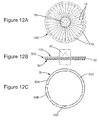
- Figures 12A, 12B, and 12C show, respectively, a top view of a rotatable circular cartridge 100 having a plurality of reaction chambers 25 and a reservoir 10, wherein the reaction chambers are connected to the reservoir via channels 15, suitable for an exemplary PCR device that can be used for carrying out PCR cycles in accordance with embodiments of the invention; a cross-sectional side view of the cartridge 100 arranged over a heating plate 50 having a plurality of distinct zones (50A, 50B, 50C, 50D) that can be heated to different temperatures for carrying out PCR, and an illustrative heating plate 50 having 4 distinct zones (50A, 50B, 50C, 50D) that can be heated to different temperatures for carrying out PCR.
- Figure 12B also shows a detector 500, preferably a fluorescence detector, for detecting a signal (preferably a fluorescing dye) in the reaction chamber during PCR.
- an embodiment of the method can comprise at least partially filling the reservoir with a fluid containing dendrimer conjugates and PCR reagents for carrying out an amplification reaction, with the exception
- the method includes rotating the rotatable circular cartridge to successively bring the contents of each reaction chamber to the at least three temperatures defined by the at least three distinct zones of the heating plate.
- This example demonstrates determining the retention level of various microporous hydrophilic nylon membranes when tested at a constant flow rate.
- FIG. 2 shows a general diagrammatic overview of the method carried out in this Example.
- PAMAM monodispersed size 5 th generation polyamidoamine
- Dendrimer particles with diameters of 5.4 nm are activated with n-hydroxysuccinimide to produce ester groups on the dendrimer surface.
- the activated dendrimer is reacted with a carboxylic terminated 66 base long single-stranded DNA sequence (from 5' to 3') CTTGCAAATCGTTCTTTGGGTCCTCTTGCGACCCTGGGAGTGAGTGAGCTTGTATGGTT GACGCCGGATT (SEQ ID:1) to immobilize the DNA on the dendrimer with a 1:1 ratio by covalent amide bond.
- amine groups on the dendrimer are protonated as NH3 + and are about twice the amount of negatively charged phosphate groups on DNA, thus making the dendrimer conjugate positively charged. Movement of the dendrimer conjugate at neutral pH only from the positive side to the negative side of the electrode during polyacrylamide gel electrophoresis confirms the 1:1 ratio of DNA to dendrimer.
- Free-DNA is removed by dialyzing the conjugate solution twice at pH 10.2 using a 100 KDa cutoff membrane.
- DNA-dendrimer conjugate stock is spiked in 1 mM CAPS buffer (pH 10.5) to prepare a working challenge solution with a conjugate concentration of 1x10 8 particle/mL.
- a 47 mm microporous nylon filter disc is wetted with 1 mM CAPS (pH 10.5) buffer, the filter disc is placed in a filter holder, a pressure syringe is filled with an appropriate volume of working challenge solution, and tubing is attached to the syringe with a pressure vessel connected through an air valve.
- CAPS pH 10.5
- the challenge test is initiated by regulating the pressure to maintain a constant flow rate of 5 mL/min, and multiple permeate fractions each with 10 mL volumes are collected.
- DNA standards ranging from 1x10 11 copy/mL to 1x10 3 copy/mL are prepared by serially diluting DNA (the same DNA sequence as attached to dendrimer) in ultrapure water.
- the appropriate volume of qPCR reaction mixture (containing master mix (the master mix including a reference dye, polymerase, MgCl 2 , and dNTPs), primers, and ultrapure water) according to the number of samples, standards, and negative controls is also prepared.
- 5 ⁇ L of working challenge solution and permeate fractions (using the second permeate fraction to avoid any buffer dilution effect on the first permeate fraction) are each added in separate 20 ⁇ L qPCR mixtures, and placed in specific wells in a 96 well plate. 5 ⁇ L of ultrapure water is added to the negative control wells.
- the 96 well plate is placed in an qPCR machine (7500 Fast Real-Time PCR System; Applied Biosystems, Carlsbad, CA) and 40 cycles of qPCR are performed (95 °C for 15 seconds and 60 °C for 60 seconds), and a fluorescence curve is generated from each well with a specific threshold cycle.
- qPCR machine 7500 Fast Real-Time PCR System; Applied Biosystems, Carlsbad, CA
- 40 cycles of qPCR are performed (95 °C for 15 seconds and 60 °C for 60 seconds), and a fluorescence curve is generated from each well with a specific threshold cycle.
- the software matches the threshold cycles of a known DNA standard with the threshold cycles of working challenge and permeate solutions to calculate dendrimer conjugate concentration in those solutions (as the 1:1 ratio of DNA to dendrimer allows the qPCR measured DNA concentration to be directly correlated to the concentration of dendrimer particles).
- the data is analyzed to quantify conjugate concentration in challenge solution and permeate fractions and calculate media performance.
- the membrane performance is calculated by taking an inverse log of the concentration of dendrimer conjugate in the permeate to the concentration of dendrimer conjugate in the working challenge solutions.
- the respective mean log removal values (LRVs) of the 40 nm, 20+250 nm (dual layer), 20 nm, 10 nm, and 5 nm media are 0.02 ⁇ 0.01, 0.06 ⁇ 0.02, 0.04 ⁇ 0.01, 0.19 ⁇ 0.01, and 0.52 ⁇ 0.10.
- This example demonstrates determining the retention level of a microporous hydrophobic high density polyethylene (HDPE) membrane when tested at a constant flow rate.
- HDPE high density polyethylene
- Dendrimer conjugates are prepared as described in Example 1.
- DNA-dendrimer conjugate stock is spiked in 1 mM CAPS buffer (pH 10.5) containing 0.03% Tween-20 (a surfactant) to prepare a working challenge solution with a conjugate concentration of 1x10 8 particle/mL.
- a 47 mm microporous HDPE filter disc is wetted with isopropyl alcohol (IPA), placed in a filter holder, and 150 mL of IPA is passed through the disc at 50 psi to prime the disc, followed by 500 mL of deionized (DI) water to wash the disc.
- IPA isopropyl alcohol
- a pressure syringe is filled with an appropriate volume of working challenge solution, and tubing is attached to the syringe with a pressure vessel connected through an air valve.
- the challenge test is initiated by regulating the pressure to maintain a constant flow rate of 5 mL/min, and multiple permeate fractions each with 10 mL volumes are collected.
- 5 ⁇ L of working challenge solution and permeate fractions (using the third permeate fraction to avoid any buffer dilution effect on the first or second permeate fractions) are each added in separate 20 ⁇ L qPCR mixtures, and placed in specific wells in a 96 well plate. 5 ⁇ L of ultrapure water is added to the negative control wells.
- the respective mean LRVs of the 30 nm, 10 nm, 5 nm, and 2 nm media is 0.01 ⁇ 0.001, 0.05 ⁇ 0.03, 0.14 ⁇ 0.04, and 0.40 ⁇ 0.15.
- the higher than 95% passage of conjugates through the larger pore-rated HDPE suggests that conjugates do not adsorb or stick to HDPE media. Accordingly, the retention values for the finer pore-rated HDPE (e.g., 10 nm, 5 nm, and 2 nm) are significantly due to a sieving effect. The results also indicate that the conjugate test at a constant flow rate is able to discriminate between different fine pore-rated HDPE media.
- This example demonstrates determining the retention level of a microporous hydrophilic nylon membrane when tested at a constant pressure.
- Microporous nylon membranes are tested as generally described in Example 1, except that the challenge test is initiated by maintaining the regulator at a fixed pressure of 5 psi, providing a flow rate of 1 mL/min.
- the respective mean LRVs of the 40 nm, 10 nm, and 5 nm media are 0.04 ⁇ 0.02, 0.20 ⁇ 0.02, and 0.60 ⁇ 0.07.
- This example demonstrates determining the retention level of a microporous polyaryl sulfone (PAS) membrane when tested at a constant pressure.
- PAS polyaryl sulfone
- a PAS membrane is tested as generally described in Example 3. 2 different PAS filter discs with different pore rating values are tested: 30 nm and 10 nm.
- the respective mean LRVs of the 30 nm and 10 nm media are 0.06 ⁇ 0.03 and 0.72 ⁇ 0.09.
- This example demonstrates another carboxylic functionalized PAMAM dendrimer can be used in embodiments of the invention.
- PAMAM monodispersed size 5 th generation polyamidoamine
- PAMAM polyamidoamine
- dendrimer particles with diameters of 5.4 nm are activated with a heterobifunctional crosslinker containing amine-reactive succinimidyl ester (i.e., NHS ester) at one end and a sulfhydryl-reactive group (e.g., maleimide) on the other end.
- a sulfhydryl-terminated oligo is covalently immobilized on the dendrimer in a 1:1 ratio via a maleimide-thiol bond, using SEQ ID:1 as described in Example 1.
- Free-DNA is removed by dialyzing the conjugate solution twice at pH 10.2 using a 100 KDa cutoff membrane.
- Example is carried out as generally described in Example 1, using a nominal 10 nm pore rated nylon membrane.
- the mean LRV is 0.20 ⁇ 0.02, confirming the 10 nm pore rating of the membrane.
- the result shows that retention value is only dependent on conjugate size and not on the nature of conjugate sequence, functionality, and type of DNA-dendrimer bond.
- An activated dendrimer is prepared as described in Example 1, and reacted with the following carboxylic terminated long single-stranded DNA sequence (from 5' to 3') derived from the genome of a bacterium, Alicyclobacillus acidocaldarius: CTTGCTGGACAGTGACTGACTCCACGGCCGTAAACGATGAGTGCTAGGTGTGGAA ACCCAATAAGCAGTCCGGG (SEQ ID:5) to immobilize the DNA on the dendrimer with a 1: 1 ratio by covalent amide bond.
- Example is carried out as generally described in Example 1, using a nominal 10 nm pore rated nylon membrane.
- the mean LRV is 0.24 ⁇ 0.01, confirming the 10 nm pore rating of the membrane.
- the result shows that retention value is only dependent on conjugate size and not on the nature of conjugate sequence, functionality, and type of DNA-dendrimer bond. This is also reinforced by the similar results, referring to 10 nm pore rated nylon membranes, as shown in Figures 3 and 8 .
- This example demonstrates determining the retention level of various microporous polyaryl sulfone (PAS) membranes when tested at a constant flow rate.
- PAS polyaryl sulfone
- PAS membranes are tested as generally described in Example 1. 2 different PAS filter discs with different pore rating values are tested: 30 nm and 10 nm.
- the respective mean LRVs of the 30 nm and 10 nm media are 0.05 ⁇ 0.01 and 0.22 ⁇ 0.01.
- An activated dendrimer is prepared and reacted with a carboxylic terminated long single-stranded DNA sequence as generally described in Example 1.
- Example 5 different DNA-dendrimer conjugate challenge concentrations are prepared, and the Example is generally carried out at a constant flow rate of 5 mL/min as generally described in Example 1, using a nominal 10 nm pore rated nylon membrane.
- the challenge concentrations are 2 ⁇ 10 4 particle/mL, 2 ⁇ 10 5 particle/mL, 2 ⁇ 10 6 particle/mL, 2 ⁇ 10 7 particle/mL, and 2 ⁇ 10 8 particle/mL.
- the LRVs for 2 ⁇ 10 4 particle/mL, 2 ⁇ 10 5 particle/mL, 2 ⁇ 10 6 particle/mL, 2 ⁇ 10 7 particle/mL, and 2 ⁇ 10 8 particle/mL challenge concentration are respectively, 0.18, 0.15, 0.14, 0.15, and 0.18.
- results confirm the 10 nm pore rating of the membrane, and show that the test is independent of particle challenge concentration, representing true sieving performance of the media. Additionally, quantification of such a low conjugate concentration is only possible by qPCR.
Landscapes
- Chemical & Material Sciences (AREA)
- Life Sciences & Earth Sciences (AREA)
- Health & Medical Sciences (AREA)
- Organic Chemistry (AREA)
- Proteomics, Peptides & Aminoacids (AREA)
- Wood Science & Technology (AREA)
- Zoology (AREA)
- Engineering & Computer Science (AREA)
- Analytical Chemistry (AREA)
- General Health & Medical Sciences (AREA)
- Biochemistry (AREA)
- Immunology (AREA)
- Physics & Mathematics (AREA)
- Molecular Biology (AREA)
- Biophysics (AREA)
- Microbiology (AREA)
- Biotechnology (AREA)
- Bioinformatics & Cheminformatics (AREA)
- General Engineering & Computer Science (AREA)
- Genetics & Genomics (AREA)
- Chemical Kinetics & Catalysis (AREA)
- Clinical Laboratory Science (AREA)
- Pathology (AREA)
- Dispersion Chemistry (AREA)
- General Physics & Mathematics (AREA)
- Hematology (AREA)
- Measuring Or Testing Involving Enzymes Or Micro-Organisms (AREA)
Abstract
Description
- Incorporated by reference in its entirety herein is a computer-readable nucleotide/amino acid sequence listing submitted concurrently herewith and identified as follows: One 1.62 Kilobyte ASCII (Text) file named "720484_SeqListing_ST25.TXT," created on July 10, 2015.
- Tests such as leakage testing and gold particle testing can be used to determine membrane integrity. However, these tests can have drawbacks. For example, the gold particle test can have limited sensitivity due to limits of the instrumentation for detecting the gold particles and/or require a high challenge concentration of gold particles. Additionally, while integrity testing provides for determining whether a membrane has a large hole or tear, it does not provide for determining the membrane retention level or determining the pore structure to determine the pore size or rating.
- The present invention provides for ameliorating at least some of the disadvantages of the prior art. These and other advantages of the present invention will be apparent from the description as set forth below.
- An embodiment of the invention provides a method for determining retention level and/or pore structure of a membrane, the method comprising (a) passing a challenge solution comprising single-stranded DNA conjugated to dendrimers (dendrimer conjugates), through a microporous membrane, to provide a permeate solution comprising the dendrimer conjugates; (b)obtaining equal volumes of: (i) the challenge solution comprising dendrimer conjugates; and, (ii) the permeate solution comprising dendrimer conjugates; (c) combining (i) with PCR reagents to provide a challenge solution/PCR mix, and combining (ii) with PCR reagents to provide a permeate solution/PCR mix; (d) performing a plurality of PCR cycles using each of the challenge solution/PCR mix, and the permeate solution/PCR mix, to amplify the single-stranded DNA; (e) measuring single-stranded DNA concentration, which correlates to dendrimer conjugate concentration; (f) quantifying the dendrimer conjugate concentration in the challenge solution (quantCo); and quantifying the dendrimer conjugate concentration in the permeate solution (quantCp); and, (g) determining the retention level and/or pore structure of the membrane based on a comparison of the quantCp to the quantCo.
-
-
Figure 1 shows an illustrative dendrimer conjugate comprising a dendrimer particle (illustrated as having a diameter of 5.4 nm) conjugated to single-stranded DNA by a covalent amide bond according to an embodiment of the present invention. -
Figure 2 illustrates a general method according to an embodiment of the present invention. -
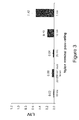
Figure 3 shows the results of retention tests at a constant flow rate of 5 mL/min using various microporous nylon media with different nominal pore rating values. -
Figure 4 shows the results of retention tests at a constant flow rate of 5 mL/min using various microporous high density polyethylene media with different nominal pore rating values. -
Figure 5 shows the results of retention tests at a constant pressure of 5 psi using various microporous nylon media with different nominal pore rating values. -
Figure 6 shows the results of retention tests at a constant pressure of 5 psi using various microporous polyaryl sulfone media with different nominal pore rating values. -
Figure 7 shows an illustrative dendrimer conjugate comprising a dendrimer particle (illustrated as having a diameter of 5.4 nm) conjugated to single-stranded DNA by a maleimide-thiol bond according to an embodiment of the present invention. -
Figure 8 shows the results of retention tests at a constant flow rate of 5 mL/min using another dendrimer conjugate chemistry and a microporous nylon medium. -
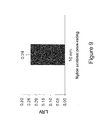
Figure 9 shows the result of a retention test at a constant flow rate of 5 mL/min using another sequence with a dendrimer and a microporous nylon medium. -
Figure 10 shows the results of retention tests at a constant flow rate of 5 mL/min using various microporous polyaryl sulfone media with different nominal pore rating values. -
Figure 11 shows the results of retention tests at a constant flow rate of 5 mL/min using various challenge concentrations of conjugates. -
Figure 12A, Figure 12B , and andFigure 12C show, respectively, a top view of a rotatable circular cartridge having a plurality of reaction chambers and a reservoir, wherein the reaction chambers are connected to the reservoir via channels, suitable for an exemplary PCR device that can be used for carrying out PCR cycles in accordance with embodiments of the invention; a cross-sectional side view of the cartridge arranged over a heating plate having a plurality of distinct zones that can be heated to different temperatures for carrying out PCR, and an illustrative heating plate having 4 distinct zones that can be heated to different temperatures for carrying out PCR. - In accordance with an embodiment of the present invention, a method for determining retention level and/or pore structure of a membrane is provided, the method comprising (a) passing a challenge solution comprising single-stranded DNA conjugated to dendrimers (dendrimer conjugates), through a microporous membrane, to provide a permeate solution comprising the dendrimer conjugates; (b) obtaining equal volumes of: (i) the challenge solution comprising dendrimer conjugates; and, (ii) the permeate solution comprising dendrimer conjugates; (c) combining (i) with PCR reagents to provide a challenge solution/PCR mix, and combining (ii) with PCR reagents to provide a permeate solution/PCR mix; (d) performing a plurality of PCR cycles using each of the challenge solution/PCR mix, and the permeate solution/PCR mix, to amplify the single-stranded DNA; (e) measuring single-stranded DNA concentration, which correlates to dendrimer conjugate concentration;
- (f) quantifying the dendrimer conjugate concentration in the challenge solution (quantCo); and quantifying the dendrimer conjugate concentration in the permeate solution (quantCp); and, (g) determining the retention level and/or pore structure of the membrane based on a comparison of the quantCp to the quantCo. In a preferred embodiment, the PCR cycles are qPCR cycles.
- Typically, determining the retention level and/or pore structure of the membrane based a comparison of the quantCp to the quantCo comparing log reduction values for quantCp and quantCo.
- In some embodiments of the method, the dendrimer conjugates have a 1:1 ratio of single-stranded DNA to dendrimer.
- If desired, embodiments of the method can comprise passing the challenge solution through the microporous membrane at a constant flow rate, or at a constant pressure.
- While embodiments of the method, particularly with respect to performing PCR amplification, can be performed using a variety of devices, illustratively, within a device comprising a rotatable circular cartridge having a plurality of reaction chambers, and a reservoir, the reaction chambers being connected to the reservoir via channels, wherein at least a portion of the reaction chambers comprise primers; and a heating plate having at least two distinct zones that can be heated to at least two different temperatures, equal volumes of the challenge solution comprising dendrimer conjugates, and of the permeate solution comprising dendrimer conjugates, can each be combined with PCR reagents to provide, respectively, a challenge solution/PCR mix, and a permeate solution/PCR mix; and a plurality of PCR cycles can be performed using each of the challenge solution/PCR mix, and the permeate solution/PCR mix, to amplify the single-stranded DNA, an embodiment of the method can comprise at least partially filling the reservoir with a fluid containing dendrimer conjugates and PCR reagents for carrying out an amplification reaction, with the exception of primers; distributing the fluid to the reaction chambers comprising the primers therein; and, rotating the rotatable circular cartridge to successively bring the contents of each reaction chamber to the at least two temperatures defined by the at least two distinct zones of the heating plate, wherein the single-stranded DNA is amplified.
- In some embodiments of the method, wherein the heating plate has at least three distinct zones that can be heated to at least three different temperatures, the method includes rotating the rotatable circular cartridge to successively bring the contents of each reaction chamber to the at least three temperatures defined by the at least three distinct zones of the heating plate.
- In accordance with another embodiment, a kit is provided, the kit comprising a solution comprising a plurality of dendrimers conjugated to single-stranded DNA; a rotatable circular cartridge having a plurality of reaction chambers (containing dried primers and, preferably, dried probes) and a reservoir, wherein the reaction chambers are connected to the reservoir via channels; and a qPCR master mixture. In one embodiment of the kit, the qPCR master mixture comprises reference dye, polymerase, MgCl2, and dNTPs.
- Advantageously, in contrast with other tests requiring high levels of particles in the challenge solution due to limited sensitivity of the instrumentation for detecting particles (e.g., for detecting gold, silica, and latex particles, including inductively coupled plasma mass spectrometry (ICP-MS) particle counter instrumentation), tests can now be carried out using more realistic low particle challenge concentrations, e.g., about 1,000 to about 10,000 particles/mL, and very tight pore structure high performance membranes can be tested to determine only the sieving-based retention performance.
- Dendrimers are repetitively branched molecules, typically highly symmetric spherical compounds, and can be considered to have three major portions: a core, an inner shell, and an outer shell. They can be classified by generation, which refers to the number of repeated branching cycles that are performed during its synthesis. Higher generation dendrimers also have more exposed functional groups on the surface. A variety of dendrimer particles are suitable for use in the invention, wherein the dendrimer can be, if desired, functionalized for conjugation to single-stranded DNA. Suitable functionalities include, for example, amino, hydroxyl, and/or succinamic acid functionality. Suitable dendrimers include, for example, commercially available dendrimers. In one embodiment, the dendrimer comprises a polyamidoamine (PAMAM) dendrimer, such as a 5th generation PAMAM dendrimer.
-
Figure 1 illustrates a PAMAM dendrimer reacted with a carboxylic terminated single-stranded DNA sequence to immobilize the DNA on an amino functionalized dendrimer by a covalent amide bond. - The dendrimer particles can have any suitable diameter, typically, at least about 2 nm in diameter, though smaller diameter particles, preferably if available in monodisperse size diameter, can be used.
- In accordance with embodiments of the invention, the single-stranded DNA is not limited to any particular sequence, or any particular number of bases. However, the sequence should be selected such that it is unlikely to be naturally present in the challenge solution, and typically, the single-stranded DNA is at least about 50 bases in length (e.g., for efficiency in amplification by qPCR).
- The ratio of DNA to dendrimer should be such that it does not significantly change the size of the conjugate. Preferably, the ratio of DNA to dendrimer is 1:1, e.g., such that the PCR measured DNA concentration is directly correlatable to the concentration of dendrimer particles. However, ratios such as 10:1, or even higher, can also be used.
- The presence of free-DNA (referred to below as "the free-DNA concentration") can affect the sensitivity of the method. For example, if a log removal value (LRV) of 4 or more is desired, it may be preferable to have a free-DNA concentration at a level of <0.001%; for a desired LRV of about 3, a free-DNA concentration at a level of about 0.01 %; for desired LRV of about 2, a free-DNA concentration at a level of about 0.1 %; and desired LRV of about 1, a free-DNA concentration at a level of about 1%.
- Embodiments of the invention are especially suitable for use with aqueous solutions.
- The membranes to be analyzed can have any retention level, e.g., a log removal rating (LRV) or a pore structure, e.g., a pore size (for example, as evidenced by bubble point, or by KL as described in, for example,
U.S. Patent 4,340,479 , or evidenced by capillary condensation flow porometry), a mean flow pore (MFP) size (e.g., when characterized using a porometer, for example, a Porvair Porometer (Porvair plc, Norfolk, UK), or a porometer available under the trademark POROLUX (Belgium)), a pore rating, a pore diameter (e.g., when characterized using the modified OSU F2 test as described in, for example,U.S. Patent 4,925,572 ), or removal rating media. The pore structure used depends on the size of the particles to be utilized, the composition of the fluid to be treated, and the desired effluent level of the treated fluid. - Embodiments of the invention are suitable for analyzing hydrophobic membranes and hydrophilic membranes.
- A variety of membranes, especially polymeric membranes, are suitable for use in the invention, and are known in the art. Suitable polymers can include, for example, polyaromatics; sulfones (e.g., polysulfones, including aromatic polysulfones such as, for example, polyethersulfone (PES), polyether ether sulfone, bisphenol A polysulfone, polyarylsulfone (PAS), and polyphenylsulfone), polyamides, polyimides, polyvinylidene halides (including polyvinylidene fluoride (PVDF)), polyolefins, such as polypropylene and polymethylpentene, polyesters, polystyrenes, polycarbonates, polyacrylonitriles (including polyalkylacrylonitriles), cellulosic polymers (such as cellulose acetates and cellulose nitrates), fluoropolymers (such as, for example, polytetrafluoroethylene (PTFE)), and polyetherether ketone (PEEK). The polymeric membranes can include a mixture of polymers, e.g., a hydrophobic polymer (e.g., a sulfone polymer) and a hydrophilic polymer (e.g., polyvinylpyrrolidone).
- The membrane, which can be hydrophobic or hydrophilic, can have any critical wetting surface tension (CWST, as defined in, for example,
U.S. Patent 4,925,572 ), and as additionally disclosed in, for example,U.S. Patents 5,152,905 ,5,443,743 ,5,472,621 , and6,074,869 . - Amplifying the DNA using the polymerase chain reaction (PCR), preferably, quantitative PCR (qPCR), can be carried out using devices and methods as known in the art. Suitable devices include, but are not limited to those available from Thermo Fisher Scientific Inc. (Applied Biosystems® 7900HT, 7300, 7500, 7500 fast, StepOne™ and StepOnePlus, QuantStudio®); Roche (LightCycler® 480, 96, 1536, Carousel, and Nano systems); Qiagen (Rotor-Gene Q™ systems); and Bio-Rad (CFX™ and Chromo™ systems).
- One preferred device for carrying out PCR is described in
U.S. Patent 6,821,771 (that includes a rotatable circular cartridge having a plurality of reaction chambers, and a reservoir, the reaction chambers being connected to the reservoir via channels, and a heating plate having at least two, preferably, at least three, distinct zones that can be heated to at least two different temperatures), using, for example, GENEDISC plates available from Pall Corporation, Port Washington, NY, USA.Figures 12A, 12B, and 12C show, respectively, a top view of a rotatablecircular cartridge 100 having a plurality ofreaction chambers 25 and areservoir 10, wherein the reaction chambers are connected to the reservoir viachannels 15, suitable for an exemplary PCR device that can be used for carrying out PCR cycles in accordance with embodiments of the invention; a cross-sectional side view of thecartridge 100 arranged over aheating plate 50 having a plurality of distinct zones (50A, 50B, 50C, 50D) that can be heated to different temperatures for carrying out PCR, and anillustrative heating plate 50 having 4 distinct zones (50A, 50B, 50C, 50D) that can be heated to different temperatures for carrying out PCR.Figure 12B also shows adetector 500, preferably a fluorescence detector, for detecting a signal (preferably a fluorescing dye) in the reaction chamber during PCR. - Illustratively, within a device comprising a rotatable circular cartridge having a plurality of reaction chambers, and a reservoir, the reaction chambers being connected to the reservoir via channels, wherein at least a portion of the reaction chambers comprise primers (preferably, the reaction chambers also comprise probes); and a heating plate having a plurality of distinct zones that can be heated to a plurality of different temperatures, equal volumes of the challenge solution comprising dendrimer conjugates, and of the permeate solution comprising dendrimer conjugates, can each be combined with PCR reagents to provide, respectively, a challenge solution/PCR mix, and a permeate solution/PCR mix; and a plurality of PCR cycles can be performed using each of the challenge solution/PCR mix, and the permeate solution/PCR mix, to amplify the single-stranded DNA, an embodiment of the method can comprise at least partially filling the reservoir with a fluid containing dendrimer conjugates and PCR reagents for carrying out an amplification reaction, with the exception of primers; distributing the fluid to the reaction chambers comprising the primers therein; and, rotating the rotatable circular cartridge to successively bring the contents of each reaction chamber to the different temperatures defined by the distinct zones of the heating plate, wherein the single-stranded DNA is amplified.
- In some embodiments of the method, wherein the heating plate has at least three distinct zones that can be heated to at least three different temperatures, the method includes rotating the rotatable circular cartridge to successively bring the contents of each reaction chamber to the at least three temperatures defined by the at least three distinct zones of the heating plate.
- The following examples further illustrate the invention but, of course, should not be construed as in any way limiting its scope.
- This example demonstrates determining the retention level of various microporous hydrophilic nylon membranes when tested at a constant flow rate.
-
Figure 2 shows a general diagrammatic overview of the method carried out in this Example. - Commercially available
monodispersed size 5th generation polyamidoamine (PAMAM) dendrimer particles with diameters of 5.4 nm (Sigma-Aldrich Chemicals) are activated with n-hydroxysuccinimide to produce ester groups on the dendrimer surface. The activated dendrimer is reacted with a carboxylic terminated 66 base long single-stranded DNA sequence (from 5' to 3') CTTGCAAATCGTTCTTTGGGTCCTCTTGCGACCCTGGGAGTGAGTGAGCTTGTATGGTT GACGCCGGATT (SEQ ID:1) to immobilize the DNA on the dendrimer with a 1:1 ratio by covalent amide bond. At pH 7.0, amine groups on the dendrimer are protonated as NH3+ and are about twice the amount of negatively charged phosphate groups on DNA, thus making the dendrimer conjugate positively charged. Movement of the dendrimer conjugate at neutral pH only from the positive side to the negative side of the electrode during polyacrylamide gel electrophoresis confirms the 1:1 ratio of DNA to dendrimer. - Free-DNA is removed by dialyzing the conjugate solution twice at pH 10.2 using a 100 KDa cutoff membrane.
- DNA-dendrimer conjugate stock is spiked in 1 mM CAPS buffer (pH 10.5) to prepare a working challenge solution with a conjugate concentration of 1x10⁸ particle/mL.
- A 47 mm microporous nylon filter disc is wetted with 1 mM CAPS (pH 10.5) buffer, the filter disc is placed in a filter holder, a pressure syringe is filled with an appropriate volume of working challenge solution, and tubing is attached to the syringe with a pressure vessel connected through an air valve.
- The challenge test is initiated by regulating the pressure to maintain a constant flow rate of 5 mL/min, and multiple permeate fractions each with 10 mL volumes are collected.
- 5 different nylon filter discs with different pore rating values are tested: 40 nm, 20+250 nm (dual layer), 20 nm, 10 nm, and 5 nm.
- DNA standards ranging from 1x10¹¹ copy/mL to 1x10³ copy/mL are prepared by serially diluting DNA (the same DNA sequence as attached to dendrimer) in ultrapure water. The appropriate volume of qPCR reaction mixture (containing master mix (the master mix including a reference dye, polymerase, MgCl2, and dNTPs), primers, and ultrapure water) according to the number of samples, standards, and negative controls is also prepared. 5 µL of working challenge solution and permeate fractions (using the second permeate fraction to avoid any buffer dilution effect on the first permeate fraction) are each added in separate 20 µL qPCR mixtures, and placed in specific wells in a 96 well plate. 5 µL of ultrapure water is added to the negative control wells.
- The following sequences are used for carrying out qPCR:
- Forward primer: CTTGCAAATCGTTCTTTGGG (SEQ ID:2);
- Reverse primer: AATCCGGCGTCAACCATAC (SEQ ID:3);
- and Probe: CCTCTTGCGACCCTGGGAGTGAGCT (SEQ ID:4),
- wherein the fluorescent dye fluorescein (FAM6) is attached to the 5' end of the probe, and the quencher black hole quencher-1 (BHQ1) is attached to the 3' end of the probe.
- The 96 well plate is placed in an qPCR machine (7500 Fast Real-Time PCR System; Applied Biosystems, Carlsbad, CA) and 40 cycles of qPCR are performed (95 °C for 15 seconds and 60 °C for 60 seconds), and a fluorescence curve is generated from each well with a specific threshold cycle.
- The software matches the threshold cycles of a known DNA standard with the threshold cycles of working challenge and permeate solutions to calculate dendrimer conjugate concentration in those solutions (as the 1:1 ratio of DNA to dendrimer allows the qPCR measured DNA concentration to be directly correlated to the concentration of dendrimer particles). The data is analyzed to quantify conjugate concentration in challenge solution and permeate fractions and calculate media performance.
- The membrane performance is calculated by taking an inverse log of the concentration of dendrimer conjugate in the permeate to the concentration of dendrimer conjugate in the working challenge solutions.
- As shown in
Figure 3 , the respective mean log removal values (LRVs) of the 40 nm, 20+250 nm (dual layer), 20 nm, 10 nm, and 5 nm media are 0.02±0.01, 0.06±0.02, 0.04±0.01, 0.19±0.01, and 0.52±0.10. - The higher than 95% passage of conjugates through larger pore-rated nylon media (e.g., 40 nm, 250+20 nm, 20 nm) suggests that conjugates do not adsorb or stick to the media. Accordingly, the retention values for the finer pore-rated nylon media (e.g., 10 nm and 5 nm) are significantly due to a sieving effect. The results also indicate that the conjugate test at a constant flow rate is able to discriminate between different fine pore-rated nylon media.
- This example demonstrates determining the retention level of a microporous hydrophobic high density polyethylene (HDPE) membrane when tested at a constant flow rate.
- Dendrimer conjugates are prepared as described in Example 1.
- DNA-dendrimer conjugate stock is spiked in 1 mM CAPS buffer (pH 10.5) containing 0.03% Tween-20 (a surfactant) to prepare a working challenge solution with a conjugate concentration of 1x10⁸ particle/mL.
- A 47 mm microporous HDPE filter disc is wetted with isopropyl alcohol (IPA), placed in a filter holder, and 150 mL of IPA is passed through the disc at 50 psi to prime the disc, followed by 500 mL of deionized (DI) water to wash the disc.
- 20 mL of 1 mM CAPS buffer (pH 10.5) containing 0.03% Tween-20 is passed through the disc.
- A pressure syringe is filled with an appropriate volume of working challenge solution, and tubing is attached to the syringe with a pressure vessel connected through an air valve.
- The challenge test is initiated by regulating the pressure to maintain a constant flow rate of 5 mL/min, and multiple permeate fractions each with 10 mL volumes are collected.
- 4 different HDPE filter discs with different pore rating values are tested: 30 nm, 10 nm, 5 nm, and 2 nm.
- 5 µL of working challenge solution and permeate fractions (using the third permeate fraction to avoid any buffer dilution effect on the first or second permeate fractions) are each added in separate 20 µL qPCR mixtures, and placed in specific wells in a 96 well plate. 5 µL of ultrapure water is added to the negative control wells.
- qPCR is carried out, and membrane performance is calculated as described in Example 1.
- As shown in
Figure 4 , the respective mean LRVs of the 30 nm, 10 nm, 5 nm, and 2 nm media is 0.01±0.001, 0.05±0.03, 0.14±0.04, and 0.40±0.15. - The higher than 95% passage of conjugates through the larger pore-rated HDPE (e.g., 30 nm) suggests that conjugates do not adsorb or stick to HDPE media. Accordingly, the retention values for the finer pore-rated HDPE (e.g., 10 nm, 5 nm, and 2 nm) are significantly due to a sieving effect. The results also indicate that the conjugate test at a constant flow rate is able to discriminate between different fine pore-rated HDPE media.
- This example demonstrates determining the retention level of a microporous hydrophilic nylon membrane when tested at a constant pressure.
- Microporous nylon membranes are tested as generally described in Example 1, except that the challenge test is initiated by maintaining the regulator at a fixed pressure of 5 psi, providing a flow rate of 1 mL/min.
- As shown in
Figure 5 , the respective mean LRVs of the 40 nm, 10 nm, and 5 nm media are 0.04±0.02, 0.20±0.02, and 0.60±0.07. - The higher than 95% passage of conjugates through larger pore-rated nylon media (e.g., 40 nm) suggests that conjugates do not adsorb or stick to the media. Accordingly, the retention values for the finer pore-rated nylon media (e.g., 10 nm and 5 nm) are significantly due to a sieving effect. The results also indicate that the conjugate test at a constant pressure is able to discriminate between different fine pore-rated nylon media.
- This example demonstrates determining the retention level of a microporous polyaryl sulfone (PAS) membrane when tested at a constant pressure.
- A PAS membrane is tested as generally described in Example 3. 2 different PAS filter discs with different pore rating values are tested: 30 nm and 10 nm.
- As shown in
Figure 6 , the respective mean LRVs of the 30 nm and 10 nm media are 0.06±0.03 and 0.72±0.09. - The higher than 95% passage of conjugates through the larger pore-rated PAS medium (30 nm) suggests that conjugates do not adsorb or stick to the media. Accordingly, the retention value for the finer pore-rated medium (10 nm) is significantly due to a sieving effect. The results also indicate that the conjugate test at a constant pressure is able to discriminate between different pore-rated media.
- This example demonstrates another carboxylic functionalized PAMAM dendrimer can be used in embodiments of the invention.
- Commercially available
monodispersed size 5th generation polyamidoamine (PAMAM) dendrimer particles with diameters of 5.4 nm (Sigma-Aldrich Chemicals) are activated with a heterobifunctional crosslinker containing amine-reactive succinimidyl ester (i.e., NHS ester) at one end and a sulfhydryl-reactive group (e.g., maleimide) on the other end. A sulfhydryl-terminated oligo is covalently immobilized on the dendrimer in a 1:1 ratio via a maleimide-thiol bond, using SEQ ID:1 as described in Example 1. - Free-DNA is removed by dialyzing the conjugate solution twice at pH 10.2 using a 100 KDa cutoff membrane.
- The Example is carried out as generally described in Example 1, using a nominal 10 nm pore rated nylon membrane.
- As shown in
Figure 8 , the mean LRV is 0.20±0.02, confirming the 10 nm pore rating of the membrane. The result shows that retention value is only dependent on conjugate size and not on the nature of conjugate sequence, functionality, and type of DNA-dendrimer bond. - This example demonstrates that another single-stranded DNA sequence can be used in accordance with an embodiment of the invention.
- An activated dendrimer is prepared as described in Example 1, and reacted with the following carboxylic terminated long single-stranded DNA sequence (from 5' to 3') derived from the genome of a bacterium, Alicyclobacillus acidocaldarius: CTTGCTGGACAGTGACTGACTCCACGGCCGTAAACGATGAGTGCTAGGTGTGGAA ACCCAATAAGCAGTCCGGG (SEQ ID:5) to immobilize the DNA on the dendrimer with a 1: 1 ratio by covalent amide bond.
- The Example is carried out as generally described in Example 1, using a nominal 10 nm pore rated nylon membrane.
- The following sequences are used for carrying out qPCR:
- Forward primer: CTTGCTGGACAGTGACTGAC (SEQ ID:6);
- Reverse primer: CCCGGAGTGCTTATTGGGTTTCC (SEQ ID:7);
- and Probe: CCACGCCGTAAACGATGAGTGCTAGGTG (SEQ ID:8),
- wherein the fluorescent dye fluorescein (FAM6) is attached to the 5' end of the probe,
- and the quencher black hole quencher-1 (BHQ1) is attached to the 3' end of the probe.
- As shown in
Figure 9 , the mean LRV is 0.24±0.01, confirming the 10 nm pore rating of the membrane. The result shows that retention value is only dependent on conjugate size and not on the nature of conjugate sequence, functionality, and type of DNA-dendrimer bond. This is also reinforced by the similar results, referring to 10 nm pore rated nylon membranes, as shown inFigures 3 and8 . - This example demonstrates determining the retention level of various microporous polyaryl sulfone (PAS) membranes when tested at a constant flow rate.
- PAS membranes are tested as generally described in Example 1. 2 different PAS filter discs with different pore rating values are tested: 30 nm and 10 nm.
- As shown in
Figure 10 , the respective mean LRVs of the 30 nm and 10 nm media are 0.05±0.01 and 0.22±0.01. - The higher than 95% passage of conjugates through the larger pore-rated PAS medium (30 nm) suggests that conjugates do not adsorb or stick to the media. Accordingly, the retention value for the finer pore-rated medium (10 nm) is significantly due to a sieving effect. The results also indicate that the conjugate test at a constant pressure is able to discriminate between different pore-rated media.
- This example demonstrates that a variety of dendrimer conjugate concentrations can be used to analyze membranes in embodiments of the invention, and that the test represents sieving performance.
- An activated dendrimer is prepared and reacted with a carboxylic terminated long single-stranded DNA sequence as generally described in Example 1.
- 5 different DNA-dendrimer conjugate challenge concentrations are prepared, and the Example is generally carried out at a constant flow rate of 5 mL/min as generally described in Example 1, using a nominal 10 nm pore rated nylon membrane. The challenge concentrations are 2×10⁴ particle/mL, 2×10⁵ particle/mL, 2×10⁶ particle/mL, 2×10⁷ particle/mL, and 2×10⁸ particle/mL.
- As shown in
Figure 11 , the LRVs for 2×10⁴ particle/mL, 2×10⁵ particle/mL, 2×10⁶ particle/mL, 2×10⁷ particle/mL, and 2×10⁸ particle/mL challenge concentration are respectively, 0.18, 0.15, 0.14, 0.15, and 0.18. - The results confirm the 10 nm pore rating of the membrane, and show that the test is independent of particle challenge concentration, representing true sieving performance of the media. Additionally, quantification of such a low conjugate concentration is only possible by qPCR.
- All references, including publications, patent applications, and patents, cited herein are hereby incorporated by reference to the same extent as if each reference were individually and specifically indicated to be incorporated by reference and were set forth in its entirety herein.
- The use of the terms "a" and "an" and "the" and "at least one" and similar referents in the context of describing the invention (especially in the context of the following claims) are to be construed to cover both the singular and the plural, unless otherwise indicated herein or clearly contradicted by context. The use of the term "at least one" followed by a list of one or more items (for example, "at least one of A and B") is to be construed to mean one item selected from the listed items (A or B) or any combination of two or more of the listed items (A and B), unless otherwise indicated herein or clearly contradicted by context. The terms "comprising," "having," "including," and "containing" are to be construed as open-ended terms (i.e., meaning "including, but not limited to,") unless otherwise noted. Recitation of ranges of values herein are merely intended to serve as a shorthand method of referring individually to each separate value falling within the range, unless otherwise indicated herein, and each separate value is incorporated into the specification as if it were individually recited herein. All methods described herein can be performed in any suitable order unless otherwise indicated herein or otherwise clearly contradicted by context. The use of any and all examples, or exemplary language (e.g., "such as") provided herein, is intended merely to better illuminate the invention and does not pose a limitation on the scope of the invention unless otherwise claimed. No language in the specification should be construed as indicating any non-claimed element as essential to the practice of the invention.
- Preferred embodiments of this invention are described herein, including the best mode known to the inventors for carrying out the invention. Variations of those preferred embodiments may become apparent to those of ordinary skill in the art upon reading the foregoing description. The inventors expect skilled artisans to employ such variations as appropriate, and the inventors intend for the invention to be practiced otherwise than as specifically described herein. Accordingly, this invention includes all modifications and equivalents of the subject matter recited in the claims appended hereto as permitted by applicable law. Moreover, any combination of the above-described elements in all possible variations thereof is encompassed by the invention unless otherwise indicated herein or otherwise clearly contradicted by context.


Claims (11)
- A method for determining retention level and/or pore structure of a membrane, the method comprising:(a) passing a challenge solution comprising single-stranded DNA conjugated to dendrimers (dendrimer conjugates), through a microporous membrane, to provide a permeate solution comprising the dendrimer conjugates;(b) obtaining equal volumes of:(i) the challenge solution comprising dendrimer conjugates; and,(ii) the permeate solution comprising dendrimer conjugates;(c) combining (i) with PCR reagents to provide a challenge solution/PCR mix, and combining (ii) with PCR reagents to provide a permeate solution/PCR mix;(d) performing a plurality of PCR cycles using each of the challenge solution/PCR mix, and the permeate solution/PCR mix, to amplify the single-stranded DNA;(e) measuring single-stranded DNA concentration, which correlates to dendrimer conjugate concentration;(f) quantifying the dendrimer conjugate concentration in the challenge solution (quantCo);
and
quantifying the dendrimer conjugate concentration in the permeate solution (quantCp);
and,(g) determining the retention level and/or pore structure of the membrane based on a comparison of the quantCp to the quantCo. - The method of claim 1, wherein the PCR cycles are qPCR cycles.
- The method of claim 1 or 2, wherein (g) comprises comparing log reduction values for quantCp and quantCo.
- The method of any one of claims 1-3, wherein the dendrimer conjugates have a 1:1 ratio of single-stranded DNA to dendrimer.
- The method of any one of claims 1-4, comprising passing the challenge solution through the microporous membrane at a constant flow rate.
- The method of any one of claims 1-4, comprising passing the challenge solution through the microporous membrane at a constant pressure.
- The method of any one of claims 1-6, wherein (c) and (d) comprise using a device comprising a rotatable circular cartridge having a plurality of reaction chambers, and a reservoir, the reaction chambers being connected to the reservoir via channels, wherein at least a portion of the reaction chambers comprise primers; and a heating plate having at least two distinct zones that can be heated to at least two different temperatures, the method comprising:at least partially filling the reservoir with a fluid containing dendrimer conjugates and PCR reagents for carrying out an amplification reaction, with the exception of primers;distributing the fluid to the reaction chambers comprising the primers therein;and,
rotating the rotatable circular cartridge to successively bring the contents of each reaction chamber to the at least two temperatures defined by the at least two distinct zones of the heating plate, wherein the single-stranded DNA is amplified. - The method of claim 7, wherein the heating plate has at least three distinct zones that can be heated to at least three different temperatures, and the method includes rotating the rotatable circular cartridge to successively bring the contents of each reaction chamber to the at least three temperatures defined by the at least three distinct zones of the heating plate.
- The method of claim 7 or 8, wherein at least a portion of the reaction chambers comprise probes in addition to the primers.
- A kit for determining retention level and/or pore structure of a membrane comprising:a solution comprising a plurality of dendrimers conjugated to single-stranded DNA; a rotatable circular cartridge having a plurality of reaction chambers containing dried primers, and a reservoir, wherein the reaction chambers are connected to the reservoir via channels; and a qPCR master mixture.
- The kit of claim 10, wherein the reaction chambers container the dried primers and dried probes.
Applications Claiming Priority (1)
| Application Number | Priority Date | Filing Date | Title |
|---|---|---|---|
| US14/796,150 US9828626B2 (en) | 2015-07-10 | 2015-07-10 | Dendrimer conjugates for determining membrane retention level and/or pore structure |
Publications (2)
| Publication Number | Publication Date |
|---|---|
| EP3120920A1 true EP3120920A1 (en) | 2017-01-25 |
| EP3120920B1 EP3120920B1 (en) | 2019-04-17 |
Family
ID=56008465
Family Applications (1)
| Application Number | Title | Priority Date | Filing Date |
|---|---|---|---|
| EP16167110.2A Active EP3120920B1 (en) | 2015-07-10 | 2016-04-26 | Dendrimer conjugates for determining membrane retention level and/or pore structure |
Country Status (8)
| Country | Link |
|---|---|
| US (1) | US9828626B2 (en) |
| EP (1) | EP3120920B1 (en) |
| JP (1) | JP6159962B2 (en) |
| KR (1) | KR101824870B1 (en) |
| CN (1) | CN106337083B (en) |
| CA (1) | CA2927488C (en) |
| SG (1) | SG10201603298YA (en) |
| TW (1) | TWI620928B (en) |
Families Citing this family (5)
| Publication number | Priority date | Publication date | Assignee | Title |
|---|---|---|---|---|
| US10347894B2 (en) * | 2017-01-20 | 2019-07-09 | Tesla, Inc. | Energy storage system |
| AU2018269036B2 (en) * | 2017-05-19 | 2023-11-23 | Hach Company | Membrane integrity monitoring in water treatment |
| US12332152B2 (en) | 2020-06-24 | 2025-06-17 | B/E Aerospace, Inc. | Methods of obtaining a biological sample representative of a passenger cabin on an aircraft using an air cyclonic collector via a cabin exhaust valve |
| US20220155188A1 (en) * | 2020-11-16 | 2022-05-19 | Koninklijke Fabriek Inventum B.V. | Methods to obtain a biological sample representative of a passenger cabin on an aircraft automatically from the collector device |
| CN114166719B (en) * | 2021-11-27 | 2022-08-12 | 北京擎科生物科技有限公司 | Nucleic acid synthesis vector screening method and device |
Citations (8)
| Publication number | Priority date | Publication date | Assignee | Title |
|---|---|---|---|---|
| US4340479A (en) | 1978-05-15 | 1982-07-20 | Pall Corporation | Process for preparing hydrophilic polyamide membrane filter media and product |
| US4925572A (en) | 1987-10-20 | 1990-05-15 | Pall Corporation | Device and method for depletion of the leukocyte content of blood and blood components |
| US5152905A (en) | 1989-09-12 | 1992-10-06 | Pall Corporation | Method for processing blood for human transfusion |
| US5443743A (en) | 1991-09-11 | 1995-08-22 | Pall Corporation | Gas plasma treated porous medium and method of separation using same |
| US5472621A (en) | 1992-06-10 | 1995-12-05 | Pall Corporation | Method for treating transition zone material |
| US6074869A (en) | 1994-07-28 | 2000-06-13 | Pall Corporation | Fibrous web for processing a fluid |
| US6821771B2 (en) | 2000-07-28 | 2004-11-23 | Genesystems | Device for thermo-dependent chain reaction amplification of target nucleic acid sequences, measured in real-time |
| WO2007046095A2 (en) * | 2005-10-17 | 2007-04-26 | Yissum, Research Development Company Of The Hebrew University Of Jerusalem | Methods for testing the integrity of membranes and optically or electrochemically detectable nanoprobes thereof |
Family Cites Families (16)
| Publication number | Priority date | Publication date | Assignee | Title |
|---|---|---|---|---|
| US4713975A (en) | 1986-05-30 | 1987-12-22 | The Dow Chemical Company | Dense star polymers for calibrating/characterizing sub-micron apertures |
| US5282380A (en) | 1992-06-30 | 1994-02-01 | Millipore Corporation | Integrity test for membranes |
| US5912332A (en) | 1996-07-26 | 1999-06-15 | Hybridon, Inc. | Affinity-based purification of oligonucleotides using soluble multimeric oligonucleotides |
| US6365415B1 (en) | 2000-01-06 | 2002-04-02 | Motorola Inc. | Method for characterization and quality control of porous media |
| US20030143604A1 (en) | 2001-11-30 | 2003-07-31 | Storhoff James J. | Real-time monitoring of PCR amplification using nanoparticle probes |
| US7560024B2 (en) * | 2002-05-14 | 2009-07-14 | Millipore Corporation | Method and system for controlling pore size of microporous phase inversion membranes |
| JP4022128B2 (en) | 2002-11-08 | 2007-12-12 | 株式会社東洋精機製作所 | Gas permeability measuring method and apparatus |
| US7732216B2 (en) | 2005-12-06 | 2010-06-08 | Pall Corporation | System and method for testing chromatography media and devices |
| US7682789B2 (en) | 2007-05-04 | 2010-03-23 | Ventana Medical Systems, Inc. | Method for quantifying biomolecules conjugated to a nanoparticle |
| US8765369B2 (en) | 2007-07-13 | 2014-07-01 | National Research Council Of Canada | Ultrasensitive detection of target using target-ready particles |
| FR2940318B1 (en) | 2008-12-22 | 2011-05-13 | Centre Nat Rech Scient | NEW BIOTRACTORS AND THEIR USES FOR THE CONTROL OF FILTRATION FACILITIES |
| US20110206611A1 (en) | 2010-02-24 | 2011-08-25 | Genisphere, Llc | DNA Dendrimers as Thermal Ablation Devices |
| KR101210914B1 (en) | 2010-11-10 | 2012-12-11 | 한국과학기술연구원 | Method and apparatus for quantitative analysis the extent of membrane fouling by using fluorescence protein structures |
| DE102012001591B4 (en) | 2012-01-27 | 2018-10-18 | Sartorius Stedim Biotech Gmbh | Method for detecting defects in an ultrafiltration membrane |
| US9651549B2 (en) | 2012-07-13 | 2017-05-16 | Genisphere, Llc | Lateral flow assays using DNA dendrimers |
| WO2014197455A1 (en) | 2013-06-03 | 2014-12-11 | University Of Florida Research Foundation, Incorporated | Devices and methods for isolating cells |
-
2015
- 2015-07-10 US US14/796,150 patent/US9828626B2/en active Active
-
2016
- 2016-04-20 JP JP2016084670A patent/JP6159962B2/en active Active
- 2016-04-21 CA CA2927488A patent/CA2927488C/en active Active
- 2016-04-26 TW TW105112888A patent/TWI620928B/en active
- 2016-04-26 EP EP16167110.2A patent/EP3120920B1/en active Active
- 2016-04-26 SG SG10201603298YA patent/SG10201603298YA/en unknown
- 2016-04-29 KR KR1020160053011A patent/KR101824870B1/en active Active
- 2016-04-29 CN CN201610282008.0A patent/CN106337083B/en active Active
Patent Citations (9)
| Publication number | Priority date | Publication date | Assignee | Title |
|---|---|---|---|---|
| US4340479A (en) | 1978-05-15 | 1982-07-20 | Pall Corporation | Process for preparing hydrophilic polyamide membrane filter media and product |
| US4340479B1 (en) | 1978-05-15 | 1996-08-27 | Pall Corp | Process for preparing hydrophilic polyamide membrane filter media and product |
| US4925572A (en) | 1987-10-20 | 1990-05-15 | Pall Corporation | Device and method for depletion of the leukocyte content of blood and blood components |
| US5152905A (en) | 1989-09-12 | 1992-10-06 | Pall Corporation | Method for processing blood for human transfusion |
| US5443743A (en) | 1991-09-11 | 1995-08-22 | Pall Corporation | Gas plasma treated porous medium and method of separation using same |
| US5472621A (en) | 1992-06-10 | 1995-12-05 | Pall Corporation | Method for treating transition zone material |
| US6074869A (en) | 1994-07-28 | 2000-06-13 | Pall Corporation | Fibrous web for processing a fluid |
| US6821771B2 (en) | 2000-07-28 | 2004-11-23 | Genesystems | Device for thermo-dependent chain reaction amplification of target nucleic acid sequences, measured in real-time |
| WO2007046095A2 (en) * | 2005-10-17 | 2007-04-26 | Yissum, Research Development Company Of The Hebrew University Of Jerusalem | Methods for testing the integrity of membranes and optically or electrochemically detectable nanoprobes thereof |
Non-Patent Citations (3)
| Title |
|---|
| ANNE-MARIE CAMINADE ET AL: "Dendrimers and DNA: Combinations of Two Special Topologies for Nanomaterials and Biology", CHEMISTRY - A EUROPEAN JOURNAL., vol. 14, no. 25, 28 August 2008 (2008-08-28), WEINHEIM, DE, pages 7422 - 7432, XP055329688, ISSN: 0947-6539, DOI: 10.1002/chem.200800584 * |
| HUAJIE LIU ET AL: "DNA-Templated Covalent Coupling of G4 PAMAM Dendrimers", JOURNAL OF THE AMERICAN CHEMICAL SOCIETY, vol. 132, no. 51, 29 December 2010 (2010-12-29), pages 18054 - 18056, XP055215706, ISSN: 0002-7863, DOI: 10.1021/ja109677n * |
| TAKEHITO MIZUNO ET AL: "A Novel Filter Rating Method Using Less Than 30-nm Gold Nanoparticle and Protective Ligand", IEEE TRANSACTIONS ON SEMICONDUCTOR MANUFACTURING, IEEE SERVICE CENTER, PISCATAWAY, NJ, US, vol. 22, no. 4, 1 November 2009 (2009-11-01), pages 452 - 461, XP011276349, ISSN: 0894-6507, DOI: 10.1109/TSM.2009.2031762 * |
Also Published As
| Publication number | Publication date |
|---|---|
| SG10201603298YA (en) | 2017-02-27 |
| CN106337083B (en) | 2019-11-01 |
| JP6159962B2 (en) | 2017-07-12 |
| TWI620928B (en) | 2018-04-11 |
| KR101824870B1 (en) | 2018-02-02 |
| CA2927488A1 (en) | 2017-01-10 |
| JP2017046683A (en) | 2017-03-09 |
| TW201727213A (en) | 2017-08-01 |
| CN106337083A (en) | 2017-01-18 |
| US20170009290A1 (en) | 2017-01-12 |
| EP3120920B1 (en) | 2019-04-17 |
| KR20170007097A (en) | 2017-01-18 |
| US9828626B2 (en) | 2017-11-28 |
| CA2927488C (en) | 2019-07-23 |
Similar Documents
| Publication | Publication Date | Title |
|---|---|---|
| EP3120920B1 (en) | Dendrimer conjugates for determining membrane retention level and/or pore structure | |
| Blundell et al. | Emergence of tunable resistive pulse sensing as a biosensor | |
| Shao et al. | Membrane fouling by the aggregations formed from oppositely charged organic foulants | |
| KR102184522B1 (en) | Devices, apparatus, kit and method for treating a biological sample | |
| US9873909B2 (en) | Methods and apparatus for sequential amplification reactions | |
| JP2006501805A (en) | Method and device for removing organic molecules | |
| JP2019525136A5 (en) | ||
| RU2010118611A (en) | MICROFLUID PLATFORMS FOR DETECTING MULTIPLE TARGETS | |
| CN114045328B (en) | Single cell analysis | |
| WO2016154302A1 (en) | Universal molecular processor for precision medicine | |
| KR20160052400A (en) | Microfluidic device for detection of target gene, method of preparing the same and detection method using the same | |
| ES2613740T3 (en) | Spatially functionalized non-homogeneous porous media and procedure for use in the selective removal of contaminants | |
| JPWO2018131064A1 (en) | Current measuring device and current measuring method using nanopore | |
| EP3434369A1 (en) | Microfluidic device for detecting target gene | |
| CN118355128A (en) | Method for capturing library DNA for sequencing | |
| JP2010538672A (en) | Method, apparatus and molecular biology kit for extracting amplified genetic material | |
| Min et al. | Functional integration of DNA purification and concentration into a real time micro-PCR chip | |
| Zhu et al. | Fucoidan-based antibody-free magnetic nanoparticle for on-site detection of waterborne SARS-CoV-2 | |
| CN103558202A (en) | Method for determining concentration of mercury ions in sample | |
| Sugawara et al. | Development of an aptamer-functionalized molecular recognition gating membrane targeting a specific protein on the basis of the aggregation phenomena of DNA–PNIPAM | |
| Shao et al. | Gas‐liquid displacement method for estimating membrane pore‐size distributions | |
| Yao et al. | An electrochemical sensor for phenylephrine based on molecular imprinting | |
| JP2007522807A (en) | Polyelectrolyte-coated size exclusion ion exchange particles | |
| JP2012513598A (en) | New biological tracer and its use in controlling filtration equipment | |
| US20150159224A1 (en) | Ultrasensitive detection and characterization of clustered kras mutations using peptide nucleic acid clamp pcr in drop-based microfluidics |
Legal Events
| Date | Code | Title | Description |
|---|---|---|---|
| PUAI | Public reference made under article 153(3) epc to a published international application that has entered the european phase |
Free format text: ORIGINAL CODE: 0009012 |
|
| STAA | Information on the status of an ep patent application or granted ep patent |
Free format text: STATUS: THE APPLICATION HAS BEEN PUBLISHED |
|
| AK | Designated contracting states |
Kind code of ref document: A1 Designated state(s): AL AT BE BG CH CY CZ DE DK EE ES FI FR GB GR HR HU IE IS IT LI LT LU LV MC MK MT NL NO PL PT RO RS SE SI SK SM TR |
|
| AX | Request for extension of the european patent |
Extension state: BA ME |
|
| STAA | Information on the status of an ep patent application or granted ep patent |
Free format text: STATUS: REQUEST FOR EXAMINATION WAS MADE |
|
| 17P | Request for examination filed |
Effective date: 20170717 |
|
| RBV | Designated contracting states (corrected) |
Designated state(s): AL AT BE BG CH CY CZ DE DK EE ES FI FR GB GR HR HU IE IS IT LI LT LU LV MC MK MT NL NO PL PT RO RS SE SI SK SM TR |
|
| GRAP | Despatch of communication of intention to grant a patent |
Free format text: ORIGINAL CODE: EPIDOSNIGR1 |
|
| STAA | Information on the status of an ep patent application or granted ep patent |
Free format text: STATUS: GRANT OF PATENT IS INTENDED |
|
| RIC1 | Information provided on ipc code assigned before grant |
Ipc: C12Q 1/68 20060101ALI20180718BHEP Ipc: B01D 65/10 20060101AFI20180718BHEP |
|
| INTG | Intention to grant announced |
Effective date: 20180815 |
|
| GRAS | Grant fee paid |
Free format text: ORIGINAL CODE: EPIDOSNIGR3 |
|
| GRAJ | Information related to disapproval of communication of intention to grant by the applicant or resumption of examination proceedings by the epo deleted |
Free format text: ORIGINAL CODE: EPIDOSDIGR1 |
|
| GRAL | Information related to payment of fee for publishing/printing deleted |
Free format text: ORIGINAL CODE: EPIDOSDIGR3 |
|
| STAA | Information on the status of an ep patent application or granted ep patent |
Free format text: STATUS: REQUEST FOR EXAMINATION WAS MADE |
|
| INTC | Intention to grant announced (deleted) | ||
| GRAR | Information related to intention to grant a patent recorded |
Free format text: ORIGINAL CODE: EPIDOSNIGR71 |
|
| STAA | Information on the status of an ep patent application or granted ep patent |
Free format text: STATUS: GRANT OF PATENT IS INTENDED |
|
| GRAA | (expected) grant |
Free format text: ORIGINAL CODE: 0009210 |
|
| STAA | Information on the status of an ep patent application or granted ep patent |
Free format text: STATUS: THE PATENT HAS BEEN GRANTED |
|
| INTG | Intention to grant announced |
Effective date: 20190307 |
|
| AK | Designated contracting states |
Kind code of ref document: B1 Designated state(s): AL AT BE BG CH CY CZ DE DK EE ES FI FR GB GR HR HU IE IS IT LI LT LU LV MC MK MT NL NO PL PT RO RS SE SI SK SM TR |
|
| REG | Reference to a national code |
Ref country code: GB Ref legal event code: FG4D |
|
| REG | Reference to a national code |
Ref country code: CH Ref legal event code: EP |
|
| REG | Reference to a national code |
Ref country code: DE Ref legal event code: R096 Ref document number: 602016012432 Country of ref document: DE |
|
| REG | Reference to a national code |
Ref country code: AT Ref legal event code: REF Ref document number: 1120942 Country of ref document: AT Kind code of ref document: T Effective date: 20190515 Ref country code: IE Ref legal event code: FG4D |
|
| REG | Reference to a national code |
Ref country code: NL Ref legal event code: MP Effective date: 20190417 |
|
| REG | Reference to a national code |
Ref country code: LT Ref legal event code: MG4D |
|
| PG25 | Lapsed in a contracting state [announced via postgrant information from national office to epo] |
Ref country code: NL Free format text: LAPSE BECAUSE OF FAILURE TO SUBMIT A TRANSLATION OF THE DESCRIPTION OR TO PAY THE FEE WITHIN THE PRESCRIBED TIME-LIMIT Effective date: 20190417 |
|
| PG25 | Lapsed in a contracting state [announced via postgrant information from national office to epo] |
Ref country code: NO Free format text: LAPSE BECAUSE OF FAILURE TO SUBMIT A TRANSLATION OF THE DESCRIPTION OR TO PAY THE FEE WITHIN THE PRESCRIBED TIME-LIMIT Effective date: 20190717 Ref country code: LT Free format text: LAPSE BECAUSE OF FAILURE TO SUBMIT A TRANSLATION OF THE DESCRIPTION OR TO PAY THE FEE WITHIN THE PRESCRIBED TIME-LIMIT Effective date: 20190417 Ref country code: ES Free format text: LAPSE BECAUSE OF FAILURE TO SUBMIT A TRANSLATION OF THE DESCRIPTION OR TO PAY THE FEE WITHIN THE PRESCRIBED TIME-LIMIT Effective date: 20190417 Ref country code: SE Free format text: LAPSE BECAUSE OF FAILURE TO SUBMIT A TRANSLATION OF THE DESCRIPTION OR TO PAY THE FEE WITHIN THE PRESCRIBED TIME-LIMIT Effective date: 20190417 Ref country code: HR Free format text: LAPSE BECAUSE OF FAILURE TO SUBMIT A TRANSLATION OF THE DESCRIPTION OR TO PAY THE FEE WITHIN THE PRESCRIBED TIME-LIMIT Effective date: 20190417 Ref country code: AL Free format text: LAPSE BECAUSE OF FAILURE TO SUBMIT A TRANSLATION OF THE DESCRIPTION OR TO PAY THE FEE WITHIN THE PRESCRIBED TIME-LIMIT Effective date: 20190417 Ref country code: PT Free format text: LAPSE BECAUSE OF FAILURE TO SUBMIT A TRANSLATION OF THE DESCRIPTION OR TO PAY THE FEE WITHIN THE PRESCRIBED TIME-LIMIT Effective date: 20190817 Ref country code: FI Free format text: LAPSE BECAUSE OF FAILURE TO SUBMIT A TRANSLATION OF THE DESCRIPTION OR TO PAY THE FEE WITHIN THE PRESCRIBED TIME-LIMIT Effective date: 20190417 |
|
| PG25 | Lapsed in a contracting state [announced via postgrant information from national office to epo] |
Ref country code: PL Free format text: LAPSE BECAUSE OF FAILURE TO SUBMIT A TRANSLATION OF THE DESCRIPTION OR TO PAY THE FEE WITHIN THE PRESCRIBED TIME-LIMIT Effective date: 20190417 Ref country code: LV Free format text: LAPSE BECAUSE OF FAILURE TO SUBMIT A TRANSLATION OF THE DESCRIPTION OR TO PAY THE FEE WITHIN THE PRESCRIBED TIME-LIMIT Effective date: 20190417 Ref country code: GR Free format text: LAPSE BECAUSE OF FAILURE TO SUBMIT A TRANSLATION OF THE DESCRIPTION OR TO PAY THE FEE WITHIN THE PRESCRIBED TIME-LIMIT Effective date: 20190718 Ref country code: BG Free format text: LAPSE BECAUSE OF FAILURE TO SUBMIT A TRANSLATION OF THE DESCRIPTION OR TO PAY THE FEE WITHIN THE PRESCRIBED TIME-LIMIT Effective date: 20190717 Ref country code: RS Free format text: LAPSE BECAUSE OF FAILURE TO SUBMIT A TRANSLATION OF THE DESCRIPTION OR TO PAY THE FEE WITHIN THE PRESCRIBED TIME-LIMIT Effective date: 20190417 |
|
| REG | Reference to a national code |
Ref country code: CH Ref legal event code: PL |
|
| REG | Reference to a national code |
Ref country code: AT Ref legal event code: MK05 Ref document number: 1120942 Country of ref document: AT Kind code of ref document: T Effective date: 20190417 |
|
| REG | Reference to a national code |
Ref country code: BE Ref legal event code: MM Effective date: 20190430 |
|
| PG25 | Lapsed in a contracting state [announced via postgrant information from national office to epo] |
Ref country code: IS Free format text: LAPSE BECAUSE OF FAILURE TO SUBMIT A TRANSLATION OF THE DESCRIPTION OR TO PAY THE FEE WITHIN THE PRESCRIBED TIME-LIMIT Effective date: 20190817 Ref country code: LU Free format text: LAPSE BECAUSE OF NON-PAYMENT OF DUE FEES Effective date: 20190426 |
|
| REG | Reference to a national code |
Ref country code: DE Ref legal event code: R097 Ref document number: 602016012432 Country of ref document: DE |
|
| PG25 | Lapsed in a contracting state [announced via postgrant information from national office to epo] |
Ref country code: RO Free format text: LAPSE BECAUSE OF FAILURE TO SUBMIT A TRANSLATION OF THE DESCRIPTION OR TO PAY THE FEE WITHIN THE PRESCRIBED TIME-LIMIT Effective date: 20190417 Ref country code: CZ Free format text: LAPSE BECAUSE OF FAILURE TO SUBMIT A TRANSLATION OF THE DESCRIPTION OR TO PAY THE FEE WITHIN THE PRESCRIBED TIME-LIMIT Effective date: 20190417 Ref country code: CH Free format text: LAPSE BECAUSE OF NON-PAYMENT OF DUE FEES Effective date: 20190430 Ref country code: MC Free format text: LAPSE BECAUSE OF FAILURE TO SUBMIT A TRANSLATION OF THE DESCRIPTION OR TO PAY THE FEE WITHIN THE PRESCRIBED TIME-LIMIT Effective date: 20190417 Ref country code: SK Free format text: LAPSE BECAUSE OF FAILURE TO SUBMIT A TRANSLATION OF THE DESCRIPTION OR TO PAY THE FEE WITHIN THE PRESCRIBED TIME-LIMIT Effective date: 20190417 Ref country code: LI Free format text: LAPSE BECAUSE OF NON-PAYMENT OF DUE FEES Effective date: 20190430 Ref country code: DK Free format text: LAPSE BECAUSE OF FAILURE TO SUBMIT A TRANSLATION OF THE DESCRIPTION OR TO PAY THE FEE WITHIN THE PRESCRIBED TIME-LIMIT Effective date: 20190417 Ref country code: EE Free format text: LAPSE BECAUSE OF FAILURE TO SUBMIT A TRANSLATION OF THE DESCRIPTION OR TO PAY THE FEE WITHIN THE PRESCRIBED TIME-LIMIT Effective date: 20190417 Ref country code: AT Free format text: LAPSE BECAUSE OF FAILURE TO SUBMIT A TRANSLATION OF THE DESCRIPTION OR TO PAY THE FEE WITHIN THE PRESCRIBED TIME-LIMIT Effective date: 20190417 |
|
| PLBE | No opposition filed within time limit |
Free format text: ORIGINAL CODE: 0009261 |
|
| STAA | Information on the status of an ep patent application or granted ep patent |
Free format text: STATUS: NO OPPOSITION FILED WITHIN TIME LIMIT |
|
| PG25 | Lapsed in a contracting state [announced via postgrant information from national office to epo] |
Ref country code: BE Free format text: LAPSE BECAUSE OF NON-PAYMENT OF DUE FEES Effective date: 20190430 Ref country code: SM Free format text: LAPSE BECAUSE OF FAILURE TO SUBMIT A TRANSLATION OF THE DESCRIPTION OR TO PAY THE FEE WITHIN THE PRESCRIBED TIME-LIMIT Effective date: 20190417 |
|
| 26N | No opposition filed |
Effective date: 20200120 |
|
| PG25 | Lapsed in a contracting state [announced via postgrant information from national office to epo] |
Ref country code: TR Free format text: LAPSE BECAUSE OF FAILURE TO SUBMIT A TRANSLATION OF THE DESCRIPTION OR TO PAY THE FEE WITHIN THE PRESCRIBED TIME-LIMIT Effective date: 20190417 |
|
| PG25 | Lapsed in a contracting state [announced via postgrant information from national office to epo] |
Ref country code: IE Free format text: LAPSE BECAUSE OF NON-PAYMENT OF DUE FEES Effective date: 20190426 |
|
| PG25 | Lapsed in a contracting state [announced via postgrant information from national office to epo] |
Ref country code: SI Free format text: LAPSE BECAUSE OF FAILURE TO SUBMIT A TRANSLATION OF THE DESCRIPTION OR TO PAY THE FEE WITHIN THE PRESCRIBED TIME-LIMIT Effective date: 20190417 |
|
| PG25 | Lapsed in a contracting state [announced via postgrant information from national office to epo] |
Ref country code: CY Free format text: LAPSE BECAUSE OF FAILURE TO SUBMIT A TRANSLATION OF THE DESCRIPTION OR TO PAY THE FEE WITHIN THE PRESCRIBED TIME-LIMIT Effective date: 20190417 |
|
| PG25 | Lapsed in a contracting state [announced via postgrant information from national office to epo] |
Ref country code: HU Free format text: LAPSE BECAUSE OF FAILURE TO SUBMIT A TRANSLATION OF THE DESCRIPTION OR TO PAY THE FEE WITHIN THE PRESCRIBED TIME-LIMIT; INVALID AB INITIO Effective date: 20160426 Ref country code: MT Free format text: LAPSE BECAUSE OF FAILURE TO SUBMIT A TRANSLATION OF THE DESCRIPTION OR TO PAY THE FEE WITHIN THE PRESCRIBED TIME-LIMIT Effective date: 20190417 |
|
| PG25 | Lapsed in a contracting state [announced via postgrant information from national office to epo] |
Ref country code: MK Free format text: LAPSE BECAUSE OF FAILURE TO SUBMIT A TRANSLATION OF THE DESCRIPTION OR TO PAY THE FEE WITHIN THE PRESCRIBED TIME-LIMIT Effective date: 20190417 |
|
| P01 | Opt-out of the competence of the unified patent court (upc) registered |
Effective date: 20230530 |
|
| PGFP | Annual fee paid to national office [announced via postgrant information from national office to epo] |
Ref country code: DE Payment date: 20250428 Year of fee payment: 10 |
|
| PGFP | Annual fee paid to national office [announced via postgrant information from national office to epo] |
Ref country code: GB Payment date: 20250422 Year of fee payment: 10 |
|
| PGFP | Annual fee paid to national office [announced via postgrant information from national office to epo] |
Ref country code: IT Payment date: 20250422 Year of fee payment: 10 |
|
| PGFP | Annual fee paid to national office [announced via postgrant information from national office to epo] |
Ref country code: FR Payment date: 20250424 Year of fee payment: 10 |