EP3120140B1 - Method and apparatus for the equilibration of a packed chromatography column - Google Patents
Method and apparatus for the equilibration of a packed chromatography column Download PDFInfo
- Publication number
- EP3120140B1 EP3120140B1 EP15717816.1A EP15717816A EP3120140B1 EP 3120140 B1 EP3120140 B1 EP 3120140B1 EP 15717816 A EP15717816 A EP 15717816A EP 3120140 B1 EP3120140 B1 EP 3120140B1
- Authority
- EP
- European Patent Office
- Prior art keywords
- equilibration
- column
- flow rate
- bar
- zip
- Prior art date
- Legal status (The legal status is an assumption and is not a legal conclusion. Google has not performed a legal analysis and makes no representation as to the accuracy of the status listed.)
- Active
Links
Images
Classifications
-
- B—PERFORMING OPERATIONS; TRANSPORTING
- B01—PHYSICAL OR CHEMICAL PROCESSES OR APPARATUS IN GENERAL
- B01D—SEPARATION
- B01D15/00—Separating processes involving the treatment of liquids with solid sorbents; Apparatus therefor
- B01D15/08—Selective adsorption, e.g. chromatography
- B01D15/10—Selective adsorption, e.g. chromatography characterised by constructional or operational features
- B01D15/20—Selective adsorption, e.g. chromatography characterised by constructional or operational features relating to the conditioning of the sorbent material
- B01D15/203—Equilibration or regeneration
-
- B—PERFORMING OPERATIONS; TRANSPORTING
- B01—PHYSICAL OR CHEMICAL PROCESSES OR APPARATUS IN GENERAL
- B01D—SEPARATION
- B01D15/00—Separating processes involving the treatment of liquids with solid sorbents; Apparatus therefor
- B01D15/08—Selective adsorption, e.g. chromatography
- B01D15/10—Selective adsorption, e.g. chromatography characterised by constructional or operational features
- B01D15/16—Selective adsorption, e.g. chromatography characterised by constructional or operational features relating to the conditioning of the fluid carrier
- B01D15/163—Pressure or speed conditioning
- B01D15/165—Flash chromatography
-
- B—PERFORMING OPERATIONS; TRANSPORTING
- B01—PHYSICAL OR CHEMICAL PROCESSES OR APPARATUS IN GENERAL
- B01D—SEPARATION
- B01D15/00—Separating processes involving the treatment of liquids with solid sorbents; Apparatus therefor
- B01D15/08—Selective adsorption, e.g. chromatography
- B01D15/10—Selective adsorption, e.g. chromatography characterised by constructional or operational features
- B01D15/16—Selective adsorption, e.g. chromatography characterised by constructional or operational features relating to the conditioning of the fluid carrier
- B01D15/166—Fluid composition conditioning, e.g. gradient
-
- G—PHYSICS
- G01—MEASURING; TESTING
- G01N—INVESTIGATING OR ANALYSING MATERIALS BY DETERMINING THEIR CHEMICAL OR PHYSICAL PROPERTIES
- G01N30/00—Investigating or analysing materials by separation into components using adsorption, absorption or similar phenomena or using ion-exchange, e.g. chromatography or field flow fractionation
- G01N30/02—Column chromatography
- G01N30/26—Conditioning of the fluid carrier; Flow patterns
- G01N30/28—Control of physical parameters of the fluid carrier
- G01N30/34—Control of physical parameters of the fluid carrier of fluid composition, e.g. gradient
-
- G—PHYSICS
- G01—MEASURING; TESTING
- G01N—INVESTIGATING OR ANALYSING MATERIALS BY DETERMINING THEIR CHEMICAL OR PHYSICAL PROPERTIES
- G01N30/00—Investigating or analysing materials by separation into components using adsorption, absorption or similar phenomena or using ion-exchange, e.g. chromatography or field flow fractionation
- G01N30/02—Column chromatography
- G01N30/26—Conditioning of the fluid carrier; Flow patterns
- G01N30/28—Control of physical parameters of the fluid carrier
- G01N30/36—Control of physical parameters of the fluid carrier in high pressure liquid systems
-
- G—PHYSICS
- G01—MEASURING; TESTING
- G01N—INVESTIGATING OR ANALYSING MATERIALS BY DETERMINING THEIR CHEMICAL OR PHYSICAL PROPERTIES
- G01N30/00—Investigating or analysing materials by separation into components using adsorption, absorption or similar phenomena or using ion-exchange, e.g. chromatography or field flow fractionation
- G01N30/02—Column chromatography
- G01N30/50—Conditioning of the sorbent material or stationary liquid
- G01N30/52—Physical parameters
- G01N30/54—Temperature
-
- G—PHYSICS
- G01—MEASURING; TESTING
- G01N—INVESTIGATING OR ANALYSING MATERIALS BY DETERMINING THEIR CHEMICAL OR PHYSICAL PROPERTIES
- G01N30/00—Investigating or analysing materials by separation into components using adsorption, absorption or similar phenomena or using ion-exchange, e.g. chromatography or field flow fractionation
- G01N30/02—Column chromatography
- G01N30/62—Detectors specially adapted therefor
- G01N30/72—Mass spectrometers
- G01N30/7233—Mass spectrometers interfaced to liquid or supercritical fluid chromatograph
-
- G—PHYSICS
- G01—MEASURING; TESTING
- G01N—INVESTIGATING OR ANALYSING MATERIALS BY DETERMINING THEIR CHEMICAL OR PHYSICAL PROPERTIES
- G01N30/00—Investigating or analysing materials by separation into components using adsorption, absorption or similar phenomena or using ion-exchange, e.g. chromatography or field flow fractionation
- G01N30/02—Column chromatography
- G01N30/26—Conditioning of the fluid carrier; Flow patterns
- G01N30/28—Control of physical parameters of the fluid carrier
- G01N30/34—Control of physical parameters of the fluid carrier of fluid composition, e.g. gradient
- G01N2030/347—Control of physical parameters of the fluid carrier of fluid composition, e.g. gradient mixers
Definitions
- the present invention relates to liquid chromatography and more specifically to flash chromatography where high pressure is used to force a liquid through the chromatography column.
- High pressure chromatography is a well-known chromatography mode wherein a pressurized liquid is used to force a sample through a chromatography column packed with a suitable particle media, known as the stationary phase. Flash chromatography differs from preparative HPLC in that larger particles are used to enable fast applications, typical particle sizes being in the broad range of 20-60 um.
- the columns may be relatively simple tubes or syringes made from various materials, such as glass, quartz or stainless steel. Polymeric materials are becoming frequently used in pre-packed columns for construction of the columns or frits provided at each end to prevent the media from leaving.
- the equilibration step is advantageously performed as quickly as possible, e.g. by utilizing few column volumes of mobile phase and/or high flow rates.
- US 6,601,439 (“Method of reducing baseline instabilities in liquid chromatography measurements and liquid chromatography apparatus”) relates to high performance chromatography (HPLC) and problems associated by baseline variations, and specifically to instabilities in connection with amino functionalised stationary phases.
- HPLC high performance chromatography
- the '439 patent describes how baseline variations originating from variations in the adsorption of water to the stationary phase have been found to be related to temperature fluctuations. According to this patent, the problems are reduced by the coupling of an additional solid body or liquid bath having high heat capacity and heat conductance to the column to enclose the equipment.
- the present invention relates to the equilibration of chromatography columns, and specifically to problems arising when flow rates are increased. For example, it has been found that during the equilibration of porous particle packings exhibiting large available surface areas, the heat generated by the exothermic reactions involved in the equilibration may impair polyethylene frits of chromatography columns.
- the present inventors have found a way to manage and/or control the heat generated during the exothermic reactions commonly involved in the equilibration of the column packing, whereby high flow rates may be utilized without any negative impact on the packing or column integrity.
- the present invention relates to new findings that enable speeding up of a total sample processing time in e.g. in flash chromatography. This may be achieved by using a combination of solvents in a gradient equilibration step.
- the invention relates to a method of controlling the heat generated during the equilibration of a packed chromatography column according to claim 1.
- the packed chromatography column is a flash chromatography column.
- the method may advantageously be automated.
- a method for equilibrating a chromatography column comprising the steps of (i) providing a packed chromatography column; and (ii) passing a pressurized mobile phase through said column; wherein the mobile phase is obtained by combining at least two liquids, the proportions of which are varied as the mobile phase is passed through the column.
- the variation of said at least two liquids is achieved by combining an increasing proportion of one liquid and a decreasing proportion of another liquid to provide a linear gradient in the mobile phase as it passes the column.
- the present inventors have found that a linear gradient may be adjusted to maintain an acceptable heat generation even at the more preferred, higher flow rates which without the gradient would impair or even destroy or degrade elements of the hardware such as frits made from polymeric materials.
- Equipment and methodologies for providing gradients of mobile phases are commercially available for the elution step, and components such as reagent vessels, pumps and tubing can easily be set up and adjusted by the skilled person to provide an equilibration gradient according to the invention.
- the mobile phase may differ in composition depending on the target substance of the sample to be purified; the chromatography packing used; the mode of adsorption of target substance to the packing etc. and may include any multi-solvent system in which the various solvent components are miscible over at least the concentration ranges that will be used for the subsequent separation.
- the liquids used are solvents selected from the group consisting of methanol, ethanol, 2-propanol, acetonitrile, ethyl acetate, tetrahydrofuran, acetone, dichloromethane, chloroform, diethyl ether, toluene and hexane.
- the method according to the invention may be adapted to include more than two liquids. Regardless of how many liquids are incorporated into the mobile phase, the relative concentrations of the liquids used to form the mobile phase should be selected to ensure that the heat generated by the equilibration performed will not exceed a value where negative impact on the hardware used is reached.
- At least one of the liquids is an organic solvent, such as ethyl acetate and/or hexane.
- the equilibration is started with 0% of a first liquid, such as ethyl acetate, and 100% of a second liquid, such as hexane.
- the ethyl acetate proportion is then increased in the mobile phase with the corresponding decrease in the hexane proportion until a composition equivalent to the solvent composition of the sample to be run is reached.
- the increase may be stepped or linear, in an advantageous embodiment, the gradient is linear.
- the present invention enables utilizing flow rates during the equilibration which without the use of a gradient would damage packing and/or hardware due to the heat generation.
- the mobile phase is passed through the column at a flow rate of up to 200 ml/min, such as a flow rate in the range of 50-100 ml/min.
- the skilled person will easily be able to determine the highest possible flow rate, or optimal flow rate, by simple testing.
- the chromatography column according to the invention may be packed with any commonly used chromatography media, sometimes denoted adsorption material.
- a typical column for flash chromatography may be a cartridge having a diameter of about 1-20 cm.
- the column is packed with an inorganic media, such as silica, silica gel, alumina or diatomaceous earth.
- Silica packed cartridges e.g. for flash chromatography are commercially available e.g. from Biotage.
- the surface area of the packing available to the mobile phase is at least 500m 2 /g (dry weight).
- An example of a suitable packing is KP-Sil (Biotage), which is irregular silica with a standard surface area of 500 m 2 /g.
- the surface area available to the mobile phase is at least 700 m 2 /g, such as in the range of 700-800m 2 /g.
- An illustrative example of a chromatography media advantageously used with the method according to the invention is the packing of Biotage SNAP ULTRA flash cartridges. With a surface area of 700 m 2 /g.
- the column and other hardware used may be of any commonly used material, such as polymeric materials which present certain heat sensitivity if temperatures are raised beyond the standard values.
- the column and/or the column frits are made of polymeric material, such as polypropylene or polyethylene, wherein at least one element is made of a material having limited heat sensitivity.
- the column used is often a cartridge prepacked with silica particles, such as Biotage SNAP ULTRA.
- a method for controlling and/or avoiding excess of heat generated during the equilibration of a packed chromatography column.
- the size and material of the column as well as the particle size and available surface area of the packing are used as parameters to define a liquid gradient suitable for an intended equilibration.
- a flow rate is determined which enables the most efficient flow rates possible in an equilibration process without exceeding a predetermined temperature in packing and/or hardware.
- this aspect of the invention may be used to design the optimal or most suitable processing conditions that enable a fast equilibration and hence decrease the total processing time of a certain chromatography process.
- a computer program is provided which is capable of performing the method according to the invention.
- the disclosure provides a chromatography system comprising at least one packed chromatography column; vessels for samples and reagents; and tubing to pass one or more liquids between vessel(s) and column(s); which system is capable of controlling the heat generated by the exothermic reactions taking place during equilibration.
- the present system is advantageously used with a method according to the first aspect of the disclosure.
- the system further comprises equipment for analysis of one or more target substances separated from other components of a sample in the chromatography column, preferably equipment for mass detection (MS), such as a mass detector.
- MS mass detection
- the detector is an UV/VIS detector, a flame ionization detector, infrared detector or any other detector suitable to combine with flash chromatography.
- the system may advantageously be automated.
- the system is a flash chromatography system, which enables intelligent sampling by providing the mass detector with an appropriate amount of material from the flash run.
- the system automatically adjusts to changes in flash flow rate when different types or sizes of cartridges are used. Thanks to the optimized equilibration according to the invention, such a system provides a faster separation of samples for purification.
- the aim of the examples was to determine the feasibility of employing a gradient equilibration as a means of negating the effect of 'heat of hydration' when equilibrating SNAP ultra columns in 10g to 340g and ZIP Sphere columns in the 5g-120g format range when using isocratic mobile phases containing 30% and 50% Ethyl Acetate at high flow rates (greater than default).
- Flow rate table update ZIP, SNAP, ZIP Sphere, SNAP Ultra, all available standard sizes. Based on unmodified default equilibration guidelines and 340g sizes, using standard Ethyl Acetate concentration of 7%.
- the gradient equilibration development according to the invention was based on some precursory evaluations that indicated the use of gradients to eliminate the intense heat of hydration experienced with all formats utilising high ethyl acetate concentrations at high flow rates.
- the table also compares the time taken to condition the same formats with a lower % of ethyl acetate (7%) using the default flow rates for the formats using the Biotage Isolera system.
- the lower % isocratic equilibration data was used as a comparison as the heat of hydration would be at its worst at 50% ethyl acetate under normal isocratic conditions.
- the flow rates used were the maximum attainable and safe flow rates determined earlier for each format, as this represents the worst case scenario i.e. the highest flow and very high ethyl acetate concentration for equilibration.
- the aim of this example was to investigate the effect on conditioning the column at default flow rate using 70/30 Heptane/EtOAc.
- SNAP ULTRA N 5 Columns tested; 10g; 25g; 50g; 100g and 340g. 10g - default flow rate 12ml/min 25g - default flow rate 25ml/min 50g - default flow rate 50ml/min 100g - default flow rate 50ml/min 340g - default flow rate 100ml/min
- Table 8 Isocratic run 340g Column Flow rate Observation Over pressured 1 - 70/30 Heptane/EtOAc 100ml/min 782ml before over pressured Yes 2 - 70/30 Heptane/EtOAc 100ml/min 767ml before over pressured Yes 3 - 70/30 Heptane/EtOAc 100ml/min 770ml before over pressured Yes 4 - 70/30 Heptane/EtOAc 50ml/min Conditioned by 2 column volumes with max. Pressure 0.8bar. After 3 column volumes flow increased to 100ml/min pressure 1.7 bars. 150ml/min 3bar.
- the use of a gradient for equilibration according to the invention enables an increase in the flow rate including equilibration to three times the present default for columns up to 50g and twice default for columns greater than 50g (inc. 340g).
Landscapes
- Chemical & Material Sciences (AREA)
- Analytical Chemistry (AREA)
- Biochemistry (AREA)
- Physics & Mathematics (AREA)
- Health & Medical Sciences (AREA)
- Life Sciences & Earth Sciences (AREA)
- General Health & Medical Sciences (AREA)
- General Physics & Mathematics (AREA)
- Immunology (AREA)
- Pathology (AREA)
- Chemical Kinetics & Catalysis (AREA)
- Treatment Of Liquids With Adsorbents In General (AREA)
- Solid-Sorbent Or Filter-Aiding Compositions (AREA)
Description
- The present invention relates to liquid chromatography and more specifically to flash chromatography where high pressure is used to force a liquid through the chromatography column.
- High pressure chromatography (HPLC) is a well-known chromatography mode wherein a pressurized liquid is used to force a sample through a chromatography column packed with a suitable particle media, known as the stationary phase. Flash chromatography differs from preparative HPLC in that larger particles are used to enable fast applications, typical particle sizes being in the broad range of 20-60 um. The columns may be relatively simple tubes or syringes made from various materials, such as glass, quartz or stainless steel. Polymeric materials are becoming frequently used in pre-packed columns for construction of the columns or frits provided at each end to prevent the media from leaving.
- Before running a chromatographic separation, uniform conditions should be ensured throughout the packing of the column. This is usually provided by running a suitable mobile phase such as a solvent or a buffer through the column, which process is known as the equilibration or conditioning of a packed column. Since flash chromatography is primarily used for fast applications, the equilibration step is advantageously performed as quickly as possible, e.g. by utilizing few column volumes of mobile phase and/or high flow rates.
- Grivel et al. (In J Chromatogr A 2010 Jan 22; 1217(4):459-72: "Selection of suitable operating conditions to minimize the gradient equilibration time in the separation of drugs by Ultra-High-Pressure Liquid Chromatography with volatile (mass spectrometry-compatible) buffers) relates to reversed phase chromatography. More specifically, this article has recognized that problems are associated with long equilibration times in flash chromatography, and presents a study of temperature variation, different flow rates and various additives to the mobile phase used for equilibration. While drawing certain conclusions regarding retention variability and specific equilibration additives, it is also concluded by the authors that the mechanisms which govern equilibration remain very complex and require much further work.
-
US 6,601,439 ("Method of reducing baseline instabilities in liquid chromatography measurements and liquid chromatography apparatus") relates to high performance chromatography (HPLC) and problems associated by baseline variations, and specifically to instabilities in connection with amino functionalised stationary phases. The '439 patent describes how baseline variations originating from variations in the adsorption of water to the stationary phase have been found to be related to temperature fluctuations. According to this patent, the problems are reduced by the coupling of an additional solid body or liquid bath having high heat capacity and heat conductance to the column to enclose the equipment. - The present invention relates to the equilibration of chromatography columns, and specifically to problems arising when flow rates are increased. For example, it has been found that during the equilibration of porous particle packings exhibiting large available surface areas, the heat generated by the exothermic reactions involved in the equilibration may impair polyethylene frits of chromatography columns.
- The present inventors have found a way to manage and/or control the heat generated during the exothermic reactions commonly involved in the equilibration of the column packing, whereby high flow rates may be utilized without any negative impact on the packing or column integrity.
- Thus, the present invention relates to new findings that enable speeding up of a total sample processing time in e.g. in flash chromatography. This may be achieved by using a combination of solvents in a gradient equilibration step.
- The invention relates to a method of controlling the heat generated during the equilibration of a packed chromatography column according to claim 1.
- In an advantageous embodiment, the packed chromatography column is a flash chromatography column.
- The method may advantageously be automated.
- Further embodiments, combinations of the embodiments and examples of the invention will appear from the detailed description below.
- The term "equilibration" is used herein as conventionally used in this field, e.g. for the process of achieving a point where pH, conductivity and UV, measured at the column outlet, are identical to the respective values of the applied buffer.
-
-
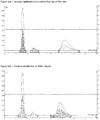
Figure 1(a) shows an isocratic equilibration of SNAP Ultra 25g cartridges (Biotage) at 50:50 v/v Heptane:Ethyl Acetate(%); 1% load; 3 component mixture; at a default flow rate of 25ml/min. -
Figure 1(b) shows a gradient equilibration according to the invention, as described in Example 1, again using SNAP Ultra 25g cartridges (Biotage), at 50% Ethyl Acetate% 1%load 3 component mixture at a flow rate of 200ml/minute. -
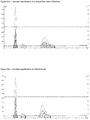
Figure 2 (a) shows an isocratic equilibration of SNAP Ultra 50g (Biotage), at 50:50 v/v Heptane:Ethyl Acetate% 1%load 3 component mixture at a default flow rate of 50ml/min. The equilibration time was 8.05minutes. -
Figure 2(b) shows a gradient equilibration according to the invention, as described in example 1, again using SNAP Ultra 50g (Biotage), at 50% Ethyl Acetate%. 1%load 3 comp mix at a flow rate of 200ml/minutes. - In a first aspect of the disclosure, not forming part of the invention, a method is provided for equilibrating a chromatography column comprising the steps of (i) providing a packed chromatography column; and (ii) passing a pressurized mobile phase through said column; wherein the mobile phase is obtained by combining at least two liquids, the proportions of which are varied as the mobile phase is passed through the column.
In an advantageous embodiment, the variation of said at least two liquids is achieved by combining an increasing proportion of one liquid and a decreasing proportion of another liquid to provide a linear gradient in the mobile phase as it passes the column. The present inventors have found that a linear gradient may be adjusted to maintain an acceptable heat generation even at the more preferred, higher flow rates which without the gradient would impair or even destroy or degrade elements of the hardware such as frits made from polymeric materials. - Equipment and methodologies for providing gradients of mobile phases are commercially available for the elution step, and components such as reagent vessels, pumps and tubing can easily be set up and adjusted by the skilled person to provide an equilibration gradient according to the invention.
- As the skilled person will appreciate, the mobile phase may differ in composition depending on the target substance of the sample to be purified; the chromatography packing used; the mode of adsorption of target substance to the packing etc. and may include any multi-solvent system in which the various solvent components are miscible over at least the concentration ranges that will be used for the subsequent separation. In one embodiment, the liquids used are solvents selected from the group consisting of methanol, ethanol, 2-propanol, acetonitrile, ethyl acetate, tetrahydrofuran, acetone, dichloromethane, chloroform, diethyl ether, toluene and hexane. While in most instances a suitable binary liquid system would be expected to provide satisfactory results, as will be appreciated by those skilled in the art, the method according to the invention may be adapted to include more than two liquids. Regardless of how many liquids are incorporated into the mobile phase, the relative concentrations of the liquids used to form the mobile phase should be selected to ensure that the heat generated by the equilibration performed will not exceed a value where negative impact on the hardware used is reached.
- Thus, in one embodiment, at least one of the liquids is an organic solvent, such as ethyl acetate and/or hexane. In an advantageous embodiment, the equilibration is started with 0% of a first liquid, such as ethyl acetate, and 100% of a second liquid, such as hexane. The ethyl acetate proportion is then increased in the mobile phase with the corresponding decrease in the hexane proportion until a composition equivalent to the solvent composition of the sample to be run is reached. The increase may be stepped or linear, in an advantageous embodiment, the gradient is linear.
- As discussed above, the present invention enables utilizing flow rates during the equilibration which without the use of a gradient would damage packing and/or hardware due to the heat generation. Thus, in one embodiment, the mobile phase is passed through the column at a flow rate of up to 200 ml/min, such as a flow rate in the range of 50-100 ml/min. The skilled person will easily be able to determine the highest possible flow rate, or optimal flow rate, by simple testing.
- The chromatography column according to the invention may be packed with any commonly used chromatography media, sometimes denoted adsorption material. A typical column for flash chromatography may be a cartridge having a diameter of about 1-20 cm. In an advantageous embodiment, the column is packed with an inorganic media, such as silica, silica gel, alumina or diatomaceous earth. Silica packed cartridges e.g. for flash chromatography are commercially available e.g. from Biotage.
- In one embodiment of the present method, the surface area of the packing available to the mobile phase is at least 500m2/g (dry weight). An example of a suitable packing is KP-Sil (Biotage), which is irregular silica with a standard surface area of 500 m2/g. In a specific embodiment, the surface area available to the mobile phase is at least 700 m2/g, such as in the range of 700-800m2/g. An illustrative example of a chromatography media advantageously used with the method according to the invention is the packing of Biotage SNAP ULTRA flash cartridges. With a surface area of 700 m2/g.
- The column and other hardware used may be of any commonly used material, such as polymeric materials which present certain heat sensitivity if temperatures are raised beyond the standard values. Thus, in one embodiment, the column and/or the column frits are made of polymeric material, such as polypropylene or polyethylene, wherein at least one element is made of a material having limited heat sensitivity. The column used is often a cartridge prepacked with silica particles, such as Biotage SNAP ULTRA.
- In a second aspect of the disclosure, forming the invention, a method is provided for controlling and/or avoiding excess of heat generated during the equilibration of a packed chromatography column. In the present method, the size and material of the column as well as the particle size and available surface area of the packing are used as parameters to define a liquid gradient suitable for an intended equilibration. By using the present method, a flow rate is determined which enables the most efficient flow rates possible in an equilibration process without exceeding a predetermined temperature in packing and/or hardware. Thus, this aspect of the invention may be used to design the optimal or most suitable processing conditions that enable a fast equilibration and hence decrease the total processing time of a certain chromatography process.
- In a third aspect of the disclosure, not forming part of the invention, a computer program is provided which is capable of performing the method according to the invention.
- In a fourth aspect not forming part of the invention, the disclosure provides a chromatography system comprising at least one packed chromatography column; vessels for samples and reagents; and tubing to pass one or more liquids between vessel(s) and column(s); which system is capable of controlling the heat generated by the exothermic reactions taking place during equilibration. The present system is advantageously used with a method according to the first aspect of the disclosure.
- In one embodiment, the system further comprises equipment for analysis of one or more target substances separated from other components of a sample in the chromatography column, preferably equipment for mass detection (MS), such as a mass detector. In alternative embodiments, the detector is an UV/VIS detector, a flame ionization detector, infrared detector or any other detector suitable to combine with flash chromatography. The system may advantageously be automated. In one embodiment, the system is a flash chromatography system, which enables intelligent sampling by providing the mass detector with an appropriate amount of material from the flash run.
- In one embodiment, the system automatically adjusts to changes in flash flow rate when different types or sizes of cartridges are used. Thanks to the optimized equilibration according to the invention, such a system provides a faster separation of samples for purification.
- The present examples are provided for illustrative purposes only, and should not be construed as limiting the present invention in any way.
- SNAP /ZIP Gradient Equilibration and PD0170 Isolera High Performance Upgrade were used below. The abbreviation "CV" will be used below to denote 'column volume', as used widely in the field of chromatography.
- The aim of the examples was to determine the feasibility of employing a gradient equilibration as a means of negating the effect of 'heat of hydration' when equilibrating SNAP ultra columns in 10g to 340g and ZIP Sphere columns in the 5g-120g format range when using isocratic mobile phases containing 30% and 50% Ethyl Acetate at high flow rates (greater than default).
-
- Evaluations were carried out in standard SNAP & SNAP Ultra 340g, 100g, 50g, 25g and lOg columns (Biotage)
- ZIP & ZIP Sphere formats 10g, 30g, 45g, 80g, 120g.
- Max flow rate data for all formats for flow rate reference
Each configuration was equilibrated to a final solvent combination of Heptane:Ethyl Acetate 70:30 v/v and 50:50 mobile phase at elevated flow rates. - All evaluations were constructed to encompass a CV equilibration range of 3-5 CV on each selected column range.
Gradient 1 A: Heptane B: Ethyl Acetate % CV A to B - 10 to 30 2 Hold 30 2 Gradient 2 A: Heptane B: Ethyl Acetate % CV A to B - 10 to 30 2.5 Hold 30 2 Gradient 3 A: Heptane B: Ethyl Acetate % CV 10 1 10-50 2 Hold 502 - Flow rate table update ZIP, SNAP, ZIP Sphere, SNAP Ultra, all available standard sizes. Based on unmodified default equilibration guidelines and 340g sizes, using standard Ethyl Acetate concentration of 7%.
- N=5 for each format. Averaged result.
- Flow rate gradually increased to a max. Flow just below the safe registered pressure limit for each format type. Max flow also dictated by the processing system in this case Isolera one 200ml/min
- Backpressure registered for each max.flow
- The gradient equilibration development according to the invention was based on some precursory evaluations that indicated the use of gradients to eliminate the intense heat of hydration experienced with all formats utilising high ethyl acetate concentrations at high flow rates.
- The gradient used for equilibration according to the invention was 50% Ethyl Acetate Concentration:
- 10-10% 1CV,
- 10-50% 2CV,
- Hold 50% 2CV.
- From Table 1 below, it can be concluded that a gradient according to the invention allows the conditioning of all formats at maximum determined flow rates at 50% Ethyl Acetate although the volume for equilibration has increased the equlibration time vs Isocratic has decreased by approx 75%.
- The table also compares the time taken to condition the same formats with a lower % of ethyl acetate (7%) using the default flow rates for the formats using the Biotage Isolera system. The lower % isocratic equilibration data was used as a comparison as the heat of hydration would be at its worst at 50% ethyl acetate under normal isocratic conditions. The flow rates used were the maximum attainable and safe flow rates determined earlier for each format, as this represents the worst case scenario i.e. the highest flow and very high ethyl acetate concentration for equilibration.
Table 7: Results of Example 1 Format Equilibration Flow rate ml/min Gradient number Backpressure (Bar) Equilibration Time (mins) Default Flow (ml/min) Isocratic Equilibration Time (default) 10g SNAP Ultra 165 3 6.5 0.51 12 7.08 25g SNAP Ultra 200 3 6.8 1.12 25 9.0 50g SNAP Ultra 200 3 5.5 2.07 50 8.5 100g SNAP Ultra 170 3 6.4 4.52 50 16.4 340g SNAP Ultra 200 3 5.4 14.55 100 29.1 5g Zip Sphere 170 3 6.4 0.12 6 6.6 10g Zip Sphere 200 3 6.5 0.21 12 6.5 30g Zip Sphere 200 3 5.4 1.04 20 11.2 45g ZIP Sphere 200 3 4.9 1.20 30 10 80g ZIP Sphere 200 3 4.4 2.32 50 10 120g ZIP Sphere 200 3 5.0 3.35 50 17 10g SNAP KPSil 200 3 5.0 022 12 6.25 25g SNAP KPSil 200 3 4.7 047 25 6.6 50g SNAP KPSil 200 3 3.8 1.37 50 6.6 100g SNAP KPSil 170 3 4.4 3.17 50 13.2 340g SNAP KPSil 200 3 3.2 12.75 100 25.5 5g Zip KPSil 170 3 6.1 0.14 6 6.6 10g Zip KPSil 200 3 6.8 0.22 12 6.25 30g Zip KPSil 200 3 5.9 1.07 20 11.25 45g ZIP KPSil 200 3 4.9 1.5 30 10 80g ZIP KPSil 200 3 4.4 2.32 50 10.2 120g ZIP KPSil 200 3 4.3 4.14 50 17 - The aim of this example was to investigate the effect on conditioning the column at default flow rate using 70/30 Heptane/EtOAc.
- SNAP ULTRA N=5 Columns tested; 10g; 25g; 50g; 100g and 340g.
10g - default flow rate 12ml/min 25g - default flow rate 25ml/min 50g - default flow rate 50ml/min 100g - default flow rate 50ml/min 340g - default flow rate 100ml/min - The results are presented in the Tables below:
Table 8: Isocratic run 340g Column Flow rate Observation Over pressured 1 - 70/30 Heptane/EtOAc 100ml/min 782ml before over pressured Yes 2 - 70/30 Heptane/EtOAc 100ml/min 767ml before over pressured Yes 3 - 70/30 Heptane/EtOAc 100ml/min 770ml before over pressured Yes 4 - 70/30 Heptane/EtOAc 50ml/min Conditioned by 2 column volumes with max. Pressure 0.8bar. After 3 column volumes flow increased to 100ml/min pressure 1.7 bars. 150ml/min 3bar. 200ml/min 4.2 bar No 5 - 80/20 Heptane/EtOAc 100ml/min Conditioned with maximum pressure 2.1 bar No Table 9 100g Column Flow rate Observation Over pressured 1 50ml/min Conditioned with maximum pressure 1.5 bar No 2 50ml/min Conditioned with maximum pressure 1.5 bar No 3 50ml/min Conditioned with maximum pressure 1.5 bar No 4 50ml/min Conditioned with maximum pressure 1.5 bar No 5 50ml/min Conditioned with maximum pressure 1.5 bar No Table 10 50g Column Flow rate Observation Over pressured 1 50ml/min Conditioned with maximum pressure 1.4 bar No 2 50ml/min Conditioned with maximum pressure 1.4 bar No 3 50ml/min Conditioned with maximum pressure 1.1 bar No 4 50ml/min Conditioned with maximum pressure 1.2 bar No Table 11 25g Column Flow rate Observation Over pressured 1 25ml/min Conditioned with maximum pressure 0.7 bar No 2 25ml/min Conditioned with maximum pressure 0.6 bar No 3 25ml/min Conditioned with maximum pressure 0.8 bar No 4 25ml/min Conditioned with maximum pressure 0.8 bar No 5 25ml/min Conditioned with maximum pressure 0.8 bar No Table 12 10g Column Flow rate Observation Over pressured 1 12ml/min Conditioned with maximum pressure 0.4 bar No 2 12ml/min Conditioned with maximum pressure 0.3 bar No 3 12ml/min Conditioned with maximum pressure 0.4 bar No 4 12ml/min Conditioned with maximum pressure 0.4 bar No 5 12ml/min Conditioned with maximum pressure 0.4 bar No - This example highlights the frit melting problem of the prior art equilibration methods. In this experiment, the SNAP Ultra 340g column was the main cause for concern as it could not be conditioned at default low flow rate (100ml/min). The present invention now shows that columns may successfully be equilibrated at higher flow rates, which in the prior art was possible only at lower ethyl acetate concentrations such as 10% ethyl acetate or less, but not at the higher flow rates due to the heat generation and the frit softening.
- Thus, the use of a gradient for equilibration according to the invention enables an increase in the flow rate including equilibration to three times the present default for columns up to 50g and twice default for columns greater than 50g (inc. 340g).
| Format | Media | Default Flow ml/min | Bed Mass (g) | Max. Flow rate ml/min | Backpressure (bar) | Column Pressure Rating (bar) |
| ZIP | KPSil | 6 | 5 | 200 | 6.0 | 10 |
| ZIP | Sphere | 6 | 5 | 170 | 6.8 | 7 |
| SNAP | KPSil | 12 | 10 | 200 | 4.7 | 7 |
| SNAP | Ultra | 12 | 10 | 165 | 6.9 | 7 |
| ZIP | KPSil | 12 | 10 | 200 | 6.0 | 10 |
| ZIP | Sphere | 12 | 10 | 200 | 6.9 | 7 |
| Format | Media | Default Flow ml/min | Bed Mass (g) | Max. Flow rate ml/min | Backpressure (bar) | Column Pressure Rating (bar) | |
| SNAP | KPSil | 25 | 25 | 200 | 4.2 | 7 | |
| SNAP | Ultra | 25 | 25 | 200 | 6.7 | 7 | |
| | KPSil | 20 | 30 | 200 | 5.4 | 10 | |
| | Sphere | 20 | 30 | 200 | 5.6 | 7 |
| Format | Media | Default Flow ml/min | Bed Mass (g) | Max. Flow rate ml/min | Backpressure (bar) | Column Pressure Rating (bar) | |
| | KPSil | 50 | 50 | 200 | 3.5 | 7 | |
| | Ultra | 50 | 50 | 200 | 5.5 | 7 | |
| ZIP | KPSil | 30 | 45 | 200 | 4.9 | 10 | |
| ZIP | Sphere | 30 | 45 | 200 | 5.0 | 7 |
| Format | Media | Default Flow ml/min | Bed Mass (g) | Max. Flow rate ml/min | Backpressure (bar) | Column Pressure Rating (bar) | |
| | KPSil | 50 | 80 | 200 | 4.2 | 8 | |
| | Sphere | 50 | 80 | 200 | 4.1 | 7 | |
| | KPSil | 50 | 100 | 200 | 4.5 | 7 | |
| | Ultra | 50 | 100 | 170 | 6.8 | 7 | |
| | KPSil | 50 | 120 | 200 | 4.6 | 10 | |
| | Sphere | 50 | 120 | 200 | 4.8 | 7 |
| Format | Media | Default Flow ml/min | Bed Mass (g) | Max. Flow rate ml/min | Backpressure (bar) | Column Pressure Rating (bar) | |
| | KPSil | 100 | 340 | 200 | 3.0 | 5 | |
| | Ultra | 100 | 340 | 200 | 4.4 | 5 |
| Format | Media | Default Flow ml/min | Bed Mass (g) | Max. Flow rate ml/min | Backpressure (bar) | Column Pressure Rating (bar) | |
| | KPSil | 100 | 340 | 500 | 2.8 | 5 | |
| | Ultra | 100 | 340 | 450 | 4.7 | 5 |
Claims (3)
- A method of controlling the heat generated during the equilibration of a packed chromatography column; characterized in that the size and material of the column as well as the packing surface area available to the mobile phase are used as parameters to select an equilibration gradient comprised of two liquids, whereby an optimal equilibration gradient flow rate is provided without exceeding a predetermined temperature in column packing and/or hardware.
- A method according to claim 1, wherein the packed chromatography column is a flash chromatography column.
- A method according to claim 1 or 2, which has been automated.
Applications Claiming Priority (2)
| Application Number | Priority Date | Filing Date | Title |
|---|---|---|---|
| SE1450333 | 2014-03-21 | ||
| PCT/EP2015/055997 WO2015140326A1 (en) | 2014-03-21 | 2015-03-20 | Method and apparatus for the equilibration of a packed chromatography column |
Publications (2)
| Publication Number | Publication Date |
|---|---|
| EP3120140A1 EP3120140A1 (en) | 2017-01-25 |
| EP3120140B1 true EP3120140B1 (en) | 2018-10-31 |
Family
ID=52997398
Family Applications (1)
| Application Number | Title | Priority Date | Filing Date |
|---|---|---|---|
| EP15717816.1A Active EP3120140B1 (en) | 2014-03-21 | 2015-03-20 | Method and apparatus for the equilibration of a packed chromatography column |
Country Status (6)
| Country | Link |
|---|---|
| US (1) | US10183237B2 (en) |
| EP (1) | EP3120140B1 (en) |
| JP (1) | JP6751384B2 (en) |
| CA (1) | CA2942851C (en) |
| ES (1) | ES2707506T3 (en) |
| WO (1) | WO2015140326A1 (en) |
Families Citing this family (1)
| Publication number | Priority date | Publication date | Assignee | Title |
|---|---|---|---|---|
| ES2987494T3 (en) * | 2018-05-24 | 2024-11-15 | Biotage Ab | Conditioning of packed chromatography columns |
Family Cites Families (17)
| Publication number | Priority date | Publication date | Assignee | Title |
|---|---|---|---|---|
| US4591442A (en) * | 1984-11-26 | 1986-05-27 | Nelson Research & Development Co. | Flash chromatography |
| US4942018A (en) * | 1987-02-10 | 1990-07-17 | Ldc Analytical Inc. | Packed bed gradient generator for high performance liquid chromatography |
| JPS649363A (en) * | 1987-06-30 | 1989-01-12 | Shimadzu Corp | Liquid chromatograph |
| DE4143639C2 (en) * | 1991-12-02 | 2002-10-24 | Qiagen Gmbh | Process for the isolation and purification of nucleic acids |
| JP3911684B2 (en) * | 1996-11-12 | 2007-05-09 | 株式会社ケムコ | Method for producing separation column |
| AU752932B2 (en) | 1997-10-09 | 2002-10-03 | Transgenomic, Inc. | Modifying double stranded DNA to enhance separations by matched ion polynucleotide chromatography |
| AU2001247347A1 (en) * | 2000-03-09 | 2001-09-17 | Transgenomic, Inc. | Chromatographic method for rna stabilization |
| AUPQ614700A0 (en) | 2000-03-09 | 2000-03-30 | Walter And Eliza Hall Institute Of Medical Research, The | A method and agents useful for same |
| CA2406665A1 (en) | 2000-04-21 | 2001-11-01 | Transgenomic, Inc. | Mipc column cleaning system and process |
| EP1275958A1 (en) | 2001-07-05 | 2003-01-15 | Agilent Technologies, Inc. (a Delaware corporation) | Method of reducing baseline instabilities in liquid chromatographic measurements and liquid chromatography apparatus |
| JP2003194792A (en) * | 2001-12-27 | 2003-07-09 | Mitsubishi Chemicals Corp | Packing material for liquid chromatography |
| US7732216B2 (en) * | 2005-12-06 | 2010-06-08 | Pall Corporation | System and method for testing chromatography media and devices |
| JP2008145190A (en) * | 2006-12-07 | 2008-06-26 | Canon Inc | Microcapsule, packing material for liquid chromatography, and column for liquid chromatography using the same |
| KR100961926B1 (en) * | 2007-08-30 | 2010-06-10 | 서울대학교산학협력단 | Biomarker composition and diagnostic kit for detecting diabetic retinopathy |
| KR20110028295A (en) * | 2008-06-12 | 2011-03-17 | 스미토모 베이클리트 컴퍼니 리미티드 | Sugar chain sample preparation method, sugar chain sample, and sugar chain analysis method |
| EP2501403A4 (en) * | 2009-11-16 | 2013-11-13 | Jackson H M Found Military Med | BACTERIAL VACCINE AGAINST GRAM POSITIVE BASED ON (POLY) GLYCEROLPHOSPHATE |
| KR101862375B1 (en) * | 2010-12-06 | 2018-05-29 | 오티포니 세라피틱스 리미티드 | Hydantoin derivatives useful as kv3 inhibitors |
-
2015
- 2015-03-20 CA CA2942851A patent/CA2942851C/en active Active
- 2015-03-20 WO PCT/EP2015/055997 patent/WO2015140326A1/en not_active Ceased
- 2015-03-20 ES ES15717816T patent/ES2707506T3/en active Active
- 2015-03-20 US US15/127,649 patent/US10183237B2/en active Active
- 2015-03-20 JP JP2017500435A patent/JP6751384B2/en active Active
- 2015-03-20 EP EP15717816.1A patent/EP3120140B1/en active Active
Non-Patent Citations (1)
| Title |
|---|
| None * |
Also Published As
| Publication number | Publication date |
|---|---|
| CA2942851A1 (en) | 2015-09-24 |
| CA2942851C (en) | 2022-10-04 |
| US20170050120A1 (en) | 2017-02-23 |
| JP2017508995A (en) | 2017-03-30 |
| WO2015140326A1 (en) | 2015-09-24 |
| EP3120140A1 (en) | 2017-01-25 |
| ES2707506T3 (en) | 2019-04-03 |
| JP6751384B2 (en) | 2020-09-02 |
| US10183237B2 (en) | 2019-01-22 |
Similar Documents
| Publication | Publication Date | Title |
|---|---|---|
| Fields | Silica xerogel as a continuous column support for high-performance liquid chromatography | |
| Podgornik et al. | Construction of large-volume monolithic columns | |
| Petro et al. | Molded continuous poly (styrene-co-divinylbenzene) rod as a separation medium for the very fast separation of polymers Comparison of the chromatographic properties of the monolithic rod with columns packed with porous and non-porous beads in high-performance liquid chromatography of polystyrenes | |
| Ismail et al. | Pirkle-type chiral stationary phase on core–shell and fully porous particles: are superficially porous particles always the better choice toward ultrafast high-performance enantioseparations? | |
| Martín-Esteban | Molecularly-imprinted polymers as a versatile, highly selective tool in sample preparation | |
| Hughes et al. | Polymerized high internal phase emulsion monoliths for the chromatographic separation of engineered nanoparticles | |
| Garcıa et al. | Perfusion chromatography: an emergent technique for the analysis of food proteins | |
| Podgornik et al. | Large-scale methacrylate monolithic columns: design and properties | |
| Vallano et al. | Modeling interparticle and intraparticle (perfusive) electroosmotic flow in capillary electrochromatography | |
| US20210236957A1 (en) | Conditioning of packed chromatography columns | |
| Bates et al. | High-performance chromatofocusing using linear and concave pH gradients formed with simple buffer mixtures: I. Effect of buffer composition on the gradient shape | |
| Taylor et al. | Packed column development in supercritical fluid chromatography | |
| Berezkin et al. | Capillary gas adsorption chromatography | |
| Kawahara et al. | Titania and zirconia as new ceramic column packing materials for high performance liquid chromatography | |
| Gritti et al. | The quantitative impact of the mesopore size on the mass transfer mechanism of the new 1.9 μm fully porous Titan-C18 particles II–Analysis of biomolecules | |
| Guo et al. | Preparation of dummy template‐imprinted polymers for the rapid extraction of nonsteroidal anti‐inflammatory drugs residues in aquatic environmental samples | |
| CA2942851C (en) | Method and apparatus for the equilibration of a packed chromatography column | |
| Yamamoto et al. | Rational design calculation method for stepwise elution chromatography of proteins | |
| Aşır et al. | Triazine herbicide imprinted monolithic column for capillary electrochromatography | |
| Moskvin et al. | Analytical application of liquid-gas and liquid-gas-solid chromatography | |
| Chaves et al. | Hydrodynamics and dynamic capacity of cryogels produced with different monomer compositions | |
| JP7811362B2 (en) | Liquid chromatographic column, gas analysis method, and gas analysis system | |
| Gritti et al. | Characterization and kinetic performance of 2.1× 100 mm production columns packed with new 1.6 μm superficially porous particles | |
| Majors et al. | Glossary of liquid-phase separation terms | |
| Rodinkov et al. | Selection of conditions for chromatomembrane gas extraction at its combination with the gas-adsorption preconcentration of analytes |
Legal Events
| Date | Code | Title | Description |
|---|---|---|---|
| STAA | Information on the status of an ep patent application or granted ep patent |
Free format text: STATUS: THE INTERNATIONAL PUBLICATION HAS BEEN MADE |
|
| PUAI | Public reference made under article 153(3) epc to a published international application that has entered the european phase |
Free format text: ORIGINAL CODE: 0009012 |
|
| STAA | Information on the status of an ep patent application or granted ep patent |
Free format text: STATUS: REQUEST FOR EXAMINATION WAS MADE |
|
| 17P | Request for examination filed |
Effective date: 20161019 |
|
| AK | Designated contracting states |
Kind code of ref document: A1 Designated state(s): AL AT BE BG CH CY CZ DE DK EE ES FI FR GB GR HR HU IE IS IT LI LT LU LV MC MK MT NL NO PL PT RO RS SE SI SK SM TR |
|
| AX | Request for extension of the european patent |
Extension state: BA ME |
|
| DAV | Request for validation of the european patent (deleted) | ||
| DAX | Request for extension of the european patent (deleted) | ||
| GRAP | Despatch of communication of intention to grant a patent |
Free format text: ORIGINAL CODE: EPIDOSNIGR1 |
|
| STAA | Information on the status of an ep patent application or granted ep patent |
Free format text: STATUS: GRANT OF PATENT IS INTENDED |
|
| INTG | Intention to grant announced |
Effective date: 20180614 |
|
| RIN1 | Information on inventor provided before grant (corrected) |
Inventor name: JORDAN, STEVE Inventor name: RANA, SUNIL Inventor name: DAVIES, GEOFF |
|
| GRAS | Grant fee paid |
Free format text: ORIGINAL CODE: EPIDOSNIGR3 |
|
| GRAA | (expected) grant |
Free format text: ORIGINAL CODE: 0009210 |
|
| STAA | Information on the status of an ep patent application or granted ep patent |
Free format text: STATUS: THE PATENT HAS BEEN GRANTED |
|
| AK | Designated contracting states |
Kind code of ref document: B1 Designated state(s): AL AT BE BG CH CY CZ DE DK EE ES FI FR GB GR HR HU IE IS IT LI LT LU LV MC MK MT NL NO PL PT RO RS SE SI SK SM TR |
|
| REG | Reference to a national code |
Ref country code: CH Ref legal event code: EP Ref country code: GB Ref legal event code: FG4D |
|
| REG | Reference to a national code |
Ref country code: AT Ref legal event code: REF Ref document number: 1060001 Country of ref document: AT Kind code of ref document: T Effective date: 20181115 |
|
| REG | Reference to a national code |
Ref country code: IE Ref legal event code: FG4D |
|
| REG | Reference to a national code |
Ref country code: DE Ref legal event code: R096 Ref document number: 602015019075 Country of ref document: DE |
|
| REG | Reference to a national code |
Ref country code: SE Ref legal event code: TRGR |
|
| REG | Reference to a national code |
Ref country code: CH Ref legal event code: NV Representative=s name: STOLMAR AND PARTNER INTELLECTUAL PROPERTY S.A., CH |
|
| REG | Reference to a national code |
Ref country code: NL Ref legal event code: MP Effective date: 20181031 |
|
| REG | Reference to a national code |
Ref country code: LT Ref legal event code: MG4D |
|
| REG | Reference to a national code |
Ref country code: ES Ref legal event code: FG2A Ref document number: 2707506 Country of ref document: ES Kind code of ref document: T3 Effective date: 20190403 |
|
| REG | Reference to a national code |
Ref country code: AT Ref legal event code: MK05 Ref document number: 1060001 Country of ref document: AT Kind code of ref document: T Effective date: 20181031 |
|
| PG25 | Lapsed in a contracting state [announced via postgrant information from national office to epo] |
Ref country code: FI Free format text: LAPSE BECAUSE OF FAILURE TO SUBMIT A TRANSLATION OF THE DESCRIPTION OR TO PAY THE FEE WITHIN THE PRESCRIBED TIME-LIMIT Effective date: 20181031 Ref country code: IS Free format text: LAPSE BECAUSE OF FAILURE TO SUBMIT A TRANSLATION OF THE DESCRIPTION OR TO PAY THE FEE WITHIN THE PRESCRIBED TIME-LIMIT Effective date: 20190228 Ref country code: AT Free format text: LAPSE BECAUSE OF FAILURE TO SUBMIT A TRANSLATION OF THE DESCRIPTION OR TO PAY THE FEE WITHIN THE PRESCRIBED TIME-LIMIT Effective date: 20181031 Ref country code: NO Free format text: LAPSE BECAUSE OF FAILURE TO SUBMIT A TRANSLATION OF THE DESCRIPTION OR TO PAY THE FEE WITHIN THE PRESCRIBED TIME-LIMIT Effective date: 20190131 Ref country code: LV Free format text: LAPSE BECAUSE OF FAILURE TO SUBMIT A TRANSLATION OF THE DESCRIPTION OR TO PAY THE FEE WITHIN THE PRESCRIBED TIME-LIMIT Effective date: 20181031 Ref country code: LT Free format text: LAPSE BECAUSE OF FAILURE TO SUBMIT A TRANSLATION OF THE DESCRIPTION OR TO PAY THE FEE WITHIN THE PRESCRIBED TIME-LIMIT Effective date: 20181031 Ref country code: BG Free format text: LAPSE BECAUSE OF FAILURE TO SUBMIT A TRANSLATION OF THE DESCRIPTION OR TO PAY THE FEE WITHIN THE PRESCRIBED TIME-LIMIT Effective date: 20190131 Ref country code: PL Free format text: LAPSE BECAUSE OF FAILURE TO SUBMIT A TRANSLATION OF THE DESCRIPTION OR TO PAY THE FEE WITHIN THE PRESCRIBED TIME-LIMIT Effective date: 20181031 Ref country code: HR Free format text: LAPSE BECAUSE OF FAILURE TO SUBMIT A TRANSLATION OF THE DESCRIPTION OR TO PAY THE FEE WITHIN THE PRESCRIBED TIME-LIMIT Effective date: 20181031 |
|
| PG25 | Lapsed in a contracting state [announced via postgrant information from national office to epo] |
Ref country code: AL Free format text: LAPSE BECAUSE OF FAILURE TO SUBMIT A TRANSLATION OF THE DESCRIPTION OR TO PAY THE FEE WITHIN THE PRESCRIBED TIME-LIMIT Effective date: 20181031 Ref country code: NL Free format text: LAPSE BECAUSE OF FAILURE TO SUBMIT A TRANSLATION OF THE DESCRIPTION OR TO PAY THE FEE WITHIN THE PRESCRIBED TIME-LIMIT Effective date: 20181031 Ref country code: GR Free format text: LAPSE BECAUSE OF FAILURE TO SUBMIT A TRANSLATION OF THE DESCRIPTION OR TO PAY THE FEE WITHIN THE PRESCRIBED TIME-LIMIT Effective date: 20190201 Ref country code: RS Free format text: LAPSE BECAUSE OF FAILURE TO SUBMIT A TRANSLATION OF THE DESCRIPTION OR TO PAY THE FEE WITHIN THE PRESCRIBED TIME-LIMIT Effective date: 20181031 Ref country code: PT Free format text: LAPSE BECAUSE OF FAILURE TO SUBMIT A TRANSLATION OF THE DESCRIPTION OR TO PAY THE FEE WITHIN THE PRESCRIBED TIME-LIMIT Effective date: 20190301 |
|
| PG25 | Lapsed in a contracting state [announced via postgrant information from national office to epo] |
Ref country code: CZ Free format text: LAPSE BECAUSE OF FAILURE TO SUBMIT A TRANSLATION OF THE DESCRIPTION OR TO PAY THE FEE WITHIN THE PRESCRIBED TIME-LIMIT Effective date: 20181031 Ref country code: DK Free format text: LAPSE BECAUSE OF FAILURE TO SUBMIT A TRANSLATION OF THE DESCRIPTION OR TO PAY THE FEE WITHIN THE PRESCRIBED TIME-LIMIT Effective date: 20181031 |
|
| REG | Reference to a national code |
Ref country code: DE Ref legal event code: R097 Ref document number: 602015019075 Country of ref document: DE |
|
| PG25 | Lapsed in a contracting state [announced via postgrant information from national office to epo] |
Ref country code: SM Free format text: LAPSE BECAUSE OF FAILURE TO SUBMIT A TRANSLATION OF THE DESCRIPTION OR TO PAY THE FEE WITHIN THE PRESCRIBED TIME-LIMIT Effective date: 20181031 Ref country code: EE Free format text: LAPSE BECAUSE OF FAILURE TO SUBMIT A TRANSLATION OF THE DESCRIPTION OR TO PAY THE FEE WITHIN THE PRESCRIBED TIME-LIMIT Effective date: 20181031 Ref country code: RO Free format text: LAPSE BECAUSE OF FAILURE TO SUBMIT A TRANSLATION OF THE DESCRIPTION OR TO PAY THE FEE WITHIN THE PRESCRIBED TIME-LIMIT Effective date: 20181031 Ref country code: SK Free format text: LAPSE BECAUSE OF FAILURE TO SUBMIT A TRANSLATION OF THE DESCRIPTION OR TO PAY THE FEE WITHIN THE PRESCRIBED TIME-LIMIT Effective date: 20181031 |
|
| PLBE | No opposition filed within time limit |
Free format text: ORIGINAL CODE: 0009261 |
|
| STAA | Information on the status of an ep patent application or granted ep patent |
Free format text: STATUS: NO OPPOSITION FILED WITHIN TIME LIMIT |
|
| 26N | No opposition filed |
Effective date: 20190801 |
|
| PG25 | Lapsed in a contracting state [announced via postgrant information from national office to epo] |
Ref country code: MC Free format text: LAPSE BECAUSE OF FAILURE TO SUBMIT A TRANSLATION OF THE DESCRIPTION OR TO PAY THE FEE WITHIN THE PRESCRIBED TIME-LIMIT Effective date: 20181031 Ref country code: SI Free format text: LAPSE BECAUSE OF FAILURE TO SUBMIT A TRANSLATION OF THE DESCRIPTION OR TO PAY THE FEE WITHIN THE PRESCRIBED TIME-LIMIT Effective date: 20181031 |
|
| PG25 | Lapsed in a contracting state [announced via postgrant information from national office to epo] |
Ref country code: LU Free format text: LAPSE BECAUSE OF NON-PAYMENT OF DUE FEES Effective date: 20190320 |
|
| REG | Reference to a national code |
Ref country code: BE Ref legal event code: MM Effective date: 20190331 |
|
| PG25 | Lapsed in a contracting state [announced via postgrant information from national office to epo] |
Ref country code: IE Free format text: LAPSE BECAUSE OF NON-PAYMENT OF DUE FEES Effective date: 20190320 |
|
| PG25 | Lapsed in a contracting state [announced via postgrant information from national office to epo] |
Ref country code: BE Free format text: LAPSE BECAUSE OF NON-PAYMENT OF DUE FEES Effective date: 20190331 |
|
| PG25 | Lapsed in a contracting state [announced via postgrant information from national office to epo] |
Ref country code: TR Free format text: LAPSE BECAUSE OF FAILURE TO SUBMIT A TRANSLATION OF THE DESCRIPTION OR TO PAY THE FEE WITHIN THE PRESCRIBED TIME-LIMIT Effective date: 20181031 |
|
| PG25 | Lapsed in a contracting state [announced via postgrant information from national office to epo] |
Ref country code: MT Free format text: LAPSE BECAUSE OF NON-PAYMENT OF DUE FEES Effective date: 20190320 |
|
| PG25 | Lapsed in a contracting state [announced via postgrant information from national office to epo] |
Ref country code: CY Free format text: LAPSE BECAUSE OF FAILURE TO SUBMIT A TRANSLATION OF THE DESCRIPTION OR TO PAY THE FEE WITHIN THE PRESCRIBED TIME-LIMIT Effective date: 20181031 |
|
| PG25 | Lapsed in a contracting state [announced via postgrant information from national office to epo] |
Ref country code: HU Free format text: LAPSE BECAUSE OF FAILURE TO SUBMIT A TRANSLATION OF THE DESCRIPTION OR TO PAY THE FEE WITHIN THE PRESCRIBED TIME-LIMIT; INVALID AB INITIO Effective date: 20150320 |
|
| PG25 | Lapsed in a contracting state [announced via postgrant information from national office to epo] |
Ref country code: MK Free format text: LAPSE BECAUSE OF FAILURE TO SUBMIT A TRANSLATION OF THE DESCRIPTION OR TO PAY THE FEE WITHIN THE PRESCRIBED TIME-LIMIT Effective date: 20181031 |
|
| P01 | Opt-out of the competence of the unified patent court (upc) registered |
Effective date: 20230621 |
|
| REG | Reference to a national code |
Ref country code: CH Ref legal event code: U11 Free format text: ST27 STATUS EVENT CODE: U-0-0-U10-U11 (AS PROVIDED BY THE NATIONAL OFFICE) Effective date: 20260401 |
|
| PGFP | Annual fee paid to national office [announced via postgrant information from national office to epo] |
Ref country code: SE Payment date: 20260320 Year of fee payment: 12 |
|
| PGFP | Annual fee paid to national office [announced via postgrant information from national office to epo] |
Ref country code: GB Payment date: 20260317 Year of fee payment: 12 |
|
| PGFP | Annual fee paid to national office [announced via postgrant information from national office to epo] |
Ref country code: DE Payment date: 20260318 Year of fee payment: 12 |
|
| PGFP | Annual fee paid to national office [announced via postgrant information from national office to epo] |
Ref country code: IT Payment date: 20260319 Year of fee payment: 12 |
|
| PGFP | Annual fee paid to national office [announced via postgrant information from national office to epo] |
Ref country code: FR Payment date: 20260317 Year of fee payment: 12 |
|
| PGFP | Annual fee paid to national office [announced via postgrant information from national office to epo] |
Ref country code: ES Payment date: 20260408 Year of fee payment: 12 |
|
| PGFP | Annual fee paid to national office [announced via postgrant information from national office to epo] |
Ref country code: CH Payment date: 20260401 Year of fee payment: 12 |