EP3120102B1 - Systems and methods for automated coaching of a shooter - Google Patents
Systems and methods for automated coaching of a shooter Download PDFInfo
- Publication number
- EP3120102B1 EP3120102B1 EP15765132.4A EP15765132A EP3120102B1 EP 3120102 B1 EP3120102 B1 EP 3120102B1 EP 15765132 A EP15765132 A EP 15765132A EP 3120102 B1 EP3120102 B1 EP 3120102B1
- Authority
- EP
- European Patent Office
- Prior art keywords
- sensor
- machine learning
- learning algorithm
- data
- suboptimal
- Prior art date
- Legal status (The legal status is an assumption and is not a legal conclusion. Google has not performed a legal analysis and makes no representation as to the accuracy of the status listed.)
- Active
Links
Images



Classifications
-
- F—MECHANICAL ENGINEERING; LIGHTING; HEATING; WEAPONS; BLASTING
- F41—WEAPONS
- F41G—WEAPON SIGHTS; AIMING
- F41G3/00—Aiming or laying means
- F41G3/26—Teaching or practice apparatus for gun-aiming or gun-laying
-
- F—MECHANICAL ENGINEERING; LIGHTING; HEATING; WEAPONS; BLASTING
- F41—WEAPONS
- F41G—WEAPON SIGHTS; AIMING
- F41G3/00—Aiming or laying means
-
- G—PHYSICS
- G09—EDUCATION; CRYPTOGRAPHY; DISPLAY; ADVERTISING; SEALS
- G09B—EDUCATIONAL OR DEMONSTRATION APPLIANCES; APPLIANCES FOR TEACHING, OR COMMUNICATING WITH, THE BLIND, DEAF OR MUTE; MODELS; PLANETARIA; GLOBES; MAPS; DIAGRAMS
- G09B19/00—Teaching not covered by other main groups of this subclass
Definitions
- systems and methods for automated coaching of a shooter are provided.
- systems and methods for acquiring target data and sensor data and predicting a shooter's mistakes by analysis of the data are provided.
- firearms instructors focus on addressing the four fundamentals of marksmanship: 1) establishing a steady body position in order to observe the target, 2) aiming the weapon correctly and consistently to align the sights with the target, 3) controlling breathing during firing of the weapon, and 4) properly squeezing the trigger.
- the instructor analyzes these aspects of a shooter to determine whether proper techniques are being applied. For example, the instructor may be trying to detect if a shooters poor performance is due to improper breathing, body position, canting the weapon, improper trigger squeeze, suboptimal point of aim, unsteady position or some combination thereof.
- an object according to one aspect of the present patent document is to provide systems and methods for automated coaching of a shooter.
- the methods and systems address, or at least ameliorate, one or more of the problems described above.
- the present invention provides a method as set out in claim 1 and a system as set out claim 9.
- the machine learning algorithm may be an Artificial Neural Network.
- the machine learning algorithm may use techniques including Kernel Discriminant Analysis and the like.
- the shot dispersion data is obtained by a camera. In other systems other methods may be used to obtain shot data including acoustic analysis. Once the shot data is obtained, it is preferably analyzed using image analysis.
- the sensors may also be used to measure or track any important quantity.
- the sensor measures any one of the group consisting of trigger squeeze pressure or displacement, weapon cant, butt pressure, aim trace, trigger break (the moment the trigger breaks typically causing the weapon's hammer to fall, initiating the shot), aim trace relative to the ideal aim-point on the target, shooter pose (e.g. standing, kneeling, prone), shot group size, and shot group mean point of impact relative to ideal impact.
- a predicted cause from a plurality of trainees is displayed on a single screen. This may be the screen of an instructor, trainee, or both. In some embodiments, select information is provided to the instructor while other information is provided to the trainee. This may be an appropriate subset of the information shown to the instructor.
- the embodiments disclosed also relate to an apparatus for performing the operations herein.
- This apparatus may be specially constructed for the required purposes, or it may comprise a general purpose processor selectively activated or reconfigured by a computer program stored in the electronic device.
- a computer program may be stored in a computer readable storage medium, such as, but is not limited to, any type of disk, including floppy disks, optical disks, CD-ROMs, and magnetic-optical disks, read-only memories (ROMs), random access memories (RAMs), EPROMs, EEPROMs, Flash memory, magnetic or optical cards, or any type of media suitable for storing electronic instructions, and each coupled to a computer system bus.
- the embodiments of the present patent document may enhance a small arms training simulator to assist the shooting instructor in quickly discovering the most common shooting mistakes made by trainees.
- the methods and systems herein may automatically analyze and highlight the most prevalent poor shooting habits. Accordingly, greater training throughput may be achieved because the system may automatically recognize the errors that an instructor would typically have to find.
- the embodiments disclosed herein include novel techniques for enabling a computer system to automatically flag potential shooting mistakes.
- shooting analysis has been entirely the domain of a qualified shooting instructor who observes the shooter's physical interaction (e.g. body position, breathing patterns, sight address), hit results (i.e. where the round(s) hit the target), and environmental factors (e.g. wind, heat, visibility) in order to determine the shooter's mistakes and recommend improvements.
- Small arms simulators complement an instructor by providing additional data related to the shooter's performance by adding sensors to the weapon to provide details that are difficult to discern by mere observance (e.g. trigger squeeze pressure, weapon cant, butt pressure, aim trace).
- shot dispersion data and other sensor data streams are fed into an algorithmic analysis to provide advice to a shooter automatically.
- the advice relates to a shooter's mistakes without needing an expert shooting instructor to make the preliminary assessment.
- an instructor can use the preliminary analysis to confirm the system's supposition. These systems and methods benefit the instructor since it can speed up the throughput of trainees on the system and reduce the burden on the instructor when training multiple trainees simultaneously.
- the results are displayed to an instructor via a computer display.
- the instructor may be unobtrusively alerted. This allows the instructor to focus on trainees having performance issues while minimizing the delay for the other trainees undergoing training.
- Machine learning is utilized to suggest diagnoses of shooting mistakes. In some embodiments, only common mistakes may be recognized. However, in other embodiments, more complicated problems may be detected. For example, problems related to complex combinations of problems may be detected.
- the suggestions are communicated directly to the shooter or trainee. This may be done through a screen display or an application ("app") located on a mobile device.
- the trainee may be able to see all the stats about their performance including but not limited to dispersion patterns, sensor responses, number of shots, distance between shots, time between shots and many other statistics.
- the potential causes for suboptimal performance may be communicated to an instructor.
- the instructor may evaluate the suggestions and/or predictions made by the automated system and then provide advice to a shooter or trainee.
- data from multiple trainees or users may be gathered, and displayed to an instructor at a firing range.
- both the trainee and the instructor may receive all the feedback available or any appropriate distribution of information based on the trainee instructor relationship.
- the system may make use of previously stored shot patterns and shot dispersion patterns and their related causes to help make a prediction of a trainee's problems.
- Fig. 1 illustrates examples of shot dispersion patterns and their associated cause 14.
- systems may include entire databases 10 of shot patterns and or dispersion patterns and their associated causes 14.
- the data used to analyze the shooter or trainee may be gathered prior to a training exercise and/or in real time.
- the data may also be typical data related to all shooters or may be custom data specifically related to the trainee in question.
- Fig. 2 illustrates a graphical representation of a method for automated coaching of a shooter 50. As may be seen in Fig. 2 , both reference data 26 and trainee data 36 are fed into an algorithm 20 to produce a suggested cause of suboptimal performance 30.
- the reference data 26 is gathered as a set of training examples based on either doctrinal reference material or from expert shooting instructors. In other embodiments, reference data 26 can be gathered from other reference material or other types of instructors, such as the internet, surveys, or compiled over time. In some embodiments, this reference data 26 can include both the shot dispersion data 22 (e.g. where the bullets impacted the target) as well as biometric and weapon sensor data 24 if available. In preferred embodiments, for each type of collected data, there may be corresponding reference data 26 in a database for query.
- the reference data 26 is used to determine a classification for the trainee data.
- the reference data may be used to classify the trainee data into any number of sub-optimal performance results like bad aim, bad breathing or other mistakes.
- the reference data 26 includes sensor data 24.
- Weapon sensor data 24 may include but is not limited to breathing data, weapon point of aim trace, weapon cant, weapon trigger pull sensor data, weapon butt pressure sensor data.
- trainee data 36 is collected. Similar to the reference data 26, trainee data may be made up of both dispersion data 32 and weapon sensor data 34. One or more of these data points may be compared to the reference data 26 in order to determine a cause of suboptimal performance.
- cameras may be focused on the targets to obtain a trainee's shot dispersion data 32 in real time.
- An image analysis program maybe used to locate the shots and determine locations of each and distances between shots and distances from each shot to the aimed at target.
- the algorithm 20 uses machine learning to allow the predictions 30 to become more accurate over time.
- Machine learning is a branch of artificial intelligence, primarily focused on how machines analyze and learn from data. By separating the problem into data representations (the sample training data 36) and then generalizing based on the reference data 26 (to allow for new data that was not gathered), machine learning algorithms are created that can then return reasonable inferred predictions of the output solution.
- supervised learning which is a specific type of machine learning may be employed.
- the shooting instructors may rely on significant historical data to determine a likely diagnosis of the trainee's shooting issues and the machine may learn from this prediction.
- the shooting instructor may confirm or deny a predicted cause of suboptimal shooting such that the algorithm learns over time.
- the machine learning algorithm 20 uses the reference data 26 to "train” the classifier resulting in associated relative weighting values being applied to the internal algorithm parameters. These "weights” allow the classifier to adequately classify the reference data 26 and, subsequently, are used to correctly classify the trainee data 36. This may be thought of as an Artificial Neural Network.
- the machine learning algorithm 20 can be a linear function (also known as linear predictor function) where weights are assigned to each possible category of classification (based on the reference data 26)and then used (via a dot product) to combine with a particular instance (i.e. trainee data 36) in order to be classified.
- a linear function known as Kernel Discriminant Analysis (KDA) may be used.
- KDA Kernel Discriminant Analysis
- KDA may be used in conjunction with trigger squeeze data to classify any sub-optimal performance.
- the weights are derived through a process whereby successive iterations of refinement are performed using instances of reference data 26 to calculate an error value as part of training the machine learning algorithm 20.
- the error value is derived from the difference between the desired response (e.g. a known "Good” or "Bad") of the machine learning algorithm 20 and the actual response.
- the error value is then back-propagated through the algorithm's internal structure and used for successive iterations until the error is below a given threshold. Once this is achieved, the machine learning algorithm 20 is sufficiently “trained” and the weights can then be used to classify trainee data 36.
- Figs. 3 and 4 each show a representative trigger squeeze sensor feed.
- Fig. 3 illustrates a "good” trigger squeeze
- Fig. 4 illustrates a "bad” trigger squeeze.
- the machine learning algorithm 20 may be fed a number of "good” and “bad” trigger feeds along with the their respective classifications as “good” and “bad” to train the algorithm what a "good” feed looks like. Numerous data samples may be used. Once trained, the machine learning algorithm 20 can correctly classify the trigger squeeze sensor shown in Fig. 5 as "Good", which would be available for presentation to the instructor on a display.
- an automated coaching system 100 comprises: at least one sensor 108 for obtaining training data of a trainee's shooting habits; a computer 106 containing an algorithm that evaluates the training data; a display 102 for displaying to an instructor at least one trainee's at least one mistake. In some embodiments, the system provides suggested corrections to fix the trainee's mistake.
- sensors 108 may be located and sensing a plurality of different items. Sensors may be located on a trainee's weapon 112, on the trainee themselves, on the target 110 or any other place that's desirable to acquire data. All of the various components of the system 100 may be connected via a network 114. The network may be wired or wireless.
- a display 102 may be provided to the shooting coach and/or trainee to provide feedback about performance and potential correctable errors the trainee is making.
- a computer 106 runs a software program that includes a machine learning algorithm 20 that classifies the input from the various sensors 108 into shooting errors made by the trainee. In preferred embodiments, the machine learning algorithm uses a database 104 to compare the sensor outputs 108 with reference data. By comparing the trainee data against reference data, the machine learning algorithm 20 provides automated feedback to a shooter and/or coach about potential shooting errors that are occurring.
- an electronic coaching method comprises: obtaining training data of a trainee's shooting habits from at least one sensor; performing a machine learning algorithm on a computer that evaluates the training data; displaying to an instructor at least one trainee's at least one mistake.
- the method provides suggested corrections to fix the trainee's mistake.
Landscapes
- Engineering & Computer Science (AREA)
- General Engineering & Computer Science (AREA)
- Business, Economics & Management (AREA)
- Radar, Positioning & Navigation (AREA)
- Educational Administration (AREA)
- Physics & Mathematics (AREA)
- Entrepreneurship & Innovation (AREA)
- Educational Technology (AREA)
- General Physics & Mathematics (AREA)
- Theoretical Computer Science (AREA)
- Aiming, Guidance, Guns With A Light Source, Armor, Camouflage, And Targets (AREA)
- Electrically Operated Instructional Devices (AREA)
- User Interface Of Digital Computer (AREA)
- Image Analysis (AREA)
Description
- In the present patent document, systems and methods for automated coaching of a shooter are provided. In particular, systems and methods for acquiring target data and sensor data and predicting a shooter's mistakes by analysis of the data are provided.
- Currently, on many live fire and virtual fire ranges, the instructor must pay close attention to each trainee in order to identify whether the trainee is making fundamental shooting errors. Typically, firearms instructors focus on addressing the four fundamentals of marksmanship: 1) establishing a steady body position in order to observe the target, 2) aiming the weapon correctly and consistently to align the sights with the target, 3) controlling breathing during firing of the weapon, and 4) properly squeezing the trigger. The instructor analyzes these aspects of a shooter to determine whether proper techniques are being applied. For example, the instructor may be trying to detect if a shooters poor performance is due to improper breathing, body position, canting the weapon, improper trigger squeeze, suboptimal point of aim, unsteady position or some combination thereof. This can prove difficult given the high numbers of trainees using the system simultaneously, and is even more difficult on a live range where many of diagnostic sensors are not instrumented on the weapon. To this end, it would be desirable to have a system and method to allow a shooter to provide more consistent and frequent feedback about what mistakes he or she may be making that results in a suboptimal shot. The following documents disclose relevant features of the prior art:
US014/038136A1 US2012/183930A1 ,US4923402A ,US4804325A ,US2013/203019A1 ,US2013/043130A1 . - In view of the foregoing, an object according to one aspect of the present patent document is to provide systems and methods for automated coaching of a shooter. Preferably, the methods and systems address, or at least ameliorate, one or more of the problems described above.
- The present invention provides a method as set out in claim 1 and a system as set out claim 9.
- In some embodiments, the machine learning algorithm may be an Artificial Neural Network. The machine learning algorithm may use techniques including Kernel Discriminant Analysis and the like.
- Although many different kinds of sensors may be used, in a preferred embodiment, the shot dispersion data is obtained by a camera. In other systems other methods may be used to obtain shot data including acoustic analysis. Once the shot data is obtained, it is preferably analyzed using image analysis.
- The sensors may also be used to measure or track any important quantity. In a preferred embodiment, the sensor measures any one of the group consisting of trigger squeeze pressure or displacement, weapon cant, butt pressure, aim trace, trigger break (the moment the trigger breaks typically causing the weapon's hammer to fall, initiating the shot), aim trace relative to the ideal aim-point on the target, shooter pose (e.g. standing, kneeling, prone), shot group size, and shot group mean point of impact relative to ideal impact.
- In preferred embodiments, a predicted cause from a plurality of trainees is displayed on a single screen. This may be the screen of an instructor, trainee, or both. In some embodiments, select information is provided to the instructor while other information is provided to the trainee. This may be an appropriate subset of the information shown to the instructor.
- Further aspects, objects, desirable features, and advantages of the systems and methods disclosed herein will be better understood from the detailed description and drawings that follow in which various embodiments are illustrated by way of example. It is to be expressly understood, however, that the drawings are for the purpose of illustration only and are not intended as a definition of the limits of the claimed invention.
-
-
Fig. 1 illustrates reference data of shot dispersions due to common shooting mistakes. -
Fig. 2 illustrates a graphical representation of a method for automated coaching of a shooter. -
Fig. 3 illustrates a trigger squeeze graph showing an optimal sensor reading (aka "Good trigger"). -
Fig. 4 illustrates a trigger squeeze graph showing a suboptimal sensor reading (aka "Bad (Jerked) trigger"). -
Fig. 5 illustrates a trainee trigger squeeze being classified as "Good." -
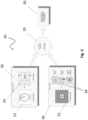
Fig. 6 illustrates one embodiment of a system for automated coaching of a shooter. - The following detailed description includes representative examples utilizing numerous features and teachings, both separately and in combination, and describes numerous embodiments in further detail with reference to the attached drawings. This detailed description is merely intended to teach a person of skill in the art further details for practicing preferred aspects of the present teachings and is not intended to limit the scope of the claims. Therefore, combinations of features disclosed in the following detailed description may not be necessary to practice the teachings in the broadest sense, and are instead taught merely to describe particularly representative examples of the present teachings.
- Some portions of the detailed descriptions that follow are presented in terms of algorithms and sequences of operations which are performed within a computer memory. These algorithmic descriptions and representations are the means used by those skilled in the data processing arts to most effectively convey the substance of their work to others skilled in the art. An algorithm or sequence of operations is here, and generally, conceived to be a self-consistent sequence of steps leading to a desired result. The steps are those requiring physical manipulations of physical quantities. Usually, though not necessarily, these quantities take the form of electrical or magnetic signals capable of being stored, transferred, combined, compared, and otherwise manipulated.
- It should be borne in mind, however, that all of these and similar terms are to be associated with the appropriate physical quantities and are merely convenient labels applied to these quantities. Unless specifically stated otherwise as apparent from the following discussion, it is appreciated that throughout the description, discussions utilizing terms such as "processing," "computing," "calculating," "determining," "displaying" or the like, refer to the action and processes of a computer system, or similar electronic device, that manipulates and transforms data represented as physical (electronic) quantities within the computer system's registers and memories into other data similarly represented as physical quantities within the electronic device's memory or registers or other such information storage, transmission or display devices.
- The embodiments disclosed also relate to an apparatus for performing the operations herein. This apparatus may be specially constructed for the required purposes, or it may comprise a general purpose processor selectively activated or reconfigured by a computer program stored in the electronic device. Such a computer program may be stored in a computer readable storage medium, such as, but is not limited to, any type of disk, including floppy disks, optical disks, CD-ROMs, and magnetic-optical disks, read-only memories (ROMs), random access memories (RAMs), EPROMs, EEPROMs, Flash memory, magnetic or optical cards, or any type of media suitable for storing electronic instructions, and each coupled to a computer system bus.
- The algorithms presented herein are not inherently related to any particular electronic device or other apparatus. Various general purpose systems may be used with programs in accordance with the teachings herein, or it may prove convenient to construct a more specialized apparatus to perform the required method steps. The required structure for a variety of these systems will appear from the description below. It will be appreciated that a variety of programming languages may be used to implement the teachings of the embodiments as described herein.
- Moreover, the various features of the representative examples and the dependent claims may be combined in ways that are not specifically and explicitly enumerated in order to provide additional useful embodiments of the present teachings. It is also expressly noted that all value ranges or indications of groups of entities disclose every possible intermediate value or intermediate entity for the purpose of original disclosure, as well as for the purpose of restricting the claimed subject matter. It is also expressly noted that the dimensions and the shapes of the components shown in the figures are designed to help understand how the present teachings are practiced, but not intended to limit the dimensions and the shapes shown in the examples.
- In the present patent document, methods and systems for automating coaching of a shooter are provided. In such methods and systems, computerized algorithms are used to analyze the shot dispersions of a shooter and predict the cause for any suboptimal performance.
- In a preferred embodiment, the embodiments of the present patent document may enhance a small arms training simulator to assist the shooting instructor in quickly discovering the most common shooting mistakes made by trainees. For example, the methods and systems herein may automatically analyze and highlight the most prevalent poor shooting habits. Accordingly, greater training throughput may be achieved because the system may automatically recognize the errors that an instructor would typically have to find.
- The embodiments disclosed herein include novel techniques for enabling a computer system to automatically flag potential shooting mistakes. Traditionally, shooting analysis has been entirely the domain of a qualified shooting instructor who observes the shooter's physical interaction (e.g. body position, breathing patterns, sight address), hit results (i.e. where the round(s) hit the target), and environmental factors (e.g. wind, heat, visibility) in order to determine the shooter's mistakes and recommend improvements. Small arms simulators complement an instructor by providing additional data related to the shooter's performance by adding sensors to the weapon to provide details that are difficult to discern by mere observance (e.g. trigger squeeze pressure, weapon cant, butt pressure, aim trace).
- In preferred embodiments, shot dispersion data and other sensor data streams are fed into an algorithmic analysis to provide advice to a shooter automatically. Preferably the advice relates to a shooter's mistakes without needing an expert shooting instructor to make the preliminary assessment. In some embodiments, an instructor can use the preliminary analysis to confirm the system's supposition. These systems and methods benefit the instructor since it can speed up the throughput of trainees on the system and reduce the burden on the instructor when training multiple trainees simultaneously. In at least one embodiment, the results are displayed to an instructor via a computer display.
- In embodiments where an instructor remains in the loop, the instructor may be unobtrusively alerted. This allows the instructor to focus on trainees having performance issues while minimizing the delay for the other trainees undergoing training.
- Machine learning is utilized to suggest diagnoses of shooting mistakes. In some embodiments, only common mistakes may be recognized. However, in other embodiments, more complicated problems may be detected. For example, problems related to complex combinations of problems may be detected.
- In some embodiments, the suggestions are communicated directly to the shooter or trainee. This may be done through a screen display or an application ("app") located on a mobile device. In addition to the suggested causes of any suboptimal performance, the trainee may be able to see all the stats about their performance including but not limited to dispersion patterns, sensor responses, number of shots, distance between shots, time between shots and many other statistics.
- In other embodiments, the potential causes for suboptimal performance may be communicated to an instructor. The instructor may evaluate the suggestions and/or predictions made by the automated system and then provide advice to a shooter or trainee. In some embodiments, data from multiple trainees or users may be gathered, and displayed to an instructor at a firing range. In other embodiments, both the trainee and the instructor may receive all the feedback available or any appropriate distribution of information based on the trainee instructor relationship.
- In preferred embodiments the system may make use of previously stored shot patterns and shot dispersion patterns and their related causes to help make a prediction of a trainee's problems.
Fig. 1 illustrates examples of shot dispersion patterns and their associatedcause 14. In preferred embodiments, systems may includeentire databases 10 of shot patterns and or dispersion patterns and their associated causes 14. - The data used to analyze the shooter or trainee may be gathered prior to a training exercise and/or in real time. The data may also be typical data related to all shooters or may be custom data specifically related to the trainee in question.
-
Fig. 2 illustrates a graphical representation of a method for automated coaching of ashooter 50. As may be seen inFig. 2 , bothreference data 26 andtrainee data 36 are fed into analgorithm 20 to produce a suggested cause ofsuboptimal performance 30. - In a preferred embodiment, the
reference data 26 is gathered as a set of training examples based on either doctrinal reference material or from expert shooting instructors. In other embodiments,reference data 26 can be gathered from other reference material or other types of instructors, such as the internet, surveys, or compiled over time. In some embodiments, thisreference data 26 can include both the shot dispersion data 22 (e.g. where the bullets impacted the target) as well as biometric andweapon sensor data 24 if available. In preferred embodiments, for each type of collected data, there may be correspondingreference data 26 in a database for query. - The
reference data 26 is used to determine a classification for the trainee data. For example, the reference data may be used to classify the trainee data into any number of sub-optimal performance results like bad aim, bad breathing or other mistakes. - In addition to
dispersion data 22, thereference data 26 includessensor data 24.Weapon sensor data 24 may include but is not limited to breathing data, weapon point of aim trace, weapon cant, weapon trigger pull sensor data, weapon butt pressure sensor data. - As the trainee or shooter practices,
trainee data 36 is collected. Similar to thereference data 26, trainee data may be made up of bothdispersion data 32 andweapon sensor data 34. One or more of these data points may be compared to thereference data 26 in order to determine a cause of suboptimal performance. - In some embodiments, cameras may be focused on the targets to obtain a trainee's
shot dispersion data 32 in real time. An image analysis program maybe used to locate the shots and determine locations of each and distances between shots and distances from each shot to the aimed at target. - A
machine learning algorithm 20 is used to compare thetrainee data 36 with thereference data 26. In some embodiments, each entry of reference data (termed an input vector) is paired with a desired output value (termed a supervisory signal). Accordingly, analgorithm 20 may analyze thereference data 26 in order to create an inferred function known as a classifier or regression function (depending upon the type of data). In some embodiments, thisalgorithm 20 essentially generalizes from thereference data 26 in order to reasonably handle similar (but not necessarily exact) data in order to makeappropriate predictions 30. In some embodiments, the data may be stored on a computer and in particular, in a database. The algorithm may also be run on a computer. - The
algorithm 20 uses machine learning to allow thepredictions 30 to become more accurate over time. Machine learning is a branch of artificial intelligence, primarily focused on how machines analyze and learn from data. By separating the problem into data representations (the sample training data 36) and then generalizing based on the reference data 26 (to allow for new data that was not gathered), machine learning algorithms are created that can then return reasonable inferred predictions of the output solution. - In some embodiments, supervised learning, which is a specific type of machine learning may be employed. In supervised learning, the shooting instructors may rely on significant historical data to determine a likely diagnosis of the trainee's shooting issues and the machine may learn from this prediction. In some embodiments, the shooting instructor may confirm or deny a predicted cause of suboptimal shooting such that the algorithm learns over time.
- In some embodiments, the
machine learning algorithm 20 uses thereference data 26 to "train" the classifier resulting in associated relative weighting values being applied to the internal algorithm parameters. These "weights" allow the classifier to adequately classify thereference data 26 and, subsequently, are used to correctly classify thetrainee data 36. This may be thought of as an Artificial Neural Network. In some embodiments, themachine learning algorithm 20 can be a linear function (also known as linear predictor function) where weights are assigned to each possible category of classification (based on the reference data 26)and then used (via a dot product) to combine with a particular instance (i.e. trainee data 36) in order to be classified. In some embodiments, a linear function known as Kernel Discriminant Analysis (KDA) may be used. In particular, KDA may be used in conjunction with trigger squeeze data to classify any sub-optimal performance. - The weights are derived through a process whereby successive iterations of refinement are performed using instances of
reference data 26 to calculate an error value as part of training themachine learning algorithm 20. The error value is derived from the difference between the desired response (e.g. a known "Good" or "Bad") of themachine learning algorithm 20 and the actual response. The error value is then back-propagated through the algorithm's internal structure and used for successive iterations until the error is below a given threshold. Once this is achieved, themachine learning algorithm 20 is sufficiently "trained" and the weights can then be used to classifytrainee data 36. -
Figs. 3 and4 each show a representative trigger squeeze sensor feed.Fig. 3 illustrates a "good" trigger squeeze whileFig. 4 illustrates a "bad" trigger squeeze. In preferred embodiments, themachine learning algorithm 20 may be fed a number of "good" and "bad" trigger feeds along with the their respective classifications as "good" and "bad" to train the algorithm what a "good" feed looks like. Numerous data samples may be used. Once trained, themachine learning algorithm 20 can correctly classify the trigger squeeze sensor shown inFig. 5 as "Good", which would be available for presentation to the instructor on a display. - As may be seen in
Fig. 6 , in one aspect of the present patent document anautomated coaching system 100 is provided. In some embodiments, the system comprises: at least onesensor 108 for obtaining training data of a trainee's shooting habits; acomputer 106 containing an algorithm that evaluates the training data; adisplay 102 for displaying to an instructor at least one trainee's at least one mistake. In some embodiments, the system provides suggested corrections to fix the trainee's mistake. - As may be seen in
Fig. 6 ,sensors 108 may be located and sensing a plurality of different items. Sensors may be located on a trainee'sweapon 112, on the trainee themselves, on thetarget 110 or any other place that's desirable to acquire data. All of the various components of thesystem 100 may be connected via anetwork 114. The network may be wired or wireless. Adisplay 102 may be provided to the shooting coach and/or trainee to provide feedback about performance and potential correctable errors the trainee is making. Acomputer 106 runs a software program that includes amachine learning algorithm 20 that classifies the input from thevarious sensors 108 into shooting errors made by the trainee. In preferred embodiments, the machine learning algorithm uses adatabase 104 to compare the sensor outputs 108 with reference data. By comparing the trainee data against reference data, themachine learning algorithm 20 provides automated feedback to a shooter and/or coach about potential shooting errors that are occurring. - In one aspect of the present patent document, an electronic coaching method is provided. In preferred embodiments, the method comprises: obtaining training data of a trainee's shooting habits from at least one sensor; performing a machine learning algorithm on a computer that evaluates the training data; displaying to an instructor at least one trainee's at least one mistake. In some embodiments, the method provides suggested corrections to fix the trainee's mistake.
Claims (15)
- A method for automatically predicting a suboptimal shooting mistake comprising:providing a plurality of good example reference data examples (26) of shot dispersion patterns and examples from a sensor mounted on a weapon (24) that do not indicate the suboptimal shooting mistake to a machine learning algorithm (20);providing a plurality of bad example reference data examples (26) of shot dispersion patterns and examples from the sensor mounted on the weapon (24) that do indicate the suboptimal shooting mistake to the machine learning algorithm (20);calculating an error value for the machine learning algorithm (20) based on differences between a desired response of the machine learning algorithm (20) and an actual response of the machine learning algorithm (20) to the plurality of good example reference data examples (26) and to the plurality of bad example reference data examples (26);adjusting weights in the machine learning algorithm (20) and back propagating the error value until the error value is below a given threshold value;obtaining training data (36) of a trainee's shot dispersion data (32) and from at least one sensor mounted on a trainee's weapon, wherein the at least one sensor is identical to the sensor (24) used in examples from the reference data;using the machine learning algorithm (20) including the weights to classify the training data (36) into a classification of either including the suboptimal shooting mistake or not including the suboptimal shooting mistake; and,displaying feedback on a screen about the suboptimal shooting mistake based on the classification
- The method of claim 1, wherein the good example reference data examples from the sensor mounted on the weapon (24) and trainee's shot dispersion data are trigger squeeze data.
- The method of claim 1, wherein the shot dispersion data (32) is obtained by a camera and image analysis.
- The method of claim 1, wherein the sensor (108) measures anyone of the group consisting of: trigger squeeze pressure or displacement, weapon cant, butt pressure and aim trace.
- The method of claim 1, wherein feedback from a plurality of trainee's is displayed on a single screen.
- The method of claim 1, wherein the machine learning algorithm (20) uses Kernel Discriminant Analysis.
- The method of claim 1, wherein the at least one sensor (108) is a trigger pull sensor.
- The method of claim 1, wherein the machine learning algorithm (20) is an Artificial Neural Network.
- A system (100) for automatically predicting a suboptimal shooting mistake comprising:a database (104) with a plurality of reference records for suboptimal shooting mistakes;a weapon (112);at least one sensor (108) coupled to the weapon;a display (102) including a screen;a computer (106) with software that when executed by a processor performs the following steps:receiving first trainee data (36) from the at least one sensor (108);receiving second trainee data (36) of a shot dispersion pattern (32);
classifying the first and second trainee data (36) into including the suboptimal shooting mistake or not including the suboptimal shooting mistake using a machine learning algorithm (20) trained byproviding a plurality of good example reference data examples (26) of shot dispersion patterns (22) and examples from a sensor mounted on the weapon (112) that do not indicate the suboptimal shooting mistake to the machine learning algorithm (20);providing a plurality of bad example reference data examples (26) of shot dispersion patterns (22) and examples from the sensor mounted on the weapon (112) that do indicate the suboptimal shooting mistake to the machine learning algorithm (20), wherein the sensor is identical to the at least one sensor (108);calculating an error value for the machine learning algorithm (20) based on differences between a desired response of the machine learning algorithm (20) and an actual response of the machine learning algorithm (20) to the plurality of good example reference data examples (26) and to the plurality of bad example reference data examples (26);adjusting weights in the machine learning algorithm (20) and back propagating the error value until the error value is below a given threshold value;and,displaying feedback on a screen about the suboptimal shooting mistake. - The system of claim 9, wherein the reference data (26) is trigger squeeze data.
- The system of claim 9, wherein shot dispersion data (32) is obtained by a camera and image analysis.
- The system (100) of claim 9, wherein the at least one sensor (108) includes anyone of the group consisting of: trigger squeeze sensor, weapon cant sensor, butt pressure sensor and aim trace sensor.
- The system (100) of claim 9, wherein the machine learning algorithm (20) uses Kernel Discriminant Analysis.
- The system (100) of claim 13, wherein the at least one sensor (108) is a trigger pull sensor.
- The system of claim 9, wherein the machine learning algorithm (20) is an Artificial Neural Network.
Applications Claiming Priority (2)
| Application Number | Priority Date | Filing Date | Title |
|---|---|---|---|
| US201461954493P | 2014-03-17 | 2014-03-17 | |
| PCT/US2015/021086 WO2015142940A1 (en) | 2014-03-17 | 2015-03-17 | Systems and methods for automated coaching of a shooter |
Publications (4)
| Publication Number | Publication Date |
|---|---|
| EP3120102A1 EP3120102A1 (en) | 2017-01-25 |
| EP3120102A4 EP3120102A4 (en) | 2017-11-29 |
| EP3120102B1 true EP3120102B1 (en) | 2025-05-07 |
| EP3120102C0 EP3120102C0 (en) | 2025-05-07 |
Family
ID=54145240
Family Applications (1)
| Application Number | Title | Priority Date | Filing Date |
|---|---|---|---|
| EP15765132.4A Active EP3120102B1 (en) | 2014-03-17 | 2015-03-17 | Systems and methods for automated coaching of a shooter |
Country Status (6)
| Country | Link |
|---|---|
| US (1) | US10012475B2 (en) |
| EP (1) | EP3120102B1 (en) |
| AU (1) | AU2015231438B2 (en) |
| ES (1) | ES3032133T3 (en) |
| SG (1) | SG11201607730VA (en) |
| WO (1) | WO2015142940A1 (en) |
Families Citing this family (7)
| Publication number | Priority date | Publication date | Assignee | Title |
|---|---|---|---|---|
| US10302396B1 (en) | 2016-01-03 | 2019-05-28 | Kinetrope LLC. | Method of and device for improving marksmanship skill |
| CA3031008C (en) * | 2016-07-17 | 2019-07-02 | Erange Corporation | Shooting training system |
| US10982934B2 (en) | 2017-01-27 | 2021-04-20 | Robert Dewey Ostovich | Firearms marksmanship improvement product and related system and methods |
| WO2021144125A1 (en) * | 2020-01-17 | 2021-07-22 | Robert Bosch Gmbh | A method of training a module and method of preventing capture of an ai module |
| US20230228540A1 (en) * | 2022-01-17 | 2023-07-20 | MILO Range | System and method for a smart rail target |
| KR102752365B1 (en) * | 2022-10-19 | 2025-01-10 | 주식회사 지니소프트 | Immersive content game play system using multi-screen |
| CN117387419A (en) * | 2023-10-12 | 2024-01-12 | 中电万维信息技术有限责任公司 | An intelligent collection and analysis method based on light weapons shooting training data |
Family Cites Families (20)
| Publication number | Priority date | Publication date | Assignee | Title |
|---|---|---|---|---|
| US4804325A (en) | 1986-05-15 | 1989-02-14 | Spartanics, Ltd. | Weapon training simulator system |
| US4923402A (en) | 1988-11-25 | 1990-05-08 | The United States Of America As Represented By The Secretary Of The Navy | Marksmanship expert trainer |
| US6739873B1 (en) * | 1996-09-18 | 2004-05-25 | Bristlecone Corporation | Method and apparatus for training a shooter of a firearm |
| FR2754048B1 (en) * | 1996-10-02 | 1998-11-27 | Trabut Pierre Louis Georges | APPARATUS AND METHOD FOR EDUCATING THE PERCEPTION OF THE SPORTS SHOOTER. (THE DEVICE IS HEREINAFTER CALLED "PERFOTIR") |
| WO2002101318A2 (en) | 2001-06-08 | 2002-12-19 | Beamhit, Llc | Firearm laser training system and method facilitating firearm training for extended range targets with feedback of firearm control |
| US6699041B1 (en) * | 2002-11-07 | 2004-03-02 | The United States Of America As Represented By The United States Department Of Energy | Self-assessing target with automatic feedback |
| US9151564B1 (en) * | 2006-08-15 | 2015-10-06 | Triggermaster, Inc. | Firearm trigger pull training system and methods |
| US8046203B2 (en) | 2008-07-11 | 2011-10-25 | Honeywell International Inc. | Method and apparatus for analysis of errors, accuracy, and precision of guns and direct and indirect fire control mechanisms |
| US9308437B2 (en) * | 2009-02-27 | 2016-04-12 | Tactical Entertainment, Llc | Error correction system and method for a simulation shooting system |
| US20100273130A1 (en) * | 2009-04-22 | 2010-10-28 | Integrated Digital Technologies, Inc. | Shooting training systems using an embedded photo sensing panel |
| WO2011094177A2 (en) * | 2010-01-26 | 2011-08-04 | Ehud Dribben | Monitoring shots of firearms |
| WO2011103161A2 (en) | 2010-02-16 | 2011-08-25 | Research Foundation Of State University Of New York | Ammunition and weapon type identification based on gunshot residue analysis |
| US8684738B2 (en) * | 2010-11-10 | 2014-04-01 | The United States Of America, As Represented By The Secretary Of The Navy | Method and tool for firearm sight training |
| US20120270186A1 (en) * | 2011-04-20 | 2012-10-25 | Vijay Singh | Marksmanship training aid |
| US10260845B2 (en) * | 2011-08-05 | 2019-04-16 | Board Of Regents Of The University Of Texas System | Marksmanship training aid |
| US8668496B2 (en) * | 2012-02-08 | 2014-03-11 | Troy Nolen | Training system |
| US20130244211A1 (en) * | 2012-03-15 | 2013-09-19 | The Board Of Trustees Of The Leland Stanford Junior University | Systems and methods for measuring, analyzing, and providing feedback for movement in multidimensional space |
| US20150253109A1 (en) * | 2013-01-10 | 2015-09-10 | Brian Donald Wichner | Methods and Systems for Determining a Gunshot Sequence or Recoil Dynamics of a Gunshot for a Firearm |
| US20150023591A1 (en) * | 2013-07-18 | 2015-01-22 | Ramakrishna Potluri, Intellecttech Corp Pvt Ltd | Optical analysis of a point of aim of a projectile discharge device |
| US20160298930A1 (en) * | 2015-04-13 | 2016-10-13 | Carl Wesley Squire | Target practice system |
-
2015
- 2015-03-17 US US14/660,663 patent/US10012475B2/en active Active
- 2015-03-17 ES ES15765132T patent/ES3032133T3/en active Active
- 2015-03-17 EP EP15765132.4A patent/EP3120102B1/en active Active
- 2015-03-17 WO PCT/US2015/021086 patent/WO2015142940A1/en not_active Ceased
- 2015-03-17 SG SG11201607730VA patent/SG11201607730VA/en unknown
- 2015-03-17 AU AU2015231438A patent/AU2015231438B2/en active Active
Also Published As
| Publication number | Publication date |
|---|---|
| WO2015142940A1 (en) | 2015-09-24 |
| US20150285592A1 (en) | 2015-10-08 |
| SG11201607730VA (en) | 2016-10-28 |
| AU2015231438B2 (en) | 2019-02-14 |
| AU2015231438A1 (en) | 2016-11-03 |
| ES3032133T3 (en) | 2025-07-15 |
| US10012475B2 (en) | 2018-07-03 |
| EP3120102A4 (en) | 2017-11-29 |
| EP3120102A1 (en) | 2017-01-25 |
| EP3120102C0 (en) | 2025-05-07 |
Similar Documents
| Publication | Publication Date | Title |
|---|---|---|
| US10012475B2 (en) | Systems and methods for automated coaching of a shooter | |
| US20110091847A1 (en) | Method, system, and computer software code for the adaptation of training via performance diagnosis based on (neuro)physiological metrics | |
| US10964057B2 (en) | Information processing apparatus, method for controlling information processing apparatus, and storage medium | |
| CN111753635A (en) | Intelligent scoring method, device and storage medium for chemical experiment operation | |
| Goldberg et al. | Modeling expert behavior in support of an adaptive psychomotor training environment: A marksmanship use case | |
| KR101282319B1 (en) | Method and apparatus for virtual golf simulation measuring golf ability of the user | |
| WO2020068895A1 (en) | Adaptable on-deployment learning platform for driver analysis output generation | |
| Pavlenko et al. | Estimation of the multidimensional transient functions oculo-motor system of human | |
| Merckx et al. | Measuring the effectiveness of pressing in soccer | |
| Dutta et al. | A bayesian model for predicting face recognition performance using image quality | |
| Zou et al. | Towards a likelihood ratio approach for bloodstain pattern analysis | |
| US20210308551A1 (en) | Method of scoring a motion of a user and system thereof | |
| CN118798753A (en) | A method, device and system for detecting teacher's get out of class status | |
| CN108416496A (en) | Teaching evaluation method, storage medium and server based on data analysis | |
| US20240245972A1 (en) | System and method for analyzing golf swing videos and generating effective golf advice using artificial intelligence | |
| Umer et al. | Prediction of students’ dropout in MOOC environment | |
| Campaniço et al. | Data’s hidden data: Qualitative revelations of sports efficiency analysis brought by neural network performance metrics | |
| US20220019944A1 (en) | System and method for identifying and mitigating ambiguous data in machine learning architectures | |
| KR20170083788A (en) | Target Training System and Analysis Method | |
| CN117493831B (en) | An interactive reconnaissance payload target autonomous identification algorithm evaluation system | |
| CN111382721B (en) | Artificial intelligence-based examination room monitoring system | |
| Dowling et al. | AutoSIGHT: Automatic Eye Tracking-based System for Immediate Grading of Human experTise | |
| Lee et al. | Summary of the 2019 activity detection in extended videos prize challenge | |
| CN112684884A (en) | Flight training action automatic identification and evaluation system | |
| Putra et al. | Klasifikasi Analisis Gerakan Squat untuk Pemula dan Profesional Menggunakan Metode SVM Berbasis Mediapipe |
Legal Events
| Date | Code | Title | Description |
|---|---|---|---|
| STAA | Information on the status of an ep patent application or granted ep patent |
Free format text: STATUS: THE INTERNATIONAL PUBLICATION HAS BEEN MADE |
|
| PUAI | Public reference made under article 153(3) epc to a published international application that has entered the european phase |
Free format text: ORIGINAL CODE: 0009012 |
|
| STAA | Information on the status of an ep patent application or granted ep patent |
Free format text: STATUS: REQUEST FOR EXAMINATION WAS MADE |
|
| 17P | Request for examination filed |
Effective date: 20161004 |
|
| AK | Designated contracting states |
Kind code of ref document: A1 Designated state(s): AL AT BE BG CH CY CZ DE DK EE ES FI FR GB GR HR HU IE IS IT LI LT LU LV MC MK MT NL NO PL PT RO RS SE SI SK SM TR |
|
| AX | Request for extension of the european patent |
Extension state: BA ME |
|
| RIN1 | Information on inventor provided before grant (corrected) |
Inventor name: ROMINGER, EDRIC Inventor name: SHAVERS, DARREN Inventor name: PRIEST, ALLEN Inventor name: NAPIER, JAMES |
|
| DAV | Request for validation of the european patent (deleted) | ||
| DAX | Request for extension of the european patent (deleted) | ||
| A4 | Supplementary search report drawn up and despatched |
Effective date: 20171026 |
|
| RIC1 | Information provided on ipc code assigned before grant |
Ipc: F41G 3/26 20060101AFI20171020BHEP |
|
| STAA | Information on the status of an ep patent application or granted ep patent |
Free format text: STATUS: EXAMINATION IS IN PROGRESS |
|
| 17Q | First examination report despatched |
Effective date: 20200320 |
|
| RAP3 | Party data changed (applicant data changed or rights of an application transferred) |
Owner name: INVERIS TRAINING SOLUTIONS, INC. |
|
| GRAP | Despatch of communication of intention to grant a patent |
Free format text: ORIGINAL CODE: EPIDOSNIGR1 |
|
| STAA | Information on the status of an ep patent application or granted ep patent |
Free format text: STATUS: GRANT OF PATENT IS INTENDED |
|
| INTG | Intention to grant announced |
Effective date: 20240618 |
|
| GRAJ | Information related to disapproval of communication of intention to grant by the applicant or resumption of examination proceedings by the epo deleted |
Free format text: ORIGINAL CODE: EPIDOSDIGR1 |
|
| STAA | Information on the status of an ep patent application or granted ep patent |
Free format text: STATUS: EXAMINATION IS IN PROGRESS |
|
| GRAP | Despatch of communication of intention to grant a patent |
Free format text: ORIGINAL CODE: EPIDOSNIGR1 |
|
| STAA | Information on the status of an ep patent application or granted ep patent |
Free format text: STATUS: GRANT OF PATENT IS INTENDED |
|
| INTC | Intention to grant announced (deleted) | ||
| INTG | Intention to grant announced |
Effective date: 20241031 |
|
| GRAS | Grant fee paid |
Free format text: ORIGINAL CODE: EPIDOSNIGR3 |
|
| GRAA | (expected) grant |
Free format text: ORIGINAL CODE: 0009210 |
|
| STAA | Information on the status of an ep patent application or granted ep patent |
Free format text: STATUS: THE PATENT HAS BEEN GRANTED |
|
| AK | Designated contracting states |
Kind code of ref document: B1 Designated state(s): AL AT BE BG CH CY CZ DE DK EE ES FI FR GB GR HR HU IE IS IT LI LT LU LV MC MK MT NL NO PL PT RO RS SE SI SK SM TR |
|
| REG | Reference to a national code |
Ref country code: GB Ref legal event code: FG4D |
|
| REG | Reference to a national code |
Ref country code: CH Ref legal event code: EP |
|
| REG | Reference to a national code |
Ref country code: DE Ref legal event code: R096 Ref document number: 602015091591 Country of ref document: DE |
|
| REG | Reference to a national code |
Ref country code: IE Ref legal event code: FG4D |
|
| REG | Reference to a national code |
Ref country code: ES Ref legal event code: FG2A Ref document number: 3032133 Country of ref document: ES Kind code of ref document: T3 Effective date: 20250715 |
|
| U01 | Request for unitary effect filed |
Effective date: 20250606 |
|
| U07 | Unitary effect registered |
Designated state(s): AT BE BG DE DK EE FI FR IT LT LU LV MT NL PT RO SE SI Effective date: 20250616 |
|
| PG25 | Lapsed in a contracting state [announced via postgrant information from national office to epo] |
Ref country code: NO Free format text: LAPSE BECAUSE OF FAILURE TO SUBMIT A TRANSLATION OF THE DESCRIPTION OR TO PAY THE FEE WITHIN THE PRESCRIBED TIME-LIMIT Effective date: 20250807 Ref country code: GR Free format text: LAPSE BECAUSE OF FAILURE TO SUBMIT A TRANSLATION OF THE DESCRIPTION OR TO PAY THE FEE WITHIN THE PRESCRIBED TIME-LIMIT Effective date: 20250808 |
|
| PG25 | Lapsed in a contracting state [announced via postgrant information from national office to epo] |
Ref country code: PL Free format text: LAPSE BECAUSE OF FAILURE TO SUBMIT A TRANSLATION OF THE DESCRIPTION OR TO PAY THE FEE WITHIN THE PRESCRIBED TIME-LIMIT Effective date: 20250507 |
|
| PG25 | Lapsed in a contracting state [announced via postgrant information from national office to epo] |
Ref country code: HR Free format text: LAPSE BECAUSE OF FAILURE TO SUBMIT A TRANSLATION OF THE DESCRIPTION OR TO PAY THE FEE WITHIN THE PRESCRIBED TIME-LIMIT Effective date: 20250507 |
|
| PG25 | Lapsed in a contracting state [announced via postgrant information from national office to epo] |
Ref country code: RS Free format text: LAPSE BECAUSE OF FAILURE TO SUBMIT A TRANSLATION OF THE DESCRIPTION OR TO PAY THE FEE WITHIN THE PRESCRIBED TIME-LIMIT Effective date: 20250807 |
|
| PG25 | Lapsed in a contracting state [announced via postgrant information from national office to epo] |
Ref country code: IS Free format text: LAPSE BECAUSE OF FAILURE TO SUBMIT A TRANSLATION OF THE DESCRIPTION OR TO PAY THE FEE WITHIN THE PRESCRIBED TIME-LIMIT Effective date: 20250907 |
|
| PG25 | Lapsed in a contracting state [announced via postgrant information from national office to epo] |
Ref country code: SM Free format text: LAPSE BECAUSE OF FAILURE TO SUBMIT A TRANSLATION OF THE DESCRIPTION OR TO PAY THE FEE WITHIN THE PRESCRIBED TIME-LIMIT Effective date: 20250507 |
|
| PG25 | Lapsed in a contracting state [announced via postgrant information from national office to epo] |
Ref country code: CZ Free format text: LAPSE BECAUSE OF FAILURE TO SUBMIT A TRANSLATION OF THE DESCRIPTION OR TO PAY THE FEE WITHIN THE PRESCRIBED TIME-LIMIT Effective date: 20250507 |
|
| PG25 | Lapsed in a contracting state [announced via postgrant information from national office to epo] |
Ref country code: SK Free format text: LAPSE BECAUSE OF FAILURE TO SUBMIT A TRANSLATION OF THE DESCRIPTION OR TO PAY THE FEE WITHIN THE PRESCRIBED TIME-LIMIT Effective date: 20250507 |
|
| PLBE | No opposition filed within time limit |
Free format text: ORIGINAL CODE: 0009261 |
|
| STAA | Information on the status of an ep patent application or granted ep patent |
Free format text: STATUS: NO OPPOSITION FILED WITHIN TIME LIMIT |
|
| REG | Reference to a national code |
Ref country code: CH Ref legal event code: L10 Free format text: ST27 STATUS EVENT CODE: U-0-0-L10-L00 (AS PROVIDED BY THE NATIONAL OFFICE) Effective date: 20260318 |
|
| U20 | Renewal fee for the european patent with unitary effect paid |
Year of fee payment: 12 Effective date: 20260209 |
|
| REG | Reference to a national code |
Ref country code: CH Ref legal event code: U11 Free format text: ST27 STATUS EVENT CODE: U-0-0-U10-U11 (AS PROVIDED BY THE NATIONAL OFFICE) Effective date: 20260401 |
|
| PGFP | Annual fee paid to national office [announced via postgrant information from national office to epo] |
Ref country code: GB Payment date: 20260128 Year of fee payment: 12 |
|
| 26N | No opposition filed |
Effective date: 20260210 |