EP3118941A1 - Electrical connector and returning jig - Google Patents
Electrical connector and returning jig Download PDFInfo
- Publication number
- EP3118941A1 EP3118941A1 EP16171819.2A EP16171819A EP3118941A1 EP 3118941 A1 EP3118941 A1 EP 3118941A1 EP 16171819 A EP16171819 A EP 16171819A EP 3118941 A1 EP3118941 A1 EP 3118941A1
- Authority
- EP
- European Patent Office
- Prior art keywords
- cover
- switch
- connector
- switching mechanism
- locking lever
- Prior art date
- Legal status (The legal status is an assumption and is not a legal conclusion. Google has not performed a legal analysis and makes no representation as to the accuracy of the status listed.)
- Granted
Links
Images





Classifications
-
- H—ELECTRICITY
- H01—ELECTRIC ELEMENTS
- H01R—ELECTRICALLY-CONDUCTIVE CONNECTIONS; STRUCTURAL ASSOCIATIONS OF A PLURALITY OF MUTUALLY-INSULATED ELECTRICAL CONNECTING ELEMENTS; COUPLING DEVICES; CURRENT COLLECTORS
- H01R13/00—Details of coupling devices of the kinds covered by groups H01R12/70 or H01R24/00 - H01R33/00
- H01R13/66—Structural association with built-in electrical component
- H01R13/70—Structural association with built-in electrical component with built-in switch
- H01R13/701—Structural association with built-in electrical component with built-in switch the switch being actuated by an accessory, e.g. cover, locking member
-
- B—PERFORMING OPERATIONS; TRANSPORTING
- B60—VEHICLES IN GENERAL
- B60L—PROPULSION OF ELECTRICALLY-PROPELLED VEHICLES; SUPPLYING ELECTRIC POWER FOR AUXILIARY EQUIPMENT OF ELECTRICALLY-PROPELLED VEHICLES; ELECTRODYNAMIC BRAKE SYSTEMS FOR VEHICLES IN GENERAL; MAGNETIC SUSPENSION OR LEVITATION FOR VEHICLES; MONITORING OPERATING VARIABLES OF ELECTRICALLY-PROPELLED VEHICLES; ELECTRIC SAFETY DEVICES FOR ELECTRICALLY-PROPELLED VEHICLES
- B60L53/00—Methods of charging batteries, specially adapted for electric vehicles; Charging stations or on-board charging equipment therefor; Exchange of energy storage elements in electric vehicles
- B60L53/10—Methods of charging batteries, specially adapted for electric vehicles; Charging stations or on-board charging equipment therefor; Exchange of energy storage elements in electric vehicles characterised by the energy transfer between the charging station and the vehicle
- B60L53/14—Conductive energy transfer
- B60L53/16—Connectors, e.g. plugs or sockets, specially adapted for charging electric vehicles
-
- H—ELECTRICITY
- H01—ELECTRIC ELEMENTS
- H01R—ELECTRICALLY-CONDUCTIVE CONNECTIONS; STRUCTURAL ASSOCIATIONS OF A PLURALITY OF MUTUALLY-INSULATED ELECTRICAL CONNECTING ELEMENTS; COUPLING DEVICES; CURRENT COLLECTORS
- H01R13/00—Details of coupling devices of the kinds covered by groups H01R12/70 or H01R24/00 - H01R33/00
- H01R13/62—Means for facilitating engagement or disengagement of coupling parts or for holding them in engagement
- H01R13/627—Snap or like fastening
- H01R13/6275—Latching arms not integral with the housing
-
- H—ELECTRICITY
- H01—ELECTRIC ELEMENTS
- H01R—ELECTRICALLY-CONDUCTIVE CONNECTIONS; STRUCTURAL ASSOCIATIONS OF A PLURALITY OF MUTUALLY-INSULATED ELECTRICAL CONNECTING ELEMENTS; COUPLING DEVICES; CURRENT COLLECTORS
- H01R13/00—Details of coupling devices of the kinds covered by groups H01R12/70 or H01R24/00 - H01R33/00
- H01R13/66—Structural association with built-in electrical component
- H01R13/70—Structural association with built-in electrical component with built-in switch
- H01R13/713—Structural association with built-in electrical component with built-in switch the switch being a safety switch
-
- H—ELECTRICITY
- H01—ELECTRIC ELEMENTS
- H01R—ELECTRICALLY-CONDUCTIVE CONNECTIONS; STRUCTURAL ASSOCIATIONS OF A PLURALITY OF MUTUALLY-INSULATED ELECTRICAL CONNECTING ELEMENTS; COUPLING DEVICES; CURRENT COLLECTORS
- H01R2201/00—Connectors or connections adapted for particular applications
- H01R2201/26—Connectors or connections adapted for particular applications for vehicles
-
- Y—GENERAL TAGGING OF NEW TECHNOLOGICAL DEVELOPMENTS; GENERAL TAGGING OF CROSS-SECTIONAL TECHNOLOGIES SPANNING OVER SEVERAL SECTIONS OF THE IPC; TECHNICAL SUBJECTS COVERED BY FORMER USPC CROSS-REFERENCE ART COLLECTIONS [XRACs] AND DIGESTS
- Y02—TECHNOLOGIES OR APPLICATIONS FOR MITIGATION OR ADAPTATION AGAINST CLIMATE CHANGE
- Y02T—CLIMATE CHANGE MITIGATION TECHNOLOGIES RELATED TO TRANSPORTATION
- Y02T10/00—Road transport of goods or passengers
- Y02T10/60—Other road transportation technologies with climate change mitigation effect
- Y02T10/70—Energy storage systems for electromobility, e.g. batteries
-
- Y—GENERAL TAGGING OF NEW TECHNOLOGICAL DEVELOPMENTS; GENERAL TAGGING OF CROSS-SECTIONAL TECHNOLOGIES SPANNING OVER SEVERAL SECTIONS OF THE IPC; TECHNICAL SUBJECTS COVERED BY FORMER USPC CROSS-REFERENCE ART COLLECTIONS [XRACs] AND DIGESTS
- Y02—TECHNOLOGIES OR APPLICATIONS FOR MITIGATION OR ADAPTATION AGAINST CLIMATE CHANGE
- Y02T—CLIMATE CHANGE MITIGATION TECHNOLOGIES RELATED TO TRANSPORTATION
- Y02T10/00—Road transport of goods or passengers
- Y02T10/60—Other road transportation technologies with climate change mitigation effect
- Y02T10/7072—Electromobility specific charging systems or methods for batteries, ultracapacitors, supercapacitors or double-layer capacitors
-
- Y—GENERAL TAGGING OF NEW TECHNOLOGICAL DEVELOPMENTS; GENERAL TAGGING OF CROSS-SECTIONAL TECHNOLOGIES SPANNING OVER SEVERAL SECTIONS OF THE IPC; TECHNICAL SUBJECTS COVERED BY FORMER USPC CROSS-REFERENCE ART COLLECTIONS [XRACs] AND DIGESTS
- Y02—TECHNOLOGIES OR APPLICATIONS FOR MITIGATION OR ADAPTATION AGAINST CLIMATE CHANGE
- Y02T—CLIMATE CHANGE MITIGATION TECHNOLOGIES RELATED TO TRANSPORTATION
- Y02T90/00—Enabling technologies or technologies with a potential or indirect contribution to GHG emissions mitigation
- Y02T90/10—Technologies relating to charging of electric vehicles
- Y02T90/14—Plug-in electric vehicles
Definitions
- the switch may comprise a spring piece, wherein, when the spring piece is pressed by the operating portion, the switch generates the signal capable of establishing the conduction between the electrical connector and the mating connector, and wherein, under a state in which the spring piece is not pressed by the operating portion, the switch one of generates the signal for interrupting the conduction between the electrical connector and the mating connector, and does not generate the signal capable of establishing the conduction between the electrical connector and the mating connector.
- a returning jig comprising: an insertion portion having a shaft shape to be inserted into the returning hole of the electrical connector; and a plate-like key portion, which is formed at a distal end portion of the insertion portion so as to protrude in a radial direction of the insertion portion, and is configured to be brought into contact with the guide portion when inserted into the returning hole, wherein, under a state in which the switching mechanism is located at the second position, the insertion portion is inserted into the returning hole so that the plate-like key portion is brought into contact with the guide portion, and wherein the plate-like key portion is rotated to press the guide portion toward the first position so that the switching mechanism is arrangeable at the first position is further provided.
- connector unit 200 electrical connector unit
- the connector unit 200 a connector unit for a battery charger for an electric vehicle is exemplified.
- orientations indicated by the arrows of FIG. 1 are defined as “positive orientations”, and orientations opposite to the orientations indicated by the arrows of FIG. 1 are defined as “negative orientations”.
- the connector unit 200 includes a connector 1 being an electrical connector, and an inlet 2 being a mating connector to be fitted to the connector 1.
- the connector 1 includes the outer shell 101, a grip 102 arranged at one end of the outer shell 101 and configured to enable an operator to hold the connector 1 during charging, an inner housing 103 configured to accommodate contacts 108 therein and arranged inside the outer shell 101 so that an end portion of the inner housing 103 is exposed, a cable 109 arranged inside the outer shell 101 and connected to the contacts 108, the locking lever 104 arranged inside the outer shell 101 and configured to lock the fitting state between the connector 1 and the inlet 2 during fitting (during charging), the switch 106 connected to the cable 109 and configured to detect halfway fitting of the locking lever 104, and a release lever 105 being a releasing portion configured to release locking of the locking lever 104.
- the outer shell 101 is an outer cover of the connector 1. As illustrated in FIG. 3 , the outer shell 101 includes a tubular large-diameter portion 101C and a tubular small-diameter portion 101 B.
- the small-diameter portion 101 B is formed at a distal end of the large-diameter portion 101C in the positive orientation of the X direction, has a diameter smaller than that of the large-diameter portion 101C, and is coaxial with the large-diameter portion 101C.
- a distal end 101A of the small-diameter portion 101 B is chamfered.
- the inner housing 103 is an insulating member having a cylindrical shape conforming to an inner peripheral shape of the small-diameter portion 101B, and is arranged in the small-diameter portion 101 B.
- the operating portion 104C of the locking lever 104 presses the spring piece 106A of the switch 106, whereas the locking-lever-side end portion 105B of the release lever 105 does not press the operating portion 104C of the locking lever 104.
- the battery charger detects, by a contact detection circuit (not shown), whether or not the contacts 108 of the connector 1 and the contacts 203 of the inlet 2 are in contact with each other. When the contacts are not in contact with each other, charging is not started. Accordingly, an electric leakage is not caused in the state illustrated in FIG. 2 .
- the connector 1 is pulled out of (urgently disengaged from) the inlet 2.
- An operator makes an investigation on the pulled-out connector 1 as needed to determine a reason why the locking lever 104 cannot be moved, and clears the reason.
- the locking lever 104 is returned to a movable condition again.
- the returning jig 181 includes a grip 183 having a round bar-like shape, an insertion portion 185 formed at a distal end of the grip 183 and having a round bar-like shape (shaft shape) and a diameter smaller than that of the grip 183, and a plate-like key portion 187, which is formed at a distal end portion of the insertion portion 185 so as to protrude in a radial direction of the insertion portion 185, and is configured to be brought into contact with the guide portion 139.
- the locking lever 104 can operate the switch 106 again.
- the switch 106 can generate the signal capable of establishing the conduction between the connector 1 and the inlet 2, and the connector 1 is available again.
- the connector 1 includes the locking lever 104, the switching mechanism 111, the outer shell 101, and the cover 121.
- the locking lever 104 is rotatable, and is configured to lock the fitting state between the inlet 2 and the connector 1.
- the switching mechanism 111 is arranged so as to be movable between the first position P1 and the second position P2, and includes the switch 106.
- the switch 106 generates the signal capable of establishing the conduction between the connector 1 and the inlet 2 when operated by the locking lever 104.
- the connector 1 can be forcibly released more safely than in the related art.
- the switching mechanism 111 there is exemplified the structure in which the cover 121 and the switch 106 are brought into contact with each other through the movable plate 131.
- the switching mechanism 111 may have the structure including no movable plate 131 and bringing the switch 106 and the cover 121 into direct contact with each other.
Landscapes
- Engineering & Computer Science (AREA)
- Power Engineering (AREA)
- Transportation (AREA)
- Mechanical Engineering (AREA)
- Details Of Connecting Devices For Male And Female Coupling (AREA)
Abstract
Description
- This application is based upon and claims the benefit of priority from Japanese Patent Application No.
2015-140712, filed on July 14, 2015 - This invention relates to an electrical connector and a returning jig.
- In the fitting structure between a connector and an inlet of an electrical connector unit, there may be arranged a locking portion configured to prevent the connector from slipping out of the inlet when the connector reaches a predetermined fitting position.
- Further, in this structure, there is also needed a releasing portion, e.g., a release button, which is configured to release locking of the locking portion when the connector is disengaged from the inlet.
- In this structure, the locking may not be released by the releasing portion due to breakage of the releasing portion, and to a foreign matter that intrudes into the connector to be caught in the locking portion.
- Accordingly, in this structure, there is also needed the structure (hereinafter referred to as urgent disengaging structure) for disengaging the connector from the inlet after forcibly releasing the locking without using the releasing portion.
- As disclosed in, for example, Japanese Patent No.
5659444 - This structure is specifically described with reference to
FIG. 24 . - As illustrated in
FIG. 24 , avehicle charging connector 100 disclosed inPatent Document 1 includes afirst rocking arm 10 including adisengagement preventing hook 11 configured to lock a fitting state between the connector and a vehicle-side inlet, and aslide switch 4 configured to release locking of thefirst rocking arm 10. Further, the first rockingarm 10 is rotatably retained by ashaft 13 to a cover of thevehicle charging connector 100. In addition, theshaft 13 can be mounted and dismounted from the outside. - In this structure, when the
slide switch 4 cannot release locking of thedisengagement preventing hook 11, theshaft 13 is pulled out of the cover, thereby releasing retention of the first rockingarm 10 to the cover. Thus, thedisengagement preventing hook 11 is disengaged from the vehicle-side inlet so that the locking is forcibly released. - However, in the structure disclosed in
Patent Document 1, when pulling theshaft 13 out of the cover, that is, when forcibly releasing the locking, conduction may be established between thevehicle charging connector 100 and the vehicle-side inlet. Accordingly, there is a problem in that an electric leakage and an electric shock may be caused when forcibly releasing the locking. - This invention has been made in view of the above-mentioned problems, and has an object to provide an electrical connector capable of being forcibly released more safely than in the related art.
- As one aspect of the present invention, an electrical connector, comprising: a locking lever, which is rotatable and configured to lock a fitting state between the electrical connector and a mating connector; a switching mechanism, which is arranged so as to be movable between a first position and a second position, the switching mechanism comprising a switch that generates a signal capable of establishing conduction between the electrical connector and the mating connector when operated by the locking lever, and that one of generates a signal for interrupting the conduction between the electrical connector and the mating connector, and does not generate the signal capable of establishing the conduction between the electrical connector and the mating connector under a state in which the switch is not operated by the locking lever; a shell, which is configured to accommodate the locking lever and the switching mechanism therein; a cover comprising a cover-side retaining portion, the cover being arranged on the shell so that at least a part of the cover is exposed to an outside of the shell; and a switch-side retaining portion, which is arranged in the switching mechanism and configured to retain the switching mechanism at the first position through contact with the cover-side retaining portion is provided. The locking lever comprises: a rotation shaft defining a center of rotation; a locking portion to be brought into contact with the mating connector; and an operating portion, which is arranged on an opposite side of the locking portion across the rotation shaft, and is capable of operating the switch. When the switching mechanism is located at the first position, the locking lever is rotated so that the operating portion is capable of operating the switch. When the cover-side retaining portion and the switch-side retaining portion are in a non-contact state, the switching mechanism is arranged at the second position. When the switching mechanism is located at the second position, the operating portion is incapable of operating the switch.
- The switching mechanism may comprise: a movable plate arranged on the switch; and a movable-plate-side protrusion formed on the movable plate and serving as the switch-side retaining portion to be brought into contact with the cover, and the cover-side retaining portion may comprise a cover-side protrusion to be brought into contact with the movable-plate-side protrusion.
- The electrical connector may further comprise: a spring arranged on the movable plate and configured to apply a force to the movable plate from the first position to the second position; a stationary plate arranged on the shell and configured to retain the spring; and a movable-plate retaining shaft configured to rotatably retain the movable plate on the shell.
- The switch may comprise a spring piece, wherein, when the spring piece is pressed by the operating portion, the switch generates the signal capable of establishing the conduction between the electrical connector and the mating connector, and wherein, under a state in which the spring piece is not pressed by the operating portion, the switch one of generates the signal for interrupting the conduction between the electrical connector and the mating connector, and does not generate the signal capable of establishing the conduction between the electrical connector and the mating connector.
- The shell may have a forcibly releasing jig insertion hole formed in an end portion of the shell on a side opposite to a direction in which the electrical connector is fitted to the mating connector, and the cover may be mounted to the shell so as to cover the forcibly releasing jig insertion hole, and may be dismountable from the shell by being moved in a direction opposite to the direction in which the electrical connector is fitted to the mating connector.
- When the cover-side retaining portion and the switch-side retaining portion are in a non-contact state, the locking lever may be located at a position at which the locking lever is visually recognizable through the forcibly releasing jig insertion hole.
- The movable plate may comprise a guide portion serving as a guide when the switching mechanism is moved from the second position to the first position, and the shell may have a returning hole that enables the guide portion to be visually recognized from the outside of the shell when the switching mechanism is located at the second position. In this case, a returning jig, comprising: an insertion portion having a shaft shape to be inserted into the returning hole of the electrical connector; and a plate-like key portion, which is formed at a distal end portion of the insertion portion so as to protrude in a radial direction of the insertion portion, and is configured to be brought into contact with the guide portion when inserted into the returning hole, wherein, under a state in which the switching mechanism is located at the second position, the insertion portion is inserted into the returning hole so that the plate-like key portion is brought into contact with the guide portion, and wherein the plate-like key portion is rotated to press the guide portion toward the first position so that the switching mechanism is arrangeable at the first position is further provided.
- According to this invention, it is possible to provide the electrical connector capable of being forcibly released more safely than in the related art.
-
-
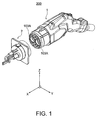
FIG. 1 is a perspective view of aconnector unit 200 according to an embodiment of this invention. -
FIG. 2 is a side view (partial sectional view) of theconnector unit 200 ofFIG. 1 when viewed from a positive orientation side in a Y direction. -
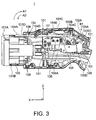
FIG. 3 is an enlarged view of a vicinity of anouter shell 101 of aconnector 1 ofFIG. 2 . -
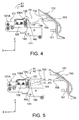
FIG. 4 is a view for illustrating only amovable plate 131, astationary plate 141, acoil spring 145, aswitch 106, and acover 121 ofFIG. 3 . -
FIG. 5 is a view for illustrating a state in which a cover-side protrusion 155 of thecover 121 is disengaged from a movable-plate-side protrusion 133 from the state illustrated inFIG. 4 . -
FIG. 6 is a back view of theconnector 1 ofFIG. 1 when viewed from a positive orientation side in an X direction, for illustrating a state in which thecover 121 is dismounted. -
FIG. 7 is a side view (partial sectional view) of theconnector unit 200, for illustrating actions of alocking lever 104, theswitch 106, and arelease lever 105 during fitting of theconnector unit 200. -
FIG. 8 is a side view (partial sectional view) of theconnector unit 200, for illustrating the actions of thelocking lever 104, theswitch 106, and therelease lever 105 during the fitting of theconnector unit 200. -
FIG. 9 is a side view (partial sectional view) of theconnector unit 200, for illustrating the actions of thelocking lever 104, theswitch 106, and therelease lever 105 during the fitting of theconnector unit 200. -
FIG. 10 is a side view (partial sectional view) of theconnector unit 200, for illustrating the actions of thelocking lever 104, theswitch 106, and therelease lever 105 during the fitting of theconnector unit 200. -
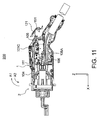
FIG. 11 is a side view (partial sectional view) of theconnector unit 200, for illustrating a procedure for forcibly releasing. -
FIG. 12 is a side view (partial sectional view) of theconnector unit 200, for illustrating the procedure for forcibly releasing. -
FIG. 13 is a side view (partial sectional view) of theconnector 1, for illustrating the procedure for forcibly releasing. -
FIG. 14 is a sectional view taken along the line 14-14 ofFIG. 13 . -
FIG. 15 is a perspective view of theconnector 1, for illustrating a procedure of returning, to a usable state, theconnector 1 including thelocking lever 104 that is returned to a movable condition again. -
FIG. 16 is a perspective view of theconnector 1, for illustrating the procedure of returning, to the usable state, theconnector 1 including thelocking lever 104 that is returned to the movable condition again. -
FIG. 17 is a perspective view of theconnector 1, for illustrating the procedure of returning, to the usable state, theconnector 1 including thelocking lever 104 that is returned to the movable condition again. -
FIG. 18 is a side view (partial sectional view) of theconnector 1 corresponding to the state illustrated inFIG. 17 , for illustrating the procedure of returning, to the usable state, theconnector 1 including thelocking lever 104 that is returned to the movable condition again. -
FIG. 19 is an enlarged view of a region R1 illustrated inFIG. 18 . -
FIG. 20 is a side view (partial sectional view) of theconnector 1, for illustrating the procedure of returning, to the usable state, theconnector 1 including thelocking lever 104 that is returned to the movable condition again. -
FIG. 21 is an enlarged view of a region R2 illustrated inFIG. 20 . -
FIG. 22 is a side view (partial sectional view) of theconnector 1, for illustrating the procedure of returning, to the usable state, theconnector 1 including thelocking lever 104 that is returned to the movable condition again. -
FIG. 23 is an enlarged view of a region R3 illustrated inFIG. 22 . -
FIG. 24 is a perspective view of a related-artvehicle charging connector 100. - An exemplary embodiment of this invention is described in detail below with reference to the drawings.
- First, with reference to
FIG. 1 andFIG. 2 , an outline of a connector unit 200 (electrical connector unit) according to a first embodiment is described. - As the
connector unit 200, a connector unit for a battery charger for an electric vehicle is exemplified. - In the following description, directions of each component are indicated through use of an orthogonal coordinate system. As illustrated in
FIG. 1 , an X direction, a Y direction orthogonal to the X direction, and a Z direction orthogonal to the X direction and the Y direction are defined as three directions in the orthogonal coordinate system. - In the X direction, the Y direction, and the Z direction, orientations indicated by the arrows of
FIG. 1 are defined as "positive orientations", and orientations opposite to the orientations indicated by the arrows ofFIG. 1 are defined as "negative orientations". - As illustrated in
FIG. 1 andFIG. 2 , theconnector unit 200 includes aconnector 1 being an electrical connector, and aninlet 2 being a mating connector to be fitted to theconnector 1. - The
connector 1 is a connector arranged on a battery charger side, whereas theinlet 2 is a connector arranged on an electric vehicle side. - As illustrated in
FIG. 1 andFIG. 2 , theconnector 1 includes a lockinglever 104, aswitching mechanism 111, anouter shell 101, and acover 121. The lockinglever 104 is rotatable, and is configured to lock a fitting state between theinlet 2 and theconnector 1. Theswitching mechanism 111 is arranged so as to be movable between a first position P1 and a second position P2 (seeFIG. 5 ), and includes aswitch 106. Theswitch 106 generates a signal capable of establishing conduction between theconnector 1 and theinlet 2 when operated by the locking lever 104 (pressed by the lockinglever 104 in this case). Theswitch 106 generates a signal for interrupting the conduction between theconnector 1 and theinlet 2, or does not generate the signal capable of establishing the conduction between theconnector 1 and theinlet 2 under a state in which theswitch 106 is not operated by the lockinglever 104. Theouter shell 101 serves as a shell configured to accommodate the lockinglever 104 and theswitch 106 therein. Thecover 121 is arranged on theouter shell 101 so that at least a part of thecover 121 is exposed to an outside of the outer shell 101 (arranged on an outer side of theouter shell 101 so as to be mountable to and dismountable from theswitching mechanism 111 in this case). Thecover 121 includes a cover-side protrusion 155 serving as a cover-side retaining portion configured to retain theswitching mechanism 111 at the first position P1. - Further, the
switching mechanism 111 includes a movable-plate-side protrusion 133 (seeFIG. 4 ) being a switch-side retaining portion configured to retain theswitching mechanism 111 at the first position P1 through contact with the cover-side protrusion 155. - Further, the locking
lever 104 includes arotation shaft 104D defining a center of rotation, a claw-like locking portion 104A to be brought into contact with theinlet 2, and an operatingportion 104C that is arranged on an opposite side of the lockingportion 104A across therotation shaft 104D, and is capable of operating theswitch 106. - Next, with reference to
FIG. 2 to FIG. 6 , details of the structure of theconnector 1 and theinlet 2 are described. - As illustrated in
FIG. 2 , theconnector 1 includes theouter shell 101, agrip 102 arranged at one end of theouter shell 101 and configured to enable an operator to hold theconnector 1 during charging, aninner housing 103 configured to accommodatecontacts 108 therein and arranged inside theouter shell 101 so that an end portion of theinner housing 103 is exposed, acable 109 arranged inside theouter shell 101 and connected to thecontacts 108, the lockinglever 104 arranged inside theouter shell 101 and configured to lock the fitting state between theconnector 1 and theinlet 2 during fitting (during charging), theswitch 106 connected to thecable 109 and configured to detect halfway fitting of the lockinglever 104, and arelease lever 105 being a releasing portion configured to release locking of the lockinglever 104. - Meanwhile, as illustrated in
FIG. 2 , theinlet 2 includes atubular housing 201 into which theconnector 1 is to be inserted, a recessed inlet-side locking portion 202 arranged on an inner periphery of thehousing 201 and to be brought into contact with the lockingportion 104A of the lockinglever 104 during locking,contacts 203 to be electrically connected to thecontacts 108 of theconnector 1, respectively, and arranged in thehousing 201 so that end portions of thecontacts 203 are exposed, and acable 204 connected to thecontacts 203. - The
outer shell 101 is an outer cover of theconnector 1. As illustrated inFIG. 3 , theouter shell 101 includes a tubular large-diameter portion 101C and a tubular small-diameter portion 101 B. The small-diameter portion 101 B is formed at a distal end of the large-diameter portion 101C in the positive orientation of the X direction, has a diameter smaller than that of the large-diameter portion 101C, and is coaxial with the large-diameter portion 101C. - A
distal end 101A of the small-diameter portion 101 B is chamfered. - The
inner housing 103 is an insulating member having a cylindrical shape conforming to an inner peripheral shape of the small-diameter portion 101B, and is arranged in the small-diameter portion 101 B. - An end portion of the
inner housing 103 is exposed to an outside, and recesses 103A are formed in the end portion of the inner housing 103 (seeFIG. 1 ). Thecontacts 108 are fixed in therecesses 103A. - The locking
lever 104 is a rod-like member arranged in the large-diameter portion 101C so as to extend in a direction in which the connector is fitted to the inlet 2 (X direction). The lockinglever 104 is retained by therotation shaft 104D so as to be rotatable in directions indicated by the arrows A1 and A2 ofFIG. 3 , that is, the lockingportion 104A is rotatable in outward and inward directions of theouter shell 101. - The
rotation shaft 104D is fixed to an inner wall of the large-diameter portion 101C of theouter shell 101 so as to extend in a direction crossing an axial direction of the outer shell 101 (Y direction in this case). - The locking
lever 104 includes the claw-like locking portion 104A formed at an end portion thereof in the positive orientation of the X direction. - In
FIG. 3 , the lockingportion 104A is formed to protrude to an upper side of the lockinglever 104, that is, protrude from theouter shell 101 of theconnector 1 in the positive orientation of the Z direction. The lockingportion 104A has a claw-like shape to be brought into contact with the inlet-side locking portion 202 of theinlet 2. - Further, the locking
lever 104 is arranged inside the large-diameter portion 101C of theouter shell 101, but at least the lockingportion 104A is exposed to the outside. - More specifically, the locking
portion 104A is exposed to the outside from anopening portion 101 D formed in a coupling portion between the large-diameter portion 101C and the small-diameter portion 101 B. - A portion of the locking
lever 104, which is located on the opposite side of the lockingportion 104A across therotation shaft 104D, constructs the operatingportion 104C to be brought into contact with therelease lever 105 and theswitch 106. The operatingportion 104C is arranged inside the large-diameter portion 101C. - In addition, a V-shaped
flat spring 104B is arranged between the large-diameter portion 101C and the operatingportion 104C on the positive orientation side of the operatingportion 104C in the Z direction. Theflat spring 104B applies a rotational force to the lockinglever 104 in a direction in which the lockingportion 104A is rotated to the outer side of the connector 1 (in the direction indicated by the arrow A1 ofFIG. 3 ). - Meanwhile, when a surface of the locking
lever 104 in the positive orientation of the Z direction, which is close to the lockingportion 104A, is brought into contact with theopening portion 101 D, the lockinglever 104 is inhibited from being further rotated in the direction indicated by the arrow A1. - When a surface of the operating
portion 104C in the negative orientation of the Z direction is brought into contact with a locking-lever stopper 161 that is formed so as to protrude from the large-diameter portion 101C in the positive orientation of the Y direction, an end portion of the lockinglever 104 on the operatingportion 104C side is inhibited from being further rotated in the direction indicated by the arrow A1 (seeFIG. 14 ). - The
switching mechanism 111 is a member including theswitch 106 that generates the signal capable of establishing the conduction between theconnector 1 and theinlet 2 when operated by the lockinglever 104, and that generates the signal for interrupting the conduction between theconnector 1 and theinlet 2 or does not generate the signal capable of establishing the conduction between theconnector 1 and theinlet 2 under a state in which theswitch 106 is not operated by the lockinglever 104. Theswitching mechanism 111 includes at least theswitch 106, and amovable plate 131 configured to retain theswitch 106. - The
switch 106 is a switch including contacts (not shown). Theswitch 106 is electrically connected to a control unit of a battery charger (not shown) through thecable 109. Theswitch 106 includes aspring piece 106A. When thespring piece 106A is pressed by the operatingportion 104C of the lockinglever 104, theswitch 106 generates the signal capable of establishing the conduction between theconnector 1 and theinlet 2, and sends the signal to the battery charger (not shown) through thecable 109. Meanwhile, when pressing of thespring piece 106A is released, theswitch 106 generates the signal for interrupting the conduction between theconnector 1 and theinlet 2, or does not generate the signal capable of establishing the conduction between theconnector 1 and theinlet 2. - As illustrated in
FIG. 4 and FIG. 5 , theswitch 106 is retained on themovable plate 131 arranged inside the large-diameter portion 101C. - The
movable plate 131 is a plate-like member having a surface parallel to an X-Z plane, and has an elongated plate-like shape extending in the X direction. - An end portion of the
movable plate 131 in the positive orientation of the X direction is retained on theouter shell 101 so that themovable plate 131 is rotatable about a movable-plate retaining shaft 131A. Themovable plate 131 is rotatable on the X-Z plane in directions indicated by the arrows A1 and A2 ofFIG. 3 andFIG. 4 . The movable-plate retaining shaft 131A is fixed to the inner wall of the large-diameter portion 101C of theouter shell 101 so as to extend in the Y direction. - At the end portion of the
movable plate 131 in the negative orientation of the X direction, there is formed the movable-plate-side protrusion 133 to be brought into contact with the cover-side protrusion 155 of thecover 121. - The
movable plate 131 includes acutout portion 135 formed between the movable-plate retaining shaft 131A and the movable-plate-side protrusion 133 by cutting out the end portion of themovable plate 131 in the negative orientation of the Z direction toward the positive orientation of the Z direction. - A hook-shaped movable-plate-
side hook portion 137 protruding toward the negative orientation of the X direction is formed in thecutout portion 135. - On an end surface of the
movable plate 131 on the negative orientation side in the Z direction, aguide portion 139 is formed to extend obliquely from thecutout portion 135 to the movable-plate-side protrusion 133 in the positive orientation of the Z direction. - The
switch 106 is arranged between the movable-plate retaining shaft 131 A and thecutout portion 135. - Meanwhile, a
stationary plate 141 is arranged on theouter shell 101 so as to be aligned with themovable plate 131 in the negative orientation of the Z direction. Thestationary plate 141 is a plate-like member having a surface parallel to the X-Z plane. Thestationary plate 141 is fixed to theouter shell 101, and is stationary unlike themovable plate 131. - Meanwhile, the
stationary plate 141 includes a hook-shaped stationary-plate-side hook portion 143 protruding to the positive orientation side in the Z direction. - A
coil spring 145 is arranged so as to couple the movable-plate-side hook portion 137 and the stationary-plate-side hook portion 143 to each other. - With this configuration, the
movable plate 131 is always pulled to thestationary plate 141 side. - Meanwhile, the
cover 121 is arranged at an end portion of the large-diameter portion 101C (end portion in the negative orientation of the X direction) opposite to the direction in which theconnector 1 is fitted to theinlet 2. Thecover 121 can be fixed to the large-diameter portion 101C with acover fixing screw 151 arranged so as to pass through thecover 121 and the large-diameter portion 101C in the X direction (seeFIG. 3 ). - That is, the
cover 121 can be dismounted from the large-diameter portion 101C in such a manner that thecover fixing screw 151 is removed and then thecover 121 is moved in a direction opposite to the direction in which theconnector 1 is fitted to the inlet 2 (negative orientation of the X direction). - The
cover 121 is arranged so as to cover a forcibly releasing jig insertion hole 113 (seeFIG. 6 ) formed in a rear end of the large-diameter portion 101C (end portion in the negative orientation of the X direction). - The forcibly releasing
jig insertion hole 113 is formed at a position at which the lockinglever 104 is visually recognizable through the forcibly releasingjig insertion hole 113 under a state in which thecover 121 is dismounted from the large-diameter portion 101C (state in which the cover-side protrusion 155 and the movable-plate-side protrusion 133 are not held in contact with each other). - As illustrated in
FIG. 4 , thecover 121 includes a lid-like cover body 153 configured to cover the large-diameter portion 101C, and the cover-side protrusion 155 protruding from thecover body 153 in the positive orientation of the X direction. The cover-side protrusion 155 is a member to be brought into contact with the movable-plate-side protrusion 133. The cover-side protrusion 155 is brought into contact with the movable-plate-side protrusion 133 from the negative orientation side of the movable-plate-side protrusion 133 in the Z direction. Thus, the cover-side protrusion 155 and the movable-plate-side protrusion 133 are brought into contact with each other. - In this state (state illustrated in
FIG. 4 ), themovable plate 131 is pulled by thecoil spring 145 to thestationary plate 141 side (in the negative orientation of the Z direction), whereas the end portion of themovable plate 131 on the positive orientation side in the X direction and the end portion thereof on the negative orientation side in the X direction are supported by the movable-plate retaining shaft 131A and the cover-side protrusion 155, respectively. Accordingly, themovable plate 131 is not moved from the state illustrated inFIG. 4 . A position (positions of themovable plate 131 and the switch 106) of theswitching mechanism 111 illustrated inFIG. 4 (and indicated by the solid line ofFIG. 5 ) is referred to as the first position P1. - Meanwhile, in the state illustrated in
FIG. 4 , when thecover 121 is moved in the negative orientation of the X direction after, for example, dismounted from the large-diameter portion 101C, and then the cover-side protrusion 155 is disengaged from the movable-plate-side protrusion 133 (the cover-side protrusion 155 and the movable-plate-side protrusion 133 are brought into a non-contact state), themovable plate 131 is pulled by thecoil spring 145 in the negative orientation of the Z direction, and is rotated about the movable-plate retaining shaft 131A in the direction indicated by the arrow A1 ofFIG. 5 , thereby being moved to a position indicated by the dotted line ofFIG. 5 . A position (positions of themovable plate 131 and the switch 106) of theswitching mechanism 111 indicated by the dotted line ofFIG. 5 is referred to as the second position P2. - The second position P2 of the
switch 106 is located on the negative orientation side in the Z direction with respect to the first position P1 of theswitch 106. Accordingly, at the second position P2, the operatingportion 104C of the lockinglever 104 cannot operate (press) thespring piece 106A of theswitch 106. - As described above, in the
connector 1, theswitching mechanism 111 is movable between the first position P1 and the second position P2, and the cover-side protrusion 155 of thecover 121 and the movable-plate-side protrusion 133 of theswitching mechanism 111 play a role of retaining theswitching mechanism 111 at the first position P1. A force is always applied to themovable plate 131 by thecoil spring 145 from the first position P1 to the second position P2 (in the negative orientation of the Z direction). - As illustrated in
FIG. 3 , therelease lever 105 is a rod-like member having a doglegged bent shape, and is arranged on the negative orientation side of the lockinglever 104 in the X direction so that the release lever 105 (an image of therelease lever 105 projected in the Z direction) partially overlaps the lockinglever 104. Therelease lever 105 is arranged so as to be rotatable in the same directions as those of the lockinglever 104, that is, in the directions indicated by the arrows A1 and A2 ofFIG. 3 about arotation shaft 105C positioned at a bent portion of therelease lever 105. - The
rotation shaft 105C is fixed to the inner wall of the large-diameter portion 101C of theouter shell 101 so as to extend in the Y direction of theouter shell 101. - The
release lever 105 is arranged in the large-diameter portion 101C of theouter shell 101. An end portion of therelease lever 105 close to the lockinglever 104 constructs a locking-lever-side end portion 105B to be brought into contact with the operatingportion 104C of the lockinglever 104. - The locking-lever-
side end portion 105B is arranged to be contactable with a lower surface of the operatingportion 104C. - An end portion of the
release lever 105 distant from the lockinglever 104 is exposed to the outside of the large-diameter portion 101C. At the end portion of therelease lever 105, there is formed a button-like release button 105A capable of being pressed in a direction indicated by the arrow B1 ofFIG. 3 , that is, pressed into theouter shell 101. - Specifically, the
release button 105A is exposed to the outside from anopening portion 102A formed in the end portion of the large-diameter portion 101C in the negative orientation of the X direction. - A
torsion spring 105D is arranged on therotation shaft 105C. Thetorsion spring 105D applies a rotational force to the lockinglever 104 so as to move the locking-lever-side end portion 105B away from the operatingportion 104C (in the direction indicated by the arrow A2 ofFIG. 3 ). - Note that, when the
release button 105A is brought into contact with a rim of theopening portion 102A toward the positive orientation of the Z direction, therelease button 105A is inhibited from being further moved in the positive orientation of the Z direction. Accordingly, therelease button 105A is not further rotated in the direction indicated by the arrow A2 from the state illustrated inFIG. 3 . - The details of the structure of the
connector 1 and theinlet 2 are described above. - Next, actions of the locking
lever 104, theswitch 106, and therelease lever 105 during fitting of theconnector unit 200 are described with reference toFIG. 2 andFIG. 7 toFIG. 10 . - First, in a state before start of the fitting, that is, when the
connector 1 and theinlet 2 are in a completely non-contact state, the lockinglever 104, theswitch 106, and therelease lever 105 are in the state illustrated inFIG. 2 . - Specifically, the operating
portion 104C of the lockinglever 104 presses thespring piece 106A of theswitch 106, whereas the locking-lever-side end portion 105B of therelease lever 105 does not press the operatingportion 104C of the lockinglever 104. Even in this state, the battery charger (not shown) detects, by a contact detection circuit (not shown), whether or not thecontacts 108 of theconnector 1 and thecontacts 203 of theinlet 2 are in contact with each other. When the contacts are not in contact with each other, charging is not started. Accordingly, an electric leakage is not caused in the state illustrated inFIG. 2 . - The locking
lever 104 and therelease lever 105 are retained at the positions illustrated inFIG. 2 by theflat spring 104B and thetorsion spring 105D, respectively. - More specifically, the
flat spring 104B applies the rotational force to the lockinglever 104 in the direction indicated by the arrow A1, but the lockinglever 104 abuts on theopening portion 101 D in the state illustrated inFIG. 3 . Accordingly, the lockinglever 104 is supported at two points, that is, at therotation shaft 104D and theopening portion 101D, and is retained in this state. - Meanwhile, the
torsion spring 105D (seeFIG. 3 ) applies the rotational force to therelease lever 105 in the direction indicated by the arrow A2, but therelease button 105A abuts on theopening portion 102A (seeFIG. 3 ). Accordingly, therelease lever 105 is supported at two points, that is, at therotation shaft 105C and theopening portion 102A, and is retained in this state. - Next, from the state illustrated in
FIG. 2 , the small-diameter portion 101 B of theouter shell 101 of theconnector 1 is inserted into thehousing 201 of theinlet 2. - Specifically, while gripping the
grip 102 of theconnector 1, an operator inserts the small-diameter portion 101 B of theouter shell 101 into thehousing 201 of theinlet 2 using thedistal end 101A as a guide. - Then, as illustrated in
FIG. 7 , the lockingportion 104A of the lockinglever 104 is brought into contact with the inner wall of thehousing 201, and is rotated about therotation shaft 104D in the direction indicated by the arrow A2 against an elastic force of theflat spring 104B, thereby being pushed down in the negative orientation of the Z direction. - This state is a halfway fitting state.
- In this state, a most part of the inner housing 103 (small-
diameter portion 101 B) of theconnector 1 is inserted in thehousing 201 of theinlet 2. However, thecontacts 108 of theconnector 1 are only held in contact with thecontacts 203 of theinlet 2, and are not locked to and not completely fitted to thecontacts 203. - Accordingly, if charging is started in this state, an electric leakage may be caused, thereby exposing an operator to extreme danger, e.g., an electric shock.
- However, in this state, the locking
portion 104A is pushed down so that the operatingportion 104C of the lockinglever 104 is moved away from thespring piece 106A of the switch 106 (the operatingportion 104C does not press thespring piece 106A). - In this state, the
switch 106 generates the signal for interrupting the conduction between theconnector 1 and theinlet 2. Alternatively, theswitch 106 does not generate the signal capable of establishing the conduction between theconnector 1 and theinlet 2. - Accordingly, during halfway fitting, conduction is not established between the
connector 1 and theinlet 2, and charging is not started. - Next, when the
connector 1 is further inserted from the state illustrated inFIG. 7 and then the lockingportion 104A reaches the inlet-side locking portion 202 past the inner wall of thehousing 201, as illustrated inFIG. 8 , the lockinglever 104 is rotated by the elastic force of theflat spring 104B in the direction indicated by the arrow A1 so that the lockingportion 104A is brought into contact with the inlet-side locking portion 202. - In this state, the operating
portion 104C presses thespring piece 106A again. Thus, theswitch 106 generates the signal capable of establishing the conduction between theconnector 1 and theinlet 2. - That is, charging is possible. Thus, charging is performed in such a manner that an electric current flows from the
connector 1 to theinlet 2 through a cable 9. - In this state, as described above, the locking
portion 104A is held in contact with the inlet-side locking portion 202. Accordingly, theinlet 2 and theconnector 1 are locked to each other, and have no risk of unexpected disengagement. - When charging is finished, an operator presses the
release button 105A of therelease lever 105 in the direction indicated by the arrow B1 ofFIG. 8 . - Then, as illustrated in
FIG. 9 , therelease lever 105 is rotated about therotation shaft 105C against the elastic force of thetorsion spring 105D in the direction indicated by the arrow A1. Consequently, the locking-lever-side end portion 105B is brought into contact with the operatingportion 104C, thereby pressing the operatingportion 104C in the positive orientation of the Z direction. - When the operating
portion 104C is pressed in the positive orientation of the Z direction, the lockinglever 104 is rotated about therotation shaft 104D against the elastic force of theflat spring 104B in the direction indicated by the arrow A2. Consequently, the lockingportion 104A is pushed down in the negative orientation of the Z direction. - Meanwhile, the operating
portion 104C of the lockinglever 104 is pushed up in the positive orientation of the Z direction, and is moved away from thespring piece 106A of theswitch 106. Accordingly, theswitch 106 generates the signal for interrupting the conduction between theconnector 1 and theinlet 2. Alternatively, theswitch 106 does not generate the signal capable of establishing the conduction between theconnector 1 and theinlet 2. - The locking
portion 104A pushed down in the negative orientation of the Z direction is moved away from the inlet-side locking portion 202. Consequently, the contact between the lockingportion 104A and the inlet-side locking portion 202 is cancelled. - In this state, the
connector 1 and theinlet 2 do not establish conduction therebetween, and are not locked to each other. Accordingly, as illustrated inFIG. 10 , theconnector 1 can be pulled out of theinlet 2 without a risk of an electric leakage. - When the
connector 1 is pulled out of theinlet 2 and then the pressing of therelease lever 105 is released, the lockinglever 104 is rotated by the elastic force of theflat spring 104B in the direction indicated by the arrow A1, and therelease lever 105 is rotated by the elastic force of thetorsion spring 105D in the direction indicated by the arrow A2. Thus, theconnector 1 is returned to the state illustrated inFIG. 2 prior to the fitting. - The actions of the locking
lever 104, theswitch 106, and therelease lever 105 during the fitting of theconnector unit 200 are described above. - Next, with reference to
FIG. 5 ,FIG. 8 ,FIG. 11 , andFIG. 12 , description is made of a procedure of forcibly releasing locking when the lockinglever 104 cannot be moved due to breakage of therelease lever 105, intrusion of a foreign matter, or the like, and a procedure of urgently disengaging theconnector 1 from theinlet 2 under a state in which theconnector 1 and theinlet 2 are fitted to each other. - First, description is made of a case where the locking
lever 104 cannot be moved in the state illustrated inFIG. 8 . - In this case, first, as illustrated in
FIG. 11 , an operator removes thecover fixing screw 151 from the large-diameter portion 101C, and then dismounts thecover 121 from the large-diameter portion 101C. - Then, as illustrated in
FIG. 5 , the cover-side protrusion 155 of thecover 121 is disengaged from the movable-plate-side protrusion 133 of themovable plate 131. - In this manner, as illustrated in
FIG. 5 , themovable plate 131 is pulled by thecoil spring 145 in the negative orientation of the Z direction, and is rotated about the movable-plate retaining shaft 131A in the direction indicated by the arrow A1 ofFIG. 5 . Consequently, theswitching mechanism 111 is moved to the second position P2. Thus, theswitch 106 is shifted to a position at which the lockinglever 104 is incapable of operating the switch 106 (the operatingportion 104C is moved away from thespring piece 106A). Accordingly, theswitch 106 generates the signal for interrupting the conduction between theconnector 1 and theinlet 2. Alternatively, theswitch 106 does not generate the signal capable of establishing the conduction between theconnector 1 and theinlet 2. - Accordingly, in this state, the
connector 1 and theinlet 2 do not establish conduction therebetween. - The
cover 121 is dismounted from the large-diameter portion 101C so that the forcibly releasingjig insertion hole 113 is exposed to the outside of theconnector 1. Accordingly, an operator can visually recognize the lockinglever 104 through the forcibly releasing jig insertion hole 113 (seeFIG. 6 ). - Next, as illustrated in
FIG. 12 , an operator inserts a forcibly releasingjig 191, e.g., a screwdriver into the large-diameter portion 101C through the forcibly releasing jig insertion hole 113 (seeFIG. 6 ), and then rotates the lockinglever 104 in the direction indicated by the arrow A2 by, for example, forcibly pushing up the operatingportion 104C of the lockinglever 104 in the positive orientation of the Z direction. In this manner, the lockingportion 104A is disengaged from the inlet-side locking portion 202, thereby forcibly releasing locking. - Next, in this state, the
connector 1 is pulled out of (urgently disengaged from) theinlet 2. An operator makes an investigation on the pulled-outconnector 1 as needed to determine a reason why the lockinglever 104 cannot be moved, and clears the reason. Thus, the lockinglever 104 is returned to a movable condition again. - Thus, the
connector 1 is brought into the state illustrated inFIG. 13 , and the forcibly releasing and the urgent disengagement are completed. - As illustrated in
FIG. 14 , regarding the end portion of the lockinglever 104 on the operatingportion 104C side, when a surface of the end portion in the negative orientation of the Z direction is brought into contact with the locking-lever stopper 161 that is formed so as to protrude from the large-diameter portion 101C in the positive orientation of the Y direction, the lockinglever 104 is inhibited from being further rotated in the direction indicated by the arrow A1. Accordingly, even when, for example, therotation shaft 104D is dismounted during forcibly releasing so that the lockinglever 104 is not retained on the large-diameter portion 101C, the lockinglever 104 does not fall down in the negative orientation of the Z direction, and does not operate theswitch 106 by mistake. - The
connector 1 is required to expose the forcibly releasingjig insertion hole 113 to the outside in order to forcibly release locking. Accordingly, it is necessary to dismount thecover 121 from the large-diameter portion 101C. When thecover 121 is dismounted from the large-diameter portion 101C, theswitching mechanism 111 is moved to the second position P2. Consequently, a pressing state of thespring piece 106A is released, thereby interrupting the conduction between theconnector 1 and theinlet 2. - Accordingly, during the forcibly releasing, the conduction between the
connector 1 and theinlet 2 is always interrupted. Thus, there are no risks of an electric leakage and an electric shock to an operator during the forcibly releasing. - Therefore, the
connector 1 can be forcibly released more safely than in the related art. - The
cover 121 is arranged at the rear end of the large-diameter portion 101C. That is, thecover 121 is arranged at the end portion opposite to thedistal end 101A in a fitting direction X. - Accordingly, the
cover 121 can be dismounted without interference with the peripheral structure of theinlet 2. - Specifically, the
inlet 2 is a connector mounted on, for example, an automobile side. Accordingly, depending on the structure of the automobile, theinlet 2 may be arranged in a depth (inside) of an exterior of the automobile. Under a state in which theinlet 2 and theconnector 1 are fitted to each other, a most part of theconnector 1 on thedistal end 101 A side may be invisible from the outside. - Even in this case, when the
cover 121 is mounted to the rear end of the large-diameter portion 101C, thecover 121 is easily dismounted. - The procedures for the forcibly releasing and the urgent disengagement are described above.
- Next, with reference to
FIG. 13 to FIG. 21 , description is made of a procedure of returning, to a usable state, theconnector 1 including the lockinglever 104 that is returned to the movable condition again after the urgent disengagement. - As described above, during the forcibly releasing, the
switching mechanism 111 is moved to the second position P2, and the lockinglever 104 is shifted to the position at which the lockinglever 104 is incapable of operating theswitch 106. Accordingly, in this state, theswitch 106 generates the signal for interrupting the conduction between theconnector 1 and theinlet 2, or does not generate the signal capable of establishing conduction therebetween. Therefore, only returning the lockinglever 104 to the movable condition again is insufficient to return theconnector 1 after the urgent disengagement to the usable state. There is also needed a procedure of retaining theswitching mechanism 111 at the first position P1 after returning theswitching mechanism 111 to the first position P1. In the following, the above-mentioned procedure is referred to as a returning procedure, and the returning procedure is specifically described below. - First, in the state illustrated in
FIG. 13 andFIG. 14 , an operator dismounts acap 171 mounted on a side surface of the large-diameter portion 101C in the negative orientation of the Y direction illustrated inFIG. 15 . - The
cap 171 is a member configured to close a returninghole 173 illustrated inFIG. 16 . Accordingly, when thecap 171 is dismounted, the returninghole 173 is exposed. - The returning
hole 173 is formed at a position at which theguide portion 139 of themovable plate 131 is visually recognizable from the outside. Accordingly, when the returninghole 173 is exposed, an operator can visually recognize theguide portion 139 from the outside. - Next, an operator prepares a returning
jig 181 illustrated inFIG. 16 . - As illustrated in
FIG. 16 , the returningjig 181 includes agrip 183 having a round bar-like shape, aninsertion portion 185 formed at a distal end of thegrip 183 and having a round bar-like shape (shaft shape) and a diameter smaller than that of thegrip 183, and a plate-likekey portion 187, which is formed at a distal end portion of theinsertion portion 185 so as to protrude in a radial direction of theinsertion portion 185, and is configured to be brought into contact with theguide portion 139. - Next, as illustrated in
FIG. 17 to FIG. 19 , an operator inserts theinsertion portion 185 of the returningjig 181 into the large-diameter portion 101C from the returninghole 173. In addition, as illustrated inFIG. 20 andFIG. 21 , an operator rotates thegrip 183 in the direction indicated by the arrow A2, thereby bringing thekey portion 187 into contact with theguide portion 139 of themovable plate 131. - Next, an operator rotates the
grip 183 in the direction indicated by the arrow A2 ofFIG. 20 andFIG. 21 . Then, while being rotated in the direction indicated by the arrow A2, thekey portion 187 pushes up the movable plate 131 (switching mechanism 111) in the positive orientation of the Z direction using theguide portion 139 of themovable plate 131 as a guide. - As illustrated in
FIG. 22 andFIG. 23 , when theswitching mechanism 111 is pushed up to the first position P1 (seeFIG. 5 ), an operator stops rotating thegrip 183, and mounts thecover 121 to the large-diameter portion 101C again. - In this manner, as illustrated in
FIG. 4 and the like, the cover-side protrusion 155 of thecover 121 is brought into contact with the movable-plate-side protrusion 133 of themovable plate 131 again. Thus, theswitching mechanism 111 is retained at the first position P1 illustrated inFIG. 5 . - In this state, the locking
lever 104 can operate theswitch 106 again. Thus, theswitch 106 can generate the signal capable of establishing the conduction between theconnector 1 and theinlet 2, and theconnector 1 is available again. - Next, an operator pulls the
insertion portion 185 of the returningjig 181 out of the returninghole 173, and then closes the returninghole 173 by thecap 171. - Finally, an operator fixes the
cover 121 to the large-diameter portion 101C with thecover fixing screw 151. - The procedure of returning, to the usable state, the
connector 1 including the lockinglever 104 that is returned to the movable condition again is described above. - As described above, according to this embodiment, the
connector 1 includes the lockinglever 104, theswitching mechanism 111, theouter shell 101, and thecover 121. The lockinglever 104 is rotatable, and is configured to lock the fitting state between theinlet 2 and theconnector 1. Theswitching mechanism 111 is arranged so as to be movable between the first position P1 and the second position P2, and includes theswitch 106. Theswitch 106 generates the signal capable of establishing the conduction between theconnector 1 and theinlet 2 when operated by the lockinglever 104. Theswitch 106 generates the signal for interrupting the conduction between theconnector 1 and theinlet 2, or does not generate the signal capable of establishing the conduction between theconnector 1 and theinlet 2 under a state in which theswitch 106 is not operated by the lockinglever 104. Theouter shell 101 is configured to accommodate the lockinglever 104 and theswitching mechanism 111 therein. Thecover 121 is arranged on theouter shell 101 so that at least the part of thecover 121 is exposed to the outside of theouter shell 101, and thecover 121 includes the cover-side protrusion 155. Theswitching mechanism 111 includes the movable-plate-side protrusion 133 configured to retain theswitching mechanism 111 at the first position P1 through contact with the cover-side protrusion 155. The lockinglever 104 includes therotation shaft 104D defining the center of rotation, the lockingportion 104A to be brought into contact with theinlet 2, and the operatingportion 104C that is arranged on the opposite side of the lockingportion 104A across therotation shaft 104D, and is capable of operating theswitch 106. When theswitching mechanism 111 is located at the first position P1, the lockinglever 104 is rotated so that the operatingportion 104C is capable of operating theswitch 106. When the cover-side protrusion 155 and the movable-plate-side protrusion 133 are in a non-contact state, theswitching mechanism 111 is arranged at the second position P2. When theswitching mechanism 111 is located at the second position P2, the operatingportion 104C is incapable of operating theswitch 106. - Therefore, the
connector 1 can be forcibly released more safely than in the related art. - This invention is described above with reference to the embodiment, but this invention is not limited to the above-mentioned embodiment.
- It goes without saying that a person skilled in the art can conceive a variety of modifications and improvements within the technical scope of this invention, and the modifications and the improvements may be understood as being encompassed within the scope of this invention.
- For example, in the above-mentioned embodiment, as the
switching mechanism 111, there is exemplified the structure in which thecover 121 and theswitch 106 are brought into contact with each other through themovable plate 131. However, theswitching mechanism 111 may have the structure including nomovable plate 131 and bringing theswitch 106 and thecover 121 into direct contact with each other. - In the above-mentioned embodiment, the
cover 121 is arranged outside theouter shell 101, but it is only necessary that at least a part of thecover 121 be exposed to the outside of theouter shell 101. Accordingly, for example, thecover 121 may be structured like an openable window so that a part of thecover 121 is exposed to the outside of the outer shell, whereas the other part thereof is arranged inside theouter shell 101. - In the above-mentioned embodiment, description is made of the structure capable of disengaging the
cover 121 from theswitching mechanism 111. However, as long as theswitching mechanism 111 is retained at the first position P1 when the cover-side protrusion 155 and the movable-plate-side protrusion 133 are in a contact state, and as long as theswitching mechanism 111 is retained at the second position P2 when the cover-side protrusion 155 and the movable-plate-side protrusion 133 are in a non-contact state, there may be adopted the structure in which theswitching mechanism 111 and thecover 121 are always held in contact with each other and thecover 121 is not disengaged from theswitching mechanism 111.
Claims (8)
- An electrical connector, comprising:a locking lever, which is rotatable and configured to lock a fitting state between the electrical connector and a mating connector;a switching mechanism, which is arranged so as to be movable between a first position and a second position, the switching mechanism comprising a switch that generates a signal capable of establishing conduction between the electrical connector and the mating connector when operated by the locking lever, and that one of generates a signal for interrupting the conduction between the electrical connector and the mating connector, and does not generate the signal capable of establishing the conduction between the electrical connector and the mating connector under a state in which the switch is not operated by the locking lever;a shell, which is configured to accommodate the locking lever and the switching mechanism therein;a cover comprising a cover-side retaining portion, the cover being arranged on the shell so that at least a part of the cover is exposed to an outside of the shell; anda switch-side retaining portion, which is arranged in the switching mechanism and configured to retain the switching mechanism at the first position through contact with the cover-side retaining portion,the locking lever comprising:wherein, when the switching mechanism is located at the first position, the locking lever is rotated so that the operating portion is capable of operating the switch,a rotation shaft defining a center of rotation;a locking portion to be brought into contact with the mating connector; andan operating portion, which is arranged on an opposite side of the locking portion across the rotation shaft, and is capable of operating the switch,
wherein, when the cover-side retaining portion and the switch-side retaining portion are in a non-contact state, the switching mechanism is arranged at the second position, and
wherein, when the switching mechanism is located at the second position, the operating portion is incapable of operating the switch. - An electrical connector according to claim 1,
wherein the switching mechanism comprises:a movable plate arranged on the switch; anda movable-plate-side protrusion formed on the movable plate and serving as the switch-side retaining portion to be brought into contact with the cover, andwherein the cover-side retaining portion comprises a cover-side protrusion to be brought into contact with the movable-plate-side protrusion. - An electrical connector according to claim 2, further comprising:a spring arranged on the movable plate and configured to apply a force to the movable plate from the first position to the second position;a stationary plate arranged on the shell and configured to retain the spring; anda movable-plate retaining shaft configured to rotatably retain the movable plate on the shell.
- An electrical connector according to any one of claims 1 to 3,
wherein the switch comprises a spring piece,
wherein, when the spring piece is pressed by the operating portion, the switch generates the signal capable of establishing the conduction between the electrical connector and the mating connector, and
wherein, under a state in which the spring piece is not pressed by the operating portion, the switch one of generates the signal for interrupting the conduction between the electrical connector and the mating connector, and does not generate the signal capable of establishing the conduction between the electrical connector and the mating connector. - An electrical connector according to any one of claims 1 to 4,
wherein the shell has a forcibly releasing jig insertion hole formed in an end portion of the shell on a side opposite to a direction in which the electrical connector is fitted to the mating connector, and
wherein the cover is mounted to the shell so as to cover the forcibly releasing jig insertion hole, and is dismountable from the shell by being moved in a direction opposite to the direction in which the electrical connector is fitted to the mating connector. - An electrical connector according to claim 5, wherein, when the cover-side retaining portion and the switch-side retaining portion are in a non-contact state, the locking lever is located at a position at which the locking lever is visually recognizable through the forcibly releasing jig insertion hole.
- An electrical connector according to any one of claims 2 to 6,
wherein the movable plate comprises a guide portion serving as a guide when the switching mechanism is moved from the second position to the first position, and
wherein the shell has a returning hole that enables the guide portion to be visually recognized from the outside of the shell when the switching mechanism is located at the second position. - A returning jig, comprising:an insertion portion having a shaft shape to be inserted into the returning hole of the electrical connector of claim 7; anda plate-like key portion, which is formed at a distal end portion of the insertion portion so as to protrude in a radial direction of the insertion portion, and is configured to be brought into contact with the guide portion when inserted into the returning hole,wherein, under a state in which the switching mechanism is located at the second position, the insertion portion is inserted into the returning hole so that the plate-like key portion is brought into contact with the guide portion, and
wherein the plate-like key portion is rotated to press the guide portion toward the first position so that the switching mechanism is arrangeable at the first position.
Applications Claiming Priority (1)
| Application Number | Priority Date | Filing Date | Title |
|---|---|---|---|
| JP2015140712A JP6452563B2 (en) | 2015-07-14 | 2015-07-14 | Electrical connector and return jig |
Publications (2)
| Publication Number | Publication Date |
|---|---|
| EP3118941A1 true EP3118941A1 (en) | 2017-01-18 |
| EP3118941B1 EP3118941B1 (en) | 2018-02-28 |
Family
ID=56081427
Family Applications (1)
| Application Number | Title | Priority Date | Filing Date |
|---|---|---|---|
| EP16171819.2A Active EP3118941B1 (en) | 2015-07-14 | 2016-05-27 | Electrical connector and returning jig |
Country Status (4)
| Country | Link |
|---|---|
| US (1) | US9812820B2 (en) |
| EP (1) | EP3118941B1 (en) |
| JP (1) | JP6452563B2 (en) |
| NO (1) | NO3118941T3 (en) |
Cited By (7)
| Publication number | Priority date | Publication date | Assignee | Title |
|---|---|---|---|---|
| CN107139763A (en) * | 2017-06-05 | 2017-09-08 | 深圳荣行智能科技有限公司 | A kind of electric vehicle charging device |
| CN107512184A (en) * | 2017-08-24 | 2017-12-26 | 深圳汇呈环保科技有限公司 | A kind of new-energy automobile device |
| CN111267646A (en) * | 2020-03-31 | 2020-06-12 | 罗水英 | A detachable charging plug of a new energy vehicle charging pile and its use method |
| CN111319501A (en) * | 2020-04-02 | 2020-06-23 | 杭州德飙新能源设备有限公司 | A charging pile device for charging new energy vehicles |
| CN113675702A (en) * | 2021-07-13 | 2021-11-19 | 北京无线电测量研究所 | Plug-pull mechanism |
| EP3950408A1 (en) * | 2020-08-06 | 2022-02-09 | Japan Aviation Electronics Industry, Limited | Charging connector |
| EP3960524A1 (en) * | 2020-08-28 | 2022-03-02 | Japan Aviation Electronics Industry, Limited | Charging connector |
Families Citing this family (11)
| Publication number | Priority date | Publication date | Assignee | Title |
|---|---|---|---|---|
| JP6871011B2 (en) * | 2017-02-16 | 2021-05-12 | 株式会社デンソーテン | Charging inlet |
| CA3073492A1 (en) * | 2017-08-21 | 2019-02-28 | Hubbell Incorporated | Electrical contact device with interlock |
| DE102018112494B4 (en) * | 2018-05-24 | 2023-03-16 | Schunk Transit Systems Gmbh | Contact device and rapid charging system |
| DE102018131610A1 (en) * | 2018-12-10 | 2020-06-10 | Phoenix Contact E-Mobility Gmbh | Charging plug with a detent connection detection |
| JP7437205B2 (en) * | 2020-03-25 | 2024-02-22 | 日本航空電子工業株式会社 | charging connector |
| JP7428074B2 (en) * | 2020-05-27 | 2024-02-06 | 株式会社オートネットワーク技術研究所 | connector device |
| US11518258B2 (en) * | 2020-10-21 | 2022-12-06 | Rivian Ip Holdings, Llc | Holster sensor for electric vehicle charging system |
| CN113422258B (en) * | 2021-08-24 | 2021-11-26 | 深圳市德兰明海科技有限公司 | Connector and electronic equipment |
| CN114122836B (en) * | 2021-11-11 | 2023-09-26 | 盐城市华悦汽车部件有限公司 | Charging port assembly socket with wire harness for electric automobile |
| CN217791841U (en) * | 2022-08-11 | 2022-11-15 | 深圳市乐美科技有限公司 | Hair curler |
| KR102698311B1 (en) * | 2022-11-30 | 2024-08-26 | 현대모비스 주식회사 | Charging gun disconnecting apparatus |
Citations (4)
| Publication number | Priority date | Publication date | Assignee | Title |
|---|---|---|---|---|
| US5639256A (en) * | 1994-03-17 | 1997-06-17 | Yazaki Corporation | Feeder connector |
| US8562370B2 (en) * | 2010-10-29 | 2013-10-22 | Japan Aviation Electronics Industry, Limited | Electrical connector, electrical connector unit, and electric vehicle charger |
| WO2013176137A1 (en) * | 2012-05-21 | 2013-11-28 | 住電朝日精工株式会社 | Connector |
| JP5659444B2 (en) | 2011-05-23 | 2015-01-28 | 住電朝日精工株式会社 | Charging connector |
Family Cites Families (7)
| Publication number | Priority date | Publication date | Assignee | Title |
|---|---|---|---|---|
| US6225153B1 (en) * | 1999-03-24 | 2001-05-01 | Daimlerchrysler Corporation | Universal charge port connector for electric vehicles |
| JP5739247B2 (en) * | 2011-06-22 | 2015-06-24 | 大電株式会社 | Power supply connector |
| JP5798935B2 (en) * | 2012-01-17 | 2015-10-21 | 矢崎総業株式会社 | Electrical connector |
| JP5939927B2 (en) * | 2012-08-06 | 2016-06-22 | 矢崎総業株式会社 | Charging connector |
| JP5697053B2 (en) * | 2012-11-29 | 2015-04-08 | 古河電気工業株式会社 | Power supply connector |
| JP2014150012A (en) * | 2013-02-04 | 2014-08-21 | Furukawa Electric Co Ltd:The | Connector |
| JP2015076264A (en) * | 2013-10-09 | 2015-04-20 | トヨタ自動車株式会社 | Discharge connector |
-
2015
- 2015-07-14 JP JP2015140712A patent/JP6452563B2/en active Active
-
2016
- 2016-04-29 US US15/142,296 patent/US9812820B2/en active Active
- 2016-05-27 EP EP16171819.2A patent/EP3118941B1/en active Active
- 2016-05-27 NO NO16171819A patent/NO3118941T3/no unknown
Patent Citations (4)
| Publication number | Priority date | Publication date | Assignee | Title |
|---|---|---|---|---|
| US5639256A (en) * | 1994-03-17 | 1997-06-17 | Yazaki Corporation | Feeder connector |
| US8562370B2 (en) * | 2010-10-29 | 2013-10-22 | Japan Aviation Electronics Industry, Limited | Electrical connector, electrical connector unit, and electric vehicle charger |
| JP5659444B2 (en) | 2011-05-23 | 2015-01-28 | 住電朝日精工株式会社 | Charging connector |
| WO2013176137A1 (en) * | 2012-05-21 | 2013-11-28 | 住電朝日精工株式会社 | Connector |
Cited By (11)
| Publication number | Priority date | Publication date | Assignee | Title |
|---|---|---|---|---|
| CN107139763A (en) * | 2017-06-05 | 2017-09-08 | 深圳荣行智能科技有限公司 | A kind of electric vehicle charging device |
| CN107139763B (en) * | 2017-06-05 | 2018-06-01 | 江苏锡沂高新区科技发展有限公司 | A kind of electric vehicle charging device |
| CN107512184A (en) * | 2017-08-24 | 2017-12-26 | 深圳汇呈环保科技有限公司 | A kind of new-energy automobile device |
| CN111267646A (en) * | 2020-03-31 | 2020-06-12 | 罗水英 | A detachable charging plug of a new energy vehicle charging pile and its use method |
| CN111319501A (en) * | 2020-04-02 | 2020-06-23 | 杭州德飙新能源设备有限公司 | A charging pile device for charging new energy vehicles |
| EP3950408A1 (en) * | 2020-08-06 | 2022-02-09 | Japan Aviation Electronics Industry, Limited | Charging connector |
| CN114069328A (en) * | 2020-08-06 | 2022-02-18 | 日本航空电子工业株式会社 | Charging connector |
| CN114069328B (en) * | 2020-08-06 | 2025-06-06 | 日本航空电子工业株式会社 | Charging connector |
| EP3960524A1 (en) * | 2020-08-28 | 2022-03-02 | Japan Aviation Electronics Industry, Limited | Charging connector |
| CN113675702A (en) * | 2021-07-13 | 2021-11-19 | 北京无线电测量研究所 | Plug-pull mechanism |
| CN113675702B (en) * | 2021-07-13 | 2024-02-20 | 北京无线电测量研究所 | Plug mechanism |
Also Published As
| Publication number | Publication date |
|---|---|
| JP6452563B2 (en) | 2019-01-16 |
| US20170018888A1 (en) | 2017-01-19 |
| EP3118941B1 (en) | 2018-02-28 |
| US9812820B2 (en) | 2017-11-07 |
| JP2017022055A (en) | 2017-01-26 |
| NO3118941T3 (en) | 2018-07-28 |
Similar Documents
| Publication | Publication Date | Title |
|---|---|---|
| EP3118941B1 (en) | Electrical connector and returning jig | |
| JP5890091B2 (en) | Electric connector, electric connector unit, and charger for electric vehicle | |
| EP0762554B1 (en) | Locking device for connectors and use thereof for charging connectors and/or high-voltage connectors | |
| EP2863488B1 (en) | Connector | |
| EP3121911B1 (en) | Electrical connector | |
| JP5123144B2 (en) | Charging connector | |
| JP4767923B2 (en) | Electrical connector and connector assembly | |
| US9362670B2 (en) | Charge connector locking apparatus | |
| EP3016214B1 (en) | Lever connector | |
| JP5500864B2 (en) | Electric vehicle charging station | |
| US9184543B2 (en) | Electrical connector | |
| US5997333A (en) | Locking device for high-voltage cable connectors | |
| JP2001006814A (en) | Automotive plug connector | |
| JP5939954B2 (en) | Terminal spacer | |
| JPH09106861A (en) | Electric vehicle charging device | |
| KR20180126873A (en) | Charging connector locking apparatus | |
| JP5052321B2 (en) | Lever fitting type power circuit breaker | |
| JP5697053B2 (en) | Power supply connector | |
| JP2972503B2 (en) | Electric vehicle charging connector | |
| JP5970596B2 (en) | Electric connector, electric connector unit, and charger for electric vehicle | |
| JP2016207394A (en) | Connector with cap | |
| JP3013662B2 (en) | Electric vehicle charging connector | |
| JPH0955257A (en) | Charging connector | |
| JP7144716B2 (en) | Electric vehicle charging extension cable | |
| JP5845368B2 (en) | Electric connector, electric connector unit, and charger for electric vehicle |
Legal Events
| Date | Code | Title | Description |
|---|---|---|---|
| PUAI | Public reference made under article 153(3) epc to a published international application that has entered the european phase |
Free format text: ORIGINAL CODE: 0009012 |
|
| 17P | Request for examination filed |
Effective date: 20160527 |
|
| AK | Designated contracting states |
Kind code of ref document: A1 Designated state(s): AL AT BE BG CH CY CZ DE DK EE ES FI FR GB GR HR HU IE IS IT LI LT LU LV MC MK MT NL NO PL PT RO RS SE SI SK SM TR |
|
| AX | Request for extension of the european patent |
Extension state: BA ME |
|
| RBV | Designated contracting states (corrected) |
Designated state(s): AL AT BE BG CH CY CZ DE DK EE ES FI FR GB GR HR HU IE IS IT LI LT LU LV MC MK MT NL NO PL PT RO RS SE SI SK SM TR |
|
| RIC1 | Information provided on ipc code assigned before grant |
Ipc: H01R 13/627 20060101AFI20170810BHEP Ipc: H01R 13/70 20060101ALI20170810BHEP Ipc: B60L 11/18 20060101ALI20170810BHEP Ipc: H01R 13/713 20060101ALN20170810BHEP |
|
| GRAP | Despatch of communication of intention to grant a patent |
Free format text: ORIGINAL CODE: EPIDOSNIGR1 |
|
| RIC1 | Information provided on ipc code assigned before grant |
Ipc: H01R 13/627 20060101AFI20170811BHEP Ipc: H01R 13/70 20060101ALI20170811BHEP Ipc: B60L 11/18 20060101ALI20170811BHEP Ipc: H01R 13/713 20060101ALN20170811BHEP |
|
| INTG | Intention to grant announced |
Effective date: 20170919 |
|
| GRAS | Grant fee paid |
Free format text: ORIGINAL CODE: EPIDOSNIGR3 |
|
| GRAA | (expected) grant |
Free format text: ORIGINAL CODE: 0009210 |
|
| AK | Designated contracting states |
Kind code of ref document: B1 Designated state(s): AL AT BE BG CH CY CZ DE DK EE ES FI FR GB GR HR HU IE IS IT LI LT LU LV MC MK MT NL NO PL PT RO RS SE SI SK SM TR |
|
| REG | Reference to a national code |
Ref country code: GB Ref legal event code: FG4D Ref country code: CH Ref legal event code: EP Ref country code: CH Ref legal event code: NV Representative=s name: E. BLUM AND CO. AG PATENT- UND MARKENANWAELTE , CH |
|
| REG | Reference to a national code |
Ref country code: AT Ref legal event code: REF Ref document number: 975105 Country of ref document: AT Kind code of ref document: T Effective date: 20180315 |
|
| REG | Reference to a national code |
Ref country code: IE Ref legal event code: FG4D |
|
| REG | Reference to a national code |
Ref country code: DE Ref legal event code: R096 Ref document number: 602016001714 Country of ref document: DE |
|
| REG | Reference to a national code |
Ref country code: FR Ref legal event code: PLFP Year of fee payment: 3 |
|
| REG | Reference to a national code |
Ref country code: NO Ref legal event code: T2 Effective date: 20180228 |
|
| REG | Reference to a national code |
Ref country code: NL Ref legal event code: MP Effective date: 20180228 |
|
| REG | Reference to a national code |
Ref country code: LT Ref legal event code: MG4D |
|
| REG | Reference to a national code |
Ref country code: AT Ref legal event code: MK05 Ref document number: 975105 Country of ref document: AT Kind code of ref document: T Effective date: 20180228 |
|
| PG25 | Lapsed in a contracting state [announced via postgrant information from national office to epo] |
Ref country code: HR Free format text: LAPSE BECAUSE OF FAILURE TO SUBMIT A TRANSLATION OF THE DESCRIPTION OR TO PAY THE FEE WITHIN THE PRESCRIBED TIME-LIMIT Effective date: 20180228 Ref country code: NL Free format text: LAPSE BECAUSE OF FAILURE TO SUBMIT A TRANSLATION OF THE DESCRIPTION OR TO PAY THE FEE WITHIN THE PRESCRIBED TIME-LIMIT Effective date: 20180228 Ref country code: CY Free format text: LAPSE BECAUSE OF FAILURE TO SUBMIT A TRANSLATION OF THE DESCRIPTION OR TO PAY THE FEE WITHIN THE PRESCRIBED TIME-LIMIT Effective date: 20180228 Ref country code: FI Free format text: LAPSE BECAUSE OF FAILURE TO SUBMIT A TRANSLATION OF THE DESCRIPTION OR TO PAY THE FEE WITHIN THE PRESCRIBED TIME-LIMIT Effective date: 20180228 Ref country code: ES Free format text: LAPSE BECAUSE OF FAILURE TO SUBMIT A TRANSLATION OF THE DESCRIPTION OR TO PAY THE FEE WITHIN THE PRESCRIBED TIME-LIMIT Effective date: 20180228 Ref country code: LT Free format text: LAPSE BECAUSE OF FAILURE TO SUBMIT A TRANSLATION OF THE DESCRIPTION OR TO PAY THE FEE WITHIN THE PRESCRIBED TIME-LIMIT Effective date: 20180228 |
|
| PG25 | Lapsed in a contracting state [announced via postgrant information from national office to epo] |
Ref country code: SE Free format text: LAPSE BECAUSE OF FAILURE TO SUBMIT A TRANSLATION OF THE DESCRIPTION OR TO PAY THE FEE WITHIN THE PRESCRIBED TIME-LIMIT Effective date: 20180228 Ref country code: LV Free format text: LAPSE BECAUSE OF FAILURE TO SUBMIT A TRANSLATION OF THE DESCRIPTION OR TO PAY THE FEE WITHIN THE PRESCRIBED TIME-LIMIT Effective date: 20180228 Ref country code: AT Free format text: LAPSE BECAUSE OF FAILURE TO SUBMIT A TRANSLATION OF THE DESCRIPTION OR TO PAY THE FEE WITHIN THE PRESCRIBED TIME-LIMIT Effective date: 20180228 Ref country code: RS Free format text: LAPSE BECAUSE OF FAILURE TO SUBMIT A TRANSLATION OF THE DESCRIPTION OR TO PAY THE FEE WITHIN THE PRESCRIBED TIME-LIMIT Effective date: 20180228 Ref country code: BG Free format text: LAPSE BECAUSE OF FAILURE TO SUBMIT A TRANSLATION OF THE DESCRIPTION OR TO PAY THE FEE WITHIN THE PRESCRIBED TIME-LIMIT Effective date: 20180528 Ref country code: GR Free format text: LAPSE BECAUSE OF FAILURE TO SUBMIT A TRANSLATION OF THE DESCRIPTION OR TO PAY THE FEE WITHIN THE PRESCRIBED TIME-LIMIT Effective date: 20180529 |
|
| PG25 | Lapsed in a contracting state [announced via postgrant information from national office to epo] |
Ref country code: AL Free format text: LAPSE BECAUSE OF FAILURE TO SUBMIT A TRANSLATION OF THE DESCRIPTION OR TO PAY THE FEE WITHIN THE PRESCRIBED TIME-LIMIT Effective date: 20180228 Ref country code: RO Free format text: LAPSE BECAUSE OF FAILURE TO SUBMIT A TRANSLATION OF THE DESCRIPTION OR TO PAY THE FEE WITHIN THE PRESCRIBED TIME-LIMIT Effective date: 20180228 Ref country code: IT Free format text: LAPSE BECAUSE OF FAILURE TO SUBMIT A TRANSLATION OF THE DESCRIPTION OR TO PAY THE FEE WITHIN THE PRESCRIBED TIME-LIMIT Effective date: 20180228 Ref country code: EE Free format text: LAPSE BECAUSE OF FAILURE TO SUBMIT A TRANSLATION OF THE DESCRIPTION OR TO PAY THE FEE WITHIN THE PRESCRIBED TIME-LIMIT Effective date: 20180228 Ref country code: PL Free format text: LAPSE BECAUSE OF FAILURE TO SUBMIT A TRANSLATION OF THE DESCRIPTION OR TO PAY THE FEE WITHIN THE PRESCRIBED TIME-LIMIT Effective date: 20180228 |
|
| REG | Reference to a national code |
Ref country code: DE Ref legal event code: R097 Ref document number: 602016001714 Country of ref document: DE |
|
| PG25 | Lapsed in a contracting state [announced via postgrant information from national office to epo] |
Ref country code: SM Free format text: LAPSE BECAUSE OF FAILURE TO SUBMIT A TRANSLATION OF THE DESCRIPTION OR TO PAY THE FEE WITHIN THE PRESCRIBED TIME-LIMIT Effective date: 20180228 Ref country code: SK Free format text: LAPSE BECAUSE OF FAILURE TO SUBMIT A TRANSLATION OF THE DESCRIPTION OR TO PAY THE FEE WITHIN THE PRESCRIBED TIME-LIMIT Effective date: 20180228 Ref country code: DK Free format text: LAPSE BECAUSE OF FAILURE TO SUBMIT A TRANSLATION OF THE DESCRIPTION OR TO PAY THE FEE WITHIN THE PRESCRIBED TIME-LIMIT Effective date: 20180228 Ref country code: CZ Free format text: LAPSE BECAUSE OF FAILURE TO SUBMIT A TRANSLATION OF THE DESCRIPTION OR TO PAY THE FEE WITHIN THE PRESCRIBED TIME-LIMIT Effective date: 20180228 |
|
| PLBE | No opposition filed within time limit |
Free format text: ORIGINAL CODE: 0009261 |
|
| STAA | Information on the status of an ep patent application or granted ep patent |
Free format text: STATUS: NO OPPOSITION FILED WITHIN TIME LIMIT |
|
| REG | Reference to a national code |
Ref country code: BE Ref legal event code: MM Effective date: 20180531 |
|
| PG25 | Lapsed in a contracting state [announced via postgrant information from national office to epo] |
Ref country code: MC Free format text: LAPSE BECAUSE OF FAILURE TO SUBMIT A TRANSLATION OF THE DESCRIPTION OR TO PAY THE FEE WITHIN THE PRESCRIBED TIME-LIMIT Effective date: 20180228 |
|
| 26N | No opposition filed |
Effective date: 20181129 |
|
| REG | Reference to a national code |
Ref country code: IE Ref legal event code: MM4A |
|
| PG25 | Lapsed in a contracting state [announced via postgrant information from national office to epo] |
Ref country code: SI Free format text: LAPSE BECAUSE OF FAILURE TO SUBMIT A TRANSLATION OF THE DESCRIPTION OR TO PAY THE FEE WITHIN THE PRESCRIBED TIME-LIMIT Effective date: 20180228 |
|
| PG25 | Lapsed in a contracting state [announced via postgrant information from national office to epo] |
Ref country code: LU Free format text: LAPSE BECAUSE OF NON-PAYMENT OF DUE FEES Effective date: 20180527 |
|
| PG25 | Lapsed in a contracting state [announced via postgrant information from national office to epo] |
Ref country code: IE Free format text: LAPSE BECAUSE OF NON-PAYMENT OF DUE FEES Effective date: 20180527 |
|
| PG25 | Lapsed in a contracting state [announced via postgrant information from national office to epo] |
Ref country code: BE Free format text: LAPSE BECAUSE OF NON-PAYMENT OF DUE FEES Effective date: 20180531 |
|
| PG25 | Lapsed in a contracting state [announced via postgrant information from national office to epo] |
Ref country code: MT Free format text: LAPSE BECAUSE OF NON-PAYMENT OF DUE FEES Effective date: 20180527 |
|
| PG25 | Lapsed in a contracting state [announced via postgrant information from national office to epo] |
Ref country code: TR Free format text: LAPSE BECAUSE OF FAILURE TO SUBMIT A TRANSLATION OF THE DESCRIPTION OR TO PAY THE FEE WITHIN THE PRESCRIBED TIME-LIMIT Effective date: 20180228 |
|
| PG25 | Lapsed in a contracting state [announced via postgrant information from national office to epo] |
Ref country code: PT Free format text: LAPSE BECAUSE OF FAILURE TO SUBMIT A TRANSLATION OF THE DESCRIPTION OR TO PAY THE FEE WITHIN THE PRESCRIBED TIME-LIMIT Effective date: 20180228 |
|
| PG25 | Lapsed in a contracting state [announced via postgrant information from national office to epo] |
Ref country code: HU Free format text: LAPSE BECAUSE OF FAILURE TO SUBMIT A TRANSLATION OF THE DESCRIPTION OR TO PAY THE FEE WITHIN THE PRESCRIBED TIME-LIMIT; INVALID AB INITIO Effective date: 20160527 Ref country code: MK Free format text: LAPSE BECAUSE OF NON-PAYMENT OF DUE FEES Effective date: 20180228 |
|
| PG25 | Lapsed in a contracting state [announced via postgrant information from national office to epo] |
Ref country code: IS Free format text: LAPSE BECAUSE OF FAILURE TO SUBMIT A TRANSLATION OF THE DESCRIPTION OR TO PAY THE FEE WITHIN THE PRESCRIBED TIME-LIMIT Effective date: 20180628 |
|
| REG | Reference to a national code |
Ref country code: FR Ref legal event code: PLFP Year of fee payment: 8 |
|
| PGFP | Annual fee paid to national office [announced via postgrant information from national office to epo] |
Ref country code: DE Payment date: 20250402 Year of fee payment: 10 |
|
| PGFP | Annual fee paid to national office [announced via postgrant information from national office to epo] |
Ref country code: GB Payment date: 20250401 Year of fee payment: 10 |
|
| PGFP | Annual fee paid to national office [announced via postgrant information from national office to epo] |
Ref country code: NO Payment date: 20250509 Year of fee payment: 10 |
|
| PGFP | Annual fee paid to national office [announced via postgrant information from national office to epo] |
Ref country code: FR Payment date: 20250401 Year of fee payment: 10 |
|
| PGFP | Annual fee paid to national office [announced via postgrant information from national office to epo] |
Ref country code: CH Payment date: 20250601 Year of fee payment: 10 |