EP3117821A1 - Method for producing ceramide dispersion composition - Google Patents
Method for producing ceramide dispersion composition Download PDFInfo
- Publication number
- EP3117821A1 EP3117821A1 EP14885814.5A EP14885814A EP3117821A1 EP 3117821 A1 EP3117821 A1 EP 3117821A1 EP 14885814 A EP14885814 A EP 14885814A EP 3117821 A1 EP3117821 A1 EP 3117821A1
- Authority
- EP
- European Patent Office
- Prior art keywords
- ceramide
- dispersion
- manufacturing
- dispersion composition
- liquid
- Prior art date
- Legal status (The legal status is an assumption and is not a legal conclusion. Google has not performed a legal analysis and makes no representation as to the accuracy of the status listed.)
- Granted
Links
- 229940106189 ceramide Drugs 0.000 title claims abstract description 276
- YDNKGFDKKRUKPY-JHOUSYSJSA-N C16 ceramide Natural products CCCCCCCCCCCCCCCC(=O)N[C@@H](CO)[C@H](O)C=CCCCCCCCCCCCCC YDNKGFDKKRUKPY-JHOUSYSJSA-N 0.000 title claims abstract description 265
- ZVEQCJWYRWKARO-UHFFFAOYSA-N ceramide Natural products CCCCCCCCCCCCCCC(O)C(=O)NC(CO)C(O)C=CCCC=C(C)CCCCCCCCC ZVEQCJWYRWKARO-UHFFFAOYSA-N 0.000 title claims abstract description 265
- VVGIYYKRAMHVLU-UHFFFAOYSA-N newbouldiamide Natural products CCCCCCCCCCCCCCCCCCCC(O)C(O)C(O)C(CO)NC(=O)CCCCCCCCCCCCCCCCC VVGIYYKRAMHVLU-UHFFFAOYSA-N 0.000 title claims abstract description 265
- CRJGESKKUOMBCT-VQTJNVASSA-N N-acetylsphinganine Chemical compound CCCCCCCCCCCCCCC[C@@H](O)[C@H](CO)NC(C)=O CRJGESKKUOMBCT-VQTJNVASSA-N 0.000 title claims abstract description 264
- 239000006185 dispersion Substances 0.000 title claims abstract description 236
- 239000000203 mixture Substances 0.000 title claims abstract description 125
- 238000004519 manufacturing process Methods 0.000 title claims abstract description 58
- 239000007788 liquid Substances 0.000 claims abstract description 99
- XLYOFNOQVPJJNP-UHFFFAOYSA-N water Substances O XLYOFNOQVPJJNP-UHFFFAOYSA-N 0.000 claims abstract description 55
- 238000000034 method Methods 0.000 claims abstract description 39
- 150000005846 sugar alcohols Polymers 0.000 claims abstract description 33
- 238000004945 emulsification Methods 0.000 claims abstract description 31
- 239000002736 nonionic surfactant Substances 0.000 claims abstract description 28
- 238000002156 mixing Methods 0.000 claims abstract description 15
- -1 diol compound Chemical class 0.000 claims description 60
- PEDCQBHIVMGVHV-UHFFFAOYSA-N Glycerine Chemical compound OCC(O)CO PEDCQBHIVMGVHV-UHFFFAOYSA-N 0.000 claims description 50
- 235000014113 dietary fatty acids Nutrition 0.000 claims description 35
- 229930195729 fatty acid Natural products 0.000 claims description 35
- 239000000194 fatty acid Substances 0.000 claims description 35
- IIZPXYDJLKNOIY-JXPKJXOSSA-N 1-palmitoyl-2-arachidonoyl-sn-glycero-3-phosphocholine Chemical compound CCCCCCCCCCCCCCCC(=O)OC[C@H](COP([O-])(=O)OCC[N+](C)(C)C)OC(=O)CCC\C=C/C\C=C/C\C=C/C\C=C/CCCCC IIZPXYDJLKNOIY-JXPKJXOSSA-N 0.000 claims description 32
- 239000000787 lecithin Substances 0.000 claims description 32
- 229940067606 lecithin Drugs 0.000 claims description 32
- 235000010445 lecithin Nutrition 0.000 claims description 32
- 235000011187 glycerol Nutrition 0.000 claims description 28
- 150000001875 compounds Chemical class 0.000 claims description 23
- 125000004432 carbon atom Chemical group C* 0.000 claims description 13
- 125000002887 hydroxy group Chemical group [H]O* 0.000 claims description 11
- OKTJSMMVPCPJKN-UHFFFAOYSA-N Carbon Chemical group [C] OKTJSMMVPCPJKN-UHFFFAOYSA-N 0.000 claims description 8
- 125000003342 alkenyl group Chemical group 0.000 claims description 5
- 125000000217 alkyl group Chemical group 0.000 claims description 5
- 125000006615 aromatic heterocyclic group Chemical group 0.000 claims description 3
- 125000003118 aryl group Chemical group 0.000 claims description 3
- 125000001183 hydrocarbyl group Chemical group 0.000 claims 1
- 239000002245 particle Substances 0.000 description 107
- 210000003491 skin Anatomy 0.000 description 49
- HVYWMOMLDIMFJA-DPAQBDIFSA-N cholesterol Chemical compound C1C=C2C[C@@H](O)CC[C@]2(C)[C@@H]2[C@@H]1[C@@H]1CC[C@H]([C@H](C)CCCC(C)C)[C@@]1(C)CC2 HVYWMOMLDIMFJA-DPAQBDIFSA-N 0.000 description 39
- 230000000694 effects Effects 0.000 description 30
- 238000002360 preparation method Methods 0.000 description 24
- PUPZLCDOIYMWBV-UHFFFAOYSA-N (+/-)-1,3-Butanediol Chemical compound CC(O)CCO PUPZLCDOIYMWBV-UHFFFAOYSA-N 0.000 description 20
- 235000012000 cholesterol Nutrition 0.000 description 20
- 230000000052 comparative effect Effects 0.000 description 19
- 150000002148 esters Chemical class 0.000 description 19
- 239000002253 acid Substances 0.000 description 18
- 150000001783 ceramides Chemical class 0.000 description 16
- 150000002430 hydrocarbons Chemical group 0.000 description 14
- PRAKJMSDJKAYCZ-UHFFFAOYSA-N squalane Chemical compound CC(C)CCCC(C)CCCC(C)CCCCC(C)CCCC(C)CCCC(C)C PRAKJMSDJKAYCZ-UHFFFAOYSA-N 0.000 description 14
- 239000002537 cosmetic Substances 0.000 description 13
- 229940058015 1,3-butylene glycol Drugs 0.000 description 10
- 235000019437 butane-1,3-diol Nutrition 0.000 description 10
- 239000003795 chemical substances by application Substances 0.000 description 9
- DNIAPMSPPWPWGF-UHFFFAOYSA-N monopropylene glycol Natural products CC(O)CO DNIAPMSPPWPWGF-UHFFFAOYSA-N 0.000 description 8
- 239000000047 product Substances 0.000 description 8
- 238000003756 stirring Methods 0.000 description 8
- 239000000126 substance Substances 0.000 description 8
- 150000001720 carbohydrates Chemical class 0.000 description 7
- SZXQTJUDPRGNJN-UHFFFAOYSA-N dipropylene glycol Chemical compound OCCCOCCCO SZXQTJUDPRGNJN-UHFFFAOYSA-N 0.000 description 7
- JXTPJDDICSTXJX-UHFFFAOYSA-N n-Triacontane Natural products CCCCCCCCCCCCCCCCCCCCCCCCCCCCCC JXTPJDDICSTXJX-UHFFFAOYSA-N 0.000 description 7
- 229940032094 squalane Drugs 0.000 description 7
- OSCJHTSDLYVCQC-UHFFFAOYSA-N 2-ethylhexyl 4-[[4-[4-(tert-butylcarbamoyl)anilino]-6-[4-(2-ethylhexoxycarbonyl)anilino]-1,3,5-triazin-2-yl]amino]benzoate Chemical compound C1=CC(C(=O)OCC(CC)CCCC)=CC=C1NC1=NC(NC=2C=CC(=CC=2)C(=O)NC(C)(C)C)=NC(NC=2C=CC(=CC=2)C(=O)OCC(CC)CCCC)=N1 OSCJHTSDLYVCQC-UHFFFAOYSA-N 0.000 description 6
- LFQSCWFLJHTTHZ-UHFFFAOYSA-N Ethanol Natural products CCO LFQSCWFLJHTTHZ-UHFFFAOYSA-N 0.000 description 6
- LYCAIKOWRPUZTN-UHFFFAOYSA-N Ethylene glycol Chemical compound OCCO LYCAIKOWRPUZTN-UHFFFAOYSA-N 0.000 description 6
- MTHSVFCYNBDYFN-UHFFFAOYSA-N diethylene glycol Chemical compound OCCOCCO MTHSVFCYNBDYFN-UHFFFAOYSA-N 0.000 description 6
- 150000004665 fatty acids Chemical group 0.000 description 6
- 238000009472 formulation Methods 0.000 description 6
- 230000035515 penetration Effects 0.000 description 6
- 239000000825 pharmaceutical preparation Substances 0.000 description 6
- 229940127557 pharmaceutical product Drugs 0.000 description 6
- 229940099451 3-iodo-2-propynylbutylcarbamate Drugs 0.000 description 5
- WYVVKGNFXHOCQV-UHFFFAOYSA-N 3-iodoprop-2-yn-1-yl butylcarbamate Chemical compound CCCCNC(=O)OCC#CI WYVVKGNFXHOCQV-UHFFFAOYSA-N 0.000 description 5
- GCDXVKZXCQGDHC-BLCQCPAESA-N [30-oxo-30-[[(2s,3s,4r)-1,3,4-trihydroxyoctadecan-2-yl]amino]triacontyl] (9z,12z)-octadeca-9,12-dienoate Chemical compound CCCCCCCCCCCCCC[C@@H](O)[C@@H](O)[C@H](CO)NC(=O)CCCCCCCCCCCCCCCCCCCCCCCCCCCCCOC(=O)CCCCCCC\C=C/C\C=C/CCCCC GCDXVKZXCQGDHC-BLCQCPAESA-N 0.000 description 5
- 229940092542 ceramide eos Drugs 0.000 description 5
- 239000000839 emulsion Substances 0.000 description 5
- 235000013305 food Nutrition 0.000 description 5
- 239000003921 oil Substances 0.000 description 5
- 235000019198 oils Nutrition 0.000 description 5
- WQZGKKKJIJFFOK-GASJEMHNSA-N Glucose Natural products OC[C@H]1OC(O)[C@H](O)[C@@H](O)[C@@H]1O WQZGKKKJIJFFOK-GASJEMHNSA-N 0.000 description 4
- ATGQXSBKTQANOH-UWVGARPKSA-N N-oleoylphytosphingosine Chemical compound CCCCCCCCCCCCCC[C@@H](O)[C@@H](O)[C@H](CO)NC(=O)CCCCCCC\C=C/CCCCCCCC ATGQXSBKTQANOH-UWVGARPKSA-N 0.000 description 4
- 229940086668 ceramide eop Drugs 0.000 description 4
- 239000002612 dispersion medium Substances 0.000 description 4
- 238000011156 evaluation Methods 0.000 description 4
- 239000008103 glucose Substances 0.000 description 4
- 238000010438 heat treatment Methods 0.000 description 4
- 125000001165 hydrophobic group Chemical group 0.000 description 4
- 229920001296 polysiloxane Polymers 0.000 description 4
- 125000001424 substituent group Chemical group 0.000 description 4
- 239000004094 surface-active agent Substances 0.000 description 4
- 230000002123 temporal effect Effects 0.000 description 4
- GUBGYTABKSRVRQ-XLOQQCSPSA-N Alpha-Lactose Chemical compound O[C@@H]1[C@@H](O)[C@@H](O)[C@@H](CO)O[C@H]1O[C@@H]1[C@@H](CO)O[C@H](O)[C@H](O)[C@H]1O GUBGYTABKSRVRQ-XLOQQCSPSA-N 0.000 description 3
- GUBGYTABKSRVRQ-QKKXKWKRSA-N Lactose Natural products OC[C@H]1O[C@@H](O[C@H]2[C@H](O)[C@@H](O)C(O)O[C@@H]2CO)[C@H](O)[C@@H](O)[C@H]1O GUBGYTABKSRVRQ-QKKXKWKRSA-N 0.000 description 3
- 241001465754 Metazoa Species 0.000 description 3
- KZTJQXAANJHSCE-OIDHKYIRSA-N N-octodecanoylsphinganine Chemical compound CCCCCCCCCCCCCCCCCC(=O)N[C@@H](CO)[C@H](O)CCCCCCCCCCCCCCC KZTJQXAANJHSCE-OIDHKYIRSA-N 0.000 description 3
- MIUIRGGKIICMBP-NFOZDHADSA-N [27-oxo-27-[[(2s,3s,4r)-1,3,4-trihydroxyoctadecan-2-yl]amino]heptacosyl] octadecanoate Chemical compound CCCCCCCCCCCCCCCCCC(=O)OCCCCCCCCCCCCCCCCCCCCCCCCCCC(=O)N[C@@H](CO)[C@H](O)[C@H](O)CCCCCCCCCCCCCC MIUIRGGKIICMBP-NFOZDHADSA-N 0.000 description 3
- WQZGKKKJIJFFOK-VFUOTHLCSA-N beta-D-glucose Chemical compound OC[C@H]1O[C@@H](O)[C@H](O)[C@@H](O)[C@@H]1O WQZGKKKJIJFFOK-VFUOTHLCSA-N 0.000 description 3
- 239000011203 carbon fibre reinforced carbon Substances 0.000 description 3
- 229940048864 ceramide 1 Drugs 0.000 description 3
- 229940099417 ceramide 2 Drugs 0.000 description 3
- 239000012847 fine chemical Substances 0.000 description 3
- 239000010419 fine particle Substances 0.000 description 3
- 239000008101 lactose Substances 0.000 description 3
- 238000002844 melting Methods 0.000 description 3
- 230000008018 melting Effects 0.000 description 3
- 230000008569 process Effects 0.000 description 3
- 229920006395 saturated elastomer Polymers 0.000 description 3
- 210000002966 serum Anatomy 0.000 description 3
- 238000010008 shearing Methods 0.000 description 3
- 238000001132 ultrasonic dispersion Methods 0.000 description 3
- 229940015975 1,2-hexanediol Drugs 0.000 description 2
- OWEGMIWEEQEYGQ-UHFFFAOYSA-N 100676-05-9 Natural products OC1C(O)C(O)C(CO)OC1OCC1C(O)C(O)C(O)C(OC2C(OC(O)C(O)C2O)CO)O1 OWEGMIWEEQEYGQ-UHFFFAOYSA-N 0.000 description 2
- HVYWMOMLDIMFJA-UHFFFAOYSA-N 3-cholesterol Natural products C1C=C2CC(O)CCC2(C)C2C1C1CCC(C(C)CCCC(C)C)C1(C)CC2 HVYWMOMLDIMFJA-UHFFFAOYSA-N 0.000 description 2
- XPFCZYUVICHKDS-UHFFFAOYSA-N 3-methylbutane-1,3-diol Chemical compound CC(C)(O)CCO XPFCZYUVICHKDS-UHFFFAOYSA-N 0.000 description 2
- SRBFZHDQGSBBOR-IOVATXLUSA-N D-xylopyranose Chemical compound O[C@@H]1COC(O)[C@H](O)[C@H]1O SRBFZHDQGSBBOR-IOVATXLUSA-N 0.000 description 2
- 241000196324 Embryophyta Species 0.000 description 2
- 239000004166 Lanolin Substances 0.000 description 2
- OYHQOLUKZRVURQ-HZJYTTRNSA-N Linoleic acid Chemical compound CCCCC\C=C/C\C=C/CCCCCCCC(O)=O OYHQOLUKZRVURQ-HZJYTTRNSA-N 0.000 description 2
- GUBGYTABKSRVRQ-PICCSMPSSA-N Maltose Natural products O[C@@H]1[C@@H](O)[C@H](O)[C@@H](CO)O[C@@H]1O[C@@H]1[C@@H](CO)OC(O)[C@H](O)[C@H]1O GUBGYTABKSRVRQ-PICCSMPSSA-N 0.000 description 2
- BBAFBDLICMHBNU-MFZOPHKMSA-N N-(2-hydroxyoctadecanoyl)-4-hydroxysphinganine Chemical compound CCCCCCCCCCCCCCCCC(O)C(=O)N[C@@H](CO)[C@H](O)[C@H](O)CCCCCCCCCCCCCC BBAFBDLICMHBNU-MFZOPHKMSA-N 0.000 description 2
- CJKGLEVYDCRGBX-FQYIUYQHSA-N N-(30-(9Z,12Z-octadecadienoyloxy)-tricontanoyl)-sphing-4-enine Chemical compound CCCCCCCCCCCCC\C=C\[C@@H](O)[C@H](CO)NC(=O)CCCCCCCCCCCCCCCCCCCCCCCCCCCCCOC(=O)CCCCCCC\C=C/C\C=C/CCCCC CJKGLEVYDCRGBX-FQYIUYQHSA-N 0.000 description 2
- 235000021355 Stearic acid Nutrition 0.000 description 2
- 229930006000 Sucrose Natural products 0.000 description 2
- ZGBFGAHZKZQSLG-UMCOJZBLSA-N [30-oxo-30-[[(e,2s,3r,6r)-1,3,6-trihydroxyoctadec-4-en-2-yl]amino]triacontyl] (9z,12z)-octadeca-9,12-dienoate Chemical compound CCCCCCCCCCCC[C@@H](O)\C=C\[C@@H](O)[C@H](CO)NC(=O)CCCCCCCCCCCCCCCCCCCCCCCCCCCCCOC(=O)CCCCCCC\C=C/C\C=C/CCCCC ZGBFGAHZKZQSLG-UMCOJZBLSA-N 0.000 description 2
- WQZGKKKJIJFFOK-PHYPRBDBSA-N alpha-D-galactose Chemical compound OC[C@H]1O[C@H](O)[C@H](O)[C@@H](O)[C@H]1O WQZGKKKJIJFFOK-PHYPRBDBSA-N 0.000 description 2
- 125000003368 amide group Chemical group 0.000 description 2
- 230000004888 barrier function Effects 0.000 description 2
- GUBGYTABKSRVRQ-QUYVBRFLSA-N beta-maltose Chemical compound OC[C@H]1O[C@H](O[C@H]2[C@H](O)[C@@H](O)[C@H](O)O[C@@H]2CO)[C@H](O)[C@@H](O)[C@@H]1O GUBGYTABKSRVRQ-QUYVBRFLSA-N 0.000 description 2
- 125000002915 carbonyl group Chemical group [*:2]C([*:1])=O 0.000 description 2
- 229940044176 ceramide 3 Drugs 0.000 description 2
- GHVNFZFCNZKVNT-UHFFFAOYSA-N decanoic acid Chemical compound CCCCCCCCCC(O)=O GHVNFZFCNZKVNT-UHFFFAOYSA-N 0.000 description 2
- 238000007865 diluting Methods 0.000 description 2
- 150000002016 disaccharides Chemical class 0.000 description 2
- POULHZVOKOAJMA-UHFFFAOYSA-N dodecanoic acid Chemical compound CCCCCCCCCCCC(O)=O POULHZVOKOAJMA-UHFFFAOYSA-N 0.000 description 2
- 238000002296 dynamic light scattering Methods 0.000 description 2
- 239000010696 ester oil Substances 0.000 description 2
- 229930182830 galactose Natural products 0.000 description 2
- IPCSVZSSVZVIGE-UHFFFAOYSA-N hexadecanoic acid Chemical compound CCCCCCCCCCCCCCCC(O)=O IPCSVZSSVZVIGE-UHFFFAOYSA-N 0.000 description 2
- FHKSXSQHXQEMOK-UHFFFAOYSA-N hexane-1,2-diol Chemical compound CCCCC(O)CO FHKSXSQHXQEMOK-UHFFFAOYSA-N 0.000 description 2
- 230000006872 improvement Effects 0.000 description 2
- 229940039717 lanolin Drugs 0.000 description 2
- 235000019388 lanolin Nutrition 0.000 description 2
- 235000020778 linoleic acid Nutrition 0.000 description 2
- OYHQOLUKZRVURQ-IXWMQOLASA-N linoleic acid Natural products CCCCC\C=C/C\C=C\CCCCCCCC(O)=O OYHQOLUKZRVURQ-IXWMQOLASA-N 0.000 description 2
- 238000005259 measurement Methods 0.000 description 2
- 244000005700 microbiome Species 0.000 description 2
- 150000002772 monosaccharides Chemical class 0.000 description 2
- QIQXTHQIDYTFRH-UHFFFAOYSA-N octadecanoic acid Chemical compound CCCCCCCCCCCCCCCCCC(O)=O QIQXTHQIDYTFRH-UHFFFAOYSA-N 0.000 description 2
- OQCDKBAXFALNLD-UHFFFAOYSA-N octadecanoic acid Natural products CCCCCCCC(C)CCCCCCCCC(O)=O OQCDKBAXFALNLD-UHFFFAOYSA-N 0.000 description 2
- WWZKQHOCKIZLMA-UHFFFAOYSA-N octanoic acid Chemical compound CCCCCCCC(O)=O WWZKQHOCKIZLMA-UHFFFAOYSA-N 0.000 description 2
- 125000001820 oxy group Chemical group [*:1]O[*:2] 0.000 description 2
- WCVRQHFDJLLWFE-UHFFFAOYSA-N pentane-1,2-diol Chemical compound CCCC(O)CO WCVRQHFDJLLWFE-UHFFFAOYSA-N 0.000 description 2
- 229930195734 saturated hydrocarbon Natural products 0.000 description 2
- 239000008117 stearic acid Substances 0.000 description 2
- 210000000434 stratum corneum Anatomy 0.000 description 2
- 239000005720 sucrose Substances 0.000 description 2
- 238000012360 testing method Methods 0.000 description 2
- 229930195735 unsaturated hydrocarbon Natural products 0.000 description 2
- HDTRYLNUVZCQOY-UHFFFAOYSA-N α-D-glucopyranosyl-α-D-glucopyranoside Natural products OC1C(O)C(O)C(CO)OC1OC1C(O)C(O)C(O)C(CO)O1 HDTRYLNUVZCQOY-UHFFFAOYSA-N 0.000 description 1
- NOOLISFMXDJSKH-UTLUCORTSA-N (+)-Neomenthol Chemical compound CC(C)[C@@H]1CC[C@@H](C)C[C@@H]1O NOOLISFMXDJSKH-UTLUCORTSA-N 0.000 description 1
- WFXHUBZUIFLWCV-UHFFFAOYSA-N (2,2-dimethyl-3-octanoyloxypropyl) octanoate Chemical compound CCCCCCCC(=O)OCC(C)(C)COC(=O)CCCCCCC WFXHUBZUIFLWCV-UHFFFAOYSA-N 0.000 description 1
- GBGUSZWBYGKEBA-VBYMIUBRSA-N (2R)-2-hydroxy-N-[(E,2S,3R,6R)-1,3,6-trihydroxyoctadec-4-en-2-yl]tetracosanamide Chemical compound CCCCCCCCCCCCCCCCCCCCCC[C@@H](O)C(=O)N[C@@H](CO)[C@H](O)\C=C\[C@H](O)CCCCCCCCCCCC GBGUSZWBYGKEBA-VBYMIUBRSA-N 0.000 description 1
- JNYAEWCLZODPBN-JGWLITMVSA-N (2r,3r,4s)-2-[(1r)-1,2-dihydroxyethyl]oxolane-3,4-diol Chemical compound OC[C@@H](O)[C@H]1OC[C@H](O)[C@H]1O JNYAEWCLZODPBN-JGWLITMVSA-N 0.000 description 1
- WRIDQFICGBMAFQ-UHFFFAOYSA-N (E)-8-Octadecenoic acid Natural products CCCCCCCCCC=CCCCCCCC(O)=O WRIDQFICGBMAFQ-UHFFFAOYSA-N 0.000 description 1
- DSSYKIVIOFKYAU-XCBNKYQSSA-N (R)-camphor Chemical compound C1C[C@@]2(C)C(=O)C[C@@H]1C2(C)C DSSYKIVIOFKYAU-XCBNKYQSSA-N 0.000 description 1
- PORPENFLTBBHSG-MGBGTMOVSA-N 1,2-dihexadecanoyl-sn-glycerol-3-phosphate Chemical compound CCCCCCCCCCCCCCCC(=O)OC[C@H](COP(O)(O)=O)OC(=O)CCCCCCCCCCCCCCC PORPENFLTBBHSG-MGBGTMOVSA-N 0.000 description 1
- LDVVTQMJQSCDMK-UHFFFAOYSA-N 1,3-dihydroxypropan-2-yl formate Chemical compound OCC(CO)OC=O LDVVTQMJQSCDMK-UHFFFAOYSA-N 0.000 description 1
- SERLAGPUMNYUCK-DCUALPFSSA-N 1-O-alpha-D-glucopyranosyl-D-mannitol Chemical compound OC[C@@H](O)[C@@H](O)[C@H](O)[C@H](O)CO[C@H]1O[C@H](CO)[C@@H](O)[C@H](O)[C@H]1O SERLAGPUMNYUCK-DCUALPFSSA-N 0.000 description 1
- MSIJLVMSKDXAQN-UHFFFAOYSA-N 1-[(4-chlorophenyl)-phenylmethyl]-4-methylpiperazine;hydron;chloride Chemical compound Cl.C1CN(C)CCN1C(C=1C=CC(Cl)=CC=1)C1=CC=CC=C1 MSIJLVMSKDXAQN-UHFFFAOYSA-N 0.000 description 1
- WAYINTBTZWQNSN-UHFFFAOYSA-N 11-methyldodecyl 3,5,5-trimethylhexanoate Chemical compound CC(C)CCCCCCCCCCOC(=O)CC(C)CC(C)(C)C WAYINTBTZWQNSN-UHFFFAOYSA-N 0.000 description 1
- KDDUIJTXNGADSK-UHFFFAOYSA-N 2,3-dihydroxypropyl 2,2,3,3,4-pentakis(2,3-dihydroxypropyl)octadecanoate Chemical compound CCCCCCCCCCCCCCC(CC(O)CO)C(CC(O)CO)(CC(O)CO)C(CC(O)CO)(CC(O)CO)C(=O)OCC(O)CO KDDUIJTXNGADSK-UHFFFAOYSA-N 0.000 description 1
- MSWZFWKMSRAUBD-IVMDWMLBSA-N 2-amino-2-deoxy-D-glucopyranose Chemical compound N[C@H]1C(O)O[C@H](CO)[C@@H](O)[C@@H]1O MSWZFWKMSRAUBD-IVMDWMLBSA-N 0.000 description 1
- ZIIVEKCKOPDBLT-UHFFFAOYSA-N 2-octyldodecyl 2-hydroxypropanoate Chemical compound CCCCCCCCCCC(COC(=O)C(C)O)CCCCCCCC ZIIVEKCKOPDBLT-UHFFFAOYSA-N 0.000 description 1
- BGRXBNZMPMGLQI-UHFFFAOYSA-N 2-octyldodecyl tetradecanoate Chemical compound CCCCCCCCCCCCCC(=O)OCC(CCCCCCCC)CCCCCCCCCC BGRXBNZMPMGLQI-UHFFFAOYSA-N 0.000 description 1
- LQJBNNIYVWPHFW-UHFFFAOYSA-N 20:1omega9c fatty acid Natural products CCCCCCCCCCC=CCCCCCCCC(O)=O LQJBNNIYVWPHFW-UHFFFAOYSA-N 0.000 description 1
- DUUKZBGYNMHUHO-UHFFFAOYSA-N 253MC0P0YV Chemical compound CCCCCCCCCCCCCCCCCC(=O)OCC(O)COCC(O)CO DUUKZBGYNMHUHO-UHFFFAOYSA-N 0.000 description 1
- DBTMGCOVALSLOR-UHFFFAOYSA-N 32-alpha-galactosyl-3-alpha-galactosyl-galactose Natural products OC1C(O)C(O)C(CO)OC1OC1C(O)C(OC2C(C(CO)OC(O)C2O)O)OC(CO)C1O DBTMGCOVALSLOR-UHFFFAOYSA-N 0.000 description 1
- QSBYPNXLFMSGKH-UHFFFAOYSA-N 9-Heptadecensaeure Natural products CCCCCCCC=CCCCCCCCC(O)=O QSBYPNXLFMSGKH-UHFFFAOYSA-N 0.000 description 1
- 235000017060 Arachis glabrata Nutrition 0.000 description 1
- 244000105624 Arachis hypogaea Species 0.000 description 1
- 235000010777 Arachis hypogaea Nutrition 0.000 description 1
- 235000018262 Arachis monticola Nutrition 0.000 description 1
- 241000283690 Bos taurus Species 0.000 description 1
- 240000002791 Brassica napus Species 0.000 description 1
- 235000011293 Brassica napus Nutrition 0.000 description 1
- ONAIRGOTKJCYEY-XXDXYRHBSA-N CCCCCCCCCCCCCCCCCC(O)=O.O[C@H]1[C@H](O)[C@@H](CO)O[C@@]1(CO)O[C@@H]1[C@H](O)[C@@H](O)[C@H](O)[C@@H](CO)O1 Chemical compound CCCCCCCCCCCCCCCCCC(O)=O.O[C@H]1[C@H](O)[C@@H](CO)O[C@@]1(CO)O[C@@H]1[C@H](O)[C@@H](O)[C@H](O)[C@@H](CO)O1 ONAIRGOTKJCYEY-XXDXYRHBSA-N 0.000 description 1
- 239000005632 Capric acid (CAS 334-48-5) Substances 0.000 description 1
- 239000005635 Caprylic acid (CAS 124-07-2) Substances 0.000 description 1
- 239000004215 Carbon black (E152) Substances 0.000 description 1
- 241000723346 Cinnamomum camphora Species 0.000 description 1
- FBPFZTCFMRRESA-FSIIMWSLSA-N D-Glucitol Natural products OC[C@H](O)[C@H](O)[C@@H](O)[C@H](O)CO FBPFZTCFMRRESA-FSIIMWSLSA-N 0.000 description 1
- FBPFZTCFMRRESA-KVTDHHQDSA-N D-Mannitol Chemical compound OC[C@@H](O)[C@@H](O)[C@H](O)[C@H](O)CO FBPFZTCFMRRESA-KVTDHHQDSA-N 0.000 description 1
- FBPFZTCFMRRESA-JGWLITMVSA-N D-glucitol Chemical compound OC[C@H](O)[C@@H](O)[C@H](O)[C@H](O)CO FBPFZTCFMRRESA-JGWLITMVSA-N 0.000 description 1
- RXVWSYJTUUKTEA-UHFFFAOYSA-N D-maltotriose Natural products OC1C(O)C(OC(C(O)CO)C(O)C(O)C=O)OC(CO)C1OC1C(O)C(O)C(O)C(CO)O1 RXVWSYJTUUKTEA-UHFFFAOYSA-N 0.000 description 1
- WQZGKKKJIJFFOK-QTVWNMPRSA-N D-mannopyranose Chemical compound OC[C@H]1OC(O)[C@@H](O)[C@@H](O)[C@@H]1O WQZGKKKJIJFFOK-QTVWNMPRSA-N 0.000 description 1
- NOOLISFMXDJSKH-UHFFFAOYSA-N DL-menthol Natural products CC(C)C1CCC(C)CC1O NOOLISFMXDJSKH-UHFFFAOYSA-N 0.000 description 1
- 102000002322 Egg Proteins Human genes 0.000 description 1
- 108010000912 Egg Proteins Proteins 0.000 description 1
- 239000004386 Erythritol Substances 0.000 description 1
- UNXHWFMMPAWVPI-UHFFFAOYSA-N Erythritol Natural products OCC(O)C(O)CO UNXHWFMMPAWVPI-UHFFFAOYSA-N 0.000 description 1
- 241000588724 Escherichia coli Species 0.000 description 1
- YCKRFDGAMUMZLT-UHFFFAOYSA-N Fluorine atom Chemical compound [F] YCKRFDGAMUMZLT-UHFFFAOYSA-N 0.000 description 1
- 229930091371 Fructose Natural products 0.000 description 1
- 239000005715 Fructose Substances 0.000 description 1
- RFSUNEUAIZKAJO-ARQDHWQXSA-N Fructose Chemical compound OC[C@H]1O[C@](O)(CO)[C@@H](O)[C@@H]1O RFSUNEUAIZKAJO-ARQDHWQXSA-N 0.000 description 1
- IAJILQKETJEXLJ-UHFFFAOYSA-N Galacturonsaeure Natural products O=CC(O)C(O)C(O)C(O)C(O)=O IAJILQKETJEXLJ-UHFFFAOYSA-N 0.000 description 1
- JZNWSCPGTDBMEW-UHFFFAOYSA-N Glycerophosphorylethanolamin Natural products NCCOP(O)(=O)OCC(O)CO JZNWSCPGTDBMEW-UHFFFAOYSA-N 0.000 description 1
- 244000068988 Glycine max Species 0.000 description 1
- 235000010469 Glycine max Nutrition 0.000 description 1
- SQUHHTBVTRBESD-UHFFFAOYSA-N Hexa-Ac-myo-Inositol Natural products CC(=O)OC1C(OC(C)=O)C(OC(C)=O)C(OC(C)=O)C(OC(C)=O)C1OC(C)=O SQUHHTBVTRBESD-UHFFFAOYSA-N 0.000 description 1
- 240000005979 Hordeum vulgare Species 0.000 description 1
- 235000007340 Hordeum vulgare Nutrition 0.000 description 1
- 239000005639 Lauric acid Substances 0.000 description 1
- 229930195725 Mannitol Natural products 0.000 description 1
- WAYLDHLWVYQNSQ-KEFDUYNTSA-N N-2-hydroxylignoceroylsphingosine Chemical compound CCCCCCCCCCCCCCCCCCCCCCC(O)C(=O)N[C@@H](CO)[C@H](O)\C=C\CCCCCCCCCCCCC WAYLDHLWVYQNSQ-KEFDUYNTSA-N 0.000 description 1
- ZBQZXOVJGDSANU-SPUWTEBASA-N N-[(E,2S,3R,6R)-1,3,6-trihydroxyoctadec-4-en-2-yl]tetracosanamide Chemical compound CCCCCCCCCCCCCCCCCCCCCCCC(=O)N[C@@H](CO)[C@H](O)\C=C\[C@H](O)CCCCCCCCCCCC ZBQZXOVJGDSANU-SPUWTEBASA-N 0.000 description 1
- OVRNDRQMDRJTHS-UHFFFAOYSA-N N-acelyl-D-glucosamine Natural products CC(=O)NC1C(O)OC(CO)C(O)C1O OVRNDRQMDRJTHS-UHFFFAOYSA-N 0.000 description 1
- OVRNDRQMDRJTHS-FMDGEEDCSA-N N-acetyl-beta-D-glucosamine Chemical compound CC(=O)N[C@H]1[C@H](O)O[C@H](CO)[C@@H](O)[C@@H]1O OVRNDRQMDRJTHS-FMDGEEDCSA-N 0.000 description 1
- MBLBDJOUHNCFQT-LXGUWJNJSA-N N-acetylglucosamine Natural products CC(=O)N[C@@H](C=O)[C@@H](O)[C@H](O)[C@H](O)CO MBLBDJOUHNCFQT-LXGUWJNJSA-N 0.000 description 1
- 239000005642 Oleic acid Substances 0.000 description 1
- ZQPPMHVWECSIRJ-UHFFFAOYSA-N Oleic acid Natural products CCCCCCCCC=CCCCCCCCC(O)=O ZQPPMHVWECSIRJ-UHFFFAOYSA-N 0.000 description 1
- 240000007594 Oryza sativa Species 0.000 description 1
- 235000007164 Oryza sativa Nutrition 0.000 description 1
- 235000021314 Palmitic acid Nutrition 0.000 description 1
- ALQSHHUCVQOPAS-UHFFFAOYSA-N Pentane-1,5-diol Chemical compound OCCCCCO ALQSHHUCVQOPAS-UHFFFAOYSA-N 0.000 description 1
- 239000002202 Polyethylene glycol Substances 0.000 description 1
- DUFKCOQISQKSAV-UHFFFAOYSA-N Polypropylene glycol (m w 1,200-3,000) Chemical compound CC(O)COC(C)CO DUFKCOQISQKSAV-UHFFFAOYSA-N 0.000 description 1
- 229920001214 Polysorbate 60 Polymers 0.000 description 1
- JUJWROOIHBZHMG-UHFFFAOYSA-N Pyridine Chemical group C1=CC=NC=C1 JUJWROOIHBZHMG-UHFFFAOYSA-N 0.000 description 1
- CZMRCDWAGMRECN-UGDNZRGBSA-N Sucrose Chemical compound O[C@H]1[C@H](O)[C@@H](CO)O[C@@]1(CO)O[C@@H]1[C@H](O)[C@@H](O)[C@H](O)[C@@H](CO)O1 CZMRCDWAGMRECN-UGDNZRGBSA-N 0.000 description 1
- ONAIRGOTKJCYEY-UHFFFAOYSA-N Sucrose monostearate Chemical compound CCCCCCCCCCCCCCCCCC(O)=O.OC1C(O)C(CO)OC1(CO)OC1C(O)C(O)C(O)C(CO)O1 ONAIRGOTKJCYEY-UHFFFAOYSA-N 0.000 description 1
- HDTRYLNUVZCQOY-WSWWMNSNSA-N Trehalose Natural products O[C@@H]1[C@@H](O)[C@@H](O)[C@@H](CO)O[C@@H]1O[C@@H]1[C@H](O)[C@@H](O)[C@@H](O)[C@@H](CO)O1 HDTRYLNUVZCQOY-WSWWMNSNSA-N 0.000 description 1
- TVXBFESIOXBWNM-UHFFFAOYSA-N Xylitol Natural products OCCC(O)C(O)C(O)CCO TVXBFESIOXBWNM-UHFFFAOYSA-N 0.000 description 1
- 240000008042 Zea mays Species 0.000 description 1
- 235000005824 Zea mays ssp. parviglumis Nutrition 0.000 description 1
- 235000002017 Zea mays subsp mays Nutrition 0.000 description 1
- 238000010521 absorption reaction Methods 0.000 description 1
- 125000003158 alcohol group Chemical group 0.000 description 1
- IAJILQKETJEXLJ-QTBDOELSSA-N aldehydo-D-glucuronic acid Chemical compound O=C[C@H](O)[C@@H](O)[C@H](O)[C@H](O)C(O)=O IAJILQKETJEXLJ-QTBDOELSSA-N 0.000 description 1
- HDTRYLNUVZCQOY-LIZSDCNHSA-N alpha,alpha-trehalose Chemical compound O[C@@H]1[C@@H](O)[C@H](O)[C@@H](CO)O[C@@H]1O[C@@H]1[C@H](O)[C@@H](O)[C@H](O)[C@@H](CO)O1 HDTRYLNUVZCQOY-LIZSDCNHSA-N 0.000 description 1
- 150000003862 amino acid derivatives Chemical class 0.000 description 1
- 239000010775 animal oil Substances 0.000 description 1
- 125000005577 anthracene group Chemical group 0.000 description 1
- 239000003963 antioxidant agent Substances 0.000 description 1
- 230000003078 antioxidant effect Effects 0.000 description 1
- PYMYPHUHKUWMLA-UHFFFAOYSA-N arabinose Natural products OCC(O)C(O)C(O)C=O PYMYPHUHKUWMLA-UHFFFAOYSA-N 0.000 description 1
- SRBFZHDQGSBBOR-UHFFFAOYSA-N beta-D-Pyranose-Lyxose Natural products OC1COC(O)C(O)C1O SRBFZHDQGSBBOR-UHFFFAOYSA-N 0.000 description 1
- MSWZFWKMSRAUBD-UHFFFAOYSA-N beta-D-galactosamine Natural products NC1C(O)OC(CO)C(O)C1O MSWZFWKMSRAUBD-UHFFFAOYSA-N 0.000 description 1
- 230000015572 biosynthetic process Effects 0.000 description 1
- HGKOWIQVWAQWDS-UHFFFAOYSA-N bis(16-methylheptadecyl) 2-hydroxybutanedioate Chemical compound CC(C)CCCCCCCCCCCCCCCOC(=O)CC(O)C(=O)OCCCCCCCCCCCCCCCC(C)C HGKOWIQVWAQWDS-UHFFFAOYSA-N 0.000 description 1
- WERYXYBDKMZEQL-UHFFFAOYSA-N butane-1,4-diol Chemical compound OCCCCO WERYXYBDKMZEQL-UHFFFAOYSA-N 0.000 description 1
- 229960000846 camphor Drugs 0.000 description 1
- 229930008380 camphor Natural products 0.000 description 1
- 210000004027 cell Anatomy 0.000 description 1
- 229940095137 ceramide 6 ii Drugs 0.000 description 1
- 125000001549 ceramide group Chemical group 0.000 description 1
- 230000008859 change Effects 0.000 description 1
- 239000003086 colorant Substances 0.000 description 1
- 239000013065 commercial product Substances 0.000 description 1
- 239000000470 constituent Substances 0.000 description 1
- 239000002826 coolant Substances 0.000 description 1
- 235000005822 corn Nutrition 0.000 description 1
- 239000008367 deionised water Substances 0.000 description 1
- 229910021641 deionized water Inorganic materials 0.000 description 1
- 229940105990 diglycerin Drugs 0.000 description 1
- GPLRAVKSCUXZTP-UHFFFAOYSA-N diglycerol Chemical compound OCC(O)COCC(O)CO GPLRAVKSCUXZTP-UHFFFAOYSA-N 0.000 description 1
- 239000004205 dimethyl polysiloxane Substances 0.000 description 1
- 235000013870 dimethyl polysiloxane Nutrition 0.000 description 1
- ZGSPNIOCEDOHGS-UHFFFAOYSA-L disodium [3-[2,3-di(octadeca-9,12-dienoyloxy)propoxy-oxidophosphoryl]oxy-2-hydroxypropyl] 2,3-di(octadeca-9,12-dienoyloxy)propyl phosphate Chemical compound [Na+].[Na+].CCCCCC=CCC=CCCCCCCCC(=O)OCC(OC(=O)CCCCCCCC=CCC=CCCCCC)COP([O-])(=O)OCC(O)COP([O-])(=O)OCC(OC(=O)CCCCCCCC=CCC=CCCCCC)COC(=O)CCCCCCCC=CCC=CCCCCC ZGSPNIOCEDOHGS-UHFFFAOYSA-L 0.000 description 1
- 238000004821 distillation Methods 0.000 description 1
- 238000009826 distribution Methods 0.000 description 1
- 230000002500 effect on skin Effects 0.000 description 1
- 235000013345 egg yolk Nutrition 0.000 description 1
- 210000002969 egg yolk Anatomy 0.000 description 1
- 239000003974 emollient agent Substances 0.000 description 1
- 239000003995 emulsifying agent Substances 0.000 description 1
- UNXHWFMMPAWVPI-ZXZARUISSA-N erythritol Chemical compound OC[C@H](O)[C@H](O)CO UNXHWFMMPAWVPI-ZXZARUISSA-N 0.000 description 1
- 235000019414 erythritol Nutrition 0.000 description 1
- 229940009714 erythritol Drugs 0.000 description 1
- RTZKZFJDLAIYFH-UHFFFAOYSA-N ether Substances CCOCC RTZKZFJDLAIYFH-UHFFFAOYSA-N 0.000 description 1
- 239000000284 extract Substances 0.000 description 1
- 238000000605 extraction Methods 0.000 description 1
- 230000001815 facial effect Effects 0.000 description 1
- 238000000855 fermentation Methods 0.000 description 1
- 230000004151 fermentation Effects 0.000 description 1
- 229910052731 fluorine Inorganic materials 0.000 description 1
- 239000011737 fluorine Substances 0.000 description 1
- 239000003205 fragrance Substances 0.000 description 1
- 230000002070 germicidal effect Effects 0.000 description 1
- 229960002442 glucosamine Drugs 0.000 description 1
- 229930182478 glucoside Natural products 0.000 description 1
- 229940097043 glucuronic acid Drugs 0.000 description 1
- 150000004676 glycans Chemical class 0.000 description 1
- 150000002314 glycerols Chemical class 0.000 description 1
- 150000002339 glycosphingolipids Chemical class 0.000 description 1
- GOVINWHEYOSPAK-GPOMZPHUSA-N hexadecyl (2s,4r)-1-hexadecanoyl-4-hydroxypyrrolidine-2-carboxylate Chemical compound CCCCCCCCCCCCCCCCOC(=O)[C@@H]1C[C@@H](O)CN1C(=O)CCCCCCCCCCCCCCC GOVINWHEYOSPAK-GPOMZPHUSA-N 0.000 description 1
- XXMIOPMDWAUFGU-UHFFFAOYSA-N hexane-1,6-diol Chemical compound OCCCCCCO XXMIOPMDWAUFGU-UHFFFAOYSA-N 0.000 description 1
- 229930195733 hydrocarbon Natural products 0.000 description 1
- 239000001257 hydrogen Substances 0.000 description 1
- 229910052739 hydrogen Inorganic materials 0.000 description 1
- 239000012535 impurity Substances 0.000 description 1
- CDAISMWEOUEBRE-GPIVLXJGSA-N inositol Chemical compound O[C@H]1[C@H](O)[C@@H](O)[C@H](O)[C@H](O)[C@@H]1O CDAISMWEOUEBRE-GPIVLXJGSA-N 0.000 description 1
- 229960000367 inositol Drugs 0.000 description 1
- 230000003993 interaction Effects 0.000 description 1
- QXJSBBXBKPUZAA-UHFFFAOYSA-N isooleic acid Natural products CCCCCCCC=CCCCCCCCCC(O)=O QXJSBBXBKPUZAA-UHFFFAOYSA-N 0.000 description 1
- 229940093629 isopropyl isostearate Drugs 0.000 description 1
- 229940119170 jojoba wax Drugs 0.000 description 1
- 239000000832 lactitol Substances 0.000 description 1
- 235000010448 lactitol Nutrition 0.000 description 1
- VQHSOMBJVWLPSR-JVCRWLNRSA-N lactitol Chemical compound OC[C@H](O)[C@@H](O)[C@@H]([C@H](O)CO)O[C@@H]1O[C@H](CO)[C@H](O)[C@H](O)[C@H]1O VQHSOMBJVWLPSR-JVCRWLNRSA-N 0.000 description 1
- 229960003451 lactitol Drugs 0.000 description 1
- 150000002632 lipids Chemical class 0.000 description 1
- 229940057995 liquid paraffin Drugs 0.000 description 1
- 239000000845 maltitol Substances 0.000 description 1
- 235000010449 maltitol Nutrition 0.000 description 1
- VQHSOMBJVWLPSR-WUJBLJFYSA-N maltitol Chemical compound OC[C@H](O)[C@@H](O)[C@@H]([C@H](O)CO)O[C@H]1O[C@H](CO)[C@@H](O)[C@H](O)[C@H]1O VQHSOMBJVWLPSR-WUJBLJFYSA-N 0.000 description 1
- 229940035436 maltitol Drugs 0.000 description 1
- 239000000594 mannitol Substances 0.000 description 1
- 235000010355 mannitol Nutrition 0.000 description 1
- FYGDTMLNYKFZSV-UHFFFAOYSA-N mannotriose Natural products OC1C(O)C(O)C(CO)OC1OC1C(CO)OC(OC2C(OC(O)C(O)C2O)CO)C(O)C1O FYGDTMLNYKFZSV-UHFFFAOYSA-N 0.000 description 1
- 229940041616 menthol Drugs 0.000 description 1
- HEBKCHPVOIAQTA-UHFFFAOYSA-N meso ribitol Natural products OCC(O)C(O)C(O)CO HEBKCHPVOIAQTA-UHFFFAOYSA-N 0.000 description 1
- 230000000813 microbial effect Effects 0.000 description 1
- 230000004048 modification Effects 0.000 description 1
- 238000012986 modification Methods 0.000 description 1
- WQEPLUUGTLDZJY-UHFFFAOYSA-N n-Pentadecanoic acid Natural products CCCCCCCCCCCCCCC(O)=O WQEPLUUGTLDZJY-UHFFFAOYSA-N 0.000 description 1
- 229950006780 n-acetylglucosamine Drugs 0.000 description 1
- 125000001624 naphthyl group Chemical group 0.000 description 1
- 239000005445 natural material Substances 0.000 description 1
- SLCVBVWXLSEKPL-UHFFFAOYSA-N neopentyl glycol Chemical compound OCC(C)(C)CO SLCVBVWXLSEKPL-UHFFFAOYSA-N 0.000 description 1
- 229960002446 octanoic acid Drugs 0.000 description 1
- 229940077397 octyldodecyl lactate Drugs 0.000 description 1
- 229940073665 octyldodecyl myristate Drugs 0.000 description 1
- 239000002674 ointment Substances 0.000 description 1
- ZQPPMHVWECSIRJ-KTKRTIGZSA-N oleic acid Chemical compound CCCCCCCC\C=C/CCCCCCCC(O)=O ZQPPMHVWECSIRJ-KTKRTIGZSA-N 0.000 description 1
- 235000021313 oleic acid Nutrition 0.000 description 1
- 229920001542 oligosaccharide Polymers 0.000 description 1
- 150000002482 oligosaccharides Chemical class 0.000 description 1
- 235000008390 olive oil Nutrition 0.000 description 1
- 239000004006 olive oil Substances 0.000 description 1
- 150000007524 organic acids Chemical class 0.000 description 1
- 239000003960 organic solvent Substances 0.000 description 1
- 239000006179 pH buffering agent Substances 0.000 description 1
- 235000020232 peanut Nutrition 0.000 description 1
- 230000000149 penetrating effect Effects 0.000 description 1
- WXZMFSXDPGVJKK-UHFFFAOYSA-N pentaerythritol Chemical compound OCC(CO)(CO)CO WXZMFSXDPGVJKK-UHFFFAOYSA-N 0.000 description 1
- GLOBUAZSRIOKLN-UHFFFAOYSA-N pentane-1,4-diol Chemical compound CC(O)CCCO GLOBUAZSRIOKLN-UHFFFAOYSA-N 0.000 description 1
- GTCCGKPBSJZVRZ-UHFFFAOYSA-N pentane-2,4-diol Chemical compound CC(O)CC(C)O GTCCGKPBSJZVRZ-UHFFFAOYSA-N 0.000 description 1
- 125000001997 phenyl group Chemical group [H]C1=C([H])C([H])=C(*)C([H])=C1[H] 0.000 description 1
- WTJKGGKOPKCXLL-RRHRGVEJSA-N phosphatidylcholine Chemical compound CCCCCCCCCCCCCCCC(=O)OC[C@H](COP([O-])(=O)OCC[N+](C)(C)C)OC(=O)CCCCCCCC=CCCCCCCCC WTJKGGKOPKCXLL-RRHRGVEJSA-N 0.000 description 1
- 150000008104 phosphatidylethanolamines Chemical class 0.000 description 1
- 150000003905 phosphatidylinositols Chemical class 0.000 description 1
- 239000000419 plant extract Substances 0.000 description 1
- 229920000435 poly(dimethylsiloxane) Polymers 0.000 description 1
- 229920001223 polyethylene glycol Polymers 0.000 description 1
- 238000006116 polymerization reaction Methods 0.000 description 1
- 230000000379 polymerizing effect Effects 0.000 description 1
- 229920001451 polypropylene glycol Polymers 0.000 description 1
- 229920001282 polysaccharide Polymers 0.000 description 1
- 239000005017 polysaccharide Substances 0.000 description 1
- 239000002243 precursor Substances 0.000 description 1
- 239000003755 preservative agent Substances 0.000 description 1
- 230000002335 preservative effect Effects 0.000 description 1
- NEOZOXKVMDBOSG-UHFFFAOYSA-N propan-2-yl 16-methylheptadecanoate Chemical compound CC(C)CCCCCCCCCCCCCCC(=O)OC(C)C NEOZOXKVMDBOSG-UHFFFAOYSA-N 0.000 description 1
- 125000003373 pyrazinyl group Chemical group 0.000 description 1
- 239000010453 quartz Substances 0.000 description 1
- 239000011541 reaction mixture Substances 0.000 description 1
- 235000009566 rice Nutrition 0.000 description 1
- 229960003656 ricinoleic acid Drugs 0.000 description 1
- FEUQNCSVHBHROZ-UHFFFAOYSA-N ricinoleic acid Natural products CCCCCCC(O[Si](C)(C)C)CC=CCCCCCCCC(=O)OC FEUQNCSVHBHROZ-UHFFFAOYSA-N 0.000 description 1
- CDAISMWEOUEBRE-UHFFFAOYSA-N scyllo-inosotol Natural products OC1C(O)C(O)C(O)C(O)C1O CDAISMWEOUEBRE-UHFFFAOYSA-N 0.000 description 1
- 239000002453 shampoo Substances 0.000 description 1
- VYPSYNLAJGMNEJ-UHFFFAOYSA-N silicon dioxide Inorganic materials O=[Si]=O VYPSYNLAJGMNEJ-UHFFFAOYSA-N 0.000 description 1
- 229920002545 silicone oil Polymers 0.000 description 1
- 235000020374 simple syrup Nutrition 0.000 description 1
- 239000000344 soap Substances 0.000 description 1
- 239000000600 sorbitol Substances 0.000 description 1
- 235000010356 sorbitol Nutrition 0.000 description 1
- 230000001954 sterilising effect Effects 0.000 description 1
- 238000004659 sterilization and disinfection Methods 0.000 description 1
- 238000003786 synthesis reaction Methods 0.000 description 1
- TUNFSRHWOTWDNC-HKGQFRNVSA-N tetradecanoic acid Chemical compound CCCCCCCCCCCCC[14C](O)=O TUNFSRHWOTWDNC-HKGQFRNVSA-N 0.000 description 1
- 125000003944 tolyl group Chemical group 0.000 description 1
- 239000006097 ultraviolet radiation absorber Substances 0.000 description 1
- 235000015112 vegetable and seed oil Nutrition 0.000 description 1
- 239000008158 vegetable oil Substances 0.000 description 1
- 229940088594 vitamin Drugs 0.000 description 1
- 239000011782 vitamin Substances 0.000 description 1
- 229930003231 vitamin Natural products 0.000 description 1
- 235000013343 vitamin Nutrition 0.000 description 1
- 150000003722 vitamin derivatives Chemical class 0.000 description 1
- 239000000811 xylitol Substances 0.000 description 1
- 235000010447 xylitol Nutrition 0.000 description 1
- HEBKCHPVOIAQTA-SCDXWVJYSA-N xylitol Chemical compound OC[C@H](O)[C@@H](O)[C@H](O)CO HEBKCHPVOIAQTA-SCDXWVJYSA-N 0.000 description 1
- 229960002675 xylitol Drugs 0.000 description 1
- FYGDTMLNYKFZSV-BYLHFPJWSA-N β-1,4-galactotrioside Chemical compound O[C@@H]1[C@@H](O)[C@H](O)[C@@H](CO)O[C@H]1O[C@@H]1[C@H](CO)O[C@@H](O[C@@H]2[C@@H](O[C@@H](O)[C@H](O)[C@H]2O)CO)[C@H](O)[C@H]1O FYGDTMLNYKFZSV-BYLHFPJWSA-N 0.000 description 1
Classifications
-
- A—HUMAN NECESSITIES
- A61—MEDICAL OR VETERINARY SCIENCE; HYGIENE
- A61K—PREPARATIONS FOR MEDICAL, DENTAL OR TOILETRY PURPOSES
- A61K8/00—Cosmetics or similar toiletry preparations
- A61K8/02—Cosmetics or similar toiletry preparations characterised by special physical form
- A61K8/04—Dispersions; Emulsions
- A61K8/06—Emulsions
-
- A—HUMAN NECESSITIES
- A61—MEDICAL OR VETERINARY SCIENCE; HYGIENE
- A61K—PREPARATIONS FOR MEDICAL, DENTAL OR TOILETRY PURPOSES
- A61K8/00—Cosmetics or similar toiletry preparations
- A61K8/18—Cosmetics or similar toiletry preparations characterised by the composition
- A61K8/30—Cosmetics or similar toiletry preparations characterised by the composition containing organic compounds
- A61K8/33—Cosmetics or similar toiletry preparations characterised by the composition containing organic compounds containing oxygen
- A61K8/34—Alcohols
- A61K8/345—Alcohols containing more than one hydroxy group
-
- A—HUMAN NECESSITIES
- A61—MEDICAL OR VETERINARY SCIENCE; HYGIENE
- A61K—PREPARATIONS FOR MEDICAL, DENTAL OR TOILETRY PURPOSES
- A61K8/00—Cosmetics or similar toiletry preparations
- A61K8/18—Cosmetics or similar toiletry preparations characterised by the composition
- A61K8/30—Cosmetics or similar toiletry preparations characterised by the composition containing organic compounds
- A61K8/33—Cosmetics or similar toiletry preparations characterised by the composition containing organic compounds containing oxygen
- A61K8/39—Derivatives containing from 2 to 10 oxyalkylene groups
-
- A—HUMAN NECESSITIES
- A61—MEDICAL OR VETERINARY SCIENCE; HYGIENE
- A61K—PREPARATIONS FOR MEDICAL, DENTAL OR TOILETRY PURPOSES
- A61K8/00—Cosmetics or similar toiletry preparations
- A61K8/18—Cosmetics or similar toiletry preparations characterised by the composition
- A61K8/30—Cosmetics or similar toiletry preparations characterised by the composition containing organic compounds
- A61K8/68—Sphingolipids, e.g. ceramides, cerebrosides, gangliosides
-
- A—HUMAN NECESSITIES
- A61—MEDICAL OR VETERINARY SCIENCE; HYGIENE
- A61Q—SPECIFIC USE OF COSMETICS OR SIMILAR TOILETRY PREPARATIONS
- A61Q19/00—Preparations for care of the skin
-
- A—HUMAN NECESSITIES
- A61—MEDICAL OR VETERINARY SCIENCE; HYGIENE
- A61K—PREPARATIONS FOR MEDICAL, DENTAL OR TOILETRY PURPOSES
- A61K2800/00—Properties of cosmetic compositions or active ingredients thereof or formulation aids used therein and process related aspects
- A61K2800/10—General cosmetic use
-
- A—HUMAN NECESSITIES
- A61—MEDICAL OR VETERINARY SCIENCE; HYGIENE
- A61K—PREPARATIONS FOR MEDICAL, DENTAL OR TOILETRY PURPOSES
- A61K2800/00—Properties of cosmetic compositions or active ingredients thereof or formulation aids used therein and process related aspects
- A61K2800/80—Process related aspects concerning the preparation of the cosmetic composition or the storage or application thereof
- A61K2800/805—Corresponding aspects not provided for by any of codes A61K2800/81 - A61K2800/95
Definitions
- the present invention relates to a method for manufacturing a ceramide dispersion composition.
- Ceramides are in the stratum corneum of skin and play an important role in retaining moisture by constructing a lipid barrier necessary for retaining moisture.
- ceramide there are different types of ceramide in the human skin, and they perform different functions.
- various ceramide formulation techniques have been developed.
- a technique for stably formulating a ceramide at a high concentration a technique is known in which a ceramide in a specific proportion, a surfactant having an HLB value of equal to or greater than 9, an oleaginous component staying in a liquid form at 25°C, and water are emulsified at a treatment pressure of equal to or higher than 50 MPa (for example, see JP2006-335693A ).
- JP2013-224314A discloses a method for manufacturing a ceramide dispersion composition which contains a ceramide at high concentration and has excellent dispersion stability through a process in which an oil phase is prepared by dissolving an oleaginous component containing a specific ceramide in a water-soluble organic solvent, and the obtained oil phase and a water phase are separately passed through micro-flow channels and then mixed together by collision under counterflow.
- ceramide dispersion particles In order for the skin care effect of ceramides to be fully exerted, the skin penetration of ceramides needs to be improved. Considering the skin penetration of ceramides, it is desired for ceramide dispersion particles to have a small particle size. Although ceramides can be dispersed using a surfactant or the like, it is difficult to sufficiently reduce the particle size thereof to a sufficient degree. For example, from the viewpoint of the skin penetration, it cannot be said that the ceramide dispersion particles contained in the emulsion composition disclosed in JP2006-335693A have a small particle size.
- JP2013-224314A it is possible to obtain ceramide dispersion particles having a fine particle size, but it cannot be said that it is a simple method because a special device is required and a desolventizing treatment needs to be performed after dispersion.
- the present invention has been made in consideration of the circumstances described above, and an object thereof is to provide a ceramide dispersion composition, which contains fine ceramide dispersion particles and exhibits an excellent skin care effect when being used in an external preparation for skin such as cosmetics, by a simple method.
- R 1 represents a linear or branched hydrocarbon group which has 40 to 55 carbon atoms in total, contains an ester bond in a carbon chain, and may contain one partial structure or two or more partial structures selected from the group consisting of a multiple bond, an aromatic ring, and an aromatic heterocyclic ring in the carbon chain; and R 2 represents an alkyl group having 11 to 21 carbon atoms that may have a hydroxyl group or an alkenyl group having 11 to 21 carbon atoms that may have a hydroxyl group.
- a range of numerical values described using “to” means a range including the numerical values listed before and after “to” as an upper limit and a lower limit respectively.
- the amount of each component in the composition means the total amount of the plurality of substances present in the composition.
- step includes not only an independent step but also a step which cannot be clearly differentiated from other steps as long as the intended purpose thereof is achieved.
- ceramide dispersion particles mean ceramide-containing particles which contain at least a ceramide as a constituent and are dispersed as a disperse phase in a continuous phase.
- an expression such as "(poly)glycerin fatty acid ester” includes all of a glycerin fatty acid ester which contains one glycerin unit and one fatty acid unit, a glycerin fatty acid ester which contains either a plurality of glycerin units or a plurality of fatty acid units, and a glycerin fatty acid ester which contains a plurality of glycerin units and a plurality of fatty acid units in combination, and is used in a case where these glycerin fatty acid esters are used without distinction.
- ceramide dispersion composition which contains fine ceramide dispersion particles and exhibits an excellent skin care effect when being used as an external preparation for skin such as cosmetics, by a simple method.
- a method for manufacturing a ceramide dispersion composition of the present invention includes obtaining a crude dispersion liquid (hereinafter, referred to as a "crude dispersion liquid preparation step” as well) by performing a dispersion treatment in a state where a mixture (hereinafter, referred to as a "liquid before a dispersion treatment” as well), which contains ceramide, a nonionic surfactant, and a polyhydric alcohol in an amount of 10 times to 12,000 times as much as the mass of the ceramide, is heated to a temperature of equal to or higher than 100°C, and performing a high-pressure emulsification treatment (hereinafter, referred to as a “high-pressure emulsification treatment step” as appropriate) after mixing the crude dispersion liquid with water or a water-containing composition (hereinafter, referred to as "water or the like” as well).
- a high-pressure emulsification treatment step as appropriate
- the manufacturing method of the present invention may include other steps.
- the manufacturing method of the present invention through a process in which a mixture obtained by combining ceramide, a nonionic surfactant, and a polyhydric alcohol in a specific amount in advance is heated to a temperature of equal to or higher than 100°C and subjected to a dispersion treatment in a state where the ceramide is melted, and then the obtained crude dispersion liquid is mixed with water or the like and subjected to a high-pressure emulsification treatment, it is possible to obtain a fine ceramide dispersion particles in which the surface of the particles is in such a state that facilitates skin penetration.
- the ceramide dispersion composition containing the fine ceramide dispersion particles exerts a skin care effect that is markedly better than that of a ceramide dispersion composition containing ceramide dispersion particles having the equivalent particle size manufactured by the method of the related art. It is unclear why the ceramide dispersion composition obtained by the manufacturing method of the present invention exerts such an effect, but according to the inventors of the present invention, the reason is assumed to be as below.
- ceramide dispersion particles for the improvement of the skin care effect of ceramide, from the viewpoint of skin penetration, the smaller the particle size of the ceramide dispersion particles, the better.
- a mixture obtained by combining ceramide, a nonionic surfactant, and a polyhydric alcohol in a specific amount in advance is heated to a temperature of equal to or higher than 100°C and subjected to a dispersion treatment in a state where the ceramide is melted, and then the obtained crude dispersion liquid is mixed with water or the like and subjected to a high-pressure emulsification treatment.
- fine ceramide dispersion particles in which the surface of the particles is in such a state that facilitates skin penetration may be obtained.
- the crude dispersion liquid preparation step is a step of obtaining a crude dispersion liquid by performing a dispersion treatment in a state where a mixture, which contains ceramide, a nonionic surfactant, and a polyhydric alcohol in an amount of 10 times to 12,000 times as much as the mass of the ceramide, is heated to a temperature of equal to or higher than 100°C.
- the crude dispersion liquid preparation step it is possible to obtain a crude dispersion liquid in which ceramide dispersion particles (disperse phase) containing ceramide in a molten state by heating is coarsely dispersed in a continuous phase containing a polyhydric alcohol.
- the content of the polyhydric alcohol is 10 times to 12,000 times as much as the mass of the ceramide, preferably 30 times to 1,000 times as much as the mass of the ceramide, and more preferably 50 times to 500 times as much as the mass of the ceramide.
- the content of the polyhydric alcohol is less than 10 times as much as the mass of the ceramide, it is difficult to form fine ceramide dispersion particles.
- the content of the polyhydric alcohol is greater than 12,000 times as much as the mass of the ceramide, the temporal stability of the ceramide dispersion particles deteriorates, and the skin care effect of the obtained ceramide dispersion composition becomes insufficient.
- the ceramide, the nonionic surfactant, and the polyhydric alcohol should be simply mixed together.
- the ceramide, the nonionic surfactant, and the polyhydric alcohol may be mixed together at once, or these components may be mixed separately.
- the mixing method is not particularly limited, and examples thereof include mixing by stirring.
- the liquid before a dispersion treatment may contain other components in addition to the ceramide, the nonionic surfactant, and the polyhydric alcohol.
- other components include a component such as cholesterol, and details thereof will be described later.
- the liquid before a dispersion treatment is heated to a temperature of equal to or higher than 100°C.
- the temperature to which the liquid before a dispersion treatment is heated is preferably equal to or higher than 100°C and equal to or lower than 200°C, and more preferably equal to or higher than 105°C and equal to or lower than 140°C. If the liquid before a dispersion treatment is heated to a temperature of higher than 140°C, the ceramide is oxidized and decomposed in some cases.
- the liquid before a dispersion treatment should reach a temperature of equal to or higher than 100°C at the time when the liquid is subjected to a dispersion treatment.
- the liquid before a dispersion treatment may be heated to a temperature of 100°C in advance and then subjected to the dispersion treatment in a state where the liquid temperature is kept at a temperature of equal to or higher than 100°C, or may be subjected to the dispersion treatment in a state where the liquid before a dispersion treatment is being heated to a temperature of equal to or higher than 100°C.
- the means for heating the liquid before a dispersion treatment to a temperature of equal to or higher than 100°C is not particularly limited, and examples thereof include a general heating device.
- the heating device include a thermostatic chamber and the like.
- the means for obtaining a crude dispersion liquid by performing the dispersion treatment on the liquid before a dispersion treatment is not particularly limited, and examples thereof include a general stirring device.
- the stirring device include a magnetic stirrer, a household mixer, a paddle mixer, an impeller mixer, a homogenizer, a disper mixer, an ultramixer, and the like.
- the time of the dispersion treatment is not particularly limited, and can be appropriately set according to the type of the stirring device, the composition of the mixture (liquid before a dispersion treatment), and the like.
- the high-pressure emulsification treatment step is a step of performing a high-pressure emulsification treatment after mixing the crude dispersion liquid obtained by the crude dispersion liquid preparation step with water or the like.
- the crude dispersion liquid of the molten ceramide is mixed with water or the like and subjected to the high-pressure emulsification treatment, thereby obtaining a ceramide dispersion composition containing ceramide dispersion particles.
- the temperature of the crude dispersion liquid at the time of being mixed with water or the like is preferably set to be equal to or lower than 100°C, and more preferably set to be 90°C to 100°C.
- the temperature of water or the like is not particularly limited. From the viewpoint of obtaining fine ceramide dispersion particles, the temperature of water or the like is preferably set to be 40°C to 90°C, and more preferably set to be 50°C to 80°C.
- the crude dispersion liquid and water or the like may be mixed together at once, or may be mixed in a manner in which one is added little by little to the other.
- the mixing method for the crude dispersion liquid and water or the like is preferably a method of adding water or the like to the crude dispersion liquid being stirred. Examples of the mixing method include mixing by stirring.
- the mixing ratio between the crude dispersion liquid and water or the like is not particularly limited. From the viewpoint of obtaining fine ceramide dispersion particles, the mixing ratio between the crude dispersion liquid and water or the like expressed by a ratio (based on mass) of crude dispersion liquid/water or the like is preferably 1/20 to 10/1, more preferably 1/10 to 5/1, and even more preferably 1/2 to 2/1.
- the crude dispersion liquid and water or the like are mixed such that a ratio between a disperse phase and a continuous phase, expressed as a ratio (based on mass) of disperse phase/continuous phase, in the ceramide dispersion composition obtained by the manufacturing method of the present invention preferably becomes 1/1,000 to 1/5, more preferably becomes 1/100 to 1/10, and even more preferably becomes 1/50 to 1/10.
- the "high-pressure emulsification treatment” in the present invention means a dispersion treatment in which a shearing force (treatment pressure) of equal to or greater than 50 MPa is applied to a substance to be dispersed.
- a shearing force treatment pressure
- the shearing force applied to a substance to be dispersed is preferably equal to or greater than 100 MPa, more preferably equal to or greater than 180 MPa, and even more preferably equal to or greater than 200 MPa.
- the upper limit of the shearing force applied to a substance to be dispersed is preferably equal to or less than 300 MPa.
- the means for the high-pressure emulsification treatment is not particularly limited, and examples thereof include a general high-pressure emulsification device.
- the high-pressure emulsification device include ULTIMIZER HJP-25005 (manufactured by SUGINO MACHINE LIMITED), a microfluidizer (manufactured by MICROFLUIDICS INTERNATIONAL CORP.), NANOMIZER (manufactured by Yoshida Kikai Co., Ltd.), a Gaulin-type homogenizer (manufactured by APV), a Lannier-type homogenizer (manufactured by Lannier), and a high-pressure homogenizer such as a high-pressure homogenizer (manufactured by Niro Soavi), a homogenizer (manufactured by SANWA MACHINARY TRADING CO., LTD.), a high-pressure homogenizer (manufactured by IZUMI FOOD MACHINARY
- the temperature at the time of the high-pressure emulsification treatment is preferably set to be 20°C to 80°C, and more preferably set to be 40°C to 70°C.
- the high-pressure emulsification treatment may be performed once. In order to improve the uniformity of the entirety of the liquid, the high-pressure emulsification treatment is preferably performed twice or more, and more preferably performed twice to five times.
- a dispersion treatment performed by applying ultrasonic waves is preferably carried out before the high-pressure emulsification treatment.
- a general ultrasonic dispersion device can be used.
- ultrasonic dispersion device examples include ultrasonic homogenizers US-600, US-1200T, RUS-1200T, and MUS-1200T (all manufactured by NISSEI Corporation.), ultrasonic processors UIP2000, UIP4000, UIP8000, and UIP16000 (all manufactured by Hielscher Ultrasonics GmbH), and the like. These ultrasonic dispersion devices can be used at a frequency of equal to or less than 25 kHz, and preferably at a frequency of 15 kHz to 20 kHz.
- the manufacturing method of the present invention may include other steps.
- Examples of other steps include a heat sterilization step and the like.
- the ceramide in the present invention includes ceramide and a derivative thereof, and the source thereof is not limited regardless of synthetic ceramide and extracted ceramide.
- ceramide includes natural type ceramide, which will be described later, compounds having natural type ceramide as a basic skeleton, and precursor substances that can be derived from those compounds, and is used as a generic name for natural type ceramide, sugar-modified ceramide such as glycosphingolipid, and synthetic ceramide.
- the "natural type ceramide” means ceramide having the same structure as the structure of ceramide present in the stratum corneum of human skin.
- modified natural type ceramide obtained by introducing a double bond into the molecule so as to impart solubility or by introducing a hydrophobic group so as to impart penetrating property.
- the ceramide called natural type having a general structure may be a natural substance (extract), ceramide obtained by a microbial fermentation method, a synthetic substance, or ceramide derived from animal.
- ceramide natural type (D (-) isomer) optically active ceramide or non-natural type (L (+) isomer) optically active ceramide may be used. Furthermore, a mixture of a natural type optically active ceramide and a non-natural type optically active ceramide may be used.
- the relative steric configuration of the ceramide may be steric configuration of a natural type, steric configuration of a non-natural type, or a steric configuration of a mixture of a natural type and a non-natural type.
- the ceramide dispersion composition obtained by the manufacturing method of the present invention is used as an emollient or the like for skin, from the viewpoint of a barrier effect, it is preferable to use more natural-type ceramide than non-natural type ceramide.
- Examples of the natural type ceramide that can be suitably used as ceramide in the present invention include Ceramide 1, Ceramide 4, Ceramide 9, Ceramide 2, Ceramide 3, Ceramide 5, Ceramide 6, Ceramide 7, Ceramide 8, and the like.
- the above natural type ceramide can be obtained as a commercial product, and examples thereof include CERAMIDE I, CERAMIDE EOP27, CERAMIDE EOS27, CERAMIDE III, CERAMIDE IIIA, CERAMIDE IIIB, CERAMIDE IIIC, and CERAMIDE VI (all trade names, manufactured by Evonik Industries AG); CERAMIDE TIC-001 (trade name, manufactured by Takasago International Corporation); CERAMIDE II (trade name, manufactured by Quest International); DS-CERAMIDE VI, DS-CLA-PHYTOCERAMIDE, C6-PHYTOCERAMIDE, and DS-CERAMIDE Y3S (all trade names, manufactured by Doosan Corporation); CERAMIDE 2 (manufactured by Sederma); and the like.
- the sugar-modified ceramide is ceramide containing saccharide in a molecule.
- the saccharide contained in the ceramide molecule include monosaccharide such as glucose and galactose, disaccharide such as lactose and maltose, oligosaccharide obtained by polymerizing at least one kind of saccharide selected from the group consisting of monosaccharide and disaccharide through a glucoside bond, polysaccharide, and the like.
- the saccharide may be a sugar derivative obtained by substituting a hydroxyl group in a sugar unit with other groups. Examples of the sugar derivative include glucosamine, glucuronic acid, N-acetylglucosamine, and the like.
- saccharide having 1 to 5 sugar units is preferable, at least one kind of saccharide selected from glucose and lactose is more preferable, and glucose is even more preferable.
- sugar-modified ceramide examples include the following sugar-modified ceramides.
- the sugar-modified ceramide may be obtained by synthesis or may be obtained as a commercially available product.
- the above example compound (1-1) can be obtained as "RICE SPHINGOGLYCOLIPID” (trade name, OKAYASU SHOTEN CO., LTD.).
- the synthetic ceramide is a compound synthesized by imitating the structure of ceramide.
- Examples of known compounds of synthetic ceramide include synthetic ceramides (example compounds (2-1) and (2-2)) shown in the following structural formulae.
- the ceramide is preferably synthetic ceramide synthesized by imitating the structure of the natural type ceramide or the structure of the sugar-modified ceramide, and more preferably synthetic ceramide synthesized by imitating the structure of the natural type ceramide.
- the synthetic ceramide can be obtained as a commercially available product.
- the above example compound (2-2) cetylhydroxyproline palmitamide
- CERAMIDE BIO trade name, manufactured by Symrise AG
- the ceramide is preferably a compound represented by the following Formula (I) among the aforementioned ceramides, because then a ceramide dispersion composition, which contain finer ceramide dispersion particles and exhibit a markedly excellent skin care effect in a case where the composition is used in an external preparation for skin, can be obtained.
- R 1 and R 2 have the same definition as described above.
- the total number of carbon atoms of the hydrocarbon group represented by R 1 is 40 to 55, preferably 42 to 52, and more preferably 45 to 48.
- the number of ester bonds that the hydrocarbon group represented by R 1 contains in a carbon chain is preferably 1 or 2 or greater, and more preferably 1.
- Examples of the multiple bond that the hydrocarbon group represented by R 1 may contain in a carbon chain include a carbon-carbon double bond or a carbon-carbon triple bond, and among these, a carbon-carbon double bond is preferable.
- Examples of the aromatic ring that the hydrocarbon group represented by R 1 may contain in a carbon chain include a benzene ring, a naphthalene ring, an anthracene ring, and the like.
- Examples of the aromatic heterocyclic ring that the hydrocarbon group represented by R 1 may contain in a carbon chain include a pyridine ring, a pyrazine ring, and the like.
- the hydrocarbon group represented by R 1 may have a structure in which a saturated or unsaturated hydrocarbon group having 25 to 30 carbon atoms is linked to a saturated or unsaturated hydrocarbon group having 16 to 18 carbon atoms through a single ester bond.
- Preferred examples of the hydrocarbon group represented by R 1 include a hydrocarbon group which has 40 to 55 carbon atoms in total and has a structure in which a linear fatty acid such as linoleic acid or stearic acid is linked to the ⁇ terminal of a saturated linear ⁇ -hydroxy fatty acid through an ester bond.
- the hydrocarbon group represented by R 1 may further have a substituent, and examples of the substituent include a carbonyl group, an oxy group, an amide group, and the like.
- R 1 is not limited to the following specific example.
- * represents a linking portion.
- the number of carbon atoms contained in the alkyl group represented by R 2 is 11 to 21, preferably 13 to 21, and more preferably 14 to 20.
- the alkyl group represented by R 2 may be linear or branched, and is preferably linear.
- the number of carbon atoms contained in the alkenyl group represented by R 2 is 11 to 21, preferably 13 to 21, and more preferably 14 to 20.
- the alkenyl group represented by R 2 may be linear or branched, and is preferably linear.
- the alkyl group or the alkenyl group represented by R 2 may have one hydroxyl group or two or more hydroxyl groups, and preferably has one hydroxyl group or two hydroxyl groups.
- the hydrocarbon group represented by R 2 may further have a substituent, and examples of the substituent include a carbonyl group, an oxy group, an amide group, and the like.
- R 1 and R 2 in Formula (I) includes the combination of the preferred aspect of R 1 and R 2 described above.
- R 2 is not limited to the following specific examples.
- * represents a linking portion.
- Specific examples of the compound represented by Formula (I) include the natural type ceramide such as Ceramide 1, Ceramide 4, and Ceramide 9.
- the compound represented by Formula (I) is used as ceramide in the manufacturing method of the present invention, it is possible to obtain a ceramide dispersion composition which contain finer ceramide dispersion particles and exhibit an excellent skin care effect in a case of where the composition is used in an external preparation for skin. It is unclear why such a ceramide dispersion composition is obtained, but according to the inventors of the present invention, the reason is assumed to be as below. Presumably, because the compound represented by Formula (I) has a long hydrophobic group, exhibits strong interaction between ceramide molecules, and has a structure stable in the dispersion particles, the dispersion particles are not easily aggregated, and the fine particle size is maintained.
- the liquid before a dispersion treatment may contain one kind of ceramide singly or two or more kinds thereof in combination.
- ceramide has a high melting point and high crystallinity. Therefore, from the viewpoint of emulsion stability and handleability, it is preferable to use two or more kinds of ceramide in combination.
- the content of the ceramide in the liquid before a dispersion treatment is preferably 0.1 % by mass to 80% by mass, more preferably 1% by mass to 50% by mass, and even more preferably 2% by mass to 30% by mass, with respect to the total mass of the components contained in the ceramide disperiosn particles.
- the content of the ceramide in the liquid before a dispersion treatment is preferably 0.00001% by mass to 10% by mass, more preferably 0.00003% by mass to 5% by mass, and even more preferably 0.0001% by mass to 1% by mass, with respect to the total mass of the obtained ceramide dispersion composition.
- nonionic surfactant in the present invention, known nonionic surfactants can be used without particular limitation.
- the nonionic surfactant include a glycerin fatty acid ester, polyglycerin fatty acid ester, organic acid monoglyceride, a propylene glycol fatty acid ester, a polyglycerin condensed ricinoleic acid ester, a sorbitan fatty acid ester, a sucrose fatty acid ester, a polyoxyethylene sorbitan fatty acid ester, and the like.
- These nonionic surfactants do not need to be nonionic surfactants highly purified by distillation or the like and may be a reaction mixture.
- a polyglycerin fatty acid ester is preferable as the nonionic surfactant, and a polyglycerin fatty acid ester having an HLB value of equal to or greater than 10 and equal to or less than 16 is more preferable.
- the polyglycerin fatty acid ester is preferable because it can greatly reduce the surface tension of disperse phase/continuous phase, and hence finer ceramide dispersion particles can be obtained.
- HLB means the hydrophilic-hydrophobic balance used generally in the field of surfactants.
- a generally used calculation formula such as a Kawakami's formula.
- Kawakami's formula is adopted as a calculation formula for HLB.
- Mw represents the molecular weight of a hydrophilic group
- Mo represents the molecular weight of a hydrophobic group
- HLB The numerical values of HLB listed in a catalog or the like may also be adopted. As is evident from the above formula, by using the additivity of HLB, a surfactant having any HLB value can be obtained.
- At least one of the polyglycerin fatty acid esters is an ester of polyglycerin having an average degree of polymerization of 10 and a fatty acid having 8 to 18 carbon atoms selected from the group consisting of, for example, caprylic acid, capric acid, lauric acid, myristic acid, palmitic acid, stearic acid, oleic acid, and linoleic acid.
- polyglycerin fatty acid ester examples include a hexaglycerin monooleic acid ester, a hexaglycerin monopalmitic acid ester, a hexaglycerin monomyristic acid ester, a hexaglycerin monolauric acid ester, a decaglycerin monolinoleic acid ester, a decaglycerin monooleic acid ester, a decaglycerine monostearic acid ester, a decaglycerin monopalmitic acid ester, a decaglycerine monomyristic acid ester, a decaglycerin monolauric acid ester, and the like. All of these polyglycerin fatty acid ester have an HLB value of equal to or greater than 10 and equal to or less than 16.
- a decaglycerin monomyristic acid ester is particularly preferable.
- one or more kinds of compound selected from polyglycerin fatty acid esters having an HLB value of equal to or greater than 10 and equal to or less than 16 may be used in combination with one or more kinds of compound selected from polyglycerin fatty acid esters having an HLB value of equal to or greater than 5 and equal to or less than 15 that have a molecular structure different from the molecular structure of the above polyglycerin fatty acid esters.
- the polyglycerin fatty acid esters having an HLB value of equal to or greater than 5 and equal to or less than 15 may be polyglycerin fatty acid esters included in the aforementioned polyglycerin fatty acid esters or may be other polyglycerin fatty acid esters.
- polyglycerin fatty acid esters commercially available products can be used.
- Examples of the commercially available products of the polyglycerin fatty acid esters include NIKKOL DGMS, NIKKOL DGMO-CV, NIKKOL DGMO-90V, NIKKOL DGDO, NIKKOL DGMIS, NIKKOL DGTIS, NIKKOL TETRAGLYN 1-SV, NIKKOL TETRAGLYN 1-O, NIKKOL TETRAGLYN 3-S, NIKKOL TETRAGLYN 5-S, NIKKOL TETRAGLYN 5-O, NIKKOL HEXAGLYN 1-L, NIKKOL HEXAGLYN 1-M, NIKKOL HEXAGLYN 1-SV, NIKKOL HEXAGLYN 1-O, NIKKOL HEXAGLYN 3-S, NIKKOL HEXAGLYN 4-B, NIKKOL HEXAGLYN 5-S, NIKKOL HEXAGLYN 5-O, NIKKOL HEXAGLYN PR-15
- NIKKOL DECAGLYN 1-L NIKKOL DECAGLYN 1-M
- NIKKOL DECAGLYN 1-SV NIKKOL DECAGLYN 1-50SV
- NIKKOL DECAGLYN 1-ISV NIKKOL DECAGLYN 1-O
- NIKKOL DECAGLYN 1-OV NIKKOL DECAGLYN 1-LN
- RYOTOPOLYGLYESTER L-7D L-10D, M-10D, P-8D, SWA-10D, SWA-15D, SWA-20D, S-24D, S-28D, O-15D, O-50D, B-70D, B-100D, ER-60D, and LOP-120DP are preferable as the commercially available product of the polyglycerin fatty acid ester.
- the liquid before a dispersion treatment in the present invention may contain one kind of nonionic surfactant singly or contain two or more kinds thereof in combination.
- the content of the nonionic surfactant in the liquid before a dispersion treatment is preferably 1 time to 70 times as much as the mass of the ceramide, more preferably 3 times to 40 times as much as the mass of the ceramide, and even more preferably 5 times to 20 times as much as the mass of the ceramide.
- the content of the nonionic surfactant in the liquid before a dispersion treatment is equal to or greater than 1 % by mass with respect to the mass of the ceramide, it is possible to form finer ceramide dispersion particles.
- the content of the nonionic surfactant in the liquid before a dispersion treatment is equal to or less than 70% by mass with respect to the mass of the ceramide, it is possible to form ceramide dispersion particles having excellent dispersion stability.
- the polyhydric alcohol in the present invention is not particularly limited as long as it is an alcohol having two or more hydroxyl groups, and known polyhydric alcohols can be used.
- polyhydric alcohol examples include glycerin, diglycerin, triglycerin, polyglycerin, a diol compound (for example, 1,3-butylene glycol (1,3-BG), isoprene glycol, polyethylene glycol, propylene glycol, polypropylene glycol, ethylene glycol, diethylene glycol, neopentyl glycol, 1,2-pentanediol, 1,2-hexanediol, dipropylene glycol, or 3-methyl-1,3-butanediol), maltitol, reduced sugar syrup, sucrose, lactitol, palatinit, erythritol, sorbitol, mannitol, xylitol, xylose, glucose, lactose, mannose, maltose, galactose, fructose, inositol, pentaerythritol, maltotriose, sorbitan,
- At least one kind of polyhydric alcohol selected from the group consisting of glycerin and a diol compound is preferable as the polyhydric alcohol, and glycerin and at least one kind of diol compound are more preferable.
- glycerin and at least one kind of diol compound are used in combination as the polyhydric alcohol, it is possible to obtain a ceramide dispersion composition which contains finer ceramide dispersion particles and has a markedly excellent skin care effect.
- the "diol compound” means a compound containing two hydroxy groups in a molecule.
- a ratio between the glycerin and the diol compound is preferably 100:1 to 1:1, more preferably 75:1 to 5:1, and even more preferably 50:1 to 10:1, based on mass.
- the diol compound is preferably at least one kind of compound selected from the group consisting of 1,3-butylene glycol, dipropylene glycol, 1,4-butylene glycol, diethylene glycol, ethylene glycol, propylene glycol, 1,2-pentanediol, 1,5-pentanediol, 1,4-pentanediol, 2,4-pentanediol, 1,2-hexanediol, and 1,6-hexanediol, more preferably at least one kind of compound selected from the group consisting of 1,3-butylene glycol and dipropylene glycol, and even more preferably 1,3-butylene glycol.
- the water or the water-containing composition in the present invention is a continuous phase in which the ceramide dispersion particles are dispersed as a disperse phase.
- the water in the present invention is preferably water containing a small amount of impurities, such as pure water or deionized water.
- the "water-containing composition” means that the composition should contain water.
- the components other than water contained in the composition are not particularly limited, and examples thereof include known water-soluble components that can be generally added to a continuous phase in manufacturing a dispersion composition.
- Examples of the components other than water contained in the composition include lecithin and the like.
- the amount of water mixed with the crude dispersion liquid is not particularly limited, and can be appropriately set according to the intended concentration as desired.
- the amount of water mixed with the crude dispersion liquid (in a case where the crude dispersion liquid is mixed with the water-containing composition, the amount of water contained in the composition) expressed as a ratio (based on mass) of crude dispersion liquid/water or the like is preferably 1/20 to 10/1, more preferably 1/10 to 5/1, and even more preferably 1/2 to 2/1.
- lecithin In the manufacturing method of the present invention, it is preferable to use lecithin.
- lecithin is used in the manufacturing method of the present invention, it is possible to obtain a ceramide dispersion composition containing finer ceramide dispersion particles.
- lecithin may be used in any of the crude dispersion liquid preparation step and the high-pressure emulsification treatment step.
- lecithin it is preferable to use lecithin in the high-pressure emulsification treatment step.
- Lecithin has a hydrophilic group and a hydrophobic group in a molecule. Therefore, in the related art, lecithin is widely used as an emulsifier in the field of foods, pharmaceutical products, cosmetics, and the like.
- lecithin with purity of equal to or higher than 60% is used, and in the manufacturing method of the present invention, the lecithin with purity of equal to or higher than 60% can also be used. From the viewpoint of forming finer ceramide dispersion particles, lecithin with purity of equal to or higher than 80% that is generally called high-purity lecithin is preferable, and lecithin with purity of equal to or higher than 90% is more preferable.
- lecithin examples include various types of known lecithin extracted and separated from the biological body of plants, animals, and microorganisms.
- lecithin examples include various types of lecithin derived from plants such as soybean, corn, peanut, rape seeds, and barley, egg yolk, animals such as cows, and microorganisms such as E. coli.
- lecithin compounds include, based on chemical nomenclature, glycerolecithin such as phosphatidic acid, phosphatidylglycerin, phosphatidylinositol, phosphatidyl ethanolamine, phosphatidyl methylethanolamine, phosphatidylcholine, phosphaditylserine, bis-phosphatidic acid, and diphosphatidylglycerin (cardiolipin); sphingolecithin such as sphingomyelin; and the like.
- glycerolecithin such as phosphatidic acid, phosphatidylglycerin, phosphatidylinositol, phosphatidyl ethanolamine, phosphatidyl methylethanolamine, phosphatidylcholine, phosphaditylserine, bis-phosphatidic acid, and diphosphatidylglycerin (cardiolipin); sphingole
- lecithin in addition to the above high-purity lecithin, hydrogenated lecithin, enzymatically decomposed lecithin, enzymatically decomposed hydrogenated lecithin, hydroxy lecithin, and the like can be used.
- lecithin can be used singly or used in the form of a mixture of a plurality of kinds of lecithin.
- the amount of lecithin used is preferably 0.01 times to 20 times as much as the mass of the nonionic surfactant, more preferably 0.1 times to 10 times as much as the mass of the nonionic surfactant, and even more preferably 0.4 times to 5 times as much as the mass of the nonionic surfactant.
- cholesterol may be used.
- ceramide dispersion composition which exhibits a better skin care effect in a case where the composition is used in an external preparation for skin, can be obtained.
- the cholesterol may be used in any of the crude dispersion liquid preparation step and the high-pressure emulsification treatment step. From the viewpoint of obtaining fine ceramide dispersion particles, it is preferable to use cholesterol in the crude dispersion liquid preparation step.
- cholesterol it is possible to preferably use cholesterol which contains lanolin as a main component and is prepared by purifying crude cholesterol obtained by extraction.
- a commercially available product may be used. Examples of the commercially available cholesterol product include "CHOLESTEROL JSQI (trade name)” manufactured by Nippon Fine Chemical, "CHOLESTEROL” manufactured by Croda Japan KK., and the like.
- the amount of cholesterol used is preferably 0.00001% by mass to 10% by mass, more preferably 0.00003% by mass to 5% by mass, and even more preferably 0.0001% by mass to 1% by mass, with respect to the total mass of the components used in the manufacturing method of the present invention.
- Examples of other components include a component which can be generally added in manufacturing a dispersion composition, a component which is used if necessary according to the use of the obtained ceramide dispersion composition, and the like.
- examples of the aforementioned other components include various medicinal components, a preservative, a germicide, a colorant, a cooling agent such as menthol or camphor, a plant extract, a pH buffering agent, an antioxidant, an ultraviolet absorber, an ultraviolet scattering agent, a fragrance, and the like.
- Those other components can be used in at least one step selected from the group consisting of the crude dispersion liquid preparation step, the high-pressure emulsification treatment step, and other steps, according to the function thereof.
- the ceramide dispersion composition obtained by the manufacturing method of the present invention preferably does not contain an oleaginous component staying in a liquid form at 25°C or contains an oleaginous component staying in a liquid form at 25°C in an amount of equal to or less than 1% by mass, and more preferably does not contain an oleaginous component staying in a liquid form at 25°C.
- an oleaginous component staying in a liquid form at 25°C such as squalane
- the obtained dispersion composition generally contains the oleaginous component staying in a liquid form at 25°C.
- the obtained ceramide dispersion composition is caused not to contain the oleaginous component staying in a liquid form at 25°C, or even in a case where the composition contains the oleaginous component, the content is controlled to be equal to or less than 1% by mass.
- the oleaginous component staying in a liquid form at 25°C is not used, or even in a case where the oleaginous component is used, the amount thereof used is controlled. In this way, it is possible to obtain a ceramide dispersion composition which contain finer ceramide dispersion particles and exhibits a better skin care effect in a case where the composition is used as in an external preparation for skin.
- the "oleaginous component” means a component which has solubility of less than 0.1% by mass in water at 25°C and is generally used as an oleaginous component in the field of cosmetics, pharmaceutical products, foods, and the like.
- the oleaginous component staying in a liquid form at 25°C include hydrocarbon oil such as squalane and liquid paraffin; silicone oil such as dimethyl polysiloxane, dimethylcyclopolysiloxane, methyl phenyl polysiloxane, methyl hydrogen polysiloxane, and higher alcohol-modified organopolysiloxane; fluorine oil such as fluoropolyether and perfluoroalkyl ether silicone; vegetable oil such as olive oil and jojoba oil; animal oil such as liquid lanolin; fatty acid esters such as diisostearyl malate, octyldodecyl lactate, isotridecyl isononanoate, isopropyl isostearate, and octyldodecyl myristate; ester oil composed of a fatty acid and a polyhydric alcohol, such as neopentyl glycol dicaprylate; ester oil
- the ceramide dispersion composition obtained by the manufacturing method of the present invention is an oil-in-water type emulsion in which ceramide dispersion particles are dispersed as a disperse phase in a continuous phase. According to the manufacturing method of the present invention, it is possible to obtain a ceramide dispersion composition containing ceramide dispersion particles having an average particle size of less than 60 nm. Furthermore, according to the manufacturing method of the present invention, it is possible to obtain ceramide dispersion particles preferably having an average particle size of less than 40 nm, more preferably having an average particle size of less than 30 nm, and even more preferably having an average particle size of less than 20 nm. The lower limit of the average particle size of the ceramide dispersion particles is not particularly limited, and the average particle size of the ceramide dispersion particles can be set to be, for example, equal to or greater than 1 nm.
- the "average particle size of ceramide dispersion particles” means a volume average particle size of the ceramide dispersion particles present in the ceramide dispersion composition.
- the volume average particle size of the ceramide dispersion particles is preferable to measure the volume average particle size of the ceramide dispersion particles by using a dynamic light scattering method.
- Examples of commercially available measurement devices using the dynamic light scattering method include a dynamic light scattering-type nanotrac particle size analyzer UPA (manufactured by NIKKISO CO., LTD.), a dynamic light scattering-type particle size distribution analyzer LB-550 (manufactured by HORIBA, LTD.), a concentrated system particle size analyzer FPAR-1000 (OTSUKA ELECTRONICS CO., LTD.), and the like.
- UPA dynamic light scattering-type nanotrac particle size analyzer
- LB-550 manufactured by HORIBA, LTD.
- FPAR-1000 OTSUKA ELECTRONICS CO., LTD.
- the volume average particle size of the ceramide dispersion particles is a value measured using the dynamic light scattering-type nanotrac particle size analyzer UPA (manufactured by NIKKISO CO., LTD.), and specifically, the value is measured as below.
- the volume average particle size of the ceramide dispersion particles can also be measured using other analyzers.
- the volume average particle size of the ceramide dispersion particles is measured using a quartz cell by diluting the ceramide dispersion composition obtained by the manufacturing method of the present invention with pure water such that the concentration of ceramide contained in a sample separated from the composition becomes 0.03% by mass.
- the volume average particle size can be determined as a volume average particle size (Mv) which is obtained in a case where a refractive index of a sample is to be 1.600, a refractive index of a dispersion medium is to be 1.333 (pure water), and the viscosity of pure water is set as the viscosity of the dispersion medium.
- the ceramide dispersion composition obtained by the manufacturing method of the present invention exhibits an excellent skin care effect in a case where the composition is used in an external preparation for skin such as cosmetics. Therefore, the ceramide dispersion composition can be widely used directly as a pharmaceutical product (an external preparation or a dermal product), cosmetics, a cleanser, and the like or used as a component of these.
- the pharmaceutical product include a parenteral agent such as an ointment.
- the cosmetics include a toner, a serum, a gel, an emulsion, a hair conditioner, a hair treatment, a rinse, and the like.
- the cleanser include a facial cleanser, a body soap, a shampoo, and the like.
- the use of the ceramide dispersion composition of the present invention is not limited to these.
- ceramide dispersion composition obtained by the manufacturing method of the present invention is used in pharmaceutical products or cosmetics, if necessary, components that can be added to pharmaceutical products and cosmetics can be appropriately added thereto.
- the composition may take any form of formulation that is generally known as cosmetics such as a toner, a serum, a gel, an emulsion, a hair conditioner, a hair treatment, and a rinse.
- cosmetics such as a toner, a serum, a gel, an emulsion, a hair conditioner, a hair treatment, and a rinse.
- the ceramide dispersion composition obtained by the manufacturing method of the present invention is used in cosmetics, from the viewpoint of exploiting the characteristics of the ceramide dispersion particles as fine particles, the ceramide dispersion composition preferably takes the form of formulation having high transparency, for example, a toner, a serum, or a gel preparation. Examples
- the obtained preliminary dispersion was cooled to 60°C and then subjected to high-pressure emulsification (dispersion) treatment for 5 minutes at a pressure of 245 MPa by using ULTIMAIZER HJP-25005 (manufactured by SUGINO MACHINE LIMITED), thereby obtaining a ceramide dispersion composition of Example 1.
- a ceramide dispersion composition of Example 13 was obtained in the same manner as in Example 1, except that the high-pressure emulsification treatment was performed at 50 MPa.
- a ceramide dispersion composition of Comparative example 4 was obtained in the same manner as in Example 1, except that a crude dispersion liquid was obtained by stirring and mixing the liquid A at 80°C.
- a ceramide dispersion composition of Comparative example 5 was obtained in the same manner as in Example 4, except that a crude dispersion liquid was obtained by stirring and mixing the liquid A at 80°C.
- a ceramide dispersion composition of Comparative example 6 was obtained in the same manner as in Example 6, except that a crude dispersion liquid was obtained by stirring and mixing the liquid A at 80°C.
- the particle size (volume average particle size) of the ceramide dispersion particles in the just prepared ceramide dispersion composition was measured using a dynamic light scattering-type nanotrac particle size analyzer UPA (manufactured by NIKKISO CO., LTD.).
- the volume average particle size was measured by diluting the ceramide dispersion composition with pure water such that the concentration of ceramide contained in a sample separated from the ceramide dispersion composition became 0.03% by mass.
- the volume average particle was determined as a volume average particle size (Mv) which was obtained in a case where a refractive index of a sample is set to be 1.600, a refractive index of a dispersion medium is set to be 1.333 (pure water), and the viscosity of pure water is set as the viscosity of the dispersion medium.
- Mv volume average particle size
- the ceramide dispersion composition was applied to the back of left hands of five test subjects having noticeable rough skin on their hands in winter, twice a day for two weeks.
- the left hands were compared to the right hands to which the composition was not applied, and by giving 1 point in a case of "no change” and giving 5 points in a case of "no rough skin recognized", the degree of improvement after two weeks was evaluated into five levels.
- the points the five test subjects awarded were averaged.
- the ceramide dispersion compositions of Examples 1 to 3 using the compound represented by Formula (I) had finder ceramide dispersion particles and a markedly better skin care effect, compared to the ceramide dispersion compositions of Examples 4 to 6 using ceramide other than the compound.
- the ceramide dispersion compositions of Examples 1 and 7 using both of the glycerin and the diol compound (1,3-butylene glycol or dipropylen glycol) as a polyhydric alcohol had finer ceramide dispersion particles and better skin care effect, compared to Example 8 using either the glycerin or the diol compound.
- the ceramide dispersion composition of Example 13 contained ceramide dispersion particles having a particle size equivalent to the particle size of the ceramide dispersion particles in the ceramide dispersion composition of Comparative example 1, but the skin care effect thereof was markedly better than that of the ceramide dispersion composition of Comparative example 1.
- ceramide dispersion composition which contains fine ceramide dispersion particles and exhibits an excellent skin care effect when being used in an external preparation for skin, by a simple method.
Landscapes
- Health & Medical Sciences (AREA)
- Life Sciences & Earth Sciences (AREA)
- Veterinary Medicine (AREA)
- Animal Behavior & Ethology (AREA)
- General Health & Medical Sciences (AREA)
- Public Health (AREA)
- Birds (AREA)
- Epidemiology (AREA)
- Emergency Medicine (AREA)
- Molecular Biology (AREA)
- Biophysics (AREA)
- Dermatology (AREA)
- Chemical & Material Sciences (AREA)
- Dispersion Chemistry (AREA)
- Cosmetics (AREA)
Abstract
Description
- The present invention relates to a method for manufacturing a ceramide dispersion composition.
- Ceramides are in the stratum corneum of skin and play an important role in retaining moisture by constructing a lipid barrier necessary for retaining moisture. There are different types of ceramide in the human skin, and they perform different functions. In recent years, in anticipation of the skin care effect of ceramides, various ceramide formulation techniques have been developed.
- As a technique for stably formulating a ceramide at a high concentration, a technique is known in which a ceramide in a specific proportion, a surfactant having an HLB value of equal to or greater than 9, an oleaginous component staying in a liquid form at 25°C, and water are emulsified at a treatment pressure of equal to or higher than 50 MPa (for example, see
JP2006-335693A - Furthermore,
JP2013-224314A - In order for the skin care effect of ceramides to be fully exerted, the skin penetration of ceramides needs to be improved. Considering the skin penetration of ceramides, it is desired for ceramide dispersion particles to have a small particle size. Although ceramides can be dispersed using a surfactant or the like, it is difficult to sufficiently reduce the particle size thereof to a sufficient degree. For example, from the viewpoint of the skin penetration, it cannot be said that the ceramide dispersion particles contained in the emulsion composition disclosed in
JP2006-335693A JP2013-224314A - The present invention has been made in consideration of the circumstances described above, and an object thereof is to provide a ceramide dispersion composition, which contains fine ceramide dispersion particles and exhibits an excellent skin care effect when being used in an external preparation for skin such as cosmetics, by a simple method.
- Specific means for achieving the aforementioned object is as follows.
- <1> A method for manufacturing a ceramide dispersion composition, comprising obtaining a crude dispersion liquid by performing a dispersion treatment in a state where a mixture, which contains ceramide, a nonionic surfactant, and a polyhydric alcohol in an amount of 10 times to 12,000 times as much as the mass of the ceramide, is heated to a temperature of equal to or higher than 100°C, and performing a high-pressure emulsification treatment after mixing the crude dispersion liquid with water or a water-containing composition.
- <2> The method for manufacturing a ceramide dispersion composition described in <1>, in which the polyhydric alcohol is at least one kind of polyhydric alcohol selected from the group consisting of glycerin and a diol compound.
- <3> The method for manufacturing a ceramide dispersion composition described in <2>, in which the polyhydric alcohol is glycerin and at least one kind of diol compound.
- <4> The method for manufacturing a ceramide dispersion composition described in any one of <1> to <3>, in which lecithin is used.
- <5> The method for manufacturing a ceramide dispersion composition described in any one of <1> to <4>, in which the nonionic surfactant is a polyglycerin fatty acid ester.
- <6> The method for manufacturing a ceramide dispersion composition described in any one of <1> to <5>, in which the ceramide dispersion composition does not contain an oleaginous component staying in a liquid form at 25°C or contains an oleaginous component staying in a liquid form at 25°C in an amount of equal to or less than 1% by mass.
- <7> The method for manufacturing a ceramide dispersion composition described in any one of <1> to <6>, in which the ceramide is a compound represented by the following Formula (I).
- In Formula (I), R1 represents a linear or branched hydrocarbon group which has 40 to 55 carbon atoms in total, contains an ester bond in a carbon chain, and may contain one partial structure or two or more partial structures selected from the group consisting of a multiple bond, an aromatic ring, and an aromatic heterocyclic ring in the carbon chain; and R2 represents an alkyl group having 11 to 21 carbon atoms that may have a hydroxyl group or an alkenyl group having 11 to 21 carbon atoms that may have a hydroxyl group.
- In the present specification, a range of numerical values described using "to" means a range including the numerical values listed before and after "to" as an upper limit and a lower limit respectively.
- In the present specification, in a case where there is a plurality of substances corresponding to each component in a composition, unless otherwise specified, the amount of each component in the composition means the total amount of the plurality of substances present in the composition.
- In the present specification, the term "step" includes not only an independent step but also a step which cannot be clearly differentiated from other steps as long as the intended purpose thereof is achieved.
- In the present specification, "ceramide dispersion particles" mean ceramide-containing particles which contain at least a ceramide as a constituent and are dispersed as a disperse phase in a continuous phase.
- In the present specification, an expression such as "(poly)glycerin fatty acid ester" includes all of a glycerin fatty acid ester which contains one glycerin unit and one fatty acid unit, a glycerin fatty acid ester which contains either a plurality of glycerin units or a plurality of fatty acid units, and a glycerin fatty acid ester which contains a plurality of glycerin units and a plurality of fatty acid units in combination, and is used in a case where these glycerin fatty acid esters are used without distinction.
- According to the present invention, it is possible to provide a ceramide dispersion composition, which contains fine ceramide dispersion particles and exhibits an excellent skin care effect when being used as an external preparation for skin such as cosmetics, by a simple method.
- Hereinafter, specific embodiments of the present invention will be described in detail, but the present invention is not limited to the following embodiments. The present invention can be embodied by adding appropriate modification within the intended scope of the present invention.
- A method for manufacturing a ceramide dispersion composition of the present invention includes obtaining a crude dispersion liquid (hereinafter, referred to as a "crude dispersion liquid preparation step" as well) by performing a dispersion treatment in a state where a mixture (hereinafter, referred to as a "liquid before a dispersion treatment" as well), which contains ceramide, a nonionic surfactant, and a polyhydric alcohol in an amount of 10 times to 12,000 times as much as the mass of the ceramide, is heated to a temperature of equal to or higher than 100°C, and performing a high-pressure emulsification treatment (hereinafter, referred to as a "high-pressure emulsification treatment step" as appropriate) after mixing the crude dispersion liquid with water or a water-containing composition (hereinafter, referred to as "water or the like" as well).
- If necessary, the manufacturing method of the present invention may include other steps.
- In the manufacturing method of the present invention, through a process in which a mixture obtained by combining ceramide, a nonionic surfactant, and a polyhydric alcohol in a specific amount in advance is heated to a temperature of equal to or higher than 100°C and subjected to a dispersion treatment in a state where the ceramide is melted, and then the obtained crude dispersion liquid is mixed with water or the like and subjected to a high-pressure emulsification treatment, it is possible to obtain a fine ceramide dispersion particles in which the surface of the particles is in such a state that facilitates skin penetration.
- When being used in an external preparation for skin such as cosmetics, the ceramide dispersion composition containing the fine ceramide dispersion particles exerts a skin care effect that is markedly better than that of a ceramide dispersion composition containing ceramide dispersion particles having the equivalent particle size manufactured by the method of the related art. It is unclear why the ceramide dispersion composition obtained by the manufacturing method of the present invention exerts such an effect, but according to the inventors of the present invention, the reason is assumed to be as below.
- Generally, it is considered that, for the improvement of the skin care effect of ceramide, from the viewpoint of skin penetration, the smaller the particle size of the ceramide dispersion particles, the better. In the manufacturing method of the present invention, a mixture obtained by combining ceramide, a nonionic surfactant, and a polyhydric alcohol in a specific amount in advance is heated to a temperature of equal to or higher than 100°C and subjected to a dispersion treatment in a state where the ceramide is melted, and then the obtained crude dispersion liquid is mixed with water or the like and subjected to a high-pressure emulsification treatment. Presumably, because of the above process, fine ceramide dispersion particles in which the surface of the particles is in such a state that facilitates skin penetration may be obtained.
- Hereinafter, each of the steps in the manufacturing method of the present invention will be specifically described. The components or the like used in each of the steps will be specifically described later.
- The crude dispersion liquid preparation step is a step of obtaining a crude dispersion liquid by performing a dispersion treatment in a state where a mixture, which contains ceramide, a nonionic surfactant, and a polyhydric alcohol in an amount of 10 times to 12,000 times as much as the mass of the ceramide, is heated to a temperature of equal to or higher than 100°C.
- In the crude dispersion liquid preparation step, it is possible to obtain a crude dispersion liquid in which ceramide dispersion particles (disperse phase) containing ceramide in a molten state by heating is coarsely dispersed in a continuous phase containing a polyhydric alcohol.
- The content of the polyhydric alcohol is 10 times to 12,000 times as much as the mass of the ceramide, preferably 30 times to 1,000 times as much as the mass of the ceramide, and more preferably 50 times to 500 times as much as the mass of the ceramide.
- If the content of the polyhydric alcohol is less than 10 times as much as the mass of the ceramide, it is difficult to form fine ceramide dispersion particles.
- If the content of the polyhydric alcohol is greater than 12,000 times as much as the mass of the ceramide, the temporal stability of the ceramide dispersion particles deteriorates, and the skin care effect of the obtained ceramide dispersion composition becomes insufficient.
- The ceramide, the nonionic surfactant, and the polyhydric alcohol should be simply mixed together. The ceramide, the nonionic surfactant, and the polyhydric alcohol may be mixed together at once, or these components may be mixed separately. The mixing method is not particularly limited, and examples thereof include mixing by stirring.
- If necessary, the liquid before a dispersion treatment may contain other components in addition to the ceramide, the nonionic surfactant, and the polyhydric alcohol. Examples of other components include a component such as cholesterol, and details thereof will be described later.
- In the crude dispersion liquid preparation step, from the viewpoint of melting the ceramide, the liquid before a dispersion treatment is heated to a temperature of equal to or higher than 100°C. The temperature to which the liquid before a dispersion treatment is heated is preferably equal to or higher than 100°C and equal to or lower than 200°C, and more preferably equal to or higher than 105°C and equal to or lower than 140°C. If the liquid before a dispersion treatment is heated to a temperature of higher than 140°C, the ceramide is oxidized and decomposed in some cases.
- The liquid before a dispersion treatment should reach a temperature of equal to or higher than 100°C at the time when the liquid is subjected to a dispersion treatment. The liquid before a dispersion treatment may be heated to a temperature of 100°C in advance and then subjected to the dispersion treatment in a state where the liquid temperature is kept at a temperature of equal to or higher than 100°C, or may be subjected to the dispersion treatment in a state where the liquid before a dispersion treatment is being heated to a temperature of equal to or higher than 100°C.
- The means for heating the liquid before a dispersion treatment to a temperature of equal to or higher than 100°C is not particularly limited, and examples thereof include a general heating device. Examples of the heating device include a thermostatic chamber and the like.
- The means for obtaining a crude dispersion liquid by performing the dispersion treatment on the liquid before a dispersion treatment is not particularly limited, and examples thereof include a general stirring device. Examples of the stirring device include a magnetic stirrer, a household mixer, a paddle mixer, an impeller mixer, a homogenizer, a disper mixer, an ultramixer, and the like.
- The time of the dispersion treatment is not particularly limited, and can be appropriately set according to the type of the stirring device, the composition of the mixture (liquid before a dispersion treatment), and the like.
- The high-pressure emulsification treatment step is a step of performing a high-pressure emulsification treatment after mixing the crude dispersion liquid obtained by the crude dispersion liquid preparation step with water or the like.
- In the high-pressure emulsification treatment step, the crude dispersion liquid of the molten ceramide is mixed with water or the like and subjected to the high-pressure emulsification treatment, thereby obtaining a ceramide dispersion composition containing ceramide dispersion particles.
- From the viewpoint of preventing bumping, the temperature of the crude dispersion liquid at the time of being mixed with water or the like is preferably set to be equal to or lower than 100°C, and more preferably set to be 90°C to 100°C.
- The temperature of water or the like is not particularly limited. From the viewpoint of obtaining fine ceramide dispersion particles, the temperature of water or the like is preferably set to be 40°C to 90°C, and more preferably set to be 50°C to 80°C.
- The crude dispersion liquid and water or the like may be mixed together at once, or may be mixed in a manner in which one is added little by little to the other. From the viewpoint of obtaining fine ceramide dispersion particles, the mixing method for the crude dispersion liquid and water or the like is preferably a method of adding water or the like to the crude dispersion liquid being stirred. Examples of the mixing method include mixing by stirring.
- The mixing ratio between the crude dispersion liquid and water or the like is not particularly limited. From the viewpoint of obtaining fine ceramide dispersion particles, the mixing ratio between the crude dispersion liquid and water or the like expressed by a ratio (based on mass) of crude dispersion liquid/water or the like is preferably 1/20 to 10/1, more preferably 1/10 to 5/1, and even more preferably 1/2 to 2/1.
- From the viewpoint of obtaining fine ceramide dispersion particles and temporal stability, it is preferable that the crude dispersion liquid and water or the like are mixed such that a ratio between a disperse phase and a continuous phase, expressed as a ratio (based on mass) of disperse phase/continuous phase, in the ceramide dispersion composition obtained by the manufacturing method of the present invention preferably becomes 1/1,000 to 1/5, more preferably becomes 1/100 to 1/10, and even more preferably becomes 1/50 to 1/10.
- The "high-pressure emulsification treatment" in the present invention means a dispersion treatment in which a shearing force (treatment pressure) of equal to or greater than 50 MPa is applied to a substance to be dispersed. From the viewpoint of obtaining fine ceramide dispersion particles, the shearing force applied to a substance to be dispersed is preferably equal to or greater than 100 MPa, more preferably equal to or greater than 180 MPa, and even more preferably equal to or greater than 200 MPa. In a commercially available device, from the viewpoint of temperature increase and pressure resistance, the upper limit of the shearing force applied to a substance to be dispersed is preferably equal to or less than 300 MPa.
- The means for the high-pressure emulsification treatment is not particularly limited, and examples thereof include a general high-pressure emulsification device. Examples of the high-pressure emulsification device include ULTIMIZER HJP-25005 (manufactured by SUGINO MACHINE LIMITED), a microfluidizer (manufactured by MICROFLUIDICS INTERNATIONAL CORP.), NANOMIZER (manufactured by Yoshida Kikai Co., Ltd.), a Gaulin-type homogenizer (manufactured by APV), a Lannier-type homogenizer (manufactured by Lannier), and a high-pressure homogenizer such as a high-pressure homogenizer (manufactured by Niro Soavi), a homogenizer (manufactured by SANWA MACHINARY TRADING CO., LTD.), a high-pressure homogenizer (manufactured by IZUMI FOOD MACHINARY Co., Ltd.), or an ultrahigh-pressure homogenizer (manufactured by IKA).
- From the viewpoint of obtaining fine ceramide dispersion particles, the temperature at the time of the high-pressure emulsification treatment is preferably set to be 20°C to 80°C, and more preferably set to be 40°C to 70°C.
- The high-pressure emulsification treatment may be performed once. In order to improve the uniformity of the entirety of the liquid, the high-pressure emulsification treatment is preferably performed twice or more, and more preferably performed twice to five times.
- In the high-pressure emulsification step, from the viewpoint of obtaining fine ceramide dispersion particles, after the crude dispersion liquid is mixed with water or the like, a dispersion treatment performed by applying ultrasonic waves is preferably carried out before the high-pressure emulsification treatment. In the dispersion treatment performed by applying ultrasonic waves, a general ultrasonic dispersion device can be used.
- Examples of the ultrasonic dispersion device include ultrasonic homogenizers US-600, US-1200T, RUS-1200T, and MUS-1200T (all manufactured by NISSEI Corporation.), ultrasonic processors UIP2000, UIP4000, UIP8000, and UIP16000 (all manufactured by Hielscher Ultrasonics GmbH), and the like. These ultrasonic dispersion devices can be used at a frequency of equal to or less than 25 kHz, and preferably at a frequency of 15 kHz to 20 kHz.
- If necessary, within a scope that does not impair the effects of the present invention, the manufacturing method of the present invention may include other steps.
- Examples of other steps include a heat sterilization step and the like.
- Hereinafter, the components and the like used in each of the steps in the manufacturing method of the present invention will be specifically described.
- The ceramide in the present invention includes ceramide and a derivative thereof, and the source thereof is not limited regardless of synthetic ceramide and extracted ceramide. In the present invention "ceramide" includes natural type ceramide, which will be described later, compounds having natural type ceramide as a basic skeleton, and precursor substances that can be derived from those compounds, and is used as a generic name for natural type ceramide, sugar-modified ceramide such as glycosphingolipid, and synthetic ceramide.
- Hereinafter, natural type ceramide, sugar-modified ceramide, and synthetic ceramide will be specifically described in this order.
- In the present specification, the "natural type ceramide" means ceramide having the same structure as the structure of ceramide present in the stratum corneum of human skin.
- As the ceramide in the present invention, according to the purpose, it is also possible to use modified natural type ceramide obtained by introducing a double bond into the molecule so as to impart solubility or by introducing a hydrophobic group so as to impart penetrating property.
- The ceramide called natural type having a general structure may be a natural substance (extract), ceramide obtained by a microbial fermentation method, a synthetic substance, or ceramide derived from animal.
- In the present invention, as ceramide, natural type (D (-) isomer) optically active ceramide or non-natural type (L (+) isomer) optically active ceramide may be used. Furthermore, a mixture of a natural type optically active ceramide and a non-natural type optically active ceramide may be used. The relative steric configuration of the ceramide may be steric configuration of a natural type, steric configuration of a non-natural type, or a steric configuration of a mixture of a natural type and a non-natural type.
- In a case where the ceramide dispersion composition obtained by the manufacturing method of the present invention is used as an emollient or the like for skin, from the viewpoint of a barrier effect, it is preferable to use more natural-type ceramide than non-natural type ceramide.
- Examples of the natural type ceramide that can be suitably used as ceramide in the present invention include Ceramide 1, Ceramide 4, Ceramide 9, Ceramide 2, Ceramide 3, Ceramide 5, Ceramide 6, Ceramide 7, Ceramide 8, and the like.
- The above natural type ceramide can be obtained as a commercial product, and examples thereof include CERAMIDE I, CERAMIDE EOP27, CERAMIDE EOS27, CERAMIDE III, CERAMIDE IIIA, CERAMIDE IIIB, CERAMIDE IIIC, and CERAMIDE VI (all trade names, manufactured by Evonik Industries AG); CERAMIDE TIC-001 (trade name, manufactured by Takasago International Corporation); CERAMIDE II (trade name, manufactured by Quest International); DS-CERAMIDE VI, DS-CLA-PHYTOCERAMIDE, C6-PHYTOCERAMIDE, and DS-CERAMIDE Y3S (all trade names, manufactured by Doosan Corporation); CERAMIDE 2 (manufactured by Sederma); and the like.
- The sugar-modified ceramide is ceramide containing saccharide in a molecule. Examples of the saccharide contained in the ceramide molecule include monosaccharide such as glucose and galactose, disaccharide such as lactose and maltose, oligosaccharide obtained by polymerizing at least one kind of saccharide selected from the group consisting of monosaccharide and disaccharide through a glucoside bond, polysaccharide, and the like. Furthermore, the saccharide may be a sugar derivative obtained by substituting a hydroxyl group in a sugar unit with other groups. Examples of the sugar derivative include glucosamine, glucuronic acid, N-acetylglucosamine, and the like. Among these, from the viewpoint of the dispersion stability of the ceramide dispersion particles, as the saccharide, saccharide having 1 to 5 sugar units is preferable, at least one kind of saccharide selected from glucose and lactose is more preferable, and glucose is even more preferable.
- Specific examples of the sugar-modified ceramide include the following sugar-modified ceramides.


- The sugar-modified ceramide may be obtained by synthesis or may be obtained as a commercially available product. For example, the above example compound (1-1) can be obtained as "RICE SPHINGOGLYCOLIPID" (trade name, OKAYASU SHOTEN CO., LTD.).
- The synthetic ceramide is a compound synthesized by imitating the structure of ceramide. Examples of known compounds of synthetic ceramide include synthetic ceramides (example compounds (2-1) and (2-2)) shown in the following structural formulae.


- In a case where synthetic ceramide is used as ceramide in the manufacturing method of the present invention, the ceramide is preferably synthetic ceramide synthesized by imitating the structure of the natural type ceramide or the structure of the sugar-modified ceramide, and more preferably synthetic ceramide synthesized by imitating the structure of the natural type ceramide. The synthetic ceramide can be obtained as a commercially available product. For example, the above example compound (2-2) (cetylhydroxyproline palmitamide) can be obtained as "CERAMIDE BIO" (trade name, manufactured by Symrise AG).
- In the manufacturing method of the present invention, the ceramide is preferably a compound represented by the following Formula (I) among the aforementioned ceramides, because then a ceramide dispersion composition, which contain finer ceramide dispersion particles and exhibit a markedly excellent skin care effect in a case where the composition is used in an external preparation for skin, can be obtained.

- (In Formula (I), R1 and R2 have the same definition as described above.)
- Hereinafter, Formula (I) will be described.
- The total number of carbon atoms of the hydrocarbon group represented by R1 is 40 to 55, preferably 42 to 52, and more preferably 45 to 48.
- The number of ester bonds that the hydrocarbon group represented by R1 contains in a carbon chain is preferably 1 or 2 or greater, and more preferably 1.
- Examples of the multiple bond that the hydrocarbon group represented by R1 may contain in a carbon chain include a carbon-carbon double bond or a carbon-carbon triple bond, and among these, a carbon-carbon double bond is preferable.
- Examples of the aromatic ring that the hydrocarbon group represented by R1 may contain in a carbon chain include a benzene ring, a naphthalene ring, an anthracene ring, and the like.
- Examples of the aromatic heterocyclic ring that the hydrocarbon group represented by R1 may contain in a carbon chain include a pyridine ring, a pyrazine ring, and the like.
- The hydrocarbon group represented by R1 may have a structure in which a saturated or unsaturated hydrocarbon group having 25 to 30 carbon atoms is linked to a saturated or unsaturated hydrocarbon group having 16 to 18 carbon atoms through a single ester bond.
- Preferred examples of the hydrocarbon group represented by R1 include a hydrocarbon group which has 40 to 55 carbon atoms in total and has a structure in which a linear fatty acid such as linoleic acid or stearic acid is linked to the ω terminal of a saturated linear ω-hydroxy fatty acid through an ester bond.
- The hydrocarbon group represented by R1 may further have a substituent, and examples of the substituent include a carbonyl group, an oxy group, an amide group, and the like.
- A specific example of R1 will be shown below, but R1 is not limited to the following specific example.

- The number of carbon atoms contained in the alkyl group represented by R2 is 11 to 21, preferably 13 to 21, and more preferably 14 to 20. The alkyl group represented by R2 may be linear or branched, and is preferably linear.
- The number of carbon atoms contained in the alkenyl group represented by R2 is 11 to 21, preferably 13 to 21, and more preferably 14 to 20. The alkenyl group represented by R2 may be linear or branched, and is preferably linear.
- The alkyl group or the alkenyl group represented by R2 may have one hydroxyl group or two or more hydroxyl groups, and preferably has one hydroxyl group or two hydroxyl groups.
- The hydrocarbon group represented by R2 may further have a substituent, and examples of the substituent include a carbonyl group, an oxy group, an amide group, and the like.
- The preferred combination of R1 and R2 in Formula (I) includes the combination of the preferred aspect of R1 and R2 described above.
- Specific examples of R2 will be shown below, but R2 is not limited to the following specific examples.


- Specific examples of the compound represented by Formula (I) will be shown below, but the compound represented by Formula (I) is not limited to the following specific examples.


- Specific examples of the compound represented by Formula (I) include the natural type ceramide such as Ceramide 1, Ceramide 4, and Ceramide 9.
- If the compound represented by Formula (I) is used as ceramide in the manufacturing method of the present invention, it is possible to obtain a ceramide dispersion composition which contain finer ceramide dispersion particles and exhibit an excellent skin care effect in a case of where the composition is used in an external preparation for skin. It is unclear why such a ceramide dispersion composition is obtained, but according to the inventors of the present invention, the reason is assumed to be as below. Presumably, because the compound represented by Formula (I) has a long hydrophobic group, exhibits strong interaction between ceramide molecules, and has a structure stable in the dispersion particles, the dispersion particles are not easily aggregated, and the fine particle size is maintained.
- In the present invention, the liquid before a dispersion treatment may contain one kind of ceramide singly or two or more kinds thereof in combination. Generally, ceramide has a high melting point and high crystallinity. Therefore, from the viewpoint of emulsion stability and handleability, it is preferable to use two or more kinds of ceramide in combination.
- From the viewpoint of efficient percutaneous absorption of the ceramide in a case where the obtained ceramide dispersion composition is used in an external preparation for skin and from the viewpoint of bringing about the skin care effect resulting from the ceramide, the content of the ceramide in the liquid before a dispersion treatment is preferably 0.1 % by mass to 80% by mass, more preferably 1% by mass to 50% by mass, and even more preferably 2% by mass to 30% by mass, with respect to the total mass of the components contained in the ceramide disperiosn particles.
- Furthermore, from the viewpoint of bringing about the skin care effect, the content of the ceramide in the liquid before a dispersion treatment is preferably 0.00001% by mass to 10% by mass, more preferably 0.00003% by mass to 5% by mass, and even more preferably 0.0001% by mass to 1% by mass, with respect to the total mass of the obtained ceramide dispersion composition.
- As the nonionic surfactant in the present invention, known nonionic surfactants can be used without particular limitation. Examples of the nonionic surfactant include a glycerin fatty acid ester, polyglycerin fatty acid ester, organic acid monoglyceride, a propylene glycol fatty acid ester, a polyglycerin condensed ricinoleic acid ester, a sorbitan fatty acid ester, a sucrose fatty acid ester, a polyoxyethylene sorbitan fatty acid ester, and the like. These nonionic surfactants do not need to be nonionic surfactants highly purified by distillation or the like and may be a reaction mixture.
- Among the above examples, from the viewpoint of obtaining fine ceramide dispersion particles and the dispersion stability thereof, a polyglycerin fatty acid ester is preferable as the nonionic surfactant, and a polyglycerin fatty acid ester having an HLB value of equal to or greater than 10 and equal to or less than 16 is more preferable. The polyglycerin fatty acid ester is preferable because it can greatly reduce the surface tension of disperse phase/continuous phase, and hence finer ceramide dispersion particles can be obtained.
- HLB means the hydrophilic-hydrophobic balance used generally in the field of surfactants. For calculating HLB, it is possible to use a generally used calculation formula such as a Kawakami's formula. In the present invention, the following Kawakami's formula is adopted as a calculation formula for HLB.

- Mw represents the molecular weight of a hydrophilic group, and Mo represents the molecular weight of a hydrophobic group.
- The numerical values of HLB listed in a catalog or the like may also be adopted. As is evident from the above formula, by using the additivity of HLB, a surfactant having any HLB value can be obtained.
- It is preferable that at least one of the polyglycerin fatty acid esters is an ester of polyglycerin having an average degree of polymerization of 10 and a fatty acid having 8 to 18 carbon atoms selected from the group consisting of, for example, caprylic acid, capric acid, lauric acid, myristic acid, palmitic acid, stearic acid, oleic acid, and linoleic acid.
- More preferred examples of the polyglycerin fatty acid ester include a hexaglycerin monooleic acid ester, a hexaglycerin monopalmitic acid ester, a hexaglycerin monomyristic acid ester, a hexaglycerin monolauric acid ester, a decaglycerin monolinoleic acid ester, a decaglycerin monooleic acid ester, a decaglycerine monostearic acid ester, a decaglycerin monopalmitic acid ester, a decaglycerine monomyristic acid ester, a decaglycerin monolauric acid ester, and the like. All of these polyglycerin fatty acid ester have an HLB value of equal to or greater than 10 and equal to or less than 16.
- Among the above, as the polyglycerin fatty acid ester, at least one kind of compound selected from the group consisting of a decaglycerin monolinoleic acid ester (HLB = 12), a decaglycerin monooleic acid ester (HLB = 12), a decaglycerin monostearic acid ester (HLB = 12), a decaglycerin monopalmitic acid ester (HLB = 13), a decaglycerin monomyristic acid ester (HLB = 14), and a decaglycerin monolauric acid ester (HLB = 16) is more preferable, and a decaglycerin monomyristic acid ester is particularly preferable.
- In the crude dispersion liquid preparation step, one or more kinds of compound selected from polyglycerin fatty acid esters having an HLB value of equal to or greater than 10 and equal to or less than 16 may be used in combination with one or more kinds of compound selected from polyglycerin fatty acid esters having an HLB value of equal to or greater than 5 and equal to or less than 15 that have a molecular structure different from the molecular structure of the above polyglycerin fatty acid esters. The polyglycerin fatty acid esters having an HLB value of equal to or greater than 5 and equal to or less than 15 may be polyglycerin fatty acid esters included in the aforementioned polyglycerin fatty acid esters or may be other polyglycerin fatty acid esters.
- As the polyglycerin fatty acid esters, commercially available products can be used.
- Examples of the commercially available products of the polyglycerin fatty acid esters include NIKKOL DGMS, NIKKOL DGMO-CV, NIKKOL DGMO-90V, NIKKOL DGDO, NIKKOL DGMIS, NIKKOL DGTIS, NIKKOL TETRAGLYN 1-SV, NIKKOL TETRAGLYN 1-O, NIKKOL TETRAGLYN 3-S, NIKKOL TETRAGLYN 5-S, NIKKOL TETRAGLYN 5-O, NIKKOL HEXAGLYN 1-L, NIKKOL HEXAGLYN 1-M, NIKKOL HEXAGLYN 1-SV, NIKKOL HEXAGLYN 1-O, NIKKOL HEXAGLYN 3-S, NIKKOL HEXAGLYN 4-B, NIKKOL HEXAGLYN 5-S, NIKKOL HEXAGLYN 5-O, NIKKOL HEXAGLYN PR-15, NIKKOL DECAGLYN 1-L, NIKKOL DECAGLYN 1-M, NIKKOL DECAGLYN 1-SV, NIKKOL DECAGLYN 1-50SV, NIKKOL DECAGLYN 1-ISV, NIKKOL DECAGLYN 1-O, NIKKOL DECAGLYN 1-OV, NIKKOL DECAGLYN 1-LN, NIKKOL DECAGLYN 2-SV, NIKKOL DECAGLYN 2-ISV, NIKKOL DECAGLYN 3-SV, NIKKOL DECAGLYN 3-OV, NIKKOL DECAGLYN 5-SV, NIKKOL DECAGLYN 5-HS, NIKKOL DECAGLYN 5-IS, NIKKOL DECAGLYN 5-OV, NIKKOL DECAGLYN 5-0-R, NIKKOL DECAGLYN 7-S, NIKKOL DECAGLYN 7-O, NIKKOL DECAGLYN 10-SV, NIKKOL DECAGLYN 10-IS, NIKKOL DECAGLYN 10-OV, NIKKOL DECAGLYN 10-MAC, and NIKKOL DECAGLYN PR-20 (all trade names) manufactured by Nikko Chemicals Co., Ltd.; RYOTO POLYGLYESTER L-7D, L-10D, M-10D, P-8D, SWA-10D, SWA-15D, SWA-20D, S-24D, S-28D, O-15D O-50D, B-70D, B-100D, ER-60D, LOP-120DP, DS13W, DS3, HS11, HS9, TS4, TS2, DL15, and DO13 (all trade names) manufactured by Mitsubishi-Kagaku Foods Corporation; SUNSOFT Q-17UL, SUNSOFT Q-14S, and SUNSOFT A-141C (all trade names) manufactured by Taiyo Kagaku Co., Ltd.; POEM DO-100 and POEM J-0021 (all trade names) manufactured by RIKEN VITAMIN; and the like.
- Among the above, NIKKOL DECAGLYN 1-L, NIKKOL DECAGLYN 1-M, NIKKOL DECAGLYN 1-SV, NIKKOL DECAGLYN 1-50SV, NIKKOL DECAGLYN 1-ISV, NIKKOL DECAGLYN 1-O, NIKKOL DECAGLYN 1-OV, NIKKOL DECAGLYN 1-LN, RYOTOPOLYGLYESTER L-7D, L-10D, M-10D, P-8D, SWA-10D, SWA-15D, SWA-20D, S-24D, S-28D, O-15D, O-50D, B-70D, B-100D, ER-60D, and LOP-120DP are preferable as the commercially available product of the polyglycerin fatty acid ester.
- The liquid before a dispersion treatment in the present invention may contain one kind of nonionic surfactant singly or contain two or more kinds thereof in combination.
- The content of the nonionic surfactant in the liquid before a dispersion treatment is preferably 1 time to 70 times as much as the mass of the ceramide, more preferably 3 times to 40 times as much as the mass of the ceramide, and even more preferably 5 times to 20 times as much as the mass of the ceramide.
- If the content of the nonionic surfactant in the liquid before a dispersion treatment is equal to or greater than 1 % by mass with respect to the mass of the ceramide, it is possible to form finer ceramide dispersion particles.
- If the content of the nonionic surfactant in the liquid before a dispersion treatment is equal to or less than 70% by mass with respect to the mass of the ceramide, it is possible to form ceramide dispersion particles having excellent dispersion stability.
- The polyhydric alcohol in the present invention is not particularly limited as long as it is an alcohol having two or more hydroxyl groups, and known polyhydric alcohols can be used.
- Examples of the polyhydric alcohol include glycerin, diglycerin, triglycerin, polyglycerin, a diol compound (for example, 1,3-butylene glycol (1,3-BG), isoprene glycol, polyethylene glycol, propylene glycol, polypropylene glycol, ethylene glycol, diethylene glycol, neopentyl glycol, 1,2-pentanediol, 1,2-hexanediol, dipropylene glycol, or 3-methyl-1,3-butanediol), maltitol, reduced sugar syrup, sucrose, lactitol, palatinit, erythritol, sorbitol, mannitol, xylitol, xylose, glucose, lactose, mannose, maltose, galactose, fructose, inositol, pentaerythritol, maltotriose, sorbitan, trehalose, sugar obtained by amylolysis, a reduced sugar alcohol obtained by amylolysis, and the like.
- Among the above examples, from the viewpoint of obtaining fine ceramide dispersion particles and improving the skin care effect, at least one kind of polyhydric alcohol selected from the group consisting of glycerin and a diol compound is preferable as the polyhydric alcohol, and glycerin and at least one kind of diol compound are more preferable. Particularly, if glycerin and at least one kind of diol compound are used in combination as the polyhydric alcohol, it is possible to obtain a ceramide dispersion composition which contains finer ceramide dispersion particles and has a markedly excellent skin care effect.
- In the present invention, the "diol compound" means a compound containing two hydroxy groups in a molecule.
- In a case where glycerin and at least one kind of diol compound are used in combination, from the viewpoint of the temporal stability of the ceramide dispersion composition, a ratio between the glycerin and the diol compound (amount of glycerin :total, amount of diol compound) is preferably 100:1 to 1:1, more preferably 75:1 to 5:1, and even more preferably 50:1 to 10:1, based on mass.
- From the viewpoint of making finer ceramide dispersion particles and the temporal stability thereof, the diol compound is preferably at least one kind of compound selected from the group consisting of 1,3-butylene glycol, dipropylene glycol, 1,4-butylene glycol, diethylene glycol, ethylene glycol, propylene glycol, 1,2-pentanediol, 1,5-pentanediol, 1,4-pentanediol, 2,4-pentanediol, 1,2-hexanediol, and 1,6-hexanediol, more preferably at least one kind of compound selected from the group consisting of 1,3-butylene glycol and dipropylene glycol, and even more preferably 1,3-butylene glycol.
- The water or the water-containing composition in the present invention is a continuous phase in which the ceramide dispersion particles are dispersed as a disperse phase.
- The water in the present invention is preferably water containing a small amount of impurities, such as pure water or deionized water.
- In the present invention, the "water-containing composition" means that the composition should contain water. The components other than water contained in the composition are not particularly limited, and examples thereof include known water-soluble components that can be generally added to a continuous phase in manufacturing a dispersion composition.
- Examples of the components other than water contained in the composition include lecithin and the like.
- The amount of water mixed with the crude dispersion liquid is not particularly limited, and can be appropriately set according to the intended concentration as desired.
- From the viewpoint of obtaining fine ceramide dispersion particles, the amount of water mixed with the crude dispersion liquid (in a case where the crude dispersion liquid is mixed with the water-containing composition, the amount of water contained in the composition) expressed as a ratio (based on mass) of crude dispersion liquid/water or the like is preferably 1/20 to 10/1, more preferably 1/10 to 5/1, and even more preferably 1/2 to 2/1.
- In the manufacturing method of the present invention, it is preferable to use lecithin.
- If lecithin is used in the manufacturing method of the present invention, it is possible to obtain a ceramide dispersion composition containing finer ceramide dispersion particles.
- In a case where lecithin is used in the manufacturing method of the present invention, lecithin may be used in any of the crude dispersion liquid preparation step and the high-pressure emulsification treatment step. However, from the viewpoint of obtaining fine ceramide dispersion particles, it is preferable to use lecithin in the high-pressure emulsification treatment step.
- Lecithin has a hydrophilic group and a hydrophobic group in a molecule. Therefore, in the related art, lecithin is widely used as an emulsifier in the field of foods, pharmaceutical products, cosmetics, and the like.
- Industrially, lecithin with purity of equal to or higher than 60% is used, and in the manufacturing method of the present invention, the lecithin with purity of equal to or higher than 60% can also be used. From the viewpoint of forming finer ceramide dispersion particles, lecithin with purity of equal to or higher than 80% that is generally called high-purity lecithin is preferable, and lecithin with purity of equal to or higher than 90% is more preferable.
- Examples of lecithin include various types of known lecithin extracted and separated from the biological body of plants, animals, and microorganisms.
- Specific examples of lecithin include various types of lecithin derived from plants such as soybean, corn, peanut, rape seeds, and barley, egg yolk, animals such as cows, and microorganisms such as E. coli.
- Examples of lecithin compounds include, based on chemical nomenclature, glycerolecithin such as phosphatidic acid, phosphatidylglycerin, phosphatidylinositol, phosphatidyl ethanolamine, phosphatidyl methylethanolamine, phosphatidylcholine, phosphaditylserine, bis-phosphatidic acid, and diphosphatidylglycerin (cardiolipin); sphingolecithin such as sphingomyelin; and the like.
- In the manufacturing method of the present invention, in addition to the above high-purity lecithin, hydrogenated lecithin, enzymatically decomposed lecithin, enzymatically decomposed hydrogenated lecithin, hydroxy lecithin, and the like can be used. In the manufacturing method of the present invention, lecithin can be used singly or used in the form of a mixture of a plurality of kinds of lecithin.
- In a case where lecithin is used in the manufacturing method of the present invention, the amount of lecithin used is preferably 0.01 times to 20 times as much as the mass of the nonionic surfactant, more preferably 0.1 times to 10 times as much as the mass of the nonionic surfactant, and even more preferably 0.4 times to 5 times as much as the mass of the nonionic surfactant.
- In the manufacturing method of the present invention, cholesterol may be used.
- It is preferable to use cholesterol in the manufacturing method of the present invention because then a ceramide dispersion composition, which exhibits a better skin care effect in a case where the composition is used in an external preparation for skin, can be obtained.
- In a case where cholesterol is used in the manufacturing method of the present invention, the cholesterol may be used in any of the crude dispersion liquid preparation step and the high-pressure emulsification treatment step. From the viewpoint of obtaining fine ceramide dispersion particles, it is preferable to use cholesterol in the crude dispersion liquid preparation step.
- As cholesterol, it is possible to preferably use cholesterol which contains lanolin as a main component and is prepared by purifying crude cholesterol obtained by extraction. As the cholesterol, a commercially available product may be used. Examples of the commercially available cholesterol product include "CHOLESTEROL JSQI (trade name)" manufactured by Nippon Fine Chemical, "CHOLESTEROL" manufactured by Croda Japan KK., and the like.
- In a case where cholesterol is used in the manufacturing method of the present invention, the amount of cholesterol used is preferably 0.00001% by mass to 10% by mass, more preferably 0.00003% by mass to 5% by mass, and even more preferably 0.0001% by mass to 1% by mass, with respect to the total mass of the components used in the manufacturing method of the present invention.
- In the manufacturing method of the present invention, if necessary, components other than the aforementioned components can be used within a scope that does not impair the effects of the present invention.
- Examples of other components include a component which can be generally added in manufacturing a dispersion composition, a component which is used if necessary according to the use of the obtained ceramide dispersion composition, and the like.
- In a case where the ceramide dispersion composition is used as an external preparation for skin, examples of the aforementioned other components include various medicinal components, a preservative, a germicide, a colorant, a cooling agent such as menthol or camphor, a plant extract, a pH buffering agent, an antioxidant, an ultraviolet absorber, an ultraviolet scattering agent, a fragrance, and the like.
- Those other components can be used in at least one step selected from the group consisting of the crude dispersion liquid preparation step, the high-pressure emulsification treatment step, and other steps, according to the function thereof.
- The ceramide dispersion composition obtained by the manufacturing method of the present invention preferably does not contain an oleaginous component staying in a liquid form at 25°C or contains an oleaginous component staying in a liquid form at 25°C in an amount of equal to or less than 1% by mass, and more preferably does not contain an oleaginous component staying in a liquid form at 25°C.
- In the high-pressure emulsification method of the related art, an oleaginous component staying in a liquid form at 25°C, such as squalane, is generally used. Accordingly, the obtained dispersion composition generally contains the oleaginous component staying in a liquid form at 25°C.
- In the manufacturing method of the present invention, the obtained ceramide dispersion composition is caused not to contain the oleaginous component staying in a liquid form at 25°C, or even in a case where the composition contains the oleaginous component, the content is controlled to be equal to or less than 1% by mass. Alternatively, the oleaginous component staying in a liquid form at 25°C is not used, or even in a case where the oleaginous component is used, the amount thereof used is controlled. In this way, it is possible to obtain a ceramide dispersion composition which contain finer ceramide dispersion particles and exhibits a better skin care effect in a case where the composition is used as in an external preparation for skin.
- In the present invention, "staying in a liquid form at 25°C" means that the melting point or the softening point is lower than 25°C. Furthermore, in the present invention, the "oleaginous component" means a component which has solubility of less than 0.1% by mass in water at 25°C and is generally used as an oleaginous component in the field of cosmetics, pharmaceutical products, foods, and the like.
- Specific examples of the oleaginous component staying in a liquid form at 25°C include hydrocarbon oil such as squalane and liquid paraffin; silicone oil such as dimethyl polysiloxane, dimethylcyclopolysiloxane, methyl phenyl polysiloxane, methyl hydrogen polysiloxane, and higher alcohol-modified organopolysiloxane; fluorine oil such as fluoropolyether and perfluoroalkyl ether silicone; vegetable oil such as olive oil and jojoba oil; animal oil such as liquid lanolin; fatty acid esters such as diisostearyl malate, octyldodecyl lactate, isotridecyl isononanoate, isopropyl isostearate, and octyldodecyl myristate; ester oil composed of a fatty acid and a polyhydric alcohol, such as neopentyl glycol dicaprylate; ester oil such as a glycerin derivative and an amino acid derivative; and the like.
- The ceramide dispersion composition obtained by the manufacturing method of the present invention is an oil-in-water type emulsion in which ceramide dispersion particles are dispersed as a disperse phase in a continuous phase. According to the manufacturing method of the present invention, it is possible to obtain a ceramide dispersion composition containing ceramide dispersion particles having an average particle size of less than 60 nm. Furthermore, according to the manufacturing method of the present invention, it is possible to obtain ceramide dispersion particles preferably having an average particle size of less than 40 nm, more preferably having an average particle size of less than 30 nm, and even more preferably having an average particle size of less than 20 nm. The lower limit of the average particle size of the ceramide dispersion particles is not particularly limited, and the average particle size of the ceramide dispersion particles can be set to be, for example, equal to or greater than 1 nm.
- In the present invention, the "average particle size of ceramide dispersion particles" means a volume average particle size of the ceramide dispersion particles present in the ceramide dispersion composition.
- From the viewpoint of accuracy and simplicity of measurement, it is preferable to measure the volume average particle size of the ceramide dispersion particles by using a dynamic light scattering method.
- Examples of commercially available measurement devices using the dynamic light scattering method include a dynamic light scattering-type nanotrac particle size analyzer UPA (manufactured by NIKKISO CO., LTD.), a dynamic light scattering-type particle size distribution analyzer LB-550 (manufactured by HORIBA, LTD.), a concentrated system particle size analyzer FPAR-1000 (OTSUKA ELECTRONICS CO., LTD.), and the like.
- In the present specification, the volume average particle size of the ceramide dispersion particles is a value measured using the dynamic light scattering-type nanotrac particle size analyzer UPA (manufactured by NIKKISO CO., LTD.), and specifically, the value is measured as below. In the present invention, the volume average particle size of the ceramide dispersion particles can also be measured using other analyzers.
- The volume average particle size of the ceramide dispersion particles is measured using a quartz cell by diluting the ceramide dispersion composition obtained by the manufacturing method of the present invention with pure water such that the concentration of ceramide contained in a sample separated from the composition becomes 0.03% by mass. The volume average particle size can be determined as a volume average particle size (Mv) which is obtained in a case where a refractive index of a sample is to be 1.600, a refractive index of a dispersion medium is to be 1.333 (pure water), and the viscosity of pure water is set as the viscosity of the dispersion medium.
- The ceramide dispersion composition obtained by the manufacturing method of the present invention exhibits an excellent skin care effect in a case where the composition is used in an external preparation for skin such as cosmetics. Therefore, the ceramide dispersion composition can be widely used directly as a pharmaceutical product (an external preparation or a dermal product), cosmetics, a cleanser, and the like or used as a component of these. Examples of the pharmaceutical product include a parenteral agent such as an ointment. Examples of the cosmetics include a toner, a serum, a gel, an emulsion, a hair conditioner, a hair treatment, a rinse, and the like. Examples of the cleanser include a facial cleanser, a body soap, a shampoo, and the like. Here, the use of the ceramide dispersion composition of the present invention is not limited to these.
- In a case where the ceramide dispersion composition obtained by the manufacturing method of the present invention is used in pharmaceutical products or cosmetics, if necessary, components that can be added to pharmaceutical products and cosmetics can be appropriately added thereto.
- In a case where the ceramide dispersion composition obtained by the manufacturing method of the present invention is used in cosmetics, the composition may take any form of formulation that is generally known as cosmetics such as a toner, a serum, a gel, an emulsion, a hair conditioner, a hair treatment, and a rinse. In a case where the ceramide dispersion composition obtained by the manufacturing method of the present invention is used in cosmetics, from the viewpoint of exploiting the characteristics of the ceramide dispersion particles as fine particles, the ceramide dispersion composition preferably takes the form of formulation having high transparency, for example, a toner, a serum, or a gel preparation. Examples
- Hereinafter, the present invention will be more specifically described based on examples, but the present invention is not limited to the following examples as long as the gist of the present invention is maintained. Herein, unless otherwise specified, "part" is based on mass.
- 39.5 g of a liquid A composed as below was missed stirred and mixed for 10 minutes at 110°C, thereby obtaining a crude dispersion liquid. The obtained crude dispersion liquid was cooled to 100°C, a liquid B obtained by dissolving the components composed as below at 70°C was added thereto, and then the resultant was dispersed for 3 minutes using an ultrasonic homogenizer US-600 (manufactured by NISSEI Corporation.), thereby obtaining a preliminary dispersion. Subsequently, the obtained preliminary dispersion was cooled to 60°C and then subjected to high-pressure emulsification (dispersion) treatment for 5 minutes at a pressure of 245 MPa by using ULTIMAIZER HJP-25005 (manufactured by SUGINO MACHINE LIMITED), thereby obtaining a ceramide dispersion composition of Example 1.
- The details of each component used in the liquids A and B are as below.
-
•Ceramide I 0.3 parts •Cholesterol 0.3 parts •1,3-Butylene glycol 0.9 parts •Decaglycerin monomyristic acid ester 3.0 parts •Glycerin 35.0 parts -
•Lecithin 4.0 parts •Iodopropynyl butylcarbamate 0.01 parts •Water 56.5 parts - Ceramide dispersion compositions of Examples 2 to 12 and 14 to 16 and Comparative examples 1 to 3, 7, and 8 were obtained in the same manner as in Example 1, except that the liquids A and B composed as shown in Tables 1, 2, and 3 were used.
- A ceramide dispersion composition of Example 13 was obtained in the same manner as in Example 1, except that the high-pressure emulsification treatment was performed at 50 MPa.
- A ceramide dispersion composition of Comparative example 4 was obtained in the same manner as in Example 1, except that a crude dispersion liquid was obtained by stirring and mixing the liquid A at 80°C.
- A ceramide dispersion composition of Comparative example 5 was obtained in the same manner as in Example 4, except that a crude dispersion liquid was obtained by stirring and mixing the liquid A at 80°C.
- A ceramide dispersion composition of Comparative example 6 was obtained in the same manner as in Example 6, except that a crude dispersion liquid was obtained by stirring and mixing the liquid A at 80°C.
- For each of the obtained ceramide dispersion compositions of Examples 1 to 16 and Comparative examples 1 to 8, (1) particle size of the ceramide dispersion particles in the just prepared ceramide dispersion composition was measured, and (2) skin care effect were evaluated. The results are shown in Tables 1, 2, and 3.
- The particle size (volume average particle size) of the ceramide dispersion particles in the just prepared ceramide dispersion composition was measured using a dynamic light scattering-type nanotrac particle size analyzer UPA (manufactured by NIKKISO CO., LTD.). The volume average particle size was measured by diluting the ceramide dispersion composition with pure water such that the concentration of ceramide contained in a sample separated from the ceramide dispersion composition became 0.03% by mass. The volume average particle was determined as a volume average particle size (Mv) which was obtained in a case where a refractive index of a sample is set to be 1.600, a refractive index of a dispersion medium is set to be 1.333 (pure water), and the viscosity of pure water is set as the viscosity of the dispersion medium.
- In December, the ceramide dispersion composition was applied to the back of left hands of five test subjects having noticeable rough skin on their hands in winter, twice a day for two weeks. The left hands were compared to the right hands to which the composition was not applied, and by giving 1 point in a case of "no change" and giving 5 points in a case of "no rough skin recognized", the degree of improvement after two weeks was evaluated into five levels. The points the five test subjects awarded were averaged.
[Table 1] Example 1 Example 2 Example 3 Example 4 Example 5 Example 6 Formulation (part) Liquid A Ceramide I 0.3 - - - - - Ceramide EOP - 0.3 - - - - Ceramide EOS - - 0.3 - - - Ceramide II - - - 0.3 - - Ceramide III - - - - 0.3 - Ceramide VI - - - - - 0.3 Cholesterol 0.3 0.3 0.3 0.3 0.3 0.3 1,3-butylene glycol 0.9 0.9 0.9 0.9 0.9 0.9 Dipropylene glycol - - - - - - Ethanol - - - - - - Decaglycerin monomyristic acid ester 3.0 3.0 3.0 3.0 3.0 3.0 Squalane - - - - - - Glycerin 35.0 35.0 35.0 35.0 35.0 35.0 Liquid B Glycerin - - - - - - Lecithin 4.0 4.0 4.0 4.0 4.0 4.0 Iodopropynyl butylcarbamate 0.01 0.01 0.01 0.01 0.01 0.01 Water 56.5 56.5 56.5 56.5 56.5 56.5 Temperature at the time of preparing crude dispersion liquid 110°C 110°C 110°C 110°C 110°C 110°C Pressure at the time of emulsification 245 MPa 245 MPa 245 MPa 245 MPa 245 MPa 245 MPa Evaluation Particle size of ceramide dispersion particles 7 nm 8 nm 8 nm 11 nm 14 nm 16 nm Skin care effect 5.0 4.6 4.6 2.4 2.4 2.4 [Table 2] Example 7 Example 8 Example 9 Example 10 Example 11 Example 12 Example 13 Example 14 Example 15 Example 16 Formulation (part) Liquid A Ceramide I 0.3 0.3 0.3 0.3 0.3 0.3 0.3 0.3 0.003 0.3 Ceramide EOP - - - - - - - - - - Ceramide EOS - - - - - - - - - - Ceramide II - - - - - - - - - - Ceramide III - - - - - - - - - - Ceramide VI - - - - - - - - - - Cholesterol 0.3 0.3 0.3 0.3 0.3 0.3 0.3 0.3 0.3 0.3 1,3-butylene glycol - - - 0.9 0.9 0.9 0.9 0.9 0.9 0.9 Dipropylene glycol 0.9 - - - - - - - - - Ethanol - - 0.9 - - - - - - - Decaglycerin monomyristic acid ester 3.0 3.0 3.0 3.0 3.0 3.0 3.0 3.0 3.0 - Sucrose stearic acid ester - - - - - - - - - 3.0 Squalane - - - - 0.3 0.03 - - - - Glycerin 35.0 35.0 35.0 35.0 35.0 35.0 35.0 2.1 35.0 35.0 Liquid B Glycerin - - - - - - - - - - Lecithin 4.0 4.0 4.0 - 4.0 4.0 4.0 4.0 4.0 4.0 Iodopropynyl butylcarbamate 0.01 0.01 0.01 0.01 0.01 0.01 0.01 0.01 0.01 0.01 Water 56.5 57.4 56.5 60.5 56.2 56.5 56.5 89.4 56.8 56.5 Temperature at the time of preparing crude dispersion liquid 110°C 110°C 110°C 110°C 110°C 110°C 110°C 110°C 110°C 110°C Pressure at the time of emulsification 245 MPa 245 MPa 245 MPa 245 MPa 245 MPa 245 MPa 50 MPa 245 MPa 245 MPa 245 MPa Evaluation Particle size of ceramide dispersion particles 10 nm 18 nm 50 nm 24 nm 19 nm 16 nm 58 nm 40 nm 9 nm 40 nm Skin care effect 4.6 3.2 3.6 3.6 3.0 3.6 4.0 3.8 3.0 3.0 [Table 3] Comparative examples 1 Comparative example 2 Comparative example 3 Comparative examples 4 Comparative example 5 Comparative examples 6 Comparative examples 7 Comparative example 8 Formulation (part) Liquid A Ceramide I 0.3 - - 0.3 - - 0.3 0.003 eramide EOP - - - - - - - - Ceramide EOS - - - - - - - - Ceramide II - 0.3 - - 0.3 - - - Ceramide III - - - - - - - - Ceramide VI - - 0.3 - - 0.3 - - Cholesterol 0.3 0.3 0.3 0.3 0.3 0.3 0.3 0.3 1,3-butylene glycol 0.9 0.9 0.9 0.9 0.9 0.9 0.9 0.9 Dipropylene glycol - - - - - - - - Ethanol - - - - - - - - Decaglycerin monomyristic acid ester 3.0 3.0 3.0 3.0 3.0 3.0 3.0 3.0 Squalane - - - - - - - - Glycerin - - - 35.0 35.0 35.0 - 45.0 Liquid B Glycerin 35.0 35.0 35.0 - - - - - Lecithin 4.0 4.0 4.0 4.0 4.0 4.0 4.0 4.0 Iodopropynyl butylcarbamate 0.01 0.01 0.01 0.01 0.01 0.01 0.01 0.01 Water 56.5 56.5 56.5 56.5 56.5 56.5 91.5 46.8 Temperature at the time of preparing crude dispersion liquid 110°C 110°C 110°C 80°C 80°C 80°C 110°C 110°C Pressure at the time of emulsification 245 MPa 245 MPa 245 MPa 245 MPa 245 MPa 245 MPa 245 MPa 245 MPa Evaluation Particle size of ceramide dispersion particles 57 nm 80 nm 77 nm 170 nm 158 nm 212 nm 70 nm 9 nm Skin care effect 1.6 1.2 1.2 1.4 1.0 1.0 1.6 1.8 - In Tables 1, 2, and 3, "-" means that the corresponding component is not formulated. Furthermore, the components described in Tables 1, 2, and 3 are as follows.
- Ceramide I (trade name: CERAMIDE I, INCI name: Ceramide 1, Evonik Industries AG)
- Ceramide EOP (trade name: CERAMIDE EOP27, INCI name: Ceramide EOP, Evonik Industries AG)
- Ceramide EOS (trade name: CERAMIDE EOS27, INCI name: Ceramide EOS, Evonik Industries AG)
- Ceramide II (trade name: CERAMIDE TIC-001, INCI name: Ceramide 2, Takasago International Corporation)
- Ceramide III (trade name: CERAMIDE III, INCI name: Ceramide 3, Evonik Industries AG)
- Ceramide IV (trade name: CERAMIDE VI, INCI name: Ceramide 6II, Evonik Industries AG)
- Cholesterol (trade name: CHOLESTEROL JSQI, Nippon Fine Chemical)
- 1,3-Butylene glycol (DAICEL CORPORATION, polyhydric alcohol)
- Dipropylene glycol (KOYO FINE CHEMICAL CORP., polyhydric alcohol)
- Decaglycerin monomyristic acid ester (trade name: NIKKOL DECAGLYN 1-M, HLB: 14.0, Nikko Chemicals Co., Ltd., nonionic surfactant)
- Sucrose stearic acid ester (trade name: RYOTO SUGAR ESTER S-1670, HLB: 16.0, Mitsubishi-Kagaku Foods Corporation, nonionic surfactant)
- Squalane (trade name: NIKKOL SQUALANE, Nikko Chemicals Co., Ltd.)
- Glycerin (concentrated glycerin for makeup, Kao Corporation., polyhydric alcohol)
- Lecithin (trade name: SLP-PC70, Tsuji Oil Mills co., Ltd.)
- Iodopropynyl butylcarbamate (trade name: GLYCACIL, LONZA Japan)
- As is evident from Tables 1, 2, and 3, unexpectedly, all of the ceramide dispersion compositions of Examples 1 to 16 obtained by the manufacturing method of the present invention contained fine ceramide dispersion particles and had an excellent skin care effect.
- The ceramide dispersion compositions of Examples 1 to 3 using the compound represented by Formula (I) had finder ceramide dispersion particles and a markedly better skin care effect, compared to the ceramide dispersion compositions of Examples 4 to 6 using ceramide other than the compound.
- The ceramide dispersion compositions of Examples 1 and 7 using both of the glycerin and the diol compound (1,3-butylene glycol or dipropylen glycol) as a polyhydric alcohol had finer ceramide dispersion particles and better skin care effect, compared to Example 8 using either the glycerin or the diol compound.
- The ceramide dispersion composition of Example 13 contained ceramide dispersion particles having a particle size equivalent to the particle size of the ceramide dispersion particles in the ceramide dispersion composition of Comparative example 1, but the skin care effect thereof was markedly better than that of the ceramide dispersion composition of Comparative example 1.
- Therefore, according to the present invention, it is possible to provide a ceramide dispersion composition, which contains fine ceramide dispersion particles and exhibits an excellent skin care effect when being used in an external preparation for skin, by a simple method.
- The entire disclosure of
JP2014-052464A filed on March 14, 2014 - All of the documents, patent applications, and technical specifications described in the present specification are incorporated into the present specification by reference, as if each of the documents, the patent applications, and the technical specifications is spedificall and independently incorporated herein by reference.
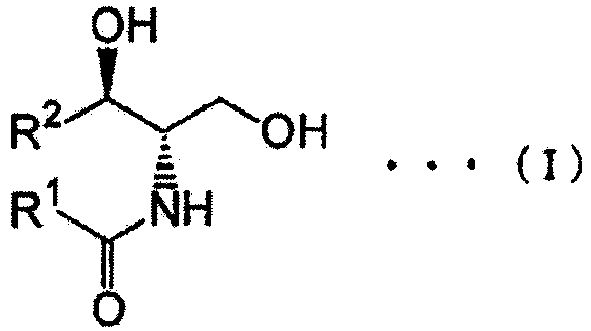
Claims (7)
- A method for manufacturing a ceramide dispersion composition, comprising:obtaining a crude dispersion liquid by performing a dispersion treatment in a state where a mixture, which contains ceramide, a nonionic surfactant, and a polyhydric alcohol in an amount of 10 times to 12,000 times as much as the mass of the ceramide, is heated to a temperature of equal to or higher than 100°C; andperforming a high-pressure emulsification treatment after mixing the crude dispersion liquid with water or a water-containing composition.
- The method for manufacturing a ceramide dispersion composition according to claim 1,
wherein the polyhydric alcohol is at least one kind of polyhydric alcohol selected from the group consisting of glycerin and a diol compound. - The method for manufacturing a ceramide dispersion composition according to claim 2,
wherein the polyhydric alcohol is glycerin and at least one kind of diol compound. - The method for manufacturing a ceramide dispersion composition according to any one of claims 1 to 3,
wherein lecithin is used. - The method for manufacturing a ceramide dispersion composition according to any one of claims 1 to 4,
wherein the nonionic surfactant is a polyglycerin fatty acid ester. - The method for manufacturing a ceramide dispersion composition according to any one of claims 1 to 5,
wherein the ceramide dispersion composition does not contain an oleaginous component staying in a liquid form at 25°C or contains an oleaginous component staying in a liquid form at 25°C in an amount of equal to or less than 1% by mass. - The method for manufacturing a ceramide dispersion composition according to any one of claims 1 to 6,
wherein the ceramide is a compound represented by the following Formula (I),
Applications Claiming Priority (2)
| Application Number | Priority Date | Filing Date | Title |
|---|---|---|---|
| JP2014052464A JP6134678B2 (en) | 2014-03-14 | 2014-03-14 | Method for producing ceramide dispersion composition |
| PCT/JP2014/080157 WO2015136778A1 (en) | 2014-03-14 | 2014-11-14 | Method for producing ceramide dispersion composition |
Publications (3)
| Publication Number | Publication Date |
|---|---|
| EP3117821A4 EP3117821A4 (en) | 2017-01-18 |
| EP3117821A1 true EP3117821A1 (en) | 2017-01-18 |
| EP3117821B1 EP3117821B1 (en) | 2018-12-26 |
Family
ID=54071243
Family Applications (1)
| Application Number | Title | Priority Date | Filing Date |
|---|---|---|---|
| EP14885814.5A Not-in-force EP3117821B1 (en) | 2014-03-14 | 2014-11-14 | Method for producing ceramide dispersion composition |
Country Status (5)
| Country | Link |
|---|---|
| EP (1) | EP3117821B1 (en) |
| JP (1) | JP6134678B2 (en) |
| KR (1) | KR101868726B1 (en) |
| CN (1) | CN106102708B (en) |
| WO (1) | WO2015136778A1 (en) |
Cited By (2)
| Publication number | Priority date | Publication date | Assignee | Title |
|---|---|---|---|---|
| EP3981378A1 (en) | 2020-10-09 | 2022-04-13 | Evonik Operations GmbH | Compositions comprising ceramide, polyglycerol carboxylic acid ester and cholesterol |
| EP3912684A4 (en) * | 2018-12-18 | 2023-04-12 | Genuine R&D Co., Ltd. | CERAMIDE DISPERSION COMPOSITION |
Families Citing this family (9)
| Publication number | Priority date | Publication date | Assignee | Title |
|---|---|---|---|---|
| JP6752057B2 (en) * | 2016-05-31 | 2020-09-09 | キッコーマンバイオケミファ株式会社 | Stable composition for skin quality improver |
| JP7008036B2 (en) * | 2016-12-27 | 2022-02-10 | 花王株式会社 | Method for manufacturing ceramide fine particle dispersion |
| KR102394035B1 (en) * | 2020-06-02 | 2022-05-04 | 코스맥스 주식회사 | Ceramide-containing cosmetic composition using high-pressure homogenizer and method for manufacturing the same |
| CN111568829B (en) * | 2020-06-03 | 2022-07-22 | 上海新高姿化妆品有限公司 | High-content ceramide repair cream and preparation method thereof |
| CN112274446A (en) * | 2020-10-30 | 2021-01-29 | 广州市妆妍生物技术有限公司 | Ceramide refreshing amino acid facial cleanser and preparation method thereof |
| KR102633240B1 (en) * | 2021-05-03 | 2024-02-05 | 코스맥스 주식회사 | Water-in-oil cosmetic composition containing of ceramide and manufacturing methods there of |
| KR102653968B1 (en) * | 2021-08-17 | 2024-04-03 | 코스맥스 주식회사 | Method for manufacturing cosmetic composition with improved stability comprising high content of ceramide |
| JP7769329B2 (en) * | 2021-09-02 | 2025-11-13 | 学校法人日本大学 | Oily gel composition |
| KR102703642B1 (en) * | 2024-02-02 | 2024-09-06 | 주식회사 에코먼트 | Cosmetic composition with the ability to improve blemishes and wrinkles |
Family Cites Families (10)
| Publication number | Priority date | Publication date | Assignee | Title |
|---|---|---|---|---|
| JP4350269B2 (en) * | 2000-05-11 | 2009-10-21 | 高砂香料工業株式会社 | Cosmetic additive composition |
| US20060057091A1 (en) * | 2002-11-15 | 2006-03-16 | Kose Corporation | Semitransparent cosmetics |
| JP4931370B2 (en) * | 2005-06-02 | 2012-05-16 | 花王株式会社 | Emulsified composition |
| JP5214872B2 (en) * | 2006-11-13 | 2013-06-19 | 株式会社コーセー | Vesicle composition and external preparation for skin containing the same |
| WO2009145299A1 (en) * | 2008-05-29 | 2009-12-03 | 富士フイルム株式会社 | Ceramide dispersion |
| JP5507461B2 (en) * | 2008-09-30 | 2014-05-28 | 富士フイルム株式会社 | Ceramide dispersion and method for producing the same |
| WO2010058853A1 (en) * | 2008-11-21 | 2010-05-27 | 富士フイルム株式会社 | Ceramide dispersion, and process for producing same |
| JP5676319B2 (en) * | 2010-04-07 | 2015-02-25 | 富士フイルム株式会社 | Method for producing aqueous cosmetics |
| JP6016728B2 (en) * | 2013-08-02 | 2016-10-26 | 富士フイルム株式会社 | Ceramide dispersion composition |
| JP6356446B2 (en) * | 2014-03-14 | 2018-07-11 | 富士フイルム株式会社 | Ceramide dispersion composition |
-
2014
- 2014-03-14 JP JP2014052464A patent/JP6134678B2/en active Active
- 2014-11-14 WO PCT/JP2014/080157 patent/WO2015136778A1/en not_active Ceased
- 2014-11-14 CN CN201480076864.XA patent/CN106102708B/en active Active
- 2014-11-14 EP EP14885814.5A patent/EP3117821B1/en not_active Not-in-force
- 2014-11-14 KR KR1020167023666A patent/KR101868726B1/en not_active Expired - Fee Related
Cited By (3)
| Publication number | Priority date | Publication date | Assignee | Title |
|---|---|---|---|---|
| EP3912684A4 (en) * | 2018-12-18 | 2023-04-12 | Genuine R&D Co., Ltd. | CERAMIDE DISPERSION COMPOSITION |
| EP3981378A1 (en) | 2020-10-09 | 2022-04-13 | Evonik Operations GmbH | Compositions comprising ceramide, polyglycerol carboxylic acid ester and cholesterol |
| WO2022073909A1 (en) | 2020-10-09 | 2022-04-14 | Evonik Operations Gmbh | Compositions comprising ceramide, polyglycerol carboxylic acid esters and cholesterol |
Also Published As
| Publication number | Publication date |
|---|---|
| EP3117821A4 (en) | 2017-01-18 |
| KR20160112007A (en) | 2016-09-27 |
| CN106102708B (en) | 2019-06-14 |
| CN106102708A (en) | 2016-11-09 |
| JP2015174841A (en) | 2015-10-05 |
| WO2015136778A1 (en) | 2015-09-17 |
| JP6134678B2 (en) | 2017-05-24 |
| KR101868726B1 (en) | 2018-06-18 |
| EP3117821B1 (en) | 2018-12-26 |
Similar Documents
| Publication | Publication Date | Title |
|---|---|---|
| EP3117821B1 (en) | Method for producing ceramide dispersion composition | |
| EP2380657B1 (en) | Ceramide dispersion, and process for producing same | |
| EP2328546B1 (en) | Aqueous cosmetic preparation and method for producing the same | |
| CN113260422B (en) | Ceramide dispersion composition | |
| EP2361678B1 (en) | Ceramide dispersion and method for producing same | |
| WO2017104734A1 (en) | Oil-in-water type emulsion composition and method for producing same | |
| JP6356446B2 (en) | Ceramide dispersion composition | |
| JP5676319B2 (en) | Method for producing aqueous cosmetics | |
| JP6480839B2 (en) | Ceramide dispersion composition | |
| JP2010083801A (en) | Aqueous cosmetic and method for producing the same | |
| WO2010038816A1 (en) | Ceramide dispersion and method for producing same |
Legal Events
| Date | Code | Title | Description |
|---|---|---|---|
| STAA | Information on the status of an ep patent application or granted ep patent |
Free format text: STATUS: THE INTERNATIONAL PUBLICATION HAS BEEN MADE |
|
| PUAI | Public reference made under article 153(3) epc to a published international application that has entered the european phase |
Free format text: ORIGINAL CODE: 0009012 |
|
| STAA | Information on the status of an ep patent application or granted ep patent |
Free format text: STATUS: REQUEST FOR EXAMINATION WAS MADE |
|
| 17P | Request for examination filed |
Effective date: 20160826 |
|
| A4 | Supplementary search report drawn up and despatched |
Effective date: 20161220 |
|
| AK | Designated contracting states |
Kind code of ref document: A1 Designated state(s): AL AT BE BG CH CY CZ DE DK EE ES FI FR GB GR HR HU IE IS IT LI LT LU LV MC MK MT NL NO PL PT RO RS SE SI SK SM TR |
|
| AX | Request for extension of the european patent |
Extension state: BA ME |
|
| DAX | Request for extension of the european patent (deleted) | ||
| GRAP | Despatch of communication of intention to grant a patent |
Free format text: ORIGINAL CODE: EPIDOSNIGR1 |
|
| STAA | Information on the status of an ep patent application or granted ep patent |
Free format text: STATUS: GRANT OF PATENT IS INTENDED |
|
| RIC1 | Information provided on ipc code assigned before grant |
Ipc: A61K 8/34 20060101ALI20180515BHEP Ipc: A61Q 19/00 20060101ALI20180515BHEP Ipc: A61K 8/39 20060101ALI20180515BHEP Ipc: A61K 8/68 20060101AFI20180515BHEP Ipc: A61K 8/06 20060101ALI20180515BHEP Ipc: A61K 8/37 20060101ALI20180515BHEP |
|
| INTG | Intention to grant announced |
Effective date: 20180615 |
|
| GRAS | Grant fee paid |
Free format text: ORIGINAL CODE: EPIDOSNIGR3 |
|
| GRAA | (expected) grant |
Free format text: ORIGINAL CODE: 0009210 |
|
| STAA | Information on the status of an ep patent application or granted ep patent |
Free format text: STATUS: THE PATENT HAS BEEN GRANTED |
|
| AK | Designated contracting states |
Kind code of ref document: B1 Designated state(s): AL AT BE BG CH CY CZ DE DK EE ES FI FR GB GR HR HU IE IS IT LI LT LU LV MC MK MT NL NO PL PT RO RS SE SI SK SM TR |
|
| REG | Reference to a national code |
Ref country code: GB Ref legal event code: FG4D |
|
| REG | Reference to a national code |
Ref country code: CH Ref legal event code: EP |
|
| REG | Reference to a national code |
Ref country code: AT Ref legal event code: REF Ref document number: 1080438 Country of ref document: AT Kind code of ref document: T Effective date: 20190115 |
|
| REG | Reference to a national code |
Ref country code: DE Ref legal event code: R096 Ref document number: 602014038893 Country of ref document: DE |
|
| REG | Reference to a national code |
Ref country code: IE Ref legal event code: FG4D |
|
| PG25 | Lapsed in a contracting state [announced via postgrant information from national office to epo] |
Ref country code: FI Free format text: LAPSE BECAUSE OF FAILURE TO SUBMIT A TRANSLATION OF THE DESCRIPTION OR TO PAY THE FEE WITHIN THE PRESCRIBED TIME-LIMIT Effective date: 20181226 Ref country code: NO Free format text: LAPSE BECAUSE OF FAILURE TO SUBMIT A TRANSLATION OF THE DESCRIPTION OR TO PAY THE FEE WITHIN THE PRESCRIBED TIME-LIMIT Effective date: 20190326 Ref country code: HR Free format text: LAPSE BECAUSE OF FAILURE TO SUBMIT A TRANSLATION OF THE DESCRIPTION OR TO PAY THE FEE WITHIN THE PRESCRIBED TIME-LIMIT Effective date: 20181226 Ref country code: BG Free format text: LAPSE BECAUSE OF FAILURE TO SUBMIT A TRANSLATION OF THE DESCRIPTION OR TO PAY THE FEE WITHIN THE PRESCRIBED TIME-LIMIT Effective date: 20190326 Ref country code: LT Free format text: LAPSE BECAUSE OF FAILURE TO SUBMIT A TRANSLATION OF THE DESCRIPTION OR TO PAY THE FEE WITHIN THE PRESCRIBED TIME-LIMIT Effective date: 20181226 Ref country code: LV Free format text: LAPSE BECAUSE OF FAILURE TO SUBMIT A TRANSLATION OF THE DESCRIPTION OR TO PAY THE FEE WITHIN THE PRESCRIBED TIME-LIMIT Effective date: 20181226 |
|
| REG | Reference to a national code |
Ref country code: NL Ref legal event code: MP Effective date: 20181226 |
|
| REG | Reference to a national code |
Ref country code: LT Ref legal event code: MG4D |
|
| PG25 | Lapsed in a contracting state [announced via postgrant information from national office to epo] |
Ref country code: AL Free format text: LAPSE BECAUSE OF FAILURE TO SUBMIT A TRANSLATION OF THE DESCRIPTION OR TO PAY THE FEE WITHIN THE PRESCRIBED TIME-LIMIT Effective date: 20181226 Ref country code: RS Free format text: LAPSE BECAUSE OF FAILURE TO SUBMIT A TRANSLATION OF THE DESCRIPTION OR TO PAY THE FEE WITHIN THE PRESCRIBED TIME-LIMIT Effective date: 20181226 Ref country code: SE Free format text: LAPSE BECAUSE OF FAILURE TO SUBMIT A TRANSLATION OF THE DESCRIPTION OR TO PAY THE FEE WITHIN THE PRESCRIBED TIME-LIMIT Effective date: 20181226 Ref country code: GR Free format text: LAPSE BECAUSE OF FAILURE TO SUBMIT A TRANSLATION OF THE DESCRIPTION OR TO PAY THE FEE WITHIN THE PRESCRIBED TIME-LIMIT Effective date: 20190327 |
|
| REG | Reference to a national code |
Ref country code: AT Ref legal event code: MK05 Ref document number: 1080438 Country of ref document: AT Kind code of ref document: T Effective date: 20181226 |
|
| PG25 | Lapsed in a contracting state [announced via postgrant information from national office to epo] |
Ref country code: NL Free format text: LAPSE BECAUSE OF FAILURE TO SUBMIT A TRANSLATION OF THE DESCRIPTION OR TO PAY THE FEE WITHIN THE PRESCRIBED TIME-LIMIT Effective date: 20181226 |
|
| PG25 | Lapsed in a contracting state [announced via postgrant information from national office to epo] |
Ref country code: IT Free format text: LAPSE BECAUSE OF FAILURE TO SUBMIT A TRANSLATION OF THE DESCRIPTION OR TO PAY THE FEE WITHIN THE PRESCRIBED TIME-LIMIT Effective date: 20181226 Ref country code: ES Free format text: LAPSE BECAUSE OF FAILURE TO SUBMIT A TRANSLATION OF THE DESCRIPTION OR TO PAY THE FEE WITHIN THE PRESCRIBED TIME-LIMIT Effective date: 20181226 Ref country code: PT Free format text: LAPSE BECAUSE OF FAILURE TO SUBMIT A TRANSLATION OF THE DESCRIPTION OR TO PAY THE FEE WITHIN THE PRESCRIBED TIME-LIMIT Effective date: 20190426 Ref country code: CZ Free format text: LAPSE BECAUSE OF FAILURE TO SUBMIT A TRANSLATION OF THE DESCRIPTION OR TO PAY THE FEE WITHIN THE PRESCRIBED TIME-LIMIT Effective date: 20181226 Ref country code: PL Free format text: LAPSE BECAUSE OF FAILURE TO SUBMIT A TRANSLATION OF THE DESCRIPTION OR TO PAY THE FEE WITHIN THE PRESCRIBED TIME-LIMIT Effective date: 20181226 |
|
| PG25 | Lapsed in a contracting state [announced via postgrant information from national office to epo] |
Ref country code: RO Free format text: LAPSE BECAUSE OF FAILURE TO SUBMIT A TRANSLATION OF THE DESCRIPTION OR TO PAY THE FEE WITHIN THE PRESCRIBED TIME-LIMIT Effective date: 20181226 Ref country code: IS Free format text: LAPSE BECAUSE OF FAILURE TO SUBMIT A TRANSLATION OF THE DESCRIPTION OR TO PAY THE FEE WITHIN THE PRESCRIBED TIME-LIMIT Effective date: 20190426 Ref country code: SK Free format text: LAPSE BECAUSE OF FAILURE TO SUBMIT A TRANSLATION OF THE DESCRIPTION OR TO PAY THE FEE WITHIN THE PRESCRIBED TIME-LIMIT Effective date: 20181226 Ref country code: SM Free format text: LAPSE BECAUSE OF FAILURE TO SUBMIT A TRANSLATION OF THE DESCRIPTION OR TO PAY THE FEE WITHIN THE PRESCRIBED TIME-LIMIT Effective date: 20181226 Ref country code: EE Free format text: LAPSE BECAUSE OF FAILURE TO SUBMIT A TRANSLATION OF THE DESCRIPTION OR TO PAY THE FEE WITHIN THE PRESCRIBED TIME-LIMIT Effective date: 20181226 |
|
| REG | Reference to a national code |
Ref country code: DE Ref legal event code: R097 Ref document number: 602014038893 Country of ref document: DE |
|
| PG25 | Lapsed in a contracting state [announced via postgrant information from national office to epo] |
Ref country code: DK Free format text: LAPSE BECAUSE OF FAILURE TO SUBMIT A TRANSLATION OF THE DESCRIPTION OR TO PAY THE FEE WITHIN THE PRESCRIBED TIME-LIMIT Effective date: 20181226 Ref country code: AT Free format text: LAPSE BECAUSE OF FAILURE TO SUBMIT A TRANSLATION OF THE DESCRIPTION OR TO PAY THE FEE WITHIN THE PRESCRIBED TIME-LIMIT Effective date: 20181226 |
|
| PLBE | No opposition filed within time limit |
Free format text: ORIGINAL CODE: 0009261 |
|
| STAA | Information on the status of an ep patent application or granted ep patent |
Free format text: STATUS: NO OPPOSITION FILED WITHIN TIME LIMIT |
|
| 26N | No opposition filed |
Effective date: 20190927 |
|
| PG25 | Lapsed in a contracting state [announced via postgrant information from national office to epo] |
Ref country code: SI Free format text: LAPSE BECAUSE OF FAILURE TO SUBMIT A TRANSLATION OF THE DESCRIPTION OR TO PAY THE FEE WITHIN THE PRESCRIBED TIME-LIMIT Effective date: 20181226 |
|
| PG25 | Lapsed in a contracting state [announced via postgrant information from national office to epo] |
Ref country code: TR Free format text: LAPSE BECAUSE OF FAILURE TO SUBMIT A TRANSLATION OF THE DESCRIPTION OR TO PAY THE FEE WITHIN THE PRESCRIBED TIME-LIMIT Effective date: 20181226 |
|
| REG | Reference to a national code |
Ref country code: CH Ref legal event code: PL |
|
| PG25 | Lapsed in a contracting state [announced via postgrant information from national office to epo] |
Ref country code: CH Free format text: LAPSE BECAUSE OF NON-PAYMENT OF DUE FEES Effective date: 20191130 Ref country code: LU Free format text: LAPSE BECAUSE OF NON-PAYMENT OF DUE FEES Effective date: 20191114 Ref country code: LI Free format text: LAPSE BECAUSE OF NON-PAYMENT OF DUE FEES Effective date: 20191130 Ref country code: MC Free format text: LAPSE BECAUSE OF FAILURE TO SUBMIT A TRANSLATION OF THE DESCRIPTION OR TO PAY THE FEE WITHIN THE PRESCRIBED TIME-LIMIT Effective date: 20181226 |
|
| REG | Reference to a national code |
Ref country code: BE Ref legal event code: MM Effective date: 20191130 |
|
| PG25 | Lapsed in a contracting state [announced via postgrant information from national office to epo] |
Ref country code: IE Free format text: LAPSE BECAUSE OF NON-PAYMENT OF DUE FEES Effective date: 20191114 |
|
| PG25 | Lapsed in a contracting state [announced via postgrant information from national office to epo] |
Ref country code: BE Free format text: LAPSE BECAUSE OF NON-PAYMENT OF DUE FEES Effective date: 20191130 |
|
| PG25 | Lapsed in a contracting state [announced via postgrant information from national office to epo] |
Ref country code: CY Free format text: LAPSE BECAUSE OF FAILURE TO SUBMIT A TRANSLATION OF THE DESCRIPTION OR TO PAY THE FEE WITHIN THE PRESCRIBED TIME-LIMIT Effective date: 20181226 |
|
| PG25 | Lapsed in a contracting state [announced via postgrant information from national office to epo] |
Ref country code: HU Free format text: LAPSE BECAUSE OF FAILURE TO SUBMIT A TRANSLATION OF THE DESCRIPTION OR TO PAY THE FEE WITHIN THE PRESCRIBED TIME-LIMIT; INVALID AB INITIO Effective date: 20141114 Ref country code: MT Free format text: LAPSE BECAUSE OF FAILURE TO SUBMIT A TRANSLATION OF THE DESCRIPTION OR TO PAY THE FEE WITHIN THE PRESCRIBED TIME-LIMIT Effective date: 20181226 |
|
| PG25 | Lapsed in a contracting state [announced via postgrant information from national office to epo] |
Ref country code: MK Free format text: LAPSE BECAUSE OF FAILURE TO SUBMIT A TRANSLATION OF THE DESCRIPTION OR TO PAY THE FEE WITHIN THE PRESCRIBED TIME-LIMIT Effective date: 20181226 |
|
| PGFP | Annual fee paid to national office [announced via postgrant information from national office to epo] |
Ref country code: GB Payment date: 20220930 Year of fee payment: 9 |
|
| PGFP | Annual fee paid to national office [announced via postgrant information from national office to epo] |
Ref country code: FR Payment date: 20221010 Year of fee payment: 9 |
|
| PGFP | Annual fee paid to national office [announced via postgrant information from national office to epo] |
Ref country code: DE Payment date: 20220621 Year of fee payment: 9 |
|
| P01 | Opt-out of the competence of the unified patent court (upc) registered |
Effective date: 20230515 |
|
| REG | Reference to a national code |
Ref country code: DE Ref legal event code: R119 Ref document number: 602014038893 Country of ref document: DE |
|
| GBPC | Gb: european patent ceased through non-payment of renewal fee |
Effective date: 20231114 |
|
| PG25 | Lapsed in a contracting state [announced via postgrant information from national office to epo] |
Ref country code: DE Free format text: LAPSE BECAUSE OF NON-PAYMENT OF DUE FEES Effective date: 20240601 |
|
| PG25 | Lapsed in a contracting state [announced via postgrant information from national office to epo] |
Ref country code: GB Free format text: LAPSE BECAUSE OF NON-PAYMENT OF DUE FEES Effective date: 20231114 |
|
| PG25 | Lapsed in a contracting state [announced via postgrant information from national office to epo] |
Ref country code: FR Free format text: LAPSE BECAUSE OF NON-PAYMENT OF DUE FEES Effective date: 20231130 |
|
| PG25 | Lapsed in a contracting state [announced via postgrant information from national office to epo] |
Ref country code: GB Free format text: LAPSE BECAUSE OF NON-PAYMENT OF DUE FEES Effective date: 20231114 Ref country code: FR Free format text: LAPSE BECAUSE OF NON-PAYMENT OF DUE FEES Effective date: 20231130 Ref country code: DE Free format text: LAPSE BECAUSE OF NON-PAYMENT OF DUE FEES Effective date: 20240601 |