EP3117625B1 - Content matching system for a networked media player - Google Patents
Content matching system for a networked media player Download PDFInfo
- Publication number
- EP3117625B1 EP3117625B1 EP15761613.7A EP15761613A EP3117625B1 EP 3117625 B1 EP3117625 B1 EP 3117625B1 EP 15761613 A EP15761613 A EP 15761613A EP 3117625 B1 EP3117625 B1 EP 3117625B1
- Authority
- EP
- European Patent Office
- Prior art keywords
- media player
- media content
- users
- computing devices
- group
- Prior art date
- Legal status (The legal status is an assumption and is not a legal conclusion. Google has not performed a legal analysis and makes no representation as to the accuracy of the status listed.)
- Active
Links
Images

Classifications
-
- H—ELECTRICITY
- H04—ELECTRIC COMMUNICATION TECHNIQUE
- H04W—WIRELESS COMMUNICATION NETWORKS
- H04W4/00—Services specially adapted for wireless communication networks; Facilities therefor
- H04W4/02—Services making use of location information
- H04W4/021—Services related to particular areas, e.g. point of interest [POI] services, venue services or geofences
-
- H—ELECTRICITY
- H04—ELECTRIC COMMUNICATION TECHNIQUE
- H04L—TRANSMISSION OF DIGITAL INFORMATION, e.g. TELEGRAPHIC COMMUNICATION
- H04L65/00—Network arrangements, protocols or services for supporting real-time applications in data packet communication
- H04L65/60—Network streaming of media packets
- H04L65/61—Network streaming of media packets for supporting one-way streaming services, e.g. Internet radio
- H04L65/612—Network streaming of media packets for supporting one-way streaming services, e.g. Internet radio for unicast
-
- H—ELECTRICITY
- H04—ELECTRIC COMMUNICATION TECHNIQUE
- H04L—TRANSMISSION OF DIGITAL INFORMATION, e.g. TELEGRAPHIC COMMUNICATION
- H04L67/00—Network arrangements or protocols for supporting network services or applications
- H04L67/2866—Architectures; Arrangements
- H04L67/30—Profiles
- H04L67/306—User profiles
-
- H—ELECTRICITY
- H04—ELECTRIC COMMUNICATION TECHNIQUE
- H04L—TRANSMISSION OF DIGITAL INFORMATION, e.g. TELEGRAPHIC COMMUNICATION
- H04L67/00—Network arrangements or protocols for supporting network services or applications
- H04L67/50—Network services
- H04L67/535—Tracking the activity of the user
Definitions
- US 2012/0290648 proposes a dynamic playlist for a mobile computing device, which is generated based on overlapping preferences of a number of users.
- US 2009/0164516 proposes a method of generating media recommendations using play histories from a plurality of users.
- the invention provides a system as set out in claim 1, a method as set out in claim 7, and a non-transitory computer-readable medium as set out in claim 12.
- a content matching system is configured to attempt to find content that all (or many) of the users listening to a networked speaker system would like and then play that content on the speaker system.
- a content matching system determines when multiple users are near a registered, networked speaker system. The matching system communicates with client apps located on the users' mobile devices and identifies the users. The system then communicates with a streaming service to identify media content that is liked by both users. The system then plays the content on the networked speaker system. By automatically catering to the listeners' tastes, the content matching system can provide a beneficial user experience.
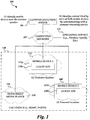
- Fig. 1 illustrates one embodiment of the content matching system 100.
- a content selection server 105 is connected via a connecting network 107 to a plurality of mobile devices 115 (115a, 115b) and a networked media player.
- the content selection server 105 can comprise one or more physical or virtual computing nodes.
- the mobile devices 115 can include tablets, wearable computing devices, smart phones and/or the like.
- the mobile device 115 includes a client application 120 (120a, 120b) or other software that communicates with the content selection server 105.
- the networked media player 110 can include speakers, televisions, set-top boxes, mp3 players, streaming devices and/or the like.
- the connecting server 105 is in communication with one or more streaming services 125 to obtain user preference information.
- the content selection server may itself store or cache user preference information in order to eliminate or reduce the need to communicate with the streaming services 125.
- Mobile device 1 is associated with a first user and operating on a first network 135 (e.g., a first phone carrier's network).
- Mobile device 2 is associated with a second user and operating on a second network 140 (e.g., a second phone carrier's network).
- the networked media player 110 is operating on a local network 145.
- the devices generally cannot directly communicate with each other without some reconfiguration.
- Many users may not have the expertise or the information needed to reconfigure the devices.
- users of mobile device 1 and 2 may not have the passwords or access rights to the local network 145 and therefore cannot connect to that network.
- the content selection server 105 can facilitate interoperability between the devices.
- the client apps 120 on the mobile devices 115 transmit location information (e.g., nearby Wi-Fi SSIDs, Cell ID, GPS data, etc.) to the content selection server 105.
- location information e.g., nearby Wi-Fi SSIDs, Cell ID, GPS data, etc.
- the content selection server 105 obtains and maintains location information for various networked media players 110.
- the content selection server 105 may store network location data (e.g., IP address, network SSID, etc.) or geo-location data for the media players.
- media players 110 are registered with the content selection server 105 and accounts created with data such as preferences, location, permissions, etc.
- the content selection server 105 can determine when the mobile devices 115 are near the media player 110.
- the content selection server 105 may use Wi-Fi identification or GPS data to determine when users are on the same area as the media player.
- the content selection server 105 can determine that multiple users are in range of the same media player 110.
- the server then identifies the users of the mobile devices.
- the content matching system may access a database or other data repository of user identity data.
- the content system may query an app running on the mobile device to get identify data, such as account information.
- identify data such as account information.
- the system communicates with a streaming service (e.g., Pandora, Spotify, etc.) to obtain account information for the users, such as preferred genres (e.g., for music, movies or TV), favorite playlists, playback queues, playback history, and/or the like.
- the server 105 can then use this data to identify media content that all or a large number of the users near the networked media player 110 would like.
- the server then causes the media player to play the identified media content.
- the server 105 can compare playlists for a first user and a second user, find overlaps in the playlist, generate a new playlist with the overlaps, and then transmit the new playlist to the media player.
- the media player can then play the content.
- FIG. 2 illustrates a flow chart of an embodiment of a content matching routine 200.
- the routine is performed by embodiments of the CMS or by one of its components, such as the content selection server 105.
- the routine is discussed in the context of an example scenario that is intended to illustrate, but not to limit, various aspects of the CMS.
- the server 105 obtains location information from mobile devices and a networked media player. For example, in one scenario, people may be listening to music while at a party on a networked speaker system and the server gets location information from people's mobile devices and the networked speaker system.
- the content selection server 105 identifies devices near the networked media player based at least partly on the location information.
- the content selection server 105 may be tracking thousands or more of devices. There may be multiple content selection servers 105 if the content selection system 100 has to track a large number of users. Based on location information from the users, the content selection server 105 can determine when mobile devices are near a networked media player registered with the server 105.
- the content selection server 105 identifies users associated with the nearby mobile devices.
- the mobile devices include client applications configured to interact with the server 105.
- the client apps can provide user data to the server 105.
- the client apps may request user information from the user, such as streaming service account information.
- the client apps can then provide the user information to the server.
- the content selection server 105 obtains the media preferences of the users near the networked media player. For example, if the server 105 has users streaming service account information, the server 105 can communicate with the streaming services to find out the users' media preferences.
- the content selection server 105 selects media for playback based at least partly on the media preferences. For example, the server 105 may attempt to find matching media content in users playback lists, histories, or the like. The server 105 may also attempt to leverage recommendation systems, such as those utilized by many streaming services. For example, even if no exact media content matches exists, the users may have similar tastes such that recommendation systems can come up with overlapping recommendations for the users.
- the content selection server 105 provides the selected media for playback to the media player for playback.
- the server 105 can provide a music playlist to a speaker system, a movie or television show selection to a smart TV, or an advertising display to an electronic billboard.
- the media selection is based at least partly on the users' preferences, users should be more interested and engaged in the played media content.
- the content matching system could work with other media files, such as movies, television shows, advertising or the like.
- the content matching system could control playback on speakers and other types of media playback devices, such as televisions, electronic displays, tablets, mobile phones, kiosks or the like.
- the content matching system could control an electronic display at a public area, obtain the user preferences of users near the electronic display and then select advertising that a large number of the users may be interested in.
- a content selection system is configured to obtain location information from a plurality of computing devices.
- the content selection system identifies a selection of computing devices that are within a set distance (e.g., within viewing and/or listening distance) from a networked, media playback device.
- the content selection system accesses account information of users associated with the selection of computing devices and obtains user preferences for media content.
- the content selection system selects a first media content and transmits the first media content to the networked, media playback device for playback.
- Each of the processes, methods and algorithms described in the preceding sections may be embodied in, and fully or partially automated by, code modules executed by one or more computers, computer processors, or machines configured to execute computer instructions.
- the code modules may be stored on any type of non-transitory computer-readable storage medium or tangible computer storage device, such as hard drives, solid state memory, optical disc and/or the like.
- the processes and algorithms may be implemented partially or wholly in application-specific circuitry.
- the results of the disclosed processes and process steps may be stored, persistently or otherwise, in any type of non-transitory computer storage such as, e.g., volatile or non-volatile storage.
Landscapes
- Engineering & Computer Science (AREA)
- Computer Networks & Wireless Communication (AREA)
- Signal Processing (AREA)
- Multimedia (AREA)
- Computer Hardware Design (AREA)
- General Engineering & Computer Science (AREA)
- Two-Way Televisions, Distribution Of Moving Picture Or The Like (AREA)
- Information Transfer Between Computers (AREA)
Description
- People often have different tastes in media content, whether music, television, movies or the like. This can make selecting media content for a group of people difficult. For example, at a party, people may be forced to listen to a single speaker system and have a difficult time agreeing on selecting music to play. While a single user can control the playback of the speaker system, the music chosen by that single user may not necessarily satisfy the tastes of other listeners.
-
US 2012/0290648 proposes a dynamic playlist for a mobile computing device, which is generated based on overlapping preferences of a number of users.US 2009/0164516 proposes a method of generating media recommendations using play histories from a plurality of users. - Accordingly, the invention provides a system as set out in
claim 1, a method as set out in claim 7, and a non-transitory computer-readable medium as set out in claim 12. - Throughout the drawings, reference numbers may be re-used to indicate correspondence between referenced elements. The drawings are provided to illustrate example embodiments described herein and are not intended to limit the scope of the disclosure.
-
FIG. 1 illustrates a block diagram of an embodiment of a content matching system that identifies similarities in content preferences of users. -
FIG. 2 illustrates a flow chart of an embodiment of a content matching process implementable by the content matching system ofFIG. 1 . - In one embodiment, a content matching system (CMS) is configured to attempt to find content that all (or many) of the users listening to a networked speaker system would like and then play that content on the speaker system. In one embodiment, a content matching system determines when multiple users are near a registered, networked speaker system. The matching system communicates with client apps located on the users' mobile devices and identifies the users. The system then communicates with a streaming service to identify media content that is liked by both users. The system then plays the content on the networked speaker system. By automatically catering to the listeners' tastes, the content matching system can provide a beneficial user experience.
- Various aspects of the content matching system will now be described with regard to certain examples and embodiments, which are intended to illustrate but not to limit the disclosure. Nothing in this disclosure is intended to imply that any particular feature or characteristic of the disclosed embodiments is essential. The scope of protection of certain inventions is defined by the claims.
-
Fig. 1 illustrates one embodiment of thecontent matching system 100. In the illustrated embodiment, acontent selection server 105 is connected via a connectingnetwork 107 to a plurality of mobile devices 115 (115a, 115b) and a networked media player. Thecontent selection server 105 can comprise one or more physical or virtual computing nodes. The mobile devices 115 can include tablets, wearable computing devices, smart phones and/or the like. In one embodiment, the mobile device 115 includes a client application 120 (120a, 120b) or other software that communicates with thecontent selection server 105. The networkedmedia player 110 can include speakers, televisions, set-top boxes, mp3 players, streaming devices and/or the like. In one embodiment, the connectingserver 105 is in communication with one ormore streaming services 125 to obtain user preference information. In some implementations, the content selection server may itself store or cache user preference information in order to eliminate or reduce the need to communicate with thestreaming services 125. - In an example scenario, several users are at a location 130 (e.g., home, party, meeting, event, etc.).
Mobile device 1 is associated with a first user and operating on a first network 135 (e.g., a first phone carrier's network).Mobile device 2 is associated with a second user and operating on a second network 140 (e.g., a second phone carrier's network). Meanwhile, the networkedmedia player 110 is operating on alocal network 145. As the three devices are operating on different networks, the devices generally cannot directly communicate with each other without some reconfiguration. Many users, however, may not have the expertise or the information needed to reconfigure the devices. For example, users ofmobile device local network 145 and therefore cannot connect to that network. However, thecontent selection server 105 can facilitate interoperability between the devices. - At operations (1) and (2), the client apps 120 on the mobile devices 115 transmit location information (e.g., nearby Wi-Fi SSIDs, Cell ID, GPS data, etc.) to the
content selection server 105. In one embodiment, thecontent selection server 105 obtains and maintains location information for various networkedmedia players 110. For example, thecontent selection server 105 may store network location data (e.g., IP address, network SSID, etc.) or geo-location data for the media players. In an embodiment,media players 110 are registered with thecontent selection server 105 and accounts created with data such as preferences, location, permissions, etc. Based on the location information from the devices, thecontent selection server 105 can determine when the mobile devices 115 are near themedia player 110. For example, thecontent selection server 105 may use Wi-Fi identification or GPS data to determine when users are on the same area as the media player. - Based on the proximity of the mobile devices 115 to the networked
media player 110, thecontent selection server 105 can determine that multiple users are in range of thesame media player 110. At operation (4), the server then identifies the users of the mobile devices. For example, the content matching system may access a database or other data repository of user identity data. In another example, the content system may query an app running on the mobile device to get identify data, such as account information. Using this identify data, the system communicates with a streaming service (e.g., Pandora, Spotify, etc.) to obtain account information for the users, such as preferred genres (e.g., for music, movies or TV), favorite playlists, playback queues, playback history, and/or the like. Theserver 105 can then use this data to identify media content that all or a large number of the users near thenetworked media player 110 would like. The server then causes the media player to play the identified media content. For example, theserver 105 can compare playlists for a first user and a second user, find overlaps in the playlist, generate a new playlist with the overlaps, and then transmit the new playlist to the media player. The media player can then play the content. -
FIG. 2 illustrates a flow chart of an embodiment of a content matching routine 200. In some implementations, the routine is performed by embodiments of the CMS or by one of its components, such as thecontent selection server 105. For ease of explanation, the following describes the routine as performed by thecontent selection server 105. The routine is discussed in the context of an example scenario that is intended to illustrate, but not to limit, various aspects of the CMS. - Beginning at
block 205, theserver 105 obtains location information from mobile devices and a networked media player. For example, in one scenario, people may be listening to music while at a party on a networked speaker system and the server gets location information from people's mobile devices and the networked speaker system. - At
block 210, thecontent selection server 105 identifies devices near the networked media player based at least partly on the location information. At any given time, thecontent selection server 105 may be tracking thousands or more of devices. There may be multiplecontent selection servers 105 if thecontent selection system 100 has to track a large number of users. Based on location information from the users, thecontent selection server 105 can determine when mobile devices are near a networked media player registered with theserver 105. - At
block 215, thecontent selection server 105 identifies users associated with the nearby mobile devices. In one embodiment, the mobile devices include client applications configured to interact with theserver 105. The client apps can provide user data to theserver 105. For example, the client apps may request user information from the user, such as streaming service account information. The client apps can then provide the user information to the server. - At
block 220, thecontent selection server 105 obtains the media preferences of the users near the networked media player. For example, if theserver 105 has users streaming service account information, theserver 105 can communicate with the streaming services to find out the users' media preferences. - At
block 225, thecontent selection server 105 selects media for playback based at least partly on the media preferences. For example, theserver 105 may attempt to find matching media content in users playback lists, histories, or the like. Theserver 105 may also attempt to leverage recommendation systems, such as those utilized by many streaming services. For example, even if no exact media content matches exists, the users may have similar tastes such that recommendation systems can come up with overlapping recommendations for the users. - At
block 230, thecontent selection server 105 provides the selected media for playback to the media player for playback. For example, theserver 105 can provide a music playlist to a speaker system, a movie or television show selection to a smart TV, or an advertising display to an electronic billboard. As the media selection is based at least partly on the users' preferences, users should be more interested and engaged in the played media content. - Various implementations of the content matching system are possible. For example, while the above has discussed music, the content matching system could work with other media files, such as movies, television shows, advertising or the like. In addition, the content matching system could control playback on speakers and other types of media playback devices, such as televisions, electronic displays, tablets, mobile phones, kiosks or the like. For example, the content matching system could control an electronic display at a public area, obtain the user preferences of users near the electronic display and then select advertising that a large number of the users may be interested in.
- In one embodiment, a content selection system is configured to obtain location information from a plurality of computing devices. The content selection system identifies a selection of computing devices that are within a set distance (e.g., within viewing and/or listening distance) from a networked, media playback device. The content selection system accesses account information of users associated with the selection of computing devices and obtains user preferences for media content. The content selection system selects a first media content and transmits the first media content to the networked, media playback device for playback.
- Each of the processes, methods and algorithms described in the preceding sections may be embodied in, and fully or partially automated by, code modules executed by one or more computers, computer processors, or machines configured to execute computer instructions. The code modules may be stored on any type of non-transitory computer-readable storage medium or tangible computer storage device, such as hard drives, solid state memory, optical disc and/or the like. The processes and algorithms may be implemented partially or wholly in application-specific circuitry. The results of the disclosed processes and process steps may be stored, persistently or otherwise, in any type of non-transitory computer storage such as, e.g., volatile or non-volatile storage.
- The various features and processes described above may be used independently of one another, or may be combined in various ways. All possible combinations and subcombinations are intended to fall within the scope of this disclosure based on the scope as indicated in the appended claims. In addition, certain method, event, state or process blocks may be omitted in some implementations. The methods and processes described herein are also not limited to any particular sequence, and the blocks or states relating thereto can be performed in other sequences that are appropriate. For example, described tasks or events may be performed in an order other than that specifically disclosed, or multiple may be combined in a single block or state. The example tasks or events may be performed in serial, in parallel, or in some other manner. Tasks or events may be added to or removed from the disclosed example embodiments. The example systems and components described herein may be configured differently than described. For example, elements may be added to, removed from, or rearranged compared to the disclosed example embodiments.
- While certain example embodiments have been described, these embodiments have been presented by way of example only, and are not intended to limit the scope of the inventions disclosed herein. Thus, nothing in the foregoing description is intended to imply that any particular feature, characteristic, step, module, or block is necessary or indispensable. Indeed, the novel methods and systems described herein may be embodied in a variety of other forms; various omissions, substitutions and changes in the form of the methods and systems described herein may be made without departing from the scope of the appended claims.
Claims (14)
- A system (100) for selecting media content for playback on a networked media player (110) connected to a local network, the system comprising:
one or more processors on a content selection server (105) configured to facilitate interoperability between computing devices operating on different communication networks, wherein the content selection server is configured to connect to the computing devices and the media player through a connecting network (107), the one or more processors configured to:obtain (205) location information for a plurality of computing devices (115a, 115b) and for the media player;identify (210) a group of computing devices that are within a set viewing distance or listening distance from the networked media player, wherein a first computing device of the group of computing devices cannot directly communicate with the networked media player without reconfiguration;determine (215) a group of users associated with the group of computing devices, wherein the group of users each have a streaming service account associated with a recommendation system;communicate with one or more streaming services (125) associated with the streaming service accounts to obtain user account information related to media content preferences;determine whether there is matching media content in playlists of the group of users;in response to determining there is no matching media content in the playlists, select a first media content for playback on the networked media player based on matching recommendations of a plurality of recommendations generated by the recommendation systems associated with the streaming service accounts; andprovide (230) the selected first media content to the networked media player. - The system of claim 1, wherein the networked media player comprises at least one of a speaker system, a television, or a streaming device.
- The system of claim 1, wherein the computing devices comprise at least one of a smart phone, a wearable computing device, or a tablet.
- The system of claim 1, wherein the location information comprises at least one of Wi-Fi data, Cell ID, or GPS data.
- The system of claim 1, wherein;
the one or more processors are further configured to determine the media content preferences of the group of users; and
selecting the first media content comprises identifying overlaps in the media content preferences of the users. - The system of claim 5, wherein determining media content preferences of users comprises:accessing streaming service accounts for each of the users; andobtaining the media content preferences stored by the streaming service accounts.
- A method for selecting media content for playback on a networked media player (110) connected to a local network, the method being suitable for a content selection server (105) configured to facilitate interoperability between computing devices operating on different communication networks, wherein the content selection server is connected to the computing devices and the media player through a connecting network (107), the method comprising:obtaining (205) location information for a plurality of computing devices and for the media player;identifying (210), on the content selection server, a group of computing devices (115a, 115b) that are within a set viewing distance or listening distance from the networked media player connected to a local network, wherein a first computing device of the group of computing devices cannot directly communicate with the networked media player without reconfiguration;determining (215) a group of users associated with the group of computing devices, wherein the users have streaming service accounts associated with recommendation systems;communicating with one or more streaming services (125) associated with the streaming service accounts to obtain user account information related to media content preferences;determining whether there is matching media content in playlists of the group of users;in response to determining that there is no matching media content in the playlists, selecting a first media content for playback on the networked media player based at least on matching recommendations of a plurality of recommendations generated by the recommendation systems associated with the streaming service accounts; andproviding (230) the selected first media content to the networked media player.
- The method of claim 7, wherein the networked media player comprises at least one of a speaker system, a television, or a streaming device.
- The method of claim 7, wherein the computing devices comprise at least one of a smart phone, a wearable computing device, or a tablet.
- The method of claim 7, wherein location information comprises at least one of Wi-Fi, Cell ID or GPS data.
- The method of claim 7 further comprising determining the media content preferences of users by:accessing streaming service accounts for each of the users; andobtaining the media content preferences stored by the streaming service accounts.
- A non-transitory computer-readable medium storing computer-readable instructions that, when executed by a processor on a content selection server (105) configured to select media content for playback on a networked media player (110) connected to a local network and to facilitate interoperability between computing devices operating on different communication networks, wherein the content selection server is connected to the computing devices and the media player through a connecting network (107), instruct the processor to execute steps comprising:obtaining (205) location information for a plurality of computing devices and for the media player;identifying (210) a group of computing devices (115a, 115b) that are within a set viewing distance or listening distance from the networked media player connected to a local network, wherein a first computing device of the group of computing devices cannot directly communicate with the networked media player without reconfiguration;determining (215) a group of users associated with the group of computing devices, wherein the group of users have streaming service accounts associated with recommendation systems;communicating with one or more streaming services (125) associated with the streaming service accounts to obtain user account information related to media content preferences;determining whether there is matching media content in playlists of the group of users;in response to determining that there is no matching media content in the playlists, selecting a first media content for playback on the networked media player based at least on matching recommendations of a plurality of recommendations generated by the recommendation systems associated with the streaming service accounts; andproviding (230) the selected first media content to the networked media player.
- The computer-readable medium of claim 12, wherein the networked media player comprises at least one of a speaker system, a television, or a streaming device or optionally, wherein the location information comprises at least one of Wi-Fi data, Cell ID, or GPS data.
- The computer-readable medium of claim 12, wherein the steps further comprise determining media content preferences of users by:accessing streaming service accounts for each of the users; andobtaining media content preferences stored by the streaming service accounts.
Applications Claiming Priority (3)
| Application Number | Priority Date | Filing Date | Title |
|---|---|---|---|
| US201461951921P | 2014-03-12 | 2014-03-12 | |
| US14/244,306 US10182308B2 (en) | 2014-03-12 | 2014-04-03 | Content matching system for a networked media player |
| PCT/US2015/020301 WO2015138812A1 (en) | 2014-03-12 | 2015-03-12 | Content matching system for a networked media player |
Publications (3)
| Publication Number | Publication Date |
|---|---|
| EP3117625A1 EP3117625A1 (en) | 2017-01-18 |
| EP3117625A4 EP3117625A4 (en) | 2017-10-18 |
| EP3117625B1 true EP3117625B1 (en) | 2019-08-07 |
Family
ID=54070323
Family Applications (1)
| Application Number | Title | Priority Date | Filing Date |
|---|---|---|---|
| EP15761613.7A Active EP3117625B1 (en) | 2014-03-12 | 2015-03-12 | Content matching system for a networked media player |
Country Status (4)
| Country | Link |
|---|---|
| US (1) | US10182308B2 (en) |
| EP (1) | EP3117625B1 (en) |
| CN (1) | CN106134212B (en) |
| WO (1) | WO2015138812A1 (en) |
Family Cites Families (39)
| Publication number | Priority date | Publication date | Assignee | Title |
|---|---|---|---|---|
| US7546353B2 (en) | 1999-12-02 | 2009-06-09 | Western Digital Technologies, Inc. | Managed peer-to-peer applications, systems and methods for distributed data access and storage |
| US8793374B2 (en) | 1999-12-02 | 2014-07-29 | Western Digital Technologies, Inc. | Managed peer-to-peer applications, systems and methods for distributed data access and storage |
| AU2056401A (en) | 1999-12-02 | 2001-06-12 | Senvid, Inc. | Method, system and service model for remote recording of television programs |
| US7934251B2 (en) | 1999-12-02 | 2011-04-26 | Western Digital Technologies, Inc. | Managed peer-to-peer applications, systems and methods for distributed data access and storage |
| US8688797B2 (en) | 1999-12-02 | 2014-04-01 | Western Digital Technologies, Inc. | Managed peer-to-peer applications, systems and methods for distributed data access and storage |
| US7120692B2 (en) | 1999-12-02 | 2006-10-10 | Senvid, Inc. | Access and control system for network-enabled devices |
| US7587467B2 (en) | 1999-12-02 | 2009-09-08 | Western Digital Technologies, Inc. | Managed peer-to-peer applications, systems and methods for distributed data access and storage |
| US9191443B2 (en) | 1999-12-02 | 2015-11-17 | Western Digital Technologies, Inc. | Managed peer-to-peer applications, systems and methods for distributed data access and storage |
| US7917628B2 (en) | 1999-12-02 | 2011-03-29 | Western Digital Technologies, Inc. | Managed peer-to-peer applications, systems and methods for distributed data access and storage |
| US6499054B1 (en) | 1999-12-02 | 2002-12-24 | Senvid, Inc. | Control and observation of physical devices, equipment and processes by multiple users over computer networks |
| US6389467B1 (en) | 2000-01-24 | 2002-05-14 | Friskit, Inc. | Streaming media search and continuous playback system of media resources located by multiple network addresses |
| US6985934B1 (en) | 2000-10-23 | 2006-01-10 | Binham Communications Corporation | Method and system for providing rich media content over a computer network |
| US7454443B2 (en) | 2003-08-26 | 2008-11-18 | Tamir Ram | Method, system, and program for personal data management using content-based replication |
| US20080091717A1 (en) * | 2006-09-27 | 2008-04-17 | Zachary Adam Garbow | Generation of Collaborative Playlist Based Upon Musical Preference Data from Multiple Digital Media Players |
| US8028042B2 (en) | 2007-06-15 | 2011-09-27 | Amazon Technologies, Inc. | System and method of managing media content |
| US8060525B2 (en) | 2007-12-21 | 2011-11-15 | Napo Enterprises, Llc | Method and system for generating media recommendations in a distributed environment based on tagging play history information with location information |
| US8004791B2 (en) | 2008-02-22 | 2011-08-23 | Western Digital Technologies, Inc. | Information storage device with a bridge controller and a plurality of electrically coupled conductive shields |
| CN101287014B (en) * | 2008-06-10 | 2011-10-26 | 北京邮电大学 | Method, system and device for realizing stream media service |
| US7796190B2 (en) * | 2008-08-15 | 2010-09-14 | At&T Labs, Inc. | System and method for adaptive content rendition |
| US8588824B2 (en) | 2009-02-26 | 2013-11-19 | Adobe Systems Incorporated | Transferring media context information based on proximity to a mobile device |
| US8255661B2 (en) | 2009-11-13 | 2012-08-28 | Western Digital Technologies, Inc. | Data storage system comprising a mapping bridge for aligning host block size with physical block size of a data storage device |
| US8285965B2 (en) | 2009-11-20 | 2012-10-09 | Western Digital Technologies, Inc. | Aligning data storage device partition to boundary of physical data sector |
| US8341284B2 (en) | 2009-12-18 | 2012-12-25 | At&T Intellectual Property I, L.P. | Method and system for selecting a delivery method for media on demand |
| US8526798B2 (en) | 2009-12-23 | 2013-09-03 | Western Digital Technologies, Inc. | Portable content container displaying A/V files in response to a command received from a consumer device |
| US8583725B2 (en) | 2010-04-05 | 2013-11-12 | Microsoft Corporation | Social context for inter-media objects |
| US8631284B2 (en) | 2010-04-30 | 2014-01-14 | Western Digital Technologies, Inc. | Method for providing asynchronous event notification in systems |
| CA2714224C (en) * | 2010-06-18 | 2011-10-25 | Guest Tek Interactive Entertainment Ltd. | Controller for providing user-tailored entertainment experience at entertainment device and method thereof |
| US9275542B2 (en) * | 2010-07-30 | 2016-03-01 | Hewlett Packard Enterprise Development Lp | Location-indexed audio content |
| US10019741B2 (en) | 2010-08-09 | 2018-07-10 | Western Digital Technologies, Inc. | Methods and systems for a personal multimedia content archive |
| US8725680B2 (en) * | 2011-02-08 | 2014-05-13 | Microsoft Corporation | Media content location awareness and decision making |
| US8661151B2 (en) | 2011-05-09 | 2014-02-25 | Google Inc. | Dynamic playlist for mobile computing device |
| US8819443B2 (en) | 2012-02-14 | 2014-08-26 | Western Digital Technologies, Inc. | Methods and devices for authentication and data encryption |
| US8646054B1 (en) | 2012-03-23 | 2014-02-04 | Western Digital Technologies, Inc. | Mechanism to manage access to user data area with bridged direct-attached storage devices |
| US9214184B2 (en) | 2012-04-10 | 2015-12-15 | Western Digital Technologies, Inc. | Digital rights management system, devices, and methods for binding content to an intelligent storage device |
| US8914634B2 (en) | 2012-04-10 | 2014-12-16 | Western Digital Technologies, Inc. | Digital rights management system transfer of content and distribution |
| CN102982469A (en) * | 2012-11-06 | 2013-03-20 | 北京百度网讯科技有限公司 | Method and device and system for popularizing map in mobile terminal |
| US9037682B2 (en) * | 2012-12-13 | 2015-05-19 | Google Technology Holdings LLC | System and methods for preventing interruptions due to battery drain during streaming media sessions between devices |
| US9442935B2 (en) * | 2013-05-31 | 2016-09-13 | Nokia Technologies Oy | Method and apparatus for presenting media to users |
| US9639607B2 (en) * | 2013-10-21 | 2017-05-02 | Amazon Technologies Inc. | Managing media content, playlist sharing |
-
2014
- 2014-04-03 US US14/244,306 patent/US10182308B2/en active Active
-
2015
- 2015-03-12 CN CN201580013328.XA patent/CN106134212B/en active Active
- 2015-03-12 WO PCT/US2015/020301 patent/WO2015138812A1/en not_active Ceased
- 2015-03-12 EP EP15761613.7A patent/EP3117625B1/en active Active
Non-Patent Citations (1)
| Title |
|---|
| None * |
Also Published As
| Publication number | Publication date |
|---|---|
| WO2015138812A1 (en) | 2015-09-17 |
| US20150264159A1 (en) | 2015-09-17 |
| US10182308B2 (en) | 2019-01-15 |
| EP3117625A1 (en) | 2017-01-18 |
| CN106134212A (en) | 2016-11-16 |
| CN106134212B (en) | 2019-11-19 |
| EP3117625A4 (en) | 2017-10-18 |
Similar Documents
| Publication | Publication Date | Title |
|---|---|---|
| US10637932B2 (en) | Method and system for establishing variable authentication and targeting communications networks where network devices may detect, discover, authenticate and communicate directly with each other, based on such attributes as interests, proximity, or location within or outside of a specified zone | |
| US11531995B2 (en) | Consent management system with consent request process | |
| US9124651B2 (en) | Controlling media consumption privacy settings | |
| US11386138B2 (en) | Media content selected from listening history of social connections | |
| US9280546B2 (en) | System and method for accessing digital content using a location-independent name | |
| US8983273B2 (en) | Selectively recording media content | |
| US9300986B2 (en) | Media system with canonical architecture for integrating media productions from different content providers | |
| US8725758B2 (en) | Video tag sharing method and system | |
| US20130173765A1 (en) | Systems and methods for assigning roles between user devices | |
| KR20130087364A (en) | Globally-maintained user profile for media/audio user preferences | |
| CN106489150A (en) | For recognize and preserve media asset a part system and method | |
| US20160328396A1 (en) | Collaborative intelligent media playlists | |
| WO2017067218A1 (en) | Method, device, server, and system for synchronizing member benefits among multiple devices | |
| US9977646B2 (en) | Broadcast control and accrued history of media | |
| CN106507137A (en) | A kind of footmark collocation method, server and system | |
| US11262972B2 (en) | Automated content medium selection | |
| US20110197227A1 (en) | Systems and methods for providing roaming video wanted list and roaming video preferences | |
| US8966042B2 (en) | Differentiating bookmarks in content access lists shared among multiple content player devices | |
| US10182308B2 (en) | Content matching system for a networked media player | |
| US9436454B1 (en) | Scalable systems and methods for providing ordered update delivery | |
| US20150288729A1 (en) | Method and system for playing video media file of video sharing website in area network | |
| US20170311137A1 (en) | Movie night | |
| US20150262190A1 (en) | Methods and Systems for Determining Consumer Entitlements for Playback Interoperability | |
| WO2025184379A1 (en) | System and methods for creating a profile based on content clustering | |
| KR20130110660A (en) | Method for providing contents search and digital media player for performing the same, and home network system on based dlna |
Legal Events
| Date | Code | Title | Description |
|---|---|---|---|
| STAA | Information on the status of an ep patent application or granted ep patent |
Free format text: STATUS: THE INTERNATIONAL PUBLICATION HAS BEEN MADE |
|
| PUAI | Public reference made under article 153(3) epc to a published international application that has entered the european phase |
Free format text: ORIGINAL CODE: 0009012 |
|
| STAA | Information on the status of an ep patent application or granted ep patent |
Free format text: STATUS: REQUEST FOR EXAMINATION WAS MADE |
|
| 17P | Request for examination filed |
Effective date: 20160926 |
|
| AK | Designated contracting states |
Kind code of ref document: A1 Designated state(s): AL AT BE BG CH CY CZ DE DK EE ES FI FR GB GR HR HU IE IS IT LI LT LU LV MC MK MT NL NO PL PT RO RS SE SI SK SM TR |
|
| AX | Request for extension of the european patent |
Extension state: BA ME |
|
| DAV | Request for validation of the european patent (deleted) | ||
| DAX | Request for extension of the european patent (deleted) | ||
| A4 | Supplementary search report drawn up and despatched |
Effective date: 20170915 |
|
| RIC1 | Information provided on ipc code assigned before grant |
Ipc: H04N 21/462 20110101ALI20170911BHEP Ipc: G06Q 50/10 20120101ALI20170911BHEP Ipc: H04L 29/06 20060101ALI20170911BHEP Ipc: H04N 21/45 20110101AFI20170911BHEP Ipc: H04L 29/08 20060101ALI20170911BHEP |
|
| GRAP | Despatch of communication of intention to grant a patent |
Free format text: ORIGINAL CODE: EPIDOSNIGR1 |
|
| STAA | Information on the status of an ep patent application or granted ep patent |
Free format text: STATUS: GRANT OF PATENT IS INTENDED |
|
| INTG | Intention to grant announced |
Effective date: 20190204 |
|
| GRAS | Grant fee paid |
Free format text: ORIGINAL CODE: EPIDOSNIGR3 |
|
| GRAJ | Information related to disapproval of communication of intention to grant by the applicant or resumption of examination proceedings by the epo deleted |
Free format text: ORIGINAL CODE: EPIDOSDIGR1 |
|
| GRAL | Information related to payment of fee for publishing/printing deleted |
Free format text: ORIGINAL CODE: EPIDOSDIGR3 |
|
| STAA | Information on the status of an ep patent application or granted ep patent |
Free format text: STATUS: REQUEST FOR EXAMINATION WAS MADE |
|
| GRAR | Information related to intention to grant a patent recorded |
Free format text: ORIGINAL CODE: EPIDOSNIGR71 |
|
| STAA | Information on the status of an ep patent application or granted ep patent |
Free format text: STATUS: GRANT OF PATENT IS INTENDED |
|
| GRAJ | Information related to disapproval of communication of intention to grant by the applicant or resumption of examination proceedings by the epo deleted |
Free format text: ORIGINAL CODE: EPIDOSDIGR1 |
|
| GRAR | Information related to intention to grant a patent recorded |
Free format text: ORIGINAL CODE: EPIDOSNIGR71 |
|
| GRAA | (expected) grant |
Free format text: ORIGINAL CODE: 0009210 |
|
| STAA | Information on the status of an ep patent application or granted ep patent |
Free format text: STATUS: THE PATENT HAS BEEN GRANTED |
|
| INTC | Intention to grant announced (deleted) | ||
| INTG | Intention to grant announced |
Effective date: 20190619 |
|
| INTG | Intention to grant announced |
Effective date: 20190621 |
|
| AK | Designated contracting states |
Kind code of ref document: B1 Designated state(s): AL AT BE BG CH CY CZ DE DK EE ES FI FR GB GR HR HU IE IS IT LI LT LU LV MC MK MT NL NO PL PT RO RS SE SI SK SM TR |
|
| REG | Reference to a national code |
Ref country code: GB Ref legal event code: FG4D |
|
| REG | Reference to a national code |
Ref country code: CH Ref legal event code: EP Ref country code: AT Ref legal event code: REF Ref document number: 1165691 Country of ref document: AT Kind code of ref document: T Effective date: 20190815 |
|
| REG | Reference to a national code |
Ref country code: DE Ref legal event code: R096 Ref document number: 602015035330 Country of ref document: DE |
|
| REG | Reference to a national code |
Ref country code: IE Ref legal event code: FG4D |
|
| REG | Reference to a national code |
Ref country code: NL Ref legal event code: FP |
|
| REG | Reference to a national code |
Ref country code: LT Ref legal event code: MG4D |
|
| PG25 | Lapsed in a contracting state [announced via postgrant information from national office to epo] |
Ref country code: PT Free format text: LAPSE BECAUSE OF FAILURE TO SUBMIT A TRANSLATION OF THE DESCRIPTION OR TO PAY THE FEE WITHIN THE PRESCRIBED TIME-LIMIT Effective date: 20191209 Ref country code: NO Free format text: LAPSE BECAUSE OF FAILURE TO SUBMIT A TRANSLATION OF THE DESCRIPTION OR TO PAY THE FEE WITHIN THE PRESCRIBED TIME-LIMIT Effective date: 20191107 Ref country code: BG Free format text: LAPSE BECAUSE OF FAILURE TO SUBMIT A TRANSLATION OF THE DESCRIPTION OR TO PAY THE FEE WITHIN THE PRESCRIBED TIME-LIMIT Effective date: 20191107 Ref country code: LT Free format text: LAPSE BECAUSE OF FAILURE TO SUBMIT A TRANSLATION OF THE DESCRIPTION OR TO PAY THE FEE WITHIN THE PRESCRIBED TIME-LIMIT Effective date: 20190807 Ref country code: HR Free format text: LAPSE BECAUSE OF FAILURE TO SUBMIT A TRANSLATION OF THE DESCRIPTION OR TO PAY THE FEE WITHIN THE PRESCRIBED TIME-LIMIT Effective date: 20190807 Ref country code: FI Free format text: LAPSE BECAUSE OF FAILURE TO SUBMIT A TRANSLATION OF THE DESCRIPTION OR TO PAY THE FEE WITHIN THE PRESCRIBED TIME-LIMIT Effective date: 20190807 Ref country code: SE Free format text: LAPSE BECAUSE OF FAILURE TO SUBMIT A TRANSLATION OF THE DESCRIPTION OR TO PAY THE FEE WITHIN THE PRESCRIBED TIME-LIMIT Effective date: 20190807 |
|
| REG | Reference to a national code |
Ref country code: AT Ref legal event code: MK05 Ref document number: 1165691 Country of ref document: AT Kind code of ref document: T Effective date: 20190807 |
|
| PG25 | Lapsed in a contracting state [announced via postgrant information from national office to epo] |
Ref country code: AL Free format text: LAPSE BECAUSE OF FAILURE TO SUBMIT A TRANSLATION OF THE DESCRIPTION OR TO PAY THE FEE WITHIN THE PRESCRIBED TIME-LIMIT Effective date: 20190807 Ref country code: GR Free format text: LAPSE BECAUSE OF FAILURE TO SUBMIT A TRANSLATION OF THE DESCRIPTION OR TO PAY THE FEE WITHIN THE PRESCRIBED TIME-LIMIT Effective date: 20191108 Ref country code: IS Free format text: LAPSE BECAUSE OF FAILURE TO SUBMIT A TRANSLATION OF THE DESCRIPTION OR TO PAY THE FEE WITHIN THE PRESCRIBED TIME-LIMIT Effective date: 20191207 Ref country code: RS Free format text: LAPSE BECAUSE OF FAILURE TO SUBMIT A TRANSLATION OF THE DESCRIPTION OR TO PAY THE FEE WITHIN THE PRESCRIBED TIME-LIMIT Effective date: 20190807 Ref country code: LV Free format text: LAPSE BECAUSE OF FAILURE TO SUBMIT A TRANSLATION OF THE DESCRIPTION OR TO PAY THE FEE WITHIN THE PRESCRIBED TIME-LIMIT Effective date: 20190807 Ref country code: ES Free format text: LAPSE BECAUSE OF FAILURE TO SUBMIT A TRANSLATION OF THE DESCRIPTION OR TO PAY THE FEE WITHIN THE PRESCRIBED TIME-LIMIT Effective date: 20190807 |
|
| PG25 | Lapsed in a contracting state [announced via postgrant information from national office to epo] |
Ref country code: TR Free format text: LAPSE BECAUSE OF FAILURE TO SUBMIT A TRANSLATION OF THE DESCRIPTION OR TO PAY THE FEE WITHIN THE PRESCRIBED TIME-LIMIT Effective date: 20190807 |
|
| PG25 | Lapsed in a contracting state [announced via postgrant information from national office to epo] |
Ref country code: IT Free format text: LAPSE BECAUSE OF FAILURE TO SUBMIT A TRANSLATION OF THE DESCRIPTION OR TO PAY THE FEE WITHIN THE PRESCRIBED TIME-LIMIT Effective date: 20190807 Ref country code: RO Free format text: LAPSE BECAUSE OF FAILURE TO SUBMIT A TRANSLATION OF THE DESCRIPTION OR TO PAY THE FEE WITHIN THE PRESCRIBED TIME-LIMIT Effective date: 20190807 Ref country code: AT Free format text: LAPSE BECAUSE OF FAILURE TO SUBMIT A TRANSLATION OF THE DESCRIPTION OR TO PAY THE FEE WITHIN THE PRESCRIBED TIME-LIMIT Effective date: 20190807 Ref country code: DK Free format text: LAPSE BECAUSE OF FAILURE TO SUBMIT A TRANSLATION OF THE DESCRIPTION OR TO PAY THE FEE WITHIN THE PRESCRIBED TIME-LIMIT Effective date: 20190807 Ref country code: EE Free format text: LAPSE BECAUSE OF FAILURE TO SUBMIT A TRANSLATION OF THE DESCRIPTION OR TO PAY THE FEE WITHIN THE PRESCRIBED TIME-LIMIT Effective date: 20190807 Ref country code: PL Free format text: LAPSE BECAUSE OF FAILURE TO SUBMIT A TRANSLATION OF THE DESCRIPTION OR TO PAY THE FEE WITHIN THE PRESCRIBED TIME-LIMIT Effective date: 20190807 |
|
| PG25 | Lapsed in a contracting state [announced via postgrant information from national office to epo] |
Ref country code: CZ Free format text: LAPSE BECAUSE OF FAILURE TO SUBMIT A TRANSLATION OF THE DESCRIPTION OR TO PAY THE FEE WITHIN THE PRESCRIBED TIME-LIMIT Effective date: 20190807 Ref country code: SK Free format text: LAPSE BECAUSE OF FAILURE TO SUBMIT A TRANSLATION OF THE DESCRIPTION OR TO PAY THE FEE WITHIN THE PRESCRIBED TIME-LIMIT Effective date: 20190807 Ref country code: IS Free format text: LAPSE BECAUSE OF FAILURE TO SUBMIT A TRANSLATION OF THE DESCRIPTION OR TO PAY THE FEE WITHIN THE PRESCRIBED TIME-LIMIT Effective date: 20200224 Ref country code: SM Free format text: LAPSE BECAUSE OF FAILURE TO SUBMIT A TRANSLATION OF THE DESCRIPTION OR TO PAY THE FEE WITHIN THE PRESCRIBED TIME-LIMIT Effective date: 20190807 |
|
| REG | Reference to a national code |
Ref country code: DE Ref legal event code: R097 Ref document number: 602015035330 Country of ref document: DE |
|
| PLBE | No opposition filed within time limit |
Free format text: ORIGINAL CODE: 0009261 |
|
| STAA | Information on the status of an ep patent application or granted ep patent |
Free format text: STATUS: NO OPPOSITION FILED WITHIN TIME LIMIT |
|
| PG2D | Information on lapse in contracting state deleted |
Ref country code: IS |
|
| 26N | No opposition filed |
Effective date: 20200603 |
|
| PG25 | Lapsed in a contracting state [announced via postgrant information from national office to epo] |
Ref country code: SI Free format text: LAPSE BECAUSE OF FAILURE TO SUBMIT A TRANSLATION OF THE DESCRIPTION OR TO PAY THE FEE WITHIN THE PRESCRIBED TIME-LIMIT Effective date: 20190807 |
|
| PG25 | Lapsed in a contracting state [announced via postgrant information from national office to epo] |
Ref country code: MC Free format text: LAPSE BECAUSE OF FAILURE TO SUBMIT A TRANSLATION OF THE DESCRIPTION OR TO PAY THE FEE WITHIN THE PRESCRIBED TIME-LIMIT Effective date: 20190807 |
|
| REG | Reference to a national code |
Ref country code: CH Ref legal event code: PL |
|
| REG | Reference to a national code |
Ref country code: BE Ref legal event code: MM Effective date: 20200331 |
|
| PG25 | Lapsed in a contracting state [announced via postgrant information from national office to epo] |
Ref country code: LU Free format text: LAPSE BECAUSE OF NON-PAYMENT OF DUE FEES Effective date: 20200312 |
|
| PG25 | Lapsed in a contracting state [announced via postgrant information from national office to epo] |
Ref country code: IE Free format text: LAPSE BECAUSE OF NON-PAYMENT OF DUE FEES Effective date: 20200312 Ref country code: FR Free format text: LAPSE BECAUSE OF NON-PAYMENT OF DUE FEES Effective date: 20200331 Ref country code: CH Free format text: LAPSE BECAUSE OF NON-PAYMENT OF DUE FEES Effective date: 20200331 Ref country code: LI Free format text: LAPSE BECAUSE OF NON-PAYMENT OF DUE FEES Effective date: 20200331 |
|
| PG25 | Lapsed in a contracting state [announced via postgrant information from national office to epo] |
Ref country code: BE Free format text: LAPSE BECAUSE OF NON-PAYMENT OF DUE FEES Effective date: 20200331 |
|
| PG25 | Lapsed in a contracting state [announced via postgrant information from national office to epo] |
Ref country code: MT Free format text: LAPSE BECAUSE OF FAILURE TO SUBMIT A TRANSLATION OF THE DESCRIPTION OR TO PAY THE FEE WITHIN THE PRESCRIBED TIME-LIMIT Effective date: 20190807 Ref country code: CY Free format text: LAPSE BECAUSE OF FAILURE TO SUBMIT A TRANSLATION OF THE DESCRIPTION OR TO PAY THE FEE WITHIN THE PRESCRIBED TIME-LIMIT Effective date: 20190807 |
|
| PG25 | Lapsed in a contracting state [announced via postgrant information from national office to epo] |
Ref country code: MK Free format text: LAPSE BECAUSE OF FAILURE TO SUBMIT A TRANSLATION OF THE DESCRIPTION OR TO PAY THE FEE WITHIN THE PRESCRIBED TIME-LIMIT Effective date: 20190807 |
|
| P01 | Opt-out of the competence of the unified patent court (upc) registered |
Effective date: 20230606 |
|
| REG | Reference to a national code |
Ref country code: DE Ref legal event code: R081 Ref document number: 602015035330 Country of ref document: DE Owner name: SANDISK TECHNOLOGIES, INC. (N.D.GES.D. STAATES, US Free format text: FORMER OWNER: WESTERN DIGITAL TECHNOLOGIES, INC., IRVINE, CALIF., US Ref country code: DE Ref legal event code: R081 Ref document number: 602015035330 Country of ref document: DE Owner name: SANDISK TECHNOLOGIES, INC. (N.D.GES. D. STAATE, US Free format text: FORMER OWNER: WESTERN DIGITAL TECHNOLOGIES, INC., IRVINE, CALIF., US |
|
| REG | Reference to a national code |
Ref country code: NL Ref legal event code: PD Owner name: SANDISK TECHNOLOGIES, INC.; US Free format text: DETAILS ASSIGNMENT: CHANGE OF OWNER(S), ASSIGNMENT; FORMER OWNER NAME: WESTERN DIGITAL TECHNOLOGIES, INC. Effective date: 20240910 |
|
| REG | Reference to a national code |
Ref country code: DE Ref legal event code: R081 Ref document number: 602015035330 Country of ref document: DE Owner name: SANDISK TECHNOLOGIES, INC. (N.D.GES.D. STAATES, US Free format text: FORMER OWNER: SANDISK TECHNOLOGIES, INC. (N.D.GES. D. STAATES DELAWARE), MILPITAS, CA, US |
|
| PGFP | Annual fee paid to national office [announced via postgrant information from national office to epo] |
Ref country code: NL Payment date: 20260106 Year of fee payment: 12 |
|
| PGFP | Annual fee paid to national office [announced via postgrant information from national office to epo] |
Ref country code: GB Payment date: 20260106 Year of fee payment: 12 |
|
| PGFP | Annual fee paid to national office [announced via postgrant information from national office to epo] |
Ref country code: DE Payment date: 20260102 Year of fee payment: 12 |