EP3117209B1 - Systems and methods for controlling cationic water treatment additives - Google Patents
Systems and methods for controlling cationic water treatment additives Download PDFInfo
- Publication number
- EP3117209B1 EP3117209B1 EP14830769.7A EP14830769A EP3117209B1 EP 3117209 B1 EP3117209 B1 EP 3117209B1 EP 14830769 A EP14830769 A EP 14830769A EP 3117209 B1 EP3117209 B1 EP 3117209B1
- Authority
- EP
- European Patent Office
- Prior art keywords
- water
- cationic
- additive
- cationic additive
- fluorescence
- Prior art date
- Legal status (The legal status is an assumption and is not a legal conclusion. Google has not performed a legal analysis and makes no representation as to the accuracy of the status listed.)
- Active
Links
Images




Classifications
-
- G—PHYSICS
- G01—MEASURING; TESTING
- G01N—INVESTIGATING OR ANALYSING MATERIALS BY DETERMINING THEIR CHEMICAL OR PHYSICAL PROPERTIES
- G01N33/00—Investigating or analysing materials by specific methods not covered by groups G01N1/00 - G01N31/00
- G01N33/18—Water
- G01N33/1813—Specific cations in water, e.g. heavy metals
-
- C—CHEMISTRY; METALLURGY
- C02—TREATMENT OF WATER, WASTE WATER, SEWAGE, OR SLUDGE
- C02F—TREATMENT OF WATER, WASTE WATER, SEWAGE, OR SLUDGE
- C02F1/00—Treatment of water, waste water, or sewage
- C02F1/008—Control or steering systems not provided for elsewhere in subclass C02F
-
- C—CHEMISTRY; METALLURGY
- C02—TREATMENT OF WATER, WASTE WATER, SEWAGE, OR SLUDGE
- C02F—TREATMENT OF WATER, WASTE WATER, SEWAGE, OR SLUDGE
- C02F1/00—Treatment of water, waste water, or sewage
- C02F1/50—Treatment of water, waste water, or sewage by addition or application of a germicide or by oligodynamic treatment
-
- C—CHEMISTRY; METALLURGY
- C02—TREATMENT OF WATER, WASTE WATER, SEWAGE, OR SLUDGE
- C02F—TREATMENT OF WATER, WASTE WATER, SEWAGE, OR SLUDGE
- C02F2209/00—Controlling or monitoring parameters in water treatment
- C02F2209/005—Processes using a programmable logic controller [PLC]
-
- G—PHYSICS
- G01—MEASURING; TESTING
- G01N—INVESTIGATING OR ANALYSING MATERIALS BY DETERMINING THEIR CHEMICAL OR PHYSICAL PROPERTIES
- G01N31/00—Investigating or analysing non-biological materials by the use of the chemical methods specified in the subgroup; Apparatus specially adapted for such methods
- G01N31/22—Investigating or analysing non-biological materials by the use of the chemical methods specified in the subgroup; Apparatus specially adapted for such methods using chemical indicators
Definitions
- Cationic organic water treatment additives can include, for example, cationic biocides, cationic surfactants, and cationic polymers.
- cationic organic water treatment additives have been developed for various applications in industrial water systems.
- cationic biocides, or quaternary amine compounds (quat) have been developed for use in water treatment for suppressing the growth of microorganisms including, for example, fungus, mold and bacteria.
- These compounds contain, for example, a protonated nitrogen or phosphorus atom bound to hydrophobic alkyl and aryl groups, and work like soaps or detergents in disrupting the osmotic equilibrium of living cells. Deactivating or otherwise neutralizing these cationic biocides or quat can be desirable prior to discharging the treated water via blowdown or other process.
- the Hach QAC Method (8337 Direct Binary Complex Method) uses two reagents and is very difficult to administer and is subject to inaccuracies resulting from, for example, noise from cloudy water. It also suffers from much interference that makes rapid and accurate measurements of quat residuals difficult. Moreover, existing methods often suffer from interference associated with common ions including, for example, calcium, chlorine, magnesium and iron. Other compounds that can interfere with detection and quantification of quat include compounds associated with common surfactants and treatment compounds such as, for example, sodium lauryl sulfate and sodium polyphosphate. A chart reflecting some of these known interferences is provided below in Table 1.
- acid or base such as 1.0 N Sulfuric Acid Standard Solution or 1.0 N Sodium Hydroxide Standard Solution. If significant volumes of acid or base are used, a volume correction should be made.
- HPLC high pressure liquid chromatography
- Bound quat is that portion of the cationic quaternary amine compound that is strongly bound to a corresponding anionic compound and, therefore, exhibits significantly reduced antimicrobial activity compared to free quat present in the system.
- the positively charged ammonium cation of the quat can be counter-balanced by a strong anion which renders the quat inactive.
- Existing methods only measure total quat and cannot distinguish between bound and free quat. Further, no automated on-line system currently exists for the detection, measurement and control of residual quat, or for the measurement and control of other cationic organic water treatment additives.
- a method for analyzing water that includes anionic or cationic surfactants is disclosed in US 3 992 149 A , wherein different dyes having affinity to the anionic or cationic surfactants are added to the water and the absorbance of the formed complex is measured.
- US 5 702 684 A is disclosed a method for controlling the concentration of biocides in water by adding the biocides in form of a composition additionally containing a small amount of a fluorescence tracer material and by monitoring the fluorescence signals.
- One advantage of the present invention over existing methods for the measurement of, for example, cationic biocide residuals, such as the QAC and HPLC methods, is that these new methods measure only the amount of free quat versus total quat. Accordingly, the present invention allows for the more accurate measurement of the amount of anti-microbially active cationic biocide present in an industrial water stream and can also quantify the amount of cationic surfactant and cationic polymer present in an industrial water stream.
- a method for analyzing water that includes a cationic organic water treatment additive.
- the method includes applying to the water a fluorescent first dye with an affinity for the cationic additive; applying to the water a fluorescent second dye with a relatively lesser affinity for the cationic additive than the first fluorescent dye; and then measuring a fluorescence parameter of the water.
- the method for analyzing water according to the present invention may be used in a method for treatment of a water stream that includes a cationic organic water treatment additive in a water system.
- the method may include applying to the water an anionic surfactant that can interfere with the affinity of the first fluorescent dye for the cationic additive; and controlling the amount of anionic surfactant added to the water based on the measured parameter.
- the effectiveness of a cationic organic water treatment additive can depend on and be proportional to the existence and amount of active form of the additive present.
- the active form of an additive is defined as having a cationic portion that has a free positive charge.
- novel methods for the identification, quantification and control of the active form of the cationic organic water treatment additive in water systems While it is known in the art to identify free or active forms of halogens, identification, quantification and control of free quaternary amine compound, for example, is not presently known or contemplated.
- the inventors have discovered a test for tagging the active form of the cationic organic water treatment additive, such as free quat, which results in the unexpectedly effective approach for identification and quantification of the active form of the cationic organic water treatment additive.
- the cationic organic water treatment additives include but are not limited to cationic surfactants, cationic polymers and cationic biocides.
- surfactants include, but are not limited to, cationic quaternary and phosphonium surfactants such as trimethyl alkyl ammonium chlorides, benzalkonium chlorides and bromides, alkyl pryridinium ions and mixtures thereof. These surfactants are commonly used as cleaners and process additives in water treatment and textile applications, and as paper processing aids.
- cationic polymers examples include, but are not limited to, those derived from high density charged monomers, poly-DADMAC, and polyamines derived from the reaction of dimethylamine with epichlorohydrin and mixtures thereof. Cationic polymers can be used as process additives in water treatment applications, most commonly as flocculants.
- the biocide may be, for example, a quaternary amine compound.
- the cationic biocide may be alkyldimethylbenzyl ammonium chloride (ADBAC).
- ADBAC alkyldimethylbenzyl ammonium chloride
- the active from of the cationic biocide (the free quat) is a microbially active form.
- biocides include, but are not limited to, Octyl Decyl Dimethyl Ammonium Chloride, Didecyl Dimethyl Ammonium Chloride, Dioctyl Dimethyl Ammonium Chloride, n-Alkyl dimethyl ethyl benzyl ammonium chloride, Tributyl tetradecyl phosphonium chloride and mixtures thereof.
- the disclosed methods may further comprise filtering the sample of the water stream using vacuum filtration before measuring the absorbance of the sample.
- the sample may first be filtered or otherwise prepared to remove substantially all particulates and reduce turbidity to provide samples suitable for colorimetric analysis. This preparation may be accomplished using a vacuum filtration process employing a series of filters of decreasing pore size filter in a series of filtration steps, such as, for example, from 25 to 1.5 ⁇ m. The final filtration may, for example, be performed using a 1.5 ⁇ m filter.
- An exemplary filtration process useful in connection with the disclosed methods is detailed next.
- Filtering the water may include preparing a suitable filtration apparatus such as, for example, a vacuum pump attached to a Buchner flask fitted with a Buchner funnel. For example, 100 ml of waste water is filtered through a Whatman Filter Paper grade 4, pore size > 20-25 ⁇ m for the initial filtration. This filtrate is then passed to the next filtration step. In this step, the water is filtered using Whatman Filter Paper grade 2, pore size > 8 ⁇ m for the second filtration. In the next step, the water from the previous filtration step is filtered using Whatman Filter Paper grade 5, pore size > 2.5 ⁇ m for the third filtration. This filtrate is then filtered a final time.
- a suitable filtration apparatus such as, for example, a vacuum pump attached to a Buchner flask fitted with a Buchner funnel.
- 100 ml of waste water is filtered through a Whatman Filter Paper grade 4, pore size > 20-25 ⁇ m for the initial filtration. This filtrate is then passed to the
- NTU nephelometric turbidity unit
- a sample of the filtered water is placed in the colorimeter sample cell.
- the colorimeter is zeroed using the sample of the filtered water.
- a second sample of the filtered water is prepared and 2 drops of the dye solution are added.
- the mixture of the filtered water and the dye is agitated through known means in the art to allow any bubbles generated during the agitation to dissipate.
- the mixed sample is placed in the colorimeter and the absorbance of the sample is read.
- the concentration of the active form of the cationic organic water treatment additive in the sample is determined by correlating the absorbance value read from the mixed sample with the standard curve generated for the particular dye solution.
- Disclosed methods of another embodiment further relate to identification of the active form of the cationic organic water treatment additive.
- Conventional cationic organic water treatment additive measurement methods have drawbacks in the context of, for example, the food industry where, in the case of cationic biocides, quat-based disinfectants that are used to sanitize work space and equipment ultimately kill microbes downstream in waste treatment plants.
- microbes are desirable for treating the water and occasionally are used for producing methane for fuel.
- Excess concentrations of active cationic biocides can disrupt the functioning of beneficial microbes present in the waste water treatment system and adversely affect the normal functioning of the system and raise environmental discharge issues.
- Anionic surfactants are used to neutralize the quat in the system and render the active quat inactive so that microbial activity is preserved in the waste treatment plant. Because conventional quat measurement methods are unable to determine the amount of active quat in the system, the application of anionic surfactants, or quat-neutralizers, cannot be effectively controlled.
- the addition of a fluorescent dye allows for the measurement of various compounds in water systems because it emits fluorescence.
- the dye may be any suitable polycyclic aromatic anionic water soluble molecule that possesses fluorescent properties.
- the dye may be, for example, pyrenetetrasulfonic acid (PTSA) dyes.
- PTSA pyrenetetrasulfonic acid
- PTSA binds with the active form of the cationic organic water treatment additive such that the addition of the active form of the cationic organic water treatment additive to a constant volume water sample reduces the overall fluorescence signal of the sample because quat binds with PTSA and removes the fluorescent compound from the sample.
- concentration of the active form of the cationic organic water treatment additive can, in turn, be used for improving the control of cationic organic water treatment additives in aqueous systems such as the waste water systems in food plants, the discharge of a surface water system, a waste treatment plant or any industrial water system where the cationic nature of the cationic organic water treatment additive could impact the proper functioning of other system additives such as scale inhibitors.
- concentration of unreacted cationic additive can also be used to control the amount of cationic organic water treatment additive when there is a system demand for the additive, e.g., to ensure that there is a sufficient quantity of cationic additive in the system.
- information regarding the residual concentration of the cationic organic water treatment additives can, in turn, be used for improving the control of the concentrations and performance of the cationic organic water treatment additive in aqueous system.
- This measurement also ensures that excess residuals of cationic surfactants and polymers can be controlled so that they do not adversely impact the performance of downstream filtration media and reverse osmosis equipment, and will not impact environmental toxicity profiles for potable or industrial effluent waters.
- a sample of PTSA was prepared to provide a 200 ppb concentration in tap water and its fluorescence signal measured using a fluorimeter.
- a cationic biocide composition or quat was then added to the sample in 2 ppm increments until the fluorescence stopped decreasing with added quat.
- a total of 18 ppm of quat was added before the fluorescence level reached a stable minimum. The decrease in fluorescence with increasing concentrations of quat is shown graphically in Figure 2 .
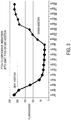
- a solution of a biodegradable anionic surfactant in this instance QK-1000 (sodium laureth sulfate) was then added to the solution in 10 ppm increments to determine if, and to what degree, the addition of the surfactant would allow the PTSA fluorescence signal to recover after being suppressed by the addition of the quat.
- the surfactant was added up to a total concentration of 80 ppm which resulted in the fluorescence signal rebounding to approximately the same intensity as had been observed in the pretreatment sample. Both the initial decrease in fluorescence associated with the increasing quat concentration and the subsequently increasing fluorescence corresponding to the increasing concentrations of anionic surfactant is shown graphically in Figure 3 .
- the accuracy of some of these methods depends to an extent on knowing with some degree of accuracy the concentration of the added dye in the monitored stream or sample. This can be a challenge for certain in-line evaluations, particularly in those instances in which the aqueous stream under evaluation represents the combination of several diverse streams, the concentration of the components of the stream are highly variable, the stream is particularly turbid, or there are other factors or components which would tend to interfere with the absorbance or fluorescence measurements. For instance, fluorescence, such as PTSA fluorescence, is sensitive to water volume.
- indicators of the active form of the cationic organic water treatment additives are highly useful in a controlled sample or low-variable system setting, they may not be as accurate in water systems that involve real-time variable flow such that the overall volume of the system fluctuates.
- the inventors have discovered a solution to this problem, as discussed next with respect to an embodiment of the present invention.
- the fluorescence chart for PTSA shown in Figure 2 assumes a constant water volume sample.
- the application of the active form of the cationic organic water treatment additive indication in some embodiments may be skewed if the volume of the water sample changed ( e . g ., if a constant amount of the cationic organic water treatment additive is added but the water stream volume is varied).
- the inventors have discovered that relating a first fluorescence indication to a second fluorescence indication establishes a ratio that is volume agnostic and can thus be used to monitor and control the application of the active form of the cationic organic water treatment additive to a real-time active water system.
- This embodiment includes applying a first fluorescent dye with an affinity for the cationic organic water treatment additive to a sample of the water stream, applying a second fluorescent dye with a lesser affinity for the cationic organic water treatment additive to the sample of the water stream, applying an anionic surfactant for interfering with the affinity of the first fluorescent dye for the active form of the cationic organic water treatment additive (this step is described in connection with previous embodiments), and measuring a fluorescent signal of the first fluorescent dye and the second fluorescent dye to generate a ratio of the signal from the first fluorescent dye to the signal from the second fluorescent dye, determining the amount of the active form of the cationic organic water treatment additive in the sample based on the ratio, and controlling either the application of the anionic surfactant or the addition of cationic additive based on the measured ratio.
- the determining step may further comprise determining the amount of the active form of the cationic organic water treatment additive in the sample based on a ratio that is representative of the first and second fluorescence signals of the sample.
- This embodiment applies a two-dye system in which the dyes are introduced into the system in a known concentration ratio. The two dyes are selected to provide different measurable responses to the presence of the active forms of the cationic organic water treatment additives and anionic surfactants present within the monitored aqueous stream. Subsequent measurement of the relative expression of the two dyes in the monitored aqueous stream can then be used to calculate a ratio that is less subject to some of the measurement variability concerns associated with the single dye methods.
- the two-dye method can also provide a more complete analysis of the relative concentrations of active cationic organic water treatment additive residuals and anionic surfactants within the stream.
- the first dye substantially interacts with the active form of the cationic organic water treatment additive, e.g. by associating with the active additive compound through ionic or other intermolecular forces.
- the second dye substantially does not interact with the active form of the cationic organic water treatment additive, and is preferably inert with respect to the active cationic additive .
- the first dye may be PTSA.
- the second dye may be a dye with a fluorescent signal that, unlike the fluorescent signal associated with first dye, is not significantly impacted by the addition of the cationic organic water treatment additive to the solution such as, for example, a fluorescent substance with a weak anionic character.
- the dye may be uranine. Uranine is a non-reactive dye. The fluorescence of uranine is not affected by the amount of cationic organic water treatment additive in the solution. This phenomenon is illustrated in Example 2 with respect to a cationic biocide.
- the fluorescence signal of dilute uranine solutions was examined at various wavelengths from about 500 nm to about 545 nm using a first solution that was free of quat and a second solution that also included 10 ppm of an ADBAC quat. These results are shown in Figure 4 .
- the fluorescence signal of uranine is not significantly impacted by the presence of quat in the solution, whereas the PTSA (a reactive dye) fluorescence signal is reduced by increasing concentrations of quat.
- This differential response between the combination of relatively reactive and relatively non-reactive dyes to the presence of the quat provides another improved method for determining the concentration of the active quat in an aqueous stream.
- the non-reactive dye When the non-reactive dye is added to a water stream, it will produce a separate and distinct corresponding optical signal that, together with the signal of the reactive dye, will define a baseline optical signal ratio.
- the optical signal associated with the reactive dye When both a reactive and non-reactive dye are added to an aqueous stream or sample that includes a concentration of one or more cationic organic water treatment additive molecules, the optical signal associated with the reactive dye will decrease if the flow of water containing more of the active form of the cationic organic water treatment additive through the system is increased, because the fluorescent molecule binds with the active form of the cationic organic water treatment additive effectively reducing the concentration of the fluorescent dye.
- the fluorescence signal associated with the non-reactive dye remains unchanged because the concentration of the non-reactive dye remains substantially unchanged.
- the decrease in the signal associated with the reactive dye will also alter the fluorescence signal ratio, which corresponds to the concentration of the cationic organic water treatment additive in the sample.
- the amount of the active form of the cationic organic water treatment additive in an aqueous system can be reduced by adding an appropriate anionic surfactant to a system where it will react with and remove cationic organic water treatment additive from solution.
- an appropriate anionic surfactant is added to a system including a combination of the first fluorescent dye (reactive) and the second fluorescent dye (non-reactive)
- a corresponding increase in the signal associated with the reactive dye will be observed.
- the quantity of anionic surfactant necessary to remove substantially all of the targeted active form of the cationic organic water treatment additive may be adjusted to maintain a fluorescence signal ratio close to the baseline fluorescence signal ratio.
- the amount of cationic additive can be adjusted to maintain the fluorescence signal above a certain level to ensure that there is a sufficient amount of active cationic additive.
- the system demand can also be determined by adding a known amount of cationic additive to the water system and measuring the response of the signal of the reactive dye, or measuring the response of the ratio of the reactive dye signal and non-reactive dye the non-reactive dye signal, and comparing the response to an expected response that is based, for example, on a premeasured standard curve.
- a standard curve showing an expected response in a water sample having no demand for cationic additive can be generated by measuring the response of the ratio of the reactive dye signal and non-reactive dye signal when known amounts of cationic additives are added to the water.
- This standard curve can be used to determine the demand for the cationic additive in a water system by adding a known amount of cationic additive to the system until the measured response corresponds to the response expected from the standard curve, i.e., the expected change in the fluorescence parameter will be seen once sufficient cationic additive has been added to the water system to meet the demand.
- This information can be used to monitor the system demand and to control the amount of cationic additive that is added to the system to ensure that the demand is met.
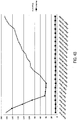
- Figure 4B illustrates an example of the phenomenon described above.
- Figure 4B shows the fluorescence signal of PTSA relative to the fluorescence signal of Uranine at various concentrations of quat and quat-neutralizer (QK-1000).
- the fluorescence signal of PTSA is reduced when the cationic quat is added, but the fluorescence signal of the uranine component is unchanged.
- the quat-neutralizer is added, the quat-neutralizer binds tightly to the quat, and "frees" up the PTSA and its fluorescence signal is restored.
- Figure 5 there is a decrease in the PTSA fluorescence with added quat (the quantity is shown along the X-axis) while the uranine signal is unchanged.
- the PTSA fluorescence decreased up to a total of 10 ppm of active quat.
- the PTSA fluorescence returns with the addition of the QK1000 product and a total of 35 ppm of QK1000 was added to bring the PTSA fluorescence back to its original point.
- the method may use an infusion device configured to apply a first amount of the cationic organic water treatment additive to the water stream, a measurement device configured to measure an amount of the active form of the cationic organic water treatment additive in the water stream, a monitor configured to monitor an output from the measurement device and a controller configured to adjust a second amount of the cationic organic water treatment additive applied to the water stream based on the amount of the active form of the cationic organic water treatment additive in the water stream.
- Control systems may be used, for example, to ensure that any discharged water has been treated to a degree sufficient to neutralize residual cationic organic water treatment additive.
- An example of such a control system 1 is illustrated in Figure 5 in which a sample containing a quantity of active quat is infused by infusion unit 10 via valve 20 into system 50.
- sampler 30 a sample is pulled from an outflow of the system 50 and prepared by the addition of known concentrations of both a reactive dye via dye infusion unit B and a non-reactive dye via dye infusion unit C.
- the final prepared sample in sampler 30 is then evaluated by fluorimeter 40 to obtain a representative fluorescence signal ratio representing a ratio of the signal of the reactive dye to the signal of the non-reactive dye.
- the fluorimeter 40 may be any suitable fluorimeter known in the art. This ratio is then used by the controller 60 to compare to a baseline signal ratio of the reactive dye to the non-reactive dye at system initiation or at the initiation of any infusion interval thereafter to determine the concentration of active quat in the sample and the volume of anionic surfactant that needs to be added via anionic surfactant infusion unit 70 and valve 22 to neutralize the detected quat before the aqueous stream is suitable for discharge by discharge unit 80.
- the controller 60 may be a CPU and/or program executable on a CPU, or any controller known in the art.
- Figure 6 illustrates a modified version of the control system 1 illustrated in Figure 5 .
- the system 1 can also monitor via monitor 90 the stream after treatment with the anionic surfactant to confirm successful suppression of the active quat and, if desired, be used for controlling or fine tuning the addition of the anionic surfactant.
- known concentrations of reactive dye and non-reactive dye are added to the prepared sample in sampler 35 drawn from the stream after treatment with the anionic surfactant.
- the prepared sample is evaluated in a fluorimeter 40 to obtain a representative fluorescence signal ratio. This ratio is then used by the controller 65 to determine the concentration of active quat in the sample and the volume of any additional anionic surfactant that needs to be added to neutralize the detected quat before the aqueous stream is suitable for discharge by discharge unit 80.
- Modifications of the basic control systems illustrated in Figures 5 and 6 may be made to provide additional monitoring locations and to adapt the control systems to the requirements of any particular industrial water system.
- a combination of the techniques and methods detailed above may be combined in a single industrial water system to monitor and control various aspects of the system operations including, for example, that the concentration of cationic organic water treatment additive is sufficient, that the concentration of cationic organic water treatment additive does not exceed a target range, that the concentration of cationic organic water treatment additive is not excessive and/or that the efforts to remediate any residual cationic organic water treatment additive is efficient and effective. It is also contemplated that methods according to the present invention be applied in in-line or off-line water systems.
Landscapes
- Life Sciences & Earth Sciences (AREA)
- Chemical & Material Sciences (AREA)
- Health & Medical Sciences (AREA)
- Engineering & Computer Science (AREA)
- General Physics & Mathematics (AREA)
- Immunology (AREA)
- Physics & Mathematics (AREA)
- Analytical Chemistry (AREA)
- Biochemistry (AREA)
- General Health & Medical Sciences (AREA)
- Food Science & Technology (AREA)
- Medicinal Chemistry (AREA)
- Pathology (AREA)
- Hydrology & Water Resources (AREA)
- Environmental & Geological Engineering (AREA)
- Water Supply & Treatment (AREA)
- Organic Chemistry (AREA)
- Investigating Or Analysing Materials By The Use Of Chemical Reactions (AREA)
- Investigating, Analyzing Materials By Fluorescence Or Luminescence (AREA)
- Investigating Or Analyzing Non-Biological Materials By The Use Of Chemical Means (AREA)
Description
- This application is directed to a method for analyzing cationic organic water treatment additives in water systems and treating the same. Cationic organic water treatment additives can include, for example, cationic biocides, cationic surfactants, and cationic polymers.
- A number of cationic organic water treatment additives have been developed for various applications in industrial water systems. For example, cationic biocides, or quaternary amine compounds (quat) have been developed for use in water treatment for suppressing the growth of microorganisms including, for example, fungus, mold and bacteria. These compounds contain, for example, a protonated nitrogen or phosphorus atom bound to hydrophobic alkyl and aryl groups, and work like soaps or detergents in disrupting the osmotic equilibrium of living cells. Deactivating or otherwise neutralizing these cationic biocides or quat can be desirable prior to discharging the treated water via blowdown or other process.
- Compounds, such as anionic surfactants, have been developed for deactivating or otherwise neutralizing the active or toxic form of quat ("free" quat) before the treated water is discharged. However, existing methods are severely limited in that there is no way to know whether the anionic surfactants are effective. This is because existing tests only measure total quat and not the free or active form. Thus, a test might show too much quat because it also picks up the inactive from in the system, regardless of whether the inactive form might still exist. In order to apply these treatments efficiently and/or monitor the effectiveness of a cationic biocide remediation program, a fast and accurate method for determining the concentration of the free quat residual in the water stream would be of particular benefit.
- Few reliable methods currently exist for the detection and quantification of quat. For example, the Hach QAC Method (8337 Direct Binary Complex Method) uses two reagents and is very difficult to administer and is subject to inaccuracies resulting from, for example, noise from cloudy water. It also suffers from much interference that makes rapid and accurate measurements of quat residuals difficult. Moreover, existing methods often suffer from interference associated with common ions including, for example, calcium, chlorine, magnesium and iron. Other compounds that can interfere with detection and quantification of quat include compounds associated with common surfactants and treatment compounds such as, for example, sodium lauryl sulfate and sodium polyphosphate. A chart reflecting some of these known interferences is provided below in Table 1. These interferences limit the usefulness of such methods, particularly when the goal is to perform rapid and accurate measurements of quat.
Interfering substance Interference level Calcium (as CaCO3) Positive interference above 1350 mg/L Chlorine, HOCl and OCl- Positive interference above 7 mg/L Cyanuric acid Negative interference above 70 mg/L Igepal™ nonionic surfactant Positive interference above 3 mg/L Iodine, I3 - Positive interference above 3 mg/L Iron, Fe3+ Positive interference above 80 mg/L Liquimine™ 14-P, filming amine Positive interference above 1825 mg/L Magnesium, Mg2+ Positive interference above 1350 mg/L Niaproof™ anionic surfactant Negative interference above 11 mg/L Polyacrylic acid Negative interference above 16 mg/L Sodium lauryl sulfate Negative interference above 8 mg/L Sodium polyphosphate Positive interference above 1325 mg/L Tribenzylamine Positive interference above 7 mg/L Triton X-100™ nonionic surfactant Positive interference above 4 mg/L Urea Positive interference above 8 mg/L Highly buffered samples or extreme sample pH May exceed the buffering capacity of the reagents and require sample pretreatment. Adjust the sample pH between 3 and 5 by using a pH meter or pH paper and adding dropwise an appropriate amount of acid or base such as 1.0 N Sulfuric Acid Standard Solution or 1.0 N Sodium Hydroxide Standard Solution. If significant volumes of acid or base are used, a volume correction should be made. - Another conventional method is high pressure liquid chromatography (HPLC). HPLC enables the dissection of complex mixtures into individual constituents. However HPLC measures total quaternary amine compound and is not able to measure only the amount of the quat that is free (unbound) in solution.
- The ability to determine the concentration of the unbound free quat is desirable, as is the ability to distinguish between bound and free quat concentrations within a sample. Bound quat is that portion of the cationic quaternary amine compound that is strongly bound to a corresponding anionic compound and, therefore, exhibits significantly reduced antimicrobial activity compared to free quat present in the system. For example, the positively charged ammonium cation of the quat can be counter-balanced by a strong anion which renders the quat inactive. Existing methods only measure total quat and cannot distinguish between bound and free quat. Further, no automated on-line system currently exists for the detection, measurement and control of residual quat, or for the measurement and control of other cationic organic water treatment additives.
- A method for analyzing water that includes anionic or cationic surfactants is disclosed in
US 3 992 149 A , wherein different dyes having affinity to the anionic or cationic surfactants are added to the water and the absorbance of the formed complex is measured. - In
US 5 702 684 A is disclosed a method for controlling the concentration of biocides in water by adding the biocides in form of a composition additionally containing a small amount of a fluorescence tracer material and by monitoring the fluorescence signals. - These and other issues are addressed by the present invention. It is an object of this invention to provide a novel method for the fast and accurate quantification of the concentration of these cationic organic water treatment additives and, in particular, active forms of the additives within an aqueous stream, the novel method being able to be used for detecting, measuring and controlling cationic organic water treatment additive residuals in industrial water systems.
- One advantage of the present invention over existing methods for the measurement of, for example, cationic biocide residuals, such as the QAC and HPLC methods, is that these new methods measure only the amount of free quat versus total quat. Accordingly, the present invention allows for the more accurate measurement of the amount of anti-microbially active cationic biocide present in an industrial water stream and can also quantify the amount of cationic surfactant and cationic polymer present in an industrial water stream.
- In accordance with the present invention, there is provided a method for analyzing water that includes a cationic organic water treatment additive. The method includes applying to the water a fluorescent first dye with an affinity for the cationic additive; applying to the water a fluorescent second dye with a relatively lesser affinity for the cationic additive than the first fluorescent dye; and then measuring a fluorescence parameter of the water.
- The method for analyzing water according to the present invention may be used in a method for treatment of a water stream that includes a cationic organic water treatment additive in a water system. The method may include applying to the water an anionic surfactant that can interfere with the affinity of the first fluorescent dye for the cationic additive; and controlling the amount of anionic surfactant added to the water based on the measured parameter.
-
-
Figure 1 is a graph not relating to the present invention, illustrating a standard curve for average absorbance data using Eosin and ADBAC samples; -
Figure 2 is a graph illustrating PTSA fluorescence versus quat addition; -
Figure 3 is a graph illustrating PTSA fluorescence versus quat addition with an anionic surfactant; -
Figure 4A is a graph illustrating the fluorescence signal of uranine examined at various wavelengths; -
Figure 4B is a graph illustrating the fluorescence signal of PTSA relative to uranine at various concentrations of biocide and anionic surfactant according to an embodiment; -
Figure 5 is a schematic diagram of a control system to be used with a method for analyzing and controlling quat concentration in a water system according to an embodiment; -
Figure 6 is a schematic diagram of a control system to be used with a method for analyzing and controlling quat concentration in a water system including monitoring the system after treatment with an anionic surfactant according to an embodiment; - The inventors have discovered that the effectiveness of a cationic organic water treatment additive can depend on and be proportional to the existence and amount of active form of the additive present. For purposes of this disclosure, the active form of an additive is defined as having a cationic portion that has a free positive charge. The inventors have further discovered novel methods for the identification, quantification and control of the active form of the cationic organic water treatment additive in water systems. While it is known in the art to identify free or active forms of halogens, identification, quantification and control of free quaternary amine compound, for example, is not presently known or contemplated. The inventors have discovered a test for tagging the active form of the cationic organic water treatment additive, such as free quat, which results in the unexpectedly effective approach for identification and quantification of the active form of the cationic organic water treatment additive.
- In embodiments, the cationic organic water treatment additives include but are not limited to cationic surfactants, cationic polymers and cationic biocides. Examples of such surfactants include, but are not limited to, cationic quaternary and phosphonium surfactants such as trimethyl alkyl ammonium chlorides, benzalkonium chlorides and bromides, alkyl pryridinium ions and mixtures thereof. These surfactants are commonly used as cleaners and process additives in water treatment and textile applications, and as paper processing aids. Examples of such cationic polymers include, but are not limited to, those derived from high density charged monomers, poly-DADMAC, and polyamines derived from the reaction of dimethylamine with epichlorohydrin and mixtures thereof. Cationic polymers can be used as process additives in water treatment applications, most commonly as flocculants. The biocide may be, for example, a quaternary amine compound. In preferred embodiments, the cationic biocide may be alkyldimethylbenzyl ammonium chloride (ADBAC). The active from of the cationic biocide (the free quat) is a microbially active form. Other suitable biocides include, but are not limited to, Octyl Decyl Dimethyl Ammonium Chloride, Didecyl Dimethyl Ammonium Chloride, Dioctyl Dimethyl Ammonium Chloride, n-Alkyl dimethyl ethyl benzyl ammonium chloride, Tributyl tetradecyl phosphonium chloride and mixtures thereof.
- In embodiments, in order to measure the active form of the cationic organic water treatment additive in an aqueous stream accurately, the water is preferably relatively clear and free of particulates. Accordingly, for many aqueous systems, the disclosed methods may further comprise filtering the sample of the water stream using vacuum filtration before measuring the absorbance of the sample. The sample may first be filtered or otherwise prepared to remove substantially all particulates and reduce turbidity to provide samples suitable for colorimetric analysis. This preparation may be accomplished using a vacuum filtration process employing a series of filters of decreasing pore size filter in a series of filtration steps, such as, for example, from 25 to 1.5 µm. The final filtration may, for example, be performed using a 1.5 µm filter. An exemplary filtration process useful in connection with the disclosed methods is detailed next.
- Filtering the water may include preparing a suitable filtration apparatus such as, for example, a vacuum pump attached to a Buchner flask fitted with a Buchner funnel. For example, 100 ml of waste water is filtered through a Whatman Filter Paper grade 4, pore size > 20-25 µm for the initial filtration. This filtrate is then passed to the next filtration step. In this step, the water is filtered using Whatman
Filter Paper grade 2, pore size > 8 µm for the second filtration. In the next step, the water from the previous filtration step is filtered using WhatmanFilter Paper grade 5, pore size > 2.5 µm for the third filtration. This filtrate is then filtered a final time. An exemplary measurement process useful in connection with the disclosed methods is detailed next. - A 10 ml syringe is filled with the filtrate from the previous filtration step, a 1.5 µm syringe filter is placed onto the end of the syringe, and the solution is dispensed through the filter into a sample vial. At this point, the water should be clear enough to allow for the measurement of the quat and exhibit, for example, a nephelometric turbidity unit (NTU) value of preferably less than 50, more preferably less than 25 and most preferably less than 5. The NTU measures how much light is scattered by suspended particles in the water. The greater the scattering, the higher the turbidity. Therefore, low NTU values indicate high water clarity, while high NTU values indicate low water clarity.
- In order to measure the amount of the cationic organic water treatment additive in the filtered water, a sample of the filtered water is placed in the colorimeter sample cell. The colorimeter is zeroed using the sample of the filtered water. After zeroing the instrument on the filtered water sample, a second sample of the filtered water is prepared and 2 drops of the dye solution are added. The mixture of the filtered water and the dye is agitated through known means in the art to allow any bubbles generated during the agitation to dissipate. The mixed sample is placed in the colorimeter and the absorbance of the sample is read. The concentration of the active form of the cationic organic water treatment additive in the sample is determined by correlating the absorbance value read from the mixed sample with the standard curve generated for the particular dye solution.
- Disclosed methods of another embodiment further relate to identification of the active form of the cationic organic water treatment additive. Conventional cationic organic water treatment additive measurement methods have drawbacks in the context of, for example, the food industry where, in the case of cationic biocides, quat-based disinfectants that are used to sanitize work space and equipment ultimately kill microbes downstream in waste treatment plants. In waste treatment plants, microbes are desirable for treating the water and occasionally are used for producing methane for fuel. Excess concentrations of active cationic biocides can disrupt the functioning of beneficial microbes present in the waste water treatment system and adversely affect the normal functioning of the system and raise environmental discharge issues. Anionic surfactants are used to neutralize the quat in the system and render the active quat inactive so that microbial activity is preserved in the waste treatment plant. Because conventional quat measurement methods are unable to determine the amount of active quat in the system, the application of anionic surfactants, or quat-neutralizers, cannot be effectively controlled.
- According to the present invention, the addition of a fluorescent dye allows for the measurement of various compounds in water systems because it emits fluorescence. The dye may be any suitable polycyclic aromatic anionic water soluble molecule that possesses fluorescent properties. In preferred embodiments, the dye may be, for example, pyrenetetrasulfonic acid (PTSA) dyes. PTSA binds with the active form of the cationic organic water treatment additive such that the addition of the active form of the cationic organic water treatment additive to a constant volume water sample reduces the overall fluorescence signal of the sample because quat binds with PTSA and removes the fluorescent compound from the sample. The inventors discovered that, unexpectedly, the addition of certain anionic neutralizing compounds that neutralize the active form of the cationic organic water treatment additive can restore the fluorescence of such a sample.
- Also, as a result, by controlling the addition of an appropriate anionic surfactant to a water stream containing fluorescent molecules that have reacted with the active form of the cationic organic water treatment additive, it is possible to judge and control the concentration of the active form of the cationic organic water treatment additive with improved accuracy. This information regarding concentration of the residual, i.e., unreacted forms of the cationic organic water treatment additive can, in turn, be used for improving the control of cationic organic water treatment additives in aqueous systems such as the waste water systems in food plants, the discharge of a surface water system, a waste treatment plant or any industrial water system where the cationic nature of the cationic organic water treatment additive could impact the proper functioning of other system additives such as scale inhibitors. The information regarding concentration of unreacted cationic additive can also be used to control the amount of cationic organic water treatment additive when there is a system demand for the additive, e.g., to ensure that there is a sufficient quantity of cationic additive in the system.
- In addition, information regarding the residual concentration of the cationic organic water treatment additives, can, in turn, be used for improving the control of the concentrations and performance of the cationic organic water treatment additive in aqueous system. This measurement also ensures that excess residuals of cationic surfactants and polymers can be controlled so that they do not adversely impact the performance of downstream filtration media and reverse osmosis equipment, and will not impact environmental toxicity profiles for potable or industrial effluent waters.
- A sample of PTSA was prepared to provide a 200 ppb concentration in tap water and its fluorescence signal measured using a fluorimeter. A cationic biocide composition or quat was then added to the sample in 2 ppm increments until the fluorescence stopped decreasing with added quat. A total of 18 ppm of quat was added before the fluorescence level reached a stable minimum. The decrease in fluorescence with increasing concentrations of quat is shown graphically in
Figure 2 . - A solution of a biodegradable anionic surfactant, in this instance QK-1000 (sodium laureth sulfate) was then added to the solution in 10 ppm increments to determine if, and to what degree, the addition of the surfactant would allow the PTSA fluorescence signal to recover after being suppressed by the addition of the quat. The surfactant was added up to a total concentration of 80 ppm which resulted in the fluorescence signal rebounding to approximately the same intensity as had been observed in the pretreatment sample. Both the initial decrease in fluorescence associated with the increasing quat concentration and the subsequently increasing fluorescence corresponding to the increasing concentrations of anionic surfactant is shown graphically in
Figure 3 . - Although useful for evaluating samples drawn from an aqueous system and determining the level of the active form of the cationic organic water treatment additive in the system or sample, the accuracy of some of these methods depends to an extent on knowing with some degree of accuracy the concentration of the added dye in the monitored stream or sample. This can be a challenge for certain in-line evaluations, particularly in those instances in which the aqueous stream under evaluation represents the combination of several diverse streams, the concentration of the components of the stream are highly variable, the stream is particularly turbid, or there are other factors or components which would tend to interfere with the absorbance or fluorescence measurements. For instance, fluorescence, such as PTSA fluorescence, is sensitive to water volume. Thus, while indicators of the active form of the cationic organic water treatment additives are highly useful in a controlled sample or low-variable system setting, they may not be as accurate in water systems that involve real-time variable flow such that the overall volume of the system fluctuates. The inventors have discovered a solution to this problem, as discussed next with respect to an embodiment of the present invention.
- The fluorescence chart for PTSA shown in
Figure 2 assumes a constant water volume sample. For example, the application of the active form of the cationic organic water treatment additive indication in some embodiments may be skewed if the volume of the water sample changed (e.g., if a constant amount of the cationic organic water treatment additive is added but the water stream volume is varied). The inventors have discovered that relating a first fluorescence indication to a second fluorescence indication establishes a ratio that is volume agnostic and can thus be used to monitor and control the application of the active form of the cationic organic water treatment additive to a real-time active water system. - This embodiment includes applying a first fluorescent dye with an affinity for the cationic organic water treatment additive to a sample of the water stream, applying a second fluorescent dye with a lesser affinity for the cationic organic water treatment additive to the sample of the water stream, applying an anionic surfactant for interfering with the affinity of the first fluorescent dye for the active form of the cationic organic water treatment additive (this step is described in connection with previous embodiments), and measuring a fluorescent signal of the first fluorescent dye and the second fluorescent dye to generate a ratio of the signal from the first fluorescent dye to the signal from the second fluorescent dye, determining the amount of the active form of the cationic organic water treatment additive in the sample based on the ratio, and controlling either the application of the anionic surfactant or the addition of cationic additive based on the measured ratio.
- In this embodiment, the determining step may further comprise determining the amount of the active form of the cationic organic water treatment additive in the sample based on a ratio that is representative of the first and second fluorescence signals of the sample. This embodiment applies a two-dye system in which the dyes are introduced into the system in a known concentration ratio. The two dyes are selected to provide different measurable responses to the presence of the active forms of the cationic organic water treatment additives and anionic surfactants present within the monitored aqueous stream. Subsequent measurement of the relative expression of the two dyes in the monitored aqueous stream can then be used to calculate a ratio that is less subject to some of the measurement variability concerns associated with the single dye methods. The two-dye method can also provide a more complete analysis of the relative concentrations of active cationic organic water treatment additive residuals and anionic surfactants within the stream.
- In this embodiment, the first dye substantially interacts with the active form of the cationic organic water treatment additive, e.g. by associating with the active additive compound through ionic or other intermolecular forces. The second dye substantially does not interact with the active form of the cationic organic water treatment additive, and is preferably inert with respect to the active cationic additive . For example, the first dye may be PTSA. The second dye may be a dye with a fluorescent signal that, unlike the fluorescent signal associated with first dye, is not significantly impacted by the addition of the cationic organic water treatment additive to the solution such as, for example, a fluorescent substance with a weak anionic character. In preferred embodiments, the dye may be uranine. Uranine is a non-reactive dye. The fluorescence of uranine is not affected by the amount of cationic organic water treatment additive in the solution. This phenomenon is illustrated in Example 2 with respect to a cationic biocide.
- The fluorescence signal of dilute uranine solutions was examined at various wavelengths from about 500 nm to about 545 nm using a first solution that was free of quat and a second solution that also included 10 ppm of an ADBAC quat. These results are shown in
Figure 4 . - As shown in
Figure 4A , the fluorescence signal of uranine (non-reactive dye) is not significantly impacted by the presence of quat in the solution, whereas the PTSA (a reactive dye) fluorescence signal is reduced by increasing concentrations of quat. This differential response between the combination of relatively reactive and relatively non-reactive dyes to the presence of the quat provides another improved method for determining the concentration of the active quat in an aqueous stream. - When the non-reactive dye is added to a water stream, it will produce a separate and distinct corresponding optical signal that, together with the signal of the reactive dye, will define a baseline optical signal ratio. When both a reactive and non-reactive dye are added to an aqueous stream or sample that includes a concentration of one or more cationic organic water treatment additive molecules, the optical signal associated with the reactive dye will decrease if the flow of water containing more of the active form of the cationic organic water treatment additive through the system is increased, because the fluorescent molecule binds with the active form of the cationic organic water treatment additive effectively reducing the concentration of the fluorescent dye. In contrast, the fluorescence signal associated with the non-reactive dye remains unchanged because the concentration of the non-reactive dye remains substantially unchanged. The decrease in the signal associated with the reactive dye will also alter the fluorescence signal ratio, which corresponds to the concentration of the cationic organic water treatment additive in the sample.
- As described throughout this disclosure, the amount of the active form of the cationic organic water treatment additive in an aqueous system can be reduced by adding an appropriate anionic surfactant to a system where it will react with and remove cationic organic water treatment additive from solution. When an appropriate anionic surfactant is added to a system including a combination of the first fluorescent dye (reactive) and the second fluorescent dye (non-reactive), a corresponding increase in the signal associated with the reactive dye will be observed. As a result, the quantity of anionic surfactant necessary to remove substantially all of the targeted active form of the cationic organic water treatment additive may be adjusted to maintain a fluorescence signal ratio close to the baseline fluorescence signal ratio. This recovery of the signals to a level associated with the original ratio will indicate that the system does not include any substantial quantity of the active form of the cationic organic water treatment additive. Unlike the PTSA signal alone, the ratio signal will not be substantially affected by water volume and is therefore useful in real-time applications. Monitoring and controlling the neutralization of the active form of the cationic organic water treatment additive in this manner avoids the need for preventive overdosing of the anionic surfactant and the associated expenses.
- Also, if there is a demand for the cationic additive in a water system, the amount of cationic additive can be adjusted to maintain the fluorescence signal above a certain level to ensure that there is a sufficient amount of active cationic additive.
- For water systems that have a demand for the cationic additive, the system demand can also be determined by adding a known amount of cationic additive to the water system and measuring the response of the signal of the reactive dye, or measuring the response of the ratio of the reactive dye signal and non-reactive dye the non-reactive dye signal, and comparing the response to an expected response that is based, for example, on a premeasured standard curve. By way of illustration, a standard curve showing an expected response in a water sample having no demand for cationic additive can be generated by measuring the response of the ratio of the reactive dye signal and non-reactive dye signal when known amounts of cationic additives are added to the water. This standard curve can be used to determine the demand for the cationic additive in a water system by adding a known amount of cationic additive to the system until the measured response corresponds to the response expected from the standard curve, i.e., the expected change in the fluorescence parameter will be seen once sufficient cationic additive has been added to the water system to meet the demand. This information can be used to monitor the system demand and to control the amount of cationic additive that is added to the system to ensure that the demand is met.
-
Figure 4B illustrates an example of the phenomenon described above.Figure 4B shows the fluorescence signal of PTSA relative to the fluorescence signal of Uranine at various concentrations of quat and quat-neutralizer (QK-1000). The fluorescence signal of PTSA is reduced when the cationic quat is added, but the fluorescence signal of the uranine component is unchanged. When the quat-neutralizer is added, the quat-neutralizer binds tightly to the quat, and "frees" up the PTSA and its fluorescence signal is restored. As shown inFigure 5 , there is a decrease in the PTSA fluorescence with added quat (the quantity is shown along the X-axis) while the uranine signal is unchanged. The PTSA fluorescence decreased up to a total of 10 ppm of active quat. The PTSA fluorescence returns with the addition of the QK1000 product and a total of 35 ppm of QK1000 was added to bring the PTSA fluorescence back to its original point. - In other embodiments the method may use an infusion device configured to apply a first amount of the cationic organic water treatment additive to the water stream, a measurement device configured to measure an amount of the active form of the cationic organic water treatment additive in the water stream, a monitor configured to monitor an output from the measurement device and a controller configured to adjust a second amount of the cationic organic water treatment additive applied to the water stream based on the amount of the active form of the cationic organic water treatment additive in the water stream.
- The methods and techniques described herein can be incorporated in a variety of in-line or off-line automated control systems that may be adapted for a wide range of industrial water systems. Control systems may be used, for example, to ensure that any discharged water has been treated to a degree sufficient to neutralize residual cationic organic water treatment additive. An example of such a control system 1 is illustrated in
Figure 5 in which a sample containing a quantity of active quat is infused byinfusion unit 10 viavalve 20 intosystem 50. Insampler 30, a sample is pulled from an outflow of thesystem 50 and prepared by the addition of known concentrations of both a reactive dye via dye infusion unit B and a non-reactive dye via dye infusion unit C. The final prepared sample insampler 30 is then evaluated byfluorimeter 40 to obtain a representative fluorescence signal ratio representing a ratio of the signal of the reactive dye to the signal of the non-reactive dye. Thefluorimeter 40 may be any suitable fluorimeter known in the art. This ratio is then used by thecontroller 60 to compare to a baseline signal ratio of the reactive dye to the non-reactive dye at system initiation or at the initiation of any infusion interval thereafter to determine the concentration of active quat in the sample and the volume of anionic surfactant that needs to be added via anionicsurfactant infusion unit 70 andvalve 22 to neutralize the detected quat before the aqueous stream is suitable for discharge bydischarge unit 80. Thecontroller 60 may be a CPU and/or program executable on a CPU, or any controller known in the art. -
Figure 6 illustrates a modified version of the control system 1 illustrated inFigure 5 . In this embodiment, the system 1 can also monitor viamonitor 90 the stream after treatment with the anionic surfactant to confirm successful suppression of the active quat and, if desired, be used for controlling or fine tuning the addition of the anionic surfactant. For example, known concentrations of reactive dye and non-reactive dye are added to the prepared sample insampler 35 drawn from the stream after treatment with the anionic surfactant. The prepared sample is evaluated in afluorimeter 40 to obtain a representative fluorescence signal ratio. This ratio is then used by thecontroller 65 to determine the concentration of active quat in the sample and the volume of any additional anionic surfactant that needs to be added to neutralize the detected quat before the aqueous stream is suitable for discharge bydischarge unit 80. - Modifications of the basic control systems illustrated in
Figures 5 and6 may be made to provide additional monitoring locations and to adapt the control systems to the requirements of any particular industrial water system. Similarly, a combination of the techniques and methods detailed above may be combined in a single industrial water system to monitor and control various aspects of the system operations including, for example, that the concentration of cationic organic water treatment additive is sufficient, that the concentration of cationic organic water treatment additive does not exceed a target range, that the concentration of cationic organic water treatment additive is not excessive and/or that the efforts to remediate any residual cationic organic water treatment additive is efficient and effective. It is also contemplated that methods according to the present invention be applied in in-line or off-line water systems.
Claims (15)
- A method for analyzing water that includes a cationic organic water treatment additive, the method comprising:applying (30) to the water a fluorescent first dye with an affinity for the cationic additive;characterized byapplying (30) to the water a fluorescent second dye with a relatively lesser affinity for the cationic additive than the first fluorescent dye; andthen measuring (40) a fluorescence parameter of the water.
- The method for analyzing water according to claim 1, further comprising determining (60) the amount of the cationic additive in the water based on the fluorescence parameter.
- The method for analyzing water according to claim 2, wherein the fluorescence parameter is a ratio of a fluorescence signal of the first fluorescent dye to a fluorescence signal of the second fluorescent dye.
- The method for analyzing water according to claim 1, wherein the first fluorescent dye has a first fluorescence spectrum in the absence of cationic additive and has a second fluorescence spectrum when it interacts with the cationic additive.
- The method for analyzing water according to claim 1, wherein the second fluorescent dye has a fluorescence spectrum in the absence of the cationic additive that is substantially unchanged in the presence of the cationic additive.
- The method for analyzing water according to claim 1, further comprising applying (70) to the water an anionic compound that interferes with the affinity of the first fluorescent dye for the cationic additive.
- The method for analyzing water according to claim 1, wherein the first fluorescent dye is PTSA.
- The method for analyzing water according to claim 1, wherein the second fluorescent dye is uranine.
- The method for analyzing water according to claim 1, wherein the cationic additive is at least one of a cationic biocide, a cationic surfactant, and a cationic polymer.
- The method for analyzing water according to claim 6, further comprising controlling (60) the amount of anionic surfactant applied to the water based on the measured fluorescence parameter.
- The method for analyzing water according to claim 1, wherein the water includes water of a waste water system (50) in at least one of a food industry plant, a surface water system (50), a waste treatment plant or an industrial water system (50).
- The method for analyzing water according to claim 1, further comprising:adding (210) an active form of the cationic additive to the water; andcontrolling (260) an amount of the active form of the cationic additive applied to the water based on the measured fluorescence parameter.
- The method for analyzing water according to claim 3, comprising:providing a standard curve relating the fluorescence parameter to amounts of the cationic additive, the standard curve showing an expected response of the fluorescence parameter based on changes in concentration of the cationic additive;adding (10) a known amount of the cationic additive to the water;then measuring (40) the fluorescence parameter and comparing it to the standard curve.
- The method for analyzing water according to claim 13, comprising adding (10) the cationic additive to the water at least until the expected response of the fluorescence parameter is observed, and determining a demand of the water for the cationic additive based on the added amount of cationic additive.
- The method for analyzing water according to claim 14, comprising controlling the amount of the cationic additive that is added to the water based on the determined demand.
Applications Claiming Priority (2)
| Application Number | Priority Date | Filing Date | Title |
|---|---|---|---|
| US201461952846P | 2014-03-13 | 2014-03-13 | |
| PCT/US2014/071960 WO2015138036A1 (en) | 2014-03-13 | 2014-12-22 | Systems and methods for controlling cationic water treatment additives |
Publications (2)
| Publication Number | Publication Date |
|---|---|
| EP3117209A1 EP3117209A1 (en) | 2017-01-18 |
| EP3117209B1 true EP3117209B1 (en) | 2018-09-19 |
Family
ID=52396817
Family Applications (1)
| Application Number | Title | Priority Date | Filing Date |
|---|---|---|---|
| EP14830769.7A Active EP3117209B1 (en) | 2014-03-13 | 2014-12-22 | Systems and methods for controlling cationic water treatment additives |
Country Status (4)
| Country | Link |
|---|---|
| US (1) | US9977004B2 (en) |
| EP (1) | EP3117209B1 (en) |
| CA (1) | CA2942344C (en) |
| WO (1) | WO2015138036A1 (en) |
Families Citing this family (5)
| Publication number | Priority date | Publication date | Assignee | Title |
|---|---|---|---|---|
| US10782241B2 (en) | 2017-07-27 | 2020-09-22 | Ecolab Usa Inc. | Method of determining residual flocculant in effluent of an industrial clarification process |
| WO2019023699A1 (en) * | 2017-07-28 | 2019-01-31 | Chemtreat, Inc | Methods for detecting film-forming amines in water |
| US11035798B2 (en) * | 2019-07-15 | 2021-06-15 | Hach Company | Fluorescent measurement of filming amines |
| WO2022098362A1 (en) * | 2020-11-06 | 2022-05-12 | Kimberly-Clark Worldwide, Inc. | Method and system for determining surfactant concentration in industrial processes |
| CA3237959A1 (en) * | 2021-12-07 | 2023-06-15 | Megan PETTYGROVE | Fluorescence detection of sulfite in water treatment applications |
Family Cites Families (3)
| Publication number | Priority date | Publication date | Assignee | Title |
|---|---|---|---|---|
| US3992149A (en) * | 1975-02-18 | 1976-11-16 | Calspan Corporation | Colorimetric method for the analysis of residual anionic or cationic surfactants |
| CN1069162C (en) | 1994-05-02 | 2001-08-08 | 诺尔科化学公司 | Compositions of fluorescent biocides for use as improved antimicrobials |
| US6329165B1 (en) * | 1999-12-30 | 2001-12-11 | Nalco Chemical Company | Measurement and control of sessile and planktonic microbiological activity in industrial water systems |
-
2014
- 2014-12-22 CA CA2942344A patent/CA2942344C/en active Active
- 2014-12-22 US US14/579,663 patent/US9977004B2/en active Active
- 2014-12-22 WO PCT/US2014/071960 patent/WO2015138036A1/en not_active Ceased
- 2014-12-22 EP EP14830769.7A patent/EP3117209B1/en active Active
Non-Patent Citations (1)
| Title |
|---|
| None * |
Also Published As
| Publication number | Publication date |
|---|---|
| US9977004B2 (en) | 2018-05-22 |
| EP3117209A1 (en) | 2017-01-18 |
| CA2942344A1 (en) | 2015-09-17 |
| CA2942344C (en) | 2021-07-13 |
| US20150260702A1 (en) | 2015-09-17 |
| WO2015138036A1 (en) | 2015-09-17 |
Similar Documents
| Publication | Publication Date | Title |
|---|---|---|
| Zargoosh et al. | Highly selective and sensitive optical sensor for determination of Pb2+ and Hg2+ ions based on the covalent immobilization of dithizone on agarose membrane | |
| Shivakoti et al. | Occurrences and behavior of perfluorinated compounds (PFCs) in several wastewater treatment plants (WWTPs) in Japan and Thailand | |
| Li et al. | Metal speciation measurement by diffusive gradients in thin films technique with different binding phases | |
| CA2942344C (en) | Systems and methods for controlling cationic water treatment additives | |
| Yang et al. | Aluminum fractions in surface water from reservoirs by coagulation treatment with polyaluminum chloride (PAC): influence of initial pH and OH−/Al3+ ratio | |
| Ziska et al. | Predicting trace organic compound attenuation with spectroscopic parameters in powdered activated carbon processes | |
| US10139385B2 (en) | Method of tracing chemical quantities using encapsulated fluorescent dyes | |
| Ryu et al. | New findings on the occurrence, removal, and risk assessment of nonylphenol and octylphenol in industrial wastewater treatment plants in Korea | |
| Kaltenberg et al. | Sampling of freely dissolved per-and polyfluoroalkyl substances (PFAS) in surface water and groundwater using a newly developed passive sampler | |
| Li et al. | Determination of cost-effective optimum coagulant dosage for removal of disinfection by-product precursors in water treatment based on the theory of elasticity | |
| Rho et al. | A novel approach to measure carbonate alkalinity in aqueous solutions using a total organic carbon analyzer | |
| Knutsson et al. | Performance of a passive sampler for the determination of time averaged concentrations of nitrate and phosphate in water | |
| Pérez Mora et al. | Optimization of continuous arsenic biosorption present in natural contaminated groundwater | |
| WO2009121728A2 (en) | Determining the concentration of water treatment chemicals | |
| Yonge | A comparison of aluminum and iron-based coagulants for treatment of surface water in Sarasota County, Florida | |
| Yan et al. | Toward a rapid and convenient nanoplastic quantification method in laboratory-scale study based on fluorescence intensity | |
| US9599566B2 (en) | Method for measuring polymer concentration in water systems | |
| Scardina et al. | Particle count and online turbidity interference from bubble formation | |
| Manickum et al. | Validation of a rapid test method for the quantification of priority anions in drinking water by ion chromatography-suppressed conductivity detection | |
| Aghamir-Baha | Measurement of polymer concentration and optimization of sludge dewatering using UV-Vis spectroscopy | |
| Gupta | Per-and polyfluoroalkyl substances (PFAS) removal in drinking water with point-of-use water treatment systems | |
| ES2969450T3 (en) | Method to detect and control the amount of cationic species in a water stream | |
| Lumme | Optimization of an industrial wastewater treatment case for sustainable improvement | |
| Benoit et al. | Temporal Monitoring of Drinking Water’s Quality for Adjustment of the Production Station: Case of Gagnoa Drinking Water Treatment Station, Ivory Coast | |
| Luo et al. | A new approach to scale inhibitor detection: Application and analysis of a novel modified membrane enrichment method |
Legal Events
| Date | Code | Title | Description |
|---|---|---|---|
| PUAI | Public reference made under article 153(3) epc to a published international application that has entered the european phase |
Free format text: ORIGINAL CODE: 0009012 |
|
| 17P | Request for examination filed |
Effective date: 20161011 |
|
| AK | Designated contracting states |
Kind code of ref document: A1 Designated state(s): AL AT BE BG CH CY CZ DE DK EE ES FI FR GB GR HR HU IE IS IT LI LT LU LV MC MK MT NL NO PL PT RO RS SE SI SK SM TR |
|
| AX | Request for extension of the european patent |
Extension state: BA ME |
|
| DAX | Request for extension of the european patent (deleted) | ||
| 17Q | First examination report despatched |
Effective date: 20170717 |
|
| GRAP | Despatch of communication of intention to grant a patent |
Free format text: ORIGINAL CODE: EPIDOSNIGR1 |
|
| INTG | Intention to grant announced |
Effective date: 20180220 |
|
| GRAS | Grant fee paid |
Free format text: ORIGINAL CODE: EPIDOSNIGR3 |
|
| GRAJ | Information related to disapproval of communication of intention to grant by the applicant or resumption of examination proceedings by the epo deleted |
Free format text: ORIGINAL CODE: EPIDOSDIGR1 |
|
| GRAL | Information related to payment of fee for publishing/printing deleted |
Free format text: ORIGINAL CODE: EPIDOSDIGR3 |
|
| GRAP | Despatch of communication of intention to grant a patent |
Free format text: ORIGINAL CODE: EPIDOSNIGR1 |
|
| INTC | Intention to grant announced (deleted) | ||
| INTG | Intention to grant announced |
Effective date: 20180718 |
|
| GRAA | (expected) grant |
Free format text: ORIGINAL CODE: 0009210 |
|
| RAP1 | Party data changed (applicant data changed or rights of an application transferred) |
Owner name: CHEMTREAT, INC. |
|
| RIN1 | Information on inventor provided before grant (corrected) |
Inventor name: NIEMASECK, BENJAMIN Inventor name: RICHARDSON, JOHN Inventor name: MCILWAINE, DOUGLAS |
|
| AK | Designated contracting states |
Kind code of ref document: B1 Designated state(s): AL AT BE BG CH CY CZ DE DK EE ES FI FR GB GR HR HU IE IS IT LI LT LU LV MC MK MT NL NO PL PT RO RS SE SI SK SM TR |
|
| REG | Reference to a national code |
Ref country code: GB Ref legal event code: FG4D |
|
| REG | Reference to a national code |
Ref country code: CH Ref legal event code: EP |
|
| REG | Reference to a national code |
Ref country code: AT Ref legal event code: REF Ref document number: 1043835 Country of ref document: AT Kind code of ref document: T Effective date: 20181015 |
|
| REG | Reference to a national code |
Ref country code: IE Ref legal event code: FG4D |
|
| REG | Reference to a national code |
Ref country code: DE Ref legal event code: R096 Ref document number: 602014032687 Country of ref document: DE |
|
| REG | Reference to a national code |
Ref country code: NL Ref legal event code: MP Effective date: 20180919 |
|
| PG25 | Lapsed in a contracting state [announced via postgrant information from national office to epo] |
Ref country code: FI Free format text: LAPSE BECAUSE OF FAILURE TO SUBMIT A TRANSLATION OF THE DESCRIPTION OR TO PAY THE FEE WITHIN THE PRESCRIBED TIME-LIMIT Effective date: 20180919 Ref country code: SE Free format text: LAPSE BECAUSE OF FAILURE TO SUBMIT A TRANSLATION OF THE DESCRIPTION OR TO PAY THE FEE WITHIN THE PRESCRIBED TIME-LIMIT Effective date: 20180919 Ref country code: RS Free format text: LAPSE BECAUSE OF FAILURE TO SUBMIT A TRANSLATION OF THE DESCRIPTION OR TO PAY THE FEE WITHIN THE PRESCRIBED TIME-LIMIT Effective date: 20180919 Ref country code: LT Free format text: LAPSE BECAUSE OF FAILURE TO SUBMIT A TRANSLATION OF THE DESCRIPTION OR TO PAY THE FEE WITHIN THE PRESCRIBED TIME-LIMIT Effective date: 20180919 Ref country code: NO Free format text: LAPSE BECAUSE OF FAILURE TO SUBMIT A TRANSLATION OF THE DESCRIPTION OR TO PAY THE FEE WITHIN THE PRESCRIBED TIME-LIMIT Effective date: 20181219 Ref country code: GR Free format text: LAPSE BECAUSE OF FAILURE TO SUBMIT A TRANSLATION OF THE DESCRIPTION OR TO PAY THE FEE WITHIN THE PRESCRIBED TIME-LIMIT Effective date: 20181220 Ref country code: BG Free format text: LAPSE BECAUSE OF FAILURE TO SUBMIT A TRANSLATION OF THE DESCRIPTION OR TO PAY THE FEE WITHIN THE PRESCRIBED TIME-LIMIT Effective date: 20181219 |
|
| REG | Reference to a national code |
Ref country code: LT Ref legal event code: MG4D |
|
| PG25 | Lapsed in a contracting state [announced via postgrant information from national office to epo] |
Ref country code: AL Free format text: LAPSE BECAUSE OF FAILURE TO SUBMIT A TRANSLATION OF THE DESCRIPTION OR TO PAY THE FEE WITHIN THE PRESCRIBED TIME-LIMIT Effective date: 20180919 Ref country code: HR Free format text: LAPSE BECAUSE OF FAILURE TO SUBMIT A TRANSLATION OF THE DESCRIPTION OR TO PAY THE FEE WITHIN THE PRESCRIBED TIME-LIMIT Effective date: 20180919 Ref country code: LV Free format text: LAPSE BECAUSE OF FAILURE TO SUBMIT A TRANSLATION OF THE DESCRIPTION OR TO PAY THE FEE WITHIN THE PRESCRIBED TIME-LIMIT Effective date: 20180919 |
|
| REG | Reference to a national code |
Ref country code: AT Ref legal event code: MK05 Ref document number: 1043835 Country of ref document: AT Kind code of ref document: T Effective date: 20180919 |
|
| PG25 | Lapsed in a contracting state [announced via postgrant information from national office to epo] |
Ref country code: IS Free format text: LAPSE BECAUSE OF FAILURE TO SUBMIT A TRANSLATION OF THE DESCRIPTION OR TO PAY THE FEE WITHIN THE PRESCRIBED TIME-LIMIT Effective date: 20190119 Ref country code: AT Free format text: LAPSE BECAUSE OF FAILURE TO SUBMIT A TRANSLATION OF THE DESCRIPTION OR TO PAY THE FEE WITHIN THE PRESCRIBED TIME-LIMIT Effective date: 20180919 Ref country code: EE Free format text: LAPSE BECAUSE OF FAILURE TO SUBMIT A TRANSLATION OF THE DESCRIPTION OR TO PAY THE FEE WITHIN THE PRESCRIBED TIME-LIMIT Effective date: 20180919 Ref country code: PL Free format text: LAPSE BECAUSE OF FAILURE TO SUBMIT A TRANSLATION OF THE DESCRIPTION OR TO PAY THE FEE WITHIN THE PRESCRIBED TIME-LIMIT Effective date: 20180919 Ref country code: ES Free format text: LAPSE BECAUSE OF FAILURE TO SUBMIT A TRANSLATION OF THE DESCRIPTION OR TO PAY THE FEE WITHIN THE PRESCRIBED TIME-LIMIT Effective date: 20180919 Ref country code: NL Free format text: LAPSE BECAUSE OF FAILURE TO SUBMIT A TRANSLATION OF THE DESCRIPTION OR TO PAY THE FEE WITHIN THE PRESCRIBED TIME-LIMIT Effective date: 20180919 Ref country code: CZ Free format text: LAPSE BECAUSE OF FAILURE TO SUBMIT A TRANSLATION OF THE DESCRIPTION OR TO PAY THE FEE WITHIN THE PRESCRIBED TIME-LIMIT Effective date: 20180919 Ref country code: RO Free format text: LAPSE BECAUSE OF FAILURE TO SUBMIT A TRANSLATION OF THE DESCRIPTION OR TO PAY THE FEE WITHIN THE PRESCRIBED TIME-LIMIT Effective date: 20180919 Ref country code: IT Free format text: LAPSE BECAUSE OF FAILURE TO SUBMIT A TRANSLATION OF THE DESCRIPTION OR TO PAY THE FEE WITHIN THE PRESCRIBED TIME-LIMIT Effective date: 20180919 |
|
| PG25 | Lapsed in a contracting state [announced via postgrant information from national office to epo] |
Ref country code: SM Free format text: LAPSE BECAUSE OF FAILURE TO SUBMIT A TRANSLATION OF THE DESCRIPTION OR TO PAY THE FEE WITHIN THE PRESCRIBED TIME-LIMIT Effective date: 20180919 Ref country code: PT Free format text: LAPSE BECAUSE OF FAILURE TO SUBMIT A TRANSLATION OF THE DESCRIPTION OR TO PAY THE FEE WITHIN THE PRESCRIBED TIME-LIMIT Effective date: 20190119 Ref country code: SK Free format text: LAPSE BECAUSE OF FAILURE TO SUBMIT A TRANSLATION OF THE DESCRIPTION OR TO PAY THE FEE WITHIN THE PRESCRIBED TIME-LIMIT Effective date: 20180919 |
|
| REG | Reference to a national code |
Ref country code: DE Ref legal event code: R097 Ref document number: 602014032687 Country of ref document: DE |
|
| PLBE | No opposition filed within time limit |
Free format text: ORIGINAL CODE: 0009261 |
|
| STAA | Information on the status of an ep patent application or granted ep patent |
Free format text: STATUS: NO OPPOSITION FILED WITHIN TIME LIMIT |
|
| PG25 | Lapsed in a contracting state [announced via postgrant information from national office to epo] |
Ref country code: DK Free format text: LAPSE BECAUSE OF FAILURE TO SUBMIT A TRANSLATION OF THE DESCRIPTION OR TO PAY THE FEE WITHIN THE PRESCRIBED TIME-LIMIT Effective date: 20180919 |
|
| REG | Reference to a national code |
Ref country code: CH Ref legal event code: PL |
|
| 26N | No opposition filed |
Effective date: 20190620 |
|
| PG25 | Lapsed in a contracting state [announced via postgrant information from national office to epo] |
Ref country code: MC Free format text: LAPSE BECAUSE OF FAILURE TO SUBMIT A TRANSLATION OF THE DESCRIPTION OR TO PAY THE FEE WITHIN THE PRESCRIBED TIME-LIMIT Effective date: 20180919 Ref country code: LU Free format text: LAPSE BECAUSE OF NON-PAYMENT OF DUE FEES Effective date: 20181222 |
|
| REG | Reference to a national code |
Ref country code: IE Ref legal event code: MM4A |
|
| REG | Reference to a national code |
Ref country code: BE Ref legal event code: MM Effective date: 20181231 |
|
| PG25 | Lapsed in a contracting state [announced via postgrant information from national office to epo] |
Ref country code: SI Free format text: LAPSE BECAUSE OF FAILURE TO SUBMIT A TRANSLATION OF THE DESCRIPTION OR TO PAY THE FEE WITHIN THE PRESCRIBED TIME-LIMIT Effective date: 20180919 Ref country code: IE Free format text: LAPSE BECAUSE OF NON-PAYMENT OF DUE FEES Effective date: 20181222 |
|
| PG25 | Lapsed in a contracting state [announced via postgrant information from national office to epo] |
Ref country code: BE Free format text: LAPSE BECAUSE OF NON-PAYMENT OF DUE FEES Effective date: 20181231 |
|
| PG25 | Lapsed in a contracting state [announced via postgrant information from national office to epo] |
Ref country code: LI Free format text: LAPSE BECAUSE OF NON-PAYMENT OF DUE FEES Effective date: 20181231 Ref country code: CH Free format text: LAPSE BECAUSE OF NON-PAYMENT OF DUE FEES Effective date: 20181231 |
|
| PG25 | Lapsed in a contracting state [announced via postgrant information from national office to epo] |
Ref country code: MT Free format text: LAPSE BECAUSE OF NON-PAYMENT OF DUE FEES Effective date: 20181222 |
|
| PG25 | Lapsed in a contracting state [announced via postgrant information from national office to epo] |
Ref country code: TR Free format text: LAPSE BECAUSE OF FAILURE TO SUBMIT A TRANSLATION OF THE DESCRIPTION OR TO PAY THE FEE WITHIN THE PRESCRIBED TIME-LIMIT Effective date: 20180919 |
|
| PG25 | Lapsed in a contracting state [announced via postgrant information from national office to epo] |
Ref country code: MK Free format text: LAPSE BECAUSE OF NON-PAYMENT OF DUE FEES Effective date: 20180919 Ref country code: HU Free format text: LAPSE BECAUSE OF FAILURE TO SUBMIT A TRANSLATION OF THE DESCRIPTION OR TO PAY THE FEE WITHIN THE PRESCRIBED TIME-LIMIT; INVALID AB INITIO Effective date: 20141222 Ref country code: CY Free format text: LAPSE BECAUSE OF FAILURE TO SUBMIT A TRANSLATION OF THE DESCRIPTION OR TO PAY THE FEE WITHIN THE PRESCRIBED TIME-LIMIT Effective date: 20180919 |
|
| PGFP | Annual fee paid to national office [announced via postgrant information from national office to epo] |
Ref country code: DE Payment date: 20251211 Year of fee payment: 12 |
|
| PGFP | Annual fee paid to national office [announced via postgrant information from national office to epo] |
Ref country code: GB Payment date: 20251219 Year of fee payment: 12 |
|
| PGFP | Annual fee paid to national office [announced via postgrant information from national office to epo] |
Ref country code: FR Payment date: 20251223 Year of fee payment: 12 |