EP3116859B1 - Novel compounds as histone deacetylase 6 inhibitors and pharmaceutical compositions comprising the same - Google Patents
Novel compounds as histone deacetylase 6 inhibitors and pharmaceutical compositions comprising the same Download PDFInfo
- Publication number
- EP3116859B1 EP3116859B1 EP15762410.7A EP15762410A EP3116859B1 EP 3116859 B1 EP3116859 B1 EP 3116859B1 EP 15762410 A EP15762410 A EP 15762410A EP 3116859 B1 EP3116859 B1 EP 3116859B1
- Authority
- EP
- European Patent Office
- Prior art keywords
- methyl
- hydroxybenzamide
- dimethylpiperazin
- benzyl
- dimethyl
- Prior art date
- Legal status (The legal status is an assumption and is not a legal conclusion. Google has not performed a legal analysis and makes no representation as to the accuracy of the status listed.)
- Active
Links
- 0 **N(C(*)C1*)C(*)C(*)N1IC(NO)=O Chemical compound **N(C(*)C1*)C(*)C(*)N1IC(NO)=O 0.000 description 12
- AVTMHOATGUADSI-UHFFFAOYSA-N CC(CN(C)Cc1ccccc1)N Chemical compound CC(CN(C)Cc1ccccc1)N AVTMHOATGUADSI-UHFFFAOYSA-N 0.000 description 1
- JLGMWKDRXYWJTE-OYTUSDIESA-N CC1C23C1CC(C1)[C@H]1C2C3 Chemical compound CC1C23C1CC(C1)[C@H]1C2C3 JLGMWKDRXYWJTE-OYTUSDIESA-N 0.000 description 1
- LOTFETIRTDCBRT-ACYFUNNOSA-N CCN(CC)Cc1cccc(C(N2C[C@H](C)N(Cc3ccc(/C=C/C(NO)=O)cc3)[C@H](C)C2)=O)c1 Chemical compound CCN(CC)Cc1cccc(C(N2C[C@H](C)N(Cc3ccc(/C=C/C(NO)=O)cc3)[C@H](C)C2)=O)c1 LOTFETIRTDCBRT-ACYFUNNOSA-N 0.000 description 1
- MRVJCWWZANJWNI-GASCZTMLSA-N C[C@H](C1)N(Cc(cc2)ccc2C(NO)=O)[C@@H](C)CN1C(Nc1cccc(Cl)c1)=O Chemical compound C[C@H](C1)N(Cc(cc2)ccc2C(NO)=O)[C@@H](C)CN1C(Nc1cccc(Cl)c1)=O MRVJCWWZANJWNI-GASCZTMLSA-N 0.000 description 1
- ZUFKZXXLFRAHFD-GASCZTMLSA-N C[C@H](C1)N(Cc(cc2)ccc2C(NO)=O)[C@@H](C)CN1S(c1cnccc1)(=O)=O Chemical compound C[C@H](C1)N(Cc(cc2)ccc2C(NO)=O)[C@@H](C)CN1S(c1cnccc1)(=O)=O ZUFKZXXLFRAHFD-GASCZTMLSA-N 0.000 description 1
- VBEGLOCUFKLCDX-CYBMUJFWSA-N C[C@H](CN(Cc(cc1)ccc1C(NO)=O)C1)N(C(c2n[nH]cc2)=O)C1=C Chemical compound C[C@H](CN(Cc(cc1)ccc1C(NO)=O)C1)N(C(c2n[nH]cc2)=O)C1=C VBEGLOCUFKLCDX-CYBMUJFWSA-N 0.000 description 1
- SOSLLKFKYKYILO-IYBDPMFKSA-N C[C@H](CN(Cc(cc1)ccc1C(NO)=O)C[C@@H]1C)N1C(c(cc1)ccc1OC)=O Chemical compound C[C@H](CN(Cc(cc1)ccc1C(NO)=O)C[C@@H]1C)N1C(c(cc1)ccc1OC)=O SOSLLKFKYKYILO-IYBDPMFKSA-N 0.000 description 1
- WKEHLLYGSCYADU-GHMZBOCLSA-N C[C@H](CN(Cc(cc1)ccc1C(NO)=O)C[C@H]1C)N1S Chemical compound C[C@H](CN(Cc(cc1)ccc1C(NO)=O)C[C@H]1C)N1S WKEHLLYGSCYADU-GHMZBOCLSA-N 0.000 description 1
- QXLAYECSRUIWPD-KDURUIRLSA-N C[C@H]1N(Cc(cc2)ccc2-c2c[o]cc2)[C@@H](C)CN(Cc(cc2)ccc2C(NO)=O)C1 Chemical compound C[C@H]1N(Cc(cc2)ccc2-c2c[o]cc2)[C@@H](C)CN(Cc(cc2)ccc2C(NO)=O)C1 QXLAYECSRUIWPD-KDURUIRLSA-N 0.000 description 1
- DXBRPEWGRZGUJK-IYBDPMFKSA-N C[C@H]1N(Cc(cc2)ccc2C(NO)=O)[C@@H](C)CN(Cc(cccc2)c2Cl)C1 Chemical compound C[C@H]1N(Cc(cc2)ccc2C(NO)=O)[C@@H](C)CN(Cc(cccc2)c2Cl)C1 DXBRPEWGRZGUJK-IYBDPMFKSA-N 0.000 description 1
- TTYLLUAQINMOPQ-BGYRXZFFSA-N C[C@H]1N(Cc(cc2)ccc2C(NO)=O)[C@@H](C)CN(Cc2ccccc2-c2cnccc2)C1 Chemical compound C[C@H]1N(Cc(cc2)ccc2C(NO)=O)[C@@H](C)CN(Cc2ccccc2-c2cnccc2)C1 TTYLLUAQINMOPQ-BGYRXZFFSA-N 0.000 description 1
- XEDVBGRHPNNYEK-HDICACEKSA-N C[C@H]1N(Cc2ccc(CC(NO)=O)cc2)[C@@H](C)CN(Cc2ccccc2)C1 Chemical compound C[C@H]1N(Cc2ccc(CC(NO)=O)cc2)[C@@H](C)CN(Cc2ccccc2)C1 XEDVBGRHPNNYEK-HDICACEKSA-N 0.000 description 1
- RRJKLDILRQCKBA-BGYRXZFFSA-N C[C@H]1N(Cc2cccc(C(N3CCOCC3)=O)c2)[C@@H](C)CN(Cc(cc2)ccc2C(NO)=O)C1 Chemical compound C[C@H]1N(Cc2cccc(C(N3CCOCC3)=O)c2)[C@@H](C)CN(Cc(cc2)ccc2C(NO)=O)C1 RRJKLDILRQCKBA-BGYRXZFFSA-N 0.000 description 1
- MHUJUHLQSATBOH-OHUGHZGNSA-N C[C@H]1N(Cc2cccc(CN(CC3)C[C@@H]3F)c2)[C@@H](C)CN(Cc(cc2)ccc2C(NO)=O)C1 Chemical compound C[C@H]1N(Cc2cccc(CN(CC3)C[C@@H]3F)c2)[C@@H](C)CN(Cc(cc2)ccc2C(NO)=O)C1 MHUJUHLQSATBOH-OHUGHZGNSA-N 0.000 description 1
- LRFMROJMZUWBPD-MKPDMIMOSA-N C[C@H]1N(Cc2cccc(CN3CCN(Cc4ccccc4)CC3)c2)[C@@H](C)CN(Cc(cc2)ccc2C(NO)=O)C1 Chemical compound C[C@H]1N(Cc2cccc(CN3CCN(Cc4ccccc4)CC3)c2)[C@@H](C)CN(Cc(cc2)ccc2C(NO)=O)C1 LRFMROJMZUWBPD-MKPDMIMOSA-N 0.000 description 1
- PEYCHHLSFXKPQJ-OYRHEFFESA-N C[C@H]1N(Cc2ccccc2CN2CCOCC2)[C@@H](C)CN(Cc(cc2)ccc2C(NO)=O)C1 Chemical compound C[C@H]1N(Cc2ccccc2CN2CCOCC2)[C@@H](C)CN(Cc(cc2)ccc2C(NO)=O)C1 PEYCHHLSFXKPQJ-OYRHEFFESA-N 0.000 description 1
- GIWQSPITLQVMSG-UHFFFAOYSA-N Cc1ncc[n]1C Chemical compound Cc1ncc[n]1C GIWQSPITLQVMSG-UHFFFAOYSA-N 0.000 description 1
Classifications
-
- C—CHEMISTRY; METALLURGY
- C07—ORGANIC CHEMISTRY
- C07D—HETEROCYCLIC COMPOUNDS
- C07D241/00—Heterocyclic compounds containing 1,4-diazine or hydrogenated 1,4-diazine rings
- C07D241/02—Heterocyclic compounds containing 1,4-diazine or hydrogenated 1,4-diazine rings not condensed with other rings
- C07D241/04—Heterocyclic compounds containing 1,4-diazine or hydrogenated 1,4-diazine rings not condensed with other rings having no double bonds between ring members or between ring members and non-ring members
-
- C—CHEMISTRY; METALLURGY
- C07—ORGANIC CHEMISTRY
- C07D—HETEROCYCLIC COMPOUNDS
- C07D241/00—Heterocyclic compounds containing 1,4-diazine or hydrogenated 1,4-diazine rings
- C07D241/02—Heterocyclic compounds containing 1,4-diazine or hydrogenated 1,4-diazine rings not condensed with other rings
- C07D241/10—Heterocyclic compounds containing 1,4-diazine or hydrogenated 1,4-diazine rings not condensed with other rings having three double bonds between ring members or between ring members and non-ring members
- C07D241/12—Heterocyclic compounds containing 1,4-diazine or hydrogenated 1,4-diazine rings not condensed with other rings having three double bonds between ring members or between ring members and non-ring members with only hydrogen atoms, hydrocarbon or substituted hydrocarbon radicals, directly attached to ring carbon atoms
-
- A—HUMAN NECESSITIES
- A61—MEDICAL OR VETERINARY SCIENCE; HYGIENE
- A61K—PREPARATIONS FOR MEDICAL, DENTAL OR TOILETRY PURPOSES
- A61K31/00—Medicinal preparations containing organic active ingredients
- A61K31/33—Heterocyclic compounds
- A61K31/395—Heterocyclic compounds having nitrogen as a ring hetero atom, e.g. guanethidine or rifamycins
- A61K31/495—Heterocyclic compounds having nitrogen as a ring hetero atom, e.g. guanethidine or rifamycins having six-membered rings with two or more nitrogen atoms as the only ring heteroatoms, e.g. piperazine or tetrazines
- A61K31/496—Non-condensed piperazines containing further heterocyclic rings, e.g. rifampin, thiothixene or sparfloxacin
-
- A—HUMAN NECESSITIES
- A61—MEDICAL OR VETERINARY SCIENCE; HYGIENE
- A61K—PREPARATIONS FOR MEDICAL, DENTAL OR TOILETRY PURPOSES
- A61K9/00—Medicinal preparations characterised by special physical form
- A61K9/0012—Galenical forms characterised by the site of application
- A61K9/0053—Mouth and digestive tract, i.e. intraoral and peroral administration
-
- A—HUMAN NECESSITIES
- A61—MEDICAL OR VETERINARY SCIENCE; HYGIENE
- A61K—PREPARATIONS FOR MEDICAL, DENTAL OR TOILETRY PURPOSES
- A61K9/00—Medicinal preparations characterised by special physical form
- A61K9/20—Pills, tablets, discs, rods
-
- A—HUMAN NECESSITIES
- A61—MEDICAL OR VETERINARY SCIENCE; HYGIENE
- A61K—PREPARATIONS FOR MEDICAL, DENTAL OR TOILETRY PURPOSES
- A61K9/00—Medicinal preparations characterised by special physical form
- A61K9/48—Preparations in capsules, e.g. of gelatin, of chocolate
-
- A—HUMAN NECESSITIES
- A61—MEDICAL OR VETERINARY SCIENCE; HYGIENE
- A61P—SPECIFIC THERAPEUTIC ACTIVITY OF CHEMICAL COMPOUNDS OR MEDICINAL PREPARATIONS
- A61P25/00—Drugs for disorders of the nervous system
-
- A—HUMAN NECESSITIES
- A61—MEDICAL OR VETERINARY SCIENCE; HYGIENE
- A61P—SPECIFIC THERAPEUTIC ACTIVITY OF CHEMICAL COMPOUNDS OR MEDICINAL PREPARATIONS
- A61P25/00—Drugs for disorders of the nervous system
- A61P25/28—Drugs for disorders of the nervous system for treating neurodegenerative disorders of the central nervous system, e.g. nootropic agents, cognition enhancers, drugs for treating Alzheimer's disease or other forms of dementia
-
- A—HUMAN NECESSITIES
- A61—MEDICAL OR VETERINARY SCIENCE; HYGIENE
- A61P—SPECIFIC THERAPEUTIC ACTIVITY OF CHEMICAL COMPOUNDS OR MEDICINAL PREPARATIONS
- A61P29/00—Non-central analgesic, antipyretic or antiinflammatory agents, e.g. antirheumatic agents; Non-steroidal antiinflammatory drugs [NSAID]
-
- A—HUMAN NECESSITIES
- A61—MEDICAL OR VETERINARY SCIENCE; HYGIENE
- A61P—SPECIFIC THERAPEUTIC ACTIVITY OF CHEMICAL COMPOUNDS OR MEDICINAL PREPARATIONS
- A61P35/00—Antineoplastic agents
-
- A—HUMAN NECESSITIES
- A61—MEDICAL OR VETERINARY SCIENCE; HYGIENE
- A61P—SPECIFIC THERAPEUTIC ACTIVITY OF CHEMICAL COMPOUNDS OR MEDICINAL PREPARATIONS
- A61P37/00—Drugs for immunological or allergic disorders
- A61P37/02—Immunomodulators
-
- A—HUMAN NECESSITIES
- A61—MEDICAL OR VETERINARY SCIENCE; HYGIENE
- A61P—SPECIFIC THERAPEUTIC ACTIVITY OF CHEMICAL COMPOUNDS OR MEDICINAL PREPARATIONS
- A61P43/00—Drugs for specific purposes, not provided for in groups A61P1/00-A61P41/00
-
- C—CHEMISTRY; METALLURGY
- C07—ORGANIC CHEMISTRY
- C07D—HETEROCYCLIC COMPOUNDS
- C07D401/00—Heterocyclic compounds containing two or more hetero rings, having nitrogen atoms as the only ring hetero atoms, at least one ring being a six-membered ring with only one nitrogen atom
- C07D401/02—Heterocyclic compounds containing two or more hetero rings, having nitrogen atoms as the only ring hetero atoms, at least one ring being a six-membered ring with only one nitrogen atom containing two hetero rings
- C07D401/06—Heterocyclic compounds containing two or more hetero rings, having nitrogen atoms as the only ring hetero atoms, at least one ring being a six-membered ring with only one nitrogen atom containing two hetero rings linked by a carbon chain containing only aliphatic carbon atoms
-
- C—CHEMISTRY; METALLURGY
- C07—ORGANIC CHEMISTRY
- C07D—HETEROCYCLIC COMPOUNDS
- C07D401/00—Heterocyclic compounds containing two or more hetero rings, having nitrogen atoms as the only ring hetero atoms, at least one ring being a six-membered ring with only one nitrogen atom
- C07D401/02—Heterocyclic compounds containing two or more hetero rings, having nitrogen atoms as the only ring hetero atoms, at least one ring being a six-membered ring with only one nitrogen atom containing two hetero rings
- C07D401/10—Heterocyclic compounds containing two or more hetero rings, having nitrogen atoms as the only ring hetero atoms, at least one ring being a six-membered ring with only one nitrogen atom containing two hetero rings linked by a carbon chain containing aromatic rings
-
- C—CHEMISTRY; METALLURGY
- C07—ORGANIC CHEMISTRY
- C07D—HETEROCYCLIC COMPOUNDS
- C07D401/00—Heterocyclic compounds containing two or more hetero rings, having nitrogen atoms as the only ring hetero atoms, at least one ring being a six-membered ring with only one nitrogen atom
- C07D401/02—Heterocyclic compounds containing two or more hetero rings, having nitrogen atoms as the only ring hetero atoms, at least one ring being a six-membered ring with only one nitrogen atom containing two hetero rings
- C07D401/12—Heterocyclic compounds containing two or more hetero rings, having nitrogen atoms as the only ring hetero atoms, at least one ring being a six-membered ring with only one nitrogen atom containing two hetero rings linked by a chain containing hetero atoms as chain links
-
- C—CHEMISTRY; METALLURGY
- C07—ORGANIC CHEMISTRY
- C07D—HETEROCYCLIC COMPOUNDS
- C07D403/00—Heterocyclic compounds containing two or more hetero rings, having nitrogen atoms as the only ring hetero atoms, not provided for by group C07D401/00
- C07D403/02—Heterocyclic compounds containing two or more hetero rings, having nitrogen atoms as the only ring hetero atoms, not provided for by group C07D401/00 containing two hetero rings
- C07D403/10—Heterocyclic compounds containing two or more hetero rings, having nitrogen atoms as the only ring hetero atoms, not provided for by group C07D401/00 containing two hetero rings linked by a carbon chain containing aromatic rings
-
- C—CHEMISTRY; METALLURGY
- C07—ORGANIC CHEMISTRY
- C07D—HETEROCYCLIC COMPOUNDS
- C07D403/00—Heterocyclic compounds containing two or more hetero rings, having nitrogen atoms as the only ring hetero atoms, not provided for by group C07D401/00
- C07D403/02—Heterocyclic compounds containing two or more hetero rings, having nitrogen atoms as the only ring hetero atoms, not provided for by group C07D401/00 containing two hetero rings
- C07D403/12—Heterocyclic compounds containing two or more hetero rings, having nitrogen atoms as the only ring hetero atoms, not provided for by group C07D401/00 containing two hetero rings linked by a chain containing hetero atoms as chain links
-
- C—CHEMISTRY; METALLURGY
- C07—ORGANIC CHEMISTRY
- C07D—HETEROCYCLIC COMPOUNDS
- C07D405/00—Heterocyclic compounds containing both one or more hetero rings having oxygen atoms as the only ring hetero atoms, and one or more rings having nitrogen as the only ring hetero atom
- C07D405/02—Heterocyclic compounds containing both one or more hetero rings having oxygen atoms as the only ring hetero atoms, and one or more rings having nitrogen as the only ring hetero atom containing two hetero rings
- C07D405/06—Heterocyclic compounds containing both one or more hetero rings having oxygen atoms as the only ring hetero atoms, and one or more rings having nitrogen as the only ring hetero atom containing two hetero rings linked by a carbon chain containing only aliphatic carbon atoms
-
- C—CHEMISTRY; METALLURGY
- C07—ORGANIC CHEMISTRY
- C07D—HETEROCYCLIC COMPOUNDS
- C07D405/00—Heterocyclic compounds containing both one or more hetero rings having oxygen atoms as the only ring hetero atoms, and one or more rings having nitrogen as the only ring hetero atom
- C07D405/02—Heterocyclic compounds containing both one or more hetero rings having oxygen atoms as the only ring hetero atoms, and one or more rings having nitrogen as the only ring hetero atom containing two hetero rings
- C07D405/10—Heterocyclic compounds containing both one or more hetero rings having oxygen atoms as the only ring hetero atoms, and one or more rings having nitrogen as the only ring hetero atom containing two hetero rings linked by a carbon chain containing aromatic rings
-
- C—CHEMISTRY; METALLURGY
- C07—ORGANIC CHEMISTRY
- C07D—HETEROCYCLIC COMPOUNDS
- C07D405/00—Heterocyclic compounds containing both one or more hetero rings having oxygen atoms as the only ring hetero atoms, and one or more rings having nitrogen as the only ring hetero atom
- C07D405/02—Heterocyclic compounds containing both one or more hetero rings having oxygen atoms as the only ring hetero atoms, and one or more rings having nitrogen as the only ring hetero atom containing two hetero rings
- C07D405/12—Heterocyclic compounds containing both one or more hetero rings having oxygen atoms as the only ring hetero atoms, and one or more rings having nitrogen as the only ring hetero atom containing two hetero rings linked by a chain containing hetero atoms as chain links
-
- C—CHEMISTRY; METALLURGY
- C07—ORGANIC CHEMISTRY
- C07D—HETEROCYCLIC COMPOUNDS
- C07D409/00—Heterocyclic compounds containing two or more hetero rings, at least one ring having sulfur atoms as the only ring hetero atoms
- C07D409/02—Heterocyclic compounds containing two or more hetero rings, at least one ring having sulfur atoms as the only ring hetero atoms containing two hetero rings
- C07D409/06—Heterocyclic compounds containing two or more hetero rings, at least one ring having sulfur atoms as the only ring hetero atoms containing two hetero rings linked by a carbon chain containing only aliphatic carbon atoms
-
- C—CHEMISTRY; METALLURGY
- C07—ORGANIC CHEMISTRY
- C07D—HETEROCYCLIC COMPOUNDS
- C07D409/00—Heterocyclic compounds containing two or more hetero rings, at least one ring having sulfur atoms as the only ring hetero atoms
- C07D409/02—Heterocyclic compounds containing two or more hetero rings, at least one ring having sulfur atoms as the only ring hetero atoms containing two hetero rings
- C07D409/10—Heterocyclic compounds containing two or more hetero rings, at least one ring having sulfur atoms as the only ring hetero atoms containing two hetero rings linked by a carbon chain containing aromatic rings
-
- C—CHEMISTRY; METALLURGY
- C07—ORGANIC CHEMISTRY
- C07D—HETEROCYCLIC COMPOUNDS
- C07D413/00—Heterocyclic compounds containing two or more hetero rings, at least one ring having nitrogen and oxygen atoms as the only ring hetero atoms
- C07D413/02—Heterocyclic compounds containing two or more hetero rings, at least one ring having nitrogen and oxygen atoms as the only ring hetero atoms containing two hetero rings
- C07D413/06—Heterocyclic compounds containing two or more hetero rings, at least one ring having nitrogen and oxygen atoms as the only ring hetero atoms containing two hetero rings linked by a carbon chain containing only aliphatic carbon atoms
Definitions
- the present invention relates to novel compounds having histone deacetylase 6 (HDAC6) inhibitory activity, stereoisomers thereof, pharmaceutically acceptable salts thereof, pharmaceutical compositions comprising the same, and methods for preparing the novel compounds, and the novel compounds, stereoisomers thereof or pharmaceutically acceptable salts thereof for use in preventing or treating disease.
- HDAC6 histone deacetylase 6
- Post-translational modifications such as acetylation are very crucial regulatory modules at the heart of biological processes in the cells and are tightly regulated by a multitude of enzymes. Histones are the chief protein components of chromatin and act as spools around which DNA strands. Also, the balance of histone acetylation and deacetylation is a critical role in the regulation of gene expression.
- Histone deacetylases are enzymes that remove acetyl groups from lysine residues on histone proteins of chromatin, and are known to be associated with gene silencing and induce cell cycle arrest, angiogenic inhibition, immune regulation, cell death, etc. ( Hassig et al., Curr. Opin. Chem. Biol. 1997, 1, 300-308 ). In addition, it was reported that the inhibition of enzymatic function of HDACs induces the apoptosis of cancer cells in vivo by reducing the activity of cancer cell survival-associated factors and activating cancer cell apoptosis-associated factors ( Warrell et al, J. Natl. Cancer Inst. 1998, 90, 1621-1625 ).
- HDACs In humans, 18 HDACs have been identified and are subdivided into four classes based on their homology to yeast HDACs. Among them, 11 HDACs use zinc as a cofactor and can be divided into three groups: Class I (HDAC1, 2, 3 and 8), Class II (IIa: HDAC4, 5, 7 and 9; IIb: HDAC6 and 10), Class IV (HDAC 11). Additionally, 7 HDACs of Class III (SIRT 1-7) require NAD + instead of zinc as a cofactor ( Bolden et al., Nat. Rev. Drug Discov. 2006, 5(9), 769-784 ).
- HDAC inhibitors are in preclinical or clinical development, but to date, only non-selective HDAC inhibitors have been identified as anticancer agents, and only vorinostat (SAHA) and romidepsin (FK228) have been approved for the treatment of cutaneous T-cell lymphoma.
- SAHA vorinostat
- FK2228 romidepsin
- non-selective HDAC inhibitors are known to cause side effects such as fatigue and nausea, generally at high doses ( Piekarz et al., Pharmaceuticals 2010, 3, 2751-2767 ). Such side effects have been reported to be due to the inhibition of class I HDACs. Due to such side effects, the use of non-selective HDAC inhibitors in the development of drugs other than anticancer drugs has been limited ( Witt et al., Cancer Letters, 2009, 277, 8-21 ).
- HDAC6 a member of Class IIb HDACs, is present mainly in the cytoplasm and is involved in the deacetylation of a number of non-histone substrates (HSP90, cortactin, etc.), including tubulin, ( Yao et al., Mol. Cell 2005, 18, 601-607 ). HDAC6 has two catalytic domains, and the zinc finger domain of C-terminal can bind to ubiquitinated proteins.
- HDAC6 has a number of non-histone proteins as substrates, and thus plays an important role in various diseases, including cancer, inflammatory diseases, autoimmune diseases, neurological diseases and neurodegenerative disorders ( Santo et al., Blood 2012 119: 2579-258 ; Vishwakarma et al., International Immunopharmacology 2013, 16, 72-78 ; Hu et al., J. Neurol. Sci. 2011, 304, 1-8 ).
- WO 03/076422 describes sulfonyl derivatives as novel inhibitors of histone deacetylase.
- WO 2003/011851 describes aromatic dicarboxylic acid derivatives with HDAC inhibitor activity.
- Another object of the present invention is to provide pharmaceutical compositions containing novel compounds having selective HDAC6 inhibitory activity, stereoisomers thereof, or pharmaceutically acceptable salts thereof.
- Still another object of the present invention is to provide methods for preparing the novel compounds.
- Still another object of the present invention is to provide pharmaceutical compositions for use in prevention or treatment of HDAC6 activity-associated diseases, including cancer, inflammatory diseases, autoimmune diseases, neurological diseases and neurodegenerative disorders, which contain the above compound.
- Still another object of the present invention is to provide the use of the compounds for the preparation of therapeutic medicaments against HDAC6 activity-associated diseases.
- the present inventors have discovered novel dimethylpiperazine derivative compounds, particularly dimethylpiperazine hydroxamic acid derivative compounds, which have histone deacetylase 6 (HDAC6) inhibitory activity, and have found that these compounds can be used for the inhibition or treatment of histone deacetylase 6 (HDAC6) activity-associated diseases, thereby completing the present invention.
- HDAC6 histone deacetylase 6
- the present invention provides compounds represented by the following formula I, stereoisomers thereof, or pharmaceutically acceptable salts thereof:
- C 0 alkyl means that there is no carbon and therefore represents a bond.
- -(C 0 alkyl)Ar means -Ar.
- the compounds represented by formula I according to the present invention may be compounds represented by the following formula II or formula III:
- L, Q and X in formulas I, II and III may be defined as follows:
- the heterocyclic compound (Het) mentioned as X or a substituent in formula I to formula III above may have a structure selected from the following group:
- the compounds represented by formula I-1 are preferably compounds 82, 83, 84, 98, 99, 100, 120, 121, 122, 123, 125, 126, 127, 128, 145, 146, 147, 148, 149, 159, 160, 161, 177, 184, 188, 204, 211, 212, 213, 214, 222, 223, 224, 225, 232, 255, 265, 266, 267, 270, 272, 275, 290, 291, 292, 293, 294, 295, 296, 297, 354, 355, 403, 404 and 405 as disclosed herein.
- the compounds represented by formula I may be compounds represented by the following formula I-2: wherein R 2 , R 3 or R 4 may be each independently hydrogen or any one selected from the following group:
- the compounds represented by formula I-2 are preferably compounds 309, 327, 328, 329, 330, 331, 332, 342, 343, 344, 345, 346 and 347 as disclosed herein.
- the compounds represented by formula I according to the present invention may be compounds represented by the following formula I-3: wherein R 5 may be selected from the group consisting of a straight or branched chain C 1 -C 4 alkyl; -COCH 3 ; -CH 2 CF 3 and -SO 2 CH 3 .
- the compounds represented by formula 1-3 are preferably compounds 481, 482, 483, 484 and 485 as disclosed herein.
- the compounds represented by formula I according to the present invention may be compounds represented by formula I-4: wherein n is an integer of 0, 1 or 2, and R 6 R 7 or R 8 may be each independently hydrogen or any one selected from the group consisting of the following group:
- the compounds represented by formula I-4 are preferably compounds 234, 242, 243, 244, 245, 246, 247, 283, 284, 285, 286, 288, 326 and 340 as disclosed herein.
- the compounds represented by formula I according to the present invention may be compounds represented by formula I-5: wherein R 9 may be selected from among morpholine; piperidine; pyrrolidine; azetidine; piperazine; -C 1 -C 2 primary or secondary alkylamine; or wherein pyrrolidine may be unsubstituted or substituted with one or more -F or -Cl groups, azeditine may be unsubstituted or substituted with one or more - F or -Cl groups, and piperazine may be unsubstituted or substituted with one or more straight or branched chain C 1 -C 5 alkyl; benzyl; -COCH 3 ; -CH 2 CF 3 or -SO 2 CH 3 groups.
- the compounds represented by formula 1-5 are preferably compounds 356, 376, 382, 383, 384, 385, 411, 412, 413, 426, 427, 428, 429, 430, 431, 452, 453, 454, 455, 456, 457, 466, 467, 468 and 486 as disclosed herein.
- the compounds represented by formula I according to the present invention may be compounds represented by the following formula I-6 A or formula I-6 B : wherein R 10 may be selected from among pyrrolidine; piperidine; C 1 -C 2 primary or secondary alkylamine; piperazine; morpholine; wherein pyrrolidine may be unsubstituted or substituted with one or more -F or -Cl groups, and piperazine may be unsubstituted or substituted with one or more straight or branched chain C 1 -C 5 alkyl; -COCH 3 ; -CH 2 CF 3 or -SO 2 CH 3 groups.
- the compounds represented by formula I-6 A are preferably compounds 423, 424, 425, 432, 433, 434, 435, 439, 440, 441, 442, 443, 444, 458, 459, 460, 461, 462 and 463 as disclosed herein.
- the compounds represented by formula I-6 B are preferably compound 446 as disclosed herein.
- the compounds represented by formula I according to the present invention may be compounds represented by the following formula I-7: wherein X may be selected from -OH; -F; -Cl or -Br.
- the compounds represented by formula I-7 are preferably compounds 386 and 387 as disclosed herein.
- the compounds represented by formula I according to the present invention may be compounds represented by the following formula I-8: wherein B may be selected from among wherein w is hydrogen or may be substituted with -F; -Cl or -OH.
- the compounds represented by formula 1-8 are preferably compounds 154, 171, 172, 173, 194, 218, 219, 520, 571, 574, 652, 812, 813, 814, 818, 820, 822, 823 and 824 as disclosed herein.
- the compounds represented by formula I-9 are preferably compounds 321, 322 and 323 as disclosed herein.
- the compounds represented by formula I according to the present invention may be compounds represented by the following formula I-10:
- the compounds represented by formula I-10 are preferably compound 472 as disclosed herein.
- the compounds represented by formula I according to the present invention may be compounds represented by the following formula I-11:
- the compounds represented by formula I-11 are preferably compound 402 as disclosed herein.
- the compounds represented by formula I according to the present invention may be compounds represented by the following formula I-12:
- the compounds represented by formula I-12 are preferably compounds 380 and 388 as disclosed herein.
- the compounds represented by formula 1-13 are preferably compounds 80, 81, 103, 104, 105, 106, 107, 108, 109, 110, 111, 112, 113, 114, 115, 118, 162, 163, 164, 165, 166, 167, 168, 183, 185, 186, 187, 189, 196, 197, 215, 220, 230, 231, 233, 256, 268, 271, 273, 274, 298, 299, 300, 301, 302, 303, 304 and 305 as disclosed herein.
- the compounds represented by formula I according to the present invention may be compounds represented by the following formula I-14: wherein R 2 , R 3 and R 4 may be each independently hydrogen or any one selected from the following group:
- the compounds represented by formula I-14 are preferably compounds 348, 349, 350, 351, 352, 396, 400 and 401 as disclosed herein.
- the compounds represented by formula I according to the present invention may be compounds represented by the following formula I-15: wherein n is an integer of 0, 1 or 2, and R 6 R 7 and R 8 may be each independently hydrogen or any one selected from the following group:
- the compounds represented by formula I-15 are preferably compounds 250, 251, 252, 253, 257, 258, 259, 260, 261, 262, 263, 276, 277, 278, 279 and 280 as disclosed herein.
- the compounds represented by formula I according to the present invention may be compounds represented by the following formula I-16: wherein B may be selected from among wherein w may be substituted with -F or -Cl.
- the compounds represented by formula I-16 are preferably compounds 174, 175, 176 and 195 as disclosed herein.
- the compounds represented by formula I-17 are preferably compounds 475, 476, 478, 479, 480 and 487 as disclosed herein.
- the compounds represented by formula I according to the present invention may be compounds represented by the following formula I-18:
- the compounds represented by formula I-18 are preferably compound 477 as disclosed herein.
- the compounds represented by formula I according to the present invention may be compounds represented by the following formula I-19: wherein R 14 may be selected from among
- the compounds represented by formula I-19 are preferably compounds 119 and 193 as disclosed herein.
- the compounds represented by formula I according to the present invention may be compounds represented by the following formula I-20:
- the compounds represented by formula 1-20 are preferably compound 198 as disclosed herein.
- the compounds represented by formula I according to the present invention may be compounds represented by the following formula I-21: wherein R 15 may be selected from among
- the compounds represented by formula I-21 are preferably compounds 248 and 249 as disclosed herein.
- the compounds represented by formula I according to the present invention may be compounds represented by the following formula I-22:
- the compounds represented by formula I-22 are preferably compounds 569 and 573 as disclosed herein.
- the compounds represented by formula I according to the present invention may be compounds represented by the following formula I-23: wherein B may be selected from among wherein w is hydrogen; -F; -Cl or -OH.
- the compounds represented by formula I-23 are preferably compounds 609, 653 and 696 as disclosed herein.
- Table 1 Names of dimethylpiperazine derivative compounds No. Name of Compound 080 4-(((2S,6R)-4-benzoyl-2,6-dimethylpiperazin-1-yl)methyl)-N-hydroxybenzamide 081 4-(((2S,6R)-4-benzyl-2,6-dimethylpiperazin-1-yl)methyt)-N-hydroxybenzamide 082 4-(((3R,5S)-4-acetyl-3,5-dimethylpiperazin-1-yl)methyl)-N-hydroxybenzamide 083 4-(((3R,5S)-4-benzoyl-3,5-dimethylpiperazin-1-yl)methyl)-N-hydroxybenzamide 084 4-(((3R,5S)-4-benzyl-3,5-dimethylpiperazin-1-yl)methyl)-N-hydroxybenzamide 098 (2
- the compounds represented by formula I or pharmaceutically acceptable salts thereof according to the present invention may be selected from the group consisting of compounds 081, 082, 083, 084, 098, 099, 100, 106, 107, 108, 109, 110, 112, 120, 121, 122, 123, 125, 126, 127, 128, 145, 146, 147, 148, 149, 159, 160, 161, 171, 173, 174, 175, 177, 186, 188, 193, 194, 195, 196, 198, 211, 214, 219, 248, 249, 250, 251, 252, 255, 265, 266, 267, 272, 283, 284, 285, 286, 292, 295, 297, 305, 326, 328, 329, 330, 332, 342, 343, 344, 345, 346, 349, 354, 356, 376, 380, 382, 383, 384, 385, 386, 387, 388, 403, 411, 4
- the compounds represented by formula I or pharmaceutically acceptable salts thereof according to the present invention may be selected from the group consisting of compounds 082, 083, 084, 098, 100, 120, 121, 122, 123, 125, 126, 127, 128, 145, 146, 148, 149, 159, 160, 161, 171, 174, 177, 194, 211, 249, 255, 283, 305, 326, 328, 329, 330, 332, 342, 343, 344, 345, 346, 349, 354, 356, 376, 382, 383, 387, 388, 411, 413, 431, 439, 441, 444, 452, 453, 454, 467, 468, 481, 482, 483, 484, 485, 696 and 813.
- the term "pharmaceutically acceptable salt” means any salt that is generally used in the pharmaceutical field.
- the pharmaceutically acceptable salt include, but are not limited to, salts with inorganic ions such as calcium, potassium, sodium or magnesium ions, salts with inorganic acids such as hydrochloric acid, nitric acid, phosphoric acid, bromic acid, iodic acid, perchloric acid, tartaric acid or sulfuric acid, salts with organic acids such as acetic acid, trifluoroacetic acid, citric acid, maleic acid, succinic acid, oxalic acid, benzoic acid, tartaric acid, fumaric acid, mandelic acid, propionic acid, citric acid, lactic acid, glycolic acid, gluconic acid, galacturonic acid, glutamic acid, glutaric acid, glucuronic acid, aspartic acid, ascorbic acid, carbonic acid, vanillic acid, hydroiodic acid or the like, salts with sulfonic acids
- preferred salts include salts with hydrochloric acid, trifluoroacetic acid, citric acid, bromic acid, maleic acid, phosphoric acid, sulfuric acid, tartaric acid or the like, and preferred examples of such compounds include compounds 230, 245, 250, 251, 253, 266, 270, 271, 273, 274, 275, 290, 291, 292, 293, 294, 295, 296, 297, 478 and 486 as disclosed herein.
- the compounds represented by formula I may contain one or more asymmetrical carbon atoms, and thus may exist in the form of racemates, racemic mixtures, single enantiomers, diastereomeric mixtures, and individual diastereomers.
- the compounds of formula I can be separated into such isomers by methods known in the art, for example, column chromatography or HPLC.
- stereoisomers of the compounds of formula I may be synthesized by stereospecific synthesis using optically pure starting materials and/or reagents of known configuration.
- the present invention provides methods for the preparation of the novel compounds of formula I, stereoisomers thereof, or pharmaceutically acceptable salts thereof.
- R 1 -CH 2 -Br (or -I, -Cl, -OTf, -OMs), K 2 CO 3 (or Cs 2 CO 3 )/CH 3 CN (or DMF); b) R 1 -CHO, Na(CN)BH 3 , AcOH/THF; c) R 1 -COCl, TEA/CH 2 Cl 2 ; d) R 1 CO 2 H, HOBt, EDCI, DIPEA/CH 2 Cl 2 ; e) R 1 -NCO, TEA/CH 2 Cl 2 ; f) 4-nitrophenyl 3-fluorobenzylcarbamate, TEA/DMF; g) Ac 2 O, TEA/CH 2 Cl 2 ; h) R 1 -SO 2 Cl, TEA/CH 2 Cl 2 ; i) R 1 CO 2 H, HATU, DIPEA/DMF.
- reaction scheme 1 an amine of (2S,6R)-2,6-dimethylpiperazine is subjected to an alkylation reaction with methyl(4-bromomethyl)benzoate to prepare compound 1-2, which is then subjected to an alkylation reaction, an acylation reaction or a reductive amination reaction under conditions a) to i), thereby preparing compounds 1-3.
- the prepared compounds 1-3 are reacted with an aqueous hydroxylamine solution and potassium hydroxide to prepare compounds 82, 83, 84, 98, 99, 100, 120, 121, 122, 123, 125, 126, 127, 128, 145, 146, 147, 148, 149, 159, 160, 161, 177, 184, 188, 204, 211, 212, 213, 214, 222, 223, 224, 225, 232, 255, 265, 266, 267, 270, 272, 275, 290, 291, 292, 293, 294, 295, 296, 297, 354, 355, 403, 404 and 405.
- compound 1-2 is alkylated to prepare compound 2-1, which is then subjected to a Suzuki reaction with a boronic acid or boronic ester containing each of compounds Y-1 to Y-6, thereby preparing compounds 2-2.
- the prepared compounds 2-2 are reacted with an aqueous hydroxylamine solution and potassium hydroxide to prepare compounds 309, 327, 328, 329, 330, 331, 332, 342, 343, 344, 345, 346 and 347.
- compound 2-1 is subjected to a Suzuki reaction with tert-butyl 4-(4,4,5,5-tetramethyl-1,3,2-dioxaborolan-2-yl)-5,6-dihydropyridine-1(2H)-carboxylat e to prepare compound 3-1, which is then deprotected under an acidic condition, thereby preparing compound 3-2.
- the prepared compound 3-2 is subjected to substitution reactions under conditions a) to d) above to prepare compounds 3-3, which are then reacted with an aqueous hydroxylamine solution and potassium hydroxide, thereby preparing compounds 481, 482, 483, 484 and 485.
- compound 1-2 is reacted with benzoyl chloride or benzoyl bromide to prepare compound 4-1, which is then subjected to a Suzuki reaction with a boronic acid or boronic ester containing each of compounds Y-1 to Y-8, thereby preparing compounds 4-2.
- compound 1-2 is subjected to an amide coupling reaction with 2-([1,1'-biphenyl]-3-yl)acetic acid, thereby preparing compounds 4-2.
- the prepared compounds 4-2 are reacted with an aqueous hydroxylamine solution and potassium hydroxide, thereby preparing compounds 234, 242, 243, 244, 245, 246, 247, 283, 284, 285, 286, 288, 326 and 340.
- compound 1-2 is subjected to a substitution reaction with ortho-, meta- or para-(bromomethyl)benzaldehyde to prepare compounds 5-1, which are then subjected to a reductive amination reaction with amine compounds, thereby preparing compounds 5-2.
- the prepared amine compounds 5-2 are reacted with an aqueous hydroxylamine solution and potassium hydroxide, thereby preparing compounds 356, 376, 382, 383, 384, 385, 411, 412, 413, 426, 427, 428, 429, 430, 431, 452, 453, 454, 455, 456, 457, 466, 467, 468 and 486.
- compound 6-1 is prepared and subjected to an acylation reaction with compound 1-2 to prepare compound 6-2.
- the prepared compound 6-2 is subjected to a substitution reaction with amine compounds to prepare compounds 6-3, which are then reacted with an aqueous hydroxylamine solution and potassium hydroxide, thereby preparing compounds 423, 424, 425, 432, 433, 434, 435, 439, 440, 441, 442, 443, 444, 458, 459, 460, 461, 462 and 463.
- compound 6-1 is reacted with morpholine to prepare compound 6-4.
- the prepared compound 6-4 and compound 1-2 are subjected to a substitution reaction, and then reacted with an aqueous hydroxylamine solution and potassium hydroxide, thereby preparing compound 446.
- compound 5-1 is subjected to a reductive amination reaction with 4-tert-butyl piperazine-1-carboxylate, and then deprotected under an acidic condition to prepare compound 7-2.
- the prepared compound 7-2 is reacted with 2,2-dimethyloxirane to prepare compound 7-3, which is then reacted with an aqueous hydroxylamine solution and potassium hydroxide, thereby preparing compound 386.
- compound 7-3 is reacted with DAST to substitute the hydroxyl group with fluoride, thereby preparing compound 7-4.
- the prepared compound 7-4 is prepared with an aqueous hydroxylamine solution and potassium hydroxide, thereby preparing compound 387.
- (2S,6R)-2,6-dimethylpiperazine is protected with Boc and reacted with benzyl bromide, after which it is deprotected under an acidic condition, thereby preparing compound (8-3).
- the prepared compound 8-3 is subjected to an alkylation reaction or a reductive amination reaction with compound 8-4 shown in conditions a) to c), thereby preparing compounds 8-5.
- the prepared compounds 8-5 are reacted with an aqueous hydroxylamine solution and potassium hydroxide, thereby preparing compounds 154, 171, 172, 173, 194, 218, 219, 520, 571, 574, 652, 812, 813, 814, 818, 820, 822, 823 and 824.
- compound 8-4 is reacted with (2S,6R)-2,6-dimethylpierazine to prepare compound 9-1, which is then subjected to a substitution reaction with an isocynate or carbonyl chloride containing substituents represented by R 11 , thereby preparing compound 9-2.
- the prepared compounds 9-2 are reacted with an aqueous hydroxylamine solution and potassium hydroxide, thereby preparing compounds 321, 322 and 323.
- compound 9-1 is subjected to an alkylation reaction with 3-(bromomethyl)benzaldehyde to prepare compound 10-1.
- the prepared compound 10-1 is subjected to a reductive amination reaction with morpholine to prepare compound 10-2, which is then reacted with an aqueous hydroxylamine solution and potassium hydroxide, thereby preparing compound 472.
- compound 8-1 is reacted with furan-2-carbonyl chloride to prepare compound 11-1.
- the prepared compound 11-1 is hydrogenated to prepare compound 11-2, which is then Boc deprotected under an acidic condition to prepare compound 11-3.
- the prepared compound 11-3 is reacted with compound 1-1, and then reacted with an aqueous hydroxylamine solution and potassium hydroxide, thereby preparing compound 402.
- compound 8-1 and compound 1-1 are subjected to an alkylation reaction to prepare compound 13-1, which is then deprotected under an acidic condition to prepare compound 13-2.
- the prepared compound 13-2 is subjected to an alkylation reaction, an acylation reaction or a reductive amination reaction under conditions a) to h), thereby preparing compounds 13-3.
- the prepared compounds 13-3 are reacted with an aqueous hydroxylamine solution and potassium hydroxide, thereby preparing compounds 80, 81, 103, 104, 105, 106, 107, 108, 109, 110, 111, 112, 113, 114, 115, 118, 162, 163, 164, 165, 166, 167, 168, 183, 185, 186, 187, 189, 196, 197, 215, 220, 230, 231, 233, 256, 268, 271, 273, 274, 298, 299, 300, 301, 302, 303, 304 and 305.
- compound 13-2 is subjected to an alkylation reaction to prepare compound 14-1, which is then subjected to a Suzuki reaction with a boronic acid boronic ester containing each of Y-2 to Y-6, thereby preparing compounds 14-2.
- the prepared compounds 14-2 are reacted with an aqueous hydroxylamine solution and potassium hydroxide, thereby preparing compounds 348, 349, 350, 351, 352, 396, 400 and 401.
- compound 13-2 is subjected to an amide coupling reaction with 2-, 3-, 4-iodobenzoic acid or 2-(3-bromophenyl)acetic acid to prepare compound 15-1, which is then subjected to a Suzuki reaction with a boronic acid or boronic ester containing each of Y-1 to Y-8, thereby preparing compounds 15-2.
- the prepared compounds 15-2 are reacted with an aqueous hydroxylamine solution and potassium hydroxide, thereby preparing compounds 250, 251, 252, 253, 257, 258, 259, 260, 261, 262, 263, 276, 277, 278, 279 and 280.
- Table 13 Compounds B 174 175 176 195
- (2S,6R)-2,6-dimethylpiperazine is reacted with benzyl bromide to introduce a benzyl group therein to thereby prepare compound 16-1, which is then subjected to an alkylation reaction with compound 8-4, thereby preparing compounds 16-2.
- the prepared compounds 16-2 are reacted with an aqueous hydroxylamine solution and potassium hydroxide, thereby preparing compounds 174, 175, 176 and 195.
- compound 8-1 is subjected to an alkylation reaction with compound 8-4 and deprotected under an acidic condition, thereby preparing compound 17-1.
- the prepared compound 17-1 is subjected to an alkylation reaction or an amide coupling reaction under conditions a) or b) to prepare compounds 17-2, which are then subjected to a reductive amination reaction with pyrrolidine or diethylamine, thereby preparing compounds 17-3.
- the prepared compounds 17-3 are reacted with an aqueous hydroxylamine solution and potassium hydroxide, thereby preparing compounds 475, 476, 478, 479, 480 and 487.
- compound 17-1 is subjected to an alkylation reaction with 4-bromobenzyl bromide to prepare compound 18-1, which is then subjected to a Suzuki reaction with furan-2-yl bornic acid, thereby preparing compound 18-2.
- the prepared compound 18-2 is reacted with an aqueous hydroxylamine solution and potassium hydroxide, thereby preparing compound 477.
- compound 13-2 is subjected to a Buchwald reaction with 1-bromo-4-fluorobenzene to prepare compound 19-1, which is then reacted with an aqueous hydroxylamine solution and potassium hydroxide, thereby preparing compound 119.
- compound 13-2 is reacted with 2,2-dimethyloxirane to prepare compound 19-2, which is then reacted with DAST to substitute the hydroxyl group with fluoride and then reacted with an aqueous hydroxylamine solution and potassium hydroxide, thereby preparing compound 193.
- compound 13-3 is subjected to an alkylation reaction with butyl iodide to prepare compound 20-1, which is then reacted with an aqueous hydroxylamine solution and potassium hydroxide, thereby preparing compound 198.
- (2R,6R)-2,6-dimethylpiperazine is subjected to an alkylation reaction with compound 1-1 to prepare compound 21-1, which is then subjected to an alkylation reaction or an acylation reaction, thereby preparing compound 21-2 or compound 21-3.
- the prepared compound 21-2 or compound 21-3 is reacted with an aqueous hydroxylamine solution and potassium hydroxide, thereby preparing compounds 248 and 249.
- (2S,6R)-1-benzyl-2,6-dimethylpiperazine is subjected to an alkylation reaction with compound 8-3 and compound 22-1 to prepare compounds 22-2, which are then deprotected to remove the tert-butyloxycarbonyl group, thereby preparing compounds 22-3.
- compounds 22-3 are reacted with an aqueous hydroxylamine solution and potassium hydroxide, thereby preparing compounds 569 and 573.
- compound 8-1 is subjected to an alkylation reaction to prepare compound 23-1, which is then subjected to a reductive amination reaction with morpholine to prepare compound 23-2, which is then deprotected to remove the tert-butyloxycarbonyl group, thereby preparing compound 23-3.
- Compound 23-3 is subjected to an alkylation reaction with compound 8-4 to prepare compounds 23-4.
- the prepared compounds 23-4 are reacted with an aqueous hydroxylamine solution and potassium hydroxide, thereby preparing compounds 609, 653 and 696.
- compositions comprising novel compounds having HDAC6 inhibitory activity, and said compositions for use in treating diseases
- the present invention provides a pharmaceutical composition for use in preventing or treating histone deacetylase 6 (HDAC6) activity-associated diseases, which contains, as an active ingredient, a compound represented by the following formula I, a stereoisomer thereof or a pharmaceutically acceptable salt thereof: wherein L, R 1 , R 2 , Q, X and n are as defined above. flammatory diseases, autoimmune diseases, neurological diseases and neurodegenerative disorders.
- HDAC6 histone deacetylase 6
- HDAC6 activity-associated diseases include lung cancer, colon cancer, breast cancer, prostate cancer, liver cancer, brain cancer, ovarian cancer, stomach cancer, skin cancer, pancreatic cancer, glioma, glioblastoma, leukaemia, lymphoma, multiple myeloma, solid cancer, Wilson's disease, Spinocerebellar ataxia, prion disease, Parkinson's disease, Huntington's disease, amyotrophic lateral sclerosis, amyloidosis, Alzheimer's disease, alcoholic liver disease, spinal muscular atrophy, rheumatoid arthritis, and osteoarthritis, as well as disorders or diseases associated with the abnormal function of histone deacetylase.
- HDAC6 histone deacetylase 6
- the compound represented by formula I according to the present invention may be a compound represented by formula II or formula III.
- the compound represented by formula I according to the present invention may be any one of the compounds represented by formula I-1 to I-23.
- the compound represented by formula I according to the present invention may be any one of compounds 080 to 824.
- the pharmaceutically acceptable salt is as described above with respect to a pharmaceutically acceptable salt of the compound represented by formula I according to the present invention.
- the pharmaceutical composition according to the present invention may further contain at least one pharmaceutically acceptable carrier in addition to the compound of formula I, a stereoisomer thereof or a pharmaceutically acceptable salt thereof.
- the pharmaceutically acceptable carrier that is used in the present invention may be at least one of physiological saline, sterile water, Ringer solution, buffered saline, dextrose solution, maltodextrin solution, glycerol, ethanol, and a mixture of two or more thereof. If necessary, the composition may contain other conventional additives such as an antioxidant, a buffer or a bacteriostatic agent.
- compositions can be formulated into injectable formulations such as solutions, suspensions, turbid fluid, etc, pills, capsules, granules and tablets using a diluent, a dispersing agent, a surfactant, a binder and a lubricant.
- injectable formulations such as solutions, suspensions, turbid fluid, etc, pills, capsules, granules and tablets using a diluent, a dispersing agent, a surfactant, a binder and a lubricant.
- the composition of the present invention may be in the form of patches, liquids, pills, capsules, granules, tablets, suppositories, etc.
- These formulations can be prepared either by conventional methods that are used for formulation in the art or by the method disclosed in Remington's Pharmaceutical Science (the latest edition), Mack Publishing Company, Easton PA .
- the composition of the present invention can be prepared as various formulations depending on diseases or components.
- composition of the present invention may be administered orally or parenterally (e.g., intravenously, subcutaneously, intraperitoneally or topically) depending on the intended use.
- dose of the pharmaceutical composition varies depending on the patient's weight, age, sex, health conditions, diet, the time of administration, the mode of administration, excretion rate, the severity of the disease, and the like.
- the pharmaceutical composition of the present invention may further contain, in addition to the compound represented by formula I, a stereoisomer thereof or a pharmaceutically acceptable salt thereof, one or more active ingredients that exhibit medical efficacy identical or similar thereto.
- the present invention provides a compound represented by formula I, a stereoisomer thereof or a pharmaceutically acceptable salt thereof for use in preventing or treating histone deacetylase 6 activity-associated diseases.
- terapéuticaally effective amount refers to the amount of the compound represented by formula I, which is effective for the prevention or treatment of histone deacetylase 6 activity-associated diseases.
- Described herein is a method of selectively inhibiting HDAC6, which comprises administering the compound of formula I, a stereoisomer thereof or a pharmaceutically acceptable salt thereof to mammals including humans.
- the method of preventing or treating histone deacetylase 6 activity-associated disease described herein includes inhibiting or averting the disease as well as addressing the disease itself, prior to the onset of symptoms by administering the compound represented by formula I.
- the magnitude of a prophylactic or therapeutic dose of a particular active ingredient will vary with the nature and severity of the disease or condition, and may also vary according to the route by which the active ingredient is administered.
- the dose and the dose frequency will also vary according to the age, body weight, and response of the individual patient. Suitable dosing regimens can be readily selected by those skilled in the art with due consideration of such factors.
- the method of preventing or treating histone deacetylase 6 activity-associated disease described herein may further comprise administering a therapeutically effective amount of an additional active agent helpful for the treatment of the disease together with the compound represented by formula I, in which the additional active agent can exhibit a synergistic effect with the compound of formula I or an assistant effect.
- the compound represented by formula I may be mixed with a pharmaceutically acceptable adjuvant, diluent, carrier or the like, and combined with other active agents such that the active ingredients can have synergistic effects.
- composition and treatment method of the present invention may be appropriately combined unless contradictory to one another.
- the compounds represented by formula I, stereoisomers thereof or pharmaceutically acceptable salts thereof can selectively inhibit HDAC6, and thus exhibit excellent effects on the prevention or treatment of histone deacetylase 6 activity-associated diseases.
- Methyl 4-(((3R,5S)-4-acetyl-3,5-dimethylpiperazin-1-yl)methyl)benzoate (formula 1-3, 0.052 g, 0.171 mmol) was dissolved in methanol (0.5 mL), and then hydroxylamine (0.209 mL, 3.417 mmol, 50.00 % aqueous solution) and potassium hydroxide (0.096 g, 1.708 mmol) were added thereto. The mixture was stirred at room temperature for 20 minutes, and then concentrated under reduced pressure. Saturated sodium hydrogen carbonate was added to the concentrate, followed by extraction with ethyl acetate.
- the organic layer was dried with anhydrous sodium sulfate, and then concentrated under reduced pressure.
- the concentrate was purified by PTLC (100 % ethyl acetate) to afford the desired compound 82 (0.016 g, 30.7 %) as a white solid.
- Step 1 Synthesis of methyl 4-(((3R,5S)-3,5-dimethylpiperazin-1-yl)methyl)benzoate
- (2S,6R)-2,6-dimethylpiperazine (50.000 g, 437.867 mmol) and Cs 2 CO 3 (171.199 g, 525.440 mmol) were dissolved in acetonitrile (200 mL) at 0 °C, and methyl 4-(bromomethyl)benzoate (formula 1-1, 80.242 g, 350.293 mmol) was added to the solution, followed by stirring at room temperature for 5 hours. The reaction mixture was filtered through a glass filter to remove solids, and the filtrate was concentrated under reduced pressure to remove the solvent. Water was added to the concentrate, followed by extraction with ethyl acetate.
- the organic layer was washed with a saturated aqueous solution of sodium chloride, dried with anhydrous magnesium sulfate, filtered, and concentrated under reduced pressure.
- the organic layer was washed with a saturated aqueous solution of sodium chloride, dried with anhydrous magnesium sulfate, filtered, and concentrated under reduced pressure.
- Methyl 4-(((3R,5S)-4-isopropylcarbamoyl-3,5-dimethylpiperazin-1-yl)methyl)benzoate (formula 1-3, 0.060 g, 0.173 mmol) was dissolved in methanol (1 mL), and then hydroxylamine (0.211 mL, 3.454 mmol, 50.00 % aqueous solution) and potassium hydroxide (0.097 g, 1.727 mmol) were added thereto. The mixture was stirred at room temperature for 1 hour, and saturated sodium hydrogen carbonate was added thereto, followed by extraction with ethyl acetate. The organic layer was dried with anhydrous sodium sulfate, and then concentrated under reduced pressure.
- Methyl 4-((4-(3-chlorophenylcarbamoyl-3,5-dimethylpiperazin-1-yl)methyl)benzoate (formula 1-3, 0.050 g, 0.120 mmol) was dissolved in methanol (1 mL), and then hydroxylamine (0.147 mL, 2.404 mmol, 50.00 % aqueous solution) and potassium hydroxide (0.067 g, 1.202 mmol) were added thereto. The mixture was stirred at room temperature for 1 hour, and the reaction mixture was concentrated under reduced pressure. Saturated sodium hydrogen carbonate was added to the concentrate, followed by stirring.
- Methyl 4-((4-(3-chlorobenzoyl)-2,6-dimethylpiperazin-1-yl)methyl)benzoate (formula 13-3, 0.050 g, 0.125 mmol) was dissolved in methanol (1 mL), and then hydroxylamine (0.153 mL, 2.494 mmol, 50.00 % aqueous solution) and potassium hydroxide (0.070 g, 1.247 mmol) were added thereto. The mixture was stirred at room temperature for 30 minutes, and then saturated sodium hydrogen carbonate was added to the reaction mixture, followed by extraction with ethyl acetate.
- Methyl 4-(((2S,6R)-2,6-dimethyl-4-picolinoylpiperazin-1-yl)methyl)benzoate (formula 13-3, 0.02 g, 0.054 mmol) was dissolved in methanol (1 mL), and then hydroxylamine (0.067 mL, 1.089 mmol, 50.00 % aqueous solution) and potassium hydroxide (0.03 g, 0.544 mmol) were added thereto. The mixture was stirred at room temperature for 30 minutes, and then saturated sodium hydrogen carbonate was added to the reaction mixture, followed by extraction with ethyl acetate.
- Methyl (((2S,6R)-2,6-dimethyl-4-nicotinoylpiperazin-1-yl)methyl)benzoate (formula 13-3, 0.060 g, 0.163 mmol) was dissolved in methanol (1 mL), and then hydroxylamine (0.200 mL, 3.266 mmol, 50.00 % aqueous solution) and potassium hydroxide (0.092 g, 1.633 mmol) were added thereto. The mixture was stirred at room temperature for 30 minutes, and then saturated sodium hydrogen carbonate was added to the reaction mixture, followed by extraction with ethyl acetate. The organic layer was concentrated under reduced pressure and extracted with ethyl acetate and water.
- the organic layer was concentrated under reduced pressure.
- Methyl 4-(((3R,5S)-3,5-dimethyl-4-picolinoylpiperazin-1-yl)methyl)benzoate (formula 1-3, 0.035 g, 0.095 mmol) was dissolved in methanol (1 mL), and then hydroxylamine (0.117 mL, 1.905 mmol, 50.00 % aqueous solution) and potassium hydroxide (0.053 g, 0.953 mmol) were added thereto. The mixture was stirred at room temperature for 1 hour, and then saturated sodium hydrogen carbonate was added to the reaction mixture, followed by extraction with ethyl acetate.
- the organic layer was washed with a saturated aqueous solution of sodium chloride, dried with anhydrous magnesium sulfate, filtered, and concentrated under reduced pressure.
- the organic layer was washed with a saturated aqueous solution of sodium chloride, dried with anhydrous magnesium sulfate, and then concentrated under reduced pressure.
- the organic layer was washed with a saturated aqueous solution of sodium chloride, dried with anhydrous magnesium sulfate, and then concentrated under reduced pressure.
- Methyl 4-(((3R,5S)-3,5-dimethylpiperazin-1-yl)methyl)benzoate (formula 1-3, 0.040 g, 0.174 mmol) was dissolved in methanol (0.5 mL), and then hydroxylamine (0.213 mL, 3.487 mmol, 50.00 % aqueous solution) and potassium hydroxide (0.098 g, 1.744 mmol) were added thereto. The mixture was stirred at room temperature for 1 hour, and then the reaction mixture was concentrated under reduced pressure to remove the solvent. A saturated aqueous solution of sodium hydrogen carbonate was added to the concentrate, followed by extraction with ethyl acetate.
- Methyl 4-(((3R,5S)-3,5-dimethyl-4-propylpiperazin-1-yl)methyl)benzoate (formula 1-3, 0.040 g, 0.131 mmol) was dissolved in methanol (0.5 mL), and then hydroxylamine (0.161 mL, 3.487 mmol, 50.00 % aqueous solution) and potassium hydroxide (0.074 g, 1.314 mmol) were added thereto. The mixture was stirred at room temperature for 1 hour, and then the reaction mixture was concentrated under reduced pressure to remove the solvent. A saturated aqueous solution of sodium hydrogen carbonate was added to the concentrate, followed by extraction with ethyl acetate.
- the organic layer was washed with a saturated aqueous solution of sodium chloride, dried with anhydrous magnesium sulfate, and then concentrated under reduced pressure.
- Methyl 4-(((3R,5S)-3,5-dimethyl-4-(2,2,2-trifluoroethyl)piperazin-1-yl)methyl)benzoate (formula 1-3, 0.030 g, 0.087 mmol) was dissolved in methanol (0.5 mL), and then hydroxylamine (0.107 mL, 1.742 mmol, 50.00 % aqueous solution) and potassium hydroxide (0.049 g, 1.744 mmol) were added thereto. The mixture was stirred at room temperature for 1 hour, and then the reaction mixture was concentrated under reduced pressure to remove the solvent. A saturated aqueous solution of sodium hydrogen carbonate was added to the concentrate, followed by extraction with methylene chloride.
- Step 1 Synthesis of ethyl 6-((3R,5S)-4-benzyl-3,5-dimethylpiperazin-1-yl)hexanoate
- Ethyl 6-((3R,5S)-4-benzyl-3,5-dimethylpiperazin-1-yl)hexanoate (formula 8-5, 0.040 g, 0.115 mmol) was dissolved in methanol (0.5 mL), and hydroxylamine (0.141 mL, 2.309 mmol, 50.00 % aqueous solution) and potassium hydroxide (0.065 g, 1.154 mmol) were added thereto. The mixture was stirred at room temperature for 1 hour, and then the reaction mixture was concentrated under reduced pressure to remove the solvent. Saturated sodium hydrogen carbonate was added to the concentrate, followed by extraction with methylene chloride.
- the organic layer was washed with a saturated aqueous solution of sodium chloride, dried with anhydrous magnesium sulfate, and then concentrated under reduced pressure.
- Methyl 4-(((2S,6R)-2,6-dimethyl-4-(phenylcarbonyl)piperazin-1-yl)methyl)benzoate (formula 13-3, 0.107 g, 0.280 mmol) was dissolved in methanol (3 mL), and then hydroxylamine (0.343 mL, 5.610 mmol, 50.00 % aqueous solution) and potassium hydroxide (0.157 g, 2.805 mmol) were added thereto. The mixture was stirred at room temperature for 30 minutes, and then the reaction mixture was concentrated under reduced pressure. Saturated sodium hydrogen carbonate was added to the concentrate, followed by stirring.
- the organic layer was washed with a saturated aqueous solution of sodium chloride, dried with anhydrous magnesium sulfate, and then concentrated under reduced pressure.
- Methyl 4-(((2S,6R)-2,6-dimethyl-4-(m-tolylcarbamoyl)piperazin-1-yl)methyl)benzoate (formula 13-3, 0.070 g, 0.177 mmol) was dissolved in methanol (3 mL), and then hydroxylamine (0.217 mL, 3.540 mmol, 50.00 % aqueous solution) and potassium hydroxide (0.099 g, 1.770 mmol) were added thereto. The mixture was stirred at room temperature for 30 minutes, and then the reaction mixture was concentrated under reduced pressure. Saturated sodium hydrogen carbonate was added to the concentrate, followed by stirring.
- (2S,6R)-1-benzyl-2,6-dimethylpiperazin (formula 8-3, 0.200 g, 0.979 mmol) and methyl 4-formyl-2-fluorobenzoate (formula 8-4, 0.178 g, 0.979 mmol) were dissolved in tetrahydrofuran (5 mL), and acetic acid (0.028 mL, 0.979 mmol) was added thereto at room temperature, followed by stirring for 1 hour.
- Na(CN)BH 3 0.062 g, 0.979 mmol
- water was added to the reaction mixture, followed by extraction with ethyl acetate.
- Methyl 4-(((3R,5S)-4-benzyl-3,5-dimethylpiperazin-1-yl)methyl)-2-fluorobenzoate (formula 8-5, 0.100 g, 0.264 mmol) was dissolved in methanol (3 mL), and then hydroxylamine (0.323 mL, 5.284 mmol, 50.00 % aqueous solution) and potassium hydroxide (0.148 g, 2.642 mmol) were added thereto. The mixture was stirred at room temperature for 1 hour and 40 minutes, and then the reaction mixture was concentrated under reduced pressure to remove the solvent. A saturated aqueous solution of sodium hydrogen carbonate was added to the concentrate, followed by extraction with methylene chloride.
- (2S,6R)-1-benzyl-2,6-dimethylpiperazine (formula 8-3, 0.050 g, 0.245 mmol) and (E)-methyl 3-(4-formylphenyl)acrylate (0.047 g, 0.245 mmol) were dissolved in tetrahydrofuran (1 mL), and acetic acid (0.007 mL, 0.245 mmol) was added thereto at room temperature, followed by stirring for 1 hour.
- Na(CN)BH 3 (0.015 g, 0.245 mmol) was added to the reaction mixture, followed by stirring at the same temperature for 2 hours. Water was added to the reaction mixture, followed by extraction with ethyl acetate.
- Step 1 Synthesis of methyl 2-(4-(bromomethyl)phenyl)acetate
- (2S,6R)-1-benzyl-2,6-dimethylpiperazine (formula 8-3, 0.200 g, 0.979 mmol), methyl 2-(4-(bromomethyl)phenyl)acetate (formula 8-4, 0.238 g, 0.979 mmol) and Cs 2 CO 3 (0.478 g, 1.468 mmol) were dissolved in acetonitrile (5 mL) at room temperature. The reaction solution was stirred at the same temperature for 2 hours, and then the reaction mixture was concentrated under reduced pressure to remove the solvent. Water was added to the concentrate, followed by extraction with ethyl acetate.
- Methyl 2-(4-(((3R,5S)-4-benzyl-3,5-dimethylpiperazin-1-yl)methyl)phenyl)acetate (formula 8-5, 0.173 g, 0.472 mmol) was dissolved in methanol (3 mL), and then hydroxylamine (0.577 mL, 9.441 mmol, 50.00 % aqueous solution) and potassium hydroxide (0.265 g, 4.720 mmol) were added thereto. The mixture was stirred at room temperature for 1 hour, and then the reaction mixture was concentrated under reduced pressure to remove the solvent. Saturated sodium hydrogen carbonate (20 mL) was added to the concentrate, followed by stirring.
- the organic layer was washed with a saturated aqueous solution of sodium chloride, dried with anhydrous magnesium sulfate, and then concentrated under reduced pressure.
- Methyl 4-(((2S,6R)-4-benzyl-2,6-dimethylpiperazin-1-yl)methyl)-2-fluorobenzoate (formula 16-2, 0.100 g, 0.270 mmol) was dissolved in methanol (3 mL), and then hydroxylamine (0.330 mL, 5.339 mmol, 50.00 % aqueous solution) and potassium hydroxide (0.151 g, 2.699 mmol) were added thereto. The mixture was stirred at room temperature for 30 minutes, and then the reaction mixture was concentrated under reduced pressure to remove the solvent. Saturated sodium hydrogen carbonate was added to the concentrate, followed by extraction with methylene chloride.
- the organic layer was washed with a saturated aqueous solution of sodium chloride, dried with anhydrous magnesium sulfate, and then concentrated under reduced pressure.
- Methyl 2-(4-(((2S,6R)-4-benzyl-2,6-dimethylpiperazin-1-yl)methyl)phenyl)acetate (formula 16-2, 0.143 g, 0.390 mmol) was dissolved in methanol (3 mL), and then hydroxylamine (0.477 mL, 7.804 mmol, 50.00 % aqueous solution) and potassium hydroxide (0.219 g, 3.9902 mmol) were added thereto. The mixture was stirred at room temperature for 1 hour, and then the reaction mixture was concentrated under reduced pressure. Saturated sodium hydrogen carbonate (5 mL) was added to the concentrate, followed by stirring.
- Phenyl (2S,6R)-4-(4-(methoxycarbonyl)benzyl)-2,6-dimethylpiperzine-1-carboxylate (formula 1-3, 0.066 g, 0.173 mmol) was dissolved in methanol (3 mL), and then hydroxylamine (0.211 mL, 3.451 mmol, 50.00 % aqueous solution) and potassium hydroxide (0.097 g, 1.726 mmol) were added thereto. The mixture was stirred at room temperature for 10 minutes, and then the reaction mixture was concentrated under reduced pressure to remove the solvent. Saturated sodium hydrogen carbonate was added to the resulting concentrate, followed by extraction with methylene chloride.
- Methyl 4-(((2S,6R)-2,6-dimethyl-4-phenethylpiperazin-1-yl)methyl)benzoate (formula 13-3, 0.045 g, 0.123 mmol) was dissolved in methanol (3 mL), and then hydroxylamine (0.150 mL, 2.456 mmol, 50.00 % aqueous solution) and potassium hydroxide (0.069 g, 1.228 mmol) were added thereto. The mixture was stirred at room temperature for 30 minutes, and then the reaction mixture was concentrated under reduced pressure to remove the solvent. Saturated sodium hydrogen carbonate was added to the resulting concentrate, followed by extraction with methylene chloride.
- Methyl 4-(((3R,5S)-3,5-dimethyl-4-phenethylpiperazin-1-yl)methyl)benzoate (formula 1-3, 0.010 g, 0.027 mmol) was dissolved in methanol (1 mL), and then hydroxylamine (0.033 mL, 0.546 mmol, 50.00 % aqueous solution) and potassium hydroxide (0.015 g, 0.273 mmol) were added thereto. The mixture was stirred at room temperature for 30 minutes, and then the reaction mixture was concentrated under reduced pressure to remove the solvent. Saturated sodium hydrogen carbonate was added to the resulting concentrate, followed by extraction with methylene chloride.
- Step 1 Synthesis of methyl 4-(((2S,6R)-4-(3-(1H-pyrrol-1-yl)phenylcarbamoyl)-2,6-dimethylpiperazin-1-yl)methyl)benzoate
- Methyl 6-(((3R,5S)-4-benzyl-3,5-dimethylpiperazin-1-yl)methyl)nicotinate (formula 8-5, 0.100 g, 0.283 mmol) was dissolved in methanol (2 mL), and then hydroxylamine (0.346 mL, 5.658 mmol, 50.00 % aqueous solution) and potassium hydroxide (0.159 g, 2.829 mmol) were added thereto. The mixture was stirred at room temperature for 30 minutes, and then the reaction mixture was concentrated under reduced pressure to remove the solvent. A saturated aqueous solution of sodium hydrogen carbonate was added to the resulting concentrate, followed by extraction with methylene chloride.
- Methyl 6-(((2S,6R)-4-benzyl-2,6-dimethylpiperazin-1-yl)methyl)nicotinate (formula 16-2, 0.050 g, 0.141 mmol) was dissolved in methanol (2 mL), and then hydroxylamine (0.173 mL, 2.829 mmol, 50.00 % aqueous solution) and potassium hydroxide (0.079 g, 1.415 mmol) were added thereto. The mixture was stirred at room temperature for 20 minutes, and then the reaction mixture was concentrated under reduced pressure to remove the solvent. Saturated sodium hydrogen carbonate was added to the concentrate, followed by extraction with methylene chloride.
- Step 1 Synthesis of 4-nitrophenyl methyl(phenyl)carbamate
- N-methylaniline (0.300 g, 2.800 mmol) and TEA (0.776 mL, 5.600 mmol) were dissolved in methylene chloride (5 mL), and 4-nitrophenyl chloroformate (0.621 g, 3.080 mmol) was added thereto at 0 °C, followed by stirring at the same temperature for 2 hours. Then, water was added to the reaction mixture, followed by extraction with ethyl acetate. The organic layer was washed with a saturated aqueous solution of sodium chloride, dried with anhydrous magnesium sulfate, and then concentrated under reduced pressure to yield the desired compound (0.709 g, 93.0 %) as a yellow oil.
- Methyl 4-(((3R,5S)-4-(3,5-bis(trifluoromethyl)benzyl)-3,5-dimethylpiperazin-1-yl)methyl)ben zoate (formula 1-3, 0.050 g, 0.102 mmol) was dissolved in methanol (1 mL), and then hydroxylamine (0.125 mL, 2.047 mmol, 50.00 % aqueous solution) and potassium hydroxide (0.057 g, 1.024 mmol) were added thereto. The mixture was stirred at room temperature for 1 hour, and then the reaction mixture was concentrated under reduced pressure to remove the solvent.
- the organic layer was washed with a saturated aqueous solution of sodium chloride, dried with anhydrous magnesium sulfate, and then concentrated under reduced pressure.
- Methyl 4-(2-((3R,5S)-4-benzyl-3,5-dimethylpiperazin-1-yl)ethyl)benzoate (formula 8-5, 0.075 g, 0.205 mmol) was dissolved in methanol (3 mL), and then hydroxylamine (0.125 mL, 0.2046 mmol, 50.00 % aqueous solution) and potassium hydroxide (0.266 g, 4.093 mmol) were added thereto. The mixture was stirred at room temperature for 30 minutes, and then the reaction mixture was concentrated under reduced pressure. Saturated sodium hydrogen carbonate was added to the concentrate, followed by stirring.
- Methyl 4-(1-hydroxyethyl)benzoate (0.500 g, 2.775 mmol) was dissolved in toluene (10 mL), and PBr 3 (0.079 mL, 0.832 mmol) was added thereto at 0 °C. The mixture was stirred at the same temperature for 1 hour and 20 minutes, and the reaction mixture was concentrated under reduced pressure to yield the desired compound (0.410 g, 60.8 %) as a purple oil.
- Methyl 4-(1-((3R,5S)-4-benzyl-3,5-dimethylpiperazin-1-yl)ethyl)benzoate (formula 8-5, 0.080 g, 0.218 mmol) was dissolved in methanol (3 mL), and then hydroxylamine (0.134 mL, 2.183 mmol, 50.00 % aqueous solution) and potassium hydroxide (0.284 g, 4.366 mmol) were added thereto. The mixture was stirred at room temperature for 30 minutes, and the reaction mixture was concentrated under reduced pressure to remove the solvent. A saturated aqueous solution of sodium hydrogen carbonate was added to the resulting concentrate, followed by extraction with methylene chloride.
- the organic layer was washed with a saturated aqueous solution of sodium chloride, dried with anhydrous magnesium sulfate, and then concentrated under reduced pressure.
- the organic layer was washed with a saturated aqueous solution of sodium chloride, dried with anhydrous magnesium sulfate, and then concentrated under reduced pressure.
- the organic layer was washed with a saturated aqueous solution of sodium chloride, dried with anhydrous magnesium sulfate, and then concentrated under reduced pressure.
- the organic layer was washed with a saturated aqueous solution of sodium chloride, dried with anhydrous magnesium sulfate, and then concentrated under reduced pressure.
- a saturated aqueous solution of sodium hydrogen carbonate was added to the concentrate, followed by extraction with methylene chloride.
- the extract was passed through a plastic filter to remove solid residue and an aqueous layer, and the organic layer was concentrated under reduced pressure to yield compound 232 (0.026g, 25.9 %) as a white solid.
- the organic layer was washed with a saturated aqueous solution of sodium chloride, dried with anhydrous magnesium sulfate, and then concentrated under reduced pressure.
- 1,2-Dimethoxyethane (0.9 mL) / water (0.3 mL) were added to a mixture of methyl 4-(((3R,5S)-4-(3-iodobenzoyl)-3,5-dimethylpiperazin-1-yl)methyl)benzoate (formula 4-1, 0.100 g, 0.203 mmol), 2-(4,4-dimethylcyclohexe-1-enyl)-4,4,5,5-tetramethyl-1,3,2-dioxaborolane (0.096 g, 0.406 mmol), Na 2 CO 3 (0.065 g, 0.609 mmol) and Pd(dbpf)Cl 2 (0.007 g, 0.010 mmol), and heated by microwave irradiation at 120 °C for 20 minutes, followed by cooling to room temperature.
- Methyl 4-(((3R,5R)-4-benzyl-3,5-dimethylpiperazin-1-yl)methyl)benzoate (formula 21-2, 0.038 g, 0.108 mmol), hydroxylamine (0.132 mL, 2.156 mmol, 50.00 % aqueous solution) and potassium hydroxide (0.060 g, 1.078 mmol) were dissolved in methanol (2 mL) at room temperature, and the reaction solution was stirred at the same temperature for 30 minutes. Then, the reaction mixture was concentrated under reduced pressure to remove the solvent. A saturated aqueous solution of sodium hydrogen carbonate was added to the resulting concentrate, followed by extraction with methylene chloride.
- the extract was passed through a plastic filter to remove solid residue and an aqueous layer, and the organic layer was concentrated under reduced pressure.
- 1,2-Dimethoxyethane (2 mL) was added to a mixture of methyl 4-(((2S,6R)-4-(2-(3-bromophenyl)acetyl)-2,6-dimethylpiperazin-1-yl)methyl)benzoate (formula 15-1, 0.100 g, 0.218 mmol), phenylboronic acid (0.029 g, 0.239 mmol), Pd(PPh 3 ) 4 (0.013g, 0.011 mmol) and Na 2 CO 3 (0.069 g,0.653 mmol) at room temperature, and the reaction solution was stirred at 100 °C for 17 hours.
- the extract was passed through a plastic filter to remove solid residue and an aqueous solution, and the organic layer was concentrated under reduced pressure.
- 1,2-Dimethoxyethane (4 mL) / water (1 mL) were added to a mixture of methyl 4-(((2S,6R)-4-(2-(3-bromophenyl)acetyl)-2,6-dimethylpiperazin-1-yl)methyl)benzoate (formula 15-1, 0.200 g, 0.435 mmol), pyridin-4-ylborinic acid (0.059 g, 0.479 mmol), Pd(PPh 3 ) 4 (0.025 g, 0.022 mmol) and Na 2 CO 3 (0.138 g, 1.306 mmol) at room temperature and the reaction mixture was heated under reflux for 17 hours, and then cooled to room temperature.
- reaction mixture was concentrated under reduced pressure to remove the solvent, and a saturated aqueous solution of sodium hydrogen carbonate was added to the resulting concentrate, followed by extraction with methylene chloride.
- the extract was passed through a plastic filter to remove solid residue and an aqueous solution, and the organic layer was concentrated under reduced pressure.
- 1,2-Dimethoxyethane (4 mL) / water (1 mL) were added to a mixture of methyl 4-(((2S,6R)-4-(2-(3-bromophenyl)acetyl)-2,6-dimethylpiperazin-1-yl)methyl)benzoate (formula 15-1, 0.200 g, 0.435 mmol), 2-(3,6-dihydro-2H-pyran-4-yl)-4,4,5,5-tetramethyl-1,3,2-dioxaborolane (0.101 g, 0.479 mmol), Pd(PPh 3 ) 4 (0.025 g, 0.022 mmol) and Na 2 CO 3 (0.138 g, 1.306 mmol) at room temperature and the reaction mixture was heated under reflux for 17 hours, and then cooled to room temperature.
- reaction mixture was concentrated under reduced pressure to remove the solvent, and a saturated aqueous solution of sodium hydrogen carbonate was added to the concentrate, followed by extraction with methylene chloride.
- the extract was passed through a plastic filter to remove solid residue and an aqueous solution, and the organic layer was concentrated under reduced pressure to yield compound 252 (0.016 g, 31.9 %) as a white solid.
- 1,2-Dimethoxyethane (4 mL) / water (1 mL) were added to a mixture of methyl 4-(((2S,6R)-4-(2-(3-bromophenyl)acetyl)-2,6-dimethylpiperazin-1-yl)methyl)benzoate (formula 15-1, 0.150 g, 0.327 mmol), 2-(4,4-dimethylcyclo-1-hexenyl)-4,4,5,5-tetramethyl-1,3,2-dioxaborolane (0.085 g, 0.359 mmol), Pd(PPh 3 ) 4 (0.019 g, 0.016 mmol) and Na 2 CO 3 (0.104 g, 0.980 mmol) at room temperature and the reaction mixture was heated under reflux for 17 hours, and then cooled to room temperature.
- reaction mixture was concentrated under reduced pressure to remove the solvent, and a saturated aqueous solution of sodium hydrogen carbonate was added to the concentrate, followed by extraction with methylene chloride.
- the extract was passed through a plastic filter to remove solid residue and an aqueous solution, and the organic layer was concentrated under reduced pressure.
- the organic layer was washed with a saturated aqueous solution of sodium chloride, dried with anhydrous magnesium sulfate, and then concentrated under reduced pressure.
Landscapes
- Chemical & Material Sciences (AREA)
- Organic Chemistry (AREA)
- Health & Medical Sciences (AREA)
- Life Sciences & Earth Sciences (AREA)
- Veterinary Medicine (AREA)
- Public Health (AREA)
- General Health & Medical Sciences (AREA)
- Medicinal Chemistry (AREA)
- Animal Behavior & Ethology (AREA)
- Pharmacology & Pharmacy (AREA)
- Nuclear Medicine, Radiotherapy & Molecular Imaging (AREA)
- General Chemical & Material Sciences (AREA)
- Chemical Kinetics & Catalysis (AREA)
- Epidemiology (AREA)
- Engineering & Computer Science (AREA)
- Bioinformatics & Cheminformatics (AREA)
- Neurosurgery (AREA)
- Neurology (AREA)
- Biomedical Technology (AREA)
- Immunology (AREA)
- Physiology (AREA)
- Nutrition Science (AREA)
- Psychiatry (AREA)
- Rheumatology (AREA)
- Pain & Pain Management (AREA)
- Hospice & Palliative Care (AREA)
- Pharmaceuticals Containing Other Organic And Inorganic Compounds (AREA)
- Organic Low-Molecular-Weight Compounds And Preparation Thereof (AREA)
- Acyclic And Carbocyclic Compounds In Medicinal Compositions (AREA)
- Plural Heterocyclic Compounds (AREA)
Description
- The present invention relates to novel compounds having histone deacetylase 6 (HDAC6) inhibitory activity, stereoisomers thereof, pharmaceutically acceptable salts thereof, pharmaceutical compositions comprising the same, and methods for preparing the novel compounds, and the novel compounds, stereoisomers thereof or pharmaceutically acceptable salts thereof for use in preventing or treating disease.
- Post-translational modifications such as acetylation are very crucial regulatory modules at the heart of biological processes in the cells and are tightly regulated by a multitude of enzymes. Histones are the chief protein components of chromatin and act as spools around which DNA strands. Also, the balance of histone acetylation and deacetylation is a critical role in the regulation of gene expression.
- Histone deacetylases (HDACs) are enzymes that remove acetyl groups from lysine residues on histone proteins of chromatin, and are known to be associated with gene silencing and induce cell cycle arrest, angiogenic inhibition, immune regulation, cell death, etc. (Hassig et al., Curr. Opin. Chem. Biol. 1997, 1, 300-308). In addition, it was reported that the inhibition of enzymatic function of HDACs induces the apoptosis of cancer cells in vivo by reducing the activity of cancer cell survival-associated factors and activating cancer cell apoptosis-associated factors (Warrell et al, J. Natl. Cancer Inst. 1998, 90, 1621-1625).
- In humans, 18 HDACs have been identified and are subdivided into four classes based on their homology to yeast HDACs. Among them, 11 HDACs use zinc as a cofactor and can be divided into three groups: Class I (HDAC1, 2, 3 and 8), Class II (IIa: HDAC4, 5, 7 and 9; IIb: HDAC6 and 10), Class IV (HDAC 11). Additionally, 7 HDACs of Class III (SIRT 1-7) require NAD+ instead of zinc as a cofactor (Bolden et al., Nat. Rev. Drug Discov. 2006, 5(9), 769-784).
- Various HDAC inhibitors are in preclinical or clinical development, but to date, only non-selective HDAC inhibitors have been identified as anticancer agents, and only vorinostat (SAHA) and romidepsin (FK228) have been approved for the treatment of cutaneous T-cell lymphoma. However, non-selective HDAC inhibitors are known to cause side effects such as fatigue and nausea, generally at high doses (Piekarz et al., Pharmaceuticals 2010, 3, 2751-2767). Such side effects have been reported to be due to the inhibition of class I HDACs. Due to such side effects, the use of non-selective HDAC inhibitors in the development of drugs other than anticancer drugs has been limited (Witt et al., Cancer Letters, 2009, 277, 8-21).
- Meanwhile, it was reported that the selective inhibition of class II HDACs would not show toxicity shown in the inhibition of class I HDACs. Also, when selective HDAC inhibitors are developed, side effects such as toxicity, which are caused by the non-selective HDAC inhibition, can be overcome. Thus, selective HDAC inhibitors have potential to be developed as therapeutic agents effective for the treatment of various diseases (Matthias et al., Mol. Cell. Biol. 2008, 28, 1688-1701).
- It is known that HDAC6, a member of Class IIb HDACs, is present mainly in the cytoplasm and is involved in the deacetylation of a number of non-histone substrates (HSP90, cortactin, etc.), including tubulin, (Yao et al., Mol. Cell 2005, 18, 601-607). HDAC6 has two catalytic domains, and the zinc finger domain of C-terminal can bind to ubiquitinated proteins. It is known that HDAC6 has a number of non-histone proteins as substrates, and thus plays an important role in various diseases, including cancer, inflammatory diseases, autoimmune diseases, neurological diseases and neurodegenerative disorders (Santo et al., Blood 2012 119: 2579-258; Vishwakarma et al., International Immunopharmacology 2013, 16, 72-78; Hu et al., J. Neurol. Sci. 2011, 304, 1-8).
- Accordingly, there is a need for the development of selective HDAC 6 inhibitors for treatment of cancer, inflammatory diseases, autoimmune diseases, neurological diseases and neurodegenerative disorders, which cause no side effects, unlike non-selective inhibitors.
-
WO 03/076422 -
WO 2003/011851 describes aromatic dicarboxylic acid derivatives with HDAC inhibitor activity. - Yu et al. Chinese Journal of Chemistry, 2009, 27, 557-564, describes pharmacophore identification hydroxamate acids as HDAC1 inhibitors.
- It is an object of the present invention to provide novel compounds having selective HDAC6 inhibitory activity, stereoisomers thereof, or pharmaceutically acceptable salts thereof.
- Another object of the present invention is to provide pharmaceutical compositions containing novel compounds having selective HDAC6 inhibitory activity, stereoisomers thereof, or pharmaceutically acceptable salts thereof.
- Still another object of the present invention is to provide methods for preparing the novel compounds.
- Still another object of the present invention is to provide pharmaceutical compositions for use in prevention or treatment of HDAC6 activity-associated diseases, including cancer, inflammatory diseases, autoimmune diseases, neurological diseases and neurodegenerative disorders, which contain the above compound.
- Still another object of the present invention is to provide the use of the compounds for the preparation of therapeutic medicaments against HDAC6 activity-associated diseases.
- The present inventors have discovered novel dimethylpiperazine derivative compounds, particularly dimethylpiperazine hydroxamic acid derivative compounds, which have histone deacetylase 6 (HDAC6) inhibitory activity, and have found that these compounds can be used for the inhibition or treatment of histone deacetylase 6 (HDAC6) activity-associated diseases, thereby completing the present invention.
- To achieve the above objects, the present invention provides compounds represented by the following formula I, stereoisomers thereof, or pharmaceutically acceptable salts thereof:

- wherein
- * R1 is hydrogen or -CH3,
- * R2 is hydrogen or -CH3, provided that R2 is -CH3 when R1 is hydrogen, and R2 is hydrogen when R1 is -CH3
- * L is -(C4-C5 alkyl)-; -(C1-C3 alkyl)-L1-; -C(=O)-L1- or -S(=O)2-L1-,
- wherein -(C4-C5 alkyl)- and -(C1-C3 alkyl)- may be unsubstituted or substituted with - CH3,
- L1 is -(C3-C6)cycloalkyl-;
,

- A1 and A2 are each independently -N- or -CR3-, provided that both A1 and A2 cannot be -N-,
- R3 is hydrogen; -F, -Cl, -Br, -I or -OH, and
- A3 is -NH- or -O-,
- * Q is selected from the group consisting of -(C1-C6)alkyl-; -(C2-C6)alkenyl-;-C(=O)-; -C(=S)-; -S(=O)2- or

- wherein -(C1-C6)alkyl- and -(C2-C6)alkenyl- may be unsubstituted or each independently substituted 1 to 3 -CH3 groups or halogen atoms,
- Q1 is hydrogen; -F, -Cl, -Br or I,
- * n is an integer of 0, 1 or 2, provided that n is 0 when Q is

- * X may be selected from the group consisting of -C1-C6alkyl; -C3-C6cycloalkyl; -C2 -C6 alkenyl; -C3-C6 cycloalkenyl; -(C0-C2 alkyl)Ar; -OAr; -(C0-C2 alkyl)Het; naphthyl and following groups:
- wherein R4 is H or -C1-C4 alkyl,
- -C0-C2 alkyl, -C2-C6 alkenyl and -C1-C6 alkyl may be unsubstituted or substituted with 1 to 2 -CH3 groups; 1 to 3 -F groups, or a combination thereof,
- Ar is a C6 monocyclic aromatic compound, which may be unsubstituted or substituted with one or more halogen atoms; -OH; -NH2; -C1-C6 alkyl; -O(C1-C6)alkyl; -C3-C6 cycloalkenyl; -NH(C1-C6 alkyl); -N(C1-C3alkyl)2; -CH2N(C1-C3alkyl)2; -S(=O)2-(C1-C3 alkyl) or phenyl groups, wherein -C1-C3 alkyl; -C1-C6 alkyl and -C3-C6 cycloalkenyl may be each independently substituted with 1 to 5 -F or -CH3 groups, and
- Het is a 4- to 6-membered heteroaromatic or non-aromatic ring compound containing 1 to 3 elements selected from the group consisting of N, O and S while having 0 to 3 double bonds, and may be unsubstituted or substituted with one or more halogen atoms; -C1-C6 alkyl; -C(=O)(C1-C3 alkyl); -S(=O)2(C1-C3 alkyl) or benzyl groups, wherein -C1-C3 alkyl and -C1-C6 alkyl may be each independently substituted with -OH; 1 to 5 -F or -CH3 groups.
- As used herein, "C0 alkyl" means that there is no carbon and therefore represents a bond. For example, "-(C0 alkyl)Ar"means -Ar.
- The compounds represented by formula I according to the present invention may be compounds represented by the following formula II or formula III:


- wherein
- * L is -(C5 alkyl)-; -(C1-C2 alkyl)-L1-; -C(=O)-L1- or -S(=O)2-L1-,
- wherein -(C5 alkyl)- and -(C1-C2 alkyl)- are straight-chain and may be unsubstituted or substituted with -CH3,
- L1 is -(C3-C6) cycloalkyl-;


- A1 and A2 are each independently -N- or -CR3-, provided that both A1 and A2 cannot be -N-,
- R3 is hydrogen; -F or -OH, and
- A3 is -NH- or -O-,
- * Q is selected from the group consisting of -(C1-C3)alkyl-; -C(=O)-; -C(=S)-; -S(=O) 2- or

- wherein -(C1-C3)alkyl- may be unsubstituted or substituted with 1 to 3 -CH3 groups or halogen atoms,
- Q1 is hydrogen; -F or -Cl,
- * n is an integer of 0 or 1, provided that n is 0 when Q is

- * X may be selected from the group consisting of -C1-C6 alkyl; -C3-C6 cycloalkyl; -C2 -C6 alkenyl; -C3-C6 cycloalkenyl; -(C0-C2 alkyl)Ar; -OAr; -(C0-C2 alkyl)Het; naphthyl; and following groups:
- wherein R4 is H or -C1-C4 alkyl,
- -C0-C2 alkyl; -C2-C6 alkenyl and -C1-C6 alkyl may be unsubstituted or substituted with 1 or 2 -CH3 groups or 1 to 3 F groups,
- Ar is a C6 monocyclic aromatic compound, which may be unsubstituted or substituted with one or more halogen atoms; -OH; -NH2; -C1-C6 alkyl; -O(C1-C6)alkyl; -C3-C6 cycloalkenyl; -NH(C1-C6 alkyl); -N(C1-C3 alkyl)2; -CH2N(C1-C3 alkyl)2; -S(=O)T(C1-C3 alkyl) or phenyl groups, wherein -C1-C3 alkyl; -C1-C6 alkyl and -C3-C6 cycloalkenyl may be each independently substituted with 1 to 5 -F or -CH3 groups, and
- Het is a 4- to 6-membered heteroaromatic or non-aromatic ring compound containing 1 to 3 elements selected from the group consisting of N; O and S while having 0 to 3 double bonds, and may be unsubstituted or substituted with one or more halogen atoms; -C1-C6 alkyl; -C(=O)(C1-C3 alkyl); -S(=O)2(C1-C3 alkyl) or benzyl groups, wherein -C1-C3 alkyl and -C1-C6 alkyl may be each independently substituted with -OH; or 1 to 5 -F or -CH3 groups.
- In a preferred embodiment of the present invention, L, Q and X in formulas I, II and III may be defined as follows:
- * L is -CH2-L1-,
- wherein
- L1 is


- A1 and A2 are each independently -N- or -CR3-, provided that both A1 and A2 cannot be -N-,
- R3 is hydrogen; -F or -OH, and
- A3 is -NH- or -O-,
- * Q is -CH2-, -C(=O)- or -S(=O)2-, and
- * X may be selected from the group consisting of -C1-C6 alkyl; -(C0-C2 alkyl)Ar; -(C0-C2 alkyl)Het; -OAr; or following groups:
- wherein R4 is H or -C1-C4 alkyl,
- -C0-C2 alkyl and -C1-C6 alkyl may be unsubstituted or substituted with 1 or 2 -CH3 groups and/or 1 to 3 -F groups, and
- Ar and Het is each independently as defined in formula I to formula III.
- In an embodiment of the present invention, the heterocyclic compound (Het) mentioned as X or a substituent in formula I to formula III above may have a structure selected from the following group:





- wherein
- R5 are each independently hydrogen; -F; -Cl; -C1-C6 alkyl; -C(=O)(C1-C3 alkyl);-S(=O)2(C1-C3 alkyl) or benzyl, wherein -C1-C3 alkyl and -C1-C6 alkyl may be each independently substituted with -OH; 1 to 5 -F or -CH3 groups,
- m is an integer of 0, 1, 2 or 3, and
- Het is unsubstituted when m is 0, and Het may be substituted with independent R5 when m is 1, 2 or 3.
- The compounds represented by formula I according to the present invention may be compounds represented by the following formula I-1:
- wherein
- A is -C(=O)-; -CH2-; -NH(C=O)-; -C(=S)- or -S(=O)2-, and
- R1 is a straight or branched chain C1-C4 alkyl; a straight or branched chain C1-C4 alkenyl; a C3-C5 cycloalkyl; -OC6C5; -(C0-C2 alkyl)CF3; phenyl (which may be unsubstituted or substituted with C1-C3 alkyl; pyrrole; -OCH3; -CF3; -F; -Cl or -OH); pyridyl; furanyl; thiophenyl; benzyl (which may be unsubstituted or substituted with one or more C1-C3 alkyl; pyrrole; -OCH3; -CF3; -F; -Cl or OH groups); phenethyl; naphthyl; oxazolyl; pyrimidinyl; pyrazolyl or pyrazinyl.
- The compounds represented by formula I-1 are preferably compounds 82, 83, 84, 98, 99, 100, 120, 121, 122, 123, 125, 126, 127, 128, 145, 146, 147, 148, 149, 159, 160, 161, 177, 184, 188, 204, 211, 212, 213, 214, 222, 223, 224, 225, 232, 255, 265, 266, 267, 270, 272, 275, 290, 291, 292, 293, 294, 295, 296, 297, 354, 355, 403, 404 and 405 as disclosed herein.
- The compounds represented by formula I may be compounds represented by the following formula I-2:


- The compounds represented by formula I-2 are preferably compounds 309, 327, 328, 329, 330, 331, 332, 342, 343, 344, 345, 346 and 347 as disclosed herein.
- The compounds represented by formula I according to the present invention may be compounds represented by the following formula I-3:

- The compounds represented by formula 1-3 are preferably compounds 481, 482, 483, 484 and 485 as disclosed herein.
- The compounds represented by formula I according to the present invention may be compounds represented by formula I-4:



- The compounds represented by formula I-4 are preferably compounds 234, 242, 243, 244, 245, 246, 247, 283, 284, 285, 286, 288, 326 and 340 as disclosed herein.
- The compounds represented by formula I according to the present invention may be compounds represented by formula I-5:


- The compounds represented by formula 1-5 are preferably compounds 356, 376, 382, 383, 384, 385, 411, 412, 413, 426, 427, 428, 429, 430, 431, 452, 453, 454, 455, 456, 457, 466, 467, 468 and 486 as disclosed herein.
- The compounds represented by formula I according to the present invention may be compounds represented by the following formula I-6A or formula I-6B:


- The compounds represented by formula I-6A are preferably compounds 423, 424, 425, 432, 433, 434, 435, 439, 440, 441, 442, 443, 444, 458, 459, 460, 461, 462 and 463 as disclosed herein. Furthermore, the compounds represented by formula I-6B are preferably compound 446 as disclosed herein.
- The compounds represented by formula I according to the present invention may be compounds represented by the following formula I-7:

- The compounds represented by formula I-7 are preferably compounds 386 and 387 as disclosed herein.
- The compounds represented by formula I according to the present invention may be compounds represented by the following formula I-8:


- The compounds represented by formula 1-8 are preferably compounds 154, 171, 172, 173, 194, 218, 219, 520, 571, 574, 652, 812, 813, 814, 818, 820, 822, 823 and 824 as disclosed herein.
- The compounds represented by formula I according to the present invention may be compounds represented by the following formula I-9:

- The compounds represented by formula I-9 are preferably compounds 321, 322 and 323 as disclosed herein.
- The compounds represented by formula I according to the present invention may be compounds represented by the following formula I-10:

- The compounds represented by formula I-10 are preferably compound 472 as disclosed herein.
- The compounds represented by formula I according to the present invention may be compounds represented by the following formula I-11:

- The compounds represented by formula I-11 are preferably compound 402 as disclosed herein.
- The compounds represented by formula I according to the present invention may be compounds represented by the following formula I-12:

- The compounds represented by formula I-12 are preferably compounds 380 and 388 as disclosed herein.
- The compounds represented by formula I according to the present invention may be compounds represented by the following formula I-13:
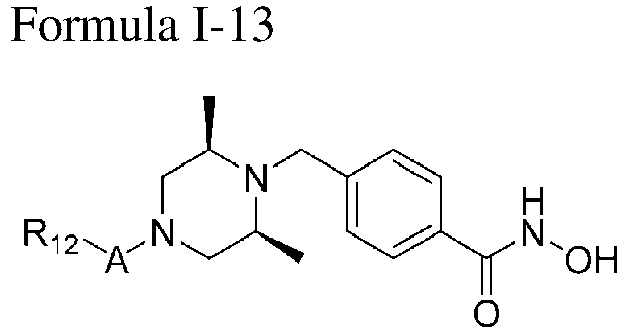
- The compounds represented by formula 1-13 are preferably compounds 80, 81, 103, 104, 105, 106, 107, 108, 109, 110, 111, 112, 113, 114, 115, 118, 162, 163, 164, 165, 166, 167, 168, 183, 185, 186, 187, 189, 196, 197, 215, 220, 230, 231, 233, 256, 268, 271, 273, 274, 298, 299, 300, 301, 302, 303, 304 and 305 as disclosed herein.
- The compounds represented by formula I according to the present invention may be compounds represented by the following formula I-14:
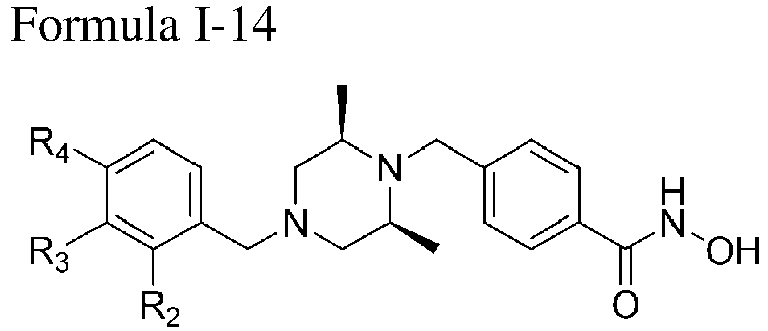


- The compounds represented by formula I-14 are preferably compounds 348, 349, 350, 351, 352, 396, 400 and 401 as disclosed herein.
- The compounds represented by formula I according to the present invention may be compounds represented by the following formula I-15:



- The compounds represented by formula I-15 are preferably compounds 250, 251, 252, 253, 257, 258, 259, 260, 261, 262, 263, 276, 277, 278, 279 and 280 as disclosed herein.
- The compounds represented by formula I according to the present invention may be compounds represented by the following formula I-16:


- The compounds represented by formula I-16 are preferably compounds 174, 175, 176 and 195 as disclosed herein.
- The compounds represented by formula I according to the present invention may be compounds represented by the following formula I-17:


- The compounds represented by formula I-17 are preferably compounds 475, 476, 478, 479, 480 and 487 as disclosed herein.
- The compounds represented by formula I according to the present invention may be compounds represented by the following formula I-18:

- The compounds represented by formula I-18 are preferably compound 477 as disclosed herein.
- The compounds represented by formula I according to the present invention may be compounds represented by the following formula I-19:


- The compounds represented by formula I-19 are preferably compounds 119 and 193 as disclosed herein.
- The compounds represented by formula I according to the present invention may be compounds represented by the following formula I-20:

- The compounds represented by formula 1-20 are preferably compound 198 as disclosed herein.
- The compounds represented by formula I according to the present invention may be compounds represented by the following formula I-21:


- The compounds represented by formula I-21 are preferably compounds 248 and 249 as disclosed herein.
- The compounds represented by formula I according to the present invention may be compounds represented by the following formula I-22:

- The compounds represented by formula I-22 are preferably compounds 569 and 573 as disclosed herein.
- The compounds represented by formula I according to the present invention may be compounds represented by the following formula I-23:


- The compounds represented by formula I-23 are preferably compounds 609, 653 and 696 as disclosed herein.
- The compounds represented by formula I, formula II, formula III and formulas I-1 to 1-23 are shown in Table 1 below.
Table 1: Names of dimethylpiperazine derivative compounds No. Name of Compound 080 4-(((2S,6R)-4-benzoyl-2,6-dimethylpiperazin-1-yl)methyl)-N-hydroxybenzamide 081 4-(((2S,6R)-4-benzyl-2,6-dimethylpiperazin-1-yl)methyt)-N-hydroxybenzamide 082 4-(((3R,5S)-4-acetyl-3,5-dimethylpiperazin-1-yl)methyl)-N-hydroxybenzamide 083 4-(((3R,5S)-4-benzoyl-3,5-dimethylpiperazin-1-yl)methyl)-N-hydroxybenzamide 084 4-(((3R,5S)-4-benzyl-3,5-dimethylpiperazin-1-yl)methyl)-N-hydroxybenzamide 098 (2S,6R)-4-(4-(hydroxycarbamoyl)benzyl)-N-isopropyl-2,6-dimethylpiperazine-1-carboxamide 099 (2S,6R)-N-(3-chlorophenyl)-4-(4-(hydroxycarbamoyl)benzyl)-2,6-dimethylpiperazine-1-carboxamide 100 4-(((3R,5S)-3,5-dimethyl-4-(phenylsulfonel)piperazin-1-yl)methyl)-N-hydroxybenzamide 103 (3R,5S)-4-(4-(hydroxycarbamoyl)benzyl)-N-isopropyl-3,5-dimethyl piperazine-1-carboxamide 104 (3R,5S)-N-(3-chlorophenyl)-4-(4-(hydroxycarbamoyl)benzyl)-3,5-dimethylpiperazine-1-carboxamide 105 4-(((2S,6R)-2,6-dimethyl-4-(phenylsulfonyl)piperazin-1-yl)methyl)-N-hydroxybenzamide 106 4-(((2S,6R)-4-(4-chlorobenzoyl)-2,6-dimethylpiperazin-1-yl)methyl)-N-hydroxybenzamide 107 4-(((2S,6R)-4-(3-chlorobenzoyl)-2,6-dimethylpiperazin-1-yl)methyl)-N-hydroxybenzamide 108 4-(((2S,6R)-4-(2-chlorobenzoyl)-2,6-dimethylpiperazin-1-yl)methyl)-N-hydroxybenzamide 109 4-(((2S,6R)-4-((4-chlorophenyl)sulfonyl)-2,6-dimethylpiperazin-1-yl)methyl)-N-hydroxybenzamide 110 4-(((2S,6R)-4-((2-chlorophenyl)sulfonyl)-2,6-dimethylpiperazin-1-yl)methyl)-N-hydroxybenzamide 111 4-(((2S,6R)-2,6-dimethyl-4-picolinoylpiperazin-1-yl)methyl)-N-hydroxybenzamide 112 4-(((2S,6R)-2,6-dimethyl-4-nilcotlinoylpiperazin-1-yl)methyl)-N-hydroxybenzamide 113 4-(((2S,6R)-2,6-dimethyl-4-(pyridin-3-ylsulfonyl)piperazin-1-yl)methyl)-N-hydroxybenzamide 114 4-(((2S,6R)-2,6-dimethyl-4-(thiophene-2-carbonyl)piperazin-1-yl)melhyl)-N-hydroxybenzamide 115 4-(((2S,6R)-4-(furan-2-carbonyl)-2,6-dimethylpiperazin-1-yl)methyl)-N-hydroxybenzamide 118 4-(((2S,6R)-4-(2-chlorobenzyl)-2,6-dimethylpiperazin-1-yl)methy l)-N-hydroxybenzamide 119 4-(((2R,6S)-4-(4-fluorophenyl)-2,6-dimethylpiperazin-1-yl)methyl)-N-hydroxybenzamide 120 4-(((3R,5S)-4-(2-chlorobenzoyl)-3,5-dimethylpiperazin-1-yl)methyl)-N-hydroxybenzamide 121 4-(((3R,5S)-4-(3-chlorobenzoyl)-3,5-dimethylpiperazin-1-yl)methyl)-N-hydroxybenzamide 122 4-(((3R,5S)-4-(4-chlorobenzoyl)-3,5-dimethylpiperazin-1-yl)methyl)-N-hydroxybenzamide 123 1-(((3R,5S)-3,5-dimethyl-1-picolinoylpiperazin-1-yl)methyl)-N-hydroxybenzamide 125 4-(((3R,5S)-4-(furan-2-carbonyl)-3,5-dimethylpiperazin-1-yl)methyl)-N-hydroxybenzamide 126 4-(((3R,5S)-3,5-dimethyl-4-(thiophene-2-carbonyl)piperazin-1-yl)methy1)-N-hydroxybenzamide 127 4-(((3R,5S)-4-(2-chlorobenzyl)-3,5-dimethylpiperazin-1-yl)methyl)-N-hydroxybenzamide 128 4-(((3R,5S)-4-(3-chlorobenzyl)-3,5-dimethylpiperazin-1-yl)methyl)-N-hydroxybenzamide 145 4-(((3R,5S)-4-(furan-2-ylmethyl)-3,5-dimethylpiperaziri-1-yl)methyl)-N-hydroxybenzamide 146 4-(((3R,5S)-3,5-dimethyl-4-(2-phenylacetyl)piperazin-1-yl)methyl)-N-hydroxybenzamide 147 4-(((3R,5S)-4-ethyl-3,5-dimethylpiperazin-1-yl)methyl)-N-hydroxybenzamide 148 4-(((3R,5S)-3,5-dimethyl-4-propylpiperazin-1-yl)methyl)-N-hydro xybenzamide 149 4-(((3R,5S)-3,5-dimethyl-4-(2,2,2-trifluoroethyl)piperazin-1-yl)methyl)-N-hydroxybenzamide 154 6-((3R,5S)-4-benzyl-3,5-dimethylpiperazin-1-yl)-N-hydroxyhexanamide 159 (2S,6R)-4-(4-(hydroxycarbamoyl)benzyl)-2,6-dimethyl-N-phenylpiperazine-1-carboxamide 160 (2S,6R)-4-(4-(hydroxycarbamoyl)benzyl)-2,6-dimethyl-N-(o-tolyl) piperazine-1-carboxamide 161 (2S,6R)-N-benzyl-4-(4-(hydroxycarbamoyl)benzyl)-2,6-dimethylpip erazine-1-carboxamide 162 (3R,5S)-4-(4-(hydroxycarbamoyl)benxyl)-3,5-dimethyl-N-phenylpiperazine-1-carboxamide 163 (3R,5S)-4-(4-(hydroxycarbamoyl)benzyl)-N-(2-methoxyphenyl)-3,5-dimethylpiperazine-1-carboxamide 164 (3R,5S)-4-(4-(hydroxycarbamoyl)benzyl)-N-(3-methoxyphenyl)-3,5-dimethylpiperazine-1-carboxamide 165 (3R,5S)-4-(4-(hydroxycarbamoyl)benzyl)-N-(4-methoxyphenyl)-3,5-dimethylpiperazine-1-carboxamide 166 (3R,5S)-4-(4-(hydroxycarbamoyl)benzyl)-3,5-dimethyl-N-(o-tolyl) piperazine-1-carboxamide 167 (3R,5S)-4-(4-(hydroxycarbamoyl)benzyl)-3,5-dimethyl-N-(m-tolyl) piperazine-1-carboxamide 168 (3R,5S)-N-benzyl-4-(4-(hydroxycarbamoyl)benzyl)-3,5-dimethylpip erazine-1-carboxamide 171 4-(((3R,5S)-4-benzyl-3,5-dimethylpiperazin-1-yl)methyl)-2-fluoro-N-hydroxybenzamide 172 (E)-3-(4-(((3R,5S)-4-benzyl-3,5-dimethylpiperazin-1-yl)methyl)phenyl)-N-hydroxyacrylamide 173 2-(4-(((3R,5S)-4-benzyl-3,5-dimethylpiperazin-1-yl)methyl)phenyl)-N-hydroxyacetamide 174 4-(((2S,6R)-4-benzyl-2,6-dimethylpiperazin-1-yl)methyl)-2-fluoro-N-hydroxybenxamide 175 (E)-3-(4-(((2S,6R)-4-benzyl-2,6-dimethylpiperazin-1-yl)methyl)phenyl)-N-hydroxyacrylamide 176 2-(4-(((2S,6R)-4-benzyl-2,6-dimethylpiperazin-1-yl)methyl)phenyl)-N-hydroxyacetamide 177 phenyl (2S,6R)-4-(4-(hydroxycarbamoyl)benzyl)-2,6-dimethylpiperazine-1-carboxylate 183 4-(((2S,6R)-2,6-dimethyl-4-phenethylpiperazin-1-yl)methyl)-N-hydroxybenzamide 184 4-(((3R,5S)-3,5-dimethyl-4-phenethylpiperazin-1-yl)methyl)-N-hydroxybenzamide 185 (3R,5S)-4-(4-(hydroxycarbamoyl)benzyl)-3,5-dimethyl-N-(1-methyl-1H-indol-5-yl)piperazine-1-carboxamide 186 (3R,5S)-N-(3-(1H-pyrrol-1-yl)phenyl)-4-(4-(hydroxycarbamoyl)benzyl)-3,5-dimethylpiperazine-1-carboxamide 187 (3R,5S)-N-(2,3-dihydrobenzofuran-5-yl)-4-(4-(hydroxycarbamoyl)benzyl)-3,5-dimethylpiperazine-1-carboxamide 188 4-(((3R,5S)-3,5-dimethyl-4-(3-phenylpropanoyl)piperazin-1-yl)methyl)-N-hydroxybenzamide 189 4-(((2S,6R)-2,6-dimethyl-4-(m-tolylcarbamothioyl)piperazin-1-yl)methyl)-N-hydroxybenzamide 193 4-(((2S,6R)-4-(2-fluoro-2-methylpropyl)-2,6-dimethylpiperazin-1-yl)methyl)-N-hydroxybenzamide 194 6-(((3R,5S)-4-benzyl-3,5-dimethylpiperazin-1-yl)methyl)-N-hydroxynicotinamide 195 6-(((2S,6R)-4-benzyl-2,6-dimethylpiperazin-1-yl)methyl)-N-hydroxynicotinamide 196 (3R,5S)-4-(4-(hydroxycarbamoyl)benzyl)-N,3,5-trimethyl-N-phenylpiperazine-1-carboxamide 197 N-hydroxy-4-(((2S,6R)-4-(indoline-1-carbonyl)-2,6-dimethylpiperazin-1-yl)methyl)benzamide 198 (3R,5S)-N-butyl-4-(4-(hydroxycarbamoyl)benzyl)-3,5-dimethyl-N-phenylpiperazine-1-carboxamide 204 4-(((3R,5S)-3,5-dimethyl-4-(4,4,4-trifluorobutyl)piperazin-1-yl)methyl)-N-hydroxybenzamide 211 4-(((3R,5S)-4-(2-fluorobenzyl)-3,5-dimethylpiperazin-1-yl)methyl)-N-hydroxybenzamide 212 1-(((3R,5S)-1-(2,5-difluorobenzyl)-3,5-dimethylpiperazin-1-yl)methyl)-N-hydroxybenzamide 213 4-(((3R,5S)-3,5-dimethyl-4-(2,4,5-trifluorobenzyl)piperazin-1-yl)methyl)-N-hydroxybenzamide 214 4-(((3R,5S)-4-(3,5-bis(trifluoromethyl)benzyl)-3,5-dimethylpiperazin-1-yl)melhyl)-N-hydroxybenzamide 215 4-(((2S,6R)-2,6-dimethyl-4-(2,4,5-trifluorobenzyl)piperazin-1-yl)methyl)-N-hydroxybenzamide 218 4-(2-((3R,5S)-4-benzyl-3,5-dimethylpiperazin-1-yl)ethyl)-N-hydroxybenzamide 219 4-(1-((3R,5S)-4-benzyl-3,5-dimethylpiperazin-1-yl)ethyl)-N-hydroxybenzamide 220 4-(((2S,6R)-2,6-dimethyl-4-(1-phenylethyl)piperazin-1-yl)methyl)-N-hydroxybenzamide 222 4-(((3R,5S)-4-(2-(3-fluorophenyl)acetyl)-3,5-dimethylpiperazin-1-yl)methyl)-N-hydroxybenzamide 223 4-(((3R,5S)-3,5-dimethyl-4-(2-(3-(trifluoromethyl)phenyl)acetyl)piperazin-1-yl)methyl)-N-hydroxybenzamide 224 4-(((3R,5S)-4-(2-(3-chlorophenyl)acetyl)-3,5-dimethylpiperazin-1-yl)methyl)-N-hydroxybenzamide 225 4-(((3R,5S)-4-(3-fluorobenzyl)-3,5-dimethylpiperazin-1-yl)methyl)-N-hydroxybenzamide 230 (3R,5S)-4-(4-(hydroxycarbamoyl)benzyl)-N-(3-methoxybenzyl)-3,5-dimelhylpiperazine-1-carboxamide (Trifluoroacetic acid salt) 231 (3R,5S)-N-(3-fluorobenzyl)-4-(4-(hydroxycarbamoyl)benzyl)-3,5-dimethylpiperazine-1-carboxamide 232 (2S,6R)-N-(3-fluorobenzyl)-4-(4-(hydroxycarbamoyl)benzy))-2,6-dimethylpiperazine-1-carboxamide 233 4-(((2S,6R)-4-(2-(3-chlorophenyl)acetyl)-2,6-dimethylpiperazin-1-yl)methyl)-N-hydroxybenzamide 234 4-(((3R,5,S)-4-(2-([1,1'-biphenyl]-3-yl)acetyl)-3,5-dimethylpiperazin-1-yl)methyl)-N-hydroxybenzamide 242 4-(((3R,5S)-4-(3-(furan-2-yl)benzoyl)-3,5-dimethylpiperazin-1-yl)methyl)-N-hydroxybenzamide 243 4-(((3R,5S)-4-(3-(furan-3-yl)benzoyl)-3,5-dimethylpiperazin-1-yl)methyl)-N-hydroxybenzamide 244 4-(((3R,5S)-4-(3-(3,6-dihydro-2H-pyran-4-yl)benzoyl)-3,5-dimethylpiperazin-1-yl)methyl)-N-hydroxybenzamide 245 4-(((3R,5S)-3,5-dimethyl-4-(3-(pyridin-4-yl)benzoyl)piperazin-1-yl)methyl)-N-hydroxybenzamide (Trifluoroacetic acid salt) 246 4-(((3R,5S)-3,5-dimethyl-4-(3-(pyridin-3-yl)benzoyl)piperazin-1-yl)methyl)-N-hydroxybenzamide 247 -4-(((3R,5S)-4-(4',4'-dimethyl-2',3',4',5'-tetrahydro-[1,1'-biphenyl]-3-carbonyl)-3,5-dimethylpiperazin-1-yl)methyl)-N-hydroxyb enzamide 248 4-(((3R,5R)-4-benzyl-3,5-dimethylpiperazin-1-yl)methyl)-N-hydroxybenzamide 249 4-(((3R,5R)-4-(furan-2-carbonyl)-3,5-dimethylpiperazin-1-yl)methyl)-N-hydroxybenzamide 250 4-(((2S,6R)-4-(2-([1,1'-biphenyl]-3-yl)acetyl)-2,6-dimethylpiperazin-1-yl)methyl)-N-hydroxybenzamide (Trifluoroacetic acid salt) 251 4-(((2S,6R)-2,6-dimethyl-4-(2-(3-(pyridin-4-yl)phenyl)acetyl)piperazin-1-yl)methyl)-N-hydroxybenzamide (Trifluoroacetic acid salt) 252 4-(((2S,6R)-4-(2-(3-(3,6-dihydro-2H-pyran-4-yl)phenyl)acetyl)-2 ,6-dimethylpiperazin-1-yl)methyl)-N-hydroxybenzamide 253 4-(((2S,6R)-4-(2-(4',4'-dimethyl-2',3',4',5'-tetrahydro-[1,1'-biphenyl]-3-yl)acetyl)-2,6-dimethylpiperazin-1-yl)methyl)-N-hydroxybenzamide (Trifluoroacetic acid salt) 255 4-(((3R,5S)-4-(3-(1H-pyrrol-1-yl)benzyl)-3,5-dimethylpiperazin-1-yl)methyl)-N-hydroxybenzamide 256 4-(((2S,6R)-4-(3-(1H-pyrrol-1-yl)benzyl)-2,6-dimethylpiperazinl-yl)methyl)-N-hydroxybenzamide 257 4-(((2S,6R)-4-(3-(furan-2-yl)benzoyl)-2,6-dimethylpiperazin-1-yl)methyl)-N-hydroxybenzamide 258 4-(((2S,6R)-4-(3-(furan-3-yl)benzoyl)-2,6-dimethylpiperazin-1-yl)methyl)-N-hydroxybenzamide 259 4-(((2S,6R)-4-(3-(3,6-dihydro-2H-pyran-4-yl)benzoyl)-2,6-dimethylpiperazin-1-yl)methyl)-N-hydroxybenzamide 260 4-(((2S,6R)-2,6-dimethyl-4-(3-(pyridin-4-yl)benzoyl)piperazin-1-yl)methyl)-N-hydroxybenzamide 261 4-(((2S,6R)-2,6-dimethyl-4-(3-(pyridin-3-yl)benzoyl)piperazin-1-yl)methyl)-N-hydroxybenzamide 262 4-(((2S,6R)-4-(3-(2-fluoropyridin-4-yl)benzoyl)-2,6-dimethylpiperazin-1-yl)methyl)-N-hydroxybenzamide 263 4-(((2S,6R)-4-(4',4'-dimethyl-2',3',4',5'-tetrahydro-[1,1'-biphenyl]-3-carbonyl)-2,6-dimethylpiperazin-1-yl)methyl)-N-hydroxybenzamide 265 4-(((3R,5S)-3,5-dimethyl-4-(naphthalen-2-ylmethyl)piperazin-1-yl)methyl)-N-hydroxybenzamide 266 4-((3R,5S)-3,5-dimethyl-4-(pyridin-4-ylmethyl)piperazin-1-yl)methyl)-N-hydroxybenzamide (Trifluoroacctic acid salt) 267 4-(((3R,5S)-4-(3-chloro-2-(trifluoromethyl)benzyl)-3,5-dimethyl piperazin-1-yl)methyl)-N-hydroxybenzamide 268 4-(((2S,6R)-2,6-dimethyl-4-(naphthalen-2-ylmethyl)piperazin-1-yl)methyl)-N-hydroxybenzamide 270 N-hydroxy-4-(((3R,5S)-4-isopentyl-3,5-dimethylpiperazin-1-yl)methyl)benzamide (Trifluoroacetic acid salt) 271 N-hydroxy-4-(((2S,6R)-4-isopentyl-2,6-dimethylpiperazin-1-yl)methyl)benzamide (Trifluoroacetic acid salt) 272 4-(((3R,5S)-3,5-dimethyl-4-(3-methylbut-2-en-1-yl)piperazin-1-yl)methyl)-N-hydroxybenzamide 273 N-hydroxy-4-(((2S,6R)-4-isopropyl-2,6-dimethylpiperazin-1-yl)methyl)benzamide (Trifluoroacetic acid salt) 274 4-(((2S,6R)-4-butyl-2,6-dimethylpiperazin-1-yl)methyl)-N-hydroxybenzamide (Trifluoroacctic acid salt) 275 4-(((3R,5S)-4-butyl-3,5-dimethylpiperazin-1-yl)methyl)-N-hydroxybenzamide (Trifluoroacetic acid salt) 276 4-(((2S,6R)-4-(2-(furan-2-yl)benzoyl)-2,6-dimethylpiperazin-1-yl)methyl)-N-hydroxybenzamide 277 4-(((2S,6R)-4-(2-(furan-3-yl)benzoyl)-2,6-dimethylpiperazin-1-yl)methyl)-N-hydroxybenzamide 278 4-(((2S,6R)-4-(2-(3,6-dihydro-2H-pyran-4-yl)benzoyl)-2,6-dimethylpiperazin-1-yl)methyl)-N-hydroxybenzamide 279 4-(((2S,6R)-2,6-dimethyl-4-(2-(pyridin-3-yl)benzoyl)piperazin-1-yl)methyl)-N-hydroxybenzamide 280 4-(((2S,6R)-4-(4',4'-dimethyl-2',3',4',5'-tetrahydro-[1,1'-biphenyl]-2-carbonyl)-2,6-dimethylpiperazin-1-yl)methyl)-N-hydroxybenzamide 283 4-(((3R,5S)-4-(2-(furan-2-yl)benzoyl)-3,5-dimethylpiperazin-1-yl)methyl)-N-hydroxybenzamide 284 4-(((3R,5S)-4-(2-(furan-3-yl)benzoyl)-3,5-dimethylpiperazin-1-yl)methyl)-N-hydroxybenzamide 285 4-(((3R,5S)-3,5-dimethyl-4-(2-(pyridin-4-yl)benzoyl)piperazin-1-yl)methyl)-N-hydroxybenzamide 286 4-(((3R,5S)-3,5-dimethyl-4-(2-(pyridin-3-yl)benzoyl)piperazin-1-yl)methyl)-N-hydroxybenzamide 288 4-(((3R,5S)-4-(4',4'-dimethy,-2',3',4',5'-tetrahydro-[1,1'-biphenyl]-2-carbonyl)-3,5-dimethylpiperazin-1-yl)methyl)-N-hydroxybenzamide 290 4-(((3R,5S)-3,5-dimethyl-4-(4-methylbenzoyl)piperazin-1-yl)methyl)-N-hydroxybenzamide (Trifluoroacetic acid salt) 291 N-hydroxy-4-(((3R,5S)-4-(4-methoxybenzoyl)-3,5-dimethylpiperazin-1-yl)methyl)benzamide (Trifluoroacetic acid salt) 292 4-(((3R,5S)-3,5-dimethyl-4-pivaloylpiperlazin-1-yl)methyl)-N-hydroxybenzamide (Trifluoroacetic acid salt) 293 4-(((3R,5S)-3,5-dimethyl-4-propionylpiperazin-1-yl)methyl)-N-hydroxybenzamide (Trifluoroacetic acid salt) 294 4-(((3R,5S)-4-butyryl-3,5-dimethylpiperazin-1-yl)methyl)-N-hydroxybenzamide (Trifluoroacetic acid salt) 295 4-(((3R,5S)-4-(cyclopropanecarbonyl)-3,5-dimethylpiperazin-1-yl )methyl)-N-hydroxybenzamide (Trifluoroacetic acid salt) 296 N-hydroxy-4-(((3R,5S)-4-isobutyryl-3,5-dimethylpiperazin-1-yl)methyl)benzamide (Trifluoroacetic acid salt) 297 4-(((3R,5S)-3,5-dimethyl-4-(3-methylbutanoyl)piperazin-1-yl)methyl)-N-hydroxybenzamide (Trifluoroacetic acid salt) 298 4-(((2S,6R)-2,6-dimethyl-4-(3-(trifluoromethyl)benzyl)piperazin-1-yl)methyl)-N-hydroxybenzamide 299 4-(((2S,6R)-4-(4-(dimethylamino)benzyl)-2,6-dimethylpiperazin-1-yl)methyl)-N-hydroxybenzamide 300 4-(((2S,6R)-2,6-dimethyl-4-(4-(methylsulfonyl)benzyl)piperazin-1-yl)methyl)-N-hydroxybenzamide 301 4-(((2S,6R)-4-(4-(1H-imidazol-1-yl)benzyl)-2,6-dimethylpiperazin-1-yl)methyl)-N-hydroxybenzamide 302 4-(((2S,6R)-2,6-dimethyl-4-(4-thiophen-2-yl)benzyl)piperazin-1-yl)methyl)-N-hydroxybenzamide 303 4-(((2S,6R)-4-(4-(furan-2-yl)benzyl)-2,6-dimethylpiperazin-1-yl)methyl)-N-hydroxybenzamide 304 4-(((2S,6R)-4-(4-(4H-1,2,4-triazol-4-yl)benzyl)-2,6-dimethylpiperazin-1-yl)methyl)-N-hydroxybenzamide 305 4-(((2S,6R)-2,6-dimethyl-4-(2-(2-methyl-1H-imidazol-1-yl)benzyl)piperazin-1-yl)methyl)-N-hydroxybenzamide 309 4-(((3R,5S)-4-(4-(furan-3-yl)benzyl)-3,5-dimethylpiperazin-1-yl )methyl)-N-hydroxybenzamide 321 (2S,6R)-N-(3-(1H-pyrrol-1-yl)phenyl)-4-(4-((E)-3-(hydroxyamino)-3-oxoprop-1-en-1-yl)benzyl)-2,6-dimethylpiperazine-1-carboxamide 322 (E)-3-(4-(((3R,5S)-4-(furan-2-carbonyl)-3,5-dimethylpiperazin-1-yl)melhyl)phenyl)-N-hydroxyacrylamide 323 (E)-3-(4-(((3R,5S)-3,5-dimethyl-4-(2-phenylacetyl)piperazin-1-yl)methyl)phenyl)-N-hydroxyacrylamide 326 4-(((3R,5S)-4-(2-(3,6-dihydro-2H-pyran-4-yl)benzoyl)-3,5-dimethylpiperazin-1-yl)methyl)-N-hydroxybenzamide 327 1-(((3R,5S)-1-(2-(furan-2-yl)benzyl)-3,5-dimethylpiperazin-1-yl)methyl)-N-hydroxybenzamide 328 4-(((3R,5S)-4-(2-(furan-3-yl)benzyl)-3,5-dimethylpiperazin-1-yl)methyl)-N-hydroxybenzamide 329 4-(((3R,5S)-3,5-dimethyl-4-(2-(pyridin-4-yl)benzyl)piperazin-1-yl)methyl)-N-hydroxybenzamide 330 4-(((3R,5S)-3,5-dimethyl-4-(2-(pyridin-3-yl)benzyl)piperazin-1-yl)methyl)-N-hydroxybenzamide 331 4-(((3R,5S)-4-((4',4'-dimethyl-2',3',-4',5'-tetrahydro-[1,1'-bip henyl]-2-yl)methyl)-3,5-dimethylpiperazin-1-yl)methyl)-N-hydroxybenzamide 332 4-(((3R,5S)-4-(2-(3,6-dihydro-2H-pyran-4-yl)benzyl)-3,5-dimethylpiperazin-1-yl)methyl)-N-hydroxybenzamide 340 4-(((3R,5S)-4-(4-(furan-2-yl)benzoyl)-3,5-dimethylpiperazin-1-yl)methyl)-N-hydroxybenzamide 342 4-(((3R,5S)-4-(3-(furan-2-yl)benzyl)-3,5-dimethylpiperazin-1-yl)methyl)-N-hydroxybenzamide 343 4-(((3R,5S)-4-(3-(furan-3-yl)benzyl)-3,5-dimethylpiperazin-1-yl)methyl)-N-hydroxybenzamide 344 4-(((3R,5S)-3,5-dimethyl-4-(3-(pyridin-3-yl)benzyl)piperazin-1-yl)methyl)-N-hydroxybenzamide 345 4-(((3R,5S)-3,5-dimethyl-4-(3-(pyridin-4-yl)benzyl)piperazin-1-yl)methyl)-N-hydroxybenzamide 346 4-(((3R,5S)-4-(3-(3,6-dihydro-2H-pyran-4-yl)benzyl)-3,5-dimethylpiperazin-1-yl)methyl)-N-hydroxybenzamide 347 4-(((3R,5S)-4-((4',4'-dimethyl-2',3',4',5'-tetrahydro-[1,1'-bip henyl]-3-yl)methyl)-3,5-dimethylpiperazin-1-yl)methyl)-N-hydrox ybenzamide 348 4-(((2S,6R)-4-(2-(furan-3-yl)benzyl)-2,6-dimethylpiperazin-1-yl )methyl)-N-hydroxybenzamide 349 4-(((2S,6R)-2,6-dimethyl-4-(2-(pyridin-3-yl)benzyl)piperazin-1-yl)methyl)-N-hydroxybenzamide 350 4-(((2S,6R)-2,6-dimethyl-4-(2-(pyridin-4-yl)benzyl)piperazin-1-yl)methyl)-N-hydroxybenzamide 351 4-(((2S,6R)-4-(2-(3,6-dihydro-2H-pyran-4-yl)benzyl)-2,6-dimethylpiperazin-1-yl)methyl)-N-hydroxybenzamide 352 4-(((2S,6R)-4-((4',4'-dimethyl-2',3',4',5'-tetrahydro-[1,1'-biphenyl]-2-yl)methyl)-2,6-dimethylpiperazin-1-yl)methyl)-N-hydroxybenzamide 354 4-(((3R,5S)-3,5-dimethyl-4-(oxazol-4-ylmethyl)piperazin-1-yl)methyl)-N-hydroxybenzamide 355 4-(((3R,5S)-3,5-dimethyl-4-(pyrimidin-5-ylmethyl)piperazin-1-yl )methyl)-N-hydroxybenzamide 356 4-(((3R,5S)-3,5-dimethyl-4-(3-(morpholinomethyl)benzyl)piperazin-1-yl)methyl)-N-hydroxybenzamide 376 4-(((3R,5S)-3,5-dimethyl-4-(4-(morpholinomethyl)benzyl)piperazin-1-yl)methyl)-N-hydroxybenzamide 380 4-(((3R,5S)-4-(3-((1-(2-fluoro-2-methylpropyl)piperidin-4-yl)methoxy)benzyl)-3,5-dimethylpiperazin-1-yl)methyl)-N-hydroxybenzamide 382 4-(((3R,5S)-3,5-dimethyl-4-(3-(piperidin-1-ylmethyl)benzyl)piperazin-1-yl)methyl)-N-hydroxybenzamide 383 4-(((3R,5S)-4-(3-(((R)-3-fluoropyrrolidin-1-yl)methyl)benzyl)-3,5-dimethylpiperazin-1-yl)methyl)-N-hydroxybenzamide 384 4-(((3R,5S)-4-(3-((3,3-difluoroazetidin-1-yl)methyl)benzyl)-3,5-dimethylpiperazin-1-yl)methyl)-N-hydroxybenzamide 385 4-(((3R,5S)-4-(3-((4-benzylpiperazin-1-yl)methyl)benzyl)-3,5-dimethylpiperazin-1-yl)methyl)-N-hydroxybenzamide 386 N-hydroxy-4-(((3R,5S)-4-(3-((4-(2-hydroxy-2-methylpropyl)piperazin-1-yl)methyl)benzyl)-3,5-dimethylpiperazin-1-yl)methyl)benzamide 387 4-(((3R,5S)-4-(3-((4-(2-fluoro-2-melhylpropyl)piperazin-1-yl)methyl)benzyl)-3,5-dimethylpiperazin-1-yl)methyl)-N-hydroxybenzamide 388 4-(((3R,5S)-4-(4-((1-(2-fluoro-2-melhylpropyl)piperidin-4-yl)methoxy)benzyl)-3,5-dimethylpiperazin-1-yl)methyl)-N-hydroxybenzamide 396 4-(((2S,6R)-4-(3-(furan-3-yl)benzyl)-2,6-dimethylpiperazin-1-yl )methyl)-N-hydroxybenzamide 400 4-(((2S,6R)-4-((4',4'-dimethyl-2',3',4',5'-(tetrahydro-[1,1'-bip henyl]-4-yl)methyl)-2,6-dimethylpiperazin-1-yl)methyl)-N-hydroxybenzamide 101 4-(((2S,6R)-4-(4-(3,6-dihydro-2H-pyran-4-yl)benzyl)-2,6-dimethylpiperazin-1-yl)methyl)-N-hydroxybenzamide 402 4-(((3R,5S)-3,5-dimethyl-4-(tetrahydrofuran-2-carbonyl)piperazin-1-yl)methyl)-N-hydroxybenzamide 403 4-(((3R,5S)-3,5-dimethyl-4-(1H-pyrazole-3-carbonyl)piperazin-1-yl)methyl)-N-hydroxybenzamide 404 4-(((3R,5S)-3,5-dimethyl-4-(pyrazine-2-carbonyl)piporazin-1-yl) methyl)-N-hydroxybenzamide 405 N-hydroxy-4-(((3R,5S)-4-isonicotinoyl-3,5-dimethylpiperazin-1-yl)methyl)benzamide 411 1-(((3R,5S)-1-(1-(((R)-3-fluoropyrrolidin-1-yl)methyl)benzyl)-3 ,5-dimethylpiperazin-1-yl)methyl)-N-hydroxybenzamide 412 4-(((3R,5S)-4-(4-((3,3-difluoroazetidin-1-yl)methyl)benzyl)-3,5 -dimethylpiperazin-1-yl)methyl)-N-hydroxybenzamide 113 4-(((3R,5S)-4-(4-((4-benzylpiperazin-1-yl)methyl)benzyl)-3,5-dimethylpiperazin-1-yl)methyl)-N-hydroxybenzamide 423 4-(((3R,5S)-3,5-dimethyl-4-(3-(pyrrolidin-1-ylmethyl)benzoyl)piperazin-1-yl)methyl)-N-hydroxybenzamide 424 4-(((3R,5S)-3,5-dimethyl-4-(3-(piperidin-1-ylmethyl)benzoyl)piperazin-1-yl)methyl)-N-hydroxybenzamide 425 4-(((3R,5S)-4-(3-((diethylamino)methyl)benzoyl)-3,5-dimethylpiperazin-1-yl)methyl)-N-hydroxybenzamide 426 4-(((3R,5S)-4-(3-((diethylamino)methyl)benzyl)-3,5-dimethylpiperazin-1-yl)methyl)-N-hydroxybenzamide 427 4-(((3R,5S)-3,5-dimethyl-4-(3-(pyrrolidin-1-ylmethyl)benzyl)piperazin-1-yl)methyl)-N-hydroxybenzamide 428 4-(((3R,5S)-3,5-dimethyl-4-(3-((4-methylpiperazin-1-yl)methyl)benzyl)piperazin-1-yl)methyl)-N-hydroxybenzamide 429 4-(((3R,5S)-4-(3-((4-ethylpiperazin-1-yl)methyl)benzyl)-3,5-dimethylpiperazin-1-yl)methyl)-N-hydroxybenzamide 430 N-hydroxy-4-(((3R,5S)-4-(3-((4-isopropylpiperazin-1-yl)methyl)benzyl)-3,5-dimethylpiperazin-1-yl)methyl)benzamide 431 4-(((3R,5S)-4-(3-((4-acetylpiperazin-1-yl)methyl)benzyl)-3,5-dimethylpiperazin-1-yl)methyl)-N-hydroxybenzamide 432 1-(((3R,5S)-3,5-dimethyl-4-(3-((4-methylpiperazin-1-yl)methyl)benzoyl)piperazin-1-yl)methyl)-N-hydroxybenzamide 433 4-(((3R,5S)-4-(3-((4-ethylpiperazin-1-yl)methyl)benzoyl)-3,5-dimethylpiperazin-1-yl)methyl)-N-hydroxybenzamide 434 N-hydroxy-4-(((3R,5S)-4-(3-((4-isopropylpiperazin-1-yl)methyl)benzoyl)-3,5-dimethylpiperazin-1-yl)methyl)benzamide 435 4-(((3R,5S)-4-(3-((4-acetylpiperazin-1-yl)methyl)benzoyl)-3,5-dimethylpiperazin-1-yl)methyl)-N-hydroxybenzamide 439 4-(((3R,5S)-3,5-dimethyl-4-(3-(morpholinomethyl)benzoyl)piperazin-1-yl)methyl)-N-hydroxybenzamide 440 4-(((3R,5S)-4-(3-(((1-(diethylamino)propan-2-yl)amino)methyl)benzoyl)-3,5-dimethylpiperazin-1-yl)melhyl)-N-hydroxybenzamide 441 4-(((3R,5S)-4-(3-(((1-(benzyl(methyl)amino)propan-2-yl)amino)methyl)benzoyl)-3,5-dimethylpiperazin-1-yl)methyl)-N-hydroxybenzamide 442 N-hydroxy-4-(((3R,5S)-4-(3-((4-isopentylpiperazin-1-yl)methyl)benzoyl)-3,5-dimethylpiperazin-1-yl)methyl)benzamide 443 4-(((3R,5S)-3,5-dimethyl-4-(3-((4-(2,2,2-trifluoroethyl)piperazin-1-yl)methyl)benzoyl)piperazin-1-yl)methyl)-N-hydroxybenzamide 444 4-(((3R,5S)-3,5-dimethyl-4-(3-((1-(methylsulfonyl)piperazin-1-yl)methyl)benzoyl)piperazin-1-yl)methyl)-N-hydroxybenzamide 446 4-(((3R,5S)-3,5-dimethyl-4-(3-(morpholine-4-carbonyl)benzyl)piperazin-1-yl)methyl)-N-hydroxybenzamide 452 4-(((3R,5S)-3,5-dimethyl-4-(3-((4-(methylsulfonyl)piperazin-1-yl)methyl)benzyl)piperazin-1-yl)methyl)-N-hydroxybenzamide 453 4-(((3R,5S)-3,5-dimethyl-4-(3-((4-(2,2,2-trifluoroethyl)piperazin-1-yl)methyl)benzyl)piperazin-1-yl)methyl)-N-hydroxybenzamide 454 N-hydroxy-1-(((3R,5S)-1-(3-((1-isopentylpiperazin-1-yl)methyl)benzyl)-3,5-dimethylpiperazin-1-yl)methyl)benzamide 455 4-(((3R,5S)-4-(3-(((1-(diethylamino)propan-2-yl)amino)methyl)benzyl)-3,5-dimethylpiperazin-1-yl)methyl)-N-hydroxybenzamide 456 4-(((3R,5S)-4-(3-(((1-(benzyl(methyl)amino)propan-2-yl)amino)methyl)benzyl)-3,5-dimethylpiperazin-1-yl)methyl)-N-hydroxybenzamide 457 4-(((3R,5S)-3,5-dimethyl-4-(2-(morpholinomethyl)benzyl)piperazin-1-yl)methyl)-N-hydroxybenzamide 458 4-(((3R,5S)-3,5-dimethyl-4-(4-(morpholinomethyl)benzoyl)piperazin-1-yl)methyl)-N-hydroxybenzamide 459 4-(((3R,5S)-3,5-dimethyl-4-(4-(piperidin-1-ylmethyl)benzoyl)piperazin-1-yl)methyl)-N-hydroxybenzamide 460 4-(((3R,5S)-4-(4-(((R)-3-fluoropyrrolidin-1-yl)methyl)benzoyl)-3,5-dimethylpiperazin-1-yl)methyl)-N-hydroxybenzamide 461 4-(((3R,5S)-3,5-dimethyl-4-(4-(pyrrolidin-1-ylmethyl)benzoyl)piperazin-1-yl)methyl)-N-hydroxybenzamide 462 4-(((3R,5S)-3,5-dimethyl-4-(4-((4-methylpiperazin-1-yl)methyl)benzoyl)piperazin-1-yl)methyl)-N-hydroxybenzamide 463 4-(((3R,5S)-3,5-dimethyl-4-(4-((4-(methylsulfonyl)piperazin-1-yl)methyl)benzoyl)piperazin-1-yl)methyl)-N-hydroxybenzamide 466 4-(((3R,5S)-3,5-dimethyl-4-(4-(pyrrolidin-1-ylmethyl)benzyl)piperazin-1-yl)methyl)-N-hydroxybenzamide 467 4-(((3R,5S)-3,5-dimethyl-4-(4-(piperidin-1-ylmethyl)benzyl)piperazin-1-yl)methyl)-N-hydroxybenzamide 468 4-(((3R,5S)-3,5-dimethyl-4-(4-((4-methylpiperazin-1-yl)methyl)benzyl)piperazin-1-yl)methyl)-N-hydroxybenzamide 472 (E)-3-(4-(((3R,5S)-3,5-dimethyl-4-(3-(morpholinomethyl)benzyl)piperazin-1-yl)methyl)phenyl)-N-hydroxyacrylamide 475 (E)-3-(4-(((2S,6R)-2,6-dimethyl-4-(3-(pyrrolidin-1-ylmethyl)benzyl)piperazin-1-yl)methyl)phenyl)-N-hydroxyacrylamide 476 (E)-3-(4-(((2S,6S)-4-(3-((diethylamino)methyl)benzyl)-2,6-dimethylpiperazin-1-yl)methyl)phenyl)-N-hydroxyacrylamide 477 (E)-3-(4-(((2S,6R)-4-(4-(furan-2-yl)benzyl)-2,6-dimethylpiperazin-1-yl)methyl)phenyl)-N-hydroxyacrylamide 478 4-(((2S,6R)-4-(3-((diethylamino)methyl)benzyl)-2,6-dimethylpiperazin-1-yl)methyl)-N-hydroxybenzamide (hydrochloride salt) 479 4-(((2S,6R)-2,6-dimethyl-4-(3-(pyrrolidin-1-ylmethyl)benzyl)piperazin-1-yl)methyl)-N-hydroxybenzamide 480 (E)-3-(4-(((2S,6R)-2,6-dimethyl-4-(3-(pyrrolidin-1-ylmethyl)benzoyl)piperazin-1-yl)methyl)phenyl)-N-hydroxyacrylamide 481 4-(((3R,5S)-3,5-dimethyl-4-(2-(1-(methylsulfonyl)-1,2,3,6-tetrahydropyridin-4-yl)benzyl)piperazin-1-yl)methyl)-N-hydroxybenzamide 482 4-(((3R,5S)-4-(2-(1-acetyl-1,2,3,6-tetrahydropyridin-4-yl)benzyl)-3,5-dimethylpiperazin-1-yl)methyl)-N-hydroxybenzamide 483 4-(((3R,5S)-3,5-dimethyl-4-(2-(1-(2,2,2-trifluoroethyl)-1,2,3,6 -tetrahydropyridin-4-yl)benzyl)piperazin-1-yl)methyl)-N-hydroxybenzamide 484 N-hydroxy-4-(((3R,5S)-4-(2-(1-isopropyl-1,2,3,6-tetrahydropyridin-4-yl)benzyl)-3,5-dimethylpiperazin-1-yl)methyl)benzamide 485 4-(((3R,5S)-4-(2-(1-ethyl-1,2,3,6-tetrahydropyridin-4-yl)benzyl)-3,5-dimethylpiperazin-1-yl)methyl)-N-hydroxybenzamide 486 4-(((3R,5S)-4-(4-((4-acetylpiperazin-1-yl)methyl)benzyl)-3,5-dimethylpiperazin-1-yl)methyl)-N-hydroxybenzamide (hydrochloride salt) 487 (E)-3-(4-(((2S,6R)-4-(3-((diethylamino)methyl)benzoyl)-2,6-dimethylpiperazin-1-yl)methyl)phenyl)-N-hydroxyacrylamide 520 3-(((3R,5S)-4-benzyl-3,5-dimethylpiperazin-1-yl)methyl)-N-hydroxy-1H-indole-6-carboxamide 569 5-(((3R,5S)-4-benzyl-3,5-dimethylpiperazin-1-yl)methyl)-N-hydroxy-1H-indole-2-carboxamide 571 5-(((3R,5S)-4-benzyl-3,5-dimethylpiperazin-1-yl)methyl)-N-hydroxybenzofuran-2-carboxamide 573 6-(((3R,5S)-4-benzyl-3,5-dimethylpiperazin-1-yl)methyl)-N-hydroxy-1H-indole-2-carboxamide 574 2-(((3R,5S)-4-benzyl-3,5-dimethylpiperazin-1-yl)methyl)-N-hydroxybenzofuran-5-carboxamide 609 5-(((3R,5S)-3,5-dimethyl-4-(3-(morpholinomethyl)benzyl)piperazin-1-yl)methyl)-N-hydroxypicolinamide 652 4-(((3R,5S)-4-benzyl-3,5)-dimethyl)piperazin-1-yl)methyl)-N,2-dihydroxybenzamide 653 4-(((3R,5S)-3,5-dimethyl-4-(3-(morpholinomethyl)benzyl)piperazin-1-yl)methyl)-N,2-dihydroxybenzamide 696 4-(((3R,5S)-3,5-dimethyl-4-(3-(morpholinomethyl)benzyl)piperazin-1-yl)methyl)-3-fluoro-N-hydroxybenzamide 812 5-(((3R,5S)-4-benzyl-3,5-dimethylpiperazin-1-yl)methyl)-N-hydroxypicolinamide 813 4-(((3R,5S)-4-benzyl-3,5-dimethylpiperazin-1-yl)methyl)-3-fluoro-N-hydroxybenzamide 814 4-((3R,5S)-4-benzyl-3,5-dimethylpiperazine-1-carbonyl)-N-hydroxybenzamide 818 4-(((3R,5S)-4-benzyl-3,5-dimethylpiperazin-1-yl)sulfonyl)-N-hydroxybenzamide 820 2-(4-(((3R,5S)-4-benzyl-3,5-dimethylpiperazin-1-yl)sulfonyl)phenyl)-N-hydroxyacetamide 822 4-(((3R,5S)-4-benzyl-3,5-dimethylpiperazin-1-yl)methyl)-N-hydroxycyclohexane-1-carboxamide 823 2-(4-((3R,5S)-4-benzyl-3,5-dimethylpiperazine-1-carbonyl)phenyl)-N-hydroxyacetamide 824 3-(4-((3R,6S)-4-benzyl-3,5-dimethylpiperazine-1-carbonyl)phenyl)-N-hydroxypropanamide - Preferably, the compounds represented by formula I or pharmaceutically acceptable salts thereof according to the present invention may be selected from the group consisting of compounds 081, 082, 083, 084, 098, 099, 100, 106, 107, 108, 109, 110, 112, 120, 121, 122, 123, 125, 126, 127, 128, 145, 146, 147, 148, 149, 159, 160, 161, 171, 173, 174, 175, 177, 186, 188, 193, 194, 195, 196, 198, 211, 214, 219, 248, 249, 250, 251, 252, 255, 265, 266, 267, 272, 283, 284, 285, 286, 292, 295, 297, 305, 326, 328, 329, 330, 332, 342, 343, 344, 345, 346, 349, 354, 356, 376, 380, 382, 383, 384, 385, 386, 387, 388, 403, 411, 413, 430, 431, 432, 433, 434, 435, 439, 440, 441, 442, 443, 444, 452, 453, 454, 455, 456, 467, 468, 481, 482, 483, 484, 485, 486, 569, 696, 813 and 823. More preferably, the compounds represented by formula I or pharmaceutically acceptable salts thereof according to the present invention may be selected from the group consisting of compounds 082, 083, 084, 098, 100, 120, 121, 122, 123, 125, 126, 127, 128, 145, 146, 148, 149, 159, 160, 161, 171, 174, 177, 194, 211, 249, 255, 283, 305, 326, 328, 329, 330, 332, 342, 343, 344, 345, 346, 349, 354, 356, 376, 382, 383, 387, 388, 411, 413, 431, 439, 441, 444, 452, 453, 454, 467, 468, 481, 482, 483, 484, 485, 696 and 813.
- As used herein, the term "pharmaceutically acceptable salt" means any salt that is generally used in the pharmaceutical field. Examples of the pharmaceutically acceptable salt include, but are not limited to, salts with inorganic ions such as calcium, potassium, sodium or magnesium ions, salts with inorganic acids such as hydrochloric acid, nitric acid, phosphoric acid, bromic acid, iodic acid, perchloric acid, tartaric acid or sulfuric acid, salts with organic acids such as acetic acid, trifluoroacetic acid, citric acid, maleic acid, succinic acid, oxalic acid, benzoic acid, tartaric acid, fumaric acid, mandelic acid, propionic acid, citric acid, lactic acid, glycolic acid, gluconic acid, galacturonic acid, glutamic acid, glutaric acid, glucuronic acid, aspartic acid, ascorbic acid, carbonic acid, vanillic acid, hydroiodic acid or the like, salts with sulfonic acids such as methanesulfonic acid, ethanesulfonic acid, benzenesulfonic acid, p-toluenesulfonic acid or naphthalenesulfonic acid, salts with amino acids such as glycine, arginine or lysine, and salts with amines such as trimethylamine, triethylamine, ammonia, pyridine or picoline.
- In the present invention, preferred salts include salts with hydrochloric acid, trifluoroacetic acid, citric acid, bromic acid, maleic acid, phosphoric acid, sulfuric acid, tartaric acid or the like, and preferred examples of such compounds include compounds 230, 245, 250, 251, 253, 266, 270, 271, 273, 274, 275, 290, 291, 292, 293, 294, 295, 296, 297, 478 and 486 as disclosed herein.
- The compounds represented by formula I may contain one or more asymmetrical carbon atoms, and thus may exist in the form of racemates, racemic mixtures, single enantiomers, diastereomeric mixtures, and individual diastereomers. The compounds of formula I can be separated into such isomers by methods known in the art, for example, column chromatography or HPLC. Alternatively, stereoisomers of the compounds of formula I may be synthesized by stereospecific synthesis using optically pure starting materials and/or reagents of known configuration.
- The present invention provides methods for the preparation of the novel compounds of formula I, stereoisomers thereof, or pharmaceutically acceptable salts thereof.
- Preferred methods for the preparation of the novel compounds of formula I, stereoisomers thereof, or pharmaceutically acceptable salts thereof are as shown in reaction schemes 1 to 23 below, and also include modifications obvious to those skilled in the art.

- Conditions: a) R1-CH2-Br (or -I, -Cl, -OTf, -OMs), K2CO3 (or Cs2CO3)/CH3CN (or DMF); b) R1-CHO, Na(CN)BH3, AcOH/THF; c) R1-COCl, TEA/CH2Cl2; d) R1CO2H, HOBt, EDCI, DIPEA/CH2Cl2; e) R1-NCO, TEA/CH2Cl2; f) 4-nitrophenyl 3-fluorobenzylcarbamate, TEA/DMF; g) Ac2O, TEA/CH2Cl2; h) R1-SO2Cl, TEA/CH2 Cl2; i) R1CO2H, HATU, DIPEA/DMF.
Table 2 Compounds A R1 conditions 82 C=O methyl g 83 C=O phenyl c 84 CH2 phenyl a 98 NH(C=O) 2-propyl e 99 NH(C=O) 3-chlorophenyl e 100 SO2 phenyl h 120 C=O 2-chlorophenyl c 121 C=O 3-chlorophenyl c 122 C=O 4-chlorophenyl c 123 C=O 2-pyridyl c 125 C=O 2-furanyl c 126 C=O 2-thiophenyl c 127 CH2 2-chlorophenyl a 128 CH2 3-chlorophenyl a 145 CH2 furan-2-yl b 146 C=O benzyl c 147 CH2 methyl a 148 CH2 ethyl a 149 CH2 1,1,1-trifluoromethyl a 159 NH(C=O) phenyl e 160 NH(C=O) 2-methylphenyl e 161 NH(C=O) benzyl e 177 C=O phenol c 184 CH2 benzyl b 188 C=O phenethyl c 204 CH2 1,1,1,-trifluoropropyl a 211 CH2 2-fluorophenyl a 212 CH2 2,5-difluorophenyl a 213 CH2 2,4,5-trifluorophenyl a 214 CH2 3,5-bis(trifluoromethyl)phenyl a 222 C=O 3-fluorobenzyl d 223 C=O 3-(trifluoromethyl)benzyl d 224 C=O 3-chlorobenzyl d 225 CH2 3-fluorophenyl a 232 NH(C=O) 3-fluorobenzyl f 255 CH2 3-(1H-pyrrol-1-yl)phenyl a 265 CH2 naphthalen-2-yl a 266 CH2 pyridin-4-yl a 267 CH2 3-chloro-2-(trifluoromethyl)phenyl a 270 CH2 4-isobutyl a 272 CH2 2-methylprop-1-en-1-yl a 275 CH2 propyl a 290 C=O 4-methylphenyl c 291 C=O 4-methoxyphenyl c 292 C=O tert-butyl c 293 C=O ethyl c 294 C=O propyl c 295 C=O cyclopropyl c 296 C=O isopropyl c 297 C=O isobutyl c 354 CH2 oxazol-4-yl a 355 CH2 pyrimidin-5-yl a 403 C=O 1H-pyrazol-3-yl i 404 C=O 2-pyrazinyl i 405 C=O 4-pyridyl c - As shown in reaction scheme 1 above, an amine of (2S,6R)-2,6-dimethylpiperazine is subjected to an alkylation reaction with methyl(4-bromomethyl)benzoate to prepare compound 1-2, which is then subjected to an alkylation reaction, an acylation reaction or a reductive amination reaction under conditions a) to i), thereby preparing compounds 1-3. Finally, the prepared compounds 1-3 are reacted with an aqueous hydroxylamine solution and potassium hydroxide to prepare compounds 82, 83, 84, 98, 99, 100, 120, 121, 122, 123, 125, 126, 127, 128, 145, 146, 147, 148, 149, 159, 160, 161, 177, 184, 188, 204, 211, 212, 213, 214, 222, 223, 224, 225, 232, 255, 265, 266, 267, 270, 272, 275, 290, 291, 292, 293, 294, 295, 296, 297, 354, 355, 403, 404 and 405.


Table 3 Compounds R2 R3 R4 309 H H Y-2 327 Y-1 H H 328 Y-2 H H 329 Y-3 H H 330 Y-4 H H 331 Y-5 H H 332 Y-6 H H 342 H Y-1 H 343 H Y-2 H 344 H Y-4 H 345 H Y-3 H 346 H Y-6 H 347 H Y-5 H - As shown in reaction scheme 2 above, compound 1-2 is alkylated to prepare compound 2-1, which is then subjected to a Suzuki reaction with a boronic acid or boronic ester containing each of compounds Y-1 to Y-6, thereby preparing compounds 2-2. Finally, the prepared compounds 2-2 are reacted with an aqueous hydroxylamine solution and potassium hydroxide to prepare compounds 309, 327, 328, 329, 330, 331, 332, 342, 343, 344, 345, 346 and 347.


- Conditions: a) MsCl, TEA/CH2Cl2; b) Ac2O, TEA/CH2Cl2; c) R5-OTf, K2CO3/CH3 CN; d) R5-X, TEA/CH2Cl2.
Table 4 Compounds R5 conditions 481 methanesulfonyl a 482 acetyl b 483 2,2,2-trifluoroethyl c 484 isopropyl d 485 ethyl d - As shown in reaction scheme 3 above, compound 2-1 is subjected to a Suzuki reaction with tert-butyl 4-(4,4,5,5-tetramethyl-1,3,2-dioxaborolan-2-yl)-5,6-dihydropyridine-1(2H)-carboxylat e to prepare compound 3-1, which is then deprotected under an acidic condition, thereby preparing compound 3-2. The prepared compound 3-2 is subjected to substitution reactions under conditions a) to d) above to prepare compounds 3-3, which are then reacted with an aqueous hydroxylamine solution and potassium hydroxide, thereby preparing compounds 481, 482, 483, 484 and 485.


- Conditions: a) (iodo, chloro or bromo)benzoyl chloride, TEA/CH2Cl2; b) 2-([1,1'-biphenyl]-3-yl)acetic acid, HOBt, EDCI, DIPEA/CH2Cl2.
Table 5 Compounds n R6 R7 R8 conditions 234 1 H Y-8 H b 242 0 H Y-1 H a 243 0 H Y-2 H a 244 0 H Y-6 H a 245 0 H Y-3 H a 246 0 H Y-4 H a 247 0 H Y-5 H a 283 0 Y-1 H H a 284 0 Y-2 H H a 285 0 Y-3 H H a 286 0 Y-4 H H a 288 0 Y-5 H H a 326 0 Y-6 H H a 340 0 H H Y-1 a - As shown in reaction scheme 4 above, compound 1-2 is reacted with benzoyl chloride or benzoyl bromide to prepare compound 4-1, which is then subjected to a Suzuki reaction with a boronic acid or boronic ester containing each of compounds Y-1 to Y-8, thereby preparing compounds 4-2. Alternatively, compound 1-2 is subjected to an amide coupling reaction with 2-([1,1'-biphenyl]-3-yl)acetic acid, thereby preparing compounds 4-2. The prepared compounds 4-2 are reacted with an aqueous hydroxylamine solution and potassium hydroxide, thereby preparing compounds 234, 242, 243, 244, 245, 246, 247, 283, 284, 285, 286, 288, 326 and 340.

Table 6 Compounds Position R9 356 meta morpholine 376 para morpholine 382 meta piperidine 383 meta (R)-3-fluoropyrrolidine 384 meta 3,3-difluoroazetidine 385 meta 4-benzylpiperazine 411 para (R)-3-fluoropyrrolidine 412 para 3,3-difluoroazetidine 413 para 4-benzylpiperazine 426 meta N,N-diethylamine 427 meta pyrrolidine 428 meta 4-methylpiperazine 429 meta 4-ethylpiperazine 430 meta 4-isopropylpiperazine 431 meta 4-acetylpiperazine 452 meta 4-methansulfonylpiperazine 453 meta 4-(2,2,2-trifluoroethyl)piperazine 454 meta 4-isopentylpiperazine 455 meta N,N-diethylpropane-1,2-diamine 456 meta N-benzyl-N-methylpropane-1,2-diamine 457 ortho morpholine 466 para pyrrolidine 467 para piperidine 468 para 4-methylpiperazine 486 para 4-acetylpiperazine - As shown in reaction scheme 5 above, compound 1-2 is subjected to a substitution reaction with ortho-, meta- or para-(bromomethyl)benzaldehyde to prepare compounds 5-1, which are then subjected to a reductive amination reaction with amine compounds, thereby preparing compounds 5-2. Finally, the prepared amine compounds 5-2 are reacted with an aqueous hydroxylamine solution and potassium hydroxide, thereby preparing compounds 356, 376, 382, 383, 384, 385, 411, 412, 413, 426, 427, 428, 429, 430, 431, 452, 453, 454, 455, 456, 457, 466, 467, 468 and 486.

Table 7 Compounds Position R10 423 meta pyrrolidine 424 meta piperidine 425 meta N,N-diethylamine 432 meta 4-methylpiperazine 433 meta 4-ethylpiperazine 434 meta 4-isopropylpiperazine 435 meta 4-acetylpiperazine 439 meta morpholine 440 meta N,N-diethylpropane-1,2-diamine 441 meta N-benzyl-N-methylpropane-1,2-diamine 442 meta 4-isopentylpiperazine 443 meta 4-(2,2,2-trifluoroethyl)piperazine 444 meta 4-methanesulfonylpiperazine 458 para morpholine 459 para piperidine 460 para (R)-3-fluoropyrrolidine 461 para pyrrolidine 462 para 4-methylpiperazine 463 para 4-methaensulfonylpiperazine - As shown in reaction scheme 6 above, compound 6-1 is prepared and subjected to an acylation reaction with compound 1-2 to prepare compound 6-2. The prepared compound 6-2 is subjected to a substitution reaction with amine compounds to prepare compounds 6-3, which are then reacted with an aqueous hydroxylamine solution and potassium hydroxide, thereby preparing compounds 423, 424, 425, 432, 433, 434, 435, 439, 440, 441, 442, 443, 444, 458, 459, 460, 461, 462 and 463.
- Alternatively, compound 6-1 is reacted with morpholine to prepare compound 6-4. The prepared compound 6-4 and compound 1-2 are subjected to a substitution reaction, and then reacted with an aqueous hydroxylamine solution and potassium hydroxide, thereby preparing compound 446.


- As shown in reaction scheme 7, compound 5-1 is subjected to a reductive amination reaction with 4-tert-butyl piperazine-1-carboxylate, and then deprotected under an acidic condition to prepare compound 7-2. The prepared compound 7-2 is reacted with 2,2-dimethyloxirane to prepare compound 7-3, which is then reacted with an aqueous hydroxylamine solution and potassium hydroxide, thereby preparing compound 386. Further, compound 7-3 is reacted with DAST to substitute the hydroxyl group with fluoride, thereby preparing compound 7-4. The prepared compound 7-4 is prepared with an aqueous hydroxylamine solution and potassium hydroxide, thereby preparing compound 387.

- Conditions: a)


Table 8 Compound B Conditions 154 
a 171 
b 172 
b 173 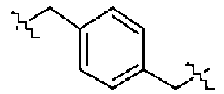
a 194 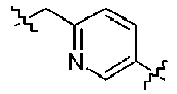
a 218 
a 219 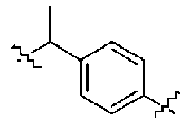
a 520 
b (NaBH(OAc)3) 571 
a (DIPEA) 574 
a (DIPEA) 652 
a (TEA) 812 
b (NaBH(OAc)3) 813 
a (K2CO3) 814 
a (TEA) 818 
a (TEA) 820 
a (TEA) 822 
b (NaBH(OAc)3) 823 
c 824 
c - As shown in reaction scheme 8, (2S,6R)-2,6-dimethylpiperazine is protected with Boc and reacted with benzyl bromide, after which it is deprotected under an acidic condition, thereby preparing compound (8-3). The prepared compound 8-3 is subjected to an alkylation reaction or a reductive amination reaction with compound 8-4 shown in conditions a) to c), thereby preparing compounds 8-5. The prepared compounds 8-5 are reacted with an aqueous hydroxylamine solution and potassium hydroxide, thereby preparing compounds 154, 171, 172, 173, 194, 218, 219, 520, 571, 574, 652, 812, 813, 814, 818, 820, 822, 823 and 824.

Table 9 Compounds A R11 321 NH(C=O) 3-(1H-pyrrol-1-yl)phenyl 322 C=O 2-furanyl 323 C=O benzyl - As shown in reaction scheme 9 above, compound 8-4 is reacted with (2S,6R)-2,6-dimethylpierazine to prepare compound 9-1, which is then subjected to a substitution reaction with an isocynate or carbonyl chloride containing substituents represented by R11, thereby preparing compound 9-2. The prepared compounds 9-2 are reacted with an aqueous hydroxylamine solution and potassium hydroxide, thereby preparing compounds 321, 322 and 323.


- As shown in reaction scheme 10 above, compound 9-1 is subjected to an alkylation reaction with 3-(bromomethyl)benzaldehyde to prepare compound 10-1. The prepared compound 10-1 is subjected to a reductive amination reaction with morpholine to prepare compound 10-2, which is then reacted with an aqueous hydroxylamine solution and potassium hydroxide, thereby preparing compound 472.

- As shown in reaction scheme 11 above, compound 8-1 is reacted with furan-2-carbonyl chloride to prepare compound 11-1. The prepared compound 11-1 is hydrogenated to prepare compound 11-2, which is then Boc deprotected under an acidic condition to prepare compound 11-3. The prepared compound 11-3 is reacted with compound 1-1, and then reacted with an aqueous hydroxylamine solution and potassium hydroxide, thereby preparing compound 402.


- As shown in reaction scheme 12 above, 3-hydroxybenzylalcohol and 4-hydroxybenzylalcohol are subjected to a substitution reaction with compound 12-1 to prepare compounds 12-2, which are then reacted with MsCl to prepare compounds 12-3. Compounds 12-3 are reacted with compound 1-2 to prepare compounds 12-4, which are deprotected under an acidic condition and reacted with 2,2-dimethyloxirane to prepare compounds 12-6. The prepared compounds 12-6 are reacted with DAST to substitute the hydroxyl group with fluoride to thereby prepare compounds 12-7. Finally, the prepared compounds 12-7 are reacted with an aqueous hydroxylamine solution and potassium hydroxide, thereby preparing compounds 380 and 388.


- Conditions: a) R12-CH2-Br (I or -Cl), K2CO3 (or Cs2CO3)/CH3CN (or DMF); b) R12-CHO, NaCNBH3, AcOH/THF or AcOH/CH2ClCH2Cl; c) R12-COX, TEA/CH2Cl2; d) R 12CO2H, HOBt, EDCI, DIPEA/CH2Cl2; e) R12-NCO, TEA/CH2Cl2; f) R12-NCS, TEA/ CH2Cl2; g)

Table 10 Compounds A R12 conditions 80 C=O phenyl c 81 CH2 phenyl a 103 NH(C=O) 2-propyl e 104 NH(C=O) 3-chlorophenyl e 105 SO2 phenyl h 106 C=O 4-chlorophenyl c 107 C=O 3-chlorophenyl c 108 C=O 2-chlorophenyl c 109 SO2 4-chlorophenyl h 110 SO2 2-chlorophenyl h 111 C=O 2-pyridinyl c 112 C=O 3-pyridinyl c 113 SO2 3-pyridinyl h 114 C=O 2-thiophenyl c 115 C=O 2-furanyl c 118 CH2 2-chlorophenyl a 162 NH(C=O) phenyl e 163 NH(C=O) 2-methoxyphenyl e 164 NH(C=O) 3-methoxyphenyl e 165 NH(C=O) 4-methoxyphenyl e 166 NH(C=O) 2-methylphenyl e 167 NH(C=O) 3-methylphenyl e 168 NH(C=O) benzyl e 183 CH2 benzyl b 185 NH(C=O) 1-methyl-1H-indole e 186 NH(C=O) 3-(1H-pyrrol-1-yl)phenyl e 187 NH(C=O) 2,3-dihydrobenzofuran-5-yl e 189 C=S 3-methylphenylamine f 196 NCH3(C=O) phenyl g 197 C=O indoline g 215 CH2 2,4,5-trifluorophenyl a 220 CH(CH3) phenyl a 230 NH(C=O) 3-methoxybenzyl g 231 NH(C=O) 3-fluorobenzyl g 233 C=O 3-chlorobenzyl d 256 CH2 (3-pyrrole)phenyl a 268 CH2 naphthalen-2-yl a 271 CH2 isobutyl a 273 CH(CH3) methyl a 274 CH2 propyl a 298 CH2 3-trifluoromethylphenyl b 299 CH2 4-(N,N-dimethylamino)phenyl b 300 CH2 4-(methylsulfonyl)phenyl b 301 CH2 4-(1H-imidazol-1-yl)phenyl b 302 CH2 4-(thiophen-2-yl)phenyl b 303 CH2 4-(furan-2-yl)phenyl b 304 CH2 4-(4H-1,2,4-triazol-4-yl)phenyl b 305 CH2 2-(2-methyl-1H-imidazol-1-yl)phenyl b - As shown in reaction scheme 13 above, compound 8-1 and compound 1-1 are subjected to an alkylation reaction to prepare compound 13-1, which is then deprotected under an acidic condition to prepare compound 13-2. The prepared compound 13-2 is subjected to an alkylation reaction, an acylation reaction or a reductive amination reaction under conditions a) to h), thereby preparing compounds 13-3. Finally, the prepared compounds 13-3 are reacted with an aqueous hydroxylamine solution and potassium hydroxide, thereby preparing compounds 80, 81, 103, 104, 105, 106, 107, 108, 109, 110, 111, 112, 113, 114, 115, 118, 162, 163, 164, 165, 166, 167, 168, 183, 185, 186, 187, 189, 196, 197, 215, 220, 230, 231, 233, 256, 268, 271, 273, 274, 298, 299, 300, 301, 302, 303, 304 and 305.


Table 11 Compounds R2 R3 R4 348 Y-2 H H 349 Y-4 H H 350 Y-3 H H 351 Y-6 H H 352 Y-5 H H 396 H Y-2 H 400 H H Y-5 401 H H Y-6 - As shown in reaction scheme 14 above, compound 13-2 is subjected to an alkylation reaction to prepare compound 14-1, which is then subjected to a Suzuki reaction with a boronic acid boronic ester containing each of Y-2 to Y-6, thereby preparing compounds 14-2. Finally, the prepared compounds 14-2 are reacted with an aqueous hydroxylamine solution and potassium hydroxide, thereby preparing compounds 348, 349, 350, 351, 352, 396, 400 and 401.


Table 12 Compounds n R6 R7 R8 250 1 H Y-8 H 251 1 H Y-3 H 252 1 H Y-6 H 253 1 H Y-5 H 257 0 H Y-1 H 258 0 H Y-2 H 259 0 H Y-6 H 260 0 H Y-3 H 261 0 H Y-4 H 262 0 H Y-7 H 263 0 H Y-5 H 276 0 Y-1 H H 277 0 Y-2 H H 278 0 Y-6 H H 279 0 Y-4 H H 280 0 Y-5 H H - As shown in reaction scheme 15 above, compound 13-2 is subjected to an amide coupling reaction with 2-, 3-, 4-iodobenzoic acid or 2-(3-bromophenyl)acetic acid to prepare compound 15-1, which is then subjected to a Suzuki reaction with a boronic acid or boronic ester containing each of Y-1 to Y-8, thereby preparing compounds 15-2. Finally, the prepared compounds 15-2 are reacted with an aqueous hydroxylamine solution and potassium hydroxide, thereby preparing compounds 250, 251, 252, 253, 257, 258, 259, 260, 261, 262, 263, 276, 277, 278, 279 and 280.

Table 13 Compounds B 174 
175 
176 
195 
- As shown in reaction scheme 16 above, (2S,6R)-2,6-dimethylpiperazine is reacted with benzyl bromide to introduce a benzyl group therein to thereby prepare compound 16-1, which is then subjected to an alkylation reaction with compound 8-4, thereby preparing compounds 16-2. Finally, the prepared compounds 16-2 are reacted with an aqueous hydroxylamine solution and potassium hydroxide, thereby preparing compounds 174, 175, 176 and 195.

- Conditions: a) (3-bromomethyl)benzaldehyde, Cs2CO3/CH3CN; b) 3-formylbenzoic acid, HOBt, EDCI, DIPEA/CH2Cl2.
Table 14 Compounds A B R13 conditions 475 CH2 
pyrrolidine a 476 CH2 
diethylamine a 478 CH2 
diethylamine a 479 CH2 
pyrrolidine a 480 C=O 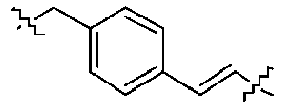
pyrrolidine b 487 C=O 
diethylamine b - As shown in reaction scheme 17 above, compound 8-1 is subjected to an alkylation reaction with compound 8-4 and deprotected under an acidic condition, thereby preparing compound 17-1. The prepared compound 17-1 is subjected to an alkylation reaction or an amide coupling reaction under conditions a) or b) to prepare compounds 17-2, which are then subjected to a reductive amination reaction with pyrrolidine or diethylamine, thereby preparing compounds 17-3. Finally, the prepared compounds 17-3 are reacted with an aqueous hydroxylamine solution and potassium hydroxide, thereby preparing compounds 475, 476, 478, 479, 480 and 487.

- As shown in reaction scheme 18 above, compound 17-1 is subjected to an alkylation reaction with 4-bromobenzyl bromide to prepare compound 18-1, which is then subjected to a Suzuki reaction with furan-2-yl bornic acid, thereby preparing compound 18-2. Finally, the prepared compound 18-2 is reacted with an aqueous hydroxylamine solution and potassium hydroxide, thereby preparing compound 477.


- As shown in reaction scheme 19 above, compound 13-2 is subjected to a Buchwald reaction with 1-bromo-4-fluorobenzene to prepare compound 19-1, which is then reacted with an aqueous hydroxylamine solution and potassium hydroxide, thereby preparing compound 119.
- Alternatively, compound 13-2 is reacted with 2,2-dimethyloxirane to prepare compound 19-2, which is then reacted with DAST to substitute the hydroxyl group with fluoride and then reacted with an aqueous hydroxylamine solution and potassium hydroxide, thereby preparing compound 193.

- As shown in reaction scheme 20 above, compound 13-3 is subjected to an alkylation reaction with butyl iodide to prepare compound 20-1, which is then reacted with an aqueous hydroxylamine solution and potassium hydroxide, thereby preparing compound 198.

- As shown in reaction scheme 21 above, (2R,6R)-2,6-dimethylpiperazine is subjected to an alkylation reaction with compound 1-1 to prepare compound 21-1, which is then subjected to an alkylation reaction or an acylation reaction, thereby preparing compound 21-2 or compound 21-3. Finally, the prepared compound 21-2 or compound 21-3 is reacted with an aqueous hydroxylamine solution and potassium hydroxide, thereby preparing compounds 248 and 249.

- As shown in reaction scheme 22 above, (2S,6R)-1-benzyl-2,6-dimethylpiperazine is subjected to an alkylation reaction with compound 8-3 and compound 22-1 to prepare compounds 22-2, which are then deprotected to remove the tert-butyloxycarbonyl group, thereby preparing compounds 22-3. Finally, compounds 22-3 are reacted with an aqueous hydroxylamine solution and potassium hydroxide, thereby preparing compounds 569 and 573.

- Conditions: a),

Table 15 Compounds B Condition 1 Condition 2 609 
NaCNBH3/AcOH B (NaCNBH3) 653 
NaBH(OAc)3 a 696 
NaBH(OAc)3 a - As shown in reaction scheme 23 above, compound 8-1 is subjected to an alkylation reaction to prepare compound 23-1, which is then subjected to a reductive amination reaction with morpholine to prepare compound 23-2, which is then deprotected to remove the tert-butyloxycarbonyl group, thereby preparing compound 23-3. Compound 23-3 is subjected to an alkylation reaction with compound 8-4 to prepare compounds 23-4. Finally, the prepared compounds 23-4 are reacted with an aqueous hydroxylamine solution and potassium hydroxide, thereby preparing compounds 609, 653 and 696.
- The present invention provides a pharmaceutical composition for use in preventing or treating histone deacetylase 6 (HDAC6) activity-associated diseases, which contains, as an active ingredient, a compound represented by the following formula I, a stereoisomer thereof or a pharmaceutically acceptable salt thereof:

flammatory diseases, autoimmune diseases, neurological diseases and neurodegenerative disorders. Specifically, these histone deacetylase 6 (HDAC6) activity-associated diseases include lung cancer, colon cancer, breast cancer, prostate cancer, liver cancer, brain cancer, ovarian cancer, stomach cancer, skin cancer, pancreatic cancer, glioma, glioblastoma, leukaemia, lymphoma, multiple myeloma, solid cancer, Wilson's disease, Spinocerebellar ataxia, prion disease, Parkinson's disease, Huntington's disease, amyotrophic lateral sclerosis, amyloidosis, Alzheimer's disease, alcoholic liver disease, spinal muscular atrophy, rheumatoid arthritis, and osteoarthritis, as well as disorders or diseases associated with the abnormal function of histone deacetylase. - In an embodiment, the compound represented by formula I according to the present invention may be a compound represented by formula II or formula III. In another embodiment, the compound represented by formula I according to the present invention may be any one of the compounds represented by formula I-1 to I-23. In still another embodiment, the compound represented by formula I according to the present invention may be any one of compounds 080 to 824.
- The pharmaceutically acceptable salt is as described above with respect to a pharmaceutically acceptable salt of the compound represented by formula I according to the present invention.
- For administration, the pharmaceutical composition according to the present invention may further contain at least one pharmaceutically acceptable carrier in addition to the compound of formula I, a stereoisomer thereof or a pharmaceutically acceptable salt thereof. The pharmaceutically acceptable carrier that is used in the present invention may be at least one of physiological saline, sterile water, Ringer solution, buffered saline, dextrose solution, maltodextrin solution, glycerol, ethanol, and a mixture of two or more thereof. If necessary, the composition may contain other conventional additives such as an antioxidant, a buffer or a bacteriostatic agent. In addition, the composition can be formulated into injectable formulations such as solutions, suspensions, turbid fluid, etc, pills, capsules, granules and tablets using a diluent, a dispersing agent, a surfactant, a binder and a lubricant. Thus, the composition of the present invention may be in the form of patches, liquids, pills, capsules, granules, tablets, suppositories, etc. These formulations can be prepared either by conventional methods that are used for formulation in the art or by the method disclosed in Remington's Pharmaceutical Science (the latest edition), Mack Publishing Company, Easton PA. In addition, the composition of the present invention can be prepared as various formulations depending on diseases or components.
- The composition of the present invention may be administered orally or parenterally (e.g., intravenously, subcutaneously, intraperitoneally or topically) depending on the intended use. The dose of the pharmaceutical composition varies depending on the patient's weight, age, sex, health conditions, diet, the time of administration, the mode of administration, excretion rate, the severity of the disease, and the like.
- The pharmaceutical composition of the present invention may further contain, in addition to the compound represented by formula I, a stereoisomer thereof or a pharmaceutically acceptable salt thereof, one or more active ingredients that exhibit medical efficacy identical or similar thereto.
- The present invention provides a compound represented by formula I, a stereoisomer thereof or a pharmaceutically acceptable salt thereof for use in preventing or treating histone deacetylase 6 activity-associated diseases.
- As used herein, the term "therapeutically effective amount" refers to the amount of the compound represented by formula I, which is effective for the prevention or treatment of histone deacetylase 6 activity-associated diseases.
- Described herein is a method of selectively inhibiting HDAC6, which comprises administering the compound of formula I, a stereoisomer thereof or a pharmaceutically acceptable salt thereof to mammals including humans.
- The method of preventing or treating histone deacetylase 6 activity-associated disease described herein includes inhibiting or averting the disease as well as addressing the disease itself, prior to the onset of symptoms by administering the compound represented by formula I. In the management of diseases, the magnitude of a prophylactic or therapeutic dose of a particular active ingredient will vary with the nature and severity of the disease or condition, and may also vary according to the route by which the active ingredient is administered. The dose and the dose frequency will also vary according to the age, body weight, and response of the individual patient. Suitable dosing regimens can be readily selected by those skilled in the art with due consideration of such factors. In addition, the method of preventing or treating histone deacetylase 6 activity-associated disease described herein may further comprise administering a therapeutically effective amount of an additional active agent helpful for the treatment of the disease together with the compound represented by formula I, in which the additional active agent can exhibit a synergistic effect with the compound of formula I or an assistant effect.
- Further described herein is the use of the compound represented by formula I, a stereoisomer thereof or a pharmaceutically acceptable salt thereof, for the preparation of a medicament for treating histone deacetylase 6 activity-associated disease. For the preparation of the medicament, the compound represented by formula I may be mixed with a pharmaceutically acceptable adjuvant, diluent, carrier or the like, and combined with other active agents such that the active ingredients can have synergistic effects.
- The particulars mentioned in the use, composition and treatment method of the present invention may be appropriately combined unless contradictory to one another.
- The compounds represented by formula I, stereoisomers thereof or pharmaceutically acceptable salts thereof can selectively inhibit HDAC6, and thus exhibit excellent effects on the prevention or treatment of histone deacetylase 6 activity-associated diseases.
- Hereinafter, the present invention will be described in further detail with reference to Examples, Preparation Examples and Experimental Examples.
- Specific methods for preparing the compounds of formula I are as follows.
- Methyl 4-(((2S,6R)-2,6-dimethylpiperazin-1-yl)methyl)benzoate (formula 13-2, 0.100 g, 0.381 mmol) was dissolved in methylene chloride (3 mL), and then benzoyl chloride (0.049 mL, 0.420 mmol) and TEA (0.106 mL, 0.763 mmol) were added thereto. The mixture was stirred at 0 °C for 1 hour, and saturated sodium hydrogen carbonate was added to the reaction mixture, followed by extraction with methylene chloride. The organic layer was separated and concentrated under reduced pressure. The concentrate was purified by column chromatography (silicon dioxide; methanol/ methylene chloride = 5 %) and concentrated to afford the desired compound (0.124 g, 88.7 %) as a pale yellow oil.
- Methyl 4-(((2S,6R)-4-benzoyl-2,6-dimethylpiperazin-1-yl)methyl)benzoate (formula 13-3, 0.060 g, 0.164 mmol) was dissolved in methanol (1 mL), and then hydroxylamine (0.2 mL, 3.275 mmol, 50.00 % aqueous solution) and potassium hydroxide (0.091 g, 1.637 mmol) were added thereto. The mixture was stirred at room temperature for 20 minutes, and saturated sodium hydrogen carbonate was added to the reaction mixture, followed by extraction with ethyl acetate. The organic layer was concentrated under reduced pressure to afford compound 80 (0.045 g, 74.8 %) as a white solid.
1H NMR (400 MHz, DMSO-d6 ) δ 7.68 (d, 2 H, J = 8.2 Hz), 7.46 - 7.39 (m, 5 H), 7.34 (d, 2 H, J = 8.8 Hz), 3.67 (s, 2 H), 3.17 (s, 2 H), 2.69 - 2.61 (m, 2 H), 2.60 - 2.57 (m, 2 H), 1.82 - 1.76 (m, 2 H), 0.83 (d, 6 H, J = 6.12 Hz); LRMS (ES) m/z 368.0 (M+ +1). - Methyl 4-(((2S,6R)-2,6-dimethylpiperazin-1-yl)methyl)benzoate (formula 13-2, 0.050 g, 0.191 mmol) was dissolved in acetonitrile (2 mL), and then benzyl bromide (0.023 mL, 0.210 mmol) and K2CO3 (0.053 g, 0.381 mmol) were added thereto. The mixture was heated and stirred at 80 °C for 1 hour, and then concentrated under reduced pressure. The concentrate was purified by column chromatography (silicon dioxide; ethyl acetate/hexane = 30 %) and concentrated to afford the desired compound (0.022 g, 32.8 %) as a colorless oil.
- Methyl 4-(((2S,6R)-4-benzyl-2,6-dimethylpiperazin-1-yl)methyl)benzoate (formula 13-3, 0.022 g, 0.062 mmol) was dissolved in methanol (2 mL), and then hydroxylamine (0.023 mL, 0.210 mmol, 50.00 % aqueous solution) and potassium hydroxide (0.053 g, 0.381 mmol) were added thereto. The mixture was stirred at room temperature for 20 minutes, and water was added to the reaction mixture, followed by extraction with ethyl acetate. The organic layer was washed with a saturated aqueous solution of sodium chloride, dried with anhydrous sodium sulfate, and then concentrated under reduced pressure. Compound 81 (0.003 g, 13.6 %) was obtained as a white solid.
1H NMR (400 MHz, DMSO-d6 ) δ 7.65 (d, 2 H, J = 8.1 Hz), 7.34 - 7.23 (m, 7 H), 3.73 (s, 2 H), 3.39 (s, 2 H), 2.64 (d, 2 H, J = 10.4 Hz), 2.56 - 2.54 (m, 2 H), 1.79 (t, 2 H, J = 10.6 Hz), 0.88 (d, 6 H, J = 6.1 Hz); LRMS (ES) m/z 354.2 (M++1). - Methyl 4-(((3R,5S)-3,5-dimethylpiperazin-1-yl)methyl)benzoate (formula 1-2, 0.100 g, 0.381 mmol) was dissolved in methylene chloride (2 mL), and then acetic anhydride (0.072 mL, 0.763 mmol) and TEA (0.266 mL, 1.907 mmol) were added thereto. The mixture was stirred at 0 °C for 1 hour, and saturated sodium hydrogen carbonate was added thereto, followed by extraction with methylene chloride. The organic layer was dried with anhydrous magnesium sulfate, and then concentrated under reduced pressure to afford the desired compound (0.115 g, 99.1 %) as a white solid.
- Methyl 4-(((3R,5S)-4-acetyl-3,5-dimethylpiperazin-1-yl)methyl)benzoate (formula 1-3, 0.052 g, 0.171 mmol) was dissolved in methanol (0.5 mL), and then hydroxylamine (0.209 mL, 3.417 mmol, 50.00 % aqueous solution) and potassium hydroxide (0.096 g, 1.708 mmol) were added thereto. The mixture was stirred at room temperature for 20 minutes, and then concentrated under reduced pressure. Saturated sodium hydrogen carbonate was added to the concentrate, followed by extraction with ethyl acetate. The organic layer was dried with anhydrous sodium sulfate, and then concentrated under reduced pressure. The concentrate was purified by PTLC (100 % ethyl acetate) to afford the desired compound 82 (0.016 g, 30.7 %) as a white solid.
1H NMR (400 MHz, CD3OD) δ 7.73 (d, 2 H, J = 8.3 Hz), 7.50 (d, 2 H, J = 8.3 Hz), 4.51 - 4.50 (m, 1 H), 4.11 - 4.10 (m, 1 H), 3.57 (s, 2 H), 2.71 (d, 2 H, J = 11.5 Hz), 2.21 - 2.20 (m, 2 H), 2.11 (s, 3 H), 1.40 - 1.38 (m, 6 H); LRMS (ES) m/z 306.2 (M+ +1). - Methyl 4-(((3R,5S)-3,5-dimethylpiperazin-1-yl)methyl)benzoate (formula 1-2, 0.100 g, 0.381 mmol) was dissolved in methylene chloride (3 mL), and then benzoyl chloride (0.049 mL, 0.420 mmol) and TEA (0.106 mL, 0.763 mmol) were added thereto. The mixture was stirred at 0 °C for 1 hour, and saturated sodium hydrogen carbonate was added to the reaction mixture, followed by methylene chloride. The organic layer was separated and concentrated under reduced pressure. The concentrate was purified by column chromatography (silicon dioxide; ethyl acetate/hexane = 30 %) and concentrated to afford the desired compound (0.124 g, 88.7 %) as a pale yellow oil.
- Methyl 4-(((3R,5S)-4-benzoyl-3,5-dimethylpiperazin-1-yl)methyl)benzoate (formula 1-3, 0.060 g, 0.164 mmol) was dissolved in methanol (1 mL), and then hydroxylamine (0.2 mL, 3.275 mmol, 50.00% aqueous solution) and potassium hydroxide (0.091 g, 1.637 mmol) were added thereto. The mixture was stirred at room temperature for 20 minutes, and saturated sodium hydrogen carbonate was added to the reaction mixture, followed by extraction with ethyl acetate. The organic layer was concentrated under reduced pressure to yield compound 83 (0.045 g,74.8 %) as a white solid.
1H NMR (400 MHz, CD3OD) δ 7.72 (d, 2 H, J = 8.3 Hz), 7.49 (d, 2 H, J = 8.2 Hz), 7.46 - 7.44 (m, 3 H), 7.36 - 7.34 (m, 2 H), 3.59 (s, 2 H), 2.71 (d, 2 H, J = 10.7 Hz), 2.26 (dd, 2 H, J = 10.2, 3.6 Hz), 1.39 (d, 6 H, J = 6.7 Hz). - (2S,6R)-2,6-dimethylpiperazine (50.000 g, 437.867 mmol) and Cs2CO3 (171.199 g, 525.440 mmol) were dissolved in acetonitrile (200 mL) at 0 °C, and methyl 4-(bromomethyl)benzoate (formula 1-1, 80.242 g, 350.293 mmol) was added to the solution, followed by stirring at room temperature for 5 hours. The reaction mixture was filtered through a glass filter to remove solids, and the filtrate was concentrated under reduced pressure to remove the solvent. Water was added to the concentrate, followed by extraction with ethyl acetate. The organic layer was washed with a saturated aqueous solution of sodium chloride, dried with anhydrous magnesium sulfate, filtered, and concentrated under reduced pressure. Hexane (100 mL) was added to the concentrate and stirred, and the precipitated solid was filtered, washed with hexane, and dried to yield the desired compound (85.200 g, 74.2 %) as a white solid.
- Methyl 4-(((3R,5S)-3,5-dimethylpiperazin-1-yl)methyl)benzoate (formula 1-2, 30.000 g, 114.351 mmol), benzyl bromide (14.961 mL, 125.786 mmol) and K2CO3 (23.707g, 171.527 mmol) were dissolved in acetonitrile (150 mL) at room temperature, and the solution was stirred at the same temperature for 17 hours. The reaction mixture was filtered through a glass filter to remove solids, and the filtrate was concentrated under reduced pressure to remove the solvent. Water was added to the concentrate, followed by extraction with ethyl acetate. The organic layer was washed with a saturated aqueous solution of sodium chloride, dried with anhydrous magnesium sulfate, filtered, and concentrated under reduced pressure. The concentrate was purified by column chromatography (silicon dioxide; 120 g cartridge; ethyl acetate/ hexane = from 0 % to 30 %) and concentrated to afford the desired compound (22.400 g, 55.6 %) as a white solid.
- Methyl 4-(((3R,5S)-4-benzyl-3,5-dimethylpiperazin-1-yl)methyl)benzoate (formula 1-3, 15.000 g, 42.557 mmol), hydroxylamine (52.061 mL, 851.136 mmol, 50.00 % aqueous solution) and potassium hydroxide (23.879 g, 425.568 mmol) were dissolved in methanol (300 mL) at 0 °C, and the solution was stirred at the same temperature for 1 hour. The reaction mixture was concentrated under reduced pressure to remove the solvent, and a saturated aqueous solution of sodium hydrogen carbonate was added to the concentrate, followed by extraction with methylene chloride. The organic layer was washed with a saturated aqueous solution of sodium chloride, dried with anhydrous magnesium sulfate, filtered, and concentrated under reduced pressure. The concentrate was purified by column chromatography (silicon dioxide; 120 g cartridge; methanol/ methylene chloride = from 0 % to 20 %) and concentrated, and then the obtained material was crystallized from diethyl ether (200 mL) and methylene chloride (50 mL) at 25 °C and filtered. The resulting solid was washed with diethyl ether and dried to yield compound 84 (12.580 g, 83.6 %) as a white solid.
1H NMR (400 MHz, DMSO-d6 ) δ 11.18 (brs, 1 H), 9.03 (brs, 1 H), 7.70 (d, 2 H, J = 8.2 Hz), 7.36 - 7.33 (m, 4 H), 7.28 (dd, 2 H, J = 7.5, 7.5 Hz), 7.18 (dd, 1 H, J = 7.2, 7.2 Hz), 3.73 (s, 2 H), 3.44 (s, 2 H), 2.64 (d, 2 H, J = 10.6 Hz), 2.61 - 2.53 (m, 2 H), 1.81 (t, 2 H, J = 10.5 Hz), 0.90 (d, 6 H, J = 6.1 Hz); LRMS (ES) m/z 354.2 (M++1). - Methyl 4-(((3R,SS)-3,5-dimethylpiperazin-1-yl)methyl)benzoate (formula 1-2, 0.100 g, 0.381 mmol) was dissolved in methylene chloride (3 mL), and then 2-isocyanatopropane (0.041 mL, 0.419 mmol) and TEA (0.080 mL, 0.572 mmol) were added thereto. The mixture was stirred at 0 °C for 2 hours, and water was added to the reaction mixture, followed by extraction with methylene chloride. The organic layer was concentrated under reduced pressure to yield the desired compound (0.120 g, 90.6 %) as a yellow solid.
- Methyl 4-(((3R,5S)-4-isopropylcarbamoyl-3,5-dimethylpiperazin-1-yl)methyl)benzoate (formula 1-3, 0.060 g, 0.173 mmol) was dissolved in methanol (1 mL), and then hydroxylamine (0.211 mL, 3.454 mmol, 50.00 % aqueous solution) and potassium hydroxide (0.097 g, 1.727 mmol) were added thereto. The mixture was stirred at room temperature for 1 hour, and saturated sodium hydrogen carbonate was added thereto, followed by extraction with ethyl acetate. The organic layer was dried with anhydrous sodium sulfate, and then concentrated under reduced pressure. Compound 98 (0.040 g, 66.5 %) was obtained as a white solid.
1H NMR (400 MHz, CD3OD) δ 7.72 (d, 2 H, J = 8.3 Hz), 7.46 (d, 2 H, J = 8.2 Hz), 4.06 - 4.03 (m, 2 H), 3.96 - 3.93 (m, 1 H), 3.54 (s, 2 H), 2.68 (d, 2 H, J = 11.1 Hz), 2.15 (dd, 2 H, J = 10.2, 3.6 Hz), 1.29 (d, 6 H, J = 6.8 Hz), 1.14 (d, 6 H, J = 6.6 Hz); LRMS (ES) m/z 349.1 (M++1). - Methyl 4-(((3R,5S)-3,5-dimethylpiperazin-1-yl)methyl)benzoate (formula 1-2, 0.100 g, 0.381 mmol) was dissolved in methylene chloride (3 mL), and then 3-chlorophenylisocynate (0.051 mL, 0.419 mmol) and TEA (0.080 mL, 0.572 mmol) were added thereto. The mixture was stirred at 0 °C for 2 hours, and water was added to the reaction mixture, followed by extraction with methylene chloride. The organic layer was concentrated under reduced pressure to yield the desired compound (0.018 g, 68.1 %) as a white solid.
- Methyl 4-((4-(3-chlorophenylcarbamoyl-3,5-dimethylpiperazin-1-yl)methyl)benzoate (formula 1-3, 0.050 g, 0.120 mmol) was dissolved in methanol (1 mL), and then hydroxylamine (0.147 mL, 2.404 mmol, 50.00 % aqueous solution) and potassium hydroxide (0.067 g, 1.202 mmol) were added thereto. The mixture was stirred at room temperature for 1 hour, and the reaction mixture was concentrated under reduced pressure. Saturated sodium hydrogen carbonate was added to the concentrate, followed by stirring. The precipitated solid was filtered and dried to yield compound 99 (0.040 g, 66.5 %) as a white solid.
1H NMR (400 MHz, CD3OD) δ 7.74 (d, 2 H, J = 8.0 Hz), 7.53 - 7.52 (m, 1 H), 7.45 (d, 2 H, J = 8.1 Hz), 7.29 - 7.28 (m, 1 H), 7.24 - 7.22 (m, 1 H), 7.01 (d, 1 H, J = 7.8 Hz), 4.21 - 4.20 (m, 2 H), 3.56 (s, 2 H), 2.74 (d, 2 H, J = 11.4 Hz), 2.22 (dd, 2 H, J = 10.2, 3.6 Hz), 1.25 (d, 6 H, J = 6.5 Hz). - Methyl 4-(((3R,SS)-3,5-dimethylpiperazin-1-yl)methyl)benzoate (formula 1-2, 0.100 g, 0.381 mmol) was dissolved in methylene chloride (3 mL), and then benzenesulfonyl chloride (0.054 mL, 0.419 mmol) and TEA (0.080 mL, 0.572 mmol) were added thereto. The mixture was stirred at 0 °C for 2 hours, and then stirred at room temperature for 3 hours. Water was added to the reaction mixture, followed by extraction with methylene chloride. The organic layer was concentrated under reduced pressure. The concentrate was purified by column chromatography (silicon dioxide; ethyl acetate/hexane = 25 %) and concentrated to afford the desired compound (0.048 g, 31.3 %) as a pale yellow solid.
- Methyl 4-(((3R,5S)-3,5-dimethylpiperazine-4-(phenylsulfonyl-1-yl)methyl)benzoate (formula 1-3, 0.048 g, 0.119 mmol) was dissolved in methanol (1 mL), and then hydroxylamine (0.146 mL, 2.385 mmol, 50.00 % aqueous solution) and potassium hydroxide (0.067 g, 1.193 mmol) were added thereto. The mixture was stirred at room temperature for 1 hour, and saturated sodium hydrogen carbonate was added to the reaction mixture, followed by extraction with ethyl acetate. The organic layer was dried with anhydrous sodium sulfate, and then concentrated under reduced pressure to yield compound 100 (0.034 g, 70.7 %) as a white solid.
1H NMR (400 MHz, CD3OD) δ 7.84 (d, 2 H, J = 8.1 Hz), 7.68 (d, 2 H, J = 8.3 Hz), 7.63 - 7.61 (m, 1 H), 7.58 - 7.54 (m, 2 H), 7.41 (d, 2 H, J = 8.3 Hz), 4.06 - 4.03 (m, 2 H), 3.41 (s, 2 H), 2.53 (d, 2 H, J = 11.3 Hz), 1.85 - 1.81 (m, 2 H), 1.43 (d, 6 H, J = 6.9 Hz); LRMS (ES) m/z 404.1 (M++1). - Methyl 4-(((2S,6R)-2,6-dimethylpiperazin-1-yl)methyl)benzoate (formula 13-2, 0.100 g, 0.381 mmol) was dissolved in methylene chloride (3 mL), and then 2-isocyanatopropane (0.041 mL, 0.419 mmol) and TEA (0.079 mL, 0.572 mmol) were added thereto. The mixture was stirred for 2 hours while elevating the temperature from 0 °C to room temperature, and then water was added to the reaction mixture, followed by extraction with methylene chloride. The organic layer was dried with anhydrous magnesium sulfate, and then concentrated under reduced pressure to yield the desired compound (0.094 g, 70.1 %).
- Methyl 4-(((2S,6R)-4-(isopropylcarbamoyl)-2,6-dimethylpiperazin-1-yl)methyl)benzoate (formula 13-3, 0.045 g, 0.130 mmol) was dissolved in methanol (0.5 mL), and then hydroxylamine (0.158 mL, 2.590 mmol, 50.00 % aqueous solution) and potassium hydroxide (0.073 g, 1.295 mmol) were added thereto. The mixture was stirred at room temperature for 1 hour, and saturated sodium hydrogen carbonate was added to the reaction mixture, followed by extraction with ethyl acetate. The organic layer was dried with anhydrous sodium sulfate, and then concentrated under reduced pressure. Compound 103 (0.020 g, 44.3 %) was obtained as a white solid.
1H NMR (400 MHz, CD3OD) δ 7.69 (d, 2 H, J = 8.2 Hz), 7.50 (d, 2 H, J = 8.2 Hz), 3.91 - 3.82 (m, 5 H), 2.67 - 2.61 (m, 2 H), 2.55 - 2.50 (m, 2 H), 1.13 (d, 6 H, J = 6.6 Hz), 1.03 (d, 6 H, J = 6.0 Hz); LRMS (ES) m/z 349.2 (M++1). - Methyl 4-(((2S,6R)-2,6-dimethylpiperazin-1-yl)methyl)benzoate (formula 13-2, 0.100 g, 0.381 mmol) was dissolved in methylene chloride (3 mL), and then 3-chlorophenyl isocyanate (0.051 mL, 0.419 mmol) and TEA (0.079 mL, 0.572 mmol) were added thereto. The mixture was stirred for 2 hours while elevating the temperature from 0 °C to room temperature, and then water was added to the reaction mixture, followed by extraction with methylene chloride. The organic layer was dried with anhydrous magnesium sulfate, and then concentrated under reduced pressure to yield the desired compound (0.094 g, 70.1 %).
- Methyl 4-(((2S,6R)-4-(3-chlorophenylcarbamoyl)-2,6-dimethylpiperazin-1-yl)methyl)benzoate (formula 13-3, 0.065 g, 0.156 mmol) was dissolved in methanol (0.5 mL), and then hydroxylamine (0.191 mL, 3.126 mmol, 50.00 % aqueous solution) and potassium hydroxide (0.088 g, 1.563 mmol) were added thereto. The mixture was stirred at room temperature for 1 hour, and the reaction mixture was concentrated under reduced pressure. Saturated sodium hydrogen carbonate was added to the concentrate, which was then stirred. The precipitated solid was filtered and dried to yield compound 104 (0.035 g, 53.7 %) as a white solid.
1H NMR (400 MHz, DMSO-d6 ) δ 8.67 (s, 1 H), 7.67 (d, 2 H, J = 8.2 Hz), 7.63 - 7.62 (m, 1 H), 7.41 - 7.38 (m, 3 H), 7.24 (dd, 1 H, J = 10.2, 3.6 Hz), 7.46 (dd, 1 H, J = 10.2, 3.6 Hz), 3.95 (d, 2 H, J = 12.8 Hz), 3.77 (s, 2 H), 2.68 - 2.65 (m, 2 H), 2.53 - 2.52 (m, 2 H), 0.97 (d, 6 H, J = 6.1 Hz). - Methyl 4-(((2S,6R)-2,6-dimethylpiperazin-1-yl)methyl)benzoate (formula 13-2, 0.100 g, 0.381 mmol) was dissolved in methylene chloride (3 mL), and then phenylsulfonyl chloride (0.065 g, 0.306 mmol) and TEA (0.116 mL, 0.835 mmol) were added thereto. The mixture was stirred at room temperature for 1 hour, and water was added to the reaction mixture, followed by extraction with methylene chloride. The organic layer was concentrated under reduced pressure. The concentrate was purified by column chromatography (silicon dioxide; ethyl acetate/hexane = 25 %) and concentrated to afford the desired compound (0.108 g, 88.8%) as a colorless oil.
- Methyl 4-(((2S,6R)-2,6-dimethyl-4-(phenylsulfonyl)piperazin-1-yl)methyl)benzoate (formula 13-3, 0.045 g, 0.115 mmol) was dissolved in methanol (0.5 mL), and then hydroxylamine (0.137 mL, 2.236 mmol, 50.00 % aqueous solution) and potassium hydroxide (0.063 g, 1.118 mmol) were added thereto. The mixture was stirred at room temperature for 1 hour, and the reaction mixture was concentrated under reduced pressure. Saturated sodium hydrogen carbonate was added to the concentrated, followed by stirring. The precipitated solid was filtered and dried to yield compound 105 (0.027 g, 59.9 %) as a white solid.
1H NMR (400 MHz, DMSO-d6 ) δ 7.76 - 7.74 (m, 3 H), 7.69 - 7.68 (m, 2 H), 7.61 (d, 2 H, J = 8.3 Hz), 7.28 (d, 2 H, J = 8.1 Hz), 3.71 (s, 2 H), 3.44 (d, 2 H, J = 10.5 Hz), 2.65 - 2.64 (m, 2 H), 2.02 (t, 2 H, J = 10.8 Hz), 0.91 (d, 6 H, J = 6.2 Hz); LRMS (ES) m/z 404.1 (M++1). - Example 12: Synthesis of compound 106
- Methyl 4-(((2S,6R)-2,6-dimethylpiperazin-1-yl)methyl)benzoate (formula 13-2, 0.100 g, 0.381 mmol) was dissolved in methylene chloride (3 mL), and then 4-chlorobenzoyl chloride (0.054 mL, 0.419 mmol) and TEA (0.159 mL, 1.144 mmol) were added thereto. The mixture was stirred at room temperature for 1 hour, and water was added to the reaction mixture, followed by extraction with methylene chloride. The organic layer was concentrated under reduced pressure. The concentrate was purified by column chromatography (silicon dioxide; ethyl acetate/hexane = 30%) and concentrated to afford the desired compound (0.142 g, 92.9 %) as a brown oil.
- Methyl 4-((4-(4-chlorobenzoyl)-2,6-dimethylpiperazin-1-yl)methyl)benzoate (formula 13-3, 0.070 g, 0.175 mmol) was dissolved in methanol (1 mL), and then hydroxylamine (0.214 mL, 3.492 mmol, 50.00 % aqueous solution) and potassium hydroxide (0.098 g, 1.746 mmol) were added thereto. The mixture was stirred at room temperature for 30 minutes, and saturated sodium hydrogen carbonate was added to the reaction mixture, followed by extraction with ethyl acetate. The organic layer was concentrated under reduced pressure to yield compound 106 (0.028 g, 39.9%) as a white solid.
1H NMR (400 MHz, DMSO-d6 ) δ 7.69 (d, 2 H, J = 8.3 Hz), 7.51 (d, 2 H, J = 8.4 Hz), 7.48 (d, 2 H, J = 8.3 Hz), 7.41 (d, 2 H, J = 8.4 Hz), 4.38 - 4.37 (m, 1 H), 3.88 (s, 2 H), 3.51 - 3.50 (m, 1 H), 3.06 - 3.05 (m, 1 H), 2.82 - 2.80 (m, 1 H), 2.67 - 2.58 (m, 2 H), 1.10 (s, 3 H), 0.92 - 0.88 (m, 3 H); LRMS (ES) m/z 402.1 (M++1). - Methyl 4-(((2S,6R)-2,6-dimethylpiperazin-1-yl)methyl)benzoate (formula 13-2, 0.100 g, 0.278 mmol) was dissolved in methylene chloride (3 mL), and then 3-chlorobenzoyl chloride (0.039 mL, 0.306 mmol) and TEA (0.116 mL, 0.835 mmol) were added thereto. The mixture was stirred at room temperature for 1 hour, and water was added to the reaction mixture, followed by extraction with methylene chloride. The organic layer was concentrated under reduced pressure. The concentrate was purified by column chromatography (silicon dioxide; ethyl acetate/hexane = 30 %) and concentrated to afford the desired compound (0.100 g, 89.6 %) as a yellow oil.
- Methyl 4-((4-(3-chlorobenzoyl)-2,6-dimethylpiperazin-1-yl)methyl)benzoate (formula 13-3, 0.050 g, 0.125 mmol) was dissolved in methanol (1 mL), and then hydroxylamine (0.153 mL, 2.494 mmol, 50.00 % aqueous solution) and potassium hydroxide (0.070 g, 1.247 mmol) were added thereto. The mixture was stirred at room temperature for 30 minutes, and then saturated sodium hydrogen carbonate was added to the reaction mixture, followed by extraction with ethyl acetate. The organic layer was concentrated under reduced pressure to yield compound 107 (0.025 g, 49.9 %) as a white solid.
1H NMR (400 MHz, DMSO-d6 ) δ 7.68 (d, 2 H, J = 8.2 Hz), 7.54 (d, 1 H, J = 7.9 Hz), 7.52 - 7.46 (m, 2 H), 7.42 (d, 2 H, J = 8.0 Hz), 7.36 (d, 1 H, J = 7.5 Hz), 4.25 (d, 1 H, J = 9.4 Hz), 3.78 (s, 2 H), 2.98 - 2.96 (m, 2 H), 2.71 - 2.68 (m, 3 H), 1.02 (s, 3 H), 0.84 (s, 3 H); LRMS (ES) m/z 402.1 (M++1). - Methyl 4-(((2S,6R)-2,6-dimethylpiperazin-1-yl)methyl)benzoate (formula 13-2, 0.100 g, 0.278 mmol) was dissolved in methylene chloride (3 mL), and then 2-chlorobenzoyl chloride (0.039 mL, 0.306 mmol) and TEA (0.116 mL, 0.835 mmol) were added thereto. The mixture was stirred at room temperature for 1 hour, and then water was added to the reaction mixture, followed by extraction with methylene chloride. The organic layer was concentrated under reduced pressure to yield the desired compound (0.110 g, 98.6%) as a yellow oil.
- Methyl 4-((4-(2-chlorobenzoyl)-2,6-dimethylpiperazin-1-yl)methyl)benzoate (formula 13-3, 0.055 g, 0.137 mmol) was dissolved in methanol (1 mL), and then hydroxylamine (0.168 mL, 2.744 mmol, 50.00 % aqueous solution) and potassium hydroxide (0.077 g, 1.372 mmol) were added thereto. The mixture was stirred at room temperature for 30 minutes, and then saturated sodium hydrogen carbonate was added to the reaction mixture, followed by extraction with ethyl acetate. The organic layer was concentrated under reduced pressure to yield compound 108 (0.025 g, 45.3 %) as a white solid.
1H NMR (400 MHz, CD3OD) δ 11.13 (s, 1 H), 8.97 (s, 1 H), 7.68 (d, 2 H, J = 8.0 Hz), 7.53 (d, 1 H, J = 7.2 Hz), 7.44 - 7.35 (m, 5 H), 4.28 (d, 2 H, J = 11.9 Hz), 3.78 (s, 2 H), 3.06 (d, 1 H, J = 12.8 Hz), 2.92 - 2.89 (m, 1 H), 2.74 - 2.61 (m, 3 H), 1.02 (d, 3 H, J = 5.9 Hz), 0.81 - 0.78 (m, 3 H); LRMS (ES) m/z 402.1 (M++1). - Methyl 4-(((2S,6R)-2,6-dimethylpiperazin-1-yl)methyl)benzoate (formula 13-2, 0.100 g, 0.381 mmol) was dissolved in methylene chloride (3 mL), and then 4-chlorobenzene-1-sulfonyl chloride (0.065 g, 0.306 mmol) and TEA (0.116 mL, 0.835 mmol) were added thereto. The mixture was stirred at room temperature for 1 hour, and then water was added to the reaction mixture, followed by extraction with methylene chloride. The organic layer was concentrated under reduced pressure. The concentrate was purified by column chromatography (silicon dioxide; ethyl acetate/ hexane = 30 %) and concentrated to afford the desired compound (0.108 g, 88.8 %) as a colorless oil.
- Methyl 4-(((2S,6R)-4-((4-chlorophenyl)sulfonyl)-2,6-dimethylpiperazin-1-yl)methyl)benzoate (formula 13-3, 0.05 g, 0.114 mmol) was dissolved in methanol (1 mL), and then hydroxylamine (0.140 mL, 2.289 mmol, 50.00 % aqueous solution) and potassium hydroxide (0.064 g, 1.144 mmol) were added thereto. The mixture was stirred at room temperature for 30 minutes, and then saturated sodium hydrogen carbonate was added to the reaction mixture, followed by extraction with ethyl acetate. The organic layer was dried with anhydrous sodium sulfate, and then concentrated under reduced pressure to yield compound 109 (0.035 g, 69.8 %) as a white solid.
1H NMR (400 MHz, CD3OD) δ 7.78 (d, 2 H, J = 8.4 Hz), 7.66 (d, 4 H, J = 7.2 Hz), 7.43 (d, 2 H, J = 7.9 Hz), 3.83 (s, 2 H), 3.52 (d, 2 H, J = 11.3 Hz), 2.21 - 2.20 (m, 2 H), 3.52 (d, 2 H, J = 11.3 Hz), 1.01 (d, 6 H, J = 6.1 Hz); LRMS (ES) m/z 438.0 (M++1). - Methyl 4-(((2S,6R)-2,6-dimethylpiperazin-1-yl)methyl)benzoate (formula 13-2, 0.100 g, 0.381 mmol) was dissolved in methylene chloride (3 mL), and then 2-chlorobenzene-1-sulfonyl chloride (0.042 mL, 0.306 mmol) and TEA (0.116 mL, 0.835 mmol) were added thereto. The mixture was stirred at room temperature for 1 hour, and then water was added to the reaction mixture, followed by extraction with methylene chloride. The organic layer was concentrated under reduced pressure. The concentrate was purified by column chromatography (silicon dioxide; ethyl acetate/ hexane = 30 %) and concentrated to afford the desired compound (0.105 g, 68.3%) as a colorless oil.
- Methyl 4-(((2S,6R)-4-((2-chlorophenyl)sulfonyl)-2,6-dimethylpiperazin-1-yl)methyl)benzoate (formula 13-3, 0.060 g, 0.137 mmol) was dissolved in methanol (1 mL), and then hydroxylamine (0.168 mL, 2.746 mmol, 50.00 % aqueous solution) and potassium hydroxide (0.077 g, 1.373 mmol) were added thereto. The mixture was stirred at room temperature for 30 minutes, and then saturated sodium hydrogen carbonate was added to the reaction mixture, followed by extraction with ethyl acetate. The organic layer was dried with anhydrous sodium sulfate, and then concentrated under reduced pressure. Compound 110 (0.037 g, 61.5 %) was obtained as a white solid.
1H NMR (400 MHz, DMSO-d6 ) δ 11.10 (s, 1 H), 9.00 (s, 1 H), 7.98 (d, 1 H, J = 7.3 Hz), 7.71 - 7.64 (m, 4 H), 7.60 - 7.52 (m, 1 H), 7.37 (d, 2 H, J = 8.1 Hz), 3.75 (s, 2 H), 3.52 (d, 2 H, J = 11.3 Hz), 2.60 - 2.56 (m, 4 H), 0.93 (d, 6 H, J = 5.8 Hz); LRMS (ES) m/z 438.1 (M++1). - Methyl 4-(((2S,6R)-2,6-dimethylpiperazin-1-yl)methyl)benzoate (formula 13-2, 0.100 g, 0.381 mmol) was dissolved in methylene chloride (3 mL), and then picolinoyl chloride (0.075 g, 0.419 mmol) and TEA (0.159 mL, 1.144 mmol) were added thereto. The mixture was stirred at room temperature for 1 hour, and then water was added to the reaction mixture, followed by extraction with methylene chloride. The organic layer was concentrated under reduced pressure. The concentrate was purified by column chromatography (silicon dioxide; ethyl acetate = 100 %) and concentrated to afford the desired compound (0.046 g, 32.8 %) as a yellow oil.
- Methyl 4-(((2S,6R)-2,6-dimethyl-4-picolinoylpiperazin-1-yl)methyl)benzoate (formula 13-3, 0.02 g, 0.054 mmol) was dissolved in methanol (1 mL), and then hydroxylamine (0.067 mL, 1.089 mmol, 50.00 % aqueous solution) and potassium hydroxide (0.03 g, 0.544 mmol) were added thereto. The mixture was stirred at room temperature for 30 minutes, and then saturated sodium hydrogen carbonate was added to the reaction mixture, followed by extraction with ethyl acetate. The organic layer was concentrated under reduced pressure to yield compound 111 (0.001 g, 5.0 %) as a colorless oil.
1H NMR (400 MHz, DMSO-d6 ) δ 8.65 (dd, 1 H, J = 10.2, 3.6 Hz), 8.62 (d, 1 H, J = 3.0 Hz), 7.90 (dd, 1 H, J = 10.2, 3.6 Hz), 7.70 (d, 2 H, J = 8.4 Hz), 7.55 - 7.51 (m, 3 H), 4.42 (d, 1 H, J = 12.3 Hz), 3.89 (s, 2 H), 3.49 (d, 1 H, J = 12.7 Hz), 3.12 - 3.11 (m, 1 H), 2.85 - 2.84 (m, 1 H), 2.72 - 2.63 (m, 2 H), 1.12 (d, 3 H, J = 3.6 Hz), 0.92 (d, 3 H, J = 5.2 Hz). - Methyl 4-(((2S,6R)-2,6-dimethylpiperazin-1-yl)methyl)benzoate (formula 13-2, 0.100 g, 0.381 mmol) was dissolved in methylene chloride (3 mL), and then nicotinoyl chloride (0.075 g, 0.419 mmol) and TEA (0.159 mL, 1.144 mmol) were added thereto. The mixture was stirred at room temperature for 1 hour, and then water was added to the reaction mixture, followed by extraction with methylene chloride. The organic layer was concentrated under reduced pressure. The concentrate was purified by column chromatography (silicon dioxide; methanol/methylene chloride = 5 %) and concentrated to afford the desired compound (0.119 g, 85.0 %) as a yellow oil.
- Methyl (((2S,6R)-2,6-dimethyl-4-nicotinoylpiperazin-1-yl)methyl)benzoate (formula 13-3, 0.060 g, 0.163 mmol) was dissolved in methanol (1 mL), and then hydroxylamine (0.200 mL, 3.266 mmol, 50.00 % aqueous solution) and potassium hydroxide (0.092 g, 1.633 mmol) were added thereto. The mixture was stirred at room temperature for 30 minutes, and then saturated sodium hydrogen carbonate was added to the reaction mixture, followed by extraction with ethyl acetate. The organic layer was concentrated under reduced pressure and extracted with ethyl acetate and water. The organic layer was concentrated under reduced pressure to yield compound 112 (0.001 g, 1.7 %) as a colorless oil.
1H NMR (400 MHz, DMSO-d6 ) δ 8.65 (dd, 1 H, J = 10.2, 3.6 Hz), 8.62 (d, 1 H, J = 3.0 Hz), 7.90 (dd, 1 H, J = 10.2, 3.6 Hz), 7.70 (d, 2 H, J = 8.4 Hz), 7.55 - 7.51 (m, 3 H), 4.42 (d, 1 H, J = 12.3 Hz), 3.89 (s, 2 H), 3.49 (d, 1 H, J = 12.7 Hz), 3.12 - 3.11 (m, 1 H), 2.85 - 2.84 (m, 1 H), 2.72 - 2.63 (m, 2 H), 1.12 (d, 3 H, J = 3.6 Hz), 0.92 (d, 3 H, J = 5.2 Hz); LRMS (ES) m/z 369.2 (M++1). - Methyl 4-(((2S,6R)-2,6-dimethylpiperazin-1-yl)methyl)benzoate (formula 13-2, 0.100 g, 0.381 mmol) was dissolved in methylene chloride (3 mL), and then pyridine-3-sulfonyl chloride (0.090 g, 0.419 mmol) and TEA (0.159 mL, 1.144 mmol) were added thereto. The mixture was stirred at room temperature for 1 hour, and then water was added to the reaction mixture, followed by extraction with methylene chloride. The organic layer was concentrated under reduced pressure. The concentrate was purified by column chromatography (silicon dioxide; methanol/methylene chloride = 5 %) and concentrated to afford the desired compound (0.105 g, 68.3 %) as a white solid.
- Methyl 4-(((2S,6R)-2,6-dimethyl-4-(pyridin-3-ylsulfonyl)piperazin-1-yl)methyl)benzoate (formula 13-3, 0.600 g, 0.149 mmol) was dissolved in methanol (1 mL), and then hydroxylamine (0.182 mL, 2.974 mmol, 50.00 % aqueous solution) and potassium hydroxide (0.830 g, 1.487 mmol) were added thereto. The mixture was stirred at room temperature for 30 minutes, and then saturated sodium hydrogen carbonate was added to the reaction mixture, followed by extraction with ethyl acetate. The organic layer was dried with anhydrous sodium sulfate, and then concentrated under reduced pressure. Compound 113 (0.033 g, 54.9 %) was obtained as a white solid.
1H NMR (400 MHz, CD3OD) δ 8.93 (d, 1 H, J = 2.3 Hz), 8.84 (dd, 1 H, J = 10.2, 3.6 Hz), 8.22 - 8.20 (m, 1 H), 7.66 - 7.65 (m, 1 H), 7.65 (d, 2 H, J = 8.3 Hz), 7.42 (d, 2 H, J = 8.2 Hz), 3.83 (s, 2 H), 3.58 (d, 2 H, J = 11.5 Hz), 2.74 - 2.72 (m, 2 H), 2.24 (t, 2 H, J = 10.8 Hz), 1.01 (d, 6 H, J = 6.2 Hz); LRMS (ES) m/z 405.1 (M++1). - Methyl 4-(((2S,6R)-2,6-dimethylpiperazin-1-yl)methyl)benzoate (formula 13-2, 0.100 g, 0.381 mmol) was dissolved in methylene chloride (3 mL), and then thiophene-2-carbonyl chloride (0.046 mL, 0.419 mmol) and TEA (0.159 mL, 1.144 mmol) were added thereto. The mixture was stirred at room temperature for 1 hour, and then water was added to the reaction mixture, followed by extraction with methylene chloride. The organic layer was concentrated under reduced pressure. The concentrate was purified by column chromatography (silicon dioxide; ethyl acetate/hexane = 30 %) and concentrated to afford the desired compound (0.127 g, 89.5 %) as a yellow oil.
- Methyl 4-(((2S,6R)-2,6-dimethyl-4-(thiophene-2-carbonyl)piperazin-1-yl)methyl)benzoate (formula 13-3, 0.070 g, 0.188 mmol) was dissolved in methanol (1 mL), and then hydroxylamine (0.230 mL, 3.759 mmol, 50.00 % aqueous solution) and potassium hydroxide (0.105 g, 1.879 mmol) were added thereto. The mixture was stirred at room temperature for 30 minutes, and then saturated sodium hydrogen carbonate was added to the reaction mixture, followed by extraction with ethyl acetate. The organic layer was concentrated under reduced pressure to yield compound 114 (0.013 g, 18.5 %) as a white solid.
1H NMR (400 MHz, CD3OD) δ 7.70 (d, 2 H, J = 8.4 Hz), 7.65 (dd, 1 H, J = 10.2, 3.6 Hz), 7.52 (d, 2 H, J = 8.4 Hz), 7.40 (dd, 1 H, J = 10.2, 3.6 Hz), 7.12 (dd, 1 H, J = 10.2, 3.6 Hz), 4.20 - 4.19 (m, 2 H), 3.89 (s, 2 H), 3.03 - 2.97 (m, 2 H), 2.70 - 2.62 (m, 2 H), 1.05 (d, 6 H, J = 5.6 Hz); LRMS (ES) m/z 374.1 (M++1). - Methyl 4-(((2S,6R)-2,6-dimethylpiperazin-1-yl)methyl)benzoate (formula 13-2, 0.100 g, 0.381 mmol) was dissolved in methylene chloride (3 mL), and furan-2-carbonyl chloride (0.040 mL, 0.419 mmol) and TEA (0.159 mL, 1.144 mmol) were added thereto. The mixture was stirred at room temperature for 1 hour, and then water was added to the reaction mixture, followed by extraction with methylene chloride. The organic layer was concentrated under reduced pressure. The concentrate was purified by column chromatography (silicon dioxide; ethyl acetate/hexane = 30 %) and concentrated to afford the desired compound (0.115 g, 84.7 %) as a pale yellow oil.
- Methyl 4-(((2S,6R)-4-(furan-2-carbonyl)-2,6-dimethylpiperazin-1-yl)methyl)benzoate (formula 13-3, 0.060 g, 0.168 mmol) was dissolved in methanol (1 mL), and then hydroxylamine (0.206 mL, 3.367 mmol, 50.00 % aqueous solution) and potassium hydroxide (0.095 g, 1.683 mmol) were added thereto. The mixture was stirred at room temperature for 30 minutes, and then saturated sodium hydrogen carbonate was added to the reaction mixture, followed by extraction with ethyl acetate. The organic layer was concentrated under reduced pressure to yield compound 115 (0.007 g, 11.6 %) as a pale yellow solid.
1H NMR (400 MHz, CD3OD) δ 7.71 - 7.69 (m, 3 H), 7.53 (d, 2 H, J = 8.4 Hz), 7.04 (dd, 1 H, J = 10.2, 3.6 Hz), 6.59 (dd, 1 H, J = 10.2, 3.6 Hz), 4.31 (d, 2 H, J = 13.1 Hz), 3.90 (s, 2 H), 2.85 - 2.82 (m, 2 H), 2.69 - 2.65 (m, 2 H), 1.08 (d, 6 H, J = 5.4 Hz); LRMS (ES) m/z 358.1 (M++1). - Methyl 4-(((2S,6R)-2,6-dimethylpiperazin-1-yl)methyl)benzoate (formula 13-2, 0.100 g, 0.278 mmol) was dissolved in acetonitrile (2 mL), and then 2-chlorobenzyl bromide (0.038 mL, 0.292 mmol) and K2CO3 (0.096 g, 0.696 mmol) were added thereto. The mixture was stirred at room temperature for 2 hours, and then the reaction mixture was concentrated under reduced pressure. The concentrate was purified by column chromatography (silicon dioxide; ethyl acetate/hexane = 25 %) and concentrated to afford the desired compound (0.080 g, 74.3 %) as a pale yellow oil.
- Methyl 4-(((2S,6R)-4-(2-chlorobenzyl)-2,6-dimethylpiperazin-1-yl)methyl)benzoate (formula 13-3, 0.040 g, 0.103 mmol) was dissolved in methanol (1 mL), and then hydroxylamine (0.126 mL, 2.068 mmol, 50.00 % aqueous solution) and potassium hydroxide (0.058 g, 1.034 mmol) were added thereto. The mixture was stirred at room temperature for 30 minutes, and then the reaction mixture was concentrated under reduced pressure. Saturated sodium hydrogen carbonate was added to the concentrate, followed by stirring. The precipitated solid was filtered and dried to yield compound 118 (0.018 g, 43.3 %) as a white solid.
1H NMR (400 MHz, DMSO-d6 ) δ 7.65 (d, 2 H, J = 8.2 Hz), 7.37 - 7.33 (m, 4 H), 7.33 - 7.31 (m, 2 H), 3.74 (s, 2 H), 3.41 (s, 2 H), 2.65 - 2.62 (m, 2 H), 2.55 - 2.51 (m, 2 H), 1.83 - 1.82 (m, 2 H), 0.88 (d, 6 H, J = 6.1 Hz); LRMS (ES) m/z 388.1 (M++1). - Pd(OAc)2(0.006 g, 0.028 mmol) and xantphos (0.003 g, 0.006 mmol) were dissolved in toluene, and then 1-bromo-4-fluorobenzene (0.049 g, 0.278 mmol), methyl 4-(((2S,6R)-2,6-dimethylpiperazin-1-yl)methyl)benzoate (formula 13-2, 0.100 g, 0.278 mmol) and Cs2CO3 (0.227 g, 0.696 mmol) were added thereto. The mixture was heated and stirred at 100 °C for 17 hours. Water was added to the reaction mixture, followed by extraction with ethyl acetate. The organic layer was concentrated under reduced pressure. The concentrate was purified by column chromatography (silicon dioxide; ethyl acetate/hexane = 15 %) and concentrated to afford the desired compound (0.007 g, 7.1 %) as a white solid.
- Methyl 4-(((2S,6R)4-(4-fluorophenyl)-2,6-dimethylpiperazin-1-yl)methyl)benzoate (formula 19-1, 0.007 g, 0.020 mmol) was dissolved in methanol (1 mL), and then hydroxylamine (0.024 mL, 0.393 mmol, 50.00 % aqueous solution) and potassium hydroxide (0.011 g, 0.196 mmol) were added thereto. The mixture was stirred at room temperature for 30 minutes, and then the reaction mixture was concentrated under reduced pressure to remove the solvent. Saturated sodium hydrogen carbonate was added to the concentrate, followed by extraction with ethyl acetate. The organic layer was concentrated under reduced pressure to yield compound 119 (0.003 g, 58.0 %) as a pale brown solid.
1H NMR (400 MHz, CD3OD) δ 7.71 (d, 2 H, J = 8.2 Hz), 7.53 (d, 2 H, J = 8.2 Hz), 6.98 - 6.95 (m, 4 H), 4.12 (s, 2 H), 3.41 (d, 2 H, J = 11.4 Hz), 2.81 - 2.78 (m, 2 H), 2.51 (t, 2 H, J = 11.1 Hz), 1.12 (d, 6 H, J = 6.1 Hz); LRMS (ES) m/z 358.1 (M++1). - Methyl 4-(((3R,5S)-3,5-dimethylpiperazin-1-yl)methyl)benzoate (formula 1-2, 0.100 g, 0.381 mmol) was dissolved in methylene chloride (1 mL), and then 2-chlorobenzoyl chloride (0.058 mL, 0.801 mmol) and TEA (0.106 mL, 0.762 mmol) were added thereto. The mixture was stirred at room temperature for 2 hours, and then water was added to the reaction mixture, followed by extraction with ethyl acetate. The organic layer was separated and concentrated under reduced pressure. The concentrate was purified by column chromatography (silicon dioxide; methanol/methylene chloride = 5 %) and concentrated to afford the desired compound (0.076 g, 49.7 %) as a yellow oil.
- Methyl 4-(((3R,5S)-4-(2-chlorobenzoyl)-3,5-dimethylpiperazin-1-yl)methyl)benzoate (formula 1-3, 0.070 g, 0.175 mmol) was dissolved in methanol (1 mL), and then hydroxylamine (0.214 mL, 3.492 mmol, 50.00 % aqueous solution) and potassium hydroxide (0.098 g, 1.746 mmol) were added thereto. The mixture was stirred at room temperature for 1 hour, and then saturated sodium hydrogen carbonate was added to the reaction mixture, followed by extraction with ethyl acetate. The organic layer was concentrated under reduced pressure to yield compound 120 (0.029 g, 41.3 %) as a pale yellow solid.
1H NMR (400 MHz, DMSO-d6 ) δ 7.69 (d, 2 H, J = 8.1 Hz), 7.41 - 7.40 (m, 3 H), 7.33 (d, 2 H, J = 8.0 Hz), 3.51 (s, 2 H), 2.79 - 2.61 (m, 4 H), 2.14 - 2.13 (m, 2 H), 1.36 (d, 3 H, J = 6.8 Hz), 1.24 - 1.18 (m, 3 H). - Methyl 4-(((3R,5S)-3,5-dimethylpiperazin-1-yl)methyl)benzoate (formula 1-2, 0.100 g, 0.381 mmol) was dissolved in methylene chloride (1 mL), and then 3-chlorobenzoyl chloride (0.080 g, 0.457 mmol) and TEA (0.106 mL, 0.762 mmol) were added thereto. The mixture was stirred at room temperature for 2 hours, and then water was added to the reaction mixture, followed by extraction with ethyl acetate. The organic layer was separated and concentrated under reduced pressure. The concentrate was purified by column chromatography (silicon dioxide; methanol/methylene chloride = 5 %) and concentrated to afford the desired compound (0.062 g, 40.6 %) as a pale yellow oil.
- Methyl 4-(((3R,5S)-4-(3-chlorobenzoyl)-3,5-dimethylpiperazin-1-yl)methyl)benzoate (formula 1-3, 0.050 g, 0.125 mmol) was dissolved in methanol (1 mL), and then hydroxylamine (0.153 mL, 2.494 mmol, 50.00 % aqueous solution) and potassium hydroxide (0.070 g, 1.247 mmol) were added thereto. The mixture was stirred at room temperature for 1 hour, and then saturated sodium hydrogen carbonate was added to the reaction mixture, followed by extraction with ethyl acetate. The organic layer was concentrated under reduced pressure to yield compound 121 (0.021 g, 41.9 %) as a pale yellow solid.
1H NMR (400 MHz, DMSO-d6 ) δ 7.68 (d, 2 H, J = 8.0 Hz), 7.47 - 7.41 (m, 3 H), 7.32 (d, 2 H, J = 8.0 Hz), 7.29 (s, 1 H), 3.49 (s, 2 H), 2.61 - 2.50 (m, 4 H), 2.16 - 2.12 (m, 2 H), 1.28 (d, 6 H, J = 5.6 Hz). - Methyl 4-(((3R,5S)-3,5-dimethylpiperazin-1-yl)methyl)benzoate (formula 1-2, 0.100 g, 0.381 mmol) was dissolved in methylene chloride (1 mL), and then 4-chlorobenzoyl chloride (0.080 g, 0.457 mmol) and TEA (0.106 mL, 0.762 mmol) were added thereto. The mixture was stirred at room temperature for 2 hours, and then water was added to the reaction mixture, followed by extraction with ethyl acetate. The organic layer was separated and concentrated under reduced pressure. The concentrate was purified by column chromatography (silicon dioxide; methanol/methylene chloride = 5 %) and concentrated to afford the desired compound (0.059 g, 38.6 %) as a pale yellow oil.
- Methyl 4-(((3R,5S)-4-(4-chlorobenzoyl)-3,5-dimethylpiperazin-1-yl)methyl)benzoate (formula 1-3, 0.050 g, 0.125 mmol) was dissolved in methanol (1 mL), and then hydroxylamine (0.153 mL, 2.494 mmol, 50.00 % aqueous solution) and potassium hydroxide (0.070 g, 1.247 mmol) were added thereto. The mixture was stirred at room temperature for 1 hour, and then saturated sodium hydrogen carbonate was added to the reaction mixture, followed by extraction with ethyl acetate. The organic layer was concentrated under reduced pressure to yield compound 122 (0.014 g, 27.9 %) as a pale yellow solid.
1H NMR (400 MHz, DMSO-d6 ) δ 11.10 (brs, 1 H), 9.05 (brs, 1 H), 7.72 (d, 2 H, J = 8.1 Hz), 7.50 (d, 2 H, J = 8.3 Hz), 7.43 (d, 2 H, J = 8.1 Hz), 7.38 (d, 2 H, J = 8.4 Hz), 4.10 (brs, 2 H), 3.54 (s, 2 H), 2.63 (d, 2 H, J = 11.1 Hz), 2.15 (dd, 2 H, J = 11.3, 4.1 Hz), 1.29 (d, 6 H, J = 6.1 Hz); LRMS (ES) m/z 402.8 (M++1). - Methyl 4-(((3R,5S)-3,5-dimethylpiperazin-1-yl)methyl)benzoate (formula 1-2, 0.100 g, 0.381 mmol) was dissolved in methylene chloride (1 mL), and then picolinoyl chloride (0.065 g, 0.457 mmol) and TEA (0.106 mL, 0.762 mmol) were added thereto. The mixture was stirred at room temperature for 2 hours, and then water was added to the reaction mixture, followed by extraction with ethyl acetate. The organic layer was separated and concentrated under reduced pressure. The concentrate was purified by column chromatography (silicon dioxide; methanol/methylene chloride = 5 %) and concentrated to afford the desired compound (0.042 g, 30.0 %) as a white solid.
- Methyl 4-(((3R,5S)-3,5-dimethyl-4-picolinoylpiperazin-1-yl)methyl)benzoate (formula 1-3, 0.035 g, 0.095 mmol) was dissolved in methanol (1 mL), and then hydroxylamine (0.117 mL, 1.905 mmol, 50.00 % aqueous solution) and potassium hydroxide (0.053 g, 0.953 mmol) were added thereto. The mixture was stirred at room temperature for 1 hour, and then saturated sodium hydrogen carbonate was added to the reaction mixture, followed by extraction with ethyl acetate. The organic layer was concentrated under reduced pressure to yield compound 123 (0.011 g, 31.3 %) as a pale yellow solid.
1H NMR (400 MHz, DMSO-d6 ) δ 8.56 - 8.55 (m, 1 H), 7.82 (d, 2 H, J = 8.0 Hz), 3.71 (s, 2 H), 2.96 (brs, 2 H), 2.56 (brs, 2 H), 1.02 (brs, 3 H), 0.88 (brs, 3 H); LRMS (ES) m/z 369.4 (M++1). - Methyl 4-(((3R,5S)-3,5-dimethylpiperazin-1-yl)methyl)benzoate (formula 1-2, 6.000 g, 22.870 mmol) and TEA (4.781 mL, 34.305 mmol) were dissolved in methylene chloride (120 mL) at 0 °C, and furan-2-carbonyl chloride (2.488 mL, 25.157 mmol) was added to the solution, which was then stirred at the same temperature for 1 hour. A saturated aqueous solution of sodium hydrogen carbonate was added to the reaction mixture, followed by extraction with methylene chloride. The organic layer was washed with a saturated aqueous solution of sodium chloride, dried with anhydrous magnesium sulfate, filtered, and concentrated under reduced pressure. The concentrate was purified by column chromatography (silicon dioxide; 80 g cartridge; ethyl acetate/ hexane = from 0 % to 30 %) and concentrated to afford the desired compound (7.440 g, 91.3 %) as a white solid.
- Methyl 4-(((3R,5S)-4-(furan-2-carbonyl)-3,5-dimethylpiperazin-1-yl)methyl)benzoate (formula 1-3, 7.440 g, 20.874 mmol), hydroxylamine (25.536 mL, 417.485 mmol, 50.00 % aqueous solution) and potassium hydroxide (11.713 g, 208.742 mmol) were dissolved in methanol (150 mL) at 0 °C, and the solution was stirred at the same temperature for 1 hour. The reaction mixture was concentrated under reduced pressure to remove the solvent, and a saturated aqueous solution of sodium hydrogen carbonate was added to the concentrate, followed by extraction with methylene chloride. The organic layer was washed with a saturated aqueous solution of sodium chloride, dried with anhydrous magnesium sulfate, filtered, and then concentrated under reduced pressure to afford compound 125 (5.330 g, 71.4 %) as an apricot solid.
1H NMR (400 MHz, DMSO-d6 ) δ 11.23 (brs, 1 H), 9.06 (brs, 1 H), 7.81 (s, 1 H), 7.74 (d, 2 H, J = 7.6 Hz), 7.42 (d, 2 H, J = 5.8 Hz), 6.95 (d, 1 H, J = 3.3 Hz), 6.61 - 6.60 (m, 1 H), 4.49 (brs, 2 H), 3.54 (s, 2 H), 2.68 (d, 2 H, J = 11.0 Hz), 2.14 (d, 2 H, J = 8.2 Hz), 1.25 (d, 6 H, J = 5.6 Hz); LRMS (ES) m/z 358.2 (M++1). - Methyl 4-(((3R,5S)-3,5-dimethylpiperazin-1-yl)methyl)benzoate (formula 1-2, 0.100 g, 0.381 mmol) was dissolved in methylene chloride (1 mL), and then thiophene-2-carbonyl chloride (0.067 g, 0.457 mmol) and TEA (0.106 mL, 0.762 mmol) were added thereto. The mixture was stirred at room temperature for 2 hours, and then water was added to the reaction mixture, followed by extraction with ethyl acetate. The organic layer was separated and concentrated under reduced pressure. The concentrate was purified by column chromatography (silicon dioxide; methanol/methylene chloride = 5 %) and concentrated to afford the desired compound (0.061 g, 43.0 %) as a pale yellow oil.
- Methyl 4-(((3R,5S)-3,5-dimethyl-4-(thiophene-2-carbonyl)piperazin-1-yl)methyl)benzoate (formula 1-3, 0.050 g, 0.134 mmol) was dissolved in methanol (1 mL), and then hydroxylamine (0.164 mL, 2.685 mmol, 50.00 % aqueous solution) and potassium hydroxide (0.075 g, 1.342 mmol) were added thereto. The mixture was stirred at room temperature for 1 hour, and then saturated sodium hydrogen carbonate was added to the reaction mixture, followed by extraction with ethyl acetate. The organic layer was concentrated under reduced pressure to yield compound 126 (0.019 g, 37.9 %) as a pale yellow solid.
1H NMR (400 MHz, DMSO-d6 ) δ 7.72 - 7.71 (m, 3 H), 7.41 - 7.36 (m, 3 H), 7.10 (brs, 1 H), 4.43 (brs, 2 H), 3.52 (s, 2 H), 2.67 - 2.64 (m, 2 H), 2.14 - 2.12 (m, 2 H), 1.36 (d, 6 H, J = 5.5 Hz). - Methyl 4-(((3R,5S)-3,5-dimethylpiperazin-1-yl)methyl)benzoate (formula 1-2, 0.100 g, 0.381 mmol) was dissolved in acetonitrile (2 mL), and then 1-(bromomethyl)-2-chlorobenzene (0.094 g, 0.457 mmol) and K2CO3 (0.105 g, 0.762 mmol) were added thereto. The mixture was stirred at room temperature for 16 hours, and then water was added to the reaction mixture, followed by extraction with ethyl acetate. The organic layer was washed with a saturated aqueous solution of sodium chloride, dried with anhydrous magnesium sulfate, and then concentrated under reduced pressure. The concentrate was purified by column chromatography (silicon dioxide; methanol/methylene chloride = 5 %) and concentrated to afford the desired compound (0.035 g, 23.7 %) as a white oil.
- Methyl 4-(((3R,5S)-4-(2-chlorobenzyl)-3,5-dimethylpiperazin-1-yl)methyl)benzoate (formula 1-3, 0.030 g, 0.078 mmol) was dissolved in methanol (0.5 mL), and then hydroxylamine (0.095 mL, 1.551 mmol, 50.00 % aqueous solution) and potassium hydroxide (0.044 g, 0.775 mmol) were added thereto. The mixture was stirred at room temperature for 1 hour, and then water was added to the reaction mixture, followed by extraction with ethyl acetate. The organic layer was washed with a saturated aqueous solution of sodium chloride, dried with anhydrous magnesium sulfate, and then concentrated under reduced pressure. Compound 127 (0.011 g, 36.6 %) was obtained as a pale yellow solid.
1H NMR (400 MHz, DMSO-d6 ) δ 7.78 - 7.68 (m, 3 H), 7.32 - 7.19 (m, 6 H), 3.68 (s, 2 H), 3.44 (s, 2 H), 2.69 - 2.66 (m, 4 H), 1.86 - 1.83 (m, 2 H), 0.78 (brs, 6 H). - Methyl 4-(((3R,5S)-3,5-dimethylpiperazin-1-yl)methyl)benzoate (formula 1-2, 0.100 g, 0.381 mmol) was dissolved in acetonitrile (2 mL), and then 1-(bromomethyl)-3-chlorobenzene (0.094 g, 0.457 mmol) and K2CO3 (0.105 g,0.762 mmol) were added thereto. The mixture was stirred at room temperature for 16 hours, and then water was added to the reaction mixture, followed by extraction with ethyl acetate. The organic layer was washed with a saturated aqueous solution of sodium chloride, dried with anhydrous magnesium sulfate, and then concentrated under reduced pressure. The concentrate was purified by column chromatography (silicon dioxide; methanol/methylene chloride = 5 %) and concentrated to afford the desired compound (0.041 g, 27.8 %) as a white oil.
- Methyl 4-(((3R,5S)-4-(3-chlorobenzyl)-3,5-dimethylpiperazin-1-yl)methyl)benzoate (formula 1-3, 0.035 g, 0.090 mmol) was dissolved in methanol (0.5 mL), and then hydroxylamine (0.111 mL, 1.809 mmol, 50.00 % aqueous solution) and potassium hydroxide (0.051 g, 0.905 mmol) were added thereto. The mixture was stirred at room temperature for 1 hour, and then water was added to the reaction mixture, followed by extraction with ethyl acetate. The organic layer was washed with a saturated aqueous solution of sodium chloride, dried with anhydrous magnesium sulfate, and then concentrated under reduced pressure. Compound 128 (0.015 g, 42.7 %) was obtained as a pale yellow solid.
1H NMR (400 MHz, DMSO-d6 ) δ 7.68 (d, 2 H, J = 9.6 Hz), 7.38 (s, 1 H), 7.30 (d, 2 H, J = 4.0 Hz), 7.27 - 7.20 (m, 3 H), 3.69 (s, 2 H), 3.40 (s, 2 H), 2.64 - 2.54 (m, 4 H), 1.82 - 1.75 (m, 2 H), 0.84 (d, 6 H, J = 8.0 Hz). - Methyl 4-(((3R,5S)-3,5-dimethylpiperazin-1-yl)methyl)benzoate (formula 1-2, 0.300 g, 1.144 mmol) and 2-furaldehyde (0.104 mL, 1.258 mmol) were dissolved in methylene chloride (5 mL), and acetic acid (0.069 mL, 1.144 mmol) was added thereto at 40 °C, followed by stirring for 1 hour. Na(CN)BH3 (0.072 g, 1.144 mmol) was added to the reaction mixture, followed by stirring at the same temperature for 3 days. Then, a saturated aqueous solution of sodium hydrogen carbonate was added to the reaction mixture, followed by extraction with methylene chloride. The organic layer was washed with a saturated aqueous solution of sodium chloride, dried with anhydrous magnesium sulfate, and then concentrated under reduced pressure. The concentrate was purified by column chromatography (silicon dioxide; ethyl acetate/hexane = 25 %) and concentrated to afford the desired compound (0.028 g, 7.2 %) as a pale yellow oil.
- Methyl 4-(((3R,5S)-4-(furan-2-ylmethyl)-3,5-dimethylpiperazin-1-yl)methyl)benzoate (formula 1-3, 0.028 g, 0.082 mmol) was dissolved in methanol (1 mL), and then hydroxylamine (0.100 mL, 1.635 mmol, 50.00 % aqueous solution) and potassium hydroxide (0.046 g, 0.818 mmol) were added thereto. The mixture was stirred at room temperature for 30 minutes, and then the reaction mixture was concentrated under reduced pressure to remove the solvent. A saturated aqueous solution of sodium hydrogen carbonate was added to the concentrate, followed by extraction with methylene chloride. The organic layer was washed with a saturated aqueous solution of sodium chloride, dried with anhydrous sodium sulfate, and then concentrated under reduced pressure. Compound 145 (0.013 g, 46.3 %) was obtained as a white solid.
1H NMR (400 MHz, DMSO-d6 ) δ 11.10 (brs, 1 H), 9.00 (brs, 1 H), 7.67 (d, 2 H, J = 8.1 Hz), 7.59 (d, 1 H, J = 2.4 Hz), 7.30 (d, 2 H, J = 8.1 Hz), 6.41 - 6.40 (m, 1 H), 6.28 - 6.27 (m, 1 H), 3.86 (s, 2 H), 3.38 (s, 2 H), 2.60 (d, 2 H, J = 10.0 Hz), 2.44 - 2.40 (m, 2 H), 1.74 (t, 2 H, J = 10.6 Hz), 0.87 (d, 6 H, J = 6.4 Hz). - Methyl 4-(((3R,5S)-3,5-dimethylpiperazin-1-yl)methyl)benzoate (formula 1-2, 0.100 g, 0.381 mmol) was dissolved in methylene chloride (1 mL), and then 2-phenylacetyl chloride (0.065 g, 0.419 mmol) and TEA (0.106 mL, 0.762 mmol) were added thereto. The mixture was stirred at room temperature for 15 hours, and then water was added to the reaction mixture, followed by extraction with ethyl acetate. The organic layer was separated and concentrated under reduced pressure. The concentrate was purified by column chromatography (silicon dioxide; methanol/methylene chloride = 5 %) and concentrated to afford the desired compound (0.042 g, 29.0 %) as a white solid.
- Methyl 4-(((3R,5S)-3,5-dimethyl-4-(2-phenylacetyl)piperazin-1-yl)methyl)benzoate (formula 1-3, 0.030 g, 0.079 mmol) was dissolved in methanol (0.5 mL), and hydroxylamine (0.096 mL, 1.577 mmol, 50.00 % aqueous solution) and potassium hydroxide (0.044 g, 0.788 mmol) were added thereto. The mixture was stirred at room temperature for 1 hour, and then saturated sodium hydrogen carbonate was added to the reaction mixture, followed by extraction with ethyl acetate. The organic layer was concentrated under reduced pressure to yield compound 146 (0.014 g, 46.5 %) as a pale yellow solid.
1H NMR (400 MHz, DMSO-d6 ) δ7.69 (d, 2 H, J = 8.0 Hz), 7.34 (d, 2 H, J = 8.0 Hz), 7.31 - 7.27 (m, 2 H), 7.22 - 7.20 (m, 3 H), 4.41 (brs, 1 H), 4.12 (brs, 1 H), 3.47 - 3.33 (m, 2 H), 3.31 (s, 2 H), 2.62 - 2.59 (m, 2 H), 2.02 - 2.01 (m, 2 H), 1.22 (brs, 6 H). - Methyl 4-(((3R,5S)-3,5-dimethylpiperazin-1-yl)methyl)benzoate (formula 1-2, 0.100 g, 0.381 mmol), iodoethane (0.037 mL, 0.457 mmol) and K2CO3 (0.105 g, 0.762 mmol) were dissolved in acetonitrile (1mL) and stirred at room temperature for 7 hours. Water was added to the reaction mixture, followed by extraction with ethyl acetate. The organic layer was washed with a saturated aqueous solution of sodium chloride, dried with anhydrous magnesium sulfate, and then concentrated under reduced pressure. The concentrate was purified by column chromatography (silicon dioxide; methanol/ methylene chloride = 5 %) and concentrated to afford the desired compound (0.059 g, 53.3 %) as a pale yellow solid.
- Methyl 4-(((3R,5S)-3,5-dimethylpiperazin-1-yl)methyl)benzoate (formula 1-3, 0.040 g, 0.174 mmol) was dissolved in methanol (0.5 mL), and then hydroxylamine (0.213 mL, 3.487 mmol, 50.00 % aqueous solution) and potassium hydroxide (0.098 g, 1.744 mmol) were added thereto. The mixture was stirred at room temperature for 1 hour, and then the reaction mixture was concentrated under reduced pressure to remove the solvent. A saturated aqueous solution of sodium hydrogen carbonate was added to the concentrate, followed by extraction with ethyl acetate. The organic layer was washed with a saturated aqueous solution of sodium chloride, dried with anhydrous sodium sulfate, and then concentrated under reduced pressure. Compound 147 (0.010 g, 19.7 %) was obtained as a brown solid.
1H NMR (400 MHz, DMSO-d6 ) δ 7.65 (d, 2 H, J = 7.8 Hz), 7.20 (d, 2 H, J = 7.9 Hz), 2.73 (q, 2 H, J = 7.6 Hz), 2.61 - 2.55 (m, 4 H), 1.70 - 1.66 (m, 2 H), 0.90 (d, 6 H, J = 5.9 Hz), 0.81 (t, 3 H, J = 7.0 Hz). - Methyl 4-(((3R,5S)-3,5-dimethylpiperazin-1-yl)methyl)benzoate (formula 1-2, 0.100 g, 0.381 mmol), iodopropane (0.045 mL, 0.457 mmol) and K2CO3 (0.105 g, 0.762 mmol) were dissolved in acetonitrile (1 mL) and stirred at room temperature for 7 hours. Water was added to the reaction mixture, followed by extraction with ethyl acetate. The organic layer was washed with a saturated aqueous solution of sodium chloride, dried with anhydrous magnesium sulfate, and then concentrated under reduced pressure. The concentrate was purified by column chromatography (silicon dioxide; methanol/methylene chloride = 5 %) and concentrated to afford the desired compound (0.054 g, 46.5 %) as a white solid.
- Methyl 4-(((3R,5S)-3,5-dimethyl-4-propylpiperazin-1-yl)methyl)benzoate (formula 1-3, 0.040 g, 0.131 mmol) was dissolved in methanol (0.5 mL), and then hydroxylamine (0.161 mL, 3.487 mmol, 50.00 % aqueous solution) and potassium hydroxide (0.074 g, 1.314 mmol) were added thereto. The mixture was stirred at room temperature for 1 hour, and then the reaction mixture was concentrated under reduced pressure to remove the solvent. A saturated aqueous solution of sodium hydrogen carbonate was added to the concentrate, followed by extraction with ethyl acetate. The organic layer was washed with a saturated aqueous solution of sodium chloride, dried with anhydrous sodium sulfate, and then concentrated under reduced pressure. Compound 148 (0.017 g, 42.4 %) was obtained as a brown solid.
1H NMR (400 MHz, DMSO-d6 ) δ 7.66 (d, 2 H, J = 8.0 Hz), 7.21 (d, 2 H, J = 8.0 Hz), 3.35 (s, 2 H), 2.60 - 2.52 (m, 6 H), 1.68 (t, 2 H, J = 10.4 Hz), 1.32 - 1.30 (m, 2 H), 0.90 (d, 6 H, J = 6.0 Hz), 0.76 (t, 3 H, J = 7.4 Hz). - Methyl 4-(((3R,5S)-3,5-dimethylpiperazin-1-yl)methyl)benzoate (formula 1-2, 0.100 g, 0.381 mmol), 2,2,2-trifluoroethyl trifluoromethane sulfonate (0.066 mL, 0.457 mmol) and K2CO3 (0.105 g, 0.762 mmol) were dissolved in acetonitrile (1 mL) and stirred at room temperature for 12 hours. Water was added to the reaction mixture, followed by extraction with ethyl acetate. The organic layer was washed with a saturated aqueous solution of sodium chloride, dried with anhydrous magnesium sulfate, and then concentrated under reduced pressure. The concentrate was purified by column chromatography (silicon dioxide; methanol/methylene chloride = 5 %) and concentrated to afford the desired compound (0.062 g, 47.2 %) as a white oil.
- Methyl 4-(((3R,5S)-3,5-dimethyl-4-(2,2,2-trifluoroethyl)piperazin-1-yl)methyl)benzoate (formula 1-3, 0.030 g, 0.087 mmol) was dissolved in methanol (0.5 mL), and then hydroxylamine (0.107 mL, 1.742 mmol, 50.00 % aqueous solution) and potassium hydroxide (0.049 g, 1.744 mmol) were added thereto. The mixture was stirred at room temperature for 1 hour, and then the reaction mixture was concentrated under reduced pressure to remove the solvent. A saturated aqueous solution of sodium hydrogen carbonate was added to the concentrate, followed by extraction with methylene chloride. The organic layer was washed with a saturated aqueous solution of sodium chloride, dried with anhydrous sodium sulfate, and then concentrated under reduced pressure. Compound 149 (0.011 g, 36.6 %) was obtained as a brown solid.
1H NMR (400 MHz, DMSO-d6 ) δ 7.68 (d, 2 H, J = 7.9 Hz), 7.31 (d, 2 H, J = 8.0 Hz), 3.41 (s, 2 H), 3.28 (s, 2 H), 2.70 - 2.63 (m, 2 H), 2.60 - 2.49 (m, 2 H), 1.73 (t, 2 H, J = 10.5 Hz), 0.96 (d, 6 H, J = 6.2 Hz). - (2S,6R)-1-benzyl-2,6-dimethylpiperazin (formula 8-3, 0.100 g, 0.489 mmol) was dissolved in acetonitrile (1 mL), and then ethyl 6-bromohexanoate (formula 8-4, 0.131 g, 0.587 mmol) and Cs2CO3 (0.319 g, 0.979 mmol) were added thereto. The mixture was stirred at room temperature for 20 hours, and then water was added to the reaction mixture, followed by extraction with methylene chloride. The organic layer was washed with a saturated aqueous solution of sodium chloride, dried with anhydrous magnesium sulfate, and then concentrated under reduced pressure. The concentrate was purified by column chromatography (silicon dioxide; ethyl acetate/hexane = 20 %) and concentrated to afford the desired compound (0.090 g, 53.1 %) as a white oil.
- Ethyl 6-((3R,5S)-4-benzyl-3,5-dimethylpiperazin-1-yl)hexanoate (formula 8-5, 0.040 g, 0.115 mmol) was dissolved in methanol (0.5 mL), and hydroxylamine (0.141 mL, 2.309 mmol, 50.00 % aqueous solution) and potassium hydroxide (0.065 g, 1.154 mmol) were added thereto. The mixture was stirred at room temperature for 1 hour, and then the reaction mixture was concentrated under reduced pressure to remove the solvent. Saturated sodium hydrogen carbonate was added to the concentrate, followed by extraction with methylene chloride. The organic layer was washed with a saturated aqueous solution of sodium chloride, dried with anhydrous sodium sulfate, and then concentrated under reduced pressure to yield compound 154 (0.021 g, 54.6 %) as a white solid.
1H NMR (400 MHz, DMSO-d6 ) δ 7.33 - 7.24 (m, 4 H), 7.17 - 7.15 (m, 1 H), 3.69 (s, 2 H), 2.68 - 2.53 (m, 4 H), 2.13 (t, 2 H, J = 7.2 Hz), 1.86 (t, 2 H, J = 7.4 Hz), 1.66 (t, 2 H, J = 10.6 Hz), 1.45 - 1.34 (m, 4 H), 1.20 - 1.18 (m, 2 H), 0.84 (d, 6 H, J = 8.0 Hz). - Methyl 4-(((3R,5S)-3,5-dimethylpiperazin-1-yl)methyl)benzoate (compound 1-2, 0.150 g, 0.572 mmol) was dissolved in methylene chloride (2 mL), and then phenyl isocyanate (0.069 mL, 0.629 mmol) and TEA (0.119 mL, 0.858 mmol) were added thereto. The mixture was stirred at 0 °C for 2 hours, and then stirred at room temperature for 2 hours. Water was added to the reaction mixture, followed by extraction with methylene chloride. The organic layer was washed with a saturated aqueous solution of sodium chloride, dried with anhydrous magnesium sulfate, and then concentrated under reduced pressure. The concentrate was purified by column chromatography (silicon dioxide; ethyl acetate/hexane = 30 %) and concentrated to afford the desired compound (0.171 g, 78.4 %) as a white solid.
- Methyl 4-(((3R,5S)-3,5-dimethyl-4-(phenylcarbamoyl)piperazin-1-yl)methyl)benzoate (formula 1-3, 0.100 g, 0.262 mmol) was dissolved in methanol (2 mL), and then hydroxylamine (0.321 mL, 5.243 mmol, 50.00 % aqueous solution) and potassium hydroxide (0.147 g, 2.621 mmol) were added thereto. The mixture was stirred at room temperature for 30 minutes, and then the reaction mixture was concentrated under reduced pressure to remove the solvent. Saturated sodium hydrogen carbonate was added to the concentrate, followed by extraction with methylene chloride. The organic layer was washed with a saturated aqueous solution of sodium chloride, dried with anhydrous sodium sulfate, and then concentrated under reduced pressure to yield compound 159 (0.030 g, 29.9 %) as a white solid.
1H NMR (400 MHz, CD3OD) δ 8.22 (s, 1 H), 7.69 (d, 2 H, J = 8.1 Hz), 7.44 (d, 2 H, J = 7.4 Hz), 7.34 - 7.32 (m, 2 H), 6.92 - 6.89 (m, 1 H), 4.20 - 4.17 (m, 2 H), 7.50 (s, 2 H), 2.64 (d, 2 H, J = 11.1 Hz), 2.12 - 2.08 (m, 2 H), 1.26 (d, 6 H, J = 6.7 Hz); LRMS (ES) m/z 383.2 (M++1). - Methyl 4-(((3R,5S)-3,5-dimethylpiperazin-1-yl)methyl)benzoate (formula 1-2, 0.200 g, 0.762 mmol) was dissolved in methylene chloride (3 mL), and then o-tolyl isocyanate (0.103 mL, 0.839 mmol) and TEA (0.159 mL, 1.144 mmol) were added thereto. The mixture was stirred at 0 °C for 2 hours, and then stirred at room temperature for 1 hour. Water was added to the reaction mixture, followed by extraction with methylene chloride. The organic layer was washed with a saturated aqueous solution of sodium chloride, dried with anhydrous magnesium sulfate, and then concentrated under reduced pressure. The concentrate was purified by column chromatography (silicon dioxide; methanol/methylene chloride = 5 %) and concentrated to afford the desired compound (0.030 g, 10.0 %) as a white solid.
- Methyl 4-(((3R,5S)-3,5-dimethyl-4-(o-tolylcarbamoyl)piperazin-1-yl)methyl)benzoate (formula 1-3, 0.030 g, 0.076 mmol) was dissolved in methanol (2 mL), and hydroxylamine (0.093 mL, 1.517 mmol, 50.00 % aqueous solution) and potassium hydroxide (0.043 g, 0.759 mmol) were added thereto. The mixture was stirred at room temperature for 30 minutes, and then the reaction mixture was concentrated under reduced pressure to remove the solvent. Saturated sodium hydrogen carbonate was added to the concentrate, followed by extraction with methylene chloride. The organic layer was washed with a saturated aqueous solution of sodium chloride, dried with anhydrous sodium sulfate, and then concentrated under reduced pressure to yield compound 160 (0.010 g, 33.3 %) as a white solid.
1H NMR (400 MHz, DMSO-d6 ) δ 11.10 (s, 1 H), 9.00 (s, 1 H), 7.85 (s, 1 H), 7.72 (d, 2 H, J = 8.2 Hz), 7.43 (d, 2 H, J = 8.0 Hz), 7.17 - 7.10 (m, 3 H), 7.03 (dd, 1 H, J = 10.2, 3.6 Hz), 3.54 (s, 2 H), 2.65 (d, 2 H, J = 11.2 Hz), 2.16 (s, 3 H), 2.12 - 2.13 (m, 1 H).1.30 (d, 6 H, J = 6.6 Hz); LRMS (ES) m/z 397.2 (M++1). - Methyl 4-(((3R,5S)-3,5-dimethylpiperazin-1-yl)methyl)benzoate (formula 1-2, 0.150 g, 0.572 mmol) was dissolved in methylene chloride (2 mL), and then benzyl isocyanate (0.078 mL, 0.629 mmol) and TEA (0.119 mL, 0.858 mmol) were added thereto at 0 °C. The mixture was stirred at room temperature for 1 hour. Water was added to the reaction mixture, followed by extraction with methylene chloride. The organic layer was washed with a saturated aqueous solution of sodium chloride, dried with anhydrous magnesium sulfate, and then concentrated under reduced pressure. The concentrate was purified by column chromatography (silicon dioxide; ethyl acetate/ hexane = 30 %) and concentrated to afford the desired compound (0.517 g, 69.4 %) as a white solid.
- Methyl 4-(((3R,5S)-4-(benzylcarbamoyl)-3,5-dimethylpiperazin-1-yl)methyl)benzoate (formula 1-3, 0.100 g, 0.253 mmol) was dissolved in methanol (2 mL), and hydroxylamine (0.309 mL, 5.057 mmol, 50.00 % aqueous solution) and potassium hydroxide (0.114 g, 2.529 mmol) were added thereto. The mixture was stirred at room temperature for 30 minutes, and then the reaction mixture was concentrated under reduced pressure to remove the solvent. Saturated sodium hydrogen carbonate was added to the concentrate, followed by extraction with methylene chloride. The organic layer was washed with a saturated aqueous solution of sodium chloride, dried with anhydrous sodium sulfate, and then concentrated under reduced pressure to yield compound 161 (0.062 g, 61.8 %) as a white solid.
1H NMR (400 MHz, DMSO-d6 ) δ 11.10 (s, 1 H), 9.10 (s, 1 H), 7.71 (d, 2 H, J = 8.0 Hz), 7.41 (d, 2 H, J = 7.9 Hz), 7.31 - 7.27 (m, 2 H), 7.24 - 7.18 (m, 3 H), 6.91 - 6.90 (m, 1 H), 4.25 (d, 2 H, J = 5.5 Hz), 4.04 - 4.03 (m, 2 H), 3.51 (s, 2 H), 2.60 (d, 2 H, J = 11.0 Hz), 2.08 - 2.05 (m, 2 H), 1.22 (d, 6 H, J = 6.6 Hz). - Methyl 4-(((2S,6R)-2,6-dimethylpiperazin-1-yl)methyl)benzoate (formula 13-2, 0.150 g, 0.572 mmol) was dissolved in methylene chloride (4 mL), and then phenyl isocyanate (0.069 mL, 0.629 mmol) and TEA (0.119 mL, 0.858 mmol) were added thereto. The mixture was stirred at room temperature for 1 hour, and then water was added to the reaction mixture, followed by extraction with methylene chloride. The organic layer was washed with a saturated aqueous solution of sodium chloride, dried with anhydrous magnesium sulfate, and then concentrated under reduced pressure. The concentrate was purified by column chromatography (silicon dioxide; ethyl acetate/ hexane = 25 %) and concentrated to afford the desired compound (0.217 g, 99.5 %) as a pale yellow oil.
- Methyl 4-(((2S,6R)-2,6-dimethyl-4-(phenylcarbonyl)piperazin-1-yl)methyl)benzoate (formula 13-3, 0.107 g, 0.280 mmol) was dissolved in methanol (3 mL), and then hydroxylamine (0.343 mL, 5.610 mmol, 50.00 % aqueous solution) and potassium hydroxide (0.157 g, 2.805 mmol) were added thereto. The mixture was stirred at room temperature for 30 minutes, and then the reaction mixture was concentrated under reduced pressure. Saturated sodium hydrogen carbonate was added to the concentrate, followed by stirring. The precipitated solid was filtered and dried to yield compound 162 (0.041 g, 38.2 %) as a white solid.
1H NMR (400 MHz, DMSO-d6 ) δ 11.20 (s, 1 H), 9.00 (s, 1 H), 8.48 (s, 1 H), 7.68 (d, 2 H, J = 8.0 Hz), 7.45 - 7.42 (m, 4 H), 7.22 (dd, 2 H, J = 10.2, 3.6 Hz), 6.93 - 6.91 (m, 1 H), 3.97 (d, 2 H, J = 13.3 Hz), 3.78 (s, 2 H), 2.63 - 2.60 (m, 1 H), 0.97 (d, 6 H, J = 6.0 Hz); LRMS (ES) m/z 383.2 (M++1). - Methyl 4-(((2S,6R)-2,6-dimethylpiperazin-1-yl)methyl)benzoate (formula 13-2, 0.150 g, 0.572 mmol) was dissolved in methylene chloride (4 mL), and then 2-methoxyphenyl isocyanate (0.094 g, 0.629 mmol) and TEA (0.119 mL, 0.858 mmol) were added thereto. The mixture was stirred at room temperature for 1 hour, and then water was added to the reaction mixture, followed by extraction with methylene chloride. The organic layer was washed with a saturated aqueous solution of sodium chloride, dried with anhydrous magnesium sulfate, and then concentrated under reduced pressure. The concentrate was purified by column chromatography (silicon dioxide; ethyl acetate/hexane = 25 %) and concentrated to afford the desired compound (0.169 g, 71.8 %) as a pale yellow oil.
- Methyl 4-(((2S,6R)-4-(2-methoxyphenylcarbamoyl)-2,6-dimethylpiperazin-1-yl)methyl)benzo ate (formula 13-3, 0.100 g, 0.243 mmol) was dissolved in methanol (3 mL), and then hydroxylamine (0.297 mL, 4.860 mmol, 50.00 % aqueous solution) and potassium hydroxide (0.136 g, 2.430 mmol) were added thereto. The mixture was stirred at room temperature for 30 minutes, and then saturated sodium hydrogen carbonate was added to the reaction mixture, followed by extraction with methylene chloride. The organic layer was washed with a saturated aqueous solution of sodium chloride, dried with anhydrous sodium sulfate, and then concentrated under reduced pressure. Compound 163 (0.060 g, 59.9 %) was obtained as a white solid.
1H NMR (400 MHz, DMSO-d6 ) δ 7.68 - 7.65 (m, 3 H), 7.56 (d, 1 H, J = 8.0 Hz), 7.39 (d, 2 H, J = 8.2 Hz), 7.00 - 6.98 (m, 2 H), 6.87 - 6.85 (m, 1 H), 3.88 (d, 2 H, J = 11.6 Hz), 3.78 (s, 3 H), 3.76 (s, 2 H), 2.69 - 2.63 (m, 2 H), 2.55 - 2.52 (m, 2 H), 0.96 (d, 6 H, J = 6.0 Hz); LRMS (ES) m/z 413.2 (M++1). - Methyl 4-(((2S,6R)-2,6-dimethylpiperazin-1-yl)methyl)benzoate (formula 13-2, 0.150 g, 0.572 mmol) was dissolved in methylene chloride (4 mL), and then 3-methoxyphenyl isocyanate (0.094 g, 0.629 mmol) and TEA (0.119 mL, 0.858 mmol) were added thereto. The mixture was stirred at room temperature for 1 hour, and then water was added to the reaction mixture, followed by extraction with methylene chloride. The organic layer was washed with a saturated aqueous solution of sodium chloride, dried with anhydrous magnesium sulfate, and then concentrated under reduced pressure. The concentrate was purified by column chromatography (silicon dioxide; ethyl acetate/hexane = 25 %) and concentrated to afford the desired compound (0.210 g, 89.3 %) as a pale yellow oil.
- Methyl 4-(((2S,6R)-4-(3-methoxyphenylcarbamoyl)-2,6-dimethylpiperazin-1-yl)methyl)benzo ate (formula 13-3, 0.100 g, 0.243 mmol) was dissolved in methanol (3 mL), and then hydroxylamine (0.297 mL, 4.860 mmol, 50.00 % aqueous solution) and potassium hydroxide (0.136 g, 2.430 mmol) were added thereto. The mixture was stirred at room temperature for 30 minutes, and then saturated sodium hydrogen carbonate was added to the reaction mixture, followed by extraction with methylene chloride. The organic layer was washed with a saturated aqueous solution of sodium chloride, dried with anhydrous sodium sulfate, and then concentrated under reduced pressure. Compound 164 (0.025 g, 24.9 %) was obtained as a white solid.
1H NMR (400 MHz, DMSO-d6 ) δ 11.10 (s, 1 H), 9.00 (s, 1 H), 8.46 (s, 1 H), 7.67 (d, 2 H, J = 8.2 Hz), 7.43 (d, 2 H, J = 8.2 Hz), 7.14 - 7.11 (m, 1 H), 7.09 - 7.02 (m, 1 H), 6.57 (dd, 1 H, J = 10.2, 3.6 Hz), 3.95 (d, 2 H, J = 12.8 Hz), 3.77 (s, 2 H), 3.69 (s, 3 H), 2.35 - 2.54 (m, 2 H), 2.50 - 2.48 (m, 2 H), 0.96 (d, 6 H, J = 6.0 Hz); LRMS (ES) m/z 413.2 (M++1). - Methyl 4-(((2S,6R)-2,6-dimethylpiperazin-1-yl)methyl)benzoate (formula 13-2, 0.150 g, 0.572 mmol) was dissolved in methylene chloride (4 mL), and then 4-methoxyphenyl isocyanate (0.094 g, 0.629 mmol) and TEA (0.119 mL, 0.858 mmol) were added thereto. The mixture was stirred at room temperature for 1 hour, and then water was added to the reaction mixture, followed by extraction with methylene chloride. The organic layer was washed with a saturated aqueous solution of sodium chloride, dried with anhydrous magnesium sulfate, and then concentrated under reduced pressure. The concentrate was purified by column chromatography (silicon dioxide; ethyl acetate/hexane = 30 %) and concentrated to afford the desired compound (0.022 g, 9.4 %) as a pale yellow oil.
- Methyl 4-(((2S,6R)-4-(4-methoxyphenylcarbamoyl)-2,6-dimethylpiperazin-1-yl)methyl)benzo ate (formula 13-3, 0.022 g, 0.053 mmol) was dissolved in methanol (3 mL), and then hydroxylamine (0.065 mL, 1.069 mmol, 50.00 % aqueous solution) and potassium hydroxide (0.03 g, 0.535 mmol) were added thereto. The mixture was stirred at room temperature for 30 minutes, and then the reaction mixture was concentrated under reduced pressure. Saturated sodium hydrogen carbonate was added to the concentrate, followed by stirring. The precipitated solid was filtered and dried to yield compound 165 (0.008 g, 36.3 %) as a white solid.
1H NMR (400 MHz, DMSO-d6 ) δ 8.31 (s, 1 H), 7.67 (d, 2 H, J = 8.2 Hz), 7.40 (d, 2 H, J = 8.2 Hz), 7.31 (d, 2 H, J = 9.1 Hz), 6.80 (d, 2 H, J = 9.1 Hz), 6.80 (d, 2 H, J = 9.1 Hz), 3.94 (d, 2 H, J = 12.3 Hz), 3.76 (s, 2 H), 3.69 (s, 3 H), 2.66 - 2.25 (m, 4 H), 0.96 (d, 6 H, J = 6.0 Hz); LRMS (ES) m/z 413.2 (M++1). - Methyl 4-(((2S,6R)-2,6-dimethylpiperazin-1-yl)methyl)benzoate (formula 13-2, 0.150 g, 0.572 mmol) was dissolved in methylene chloride (4 mL), and then o-tolyl isocyanate (0.078 mL, 0.629 mmol) and TEA (0.119 mL, 0.858 mmol) were added thereto at 0 °C. The mixture was stirred at room temperature for 1 hour, and then water was added to the reaction mixture, followed by extraction with methylene chloride. The organic layer was washed with a saturated aqueous solution of sodium chloride, dried with anhydrous magnesium sulfate, and then concentrated under reduced pressure. The concentrate was purified by column chromatography (silicon dioxide; ethyl acetate/hexane = 30 %) and concentrated to afford the desired compound (0.182 g, 80.5 %) as a white solid.
- Methyl 4-(((2S,6R)-2,6-dimethyl-4-(o-tolylcarbamoyl)piperazin-1-yl)methyl)benzoate (formula 13-3, 0.082 g, 0.207 mmol) was dissolved in methanol (3 mL), and then hydroxylamine (0.254 mL, 4.147 mmol, 50.00 % aqueous solution) and potassium hydroxide (0.116 g, 2.073 mmol) were added thereto. The mixture was stirred at room temperature for 30 minutes, and then the reaction mixture was concentrated under reduced pressure. Saturated sodium hydrogen carbonate was added to the concentrate, followed by stirring. The precipitated solid was filtered and dried to yield compound 166 (0.010 g, 12.2 %) as a white solid.
1H NMR (400 MHz, DMSO-d6 ) δ 8.04 (s, 1 H), 7.66 (d, 2 H, J = 8.1 Hz), 7.34 (d, 2 H, J = 8.1 Hz), 7.16 - 7.10 (m, 3 H), 7.04 - 7.02 (m, 1 H), 3.90 (d, 2 H, J = 13.6 Hz), 3.76 (s, 2 H), 2.69 - 2.63 (m, 2 H), 2.54 - 2.50 (m, 2 H), 2.12 (s, 3 H), 0.97 (d, 6 H, J = 6.0 Hz); LRMS (ES) m/z 397.2 (M++1). - Methyl 4-(((2S,6R)-2,6-dimethylpiperazin-1-yl)methyl)benzoate (formula 13-2, 0.150 g, 0.572 mmol) was dissolved in methylene chloride (4 mL), and then m-tolyl isocyanate (0.084 mL, 0.629 mmol) and TEA (0.119 mL, 0.858 mmol) were added thereto at 0 °C. The mixture was stirred at room temperature for 1 hour, and then water was added to the reaction mixture, followed by extraction with methylene chloride. The organic layer was washed with a saturated aqueous solution of sodium chloride, dried with anhydrous magnesium sulfate, and then concentrated under reduced pressure. The concentrate was purified by column chromatography (silicon dioxide; ethyl acetate/hexane = 30 %) and concentrated to afford the desired compound (0.170 g, 75.2 %) as a white solid.
- Methyl 4-(((2S,6R)-2,6-dimethyl-4-(m-tolylcarbamoyl)piperazin-1-yl)methyl)benzoate (formula 13-3, 0.070 g, 0.177 mmol) was dissolved in methanol (3 mL), and then hydroxylamine (0.217 mL, 3.540 mmol, 50.00 % aqueous solution) and potassium hydroxide (0.099 g, 1.770 mmol) were added thereto. The mixture was stirred at room temperature for 30 minutes, and then the reaction mixture was concentrated under reduced pressure. Saturated sodium hydrogen carbonate was added to the concentrate, followed by stirring. The precipitated solid was filtered and dried to yield compound 167 (0.008 g, 36.3 %) as a white solid.
1H NMR (400 MHz, DMSO-d6 ) δ 8.40 (s, 1 H), 7.68 (d, 2 H, J = 8.2 Hz), 7.41 (d, 2 H, J = 8.2 Hz), 7.26 - 7.24 (m, 2 H), 7.11 (dd, 1 H, J = 10.2, 3.6 Hz), 6.74 (d, 2 H, J = 7.2 Hz), 3.96 (d, 2 H, J = 13.0 Hz), 3.77 (s, 2 H), 2.65 - 2.59 (m, 4 H), 2.24 (s, 3 H), 0.96 (d, 6 H, J = 6.0 Hz); LRMS (ES) m/z 397.2 (M++1). - Methyl 4-(((2S,6R)-2,6-dimethylpiperazin-1-yl)methyl)benzoate (formula 13-2, 0.150 g, 0.572 mmol) was dissolved in methylene chloride (4 mL), and then benzyl isocyanate (0.078 mL, 0.629 mmol) and TEA (0.119 mL, 0.858 mmol) were added thereto at 0 °C. The mixture was stirred at room temperature for 1 hour, and then water was added to the reaction mixture, followed by extraction with methylene chloride. The organic layer was washed with a saturated aqueous solution of sodium chloride, dried with anhydrous magnesium sulfate, and then concentrated under reduced pressure. The concentrate was purified by column chromatography (silicon dioxide; ethyl acetate/hexane = 30 %) and concentrated to afford the desired compound (0.115 g, 50.9 %) as a pale yellow solid.
- Methyl 4-(((2S,6R)-4-(benzylcarbamoyl)-2,6-dimethylpiperazin-1-yl)methyl)benzoate (formula 13-3, 0.060 g, 0.152 mmol) was dissolved in methanol (3 mL), and then hydroxylamine (0.186 mL, 3.034 mmol, 50.00 % aqueous solution) and potassium hydroxide (0.085 g, 1.517 mmol) were added thereto. The mixture was stirred at room temperature for 30 minutes, and then the reaction mixture was concentrated under reduced pressure. Saturated sodium hydrogen carbonate was added to the concentrate, followed by stirring. The precipitated solid was filtered and dried to yield compound 168 (0.045 g, 74.8 %) as a white solid.
1H NMR (400 MHz, DMSO-d6 ) δ 11.05 (s, 1 H), 9.00 (s, 1 H), 7.67 (d, 2 H, J = 8.2 Hz), 7.42 (d, 2 H, J = 8.2 Hz), 7.30 - 7.19 (m, 5 H), 7.04 - 7.06 (m, 1 H), 4.22 (d, 2 H, J = 5.8 Hz), 3.83 (d, 2 H, J = 12.1 Hz), 3.75 (s, 2 H), 2.56 - 2.54 (m, 2 H), 2.45 - 2.43 (m, 2 H), 0.92 (d, 6 H, J = 6.0 Hz); LRMS (ES) m/z 397.2 (M++1). - (2S,6R)-1-benzyl-2,6-dimethylpiperazin (formula 8-3, 0.200 g, 0.979 mmol) and methyl 4-formyl-2-fluorobenzoate (formula 8-4, 0.178 g, 0.979 mmol) were dissolved in tetrahydrofuran (5 mL), and acetic acid (0.028 mL, 0.979 mmol) was added thereto at room temperature, followed by stirring for 1 hour. Next, Na(CN)BH3 (0.062 g, 0.979 mmol) was added to the reaction mixture, followed by stirring at the same temperature for 2 hours. Then, water was added to the reaction mixture, followed by extraction with ethyl acetate. The organic layer was washed with a saturated aqueous solution of sodium chloride, dried with anhydrous magnesium sulfate, and then concentrated under reduced pressure. The concentrate was purified by column chromatography (silicon dioxide; ethyl acetate/hexane = 25 %) and concentrated to afford the desired compound (0.028 g, 7.2 %) as a pale yellow oil.
- Methyl 4-(((3R,5S)-4-benzyl-3,5-dimethylpiperazin-1-yl)methyl)-2-fluorobenzoate (formula 8-5, 0.100 g, 0.264 mmol) was dissolved in methanol (3 mL), and then hydroxylamine (0.323 mL, 5.284 mmol, 50.00 % aqueous solution) and potassium hydroxide (0.148 g, 2.642 mmol) were added thereto. The mixture was stirred at room temperature for 1 hour and 40 minutes, and then the reaction mixture was concentrated under reduced pressure to remove the solvent. A saturated aqueous solution of sodium hydrogen carbonate was added to the concentrate, followed by extraction with methylene chloride. The organic layer was washed with a saturated aqueous solution of sodium chloride, dried with anhydrous sodium sulfate, and then concentrated under reduced pressure. Compound 171 (0.034 g, 33.9 %) was obtained as a pale orange solid.
1H NMR (400 MHz, DMSO-d6 ) δ 11.00 (brs, 1 H), 9.10 (brs, 1 H), 7.47 (dd, 1 H, J = 7.5, 7.5 Hz), 7.32 (d, 2 H, J = 7.6 Hz), 7.26 (dd, 2 H, J = 7.5, 7.5 Hz), 7.17 - 7.13 (m, 2 H), 3.71 (s, 2 H), 3.42 (s, 2 H), 2.63 - 2.53 (m, 4 H), 1.81 (t, 2 H, J = 10.4 Hz), 0.88 (d, 6 H, J = 6.0 Hz); LRMS (ES) m/z 372.2 (M++1). - (E)-3-(4-formylphenyl)acrylic acid (1.000 g, 5.676 mmol) was dissolved in methanol (10 mL), and SOCl2 (0.824 mL, 11.353 mmol) was added thereto at 0 °C, followed by stirring at room temperature for 3 hours. The reaction mixture was concentrated under reduced pressure to remove the solvent. Water was added to the concentrate, followed by extraction with methylene chloride. The organic layer was washed with a saturated aqueous solution of sodium chloride, dried with anhydrous magnesium sulfate, and then concentrated under reduced pressure to yield the desired compound (0.870 g, 64.9 %) as a pale yellow solid.
- (E)-methyl 3-(4-(dimethoxymethyl)phenyl)acrylate (0.870 g, 3.682 mmol) was dissolved in methanol (15 mL) at room temperature, and HCl (15 mL, IN methanol solution) was added thereto at the same temperature, followed by stirring for 2 hours and 30 minutes. The reaction mixture was concentrated under reduced pressure. A saturated aqueous solution of sodium hydrogen carbonate was added to the concentrate. The precipitated solid was filtered and dried to yield the desired compound (0.695 g, 99.2 %) as a pale yellow solid.
- (2S,6R)-1-benzyl-2,6-dimethylpiperazine (formula 8-3, 0.050 g, 0.245 mmol) and (E)-methyl 3-(4-formylphenyl)acrylate (0.047 g, 0.245 mmol) were dissolved in tetrahydrofuran (1 mL), and acetic acid (0.007 mL, 0.245 mmol) was added thereto at room temperature, followed by stirring for 1 hour. Na(CN)BH3 (0.015 g, 0.245 mmol) was added to the reaction mixture, followed by stirring at the same temperature for 2 hours. Water was added to the reaction mixture, followed by extraction with ethyl acetate. The organic layer was washed with a saturated aqueous solution of sodium chloride, dried with anhydrous magnesium sulfate, and then concentrated under reduced pressure. The concentrate was purified by column chromatography (silicon dioxide; ethyl acetate/hexane = 25 %) and concentrated to afford the desired compound (0.012 g, 13.0 %) as a white solid.
- (E)-methyl 3-(4-(((3R,5S)-4-benzyl-3,5-dimethylpiperazin-1-yl)methyl)phenyl)acrylate (formula 8-5, 0.050 g, 0.135 mmol) was dissolved in methanol (3 mL), and then hydroxylamine (0.165 mL, 2.699 mmol, 50.00 % aqueous solution) and potassium hydroxide (0.076 g, 1.350 mmol) were added thereto. The mixture was stirred at room temperature for 1 hour, and then the reaction mixture was concentrated under reduced pressure to remove the solvent. Saturated sodium hydrogen carbonate was added to the concentrate, followed by extraction with methylene chloride. The organic layer was washed with a saturated aqueous solution of sodium chloride, dried with anhydrous sodium sulfate, and then concentrated under reduced pressure to yield compound 172 (0.024 g, 47.9 %) as a white solid.
1H NMR (400 MHz, DMSO-d6 ) δ 9.60 (brs, 1 H), 7.44 (d, 2 H, J = 8.0 Hz), 7.32 - 7.24 (m, 7 H), 7.15 (dd, 1 H, J = 7.1, 7.1 Hz), 6.39 (d, 1 H, J = 15.8 Hz), 3.70 (s, 2 H), 3.37 (s, 2 H), 2.62 (d, 2 H, J = 10.7 Hz), 2.56 - 2.52 (m, 2 H), 1.77 (t, 2 H, J = 10.5 Hz), 0.87 (d, 6 H, J = 6.1 Hz); LRMS (ES) m/z 380.5 (M++1). - 2-(4-(bromomethyl)phenyl)acetic acid (3.000 g, 13.096 mmol) was dissolved in methanol (30 mL), and SOCl2 (1.900 mL, 26.193 mmol) was added thereto at 0 °C, followed by stirring at the same temperature for 1 hour. Then, the reaction mixture was concentrated under reduced pressure to remove the solvent. A saturated aqueous solution of sodium hydrogen carbonate was added to the concentrate, followed by extraction with ethyl acetate. The organic layer was washed with a saturated aqueous solution of sodium chloride, dried with anhydrous magnesium sulfate, and then concentrated under reduced pressure to yield the desired compound (3.140 g, 98.6 %) as a colorless oil.
- (2S,6R)-1-benzyl-2,6-dimethylpiperazine (formula 8-3, 0.200 g, 0.979 mmol), methyl 2-(4-(bromomethyl)phenyl)acetate (formula 8-4, 0.238 g, 0.979 mmol) and Cs2 CO3 (0.478 g, 1.468 mmol) were dissolved in acetonitrile (5 mL) at room temperature. The reaction solution was stirred at the same temperature for 2 hours, and then the reaction mixture was concentrated under reduced pressure to remove the solvent. Water was added to the concentrate, followed by extraction with ethyl acetate. The organic layer was washed with a saturated aqueous solution of sodium chloride, dried with anhydrous magnesium sulfate, and then concentrated under reduced pressure. The concentrate was purified by column chromatography (silicon dioxide; ethyl acetate/ hexane = 25 %) and concentrated to afford the desired compound (0.273 g, 76.1 %) as a pale yellow oil.
- Methyl 2-(4-(((3R,5S)-4-benzyl-3,5-dimethylpiperazin-1-yl)methyl)phenyl)acetate (formula 8-5, 0.173 g, 0.472 mmol) was dissolved in methanol (3 mL), and then hydroxylamine (0.577 mL, 9.441 mmol, 50.00 % aqueous solution) and potassium hydroxide (0.265 g, 4.720 mmol) were added thereto. The mixture was stirred at room temperature for 1 hour, and then the reaction mixture was concentrated under reduced pressure to remove the solvent. Saturated sodium hydrogen carbonate (20 mL) was added to the concentrate, followed by stirring. The precipitated solid was filtered and dried to yield compound 173 (0.140g, 80.7 %) as a white solid.
1H NMR (400 MHz, DMSO-d6 ) δ 10.60 (brs, 1 H), 8.80 (brs ,1 H), 7.31 (d, 2 H, J = 7.3 Hz), 7.27 - 7.24 (m, 2 H), 7.17 - 7.15 (m, 5 H), 3.69 (s, 2 H), 3.33 (s, 2 H), 3.22 (s, 2 H), 2.61 (d, 2 H, J = 10.1 Hz), 2.53 - 2.49 (m, 2 H), 1.75 (t, 2 H, J = 10.5 Hz), 0.87 (d, 6 H, J = 6.1 Hz); LRMS (ES) m/z 368.4 (M++1). - (3R,5S)-1-benzyl-3,5-dimethylpiperazine (formula 16-1, 0.200 g, 0.979 mmol) was dissolved in acetonitrile (3 mL), and then methyl 4-(bromomethyl)-2-fluorobenzoate (formula 8-4, 0.254 g, 1.028 mmol) and Cs2CO3 (0.478 g, 1.468 mmol) were added thereto. The mixture was stirred at 80 °C for 2 hours, and then water was added to the reaction mixture, followed by extraction with ethyl acetate. The organic layer was washed with a saturated aqueous solution of sodium chloride, dried with anhydrous magnesium sulfate, and then concentrated under reduced pressure. The concentrate was purified by column chromatography (silicon dioxide; ethyl acetate/hexane = 15 %) and concentrated to afford the desired compound (0.211 g, 58.2 %) as a pale yellow oil.
- Methyl 4-(((2S,6R)-4-benzyl-2,6-dimethylpiperazin-1-yl)methyl)-2-fluorobenzoate (formula 16-2, 0.100 g, 0.270 mmol) was dissolved in methanol (3 mL), and then hydroxylamine (0.330 mL, 5.339 mmol, 50.00 % aqueous solution) and potassium hydroxide (0.151 g, 2.699 mmol) were added thereto. The mixture was stirred at room temperature for 30 minutes, and then the reaction mixture was concentrated under reduced pressure to remove the solvent. Saturated sodium hydrogen carbonate was added to the concentrate, followed by extraction with methylene chloride. The organic layer was washed with a saturated aqueous solution of sodium chloride, dried with anhydrous magnesium sulfate, and then concentrated under reduced pressure to yield compound 174 (0.058 g, 57.8 %) as a white solid.
1H NMR (400 MHz, DMSO-d6 ) δ 7.46 - 7.44 (m, 1 H), 7.31 - 7.23 (m, 5 H), 7.20 - 7.16 (m, 2 H), 3.72 (s, 2 H), 3.40 (s, 2 H), 2.65 (d, 2 H, J = 10.4 Hz), 2.56 - 2.54 (m, 2 H), 1.82 - 1.80 (m, 2 H), 0.85 (d, 6 H, J = 6.1 Hz); LRMS (ES) m/z 372.4 (M++1). - (2S,6R)-2,6-dimethylpiperazine (1.000 g, 8.757 mmol) and K2CO3 (1.724 g, 13.136 mmol) were dissolved in acetonitrile (50mL), and benzylbromide (1.092 mL, 9.195 mmol) was added thereto at 0 °C, and the mixture was stirred at the same temperature for 1 hour and 30 minutes. Water was added to the reaction mixture, followed by extraction with ethyl acetate. The organic layer was washed with a saturated aqueous solution of sodium chloride, dried with anhydrous magnesium sulfate, and then concentrated under reduced pressure. The concentrate was purified by column chromatography (silicon dioxide; methanol/methylene chloride = 5 %) and concentrated to afford the desired compound (1.170 g, 65.4 %) as a yellow oil.
- (E)-3-(4-(hydroxymethyl)phenyl)acrylic acid (0.300 g, 1.577 mmol) was dissolved in methanol (5 mL), and NaBH4 (0.063 g,1.656 mmol) was added thereto at room temperature, followed by stirring at the same temperature for 50 minutes. Water was added to the reaction mixture, followed by extraction with ethyl acetate. The organic layer was washed with a saturated aqueous solution of sodium chloride, dried with anhydrous magnesium sulfate, and then concentrated under reduced pressure to yield the desired compound (0.284 g, 93.7%) as a white solid.
- (E)-methyl 3-(4-(hydroxymethyl)phenyl)acrylate (0.284 g, 1.478 mmol) was dissolved in toluene (10 mL), and PBr3 (0.042 mL,0.443 mmol) was added thereto at 0 °C, followed by stirring at the room temperature for 30 minutes. Water was added to the reaction mixture, followed by extraction with ethyl acetate. The organic layer was washed with a saturated aqueous solution of sodium chloride, dried with anhydrous magnesium sulfate, and then concentrated under reduced pressure to yield the desired compound (0.260 g, 69.0 %) as a white solid.
- Step 4: Synthesis of (E)-methyl
- (3R,5S)-1-benzyl-3,5-dimethylpiperazine (formula 16-1, 0.200 g, 0.979 mmol), (E)-methyl 3-(4-(bromomethyl))phenyl)acrylate (formula 8-4, 0.250 g, 0.979 mmol) and Cs2CO3 (0.478 g, 1.468 mmol) were dissolved in acetonitrile (5 mL) at 80 °C, and the reaction solution was stirred at the same temperature for 1 hour and 40 minutes. Then, water was added to the reaction mixture, followed by extraction with ethyl acetate. The organic layer was washed with a saturated aqueous solution of sodium chloride, dried with anhydrous magnesium sulfate, and then concentrated under reduced pressure. The concentrate was purified by column chromatography (silicon dioxide; ethyl acetate/hexane = 15 %) and concentrated to afford the desired compound (0.078 g, 21.1 %) as a yellow oil.
- (E)-methyl 3-(4-(((2S,6R)-4-benzyl-2,6-dimethylpiperazin-1-yl)methyl)phenyl)acrylate (formula 16-2, 0.078 g, 0.206 mmol) was dissolved in methanol (1.5 mL), and then hydroxylamine (0.252 mL, 4.121 mmol, 50.00 % aqueous solution) and potassium hydroxide (0.116 g, 2.061 mmol) were added thereto. The mixture was stirred at room temperature for 1 hour, and then the reaction mixture was concentrated under reduced pressure to remove the solvent. Saturated sodium hydrogen carbonate was added to the resulting concentrate, followed by extraction with methylene chloride. The organic layer was washed with a saturated aqueous solution of sodium chloride, dried with anhydrous magnesium sulfate, and then concentrated under reduced pressure to yield compound 175 (0.040 g, 51.1 %) as an orange solid.
1H NMR (400 MHz, DMSO-d6 ) δ 10.00 (s, 2 H), 7.45 (d, 2 H, J = 8.0 Hz), 7.36 - 7.21 (m, 8 H), 6.40 (d, 1 H, J = 15.7 Hz), 3.71 (s, 2 H), 3.39 (s, 2 H), 2.64 (d, 2 H, J = 10.6 Hz), 2.59 - 2.54 (m, 2 H), 1.81 - 1.76 (m, 2 H), 0.87 (d, 6 H, J = 6.0 Hz); LRMS (ES) m/z 380.4 (M++1). - (3R,5S)-1-benzyl-3,5-dimethylpiperazine (formula 16-1, 0.200 g, 0.979 mmol), methyl 2-(4-(bromomethyl)phenyl)acetate (formula 8-4, 0.238 g, 0.979 mmol) and Cs2 CO3 (0.478 g, 1.468 mmol) were dissolved in acetonitrile (5 mL) at room temperature. The reaction solution was stirred at the same temperature for 5 hours, and then the reaction mixture was concentrated under reduced pressure to remove the solvent. Water was added to the resulting concentrate, followed by extraction with ethyl acetate. The organic layer was washed with a saturated aqueous solution of sodium chloride, dried with anhydrous magnesium sulfate, and then concentrated under reduced pressure. The concentrate was purified by column chromatography (silicon dioxide; ethyl acetate/hexane = 30 %) and concentrated to yield the desired compound (0.274 g, 76.4 %) as a pale yellow oil.
- Methyl 2-(4-(((2S,6R)-4-benzyl-2,6-dimethylpiperazin-1-yl)methyl)phenyl)acetate (formula 16-2, 0.143 g, 0.390 mmol) was dissolved in methanol (3 mL), and then hydroxylamine (0.477 mL, 7.804 mmol, 50.00 % aqueous solution) and potassium hydroxide (0.219 g, 3.9902 mmol) were added thereto. The mixture was stirred at room temperature for 1 hour, and then the reaction mixture was concentrated under reduced pressure. Saturated sodium hydrogen carbonate (5 mL) was added to the concentrate, followed by stirring. The precipitated solid was filtered and dried to yield compound 176 (0.105 g, 73.2 %) as a white solid.
1H NMR (400 MHz, DMSO-d6 ) δ 10.50 (s, 1 H), 9.00 (s, 1 H), 7.32 - 7.21 (m, 1 H), 7.16 (d, 2 H, J = 7.9 Hz), 3.69 (s, 2 H), 3.37 (s, 2 H), 3.22 (s, 2 H), 2.62 (d, 2 H, J = 10.8 Hz), 2.56 - 2.52 (m, 1 H), 1.80 - 1.75 (m, 1 H), 0.88 (d, 6 H, J = 6.0 Hz); LRMS (ES) m/z 368.5 (M++1). - Methyl 4-(((3R,5S)-3,5-dimethylpiperazin-1-yl)methyl)benzoate (formula 1-2, 0.200 g, 0.762 mmol) was dissolved in methylene chloride (5 mL), and then phenylchlo-roformate (0.105 mL, 0.839 mmol) and TEA (0.211 mL, 1.525 mmol) were added thereto. The mixture was stirred at 0 °C for 2 hours, and then water was added to the reaction mixture, followed by extraction with methylene chloride. The organic layer was washed with a saturated aqueous solution of sodium chloride, dried with anhydrous magnesium sulfate, and then concentrated under reduced pressure. The concentrate was purified by column chromatography (silicon dioxide; ethyl acetate/hexane = 25 %) and concentrated to afford the desired compound (0.066 g, 22.6 %) as a colorless oil.
- Phenyl (2S,6R)-4-(4-(methoxycarbonyl)benzyl)-2,6-dimethylpiperzine-1-carboxylate (formula 1-3, 0.066 g, 0.173 mmol) was dissolved in methanol (3 mL), and then hydroxylamine (0.211 mL, 3.451 mmol, 50.00 % aqueous solution) and potassium hydroxide (0.097 g, 1.726 mmol) were added thereto. The mixture was stirred at room temperature for 10 minutes, and then the reaction mixture was concentrated under reduced pressure to remove the solvent. Saturated sodium hydrogen carbonate was added to the resulting concentrate, followed by extraction with methylene chloride. The organic layer was washed with a saturated aqueous solution of sodium chloride, dried with anhydrous sodium sulfate, and then concentrated under reduced pressure to yield 177 (0.062 g, 61.8 %) as a pale orange solid.
1H NMR (400 MHz, DMSO-d6 ) δ 11.00 (s, 1 H), 9.00 (s, 1 H), 7.72 (d, 2 H, J = 8.0 Hz), 7.43 (d, 2 H, J = 8.0 Hz), 7.39 - 7.36 (m, 1 H), 7.22 (dd, 1 H, J = 10.2, 3.6 Hz), 7.10 (d, 2 H, J = 7.6 Hz), 4.15 - 4.13 (m, 1 H), 3.56 (s, 2 H), 2.66 (d, 2 H, J = 11.4 Hz), 2.21 - 2.17 (m, 1 H), 1.35 (d, 6 H, J = 6.7 Hz); LRMS (ES) m/z 384.2 (M++1). - Methyl 4-(((2S,6R)-2,6-dimethylpiperazin-1-yl)methyl)benzoate (formula 13-2, 0.100 g, 0.381 mmol) and phenylacetaldehyde (0.049 mL, 0.419 mmol) were dissolved in tetrahydrofuran (2 mL), and acetic acid (0.021 mL, 0.381 mmol) was added thereto at room temperature, followed by stirring for 1 hour. Na(CN)BH3 (0.024 g,0.381 mmol) was added to the reaction mixture, followed by stirring at the same temperature for 17 hours. A saturated aqueous solution of sodium hydrogen carbonate was added to the reaction mixture, followed by extraction with ethyl acetate. The organic layer was washed with a saturated aqueous solution of sodium chloride, and then concentrated under reduced pressure. The concentrate was purified by column chromatography (silicon dioxide; 4 g cartridge, ethyl acetate/hexane = 30 %) and concentrated to afford the desired compound (0.040 g, 28.6 %) as a pale yellow oil.
- Methyl 4-(((2S,6R)-2,6-dimethyl-4-phenethylpiperazin-1-yl)methyl)benzoate (formula 13-3, 0.045 g, 0.123 mmol) was dissolved in methanol (3 mL), and then hydroxylamine (0.150 mL, 2.456 mmol, 50.00 % aqueous solution) and potassium hydroxide (0.069 g, 1.228 mmol) were added thereto. The mixture was stirred at room temperature for 30 minutes, and then the reaction mixture was concentrated under reduced pressure to remove the solvent. Saturated sodium hydrogen carbonate was added to the resulting concentrate, followed by extraction with methylene chloride. The organic layer was dried with anhydrous sodium sulfate, and then concentrated under reduced pressure to yield compound 183 (0.040 g, 88.7 %) as a white solid.
1H NMR (400 MHz, DMSO-d6 ) δ 7.66 (d, 2 H, J = 8.0 Hz), 7.38 (d, 2 H, J = 8.0 Hz), 7.26 - 7.17 (m, 5 H), 3.73 (s, 2 H), 2.80 (d, 2 H, J = 10.1 Hz), 2.71 (t, 2 H, J = 7.8 Hz), 2.55 - 2.53 (m, 2 H), 2.42 (t, 2 H, J = 7.8 Hz), 1.83 - 1.80 (m, 2 H), 0.91 (d, 6 H, J = 6.1 Hz). - Methyl 4-(((3R,5S)-3,5-dimethylpiperazin-1-yl)methyl)benzoate (formula 1-2, 0.100 g, 0.381 mmol) and phenylacetaldehyde (0.049 mL, 0.419 mmol) were dissolved in tetrahydrofuran (2 mL), and acetic acid (0.021 mL, 0.381 mmol) was added thereto at room temperature, followed by stirring for 1 hour. Na(CN)BH3 (0.024 g,0.381 mmol) was added to the mixture, which was then stirred at the same temperature for 17 hours. The reaction mixture was washed with an aqueous solution of sodium chloride, and then concentrated under reduced pressure. The concentrate was purified by column chromatography (silicon dioxide; ethyl acetate/hexane = 30 %) and concentrated to afford the desired compound (0.010 g, 7.2 %) as a colorless oil.
- Methyl 4-(((3R,5S)-3,5-dimethyl-4-phenethylpiperazin-1-yl)methyl)benzoate (formula 1-3, 0.010 g, 0.027 mmol) was dissolved in methanol (1 mL), and then hydroxylamine (0.033 mL, 0.546 mmol, 50.00 % aqueous solution) and potassium hydroxide (0.015 g, 0.273 mmol) were added thereto. The mixture was stirred at room temperature for 30 minutes, and then the reaction mixture was concentrated under reduced pressure to remove the solvent. Saturated sodium hydrogen carbonate was added to the resulting concentrate, followed by extraction with methylene chloride. The organic layer was dried with anhydrous magnesium sulfate, and then concentrated under reduced pressure to yield compound 184 (0.007 g, 69.8 %) as a white solid.
1H NMR (400 MHz, DMSO-d6 ) δ 11.50 (s, 1 H), 9.00 (s, 1 H), 7.70 (d, 2 H, J = 8.2 Hz), 7.35 (d, 2 H, J = 8.0 Hz), 7.28 (d, 2 H, J = 8.0 Hz), 7.18 (d, 2 H, J = 8.2 Hz), 3.43 (s, 1 H), 2.83 - 2.79 (m, 2 H), 2.72 - 2.59 (m, 6 H), 1.77 - 1.72 (m, 2 H), 1.00 (d, 6 H, J = 6.1 Hz). - Methyl 4-(((2S,6R)-2,6-dimethylpiperazin-1-yl)methyl)benzoate (formula 13-2, 0.100 g, 0.381 mmol), 5-isocyanato-1-methyl-1H-indole (0.079 g, 0.457 mmol) and TEA (0.106 mL, 0.762 mmol) were dissolved in methylene chloride (1 mL), and then stirred at room temperature for 3 hours. Water was added to the reaction mixture, followed by extraction with ethyl acetate. The organic layer was washed with a saturated aqueous solution of sodium chloride, dried with anhydrous magnesium sulfate, and then concentrated under reduced pressure. The concentrate was purified by column chromatography (silicon dioxide; methanol/methylene chloride = 5 %) and concentrated to afford the desired compound (0.061 g, 36.8 %) as a white solid.
- Methyl 4-(((2S,6R)-2,6-dimethyl-4-(1-methyl-1H-indol-5-ylcarbamoyl)piperazin-1-yl)methyl) benzoate (formula 13-3, 0.040 g, 0.092 mmol) was dissolved in methanol (0.5 mL), and then hydroxylamine (0.113 mL, 1.841 mmol, 50.00 % aqueous solution) and potassium hydroxide (0.052 g, 0.921 mmol) were added thereto. The mixture was stirred at room temperature for 1 hour, and then the reaction mixture was concentrated under reduced pressure to remove the solvent. Saturated sodium hydrogen carbonate was added to the resulting concentrate, followed by extraction with methylene chloride. The organic layer was washed with a saturated aqueous solution of sodium chloride, dried with anhydrous sodium sulfate, and then concentrated under reduced pressure to yield compound 185 (0.018 g, 44.9 %) as a pale yellow solid.
1H NMR (400 MHz, DMSO-d6 ) δ 8.30 (s, 1 H), 7.67 (d, 2 H, J = 8.2 Hz), 7.57 (d, 1 H, J = 1.7 Hz), 7.38 (d, 2 H, J = 8.2 Hz), 7.27 (d, 1 H, J = 8.8 Hz), 7.23 - 7.22 (m, 1 H), 7.17 (dd, 1 H, J = 10.2, 3.6 Hz), 6.29 (dd, 1 H, J = 10.2, 3.6 Hz), 3.99 - 3.96 (m, 2 H), 3.77 (s, 2 H), 3.73 (s, 3 H), 2.62 - 2.52 (m, 4 H), 0.97 (d, 6 H, J = 6.0 Hz). - Methyl 4-(((2S,6R)-2,6-dimethylpiperazin-1-yl)methyl)benzoate (formula 13-2, 0.100 g, 0.381 mmol), 1-(3-isocyanatophenyl)-1H-pyrrole (0.084 g, 0.457 mmol) and TEA (0.106 mL, 0.762 mmol) were dissolved in methylene chloride (1 mL), and then stirred at room temperature for 3 hours. Water was added to the reaction mixture, followed by extraction with ethyl acetate. The organic layer was washed with a saturated aqueous solution of sodium chloride, dried with anhydrous magnesium sulfate, and then concentrated under reduced pressure. The concentrate was purified by column chromatography (silicon dioxide; methanol/methylene chloride = 5 %) and concentrated to afford the desired compound (0.059 g, 34.7 %) as a white solid.
- Methyl 4-(((2S,6R)-4-(3-(1H-pyrrol-1-yl)phenylcarbamoyl)-2,6-dimethylpiperazin-1-yl)methy l)benzoate (formula 13-3, 0.040 g, 0.090 mmol) was dissolved in methanol (0.5 mL), and then hydroxylamine (0.110 mL, 1.792 mmol, 50.00 % aqueous solution) and potassium hydroxide (0.050 g, 0.896 mmol) were added thereto. The mixture was stirred at room temperature for 1 hour, and then the reaction mixture was concentrated under reduced pressure to remove the solvent. Saturated sodium hydrogen carbonate was added to the concentrate, followed by extraction with methylene chloride. The organic layer was washed with a saturated aqueous solution of sodium chloride, dried with anhydrous sodium sulfate, and then concentrated under reduced pressure to yield compound 186 (0.013 g, 32.4 %) as a white solid.
1H NMR (400 MHz, DMSO-d6 ) δ 8.67 (brs, 1 H), 7.78 - 7.76 (m, 3 H), 7.36 - 7.22 (m, 6 H), 7.09 (d, 2 H, J = 8.0 Hz), 6.23 (s, 2 H), 3.97 (d, 2 H, J = 12.0 Hz), 3.75 (s, 2 H), 2.67 - 2.61 (m, 4 H), 0.84 (d, 6 H, J = 4.8 Hz). - Methyl 4-(((2S,6R)-2,6-dimethylpiperazin-1-yl)methyl)benzoate (formula 13-2, 0.100 g, 0.381 mmol), 5-isocyanato-2,3-dihydrobenzofuran (0.074 g, 0.457 mmol) and TEA (0.106 mL, 0.762 mmol) were dissolved in methylene chloride (1 mL), and then stirred at room temperature for 3 hours. Water was added to the reaction mixture, followed by extraction with ethyl acetate. The organic layer was washed with a saturated aqueous solution of sodium chloride, dried with anhydrous magnesium sulfate, and then concentrated under reduced pressure. The concentrate was purified by column chromatography (silicon dioxide; methanol/methylene chloride = 5 %) and concentrated to afford the desired compound (0.070 g, 43.4 %) as a white solid.
- Methyl 4-(((2S,6R)-4-(2,3-dihydrobenzofuran-5-ylcarbamoyl)-2,6-dimethylpiperazin-1-yl)met hyl)benzoate (formula 13-3, 0.040 g, 0.094 mmol) was dissolved in methanol (0.5 mL), and then hydroxylamine (0.116 mL, 1.889 mmol, 50.00 % aqueous solution) and potassium hydroxide (0.053 g, 0.945 mmol) were added thereto. The mixture was stirred at room temperature for 1 hour, and then the reaction mixture was concentrated under reduced pressure to remove the solvent. Saturated sodium hydrogen carbonate was added to the resulting concentrate, followed by extraction with methylene chloride. The organic layer was washed with a saturated aqueous solution of sodium chloride, dried with anhydrous sodium sulfate, and then concentrated under reduced pressure to yield compound 187 (0.020 g, 49.9 %) as a white solid.
1H NMR (400 MHz, DMSO-d6 ) δ 8.27 (s, 1 H), 7.66 (d, 2 H, J = 8.1 Hz), 7.37 (d, 2 H, J = 20.0 Hz), 7.29 (d, 1 H, J = 1.2 Hz), 7.04 - 7.02 (m, 1 H), 6.60 (d, 1 H, J = 8.0 Hz), 4.45 (t, 2 H, J = 8.7 Hz), 3.92 (d, 2 H, J = 12.0 Hz), 3.74 (s, 2 H), 3.11 (t, 2 H, J = 8.6 Hz), 2.61 - 2.56 (m, 4 H), 0.96 (d, 6 H, J = 6.0 Hz). - Methyl 4-(((3R,5S)-3,5-dimethylpiperazin-1-yl)methyl)benzoate (formula 1-2, 0.070 g, 0.267 mmol) was dissolved in methylene chloride (1 mL), and then 3-phenylpropanoyl chloride (0.054 g, 0.320 mmol) and TEA (0.074 mL, 0.534 mmol) were added thereto. The mixture was stirred at room temperature for 3 hours, and then water was added to the reaction mixture, followed by extraction with methylene chloride. The organic layer was separated and concentrated under reduced pressure. The concentrate was purified by column chromatography (silicon dioxide; methanol/ methylene chloride = 5 %) and concentrated to afford the desired compound (0.097 g, 92.2 %) as a white oil.
- Methyl 4-(((3R,5S)-3,5-dimethyl-4-(3-phenylpropanoyl)piperazin-1-yl)methyl)benzoate (formula 1-3, 0.040 g, 0.101 mmol) was dissolved in methanol (0.5 mL), and then hydroxylamine (0.124 mL, 2.028 mmol, 50.00 % aqueous solution) and potassium hydroxide (0.057 g, 1.014 mmol) were added thereto. The mixture was stirred at room temperature for 1 hour, and then saturated sodium hydrogen carbonate was added to the concentrate, followed by extraction with methylene chloride. The organic layer was concentrated under reduced pressure to yield compound 188 (0.019 g, 47.4 %) as a white solid.
1H NMR (400 MHz, DMSO-d6 ) δ 7.70 (d, 2 H, J = 8.4 Hz), 7.38 (d, 2 H, J = 8.0 Hz), 7.27 - 7.14 (m, 5 H), 4.39 (brs, 1 H), 4.00 (brs, 1 H), 3.48 (s, 2 H), 2.80 - 2.78 (m, 2 H), 2.69 - 2.66 (m, 2 H), 2.58 - 2.57 (m, 2 H), 2.01 - 1.98 (m, 2 H), 1.19 (brs, 6 H). - Methyl 4-(((2S,6R)-2,6-dimethylpiperazin-1-yl)methyl)benzoate (compound 13-2, 0.070 g, 0.267 mmol), 1-isothiocyanate-3-methylbenzene (0.048 g, 0.320 mmol) and TEA (0.106 mL, 0.762 mmol) were dissolved in methylene chloride (1 mL), and then stirred at the room temperature for 6 hours. Water was added to the reaction mixture, followed by extraction with ethyl acetate. The organic layer was washed with a saturated aqueous solution of sodium chloride, dried with anhydrous magnesium sulfate, and then concentrated under reduced pressure. The concentrate was purified by column chromatography (silicon dioxide; methanol/methylene chloride = 5 %) and concentrated to afford the desired compound (0.092 g, 83.8 %) as a yellow solid.
- Methyl 4-(((2S,6R)-2,6-dimethyl-4-(m-tolylcarbamothioyl)piperazin-1-yl)methyl)benzoate (formula 13-3, 0.040 g, 0.097 mmol) was dissolved in methanol (0.5 mL), and then hydroxylamine (0.119 mL, 1.944 mmol, 50.00 % aqueous solution) and potassium hydroxide (0.055 g, 0.972 mmol) were added thereto. The mixture was stirred at room temperature for 1 hour, and then the reaction mixture was concentrated under reduced pressure to remove the solvent. Saturated sodium hydrogen carbonate was added to the resulting concentrate, followed by extraction with methylene chloride. The organic layer was washed with a saturated aqueous solution of sodium chloride, dried with anhydrous sodium sulfate, and then concentrated under reduced pressure to yield compound 189 (0.021 g, 52.4 %) as a white solid.
1H NMR (400 MHz, DMSO-d6 ) δ 7.65 (d, 2 H, J = 8.0 Hz), 7.30 (d, 2 H, J = 8.0 Hz), 7.14 (t, 1 H, J = 8.0 Hz), 7.05 - 7.04 (m, 1 H), 6.88 (d, 1 H, J = 8.0 Hz), 4.55 (d, 2 H, J = 12.0 Hz), 3.75 (s, 2 H), 2.91 - 2.85 (m, 2 H), 2.55 - 2.51 (m, 2 H), 2.48 (s, 3 H), 0.98 (d, 6 H, J = 6.1 Hz). - Methyl 4-(((2S,6R)-2,6-dimethylpiperazin-1-yl)methyl)benzoate (formula 13-2, 0.100 g, 0.381 mmol) was dissolved in acetonitrile (2 mL), and 2,2-dimethyloxirane (0.041 g, 0.572 mmol) and K2CO3 (0.105 g, 0.762 mmol) were added thereto. The mixture was stirred at 80 °C for 48 hours, and then water was added to the reaction mixture, followed by extraction with ethyl acetate. The organic layer was dried with anhydrous magnesium sulfate, and then concentrated under reduced pressure. The concentrate was purified by column chromatography (silicon dioxide; ethyl acetate/hexane = 50 %) and concentrated to afford the desired compound (0.040 g, 31.4 %) as a brown oil.
- Methyl 4-(((2S,6R)-4-(2-hydroxy-2-methylpropyl)-2,6-dimethylpiperazin-1-yl)methyl)benzoat e (formula 19-2, 0.080 g, 0.239 mmol) was dissolved in methylene chloride (4 mL), and DAST (0.042 g, 0.263 mmol) was added thereto at 0 °C, followed by stirring at room temperature for 40 minutes. Then, water was added to the reaction mixture, followed by extraction with methylene chloride. The organic layer was washed with a saturated aqueous solution of sodium chloride, dried with anhydrous magnesium sulfate, and then concentrated under reduced pressure. The concentrate was purified by column chromatography (silicon dioxide; ethyl acetate/hexane = 50 %) and concentrated to afford the desired compound (0.065 g , 80.8 %) as a yellow oil.
- Methyl 4-(((2S,6R)-4-(2-fluoro-2-methylpropyl)-2,6-dimethylpiperazin-1-yl)methyl)benzoate (0.065 g, 0.193 mmol) was dissolved in methanol (2 mL), and then hydroxylamine (0.236 mL, 3.864 mmol, 50.00 % aqueous solution) and potassium hydroxide (0.108 g, 1.932 mmol) were added thereto. The mixture was stirred at room temperature for 30 minutes, and then the reaction mixture was concentrated under reduced pressure to remove the solvent. Saturated sodium hydrogen carbonate was added to the resulting concentrate, followed by extraction with methylene chloride. The organic layer was washed with a saturated aqueous solution of sodium chloride, dried with anhydrous magnesium sulfate, and then concentrated under reduced pressure to yield compound 193 (0.030 g, 46.0%) as a pale orange solid.
1H NMR (400 MHz, DMSO-d6 ) δ 7.65 (d, 2 H, J = 8.2 Hz), 7.35 (d, 2 H, J = 8.2 Hz), 3.72 (s, 2 H), 2.74 (d, 2 H, J = 10.0 Hz), 2.57 - 2.53 (m, 2 H), 2.35 (d, 2 H, J = 22.1 Hz), 1.95 - 1.93 (m, 2 H), 1.29 (d, 6 H, J = 22.1 Hz), 0.89 (d, 6 H, J = 6.1 Hz); LRMS (ES) m/z 338.2 (M++1). - (2S,6R)-1-benzyl-2,6-dimethylpiperazine (formula 8-3, 0.200 g, 0.831 mmol) was dissolved in acetonitrile (4 mL), and then methyl 6-(bromomethyl)nicotinate (formula 8-4, 0.191 g, 0.831 mmol) and Cs2CO3 (0.541 g, 1.661 mmol) were added thereto. The mixture was stirred at room temperature for 17 hours, and then water was added to the reaction mixture, followed by extraction with ethyl acetate. The organic layer was dried with anhydrous magnesium sulfate, and then concentrated under reduced pressure. The concentrate was purified by column chromatography (silicon dioxide; ethyl acetate/hexane = 25 %) and concentrated to afford the desired compound (0.183 g, 62.3 %) as a pale yellow solid.
- Methyl 6-(((3R,5S)-4-benzyl-3,5-dimethylpiperazin-1-yl)methyl)nicotinate (formula 8-5, 0.100 g, 0.283 mmol) was dissolved in methanol (2 mL), and then hydroxylamine (0.346 mL, 5.658 mmol, 50.00 % aqueous solution) and potassium hydroxide (0.159 g, 2.829 mmol) were added thereto. The mixture was stirred at room temperature for 30 minutes, and then the reaction mixture was concentrated under reduced pressure to remove the solvent. A saturated aqueous solution of sodium hydrogen carbonate was added to the resulting concentrate, followed by extraction with methylene chloride. The organic layer was dried with anhydrous sodium sulfate, and then concentrated under reduced pressure. Compound 194 (0.032 g, 31.9 %) was obtained as a pale orange solid.
1H NMR (400 MHz, DMSO-d6 ) δ 8.75 (d, 1 H, J = 1.4 Hz), 7.94 (dd, 1 H, J = 10.2, 3.6 Hz), 7.35 - 7.33 (m, 2 H), 7.30 - 7.24 (m, 3 H), 7.17 - 7.15 (m, 1 H), 3.73 (s, 2 H), 3.48 (s, 2 H), 2.67 (d, 2 H, J = 9.9 Hz), 2.58 - 2.54 (m, 2 H), 1.88 - 1.83 (m, 2 H), 0.90 (d, 6 H, J = 6.1 Hz); LRMS (ES) m/z 355.2 (M++1). - (3R,5S)-1-benzyl-3,5-dimethylpiperazine (formula 16-1, 0.150 g, 0.734 mmol) was dissolved in acetonitrile (4 mL), and then methyl 4-(bromomethyl)nicotinate (formula 8-4, 0.169 g, 0.734 mmol) and Cs2CO3 (0.718 g, 2.203 mmol) were added thereto. The mixture was stirred at room temperature for 17 hours, and then water was added to the reaction mixture, followed by extraction with ethyl acetate. The organic layer was washed with a saturated aqueous solution of sodium chloride, dried with anhydrous magnesium sulfate, and then concentrated under reduced pressure. The concentrate was purified by column chromatography (silicon dioxide; ethyl acetate/hexane = 25 %) and concentrated to afford the desired compound (0.108 g, 41.6 %) as a yellow solid.
- Methyl 6-(((2S,6R)-4-benzyl-2,6-dimethylpiperazin-1-yl)methyl)nicotinate (formula 16-2, 0.050 g, 0.141 mmol) was dissolved in methanol (2 mL), and then hydroxylamine (0.173 mL, 2.829 mmol, 50.00 % aqueous solution) and potassium hydroxide (0.079 g, 1.415 mmol) were added thereto. The mixture was stirred at room temperature for 20 minutes, and then the reaction mixture was concentrated under reduced pressure to remove the solvent. Saturated sodium hydrogen carbonate was added to the concentrate, followed by extraction with methylene chloride. The organic layer was washed with a saturated aqueous solution of sodium chloride, dried with anhydrous magnesium sulfate, and then concentrated under reduced pressure to yield compound 195 (0.022 g, 43.9 %) as a white solid.
1H NMR (400 MHz, DMSO-d6 ) δ 8.75 (s, 1 H), 7.99 (d, 1 H, J = 8.2 Hz), 7.50 (d, 1 H, J = 8.2 Hz), 7.35 - 7.21 (m, 5 H), 3.82 (s, 2 H), 3.44 (s, 2 H), 2.73 - 2.60 (m, 4 H), 1.78 (t, 2 H, J = 9.9 Hz), 0.88 (d, 6 H, J = 6.1 Hz); LRMS (ES) m/z 355.2 (M++1). - N-methylaniline (0.300 g, 2.800 mmol) and TEA (0.776 mL, 5.600 mmol) were dissolved in methylene chloride (5 mL), and 4-nitrophenyl chloroformate (0.621 g, 3.080 mmol) was added thereto at 0 °C, followed by stirring at the same temperature for 2 hours. Then, water was added to the reaction mixture, followed by extraction with ethyl acetate. The organic layer was washed with a saturated aqueous solution of sodium chloride, dried with anhydrous magnesium sulfate, and then concentrated under reduced pressure to yield the desired compound (0.709 g, 93.0 %) as a yellow oil.
- 4-nitrophenyl methyl(phenyl)carbamate (0.500 g, 1.836 mmol), methyl 4-(((2S,6R)-2,6-dimethylpiperazin-1-yl)methyl)benzoate (formula 13-2, 0.549 g, 1.836 mmol) and TEA (0.382 mL, 2.755 mmol) were dissolved in N,N-dimethylformamide (20 mL). The reaction solution was stirred at 100 °C for 17 hours, and then water was added to the reaction mixture, followed by extraction with methylene chloride. The organic layer was washed with a saturated aqueous solution of sodium chloride, dried with anhydrous magnesium sulfate, and then concentrated under reduced pressure. The concentrate was purified by column chromatography (silicon dioxide; ethyl acetate/ hexane = 50 %) and concentrated to afford the desired compound (0.373 g, 51.4 %) as a brown oil.
- Methyl 4-(((2S,6R)-2,6-dimethyl-4-(methyl(phenyl)carbamoyl)piperazin-1-yl)methyl)benzoate (formula 13-3, 0.110 g, 0.278 mmol) was dissolved in methanol (2 mL), and then hydroxylamine (0.340 mL, 5.563 mmol, 50.00 % aqueous solution) and potassium hydroxide (0.156 g, 2.781 mmol) were added thereto. The mixture was stirred at room temperature for 1 hour, and then a saturated aqueous solution of sodium hydrogen carbonate was added to the reaction mixture, followed by extraction with methylene chloride. The organic layer was washed with a saturated aqueous solution of sodium chloride, dried with anhydrous sodium sulfate, and then concentrated under reduced pressure to yield compound 196 (0.092 g, 83.4 %) as a white solid.
1H NMR (400 MHz, DMSO-d6 ) δ 10.90 (s, 1 H), 9.10 (s, 1 H), 7.64 (d, 2 H, J = 8.3 Hz), 7.35 - 7.30 (m, 4 H), 7.12 - 7.08 (m, 3 H), 3.65 (s, 2 H), 3.47 (d, 2 H, J = 12.8 Hz), 3.07 (s, 3 H), 2.41 (t, 1 H, J = 11.5 Hz), 2.33 - 2.28 (m, 2 H), 0.86 (d, 6 H, J = 6.4 Hz); LRMS (ES) m/z 397.2 (M++1). - Indoline (0.300 g, 2.518 mmol) and TEA (0.698 mL, 5.035 mmol) were dissolved in methylene chloride (5 mL), and 4-nitrophenyl chloroformate (0.558 g, 2.769 mmol) was added thereto at 0 °C, followed by stirring at the same temperature for 30 minutes. Water was added to the reaction mixture, followed by extraction with methylene chloride. The organic layer was dried with anhydrous magnesium sulfate, and then concentrated under reduced pressure. The concentrate was purified by column chromatography (silicon dioxide; ethyl acetate/hexane = 25 %) and concentrated to afford the desired compound (0.668 g, 93.3 %) as a pale brown solid.
- 4-Nitrophenyl indoline-1-carboxylate (0.300 g, 1.055 mmol), methyl 4-(((2S,6R)-2,6-dimethylpiperazin-1-yl)methyl)benzoate (formula 13-2, 0.315 g, 1.055 mmol) and TEA (0.439 mL, 3.166 mmol) were dissolved in N,N-dimethylformamide (6 mL) at 100 °C, and then stirred at the same temperature for 17 hours. Then, water was added to the reaction mixture, followed by extraction with ethyl acetate. The organic layer was washed with a saturated aqueous solution of sodium chloride, dried with anhydrous magnesium sulfate, and then concentrated under reduced pressure. The concentrate was purified by column chromatography (silicon dioxide; ethyl acetate/ hexane = 50 %) and concentrated to afford the desired compound (0.282 g, 65.6 %) as a brown solid.
- Methyl 4-(((2S,6R)-4-(indoline-1-carbonyl)-2,6-dimethylpiperazin-1-yl)methyl)benzoate (formula 13-3, 0.100 g, 0.245 mmol) was dissolved in methanol (2 mL), and then hydroxylamine (0.300 mL, 4.908 mmol, 50.00 % aqueous solution) and potassium hydroxide (0.138 g, 2.454 mmol) were added thereto. The mixture was stirred at room temperature for 1 hour, and then a saturated aqueous solution of sodium hydrogen carbonate was added to the reaction mixture, followed by extraction with methylene chloride. The organic layer was washed with a saturated aqueous solution of sodium chloride, dried with anhydrous sodium sulfate, and then concentrated under reduced pressure to yield compound 197 (0.068 g, 67.8 %) as a white solid.
1H NMR (400 MHz, DMSO-d6 ) δ 7.67 (d, 2 H, J = 8.3 Hz), 7.41 (d, 2 H, J = 8.1 Hz), 7.18 (d, 1 H, J = 7.3 Hz), 7.10 - 7.08 (m, 1 H), 7.00 (d, 1 H, J = 7.8 Hz), 6.87 - 6.85 (m, 1 H), 3.83 - 3.78 (m, 4 H), 3.54 (d, 2 H, J = 12.6 Hz), 2.98 (t, 2 H, J = 8.2 Hz), 2.73 (t, 2 H, J = 11.7 Hz), 2.61 - 2.59 (m, 2 H), 0.92 (d, 6 H, J = 6.0 Hz); LRMS (ES) m/z 409.2 (M++1). - Methyl 4-(((2S,6R)-2,6-dimethyl-4-(phenylcarbamoyl)piperazin-1-yl)methyl)benzoate (formula 13-3, 0.500 g, 1.311 mmol) and NaH (0.033 g, 1.376 mmol) were dissolved in N,N-dimethylformamide (10 mL) and stirred at room temperature for 1 hour. Then, 1-iodobutane (0.164 mL, 1.442 mmol) was added to the reaction mixture, followed by stirring at the same temperature for 3 hours. Next, water was added to the reaction mixture, followed by extraction with ethyl acetate. The organic layer was washed with a saturated aqueous solution of sodium chloride, dried with anhydrous magnesium sulfate, and then concentrated under reduced pressure. The concentrate was purified by column chromatography (silicon dioxide; ethyl acetate/hexane = 50 %) and concentrated to afford the desired compound (0.115 g, 20.1 %) as a pale yellow oil.
- Methyl 4-(((3R,5S)-4-(butylphenylcarbamoyl)-3,5-dimethylpiperazin-1-yl)methyl)benzoate (formula 20-1, 0.060 g, 0.137 mmol) was dissolved in methanol (2 mL), and then hydroxylamine (0.168 mL, 2.742 mmol, 50.00 % aqueous solution) and potassium hydroxide (0.077 g, 1.371 mmol) were added thereto. The mixture was stirred at room temperature for 20 minutes, and a saturated aqueous solution of sodium hydrogen carbonate was added to the reaction mixture, followed by extraction with methylene chloride. The extract was passed through a plastic filter to remove solid residue and an aqueous layer, and the organic layer was concentrated under reduced pressure to yield compound 198 (0.038 g, 63.2 %) as a white solid.
1H NMR (400 MHz, DMSO-d6 ) δ 8.95 (s, 1 H), 7.62 (d, 2 H, J = 8.2 Hz), 7.35 - 7.30 (m, 4 H), 7.12 - 7.06 (m, 3 H), 3.63 (s, 2 H), 3.52 - 3.48 (m, 2 H), 3.43 (d, 2 H, J = 13.1 Hz), 2.39 - 2.37 (m, 2 H), 2.33 - 2.26 (m, 2 H), 1.43 - 1.37 (m, 2 H), 1.28 - 1.20 (m, 2 H), 0.92 - 0.90 (m, 3 H), 0.89 - 0.87 (m, 6 H); LRMS (ES) m/z 439.3 (M++1). - Methyl 4-(((3R,5S)-3,5-dimethypiperazin-1-yl)methyl)benzoate (formula 1-2, 0.300 g, 1.004 mmol) was dissolved in acetonitrile (5 mL), and then 1,1,1,-trifluoro-4-iodobutane (0.129 mL, 1.004 mmol) and Cs2CO3 (0.318 g, 2.510 mmol) were added thereto. The mixture was heated under reflux for 17 hours, and then cooled to room temperature. The reaction mixture was filtered through a glass filter to remove solids, and the filtrate was concentrated under reduced pressure. The concentrate was purified by column chromatography (silicon dioxide; ethyl acetate/hexane = 50 %) and concentrated to yield the desired compound (0.115 g, 30.8 %) as a pale yellow oil.
- Methyl 4-(((3R,5S)-3,5-dimethyl-4-(4,4,4-trifluorobutyl)piperazin-1-yl)methyl)benzoate (formula 1-3, 0.065 g, 0.175 mmol) was dissolved in methanol (2 mL), and then hydroxylamine (0.214 mL, 3.491 mmol, 50.00 % aqueous solution) and potassium hydroxide (0.098 g, 1.745 mmol) were added thereto. The mixture was stirred at room temperature for 40 minutes, and then the reaction mixture was concentrated under reduced pressure to remove the solvent. A saturated aqueous solution of sodium hydrogen carbonate was added to the resulting concentrate, followed by extraction with methylene chloride. The extract was passed through a plastic filter to remove solid residue and an aqueous layer, and the organic layer was concentrated under reduced pressure. Compound 204 (0.023g, 35.3 %) was obtained as a white solid.
1H NMR (400 MHz, DMSO-d6 ) δ 11.20 (s, 1 H), 9.00 (s, 1 H), 7.70 (d, 2 H, J = 7.2 Hz), 7.34 (d, 2 H, J = 7.6 Hz), 3.42 (s, 2 H), 2.62 - 2.59 (m, 6 H), 2.34 - 2.33 (m, 2 H), 2.72 - 1.66 (m, 2 H), 1.25 - 1.24 (m, 2 H), 0.94 (d, 6 H, J = 5.1 Hz); LRMS (ES) m/z 374.2 (M++1). - Methyl 4-(((3R,5S)-3,5-dimethylpiperazin-1-yl)methyl)benzoate (formula 1-2, 0.100 g, 0.381 mmol), 1-(bromomethyl)-2-fluorobenzene (0.055 mL, 0.457 mmol) and K2CO 3 (0.105g, 0.762 mmol) were dissolved in acetonitrile (1 mL) and stirred at room temperature for 7 hours. Water was added to the reaction mixture, followed by extraction with methylene chloride. The organic layer was washed with a saturated aqueous solution of sodium chloride, dried with anhydrous magnesium sulfate, and then concentrated under reduced pressure. The concentrate was purified by column chromatography (silicon dioxide; methanol/methylene chloride = 5 %) and concentrated to afford the desired compound (0.067 g, 47.4 %) as a white oil.
- Methyl 4-(((3R,5S)-4-(2-fluorobenzyl)-3,5-dimethylpiperazin-1-yl)methyl)benzoate (formula 1-3, 0.050 g, 0.135 mmol) was dissolved in methanol (1 mL), and then hydroxylamine (0.165 mL, 2.699 mmol, 50.00 % aqueous solution) and potassium hydroxide (0.076 g, 1.350 mmol) were added thereto. The mixture was stirred at room temperature for 1 hour, and then the reaction mixture was concentrated under reduced pressure to remove the solvent. A saturated aqueous solution of sodium hydrogen carbonate was added to the concentrate, followed by extraction with methylene chloride. The organic layer was washed with a saturated aqueous solution of sodium chloride, dried with anhydrous sodium sulfate, and then concentrated under reduced pressure. Compound 211 (0.031 g, 61.8 %) was obtained as a yellow solid.
1H NMR (400 MHz, DMSO-d6 ) δ 7.69 (d, 2 H, J = 7.3 Hz), 7.63 - 7.60 (m, 1 H), 7.30 (d, 2 H, J = 7.8 Hz), 3.79 (s, 2 H), 3.43 (s, 2 H), 2.68 - 2.56 (m, 4 H), 1.81 (t, 2 H, J = 10.4 Hz), 0.87 (d, 6 H, J = 6.0 Hz). - Methyl 4-(((3R,5S)-3,5-dimethylpiperazin-1-yl)methyl)benzoate (formula 1-2, 0.100 g, 0.381 mmol), 2-(bromomethyl)-1,4-difluorobenzene (0.059 mL, 0.457 mmol) and K 2CO3 (0.105 g, 0.762 mmol) were dissolved in acetonitrile (1 mL) and stirred at room temperature for 7 hours. Water was added to the reaction mixture, followed by extraction with methylene chloride. The organic layer was washed with a saturated aqueous solution of sodium chloride, dried with anhydrous magnesium sulfate, and then concentrated under reduced pressure. The concentrate was purified by column chromatography (silicon dioxide; methanol/methylene chloride = 5 %) and concentrated to afford the desired compound (0.057 g, 38.5 %) as a white solid.
- Methyl 4-(((3R,5S)-4-(2,5-difluorobenzyl)-3,5-dimethylpiperazin-1-yl)methyl)benzoate (formula 1-3, 0.050 g, 0.129 mmol) was dissolved in methanol (1 mL), and then hydroxylamine (0.157 mL, 2.574 mmol, 50.00 % aqueous solution) and potassium hydroxide (0.072 g, 1.287 mmol) were added thereto. The mixture was stirred at room temperature for 1 hour, and then the reaction mixture was concentrated under reduced pressure to remove the solvent. A saturated aqueous solution of sodium hydrogen carbonate was added to the concentrate, followed by extraction with methylene chloride. The organic layer was washed with a saturated aqueous solution of sodium chloride, dried with anhydrous sodium sulfate, and then concentrated under reduced pressure. Compound 212 (0.025 g, 49.9 %) was obtained as a pale yellow solid.
1H NMR (400 MHz, DMSO-d6 ) δ 7.69 (d, 2 H, J = 7.8 Hz), 7.39 - 7.35 (m, 1 H), 7.30 (d, 2 H, J = 7.9 Hz), 7.18 - 7.15 (m, 1 H), 3.70 (s, 2 H), 3.44 (s, 2 H), 2.69 - 2.60 (m, 4 H), 1.83 (t, 2 H, J = 10.4 Hz), 0.84 (d, 6 H, J = 6.0 Hz). - Methyl 4-(((3R,5S)-3,5-dimethylpiperazin-1-yl)methyl)benzoate (formula 1-2, 0.100 g, 0.381 mmol), 1-(bromomethyl)-2,4,5-trifluorobenzene (0.103 g, 0.457 mmol) and K 2CO3 (0.105 g, 0.762 mmol) were dissolved in acetonitrile (1 mL) and stirred at room temperature for 7 hours. Water was added to the reaction mixture, followed by extraction with methylene chloride. The organic layer was washed with a saturated aqueous solution of sodium chloride, dried with anhydrous magnesium sulfate, and then concentrated under reduced pressure. The concentrate was purified by column chromatography (silicon dioxide; methanol/methylene chloride = 5 %) and concentrated to afford the desired compound (0.071 g, 45.8 %) as a white solid.
- Methyl 4-(((3R,5S)-3,5-dimethyl-4-(2,4,5-trifluorobenzyl)piperazin-1-yl)methyl)benzoate (formula 1-3, 0.050 g, 0.123 mmol) was dissolved in methanol (1 mL), and then hydroxylamine (0.150 mL, 2.460 mmol, 50.00 % aqueous solution) and potassium hydroxide (0.069 g, 1.230 mmol) were added thereto. The mixture was stirred at room temperature for 1 hour, and then the reaction mixture was concentrated under reduced pressure to remove the solvent. A saturated aqueous solution of sodium hydrogen carbonate was added to the resulting concentrate, followed by extraction with methylene chloride. The organic layer was washed with a saturated aqueous solution of sodium chloride, dried with anhydrous sodium sulfate, and then concentrated under reduced pressure. Compound 213 (0.024 g, 47.9 %) was obtained as a white solid.
1H NMR (400 MHz, DMSO-d6 ) δ 7.64 (d, 2 H, J = 8.0 Hz), 7.60 - 7.58 (m, 1 H), 7.48 - 7.46 (m, 1 H), 7.11 (d, 2 H, J = 8.0 Hz), 3.37 (s, 2 H), 3.22 (s, 2 H), 2.69 - 2.55 (m, 4 H), 1.79 (t, 2 H, J = 10.2 Hz), 0.84 (d, 6 H, J = 6.1 Hz). - Methyl 4-(((3R,5S)-3,5-dimethylpiperazin-1-yl)methyl)benzoate (formula 1-2, 0.100 g, 0.381 mmol), 1-(bromomethyl)-3,5-bis(trifluoromethyl)benzene (0.084 ml, 0.457 mmol) and K2CO3 (0.105 g, 0.762 mmol) were dissolved in acetonitrile (1 mL) and stirred at room temperature for 7 hours. Water was added to the reaction mixture, followed by extraction with methylene chloride. The organic layer was washed with a saturated aqueous solution of sodium chloride, dried with anhydrous magnesium sulfate, and then concentrated under reduced pressure. The concentrate was purified by column chromatography (silicon dioxide; methanol/methylene chloride = 5 %) and concentrated to afford the desired compound (0.075 g, 40.3 %) as a white oil.
- Methyl 4-(((3R,5S)-4-(3,5-bis(trifluoromethyl)benzyl)-3,5-dimethylpiperazin-1-yl)methyl)ben zoate (formula 1-3, 0.050 g, 0.102 mmol) was dissolved in methanol (1 mL), and then hydroxylamine (0.125 mL, 2.047 mmol, 50.00 % aqueous solution) and potassium hydroxide (0.057 g, 1.024 mmol) were added thereto. The mixture was stirred at room temperature for 1 hour, and then the reaction mixture was concentrated under reduced pressure to remove the solvent. A saturated aqueous solution of sodium hydrogen carbonate was added to the resulting concentrate, followed by extraction with methylene chloride. The organic layer was washed with a saturated aqueous solution of sodium chloride, dried with anhydrous sodium sulfate, and then concentrated under reduced pressure. Compound 214 (0.021 g, 41.9 %) was obtained as a white solid.
1H NMR (400 MHz, DMSO-d6 ) δ 8.06 (s, 2 H), 7.91 (s, 2 H), 7.67 (d, 2 H, J = 6.7 Hz), 7.22 (d, 2 H, J = 7.3 Hz), 3.89 (s, 2 H), 3.41 (s, 2 H), 2.70 - 2.55 (m, 4 H), 1.83 (t, 2 H, J = 10.1 Hz), 0.82 (d, 6 H, J = 5.9 Hz). - Methyl 4-(((2S,6R)-2,6-dimethylpiperazin-1-yl)methyl)benzoate (formula 13-2, 0.100 g, 0.381 mmol), 1-(bromomethyl)-2,4,5-trifluorobenzene (0.103 g, 0.457 mmol) and K2CO3 (0.105 g, 0.762 mmol) were dissolved in acetonitrile (1 ml) at 25 °C, and the reaction solution was stirred at the same temperature for 7 hours. Then, water was added to the reaction mixture, followed by extraction with methylene chloride. The organic layer was washed with a saturated aqueous solution of sodium chloride, dried with anhydrous magnesium sulfate, and then concentrated under reduced pressure. The concentrate was purified by column chromatography (silicon dioxide; 4 g cartridge; methanol/methylene chloride = from 0 % to 5 %) and concentrated to afford the desired compound (0.071 g, 45.8 %) as a white solid.
- Methyl 4-(((2S,6R)-2,6-dimethyl-4-(2,4,5-trifluorobenzyl)piperazin-1-yl)methyl)benzoate (formula 13-3, 0.050 g, 0.123 mmol), hydroxylamine (0.150 mL, 2.460 mmol, 50.00 % aqueous solution) and potassium hydroxide (0.069 g, 1.230 mmol) were dissolved in methanol (1 ml) at 25 °C, and the reaction solution was stirred at the same temperature for 1 hour. Then, water was added to the reaction mixture, followed by extraction with methylene chloride. The organic layer was washed with a saturated aqueous solution of sodium chloride, dried with anhydrous magnesium sulfate, and then concentrated under reduced pressure to yield compound 215 (0.024 g, 47.9 %) as a white solid.
1H NMR (400 MHz, DMSO-d6 ) δ 7.64 (d, 2 H, J = 8.04 Hz), 7.60 - 7.46 (m, 3 H), 7.11 (d, 2 H, J = 8.04 Hz), 3.67 (s, 2 H), 3.17 (s, 2 H), 2.69 - 2.61 (m, 2 H), 2.60 - 2.57 (m, 2 H), 1.82 - 1.76 (m, 2 H), 0.83 (d, 6 H, J = 6.12 Hz). - (2S,6R)-1-benzyl-2,6-dimethylpiperazine (formula 8-3, 0.200 g, 0.831 mmol) and DIPEA (0.363 mL, 2.077 mmol) were dissolved in acetonitrile (5 mL), and methyl 4-(2-bromoethyl)benzoate (formula 8-4, 0.404 g, 1.661 mmol) was added thereto at room temperature. The mixture was stirred at 60 °C for 17 hours, and then water was added to the reaction mixture, followed by extraction with methylene chloride. The extract was passed through a plastic filter to remove solid residue and an aqueous layer, and the organic layer was concentrated under reduced pressure. The concentrate was concentrated by column chromatography (silicon dioxide; ethyl acetate/hexane = 25 %) and concentrated to afford the desired compound (0.075 g, 24.6 %) as a pale yellow oil.
- Methyl 4-(2-((3R,5S)-4-benzyl-3,5-dimethylpiperazin-1-yl)ethyl)benzoate (formula 8-5, 0.075 g, 0.205 mmol) was dissolved in methanol (3 mL), and then hydroxylamine (0.125 mL, 0.2046 mmol, 50.00 % aqueous solution) and potassium hydroxide (0.266 g, 4.093 mmol) were added thereto. The mixture was stirred at room temperature for 30 minutes, and then the reaction mixture was concentrated under reduced pressure. Saturated sodium hydrogen carbonate was added to the concentrate, followed by stirring. The precipitated solid was filtered and dried to yield compound 218 (0.058 g, 77.1 %) as a white solid.
1H NMR (400 MHz, DMSO-d6 ) δ 7.64 (d, 2 H, J = 8.2 Hz), 7.35 (d, 2 H, J = 7.4 Hz), 7.31 - 7.27 (m, 2 H), 7.17 - 7.16 (m, 1 H), 3.72 (s, 2 H), 2.80 (d, 2 H, J = 10.0 Hz), 2.74 - 2.71 (m, 2 H), 2.46 - 2.42 (m, 2 H), 1.82 - 1.80 (m, 2 H), 0.93 (d, 6 H, J = 6.1 Hz). - Methyl 4-(1-hydroxyethyl)benzoate (0.500 g, 2.775 mmol) was dissolved in toluene (10 mL), and PBr3 (0.079 mL, 0.832 mmol) was added thereto at 0 °C. The mixture was stirred at the same temperature for 1 hour and 20 minutes, and the reaction mixture was concentrated under reduced pressure to yield the desired compound (0.410 g, 60.8 %) as a purple oil.
- (3R,5S)-1-benzyl-3,5-dimethylpiperazine (formula 8-3, 0.200 g, 0.831 mmol), methyl 4-(1-bromoethyl)benzoate (formula 8-4, 0.222 g, 0.914 mmol) and Cs2CO3 (0.812 g, 2.492 mmol) were dissolved in N,N-dimethylformamide (4 mL) at room temperature, and the reaction solution was stirred at 50 °C for 17 hours. The reaction mixture was filtered through a glass filter to remove solids, and water was added to the filtrate, followed by extraction with ethyl acetate. The organic layer was washed with a saturated aqueous solution of sodium chloride, dried with anhydrous magnesium sulfate, and then concentrated under reduced pressure. The concentrate was purified by column chromatography (silicon dioxide; ethyl acetate/hexane = 25 %) and concentrated to afford the desired compound (0.168 g, 55.2 %) as a pale yellow oil.
- Methyl 4-(1-((3R,5S)-4-benzyl-3,5-dimethylpiperazin-1-yl)ethyl)benzoate (formula 8-5, 0.080 g, 0.218 mmol) was dissolved in methanol (3 mL), and then hydroxylamine (0.134 mL, 2.183 mmol, 50.00 % aqueous solution) and potassium hydroxide (0.284 g, 4.366 mmol) were added thereto. The mixture was stirred at room temperature for 30 minutes, and the reaction mixture was concentrated under reduced pressure to remove the solvent. A saturated aqueous solution of sodium hydrogen carbonate was added to the resulting concentrate, followed by extraction with methylene chloride. The extract was passed through a plastic filter to remove solid residue and an aqueous layer, and the organic layer was concentrated under reduced pressure to yield compound 219 (0.051 g, 63.6 %) as a white solid.
1H NMR (400 MHz, DMSO-d6 ) δ 11.10 (s, 1 H), 9.10 (s, 1 H), 7.67 (d, 2 H, J = 6.9 Hz), 7.31 - 7.23 (m, 6 H), 7.16 - 7.14 (m, 1 H), 3.68 (s, 2 H), 2.82 (d, 2 H, J = 11.0 Hz), 2.53 - 2.82 (m, 3 H), 1.74 (t, 1 H, J = 10.2 Hz), 1.64 (t, 1 H, J = 10.5 Hz), 1.24 (d, 3 H, J = 6.7 Hz), 0.90 (d, 3 H, J = 6.0 Hz), 0.86 - 0.84 (m, 1 H), 0.81 (d, 3 H, J = 6.7 Hz). - (1-hydroxyethyl)benzene (1.000 g, 8.186 mmol) and PBr3 (0.233 mL, 2.456 mmol) were dissolved in toluene (10 mL) at 0 °C, and the reaction solution was stirred at the same temperature for 1 hour. A saturated aqueous solution of sodium hydrogen carbonate was added to the reaction mixture, followed by extraction with methylene chloride. The extract was passed through a plastic filter to remove solid residue and an aqueous layer, and the organic layer was concentrated under reduced pressure to yield the desired compound (0.900 g, 59.4 %) as a pale brown oil.
- Methyl 4-(((2S,6R)-2,6-dimethylpiperazin-1-yl)methyl)benzoate (formula 13-2, 0.200 g, 0.669 mmol), (1-bromoethyl)benzene (0.136 g, 0.736 mmol) and Cs2CO3 (0.654 g, 2.008 mmol) were dissolved in N,N-dimethylformamide (4 mL) at room temperature, and the reaction solution was stirred at 50 °C for 17 hours. Then, water was added to the reaction mixture, followed by extraction with ethyl acetate. The organic layer was washed with a saturated aqueous solution of sodium chloride, dried with anhydrous magnesium sulfate, and then concentrated under reduced pressure. The concentrate was purified by column chromatography (silicon dioxide; ethyl acetate/hexane = 25 %) and concentrated to afford the desired compound (0.22 g, 89.7 %) as a colorless oil.
- Methyl 4-(((2S,6R)-2,6-dimethyl-4-(1-phenylethyl)piperazin-1-yl)methyl)benzoate (formula 13-3, 0.110 g, 0.300 mmol) was dissolved in methanol (3 mL), and then hydroxylamine (0.184 mL, 3.001 mmol, 50.00 % aqueous solution) and potassium hydroxide (0.391 g, 6.003 mmol) were added thereto. The mixture was stirred at room temperature for 20 minutes, and then the reaction mixture was concentrated under reduced pressure to remove the solvent. A saturated aqueous solution of sodium hydrogen carbonate was added to the resulting concentrate, followed by extraction with methylene chloride. The extract was passed through a plastic filter to remove solid residue and an aqueous layer, and the organic layer was concentrated under reduced pressure to yield compound220 (0.063 g, 57.1 %) as a white solid.
1H NMR (400 MHz, DMSO-d6 ) δ 7.63 (d, 2 H, J = 8.3 Hz), 7.35 - 7.33 (m, 2 H), 7.30 - 7.26 (m, 4 H), 7.24 - 7.21 (m, 1 H), 3.69 (s, 2 H), 2.85 - 2.83 (m, 1 H), 2.55 - 2.50 (m, 3 H), 1.75 - 1.74 (m, 1 H), 1.63 - 1.62 (m, 1 H), 1.25 (d, 3 H, J = 6.8 Hz), 0.91 - 0.90 (m, 1 H), 0.88 (d, 3 H, J = 4.9 Hz), 0.78 (d, 3 H, J = 6.1 Hz). - Methyl 4-(((3R,5S)-3,5-dimethylpiperazin-1-yl)methyl)benzoate (formula 1-2, 0.100 g, 0.381 mmol), 2-(3-fluorophenyl)acetic acid (0.088 g, 0.572 mmol), HOBt (0.077 g, 0.572 mmol), EDCI (0.110 g, 0.572 mmol) and DIPEA (0.133 mL, 0.762 mmol) were dissolved in methylene chloride (2 ml) at 25 °C, and the reaction solution was stirred at the same temperature for 20 hours. Then, water was added to the reaction mixture, followed by extraction with methylene chloride. The organic layer was washed with a saturated aqueous solution of sodium chloride, dried with anhydrous magnesium sulfate, and then concentrated under reduced pressure. The concentrate was purified by column chromatography (silicon dioxide; 4 g cartridge; methanol/methylene chloride = from 0 % to 5 %) and concentrated to afford the desired compound (0.047 g, 30.9 %) as a pale yellow solid.
- Methyl 4-(((3R,5S)-4-(2-(3-fluorophenyl)acetyl)-3,5-dimethylpiperazin-1-yl)methyl)benzoate (formula 1-3, 0.040 g, 0.100 mmol), hydroxylamine (0.123 mL, 2.008 mmol, 50.00 % aqueous solution) and potassium hydroxide (0.056 g, 1.004 mmol) were dissolved in methanol (1 ml) at 25 °C, and the reaction solution was stirred at the same temperature for 1 hour. Then, water was added to the reaction mixture, followed by extraction with methylene chloride. The organic layer was washed with a saturated aqueous solution of sodium chloride, dried with anhydrous magnesium sulfate, and then concentrated under reduced pressure to yield compound 222 (0.019 g, 47.4 %) as an orange solid.
1H NMR (400 MHz, DMSO-d6 ) δ 7.64 (d, 2 H, J = 8.0 Hz), 7.32 - 7.27 (m, 1 H), 7.24 (d, 2 H, J = 8.0 Hz), 7.04 - 7.01 (m, 3 H), 4.35 (brs, 1 H), 4.07 (brs, 1 H), 3.75 - 3.62 (m, 2 H), 3.46 (s, 2 H), 2.63 - 2.52 (m, 2 H), 1.99 - 1.73 (m, 2 H), 1.20 (d, 6 H, J = 17.2 Hz). - Methyl 4-(((3R,5S)-3,5-dimethylpiperazin-1-yl)methyl)benzoate (formula 1-2, 0.100 g, 0.381 mmol), 2-(3-(trifluoromethyl)phenyl)acetic acid (0.117 g, 0.572 mmol), HOBt (0.077 g, 0.572 mmol), EDCI (0.110 g, 0.572 mmol) and DIPEA (0.133 mL, 0.762 mmol) were dissolved in methylene chloride (2 ml) at 25 °C, and the reaction solution was stirred at the same temperature for 20 hours. Then, water was added to the reaction mixture, followed by extraction with methylene chloride. The organic layer was washed with a saturated aqueous solution of sodium chloride, dried with anhydrous magnesium sulfate, and then concentrated under reduced pressure. The concentrate was purified by column chromatography (silicon dioxide; 12 g cartridge; methanol/ methylene chloride = from 0 % to 5 %) and concentrated to afford the desired compound (0.037 g, 21.6 %) as a colorless oil.
- Methyl 4-(((3R,5S)-3,5-dimethyl-4-(2-(3-(trifluoromethyl)phenyl)acetyl)piperazin-1-yl)methyl )benzoate (formula 1-3, 0.030 g, 0.067 mmol), hydroxylamine (0.082 mL, 1.338 mmol, 50.00 % aqueous solution) and potassium hydroxide (0.038 g, 0.669 mmol) were dissolved in methanol (1 ml) at 25 °C, and the reaction solution was stirred at the same temperature for 1 hour. Then, water was added to the reaction mixture, followed by extraction with methylene chloride. The organic layer was washed with a saturated aqueous solution of sodium chloride, dried with anhydrous magnesium sulfate, and then concentrated under reduced pressure to yield compound 223 (0.013 g, 43.2 %) as a pale yellow solid.
1H NMR (400 MHz, DMSO-d6 ) δ 7.64 (d, 2 H, J = 8.0 Hz), 7.56 - 7.48 (m, 4 H), 7.20 (d, 2 H, J = 8.4 Hz), 4.36 (brs, 1 H), 4.12 (brs, 1 H), 3.92 - 3.67 (brs, 1 H), 3.48 (s, 2 H), 2.61 (d, 2 H, J = 11.2 Hz), 2.05 - 2.00 (m, 2 H), 1.23 (d, 6 H, J = 31.6 Hz). - Methyl 4-(((3R,5S)-3,5-dimethylpiperazin-1-yl)methyl)benzoate (formula 1-2, 0.100 g, 0.381 mmol), 2-(3-chlorophenyl)acetic acid (0.098 g, 0.572 mmol), HOBt (0.077 g, 0.572 mmol), EDCI (0.110 g, 0.572 mmol) and DIPEA (0.133 mL, 0.762 mmol) were dissolved in methylene chloride (2 ml) at 25 °C, and the reaction solution was stirred at the same temperature for 20 hours. Then, water was added to the reaction mixture, followed by extraction with methylene chloride. The organic layer was washed with a saturated aqueous solution of sodium chloride, dried with anhydrous magnesium sulfate, and then concentrated under reduced pressure. The concentrate was purified by column chromatography (silicon dioxide; 4 g cartridge; methanol/methylene chloride = from 0 % to 5 %) and concentrated to afford the desired compound (0.042 g, 26.6 %) as a colorless oil.
- Methyl 4-(((3R,5S)-4-(2-(3-chlorophenyl)acetyl)-3,5-dimethylpiperazin-1-yl)methyl)benzoate (formula 1-3, 0.035 g, 0.084 mmol), hydroxylamine (0.103 mL, 1.687 mmol, 50.00 % aqueous solution) and potassium hydroxide (0.047 g, 0.844 mmol) were dissolved in methanol (1 ml) at 25 °C, and the reaction solution was stirred at the same temperature for 1 hour. Then, water was added to the reaction mixture, followed by extraction with methylene chloride. The organic layer was washed with a saturated aqueous solution of sodium chloride, dried with anhydrous magnesium sulfate, and then concentrated under reduced pressure to yield compound 224 (0.020 g, 57.0 %) as a white solid.
1H NMR (400 MHz, DMSO-d6 ) δ 7.62 (d, 2 H, J = 7.6 Hz), 7.31 - 7.23 (m, 4 H), 7.15 (d, 2 H, J = 6.4 Hz), 4.35 (brs, 1 H), 4.07 (brs, 1 H), 3.76 - 3.47 (m, 2 H), 3.30 (s, 2 H), 2.62 (d, 2 H, J = 10.8 Hz), 1.98 (brs, 2 H), 1.23 (d, 6 H, J = 25.2 Hz). - Methyl 4-(((3R,5S)-3,5-dimethylpiperazin-1-yl)methyl)benzoate (compound 1-2, 0.150 g, 0.572 mmol), 3-fluorobenzyl bromide (0.077 mL, 0.629 mmol) and K2CO3 (0.119 g, 0.858 mmol) were dissolved in acetonitrile (4 mL) at room temperature, and the reaction solution was stirred at the same temperature for 17 hours. Then, water was added to the reaction mixture, followed by extraction with ethyl acetate. The extract was passed through a plastic filter to remove solid residue and an aqueous layer, and the organic layer was concentrated under reduced pressure. The concentrate was purified by column chromatography (silicon dioxide; 4 g cartridge; ethyl acetate/ hexane = from 0 % to 40 %) and concentrated to afford the desired compound (0.110 g, 51.9 %) as a white solid.
- Methyl 4-(((3R,5S)-4-(3-fluorobenzyl)-3,5-dimethylpiperazin-1-yl)methyl)benzoate (compound 1-3, 0.060 g, 0.162 mmol), hydroxylamine (0.099 mL, 1.620 mmol, 50.00 % aqueous solution) and potassium hydroxide (0.211 g, 3.239 mmol) were dissolved in methanol (3 mL) at room temperature, and the reaction solution was stirred at the same temperature for 1 hour, and then concentrated under reduced pressure to remove the solvent. A saturated aqueous solution of sodium hydrogen carbonate was added to the resulting concentrate, followed by extraction with methylene chloride. The extract was passed through a plastic filter to remove solid residue and an aqueous layer, and the organic layer was concentrated under reduced pressure to yield compound 225 (0.044 g, 73.1 %) as a white solid.
1H NMR (400 MHz, DMSO-d6 ) δ 7.65 (d, 2 H, J = 8.0 Hz), 7.31 - 7.27 (m, 1 H), 7.22 (d, 2 H, J = 8.0 Hz), 7.17 - 7.13 (m, 2 H), 6.97 - 6.96 (m, 1 H), 3.70 (s, 2 H), 3.43 (s, 2 H), 2.64 (d, 2 H, J = 11.2 Hz), 2.57 - 2.56 (m, 2 H), 1.78 (t, 2 H, J = 10.6 Hz), 0.84 (d, 6 H, J = 6.0 Hz); LRMS (ES) m/z 372.2 (M++1). - 3-methoxybenzyl amine (0.100 g, 0.729 mmol) and TEA (0.152 mL, 1.093 mmol) were dissolved in methylene chloride (2 mL), and 4-nitrophenyl chloroformate (0.162 g, 0.802 mmol) was added thereto at 0 °C, followed by stirring at the same temperature for 2 hours. Then, water was added to the reaction mixture, followed by extraction with methylene chloride. The extract was passed through a plastic filter to solid residue and an aqueous layer, and the organic layer was concentrated under reduced pressure. The obtained product was used without additional purification (0.200 g, 90.8 %, yellow oil).
- 4-Nitrophenyl 3-methoxybenzyl carbamate (0.130 g, 0.430 mmol), methyl 4-(((2S,6R)-2,6-dimethylpiperazin-1-yl)methyl)benzoate (formula 13-2, 0.129 g, 0.430 mmol) and TEA (0.179 mL, 1.290 mmol) were dissolved in N,N-dimethylformamide (4 mL) at room temperature, and the reaction solution was stirred at 100 °C for 3 hours. Then, the reaction mixture was concentrated under reduced pressure. The obtained product was used without additional purification (0.180 g, 98.4 %, brown oil).
- Methyl 4-(((2S,6R)-4-((3-methoxybenzyl)carbamoyl)-2,6-dimethylpiperazin-1-yl)methyl)benz oate (formula 13-3, 0.180 g, 0.423 mmol), hydroxylamine (0.517 mL, 8.460 mmol, 50.00 % aqueous solution) and potassium hydroxide (0.237 g, 4.230 mmol) were dissolved in methanol (2 mL) at room temperature, and the reaction solution was stirred at the same temperature for 17 hours. The concentrate was purified by column chromatography (Waters, C18, 19*100 mm column, 0.1 % trifluoroacetic acid/ acetonitrile = from 5 % to 80 %) and concentrated to afford compound 230 (0.033g, 18.3 %) as a white solid.
1H NMR (400 MHz, DMSO-d6 ) δ 11.11 (brs, 1 H), 8.95 (brs, 1 H), 7.64 (d, 2 H, J = 8.4 Hz), 7.39 (d, 2 H, J = 8.0 Hz), 7.17 (dd, 1 H, J = 7.0, 7.0 Hz),7.03 (dd, 1 H, J = 6.0, 6.0 Hz), 6.75 - 6.72 (m, 2 H), 4.16 (d, 2 H, J = 5.6 Hz), 3.80 (d, 2 H, J = 12.4 Hz), 3.72 (s, 2 H), 3.68 (s, 3 H), 2.53 (d, 2 H, J = 10.4 Hz), 2.42 - 2.38 (m, 2 H), 0.89 (d, 6 H, J = 6.0 Hz); LRMS (ES) m/z 427.3 (M++1). - (3-fluorophenyl)methylamine (0.200 g, 1.598 mmol) and TEA (0.243 g, 2.397 mmol) were dissolved in methylene chloride (2 mL), and 4-nitrophenyl chloroformate (0.354 g, 1.758 mmol) was added thereto at 0 °C, followed by stirring at the same temperature for 1 hour. Then, water was added to the reaction mixture, followed by extraction with methylene chloride. The extract was passed through a plastic filter to solid residue and an aqueous layer, and the organic layer was concentrated under reduced pressure. The obtained product was used without additional purification (0.410 g, 88.4 %, yellow solid).
- 4-Nitrophenyl 3-fluorobenzylcarbamate (0.200 g, 0.689 mmol), methyl 4-(((2S,6R)-2,6-dimethylpiperazin-1-yl)methyl)benzoate (formula 13-2, 0.216 g, 0.724 mmol) and TEA (0.287 mL, 2.067 mmol) were dissolved in N,N-dimethylformamide (3 mL) at room temperature, and the reaction solution was stirred at 100 °C for 2 hours and 30 minutes. Then, the reaction mixture was concentrated under reduced pressure using V10. The concentrate was purified by column chromatography (silicon dioxide, 4 g cartridge; ethyl acetate/hexane = from 0 % to 50 %) and concentrated to afford the desired compound (0.178 g, 62.5 %) as a pale brown oil.
- Methyl 4-(((2S,6R)-4-((3-fluorobenzyl)carbamoyl)-2,6-dimethylpiperazin-1-yl)methyl)benzoat e (formula 13-3, 0.100 g, 0.242 mmol), hydroxylamine (0.296 mL, 4.837 mmol, 50.00 % aqueous solution) and potassium hydroxide (0.136 g, 2.418 mmol) were dissolved in methanol (3 mL) at room temperature, and the reaction solution was stirred at the same temperature for 30 minutes. Then, the reaction mixture was concentrated under reduced pressure. A saturated aqueous solution of sodium hydrogen carbonate (10 mL) was added to the concentrate, followed by stirring. The precipitated solid was filtered and dried to yield compound 231 (0.055 g, 54.9 %) as a white solid.
1H NMR (400 MHz, DMSO-d6 ) δ 7.64 (d, 2 H, J = 8.0 Hz), 7.38 (d, 2 H, J = 8.0 Hz), 7.33 - 7.27 (m, 1 H), 7.10 (t, 1 H, J = 5.8 Hz), 7.06 - 6.98 (m, 3 H), 4.20 (d, 2 H, J = 5.6 Hz), 3.79 (d, 2 H, J = 12.8 Hz), 3.72 (s, 2 H), 2.52 (t, 2 H, J = 11.6 Hz), 2.42 - 2.38 (m, 2 H), 0.89 (d, 6 H, J = 6.0 Hz); LRMS (ES) m/z 415.2 (M++1). - 4-Nitrophenyl 3-fluorobenzylcarbamate (0.220 g, 0.758 mmol), methyl 4-(((3R,5S)-3,5-dimethylpiperazin-1-yl)methyl)benzoate (formula 1-2, 0.209 g, 0.796 mmol) and TEA (0.315 mL, 2.274 mmol) were dissolved in N,N-dimethylformamide (3 mL) at room temperature, and the reaction solution was stirred at 100 °C for 2 hours and 30 minutes. Then, the reaction mixture was concentrated under reduced pressure. The concentrate was purified by column chromatography (silicon dioxide, 4 g cartridge; ethyl acetate/hexane = from 0 % to 50 %) and concentrated to afford the desired compound (0.185 g, 59.0 %) as a colorless oil.
- Methyl 4-(((3R,5S)-4-((3-fluorobenzyl)carbamoyl)-3,5-dimethylpiperazin-1-yl)methyl)benzoat e (formula 1-3, 0.100 g, 0.242 mmol), hydroxylamine (0.296 mL, 4.837 mmol, 50.00 % aqueous solution) and potassium hydroxide (0.136 g, 2.418 mmol) were dissolved in methanol (3 mL) at room temperature, and the reaction solution was stirred at the same temperature for 30 minutes. The reaction mixture was concentrated under reduced pressure to remove the solvent. A saturated aqueous solution of sodium hydrogen carbonate was added to the concentrate, followed by extraction with methylene chloride. The extract was passed through a plastic filter to remove solid residue and an aqueous layer, and the organic layer was concentrated under reduced pressure to yield compound 232 (0.026g, 25.9 %) as a white solid.
1H NMR (400 MHz, DMSO-d6 ) δ 7.70 (d, 2 H, J = 8.0 Hz), 7.48 (d, 2 H, J = 8.4 Hz), 7.31 - 7.25 (m, 1 H), 7.06 (d, 1 H, J = 7.6 Hz), 6.98 (d, 1 H, J = 10.0 Hz), 6.93 - 6.88 (m, 1 H), 4.35 (s, 2 H), 4.07 - 4.04 (m, 2 H), 3.54 (s, 2 H), 2.67 (d, 2 H, J = 11.2 Hz), 2.17 (dd, 2 H, J = 10.2, 3.6 Hz), 1.31 (d, 6 H, J = 6.8 Hz). - 2-(3-chlorophenyl)acetic acid (0.200 g, 0.669 mmol), methyl 4-(((2S,6R)-2,6-dimethylpiperazin-1-yl)methyl)benzoate (formula 13-2, 0.126 g, 0.736 mmol), EDCI (0.257 g, 1.339 mmol), HOBt (0.205 g, 1.339 mmol) and DIPEA (0.584 mL, 3.347 mmol) were dissolved in methylene chloride (5 mL) at room temperature, and the reaction solution was stirred at the same temperature for 17 hours. Then, a saturated aqueous solution of sodium hydrogen carbonate was added to the reaction mixture, followed by extraction with methylene chloride. The extract was passed through a plastic filter to remove solid residue and an aqueous solution, and the organic layer was concentrated under reduced pressure. The concentrate was purified by column chromatography (silicon dioxide, 4 g cartridge; ethyl acetate/hexane = from 10 % to 70 %) and concentrated to afford the desired compound (0.187 g, 67.3 %) as a colorless oil.
- Methyl 4-(((2S,6R)-4-(2-(3-chlorophenyl)acetyl)-2,6-dimethylpiperazin-1-yl)methyl)benzoate (formula 13-3, 0.100 g, 0.241 mmol), hydroxylamine (50.00 % aqueous solution, 0.295 mL, 4.820 mmol) and potassium hydroxide (0.135 g, 2.410 mmol) were dissolved in methanol (3 mL) at room temperature, and the reaction solution was stirred at the same temperature for 30 minutes. Then, a saturated aqueous solution of sodium hydrogen carbonate was added to the reaction mixture, followed by extraction with methylene chloride. The extract was passed through a plastic filter to remove solid residue and an aqueous solution, and the organic layer was concentrated under reduced pressure. Diethyl ether (3 mL) was added to the concentrate, followed by stirring. The precipitated solid was filtered and dried to yield compound 233 (0.053 g, 52.9 %) as a white solid.
1H NMR (400 MHz, DMSO-d6 ) δ 7.63 (d, 2 H, J = 8.4 Hz), 7.33 (d, 2 H, J = 8.4 Hz), 7.27 - 7.24 (m, 3 H), 7.16 - 7.14 (m, 1 H), 4.10 (d, 1 H, J = 12.4 Hz), 3.81 (d, 1 H, J = 13.2 Hz), 3.76 - 3.65 (m, 4 H), 2.86 - 2.52 (m, 1 H), 2.43 (d, 1 H, J = 12.4 Hz), 2.38 - 2.28 (m, 2 H), 0.90 (t, 6 H, J = 5.4 Hz); LRMS (ES) m/z 416.1 (M++1). - Methyl 4-(((3R,5S)-3,5-dimethylpiperazin-1-yl)methyl)benzoate (formula 1-2, 0.100 g, 0.381 mmol), 2-([1,1'-biphenyl]-3-yl)acetic acid (0.097 g, 0.457 mmol), HOBt (0.077 g, 0.572 mmol), EDCI (0.110 g, 0.572 mmol) and DIPEA (0.099 g, 0.762 mmol) were dissolved in methylene chloride (2 ml) at 25 °C, and the reaction solution was stirred at the same temperature for 7 hours. Then, water was added to the reaction mixture, followed by extraction with methylene chloride. The organic layer was washed with a saturated aqueous solution of sodium chloride, dried with anhydrous magnesium sulfate, and then concentrated under reduced pressure. The concentrate was purified by column chromatography (silicon dioxide, 12 g cartridge; methanol/ methylene chloride = from 0 % to 5 %) and concentrated to afford the desired compound (0.114 g, 65.5 %) as a yellow solid.
- Methyl 4-(((3R,5S)-4-(2-([1,1'-biphenyl]-3-yl)acetyl)-3,5-dimethylpiperazin-1-yl)methyl)benz oate (formula 4-2, 0.050 g, 0.110 mmol), hydroxylamine (0.134 mL, 2.190 mmol, 50.00 % aqueous solution) and potassium hydroxide (0.061 g, 1.095 mmol) were dissolved in methanol (1 ml) at 25 °C, and the reaction solution was stirred at the same temperature for 1 hour. Saturated sodium hydrogen carbonate was added to the reaction mixture, followed by extraction with methylene chloride. The organic layer was washed with a saturated aqueous solution of sodium chloride, dried with anhydrous sodium sulfate, and then concentrated under reduced pressure to yield compound 234 (0.027 g, 53.9 %) as a pale yellow solid.
1H NMR (400 MHz, DMSO-d6 ) δ 7.70 (d, 2 H, J = 7.6 Hz), 7.68 (d, 2 H, J = 8.0 Hz), 7.58 - 7.30 (m, 8 H), 7.21 (m, 1 H), 4.39 (brs, 1 H), 4.14 (brs, 1 H) 3.83 - 3.64 (m, 2 H), 3.48 (s, 2 H), 2.62 (d, 2 H, J = 10.8 Hz), 2.29 (brs, 2 H), 1.22 (d, 6 H, J = 20 Hz). - 3-iodobenzoic acid (0.200 g, 0.806 mmol) was dissolved in SOCl2(1.170 mL, 16.128 mmol) and stirred at 100 °C for 2 hours, and the reaction mixture was concentrated under reduced pressure. The obtained product was used without additional purification (0.215 g, 100.0 %, brown oil).
- Methyl 4-(((3R,5S)-3,5-dimethylpiperazin-1-yl)methyl)benzoate (formula 1-2, 0.215 g, 0.807 mmol), 3-iodobenzoyl chloride (0.233 mL, 0.887 mmol) and TEA (0.224 mL, 1.613 mmol) were dissolved in methylene chloride (5 mL) at 0 °C, and the reaction solution was stirred at the same temperature for 2 hours. Then, water was added to the reaction mixture, followed by extraction with methylene chloride. The organic layer was dried with anhydrous magnesium sulfate, and then concentrated under reduced pressure. The concentrate was purified by column chromatography (silicon dioxide; ethyl acetate/hexane = from 30 % to 50 %) and concentrated to afford the desired compound (0.365 g, 91.8 %) as a colorless oil.
- 1,2-Dimethoxyethane/water (v/v=3/1) (1 mL) were added to a mixture of methyl 4-(((3R,5S)-4-(3-iodobenzoyl)-3,5-dimethylpiperazin-1-yl)methyl)benzoate (formula 4-1, 0.346 g, 0.703 mmol), furan-2-ylboronic acid (0.118 g, 1.054 mmol), Pd(dppf)Cl2 (0.029 g, 0.035 mmol) and Na2CO3 (0.223 g, 2.108 mmol), and heated by microwave irradiation at 120 °C for 30 minutes, followed by cooling to room temperature. Then, a IN aqueous solution of hydrochloric acid was added to the reaction mixture, followed by extraction with ethyl acetate. The organic layer was washed with water, dried with anhydrous magnesium sulfate, and then concentrated under reduced pressure. The concentrate was purified by column chromatography (silicon dioxide; ethyl acetate/hexane = from 10 % to 25 %) and concentrated to afford the desired compound (0.301 g, 99.0 %) as a brown oil.
- Methyl 4-(((3R,5S)-4-(3-(furan-2-yl)benzoyl)-3,5-dimethylpiperazin-1-yl)methyl)benzoate (formula 4-2, 0.050 g, 0.116 mmol), hydroxylamine (0.141 mL, 2.312 mmol, 50.00 % aqueous solution) and potassium hydroxide (0.065 g, 1.156 mmol) were dissolved in methanol (2 mL) at room temperature, and the reaction solution was stirred at the same temperature for 30 minutes. Then, the reaction mixture was concentrated under reduced pressure. A saturated aqueous solution of sodium hydrogen carbonate was added to the concentrate, and the precipitated solid was filtered and dried to yield compound 242 (0.034 g, 67.6 %) as a white solid.
1H NMR (400 MHz, DMSO-d6 ) δ 7.79 (s, 1 H), 7.78 - 7.70 (m, 3 H), 7.64 (s, 1 H), 7.48 (t, 1 H, J = 7.7 Hz), 7.37 (d, 2 H, J = 8.0 Hz), 7.24 (d, 1 H, J = 7.6 Hz), 7.08 (d, 1 H, J = 3.4 Hz), 6.63 - 6.61 (m, 1 H), 3.53 (s, 2 H), 2.63 (brs, 2 H), 2.18 - 2.14 (m, 2 H), 1.31 (brs, 6 H). - 1,2-Dimethoxyethane/water (v/v=3/1) (1 mL) were added to a mixture of methyl 4-(((3R,5S)-4-(3-iodobenzoyl)-3,5-dimethylpiperazin-1-yl)methyl)benzoate (formula 4-1, 0.120 g, 0.244 mmol), furan-3-ylboronic acid (0.041 g, 0.366 mmol), Pd(dbpf)Cl2 (0.008 g, 0.012 mmol) and Na2CO3 (0.077 g, 0.731 mmol), and heated by microwave irradiation at 120 °C for 30 minutes, followed by cooling to room temperature. Then, a IN aqueous solution of hydrochloric acid was added to the reaction mixture, followed by extraction with ethyl acetate. The organic layer was washed with water, dried with anhydrous magnesium sulfate, and then concentrated under reduced pressure. The concentrate was purified by column chromatography (silicon dioxide; ethyl acetate/hexane = from 10 % to 30 %) and concentrated to afford the desired compound (0.050 g, 47.0 %) as a brown solid.
- 4-(((3R,5S)-4-(3-(furan-3-yl)benzoyl)-3,5-dimethylpiperazin-1-yl)methyl)benzoate (formula 4-2, 0.050 g, 0.114 mmol), hydroxylamine (0.140 mL, 2.289 mmol, 50.00 % aqueous solution) and potassium hydroxide (0.064 g, 1.144 mmol) were dissolved in methanol (2 mL) at room temperature, and the reaction solution was stirred at the same temperature for 30 minutes. Then, the reaction mixture was concentrated under reduced pressure. A saturated aqueous solution of sodium hydrogen carbonate was added to the concentrate, and the precipitated solid was filtered and dried to yield compound 243 (0.029 g, 57.4 %) asa white solid.
1H NMR (400 MHz, DMSO-d6 ) δ 8.29 (s, 1 H), 7.76 - 7.70 (m, 3 H), 7.66 (d, 1 H, J = 8.0 Hz), 7.46 - 7.38 (m, 3 H), 7.20 (d, 1 H, J = 7.6 Hz), 7.05 - 7.04 (m, 1 H), 3.54 (s, 2 H), 2.68 - 2.64 (m, 2 H), 2.19 - 2.15 (m, 2 H), 1.32 (brs, 6 H). - 1,2-Dimethoxyethane/water (v/v=3/1) (1 mL) were added to a mixture of methyl 4-(((3R,5S)-4-(3-iodobenzoyl)-3,5-dimethylpiperazin-1-yl)methyl)benzoate (formula 4-1, 0.120 g, 0.244 mmol), 2-(3,6-dihydro-2H-pyran-4-yl)-4,4,5,5-tetramethyl-1,3,2-dioxaborolane (0.077 g, 0.366 mmol), Pd(dbpf)Cl2 (0.008 g, 0.012 mmol) and Na2CO3(0.077 g, 0.731 mmol), and heated by microwave irradiation at 120 °C for 30 minutes, followed by cooling to room temperature. Then, a IN aqueous solution of hydrochloric acid was added to the reaction mixture, followed by extraction with ethyl acetate. The organic layer was washed with water, dried with anhydrous magnesium sulfate, and then concentrated under reduced pressure. The concentrate was purified by column chromatography (silicon dioxide; ethyl acetate/hexane = from 10 % to 50 %) and concentrated to afford the desired compound (0.049 g, 44.8 %) as a brown oil.
- Methyl 4-(((3R,5S)-4-(3-(3,6-dihydro-2H-pyran-4-yl)benzoyl)-3,5-dimethylpiperazin-1-yl)met hyl)benzoate (formula 4-2, 0.049 g, 0.113 mmol), hydroxylamine (0.139 mL, 2.266 mmol, 50.00 % aqueous solution) and potassium hydroxide (0.064 g, 1.133 mmol) were dissolved in methanol (2 mL) at room temperature, and the reaction solution was stirred at the same temperature for 30 minutes. Then, the reaction mixture was concentrated under reduced pressure. A saturated aqueous solution of sodium hydrogen carbonate was added to the concentrate, and the precipitated solid was filtered and dried to yield compound 244 (0.013 g, 24.7 %) as a white solid.
1H NMR (400 MHz, DMSO-d6 ) δ 7.72 (d, 2 H, J = 8.0 Hz), 7.50 (d, 1 H, J = 7.7 Hz), 7.45 - 7.37 (m, 4 H), 7.22 (d, 1 H, J = 7.4 Hz), 6.33 (s, 1 H), 4.23 - 4.22 (m, 2 H), 3.82 (t, 2 H, J = 5.3 Hz), 3.53 (s, 2 H), 2.68 - 2.63 (m, 2 H), 2.18 - 2.14 (m, 2 H), 1.30 (brs, 6 H). - 1,2-Dimethoxyethane/water (v/v=3/1) (1 mL) were added to a mixture of methyl 4-(((3R,5S)-4-(3-iodobenzoyl)-3,5-dimethylpiperazin-1-yl)methyl)benzoate (formula 4-1, 0.200 g, 0.406 mmol), pyridine-4-boronic acid hydrate (0.086 g, 0.609 mmol), Pd(dbpf)Cl2 (0.013 g, 0.020 mmol) and Na2CO3 (0.129 g, 1.219 mmol), and heated by microwave irradiation at 120 °C for 20 minutes, followed by cooling to room temperature. Then, a saturated aqueous solution of sodium hydrogen carbonate was added to the reaction mixture, followed by extraction with ethyl acetate. The organic layer was washed with water, dried with anhydrous magnesium sulfate, and then concentrated under reduced pressure. The concentrate was purified by column chromatography (silicon dioxide; methanol/methylene chloride = from 0 % to 5 %) and concentrated to afford the desired compound (0.167 g, 92.8 %) as a brown oil.
- Methyl 4-(((3R,5S)-3,5-dimethyl-4-(3-(pyridin-4-yl)benzoyl)piperazin-1-yl)methyl)benzoate (formula 4-2, 0.105 g, 0.236 mmol), hydroxylamine (0.288 mL, 4.712 mmol, 50.00 % aqueous solution) and potassium hydroxide (0.132 g, 2.356 mmol) were dissolved in methanol (2 mL) at room temperature, and the reaction solution was stirred at the same temperature for 30 minutes. Then, a saturated aqueous solution of sodium hydrogen carbonate was added to the reaction mixture, followed by extraction with methylene chloride. The organic layer was dried with anhydrous sodium sulfate, and then concentrated under reduced pressure. Then, the concentrate was purified by column chromatography (Waters, C18, 19*100 mm column, 0.1 % trifluoroacetic acid aqueous solution/acetonitrile = from 5 % to 80 %) and concentrated to afford compound 245 (0.072 g, 54.6 %) as a white solid.
1H NMR (400 MHz, DMSO-d6 ) δ 8.91 (d, 2 H, J = 6.6 Hz), 8.24 (d, 2 H, J = 6.0 Hz), 8.05 (d, 1 H, J = 7.9 Hz), 7.98 (s, 1 H), 7.81 (d, 2 H, J = 7.9 Hz), 7.68 (t, 1 H, J = 7.7 Hz), 7.61 - 7.56 (m, 3 H), 4.78 (brs, 1 H), 4.24 - 4.00 (m, 3 H), 3.23 - 3.10 (m, 2 H), 1.36 (brs, 6 H). - 1,2-Dimethoxyethane/water (v/v=3/1) (1.2 mL) were added to a mixture of methyl 4-(((3R,5S)-4-(3-iodobenzoyl)-3,5-dimethylpiperazin-1-yl)methyl)benzoate (formula 4-1, 0.100 g, 0.203 mmol), pyridine-3-ylboronic acid (0.050 g, 0.406 mmol), Na2CO3 (0.065 g, 0.609 mmol) and Pd(dbpf)Cl2 (0.007 g, 0.010 mmol), and heated by microwave irradiation at 120 °C for 20 minutes, followed by cooling to room temperature. Then, water was added to the reaction mixture, followed by extraction with ethyl acetate. The organic layer was dried with anhydrous magnesium sulfate, and then concentrated under reduced pressure. The concentrate was purified by column chromatography (silicon dioxide, 4 g cartridge; ethyl acetate/hexane = from 0 % to 80 %) and concentrated to afford the desired compound (0.080 g, 88.8 %) as a yellow solid.
- Methyl 4-(((3R,5S)-3,5-dimethyl-4-(3-(pyridin-3-yl)benzoyl)piperazin-1-yl)methyl)benzoate (formula 4-2, 0.065 g, 0.147 mmol), hydroxylamine (0.090 mL, 1.465 mmol, 50.00 % aqueous solution) and potassium hydroxide (0.191 g, 2.931 mmol) were dissolved in methanol (3 mL) at room temperature, and the reaction solution was stirred at the same temperature for 2 hours, and then concentrated. The concentrate was washed with a saturated aqueous solution of sodium hydrogen carbonate and distilled water, thereby obtaining compound 246 (0.035 g, 53.7 %) as a yellow solid.
1H NMR (400 MHz, CDCl3): 8.93 (d, 1 H, J = 2.3 Hz), 8.60 (m, 1 H), 7.06 (dd, 1 H, J = 8.0, 1.6 Hz), 7.82 - 7.77 (m, 1 H), 7.72 - 7.69 (m, 3 H), 7.58 - 7.48 (m, 2 H), 7.39 - 7.35 (m, 3 H), 3.37 - 3.28 (m, 2 H), 2.63 (m, 2 H), 2.19 (dd, 2 H, J = 11.4, 4.0 Hz), 1.32 (s, 6 H). - 1,2-Dimethoxyethane (0.9 mL) / water (0.3 mL) were added to a mixture of methyl 4-(((3R,5S)-4-(3-iodobenzoyl)-3,5-dimethylpiperazin-1-yl)methyl)benzoate (formula 4-1, 0.100 g, 0.203 mmol), 2-(4,4-dimethylcyclohexe-1-enyl)-4,4,5,5-tetramethyl-1,3,2-dioxaborolane (0.096 g, 0.406 mmol), Na2CO3 (0.065 g, 0.609 mmol) and Pd(dbpf)Cl2 (0.007 g, 0.010 mmol), and heated by microwave irradiation at 120 °C for 20 minutes, followed by cooling to room temperature. Then, water was added to the reaction mixture, followed by extraction with ethyl acetate. The organic layer was dried with anhydrous magnesium sulfate, and then concentrated under reduced pressure. The concentrate was purified by column chromatography (silicon dioxide, 4 g cartridge; ethyl acetate/hexane = from 0 % to 40 %) and concentrated to afford the desired compound (0.030 g, 31.1 %) as a yellow solid.
- Methyl 4-(((3R,5S)-4-(3-(4,4-dimethylcyclohexe-1-enyl)benzoyl)-3,5-dimethylpiperazin-1-yl) methyl)benzoate (formula 4-2, 0.030 g, 0.063 mmol), hydroxylamine (0.039 mL, 0.632 mmol, 50.00 % aqueous solution) and potassium hydroxide (0.082 g, 1.264 mmol) were dissolved in methanol (3 mL) at room temperature, and the reaction solution was stirred at the same temperature for 2 hours. Then, the reaction mixture was concentrated. The concentrate was washed with a saturated aqueous solution of sodium hydrogen carbonate and distilled water, thereby obtaining the desired compound 247 (0.021 g, 69.9 %) as a yellow solid.
1H NMR (400 MHz, CDCl3): 7.71 (d, 1 H, J = 8.0 Hz), 7.47 - 7.45 (m, 1 H), 7.38 - 7.32 (m, 4 H), 7.18 (d, 1 H, J = 7.6 Hz), 6.16 (s, 1 H), 3.51 (m, 2 H), 2.62 (m, 2 H), 2.38 (m, 2 H), 2.15 (m, 2 H), 1.98 (m, 2 H), 1.50 - 1.46 (m, 2 H), 2.29 (m, 6 H), 0.94 (s, 6 H). - Methyl 4-(((3R,5R)-3,5-dimethylpiperazin-1-yl)methyl)benzoate (formula 21-1, 0.050 g, 0.191 mmol), benzyl bromide (0.023 mL, 0.191 mmol) and K2CO3 (0.040 g, 0.286 mmol) were dissolved in acetonitrile (2 mL) at room temperature, and the reaction solution was stirred at the same temperature for 17 hours. Then, the reaction mixture was filtered through a plastic filter to remove solids, and the filtrate was concentrated under reduced pressure. The concentrate was purified by column chromatography (silicon dioxide, 4 g cartridge; ethyl acetate/hexane = from 0 % to 30 %) and concentrated to afford the desired compound (0.038 g, 56.6 %) as a colorless oil.
- Methyl 4-(((3R,5R)-4-benzyl-3,5-dimethylpiperazin-1-yl)methyl)benzoate (formula 21-2, 0.038 g, 0.108 mmol), hydroxylamine (0.132 mL, 2.156 mmol, 50.00 % aqueous solution) and potassium hydroxide (0.060 g, 1.078 mmol) were dissolved in methanol (2 mL) at room temperature, and the reaction solution was stirred at the same temperature for 30 minutes. Then, the reaction mixture was concentrated under reduced pressure to remove the solvent. A saturated aqueous solution of sodium hydrogen carbonate was added to the resulting concentrate, followed by extraction with methylene chloride. The extract was passed through a plastic filter to remove solid residue and an aqueous layer, and the organic layer was concentrated under reduced pressure to yield compound 248 (0.018 g, 47.2 %) as a white solid.
1H NMR (400 MHz, DMSO-d6 ) δ 7.71 (d, 2 H, J = 8.2 Hz), 7.44 (d, 2 H, J = 8.2 Hz), 7.38 (d, 2 H, J = 7.3 Hz), 7.29 (dd, 1 H, J = 7.4, 7.4 Hz), 7.23 - 7.22 (m, 1 H), 4.02 (d, 1 H, J = 13.4 Hz), 3.58 (d, 1 H, J = 13.5 Hz), 3.43 - 3.42 (m, 2 H), 2.92 - 2.88 (m, 2 H), 2.49 - 2.47 (m, 2 H), 2.25 - 2.25 (m, 2 H), 1.09 (d, 6 H, J = 6.4 Hz); LRMS (ES) m/z 354.2 (M++1). - Methyl 4-(((3R,5R)-3,5-dimethylpiperazin-1-yl)methyl)benzoate (formula 21-1, 0.050 g, 0.191 mmol) and TEA (0.053 mL, 0.381 mmol) were dissolved in methylene chloride (2 mL), and 2-furoyl chloride (0.019 mL, 0.191 mmol) was added thereto at 0 °C, followed by stirring at the same temperature for 3 hours. Then, a saturated aqueous solution of sodium hydrogen carbonate was added to the reaction mixture, followed by extraction with methylene chloride. The extract was passed through a plastic filter to remove solid residue and an aqueous layer, and the organic layer was concentrated under reduced pressure. The concentrate was purified by column chromatography (silicon dioxide, 4 g cartridge; ethyl acetate/hexane = from 0 % to 40 %) and concentrated to afford the desired compound (0.033 g, 48.6 %) as a yellow oil.
- Methyl 4-(((3R,5R)-4-(furan-2-carbonyl)-3,5-dimethylpiperazin-1-yl)methyl)benzoate (formula 21-3, 0.033 g, 0.093 mmol), hydroxylamine (0.113 mL, 1.852 mmol, 50.00 % aqueous solution) and potassium hydroxide (0.052 g, 0.926 mmol) were dissolved in methanol (2 mL) at room temperature, and the reaction solution was stirred at the same temperature for 30 minutes. Then, the reaction mixture was concentrated under reduced pressure to remove the solvent. A saturated aqueous solution of sodium hydrogen carbonate was added to the concentrate, followed by extraction with methylene chloride. The extract was passed through a plastic filter to remove solid residue and an aqueous layer, and the organic layer was concentrated under reduced pressure to yield compound 249 (0.019 g, 57.4 %) as a white solid.
1H NMR (400 MHz, DMSO-d6 ) δ 7.73 (d, 2 H, J = 7.9 Hz), 7.66 (s, 1 H), 7.48 (d, 2 H, J = 7.9 Hz), 7.01 (d, 1 H, J = 3.3 Hz), 6.58 (s, 1 H), 4.17 - 4.13 (m, 2 H), 3.67 (d, 1 H, J = 13.5 Hz), 3.53 (d, 1 H, J = 13.8 Hz), 2.68 - 2.65 (m, 2 H), 2.42 - 2.38 (m, 2 H), 1.35 (d, 6 H, J = 6.4 Hz); LRMS (ES) m/z 358.1 (M++1). - Methyl 4-(((2S,6R)-2,6-dimethylpiperazin-1-yl)methyl)benzoate (formula 13-2, 2.000 g, 6.693 mmol), 2-(3-bromophenyl)acetic acid (1.583 g, 7.363 mmol), EDCI (2.566 g, 13.386 mmol), HOBt (2.050 g, 13.386 mmol) and DIPEA (5.845 mL, 33.466 mmol) were dissolved in methylene chloride (5 mL) at room temperature, and the reaction solution was stirred at the same temperature for 17 hours. Then, a saturated aqueous solution of sodium hydrogen carbonate was added to the reaction mixture, followed by extraction with methylene chloride. The extract was passed through a plastic filter to remove solid residue and an aqueous layer, and the organic layer was concentrated under reduced pressure. The concentrate was purified by column chromatography (silicon dioxide, 12 g cartridge; ethyl acetate/hexane = from 40 % to 70 %) and concentrated to afford the desired compound (2.230 g, 72.5 %) as a colorless oil.
- 1,2-Dimethoxyethane (2 mL) was added to a mixture of methyl 4-(((2S,6R)-4-(2-(3-bromophenyl)acetyl)-2,6-dimethylpiperazin-1-yl)methyl)benzoate (formula 15-1, 0.100 g, 0.218 mmol), phenylboronic acid (0.029 g, 0.239 mmol), Pd(PPh3)4 (0.013g, 0.011 mmol) and Na2CO3 (0.069 g,0.653 mmol) at room temperature, and the reaction solution was stirred at 100 °C for 17 hours. Then, a saturated aqueous solution of sodium hydrogen carbonate was added to the reaction mixture, followed by extraction with methylene chloride. The extract was passed through a plastic filter to remove solid residue and an aqueous layer, and the organic layer was concentrated under reduced pressure. The concentrate was purified by column chromatography (silicon dioxide, 4 g cartridge; ethyl acetate/hexane = from 0 % to 40 %) and concentrated to afford the desired compound (0.043 g, 43.3 %) as a colorless oil.
- Methyl 4-(((2S,6R)-4-(2-([1,1'-biphenyl]-3-yl)acetyl)-2,6-dimethylpiperazin-1-yl)methyl)benz oate (formula 15-2, 0.043 g, 0.094 mmol), hydroxylamine (0.115 mL, 1.884 mmol, 50.00 % aqueous solution) and potassium hydroxide (0.053 g, 0.942 mmol) were dissolved in methanol (2 mL) at room temperature, and the reaction solution was stirred at the same temperature for 30 minutes. Then, water was added to the reaction mixture, followed by extraction with methylene chloride. The extract was passed through a plastic filter to remove solid residue and an aqueous solution, and the organic layer was concentrated under reduced pressure. The concentrate was purified by column chromatography (Waters, C18, 19*100 mm column, 0.1 % trifluoroacetic acid/acetonitrile = from 5 % to 80 %) and concentrated to afford compound 250 (0.015 g, 34.8 %) as a white solid.
1H NMR (400 MHz, DMSO-d6 ) δ 7.55 - 7.37 (m, 9 H), 7.30 (d, 2 H, J = 7.7 Hz), 7.22 (dd, 1 H, J = 7.2, 7.2 Hz), 7.12 (d, 2 H, J = 7.0 Hz), 4.55 - 4.48 (m, 2 H), 4.38 (d, 1 H, J = 14.7 Hz), 4.15 (d, 1 H, J = 15.0 Hz), 3.91 (d, 1 H, J = 15.0 Hz), 3.68 (d, 1 H, J = 6.5 Hz), 3.67 (d, 1 H, J = 14.5 Hz), 3.35 - 3.27 (m, 1 H), 2.97 - 2.91 (m, 3 H), 1.54 (d, 3 H, J = 5.7 Hz), 1.31 (d, 3 H, J = 6.4 Hz). - 1,2-Dimethoxyethane (4 mL) / water (1 mL) were added to a mixture of methyl 4-(((2S,6R)-4-(2-(3-bromophenyl)acetyl)-2,6-dimethylpiperazin-1-yl)methyl)benzoate (formula 15-1, 0.200 g, 0.435 mmol), pyridin-4-ylborinic acid (0.059 g, 0.479 mmol), Pd(PPh3)4 (0.025 g, 0.022 mmol) and Na2CO3 (0.138 g, 1.306 mmol) at room temperature and the reaction mixture was heated under reflux for 17 hours, and then cooled to room temperature. Then, a saturated aqueous solution of sodium hydrogen carbonate was added to the reaction mixture, followed by extraction with methylene chloride. The extract was passed through a plastic filter to remove solid residue and an aqueous layer, and the organic layer was concentrated under reduced pressure. The concentrate was purified by column chromatography (silicon dioxide, 4 g cartridge; methanol/methylene chloride = from 0 % to 10 %) and concentrated to afford the desired compound (0.123 g, 61.7 %) as a yellow oil.
- Methyl 4-(((2S,6R)-2,6-dimethyl-4-(2-(3-(pyridin-4-yl)phenyl)acetyl)piperazin-1-yl)methyl)be nzoate (formula 15-2, 0.100 g, 0.219 mmol), hydroxylamine (0.267 mL, 4.371 mmol, 50.00 % aqueous solution) and potassium hydroxide (0.123 g, 2.186 mmol) were dissolved in methanol (2 mL) at room temperature, and the reaction solution was stirred at the same temperature for 30 minutes. Then, the reaction mixture was concentrated under reduced pressure to remove the solvent, and a saturated aqueous solution of sodium hydrogen carbonate was added to the resulting concentrate, followed by extraction with methylene chloride. The extract was passed through a plastic filter to remove solid residue and an aqueous solution, and the organic layer was concentrated under reduced pressure. The concentrate was purified by column chromatography (Waters, C18, 19*100 mm column, 0.1 % trifluoroacetic acid/ acetonitrile = from 5 % to 80 %) and concentrated to afford compound 251 (0.006 g, 6.0 %) as a white solid.
1H NMR (400 MHz, DMSO-d6 ) δ 8.65 (d, 2 H, J = 5.9 Hz), 7.69 - 7.64 (m, 5 H), 7.45 (dd, 1 H, J = 7.7, 7.7 Hz), 7.34 (d, 3 H, J = 8.3 Hz), 4.16 (d, 1 H, J = 12.8 Hz), 3.91 (d, 1 H, J = 13.1 Hz), 3.82 (d, 2 H, J = 8.0 Hz), 3.71 (s, 2 H), 2.90 (dd, 1 H, J = 10.4, 13.3 Hz), 2.41 - 2.32 (m, 2 H), 0.96 - 0.85 (m, 6 H). - 1,2-Dimethoxyethane (4 mL) / water (1 mL) were added to a mixture of methyl 4-(((2S,6R)-4-(2-(3-bromophenyl)acetyl)-2,6-dimethylpiperazin-1-yl)methyl)benzoate (formula 15-1, 0.200 g, 0.435 mmol), 2-(3,6-dihydro-2H-pyran-4-yl)-4,4,5,5-tetramethyl-1,3,2-dioxaborolane (0.101 g, 0.479 mmol), Pd(PPh3)4 (0.025 g, 0.022 mmol) and Na2CO3 (0.138 g, 1.306 mmol) at room temperature and the reaction mixture was heated under reflux for 17 hours, and then cooled to room temperature. Then, a saturated aqueous solution of sodium hydrogen carbonate was added to the reaction mixture, followed by extraction with methylene chloride. The extract was passed through a plastic filter to remove solid residue and an aqueous layer, and the organic layer was concentrated under reduced pressure. The concentrate was purified by column chromatography (silicon dioxide, 4 g cartridge; ethyl acetate/hexane = from 30 % to 100 %) and concentrated to afford the desired compound (0.084 g, 41.7 %) as a white solid.
- Methyl 4-(((2S,6R)-4-(2-(3-(3,6-dihydro-2H-pyran-4-yl)phenyl)acetyl)-2,6-dimethylpiperazin-1-yl)methyl)benzoate (formula 15-2, 0.050 g, 0.108 mmol), hydroxylamine (0.132 mL, 2.162 mmol, 50.00 % aqueous solution) and potassium hydroxide (0.061 g, 1.081 mmol) were dissolved in methanol (2 mL) at room temperature, and the solution was stirred at the same temperature for 30 minutes. Then, the reaction mixture was concentrated under reduced pressure to remove the solvent, and a saturated aqueous solution of sodium hydrogen carbonate was added to the concentrate, followed by extraction with methylene chloride. The extract was passed through a plastic filter to remove solid residue and an aqueous solution, and the organic layer was concentrated under reduced pressure to yield compound 252 (0.016 g, 31.9 %) as a white solid.
1H NMR (400 MHz, CH3OD) δ 7.70 - 7.69 (m, 2 H), 7.43 (d, 2 H, J = 8.3 Hz), 7.34 (d, 2 H, J = 5.8 Hz), 7.30 - 7.28 (m, 1 H), 7.16 - 7.16 (m, 1 H), 6.20 - 6.19 (m, 1 H), 4.32 - 4.30 (m, 3 H), 3.94 (t, 2 H, J = 5.5 Hz), 3.86 - 3.77 (m, 5 H), 2.85 (dd, 1 H, J = 11.3, 11.3 Hz), 2.59 - 2.56 (m, 1 H), 2.52 - 2.50 (m, 3 H), 2.19 - 2.18 (m, 1 H), 1.06 (d, 3 H, J = 6.1 Hz), 0.95 (d, 3 H, J = 6.2 Hz); LRMS (ES) m/z 464.2 (M++1). - 1,2-Dimethoxyethane (4 mL) / water (1 mL) were added to a mixture of methyl 4-(((2S,6R)-4-(2-(3-bromophenyl)acetyl)-2,6-dimethylpiperazin-1-yl)methyl)benzoate (formula 15-1, 0.150 g, 0.327 mmol), 2-(4,4-dimethylcyclo-1-hexenyl)-4,4,5,5-tetramethyl-1,3,2-dioxaborolane (0.085 g, 0.359 mmol), Pd(PPh3)4 (0.019 g, 0.016 mmol) and Na2CO3 (0.104 g, 0.980 mmol) at room temperature and the reaction mixture was heated under reflux for 17 hours, and then cooled to room temperature. Then, a saturated aqueous solution of sodium hydrogen carbonate was added to the reaction mixture, followed by extraction with methylene chloride. The extract was passed through a plastic filter to remove solid residue and an aqueous layer, and the organic layer was concentrated under reduced pressure. The concentrate was purified by column chromatography (silicon dioxide, 4 g cartridge; ethyl acetate/hexane = from 0 % to 20 %) and concentrated to afford the desired compound (0.089 g, 55.8 %) as a pale yellow oil.
- Methyl 4-(((2S,6R)-4-(2-(4',4'-dimethyl-2',3',4',5'-tetrahydro-[1,1'-biphenyl]-3-yl)acetyl)-2,6-di methylpiperazin-1-yl)methyl)benzoate (formula 15-2, 0.050 g, 0.102 mmol), hydroxylamine (0.125 mL, 2.046 mmol, 50.00 % aqueous solution) and potassium hydroxide (0.057 g, 1.023 mmol) were dissolved in methanol (2 mL) at room temperature, and the reaction solution was stirred at the same temperature for 30 minutes. Then, the reaction mixture was concentrated under reduced pressure to remove the solvent, and a saturated aqueous solution of sodium hydrogen carbonate was added to the concentrate, followed by extraction with methylene chloride. The extract was passed through a plastic filter to remove solid residue and an aqueous solution, and the organic layer was concentrated under reduced pressure. The concentrate was purified by column chromatography (Waters, C18, 19*100 mm column, 0.1 % trifluoroacetic acid/acetonitrile = from 5 % to 80 %) and concentrated to yield compound 253 (0.015 g, 29.9 %) as a white solid.
1H NMR (400 MHz, DMSO-d6 ) δ 7.65 (d, 2 H, J = 8.2 Hz), 7.33 - 7.26 (m, 4 H), 7.23 (dd, 1 H, J = 7.6, 7.6 Hz), 7.07 (d, 1 H, J = 6.9 Hz), 6.07 (s, 1 H), 4.15 (d, 1 H, J = 11.0 Hz), 3.85 (d, 1 H, J = 13.2 Hz), 3.76 - 3.65 (m, 4 H), 2.85 (dd, 1 H, J = 11.3, 11.3 Hz), 2.47 - 2.44 (m, 1 H), 2.37 (s, 3 H), 2.25 (s, 1 H), 1.98 (s, 1 H), 1.49 (t, 2 H, J = 6.3 Hz), 0.94 (s, 9 H), 0.89 (d, 3 H, J = 5.8 Hz); LRMS (ES) m/z 490.3 (M++1). - Methyl 4-(((3R,5S)-3,5-dimethylpiperazin-1-yl)methyl)benzoate (formula 1-2, 0.200 g, 0.762 mmol), 1-(3-(bromomethyl)phenyl)-1H-pyrrole (0.198 g, 0.839 mmol) and K2 CO3 (0.211 g, 1.525 mmol) were dissolved in acetonitrile (2 ml) at 25 °C, and the reaction solution was stirred at the same temperature for 8 hours. Then, water was added to the reaction mixture, followed by extraction with methylene chloride. The organic layer was washed with a saturated aqueous solution of sodium chloride, dried with anhydrous magnesium sulfate, and then concentrated under reduced pressure. The concentrate was purified by column chromatography (silicon dioxide, 12 g cartridge; methanol/methylene chloride = from 0 % to 5 %) and concentrated to afford the desired compound (0.164 g, 51.5 %) as a colorless oil.
- Methyl 4-(((3R,5S)-4-(3-(1H-pyrrol-1-yl)benzyl)-3,5-dimethylpiperazin-1-yl)methyl)benzoate (formula 1-3, 0.050 g, 0.120 mmol), hydroxylamine (0.146 mL, 2.395 mmol, 50.00 % aqueous solution) and potassium hydroxide (0.067 g, 1.197 mmol) were dissolved in methanol (1 ml) at 25 °C, and the solution was stirred at the same temperature for 1 hour. Then, saturated sodium hydrogen carbonate was added to the reaction mixture, followed by extraction with methylene chloride. The organic layer was washed with a saturated aqueous solution of sodium chloride, dried with an anhydrous magnesium sulfate, and then concentrated under reduced pressure to yield compound 255 (0.024 g, 47.9 %) as a white solid.
1H NMR (400 MHz, DMSO-d6 ) δ 7.61 (d, 2 H, J = 8.4 Hz), 7.45 - 7.42 (m, 1 H), 7.32 (d, 2 H, J = 5.2 Hz), 7.26 (d, 2 H, J = 2.4 Hz), 7.22 - 7.21 (m, 1 H), 7.13 - 7.11 (m, 2 H) 6.22 - 6.21 (m, 2 H), 3.80 (s, 2 H), 3.33 (s, 2H), 2.63 - 2.57 (m, 4 H), 1.79 - 1.72 (m, 2 H), 0.85 (d, 6 H, J = 16.8 Hz). - Methyl 4-(((2S,6R)-2,6-dimethylpiperazin-1-yl)methyl)benzoate (formula 13-2, 0.200 g, 0.762 mmol), 1-(3-(bromomethyl)phenyl)-1H-pyrrole (0.198 g, 0.839 mmol) and K2CO3 (0.211 g, 1.525 mmol) were dissolved in acetonitrile (2 ml) at 25 °C, and the reaction solution was stirred at the same temperature for 8 hours. Then, water was added to the reaction mixture, followed by extraction with methylene chloride. The organic layer was washed with a saturated aqueous solution of sodium chloride, dried with anhydrous magnesium sulfate, and then concentrated under reduced pressure. The concentrate was purified by column chromatography (silicon dioxide, 12 g cartridge; methanol/methylene chloride = from 0 % to 5 %) and concentrated to afford the desired compound (0.177 g, 55.6 %) as a white solid.
- Methyl 4-(((2S,6R)-4-(3-(1H-pyrrol-1-yl)benzyl)-2,6-dimethylpiperazin-1-yl)methyl)benzoate (formula 13-3, 0.050 g, 0.120 mmol), hydroxylamine (0.146 mL, 2.395 mmol, 50.00 % aqueous solution) and potassium hydroxide (0.067 g, 1.197 mmol) were dissolved in methanol (1 ml) at 25 °C, and the reaction solution was stirred at the same temperature for 1 hour. Then, saturated sodium hydrogen carbonate was added to the reaction mixture, followed by extraction with methylene chloride. The organic layer was washed with a saturated aqueous solution of sodium chloride, dried with an anhydrous magnesium sulfate, and then concentrated under reduced pressure to yield compound 256 (0.031 g, 61.9 %) as a white solid.
1H NMR (400 MHz, DMSO-d6 ) δ 7.61 (d, 2 H, J = 8.4 Hz), 7.41 - 7.30 (m, 7 H), 7.14 (d, 2 H, J = 7.2 Hz), 6.22 - 6.21 (m, 2 H, J = 2.4 Hz), 3.70 (s, 2 H), 3.42 (s, 2H), 2.66 (d, 2 H, J = 10 Hz), 2.57 - 2.52 (m, 2 H), 1.83 - 1.77 (m, 2 H), 0.85 (d, 6 H, J = 10.4 Hz). - Methyl 4-(((2S,6R)-2,6-dimethylpiperazin-1-yl)methyl)benzoate (formula 13-2, 7.000 g, 28.224 mmol), 3-iodobenzoic acid (8.145 g, 31.046 mmol), EDCI (10.821 g, 56.447 mmol), HOBt (7.628 g, 56.447 mmol) and N,N-diisopropylethylamine (18.238 g, 141.118 mmol) were dissolved in methylene chloride (150 mL) at room temperature, and the reaction solution was stirred overnight at the same temperature. Then, water was added to the reaction mixture, followed by extraction with methylene chloride. The organic layer was dried with anhydrous sodium sulfate, and then concentrated under reduced pressure. The concentrate was purified by column chromatography (silicon dioxide; ethyl acetate/hexane = from 30 % to 50 %) and concentrated to afford the desired compound (10.737 g, 77.3 %) as a white solid.
- 1,2-Dimethoxyethane/water (v/v=3/1) (3 mL) were added to a mixture of methyl 4-(((2S,6R)-4-(3-iodobenzoyl)-2,6-dimethylpiperazin-1-yl)methyl)benzoate (formula 15-1, 0.400 g, 0.812 mmol), furan-2-ylboronic acid (0.136 g, 1.219 mmol), Pd(dbpf)Cl 2 (0.026 g, 0.041 mmol) and Na2CO3 (0.258 g, 2.437 mmol), and heated by microwave irradiation at 120 °C for 30 minutes, followed by cooling to room temperature. Then, a IN aqueous solution of hydrochloric acid was added to the reaction mixture, followed by extraction with methylene chloride. The organic layer was washed with water, dried with anhydrous magnesium sulfate, and then concentrated under reduced pressure. The concentrate was purified by column chromatography (silicon dioxide; ethyl acetate/ hexane = from 10 % to 50 %) and concentrated to afford the desired compound (0.030 g, 8.5 %) as a yellow oil.
- Methyl 4-(((2S,6R)-4-(3-(furan-2-yl)benzoyl)-2,6-dimethylpiperazin-1-yl)methyl)benzoate (formula 15-2, 0.030 g, 0.069 mmol), hydroxylamine (0.084 mL, 1.378 mmol, 50 % aqueous solution) and potassium hydroxide (0.039 g, 0.689 mmol) were dissolved in methanol (1 mL) at room temperature, and the reaction solution was stirred at the same temperature for 30 minutes. Then, the reaction mixture was concentrated under reduced pressure. A saturated aqueous solution of sodium hydrogen carbonate was added to the concentrate, and the precipitated solid was filtered and dried to yield compound 257 (0.012 g, 41.2 %) as a white solid.
1H NMR (400 MHz, DMSO-d6 ) δ 7.79 - 7.79 (m, 2 H), 7.77 - 7.68 (m, 3 H), 7.50 (t, 1 H, J = 7.7 Hz), 7.41 (d, 2 H, J = 7.9 Hz), 7.29 (d, 1 H, J = 7.6 Hz), 7.07 (d, 1 H, J = 3.3 Hz), 6.63 - 6.62 (m, 1 H), 4.30 - 4.27 (m, 1 H), 3.78 (s, 2 H), 3.01 - 2.99 (m, 1 H), 2.73 - 2.71 (m, 1 H), 2.56 - 2.51 (m, 3 H), 1.03 (s, 3 H), 0.82 (s, 3 H). - 1,2-Dimethoxyethane/water (v/v=3/1) (3 mL) were added to a mixture of methyl 4-(((2S,6R)-4-(3-iodobenzoyl)-2,6-dimethylpiperazin-1-yl)methyl)benzoate (formula 15-1, 0.400 g, 0.812 mmol), furan-3-ylboronic acid (0.136 g, 1.219 mmol), Pd(dbpf)Cl 2 (0.026 g, 0.041 mmol) and Na2CO3 (0.258 g, 2.437 mmol), and heated by microwave irradiation at 120 °C for 30 minutes, followed by cooling to room temperature. Then, a 1N aqueous solution of hydrochloric acid was added to the reaction mixture, followed by extraction with methylene chloride. The organic layer was washed with water, dried with anhydrous magnesium sulfate, and then concentrated under reduced pressure. The concentrate was purified by column chromatography (silicon dioxide; ethyl acetate/ hexane = from 10 % to 50 %) and concentrated to afford the desired compound (0.061 g, 17.4 %) as a yellow oil.
- Methyl 4-(((2S,6R)-4-(3-(furan-3-yl)benzoyl)-2,6-dimethylpiperazin-1-yl)methyl)benzoate (formula 15-2, 0.061 g, 0.141 mmol), hydroxylamine (0.173 mL, 2.830 mmol, 50 % aqueous solution) and potassium hydroxide (0.079 g, 1.415 mmol) were dissolved in methanol (2 mL) at room temperature, and the reaction solution was stirred at the same temperature for 30 minutes. Then, the reaction mixture was concentrated under reduced pressure. A saturated aqueous solution of sodium hydrogen carbonate was added to the concentrate, and the precipitated solid was filtered and dried to yield compound 258 (0.016 g, 25.9 %) as a white solid.
1H NMR (400 MHz, DMSO-d6 ) δ 8.29 (s, 1 H), 7.77 (s, 1 H), 7.72 - 7.68 (m, 3 H), 7.64 (s, 1 H), 7.47 - 7.41 (m, 3 H), 7.25 (d, 1 H, J = 7.6 Hz), 7.03 (s, 1 H), 4.31 - 4.28 (m, 1 H), 3.79 (s, 2 H), 3.00 - 2.98 (m, 1 H), 2.71 - 2.68 (m, 1 H), 2.56 - 2.51 (m, 3 H), 1.03 (s, 3 H), 0.82 (s, 3 H). - 1,2-Dimethoxyethane/water (v/v=3/1) (3 mL) were added to a mixture of methyl 4-(((2S,6R)-4-(3-iodobenzoyl)-2,6-dimethylpiperazin-1-yl)methyl)benzoate (formula 15-1, 0.400 g, 0.812 mmol), 2-(3,6-dihydro-2H-pyran-4-yl)-4,4,5,5-tetramethyl-1,3,2-dioxaborolane (0.256 g, 1.219 mmol), Pd(dbpf)Cl2 (0.026 g, 0.041 mmol) and Na2CO3 (0.258 g, 2.437 mmol), and heated by microwave irradiation at 120 °C for 30 minutes, followed by cooling to room temperature. Then, a saturated aqueous solution of sodium hydrogen carbonate was added to the reaction mixture, followed by extraction with ethyl acetate. The organic layer was dried with anhydrous magnesium sulfate, and then concentrated under reduced pressure. The concentrate was purified by column chromatography (silicon dioxide; ethyl acetate/hexane = from 20 % to 65 %) and concentrated to afford the desired compound (0.290 g, 79.6 %) as a brown solid.
- Methyl 4-(((2S,6R)-4-(3-(3,6-dihydro-2H-pyran-4-yl)benzoyl)-2,6-dimethylpiperazin-1-yl)met hyl)benzoate (formula 15-2, 0.060 g, 0.134 mmol), hydroxylamine (0.164 mL, 2.675 mmol, 50.00 % aqueous solution) and potassium hydroxide (0.075 g, 1.338 mmol) were dissolved in methanol (2 mL) at room temperature, and the reaction solution was stirred at the same temperature for 30 minutes. Then, the reaction mixture was concentrated under reduced pressure. A saturated aqueous solution of sodium hydrogen carbonate was added to the concentrate, and the precipitated solid was filtered and dried to yield compound 259 (0.010g, 16.6 %) as a white solid.
1H NMR (400 MHz, DMSO-d6 ) δ 7.69 (d, 2 H, J = 8.0 Hz), 7.54 (d, 1 H, J = 7.9 Hz), 7.44 - 7.41 (m, 4 H), 7.28 (d, 1 H, J = 7.7 Hz), 6.33 (s, 1 H), 4.24 - 4.23 (m, 3 H), 3.83 (t, 2 H, J = 5.4 Hz), 3.78 (s, 2 H), 2.98 - 2.96 (m, 1 H), 2.70 - 2.68 (m, 1 H), 2.55 - 2.51 (m, 3 H), 2.46 (s, 2 H), 1.02 (s, 3 H), 0.82 (s, 3 H). - 1,2-Dimethoxyethane/water (v/v=3/1) (3 mL) were added to a mixture of methyl 4-(((2S,6R)-4-(3-iodobenzoyl)-2,6-dimethylpiperazin-1-yl)methyl)benzoate (formula 15-1, 0.400 g, 0.812 mmol), pyridine-4-boronic acid hydrate (0.172 g, 1.219 mmol), Pd(dbpf)Cl2 (0.026 g, 0.041 mmol) and Na2CO3 (0.258 g, 2.437 mmol), and heated by microwave irradiation at 120 °C for 30 minutes, followed by cooling to room temperature. Then, a saturated aqueous solution of sodium hydrogen carbonate was added to the reaction mixture, followed by extraction with methylene chloride. The organic layer was dried with anhydrous magnesium sulfate, and then concentrated under reduced pressure. The concentrate was purified by column chromatography (silicon dioxide; ethyl acetate/hexane = from 50 % to 65 %) and concentrated to afford the desired compound (0.354 g, 98.3 %) as a brown oil.
- Methyl 4-(((2S,6R)-2,6-dimethyl-4-(3-(pyridin-4-yl)benzoyl)piperazin-1-yl)methyl)benzoate (formula 15-2, 0.060 g, 0.135 mmol), hydroxylamine (0.165 mL, 2.706 mmol, 50.00 % aqueous solution) and potassium hydroxide (0.076 g, 1.353 mmol) were dissolved in methanol (2 mL) at room temperature, and the reaction solution was stirred at the same temperature for 1 hour. Then, the reaction mixture was concentrated under reduced pressure. A saturated aqueous solution of sodium hydrogen carbonate was added to the concentrate, and the precipitated solid was filtered and dried to yield compound 260 (0.003 g, 5.5 %) as a pale brown solid.
1H NMR (400 MHz, DMSO-d6 ) δ 8.67 - 8.66 (m, 2 H), 7.91 (d, 1 H, J = 7.9 Hz), 7.81 (s, 1 H), 7.77 - 7.75 (m, 2 H), 7.68 (d, 2 H, J = 8.2 Hz), 7.61 (t, 1 H, J = 7.7 Hz), 7.49 (d, 1 H, J = 7.6 Hz), 7.43 - 7.41 (m, 2H), 4.31 - 4.29 (m, 1 H), 3.79 (s, 2 H), 3.02 - 3.02 (m, 1 H), 2.73 - 2.68 (m, 1 H), 2.67 - 2.55 (m, 3 H), 1.04 (s, 3 H), 0.86 (s, 3 H). - 1,2-Dimethoxyethane/water (v/v=3/1) (3 mL) were added to a mixture of methyl 4-(((2S,6R)-4-(3-iodobenzoyl)-2,6-dimethylpiperazin-1-yl)methyl)benzoate (formula 15-1, 0.328 g, 0.665 mmol), pyridin-3-ylboronic acid (0.090 g, 0.732 mmol), Pd(dbpf)Cl2 (0.022 g, 0.033 mmol) and Na2CO3 (0.155 g, 1.464 mmol), and heated by microwave irradiation at 120 °C for 30 minutes, followed by cooling to room temperature. Then, a saturated aqueous solution of sodium hydrogen carbonate was added to the reaction mixture, followed by extraction with methylene chloride. The organic layer was dried with anhydrous magnesium sulfate, and then concentrated under reduced pressure. The concentrate was purified by column chromatography (silicon dioxide; ethyl acetate/hexane = from 50 % to 65 %) and concentrated to afford the desired compound (0.244 g, 82.8 %) as a brown solid.
- Methyl 4-(((2S,6R)-2,6-dimethyl-4-(3-(pyridin-3-yl)benzoyl)piperazin-1-yl)methyl)benzoate (formula 15-2, 0.060 g, 0.135 mmol), hydroxylamine (0.165 mL, 2.706 mmol, 50.00 % aqueous solution) and potassium hydroxide (0.076 g, 1.353 mmol) were dissolved in methanol (2 mL) at room temperature, and the solution was stirred at the same temperature for 1 hour. Then, the reaction mixture was concentrated under reduced pressure. A saturated aqueous solution of sodium hydrogen carbonate was added to the concentrate, and the precipitated solid was filtered and dried to yield compound 261 (0.014 g, 23.3 %)as a pale brown solid.
1H NMR (400 MHz, DMSO-d6 ) δ 8.91 - 8.90 (m, 1 H), 8.59 - 8.58 (m, 1 H), 8.12 - 8.09 (m, 1 H), 7.81 (d, 1 H, J = 7.8 Hz), 7.72 (s, 1 H), 7.67 (d, 2 H, J = 8.1 Hz), 7.56 (t, 1 H, J = 7.7 Hz), 7.51 - 7.47 (m, 1 H), 7.43 - 7.39 (m, 3 H), 4.29 - 4.26 (m, 1 H), 3.77 (s, 2 H), 3.44 - 3.42 (m, 1 H), 3.01 - 2.99 (m, 1 H), 2.71 - 2.66 (m, 1 H), 2.58 (brs, 2 H), 1.01 (s, 3 H), 0.81 (s, 3 H). - 1,2-Dimethoxyethane/water (v/v=3/1) (3 mL) were added to a mixture of methyl 4-(((2S,6R)-4-(3-iodobenzoyl)-2,6-dimethylpiperazin-1-yl)methyl)benzoate (formula 15-1, 0.400 g, 0.812 mmol), (2-fluoropyridin-4-yl)boronic acid (0.172 g, 1.219 mmol), Pd(dbpf)Cl2 (0.026 g, 0.041 mmol) and Na2CO3 (0.258 g, 2.437 mmol), and heated by microwave irradiation at 120 °C for 30 minutes, followed by cooling to room temperature. Then, a saturated aqueous solution of sodium hydrogen carbonate was added to the reaction mixture, followed by extraction with methylene chloride. The organic layer was dried with anhydrous magnesium sulfate, and then concentrated under reduced pressure. The concentrate was purified by column chromatography (silicon dioxide; ethyl acetate/hexane = from 10 % to 50 %) and concentrated to afford the desired compound (0.366 g, 97.5 %) as a brown oil.
- Methyl 4-(((2S,6R)-4-(3-(2-fluoropyridin-4-yl)benzoyl)-2,6-dimethylpiperazin-1-yl)methyl)be nzoate (formula 15-2, 0.060 g, 0.130 mmol), hydroxylamine (0.159 mL, 2.600 mmol, 50.00 % aqueous solution) and potassium hydroxide (0.073 g, 1.300 mmol) were dissolved in methanol (2 mL) at room temperature, and the solution was stirred at the same temperature for 30 minutes. Then, the reaction mixture was concentrated under reduced pressure. A saturated aqueous solution of sodium hydrogen carbonate was added to the concentrate, and the precipitated solid was filtered and dried to yield compound 262 (0.009 g, 14.1 %) as a pale brown solid.
1H NMR (400 MHz, DMSO-d6 ) δ 7.77 (d, 1 H, J = 8.0 Hz), 7.67 - 7.65 (m, 3 H), 7.54 (t, 1 H, J = 7.7 Hz), 7.47 - 7.44 (m, 2 H), 7.38 (d, 2 H, J = 8.1 Hz), 6.60 - 6.59 (m, 1 H), 6.51 (dd, 1 H, J = 6.8, 1.6 Hz), 4.26 - 4.24 (m, 1 H), 3.77 (s, 2 H), 2.99 - 2.97 (m, 1 H), 2.72 - 2.70 (m, 1 H), 2.66 - 2.54 (m, 3 H), 1.01 (s, 3 H), 0.81 (s, 3 H). - 1,2-Dimethoxyethane/water (v/v=3/1) (3 mL) were added to a mixture of methyl 4-(((2S,6R)-4-(3-iodobenzoyl)-2,6-dimethylpiperazin-1-yl)methyl)benzoate (formula 15-1, 0.400 g, 0.812 mmol), 2-(4,4-dimethylcyclohex-1-en-1-yl)-4,4,5,5-tetramethyl-1,3,2-dioxaborolane (0.288 g, 1.219 mmol), Pd(dbpf)Cl2 (0.026 g, 0.041 mmol) and Na2CO3 (0.258 g, 2.437 mmol), and heated by microwave irradiation at 120 °C for 30 minutes, followed by cooling to room temperature. Then, a saturated aqueous solution of sodium hydrogen carbonate was added to the reaction mixture, followed by extraction with methylene chloride. The organic layer was dried with anhydrous magnesium sulfate, and then concentrated under reduced pressure. The concentrate was purified by column chromatography (silicon dioxide; ethyl acetate/hexane = from 10 % to 20 %) and concentrated to afford the desired compound (0.065 g, 16.8 %) as a brown oil.
- Methyl 4-(((2S,6R)-4-(4',4'-dimethyl-2',3',4',5'-tetrahydro-[1,1'-biphenyl]-3-carbonyl)-2,6-dim ethylpiperazin-1-yl)methyl)benzoate (formula 15-2, 0.065 g, 0.137 mmol), hydroxylamine (0.167 mL, 2.735 mmol, 50.00 % aqueous solution) and potassium hydroxide (0.077 g, 1.367 mmol) were dissolved in methanol (2 mL) at room temperature, and the reaction solution was stirred at the same temperature for 30 minutes. Then, the reaction mixture was concentrated under reduced pressure. A saturated aqueous solution of sodium hydrogen carbonate was added to the concentrate, and the precipitated solid was filtered and dried to yield compound 263 (0.044 g, 68.3 %) as a white solid.
1H NMR (400 MHz, DMSO-d6 ) δ 7.66 (d, 2 H, J = 8.1 Hz), 7.49 (d, 1 H, J = 8.0 Hz), 7.38 - 7.34 (m, 4 H), 7.21 (d, 1 H, J = 7.6 Hz), 6.15 - 6.13 (m, 1 H), 4.24 - 4.22 (m, 1 H), 3.76 (s, 2 H), 2.95 - 2.93 (m, 1 H), 2.67 - 2.50 (m, 4 H), 2.37 (s, 2 H), 1.96 (s, 2 H), 1.47 (t, 2 H, J = 6.3 Hz), 1.05 (s, 3 H), 0.92 (s, 6 H), 0.80 (s, 3 H). - Methyl 4-(((3R,5S)-3,5-dimethylpiperazin-1-yl)methyl)benzoate (formula 1-2, 0.150 g, 0.572 mmol), Cs2CO3 (0.279 g, 0.858 mmol) and 2-(bromomethyl)naphthalene (0.126 g, 0.572 mmol) were dissolved in acetonitrile (3 mL) at room temperature, and the reaction solution was stirred at the same temperature for 48 hours. Then, water was added to the reaction mixture, followed by extraction with methylene chloride. The extract was passed through a plastic filter to remove solid residue and an aqueous layer, and the organic layer was concentrated under reduced pressure. The obtained product was used without additional purification (0.230 g, 99.9 %).
- Methyl 4-(((3R,5S)-3,5-dimethyl-4-(naphthalene-2-ylmethyl)piperazin-1-yl)methyl)benzoate (formula 1-3, 0.230 g, 0.571 mmol), hydroxylamine (0.699 mL, 11.428 mmol, 50.00 % aqueous solution) and potassium hydroxide (0.321 g, 5.714 mmol) were dissolved in methanol (3 mL) / tetrahydrofuran (1 mL) at room temperature, and the reaction solution was stirred at the same temperature for 30 minutes. The reaction mixture was concentrated under reduced pressure to remove the solvent, a saturated aqueous solution of sodium hydrogen carbonate was added to the concentrate, followed by extraction with methylene chloride. The extract was passed through a plastic filter to remove solid residue and an aqueous layer, and the organic layer was concentrated under reduced pressure. The concentrate was crystallized from methanol (5 mL) to yield compound 265 (0.042 g, 18.2 %) as a white solid.
1H NMR (400 MHz, DMSO-d6 ) δ 7.87 - 7.82 (m, 4 H), 7.66 (d, 2 H, J = 8.0 Hz), 7.50 (d, 1 H, J = 9.0 Hz), 7.47 - 7.44 (m, 2 H), 7.23 (d, 2 H, J = 8.0 Hz), 3.88 (s, 2 H), 3.41 (s, 2 H), 2.67 - 2.61 (m, 4 H), 1.84 (t, 2 H, J = 10.1 Hz), 0.93 (d, 6 H, J = 6.0 Hz); LRMS (ES) m/z 404.2 (M++1). - Methyl 4-(((3R,5S)-3,5-dimethylpiperazin-1-yl)methyl)benzoate (formula 1-2, 0.150 g, 0.572 mmol), Cs2CO3 (0.279 g, 0.858 mmol) and 4-(bromomethyl)pyridine (0.098 g, 0.572 mmol) were dissolved in acetonitrile (3 mL) at room temperature, and the reaction solution was stirred at the same temperature for 17 hours. Then, water was added to the reaction mixture, followed by extraction with methylene chloride. The extract was passed through a plastic filter to remove solid residue and an aqueous layer, and the organic layer was concentrated under reduced pressure. The product was used without additional purification (0.200 g, 99.0 %).
- Methyl 4-(((3R,5S)-3,5-dimethyl-4-(pyridin-4-ylmethyl)piperazin-1-yl)methyl)benzoate (formula 1-3, 0.200 g, 0.566 mmol), hydroxylamine (0.692 mL, 11.317 mmol, 50.00 % aqueous solution) and potassium hydroxide (0.317 g, 5.658 mmol) were dissolved in methanol (3 mL) at room temperature, and the solution was stirred at the same temperature for 30 minutes. The reaction mixture was concentrated under reduced pressure to remove the solvent, and a saturated aqueous solution of sodium hydrogen carbonate was added to the concentrate, followed by extraction with methylene chloride. The extract was passed through a plastic filter to remove solid residue and an aqueous layer, and the organic layer was concentrated under reduced pressure. The concentrate was purified by column chromatography (Waters, C18, 19*100 mm column, 0.1 % trifluoroacetic acid/acetonitrile = from 5 % to 80 %) and concentrated to afford the desired compound 266 (0.019 g, 9.5 %) as a white solid.
1H NMR (400 MHz, CH3OD) δ 8.77 (d, 2 H, J = 6.7 Hz), 8.17 (d, 2 H, J = 6.7 Hz), 7.90 (d, 2 H, J = 8.3 Hz), 7.67 (d, 2 H, J = 8.3 Hz), 4.45 (s, 2 H), 4.18 (s, 2 H), 3.41 (d, 2 H, J = 11.4 Hz), 3.03 - 3.00 (m, 4 H), 1.04 (d, 6 H, J = 6.0 Hz). - Methyl 4-(((3R,5S)-3,5-dimethylpiperzin-1-yl)methyl)benzoate (formula 1-2, 0.150 g, 0.572 mmol), Cs2CO3 (0.279 g,0.858 mmol) and 1-(bromomethyl)-3-chloro-2-(trifluoromethyl)benzene (0.156 g, 0.572 mmol) were dissolved in acetonitrile (3 mL) at room temperature, and the reaction solution was stirred at the same temperature for 17 hours. Then, water was added to the reaction mixture, followed by extraction with methylene chloride. The extract was passed through a plastic filter to remove solid residue and an aqueous layer, and the organic layer was concentrated under reduced pressure. The concentrate was purified by column chromatography (silicon dioxide, 4 g cartridge; ethyl acetate/hexane = from 0 % to 30 %) and concentrated to afford the desired compound (0.203 g, 78.0 %).
- Methyl 4-(((3R,5S)-4-(3-chloro-2-(trifluoromethyl)benzyl)-3,5-dimethylpiperazin-1-yl)methyl )benzoate (formula 1-3, 0.100 g, 0.220 mmol), hydroxylamine (0.269 mL, 4.396 mmol, 50.00 % aqueous solution) and potassium hydroxide (0.123 g, 2.198 mmol) were dissolved in methanol (3 mL) at room temperature, and the reaction solution was stirred at the same temperature for 30 minutes. The reaction mixture was concentrated under reduced pressure to remove the solvent, and a saturated aqueous solution of sodium hydrogen carbonate was added to the resulting concentrate, followed by extraction with methylene chloride. The extract was passed through a plastic filter to remove solid residue and an aqueous layer, and the organic layer was concentrated under reduced pressure to yield compound 267 (0.044 g, 43.9 %) as a white solid.
1H NMR (400 MHz, CDCl3) δ 9.80 (brs, 2 H), 7.82 (s, 1 H), 7.71 - 7.65 (m, 4 H), 7.33 (d, 2 H, J = 3.9 Hz), 4.58 (s, 2 H), 3.44 - 3.35 (m, 3 H), 2.67 (d, 2 H, J = 10.3 Hz), 2.60 (s, 2 H), 1.82 (t, 2 H, J = 9.4 Hz), 0.83 (s, 6 H); LRMS (ES) m/z 456.1 (M++1). - Methyl 4-(((2S,6R)-2,6-dimethylpiperazin-1-yl)methyl)benzoate (formula 13-2, 0.150 g, 0.502 mmol), Cs2CO3 (0.245 g, 0.753 mmol) and 2-(bromomethyl)naphthalene (0.111 g, 0.502 mmol) were dissolved in acetonitrile (3 mL) at room temperature, and the reaction solution was stirred at the same temperature for 17 hours. Then, water was added to the reaction mixture, followed by extraction with methylene chloride. The extract was passed through a plastic filter to remove solid residue and an aqueous layer, and the organic layer was concentrated under reduced pressure. The product was used without additional purification (0.200 g, 99.0 %).
- Methyl 4-(((2S,6R)-2,6-dimethyl-4-(naphthalene-2-ylmethyl)piperazin-1-yl)methyl)benzoate (formula 13-3, 0.200 g, 0.497 mmol), hydroxylamine (0.608 mL, 9.937 mmol) and potassium hydroxide (0.279 g, 4.969 mmol) were dissolved in methanol (3 mL) at room temperature, and the reaction solution was stirred at the same temperature for 30 minutes. Then, the reaction mixture was concentrated under reduced pressure. A saturated aqueous solution of sodium hydrogen carbonate (3 mL) was added to the concentrate, followed by stirring. The precipitated solid was filtered and dried, and the resulting product was purified by column chromatography (silicon dioxide, 4 g cartridge; methanol/methylene chloride = from 0 % to 10 %) and concentrated to afford compound 268 (0.075 g, 37.4 %) as a white solid.
1H NMR (400 MHz, DMSO-d6 ) δ 11.13 (s, 1 H), 8.99 (s, 1 H), 7.90 - 7.86 (m, 3 H), 7.78 (s, 1 H), 7.67 (d, 2 H, J = 7.2 Hz), 7.50 - 7.47 (m, 3 H), 7.42 (d, 2 H, J = 7.8 Hz), 3.76 (s, 2 H), 3.57 (s, 2 H), 2.71 (d, 2 H, J = 10.6 Hz), 2.60 - 2.56 (m, 2 H), 1.86 (t, 2 H, J = 10.5 Hz), 0.88 (d, 6 H, J = 6.0 Hz); LRMS (ES) m/z 404.2 (M++1). - Methyl 4-(((3R,5S)-3,5-dimethylpiperazin-1-yl)methyl)benzoate (formula 1-2, 0.150 g, 0.572 mmol), Cs2CO3 (0.279 g, 0.858 mmol) and 1-bromo-3-methylbutane (0.086 mL, 0.720 mmol) were dissolved in N,N-dimethylformamide (100 ml) at room temperature, and the reaction solution was stirred at the same temperature for 17 hours. Then, water was added to the reaction mixture, followed by extraction with methylene chloride. The extract was passed through a plastic filter to remove solid residue and an aqueous layer, and the organic layer was concentrated under reduced pressure. The product was used without additional purification (0.190 g, 99.9 %).
- Methyl 4-(((3R,5S)-4-isopentyl-3,5-dimethylpiperazin-1-yl)methyl)benzoate (formula 1-3, 0.190 g, 0.571 mmol), hydroxylamine (0.699 mL, 11.429 mmol, 50.00 % aqueous solution) and potassium hydroxide (0.321 g, 5.715 mmol) were dissolved in methanol (3 mL) at room temperature, and the solution was stirred at the same temperature for 30 minutes. The reaction mixture was concentrated under reduced pressure to remove the solvent, and a saturated aqueous solution of sodium hydrogen carbonate was added to the resulting concentrate, followed by extraction with methylene chloride. The extract was passed through a plastic filter to remove solid residue and an aqueous layer, and the organic layer was concentrated under reduced pressure. The concentrate was purified by column chromatography (Waters, C18, 19*100 mm column, 0.1 % trifluoroacetic acid/acetonitrile = from 5 % to 80 %) and concentrated to afford compound 270 (0.025 g, 13.1 %) as a white solid.
1H NMR (400 MHz, DMSO-d6 ) δ 11.23 (brs, 1 H), 9.10 (brs, 1 H), 7.75 (d, 2 H, J = 8.2 Hz), 7.42 (d, 2 H, J = 8.1 Hz), 3.71 (s, 2 H), 3.45 - 3.45 (m, 2 H), 3.18 - 3.18 (m, 2 H), 3.01 (d, 2 H, J = 11.3 Hz), 2.28 (t, 2 H, J = 11.3 Hz), 1.67 - 1.60 (m, 1 H), 1.52 - 1.48 (m, 2 H), 1.22 (d, 6 H, J = 6.3 Hz), 0.93 (d, 6 H, J = 6.6 Hz); LRMS (ES) m/z 334.2 (M++1). - Methyl 4-(((2S,6R)-2,6-dimethylpiperazin-1-yl)methyl)benzoate (formula 13-2, 0.150 g, 0.502 mmol), Cs2CO3 (0.245 g, 0.753 mmol) and 1-bromo-3-methylbutane (0.060 mL, 0.502 mmol) were dissolved in acetonitrile (3 mL) at room temperature, and the reaction solution was stirred at the same temperature for 17 hours. Then, water was added to the reaction mixture, followed by extraction with methylene chloride. The extract was passed through a plastic filter to remove solid residue and an aqueous layer, and the organic layer was concentrated under reduced pressure. The product was used without additional purification (0.170 g, 101.9 %).
- Methyl 4-(((2S,6R)-4-isopentyl-2,6-dimethylpiperazin-1-yl)methyl)benzoate (formula 13-3, 0.170 g, 0.511 mmol), hydroxylamine (0.626 mL, 10.226 mmol, 50.00 % aqueous solution) and potassium hydroxide (0.287 g, 5.113 mmol) were dissolved in methanol (3 mL) at room temperature, and the solution was stirred at the same temperature for 30 minutes. Then, the concentrate was purified by column chromatography (Waters, C18, 19*100 mm column, 0.1 % trifluoroacetic acid/acetonitrile = from 5 % to 80 %) and concentrated to afford compound 271 (0.097 g, 56.9 %) as a white solid.
1H NMR (400 MHz, DMSO-d6 ) δ 11.18 (brs, 1 H), 9.00 (brs, 1 H), 7.67 (d, 2 H, J = 8.3 Hz), 7.41 (d, 2 H, J = 8.2 Hz), 3.74 (s, 2 H), 2.70 (d, 2 H, J = 10.8 Hz), 2.56 - 2.53 (m, 2 H), 2.19 (t, 2 H, J = 7.6 Hz), 1.70 (t, 2 H, J = 10.6 Hz), 1.57 - 1.54 (m, 1 H), 1.32 - 1.26 (m, 2 H), 0.89 (d, 6 H, J = 6.2 Hz), 0.86 (d, 6 H, J = 6.6 Hz); LRMS (ES) m/z 334.2 (M++1). - Methyl 4-(((3R,5S)-3,5-dimethylpiperazin-1-yl)methyl)benzoate (formula 1-2, 0.150 g, 0.572 mmol), Cs2CO3 (0.279 g, 0.858 mmol) and 1-bromo-3-methyl-2-butene (0.067 mL, 0.572 mmol) were dissolved in N,N-dimethylformamide (3 mL) at room temperature, and the reaction solution was stirred at 100 °C for 17 hours. Then, a saturated aqueous solution of sodium hydrogen carbonate was added to the reaction mixture, followed by extraction with methylene chloride. The extract was passed through a plastic filter to remove solid residue and an aqueous solution, and the organic layer was concentrated under reduced pressure. The concentrate was purified by column chromatography (silicon dioxide, 4 g cartridge; methanol/methylene chloride = from 0 % to 10 %) and concentrated to afford the desired compound (0.123 g, 65.1 %) as crude.
- Methyl 4-(((3R,5S)-3,5-dmethyl-4-(3-methylbut-2-en-1-yl)piperazin-1-yl)methyl)benzoate (formula 1-3, 0.070 g, 0.212 mmol), hydroxylamine (0.259 mL, 4.237 mmol, 50.00 % aqueous solution) and potassium hydroxide (0.119 g, 2.118 mmol) were dissolved in methanol (3 mL) at room temperature, and the solution was stirred at the same temperature for 30 minutes. Then, the reaction mixture was concentrated under reduced pressure to remove the solvent, and a saturated aqueous solution of sodium hydrogen carbonate was added to the resulting concentrate, followed by extraction with methylene chloride. The extract was passed through a plastic filter to remove solid residue and an aqueous layer, and the organic layer was concentrated under reduced pressure to yield compound 272 (0.030 g, 42.7 %) as a white solid.
1H NMR (400 MHz, DMSO-d6 ) δ 11.10 (brs, 1 H), 9.00 (brs, 1 H), 7.69 (d, 2 H, J = 8.0 Hz), 7.33 (d, 2 H, J = 8.0 Hz), 5.30 (s, 1 H), 3.40 (s, 2 H), 3.35 (s, 2 H), 3.29 (d, 2 H, J = 6.1 Hz), 2.62 - 2.60 (m, 4 H), 1.74 - 1.72 (m, 2 H), 1.69 (s, 3 H), 1.60 (s, 3 H), 0.92 (d, 6 H, J = 7.0 Hz); LRMS (ES) m/z 332.2 (M++1). - Methyl 4-(((2S,6R)-2,6-dimethylpiperazin-1-yl)methyl)benzoate (formula 13-2, 0.150 g, 0.502 mmol), Cs2CO3 (0.245 g, 0.753 mmol) and 2-iodopropane (0.050 mL, 0.502 mmol) were dissolved in acetonitrile (3 mL) at room temperature, and the reaction solution was stirred at the same temperature for 17 hours. Then, water was added to the reaction mixture, followed by extraction with methylene chloride. The extract was passed through a plastic filter to remove solid residue and an aqueous solution, and the organic layer was concentrated under reduced pressure. The product was used without additional purification (0.150 g, 98.2 %).
- Methyl 4-(((2S,6R)-4-isopropyl-2,6-dimethylpiperazin-1-yl)methyl)benzoate (formula 13-3, 0.150 g, 0.493 mmol), hydroxylamine (0.603 mL, 10.226 mmol, 50.00 % aqueous solution) and potassium hydroxide (0.276 g, 4.927 mmol) were dissolved in methanol (3 mL) at room temperature, and the solution was stirred at the same temperature for 30 minutes. Then, the concentrate was purified by column chromatography (Waters, C18, 19*100 mm column, 0.1 % trifluoroacetic acid/acetonitrile = from 5 % to 80 %) and concentrated to afford compound 273 (0.097 g, 64.5 %) as a white solid.
1H NMR (400 MHz, DMSO-d6 ) δ 11.20 (s, 1 H), 9.36 (s, 1 H), 7.72 (d, 2 H, J = 8.2 Hz), 7.46 (d, 2 H, J = 8.2 Hz), 3.93 (s, 2 H), 3.44 - 3.41 (m, 1 H), 3.35 (d, 2 H, J = 11.6 Hz), 2.92 - 2.90 (m, 2 H), 2.77 - 2.74 (m, 2 H), 1.25 (d, 6 H, J = 6.6 Hz), 1.08 (d, 6 H, J = 4.8 Hz); LRMS (ES) m/z 306.2 (M++1). - Methyl 4-(((2S,6R)-2,6-dimethylpiperazin-1-yl)methyl)benzoate (formula 13-2, 0.150 g, 0.502 mmol), Cs2CO3 (0.245 g, 0.753 mmol) and 1-iodobutane (0.057 mL, 0.502 mmol) were dissolved in acetonitrile (3 mL) at room temperature, and the reaction solution was stirred at the same temperature for 17 hours. Then, water was added to the reaction mixture, followed by extraction with methylene chloride. The extract was passed through a plastic filter to remove solid residue and an aqueous solution, and the organic layer was concentrated under reduced pressure. The product was used without additional purification (0.160 g, 100.1 %).
- Methyl 4-(((2S,6R)-4-butyl-2,6-dimethylpiperazin-1-yl)methyl)benzoate (formula 13-3, 0.160 g, 0.502 mmol), hydroxylamine (0.615 mL, 10.049 mmol, 50.00 % aqueous solution) and potassium hydroxide (0.282 g, 5.024 mmol) were dissolved in methanol (3 mL) at room temperature, and the solution was stirred at the same temperature for 30 minutes. Then, the concentrate was purified by column chromatography (Waters, C18, 19*100 mm column, 0.1 % trifluoroacetic acid/acetonitrile = from 5 % to 80 %) and concentrated to afford compound 274 (0.087 g, 54.2 %) as a white solid.
1H NMR (400 MHz, D2O) δ 7.66 (d, 2 H, J = 8.3 Hz), 7.51 (d, 2 H, J = 8.4 Hz), 4.40 (s, 2 H), 3.58 (d, 2 H, J = 12.4 Hz), 3.37 - 3.36 (m, 2 H), 3.07 - 2.97 (m, 4 H), 1.57 - 1.54 (m, 2 H), 1.39 (d, 6 H, J = 6.3 Hz), 1.26 - 1.20 (m, 2 H), 0.79 (t, 3 H, J = 7.4 Hz); LRMS (ES) m/z 320.2 (M++1). - Methyl 4-(((3R,5S)-3,5-dimethylpiperazin-1-yl)methyl)benzoate (formula 1-2, 0.150 g, 0.502 mmol), Cs2CO3 (0.245 g, 0.753 mmol) and 1-iodobutane (0.057 mL, 0.502 mmol) were dissolved in acetonitrile (3 mL), and the reaction mixture was heated under reflux for 17 hours, and then cooled to room temperature. Then, water was added to the reaction mixture, followed by extraction with methylene chloride. The extract was passed through a plastic filter to remove solid residue and an aqueous solution, and the organic layer was concentrated under reduced pressure. The product was used without additional purification (0.120 g, 98.9 %).
- Methyl 4-(((3R,5S)-4-butyl-3,5-dimethylpiperazin-1-yl)methyl)benzoate (formula 1-3, 0.120 g, 0.377 mmol), hydroxylamine (0.461 mL, 7.537 mmol, 50.00 % aqueous solution) and potassium hydroxide (0.211 g, 3.768 mmol) were dissolved in methanol (3 mL) at room temperature, and the reaction solution was stirred at the same temperature for 30 minutes. Then, the reaction mixture was concentrated under reduced pressure to remove the solvent, and a saturated aqueous solution of sodium hydrogen carbonate was added to the resulting concentrate, followed by extraction with methylene chloride. The extract was passed through a plastic filter to remove solid residue and an aqueous layer, and the organic layer was concentrated under reduced pressure. The concentrate was purified by column chromatography (Waters, C18, 19*100 mm column, 0.1 % trifluoroacetic acid/acetonitrile = from 5 % to 80 %) and concentrated to afford the desired compound 275 (0.088 g, 73.1 %) as a white solid.
1H NMR (400 MHz, D2O) δ 7.66 (d, 2 H, J = 8.3 Hz), 7.47 (d, 2 H, J = 8.2 Hz), 4.15 - 4.15 (m, 2 H), 3.57 - 3.56 (m, 2 H), 3.44 (d, 2 H, J = 13.2 Hz), 3.22 (t, 2 H, J = 8.5 Hz), 2.91 - 2.90 (m, 2 H), 1.58 - 1.54 (m, 2 H), 1.28 (d, 6 H, J = 6.4 Hz), 0.82 (t, 3 H, J = 7.4 Hz); LRMS (ES) m/z 320.2 (M++1). - Methyl 4-(((2S,6R)-2,6-dimethylpiperazin-1-yl)methyl)benzoate (formula 13-2, 4.000 g, 16.128 mmol), 2-iodobenzoic acid (4.654 g, 17.741 mmol), EDCI (6.183 g, 32.255 mmol), HOBt (4.359 g, 32.255 mmol) and N,N-diisopropylethylamine (10.422 g, 80.639 mmol) were dissolved in methylene chloride (100 mL) at room temperature, and the solution was stirred overnight at the same temperature. Then, water was added to the reaction mixture, followed by extraction with methylene chloride. The organic layer was dried with anhydrous magnesium sulfate, and then concentrated under reduced pressure. The concentrate was purified by column chromatography (silicon dioxide; ethyl acetate/hexane = from 30 % to 50 %) and concentrated to afford the desired compound (7.630 g, 96.1 %) as a white solid.
- 1,2-Dimethoxyethane/water (v/v=3/1) (3 mL) were added to a mixture of methyl 4-(((2S,6R)-4-(2-iodobenzoyl)-2,6-dimethylpiperazin-1-yl)methyl)benzoate (formula 15-1, 0.400 g, 0.812 mmol), furan-2-ylboronic acid (0.136 g, 1.219 mmol), Pd(dbpf)Cl 2 (0.026 g,0.041 mmol) and Na2CO3 (0.258 g, 2.437 mmol), and heated by microwave irradiation at 120 °C for 30 minutes, followed by cooling to room temperature. Then, a saturated aqueous solution of sodium hydrogen carbonate was added to the reaction mixture, followed by extraction with methylene chloride. The organic layer was dried with anhydrous magnesium sulfate, and then concentrated under reduced pressure. The concentrate was purified by column chromatography (silicon dioxide; ethyl acetate/ hexane = from 10 % to 30 %) and concentrated to afford the desired compound (0.211 g, 60.1 %) as a white solid.
- Methyl 4-(((2S,6R)-4-(2-(furan-2-yl)benzoyl)-2,6-dimethylpiperazin-1-yl)methyl)benzoate (formula 15-2, 0.060 g, 0.139 mmol), hydroxylamine (0.170 mL, 2.775 mmol, 50.00 % aqueous solution) and potassium hydroxide (0.078 g, 1.387 mmol) were dissolved in methanol (1 mL) at room temperature, and the reaction solution was stirred at the same temperature for 30 minutes. Then, the reaction mixture was concentrated under reduced pressure. A saturated aqueous solution of sodium hydrogen carbonate was added to the concentrate, and the precipitated solid was filtered and dried to yield compound 276 (0.017 g, 27.9 %) as a white solid.
1H NMR (400 MHz, DMSO-d6 ) δ 7.80 - 7.65 (m, 4 H), 7.50 - 7.47 (m, 1 H), 7.40 - 7.30 (m, 3 H), 7.26 (t, 1 H, J = 6.8 Hz), 6.69 (dd, 1 H, J = 27.4, 9.3 Hz), 6.61 - 6.51 (m, 1 H), 4.36 - 4.33 (m, 1 H), 3.76 - 3.61 (m, 2 H), 3.09 - 2.99 (m, 1 H), 2.83 - 2.77 (m, 1 H), 2.69 - 2.55 (m, 3 H), 1.03 (d, 3 H, J = 5.9 Hz), 0.70 (m, 3 H). - 1,2-Dimethoxyethane/water (v/v=3/1) (3 mL) were added to a mixture of methyl 4-(((2S,6R)-4-(2-iodobenzoyl)-2,6-dimethylpiperazin-1-yl)methyl)benzoate (formula 15-1, 0.400 g, 0.812 mmol), furan-3-ylboronic acid (0.136 g, 1.219 mmol), Pd(dbpf)Cl 2 (0.026 g, 0.041 mmol) and Na2CO3(0.258 g, 2.437 mmol), and heated by microwave irradiation at 120 °C for 30 minutes, followed by cooling to room temperature. Then, a saturated aqueous solution of sodium hydrogen carbonate was added to the reaction mixture, followed by extraction with methylene chloride. The organic layer was dried with anhydrous magnesium sulfate, and then concentrated under reduced pressure. The concentrate was purified by column chromatography (silicon dioxide; ethyl acetate/ hexane = from 10 % to 30 %) and concentrated to afford the desired compound (0.186 g, 52.8 %) as a brown solid.
- Methyl 4-(((2S,6R)-4-(2-(furan-3-yl)benzoyl)-2,6-dimethylpiperazin-1-yl)methyl)benzoate (formula 15-2, 0.060 g, 0.139 mmol), hydroxylamine (0.170 mL, 2.775 mmol, 50.00 % aqueous solution) and potassium hydroxide (0.078 g, 1.387 mmol) were dissolved in methanol (1 mL) at room temperature, and the solution was stirred at the same temperature for 30 minutes. Then, the reaction mixture was concentrated under reduced pressure. A saturated aqueous solution of sodium hydrogen carbonate was added to the concentrate, and the precipitated solid was filtered and dried to yield compound 277 (0.023 g, 37.6 %) as a white solid.
1H NMR (400 MHz, DMSO-d6 ) δ 7.82 (s, 1 H), 7.77 - 7.64 (m, 3 H), 7.58 - 7.52 (m, 1 H), 7.46 (t, 1 H, J = 7.5 Hz), 7.36 (q, 2 H, J = 8.1 Hz), 7.29 - 7.25 (m, 2 H), 6.67 - 6.66 (m, 1 H), 4.31 (d, 1 H, J = 10.5 Hz), 3.74 (s, 1 H), 3.62 (q, 2 H, J = 18.9 Hz), 2.90 (m, 1 H), 2.76 - 2.68 (m, 1 H), 2.62 - 2.56 (m, 2 H), 1.00 - 0.98 (m, 3 H), 0.66 (m, 3 H). - Methyl 4-(((2S,6R)-4-(2-iodobenzoyl)-2,6-dimethylpiperazin-1-yl)methyl)benzoate (formula 15-1, 0.400 g, 0.812 mmol), 2-(3,6-dihydro-2H-pyran-4-yl)-4,4,5,5-tetramethyl-1,3,2-dioxaborolane (0.256 g, 1.219 mmol), Pd(dbpf)Cl2 (0.026 g,0.041 mmol) and Na2CO3 (0.258 g, 2.437 mmol) were dissolved in 1,2-dimethoxyethane/water (v/v=3/1) (3 mL) at room temperature, and the reaction solution was stirred overnight at 100 °C. Then, a saturated aqueous solution of sodium hydrogen carbonate was added to the reaction mixture, followed by extraction with methylene chloride. The organic layer was dried with anhydrous magnesium sulfate, and then concentrated under reduced pressure. The concentrate was purified by column chromatography (silicon dioxide; ethyl acetate/hexane = from 10 % to 50 %) and concentrated to afford the desired compound (0.272 g, 74.6 %) as a brown solid.
- Methyl 4-(((2S,6R)-4-(2-(3,6-dihydro-2H-pyran-4-yl)benzoyl)-2,6-dimethylpiperazin-1-yl)met hyl)benzoate (formula 15-2, 0.060 g, 0.134 mmol), hydroxylamine (0.164 mL, 2.675 mmol, 50.00 % aqueous solution) and potassium hydroxide (0.075 g, 1.338 mmol) were dissolved in methanol (1 mL) at room temperature, and the solution was stirred at the same temperature for 1 hour. Then, the reaction mixture was concentrated under reduced pressure. A saturated aqueous solution of sodium hydrogen carbonate was added to the concentrate, and the precipitated solid was filtered and dried to yield compound 278 (0.049 g, 81.8 %) as a white solid.
1H NMR (400 MHz, DMSO-d6 ) δ 7.68 (d, 2 H, J = 8.0 Hz), 7.45 - 7.39 (m, 3 H), 7.31 (t, 2 H, J = 7.5 Hz), 7.23 - 7.18 (m, 1 H), 5.83 - 5.76 (m, 1 H), 4.32 - 4.29 (m, 1 H), 4.15 - 4.10 (m, 2 H), 3.78 - 3.73 (m, 4 H), 3.06 (d, 1 H, J = 12.6 Hz), 2.78 (q, 1 H, J = 10.9 Hz), 2.67 - 2.56 (m, 2 H), 2.24 - 2.10 (m, 1 H), 1.03 - 1.02 (m, 3 H), 0.80 - 0.78 (m, 3 H). - Methyl 4-(((2S,6R)-4-(2-iodobenzoyl)-2,6-dimethylpiperazin-1-yl)methyl)benzoate (formula 15-1, 0.400 g, 0.812 mmol), pyridin-3-ylboronioc acid (0.150 g, 1.219 mmol), Pd(dbpf)Cl2 (0.026 g, 0.041 mmol) and Na2CO3 (0.258 g, 2.437 mmol) were dissolved in 1,2-dimethoxyethane/water (v/v=3/1) (3 mL) at room temperature, and the reaction solution was stirred overnight at 100 °C. Then, a saturated aqueous solution of sodium hydrogen carbonate was added to the reaction mixture, followed by extraction with methylene chloride. The organic layer was dried with anhydrous magnesium sulfate, and then concentrated under reduced pressure. The concentrate was purified by column chromatography (silicon dioxide; ethyl acetate/hexane = from 50 % to 60 %) and concentrated to afford the desired compound (0.348 g, 96.7 %) as a brown oil.
- Methyl 4-(((2S,6R)-2,6-dimethyl-4-(2-(pyridin-3-yl)benzoyl)piperazin-1-yl)methyl)benzoate (formula 15-2, 0.070 g, 0.158 mmol), hydroxylamine (0.193 mL, 3.156 mmol, 50.00 % aqueous solution) and potassium hydroxide (0.089 g, 1.578 mmol) were dissolved in methanol (1 mL) at room temperature, and the solution was stirred at the same temperature for 1 hour. Then, the reaction mixture was concentrated under reduced pressure. A saturated aqueous solution of sodium hydrogen carbonate was added to the concentrate, and the precipitated solid was filtered and dried to yield compound 279 (0.062 g, 88.4 %) as a white solid.
1H NMR (400 MHz, DMSO-d6 ) δ 8.62 - 8.53 (m, 2 H), 7.82 - 7.76 (m, 1 H), 7.67 (d, 2 H, J = 8.0 Hz), 7.60 - 7.43 (m, 4 H), 7.34 (dd, 3 H, J = 36.4, 7.5 Hz), 4.20 (d, 1 H, J = 12.5 Hz), 3.72 - 3.60 (m, 1 H), 3.55 - 3.41 (m, 1 H), 3.06 - 2.86 (m, 1 H), 2.66 - 2.63 (m, 1 H), 2.28 - 2.22 (m, 1 H), 1.99 (brs, 1 H), 1.06 (brs, 1 H), 0.92 - 0.91 (m, 3 H), 0.68 - 0.62 (m, 3 H). - Methyl 4-(((2S,6R)-4-(2-iodobenzoyl)-2,6-dimethylpiperazin-1-yl)methyl)benzoate (formula 15-1, 0.400 g, 0.812 mmol), 2-(4,4-dimethylcyclohex-1-en-1-yl)-4,4,5,5-tetramethyl-1,3,2-dioxaborolane (0.288 g, 1.219 mmol), Pd(dbpf)Cl2 (0.026 g, 0.041 mmol) and Na2CO3 (0.258 g, 2.437 mmol) were dissolved in 1,2-dimethoxyethane/water (v/v=3/1) (3 mL) at room temperature, and the reaction solution was stirred overnight at 100 °C. Then, a saturated aqueous solution of sodium hydrogen carbonate was added to the reaction mixture, followed by extraction with methylene chloride. The organic layer was dried with anhydrous magnesium sulfate, and then concentrated under reduced pressure. The concentrate was purified by column chromatography (silicon dioxide; ethyl acetate/hexane = from 10 % to 20 %) and concentrated to afford the desired compound (0.274 g, 71.1 %) as a brown solid.
- Methyl 4-(((2S,6R)-4-(4',4'-dimethyl-2',3',4',5'-tetrahydro-[1,1'-biphenyl]-2-carbonyl)-2,6-dim ethylpiperazin-1-yl)methyl)benzoate (formula 15-2, 0.060 g, 0.135 mmol), hydroxylamine (0.165 mL, 2.706 mmol, 50.00 % aqueous solution) and potassium hydroxide (0.076 g, 1.353 mmol) were dissolved in methanol (1 mL) at room temperature, and the reaction solution was stirred at the same temperature for 1 hour. Then, the reaction mixture was concentrated under reduced pressure. A saturated aqueous solution of sodium hydrogen carbonate was added to the concentrate, and the precipitated solid was filtered and dried to yield compound 280 (0.049 g, 75.7 %) as a white solid.
1H NMR (400 MHz, DMSO-d6 ) δ 7.69 - 7.67 (m, 2 H), 7.38 - 7.34 (m, 3 H), 7.31 - 7.24 (m, 2 H), 7.16 (t, 1 H, J = 8.7 Hz), 5.56 (s, 1 H), 4.29 (dd, 1 H, J = 31.1, 13.2 Hz), 3.81 - 3.71 (m, 2 H), 3.09 (t, 1 H, J = 14.5 Hz), 2.84 - 2.62 (m, 2 H), 2.46 - 2.33 (m, 3 H), 2.10 (brs, 1 H), 1.88 - 1.73 (m, 2 H), 1.44 - 1.38 (m, 2 H), 1.05 - 1.00 (m, 3 H), 0.95 - 0.89 (m, 6 H), 0.81 - 0.67 (m, 3 H). - 2-Iodobenzoic acid (4.000 g, 16.128 mmol) and SOCl2 (23.399 mL, 322.555 mmol) were stirred overnight at 100 °C, and then the reaction mixture was concentrated under reduced pressure. The product was used without additional purification (4.295 g, 99.9 %, brown oil).
- Methyl 4-(((3R,5S)-3,5-dimethylpiperazin-1-yl)methyl)benzoate (formula 1-2, 4.295 g, 16.119 mmol), 2-iodobenzoyl chloride (4.652 g, 17.731 mmol) and TEA (4.469 mL, 32.237 mmol) were dissolved in methylene chloride (70 mL) at room temperature, and the reaction solution was stirred at the same temperature for 1 hour. Then, water was added to the reaction mixture, followed by extraction with methylene chloride. The organic layer was dried with anhydrous magnesium sulfate, and then concentrated under reduced pressure. The concentrate was purified by column chromatography (silicon dioxide; ethyl acetate/hexane = from 30 % to 50 %) and concentrated to afford the desired compound (7.120 g, 89.7 %) as a white solid.
- 1,2-Dimethoxyethane/water (v/v=3/1) (3 mL) were added to a mixture of methyl 4-(((3R,5S)-4-(2-iodobenzoyl)-3,5-dimethylpiperazin-1-yl)methyl)benzoate (formula 4-1, 0.400 g, 0.812 mmol), furan-2-ylboronic acid (0.136 g, 1.219 mmol), Pd(dbpf)Cl2 (0.026 g, 0.041 mmol) and Na2CO3 (0.258 g, 2.437 mmol), and heated by microwave irradiation at 120 °C for 30 minutes, followed by cooling to room temperature. Then, a saturated aqueous solution of sodium hydrogen carbonate was added to the reaction mixture, followed by extraction with methylene chloride. The organic layer was dried with anhydrous magnesium sulfate, and then concentrated under reduced pressure. The concentrate was purified by column chromatography (silicon dioxide; ethyl acetate/ hexane = from 0 % to 15 %) and concentrated to afford the desired compound (0.040 g, 11.4 %) as a colorless oil.
- Methyl 4-(((3R,5S)-4-(2-(furan-2-yl)benzoyl)-3,5-dimethylpiperazin-1-yl)methyl)benzoate (formula 4-2, 0.040 g, 0.092 mmol), hydroxylamine (0.113 mL, 1.850 mmol, 50.00 % aqueous solution) and potassium hydroxide (0.052 g, 0.925 mmol) were dissolved in methanol (2 mL) at room temperature, and the reaction solution was stirred at the same temperature for 1 hour. Then, the reaction mixture was concentrated under reduced pressure. A saturated aqueous solution of sodium hydrogen carbonate was added to the concentrate, and the precipitated solid was filtered and dried to yield compound 283 (0.016 g, 39.4 %) as a white solid.
1H NMR (400 MHz, DMSO-d6 ) δ 7.78 - 7.68 (m, 4 H), 7.46 (t, 1 H, J = 7.6 Hz), 7.41 - 7.21 (m, 4 H), 6.73 (dd, 1 H, J = 33.6, 3.4 Hz), 6.61 - 6.59 (m, 1 H), 4.70 - 4.65 (m, 1 H), 3.56 - 3.41 (m, 3 H), 2.72 - 2.66 (m, 1 H), 2.41 - 2.33 (m, 1 H), 2.18 - 2.03 (m, 1 H), 1.63 - 1.60 (m, 1 H), 1.33 (t, 3 H, J = 9.8 Hz), 1.16 (d, 2 H, J = 6.8 Hz), 0.86 (d, 1 H, J = 6.8 Hz). - 1,2-Dimethoxyethane/water (v/v=3/1) (3 mL) were added to a mixture of methyl 4-(((3R,5S)-4-(2-iodobenzoyl)-3,5-dimethylpiperazin-1-yl)methyl)benzoate (formula 4-1, 0.400 g, 0.812 mmol), furan-3-ylboronic acid (0.136 g, 1.219 mmol), Pd(dbpf)Cl2 (0.026 g, 0.041 mmol) and Na2CO3 (0.258 g, 2.437 mmol), and heated by microwave irradiation at 120 °C for 30 minutes, followed by cooling to room temperature. Then, a saturated aqueous solution of sodium hydrogen carbonate was added to the reaction mixture, followed by extraction with methylene chloride. The organic layer was dried with anhydrous magnesium sulfate, and then concentrated under reduced pressure. The concentrate was purified by column chromatography (silicon dioxide; ethyl acetate/ hexane = from 0 % to 10 %) and concentrated to afford the desired compound (0.128 g, 36.5 %) as a colorless oil.
- Methyl 4-(((3R,5S)-4-(2-(furan-3-yl)benzoyl)-3,5-dimethylpiperazin-1-yl)methyl)benzoate (formula 4-2, 0.128 g, 0.296 mmol), hydroxylamine (0.362 mL, 5.919 mmol, 50.00 % aqueous solution) and potassium hydroxide (0.166 g, 2.959 mmol) were dissolved in methanol (3 mL) at room temperature, and the solution was stirred at the same temperature for 1 hour. Then, the reaction mixture was concentrated under reduced pressure. A saturated aqueous solution of sodium hydrogen carbonate was added to the concentrate, and the precipitated solid was filtered and dried to yield compound 284 (0.038 g, 29.5 %)as a white solid.
1H NMR (400 MHz, DMSO-d6 ) δ 7.85 - 7.75 (m, 2 H), 7.68 (d, 2 H, J = 8.2 Hz), 7.60 - 7.51 (m, 1 H), 7.46 - 7.35 (m, 2 H), 7.33 - 7.21 (m, 3 H), 6.82 - 6.66 (m, 1 H), 4.69 - 4.54 (m, 1 H), 3.52 - 3.49 (m, 1 H), 3.27 - 3.25 (m, 1 H), 2.70 - 2.56 (m, 1 H), 2.37 - 2.34 (m, 1 H), 2.16 - 2.04 (m, 1 H), 1.86 - 1.82 (m, 1 H), 1.39 - 1.21 (m, 4 H), 1.12 (d, 2 H, J = 6.8 Hz), 0.82 (d, 1 H, J = 6.8 Hz). - 1,2-Dimethoxyethane/water (v/v=3/1) (3 mL) were added to a mixture of methyl 4-(((3R,5S)-4-(2-iodobenzoyl)-3,5-dimethylpiperazin-1-yl)methyl)benzoate (formula 4-1, 0.400 g, 0.812 mmol), pyridine-4-boronic acid hydrate (0.172 g, 1.219 mmol), Pd(dbpf)Cl2 (0.026 g, 0.041 mmol) and Na2CO3 (0.258 g, 2.437 mmol), and heated by microwave irradiation at 120 °C for 30 minutes, followed by cooling to room temperature. Then, a saturated aqueous solution of sodium hydrogen carbonate was added to the reaction mixture, followed by extraction with methylene chloride. The organic layer was dried with anhydrous magnesium sulfate, and then concentrated under reduced pressure. The concentrate was purified by column chromatography (silicon dioxide; ethyl acetate/hexane = from 50 % to 60 %) and concentrated to afford the desired compound (0.129 g, 35.9 %) as a pale yellow solid.
- Methyl 4-(((3R,5S)-3,5-dimethyl-4-(2-(pyridin-4-yl)benzoyl)piperazin-1-yl)methyl)benzoate (formula 4-2, 0.060 g, 0.135 mmol), hydroxylamine (0.165 mL, 2.706 mmol, 50.00 % aqueous solution) and potassium hydroxide (0.076 g, 1.353 mmol) were dissolved in methanol (3 mL) at room temperature, and the reaction solution was stirred at the same temperature for 1 hour. Then, the reaction mixture was concentrated under reduced pressure. A saturated aqueous solution of sodium hydrogen carbonate was added to the concentrate, and the precipitated solid was filtered and dried to yield compound 285 (0.016 g, 26.9 %) as a white solid.
1H NMR (400 MHz, DMSO-d6 ) δ 8.64 (d, 2 H, J = 5.8 Hz), 7.67 (d, 2 H, J = 8.0 Hz), 7.61 - 7.41 (m, 6 H), 7.30 (d, 1 H, J = 8.0 Hz), 4.34 (brs, 1 H), 3.24 - 3.17 (m, 3 H), 2.24 (d, 1 H, J = 11.0 Hz), 1.44 - 1.40 (m, 1 H), 1.29 (d, 3 H, J = 6.7 Hz), 1.07 (d, 3 H, J = 6.6 Hz). - 1,2-Dimethoxyethane/water (v/v=3/1) (3 mL) were added to a mixture of methyl 4-(((3R,5S)-4-(2-iodobenzoyl)-3,5-dimethylpiperazin-1-yl)methyl)benzoate (formula 4-1, 0.400 g, 0.812 mmol), pyridin-3-ylboronic acid (0.150 g, 1.219 mmol), Pd(dbpf)Cl2 (0.026 g, 0.041 mmol) and Na2CO3 (0.258 g, 2.437 mmol), and heated by microwave irradiation at 120 °C for 30 minutes, followed by cooling to room temperature. Then, a saturated aqueous solution of sodium hydrogen carbonate was added to the reaction mixture, followed by extraction with methylene chloride. The organic layer was dried with anhydrous magnesium sulfate, and then concentrated under reduced pressure. The concentrate was purified by column chromatography (silicon dioxide; ethyl acetate/hexane = 50 %) and concentrated to afford the desired compound (0.292 g, 81.1 %) as a yellow solid.
- Methyl ((3R,5S)-3,5-dimethyl-4-(2-(pyridin-3-yl)benzoyl)piperazin-1-yl)methyl)benzoate (formula 4-2, 0.060 g, 0.135 mmol), hydroxylamine (0.165 mL, 2.706 mmol, 50.00 % aqueous solution) and potassium hydroxide (0.076 g, 1.353 mmol) were dissolved in methanol (3 mL) at room temperature, and the reaction solution was stirred at the same temperature for 1 hour. Then, the reaction mixture was concentrated under reduced pressure. A saturated aqueous solution of sodium hydrogen carbonate was added to the concentrate, and the precipitated solid was filtered and dried to yield compound 286 (0.050 g, 83.8 %) as a white solid.
1H NMR (400 MHz, DMSO-d6 ) δ 8.58 - 8.57 (m, 2 H), 7.78 (d, 1 H, J = 7.9 Hz), 7.68 (d, 2 H, J = 8.1 Hz), 7.57 - 7.43 (m, 5 H), 7.30 (d, 2 H, J = 7.9 Hz), 4.31 - 4.29 (m, 1 H), 3.26 - 3.18 (m, 3 H), 2.23 (d, 1 H, J = 11.2 Hz), 1.37 - 1.35 (m, 1 H), 1.28 (d, 3 H, J = 6.7 Hz), 1.07 (d, 3 H, J = 6.7 Hz). - 1,2-Dimethoxyethane/water (v/v=3/1) (3 mL) were added to a mixture of methyl 4-(((3R,5S)-4-(2-iodobenzoyl)-3,5-dimethylpiperazin-1-yl)methyl)benzoate (formula 4-1, 0.400 g, 0.812 mmol), 2-(4,4-dimethylcyclohex-1-en-1-yl)-4,4,5,5-tetramethyl-1,3,2-dioxaborolane (0.288 g, 1.219 mmol), Pd(dbpf)Cl2 (0.026 g,0.041 mmol) and Na2CO3 (0.258 g, 2.437 mmol), and heated by microwave irradiation at 120 °C for 30 minutes, followed by cooling to room temperature. Then, a saturated aqueous solution of sodium hydrogen carbonate was added to the reaction mixture, followed by extraction with methylene chloride. The organic layer was dried with anhydrous magnesium sulfate, and then concentrated under reduced pressure. The concentrate was purified by column chromatography (silicon dioxide; ethyl acetate/hexane = from 0 % to 10 %) and concentrated to afford the desired compound (0.143 g, 37.0 %) as a brown solid.
- Methyl 4-(((3R,5S)-4-(4',4'-dimethyl-2',3',4',5'-tetrahydro-[1,1'-biphenyl]-2-carbonyl)-3,5-dim ethylpiperazin-1-yl)methyl)benzoate (formula 4-3, 0.060 g, 0.126 mmol), hydroxylamine (0.155 mL, 2.528 mmol, 50.00 % aqueous solution) and potassium hydroxide (0.071 g, 1.264 mmol) were dissolved in methanol (3 mL) at room temperature, and the solution was stirred at the same temperature for 1 hour. Then, the reaction mixture was concentrated under reduced pressure. A saturated aqueous solution of sodium hydrogen carbonate was added to the concentrate, and the precipitated solid was filtered and dried to yield compound 288 (0.047 g, 78.0 %) as a white solid.
1H NMR (400 MHz, DMSO-d6 ) δ 7.71 (d, 2 H, J = 8.0 Hz), 7.36 - 7.26 (m, 4 H), 7.21 - 7.19 (m, 2 H), 5.55 (s, 1 H), 4.48 (brs, 1 H), 3.50 - 3.47 (m, 2 H), 2.69 (d, 1 H, J = 11.0 Hz), 2.40 - 2.37 (m, 1 H), 2.12 - 1.98 (m, 3 H), 1.86 - 1.81 (m, 2 H), 1.41 - 1.38 (m, 2 H), 1.34 (d, 3 H, J = 6.6 Hz), 1.17 (d, 3 H, J = 6.6 Hz), 0.93 - 0.91 (m, 6 H). - Methy 4-(((3R,5S)-3,5-dimethylpiperazin-1-yl)methyl)benzoate (formula 1-2, 0.100 g, 0.381 mmol), 4-methylbenzoyl chloride (0.060 mL, 0.457 mmol) and TEA (0.077 g, 0.762 mmol) were dissolved in methylene chloride (1 ml) at 25 °C, and the reaction solution was stirred at the same temperature for 3 hours. Then, water was added to the reaction mixture, followed by extraction with methylene chloride. The organic layer was washed with a saturated aqueous solution of sodium chloride, dried with anhydrous magnesium sulfate, and then concentrated under reduced pressure to yield the desired compound (0.078 g, 53.8 %) as a pale yellow solid.
- Methyl 4-(((3R,5S)-3,5-dimethyl-4-(4-methylbenzoyl)piperazin-1-yl)methyl)benzoate (formula 1-3, 0.050 g, 0.131 mmol), hydroxylamine (0.161 mL, 2.628 mmol, 50.00 % aqueous solution) and potassium hydroxide (0.074 g, 1.314 mmol) were dissolved in methanol (0.5 ml) at 25 °C, and the reaction solution was stirred at the same temperature for 1 hour. Then, a saturated solution of sodium hydrogen carbonate was added to the reaction solution, followed by extraction with methylene chloride. The organic layer was washed with a saturated aqueous solution of sodium chloride, dried with anhydrous magnesium sulfate, and then concentrated under reduced pressure. The concentrate was purified by column chromatography (Waters, C18, acetonitrile/0.1 % trifluoroacetic acid aqueous solution = from 5 % to 70 %) and concentrated to afford compound 290 (0.019 g, 37.9 %) as a white solid.
1H NMR (400 MHz, D2O) δ 7.67 (d, 2 H, J = 8.4 Hz), 7.53 (d, 2 H, J = 8.3 Hz), 7.21 (d, 2 H, J = 7.8 Hz), 7.17 (d, 2 H, J = 8.2 Hz), 4.38 (s, 2 H), 3.20 (m, 4 H), 2.24 (s, 3 H), 1.29 (brs, 6 H). - Methyl 4-(((3R,5S)-3,5-dimethylpiperazin-1-yl)methyl)benzoate (formula 1-2, 0.100 g, 0.381 mmol), 4-methoxybenzoyl chloride (0.062 mL, 0.457 mmol) and TEA (0.077 g, 0.762 mmol) were dissolved in methylene chloride (1 ml) at 25 °C, and the reaction solution was stirred at the same temperature for 3 hours. Then, water was added to the reaction mixture, followed by extraction with methylene chloride. The organic layer was washed with a saturated aqueous solution of sodium chloride, dried with anhydrous magnesium sulfate, and then concentrated under reduced pressure to yield the desired compound (0.088 g, 58.2 %) as a pale yellow solid.
- Methyl 4-(((3R,5S)-4-(4-methoxybenzoyl)-3,5-dimethylpiperazin-1-yl)methyl)benzoate (formula 1-3, 0.050 g, 0.126 mmol), hydroxylamine (0.154 mL, 2.522 mmol, 50.00 % aqueous solution) and potassium hydroxide (0.071 g, 1.261 mmol) were dissolved in methanol (0.5 ml) at 25 °C, and the reaction solution was stirred at the same temperature for 1 hour. Then, a saturated solution of sodium hydrogen carbonate was added to the reaction mixture, followed by extraction with methylene chloride. The organic layer was washed with a saturated aqueous solution of sodium chloride, dried with anhydrous magnesium sulfate, and then concentrated under reduced pressure. The concentrate was purified by column chromatography (Waters, C18, acetonitrile/0.1 % trifluoroacetic acid aqueous solution = from 5 % to 70 %) and concentrated to afford compound 291 (0.023 g, 45.9 %) as a white solid.
1H NMR (400 MHz, D2O) δ 7.67 (d, 2 H, J = 8.4 Hz), 7.52 (d, 2 H, J = 8.3 Hz), 7.24 (d, 2 H, J = 8.8 Hz), 6.93 (d, 2 H, J = 8.8 Hz), 4.38 (s, 2 H), 3.73 (s, 3 H), 3.36 - 3.20 (m, 4 H), 1.29 (brs, 6 H). - Methyl 4-(((3R,5S)-3,5-dimethylpiperazin-1-yl)methyl)benzoate (formula 1-2, 0.100 g, 0.381 mmol), pivaloyl chloride (0.055 g, 0.457 mmol) and TEA (0.077 g, 0.762 mmol) were dissolved in methylene chloride (1 ml) at 25 °C, and the reaction solution was stirred at the same temperature for 3 hours. Then, water was added to the reaction mixture, followed by extraction with methylene chloride. The organic layer was washed with a saturated aqueous solution of sodium chloride, dried with anhydrous magnesium sulfate, and then concentrated under reduced pressure to yield the desired compound (0.105 g, 79.5 %) as a yellow oil.
- Methyl 4-(((3R,5S)-3,5-dimethyl-4-pivaloylpiperazin-1-yl)methyl)benzoate (formula 1-3, 0.050 g, 0.144 mmol), hydroxylamine (0.177 mL, 2.886 mmol) and potassium hydroxide (0.081 g, 1.443 mmol) were dissolved in methanol (0.5 ml) at 25 °C, and the reaction solution was stirred at the same temperature for 1 hour. Then, a saturated solution of sodium hydrogen carbonate was added to the reaction mixture, followed by extraction with methylene chloride. The organic layer was washed with a saturated aqueous solution of sodium chloride, dried with anhydrous magnesium sulfate, and then concentrated under reduced pressure. The concentrate was purified by column chromatography (Waters, C18, acetonitrile/0.1 % trifluoroacetic acid aqueous solution = from 5 % to 70 %) and concentrated to afford the desired compound 292 (0.018 g, 35.9 %) as a white solid.
1H NMR (400 MHz, D2O) δ 7.66 (d, 2 H, J = 8.3 Hz), 7.52 (d, 2 H, J = 8.2 Hz), 4.75 - 4.73 (m, 2 H), 4.35 (s, 2 H), 3.34 (m, 2 H), 3.13 (m, 2 H), 1.31 (brs, 6 H), 1.12 (s, 9 H). - Methyl 4-(((3R,5S)-3,5-dimethylpiperazin-1-yl)methyl)benzoate (formula 1-2, 0.100 g, 0.381 mmol), propionyl chloride (0.042 g, 0.457 mmol) and TEA (0.077 g, 0.762 mmol) were dissolved in methylene chloride (1 ml) at 25 °C, and the reaction solution was stirred at the same temperature for 3 hours. Then, water was added to the reaction mixture, followed by extraction with methylene chloride. The organic layer was washed with a saturated aqueous solution of sodium chloride, dried with anhydrous magnesium sulfate, and then concentrated under reduced pressure to yield the desired compound (0.113 g, 93.1 %) as a yellow oil.
- Methyl 4-(((3R,5S)-3,5-dimethyl-4-propionylpiperazin-1-yl)methyl)benzoate (formula 1-3, 0.050 g, 0.157 mmol), hydroxylamine (0.192 mL, 3.141 mmol, 50.00 % aqueous solution) and potassium hydroxide (0.088 g, 1.570 mmol) were dissolved in methanol (0.5 ml) at 25 °C, and the reaction solution was stirred at the same temperature for 1 hour. Then, a saturated solution of sodium hydrogen carbonate was added to the reaction mixture, followed by extraction with methylene chloride. The organic layer was washed with a saturated aqueous solution of sodium chloride, dried with anhydrous magnesium sulfate, and then concentrated under reduced pressure. The concentrate was purified by column chromatography (Waters, C18, acetonitrile/0.1 % trifluoroacetic acid aqueous solution = from 5 % to 70 %) and concentrated to afford compound 293 (0.027 g, 53.8 %) as a white solid.
1H NMR (400 MHz, D2O) δ 7.66 (d, 2 H, J = 7.9 Hz), 7.52 (d, 2 H, J = 8.0 Hz), 4.75 - 4.73 (m, 2 H), 4.37 (s, 2 H), 3.40 - 3.37 (m, 2 H), 3.12 - 3.08 (m, 2 H), 2.42 - 2.27 (m, 2 H), 1.31 (brs, 6 H), 0.95 (t, 3 H, J = 11.6 Hz). - Methyl 4-(((3R,5S)-3,5-dimethylpiperazin-1-yl)methyl)benzoate (formula 1-2, 0.100 g, 0.381 mmol), butyryl chloride (0.049 g, 0.457 mmol) and TEA (0.077 g, 0.762 mmol) were dissolved in methylene chloride (1 ml) at 25 °C, and the reaction solution was stirred at the same temperature for 3 hours. Then, water was added to the reaction mixture, followed by extraction with methylene chloride. The organic layer was washed with a saturated aqueous solution of sodium chloride, dried with anhydrous magnesium sulfate, and then concentrated under reduced pressure to yield the desired compound (0.077 g, 60.8 %) as a pale yellow oil.
- Methyl 4-(((3R,5S)-4-butyryl-3,5-dimethylpiperazin-1-yl)methyl)benzoate (formula 1-3, 0.050 g, 0.150 mmol), hydroxylamine (0.184 mL, 3.008 mmol) and potassium hydroxide (0.084 g, 1.504 mmol) were dissolved in methanol (0.5 ml) at 25 °C, and the reaction solution was stirred at the same temperature for 1 hour. Then, a saturated solution of sodium hydrogen carbonate was added to the reaction mixture, followed by extraction with methylene chloride. The organic layer was washed with a saturated aqueous solution of sodium chloride, dried with anhydrous magnesium sulfate, and then concentrated under reduced pressure. The concentrate was purified by column chromatography (Waters, C18, acetonitrile/0.1 % trifluoroacetic acid aqueous solution = from 5 % to 70 %) and concentrated to afford compound 294 (0.024 g, 47.9 %) as a white solid.
1H NMR (400 MHz, D2O) δ 7.67 (d, 2 H, J = 6.5 Hz), 7.52 (d, 2 H, J = 6.1 Hz), 4.73 - 4.71 (m, 2 H), 4.35 (s, 2 H), 3.40 - 3.37 (m, 2 H), 3.11 - 3.09 (m, 2 H), 2.35 - 2.23 (m, 2 H), 1.44 (q, 6 H, J = 14.8, 7.4 Hz), 1.33 (brs, 3 H), 1.22 (brs, 3 H), 0.77 (t, 3 H, J = 7.4 Hz). - Methyl 4-(((3R,5S)-3,5-dimethylpiperazin-1-yl)methyl)benzoate (formula 1-2, 0.100 g, 0.381 mmol), cyclopropanecarbonyl chloride (0.042 mL, 0.457 mmol) and TEA (0.077 g, 0.762 mmol) were dissolved in methylene chloride (1 ml) at 25 °C, and the reaction solution was stirred at the same temperature for 3 hours. Then, water was added to the reaction mixture, followed by extraction with methylene chloride. The organic layer was washed with a saturated aqueous solution of sodium chloride, dried with anhydrous magnesium sulfate, and then concentrated under reduced pressure to yield the desired compound (0.105 g, 83.4 %) as a yellow oil.
- Methyl 4-(((3R,5S)-4-(cyclopropanecarbonyl)-3,5-dimethylpiperazin-1-yl)methyl)benzoate (formula 1-3, 0.050 g, 0.151 mmol), hydroxylamine (0.185 mL, 3.026 mmol, 50.00 % aqueous solution) and potassium hydroxide (0.085 g, 1.513 mmol) were dissolved in methanol (0.5 ml) at 25 °C, and the reaction solution was stirred at the same temperature for 1 hour. Then, a saturated solution of sodium hydrogen carbonate was added to the reaction mixture, followed by extraction with methylene chloride. The organic layer was washed with a saturated aqueous solution of sodium chloride, dried with anhydrous magnesium sulfate, and then concentrated under reduced pressure. The concentrate was purified by column chromatography (Waters, C18, acetonitrile/0.1 % trifluoroacetic acid aqueous solution = from 5 % to 70 %) and concentrated to afford compound 295 (0.021 g, 41.9 %) as a white solid.
1H NMR (400 MHz, D2O) δ 7.66 (d, 2 H, J = 8.2 Hz), 7.53 (d, 2 H, J = 8.2 Hz), 4.73 - 4.71 (m, 2 H), 4.38 (s, 2 H), 3.43 - 3.40 (m, 2 H), 3.14 - 3.12 (m, 2 H), 1.83 - 1.25 (m, 1 H), 1.28 (brs, 6 H), 0.79 - 0.75 (m, 4 H). - Methyl 4-(((3R,5S)-3,5-dimethylpiperazin-1-yl)methyl)benzoate (formula 1-2, 0.100 g, 0.381 mmol), isobutyryl chloride (0.048 mL, 0.457 mmol) and TEA (0.077 g, 0.762 mmol) were dissolved in methylene chloride (1 ml) at 25 °C, and the reaction solution was stirred at the same temperature for 3 hours. Then, water was added to the reaction mixture, followed by extraction with methylene chloride. The organic layer was washed with a saturated aqueous solution of sodium chloride, dried with anhydrous magnesium sulfate, and then concentrated under reduced pressure to yield the desired compound (0.097 g, 76.5 %) as a yellow oil.
- Methyl 4-(((3R,5S)-4-isobutyryl-3,5-dimethylpiperazin-1-yl)methyl)benzoate (formula 1-3, 0.050 g, 0.150 mmol), hydroxylamine (0.184 mL, 3.008 mmol, 50.00 % aqueous solution) and potassium hydroxide (0.084 g, 1.504 mmol) were dissolved in methanol (0.5 ml) at 25 °C, and the reaction solution was stirred at the same temperature for 1 hour. Then, a saturated solution of sodium hydrogen carbonate was added to the reaction mixture, followed by extraction with methylene chloride. The organic layer was washed with a saturated aqueous solution of sodium chloride, dried with anhydrous magnesium sulfate, and then concentrated under reduced pressure. The concentrate was purified by column chromatography (Waters, C18, acetonitrile/0.1 % trifluoroacetic acid aqueous solution = from 5 % to 70 %) and concentrated to afford compound 296 (0.025 g, 49.9 %) as a white solid.
1H NMR (400 MHz, D2O) δ 7.67 (d, 2 H, J = 8.2 Hz), 7.52 (d, 2 H, J = 8.2 Hz), 4.73 (m, 1 H), 4.49 (m, 1 H), 4.37 (s, 2 H), 3.41 - 3.38 (m, 2 H), 3.13 - 3.09 (m, 2 H), 2.83 - 2.79 (m, 1 H), 1.33 (brs, 3 H), 1.22 (brs, 3 H), 0.95 - 0.93 (m, 6 H). - Methyl 4-(((3R,5S)-3,5-dimethylpiperazin-1-yl)methyl)benzoate (formula 1-2, 0.100 g, 0.381 mmol), 3-methylbutanoyl chloride (55 mg, 0.457 mmol) and TEA (0.077 g, 0.762 mmol) were dissolved in methylene chloride (1 ml) at 25 °C, and the reaction solution was stirred at the same temperature for 3 hours. Then, water was added to the reaction mixture, followed by extraction with methylene chloride. The organic layer was washed with a saturated aqueous solution of sodium chloride, dried with anhydrous magnesium sulfate, and then concentrated under reduced pressure to yield the desired compound (0.078 g, 59.1 %) as a yellow oil.
- Methyl 4-(((3R,5S)-3,5-dimethyl-4-(3-methylbutanoyl)piperazin-1-yl)methyl)benzoate (formula 1-3, 0.050 g, 0.144 mmol), hydroxylamine (0.177 mL, 2.886 mmol, 50.00 % aqueous solution) and potassium hydroxide (0.081 g, 1.443 mmol) were dissolved in methanol (0.5 ml) at 25 °C, and the reaction solution was stirred at the same temperature for 1 hour. Then, a saturated solution of sodium hydrogen carbonate was added to the reaction mixture, followed by extraction with methylene chloride. The organic layer was washed with a saturated aqueous solution of sodium chloride, dried with anhydrous magnesium sulfate, and then concentrated under reduced pressure. The concentrate was purified by column chromatography (Waters, C18, acetonitrile/0.1 % trifluoroacetic acid aqueous solution = from 5 % to 70 %) and concentrated to afford the desired compound 297 (0.021 g, 41.9 %) as a white solid.
1H NMR (400 MHz, D2O) δ 7.66 (d, 2 H, J = 8.3 Hz), 7.52 (d, 2 H, J = 8.3 Hz), 4.78 - 4.75 (m, 1 H), 4.44 - 4.43 (m, 1 H), 4.37 (s, 2 H), 3.40 - 3.38 (m, 2 H), 3.10 - 3.09 (m, 2 H), 2.32 - 2.08 (m, 2 H), 1.91 - 1.84 (m, 1 H), 1.32 (brs, 3 H), 1.25 (brs, 1 H), 0.82 - 0.72 (m, 6 H). - Methyl 4-(((2S,6R)-2,6-dimethylpiperazin-1-yl)methyl)benzoate (formula 13-2, 0.200 g, 0.762 mmol), 3-(trifluoromethyl)benzaldehyde (0.133 g, 0.762 mmol) and acetic acid (0.022 mL, 0.762 mmol) were dissolved in 1,2-ethylene chloride (4 mL), and stirred at room temperature for 2 hours, and then Na(CN)BH3 (0.048 g, 0.762 mmol) was added thereto, followed by stirring at the same temperature for 17 hours. Then, water was added to the reaction mixture, followed by extraction with methylene chloride. The extract was passed through a plastic filter to remove solid residue and an aqueous layer, and the organic layer was concentrated under reduced pressure. The concentrate was purified by column chromatography (silicon dioxide, 4 g cartridge; ethyl acetate/hexane = from 0 % to 20 %) and concentrated to afford the desired compound (0.246 g, 76.7 %) as a colorless oil.
- Methyl 4-(((2S,6R)-2,6-dimethyl-4-(3-(trifluoromethyl)benzyl)piperazin-1-yl)methyl)benzoate (formula 13-3, 0.100 g, 0.238 mmol), hydroxylamine (0.291 mL, 4.757 mmol, 50.00 % aqueous solution) and potassium hydroxide (0.133 g, 2.378 mmol) were dissolved in methanol (3 mL) at room temperature, and the reaction solution was stirred at the same temperature for 30 minutes. Then, the reaction mixture was concentrated under reduced pressure to remove the solvent, and a saturated aqueous solution of sodium hydrogen carbonate was added to the resulting concentrate, followed by extraction with methylene chloride. The extract was passed through a plastic filter to remove solid residue and an aqueous layer, and the organic layer was concentrated under reduced pressure to yield compound 298 (0.061 g, 60.9 %) as a white solid.
1H NMR (400 MHz, DMSO-d6 ) δ 7.67 - 7.56 (m, 6 H), 7.28 (d, 2 H, J = 8.2 Hz), 3.73 (s, 2 H), 3.50 (s, 2 H), 2.65 - 2.26 (m, 4 H), 1.85 (t, 2 H, J = 10.4 Hz), 0.91 (d, 6 H, J = 6.1 Hz); LRMS (ES) m/z 422.1 (M++1). - Methyl 4-(((2S,6R)-2,6-dimethylpiperazin-1-yl)methyl)benzoate (formula 13-2, 0.100 g, 0.381 mmol), 4-(dimethylamino)benzaldehyde (0.057 g, 0.381 mmol) and acetic acid (0.011 mL, 0.381 mmol) were dissolved in 1,2-ethylene chloride (4 mL), and stirred at room temperature for 2 hours, and then Na(CN)BH3 (0.024 g, 0.381 mmol) was added thereto, followed by stirring at the same temperature for 17 hours. Then, water was added to the reaction mixture, followed by extraction with methylene chloride. The extract was passed through a plastic filter to remove solid residue and an aqueous layer, and the organic layer was concentrated under reduced pressure. The concentrate was purified by column chromatography (silicon dioxide, 4 g cartridge; ethyl acetate/hexane = from 0 % to 20 %) and concentrated to afford the desired compound (0.062 g, 41.1 %) as a colorless oil.
- Methyl 4-(((2S,6R)-4-(4-(dimethylamino)benzyl)-2,6-dimethylpiperazin-1-yl)methyl)benzoate (formula 13-3, 0.062 g, 0.157 mmol), hydroxylamine (0.192 mL, 3.135 mmol, 50.00 % aqueous solution) and potassium hydroxide (0.088 g, 1.567 mmol) were dissolved in methanol (3 mL) at room temperature, and the reaction solution was stirred at the same temperature for 30 minutes. Then, the reaction mixture was concentrated under reduced pressure. A saturated aqueous solution of sodium hydrogen carbonate (5 mL) was added to the concentrate, followed by stirring. The precipitated solid was filtered and dried to yield compound 299 (0.041 g, 66.0 %) as a white solid.
1H NMR (400 MHz, DMSO-d6 ) δ 7.65 (d, 2 H, J = 8.2 Hz), 7.36 (d, 2 H, J = 8.1 Hz), 7.07 (d, 2 H, J = 8.6 Hz), 6.67 (d, 2 H, J = 8.6 Hz), 3.72 (s, 2 H), 3.27 (s, 2 H), 2.63 (d, 2 H, J = 10.5 Hz), 2.55 - 2.51 (m, 2 H), 1.73 (t, 2 H, J = 10.6 Hz), 0.87 (d, 6 H, J = 6.1 Hz); LRMS (ES) m/z 397.2 (M++1). - Methyl 4-(((2S,6R)-2,6-dimethylpiperazin-1-yl)methyl)benzoate (formula 13-2, 0.100 g, 0.381 mmol), 4-(methylsulfonyl)benzaldehyde (0.070 g, 0.381 mmol) and acetic acid (0.011 mL, 0.381 mmol) were dissolved in 1,2-ethylene chloride (4 mL), and stirred at room temperature for 2 hours, and then Na(CN)BH3 (0.024 g, 0.381 mmol) was added thereto, followed by stirring at the same temperature for 17 hours. Then, water was added to the reaction mixture, followed by extraction with methylene chloride. The extract was passed through a plastic filter to remove solid residue and an aqueous layer, and the organic layer was concentrated under reduced pressure. The concentrate was purified by column chromatography (silicon dioxide, 4 g cartridge; ethyl acetate/hexane = from 10 % to 70 %) and concentrated to afford the desired compound (0.058 g, 35.3 %) as a yellow oil.
- Methyl 4-(((2S,6R)-2,6-dimethyl-4-(4-(methylsulfonyl)benzyl)piperazin-1-yl)methyl)benzoate (formula 13-3, 0.058 g, 0.135 mmol), hydroxylamine (0.165 mL, 2.694 mmol, 50.00 % aqueous solution) and potassium hydroxide (0.076 g, 1.347 mmol) were dissolved in methanol (3 mL) at room temperature, and the reaction solution was stirred at the same temperature for 30 minutes. Then, the reaction mixture was concentrated under reduced pressure to remove the solvent, and a saturated aqueous solution of sodium hydrogen carbonate was added to the concentrate, followed by extraction with methylene chloride. The extract was passed through a plastic filter to remove solid residue and an aqueous layer, and the organic layer was concentrated under reduced pressure to yield compound 300 (0.015 g, 25.8 %) as a white solid.
1H NMR (400 MHz, DMSO-d6 ) δ 7.87 (d, 2 H, J = 8.2 Hz), 7.65 (d, 2 H, J = 8.1 Hz), 7.57 (d, 2 H, J = 8.1 Hz), 7.30 (d, 2 H, J = 8.0 Hz), 3.74 (s, 2 H), 3.52 (s, 2 H), 3.21 (s, 3 H), 2.65 (d, 2 H, J = 11.8 Hz), 2.60 - 2.56 (m, 2 H), 1.85 (t, 2 H, J = 10.4 Hz), 0.93 (d, 6 H, J = 6.8 Hz); LRMS (ES) m/z 432.2 (M++1). - Methyl 4-(((2S,6R)-2,6-dimethylpiperazin-1-yl)methyl)benzoate (formula 13-2, 0.100 g, 0.381 mmol), 4-(1H-imidazol-1-yl)benzaldehyde (0.066 g, 0.381 mmol) and acetic acid (0.011 mL, 0.381 mmol) were dissolved in 1,2-ethylene chloride (4 mL), and stirred at room temperature for 2 hours, and then Na(CN)BH3 (0.024 g, 0.381 mmol) was added thereto, followed by stirring at the same temperature for 17 hours. Then, water was added to the reaction mixture, followed by extraction with methylene chloride. The extract was passed through a plastic filter to remove solid residue and an aqueous layer, and the organic layer was concentrated under reduced pressure. The concentrate was purified by column chromatography (silicon dioxide, 4 g cartridge; methanol/methylene chloride = from 0 % to 10 %) and concentrated to afford the desired compound (0.065 g, 40.7 %) as a pale yellow oil.
- Methyl 4-(((2S,6R)-4-(4-(1H-imidazol-1-yl)benzyl)-2,6-dimethylpiperazin-1-yl)methyl)benzo ate (formula 13-3, 0.065 g, 0.155 mmol), hydroxylamine (0.190 mL, 3.106 mmol, 50.00 % aqueous solution) and potassium hydroxide (0.087 g, 1.553 mmol) were dissolved in methanol (3 mL) at room temperature, and the reaction solution was stirred at the same temperature for 30 minutes. Then, the reaction mixture was concentrated under reduced pressure to remove the solvent, and a saturated aqueous solution of sodium hydrogen carbonate was added to the concentrate, followed by extraction with methylene chloride. The extract was passed through a plastic filter to remove solid residue and an aqueous layer, and the organic layer was concentrated under reduced pressure to yield compound 301 (0.037 g, 56.8 %) as a white solid.
1H NMR (400 MHz, DMSO-d6 ) δ 11.18 (brs, 1 H), 9.00 (brs, 1 H), 8.24 (s, 1 H), 7.74 (s, 1 H), 7.67 (d, 2 H, J = 8.0 Hz), 7.60 (d, 2 H, J = 8.3 Hz), 7.42 (d, 4 H, J = 8.0 Hz), 7.10 (s, 1 H), 3.86 (s, 2 H), 3.46 (s, 2 H), 2.68 (d, 2 H, J = 10.6 Hz), 2.60 - 2.58 (m, 2 H), 1.83 (t, 2 H, J = 10.6 Hz), 0.89 (d, 6 H, J = 6.0 Hz); LRMS (ES) m/z 420.2 (M++1). - Methyl 4-(((2S,6R)-2,6-dimethylpiperazin-1-yl)methyl)benzoate (formula 13-2, 0.100 g, 0.381 mmol), 4-(thiophen-2-yl)benzaldehyde (0.072 g, 0.381 mmol) and acetic acid (0.011 mL, 0.381 mmol) were dissolved in 1,2-ethylene chloride (4 mL), and stirred at room temperature for 2 hours, and then Na(CN)BH3 (0.024 g, 0.381 mmol) was added thereto, followed by stirring at the same temperature for 17 hours. Then, water was added to the reaction mixture, followed by extraction with methylene chloride. The extract was passed through a plastic filter to remove solid residue and an aqueous layer, and the organic layer was concentrated under reduced pressure. The concentrate was purified by column chromatography (silicon dioxide, 4 g cartridge; ethyl acetate/hexane = from 0 % to 20 %) and concentrated to afford the desired compound (0.022 g, 13.3 %) as a pale yellow oil.
- Methyl 4-(((2S,6R)-2,6-dimethyl-4-(4-(thiophen-2-yl)benzyl)piperazin-1-yl)methyl)benzoate (formula 13-3, 0.022 g, 0.051 mmol), hydroxylamine (0.062 mL, 1.012 mmol, 50.00 % aqueous solution) and potassium hydroxide (0.028 g, 0.506 mmol) were dissolved in methanol (3 mL) at room temperature, and the reaction solution was stirred at the same temperature for 30 minutes. Then, the reaction mixture was concentrated under reduced pressure to remove the solvent, and a saturated aqueous solution of sodium hydrogen carbonate was added to the concentrate, followed by extraction with methylene chloride. The extract was passed through a plastic filter to remove solid residue and an aqueous layer, and the organic layer was concentrated under reduced pressure to yield compound 302 (0.019 g, 86.2 %) as a white solid.
1H NMR (400 MHz, DMSO-d6 ) δ 7.65 (d, 2 H, J = 8.1 Hz), 7.61 (d, 2 H, J = 8.0 Hz), 7.53 (d, 1 H, J = 5.0 Hz), 7.49 (d, 1 H, J = 3.2 Hz), 7.33 - 7.31 (m, 4 H), 7.13 (dd, 1 H, J = 4.4, 4.4 Hz), 3.74 (s, 2 H), 3.41 (s, 2 H), 2.67 (d, 2 H, J = 9.5 Hz), 2.56 - 2.51 (m, 2 H), 1.82 (t, 2 H, J = 10.6 Hz), 0.90 (d, 6 H, J = 6.1 Hz); LRMS (ES) m/z 436.2 (M++1). - Methyl 4-(((2S,6R)-2,6-dimethylpiperazin-1-yl)methyl)benzoate (formula 13-2, 0.100 g, 0.381 mmol), 4-(furan-2-yl)benzaldehyde (0.066 g, 0.381 mmol) and acetic acid (0.011 mL, 0.381 mmol) were dissolved in 1,2-ethylene chloride (4 mL), and stirred at room temperature for 2 hours, and then Na(CN)BH3 (0.024 g, 0.381 mmol) was added thereto, followed by stirring at the same temperature for 17 hours. Then, water was added to the reaction mixture, followed by extraction with methylene chloride. The extract was passed through a plastic filter to remove solid residue and an aqueous layer, and the organic layer was concentrated under reduced pressure. The concentrate was purified by column chromatography (silicon dioxide, 4 g cartridge; ethyl acetate/hexane = from 0 % to 20 %) and concentrated to afford the desired compound (0.053 g, 33.2 %) as a pale yellow oil.
- Methyl 4-(((2S,6R)-4-(4-(furan-2-yl)benzyl)-2,6-dimethylpiperazin-1-yl)methyl)benzoate (formula 13-3, 0.053 g, 0.127 mmol), hydroxylamine (0.155 mL, 2.533 mmol, 50.00 % aqueous solution) and potassium hydroxide (0.071 g, 1.266 mmol) were dissolved in methanol (3 mL) at room temperature, and the reaction solution was stirred at the same temperature for 30 minutes. Then, the reaction mixture was concentrated under reduced pressure. A saturated aqueous solution of sodium hydrogen carbonate (5 mL) was added to the concentrate, followed by stirring. The precipitated solid was filtered and dried to yield compound 303 (0.045 g, 84.7 %) as a white solid.
1H NMR (400 MHz, DMSO-d6 ) δ 7.74 (s, 1 H), 7.73 - 7.63 (m, 4 H), 7.33 (d, 2 H, J = 8.2 Hz), 7.26 (d, 2 H, J = 8.1 Hz), 6.91 (d, 1 H, J = 3.1 Hz), 6.59 (dd, 1 H, J = 3.4, 1.8 Hz), 3.72 (s, 2 H), 3.41 (s, 2 H), 2.65 (d, 2 H, J = 10.8 Hz), 2.56 - 2.55 (m, 2 H), 1.81 - 1.79 (m, 2 H), 0.91 (d, 6 H, J = 6.1 Hz); LRMS (ES) m/z 420.2 (M++1). - Methyl 4-(((2S,6R)-2,6-dimethylpiperazin-1-yl)methyl)benzoate (formula 13-2, 0.100 g, 0.381 mmol), 4-(4H-1,2,4-triazol-4-yl)benzaldehyde (0.066 g, 0.381 mmol) and acetic acid (0.011 mL, 0.381 mmol) were dissolved in 1,2-ethylene chloride (4 mL), and stirred at room temperature for 2 hours, and then Na(CN)BH3 (0.024 g, 0.381 mmol) was added thereto, followed by stirring at the same temperature for 17 hours. Then, water was added to the reaction mixture, followed by extraction with methylene chloride. The extract was passed through a plastic filter to remove solid residue and an aqueous layer, and the organic layer was concentrated under reduced pressure. The concentrate was purified by column chromatography (silicon dioxide, 4 g cartridge; methanol/methylene chloride = from 0 % to 10 %) and concentrated to afford the desired compound (0.064 g, 40.0 %) as a pale yellow oil.
- Methyl 4-(((2S,6R)-4-(4-(4H-1,2,4-triazol-4-yl)benzyl)-2,6-dimethylpiperazin-1-yl)methyl)be nzoate (formula 13-3, 0.064 g, 0.153 mmol), hydroxylamine (0.187 mL, 3.051 mmol, 50.00 % aqueous solution) and potassium hydroxide (0.086 g, 1.526 mmol) were dissolved in methanol (3 mL) at room temperature, and the reaction solution was stirred at the same temperature for 30 minutes. Then, the reaction mixture was concentrated under reduced pressure to remove the solvent, and a saturated aqueous solution of sodium hydrogen carbonate was added to the concentrate, followed by extraction with methylene chloride. The extract was passed through a plastic filter to remove solid residue and an aqueous layer, and the organic layer was concentrated under reduced pressure to yield compound 304 (0.016 g, 24.9 %) as a white solid.
1H NMR (400 MHz, DMSO-d6 ) δ 11.18 (brs, 1 H), 9.28 (s, 1 H), 9.00 (brs, 1 H), 8.23 (s, 1 H), 7.81 (d, 2 H, J = 8.5 Hz), 7.67 (d, 2 H, J = 8.2 Hz), 7.47 (d, 2 H, J = 8.5 Hz), 7.41 (d, 2 H, J = 8.4 Hz), 3.75 (s, 2 H), 3.47 (s, 2 H), 2.68 (d, 2 H, J = 10.2 Hz), 2.61 - 2.26 (m, 2 H), 1.84 (t, 2 H, J = 10.6 Hz), 0.89 (d, 6 H, J = 6.1 Hz); LRMS (ES) m/z 421.2 (M++1). - Methyl 4-(((2S,6R)-2,6-dimethylpiperazin-1-yl)methyl)benzoate (formula 13-2, 0.100 g, 0.381 mmol), 2-(2-methyl-1H-imidazol-1-yl)benzaldehyde (0.071 g, 0.381 mmol) and acetic acid (0.011 mL, 0.381 mmol) were dissolved in 1,2-ethylene chloride (4 mL), and stirred at room temperature for 2 hours, and then Na(CN)BH3 (0.024 g, 0.381 mmol) was added thereto, followed by stirring at the same temperature for 17 hours. Then, water was added to the reaction mixture, followed by extraction with methylene chloride. The extract was passed through a plastic filter to remove solid residue and an aqueous layer, and the organic layer was concentrated under reduced pressure. The concentrate was purified by column chromatography (silicon dioxide, 4 g cartridge; methanol/methylene chloride = from 0 % to 10 %) and concentrated to afford the desired compound (0.066 g, 40.0 %) as a pale yellow oil.
- Methyl 4-(((2S,6R)-2,6-dimethyl-4-(2-(2-methyl-1H-imidazol-1-yl)benzyl)piperazin-1-yl)met hyl)benzoate (formula 13-3, 0.066 g, 0.153 mmol), hydroxylamine (0.187 mL, 3.052 mmol, 50.00 % aqueous solution) and potassium hydroxide (0.086 g, 1.526 mmol) were dissolved in methanol (3 mL) at room temperature, and the reaction solution was stirred at the same temperature for 30 minutes. Then, the reaction mixture was concentrated under reduced pressure. A saturated aqueous solution of sodium hydrogen carbonate (5 mL) was added to the concentrate, followed by stirring. The precipitated solid was filtered and dried to yield compound 305 (0.036 g, 54.4 %) as a white solid.
1H NMR (400 MHz, DMSO-d6 ) δ 7.66 (d, 2 H, J = 8.2 Hz), 7.56 (dd, 1 H, J = 7.6, 1.5 Hz), 7.49 (ddd, 1 H, J = 7.5, 7.5, 1.4 Hz), 7.43 (dt, 1 H, J = 7.5, 7.5, 1.7 Hz), 7.37 (d, 2 H, J = 8.2 Hz), 7.31 (dd, 1 H, J = 7.7, 1.2 Hz), 7.15 (d, 1 H, J = 1.3 Hz), 6.91 (d, 1 H, J = 1.2 Hz), 3.75 (s, 2 H), 3.12 - 3.04 (m, 2 H), 2.48 - 2.46 (m, 4 H), 2.05 (s, 3 H), 1.68 (t, 2 H, J = 10.7 Hz), 0.85 (d, 6 H, J = 7.0 Hz); LRMS (ES) m/z 434.2 (M++1). - 1,2-Dimethoxyethane (1 ml) / water (0.5 ml) were added to a miture of methyl 4-(((3R,5S)-4-(4-iodobenzyl)-3,5-dimethylpiperazin-1-yl)methyl)benzoate (formula 2-1, 0.100 g, 0.209 mmol), furan-3-ylboronic acid (0.028 g, 0.251 mmol), Pd(dbpf)Cl2 (0.007 g, 0.010 mmol) and Na2CO3 (0.066 g, 0.627 mmol) at room temperature, and heated by microwaves at 120 °C for 20 minutes. The reaction mixture was filtered through celite, and the filtrate was concentrated under reduced pressure. The concentrate was purified by column chromatography (silicon dioxide, 12 g cartridge; methanol/methylene chloride = from 0 % to 5 %) and concentrated to afford the desired compound (0.052 g, 59.4 %) as a pale brown solid.
- Methyl 4-(((3R,5S)-4-(4-(furan-3-yl)benzyl)-3,5-dimethylpiperazin-1-yl)methyl)benzoate (formula 2-2, 0.030 g, 0.072 mmol), hydroxylamine (0.088 mL, 1.434 mmol, 50.00 % aqueous solution) and potassium hydroxide (0.040 g, 0.717 mmol) were dissolved in methanol (0.5 mL) at room temperature, and the mixture was stirred at the same temperature for 1 hour. Then, water was added to the reaction mixture, followed by extraction with methylene chloride. The organic layer was washed with a saturated aqueous solution of sodium hydrogen carbonate, dried with anhydrous magnesium sulfate, and then concentrated under reduced pressure to yield compound 309 (0.021 g, 69.8 %) as a pale orange solid.
1H NMR (400 MHz, DMSO-d6 ) δ 8.15 (s, 1 H), 7.73 (s, 1 H), 7.65 (d, 2 H, J = 8.1 Hz), 7.55 (d, 2 H, J = 8.1 Hz), 7.31 - 7.27 (m, 4 H), 3.72 (s, 1 H), 3.39 (s, 2 H), 2.67 - 2.64 (m, 2 H), 2.58 - 2.56 (m, 2 H), 1.83 - 1.73 (m, 2 H), 0.90 (s, 3 H), 0.88 (s, 3 H). - (2S,6R)-2,6-dimethylpiperazine (0.500 g, 4.379 mmol), (E)-methyl 3-(4-(bromomethyl)phenyl)acrylate (formula 8-4, 1.173 g, 4.598 mmol) and Cs2CO3 (2.140 g, 6.568 mmol) were dissolved in acetonitrile (10 mL) at room temperature, and the reaction solution was stirred at the same temperature for 5 hours. Then, the reaction mixture was filtered through a glass filter to remove solids, and the filtrate was concentrated under reduced pressure. The concentrate was purified by column chromatography (silicon dioxide, 12 g cartridge; methanol/methylene chloride = from 0 % to 15 %) and concentrated to afford the desired compound (1.090 g, 86.3 %) as an orange solid.
- (E)-methyl 3-(4-(((3R,5S)-3,5-dimethylpiperazin-1-yl)methyl)phenyl)acrylate (formula 9-1, 0.050 g, 0.173 mmol) and TEA (0.036 mL, 0.260 mmol) were dissolved in methylene chloride (2 mL), and 1-(3-isocyanatophenyl)-1H-pyrrole (0.034 g, 0.182 mmol) was added thereto at 0 °C, followed by stirring at the same temperature for 1 hour and 40 minutes. Then, the reaction mixture was filtered through a celite pad to remove solids, and water was added to the filtrate, followed by extraction with methylene chloride. The extract was passed through a plastic filter to remove solid residue and an aqueous layer, and the organic layer was concentrated under reduced pressure. The concentrate was purified by column chromatography (silicon dioxide, 4 g cartridge; ethyl acetate/hexane = from 0 % to 40 %) and concentrated to afford the desired compound (0.050 g, 61.0 %) as a white solid.
- (E)-methyl 3-(4-(((3R,5S)-4-((3-(1H-pyrrol-1-yl)phenyl)carbamoyl)-3,5-dimethylpiperazin-1-yl)m thyl)phenyl)acrylate (formula 9-2, 0.050 g, 0.106 mmol), hydroxylamine (0.129 mL, 2.116 mmol, 50.00 % aqueous solution) and potassium hydroxide (0.059 g, 1.058 mmol) were dissolved in methanol (3 mL) at room temperature, and the reaction solution was stirred at the same temperature for 30 minutes. Then, the reaction mixture was concentrated under reduced pressure to remove the solvent, and a saturated aqueous solution of sodium hydrogen carbonate was added to the concentrate, followed by extraction with methylene chloride. The extract was passed through a plastic filter to remove solid residue and an aqueous layer, and the organic layer was concentrated under reduced pressure to yield compound 321 (0.048 g, 95.8 %) as a white solid.
1H NMR (400 MHz, DMSO-d6 ) δ 9.90 (brs, 1 H), 8.41 (s, 1 H), 7.73 - 7.72 (m, 1 H), 7.52 (d, 1 H, J = 7.7 Hz), 7.42 - 7.28 (m, 6 H), 7.24 (dd, 2 H, J = 2.1, 2.1 Hz), 7.12 (dd, 1 H, J = 7.9, 1.3 Hz), 6.45 (d, 1 H, J = 15.9 Hz), 6.26 (dd, 1 H, J = 2.1, 2.1 Hz), 4.24 (t, 2 H, J = 5.0 Hz), 3.53 (s, 2 H), 2.69 (d, 2 H, J = 11.1 Hz), 2.14 (d, 2 H, J = 7.4 Hz), 1.31 (d, 6 H, J = 6.6 Hz); LRMS (ES) m/z 474.2 (M++1). - (E)-methyl 3-(4-(((3R,5S)-3,5-dimethylpiperazin-1-yl)methyl)phenyl)acrylate (formula 9-1, 0.050 g, 0.173 mmol) and TEA (0.036 mL, 0.260 mmol) were dissolved in methylene chloride (2 mL), and furan-2-carbonyl chloride (0.018 mL, 0.182 mmol) was added thereto at 0 °C, followed by stirring at the same temperature for 1 hour and 30 minutes. Then, water was added to the reaction mixture, followed by extraction with methylene chloride. The extract was passed through a plastic filter to remove solid residue and an aqueous layer, and the organic layer was concentrated under reduced pressure. The concentrate was purified by column chromatography (silicon dioxide, 4 g cartridge; ethyl acetate/hexane = from 0 % to 20 %) and concentrated to afford the desired compound (0.053 g, 79.9 %) as a colorless oil.
- (E)-methyl 3-(4-(((3R,5S)-4-(furan-2-carbonyl)-3,5-dimethylpiperazin-1-yl)methyl)phenyl)acrylat e (formula 9-2, 0.053 g, 0.139 mmol), hydroxylamine (0.170 mL, 2.772 mmol, 50.00 % aqueous solution) and potassium hydroxide (0.078 g, 1.386 mmol) were dissolved in methanol (3 mL) at room temperature, and the reaction solution was stirred at the same temperature for 30 minutes. Then, the reaction mixture was concentrated under reduced pressure to remove the solvent, and a saturated aqueous solution of sodium hydrogen carbonate was added to the concentrate, followed by extraction with methylene chloride. The extract was passed through a plastic filter to remove solid residue and an aqueous layer, and the organic layer was concentrated under reduced pressure to yield compound 322 (0.027 g, 50.8 %) as a pale yellow solid.
1H NMR (400 MHz, DMSO-d6 ) δ 9.50 (brs, 1 H), 7.82 (s, 1 H), 7.46 (d, 2 H, J = 7.8 Hz), 7.34 (d, 2 H, J = 7.8 Hz), 7.10 (d, 1 H, J = 15.7 Hz), 6.95 (s, 1 H), 6.61 (d, 1 H, J = 1.5 Hz), 6.39 (d, 1 H, J = 15.8 Hz), 4.49 - 4.48 (m, 2 H), 3.50 (s, 2 H), 2.70 (d, 2 H, J = 11.0 Hz), 2.12 (d, 2 H, J = 7.2 Hz), 1.37 (d, 6 H, J = 6.2 Hz); LRMS (ES) m/z 384.1 (M++1). - (E)-methyl 3-(4-(((3R,5S)-3,5-dimethylpiperazin-1-yl)methyl)phenyl)acrylate (formula 9-1, 0.050 g, 0.173 mmol) and TEA (0.036 mL, 0.260 mmol) were dissolved in methylene chloride (2 mL), and 2-phenylacetyl chloride (0.024 mL, 0.182 mmol) was added thereto at 0 °C, followed by stirring at the same temperature for 2 hours. Then, water was added to the reaction mixture, followed by extraction with methylene chloride. The extract was passed through a plastic filter to remove solid residue and an aqueous layer, and the organic layer was concentrated under reduced pressure. The concentrate was purified by column chromatography (silicon dioxide, 4 g cartridge; ethyl acetate/hexane = from 0 % to 30 %) and concentrated to afford the desired compound (0.037 g, 52.5 %) as a colorless oil.
- (E)-methyl 3-(4-(((3R,5S)-3,5-dimethyl-4-(2-phenylacetyl)piperazin-1-yl)methyl)phenyl)acrylate (formula 9-2, 0.037 g, 0.091 mmol), hydroxylamine (0.111 mL, 1.820 mmol, 50.00 % aqueous solution) and potassium hydroxide (0.051 g, 0.910 mmol) were dissolved in methanol (3 mL) at room temperature, and the reaction solution was stirred at the same temperature for 30 minutes. Then, the reaction mixture was concentrated under reduced pressure to remove the solvent, and a saturated aqueous solution of sodium hydrogen carbonate was added to the concentrate, followed by extraction with methylene chloride. The extract was passed through a plastic filter to remove solid residue and an aqueous layer, and the organic layer was concentrated under reduced pressure to yield compound 323 (0.021 g, 56.6 %) as a pale yellow solid.
1H NMR (400 MHz, D2O) δ 9.90 (brs, 1 H), 7.48 (d, 2 H, J = 8.0 Hz), 7.35 (d, 2 H, J = 8.1 Hz), 7.32 - 7.28 (m, 2 H), 7.23 - 7.17 (m, 4 H), 6.41 (d, 1 H, J = 15.8 Hz), 4.42 (s, 1 H), 4.11 (s, 1 H), 3.77 (d, 1 H, J = 13.8 Hz), 3.62 (d, 1 H, J = 15.9 Hz), 3.48 (s, 2 H), 2.68 - 2.62 (m, 2 H), 2.01 (d, 2 H, J = 8.0 Hz), 0.88 - 0.85 (m, 6 H); LRMS (ES) m/z 408.2 (M++1). - 1,2-Dimethoxyethane/water (v/v=3/1) (3 mL) were added to a mixture of methyl 4-(((3R,5S)-4-(2-iodobenzoyl)-3,5-dimethylpiperazin-1-yl)methyl)benzoate (formula 4-1, 0.400 g, 0.812 mmol), 2-(3,6-dihydro-2H-pyran-4-yl)-4,4,5,5-tetramethyl-1,3,2-dioxaborolane (0.256 g, 1.219 mmol), Pd(dbpf)Cl2 (0.026 g, 0.041 mmol) and Na2CO3 (0.258 g, 2.437 mmol), and heated by microwave irradiation at 120 °C for 30 minutes, followed by cooling to room temperature. Then, a saturated aqueous solution of sodium hydrogen carbonate was added to the reaction mixture, followed by extraction with methylene chloride. The organic layer was dried with anhydrous magnesium sulfate, and then concentrated under reduced pressure. The concentrate was purified by column chromatography (silicon dioxide; ethyl acetate/hexane = from 0 % to 20 %) and concentrated to afford the desired compound (0.098 g, 26.8 %) as a brown oil.
- Methyl 4-(((3R,5S)-4-(2-(3,6-dihydro-2H-pyran-4-yl)benzoyl)-3,5-dimethypiperazin-1-yl)met hyl)benzoate (formula 4-2, 0.098 g, 0.218 mmol), hydroxylamine (0.267 mL, 4.370 mmol, 50.00 % aqueous solution) and potassium hydroxide (0.123 g, 2.185 mmol) were dissolved in methanol (3 mL) at room temperature, and the reaction solution was stirred at the same temperature for 1 hour. Then, the reaction mixture was concentrated under reduced pressure. A saturated aqueous solution of sodium hydrogen carbonate was added to the concentrate, and the precipitated solid was filtered and dried to yield compound 326 (0.010 g, 9.7 %) as a white solid.
1H NMR (400 MHz, DMSO-d6 ) δ 7.69 (d, 2 H, J = 8.1 Hz), 7.41 - 7.23 (m, 6 H), 5.81 (s, 1 H), 4.49 (br, 1 H), 4.15 - 4.14 (m, 2 H), 3.78 (t, 2 H, J = 5.4 Hz), 3.49 (s, 2 H), 2.71 - 2.68 (m, 2 H), 2.15 - 2.02 (m, 3 H), 1.34 (d, 3 H, J = 6.7 Hz), 1.13 (d, 3 H, J = 6.7 Hz). - 1,2-Dimethoxyethane/water (v/v=3/1) (2 mL) were added to a mixture of methyl 4-(((3R,5S)-4-(2-iodobenzyl)-3,5-dimethylpiperazin-1-yl)methyl)benzoate (formula 2-1, 0.250 g, 0.523 mmol), furan-2-ylboronic acid (0.088 g, 0.784 mmol), Pd(dbpf)Cl2 (0.017 g, 0.026 mmol) and Na2CO3 (0.166 g, 1.568 mmol), and heated by microwave irradiation at 120 °C for 30 minutes, followed by cooling to room temperature. Then, a saturated aqueous solution of sodium hydrogen carbonate was added to the reaction mixture, followed by extraction with methylene chloride. The organic layer was dried with anhydrous magnesium sulfate, and then concentrated under reduced pressure. The concentrate was purified by column chromatography (silicon dioxide; ethyl acetate/ hexane = from 0 % to 10 %) and concentrated to afford the desired compound (0.066 g, 30.0 %) as a brown oil.
- Methyl 4-(((3R,5S)-4-(2-(furan-2-yl)benzyl)-3,5-dimethylpiperazin-1-yl)methyl)benzoate (formula 2-2, 0.066 g, 0.157 mmol), hydroxylamine (0.192 mL, 3.140 mmol, 50.00 % aqueous solution) and potassium hydroxide (0.088 g, 1.570 mmol) were dissolved in methanol (2 mL) at room temperature, and the reaction solution was stirred at the same temperature for 1 hour. Then, the reaction mixture was concentrated under reduced pressure. A saturated aqueous solution of sodium hydrogen carbonate was added to the concentrate, and the precipitated solid was filtered and dried to yield compound 327 (0.044 g, 66.5 %) as a white solid.
1H NMR (400 MHz, DMSO-d6 ) δ 7.95 (d, 1 H, J = 7.7 Hz), 7.80 (s, 1 H), 7.70 (d, 2 H, J = 8.1 Hz), 7.56 - 7.54 (m, 1 H), 7.33 - 7.23 (m, 4 H), 6.71 (d, 1 H, J = 3.3 Hz), 6.64 - 6.62 (m, 1 H), 3.79 (s, 2 H), 2.69 - 2.60 (m, 4 H), 1.85 (t, 2 H, J = 10.4 Hz), 0.76 (d, 6 H, J = 6.0 Hz). - 1,2-Dimethoxyethane/water (v/v=3/1) (2 mL) were added to a mixture of methyl 4-(((3R,5S)-4-(2-iodobenzyl)-3,5-dimethylpiperazin-1-yl)methyl)benzoate (formula 2-1, 0.250 g, 0.523 mmol), furan-3-ylboronic acid (0.088 g, 0.784 mmol), Pd(dbpf)Cl2 (0.017 g, 0.026 mmol) and Na2CO3 (0.166 g, 1.568 mmol), and heated by microwave irradiation at 120 °C for 30 minutes, followed by cooling to room temperature. Then, a saturated aqueous solution of sodium hydrogen carbonate was added to the reaction mixture, followed by extraction with methylene chloride. The organic layer was dried with anhydrous magnesium sulfate, and then concentrated under reduced pressure. The concentrate was purified by column chromatography (silicon dioxide; ethyl acetate/ hexane = from 0 % to 5 %) and concentrated to afford the desired compound (0.020 g, 9.3 %) as a brown oil.
- Methyl 4-(((3R,5S)-4-(2-(furan-3-yl)benzyl)-3,5-dimethylpiperazin-1-yl)methyl)benzoate (formula 2-2, 0.020 g, 0.049 mmol), hydroxylamine (0.060 mL, 0.975 mmol, 50.00 % aqueous solution) and potassium hydroxide (0.027 g, 0.487 mmol) were dissolved in methanol (1 mL) at room temperature, and the reaction solution was stirred at the same temperature for 1 hour. Then, the reaction mixture was concentrated under reduced pressure. A saturated aqueous solution of sodium hydrogen carbonate was added to the concentrate, and the precipitated solid was filtered and dried to yield compound 328 (0.010 g, 50.9 %) as a white solid.
1H NMR (400 MHz, DMSO-d6 ) δ 7.85 - 7.84 (m, 2 H), 7.76 - 7.76 (m, 1 H), 7.69 (d, 2 H, J = 8.1 Hz), 7.28 (t, 4 H, J = 8.0 Hz), 7.19 (t, 1 H, J = 7.5 Hz), 6.76 - 6.75 (m, 1 H), 3.69 (s, 2 H), 2.65 (d, 2 H, J = 10.3 Hz), 2.58 - 2.55 (m, 2 H), 1.84 (t, 2 H, J = 10.5 Hz), 0.76 (d, 1 H, J = 6.1 Hz). - 1,2-Dimethoxyethane/water (v/v=3/1) (2 mL) were added to a mixture of methyl 4-(((3R,5S)-4-(2-iodobenzyl)-3,5-dimethylpiperazin-1-yl)methyl)benzoate (formula 2-1, 0.250 g, 0.523 mmol), pyridine-4-boronic acid hydrate (0.110 g, 0.784 mmol), Pd(dbpf)Cl2 (0.017 g, 0.026 mmol) and Na2CO3 (0.166 g, 1.568 mmol) at room temperature, and the reaction solution was stirred overnight at 100 °C. Then, a saturated aqueous solution of sodium hydrogen carbonate was added to the reaction mixture, followed by extraction with methylene chloride. The organic layer was dried with anhydrous magnesium sulfate, and then concentrated under reduced pressure. The concentrate was purified by column chromatography (silicon dioxide; ethyl acetate/hexane = from 20 % to 60 %) and concentrated to afford the desired compound (0.139 g, 62.1 %) as a white solid.
- Methyl 4-(((3R,5S)-3,5-dimethyl-4-(2-(pyridin-4-yl)benzyl)piperazin-1-yl)methyl)benzoate (formula 2-2, 0.088 g, 0.204 mmol), hydroxylamine (0.250 mL, 4.083 mmol, 50.00 % aqueous solution) and potassium hydroxide (0.115 g, 2.042 mmol) were dissolved in methanol (3 mL) at room temperature, and the reaction solution was stirred at the same temperature for 1 hour. Then, the reaction mixture was concentrated under reduced pressure. A saturated aqueous solution of sodium hydrogen carbonate was added to the concentrate, and the precipitated solid was filtered and dried to yield compound 329 (0.076 g, 86.1 %) as a white solid.
1H NMR (400 MHz, DMSO-d6 ) δ 8.65 - 8.63 (m, 2 H), 7.85 (d, 1 H, J = 7.7 Hz), 7.69 (d, 2 H, J = 8.2 Hz), 7.43 - 7.38 (m, 3 H), 7.32 - 7.27 (m, 3 H), 7.18 - 7.16 (m, 1 H), 3.58 (s, 2 H), 2.58 (d, 2 H, J = 10.2 Hz), 2.44 - 2.43 (m, 2 H), 1.82 (t, 2 H, J = 10.4 Hz), 0.75 (d, 6 H, J = 6.2 Hz). - 1,2-Dimethoxyethane/water (v/v=3/1) (2 mL) were added to a mixture of methyl 4-(((3R,5S)-4-(2-iodobenzyl)-3,5-dimethylpiperazin-1-yl)methyl)benzoate (formula 2-1, 0.250 g, 0.523 mmol), pyridin-3-ylboronic acid (0.096 g, 0.784 mmol), Pd(dbpf)Cl2 (0.017 g, 0.026 mmol) and Na2CO3 (0.166 g, 1.568 mmol) at room temperature, and the reaction solution was stirred overnight at 100 °C. Then, a saturated aqueous solution of sodium hydrogen carbonate was added to the reaction solution, followed by extraction with methylene chloride. The organic layer was dried with anhydrous magnesium sulfate, and then concentrated under reduced pressure. The concentrate was purified by column chromatography (silicon dioxide; ethyl acetate/hexane = from 20 % to 60 %) and concentrated to afford the desired compound (0.083 g, 36.8 %) as a yellow oil.
- Methyl 4-(((3R,5S)-3,5-dimethyl-4-(2-(pyridin-3-yl)benzyl)piperazin-1-yl)methyl)benzoate (formula 2-2, 0.083 g, 0.192 mmol), hydroxylamine (0.235 mL, 3.841 mmol, 50.00 % aqueous solution) and potassium hydroxide (0.108 g, 1.921 mmol) were dissolved in methanol (3 mL) at room temperature, and the reaction solution was stirred at the same temperature for 1 hour. Then, the reaction solution was concentrated under reduced pressure. A saturated aqueous solution of sodium hydrogen carbonate was added to the concentrate, and the precipitated solid was filtered and dried. The resulting material was purified by column chromatography (Waters, C18, C19*100 column, 0.1 % trifluoroacetic acid aqueous solution/acetonitrile = from 5 % to 80 %), after which the compound was passed through a cartridge (PL-HCO3 MP resin, methanol), and then concentrated to afford compound 330 (0.012 g, 14.5 %) as a white solid.
1H NMR (400 MHz, DMSO-d6 ) δ 8.61 - 8.59 (m, 1 H), 8.55 (d, 1 H, J = 2.1 Hz), 7.82 (dd, 2 H, J = 13.4, 4.8 Hz), 7.68 (d, 2 H, J = 8.1 Hz), 7.50 - 7.47 (m, 1 H), 7.40 (t, 1 H, J = 7.0 Hz), 7.38 - 7.26 (m, 3 H), 7.18 - 7.16 (m, 1 H), 3.56 (s, 2 H), 2.58 (d, 2 H, J = 10.0 Hz), 2.46 - 2.43 (m, 2 H), 1.82 (t, 2 H, J = 10.4 Hz), 0.75 (d, 6 H, J = 6.2 Hz). - 1,2-Dimethoxyethane/water (v/v=3/1) (2 mL) were added to a mixture of methyl 4-(((3R,5S)-4-(2-iodobenzyl)-3,5-dimethylpiperazin-1-yl)methyl)benzoate (formula 2-1, 0.250 g, 0.523 mmol), 2-(4,4-dimethylcyclehex-1-en-1-yl)-4,4,5,5-tetramethyl-1,3,2-dioxaborolane (0.185 g, 0.784 mmol), Pd(dbpf)Cl2 (0.017 g, 0.026 mmol) and Na2CO3 (0.166 g, 1.568 mmol) at room temperature, and the reaction solution was heated by microwave irradiation at 120 °C for 30 minutes, followed by cooling to room temperature. Then, a saturated aqueous solution of sodium hydrogen carbonate was added to the reaction solution, followed by extraction with methylene chloride. The organic layer was dried with anhydrous magnesium sulfate, and then concentrated under reduced pressure. The concentrate was purified by column chromatography (silicon dioxide; ethyl acetate/hexane = from 0 % to 5 %) and concentrated to afford the desired compound (0.044 g, 18.4 %) as a white solid.
- Methyl 4-(((3R,5S)-4-((4',4'-dimethyl-2',3',4',5'-tetrahydro-[1,1'-biphenyl]-2-yl)methyl)-3,5-di methylpiperazin-1-yl)methyl)benzoate (formula 2-2, 0.044 g, 0.096 mmol), hydroxylamine (0.118 mL, 1.928 mmol, 50.00 % aqueous solution) and potassium hydroxide (0.054 g, 0.964 mmol) were dissolved in methanol (2 mL) at room temperature, and the reaction solution was stirred at the same temperature for 1 hour. Then, the reaction mixture was concentrated under reduced pressure. A saturated aqueous solution of sodium hydrogen carbonate was added to the concentrate, and the precipitated solid was filtered and dried to yield compound 331 (0.038g, 85.9 %) as a white solid.
1H NMR (400 MHz, DMSO-d6 ) δ 7.67 (d, 3 H, J = 8.1 Hz), 7.22 - 7.20 (m, 3 H), 7.10 (t, 1 H, J = 7.2 Hz), 5.40 (s, 1 H), 3.60 (s, 2 H), 2.64 (d, 2 H, J = 10.4 Hz), 2.16 (s, 2 H), 1.94 (s, 2 H), 1.82 (t, 2 H, J = 10.5 Hz), 1.47 (t, 2 H, J = 6.2 Hz), 1.00 (s, 6 H), 0.78 (d, 6 H, J = 6.1 Hz). - 1,2-Dimethoxyethane/water (v/v=3/1) (2 mL) were added to a mixture of methyl 4-(((3R,5S)-4-(2-iodobenzyl)-3,5-dimethylpiperazin-1-yl)methyl)benzoate (formula 2-1, 0.250 g, 0.523 mmol), 2-(3,6-dihydro-2H-pyran-4-yl)-4,4,5,5-tetramethyl-1,3,2-dioxaborolane (0.165 g, 0.784 mmol), Pd(dbpf)Cl2 (0.017 g, 0.026 mmol) and Na2CO3 (0.166 g, 1.568 mmol) at 100 °C, and the reaction solution was stirred overnight at the same temperature. Then, a saturated aqueous solution of sodium hydrogen carbonate was added to the reaction mixture, followed by extraction with methylene chloride. The organic layer was dried with anhydrous magnesium sulfate, and then concentrated under reduced pressure. The concentrate was purified by column chromatography (silicon dioxide; ethyl acetate/ hexane = from 0 % to 20 %) and concentrated to afford the desired compound (0.108 g, 47.6 %) as a pale brown solid.
- Methyl 4-(((3R,5S)-4-(2-(3,6-dihydro-2H-pyran-4-yl)benzyl)-3,5-dimethylpiperazin-1-yl)meth yl)benzoate (formula 2-2, 0.108 g, 0.249 mmol), hydroxylamine (0.304 mL, 4.970 mmol, 50.00 % aqueous solution) and potassium hydroxide (0.139 g, 2.485 mmol) were dissolved in methanol (2 mL) at room temperature, and the reaction solution was stirred at the same temperature for 1 hour. Then, the reaction mixture was concentrated under reduced pressure. A saturated aqueous solution of sodium hydrogen carbonate was added to the concentrate, and the precipitated solid was filtered and dried. The resulting material was purified by column chromatography (Waters, C18, C19*100 column, 0.1 % trifluoroacetic acid aqueous solution/acetonitrile = from 5 % to 80 %), after which the compound was passed through a cartridge (PL-HCO3 MP resin, methanol), and then concentrated to afford compound 332 (0.017g, 15.3 %) as a white solid.
1H NMR (400 MHz, DMSO-d6 ) δ 7.73 - 7.68 (m, 3 H), 7.29 - 7.20 (m, 3 H), 7.14 (t, 1 H, J = 6.9 Hz), 7.04 - 7.02 (m, 1 H), 5.60 (s, 1 H), 4.19 - 4.19 (m, 2 H), 3.82 (t, 2 H, J = 5.3 Hz), 3.64 (s, 2 H), 2.66 - 2.57 (m, 4 H), 2.26 (s, 2 H), 1.84 (t, 2 H, J = 10.3 Hz), 0.79 - 0.78 (m, 6 H). - 4-Bromobenzoyl chloride (1.000 g, 4.557 mmol), methyl 4-(((3R,5S)-3,5-dimethylpiperazin-1-yl)methyl)benzoate (formula 1-2, 1.315 g, 5.012 mmol) and TEA (1.263 mL, 9.113 mmol) were dissolved in methylene chloride (20 mL) at room temperature, and the reaction solution was stirred at the same temperature for 2 hours. Then, water was added to the reaction mixture, followed by extraction with methylene chloride. The organic layer was dried with anhydrous magnesium sulfate, and then concentrated under reduced pressure. The concentrate was purified by column chromatography (silicon dioxide; ethyl acetate/hexane = from 30 % to 50 %) and concentrated to afford the desired compound (2.007 g, 98.9 %) as a white solid.
- 1,2-Dimethoxyethane/water (v/v=3/1) (4 mL) were added to a mixture of methyl 4-(((3R,5S)-4-(4-bromobenzoyl)-3,5-dimethylpiperazin-1-yl)methyl)benzoate (formula 4-1, 0.500 g, 1.123 mmol), furan-2-ylboronic acid (0.138 g, 1.235 mmol), Pd(dbpf)Cl2 (0.037g, 0.056mmol) and Na2CO3 (0.262g, 2.470 mmol), and heated by microwave irradiation at 120 °C for 30 minutes, followed by cooling to room temperature. Then, a saturated aqueous solution of sodium hydrogen carbonate was added to the reaction mixture, followed by extraction with methylene chloride. The organic layer was dried with anhydrous magnesium sulfate, and then concentrated under reduced pressure. The concentrate was purified by column chromatography (silicon dioxide; ethyl acetate/ hexane = from 0 % to 20 %) and concentrated to afford the desired compound (0.163 g, 33.5 %) as a white solid.
- Methyl 4-(((3R,5S)-4-(4-(furan-2-yl)benzoyl)-3,5-dimethylpiperazin-1-yl)methyl)benzoate (formula 4-2, 0.100 g, 0.231 mmol), hydroxylamine (0.283 mL, 4.624 mmol, 50.00 % aqueous solution) and potassium hydroxide (0.130 g, 2.312 mmol) were dissolved in methanol (4 mL) at room temperature, and the rection solution was stirred at the same temperature for 1 hour. Then, the reaction mixture was concentrated under reduced pressure. A saturated aqueous solution of sodium hydrogen carbonate was added to the concentrate, and the precipitated solid was filtered and dried to yield compound 340 (0.049g, 48.7 %) as a pale yellow solid.
1H NMR (400 MHz, DMSO-d6 ) δ 7.85 (d, 1 H, J = 7.7 Hz), 7.76 - 7.71 (m, 4 H), 7.40 - 7.36 (m, 3 H), 7.24 (d, 1 H, J = 7.9 Hz), 7.01 (d, 1 H, J = 3.0 Hz), 6.60 - 6.59 (m, 1 H), 3.51 - 3.47 (m, 2 H), 2.62 - 2.60 (m, 2 H), 2.15 - 2.09 (m, 2 H), 1.27 (brs, 6 H). - 1,2-Dimethoxyethane (4 mL) / water (1 mL) were added to a mixture of methyl 4-(((3R,5S)-4-(3-iodobenzyl)-3,5-dimethylpiperazin-1-yl)methyl)benzoate (formula 2-1, 0.100 g, 0.209 mmol), furan-2-ylboronic acid (0.047 g, 0.418 mmol), Pd(dbpf)2Cl2 (0.007 g, 0.010 mmol) and Na2CO3 (0.044 g, 0.418 mmol), and heated by microwave irradiation at 120 °C for 20 minutes, followed by cooling to room temperature. Then, a saturated aqueous solution of sodium hydrogen carbonate was added to the reaction mixture, followed by extraction with methylene chloride. The extract was passed through a plastic filter to remove solid residue and an aqueous layer, and the organic layer was concentrated under reduced pressure. The concentrate was purified by column chromatography (Waters, C18, 19*100 mm column, 0.1 % trifluoroacetic acid/ acetonitrile = from 5 % to 80 %) and concentrated. The resulting material was dissolved in a solvent, and the compound was passed through a cartridge (PL-HCO3 MP resin, methanol only), and then concentrated to afford the desired compound (0.064 g, 73.2 %) as a brown oil.
- Methyl 4-(((3R,5S)-4-(3-(furan-2-yl)benzyl)-3,5-dimethylpiperazin-1-yl)methyl)benzoate (compound 2-2, 0.064 g, 0.153 mmol), hydroxylamine (0.094 mL, 1.529 mmol, 50.00 % aqueous solution) and potassium hydroxide (0.172 g, 3.058 mmol) were dissolved in methanol (2 mL) at room temperature, and the reaction solution was stirred at the same temperature for 30 minutes. Then, the reaction mixture was concentrated under reduced pressure to remove the solvent, and a saturated aqueous solution of sodium hydrogen carbonate was added to the concentrate, followed by extraction with methylene chloride. The extract was passed through a plastic filter to remove solid residue and an aqueous layer, and the organic layer was concentrated under reduced pressure to yield compound 342 (0.031 g, 48.3 %) as a white solid.
1H NMR (400 MHz, DMSO-d6 ) δ 11.10 (brs, 1 H), 9.00 (brs, 1 H), 7.75 (d, 1 H, J = 1.3 Hz), 7.69 (d, 2 H, J = 7.8 Hz), 7.66 (s, 1 H), 7.52 (d, 1 H, J = 7.5 Hz), 7.35 - 7.31 (m, 3 H), 7.28 (d, 1 H, J = 7.5 Hz), 6.90 (d, 1 H, J = 3.0 Hz), 6.58 (dd, 1 H, J = 3.4, 1.8 Hz), 3.75 (s, 2 H), 3.44 (s, 2 H), 2.66 - 2.57 (m, 4 H), 1.83 (t, 2 H, J = 10.5 Hz), 0.91 (d, 6 H, J = 6.1 Hz); LRMS (ES) m/z 420.2 (M++1). - 1,2-Dimethoxyethane (4 mL) / water (1 mL) were added to a mixture of methyl 4-(((3R,5S)-4-(3-iodobenzyl)-3,5-dimethylpiperazin-1-yl)methyl)benzoate (formula 2-1, 0.100 g, 0.209 mmol), furan-3-ylboronic acid (0.047 g, 0.418 mmol), Pd(dbpf)2Cl2 (0.007 g, 0.010 mmol) and Na2CO3 (0.044 g, 0.418 mmol), and heated by microwave irradiation at 120 °C for 20 minutes, followed by cooling to room temperature. Then, a saturated aqueous solution of sodium hydrogen carbonate was added to the reaction mixture, followed by extraction with methylene chloride. The extract was passed through a plastic filter to remove solid residue and an aqueous layer, and the organic layer was concentrated under reduced pressure. The concentrate was purified by column chromatography (Waters, C18, 19*100 mm column, 0.1 % trifluoroacetic acid/ acetonitrile = from 5 % to 80 %) and concentrated. The resulting material was dissolved in a solvent, and the compound was passed through a cartridge (PL-HCO3 MP resin, methanol only), and then concentrated to afford the desired compound (0.061 g, 69.7 %) as a brown oil.
- Methyl 4-(((3R,5S)-4-(3-(furan-3-yl)benzyl)-3,5-dimethylpiperazin-1-yl)methyl)benzoate (formula 2-2, 0.061 g, 0.146 mmol), hydroxylamine (0.089 mL, 1.457 mmol, 50.00 % aqueous solution) and potassium hydroxide (0.164 g, 2.915 mmol) were dissolved in methanol (2 mL) at room temperature, and the reaction solution was stirred at the same temperature for 30 minutes. Then, the reaction mixture was concentrated under reduced pressure to remove the solvent, and a saturated aqueous solution of sodium hydrogen carbonate was added to the concentrate, followed by extraction with methylene chloride. The extract was passed through a plastic filter to remove solid residue and an aqueous layer, and the organic layer was concentrated under reduced pressure. The concentrate was purified by column chromatography (silicon dioxide, 4 g cartridge; methanol/methylene chloride = from 0 % to 100 %) and concentrated to afford compound 343 (0.008 g, 13.1 %) as a white solid.
1H NMR (400 MHz, CH3OD) δ 7.89 - 7.89 (m, 1 H), 7.72 (d, 2 H, J = 8.2 Hz), 7.57 (dd, 1 H, J = 1.6, 1.6 Hz), 7.54 (s, 1 H), 7.44 (d, 3 H, J = 7.9 Hz), 7.33 - 7.30 (m, 2 H), 6.80 - 6.79 (m, 1 H), 3.95 (s, 2 H), 3.54 (s, 2 H), 2.77 - 2.17 (m, 4 H), 1.97 (t, 2 H, J = 10.8 Hz), 1.13 (d, 6 H, J = 6.0 Hz); LRMS (ES) m/z 420.2 (M++1). - 1,2-Dimethoxyethane (4 mL) / water (1 mL) were added to a mixture of methyl 4-(((3R,5S)-4-(3-iodobenzyl)-3,5-dimethylpiperazin-1-yl)methyl)benzoate (formula 2-1, 0.100 g, 0.209 mmol), pyridin-3-ylboronic acid (0.051 g, 0.418 mmol), Pd(dbpf)2 Cl2 (0.007g, 0.010 mmol) and Na2CO3 (0.044 g, 0.418 mmol), and heated by microwave irradiation at 120 °C for 20 minutes, followed by cooling to room temperature. Then, a saturated aqueous solution of sodium hydrogen carbonate was added to the reaction mixture, followed by extraction with methylene chloride. The extract was passed through a plastic filter to remove solid residue and an aqueous layer, and the organic layer was concentrated under reduced pressure. The concentrate was purified by column chromatography (Waters, C18, 19*100 mm column, 0.1 % trifluoroacetic acid/acetonitrile = from 5 % to 80 %) and concentrated. The resulting material was dissolved in a solvent, and the compound was passed through a cartridge (PL-HCO3 MP resin, methanol only), and then concentrated to afford the desired compound (0.085 g, 94.7 %) as a colorless oil.
- Methyl 4-(((3R,5S)-3,5-dimethyl-4-(3-(pyridin-3-yl)benzyl)piperazin-1-yl)methyl)benzoate (formula 2-2, 0.085 g, 0.198 mmol), hydroxylamine (0.121 mL, 1.979 mmol, 50.00 % aqueous solution) and potassium hydroxide (0.222 g, 3.958 mmol) were dissolved in methanol (3 mL) at room temperature, and the reaction solution was stirred at the same temperature for 30 minutes. Then, the reaction mixture was concentrated under reduced pressure to remove the solvent, and a saturated aqueous solution of sodium hydrogen carbonate was added to the concentrate, followed by extraction with methylene chloride. The extract was filtered through a plastic filter equipped with an anhydrous sodium sulfate cartridge to remove solid residue and an aqueous layer, and the filtrate was concentrated under reduced pressure to yield compound 344 (0.055 g, 64.6 %) as a white solid.
1H NMR (400 MHz, CDCl3) δ 8.86 (d, 1 H, J = 1.9 Hz), 8.58 (d, 1 H, J = 3.4 Hz), 8.04 (d, 1 H, J = 7.8 Hz), 7.68 (d, 3 H, J = 8.1 Hz), 7.54 - 7.48 (m, 2 H), 7.43 (d, 2 H, J = 4.8 Hz), 7.26 (d, 2 H, J = 8.0 Hz), 3.81 (s, 2 H), 3.41 (s, 2 H), 2.66 (d, 2 H, J = 11.0 Hz), 2.63 - 2.59 (m, 2 H), 1.82 (t, 2 H, J = 10.2 Hz), 0.93 (d, 6 H, J = 6.0 Hz); LRMS (ES) m/z 431.2 (M++1). - 1,2-Dimethoxyethane (4 mL) / water (1 mL) were added to a mixture of methyl 4-(((3R,5S)-4-(3-iodobenzyl)-3,5-dimethylpiperazin-1-yl)methyl)benzoate (formula 2-1, 0.100 g, 0.209 mmol), pyridin-4-ylboronic acid (0.051 g, 0.418 mmol), Pd(dbpf)2 Cl2 (0.007 g, 0.010 mmol) and Na2CO3 (0.044 g, 0.418 mmol), and heated by microwave irradiation at 120 °C for 20 minutes, followed by cooling to room temperature. Then, a saturated aqueous solution of sodium hydrogen carbonate was added to the reaction mixture, followed by extraction with methylene chloride. The extract was passed through a plastic filter to remove solid residue and an aqueous layer, and the organic layer was concentrated under reduced pressure. The concentrate was purified by column chromatography (Waters, C18, 19*100 mm column, 0.1 % trifluoroacetic acid/acetonitrile = from 5 % to 80 %) and concentrated. The resulting material was dissolved in a solvent, and the compound was passed through a cartridge (PL-HCO3 MP resin, methanol only), and then concentrated to afford the desired compound (0.088 g, 98.0 %) as a colorless oil.
- Methyl 4-(((3R,5S)-3,5-dimethyl-4-(3-(pyridin-4-yl)benzyl)piperazin-1-yl)methyl)benzoate (formula 4-2, 0.040 g, 0.093 mmol), hydroxylamine (0.031 g, 0.931 mmol) and potassium hydroxide (0.105 g, 1.862 mmol) were mixed in methanol (3 mL) at room temperature, and the mixture was stirred at the same temperature for 30 minutes. Then, a saturated aqueous solution of sodium hydrogen carbonate was added to the reaction mixture, followed by extraction with methylene chloride. The extract was filtered through a plastic filter to remove solid residue and an aqueous layer, and was then concentrated under reduced pressure. The concentrate was purified by column chromatography (silicon dioxide, 4 g cartridge; methanol/methylene chloride = from 0 % to 10 %) and concentrated to afford compound 345 (0.005 g, 12.5 %) as a white solid.
1H NMR (400 MHz, DMSO-d6 ) δ 8.64 (d, 2 H, J = 5.2 Hz), 7.74 (s, 1 H), 7.62 - 7.61 (m, 5 H), 7.47 - 7.45 (m, 2 H), 7.25 (d, 2 H, J = 7.8 Hz), 3.82 (s, 2 H), 3.41 (s, 2 H), 2.68 - 2.61 (m, 4 H), 1.83 (t, 2 H, J = 9.9 Hz), 0.92 (d, 6 H, J = 5.8 Hz); LRMS (ES) m/z 431.2 (M++1). - 1,2-Dimethoxyethane (4 mL) / water (1 mL) were added to a mixture of methyl 4-(((3R,5S)-4-(3-iodobenzyl)-3,5-dimethylpiperazin-1-yl)methyl)benzoate (formula 2-1, 0.100 g, 0.209 mmol), 2-(3,6-dihydro-2H-pyran-4-yl)-4,4,5,5-tetramethyl-1,3,2-dioxaborolane (0.088 g, 0.418 mmol), Pd(dbpf)2Cl2 (0.007 g, 0.010 mmol) and Na2CO3 (0.044 g, 0.418 mmol), and heated by microwave irradiation at 120 °C for 20 minutes, followed by cooling to room temperature. Then, a saturated aqueous solution of sodium hydrogen carbonate was added to the reaction mixture, followed by extraction with methylene chloride. The extract was passed through a plastic filter to remove solid residue and an aqueous layer, and the organic layer was concentrated under reduced pressure. The concentrate was purified by column chromatography (Waters, C18, 19*100 mm column, 0.1 % trifluoroacetic acid/acetonitrile = from 5 % to 80 %) and concentrated. The resulting material was dissolved in a solvent, and the compound was passed through a cartridge (PL-HCO3 MP resin, methanol only), and then concentrated to afford the desired compound (0.068 g, 74.9 %) as a pale brown oil.
- Methyl 4-(((3R,5S)-4-(3-(3,6-dihydro-2H-pyran-4-yl)benzyl)-3,5-dimethylpiperazin-1-yl)meth yl)benzoate (formula 2-2, 0.068 g, 0.156 mmol), hydroxylamine (0.096 mL, 1.565 mmol, 50.00 % aqueous solution) and potassium hydroxide (0.176 g, 3.130 mmol) were mixed in methanol (3 mL) at room temperature, and the mixture was stirred at the same temperature for 30 minutes. Then, a saturated aqueous solution of sodium hydrogen carbonate was added to the reaction mixture, followed by extraction with methylene chloride. The extract was filtered through a plastic filter to remove solid residue and an aqueous layer, and was then concentrated under reduced pressure. The concentrate was purified by column chromatography (Waters, C18, 19*100 mm column, 0.1 % trifluoroacetic acid/acetonitrile = from 5 % to 80 %) and concentrated. The resulting material was dissolved in a solvent, and the compound was passed through a cartridge (PL-HCO3 MP resin, 100 % methanol), and then concentrated to afford compound 346 (0.005 g, 7.3 %) as an apricot solid.
1H NMR (400 MHz, CH3OD) δ 7.72 (d, 2 H, J = 8.2 Hz), 7.42 (d, 3 H, J = 8.4 Hz), 7.31 - 7.28 (m, 3 H), 6.17 (t, 1 H, J = 1.5 Hz), 4.32 - 4.30 (m, 2 H), 3.95 - 3.92 (m, 4 H), 3.52 (s, 2 H), 2.75 - 2.69 (m, 4 H), 2.39 - 2.52 (m, 2 H), 1.94 (t, 2 H, J = 11.2 Hz), 1.11 (d, 6 H, J = 6.1 Hz); LRMS (ES) m/z 436.2 (M++1). - 1,2-Dimethoxyethane (4 mL) / water (1 mL) were added to a mixture of methyl 4-(((3R,5S)-4-(3-iodobenzyl)-3,5-dimethylpiperazin-1-yl)methyl)benzoate (formula 2-1, 0.100 g, 0.209 mmol), 2-(4,4-dimethylcyclo-1-hexenyl)-4,4,5,5-tetramethyl-1,3,2-dioxaborolane (0.099 g, 0.418 mmol), Pd(dbpf)2Cl2 (0.007 g, 0.010 mmol) and Na2CO3 (0.044 g, 0.418 mmol), and heated by microwave irradiation at 120 °C for 20 minutes, followed by cooling to room temperature. Then, a saturated aqueous solution of sodium hydrogen carbonate was added to the reaction mixture, followed by extraction with methylene chloride. The extract was passed through a plastic filter to remove solid residue and an aqueous layer, and the organic layer was concentrated under reduced pressure. The concentrate was purified by column chromatography (Waters, C18, 19*100 mm column, 0.1 % trifluoroacetic acid/acetonitrile = from 5 % to 80 %) and concentrated. The resulting material was dissolved in a solvent, and the compound was passed through a cartridge (PL-HCO3 MP resin, methanol only), and then concentrated to afford the desired compound (0.064 g, 66.5 %) as a brown oil.
- Methyl 4-(((3R,5S)-4-((4',4'-dimethyl-2',3',4',5'-tetrahydro-[1,1'-biphenyl]-3-yl)methyl)-3,5-di methylpiperazin-1-yl)methyl)benzoate (formula 2-2, 0.064 g, 0.139 mmol), hydroxylamine (0.085 mL, 1.389 mmol, 50.00 % aqueous solution) and potassium hydroxide (0.156 g, 2.779 mmol) were mixed in methanol (3 mL) at room temperature, and the mixture was stirred at the same temperature for 30 minutes. Then, the reaction mixture was concentrated under reduced pressure to remove the solvent, and a saturated aqueous solution of sodium hydrogen carbonate was added to the resulting concentrate, followed by extraction with methylene chloride. The extract was filtered through a plastic filter to remove solid residue and an aqueous layer, and then concentrated under reduced pressure to afford compound 347 (0.020 g, 31.2 %) as an orange solid.
1H NMR (400 MHz, CH3OD) δ 7.72 (d, 2 H, J = 8.1 Hz), 7.43 (d, 2 H, J = 8.0 Hz), 7.40 (s, 1 H), 7.28 - 7.23 (m, 3 H), 6.06 (s, 1 H), 3.93 (s, 2 H), 3.52 (s, 2 H), 2.76 - 2.69 (m, 4 H), 2.45 - 2.45 (m, 2 H), 2.03 - 2.02 (m, 2 H), 1.95 (t, 2 H, J = 10.6 Hz), 1.57 (t, 2 H, J = 6.4 Hz), 1.13 (d, 6 H, J = 6.0 Hz), 1.00 (s, 6 H); LRMS (ES) m/z 462.3 (M+ +1). - 1,2-Dimethoxyethane (4 mL) / water (1 mL) were added to a mixture of methyl 4-(((2S,6R)-4-(2-iodobenzyl)-2,6-dimethylpiperazin-1-yl)methyl)benzoate (formula 14-1, 0.100 g, 0.209 mmol), furan-3-ylboronic acid (0.047 g, 0.418 mmol), Pd(dbpf)2 Cl2 (0.007g, 0.010 mmol) and Na2CO3 (0.044 g, 0.418 mmol), and heated by microwave irradiation at 120 °C for 20 minutes, followed by cooling to room temperature. Then, a saturated aqueous solution of sodium hydrogen carbonate was added to the reaction mixture, followed by extraction with methylene chloride. The extract was passed through a plastic filter to remove solid residue and an aqueous layer, and was then concentrated under reduced pressure. The product was used without additional purification (0.090 g, 102.9 %, crude).
- Methyl 4-(((2S,6R)-4-(2-(furan-3-yl)benzyl)-2,6-dimethylpiperazin-1-yl)methyl)benzoate (formula 14-2, 0.090 g, 0.215 mmol), hydroxylamine (0.132 mL, 2.150 mmol, 50.00 % aqueous solution) and potassium hydroxide (0.241 g, 4.301 mmol) were mixed in methanol (3 mL) at room temperature, and the mixture was stirred at the same temperature for 30 minutes. Then, a saturated aqueous solution of sodium hydrogen carbonate was added to the reaction mixture, followed by extraction with methylene chloride. The extract was filtered through a plastic filter to remove solid residue and an aqueous layer, and then concentrated under reduced pressure. The concentrate was purified by column chromatography (silicon dioxide, 4 g cartridge; methanol/ methylene chloride = from 0 % to 15 %) and concentrated to afford compound 348 (0.023 g, 25.5 %) as a pale orange solid.
1H NMR (400 MHz, DMSO-d6 ) δ 11.13 (s, 1 H), 8.98 (s, 1 H), 8.99 (d, 1 H, J = 1.6 Hz), 7.98 - 7.98 (m, 1 H), 7.76 (dd, 1 H, J = 1.7, 1.7 Hz), 7.67 (d, 2 H, J = 8.6 Hz), 7.44 - 7.39 (m, 4 H), 7.33 - 7.29 (m, 2 H), 6.84 (dd, 1 H, J = 1.8, 0.7 Hz), 3.75 (s, 2 H), 3.37 (s, 2 H), 2.68 (d, 2 H, J = 10.7 Hz), 1.85 - 1.84 (m, 2 H), 0.89 (d, 6 H, J = 6.1 Hz). - 1,2-Dimethoxyethane (4 mL)/water (1 mL) were added to a mixture of methyl 4-(((2S,6R)-4-(2-iodobenzyl)-2,6-dimethylpiperazin-1-yl)methyl)benzoate (formula 14-1, 0.100 g, 0.209 mmol), pyridin-3-ylboronic acid (0.051 g, 0.418 mmol), Pd(dbpf)2 Cl2 (0.007 g, 0.010 mmol) and Na2CO3 (0.044 g, 0.418 mmol), and heated by microwave irradiation at 120 °C for 20 minutes, followed by cooling to room temperature. Then, a saturated aqueous solution of sodium hydrogen carbonate was added to the reaction mixture, followed by extraction with methylene chloride. The extract was passed through a plastic filter to remove solid residue and an aqueous layer, and was then concentrated under reduced pressure. The product was used without additional purification (0.090 g, 100.2 %).
- Methyl 4-(((2S,6R)-2,6-dimethyl-4-(2-(pyridin-3-yl)benzyl)piperazin-1-yl)methyl)benzoate (formula 14-2, 0.090 g, 0.210 mmol), hydroxylamine (0.128 mL, 2.095 mmol, 50.00 % aqueous solution) and potassium hydroxide (0.235 g, 4.190 mmol) were mixed in methanol (3 mL) at room temperature, and the mixture was stirred at the same temperature for 1 hour. Then, the reaction mixture was concentrated under reduced pressure. A saturated aqueous solution of sodium hydrogen carbonate (20 mL) was added to the concentrate, and the precipitated solid was filtered and dried to yield compound 349 (0.041 g, 45.5 %) as an apricot solid..
1H NMR (400 MHz, DMSO-d6 ) δ 8.60 - 8.56 (m, 2 H), 7.86 (d, 1 H, J = 7.6 Hz), 7.65 (d, 2 H, J = 7.6 Hz), 7.49 - 7.38 (m, 4 H), 7.35 (d, 2 H, J = 7.9 Hz), 7.28 (d, 1 H, J = 6.5 Hz), 3.70 (s, 2 H), 3.30 (s, 2 H), 2.50 - 2.48 (m, 4 H), 1.72 (t, 2 H, J = 10.2 Hz), 0.83 (d, 6 H, J = 5.9 Hz); LRMS (ES) m/z 431.2 (M++1). - 1,2-Dimethoxyethane (3 mL) / water (1 mL) were added to a mixture of methyl 4-(((2S,6R)-4-(2-iodobenzyl)-2,6-dimethylpiperazin-1-yl)methyl)benzoate (formula 14-1, 0.100 g, 0.209 mmol), pyridin-4-ylboronic acid (0.051 g, 0.418 mmol), Pd(dbpf)2 Cl2 (0.007 g, 0.010 mmol) and Na2CO3 (0.044 g, 0.418 mmol), and heated by microwave irradiation at 120 °C for 20 minutes, followed by cooling to room temperature. Then, a saturated aqueous solution of sodium hydrogen carbonate was added to the reaction mixture, followed by extraction with methylene chloride. The extract was passed through a plastic filter to remove solid residue and an aqueous layer, and was then concentrated under reduced pressure. The product was used without additional purification (0.090 g, 100.2 %).
- Methyl 4-(((2S,6R)-2,6-dimethyl-4-(2-(pyridine-4-yl)benzyl)piperazin-1-yl)methyl)benzoate (formula 14-2, 0.090 g, 0.210 mmol), hydroxylamine (0.128 mL, 2.095 mmol, 50.00 % aqueous solution) and potassium hydroxide (0.235 g, 4.190 mmol) were mixed in methanol (3 mL) at room temperature, and the mixture was stirred at the same temperature for 1 hour. Then, the reaction mixture was concentrated under reduced pressure to remove the solvent, and a saturated aqueous solution of sodium hydrogen carbonate was added to the resulting concentrate, followed by extraction with methylene chloride. The extract was filtered through a plastic filter to remove solid residue and an aqueous layer, and then concentrated under reduced pressure. The concentrate was purified by column chromatography (silicon dioxide, 4 g cartridge; methanol/methylene chloride = from 0 % to 15 %) and concentrated to afford compound 350 (0.026 g, 28.8 %) as a pale orange solid.
1H NMR (400 MHz, DMSO-d6 ) δ 8.52 (d, 2 H, J = 6.1 Hz), 7.70 (d, 2 H, J = 8.2 Hz), 7.49 (d, 2 H, J = 6.4 Hz), 7.50 - 7.47 (m, 5 H), 7.42 - 7.40 (m, 2 H), 7.29 - 7.27 (m, 1 H), 3.85 (s, 2 H), 3.42 (s, 2 H), 2.56 (d, 2 H, J = 10.6 Hz), 2.47 - 2.46 (m, 2 H), 1.79 (t, 2 H, J = 10.7 Hz), 0.97 (d, 6 H, J = 6.2 Hz). - 1,2-Dimethoxyethane (3 mL) / water (1 mL) were added to a mixture of methyl 4-(((2S,6R)-4-(2-iodobenzyl)-2,6-dimethylpiperazin-1-yl)methyl)benzoate (formula 14-1, 0.100 g, 0.209 mmol), 2-(3,6-dihydro-2H-pyran-4-yl)-4,4,5,5-tetramethyl-1,3,2-dioxaborolane (0.088 g, 0.418 mmol), Pd(dbpf)2Cl2 (0.007 g,0.010 mmol) and Na2CO3 (0.044 g, 0.418 mmol), and heated by microwave irradiation at 120 °C for 20 minutes, followed by cooling to room temperature. Then, a saturated aqueous solution of sodium hydrogen carbonate was added to the reaction mixture, followed by extraction with methylene chloride. The extract was filtered through a plastic filter to remove solid residue and an aqueous layer, and then concentrated under reduced pressure. The concentrate was purified by column chromatography (silicon dioxide, 4 g cartridge; ethyl acetate/hexane = from 0 % to 60 %) and concentrated to afford the desired compound (0.017 g, 18.7 %) as a pale yellow oil.
- Methyl 4-(((2S,6R)-4-(2-(3,6-dihydro-2H-pyran-4-yl)benzyl)-2,6-dimethylpiperazin-1-yl)meth yl)benzoate (formula 14-2, 0.017 g, 0.039 mmol), hydroxylamine (0.024 mL, 0.391 mmol, 50.00 % aqueous solution) and potassium hydroxide (0.044 g, 0.782 mmol) were mixed in methanol (1 mL) at room temperature, and the mixture was stirred at the same temperature for 30 minutes. Then, a saturated aqueous solution of sodium hydrogen carbonate was added to the reaction mixture, followed by extraction with methylene chloride. The extract was filtered through a plastic filter equipped with an anhydrous sodium sulfate cartridge to remove solid residue and an aqueous layer, and was then concentrated under reduced pressure to yield compound 351 (0.012 g, 70.4 %) as a white solid.
1H-NMR (400 MHz, CD3OD) δ 7.71 (d, 2 H, J = 8.3 Hz), 7.49 (d, 2 H, J = 8.3 Hz), 7.38 - 7.37 (m, 1 H), 7.24 - 7.22 (m, 2 H), 7.12 - 7.11 (m, 1 H), 5.61 (s, 1 H), 4.26 - 4.24 (m, 2 H), 3.90 - 3.87 (m, 4 H), 3.48 (s, 2 H), 2.70 (d, 2 H, J = 11.0 Hz), 2.69 - 2.64 (m, 2 H), 2.36 - 2.35 (m, 2 H), 1.90 (t, 2 H, J = 10.9 Hz), 1.03 (d, 6 H, J = 6.1 Hz); LRMS (ES) m/z 436.2 (M++1). - 1,2-Dimethoxyethane (3 mL) / water (1 mL) were added to a mixture of methyl 4-(((2S,6R)-4-(2-iodobenzyl)-2,6-dimethylpiperazin-1-yl)methyl)benzoate (formula 14-1, 0.100 g, 0.209 mmol), 2-(4,4-dimethylcyclo-1-hexenyl)-4,4,5,5-tetramethyl-1,3,2-dioxaborolane (0.099 g, 0.418 mmol), Pd(dbpf)2Cl2 (0.007 g, 0.010 mmol) and Na2CO3 (0.044 g, 0.418 mmol), and heated by microwave irradiation at 120 °C for 20 minutes, followed by cooling to room temperature. Then, a saturated aqueous solution of sodium hydrogen carbonate was added to the reaction mixture, followed by extraction with methylene chloride. The extract was filtered through a plastic filter to remove solid residue and an aqueous layer, and then concentrated under reduced pressure. The concentrate was purified by column chromatography (silicon dioxide, 4 g cartridge; ethyl acetate/hexane = from 0 % to 10 %) and concentrated to afford the desired compound (0.013 g, 13.5 %) as a pale yellow oil.
- Methyl 4-(((2S,6R)-4-((4',4'-dimethyl-2',3',4',5'-tetrahydro-[1,1'-biphenyl]-2-yl)methyl)-2,6-di methylpiperazin-1-yl)methyl)benzoate (formula 14-2, 0.013 g, 0.028 mmol), hydroxylamine (50.00 % aqueous solution, 0.017 mL, 0.282 mmol) and potassium hydroxide (0.032 g, 0.564 mmol) were mixed in methanol (1 mL) at room temperature, and the mixture was stirred at the same temperature for 30 minutes. Then, a saturated aqueous solution of sodium hydrogen carbonate was added to the reaction mixture, followed by extraction with methylene chloride. The extract was filtered through a plastic filter to remove solid residue and an aqueous layer, and then concentrated under reduced pressure. The concentrate was purified by PTLC (silicon dioxide; 100 % ethyl acetate) and concentrated to afford compound 352 (0.007 g, 53.7 %) as an orange solid.
1H-NMR (400 MHz, CD3OD) δ 7.71 (d, 2 H, J = 7.1 Hz), 7.49 (d, 2 H, J = 6.9 Hz), 7.37 - 7.36 (m, 1 H), 7.20 - 7.18 (m, 2 H), 7.07 - 7.04 (m, 1 H), 5.43 (s, 1 H), 3.91 (s, 2 H), 3.48 (s, 2 H), 2.72 - 2.66 (m, 4 H), 2.24 (s, 2 H), 1.96 (s, 2 H), 1.88 (t, 2 H, J = 10.4 Hz), 1.50 (t, 2 H, J = 6.2 Hz), 1.03 (d, 12 H, J = 3.9 Hz); LRMS (ES) m/z 462.2 (M+ +1). - Oxazol-4-ylmethanol (0.300 g, 3.028 mmol) and TEA (0.633 mL, 4.541 mmol) were mixed in methylene chloride (5 mL) at 0 °C, and MsCl (0.258 mL, 3.330 mmol) was added to the mixture, followed by stirring at the same temperature. Water was added to the reaction mixture, followed by extraction with methylene chloride. The extract was filtered through a plastic filter to remove solid residue and an aqueous layer, and then concentrated under reduced pressure. The concentrate was purified by column chromatography (silicon dioxide, 4 g cartridge; ethyl acetate/hexane = from 0 % to 50 %) and concentrated to afford the desired compound (0.119 g, 22.2 %) as an orange oil.
- Methyl 4-(((3R,5S)-3,5-dimethylpiperazin-1-yl)methyl)benzoate (formula 1-2, 0.150 g, 0.572 mmol), oxazol-4-ylemthyl methanesulfonate (0.111 g, 0.629 mmol) and Cs2 CO3 (0.279 g, 0.858 mmol) were added to N,N-dimethylformamide (3 mL) at 80 °C, and the mixture was stirred at the same temperature for 17 hours. Then, the reaction mixture was concentrated under reduced pressure. The concentrate was purified by column chromatography (silicon dioxide, 4 g cartridge; methanol/methylene chloride = from 0 % to 15 %) and concentrated to afford the desired compound (0.054 g, 27.5 %) as a pale yellow oil.
- Methyl 4-(((3R,5S)-3,5-dimethyl-4-(oxazol-4-ylmethyl)piperazin-1-yl)methyl)benzoate (formula 1-3, 0.054 g, 0.157 mmol), hydroxylamine (0.096 mL, 1.572 mmol, 50.00 % aqueous solution) and potassium hydroxide (0.176 g, 3.145 mmol) were mixed in methanol (1 mL) at room temperature, and the mixture was stirred at the same temperature for 30 minutes. Then, the reaction mixture was concentrated under reduced pressure to remove the solvent, and a saturated aqueous solution of sodium hydrogen carbonate was added to the resulting concentrate, followed by extraction with methylene chloride. The extract was filtered through a plastic filter equipped with an anhydrous sodium sulfate cartridge to remove solid residue and an aqueous layer, and was then concentrated under reduced pressure to afford compound 354 (0.003 g, 5.5 %) as a yellow solid.
1H NMR (400 MHz, DMSO-d6 ) δ 8.16 (s, 1 H), 7.92 (s, 1 H), 7.72 (d, 2 H, J = 8.1 Hz), 7.41 (d, 2 H, J = 8.0 Hz), 3.98 (s, 2 H), 3.51 (s, 2 H), 2.73 (d, 2 H, J = 11.8 Hz), 2.70 - 2.66 (m, 2 H), 1.93 (t, 2 H, J = 10.8 Hz), 1.19 (d, 6 H, J = 6.1 Hz); LRMS (ES) m/z 345.2 (M++1). - Methyl 4-(((3R,5S)-3,5-dimethylpiperazin-1-yl)methyl)benzoate (formula 1-2, 0.200 g, 0.762 mmol), 5-(chloromethyl)pyrimidine (0.108 g, 0.839 mmol) and Cs2CO3 (0.373 g, 1.144 mmol) were added to N,N-dimethylformamide (3 mL) at room temperature, and the mixture was stirred at 120 °C for 48 hours. Then, the reaction mixture was concentrated under reduced pressure to remove the solvent, and water was added to the resulting concentrate, followed by extraction with methylene chloride. The extract was filtered through a plastic filter to remove solid residue and an aqueous layer, and then concentrated under reduced pressure. The concentrate was purified by column chromatography (silicon dioxide, 4 g cartridge; methanol/methylene chloride = from 0 % to 15 %) and concentrated to afford the desired compound (0.027 g, 10.0 %) as a yellow solid.
- Methyl 4-(((3R,5S)-3,5-dimethyl-4-(pyrimidin-5-ylmethyl)piperazin-1-yl)methyl)benzoate (formula 1-3, 0.027 g, 0.076 mmol), hydroxylamine (0.047 mL, 0.762 mmol, 50.00 % aqueous solution) and potassium hydroxide (0.085 g, 1.523 mmol) were mixed in methanol (1 mL) at room temperature, and the mixture was stirred at the same temperature for 30 minutes. Then, the reaction mixture was concentrated under reduced pressure to remove the solvent, and a saturated aqueous solution of sodium hydrogen carbonate was added to the resulting concentrate, followed by extraction with methylene chloride. The extract was filtered through a plastic filter equipped with an anhydrous sodium sulfate cartridge to remove solid residue and an aqueous layer, and was then concentrated under reduced pressure to afford compound 355 (0.003 g, 11.1 %) as a pale yellow solid.
1H NMR (400 MHz, CH3OD) δ 9.03 (s, 1 H), 8.83 (s, 1 H), 7.74 (d, 2 H, J = 8.3 Hz), 7.46 (d, 2 H, J = 8.3 Hz), 3.92 (s, 2 H), 3.56 (s, 2 H), 2.78 (d, 2 H, J = 10.7 Hz), 2.72 - 2.68 (m, 2 H), 1.97 (t, 2 H, J = 10.8 Hz), 0.93 (d, 6 H, J = 6.6 Hz); LRMS (ES) m/z 356.1 (M++1). - Methyl 4-(((3R,5S)-3,5-dimethylpiperazin-1-yl)methyl)benzoate (formula 1-2, 0.500 g, 1.906 mmol), 3-(bromomethyl)benzaldehyde (0.417 g, 2.096 mmol) and Cs2CO3 (0.931 g, 2.859 mmol) were mixed in acetonitrile (20 mL) at room temperature, and the mixture was stirred at the same temperature for 17 hours. Then, the reaction mixture was concentrated under reduced pressure to remove the solvent, and water was added to the resulting concentrate, followed by extraction with ethyl acetate. The extract was filtered through a plastic filter to remove solid residue and an aqueous layer, and then concentrated under reduced pressure. The concentrate was purified by column chromatography (silicon dioxide; 12 g cartridge; ethyl acetate/hexane = from 0 % to 60 %) and concentrated to afford the desired compound (0.530 g, 73.1 %) as a pale brown oil.
- Methyl 4-(((3R,5S)-4-(3-formylbenzyl)-3,5-dimethylpiperazin-1-yl)methyl)benzoate (formula 5-1, 0.200 g, 0.526 mmol), morpholine (0.050 mL, 0.578 mmol) and acetic acid (0.015 mL, 0.526 mmol) were mixed in tetrahydrofuran (5 mL) at room temperature and the mixture was stirred. Then, Na(CN)BH3 (0.033 g, 0.526 mmol) was added to the mixture, followed by stirring at the same temperature for 17 hours. Then, a saturated aqueous solution of sodium hydrogen carbonate was added to the reaction mixture, followed by extraction with methylene chloride. The extract was filtered through a plastic filter to remove solid residue and an aqueous layer, and then concentrated under reduced pressure. The concentrate was purified by column chromatography (silicon dioxide; 4 g cartridge; ethyl acetate/hexane = from 20 % to 100 %) and concentrated to afford the desired compound (0.109 g, 45.9 %) as a colorless oil.
- Methyl 4-(((3R,5S)-3,5-dimethyl-4-(3-(morpholinomethyl)benzyl)piperazin-1-yl)methyl)benz oate (formula 5-2, 0.050 g, 0.111 mmol), hydroxylamine (0.135 mL, 2.214 mmol, 50.00 % aqueous solution) and potassium hydroxide (0.072 g, 1.107 mmol) were mixed in methanol (2 mL) at room temperature, and the mixture was stirred at the same temperature for 30 minutes. Then, the reaction mixture was concentrated under reduced pressure to remove the solvent, and a saturated aqueous solution of sodium hydrogen carbonate was added to the resulting concentrate, followed by extraction with methylene chloride. The extract was filtered through a plastic filter equipped with an anhydrous sodium sulfate cartridge to remove solid residue and an aqueous layer, and was then concentrated under reduced pressure to afford compound 356 (0.034 g, 67.9 %) as a white solid.
1H NMR (400 MHz, DMSO-d6 ) δ 7.66 (d, 2 H, J = 8.0 Hz), 7.27 - 7.22 (m, 5 H), 7.10 (s, 1 H), 3.71 (s, 2 H), 3.55 (s, 4 H), 3.44 (s, 2 H), 3.39 (s, 2 H), 2.63 (d, 2 H, J = 10.5 Hz), 2.57 - 2.55 (m, 2 H), 2.32 (s, 4 H), 1.78 (t, 2 H, J = 10.5 Hz), 0.89 (d, 6 H, J = 6.0 Hz); LRMS (ES) m/z 453.2 (M++1). - Methyl 4-(((3R,5S)-3,5-dimethylpiperazin-1-yl)methyl)benzoate (formula 1-2, 0.200 g, 0.762 mmol), 4-(bromomethyl)benzaldehyde (0.167 g, 0.839 mmol) and Cs2CO3 (0.373 g, 1.144 mmol) were mixed in acetonitrile (5 mL) at room temperature, and the mixture was stirred at the same temperature for 17 hours. Then, water was added to the reaction mixture, followed by extraction with methylene chloride. The extract was filtered through a plastic filter to remove solid residue and an aqueous layer, and then concentrated under reduced pressure. The concentrate was purified by column chromatography (silicon dioxide, 4 g cartridge; ethyl acetate/hexane = from 5 % to 70 %) and concentrated to afford the desired compound (0.131 g, 45.2 %) as a pale yellow oil.
- Methyl 4-(((3R,5S)-4-(4-formylbenzyl)-3,5-dimethylpiperazin-1-yl)methyl)benzoate (formula 5-1, 0.131 g, 0.344 mmol) and morpholine (0.033 g, 0.379 mmol) were mixed in methylene chloride (4 mL) at room temperature, and the mixture was stirred for 30 minutes. Then, Na(OAc)3BH (0.109g, 0.516 mmol) was added thereto, followed by stirring at the same temperature for 17 hours. Then, a saturated aqueous solution of sodium hydrogen carbonate was added to the reaction mixture, followed by extraction with methylene chloride. The extract was filtered through a plastic filter to remove solid residue and an aqueous layer, and then concentrated under reduced pressure. The concentrate was purified by column chromatography (silicon dioxide, 4 g cartridge; methanol/methylene chloride = from 0 % to 10 %) and concentrated to afford the desired compound (0.134 g, 86.2 %) as a pale yellow oil.
- Methyl 4-(((3R,5S)-3,5-dimethyl-4-(4-(morpholinomethyl)benzyl)piperazin-1-yl)methyl)benz oate (formula 5-2, 0.134 g, 0.297 mmol), hydroxylamine (0.181 mL, 2.967 mmol, 50.00 % aqueous solution) and potassium hydroxide (0.386 g, 5.934 mmol) were dissolved in methanol (3 mL) at room temperature, and the solution was stirred at the same temperature for 30 minutes. Then, the reaction mjxture was concentrated under reduced pressure to remove the solvent, and a saturated aqueous solution of sodium hydrogen carbonate was added to the resulting concentrate, followed by extraction with methylene chloride. The extract was filtered through a plastic filter to remove solid residue and an aqueous layer, and then concentrated under reduced pressure to afford compound 376 (0.030 g, 22.3 %) as a white solid.
1H NMR (400 MHz, DMSO-d6 ) δ 11.18 (brs, 1 H),9.04 (brs, 1 H), 7.70 (d, 2 H, J = 8.2 Hz), 7.35 (d, 2 H, J = 8.1 Hz), 7.28 (d, 2 H, J = 8.0 Hz), 7.21 (d, 2 H, J = 8.0 Hz), 3.71 (s, 2 H), 3.56 (t, 4 H, J = 4.4 Hz), 3.43 (s, 2 H), 3.41 (s, 2 H), 2.63 (d, 2 H, J = 10.4 Hz), 2.58 - 2.53 (m, 2 H), 2.32 (s, 4 H), 1.80 (t, 2 H, J = 10.4 Hz), 0.90 (d, 6 H, J = 6.1 Hz); LRMS (ES) m/z 453.2 (M++1). - 3-(hydroxymethyl)phenol (0.500 g, 4.028 mmol), tert-butyl 4-((methylsulfonyloxy)methyl)piperidine-1-carboxylate (formula 12-1, 1.300 g, 4.430 mmol), Cs2CO3 (1.968 g, 6.042 mmol) and NaI (0.030 g, 0.201 mmol) were mixed in acetonitrile (50 mL) at room temperature, and the mixture was heated under reflux for 5 hours, and then cooled to room temperature. Water was added to the reaction mixture, followed by extraction with ethyl acetate. The organic layer was washed with a saturated aqueous solution of NaCl, dried with anhydrous magnesium sulfate, and then concentrated under reduced pressure. The concentrate was purified by column chromatography (silicon dioxide, 12 g cartridge; ethyl acetate/hexane = from 10 % to 60 %) and concentrated to afford the desired compound (0.790 g, 61.0 %) as a colorless oil.
- Tert-butyl 4-((3-(hydroxymethyl)phenoxy)methyl)piperidine-1-carboxylate (formula 12-2, 0.500 g, 1.556 mmol) and TEA (0.434 mL, 3.111 mmol) were mixed in methylene chloride (50 mL) at 0 °C, and MsCl (0.132 mL, 1.711 mmol) was added to the mixture. Next, the mixture was stirred at the same temperature for 1 hour, and then stirred at room temperature for 1 hour. Water was added to the reaction mixture, followed by extraction with methylene chloride. The extract was filtered through a plastic filter to remove solid residue and an aqueous layer, and then concentrated under reduced pressure. The concentrate was purified by column chromatography (silicon dioxide, 4 g cartridge; ethyl acetate/hexane = from 0 % to 40 %) and concentrated to afford the desired compound (0.204 g, 38.6 %) as a colorless oil.
- Methyl 4-(((3R,5S)-3,5-dimethylpiperazin-1-yl)methyl)benzoate (formula 1-2, 0.150 g, 0.572 mmol), tert-butyl 4-((3-(chloromethyl)phenoxy)methyl)piperidine-1-carboxylate (formula 12-3, 0.194 g, 0.572 mmol) and Cs2CO3 (0.279g, 0.858 mmol) were mixed in acetonitrile (10 mL) at room temperature, and the mixture was heated under reflux for 5 hours, and then cooled to room temperature. Water was added to the reaction mixture, followed by extraction with methylene chloride. The extract was filtered through a plastic filter to remove solid residue and an aqueous layer, and then concentrated under reduced pressure. The concentrate was purified by column chromatography (silicon dioxide, 4 g cartridge; ethyl acetate/hexane = from 10 % to 70 %) and concentrated to afford the desired compound (0.181 g, 56.0 %) as a pale yellow oil.
- Tert-butyl 4-((3-(((2S,6R)-4-(4-(methoxycarbonyl)benzyl)-2,6-dimethylpiperazin-1-yl)methyl)ph enoxy)methyl)piperidine-1-carboxylate (formula 12-4, 0.180 g, 0.318 mmol) was added to 1,4-dioxane (5 mL) at room temperature, and HCl (4.00 M 1,4-dioxane solution, 0.795 mL, 3.182 mmol) was added to the mixture, which was then stirred at the same temperature for 17 hours. Then, a saturated aqueous solution of sodium hydrogen carbonate was added to the reaction mixture, followed by extraction with methylene chloride. The extract was filtered through a plastic filter to remove solid residue and an aqueous layer, and then concentrated under reduced pressure. The product was used without additional purification (0.141 g, 95.2 %, pale yellow oil).
- Ethanol (4 mL) were added to mixture of methyl 4-(((3R,5S)-3,5-dimethyl-4-(3-(piperidin-4-ylmethoxy)benzyl)piperazin-1-yl)methyl)b enzoate (formula 12-5, 0.150 g, 0.322 mmol), 2,2-dimethyloxirane (0.044 mL, 0.483 mmol) and K2CO3 (0.089 g, 0.644 mmol), and heated by microwave irradiation at 110 °C for 20 minutes, followed by cooling to room temperature. Then, a saturated aqueous solution of sodium hydrogen carbonate was added to the reaction mixture, followed by extraction with methylene chloride. The extract was filtered through a plastic filter to remove solid residue and an aqueous layer, and then concentrated under reduced pressure. The concentrate was purified by column chromatography (silicon dioxide, 4 g cartridge; methanol/methylene chloride = from 0 % to 10 %) and concentrated to afford the desired compound (0.091 g, 52.5 %) as a colorless oil.
- Ethyl 4-(((3R,5S)-4-(3-((1-(2-hydroxy-2-methylpropyl)piperidin-4-yl)methoxy)benzyl)-3,5-d imethylpiperazin-1-yl)methyl)benzoate (formula 12-6, 0.090 g, 0.163 mmol) was dissolved in methylene chloride (5 mL), and DAST (0.029 g, 0.179 mmol) was added thereto at 0 °C. The mixture was stirred at the same temperature for 30 minutes, and then stirred at room temperature for 1 hour. Then, a saturated aqueous solution of sodium hydrogen carbonate was added to the reaction mixture, followed by extraction with methylene chloride. The extract was filtered through a plastic filter to remove solid residue and an aqueous layer, and then concentrated under reduced pressure. The concentrate was purified by column chromatography (silicon dioxide, 8 g cartridge; ethyl acetate/hexane = from 0 % to 50 %) and concentrated to afford the desired compound (0.088 g, 97.4 %) as a pale brown oil.
- Ethyl 4-(((3R,5S)-4-(3-((1-(2-fluoro-2-methylpropyl)piperidin-4-yl)methoxy)benzyl)-3,5-di methylpiperazin-1-yl)methyl)benzoate (formula 12-7, 0.088 g, 0.159 mmol), hydroxylamine (0.097 mL, 1.589 mmol, 50.00 % aqueous solution) and potassium hydroxide (0.207 g, 3.178 mmol) were dissolved in methanol (10 mL) at room temperature, and the solution was stirred at the same temperature for 30 minutes. Then, the reaction mixture was concentrated under reduced pressure to remove the solvent, and a saturated aqueous solution of sodium hydrogen carbonate was added to the resulting concentrate, followed by extraction with methylene chloride. The extract was filtered through a plastic filter to remove solid residue and an aqueous layer, and then concentrated under reduced pressure to afford compound 380 (0.027 g, 31.4 %) as a white solid.
1H NMR (400 MHz, DMSO-d6 ) δ 7.70 (d, 2 H, J = 8.1 Hz), 7.34 (d, 2 H, J = 8.1 Hz), 7.18 (dd, 1 H, J = 8.0, 8.0 Hz), 6.91 - 6.89 (m, 2 H), 6.73 (d, 1 H, J = 8.5 Hz), 3.78 (d, 2 H, J = 5.4 Hz), 3.68 (s, 2 H), 3.51 (s, 2 H), 2.91 (d, 2 H, J = 11.3 Hz), 2.64 (d, 2 H, J = 10.8 Hz), 2.58 - 2.56 (m, 2 H), 2.41 (d, 2 H, J = 22.9 Hz), 2.07 (t, 2 H, J = 10.8 Hz), 1.81 (t, 2 H, J = 10.6 Hz), 1.71 (d, 3 H, J = 11.5 Hz), 1.33 (s, 3 H), 1.28 - 1.24 (m, 5 H), 0.89 (d, 6 H, J = 6.0 Hz); LRMS (ES) m/z 541.3 (M++1). - Methyl 4-(((3R,5S)-4-(3-formylbenzyl)-3,5-dimethylpiperazin-1-yl)methyl)benzoate (formula 5-1, 0.150 g, 0.394 mmol) and piperidine (0.038 mL, 0.434 mmol) were dissolved in methylene chloride (10 mL), and the solution was stirred at room temperature for 30 minutes. Na(OAc)3BH (0.125 g, 0.591 mmol) was added to the reaction solution, followed by stirring at the same temperature for 17 hours. Then, a saturated aqueous solution of sodium hydrogen carbonate was added to the reaction mixture, followed by extraction with methylene chloride. The extract was filtered through a plastic filter to remove solid residue and an aqueous layer, and then concentrated under reduced pressure. The concentrate was purified by column chromatography (silicon dioxide, 4 g cartridge; methanol/methylene chloride = from 0 % to 10 %) and concentrated to afford the desired compound (0.095 g, 53.6 %) as a pale yellow oil.
- Methyl 4-(((3R,5S)-3,5-dimethyl-4-(3-(piperidin-1-ylmethyl)benzyl)piperazin-1-yl)methyl)ben zoate (formula 5-2, 0.044 g, 0.098 mmol), hydroxylamine (0.060 mL, 0.979 mmol, 50.00 % aqueous solution) and potassium hydroxide (0.127 g, 1.957 mmol) were dissolved in methanol (3 mL) at room temperature, and the solution was stirred at the same temperature for 30 minutes. Then, the reaction mixture was concentrated under reduced pressure to remove the solvent, and a saturated aqueous solution of sodium hydrogen carbonate was added to the concentrate, followed by extraction with methylene chloride. The extract was filtered through a plastic filter to remove solid residue and an aqueous layer, and then concentrated under reduced pressure to afford compound 382 (0.037g, 83.9 %) as a white solid.
1H NMR (400 MHz, DMSO-d6 ) δ 7.68 (d, 2 H, J = 8.2 Hz), 7.30 - 7.28 (m, 3 H), 7.22 - 7.20 (m, 2 H), 7.08 (d, 1 H, J = 6.2 Hz), 3.72 (s, 2 H), 3.41 (s, 2 H), 3.40 (s, 2 H), 2.65 - 2.62 (m, 2 H), 2.58 - 2.53 (m, 2 H), 2.29 (s, 4 H), 1.80 (t, 2 H, J = 10.7 Hz), 1.49 - 1.46 (m, 4 H), 1.40 - 1.38 (m, 2 H), 0.90 (d, 6 H, J = 6.1 Hz); LRMS (ES) m/z 451.2 (M++1). - Methyl 4-(((3R,5S)-4-(3-formylbenzyl)-3,5-dimethylpiperazin-1-yl)methyl)benzoate (formula 5-1, 0.150 g, 0.394 mmol) and (R)-3-fluoropyrrolidine hydrochloride (0.054 g, 0.434 mmol) were dissolved in methylene chloride (10 mL), and the solution was stirred at room temperature for 30 minutes. Na(OAc)3BH (0.125 g, 0.591 mmol) was added to the reaction solution, which was then stirred at the same temperature for 17 hours. Then, a saturated aqueous solution of sodium hydrogen carbonate was added to the reaction mixture, followed by extraction with methylene chloride. The extract was filtered through a plastic filter to remove solid residue and an aqueous layer, and then concentrated under reduced pressure. The concentrate was purified by column chromatography (silicon dioxide, 4 g cartridge; methanol/methylene chloride = from 0 % to 10 %) and concentrated to afford the desired compound (0.120 g, 67.1 %) as a pale yellow oil.
- Methyl 4-(((3R,5S)-4-(3-(((R)-3-fluoropyrrolidin-1-yl)methyl)benzyl)-3,5-dimethylpiperazin-1 -yl)methyl)benzoate (formula 5-2, 0.060 g, 0.132 mmol), hydroxylamine (0.081 mL, 1.323 mmol, 50.00 % aqueous solution) and potassium hydroxide (0.172 g, 2.646 mmol) were dissolved in methanol (3 mL) at room temperature, and the solution was stirred at the same temperature for 30 minutes. Then, the reaction mixture was concentrated under reduced pressure to remove the solvent, and a saturated aqueous solution of sodium hydrogen carbonate was added to the resulting concentrate, followed by extraction with methylene chloride. The extract was filtered through a plastic filter to remove solid residue and an aqueous layer, and then concentrated under reduced pressure to afford compound 383 (0.048 g, 79.8 %) as a white solid.
1H NMR (400 MHz, DMSO-d6 ) δ 9.58 (brs, 1 H), 7.67 (d, 2 H, J = 8.0 Hz), 7.28 - 7.17 (m, 5 H), 7.11 (s, 1 H), 5.18 (d, 1 H, J = 55.7 Hz), 3.72 (s, 2 H), 3.39 (s, 2 H), 2.80 - 2.71 (m, 2 H), 2.64 (d, 2 H, J = 10.5 Hz), 2.60 - 2.55 (m, 2 H), 2.31 - 2.27 (m, 1 H), 2.17 - 1.89 (m, 2 H), 1.79 (t, 2 H, J = 10.4 Hz), 0.89 (d, 6 H, J = 5.9 Hz). - Methyl 4-(((3R,5S)-4-(3-formylbenzyl)-3,5-dimethylpiperazin-1-yl)methyl)benzoate (formula 5-1, 0.150 g, 0.394 mmol) and 3,3-difluoroazetidine hydrochloride (0.056 g, 0.434 mmol) were dissolved in methylene chloride (4 mL), and the solution was stirred at room temperature for 30 minutes. Na(OAc)3BH (0.125 g, 0.591 mmol) was added to the reaction solution, which was then stirred at the same temperature for 17 hours. Then, a saturated aqueous solution of sodium hydrogen carbonate was added to the reaction mixture, followed by extraction with methylene chloride. The extract was filtered through a plastic filter to remove solid residue and an aqueous layer, and then concentrated under reduced pressure. The concentrate was purified by column chromatography (silicon dioxide, 4 g cartridge; methanol/methylene chloride = from 0 % to 10 %) and concentrated to afford the desired compound (0.131 g, 72.6 %) as a pale yellow oil.
- Methyl 4-(((3R,5S)-4-(3-((3,3-difluoroazetidin-1-yl)methyl)benzyl)-3,5-dimethylpiperazin-1-y l)methyl)benzoate (formula 5-2, 0.058 g, 0.127 mmol), hydroxylamine (0.078 mL, 1.268 mmol, 50.00 % aqueous solution) and potassium hydroxide (0.165 g, 2.535 mmol) were dissolved in methanol (3 mL) at room temperature, and the solution was stirred at the same temperature for 30 minutes. Then, the reaction mixture was concentrated under reduced pressure to remove the solvent, and a saturated aqueous solution of sodium hydrogen carbonate was added to the resulting concentrate, followed by extraction with ethyl acetate. The extract was filtered through a plastic filter to remove solid residue and an aqueous layer, and then concentrated under reduced pressure to afford compound 384 (0.037 g, 63.7 %) as a white solid.
1H NMR (400 MHz, DMSO-d6 ) δ 7.69 (d, 2 H, J = 8.2 Hz), 7.32 (d, 2 H, J = 8.2 Hz), 7.27 - 7.24 (m, 3 H), 7.11 - 7.10 (m, 1 H), 3.72 (s, 2 H), 3.70 (s, 2 H), 3.58 (t, 4 H, J = 12.5 Hz), 3.43 (s, 2 H), 2.65 - 2.63 (m, 2 H), 2.59 - 2.53 (m, 2 H), 1.81 (t, 2 H, J = 10.6 Hz), 0.89 (d, 6 H, J = 6.1 Hz); LRMS (ES) m/z 459.2 (M++1). - Methyl 4-(((3R,5S)-4-(3-formylbenzyl)-3,5-dimethylpiperazin-1-yl)methyl)benzoate (formula 5-1, 0.150 g, 0.394 mmol) and 1-benzylpiperazine (0.076 g, 0.434 mmol) were dissolved in methylene chloride (4 mL), and the solution was stirred at room temperature for 30 minutes. Na(OAc)3BH (0.125 g, 0.591 mmol) was added to the reaction solution, which was then stirred at the same temperature for 17 hours. Then, a saturated aqueous solution of sodium hydrogen carbonate was added to the reaction mixture, followed by extraction with methylene chloride. The extract was filtered through a plastic filter to remove solid residue and an aqueous layer, and then concentrated under reduced pressure. The concentrate was purified by column chromatography (silicon dioxide, 4 g cartridge; methanol/methylene chloride = from 0 % to 10 %) and concentrated to afford the desired compound (0.158 g, 74.1 %) as a pale yellow oil.
- Methyl 4-(((3R,5S)-4-(3-((4-benzylpiperazin-1-yl)methyl)benzyl)-3,5-dimethylpiperazin-1-yl) methyl)benzoate (formula 5-2, 0.095 g, 0.176 mmol), hydroxylamine (0.107 mL, 1.757 mmol, 50.00 % aqueous solution) and potassium hydroxide (0.229 g, 3.514 mmol) were dissolved in methanol (3 mL) at room temperature, and the solution was stirred at the same temperature for 30 minutes. Then, the reaction mixture was concentrated under reduced pressure to remove the solvent, and a saturated aqueous solution of sodium hydrogen carbonate was added to the resulting concentrate, followed by extraction with methylene chloride. The extract was filtered through a plastic filter to remove solid residue and an aqueous layer, and then concentrated under reduced pressure to afford compound 385 (0.084 g, 88.3 %) as a white solid.
1H NMR (400 MHz, DMSO-d6 ) δ 7.67 (d, 2 H, J = 8.2 Hz), 7.33 - 7.22 (m, 10 H), 7.09 - 7.07 (m, 1 H), 3.71 (s, 2 H), 3.45 (s, 2 H), 3.44 (s, 2 H), 3.40 (s, 2 H), 2.65 - 2.62 (m, 2 H), 2.56 - 2.52 (m, 2 H), 2.37 - 2.34 (m, 8 H), 1.79 (t, 2 H, J = 10.5 Hz), 0.89 (d, 6 H, J = 5.9 Hz); LRMS (ES) m/z 542.3 (M++1). - Methyl 4-(((3R,5S)-4-(3-formylbenzyl)-3,5-dimethylpiperazin-1-yl)methyl)benzoate (formula 5-1, 0.500 g, 1.314 mmol) and tert-butyl piperazine-1-carboxylate (0.269 g, 1.446 mmol) were dissolved in methylene chloride (10 mL), and the solution was stirred at room temperature for 30 minutes. Na(OAc)3BH (0.418 g, 1.971 mmol) was added to the reaction solution, which was then stirred at the same temperature for 17 hours. Then, a saturated aqueous solution of sodium hydrogen carbonate was added to the reaction mixture, followed by extraction with methylene chloride. The extract was filtered through a plastic filter to remove solid residue and an aqueous layer, and then concentrated under reduced pressure. The concentrate was purified by column chromatography (silicon dioxide, 4 g cartridge; methanol/methylene chloride = from 0 % to 10 %) and concentrated to afford the desired compound (0.303 g, 41.9 %) as a yellow oil.
- Tert-butyl 4-(3-(((2S,6R)-4-(4-(methoxycarbonyl)benzyl)-2,6-dimethylpiperazin-1-yl)methyl)ben zyl)piperazine-1-carboxylate (formula 7-1, 0.303 g, 0.550 mmol) was dissolved in 1,4-dioxane (5 mL) at room temperature, and HCl (4.00 M 1,4-dioxane solution, 1.375 mL, 5.502 mmol) was added to the solution, which was then stirred at the same temperature for 17 hours. Then, a saturated aqueous solution of sodium hydrogen carbonate was added to the reaction mixture, followed by extraction with methylene chloride. The extract was filtered through a plastic filter to remove solid residue and an aqueous layer, and then concentrated under reduced pressure. The product was used without additional purification (0.235 g, 94.8 %, yellow oil).
- Methyl 4-(((3R,5S)-3,5-dimethyl-4-(3-(piperazin-1-ylmethyl)benzyl)piperazin-1-yl)methyl)be nzoate (formula 7-2, 0.190 g, 0.422 mmol), isobutylene oxide (0.380 mL, 4.216 mmol) and K2CO3 (0.583 g, 4.216 mmol) were added to ethanol (5 mL), and heated by microwave irradiation at 110 °C for 20 minutes, followed by cooling to room temperature to terminate the reaction. Then, a saturated aqueous solution of sodium hydrogen carbonate was added to the reaction mixture, followed by extraction with ethyl acetate. The organic layer was washed with a saturated aqueous solution of sodium chloride, dried with anhydrous magnesium sulfate, and then filtered and concentrated under reduced pressure. The product was used without additional purification (0.196 g, 84.2 %, yellow oil).
- Ethyl 4-(((3R,5S)-4-(3-((4-(2-hydroxy-2-methylpropyl)piperazin-1-yl)methyl)benzyl)-3,5-di methylpiperazin-1-yl)methyl)benzoate (formula 7-3, 0.050 g, 0.093 mmol), hydroxylamine (0.057 mL, 0.932 mmol, 50.00 % aqueous solution) and potassium hydroxide (0.121 g, 1.863 mmol) were dissolved in methanol (3 mL) at room temperature, and the solution was stirred at the same temperature for 30 minutes. Then, the reaction mixture was concentrated under reduced pressure to remove the solvent, and a saturated aqueous solution of sodium hydrogen carbonate was added to the resulting concentrate, followed by extraction with methylene chloride. The extract was filtered through a plastic filter to remove solid residue and an aqueous layer, and then concentrated under reduced pressure to afford compound 386 (0.032 g, 65.6 %) as a white solid.
1H NMR (400 MHz, DMSO-d6 ) δ 11.17 (brs, 1 H)9.01 (brs, 1 H)7.70 (d, 2 H, J = 8.0 Hz), 7.34 (d, 2 H, J = 7.8 Hz), 7.27 (s, 1 H), 7.23 - 7.21 (m, 1 H), 7.09 (d, 1 H, J = 6.6 Hz), 4.06 (brs, 1 H)3.72 (s, 2 H), 3.43 (s, 2 H), 3.42 (s, 2 H), 2.65 - 2.62 (m, 2 H), 2.55 - 2.54 (m, 2 H). - Ethyl 4-(((3R,5S)-4-(3-((4-(2-hydroxy-2-methylpropyl)piperazin-1-yl)methyl)benzyl)-3,5-di methylpiperazin-1-yl)methyl)benzoate (formula 7-3, 0.150 g, 0.287 mmol) was dissolved in methylene chloride (5 mL), and DAST (0.042 mL, 0.316 mmol) was added thereto at 0 °C. The mixture was stirred at the same temperature for 30 minutes, and then stirred at room temperature for 1 hour. Then, a saturated aqueous solution of sodium hydrogen carbonate was added to the reaction mixture, followed by extraction with methylene chloride. The extract was filtered through a plastic filter to remove solid residue and an aqueous layer, and then concentrated under reduced pressure. The concentrate was purified by column chromatography (silicon dioxide, 12 g cartridge; methanol/methylene chloride = from 0 % to 5 %) and concentrated to afford the desired compound (0.098 g, 63.4 %) as a yellow oil.
- Ethyl 4-(((3R,5S)-4-(3-((4-(2-hydroxy-2-methylpropyl)piperazin-1-yl)methyl)benzyl)-3,5-di methylpiperazin-1-yl)methyl)benzoate (formula 7-4, 0.098 g, 0.177 mmol), hydroxylamine (0.108 mL, 1.770 mmol, 50.00 % aqueous solution) and potassium hydroxide (0.230 g, 3.540 mmol) were dissolved in methanol (3 mL) at room temperature, and the solution was stirred at the same temperature for 30 minutes. Then, the reaction mixture was concentrated under reduced pressure to remove the solvent, and a saturated aqueous solution of sodium hydrogen carbonate was added to the reasulting concentrate, followed by extraction with methylene chloride. The extract was filtered through a plastic filter equipped with an anhydrous sodium sulfate cartridge to remove solid residue and an aqueous layer, and then concentrated under reduced pressure to afford compound 387 (0.089 g, 93.0 %) as an apricot solid.
1H NMR (400 MHz, DMSO-d6 ) δ 7.68 (d, 2 H, J = 7.9 Hz), 7.29 (d, 3 H, J = 7.7 Hz), 7.23 - 7.21 (m, 2 H), 7.09 - 7.08 (m, 1 H), 3.72 (s, 2 H), 3.43 (s, 2 H), 3.41 (s, 2 H), 2.65 - 2.62 (m, 2 H), 2.56 - 2.54 (m, 2 H), 2.47 - 2.43 (m, 4 H), 2.40 (d, 2 H, J = 23.3 Hz), 2.35 - 2.33 (m, 4 H), 1.80 (t, 2 H, J = 10.4 Hz), 1.32 (s, 3 H), 1.26 (s, 3 H), 0.90 (d, 6 H, J = 6.0 Hz); LRMS (ES) m/z 526.3 (M++1). - 4-(hydroxymethyl)phenol (0.500 g, 4.028 mmol), tert-butyl 4-((methylsulfonyloxy)methyl)piperidine-1-carboxylate (formula 12-1, 1.300 g, 4.430 mmol), Cs2CO3 (1.968 g, 6.042 mmol) and NaI (0.030 g, 0.201 mmol) were mixed in acetonitrile (20 mL) at room temperature, and the mixture was heated under reflux for 17 hours. Then, water was added to the reaction mixture, followed by extraction with methylene chloride. The extract was filtered through a plastic filter to remove solid residue and an aqueous layer, and then concentrated under reduced pressure. The concentrate was purified by column chromatography (silicon dioxide, 4 g cartridge; ethyl acetate/hexane = from 0 % to 50 %) and concentrated to afford the desired compound (0.552 g, 42.6 %) as a colorless oil.
- Tert-butyl 4-((4-(hydroxymethyl)phenoxy)methyl)piperidine-1-carboxylate (formula 12-2, 0.500 g, 1.556 mmol) and TEA (0.434 mL, 3.111 mmol) were dissolved in methylene chloride (30 mL) at 0 °C, and methanesulfonyl chloride (0.132 mL, 1.711 mmol) was added to the solution, followed by stirring at the same temperature for 2 hours. Then, water was added to the reaction mixture, followed by extraction with methylene chloride. The extract was filtered through a plastic filter to remove solid residue and an aqueous layer, and then concentrated under reduced pressure. The concentrate was purified by column chromatography (silicon dioxide, 4 g cartridge; ethyl acetate/hexane = from 0 % to 40 %) and concentrated to afford the desired compound (0.136 g, 25.7 %) as a white solid.
- Methyl 4-(((3R,5S)-3,5-dimethylpiperazin-1-yl)methyl)benzoate (formula 1-2, 0.100 g, 0.381 mmol), tert-butyl 4-((4-(chloromethyl)phenoxy)methyl)piperidine-1-carboxylate (formula 12-3, 0.130 g, 0.381 mmol), Cs2CO3 (0.186 g, 0.572 mmol) and NaI (0.003 g, 0.019 mmol) were mixed in acetonitrile (5 mL) at room temperature, and the mixture was heated under reflux for 3 hours, and then cooled to room temperature. Then, water was added to the reaction mixture, followed by extraction with ethyl acetate. The organic layer was washed with a saturated aqueous solution of sodium chloride, dried with anhydrous magnesium sulfate, filtered, and then concentrated under reduced pressure. The concentrate was purified by column chromatography (silicon dioxide, 4 g cartridge; ethyl acetate/hexane = from 10 % to 60 %) and concentrated to afford the desired compound (0.130 g, 60.3 %) as a yellow oil.
- Tert-butyl 4-((4-(((2S,6R)-4-(4-(methoxycarbonyl)benzyl)-2,6-dimethylpiperazin-1-yl)methyl)ph enoxy)methyl)piperidine-1-carboxylate (formula 12-4, 0.150 g, 0.265 mmol) was dissolved in 1,4-dioxane (5 mL) at room temperature, and HCl (4.00 M solution in 1,4-dioxane, 1.326 mL, 5.303 mmol) was added to the solution, followed by stirring at the same temperature for 17 hours. The precipitated solid was washed with diethyl ether and dried to yield the desired compound (0.126 g, 94.6 %) as a white solid.
- Methyl 4-(((3R,5S)-3,5-dimethyl-4-(4-(piperidin-4-ylmethoxy)benzyl)piperazin-1-yl)methyl)b enzoate hydrochloride (formula 12-5, 0.102 g, 0.203 mmol), 1,1-dimethyloxirane (0.073 g, 1.016 mmol) and K2CO3 (0.281 g, 2.032 mmol) were added to ethanol (3 mL), and heated by microwave irradiation at 110 °C for 20 minutes, followed by cooling to room temperature. Then, a saturated aqueous solution of sodium hydrogen carbonate was added to the reaction mixture, followed by extraction with methylene chloride. The extract was filtered through a plastic filter to remove solid residue and an aqueous layer, and then concentrated under reduced pressure. The product was used without additional purification (0.102 g, 93.4 %, pale yellow oil).
- Ethyl 4-(((3R,5S)-4-(4-((1-(2-hydroxy-2-methylpropyl)piperidin-4-yl)methoxy)benzyl)-3,5-d imethylpiperazin-1-yl)methyl)benzoate (formula 12-6, 0.102 g, 0.185 mmol) was dissolved in methylene chloride (5 mL), and DAST (0.027 mL, 0.203 mmol) was added thereto at 0 °C. The mixture was stirred at the same temperature for 30 minutes, and then stirred at room temperature for 1 hour. Then, a saturated aqueous solution of sodium hydrogen carbonate was added to the reaction mixture, followed by extraction with methylene chloride. The extract was filtered through a plastic filter to remove solid residue and an aqueous layer, and then concentrated under reduced pressure. The product was used without additional purification (0.083 g, 81.1 %, pale brown oil).
- Ethyl 4-(((3R,5S)-4-(4-((1-(2-fluoro-2-methylpropyl)piperidin-4-yl)methoxy)benzyl)-3,5-di methylpiperazin-1-yl)methyl)benzoate (formula 12-7, 0.083 g, 0.150 mmol), hydroxylamine (0.092 mL, 1.499 mmol, 50.00 % aqueous solution) and potassium hydroxide (0.195 g, 2.998 mmol) were dissolved in methanol (5 mL) at room temperature, and the solution was stirred at the same temperature for 30 minutes. Then, the reaction mixture was concentrated under reduced pressure to remove the solvent, and a saturated aqueous solution of sodium hydrogen carbonate was added to the concentrate, followed by extraction with methylene chloride. The extract was filtered through a plastic filter to remove solid residue and an aqueous layer, and then concentrated under reduced pressure to afford compound 388 (0.073 g, 90.1 %) as an apricot solid.
1H NMR (400 MHz, DMSO-d6 ) δ 7.68 (d, 2 H, J = 8.2 Hz), 7.29 (d, 2 H, J = 8.1 Hz), 7.21 (d, 2 H, J = 8.6 Hz), 6.84 (d, 2 H, J = 8.6 Hz), 3.77 (d, 2 H, J = 5.9 Hz), 3.68 (s, 2 H), 3.40 (s, 2 H), 2.91 (d, 2 H, J = 11.5 Hz), 2.62 (d, 2 H, J = 9.8 Hz), 2.55 - 2.53 (m, 2 H), 2.41 (d, 2 H, J = 22.9 Hz), 2.08 (t, 2 H, J = 10.8 Hz), 1.81 - 1.69 (m, 6 H), 1.33 (s, 3 H), 1.29 (s, 4 H), 0.92 (d, 6 H, J = 6.1 Hz); LRMS (ES) m/z 541.3 (M++1). - 1,2-Dimethoxyethane (1 ml) / water (0.5 ml) were added to a mixture of methyl 4-(((2S,6R)-4-(3-iodobenzyl)-3,5-dimethylpiperazin-1-yl)methyl)benzoate (formula 14-1, 0.100 g, 0.209 mmol), furan-3-ylboronic acid (0.028 g, 0.251 mmol), Pd(dbpf)Cl 2 (0.007 g, 0.010 mmol) and Na2CO3 (0.066 g, 0.627 mmol), and the solution was heated by microwaves at 120 °C for 20 minutes, and then filtered through celite and concentrated under reduced pressure. The concentrate was purified by column chromatography (silicon dioxide, 12 g cartridge; methanol/methylene chloride = from 0 % to 5 %) and concentrated to afford the desired compound (0.051 g, 58.3 %) as a white solid.
- Methyl 4-(((2S,6R)-4-(3-(furan-3-yl)benzyl)-2,6-dimethylpiperazin-1-yl)methyl)benzoate (formula 14-2, 0.030 g, 0.072 mmol), hydroxylamine (0.088 mL, 1.434 mmol, 50.00 % aqueous solution) and potassium hydroxide (0.040 g, 0.717 mmol) were mixed in methanol (0.5 mL) at room temperature, and the mixture was stirred at the same temperature for 1 hours. Then, water was added to the reaction mixture, followed by extraction with methylene chloride. The organic layer was washed with a saturated aqueous solution of sodium hydrogen carbonate, dried with anhydrous magnesium sulfate, and then concentrated under reduced pressure to yield compound 396 (0.020 g, 66.5 %) as a white solid.
1H NMR (400 MHz, DMSO-d6 ) δ 8.18 (s, 1 H), 7.73 (s, 1 H), 7.64 (d, 2 H, J = 8.0 Hz), 7.49 - 7.47 (m, 2 H), 7.34 - 7.18 (m, 4 H), 6.94 (d, 1 H, J = 0.96 Hz), 3.72 (s, 2 H), 3.41 (s, 2 H), 2.68 - 2.65 (m, 2 H), 2.55 - 2.51 (m, 2 H), 1.84 - 1.79 (m, 2 H), 0.91 (s, 3H), 0.89 (s, 3 H). - 1,2-Dimethoxyethane (1 ml)/water (0.5 ml) were added to a mixture of methyl 4-(((2S,6R)-4-(4-iodobenzyl)-2,6-dimethylpiperazin-1-yl)methyl)benzoate (formula 14-1, 0.100 g, 0.209 mmol), (4,4-dimethylcyclohex-1-en-1-yl)boronic acid (0.038 g, 0.251 mmol), Pd(dbpf)Cl2 (0.007 g, 0.010 mmol) and Na2CO3 (0.066 g, 0.627 mmol), and the solution was heated by microwaves at 120 °C for 20 minutes, after which it was filtered through celite, and then concentrated under reduced pressure. The concentrate was purified by column chromatography (silicon dioxide, 12 g cartridge; methanol/methylene chloride = from 0 % to 5 %) and concentrated to afford the desired compound (0.05 g, 51.9 %) as a pale brown solid.
- Methyl 4-(((2S,6R)-4-((4',4'-dimethyl-2',3',4',5'-tetrahydro-[1,1'-biphenyl]-4-yl)methyl)-2,6-di methylpiperazin-l-yl)methyl)benzoate (formula 14-3, 0.030 g, 0.065 mmol), hydroxylamine (0.080 mL, 1.303 mmol, 50.00 % aqueous solution) and potassium hydroxide (0.037 g, 0.651 mmol) were mixed in methanol (0.5 mL) at room temperature, and the mixture was stirred at the same temperature for 1 hours. Then, water was added to the reaction mixture, followed by extraction with methylene chloride. The organic layer was washed with a saturated aqueous solution of sodium hydrogen carbonate, dried with anhydrous magnesium sulfate, and then concentrated under reduced pressure to yield compound 400 (0.023 g, 76.5 %) as a pale yellow solid.
1H NMR (400 MHz, DMSO-d6 ) δ 7.64 (d, 2 H, J = 7.9 Hz), 7.36 (d, 2 H, J = 8.1 Hz), 7.24 - 7.20 (m, 4 H), 6.09 (brs, 1 H), 3.71 (s, 2 H), 2.64 - 2.51 (m, 4 H), 2.37 (brs, 2 H), 1.97 (brs, 2 H), 1.80 - 1.75 (m, 2 H), 1.49 - 1.46 (m, 2 H), 0.93 - 0.89 (m, 12 H). - 1,2-Dimethoxyethane (1 ml) / water (0.5 ml) were added to a mixture of methyl 4-(((2S,6R)-4-(4-iodobenzyl)-2,6-dimethylpiperazin-1-yl)methyl)benzoate (formula 14-1, 0.100 g, 0.209 mmol), (3,6-dihydro-2H-pyran-4-yl)boronic acid (0.032 g, 0.251 mmol), Pd(dbpf)Cl2(0.007g, 0.010 mmol) and Na2CO3 (0.066 g, 0.627 mmol), and then heated by microwaves at 120 °C for 20 minutes. The reaction solution was filtered through celite, and the filtrate was concentrate under reduced pressure. The concentrate was purified by column chromatography (silicon dioxide, 12 g cartridge; methanol/ methylene chloride = from 0 % to 5 %) and concentrated to afford the desired compound (0.029 g, 31.9 %) as a pale brown solid.
- Methyl 4-(((2S,6R)-4-(4-(3,6-dihydro-2H-pyran-4-yl)benzyl)-2,6-dimethylpiperazin-1-yl)meth yl)benzoate (formula 14-2, 0.025 g, 0.058 mmol), hydroxylamine (0.070 mL, 1.151 mmol, 50.00 % aqueous solution) and potassium hydroxide (0.032 g, 0.575 mmol) were mixed in methanol (0.5 mL) at room temperature, and the mixture was stirred at the same temperature for 1 hours. Then, water was added to the reaction mixture, followed by extraction with methylene chloride. The organic layer was washed with a saturated aqueous solution of sodium hydrogen carbonate, dried with anhydrous magnesium sulfate, and then concentrated under reduced pressure to yield compound 401 (0.011 g, 43.9 %) as a pale yellow solid.
1H NMR (400 MHz, DMSO-d6 ) δ 7.66 (d, 2 H, J = 8.12 Hz), 7.40 - 7.36 (m, 4 H), 7.25 (d, 2 H, J = 8.12 Hz), 6.23 (brs, 1 H), 4.21 (s, 2 H), 3.81 (t, 2 H, J = 5.3 Hz), 3.73 (s, 2 H), 3.39 (s, 2 H), 2.66 - 2.54 (m, 4 H), 2.47 - 2.43 (m, 2 H), 1.82 - 1.76 (m, 2 H), 0.88 (s, 3H), 0.87 (s, 3 H). - (3R,5S)-tert-butyl 3,5-dimethylpiperazine-1-carboxylic acid (formula 8-1, 0.500 g, 2.333 mmol), furan-2-carbonyl chloride (0.276 mL, 2.800 mmol) and TEA (0.976 mL, 7.000 mmol) were dissolved in methylene chloride (10 mL) at 0 °C, and the solution was stirred at the same temperature for 1 hour. Then, water was added to the reaction solution, followed by extraction with ethyl acetate. The organic layer was washed with a saturated aqueous solution of sodium hydrogen carbonate, dried with anhydrous magnesium sulfate, filtered, and then concentrated under reduced pressure. The concentrate was purified by column chromatography (silicon dioxide, 12 g cartridge; ethyl acetate/hexane = from 0 % to 30 %) and concentrated to afford the desired compound (0.620 g, 86.2 %) as a colorless oil.
- (3R,5S)-tert-butyl 4-(furan-2-carbonyl)-3,5-dimethylpiperazine-1-carboxylate (formula 11-1, 0.100 g, 0.324 mmol) was dissolved in ethanol/water (8:1) (2 mL) at room temperature, and Pd/C (0.010 g) was slowly added thereto. Then, a hydrogen balloon was placed over the solution, followed by stirring at the same temperature for 2 hours. The reaction mixture was filtered through a celite pad to remove solids, and the filtrate was concentrated under reduced pressure to remove the solvent. The product was used without additional purification (0.100 g, 98.7 %, colorless oil).
- (3R,5S)-tert-butyl 3,5-dimethyl-4-(tetrahydrofuran-2-carbonyl)piperazine-1-carboxylate (formula 11-2, 0.540 g, 1.729 mmol) and HCl (4.00 M 1,4-dioxane solution, 8.643 mL, 34.571 mmol) were dissolved in 1,4-dioxane (20 mL) at room temperature, and the solution was stirred at the same temperature for 17 hours. The reaction mixture was concentrated under reduced pressure to remove the solvent, and the product was used without additional purification (0.400 g, 109.0 %, colorless oil).
- ((2S,6R)-2,6-dimethylpiperazin-1-yl)(tetrahydrofuran-2-yl)methanone hydrochloride (formula 11-3, 0.400 g, 1.608 mmol), methyl 4-(bromomethyl)benzoate (formula 1-1, 0.368 g, 1.608 mmol) and Cs2CO3 (1.572 g, 4.824 mmol) were dissolved in acetonitrile (15 mL) at room temperature, and the solution was stirred at the same temperature for 17 hours. The reaction mixture was filtered through a glass filter to remove solids, and the filtrate was concentrated under reduced pressure. The concentrate was purified by column chromatography (silicon dioxide, 12 g cartridge; ethyl acetate/hexane = from 0 % to 40 %) and concentrated to afford the desired compound (0.196 g, 33.8 %) as a colorless oil.
- Methyl 4-(((3R,5S)-3,5-dimethyl-4-(tetrahydrofuran-2-carbonyl)piperazin-1-yl)methyl)benzoa te (0.140 g, 0.388 mmol), hydroxylamine (0.238 mL, 3.884 mmol, 50.00 % aqueous solution) and potassium hydroxide (0.436 g, 7.768 mmol) were dissolved in methanol (4 mL) at room temperature, and the solution was stirred at the same temperature for 30 minutes. Then, the reaction mixture was concentrated under reduced pressure to remove the solvent, and a saturated aqueous solution of sodium hydrogen carbonate was added to the resulting concentrate, followed by extraction with methylene chloride. The extract was filtered through a plastic filter to remove solid residue and an aqueous layer, and then concentrated under reduced pressure to afford compound 402 (0.067 g, 47.7 %) as an apricot solid.
1H NMR (400 MHz, DMSO-d6 ) δ 11.10 (brs, 1 H)9.00 (brs, 1 H)7.73 (d, 2 H, J = 8.1 Hz), 7.43 (d, 2 H, J = 8.0 Hz), 4.63 - 4.56 (m, 1 H), 4.37 - 4.35 (m, 2 H), 3.75 - 3.72 (m, 2 H), 3.35 (s, 2 H), 2.65 - 2.62 (m, 2 H), 2.11 - 2.09 (m, 3 H), 1.88 - 1.80 (m, 3 H), 1.35 - 1.21 (m, 6 H), 1.35 - 1.21 (m, 6 H); LRMS (ES) m/z 362.1 (M++1). - Methyl 4-(((3R,5S)-3,5-dimethylpiperazin-1-yl)methyl)benzoate (formula 1-2, 0.100 g, 0.381 mmol), 1H-pyrazole-3-carboxylic acid (0.047 g, 0.419 mmol), HATU (0.290 g, 0.762 mmol) and DIPEA (0.333 mL, 1.906 mmol) were dissolved in N,N-dimethylformamide (3 mL) at room temperature, and the solution was stirred at the same temperature for 17 hours. Then, the reaction mixture was concentrated under reduced pressure to remove the solvent, and a saturated aqueous solution of sodium hydrogen carbonate was added to the resulting concentrate, followed by extraction with methylene chloride. The extract was filtered through a plastic filter to remove solid residue and an aqueous layer, and then concentrated under reduced pressure. The product was used without additional purification (0.150 g, 110.4 %, yellow oil).
- Methyl 4-(((3R,5S)-3,5-dimethyl-4-(1H-pyrazole-3-carbonyl)piperazin-1-yl)methyl)benzoate (formula 1-3, 0.150 g, 0.421 mmol), hydroxylamine (0.257 mL, 4.209 mmol, 50.00 % aqueous solution) and potassium hydroxide (0.472 g, 8.417 mmol) were dissolved in methanol (4 mL) at room temperature, and the solution was stirred at the same temperature for 1 hour. The reaction mixture was concentrated under reduced pressure to remove the solvent, and a saturated aqueous solution of sodium hydrogen carbonate (20 mL) and methylene chloride (10 mL) were added to the concentrate, followed by stirring. The precipitated solid was filtered, washed with water, and dried to yield compound 403 (0.046 g, 30.6 %) as a white solid.
1H-NMR (400 MHz, DMSO-d6 ) δ 13.12 (brs, 1 H),11.19 (brs, 1 H),3.02 (brs 1 H),7.79 (s, 1 H), 7.73 (d, 2 H, J = 8.2 Hz), 7.45 (d, 2 H, J = 8.3 Hz), 6.54 (d, 1 H, J = 2.0 Hz), 4.69 (brs, 1 H),3.55 (s, 2 H), 2.68 - 2.65 (m, 2 H), 2.16 - 2.12 (m, 2 H), 1.35 (d, 6 H, J = 6.7 Hz); LRMS (ES) m/z 358.2 (M++1). - Methyl 4-(((3R,5S)-3,5-dimethylpiperazin-1-yl)methyl)benzoate (formula 1-2, 0.100 g, 0.381 mmol), pyrazine-2-carboxylic acid (0.052 g, 0.419 mmol), HATU (0.290 g, 0.762 mmol) and DIPEA (0.333 mL, 1.906 mmol) were dissolved in N,N-dimethylformamide (3 mL) at room temperature, and the solution was stirred at the same temperature for 17 hours. Then, the reaction mixture was concentrated under reduced pressure to remove the solvent, and a saturated aqueous solution of sodium hydrogen carbonate was added to the concentrate, followed by extraction with methylene chloride. The extract was filtered through a plastic filter to remove solid residue and an aqueous layer, and then concentrated under reduced pressure. The product was used without additional purification (0.150 g, 106.8 %, brown oil).
- Methyl 4-(((3R,5S)-3,5-dimethyl-4-(pyrazine-2-carbonyl)piperazin-1-yl)methyl)benzoate (formula 1-3, 0.150 g, 0.408 mmol), hydroxylamine (0.250 mL, 4.082 mmol, 50.00 % aqueous solution) and potassium hydroxide (0.458 g, 8.165 mmol) were dissolved in methanol (4 mL) at room temperature, and the solution was stirred at the same temperature for 1 hour. Then, the reaction mixture was concentrated under reduced pressure to remove the solvent, and a saturated aqueous solution of sodium hydrogen carbonate was added to the concentrate, followed by extraction with methylene chloride. The extract was filtered through a plastic filter to remove solid residue and an aqueous layer, and then concentrated under reduced pressure. The concentrate was purified by column chromatography (Waters, C18; 0.1 % trifluoroacetic acid aqueous solution/acetonitrile = from 5 % to 80 %), after which it was passed through a SPE cartridge (PL-HCO3 MP SPE) and concentrated to afford compound 404 (0.043 g, 28.6 %) as a white solid.
1H-NMR (400 MHz, CD3OD) δ 8.85 (d, 1 H, J = 1.5 Hz), 8.75 (d, 1 H, J = 2.5 Hz), 8.65 (dd, 1 H, J = 2.6, 1.6 Hz), 7.82 (d, 2 H, J = 8.2 Hz), 7.60 (d, 2 H, J = 8.2 Hz), 4.10 (brs, 2 H), 3.18 (brs, 2 H), 2.85 (brs, 2 H), 1.52 (d, 6 H, J = 7.1 Hz); LRMS (ES) m/z 370.1 (M++1). - Methyl 4-(((3R,5S)-3,5-dimethylpiperazin-1-yl)methyl)benzoate (formula 1-2, 0.100 g, 0.381 mmol) and TEA (0.159 mL, 1.144 mmol) were dissolved in methylene chloride (4 mL) at room temperature, and isonicotinoyl chloride (0.081 g, 0.572 mmol) was added to the solution, followed by stirring at the same temperature for 1 hour. Then, a saturated aqueous solution of sodium hydrogen carbonate was added to the reaction mixture, followed by extraction with methylene chloride. The organic layer was washed with a saturated aqueous solution of sodium chloride, dried with anhydrous magnesium sulfate, and then concentrated under reduced pressure. The product was used without additional purification (0.150 g, 107.1 %, pale yellow oil).
- Methyl 4-(((3R,5S)-4-isonicotinoyl-3,5-dimethylpiperazin-1-yl)methyl)benzoate (formula 1-3, 0.150 g, 0.408 mmol), hydroxylamine (0.250 mL, 4.082 mmol, 50.00 % aqueous solution) and potassium hydroxide (0.458 g, 8.165 mmol) were dissolved in methanol (4 mL) at room temperature, and the solution was stirred at the same temperature for 1 hour. Then, the reaction mixture was concentrated under reduced pressure to remove the solvent, and a saturated aqueous solution of sodium hydrogen carbonate was added to the resulting concentrate, followed by extraction with methylene chloride. The extract was filtered through a plastic filter to remove solid residue and an aqueous layer, and then concentrated under reduced pressure. The concentrate was purified by column chromatography (Waters, C18; 0.1 % trifluoroacetic acid aqueous solution/acetonitrile = from 5 % to 80 %), after which it was passed through a SPE cartridge (PL-HCO3 MP SPE) and concentrated to afford compound 405 (0.043 g, 28.6 %)as a white solid.
1H NMR (400 MHz, CD3OD) δ 8.73 (d, 2 H, J = 6.2 Hz), 7.79 (d, 2 H, J = 8.2 Hz), 7.60 - 7.55 (m, 4 H), 3.89 (brs, 2 H), 2.96 (brs, 2 H), 2.61 (brs, 2 H), 1.45 (d, 6 H, J = 6.0 Hz); LRMS (ES) m/z 369.1 (M++1). - Methyl 4-(((3R,5S)-4-(4-formylbenzyl)-3,5-dimethylpiperazin-1-yl)methyl)benzoate (formula 5-1, 0.100 g, 0.263 mmol) was dissolved in methylene chloride (1 mL) at room temperature, and (R)-3-fluoropyrrolidine (0.036 g, 0.289 mmol) was added to the mixture, followed by stirring for 30 minutes. Na(OAc)3BH (0.061 g, 0.289 mmol) was added to the mixture, which was then stirred overnight at the same temperature. Then, water was added to the reaction mixture, followed by extraction with methylene chloride. The extract was filtered through a plastic filter to remove solid residue and an aqueous layer, and then concentrated under reduced pressure. The concentrate was purified by column chromatography (silicon dioxide, 4 g cartridge; methanol/ methylene chloride = from 0 % to 5 %) and concentrated to afford the desired compound (0.059 g, 49.7 %) as a pale brown solid.
- Methyl 4-(((3R,5S)-4-(4-(((R)-3-fluoropyrrolidin-1-yl)methyl)benzyl)-3,5-dimethylpiperazin-1 -yl)methyl)benzoate (formula 5-2, 0.059 g, 0.130 mmol), hydroxylamine (0.159 mL, 2.601 mmol, 50.00 % aqueous solution) and potassium hydroxide (0.073 g, 1.301 mmol) were dissolved in methanol (1 mL) at room temperature, and the solution was stirred at the same temperature for 2 hours. Then, the reaction mixture was concentrated under reduced pressure to remove the solvent, and a saturated aqueous solution of sodium hydrogen carbonate (10 mL) was added to the concentrate, followed by stirring. The precipitated solid was filtered, washed with water, and dried to yield compound 411 (0.011 g, 17.8 %) as a white solid.
1H NMR (400 MHz, DMSO-d6 ) δ 7.67 (d, 1 H, J = 11.2 Hz), 7.43 - 7.20 (m, 6 H), 5.25 - 5.11 (m, 1 H), 3.72 (s, 2 H), 3.55 (s, 2 H), 3.43 (s, 2 H), 2.81 - 2.53 (m, 7 H), 2.35 - 2.08 (m, 2 H), 1.90 - 1.78 (m, 3 H), 0.91 - 0.89 (m, 6 H). - Methyl 4-(((3R,5S)-4-(4-formylbenzyl)-3,5-dimethylpiperazin-1-yl)methyl)benzoate (formula 5-1, 0.100 g, 0.263 mmol) was dissolved in methylene chloride (1 mL) at room temperature, and 3,3-difluoroazetidine (0.037 g, 0.289 mmol) was added to the mixture, followed by stirring for 30 minutes. Na(OAc)3BH (0.061 g, 0.289 mmol) was added to the reaction mixture, which was stirred overnight at the same temperature. Then, water was added to the reaction mixture, followed by extraction with methylene chloride. The extract was filtered through a plastic filter to remove solid residue and an aqueous layer, and then concentrated under reduced pressure. The concentrate was purified by column chromatography (silicon dioxide, 4 g cartridge; methanol/ methylene chloride = from 0 % to 5 %) and concentrated to afford the desired compound (0.073 g, 60.6 %) as a white solid.
- Step 2: Synthesis of compound 412
- Methyl 4-(((3R,5S)-4-(4-((3,3-difluoroazetidin-1-yl)methyl)benzyl)-3,5-dimethylpiperazin-1-y l)methyl)benzoate (formula 5-2, 0.073 g, 0.160 mmol), hydroxylamine (0.195 mL, 3.191 mmol, 50.00 % aqueous solution) and potassium hydroxide (0.090 g, 1.595 mmol) were dissolved in methanol (1 mL) at room temperature, and the solution was stirred at the same temperature for 2 hours. Then, the reaction mixture was concentrated under reduced pressure to remove the solvent, and a saturated aqueous solution of sodium hydrogen carbonate (10 mL) was added to the concentrate, followed by stirring. The precipitated solid was filtered, washed with water, and dried to yield compound 412 (0.014 g, 18.9 %) asa white solid.
1H NMR (400 MHz, DMSO-d6 ) δ 7.69 (d, 2 H, J = 8.2 Hz), 7.30 - 7.19 (m, 6 H), 3.71 - 3.67 (m, 4 H), 3.59 - 3.52 (m, 5 H), 3.41 (m, 1 H), 2.64 - 2.62 (m, 4 H), 1.80 (t, 2 H, J = 10.4 Hz), 0.90 - 0.88 (m, 6 H). - Methyl 4-(((3R,5S)-4-(4-formylbenzyl)-3,5-dimethylpiperazin-1-yl)methyl)benzoate (formula 5-1, 0.100 g, 0.263 mmol) was dissolved in methylene chloride (1 mL), and 1-benzylpiperazine (0.049 mL, 0.289 mmol) was added to the mixture, followed by stirring for 30 minutes. Na(OAc)3BH (0.061 g, 0.289 mmol) was added to the reaction mixture, which was then stirred overnight at the same temperature. Then, water was added to the reaction mixture, followed by extraction with methylene chloride. The extract was filtered through a plastic filter to remove solid residue and an aqueous layer, and then concentrated under reduced pressure. The concentrate was purified by column chromatography (silicon dioxide, 4 g cartridge; methanol/methylene chloride = from 0 % to 5 %) and concentrated to afford the desired compound (0.074 g, 51.8 %) as a white solid.
- Methyl 4-(((3R,5S)-4-(4-((4-benzylpiperazin-1-yl)methyl)benzyl)-3,5-dimethylpiperazin-1-yl) methyl)benzoate (formula 5-2, 0.074 g, 0.137 mmol), hydroxylamine (0.168 mL, 2.742 mmol, 50.00 % aqueous solution) and potassium hydroxide (0.077 g, 1.371 mmol) were dissolved in methanol (1 mL) at room temperature, and the solution was stirred at the same temperature for 2 hours. Then, the reaction mixture was concentrated under reduced pressure to remove the solvent, and a saturated aqueous solution of sodium hydrogen carbonate (10 mL) was added to the concentrate, followed by stirring. The precipitated solid was filtered, washed with water, and dried to yield compound 413 (0.053 g, 71.1 %) as a white solid.
1H NMR (400 MHz, DMSO-d6 ) δ 7.67 (d, 2 H, J = 8.0 Hz), 7.32 - 7.14 (m, 11 H), 3.70 (s, 2 H), 3.44 (m, 6 H), 3.22 (m, 2 H), 2.68 - 2.64 (m, 4 H), 2.35 (m, 6 H), 1.78 (t, 2 H, J = 10.4 Hz), 0.90 - 0.88 (m, 6 H). - 3-(bromomethyl)benzoic acid (4.301 g, 20.000 mmol) and SOCl2 (43.793 mL, 600.000 mmol) were mixed at 50 °C, and the mixture was stirred overnight at the same temperature, followed by cooling to room temperature to terminate the reaction. The reaction mixture was concentrated under reduced pressure to remove the solvent, and the product was used without additional purification (3.778 g, 99.9 %, brown liquid).
- Methyl 4-(((3R,5S)-3,5-dimethylpiperazin-1-yl)methyl)benzoate (formula 1-2, 2.622 g, 9.993 mmol), 3-(chloromethyl)benzoyl chloride (formula 6-1, 3.778 g, 19.986 mmol) and TEA (2.770 mL, 19.986 mmol) were dissolved in methylene chloride (40 mL) at room temperature, and the solution was stirred at the same temperature for 3 hours. Then, water was added to the reaction mixture, followed by extraction with methylene chloride. The organic layer was washed with a saturated aqueous solution of sodium chloride, dried with anhydrous magnesium sulfate, filtered, and then concentrated under reduced pressure. The concentrate was purified by column chromatography (silicon dioxide, 12 g cartridge; 100 % methylene chloride) and concentrated to afford the desired compound (2.047 g, 49.4 %) as a brown liquid.
- Methyl 4-(((3R,5S)-4-(3-(chloromethyl)benzoyl)-3,5-dimethylpiperazin-1-yl)methyl)benzoate (formula 6-2, 0.178 g, 0.388 mmol), pyrrolidine (0.032 mL, 0.388 mmol) and TEA (0.108 mL, 0.777 mmol) were dissolved in methylene chloride (2 mL) at room temperature, and the solution was stirred overnight at the same temperature. Then, water was added to the reaction mixture, followed by extraction with methylene chloride. The organic layer was washed with a saturated aqueous solution of sodium chloride, dried with anhydrous magnesium sulfate, filtered, and then concentrated under reduced pressure. The concentrate was purified by column chromatography (silicon dioxide, 4 g cartridge; methanol/methylene chloride = from 0 % to 5 %) and concentrated to afford the desired compound (0.155 g, 88.8 %) as a pale yellow liquid.
- Methyl 4-(((3R,5S)-3,5-dimethyl-4-(3-(pyrrolidin-1-ylmethyl)benzoyl)piperazin-1-yl)methyl)b enzoate (formula 6-3, 0.155 g, 0.345 mmol), hydroxylamine (0.422 mL, 6.895 mmol, 50.00 % aqueous solution) and potassium hydroxide (0.193 g, 3.448 mmol) were dissolved in methanol (1.5 mL) at room temperature, and the solution was stirred at the same temperature for 1 hour. Then, a saturated aqueous solution of sodium hydrogen carbonate was added to the reaction mixture, followed by extraction with methylene chloride. The organic layer was washed with a saturated aqueous solution of sodium chloride, dried with anhydrous magnesium sulfate, filtered, and then concentrated under reduced pressure. The concentrate was purified by column chromatography (silicon dioxide, 4 g cartridge; methanol/methylene chloride = from 0 % to 10 %) and concentrated to afford compound 423 (0.070 g, 44.9 %) as a white solid.
1H NMR (400 MHz, DMSO-d6 ) δ 11.2 (brs, 1 H), 9.03 (brs, 1 H), 7.72 (d, 2 H, J = 8.6 Hz), 7.43 (d, 2 H, J = 8.2 Hz), 7.38 - 7.32 (m, 2 H), 7.24 (s, 1 H), 7.20 - 7.17 (m, 2 H), 4.06 (brs, 2 H), 3.58 - 3.54 (m, 4 H), 2.68 - 2.61 (m, 2 H), 2.40 (s, 4 H), 2.16 - 2.12 (m, 2 H), 1.69 - 1.67 (m, 4 H), 1.21 - 1.28 (m, 6 H). - Methyl 4-(((3R,5S)-4-(3-(chloromethyl)benzoyl)-3,5-dimethylpiperazin-1-yl)methyl)benzoate (formula 6-2, 0.165 g, 0.359 mmol), piperidine (0.036 mL, 0.359 mmol) and Cs2CO3 (0.142 g, 0.431 mmol) were dissolved in acetonitrile (1.5 mL) at room temperature, and the solution was stirred overnight at the same temperature. Then, water was added to the reaction mixture, followed by extraction with ethyl acetate. The organic layer was washed with a saturated aqueous solution of sodium chloride, dried with anhydrous magnesium sulfate, filtered, and then concentrated under reduced pressure. The concentrate was purified by column chromatography (silicon dioxide, 4 g cartridge; methanol/methylene chloride = from 0 % to 5 %) and concentrated to afford the desired compound (0.127 g, 76.0 %) as a colorless liquid.
- Methyl 4-(((3R,5S)-3,5-dimethyl-4-(3-(piperidin-1-ylmethyl)benzoyl)piperazin-1-yl)methyl)be nzoate (formula 6-3, 0.127 g, 0.273 mmol), hydroxylamine (0.334 mL, 5.461 mmol, 50.00 % aqueous solution) and potassium hydroxide (0.153 g, 2.731 mmol) were dissolved in methanol (1.5 mL) at room temperature, and the solution was stirred at the same temperature for 1 hour. Then, water was added to the reaction mixture, followed by extraction with methylene chloride. The organic layer was washed with a saturated aqueous solution of sodium chloride, dried with anhydrous magnesium sulfate, filtered, and then concentrated under reduced pressure to yield compound 424 (0.101 g, 79.4 %) as a white solid.
1H NMR (400 MHz, DMSO-d6 ) δ 7.72 (d, 2 H, J = 8.2 Hz), 7.43 (d, 2 H, J = 8.1 Hz), 7.38 - 7.30 (m, 2 H), 7.23 (s, 1 H), 7.20 - 7.18 (m, 1 H), 3.54 (s, 2 H), 3.44 (s, 2 H), 2.63 - 2.61 (m, 2 H), 2.30 (m, 4 H), 2.16 - 2.12 (m, 2 H), 1.49 - 1.46 (m, 4 H), 1.38 - 1.37 (m, 2 H), 1.29 (s, 6 H). - Methyl 4-(((3R,5S)-4-(3-(chloromethyl)benzoyl)-3,5-dimethylpiperazin-1-yl)methyl)benzoate (formula 6-2, 0.165 g, 0.359 mmol), diethylamine hydrochloride (0.039 g, 0.359 mmol) and Cs2CO3 (0.142 g, 0.431 mmol) were dissolved in acetonitrile (1.5 mL) at room temperature, and the solution was stirred overnight at the same temperature. Then, water was added to the reaction mixture, followed by extraction with ethyl acetate. The organic layer was washed with a saturated aqueous solution of sodium chloride, dried with anhydrous magnesium sulfate, filtered, and then concentrated under reduced pressure. The concentrate was purified by column chromatography (silicon dioxide, 4 g cartridge; methanol/methylene chloride = from 0 % to 5 %) and concentrated to afford the desired compound (0.115 g, 71.1 %) as a colorless liquid.
- Methyl 4-(((3R,5S)-4-(3-((diethylamino)methyl)benzoyl)-3,5-dimethylpiperazin-1-yl)methyl)b enzoate (formula 6-3, 0.115 g, 0.255 mmol), hydroxylamine (0.312 mL, 5.106 mmol, 50.00 % aqueous solution) and potassium hydroxide (0.143 g, 2.553 mmol) were dissolved in methanol (1.5 mL) at room temperature, and the solution was stirred at the same temperature for 1 hour. Then, a saturated aqueous solution of sodium hydrogen carbonate was added to the reaction mixture, followed by extraction with methylene chloride. The organic layer was washed with a saturated aqueous solution of sodium chloride, dried with anhydrous magnesium sulfate, filtered, and then concentrated under reduced pressure. The concentrate was purified by column chromatography (silicon dioxide, 4 g cartridge; methanol/methylene chloride = from 0 % to 5 %) and concentrated to afford compound 425 (0.061 g, 53.1 %) as a white solid.
1H NMR (400 MHz, DMSO-d6 ) δ 11.2 (brs, 1 H), 9.03 (brs, 1 H), 7.72 (d, 2 H, J = 8.2 Hz), 7.43 (d, 2 H, J = 8.2 Hz), 7.36 - 7.34 (m, 2 H), 7.25 (s, 1 H), 7.18 - 7.16 (m, 1 H), 3.54 (s, 4 H), 2.63 - 2.61 (m, 2 H), 2.46 - 2.41 (m, 4 H), 2.16 - 2.12 (m, 2 H), 1.29 (m, 6 H), 0.98 - 0.94 (m, 6 H). - Methyl 4-(((3R,5S)-4-(3-formylbenzyl)-3,5-dimethylpiperazin-1-yl)methyl)benzoate (formula 5-1, 0.200 g, 0.526 mmol) and diethylamine hydrochloride (0.086 g, 0.788 mmol) were dissolved in methylene chloride (10 mL), and the solution was stirred at room temperature for 1 hour. Na(OAc)3BH (0.223 g, 1.051 mmol) was added to the solution, followed by stirring at the same temperature for 17 hours. Then, a saturated aqueous solution of sodium hydrogen carbonate was added to the reaction mixture, followed by extraction with methylene chloride. The extract was filtered through a plastic filter to remove solid residue and an aqueous layer, and then concentrated under reduced pressure. The concentrate was purified by column chromatography (silicon dioxide, 4 g cartridge; methanol/methylene chloride = from 0 % to 10 %) and concentrated to afford the desired compound (0.026 g, 11.3 %) as a pale yellow oil.
- Methyl 4-(((3R,5S)-4-(3-((diethylamino)methyl)benzyl)-3,5-dimethylpiperazin-1-yl)methyl)be nzoate (formula 5-2, 0.026 g, 0.059 mmol), hydroxylamine (0.073 mL, 1.188 mmol, 50.00 % aqueous solution) and potassium hydroxide (0.033 g, 0.594 mmol) were dissolved in methanol (4 mL) at room temperature, and the solution was stirred at the same temperature for 30 minutes. Then, the reaction solution was concentrated under reduced pressure to remove the solvent, and a saturated aqueous solution of sodium hydrogen carbonate was added to the resulting concentrate, followed by extraction with methylene chloride. The extract was filtered through a plastic filter to remove solid residue and an aqueous layer, and then concentrated under reduced pressure to afford compound 426 (0.019 g, 72.9 %) as a white solid.
1H-NMR (400 MHz, DMSO-d6 ) δ 1.10 (brs, 1 H), 9.00 (brs, 1 H), 7.69 (d, 2 H, J = 8.3 Hz), 7.33 (d, 2 H, J = 8.1 Hz), 7.29 (s, 1 H), 7.24 - 7.18 (m, 2 H), 7.12 - 7.10 (m, 1 H), 3.72 (s, 2 H), 3.50 (s, 2 H), 3.43 (s, 2 H), 2.68 - 2.54 (m, 4 H), 2.43 (q, 4 H, J = 7.1 Hz), 1.80 (t, 2 H, J = 10.5 Hz), 0.96 (t, 6 H, J = 7.1 Hz), 0.90 (d, 6 H, J = 6.0 Hz); LRMS (ES) m/z 439.3 (M++1). - Methyl 4-(((3R,5S)-4-(3-formylbenzyl)-3,5-dimethylpiperazin-1-yl)methyl)benzoate (formula 5-1, 0.200 g, 0.526 mmol) and pyrrolidine (0.066 mL, 0.788 mmol) were dissolved in methylene chloride (4 mL), and the solution was stirred at room temperature for 1 hour. Na(OAc)3BH (0.223 g, 1.051 mmol) was added to the solution, followed by stirring at the same temperature for 17 hours. Then, a saturated aqueous solution of sodium hydrogen carbonate was added to the reaction mixture, followed by extraction with methylene chloride. The extract was filtered through a plastic filter to remove solid residue and an aqueous layer, and then concentrated under reduced pressure. The concentrate was purified by column chromatography (silicon dioxide, 4 g cartridge; methanol/methylene chloride = from 0 % to 10 %) and concentrated to afford the desired compound (0.161 g, 70.3 %) as a colorless oil.
- Methyl 4-(((3R,5S)-3,5-dimethyl-4-(3-(pyrrolidin-1-ylmethyl)benzyl)piperazin-1-yl)methyl)be nzoate (formula 5-2, 0.086 g, 0.197 mmol), hydroxylamine (0.242 mL, 3.949 mmol, 50.00 % aqueous solution) and potassium hydroxide (0.111 g, 1.974 mmol) were dissolved in methanol (4 mL) at room temperature, and the solution was stirred at the same temperature for 30 minutes. Then, the reaction mixture was concentrated under reduced pressure to remove the solvent, and a saturated aqueous solution of sodium hydrogen carbonate was added to the resulting concentrate, followed by extraction with methylene chloride. The extract was filtered through a plastic filter to remove solid residue and an aqueous layer, and then concentrated under reduced pressure to afford compound 427 (0.033 g, 38.3 %) as a white solid.
1H-NMR (400 MHz, DMSO-d6 ) δ 11.10 (brs, 1 H), 9.00 (brs, 1 H), 7.70 (d, 2 H, J = 8.2 Hz), 7.35 (d, 2 H, J = 8.1 Hz), 7.26 (s, 1 H), 7.22 - 7.21 (m, 2 H), 7.11 - 7.09 (m, 1 H), 3.72 (s, 2 H), 3.54 (s, 2 H), 3.44 (s, 2 H), 2.65 - 2.55 (m, 4 H), 2.40 (s, 4 H), 1.81 (t, 2 H, J = 10.5 Hz), 1.69 (s, 4 H), 0.90 (d, 6 H, J = 6.1 Hz); LRMS (ES) m/z 437.3 (M ++1). - Methyl 4-(((3R,5S)-4-(3-formylbenzyl)-3,5-dimethylpiperazin-1-yl)methyl)benzoate (formula 5-1, 0.200 g, 0.526 mmol) and 1-methylpiperazine (0.088 mL, 0.788 mmol) were dissolved in methylene chloride (4 mL), and the solution was stirred at room temperature for 1 hour. Na(OAc)3BH (0.223 g, 1.051 mmol) was added to the solution, followed by stirring at the same temperature for 17 hours. Then, a saturated aqueous solution of sodium hydrogen carbonate was added to the reaction mixture, followed by extraction with methylene chloride. The extract was filtered through a plastic filter to remove solid residue and an aqueous layer, and then concentrated under reduced pressure. The concentrate was purified by column chromatography (silicon dioxide, 4 g cartridge; methanol/methylene chloride = from 0 % to 10 %) and concentrated to afford the desired compound (0.152 g, 62.2 %) as a pale yellow oil.
- Methyl 4-(((3R,5S)-3,5-dimethl-4-(3-((4-methylpiperazin-1-yl)methyl)benzyl)piperazin-1-yl) methyl)benzoate (formula 5-2, 0.075 g, 0.161 mmol), hydroxylamine (0.197 mL, 3.228 mmol, 50.00 % aqueous solution) and potassium hydroxide (0.091 g, 1.614 mmol) were dissolved in methanol (4 mL) at room temperature, and the solution was stirred at the same temperature for 30 minutes. Then, the reaction mixture was concentrated under reduced pressure to remove the solvent, and a saturated aqueous solution of sodium hydrogen carbonate was added to the resulting concentrate, followed by extraction with methylene chloride. The extract was filtered through a plastic filter to remove solid residue and an aqueous layer, and then concentrated under reduced pressure to afford compound 428 (0.031 g, 41.2 %) as a white solid.
1H-NMR (400 MHz, DMSO-d6 ) δ 7.69 (d, 2 H, J = 8.2 Hz), 7.30 (d, 2 H, J = 8.1 Hz), 7.27 (s, 1 H), 7.23 - 7.21 (m, 2 H), 7.09 - 7.08 (m, 1 H), 3.72 (s, 2 H), 3.43 (s, 2 H), 3.42 (s, 2 H), 2.63 (d, 2 H, J = 10.2 Hz), 2.58 - 2.51 (m, 2 H), 2.36 - 2.33 (m, 8 H), 1.80 (t, 2 H, J = 10.5 Hz), 0.90 (d, 6 H, J = 6.1 Hz). - Methyl 4-(((3R,5S)-4-(3-formylbenzyl)-3,5-dimethylpiperazin-1-yl)methyl)benzoate (formula 5-1, 0.200 g, 0.526 mmol) and 1-ethylpiperazine (0.100 mL, 0.788 mmol) were dissolved in methylene chloride (4 mL), and the solution was stirred at room temperature for 1 hour. Na(OAc)3BH (0.223 g, 1.051 mmol) was added to the solution, followed by stirring at the same temperature for 17 hours. Then, a saturated aqueous solution of sodium hydrogen carbonate was added to the reaction mixture, followed by extraction with methylene chloride. The extract was filtered through a plastic filter to remove solid residue and an aqueous layer, and then concentrated under reduced pressure. The concentrate was purified by column chromatography (silicon dioxide, 4 g cartridge; methanol/methylene chloride = from 0 % to 10 %) and concentrated to afford the desired compound (0.099 g, 39.3 %) as a pale yellow oil.
- Methyl 4-(((3R,5S)-4-(3-((4-ethylpiperazin-1-yl)methyl)benzyl)-3,5-dimethylpiperazin-1-yl)m ethyl)benzoate (formula 5-2, 0.055 g, 0.115 mmol), hydroxylamine (0.141 mL, 2.298 mmol, 50.00 % aqueous solution) and potassium hydroxide (0.064 g, 1.149 mmol) were dissolved in methanol (4 mL) at room temperature, and the solution was stirred at the same temperature for 30 minutes. Then, the reaction mixture was concentrated under reduced pressure to remove the solvent, and a saturated aqueous solution of sodium hydrogen carbonate was added to the resulting concentrate, followed by extraction with methylene chloride. The extract was filtered through a plastic filter to remove solid residue and an aqueous layer, and then concentrated under reduced pressure to afford compound 429 (0.031 g, 56.2 %) as a white solid.
1H-NMR (400 MHz, DMSO-d6 ) δ 11.10 (brs, 1 H), 9.00 (brs, 1 H), 7.70 (d, 2 H, J = 8.3 Hz), 7.34 (d, 2 H, J = 8.2 Hz), 7.27 (s, 1 H), 7.23 - 7.21 (m, 2 H), 7.09 - 7.08 (m, 1 H), 3.72 (s, 2 H), 3.43 (s, 4 H), 2.63 (d, 2 H, J = 10.2 Hz), 2.59 - 2.51 (m, 2 H), 2.36 - 2.33 (m, 8 H), 2.28 (q, 2 H, J = 7.2 Hz), 1.81 (t, 2 H, J = 10.5 Hz), 0.97 (t, 3 H, J = 7.2 Hz), 0.90 (d, 6 H, J = 6.1 Hz). - Methyl 4-(((3R,5S)-4-(3-formylbenzyl)-3,5-dimethylpiperazin-1-yl)methyl)benzoate (formula 5-1, 0.200 g, 0.526 mmol) and 1-isopropylpiperazine (0.113 mL, 0.788 mmol) were dissolved in methylene chloride (4 mL), and the solution was stirred at room temperature for 1 hour. Na(OAc)3BH (0.223 g, 1.051 mmol) was added to the solution, followed by stirring at the same temperature for 17 hours. Then, a saturated aqueous solution of sodium hydrogen carbonate was added to the reaction mixture, followed by extraction with methylene chloride. The extract was filtered through a plastic filter to remove solid residue and an aqueous layer, and then concentrated under reduced pressure. The concentrate was purified by column chromatography (silicon dioxide, 4 g cartridge; methanol/methylene chloride = from 0 % to 10 %) and concentrated to afford the desired compound (0.225 g, 86.9 %) as a pale brown oil.
- Methyl 4-(((3R,5S)-4-(3-((4-isopropylpiperazin-1-yl)methyl)benzyl)-3,5-dimethylpiperazin-1-yl)methyl)benzoate (formula 5-2, 0.100 g, 0.203 mmol), hydroxylamine (0.248 mL, 4.059 mmol, 50.00 % aqueous solution) and potassium chloride (0.114 g, 2.030 mmol) were dissolved in methanol (4 mL) at room temperature, and the solution was stirred at the same temperature for 30 minutes. Then, the reaction mixture was concentrated under reduced pressure to remove the solvent, and a saturated aqueous solution of sodium hydrogen carbonate was added to the concentrate, followed by extraction with methylene chloride. The extract was filtered through a plastic filter to remove solid residue and an aqueous layer, and then concentrated under reduced pressure to afford compound 430 (0.055 g, 54.9 %)as a white solid.
1H-NMR (400 MHz, DMSO-d6 ) δ 11.10 (brs, 1 H), 9.00 (brs, 1 H), 7.70 (d, 2 H, J = 8.0 Hz), 7.35 (d, 2 H, J = 8.0 Hz), 7.09 - 7.08 (m, 2 H), 3.72 (s, 2 H), 3.43 (s, 2 H), 3.42 (s, 2 H), 2.65 - 2.62 (m, 2 H), 2.59 - 2.51 (m, 3 H), 2.41 - 2.34 (m, 8 H), 1.81 (t, 2 H, J = 10.3 Hz), 0.94 (d, 6 H, J = 6.5 Hz), 0.90 (d, 6 H, J = 6.0 Hz). - Methyl 4-(((3R,5S)-4-(3-formylbenzyl)-3,5-dimethylpiperazin-1-yl)methyl)benzoate (formula 5-1, 0.200 g, 0.526 mmol) and 1-acetylpiperazine (0.101 g, 0.788 mmol) were dissolved in methylene chloride (4 mL), and the solution was stirred at room temperature for 1 hour. Na(OAc)3BH (0.223 g, 1.051 mmol) was added to the reaction solution, followed by stirring at the same temperature for 17 hours. Then, a saturated aqueous solution of sodium hydrogen carbonate was added to the reaction mixture, followed by extraction with methylene chloride. The extract was filtered through a plastic filter to remove solid residue and an aqueous layer, and then concentrated under reduced pressure. The concentrate was purified by column chromatography (silicon dioxide, 4 g cartridge; methanol/methylene chloride = from 0 % to 10 %) and concentrated to afford the desired compound (0.253 g, 97.7 %) as a pale brown oil.
- Methyl 4-(((3R,5S)-4-(3-((4-acetylpiperazin-1-yl)methyl)benzyl)-3,5-dimethylpiperazin-1-yl) methyl)benzoate (formula 5-2, 0.070 g, 0.142 mmol), hydroxylamine (0.174 mL, 2.842 mmol, 50.00 % aqueous solution) and potassium hydroxide (0.080 g, 1.421 mmol) were dissolved in methanol (4 mL) at room temperature, and the solution was stirred at the same temperature for 30 minutes. Then, the reaction mixture was concentrated under reduced pressure to remove the solvent, and a saturated aqueous solution of sodium hydrogen carbonate was added to the resulting concentrate, followed by extraction with methylene chloride. The extract was filtered through a plastic filter to remove solid residue and an aqueous layer, and then concentrated under reduced pressure to afford compound 431 (0.067 g, 95.5 %) as a white solid.
1H-NMR (400 MHz, DMSO-d6 ) δ 7.69 (d, 2 H, J = 8.1 Hz), 7.32 (d, 2 H, J = 8.1 Hz), 7.28 (s, 1 H), 7.25 - 7.23 (m, 2 H), 7.12 - 7.11 (m, 1 H), 3.73 (s, 2 H), 3.43 - 3.39 (m, 6 H), 2.64 (d, 2 H, J = 10.1 Hz), 2.59 - 2.53 (m, 2 H), 2.34 (t, 2 H, J = 4.8 Hz), 2.28 (t, 2 H, J = 5.0 Hz), 0.90 (d, 6 H, J = 6.1 Hz). - Methyl 4-(((3R,5S)-4-(3-(chloromethyl)benzoyl)-3,5-dimethylpiperazin-1-yl)methyl)benzoate (formula 6-2, 0.200 g, 0.482 mmol), 1-methylpiperazine (0.059 mL, 0.530 mmol) and Cs2CO3 (0.188 g, 0.578 mmol) were dissolved in acetonitrile (2 mL) at room temperature, and the solution was stirred overnight at the same temperature. Water was added to the reaction mixture, followed by extraction with methylene chloride. The organic layer was washed with a saturated aqueous solution of sodium chloride, dried with anhydrous magnesium sulfate, filtered, and then concentrated under reduced pressure. The concentrate was purified by column chromatography (silicon dioxide, 4 g cartridge; methanol/methylene chloride = from 0 % to 5 %) and concentrated to afford the desired compound (0.163 g, 70.5 %) as a pale yellow liquid.
- Methyl 4-(((3R,5S)-3,5-dimethyl-4-(3-((4-methylpiperazin-1-yl)methyl)benzoyl)piperazin-1-yl )methyl)benzoate (formula 6-3, 0.163 g, 0.340 mmol), hydroxylamine (0.416 mL, 6.794 mmol, 50.00 % aqueous solution) and potassium hydroxide (0.191 g, 3.397 mmol) were dissolved in methanol (1.5 mL) at room temperature, and the solution was stirred at the same temperature for 1 hour. Then, a saturated aqueous solution of sodium hydrogen carbonate was added to the reaction mixture, followed by extraction with methylene chloride. The organic layer was washed with a saturated aqueous solution of sodium chloride, dried with anhydrous magnesium sulfate, filtered, and then concentrated under reduced pressure to yield compound 432 (0.095 g, 58.1 %) as a white solid.
1H NMR (400 MHz, DMSO-d6 ) δ 7.72 (d, 2 H, J = 8.2 Hz), 7.43 (d, 2 H, J = 8.2 Hz), 7.38 - 7.30 (m, 2 H), 7.23 - 7.18 (m, 2 H), 3.54 - 3.47 (m, 6 H), 2.67 - 2.61 (m, 2 H), 2.33 (m, 8 H), 2.16 - 2.13 (m, 5 H), 1.28 - 1.23 (m, 6 H). - Methyl 4-(((3R,5S)-4-(3-(chloromethyl)benzoyl)-3,5-dimethylpiperazin-1-yl)methyl)benzoate (formula 6-2, 0.200 g, 0.482 mmol), 1-ethylpiperazine (0.067 mL, 0.530 mmol) and Cs 2CO3 (0.188 g, 0.578 mmol) were dissolved in acetonitrile (2 mL) at room temperature, and the solution was stirred overnight at the same temperature. Water was added to the reaction mixture, followed by extraction with methylene chloride. The organic layer was washed with a saturated aqueous solution of sodium chloride, dried with anhydrous magnesium sulfate, filtered, and then concentrated under reduced pressure. The concentrate was purified by column chromatography (silicon dioxide, 4 g cartridge; methanol/methylene chloride = from 0 % to 5 %) and concentrated to afford the desired compound (0.165 g, 69.4 %) as a pale yellow liquid.
- Methyl 4-(((3R,5S)-4-(3-((4-ethylpiperazin-1-yl)methyl)benzoyl)-3,5-dimethylpiperazin-1-yl) methyl)benzoate (formula 6-3, 0.165 g, 0.334 mmol), hydroxylamine (50.00 % aqueous solution, 0.409 mL, 6.686 mmol) and potassium hydroxide (0.188 g, 3.343 mmol) were dissolved in methanol (1.5 mL) at room temperature, and the solution was stirred at the same temperature for 1 hour. Then, a saturated aqueous solution of sodium hydrogen carbonate was added to the reaction mixture, followed by extraction with methylene chloride. The organic layer was washed with a saturated aqueous solution of sodium chloride, dried with anhydrous magnesium sulfate, filtered, and then concentrated under reduced pressure to yield compound 433 (0.116 g, 70.0 %) as a white solid.
1H NMR (400 MHz, DMSO-d6 ) δ 11.2 (brs, 1 H), 9.03 (brs, 1 H), 7.89 (d, 2 H, J = 7.8 Hz), 7.72 (d, 2 H, J = 8.2 Hz), 7.44 - 7.30 (m, 2 H), 7.23 (s, 1 H), 7.20 - 7.19 (m, 1 H), 4.51 (s, 4 H), 2.67 - 2.61 (m, 2 H), 2.34 - 2.25 (m, 8 H), 2.14 (dd, 2 H, J = 11.3, 4.1 Hz), 1.28 - 1.23 (m, 6 H), 0.98 - 0.85 (m, 3 H). - Methyl 4-(((3R,5S)-4-(3-(chloromethyl)benzoyl)-3,5-dimethylpiperazin-1-yl)methyl)benzoate (formula 6-2, 0.200 g, 0.482 mmol), 1-isopropylpiperazine (0.076 mL, 0.530 mmol) and Cs2CO3 (0.188 g, 0.578 mmol) were dissolved in acetonitrile (2 mL) at room temperature, and the solution was stirred overnight at the same temperature. Water was added to the reaction mixture, followed by extraction with methylene chloride. The organic layer was washed with a saturated aqueous solution of sodium chloride, dried with anhydrous magnesium sulfate, filtered, and then concentrated under reduced pressure. The concentrate was purified by column chromatography (silicon dioxide, 4 g cartridge; methanol/methylene chloride = from 0 % to 5 %) and concentrated to afford the desired compound (0.170 g, 69.5 %) as a pale yellow liquid.
- Methyl 4-(((3R,5S)-4-(3-((4-isopropylpiperazin-1-yl)methyl)benzoyl)-3,5-dimethylpiperazin-1 -yl)methyl)benzoate (formula 6-3, 0.170 g, 0.335 mmol), hydroxylamine (0.410 mL, 6.699 mmol, 50.00 % aqueous solution) and potassium hydroxide (0.188 g, 3.349 mmol) were dissolved in methanol (1.5 mL) at room temperature, and the solution was stirred at the same temperature for 1 hour. Then, a saturated aqueous solution of sodium hydrogen carbonate was added to the reaction mixture, followed by extraction with methylene chloride. The organic layer was washed with a saturated aqueous solution of sodium chloride, dried with anhydrous magnesium sulfate, filtered, and then concentrated under reduced pressure to yield compound 434 (0.128 g, 75.5 %) as a white solid.
1H NMR (400 MHz, DMSO-d6 ) δ 11.2 (brs, 1 H), 9.02 (brs, 1 H), 7.72 (d, 2 H, J = 8.2 Hz), 7.43 (d, 2 H, J = 8.2 Hz), 7.39 - 7.30 (m, 2 H), 7.23 - 7.19 (s, 2 H), 3.54 (s, 2 H), 3.47 (s, 2 H), 2.67 - 2.60 (m, 3 H), 2.43 - 2.33 (m, 9 H), 2.15 (dd, 1 H, J = 11.3, 4.0 Hz), 1.29 - 1.18 (m, 6 H), 0.96 - 0.94 (m, 6 H). - Methyl 4-(((3R,5S)-4-(3-(chloromethyl)benzoyl)-3,5-dimethylpiperazin-1-yl)methyl)benzoate (formula 6-2, 0.200 g, 0.482 mmol), 1-acetylpiperazine (0.068 g, 0.530 mmol) and Cs2 CO3 (0.188 g, 0.578 mmol) were dissolved in acetonitrile (2 mL), and the solution was stirred overnight at the same temperature. Water was added to the reaction mixture, followed by extraction with methylene chloride. The organic layer was washed with a saturated aqueous solution of sodium chloride, dried with anhydrous magnesium sulfate, filtered, and then concentrated under reduced pressure. The concentrate was purified by column chromatography (silicon dioxide, 4 g cartridge; methanol/ methylene chloride = from 0 % to 5 %) and concentrated to afford the desired compound (0.186 g, 76.2 %) as a pale yellow liquid.
- Methyl 4-(((3R,5S)-4-(3-((4-acetylpiperazin-1-yl)methyl)benzoyl)-3,5-dimethylpiperazin-1-yl) methyl)benzoate (formula 6-3, 0.186 g, 0.367 mmol), hydroxylamine (0.449 mL, 7.346 mmol, 50.00 % aqueous solution) and potassium hydroxide (0.206 g, 3.673 mmol) were dissolved in methanol (1.5 mL) at room temperature, and the solution was stirred at the same temperature for 1 hour. Then, a saturated aqueous solution of sodium hydrogen carbonate was added to the reaction mixture, followed by extraction with methylene chloride. The organic layer was washed with a saturated aqueous solution of sodium chloride, dried with anhydrous magnesium sulfate, filtered, and then concentrated under reduced pressure to yield compound 435 (0.121 g, 64.7 %) as a white solid.
1H NMR (400 MHz, DMSO-d6 ) δ 11.2 (brs, 1 H), 9.04 (brs, 1 H), 7.72 (d, 2 H, J = 8.1 Hz), 7.42 - 7.33 (m, 4 H), 7.25 - 7.20 (s, 2 H), 4.52 (brs, 2 H), 3.53 -3.52 (m, 4 H), 3.41 - 3.40 (m, 4 H), 2.67 - 2.62 (m, 2 H), 2.36 - 2.34 (m, 2 H), 2.29 - 2.27 (m, 2 H), 2.16 - 2.13 (m, 2 H), 1.97 (s, 3 H), 1.29 (s, 6 H). - Methyl 4-(((3R,5S)-4-(3-(chloromethyl)benzoyl)-3,5-dimethylpiperazin-1-yl)methyl)benzoate (formula 6-2, 0.200 g, 0.482 mmol), morpholine (0.069 g, 0.530 mmol) and Cs2CO3 (0.188 g, 0.578 mmol) were dissolved in acetonitrile (2 mL) at room temperature, and the solution was stirred overnight at the same temperature. Water was added to the reaction mixture, followed by extraction with methylene chloride. The extract was filtered through a plastic filter to remove solid residue and an aqueous layer, and then concentrated under reduced pressure. The concentrate was purified by column chromatography (silicon dioxide, 4 g cartridge; ethyl acetate/hexane = from 0 % to 10 %) and concentrated to afford the desired compound (0.163 g, 66.6 %) as a pale yellow liquid.
- Methyl 4-(((3R,5S)-3,5-dimethyl-4-(3-(morpholinomethyl)benzoyl)piperazin-1-yl)methyl)ben zoate (formula 6-3, 0.163 g, 0.321 mmol), hydroxylamine (0.392 mL, 6.416 mmol, 50.00 % aqueous solution) and potassium hydroxide (0.180 g, 3.208 mmol) were dissolved in methanol (1.5 mL) at room temperature, and the solution was stirred at the same temperature for 1 hour. Then, a saturated aqueous solution of sodium hydrogen carbonate was added to the reaction mixture, followed by extraction with methylene chloride. The extract was filtered through a plastic filter to remove solid residue and an aqueous layer, and then concentrated under reduced pressure to afford compound 439 (0.105 g, 64.3 %) as a white solid.
1H NMR (400 MHz, DMSO-d6 ) δ 7.71 (d, 2 H, J = 8.2 Hz), 7.39 - 7.33 (m, 4 H), 7.22 (s, 1 H), 7.22 - 7.20 (m, 1 H), 4.41 (brs, 1 H) 3.57 - 3.55 (m, 4 H), 3.48 (s, 4 H), 2.65 - 2.61 (m, 2 H), 2.34 (s, 4 H), 2.15 - 2.11 (m, 2 H), 1.29 - 1.23 (m, 6 H). - Methyl 4-(((3R,5S)-4-(3-(chlorophenyl)benzoyl)-3,5-dimethylpiperazin-1-yl)methyl)benzoate (formula 6-2, 0.200 g, 0.482 mmol), N1,N1-diethylpropane-1,2-diamine (0.069 g, 0.530 mmol) and Cs2CO3 (0.188 g, 0.578 mmol) were dissolved in acetonitrile (2 mL) at room temperature, and the solution was stirred overnight at the same temperature. Water was added to the reaction mixture, followed by extraction with methylene chloride. The extract was filtered through a plastic filter to remove solid residue and an aqueous layer, and then concentrated under reduced pressure. The concentrate was purified by column chromatography (silicon dioxide, 4 g cartridge; ethyl acetate/ hexane = from 0 % to 10 %) and concentrated to afford the desired compound (0.163 g, 66.6 %) as a pale yellow liquid.
- Methyl 4-(((3R,5S)-4-(3-(((1-(diethylamino)propan-2-yl)amino)methyl)benzoyl)-3,5-dimethyl piperazin-1-yl)methyl)benzoate (formula 6-3, 0.163 g, 0.321 mmol), hydroxylamine (0.392 mL, 6.416 mmol, 50.00 % aqueous solution) and potassium hydroxide (0.180 g, 3.208 mmol) were dissolved in methanol (1.5 mL) at room temperature, and the solution was stirred at the same temperature for 1 hour. Then, a saturated aqueous solution of sodium hydrogen carbonate was added to the reaction mixture, followed by extraction with methylene chloride. The extract was filtered through a plastic filter to remove solid residue and an aqueous layer, and then concentrated under reduced pressure to afford compound 440 (0.105 g, 64.3 %) as a white solid.
1H NMR (400 MHz, DMSO-d6 ) δ 7.71 (d, 2 H, J = 8.2 Hz), 7.38 - 7.32 (m, 4 H), 7.25 (s, 1 H), 7.18 - 7.16 (m, 1 H), 4.37 (brs, 2 H), 3.83 - 3.80 (m, 1 H), 3.67 - 3.64 (m, 1 H), 3.52 (s, 2 H), 2.67 - 2.57 (m, 3 H), 2.45 - 2.37 (m, 2 H), 2.35 - 2.26 (m, 2 H), 2.25 - 2.11 (m, 5 H), 1.29 (s, 6 H), 0.93 - 0.86 (m, 9 H). - Methyl 4-(((3R,5S)-4-(3-(chloromethyl)benzoyl)-3,5-dimethylpiperazin-1-yl)methyl)benzoate (formula 6-2, 0.200 g, 0.482 mmol), N1-benzyl-N1-methylpropane-1,2-diamine (0.095 g, 0.530 mmol) and Cs2CO3 (0.188 g, 0.578 mmol) were dissolved in acetonitrile (2 mL) at room temperature, and the solution was stirred overnight at the same temperature. Water was added to the reaction mixture, followed by extraction with methylene chloride. The extract was filtered through a plastic filter to remove solid residue and an aqueous layer, and then concentrated under reduced pressure. The concentrate was purified by column chromatography (silicon dioxide, 4 g cartridge; ethyl acetate/hexane = from 0 % to 5 %) and concentrated to afford the desired compound (0.167 g, 62.2 %) as a pale yellow liquid.
- Methyl 4-(((3R,5S)-4-(3-(((1-(benzyl(methyl)amino)propan-2-yl)amino)methyl)benzoyl)-3,5-d imethylpiperazin-1-yl)methyl)benzoate (formula 6-3, 0.167 g, 0.300 mmol), hydroxylamine (0.367 mL, 5.999 mmol, 50.00 % aqueous solution) and potassium hydroxide (0.168 g, 3.000 mmol) were dissolved in methanol (1.5 mL) at room temperature, and the solution was stirred at the same temperature for 1 hour. Then, a saturated aqueous solution of sodium hydrogen carbonate was added to the reaction mixture, followed by extraction with methylene chloride. The extract was filtered through a plastic filter to remove solid residue and an aqueous layer, and then concentrated under reduced pressure to afford compound 441 (0.134 g, 80.3 %) as a white solid.
1H NMR (400 MHz, DMSO-d6 ) δ 7.71 (d, 2 H, J = 8.2 Hz), 7.37 - 7.30 (m, 4 H), 7.28 - 7.19 (m, 6 H), 7.18 - 7.16 (m, 1 H), 4.42 (brs, 2 H), 3.83 - 3.79 (m, 1 H), 3.67 - 3.64 (m, 1 H), 3.50 (s, 2 H), 3.46 - 3.43 (m, 1 H), 3.31 (s, 1 H), 2.74 - 2.69 (m, 1 H), 2.60 (m, 1 H), 2.33 - 2.28 (m, 2 H), 2.13 - 2.08 (m, 3 H), 1.27 (s, 6 H), 0.93 - 0.91 (m, 3 H); LRMS (ES) m/z 558.4 (M++1). - Methyl 4-(((3R,5S)-4-(3-(chloromethyl)benzoyl)-3,5-dimethylpiperazin-1-yl)methyl)benzoate (formula 6-2, 0.200 g, 0.482 mmol), 1-isobutylpiperazine trifluoroacetate (0.136 g, 0.530 mmol) and Cs2CO3 (0.188 g, 0.578 mmol) were dissolved in acetonitrile (2 mL) at room temperature, and the solution was stirred overnight at the same temperature. Water was added to the reaction mixture, followed by extraction with methylene chloride. The extract was filtered through a plastic filter to remove solid residue and an aqueous layer, and then concentrated under reduced pressure. The concentrate was purified by column chromatography (silicon dioxide, 4 g cartridge; methanol/ methylene chloride = from 0 % to 5 %) and concentrated to afford the desired compound (0.162 g, 64.6 %) as a pale yellow liquid.
- Methyl 4-(((3R,5S)-4-(3-((4-isopentylpiperazin-1-yl)methyl)benzoyl)-3,5-dimethylpiperazin-1 -yl)methyl)benzoate (formula 6-3, 0.162 g, 0.311 mmol), hydroxylamine (0.381 mL, 6.226 mmol, 50.00 % aqueous solution) and potassium hydroxide were dissolved in methanol (1.5 mL) at room temperature, and the solution was stirred at the same temperature for 1 hour. Then, a saturated aqueous solution of sodium hydrogen carbonate was added to the reaction mixture, followed by extraction with methylene chloride. The organic layer was washed with a saturated aqueous solution of sodium chloride, dried with anhydrous magnesium sulfate, filtered, and then concentrated under reduced pressure to afford compound 442 (0.121 g, 74.6 %) as a yellow solid.
1H NMR (400 MHz, DMSO-d6 ) δ 11.2 (brs, 1 H), 9.03 (brs, 1 H), 7.72 (d, 2 H, J = 8.2 Hz), 7.43 (d, 2 H, J = 8.1 Hz), 7.38 - 7.30 (m, 2 H), 7.23 - 7.19 (m, 2 H), 4.50 (brs, 2 H), 3.54 - 3.47 (m, 4 H), 2.62 (m, 2 H), 2.34 (m, 6 H), 2.26 - 2.22 (m, 3 H), 2.16 - 2.12 (m, 3 H), 1.56 - 1.53 (m, 1 H), 1.31 - 1.25 (m, 8 H), 0.86 - 0.84 (m, 6 H). - Methyl 4-(((3R,5S)-4-(3-(chloromethyl)benzoyl)-3,5-dimethylpiperazin-1-yl)methyl)benzoate (formula 6-2, 0.200 g, 0.482 mmol), 1-(2,2,2-trifluoroethyl)piperazine trifluoroacetate (0.141 g, 0.530 mmol) and Cs2CO3 (0.188 g, 0.578 mmol) were dissolved in acetonitrile (2 mL) at room temperature, and the solution was stirred overnight at the same temperature. Water was added to the reaction mixture, followed by extraction with methylene chloride. The extract was filtered through a plastic filter to remove solid residue and an aqueous layer, and then concentrated under reduced pressure. The concentrate was purified by column chromatography (silicon dioxide, 4 g cartridge; methanol/methylene chloride = from 0 % to 5 %) and concentrated to afford the desired compound (0.164 g, 62.3 %) as a pale yellow liquid.
- Methyl 4-(((3R,5S)-3,5-dimethyl-4-(3-((4-(2,2,2-trifluoroethyl)piperazin-1-yl)methyl)benzoyl) piperazin-1-yl)methyl)benzoate (0.148 g, 0.270 mmol), hydroxylamine (0.331 mL, 5.408 mmol, 50.00 % aqueous solution) and potassium hydroxide (0.152 g, 2.704 mmol) were dissolved in methanol (1.5 mL) at room temperature, and the solution was stirred at the same temperature for 1 hour. Then, a saturated aqueous solution of sodium hydrogen carbonate was added to the reaction mixture, followed by extraction with methylene chloride. The organic layer was washed with a saturated aqueous solution of sodium chloride, dried with anhydrous magnesium sulfate, filtered, and then concentrated under reduced pressure to afford compound 443 (0.119 g, 80.5 %) as a pale yellow solid.
1H NMR (400 MHz, DMSO-d6 ) δ 11.2 (brs, 1 H), 9.08 (brs, 1 H), 7.72 (d, 2 H, J = 8.2 Hz), 7.39 - 7.19 (m, 6 H), 4.47 (brs, 2 H), 3.52 - 3.44 (m, 4 H), 3.17 - 3.10 (m, 2 H), 2.61 (s, 6 H), 2.36 (s, 4 H), 2.14 - 2.12 (m, 2 H), 1.29 (m, 6 H). - Methyl 4-(((3R,5S)-4-(3-(chloromethyl)benzoyl)-3,5-dimethylpiperazin-1-yl)methyl)benzoate (formula 6-2, 0.200 g, 0.482 mmol), 1-(methylsulfonyl)piperazine (0.087 g, 0.530 mmol) and Cs2CO3 (0.188 g, 0.578 mmol) were dissolved in acetonitrile (2 mL) at room temperature, and the solution was stirred overnight at the same temperature. Water was added to the reaction mixture, followed by extraction with methylene chloride. The extract was filtered through a plastic filter to remove solid residue and an aqueous layer, and then concentrated under reduced pressure. The concentrate was purified by column chromatography (silicon dioxide, 4 g cartridge; methanol/ methylene chloride = from 0 % to 5 %) and concentrated to afford the desired compound (0.164 g, 62.8 %) as a white solid.
- Methyl 4-(((3R,5S)-3,5-dimethyl-4-(3-((4-(methylsulfonyl)piperazin-1-yl)methyl)benzoyl)pipe razin-1-yl)methyl)benzoate (formula 6-3, 0.059 g, 0.109 mmol), hydroxylamine (0.133 mL, 2.178 mmol, 50.00 % aqueous solution) and potassium hydroxide (0.061 g, 1.089 mmol) were dissolved in methanol (1.5 mL) at room temperature, and the solution was stirred at the same temperature for 1 hour. Then, a saturated aqueous solution of sodium hydrogen carbonate was added to the reaction mixture, followed by extraction with methylene chloride. The organic layer was washed with a saturated aqueous solution of sodium chloride, dried with anhydrous magnesium sulfate, filtered, and then concentrated under reduced pressure to afford compound 444 (0.042 g, 71.6 %) as a white solid.
1H NMR (400 MHz, DMSO-d6 ) δ 11.2 (brs, 1 H), 9.01 (brs, 1 H), 7.72 (d, 2 H, J = 8.2 Hz), 7.42 - 7.33 (m, 4 H), 7.25 - 7.21 (m, 2 H), 4.47 (brs, 2 H), 3.55 - 3.53 (m, 4 H), 3.10 (m, 4 H), 2.87 (m, 3 H), 2.69 - 2.56 (m, 2 H), 2.45 (s, 4 H), 2.16 - 2.12 (m, 2 H), 1.29 (m, 6 H). - A mixture of 3-(bromomethyl)benzoic acid (1.000 g, 4.650 mmol) and SOCl2(10.120 mL, 139.509 mmol) was stirred at room temperature, and stirred at 70 °C for 16 hours, followed by cooling to room temperature to terminate the reaction. The reaction mixture was concentrated under reduced pressure, and the product was used without additional purification (0.879 g, 100.0 %, brown oil).
- 3-(Chloromethyl)benzoyl chloride (formula 6-1, 0.879 g, 4.650 mmol), morpholine (0.409 mL, 4.650 mmol) and TEA (1.289 mL, 9.300 mmol) were dissolved in methylene chloride (10 mL) at room temperature, and the solution was stirred at the same temperature for 30 minutes. Water was added to the reaction mixture, followed by extraction with methylene chloride. The extract was filtered through a plastic filter to remove solid residue and an aqueous layer, and then concentrated under reduced pressure. The concentrate was purified by column chromatography (silicon dioxide, 12 g cartridge; ethyl acetate/hexane = from 15 % to 40 %) and concentrated to afford the desired compound (0.415 g, 37.2 %) as a colorless oil.
- (3-(chloromethyl)phenyl)(morpholino)methanone (formula 6-4, 0.415 g, 1.730 mmol), methyl 4-(((3R,5S)-3,5-dimethylpiperazin-1-yl)methyl)benzoate (formula 1-2, 0.454 g, 1.730 mmol) and Cs2CO3 (1.127 g, 3.459 mmol) were dissolved in acetonitrile (2 mL), and the solution was stirred at room temperature for 16 hours, and then stirred at 100 °C for 6 hours, followed by cooling to room temperature to terminate the reaction. Water was added to the reaction mixture, followed by extraction with methylene chloride. The extract was filtered through a plastic filter to remove solid residue and an aqueous layer, and then concentrated under reduced pressure. The concentrate was purified by column chromatography (silicon dioxide, 12 g cartridge; methanol/methylene chloride = from 0 % to 10 %) and concentrated to afford the desired compound (0.381 g, 47.3 %) as a yellow oil.
- Methyl 4-(((3R,5S)-3,5-dimethyl-4-(3-(morpholine-4-carbonyl)benzyl)piperazin-1-yl)methyl)b enzoate (0.095 g, 0.204 mmol), hydroxylamine (0.250 mL, 4.085 mmol, 50.00 % aqueous solution) and potassium hydroxide (0.115 g, 2.043 mmol) were dissolved in methanol (2 mL) at room temperature, and the solution was stirred at the same temperature for 1 hour. Then, the reaction mixture was concentrated under reduced pressure. A saturated aqueous solution of sodium hydrogen carbonate was added to the resulting concentrate, followed by extraction with methylene chloride. The extract was filtered through a plastic filter to remove solid residue and an aqueous layer, and then concentrated under reduced pressure. Compound 446 was used without additional purification (0.064 g, 67.4 %, white solid).
1H-NMR (400 MHz, CDCl3) δ 11.2 (brs, 1 H), 9.01 (brs, 1 H), 7.69 (d, 2 H, J = 8.0 Hz), 7.48 - 7.34 (m, 5 H), 7.21 (d, 1 H, J = 7.1 Hz), 3.75 (s, 2 H), 3.61 (brs, 7 H), 3.44 (s, 3 H), 2.66 - 2.63 (m, 4 H), 1.84 - 1.78 (m, 2 H), 0.87 (d, 6 H, J = 6.0 Hz); LRMS (ES) m/z 467.2 (M++1). - 1-benzylpiperazine (2.000 g, 11.347 mmol), MsCl (0.922 mL, 11.914 mmol) and TEA (2.372 mL, 17.020 mmol) were dissolved in methylene chloride (100 mL), and the solution was stirred at the same temperature for 3 hours. Water was added to the reaction mixture, followed by extraction with methylene chloride. The extract was filtered through a plastic filter to remove solid residue and an aqueous layer, and then concentrated under reduced pressure. The concentrate was crystallized from diethyl ether (20 mL) and hexane (5 mL) at room temperature and filtered, and the resulting solid was washed with hexane and dried to yield the desired compound (0.857 g, 29.7 %) as a white solid.
- 1-benzyl-4-(methylsulfonyl)piperazine (0.700 g, 2.752 mmol) was dissolved in methanol (30 mL) at room temperature, and Pd/C (0.075 g) was slowly added to the solution, and then a hydrogen balloon was placed over the solution, followed by stirring at the same temperature for 3 hours. The reaction mixture was filtered through a celite pad to remove solids, and the filtrate was concentrated under reduced pressure to remove the solvent. The product was used without additional purification (0.335 g, 74.1 %, white solid).
- Methyl 4-(((3R,5S)-4-(3-formylbenzyl)-3,5-dimethylpiperazin-1-yl)methyl)benzoate (formula 5-1, 0.200 g, 0.526 mmol) and 1-(methylsulfonyl)piperazine (0.129 g, 0.788 mmol) were dissolved in methylene chloride (5 mL), and the solution was stirred at room temperature for 1 hour. Na(OAc)3BH (0.223 g, 1.051 mmol) was added to the reaction solution, which was then further stirred at the same temperature for 17 hours. Then, a saturated aqueous solution of sodium hydrogen carbonate was added to the reaction mixture, followed by extraction with methylene chloride. The extract was filtered through a plastic filter to remove solid residue and an aqueous layer, and then concentrated under reduced pressure. The concentrate was purified by column chromatography (silicon dioxide, 4 g cartridge; methanol/methylene chloride = from 0 % to 10 %) and concentrated to afford the desired compound (0.254 g, 91.4 %) as a pale yellow oil.
- Methyl 4-(((3R,5S)-3,5-dimethyl-4-(3-((4-(methylsulfonyl)piperazin-1-yl)methyl)benzyl)piper azin-1-yl)methyl)benzoate (formula 5-2, 0.254 g, 0.480 mmol), hydroxylamine (0.588 mL, 9.608 mmol, 50.00 % aqueous solution) and potassium hydroxide (0.270 g, 4.804 mmol) were dissolved in methanol (7 mL) at room temperature, and the solution was stirred at the same temperature for 1 hour. The reaction mixture was concentrated under reduced pressure to remove solids, and a saturated aqueous solution of sodium hydrogen carbonate was added to the resulting concentrate, followed by extraction with methylene chloride. The extract was filtered through a plastic filter equipped with an anhydrous sodium sulfate cartridge to remove solid residue and an aqueous layer, and was then concentrated under reduced pressure to afford compound 452 (0.115 g, 45.2 %) as a white solid.
1H-NMR (400 MHz, DMSO-d6 ) δ 7.69 (d, 2 H, J = 7.7 Hz), 7.31 (d, 2 H, J = 7.8 Hz), 7.26 - 7.24 (m, 3 H), 7.12 (s, 1 H), 3.72 (s, 2 H), 3.51 (s, 2 H), 3.42 (s, 2 H), 3.10 (s, 4 H), 2.87 (s, 3 H), 2.64 (d, 2 H, J = 10.7 Hz), 2.57 - 2.55 (m, 2 H), 2.44 (s, 4 H), 1.81 (t, 2 H, J = 10.3 Hz), 0.90 (d, 6 H, J = 5.8 Hz). - Tert-butyl piperazine-1-carboxylate (2.000 g, 10.738 mmol), 2,2,2-trifluoroethyl trifluoromethanesulfonate (1.625 mL, 11.275 mmol) and Cs2CO3 (4.198 g, 12.886 mmol) were dissolved in acetonitrile (100 mL) at room temperature, and the solution was stirred at the same temperature for 17 hours. The reaction mixture was filtered through a glass filter to remove solids, and the filtrate was concentrated under reduced pressure to remove the solvent. The concentrate was purified by column chromatography (silicon dioxide, 12 g cartridge; ethyl acetate/hexane = from 0 % to 20 %) and concentrated to afford the desired compound (2.150 g, 74.7 %) as a colorless oil.
- Tert-butyl 4-(2,2,2-trifluoroethyl)piperzine-1-carboxylate (2.000 g, 7.455 mmol) was dissolved in methylene chloride (10 mL) / trifluoroacetic acid (5 mL) at room temperature, and the solution was stirred at the same temperature for 17 hours. The reaction mixture was concentrated under reduced pressure to remove the solvent, and the concentrate was crystallized from ethyl acetate (20 mL) at room temperature and filtered, and the resulting solid was washed with ethyl acetate and dried to afford the desired compound (0.457 g, 23.1 %) as a white solid.
- Methyl 4-(((3R,5S)-4-(3-formylbenzyl)-3,5-dimethylpiperazin-1-yl)methyl)benzoate (formula 5-1, 0.200 g, 0.526 mmol) and 1-(2,2,2-trifluoroethyl)piperazine (0.209 g, 0.788 mmol) were dissolved in methylene chloride (5 mL), and the solution was stirred at room temperature for 1 hour. Na(OAc)3BH (0.223 g, 1.051 mmol) was added to the reaction solution, which was then further stirred at the same temperature for 17 hours. Then, a saturated aqueous solution of sodium hydrogen carbonate was added to the reaction mixture, followed by extraction with methylene chloride. The extract was filtered through a plastic filter to remove solid residue and an aqueous layer, and then concentrated under reduced pressure. The concentrate was purified by column chromatography (silicon dioxide, 4 g cartridge; methanol/methylene chloride = from 0 % to 10 %) and concentrated to afford the desired compound (0.115 g, 41.1 %) as a pale yellow oil.
- Methyl 4-(((3R,5S)-3,5-dimethyl-4-(3-((4-(2,2,2-trifluoroethyl)piperazin-1-yl)methyl)benzyl)p iperazin-1-yl)methyl)benzoate (formula 5-2, 0.115 g, 0.216 mmol), hydroxylamine (0.264 mL, 4.318 mmol, 50.00 % aqueous solution) and potassium hydroxide (0.121 g, 2.159 mmol) were dissolved in methanol (5 mL) at room temperature, and the solution was stirred at the same temperature for 1 hour. The reaction mixture was concentrated under reduced pressure to remove the solvent, and a saturated aqueous solution of sodium hydrogen carbonate was added to the resulting concentrate, followed by extraction with methylene chloride. The extract was filtered through a plastic filter equipped with an anhydrous sodium sulfate cartridge to remove solid residue and an aqueous layer, and was then concentrated under reduced pressure. The concentrate was purified by column chromatography (Waters, C18; 0.1 % trifluoroacetic acid aqueous solution/acetonitrile = from 0 % to 30 %), after which it was passed through a SPE cartridge (PL-HCO3MP SPE) and concentrated to afford compound 453 (0.012 g, 10.4 %) as a white solid.
1H-NMR (400 MHz, DMSO-d6 ) δ 11.17 (brs, 1 H), 9.01 (brs, 1 H), 7.70 (d, 2 H, J = 8.3 Hz), 7.35 (d, 2 H, J = 8.2 Hz), 7.27 (s, 1 H), 7.23 - 7.22 (m, 2 H), 7.10 - 7.09 (m, 1 H), 3.72 (s, 2 H), 3.44 (s, 4 H), 3.14 (q, 2 H, J = 10.4 Hz), 2.68 - 2.65 (m, 2 H), 2.61 - 2.53 (m, 6 H), 2.37 - 2.33 (m, 4 H), 1.81 (t, 2 H, J = 10.3 Hz), 0.90 (d, 6 H, J = 6.0 Hz). - Tert-butyl piperazine-1-carboxylate (2.000 g, 10.738 mmol), 1-bromo-3-methylbutane (1.352 mL, 11.275 mmol) and Cs2CO3(4.198 g, 12.886 mmol) were dissolved in acetonitrile (150 mL) at room temperature, and the solution was stirred at the same temperature for 17 hours. The reaction mixture was filtered through a glass filter to remove solids, and the filtrate was concentrated under reduced pressure to remove the solvent. The concentrate was purified by column chromatography (silicon dioxide, 12 g cartridge; ethyl acetate/hexane = from 0 % to 10 %) and concentrated to afford the desired compound (1.220 g, 44.3 %) as a colorless oil.
- Tert-butyl 4-isopentylpiperazine-1-carboxylate (1.000 g, 3.900 mmol) was dissolved in methylene chloride (10 mL) / trifluoroacetic acid (5 mL) at room temperature, and the solution was stirred at the same temperature for 17 hours. The reaction mixture was concentrated under reduced pressure to remove the solvent, and the concentrate was crystallized from ethyl acetate (20 mL) at room temperature and filtered, and the resulting solid was washed with ethyl acetate and dried to afford the desired compound (0.929 g, 94.0 %) as a white solid.
- Methyl 4-(((3R,5S)-4-(3-formylbenzyl)-3,5-dimethylpiperazin-1-yl)methyl)benzoate (formula 5-1, 0.220 g, 0.578 mmol) and 1-isopentylpiperazine trifluoroacetate (0.220 g, 0.867 mmol) were dissolved in methylene chloride (5 mL), and the solution was stirred at room temperature for 1 hour. Na(OAc)3BH (0.245 g, 1.156 mmol) was added to the reaction solution, which was then further stirred at the same temperature for 17 hours. Then, a saturated aqueous solution of sodium hydrogen carbonate was added to the reaction mixture, followed by extraction with methylene chloride. The extract was filtered through a plastic filter to remove solid residue and an aqueous layer, and then concentrated under reduced pressure. The concentrate was purified by column chromatography (silicon dioxide, 4 g cartridge; methanol/methylene chloride = from 0 % to 10 %) and concentrated to afford the desired compound (0.232 g, 77.0 %) as a pale yellow oil.
- Methyl 4-(((3R,5S)-4-(3-((4-isopentylpiperazin-1-yl)methyl)benzyl)-3,5-dimethylpiperazin-1-yl)methyl)benzoate (formula 5-2, 0.232 g, 0.446 mmol), hydroxylamine (0.545 mL, 8.910 mmol, 50.00 % aqueous solution) and potassium hydroxide (0.250 g, 4.455 mmol) were dissolved in methanol (5 mL) at room temperature, and the solution was stirred at the same temperature for 30 minutes. The reaction mixture was concentrated under reduced pressure to remove the solvent, and a saturated aqueous solution of sodium hydrogen carbonate was added to the resulting concentrate, followed by extraction with methylene chloride. The extract was filtered through a plastic filter to remove solid residue and an aqueous layer, and was then concentrated under reduced pressure to afford compound 454 (0.067g, 29.6 %) as a white solid.
1H-NMR (400 MHz, DMSO-d6 ) δ 7.69 (d, 2 H, J = 8.2 Hz), 7.30 (d, 2 H, J = 8.1 Hz), 7.27 (s, 1 H), 7.23 - 7.21 (m, 2 H), 7.09 - 7.08 (m, 1 H), 3.72 (s, 2 H), 3.42 (s, 2 H), 3.41 (s, 2 H), 2.63 (d, 2 H, J = 10.2 Hz), 2.58 - 2.53 (m, 2 H), 2.34 - 2.27 (m, 8 H), 2.24 (t, 2 H, J = 7.6 Hz), 1.80 (t, 2 H, J = 10.5 Hz), 1.57 - 1.53 (m, 1 H), 1.31 - 1.25 (m, 2 H), 0.89 (d, 6 H, J = 6.1 Hz), 0.85 (d, 6 H, J = 6.6 Hz). - Methyl 4-(((3R,5S)-4-(3-formylbenzyl)-3,5-dimethylpiperazin-1-yl)methyl)benzoate (formula 5-1, 0.200 g, 0.526 mmol) and N1,N1-diethylpropane-1,2-diamine (0.103 g, 0.788 mmol) were dissolved in methylene chloride (5 mL), and the solution was stirred at room temperature for 1 hour. Na(OAc)3BH (0.223 g, 1.051 mmol) was added to the reaction solution, which was then further stirred at the same temperature for 17 hours. Then, a saturated aqueous solution of sodium hydrogen carbonate was added to the reaction mixture, followed by extraction with methylene chloride. The extract was filtered through a plastic filter to remove solid residue and an aqueous layer, and then concentrated under reduced pressure. The concentrate was purified by column chromatography (silicon dioxide, 4 g cartridge; methanol/methylene chloride = from 0 % to 10 %) and concentrated to afford the desired compound (0.149 g, 57.3 %) as a pale yellow oil.
- Methyl 4-(((3R,5S)-4-(3-(((1-(diethylamino)propan-2-yl)amino)methyl)benzyl)-3,5-dimethylpi perazin-1-yl)methyl)benzoate (formula 5-2, 0.149 g, 0.301 mmol), hydroxylamine (0.368 mL, 6.024 mmol, 50.00 % aqueous solution) and potassium hydroxide (0.169 g, 3.012 mmol) were dissolved in methanol (5 mL) at room temperature, and the solution was stirred at the same temperature for 30 minutes. The reaction mixture was concentrated under reduced pressure to remove the solvent, and a saturated aqueous solution of sodium hydrogen carbonate was added to the resulting concentrate, followed by extraction with methylene chloride. The extract was filtered through a plastic filter to remove solid residue and an aqueous layer, and was then concentrated under reduced pressure to afford compound 455 (0.064 g, 42.9 %) as a white solid.
1H-NMR (400 MHz, DMSO-d6 ) δ 7.70 (d, 2 H, J = 8.2 Hz), 7.34 (d, 2 H, J = 8.0 Hz), 7.26 (s, 1 H), 7.24 - 7.18 (m, 2 H), 3.79 - 3.55 (m, 4 H), 3.43 (s, 2 H), 2.63 (d, 2 H, J = 10.1 Hz), 2.59 - 2.54 (m, 2 H), 2.46 - 2.37 (m, 2 H), 2.34 - 2.25 (m, 2 H), 2.23 - 2.15 (m, 2 H), 1.81 (t, 2 H, J = 10.4 Hz), 0.92 - 0.86 (m, 15 H). - Methyl 4-(((3R,5S)-4-(3-formylbenzyl)-3,5-dimethylpiperazin-1-yl)methyl)benzoate (formula 5-1, 0.200 g, 0.526 mmol) and N1-benzyl-N1-methylpropane-1,2-diamine (0.141 g, 0.788 mmol) were dissolved in methylene chloride (5 mL), and the solution was stirred at room temperature for 1 hour. Na(OAc)3BH (0.223 g, 1.051 mmol) was added to the reaction solution, which was then further stirred at the same temperature for 17 hours. Then, a saturated aqueous solution of sodium hydrogen carbonate was added to the reaction mixture, followed by extraction with methylene chloride. The extract was filtered through a plastic filter to remove solid residue and an aqueous layer, and then concentrated under reduced pressure. The concentrate was purified by column chromatography (silicon dioxide, 4 g cartridge; methanol/methylene chloride = from 0 % to 10 %) and concentrated to afford the desired compound (0.252 g, 88.3 %) as a pale yellow oil.
- Methyl 4-(((3R,5S)-4-(3-(((1-(benzyl(methyl)amino)propan-2-yl)amino)methyl)benzyl)-3,5-di methylpiperazin-1-yl)methyl)benzoate (formula 5-2, 0.252 g, 0.464 mmol), hydroxylamine (0.568 mL, 9.286 mmol, 50.00 % aqueous solution) and potassium hydroxide (0.261 g, 4.643 mmol) were dissolved in methanol (5 mL) at room temperature, and the solution was stirred at the same temperature for 30 minutes. The reaction mixture was concentrated under reduced pressure to remove the solvent, and a saturated aqueous solution of sodium hydrogen carbonate was added to the resulting concentrate, followed by extraction with methylene chloride. The extract was filtered through a plastic filter to remove solid residue and an aqueous layer, and was then concentrated under reduced pressure to afford compound 456 (0.196 g, 77.6 %) as a white solid.
1H-NMR (400 MHz, DMSO-d6 ) δ 7.69 (d, 2 H, J = 8.2 Hz), 7.33 (d, 2 H, J = 8.2 Hz), 7.31 - 7.20 (m, 8 H), 7.12 (d, 1 H, J = 6.5 Hz), 3.80 - 3.57 (m, 4 H), 3.39 (s, 2 H), 2.70 - 2.69 (m, 1 H), 2.61 (d, 2 H, J = 10.8 Hz), 2.55 - 2.53 (m, 2 H), 2.34 - 2.29 (m, 1 H), 2.12 - 2.09 (m, 1 H), 1.79 (t, 2 H, J = 10.4 Hz), 0.92 (d, 3 H, J = 6.1 Hz), 0.88 (d, 6 H, J = 6.0 Hz). - 2-(bromomethyl)benzonitrile (2.500 g, 12.752 mmol) was dissolved in methylene chloride (30 mL) at 0 °C, and DIBAL-H (1.00 M solution, 13.390 mL, 13.390 mmol) was added to the solution, followed by stirring at the same temperature for 2 hours. Then, an aqueous solution of hydrochloric acid was added to the reaction mixture at 0 °C, followed by stirring for 30 minutes. After completion of the reaction, water was added to the reaction mixture, which was then extracted with ethyl acetate. The organic layer was washed with a saturated aqueous solution of sodium chloride, dried with anhydrous magnesium sulfate, filtered, and then concentrated under reduced pressure. The concentrate was purified by column chromatography (silicon dioxide, 40 g cartridge; ethyl acetate/hexane = from 0 % to 30 %) and concentrated to afford the desired compound (0.400 g, 15.8 %) as a brown oil.
- Methyl 4-(((3R,5S)-3,5-dimethylpiperazin-1-yl)methyl)benzoate (formula 1-2, 0.500 g, 1.906 mmol), 2-(bromomethyl)benzaldehyde (0.379 g, 1.906 mmol) and Cs2CO3 (0.931 g, 2.859 mmol) were dissolved in acetonitrile (10 mL), and the solution was stirred at the same temperature for 17 hours. Water was added to the reaction mixture, which was then extracted with methylene chloride. The extract was filtered through a plastic filter to remove solid residue and an aqueous layer, and then concentrated under reduced pressure. The concentrate was purified by column chromatography (silicon dioxide, 12 g cartridge; ethyl acetate/hexane = from 0 % to 40 %) and concentrated to afford the desired compound (0.116 g, 16.0 %) as a pale brown oil.
- Methyl 4-(((3R,5S)-4-(2-formylbenzyl)-3,5-dimethylpiperazin-1-yl)methyl)benzoate (formula 5-1, 0.116 g, 0.305 mmol) and morpholine (0.040 mL, 0.457 mmol) were dissolved in methylene chloride (10 mL), and the solution was stirred at room temperature for 30 minutes. Na(OAc)3BH (0.129 g, 0.610 mmol) was added to the reaction solution, which was then further stirred at the same temperature for 17 hours. Then, a saturated aqueous solution of sodium hydrogen carbonate was added to the reaction mixture, followed by extraction with methylene chloride. The extract was filtered through a plastic filter to remove solid residue and an aqueous layer, and then concentrated under reduced pressure. The concentrate was purified by column chromatography (silicon dioxide, 4 g cartridge; ethyl acetate/hexane = from 0 % to 30 %) and concentrated to afford the desired compound (0.076 g, 55.2 %) as a pale yellow oil.
- Methyl 4-(((3R,5S)-3,5-dimethyl-4-(2-(morpholinomethyl)benzyl)piperazin-1-yl)methyl)benz oate (formula 5-2, 0.076 g, 0.168 mmol), hydroxylamine (0.018 mL, 3.366 mmol, 50.00 % aqueous solution) and potassium hydroxide (0.094 g, 1.683 mmol) were dissolved in methanol (5 mL) at room temperature, and the solution was stirred at the same temperature for 1 hour. The reaction mixture was concentrated under reduced pressure to remove the solvent, and a saturated aqueous solution of sodium hydrogen carbonate was added to the resulting concentrate, followed by extraction with methylene chloride. The extract was filtered through a plastic filter equipped with an anhydrous sodium sulfate cartridge to remove solid residue and an aqueous layer, and was then concentrated under reduced pressure to afford compound 457 (0.060 g, 78.8 %) as a pale yellow solid.
1H-NMR (400 MHz, DMSO-d6 ) δ 7.77 (d, 1 H, J = 7.8 Hz), 7.71 (d, 2 H, J = 8.1 Hz), 7.33 (d, 2 H, J = 8.1 Hz), 7.22 - 7.21 (m, 1 H), 7.11 - 7.08 (m, 2 H), 3.86 (s, 2 H), 3.52 (s, 4 H), 3.46 (s, 2 H), 3.43 (s, 2 H), 2.68 (d, 2 H, J = 10.8 Hz), 2.65 - 2.61 (m, 2 H), 2.33 (s, 4 H), 1.87 (t, 2 H, J = 10.3 Hz), 0.80 (d, 6 H, J = 6.0 Hz); LRMS (ES) m/z 453.2 (M++1). - A mixture of 4-(bromomethyl)benzoic acid (5.000 g, 23.251 mmol) and SOCl2 (8.444 mL, 116.257 mmol) was stirred at room temperature, and stirred at 50 °C for 17 hours, followed by cooling to room temperature to terminate the reaction. The reaction mixture was concentrated under reduced pressure to remove the solvent, and the product was used without additional purification (4.400 g, 100.1 %, palet purple solid).
- Methyl 4-(((3R,5S)-3,5-dimethylpiperazin-1-yl)methyl)benzoate (formula 1-2, 4.400 g, 23.275 mmol), 4-(chloromethyl)benzoyl chloride (formula 6-1, 3.053 g, 11.638 mmol) and TEA (6.488 mL, 46.551 mmol) were dissolved in methylene chloride (150 mL) at 0 °C, and the solution was stirred at room temperature for 3 hours. Water was added to the reaction mixture, which was then extracted with methylene chloride. The organic layer was washed with a saturated aqueous solution of sodium chloride, dried with anhydrous magnesium sulfate, filtered, and then concentrated under reduced pressure. The concentrate was purified by column chromatography (silicon dioxide, 40 g cartridge; ethyl acetate/hexane = from 5 % to 70 %) and concentrated, and then the resulting material was purified by column chromatography (silicon dioxide, 4 g cartridge; ethyl acetate/hexane = from 5 % to 20 %) and concentrated to afford the desired compound (1.720 g, 17.8 %) as an orange solid.
- Methyl 4-(((3R,5S)-4-(4-(chloromethyl)benzoyl)-3,5-dimethylpierazin-1-yl)methyl)benzoate (formula 6-2, 0.100 g, 0.241 mmol), morpholine (0.031 mL, 0.362 mmol) and Cs2CO3 (0.157 g, 0.482 mmol) were dissolved in acetonitrile (4 mL) at room temperature, and the solution was stirred at the same temperature for 17 hours. Then, the reaction mixture was concentrated under reduced pressure to remove the solvent, and water was added to the resulting concentrate, followed by extraction with methylene chloride. The extract was filtered through a plastic filter to remove solid residue and an aqueous layer, and then concentrated under reduced pressure. The concentrate was purified by column chromatography (silicon dioxide, 4 g cartridge; methanol/methylene chloride = from 0 % to 5 %) and concentrated to afford the desired compound (0.107 g, 95.4 %) as a colorless oil.
- Methyl 4-(((3R,5S)-3,5-dimethyl-4-(4-(morpholinomethyl)benzoyl)piperazin-1-yl)methyl)ben zoate (formula 6-3, 0.107 g, 0.230 mmol), hydroxylamine (0.281 mL, 4.596 mmol, 50.00 % aqueous solution) and potassium hydroxide (0.129 g, 2.298 mmol) were dissolved in methanol (5 mL) at room temperature, and the solution was stirred at the same temperature for 1 hour. The reaction mixture was concentrated under reduced pressure to remove the solvent, and a saturated aqueous solution of sodium hydrogen carbonate was added to the resulting concentrate, followed by extraction with methylene chloride. The extract was filtered through a plastic filter equipped with an anhydrous sodium sulfate cartridge to remove solid residue and an aqueous layer, and was then concentrated under reduced pressure to afford compound 458 (0.034 g, 31.6 %) as a pale orange solid.
1H-NMR (400 MHz, DMSO-d6 ) δ 7.70 (d, 2 H, J = 8.0 Hz), 7.36 - 7.34 (m, 4 H), 7.28 (d, 2 H, J = 8.0 Hz), 4.12 (brs, 2 H),3.57 (t, 4 H, J = 4.4 Hz), 3.52 (s, 2 H), 3.48 (s, 2 H), 2.62 - 2.61 (m, 2 H), 2.35 (s, 4 H), 2.13 (dd, 2 H, J = 11.2, 4.2 Hz), 1.28 - 1.25 (m, 6 H); LRMS (ES) m/z 467.2 (M++1). - Methyl 4-(((3R,5S)-4-(4-(chloromethyl)benzoyl)-3,5-dimethylpiperazin-1-yl)methyl)benzoate (formula 6-2, 0.100 g, 0.241 mmol), piperidine (0.031 mL, 0.362 mmol) and Cs2CO3 (0.157 g, 0.482 mmol) were dissolved in acetonitrile (4 mL) at room temperature, and the solution was stirred at the same temperature for 17 hours. Then, the reaction mixture was concentrated under reduced pressure to remove the solvent, and water was added to the resulting concentrate, followed by extraction with methylene chloride. The extract was filtered through a plastic filter to remove solid residue and an aqueous layer, and then concentrated under reduced pressure. The concentrate was purified by column chromatography (silicon dioxide, 4 g cartridge; methanol/methylene chloride = from 0 % to 5 %) and concentrated to afford the desired compound (0.101 g, 90.4 %) as a colorless oil.
- Methyl 4-(((3R,5S)-3,5-dimethyl-4-(4-piperidine-1-ylmethyl)benzoyl)piperazin-1-yl)methyl)b enzoate (formula 6-3, 0.101 g, 0.218 mmol), hydroxylamine (0.267 mL, 4.357 mmol, 50.00 % aqueous solution) and potassium hydroxide (0.122 g, 2.179 mmol) were dissolved in methanol (5 mL) at room temperature, and the solution was stirred at the same temperature for 1 hour. Then, the reaction mixture was concentrated under reduced pressure to remove the solvent, and a saturated aqueous solution of sodium hydrogen carbonate was added to the resulting concentrate, followed by extraction with methylene chloride. The extract was filtered through a plastic filter to remove solid residue and an aqueous layer, and then concentrated under reduced pressure. The concentrate was purified by column chromatography (silicon dioxide, 12 g cartridge; ethyl acetate/hexane = from 0 % to 30 %) and concentrated to afford compound 459 (0.073 g, 72.1 %) as a white solid.
1H-NMR (400 MHz, DMSO-d6 ) δ 7.72 (d, 2 H, J = 8.2 Hz), 7.42 (d, 2 H, J = 8.2 Hz), 7.33 (d, 2 H, J = 8.1 Hz), 7.27 (d, 2 H, J = 8.1 Hz), 4.12 (brs, 1 H), 3.54 (s, 2 H), 3.43 (s, 2 H), 2.64 - 2.62 (m, 2 H), 2.31 (s, 4 H), 2.15 (dd, 2 H, J = 11.4, 4.2 Hz), 1.52 - 1.46 (m, 4 H), 1.39 - 1.38 (m, 2 H), 1.29 (d, 6 H, J = 6.1 Hz); LRMS (ES) m/z 465.2 (M+ +1). - Methyl 4-(((3R,5S)-4-(4-(chloromethyl)benzoyl)-3,5-dimethylpiperazin-1-yl)methyl)benzoate (formula 6-2, 0.100 g, 0.241 mmol), (R)-3-fluoropyrrolidine (0.045 g, 0.362 mmol) and Cs2CO3 (0.157 g, 0.482 mmol) were dissolved in acetonitrile (4 mL) at room temperature, and the solution was stirred at the same temperature for 17 hours. Then, the reaction mixture was concentrated under reduced pressure to remove the solvent, and water was added to the resulting concentrate, followed by extraction with methylene chloride. The extract was filtered through a plastic filter to remove solid residue and an aqueous layer, and then concentrated under reduced pressure. The concentrate was purified by column chromatography (silicon dioxide, 4 g cartridge; methanol/ methylene chloride = from 0 % to 5 %) and concentrated to afford the desired compound (0.103 g, 91.4 %) as a pale yellow oil.
- Methyl 4-(((3R,5S)-4-(4-(((R)-3-fluoropyrrolidin-1-yl)methyl)benzoyl)-3,5-dimethylpiperazin-1-yl)methyl)benzoate (formula 6-3, 0.103 g, 0.220 mmol), hydroxylamine (0.269 mL, 4.406 mmol, 50.00 % aqueous solution) and potassium hydroxide (0.124 g, 2.203 mmol) were dissolved in methanol (5 mL) at room temperature, and the solution was stirred at the same temperature for 1 hour. Then, the reaction mixture was concentrated under reduced pressure to remove the solvent, and a saturated aqueous solution of sodium hydrogen carbonate was added to the resulting concentrate, followed by extraction with methylene chloride. The extract was filtered through a plastic filter to remove solid residue and an aqueous layer, and then concentrated under reduced pressure. The concentrate was purified by column chromatography (silicon dioxide, 12 g cartridge; ethyl acetate/hexane = from 0 % to 30 %) and concentrated to afford compound 460 (0.082 g, 79.4 %) as a white solid.
1H-NMR (400 MHz, DMSO-d6 ) δ 11.19 (brs, 1 H), 9.04 (brs, 1 H), 7.72 (d, 2 H, J = 8.2 Hz), 7.43 (d, 2 H, J = 8.1 Hz), 7.36 (d, 2 H, J = 8.1 Hz), 7.29 (d, 2 H, J = 8.1 Hz), 5.20 (dt, 1 H, J = 55.5, 5.8 Hz), 4.15 (brs, 2 H),3.62 (s, 2 H), 3.55 (s, 2 H), 2.82 - 2.73 (m, 2 H), 2.68 - 2.61 (m, 3 H), 2.33 - 2.28 (m, 1 H), 2.17 - 2.13 (m, 3 H), 1.94 - 1.89 (m, 1 H), 1.29 (d, 6 H, J = 5.3 Hz). - Methyl 4-(((3R,5S)-4-(4-(chloromethyl)benzoyl)-3,5-dimethylpiperazin-1-yl)methyl)benzoate (formula 6-2, 0.100 g, 0.241 mmol), pyrrolidine (0.030 mL, 0.362 mmol) and Cs2CO3 (0.157 g, 0.482 mmol) were dissolved in acetonitrile (4 mL) at room temperature, and the solution was stirred at the same temperature for 17 hours. Then, the reaction mixture was concentrated under reduced pressure to remove the solvent, and water was added to the resulting concentrate, followed by extraction with methylene chloride. The extract was filtered through a plastic filter to remove solid residue and an aqueous layer, and then concentrated under reduced pressure. The concentrate was purified by column chromatography (silicon dioxide, 4 g cartridge; methanol/methylene chloride = from 0 % to 5 %) and concentrated to afford the desired compound (0.102 g, 94.1 %) as a pale yellow oil.
- Methyl 4-(((3R,5S)-3,5-dimethyl-4-(4-(pyrrolidin-1-ylmethyl)benzoyl)piperazin-1-yl)methyl)b enzoate (formula 6-3, 0.102 g, 0.227 mmol), hydroxylamine (0.278 mL, 4.537 mmol, 50.00 % aqueous solution) and potassium hydroxide (0.127 g, 2.269 mmol) were dissolved in methanol (5 mL) at room temperature, and the solution was stirred at the same temperature for 1 hour. Then, the reaction mixture was concentrated under reduced pressure to remove the solvent, and a saturated aqueous solution of sodium hydrogen carbonate was added to the resulting concentrate, followed by extraction with methylene chloride. The extract was filtered through a plastic filter to remove solid residue and an aqueous layer, and then concentrated under reduced pressure. The concentrate was purified by column chromatography (silicon dioxide, 12 g cartridge; ethyl acetate/hexane = from 0 % to 30 %) and concentrated to afford compound 461 (0.071 g, 69.5 %) as a pale yellow solid.
1H-NMR (400 MHz, DMSO-d6 ) δ 11.18 (brs, 1 H), 9.04 (brs, 1 H), 7.72 (d, 2 H, J = 8.2 Hz), 7.43 (d, 2 H, J = 8.1 Hz), 7.35 (d, 2 H, J = 8.0 Hz), 7.27 (d, 2 H, J = 8.0 Hz), 4.19 (brs, 2 H), 3.58 (s, 2 H), 3.55 (s, 2 H), 2.63 (d, 2 H, J = 10.0 Hz), 2.41 (s, 4 H), 2.15 (dd, 2 H, J = 11.4, 4.2 Hz), 1.70 - 1.68 (m, 4 H), 1.29 (d, 6 H, J = 6.1 Hz). - Methyl 4-(((3R,5S)-4-(4-(chloromethyl)benzoyl)-3,5-dimethylpiperazin-1-yl)methyl)benzoate (formula 6-2, 0.100 g, 0.241 mmol), 1-methylpiperazine (0.040 mL, 0.362 mmol) and Cs2CO3 (0.157 g, 0.482 mmol) were dissolved in acetonitrile (4 mL) at room temperature, and the solution was stirred at the same temperature for 17 hours. Then, the reaction mixture was concentrated under reduced pressure to remove the solvent, and water was added to the resulting concentrate, followed by extraction with methylene chloride. The extract was filtered through a plastic filter to remove solid residue and an aqueous layer, and then concentrated under reduced pressure. The concentrate was purified by column chromatography (silicon dioxide, 4 g cartridge; methanol/ methylene chloride = from 0 % to 10 %) and concentrated to afford the desired compound (0.102 g, 88.4 %) as a colorless oil.
- Methyl 4-(((3R,5S)-3,5-dimethyl-4-(4-((4-methylpiperazin-1-yl)methyl)benzoyl)piperazin-1-yl )methyl)benzoate (formula 6-3, 0.102 g, 0.213 mmol), hydroxylamine (0.261 mL, 4.262 mmol, 50.00 % aqueous solution) and potassium hydroxide (0.120 g, 2.131 mmol) were dissolved in methanol (5 mL) at room temperature, and the solution was stirred at the same temperature for 1 hour. The reaction mixture was concentrated under reduced pressure to remove the solvent, and a saturated aqueous solution of sodium hydrogen carbonate (20 mL) was added to the concentrate, followed by stirring. The precipitated solid was filtered, washed with water, and dried to yield compound 462 (0.057 g, 55.8 %) as a white solid.
1H-NMR (400 MHz, DMSO-d6 ) δ 11.20 (brs, 1 H), 9.04 (brs, 1 H), 7.72 (d, 2 H, J = 8.2 Hz), 7.43 (d, 2 H, J = 8.1 Hz), 7.33 (d, 2 H, J = 8.1 Hz), 7.27 (d, 2 H, J = 7.8 Hz), 4.21 (brs, 2 H), 3.54 (s, 2 H), 3.47 (s, 2 H), 2.63 (d, 2 H, J = 11.4 Hz), 2.33 - 2.32 (m, 8 H), 2.17 - 2.14 (m, 5 H), 1.30 (s, 6 H); LRMS (ES) m/z 480.2 (M++1). - Methyl 4-(((3R,5S)-4-(4-(chloromethyl)benzoyl)-3,5-dimethylpiperzin-1-yl)methyl)benzoate (formula 6-2, 0.100 g, 0.241 mmol), 1-(methylsulfonyl)piperazine (0.059 g, 0.362 mmol) and Cs2CO3 (0.157 g, 0.482 mmol) were dissolved in acetonitrile (4 mL) at room temperature, and the solution was stirred at the same temperature for 17 hours. Then, the reaction mixture was concentrated under reduced pressure to remove the solvent, and water was added to the resulting concentrate, followed by extraction with methylene chloride. The extract was filtered through a plastic filter to remove solid residue and an aqueous layer, and then concentrated under reduced pressure. The concentrate was purified by column chromatography (silicon dioxide, 4 g cartridge; methanol/methylene chloride = from 0 % to 10 %) and concentrated to afford the desired compound (0.126 g, 96.3 %) as a colorless oil.
- Methyl 4-(((3R,5S)-3,5-dimethyl-4-(4-((4-(methylsulfonyl)piperazin-1-yl)methyl)benzoyl)pipe razin-1-yl)methyl)benzoate (formula 6-3, 0.126 g, 0.297 mmol), hydroxylamine (0.364 mL, 5.950 mmol, 50.00 % aqueous solution) and potassium hydroxide (0.167 g, 2.975 mmol) were dissolved in methanol (5 mL) at room temperature, and the solution was stirred at the same temperature for 1 hour. Then, the reaction mixture was concentrated under reduced pressure to remove the solvent, and a saturated aqueous solution of sodium hydrogen carbonate was added to the resulting concentrate, followed by extraction with methylene chloride. The extract was filtered through a plastic filter to remove solid residue and an aqueous layer, and then concentrated under reduced pressure. The concentrate was purified by column chromatography (silicon dioxide, 12 g cartridge; ethyl acetate/hexane = from 0 % to 30 %) and concentrated to afford compound 463 (0.065 g, 53.2 %) as a white solid.
1H-NMR (400 MHz, DMSO-d6 ) δ 7.72 (d, 2 H, J = 8.3 Hz), 7.42 (d, 2 H, J = 8.1 Hz), 7.36 (d, 2 H, J = 8.1 Hz), 7.30 (d, 2 H, J = 8.2 Hz), 4.25 (brs, 2 H), 3.55 (s, 4 H), 3.11 (t, 4 H, J = 4.5 Hz), 2.87 (s, 3 H), 2.63 (d, 2 H, J = 10.3 Hz), 2.47 (s, 4 H), 2.15 (dd, 2 H, J = 11.4, 4.1 Hz), 1.29 - 1.28 (m, 6 H). - Methyl 4-(((3R,5S)-3,5-dimethylpiperazin-1-yl)methyl)benzoate (formula 1-2, 1.000 g, 3.812 mmol), 4-(bromomethyl)benzaldehyde (0.759 g, 3.812 mmol) and Cs2CO3 (2.484 g, 7.623 mmol) were dissolved in acetonitrile (25 mL) at room temperature, and the solution was stirred at the same temperature for 16 hours. The reaction mixture was filtered through a paper filter to remove solids, and the filtrate was concentrated under reduced pressure to remove the solvent. The concentrate was purified by column chromatography (silicon dioxide, 40 g cartridge; ethyl acetate/hexane = from 0 % to 25 %) and concentrated to afford the desired compound (0.934 g, 64.4 %) as a white solid.
- Methyl 4-(((3R,5S)-4-(4-formylbenzyl)-3,5-dimethylpiperazin-1-yl)methyl)benzoate (formula 5-1, 0.180 g, 0.473 mmol) and pyrrolidine (0.044 mL, 0.520 mmol) were dissolved in methylene chloride (2 mL), and the solution was stirred at room temperature for 1 hour. Na(OAc)3BH (0.150 g, 0.710 mmol) was added to the reaction solution, which was then further stirred at the same temperature for 16 hours. Then, a saturated aqueous solution of sodium hydrogen carbonate was added to the reaction mixture, followed by extraction with methylene chloride. The extract was filtered through a plastic filter to remove solid residue and an aqueous layer, and then concentrated under reduced pressure. The concentrate was purified by column chromatography (silicon dioxide, 4 g cartridge; ethyl acetate/hexane = from 30 % to 100 %) and concentrated to afford the desired compound (0.098 g, 47.5 %) as a yellow solid.
- Methyl 4-(((3R,5S)-3,5-dimethyl-4-(4-(pyrrolidin-1-ylmethyl)benzyl)piperazin-1-yl)methyl)be nzoate (formula 5-2, 0.098 g, 0.225 mmol) and hydroxylamine (0.275 mL, 4.490 mmol, 50.00 % aqueous solution) were dissolved in methanol (3 mL) at room temperature, and potassium hydroxide (0.126 g, 2.245 mmol) was added to the solution, which was then stirred at the same temperature for 1 hour. Then, the reaction mixture was concentrated under reduced pressure to remove the solvent, and a saturated aqueous solution of sodium hydrogen carbonate was added to the resulting concentrate, followed by extraction with methylene chloride. The organic layer was washed with a saturated aqueous solution of sodium chloride, dried with anhydrous magnesium sulfate, filtered, and then concentrated under reduced pressure to afford compound 466 (0.055 g, 56.0 %) as a white solid.
1H-NMR (400 MHz, DMSO-d6 ) δ 10.9 (brs, 1 H), 9.07 (brs, 1 H), 7.69 (d, 2 H, J = 7.9 Hz), 7.34 (d, 2 H, J = 7.8 Hz), 7.26 (d, 2 H, J = 7.8 Hz), 7.20 (d, 2 H, J = 7.8 Hz), 3.70 (s, 2 H), 3.51 (s, 2 H), 3.42 (s, 2 H), 2.66 - 2.64 (m, 2 H), 2.60 - 2.55 (m, 2 H), 2.39 (s, 4 H), 1.79 (t, 2 H, J = 10.4 Hz), 1.66 (s, 4 H), 0.90 (d, 6 H, J = 6.0 Hz); LRMS (ES) m/z 437.3 (M++1). - Methyl 4-(((3R,5S)-4-(4-formylbenzyl)-3,5-dimethylpiperazin-1-yl)methyl)benzoate (formula 5-1, 0.180 g, 0.473 mmol) and piperidine (0.052 mL, 0.520 mmol) were dissolved in methylene chloride (2 mL), and the solution was stirred at room temperature for 1 hour. Na(OAc)3BH (0.150 g, 0.710 mmol) was added to the reaction solution, which was then further stirred at the same temperature for 16 hours. Then, a saturated aqueous solution of sodium hydrogen carbonate was added to the reaction mixture, followed by extraction with methylene chloride. The extract was filtered through a plastic filter to remove solid residue and an aqueous layer, and then concentrated under reduced pressure. The concentrate was purified by column chromatography (silicon dioxide, 4 g cartridge; ethyl acetate/hexane = from 30 % to 100 %) and concentrated to afford the desired compound (0.149 g, 70.1 %) as a white solid.
- Methyl 4-(((3R,5S)-3,5-dimethyl-4-(4-(piperidin-1-ylmethyl)benzyl)piperazin-1-yl)methyl)ben zoate (formula 5-2, 0.149 g, 0.332 mmol) and hydroxylamine (0.406 mL, 6.637 mmol, 50.00 % aqueous solution) were dissolved in methanol (3 mL) at room temperature, and potassium hydroxide (0.186 g, 3.318 mmol) was added to the solution, which was then stirred at the same temperature for 1 hour. Then, the reaction mixture was concentrated under reduced pressure to remove the solvent, and a saturated aqueous solution of sodium hydrogen carbonate was added to the resulting concentrate, followed by extraction with methylene chloride. The organic layer was washed with a saturated aqueous solution of sodium chloride, dried with anhydrous magnesium sulfate, filtered, and then concentrated under reduced pressure to afford compound 467 (0.118 g, 78.8 %) as a white solid.
1H-NMR (400 MHz, DMSO-d6 ) δ 11.2 (brs, 1 H), 9.04 (brs, 1 H), 7.69 (d, 2 H, J = 7.7 Hz), 7.33 (d, 2 H, J = 7.7 Hz), 7.26 (d, 2 H, J = 7.7 Hz), 7.18 (d, 2 H, J = 7.8 Hz), 3.70 (s, 2 H), 3.42 (s, 2 H), 2.62 (d, 2 H, J = 10.4 Hz), 2.55 (m, 2 H), 2.27 (s, 4 H), 1.79 (t, 2 H, J = 10.4 Hz), 1.48 - 1.45 (m, 4 H), 1.37 - 1.36 (m, 2 H), 0.90 (d, 6 H, J = 5.9 Hz); LRMS (ES) m/z 451.2 (M++1). - Methyl 4-(((3R,5S)-4-(4-formylbenzyl)-3,5-dimethylpiperazin-1-yl)methyl)benzoate (formula 5-1, 0.180 g, 0.473 mmol) and 1-methylpiperazine (0.058 mL, 0.520 mmol) were dissolved in methylene chloride (2 mL), and the solution was stirred at room temperature for 1 hour. Na(OAc)3BH (0.150 g, 0.710 mmol) was added to the reaction solution, which was then further stirred at the same temperature for 16 hours. Then, a saturated aqueous solution of sodium hydrogen carbonate was added to the reaction mixture, followed by extraction with methylene chloride. The extract was filtered through a plastic filter to remove solid residue and an aqueous layer, and then concentrated under reduced pressure. The concentrate was purified by column chromatography (silicon dioxide, 4 g cartridge; ethyl acetate/hexane = from 30 % to 100 %) and concentrated to afford the desired compound (0.193 g, 87.7 %) as a white solid.
- Methyl 4-(((3R,5S)-3,5-dimethyl-4-(4-((4-methylpiperazin-1-yl)methyl)benzyl)piperazin-1-yl) methyl)benzoate (formula 5-2, 0.192 g, 0.413 mmol) and hydroxylamine (0.506 mL, 8.264 mmol, 50.00 % aqueous solution) were dissolved in methanol (3 mL) at room temperature, and potassium hydroxide (0.232 g, 4.132 mmol) was added to the solution, which was then stirred at the same temperature for 1 hour. Then, the reaction mixture was concentrated under reduced pressure to remove the solvent, and a saturated aqueous solution of sodium hydrogen carbonate was added to the resulting concentrate, followed by extraction with methylene chloride. The organic layer was washed with a saturated aqueous solution of sodium chloride, dried with anhydrous magnesium sulfate, filtered, and then concentrated under reduced pressure to afford compound 468 (0.041 g, 21.5 %) as a white solid.
1H-NMR (400 MHz, DMSO-d6 ) δ 11.1 (brs, 1 H), 9.06 (brs, 1 H), 7.68 (d, 2 H, J = 8.1 Hz), 7.31 (d, 2 H, J = 7.9 Hz), 7.27 (d, 2 H, J = 8.0 Hz), 7.18 (d, 2 H, J = 7.9 Hz), 3.70 (s, 2 H), 3.42 (s, 2 H), 3.39 (s, 2 H), 2.67 - 2.61 (m, 2 H), 2.59 - 2.54 (m, 2 H), 2.43 - 2.17 (m, 8 H), 2.13 (s, 3 H), 1.79 (t, 2 H, J = 11.1 Hz), 0.89 (d, 6 H, J = 6.0 Hz); LRMS (ES) m/z 466.3 (M++1). - (E)-methyl 3-(4-(((3R,5S)-3,5-dimethylpiperazin-1-yl)methyl)phenyl)acrylate (formula 9-1, 0.300 g, 1.040 mmol), 3-(bromomethyl)benzaldehyde (0.207 g, 1.040 mmol) and Cs2CO3 (0.678 g, 2.081 mmol) were dissolved in acetonitrile (3 mL) at room temperature, and the solution was stirred at the same temperature for 16 hours. Water was added to the reaction mixture, followed by extraction with methylene chloride, and the extract was filtered through a plastic filter to remove solid residue and an aqueous layer, and then concentrated under reduced pressure. The concentrate was purified by column chromatography (silicon dioxide, 12 g cartridge; methanol/ methylene chloride = from 0 % to 10 %) and concentrated to afford the desired compound (0.250 g, 59.2 %) as a yellow oil.
- (E)-methyl 3-(4-(((3R,5S)-4-(3-formylbenzyl)-3,5-dimethylpiperazin-1-yl)methyl)phenyl)acrylate (formula 10-1, 0.250 g, 0.616 mmol) and morpholine (0.060 mL, 0.677 mmol) were dissolved in methylene chloride (3 mL), and the solution was stirred at room temperature for 1 hour. Na(OAc)3BH (0.196 g, 0.924 mmol) was added to the reaction solution, which was then further stirred at the same temperature for 16 hours. Then, a saturated aqueous solution of sodium hydrogen carbonate was added to the reaction mixture, followed by extraction with methylene chloride. The extract was filtered through a plastic filter to remove solid residue and an aqueous layer, and then concentrated under reduced pressure. The concentrate was purified by column chromatography (silicon dioxide, 4 g cartridge; ethyl acetate/hexane = from 30 % to 100 %) and concentrated to afford the desired compound (0.186 g, 63.1 %) as a yellow oil.
- (E)-methyl 3-(4-(((3R,5S)-3,5-dimethyl-4-(3-(morpholinomethyl)benzyl)piperazin-1-yl)methyl)ph enyl)acrylate (formula 10-2, 0.186 g, 0.389 mmol) and hydroxylamine (0.476 mL, 7.788 mmol, 50.00 % aqueous solution) were dissolved in methanol (4 mL) at room temperature, and potassium hydroxide (0.219 g, 3.894 mmol) was added to the solution, which was then stirred at the same temperature for 1 hour. Then, the reaction mixture was concentrated under reduced pressure to remove the solvent, and a saturated aqueous solution of sodium hydrogen carbonate was added to the resulting concentrate, followed by extraction with ethyl acetate. The organic layer was washed with a saturated aqueous solution of sodium chloride, dried with anhydrous magnesium sulfate, filtered, and then concentrated under reduced pressure. The concentrate was purified by column chromatography (Waters, C18; acetonitrile/0.1 % trifluoroacetic acid = from 5 % to 70 %), after which it was passed through a SPE cartridge (PL-HCO 3 MP SPE) and concentrated to afford the desired compound 472 (0.142 g, 63.4 %) as a white solid.
1H-NMR (400 MHz, DMSO-d6 ) δ 10.8 (brs, 1 H), 9.06 (brs, 1 H), 7.51 - 7.49 (m, 2 H), 7.45 - 7.41 (m, 1 H), 7.38 - 7.19 (m, 4 H), 7.17 - 7.11 (m, 2 H), 6.44 - 6.41 (m, 1 H), 3.71 (s, 2 H), 3.56 (s, 4 H), 3.43 - 3.41 (m, 4 H), 2.65 - 2.62 (m, 4 H), 2.33 (brs, 4 H), 1.82 - 1.72 (m, 2 H), 0.89 (d, 6 H, J = 6.0 Hz); LRMS (ES) m/z 479.3 (M++1). - (2S,6R)-2,6-dimethylpiperazine (10.000 g, 87.573 mmol) and TEA (24.278 mL, 175.147 mmol) were dissolved in methylene chloride (150 mL) at room temperature, and Boc2O (20.119 mL, 87.573 mmol) was added to the solution, which was then stirred at the same temperature for 16 hours. Water was added to the reaction mixture, followed by extraction with methylene chloride. The organic layer was washed with a saturated aqueous solution of sodium chloride, dried with anhydrous magnesium sulfate, filtered, and then concentrated under reduced pressure. The concentrate was purified by column chromatography (silicon dioxide, 80 g cartridge; methanol/ methylene chloride = from 0 % to 5 %) and concentrated to afford the desired compound (15.393 g, 82.0 %) as a yellow solid.
- (3R,5S)-tert-butyl 3,5-dimethylpiperazine-1-carboxylate (formula 8-1, 5.000 g, 23.332 mmol), methyl 3-(4-bromomethyl)cinamate (formula 8-4, 5.952 g, 23.332 mmol) and Cs2CO3 (15.204 g, 46.664 mmol) were mixed in acetonitrile (150 mL) at room temperature, and the mixture was heated under reflux, and then cooled to room temperature. The reaction mixture was filtered through a paper filter to remove solids, and the filtrate was concentrated under reduced pressure to remove the solvent. The concentrate was purified by column chromatography (silicon dioxide, 80 g cartridge; ethyl acetate/hexane = from 0 % to 20 %) and concentrated to afford the desired compound (6.800 g, 75.0 %) as a yellow oil.
- (3R,5S)-tert-butyl 4-(4-((E)-3-methoxy-3-oxoprop-1-en-1-yl)benzyl)-3,5-dimethylpiperazine-1-carboxyla te (6.800 g, 17.503 mmol) and HCl (4.00 M dioxane solution, 21.879 mL, 87.516 mmol) were dissolved in 1,4-dioxane (100 mL) at room temperature, and the solution was stirred at the same temperature for 16 hours. Then, a saturated aqueous solution of sodium hydrogen carbonate was added to the reaction mixture, followed by extraction with methylene chloride. The organic layer was washed with a saturated aqueous solution of sodium chloride, dried with anhydrous magnesium sulfate, filtered, and then concentrated under reduced pressure. The precipitated solid was filtered, washed with hexane and dried to afford the desired compound (2.970 g, 58.8 %) as a brown solid.
- (E)-methyl 3-(4-(((2S,6R)-2,6-dimethylpiperazin-1-yl)methyl)phenyl)acrylate (formula 17-1, 0.300 g, 1.040 mmol), 3-(bromomethyl)benzaldehyde (0.207 g, 1.040 mmol) and Cs2CO3 (0.678 g, 2.081 mmol) were dissolved in acetonitrile (3 mL) at room temperature, and the solution was stirred at the same temperature for 16 hours. The reaction mixture was filtered through a paper filter to remove solids, and the filtrate was concentrated under reduced pressure to remove the solvent. The concentrate was purified by column chromatography (silicon dioxide, 4 g cartridge; methanol/methylene chloride = from 0 % to 10 %) and concentrated to afford the desired compound (0.293 g, 69.3 %) as a white solid.
- (E)-methyl 3-(4-(((2S,6R)-4-(3-formylbenzyl)-2,6-dimethylpiperazin-1-yl)methyl)phenyl)acrylate (formula 17-2, 0.130 g, 0.320 mmol) and pyrrolidine (0.029 mL, 0.352 mmol) were dissolved in methylene chloride (3 mL), and the solution was stirred at room temperature for 1 hour. Na(OAc)3BH (0.102 g, 0.480 mmol) was added to the reaction solution, which was then further stirred at the same temperature for 16 hours. Then, a saturated aqueous solution of sodium hydrogen carbonate was added to the reaction mixture, followed by extraction with methylene chloride. The extract was filtered through a plastic filter to remove solid residue and an aqueous layer, and then concentrated under reduced pressure. The concentrate was purified by column chromatography (silicon dioxide, 4 g cartridge; methanol/methylene chloride = from 0 % to 10 %) and concentrated to afford the desired compound (0.062 g, 42.0 %) as a yellow oil.
- (E)-methyl 3-(4-(((2S,6R)-2,6-dimethyl-4-(3-(pyrrolidin-1-ylmethyl)benzyl)piperazin-1-yl)methyl )phenyl)acrylate (formula 17-3, 0.062 g, 0.133 mmol) and hydroxylamine (0.163 mL, 2.664 mmol, 50.00 % aqueous solution) were dissolved in methanol (2 mL) at room temperature, and potassium hydroxide (0.075 g, 1.332 mmol) was added to the solution, which was then stirred at the same temperature for 1 hour. The reaction mixture was concentrated under reduced pressure to remove the solvent, and a saturated aqueous solution of sodium hydrogen carbonate (10 mL) was added to the concentrate, followed by stirring. The precipitated solid was filtered, washed with hexane, and dried to yield compound 475 (0.039 g, 63.8 %) as a white solid.
1H-NMR (400 MHz, DMSO-d6 ) δ 9.58 (brs, 1 H), 7.45 - 7.40 (m, 2 H), 7.33 - 7.31 (m, 2 H), 7.27 - 7.21 (m, 3 H), 7.18 - 7.12 (m, 2 H), 6.39 - 6.35 (m, 1 H), 3.71 (s, 2 H), 3.53 (s, 2 H), 2.65 - 2.63 (m, 3 H), 2.55 - 2.50 (m, 3 H), 2.39 - 2.33 (m, 4 H), 1.78 (t, 2 H, J = 10.4 Hz), 1.67 (s, 4 H), 0.89 (d, 6 H, J = 6.0 Hz); LRMS (ES) m/z 463.2 (M+ +1). - (E)-methyl 3-(4-(((2S,6R)-4-(3-formylbenzyl)-2,6-dimethylpiperazin-1-yl)methyl)phenyl)acrylate (formula 17-2, 0.130 g, 0.320 mmol) and diethylamine (0.039 g, 0.352 mmol) were dissolved in methylene chloride (3 mL), and the solution was stirred at room temperature for 1 hour. Na(OAc)3BH (0.102 g, 0.480 mmol) was added to the reaction solution, which was then further stirred at the same temperature for 16 hours. Then, a saturated aqueous solution of sodium hydrogen carbonate was added to the reaction mixture, followed by extraction with methylene chloride. The extract was filtered through a plastic filter to remove solid residue and an aqueous layer, and then concentrated under reduced pressure. The concentrate was purified by column chromatography (silicon dioxide, 4 g cartridge; methanol/methylene chloride = from 0 % to 10 %) and concentrated to afford the desired compound (0.061 g, 41.1 %) as a yellow oil.
- (E)-methyl 3-(4-(((2S,6R)-4-(3-((diethylamino)methyl)benzyl)-2,6-dimethylpiperazin-1-yl)methyl )phenyl)acrylate (formula 17-3, 0.061 g, 0.134 mmol) and hydroxylamine (0.164 mL, 2.683 mmol, 50.00 % aqueous solution) were dissolved in methanol (2 mL) at room temperature, and potassium hydroxide (0.075 g, 1.342 mmol) was added to the solution, which was then stirred at the same temperature for 1 hour. The reaction mixture was concentrated under reduced pressure to remove the solvent, and a saturated aqueous solution of sodium hydrogen carbonate was added to the resulting concentrate, followed by extraction with methylene chloride. The organic layer was washed with a saturated aqueous solution of sodium chloride, dried with anhydrous magnesium sulfate, filtered, and then concentrated under reduced pressure to afford compound 476 (0.026 g, 41.2 %) as a white solid.
1H-NMR (400 MHz, DMSO-d6 ) δ 10.7 (brs, 1 H), 9.04 (brs, 1 H), 7.47 - 7.45 (m, 3 H), 7.37 - 7.36 (m, 2 H), 7.25 - 7.21 (m, 2 H), 7.16 - 7.11 (m, 2 H), 6.42 - 6.38 (m, 1 H), 3.72 (s, 2 H), 3.50 (s, 2 H), 3.37 (s, 2 H), 2.65 - 2.63 (m, 2 H), 2.62 - 2.50 (m, 2 H), 2.42 (q, 4 H, J = 7.1 Hz), 1.78 (t, 2 H, J = 10.4 Hz), 0.95 (t, 6 H, J = 7.1 Hz), 0.87 (d, 6 H, J = 6.0 Hz); LRMS (ES) m/z 465.3 (M++1). - (E)-methyl 3-(4-(((2S,6R)-2,6-dimethylpiperazin-1-yl)methyl)phenyl)acrylate (formula 17-1, 0.200 g, 0.694 mmol), 1-(bromomethyl)-4-bromobenzene (0.173 g, 0.694 mmol) and Cs2CO3 (0.452 g, 1.387 mmol) were dissolved in acetonitrile (3 mL) at room temperature, and the solution was stirred at the same temperature for 16 hours. The reaction mixture was filtered through a paper filter to remove solids, and the filtrate was concentrated under reduced pressure to remove the solvent. The concentrate was purified by column chromatography (silicon dioxide, 4 g cartridge; methanol/methylene chloride = from 0 % to 10 %) and concentrated to afford the desired compound (0.209 g, 65.9 %) as a white solid.
- 1,2-Dimethoxyethane (0.9 mL) / water (0.1 mL) were added to a mixture of (E)-methyl 3-(4-(((2S,6R)-4-(4-bromobenzyl)-2,6-dimethylpiperazin-1-yl)methyl)phenyl)acrylate (formula 18-1, 0.100 g, 0.219 mmol), furan-2-boronic acid (0.027 g, 0.240 mmol), Pd(dbpf)Cl2 (0.007g, 0.011mmol) and Na2CO3 (0.070 g, 0.656 mmol) at room temperature, and the solution was stirred at 50 °C for 16 hours, and followed by cooling to room temperature to terminate the reaction. Water was added to the reaction mixture, which was then extracted with ethyl acetate. The organic layer was washed with a saturated aqueous solution of sodium chloride, dried with anhydrous magnesium sulfate, filtered, and then concentrated under reduced pressure. The concentrate was purified by column chromatography (silicon dioxide; 4 g cartridge; methanol/ methylene chloride = from 0 % to 3 %) and concentrated to afford the desired compound (0.080 g, 82.4 %) as a white solid.
- (E)-methyl 3-(4-(((2S,6R)-4-(4-(furan-2-yl)benzyl)-2,6-dimethylpiperazin-1-yl)methyl)phenyl)acr ylate (formula 18-2, 0.077 g, 0.174 mmol), hydroxylamine (0.213 mL, 3.478 mmol, 50.00 % aqueous solution) and potassium hydroxide (0.098 g, 1.739 mmol) were dissolved in methanol (3 mL) at room temperature, and the solution was stirred at the same temperature for 1 hour. The reaction mixture was concentrated under reduced pressure to remove the solvent, and a saturated aqueous solution of sodium hydrogen carbonate (20 mL) was added to the concentrate, followed by stirring. The precipitated solid was filtered, washed with hexane, and dried to yield compound 477 (0.075 g, 96.8 %) as a brown solid.
1H-NMR (400 MHz, DMSO-d6 ) δ 9.23 (brs, 1 H), 7.73 - 7.72 (m, 1 H), 7.65 - 7.63 (m, 1 H), 7.50 - 7.48 (m, 1 H), 7.38 - 7.36 (m, 2 H), 7.33 - 7.27 (m, 3 H), 7.25 - 7.23 (m, 1 H), 7.06 - 7.02 (m, 1 H), 6.90 (d, 1 H, J = 3.3 Hz), 6.59 - 6.57 (m, 1 H), 6.37 - 6.32 (m, 1 H), 3.70 (s, 2 H), 3.39 (s, 2 H), 2.66 - 2.53 (m, 4 H), 1.82 - 1.76 (m, 2 H), 0.90 (d, 6 H, J = 5.9 Hz); LRMS (ES) m/z 446.2 (M++1). - Methyl 4-(((2S,6R)-4-(3-formylbenzyl)-2,6-dimethylpiperazin-1-yl)methyl)benzoate (formula 17-2, 0.150 g, 0.394 mmol) and diethylamine hydrochloride (0.065 g, 0.591 mmol) were dissolved in methylene chloride (4 mL), and the solution was stirred at room temperature for 1 hour. Na(OAc)3BH (0.167 g, 0.788 mmol) was added to the reaction solution, which was then further stirred at the same temperature for 17 hours. Then, a saturated aqueous solution of sodium hydrogen carbonate was added to the reaction mixture, followed by extraction with methylene chloride. The extract was filtered through a plastic filter to remove solid residue and an aqueous layer, and then concentrated under reduced pressure. The concentrate was purified by column chromatography (silicon dioxide, 4 g cartridge; methanol/methylene chloride = from 5 % to 10 %) and concentrated to afford the desired compound (0.054 g, 31.3 %) as an orange oil.
- Step 2: Synthesis of compound 478
- methyl 4-(((2S,6R)-4-(3-((diethylamino)methyl)benzyl)-2,6-dimethylpiperazin-1-yl)methyl)be nzoate (formula 17-3, 0.054 g, 0.123 mmol), hydroxylamine (0.151 mL, 2.468 mmol, 50.00 % aqueous solution) and potassium hydroxide (0.069 g, 1.234 mmol) were dissolved in methanol (3 mL) at room temperature, and the solution was stirred at the same temperature for 30 minutes. Then, the reaction mixture was concentrated under reduced pressure to remove the solvent, and a saturated aqueous solution of sodium hydrogen carbonate was added to the resulting concentrate, followed by extraction with methylene chloride. The extract was filtered through a plastic filter to remove solid residue and an aqueous layer, and then concentrated under reduced pressure. The product was used without additional purification (0.045 g, 83.1 %, pale brown oil).
- 4-(((2S,6R)-4-(3-((diethylamino)methyl)benzyl)-2,6-dimethylpiperazin-1-yl)methyl)-N-hydroxybenzamide (0.048 g, 0.110 mmol) and HCl (4.00 M dioxane solution, 0.137 mL, 0.548 mmol) were dissolved in 1,4-dioxane (3 mL) at room temperature, and the solution was stirred at the same temperature for 1 hour. The reaction mixture was concentrated under reduced pressure to remove the solvent, and ethyl acetate (20 mL) was added to the concentrate, followed by stirring. The precipitated solid was filtered, washed with ethyl acetate, and dried to yield compound 478 (0.039 g, 75.0 %) as a white solid.
1H-NMR (400 MHz, D2O) δ 7.65 (d, 2 H, J = 7.6 Hz), 7.51 (d, 2 H, J = 8.4 Hz), 7.46 - 7.42 (m, 4 H), 4.52 (s, 2 H), 2.22 (s, 2 H), 2.20 (s, 2 H), 3.47 - 3.44 (m, 4 H), 3.08 - 3.05 (m, 6 H), 1.42 (d, 6 H, J = 5.7 Hz), 1.17 (t, 6 H, J = 7.0 Hz). - Methyl 4-(((2S,6R)-4-(3-formylbenzyl)-2,6-dimethylpiperazin-1-yl)methyl)benzoate (formula 17-2, 0.150 g, 0.394 mmol) and pyrrolidine (0.049 mL, 0.591 mmol) were dissolved in methylene chloride (4 mL), and the solution was stirred at room temperature for 1 hour. Na(OAc)3BH (0.167 g, 0.788 mmol) was added to the reaction solution, which was then further stirred at the same temperature for 17 hours. Then, a saturated aqueous solution of sodium hydrogen carbonate was added to the reaction mixture, followed by extraction with methylene chloride. The extract was filtered through a plastic filter to remove solid residue and an aqueous layer, and then concentrated under reduced pressure. The concentrate was purified by column chromatography (silicon dioxide, 4 g cartridge; methanol/methylene chloride = from 5 % to 10 %) and concentrated to afford the desired compound (0.122 g, 71.0 %) as an orange oil.
- Methyl 4-(((2S,6R)-2,6-dimethyl-4-(3-(pyrrolidin-1-ylmethyl)benzyl)piperazin-1-yl)methyl)be nzoate (formula 17-3, 0.122 g, 0.280 mmol), hydroxylamine (0.343 mL, 5.601 mmol, 50.00 % aqueous solution) and potassium hydroxide (0.157 g, 2.801 mmol) were dissolved in methanol (5 mL) at room temperature, and the solution was stirred at the same temperature for 30 minutes. Then, the reaction mixture was concentrated under reduced pressure to remove the solvent, and a saturated aqueous solution of sodium hydrogen carbonate was added to the resulting concentrate, followed by extraction with methylene chloride. The extract was filtered through a plastic filter to remove solid residue and an aqueous layer, and then concentrated under reduced pressure to afford compound 479 (0.069 g, 56.4 %) as a white solid.
1H-NMR (400 MHz, DMSO-d6 ) δ 11.11 (brs, 1 H), 9.05 (brs, 1 H), 7.66 (d, 2 H, J = 8.1 Hz), 7.41 (d, 2 H, J = 8.1 Hz), 7.26 - 7.22 (m, 2 H), 7.15 (dd, 2 H, J = 7.3, 7.3 Hz), 3.74 (s, 2 H), 3.54 (s, 2 H), 3.39 (s, 2 H), 2.65 (d, 2 H, J = 10.8 Hz), 2.56 - 2.55 (m, 2 H), 2.40 (s, 4 H), 1.79 (t, 2 H, J = 10.6 Hz), 1.67 (s, 4 H), 0.87 (d, 6 H, J = 6.1 Hz). - (E)-methyl 3-(4-(((2S,6R)-2,6-dimethylpiperazin-1-yl)methyl)phenyl)acrylate (formula 17-1, 0.300 g, 1.040 mmol), 3-formylbenzoic acid (0.172 g, 1.144 mmol), EDCI (0.399 g, 2.081 mmol), HOBt (0.319 g, 2.081 mmol) and DIPEA (0.921 mL, 5.201 mmol) were dissolved in methylene chloride (3 mL) at room temperature, and the solution was stirred at the same temperature for 16 hours. The reaction mixture was concentrated under reduced pressure to remove the solvent, and the concentrate was purified by column chromatography (silicon dioxide, 4 g cartridge; ethyl acetate/ hexane = from 30 % to 40 %) and concentrated to afford the desired compound (0.386 g, 88.2 %) as a white solid.
- (E)-methyl 3-(4-(((2S,6R)-4-(3-formylbenzoyl)-2,6-dimethylpiperazin-1-yl)methyl)phenyl)acrylat e (formula 17-2, 0.190 g, 0.452 mmol) and pyrrolidine (0.035 g, 0.497 mmol) were dissolved in methylene chloride (3 mL), and the solution was stirred at room temperature for 1 hour. Na(OAc)3BH (0.144 g, 0.678 mmol) was added to the reaction solution, which was then further stirred at the same temperature for 12 hours. Then, a saturated aqueous solution of sodium hydrogen carbonate was added to the reaction mixture, followed by extraction with ethyl acetate. The organic layer was washed with a saturated aqueous solution of sodium chloride, dried with anhydrous magnesium sulfate, filtered, and then concentrated under reduced pressure. The concentrate was purified by column chromatography (silicon dioxide, 4 g cartridge; methanol/ methylene chloride = from 0 % to 10 %) and concentrated to afford the desired compound (0.105 g, 49.0 %) as a white solid.
- (E)-methyl 3-(4-(((2S,6R)-2,6-dimethyl-4-(3-(pyrrolidin-1-ylmethyl)benzoyl)piperazin-1-yl)methy l)phenyl)acrylate (formula 17-3, 0.100 g, 0.210 mmol) and hydroxylamine (0.257 mL, 4.205 mmol, 50.00 % aqueous solution) were dissolved in methanol (3 mL) at room temperature, and potassium hydroxide (0.118 g, 2.103 mmol) was added to the solution, which was then stirred at the same temperature for 1 hour. Then, the reaction mixture was concentrated under reduced pressure to remove the solvent, and a saturated aqueous solution of sodium hydrogen carbonate was added to the resulting concentrate, followed by extraction with ethyl acetate. The organic layer was washed with a saturated aqueous solution of sodium chloride, dried with anhydrous magnesium sulfate, filtered, and then concentrated under reduced pressure to afford compound 480 (0.049 g, 48.8 %) as a white solid.
1H-NMR (400 MHz, CD3OD) δ 7.45 - 7.30 (m, 9 H), 6.51 - 6.46 (m, 1 H), 4.41 - 4.38 (m, 1 H), 3.85 (s, 2 H), 3.67 (s, 2 H), 3.54 - 3.48 (m, 1 H), 3.04 - 3.00 (m, 1 H), 2.79 - 2.76 (m, 1 H), 2.70 - 3.67 (m, 1 H), 2.54 (s, 6 H), 1.80 (s, 4 H), 1.14 - 1.08 (m, 3 H), 0.93 - 0.92 (m, 3 H); LRMS (ES) m/z 477.2 (M++1). - 1,2-dimethoxyethane (15 mL) / water (5 mL) were added to a mixture of methyl 4-(((3R,5S)-4-(2-iodobenzyl)-3,5-dimethylpiperazin-1-yl)methyl)benzoate (formula 2-1, 1.600 g, 3.345 mmol), tert-butyl 4-(4,4,5,5-tetramethyl-1,3,2-dioxaboran-2-yl)-5,6-dihydropyridine-1(2H)-carboxylate (2.068 g, 6.689 mmol), Pd(dbpf)2Cl2 (0.109 g, 0.167 mmol) and Na2CO3(0.709 g, 6.689 mmol) at room temperature, and the solution was stirred at 50 °C for 17 hours, and followed by cooling to room temperature to terminate the reaction. A saturated aqueous solution of sodium hydrogen carbonate was added to the reaction mixture, followed by extraction with methylene chloride. The extract was filtered through a plastic filter to remove solid residue and an aqueous layer, and then concentrated under reduced pressure. The concentrate was purified by column chromatography (silicon dioxide, 12 g cartridge; ethyl acetate/hexane = from 5 % to 50 %) and concentrated to afford the desired compound (1.090 g, 61.1 %) as a brown oil.
- Tert-butyl 4-(2-(((2S,6R)-4-(4-(methoxycarbonyl)benzyl)-2,6-dimethylpiperazin-1-yl)methyl)phe nyl)-5,6-dihydropyridine-1(2H)-carboxylate (formula 3-1, 1.080 g, 2.024 mmol) was dissolved in 1,4-dioxane (15 mL) at room temperature, and HCl (4.00 M 1,4-dioxane solution, 5.059 mL, 20.236 mmol) was added to the solution, which was then stirred at the same temperature for 17 hours. The reaction mixture was concentrated under reduced pressure to remove the solvent, and ethyl acetate (200 mL) and methanol (10 mL) were added to the concentrate, followed by stirring. The precipitated solid was filtered, washed with ethyl acetate, and dried to yield the desired compound (0.851 g, 89.5 %) as a pale yellow solid.
- Methyl 4-(((3R,5S)-3,5-dimethyl-4-(2-(1,2,3,6-tetrahydropyridin-4-yl)benzyl)piperazin-1-yl)m ethyl)benzoate hydrochloride (formula 3-2, 0.060 g, 0.128 mmol) and TEA (0.053 mL, 0.383 mmol) were dissolved in methylene chloride (4 mL) at room temperature, and MsCl (0.015 mL, 0.191 mmol) was added to the solution, followed by stirring at the same temperature for 1 hour. The reaction mixture was concentrated under reduced pressure to remove the solvent, and the concentrate was purified by column chromatography (silicon dioxide, 4 g cartridge; methanol/methylene chloride = from 0 % to 5 %) and concentrated to afford the desired compound (0.055 g, 84.2 %) as a pale yellow oil.
- Methyl 4-(((3R,5S)-3,5-dimethyl-4-(2-(1-(methylsulfonyl)-1,2,3,6-tetrahydropyridin-4-yl)benz yl)piperazin-1-yl)methyl)benzoate (formula 3-3, 0.055 g, 0.107 mmol), hydroxylamine (0.131 mL, 2.150 mmol, 50.00 % aqueous solution) and potassium hydroxide (0.060 g, 1.075 mmol) were dissolved in methanol (2 mL) / tetrahydrofuran (1 mL) at room temperature, and the solution was stirred at the same temperature for 1 hour. Then, the reaction mixture was concentrated under reduced pressure to remove the solvent, and a saturated aqueous solution of sodium hydrogen carbonate was added to the resulting concentrate, followed by extraction with methylene chloride. The extract was filtered through a plastic filter to remove solid residue and an aqueous layer, and then concentrated under reduced pressure to afford compound 481 (0.048 g, 87.1 %) as a white solid.
1H-NMR (400 MHz, DMSO-d6 ) δ 7.72 (d, 1 H, J = 8.2 Hz), 7.70 (d, 2 H, J = 8.2 Hz), 7.32 (d, 2 H, J = 8.1 Hz), 7.24 (dd, 1 H, J = 7.5, 7.5 Hz), 7.15 (dd, 1 H, J = 7.4, 7.4 Hz), 7.04 (d, 1 H, J = 7.4 Hz), 5.59 (s, 1 H), 3.83 (d, 2 H, J = 2.1 Hz), 3.62 (s, 2 H), 3.45 (s, 2 H), 3.40 - 3.38 (m, 2 H), 2.65 (d, 2 H, J = 10.7 Hz), 2.61 - 2.57 (m, 2 H), 2.40 (s, 2 H), 1.85 (t, 2 H, J = 10.3 Hz), 0.78 (d, 6 H, J = 6.0 Hz). - Methyl 4-(((3R,5S)-3,5-dimethyl-4-(2-(1,2,3,6-tetrahydropyridin-4-yl)benzyl)piperazin-1-yl)m ethyl)benzoate hydrochloride (formula 3-2, 0.060 g, 0.128 mmol) and TEA (0.053 mL, 0.383 mmol) were dissolved in methylene chloride (4 mL) at room temperature, and acetic anhydride (0.020 g, 0.191 mmol) was added to the solution, followed by stirring at the same temperature for 1 hour. Water was added to the reaction mixture, followed by extraction with methylene chloride. The extract was filtered through a plastic filter to remove solid residue and an aqueous layer, and then concentrated under reduced pressure. The concentrate was purified by column chromatography (silicon dioxide, 4 g cartridge; methanol/methylene chloride = from 0 % to 5 %) and concentrated to afford the desired compound (0.046 g, 75.8 %) as a pale yellow oil.
- Methyl 4-(((3R,5S)-4-(2-(1-acetyl-1,2,3,6-tetrahydropyridin-4-yl)benzyl)-3,5-dimethylpiperazi n-1-yl)methyl)benzoate (formula 3-3, 0.046 g, 0.097 mmol), hydroxylamine (0.118 mL, 1.934 mmol, 50.00 % aqueous solution) and potassium hydroxide (0.054 g, 0.967 mmol) were dissolved in methanol (3 mL) at room temperature, and the solution was stirred at the same temperature for 30 minutes. Then, the reaction mixture was concentrated under reduced pressure to remove the solvent, and a saturated aqueous solution of sodium hydrogen carbonate was added to the resulting concentrate, followed by extraction with methylene chloride. The extract was filtered through a plastic filter to remove solid residue and an aqueous layer, and then concentrated under reduced pressure to afford compound 482 (0.036 g, 78.1 %) as a white solid.
1H-NMR (400 MHz, DMSO-d6 ) δ 11.05 (brs, 1 H), 9.12 (brs, 1 H), 7.71 (d, 3 H, J = 7.9 Hz), 7.36 (d, 2 H, J = 7.9 Hz), 7.23 (dd, 1 H, J = 7.7, 7.7 Hz), 7.14 (dd, 1 H, J = 7.4, 7.4 Hz), 7.03 (d, 1 H, J = 7.5 Hz), 5.55 (s, 1 H), 4.08 (d, 2 H, J = 21.4 Hz), 3.68 - 3.62 (m, 4 H), 3.46 (s, 2 H), 2.68 - 2.57 (m, 4 H), 2.35 (s, 1 H), 2.25 (s, 1 H), 2.07 (d, 3 H, J = 8.5 Hz), 1.85 (t, 2 H, J = 10.0 Hz), 0.78 (d, 6 H, J = 5.9 Hz). - Methyl 4-(((3R,5S)-3,5-dimethyl-4-(2-(1,2,3,6-tetrahydropyridin-4-yl)benzyl)piperazin-1-yl)m ethyl)benzoate (0.050 g, 0.115 mmol), 2,2,2-trifluoroethyl trifluoromethanesulfonate (formula 3-2, 0.025 mL, 0.173 mmol) and K2CO3(0.032 g, 0.231 mmol) were dissolved in acetonitrile (4 mL) at room temperature, and the solution was stirred at the same temperature for 4 hours. Water was added to the reaction mixture, followed by extraction with ethyl acetate. The organic layer was washed with a saturated aqueous solution of sodium chloride, dried with anhydrous magnesium sulfate, filtered, and then concentrated under reduced pressure. The concentrate was purified by column chromatography (silicon dioxide, 12 g cartridge; ethyl acetate/hexane = from 0 % to 30 %) and concentrated to afford the desired compound (0.032 g, 53.9 %) as a yellow oil.
- Methyl 4-(((3R,5S)-3,5-dimethyl-4-(2-(1-(2,2,2-trifluoroethyl)-1,2,3,6-tetrahydropyridin-4-yl) benzyl)piperazin-1-yl)methyl)benzoate (formula 3-3, 0.032 g, 0.062 mmol), hydroxylamine (0.076 mL, 1.241 mmol, 50.00 % aqueous solution) and potassium hydroxide (0.035 g, 0.621 mmol) were dissolved in methanol (3 mL) at room temperature, and the solution was stirred at the same temperature for 30 minutes. Then, the reaction mixture was concentrated under reduced pressure to remove the solvent, and a saturated aqueous solution of sodium hydrogen carbonate was added to the resulting concentrate, followed by extraction with methylene chloride. The extract was filtered through a plastic filter to remove solid residue and an aqueous layer, and then concentrated under reduced pressure. The concentrate was purified by column chromatography (Waters, C18; acetonitrile/0.1 % trifluoroacetic acid aqueous solution = from 5 % to 70 %), after which it was passed through a SPE cartridge (PL-HCO3 MPS PE) and concentrated to afford compound 483 (0.007 g, 21.8 %) as a white solid.
1H-NMR (400 MHz, DMSO-d6 ) δ 9.03 (s, 1 H), 7.71 - 7.69 (m, 3 H), 7.39 - 7.38 (m, 2 H), 7.22 (dd, 1 H, J = 7.3, 7.3 Hz), 7.13 (dd, 1 H, J = 7.2, 7.2 Hz), 7.03 (d, 1 H, J = 7.4 Hz), 5.49 (s, 1 H), 3.62 (s, 2 H), 3.47 (s, 2 H), 3.31 - 3.28 (m, 4 H), 2.88 (t, 2 H, J = 5.0 Hz), 2.68 - 2.61 (m, 4 H), 2.33 - 2.30 (m, 2 H), 1.85 - 1.84 (m, 2 H), 0.79 (d, 6 H, J = 5.7 Hz). - Methyl 4-(((3R,5S)-3,5-dimethyl-4-(2-(1,2,3,6-tetrahydropyridin-4-yl)benzyl)piperazin-1-yl)m ethyl)benzoate hydrochloride (formula 3-2, 0.150 g, 0.319 mmol) and TEA (0.222 mL, 1.596 mmol) were dissolved in methylene chloride (10 mL) at room temperature, and 2-iodopropane (0.075 g, 0.479 mmol) was added to the solution, which was then heated under reflux for 5 hours, followed by cooling to room temperature to terminate the reaction. Water was added to the reaction mixture, followed by extraction with methylene chloride. The extract was filtered through a plastic filter to remove solid residue and an aqueous layer, and then concentrated under reduced pressure. The concentrate was purified by column chromatography (silicon dioxide, 4 g cartridge; ethyl acetate/hexane = from 0 % to 20 %) and concentrated, and then the resulting material was purified by chromatography (Waters, C18; acetonitrile/0.1 % trifluoroacetic acid aqueous solution = from 5 % to 70 %), after which it was passed through a SPE cartridge (PL-HCO3 MP SPE) and concentrated to afford the desired compound (0.032 g, 21.1 %) as a pale yellow oil.
- Methyl 4-(((3R,5S)-4-(2-(1-isopropyl-1,2,3,6-tetrahydropyridin-4-yl)benzyl)-3,5-dimethylpipe razin-1-yl)methyl)benzoate (formula 3-3, 0.032 g, 0.067 mmol), hydroxylamine (0.082 mL, 1.345 mmol, 50.00 % aqueous solution) and potassium hydroxide (0.038 g, 0.673 mmol) were dissolved in methanol (3 mL) at room temperature, and the solution was stirred at the same temperature for 30 minutes. The reaction mixture was concentrated under reduced pressure to remove the solvent, and a saturated aqueous solution of sodium hydrogen carbonate (20 mL) was added to the concentrate, followed by stirring. The precipitated solid was filtered, washed with water, and dried to yield compound 484 (0.006 g, 18.7 %) as a white solid.
1H-NMR (400 MHz, CD3OD) δ 7.78 (d, 1 H, J = 6.7 Hz), 7.74 (d, 2 H, J = 8.3 Hz), 7.47 (d, 2 H, J = 8.1 Hz), 7.20 (dd, 1 H, J = 6.5, 6.5 Hz), 7.13 (dd, 1 H, J = 7.2, 7.2 Hz), 7.03 (d, 1 H, J = 7.4 Hz), 5.55 (s, 1 H), 3.75 (s, 2 H), 3.57 (s, 2 H), 3.30 (s, 2 H), 2.87 - 2.81 (m, 3 H), 2.76 - 2.69 (m, 4 H), 2.42 (s, 2 H), 1.97 (t, 2 H, J = 10.4 Hz), 1.19 (d, 6 H, J = 6.5 Hz), 0.87 (d, 6 H, J = 6.0 Hz). - Methyl 4-(((3R,5S)-3,5-dimethyl-4-(2-(1,2,3,6-tetrahydropyridin-4-yl)benzyl)piperazin-1-yl)m ethyl)benzoate hydrochloride (formula 3-2, 0.150 g, 0.319 mmol) and TEA (0.222 mL, 1.596 mmol) were dissolved in methylene chloride (4 mL) at room temperature, and 2-iodopropane (0.048 mL, 0.479 mmol) was added to the solution, which was then stirred at the same temperature for 3 hours. Water was added to the reaction mixture, followed by extraction with methylene chloride. The extract was filtered through a plastic filter to remove solid residue and an aqueous layer, and then concentrated under reduced pressure. The concentrate was purified by column chromatography (silicon dioxide, 4 g cartridge; methanol/methylene chloride = from 0 % to 20 %) and concentrated to afford the desired compound (0.048 g, 32.6 %) as a yellow liquid.
- Methyl 4-(((3R,5S)-4-(2-(1-ethyl-1,2,3,6-tetrahydropyridin-4-yl)benzyl)-3,5-dimethylpiperazi n-1-yl)methyl)benzoate (formula 3-3, 0.048 g, 0.104 mmol), hydroxylamine (0.127 mL, 2.080 mmol, 50.00 % aqueous solution) and potassium hydroxide (0.058 g, 1.040 mmol) were dissolved in methanol (3 mL) at room temperature, and the solution was stirred at the same temperature for 30 minutes. Then, the reaction mixture was concentrated under reduced pressure to remove the solvent, and a saturated aqueous solution of sodium hydrogen carbonate was added to the resulting concentrate, followed by extraction with methylene chloride. The extract was filtered through a plastic filter to remove solid residue and an aqueous layer, and then concentrated under reduced pressure to afford compound 485 (0.033 g, 68.6 %) as a white solid.
- 1H-NMR (400 MHz, DMSO-d6 ) δ 7.70 (d, 3 H, J = 8.2 Hz), 7.35 (d, 2 H, J = 8.1 Hz), 7.20 (dd, 1 H, J = 7.5, 7.5 Hz), 7.12 (dd, 1 H, J = 7.5, 7.5 Hz), 7.00 (dd, 1 H, J = 7.5, 1.3 Hz), 5.49 (s, 1 H), 3.62 (s, 2 H), 3.46 (s, 2 H), 3.03 (s, 2 H), 2.66 - 2.56 (m, 6 H), 2.45 (q, 2 H, J = 7.2 Hz), 2.28 (brs, 2 H), 1.84 (t, 2 H, J = 10.4 Hz), 1.07 (t, 3 H, J = 7.2 Hz), 0.78 (d, 6 H, J = 6.1 Hz).
- Methyl 4-(((3R,5S)-4-(4-formylbenzyl)-3,5-dimethylpiperazin-1-yl)methyl)benzoate (formula 5-1, 0.180 g, 0.473 mmol) and 1-(piperazin-1-yl)ethanone (0.067 g, 0.520 mmol) were dissolved in methylene chloride (2 mL), and the solution was stirred at room temperature for 1 hour. Na(OAc)3BH (0.150 g, 0.710 mmol) was added to the reaction solution, which was then further stirred at the same temperature for 16 hours. Then, a saturated aqueous solution of sodium hydrogen carbonate was added to the reaction mixture, followed by extraction with methylene chloride. The extract was filtered through a plastic filter to remove solid residue and an aqueous layer, and then concentrated under reduced pressure. The concentrate was purified by column chromatography (silicon dioxide; 4 g cartridge; ethyl acetate/hexane = from 30 % to 100 %) and concentrated to afford the desired compound (0.112 g, 48.2 %) as a white solid.
- Methyl 4-(((3R,5S)-4-(4-((4-acetylpiperazin-1-yl)methyl)benzyl)-3,5-dimethylpiperazin-1-yl) methyl)benzoate (formula 5-2, 0.112 g, 0.228 mmol) and hydroxylamine (0.279 mL, 4.563 mmol, 50.00 % aqueous solution) were dissolved in methanol (3 mL) at room temperature, and potassium hydroxide (0.128 g, 2.282 mmol) were added to the solution, which was then stirred at the same temperature for 1 hour. Then, the reaction mixture was concentrated under reduced pressure to remove the solvent, and a saturated aqueous solution of sodium hydrogen carbonate was added to the resulting concentrate, followed by extraction with methylene chloride. The organic layer was washed with a saturated aqueous solution of sodium chloride, dried with anhydrous magnesium sulfate, filtered, and then concentrated under reduced pressure. The concentrate was purified by column chromatography (Waters, C18; acetonitrile/0.1 % trifluoroacetic acid aqueous solution = from 5 % to 70 %), after which it was passed through a SPE cartridge (PL-HCO3 MP SPE) and concentrated to afford compound 486 (0.049 g, 43.5 %) as a white solid.
- Compound 486 (0.049 g, 0.099 mmol) and HCl (4.00 M dioxane solution, 0.124 mL, 0.496 mmol) were dissolved in 1,4-dioxane (1 mL) at room temperature, and the solution was stirred at the same temperature for 1 hour. The precipitated solid was filtered, washed with ethyl acetate, and dried to yield the desired compound (0.034 g, 63.9 %) as a white solid.
1H NMR (400 MHz, DMSO-d6 ) δ 7.72 (d, 2 H, J = 8.2 Hz), 7.61 - 7.55 (m, 4 H), 7.52 (d, 2 H, J = 8.0 Hz), 4.59 (s, 2 H), 4.39 (s, 2 H), 4.23 (s, 2 H), 3.71 - 3.69 (m, 8 H), 3.56 - 3.46 (m, 6 H), 3.06 (m, 3 H), 2.11 (s, 3 H), 1.51 - 1.50 (m, 6 H); LRMS (ES) m/z 494.2 (M++1). - (E)-methyl 3-(4-(((2S,6R)-4-(3-formylbenzoyl)-2,6-dimethylpiperazin-1-yl)methyl)phenyl)acrylat e (formula 17-2, 0.190 g, 0.452 mmol) and diethylamine (0.054 g, 0.497 mmol) were dissolved in methylene chloride (3 mL), and the solution was stirred at room temperature for 1 hour. Na(OAc)3BH (0.144 g, 0.678 mmol) was added to the reaction solution, which was then further stirred at the same temperature for 12 hours. Then, a saturated aqueous solution of sodium hydrogen carbonate was added to the reaction mixture, followed by extraction with ethyl acetate. The organic layer was washed with a saturated aqueous solution of sodium chloride, dried with anhydrous magnesium sulfate, filtered, and then concentrated under reduced pressure. The concentrate was purified by column chromatography (silicon dioxide, 4 g cartridge; methanol/ methylene chloride = from 0 % to 10 %) and concentrated to afford the desired compound (0.060 g, 27.8 %) as a white solid.
- (E)-methyl 3-(4-(((2S,6R)-4-(3-((diethylamino)methyl)benzoyl)-2,6-dimethylpiperazin-1-yl)methy l)phenyl)acrylate (formula 17-3, 0.060 g, 0.126 mmol) and hydroxylamine (0.154 mL, 2.512 mmol, 50.00 % aqueous solution) were dissolved in methanol (2 mL) at room temperature, and potassium hydroxide (0.070 g, 1.256 mmol) was added to the solution, which was then stirred at the same temperature for 1 hour. Then, the reaction mixture was concentrated under reduced pressure to remove the solvent, and a saturated aqueous solution of sodium hydrogen carbonate was added to the resulting concentrate, followed by extraction with ethyl acetate. The organic layer was washed with a saturated aqueous solution of sodium chloride, dried with anhydrous magnesium sulfate, filtered, and then concentrated under reduced pressure to afford compound 487 (0.006 g, 9.3 %) as a white solid.
1H NMR (400 MHz, DMSO-d6 ) δ 7.57 - 7.53 (m, 1 H), 7.51 - 7.46 (m, 3 H), 7.45 - 7.39 (m, 4 H), 7.36 - 7.34 (m, 1 H), 6.45 (d, 1 H, J = 15.9 Hz), 4.42 - 4.39 (m, 1 H), 3.87 - 3.82 (m, 2 H), 3.53 - 3.50 (m, 1 H), 3.07 - 3.01 (m, 1 H), 2.83 - 2.77 (m, 2 H), 2.73 - 2.68 (m, 4 H), 2.57 (s, 1 H), 1.29 (m, 2 H), 1.15 - 1.11 (m, 9 H), 0.93 - 0.88 (m, 3 H); LRMS (ES) m/z 479.2 (M++1). - Methyl 3-formyl-1H-indole-6-carboxylate (formula 8-4, 0.500 g, 2.461 mmol), (2S,6R)-1-benzyl-2,6-dimethylpiperazine (0.553 g, 2.707 mmol) and STAB (0.782 g, 3.691 mmol) were dissolved in methylene chloride (20 mL) at room temperature, and the solution was stirred at the same temperature for 5 hours. Water was added to the reaction mixture, followed by extraction with ethyl acetate. The organic layer was washed with a saturated aqueous solution of sodium chloride, dried with anhydrous magnesium sulfate, filtered, and then concentrated under reduced pressure. The concentrate was purified by column chromatography (silicon dioxide, 12 g cartridge; ethyl acetate/hexane = from 0 % to 30 %) and concentrated to afford the desired compound (0.551 g, 57.2 %) as an ivory solid.
- Methyl 3-(((3R,5S)-4-benzyl-3,5-dimethylpiperazin-1-yl)methyl)-1H-indole-6-carboxylate (formula 8-5, 0.150 g, 0.383 mmol), hydroxylamine (50.00 % aqueous solution, 0.234 mL, 3.831 mmol) and potassium hydroxide (0.215 g, 3.831 mmol) were dissolved in methylene chloride (10 mL) at room temperature, and the solution was stirred at the same temperature for 1 hour. Then, the reaction mixture was concentrated under reduced pressure to remove the solvent, and a saturated aqueous solution of sodium hydrogen carbonate (20 mL) was added to the concentrate, followed by stirring. The precipitated solid was filtered and dried to yield compound 520 (0.149 g, 99.4 %) as a white solid.
1H-NMR (400 MHz, CD3OD) δ 7.80 (s, 1 H), 7.56 (d, 2 H, J = 8.3 Hz), 7.42 (d, 1 H, J = 8.3 Hz), 7.34 - 7.25 (m, 5 H), 7.16 (t, 1 H, J = 7.2 Hz), 3.70 (s, 2 H), 3.55 (s, 2 H), 2.72 (d, 2 H, J = 10.0 Hz), 2.55 - 2.53 (m, 2 H), 1.78 (t, 2 H, J = 10.6 Hz), 0.89 (s, 3 H), 0.87 (s, 3 H); LRMS (ES) m/z 393.0 (M++1). - 1-(tert-butyl)2-ethyl5-(bromomethyl)-1H-indole-1,2-dicarboxylate (formula 22-1, 2.000 g, 5.232 mmol), DIPEA (2.779 mL, 15.697 mmol) and (2S,6R)-1-benzyl-2,6-dimethylpiperazine (1.069 g, 5.232 mmol) were dissolved in methylene chloride (10 mL) at room temperature, and the solution was stirred at the same temperature for 1 hour. The precipitated solid was filtered, washed with acetonitrile, and dried to yield the desired compound (1.100 g, 41.6 %) as a white solid.
- 1-(tert-butyl)2-ethyl 5-(((3R,5S)-4-benzyl-3,5-dimethylpiperazin-1-yl)methyl)-1H-indole-1,2-dicarboxylate (formula 22-2, 1.100 g, 2.175 mmol) and hydrochloric acid (4.00 M 1,4-dioxane solution, 2.719 mL, 10.877 mmol) were mixed in 1,4-dioxane (2 mL) at room temperature, and the mixture was stirred at the same temperature for 16 hours. Then, the reaction mixture was concentrated under reduced pressure to remove the solvent, and diethyl ether (20 mL) was added to the concentrate, followed by stirring. The precipitated solid was filtered, washed with diethyl ether, and dried to yield the desired compound (0.832 g, 94.3 %) as a pale pink solid.
- Ethyl 5-(((3R,5S)-4-benzyl-3,5-dimethylpiperazin-1-yl)methyl)-1H-indole-2-carboxylate (formula 22-3, 0.100 g, 0.247 mmol), hydroxylamine (50.00 % aqueous solution, 0.151 mL, 2.466 mmol) and potassium hydroxide (0.138 g, 2.466 mmol) were dissolved in methanol (1 mL) / tetrahydrofuran (1 mL) at room temperature, and the solution was stirred at the same temperature for 1 hour. Then, the reaction mixture was concentrated under reduced pressure to remove the solvent, and a saturated aqueous solution of sodium hydrogen carbonate (20 mL) was added to the concentrate, followed by stirring. The precipitated solid was filtered and dried to yield compound 569 (0.079 g, 81.6 %) as a white solid.
1H-NMR (400 MHz, CD3OD) δ 7.46 (s, 1 H), 7.38 - 7.28 (m, 5 H), 7.24 - 7.20 (m, 1 H), 7.11 (dd, 1 H, J = 8.4, 1.3 Hz), 6.79 (s, 1 H), 3.91 (s, 2 H), 3.53 (s, 2 H), 2.79 (d, 2 H, J = 11.0 Hz), 2.72 - 2.68 (m, 2 H), 1.93 (t, 2 H, J = 11.1 Hz), 1.11 (s, 3 H), 1.10 (s, 3 H) ; LRMS (ES) m/z 393.0 (M++1). - Methyl 5-(bromomethyl)benzofuran-2-carboxylate (formula 8-4, 0.500 g, 1.858 mmol), DIPEA (0.720 g, 5.574 mmol) and (2S,6R)-1-benzyl-2,6-dimethylpiperazine (0.380 g, 1.858 mmol) were dissolved in acetonitrile (10 mL) at room temperature, and the solution was stirred at the same temperature for 1 hour. The reaction mixture was concentrated under reduced pressure to remove the solvent, and the precipitated solid was filtered, washed with acetonitrile, and dried to yield the desired compound (0.200 g, 27.4 %) as a white solid.
- Step 2: Synthesis of compound 571
- Methyl 5-(((3R,5S)-4-benzyl-3,5-dimethylpiperazin-1-yl)methyl)benzofuran-2-carboxylate (formula 8-5, 0.050 g, 0.127 mmol), hydroxylamine (50.00 % aqueous solution, 0.078 mL, 1.274 mmol) and potassium hydroxide (0.071 g, 1.274 mmol) were dissolved in methanol (1 mL) / tetrahydrofuran (1 mL) at room temperature, and the solution was stirred at the same temperature for 1 hour. Then, the reaction mixture was concentrated under reduced pressure to remove the solvent, and a saturated aqueous solution of sodium hydrogen carbonate (20 mL) was added to the concentrate, followed by stirring. The precipitated solid was filtered and dried to yield compound 571 (0.010 g, 19.4 %) as a pale pink solid.
1H-NMR (400 MHz, CD3OD) δ 7.60 (s, 1 H), 7.49 (d, 1 H, J = 8.4 Hz), 7.38 - 7.34 (m, 3 H), 7.31 (t, 1 H, J = 7.5 Hz), 7.25 - 7.21 (m, 2 H), 3.92 (s, 2 H), 3.56 (s, 2 H), 2.77 (d, 2 H, J = 10.8 Hz), 2.73 - 2.66 (m, 2 H), 1.94 (t, 2 H, J = 10.9 Hz), 1.12 (s, 3 H), 1.10 (s, 3 H); LRMS (ES) m/z 392.2 (M+-1). - 1-(tert-butyl) 2-methyl 6-(bromomethyl)-1H-indole-1,2-dicarboxylate (formula 22-1, 0.410 g, 1.113 mmol), DIPEA (0.432 g, 3.340 mmol) and (2S,6R)-1-benzyl-2,6-dimethylpiperazine (0.227 g, 1.113 mmol) were dissolved in acetonitrile (10 mL) at room temperature, and the solution was stirred at the same temperature for 16 hours. Water was added to the reaction mixture, followed by extraction with ethyl acetate. The organic layer was washed with a saturated aqueous solution of sodium chloride, dried with anhydrous magnesium sulfate, filtered, and then concentrated under reduced pressure. The concentrate was purified by column chromatography (silicon dioxide, 40 g cartridge; ethyl acetate/hexane = from 0 % to 20 %) and concentrated to afford the desired compound (0.224 g, 40.9 %) as a yellow liquid.
- 1-(tert-butyl)2-methyl 6-(((3R,5S)-4-benzyl-3,5-dimethylpiperazin-1-yl)methyl)-1H-indole-1,2-dicarboxylate (formula 22-2, 0.224 g, 0.456 mmol) and hydrochloric acid (4.00 M 1,4-dioxane solution, 0.570 mL, 2.278 mmol) were dissolved in 1,4-dioxane (2 mL) at room temperature, and the solution was stirred at the same temperature for 16 hours. Then, the reaction mixture was concentrated under reduced pressure to remove the solvent, and diethyl ether (20 mL) was added to the concentrate, followed by stirring. The precipitated solid was filtered, washed with diethyl ether, and dried to yield the desired compound (0.167 g, 85.6 %) as a ocher solid.
- Methyl 6-(((3R,5S)-4-benzyl-3,5-dimethylpiperazin-1-yl)methyl)-1H-indole-2-carboxylate (formula 22-3, 0.050 g, 0.117 mmol), hydroxylamine (50.00 % aqueous solution, 0.071 mL, 1.168 mmol) and potassium hydroxide (0.066 g, 1.168 mmol) were dissolved in methanol (1 mL) / tetrahydrofuran (1 mL) at room temperature, and the solution was stirred at the same temperature for 1 hour. Then, the reaction mixture was concentrated under reduced pressure to remove the solvent, and a saturated aqueous solution of sodium hydrogen carbonate (20 mL) was added to the concentrate, followed by stirring. The precipitated solid was filtered and dried to yield compound 573 (0.025 g, 53.4 %) as a yellow solid.
1H-NMR (400 MHz, CD3OD) δ 7.49 (d, 1 H, J = 8.3 Hz), 7.37 (d, 2 H, J = 7.4 Hz), 7.31 (t, 3 H, J = 7.5 Hz), 7.23 (t, 1 H, J = 7.4 Hz), 7.00 (d, 1 H, J = 8.2 Hz), 6.81 (s, 1 H), 3.91 (s, 2 H), 3.55 (s, 2 H), 2.79 (d, 2 H, J = 10.9 Hz), 2.71 - 2.68 (m, 2 H), 1.93 (t, 2 H, J = 10.7 Hz), 1.11 (s, 3 H), 1.10 (s, 3 H); LRMS (ES) m/z 391.2 (M+-1) - Methyl 2-(bromomethyl)benzofuran-5-carboxylate (formula 8-4, 0.691 g, 2.568 mmol), DIPEA (1.364 mL, 7.704 mmol) and (2S,6R)-1-benzyl-2,6-dimethylpiperazine (0.525 g, 2.568 mmol) were dissolved in acetonitrile (10 mL) at room temperature, and the solution was stirred at the same temperature for 16 hours. Water was added to the reaction mixture, which was then extracted with ethyl acetate. The organic layer was washed with a saturated aqueous solution of sodium chloride, dried with anhydrous magnesium sulfate, filtered, and then concentrated under reduced pressure. The concentrate was purified by column chromatography (silicon dioxide, 40 g cartridge; ethyl acetate/hexane = from 0 % to 20 %) and concentrated to afford the desired compound (0.460 g, 45.6 %) as an ivory solid.
- Methyl 2-(((3R,5S)-4-benzyl-3,5-dimethylpiperazin-1-yl)methyl)benzofuran-5-carboxylate (formula 8-5, 0.100 g, 0.254 mmol), hydroxylamine (50.00 % aqueous solution, 0.155 mL, 2.541 mmol) and potassium hydroxide (0.143 g, 2.541 mmol) were dissolved in methanol (1 mL) / tetrahydrofuran (1 mL) at room temperature, and the solution was stirred at the same temperature for 1 hour. Then, the reaction mixture was concentrated under reduced pressure to remove the solvent, and a saturated aqueous solution of sodium hydrogen carbonate (20 mL) was added to the concentrate, followed by stirring. The precipitated solid was filtered and dried to yield compound 574 (0.013 g, 13.0 %) as a pale pink solid.
1H-NMR (400 MHz, CD3OD) δ 8.00 (d, 1 H, J = 1.4 Hz), 7.72 (dd, 1 H, J = 8.6, 1.8 Hz), 7.50 (d, 1 H, J = 8.7 Hz), 7.38 - 7.20 (m, 5 H), 6.80 (s, 1 H), 3.90 (s, 2 H), 3.70 (s, 2 H), 2.85 (d, 1 H, J = 10.7 Hz), 2.76 - 2.71 (m, 2 H), 2.07 (t, 2 H, J = 11.0 Hz), 1.12 (s, 3 H), 1.10 (s, 3 H); LRMS (ES) m/z 394.0 (M++1). - (3R,5S)-tert-butyl 3,5-dimethylpiperazine-1-carboxylate (formula 8-1, 2.730 g, 12.739 mmol), 3-(bromomethyl)benzaldehyde (2.789 g, 14.013 mmol) and Cs2CO3 (8.301 g, 25.478 mmol) were mixed in acetonitrile (50 mL) at room temperature, and the mixture was stirred at the same temperature for 18 hours. The reaction mixture was filtered through a paper filter to remove solids, and the filtrate was purified by column chromatography (silicon dioxide, 120 g cartridge; ethyl acetate/hexane = from 5 % to 30 %) and concentrated to afford the desired compound (2.730 g, 64.5 %) as a yellow oil.
- Tert-butyl (3R,5S)-4-(3-formylbenzyl)-3,5-dimethylpiperazine-1-carboxylate (formula 23-1, 1.246 g, 3.749 mmol), morpholine (0.656 mL, 7.497 mmol) and acetic acid (0.429 mL, 7.497 mmol) were mixed in methylene chloride (15 mL), and the mixture was stirred at room temperature for 1 hour. Na(CN)BH3 (0.942 g, 14.995 mmol) was added to the reaction mixture, which was then further stirred at the same temperature for 4 hours. Then, a saturated aqueous solution of sodium hydrogen carbonate was added to the reaction mixture, followed by extraction with methylene chloride. The organic layer was washed with a saturated aqueous solution of sodium hydrogen carbonate, dried with anhydrous magnesium sulfate, filtered, and then concentrated under reduced pressure. The concentrate was purified by column chromatography (silicon dioxide, 24 g cartridge; methanol/methylene chloride = from 0 % to 10 %) and concentrated to afford the desired compound (1.272 g, 84.0 %) as a yellow oil.
- Tert-butyl (3R,5S)-3,5-dimethyl-4-(3-(morpholinomethyl)benzyl)piperazine-1-carboxylate (formula 23-2, 1.270 g, 3.147 mmol) and HCl (4.00 M 1,4-dioxane solution, 3.934 mL, 15.735 mmol) were dissolved in methylene chloride (15 mL) at room temperature, and the solution was stirred at the same temperature for 18 hours. Then, the reaction mixture was concentrated under reduced pressure to remove the solvent, and a saturated aqueous solution of sodium hydrogen carbonate was added to the resulting concentrate, followed by extraction with ethyl acetate. The organic layer was washed with a saturated aqueous solution of sodium chloride, dried with anhydrous magnesium sulfate, filtered, and then concentrated under reduced pressure. The product was used without additional purification (0.855 g, 89.5 %, yellow oil).
- Methyl 5-formylpicolinate (0.200 g, 1.211 mmol), 4-(3-(((2S,6R)-2,6-dimethylpiperazin-1-yl)methyl)benzyl)morpholine (0.735 g, 2.422 mmol) and acetic acid (0.139 mL, 2.422 mmol) were mixed in methylene chloride (8 mL), and the mixture was stirred at room temperature for 1 hour. Na(CN)BH3 (0.304 g, 4.844 mmol) was added to the reaction mixture, which was then further stirred at the same temperature for 15 hours. Then, a saturated aqueous solution of sodium hydrogen carbonate was added to the reaction mixture, followed by extraction with methylene chloride. The organic layer was washed with a saturated aqueous solution of sodium chloride, dried with anhydrous magnesium sulfate, filtered, and then concentrated under reduced pressure. The concentrate was purified by column chromatography (silicon dioxide, 12 g cartridge; ethyl acetate/hexane = from 60 % to 100 %) and concentrated to afford the desired compound (0.317 g, 57.8 %) as a yellow oil.
- Methyl 5-(((3R,5S)-3,5-dimethyl-4-(3-(morpholinomethyl)benzyl)piperazin-1-yl)methyl)picoli nate (formula 23-4, 0.059 g, 0.130 mmol) and hydroxylamine (0.333 mL, 2.594 mmol, 50.00 % aqueous solution) were mixed in methanol (1 mL), and potassium hydroxide (0.130 mL, 1.297 mmol, 10.00 M aqueous solution) was added thereto at 0 °C. Then, the mixture was stirred at the same temperature for 5 minutes, and then stirred at room temperature for 15 hours. The reaction mixture was concentrated under reduced pressure, and the concentrate was purified by column chromatography (Waters, C18; 0.1%-formic acid (methanoic acid) aqueous solution/acetonitrile = from 5 % to 30 %), after which it was passed through a SPE cartridge (PL-HCO3MP SPE) and concentrated to afford compound 609 (0.006 g, 10.2 %) as a brown oil.
1H NMR (400 MHz, CD3OD) δ 8.52 (s, 1 H), 7.99 - 7.87 (m, 2 H), 7.36 (s, 1 H), 7.28 - 7.27 (m, 2 H), 7.21 - 7.20 (m, 1 H), 3.90 (s, 2 H), 3.69 - 3.67 (m, 4 H), 3.54 - 3.52 (m, 4 H), 2.73 - 2.65 (m, 4 H), 2.45 (s, 4 H), 1.96 (t, 2 H, J = 10.6 Hz), 1.09 (d, 6 H, J = 6.0 Hz); LRMS (ES) m/z 454.5 (M++1). - Methyl 4-(bromomethyl)-2-hydroxybenzoate (formula 8-4, 1.144 g, 4.668 mmol), TEA (0.776 mL, 5.602 mmol) and (2S,6R)-1-benzyl-2,6-dimethylpiperazine (0.954 g, 4.668 mmol) were dissolved in acetonitrile (10 mL) at room temperature, and the solution was stirred at the same temperature for 16 hours. Water was added to the reaction mixture, followed by extraction with ethyl acetate. The organic layer was washed with a saturated aqueous solution of sodium chloride, dried with anhydrous magnesium sulfate, filtered, and then concentrated under reduced pressure. The concentrate was purified by column chromatography (silicon dioxide, 40 g cartridge; ethyl acetate/hexane = from 0 % to 20 %) and concentrated to afford the desired compound (0.583 g, 33.9 %) as a yellow liquid.
- Methyl 4-(((3R,5S)-4-benzyl-3,5-dimethylpiperazin-1-yl)methyl)-2-hydroxybenzoate (formula 8-5, 0.050 g, 0.136 mmol), hydroxylamine (50.00 % aqueous solution, 0.083 mL, 1.357 mmol) and potassium hydroxide (0.076 g, 1.357 mmol) were dissolved in methanol (1 mL) / tetrahydrofuran (1 mL) at room temperature, and the solution was stirred at the same temperature for 1 hour. Then, the reaction mixture was concentrated under reduced pressure to remove the solvent, and a saturated aqueous solution of sodium hydrogen carbonate (20 mL) was added to the concentrate, followed by stirring. The precipitated solid was filtered and dried to yield compound 652 (0.035 g, 70.0 %) as a pink solid.
1H-NMR (400 MHz, CD3OD) δ 7.61 (d, 1 H, J = 8.1 Hz), 7.39 (d, 2 H, J = 7.1 Hz), 7.33 (t, 2 H, J = 7.5 Hz), 7.25 (t, 1 H, J = 7.2 Hz), 6.90 (s, 1 H), 6.86 (d, 1 H, J = 8.1 Hz), 3.96 (s, 2 H), 3.45 (s, 2 H), 2.78 - 2.72 (m, 4 H), 1.99 - 1.94 (m, 4 H), 1.15 (s, 3 H), 1.32 (s, 3 H); LRMS (ES) m/z 370.2 (M++1). - Tert-butyl (3R,5S)-4-(3-formylbenzyl)-3,5-dimethylpiperazine-1-carboxylate (formula 23-1, 10.439 g, 31.401 mmol) was dissolved in methylene chloride (150 mL) at room temperature, and morpholine (2.747 mL, 31.401 mmol) was added to the solution, followed by stirring at the same temperature for 1 hour. STAB (13.310 g, 62.802 mmol) was added to the reaction mixture, which was then further stirred at the same temperature for 16 hours. Water was added to the reaction mixture, followed by extraction with methylene chloride. The organic layer was washed with a saturated aqueous solution of sodium chloride, dried with anhydrous magnesium sulfate, filtered, and then concentrated under reduced pressure. The concentrate was purified by column chromatography (silicon dioxide, 80 g cartridge; ethyl acetate/hexane = from 0 % to 80 %) and concentrated to afford the desired compound (11.080 g, 87.4 %) as a colorless liquid.
- Tert-butyl (3R,5S)-3,5-dimethyl-4-(3-(morpholinomethyl)benzyl)piperazine-1-carboxylate (formula 23-2, 11.080 g, 27.456 mmol) and hydrochloric acid (4.00 M 1,4-dioxane solution, 34.320 mL, 137.278 mmol) were dissolved in 1,4-dioxane (2 mL) at room temperature, and the solution was stirred at the same temperature for 16 hours. Then, the reaction mixture was concentrated under reduced pressure to remove the solvent, and diethyl ether (150 mL) was added to the concentrate, followed by stirring. The precipitated solid was filtered and dried to yield the desired compound (7.800 g, 83.6 %) as a white solid.
- 4-(3-(((2S,6R)-2,6-dimethylpiperazin-1-yl)methyl)benzyl)morpholine hydrochloride (formula 23-3, 0.832 g, 2.448 mmol) and methyl 4-(bromomethyl)-2-hydroxybenzoate (0.600 g, 2.448 mmol), TEA (0.407 mL, 2.938 mmol) were dissolved in acetonitrile (10 mL) at room temperature, and the solution was stirred at the same temperature for 16 hours. Water was added to the reaction solution, followed by extraction with ethyl acetate. The organic layer was washed with a saturated aqueous solution of sodium chloride, dried with anhydrous magnesium sulfate, filtered, and then concentrated under reduced pressure. The concentrate was purified by column chromatography (silicon dioxide, 40 g cartridge; ethyl acetate/hexane = from 0 % to 50 %) and concentrated to afford the desired compound (0.441 g, 38.5 %) as a yellow liquid.
- Methyl 4-(((3R,5S)-3,5-dimethyl-4-(3-(morpholinomethyl)benzyl)piperazin-1-yl)methyl)-2-hy droxybenzoate (formula 23-4, 0.050 g, 0.107 mmol), hydroxylamine (50.00 % aqueous solution, 0.065 mL, 1.069 mmol) and potassium hydroxide (0.060 g, 1.069 mmol) were dissolved in methanol (1 mL) / tetrahydrofuran (1 mL) at room temperature, and the solution was stirred at the same temperature for 1 hour. Then, the reaction mixture was concentrated under reduced pressure to remove the solvent, and a saturated aqueous solution of sodium hydrogen carbonate (20 mL) was added to the concentrate, followed by stirring. The precipitated solid was filtered and dried to yield compound 653 (0.033 g, 83.7 %) as a reddish brown solid.
1H-NMR (400 MHz, CD3OD) δ 7.65 (d, 1 H, J = 8.0 Hz), 7.38 (s, 1 H), 7.30 (d, 2 H, J = 5.2 Hz), 7.23 - 7.22 (m, 1 H), 6.81 (s, 1 H), 6.74 (d, 2 H, J = 7.8 Hz), 3.92 (s, 2 H), 3.71 - 3.69 (m, 4 H), 3.54 (s, 2 H), 3.41 (s, 2 H), 2.77 - 2.67 (m, 4 H), 2.47 (m, 4 H), 1.93 - 1.90 (m, 2 H), 1.11 (s, 3 H), 1.10 (s, 3 H); LRMS (ES) m/z 469.3 (M++1). - 4-(3-(((2S,6R)-2,6-dimethylpiperazin-1-yl)methyl)benzyl)morpholine (formula 23-3, 1.376 g, 4.048 mmol), TEA (0.673 mL, 4.857 mmol) and methyl 4-(bromomethyl)-3-fluorobenzoate (1.000 g, 4.048 mmol) were dissolved in acetonitrile (150 mL) at room temperature, and the solution was stirred at the same temperature for 16 hours. Water was added to the reaction mixture, followed by extraction with ethyl acetate. The organic layer was washed with a saturated aqueous solution of sodium chloride, dried with anhydrous magnesium sulfate, filtered, and then concentrated under reduced pressure. The concentrate was purified by column chromatography (silicon dioxide, 80 g cartridge; ethyl acetate/hexane = from 0 % to 20 %) and concentrated to afford the desired compound (0.438 g, 35.5 %) as a yellow liquid.
- Methyl 4-(((3R,5S)-3,5-dimethyl-4-(3-(morpholinomethyl)benzyl)piperazin-1-yl)methyl)-3-flu orobenzoate (formula 23-4, 0.100 g, 0.213 mmol), hydroxylamine (0.070 g, 2.130 mmol) and potassium hydroxide (0.119 g, 2.130 mmol) were dissolved in methanol (2 mL) at room temperature, and the solution was stirred at the same temperature for 3 hours. Then, the reaction mixture was concentrated under reduced pressure to remove the solvent, and a saturated aqueous solution of sodium hydrogen carbonate (20 mL) was added to the concentrate, followed by stirring. The precipitated solid was filtered and dried to yield compound 696 (0.025 g, 25.0 %) as a yellow solid.
1H-NMR (400 MHz, CD3OD) δ 7.58 - 7.20 (m, 7 H), 3.90 (s, 2 H), 3.71 - 3.68 (m, 4
H), 3.57 (s, 2 H), 3.53 (s, 2 H), 2.77 (d, 2 H, J = 10.2 Hz), 2.71 - 2.67 (m, 2 H), 2.46 - 2.45 (m, 4 H), 1.99 (t, 2 H, J = 10.8 Hz), 1.10 (s, 3 H), 1.09 (s, 3 H); LRMS (ES) m/z 471.2 (M++1). - Methyl 5-formylpicolinate (formula 8-4, 0.200 g, 0.831 mmol), (2S,6R)-1-benzyl-2,6-dimethylpiperazine (0.151 g, 0.914 mmol) and STAB (0.264 g, 1.246 mmol) were dissolved in methylene chloride (5 mL) at room temperature, and the solution was stirred at the same temperature for 16 hours. Water was added to the reaction mixture, followed by extraction with ethyl acetate. The organic layer was washed with a saturated aqueous solution of sodium chloride, dried with anhydrous magnesium sulfate, filtered, and then concentrated under reduced pressure. The concentrate was purified by column chromatography (silicon dioxide, 12 g cartridge; ethyl acetate/hexane = from 0 % to 20 %) and concentrated to afford the desired compound (0.116 g, 39.5 %) as a yellow liquid.
- Methyl 5-(((3R,5S)-4-benzyl-3,5-dimethylpiperazin-1-yl)methyl)picolinate (formula 8-5, 0.116 g, 0.328 mmol), hydroxylamine (50.00 % aqueous solution, 0.100 mL, 1.641 mmol) and potassium hydroxide (0.092 g, 1.641 mmol) were dissolved in methanol (1 mL) / tetrahydrofuran (1 mL) at room temperature, and the solution was stirred at the same temperature for 1 hour. Then, the reaction mixture was concentrated under reduced pressure to remove the solvent, and a saturated aqueous solution of sodium hydrogen carbonate (20 mL) was added to the concentrate, followed by stirring. The precipitated solid was filtered and dried to yield compound 812 (0.088 g, 75.7 %) as a white solid.
1H-NMR (400 MHz, CDCl3) δ 8.47 (s, 1 H), 8.07 (d, 1 H, J = 7.9 Hz), 7.83 (d, 1 H, J = 7.9 Hz), 7.38 - 7.24 (m, 5 H), 3.91 (s, 2 H), 3.53 (s, 2 H), 2.75 - 2.68 (m, 4 H), 2.09 - 2.03 (m, 2 H), 1.11 (s, 3 H), 1.10 (s, 3 H); LRMS (ES) m/z 353.1 (M++1). - Methyl 4-(bromomethyl)-3-fluorobenzoate (formula 8-4, 0.200 g, 0.831 mmol), (2S,6R)-1-benzyl-2,6-dimethylpiperazine (0.226 g, 0.914 mmol) and sodium carbonate (0.230 g, 1.661 mmol) were dissolved in acetonitrile (5 mL) at room temperature, and the solution was stirred at the same temperature for 16 hours. Water was added to the reaction mixture, followed by extraction with ethyl acetate. The organic layer was washed with a saturated aqueous solution of sodium chloride, dried with anhydrous magnesium sulfate, filtered, and then concentrated under reduced pressure. The concentrate was purified by column chromatography (silicon dioxide, 12 g cartridge; ethyl acetate/hexane = from 0 % to 20 %) and concentrated to afford the desired compound (0.135 g, 43.9 %) as an ivory solid.
- Methyl 4-(((3R,5S)-4-benzyl-3,5-dimethylpiperazin-1-yl)methyl)-3-fluorobenzoate (formula 8-5, 0.135 g, 0.364 mmol), hydroxylamine (50.00 % aqueous solution, 0.111 mL, 1.822 mmol) and potassium hydroxide (0.102 g, 1.822 mmol) were dissolved in methanol (1 mL) / tetrahydrofuran (1 mL) at room temperature, and the solution was stirred at the same temperature for 1 hour. Then, the reaction mixture was concentrated under reduced pressure to remove the solvent, and a saturated aqueous solution of sodium hydrogen carbonate (20 mL) was added to the concentrate, followed by stirring. The precipitated solid was filtered and dried to yield compound 813 (0.087 g, 64.3 %) as an ivory solid.
1H-NMR (400 MHz, CDCl3) δ 8.47 (s, 1 H), 8.07 (d, 1 H, J = 7.9 Hz), 7.83 (d, 2 H, J = 8.2 Hz), 7.38 - 7.24 (m, 5 H), 3.91 (s, 2 H), 3.53 (s, 2 H), 2.75 - 2.68 (m, 4 H), 2.10 - 2.04 (m, 2 H), 1.11 (s, 3 H), 1.10 (s, 3 H); LRMS (ES) m/z 372.1 (M++1). - Methyl 4-(chlorocarbonyl)benzoate (formula 8-4, 0.200 g, 0.831 mmol), (2S,6R)-1-benzyl-2,6-dimethylpiperazine (0.181 g, 0.914 mmol) and TEA (0.232 mL, 1.661 mmol) were dissolved in methylene chloride (5 mL) at room temperature, and the solution was stirred at the same temperature for 16 hours. Water was added to the reaction mixture, followed by extraction with ethyl acetate. The organic layer was washed with a saturated aqueous solution of sodium chloride, dried with anhydrous magnesium sulfate, filtered, and then concentrated under reduced pressure. The concentrate was purified by column chromatography (silicon dioxide, 12 g cartridge; ethyl acetate/hexane = from 0 % to 20 %) and concentrated to afford the desired compound (0.152 g, 49.9 %) as a white solid.
- Methyl 4-((3R,5S)-4-benzyl-3,5-dimethylpiperazine-1-carbonyl)benzoate (formula 8-4, 0.152 g, 0.415 mmol), hydroxylamine (50.00 % aqueous solution, 0.127 mL, 2.074 mmol) and potassium hydroxide (0.116 g, 2.074 mmol) were dissolved in methanol (1 mL) / tetrahydrofuran (1 mL) at room temperature, and the solution was stirred at the same temperature for 1 hour. Then, the reaction mixture was concentrated under reduced pressure to remove the solvent, and a saturated aqueous solution of sodium hydrogen carbonate (20 mL) was added to the concentrate, followed by stirring. The precipitated solid was filtered and dried to yield compound 814 (0.118 g, 77.4 %) as a white solid.
1H-NMR (400 MHz, CDCl3) δ 7.66 (d, 2 H, J = 6.7 Hz), 7.20 - 6.99 (m, 7 H), 3.61 (s, 2 H), 2.74 - 2.68 (m, 2 H), 2.49 (m, 2 H), 2.37 - 2.33 (m, 2 H), 0.92 (s, 3 H), 0.71 (s, 3 H); LRMS (ES) m/z 368.1 (M++1) - Methyl 4-(chlorosulfonyl)benzoate (formula 8-4, 0.200 g, 0.852 mmol), (2S,6R)-1-benzyl-2,6-dimethylpiperazine (0.186 g, 0.938 mmol) and TEA (0.236 mL, 1.705 mmol) were dissolved in methylene chloride (10 mL) at room temperature, and the solution was stirred at the same temperature for 1 hour. Water was added to the reaction mixture, followed by extraction with methylene chloride. The organic layer was washed with a saturated aqueous solution of sodium chloride, dried with anhydrous magnesium sulfate, filtered, and then concentrated under reduced pressure. The concentrate was purified by column chromatography (silicon dioxide, 4 g cartridge; ethyl acetate/hexane = from 0 % to 50 %) and concentrated to afford the desired compound (0.181 g, 52.8 %) as a white solid.
- Methyl 4-(((3R,5S)-4-benzyl-3,5-dimethylpiperazin-1-yl)sulfonyl)benzoate (formula 8-5, 0.100 g, 0.248 mmol), hydroxylamine (50.00 % aqueous solution, 0.076 mL, 1.242 mmol) and potassium hydroxide (0.070 g, 1.242 mmol) were dissolved in methanol (1 mL) / tetrahydrofuran (1 mL) at room temperature, and the solution was stirred at the same temperature for 1 hour. Then, the reaction mixture was concentrated under reduced pressure to remove the solvent, and a saturated aqueous solution of sodium hydrogen carbonate (20 mL) was added to the concentrate, followed by stirring. The precipitated solid was filtered and dried to yield compound 818 (0.042 g, 41.9 %) as an ivory solid.
1H-NMR (400 MHz, CD3OD)) δ 8.00 (d, 2 H, J = 8.3 Hz), 7.81 (d, 2 H, J = 8.4 Hz), 7.32 - 7.25 (m, 4 H), 7.19 (t, 1 H, J = 7.0 Hz), 3.82 (s, 2 H), 3.52 (d, 2 H, J = 11.2 Hz), 2.73 - 2.68 (m, 2 H), 2.19 (t, 2 H, J = 10.6 Hz), 1.07 (s, 3 H), 1.05 (s, 3 H); LRMS (ES) m/z 404.1 (M++1). - Methyl 2-(4-(chlorosulfonyl)phenyl)acetate (formula 8-4, 0.200 g, 0.804 mmol), (2S,6R)-1-benzyl-2,6-dimethylpiperazine (0.176 g, 0.885 mmol) and TEA (0.223 mL, 1.608 mmol) were dissolved in methylene chloride (10 mL) at room temperature, and the solution was stirred at the same temperature for 1 hour. Water was added to the reaction mixture, followed by extraction with methylene chloride. The organic layer was washed with a saturated aqueous solution of sodium chloride, dried with anhydrous magnesium sulfate, filtered, and then concentrated under reduced pressure. The concentrate was purified by column chromatography (silicon dioxide, 4 g cartridge; ethyl acetate/hexane = from 0 % to 20 %) and concentrated to afford the desired compound (0.198 g, 59.2 %) as a colorless liquid.
- Methyl 2-(4-(((3R,5S)-4-benzyl-3,5-dimethylpiperazin-1-yl)sulfonyl)phenyl)acetate (formula 8-5, 0.198 g, 0.475 mmol), hydroxylamine (50.00 % aqueous solution, 0.145 mL, 2.377 mmol) and potassium hydroxide (0.133 g, 2.377 mmol) were dissolved in methanol (1 mL) / tetrahydrofuran (1 mL) at room temperature, and the solution was stirred at the same temperature for 1 hour. Then, the reaction mixture was concentrated under reduced pressure to remove the solvent, and a saturated aqueous solution of sodium hydrogen carbonate (20 mL) was added to the concentrate, followed by stirring. The precipitated solid was filtered and dried to yield compound 820 (0.124 g, 62.5 %) as a white solid.
1H-NMR (400 MHz, CDCl3) δ 7.67 (d, 2 H, J = 7.6 Hz), 7.37 - 7.15 (m, 7 H), 3.74 (s, 2 H), 3.49 (d, 2 H, J = 7.8 Hz), 3.21 (s, 2 H), 2.74 (m, 2 H), 2.23 - 2.18 (m, 2 H), 0.99 (s, 3 H), 0.98 (s, 3 H); LRMS (ES) m/z 418.1 (M++1). - Methyl 4-formylcyclohexane-1-carboxylate (formula 8-4, 0.150 g, 0.881 mmol), (2S,6R)-1-benzyl-2,6-dimethylpiperazine (0.212 g, 0.881 mmol) and STAB (0.280 g, 1.322 mmol) were dissolved in methylene chloride (10 mL) at room temperature, and the solution was stirred at the same temperature for 16 hours. Water was added to the reaction mixture, followed by extraction with ethyl acetate. The organic layer was washed with a saturated aqueous solution of sodium chloride, dried with anhydrous magnesium sulfate, filtered, and then concentrated under reduced pressure. The concentrate was purified by column chromatography (silicon dioxide, 4 g cartridge; ethyl acetate/hexane = from 0 % to 50 %) and concentrated to afford the desired compound (0.175 g, 55.4 %) as a colorless liquid.
- Methyl 4-(((3R,5S)-4-benzyl-3,5-dimethylpiperazin-1-yl)methyl)cyclohexane-1-carboxylate (formula 8-5, 0.175 g, 0.488 mmol), hydroxylamine (50.00 % aqueous solution, 0.149 mL, 2.441 mmol) and potassium hydroxide (0.137 g, 2.441 mmol) were dissolved in methanol (1 mL) / tetrahydrofuran (1 mL) at room temperature, and the solution was stirred at the same temperature for 1 hour. Then, the reaction mixture was concentrated under reduced pressure to remove the solvent, and a saturated aqueous solution of sodium hydrogen carbonate (20 mL) was added to the concentrate, followed by stirring. The precipitated solid was filtered and dried to yield compound 822 (0.050 g, 28.5 %) as a white solid.
1H-NMR (400 MHz, CDCl3) δ 7.38 (d, 2 H, J = 7.4 Hz), 7.32 - 7.28 (m, 2 H), 7.21 (t, 1 H, J = 7.3 Hz), 3.82 (s, 2 H), 2.72 - 2.67 (m, 4 H), 2.19 - 1.96 (m, 3 H), 1.83 - 1.67 (m, 6 H), 1.48 - 1.45 (m, 5 H), 1.03 (s, 6 H); LRMS (ES) m/z 360.2 (M++1). - 4-(2-methoxy-2-oxoethyl)benzoic acid (formula 8-4, 0.150 g, 0.772 mmol), (2S,6R)-1-benzyl-2,6-dimethylpiperazine (0.186 g, 0.772 mmol), EDC (0.296 g, 1.545 mmol), HOBt (0.237 g, 1.545 mmol) and DIPEA (0.684 mL, 3.862 mmol) were dissolved in methylene chloride (10 mL) at room temperature, and the solution was stirred at the same temperature for 16 hours. Water was added to the reaction mixture, followed by extraction with ethyl acetate. The organic layer was washed with a saturated aqueous solution of sodium chloride, dried with anhydrous magnesium sulfate, filtered, and then concentrated under reduced pressure. The concentrate was purified by column chromatography (silicon dioxide, 4 g cartridge; ethyl acetate/ hexane = from 0 % to 50 %) and concentrated to afford the desired compound (0.133 g, 45.3 %) as a colorless liquid.
- Methyl 2-(4-((3R,5S)-4-benzyl-3,5-dimethylpiperazine-1-carbonyl)phenyl)acetate (formula 8-5, 0.133 g, 0.350 mmol), hydroxylamine (50.00 % aqueous solution, 0.107 mL, 1.748 mmol) and potassium hydroxide (0.098 g, 1.748 mmol) were dissolved in methanol (1 mL) / tetrahydrofuran (1 mL) at room temperature, and the solution was stirred at the same temperature for 1 hour. Then, the reaction mixture was concentrated under reduced pressure to remove the solvent, and a saturated aqueous solution of sodium hydrogen carbonate (20 mL) was added to the concentrate, followed by stirring. The precipitated solid was filtered and dried to yield compound 823 (0.015 g, 11.2 %) as a white solid.
1H-NMR (400 MHz, CDCl3) δ 7.36 (d, 2 H, J = 7.5 Hz), 7.30 (t, 3 H, J = 7.5 Hz), 7.25 - 7.21 (m, 5 H), 4.44 (d, 1 H, J = 9.6 Hz), 3.84 - 3.75 (m, 2 H), 3.51 (d, 1 H, J = 11.2 Hz), 3.23 (m, 2 H), 2.95 - 2.88 (m, 1 H), 2.69 (m, 1 H), 2.53 (m, 1 H), 1.11 (s, 3 H), 0.88 (s, 3 H); LRMS (ES) m/z 382.2 (M++1). - 4-(3-methoxy-3-oxopropyl)benzoic acid (formula 8-4, 0.150 g, 0.724 mmol), (2S,6R)-1-benzyl-2,6-dimethylpiperazine (0.174 g, 0.724 mmol), EDC (0.278 g, 1.448 mmol), HOBt (0.222 g, 1.448 mmol) and DIPEA (0.641 mL, 3.620 mmol) were dissolved in methylene chloride (10 mL) at room temperature, and the solution was stirred at the same temperature for 16 hours. Water was added to the reaction mixture, followed by extraction with ethyl acetate. The organic layer was washed with a saturated aqueous solution of sodium chloride, dried with anhydrous magnesium sulfate, filtered, and then concentrated under reduced pressure. The concentrate was purified by column chromatography (silicon dioxide, 4 g cartridge; ethyl acetate/ hexane = from 0 % to 50 %) and concentrated to afford the desired compound (0.089 g, 31.2 %) as a clear liquid.
- Methyl 3-(4-((3R,5S)-4-benzyl-3,5-dimethylpiperazine-1-carbonyl)phenyl)propanoate (formula 8-5, 0.089 g, 0.226 mmol), hydroxylamine (50.00 % aqueous solution, 0.069 mL, 1.128 mmol) and potassium hydroxide (0.063 g, 1.128 mmol) were dissolved in methanol (1 mL) / tetrahydrofuran (1 mL) at room temperature, and the solution was stirred at the same temperature for 1 hour. Then, the reaction mixture was concentrated under reduced pressure to remove the solvent, and a saturated aqueous solution of sodium hydrogen carbonate (20 mL) was added to the concentrate, followed by stirring. The precipitated solid was filtered and dried to yield compound 824 (0.052 g, 58.3 %) as a white solid.
1H-NMR (400 MHz, CDCl3) δ 7.36 (d, 2 H, J = 7.4 Hz), 7.30 (t, 2 H, J = 7.5 Hz), 7.24 (t, 3 H, J = 8.6 Hz), 7.26 - 7.22 (m, 3 H), 7.18 (d, 2 H, J = 7.8 Hz), 4.44 (d, 1 H, J = 8.0 Hz), 3.85 - 3.76 (m, 2 H), 3.53 (d, 1 H, J = 9.0 Hz), 2.92 - 2.87 (m, 3 H), 2.69 (m, 2 H), 2.53 (m, 1 H), 2.30 (m, 2 H), 1.11 (s, 3 H), 0.90 (s, 3 H); LRMS (ES) m/z 396.2 (M++1). - The structural formulas of compounds 080 to 824 prepared as described above are shown in Table 16 below.
[Table 16] Structural formulas of dimethylpiperazine derivative compounds Compound Formula Compound Formula 080 
081 
082 
083 
084 
098 
099 
100 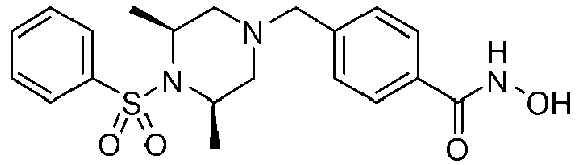
103 
104 
105 
106 
107 
108 
109 
110 
111 
112 
113 
114 
115 
118 
119 
120 
121 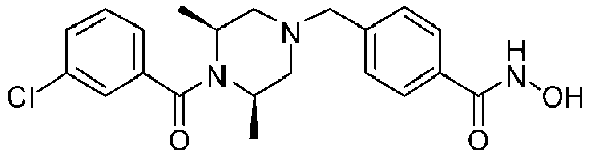
122 
123 
125 
126 
127 
128 
145 
146 
147 
148 
149 
154 
159 
160 
161 
162 
163 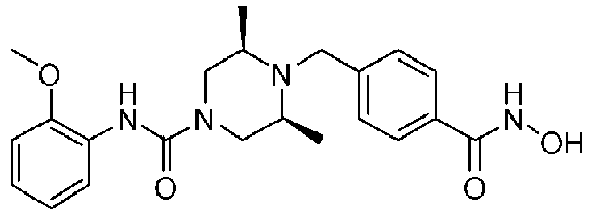
164 
165 
166 
167 
168 
171 
172 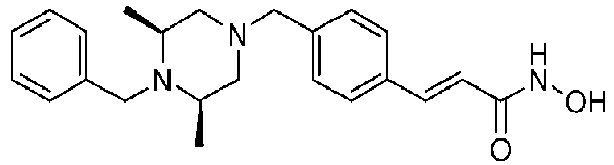
173 
174 
17.5 
176 
177 
183 
184 
185 
186 
187 
188 
189 
193 
194 
195 
196 
197 
198 
204 
211 
212 
213 
214 
215 
218 
219 
220 
222 
223 
224 
225 
230 
231 
232 
233 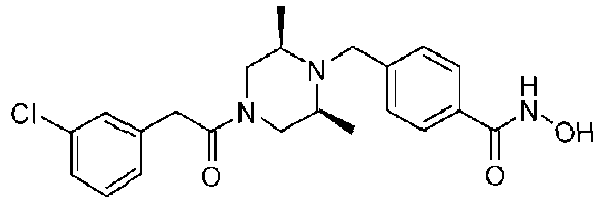
234 
242 
243 
244 
245 
246 
217 
248 
249 
250 
251 
252 
253 
255 
256 
257 
258 
259 
260 
261 
262 
263 
265 
266 
267 
268 
270 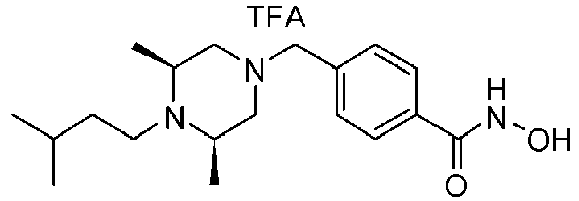
271 
272 
273 
274 
275 
276 
277 
278 
279 
280 
283 
284 
285 
286 
288 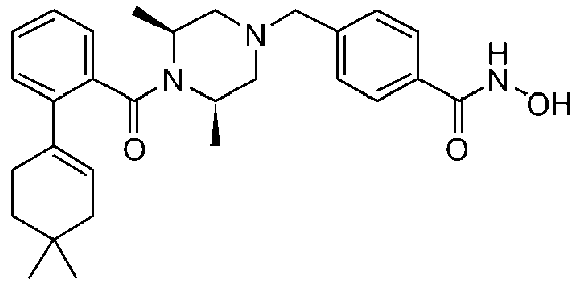
290 
291 
292 
293 
294 
295 
296 
297 
298 
299 
300 
301 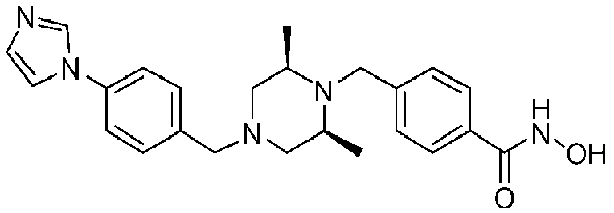
302 
303 
304 
305 
309 
321 
322 
32 3 
326 
327 
328 
329 
330 
331 
332 
340 
342 
343 
344 
345 
346 
347 
348 
349 
350 
351 
352 
354 
355 
356 
376 
380 
382 
383 
384 
385 
386 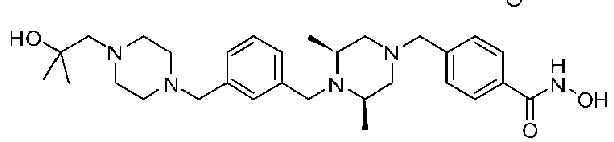
387 
388 
396 
400 
401 
402 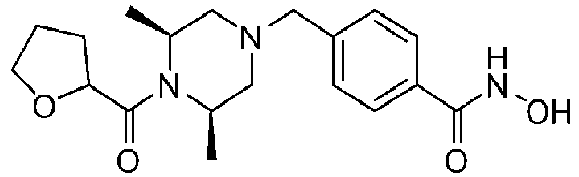
403 
404 
405 
411 
412 
413 
423 
424 
425 
126 
427 
428 
429 
430 
431 
432 
433 
434 
435 
439 
440 
441 
442 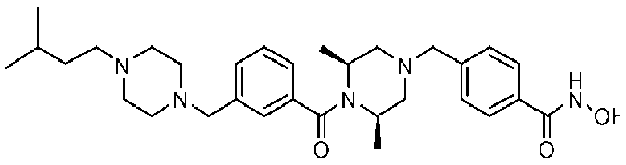
443 
444 
446 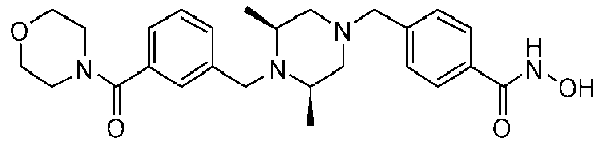
452 
453 
454 
455 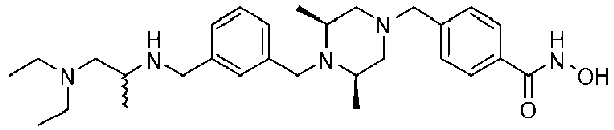
456 
457 
458 
459 
460 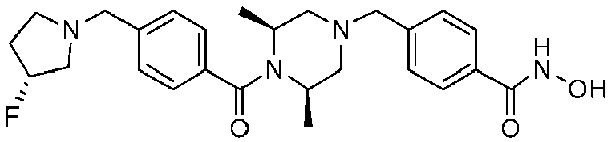
461 
462 
463 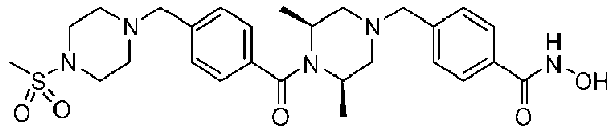
466 
467 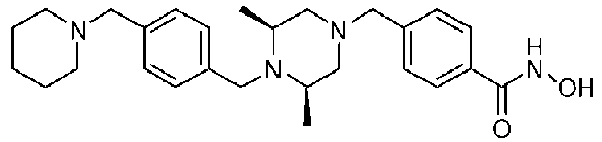
468 
472 
475 
476 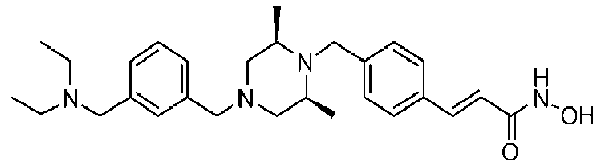
477 
478 
479 
480 
481 
482 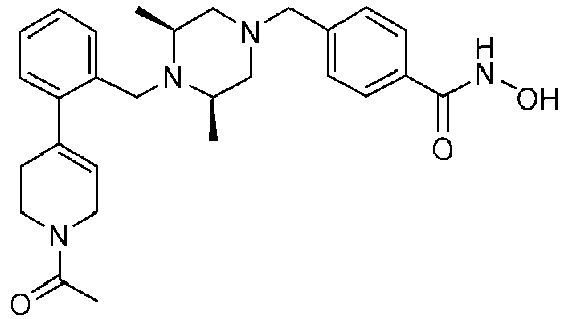
483 
484 
485 
486 
487 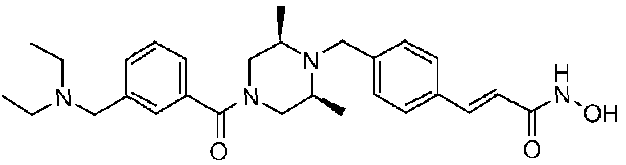
520 
569 
571 
573 
574 
609 
652 
653 
696 
812 
813 
814 
818 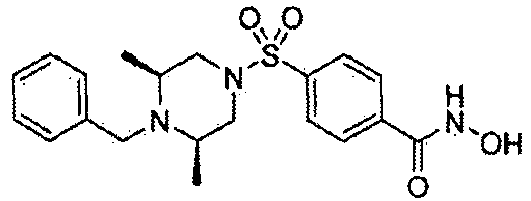
820 
822 
823 
824 
- In order to examine the HDAC6 selectivity of the compounds of formula I of the present invention by HDAC1 and HDAC6 enzymatic activity inhibition assays, an experiment was performed using a conventional substance as a control.
- HDAC enzyme activity was measured using a HDAC Fluorimetric Drug Discovery Kit (BML-AK511, 516, Enzo Life Science). For the HDAC1 enzyme activity test, human recombinant HDAC1 (BML-SE456) was used as an enzyme source, and Fluor de Lys®-"SIRT1 (BNL-KI177) was used as a substrate. A 5-fold dilution of the compound was seeded into a 96-well plate, and then 0.3 µg of the enzyme and 10 µM of the substrate were added to each well of the plate and allowed to react at 30 °C for 60 minutes. Then, Fluor de Lys® Developer II (BML-KI176) was added thereto and allowed to react for 30 minutes, after which the fluorescence value (Ex 360, Em 460) was measured using a multi-plate reader (Flexstation 3, Molecular Device). The HDAC6 enzyme was tested using human recombinant HDAC6 (382180) (Calbiochem) according to the same protocol as the HDAC1 enzyme activity test method. Based on the resulting values, each IC50 value was calculated using GraphPad Prism4.0 program.
[Table 17] Results of HDAC enzyme activity inhibition assays Compound HDAC1 (µM) HDAC6 (µM) HDAC6 selectivity (fold) 080 6.6 0.179 37 081 11.2 0.144 78 082 12.5 0.034 369 083 2.0 0.010 201 084 11.9 0.023 517 098 >10 0.075 >133 099 12.4 0.242 51 100 >10 0.095 >105 103 2.6 0.173 15 104 0.7 0.082 9 105 1.6 0.060 27 106 7.3 0.119 61 107 8.3 0.166 79 108 13.1 0.166 79 109 5.1 0.075 67 110 5.0 0.085 59 111 >10 0.461 >22 112 >10 0.154 >65 113 2.8 0.104 27 114 2.4 0.185 13 115 3.2 0.181 18 118 5.5 0.113 48 119 8.2 0.309 26 120 5.5 0.018 304 121 11.8 0.029 407 122 3.6 0.005 717 123 15.5 0.006 2584 125 >10 0.003 >3333 126 6.1 0.001 1525 127 >10 0.011 >909 128 11.1 0.002 5540 145 17.1 0.033 519 146 6.0 0.019 314 147 >10 0.111 >90 148 15.4 0.117 132 149 >10 0.080 >125 154 8.4 0.193 44 159 3.6 0.033 109 160 8.8 0.050 177 161 2.9 0.016 182 162 0.4 0.079 5 163 1. 1 0.497 2 164 0.5 0,135 4 165 1.4 0.560 2 166 4.3 0.452 10 167 0.8 0.077 10 168 2.2 0.316 7 171 ND 0.039 >256 172 1.3 0.038 35 173 7.2 0.085 85 174 >10 0.097 >103 175 6.1 0.068 90 176 ND 0.429 >23 177 5.8 0.031 186 183 >10 0.500 >20 184 ND 0.249 >40 185 0.8 0.249 3 186 0.3 0.005 65 187 1.1 0.239 5 188 13.6 0.191 71 189 3.0 0.303 10 193 16.3 0.271 60 194 24.8 0.082 303 195 22.4 0.410 55 196 14.4 0.148 97 197 2.1 0.177 12 198 12.2 0.241 51 204 >10 0.807 >12 211 >10 0.065 >154 212 >10 0.358 >28 213 >10 0.349 >29 214 >10 0.165 >61 215 >10 0.523 2 218 11.1 0.749 15 219 >10 0.170 >59 220 15.9 1.231 13 222 1.6 0.100 16 223 0.9 0.118 8 224 1.7 0.120 14 225 1.9 0.052 36 230 2.4 0.687 3 231 1.5 0.763 2 232 7.9 0.286 28 233 16.9 1.476 11 234 8.9 0.512 17 242 2.4 0.098 24 243 3.0 0.074 40 244 3.4 0.097 35 245 3.6 0.116 31 246 3.4 0.129 26 247 13.3 0.441 30 248 8.5 0.089 96 249 15.6 0.120 130 250 9.5 0.168 57 251 13.7 0.242 57 252 17.5 0.221 79 253 22.6 1.535 15 255 8.5 0.024 354 256 4.6 0.303 15 257 1.6 0.255 6 258 1.7 0.258 7 259 2.5 0.400 6 260 1.7 0.529 3 261 2.0 0.577 3 2G2 2.4 0.727 3 263 6.8 >1.000 <7 265 6.2 0.074 84 266 19.1 0.282 68 267 14.2 0.188 75 268 2.8 1.267 2 270 >10 2.217 >5 271 12.5 >1.000 <13 272 12.2 0.182 67 273 13.7 0.441 31 274 13.5 0.378 36 275 >10 0.475 >21 276 12.3 0.337 36 277 10.4 0.455 23 278 14.4 0.911 16 279 >10 0.769 >13 280 17.7 0.388 46 283 3.5 0.023 154 284 5.7 0.068 84 285 7.0 0.093 75 286 13.1 0.161 81 288 10.7 0.326 33 290 3.8 0.079 48 291 1.3 0.055 24 292 5.6 0.074 76 293 5.8 0.131 44 294 8.2 0.220 37 295 5.7 0.079 72 296 6.9 0.204 34 297 5.6 0.090 62 298 5.5 0.369 15 299 1.2 0.243 5 300 3.7 0.530 7 301 2.8 0.253 11 302 3.6 1.126 3 303 2.9 1.106 3 304 2.3 0.280 8 305 5.6 0.032 174 309 1.6 0.073 21 321 1.1 0.125 8 322 1.1 0.175 6 323 >10 0.921 >11 326 >10 0.058 >172 327 >10 0.235 >43 328 18.7 0.102 183 329 14.6 0.052 280 330 18.0 0.024 749 331 ND 0.731 13 332 21.9 0.106 207 340 1.6 0.606 3 342 8.7 0.019 456 343 8.8 0.027 328 344 5.8 0.012 481 345 5.5 0.016 341 346 8.3 0.025 332 347 >10 0.408 >25 348 4.7 0.843 6 349 5.0 0.005 1000 350 3.3 0.194 17 351 5.1 0.351 15 352 13.8 1.059 >1.3 354 >10 0.005 >2000 355 21.0 1.060 20 356 12.3 0.022 558 376 >10 0.084 >119 380 >10 0.162 >62 382 >10 0.083 >120 383 >10 0.098 >102 384 >10 0.106 >94 385 >10 0.189 >53 386 >10 0.130 >77 387 >10 0.085 >118 388 9.0 0.083 109 396 1.7 0.406 4 400 11.3 2.822 4 401 2.0 0.301 7 402 5.2 0.161 32 403 3.2 0.061 53 404 5.5 0.182 30 405 4.3 0.248 17 411 4.3 0.008 538 412 1.1 0.032 36 413 >10 0.013 >769 423 1.0 0.046 22 424 1.2 0.043 27 425 1.5 0.086 17 426 5.0 0.142 35 427 6.0 0.152 40 428 4.7 0.117 41 429 4.4 0.100 44 430 4.5 0.082 55 431 13.4 0.022 611 432 3.4 0.042 81 433 3.5 0.049 71 434 3.7 0.060 61 435 5.1 0.090 57 439 10.9 0.104 105 440 5.6 0.078 71 441 5.4 0.035 154 442 7.8 0.120 65 443 9.6 0.141 68 444 8.5 0.058 146 446 3.8 0.114 33 452 9.1 0.065 140 453 11.9 0.077 154 454 ND 0.044 >237 455 9.6 0.103 93 456 11.1 0.144 77 457 0.3 0.146 2 458 6.1 0.266 21 459 3.8 0.149 25 460 4.4 0.219 20 461 4.2 0.238 18 462 3.2 0.264 12 463 4.7 0.256 18 466 0.7 0.019 35 467 >10 0.049 204 468 20 0.029 690 472 0.2 0.055 3 475 0.8 0.114 7 476 0.9 0.142 6 477 2.7 0.253 11 478 6.57 0.64 10 479 5.3 0.433 12 480 1.0 0.467 2 481 16.2 0.106 153 482 12.5 0.103 121 483 17.1 0.103 166 484 19.6 0.130 151 485 14.7 0.145 101 486 >10 0.126 >79 487 1.1 0.296 4 520 >10 0.86 >11 569 >10 0.84 82 571 10.0 0.21 48 573 >10 1.44 36 574 3.9 0.81 4 609 >10 0.754 >13.3 652 >10 0.88 >11 653 >10 0.42 >23 696 >10 0.01 >1000 812 >10 1.54 >6 813 17.2 0.01 1720 814 20.6 0.99 20 818 >10 0.87 >11 820 2.25 0.25 9 822 >10 0.28 >35 823 2.7 0.04 66 824 4.1 0.18 22 - As can be seen in Table 16 above, the dimethylpiperazine hydroxamic acid derivative compounds of the present invention showed about 2 to about 5500 times higher selective HDAC6 inhibitory activities in the HDAC1 and HDAC6 activity inhibition assays.
- The compounds represented by formula I, stereoisomers thereof or pharmaceutically acceptable salts thereof can be used for prevention or treatment of histone deacetylase 6 activity-associated diseases.





Claims (10)
- A compound represented by the following formula I, a stereoisomer thereof, or a pharmaceutically acceptable salt thereof:
 R1 is hydrogen or -CH3,R2 is hydrogen or -CH3, provided that R2 is -CH3 when R1 is hydrogen, and R2 is hydrogen when R1 is -CH3L is -(C4-C5 alkyl)-; -(C1-C3 alkyl)-L1-; -C(=O)-L1- or -S(=O)2-L1-,wherein -(C4-C5 alkyl)- and -(C1-C3 alkyl)- may be unsubstituted or substituted with-CH3,L1 is -(C3-C6)cycloalkyl-;
 A1 and A2 are each independently -N- or -CR3-, provided that both A1 and A2 cannot be -N-,R3 is hydrogen; -F, -Cl, -Br, -I or -OH, andA3 is -NH- or -O-,Q is selected from the group consisting of -(C1-C6)alkyl-; -(C2-C6)alkenyl-; -C(=O)-;-C(=S)-; -S(=O)2- or
 wherein -(C1-C6)alkyl- and -(C2-C6)alkenyl- may be unsubstituted or each independently substituted 1 to 3 -CH3 groups or halogen atoms,Q1 is hydrogen; -F, -Cl, -Br or -I,n is an integer of 0, 1 or 2, provided that n is 0 when Q is
 X may be selected from the group consisting of -C1-C6 alkyl; -C3-C6 cycloalkyl; -C2-C6 alkenyl; -C3-C6 cycloalkenyl; -(C0-C2 alkyl)Ar; -OAr; -(C0-C2 alkyl)Het; naphthyl and following groups:


 wherein R4 is H or -C1-C4 alkyl,-C0-C2 alkyl, -C2-C6 alkenyl and -C1-C6 alkyl may be unsubstituted or substituted with 1 to 2 -CH3 groups; 1 to 3 -F groups, or a combination thereof,Ar is a C6 monocyclic aromatic compound, which may be unsubstituted or substituted with one or more halogen atoms; -OH; -NH2; -C1-C6 alkyl; -O(C1-C6)alkyl; -C3-C6 cycloalkenyl; -NH(C1-C6 alkyl); -N(C1-C3 alkyl)2; -CH2N(C1-C3 alkyl)2; -S(=O)2-(C1-C3 alkyl) or phenyl groups, wherein -C1-C3 alkyl; -C1-C6 alkyl and -C3-C6 cycloalkenyl may be each independently substituted with 1 to 5 -F or -CH3 groups, andHet is a 4- to 6-membered heteroaromatic or non-aromatic ring compound containing 1 to 3 elements selected from the group consisting of N, O and S while having 0 to 3 double bonds, and may be unsubstituted or substituted with one or more halogen atoms; -C1-C6 alkyl; -C(=O)(C1-C3 alkyl); -S(=O)2(C1-C3 alkyl) or benzyl groups,wherein -C1-C3 alkyl and -C1-C6 alkyl may be each independently substituted with - OH; 1 to 5 -F or -CH3 groups.
 - The compound represented by formula I, stereoisomer thereof or pharmaceutically acceptable salt thereof according to claim 1, wherein the compound represented by formula I is a compound represented by the following formula II or formula III:

 L is -(C5 alkyl)-; -(C1-C2 alkyl)-L1-; -C(=O)-L1- or -S(=O)2-L1-,wherein -(C5 alkyl)- and -(C1-C2 alkyl)- are straight-chain and may be unsubstituted or substituted with -CH3,L1 is -(C3-C6) cycloalkyl-;
 A1 and A2 are each independently -N- or -CR3-, provided that both A1 and A2 cannot be -N-,R3 is hydrogen; -F or -OH, andA3 is -NH- or -O-,Q is selected from the group consisting of -(C1-C3)alkyl-; -C(=O)-; -C(=S)-; -S(=O)2- or
 wherein -(C1-C3)alkyl- may be unsubstituted or substituted with 1 to 3 -CH3 groups or halogen atoms,Q1 is hydrogen; -F or -Cl,n is an integer of 0 or 1, provided that n is 0 when Q is
 X may be selected from the group consisting of -C1-C6 alkyl; -C3-C6 cycloalkyl; -C2-C6 alkenyl; -C3-C6 cycloalkenyl; -(C0-C2 alkyl)Ar; -OAr; -(C0-C2 alkyl)Het; naphthyl; and following groups:





 wherein R4 is H or -C1-C4 alkyl,-C0-C2 alkyl; -C2-C6 alkenyl and -C1-C6 alkyl may be unsubstituted or substituted with 1 or 2 -CH3 groups or 1 to 3 -F groups,Ar is a C6 monocyclic aromatic compound, which may be unsubstituted or substituted with one or more halogen atoms; -OH; -NH2; -C1-C6 alkyl; -O(C1-C6)alkyl; -C3-C6 cycloalkenyl; -NH(C1-C6 alkyl); -N(C1-C3 alkyl)2; -CH2N(C1-C3 alkyl)2; -S(=O)2-(C1-C3 alkyl) or phenyl groups, wherein -C1-C3 alkyl; -C1-C6 alkyl and -C3-C6 cycloalkenyl may be each independently substituted with 1 to 5 -F or -CH3 groups, andHet is a 4- to 6-membered heteroaromatic or non-aromatic ring compound containing 1 to 3 elements selected from the group consisting of N; O and S while having 0 to 3 double bonds, and may be unsubstituted or substituted with one or more halogen atoms; -C1-C6 alkyl; -C(=O)(C1-C3 alkyl); -S(=O)2(C1-C3 alkyl) or benzyl groups, wherein -C1-C3 alkyl and -C1-C6 alkyl may be each independently substituted with - OH; or 1 to 5 -F or -CH3 groups.
 - The compound represented by formula I, stereoisomer thereof or pharmaceutically acceptable salt thereof according to claim 1, wherein Het is selected from following groups:



 wherein R5 are each independently hydrogen; -F; -Cl; -C1-C6 alkyl; -C(=O)(C1-C3 alkyl); -S(=O)2(C1-C3 alkyl) or benzyl, wherein -C1-C3 alkyl and -C1-C6 alkyl may be each independently substituted with -OH; 1 to 5 -F or -CH3 groups,m is an integer of 0, 1, 2 or 3, andHet is unsubstituted when m is 0, and Het may be substituted with independent R5 when m is 1, 2 or 3.
 - The compound represented by formula I, stereoisomer thereof or pharmaceutically acceptable salt thereof according to claim 1, wherein L, L1, A1, A2, A3, R3, R4, Q and X are defined as follows:L is -CH2-L1-,whereinL1 is

 A1 and A2 are each independently -N- or -CR3-, provided that both A1 and A2 cannot be -N-,R3 is hydrogen; -F or -OH, andA3 is -NH- or -O-,Q is -CH2-, -C(=O)- or -S(=O)2-, andX may be selected from the group consisting of -C1-C6 alkyl; -(C0-C2 alkyl)Ar; -(C0-C2 alkyl)Het; -OAr; or following groups:

 wherein R4 is H or -C1-C4 alkyl,-C0-C2 alkyl and -C1-C6 alkyl may be unsubstituted or substituted with 1 or 2 -CH3 groups and/or 1 to 3 -F groups, andAr and Het is each independently as defined in formula I to formula III.
 - The compound represented by formula I, stereoisomer thereof or pharmaceutically acceptable salt thereof according to claim 1, wherein the compound represented by formula I is any one of compounds set forth in the following table:
No. Name of Compound 080 4-(((2S,6R)-4-benzoyl-2,6-dimethylpiperazin-1-yl)methyl)-N-hydroxybenzamide 081 4-(((2S,6R)-4-benzyl-2,6-dimethylpiperazin-1-yl)methyl)-N-hydroxybenzamide 082 4-(((3R,5S)-4-acetyl-3,5-dimethylpiperazin-1-yl)methyl)-N-hydroxybenzamide 083 4-(((3R,5S)-4-benzoyl-3,5-dimethylpiperazin-1-yl)methyl)-N-hydroxybenzamide 084 4-(((3R,5S)-4-benzyl-3,5-dimethylpiperazin-1-yl)methyl)-N-hydroxybenzamide 098 (2S,6R)-4-(4-(hydroxyearbamoyl)benzyl)-N-isopropyl-2,6-dimethylpiperazine-1-carboxamide 099 (2S,6R)-N-(3-chlorophenyl)-4-(4-(hydroxycarbamoyl)benzyl)-2,6-dimethylpiperazine-1-carboxamide 100 4-(((3R,5S)-3,5-dimethyl-4-(phenylsulfonyl)piperazin-1-yl)methyl)-N-hydroxybenzamide 103 (3R,5S)-4-(4-(hydroxycarbamoyl)benzyl)-N-isopropyl-3,5-dimethylpiperazine-1-carboxamide 104 (3R,5S)-N-(3-chlorophenyl)-4-(4-(hydroxycarbamoyl)benzyl)-3,5-dimethylpiperazine-1-carboxamide 105 4-(((2S,6R)-2,6-dimethyl-4-(phenylsulfonyl)piperazin-1-yl)methyl)-N-hydroxybenzamide 106 4-(((2S,6R)-4-(4-chlorobenzoyl)-2,6-dimethylpiperazin-1-yl)methyl)-N-hydroxybenzamide 107 4-(((2S,6R)-4-(3-chlorobenzoyl)-2,6-dimethylpiperazin-1-yl)methyl)-N-hydroxybenzamide 108 4-(((2S,6R)-4-(2-chlorobenzoyl)-2,6-dimethylpiperazin-1-yl)methyl)-N-hydroxybenzamide 109 4-(((2S,6R)-4-((4-chlorophenyl)sulfonyl)-2,6-dimethylpiperazin-1-yl)methyl)-N-hydroxybenzamide 110 4-(((2S,6R)-4-((2-chlorophenyl)sulfonyl)-2,6-dimethylpiperazin-1-yl)methyl)-N-hydroxybenzamide 111 4-(((2S,6R)-2,6-dimethyl-4-picolinoylpiperazin-1-yl)methyl)-N-hydroxybenzamide 112 4-(((2S,6R)-2,6-dimethyl-4-nicotinoylpiperazin-1-yl)methyl)-N-hydroxybenzamide 113 4-(((2S,6R)-2,6-dimethyl-4-(pyridin-3-ylsulfonyl)piperazin-1-yl)methyl)-N-hydroxybenzamide 114 4-(((2S,6R)-2,6-dimethyl-4-(thiophene-2-carbonyl)piperazin-1-yl)methyl)-N-hydroxybenzamide 115 4-(((2S,6R)-4-(furan-2-carbonyl)-2,6-dimethylpiperazin-1-yl)methyl)-N-hydroxybenzamide 118 4-(((2S,6R)-4-(2-chlorobenzyl)-2,6-dimethylpiperazin-1-yl)methyl)-N-hydroxybenzamide 119 4-(((2R,6S)-4-(4-fluorophenyl)-2,6-dimethylpiperazin-1-yl)methyl)-N-hydroxybenzamide 120 4-(((3R,5S)-4-(2-chlorobenzoyl)-3,5-dimethylpiperazin-1-yl)methyl)-N-hydroxybenzamide 121 4-(((3R,5S)-4-(3-chlorobenzoyl)-3,5-dimethylpiperazin-1-yl)methyl)-N-hydroxybenzamide 122 4-(((3R,5S)-4-(4-chlorobenzoyl)-3,5-dimethylpiperazin-1-yl)methyl)-N-hydroxybenzamide 123 4-((3R,5S)-3,5-dimethyl-4-picolinoylpiperazin-1-yl)methyl)-N-hydroxybenzamide 125 4-((3R,5S)-4-(furan-2-carbonyl)-3,5-dimethylpiperazin-1-yl)methyl)-N-hydroxybenzamide 126 4-(((3R,5S)-3,5-dimethyl-4-(thiophene-2-carbonyl)piperazin-1-yl)methyl)-N-hydroxybenzamide 127 4-(((3R,5S)-4-(2-chlorobenzyl)-3,5-dimethylpiperazin-1-yl)methyl)-N-hydroxybenzamide 128 4-(((3R,5S)-4-(3-chlorobenzyl)-3,5-dimethylpiperazin-1-yl)methyl)-N-hydroxybenzamide 145 4-(((3R,5S)-4-(furan-2-ylmethyl)-3,5-dimethylpiperazin-1-yl)methyl)-N-hydroxybenzamide 146 4-(((3R,5S)-3,5-dimethyl-4-(2-phenylacetyl)piperazin-1-yl)methyl)-N-hydroxybenzamide 147 4-(((3R,5S)-4-ethyl-3,5-dimethylpiperazin-1-yl)methyl)-N-hydroxybenzamide 148 4-(((3R,5S)-3,5-dimethyl-4-propylpiperazin-1-yl)methyl)-N-hydroxybenzamide 149 4-(((3R,5S)-3,5-dimethyl-4-(2,2,2-trifluoroethyl)piperazin-1-yl)methyl)-N-hydroxybenzamide 154 6-((3 R,5 S)-4-benzyl-3,5-dimethylpiperazin-1-yl)-N-hydroxyhexanamide 159 (2S,6R)-4-(4-(hydroxycarbamoyl)benzyl)-2,6-dimethyl-N-phenylpiperazine-1-carboxamide 160 (2S,6R)-4-(4-(hydroxycarbamoyl)benzyl)-2,6-dimethyl-N-(o-tolyl)piperazine-1-carboxamide 161 (2S,6R)-N-benzyl-4-(4-(hydroxycarbamoyl)benzyl)-2,6-dimethylpiperazine-1-carboxamide 162 (3R,5S)-4-(4-(hydroxycarbamoyl)benzyl)-3,5-dimethyl-N-phenylpiperazine-1-carboxamide 163 (3R,5S)-4-(4-(hydroxycarbamoyl)benzyl)-N-(2-methoxyphenyl)-3,5-dimethylpiperazine-1-carboxamide 164 (3R,5S)-4-(4-(hydroxycarbamoyl)benzyl)-N-(3-methoxyphenyl)-3,5-dimethylpiperazine-1-carboxamide 165 (3R,5S)-4-(4-(hydroxycarbamoyl)benzyl)-N-(4-methoxyphenyl)-3,5-dimethylpiperazine-1-carboxamide 166 (3R,5S)-4-(4-(hydroxycarbamoyl)benzyl)-3,5-dimethyl-N-(o-tolyl)piperazine-1-carboxamide 167 (3R,5S)-4-(4-(hydroxycarbamoyl)benzyl)-3,5-dimethyl-N-(m-tolyl)piperazine-1-carboxamide 168 (3R,5S)-N-benzyl-4-(4-(hydroxycarbamoyl)benzyl)-3,5-dimethylpiperazine-1-carboxamide 171 4-(((3R,5S)-4-benzyl-3,5-dimethylpiperazin-1-yl)methyl)-2-fluoro-N-hydroxybenzamide 172 (E)-3-(4-(((3R,5S)-4-benzyl-3,5-dimethylpiperazin-1-yl)methyl)phenyl)-N-hydroxyacrylamide 173 2-(4-(((3R,5S)-4-benzy]-3,5-dimethylpiperazin-1-yl)methyl)phenyl)-N-hydroxyacetamide 174 4-(((2S,6R)-4-benzyl-2,6-dimethylpiperazin-1-yl)methyl)-2-fluoro-N-hydroxybenzamide 175 (E)-3-(4-(((2S,6R)-4-benzyl-2,6-dimethylpiperazin-1-yl)methyl)phenyl)-N-hydroxyacrylamide 176 2-(4-(((2S,6R)-4-benzyl-2,6-dimethylpiperazin-1-yl)methyl)phenyl)-N-hydroxyacetamide 177 phenyl (2S,6R)-4-(4-(hydroxycarbamoyl)benzyl)-2,6-dimethylpiperazine-1-carboxylate 183 4-(((2S,6R)-2,6-dimethyl-4-phenethylpiperazin-1-yl)methyl)-N-hydroxybenzamide 184 4-(((3R,5S)-3,5-dimethyl-4-phenethylpiperazin-1-yl)methyl)-N-hydroxybenzamide 185 (3R,5S)-4-(4-(hydroxycarbamoyl)benzyl)-3,5-dimethyl-N-(1-methyl-1H-indol-5-yl)piperazine-1-carboxamide 186 (3R,5S)-N-(3-(1H-pyrrol-1-yl)phenyl)-4-(4-(hydroxycarbamoyl)benzyl)-3,5-dimethylpiperazine-1-carboxamide 187 (3R,5S)-N-(2,3-dihydrobenzofuran-5-yl)-4-(4-(hydroxycarbamoyl)benzyl)-3,5-dimethylpiperazine-1-carboxamide 188 4-(((3R,5S)-3,5-dimethyl-4-(3-phenylpropanoyl)piperazin-1-yl)methyl)-N-hydroxybenzamide 189 4-(((2S,6R)-2,6-dimethyl-4-(m-tolylcarbamothioyl)piperazin-1-yl)methyl)-N-hydroxybenzamide 193 4-(((2S,6R)-4-(2-fluoro-2-methylpropyl)-2,6-dimethylpiperazin-1-yl)methyl)-N-hydroxybenzamide 194 6-(((3R,5S)-4-benzyl-3,5-dimethylpiperazin-1-yl)methyl)-N-hydroxynicotinamide 195 6-(((2S,6R)-4-benzyl-2,6-dimethy]piperazin-1-yl)methyl)-N-hydroxynicotinamide 196 (3R,5S)-4-(4-(hydroxycarbamoyl)benzyl)-N,3,5-trimethyl-N-phenylpiperazine-1-carboxamide 197 N-hydroxy-4-(((2S,6R)-4-(indoline-1-caxbonyl)-2,6-dimethylpiperazin-1-yl)methyl)benzamide 198 (3R,5S)-N-butyl-4-(4-(hydroxycarbamoyl)benzyl)-3,5-dimethyl-N-phenylpiperazine-1-carboxamide 204 4-(((3R,5S)-3,5-dimethyl-4-(4,4,4-trifluorobutyl)piperazin-1-yl)methyl)-N-hydroxybenzamide 211 4-(((3R,5S)-4-(2-fluorobenzyl)-3,5-dimethylpiperazin-1-yl)methyl)-N-hydroxybenzamide 212 4-(((3R,5S)-4-(2,5-difluorobenzyl)-3,5-dimethylpiperazin-1-yl)methyl)-N-hydroxybenzamide 213 4-(((3R,5S)-3,5-dimethyl-4-(2,4,5-trifluorobenzyl)piperazin-1-yl)methyl)-N-hydroxybenzamide 214 4-(((3R,5S)-4-(3,5-bis(trifluoromethyl)benzyl)-3,5-dimethylpiperazin-1-yl)methyl)-N-hydroxybenzamide 215 4-(((2S,6R)-2,6-dimethyl-4-(2,4,5-trifluorobenzyl)piperazin-1-yl)methyl)-N-hydroxybenzamide 218 4-(2-((3R,5S)-4-benzyl-3,5-dimethylpiperazin-1-yl)ethyl)-N-hydroxybenzamide 219 4-(1-((3R,5S)-4-benzyl-3,5-dimethylpiperazin-1-yl)ethyl)-N-hydroxybenzamide 220 4-(((2S,6R)-2,6-dimethyl-4-(1-phenylethyl)piperazin-1-yl)methyl)-N-hydroxybenzamide 222 4-(((3R,5S)-4-(2-(3-fluorophenyl)acetyl)-3,5-dimethylpiperazin-1-yl)methyl)-N-hydroxybenzamide 223 4-(((3R,5S)-3,5-dimethyl-4-(2-(3-(trifluoromethyl)phenyl)acetyl)piperazin-1-yl)methyl)-N-hydroxybenzamide 224 4-(((3R,5S)-4-(2-(3-chlorophenyl)acetyl)-3,5-dimethylpiperazin-1-yl)methyl)-N-hydroxybenzamide 225 4-(((3R,5S)-4-(3-fluorobenzyl)-3,5-dimethylpiperazin-1-yl)methyl)-N-hydroxybenzamide 230 (3R,5S)-4-(4-(hydroxycarbamoyl)benzyl)-N-(3-methoxybenzyl)-3,5-dimethylpiperazine-1-carboxamide (Trifluoroacetic acid salt) 231 (3R,5S)-N-(3-fluorobenzyl)-4-(4-(hydroxycarbamoyl)benzyl)-3,5-dimethylpiperazine-1-carboxamide 232 (2S,6R)-N-(3-fluorobenzyl)-4-(4-(hydroxycarbamoyl)benzyl)-2,6-dimethylpiperazine-1-carboxamide 233 4-(((2S,6R)-4-(2-(3-chlorophenyl)acetyl)-2,6-dimethylpiperazin-1-yl)methyl)-N-hydroxybenzamide 234 4-(((3R,5S)-4-(2-([1,1'-biphenyl]-3-yl)acetyl)-3,5-dimethylpiperazin-1-yl)methyl)-N-hydroxybenzamide 242 4-(((3R,5S)-4-(3-(furan-2-yl)benzoyl)-3,5-dimethylpiperazin-1-yl)methyl)-N-hydroxybenzamide 243 4-(((3R,5S)-4-(3-(furan-3-yl)benzoyl)-3,5-dimethylpiperazin-1-yl)methyl)-N-hydroxybenzamide 244 4-(((3R,5S)-4-(3-(3,6-dihydro-2H-pyran-4-yl)benzoyl)-3,5-dimethylpiperazin-1-yl)methyl)-N-hydroxybenzamide 245 4-(((3R,5S)-3,5-dimethyl-4-(3-(pyridin-4-yl)benzoyl)piperazin-1-yl)methyl)-N-hydroxybenzamide (Trifluoroacetic acid salt) 246 4-(((3R,5S)-3,5-dimethyl-4-(3-(pyridin-3-yl)benzoyl)piperazin-1-yl)methyl)-N-hydroxybenzamide 247 4-(((3R,5S)-4-(4',4'-dimethyl-2',3',4',5'-tetrahydro-[1,1'-biphenyl]-3-carbonyl)-3,5-dimethylpiperazin-1-yl)methyl)-N-hydroxybenzamide 248 4-(((3R,5R)-4-benzyl-3,5-dimethylpiperazin-1-yl)methyl)-N-hydroxybenzamide 249 4-(((3R,5R)-4-(furan-2-carbonyl)-3,5-dimethylpiperazin-1-yl)methyl)-N-hydroxybenzamide 250 4-(((2S,6R)-4-(2-([1,1'-biphenyl]-3-yl)acetyl)-2,6-dimethylpiperazin-1-yl)methyl)-N-hydroxybenzamide (Trifluoroacetic acid salt) 251 4-(((2S,6R)-2,6-dimethyl-4-(2-(3-(pyridin-4-yl)phenyl)acetyl)piperazin-1-yl)methyl)-N-hydroxybenzamide (Trifluoroacetic acid salt) 252 4-(((2S,6R)-4-(2-(3-(3,6-dihydro-2H-pyran-4-yl)phenyl)acetyl)-2,6-dimethylpiperazin-1-yl)methyl)-N-hydroxybenzamide 253 4-(((2S,6R)-4-(2-(4',4'-dimethyl-2',3',4',5'-tetrahydro-[1,1'-biphenyl]-3-yl)acetyl)-2,6-dimethylpiperazin-1-yl)methyl)-N-hydroxybenzamide (Trifluoroacetic acid salt) 255 4-(((3R,5S)-4-(3-(1H-pyrrol-1-yl)benzyl)-3,5-dimethylpiperazin-1-yl)methyl)-N-hydroxybenzamide 256 4-(((2S,6R)-4-(3-(1H-pyrrol-1-yl)benzyl)-2,6-dimethylpiperazin-1-yl)methyl)-N-hydroxybenzamide 257 4-(((2S,6R)-4-(3-(furan-2-yl)benzoyl)-2,6-dimethylpiperazin-1-yl)methyl)-N-hydroxybenzamide 258 4-(((2S,6R)-4-(3-(furan-3-yl)benzoyl)-2,6-dimethylpiperazin-1-yl)methyl)-N-hydroxybenzamide 259 4-(((2S,6R)-4-(3-(3,6-dihydro-2H-pyran-4-yl)benzoyl)-2,6-dimethylpiperazin-l-yl)methyl)-N-hydroxybenzamide 260 4-(((2S,6R)-2,6-dimethyl-4-(3-(pyridin-4-yl)benzoyl)piperazin-1-yl)methyl)-N-hydroxybenzamide 261 4-(((2S,6R)-2,6-dimethyl-4-(3-(pyridin-3-yl)benzoyl)piperazin-1-yl)methyl)-N-hydroxybenzamide 262 4-(((2S,6R)-4-(3-(2-fluoropyridin-4-yl)benzoyl)-2,6-dimethylpiperazin-1-yl)methyl)-N-hydroxybenzamide 263 4-(((2S,6R)-4-(4',4'-dimethyl-2',3',4',5'-tetrahydro-[1,1'-biphenyl]-3-carbonyl)-2,6-dimethylpiperazin-1-yl)methyl)-N-hydroxybenzamide 265 4-(((3R,5 S)-3,5-dimethyl-4-(naphthalen-2-ylmethyl)piperazin-1-yl)methyl)-N-hydroxybenzamide 266 4-(((3R,5S)-3,5-dimethyl-4-(pyridin-4-ylmethyl)piperazin-1-yl)methyl)-N-hydroxybenzamide (Trifluoroacetic acid salt) 267 4-(((3R,5S)-4-(3-chloro-2-(trifluoromethyl)benzyl)-3,5-dimethylpiperazin-1-yl)methyl)-N-hydroxybenzamide 268 4-(((2S,6R)-2,6-dimethyl-4-(naphthalen-2-ylmethyl)piperazin-1-yl)methyl)-N-hydroxybenzamide 270 N-hydroxy-4-(((3R,5S)-4-isopentyl-3,5-dimethylpiperazin-1-yl)methyl)benzamide (Trifluoroacetic acid salt) 271 N-hydroxy-4-(((2S,6R)-4-isopentyl-2,6-dimethylpiperazin-1-yl)methyl)benzamide (Trifluoroacetic acid salt) 272 4-(((3R,5S)-3,5-dimethyl-4-(3-methylbut-2-en-1-yl)piperazin-1-yl)methyl)-N-hydroxybenzamide 273 N-hydroxy-4-(((2S,6R)-4-isopropyl-2,6-dimethylpiperazin-1-yl)methyl)benzamide (Trifluoroacetic acid salt) 274 4-(((2S,6R)-4-butyl-2,6-dimethylpiperazin-1-yl)methyl)-N-hydroxybenzamide (Trifluoroacetic acid salt) 275 4-(((3R,5S)-4-butyl-3,5-dimethylpiperazin-1-yl)methyl)-N-hydroxybenzamide (Trifluoroacetic acid salt) 276 4-(((2S,6R)-4-(2-(furan-2-yl)benzoyl)-2,6-dimethylpiperazin-1-yl)methyl)-N-hydroxybenzamide 277 4-(((2S,6R)-4-(2-(furan-3-yl)benzoyl)-2,6-dimethylpiperazin-1-yl)methyl)-N-hydroxybenzamide 278 4-(((2S,6R)-4-(2-(3,6-dihydro-2H-pyran-4-yl)benzoyl)-2,6-dimethylpiperazin-1-yl)methyl)-N-hydroxybenzamide 279 4-(((2S,6R)-2,6-dimethyl-4-(2-(pyridin-3-yl)benzoyl)piperazin-1-yl)methyl)-N-hydroxybenzamide 280 4-(((2S,6R)-4-(4',4'-dimethyl-2',3',4',5'-tetrahydro-[1,1'-biphenyl]-2-carbonyl)-2,6-dimethylpiperazin-1-yl)methyl)-N-hydroxybenzamide 283 4-(((3R,5S)-4-(2-(furan-2-yl)benzoyl)-3,5-dimethylpiperazin-1-yl)methyl)-N-hydroxybenzamide 284 4-(((3R,5S)-4-(2-(furan-3-yl)benzoyl)-3,5-dimethylpiperazin-1-yl)methyl)-N-hydroxybenzamide 285 4-(((3R,5S)-3,5-dimethyl-4-(2-(pyridin-4-yl)benzoyl)piperazin-1-yl)methyl)-N-hydroxybenzamide 286 4-(((3R,5S)-3,5-dimethyl-4-(2-(pyridin-3-yl)benzoyl)piperazin-1-yl)methyl)-N-hydroxybenzamide 288 4-(((3R,5S)-4-(4',4'-dimethyl-2',3',4',5'-tetrahydro-[1,1'-biphenyl]-2-carbonyl)-3,5-dimethylpiperazin-1-yl)methyl)-N-hydroxybenzamide 290 4-(((3R,5S)-3,5-dimethyl-4-(4-methylbenzoyl)piperazin-1-yl)methyl)-N-hydroxybenzamide (Trifluoroacetic acid salt) 291 N-hydroxy-4-(((3R,5S)-4-(4-methoxybenzoyl)-3,5-dimethylpiperazin-1-yl)methyl)benzamide (Trifluoroacetic acid salt) 292 4-(((3R,5S)-3,5-dimethyl-4-pivaloylpiperazin-1-yl)methyl)-N-hydroxybenzamide (Trifluoroacetic acid salt) 293 4-(((3R,5S)-3,5-dimethyl-4-propionylpiperazin-1-yl)methyl)-N-hydroxybenzamide (Trifluoroacetic acid salt) 294 4-(((3R,5S)-4-butyryl-3,5-dimethylpiperazin-1-yl)methyl)-N-hydroxybenzamide (Trifluoroacetic acid salt) 295 4-(((3R,5S)-4-(cyclopropanecarbonyl)-3,5-dimethylpiperazin-1-yl)methyl)-N-hydroxybenzamide (Trifluoroacetic acid salt) 296 N-hydroxy-4-(((3R,5S)-4-isobutyryl-3,5-dimethylpiperazin-1-yl)methyl)benzamide (Trifluoroacetic acid salt) 297 4-(((3R,5S)-3,5-dimethyl-4-(3-methylbutanoyl)piperazin-1-yl)methyl)-N-hydroxybenzamide (Trifluoroacetic acid salt) 298 4-(((2S,6R)-2,6-dimethyl-4-(3-(trifluoromethyl)benzyl)piperazin-1-yl)methyl)-N-hydroxybenzamide 299 4-(((2S,6R)-4-(4-(dimethylamino)benzyl)-2,6-dimethylpiperazin-1-yl)methyl)-N-hydroxybenzamide 300 4-(((2S,6R)-2,6-dimethyl-4-(4-(methylsulfonyl)benzyl)piperazin-1-yl)methyl)-N-hydroxybenzamide 301 4-(((2S,6R)-4-(4-(1 H-imidazol-1-yl)benzyl)-2,6-dimethylpiperazin-1-yl)methyl)-N-hydroxybenzamide 302 4-(((2S,6R)-2,6-dimethyl-4-(4-(thiophen-2-yl)benzyl)piperazin-1-yl)methyl)-N-hydroxybenzamide 303 4-(((2S,6R)-4-(4-(furan-2-yl)benzyl)-2,6-dimethylpiperazin-1-yl)methyl)-N-hydroxybenzamide 304 4-(((2S,6R)-4-(4-(4H-1,2,4-triazol-4-yl)benzyl)-2,6-dimethylpiperazin-1-yl)methyl)-N-hydroxybenzamide 305 4-(((2S,6R)-2,6-dimethyl-4-(2-(2-methyl-1H-imidazol-1-yl)benzyl)piperazin-1-yl)methyl)-N-hydroxybenzamide 309 4-(((3R,5S)-4-(4-(furan-3-yl)benzyl)-3,5-dimethylpiperazin-1-yl)methyl)- N-hydroxybenzamide 321 (2S,6R)-N-(3-(1H-pyrrol-1-yl)phenyl)-4-(4-((E)-3-(hydroxyamino)-3-oxoprop-1-en-1-yl)benzyl)-2,6-dimethylpiperazine-1-carboxamide 322 (E)-3-(4-(((3R,5S)-4-(furan-2-carbonyl)-3,5-dimethylpiperazin-1-yl)methyl)phenyl)-N-hydroxyacrylamide 323 (E)-3-(4-(((3R,5S)-3,5-dimethyl-4-(2-phenylacetyl)piperazin-1-yl)methyl)phenyl)-N-hydroxyacrylamide 326 4-(((3R,5S)-4-(2-(3,6-dihydro-2H-pyran-4-yl)benzoyl)-3,5-dimethylpiperazin-1-yl)methyl)-N-hydroxybenzamide 327 4-(((3R,5S)-4-(2-(furan-2-yl)benzyl)-3,5-dimethylpiperazin-1-yl)methyl)-N-hydroxybenzamide 328 4-(((3R,5S)-4-(2-(furan-3-yl)benzyl)-3,5-dimethylpiperazin-1-yl)methyl)-N-hydroxybenzamide 329 4-(((3R,5S)-3,5-dimethyl-4-(2-(pyridin-4-yl)benzyl)piperazin-1-yl)methyl)-N-hydroxybenzamide 330 4-(((3R,5S)-3,5-dimethyl-4-(2-(pyridin-3-yl)benzyl)piperazin-1-yl)methyl)-N-hydroxybenzamide 331 4-(((3R,5S)-4-((4',4'-dimethyl-2',3',4',5'-tetrahydro-(1,1'-biphenyl]-2-yl)methyl)-3,5-dimethylpiperazin-1-yl)methyl)-N-hydroxybenzamide 332 4-(((3R,5S)-4-(2-(3,6-dihydro-2H-pyran-4-yl)benzyl)-3,5-dimethylpiperazin-1-yl)methyl)-N-hydroxybenzamide 340 4-(((3R,5S)-4-(4-(furan-2-yl)benzoyl)-3,5-dimethylpiperazin-1-yl)methyl)-N-hydroxybenzamide 342 4-(((3R,5S)-4-(3-(furan-2-yl)benzyl)-3,5-dimethylpiperazin-1-yl)methyl)-N-hydroxyb enzamide 343 4-(((3R,5S)-4-(3-(furan-3-yl)benzyl)-3,5-dimethylpiperazin-1-yl)methyl)-N-hydroxybenzamide 344 4-(((3R,5S)-3,5-dimethyl-4-(3-(pyridin-3-yl)benzyl)piperazin-1-yl)methyl)-N-hydroxybenzamide 345 4-(((3R,5S)-3,5-dimethyl-4-(3-(pyridin-4-yl)benzyl)piperazin-1-yl)methyl)-N-hydroxybenzamide 346 4-(((3R,5S)-4-(3-(3,6-dihydro-2H-pyran-4-yl)benzyl)-3,5-dimethylpiperazin-1-yl)methyl)-N-hydroxybenzamide 347 4-(((3R,5S)-4-((4',4'-dimethyl-2',3',4',5'-tetrahydro-[1,1'-biphenyl]-3-yl)methyl)-3,5-dimethylpiperazin-1-yl)methyl)-N-hydroxybenzamide 348 4-(((2S,6R)-4-(2-(furan-3-yl)benzyl)-2,6-dimethylpiperazin-1-yl)methyl)-N-hydroxybenzamide 349 4-(((2S,6R)-2,6-dimethyl-4-(2-(pyridin-3-yl)benzyl)piperazin-1-yl)methyl)-N-hydroxybenzamide 350 4-(((2S,6R)-2,6-dimethyl-4-(2-(pyridin-4-yl)benzyl)piperazin-1-yl)methyl)-N-hydroxyb enzamide 351 4-(((2S,6R)-4-(2-(3,6-dihydro-2H-pyran-4-yl)benzyl)-2,6-dimethylpiperazin-1-yl)methyl)-N-hydroxybenzamide 352 4-(((2S,6R)-4-((4',4'-dimethyl-2',3',4',5'-tetrahydro-[1,1'-biphenyl]-2-yl)methyl)-2,6-dimethylpiperazin-1-yl)methyl)-N-hydroxybenzamide 354 4-(((3R,5S)-3,5-dimethyl-4-(oxazol-4-ylmethyl)piperazin-1-yl)methyl)-N-hydroxybenzamide 355 4-(((3R,5S)-3,5-dimethyl-4-(pyrimidin-5-ylmethyl)piperazin-1-yl)methyl)-N-hydroxybenzamide 356 4-(((3R,5S)-3,5-dimethyl-4-(3-(morpholinomethyl)benzyl)piperazin-1-yl)methyl)-N-hydroxybenzamide 376 4-(((3R,5S)-3,5-dimethyl-4-(4-(morpholinomethyl)benzyl)piperazin-1-yl)methyl)-N-hydroxybenzamide 380 4-(((3R,5S)-4-(3-((1-(2-fluoro-2-methylpropyl)piperidin-4-yl)methoxy)benzyl)-3,5-dimethylpiperazin-1-yl)methyl)-N-hydroxybenzamide 382 4-(((3R,5S)-3,5-dimethyl-4-(3-(piperidin-1-ylmethyl)benzyl)piperazin-1-yl)methyl)-N-hydroxybenzamide 383 4-(((3R,5S)-4-(3-(((R)-3-fluoropyrrolidin-1-yl)methyl)benzyl)-3,5-dimethylpiperazin-1-yl)methyl)-N-hydroxybenzamide 384 4-(((3R,5S)-4-(3-((3,3-difluoroazetidin-1-yl)methyl)benzyl)-3,5-dimethylpiperazin-1-yl)methyl)-N-hydroxybenzamide 385 4-(((3R,5S)-4-(3-((4-benzylpiperazin-1-yl)methyl)benzyl)-3,5-dimethylpiperazin-1-yl)methyl)-N-hydroxybenzamide 386 N-hydroxy-4-(((3R,5S)-4-(3-((4-(2-hydroxy-2-methylpropyl)piperazin-1-yl)methyl)benzyl)-3,5-dimethylpiperazin-1-yl)methyl)benzamide 387 4-(((3R,5S)-4-(3-((4-(2-fluoro-2-methylpropyl)piperazin-1-yl)methyl)benzyl)-3,5-dimethylpiperazin-1-yl)methyl)-N-hydroxybenzamide 388 4-(((3R,5S)-4-(4-((1-(2-fluoro-2-methylpropyl)piperidin-4-yl)methoxy)benzyl)-3,5-dimethylpiperazin-1-yl)methyl)-N-hydroxybenzamide 396 4-(((2S,6R)-4-(3-(furan-3-yl)benzyl)-2,6-dimethylpiperazin-1-yl)methyl)-N-hydroxybenzamide 400 4-(((2S,6R)-4-((4',4'-dimethyl-2',3',4',5'tetrahydro-[1,1'-biphenyl]-4-yl)methyl)-2,6-dimethylpiperazin-1-yl)methyl)-N-hydroxybenzamide 401 4-(((2S,6R)-4-(4-(3,6-dihydro-2H-pyran-4-yl)benzyl)-2,6-dimethylpiperazin-1-yl)methyl)-N-hydroxybenzamide 402 4-(((3R,5S)-3,5-dimethyl-4-(tetrahydrofuran-2-carbonyl)piperazin-1-yl)methyl)-N-hydroxybenzamide 403 4-(((3R,5S)-3,5-dimethyl-4-(1H-pyrazole-3-carbonyl)piperazin-1-yl)methyl)-N-hydroxybenzamide 404 4-(((3R,5S)-3,5-dimethyl-4-(pyrazine-2-carbonyl)piperazin-1-yl)methyl)-N-hydroxybenzamide 405 N-hydroxy-4-(((3R,5S)-4-isonicotinoyl-3,5-dimethylpiperazin-1-yl)methyl)benzamide 411 4-(((3R,5S)-4-(4-(((R)-3-fluoropyrrolidin-1-yl)methyl)benzyl)-3,5-dimethylpiperazin-1-yl)methyl)-N-hydroxybenzamide 412 4-(((3R,5S)-4-(4-((3,3-difluoroazetidin-1-yl)methyl)benzyl)-3,5-dimethylpiperazin-1-yl)methyl)-N-hydroxybenzamide 413 4-(((3R,5S)-4-(4-((4-benzylpiperazin-1-yl)methyl)benzyl)-3,5-dimethylpiperazin-1-yl)methyl)-N-hydroxybenzamide 423 4-(((3R,5S)-3,5-dimethyl-4-(3-(pyrrolidin-1-ylmethyl)benzoyl)piperazin-1-yl)methyl)-N-hydroxybenzamide 424 4-(((3R,5S)-3,5-dimethyl-4-(3-(piperidin-1-ylmethyl)benzoyl)piperazin-1-yl)methyl)-N-hydroxybenzamide 425 4-(((3R,5S)-4-(3-((diethylammo)methyl)benzoyl)-3,5-dimethylpiperazin-1-yl)methyl)-N-hydroxybenzamide 426 4-(((3R,5S)-4-(3-((diethylamino)methyl)benzyl)-3,5-dimethylpiperazin-1-yl)methyl)-N-hydroxybenzamide 427 4-(((3R,5S)-3,5-dimethyl-4-(3-(pyrrolidin-1-ylmethyl)benzyl)piperazin-1-yl)methyl)-N-hydroxybenzamide 428 4-(((3R,5S)-3,5-dimethyl-4-(3-((4-methylpiperazin-1-yl)methyl)benzyl)piperazin-1-yl)methyl)-N-hydroxybenzamide 429 4-(((3R,5S)-4-(3-((4-ethylpiperazin-1-yl)methyl)benzyl)-3,5-dimethylpiperazin-1-yl)methyl)-N-hydroxybenzamide 430 N-hydroxy-4-(((3R,5S)-4-(3-((4-isopropylpiperazin-1-yl)methyl)benzyl)-3,5-dimethylpiperazin-1-yl)methyl)benzamide 431 4-(((3R,5S)-4-(3-((4-acetylpiperazin-1-yl)methyl)benzyl)-3,5-dimethylpiperazin-1-yl)methyl)-N-hydroxybenzamide 432 4-(((3R,5S)-3,5-dimethyl-4-(3-((4-methylpiperazin-1-yl)methyl)benzoyl)piperazin-1-yl)methyl)-N-hydroxybenzamide 433 4-(((3R,5S)-4-(3-((4-ethylpiperazin-1-yl)methyl)benzoyl)-3,5-dimethylpiperazin-1-yl)methyl)-N-hydroxybenzamide 434 N-hydroxy-4-(((3R,5S)-4-(3-((4-isopropylpiperazin-1-yl)methyl)benzoyl)-3,5-dimethylpiperazin-1-yl)methyl)benzamide 435 4-(((3R,5S)-4-(3-((4-acetylpiperazin-1-yl)methyl)benzoyl)-3,5-dimethylpiperazin-1-yl)methyl)-N-hydroxybenzamide 439 4-(((3R,5S)-3,5-dimethyl-4-(3-(morpholinomethyl)benzoyl)piperazin-1-yl)methyl)-N-hydroxybenzamide 440 4-(((3R,5S)-4-(3-(((1-(diethylamino)propan-2-yl)amino)methyl)benzoyl)-3,5-dimethylpiperazin-1-yl)methyl)-N-hydroxybenzamide 441 4-(((3R,5S)-4-(3-(((1-(benzyl(methyl)amino)propan-2-yl)amino)methyl)benzoyl)-3,5-dimethylpiperazin-1-yl)methyl)-N-hydroxybenzamide 442 N-hydroxy-4-(((3R,5S)-4-(3-((4-isopentylpiperazin-1-yl)methyl)benzoyl)-3,5-dimethylpiperazin-1-yl)methyl)benzamide 443 4-(((3R,5S)-3,5-dimethyl-4-(3-((4-(2,2,2-trifluoroethyl)piperazin-1-yl)methyl)benzoyl)piperazin-1-yl)methyl)-N-hydroxybenzamide 444 4-(((3R,5S)-3,5-dimethyl-4-(3-((4-(methylsulfonyl)piperazin-1-yl)methyl)b enzoyl)piperazin-1-yl)methyl)-N -hydroxybenzamide 446 4-(((3R,5S)-3,5-dimethyl-4-(3-(morpholine-4-carbonyl)benzyl)piperazin-1-yl)methyl)-N-hydroxybenzamide 452 4-(((3R,5S)-3,5-dimethyl-4-(3-((4-(methylsulfonyl)piperazin-1-yl)methyl)benzyl)piperazin-1-yl)methyl)-N-hydroxybenzamide 453 4-(((3R,5S)-3,5-dimethyl-4-(3-((4-(2,2,2-trifluoroethyl)piperazin-1-yl)methyl)benzyl)piperazin-1-yl)methyl)-N-hydroxybenzamide 454 N-hydroxy-4-(((3R,5S)-4-(3-((4-isopentylpiperazin-1-yl)methyl)benzyl)-3,5-dimethylpiperazin-1-yl)methyl)benzamide 455 4-(((3R,5S)-4-(3-(((1-(diethylamino)propan-2-yl)amino)methyl)benzyl)-3,5-dimethylpiperazin-1-yl)methyl)-N-hydroxybenzamide 456 4-(((3R,5S)-4-(3-(((1-(benzyl(methyl)amino)propan-2-yl)amino)methyl)benzyl)-3,5-dimethylpiperazin-1-yl)methyl)-N-hydroxyb enzamide 457 4-(((3R,5S)-3,5-dimethyl-4-(2-(morpholinomethyl)benzyl)piperazin-1-yl)methyl)-N-hydroxybenzamide 458 4-(((3R,5S)-3,5-dimethyl-4-(4-(morpholinomethyl)benzoyl)piperazin-1-yl)methyl)-N-hydroxybenzamide 459 4-(((3R,5S)-3,5-dimethyl-4-(4-(piperidin-1-ylmethyl)benzoyl)piperazin-1-yl)methyl)-N-hydroxybenzamide 460 4-(((3R,5S)-4-(4-(((R)-3-fluoropyrrolidin-1-yl)methyl)benzoyl)-3,5-dimethylpiperazin-1-yl)methyl)-N-hydroxybenzamide 461 4-(((3R,5S)-3,5-dimethyl-4-(4-(pyrrolidin-1-ylmethyl)benzoyl)piperazin-1-yl)methyl)-N-hydroxybenzamide 462 4-(((3R,5S)-3,5-dimethyl-4-(4-((4-methylpiperazin-1-yl)methyl)benzoyl)piperazin-1-yl)methyl)-N-hydroxybenzamide 463 4-(((3R,5S)-3,5-dimethyl-4-(4-((4-(methylsulfonyl)piperazin-1-yl)methyl)benzoyl)piperazin-1-yl)methyl)-N-hydroxybenzamide 466 4-(((3R,5S)-3,5-dimethyl-4-(4-(pyrrolidin-1-ylmethyl)benzyl)piperazin-1-yl)methyl)-N-hydroxybenzamide 467 4-(((3R,5S)-3,5-dimethyl-4-(4-(piperidin-1-ylmethyl)benzyl)piperazin-1-yl)methyl)-N-hydroxybenzamide 468 4-(((3R,5S)-3,5-dimethyl-4-(4-((4-methylpiperazin-1-yl)methyl)benzyl)piperazin-1-yl)methyl)-N-hydroxybenzamide 472 (E)-3-(4-(((3R,5S)-3,5-dimethyl-4-(3-(morpholinomethyl)benzyl)piperazin-1-yl)methyl)phenyl)-N-hydroxyacrylamide 475 (E)-3-(4-(((2S,6R)-2,6-dimethyl-4-(3-(pyrrolidin-1-ylmethyl)benzyl)piperazin-1-yl)methyl)phenyl)-N-hydroxyacrylamide 476 (E)-3-(4-(((2S,6R)-4-(3-((diethylamino)methyl)benzyl)-2,6-dimethylpiperazin-1-yl)methyl)phenyl)-N-hydroxyacrylamide 477 (E)-3-(4-(((2S,6R)-4-(4-(furan-2-yl)benzyl)-2,6-dimethylpiperazin-1-yl)methyl)phenyl)-N-hydroxyacrylamide 478 4-(((2S,6R)-4-(3-((diethylamino)methyl)benzyl)-2,6-dimethylpiperazin-1-yl)methyl)-N-hydroxybenzamide (hydrochloride salt) 479 4-(((2S,6R)-2,6-dimethyl-4-(3-(pyrrolidin-1-ylmethyl)benzyl)piperazin-1-yl)methyl)-N-hydroxybenzamide 480 (E)-3-(4-(((2S,6R)-2,6-dimethyl-4-(3-(pyrrolidin-1-ylmethyl)benzoyl)piperazin-1-yl)methyl)phenyl)-N-hydroxyacrylamide 481 4-(((3R,5S)-3,5-dimethyl-4-(2-(1-(methylsulfonyl)-1,2,3 ,6-tetrahydropyridin-4-yl)benzyl)piperazin-1-yl)methyl)-N-hydroxybenzamide 482 4-(((3R,5S)-4-(2-(1-acetyl-1,2,3,6-tetrahydropyridin-4-yl)benzyl)-3,5-dimethylpiperazin-1-yl)methyl)-N-hydroxybenzamide 483 4-((3R,5S)-3,5-dimethyl-4-(2-(1-(2,2,2-trifluoroethyl)-1,2,3,6-tetrahydropyridin-4-yl)benzyl)piperazin-1-yl)methyl)-N-hydroxybenzamide 484 N-hydroxy-4-(((3R,5S)-4-(2-(1-isopropyl-1,2,3,6-tetrahydropyridin-4-yl)benzyl)-3,5 -dimethylpiperazin-1 -yl)methyl)benzamide 485 4-(((3R,5S)-4-(2-(1-ethyl-1,2,3,6-tetrahydropyridin-4-yl)benzyl)-3,5-dimethylpiperazin-1 -yl)methyl)-N-hydroxybenzamide 486 4-(((3R,5S)-4-(4-((4-acetylpiperazin-1-yl)methyl)benzyl)-3,5-dimethylpiperazin-1-yl)methyl)-N-hydroxybenzamide (hydrochloride salt) 487 (E)-3-(4-(((2S,6R)-4-(3-((diethylamino)methyl)benzoyl)-2,6-dimethylpiperazin-1-yl)methyl)phenyl)-N-hydroxyacrylamide 520 3-(((3R,5S)-4-benzyl-3,5-dimethylpiperazin-1-yl)methyl)-N-hydroxy-1H-indole-6-carboxamide 569 5-(((3R,5S)-4-benzyl-3,5-dimethylpiperazin-1-yl)methyl)-N-hydroxy-1H-indole-2-carboxamide 571 5-(((3R,5S)-4-benzyl-3,5-dimethylpiperazin-1-yl)methyl)-N-hydroxybenzofuran-2-carboxamide 573 6-(((3R,5S)-4-benzyl-3,5-dimethylpiperazin-1-yl)methyl)-N-hydroxy-1H-indole-2-carboxamide 574 2-(((3R,5S)-4-benzyl-3,5-dimethylpiperazin-1-yl)methyl)-N-hydroxybenzofuran-5 -carboxamide 609 5-(((3R,5S)-3,5-dimethyl-4-(3-(morpholinomethyl)benzyl)piperazin-1-yl)methyl)-N-hydroxypicolinamide 652 4-(((3R,5S)-4-benzyl-3,5-dimethylpiperazin-1-yl)methyl)-N,2-dihydroxybenzamide 653 4-(((3R,5S)-3,5-dimethyl-4-(3-(morpholmomethyl)benzyl)piperazin-1-yl)methyl)-N,2-dihydroxybenzamide 696 4-(((3R,5S)-3,5-dimethyl-4-(3-(morpholinomethyl)benzyl)piperazin-1-yl)methyl)-3-fluoro-N-hydroxybenzamide 812 5-(((3R,5S)-4-benzyl-3,5-dimethylpiperazin-1-yl)methyl-N-hydroxypicolinamide 813 4-(((3R,5S)-4-benzyl-3,5-dimethylpiperazin-1-yl)methyl)-3-fluoro-N-hydroxybenzamide 814 4-((3R,SS)-4-benzyl-3,5-dimethylpiperazine-1-carbonyl)-N-hydroxybenzamide 818 4-(((3R,5S)-4-benzyl-3,5-dimethylpiperazin-1-yl)sulfonyl)-N-hydroxybenzamide 820 2-(4-(((3R,5S)-4-benzyl-3,5-dimethylpiperazin-1-yl)sulfonyl)phenyl)-N-hydroxyacetamide 822 4-(((3R,5S)-4-benzyl-3,5-dimethylpiperazin-1-yl)methyl)-N-hydroxycyclohexane-1-carboxamide 823 2-(4-((3R,5S)-4-benzyl-3,5-dimethylpiperazine-1-carbonyl)phenyl)-N-hydroxyacetamide 824 3-(4-((3R,5S)-4-benzyl-3,5-dimethylpiperazine-1-carbonyl)phenyl)-N-hydroxypropanamide - The compound represented by formula I, stereoisomer thereof or pharmaceutically acceptable salt thereof according to claim 5, wherein the compound represented by formula I is any one of compounds set forth in the following table:
No. Name of Compound 081 4-(((2S,6R)-4-benzyl-2,6-dimethylpiperazin-1-yl)methyl)-N-hydroxybenzamide 082 4-(((3R,5S)-4-acetyl-3,5-dimethylpiperazin-1-yl)methyl)-N-hydroxybenzamide 083 4-(((3R,5S)-4-benzoyl-3,5-dimethylpiperazin-1-yl)methyl)-N-hydroxybenzamide 084 4-(((3R,5S)-4-benzyl-3,5-dimethylpiperazin-1-yl)methyl)-N-hydroxybenzamide 098 (2S,6R)-4-(4-(hydroxycarbamoyl)benzyl)-N-isopropyl-2,6-dimethylpiperazine-1-carboxamide 099 (2S,6R)-N-(3-chlorophenyl)-4-(4-(hydroxycarbamoyl)benzyl)-2,6-dimethylpiperazine-1-carboxamide 100 4-(((3R,5S)-3,5-dimethyl-4-(phenylsulfonyl)piperazin-1-yl)methyl)-N-hydroxybenzamide 106 4-(((2S,6R)-4-(4-chlorobenzoyl)-2,6-dimethylpiperazin-1-yl)methyl)-N-hydroxybenzamide 107 4-(((2S,6R)-4-(3-chlorobenzoyl)-2,6-dimethylpiperazin-1-yl)methyl)-N-hydroxybenzamide 108 4-(((2S,6R)-4-(2-chlorobenzoyl)-2,6-dimethylpiperazin-1-yl)methyl)-N-hydroxybenzamide 109 4-(((2S,6R)-4-((4-chlorophenyl)sulfonyl)-2,6-dimethylpiperazin-1-yl)methyl)-N-hydroxybenzamide 110 4-(((2S,6R)-4-((2-chlorophenyl)sulfonyl)-2,6-dimethylpiperazin-1-yl)methyl)-N-hydroxybenzamide 112 4-(((2S,6R)-2,6-dimethyl-4-nicotinoylpiperazin-1-yl)methyl)-N-hydroxybenzamide 120 4-(((3R,5S)-4-(2-chlorobenzoyl)-3,5-dimethylpiperazin-1-yl)methyl)-N-hydroxybenzamide 121 4-(((3R,5S)-4-(3-chlorobenzoyl)-3,5-dimethylpiperazin-1-yl)methyl)-N-hydroxybenzamide 122 4-(((3R,5S)-4-(4-chlorobenzoyl)-3,5-dimethylpiperazin-1-yl)methyl)-N-hydroxybenzamide 123 4-(((3R,5S)-3,5-dimethyl-4-picolinoylpiperazin-1-yl)methyl)-N-hydroxybenzamide 125 4-(((3R,5S)-4-(furan-2-carbonyl)-3,5-dimethylpiperazin-1-yl)methyl)-N-hydroxybenzamide 126 4-(((3R,5S)-3,5-dimethyl-4-(thiophene-2-carbonyl)piperazin-1-yl)methyl)-N-hydroxybenzamide 127 4-(((3R,5S)-4-(2-chlorobenzyl)-3,5-dimethylpiperazin-1-yl)methyl)-N-hydroxybenzamide 128 4-(((3R,5S)-4-(3-chlorobenzyl)-3,5-dimethylpiperazin-1-yl)methyl)-N-hydroxybenzamide 145 4-(((3R,5S)-4-(furan-2-ylmethyl)-3,5-dimethylpiperazin-1-yl)methyl)-N-hydroxybenzamide 146 4-(((3R,5S)-3,5-dimethyl-4-(2-phenylacetyl)piperazin-1-yl)methyl)-N-hydroxybenzamide 147 4-(((3R,5S)-4-ethyl-3,5-dimethylpiperazin-1-yl)methyl)-N-hydroxybenzamide 148 4-(((3R,5S)-3,5-dimethyl-4-propylpiperazin-1-yl)methyl)-N-hydroxybenzamide 149 4-(((3R,5S)-3,5-dimethyl-4-(2,2,2-trifluoroethyl)piperazin-1-yl)methyl)-N-hydroxybenzamide 159 (2S,6R)-4-(4-(hydroxycarbamoyl)benzyl)-2,6-dimethyl-N-phenylpiperazine-1-carboxamide 160 (2S,6R)-4-(4-(hydroxycarbamoyl)benzyl)-2,6-dimethyl-N-(o-tolyl)piperazine-1-carboxamide 161 (2S,6R)-N-benzyl-4-(4-(hydroxycarbamoyl)benzyl)-2,6-dimethylpiperazine-1-carboxamide 171 4-(((3R,5S)-4-benzyl-3,5-dimethylpiperazin-1-yl)methyl)-2-fluoro-N-hydroxybenzamide 173 2-(4-(((3R,5S)-4-benzyl-3,5-dimethylpiperazin-1-yl)methyl)phenyl)-N-hydroxyacetamide 174 4-(((2S,6R)-4-benzyl-2,6-dimethylpiperazin-1-yl)methyl)-2-fluoro-N-hydroxybenzamide 175 (E)-3-(4-(((2S,6R)-4-benzyl-2,6-dimethylpiperazin-1-yl)methyl)phenyl)-N-hydroxyacrylamide 177 phenyl (2S,6R)-4-(4-(hydroxycarbamoyl)benzyl)-2,6-dimethylpiperazine-1-carboxylate 186 (3R,5S)-N-(3-(1H-pyrrol-1-yl)phenyl)-4-(4-(hydroxycarbamoyl)benzyl)-3,5-dimethylpiperazine-1-carboxamide 188 4-(((3R,5S)-3,5-dimethyl-4-(3-phenylpropanoyl)piperazin-1-yl)methyl)-N-hydroxybenzamide 193 4-(((2S,6R)-4-(2-fluoro-2-methylpropyl)-2,6-dimethylpiperazin-1-yl)methyl)-N-hydroxybenzamide 194 6-(((3R,5S)-4-benzyl-3,5-dimethylpiperazin-1-yl)methyl)-N-hydroxynicotinamide 195 6-(((2S,6R)-4-benzyl-2,6-dimethylpiperazin-1-yl)methyl)-N-hydroxynicotinamide 196 (3R,5S)-4-(4-(hydroxycarbamoyl)benzyl)-N,3,5-trimethyl-N-phenylpiperazine-1-carboxamide 198 (3R,5S)-N-butyl-4-(4-(hydroxycarbamoyl)benzyl)-3,5-dimethyl-N-phenylpiperazine-1-carboxamide 211 4-(((3R,5S)-4-(2-fluorobenzyl)-3,5-dimethylpiperazin-1-yl)methyl)-N-hydroxybenzamide 214 4-(((3R,5S)-4-(3,5-bis(trifluoromethyl)benzyl)-3,5-dimethylpiperazin-1-yl)methyl)-N-hydroxybenzamide 219 4-(1-((3R,5S)-4-benzyl-3,5-dimethylpiperazin-1-yl)ethyl)-N-hydroxybenzamide 248 4-(((3R,5R)-4-benzyl-3,5-dimethylpiperazin-1-yl)methyl)-N-hydroxybenzamide 249 4-(((3R,5R)-4-(furan-2-carbonyl)-3,5-dimethylpiperazin-1-yl)methyl)-N-hydroxybenzamide 250 4-(((2S,6R)-4-(2-([1,1'-biphenyl]-3-yl)acetyl)-2,6-dimethylpiperazin-1-yl)methyl)-N-hydroxybenzamide (Trifluoroacetic acid salt) 251 4-(((2S,6R)-2,6-dimethyl-4-(2-(3-(pyridin-4-yl)phenyl)acetyl)piperazin-1-yl)methyl)-N-hydroxybenzamide (Trifluoroacetic acid salt) 252 4-(((2S,6R)-4-(2-(3-(3,6-dihydro-2H-pyran-4-yl)phenyl)acetyl)-2,6-dimethylpiperazin-1-yl)methyl)-N-hydroxybenzamide 255 4-(((3R,5S)-4-(3-(1H-pyrrol-1-yl)benzyl)-3,5-dimethylpiperazin-1-yl)methyl)-N-hydroxybenzamide 265 4-((((3R,5S)-3,5-dimethyl-4-(naphthalen-2-ylmethyl)piperazin-1-yl)methyl)-N-hydroxybenzamide 266 4-(((3R,5S)-3,5-dimethyl-4-(pyridin-4-ylmethyl)piperazin-1-yl)methyl)-N-hydroxybenzamide (Trifluoroacetic acid salt) 267 4-(((3R,5S)-4-(3-chloro-2-(trifluoromethyl)benzyl)-3,5-dimethylpiperazin-1-yl)methyl)-N-hydroxybenzamide 272 4-(((3R,5S)-3,5-dimethyl-4-(3-methylbut-2-en-1-yl)piperazin-1-yl)methyl)-N-hydroxybenzamide 283 4-(((3R,5S)-4-(2-(furan-2-yl)benzoyl)-3,5-dimethylpiperazin-1-yl)methyl)-N-hydroxybenzamide 284 4-(((3R,5S)-4-(2-(furan-3-yl)benzoyl)-3,5-dimethylpiperazin-1-yl)methyl)-N-hydroxybenzamide 285 4-((((3R,5S)-3,5-dimethyl-4-(2-(pyridin-4-yl)benzoyl)piperazin-1-yl)methyl)-N-hydroxybenzamide 286 4-(((3R,5S)-3,5-dimethyl-4-(2-(pyridin-3-yl)benzoyl)piperazin-1-yl)methyl)-N-hydroxybenzamide 292 4-(((3R,5S)-3,5-dimethyl-4-pivaloylpiperazin-1-yl)methyl)-N-hydroxybenzamide (Trifluoroacetic acid salt) 295 4-(((3R,5S)-4-(cyclopropanecarbonyl)-3,5-dimethylpiperazin-1-yl)methyl)-N-hydroxybenzamide (Trifluoroacetic acid salt) 297 4-((((3R,5S)-3,5-dimethyl-4-(3-methylbutanoyl)piperazin-1-yl)methyl)-N-hydroxybenzamide (Trifluoroacetic acid salt) 305 4-(((2S,6R)-2,6-dimethyl-4-(2-(2-methyl-1H-imidazol-1-yl)benzyl)piperazin-1-yl)methyl)-N-hydroxybenzamide 326 4-(((3R,5S)-4-(2-(3,6-dihydro-2H-pyran-4-yl)benzoyl)-3,5-dimethylpiperazin-1-yl)methyl)-N-hydroxybenzamide 328 4-(((3R,5S)-4-(2-(furan-3-yl)benzyl)-3,5-dimethylpiperazin-1-yl)methyl)-N-hydroxybenzamide 329 4-(((3R,5S)-3,5-dimethyl-4-(2-(pyridin-4-yl)benzyl)piperazin-1-yl)methyl)-N-hydroxybenzamide 330 4-(((3R,5S)-3,5-dimethyl-4-(2-(pyridin-3-yl)benzyl)piperazin-1-yl)methyl)-N-hydroxybenzamide 332 4-(((3R,5S)-4-(2-(3,6-dihydro-2H-pyran-4-yl)benzyl)-3,5-dimethylpiperazin-1-yl)methyl)-N-hydroxybenzamide 342 4-(((3R,5S)-4-(3-(furan-2-yl)benzyl)-3,5-dimethylpiperazin-1-yl)methyl)-N-hydroxybenzamide 343 4-(((3R,5S)-4-(3-(furan-3-yl)benzyl)-3,5-dimethylpiperazin-1-yl)methyl)-N-hydroxybenzamide 344 4-((((3R,5S)-3,5-dimethyl-4-(3-(pyridin-3-yl)benzyl)piperazin-1-yl)methyl)-N-hydroxybenzamide 345 4-(((3R,5S)-3,5-dimethyl-4-(3-(pyridin-4-yl)benzyl)piperazin-1-yl)methyl)-N-hydroxybenzamide 346 4-(((3R,5S)-4-(3-(3,6-dihydro-2H-pyran-4-yl)benzyl)-3,5-dimethylpiperazin-1-yl)methyl)-N-hydroxybenzamide 349 4-((((2S,6R)-2,6-dimethyl-4-(2-(pyridin-3-yl)benzyl)piperazin-1-yl)methyl)-N-hydroxybenzamide 354 4-(((3R,5S)-3,5-dimethyl-4-(oxazol-4-ylmethyl)piperazin-1-yl)methyl)-N-hydroxybenzamide 356 4-(((3R,5S)-3,5-dimethyl-4-(3-(morpholinomethyl)benzyl)piperazin-1-yl)methyl)-N-hydroxybenzamide 376 4-(((3R,5 S)-3,5-dimethyl-4-(4-(morpholinomethyl)benzyl)piperazin-1-yl)methyl)-N-hydroxybenzamide 380 4-(((3R,5S)-4-(3-((1-(2-fluoro-2-methylpropyl)piperidin-4-yl)methoxy)benzyl)-3,5-dimethylpiperazin-1-yl)methyl)-N-hydroxybenzamide 382 4-(((3R,5 S)-3,5-dimethyl-4-(3-(piperidin-1-ylmethyl)benzyl)piperazin-1-yl)methyl)-N-hydroxybenzamide 383 4-(((3R,5S)-4-(3-(((R)-3-fluoropyrrolidin-1-yl)methyl)benzyl)-3,5-dimethylpiperazin-1-yl)methyl)-N-hydroxybenzamide 384 4-(((3R,5S)-4-(3-((3,3-difluoroazetidin-1-yl)methyl)benzyl)-3,5-dimethylpiperazin-1-yl)methyl)-N-hydroxybenzamide 385 4-(((3R,5S)-4-(3-((4-benzylpiperazin-1-yl)methyl)benzyl)-3,5-dimethylpiperazin-1-yl)methyl)-N-hydroxybenzamide 386 N-hydroxy-4-(((3R,5S)-4-(3-((4-(2-hydroxy-2-methylpropyl)piperazin-1-yl)methyl)benzyl)-3,5-dimethylpiperazin-1-yl)methyl)benzamide 387 4-(((3R,5S)-4-(3-((4-(2-fluoro-2-methylpropyl)piperazin-1-yl)methyl)benzyl)-3,5-dimethylpiperazin-1-yl)methyl)-N-hydroxybenzamide 388 4-(((3R,5S)-4-(4-((1-(2-fluoro-2-methylpropyl)piperidin-4-yl)methoxy)benzyl)-3,5-dimethylpiperazin-1-yl)methyl)-N-hydroxybenzamide 403 4-(((3R,5S)-3,5-dimethyl-4-(1H-pyrazole-3-carbonyl)piperazin-1-yl)methyl)-N-hydroxybenzamide 411 4-(((3R,5S)-4-(4-(((R)-3-fluoropyrrolidin-1-yl)methyl)benzyl)-3,5-dimethylpiperazin-1-yl)methyl)-N-hydroxybenzamide 413 4-(((3R,5S)-4-(4-((4-benzylpiperazin-1-yl)methyl)benzyl)-3,5-dimethylpiperazin-1-yl)methyl)-N-hydroxybenzamide 430 N-hydroxy-4-(((3R,5S)-4-(3-((4-isopropylpiperazin-1-yl)methyl)benzyl)-3,5-dimethylpiperazin-1-yl)methyl)benzamide 431 4-(((3R,5S)-4-(3-((4-acetylpiperazin-1-yl)methyl)benzyl)-3,5-dimethylpiperazin-1-yl)methyl)-N-hydroxybenzamide 432 4-(((3R,5S)-3,5-dimethyl-4-(3-((4-methylpiperazin-1-yl)methyl)benzoyl)piperazin-1-yl)methyl)-N-hydroxybenzamide 433 4-(((3R,5S)-4-(3-((4-ethylpiperazin-1-yl)methyl)benzoyl)-3,5-dimethylpiperazin-1-yl)methyl)-N-hydroxybenzamide 434 N-hydroxy-4-(((3R,5S)-4-(3-((4-isopropylpiperazin-1-yl)methyl)benzoyl)-3,5-dimethylpiperazin-1-yl)methyl)benzamide 435 4-(((3R,5S)-4-(3-((4-acetylpiperazin-1-yl)methyl)benzoyl)-3,5-dimethylpiperazin-1-yl)methyl)-N-hydroxybenzamide 439 4-(((3R,5S)-3,5-dimethyl-4-(3-(morpholinomethyl)benzoyl)piperazin-1-yl)methyl)-N-hydroxybenzamide 440 4-(((3R,5S)-4-(3-(((1-(diethylamino)propan-2-yl)amino)methyl)benzoyl)-3,5-dimethylpiperazin-1-yl)methyl)-N-hydroxybenzamide 441 4-(((3R,5S)-4-(3-(((1-(benzyl(methyl)amino)propan-2-yl)amino)methyl)benzoyl)-3,5-dimethylpiperazin-1-yl)methyl)-N-hydroxybenzamide 442 N-hydroxy-4-(((3R,5S)-4-(3-((4-isopentylpiperazin-1-yl)methyl)benzoyl)-3,5-dimethylpiperazin-1-yl)methyl)benzamide 443 4-(((3R,5S)-3,5-dimethyl-4-(3-((4-(2,2,2-trifluoroethyl)piperazin-1-yl)methyl)benzoyl)piperazin-1-yl)methyl)-N-hydroxybenzamide 444 4-(((3R,5S)-3,5-dimethyl-4-(3-((4-(methylsulfonyl)piperazin-1-yl)methyl)benzoyl)piperazin-1-yl)methyl)-N-hydroxybenzamide 452 4-(((3R,5S)-3,5-dimethyl-4-(3-((4-(methylsulfonyl)piperazin-1-yl)methyl)benzyl)piperazin-1-yl)methyl)-N-hydroxybenzamide 453 4-(((3R,5S)-3,5-dimethyl-4-(3-((4-(2,2,2-trifluoroethyl)piperazin-1-yl)methyl)benzyl)piperazin-1-yl)methyl)-N-hydroxybenzamide 454 N-hydroxy-4-(((3R,5S)-4-(3-((4-isopentylpiperazin-1-yl)methyl)benzyl)-3,5-dimethylpiperazin-1-yl)methyl)benzamide 455 4-(((3R,5S)-4-(3-(((1-(diethylamino)propan-2-yl)amino)methyl)benzyl)-3,5-dimethylpiperazin-1-yl)methyl)-N-hydroxybenzamide 456 4-(((3R,5S)-4-(3-(((1-(benzyl(methyl)amino)propan-2-yl)amino)methyl)benzyl)-3,5-dimethylpiperazin-1-yl)methyl)-N-hydroxybenzamide 467 4-(((3R,5S)-3,5-dimethyl-4-(4-(piperidin-1-ylmethyl)benzyl)piperazin-1-yl)methyl)-N-hydroxybenzamide 468 4-(((3R,5S)-3,5-dimethyl-4-(4-((4-methylpiperazin-1-yl)methyl)benzyl)piperazin-1-yl)methyl)-N-hydroxybenzamide 481 4-(((3R,5S)-3,5-dimethyl-4-(2-(1-(methylsulfonyl)-1,2,3,6-tetrahydropyridin-4-yl)benzyl)piperazin-1-yl)methyl)-N-hydroxybenzamide 482 4-(((3R,5S)-4-(2-(1-acetyl-1,2,3,6-tetrahydropyridin-4-yl)benzyl)-3,5-dimethylpiperazin-1-yl)methyl)-N-hydroxybenzamide 483 4-(((3R,5S)-3,5-dimethyl-4-(2-(1-(2,2,2-trifluoroethyl)-1,2,3,6-tetrahydropyridin-4-yl)benzyl)piperazin-1-yl)methyl)-N-hydroxybenzamide 484 N-hydroxy-4-(((3R,5S)-4-(2-(1-isopropyl-1,2,3 ,6-tetrahydropyridin-4-yl)benzyl)-3,5-dimethylpiperazin-1-yl)methyl)benzamide 485 4-(((3R,5S)-4-(2-(1-ethyl-1,2,3,6-tetrahydropyridin-4-yl)benzyl)-3,5-dimethylpiperazin-1-yl)methyl)-N-hydroxybenzamide 486 4-(((3R,5S)-4-(4-((4-acetylpiperazin-1-yl)methyl)benzyl)-3,5-dimethylpiperazin-1-yl)methyl)-N-hydroxybenzamide (hydrochloride salt) 569 5-(((3R,5S)-4-benzyl-3,5-dimethylpiperazin-1-yl)methyl)-N-hydroxy-1H-indole-2-carboxamide 696 4-(((3R,5S)-3,5-dimethyl-4-(3-(morpholinomethyl)benzyl)piperazin-1-yl)methyl)-3-fluoro-N-hydroxybenzamide 813 4-(((3R,5S)-4-benzyl-3,5-dimethylpiperazin-1-yl)methyl)-3-fluoro-N-hydroxybenzamide 823 2-(4-((3R,5S)-4-benzyl-3,5-dimethylpiperazine-1-carbonyl)phenyl)-N-hydroxyacetamide - The compound represented by formula I, stereoisomer thereof or pharmaceutically acceptable salt thereof according to claim 6, wherein the compound represented by formula I is any one of compounds set forth in the following table:
No. Name of Compound 082 4-(((3R,5S)-4-acetyl-3,5-dimethylpiperazin-1-yl)methyl)-N-hydroxybenzamide 083 4-(((3R,5S)-4-benzoyl-3,5-dimethylpiperazin-1-yl)methyl)-N-hydroxybenzamide 084 4-(((3R,5S)-4-benzyl-3,5-dimethylpiperazin-1-yl)methyl)-N-hydroxybenzamide 098 (2S,6R)-4-(4-(hydroxycarbamoyl)benzyl)-N-isopropyl-2,6-dimethylpiperazine-1-carboxamide 100 4-(((3R,5S)-3,5-dimethyl-4-(phenylsulfonyl)piperazin-1-yl)methyl)-N-hydroxybenzamide 120 4-(((3R,5S)-4-(2-chlorobenzoyl)-3,5-dimethylpiperazin-1-yl)methyl)-N-hydroxybenzamide 121 4-(((3R,5S)-4-(3-chlorobenzoyl)-3,5-dimethylpiperazin-1-yl)methyl)-N-hydroxybenzamide 122 4-(((3R,5S)-4-(4-chlorobenzoyl)-3,5-dimethylpiperazin-1-yl)methyl)-N-hydroxybenzamide 123 4-(((3R,5S)-3,5-dimethyl-4-picolinoylpiperazin-1-yl)methyl)-N-hydroxybenzamide 125 4-((((3R,5S)-4-(furan-2-carbonyl)-3,5-dimethylpiperazin-1-yl)methyl)-N-hydroxybenzamide 126 4-((((3R,5S)-3,5-dimethyl-4-(thiophene-2-carbonyl)piperazin-1-yl)methyl)-N-hydroxybenzamide 127 4-(((3R,5S)-4-(2-chlorobenzyl)-3,5-dimethylpiperazin-1-yl)methyl)-N-hydroxybenzamide 128 4-(((3R,5S)-4-(3-chlorobenzyl)-3,5-dimethylpiperazin-1-yl)methyl)-N-hydroxybenzamide 145 4-(((3R,5S)-4-(furan-2-ylmethyl)-3,5-dimethylpiperazin-1-yl)methyl)-N-hydroxybenzamide 146 4-(((3R,5S)-3,5-dimethyl-4-(2-phenylacetyl)piperazin-1-yl)methyl)-N-hydroxybenzamide 148 4-(((3R,5S)-3,5-dimethyl-4-propylpiperazin-1-yl)methyl)-N-hydroxybenzamide 149 4-(((3R,5S)-3,5-dimethyl-4-(2,2,2-trifluoroethyl)piperazin-1-yl)methyl)-N-hydroxybenzamide 159 (2S,6R)-4-(4-(hydroxycarbamoyl)benzyl)-2,6-dimethyl-N-phenylpiperazine-1-carboxamide 160 (2S,6R)-4-(4-(hydroxycarbamoyl)benzyl)-2,6-dimethyl-N-(o-tolyl)piperazine-1-carboxamide 161 (2S,6R)-N-benzyl-4-(4-(hydroxycarbamoyl)benzyl)-2,6-dimethylpiperazine-1-carboxamide 171 4-(((3R,5S)-4-benzyl-3,5-dimethylpiperazin-1-yl)methyl)-2-fluoro-N-hydroxybenzamide 174 4-(((2S,6R)-4-benzyl-2,6-dimethylpiperazin-1-yl)methyl)-2-fluoro-N-hydroxybenzamide 177 phenyl (2S,6R)-4-(4-(hydroxycarbamoyl)benzyl)-2,6-dimethylpiperazine-1-carboxylate 194 6-(((3R,5S)-4-benzyl-3,5-dimethylpiperazin-1-yl)methyl)-N-hydroxynicotinamide 211 4-(((3R,5S)-4-(2-fluorobenzyl)-3,5-dimethylpiperazin-1-yl)methyl)-N-hydroxybenzamide 249 4-(((3 R,5R)-4-(furan-2-carbonyl)-3,5-dimethylpiperazin-1-yl)methyl)-N-hydroxybenzamide 255 4-(((3R,5S)-4-(3-(1H-pyrrol-1-yl)benzyl)-3,5-dimethylpiperazin-1-yl)methyl)-N-hydroxybenzamide 283 4-(((3R,5S)-4-(2-(furan-2-yl)benzoyl)-3,5-dimethylpiperazin-1-yl)methyl)-N-hydroxybenzamide 305 4-(((2S,6R)-2,6-dimethyl-4-(2-(2-methyl-1H-imidazol-1-yl)benzyl)piperazin-1-yl)methyl)- N-hydroxybenzamide 326 4-(((3R,5S)-4-(2-(3,6-dihydro-2H-pyran-4-yl)benzoyl)-3,5-dimethylpiperazin-1-yl)methyl)-N-hydroxybenzamide 328 4-(((3R,5S)-4-(2-(furan-3-yl)benzyl)-3,5-dimethylpiperazin-1-yl)methyl)-N-hydroxybenzamide 329 4-((((3R,5S)-3,5-dimethyl-4-(2-(pyridin-4-yl)benzyl)piperazin-1-yl)methyl)-N-hydroxybenzamide 330 4-(((3R,5S)-3,5-dimethyl-4-(2-(pyridin-3-yl)benzyl)piperazin-1-yl)methyl)-N-hydroxybenzamide 332 4-(((3R,5S)-4-(2-(3,6-dihydro-2H-pyran-4-yl)benzyl)-3,5-dimethylpiperazin-1-yl)methyl)-N-hydroxybenzamide 342 4-(((3R,5S)-4-(3-(furan-2-yl)benzyl)-3,5-dimethylpiperazin-1-yl)methyl)-N-hydroxybenzamide 343 4-(((3R,5S)-4-(3-(furan-3-yl)benzyl)-3,5-dimethylpiperazin-1-yl)methyl)-N-hydroxybenzamide 344 4-(((3R,5S)-3,5-dimethyl-4-(3-(pyridin-3-yl)benzyl)piperazin-1-yl)methyl)-N-hydroxybenzamide 345 4-(((3R,5S)-3,5-dimethyl-4-(3-(pyridin-4-yl)benzyl)piperazin-1-yl)methyl)-N-hydroxybenzamide 346 4-(((3R,5S)-4-(3-(3,6-dihydro-2H-pyran-4-yl)benzyl)-3,5-dimethylpiperazin-1-yl)methyl)-N-hydroxybenzamide 349 4-(((2S,6R)-2,6-dimethyl-4-(2-(pyridin-31-yl)methyl)-N-hydroxybenzamide 354 4-(((3R,5S)-3,5-dimethyl-4-(oxazol-4-ylmethyl)piperazin-1-yl)methyl)-N-hydroxybenzamide 356 4-(((3R,5S)-3,5-dimethyl-4-(3-(morpholinomethyl)benzyl)piperazin-1-yl)methyl)-N-hydroxybenzamide 376 4-(((3R,5S)-3,5-dimethyl-4-(4-(morpholinomethyl)benzyl)piperazin-1-yl)methyl)-N-hydroxybenzamide 382 4-(((3R,5S)-3,5-dimethyl-4-(3-(piperidin-1-ylmethyl)benzyl)piperazin-1-yl)methyl)- N-hydroxybenzamide 383 4-(((3R,5S)-4-(3-(((R)-3-fluoropyrrolidin-1-yl)methyl)benzyl)-3,5-dimethylpiperazin-1-yl)methyl)-N-hydroxybenzamide 387 4-(((3R,5S)-4-(3-((4-(2-fluoro-2-methylpropyl)piperazin-1-yl)methyl)benzyl)-3,5-dimethylpiperazin-1-yl)methyl)-N-hydroxybenzamide 388 4-(((3R,5S)-4-(4-((1-(2-fluoro-2-methylpropyl)piperidin-4-yl)methoxy)benzyl)-3,5-dimethylpiperazin-1-yl)methyl)-N-hydroxybenzamide 411 4-(((3R,5S)-4-(4-(((R)-3-fluoropyrrolidin-1-yl)methyl)benzyl)-3,5-dimethylpiperazin-1-yl)methyl)-N-hydroxybenzamide 413 4-(((3R,5S)-4-(4-((4-benzylpiperazin-1-yl)methyl)benzyl)-3,5-dimethylpiperazin-1-yl)methyl)-N-hydroxybenzamide 431 4-(((3R,5S)-4-(3-((4-acetylpiperazin-1-yl)methyl)benzyl)-3,5-dimethylpiperazin-1-yl)methyl)-N-hydroxybenzamide 439 4-(((3R,5S)-3,5-dimethyl-4-(3-(morpholinomethyl)benzoyl)piperazin-1-yl )methyl)-N-hydroxybenzamide 441 4-(((3R,5S)-4-(3-(((1-(benzyl(methyl)amino)propan-2-yl)amino)methyl)benzoyl)-3,5-dimethylpiperazin-1-yl)methyl)-N-hydroxybenzamide 444 4-(((3R,5S)-3,5-dimethyl-4-(3-((4-(methylsulfonyl)piperazin-1-yl)methyl)benzoyl)piperazin-1 -yl)methyl)-N-hydroxybenzamide 452 4-(((3R,5S)-3,5-dimethyl-4-(3-((4-(methylsulfonyl)piperazin-1-yl)methyl)benzyl)piperazin-1-yl)methyl)-N-hydroxybenzamide 453 4-(((3R,5S)-3,5-dimethyl-4-(3-((4-(2,2,2-trifluoroethyl)piperazin-1-yl)methyl)benzyl)piperazin-1-yl)methyl)-N-hydroxybenzamide 454 N-hydroxy-4-(((3R,5S)-4-(3-((4-isopentylpiperazin-1-yl)methyl)benzyl)-3,5-dimethylpiperazin-1-yl)methyl)benzamide 467 4-(((3R,5S)-3,5-dimethyl-4-(4-(piperidin-1-ylmethyl)benzyl)piperazin-1-yl)methyl)-N-hydroxybenzamide 468 4-(((3R,5S)-3,5-dimethyl-4-(4-((4-methylpiperazin-1-yl)methyl)benzyl)piperazin-1-yl)methyl)-N-hydroxybenzamide 481 4-(((3R,5S)-3,5-dimethyl-4-(2-(1-(methylsulfonyl)-1,2,3,6-tetrahydropyridin-4-yl)benzyl)piperazin-1-yl)methyl)-N-hydroxybenzamide 482 4-(((3R,5S)-4-(2-(1-acetyl-1,2,3,6-tetrahydropyridin-4-yl)benzyl)-3,5-dimethylpiperazin-1-yl)methyl)-N-hydroxybenzamide 483 4-(((3R,5S)-3,5-dimethyl-4-(2-(1-(2,2,2-trifluoroethyl)-1,2,3,6-tetrahydropyridin-4-yl)benzyl)piperazin-1-yl)methyl)-N-hydroxybenzamide 484 N-hydroxy-4-(((3R,5S)-4-(2-(1-isopropyl-1,2,3,6-tetrahydropyridin-4-yl)benzyl)-3,5-dimethylpiperazin-1-yl)methyl)benzamide 485 4-((((3R,5S)-4-(2-(1-ethyl-1,2,3,6-tetrahydropyridin-4-yl)benzyl)-3,5-dimethylpiperazin-1-yl)methyl)-N-hydroxybenzamide 696 4-(((3R,5S)-3,5-dimethyl-4-(3-(morpholinomethyl)benzyl)piperazin-1-yl)methyl)-3-fluoro-N-hydroxybenzamide 813 4-(((3R,5S)-4-benzyl-3,5-dimethylpiperazin-1-yl)methyl)-3-fluoro-N-hydroxybenzamide - A pharmaceutical composition comprising a compound represented by formula I, stereoisomer thereof or pharmaceutically acceptable salt thereof according to any one of claims 1 to 7.
- The pharmaceutical composition of claim 8, for use in prevention or treatment of cancer, inflammatory diseases, autoimmune diseases, neurological diseases or neurodegenerative diseases.
- A compound of formula I, stereoisomer thereof or pharmaceutically acceptable salt thereof according to any one of claims 1 to 7, for use in preventing or treating cancer, inflammatory diseases, autoimmune diseases, neurological diseases or neurodegenerative disorders.
Priority Applications (2)
| Application Number | Priority Date | Filing Date | Title |
|---|---|---|---|
| PL15762410T PL3116859T3 (en) | 2014-03-12 | 2015-03-12 | Novel compounds as histone deacetylase 6 inhibitors and pharmaceutical compositions comprising the same |
| HRP20181534TT HRP20181534T1 (en) | 2014-03-12 | 2015-03-12 | NEW COMPOUNDS AS HISTONAL DEACETYLASE 6 INHIBITORS AND THE PHARMACEUTICAL PREPARATIONS CONTAINING THEM |
Applications Claiming Priority (2)
| Application Number | Priority Date | Filing Date | Title |
|---|---|---|---|
| KR20140028920 | 2014-03-12 | ||
| PCT/KR2015/002417 WO2015137750A1 (en) | 2014-03-12 | 2015-03-12 | Novel compounds as histone deacetylase 6 inhibitors and pharmaceutical compositions comprising the same |
Publications (3)
| Publication Number | Publication Date |
|---|---|
| EP3116859A1 EP3116859A1 (en) | 2017-01-18 |
| EP3116859A4 EP3116859A4 (en) | 2017-02-08 |
| EP3116859B1 true EP3116859B1 (en) | 2018-08-01 |
Family
ID=54072109
Family Applications (1)
| Application Number | Title | Priority Date | Filing Date |
|---|---|---|---|
| EP15762410.7A Active EP3116859B1 (en) | 2014-03-12 | 2015-03-12 | Novel compounds as histone deacetylase 6 inhibitors and pharmaceutical compositions comprising the same |
Country Status (19)
| Country | Link |
|---|---|
| US (1) | US10287255B2 (en) |
| EP (1) | EP3116859B1 (en) |
| JP (1) | JP6392888B2 (en) |
| KR (1) | KR101697518B1 (en) |
| CN (1) | CN106232584B (en) |
| AU (1) | AU2015230127B2 (en) |
| CA (1) | CA2941581C (en) |
| DK (1) | DK3116859T3 (en) |
| ES (1) | ES2694053T3 (en) |
| HR (1) | HRP20181534T1 (en) |
| MX (1) | MX2016011833A (en) |
| MY (1) | MY177631A (en) |
| NZ (1) | NZ724030A (en) |
| PH (1) | PH12016501735B1 (en) |
| PL (1) | PL3116859T3 (en) |
| PT (1) | PT3116859T (en) |
| RU (1) | RU2660897C2 (en) |
| TR (1) | TR201816176T4 (en) |
| WO (1) | WO2015137750A1 (en) |
Families Citing this family (23)
| Publication number | Priority date | Publication date | Assignee | Title |
|---|---|---|---|---|
| WO2016126726A1 (en) | 2015-02-02 | 2016-08-11 | Forma Therapeutics, Inc. | Bicyclic [4,6,0] hydroxamic acids as hdac6 inhibitors |
| WO2016126721A1 (en) | 2015-02-02 | 2016-08-11 | Forma Therapeutics, Inc. | 3-aryl-bicyclic [4,5,0] hydroxamic acids as hdac inhibitors |
| CN108026057B (en) | 2015-05-22 | 2021-08-06 | 株式会社钟根堂 | Heterocycloalkyl derivative compounds useful as selective histone deacetylase inhibitors and pharmaceutical compositions containing the same |
| CA3007025A1 (en) | 2015-12-22 | 2017-06-29 | Kancera Ab | Bicyclic hydroxamic acids useful as inhibitors of mammalian histone deacetylase activity |
| EP3472131B1 (en) | 2016-06-17 | 2020-02-19 | Forma Therapeutics, Inc. | 2-spiro-5- and 6-hydroxamic acid indanes as hdac inhibitors |
| WO2018089651A1 (en) | 2016-11-10 | 2018-05-17 | Acetylon Pharmaceuticals, Inc. | Phenyl and pyridinyl hydroxamic acids |
| WO2018165520A1 (en) | 2017-03-10 | 2018-09-13 | Vps-3, Inc. | Metalloenzyme inhibitor compounds |
| KR102078528B1 (en) * | 2018-04-18 | 2020-02-19 | 성균관대학교산학협력단 | Pharmaceutical Composition for preventing or treating dementia or cognitive disorder using novel HDAC6 inhibitors |
| CN110511173B (en) * | 2018-05-22 | 2023-06-23 | 复旦大学 | Indole alkyl piperazine benzamide compound and application thereof |
| CN113164470A (en) * | 2018-11-23 | 2021-07-23 | 株式会社钟根堂 | Pharmaceutical compositions comprising histone deacetylase 6 inhibitors |
| CN111320577B (en) * | 2018-12-13 | 2023-06-23 | 广东东阳光药业有限公司 | A kind of preparation method and application of pyridine amide |
| BR112021026334A2 (en) | 2019-06-27 | 2022-05-10 | Medstar Health | HDac6-activated macrophages, compositions, and uses thereof |
| WO2021021979A2 (en) | 2019-07-30 | 2021-02-04 | Eikonizo Therapapeutics, Inc. | Hdac6 inhibitors and uses thereof |
| EP4031540A1 (en) * | 2019-09-17 | 2022-07-27 | Bial-R&D Investments, S.A. | Substituted, saturated and unsaturated n-heterocyclic carboxamides and related compounds for their use in the treatment of medical disorders |
| AU2020353984B2 (en) | 2019-09-27 | 2025-09-25 | Takeda Pharmaceutical Company Limited | 2-isoindol-1,3,4-oxadiazole derivatives useful as HDAC6 inhibitors |
| WO2021067859A1 (en) * | 2019-10-03 | 2021-04-08 | Tenaya Therapeutics, Inc. | 5-fluoronicotinamide derivatives and uses thereof |
| CN114980887A (en) | 2019-12-20 | 2022-08-30 | 特纳亚治疗股份有限公司 | Fluoroalkyl-oxadiazoles and their uses |
| IL307883A (en) | 2021-04-23 | 2023-12-01 | Tenaya Therapeutics Inc | Hdac6 inhibitors for use in the treatment of dilated cardiomyopathy |
| WO2022235842A1 (en) | 2021-05-04 | 2022-11-10 | Tenaya Therapeutics, Inc. | 2-fluoroalkyl-1,3,4-oxadiazol-5-yl-thiazol, hdac6 inhibitors for use in the treatment of metabolic disease and hfpef |
| EP4504190A4 (en) | 2022-04-08 | 2026-03-25 | Eikonizo Therapeutics Inc | OXADIAZOL-HDAC6 INTAKERS AND USES |
| CN116120261B (en) * | 2022-11-30 | 2024-01-23 | 浙大宁波理工学院 | Preparation method of 3- [ (4-sulfadiazine-1-yl) methyl ] benzoic acid compound |
| WO2024124287A1 (en) * | 2022-12-12 | 2024-06-20 | The Walter And Eliza Hall Institute Of Medical Research | Compounds for treating viral infection |
| WO2025215092A1 (en) | 2024-04-10 | 2025-10-16 | Institut National de la Santé et de la Recherche Médicale | Selective hdac6 inhibitors for use in the treatment of myotonic dystrophy type 1 |
Family Cites Families (15)
| Publication number | Priority date | Publication date | Assignee | Title |
|---|---|---|---|---|
| MXPA02008111A (en) | 2000-02-21 | 2002-11-29 | Astrazeneca Ab | Piperidine and piperazine substituted n hydroxyformamides as inhibitors of metalloproteinases. |
| US6784173B2 (en) * | 2001-06-15 | 2004-08-31 | Hoffmann-La Roche Inc. | Aromatic dicarboxylic acid derivatives |
| ATE395343T1 (en) * | 2002-03-13 | 2008-05-15 | Janssen Pharmaceutica Nv | SULFONYL DERIVATIVES AS HISTONE DEACETYLASE INHIBITORS |
| AU2003218737B2 (en) * | 2002-03-13 | 2008-04-10 | Janssen Pharmaceutica N.V. | Inhibitors of histone deacetylase |
| BR0308908A (en) * | 2002-04-03 | 2005-01-04 | Topotarget Uk Ltd | Compound, composition, use of a compound, and methods for inhibiting hdac in a cell for the treatment of an hdac-mediated condition, a proliferative condition, cancer, and psoriasis |
| WO2005040101A1 (en) * | 2003-10-27 | 2005-05-06 | S*Bio Pte Ltd | Acylurea connected and sulfonylurea connected hydroxamates |
| US7345043B2 (en) * | 2004-04-01 | 2008-03-18 | Miikana Therapeutics | Inhibitors of histone deacetylase |
| EP2133334A1 (en) * | 2008-06-09 | 2009-12-16 | DAC S.r.l. | Heterocyclic derivatives as HDAC inhibitors |
| US8431538B2 (en) | 2009-07-22 | 2013-04-30 | The Board Of Trustees Of The University Of Illinois | HDAC inhibitors and therapeutic methods of using same |
| WO2011088192A1 (en) * | 2010-01-13 | 2011-07-21 | Tempero Pharmaceuticals, Inc. | Compounds and methods |
| NZ601655A (en) | 2010-01-22 | 2014-10-31 | Acetylon Pharmaceuticals Inc | Reverse amide compounds as protein deacetylase inhibitors and methods of use thereof |
| US9249087B2 (en) * | 2011-02-01 | 2016-02-02 | The Board Of Trustees Of The University Of Illinois | HDAC inhibitors and therapeutic methods using the same |
| WO2013041407A1 (en) | 2011-09-19 | 2013-03-28 | Cellzome Ag | Hydroxamic acids as hdac6 inhibitors |
| CA2850757A1 (en) | 2011-10-03 | 2013-04-11 | The Trustees Of Columbia University In The City Of New York | Novel molecules that selectively inhibit histone deacetylase 6 relative to histone deacetylase 1 |
| CA2866707A1 (en) | 2012-03-07 | 2013-09-12 | H. Lee Moffitt Cancer Center And Research Institute, Inc. | Selective histone deactylase 6 inhibitors |
-
2015
- 2015-03-12 MX MX2016011833A patent/MX2016011833A/en active IP Right Grant
- 2015-03-12 TR TR2018/16176T patent/TR201816176T4/en unknown
- 2015-03-12 PL PL15762410T patent/PL3116859T3/en unknown
- 2015-03-12 KR KR1020150034556A patent/KR101697518B1/en not_active Expired - Fee Related
- 2015-03-12 DK DK15762410.7T patent/DK3116859T3/en active
- 2015-03-12 AU AU2015230127A patent/AU2015230127B2/en not_active Ceased
- 2015-03-12 EP EP15762410.7A patent/EP3116859B1/en active Active
- 2015-03-12 NZ NZ724030A patent/NZ724030A/en not_active IP Right Cessation
- 2015-03-12 HR HRP20181534TT patent/HRP20181534T1/en unknown
- 2015-03-12 ES ES15762410T patent/ES2694053T3/en active Active
- 2015-03-12 MY MYPI2016703190A patent/MY177631A/en unknown
- 2015-03-12 RU RU2016139690A patent/RU2660897C2/en active
- 2015-03-12 JP JP2016557008A patent/JP6392888B2/en not_active Expired - Fee Related
- 2015-03-12 PT PT15762410T patent/PT3116859T/en unknown
- 2015-03-12 US US15/125,256 patent/US10287255B2/en active Active
- 2015-03-12 CN CN201580020544.7A patent/CN106232584B/en not_active Expired - Fee Related
- 2015-03-12 WO PCT/KR2015/002417 patent/WO2015137750A1/en not_active Ceased
- 2015-03-12 CA CA2941581A patent/CA2941581C/en active Active
-
2016
- 2016-09-05 PH PH12016501735A patent/PH12016501735B1/en unknown
Non-Patent Citations (1)
| Title |
|---|
| None * |
Also Published As
| Publication number | Publication date |
|---|---|
| CN106232584B (en) | 2019-06-28 |
| HRP20181534T1 (en) | 2019-01-11 |
| DK3116859T3 (en) | 2018-11-26 |
| MY177631A (en) | 2020-09-23 |
| WO2015137750A1 (en) | 2015-09-17 |
| PL3116859T3 (en) | 2019-04-30 |
| RU2660897C2 (en) | 2018-07-11 |
| PT3116859T (en) | 2018-11-15 |
| PH12016501735B1 (en) | 2019-05-31 |
| NZ724030A (en) | 2017-09-29 |
| US10287255B2 (en) | 2019-05-14 |
| AU2015230127A1 (en) | 2016-09-22 |
| RU2016139690A (en) | 2018-04-16 |
| CA2941581C (en) | 2018-07-24 |
| EP3116859A4 (en) | 2017-02-08 |
| CA2941581A1 (en) | 2015-09-17 |
| CN106232584A (en) | 2016-12-14 |
| PH12016501735A1 (en) | 2017-02-06 |
| MX2016011833A (en) | 2017-03-29 |
| AU2015230127B2 (en) | 2017-04-20 |
| JP2017507976A (en) | 2017-03-23 |
| EP3116859A1 (en) | 2017-01-18 |
| KR20150106857A (en) | 2015-09-22 |
| US20170096405A1 (en) | 2017-04-06 |
| TR201816176T4 (en) | 2018-11-21 |
| JP6392888B2 (en) | 2018-09-19 |
| ES2694053T3 (en) | 2018-12-17 |
| KR101697518B1 (en) | 2017-01-19 |
Similar Documents
| Publication | Publication Date | Title |
|---|---|---|
| RU2660897C2 (en) | Novel compounds as histone deacetylase 6 inhibitors and pharmaceutical compositions comprising the same | |
| EP3328843B1 (en) | 1,3,4-oxadiazole sulfonamide derivative compounds as histone deacetylase 6 inhibitor, and the pharmaceutical composition comprising the same | |
| EP3362445B1 (en) | Oxadiazole amine derivative compounds as histone deacetylase 6 inhibitor, and the pharmaceutical composition comprising the same | |
| EP3331864B1 (en) | 1,3,4-oxadiazole derivative compounds as histone deacetylase 6 inhibitor, and the pharmaceutical composition comprising the same | |
| EP3330259B1 (en) | 1,3,4-oxadiazole amide derivative compound as histone deacetylase 6 inhibitor, and pharmaceutical composition containing same | |
| EP2991982B1 (en) | Novel compounds for selective histone deacetylase inhibitors, and pharmaceutical composition comprising the same | |
| EP3328844B1 (en) | 1,3,4-oxadiazole sulfamide derivatives as histone deacetylase 6 inhibitor and pharmaceutical composition comprising the same | |
| EP3976604B1 (en) | 1,3,4-oxadiazole derivative compounds as histone deacetylase 6 inhibitor, and the pharmaceutical composition comprising the same | |
| EP3221304B1 (en) | Novel carboxylic acid compounds useful for inhibiting microsomal prostaglandin e2 synthase-1 | |
| EP2460798B1 (en) | Apaf-1 inhibitor compounds | |
| EP2800748B1 (en) | Cyclic amide derivatives as inhibitors of 11-beta-hydroxysteroid dehydrogenase and uses thereof | |
| EP2915804B1 (en) | Novel amine derivative or salt thereof as tnf alpha inhibitors | |
| EP1720544B1 (en) | Novel azabicyclic derivatives, preparation method thereof and pharmaceutical compositions containing same | |
| EP4110781B1 (en) | 1,3,4-oxadiazole derivative compounds as histone deacetylase 6 inhibitor, and the pharmaceutical composition comprising the same | |
| EP3807251B1 (en) | Phenyl and pyridinyl substituted imidazoles as modulators of roryt | |
| EP3344613B1 (en) | Heteroaryl compounds and their use as therapeutic drugs | |
| RU2591190C2 (en) | Novel 4-amino-n-hydroxybenzamides as hdac inhibitors for treating cancer | |
| EP2050734A1 (en) | Pentadienamide derivative | |
| EP2188253B1 (en) | Indol-2-one derivatives disubstituted in 3-position, preparation thereof and therapeutic use thereof | |
| EP1780210A1 (en) | Novel cyclic aminobenzoic acid derivative | |
| WO2003099812A1 (en) | Phenyl-furan or phenyl-thiophene derivatives, their preparation and their use as medicine | |
| KR20250033306A (en) | 1,3,4-Oxadiazole triazole compound as histone deacetylase 6 inhibitor and pharmaceutical composition comprising same | |
| HK40117065A (en) | 1,3,4-oxadiazole triazole compounds as histone deacetylase 6 inhibitor, and pharmaceutical composition comprising the same | |
| CN106496132A (en) | N- (4-substituted phenyl) -2-substituted acetamide compound and application thereof as SIRT2 protein inhibitor | |
| HK1257578B (en) | Heteroaryl compounds and their use as therapeutic drugs |
Legal Events
| Date | Code | Title | Description |
|---|---|---|---|
| STAA | Information on the status of an ep patent application or granted ep patent |
Free format text: STATUS: THE INTERNATIONAL PUBLICATION HAS BEEN MADE |
|
| PUAI | Public reference made under article 153(3) epc to a published international application that has entered the european phase |
Free format text: ORIGINAL CODE: 0009012 |
|
| STAA | Information on the status of an ep patent application or granted ep patent |
Free format text: STATUS: REQUEST FOR EXAMINATION WAS MADE |
|
| 17P | Request for examination filed |
Effective date: 20161012 |
|
| AK | Designated contracting states |
Kind code of ref document: A1 Designated state(s): AL AT BE BG CH CY CZ DE DK EE ES FI FR GB GR HR HU IE IS IT LI LT LU LV MC MK MT NL NO PL PT RO RS SE SI SK SM TR |
|
| AX | Request for extension of the european patent |
Extension state: BA ME |
|
| RIC1 | Information provided on ipc code assigned before grant |
Ipc: A61K 31/496 20060101ALI20161221BHEP Ipc: C07D 241/04 20060101ALI20161221BHEP Ipc: C07D 241/12 20060101AFI20161221BHEP Ipc: A61P 29/00 20060101ALI20161221BHEP |
|
| A4 | Supplementary search report drawn up and despatched |
Effective date: 20170110 |
|
| STAA | Information on the status of an ep patent application or granted ep patent |
Free format text: STATUS: EXAMINATION IS IN PROGRESS |
|
| DAV | Request for validation of the european patent (deleted) | ||
| DAX | Request for extension of the european patent (deleted) | ||
| 17Q | First examination report despatched |
Effective date: 20170623 |
|
| GRAP | Despatch of communication of intention to grant a patent |
Free format text: ORIGINAL CODE: EPIDOSNIGR1 |
|
| STAA | Information on the status of an ep patent application or granted ep patent |
Free format text: STATUS: GRANT OF PATENT IS INTENDED |
|
| INTG | Intention to grant announced |
Effective date: 20180301 |
|
| GRAS | Grant fee paid |
Free format text: ORIGINAL CODE: EPIDOSNIGR3 |
|
| GRAA | (expected) grant |
Free format text: ORIGINAL CODE: 0009210 |
|
| STAA | Information on the status of an ep patent application or granted ep patent |
Free format text: STATUS: THE PATENT HAS BEEN GRANTED |
|
| AK | Designated contracting states |
Kind code of ref document: B1 Designated state(s): AL AT BE BG CH CY CZ DE DK EE ES FI FR GB GR HR HU IE IS IT LI LT LU LV MC MK MT NL NO PL PT RO RS SE SI SK SM TR |
|
| REG | Reference to a national code |
Ref country code: GB Ref legal event code: FG4D |
|
| REG | Reference to a national code |
Ref country code: CH Ref legal event code: EP Ref country code: AT Ref legal event code: REF Ref document number: 1024129 Country of ref document: AT Kind code of ref document: T Effective date: 20180815 |
|
| REG | Reference to a national code |
Ref country code: IE Ref legal event code: FG4D |
|
| REG | Reference to a national code |
Ref country code: DE Ref legal event code: R096 Ref document number: 602015014377 Country of ref document: DE |
|
| REG | Reference to a national code |
Ref country code: HR Ref legal event code: TUEP Ref document number: P20181534 Country of ref document: HR |
|
| REG | Reference to a national code |
Ref country code: RO Ref legal event code: EPE |
|
| REG | Reference to a national code |
Ref country code: NL Ref legal event code: FP |
|
| REG | Reference to a national code |
Ref country code: PT Ref legal event code: SC4A Ref document number: 3116859 Country of ref document: PT Date of ref document: 20181115 Kind code of ref document: T Free format text: AVAILABILITY OF NATIONAL TRANSLATION Effective date: 20181030 |
|
| REG | Reference to a national code |
Ref country code: SE Ref legal event code: TRGR |
|
| REG | Reference to a national code |
Ref country code: DK Ref legal event code: T3 Effective date: 20181119 |
|
| REG | Reference to a national code |
Ref country code: ES Ref legal event code: FG2A Ref document number: 2694053 Country of ref document: ES Kind code of ref document: T3 Effective date: 20181217 |
|
| REG | Reference to a national code |
Ref country code: LT Ref legal event code: MG4D Ref country code: NO Ref legal event code: T2 Effective date: 20180801 |
|
| REG | Reference to a national code |
Ref country code: HR Ref legal event code: T1PR Ref document number: P20181534 Country of ref document: HR |
|
| PG25 | Lapsed in a contracting state [announced via postgrant information from national office to epo] |
Ref country code: LT Free format text: LAPSE BECAUSE OF FAILURE TO SUBMIT A TRANSLATION OF THE DESCRIPTION OR TO PAY THE FEE WITHIN THE PRESCRIBED TIME-LIMIT Effective date: 20180801 Ref country code: RS Free format text: LAPSE BECAUSE OF FAILURE TO SUBMIT A TRANSLATION OF THE DESCRIPTION OR TO PAY THE FEE WITHIN THE PRESCRIBED TIME-LIMIT Effective date: 20180801 |
|
| PG25 | Lapsed in a contracting state [announced via postgrant information from national office to epo] |
Ref country code: LV Free format text: LAPSE BECAUSE OF FAILURE TO SUBMIT A TRANSLATION OF THE DESCRIPTION OR TO PAY THE FEE WITHIN THE PRESCRIBED TIME-LIMIT Effective date: 20180801 Ref country code: AL Free format text: LAPSE BECAUSE OF FAILURE TO SUBMIT A TRANSLATION OF THE DESCRIPTION OR TO PAY THE FEE WITHIN THE PRESCRIBED TIME-LIMIT Effective date: 20180801 |
|
| REG | Reference to a national code |
Ref country code: HR Ref legal event code: ODRP Ref document number: P20181534 Country of ref document: HR Payment date: 20190213 Year of fee payment: 5 |
|
| REG | Reference to a national code |
Ref country code: GR Ref legal event code: EP Ref document number: 20180403153 Country of ref document: GR Effective date: 20190225 |
|
| PG25 | Lapsed in a contracting state [announced via postgrant information from national office to epo] |
Ref country code: EE Free format text: LAPSE BECAUSE OF FAILURE TO SUBMIT A TRANSLATION OF THE DESCRIPTION OR TO PAY THE FEE WITHIN THE PRESCRIBED TIME-LIMIT Effective date: 20180801 |
|
| REG | Reference to a national code |
Ref country code: DE Ref legal event code: R097 Ref document number: 602015014377 Country of ref document: DE |
|
| PG25 | Lapsed in a contracting state [announced via postgrant information from national office to epo] |
Ref country code: SM Free format text: LAPSE BECAUSE OF FAILURE TO SUBMIT A TRANSLATION OF THE DESCRIPTION OR TO PAY THE FEE WITHIN THE PRESCRIBED TIME-LIMIT Effective date: 20180801 Ref country code: SK Free format text: LAPSE BECAUSE OF FAILURE TO SUBMIT A TRANSLATION OF THE DESCRIPTION OR TO PAY THE FEE WITHIN THE PRESCRIBED TIME-LIMIT Effective date: 20180801 |
|
| PLBE | No opposition filed within time limit |
Free format text: ORIGINAL CODE: 0009261 |
|
| STAA | Information on the status of an ep patent application or granted ep patent |
Free format text: STATUS: NO OPPOSITION FILED WITHIN TIME LIMIT |
|
| 26N | No opposition filed |
Effective date: 20190503 |
|
| PG25 | Lapsed in a contracting state [announced via postgrant information from national office to epo] |
Ref country code: SI Free format text: LAPSE BECAUSE OF FAILURE TO SUBMIT A TRANSLATION OF THE DESCRIPTION OR TO PAY THE FEE WITHIN THE PRESCRIBED TIME-LIMIT Effective date: 20180801 |
|
| REG | Reference to a national code |
Ref country code: AT Ref legal event code: UEP Ref document number: 1024129 Country of ref document: AT Kind code of ref document: T Effective date: 20180801 |
|
| REG | Reference to a national code |
Ref country code: HR Ref legal event code: ODRP Ref document number: P20181534 Country of ref document: HR Payment date: 20191230 Year of fee payment: 6 |
|
| PG25 | Lapsed in a contracting state [announced via postgrant information from national office to epo] |
Ref country code: MT Free format text: LAPSE BECAUSE OF NON-PAYMENT OF DUE FEES Effective date: 20190312 |
|
| REG | Reference to a national code |
Ref country code: HR Ref legal event code: ODRP Ref document number: P20181534 Country of ref document: HR Payment date: 20201228 Year of fee payment: 7 |
|
| PG25 | Lapsed in a contracting state [announced via postgrant information from national office to epo] |
Ref country code: CY Free format text: LAPSE BECAUSE OF FAILURE TO SUBMIT A TRANSLATION OF THE DESCRIPTION OR TO PAY THE FEE WITHIN THE PRESCRIBED TIME-LIMIT Effective date: 20180801 |
|
| REG | Reference to a national code |
Ref country code: HR Ref legal event code: ODRP Ref document number: P20181534 Country of ref document: HR Payment date: 20211227 Year of fee payment: 8 |
|
| PG25 | Lapsed in a contracting state [announced via postgrant information from national office to epo] |
Ref country code: MK Free format text: LAPSE BECAUSE OF FAILURE TO SUBMIT A TRANSLATION OF THE DESCRIPTION OR TO PAY THE FEE WITHIN THE PRESCRIBED TIME-LIMIT Effective date: 20180801 |
|
| PGFP | Annual fee paid to national office [announced via postgrant information from national office to epo] |
Ref country code: SE Payment date: 20221221 Year of fee payment: 9 Ref country code: RO Payment date: 20221230 Year of fee payment: 9 Ref country code: NO Payment date: 20221220 Year of fee payment: 9 Ref country code: NL Payment date: 20221221 Year of fee payment: 9 Ref country code: MC Payment date: 20221221 Year of fee payment: 9 Ref country code: LU Payment date: 20221221 Year of fee payment: 9 Ref country code: FR Payment date: 20221220 Year of fee payment: 9 Ref country code: FI Payment date: 20221220 Year of fee payment: 9 Ref country code: BG Payment date: 20221223 Year of fee payment: 9 |
|
| PGFP | Annual fee paid to national office [announced via postgrant information from national office to epo] |
Ref country code: PT Payment date: 20221221 Year of fee payment: 9 Ref country code: PL Payment date: 20221221 Year of fee payment: 9 Ref country code: GR Payment date: 20221220 Year of fee payment: 9 Ref country code: BE Payment date: 20221220 Year of fee payment: 9 |
|
| REG | Reference to a national code |
Ref country code: HR Ref legal event code: ODRP Ref document number: P20181534 Country of ref document: HR Payment date: 20221230 Year of fee payment: 9 |
|
| PGFP | Annual fee paid to national office [announced via postgrant information from national office to epo] |
Ref country code: IE Payment date: 20230109 Year of fee payment: 9 Ref country code: DK Payment date: 20230113 Year of fee payment: 9 Ref country code: CZ Payment date: 20230309 Year of fee payment: 9 Ref country code: AT Payment date: 20230105 Year of fee payment: 9 |
|
| PGFP | Annual fee paid to national office [announced via postgrant information from national office to epo] |
Ref country code: TR Payment date: 20230104 Year of fee payment: 9 Ref country code: IT Payment date: 20221221 Year of fee payment: 9 Ref country code: IS Payment date: 20230105 Year of fee payment: 9 Ref country code: HU Payment date: 20230220 Year of fee payment: 9 Ref country code: HR Payment date: 20230123 Year of fee payment: 9 Ref country code: GB Payment date: 20230105 Year of fee payment: 9 Ref country code: DE Payment date: 20221220 Year of fee payment: 9 |
|
| PGFP | Annual fee paid to national office [announced via postgrant information from national office to epo] |
Ref country code: ES Payment date: 20230412 Year of fee payment: 9 Ref country code: CH Payment date: 20230402 Year of fee payment: 9 |
|
| REG | Reference to a national code |
Ref country code: HR Ref legal event code: PBON Ref document number: P20181534 Country of ref document: HR Effective date: 20240312 |
|
| REG | Reference to a national code |
Ref country code: DE Ref legal event code: R119 Ref document number: 602015014377 Country of ref document: DE |
|
| PG25 | Lapsed in a contracting state [announced via postgrant information from national office to epo] |
Ref country code: BG Free format text: LAPSE BECAUSE OF NON-PAYMENT OF DUE FEES Effective date: 20240312 |
|
| PG25 | Lapsed in a contracting state [announced via postgrant information from national office to epo] |
Ref country code: FI Free format text: LAPSE BECAUSE OF NON-PAYMENT OF DUE FEES Effective date: 20240312 |
|
| PG25 | Lapsed in a contracting state [announced via postgrant information from national office to epo] |
Ref country code: PT Free format text: LAPSE BECAUSE OF NON-PAYMENT OF DUE FEES Effective date: 20240912 |
|
| PG25 | Lapsed in a contracting state [announced via postgrant information from national office to epo] |
Ref country code: CZ Free format text: LAPSE BECAUSE OF NON-PAYMENT OF DUE FEES Effective date: 20240312 |
|
| REG | Reference to a national code |
Ref country code: DK Ref legal event code: EBP Effective date: 20240331 |
|
| REG | Reference to a national code |
Ref country code: SE Ref legal event code: EUG |
|
| PG25 | Lapsed in a contracting state [announced via postgrant information from national office to epo] |
Ref country code: RO Free format text: LAPSE BECAUSE OF NON-PAYMENT OF DUE FEES Effective date: 20240312 Ref country code: PT Free format text: LAPSE BECAUSE OF NON-PAYMENT OF DUE FEES Effective date: 20240912 Ref country code: FI Free format text: LAPSE BECAUSE OF NON-PAYMENT OF DUE FEES Effective date: 20240312 Ref country code: CZ Free format text: LAPSE BECAUSE OF NON-PAYMENT OF DUE FEES Effective date: 20240312 Ref country code: BG Free format text: LAPSE BECAUSE OF NON-PAYMENT OF DUE FEES Effective date: 20240312 |
|
| REG | Reference to a national code |
Ref country code: CH Ref legal event code: PL |
|
| REG | Reference to a national code |
Ref country code: NL Ref legal event code: MM Effective date: 20240401 |
|
| REG | Reference to a national code |
Ref country code: AT Ref legal event code: MM01 Ref document number: 1024129 Country of ref document: AT Kind code of ref document: T Effective date: 20240312 |
|
| PG25 | Lapsed in a contracting state [announced via postgrant information from national office to epo] |
Ref country code: LU Free format text: LAPSE BECAUSE OF NON-PAYMENT OF DUE FEES Effective date: 20240312 |
|
| PG25 | Lapsed in a contracting state [announced via postgrant information from national office to epo] |
Ref country code: MC Free format text: LAPSE BECAUSE OF NON-PAYMENT OF DUE FEES Effective date: 20240402 |
|
| GBPC | Gb: european patent ceased through non-payment of renewal fee |
Effective date: 20240312 |
|
| PG25 | Lapsed in a contracting state [announced via postgrant information from national office to epo] |
Ref country code: HU Free format text: LAPSE BECAUSE OF NON-PAYMENT OF DUE FEES Effective date: 20240313 |
|
| PG25 | Lapsed in a contracting state [announced via postgrant information from national office to epo] |
Ref country code: MC Free format text: LAPSE BECAUSE OF NON-PAYMENT OF DUE FEES Effective date: 20240402 Ref country code: LU Free format text: LAPSE BECAUSE OF NON-PAYMENT OF DUE FEES Effective date: 20240312 Ref country code: HU Free format text: LAPSE BECAUSE OF NON-PAYMENT OF DUE FEES Effective date: 20240313 |
|
| PG25 | Lapsed in a contracting state [announced via postgrant information from national office to epo] |
Ref country code: NL Free format text: LAPSE BECAUSE OF NON-PAYMENT OF DUE FEES Effective date: 20240401 |
|
| REG | Reference to a national code |
Ref country code: BE Ref legal event code: MM Effective date: 20240331 |
|
| PG25 | Lapsed in a contracting state [announced via postgrant information from national office to epo] |
Ref country code: NL Free format text: LAPSE BECAUSE OF NON-PAYMENT OF DUE FEES Effective date: 20240401 |
|
| PG25 | Lapsed in a contracting state [announced via postgrant information from national office to epo] |
Ref country code: DE Free format text: LAPSE BECAUSE OF NON-PAYMENT OF DUE FEES Effective date: 20241001 |
|
| PG25 | Lapsed in a contracting state [announced via postgrant information from national office to epo] |
Ref country code: NO Free format text: LAPSE BECAUSE OF NON-PAYMENT OF DUE FEES Effective date: 20240331 |
|
| PG25 | Lapsed in a contracting state [announced via postgrant information from national office to epo] |
Ref country code: BE Free format text: LAPSE BECAUSE OF NON-PAYMENT OF DUE FEES Effective date: 20240331 Ref country code: GR Free format text: LAPSE BECAUSE OF NON-PAYMENT OF DUE FEES Effective date: 20241004 |
|
| PG25 | Lapsed in a contracting state [announced via postgrant information from national office to epo] |
Ref country code: GB Free format text: LAPSE BECAUSE OF NON-PAYMENT OF DUE FEES Effective date: 20240312 |
|
| PG25 | Lapsed in a contracting state [announced via postgrant information from national office to epo] |
Ref country code: FR Free format text: LAPSE BECAUSE OF NON-PAYMENT OF DUE FEES Effective date: 20240331 |
|
| PG25 | Lapsed in a contracting state [announced via postgrant information from national office to epo] |
Ref country code: AT Free format text: LAPSE BECAUSE OF NON-PAYMENT OF DUE FEES Effective date: 20240312 |
|
| PG25 | Lapsed in a contracting state [announced via postgrant information from national office to epo] |
Ref country code: HR Free format text: LAPSE BECAUSE OF NON-PAYMENT OF DUE FEES Effective date: 20240312 Ref country code: IE Free format text: LAPSE BECAUSE OF NON-PAYMENT OF DUE FEES Effective date: 20240312 |
|
| PG25 | Lapsed in a contracting state [announced via postgrant information from national office to epo] |
Ref country code: NO Free format text: LAPSE BECAUSE OF NON-PAYMENT OF DUE FEES Effective date: 20240331 Ref country code: IE Free format text: LAPSE BECAUSE OF NON-PAYMENT OF DUE FEES Effective date: 20240312 Ref country code: HR Free format text: LAPSE BECAUSE OF NON-PAYMENT OF DUE FEES Effective date: 20240312 Ref country code: GR Free format text: LAPSE BECAUSE OF NON-PAYMENT OF DUE FEES Effective date: 20241004 Ref country code: GB Free format text: LAPSE BECAUSE OF NON-PAYMENT OF DUE FEES Effective date: 20240312 Ref country code: FR Free format text: LAPSE BECAUSE OF NON-PAYMENT OF DUE FEES Effective date: 20240331 Ref country code: DE Free format text: LAPSE BECAUSE OF NON-PAYMENT OF DUE FEES Effective date: 20241001 Ref country code: BE Free format text: LAPSE BECAUSE OF NON-PAYMENT OF DUE FEES Effective date: 20240331 Ref country code: AT Free format text: LAPSE BECAUSE OF NON-PAYMENT OF DUE FEES Effective date: 20240312 Ref country code: CH Free format text: LAPSE BECAUSE OF NON-PAYMENT OF DUE FEES Effective date: 20240331 |
|
| PG25 | Lapsed in a contracting state [announced via postgrant information from national office to epo] |
Ref country code: DK Free format text: LAPSE BECAUSE OF NON-PAYMENT OF DUE FEES Effective date: 20240331 |
|
| PG25 | Lapsed in a contracting state [announced via postgrant information from national office to epo] |
Ref country code: PL Free format text: LAPSE BECAUSE OF NON-PAYMENT OF DUE FEES Effective date: 20240312 |
|
| PG25 | Lapsed in a contracting state [announced via postgrant information from national office to epo] |
Ref country code: IT Free format text: LAPSE BECAUSE OF NON-PAYMENT OF DUE FEES Effective date: 20240312 |
|
| REG | Reference to a national code |
Ref country code: ES Ref legal event code: FD2A Effective date: 20250429 |
|
| PG25 | Lapsed in a contracting state [announced via postgrant information from national office to epo] |
Ref country code: ES Free format text: LAPSE BECAUSE OF NON-PAYMENT OF DUE FEES Effective date: 20240313 |
|
| PG25 | Lapsed in a contracting state [announced via postgrant information from national office to epo] |
Ref country code: SE Free format text: LAPSE BECAUSE OF NON-PAYMENT OF DUE FEES Effective date: 20240313 |