EP3116252A1 - Method for allocating addressing identifier, access point, station and communication system - Google Patents
Method for allocating addressing identifier, access point, station and communication system Download PDFInfo
- Publication number
- EP3116252A1 EP3116252A1 EP15768040.6A EP15768040A EP3116252A1 EP 3116252 A1 EP3116252 A1 EP 3116252A1 EP 15768040 A EP15768040 A EP 15768040A EP 3116252 A1 EP3116252 A1 EP 3116252A1
- Authority
- EP
- European Patent Office
- Prior art keywords
- station
- access point
- new
- stations
- mac address
- Prior art date
- Legal status (The legal status is an assumption and is not a legal conclusion. Google has not performed a legal analysis and makes no representation as to the accuracy of the status listed.)
- Granted
Links
- 238000000034 method Methods 0.000 title claims abstract description 111
- 238000004891 communication Methods 0.000 title claims abstract description 19
- 230000008859 change Effects 0.000 claims abstract description 206
- 238000012508 change request Methods 0.000 claims description 71
- 238000012790 confirmation Methods 0.000 claims description 67
- 230000009471 action Effects 0.000 description 49
- 230000008569 process Effects 0.000 description 34
- 238000010586 diagram Methods 0.000 description 26
- 230000004044 response Effects 0.000 description 26
- 101100289995 Caenorhabditis elegans mac-1 gene Proteins 0.000 description 8
- MOVRNJGDXREIBM-UHFFFAOYSA-N aid-1 Chemical compound O=C1NC(=O)C(C)=CN1C1OC(COP(O)(=O)OC2C(OC(C2)N2C3=C(C(NC(N)=N3)=O)N=C2)COP(O)(=O)OC2C(OC(C2)N2C3=C(C(NC(N)=N3)=O)N=C2)COP(O)(=O)OC2C(OC(C2)N2C3=C(C(NC(N)=N3)=O)N=C2)COP(O)(=O)OC2C(OC(C2)N2C(NC(=O)C(C)=C2)=O)COP(O)(=O)OC2C(OC(C2)N2C3=C(C(NC(N)=N3)=O)N=C2)COP(O)(=O)OC2C(OC(C2)N2C3=C(C(NC(N)=N3)=O)N=C2)COP(O)(=O)OC2C(OC(C2)N2C3=C(C(NC(N)=N3)=O)N=C2)COP(O)(=O)OC2C(OC(C2)N2C(NC(=O)C(C)=C2)=O)COP(O)(=O)OC2C(OC(C2)N2C3=C(C(NC(N)=N3)=O)N=C2)COP(O)(=O)OC2C(OC(C2)N2C3=C(C(NC(N)=N3)=O)N=C2)COP(O)(=O)OC2C(OC(C2)N2C3=C(C(NC(N)=N3)=O)N=C2)COP(O)(=O)OC2C(OC(C2)N2C(NC(=O)C(C)=C2)=O)COP(O)(=O)OC2C(OC(C2)N2C3=C(C(NC(N)=N3)=O)N=C2)COP(O)(=O)OC2C(OC(C2)N2C3=C(C(NC(N)=N3)=O)N=C2)COP(O)(=O)OC2C(OC(C2)N2C3=C(C(NC(N)=N3)=O)N=C2)CO)C(O)C1 MOVRNJGDXREIBM-UHFFFAOYSA-N 0.000 description 8
- 230000006870 function Effects 0.000 description 7
- 239000000523 sample Substances 0.000 description 6
- 230000002123 temporal effect Effects 0.000 description 6
- 230000001052 transient effect Effects 0.000 description 6
- 230000002093 peripheral effect Effects 0.000 description 4
- 230000005540 biological transmission Effects 0.000 description 3
- 230000008878 coupling Effects 0.000 description 3
- 238000010168 coupling process Methods 0.000 description 3
- 238000005859 coupling reaction Methods 0.000 description 3
- 238000009795 derivation Methods 0.000 description 3
- 230000000694 effects Effects 0.000 description 3
- 230000001360 synchronised effect Effects 0.000 description 3
- 101100059544 Arabidopsis thaliana CDC5 gene Proteins 0.000 description 1
- 101100379079 Emericella variicolor andA gene Proteins 0.000 description 1
- 101150115300 MAC1 gene Proteins 0.000 description 1
- 239000008186 active pharmaceutical agent Substances 0.000 description 1
- 230000009286 beneficial effect Effects 0.000 description 1
- 230000003287 optical effect Effects 0.000 description 1
- 238000001228 spectrum Methods 0.000 description 1
Images






Classifications
-
- H—ELECTRICITY
- H04—ELECTRIC COMMUNICATION TECHNIQUE
- H04W—WIRELESS COMMUNICATION NETWORKS
- H04W12/00—Security arrangements; Authentication; Protecting privacy or anonymity
- H04W12/04—Key management, e.g. using generic bootstrapping architecture [GBA]
-
- H—ELECTRICITY
- H04—ELECTRIC COMMUNICATION TECHNIQUE
- H04L—TRANSMISSION OF DIGITAL INFORMATION, e.g. TELEGRAPHIC COMMUNICATION
- H04L63/00—Network architectures or network communication protocols for network security
- H04L63/08—Network architectures or network communication protocols for network security for authentication of entities
- H04L63/0876—Network architectures or network communication protocols for network security for authentication of entities based on the identity of the terminal or configuration, e.g. MAC address, hardware or software configuration or device fingerprint
-
- H—ELECTRICITY
- H04—ELECTRIC COMMUNICATION TECHNIQUE
- H04L—TRANSMISSION OF DIGITAL INFORMATION, e.g. TELEGRAPHIC COMMUNICATION
- H04L63/00—Network architectures or network communication protocols for network security
- H04L63/04—Network architectures or network communication protocols for network security for providing a confidential data exchange among entities communicating through data packet networks
-
- H—ELECTRICITY
- H04—ELECTRIC COMMUNICATION TECHNIQUE
- H04L—TRANSMISSION OF DIGITAL INFORMATION, e.g. TELEGRAPHIC COMMUNICATION
- H04L63/00—Network architectures or network communication protocols for network security
- H04L63/04—Network architectures or network communication protocols for network security for providing a confidential data exchange among entities communicating through data packet networks
- H04L63/0407—Network architectures or network communication protocols for network security for providing a confidential data exchange among entities communicating through data packet networks wherein the identity of one or more communicating identities is hidden
- H04L63/0414—Network architectures or network communication protocols for network security for providing a confidential data exchange among entities communicating through data packet networks wherein the identity of one or more communicating identities is hidden during transmission, i.e. party's identity is protected against eavesdropping, e.g. by using temporary identifiers, but is known to the other party or parties involved in the communication
-
- H—ELECTRICITY
- H04—ELECTRIC COMMUNICATION TECHNIQUE
- H04L—TRANSMISSION OF DIGITAL INFORMATION, e.g. TELEGRAPHIC COMMUNICATION
- H04L61/00—Network arrangements, protocols or services for addressing or naming
- H04L61/30—Managing network names, e.g. use of aliases or nicknames
- H04L61/3015—Name registration, generation or assignment
-
- H—ELECTRICITY
- H04—ELECTRIC COMMUNICATION TECHNIQUE
- H04L—TRANSMISSION OF DIGITAL INFORMATION, e.g. TELEGRAPHIC COMMUNICATION
- H04L61/00—Network arrangements, protocols or services for addressing or naming
- H04L61/50—Address allocation
- H04L61/5038—Address allocation for local use, e.g. in LAN or USB networks, or in a controller area network [CAN]
-
- H—ELECTRICITY
- H04—ELECTRIC COMMUNICATION TECHNIQUE
- H04L—TRANSMISSION OF DIGITAL INFORMATION, e.g. TELEGRAPHIC COMMUNICATION
- H04L63/00—Network architectures or network communication protocols for network security
- H04L63/06—Network architectures or network communication protocols for network security for supporting key management in a packet data network
-
- H—ELECTRICITY
- H04—ELECTRIC COMMUNICATION TECHNIQUE
- H04L—TRANSMISSION OF DIGITAL INFORMATION, e.g. TELEGRAPHIC COMMUNICATION
- H04L9/00—Cryptographic mechanisms or cryptographic arrangements for secret or secure communications; Network security protocols
- H04L9/32—Cryptographic mechanisms or cryptographic arrangements for secret or secure communications; Network security protocols including means for verifying the identity or authority of a user of the system or for message authentication, e.g. authorization, entity authentication, data integrity or data verification, non-repudiation, key authentication or verification of credentials
- H04L9/3236—Cryptographic mechanisms or cryptographic arrangements for secret or secure communications; Network security protocols including means for verifying the identity or authority of a user of the system or for message authentication, e.g. authorization, entity authentication, data integrity or data verification, non-repudiation, key authentication or verification of credentials using cryptographic hash functions
- H04L9/3242—Cryptographic mechanisms or cryptographic arrangements for secret or secure communications; Network security protocols including means for verifying the identity or authority of a user of the system or for message authentication, e.g. authorization, entity authentication, data integrity or data verification, non-repudiation, key authentication or verification of credentials using cryptographic hash functions involving keyed hash functions, e.g. message authentication codes [MACs], CBC-MAC or HMAC
-
- H—ELECTRICITY
- H04—ELECTRIC COMMUNICATION TECHNIQUE
- H04W—WIRELESS COMMUNICATION NETWORKS
- H04W12/00—Security arrangements; Authentication; Protecting privacy or anonymity
- H04W12/02—Protecting privacy or anonymity, e.g. protecting personally identifiable information [PII]
-
- H—ELECTRICITY
- H04—ELECTRIC COMMUNICATION TECHNIQUE
- H04W—WIRELESS COMMUNICATION NETWORKS
- H04W12/00—Security arrangements; Authentication; Protecting privacy or anonymity
- H04W12/06—Authentication
-
- H—ELECTRICITY
- H04—ELECTRIC COMMUNICATION TECHNIQUE
- H04W—WIRELESS COMMUNICATION NETWORKS
- H04W36/00—Hand-off or reselection arrangements
- H04W36/08—Reselecting an access point
-
- H—ELECTRICITY
- H04—ELECTRIC COMMUNICATION TECHNIQUE
- H04W—WIRELESS COMMUNICATION NETWORKS
- H04W8/00—Network data management
- H04W8/26—Network addressing or numbering for mobility support
-
- H—ELECTRICITY
- H04—ELECTRIC COMMUNICATION TECHNIQUE
- H04L—TRANSMISSION OF DIGITAL INFORMATION, e.g. TELEGRAPHIC COMMUNICATION
- H04L2101/00—Indexing scheme associated with group H04L61/00
- H04L2101/60—Types of network addresses
- H04L2101/618—Details of network addresses
- H04L2101/622—Layer-2 addresses, e.g. medium access control [MAC] addresses
-
- H—ELECTRICITY
- H04—ELECTRIC COMMUNICATION TECHNIQUE
- H04W—WIRELESS COMMUNICATION NETWORKS
- H04W12/00—Security arrangements; Authentication; Protecting privacy or anonymity
- H04W12/60—Context-dependent security
- H04W12/69—Identity-dependent
- H04W12/71—Hardware identity
-
- H—ELECTRICITY
- H04—ELECTRIC COMMUNICATION TECHNIQUE
- H04W—WIRELESS COMMUNICATION NETWORKS
- H04W12/00—Security arrangements; Authentication; Protecting privacy or anonymity
- H04W12/60—Context-dependent security
- H04W12/69—Identity-dependent
- H04W12/75—Temporary identity
-
- H—ELECTRICITY
- H04—ELECTRIC COMMUNICATION TECHNIQUE
- H04W—WIRELESS COMMUNICATION NETWORKS
- H04W84/00—Network topologies
- H04W84/02—Hierarchically pre-organised networks, e.g. paging networks, cellular networks, WLAN [Wireless Local Area Network] or WLL [Wireless Local Loop]
- H04W84/10—Small scale networks; Flat hierarchical networks
- H04W84/12—WLAN [Wireless Local Area Networks]
Definitions
- the present invention relates to the communications field, and in particular, to a method for allocating an addressing identifier, an access point, a station, and a communications system.
- a wireless local area network can provide a wireless data transmission service in a limited range for a terminal on the wireless local area network.
- a terminal device therein can also be connected to the Internet (Internet) by using a device such as a gateway. Because of advantages such as rapid deployment, convenient use, and high transmission rate, Wi-Fi has been widely used in various industries.
- an access point (Access Point, AP) allocates a temporary MAC address to a terminal in a basic service set served by the access point. If an eavesdropper acquires MAC addresses of all terminals in the basic service set, when the eavesdropper finds that a MAC address no longer appears while another MAC address that is new appears, the eavesdropper can determine that the new MAC address is a modified MAC address of the original terminal, and therefore, continues to trace the terminal.
- AP Access Point
- the present invention provides a method for allocating an addressing identifier, where the addressing identifier includes a Media Access Control MAC address, and the addressing identifier method includes: notifying, by an access point, at least two stations in a basic service set BSS served by the access point of an encrypted new MAC address that corresponds to each station, and indicating a predetermined change condition, so that the at least two stations change respective MAC addresses to the respective new MAC addresses when the predetermined change condition is met; and when the predetermined change condition is met, updating, by the access point, the MAC addresses of the at least two stations to the new MAC addresses that correspond to the stations, so that when a message is subsequently received from the stations or sent to the stations, the new MAC addresses are used as the MAC addresses of the stations.
- the method before the step of notifying, by the access point, the at least two stations in the basic service set BSS served by the access point of the encrypted new MAC address and new AID that correspond to each station, the method further includes: determining, by the access point, the respective new MAC addresses and new AIDs that correspond to the at least two stations in the basic service set BSS served by the access point, where the stations correspond to different new MAC addresses and different new AIDs.
- the indicating a predetermined change condition includes: when notifying the at least two stations in the basic service set BSS served by the access point of the encrypted new MAC address that corresponds to each station, adding, by the access point, a predetermined time or a predetermined time point for indicating a change; or after notifying the at least two stations in the basic service set BSS served by the access point of the encrypted new MAC address that corresponds to each station, separately sending, by the access point, a change indication message to the at least two stations in a unicast manner; or after the access point notifies the at least two stations in the basic service set BSS served by the access point of the encrypted new MAC address that corresponds to each station, group-sending, by the access point, a change indication message to the at least two stations in a broadcast manner.
- the step of learning, by the station, the encrypted new MAC address and new AID that correspond to the station includes: receiving, by the station, the encrypted new MAC address and new AID that are correspondingly allocated by the access point to the station.
- the step of learning, by the station, the encrypted new MAC address and new AID that correspond to the station includes: sending, by the station, a change request to the access point, where the change request of the station includes a new MAC address requested by the station, learning, by the station, the encrypted new MAC address that corresponds to the station from a confirmation message that is used by the access point to respond to the change request, and further learning the encrypted new AID from the confirmation message that is used by the access point to respond to the change request or from another message sent by the access point.
- the method before the step of learning, by a station, an encrypted new MAC address that corresponds to the station, the method further includes: performing, by the station, encryption key negotiation with the access point, so that the station obtains the new MAC address by means of decryption by using a corresponding decryption method according to a type of a negotiated encryption key, where the encryption key is a symmetric encryption key or an asymmetric encryption key.
- the access point further includes a determining module, where: the determining module is specifically configured to determine the respective new MAC addresses and new AIDs that correspond to the at least two stations in the basic service set BSS served by the access point, where the stations correspond to different new MAC addresses and different new AIDs.
- the notification module specifically indicates the predetermined change condition in one of the following manners: when notifying the at least two stations in the basic service set BSS served by the access point of the encrypted new MAC address that corresponds to each station, the notification module adds a predetermined time or a predetermined time point for indicating a change; or after notifying the at least two stations in the basic service set BSS served by the access point of the encrypted new MAC address that corresponds to each station, the notification module separately sends a change indication message to the at least two stations in a unicast manner; or after notifying the at least two stations in the basic service set BSS served by the access point of the encrypted new MAC address that corresponds to each station, the notification module group-sends a change indication message to the at least two stations in a broadcast manner.
- an embodiment of the present invention provides a station, where the station includes an obtaining module and a change module, where: the obtaining module is configured to learn an encrypted new Media Access Control MAC address that corresponds to the station and that is notified by an access point in a basic service set BSS in which the station is located, obtain the new MAC address by means of decryption, and acquire a predetermined change condition, where the stations correspond to different new MAC addresses; and the change module is configured to: when the predetermined change condition is met, update a MAC address that is currently used by the station to the new MAC address that corresponds to the station, so that when a message is subsequently received from the access point or sent to the access point, the new MAC address is used as the MAC address of the station.
- the obtaining module when learning the encrypted new MAC address that corresponds to the station, the obtaining module further learns an encrypted new association identifier AID that corresponds to the station, and obtains the new MAC address and the new AID by means of decryption; and when the predetermined change condition is met, the change module changes the MAC address and an AID that are currently used by the station to the new MAC address and the new AID that correspond to the station.
- an embodiment of the present invention provides a communications system, where the communications system includes the access point according to the third aspect or any possible implementation manner of the third aspect and the station according to the fourth aspect or any possible implementation manner of the fourth aspect.
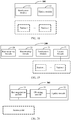
- FIG. 1 is a schematic diagram of a communications system according to an embodiment of the present invention.
- the communications system includes an access pointAP and a station in a basic service set (Basic Service Set, BSS) within service coverage of the AP.
- BSS Basic Service Set
- the IEEE 802.11 standard stipulates protocols of physical layer and MAC layer for wireless transmission on a spectrum of 2.4 GHz, 5 GHz, or even 60 GHz.
- an AP is a station that functions as a control entity in the BSS, and provides, for another station associated with the AP, a connection to a distribution system (Distribution System, DS).
- the AP may further coordinate data sending of stations by using a point coordination function (Point Control Function, PCF).
- PCF Point Control Function
- the AP in the communications system in this embodiment is associated with five stations in total: a station 1 to a station 5.
- FIG. 2 is a flowchart of a first method for allocating an addressing identifier according to an embodiment of the present invention. This embodiment is described from the perspective of an access point.
- the method for allocating an addressing identifier in this embodiment includes:
- an addressing identifier includes a MAC address.
- the access point separately notifies the at least two stations of the encrypted new MAC address that corresponds to each station, and indicates the predetermined change condition, so that the at least two stations change respective MAC addresses to the respective new MAC addresses when the predetermined change condition is met.
- the stations When the stations obtain the respective corresponding new MAC addresses, and the predetermined change condition is met, the stations configure the new MAC addresses at a MAC layer. In a subsequent message exchange, the new MAC addresses of the stations are used as addressing identifiers.
- the access point updates the MAC addresses of the at least two stations at the access point to the new MAC addresses that correspond to the stations. In this way, in a next message that is received from the stations or sent to the stations, the new MAC addresses of the stations are used as the MAC addresses of the stations.
- the encryption key is an asymmetric encryption key, generally a public key
- a public key that the access point performs encryption key negotiation with a station 1 is still used as an example.
- an RSA (Rivest Shamir Adleman) algorithm is used
- an Ekey 1 is an RSA public key that is sent by the station 1 to the access point.
- the access point encrypts a new MAC address and a new AID of the station 1 by using the Ekey 1.
- the station 1 After receiving the encrypted new MAC address and new AID, the station 1 performs decryption by using a corresponding RSA private key.
- a corresponding key negotiation process is mainly a public key sending and receiving process.
- AIDs of stations may also be updated. If AIDs of stations also need to be updated, when the access point determines the new MAC addresses of the at least two stations in the basic service set BSS served by the access point, the access point also determines a new AID that corresponds to each station.
- the stations correspond to different new MAC addresses and different new AIDs.
- a possible implementation manner in which the uniqueness check is performed on the new MAC address requested by the station may be: the new MAC address requested by the station is compared with MAC addresses of all stations in the basic service set BSS served by the access point, and if currently, the new MAC address requested by the station is not used by any station in the BSS served by the access point, it is considered that the uniqueness check on the new MAC address requested by the station succeeds.
- step S201 and step S202 do not have a strict sequential order.
- S201 may be performed first and then S202 is performed, or S202 is performed first and then S201 is performed, or even S201 and S202 may be performed simultaneously.
- S203 The access point notifies the at least two stations of an encrypted new MAC address that corresponds to each station, and indicates a predetermined change condition.
- the access point separately notifies the at least two stations of the encrypted new MAC address that corresponds to each station, and indicates the predetermined change condition, so that the at least two stations change respective MAC addresses to the respective new MAC addresses when the predetermined change condition is met.
- the access point determines, in the foregoing first manner, the respective new MAC addresses and new AIDs of the at least two stations in the BSS served by the access point, the access point returns a confirmation message to each station in a unicast manner, where the confirmation message indicates that the station is allowed to use the requested new MAC address; and notifies each station of the new AID.
- the uniqueness check on the new MAC address requested by the station does not succeed, a new MAC address that meets uniqueness is carried in the returned confirmation message.
- the new AID may be carried in the confirmation message or is sent by using another message.
- the access point may send, to the at least two stations in a unicast manner, the respective encrypted new MAC addresses and new AIDs that correspond to the stations.
- a CID message mode bit indicates whether the action frame is used for identifier change arrangement indication or for identifier change confirmation, where the identifier change arrangement indication is used to indicate that the frame is sent by an access point to a station, and is used to indicate that an addressing identifier is to be changed; and the identifier change confirmation is used to indicate that the frame is sent by a station to an access point, for confirming the indication that the access point changes an addressing identifier.
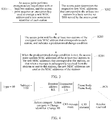
- the station 1 After receiving a message sent by the access point, the station 1 obtains MAC1-1 and AID1-1 by means of decryption, and returns a confirmation message to the AP, indicating that MAC1-1 and AID1-1 are accepted, as shown in FIG. 6 .
- a change indication message may also be indicated to the stations by using a broadcast message such as a beacon (Beacon) frame to which an indicator bit (Indication shown in FIG. 8 ) is added. For example, when the indicator bit is set to 1, after receiving the beacon frame, the stations update the MAC addresses and AIDs; when the indicator bit is set to 0, after receiving the beacon frame, the stations do not update the MAC addresses and AIDs.
- a broadcast message such as a beacon (Beacon) frame to which an indicator bit (Indication shown in FIG. 8 ) is added.
- Beacon Beacon
- an indicator bit Indication shown in FIG. 8
- the access point updates MAC addresses of the at least two stations to the new MAC addresses that correspond to the stations, so that when a message is subsequently received from the stations or sent to the stations, the new MAC addresses are used as the MAC addresses of the stations.
- a TSF Temporal Synchronization Function, timing synchronization function
- the stations configure, at a MAC layer, the new MACs and the new AIDs that are allocated by the access point, and the access point also updates the MAC addresses and the AIDs of the stations, so that when receiving a station message indicating that a transmitter address is a new MAC address, the access point can determine information about the station and shared information of the station, such as a shared data encryption key.
- at least one of the new MAC address and the new AID of the station is used as an addressing identifier.
- both the MAC address and the AID of the station may be changed to prevent the eavesdropper from tracing privacy information of a user by tracing the AID of the station.
- the access point When notifying the station of a new MAC address, the access point also notifies the station of a new AID that corresponds to the station. Therefore, in the preferred embodiment of the present invention, when learning the encrypted new MAC address that corresponds to the station, the station also learns an encrypted new AID that corresponds to the station, and obtains the new MAC address and the new AID by means of decryption, where stations correspond to different new MAC addresses and different new AIDs.
- An implementation manner in which the station learns the encrypted new MAC address and new AID that correspond to the station is: The station receives the encrypted new MAC address and new AID that are correspondingly allocated by the access point to the station, thereby learning the encrypted new MAC address and new AID that correspond to the station.
- the station requests the access point to change the MAC address, that is, sends a change request to the access point, where the change request of the station may include a new MAC address requested by the station.
- the new MAC address carried in the request is also encrypted.
- the access point receives the change request of the station, obtains the requested new MAC address by means of decryption, performs a uniqueness check, and then sends a confirmation message for responding to the change request.
- the station learns, from the confirmation message that is used by the access point to respond to the change request, the encrypted new MAC address that corresponds to the station, and may further learn the new AID.
- the new MAC address that corresponds to the station is the new MAC address requested by the station; when the uniqueness check on the new MAC address requested by the station does not succeed, the new MAC address that corresponds to the station is a new MAC address that meets uniqueness and that is allocated by the access point to the station, and the new AID that corresponds to the station is also allocated by the access point to the station.
- the new AID may be carried in the confirmation message, or may be separately sent by using another message.
- a CID information element mainly includes:
- a station 1 sends a request to the access point.
- the station 1 determines a preferred MAC address MAC1 -1, and encrypts the preferred MAC address.
- An encryption manner is described above.
- the station 1 sends a reassociation request to the access point, carrying a CID IE.
- a frame format of the CID IE is shown in FIG. 11 .
- the access point After receiving the reassociation request, the access point obtains the CID IE in the reassociation request, and decrypts encrypted MAC1-1 in the CID IE, to obtain MAC1-1. Subsequently, the access point performs a uniqueness check on MAC1-1 in a BSS. A check manner may be comparing MAC1-1 with MAC addresses of all stations in the BSS. When MAC1-1 is not used by any STA currently, it is considered that MAC1-1 has uniqueness in the BSS. The access point encrypts AID1-1 newly allocated to the station 1.
- the access point sends a reassociation response to the station 1, carrying a CID IE.
- a frame format of the CID IE is shown in FIG. 12 .
- the access point may broadcast a message, carrying indication information.
- the access point may broadcast a beacon (Beacon) frame.
- Beacon a bit is used to instruct the stations to change an addressing identifier (which, in this embodiment, is a MAC address, or a MAC address and an AID); or the CID IE is carried in the Beacon frame, where a message format is shown in FIG. 13 .
- the confirmation message sent by the access point to the station further carries a change time T.
- At least two stations in a BSS in which the access point is located can support change of an addressing identifier (which, in this embodiment, refers to a MAC address, or a MAC address and an AID).
- an addressing identifier which, in this embodiment, refers to a MAC address, or a MAC address and an AID.
- the station changes a currently used MAC address to the new MAC address that corresponds to the station, so that when a message is subsequently received from the access point or sent to the access point, the new MAC address is used as the MAC address of the station.
- the station learns the encrypted new MAC address that corresponds to the station, if the station also learns the encrypted new AID that corresponds to the station, when the predetermined change condition is met, the station updates the currently used MAC address and AID to the new MAC address and the new AID that correspond to the station.
- a station i indicates any station other than a station 1.
- MAC1-1 and AID 1-1 are respectively a new MAC address and a new AID of the station 1
- MAC1-0 is a MAC address of the station 1 before a change.
- MACi-1 and AIDi-1 are respectively a new MAC address and a new AID of the station i
- MACi-0 is a MAC address of the station i before a change.
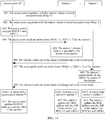
- FIG. 14 is a flowchart of a fourth method for allocating an addressing identifier according to an embodiment of the present invention.
- This embodiment is applicable to the foregoing case in which an access point proactively allocates a new MAC address and a new AID to a station.
- the method in this embodiment includes the following steps:
- both the access point and the stations After the timers of both the access point and the stations reach T, both the access point and the stations update the MAC addresses and the AIDs.
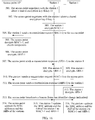
- FIG. 15 is a flowchart of a fifth method for allocating an addressing address according to an embodiment of the present invention. A difference between the embodiment shown in FIG. 15 and the embodiment shown in FIG. 14 lies in:
- step 404 and step 407 the action frame sent by the access point to the station does not carry a time T for indicating a change, and step 410 changes to:
- the access point sends an action frame (identifier change indication) to the station, where a corresponding receiver address is a broadcast address.
- the access point when the access point notifies the station of the new MAC and the new AID, the access point does not indicate a change time, and after sending the new MAC and the new AID, the access point broadcasts an action frame, for change indication; after receiving the indication, the station updates the MAC and the AID; the access point also updates the MACs and the AIDs of the stations after sending the indication.
- FIG. 17 is a flowchart of a seventh method for allocating an addressing identifier according to an embodiment of the present invention. A difference between the embodiment shown in FIG. 17 and the embodiment shown in FIG. 16 lies in:
- step 513 changes to:
- the access point when sending the reassociation response to the station, the access point indicates the change time T, and both the access point and the stations update the MAC addresses and the AIDs after timing reaches T.
- the notification module 11 is configured to notify at least two stations in a basic service set BSS served by the access point of an encrypted new MAC address that corresponds to each station, and indicate a predetermined change condition, so that the at least two stations change respective MAC addresses to the respective new MAC addresses when the predetermined change condition is met.
- the stations When the stations obtain the respective corresponding new MAC addresses, and the predetermined change condition is met, the stations configure the new MAC addresses at a MAC layer. In a subsequent message exchange, the new MAC addresses of the stations are used as addressing identifiers.
- the update module 12 updates the MAC addresses of the at least two stations to the new MAC addresses that correspond to the stations.
- the new MAC addresses of the stations are used as the addressing identifiers.
- the determining module 23 is configured to determine the respective new MAC addresses and new AIDs that correspond to the at least two stations in a basic service set BSS served by the access point, where the stations correspond to different new MAC addresses and different new AIDs.
- the determining module 23 is configured to receive change requests of the at least two stations in the BSS served by the access point, where a change request of each station includes a new MAC address requested by each station, perform a uniqueness check on the new MAC address requested by each station, and when the uniqueness check succeeds, allocate the new AID to each station, where the new MAC requested by each station and the allocated new AID are the determined new MAC address and new AID of the station.
- the stations correspond to different new MAC addresses and new AIDs.
- the access point negotiates, by using the key acquiring module 24, with each station of the at least two stations about a shared encryption key, and obtains an encryption key Ekey used to encrypt the new MAC address of the station.
- the encryption key in this embodiment of the present invention may be a symmetric encryption key or an asymmetric encryption key.
- a key negotiation process is a four-step handshake process, a random number exchange process, or the like.
- FIG. 20 is a schematic structural diagram of a first station according to an embodiment of the present invention.
- the station 300 in this embodiment includes an obtaining module 31 and a change module 32.
- that the station sends a change request to the access point may also be implemented by defining an action frame or a new management frame or a new information element (IE).
- IE information element
- a method for defining an action frame has been described in Embodiment 2 and Embodiment 3. This embodiment is described by using an example in which a new IE is defined, but is not limited thereto.
- the newly defined information element may be carried in various types of management frames for sending, such as a probe request/response (Probe Request/Response), a reassociation request/response (Reassociation Request/Response), and a beacon (Beacon) frame.
- the change module 32 updates MAC addresses that are currently used by the stations to the new MAC addresses that correspond to the stations.
- the stations When the stations obtain the respective corresponding new MAC addresses and new AIDs, and the predetermined change condition is met, the stations configure the new MAC addresses and new AIDs at a MAC layer. In a subsequent message exchange, at least one of the new MAC address and the new AID of the station is used as an addressing identifier.
- the processor 41 When the processor 41 notifies the stations of the new AIDs that correspond to the stations, when the predetermined change condition is met, the processor 41 updates the MAC addresses of the at least two stations to the new MAC addresses that correspond to the stations, and updates the AIDs of the at least two stations to the new AIDs that correspond to the stations.
- the processor 41 updates the MAC addresses of the at least two stations to the new MAC addresses that correspond to the stations, and updates the AIDs of the at least two stations to the new AIDs that correspond to the stations.
- a message is subsequently sent to the stations or received from the stations, at least one of the new MAC addresses and the new AIDs of the stations are used as addressing identifiers.
- the processor 41 may further be configured to determine the respective new MAC addresses and new AIDs that correspond to the at least two stations in the basic service set BSS served by the access point, where the stations correspond to different new MAC addresses and new AIDs.
- the stations correspond to different new MAC addresses and different new AIDs.
- an information element (Information Element, IE) or a new management frame (Management Frame) is defined to implement a message exchange related to changes of a MAC address and an AID.
- IEEE 802.11 defines a management frame that is referred to as an action frame (Action Frame), where a management frame required by an independent service activity is defined by defining a new action category (Action Category).
- Action Frame an action frame
- Action Category a management frame required by an independent service activity
- the processor 41 is further configured to negotiate with the at least two stations for an encryption key by using the transmitter 44 and the receiver 43, and acquire an encryption key used to encrypt the new MAC address of each station, where the encryption key is a symmetric encryption key or an asymmetric encryption key.
- the processor 41 negotiates with each station of the at least two stations about a shared encryption key, and obtains an encryption key Ekey used to encrypt a new MAC address and a new AID of the station.
- the encryption key in this embodiment of the present invention may be a symmetric encryption key or an asymmetric encryption key.
- the processor 41 When the encryption key is a symmetric encryption key, that the processor 41 performs encryption key negotiation with a station 1 is used as an example.
- the processor 41 obtains an Ekey 1, and the processor 41 encrypts a new MAC address of the station 1 by using the Ekey 1 as an encryption key of a symmetric encryption algorithm.
- the encryption key is also used to encrypt the new AIDs.
- the station 1 obtains the new MAC address and a new AID by means of decryption by using the Ekey 1.
- a key negotiation process is a four-step handshake process, a random number exchange process, or the like.
- the encryption key is an asymmetric encryption key, generally a public key. That the access point performs encryption key negotiation with a station 1 is still used as an example.
- an RSA (Rivest Shamir Adleman) algorithm is used, an Ekey 1 is an RSA public key that is sent by the station 1 to the access point.
- the access point encrypts a new MAC address and a new AID of the station 1 by using the Ekey 1.
- the station 1 After receiving the encrypted new MAC address and new AID, the station 1 performs decryption by using a corresponding RSA private key.
- a corresponding key negotiation process is mainly a public key sending and receiving process.
- the processor 41 encrypts a new MAC address and a new AID of a station by using an encryption key that has been negotiated with the station.
- the new MAC address and the new AID may be encrypted together, or may be encrypted separately.
- a new MAC address (MAC1-1) and a new AID (AID1-1) of the station 1 are encrypted by using the Ekey 1.
- the Ekey 1 herein may be a symmetric encryption key or an asymmetric encryption key, and is preferably a symmetric encryption key in this embodiment of the present invention.
- a TSF time of the stations remains synchronized with a TSF time of the access point, and when timers of the stations and a timer of the access point all reach the moment, the stations configure, at a MAC layer, the new MACs and the new AIDs that are allocated by the access point, and the access point also updates the MAC addresses and the AIDs of the stations, so that when receiving a station message indicating that a transmitter address is a new MAC address, the access point can determine information about the station and shared information of the station, such as a shared data encryption key. In a subsequent message exchange, at least one of the new MAC address and the new AID of the station is used as an addressing identifier.
- the methods disclosed in the embodiments of the present invention may be applied to the processor 41, or is implemented by the processor 41.
- steps of the foregoing methods may be performed by using an integrated logic circuit of hardware in the processor 41 or instructions in a form of software.
- the processor 41 may implement or perform methods, steps, and logical block diagrams disclosed in the embodiments of the present invention. Steps of the methods disclosed with reference to the embodiments of the present invention may be directly performed and completed by means of a hardware decoding processor, or may be performed and completed by using a combination of hardware and software modules in the decoding processor.
- the software module may be located in a mature storage medium in the art, such as a random access memory, a flash memory, a read-only memory, a programmable read-only memory, an electrically-erasable programmable memory, a register, or the like.
- the storage medium is located in the memory 42, and the processor 41 reads information in the memory 42 and completes the steps of the foregoing methods in combination with hardware of the processor 41.
- FIG. 22 is a schematic structural diagram of a second station according to an embodiment of the present invention.
- the station 500 in this embodiment includes a processor 51 (where there may be one or more processors, and in the embodiments of the present invention, one processor is used as an example), a memory 52, a receiver 53, a transmitter 54, and a bus system 55.
- the processor 51 controls an operation of the station 500, and the processor 51 may also be referred to as a CPU (Central Processing Unit, central processing unit).
- the processor 51 may be an integrated circuit chip, and has a signal processing capability.
- the processor 51 may further be a general purpose processor, a digital signal processor (DSP, Digital Signal Processing), an application-specific integrated circuit (ASIC, Application Specific Integrated Circuit), a field programmable gate array (FPGA, Field Programmable Gate Array), or another programmable logic device, discrete gate or transistor logic device, or discrete hardware component.
- DSP digital signal processor
- ASIC Application Specific Integrated Circuit
- FPGA Field Programmable Gate Array
- a general purpose processor may be a microprocessor, or the processor may also be any conventional processor, or the like.
- the memory 52 may include a read-only memory and a random access memory, and provides an instruction and data for the processor 51.
- a part of the memory 52 may further include a non-volatile random access memory (NVRAM).
- NVRAM non-volatile random access memory
- the memory 52 stores the following elements, executable modules or data structures, or a subset thereof, or an extended set thereof:
- the access point when notifying the station of a new MAC address, the access point also notifies the station of a new AID that corresponds to the station. Therefore, in the preferred embodiment of the present invention, when learning the encrypted new MAC address that corresponds to the station, the processor 51 may further learn an encrypted new AID that corresponds to the station, and obtains the new MAC address and the new AID by means of decryption.
- the processor 51 may obtain the new MAC address and the new AID by means of decryption by using the receiver 53 to receive the encrypted new MAC address and new AID that are correspondingly allocated by the access point to the station.
- the processor 51 learns, by using the transmitter 54 to send a change request to the access point, the encrypted new MAC address that corresponds to the station from a confirmation message that is used by the access point to respond to the change request, where the change request of the station includes a new MAC address requested by the station, and further learns the new AID.
- the processor 51 learns the new AID from the confirmation message that is used by the access point to respond to the change request; or learns the new AID from another message sent by the access point.
- an implementation manner in which the processor 51 learns the encrypted new MAC address and new AID that correspond to the station is: The processor 51 receives the encrypted new MAC address and new AID that are correspondingly allocated by the access point to the station, thereby learning the encrypted new MAC address and new AID that correspond to the station.
- the processor 51 requests, by using the transmitter 54, the access point to change the MAC address, that is, sends a change request to the access point, where the change request includes a new MAC address requested by the station.
- the new MAC address carried in the request is also encrypted.
- the access point receives the request of the station, obtains the requested new MAC address by means of decryption, performs a uniqueness check, and then sends a confirmation message for responding to the request.
- the station learns, from the confirmation message that is used by the access point to respond to the change request, the encrypted new MAC address that corresponds to the station, and further learns the new AID.
- a possible implementation manner in which the access point performs the uniqueness check on the new MAC address requested by the station may be: The new MAC address requested by the station is compared with MAC addresses of all stations in a basic service set BSS served by the access point, and if currently, the new MAC address requested by the station is not used by any station in the BSS served by the access point, it is considered that the uniqueness check on the new MAC address requested by the station succeeds.
- the new MAC address that corresponds to the station is the new MAC address requested by the station; when the uniqueness check on the new MAC address requested by the station does not succeed, the new MAC address that corresponds to the station is a new MAC address that meets uniqueness and that is allocated by the access point to the station, and the new AID that corresponds to the station is also allocated by the access point to the station.
- the new AID may be carried in the confirmation message, or may be separately sent by using another message.
- the confirmation message sent by the access point to the station further carries a change time T.
- At least two stations in a BSS in which the access point is located can support an addressing identifier (which, in this embodiment, is a MAC address, or a MAC address and an AID).
- an addressing identifier which, in this embodiment, is a MAC address, or a MAC address and an AID.
- the at least two stations send MAC address change requests to the access point within a time period t after the change triggering condition is met. Therefore, after the access point receives a change request of the first station, if timing is T0, when a time T stipulated by the access point meets the following condition, that is, T>T0+t, it can be ensured that change requests of at least two stations are received before the moment T arrives.
- that the station sends a change request to the access point may also be implemented by defining an action frame or a new management frame or a new information element (IE).
- IE information element
- a method for defining an action frame has been described in Embodiment 2 and Embodiment 3. This embodiment is described by using an example in which a new IE is defined, but is not limited thereto.
- the newly defined information element may be carried in various types of management frames for sending, such as a probe request/response (Probe Request/Response), a reassociation request/response (Reassociation Request/Response), and a beacon (Beacon) frame.
- Beacon beacon
- the processor 51 is further configured to: when the predetermined change condition is met, update the MAC addresses of the stations to the new MAC addresses that correspond to the stations, so that when a message is subsequently received from the access point or sent to the access point, the new MAC addresses are used as the MAC addresses of the stations.
- the processor 51 obtains the new MAC addresses that correspond to the stations, if the processor 51 also learns the encrypted new AIDs that correspond to the stations, when a predetermined condition is met, the processor 51 updates both the MAC addresses and the AIDs of the stations to the new MAC addresses and the new AIDs that correspond to the stations. When a message is received next time, at least one of the new MAC address and the new AID is used as an addressing identifier.
- the processor 51 is further configured to perform encryption key negotiation with the access point, so as to obtain the new MAC address by means of decryption by using a corresponding decryption method according to a type of a negotiated encryption key, where the encryption key is a symmetric encryption key or an asymmetric encryption key.
- the processor 51 when the encryption key is a symmetric encryption key, the processor 51 performs decryption by using a corresponding key; when the encryption key is an asymmetric encryption key, the processor 51 performs decryption by using a private key that corresponds to the key.
- an embodiment of the present invention further provides a communications system, where the communications system includes the access point according to any of the foregoing embodiments and the station according to any of the foregoing embodiments.
- the communications system includes the access point according to any of the foregoing embodiments and the station according to any of the foregoing embodiments.
- the methods disclosed in the embodiments of the present invention may be applied to the processor 51, or is implemented by the processor 51. In an implementation process, steps of the foregoing methods may be performed by using an integrated logic circuit of hardware in the processor 51 or instructions in a form of software.
- the processor 51 may implement or perform methods, steps, and logical block diagrams disclosed in the embodiments of the present invention. Steps of the methods disclosed with reference to the embodiments of the present invention may be directly performed and completed by means of a hardware decoding processor, or may be performed and completed by using a combination of hardware and software modules in the decoding processor.
- the software module may be located in a mature storage medium in the art, such as a random access memory, a flash memory, a read-only memory, a programmable read-only memory, an electrically-erasable programmable memory, a register, or the like.
- the storage medium is located in the memory 52, and the processor 51 reads information in the memory 52 and completes the steps of the foregoing methods in combination with hardware of the processor 51.
- an access point is used to adjust changes of MAC addresses of multiple stations in an entire basic service set, and notify the multiple stations of an encrypted new MAC address and new AID that correspond to each station, so that when a predetermined change condition is met, each station changes a respective MAC address and AID to the new MAC address and the new AID that correspond to the station, and when the predetermined change condition is met, the access point also updates the MAC addresses of the multiple stations to the new MAC addresses that correspond to the stations, and updates the AIDs of the stations to the new AIDs that correspond to the stations.
- each new MAC address and new AID that are sent by an access point to a station are encrypted, and an eavesdropper cannot steal the new MAC address and the new AID.
- the eavesdropper cannot continue to trace a MAC address and an AID to acquire terminal user privacy, ensuring security of the user privacy.
- the disclosed system, apparatus, and method may be implemented in other manners.
- the described apparatus embodiment is merely exemplary.
- the module or unit division is merely logical function division and may be other division in actual implementation.
- a plurality of units or components may be combined or integrated into another system, or some features may be ignored or not performed.
- the displayed or discussed mutual couplings or direct couplings or communication connections may be implemented by using some interfaces.
- the indirect couplings or communication connections between the apparatuses or units may be implemented in electronic, mechanical, or other forms.
- the units described as separate parts may or may not be physically separate, and parts displayed as units may or may not be physical units, may be located in one position, or may be distributed on a plurality of network units. Some or all of the units may be selected according to actual requirements to achieve the objectives of the solutions of the embodiments.
- functional units in the embodiments of the present invention may be integrated into one processing unit, or each of the units may exist alone physically, or two or more units are integrated into one unit.
- the integrated unit may be implemented in a form of hardware, or may be implemented in a form of a software functional unit.
- the integrated unit When the integrated unit is implemented in the form of a software functional unit and sold or used as an independent product, the integrated unit may be stored in a computer-readable storage medium. Based on such an understanding, the technical solutions of the present invention essentially, or the part contributing to the prior art, or some of the technical solutions may be implemented in a form of a software product.
- the software product is stored in a storage medium and includes several instructions for instructing a computer device (which may be a personal computer, a server, or a network device) or a processor (processor) to perform all or some of the steps of the methods described in the embodiments of the present invention.
- the foregoing storage medium includes: any medium that can store program code, such as a USB flash drive, a removable hard disk, a read-only memory (ROM, Read-Only Memory), a random access memory (RAM, Random Access Memory), a magnetic disk, or an optical disc.
- program code such as a USB flash drive, a removable hard disk, a read-only memory (ROM, Read-Only Memory), a random access memory (RAM, Random Access Memory), a magnetic disk, or an optical disc.
Landscapes
- Engineering & Computer Science (AREA)
- Computer Networks & Wireless Communication (AREA)
- Signal Processing (AREA)
- Computer Security & Cryptography (AREA)
- Computer Hardware Design (AREA)
- Computing Systems (AREA)
- General Engineering & Computer Science (AREA)
- Power Engineering (AREA)
- Databases & Information Systems (AREA)
- Mobile Radio Communication Systems (AREA)
Abstract
Description
- This application claims priority to Chinese Patent Application No.
201410114893.2, filed with the Chinese Patent Office on March 25, 2014 - The present invention relates to the communications field, and in particular, to a method for allocating an addressing identifier, an access point, a station, and a communications system.
- A wireless local area network (wireless local area network, WLAN) can provide a wireless data transmission service in a limited range for a terminal on the wireless local area network. In a WLAN (also referred to as Wi-Fi, Wireless Fidelity, Wireless Fidelity) based on IEEE 802.11, a terminal device therein can also be connected to the Internet (Internet) by using a device such as a gateway. Because of advantages such as rapid deployment, convenient use, and high transmission rate, Wi-Fi has been widely used in various industries.
- It is stipulated in the IEEE 802.11 standard that in a WLAN, addressing is performed based on a Media Access Control (Media Access Control, MAC) address. Generally, an eavesdropper may obtain MAC addresses of transmitting and receiving parties of a wireless message by receiving and analyzing the message on an air interface. By means of tracing a MAC address of a terminal, privacy information of a user of the terminal, such as a place or a time at which the user frequently appears, may be obtained, and by means of analyzing a large amount of data, privacy information of the user of the terminal, such as living habits, interests and hobbies, and even social relations, may be learned.
- To ensure security of user privacy, currently, there is a solution for allocating an addressing identifier to a station; however, this is not enough to completely resolve a problem of tracing user privacy by using a MAC address. For example, within a period of time, an access point (Access Point, AP) allocates a temporary MAC address to a terminal in a basic service set served by the access point. If an eavesdropper acquires MAC addresses of all terminals in the basic service set, when the eavesdropper finds that a MAC address no longer appears while another MAC address that is new appears, the eavesdropper can determine that the new MAC address is a modified MAC address of the original terminal, and therefore, continues to trace the terminal.
- Embodiments of the present invention provide a method for allocating an addressing identifier, an access point, and a station, so as to prevent an eavesdropper from tracing, by using a MAC address, a terminal to acquire user privacy, ensuring security of the user privacy.
- According to a first aspect, the present invention provides a method for allocating an addressing identifier, where the addressing identifier includes a Media Access Control MAC address, and the addressing identifier method includes: notifying, by an access point, at least two stations in a basic service set BSS served by the access point of an encrypted new MAC address that corresponds to each station, and indicating a predetermined change condition, so that the at least two stations change respective MAC addresses to the respective new MAC addresses when the predetermined change condition is met; and when the predetermined change condition is met, updating, by the access point, the MAC addresses of the at least two stations to the new MAC addresses that correspond to the stations, so that when a message is subsequently received from the stations or sent to the stations, the new MAC addresses are used as the MAC addresses of the stations.
- With reference to the first aspect, in a first possible implementation manner of the first aspect: the addressing identifier further includes an association identifier AID; and when notifying the at least two stations in the basic service set BSS served by the access point of the encrypted new MAC address that corresponds to each station, the access point further notifies the stations of corresponding encrypted new AIDs; and when the predetermined change condition is met, the access point updates the MAC addresses of the at least two stations to the new MAC addresses that correspond to the stations, and updates AIDs of the at least two stations to the new AIDs that correspond to the stations.
- With reference to the first possible implementation manner of the first aspect, in a second possible implementation manner of the first aspect: before the step of notifying, by the access point, the at least two stations in the basic service set BSS served by the access point of the encrypted new MAC address and new AID that correspond to each station, the method further includes: determining, by the access point, the respective new MAC addresses and new AIDs that correspond to the at least two stations in the basic service set BSS served by the access point, where the stations correspond to different new MAC addresses and different new AIDs.
- With reference to the second possible implementation manner of the first aspect, in a third possible implementation manner of the first aspect: the step of determining, by the access point, the respective new MAC addresses and new AIDs that correspond to the at least two stations in the basic service set BSS served by the access point includes: receiving, by the access point, change requests of the at least two stations in the BSS served by the access point, where a change request of each station includes a new MAC address requested by each station; and performing, by the access point, a uniqueness check on the new MAC address requested by each station, and when the uniqueness check succeeds, allocating the new AID to each station, where the new MAC address requested by each station and the allocated AID are the determined new MAC address and new AID of the station; and the step of notifying the at least two stations of the encrypted new MAC address and new AID that correspond to each station includes: returning, by the access point, a confirmation message to each station in a unicast manner, where the confirmation message indicates that the station is allowed to use the requested new MAC address, and notifying each station of the new AID, where the new AID is carried in the confirmation message or is sent by using another message that is sent from the access point.
- With reference to the second possible implementation manner of the first aspect, in a fourth possible implementation manner of the first aspect: the step of determining, by the access point, the respective new MAC addresses and new AIDs that correspond to the at least two stations in the basic service set BSS served by the access point includes: allocating, by the access point, the new MAC addresses and the new AIDs to the at least two stations in the BSS served by the access point, where the new MAC address and the new AID that are allocated to each station are the determined new MAC address and new AID that correspond to the station; and the step of notifying the at least two stations of the encrypted new MAC address and new AID that correspond to each station includes: sending, to the at least two stations in a unicast manner, the respective encrypted new MAC addresses and new AIDs that correspond to the stations.
- With reference to the first aspect or any one of the first to the fourth possible implementation manners of the first aspect, in a fifth possible implementation manner of the first aspect: the indicating a predetermined change condition includes: when notifying the at least two stations in the basic service set BSS served by the access point of the encrypted new MAC address that corresponds to each station, adding, by the access point, a predetermined time or a predetermined time point for indicating a change; or after notifying the at least two stations in the basic service set BSS served by the access point of the encrypted new MAC address that corresponds to each station, separately sending, by the access point, a change indication message to the at least two stations in a unicast manner; or after the access point notifies the at least two stations in the basic service set BSS served by the access point of the encrypted new MAC address that corresponds to each station, group-sending, by the access point, a change indication message to the at least two stations in a broadcast manner.
- With reference to the fifth possible implementation manner of the first aspect, in a sixth possible implementation manner of the first aspect: the step of group-sending an update indication message to the at least two stations in a broadcast manner includes: group-sending the update indication message to the at least two stations by broadcasting a beacon frame to which an indicator bit is added, where the indicator bit includes change indication information used to instruct the at least two stations to change an addressing identifier.
- With reference to the first aspect, in a seventh possible implementation manner of the first aspect: before the step of notifying, by an access point, at least two stations in a basic service set BSS served by the access point of an encrypted new MAC address and new AID that correspond to each station, the method further includes: performing, by the access point, encryption key negotiation with the at least two stations for an encryption key, and acquiring, by the access point, an encryption key used to encrypt the new MAC address of each station, where the encryption key is a symmetric encryption key or an asymmetric encryption key.
- According to a second aspect, an embodiment of the present invention provides a method for allocating an addressing identifier, where the addressing identifier includes a Media Access Control MAC address, and the method for allocating an addressing identifier includes: learning, by a station, an encrypted new MAC address that corresponds to the station and that is notified by an access point in a basic service set BSS in which the station is located, obtaining the new MAC address by means of decryption, acquiring a predetermined change condition, and when the predetermined change condition is met, changing, by the station, a currently used MAC address to the new MAC address, so that when a message is subsequently received from the access point or sent to the access point, the new MAC address is used as the MAC address of the station.
- With reference to the second aspect, in a first possible implementation manner of the second aspect: the addressing address further includes an association identifier AID, and when learning the encrypted new MAC address that corresponds to the station, the station further acquires an encrypted new AID that corresponds to the station; and when the predetermined change condition is met, the station changes the currently used MAC address to the new MAC address, and changes a currently used AID to the new AID.
- With reference to the first possible implementation manner of the second aspect, in a second possible implementation manner of the second aspect: the step of learning, by the station, the encrypted new MAC address and new AID that correspond to the station includes: receiving, by the station, the encrypted new MAC address and new AID that are correspondingly allocated by the access point to the station.
- With reference to the first possible implementation manner of the second aspect, in a third possible implementation manner of the second aspect: the step of learning, by the station, the encrypted new MAC address and new AID that correspond to the station includes: sending, by the station, a change request to the access point, where the change request of the station includes a new MAC address requested by the station, learning, by the station, the encrypted new MAC address that corresponds to the station from a confirmation message that is used by the access point to respond to the change request, and further learning the encrypted new AID from the confirmation message that is used by the access point to respond to the change request or from another message sent by the access point.
- With reference to the second aspect, in a fourth possible implementation manner of the second aspect: before the step of learning, by a station, an encrypted new MAC address that corresponds to the station, the method further includes: performing, by the station, encryption key negotiation with the access point, so that the station obtains the new MAC address by means of decryption by using a corresponding decryption method according to a type of a negotiated encryption key, where the encryption key is a symmetric encryption key or an asymmetric encryption key.
- According to a third aspect, an embodiment of the present invention provides an access point, where the access point includes a notification module and an update module, where: the notification module is configured to notify at least two stations in a basic service set BSS served by the access point of an encrypted new Media Access Control MAC address that corresponds to each station, and indicate a predetermined change condition, so that the at least two stations change respective MAC addresses to the respective new MAC addresses when the predetermined change condition is met; and the update module is configured to: when the predetermined change condition is met, update the MAC addresses of the at least two stations to the new MAC addresses that correspond to the stations, so that when a message is subsequently received from the stations or sent to the stations, the new MAC addresses are used as the MAC addresses of the stations.
- With reference to the third aspect, in a first possible implementation manner of the third aspect: when notifying the at least two stations in the basic service set BSS served by the access point of the encrypted new MAC address that corresponds to each station, the notification module further notifies the at least two stations of an encrypted new association identifier AID that corresponds to each station; and when the predetermined change condition is met, the update module updates the MAC addresses of the at least two stations to the new MAC addresses that correspond to the stations, and updates AIDs of the at least two stations to the new AIDs that correspond to the stations.
- With reference to the first possible implementation manner of the third aspect, in a second possible implementation manner of the third aspect: the access point further includes a determining module, where: the determining module is specifically configured to determine the respective new MAC addresses and new AIDs that correspond to the at least two stations in the basic service set BSS served by the access point, where the stations correspond to different new MAC addresses and different new AIDs.
- With reference to the second possible implementation manner of the third aspect, in a third possible implementation manner of the third aspect: the determining module is specifically configured to receive change requests of the at least two stations in the BSS served by the access point, where a change request of each station includes a new MAC address requested by each station, perform a uniqueness check on the new MAC address requested by each station, and when the uniqueness check succeeds, allocate the new AID to each station, where the new MAC requested by each station and the allocated new AID are the determined new MAC address and new AID of the station; and the notification module specifically returns a confirmation message to each station in a unicast manner, where the confirmation message indicates that the station is allowed to use the requested new MAC address; and notifies each station of the new AID, where the new AID is carried in the confirmation message or is sent by using another message.
- With reference to the second possible implementation manner of the third aspect, in a fourth possible implementation manner of the third aspect: the determining module is specifically configured to allocate the new MAC addresses and the new AIDs to the at least two stations in the BSS served by the access point, where the new MAC address and the new AID that are allocated to each station are the determined new MAC address and new AID that correspond to the station; and the notification module specifically sends, to the at least two stations in a unicast manner, the respective encrypted new MAC addresses and new AIDs that correspond to the stations.
- With reference to the third aspect or any one of the first to the fourth possible implementation manners of the third aspect, in a fifth possible implementation manner of the third aspect: the notification module specifically indicates the predetermined change condition in one of the following manners: when notifying the at least two stations in the basic service set BSS served by the access point of the encrypted new MAC address that corresponds to each station, the notification module adds a predetermined time or a predetermined time point for indicating a change; or after notifying the at least two stations in the basic service set BSS served by the access point of the encrypted new MAC address that corresponds to each station, the notification module separately sends a change indication message to the at least two stations in a unicast manner; or after notifying the at least two stations in the basic service set BSS served by the access point of the encrypted new MAC address that corresponds to each station, the notification module group-sends a change indication message to the at least two stations in a broadcast manner.
- With reference to the fifth possible implementation manner of the third aspect, in a sixth possible implementation manner of the third aspect: the notification module specifically group-sends an update indication message to the at least two stations by broadcasting a beacon frame to which an indicator bit is added, where the indicator bit includes change indication information used to instruct the at least two stations to change an addressing identifier.
- With reference to the third aspect, in a seventh possible implementation manner of the third aspect: the access point further includes a key acquiring module, where: the key acquiring module is configured to perform encryption key negotiation with the at least two stations, and acquire an encryption key used to encrypt the new MAC address of each station, where the encryption key is a symmetric encryption key or an asymmetric encryption key.
- According to a fourth aspect, an embodiment of the present invention provides a station, where the station includes an obtaining module and a change module, where: the obtaining module is configured to learn an encrypted new Media Access Control MAC address that corresponds to the station and that is notified by an access point in a basic service set BSS in which the station is located, obtain the new MAC address by means of decryption, and acquire a predetermined change condition, where the stations correspond to different new MAC addresses; and the change module is configured to: when the predetermined change condition is met, update a MAC address that is currently used by the station to the new MAC address that corresponds to the station, so that when a message is subsequently received from the access point or sent to the access point, the new MAC address is used as the MAC address of the station.
- With reference to the fourth aspect, in a first possible implementation manner of the fourth aspect: when learning the encrypted new MAC address that corresponds to the station, the obtaining module further learns an encrypted new association identifier AID that corresponds to the station, and obtains the new MAC address and the new AID by means of decryption; and when the predetermined change condition is met, the change module changes the MAC address and an AID that are currently used by the station to the new MAC address and the new AID that correspond to the station.
- With reference to the first possible implementation manner of the fourth aspect, in a second possible implementation manner of the fourth aspect: the obtaining module specifically obtains the new MAC address and the new AID by means of decryption by receiving the encrypted new MAC address and new AID that are correspondingly allocated by the access point to the station.
- With reference to the first possible implementation manner of the fourth aspect, in a third possible implementation manner of the fourth aspect: the obtaining module specifically sends a change request to the access point, where the change request of the station includes a new MAC address requested by the station, learns the encrypted new MAC address that corresponds to the station from a confirmation message that is used by the access point to respond to the change request, and further learns the encrypted new AID from the confirmation message that is used by the access point to respond to the change request or from another message sent by the access point.
- With reference to the fourth aspect, in a fourth possible implementation manner of the fourth aspect: the station further includes a key negotiation module, where: the key negotiation module is configured to perform encryption key negotiation with the access point; and the obtaining module obtains the new MAC address by means of decryption by using a corresponding decryption method according to a type of an encryption key negotiated by the key negotiation module, where the encryption key is a symmetric encryption key or an asymmetric encryption key.
- According to a fifth aspect, an embodiment of the present invention provides a communications system, where the communications system includes the access point according to the third aspect or any possible implementation manner of the third aspect and the station according to the fourth aspect or any possible implementation manner of the fourth aspect.
- The present invention has the following beneficial effects: Different from the prior art, in the present invention, an access point is used to adjust changes of MAC addresses of multiple stations in an entire basic service set, and notify the multiple stations of an encrypted new MAC address that corresponds to each station, so that when a predetermined change condition is met, each station changes a respective MAC address to the new MAC address that corresponds to the station, and when the predetermined change condition is met, the access point also updates the MAC addresses of the multiple stations to the new MAC addresses that correspond to the stations. In such a manner, a new MAC address sent by an access point to a station is encrypted, and an eavesdropper cannot steal the new MAC address. By means of controlling multiple stations to change MAC addresses, after the MAC addresses are changed, the eavesdropper cannot continue to trace a MAC address of a terminal to acquire user privacy, ensuring security of the user privacy.
-
-
FIG. 1 is a schematic diagram of a communications system according to an embodiment of the present invention; -
FIG. 2 is a flowchart of a first method for allocating an addressing identifier according to an embodiment of the present invention; -
FIG. 3 is a flowchart of a second method for allocating an addressing identifier according to an embodiment of the present invention; -
FIG. 4 is a schematic diagram of an action frame according to an embodiment of the present invention; -
FIG. 5 is a schematic diagram of an action frame used by a first access point to send an allocated new MAC address and new AID to a station according to an embodiment of the present invention; -
FIG. 6 is a schematic diagram of an action frame used by a station to return a confirmation message to an access point according to an embodiment of the present invention; -
FIG. 7 shows an action frame used by a second access point to send an allocated new MAC address and new AID to a station according to an embodiment of the present invention; -
FIG. 8 is a schematic diagram of an action frame used by an access point to send an identifier change message to stations in a broadcast manner according to an embodiment of the present invention; -
FIG. 9 is a flowchart of a third method for allocating an addressing identifier according to an embodiment of the present invention; -
FIG. 10 is a schematic diagram of a format of an IE used by a station to send a change request to an access point according to an embodiment of the present invention; -
FIG. 11 is a schematic diagram of a format of a frame used by astation 1 to send a reassociation request to an access point according to an embodiment of the present invention; -
FIG. 12 is a schematic diagram of a format of a frame used by an access point to send a reassociation response to astation 1 according to an embodiment of the present invention; -
FIG. 13 is a schematic diagram of a beacon frame used by an access point to send change indication information to a station according to an embodiment of the present invention; -
FIG. 14 is a flowchart of a fourth method for allocating an addressing identifier according to an embodiment of the present invention; -
FIG. 15 is a flowchart of a fifth method for allocating an addressing identifier according to an embodiment of the present invention; -
FIG. 16 is a flowchart of a sixth method for allocating an addressing identifier according to an embodiment of the present invention; -
FIG. 17 is a flowchart of a seventh method for allocating an addressing identifier according to an embodiment of the present invention; -
FIG. 18 is a schematic structural diagram of a first access point according to an embodiment of the present invention; -
FIG. 19 is a schematic structural diagram of a second access point according to an embodiment of the present invention; -
FIG. 20 is a schematic structural diagram of a first station according to an embodiment of the present invention; -
FIG. 21 is a schematic structural diagram of a third access point according to an embodiment of the present invention; and -
FIG. 22 is a schematic structural diagram of a second station according to an embodiment of the present invention. - Referring to
FIG. 1, FIG. 1 is a schematic diagram of a communications system according to an embodiment of the present invention. The communications system includes an access pointAP and a station in a basic service set (Basic Service Set, BSS) within service coverage of the AP. - The IEEE 802.11 standard stipulates protocols of physical layer and MAC layer for wireless transmission on a spectrum of 2.4 GHz, 5 GHz, or even 60 GHz. In a basic service set BSS stipulated in the IEEE 802.11 standard, an AP is a station that functions as a control entity in the BSS, and provides, for another station associated with the AP, a connection to a distribution system (Distribution System, DS). In addition, the AP may further coordinate data sending of stations by using a point coordination function (Point Control Function, PCF). The AP in the communications system in this embodiment is associated with five stations in total: a
station 1 to astation 5. - A station mentioned in the following embodiments of the present invention refers to a user station, a user terminal, or the like.
- Referring to
FIG. 2, FIG. 2 is a flowchart of a first method for allocating an addressing identifier according to an embodiment of the present invention. This embodiment is described from the perspective of an access point. The method for allocating an addressing identifier in this embodiment includes: - S101: An access point notifies at least two stations in a basic service set BSS served by the access point of an encrypted new MAC address that corresponds to each station, and indicates a predetermined change condition.
- In this embodiment, an addressing identifier includes a MAC address.
- The access point separately notifies the at least two stations of the encrypted new MAC address that corresponds to each station, and indicates the predetermined change condition, so that the at least two stations change respective MAC addresses to the respective new MAC addresses when the predetermined change condition is met.
- There may be the following possible implementation manners in which the predetermined change condition is indicated:
- 1) when notifying the at least two stations of the encrypted new MAC address that corresponds to each station, the access point adds a predetermined time or a predetermined time point for indicating a change;
- 2) after notifying the at least two stations of the encrypted new MAC address that corresponds to each station, the access point sends a change indication message to the at least two stations in a unicast manner; and
- 3) after notifying the at least two stations of the encrypted new MAC address that corresponds to each station, the access point group-sends a change indication message to the at least two stations in a broadcast manner.
- In other words, the indicating the predetermined change condition may be implemented by sending the predetermined change condition in a unicast manner or in a broadcast manner, and preferably, by means of broadcasting. When sending is performed in a unicast manner, information about a time at which a change is performed may be sent and carried when the notification is performed. When sending is performed in a broadcast manner, the access point may broadcast, on a working channel, a change indication message, to instruct a station to change a MAC address.
- When the stations obtain the respective corresponding new MAC addresses, and the predetermined change condition is met, the stations configure the new MAC addresses at a MAC layer. In a subsequent message exchange, the new MAC addresses of the stations are used as addressing identifiers.
- S102: When the predetermined change condition is met, the access point updates MAC addresses of the at least two stations to the new MAC addresses that correspond to the stations, so that when a message is subsequently received from the stations or sent to the stations, the new MAC addresses are used as the MAC addresses of the stations.
- When the predetermined change condition is met, the access point updates the MAC addresses of the at least two stations at the access point to the new MAC addresses that correspond to the stations. In this way, in a next message that is received from the stations or sent to the stations, the new MAC addresses of the stations are used as the MAC addresses of the stations.
- It can be understood from the foregoing detailed descriptions of this embodiment of the present invention that, in the present invention, an access point is used to adjust changes of MAC addresses of multiple stations in an entire basic service set, and notify the multiple stations of an encrypted new MAC address that corresponds to each station, so that when a predetermined change condition is met, each station changes a respective MAC address to the new MAC address that corresponds to each station; and when the predetermined change condition is met, the access point also updates the MAC addresses of the multiple stations to the new MAC addresses that correspond to the stations. In such a manner, a new MAC address sent by an access point to a station is encrypted, and an eavesdropper cannot steal the new MAC address. By means of controlling multiple stations to change MAC addresses, after the MAC addresses are changed, the eavesdropper cannot continue to trace a MAC address of a terminal to acquire user privacy, ensuring security of the user privacy.
- Referring to
FIG. 3, FIG. 3 is a flowchart of a second method for allocating an addressing identifier according to an embodiment of the present invention. This embodiment is described from the perspective of an access point. The method for allocating an addressing identifier in this embodiment includes: - S201: An access point performs encryption key negotiation with at least two stations, and the access point acquires an encryption key used to encrypt a new MAC address of each station.
- The access point negotiates with each station of the at least two stations about a shared encryption key, and the access point obtains an encryption key Ekey used to encrypt the new MAC address of the station. The encryption key in this embodiment of the present invention may be a symmetric encryption key or an asymmetric encryption key.
- When the encryption key is a symmetric encryption key, that the access point performs encryption key negotiation with a
station 1 is used as an example. When the access point negotiates with thestation 1 about a shared encryption key, the access point obtains anEkey 1, and the access point encrypts a new MAC address of thestation 1 by using theEkey 1 as an encryption key of a symmetric encryption algorithm. In a preferred embodiment, when association identifiers (Association ID, AID) of stations also need to be updated, the encryption key is also used to encrypt new AIDs. Thestation 1 obtains the new MAC address and a new AID by means of decryption by using theEkey 1. The access point and thestation 1 generate a pairwise transient key (Pairwise Transient Key, PTK) by using a pairwise master key (Pairwise Master Key, PMK) in a four-step handshake phase in an authentication phase, and then generate a temporal key (Temporal Key, TK) by using the PTK. - In this embodiment, a TK that is obtained by directly intercepting 128 bits of a PTK may be used as an
Ekey 1; or a key that is obtained by intercepting 128 bits from remaining bits of a PTK after a KCK (Key Confirmation Key, key confirmation key), a KEK (Key Encryption Key, key encryption key), and a TK are intercepted is used as anEkey 1; or after the access point and thestation 1 exchange random numbers (Nonce), anEkey 1 is derived by using the random numbers of the access point and thestation 1 and a TK; or after the access point and thestation 1 exchange random numbers (Nonce), anEkey 1 is derived by using the random numbers of the access point and thestation 1, a timestamp (timestamp) and a TK. There are multiple derivation methods, for example, after a hash algorithm operation SHA-256 is performed by using a random number, a timestamp, and a TK, high-order 128 bits or low-order 128 bits are intercepted. Accordingly, a key negotiation process is a four-step handshake process, a random number exchange process, or the like. - When the encryption key is an asymmetric encryption key, generally a public key, that the access point performs encryption key negotiation with a
station 1 is still used as an example. For example, when an RSA (Rivest Shamir Adleman) algorithm is used, anEkey 1 is an RSA public key that is sent by thestation 1 to the access point. The access point encrypts a new MAC address and a new AID of thestation 1 by using theEkey 1. After receiving the encrypted new MAC address and new AID, thestation 1 performs decryption by using a corresponding RSA private key. A corresponding key negotiation process is mainly a public key sending and receiving process. - The access point encrypts a new MAC address and a new AID of a station by using an encryption key that has been negotiated with the station. The new MAC address and the new AID may be encrypted together, or may be encrypted separately. For example, a new MAC address (MAC1-1) and a new AID (AID1-1) of the
station 1 are encrypted by using theEkey 1. TheEkey 1 herein may be a symmetric encryption key or an asymmetric encryption key, and is preferably a symmetric encryption key in this embodiment of the present invention. - When the
Ekey 1 is a symmetric encryption key, an encryption manner of encrypting MAC1-1 and AID1-1 may be an AES-CCM manner, theEkey 1 is a key of 128 bits, and an encryption formula of theEkey 1 may be expressed as follows:
- It should be noted that, MAC 1-1 and AID 1-1 may be separately encrypted, for example:


- In the foregoing descriptions, that the access point performs encryption key negotiation with the
station 1 is used only as an example. A process in which the access point performs encryption key negotiation with another station and a process of encrypting a new MAC address and a new AID are basically the same as the foregoing descriptions, and details are not described herein again. - S202: The access point determines respective new MAC addresses that correspond to the at least two stations in a basic service set BSS served by the access point.
- In a preferred embodiment, to further prevent an eavesdropper from tracing user privacy by tracing an AID, AIDs of stations may also be updated. If AIDs of stations also need to be updated, when the access point determines the new MAC addresses of the at least two stations in the basic service set BSS served by the access point, the access point also determines a new AID that corresponds to each station.
- The stations correspond to different new MAC addresses and different new AIDs.
- In this embodiment, two possible implementation manners in which the access point determines respective new MAC addresses and new AIDs of the at least two stations in the BSS served by the access point are provided. Certainly, another possible manner may also be used for implementation, provided that an objective of the present invention can be achieved.
- A first manner: The access point receives change requests of the at least two stations in the BSS served by the access point, where a change request of each station includes a new MAC address requested by each station. In other words, a station adds, to a request, a new MAC address that the station preferably wants to use. When the access point receives the change requests of the at least two stations, the access point performs a uniqueness check on the new MAC address requested by each station, and when the uniqueness check succeeds, allocates the new AID to each station. The new MAC address requested by each station and the allocated new AID are used as the determined new MAC address and new AID that correspond to the station.
- In this embodiment of the present invention, a possible implementation manner in which the uniqueness check is performed on the new MAC address requested by the station may be: the new MAC address requested by the station is compared with MAC addresses of all stations in the basic service set BSS served by the access point, and if currently, the new MAC address requested by the station is not used by any station in the BSS served by the access point, it is considered that the uniqueness check on the new MAC address requested by the station succeeds.
- A second manner: The access point allocates the new MAC addresses and the new AIDs to the at least two stations in the BSS served by the access point, where the new MAC address and the new AID that are allocated to each station are the determined new MAC address and new AID that correspond to the station.
- It should be noted that in an actual application process, the foregoing step S201 and step S202 do not have a strict sequential order. In other words, S201 may be performed first and then S202 is performed, or S202 is performed first and then S201 is performed, or even S201 and S202 may be performed simultaneously.
- S203: The access point notifies the at least two stations of an encrypted new MAC address that corresponds to each station, and indicates a predetermined change condition.
- The access point separately notifies the at least two stations of the encrypted new MAC address that corresponds to each station, and indicates the predetermined change condition, so that the at least two stations change respective MAC addresses to the respective new MAC addresses when the predetermined change condition is met.
- In a preferred embodiment, to prevent an eavesdropper from further acquiring user privacy by tracing an AID, when a MAC address of a station is updated, an AID of the station is also changed. Therefore, in the preferred embodiment, when notifying the at least two stations of the encrypted new MAC address that corresponds to each station, the access point may further notify each station of a corresponding encrypted new AID, so that when the predetermined change condition is met, the at least two stations change the respective MAC addresses and new AIDs to the respective new MAC addresses and new AIDs.
- When the access point determines, in the foregoing first manner, the respective new MAC addresses and new AIDs of the at least two stations in the BSS served by the access point, the access point returns a confirmation message to each station in a unicast manner, where the confirmation message indicates that the station is allowed to use the requested new MAC address; and notifies each station of the new AID. When the uniqueness check on the new MAC address requested by the station does not succeed, a new MAC address that meets uniqueness is carried in the returned confirmation message. The new AID may be carried in the confirmation message or is sent by using another message.
- When the access point determines, in the foregoing second manner, the respective new MAC addresses and new AIDs of the at least two stations in the BSS served by the access point, the access point may send, to the at least two stations in a unicast manner, the respective encrypted new MAC addresses and new AIDs that correspond to the stations.
- In an actual implementation, an information element (Information Element, IE) or a new management frame (Management Frame) may be defined to implement a message exchange related to changes of a MAC address and an AID. In addition, IEEE 802.11 defines a management frame that is referred to as an action frame (Action Frame), where a management frame required by an independent service activity is defined by defining a new action category (Action Category). This embodiment is described by using an example in which an action frame is defined, but is not limited thereto.
- Referring to
FIG. 4, FIG. 4 is a schematic diagram of an action frame according to this embodiment. In a frame control field in a MAC header, if in a Type field, Type Value = 00, it indicates that the frame is a management frame; if in a Subtype field, Subtype Value = 1011 (which may also be expressed as Subtype=action frame shown inFIG. 5 ), it further indicates that the frame is an action frame in the management frame. RA indicates Receiver Address, that is, a receiver address of a message; TA indicates Transmitter Address, that is, a transmitter address of a message; and an identifier of a new action category is defined in a frame body in an action frame, which indicates an operation of an ID (Identity, identity) change service, is represented as a Change ID or CID for short, with a length of one byte. A CID message mode bit indicates whether the action frame is used for identifier change arrangement indication or for identifier change confirmation, where the identifier change arrangement indication is used to indicate that the frame is sent by an access point to a station, and is used to indicate that an addressing identifier is to be changed; and the identifier change confirmation is used to indicate that the frame is sent by a station to an access point, for confirming the indication that the access point changes an addressing identifier. - Exemplarily, a correspondence of IDs of CID message modes may be shown in the following Table 1:
Table 1: Correspondence of IDs of CID message modes Name CID message mode ID CID element content Identifier change arrangement indication 1 Encrypted MAC & AID, and identifier change time Identifier change confirmation 2 Confirmation ... ... ... - For example, as described in Table 1, when an access point sends information, such as a new MAC address and AID, to a
station 1, the ID of the CID message mode is set to 1, and an encrypted MAC and AID, and information about an identifier change time are added to the CID element content. As shown inFIG. 5 , RA is a current address MAC1-0 of thestation 1, that is, a MAC address before the change. - After receiving a message sent by the access point, the
station 1 obtains MAC1-1 and AID1-1 by means of decryption, and returns a confirmation message to the AP, indicating that MAC1-1 and AID1-1 are accepted, as shown inFIG. 6 . - Moreover, when the access point sends the MAC address and the AID to the station, time information T may not be carried. For example, the access point sends MAC1-1 and AID1-1 to the
station 1. A schematic diagram of an action frame thereof is shown inFIG. 7 . In this case, the access point may send a change indication message to stations in a broadcast manner, so that the stations perform changes, where an action frame may also be used as the broadcast message, as shown inFIG. 8 . - Alternatively, a change indication message may also be indicated to the stations by using a broadcast message such as a beacon (Beacon) frame to which an indicator bit (Indication shown in
FIG. 8 ) is added. For example, when the indicator bit is set to 1, after receiving the beacon frame, the stations update the MAC addresses and AIDs; when the indicator bit is set to 0, after receiving the beacon frame, the stations do not update the MAC addresses and AIDs. - The foregoing descriptions are all given by using an example in which the access point interacts with the
station 1, and a process in which the access point interacts with another station is basically the same, and details are not described again. - S204: When the predetermined change condition is met, the access point updates MAC addresses of the at least two stations to the new MAC addresses that correspond to the stations, so that when a message is subsequently received from the stations or sent to the stations, the new MAC addresses are used as the MAC addresses of the stations.
- If the AIDs of the stations also need to be updated, when the predetermined change condition is met, the access point updates the MAC addresses and AIDs of the at least two stations to the new MAC addresses that correspond to the stations.
- If when notifying the stations of the new MAC addresses and the new AIDs, the access point adds a predetermined time or a predetermined time point for indicating a change, time information received by the stations can ensure that the stations and the access point perform a change after a same time. For example, when the time information is a timing moment, a TSF (Timing Synchronization Function, timing synchronization function) time of the stations remains synchronized with a TSF time of the access point, and when timers of the stations and a timer of the access point all reach the moment, the stations configure, at a MAC layer, the new MACs and the new AIDs that are allocated by the access point, and the access point also updates the MAC addresses and the AIDs of the stations, so that when receiving a station message indicating that a transmitter address is a new MAC address, the access point can determine information about the station and shared information of the station, such as a shared data encryption key. In a subsequent message exchange, at least one of the new MAC address and the new AID of the station is used as an addressing identifier.
- An AP allocates a 16-bit AID to a station in an association phase. In a power saving mode, a PS-Poll (Power Saving Poll, power save poll) message sent by a terminal carries a plaintext AID; therefore, if the terminal changes only a MAC address, an eavesdropper can still find a correspondence between old and new MAC addresses of the terminal by analyzing the AID, and further relocate the terminal. Therefore, in the method for allocating an addressing identifier according to this embodiment, when a MAC address of each station is updated, an AID is also changed. On the one hand, each new MAC address and new AID that are sent by the access point to the station are encrypted, so that an eavesdropper cannot steal the new MAC address and the new AID. On the other hand, by means of controlling multiple stations to change MAC addresses and AIDs, after the changes, the eavesdropper cannot continue to trace a MAC address and an AID of a terminal to acquire user privacy, ensuring security of the user privacy.
- It should be noted that, schematic diagrams of various frames in the embodiments of the present invention are only exemplary, and values of fields in each frame or meanings represented by values are only exemplary, which may be specifically determined according to the actual situation, and are not limited in the present invention, and details are not described again elsewhere.
- Referring to
FIG. 9, FIG. 9 is a flowchart of a third method for allocating an addressing identifier according to an embodiment of the present invention. This embodiment is described from the perspective of a station. The method for allocating an addressing identifier in this embodiment includes the following steps: - S301: A station learns an encrypted new MAC address that corresponds to the station and that is notified by an access point in a basic service set BSS in which the station is located, obtains the new MAC address by means of decryption, and acquires a predetermined change condition, where stations correspond to different new MAC addresses.
- An AP allocates a 16-bit AID to a station in an association phase. In a power saving mode, a PS-Poll (Power Saving Poll, power save poll) message sent by a terminal carries a plaintext AID; therefore, if the terminal changes only a MAC address, an eavesdropper can still find a correspondence between old and new MAC addresses of the terminal by analyzing the AID, and further relocate the terminal.
- Therefore, in a relatively preferred embodiment, both the MAC address and the AID of the station may be changed to prevent the eavesdropper from tracing privacy information of a user by tracing the AID of the station. When notifying the station of a new MAC address, the access point also notifies the station of a new AID that corresponds to the station. Therefore, in the preferred embodiment of the present invention, when learning the encrypted new MAC address that corresponds to the station, the station also learns an encrypted new AID that corresponds to the station, and obtains the new MAC address and the new AID by means of decryption, where stations correspond to different new MAC addresses and different new AIDs.
- Before the learning, by the station, the encrypted new MAC address and new AID that correspond to the station, the following is further included: performing, by the station, encryption key negotiation with the access point, so that the station obtains the new MAC address and the new AID by means of decryption by using a corresponding decryption method according to a type of a negotiated encryption key. The encryption key may be a symmetric encryption key or an asymmetric encryption key. For example, when the encryption key is a symmetric encryption key, the station performs decryption by using a corresponding key; when the encryption key is an asymmetric encryption key, the station performs decryption by using a private key that corresponds to the key. For a key negotiation and encryption process, reference may be made to related parts in the foregoing embodiments, and details are not described herein again.
- An implementation manner in which the station learns the encrypted new MAC address and new AID that correspond to the station is: The station receives the encrypted new MAC address and new AID that are correspondingly allocated by the access point to the station, thereby learning the encrypted new MAC address and new AID that correspond to the station.
- Another implementation manner is: The station requests the access point to change the MAC address, that is, sends a change request to the access point, where the change request of the station may include a new MAC address requested by the station. It should be noted that, the new MAC address carried in the request is also encrypted. For an encryption manner thereof, reference may be made to related parts in the foregoing embodiments, and details are not described herein again. The access point receives the change request of the station, obtains the requested new MAC address by means of decryption, performs a uniqueness check, and then sends a confirmation message for responding to the change request. The station learns, from the confirmation message that is used by the access point to respond to the change request, the encrypted new MAC address that corresponds to the station, and may further learn the new AID.
- When the uniqueness check on the new MAC address requested by the station succeeds, the new MAC address that corresponds to the station is the new MAC address requested by the station; when the uniqueness check on the new MAC address requested by the station does not succeed, the new MAC address that corresponds to the station is a new MAC address that meets uniqueness and that is allocated by the access point to the station, and the new AID that corresponds to the station is also allocated by the access point to the station. The new AID may be carried in the confirmation message, or may be separately sent by using another message.
- In a specific implementation, that the station sends a change request to the access point may also be implemented by defining an action frame or a new management frame or a new information element (IE). A method for defining an action frame has been described in
Embodiment 2 andEmbodiment 3. This embodiment is described by using an example in which a new IE is defined, but is not limited thereto. The newly defined information element may be carried in various types of management frames for sending, such as a probe request/response (Probe Request/Response), a reassociation request/response (Reassociation Request/Response), and a beacon (Beacon) frame. -
FIG. 10 is a schematic diagram of a format of an IE used by a station to send a change request to an access point according to an embodiment of the present invention. Subtype indicates a management frame that carries the IE. For example, when the IE is carried in a reassociation request frame, Subtype value=0010; when the IE is carried in a reassociation response frame, Subtype value=0011; when the IE is carried in a beacon frame, Subtype value=1000. RA is a receiver address, and TA is a transmitter address. - A CID information element mainly includes:
- an information element ID: one byte, where when a new information element is redefined for a service, a new information element ID needs to be registered, and a receiver identifies a type of the service according to the information element ID when receiving a message;
- an information element length: defines a length of the information element; and
- a CID message mode and CID element content: carry different content according to different message modes, where for example, in a request request mode (which is 1 in Table 2), a MAC address is preferably carried; in a response response mode (which is 2 in Table 2), a confirmation indication and an AID are carried; in an indicator bit Indication mode (which is 4 in Table 2), NULL is carried, as shown in Table 2.
- For example, a
station 1 sends a request to the access point. Thestation 1 determines a preferred MAC address MAC1 -1, and encrypts the preferred MAC address. An encryption manner is described above. Thestation 1 sends a reassociation request to the access point, carrying a CID IE. A frame format of the CID IE is shown inFIG. 11 . - After receiving the reassociation request, the access point obtains the CID IE in the reassociation request, and decrypts encrypted MAC1-1 in the CID IE, to obtain MAC1-1. Subsequently, the access point performs a uniqueness check on MAC1-1 in a BSS. A check manner may be comparing MAC1-1 with MAC addresses of all stations in the BSS. When MAC1-1 is not used by any STA currently, it is considered that MAC1-1 has uniqueness in the BSS. The access point encrypts AID1-1 newly allocated to the
station 1. - The access point sends a reassociation response to the
station 1, carrying a CID IE. A frame format of the CID IE is shown inFIG. 12 . - When the access point receives change requests of at least two stations, the access point may broadcast a message, carrying indication information. For example, the access point may broadcast a beacon (Beacon) frame. In the Beacon frame, a bit is used to instruct the stations to change an addressing identifier (which, in this embodiment, is a MAC address, or a MAC address and an AID); or the CID IE is carried in the Beacon frame, where a message format is shown in
FIG. 13 . - In another possible implementation manner, the confirmation message sent by the access point to the station further carries a change time T. At least two stations in a BSS in which the access point is located can support change of an addressing identifier (which, in this embodiment, refers to a MAC address, or a MAC address and an AID). When a identifier change triggering condition is met, the at least two stations send MAC address change requests to the access point within a time period t after the identifier change triggering condition is met. Therefore, after the access point receives a change request of the first station, if timing is T0, when a time T stipulated by the access point meets the following condition, that is, T>T0+t, it can be ensured that change requests of at least two stations are received before the moment T arrives.
- S302: When the predetermined change condition is met, the station changes a currently used MAC address to the new MAC address that corresponds to the station, so that when a message is subsequently received from the access point or sent to the access point, the new MAC address is used as the MAC address of the station.
- When the station learns the encrypted new MAC address that corresponds to the station, if the station also learns the encrypted new AID that corresponds to the station, when the predetermined change condition is met, the station updates the currently used MAC address and AID to the new MAC address and the new AID that correspond to the station.
- Based on the foregoing embodiments provided, to further clearly describe the method for allocating an addressing identifier of the present invention, the following description is provided by using an example in which an access point interacts with at least two stations. In the several embodiments in the following example, a station i indicates any station other than a
station 1. MAC1-1 and AID 1-1 are respectively a new MAC address and a new AID of thestation 1, and MAC1-0 is a MAC address of thestation 1 before a change. Similarly, MACi-1 and AIDi-1 are respectively a new MAC address and a new AID of the station i, and MACi-0 is a MAC address of the station i before a change. - Referring to
FIG. 14, FIG. 14 is a flowchart of a fourth method for allocating an addressing identifier according to an embodiment of the present invention. This embodiment is applicable to the foregoing case in which an access point proactively allocates a new MAC address and a new AID to a station. The method in this embodiment includes the following steps: - 401: An access point negotiates with a
station 1 about a shared encryption key (Ekey 1).
The access point negotiates with thestation 1 about the shared encryption key, to determine akey Ekey 1 used to encrypt a new MAC and a new AID of thestation 1. - 402: The access point negotiates with a station i about a shared encryption key (Ekey i).
The access point negotiates with the station i about the shared encryption key, to determine a key Ekey i used to encrypt a new MAC and a new AID of the station i. - 403: The access point encrypts MAC1-1 andA ID1-1.
- 404: The access point sends an action frame (MAC1-1, AID1-1, T) to the
station 1.
The access point sends the action frame to thestation 1, where the action frame carries encrypted MAC1-1 and AID1-1, and an identifier change time T, and a corresponding receiver address is MAC1-0. - 405: The
station 1 obtains MAC1-1 and AID1-1 by means of decryption. - 406: The
station 1 sends an action frame (confirmation) to the access point.
Thestation 1 sends an action frame to the access point, for confirming that MAC1-1 and AID1-1 have been received, where a corresponding transmitter address is MAC1-0. - 407: The access point sends an action frame (MACi-1, AIDi-1, T) to the station i.
The access point sends the action frame to the station i, where the action frame carries encrypted MACi-1 and AIDi-1, and an identifier change time T, and a corresponding receiver address is MACi-0. - 408: The station i obtains MACi-1 and AIDi-1 by means of decryption.
After receiving the action frame, the station i obtains MACi-1 and AIDi-1 by means of decryption. - 409: The station i sends an action frame (confirmation) to the access point.
The station i sends an action frame to the access point, for confirming that MACi-1 and AIDi-1 have been received, where a corresponding transmitter address is MACi-0. - 410-1: A timer of the access point reaches T.
- 410-2: A timer of the
station 1 reaches T. - 410-3: A timer of the station i reaches T.
The foregoing step numbers 401-1 to 410-3 are only for ease of distinguishing, and in fact, the step numbers do not have a substantial sequential order. - 411: The access point updates the MAC addresses and the AIDs of the stations.
- 412: The
station 1 updates the MAC address and the AID of thestation 1 to MAC1-1 and AID 1-1. - 413: The station i updates the MAC address and the AID of the station i to MACi-1 and AIDi-1.
- After the timers of both the access point and the stations reach T, both the access point and the stations update the MAC addresses and the AIDs.
- In another possible implementation manner, when the access point sends an action frame to the station, a time T for indicating a change may not be carried. Referring to
FIG. 15, FIG. 15 is a flowchart of a fifth method for allocating an addressing address according to an embodiment of the present invention. A difference between the embodiment shown inFIG. 15 and the embodiment shown inFIG. 14 lies in: - In
step 404 and step 407, the action frame sent by the access point to the station does not carry a time T for indicating a change, and step 410 changes to: The access point sends an action frame (identifier change indication) to the station, where a corresponding receiver address is a broadcast address. Specific implementations of the other steps are the same as those in the embodiment shown inFIG. 14 , and reference may be made to the foregoing detailed descriptions. - In other words, in this embodiment, when the access point notifies the station of the new MAC and the new AID, the access point does not indicate a change time, and after sending the new MAC and the new AID, the access point broadcasts an action frame, for change indication; after receiving the indication, the station updates the MAC and the AID; the access point also updates the MACs and the AIDs of the stations after sending the indication.
- Referring to
FIG. 16, FIG. 16 is a flowchart of a sixth method for allocating an addressing identifier according to an embodiment of the present invention. This embodiment is applicable to the foregoing case in which a station sends a request to an access point, so as to obtain a new MAC address and a new AID. The method in this embodiment includes the following steps: - 501: An access point negotiates with a
station 1 about a shared encryption key (Ekey 1).
The access point negotiates with thestation 1 about the shared encryption key, to determine akey Ekey 1 used to encrypt a new MAC and a new AID of thestation 1. - 502: The access point negotiates with a station i about a shared encryption key (Ekey i).
The access point negotiates with the station i about the shared encryption key, to determine akey Ekey 1 used to encrypt a new MAC and a new AID of the station i. - 503: The
station 1 encrypts MAC1-1.
Thestation 1 encrypts the new MAC address MAC1-1 that thestation 1 preferably wants to use. - 504: The
station 1 sends a reassociation request (MAC1-1) to the access point.
Thestation 1 sends the reassociation request to the access point, where the request includes encrypted MAC 1-1 that thestation 1 preferably wants to use, and a corresponding transmitter address is MAC1-0. - 505: The access point decrypts MAC1-1, and checks uniqueness.
The access point obtains MAC1-1 by means of decryption, and performs a uniqueness check on MAC1-1. A possible implementation manner in which the access point performs the uniqueness check on MAC1-1 may be: comparing MAC1-1 with MAC addresses of all stations in a basic service set BSS served by the access point, and if currently, the address MAC1-1 is not used by any station in the BSS served by the access point, it is considered that the uniqueness check on MAC1-1 succeeds. - 506: The access point encrypts AID1-1.
After the uniqueness check on MAC1-1 succeeds, the access point allocates the new association identifier AID1-1 to thestation 1, and encrypts AID 1-1. - 507: The access point sends a reassociation response (AID1-1) to the
station 1.
The access point sends a reassociation response to thestation 1, indicating that the access point allows thestation 1 to use MAC1-1, and adds AID1-1 to the response, and a corresponding receiver address is MAC1-0. - 508: The
station 1 decrypts AID1-1.
Thestation 1 obtains AID1-1 by means of decryption. - 509: The station i encrypts MACi-1.
The station i encrypts the new MAC address MACi-1 that the station i preferably wants to use. - 510: The station i sends a reassociation request (MACi-1) to the access point.
The station i sends the reassociation request to the access point, where the request includes encrypted MACi-1 that the station i preferably wants to use, and a corresponding transmitter address is MACi-0. - 511: The access point sends a reassociation response (AIDi-0) to the station i.
The access point obtains MACi-1 by means of decryption, performs a uniqueness check, and when the uniqueness check on MACi-1 succeeds, allocates a new association identifier AIDi-1 to the station i. The access point sends a reassociation response to the station i, indicating that the access point allows the station i to use MACi-1, and adds AIDi-1 to the response, and a receiver address is MAC1-0. - 512: The station i obtains AIDi-1 by means of decryption.
- 513: The access point broadcasts a beacon frame (identifier change indication).
The access point broadcasts the beacon frame to the stations, instructing the stations to change the MAC addresses and the AIDs. - 514: The access point updates the MAC addresses and the AIDs of the stations.
- 515: The
station 1 updates the MAC address and the AID of thestation 1 to MAC1-1 and AID1-1. - 516: The station i updates the MAC address and the AID of the station i to MACi-1 and AIDi-1.
- When receiving the beacon frame, the stations update respective MAC addresses and AIDs. After broadcasting the beacon frame, the access point also updates the MAC addresses and the AIDs of the stations.
- In another possible implementation manner, when the access point sends a reassociation response to the station, a time T for indicating a change may be carried. Referring to
FIG. 17, FIG. 17 is a flowchart of a seventh method for allocating an addressing identifier according to an embodiment of the present invention. A difference between the embodiment shown inFIG. 17 and the embodiment shown inFIG. 16 lies in: - In
step 507 and step 511, the reassociation response sent by the access point to the station carries the time T for indicating a change. - Accordingly, step 513 changes to:
- 513-1: A timer of the access point reaches T.
- 513-2: Timing of the
station 1 reaches T. - 513-3: Timing of the station i reaches T.
- Specific implementations of the other steps are the same as those in the embodiment shown in
FIG. 16 , and reference may be made to the foregoing detailed descriptions. - In other words, in this embodiment, when sending the reassociation response to the station, the access point indicates the change time T, and both the access point and the stations update the MAC addresses and the AIDs after timing reaches T.
- It should be noted that, the embodiments shown in
FIG. 14 to FIG. 17 only show a specific example of the embodiments of the present invention. In the descriptions, numbers of the steps are only for ease of distinguishing, which in fact, are not used to limit a sequential order of the steps. For example, in an actual operation process, that the access point negotiates with thestation 1 about a shared key and that the access point negotiates with the station i about a shared key, or that thestation 1 sends a reassociation request to the access point and that the station i sends a reassociation request to the access point, or the like, may not have a strict sequential order, and may even be performed simultaneously. A person skilled in the art should understand that the numbers of the foregoing steps do not mean that the steps are performed in a sequential order in a real sense. - Referring to
FIG. 18, FIG. 18 is a schematic structural diagram of a first access point according to an embodiment of the present invention. Theaccess point 100 in this embodiment includes anotification module 11 and anupdate module 12. - The
notification module 11 is configured to notify at least two stations in a basic service set BSS served by the access point of an encrypted new MAC address that corresponds to each station, and indicate a predetermined change condition, so that the at least two stations change respective MAC addresses to the respective new MAC addresses when the predetermined change condition is met. - The
notification module 11 separately notifies the at least two stations of the encrypted new MAC address that corresponds to each station, and indicates the predetermined change condition, so that the at least two stations change the respective MAC addresses to the respective new MAC addresses when the predetermined change condition is met. - There may be the following possible implementation manners in which the
notification module 11 indicates the predetermined change condition: - 1) when notifying the at least two stations of the encrypted new MAC address that corresponds to each station, adding a predetermined time or a predetermined time point for indicating a change;
- 2) after notifying the at least two stations of the encrypted new MAC address that corresponds to each station, sending a change indication message to the at least two stations in a unicast manner; and
- 3) after notifying the at least two stations of the encrypted new MAC address that corresponds to each station, group-sending a change indication message to the at least two stations in a broadcast manner.
- In other words, the indicating, by the
notification module 11, the predetermined change condition may be implemented by sending the predetermined change condition in a unicast manner or in a broadcast manner, and preferably, by means of broadcasting. When sending is performed in a unicast manner, thenotification module 11 may send and carry information about a time at which a change is performed when the notification is performed. When sending is performed in a broadcast manner, thenotification module 11 may broadcast, on a working channel, a change indication message, to instruct a station to change a MAC address. - When the stations obtain the respective corresponding new MAC addresses, and the predetermined change condition is met, the stations configure the new MAC addresses at a MAC layer. In a subsequent message exchange, the new MAC addresses of the stations are used as addressing identifiers.
- The
update module 12 is configured to: when the predetermined change condition is met, update the MAC addresses of the at least two stations to the new MAC addresses that correspond to the stations, so that when a message is subsequently received from the stations or sent to the stations, the new MAC addresses are used as the MAC addresses of the stations. - When the predetermined change condition is met, the
update module 12 updates the MAC addresses of the at least two stations to the new MAC addresses that correspond to the stations. In a next message that is sent to and received from the stations, the new MAC addresses of the stations are used as the addressing identifiers. - It can be understood from the foregoing detailed descriptions of an access point according to this embodiment of the present invention that, in the present invention, an access point is used to adjust changes of MAC addresses of multiple stations in an entire basic service set, and notify the multiple stations of an encrypted new MAC address that corresponds to each station, so that when a predetermined change condition is met, each station changes a respective MAC address to the new MAC address that corresponds to each station; and when the predetermined change condition is met, the access point also updates the MAC addresses of the multiple stations to the new MAC addresses that correspond to the stations. In such a manner, each new MAC address sent by an access point to a station is encrypted, and an eavesdropper cannot steal the new MAC address. By means of controlling multiple stations to change MAC addresses, after the MAC addresses are changed, the eavesdropper cannot continue to trace a MAC address to acquire terminal user privacy, ensuring security of the user privacy.
- Further, referring to
FIG. 19, FIG. 19 is a schematic structural diagram of a second access point according to an embodiment of the present invention. Theaccess point 200 in this embodiment includes anotification module 21, anupdate module 22, a determiningmodule 23, and a key acquiringmodule 24. - The
notification module 21 is configured to notify at least two stations of an encrypted new MAC address that corresponds to each station, and indicate a predetermined change condition, so that the at least two stations change respective MAC addresses to the respective new MAC addresses when the predetermined change condition is met. - In a preferred embodiment, to prevent an eavesdropper from tracing user privacy by tracing an AID, AIDs of stations may also be updated. When the AIDs of the stations also need to be updated, the
notification module 21 further notifies, when notifying the at least two stations of the encrypted new MAC address that corresponds to each station, the at least two stations of an encrypted new AID that corresponds to each station. - The
update module 22 is configured to: when the predetermined change condition is met, update the MAC addresses of the at least two stations to the new MAC addresses that correspond to the stations, so that when a message is subsequently received from the stations or sent to the stations, the new MAC addresses are used as the MAC addresses of the stations. - If the
notification module 21 also notifies the stations of the corresponding encrypted new AIDs, when the predetermined change condition is met, theupdate module 22 updates the MAC addresses and the AIDs of the at least two stations to the new MAC addresses and the new AIDs that correspond to the stations, so that when a message is subsequently received from the stations or sent to the stations, at least one of the new MAC addresses and the new AIDs of the stations are used as addressing. - The determining
module 23 is configured to determine the respective new MAC addresses and new AIDs that correspond to the at least two stations in a basic service set BSS served by the access point, where the stations correspond to different new MAC addresses and different new AIDs. - The determining
module 23 is configured to receive change requests of the at least two stations in the BSS served by the access point, where a change request of each station includes a new MAC address requested by each station, perform a uniqueness check on the new MAC address requested by each station, and when the uniqueness check succeeds, allocate the new AID to each station, where the new MAC requested by each station and the allocated new AID are the determined new MAC address and new AID of the station. - The
notification module 21 returns a confirmation message to each station in a unicast manner, where the confirmation message indicates that the station is allowed to use the requested new MAC address; and notifies each station of the new AID. - The new AID is carried in the confirmation message or is sent by using another message.
- The determining
module 23 is configured to allocate the new MAC addresses and the new AIDs to the at least two stations in the BSS served by the access point, where the new MAC address and the new AID that are allocated to each station are the determined new MAC address and new AID that correspond to the station. - The
notification module 21 sends, to the at least two stations in a unicast manner, the respective encrypted new MAC addresses and new AIDs that correspond to the stations. - The stations correspond to different new MAC addresses and new AIDs.
- In other words, in this embodiment, two possible implementation manners in which the determining
module 23 determines respective new MAC addresses and new AIDs of the at least two stations in the BSS served by the access point are provided. Certainly, another possible manner may also be used for implementation, provided that an objective of the present invention can be achieved. - A first manner: The access point receives change requests of the at least two stations in the BSS served by the access point, where a change request of each station includes a new MAC address requested by each station. In other words, a station adds, to a request, a new MAC address that the station preferably wants to use. When the access point receives the change requests of the at least two stations, the access point performs a uniqueness check on the new MAC address requested by each station, and when the uniqueness check succeeds, allocates the new AID to each station. The new MAC address requested by each station and the allocated new AID are used as the determined new MAC address and new AID that correspond to the station.
- A second manner: The access point allocates the new MAC addresses and the new AIDs to the at least two stations in the BSS served by the access point, where the new MAC address and the new AID that are allocated to each station are the determined new MAC address and new AID that correspond to the station.
- When the determining
module 23 determines, in the foregoing first manner, the respective new MAC addresses and new AIDs of the at least two stations in the BSS served by the determiningmodule 23, thenotification module 21 returns a confirmation message to each station in a unicast manner, where the confirmation message indicates that the station is allowed to use the requested new MAC address; and notifies each station of the new AID. When the uniqueness check on the new MAC address requested by the station does not succeed, a new MAC address that meets uniqueness is carried in the returned confirmation message. The new AID may be carried in the confirmation message or is sent by using another message. - When the determining
module 23 determines, in the foregoing second manner, the respective new MAC addresses and new AIDs of the at least two stations in the BSS served by the determiningmodule 23, thenotification module 21 sends, to the at least two stations in a unicast manner, the respective encrypted new MAC addresses and new AIDs that correspond to the stations. - In an actual implementation, an information element (Information Element, IE) or a new management frame (Management Frame) may be defined to implement a message exchange related to changes of a MAC address and an AID. In addition, IEEE 802.11 defines a management frame that is referred to as an action frame (Action Frame), where a management frame required by an independent service activity is defined by defining a new action category (Action Category). This embodiment is described by using an example in which an action frame is defined, but is not limited thereto.
- The key acquiring
module 24 is configured to perform encryption key negotiation with the at least two stations, and acquire an encryption key used to encrypt the new MAC address of each station, where the encryption key is a symmetric encryption key or an asymmetric encryption key. - The access point negotiates, by using the key acquiring
module 24, with each station of the at least two stations about a shared encryption key, and obtains an encryption key Ekey used to encrypt the new MAC address of the station. The encryption key in this embodiment of the present invention may be a symmetric encryption key or an asymmetric encryption key. - When the encryption key is a symmetric encryption key, that the access point performs encryption key negotiation with a
station 1 is used as an example. When the access point negotiates with thestation 1 about a shared encryption key, the access point obtains anEkey 1, and the access point encrypts a new MAC address of thestation 1 by using theEkey 1 as an encryption key of a symmetric encryption algorithm. In a preferred embodiment, if AIDs of stations also need to be updated, the encryption key is also used to encrypt new AIDs. Thestation 1 obtains the new MAC address and a new AID by means of decryption by using theEkey 1. The access point and thestation 1 generate a pairwise transient key (Pairwise Transient Key, PTK) by using a pairwise master key (Pairwise Master Key, PMK) in a four-step handshake phase in an authentication phase, and then generate a temporal key (Temporal Key, TK) by using the PTK. - In this embodiment, a TK that is obtained by directly intercepting 128 bits of a PTK may be used as an
Ekey 1; or a key that is obtained by intercepting 128 bits from remaining bits of a PTK after a KCK, a KEK, and a TK are intercepted is used as anEkey 1; or after the access point and thestation 1 exchange random numbers (Nonce), anEkey 1 is derived by using the random numbers of the access point and thestation 1 and a TK; or after the access point and thestation 1 exchange random numbers (Nonce), anEkey 1 is derived by using the random numbers of the access point and thestation 1, a timestamp (timestamp) and a TK. There are multiple derivation methods, for example, after a hash algorithm operation SHA-256 is performed by using a random number, a timestamp, and a TK, high-order 128 bits or low-order 128 bits are intercepted. Accordingly, a key negotiation process is a four-step handshake process, a random number exchange process, or the like. - When the encryption key is an asymmetric encryption key, generally a public key, that the access point performs encryption key negotiation with a
station 1 is still used as an example. For example, when an RSA (Rivest Shamir Adleman) algorithm is used, anEkey 1 is an RSA public key that is sent by thestation 1 to the access point. The access point encrypts a new MAC address and a new AID of thestation 1 by using theEkey 1. After receiving the encrypted new MAC address and new AID, thestation 1 performs decryption by using a corresponding RSA private key. A corresponding key negotiation process is mainly a public key sending and receiving process. - The access point encrypts a new MAC address and a new AID of a station by using an encryption key that has been negotiated with the station. The new MAC address and the new AID may be encrypted together, or may be encrypted separately. For example, a new MAC address (MAC 1-1) and a new association identifier (AID1-1) of the
station 1 are encrypted by using theEkey 1. TheEkey 1 herein may be a symmetric encryption key or an asymmetric encryption key, and is preferably a symmetric encryption key in this embodiment of the present invention. - When the
Ekey 1 is a symmetric encryption key, an encryption manner of encrypting MAC1-1 and AID1-1 may be an AES-CCM manner, theEkey 1 is a key of 128 bits, and an encryption formula of theEkey 1 may be expressed as follows:
- It should be noted that, MAC 1-1 and AID 1-1 may be separately encrypted, for example:


- In the foregoing descriptions, that the access point performs encryption key negotiation with the
station 1 is used only as an example. A process in which the access point performs encryption key negotiation with another station and a process of encrypting a new MAC address and a new AID, refer to the foregoing related parts, and details are not described herein again. - The key acquiring
module 24 notifies the determiningmodule 23 of the acquired encryption key. After encrypting the new MAC address and the new AID of the station by using the encryption key, the determiningmodule 23 uses thenotification module 21 to notify the station of the encrypted new MAC address and new AID. - When the predetermined change condition notified by the
notification module 21 is met, theupdate module 22 updates the MAC addresses of the at least two stations in theupdate module 22 to the new MAC addresses that correspond to the stations, and changes the AIDs of the at least two stations to the new AIDs that correspond to the stations. - If when notifying the stations of the new MAC addresses and the new AIDs, the
notification module 21 adds a predetermined time or a predetermined time point for indicating a change, time information received by the stations can ensure that the stations and the access point perform a change after a same time. For example, when the time information is a timing moment, a TSF time of the stations remains synchronized with a TSF time of the access point, and when timers of the stations and a timer of the access point all reach the moment, the stations configure, at a MAC layer, the new MACs and the new AIDs that are allocated by the access point, and the access point also updates the MAC addresses and the AIDs of the stations, so that when receiving a station message indicating that a transmitter address is a new MAC address, the access point can determine information about the station and shared information of the station, such as a shared data encryption key. In a subsequent message exchange, at least one of the new MAC address and the new AID of the station is used as an addressing identifier. - It should be noted that, the access point in the embodiments shown in
FIG. 18 and FIG. 19 can implement the steps of the methods in the embodiments shown inFIG. 2 andFIG. 3 of the present invention. In this embodiment, a classification of the modules is only an example, and the modules in the access point may also be classified in another manner, for example, several modules are integrated into one module, as long as an objective of the present invention can be achieved. - Referring to
FIG. 20, FIG. 20 is a schematic structural diagram of a first station according to an embodiment of the present invention. Thestation 300 in this embodiment includes an obtainingmodule 31 and achange module 32. - The obtaining
module 31 is configured to learn an encrypted new MAC address that corresponds to the station, obtain the new MAC address by means of decryption, and acquire a predetermined change condition, where stations correspond to different new MAC addresses. - In a relatively preferred embodiment, to prevent an eavesdropper from tracing privacy information of a user by tracing an AID of a station, when notifying the station of a new MAC address, the access point also notifies the station of a new AID that corresponds to the station. Therefore, in the preferred embodiment of the present invention, when learning the encrypted new MAC address that corresponds to the station, the obtaining
module 31 may further learn an encrypted new AID that corresponds to the station, and obtain the new MAC address and the new AID by means of decryption. - The obtaining
module 31 obtains the new MAC address and the new AID by means of decryption by receiving the encrypted new MAC address and new AID that are correspondingly allocated by the access point to the station. - Alternatively, the obtaining
module 31 learns, by sending a change request to the access point, the encrypted new MAC address that corresponds to the station from a confirmation message that is used by the access point to respond to the change request, where the change request of the station includes a new MAC address requested by the station, and further learns the new AID. - The obtaining
module 31 learns the new AID from the confirmation message that is used by the access point to respond to the change request; or learns the new AID from another message sent by the access point. - An implementation manner in which the obtaining
module 31 learns the encrypted new MAC address and new AID that correspond to the station is: The obtainingmodule 31 receives the encrypted new MAC address and new AID that are correspondingly allocated by the access point to the station, thereby learning the encrypted new MAC address and new AID that correspond to the station. - Another implementation manner is: The obtaining
module 31 requests the access point to change the MAC address, that is, sends a change request to the access point, where the change request includes a new MAC address requested by the station. It should be noted that, the new MAC address carried in the request is also encrypted. For a key negotiation process and an encryption process thereof, reference may be made to related parts in the foregoing embodiments, and details are not described herein again. The access point receives the request of the station, obtains the requested new MAC address by means of decryption, performs a uniqueness check, and then sends a confirmation message for responding to the request. The station learns, from the confirmation message that is used by the access point to respond to the change request, the encrypted new MAC address that corresponds to the station, and further learns the new AID. - When the uniqueness check on the new MAC address requested by the station succeeds, the new MAC address that corresponds to the station is the new MAC address requested by the station; when the uniqueness check on the new MAC address requested by the station does not succeed, the new MAC address that corresponds to the station is a new MAC address that meets uniqueness and that is allocated by the access point to the station, and the new AID that corresponds to the station is also allocated by the access point to the station. The new AID may be carried in the confirmation message, or may be separately sent by using another message.
- In another possible implementation manner, the confirmation message sent by the access point to the station further carries a change time T. At least two stations in a BSS in which the access point is located can support an addressing identifier (which, in this embodiment, is a MAC address, or a MAC address and an AID). When a change triggering condition is met, the at least two stations send MAC address change requests to the access point within a time period t after the change triggering condition is met. Therefore, after the access point receives a change request of the first station, if timing is T0, when a time T stipulated by the access point meets the following condition, that is, T>T0+t, it can be ensured that change requests of at least two stations are received before the moment T arrives.
- In a specific implementation, that the station sends a change request to the access point may also be implemented by defining an action frame or a new management frame or a new information element (IE). A method for defining an action frame has been described in
Embodiment 2 andEmbodiment 3. This embodiment is described by using an example in which a new IE is defined, but is not limited thereto. The newly defined information element may be carried in various types of management frames for sending, such as a probe request/response (Probe Request/Response), a reassociation request/response (Reassociation Request/Response), and a beacon (Beacon) frame. - The
change module 32 is configured to: when the predetermined change condition is met, update the MAC addresses of the stations to the new MAC addresses that correspond to the stations, so that when a message is subsequently received from the access point or sent to the access point, the new MAC addresses are used as the MAC addresses of the stations. - When the predetermined change condition is met, the
change module 32 updates MAC addresses that are currently used by the stations to the new MAC addresses that correspond to the stations. - When the obtaining
module 31 obtains the new MAC addresses that correspond to the stations, if the obtainingmodule 31 also learns the encrypted new AIDs that correspond to the stations, when a predetermined condition is met, thechange module 32 updates both the MAC addresses and the AIDs that are currently used by the stations to the new MAC addresses and the new AIDs that correspond to the stations. When a message is received next time, at least one of the new MAC address and the new AID is used as an addressing identifier. - In another station according to an embodiment of the present invention, still referring to
FIG. 20 , thestation 300 further includes akey negotiation module 33, where: - the
key negotiation module 33 is configured to perform encryption key negotiation with the access point; and - the obtaining
module 31 obtains the new MAC address and the new AID by means of decryption by using a corresponding decryption method according to a type of an encryption key negotiated by thekey negotiation module 33, where the encryption key is a symmetric encryption key or an asymmetric encryption key. - Before the learning, by the obtaining
module 31, the encrypted new MAC address and new AID that correspond to the station, the following is further included: performing, by thekey negotiation module 33, encryption key negotiation with the access point, so that the obtainingmodule 31 obtains the new MAC address and the new AID by means of decryption by using the corresponding decryption method according to the type of the negotiated encryption key. The encryption key may be a symmetric encryption key or an asymmetric encryption key. For example, when the encryption key is a symmetric encryption key, the station performs decryption by using a corresponding key; when the encryption key is an asymmetric encryption key, the station performs decryption by using a private key that corresponds to the key. For a key negotiation and encryption process, reference may be made to related parts in the foregoing embodiments, and details are not described herein again. - It should be noted that, the station according to the embodiment shown in
FIG. 20 can implement the steps of the method embodiment shown inFIG. 9 . In this embodiment, a classification of the modules of the station is only an example, which is not used to specifically limit the scope of the present invention. The functional modules of the station can also be classified in another manner, for example, several modules are integrated into one module, as long as an objective of the present invention can be achieved. - Referring to
FIG. 21, FIG. 21 is a schematic structural diagram of a third access point according to an embodiment of the present invention. Theaccess point 400 in this embodiment includes a processor 41 (where there may be one or more processors, and in the embodiments of the present invention, one processor is used as an example), amemory 42, areceiver 43, atransmitter 44, and abus system 45. - The
processor 41 controls an operation of theaccess point 400, and theprocessor 41 may also be referred to as a CPU (Central Processing Unit, central processing unit). Theprocessor 41 may be an integrated circuit chip, and has a signal processing capability. Theprocessor 41 may further be a general purpose processor, a digital signal processor (DSP, Digital Signal Processing), an application-specific integrated circuit (ASIC, Application Specific Integrated Circuit), a field programmable gate array (FPGA, Field Programmable Gate Array), or another programmable logic device, discrete gate or transistor logic device, or discrete hardware component. A general purpose processor may be a microprocessor, or the processor may also be any conventional processor, or the like. - The
memory 42 may include a read-only memory and a random access memory, and provides an instruction and data for theprocessor 41. A part of thememory 42 may further include a non-volatile random access memory (NVRAM). - Components of the
access point 400 are coupled together by using thebus system 45, where in addition to a data bus, thebus system 45 may further include a power bus, a control bus, a status signal bus, and the like. The bus system may be an ISA (Industry Standard Architecture, industry standard architecture) bus, a PCI (Peripheral Component Interconnect, peripheral component interconnect) bus, an EISA (Extended Industry Standard Architecture, extended industry standard architecture) bus, or the like. The bus may be one or more physical lines, and when there are multiple physical lines, the lines may be classified into an address bus, a data bus, a control bus, and the like. In some other embodiments of the present invention, theprocessor 41, thememory 42, thereceiver 43, and thetransmitter 44 may also be directly connected by using lines of communications. However, for clear description, various buses are all marked as thebus system 45 in the figure. - The
memory 42 stores the following elements, executable modules or data structures, or a subset thereof, or an extended set thereof: - operation instructions, including various operation instructions, which are used to implement various operations; and
- an operating system, including various system programs, which are used to implement various basic services and process a hardware-based task.
- In this embodiment of the present invention, the
processor 41 performs, by invoking the operation instructions stored in the memory 42 (the operation instructions may be stored in the operating system), the following operations: - notifying, by the
processor 41 by using thetransmitter 44, at least two stations in a basic service set BSS served by the access point of an encrypted new MAC address that corresponds to each station, and indicating a predetermined change condition, so that the at least two stations change respective MAC addresses to the respective new MAC addresses when the predetermined change condition is met. - In a preferred embodiment, when notifying, by using the
transmitter 44, the at least two stations of the encrypted new MAC address that corresponds to each station, theprocessor 41 may further notify the at least two stations of an encrypted new AID that corresponds to each station. - There may be the following possible implementation manners in which the
processor 41 indicates the predetermined change condition by using the transmitter 44: - 1) when notifying the at least two stations of the encrypted new MAC address that corresponds to each station, adding a predetermined time or a predetermined time point for indicating a change;
- 2) after notifying the at least two stations of the encrypted new MAC address that corresponds to each station, sending a change indication message to the at least two stations in a unicast manner; and
- 3) after notifying the at least two stations of the encrypted new MAC address that corresponds to each station, group-sending a change indication message to the at least two stations in a broadcast manner.
- In other words, the indicating, by the
processor 41, the predetermined change condition may be implemented by sending the predetermined change condition in a unicast manner or in a broadcast manner, and preferably, by means of broadcasting. When sending is performed in a unicast manner, theprocessor 41 may send and carry, by using thetransmitter 44, information about a time at which a change is performed when the notification is performed. When sending is performed in a broadcast manner, theprocessor 41 may broadcast, on a working channel, a change indication message by using thetransmitter 44, to instruct a station to change a MAC address and an AID. - When the stations obtain the respective corresponding new MAC addresses and new AIDs, and the predetermined change condition is met, the stations configure the new MAC addresses and new AIDs at a MAC layer. In a subsequent message exchange, at least one of the new MAC address and the new AID of the station is used as an addressing identifier.
- Further, when the predetermined change condition is met, the
processor 41 updates the MAC addresses of the at least two stations at an end of the access point to the new MAC addresses that correspond to the stations, so that when a message is subsequently received from the stations or sent to the stations, the new MAC addresses are used as the MAC addresses of the stations. - When the
processor 41 notifies the stations of the new AIDs that correspond to the stations, when the predetermined change condition is met, theprocessor 41 updates the MAC addresses of the at least two stations to the new MAC addresses that correspond to the stations, and updates the AIDs of the at least two stations to the new AIDs that correspond to the stations. When a message is subsequently sent to the stations or received from the stations, at least one of the new MAC addresses and the new AIDs of the stations are used as addressing identifiers. - The
processor 41 may further be configured to determine the respective new MAC addresses and new AIDs that correspond to the at least two stations in the basic service set BSS served by the access point, where the stations correspond to different new MAC addresses and new AIDs. - The
processor 41 uses thereceiver 43 to receive change requests of the at least two stations in the BSS served by the access point, where a change request of each station includes a new MAC address requested by each station, performs a uniqueness check on the new MAC address requested by each station, and when the uniqueness check succeeds, allocates the new AID to each station, where the new MAC requested by each station and the allocated new AID are the determined new MAC address and new AID of the station. - The
processor 41 returns a confirmation message to each station in a unicast manner by using thetransmitter 44, where the confirmation message indicates that the station is allowed to use the requested new MAC address; and notifies each station of the new AID. - The new AID is carried in the confirmation message or is sent by using another message.
- The
processor 41 may further be configured to allocate the new MAC address and the new AID to the at least two stations in the BSS served by the access point, where the new MAC address and the new AID that are allocated to each station are the determined new MAC address and new AID that correspond to the station. - The
processor 41 sends, to the at least two stations in a unicast manner by using thetransmitter 44, the respective encrypted new MAC addresses and new AIDs that correspond to the stations. - The stations correspond to different new MAC addresses and different new AIDs.
- In other words, in this embodiment, two possible implementation manners in which the
processor 41 determines respective new MAC addresses and new AIDs of the at least two stations in the BSS served by the access point are provided. Certainly, another possible manner may also be used for implementation, provided that an objective of the present invention can be achieved. - A first manner: The
processor 41 uses thereceiver 43 to receive change requests of the at least two stations in the BSS served by the access point, where a change request of each station includes a new MAC address requested by each station. In other words, a station adds, to a request, a new MAC address that the station preferably wants to use. When theprocessor 41 uses thereceiver 43 to receive the change requests of the at least two stations, theprocessor 41 performs a uniqueness check on the new MAC address requested by each station, and when the uniqueness check succeeds, allocates the new AID to each station. The new MAC address requested by each station and the allocated new AID are used as the determined new MAC address and new AID that correspond to the station. - A second manner: The
processor 41 allocates the new MAC addresses and the new AIDs to the at least two stations in the BSS served by the access point, where the new MAC address and the new AID that are allocated to each station are the determined new MAC address and new AID that correspond to the station. - When the
processor 41 determines, in the foregoing first manner, the respective new MAC addresses and new AIDs of the at least two stations in the BSS served by theprocessor 41, theprocessor 41 returns a confirmation message to each station in a unicast manner by using thetransmitter 44, where the confirmation message indicates that the station is allowed to use the requested new MAC address; and notifies each station of the new AID. When the uniqueness check on the new MAC address requested by the station does not succeed, a new MAC address that meets uniqueness is carried in the returned confirmation message. The new AID may be carried in the confirmation message or is sent by using another message. - When the
processor 41 determines, in the foregoing second manner, the respective new MAC addresses and new AIDs of the at least two stations in the BSS served by the access point, theprocessor 41 sends, to the at least two stations in a unicast manner by using thetransmitter 44, the encrypted respective new MAC addresses and new AIDs that correspond to the stations. - In an actual implementation, an information element (Information Element, IE) or a new management frame (Management Frame) is defined to implement a message exchange related to changes of a MAC address and an AID. In addition, IEEE 802.11 defines a management frame that is referred to as an action frame (Action Frame), where a management frame required by an independent service activity is defined by defining a new action category (Action Category). For related descriptions of an action frame and an IE format, reference may be made to descriptions of related parts in the foregoing embodiments, and details are not described herein again.
- The
processor 41 is further configured to negotiate with the at least two stations for an encryption key by using thetransmitter 44 and thereceiver 43, and acquire an encryption key used to encrypt the new MAC address of each station, where the encryption key is a symmetric encryption key or an asymmetric encryption key. - The
processor 41 negotiates with each station of the at least two stations about a shared encryption key, and obtains an encryption key Ekey used to encrypt a new MAC address and a new AID of the station. The encryption key in this embodiment of the present invention may be a symmetric encryption key or an asymmetric encryption key. - When the encryption key is a symmetric encryption key, that the
processor 41 performs encryption key negotiation with astation 1 is used as an example. When the access point negotiates with thestation 1 about a shared encryption key, theprocessor 41 obtains anEkey 1, and theprocessor 41 encrypts a new MAC address of thestation 1 by using theEkey 1 as an encryption key of a symmetric encryption algorithm. In a preferred embodiment, when AIDs also need to be updated, the encryption key is also used to encrypt the new AIDs. Thestation 1 obtains the new MAC address and a new AID by means of decryption by using theEkey 1. The access point and thestation 1 generate a pairwise transient key (Pairwise Transient Key, PTK) by using a pairwise master key (Pairwise Master Key, PMK) in a four-step handshake phase in an authentication phase, and then generate a temporal key (Temporal Key, TK) by using the PTK. - In this embodiment, a TK that is obtained by directly intercepting 128 bits of a PTK may be used as an
Ekey 1; or a key that is obtained by intercepting 128 bits from remaining bits of a PTK after a KCK, a KEK, and a TK are intercepted is used as anEkey 1; or after the access point and thestation 1 exchange random numbers (Nonce), anEkey 1 is derived by using the random numbers of the access point and thestation 1 and a TK; or after the access point and thestation 1 exchange random numbers (Nonce), anEkey 1 is derived by using the random numbers of the access point and thestation 1, a timestamp (timestamp) and a TK. There are multiple derivation methods, for example, after a hash algorithm operation SHA-256 is performed by using a random number, a timestamp, and a TK, high-order 128 bits or low-order 128 bits are intercepted. Accordingly, a key negotiation process is a four-step handshake process, a random number exchange process, or the like. - When the encryption key is an asymmetric encryption key, generally a public key. That the access point performs encryption key negotiation with a
station 1 is still used as an example. For example, when an RSA (Rivest Shamir Adleman) algorithm is used, anEkey 1 is an RSA public key that is sent by thestation 1 to the access point. The access point encrypts a new MAC address and a new AID of thestation 1 by using theEkey 1. After receiving the encrypted new MAC address and new AID, thestation 1 performs decryption by using a corresponding RSA private key. A corresponding key negotiation process is mainly a public key sending and receiving process. - The
processor 41 encrypts a new MAC address and a new AID of a station by using an encryption key that has been negotiated with the station. The new MAC address and the new AID may be encrypted together, or may be encrypted separately. For example, a new MAC address (MAC1-1) and a new AID (AID1-1) of thestation 1 are encrypted by using theEkey 1. TheEkey 1 herein may be a symmetric encryption key or an asymmetric encryption key, and is preferably a symmetric encryption key in this embodiment of the present invention. - In the foregoing descriptions, that the access point performs encryption key negotiation with the
station 1 is used only as an example. A process in which the access point performs encryption key negotiation with another station and a process of encrypting a new MAC address and a new AID are basically the same as the foregoing descriptions, and details are not described herein again. - If when notifying the stations of the new MAC addresses and the new AIDs by using the
transmitter 44, theprocessor 41 adds a predetermined time or a predetermined time point for indicating a change, time information received by the stations can ensure that the stations and the access point perform a change after a same time. For example, when the time information is a timing moment, a TSF time of the stations remains synchronized with a TSF time of the access point, and when timers of the stations and a timer of the access point all reach the moment, the stations configure, at a MAC layer, the new MACs and the new AIDs that are allocated by the access point, and the access point also updates the MAC addresses and the AIDs of the stations, so that when receiving a station message indicating that a transmitter address is a new MAC address, the access point can determine information about the station and shared information of the station, such as a shared data encryption key. In a subsequent message exchange, at least one of the new MAC address and the new AID of the station is used as an addressing identifier. - The methods disclosed in the embodiments of the present invention may be applied to the
processor 41, or is implemented by theprocessor 41. In an implementation process, steps of the foregoing methods may be performed by using an integrated logic circuit of hardware in theprocessor 41 or instructions in a form of software. Theprocessor 41 may implement or perform methods, steps, and logical block diagrams disclosed in the embodiments of the present invention. Steps of the methods disclosed with reference to the embodiments of the present invention may be directly performed and completed by means of a hardware decoding processor, or may be performed and completed by using a combination of hardware and software modules in the decoding processor. The software module may be located in a mature storage medium in the art, such as a random access memory, a flash memory, a read-only memory, a programmable read-only memory, an electrically-erasable programmable memory, a register, or the like. The storage medium is located in thememory 42, and theprocessor 41 reads information in thememory 42 and completes the steps of the foregoing methods in combination with hardware of theprocessor 41. - Referring to
FIG. 22, FIG. 22 is a schematic structural diagram of a second station according to an embodiment of the present invention. Thestation 500 in this embodiment includes a processor 51 (where there may be one or more processors, and in the embodiments of the present invention, one processor is used as an example), amemory 52, areceiver 53, atransmitter 54, and abus system 55. - The
processor 51 controls an operation of thestation 500, and theprocessor 51 may also be referred to as a CPU (Central Processing Unit, central processing unit). Theprocessor 51 may be an integrated circuit chip, and has a signal processing capability. Theprocessor 51 may further be a general purpose processor, a digital signal processor (DSP, Digital Signal Processing), an application-specific integrated circuit (ASIC, Application Specific Integrated Circuit), a field programmable gate array (FPGA, Field Programmable Gate Array), or another programmable logic device, discrete gate or transistor logic device, or discrete hardware component. A general purpose processor may be a microprocessor, or the processor may also be any conventional processor, or the like. - The
memory 52 may include a read-only memory and a random access memory, and provides an instruction and data for theprocessor 51. A part of thememory 52 may further include a non-volatile random access memory (NVRAM). - Components of the
station 500 are coupled together by using thebus system 55, where in addition to a data bus, thebus system 55 may further include a power bus, a control bus, a status signal bus, and the like. The bus system may be an ISA (Industry Standard Architecture, industry standard architecture) bus, a PCI (Peripheral Component Interconnect, peripheral component interconnect) bus, an EISA (Extended Industry Standard Architecture, extended industry standard architecture) bus, or the like. The bus may be one or more physical lines, and when there are multiple physical lines, the lines may be classified into an address bus, a data bus, a control bus, and the like. In some other embodiments of the present invention, theprocessor 51, thememory 52, thereceiver 53, and thetransmitter 54 may also be directly connected by using lines of communications. However, for clear description, various buses are all marked as thebus system 55 in the figure. - The
memory 52 stores the following elements, executable modules or data structures, or a subset thereof, or an extended set thereof: - operation instructions: including various operation instructions, which are used to implement various operations; and
- an operating system, including various system programs, which are used to implement various basic services and process a hardware-based task.
- In this embodiment of the present invention, the
processor 51 performs, by invoking the operation instructions stored in the memory 52 (the operation instructions may be stored in the operating system), the following operations: - learning, by the
processor 51, an encrypted new MAC address that corresponds to the station, obtaining the new MAC address by means of decryption, and acquiring a predetermined change condition, where stations correspond to different new MAC addresses. - In a relatively preferred embodiment, to prevent an eavesdropper from tracing privacy information of a user by tracing an AID of a station, when notifying the station of a new MAC address, the access point also notifies the station of a new AID that corresponds to the station. Therefore, in the preferred embodiment of the present invention, when learning the encrypted new MAC address that corresponds to the station, the
processor 51 may further learn an encrypted new AID that corresponds to the station, and obtains the new MAC address and the new AID by means of decryption. - The
processor 51 may obtain the new MAC address and the new AID by means of decryption by using thereceiver 53 to receive the encrypted new MAC address and new AID that are correspondingly allocated by the access point to the station. - Alternatively, the
processor 51 learns, by using thetransmitter 54 to send a change request to the access point, the encrypted new MAC address that corresponds to the station from a confirmation message that is used by the access point to respond to the change request, where the change request of the station includes a new MAC address requested by the station, and further learns the new AID. - The
processor 51 learns the new AID from the confirmation message that is used by the access point to respond to the change request; or learns the new AID from another message sent by the access point. - In other words, an implementation manner in which the
processor 51 learns the encrypted new MAC address and new AID that correspond to the station is: Theprocessor 51 receives the encrypted new MAC address and new AID that are correspondingly allocated by the access point to the station, thereby learning the encrypted new MAC address and new AID that correspond to the station. - Another implementation manner is: The
processor 51 requests, by using thetransmitter 54, the access point to change the MAC address, that is, sends a change request to the access point, where the change request includes a new MAC address requested by the station. It should be noted that, the new MAC address carried in the request is also encrypted. For an encryption manner thereof, refer to related parts in the foregoing embodiments, and details are not described herein again. The access point receives the request of the station, obtains the requested new MAC address by means of decryption, performs a uniqueness check, and then sends a confirmation message for responding to the request. The station learns, from the confirmation message that is used by the access point to respond to the change request, the encrypted new MAC address that corresponds to the station, and further learns the new AID. - In this embodiment, a possible implementation manner in which the access point performs the uniqueness check on the new MAC address requested by the station may be: The new MAC address requested by the station is compared with MAC addresses of all stations in a basic service set BSS served by the access point, and if currently, the new MAC address requested by the station is not used by any station in the BSS served by the access point, it is considered that the uniqueness check on the new MAC address requested by the station succeeds.
- When the uniqueness check on the new MAC address requested by the station succeeds, the new MAC address that corresponds to the station is the new MAC address requested by the station; when the uniqueness check on the new MAC address requested by the station does not succeed, the new MAC address that corresponds to the station is a new MAC address that meets uniqueness and that is allocated by the access point to the station, and the new AID that corresponds to the station is also allocated by the access point to the station. The new AID may be carried in the confirmation message, or may be separately sent by using another message.
- In another possible implementation manner, the confirmation message sent by the access point to the station further carries a change time T. At least two stations in a BSS in which the access point is located can support an addressing identifier (which, in this embodiment, is a MAC address, or a MAC address and an AID). When a change triggering condition is met, the at least two stations send MAC address change requests to the access point within a time period t after the change triggering condition is met. Therefore, after the access point receives a change request of the first station, if timing is T0, when a time T stipulated by the access point meets the following condition, that is, T>T0+t, it can be ensured that change requests of at least two stations are received before the moment T arrives.
- In a specific implementation, that the station sends a change request to the access point may also be implemented by defining an action frame or a new management frame or a new information element (IE). A method for defining an action frame has been described in
Embodiment 2 andEmbodiment 3. This embodiment is described by using an example in which a new IE is defined, but is not limited thereto. The newly defined information element may be carried in various types of management frames for sending, such as a probe request/response (Probe Request/Response), a reassociation request/response (Reassociation Request/Response), and a beacon (Beacon) frame. For related indication and detailed information of the IE, refer to related parts of the foregoing embodiments. - The
processor 51 is further configured to: when the predetermined change condition is met, update the MAC addresses of the stations to the new MAC addresses that correspond to the stations, so that when a message is subsequently received from the access point or sent to the access point, the new MAC addresses are used as the MAC addresses of the stations. - When the
processor 51 obtains the new MAC addresses that correspond to the stations, if theprocessor 51 also learns the encrypted new AIDs that correspond to the stations, when a predetermined condition is met, theprocessor 51 updates both the MAC addresses and the AIDs of the stations to the new MAC addresses and the new AIDs that correspond to the stations. When a message is received next time, at least one of the new MAC address and the new AID is used as an addressing identifier. - The
processor 51 is further configured to perform encryption key negotiation with the access point, so as to obtain the new MAC address by means of decryption by using a corresponding decryption method according to a type of a negotiated encryption key, where the encryption key is a symmetric encryption key or an asymmetric encryption key. - For example, when the encryption key is a symmetric encryption key, the
processor 51 performs decryption by using a corresponding key; when the encryption key is an asymmetric encryption key, theprocessor 51 performs decryption by using a private key that corresponds to the key. For a key negotiation and encryption process, refer to descriptions of related parts in the foregoing embodiments, and details are not described herein again. - Based on the access point and the station provided in the foregoing embodiments, an embodiment of the present invention further provides a communications system, where the communications system includes the access point according to any of the foregoing embodiments and the station according to any of the foregoing embodiments. For implementation of specific functions of the access point and the station, refer to detailed descriptions in the foregoing embodiments, and details are not described herein again.
- The methods disclosed in the embodiments of the present invention may be applied to the
processor 51, or is implemented by theprocessor 51. In an implementation process, steps of the foregoing methods may be performed by using an integrated logic circuit of hardware in theprocessor 51 or instructions in a form of software. Theprocessor 51 may implement or perform methods, steps, and logical block diagrams disclosed in the embodiments of the present invention. Steps of the methods disclosed with reference to the embodiments of the present invention may be directly performed and completed by means of a hardware decoding processor, or may be performed and completed by using a combination of hardware and software modules in the decoding processor. The software module may be located in a mature storage medium in the art, such as a random access memory, a flash memory, a read-only memory, a programmable read-only memory, an electrically-erasable programmable memory, a register, or the like. The storage medium is located in thememory 52, and theprocessor 51 reads information in thememory 52 and completes the steps of the foregoing methods in combination with hardware of theprocessor 51. - It can be understood from the method for allocating an addressing identifier, the access point, the station, and the communications system according to the embodiments of the present invention that, in the present invention, an access point is used to adjust changes of MAC addresses of multiple stations in an entire basic service set, and notify the multiple stations of an encrypted new MAC address and new AID that correspond to each station, so that when a predetermined change condition is met, each station changes a respective MAC address and AID to the new MAC address and the new AID that correspond to the station, and when the predetermined change condition is met, the access point also updates the MAC addresses of the multiple stations to the new MAC addresses that correspond to the stations, and updates the AIDs of the stations to the new AIDs that correspond to the stations. In such a manner, each new MAC address and new AID that are sent by an access point to a station are encrypted, and an eavesdropper cannot steal the new MAC address and the new AID. By means of controlling multiple stations to change MAC addresses and AIDs, after the changes, the eavesdropper cannot continue to trace a MAC address and an AID to acquire terminal user privacy, ensuring security of the user privacy.
- In the several embodiments provided in the present invention, it should be understood that the disclosed system, apparatus, and method may be implemented in other manners. For example, the described apparatus embodiment is merely exemplary. For example, the module or unit division is merely logical function division and may be other division in actual implementation. For example, a plurality of units or components may be combined or integrated into another system, or some features may be ignored or not performed. In addition, the displayed or discussed mutual couplings or direct couplings or communication connections may be implemented by using some interfaces. The indirect couplings or communication connections between the apparatuses or units may be implemented in electronic, mechanical, or other forms.
- The units described as separate parts may or may not be physically separate, and parts displayed as units may or may not be physical units, may be located in one position, or may be distributed on a plurality of network units. Some or all of the units may be selected according to actual requirements to achieve the objectives of the solutions of the embodiments.
- In addition, functional units in the embodiments of the present invention may be integrated into one processing unit, or each of the units may exist alone physically, or two or more units are integrated into one unit. The integrated unit may be implemented in a form of hardware, or may be implemented in a form of a software functional unit.
- When the integrated unit is implemented in the form of a software functional unit and sold or used as an independent product, the integrated unit may be stored in a computer-readable storage medium. Based on such an understanding, the technical solutions of the present invention essentially, or the part contributing to the prior art, or some of the technical solutions may be implemented in a form of a software product. The software product is stored in a storage medium and includes several instructions for instructing a computer device (which may be a personal computer, a server, or a network device) or a processor (processor) to perform all or some of the steps of the methods described in the embodiments of the present invention. The foregoing storage medium includes: any medium that can store program code, such as a USB flash drive, a removable hard disk, a read-only memory (ROM, Read-Only Memory), a random access memory (RAM, Random Access Memory), a magnetic disk, or an optical disc.
- The foregoing descriptions are merely embodiments of the present invention, and the protection scope of the present invention is not limited thereto. All equivalent structure or process changes made according to the content of this specification and accompanying drawings in the present invention or by directly or indirectly applying the present invention in other related technical fields shall fall within the protection scope of the present invention.
| Name | CID message mode ID | CID element content |
| Identifier | 1 | Encrypted MAC |
| | 2 | Confirmation indication and encrypted AID |
| | 4 | NULL |
| ... | ... | ... |
Claims (27)
- A method for allocating an addressing identifier, wherein the addressing identifier comprises a Media Access Control MAC address, and the method comprises:notifying, by an access point, at least two stations in a basic service set BSS served by the access point of an encrypted new MAC address that corresponds to each station, and indicating a predetermined change condition, so that the at least two stations change respective MAC addresses to the respective new MAC addresses when the predetermined change condition is met; andwhen the predetermined change condition is met, updating, by the access point, the MAC addresses of the at least two stations to the new MAC addresses that correspond to the stations, so that when a message is subsequently received from the stations or sent to the stations, the new MAC addresses are used as the MAC addresses of the stations.
- The method according to claim 1, wherein the addressing identifier further comprises an association identifier AID; and when notifying the at least two stations in the basic service set BSS served by the access point of the encrypted new MAC address that corresponds to each station, the access point further notifies the stations of corresponding encrypted new AIDs; and
when the predetermined change condition is met, the access point updates the MAC addresses of the at least two stations to the new MAC addresses that correspond to the stations, and updates AIDs of the at least two stations to the new AIDs that correspond to the stations. - The method according to claim 2, before the step of notifying, by the access point, the at least two stations in the basic service set BSS served by the access point of the encrypted new MAC address and new AID that correspond to each station, further comprising:determining, by the access point, the respective new MAC addresses and new AIDs that correspond to the at least two stations in the basic service set BSS served by the access point, wherein the stations correspond to different new MAC addresses and different new AIDs.
- The method according to claim 3, wherein the step of determining, by the access point, the respective new MAC addresses and new AIDs that correspond to the at least two stations in the basic service set BSS served by the access point comprises:receiving, by the access point, change requests of the at least two stations in the BSS served by the access point, wherein a change request of each station comprises a new MAC address requested by each station; andperforming, by the access point, a uniqueness check on the new MAC address requested by each station, and when the uniqueness check succeeds, allocating the new AID to each station, wherein the new MAC address requested by each station and the allocated AID are the determined new MAC address and new AID of the station; andthe step of notifying the at least two stations of the encrypted new MAC address and new AID that correspond to each station comprises:returning, by the access point, a confirmation message to each station in a unicast manner, wherein the confirmation message indicates that the station is allowed to use the requested new MAC address, and notifying each station of the new AID, wherein the new AID is carried in the confirmation message or is sent by using another message that is sent from the access point.
- The method according to claim 3, wherein the step of determining, by the access point, the respective new MAC addresses and new AIDs that correspond to the at least two stations in the basic service set BSS served by the access point comprises:allocating, by the access point, the new MAC addresses and the new AIDs to the at least two stations in the BSS served by the access point, wherein the new MAC address and the new AID that are allocated to each station are the determined new MAC address and new AID that correspond to the station; andthe step of notifying the at least two stations of the encrypted new MAC address and new AID that correspond to each station comprises:sending, to the at least two stations in a unicast manner, the respective encrypted new MAC addresses and new AIDs that correspond to the stations.
- The method according to any one of claims 1 to 5, wherein the indicating a predetermined change condition comprises:when notifying the at least two stations in the basic service set BSS served by the access point of the encrypted new MAC address that corresponds to each station, adding, by the access point, a predetermined time or a predetermined time point for indicating a change; orafter notifying the at least two stations in the basic service set BSS served by the access point of the encrypted new MAC address that corresponds to each station, separately sending, by the access point, a change indication message to the at least two stations in a unicast manner; orafter notifying the at least two stations in the basic service set BSS served by the access point of the encrypted new MAC address that corresponds to each station, group-sending, by the access point, a change indication message to the at least two stations in a broadcast manner.
- The method according to claim 6, wherein the step of group-sending an update indication message to the at least two stations in a broadcast manner comprises:group-sending the update indication message to the at least two stations by broadcasting a beacon frame to which an indicator bit is added, wherein the indicator bit comprises change indication information used to instruct the at least two stations to change an addressing identifier.
- The method according to claim 1, before the step of notifying, by an access point, at least two stations in a basic service set BSS served by the access point of an encrypted new MAC address and new AID that correspond to each station, further comprising:performing, by the access point, encryption key negotiation with the at least two stations, and acquiring, by the access point, an encryption key used to encrypt the new MAC address of each station, wherein the encryption key is a symmetric encryption key or an asymmetric encryption key.
- A method for allocating an addressing identifier, wherein the addressing identifier comprises a Media Access Control MAC address, and the method for allocating an addressing identifier comprises:learning, by a station, an encrypted new MAC address that corresponds to the station and that is notified by an access point in a basic service set BSS in which the station is located, obtaining the new MAC address by means of decryption, acquiring a predetermined change condition, and when the predetermined change condition is met, changing, by the station, a currently used MAC address to the new MAC address, so that when a message is subsequently received from the access point or sent to the access point, the new MAC address is used as the MAC address of the station.
- The method according to claim 9, wherein the addressing address further comprises an association identifier AID, and when learning the encrypted new MAC address that corresponds to the station, the station further acquires an encrypted new AID that corresponds to the station; and
when the predetermined change condition is met, the station changes the currently used MAC address to the new MAC address, and changes a currently used AID to the new AID. - The method according to claim 10, wherein the step of learning, by the station, the encrypted new MAC address and new AID that correspond to the station comprises:receiving, by the station, the encrypted new MAC address and new AID that are correspondingly allocated by the access point to the station.
- The method according to claim 10, wherein the step of learning, by the station, the encrypted new MAC address and new AID that correspond to the station comprises:sending, by the station, a change request to the access point, wherein the change request of the station comprises a new MAC address requested by the station, learning, by the station, the encrypted new MAC address that corresponds to the station from a confirmation message that is used by the access point to respond to the change request, and further learning the encrypted new AID from the confirmation message that is used by the access point to respond to the change request or from another message sent by the access point.
- The method according to claim 9, before the step of learning, by a station, an encrypted new MAC address that corresponds to the station, further comprising:performing, by the station, encryption key negotiation with the access point, so that the station obtains the new MAC address by means of decryption by using a corresponding decryption method according to a type of a negotiated encryption key, wherein the encryption key is a symmetric encryption key or an asymmetric encryption key.
- An access point, wherein the access point comprises a notification module and an update module, wherein:the notification module is configured to notify at least two stations in a basic service set BSS served by the access point of an encrypted new Media Access Control MAC address that corresponds to each station, and indicate a predetermined change condition, so that the at least two stations change respective MAC addresses to the respective new MAC addresses when the predetermined change condition is met; andthe update module is configured to: when the predetermined change condition is met, update the MAC addresses of the at least two stations to the new MAC addresses that correspond to the stations, so that when a message is subsequently received from the stations or sent to the stations, the new MAC addresses are used as the MAC addresses of the stations.
- The access point according to claim 14, wherein when notifying the at least two stations in the basic service set BSS served by the access point of the encrypted new MAC address that corresponds to each station, the notification module further notifies the at least two stations of an encrypted new association identifier AID that corresponds to each station; and
when the predetermined change condition is met, the update module updates the MAC addresses of the at least two stations to the new MAC addresses that correspond to the stations, and updates AIDs of the at least two stations to the new AIDs that correspond to the stations. - The access point according to claim 15, wherein the access point further comprises a determining module, wherein:the determining module is configured to determine the respective new MAC addresses and new AIDs that correspond to the at least two stations in the basic service set BSS served by the access point, wherein the stations correspond to different new MAC addresses and different new AIDs.
- The access point according to claim 16, wherein the determining module is specifically configured to receive change requests of the at least two stations in the BSS served by the access point, wherein a change request of each station comprises a new MAC address requested by each station, perform a uniqueness check on the new MAC address requested by each station, and when the uniqueness check succeeds, allocate the new AID to each station, wherein the new MAC requested by each station and the allocated new AID are the determined new MAC address and new AID of the station; and
the notification module specifically returns a confirmation message to each station in a unicast manner, wherein the confirmation message indicates that the station is allowed to use the requested new MAC address; and notifies each station of the new AID, wherein the new AID is carried in the confirmation message or is sent by using another message. - The access point according to claim 16, wherein the determining module is specifically configured to allocate the new MAC addresses and the new AIDs to the at least two stations in the BSS served by the access point, wherein the new MAC address and the new AID that are allocated to each station are the determined new MAC address and new AID that correspond to the station; and
the notification module specifically sends, to the at least two stations in a unicast manner, the respective encrypted new MAC addresses and new AIDs that correspond to the stations. - The access point according to any one of claims 14 to 18, wherein the notification module specifically indicates the predetermined change condition in one of the following manners:when notifying the at least two stations in the basic service set BSS served by the access point of the encrypted new MAC address that corresponds to each station, the notification module adds a predetermined time or a predetermined time point for indicating a change; orafter notifying the at least two stations in the basic service set BSS served by the access point of the encrypted new MAC address that corresponds to each station, the notification module separately sends a change indication message to the at least two stations in a unicast manner; orafter notifying the at least two stations in the basic service set BSS served by the access point of the encrypted new MAC address that corresponds to each station, the notification module group-sends a change indication message to the at least two stations in a broadcast manner.
- The access point according to claim 19, wherein the notification module specifically group-sends an update indication message to the at least two stations by broadcasting a beacon frame to which an indicator bit is added, wherein the indicator bit comprises change indication information used to instruct the at least two stations to change an addressing identifier.
- The access point according to claim 14, wherein the access point further comprises a key acquiring module, wherein:the key acquiring module is configured to perform encryption key negotiation with the at least two stations, and acquire an encryption key used to encrypt the new MAC address of each station, wherein the encryption key is a symmetric encryption key or an asymmetric encryption key.
- A station, wherein the station comprises an obtaining module and a change module, wherein:the obtaining module is configured to learn an encrypted new Media Access Control MAC address that corresponds to the station and that is notified by an access point in a basic service set BSS in which the station is located, obtain the new MAC address by means of decryption, and acquire a predetermined change condition, wherein the stations correspond to different new MAC addresses; andthe change module is configured to: when the predetermined change condition is met, update a MAC address that is currently used by the station to the new MAC address that corresponds to the station, so that when a message is subsequently received from the access point or sent to the access point, the new MAC address is used as the MAC address of the station.
- The station according to claim 22, wherein when learning the encrypted new MAC address that corresponds to the station, the obtaining module further learns an encrypted new association identifier AID that corresponds to the station, and obtains the new MAC address and the new AID by means of decryption; and
when the predetermined change condition is met, the change module changes the MAC address and an AID that are currently used by the station to the new MAC address and the new AID that correspond to the station. - The station according to claim 23, wherein the obtaining module specifically obtains the new MAC address and the new AID by means of decryption by receiving the encrypted new MAC address and new AID that are correspondingly allocated by the access point to the station.
- The station according to claim 23, wherein the obtaining module specifically learns, by sending a change request to the access point, the encrypted new MAC address that corresponds to the station from a confirmation message that is used by the access point to respond to the change request, wherein the change request of the station comprises a new MAC address requested by the station, and further learns the encrypted new AID from the confirmation message that is used by the access point to respond to the change request or from another message sent by the access point.
- The station according to claim 22, wherein the station further comprises a key negotiation module, wherein:the key negotiation module is configured to perform encryption key negotiation with the access point; andthe obtaining module obtains the new MAC address by means of decryption by using a corresponding decryption method according to a type of an encryption key negotiated by the key negotiation module, wherein the encryption key is a symmetric encryption key or an asymmetric encryption key.
- A communications system, wherein the communications system comprises the access point according to any one of claims 14 to 21 and the station according to any one of claims 22 to 26.
Applications Claiming Priority (2)
| Application Number | Priority Date | Filing Date | Title |
|---|---|---|---|
| CN201410114893.2A CN104955038B (en) | 2014-03-25 | 2014-03-25 | Distribute the method and access point, website and communication system of addressing identification |
| PCT/CN2015/075002 WO2015144050A1 (en) | 2014-03-25 | 2015-03-25 | Method for allocating addressing identifier, access point, station and communication system |
Publications (3)
| Publication Number | Publication Date |
|---|---|
| EP3116252A1 true EP3116252A1 (en) | 2017-01-11 |
| EP3116252A4 EP3116252A4 (en) | 2017-02-22 |
| EP3116252B1 EP3116252B1 (en) | 2018-12-05 |
Family
ID=54169313
Family Applications (1)
| Application Number | Title | Priority Date | Filing Date |
|---|---|---|---|
| EP15768040.6A Active EP3116252B1 (en) | 2014-03-25 | 2015-03-25 | Method for allocating addressing identifier, access point, station and communication system |
Country Status (6)
| Country | Link |
|---|---|
| US (1) | US10382435B2 (en) |
| EP (1) | EP3116252B1 (en) |
| JP (1) | JP2017515353A (en) |
| KR (1) | KR101826936B1 (en) |
| CN (1) | CN104955038B (en) |
| WO (1) | WO2015144050A1 (en) |
Cited By (6)
| Publication number | Priority date | Publication date | Assignee | Title |
|---|---|---|---|---|
| GB2614584A (en) * | 2022-01-07 | 2023-07-12 | Canon Kk | Method for changing the value of one or more privacy parameters of stations within a basic service set |
| GB2614562A (en) * | 2022-01-07 | 2023-07-12 | Canon Kk | Method for changing a value of an extended unique identifier of a non-AP station associated with an AP station |
| GB2615576A (en) * | 2022-02-11 | 2023-08-16 | Canon Kk | Method for seamlessly changing a value of an extended unique identifier of a non-AP station associated with an AP station |
| GB2616033A (en) * | 2022-02-24 | 2023-08-30 | Canon Kk | Method for changing the MAC address of a non-AP station for a next association with an AP station |
| EP4529247A3 (en) * | 2022-07-01 | 2025-06-18 | Apple Inc. | Enhanced address changing for wireless networking systems |
| EP4489475A4 (en) * | 2022-03-04 | 2025-09-03 | Guangdong Oppo Mobile Telecommunications Corp Ltd | METHOD AND DEVICE FOR WIRELESS COMMUNICATION |
Families Citing this family (21)
| Publication number | Priority date | Publication date | Assignee | Title |
|---|---|---|---|---|
| US10524289B2 (en) | 2015-12-25 | 2019-12-31 | Kabushiki Kaisha Toshiba | Wireless communication device |
| CN107786972B (en) | 2016-08-31 | 2020-07-24 | 华为技术有限公司 | Method, terminal and access point for establishing association in wireless local area network |
| CN107979864B (en) * | 2016-10-25 | 2021-11-19 | 中兴通讯股份有限公司 | Access method, device and system of access point |
| CN108886685B (en) | 2016-12-31 | 2021-02-09 | 华为技术有限公司 | Terminal matching method and device |
| US10993110B2 (en) * | 2018-07-13 | 2021-04-27 | Nvidia Corp. | Connectionless fast method for configuring Wi-Fi on displayless Wi-Fi IoT device |
| US11582230B2 (en) * | 2019-05-03 | 2023-02-14 | Zte Corporation | Dynamic MAC address change mechanism for wireless communications |
| US11765577B2 (en) * | 2019-07-12 | 2023-09-19 | Apple Inc. | Identity obscuration for a wireless station |
| US11438300B2 (en) | 2019-10-16 | 2022-09-06 | Raytheon Company | Alternate control channel for network protocol stack |
| US11412073B2 (en) | 2019-10-16 | 2022-08-09 | Raytheon Company | Alternate control channel for network protocol stack |
| EP4162667A1 (en) * | 2020-06-03 | 2023-04-12 | Raytheon Company | Alternate control channel for network protocol stack |
| CN113891495A (en) * | 2020-07-03 | 2022-01-04 | 华为技术有限公司 | Multilink establishing method and communication device |
| KR20230001000A (en) | 2021-06-25 | 2023-01-03 | (주)휴온스 | Empagliflozin and Metformin Combination Formulation with Improved Drug-Release Properties |
| JP7780014B2 (en) * | 2021-11-12 | 2025-12-03 | オッポ広東移動通信有限公司 | Communication method and station |
| KR102953299B1 (en) * | 2022-01-07 | 2026-04-17 | 캐논 가부시끼가이샤 | A method for changing the value of one or more privacy parameters of stations within a basic service set. |
| US20240406906A1 (en) * | 2022-06-10 | 2024-12-05 | Apple Inc. | Association Identifier Change and Obfuscation in WLAN Communication |
| CN120052012A (en) * | 2022-10-21 | 2025-05-27 | Oppo广东移动通信有限公司 | Information updating method, device, equipment and storage medium |
| GB2631557A (en) * | 2023-07-06 | 2025-01-08 | Canon Kk | Privacy parameter obfuscating method with multiple trust levels |
| WO2025008542A1 (en) * | 2023-07-06 | 2025-01-09 | Canon Kabushiki Kaisha | Privacy parameter obfuscating method with multiple trust levels |
| US12231397B1 (en) | 2023-11-09 | 2025-02-18 | Tp-Link Corporation Pte. Ltd. | Techniques for managing a media access control address of a client device for communication with an access point |
| JP2025133505A (en) * | 2024-03-01 | 2025-09-11 | 株式会社Jvcケンウッド | wireless communication device |
| GB2643773A (en) * | 2024-09-02 | 2026-03-04 | Canon Kk | Methods, devices, and computer programs for obfuscating traffic indication elements in a BSS |
Family Cites Families (13)
| Publication number | Priority date | Publication date | Assignee | Title |
|---|---|---|---|---|
| US7330472B2 (en) * | 2001-10-26 | 2008-02-12 | Sharp Laboratories Of America, Inc. | System and method for hybrid coordination in a wireless LAN |
| FI113515B (en) * | 2002-01-18 | 2004-04-30 | Nokia Corp | Addressing in wireless LANs |
| KR100878764B1 (en) * | 2002-07-06 | 2009-01-14 | 삼성전자주식회사 | Wireless LAN System for User Anonymity Guarantee and User Anonymity Guarantee Method |
| US7330456B2 (en) * | 2003-12-19 | 2008-02-12 | Mediatek, Inc. | Method and apparatus for wireless relay within a network environment |
| KR100694105B1 (en) * | 2005-04-25 | 2007-03-12 | 삼성전자주식회사 | Method and apparatus for distributing mobile station information in wireless mesh network |
| US8126145B1 (en) * | 2005-05-04 | 2012-02-28 | Marvell International Ltd. | Enhanced association for access points |
| US8559369B2 (en) * | 2006-02-22 | 2013-10-15 | Elad Barkan | Wireless internet system and method |
| JP4347335B2 (en) * | 2006-12-18 | 2009-10-21 | 富士通株式会社 | Network relay program, network relay device, communication system, and network relay method |
| US8861385B2 (en) * | 2008-05-16 | 2014-10-14 | Nec Corporation | Communication device, communication method and communication control program |
| CN105309004B (en) * | 2012-01-31 | 2019-07-12 | 马维尔国际贸易有限公司 | Method and apparatus for handling the MAC header in wireless communication |
| KR101514966B1 (en) | 2012-06-28 | 2015-04-24 | 주식회사 케이티 | Method for reassigning association id in wireless local area network system |
| AU2013360542B2 (en) * | 2012-12-12 | 2016-07-07 | Lg Electronics Inc. | Method for transmitting/receiving information related to association identifier in wireless communication system and device therefor |
| CN104754560B (en) * | 2013-12-30 | 2018-11-30 | 华为终端(东莞)有限公司 | A kind of location privacy protection method, apparatus and system |
-
2014
- 2014-03-25 CN CN201410114893.2A patent/CN104955038B/en active Active
-
2015
- 2015-03-25 WO PCT/CN2015/075002 patent/WO2015144050A1/en not_active Ceased
- 2015-03-25 EP EP15768040.6A patent/EP3116252B1/en active Active
- 2015-03-25 KR KR1020167029538A patent/KR101826936B1/en not_active Expired - Fee Related
- 2015-03-25 JP JP2016559311A patent/JP2017515353A/en not_active Withdrawn
-
2016
- 2016-09-23 US US15/274,751 patent/US10382435B2/en active Active
Cited By (10)
| Publication number | Priority date | Publication date | Assignee | Title |
|---|---|---|---|---|
| GB2614584A (en) * | 2022-01-07 | 2023-07-12 | Canon Kk | Method for changing the value of one or more privacy parameters of stations within a basic service set |
| GB2614562A (en) * | 2022-01-07 | 2023-07-12 | Canon Kk | Method for changing a value of an extended unique identifier of a non-AP station associated with an AP station |
| GB2614584B (en) * | 2022-01-07 | 2024-10-02 | Canon Kk | Method for changing the value of one or more privacy parameters of stations within a basic service set |
| GB2614562B (en) * | 2022-01-07 | 2024-10-02 | Canon Kk | Method for changing a value of an extended unique identifier of a non-AP station associated with an AP station |
| GB2615576A (en) * | 2022-02-11 | 2023-08-16 | Canon Kk | Method for seamlessly changing a value of an extended unique identifier of a non-AP station associated with an AP station |
| GB2615576B (en) * | 2022-02-11 | 2024-04-24 | Canon Kk | Method for seamlessly changing a value of an extended unique identifier of a non-AP station associated with an AP station |
| GB2616033A (en) * | 2022-02-24 | 2023-08-30 | Canon Kk | Method for changing the MAC address of a non-AP station for a next association with an AP station |
| GB2616033B (en) * | 2022-02-24 | 2025-06-04 | Canon Kk | Method for changing the MAC address of a non-AP station for a next association with an AP station |
| EP4489475A4 (en) * | 2022-03-04 | 2025-09-03 | Guangdong Oppo Mobile Telecommunications Corp Ltd | METHOD AND DEVICE FOR WIRELESS COMMUNICATION |
| EP4529247A3 (en) * | 2022-07-01 | 2025-06-18 | Apple Inc. | Enhanced address changing for wireless networking systems |
Also Published As
| Publication number | Publication date |
|---|---|
| CN104955038A (en) | 2015-09-30 |
| EP3116252A4 (en) | 2017-02-22 |
| KR20160136419A (en) | 2016-11-29 |
| US10382435B2 (en) | 2019-08-13 |
| CN104955038B (en) | 2019-06-11 |
| EP3116252B1 (en) | 2018-12-05 |
| KR101826936B1 (en) | 2018-02-07 |
| US20170012977A1 (en) | 2017-01-12 |
| WO2015144050A1 (en) | 2015-10-01 |
| JP2017515353A (en) | 2017-06-08 |
Similar Documents
| Publication | Publication Date | Title |
|---|---|---|
| EP3116252B1 (en) | Method for allocating addressing identifier, access point, station and communication system | |
| CN112291780B (en) | Identity obfuscation for wireless stations | |
| EP3499936B1 (en) | Method for establishing association in wireless local area network, terminal and access point | |
| EP3609121B1 (en) | Method and device for managing digital certificate | |
| US11431479B2 (en) | Network key processing method and system and related device | |
| CN108886685B (en) | Terminal matching method and device | |
| US20060251255A1 (en) | System and method for utilizing a wireless communication protocol in a communications network | |
| CN107852600A (en) | Network Architecture and Security with Simplified Mobility Procedures | |
| EP3592100A1 (en) | Session migration method and device | |
| EP4247027A1 (en) | Communication method and apparatus | |
| CN115885496B (en) | Communication method and related device | |
| US10485043B2 (en) | Multi-connection access point | |
| CN105554062A (en) | A file transfer method, related equipment and system | |
| US9906953B2 (en) | Method and user equipment for discovering device user | |
| EP3585080A1 (en) | Multicast service processing method and access point | |
| US20170099289A1 (en) | Temporary Mac Address-Based Access Method, Apparatus, and System | |
| WO2022083448A1 (en) | Encryption method, decryption method, an apparatus and a device | |
| US20200374957A1 (en) | Multi-connection access point | |
| CN102946605A (en) | Wireless local area network (WLAN) access method and system | |
| US20160192187A1 (en) | Frame Transfer Method, Related Apparatus, and Communications System | |
| WO2016045635A2 (en) | Communications method, device, and system | |
| CN101431408B (en) | Encryption apparatus capable of implementing connection between communication terminal and wireless local area network | |
| CN121692329A (en) | Method and apparatus for wireless communication | |
| WO2018040805A1 (en) | Method for establishing association in wireless local area network, terminal and access point | |
| WO2023000318A1 (en) | Address verification method and corresponding device |
Legal Events
| Date | Code | Title | Description |
|---|---|---|---|
| STAA | Information on the status of an ep patent application or granted ep patent |
Free format text: STATUS: THE INTERNATIONAL PUBLICATION HAS BEEN MADE |
|
| PUAI | Public reference made under article 153(3) epc to a published international application that has entered the european phase |
Free format text: ORIGINAL CODE: 0009012 |
|
| STAA | Information on the status of an ep patent application or granted ep patent |
Free format text: STATUS: REQUEST FOR EXAMINATION WAS MADE |
|
| 17P | Request for examination filed |
Effective date: 20161004 |
|
| AK | Designated contracting states |
Kind code of ref document: A1 Designated state(s): AL AT BE BG CH CY CZ DE DK EE ES FI FR GB GR HR HU IE IS IT LI LT LU LV MC MK MT NL NO PL PT RO RS SE SI SK SM TR |
|
| AX | Request for extension of the european patent |
Extension state: BA ME |
|
| A4 | Supplementary search report drawn up and despatched |
Effective date: 20170120 |
|
| RIC1 | Information provided on ipc code assigned before grant |
Ipc: H04W 8/26 20090101ALI20170116BHEP Ipc: H04L 29/06 20060101ALI20170116BHEP Ipc: H04W 84/12 20090101ALI20170116BHEP Ipc: H04W 12/02 20090101ALI20170116BHEP Ipc: H04L 29/12 20060101AFI20170116BHEP |
|
| DAV | Request for validation of the european patent (deleted) | ||
| DAX | Request for extension of the european patent (deleted) | ||
| RAP1 | Party data changed (applicant data changed or rights of an application transferred) |
Owner name: HUAWEI DEVICE (DONGGUAN) CO., LTD. |
|
| REG | Reference to a national code |
Ref country code: DE Ref legal event code: R079 Ref document number: 602015020984 Country of ref document: DE Free format text: PREVIOUS MAIN CLASS: H04W0012040000 Ipc: H04L0029120000 |
|
| GRAP | Despatch of communication of intention to grant a patent |
Free format text: ORIGINAL CODE: EPIDOSNIGR1 |
|
| STAA | Information on the status of an ep patent application or granted ep patent |
Free format text: STATUS: GRANT OF PATENT IS INTENDED |
|
| RIC1 | Information provided on ipc code assigned before grant |
Ipc: H04W 8/26 20090101ALI20180601BHEP Ipc: H04L 29/12 20060101AFI20180601BHEP Ipc: H04W 84/12 20090101ALI20180601BHEP Ipc: H04W 12/02 20090101ALI20180601BHEP Ipc: H04L 29/06 20060101ALI20180601BHEP |
|
| INTG | Intention to grant announced |
Effective date: 20180621 |
|
| GRAS | Grant fee paid |
Free format text: ORIGINAL CODE: EPIDOSNIGR3 |
|
| GRAA | (expected) grant |
Free format text: ORIGINAL CODE: 0009210 |
|
| STAA | Information on the status of an ep patent application or granted ep patent |
Free format text: STATUS: THE PATENT HAS BEEN GRANTED |
|
| AK | Designated contracting states |
Kind code of ref document: B1 Designated state(s): AL AT BE BG CH CY CZ DE DK EE ES FI FR GB GR HR HU IE IS IT LI LT LU LV MC MK MT NL NO PL PT RO RS SE SI SK SM TR |
|
| REG | Reference to a national code |
Ref country code: GB Ref legal event code: FG4D |
|
| REG | Reference to a national code |
Ref country code: CH Ref legal event code: EP |
|
| REG | Reference to a national code |
Ref country code: AT Ref legal event code: REF Ref document number: 1074535 Country of ref document: AT Kind code of ref document: T Effective date: 20181215 |
|
| REG | Reference to a national code |
Ref country code: IE Ref legal event code: FG4D |
|
| REG | Reference to a national code |
Ref country code: DE Ref legal event code: R096 Ref document number: 602015020984 Country of ref document: DE |
|
| REG | Reference to a national code |
Ref country code: NL Ref legal event code: MP Effective date: 20181205 |
|
| REG | Reference to a national code |
Ref country code: AT Ref legal event code: MK05 Ref document number: 1074535 Country of ref document: AT Kind code of ref document: T Effective date: 20181205 |
|
| REG | Reference to a national code |
Ref country code: LT Ref legal event code: MG4D |
|
| PG25 | Lapsed in a contracting state [announced via postgrant information from national office to epo] |
Ref country code: BG Free format text: LAPSE BECAUSE OF FAILURE TO SUBMIT A TRANSLATION OF THE DESCRIPTION OR TO PAY THE FEE WITHIN THE PRESCRIBED TIME-LIMIT Effective date: 20190305 Ref country code: NO Free format text: LAPSE BECAUSE OF FAILURE TO SUBMIT A TRANSLATION OF THE DESCRIPTION OR TO PAY THE FEE WITHIN THE PRESCRIBED TIME-LIMIT Effective date: 20190305 Ref country code: HR Free format text: LAPSE BECAUSE OF FAILURE TO SUBMIT A TRANSLATION OF THE DESCRIPTION OR TO PAY THE FEE WITHIN THE PRESCRIBED TIME-LIMIT Effective date: 20181205 Ref country code: LV Free format text: LAPSE BECAUSE OF FAILURE TO SUBMIT A TRANSLATION OF THE DESCRIPTION OR TO PAY THE FEE WITHIN THE PRESCRIBED TIME-LIMIT Effective date: 20181205 Ref country code: AT Free format text: LAPSE BECAUSE OF FAILURE TO SUBMIT A TRANSLATION OF THE DESCRIPTION OR TO PAY THE FEE WITHIN THE PRESCRIBED TIME-LIMIT Effective date: 20181205 Ref country code: FI Free format text: LAPSE BECAUSE OF FAILURE TO SUBMIT A TRANSLATION OF THE DESCRIPTION OR TO PAY THE FEE WITHIN THE PRESCRIBED TIME-LIMIT Effective date: 20181205 Ref country code: ES Free format text: LAPSE BECAUSE OF FAILURE TO SUBMIT A TRANSLATION OF THE DESCRIPTION OR TO PAY THE FEE WITHIN THE PRESCRIBED TIME-LIMIT Effective date: 20181205 Ref country code: LT Free format text: LAPSE BECAUSE OF FAILURE TO SUBMIT A TRANSLATION OF THE DESCRIPTION OR TO PAY THE FEE WITHIN THE PRESCRIBED TIME-LIMIT Effective date: 20181205 |
|
| RAP2 | Party data changed (patent owner data changed or rights of a patent transferred) |
Owner name: HUAWEI DEVICE CO., LTD. |
|
| PG25 | Lapsed in a contracting state [announced via postgrant information from national office to epo] |
Ref country code: SE Free format text: LAPSE BECAUSE OF FAILURE TO SUBMIT A TRANSLATION OF THE DESCRIPTION OR TO PAY THE FEE WITHIN THE PRESCRIBED TIME-LIMIT Effective date: 20181205 Ref country code: GR Free format text: LAPSE BECAUSE OF FAILURE TO SUBMIT A TRANSLATION OF THE DESCRIPTION OR TO PAY THE FEE WITHIN THE PRESCRIBED TIME-LIMIT Effective date: 20190306 Ref country code: AL Free format text: LAPSE BECAUSE OF FAILURE TO SUBMIT A TRANSLATION OF THE DESCRIPTION OR TO PAY THE FEE WITHIN THE PRESCRIBED TIME-LIMIT Effective date: 20181205 Ref country code: RS Free format text: LAPSE BECAUSE OF FAILURE TO SUBMIT A TRANSLATION OF THE DESCRIPTION OR TO PAY THE FEE WITHIN THE PRESCRIBED TIME-LIMIT Effective date: 20181205 |
|
| PG25 | Lapsed in a contracting state [announced via postgrant information from national office to epo] |
Ref country code: NL Free format text: LAPSE BECAUSE OF FAILURE TO SUBMIT A TRANSLATION OF THE DESCRIPTION OR TO PAY THE FEE WITHIN THE PRESCRIBED TIME-LIMIT Effective date: 20181205 |
|
| REG | Reference to a national code |
Ref country code: DE Ref legal event code: R081 Ref document number: 602015020984 Country of ref document: DE Owner name: HUAWEI DEVICE CO., LTD., DONGGUAN, CN Free format text: FORMER OWNER: HUAWEI DEVICE (DONGGUAN) CO., LTD., DONGGUAN, GUANGDONG, CN |
|
| PG25 | Lapsed in a contracting state [announced via postgrant information from national office to epo] |
Ref country code: CZ Free format text: LAPSE BECAUSE OF FAILURE TO SUBMIT A TRANSLATION OF THE DESCRIPTION OR TO PAY THE FEE WITHIN THE PRESCRIBED TIME-LIMIT Effective date: 20181205 Ref country code: PL Free format text: LAPSE BECAUSE OF FAILURE TO SUBMIT A TRANSLATION OF THE DESCRIPTION OR TO PAY THE FEE WITHIN THE PRESCRIBED TIME-LIMIT Effective date: 20181205 Ref country code: PT Free format text: LAPSE BECAUSE OF FAILURE TO SUBMIT A TRANSLATION OF THE DESCRIPTION OR TO PAY THE FEE WITHIN THE PRESCRIBED TIME-LIMIT Effective date: 20190405 Ref country code: IT Free format text: LAPSE BECAUSE OF FAILURE TO SUBMIT A TRANSLATION OF THE DESCRIPTION OR TO PAY THE FEE WITHIN THE PRESCRIBED TIME-LIMIT Effective date: 20181205 |
|
| PG25 | Lapsed in a contracting state [announced via postgrant information from national office to epo] |
Ref country code: EE Free format text: LAPSE BECAUSE OF FAILURE TO SUBMIT A TRANSLATION OF THE DESCRIPTION OR TO PAY THE FEE WITHIN THE PRESCRIBED TIME-LIMIT Effective date: 20181205 Ref country code: SM Free format text: LAPSE BECAUSE OF FAILURE TO SUBMIT A TRANSLATION OF THE DESCRIPTION OR TO PAY THE FEE WITHIN THE PRESCRIBED TIME-LIMIT Effective date: 20181205 Ref country code: IS Free format text: LAPSE BECAUSE OF FAILURE TO SUBMIT A TRANSLATION OF THE DESCRIPTION OR TO PAY THE FEE WITHIN THE PRESCRIBED TIME-LIMIT Effective date: 20190405 Ref country code: RO Free format text: LAPSE BECAUSE OF FAILURE TO SUBMIT A TRANSLATION OF THE DESCRIPTION OR TO PAY THE FEE WITHIN THE PRESCRIBED TIME-LIMIT Effective date: 20181205 Ref country code: SK Free format text: LAPSE BECAUSE OF FAILURE TO SUBMIT A TRANSLATION OF THE DESCRIPTION OR TO PAY THE FEE WITHIN THE PRESCRIBED TIME-LIMIT Effective date: 20181205 |
|
| REG | Reference to a national code |
Ref country code: DE Ref legal event code: R097 Ref document number: 602015020984 Country of ref document: DE |
|
| PLBE | No opposition filed within time limit |
Free format text: ORIGINAL CODE: 0009261 |
|
| STAA | Information on the status of an ep patent application or granted ep patent |
Free format text: STATUS: NO OPPOSITION FILED WITHIN TIME LIMIT |
|
| PG25 | Lapsed in a contracting state [announced via postgrant information from national office to epo] |
Ref country code: DK Free format text: LAPSE BECAUSE OF FAILURE TO SUBMIT A TRANSLATION OF THE DESCRIPTION OR TO PAY THE FEE WITHIN THE PRESCRIBED TIME-LIMIT Effective date: 20181205 Ref country code: MC Free format text: LAPSE BECAUSE OF FAILURE TO SUBMIT A TRANSLATION OF THE DESCRIPTION OR TO PAY THE FEE WITHIN THE PRESCRIBED TIME-LIMIT Effective date: 20181205 Ref country code: SI Free format text: LAPSE BECAUSE OF FAILURE TO SUBMIT A TRANSLATION OF THE DESCRIPTION OR TO PAY THE FEE WITHIN THE PRESCRIBED TIME-LIMIT Effective date: 20181205 |
|
| REG | Reference to a national code |
Ref country code: CH Ref legal event code: PL |
|
| 26N | No opposition filed |
Effective date: 20190906 |
|
| PG25 | Lapsed in a contracting state [announced via postgrant information from national office to epo] |
Ref country code: LU Free format text: LAPSE BECAUSE OF NON-PAYMENT OF DUE FEES Effective date: 20190325 |
|
| REG | Reference to a national code |
Ref country code: BE Ref legal event code: MM Effective date: 20190331 |
|
| PG25 | Lapsed in a contracting state [announced via postgrant information from national office to epo] |
Ref country code: CH Free format text: LAPSE BECAUSE OF NON-PAYMENT OF DUE FEES Effective date: 20190331 Ref country code: LI Free format text: LAPSE BECAUSE OF NON-PAYMENT OF DUE FEES Effective date: 20190331 Ref country code: IE Free format text: LAPSE BECAUSE OF NON-PAYMENT OF DUE FEES Effective date: 20190325 |
|
| PG25 | Lapsed in a contracting state [announced via postgrant information from national office to epo] |
Ref country code: BE Free format text: LAPSE BECAUSE OF NON-PAYMENT OF DUE FEES Effective date: 20190331 |
|
| PG25 | Lapsed in a contracting state [announced via postgrant information from national office to epo] |
Ref country code: TR Free format text: LAPSE BECAUSE OF FAILURE TO SUBMIT A TRANSLATION OF THE DESCRIPTION OR TO PAY THE FEE WITHIN THE PRESCRIBED TIME-LIMIT Effective date: 20181205 |
|
| PG25 | Lapsed in a contracting state [announced via postgrant information from national office to epo] |
Ref country code: MT Free format text: LAPSE BECAUSE OF NON-PAYMENT OF DUE FEES Effective date: 20190325 |
|
| PG25 | Lapsed in a contracting state [announced via postgrant information from national office to epo] |
Ref country code: CY Free format text: LAPSE BECAUSE OF FAILURE TO SUBMIT A TRANSLATION OF THE DESCRIPTION OR TO PAY THE FEE WITHIN THE PRESCRIBED TIME-LIMIT Effective date: 20181205 |
|
| PG25 | Lapsed in a contracting state [announced via postgrant information from national office to epo] |
Ref country code: HU Free format text: LAPSE BECAUSE OF FAILURE TO SUBMIT A TRANSLATION OF THE DESCRIPTION OR TO PAY THE FEE WITHIN THE PRESCRIBED TIME-LIMIT; INVALID AB INITIO Effective date: 20150325 |
|
| REG | Reference to a national code |
Ref country code: DE Ref legal event code: R079 Ref document number: 602015020984 Country of ref document: DE Free format text: PREVIOUS MAIN CLASS: H04L0029120000 Ipc: H04L0067286900 |
|
| PG25 | Lapsed in a contracting state [announced via postgrant information from national office to epo] |
Ref country code: MK Free format text: LAPSE BECAUSE OF FAILURE TO SUBMIT A TRANSLATION OF THE DESCRIPTION OR TO PAY THE FEE WITHIN THE PRESCRIBED TIME-LIMIT Effective date: 20181205 |
|
| PGFP | Annual fee paid to national office [announced via postgrant information from national office to epo] |
Ref country code: DE Payment date: 20250204 Year of fee payment: 11 |
|
| PGFP | Annual fee paid to national office [announced via postgrant information from national office to epo] |
Ref country code: FR Payment date: 20250210 Year of fee payment: 11 |
|
| PGFP | Annual fee paid to national office [announced via postgrant information from national office to epo] |
Ref country code: GB Payment date: 20250130 Year of fee payment: 11 |