EP3113877B1 - Preparation of aldehydes and ketones from alkenes using polyoxometalate catalysts and nitrogen oxides - Google Patents
Preparation of aldehydes and ketones from alkenes using polyoxometalate catalysts and nitrogen oxides Download PDFInfo
- Publication number
- EP3113877B1 EP3113877B1 EP15716151.4A EP15716151A EP3113877B1 EP 3113877 B1 EP3113877 B1 EP 3113877B1 EP 15716151 A EP15716151 A EP 15716151A EP 3113877 B1 EP3113877 B1 EP 3113877B1
- Authority
- EP
- European Patent Office
- Prior art keywords
- polyoxometalate
- integer
- alkene
- cation
- combination
- Prior art date
- Legal status (The legal status is an assumption and is not a legal conclusion. Google has not performed a legal analysis and makes no representation as to the accuracy of the status listed.)
- Active
Links
Images


Classifications
-
- C—CHEMISTRY; METALLURGY
- C07—ORGANIC CHEMISTRY
- C07C—ACYCLIC OR CARBOCYCLIC COMPOUNDS
- C07C45/00—Preparation of compounds having >C = O groups bound only to carbon or hydrogen atoms; Preparation of chelates of such compounds
- C07C45/27—Preparation of compounds having >C = O groups bound only to carbon or hydrogen atoms; Preparation of chelates of such compounds by oxidation
- C07C45/28—Preparation of compounds having >C = O groups bound only to carbon or hydrogen atoms; Preparation of chelates of such compounds by oxidation of CHx-moieties
-
- B—PERFORMING OPERATIONS; TRANSPORTING
- B01—PHYSICAL OR CHEMICAL PROCESSES OR APPARATUS IN GENERAL
- B01J—CHEMICAL OR PHYSICAL PROCESSES, e.g. CATALYSIS OR COLLOID CHEMISTRY; THEIR RELEVANT APPARATUS
- B01J27/00—Catalysts comprising the elements or compounds of halogens, sulfur, selenium, tellurium, phosphorus or nitrogen; Catalysts comprising carbon compounds
- B01J27/14—Phosphorus; Compounds thereof
- B01J27/186—Phosphorus; Compounds thereof with arsenic, antimony, bismuth, vanadium, niobium, tantalum, polonium, chromium, molybdenum, tungsten, manganese, technetium or rhenium
- B01J27/188—Phosphorus; Compounds thereof with arsenic, antimony, bismuth, vanadium, niobium, tantalum, polonium, chromium, molybdenum, tungsten, manganese, technetium or rhenium with chromium, molybdenum, tungsten or polonium
-
- B—PERFORMING OPERATIONS; TRANSPORTING
- B01—PHYSICAL OR CHEMICAL PROCESSES OR APPARATUS IN GENERAL
- B01J—CHEMICAL OR PHYSICAL PROCESSES, e.g. CATALYSIS OR COLLOID CHEMISTRY; THEIR RELEVANT APPARATUS
- B01J23/00—Catalysts comprising metals or metal oxides or hydroxides, not provided for in group B01J21/00
- B01J23/002—Mixed oxides other than spinels, e.g. perovskite
-
- B—PERFORMING OPERATIONS; TRANSPORTING
- B01—PHYSICAL OR CHEMICAL PROCESSES OR APPARATUS IN GENERAL
- B01J—CHEMICAL OR PHYSICAL PROCESSES, e.g. CATALYSIS OR COLLOID CHEMISTRY; THEIR RELEVANT APPARATUS
- B01J23/00—Catalysts comprising metals or metal oxides or hydroxides, not provided for in group B01J21/00
- B01J23/70—Catalysts comprising metals or metal oxides or hydroxides, not provided for in group B01J21/00 of the iron group metals or copper
- B01J23/89—Catalysts comprising metals or metal oxides or hydroxides, not provided for in group B01J21/00 of the iron group metals or copper combined with noble metals
- B01J23/8933—Catalysts comprising metals or metal oxides or hydroxides, not provided for in group B01J21/00 of the iron group metals or copper combined with noble metals also combined with metals, or metal oxides or hydroxides provided for in groups B01J23/02 - B01J23/36
- B01J23/8993—Catalysts comprising metals or metal oxides or hydroxides, not provided for in group B01J21/00 of the iron group metals or copper combined with noble metals also combined with metals, or metal oxides or hydroxides provided for in groups B01J23/02 - B01J23/36 with chromium, molybdenum or tungsten
-
- B—PERFORMING OPERATIONS; TRANSPORTING
- B01—PHYSICAL OR CHEMICAL PROCESSES OR APPARATUS IN GENERAL
- B01J—CHEMICAL OR PHYSICAL PROCESSES, e.g. CATALYSIS OR COLLOID CHEMISTRY; THEIR RELEVANT APPARATUS
- B01J31/00—Catalysts comprising hydrides, coordination complexes or organic compounds
- B01J31/02—Catalysts comprising hydrides, coordination complexes or organic compounds containing organic compounds or metal hydrides
- B01J31/0234—Nitrogen-, phosphorus-, arsenic- or antimony-containing compounds
- B01J31/0235—Nitrogen containing compounds
- B01J31/0239—Quaternary ammonium compounds
-
- B—PERFORMING OPERATIONS; TRANSPORTING
- B01—PHYSICAL OR CHEMICAL PROCESSES OR APPARATUS IN GENERAL
- B01J—CHEMICAL OR PHYSICAL PROCESSES, e.g. CATALYSIS OR COLLOID CHEMISTRY; THEIR RELEVANT APPARATUS
- B01J31/00—Catalysts comprising hydrides, coordination complexes or organic compounds
- B01J31/02—Catalysts comprising hydrides, coordination complexes or organic compounds containing organic compounds or metal hydrides
- B01J31/0234—Nitrogen-, phosphorus-, arsenic- or antimony-containing compounds
- B01J31/0271—Nitrogen-, phosphorus-, arsenic- or antimony-containing compounds also containing elements or functional groups covered by B01J31/0201 - B01J31/0231
-
- B—PERFORMING OPERATIONS; TRANSPORTING
- B01—PHYSICAL OR CHEMICAL PROCESSES OR APPARATUS IN GENERAL
- B01J—CHEMICAL OR PHYSICAL PROCESSES, e.g. CATALYSIS OR COLLOID CHEMISTRY; THEIR RELEVANT APPARATUS
- B01J31/00—Catalysts comprising hydrides, coordination complexes or organic compounds
- B01J31/26—Catalysts comprising hydrides, coordination complexes or organic compounds containing in addition, inorganic metal compounds not provided for in groups B01J31/02 - B01J31/24
- B01J31/34—Catalysts comprising hydrides, coordination complexes or organic compounds containing in addition, inorganic metal compounds not provided for in groups B01J31/02 - B01J31/24 of chromium, molybdenum or tungsten
-
- C—CHEMISTRY; METALLURGY
- C07—ORGANIC CHEMISTRY
- C07C—ACYCLIC OR CARBOCYCLIC COMPOUNDS
- C07C201/00—Preparation of esters of nitric or nitrous acid or of compounds containing nitro or nitroso groups bound to a carbon skeleton
- C07C201/06—Preparation of nitro compounds
- C07C201/12—Preparation of nitro compounds by reactions not involving the formation of nitro groups
-
- C—CHEMISTRY; METALLURGY
- C07—ORGANIC CHEMISTRY
- C07C—ACYCLIC OR CARBOCYCLIC COMPOUNDS
- C07C45/00—Preparation of compounds having >C = O groups bound only to carbon or hydrogen atoms; Preparation of chelates of such compounds
-
- C—CHEMISTRY; METALLURGY
- C07—ORGANIC CHEMISTRY
- C07C—ACYCLIC OR CARBOCYCLIC COMPOUNDS
- C07C67/00—Preparation of carboxylic acid esters
- C07C67/30—Preparation of carboxylic acid esters by modifying the acid moiety of the ester, such modification not being an introduction of an ester group
- C07C67/333—Preparation of carboxylic acid esters by modifying the acid moiety of the ester, such modification not being an introduction of an ester group by isomerisation; by change of size of the carbon skeleton
-
- B—PERFORMING OPERATIONS; TRANSPORTING
- B01—PHYSICAL OR CHEMICAL PROCESSES OR APPARATUS IN GENERAL
- B01J—CHEMICAL OR PHYSICAL PROCESSES, e.g. CATALYSIS OR COLLOID CHEMISTRY; THEIR RELEVANT APPARATUS
- B01J2231/00—Catalytic reactions performed with catalysts classified in B01J31/00
- B01J2231/30—Addition reactions at carbon centres, i.e. to either C-C or C-X multiple bonds
- B01J2231/32—Addition reactions to C=C or C-C triple bonds
- B01J2231/321—Hydroformylation, metalformylation, carbonylation or hydroaminomethylation
-
- B—PERFORMING OPERATIONS; TRANSPORTING
- B01—PHYSICAL OR CHEMICAL PROCESSES OR APPARATUS IN GENERAL
- B01J—CHEMICAL OR PHYSICAL PROCESSES, e.g. CATALYSIS OR COLLOID CHEMISTRY; THEIR RELEVANT APPARATUS
- B01J2531/00—Additional information regarding catalytic systems classified in B01J31/00
- B01J2531/001—General concepts, e.g. reviews, relating to catalyst systems and methods of making them, the concept being defined by a common material or method/theory
- B01J2531/002—Materials
Definitions
- the present invention relates to a process for preparing aldehydes and ketones by carbon-carbon bond cleavage of alkenes, wherein the process is catalysed by a first row transition metal nitro coordinated polyoxometalate catalyst.
- the aerobic cleavage of carbon-carbon double bonds of alkenes, especially to aldehydes, is a valuable transformation of synthetic importance.
- the use of renewable resources such as unsaturated fatty acid derivatives as feedstock substrates for such reactions is also enticing.
- High yields of carboxylic acids from disubstituted alkenes may be obtained using reagents such as permanganate/periodic acid, ruthenium tetraoxide with hypochlorite or periodate, and hydrogen peroxide with peroxotungstate catalysts under acidic conditions through formation of epoxide and diol intermediates.
- the strong oxidizing conditions used in these reactions typically prevent the selective preparation of aldehydes from disubstituted alkenes.
- a common procedure is to utilize the 1,3-dipolar addition of ozone to a double bond to yield an initial ozonide or 1,2,3-trioxolane, which is then decomposed to yield aldehydes under reducing conditions.
- the explosive nature of ozone often renders a multistep reaction cascade of epoxidation and hydrolysis to yield a glycol, which can then be cleaved by any number of procedures, as a more attractive alternative.
- periodic acid or lead acetate have often been used for the cleavage of glycols to aldehydes, but catalytic methods have also been disclosed including use of oxygen as oxidant.
- WO1998054165 discloses a process for the catalytic epoxidation of alkene comprising contacting a transition metal substituted polyoxometalate and molecular oxygen with alkene.
- WO 200043122 discloses transition metal substituted polyoxofluorometallates, a process for their preparation, and a process for the catalytic epoxidation of an alkene comprising contacting a transition metal substituted polyoxofluorometallate and molecular oxygen with said alkene.
- NO 2 Paramagnetic nitrogen dioxide
- a "weak" radical is only active in hydrogen atom transfer reactions when the carbon-hydrogen bond is weak as in alcohols, although electron transfer oxidation of reactive substrates such as anthracene and polyhydroxyarenes is also known.
- reactive substrates such as anthracene and polyhydroxyarenes
- the present invention provides a process for the preparation of aldehydes and/or ketones from alkenes, comprising the step of contacting the alkene with a nitro coordinated polyoxometalate catalyst comprising a transition metal (TM), or a solvate thereof, thereby generating the aldehydes and/or ketones; wherein said polyoxometalate catalyst is a polyoxoanion salt polyoxometalate represented by the structure of formula I: Q q [X x M m TM n L l O y F z ] or a solvate thereof, wherein
- the present invention thus relates to a process for preparing aldehydes and ketones by carbon-carbon bond cleavage of alkenes, wherein the process is catalysed by first row transition metal nitro coordinated polyoxometalates.
- the catalyst is formed in situ in the alkene reaction mixture or independent from the alkene reaction mixture.
- the catalyst is formed by reacting a polyoxometalate precatalyst having an aqua or other ligand-coordinated polyoxometalates with NO 2 or its dimer N 2 O 4 , or the catalyst is formed by reacting under aerobic conditions polyoxometalate precatalyst and nitroalkane in the presence of molecular oxygen (O 2 ), or the catalyst is formed by reacting nitrosyl (NO) coordinated transition metal polyoxometalate precatalyst with oxygen (O 2 ) or under aerobic conditions.
- TM- NO 2 transition metal
- TM - NO 2 oxidant
- O 2 molecular oxygen
- the nitro coordinated polyoxometalate is formed in situ in the alkene reaction mixture or independent from the alkene reaction mixture; wherein the nitro coordinated polyoxometalate is formed by reacting a polyoxometalate precatalyst comprising transition metal (TM), or a solvate thereof with nitrogen dioxide (NO 2 ).
- TM transition metal
- NO 2 nitrogen dioxide
- the NO 2 is introduced into the reaction as a gas or in the form of its dimer N 2 O 4 .
- the reaction may be conducted under aerobic or anaerobic conditions.
- the nitro coordinated polyoxometalate is formed in situ in the alkene reaction mixture or independent from the alkene reaction mixture; wherein the nitro coordinated polyoxometalate is formed by reacting under aerobic conditions polyoxometalate precatalyst and nitroalkane.
- the nitro coordinated polyoxometalate is formed by reacting a polyoxometalate precatalyst comprising a transition metal (TM), or a solvate thereof, with nitrogen dioxide (NO 2 ); or reacting a polyoxometalate precatalyst and a nitroalkane under aerobic conditions; or reacting a nitrosyl (NO) coordinated polyoxometalate precatalyst under aerobic conditions or oxygen (O 2 ) to yield nitro coordinated polyoxometalate.
- TM transition metal
- NO 2 nitrogen dioxide
- the alkene is reacted with an aqua (H 2 O) or other ligand-coordinated polyoxometalate precatalyst in the presence of a nitroalkane and molecular oxygen (O 2 ), wherein the nitroalkane decomposes to generate NO 2 in situ.
- the nitroalkane is generally represented by the structure RNO 2 wherein R is a C 1 -C 3 alkyl.
- R is methyl (i.e., nitromethane) or ethyl (i.e., nitroethane).
- the process produces a nitrosyl (NO) coordinated polyoxometalate which is regenerated under aerobic conditions to produce a nitro (NO 2 ) coordinated polyoxometalate.
- NO nitrosyl
- the polyoxometalate catalyst is a Wells-Dawson type polyoxometalate represented by the structure Q q ⁇ 2 -TM(L)P 2 W 17 O 61 ⁇ or Q q ⁇ 1 -TM(L)P 2 W 17 O 61 ⁇ , or said polyoxometalate catalyst is Q q ⁇ [(TM(L)] 2 WZn(ZnW 9 O 34 ) 2 ⁇ or Q q ⁇ [(TM(L)] 2 WCo(CoW 9 O 34 ) 2 ⁇ , or said polyoxometalate is a Keggin type polyoxometalate represented by the structure Q q ⁇ XTM(L)M 11 O 39 ⁇ , or said polyoxometalate is a quasi Wells-Dawson polyfluoroxometalate represented by the structure Q q ⁇ X'H 2 TM(L)W 17 F 6 O 55 ⁇ ; wherein X, TM, L, Q, M and q
- the polyoxometalate catalyst is Q 8 ⁇ 2 -Cu(NO 2 )P 2 W 17 O 61 ], Q 8 ⁇ 1 -Cu(NO 2 )P 2 W 17 O 61 ⁇ , Q 12 ⁇ ZnWCu 2 (NO 2 ) 2 (ZnW 9 O 34 ) 2 ⁇ , Q 12 ⁇ CoWCu 2 (NO 2 ) 2 (CoW 9 O 34 ) 2 ⁇ , Q 9 ⁇ NaH 2 Cu(NO 2 )W 17 F 6 O 55 ⁇ or Q 9 ⁇ NaH 2 Mn(NO 2 )W 17 F 6 O 55 ⁇ .
- the polyoxometalate precatalyst is Q 8 ⁇ 2 -Cu(H 2 O)P 2 W 17 O 61 ⁇ , Q 8 ⁇ 2 -Cu(NO)P 2 W 17 O 61 ⁇ , Q 8 ⁇ 1 -Cu(H 2 O)P 2 W 17 O 61 ⁇ , Q 8 ⁇ 1 -Cu(NO)P 2 W 17 O 61 ⁇ , Q 12 ⁇ ZnWCu 2 (H 2 O) 2 (ZnW 9 O 34 ) 2 ⁇ , Q 12 ⁇ ZnWCu 2 (NO) 2 (ZnW 9 O 34 ) 2 ⁇ , Q 12 ⁇ CoWCu 2 (H 2 O) 2 (CoW 9 O 34 ) 2 ⁇ , Q 12 ⁇ CoWCu 2 (NO) 2 (CoW 9 O 34 ) 2 ⁇ , Q 9 ⁇ NaH 2 Cu(H 2 O)W 17 F 6 O 55 ⁇ , Q 9 ⁇ NaH 2 Mn(H 2 O)W 17 F 6 O 55 ⁇ , Q
- X is Na, proton, P, Si or As; M is Mo, W or any combination thereof, and q is 3-10.
- Q is trioctylmethylammonium or an NO 2 adduct thereof or wherein X is Na, B, Al, Ga, In, Si, Ge, Sn, P, As, Sb, S, Se, Te or a proton, or any combination thereof.
- the polyoxometalate precatalyst is a polyoxoanion salt polyoxometalate represented by the structure of formula I: Q q [X x M m TM n L l O y F z ] or a solvate thereof, wherein X is a metal, non-metal heteroatom, a proton or combination thereof; M are addenda atoms selected from the group consisting of tungsten (W), molybdenum (Mo), niobium (Nb), and vanadium (V), and any combination thereof; TM are transition metals such as chromium (Cr), iron (Fe), manganese (Mn), cobalt (Co), nickel, (Ni), copper (Cu), zinc (Zn), ruthenium (Ru), palladium (Pd), platinum (Pt), iridium (Ir), rhodium (Rh) and any combination thereof; L are ligands to the transition metal such as aqua (H 2
- the polyoxometalate precatalyst is Q q ⁇ 2 -TM(L)P 2 W 17 O 61 ⁇ or Q q ⁇ [(TM(L)] 2 WZn(ZnW 9 O 34 ) 2 ⁇ ; Q q ⁇ [(TM(L)] 2 WZn(ZnW 9 O 34 ) 2 ⁇ or Q q ⁇ [(TM(L)] 2 WCo(CoW 9 O 34 ) 2 ⁇ ; Q q ⁇ XTM(L)M 11 O 39 ⁇ or Q q ⁇ X'H 2 TM(L)W 17 F 6 O 55 ⁇ ; wherein X, TM, L, Q, M and q are as defined above; and X' is Na.
- the process of the invention can be performed in the presence of a variety of organic solvents.
- suitable solvents include aromatic hydrocarbons (e.g., toluene, xylene), nitriles (e.g., acetonitrile), carboxylic acids (e.g., acetic acid or propionic acid), ketones (e.g. acetone), alcohols (e.g., methanol, ethanol, propanol, isopropanol), halogenated hydrocarbons (e.g., methylene chloride, chloroform), nitroalkanes (e.g.
- ethers e.g., tetrahydrofuran, dimethyl ether, diethyl ether
- dimethyl sulfoxide amides (e.g., dimethylformamide, dimethylacetamide, N-methylpyrrolidinone), carboxylic acids (e.g., propionic acid), esters (e.g., methyl acetate, ethyl acetate), etc.
- the present invention also provides a nitro coordinated polyoxometalate catalyst represented by the following structure of formula I: Q q [X x M m TM n L l O y F z ] (I) or a solvate thereof, wherein
- the catalyst of Formula I is represented by the following structures: Q q ⁇ 2 -TM(L)P 2 W 17 O 61 ⁇ , Q q ⁇ 1 -TM(L)P 2 W 17 O 61 ⁇ , Q q ⁇ [(TM(L)] 2 WZn(ZnW 9 O 34 ) 2 ⁇ , Q q ⁇ [(TM(L)] 2 WCo(CoW 9 O 34 ) 2 ⁇ , Q q ⁇ XH 2 TM(L)W 17 F 6 O 55 ⁇ ; or Q q ⁇ XTM(L)M 11 O 39 ⁇ , or wherein said catalyst is Q 8 ⁇ 2 -Cu(NO 2 )P 2 W 17 O 61 ⁇ , Q 8 ⁇ 1 -Cu(NO 2 )P 2 W 17 O 61 ⁇ , Q 12 ⁇ ZnWCu 2 (NO 2 ) 2 (ZnW 9 O 34 ) 2 ⁇ , Q 12 ⁇ CoWCu 2 (NO 2 ) 2 (CoW 9
- the present invention provides a process for the preparation of aldehydes and/or ketones from alkenes, comprising the step of contacting said alkene with a nitro coordinated polyoxometalate catalyst comprising a transition metal (TM), or a solvate thereof, thereby generating the aldehydes and/or ketones; wherein said polyoxometalate catalyst is a polyoxoanion salt polyoxometalate represented by the structure of formula I: Q q [X x M m TM n L l O y F z ] or a solvate thereof, wherein
- the present invention is based on part on the surprising discovery that reaction of NO 2 with a transition metal (TM)-substituted polyoxometalate yields a TM-nitro intermediate that was surprisingly competent for the oxidative cleavage of alkenes with formation of metal nitrosyl intermediates.
- the later could be re-oxidized with O 2 to yield a catalytic cycle as shown in Scheme 1.
- Scheme 1 shows aerobic oxidative cleavage of alkenes catalysed by transition metal polyoxometalates using, as an example, the Wells-Dawson ⁇ 2 -TM(L)P 2 W 17 O 61 ⁇ 8- , the "sandwich” type ⁇ [(TM(L)] 2 WZn(ZnW 9 O 34 ) 2 ⁇ 12- or the Quasi Wells-Dawson Q q ⁇ X'H 2 TM(L)W 17 F 6 O 55 ⁇ ; ( Figure 7 ) catalytic systems, wherein TM is Cu, Zn, Fe, Mn, Co, Ni, and L is NO 2 .
- this invention is directed to a process for the preparation of aldehydes and/or ketones from alkenes, comprising the step of contacting said alkene with a nitro coordinated polyoxometalate catalyst comprising a transition metal (TM), or a solvate thereof, thereby generating the aldehydes and/or ketones.
- a nitro coordinated polyoxometalate catalyst comprising a transition metal (TM), or a solvate thereof, thereby generating the aldehydes and/or ketones.
- this invention is directed to a process for the preparation of aldehydes and/or ketones from alkenes, comprising the step of contacting said alkene with polyoxometalate precatalyst comprising a transition metal (TM), or a solvate thereof, in the presence of nitrogen dioxide (NO 2 ), forming a nitro coordinated polyoxometalate catalyst, thereby generating the aldehydes and/or ketones.
- this invention is directed to a process for the preparation of aldehydes and/or ketones from alkenes, comprising the step of contacting said alkene with polyoxometalate precatalyst comprising a transition metal (TM), or a solvate thereof, in the presence of nitroalkane and oxygen, forming a nitro coordinated polyoxometalate catalyst, thereby generating the aldehydes and/or ketones.
- TM transition metal
- this invention is directed to a process for the preparation of aldehydes and/or ketones from alkenes, comprising the step of contacting said alkene with nitrosyl (NO) coordinated polyoxometalate precatalyst comprising a transition metal (TM), or a solvate thereof, in the presence of oxygen, forming a nitro coordinated polyoxometalate catalyst, thereby generating the aldehydes and/or ketones.
- NO nitrosyl
- TM transition metal
- the molar ratio of polyoxometalate to alkene is about 1 equivalent of polyoxometalate per alkene. In other embodiments, the molar ratio of polyoxometalate to alkene is about 0.1-1 equivalents of polyoxometalate per alkene. In other embodiments, the molar ratio of polyoxometalate to alkene is about 0.05 equivalent of polyoxometalate per alkene. In other embodiments, the molar ratio of polyoxometalate to alkene is about 0.02 equivalent of polyoxometalate per alkene. In other embodiments, the molar ratio of polyoxometalate to alkene is about 0.01 or less equivalent of polyoxometalate per alkene. Each possibility represents a separate embodiment of the present invention.
- the process of this invention is carried out under anaerobic conditions, while in one embodiment the reaction is carried out in the presence of oxygen (O 2 ).
- the oxidation reaction is performed in the presence of molecular oxygen, hence in an atmosphere having at least partial pressure of O 2 .
- the oxidation reaction is performed in the presence of a predetermined and controllable partial pressure of O 2 .
- partial pressure of O 2 in the atmosphere at which the reaction is performed ranges from 0.1 bar of O 2 to about 5 bar of O 2 .
- suitable oxygen pressures range from sub atmospheric O 2 pressure, to atmospheric pressure to about 2-3 bars O 2 . It is noted herein that the reaction is not limited by its efficiency to 5 bar of O 2 , and higher pressures are also suitable.
- this invention is directed to a nitro coordinated polyoxometalate catalyst represented by the structure of Q q [X x M m TM n L l O y F z ] (I) or a solvate thereof, wherein X is a metal or non-metal heteroatom, a proton or combination thereof; M is an addenda atom selected from the group consisting of tungsten (W), molybdenum (Mo), niobium (Nb), and vanadium (V), and any combination thereof; TM is a transition metal selected from the group consisting of chromium (Cr), iron (Fe), manganese (Mn), cobalt (Co), nickel, (Ni), copper (Cu), zinc (Zn), ruthenium (Ru), palladium (Pd), platinum (Pt), iridium (Ir), rhodium (Rh) and any combination thereof; L is nitro (NO 2 ); Q is a counter-cation selected from the group consist
- the polyoxometalate catalyst is a Wells-Dawson type polyoxometalate represented by the structure Q q ⁇ 2 -TM(L)P 2 W 17 O 61 ⁇ or Q q ⁇ 1 -TM(L)P 2 W 17 O 61 ⁇ wherein Q, q, TM and L are as defined above.
- Q, q, TM and L are as defined above.
- Wells-Dawson type polyoxometalate examples include: Q 8 ⁇ 2 -Cu(NO 2 )P 2 W 17 O 61 ⁇ , Q 8 ⁇ 1 -Cu(NO 2 )P 2 W 17 O 61 ⁇ .
- the polyoxometalate catalyst is a "sandwich" type polyoxometalate represented by the structure Q q ⁇ [(TM(L)] 2 WZn(ZnW 9 O 34 ) 2 ⁇ or Q q ⁇ [(TM(L)] 2 WCo(CoW 9 O 34 ) 2 ⁇ wherein Q, q, TM and L are as defined above.
- Q, q, TM and L are as defined above.
- Examples of "sandwich” type polyoxometalate include: Q 12 ⁇ ZnWCu 2 (NO 2 ) 2 (ZnW 9 O 34 ) 2 ⁇ , or Q 12 ⁇ CoWCu 2 (NO 2 ) 2 (CoW 9 O 34 ) 2 ⁇ .
- the polyoxometalate catalyst is a "Keggin" type polyoxometalate represented by the structure Q q ⁇ XTM(L)M 11 O 39 ⁇ wherein Q, q, X, TM, L and M are as defined above.
- X is P, Si or As; M is Mo, W or a combination thereof, and q is 3-10.
- the polyoxometalate catalyst is quasi Wells-Dawson polyfluoroxometalate type polyoxometalate represented by the structure Q q ⁇ X'H 2 TM(L)W 17 F 6 O 55 ⁇ .
- X ' is Na
- TM is Cu or Mn
- q is between 3 to 10.
- Q q [X x M m TM n L l O y F z ] is represented by the structure Q q ⁇ X'H 2 TM(L)W 17 F 6 O 55 ⁇ ; wherein X is X' and a proton and X' is Na; and M is W.
- Examples of quasi Wells-Dawson polyfluoroxometalate type polyoxometalate catalyst include Q 9 ⁇ NaH 2 Cu(NO 2 )W 17 F 6 O 55 ⁇ and Q 9 ⁇ NaH 2 Mn(NO 2 )W 17 F 6 O 55 ⁇ .
- Q substituents for any of the foregoing polyoxometalate catalysts are trioctylmethylammonium or NO 2 adducts thereof.
- X substituents for any of the foregoing catalysts are Na, B, Al, Ga, In, Si, Ge, Sn, P, As, Sb, S, Se Te, a proton or any combination thereof.
- X' substituents for any of the foregoing catalysts is Na.
- a polyoxometalate precatalyst is used for the preparation of the polyoxometalate catalyst.
- the precatalyst is used in situ, in the alkene reaction mixture.
- the nitro coordinated polyoxometalate and its use in the process of the preparation of ketone and/or aldehyde is formed independent/separately from the alkene reaction mixture.
- the nitro coordinated polyoxometalate is formed by reacting a precatalyst in the presence of NO 2 or N 2 O 4 .
- the nitro coordinated polyoxometalate is formed by reacting under aerobic conditions polyoxometalate precatalyst and a nitroalkane. In another embodiment, the nitro coordinated polyoxometalate is formed by reacting a nitrosyl (NO) coordinated polyoxometalate precatalyst under aerobic conditions.
- NO nitrosyl
- a polyoxometalate precatalyst is used for the preparation of the polyoxometalate catalyst.
- the precatalysts are soluble polyoxoanion salts represented by the general formula Q q [X x M m TM n L l O y F z ] or a solvate thereof, wherein X is a metal ,non-metal heteroatom, a proton or any combination thereof; M is an addenda atom selected from the group consisting of tungsten (W), molybdenum (Mo), niobium (Nb), and vanadium (V), and any combination thereof; TM is a transition metal selected from the group consisting of chromium (Cr), iron (Fe), manganese (Mn), cobalt (Co), nickel, (Ni), copper (Cu), zinc (Zn), ruthenium (Ru), palladium (Pd), platinum (Pt), iridium (Ir),
- the polyoxometalate precatalyst is a Wells-Dawson type polyoxometalate represented by the structure Q q ⁇ 2 -TM(L)P 2 W 17 O 61 ⁇ or Q q ⁇ 1 -TM(L)P 2 W 17 O 61 ⁇ wherein Q, q, TM and L are as defined above.
- Q, q, TM and L are as defined above.
- Wells-Dawson type polyoxometalate precatalysts include: Q 8 ⁇ 2 -Cu(H 2 O)P 2 W 17 O 61 ⁇ , Q 8 ⁇ 2 -Cu(NO)P 2 W 17 O 61 ⁇ , Q 8 ⁇ 1 -Cu(H 2 O)P 2 W 17 O 61 ⁇ and Q 8 ⁇ 1 -Cu(NO)P 2 W 17 O 61 ⁇ .
- the polyoxometalate precatalyst is a "sandwich" type polyoxometalate represented by the structure Q q ⁇ [(TM(L)] 2 WZn(ZnW 9 O 34 ) 2 ⁇ or Q q ⁇ [(TM(L)] 2 WCo(CoW 9 O 34 ) 2 ⁇ wherein Q, q, TM and L are as defined above.
- Q, q, TM and L are as defined above.
- Examples of "sandwich" type polyoxometalate precatalyst include: Q 12 ⁇ ZnWCu 2 (H 2 O) 2 (ZnW 9 O 34 ) 2 ⁇ , Q 12 ⁇ ZnWCu 2 (NO) 2 (ZnW 9 O 34 ) 2 ⁇ , Q 12 ⁇ CoWCu 2 (H 2 O) 2 (CoW 9 O 34 ) 2 ⁇ or Q 12 ⁇ CoWCu 2 (NO) 2 (CoW 9 O 34 ) 2 ⁇ .
- the polyoxometalate precatalyst is a "Keggin” type polyoxometalate represented by the structure Q q ⁇ XTM(L)M 11 O 39 ⁇ wherein Q, q, X, TM, L and M are as defined above.
- X is P, Si or As; M is Mo, W or a combination thereof, and q is 3-10.
- the polyoxometalate precatalyst is quasi Wells-Dawson polyfluoroxometalate type polyoxometalate represented by the structure Q q ⁇ X'H 2 TM(L)W 17 F 6 O 55 ⁇ .
- X ' Na, TM is Cu or Mn, and q is between 3 to 10.
- Q q [X x M m TM n L l O y F z ] is represented by the structure Q q ⁇ X'H 2 TM(L)W 17 F 6 O 55 ⁇ ; wherein X is X' and a proton and X' is Na; and M is W.
- Examples of quasi Wells-Dawson polyfluoroxometalate type polyoxometalate precatalyst include Q 9 ⁇ NaH 2 Cu(H 2 O)W 17 F 6 O 55 ⁇ , Q 9 ⁇ NaH 2 Mn(H 2 O)W 17 F 6 O 55 ⁇ , Q 9 ⁇ NaH 2 Cu(NO)W 17 F 6 O 55 ⁇ and Q 9 ⁇ NaH 2 Mn(NO)W 17 F 6 O 55 ⁇ .
- X' is Na
- Preferred X substituents for any of the foregoing precatalysts are Na, B, Al, Ga, In, Si, Ge, Sn, P, As, Sb, S, Se Te, a proton or any combination thereof.
- solvate refers to a complex of variable stoichiometry (e.g., di-, tri-, tetra-, penta-, hexa-, and so on up to 1000-), which is formed by a solute (transition metal-polyoxometalate) and a solvent, whereby the solvent does not interfere with the activity of the solute.
- Suitable solvents and solvent mixture may include, for example, water, acetonitrile, ethanol, acetic acid and the like.
- polyoxometalate catalysts or precatalysts are often found in solvated forms, for example hydrates.
- the present invention encompasses polyoxometalate solvates, such as polyoxometalate hydrates.
- Other solvate molecules of polyoxometalate include diethylether, acetonitrile, dimethylsulfoxide, tetrahydrofuran, methanol, ethanol solvates and so forth.
- the amount of solvate molecules can vary from less than one to a few hundred.
- hydrate refers to a solvate, as defined hereinabove, where the solvent is water.
- the number of water molecules in a hydrate can range from 1 and up to 1,000.
- M is an addenda atom selected from the group consisting of tungsten (W), molybdenum (Mo), niobium (Nb), and vanadium (V), and any combination thereof.
- M is tungsten (W).
- M molybdenum (Mo) is niobium (Nb).
- M is vanadium (V).
- x is an integer between 0 and 6. In another embodiment, x is 0.
- x is 1, in another embodiment, x is 2. In another embodiment x is 3. In another embodiment, x is 4. In another embodiment, x is 5. In another embodiment, x is 6. In one embodiment, m is an integer between 4 and 200. In another embodiment, m is 4. In another embodiment, m is between 5 to 10. In another embodiment, m is between 10 to 20. In another embodiment, m is between 20 to 40. In another embodiment, m is between 5 to 50. In another embodiment, m is between 20 to 100. In another embodiment, m is between 100 to 200. In another embodiment, m is between 50 to 150. In another embodiment, m is between 4 to 50. In another embodiment, m is between 4 to 100. In one embodiment, n is an integer between 1 and 10.
- n is 1. In another embodiment, n is 2. In another embodiment, n is 3. In another embodiment, n is 4. In another embodiment, n is 5. In another embodiment, n is 6. In another embodiment, n is 7. In another embodiment, n is 8. In another embodiment, n is 9. In another embodiment, n is 10. In one embodiment, l is an integer between 1 and 10. In another embodiment, l is 1. In another embodiment, l is 2. In another embodiment, l is 3. In another embodiment, l is 4. In another embodiment, l is 5. In another embodiment, l is 6. In another embodiment, l is 7. In another embodiment, l is 8. In another embodiment, l is 9. In another embodiment, l is 10. In one embodiment, y is an integer between 5 and 1000.
- y is an integer between 5 and 20. In another embodiment, y is an integer between 5 and 100. In another embodiment, y is an integer between 50 and 200. In another embodiment, y is an integer between 50 and 500. In another embodiment, y is an integer between 100 and 1000. In one embodiment q is an integer between 0 and 30. In another embodiment, q is 0. In another embodiment, q is an integer between 1 and 30. In another embodiment, q is an integer between 0 to 10. In another embodiment, q is an integer between 5 and 15. In one embodiment, z is an integer between 0 and 20. In another embodiment, z is 0. In another embodiment, z is an integer between 1-20. In another embodiment, z is an integer between 1 and 10. In another embodiment, z is an integer between 5 and 20. In another embodiment, z is an integer between 5 and 15.
- the polyoxometalate catalysts or precatalysts include transition metals.
- the transition metals (TM) may be in any oxidation state such as (II), (III), (IV) etc.
- the transition metal is chromium (Cr).
- the transition metal is iron (Fe).
- the transition metal is manganese (Mn).
- the transition metal is cobalt (Co).
- the transition metal is nickel, (Ni).
- the transition metal is copper (Cu).
- the transition metal is zinc (Zn).
- the transition metal is ruthenium (Ru).
- the transition metal is palladium (Pd).
- the transition metal is platinum (Pt). In another embodiment, the transition metal is iridium (Ir). In another embodiment, the transition metal is rhodium (Rh). In another embodiment, the transition metal is chromium (Cr), iron (Fe), manganese (Mn), cobalt (Co), nickel, (Ni), copper (Cu), zinc (Zn), ruthenium (Ru), palladium (Pd), platinum (Pt), iridium (Ir), rhodium (Rh) and any combination thereof or any combination thereof.
- the nature of the alkene substrate is not particularly limiting, and alkenes from synthetic or natural-bio-renewable origin may be used in the process of the invention.
- the alkene is linear or branched alkene.
- the alkene is non-cyclic.
- the alkene is a linear or branched substituted monounsaturated or polyunsaturated alkene.
- the alkene is a 1-monosubstituted alkene, 1,1-disubstituted alkene, a 1,2-disubstituted alkene, a 1,1,2-trisubstituted alkene or a 1,1,2,2-tetrasubstituted alkene, wherein the substituents of the alkene include optionally substituted C 1 -C 20 alkyl, optionally substituted aryl, optionally substituted cycloalkyl, optionally substituted heterocycloalkyl, optionally substituted heteroaryl.
- the substituents of the aryl, alkyl, cycloalkyl and heterocycle include one or more substituents including NO 2 , CN, alkoxy, haloalkyl, halide, hydroxyl, thiol, amine, carboxylic acid, amide, ester or any combination thereof.
- the substituents of the aryl, alkyl, cycloalkyl and heterocycle include NO 2 , CN, alkoxy, haloalkyl, halide, hydroxyl, thiol, amine, carboxylic acid, amide, ester or any combination thereof.
- alkyl can be any straight- or branched-chain alkyl group containing up to about 30 carbons unless otherwise specified.
- an alkyl includes C 1 -C 5 carbons.
- an alkyl includes C 1 -C 6 carbons.
- an alkyl includes C 1 -C 8 carbons.
- an alkyl includes C 1 -C 10 carbons.
- an alkyl is a C 1 -C 12 carbons.
- an alkyl is a C 1 -C 20 carbons.
- branched alkyl is an alkyl substituted by alkyl side chains of 1 to 5 carbons.
- the alkyl group may be unsubstituted.
- the alkyl group may be substituted by a halogen, haloalkyl, hydroxyl, alkoxy, carbonyl, amido, alkylamido, dialkylamido, cyano, nitro, CO 2 H, amino, alkylamino, dialkylamino, carboxyl, thio and/or thioalkyl.
- aryl refers to any aromatic ring that is directly bonded to another group and can be either substituted or unsubstituted.
- the aryl group can be a sole substituent, or the aryl group can be a component of a larger substituent, such as in an arylalkyl, arylamino, arylamido, etc.
- Exemplary aryl groups include, without limitation, phenyl, tolyl, xylyl, furanyl, naphthyl, pyridinyl, pyrimidinyl, pyridazinyl, pyrazinyl, triazinyl, thiazolyl, oxazolyl, isooxazolyl, pyrazolyl, imidazolyl, thiophene-yl, pyrrolyl, phenylmethyl, phenylethyl, phenylamino, phenylamido, etc.
- Substitutions include: F, Cl, Br, I, C 1 -C 5 linear or branched alkyl, C 1 -C 5 linear or branched haloalkyl, C 1 -C 5 linear or branched alkoxy, C 1 -C 5 linear or branched haloalkoxy, CF 3 , CN, NO 2 , -CH 2 CN, NH 2 , NH-alkyl, N(alkyl) 2 , hydroxyl.
- alkoxy refers to an ether group substituted by an alkyl group as defined above. Alkoxy refers both to linear and to branched alkoxy groups. Nonlimiting examples of alkoxy groups are methoxy, ethoxy, propoxy, iso -propoxy, tert -butoxy.
- haloalkyl group refers, in another embodiment, to an alkyl group as defined above, which is substituted by one or more halogen atoms, e.g. by F, Cl, Br or I.
- haloalkyl groups are CF 3 , CF 2 CF 3 , CH 2 CF 3 .
- a "cycloalkyl” group refers, in one embodiment, to a ring structure comprising carbon atoms as ring atoms, which may be either saturated or unsaturated, substituted or unsubstituted.
- the cycloalkyl is a 3-12 membered ring.
- the cycloalkyl is a 6 membered ring.
- the cycloalkyl is a 5-7 membered ring.
- the cycloalkyl is a 3-8 membered ring.
- the cycloalkyl group may be unsubstituted or substituted by a halogen, alkyl, haloalkyl, hydroxyl, alkoxy, carbonyl, amido, alkylamido, dialkylamido, cyano, nitro, CO 2 H, amino, alkylamino, dialkylamino, carboxyl, thio and/or thioalkyl.
- the cycloalkyl ring may be fused to another saturated or unsaturated cycloalkyl or heterocyclic 3-8 membered ring.
- the cycloalkyl ring is a saturated ring.
- the cycloalkyl ring is an unsaturated ring.
- a cycloalkyl group comprise cyclohexyl, cyclohexenyl, cyclopropyl, cyclopropenyl, cyclopentyl, cyclopentenyl, cyclobutyl, cyclobutenyl, cycloctyl, cycloctadienyl (COD), cycloctaene (COE) etc.
- heterocycle or “heterocyclic” group refers, in one embodiment, to a ring structure comprising in addition to carbon atoms, sulfur, oxygen, nitrogen or any combination thereof, as part of the ring.
- the heterocycle is a 3-12 membered ring.
- the heterocycle is a 6 membered ring.
- the heterocycle is a 5-7 membered ring.
- the heterocycle is a 3-8 membered ring.
- the heterocycle group may be unsubstituted or substituted by a halogen, alkyl, haloalkyl, hydroxyl, alkoxy, carbonyl, amido, alkylamido, dialkylamido, cyano, nitro, CO 2 H, amino, alkylamino, dialkylamino, carboxyl, thio and/or thioalkyl.
- the heterocycle ring may be fused to another saturated or unsaturated cycloalkyl or heterocyclic 3-8 membered ring.
- the heterocyclic ring is a saturated ring.
- the heterocyclic ring is an unsaturated ring.
- Non limiting examples of a heterocyclic rings comprise pyridine, piperidine, morpholine, piperazine, thiophene, pyrrole, benzodioxole, or indole.
- the alkene substrates used in the process of the invention contain one or more double bonds.
- the present invention encompasses all structural and geometrical isomers including cis, trans, E and Z isomers, independently at each occurrence.
- the alkene may be a cis-alkene, trans-alkene, (Z) or (E) isomers, or combinations thereof.
- the alkene may be a monounsaturated or polyunsaturated alkene.
- the alkene is a mono or poly- unsaturated fatty acid or a fatty acid derivative, which is preferably derived from a natural source.
- alkenes include monounsaturated fatty acids, polyunsaturated fatty acids, monounsaturated fatty alcohols, polyunsaturated fatty alcohols, monounsaturated amides, polyunsaturated amides, monounsaturated esters, polyunsaturated esters, monounsaturated nitriles and polyunsaturated nitriles, including all isomers thereof.
- Example 1 Conversion of Alkenes to Aldehydes/Ketones With Q q ⁇ 2 -TM(NO 2 )P 2 W 17 O 61 ⁇
- the order of reactivity, as determined by the relative rate of reaction was 1,1-disubstituted alkenes ⁇ 1,2-disubstituted alkenes ⁇ 1,1,2- trisubstituted alkenes ⁇ tetraphenylethene.
- Trans -stilbene was more reactive than the cis- isomer. Oxidation of mono-substituted alkene such as styrene was slower and was less selective to benzaldehyde.
- the aerobic oxidative cleavage of methyloleate to yield the aldehyde, methyl-8-formyl-octanoate could be a very accessible pathway to 9-amino methylnonanoate that could be used to make nylon 9.
- greater than 90 % yields of aldehyde products, nonanal and methyl-8-formyl-octanoate were attainable using nitroethane as solvent at 85 °C, or using a minimal amount of NO 2 with propionic acid as solvent at 125 °C. There was only slight formation, ⁇ 3 % of epoxide and carboxylic acids and no nitration products were observed.
- NO(g) was prepared by adding 900 mg NaNO 2 (97%) to 5 mL glacial acetic acid. If some NO 2 was formed (brown color) it was removed by a gentle flow of Ar.
- Catalytic oxidation reactions were carried out in 25 mL ace glass pressure tubes. The tubes were charged with the catalyst, substrate and solvent in the specified amounts; air was purged and then pressurized with O 2 and heated in a temperature controlled oil bath. At each relevant time period, an aliquot was taken, dissolved in 0.2 mL DCM and then analysed by GC/GC-MS.
Landscapes
- Chemical & Material Sciences (AREA)
- Organic Chemistry (AREA)
- Chemical Kinetics & Catalysis (AREA)
- Engineering & Computer Science (AREA)
- Materials Engineering (AREA)
- Inorganic Chemistry (AREA)
- Organic Low-Molecular-Weight Compounds And Preparation Thereof (AREA)
- Catalysts (AREA)
Description
- The present invention relates to a process for preparing aldehydes and ketones by carbon-carbon bond cleavage of alkenes, wherein the process is catalysed by a first row transition metal nitro coordinated polyoxometalate catalyst.
- The aerobic cleavage of carbon-carbon double bonds of alkenes, especially to aldehydes, is a valuable transformation of synthetic importance. The use of renewable resources such as unsaturated fatty acid derivatives as feedstock substrates for such reactions is also enticing. High yields of carboxylic acids from disubstituted alkenes may be obtained using reagents such as permanganate/periodic acid, ruthenium tetraoxide with hypochlorite or periodate, and hydrogen peroxide with peroxotungstate catalysts under acidic conditions through formation of epoxide and diol intermediates. The strong oxidizing conditions used in these reactions typically prevent the selective preparation of aldehydes from disubstituted alkenes. For such transformations a common procedure is to utilize the 1,3-dipolar addition of ozone to a double bond to yield an initial ozonide or 1,2,3-trioxolane, which is then decomposed to yield aldehydes under reducing conditions. The explosive nature of ozone, often renders a multistep reaction cascade of epoxidation and hydrolysis to yield a glycol, which can then be cleaved by any number of procedures, as a more attractive alternative. Classically, periodic acid or lead acetate have often been used for the cleavage of glycols to aldehydes, but catalytic methods have also been disclosed including use of oxygen as oxidant.
- It would be advantageous to use molecular oxygen, i.e., O2, in a one-step oxidative cleavage of carbon-carbon bonds to yield aldehydes and/or ketones. However, the reaction of hydrocarbons with ground state O2 ubiquitously occurs via free radical autooxidation mechanisms typically initiated by the cleavage of a carbon-hydrogen bond and formation of a carbon centered free radical, for example at the allylic position of an alkene. These mechanistically very complex autooxidation reactions, which involve the interplay of many reactions steps and multiple pathways, result in non-selective product formation, the bane of organic synthesis.
-
WO1998054165 discloses a process for the catalytic epoxidation of alkene comprising contacting a transition metal substituted polyoxometalate and molecular oxygen with alkene. -
WO 200043122 - Paramagnetic nitrogen dioxide, NO2, is a known reagent for nitration, nitrosation, and the facilitation of halogenation reactions; but also has been used for oxidation. The most reported oxidation reaction has been that of thioethers and other sulfur containing compounds. Typically, NO2, a "weak" radical, is only active in hydrogen atom transfer reactions when the carbon-hydrogen bond is weak as in alcohols, although electron transfer oxidation of reactive substrates such as anthracene and polyhydroxyarenes is also known. As pertains to the reaction of NO2 with alkenes, commonly addition to the double bond to yield nitroalkenes was observed. In certain cases, epoxidation has been observed such as with diadamantylidene and related hindered alkenes, and the reaction of phenylethenes with NO2 has been reported to yield some carbon-carbon bond cleavage products, although the selectivity and yields are low.
- To the Applicant's best knowledge, the selective cleavage of carbon-carbon double bonds with metal-nitro or metal-nitrito complexes has not been reported. In fact, metal-nitro and metal-nitrito compounds have been used only relatively rarely as oxygen donors. Thus, palladium-nitro catalysed oxidation of alkenes and iron heme and non-heme sulfoxidation of thioethers are the most reported transformations. Recently, nitrites have also been used as oxygen donors in the anti-Markovnikov palladium catalysed Wacker reaction.
- There remains a need for efficient methods for preparing aldehydes and ketones by carbon-carbon bond cleavage of alkenes, which methods are amenable for industrial applications, as well as the use of renewable carbon sources as substrates.
- The present invention provides a process for the preparation of aldehydes and/or ketones from alkenes, comprising the step of contacting the alkene with a nitro coordinated polyoxometalate catalyst comprising a transition metal (TM), or a solvate thereof, thereby generating the aldehydes and/or ketones; wherein said polyoxometalate catalyst is a polyoxoanion salt polyoxometalate represented by the structure of formula I:
Qq[XxMmTMnLlOyFz] or a solvate thereof, wherein - X is a metal or non-metal heteroatom, a proton or combination thereof;
- M is an addenda atom selected from the group consisting of tungsten (W), molybdenum (Mo), niobium (Nb), and vanadium (V), and any combination thereof;
- TM is a transition metal selected from the group consisting of chromium (Cr), iron (Fe), manganese (Mn), cobalt (Co), nickel, (Ni), copper (Cu), zinc (Zn), ruthenium (Ru), palladium (Pd), platinum (Pt), iridium (Ir), rhodium (Rh) and any combination thereof;
- L is nitrogen dioxide (NO2);
- Q is a counter-cation selected from the group consisting of an alkali metal cation, an alkaline earth metal cation, a transition metal cation, an organic cation, a substituted or unsubstituted quaternary ammonium cation, an adduct of said quaternary ammonium cation with NO2, a substituted or unsubstituted quaternary phosphonium cation, an adduct of said quaternary phosphonium cation with NO2, and any combination thereof;
- O is oxygen;
- F is fluorine;
- x is an integer between 0 and 6;
- m is an integer between 4 and 200;
- n is an integer between 1 and 10;
- l is an integer between 1 and 10;
- y is an integer between 5 and 1000;
- q is an integer between 0 and 30; and
- z is an integer between 0 to 20.
- The present invention thus relates to a process for preparing aldehydes and ketones by carbon-carbon bond cleavage of alkenes, wherein the process is catalysed by first row transition metal nitro coordinated polyoxometalates. The catalyst is formed in situ in the alkene reaction mixture or independent from the alkene reaction mixture. In one embodiment, the catalyst is formed by reacting a polyoxometalate precatalyst having an aqua or other ligand-coordinated polyoxometalates with NO2 or its dimer N2O4, or the catalyst is formed by reacting under aerobic conditions polyoxometalate precatalyst and nitroalkane in the presence of molecular oxygen (O2), or the catalyst is formed by reacting nitrosyl (NO) coordinated transition metal polyoxometalate precatalyst with oxygen (O2) or under aerobic conditions.
- The present invention is based on the unexpected discovery that nitro-ligated/coordinated polyoxometalate catalysts comprising at least one transition metal (TM), efficiently catalyse the cleavage of carbon-carbon double bonds, to produce high yield of carbonyl products. These reactions proceed via "TM - NO2" species wherein NO2 can be added initially as a gas or in the form of its dimer N2O4, or it can be formed from nitroalkanes in the presence of O2. "TM - NO" species are formed after oxygen transfer and can be regenerated in the presence of O2 to complete the catalytic cycle. Alternatively, "TM - NO" species can be prepared de novo and oxidized with an oxidant such as molecular oxygen (O2) to yield a "TM- NO2" species.
- In some embodiments, the nitro coordinated polyoxometalate catalyst forms a transition metal-NO2 complex which catalyses C=C bond cleavage of the alkene, thereby generating the aldehydes and/or ketones.
- In some embodiments, the nitro coordinated polyoxometalate is formed in situ in the alkene reaction mixture or independent from the alkene reaction mixture; wherein the nitro coordinated polyoxometalate is formed by reacting a polyoxometalate precatalyst comprising transition metal (TM), or a solvate thereof with nitrogen dioxide (NO2). The NO2 is introduced into the reaction as a gas or in the form of its dimer N2O4. In accordance with this embodiment, the reaction may be conducted under aerobic or anaerobic conditions.
- In other embodiments, the nitro coordinated polyoxometalate is formed in situ in the alkene reaction mixture or independent from the alkene reaction mixture; wherein the nitro coordinated polyoxometalate is formed by reacting under aerobic conditions polyoxometalate precatalyst and nitroalkane. In an embodiment, the nitro coordinated polyoxometalate is formed by reacting a polyoxometalate precatalyst comprising a transition metal (TM), or a solvate thereof, with nitrogen dioxide (NO2); or reacting a polyoxometalate precatalyst and a nitroalkane under aerobic conditions; or reacting a nitrosyl (NO) coordinated polyoxometalate precatalyst under aerobic conditions or oxygen (O2) to yield nitro coordinated polyoxometalate. In accordance with this embodiment, the alkene is reacted with an aqua (H2O) or other ligand-coordinated polyoxometalate precatalyst in the presence of a nitroalkane and molecular oxygen (O2), wherein the nitroalkane decomposes to generate NO2 in situ. The nitroalkane is generally represented by the structure RNO2 wherein R is a C1-C3 alkyl. Preferably, R is methyl (i.e., nitromethane) or ethyl (i.e., nitroethane).
- In an embodiment, the process produces a nitrosyl (NO) coordinated polyoxometalate which is regenerated under aerobic conditions to produce a nitro (NO2) coordinated polyoxometalate.
- In an embodiment, the alkene is a non-cyclic alkene; or wherein said alkene is from a synthetic or natural, bio-renewable origin; or wherein said alkene is a 1-monosubstituted alkene, 1,1-disubstituted alkene, a 1,2-disubstituted alkene, a 1,1,2-trisubstituted alkene or a 1,1,2,2-tetrasubstituted alkene, for example, wherein said alkene is represented by formula R1R2C=CR3R4 wherein R1-R4 is each independently H, optionally substituted C1-C20 alkyl, optionally substituted aryl, optionally substituted cycloalkyl, optionally substituted heterocycloalkyl, optionally substituted heteroaryl, wherein at least one of R1-R4 is other than H; or wherein said alkene is selected from the group consisting of PhC(CH3)=CH2, Ph2C=CH2, (Z)-PhCH=CHPh, (E)-PhCH=CHPh, and Ph2C=CPh2; or wherein said alkene is selected from the group consisting of monounsaturated fatty acids, polyunsaturated fatty acids, monounsaturated fatty alcohols, polyunsaturated fatty alcohols, monounsaturated amides, polyunsaturated amides, monounsaturated esters, polyunsaturated esters, monounsaturated nitriles and polyunsaturated nitriles, including all isomers thereof.
- In an embodiment, the polyoxometalate catalyst is a Wells-Dawson type polyoxometalate represented by the structure Qq{α2-TM(L)P2W17O61} or Qq{α1-TM(L)P2W17O61}, or said polyoxometalate catalyst is Qq{[(TM(L)]2WZn(ZnW9O34)2} or Qq{[(TM(L)]2WCo(CoW9O34)2}, or said polyoxometalate is a Keggin type polyoxometalate represented by the structure Qq{XTM(L)M11O39}, or said polyoxometalate is a quasi Wells-Dawson polyfluoroxometalate represented by the structure Qq{X'H2TM(L)W17F6O55}; wherein X, TM, L, Q, M and q are as defined above; and X' is Na.
- In an embodiment, the polyoxometalate catalyst is Q8{α2-Cu(NO2)P2W17O61], Q8{α1-Cu(NO2)P2W17O61}, Q12{ZnWCu2(NO2)2(ZnW9O34)2}, Q12{CoWCu2(NO2)2(CoW9O34)2}, Q9{NaH2Cu(NO2)W17F6O55} or Q9{NaH2Mn(NO2)W17F6O55}.
- In an embodiment, the polyoxometalate precatalyst is Q8{α2-Cu(H2O)P2W17O61}, Q8{α2-Cu(NO)P2W17O61}, Q8{α1-Cu(H2O)P2W17O61}, Q8{α1-Cu(NO)P2W17O61}, Q12{ZnWCu2(H2O)2(ZnW9O34)2}, Q12{ZnWCu2(NO)2(ZnW9O34)2}, Q12{CoWCu2(H2O)2(CoW9O34)2}, Q12{CoWCu2(NO)2(CoW9O34)2}, Q9{NaH2Cu(H2O)W17F6O55}, Q9{NaH2Mn(H2O)W17F6O55}, Q9{NaH2Cu(NO)W17F6O55} or Q9{NaH2Mn(NO)W17F6O55}.
- In an embodiment, X is Na, proton, P, Si or As; M is Mo, W or any combination thereof, and q is 3-10.
- In an embodiment, Q is trioctylmethylammonium or an NO2 adduct thereof or wherein X is Na, B, Al, Ga, In, Si, Ge, Sn, P, As, Sb, S, Se, Te or a proton, or any combination thereof.
- In an embodiment, the polyoxometalate precatalyst is a polyoxoanion salt polyoxometalate represented by the structure of formula I: Qq[XxMmTMnLlOyFz] or a solvate thereof, wherein X is a metal, non-metal heteroatom, a proton or combination thereof; M are addenda atoms selected from the group consisting of tungsten (W), molybdenum (Mo), niobium (Nb), and vanadium (V), and any combination thereof; TM are transition metals such as chromium (Cr), iron (Fe), manganese (Mn), cobalt (Co), nickel, (Ni), copper (Cu), zinc (Zn), ruthenium (Ru), palladium (Pd), platinum (Pt), iridium (Ir), rhodium (Rh) and any combination thereof; L are ligands to the transition metal such as aqua (H2O), hydroxyl (OH), halides or pseudohalides (e.g., F, Cl, Br, I, CN, SCN, OCN), nitrosyl (NO), null and any combination thereof; Q is a counter-cation selected from the group consisting of an alkali metal cation, an alkaline earth metal cation, a transition metal cation, an organic cation, a substituted or unsubstituted quaternary ammonium cation, a quaternary phosphonium cation, and any combination thereof; O is oxygen; F is fluorine; x is an integer between 0 and 6; m is an integer between 4 and 200; n is an integer between 1 and 10; 1 is an integer between 0 and 10; y is an integer between 5 and 1000; q is an integer between 0 and 30; and z is an integer between 0 and 20. Non-limiting examples of such catalysts are provided hereinbelow. In a currently preferred embodiment, the polyoxometalate precatalyst is Qq{α2-TM(L)P2W17O61} or Qq{[(TM(L)]2WZn(ZnW9O34)2}; Qq{[(TM(L)]2WZn(ZnW9O34)2} or Qq{[(TM(L)]2WCo(CoW9O34)2}; Qq{XTM(L)M11O39} or Qq{X'H2TM(L)W17F6O55}; wherein X, TM, L, Q, M and q are as defined above; and X' is Na.
- The process of the invention can be performed in the presence of a variety of organic solvents. Non-limiting examples of suitable solvents include aromatic hydrocarbons (e.g., toluene, xylene), nitriles (e.g., acetonitrile), carboxylic acids (e.g., acetic acid or propionic acid), ketones (e.g. acetone), alcohols (e.g., methanol, ethanol, propanol, isopropanol), halogenated hydrocarbons (e.g., methylene chloride, chloroform), nitroalkanes (e.g. nitromethane or nitroethane), ethers (e.g., tetrahydrofuran, dimethyl ether, diethyl ether), dimethyl sulfoxide, amides (e.g., dimethylformamide, dimethylacetamide, N-methylpyrrolidinone), carboxylic acids (e.g., propionic acid), esters (e.g., methyl acetate, ethyl acetate), etc.
- The present invention also provides a nitro coordinated polyoxometalate catalyst represented by the following structure of formula I:
Qq[XxMmTMnLlOyFz] (I) or a solvate thereof, wherein - X is a metal or non-metal heteroatom, a proton or any combination thereof;
- M is an addenda atom selected from the group consisting of tungsten (W), molybdenum (Mo), niobium (Nb), and vanadium (V), and any combination thereof;
- TM is a transition metal selected from the group consisting of chromium (Cr), iron (Fe), manganese (Mn), cobalt (Co), nickel, (Ni), copper (Cu), zinc (Zn), ruthenium (Ru), palladium (Pd), platinum (Pt), iridium (Ir), rhodium (Rh) and any combination thereof;
- L is nitrogen dioxide (NO2);
- Q is a counter-cation selected from the group consisting of an alkali metal cation, an alkaline earth metal cation, a transition metal cation, an organic cation, a substituted or unsubstituted quaternary ammonium cation, an adduct of said quaternary ammonium cation with NO2, a substituted or unsubstituted quaternary phosphonium cation, an adduct of said quaternary phosphonium cation with NO2, and any combination thereof;
- O is oxygen;
- F is fluorine;
- x is an integer between 0 and 6;
- m is an integer between 4 and 200;
- n is an integer between 1 and 10;
- l is an integer between 1 and 10;
- y is an integer between 5 and 1000;
- q is an integer between 0 and 30; and
- z is an integer between 0 and 20.
- In an embodiment, the catalyst of Formula I is represented by the following structures: Qq{α2-TM(L)P2W17O61}, Qq{α1-TM(L)P2W17O61}, Qq{[(TM(L)]2WZn(ZnW9O34)2}, Qq{[(TM(L)]2WCo(CoW9O34)2}, Qq{XH2TM(L)W17F6O55}; or Qq{XTM(L)M11O39}, or wherein said catalyst is Q8{α2-Cu(NO2)P2W17O61}, Q8{α1-Cu(NO2)P2W17O61}, Q12{ZnWCu2(NO2)2(ZnW9O34)2}, Q12{CoWCu2(NO2)2(CoW9O34)2}, Q9{NaH2Cu(NO2)W17F6O55} and Q9{NaH2Mn(NO2)W17F6O55}.
- Further embodiments and the full scope of applicability of the present invention will become apparent from the detailed description given hereinafter. However, it should be understood that the detailed description and specific examples, while indicating preferred embodiments of the invention, are given by way of illustration only.
- The present invention will be understood and appreciated more fully from the following detailed description taken in conjunction with the appended figures:
-
Figure 1 . Relative rate of oxidation of phenyl substituted alkene substrates by Q8{α2-Co(NO2)P2W17O61}. Q = trioctylmethylammonium and/or the NO2 adduct thereof. Reaction conditions: 62.5mM substrate, 15.6mM Q8{α2-Co(NO2)P2W17O61} in 80/20 vol/vol % DCM/acetone, Ar, 295 K. -
Figure 2 . Turnovers after 1 hr for the oxidation of 0.32 M trans-stilbene catalysed by 0.32 mM Q12{ZnWTM2(NO2)2(ZnW9O34)2} in 9 mL MeCN, 2 bar O2, 85 °C. Q = trioctylmethylammonium and/or the NO2 adduct thereof. -
Figure 3 . 31P NMR spectra of 48 mM {α2-M(L)P2W17O61}8- in DCM/acetone-d6 (80/20, vol%). (a) M = Cu; L = NO2. (b) M = Cu; L = H2O. (c) M = Co; L = NO2. (d) M = Co; L = H2O. -
Figure 4 . Hammett plot for oxidative cleavage of trans-stilbene derivatives (62.5 mM) by Q'8{α2-Co(NO2)P2W17O61 (15.6 mM). Reactions were carried out in DCM/acetone-d6 (80/20, vol%) under Ar at 295 K. -
Figure 5 . 31P NMR spectrum of a reaction mixture of Q'8{α2-Co(NO2)P2W17O61}8- and trans-stilbene. Inset: the amount of intermediate species formed over time. The intermediate species is assigned to a {α2- Co(NO2)P2W17O61}8--trans-stilbene adduct that disappeared upon heating of the sample. -
Figure 6 . Ball and stick structure representation for the model sandwich anion [Cu(NO2)Cu(H2O)WZn2(W9O34)2]12-. Selected distances are given in Å. -
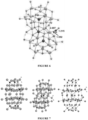
Figure 7 . Ball and stick structure representation for the Wells-Dawson {α2-TM(H2O)P2W17O61}q- (Left), the "Sandwich" {[(TM(H2O)]2WZn(ZnW9O34)2}q- (middle) and the Quasi Wells-Dawson {NaH2TM(H2O)W17F6O55}q- Type Anions (right). - The present invention provides a process for the preparation of aldehydes and/or ketones from alkenes, comprising the step of contacting said alkene with a nitro coordinated polyoxometalate catalyst comprising a transition metal (TM), or a solvate thereof, thereby generating the aldehydes and/or ketones; wherein said polyoxometalate catalyst is a polyoxoanion salt polyoxometalate represented by the structure of formula I:
Qq[XxMmTMnLlOyFz] or a solvate thereof, wherein - X is a metal or non-metal heteroatom, a proton or combination thereof;
- M is an addenda atom selected from the group consisting of tungsten (W), molybdenum (Mo), niobium (Nb), and vanadium (V), and any combination thereof;
- TM is a transition metal selected from the group consisting of chromium (Cr), iron (Fe), manganese (Mn), cobalt (Co), nickel, (Ni), copper (Cu), zinc (Zn), ruthenium (Ru), palladium (Pd), platinum (Pt), iridium (Ir), rhodium (Rh) and any combination thereof;
- L is nitrogen dioxide (NO2);
- Q is a counter-cation selected from the group consisting of an alkali metal cation, an alkaline earth metal cation, a transition metal cation, an organic cation, a substituted or unsubstituted quaternary ammonium cation, an adduct of said quaternary ammonium cation with NO2, a substituted or unsubstituted quaternary phosphonium cation, an adduct of said quaternary phosphonium cation with NO2, and any combination thereof;
- O is oxygen; F is fluorine; x is an integer between 0 and 6; m is an integer between 4 and 200; n is an integer between 1 and 10; l is an integer between 1 and 10; y is an integer between 5 and 1000; q is an integer between 0 and 30; and z is an integer between 0 to 20.
- The present invention is based on part on the surprising discovery that reaction of NO2 with a transition metal (TM)-substituted polyoxometalate yields a TM-nitro intermediate that was surprisingly competent for the oxidative cleavage of alkenes with formation of metal nitrosyl intermediates. The later could be re-oxidized with O2 to yield a catalytic cycle as shown in
Scheme 1.Scheme 1 shows aerobic oxidative cleavage of alkenes catalysed by transition metal polyoxometalates using, as an example, the Wells-Dawson {α2-TM(L)P2W17O61}8- , the "sandwich" type {[(TM(L)]2WZn(ZnW9O34)2}12- or the Quasi Wells-Dawson Qq{X'H2TM(L)W17F6O55}; (Figure 7 ) catalytic systems, wherein TM is Cu, Zn, Fe, Mn, Co, Ni, and L is NO2.
- In one embodiment, this invention is directed to a process for the preparation of aldehydes and/or ketones from alkenes, comprising the step of contacting said alkene with a nitro coordinated polyoxometalate catalyst comprising a transition metal (TM), or a solvate thereof, thereby generating the aldehydes and/or ketones. In another embodiment, the nitro coordinated polyoxometalate catalyst forms a transition metal-NO2 complex which catalyses C=C bond cleavage of the alkene, thereby generating the aldehydes and/or ketones.
- In one embodiment, this invention is directed to a process for the preparation of aldehydes and/or ketones from alkenes, comprising the step of contacting said alkene with polyoxometalate precatalyst comprising a transition metal (TM), or a solvate thereof, in the presence of nitrogen dioxide (NO2), forming a nitro coordinated polyoxometalate catalyst, thereby generating the aldehydes and/or ketones. In another embodiment, the nitro coordinated polyoxometalate catalyst form a transition metal-NO2 complex which catalyses C=C bond cleavage of the alkene, thereby generating the aldehydes and/or ketones.
- In one embodiment, this invention is directed to a process for the preparation of aldehydes and/or ketones from alkenes, comprising the step of contacting said alkene with polyoxometalate precatalyst comprising a transition metal (TM), or a solvate thereof, in the presence of nitroalkane and oxygen, forming a nitro coordinated polyoxometalate catalyst, thereby generating the aldehydes and/or ketones.
- In one embodiment, this invention is directed to a process for the preparation of aldehydes and/or ketones from alkenes, comprising the step of contacting said alkene with nitrosyl (NO) coordinated polyoxometalate precatalyst comprising a transition metal (TM), or a solvate thereof, in the presence of oxygen, forming a nitro coordinated polyoxometalate catalyst, thereby generating the aldehydes and/or ketones.
- In some embodiments, the molar ratio of polyoxometalate to alkene is about 1 equivalent of polyoxometalate per alkene. In other embodiments, the molar ratio of polyoxometalate to alkene is about 0.1-1 equivalents of polyoxometalate per alkene. In other embodiments, the molar ratio of polyoxometalate to alkene is about 0.05 equivalent of polyoxometalate per alkene. In other embodiments, the molar ratio of polyoxometalate to alkene is about 0.02 equivalent of polyoxometalate per alkene. In other embodiments, the molar ratio of polyoxometalate to alkene is about 0.01 or less equivalent of polyoxometalate per alkene. Each possibility represents a separate embodiment of the present invention.
- In some embodiments, the process of this invention is carried out under anaerobic conditions, while in one embodiment the reaction is carried out in the presence of oxygen (O2). In some embodiment, the oxidation reaction is performed in the presence of molecular oxygen, hence in an atmosphere having at least partial pressure of O2. In some embodiments, the oxidation reaction is performed in the presence of a predetermined and controllable partial pressure of O2. According to some embodiments, partial pressure of O2 in the atmosphere at which the reaction is performed ranges from 0.1 bar of O2 to about 5 bar of O2. In another embodiment, suitable oxygen pressures range from sub atmospheric O2 pressure, to atmospheric pressure to about 2-3 bars O2. It is noted herein that the reaction is not limited by its efficiency to 5 bar of O2, and higher pressures are also suitable.
- In one embodiment, this invention is directed to a nitro coordinated polyoxometalate catalyst represented by the structure of Qq[XxMmTMnLlOyFz] (I) or a solvate thereof, wherein X is a metal or non-metal heteroatom, a proton or combination thereof; M is an addenda atom selected from the group consisting of tungsten (W), molybdenum (Mo), niobium (Nb), and vanadium (V), and any combination thereof; TM is a transition metal selected from the group consisting of chromium (Cr), iron (Fe), manganese (Mn), cobalt (Co), nickel, (Ni), copper (Cu), zinc (Zn), ruthenium (Ru), palladium (Pd), platinum (Pt), iridium (Ir), rhodium (Rh) and any combination thereof; L is nitro (NO2); Q is a counter-cation selected from the group consisting of an alkali metal cation, an alkaline earth metal cation, a transition metal cation, an organic cation, a substituted or unsubstituted quaternary ammonium cation, an adduct of said quaternary ammonium cation with NO2, a substituted or unsubstituted quaternary phosphonium cation, an adduct of said quaternary phosphonium cation with NO2, and any combination thereof; O is oxygen; F is fluorine; x is an integer between 0 and 6; m is an integer between 4 and 200; n is an integer between 1 and 10; l is an integer between 1 and 10; y is an integer between 5 and 1000; q is an integer between 0 and 30; and z is an integer between 0 and 20.
- In some embodiments, the polyoxometalate catalyst is a Wells-Dawson type polyoxometalate represented by the structure Qq{α2-TM(L)P2W17O61} or Qq{α1-TM(L)P2W17O61} wherein Q, q, TM and L are as defined above. In some preferred embodiments of the Wells-Dawson type polyoxometalate:
- TM is a transition metal selected from Cr, Mn, Fe, Co, Ni, Cu, Zn and Ru, preferably Ru, Fe, Mn, Co, Ni and Cu;
- L is NO2;
- Q is a counter-cation selected from the group consisting of an alkali metal cation, an alkaline earth metal cation, a transition metal cation, an organic cation, a substituted or unsubstituted quaternary ammonium cation, an adduct of said quaternary ammonium cation with NO2, a substituted or unsubstituted quaternary phosphonium cation, an adduct of said quaternary phosphonium cation with NO2, and any combination thereof; and
- q is an integer between 6 and 12.
- Examples of Wells-Dawson type polyoxometalate include: Q8{α2-Cu(NO2)P2W17O61}, Q8{α1-Cu(NO2)P2W17O61}.
- In other preferred embodiments, the polyoxometalate catalyst is a "sandwich" type polyoxometalate represented by the structure Qq{[(TM(L)]2WZn(ZnW9O34)2} or Qq{[(TM(L)]2WCo(CoW9O34)2} wherein Q, q, TM and L are as defined above. In some preferred embodiments of the "sandwich" type polyoxometalate:
- TM is a transition metal selected from Cr, Mn, Fe, Co, Ni, Cu, Zn and Ru, preferably Ru, Fe, Mn, Co, Ni and Cu;
- L is NO2;
- Q is a counter-cation selected from the group consisting of an alkali metal cation, an alkaline earth metal cation, a transition metal cation, an organic cation, a substituted or unsubstituted quaternary ammonium cation, an adduct of said quaternary ammonium cation with NO2, a substituted or unsubstituted quaternary phosphonium cation, an adduct of said quaternary phosphonium cation with NO2, and any combination thereof; and q is an integer between 6 and 12.
- Examples of "sandwich" type polyoxometalate include: Q12{ZnWCu2(NO2)2(ZnW9O34)2}, or Q12{CoWCu2(NO2)2(CoW9O34)2}.
- In some embodiments, the polyoxometalate catalyst is a "Keggin" type polyoxometalate represented by the structure Qq{XTM(L)M11O39} wherein Q, q, X, TM, L and M are as defined above. In some preferred embodiments of the "Keggin" type polyoxometalate, X is P, Si or As; M is Mo, W or a combination thereof, and q is 3-10.
- In some embodiments, the polyoxometalate catalyst is quasi Wells-Dawson polyfluoroxometalate type polyoxometalate represented by the structure Qq{X'H2TM(L)W17F6O55}. In another embodiment, X' is Na, TM is Cu or Mn, and q is between 3 to 10. In another embodiment, Qq[XxMmTMnLlOyFz] is represented by the structure Qq{X'H2TM(L)W17F6O55}; wherein X is X' and a proton and X' is Na; and M is W.
- Examples of quasi Wells-Dawson polyfluoroxometalate type polyoxometalate catalyst include Q9{NaH2Cu(NO2)W17F6O55} and Q9{NaH2Mn(NO2)W17F6O55}.
- In another embodiment, Q substituents for any of the foregoing polyoxometalate catalysts are trioctylmethylammonium or NO2 adducts thereof.
- In another embodiment X substituents for any of the foregoing catalysts are Na, B, Al, Ga, In, Si, Ge, Sn, P, As, Sb, S, Se Te, a proton or any combination thereof.
- In another embodiment X' substituents for any of the foregoing catalysts is Na.
- In some embodiments, a polyoxometalate precatalyst is used for the preparation of the polyoxometalate catalyst. In one embodiment, the precatalyst is used in situ, in the alkene reaction mixture. In one embodiment, the nitro coordinated polyoxometalate and its use in the process of the preparation of ketone and/or aldehyde is formed independent/separately from the alkene reaction mixture. In another embodiment, the nitro coordinated polyoxometalate is formed by reacting a precatalyst in the presence of NO2 or N2O4. In another embodiment, the nitro coordinated polyoxometalate is formed by reacting under aerobic conditions polyoxometalate precatalyst and a nitroalkane. In another embodiment, the nitro coordinated polyoxometalate is formed by reacting a nitrosyl (NO) coordinated polyoxometalate precatalyst under aerobic conditions.
- In one embodiment, a polyoxometalate precatalyst is used for the preparation of the polyoxometalate catalyst. In another embodiment, the precatalysts are soluble polyoxoanion salts represented by the general formula Qq[XxMmTMnLlOyFz] or a solvate thereof, wherein X is a metal ,non-metal heteroatom, a proton or any combination thereof; M is an addenda atom selected from the group consisting of tungsten (W), molybdenum (Mo), niobium (Nb), and vanadium (V), and any combination thereof; TM is a transition metal selected from the group consisting of chromium (Cr), iron (Fe), manganese (Mn), cobalt (Co), nickel, (Ni), copper (Cu), zinc (Zn), ruthenium (Ru), palladium (Pd), platinum (Pt), iridium (Ir), rhodium (Rh) and any combination thereof; L is absent or is a ligand selected from the group consisting of (H2O), hydroxyl (OH), a halide selected from F, Cl, Br and I; a pseudohalide selected from CN, OCN and SCN; nitrosyl (NO) and any combination thereof; Q is a counter-cation selected from the group consisting of an alkali metal cation, an alkaline earth metal cation, a transition metal cation, an organic cation, a substituted or unsubstituted quaternary ammonium cation, a substituted or unsubstituted quaternary phosphonium cation, and any combination thereof; O is oxygen; F is fluorine; x is an integer between 0 and 6; m is an integer between 4 and 200; n is an integer between 1 and 10; l is an integer between 0 and 10; y is an integer between 5 and 1000; q is an integer between 0 and 30; and z is an integer between 0 and 20.
- In some embodiments, the polyoxometalate precatalyst is a Wells-Dawson type polyoxometalate represented by the structure Qq{α2-TM(L)P2W17O61} or Qq{α1-TM(L)P2W17O61} wherein Q, q, TM and L are as defined above. In some preferred embodiments of the Wells-Dawson type polyoxometalate:
- TM is a transition metal selected from Cr, Mn, Fe, Co, Ni, Cu, Zn and Ru, preferably Ru, Fe, Mn, Co, Ni and Cu;
- L is H2O or NO;
- Q is a counter-cation selected from the group consisting of an alkali metal cation, an alkaline earth metal cation, a transition metal cation, an organic cation, a substituted or unsubstituted quaternary ammonium cation, an adduct of said quaternary ammonium cation with NO2, a substituted or unsubstituted quaternary phosphonium cation, an adduct of said quaternary phosphonium cation with NO2, and any combination thereof; and
- q is an integer between 6 and 12.
- Examples of Wells-Dawson type polyoxometalate precatalysts include: Q8{α2-Cu(H2O)P2W17O61}, Q8{α2-Cu(NO)P2W17O61}, Q8{α1-Cu(H2O)P2W17O61} and Q8{α1-Cu(NO)P2W17O61}.
- In other preferred embodiments, the polyoxometalate precatalyst is a "sandwich" type polyoxometalate represented by the structure Qq{[(TM(L)]2WZn(ZnW9O34)2} or Qq{[(TM(L)]2WCo(CoW9O34)2} wherein Q, q, TM and L are as defined above. In some preferred embodiments of the "sandwich" type polyoxometalate:
- TM is a transition metal selected from Cr, Mn, Fe, Co, Ni, Cu, Zn and Ru, preferably Ru, Fe, Mn, Co, Ni and Cu;
- L is H2O or NO;
- Q is a counter-cation selected from the group consisting of an alkali metal cation, an alkaline earth metal cation, a transition metal cation, an organic cation, a substituted or unsubstituted quaternary ammonium cation, an adduct of said quaternary ammonium cation with NO2, a substituted or unsubstituted quaternary phosphonium cation, an adduct of said quaternary phosphonium cation with NO2, and any combination thereof; and
- q is an integer between 6 and 12.
- Examples of "sandwich" type polyoxometalate precatalyst include: Q12{ZnWCu2(H2O)2(ZnW9O34)2}, Q12{ZnWCu2(NO)2(ZnW9O34)2}, Q12{CoWCu2(H2O)2(CoW9O34)2} or Q12{CoWCu2(NO)2(CoW9O34)2}.
- In other preferred embodiments, the polyoxometalate precatalyst is a "Keggin" type polyoxometalate represented by the structure Qq{XTM(L)M11O39} wherein Q, q, X, TM, L and M are as defined above. In some preferred embodiments of the "Keggin" type polyoxometalate, X is P, Si or As; M is Mo, W or a combination thereof, and q is 3-10.
- In some embodiments, the polyoxometalate precatalyst is quasi Wells-Dawson polyfluoroxometalate type polyoxometalate represented by the structure Qq{X'H2TM(L)W17F6O55}. In another embodiment, X' Na, TM is Cu or Mn, and q is between 3 to 10. In another embodiment, Qq[XxMmTMnLlOyFz] is represented by the structure Qq{X'H2TM(L)W17F6O55}; wherein X is X' and a proton and X' is Na; and M is W.
- Examples of quasi Wells-Dawson polyfluoroxometalate type polyoxometalate precatalyst include Q9{NaH2Cu(H2O)W17F6O55}, Q9{NaH2Mn(H2O)W17F6O55}, Q9{NaH2Cu(NO)W17F6O55} and Q9{NaH2Mn(NO)W17F6O55}.
- In another embodiment X' is Na.
- Preferred X substituents for any of the foregoing precatalysts are Na, B, Al, Ga, In, Si, Ge, Sn, P, As, Sb, S, Se Te, a proton or any combination thereof.
- The term "solvate" refers to a complex of variable stoichiometry (e.g., di-, tri-, tetra-, penta-, hexa-, and so on up to 1000-), which is formed by a solute (transition metal-polyoxometalate) and a solvent, whereby the solvent does not interfere with the activity of the solute. Suitable solvents and solvent mixture may include, for example, water, acetonitrile, ethanol, acetic acid and the like.
- The polyoxometalate catalysts or precatalysts are often found in solvated forms, for example hydrates. Thus, the present invention encompasses polyoxometalate solvates, such as polyoxometalate hydrates. Other solvate molecules of polyoxometalate include diethylether, acetonitrile, dimethylsulfoxide, tetrahydrofuran, methanol, ethanol solvates and so forth. The amount of solvate molecules can vary from less than one to a few hundred.
- The term "hydrate" refers to a solvate, as defined hereinabove, where the solvent is water. The number of water molecules in a hydrate can range from 1 and up to 1,000.
- The polyoxometalate catalysts or precatalysts are represented by formula I: Qq[XxMmTMnLlOyFz]. In one embodiment, M is an addenda atom selected from the group consisting of tungsten (W), molybdenum (Mo), niobium (Nb), and vanadium (V), and any combination thereof. In another embodiment, M is tungsten (W). In another embodiment, M molybdenum (Mo). In another embodiment, M is niobium (Nb). In another embodiment, M is vanadium (V). In one embodiment, x is an integer between 0 and 6. In another embodiment, x is 0. In another embodiment, x is 1, in another embodiment, x is 2. In another embodiment x is 3. In another embodiment, x is 4. In another embodiment, x is 5. In another embodiment, x is 6. In one embodiment, m is an integer between 4 and 200. In another embodiment, m is 4. In another embodiment, m is between 5 to 10. In another embodiment, m is between 10 to 20. In another embodiment, m is between 20 to 40. In another embodiment, m is between 5 to 50. In another embodiment, m is between 20 to 100. In another embodiment, m is between 100 to 200. In another embodiment, m is between 50 to 150. In another embodiment, m is between 4 to 50. In another embodiment, m is between 4 to 100. In one embodiment, n is an integer between 1 and 10. In another embodiment, n is 1. In another embodiment, n is 2. In another embodiment, n is 3. In another embodiment, n is 4. In another embodiment, n is 5. In another embodiment, n is 6. In another embodiment, n is 7. In another embodiment, n is 8. In another embodiment, n is 9. In another embodiment, n is 10. In one embodiment, l is an integer between 1 and 10. In another embodiment, l is 1. In another embodiment, l is 2. In another embodiment, l is 3. In another embodiment, l is 4. In another embodiment, l is 5. In another embodiment, l is 6. In another embodiment, l is 7. In another embodiment, l is 8. In another embodiment, l is 9. In another embodiment, l is 10. In one embodiment, y is an integer between 5 and 1000. In another embodiment, y is an integer between 5 and 20. In another embodiment, y is an integer between 5 and 100. In another embodiment, y is an integer between 50 and 200. In another embodiment, y is an integer between 50 and 500. In another embodiment, y is an integer between 100 and 1000. In one embodiment q is an integer between 0 and 30. In another embodiment, q is 0. In another embodiment, q is an integer between 1 and 30. In another embodiment, q is an integer between 0 to 10. In another embodiment, q is an integer between 5 and 15. In one embodiment, z is an integer between 0 and 20. In another embodiment, z is 0. In another embodiment, z is an integer between 1-20. In another embodiment, z is an integer between 1 and 10. In another embodiment, z is an integer between 5 and 20. In another embodiment, z is an integer between 5 and 15.
- The polyoxometalate catalysts or precatalysts include transition metals. In one embodiment, the transition metals (TM) may be in any oxidation state such as (II), (III), (IV) etc. In another embodiment, the transition metal is chromium (Cr). In another embodiment, the transition metal is iron (Fe). In another embodiment, the transition metal is manganese (Mn). In another embodiment, the transition metal is cobalt (Co). In another embodiment, the transition metal is nickel, (Ni). In another embodiment, the transition metal is copper (Cu). In another embodiment, the transition metal is zinc (Zn). In another embodiment, the transition metal is ruthenium (Ru). In another embodiment, the transition metal is palladium (Pd). In another embodiment, the transition metal is platinum (Pt). In another embodiment, the transition metal is iridium (Ir). In another embodiment, the transition metal is rhodium (Rh). In another embodiment, the transition metal is chromium (Cr), iron (Fe), manganese (Mn), cobalt (Co), nickel, (Ni), copper (Cu), zinc (Zn), ruthenium (Ru), palladium (Pd), platinum (Pt), iridium (Ir), rhodium (Rh) and any combination thereof or any combination thereof.
- As mentioned above, the nature of the alkene substrate is not particularly limiting, and alkenes from synthetic or natural-bio-renewable origin may be used in the process of the invention. In one embodiment, the alkene is linear or branched alkene. In another embodiment, the alkene is non-cyclic. In another embodiment, the alkene is a linear or branched substituted monounsaturated or polyunsaturated alkene.
- In another embodiment, the alkene is a 1-monosubstituted alkene, 1,1-disubstituted alkene, a 1,2-disubstituted alkene, a 1,1,2-trisubstituted alkene or a 1,1,2,2-tetrasubstituted alkene, wherein the substituents of the alkene include optionally substituted C1-C20 alkyl, optionally substituted aryl, optionally substituted cycloalkyl, optionally substituted heterocycloalkyl, optionally substituted heteroaryl. In another embodiment, the substituents of the aryl, alkyl, cycloalkyl and heterocycle include one or more substituents including NO2, CN, alkoxy, haloalkyl, halide, hydroxyl, thiol, amine, carboxylic acid, amide, ester or any combination thereof.
- In some embodiments, the alkene is represented by formula R1R2C=CR3R4 wherein R1-R4 is each independently a H, optionally substituted C1-C20 alkyl, optionally substituted aryl, optionally substituted cycloalkyl, or optionally substituted heterocycle or any combination thereof, wherein at least one of R1-R4 is other than H. In another embodiment, the substituents of the aryl, alkyl, cycloalkyl and heterocycle include NO2, CN, alkoxy, haloalkyl, halide, hydroxyl, thiol, amine, carboxylic acid, amide, ester or any combination thereof.
- As used herein, the term "alkyl" can be any straight- or branched-chain alkyl group containing up to about 30 carbons unless otherwise specified. In another embodiment, an alkyl includes C1-C5 carbons. In another embodiment, an alkyl includes C1-C6 carbons. In another embodiment, an alkyl includes C1-C8 carbons. In another embodiment, an alkyl includes C1-C10 carbons. In another embodiment, an alkyl is a C1-C12 carbons. In another embodiment, an alkyl is a C1-C20 carbons. In another embodiment, branched alkyl is an alkyl substituted by alkyl side chains of 1 to 5 carbons. In one embodiment, the alkyl group may be unsubstituted. In another embodiment, the alkyl group may be substituted by a halogen, haloalkyl, hydroxyl, alkoxy, carbonyl, amido, alkylamido, dialkylamido, cyano, nitro, CO2H, amino, alkylamino, dialkylamino, carboxyl, thio and/or thioalkyl.
- As used herein, the term "aryl" refers to any aromatic ring that is directly bonded to another group and can be either substituted or unsubstituted. The aryl group can be a sole substituent, or the aryl group can be a component of a larger substituent, such as in an arylalkyl, arylamino, arylamido, etc. Exemplary aryl groups include, without limitation, phenyl, tolyl, xylyl, furanyl, naphthyl, pyridinyl, pyrimidinyl, pyridazinyl, pyrazinyl, triazinyl, thiazolyl, oxazolyl, isooxazolyl, pyrazolyl, imidazolyl, thiophene-yl, pyrrolyl, phenylmethyl, phenylethyl, phenylamino, phenylamido, etc. Substitutions include: F, Cl, Br, I, C1-C5 linear or branched alkyl, C1-C5 linear or branched haloalkyl, C1-C5 linear or branched alkoxy, C1-C5 linear or branched haloalkoxy, CF3, CN, NO2, -CH2CN, NH2, NH-alkyl, N(alkyl)2, hydroxyl.
- As used herein, the term "alkoxy" refers to an ether group substituted by an alkyl group as defined above. Alkoxy refers both to linear and to branched alkoxy groups. Nonlimiting examples of alkoxy groups are methoxy, ethoxy, propoxy, iso-propoxy, tert-butoxy.
- A "haloalkyl" group refers, in another embodiment, to an alkyl group as defined above, which is substituted by one or more halogen atoms, e.g. by F, Cl, Br or I. Nonlimiting examples of haloalkyl groups are CF3, CF2CF3, CH2CF3.
- A "cycloalkyl" group refers, in one embodiment, to a ring structure comprising carbon atoms as ring atoms, which may be either saturated or unsaturated, substituted or unsubstituted. In another embodiment the cycloalkyl is a 3-12 membered ring. In another embodiment the cycloalkyl is a 6 membered ring. In another embodiment the cycloalkyl is a 5-7 membered ring. In another embodiment the cycloalkyl is a 3-8 membered ring. In another embodiment, the cycloalkyl group may be unsubstituted or substituted by a halogen, alkyl, haloalkyl, hydroxyl, alkoxy, carbonyl, amido, alkylamido, dialkylamido, cyano, nitro, CO2H, amino, alkylamino, dialkylamino, carboxyl, thio and/or thioalkyl. In another embodiment, the cycloalkyl ring may be fused to another saturated or unsaturated cycloalkyl or heterocyclic 3-8 membered ring. In another embodiment, the cycloalkyl ring is a saturated ring. In another embodiment, the cycloalkyl ring is an unsaturated ring. Non limiting examples of a cycloalkyl group comprise cyclohexyl, cyclohexenyl, cyclopropyl, cyclopropenyl, cyclopentyl, cyclopentenyl, cyclobutyl, cyclobutenyl, cycloctyl, cycloctadienyl (COD), cycloctaene (COE) etc.
- A "heterocycle" or "heterocyclic" group refers, in one embodiment, to a ring structure comprising in addition to carbon atoms, sulfur, oxygen, nitrogen or any combination thereof, as part of the ring. In another embodiment the heterocycle is a 3-12 membered ring. In another embodiment the heterocycle is a 6 membered ring. In another embodiment the heterocycle is a 5-7 membered ring. In another embodiment the heterocycle is a 3-8 membered ring. In another embodiment, the heterocycle group may be unsubstituted or substituted by a halogen, alkyl, haloalkyl, hydroxyl, alkoxy, carbonyl, amido, alkylamido, dialkylamido, cyano, nitro, CO2H, amino, alkylamino, dialkylamino, carboxyl, thio and/or thioalkyl. In another embodiment, the heterocycle ring may be fused to another saturated or unsaturated cycloalkyl or heterocyclic 3-8 membered ring. In another embodiment, the heterocyclic ring is a saturated ring. In another embodiment, the heterocyclic ring is an unsaturated ring. Non limiting examples of a heterocyclic rings comprise pyridine, piperidine, morpholine, piperazine, thiophene, pyrrole, benzodioxole, or indole.
- The alkene substrates used in the process of the invention contain one or more double bonds. The present invention encompasses all structural and geometrical isomers including cis, trans, E and Z isomers, independently at each occurrence. Thus, the alkene may be a cis-alkene, trans-alkene, (Z) or (E) isomers, or combinations thereof.
- In some embodiments, the alkene is selected from the group consisting of PhC(CH3)=CH2, Ph2C=CH2, (Z)-PhHC=CHPh, (E)-PhHC=CHPh, and Ph2C=CPh2.
- In addition, the alkene may be a monounsaturated or polyunsaturated alkene. In some embodiments, the alkene is a mono or poly- unsaturated fatty acid or a fatty acid derivative, which is preferably derived from a natural source. Non-limiting examples of alkenes include monounsaturated fatty acids, polyunsaturated fatty acids, monounsaturated fatty alcohols, polyunsaturated fatty alcohols, monounsaturated amides, polyunsaturated amides, monounsaturated esters, polyunsaturated esters, monounsaturated nitriles and polyunsaturated nitriles, including all isomers thereof.
- Non-limiting examples of alkenes include R-X wherein R is a mono or polyunsaturated alkenyl, and X = COOH, COOR', CONH2, CONHR', CON(R')2, CN, OH or NH2 wherein R' is independently at each occurrence an alkyl, Examples include fatty acids (R-COOH) such as oleic acid, elaidic acid, linoleic acid (alpha or gamma), linolenic acid, eicosapentaenoic acid, docosahexaenoic acid, arachidonic acid, palmitic acid, palmitoleic acid, stearic acid, myristic acid, lauric acid, and tetradec-7-enoic acid; or an amine (X=NH2), amide (X=CONH2, CONHR' or CON(R')2), alcohol (X=OH), ester (X=COOR') or nitrile (X=CN) derivative of any of the foregoing fatty acids. It is understood by a person of skill in the art that any other mono or polyunsaturated alkene can be used as a starting material in the process of the invention.
- As used herein and in the appended claims the singular forms "a", "an," and "the" include plural references unless the content clearly dictates otherwise.
- The principles of the present invention are demonstrated by means of the following non-limitative examples.
- A reaction of 0.156 M Q'8{α2-Co(NO2)P2W17O61} with 0.078 M trans-stilbene in 0.5 mL of DCM/acetone (80/20, vol%) under Ar at 295 K yielded benzaldehyde as the sole product at 80% conversion by gas chromatographic (GC) analysis. In order to verify that Q' = [(C8H17)3CH3N-NO2]+ was not involved in this oxidative cleavage reaction and that the Co(III)-NO2 moiety was responsible for the reaction observed, two control reactions were performed. The first was simply the reaction of trans-stilbene with Q'Cl, and the second involved the addition of 8 equiv of Q'Cl to the Co(II)-aqua species, Q8{α2- CoII(H2O)P2W17O61}, and then its reaction with trans-stilbene. In neither case was any formation of benzaldehyde observed.
- It was demonstrated that various Wells-Dawson type polyoxometalates {α2-TM(NO2)P2W17O61}q- where TM = Fe, Mn, Co, Ni, Cu, are reactive for the oxidative cleavage of alkenes in stoichiometric reactions under anaerobic conditions. For example, a series of alkenes was reacted with Q8{α2-Co(NO2)P2W17O61} (Q = trioctylmethylammonium and/or the NO2 adduct thereof) to yield the aldehyde/ketone product only (
Figure 1 ). The order of reactivity, as determined by the relative rate of reaction was 1,1-disubstituted alkenes < 1,2-disubstituted alkenes < 1,1,2- trisubstituted alkenes < tetraphenylethene. Trans-stilbene was more reactive than the cis- isomer. Oxidation of mono-substituted alkene such as styrene was slower and was less selective to benzaldehyde. - Using various substituted trans-stilbene derivatives led to a Hammett plot that showed a change in the reaction mechanism from a positively charged transition state to a negatively charged one when going from electron-donating substituents (ρ = -0.77) to electron-withdrawing substituents (ρ = 0.28) on the 4,4'-positions of the phenyl rings (
Figure 4 ). The low absolute ρ values indicate only a partial charge at the transition state and, therefore, more than likely a homolytic bond cleavage reaction rather than a more ionic heterolytic bond cleavage step. - The temperature dependence of the oxidative cleavage reaction was surveyed for trans-stilbene and its 4,4'-OMe and 4,4'-NO2 derivatives as substrates (Table 1). As can be seen, the activation parameters, ΔG‡, ΔH‡, and ΔS‡, extracted from the Eyring plot, are very similar for all three substrates. Most significantly, the reaction is entropy controlled, the large negative value of ΔS‡ indicating a highly ordered transition state.
Table 1: Activation parameters for the reaction of trans-stilbene derivatives. Substituent ΔG‡ 298 b) ΔH‡ 298 b) ΔS‡ 298 c) 4,4'-OMe 20.5 2.4 -60.5 H 20.7 3.1 -59.1 4,4'-NO2 20.4 2.3 -60.8 a) Reaction conditions: Trans-stilbene deivatives (62.5mM) Q'8{α2-Co(NO2)P2W17O61} (15.6mM) in 0.5 mL DCM/acetone- d 6 80/20 vol/vol % under Ar at 233-298K; b) in kcal·mol-1; c) in cal·mol-1· K-1. - The fate of the {α2-Co(NO2)P2W17O61}8- anion during the oxidative cleavage reaction of the trans-stilbene derivatives was followed by 31P NMR (
Figure 5 ). One may observe the formation of the nitrosyl product, {α2-Co(NO)P2W17O61}8-, which has a spectrum, δ = -6.7 and -9.6 ppm, identical to that of a separately prepared compound. In addition, an intermediate species, Int, was observed that is assigned to a {α2- Co(NO2)P2W17O61}8--trans-stilbene adduct that disappeared upon heating of the sample. The amount of Int increases as the reaction continues (Figure 5 , inset). The peak width, the upfield chemical shift and position, and the absence of a complementary peak attributable to the phosphorus atom vicinal to the cobalt center argue for an intermediate in which it is reasonable that electron density is transferred from the double bond of the trans-stilbene to the polyoxometalate; that is, it is a Co (II) species. Further evidence for this assignment came from the integration of the combined {α2-Co(NO)-P2W17O61}8- and Int peaks, which showed a conversion commensurate with the conversion observed by GC analysis.Next, a catalytic reaction using O2 as the terminal oxidant was performed as described inScheme 1. Surveying the reactivity of nitrosyl ligated compounds revealed that the copper substituted compound, Q8{α2-Cu(NO)P2W17O61} did slowly react with O2 at slightly elevated temperatures of 65 °C to yield Q8{α2-Cu(NO2)P2W17O61}. Measurement of the kinetics of the reaction of O2 and Q8{α2-Cu(NO)-P2W17O61} to give Q8{α2-Cu(NO2)P2W17O61} showed that the reaction was second order in Q8{α2-Cu(NO)P2W17O61} and zero order in O2. - It was observed that the aforementioned polyoxometalate was less stable at elevated temperatures, undergoing demetalation of the Cu center and formation of the lacunary species Q10{α2-P2W17O61}. Accordingly, the more stable sandwich type compounds, {[(TM(L)]2WZn(ZnW9O34)2}12-, were used for the catalytic reactions.
- Qq{[(TM(NO2)]2WZn(ZnW9O34)2} complexes were prepared for TM = Cu, Mn, Ru, Fe, Co, and Ni and Q = trioctylmethylammonium and/or the NO2 adduct thereof and reacted with trans-stilbene in the presence of O2 (
Figure 2 ). The results show that the Cu substituted compound was the most reactive catalyst. This catalyst was thus used for the remaining studies. - Under O2 pressure at 85 °C, a control reaction in acetonitrile with the aqua complex, Q12{ZnWCu2(H2O)2(ZnW9O34)2}, Q = trioctylmethylammonium and/or the NO2 adduct thereof showed no activity. However, the nitrosyl compounds Q12{ZnWCu2(NO)2(ZnW9O34)2} did lead to efficient oxidation of trans-stilbene in the presence of O2 (Scheme 2).

- It was observed, however, that organic nitro compounds could be used as solvents/reagents in the oxidative cleavage reactions. In
Scheme 3, a comparison was made between the reaction of aryl substituted ethenes catalysed by the nitro ligated compound, Q12{ZnWCu2(NO2)2(ZnW9O34)2}, Q = the NO2 adduct of trioctylmethylammonium, carried out in acetonitrile (=System A) and a reaction catalysed by aqua compound Q12{ZnWCu2(H2O)2(ZnW9O34)2} Q = trioctylmethylammonium carried out in nitroethane (=System B). The reactions carried out in nitroethane gave significantly higher conversions and thus aldehyde products tended to be further oxidized to benzoic acid derivatives. It should be noted, however that increasing the pressure to 3 bar O2 for reactions carried out using system B, raised the conversions to >90% with little change in reaction selectivity. Only in the case of cis- and trans-stilbene was nitration at the double bond observed. Trans-stilbene oxide could be further oxidized to benzaldehyde, but the diketone benzil was not reactive. Therefore, the former may be an intermediate in the reaction although in the stoichiometric reactions it was not observed. - Furthermore, it was observed that O2 was required when nitroethane was used as a solvent. Use of acetonitrile/nitroethane as solvents with Q12{ZnWCu2(H2O)2(ZnW9O34)2} Q = trioctylmethylammonium as catalyst was also efficient; the kinetic profiles showed that reactions were dependent on the nitroethane concentration.

- The reaction with nitroethane as solvent or reagent was especially intriguing and raised the hypothesis that Q12{ZnWCu2(H2O)2(ZnW9O34)2} in the presence of O2 catalysed the formation of NO2, which would then yield a Cu-NO2 active species. Mechanistic studies indeed provide support for formation of NO2 from nitroethane under the aerobic reaction conditions noted in Scheme 3 (data not shown).
- A comparison of reaction with various nitroalkanes, RNO2, as solvent where R = Me, Et, i-Pr, and t-Bu (5% Q12[ZnWCuII 2(H2O)2(ZnW9O34)2] Q = trioctylmethylammonium, 0.065 mmol trans-stilbene R-NO2 0.5 mL,
O 2 3 bar, 850C, 1 h) showed conversions 88% (Et) ~ 85% (Me) > 40% (i-Pr) > ~1% (t-Bu). - It was shown noted above that NO2 bound to a copper substituted sandwich type polyoxometalate efficiently catalysed the oxidative cleavage of arylated ethenes, when NO2 was used a reagent or formed in situ either by oxidation of a nitrosyl substituted precursor or via decomposition of a nitroalkane under reaction conditions. The scope of the reaction for further substrate types was investigated. One interesting example is the oxidation of a bio-renewable based substrate, such as the methyloleate. Thus, the aerobic oxidative cleavage of methyloleate to yield the aldehyde, methyl-8-formyl-octanoate, could be a very accessible pathway to 9-amino methylnonanoate that could be used to make
nylon 9. According toScheme 4, greater than 90 % yields of aldehyde products, nonanal and methyl-8-formyl-octanoate were attainable using nitroethane as solvent at 85 °C, or using a minimal amount of NO2 with propionic acid as solvent at 125 °C. There was only slight formation, <3 % of epoxide and carboxylic acids and no nitration products were observed.
- K8{α2-TM(H2O)P2W17O61} where TM = CoII, CuII were prepared by the known literature method, as were the Naq{ZnWTM2(H2O)2(ZnW9O34)2} compounds for TM = MnII FeIII, CoII, NiII and CuII.
- Aqua ligated polyoxometalates. Q8{α2-TM(H2O)P2W17O61} where Q = trioctylmethylammnonium were prepared by dissolving 200 mg of K8{α2-TM(H2O)P2W17O61} in 20 mL H2O at room temperature. Eight equivalents of trioctylmethylammonium chloride (133 mg) dissolved in 20 mL dichloromethane were added and the biphasic mixture was vigorously stirred. The solvent was removed by evacuation from the lower organic phase to dryness, affording brown TM = CoII or green TM = CuII oil with yields of 95-100%. 31P NMR (85% H3PO4 external standard): TM = CoII -23.5 ppm, TM = CuII -10.3 ppm (
Figure 3 ). Visible spectra: λmax, nm (ε, cm-1M-1) for M = CoII 552 (96); M = CuII 722 (48). Thermogravimetric measurements for both Q8{α2-TM(H2O)P2W17O61} compounds showed a 42 % mass loss corresponding at up to 300 °C corresponding to 8 equivalents of Q per polyoxometalate unit. - Nitro ligated polyoxometalates. Q8{α2-TM(NO2)P2W17O61} where Q = trioctylmethylammonium and/or NO2 adduct thereof were prepared by dissolving 300 mg Q8{α2-TM(H2O)P2W17O61} in 1 mL dichloromethane in a 50 mL flask, which was evacuated from air by 3 freeze-pump-thaw cycles. Then, at 77 K, NO2(g) was introduced into the flask under vacuum for 1-2 sec producing initially a blue hue in the flask. After thawing to room temperature, an orange-brown gas lies above the colored solution. The flask was purged with Ar for 30 min after swirling it for a few seconds. A purple (TM = Co) or turquoise (TM = Cu) oil in quantitative yield was obtained and stored under Ar. 31P NMR (85% H3PO4 external standard): M = Co -6.2 and -9.3 ppm, M = Cu -6.1 and -9.1 ppm (
Figure 3 ). Visible spectra: λmax, nm (ε, cm-1M-1) for TM = Co 542 (81); M = Cu 783 (22). - Qq{[(TM(NO2)]2WZn(ZnW9O34)2} compounds were prepared for TM = Cu, Mn, Ru, Fe, Co, and Ni in an identical fashion from Naq{ZnWTM2(H2O)2(ZnW9O34)2} starting materials. Thus, Qq{[(TM(NO2)]2WZn(ZnW9O34)2} where Q = trioctylmethylammnonium were prepared by dissolving 200 mg of Naq{ZnWTM2(H2O)2(ZnW9O34)2} in 20 mL H2O at room temperature. Twelve equivalents of trioctylmethylammonium chloride (200 mg) dissolved in 20 mL dichloromethane were added and the biphasic mixture was vigorously stirred. The solvent was removed by evacuation from the lower organic phase to dryness, affording Qq{ZnWTM2(H2O)2(ZnW9O34)2}. Qq{ZnWTM2(H2O)2(ZnW9O34)2} was then reacted with NO2(g) at 77 K by its introduction into the flask under vacuum for 1-2 sec producing initially a blue hue in the flask. After thawing to room temperature, an orange-brown gas lies above the colored solution. The flask was purged with Ar for 30 min after swirling it for a few seconds. Qq{[(TM(NO2)]2WZn(ZnW9O34)2} were obtained in greater than 90% yield and stored under Ar.
- Nitrosyl ligated polyoxometalates. Q8{α2-TM(NO)P2W17O61} where Q = trioctylmethylammonium were prepared by dissolving 80 mg Q8{α2-TM(H2O)P2W17O61} in 1 mL dichloromethane in a 50 mL flask, which was evacuated from air by 3 freeze-pump-thaw cycles. In parallel, NO(g) was prepared by adding 900 mg NaNO2 (97%) to 5 mL glacial acetic acid. If some NO2 was formed (brown color) it was removed by a gentle flow of Ar. By
syringe 20 mL of the NO gas was injected to the polyoxometalate solution and shaken manually for 5 min with an accompanying color change. The flask was purged with Ar for 30 min. After removal of the solvent After pale-blue (TM = Co) or yellow (TM = Cu) oils were obtained in quantitative yield and stored under Ar. 31P NMR (85% H3PO4 external standard): TM = Co -6.7 and -9.6 ppm, TM = Cu -6.6 and -9.9 ppm. Visible spectra: λmax, nm (ε, cm-1M-1) for TM = Co 685 (108); TM = Cu ~400 shoulder. - Catalytic oxidation reactions were carried out in 25 mL ace glass pressure tubes. The tubes were charged with the catalyst, substrate and solvent in the specified amounts; air was purged and then pressurized with O2 and heated in a temperature controlled oil bath. At each relevant time period, an aliquot was taken, dissolved in 0.2 mL DCM and then analysed by GC/GC-MS.
Claims (14)
- A process for the preparation of aldehydes and/or ketones from alkenes, comprising the step of contacting said alkene with a nitro coordinated polyoxometalate catalyst comprising a transition metal (TM), or a solvate thereof, thereby generating the aldehydes and/or ketones; wherein said polyoxometalate catalyst is a polyoxoanion salt polyoxometalate represented by the structure of formula I:
Qq[XxMmTMnLlOyFz] or a solvate thereof, whereinX is a metal or non-metal heteroatom, a proton or combination thereof;M is an addenda atom selected from the group consisting of tungsten (W), molybdenum (Mo), niobium (Nb), and vanadium (V), and any combination thereof;TM is a transition metal selected from the group consisting of chromium (Cr), iron (Fe), manganese (Mn), cobalt (Co), nickel, (Ni), copper (Cu), zinc (Zn), ruthenium (Ru), palladium (Pd), platinum (Pt), iridium (Ir), rhodium (Rh) and any combination thereof;L is nitrogen dioxide (NO2);Q is a counter-cation selected from the group consisting of an alkali metal cation, an alkaline earth metal cation, a transition metal cation, an organic cation, a substituted or unsubstituted quaternary ammonium cation, an adduct of said quaternary ammonium cation with NO2, a substituted or unsubstituted quaternary phosphonium cation, an adduct of said quaternary phosphonium cation with NO2, and any combination thereof;O is oxygen;F is fluorine;x is an integer between 0 and 6;m is an integer between 4 and 200;n is an integer between 1 and 10;l is an integer between 1 and 10;y is an integer between 5 and 1000;q is an integer between 0 and 30; andz is an integer between 0 to 20. - The process according to claim 1, wherein said nitro coordinated polyoxometalate catalyst forms a transition metal-NO2 complex which catalyses C=C bond cleavage of the alkene, thereby generating the aldehydes and/or ketones.
- The process according to claim 1, wherein said nitro coordinated polyoxometalate is formed either in situ with said alkene or independent from said alkene; wherein said nitro coordinated polyoxometalate is formed byreacting a polyoxometalate precatalyst comprising a transition metal (TM), or a solvate thereof, with nitrogen dioxide (NO2); orreacting a polyoxometalate precatalyst and a nitroalkane under aerobic conditions; orreacting a nitrosyl (NO) coordinated polyoxometalate precatalyst under aerobic conditions or oxygen (O2) to yield nitro coordinated polyoxometalate.
- The process of claim 3, wherein said NO2 is added as a gas or in the form of its dimer N2O4, and wherein the reaction is conducted under aerobic or anaerobic conditions.
- The process according to claim 3, wherein said process of reacting polyoxometalate precatalyst and a nitroalkane under aerobic conditions in situ comprises contacting said alkene with an aqua (H2O) or other ligand coordinated polyoxometalate precatalyst in the presence of a nitroalkane and molecular oxygen (O2), wherein the nitroalkane decomposes to generate NO2 in situ and thereby said nitro coordinated polyoxometalate catalyst is formed.
- The process according to claim 1 or 2, wherein said process produces a nitrosyl (NO) coordinated polyoxometalate which is regenerated under aerobic conditions to produce a nitro (NO2) coordinated polyoxometalate.
- The process according to claim 1 or 2, wherein said alkene is non-cyclic alkene; orwherein said alkene is from a synthetic or natural, bio-renewable origin; orwherein said alkene is a 1-monosubstituted alkene, 1,1-disubstituted alkene, a 1,2-disubstituted alkene, a 1,1,2-trisubstituted alkene or a 1,1,2,2-tetrasubstituted alkene,for example, wherein said alkene is represented by formula R1R2C=CR3R4 wherein R1-R4 is each independently H, optionally substituted C1-C20 alkyl, optionally substituted aryl, optionally substituted cycloalkyl, optionally substituted heterocycloalkyl, optionally substituted heteroaryl, wherein at least one of R1-R4 is other than H; orwherein said alkene is selected from the group consisting of PhC(CH3)=CH2, Ph2C=CH2, (Z)-PhCH=CHPh, (E)-PhCH=CHPh, and Ph2C=CPh2; orwherein said alkene is selected from the group consisting of monounsaturated fatty acids, polyunsaturated fatty acids, monounsaturated fatty alcohols, polyunsaturated fatty alcohols, monounsaturated amides, polyunsaturated amides, monounsaturated esters, polyunsaturated esters, monounsaturated nitriles and polyunsaturated nitriles, including all isomers thereof.
- The process according to claim 3, wherein said polyoxometalate precatalyst is a polyoxoanion salt polyoxometalate represented by the structure of formula I:
Qq[XxMmTMnLlOyFz] or a solvate thereof, whereinX is a metal or non-metal heteroatom, a proton or a combination thereof;M is an addenda atom selected from the group consisting of tungsten (W), molybdenum (Mo), niobium (Nb), and vanadium (V), and any combination thereof;TM is a transition metal selected from the group consisting of chromium (Cr), iron (Fe), manganese (Mn), cobalt (Co), nickel, (Ni), copper (Cu), zinc (Zn), ruthenium (Ru), palladium (Pd), platinum (Pt), iridium (Ir), rhodium (Rh) and any combination thereof;L is absent or is a ligand selected from the group consisting of (H2O), hydroxyl (OH), a halide selected from F, Cl, Br and I; a pseudohalide selected from CN, OCN and SCN; nitrosyl (NO), and any combination thereof;Q is a counter-cation selected from the group consisting of an alkali metal cation, an alkaline earth metal cation, a transition metal cation, an organic cation, a substituted or unsubstituted quaternary ammonium cation, a substituted or unsubstituted quaternary phosphonium cation, and any combination thereof;O is oxygen;F is fluorine;x is an integer between 0 and 6;m is an integer between 4 and 200;n is an integer between 1 and 10;l is an integer between 0 and 10;y is an integer between 5 and 1000;q is an integer between 0 and 30; andz is an integer between 0 to 20. - The process according to claims 1 or 2, wherein the polyoxometalate catalyst is a Wells-Dawson type polyoxometalate represented by the structure Qq{α2-TM(L)P2W17O61} or Qq{α1-TM(L)P2W17O61}, or said polyoxometalate catalyst is Qq{[(TM(L)]2WZn(ZnW9O34)2} or Qq{[(TM(L)]2WCo(CoW9O34)2}, or said polyoxometalate is a Keggin type polyoxometalate represented by the structure Qq{XTM(L)M11O39}, or said polyoxometalate is a quasi Wells-Dawson polyfluoroxometalate represented by the structure Qq{X'H2TM(L)W17F6O55}; orthe process according to claim 8 wherein said polyoxometalate precatalyst is a Wells-Dawson type polyoxometalate represented by the structure Qq{α2-TM(L)P2W17O61} or Qq{α1-TM(L)P2W17O61}, or said polyoxometalate is Qq{[(TM(L)]2WZn(ZnW9O34)2} or Qq{[(TM(L)]2WCo(CoW9O34)2}, or said polyoxometalate is a Keggin type polyoxometalate represented by the structure Qq{XTM(L)M11O39}, or said polyoxometalate is a quasi Wells-Dawson polyfluoroxometalate represented by the structure Qq{X'H2TM(L)W17F6O55},wherein X, TM, L, Q, M and q are as defined in claim 1 or 8, respectively; and X' is Na.
- The process according to claim 9, wherein the polyoxometalate catalyst is Q8{α2-Cu(NO2)P2W17O61}, Q8{α1-Cu(NO2)P2W17O61}, Q12{ZnWCu2(NO2)2(ZnW9O34)2}, Q12{CoWCu2(NO2)2(CoW9O34)2}, Q9{NaH2Cu(NO2)W17F6O55} or Q9{NaH2Mn(NO2)W17F6O55}; or
wherein the polyoxometalate precatalyst is Q8{α2-Cu(H2O)P2W17O61}, Q8{α2-Cu(NO)P2W17O61}, Q8{α1-Cu(H2O)P2W17O61}, Q8{α1-Cu(NO)P2W17O61}, Q12{ZnWCu2(H2O)2(ZnW9O34)2}, Q12{ZnWCu2(NO)2(ZnW9O34)2}, Q12{CoWCu2(H2O)2(CoW9O34)2}, Q12{CoWCu2(NO)2(CoW9O34)2}, Q9{NaH2Cu(H2O)W17F6O55}, Q9{NaH2Mn(H2O)W17F6O55}, Q9{NaH2Cu(NO)W17F6O55} or Q9{NaH2Mn(NO)W17F6O55}. - The process according to claim 9, wherein X is Na, proton, P, Si or As; M is Mo, W or any combination thereof, and q is 3-10.
- The process according to claim 1 or 2, wherein Q is trioctylmethylammonium or an NO2 adduct thereof or wherein X is Na, B, Al, Ga, In, Si, Ge, Sn, P, As, Sb, S, Se, Te or a proton, or any combination thereof.
- A nitro coordinated polyoxometalate catalyst represented by the structure of formula I:
Qq[XxMmTMnLlOyFz] (I) or a solvate thereof, whereinX is a metal or non-metal heteroatom, proton or any combination thereof;M is an addenda atom selected from the group consisting of tungsten (W), molybdenum (Mo), niobium (Nb), and vanadium (V), and any combination thereof;TM is a transition metal selected from the group consisting of chromium (Cr), iron (Fe), manganese (Mn), cobalt (Co), nickel, (Ni), copper (Cu), zinc (Zn), ruthenium (Ru), palladium (Pd), platinum (Pt), iridium (Ir), rhodium (Rh) and any combination thereof;L is nitrogen dioxide (NO2);Q is a counter-cation selected from the group consisting of an alkali metal cation, an alkaline earth metal cation, a transition metal cation, an organic cation, a substituted or unsubstituted quaternary ammonium cation, an adduct of said quaternary ammonium cation with NO2, a substituted or unsubstituted quaternary phosphonium cation, an adduct of said quaternary phosphonium cation with NO2 , and any combination thereof;O is oxygen;F is fluorine;x is an integer between 0 and 6;m is an integer between 4 and 200;n is an integer between 1 and 10;l is an integer between 1 and 10;y is an integer between 5 and 1000; andq is an integer between 0 and 30;z is an integer between 0 to 20. - The catalyst of claim 13, wherein said catalyst of Formula I is represented by the following structures: Qq{α2-TM(L)P2W17O61}, Qq{α1-TM(L)P2W17O61}, Qq{[(TM(L)]2WZn(ZnW9O34)2}, Qq{[(TM(L)]2WCo(CoW9O34)2}, Qq{XH2TM(L)W17F6O55}; or Qq{XTM(L)M11O39}, or wherein said catalyst is Q8{α2-Cu(NO2)P2W17O61}, Q8{α1-Cu(NO2)P2W17O61}, Q12{ZnWCu2(NO2)2(ZnW9O34)2}, Q12{CoWCu2(NO2)2(CoW9O34)2}, Q9{NaH2Cu(NO2)W17F6O55} and Q9{NaH2Mn(NO2)W17F6O55}.
Applications Claiming Priority (2)
| Application Number | Priority Date | Filing Date | Title |
|---|---|---|---|
| US201461946806P | 2014-03-02 | 2014-03-02 | |
| PCT/IL2015/050221 WO2015132780A1 (en) | 2014-03-02 | 2015-03-01 | Preparation of aldehydes and ketones from alkenes using polyoxometalate catalysts and nitrogen oxides |
Publications (2)
| Publication Number | Publication Date |
|---|---|
| EP3113877A1 EP3113877A1 (en) | 2017-01-11 |
| EP3113877B1 true EP3113877B1 (en) | 2023-10-11 |
Family
ID=52829259
Family Applications (1)
| Application Number | Title | Priority Date | Filing Date |
|---|---|---|---|
| EP15716151.4A Active EP3113877B1 (en) | 2014-03-02 | 2015-03-01 | Preparation of aldehydes and ketones from alkenes using polyoxometalate catalysts and nitrogen oxides |
Country Status (4)
| Country | Link |
|---|---|
| US (1) | US9815757B2 (en) |
| EP (1) | EP3113877B1 (en) |
| CN (1) | CN107148315A (en) |
| WO (1) | WO2015132780A1 (en) |
Families Citing this family (4)
| Publication number | Priority date | Publication date | Assignee | Title |
|---|---|---|---|---|
| IL252758A0 (en) | 2017-06-07 | 2017-09-03 | Neumann Ronny | Electrochemical oxygenation of hydrocarbons |
| AU2021298271A1 (en) | 2020-06-22 | 2023-02-02 | Yeda Research And Development Co. Ltd. | Aerobic electrocatalytic oxidation of hydrocarbons |
| CN114225966B (en) * | 2021-12-31 | 2024-04-09 | 郑州中科新兴产业技术研究院 | A preparation method of layered heteropolyacid ionic liquid catalyst and method for accurately catalyzing PET alcoholysis |
| CN114582431B (en) * | 2022-03-16 | 2023-03-17 | 内蒙古工业大学 | A Reaction Mechanism Research and Analysis Method for Catalytic Oxidation of (bipy)CuⅡ-TEMPO/Organic Base Catalytic System |
Family Cites Families (10)
| Publication number | Priority date | Publication date | Assignee | Title |
|---|---|---|---|---|
| IL120942A0 (en) * | 1997-05-29 | 1997-09-30 | Yissum Res Dev Co | A process for the epoxidation of alkenes |
| US6060419A (en) * | 1998-01-05 | 2000-05-09 | Sunoco, Inc. (R&M) | Wells-Dawson type heteropolyacids, their preparation and use as oxidation catalysts |
| IL128206A0 (en) | 1999-01-24 | 1999-11-30 | Yissum Res Dev Co | A process for the epoxidation of alkenes and polyoxofluorometalates for use therein |
| US6387841B1 (en) | 1999-08-23 | 2002-05-14 | Rohm And Haas Company | Polyoxometallate supported catalysts |
| WO2003028881A1 (en) | 2001-10-04 | 2003-04-10 | Union Carbide Chemicals & Plastics Technology Corporation | Processes for selective oxidative dehydrogenation of alkanes |
| CN1915983A (en) * | 2006-08-01 | 2007-02-21 | 华南理工大学 | Method for preparing epoxy compound by oxidating olefin or cycloolefine through bionic catalysis oxygen |
| US8080493B2 (en) * | 2008-02-26 | 2011-12-20 | Exxonmobil Chemical Patents Inc. | Heteropolyanions with late transition metal addenda atoms and process for their preparation |
| EP2488297A2 (en) | 2009-10-01 | 2012-08-22 | Yeda Research and Development Co. Ltd. | Oxidation of primary aliphatic alcohols with a noble metal polyoxometalate complex |
| US9388346B2 (en) | 2010-11-01 | 2016-07-12 | Yeda Research And Development Co. Ltd. | Removal of heteroaromatic sulfides from hydrocarbons using polyoxometalates catalysts |
| CN105793192B (en) | 2013-10-29 | 2018-12-11 | 耶达研究及发展有限公司 | Carbon monoxide (CO) and hydrogen (H2) are formed by biomass catalyzing |
-
2015
- 2015-03-01 US US15/123,252 patent/US9815757B2/en active Active
- 2015-03-01 EP EP15716151.4A patent/EP3113877B1/en active Active
- 2015-03-01 CN CN201580011801.0A patent/CN107148315A/en active Pending
- 2015-03-01 WO PCT/IL2015/050221 patent/WO2015132780A1/en not_active Ceased
Also Published As
| Publication number | Publication date |
|---|---|
| EP3113877A1 (en) | 2017-01-11 |
| WO2015132780A1 (en) | 2015-09-11 |
| US9815757B2 (en) | 2017-11-14 |
| CN107148315A (en) | 2017-09-08 |
| US20170057897A1 (en) | 2017-03-02 |
Similar Documents
| Publication | Publication Date | Title |
|---|---|---|
| Sun et al. | Ester hydrogenation catalyzed by Ru-CNN pincer complexes | |
| Sabbatini et al. | Microwave-assisted and solvent-free peroxidative oxidation of 1-phenylethanol to acetophenone with a CuII–TEMPO catalytic system | |
| Mahmudov et al. | Mn II and Cu II complexes with arylhydrazones of active methylene compounds as effective heterogeneous catalysts for solvent-and additive-free microwave-assisted peroxidative oxidation of alcohols | |
| Figiel et al. | Self-assembled dicopper (II) diethanolaminate cores for mild aerobic and peroxidative oxidation of alcohols | |
| US9815757B2 (en) | Preparation of aldehydes and ketones from alkenes using polyoxometalate catalysts and nitrogen oxides | |
| JP2013216696A (en) | New opiate reduction utilizing catalytic hydrogen transfer reaction | |
| Marui et al. | Vanadium-catalyzed green oxidation of benzylic alcohols in water under air atmosphere | |
| Hallett et al. | Copper (II) complexes of pyridine-oxazoline (Pyox) ligands: Coordination chemistry, ligand stability, and catalysis | |
| EP2488297A2 (en) | Oxidation of primary aliphatic alcohols with a noble metal polyoxometalate complex | |
| Lapa et al. | C-scorpionate Au (III) complexes as pre-catalysts for industrially significant toluene oxidation and benzaldehyde esterification reactions | |
| Zhang et al. | Chiral tetranuclear and dinuclear copper (II) complexes for TEMPO-mediated aerobic oxidation of alcohols: are four metal centres better than two? | |
| Cheng et al. | Highly efficient Cu (ii)-pyrazoledicarboxylate heterogeneous catalysts for a base-free aerobic oxidation of benzylic alcohol to benzaldehyde with hydrogen peroxide as the oxidant | |
| Annereau et al. | Photoinduced CO-releasing molecule (photoCORM) as an in situ CO surrogate for palladium-catalysed aminocarbonylation | |
| Medrano-Castillo et al. | Base-free transfer hydrogenation of aryl-ketones, alkyl-ketones and alkenones catalyzed by an IrIIICp* complex bearing a triazenide ligand functionalized with pyrazole | |
| Weerasiri et al. | Cu (II) 2-quinoxalinol salen catalyzed oxidation of propargylic, benzylic, and allylic alcohols using tert-butyl hydroperoxide in aqueous solutions | |
| Heidebrecht et al. | Water-soluble NNN-pincer complexes of cobalt, nickel and palladium: Solid-state structures and catalytic activity | |
| JP5103647B2 (en) | Process for producing malonic ester derivative or keto ester derivative and novel compound | |
| Zhang et al. | CuI/N4 ligand/TEMPO derivatives: A mild and highly efficient system for aerobic oxidation of primary alcohols | |
| Bhaumik et al. | Investigation of the reaction of [Cp* 2M2O5](M= Mo, W) with hydrogen peroxide and tert-butylhydroperoxide in MeCN; implications for olefin epoxidation catalyzed by organomolybdenum and organotungsten compounds | |
| Baiguzina et al. | Synthesis of naphthalenecarboxylic and naphthalenedicarboxylic acids from naphthalene, carbon tetrachloride, and alcohols in the presence of iron catalysts. | |
| JP6245605B2 (en) | Process for producing .ALPHA.,. BETA.-unsaturated carbonyl compounds. | |
| Li et al. | 2-Quinoxalinol diamine Cu (II) complex: facilitating catalytic oxidation through dual mechanisms | |
| Boyko et al. | Synthesis, structure and dioxygen reactivity of Ni (II) complexes with mono-, bis-, tetra-and hexa-oxime ligands | |
| Kharat et al. | Green and chemoselective oxidation of alcohols with hydrogen peroxide: A comparative study on Co (II) and Co (III) activity toward oxidation of alcohols | |
| Pandey et al. | A sugar-derived ligand for room temperature aerial oxidation or non-aqueous Markovnikov hydration of styrenes using a preformed or in situ generated Co complex |
Legal Events
| Date | Code | Title | Description |
|---|---|---|---|
| STAA | Information on the status of an ep patent application or granted ep patent |
Free format text: STATUS: THE INTERNATIONAL PUBLICATION HAS BEEN MADE |
|
| PUAI | Public reference made under article 153(3) epc to a published international application that has entered the european phase |
Free format text: ORIGINAL CODE: 0009012 |
|
| STAA | Information on the status of an ep patent application or granted ep patent |
Free format text: STATUS: REQUEST FOR EXAMINATION WAS MADE |
|
| 17P | Request for examination filed |
Effective date: 20160929 |
|
| AK | Designated contracting states |
Kind code of ref document: A1 Designated state(s): AL AT BE BG CH CY CZ DE DK EE ES FI FR GB GR HR HU IE IS IT LI LT LU LV MC MK MT NL NO PL PT RO RS SE SI SK SM TR |
|
| AX | Request for extension of the european patent |
Extension state: BA ME |
|
| DAV | Request for validation of the european patent (deleted) | ||
| DAX | Request for extension of the european patent (deleted) | ||
| STAA | Information on the status of an ep patent application or granted ep patent |
Free format text: STATUS: EXAMINATION IS IN PROGRESS |
|
| 17Q | First examination report despatched |
Effective date: 20210608 |
|
| RIC1 | Information provided on ipc code assigned before grant |
Ipc: C07C 201/12 20060101ALI20230321BHEP Ipc: C07C 67/333 20060101ALI20230321BHEP Ipc: C07C 45/28 20060101ALI20230321BHEP Ipc: B01J 23/89 20060101ALI20230321BHEP Ipc: B01J 23/00 20060101ALI20230321BHEP Ipc: B01J 27/188 20060101ALI20230321BHEP Ipc: B01J 27/186 20060101AFI20230321BHEP |
|
| GRAP | Despatch of communication of intention to grant a patent |
Free format text: ORIGINAL CODE: EPIDOSNIGR1 |
|
| STAA | Information on the status of an ep patent application or granted ep patent |
Free format text: STATUS: GRANT OF PATENT IS INTENDED |
|
| P01 | Opt-out of the competence of the unified patent court (upc) registered |
Effective date: 20230525 |
|
| INTG | Intention to grant announced |
Effective date: 20230614 |
|
| GRAS | Grant fee paid |
Free format text: ORIGINAL CODE: EPIDOSNIGR3 |
|
| GRAA | (expected) grant |
Free format text: ORIGINAL CODE: 0009210 |
|
| STAA | Information on the status of an ep patent application or granted ep patent |
Free format text: STATUS: THE PATENT HAS BEEN GRANTED |
|
| AK | Designated contracting states |
Kind code of ref document: B1 Designated state(s): AL AT BE BG CH CY CZ DE DK EE ES FI FR GB GR HR HU IE IS IT LI LT LU LV MC MK MT NL NO PL PT RO RS SE SI SK SM TR |
|
| REG | Reference to a national code |
Ref country code: GB Ref legal event code: FG4D |
|
| REG | Reference to a national code |
Ref country code: CH Ref legal event code: EP |
|
| REG | Reference to a national code |
Ref country code: DE Ref legal event code: R096 Ref document number: 602015086045 Country of ref document: DE |
|
| REG | Reference to a national code |
Ref country code: IE Ref legal event code: FG4D |
|
| REG | Reference to a national code |
Ref country code: LT Ref legal event code: MG9D |
|
| REG | Reference to a national code |
Ref country code: NL Ref legal event code: MP Effective date: 20231011 |
|
| REG | Reference to a national code |
Ref country code: AT Ref legal event code: MK05 Ref document number: 1619665 Country of ref document: AT Kind code of ref document: T Effective date: 20231011 |
|
| PG25 | Lapsed in a contracting state [announced via postgrant information from national office to epo] |
Ref country code: NL Free format text: LAPSE BECAUSE OF FAILURE TO SUBMIT A TRANSLATION OF THE DESCRIPTION OR TO PAY THE FEE WITHIN THE PRESCRIBED TIME-LIMIT Effective date: 20231011 |
|
| PG25 | Lapsed in a contracting state [announced via postgrant information from national office to epo] |
Ref country code: GR Free format text: LAPSE BECAUSE OF FAILURE TO SUBMIT A TRANSLATION OF THE DESCRIPTION OR TO PAY THE FEE WITHIN THE PRESCRIBED TIME-LIMIT Effective date: 20240112 |
|
| PG25 | Lapsed in a contracting state [announced via postgrant information from national office to epo] |
Ref country code: IS Free format text: LAPSE BECAUSE OF FAILURE TO SUBMIT A TRANSLATION OF THE DESCRIPTION OR TO PAY THE FEE WITHIN THE PRESCRIBED TIME-LIMIT Effective date: 20240211 |
|
| PG25 | Lapsed in a contracting state [announced via postgrant information from national office to epo] |
Ref country code: LT Free format text: LAPSE BECAUSE OF FAILURE TO SUBMIT A TRANSLATION OF THE DESCRIPTION OR TO PAY THE FEE WITHIN THE PRESCRIBED TIME-LIMIT Effective date: 20231011 |
|
| PG25 | Lapsed in a contracting state [announced via postgrant information from national office to epo] |
Ref country code: AT Free format text: LAPSE BECAUSE OF FAILURE TO SUBMIT A TRANSLATION OF THE DESCRIPTION OR TO PAY THE FEE WITHIN THE PRESCRIBED TIME-LIMIT Effective date: 20231011 |
|
| PG25 | Lapsed in a contracting state [announced via postgrant information from national office to epo] |
Ref country code: ES Free format text: LAPSE BECAUSE OF FAILURE TO SUBMIT A TRANSLATION OF THE DESCRIPTION OR TO PAY THE FEE WITHIN THE PRESCRIBED TIME-LIMIT Effective date: 20231011 |
|
| PG25 | Lapsed in a contracting state [announced via postgrant information from national office to epo] |
Ref country code: LT Free format text: LAPSE BECAUSE OF FAILURE TO SUBMIT A TRANSLATION OF THE DESCRIPTION OR TO PAY THE FEE WITHIN THE PRESCRIBED TIME-LIMIT Effective date: 20231011 Ref country code: IS Free format text: LAPSE BECAUSE OF FAILURE TO SUBMIT A TRANSLATION OF THE DESCRIPTION OR TO PAY THE FEE WITHIN THE PRESCRIBED TIME-LIMIT Effective date: 20240211 Ref country code: GR Free format text: LAPSE BECAUSE OF FAILURE TO SUBMIT A TRANSLATION OF THE DESCRIPTION OR TO PAY THE FEE WITHIN THE PRESCRIBED TIME-LIMIT Effective date: 20240112 Ref country code: ES Free format text: LAPSE BECAUSE OF FAILURE TO SUBMIT A TRANSLATION OF THE DESCRIPTION OR TO PAY THE FEE WITHIN THE PRESCRIBED TIME-LIMIT Effective date: 20231011 Ref country code: BG Free format text: LAPSE BECAUSE OF FAILURE TO SUBMIT A TRANSLATION OF THE DESCRIPTION OR TO PAY THE FEE WITHIN THE PRESCRIBED TIME-LIMIT Effective date: 20240111 Ref country code: AT Free format text: LAPSE BECAUSE OF FAILURE TO SUBMIT A TRANSLATION OF THE DESCRIPTION OR TO PAY THE FEE WITHIN THE PRESCRIBED TIME-LIMIT Effective date: 20231011 Ref country code: PT Free format text: LAPSE BECAUSE OF FAILURE TO SUBMIT A TRANSLATION OF THE DESCRIPTION OR TO PAY THE FEE WITHIN THE PRESCRIBED TIME-LIMIT Effective date: 20240212 |
|
| PGFP | Annual fee paid to national office [announced via postgrant information from national office to epo] |
Ref country code: GB Payment date: 20240115 Year of fee payment: 10 |
|
| PG25 | Lapsed in a contracting state [announced via postgrant information from national office to epo] |
Ref country code: SE Free format text: LAPSE BECAUSE OF FAILURE TO SUBMIT A TRANSLATION OF THE DESCRIPTION OR TO PAY THE FEE WITHIN THE PRESCRIBED TIME-LIMIT Effective date: 20231011 Ref country code: RS Free format text: LAPSE BECAUSE OF FAILURE TO SUBMIT A TRANSLATION OF THE DESCRIPTION OR TO PAY THE FEE WITHIN THE PRESCRIBED TIME-LIMIT Effective date: 20231011 Ref country code: PL Free format text: LAPSE BECAUSE OF FAILURE TO SUBMIT A TRANSLATION OF THE DESCRIPTION OR TO PAY THE FEE WITHIN THE PRESCRIBED TIME-LIMIT Effective date: 20231011 Ref country code: NO Free format text: LAPSE BECAUSE OF FAILURE TO SUBMIT A TRANSLATION OF THE DESCRIPTION OR TO PAY THE FEE WITHIN THE PRESCRIBED TIME-LIMIT Effective date: 20240111 Ref country code: LV Free format text: LAPSE BECAUSE OF FAILURE TO SUBMIT A TRANSLATION OF THE DESCRIPTION OR TO PAY THE FEE WITHIN THE PRESCRIBED TIME-LIMIT Effective date: 20231011 Ref country code: HR Free format text: LAPSE BECAUSE OF FAILURE TO SUBMIT A TRANSLATION OF THE DESCRIPTION OR TO PAY THE FEE WITHIN THE PRESCRIBED TIME-LIMIT Effective date: 20231011 |
|
| PG25 | Lapsed in a contracting state [announced via postgrant information from national office to epo] |
Ref country code: DK Free format text: LAPSE BECAUSE OF FAILURE TO SUBMIT A TRANSLATION OF THE DESCRIPTION OR TO PAY THE FEE WITHIN THE PRESCRIBED TIME-LIMIT Effective date: 20231011 |
|
| REG | Reference to a national code |
Ref country code: DE Ref legal event code: R097 Ref document number: 602015086045 Country of ref document: DE |
|
| PG25 | Lapsed in a contracting state [announced via postgrant information from national office to epo] |
Ref country code: CZ Free format text: LAPSE BECAUSE OF FAILURE TO SUBMIT A TRANSLATION OF THE DESCRIPTION OR TO PAY THE FEE WITHIN THE PRESCRIBED TIME-LIMIT Effective date: 20231011 |
|
| PG25 | Lapsed in a contracting state [announced via postgrant information from national office to epo] |
Ref country code: SK Free format text: LAPSE BECAUSE OF FAILURE TO SUBMIT A TRANSLATION OF THE DESCRIPTION OR TO PAY THE FEE WITHIN THE PRESCRIBED TIME-LIMIT Effective date: 20231011 |
|
| PG25 | Lapsed in a contracting state [announced via postgrant information from national office to epo] |
Ref country code: SM Free format text: LAPSE BECAUSE OF FAILURE TO SUBMIT A TRANSLATION OF THE DESCRIPTION OR TO PAY THE FEE WITHIN THE PRESCRIBED TIME-LIMIT Effective date: 20231011 Ref country code: SK Free format text: LAPSE BECAUSE OF FAILURE TO SUBMIT A TRANSLATION OF THE DESCRIPTION OR TO PAY THE FEE WITHIN THE PRESCRIBED TIME-LIMIT Effective date: 20231011 Ref country code: RO Free format text: LAPSE BECAUSE OF FAILURE TO SUBMIT A TRANSLATION OF THE DESCRIPTION OR TO PAY THE FEE WITHIN THE PRESCRIBED TIME-LIMIT Effective date: 20231011 Ref country code: IT Free format text: LAPSE BECAUSE OF FAILURE TO SUBMIT A TRANSLATION OF THE DESCRIPTION OR TO PAY THE FEE WITHIN THE PRESCRIBED TIME-LIMIT Effective date: 20231011 Ref country code: EE Free format text: LAPSE BECAUSE OF FAILURE TO SUBMIT A TRANSLATION OF THE DESCRIPTION OR TO PAY THE FEE WITHIN THE PRESCRIBED TIME-LIMIT Effective date: 20231011 Ref country code: DK Free format text: LAPSE BECAUSE OF FAILURE TO SUBMIT A TRANSLATION OF THE DESCRIPTION OR TO PAY THE FEE WITHIN THE PRESCRIBED TIME-LIMIT Effective date: 20231011 Ref country code: CZ Free format text: LAPSE BECAUSE OF FAILURE TO SUBMIT A TRANSLATION OF THE DESCRIPTION OR TO PAY THE FEE WITHIN THE PRESCRIBED TIME-LIMIT Effective date: 20231011 |
|
| PLBE | No opposition filed within time limit |
Free format text: ORIGINAL CODE: 0009261 |
|
| STAA | Information on the status of an ep patent application or granted ep patent |
Free format text: STATUS: NO OPPOSITION FILED WITHIN TIME LIMIT |
|
| 26N | No opposition filed |
Effective date: 20240712 |
|
| PG25 | Lapsed in a contracting state [announced via postgrant information from national office to epo] |
Ref country code: SI Free format text: LAPSE BECAUSE OF FAILURE TO SUBMIT A TRANSLATION OF THE DESCRIPTION OR TO PAY THE FEE WITHIN THE PRESCRIBED TIME-LIMIT Effective date: 20231011 |
|
| PG25 | Lapsed in a contracting state [announced via postgrant information from national office to epo] |
Ref country code: SI Free format text: LAPSE BECAUSE OF FAILURE TO SUBMIT A TRANSLATION OF THE DESCRIPTION OR TO PAY THE FEE WITHIN THE PRESCRIBED TIME-LIMIT Effective date: 20231011 |
|
| REG | Reference to a national code |
Ref country code: CH Ref legal event code: PL |
|
| PG25 | Lapsed in a contracting state [announced via postgrant information from national office to epo] |
Ref country code: LU Free format text: LAPSE BECAUSE OF NON-PAYMENT OF DUE FEES Effective date: 20240301 |
|
| PG25 | Lapsed in a contracting state [announced via postgrant information from national office to epo] |
Ref country code: MC Free format text: LAPSE BECAUSE OF FAILURE TO SUBMIT A TRANSLATION OF THE DESCRIPTION OR TO PAY THE FEE WITHIN THE PRESCRIBED TIME-LIMIT Effective date: 20231011 |
|
| PG25 | Lapsed in a contracting state [announced via postgrant information from national office to epo] |
Ref country code: MC Free format text: LAPSE BECAUSE OF FAILURE TO SUBMIT A TRANSLATION OF THE DESCRIPTION OR TO PAY THE FEE WITHIN THE PRESCRIBED TIME-LIMIT Effective date: 20231011 Ref country code: LU Free format text: LAPSE BECAUSE OF NON-PAYMENT OF DUE FEES Effective date: 20240301 |
|
| REG | Reference to a national code |
Ref country code: BE Ref legal event code: MM Effective date: 20240331 |
|
| PG25 | Lapsed in a contracting state [announced via postgrant information from national office to epo] |
Ref country code: BE Free format text: LAPSE BECAUSE OF NON-PAYMENT OF DUE FEES Effective date: 20240331 |
|
| PG25 | Lapsed in a contracting state [announced via postgrant information from national office to epo] |
Ref country code: IE Free format text: LAPSE BECAUSE OF NON-PAYMENT OF DUE FEES Effective date: 20240301 |
|
| PG25 | Lapsed in a contracting state [announced via postgrant information from national office to epo] |
Ref country code: IE Free format text: LAPSE BECAUSE OF NON-PAYMENT OF DUE FEES Effective date: 20240301 Ref country code: BE Free format text: LAPSE BECAUSE OF NON-PAYMENT OF DUE FEES Effective date: 20240331 Ref country code: CH Free format text: LAPSE BECAUSE OF NON-PAYMENT OF DUE FEES Effective date: 20240331 |
|
| PGFP | Annual fee paid to national office [announced via postgrant information from national office to epo] |
Ref country code: DE Payment date: 20250121 Year of fee payment: 11 |
|
| PGFP | Annual fee paid to national office [announced via postgrant information from national office to epo] |
Ref country code: FR Payment date: 20250121 Year of fee payment: 11 |
|
| PG25 | Lapsed in a contracting state [announced via postgrant information from national office to epo] |
Ref country code: CY Free format text: LAPSE BECAUSE OF FAILURE TO SUBMIT A TRANSLATION OF THE DESCRIPTION OR TO PAY THE FEE WITHIN THE PRESCRIBED TIME-LIMIT; INVALID AB INITIO Effective date: 20150301 |
|
| PG25 | Lapsed in a contracting state [announced via postgrant information from national office to epo] |
Ref country code: HU Free format text: LAPSE BECAUSE OF FAILURE TO SUBMIT A TRANSLATION OF THE DESCRIPTION OR TO PAY THE FEE WITHIN THE PRESCRIBED TIME-LIMIT; INVALID AB INITIO Effective date: 20150301 |
|
| PG25 | Lapsed in a contracting state [announced via postgrant information from national office to epo] |
Ref country code: FI Free format text: LAPSE BECAUSE OF FAILURE TO SUBMIT A TRANSLATION OF THE DESCRIPTION OR TO PAY THE FEE WITHIN THE PRESCRIBED TIME-LIMIT Effective date: 20231011 |
|
| GBPC | Gb: european patent ceased through non-payment of renewal fee |
Effective date: 20250301 |
|
| PG25 | Lapsed in a contracting state [announced via postgrant information from national office to epo] |
Ref country code: TR Free format text: LAPSE BECAUSE OF FAILURE TO SUBMIT A TRANSLATION OF THE DESCRIPTION OR TO PAY THE FEE WITHIN THE PRESCRIBED TIME-LIMIT Effective date: 20231011 |
|
| PG25 | Lapsed in a contracting state [announced via postgrant information from national office to epo] |
Ref country code: GB Free format text: LAPSE BECAUSE OF NON-PAYMENT OF DUE FEES Effective date: 20250301 |