EP3113606B1 - Device and respective control method for controlling the activities of a colony of insects - Google Patents
Device and respective control method for controlling the activities of a colony of insects Download PDFInfo
- Publication number
- EP3113606B1 EP3113606B1 EP15711854.8A EP15711854A EP3113606B1 EP 3113606 B1 EP3113606 B1 EP 3113606B1 EP 15711854 A EP15711854 A EP 15711854A EP 3113606 B1 EP3113606 B1 EP 3113606B1
- Authority
- EP
- European Patent Office
- Prior art keywords
- bees
- hive
- passage
- controlling
- beehive
- Prior art date
- Legal status (The legal status is an assumption and is not a legal conclusion. Google has not performed a legal analysis and makes no representation as to the accuracy of the status listed.)
- Active
Links
Images


Classifications
-
- A—HUMAN NECESSITIES
- A01—AGRICULTURE; FORESTRY; ANIMAL HUSBANDRY; HUNTING; TRAPPING; FISHING
- A01K—ANIMAL HUSBANDRY; AVICULTURE; APICULTURE; PISCICULTURE; FISHING; REARING OR BREEDING ANIMALS, NOT OTHERWISE PROVIDED FOR; NEW BREEDS OF ANIMALS
- A01K47/00—Beehives
- A01K47/06—Other details of beehives, e.g. ventilating devices, entrances to hives, guards, partitions or bee escapes
-
- G—PHYSICS
- G01—MEASURING; TESTING
- G01V—GEOPHYSICS; GRAVITATIONAL MEASUREMENTS; DETECTING MASSES OR OBJECTS; TAGS
- G01V3/00—Electric or magnetic prospecting or detecting; Measuring magnetic field characteristics of the earth, e.g. declination, deviation
- G01V3/08—Electric or magnetic prospecting or detecting; Measuring magnetic field characteristics of the earth, e.g. declination, deviation operating with magnetic or electric fields produced or modified by objects or geological structures or by detecting devices
- G01V3/088—Electric or magnetic prospecting or detecting; Measuring magnetic field characteristics of the earth, e.g. declination, deviation operating with magnetic or electric fields produced or modified by objects or geological structures or by detecting devices operating with electric fields
Definitions
- the present invention relates to a device and respective control method for controlling the activities of a colony of insects.
- D globally indicates a control device able to detect and control the activities of bees A ( Figure 3 ) and able to be applied and installed in one or more beehives Ki (four beehives in Figure 3 ), where the bees A live, feed on and work.
- the beehives Ki can be arranged and also cover large areas or regions of great size.
- each access hole 3 is provided inside a pair 4 of corresponding proximity sensors 5 and 5', suitably spaced and electrically connected to each other, so as to define an electromagnetic field G for detection and control, which is crossed by the bees entering and exiting from their beehive, so in both directions of movement, from the beehive Ki during normal daily activities and for the duration of use.
- Each pair 4 of sensors 5 and 5' is also connected to a control and memory unit 6, mounted on the panel 1 , which is therefore able to receive and store data related to the activities of movement and passage of the bees A through holes 3.
- the panel 1 also comprises, in its part facing the inside of the beehive Ki on which it is mounted, further sensor means 7, and a connection 8 to a feeding group 9.
- the infrastructure described above has a preferential example of a system architecture, realized according to a distributed shape.
- the device and its method described above are, in conclusion, optimally and efficiently able to define and implement a database available and accessible worldwide for the fundamental study and analysis of the activities and behavior of bees, also regarding an interpretation and control of the state of agriculture and of ecosystems in general.
Landscapes
- Life Sciences & Earth Sciences (AREA)
- Environmental Sciences (AREA)
- Engineering & Computer Science (AREA)
- Remote Sensing (AREA)
- Physics & Mathematics (AREA)
- Animal Husbandry (AREA)
- Biodiversity & Conservation Biology (AREA)
- Geology (AREA)
- General Physics & Mathematics (AREA)
- Geophysics (AREA)
- General Life Sciences & Earth Sciences (AREA)
- Environmental & Geological Engineering (AREA)
- Electromagnetism (AREA)
- Catching Or Destruction (AREA)
Description
- The present invention relates to a device and respective control method for controlling the activities of a colony of insects.
- In particular, the present invention is advantageously used in the analysis and study of the activities, behaviors and movements of a colony or swarm of insects, preferably bees or similar, to which the following description will make explicit reference without thereby losing its generality, with also the detection of some environmental parameters in correspondence to a specific area in which such insects live and work.
- It is universally known that the study of the biological aspects of the bees in natural or artificial hives is always been of great importance in agriculture to understand the state of ecosystems and their future development, due to the crucial role that bees themselves take in pollination and in sexual reproduction of a large part of plants and vegetables.
- Nowadays for this reason not only beekeepers and farmers are numerous, but also scholars and scientists observe carefully the behavior of the bees with the aim of analyzing the important environmental consequences resulting from this, even as a function of the impact that these have consequently on man and on the ability to produce foodstuffs. These analyses are often the result of daily observation methodologies and control over the activities of bees near the hives, and become a very important factor in terms of time and cost, especially in the case of very large regions and very high density of hives.
- Furthermore, the various sensor devices, of a mechanical or hydraulic type for weighing and/or counting nowadays used by such methodologies in order facilitate and integrate the visual monitoring of the activities of the bees, are very often inaccurate and incomplete, requiring a constant and complex maintenance, and with a high energy An example of a device for controlling the activity of insects is disclosed in the scientific paper "Capacitance-based sensor for monitoring bees passing through a tunnel; Capacitance-based sensor for monitoring bees passing through a tunnel" by Jennifer M Campbell; Douglas C Dahn; Daniel A J Ryan and published on MEASUREMENT SCIENCE AND TECHNOLOGY, 20051201 IOP, BRISTOL, GB - ISSN 0957-0233. Such known device comprises a capacitor used as a sensor for the movement of insects. Anyhow, such device does not provide an overall sensoring of physical conditions and/or environmental conditions inside and/or outside of said hive (Ki) and, at the same time, a detection and control of activity of the insects.
- Aim of the present invention is therefore to overcome the drawbacks of the prior art highlighted above.
- In particular, an aim of the present invention is to provide a control device, according to
claim 1, which is efficient, precise, complete and with a low energy consumption, in order to understand and interpret the activity and behavior of bees at areas and regions where such bees live and feed on. - A further object of the present invention is to provide a control method of the activities of bees, according to claim 6, able to permit an optimal interpretation of the activities and the behavior of bees, and also to define and implement a data bank available and usable worldwide for the study and analysis of the impacts on agriculture and food sector in general.
- The structural and functional characteristics of the present invention and its advantages compared with known art will be still more clear and evident from the following subclaims, and in particular through an examination of the following description, with reference to the annexed drawings, which show the schematic of a preferred but not limiting embodiment of a control device, in which:
-
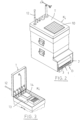
figure 1 is a front graphical representation of a preferred embodiment of the referred control device; -
figure 2 represents the device offigure 1 applied to a beehive;figure 3 is a graphical representation of a group or a community of beehives on which the devices offigure 1 are applied; -
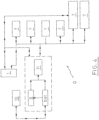
figures 4 ,5 and 5a are a structural schematics of the device offigure 1 ; and -
figure 6 shows graphically a schematic of the application and of the general functional operation of the detection and control devices actuating the subject method. - With reference to
figures 1 ,2 and 3 , D globally indicates a control device able to detect and control the activities of bees A (Figure 3 ) and able to be applied and installed in one or more beehives Ki (four beehives inFigure 3 ), where the bees A live, feed on and work. The beehives Ki can be arranged and also cover large areas or regions of great size. - The device D includes an element or
panel 1 for detection and control, which is able to be applied on thefront inlet part 2 of each beehive Ki and is provided with a series ofholes 3 or cylindrical gates among them and uniformly distributed preferably linear or with a plurality of superimposed rows. - Each
hole 3 defines an access hole to the beehive Ki and has a diameter and a length suitably studied and such to permit easy passage of bees A throughhole 3, and then the same entry and exit of the bees from the beehive Ki of the bees A themselves. - As shown in
figures 5 and 5a , eachaccess hole 3 is provided inside a pair 4 ofcorresponding proximity sensors 5 and 5', suitably spaced and electrically connected to each other, so as to define an electromagnetic field G for detection and control, which is crossed by the bees entering and exiting from their beehive, so in both directions of movement, from the beehive Ki during normal daily activities and for the duration of use. Each pair 4 ofsensors 5 and 5' is also connected to a control and memory unit 6, mounted on thepanel 1 , which is therefore able to receive and store data related to the activities of movement and passage of the bees A throughholes 3. As shown infigures 4 and5 , thepanel 1 also comprises, in its part facing the inside of the beehive Ki on which it is mounted, further sensor means 7, and a connection 8 to afeeding group 9. - These sensor means 7 are also connected to the unit 6 and preferably include, but are not limited to, a counting sensor of the colony of bees A living inside the beehive Ki, a sensor for detecting the temperature and humidity inside and/or outside the beehive Ki, a sensor for detecting the intensity of light and/or wind and/or rain at the beehive Ki, a sensor able to detect intrinsic characteristics as for example the swarm of bees A or the weight of the beehive Ki.
- It is also possible to use sensors as microphones, sensors or theft protection of the beehive Ki, or sensors able diagnostically control the status of one or more
photovoltaic panels 10 or equivalent, mounted for example on the roof T of each beehive Ki, which are able to ensure the necessary energy for the normal functioning of the sensor means 4, 5, 5', 7 and of the unit 6 mounted on thepanel 1 , defining the aforementioned feeding assembly (Figures 2 and 3 ). Advantageously, as shown infigures 3 ,4 and6 , the unit 6 of the device D is also connected to amodule 1 1 of wireless connection, able to permit the external transmission of all data detected and stored in unit 6, through anantenna 12 located outside the beehive Ki, such as, for example on the roof T of each beehive Ki. Thus, it is possible to achieve an easy and rapid diffusion anywhere in the world, also via the world wide web or cloud server, through suitable transmission protocols of all data stored in the unit 6 of each beehive Ki and coordinated by an additional coordinating unit 13 (Figure 3 ) provided with itsown feeding assembly 14, such information being considered essential for analyzing and interpreting the natural environment, such as for example the diffusion of such information data to beekeeper associations (professional or hobbyist), research centers, universities, food industries, data storage centers for the formulation of weather forecast etc. (figure 6 ). - Such data can therefore be easily accessed through PC, Smartphone, Tablet etc. The infrastructure described above has a preferential example of a system architecture, realized according to a distributed shape.
- The system can be made in the same way according to other architectures always of the distributed type, by positioning the sensors in other positions of the beehive Ki or even in integrated form in a single device.
- The device and its method described above are, in conclusion, optimally and efficiently able to define and implement a database available and accessible worldwide for the fundamental study and analysis of the activities and behavior of bees, also regarding an interpretation and control of the state of agriculture and of ecosystems in general.
Claims (7)
- Device (D) for controlling the activity of a colony of bees (A) or similar, comprising panel means (1) adapted to be mounted at the entrance of at least a hive (Ki) in which said bees (A) live and electromagnetic sensor means (4,5,5', 7) mounted on said panel (1) for detecting physical conditions and/or environmental conditions inside and/or outside of said hive (Ki), and the passage of said bees (A) to and from the interior of said hive (Ki) and for controlling the intrinsic characteristics of said bees (A) and said hive (ki);a central processing unit (6) connected to said sensor means (4,5,5',7) and power supply means (9,10) for supplying said central unit (6) and said sensor means (4,5,5 ',7), said sensor means (4,5,5',7) comprise diagnostic detecting means of said power supply means (9,10);said central unit (6) is connected to means (11) for connection and transmission adapted to allow the external transmission of data stored in said unit (6) through antenna means (12) positioned on said hive (Ki);said panel means (1) are adapted to be applied on the front inlet (2) of said hive (Ki) and are provided with a series (S) of cylindrical passage holes (3) for the passage of said bees (A) entering and exiting from said hive (Ki);each said hole (3) defining an access hole to the beehive (Ki) and has a diameter and a length to permit easy passage of bees (A) through said hole (3), and then the same entry and exit of the bees from the beehive (Ki) of the bees (A) themselves;each access hole (3) being provided inside a pair (4) of corresponding proximity sensors (5, 5'), spaced and electrically connected to each other, so as to define an electromagnetic field (G) for detection and control, which is crossed by the bees entering and exiting from their beehive, so in both directions of movement, from the beehive (Ki) during normal daily activities and for the duration of use;each pair (4) of said sensors (5, 5') is also connected to said central unit (6), mounted on the panel (1) , which central unit (6) is therefore able to receive and store data related to the activities of movement and passage of the bees (A) through holes (3).
- Device according to claim 1, characterized in that said sensor means (4,5,5 ', 7) comprise movement detecting means (4,5,5') of said bees (A), said movement detecting means (4,5,5') being arranged inside of said holes (3).
- Device according to one or more of the preceding claims 1 to 2, characterized in that said sensor means (4,5,5', 7) comprise counting means (7) for counting said bees (A).
- Device according to one or more of the preceding claims 1 to 3, characterized in that said sensor means (4,5,5',7) comprise anti-theft security detecting means (7) of said hive (Ki).
- Device according to any claim 1 to 4, characterized in that said power supply means (9,10) comprise photovoltaic panels means (10).
- Method for controlling the activities of a colony of bees (A) or similar, by means of a device according to any of claims 1 to 4, comprising the step of causing and promoting the passage of said bees (A) through an electromagnetic field for detecting the entrance and exit of said bees (A) from at least a hive (Ki) in which said bees (A) live, and the steps of controlling the physical conditions and environmental conditions inside and/or outside of said hive (Ki) and of controlling the intrinsic characteristics of said bees (A) and/or of said hive (Ki) it further comprises the steps of storing data relating said controlling and transmitting externally said data through antenna means (12) positioned on said hive (Ki);
said passage comprising the step of crossing by said bees (A) of a series (S) of cylindrical holes (3) in which proximity sensor means (4, 5, 5') are positioned. - Method according to claim 6, characterized in that said passage comprises the step of counting said bees (A).
Applications Claiming Priority (2)
| Application Number | Priority Date | Filing Date | Title |
|---|---|---|---|
| ITVR20140054 | 2014-03-05 | ||
| PCT/IB2015/051259 WO2015132689A1 (en) | 2014-03-05 | 2015-02-19 | Device and respective control method for controlling the activities of a colony of insects |
Publications (3)
| Publication Number | Publication Date |
|---|---|
| EP3113606A1 EP3113606A1 (en) | 2017-01-11 |
| EP3113606C0 EP3113606C0 (en) | 2025-04-09 |
| EP3113606B1 true EP3113606B1 (en) | 2025-04-09 |
Family
ID=50639866
Family Applications (1)
| Application Number | Title | Priority Date | Filing Date |
|---|---|---|---|
| EP15711854.8A Active EP3113606B1 (en) | 2014-03-05 | 2015-02-19 | Device and respective control method for controlling the activities of a colony of insects |
Country Status (5)
| Country | Link |
|---|---|
| US (1) | US20170071169A1 (en) |
| EP (1) | EP3113606B1 (en) |
| ES (1) | ES3034491T3 (en) |
| HU (1) | HUE072311T2 (en) |
| WO (1) | WO2015132689A1 (en) |
Families Citing this family (7)
| Publication number | Priority date | Publication date | Assignee | Title |
|---|---|---|---|---|
| US11178856B2 (en) * | 2018-10-30 | 2021-11-23 | International Business Machines Corporation | Cognitive hive architecture |
| EP3920695A4 (en) * | 2019-02-05 | 2023-04-05 | The General Hospital Corporation | STORAGE OF VASCULARIZED COMPOSITE ALLOGrafts |
| WO2020162926A1 (en) * | 2019-02-06 | 2020-08-13 | Ingenueering, Llc | Insect and creature monitoring system |
| US11684045B2 (en) | 2019-04-10 | 2023-06-27 | Hivetech Solutions Inc. | Mobile indoor controlled apiary system |
| US11270189B2 (en) | 2019-10-28 | 2022-03-08 | International Business Machines Corporation | Cognitive decision platform for honey value chain |
| IT202000011791A1 (en) | 2020-05-20 | 2021-11-20 | Milano Politecnico | SYSTEM FOR DETECTING THE PASSAGE OF SMALL ANIMALS THROUGH AN OPENING |
| US11612145B1 (en) * | 2022-05-12 | 2023-03-28 | BeeHero Ltd. | Tracking and monitoring bees pollination efficiency |
Citations (1)
| Publication number | Priority date | Publication date | Assignee | Title |
|---|---|---|---|---|
| US20100062683A1 (en) * | 2008-09-05 | 2010-03-11 | Brundage Trenton J | Acoustic sensor for beehive monitoring |
Family Cites Families (3)
| Publication number | Priority date | Publication date | Assignee | Title |
|---|---|---|---|---|
| BE1011050A6 (en) * | 1997-03-19 | 1999-04-06 | Lowland Electronics Bvba | High precision system for counting insects |
| FR2820536B1 (en) * | 2001-02-05 | 2004-06-18 | Humirel Sa | BEEHIVE MANAGEMENT AND MONITORING METHOD AND SYSTEM |
| EE201200005A (en) * | 2012-03-27 | 2013-12-16 | Humal Priit | Apparatus for diagnosing or controlling bee varroasis, method and software for parasite detection |
-
2015
- 2015-02-19 US US15/123,569 patent/US20170071169A1/en not_active Abandoned
- 2015-02-19 WO PCT/IB2015/051259 patent/WO2015132689A1/en not_active Ceased
- 2015-02-19 HU HUE15711854A patent/HUE072311T2/en unknown
- 2015-02-19 EP EP15711854.8A patent/EP3113606B1/en active Active
- 2015-02-19 ES ES15711854T patent/ES3034491T3/en active Active
Patent Citations (1)
| Publication number | Priority date | Publication date | Assignee | Title |
|---|---|---|---|---|
| US20100062683A1 (en) * | 2008-09-05 | 2010-03-11 | Brundage Trenton J | Acoustic sensor for beehive monitoring |
Also Published As
| Publication number | Publication date |
|---|---|
| US20170071169A1 (en) | 2017-03-16 |
| WO2015132689A1 (en) | 2015-09-11 |
| EP3113606A1 (en) | 2017-01-11 |
| EP3113606C0 (en) | 2025-04-09 |
| HUE072311T2 (en) | 2025-11-28 |
| ES3034491T3 (en) | 2025-08-19 |
Similar Documents
| Publication | Publication Date | Title |
|---|---|---|
| US20170071169A1 (en) | Device and respective control method for controlling the activities of a colony of insects | |
| Cunha et al. | A novel non-invasive radar to monitor honey bee colony health | |
| Suneja et al. | Cloud-based tomato plant growth and health monitoring system using IOT | |
| WO2018065308A1 (en) | Identification of beneficial insects and/or pollutants in a field for crop plants | |
| CN205014981U (en) | Plant phenological observation system | |
| Jeong et al. | IoT and AI systems for enhancing bee colony strength in precision beekeeping: a survey and future research directions | |
| Mehta et al. | Enhancement of smart agriculture using internet of things | |
| Urban et al. | Current status and future outlooks of precision beekeeping systems and services | |
| Choudhury et al. | Agricultural informatics: Automation using the IoT and machine learning | |
| Alsayaydeh et al. | Greenhouse horticulture automation with crops protection by using Arduino | |
| Kaliannan et al. | Intelligent Computing with Drones and Robotics for Precision Agriculture | |
| Karabay et al. | Artificial intelligence based smart agriculture applications in greenhouses | |
| Deepa et al. | Internet of things (IoT) assisted smart agriculture monitoring and summarization system using NodeMCU and efficient sensor unit | |
| Zacepins et al. | Information processing for remote recognition of the state of bee colonies and apiaries in precision beekeeping (apiculture) | |
| Sousa et al. | Interoperable IoT/WSN Sensing Station with Edge AI-Enabled Multi-Sensor Integration for Precision Agriculture | |
| Vanghele et al. | AGRICULTURE 5.0-REVIEW | |
| DE202024101364U1 (en) | An electronic bee monitoring system | |
| Dogan et al. | Design of a remote controlled beehive for improving efficiency of beekeeping activities | |
| Sarkar et al. | Agronomy with IoT Devices: The Smart Solution for Detection of Diseases of Betel Leaves | |
| Jin et al. | A Crop Growth Information Collection System Based on a Solar Insecticidal Lamp | |
| Jain et al. | Real-Time Monitoring and Disease Detection in Greenhouses Using IoT and Deep Learning | |
| Abu | The use of smart apiculture management system | |
| Sridharan et al. | IoT–Enabled Smart Pest Detection and Control System for Sustainable Agriculture | |
| Kim et al. | Instance-level phenotype-based growth stage classification of basil in multi-plant environments | |
| Vijayreddy | Cultivating Crop Health in the Digital Era: Harnessing AI for Plant Pathology |
Legal Events
| Date | Code | Title | Description |
|---|---|---|---|
| PUAI | Public reference made under article 153(3) epc to a published international application that has entered the european phase |
Free format text: ORIGINAL CODE: 0009012 |
|
| STAA | Information on the status of an ep patent application or granted ep patent |
Free format text: STATUS: REQUEST FOR EXAMINATION WAS MADE |
|
| 17P | Request for examination filed |
Effective date: 20160914 |
|
| AK | Designated contracting states |
Kind code of ref document: A1 Designated state(s): AL AT BE BG CH CY CZ DE DK EE ES FI FR GB GR HR HU IE IS IT LI LT LU LV MC MK MT NL NO PL PT RO RS SE SI SK SM TR |
|
| AX | Request for extension of the european patent |
Extension state: BA ME |
|
| RAP1 | Party data changed (applicant data changed or rights of an application transferred) |
Owner name: MELIXA S.R.L. |
|
| RIN1 | Information on inventor provided before grant (corrected) |
Inventor name: BENEDETTI, MANUEL Inventor name: MARTINELLI, MAURO Inventor name: IORIATTI, LUCA |
|
| DAX | Request for extension of the european patent (deleted) | ||
| STAA | Information on the status of an ep patent application or granted ep patent |
Free format text: STATUS: EXAMINATION IS IN PROGRESS |
|
| 17Q | First examination report despatched |
Effective date: 20210806 |
|
| GRAP | Despatch of communication of intention to grant a patent |
Free format text: ORIGINAL CODE: EPIDOSNIGR1 |
|
| STAA | Information on the status of an ep patent application or granted ep patent |
Free format text: STATUS: GRANT OF PATENT IS INTENDED |
|
| INTG | Intention to grant announced |
Effective date: 20241220 |
|
| GRAS | Grant fee paid |
Free format text: ORIGINAL CODE: EPIDOSNIGR3 |
|
| GRAA | (expected) grant |
Free format text: ORIGINAL CODE: 0009210 |
|
| STAA | Information on the status of an ep patent application or granted ep patent |
Free format text: STATUS: THE PATENT HAS BEEN GRANTED |
|
| AK | Designated contracting states |
Kind code of ref document: B1 Designated state(s): AL AT BE BG CH CY CZ DE DK EE ES FI FR GB GR HR HU IE IS IT LI LT LU LV MC MK MT NL NO PL PT RO RS SE SI SK SM TR |
|
| REG | Reference to a national code |
Ref country code: GB Ref legal event code: FG4D |
|
| REG | Reference to a national code |
Ref country code: CH Ref legal event code: EP |
|
| REG | Reference to a national code |
Ref country code: DE Ref legal event code: R096 Ref document number: 602015091396 Country of ref document: DE |
|
| REG | Reference to a national code |
Ref country code: IE Ref legal event code: FG4D |
|
| U01 | Request for unitary effect filed |
Effective date: 20250430 |
|
| U07 | Unitary effect registered |
Designated state(s): AT BE BG DE DK EE FI FR IT LT LU LV MT NL PT RO SE SI Effective date: 20250605 |
|
| REG | Reference to a national code |
Ref country code: ES Ref legal event code: FG2A Ref document number: 3034491 Country of ref document: ES Kind code of ref document: T3 Effective date: 20250819 |
|
| PG25 | Lapsed in a contracting state [announced via postgrant information from national office to epo] |
Ref country code: NO Free format text: LAPSE BECAUSE OF FAILURE TO SUBMIT A TRANSLATION OF THE DESCRIPTION OR TO PAY THE FEE WITHIN THE PRESCRIBED TIME-LIMIT Effective date: 20250709 Ref country code: GR Free format text: LAPSE BECAUSE OF FAILURE TO SUBMIT A TRANSLATION OF THE DESCRIPTION OR TO PAY THE FEE WITHIN THE PRESCRIBED TIME-LIMIT Effective date: 20250710 |
|
| PG25 | Lapsed in a contracting state [announced via postgrant information from national office to epo] |
Ref country code: PL Free format text: LAPSE BECAUSE OF FAILURE TO SUBMIT A TRANSLATION OF THE DESCRIPTION OR TO PAY THE FEE WITHIN THE PRESCRIBED TIME-LIMIT Effective date: 20250409 |
|
| PG25 | Lapsed in a contracting state [announced via postgrant information from national office to epo] |
Ref country code: HR Free format text: LAPSE BECAUSE OF FAILURE TO SUBMIT A TRANSLATION OF THE DESCRIPTION OR TO PAY THE FEE WITHIN THE PRESCRIBED TIME-LIMIT Effective date: 20250409 |
|
| PG25 | Lapsed in a contracting state [announced via postgrant information from national office to epo] |
Ref country code: RS Free format text: LAPSE BECAUSE OF FAILURE TO SUBMIT A TRANSLATION OF THE DESCRIPTION OR TO PAY THE FEE WITHIN THE PRESCRIBED TIME-LIMIT Effective date: 20250709 |
|
| PG25 | Lapsed in a contracting state [announced via postgrant information from national office to epo] |
Ref country code: IS Free format text: LAPSE BECAUSE OF FAILURE TO SUBMIT A TRANSLATION OF THE DESCRIPTION OR TO PAY THE FEE WITHIN THE PRESCRIBED TIME-LIMIT Effective date: 20250809 |
|
| REG | Reference to a national code |
Ref country code: HU Ref legal event code: AG4A Ref document number: E072311 Country of ref document: HU |
|
| PG25 | Lapsed in a contracting state [announced via postgrant information from national office to epo] |
Ref country code: SM Free format text: LAPSE BECAUSE OF FAILURE TO SUBMIT A TRANSLATION OF THE DESCRIPTION OR TO PAY THE FEE WITHIN THE PRESCRIBED TIME-LIMIT Effective date: 20250409 |
|
| PG25 | Lapsed in a contracting state [announced via postgrant information from national office to epo] |
Ref country code: CZ Free format text: LAPSE BECAUSE OF FAILURE TO SUBMIT A TRANSLATION OF THE DESCRIPTION OR TO PAY THE FEE WITHIN THE PRESCRIBED TIME-LIMIT Effective date: 20250409 |
|
| PG25 | Lapsed in a contracting state [announced via postgrant information from national office to epo] |
Ref country code: SK Free format text: LAPSE BECAUSE OF FAILURE TO SUBMIT A TRANSLATION OF THE DESCRIPTION OR TO PAY THE FEE WITHIN THE PRESCRIBED TIME-LIMIT Effective date: 20250409 |
|
| PLBE | No opposition filed within time limit |
Free format text: ORIGINAL CODE: 0009261 |
|
| STAA | Information on the status of an ep patent application or granted ep patent |
Free format text: STATUS: NO OPPOSITION FILED WITHIN TIME LIMIT |
|
| REG | Reference to a national code |
Ref country code: CH Ref legal event code: L10 Free format text: ST27 STATUS EVENT CODE: U-0-0-L10-L00 (AS PROVIDED BY THE NATIONAL OFFICE) Effective date: 20260218 |
|
| 26N | No opposition filed |
Effective date: 20260112 |
|
| PGFP | Annual fee paid to national office [announced via postgrant information from national office to epo] |
Ref country code: HU Payment date: 20260225 Year of fee payment: 12 |
|
| U20 | Renewal fee for the european patent with unitary effect paid |
Year of fee payment: 12 Effective date: 20260226 |
|
| PGFP | Annual fee paid to national office [announced via postgrant information from national office to epo] |
Ref country code: GB Payment date: 20260226 Year of fee payment: 12 |
|
| PGFP | Annual fee paid to national office [announced via postgrant information from national office to epo] |
Ref country code: ES Payment date: 20260302 Year of fee payment: 12 |