EP3113443B1 - Method, a system and computer program products for securely enabling in-network functionality over encrypted data sessions - Google Patents
Method, a system and computer program products for securely enabling in-network functionality over encrypted data sessions Download PDFInfo
- Publication number
- EP3113443B1 EP3113443B1 EP15382354.7A EP15382354A EP3113443B1 EP 3113443 B1 EP3113443 B1 EP 3113443B1 EP 15382354 A EP15382354 A EP 15382354A EP 3113443 B1 EP3113443 B1 EP 3113443B1
- Authority
- EP
- European Patent Office
- Prior art keywords
- communication
- encrypted
- data
- ctx
- network element
- Prior art date
- Legal status (The legal status is an assumption and is not a legal conclusion. Google has not performed a legal analysis and makes no representation as to the accuracy of the status listed.)
- Active
Links
Images



Classifications
-
- H—ELECTRICITY
- H04—ELECTRIC COMMUNICATION TECHNIQUE
- H04L—TRANSMISSION OF DIGITAL INFORMATION, e.g. TELEGRAPHIC COMMUNICATION
- H04L63/00—Network architectures or network communication protocols for network security
- H04L63/02—Network architectures or network communication protocols for network security for separating internal from external traffic, e.g. firewalls
- H04L63/0281—Proxies
-
- H—ELECTRICITY
- H04—ELECTRIC COMMUNICATION TECHNIQUE
- H04L—TRANSMISSION OF DIGITAL INFORMATION, e.g. TELEGRAPHIC COMMUNICATION
- H04L63/00—Network architectures or network communication protocols for network security
- H04L63/04—Network architectures or network communication protocols for network security for providing a confidential data exchange among entities communicating through data packet networks
- H04L63/0428—Network architectures or network communication protocols for network security for providing a confidential data exchange among entities communicating through data packet networks wherein the data content is protected, e.g. by encrypting or encapsulating the payload
-
- H—ELECTRICITY
- H04—ELECTRIC COMMUNICATION TECHNIQUE
- H04L—TRANSMISSION OF DIGITAL INFORMATION, e.g. TELEGRAPHIC COMMUNICATION
- H04L63/00—Network architectures or network communication protocols for network security
- H04L63/04—Network architectures or network communication protocols for network security for providing a confidential data exchange among entities communicating through data packet networks
- H04L63/0428—Network architectures or network communication protocols for network security for providing a confidential data exchange among entities communicating through data packet networks wherein the data content is protected, e.g. by encrypting or encapsulating the payload
- H04L63/0435—Network architectures or network communication protocols for network security for providing a confidential data exchange among entities communicating through data packet networks wherein the data content is protected, e.g. by encrypting or encapsulating the payload wherein the sending and receiving network entities apply symmetric encryption, i.e. same key used for encryption and decryption
-
- H—ELECTRICITY
- H04—ELECTRIC COMMUNICATION TECHNIQUE
- H04L—TRANSMISSION OF DIGITAL INFORMATION, e.g. TELEGRAPHIC COMMUNICATION
- H04L9/00—Cryptographic mechanisms or cryptographic arrangements for secret or secure communications; Network security protocols
- H04L9/08—Key distribution or management, e.g. generation, sharing or updating, of cryptographic keys or passwords
- H04L9/0816—Key establishment, i.e. cryptographic processes or cryptographic protocols whereby a shared secret becomes available to two or more parties, for subsequent use
- H04L9/0819—Key transport or distribution, i.e. key establishment techniques where one party creates or otherwise obtains a secret value, and securely transfers it to the other(s)
- H04L9/0822—Key transport or distribution, i.e. key establishment techniques where one party creates or otherwise obtains a secret value, and securely transfers it to the other(s) using key encryption key
-
- H—ELECTRICITY
- H04—ELECTRIC COMMUNICATION TECHNIQUE
- H04L—TRANSMISSION OF DIGITAL INFORMATION, e.g. TELEGRAPHIC COMMUNICATION
- H04L9/00—Cryptographic mechanisms or cryptographic arrangements for secret or secure communications; Network security protocols
- H04L9/08—Key distribution or management, e.g. generation, sharing or updating, of cryptographic keys or passwords
- H04L9/0816—Key establishment, i.e. cryptographic processes or cryptographic protocols whereby a shared secret becomes available to two or more parties, for subsequent use
- H04L9/0838—Key agreement, i.e. key establishment technique in which a shared key is derived by parties as a function of information contributed by, or associated with, each of these
-
- H—ELECTRICITY
- H04—ELECTRIC COMMUNICATION TECHNIQUE
- H04L—TRANSMISSION OF DIGITAL INFORMATION, e.g. TELEGRAPHIC COMMUNICATION
- H04L9/00—Cryptographic mechanisms or cryptographic arrangements for secret or secure communications; Network security protocols
- H04L9/08—Key distribution or management, e.g. generation, sharing or updating, of cryptographic keys or passwords
- H04L9/0861—Generation of secret information including derivation or calculation of cryptographic keys or passwords
- H04L9/0869—Generation of secret information including derivation or calculation of cryptographic keys or passwords involving random numbers or seeds
-
- H—ELECTRICITY
- H04—ELECTRIC COMMUNICATION TECHNIQUE
- H04L—TRANSMISSION OF DIGITAL INFORMATION, e.g. TELEGRAPHIC COMMUNICATION
- H04L9/00—Cryptographic mechanisms or cryptographic arrangements for secret or secure communications; Network security protocols
- H04L9/32—Cryptographic mechanisms or cryptographic arrangements for secret or secure communications; Network security protocols including means for verifying the identity or authority of a user of the system or for message authentication, e.g. authorization, entity authentication, data integrity or data verification, non-repudiation, key authentication or verification of credentials
- H04L9/3263—Cryptographic mechanisms or cryptographic arrangements for secret or secure communications; Network security protocols including means for verifying the identity or authority of a user of the system or for message authentication, e.g. authorization, entity authentication, data integrity or data verification, non-repudiation, key authentication or verification of credentials involving certificates, e.g. public key certificate [PKC] or attribute certificate [AC]; Public key infrastructure [PKI] arrangements
- H04L9/3268—Cryptographic mechanisms or cryptographic arrangements for secret or secure communications; Network security protocols including means for verifying the identity or authority of a user of the system or for message authentication, e.g. authorization, entity authentication, data integrity or data verification, non-repudiation, key authentication or verification of credentials involving certificates, e.g. public key certificate [PKC] or attribute certificate [AC]; Public key infrastructure [PKI] arrangements using certificate validation, registration, distribution or revocation, e.g. certificate revocation list [CRL]
-
- H—ELECTRICITY
- H04—ELECTRIC COMMUNICATION TECHNIQUE
- H04L—TRANSMISSION OF DIGITAL INFORMATION, e.g. TELEGRAPHIC COMMUNICATION
- H04L63/00—Network architectures or network communication protocols for network security
- H04L63/06—Network architectures or network communication protocols for network security for supporting key management in a packet data network
- H04L63/061—Network architectures or network communication protocols for network security for supporting key management in a packet data network for key exchange, e.g. in peer-to-peer networks
-
- H—ELECTRICITY
- H04—ELECTRIC COMMUNICATION TECHNIQUE
- H04L—TRANSMISSION OF DIGITAL INFORMATION, e.g. TELEGRAPHIC COMMUNICATION
- H04L63/00—Network architectures or network communication protocols for network security
- H04L63/10—Network architectures or network communication protocols for network security for controlling access to devices or network resources
- H04L63/105—Multiple levels of security
-
- H—ELECTRICITY
- H04—ELECTRIC COMMUNICATION TECHNIQUE
- H04L—TRANSMISSION OF DIGITAL INFORMATION, e.g. TELEGRAPHIC COMMUNICATION
- H04L63/00—Network architectures or network communication protocols for network security
- H04L63/16—Implementing security features at a particular protocol layer
- H04L63/166—Implementing security features at a particular protocol layer at the transport layer
Definitions
- the present invention is directed, in general, to the field of Internet security.
- the invention relates to methods and systems for securely enabling in-network functionality over encrypted data sessions.
- 'middleboxes' are computing network elements that run "inside" a network, sitting logically between the endpoints (a client application and a server application) of communication sessions.
- a client application e.g., a web browser
- server application e.g., a web server
- middleboxes add value beyond basic data transport.
- Users own/manage client applications and content providers own/manage servers applications.
- the entire communication, across all parties, is a data session; connections link individual hops in the data session (e.g., a TCP connection between the client application and a middlebox).
- present invention focuses on application level middleboxes, also called proxies or in-path services, which has access to application data.
- middleboxes may perform functions like intrusion detection, content filtering, caching, data compression and parental control, among others.
- Transport Layer Security is the standard protocol for providing authenticity and confidentiality on top of TCP connections.
- Today it is used to provide a secure version of traditional protocols (e.g., IMAP, SMTP, XMPP, etc.); in particular, the usage of HTTP over TLS is commonly known as HTTPS.
- Each TLS connection begins with a handshake between a server and a client.
- the Public Key Infrastructure (PKI) suite is used to authenticate the server (and eventually the client) and to generate cryptographic keys to create a secure channel over which data are transmitted.
- PKI Public Key Infrastructure
- TLS has seen wide adoption and is currently carrying a significant fraction of the overall HTTP traffic (FacebookTM, GoogleTM and TwitterTM use it by default).
- FacebookTM, GoogleTM and TwitterTM use it by default.
- TLS makes the fundamental assumption that all functionality resides solely at the endpoints, and is thus unable to utilize the many in-network services that optimize network resource usage, improve user experience, and protect clients and servers from security threats. Reintroducing such in-network functionality into secure TLS sessions today is done through hacks, in many cases weakening overall security.
- Custom root certificate This solution consists of installing a custom root certificate on a client, allowing the middlebox to create a certificate for itself purporting to be the intended server. The middlebox then connects to the server and passes the data from one connection to the other. Contrary to present invention, in this solution, there is no mechanism for authenticating the middlebox. Even worse, the middlebox is completely transparent to the server. On the client, only a deep inspection of the certificate chain would reveal the presence of a forged certificate. Moreover, the client has no guarantees beyond the first hop.
- the client cannot verify that TLS is being used from the middlebox to the server, whether additional middleboxes are present, or whether the endpoint of the session is even the intended server. Also, middleboxes get full read/write access to the data stream. In one hand, many middleboxes only need selective access to the data stream. In the other hand, clients should be empowered with control on what data to share or not. Finally, endpoints (and middleboxes) cannot detect in-flight modifications.
- I'm a proxy certificate flag A 2014 IETF draft from EricssonTM and AT&TTM that proposes using the X.509 Extended Key Usage extension to indicate that the certificate belongs to a proxy [1].
- the client agent Upon receiving such a certificate during a TLS handshake protocol, the client agent would omit the domain name check (presumably after securing user permission) and establish a TLS session with the proxy, which would in turn open a connection with the server. Based on client preferences, the client agent might only accept proxy certificates for certain sessions. In this case, the client has no guarantees beyond the first hop, and middleboxes get full read/write access to the data stream. Moreover, in this solution, endpoints (and middleboxes) cannot either detect in-flight modifications.
- This solution consists of modifying the browser itself to accept certificates from certain trusted proxies. This is the approach ViasatTM is taking for its Exede® satellite Internet customers. In this solution, there is neither a mechanism for authenticating the middlebox, being the middlebox transparent to the server. On the client, only a deep inspection of the certificate chain would reveal the presence of a forged certificate. Moreover, the client has neither guarantee beyond the first hop. While the connection to the middlebox is encrypted, the client cannot verify that TLS is being used from the middlebox to the server, whether additional middleboxes are present, or whether the endpoint of the session is even the intended server. Middleboxes get also full read/write access to the data stream.
- middleboxes only need selective access to the data stream.
- clients should be empowered with control on what data to share or not.
- this solution requires custom browser installation, and endpoints (and middleboxes) cannot either detect in-flight modifications.
- US2011289311 discloses a method and apparatus that utilizes Layered IPSEC (LES) protocol as an alternative to IPSEC for network-layer security including a modification to the Internet Key Exchange protocol.
- LES Layered IPSEC
- DSSL Dual-mode SSL protocol
- the LES and DSSL protocols achieve desired end-to-end communication security while allowing the TCP and HTTP proxy servers to function correctly.
- IPsec Yongguang Zhang et.al .
- IPsec a suite of standard protocols that provides security services for Internet communications. It protects the entire IP datagram in an "end-to-end" fashion; no intermediate network node in the public Internet can access or modify any information above the IP layer in an IPsec-protected packet.
- recent advances in internet technology introduce a rich new set of services and applications, like traffic engineering, TCP performance enhancements, or transparent proxying and caching, all of which require intermediate network nodes to access a certain part of an IP datagram, usually the upper layer protocol information, to perform flow classification, constraint-based routing, or other customized processing. This is in direct conflict with the IPsec mechanisms.
- a multi-layer security protection scheme for IPsec which uses a finer-grain access control to allow trusted intermediate routers to read and write selected portions of IP datagrams (usually the headers) in a secure and controlled manner.
- This key distribution protocol is used for key exchange between peers and middle node, so that different nodes have different security associations (SA), and different security associations correspond to different IP packet fields, so different SA nodes have different authorization to different IP packet fields.
- SA security associations
- ML-IKE protocol is suitable for layered IPSec, thus layered IPSec can be used for automatic key distribution and update
- Embodiments of the present invention provide according to a first aspect a method for securely enable in-network functionality over encrypted data sessions, as defined in claim 1.
- the method comprises: establishing an encrypted data session between two communication applications, a client communication application and a server communication application, over a communication network; receiving and/or transmitting, by the client communication application, in said established encrypted data session, encrypted communication data from/to said server communication application through at least one computing network element; and performing, by a computing network element, different actions other than data forwarding from one communication application to the other on the encrypted communication data.
- the encrypted communication data include a plurality of data portions, also termed as contexts, each one being encrypted and authenticated via context keys.
- the different actions are specific for the computing network element and for one or more of the plurality of contexts of the encrypted communication data.
- the context keys are computed according to an embodiment by means of a pseudo random function (PRF) to which both communication applications contribute with half of a shared secret, or context key material, the shared secret being used to generate the PRF.
- PRF pseudo random function
- this operation can be moved to the client only.
- the different actions the computing network element can perform may comprise read and/or write permissions on the one or more contexts of the encrypted communication data.
- the computing network element negotiates, with both communication applications, before performing the different actions on the one or more contexts, a symmetric key using any standard key exchange protocol. Then, each communication application generates, for each one of the one or more contexts of the encrypted communication data to which the computing network element has rights to, half of the shared secret for the PRF, and sends to the computing network element the corresponding half of the shared secret in encrypted form using said negotiated symmetric key. Finally, the computing network element computes the context keys using PRF; context keys are used to decrypt communication data and perform the different actions the computing network element has rights to.
- the computing network element may provide to both of the two communication applications its own certificate.
- the two communication applications will verify the received certificate of the computing network element before contributing to the computation of the context keys.
- the encrypted data session is a Transport Layer Security, TLS, session.
- the encrypted data session is an OpenStack message passing session.
- a computer program product is one embodiment that has a computer-readable medium including computer program instructions encoded thereon that when executed on at least one processor in a computer element causes the processor to perform the operations indicated herein as embodiments of the invention.
- Present invention provides endpoints of a data session explicit knowledge and control over which functional elements are part of the session. Moreover, present invention allows users and content providers to dynamically choose which data portions of content are exposed to in-network services (e.g., HTTP headers vs. content), and to protect the authenticity and integrity of data while still enabling access to certain in-network services by separating read and write permissions. Present invention is incrementally deployable.
- in-network services e.g., HTTP headers vs. content
- Present invention provides a mechanism to explicitly and securely enable in-network functionality over encrypted data sessions.
- TLS is the standard protocol to secure data sessions on the Internet
- OpenStack is an open-source cloud computing software platform; the ideas here described could be used to enable in-cloud functionality while ensuring secure message passing.
- IPsec stands for Internet Protocol Security and it is a protocol suite for securing Internet Protocol (IP) communications by authenticating and encrypting each IP packet of a communication session. Accordingly, the ideas here described could be adopted to introduce in-network functionalities. Similarly, tcpcrypt introduces the same idea to TCP packets, and also could be extended with the ideas above.
- context keys refer to a set of symmetric encryption and message authentication code (MAC) keys for controlling who can read and write the data sent in a context, or data portion, CTX_X, of a communication data D.
- Communication applications 100, 200 can associate each context CTX_X with a purpose and access permissions for each middlebox M. For instance, web browsers/servers could use one context CTX_X for HTTP headers and another for content.
- MAC message authentication code
- Each context CTX_X has its own reader context key (called K readers ). Possession of this context key constitutes read access so mcTLS can prevent a middlebox M from reading a context CTX_X by withholding that context's reader key.
- mcTLS takes the following "endpoint-writer-reader" approach to MACs.
- Each mcTLS record carries three keyed MACs, generated with the MAC keys from K endpoints , K writers (shared by endpoints 100, 200 and writers (middleboxes M having write access for a context CTX_X)), and K readers (shared by endpoints 100, 200, writers and readers (middleboxes M having only read access for a context CTX_X).
- Each context CTX_X has its own K writers and K readers but there is only one K endpoints for the data session since the endpoints 100, 200 have access to all contexts CTX.
- an endpoint 100, 200 When an endpoint 100, 200 assembles a record, it generates three MACs: one with K readers , one with K writers , and one with K endpoints .
- an endpoint 100, 200 When an endpoint 100, 200 receives a record, it checks the K writers MAC to confirm that no illegal modifications were made and it checks the K endpoints MAC to find out if any legal modifications were made (if the communication application cares).
- a writer When a writer receives a record, it checks the K writers MAC to verify that no illegal modifications have been made.
- a reader When a reader receives a record, it uses the K readers MAC to check if any third party modifications have been made.
- readers and writers/endpoints 100, 200 share pairwise symmetric keys; writers/endpoints 100, 200 compute and append a MAC for each reader, or (b) endpoints 100, 200 and writers append digital signatures rather than MACs; unlike K writers MACs, readers can verify these signatures.
- Fig. 1 illustrates how K readers , K writers and K endpoints are used.
- the mcTLS handshake protocol is very similar to the TLS handshake protocol. First the details of context key generation will be explained and then the handshake itself.
- TLS the endpoints agree on a master secret, used to compute a pseudo-random function (PRF), which generates the session key.
- PRF pseudo-random function
- mc TLS endpoints 100, 200 establish a master secret and use it to generate K endpoints as in classic TLS; K endpoints is used for end-to-end MACs, for securely exchanging partial context secret between the client 100 and the server 200, and for authenticating the handshake via encrypting the Finished message.
- each endpoint 100, 200 independently generates a partial context secret, which is passed to the PRF to generate K C writers and K C readers (at the client 100) and K S writers and K S readers (at the server 200) for each context CTX_X.
- K readers is really four keys (just like the "session key” in TLS): an encryption key for data in each direction and a MAC key for data in each direction.
- K writers is really one MAC key for each direction.
- Fig. 2 illustrates the steps of a mcTLS handshake protocol, highlighting the differences from TLS.
- the messages shown are mcTLS records so mcTLS has the same 2-RTT "shape" as TLS.
- PRF secret, label, seed
- secret K c + K S
- label "a string”
- seed rand c + rand s .
- TLS handshake protocol
- authentication of the endpoints 100, 200 in the data session is optional.
- Another burdensome mcTLS operation for servers' applications 200 is generating and encrypting the partial shared secret for distribution to middleboxes M.
- this operation can be moved to the client only: context keys are generated from the master secret and the client communication application 100 encrypts and distributes them to middleboxes M. This reduces the server load, but it has the disadvantage that agreement about middlebox permissions is not enforced.
- server communication application 200 indicates its choice to the client communication application 100 in the ServerHello message.
- a client communication application 100 installed in a client computing device contacts the server communication application 200 installed in a server (not illustrated), exchanging a list of trusted middleboxes M it would like to insert in the data session path.
- This list can be provided by an operator or found in alternative ways. Present invention does not restrict any specific mechanism.
- the server 200 responds with its certificate (step 302).
- a middlebox M1 is selected (more than one may be selected) from said list of trusted middleboxes M
- the selected middlebox M1 authenticates with both (step 305), the client communication application 100 and the server communication application 200, while regular authentication between server communication application 200 and client communication application 100 continues.
- Client communication application 100 and server communication application 200 then agree on the privileges the middlebox M1 should receive by defining a set of context CTX_X and context keys (steps 306-307).
- Client communication application 100 and server communication application 200 start exchanging data (e.g. communication data D) using the appropriate contexts CTX_X defined above (steps 308-310).
- Fig. 4 illustrates a possible context slicing strategy that may be used by the proposed method.
- CTX_X there are two ways to think about contexts CTX_X: as portions of the communication data to be transferred or as a configuration of middlebox permissions.
- a client communication application 100 wants to transfer a document consisting of three portions, CTX_A, CTX_B, and CTX_C via two middleboxes M1, M2.
- CTX_A and CTX_B could be two subsets of HTTP headers, while CTX_C could be the HTTP content being transferred.
- Middlebox M1 should have read access to the entire document and middlebox M2 should read CTX_A, write CTX_B, and have no access to CTX_C, e.g., for privacy reasons middlebox M2 should not be able to read the HTTP content being transferred.
- the communication application could allocate one context key for each context CTX_X and assign the appropriate permissions ( Fig. 4 left), or it could create one context key for each combination of permissions and use the appropriate context key when sending each context CTX_X of the document ( Fig. 4 right).
- Present invention enables lawful interception of encrypted traffic by mean of contributory context keys. While contributory context keys are not a requirement, for example a competitor approach could enable control to only one endpoint, multiple contexts keys are required to enable selective data access to middleboxes M.
- One drawback of using multiple context keys is an increase in the number of bytes transferred on the wire, compared to a classic end-to-end approach. Accordingly, unauthorized use of such feature can be detected by traffic inspection.
- a client communication application 100 running the competitor protocol under inspection can be instrumented to report the content transferred, along with the cipher used and the count of bytes received from the wire. If re-encrypting the received content with the same cipher originates a different byte count from the number of bytes received from the wire, the usage of multiple encryption contexts was likely detected.
- the proposed invention may be implemented in hardware, software, firmware, or any combination thereof. If implemented in software, the functions may be stored on or encoded as one or more instructions or code on a computer-readable medium.
- Computer-readable media includes computer storage media.
- Storage media may be any available media that can be accessed by a computer.
- such computer-readable media can comprise RAM, ROM, EEPROM, CD-ROM or other optical disk storage, magnetic disk storage or other magnetic storage devices, or any other medium that can be used to carry or store desired program code in the form of instructions or data structures and that can be accessed by a computer.
- Disk and disc includes compact disc (CD), laser disc, optical disc, digital versatile disc (DVD), floppy disk and Blu-ray disc where disks usually reproduce data magnetically, while discs reproduce data optically with lasers. Combinations of the above should also be included within the scope of computer-readable media.
- Any processor and the storage medium may reside in an ASIC.
- the ASIC may reside in a user terminal.
- the processor and the storage medium may reside as discrete components in a user terminal.
- computer program products comprising computer-readable media including all forms of computer-readable medium except, to the extent that such media is deemed to be non-statutory, transitory propagating signals.
Landscapes
- Engineering & Computer Science (AREA)
- Computer Security & Cryptography (AREA)
- Computer Networks & Wireless Communication (AREA)
- Signal Processing (AREA)
- Computer Hardware Design (AREA)
- Computing Systems (AREA)
- General Engineering & Computer Science (AREA)
- Data Exchanges In Wide-Area Networks (AREA)
- Computer And Data Communications (AREA)
Description
- The present invention is directed, in general, to the field of Internet security. In particular, the invention relates to methods and systems for securely enabling in-network functionality over encrypted data sessions.
- In present invention, 'middleboxes' are computing network elements that run "inside" a network, sitting logically between the endpoints (a client application and a server application) of communication sessions. A client application (e.g., a web browser) can connect to a server application (e.g., a web server) via one or more middleboxes that add value beyond basic data transport. Users own/manage client applications and content providers own/manage servers applications. The entire communication, across all parties, is a data session; connections link individual hops in the data session (e.g., a TCP connection between the client application and a middlebox).
- Present invention focuses on application level middleboxes, also called proxies or in-path services, which has access to application data. These middleboxes may perform functions like intrusion detection, content filtering, caching, data compression and parental control, among others.
- Transport Layer Security (TLS) is the standard protocol for providing authenticity and confidentiality on top of TCP connections. Today, it is used to provide a secure version of traditional protocols (e.g., IMAP, SMTP, XMPP, etc.); in particular, the usage of HTTP over TLS is commonly known as HTTPS. Each TLS connection begins with a handshake between a server and a client. In this handshake, the Public Key Infrastructure (PKI) suite is used to authenticate the server (and eventually the client) and to generate cryptographic keys to create a secure channel over which data are transmitted.
- TLS has seen wide adoption and is currently carrying a significant fraction of the overall HTTP traffic (Facebook™, Google™ and Twitter™ use it by default). TLS makes the fundamental assumption that all functionality resides solely at the endpoints, and is thus unable to utilize the many in-network services that optimize network resource usage, improve user experience, and protect clients and servers from security threats. Reintroducing such in-network functionality into secure TLS sessions today is done through hacks, in many cases weakening overall security.
- Four solutions aiming to insert middleboxes in TLS sessions are at present known:
Custom root certificate: This solution consists of installing a custom root certificate on a client, allowing the middlebox to create a certificate for itself purporting to be the intended server. The middlebox then connects to the server and passes the data from one connection to the other. Contrary to present invention, in this solution, there is no mechanism for authenticating the middlebox. Even worse, the middlebox is completely transparent to the server. On the client, only a deep inspection of the certificate chain would reveal the presence of a forged certificate. Moreover, the client has no guarantees beyond the first hop. While the connection to the middlebox is encrypted, the client cannot verify that TLS is being used from the middlebox to the server, whether additional middleboxes are present, or whether the endpoint of the session is even the intended server. Also, middleboxes get full read/write access to the data stream. In one hand, many middleboxes only need selective access to the data stream. In the other hand, clients should be empowered with control on what data to share or not. Finally, endpoints (and middleboxes) cannot detect in-flight modifications. - "I'm a proxy" certificate flag: A 2014 IETF draft from Ericsson™ and AT&T™ that proposes using the X.509 Extended Key Usage extension to indicate that the certificate belongs to a proxy [1]. Upon receiving such a certificate during a TLS handshake protocol, the client agent would omit the domain name check (presumably after securing user permission) and establish a TLS session with the proxy, which would in turn open a connection with the server. Based on client preferences, the client agent might only accept proxy certificates for certain sessions. In this case, the client has no guarantees beyond the first hop, and middleboxes get full read/write access to the data stream. Moreover, in this solution, endpoints (and middleboxes) cannot either detect in-flight modifications.
- Pass Session Key Out-of-Band: Another IETF draft, this one from Google™, assumes that the client maintains a persistent TLS connection with the proxy and multiplexes multiple sessions over that connection. After establishing an end-to-end TLS connection with the server (which the proxy blindly forwards), the client passes the session key to the proxy before transmitting data on the new connection [2]. Again, the user agent can selectively grant the proxy access on a per- connection basis based on user preference. This solution suffers in that middleboxes get also full read/write access to a TLS session. Compared to the solutions above, this approach limits a middlebox access to the TLS session specifically indicated by the client. However, within a TLS session a middlebox still gets full read/write access. Moreover, the server is unaware that trusted middleboxes are added to a secure session at the consent of both endpoints, and endpoints (and middleboxes) cannot either detect in-flight modifications.
- Ship a Custom Browser: This solution consists of modifying the browser itself to accept certificates from certain trusted proxies. This is the approach Viasat™ is taking for its Exede® satellite Internet customers. In this solution, there is neither a mechanism for authenticating the middlebox, being the middlebox transparent to the server. On the client, only a deep inspection of the certificate chain would reveal the presence of a forged certificate. Moreover, the client has neither guarantee beyond the first hop. While the connection to the middlebox is encrypted, the client cannot verify that TLS is being used from the middlebox to the server, whether additional middleboxes are present, or whether the endpoint of the session is even the intended server. Middleboxes get also full read/write access to the data stream. In one hand, many middleboxes only need selective access to the data stream. In the other hand, clients should be empowered with control on what data to share or not. Also, this solution requires custom browser installation, and endpoints (and middleboxes) cannot either detect in-flight modifications.
-
US2011289311 discloses a method and apparatus that utilizes Layered IPSEC (LES) protocol as an alternative to IPSEC for network-layer security including a modification to the Internet Key Exchange protocol. For application-level security of web browsing with acceptable end-to-end delay, the Dual-mode SSL protocol (DSSL) is used instead of SSL. The LES and DSSL protocols achieve desired end-to-end communication security while allowing the TCP and HTTP proxy servers to function correctly. - Scientific article 'A multi-layer IPsec protocol' Yongguang Zhang et.al. relates to IPsec [KA98c], which is a suite of standard protocols that provides security services for Internet communications. It protects the entire IP datagram in an "end-to-end" fashion; no intermediate network node in the public Internet can access or modify any information above the IP layer in an IPsec-protected packet. However, recent advances in internet technology introduce a rich new set of services and applications, like traffic engineering, TCP performance enhancements, or transparent proxying and caching, all of which require intermediate network nodes to access a certain part of an IP datagram, usually the upper layer protocol information, to perform flow classification, constraint-based routing, or other customized processing. This is in direct conflict with the IPsec mechanisms. In this research, we propose a multi-layer security protection scheme for IPsec, which uses a finer-grain access control to allow trusted intermediate routers to read and write selected portions of IP datagrams (usually the headers) in a secure and controlled manner.
- Scientific document 'A critical analysis of multilayer IP security protocol' Sing J. et.al discloses a number of techniques developed which aim to increase the performance of transport and application layer protocols when used over links that exhibit high bit error rates and large propagation delays. However, many of these techniques become useless when a network layer security protocol is used, due to the network payload being protected from observation and/or manipulation. The multilayer IP security (ML-IPsec) protocol has been proposed as a way to overcome this problem, allowing performance enhancing technologies to be used whilst providing network layer security. ML-IPsec has a number of problems that reduce its effectiveness and cause configuration complexities. This paper identifies these problems and proposes modifications to ML-IPsec, aiming to rectify the issues, whilst embracing the key features and benefits of this multilayer security protocol.
- Scientific document 'ML-IKE:A multilayer IKE Protocol for TCP Performance Enhancement in Wireless Networks' Zhang Y et.al. discloses that to solve the conflict between TCP accelerating technology based on PEP middle node and IPSec protocol used in the Satellite Network, NASA and the Hughes Research Laboratory (HRL) each independently proposed a solution named Multilayer IPsec protocol which can integrate IPSec with TCP PEPs. The problem is: Traditional IKE protocol can't work with Multilayer IPSec protocol. In this study, the traditional IKE main mode and quick mode are enhanced for layered IPSec protocol, and an improved layered key distribution protocol: ML-IKE is proposed. This key distribution protocol is used for key exchange between peers and middle node, so that different nodes have different security associations (SA), and different security associations correspond to different IP packet fields, so different SA nodes have different authorization to different IP packet fields. ML-IKE protocol is suitable for layered IPSec, thus layered IPSec can be used for automatic key distribution and update
- Embodiments of the present invention provide according to a first aspect a method for securely enable in-network functionality over encrypted data sessions, as defined in
claim 1. The method comprises: establishing an encrypted data session between two communication applications, a client communication application and a server communication application, over a communication network; receiving and/or transmitting, by the client communication application, in said established encrypted data session, encrypted communication data from/to said server communication application through at least one computing network element; and performing, by a computing network element, different actions other than data forwarding from one communication application to the other on the encrypted communication data. - According to the proposed method, the encrypted communication data include a plurality of data portions, also termed as contexts, each one being encrypted and authenticated via context keys. Moreover, the different actions are specific for the computing network element and for one or more of the plurality of contexts of the encrypted communication data.
- The context keys are computed according to an embodiment by means of a pseudo random function (PRF) to which both communication applications contribute with half of a shared secret, or context key material, the shared secret being used to generate the PRF. Alternatively, this operation can be moved to the client only.
- The different actions the computing network element can perform may comprise read and/or write permissions on the one or more contexts of the encrypted communication data.
- According to an embodiment, the computing network element negotiates, with both communication applications, before performing the different actions on the one or more contexts, a symmetric key using any standard key exchange protocol. Then, each communication application generates, for each one of the one or more contexts of the encrypted communication data to which the computing network element has rights to, half of the shared secret for the PRF, and sends to the computing network element the corresponding half of the shared secret in encrypted form using said negotiated symmetric key. Finally, the computing network element computes the context keys using PRF; context keys are used to decrypt communication data and perform the different actions the computing network element has rights to.
- In addition, the computing network element may provide to both of the two communication applications its own certificate. In this case, the two communication applications will verify the received certificate of the computing network element before contributing to the computation of the context keys.
- According to an embodiment, the encrypted data session is a Transport Layer Security, TLS, session. Alternatively, the encrypted data session is an OpenStack message passing session.
- Other embodiments of the invention, according to other aspects, that are disclosed herein also include a system and software programs to perform the method embodiment steps and operations summarized above and disclosed in detail below. More particularly, a computer program product is one embodiment that has a computer-readable medium including computer program instructions encoded thereon that when executed on at least one processor in a computer element causes the processor to perform the operations indicated herein as embodiments of the invention.
- Present invention provides endpoints of a data session explicit knowledge and control over which functional elements are part of the session. Moreover, present invention allows users and content providers to dynamically choose which data portions of content are exposed to in-network services (e.g., HTTP headers vs. content), and to protect the authenticity and integrity of data while still enabling access to certain in-network services by separating read and write permissions. Present invention is incrementally deployable.
- The previous and other advantages and features will be more deeply understood from the following detailed description of embodiments, with reference to the attached, which must be considered in an illustrative and non-limiting manner, in which:
-
Fig. 1 is a graphical representation showing how Kreaders, Kwriters and Kendpoints are used. -
Fig. 2 is an example of the mcTLS handshake protocol proposed by present invention. Shading indicates a difference from TLS handshake protocol. -
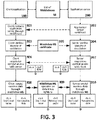
Fig. 3 is a Flowchart illustrating system elements and use for securely enabling in-network functionality over encrypted data sessions. -
Fig. 4 illustrates a context slicing strategy example that may be used by the proposed method. - Present invention provides a mechanism to explicitly and securely enable in-network functionality over encrypted data sessions. Although the mechanism is presented in the context of TLS, since TLS is the standard protocol to secure data sessions on the Internet, the proposed mechanism is broad and could be applied to other technologies like OpenStack, IPsec (layer 3) and tcpcrypt (layer 4). OpenStack is an open-source cloud computing software platform; the ideas here described could be used to enable in-cloud functionality while ensuring secure message passing. IPsec stands for Internet Protocol Security and it is a protocol suite for securing Internet Protocol (IP) communications by authenticating and encrypting each IP packet of a communication session. Accordingly, the ideas here described could be adopted to introduce in-network functionalities. Similarly, tcpcrypt introduces the same idea to TCP packets, and also could be extended with the ideas above.
- Accordingly, now it will be described mcTLS, a modification of TLS incorporating the teachings of present invention to enable explicit and secure in-network functionality over TLS data sessions.
- The term "context keys" as used herein refer to a set of symmetric encryption and message authentication code (MAC) keys for controlling who can read and write the data sent in a context, or data portion, CTX_X, of a communication data
D. Communication applications - As in TLS, in mcTLS it is also distinguishable between a record and a handshake protocol. Now both these protocols will be explained in more detail.
- Each context CTX_X has its own reader context key (called Kreaders). Possession of this context key constitutes read access so mcTLS can prevent a middlebox M from reading a context CTX_X by withholding that context's reader key.
- To control write access, mcTLS takes the following "endpoint-writer-reader" approach to MACs. Each mcTLS record carries three keyed MACs, generated with the MAC keys from Kendpoints, Kwriters (shared by
endpoints endpoints - Each context CTX_X has its own Kwriters and Kreaders but there is only one Kendpoints for the data session since the
endpoints - When an
endpoint - When a writer modifies a record, it generates MACs with Kwriters and Kreaders and simply forwards the original Kendpoints MAC.
- When a reader forwards a record, it leaves all three MACs unmodified.
- When an
endpoint - When a writer receives a record, it checks the Kwriters MAC to verify that no illegal modifications have been made.
- When a reader receives a record, it uses the Kreaders MAC to check if any third party modifications have been made.
- It has to be noted that with the endpoint-writer-reader MAC scheme, readers cannot detect illegal changes made by other readers. The problem is that a shared context key cannot be used by an entity to police other entities at the same privilege level. Because all readers share Kreaders (so that they can detect third party modifications), all readers are also capable of generating valid Kreaders MACs.
- There are two options for fixing this: (a) readers and writers/
endpoints endpoints endpoints - This is only an issue when there are more than two readers for a context CTX_X, and readers not detecting reader modifications should generally not be a problem (reader modifications are still detectable at the next writer or
endpoint 100, 200). The benefits seem insufficient to justify the additional overhead of (a) or (b), but they could be implemented as optional modes negotiated during the handshake protocol. -
Fig. 1 illustrates how Kreaders, Kwriters and Kendpoints are used. - The mcTLS handshake protocol is very similar to the TLS handshake protocol. First the details of context key generation will be explained and then the handshake itself.
- In TLS, the endpoints agree on a master secret, used to compute a pseudo-random function (PRF), which generates the session key.
mc TLS endpoints client 100 and theserver 200, and for authenticating the handshake via encrypting the Finished message. Additionally, eachendpoint -
Fig. 2 illustrates the steps of a mcTLS handshake protocol, highlighting the differences from TLS. The messages shown are mcTLS records so mcTLS has the same 2-RTT "shape" as TLS. - 1. Client Hello. Like TLS, a mcTLS session begins with a ClientHello message (step 201). In mcTLS, the ClientHello carries a MiddleboxListExtenstion, which includes a list of the middleboxes M1, M2 to include in the data session (mechanisms for building this list are outside the scope of this patent) and a list of context keys, their purposes (strings meaningful to the communication application), and each middlebox's M1, M2 access permissions for every context CTX_X. The
client 100 opens a TCP connection with the first middlebox M1 and sends the ClientHello (step 201); the middlebox M1 opens a TCP connection with the next hop in the list, forwards the ClientHello, and so on. - 2. Certificate & Public Key Exchange. As in TLS, the
server 200 responds with its certificate (step 202), and, if the certificate message does not contain enough data for the chosen cipher suite, theserver 200 sends an additional key exchange message (step 203). In this step, middleboxes M1, M2 do the same: they send their certificates (steps 205, 206) (and possibly key exchange message) to both theclient 100 and theserver 200. This step is only needed if theclient 100 andserver 200 request certificates from the middleboxes M1, M2 and happens in parallel with the ServerCertificate and ClientKeyExchange messages. - 3. Key Generation. The
endpoints steps 207, 208), pre-master-secret material and partial context key material for each context CTX_X. Instep 5, middleboxes M1, M2 combine these partial context key materials to compute the context keys. This approach serves two purposes: it provides contributory key agreement and it ensures that a middlebox M only gains access to a context CTX_X if theclient 100 andserver 200 both agree. - 4. Key Exchange. First, the client 100 (steps 210-212) and server 200 (steps 214-216) exchange the pre-master-secret material using any of the standard key agreement mechanisms supported by TLS. Next, for each context CTX_X, the
endpoints endpoints server 200 in an embodiment may choose to avoid this overhead by asking theclient 100 to generate the full context key material. - 5. Finished. The mcTLS handshake protocol concludes with the exchange of ChangeCipherSpec and Finished messages (
steps 213 and 217), just like TLS. Receipt of the ChangeCipherSpec message prompts middleboxes M1, M2 to compute the context keys. All handshake messages, including those sent to middleboxes M1, M2, are included in the Finished hash. Verifying the hash ensures that bothendpoints - A context key is computed as Key = PRF (secret, label, seed) where secret = Kc + KS, label = "a string", and seed = randc + rands. This approach has several advantages; first,
client communication application 100 andserver communication application 200 both contribute in the creation of a context key which implies that they both agree on the privileges to share with a middlebox M. Second, by using a concatenation operation, instead of XOR operation for instance, theserver communication application 200 cannot force Key = 0 by choosing Ks = Kc (since aserver communication application 200 sees Kc before committing to Ks). Though is not clear why aserver communication application 200 would try to force a weak key, this is further protection for example to a potential attack. - One concern about deploying TLS is that the handshake protocol is computationally demanding, limiting the number of new connections per second servers can process. Similar to TLS, in mcTLS, authentication of the
endpoints applications 200 is generating and encrypting the partial shared secret for distribution to middleboxes M. Alternatively, this operation can be moved to the client only: context keys are generated from the master secret and theclient communication application 100 encrypts and distributes them to middleboxes M. This reduces the server load, but it has the disadvantage that agreement about middlebox permissions is not enforced. - It has to be noted that this does not sacrifice contributory key agreement in the sense that both endpoints contribute randomness. The
client communication application 100 generates the full context secrets from the secret it shares with the server; if client/server key exchange was contributory, the context keys inherit this benefit. Choosing a handshake mode is left to content providers, who can individually decide how to make this control-performance tradeoff;server communication application 200 indicates its choice to theclient communication application 100 in the ServerHello message. - With reference now to
Fig. 3 therein it is illustrated a high level diagram of an embodiment of present invention for securely enabling in-network functionality over encrypted data sessions. At first (step 301), aclient communication application 100 installed in a client computing device (not illustrated) contacts theserver communication application 200 installed in a server (not illustrated), exchanging a list of trusted middleboxes M it would like to insert in the data session path. This list can be provided by an operator or found in alternative ways. Present invention does not restrict any specific mechanism. Theserver 200 responds with its certificate (step 302). Once a middlebox M1 is selected (more than one may be selected) from said list of trusted middleboxes M, the selected middlebox M1 authenticates with both (step 305), theclient communication application 100 and theserver communication application 200, while regular authentication betweenserver communication application 200 andclient communication application 100 continues.Client communication application 100 andserver communication application 200 then agree on the privileges the middlebox M1 should receive by defining a set of context CTX_X and context keys (steps 306-307). Finally,Client communication application 100 andserver communication application 200 start exchanging data (e.g. communication data D) using the appropriate contexts CTX_X defined above (steps 308-310).Fig. 4 illustrates a possible context slicing strategy that may be used by the proposed method. - There are two ways to think about contexts CTX_X: as portions of the communication data to be transferred or as a configuration of middlebox permissions. For example, supposing a
client communication application 100 wants to transfer a document consisting of three portions, CTX_A, CTX_B, and CTX_C via two middleboxes M1, M2. For instance, CTX_A and CTX_B could be two subsets of HTTP headers, while CTX_C could be the HTTP content being transferred. Middlebox M1 should have read access to the entire document and middlebox M2 should read CTX_A, write CTX_B, and have no access to CTX_C, e.g., for privacy reasons middlebox M2 should not be able to read the HTTP content being transferred. The communication application could allocate one context key for each context CTX_X and assign the appropriate permissions (Fig. 4 left), or it could create one context key for each combination of permissions and use the appropriate context key when sending each context CTX_X of the document (Fig. 4 right). - Present invention enables lawful interception of encrypted traffic by mean of contributory context keys. While contributory context keys are not a requirement, for example a competitor approach could enable control to only one endpoint, multiple contexts keys are required to enable selective data access to middleboxes M. One drawback of using multiple context keys is an increase in the number of bytes transferred on the wire, compared to a classic end-to-end approach. Accordingly, unauthorized use of such feature can be detected by traffic inspection. A
client communication application 100 running the competitor protocol under inspection can be instrumented to report the content transferred, along with the cipher used and the count of bytes received from the wire. If re-encrypting the received content with the same cipher originates a different byte count from the number of bytes received from the wire, the usage of multiple encryption contexts was likely detected. - The proposed invention may be implemented in hardware, software, firmware, or any combination thereof. If implemented in software, the functions may be stored on or encoded as one or more instructions or code on a computer-readable medium.
- Computer-readable media includes computer storage media. Storage media may be any available media that can be accessed by a computer. By way of example, and not limitation, such computer-readable media can comprise RAM, ROM, EEPROM, CD-ROM or other optical disk storage, magnetic disk storage or other magnetic storage devices, or any other medium that can be used to carry or store desired program code in the form of instructions or data structures and that can be accessed by a computer. Disk and disc, as used herein, includes compact disc (CD), laser disc, optical disc, digital versatile disc (DVD), floppy disk and Blu-ray disc where disks usually reproduce data magnetically, while discs reproduce data optically with lasers. Combinations of the above should also be included within the scope of computer-readable media. Any processor and the storage medium may reside in an ASIC. The ASIC may reside in a user terminal. In the alternative, the processor and the storage medium may reside as discrete components in a user terminal.
- As used herein, computer program products comprising computer-readable media including all forms of computer-readable medium except, to the extent that such media is deemed to be non-statutory, transitory propagating signals.
- The scope of the present invention is defined in the following set of claims.
-
- [1] S. Loreto, J. Mattsson, R. Skog, et al. Explicit Trusted Proxy in HTTP/2.0. Internet-Draft draft-loreto-httpbis-trusted-proxy20-01, IETF Secretariat, Feb. 2014.
- [2] R. Peon. Explicit Proxies for HTTP/2.0. Internet-Draft draft-rpeon-httpbis-exproxy-00, IETF Secretariat, June 2012.
- [3] https://tools.ietf.org/html/rfc5246
Claims (8)
- A method for securely enabling in-network functionality over encrypted data sessions, the method comprising:- establishing an encrypted data session between two communication applications, a client communication application (100) and a server communication application (200), over a communication network;- receiving and/or transmitting, by the client communication application (100), in said established encrypted data session, encrypted communication data (D) from/to said server communication application (200) through at least one computing network element (M); and- performing, by said at least one computing network element (M), different actions other than communication data forwarding from one communication application to the other on said encrypted communication data (D),
wherein said encrypted communication data (D) comprises a plurality of data portions, or contexts, (CTX), each one (CTX_X) being encrypted and authenticated via context keys, and said different actions being specific for said at least one computing network element (M) and for one or more of said plurality of contexts (CTX_X) of the encrypted communication data (D),
characterized in that the method further comprises:- negotiating, by the computing network element (M), with both of the two communication applications (100, 200), before performing the different actions on the one or more contexts (CTX_X), a symmetric key using a key exchange protocol;- generating, by both of the two communication applications (100, 200), for each one of the one or more contexts (CTX_X) of the encrypted communication data (D) to which the computing network element (M) has rights to, said context keys, wherein each of the two communication applications (100, 200) generates half of a shared secret for generating a pseudo random function, the pseudo random function being used for generating the context keys;- sending, by both of the two communication applications (100, 200), to the computing network element (M), the corresponding half of the shared secret in encrypted form using said symmetric key negotiated with the computing network element (M); and- computing, by the computing element (M), the context keys using the pseudo random function, the computed context keys being used to decrypt the encrypted communication data (D) to perform the different actions. - The method of claim 1, wherein the computing network element (M) in addition to negotiating the symmetric key provides to both of the two communication applications (100, 200) an own certificate, the two communication applications (100, 200) verifying the received certificate of the computing network element (M) before generating the context keys.
- The method any of previous claims, wherein the different actions comprise read and/or write permissions of the computing network element (M) on the one or more contexts (CTX_X) of the encrypted communication data (D).
- The method of any of the previous claims, wherein the encrypted data session is a Transport Layer Security, TLS, session.
- The method of any of the previous claims 1 to 3, wherein the encrypted data session is an OpenStack message passing session.
- A system for securely enabling in-network functionality over encrypted data sessions, comprising:- two communication applications, a client communication application (100) and a server communication application (200), said client communication application (100) running in a client computing device and being configured to establish an encrypted data session with said server communication application (200) over a communication network and to receive and/or transmit at least one encrypted communication data (D) from/to said server communication application (200) over at least one computing network element (M); and- said at least one computing network element (M) comprising one or more processors for performing different actions other than data packet forwarding from one communication application to the other on said at least one encrypted communication data (D),
wherein the system is characterized in that said one or more processors are configured for performing for each encrypted data session established between said two communication applications (100, 200) said different actions on one or more of a plurality of data portions, or contexts, (CTX) of the encrypted communication data (D) according to an algorithm implementing the method of claim 1. - A computer program product tangibly embodied in a non-transitory machine-readable storage medium, including instructions configured to cause a computing network element (M) to:- perform different actions other than data packet forwarding on at least one encrypted communication data (D) transmitted and/or received by a client communication application (100) to/from a server communication application (200), over a communication network,
wherein said at least one encrypted communication data (D) comprises a plurality of data portions, or contexts, (CTX), each one (CTX_X) being encrypted and authenticated by context keys, and
wherein said different actions being specific for said at least one computing network element (M) and for one or more of said plurality of contexts (CTX_X) of the encrypted communication data (D);- negotiating with both of the communication applications (100, 200), before performing the different actions on the one or more contexts (CTX_X), a symmetric key using a key exchange protocol;- receiving from both of the two communication applications (100, 200) the corresponding half of a shared secret in encrypted form using said negotiated symmetric key, said shared secret being generated by each of the two communications applications (100, 200) by means of a pseudo random function, wherein each communication application (100, 200) generates a half of the shared secret, and wherein the pseudo random function is used for generating the context keys; and- computing the context keys using the pseudo random function, the computed context keys being used to decrypt the encrypted communication data (D) to perform the different actions. - The computer program product of claim 7, wherein the different actions comprises read and/or write permissions of the computing network element (M) on the one or more contexts (CTX_X) of the encrypted communication data (D).
Priority Applications (5)
| Application Number | Priority Date | Filing Date | Title |
|---|---|---|---|
| EP15382354.7A EP3113443B1 (en) | 2015-07-02 | 2015-07-02 | Method, a system and computer program products for securely enabling in-network functionality over encrypted data sessions |
| ES15382354T ES2828948T3 (en) | 2015-07-02 | 2015-07-02 | Method, system and software products to securely enable network functionality over encrypted data sessions |
| PCT/EP2016/062340 WO2017001133A1 (en) | 2015-07-02 | 2016-06-01 | Method, a system and computer program products for securely enabling in-network functionality over encrypted data sessions |
| US15/740,893 US10742611B2 (en) | 2015-07-02 | 2016-06-01 | Method, a system and computer program products for securely enabling in-network functionality over encrypted data sessions |
| BR112017028270-4A BR112017028270B1 (en) | 2015-07-02 | 2016-06-01 | METHOD AND SYSTEM FOR SECURELY ENABLE NETWORK FUNCTIONALITY DURING ENCRYPTED DATA SESSIONS, AND NON-TEMPORARY MACHINE READABLE STORAGE MEDIA |
Applications Claiming Priority (1)
| Application Number | Priority Date | Filing Date | Title |
|---|---|---|---|
| EP15382354.7A EP3113443B1 (en) | 2015-07-02 | 2015-07-02 | Method, a system and computer program products for securely enabling in-network functionality over encrypted data sessions |
Publications (2)
| Publication Number | Publication Date |
|---|---|
| EP3113443A1 EP3113443A1 (en) | 2017-01-04 |
| EP3113443B1 true EP3113443B1 (en) | 2020-08-26 |
Family
ID=53546560
Family Applications (1)
| Application Number | Title | Priority Date | Filing Date |
|---|---|---|---|
| EP15382354.7A Active EP3113443B1 (en) | 2015-07-02 | 2015-07-02 | Method, a system and computer program products for securely enabling in-network functionality over encrypted data sessions |
Country Status (4)
| Country | Link |
|---|---|
| US (1) | US10742611B2 (en) |
| EP (1) | EP3113443B1 (en) |
| ES (1) | ES2828948T3 (en) |
| WO (1) | WO2017001133A1 (en) |
Families Citing this family (36)
| Publication number | Priority date | Publication date | Assignee | Title |
|---|---|---|---|---|
| US9338147B1 (en) | 2015-04-24 | 2016-05-10 | Extrahop Networks, Inc. | Secure communication secret sharing |
| US10476673B2 (en) | 2017-03-22 | 2019-11-12 | Extrahop Networks, Inc. | Managing session secrets for continuous packet capture systems |
| US10958666B1 (en) * | 2017-03-24 | 2021-03-23 | NortonLifeLock Inc. | Systems and methods for verifying connection integrity |
| GB201710168D0 (en) | 2017-06-26 | 2017-08-09 | Microsoft Technology Licensing Llc | Introducing middleboxes into secure communications between a client and a sever |
| US10999318B2 (en) * | 2017-07-07 | 2021-05-04 | Uniken Inc. | Algorithmic packet-based defense against distributed denial of service |
| US9967292B1 (en) | 2017-10-25 | 2018-05-08 | Extrahop Networks, Inc. | Inline secret sharing |
| US10389574B1 (en) | 2018-02-07 | 2019-08-20 | Extrahop Networks, Inc. | Ranking alerts based on network monitoring |
| US10038611B1 (en) | 2018-02-08 | 2018-07-31 | Extrahop Networks, Inc. | Personalization of alerts based on network monitoring |
| US10270794B1 (en) | 2018-02-09 | 2019-04-23 | Extrahop Networks, Inc. | Detection of denial of service attacks |
| EP3554114A1 (en) * | 2018-04-10 | 2019-10-16 | Siemens Aktiengesellschaft | Method, apparatuses and computer program product for monitoring of an encrypted connection in a network |
| CN110768933B (en) * | 2018-07-27 | 2022-08-09 | 深信服科技股份有限公司 | Network flow application identification method, system and equipment and storage medium |
| US10411978B1 (en) | 2018-08-09 | 2019-09-10 | Extrahop Networks, Inc. | Correlating causes and effects associated with network activity |
| US10594718B1 (en) | 2018-08-21 | 2020-03-17 | Extrahop Networks, Inc. | Managing incident response operations based on monitored network activity |
| CN109344632A (en) * | 2018-09-28 | 2019-02-15 | 山东超越数控电子股份有限公司 | A kind of OPENSTACK volumes of encryption method based on hardware encryption card |
| US11063921B2 (en) * | 2018-11-06 | 2021-07-13 | International Business Machines Corporation | Extracting data from passively captured web traffic that is encrypted in accordance with an anonymous key agreement protocol |
| KR102885076B1 (en) * | 2019-01-10 | 2025-11-13 | 삼성전자주식회사 | Electronic apparatus, control method of the electronic apparatus and network system |
| US10965702B2 (en) | 2019-05-28 | 2021-03-30 | Extrahop Networks, Inc. | Detecting injection attacks using passive network monitoring |
| EP3748927A1 (en) * | 2019-06-04 | 2020-12-09 | Siemens Aktiengesellschaft | Method and system for monitoring messages of a communication device |
| US11165814B2 (en) | 2019-07-29 | 2021-11-02 | Extrahop Networks, Inc. | Modifying triage information based on network monitoring |
| US11388072B2 (en) | 2019-08-05 | 2022-07-12 | Extrahop Networks, Inc. | Correlating network traffic that crosses opaque endpoints |
| US10742530B1 (en) | 2019-08-05 | 2020-08-11 | Extrahop Networks, Inc. | Correlating network traffic that crosses opaque endpoints |
| CN112398800A (en) * | 2019-08-19 | 2021-02-23 | 华为技术有限公司 | A data processing method and device |
| US10742677B1 (en) | 2019-09-04 | 2020-08-11 | Extrahop Networks, Inc. | Automatic determination of user roles and asset types based on network monitoring |
| CN110661729B (en) * | 2019-09-17 | 2023-01-10 | 苏州浪潮智能科技有限公司 | Method and device for creating project resources based on Openstack system |
| US11165823B2 (en) | 2019-12-17 | 2021-11-02 | Extrahop Networks, Inc. | Automated preemptive polymorphic deception |
| US11658944B2 (en) * | 2020-03-13 | 2023-05-23 | Arm Ip Limited | Methods and apparatus for encrypted communication |
| US11463466B2 (en) | 2020-09-23 | 2022-10-04 | Extrahop Networks, Inc. | Monitoring encrypted network traffic |
| EP4218212A4 (en) | 2020-09-23 | 2024-10-16 | ExtraHop Networks, Inc. | ENCRYPTED NETWORK TRAFFIC MONITORING |
| CN112769568B (en) * | 2021-01-29 | 2022-07-22 | 华中师范大学 | Security authentication communication system and method in fog computing environment and Internet of things equipment |
| US11349861B1 (en) | 2021-06-18 | 2022-05-31 | Extrahop Networks, Inc. | Identifying network entities based on beaconing activity |
| US11296967B1 (en) | 2021-09-23 | 2022-04-05 | Extrahop Networks, Inc. | Combining passive network analysis and active probing |
| US11843606B2 (en) | 2022-03-30 | 2023-12-12 | Extrahop Networks, Inc. | Detecting abnormal data access based on data similarity |
| CN115174267B (en) * | 2022-09-02 | 2022-11-18 | 深圳星云智联科技有限公司 | TLS protocol negotiation method, equipment and medium |
| US12483384B1 (en) | 2025-04-16 | 2025-11-25 | Extrahop Networks, Inc. | Resynchronizing encrypted network traffic |
| US12652312B1 (en) | 2025-10-21 | 2026-06-09 | Extrahop Networks, Inc. | Detecting social engineering threats |
| US12647441B1 (en) | 2026-02-04 | 2026-06-02 | Extrahop Networks, Inc. | Ranking entity importance via network monitoring |
Family Cites Families (20)
| Publication number | Priority date | Publication date | Assignee | Title |
|---|---|---|---|---|
| US5657390A (en) * | 1995-08-25 | 1997-08-12 | Netscape Communications Corporation | Secure socket layer application program apparatus and method |
| CA2267395C (en) * | 1999-03-30 | 2002-07-09 | Ibm Canada Limited-Ibm Canada Limitee | Method and system for managing keys for encrypted data |
| US6711679B1 (en) * | 1999-03-31 | 2004-03-23 | International Business Machines Corporation | Public key infrastructure delegation |
| US7069434B1 (en) * | 2000-06-13 | 2006-06-27 | Hewlett-Packard Development Company, L.P. | Secure data transfer method and system |
| US7111163B1 (en) * | 2000-07-10 | 2006-09-19 | Alterwan, Inc. | Wide area network using internet with quality of service |
| US6931529B2 (en) * | 2001-01-05 | 2005-08-16 | International Business Machines Corporation | Establishing consistent, end-to-end protection for a user datagram |
| US7149892B2 (en) * | 2001-07-06 | 2006-12-12 | Juniper Networks, Inc. | Secure sockets layer proxy architecture |
| US7231663B2 (en) * | 2002-02-04 | 2007-06-12 | General Instrument Corporation | System and method for providing key management protocol with client verification of authorization |
| US7373500B2 (en) * | 2003-04-15 | 2008-05-13 | Sun Microsystems, Inc. | Secure network processing |
| EP1519530A1 (en) * | 2003-09-29 | 2005-03-30 | STMicroelectronics S.r.l. | Method for establishing an encrypted communication by means of keys |
| JP4707992B2 (en) * | 2004-10-22 | 2011-06-22 | 富士通株式会社 | Encrypted communication system |
| JP4561671B2 (en) * | 2006-03-30 | 2010-10-13 | 株式会社日立製作所 | Data communication method and system |
| US8850554B2 (en) * | 2010-02-17 | 2014-09-30 | Nokia Corporation | Method and apparatus for providing an authentication context-based session |
| US8671273B2 (en) * | 2010-04-15 | 2014-03-11 | The University Of Maryland | Method of performance-aware security of unicast communication in hybrid satellite networks |
| US8855301B2 (en) * | 2011-08-12 | 2014-10-07 | Cisco Technology, Inc. | Coordinating compression information for unreliable encrypted streams through key establishment protocols |
| EP3629181B1 (en) * | 2012-01-24 | 2022-10-05 | SSH Communications Security Oyj | Privileged access auditing |
| US20140223514A1 (en) * | 2013-02-01 | 2014-08-07 | Junaid Islam | Network Client Software and System Validation |
| US9312926B2 (en) * | 2013-02-07 | 2016-04-12 | Schlage Lock Company Llc | System and method for NFC peer-to-peer authentication and secure data transfer |
| US9148446B2 (en) * | 2013-05-07 | 2015-09-29 | Imperva, Inc. | Selective modification of encrypted application layer data in a transparent security gateway |
| US10432753B2 (en) * | 2013-08-16 | 2019-10-01 | Fujitsu Limited | Demand response event dissemination system and method |
-
2015
- 2015-07-02 EP EP15382354.7A patent/EP3113443B1/en active Active
- 2015-07-02 ES ES15382354T patent/ES2828948T3/en active Active
-
2016
- 2016-06-01 US US15/740,893 patent/US10742611B2/en active Active
- 2016-06-01 WO PCT/EP2016/062340 patent/WO2017001133A1/en not_active Ceased
Non-Patent Citations (1)
| Title |
|---|
| None * |
Also Published As
| Publication number | Publication date |
|---|---|
| EP3113443A1 (en) | 2017-01-04 |
| US10742611B2 (en) | 2020-08-11 |
| ES2828948T3 (en) | 2021-05-28 |
| BR112017028270A2 (en) | 2018-09-04 |
| WO2017001133A1 (en) | 2017-01-05 |
| US20180198761A1 (en) | 2018-07-12 |
Similar Documents
| Publication | Publication Date | Title |
|---|---|---|
| US10742611B2 (en) | Method, a system and computer program products for securely enabling in-network functionality over encrypted data sessions | |
| Bhargavan et al. | Triple handshakes and cookie cutters: Breaking and fixing authentication over TLS | |
| US7661131B1 (en) | Authentication of tunneled connections | |
| US9154484B2 (en) | Identity propagation | |
| US10270601B2 (en) | Providing forward secrecy in a terminating SSL/TLS connection proxy using ephemeral Diffie-Hellman key exchange | |
| Frankel et al. | Guide to IPsec VPNs:. | |
| EP2632108B1 (en) | Method and system for secure communication | |
| US7565526B1 (en) | Three component secure tunnel | |
| CN105794171B (en) | Method and apparatus for intermediate node discovery during handshaking | |
| EP3216163B1 (en) | Providing forward secrecy in a terminating ssl/tls connection proxy using ephemeral diffie-hellman key exchange | |
| US10277576B1 (en) | Diameter end-to-end security with a multiway handshake | |
| CN120675819B (en) | QUIC protocol-based distributed node unified identity authentication method and system | |
| CN116915486B (en) | Cloud service communication system | |
| CN101729871A (en) | Method for safe cross-domain access to SIP video monitoring system | |
| WO2006091396A2 (en) | Payload layer security for file transfer | |
| Hall-Andersen et al. | nQUIC: Noise-based QUIC packet protection | |
| Keerthi | Taxonomy of SSL/TLS attacks | |
| Niemiec et al. | Authentication in virtual private networks based on quantum key distribution methods | |
| Akhmetzyanova et al. | On post-handshake authentication and external PSKs in TLS 1.3 | |
| Khandkar et al. | Masking host identity on internet: encrypted TLS/SSL handshake | |
| Moravčík et al. | Survey of real-time multimedia security mechanisms | |
| US7694334B2 (en) | Apparatus and method for traversing gateway device using a plurality of batons | |
| Wright | Virtual private network security | |
| Li et al. | Transport Layer Security Protocol | |
| Abubaker | EVALUATION OF SSL PERFORMANCE AGAINST CRITICAL ATTACKS |
Legal Events
| Date | Code | Title | Description |
|---|---|---|---|
| PUAI | Public reference made under article 153(3) epc to a published international application that has entered the european phase |
Free format text: ORIGINAL CODE: 0009012 |
|
| STAA | Information on the status of an ep patent application or granted ep patent |
Free format text: STATUS: THE APPLICATION HAS BEEN PUBLISHED |
|
| AK | Designated contracting states |
Kind code of ref document: A1 Designated state(s): AL AT BE BG CH CY CZ DE DK EE ES FI FR GB GR HR HU IE IS IT LI LT LU LV MC MK MT NL NO PL PT RO RS SE SI SK SM TR |
|
| AX | Request for extension of the european patent |
Extension state: BA ME |
|
| STAA | Information on the status of an ep patent application or granted ep patent |
Free format text: STATUS: REQUEST FOR EXAMINATION WAS MADE |
|
| 17P | Request for examination filed |
Effective date: 20170626 |
|
| RBV | Designated contracting states (corrected) |
Designated state(s): AL AT BE BG CH CY CZ DE DK EE ES FI FR GB GR HR HU IE IS IT LI LT LU LV MC MK MT NL NO PL PT RO RS SE SI SK SM TR |
|
| STAA | Information on the status of an ep patent application or granted ep patent |
Free format text: STATUS: EXAMINATION IS IN PROGRESS |
|
| 17Q | First examination report despatched |
Effective date: 20190607 |
|
| GRAP | Despatch of communication of intention to grant a patent |
Free format text: ORIGINAL CODE: EPIDOSNIGR1 |
|
| STAA | Information on the status of an ep patent application or granted ep patent |
Free format text: STATUS: GRANT OF PATENT IS INTENDED |
|
| INTG | Intention to grant announced |
Effective date: 20200511 |
|
| GRAS | Grant fee paid |
Free format text: ORIGINAL CODE: EPIDOSNIGR3 |
|
| GRAA | (expected) grant |
Free format text: ORIGINAL CODE: 0009210 |
|
| STAA | Information on the status of an ep patent application or granted ep patent |
Free format text: STATUS: THE PATENT HAS BEEN GRANTED |
|
| AK | Designated contracting states |
Kind code of ref document: B1 Designated state(s): AL AT BE BG CH CY CZ DE DK EE ES FI FR GB GR HR HU IE IS IT LI LT LU LV MC MK MT NL NO PL PT RO RS SE SI SK SM TR |
|
| REG | Reference to a national code |
Ref country code: GB Ref legal event code: FG4D |
|
| REG | Reference to a national code |
Ref country code: CH Ref legal event code: EP |
|
| REG | Reference to a national code |
Ref country code: AT Ref legal event code: REF Ref document number: 1307490 Country of ref document: AT Kind code of ref document: T Effective date: 20200915 |
|
| REG | Reference to a national code |
Ref country code: IE Ref legal event code: FG4D |
|
| REG | Reference to a national code |
Ref country code: DE Ref legal event code: R096 Ref document number: 602015057979 Country of ref document: DE |
|
| REG | Reference to a national code |
Ref country code: DE Ref legal event code: R082 Ref document number: 602015057979 Country of ref document: DE Representative=s name: SCHOPPE, ZIMMERMANN, STOECKELER, ZINKLER, SCHE, DE Ref country code: DE Ref legal event code: R081 Ref document number: 602015057979 Country of ref document: DE Owner name: TELEFONICA CYBERSECURITY TECH S.L., ES Free format text: FORMER OWNER: TELEFONICA DIGITAL ESPANA, S.L.U., MADRID, ES Ref country code: DE Ref legal event code: R081 Ref document number: 602015057979 Country of ref document: DE Owner name: TELEFONICA CIBERSECURITY & CLOUD TECH S.L.U., ES Free format text: FORMER OWNER: TELEFONICA DIGITAL ESPANA, S.L.U., MADRID, ES |
|
| REG | Reference to a national code |
Ref country code: LT Ref legal event code: MG4D |
|
| PG25 | Lapsed in a contracting state [announced via postgrant information from national office to epo] |
Ref country code: SE Free format text: LAPSE BECAUSE OF FAILURE TO SUBMIT A TRANSLATION OF THE DESCRIPTION OR TO PAY THE FEE WITHIN THE PRESCRIBED TIME-LIMIT Effective date: 20200826 Ref country code: GR Free format text: LAPSE BECAUSE OF FAILURE TO SUBMIT A TRANSLATION OF THE DESCRIPTION OR TO PAY THE FEE WITHIN THE PRESCRIBED TIME-LIMIT Effective date: 20201127 Ref country code: LT Free format text: LAPSE BECAUSE OF FAILURE TO SUBMIT A TRANSLATION OF THE DESCRIPTION OR TO PAY THE FEE WITHIN THE PRESCRIBED TIME-LIMIT Effective date: 20200826 Ref country code: BG Free format text: LAPSE BECAUSE OF FAILURE TO SUBMIT A TRANSLATION OF THE DESCRIPTION OR TO PAY THE FEE WITHIN THE PRESCRIBED TIME-LIMIT Effective date: 20201126 Ref country code: HR Free format text: LAPSE BECAUSE OF FAILURE TO SUBMIT A TRANSLATION OF THE DESCRIPTION OR TO PAY THE FEE WITHIN THE PRESCRIBED TIME-LIMIT Effective date: 20200826 Ref country code: PT Free format text: LAPSE BECAUSE OF FAILURE TO SUBMIT A TRANSLATION OF THE DESCRIPTION OR TO PAY THE FEE WITHIN THE PRESCRIBED TIME-LIMIT Effective date: 20201228 Ref country code: FI Free format text: LAPSE BECAUSE OF FAILURE TO SUBMIT A TRANSLATION OF THE DESCRIPTION OR TO PAY THE FEE WITHIN THE PRESCRIBED TIME-LIMIT Effective date: 20200826 Ref country code: NO Free format text: LAPSE BECAUSE OF FAILURE TO SUBMIT A TRANSLATION OF THE DESCRIPTION OR TO PAY THE FEE WITHIN THE PRESCRIBED TIME-LIMIT Effective date: 20201126 |
|
| REG | Reference to a national code |
Ref country code: NL Ref legal event code: MP Effective date: 20200826 |
|
| REG | Reference to a national code |
Ref country code: DE Ref legal event code: R082 Ref document number: 602015057979 Country of ref document: DE Representative=s name: SCHOPPE, ZIMMERMANN, STOECKELER, ZINKLER, SCHE, DE Ref country code: DE Ref legal event code: R081 Ref document number: 602015057979 Country of ref document: DE Owner name: TELEFONICA CIBERSECURITY & CLOUD TECH S.L.U., ES Free format text: FORMER OWNER: TELEFONICA CYBERSECURITY TECH S.L., MADRID, ES |
|
| REG | Reference to a national code |
Ref country code: AT Ref legal event code: MK05 Ref document number: 1307490 Country of ref document: AT Kind code of ref document: T Effective date: 20200826 |
|
| PG25 | Lapsed in a contracting state [announced via postgrant information from national office to epo] |
Ref country code: LV Free format text: LAPSE BECAUSE OF FAILURE TO SUBMIT A TRANSLATION OF THE DESCRIPTION OR TO PAY THE FEE WITHIN THE PRESCRIBED TIME-LIMIT Effective date: 20200826 Ref country code: NL Free format text: LAPSE BECAUSE OF FAILURE TO SUBMIT A TRANSLATION OF THE DESCRIPTION OR TO PAY THE FEE WITHIN THE PRESCRIBED TIME-LIMIT Effective date: 20200826 Ref country code: RS Free format text: LAPSE BECAUSE OF FAILURE TO SUBMIT A TRANSLATION OF THE DESCRIPTION OR TO PAY THE FEE WITHIN THE PRESCRIBED TIME-LIMIT Effective date: 20200826 Ref country code: PL Free format text: LAPSE BECAUSE OF FAILURE TO SUBMIT A TRANSLATION OF THE DESCRIPTION OR TO PAY THE FEE WITHIN THE PRESCRIBED TIME-LIMIT Effective date: 20200826 Ref country code: IS Free format text: LAPSE BECAUSE OF FAILURE TO SUBMIT A TRANSLATION OF THE DESCRIPTION OR TO PAY THE FEE WITHIN THE PRESCRIBED TIME-LIMIT Effective date: 20201226 |
|
| REG | Reference to a national code |
Ref country code: ES Ref legal event code: PC2A Owner name: TELEFONICA CIBERSECURITY & CLOUD TECH S.L.U Effective date: 20210322 |
|
| REG | Reference to a national code |
Ref country code: GB Ref legal event code: 732E Free format text: REGISTERED BETWEEN 20210401 AND 20210407 |
|
| PG25 | Lapsed in a contracting state [announced via postgrant information from national office to epo] |
Ref country code: DK Free format text: LAPSE BECAUSE OF FAILURE TO SUBMIT A TRANSLATION OF THE DESCRIPTION OR TO PAY THE FEE WITHIN THE PRESCRIBED TIME-LIMIT Effective date: 20200826 Ref country code: CZ Free format text: LAPSE BECAUSE OF FAILURE TO SUBMIT A TRANSLATION OF THE DESCRIPTION OR TO PAY THE FEE WITHIN THE PRESCRIBED TIME-LIMIT Effective date: 20200826 Ref country code: EE Free format text: LAPSE BECAUSE OF FAILURE TO SUBMIT A TRANSLATION OF THE DESCRIPTION OR TO PAY THE FEE WITHIN THE PRESCRIBED TIME-LIMIT Effective date: 20200826 Ref country code: SM Free format text: LAPSE BECAUSE OF FAILURE TO SUBMIT A TRANSLATION OF THE DESCRIPTION OR TO PAY THE FEE WITHIN THE PRESCRIBED TIME-LIMIT Effective date: 20200826 Ref country code: RO Free format text: LAPSE BECAUSE OF FAILURE TO SUBMIT A TRANSLATION OF THE DESCRIPTION OR TO PAY THE FEE WITHIN THE PRESCRIBED TIME-LIMIT Effective date: 20200826 |
|
| REG | Reference to a national code |
Ref country code: DE Ref legal event code: R097 Ref document number: 602015057979 Country of ref document: DE |
|
| REG | Reference to a national code |
Ref country code: ES Ref legal event code: FG2A Ref document number: 2828948 Country of ref document: ES Kind code of ref document: T3 Effective date: 20210528 |
|
| PG25 | Lapsed in a contracting state [announced via postgrant information from national office to epo] |
Ref country code: AT Free format text: LAPSE BECAUSE OF FAILURE TO SUBMIT A TRANSLATION OF THE DESCRIPTION OR TO PAY THE FEE WITHIN THE PRESCRIBED TIME-LIMIT Effective date: 20200826 Ref country code: AL Free format text: LAPSE BECAUSE OF FAILURE TO SUBMIT A TRANSLATION OF THE DESCRIPTION OR TO PAY THE FEE WITHIN THE PRESCRIBED TIME-LIMIT Effective date: 20200826 |
|
| PG25 | Lapsed in a contracting state [announced via postgrant information from national office to epo] |
Ref country code: SK Free format text: LAPSE BECAUSE OF FAILURE TO SUBMIT A TRANSLATION OF THE DESCRIPTION OR TO PAY THE FEE WITHIN THE PRESCRIBED TIME-LIMIT Effective date: 20200826 |
|
| PLBE | No opposition filed within time limit |
Free format text: ORIGINAL CODE: 0009261 |
|
| STAA | Information on the status of an ep patent application or granted ep patent |
Free format text: STATUS: NO OPPOSITION FILED WITHIN TIME LIMIT |
|
| PG25 | Lapsed in a contracting state [announced via postgrant information from national office to epo] |
Ref country code: IT Free format text: LAPSE BECAUSE OF FAILURE TO SUBMIT A TRANSLATION OF THE DESCRIPTION OR TO PAY THE FEE WITHIN THE PRESCRIBED TIME-LIMIT Effective date: 20200826 |
|
| 26N | No opposition filed |
Effective date: 20210527 |
|
| PG25 | Lapsed in a contracting state [announced via postgrant information from national office to epo] |
Ref country code: SI Free format text: LAPSE BECAUSE OF FAILURE TO SUBMIT A TRANSLATION OF THE DESCRIPTION OR TO PAY THE FEE WITHIN THE PRESCRIBED TIME-LIMIT Effective date: 20200826 |
|
| REG | Reference to a national code |
Ref country code: DE Ref legal event code: R079 Ref document number: 602015057979 Country of ref document: DE Free format text: PREVIOUS MAIN CLASS: H04L0029060000 Ipc: H04L0065000000 |
|
| REG | Reference to a national code |
Ref country code: CH Ref legal event code: PL |
|
| PG25 | Lapsed in a contracting state [announced via postgrant information from national office to epo] |
Ref country code: MC Free format text: LAPSE BECAUSE OF FAILURE TO SUBMIT A TRANSLATION OF THE DESCRIPTION OR TO PAY THE FEE WITHIN THE PRESCRIBED TIME-LIMIT Effective date: 20200826 |
|
| REG | Reference to a national code |
Ref country code: BE Ref legal event code: MM Effective date: 20210731 |
|
| PG25 | Lapsed in a contracting state [announced via postgrant information from national office to epo] |
Ref country code: LI Free format text: LAPSE BECAUSE OF NON-PAYMENT OF DUE FEES Effective date: 20210731 Ref country code: CH Free format text: LAPSE BECAUSE OF NON-PAYMENT OF DUE FEES Effective date: 20210731 |
|
| PG25 | Lapsed in a contracting state [announced via postgrant information from national office to epo] |
Ref country code: LU Free format text: LAPSE BECAUSE OF NON-PAYMENT OF DUE FEES Effective date: 20210702 Ref country code: FR Free format text: LAPSE BECAUSE OF NON-PAYMENT OF DUE FEES Effective date: 20210731 |
|
| PG25 | Lapsed in a contracting state [announced via postgrant information from national office to epo] |
Ref country code: IE Free format text: LAPSE BECAUSE OF NON-PAYMENT OF DUE FEES Effective date: 20210702 Ref country code: BE Free format text: LAPSE BECAUSE OF NON-PAYMENT OF DUE FEES Effective date: 20210731 |
|
| PG25 | Lapsed in a contracting state [announced via postgrant information from national office to epo] |
Ref country code: HU Free format text: LAPSE BECAUSE OF FAILURE TO SUBMIT A TRANSLATION OF THE DESCRIPTION OR TO PAY THE FEE WITHIN THE PRESCRIBED TIME-LIMIT; INVALID AB INITIO Effective date: 20150702 |
|
| PG25 | Lapsed in a contracting state [announced via postgrant information from national office to epo] |
Ref country code: CY Free format text: LAPSE BECAUSE OF FAILURE TO SUBMIT A TRANSLATION OF THE DESCRIPTION OR TO PAY THE FEE WITHIN THE PRESCRIBED TIME-LIMIT Effective date: 20200826 |
|
| PG25 | Lapsed in a contracting state [announced via postgrant information from national office to epo] |
Ref country code: MK Free format text: LAPSE BECAUSE OF FAILURE TO SUBMIT A TRANSLATION OF THE DESCRIPTION OR TO PAY THE FEE WITHIN THE PRESCRIBED TIME-LIMIT Effective date: 20200826 |
|
| PG25 | Lapsed in a contracting state [announced via postgrant information from national office to epo] |
Ref country code: TR Free format text: LAPSE BECAUSE OF FAILURE TO SUBMIT A TRANSLATION OF THE DESCRIPTION OR TO PAY THE FEE WITHIN THE PRESCRIBED TIME-LIMIT Effective date: 20200826 |
|
| PG25 | Lapsed in a contracting state [announced via postgrant information from national office to epo] |
Ref country code: MT Free format text: LAPSE BECAUSE OF FAILURE TO SUBMIT A TRANSLATION OF THE DESCRIPTION OR TO PAY THE FEE WITHIN THE PRESCRIBED TIME-LIMIT Effective date: 20200826 |
|
| PGFP | Annual fee paid to national office [announced via postgrant information from national office to epo] |
Ref country code: ES Payment date: 20250805 Year of fee payment: 11 |
|
| PGFP | Annual fee paid to national office [announced via postgrant information from national office to epo] |
Ref country code: DE Payment date: 20250729 Year of fee payment: 11 |
|
| PGFP | Annual fee paid to national office [announced via postgrant information from national office to epo] |
Ref country code: GB Payment date: 20250728 Year of fee payment: 11 |