EP3112472A1 - Selective mycobacterium smegmatis mc2 155 recombinant mutants and use thereof for producing 1,4-androstadiene-3,17-dione or 4-androstene-3,17-dione from natural sterols - Google Patents
Selective mycobacterium smegmatis mc2 155 recombinant mutants and use thereof for producing 1,4-androstadiene-3,17-dione or 4-androstene-3,17-dione from natural sterols Download PDFInfo
- Publication number
- EP3112472A1 EP3112472A1 EP15717522.5A EP15717522A EP3112472A1 EP 3112472 A1 EP3112472 A1 EP 3112472A1 EP 15717522 A EP15717522 A EP 15717522A EP 3112472 A1 EP3112472 A1 EP 3112472A1
- Authority
- EP
- European Patent Office
- Prior art keywords
- mixture
- seq
- ketosteroid
- bacterial strain
- substantially pure
- Prior art date
- Legal status (The legal status is an assumption and is not a legal conclusion. Google has not performed a legal analysis and makes no representation as to the accuracy of the status listed.)
- Granted
Links
Images




Classifications
-
- C—CHEMISTRY; METALLURGY
- C12—BIOCHEMISTRY; BEER; SPIRITS; WINE; VINEGAR; MICROBIOLOGY; ENZYMOLOGY; MUTATION OR GENETIC ENGINEERING
- C12P—FERMENTATION OR ENZYME-USING PROCESSES TO SYNTHESISE A DESIRED CHEMICAL COMPOUND OR COMPOSITION OR TO SEPARATE OPTICAL ISOMERS FROM A RACEMIC MIXTURE
- C12P33/00—Preparation of steroids
-
- C—CHEMISTRY; METALLURGY
- C12—BIOCHEMISTRY; BEER; SPIRITS; WINE; VINEGAR; MICROBIOLOGY; ENZYMOLOGY; MUTATION OR GENETIC ENGINEERING
- C12N—MICROORGANISMS OR ENZYMES; COMPOSITIONS THEREOF; PROPAGATING, PRESERVING, OR MAINTAINING MICROORGANISMS; MUTATION OR GENETIC ENGINEERING; CULTURE MEDIA
- C12N1/00—Microorganisms; Compositions thereof; Processes of propagating, maintaining or preserving microorganisms or compositions thereof; Processes of preparing or isolating a composition containing a microorganism; Culture media therefor
- C12N1/20—Bacteria; Culture media therefor
- C12N1/205—Bacterial isolates
-
- C—CHEMISTRY; METALLURGY
- C12—BIOCHEMISTRY; BEER; SPIRITS; WINE; VINEGAR; MICROBIOLOGY; ENZYMOLOGY; MUTATION OR GENETIC ENGINEERING
- C12N—MICROORGANISMS OR ENZYMES; COMPOSITIONS THEREOF; PROPAGATING, PRESERVING, OR MAINTAINING MICROORGANISMS; MUTATION OR GENETIC ENGINEERING; CULTURE MEDIA
- C12N9/00—Enzymes; Proenzymes; Compositions thereof; Processes for preparing, activating, inhibiting, separating or purifying enzymes
- C12N9/0004—Oxidoreductases (1.)
- C12N9/001—Oxidoreductases (1.) acting on the CH-CH group of donors (1.3)
-
- C—CHEMISTRY; METALLURGY
- C12—BIOCHEMISTRY; BEER; SPIRITS; WINE; VINEGAR; MICROBIOLOGY; ENZYMOLOGY; MUTATION OR GENETIC ENGINEERING
- C12N—MICROORGANISMS OR ENZYMES; COMPOSITIONS THEREOF; PROPAGATING, PRESERVING, OR MAINTAINING MICROORGANISMS; MUTATION OR GENETIC ENGINEERING; CULTURE MEDIA
- C12N9/00—Enzymes; Proenzymes; Compositions thereof; Processes for preparing, activating, inhibiting, separating or purifying enzymes
- C12N9/0004—Oxidoreductases (1.)
- C12N9/0071—Oxidoreductases (1.) acting on paired donors with incorporation of molecular oxygen (1.14)
- C12N9/0073—Oxidoreductases (1.) acting on paired donors with incorporation of molecular oxygen (1.14) with NADH or NADPH as one donor, and incorporation of one atom of oxygen 1.14.13
-
- C—CHEMISTRY; METALLURGY
- C12—BIOCHEMISTRY; BEER; SPIRITS; WINE; VINEGAR; MICROBIOLOGY; ENZYMOLOGY; MUTATION OR GENETIC ENGINEERING
- C12N—MICROORGANISMS OR ENZYMES; COMPOSITIONS THEREOF; PROPAGATING, PRESERVING, OR MAINTAINING MICROORGANISMS; MUTATION OR GENETIC ENGINEERING; CULTURE MEDIA
- C12N9/00—Enzymes; Proenzymes; Compositions thereof; Processes for preparing, activating, inhibiting, separating or purifying enzymes
- C12N9/0004—Oxidoreductases (1.)
- C12N9/0071—Oxidoreductases (1.) acting on paired donors with incorporation of molecular oxygen (1.14)
- C12N9/0083—Miscellaneous (1.14.99)
-
- C—CHEMISTRY; METALLURGY
- C12—BIOCHEMISTRY; BEER; SPIRITS; WINE; VINEGAR; MICROBIOLOGY; ENZYMOLOGY; MUTATION OR GENETIC ENGINEERING
- C12R—INDEXING SCHEME ASSOCIATED WITH SUBCLASSES C12C - C12Q, RELATING TO MICROORGANISMS
- C12R2001/00—Microorganisms ; Processes using microorganisms
- C12R2001/01—Bacteria or Actinomycetales ; using bacteria or Actinomycetales
- C12R2001/32—Mycobacterium
- C12R2001/34—Mycobacterium smegmatis
Definitions
- the present invention is encompassed within the area of biotechnology in the chemical industry, pharmaceutical industry and food industry fields, among others.
- the developed product makes it applicable for producing steroids by means of bacterial biotransformations, but particularly for producing steroids from natural steroids.
- Steroids are terpenoid lipids with a specific structure containing a cyclopentanoperhydrophenanthrene or gonane nucleus with four fused rings (A-D); this basic structure is modified by adding various functional groups such as carbonyls and hydroxyls (hydrophilic) or hydrocarbon chains (hydrophobic).
- the physiological activity of steroids depends on their structure, i.e., the type, number and position of the functional groups bound to the steroid nucleus, on their configurational and structural isomerism, i.e., stereoisomerism and regioisomerism, and on the oxidation state of the rings.
- Steroids are widespread in nature and present in all types of organisms.
- sterols and related compounds produced in plants such as phytosterols, for example; in insects, such as ecdysteroids, for example; in vertebrates, such as cholesterol, corticosteroids or steroid hormones, for example; and in lower eukaryotes (yeasts and fungi), such as ergosterol, for example, have been identified.
- Steroid-type pharmaceutical products are very important today for maintaining quality of life because many steroids are used as antitumor, anti-inflammatory, antimicrobial, antiviral, antifungal, antiestrogenic, anticonvulsant and antiallergic agents. Furthermore, others are used as agents for the prevention and therapy of many other diseases, such as hormone-dependent breast and prostate cancers, certain forms of colon cancer, obesity, diabetes, rheumatoid arthritis, hypertension, asthma, eczema, inflammations, metabolic disorders, neurodegenerative diseases in the elderly, or central nervous system diseases, among many others. Androgens, anabolic steroids, estrogens, and corticosteroids, among others, are included herein.
- the main intermediate products for the industrial synthesis of steroid drugs are 4-androstene-3,17-dione (hereinafter, AD), 9 ⁇ -hydroxy-4-androstene-3,17-dione (hereinafter, 9-OH-AD), and 1,4-androstadiene-3,17-dione (hereinafter, ADD). Therefore, cost-effective and efficient production of these intermediates is a pressing need in the pharmaceutical industry.
- 3-ketosteroid- ⁇ 1-dehydrogenase enzyme is responsible for transforming AD into ADD
- 3-ketosteroid 9 ⁇ -hydroxylase enzyme is responsible for transforming AD into 9-OH-AD.
- Enzymes with 3-ketosteroid- ⁇ 1-dehydrogenase activity contain only one type of subunit and are encoded by a single gene generically referred to as kstD .
- enzymes described with 3-ketosteroid 9 ⁇ -hydroxylase activity have two protein subunits and these enzymes are therefore encoded by two different genes, generically referred to as kshA (encoding the oxygenase component of the enzyme) and kshB (encoding the reductase component of the enzyme), respectively.
- One of the main raw materials used in the chemical industry of steroids to obtain the mentioned intermediate products are sapogenins, such as diosgenin.
- some natural sterols such as 3 ⁇ -alcohol steroids containing a double bond at position 5-6 and an aliphatic side chain at C-17, are also used as starting materials in the steroid industry.
- These steroids include cholesterol, which is known as animal sterol, or phytosterols, which are mixtures of plant-derived sterols, mainly of soybean origin, such as sitosterol, stigmasterol, campesterol and brassicasterol, for example. Since the 1980s, microbial transformation of phytosterol has been a focus of research in the field of steroids ( Marina V. Donova et al., Microbial steroid transformations: current state and prospects. Appl. Microbiol. Biotechnol. 2012, 94, 1423-1447 ).
- M. smegmatis Mycobacterium smegmatis (hereinafter, M. smegmatis) insertional mutant blocked in the oxygenase component KshA of 3-ketosteroid 9 ⁇ -hydroxylase enzyme accumulating mixtures of AD and ADD from ⁇ -sitosterol has been obtained by means of random mutagenesis using a transposon ( Attila Andor et al., Generation of useful insertionally blocked sterol degradation pathway mutants of fast-growing mycobacteria and cloning, characterization, and expression of the terminal oxygenase of the 3-ketosteroid 9 ⁇ -hydroxylase in Mycobacterium smegmatis mc2155. Appl. Environ. Microbiol. 2006, 72, 6554-6559 )
- mutants which have been isolated using classical mutagenesis or random insertional mutagenesis with transposons are generally unsuitable for industrial processes due to their genetic instability and/or low bioconversion efficiencies. Furthermore, these strains tend to produce mixtures of AD and ADD, and the difficulty in separating these two products is a key bottleneck for microbial transformation of phytosterols in the industry.
- the problem arising in this case is that the strain has at least three KshA activities and deletion of a single KshA means that the accumulated ADD is metabolized through the action of these additional enzymes ( Robert van der Geize, et al., Characterization of a Second Rhodococcus erythropolis SQ1 3-Ketosteroid 9 ⁇ -Hydroxylase Activity Comprising a Terminal Oxygenase Homologue, KshA2, Active with Oxygenase-Reductase Component KshB. Appl. Environ. Microbiol. 2008, 74, 7197-7203 ).
- An additional problem these genetically modified microorganisms present is that ADD can only be accumulated from AD, but not from phytosterols, because production of ADD from natural phytosterols is inhibited for reasons currently unknown.
- 3-ketosteroid- ⁇ 1-dehydrogenase (KsdD) enzyme activity in the bacterium Mycobacterium neoaurum NwlB-01 has been inactivated and augmented also by means of genetic engineering to produce mixtures of AD and ADD from phytosterols ( Wei Wei et al., Inactivation and Augmentation of the Primary 3-Ketosteroid- ⁇ 1-Dehydrogenase in Mycobacterium neoaurum NwlB-01: Biotransformation of Soybean Phytosterols to 4-Androstene-3,17-Dione or 1,4-Androstadiene-3,17-Dione, Appl. Environ. Microbiol. 2010, 76, 4578-4582 ).
- M. smegmatis and Mycobacterium phlei mutants that do not grow in ⁇ -sitosterol and accumulate mixtures of AD, ADD and other intermediate products in the culture medium in the presence of ⁇ -sitosterol have been found by means of random mutagenesis using transposons ( Attila Andor et al., Generation of useful insertionally blocked sterol degradation pathway mutants of fast-growing mycobacteria and cloning, characterization, and expression of the terminal oxygenase of the 3-ketosteroid 9alpha-hydroxylase in Mycobacterium smegmatis mc(2)155. Appl. Environ. Microbiol. 2006, 72, 6554-6559 ).
- Rhodococcus ruber strain Chol-4 Laura Fernández de las Heras et al., Morphological, Physiological, and Molecular Characterization of a Newly Isolated Steroid-Degrading Actinomycete, Identified as Rhodococcus ruber strain Chol-4. Curr. Microbiol. 2009, 59, 548-553 ).
- 9-OH AD can be accumulated from natural sterols with genetically modified bacteria.
- M. smegmatis mutant strains with one or two genes with 3-ketosteroid- ⁇ (1)-dehydrogenase (ksdD) activity that are deleted have been described ( Anna Brzostek et al., Identification and targeted disruption of the gene encoding the main 3-ketosteroid dehydrogenase in Mycobacterium smegmatis. Microbiology 2005, 151, 2393-2402 ). Up to 6 putative genes encoding possible KsdDs have been identified, two of which are selected by homology.
- Deletion of one of said genes provides a mutant strain capable of accumulating a mixture of AD and 9-OH-AD from cholesterol; nevertheless degradation of AD to ADD is not completely eliminated, confirming the presence of various homologous genes with KsdD activity. Deletion of two genes allows obtaining a mixture of AD and 9-OH-AD without detectable formation of ADD.
- the present invention relates to genetically modified M . smegmatis mc 2 155 strains with one or more genes involved in cholesterol catabolism being functionally inactivated or completely or partially deleted, as well as to processes for producing substantially pure AD or ADD without them mixing with one another or mixing with 9-OH-AD or 9-OH-ADD, from natural sterols, whether from cholesterol or phytosterols, using said modified strains.
- a first aspect of the invention relates to a bacterial strain of the species M. smegmatis , which comprises at least one nucleotide sequence encoding the reductase component of 3-ketosteroid 9 ⁇ -hydroxylase enzyme that has been functionally inactivated or completely or partially deleted, and which is capable of producing substantially pure ADD by fermentation.
- a second aspect of the invention relates to the use of said bacterial strain for producing substantially pure ADD form by means of fermenting natural sterols.
- a third aspect of the invention relates to a method for obtaining substantially pure ADD, characterized in that it comprises the steps of:
- a fourth aspect of the invention relates to a method for obtaining substantially pure AD, characterized in that it comprises the steps of:
- Another aspect relates to a method for obtaining substantially pure ADD, characterized in that it comprises the steps of:
- the invention relates to substantially pure ADD obtainable by means of the previously defined method.
- the invention also relates to the use of said ADD for preparing steroids, as well as to a steroid obtainable from said previously defined ADD.
- the invention relates to a second bacterial strain of the species M . smegmatis, which comprises at least one nucleotide sequence encoding the reductase component of 3-ketosteroid 9 ⁇ -hydroxylase enzyme that has been functionally inactivated or completely or partially deleted, as well as at least one nucleotide sequence encoding 3-ketosteroid- ⁇ 1-dehydrogenase enzyme that has been functionally inactivated or completely or partially deleted, and which is capable of producing substantially pure AD by fermentation.
- Another aspect of the invention relates to the use of this second bacterial strain for producing substantially pure AD by means of fermenting natural sterols.
- An additional aspect relates to a method for obtaining substantially pure AD, characterized in that it comprises the steps of:
- the invention relates to substantially pure AD obtainable by means of the previously defined method.
- the invention also relates to the use of said AD for preparing steroids. Additionally, the invention relates to a steroid obtainable from said AD.
- AD and ADD are used by bacteria as a carbon source when added to a culture medium. Therefore, although mutant AD- and/or ADD-producing bacteria which secrete said substances into the culture medium can be obtained by fermentation, once these compounds are secreted they can be partially metabolized throughout the fermentation time with subsequent losses in the AD and ADD production process yield. This has also been described for M . smegmatis ( Anna Brzostek et al., Identification and targeted disruption of the gene encoding the main 3-ketosteroid dehydrogenase in Mycobacterium smegmatis. Microbiology 2005, 151, 2393-2402 ).
- wild-type M . smegmatis mc 2 155 bacterium cannot use the substances AD and ADD as a carbon source when said substances are added to a culture medium, despite being intermediate products in bacterial cholesterol catabolism (see Figure 5 ). This occurs even in the presence of cholesterol which would activate metabolization thereof. This property is not observed in other actinobacteria of the genera Mycobacterium or Rhodococcus that catabolize cholesterol given that they are capable of growing using AD and ADD as a carbon source.
- the bacterium M . smegmatis mc 2 155 is therefore an ideal bacterium for producing AD and ADD since they cannot be catabolized by the metabolism of the bacterium once secreted into the medium.
- any 3-ketosteroid 9 ⁇ -hydroxylase activity in the producer cell must be inhibited in order to produce ADD from natural sterols. It has also been proposed that any 3-ketosteroid 9 ⁇ -hydroxylase activity and any 3-ketosteroid- ⁇ 1-dehydrogenase activity must be inhibited in order to produce AD from natural sterols. Notwithstanding the foregoing, no stable M .
- Enzymes with 3-ketosteroid- ⁇ 1-dehydrogenase activity contain only one type of subunit and are encoded by a single gene generically referred to as kstD .
- enzymes described with 3-ketosteroid 9 ⁇ -hydroxylase activity have two protein subunits, and these enzymes are therefore encoded by two different genes generically referred to as kshA (encoding the oxygenase component of the enzyme) and kshB (encoding the reductase component of the enzyme), respectively.
- actinobacteria can have several genes homologous to the kshA , kshB or kstD genes in the same genome, encoding enzymes with the same activities, so several homologous genes must be eliminated in those cases to completely eliminate the mentioned 3-ketosteroid- ⁇ 1-dehydrogenase and 3-ketosteroid 9 ⁇ -hydroxylase activities. This has been described for M . smegmatis ( Anna Brzostek et al., Identification and targeted disruption of the gene encoding the main 3-ketosteroid dehydrogenase in Mycobacterium smegmatis. Microbiology 2005, 151, 2393-2402 ).
- MSMEG_6039 and MSMEG_2893 genes similar to the kshB gene and MSMEG_5925 and MSMEG_2870 genes similar to the kshA gene were obtained as possible genes encoding a two-component enzyme with 3-ketosteroid 9 ⁇ -hydroxylase activity in the bacterium M . smegmatis.
- MSMEG _ 5941 and MSMEG_6039 genes were selected due to greater homology, and they were deleted using selective disruption/mutagenesis methods previously described in the literature for actinobacteria ( Robert van der Geize R., et al. Unmarked gene deletion mutagenesis of kstD, encoding 3-ketosteroid- ⁇ 1-dehydrogenase, in Rhodococcus erythropolis SQ1 using sacB as counter-selectable marker. FEMS Microbiol. Lett. 2001, 205, 197-202 ).
- the MSMEG _ 6039 gene ( kshB, encoding the reductase component of 3-ketosteroid 9 ⁇ -hydroxylase enzyme) was first deleted based on the hypothesis that deletion of this gene would reduce 3-ketosteroid 9 ⁇ -hydroxylase activity and this would cause the accumulation of the ADD product when the bacterium metabolizes sterols in the presence of an alternative carbon source.
- the M. smegmatis CECT MS6039 mutant having the MSMEG _ 6039 gene deleted was therefore constructed. Residual 3-ketosteroid 9 ⁇ -hydroxylase activity generated by other homologous genes present in the bacterium would be expected. It was surprisingly found that when the M .
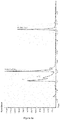
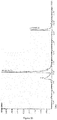
- smegmatis CECT MS6039 mutant bacterium was grown in minimal culture medium containing cholesterol or a mixture of phytosterols and an alternative carbon source (such as glycerol, for example), the ADD substance accumulated in the culture medium without a significant presence of AD or 9-OH-AD or 9-OH-ADD (see Figures 3 and 4 ).
- the MSMEG_5941 ( kstD ) gene in the mutant bacterium M. smegmatis CECT MS6039 was deleted. This new mutation was formed considering the hypothesis that deletion of this gene would theoretically reduce 3-ketosteroid- ⁇ 1-dehydrogenase activity, and this along with the fact that the bacterium M. smegmatis CECT MS6039 already lacked 3-ketosteroid 9 ⁇ -hydroxylase activity, would cause the accumulation of the AD product when the bacterium metabolizes sterols in the presence of an alternative carbon source.
- the M . smegmatis CECT MS6039-5941 mutant having the MSMEG_6039 and MSMEG_5941 genes deleted was therefore constructed.
- the present invention relates to a bacterial strain of the species M . smegmatis , which comprises at least one nucleotide sequence encoding the reductase component of 3-ketosteroid 9 ⁇ -hydroxylase enzyme that has been functionally inactivated or completely or partially deleted, and which is capable of producing substantially pure ADD by fermentation.
- nucleotide sequence encoding the reductase component of 3-ketosteroid 9 ⁇ -hydroxylase enzyme in said bacterial strain preferably corresponds with:
- the variant to the sequence having SEQ ID NO 1 is preferably at least 80% homologous, even more preferably at least 85% homologous. In other possible embodiments, the variant to the sequence having SEQ ID NO 1 is at least 90%, 95% or 98% homologous.
- nucleotide sequence encoding the reductase component of 3-ketosteroid 9 ⁇ -hydroxylase enzyme corresponds with the sequence having SEQ ID NO 1.
- nucleotide sequence encoding the reductase component of 3-ketosteroid 9 ⁇ -hydroxylase enzyme is completely or partially deleted.
- the bacterial strain preferably corresponds to the strain deposited in the Spanish Type Culture Collection (located at Pare Cientific Universitat de València, Catedrático Agust ⁇ n Escardino, 9; 46980 Paterna (Valencia), Spain) with accession number CECT 8331 with depositor identification reference number MS6039 on July 4, 2013.
- Another aspect of the invention relates to a second bacterial strain of the species M .
- smegmatis which comprises at least one nucleotide sequence encoding the reductase component of 3-ketosteroid 9 ⁇ -hydroxylase enzyme that has been functionally inactivated or completely or partially deleted, as well as at least one nucleotide sequence encoding 3-ketosteroid- ⁇ 1-dehydrogenase enzyme that has been functionally inactivated or completely or partially deleted, and which is capable of producing substantially pure AD by fermentation.
- nucleotide sequence encoding the reductase component of 3-ketosteroid 9 ⁇ -hydroxylase enzyme preferably corresponds with:
- said sequence corresponds with the sequence having SEQ ID NO 1.
- the variant to the sequence having SEQ ID NO 1 is preferably at least 80% homologous, even more preferably at least 85% homologous. In other possible embodiments, the variant to the sequence having SEQ ID NO 1 is at least 90%, 95% or 98% homologous.
- nucleotide sequence encoding 3-ketosteroid- ⁇ 1-dehydrogenase enzyme also preferably corresponds with:
- Said sequence even more preferably corresponds with the sequence having SEQ ID NO 2.
- the variant to the sequence having SEQ ID NO 2 is preferably at least 80% homologous, even more preferably at least 85% homologous. In other possible embodiments, the variant to the sequence having SEQ ID NO 2 is at least 90%, 95% or 98% homologous.
- nucleotide sequence encoding the reductase component of 3-ketosteroid 9 ⁇ -hydroxylase enzyme corresponds with:
- the variant to the sequence having SEQ ID NO 1 is preferably at least 80% homologous, even more preferably at least 85% homologous. In other possible embodiments, the variant to the sequence having SEQ ID NO 1 is at least 90%, 95% or 98% homologous. Likewise, the variant to the sequence having SEQ ID NO 2 is preferably at least 80% homologous, even more preferably at least 85% homologous. In other possible embodiments, the variant to the sequence having SEQ ID NO 2 is at least 90%, 95% or 98% homologous.
- the bacterial strain more preferably corresponds to the strain deposited in the Spanish Type Culture Collection (located at Pare Cientffic Universitat de València, Catedrático Agustin Escardino, 9, 46980 Paterna (Valencia), Spain) with accession number CECT 8332 with depositor identification reference MS6039-5941 on July 4, 2013.
- An additional aspect of the invention relates to the use of the first bacterial strain defined above for producing substantially pure ADD by means of fermenting natural sterols.
- the natural sterols are preferably selected from cholesterol or phytosterols.
- the natural sterols can only be cholesterol or a phytosterol, or a mixture of phytosterols.
- Another additional aspect of the invention relates to the use of the second bacterial strain defined above, i.e., the double mutant, for producing substantially pure AD by means of fermenting natural sterols.
- the natural sterols are preferably selected from cholesterol or phytosterols.
- the natural sterols can only be cholesterol or a phytosterol, or a mixture of phytosterols.
- Another aspect of the invention relates to a method for obtaining substantially pure ADD, characterized in that it comprises the steps of:
- a surfactant is added in step a).
- This method can be carried out both at the laboratory level and the industrial level, preferably at the industrial level.
- An additional aspect of the invention relates to a method for obtaining substantially pure AD, characterized in that it comprises the steps of:
- a surfactant is added in step a).
- This method can be carried out both at the laboratory level and the industrial level, preferably at the industrial level.
- the invention relates to a method for obtaining substantially pure ADD, characterized in that it comprises the steps of:
- the mixture from a) is sterilized before being used in step c).
- This step is known to the person skilled in the art.
- the polyalcohol of step a) is preferably selected from the group consisting of methyl-beta-cyclodextrin, polyethylene glycol, ethylene glycol, sorbitan monostearate, sorbitan monopalmitate, or mixtures thereof, or mixtures with other polyalcohols.
- the vegetable oil of step a) is preferably selected from soybean oil, sunflower oil, rapeseed oil, olive oil, palm oil, jatropha oil and coconut oil, or mixtures thereof, or mixtures with other vegetable oils.
- Mineral salts such as ZnSO 4 , FeSO 4 , MnSO 4 , CuSO 4 , CoSO 4 , H 3 PO 3 , and Kl are preferably added to the mixture of a).
- a surfactant can preferably be incorporated in step a).
- said surfactant is selected from polysorbate 80 (Tween 80 TM ) or polysorbate 20 (Tween 20 TM ).
- Step b) of preparing a cell or bacterial culture can be carried out in media known to the person skilled in the art, or even in commercial media, such as rich Middlebrook 7H9 medium (Difco), preferably supplemented with albumin-dextrose-catalase (Becton Dickinson).
- a culture medium incorporating, for example, one or more molasses, a vegetable oil such as soybean oil, for example, NaNO 3 and NH 4 H 2 PO 4 , can be prepared.
- the culture temperature is preferably between 30 and 44°C, more preferably between 34 and 40°C, even more preferably between 36 and 38°C.
- the incubation medium of step c) can comprise components such as soybean oil, methyl-beta-cyclodextrin, NH 4 NO 3 , KH 2 PO 4 , K 2 HPO 4 , KCl or CaCl 2 .
- a mixture of micronutrients incorporating at least one of ZnSO 4 , FeSO 4 , MnSO 4 , CuSO 4 , CoSO 4 , H 3 PO 3 and Kl is also preferably added.
- the incubation temperature is preferably between 30 and 44°C, more preferably between 34 and 40°C, even more preferably between 36 and 38°C.
- a cell pellet can be obtained before step c) of incubation according to techniques known to the person skilled in the art.
- the method for obtaining substantially pure ADD comprises the steps of:
- the invention also relates to substantially pure ADD obtainable by means of the preceding method, as well as to the use of said ADD for preparing steroids.
- Another aspect of the invention relates to a steroid obtainable from said ADD.
- An additional aspect of the invention relates to a steroid obtained from said ADD.
- Such processes and methodologies are described, for example, in publications such as The Organic Chemistry of Drug synthesis, vol 1, Lednicer D. Mitscher L, Wiley 1977 ; Encyclopedia of Pharmaceutical substances, Kleeman and Engels, Thieme Verlag, 2001 ; and Organic reactions in Steroid Chemistry vol II, Fried J, Edwards J, Van Nostrand Reinhold, 1972 . These texts are incorporated herein by reference.
- Such steroids obtainable according to the present invention are preferably those which are part of the estrogen, androgen, progestogen and glucocorticoid families, for example, estrone, estradiol, testosterone or fluoxymesterone, among others.
- Another aspect of the invention relates to a method for obtaining substantially pure AD, characterized in that it comprises the steps of:
- the mixture of a) is sterilized before being used in step c).
- This step is known to the person skilled in the art.
- the polyalcohol of step a) is preferably selected from the group consisting of methyl-beta-cyclodextrin, polyethylene glycol, ethylene glycol, sorbitan monostearate, sorbitan monopalmitate, or mixtures thereof, or mixtures with other polyalcohols.
- the vegetable oil is preferably selected from soybean oil, sunflower oil, rapeseed oil, olive oil, palm oil, jatropha oil and coconut oil, or mixtures thereof, or mixtures with other vegetable oils.
- Mineral salts such as ZnSO 4 , FeSO 4 , MnSO 4 , CuSO 4 , CoSO 4 , H 3 PO 3 , and Kl are preferably added to the mixture of a).
- a surfactant can optionally be incorporated in step a).
- said surfactant is selected from polysorbate 80 (Tween 80 TM ) or polysorbate 20 (Tween 20 TM ).
- Step b) of preparing a cell or bacterial culture can be carried out in media known to the person skilled in the art, or even in commercial media, such as rich Middlebrook 7H9 medium (Difco), preferably supplemented with albumin-dextrose-catalase (Becton Dickinson).
- a culture medium incorporating, for example, one or more molasses, a vegetable oil such as soybean oil, for example, NaNO 3 and NH 4 H 2 PO 4 , can be prepared.
- the culture temperature is preferably between 30 and 44°C, more preferably between 34 and 40°C, even more preferably between 36 and 38°C.
- the incubation medium of step c) can comprise components such as soybean oil, methyl-beta-cyclodextrin, NH 4 NO 3 , KH 2 PO 4 , K 2 HPO 4 , KCI or CaCl 2 .
- a mixture of micronutrients incorporating at least one of ZnSO 4 , FeSO 4 , MnSO 4 , CuSO 4 , CoSO 4 , H 3 PO 3 and Kl is also preferably added.
- the incubation temperature is preferably between 30 and 44°C, more preferably between 34 and 40°C, even more preferably between 36 and 38°C.
- a cell pellet can be obtained before step c) of incubation according to techniques known to the person skilled in the art.
- the method for obtaining substantially pure AD comprises the steps of:
- the invention also relates to substantially pure AD obtainable by means of the preceding method, as well as to the use of said AD for preparing steroids.
- Another aspect of the invention relates to a steroid obtainable from said AD.
- An additional aspect of the invention relates to a steroid obtained from said AD.
- Methodologies and processes for producing steroids using AD as the starting product are known in the state of the art. Such processes and methodologies are described, for example, in publications such as The Organic Chemistry of Drug synthesis, vol 1, Lednicer D. Mitscher L, Wiley 1977 ; Encyclopedia of Pharmaceutical substances, Kleeman and Engels, Thieme Verlag, 2001 ; and Organic reactions in Steroid Chemistry vol II, Fried J, Edwards J, Van Nostrand Reinhold, 1972 . These texts are incorporated herein by reference.
- Such steroids obtainable according to the present invention are preferably those which are part of the estrogen, androgen, progestogen and glucocorticoid families, for example, estrone, estradiol, testosterone or fluoxyme
- the term “deletion of a gene” refers to the complete or partial elimination of a gene by means of completely or partially eliminating the DNA sequence characterizing that gene in the genome of a bacterium.
- nucleotide sequence that has been functionally inactivated relates to a nucleotide sequence that is not capable of performing its functionality, i.e., it is not capable of providing a functional enzyme.
- homologous sequence refers to a sequence having the indicated % of homology based on the identity of all the nucleotides of said sequence.
- the term "substantially pure” refers to a purity of 95% or more, preferably 97% or more, even more preferably 99% or more, more preferably 100% of the product obtained with respect to the AD content in the case of obtaining ADD and with respect to the ADD content in the case of obtaining AD.
- catabolism refers to all enzymatic processes leading to the transformation of a complex substance into other simpler substances which are incorporated into the bacterial biomass or eliminated into the environment.
- Example 1 Identification of the kshA, kshB and kstD genes in M. smegmatis mc 2 155
- Table 1 Function Genes in Comamonas testosteroni TA441 Similar genes in Mycobacterium smegmatis mc 2 155 % identity (clustalW) 3-ketosteroid- ⁇ 1-dehydrogenase (KstD) tesH MSMEG_5941 36 MSMEG_4864 33 3-ketosteroid 9- ⁇ -hydroxylase, reductase component (KshB) orf17 MSMEG_039 44 MSMEG 2893 43
- Table 2 Genes in Rhodococcus jostii RHA1 Similar genes in Mycobacterium smegmatis mc 2 155 % identity (clustalW) MSMEG_5941 65 3-ketosteroid- ⁇ 1-dehydrogenase (KstD) MSMEG_4864 39 MSMEG_2869 40 ro04532 MSMEG_2867 31 MSMEG_5835 17 MSMEG_0817 13 MSMEG_4870 30 3-ketosteroid 9- ⁇
- the CECT MS6039 strain was constructed by means of homologous recombination using the pJQ200x plasmid, a derivative of the pJQ200 suicide vector that does not replicate in Mycobacterium ( Jackson, M., Camacho, L.R., Gicquel, B., and Guilhot, C. (2001) Gene replacement and transposon delivery using the negative selection marker sacB.
- the strategy consists of PCR amplification of two fragments of ⁇ 600 base pairs, one fragment containing a region upstream of the MSMEG_6039 gene (of ⁇ 500 base pairs) and ⁇ 100 base pairs of the 5' end of the gene (using the MSMEG_6039 Up F oligonucleotide: CTAGCTCGAGCCAGTTGTGCACACCGATG (SEQ ID NO 3), and the MSMEG_6039 Up R oligonucleotide: CTAGACTAGTGCAGCGTCAGGAACTGGC (SEQ ID NO 4)), and the second fragment containing a region downstream of the gene (of ⁇ 500 base pairs) and ⁇ 100 base pairs of the 3' end of the gene (using the MSMEG_6039 Down F oligonucleotide: CTAGACTAGTGGTGCACATGGAGATCAACG (SEQ ID NO 5), and the MSMEG_6039 Down R oligonucleotide: CTAGTCTAGAGTACCAGTCGATCGGTGTC (S
- the two generated fragments were digested with the corresponding enzymes and cloned into the pJQ200x plasmid, generating the pJQ6039 plasmid.
- pJQ6039 was subjected to electroporation into competent cells of M . smegmatis mc 2 155 to obtain the MS6039 strain.
- Simple recombination events were selected in 7H10 agar plates (Difco) containing 5 ⁇ g ml -1 of gentamicin to which this plasmid confers resistance, and the presence of the xylE gene encoded in pJQ200x was confirmed by means of adding catechol on individual colonies. The appearance of a yellow color indicates the presence of the xylE gene.
- the colonies were also counter-selected in 10% sucrose, making cells in which pJQ200x has recombined non-viable, due to the presence of the sacB gene conferring sensitivity to sucrose in the plasmid.
- a single gentamicin-resistant, catechol-positive and sucrose-sensitive colony was cultured in 10 ml of 7H9 medium with 5 ⁇ g ml -1 of gentamicin to an optical density of 0.8-0.9. 20 ⁇ l of a 1:100 dilution were seeded in a 7H10 agar plate with 10% sucrose for selecting double recombination events.
- Possible double recombinants were selected to check their sensitivity to gentamicin and the absence of the xylE gene. Sucrose-resistant, gentamicin-sensitive and non xylE gene carrier colonies were analyzed by PCR to confirm the elimination of MSMEG_6039 , which meant obtaining the MS6039 mutant strain.
- Example 3 Production of ADD with the M. smegmatis CECT 8331 (MS6039) mutant strain from sterols
- the production media for obtaining ADD in this example are formed by a mixture of 18 mM glycerol and 1.8 mM cholesterol or a mixture of 18 mM glycerol - mixture of phytosterols.
- the mixture of phytosterols contains (percentage w/w): brassicasterol (2.16%), stigmasterol (14.69%), campesterol (25.19%) and ⁇ -sitosterol (53.07%).
- the amount of the mixture of phytosterols added to the production medium is that in which ⁇ -sitosterol is at a concentration of 1 mM.
- the cholesterol or phytosterols were dissolved in 10% or 5% Tyloxapol, respectively, before being added to the minimal medium with glycerol. Due to the low solubility of cholesterol and phytosterols, the stock solutions of these compounds were heated at 80°C under stirring in an ultrasound bath for 1 hour and then sterilized in an autoclave.
- the CECT MS6039 strain was first cultured in 10 ml of rich Middlebrook 7H9 medium (Difco) supplemented with 10% albumin-dextrose-catalase (Becton Dickinson) for 24 hours at a temperature of about 37°C. The cultures were centrifuged and washed. The cell pellets were used for inoculating 20 ml of the production media at an initial OD 600 of 0.05 and incubated for 120 hours. Aliquots of the cultures (2 ml) were extracted at different incubation times for liquid chromatography-mass spectrometry (GC/MS) analysis as explained below.
- GC/MS liquid chromatography-mass spectrometry
- Example 4 M. smegmatis CECT 8332 (MS6039-5941) mutant strain construct
- the CECT MS6039-5941 strain was constructed by means of homologous recombination using the pJQ200x plasmid on the already mutated MS6039 strain. Two fragments of ⁇ 600 base pairs were amplified by PCR, one fragment containing a region upstream of the MSMEG_5941 gene (of ⁇ 500 base pairs) and ⁇ 100 base pairs of the 5' end of the gene (using the MSMEG_5941 Up F oligonucleotide: CTAGACTAGTGATGTTGCGAATGTCG ATGTC (SEQ ID NO 7), and the MSMEG_5941 Up R oligonucleotide: CTAGTCTAGACCACCACAACGTCGTACTCC (SEQ ID NO 8)), and the second fragment containing a region downstream of the gene (of ⁇ 500 base pairs) and ⁇ 100 base pairs of the 3' end of the gene (using the MSMEG_5941 Down F oligonucleotide: CTAGTCTAGACCATGACATT CGG
- the two generated fragments were digested with the corresponding enzymes and cloned into the pJQ200x plasmid, generating the pJQ5941 plasmid.
- pJQ5941 was subjected to electroporation into competent cells of the MS6039 strain to obtain the MS6039-5941 strain.
- Simple recombination events were selected in 7H10 agar plates containing 5 ⁇ g ml -1 of gentamicin, and the presence of the xylE gene encoded in pJQ200x was confirmed by means of adding catechol on individual colonies. The colonies were also counter-selected in 10% sucrose.
- a single gentamicin-resistant, catechol-positive and sucrose-sensitive colony was cultured in 10 ml of 7H9 medium with 5 ⁇ g ml -1 of gentamicin to an optical density of 0.8-0.9. 20 ⁇ l of a 1:100 dilution were seeded in a 7H10 agar plate with 10% sucrose for selecting double recombination events. Possible double recombinants (sucrose-resistant recombinants) were selected to check their sensitivity to gentamicin and the absence of the xylE gene. Sucrose-resistant, gentamicin-sensitive and non xylE gene carrier colonies were analyzed by PCR to confirm the elimination of MSMEG_5941, which meant obtaining the MS6039-5941 mutant strain.
- Example 5 Production of AD with the M. smegmatis CECT 8332 (MS6039-5941) mutant strain from sterols
- the production media for obtaining AD are the same as those used for obtaining ADD (EXAMPLE 3).
- the CECT MS6039-5941 strain was first cultured in 10 ml of rich Middlebrook 7H9 medium supplemented with 10% albumin-dextrose-catalase for 24 hours. The cultures were centrifuged and washed. The cell pellets were used for inoculating 20 ml of the production medium at an initial OD 600 of 0.05 and incubated for 120 hours. Aliquots of the cultures (2 ml) were extracted at different incubation times for gas chromatography-mass spectrometry (GC/MS) analysis as explained below.
- GC/MS gas chromatography-mass spectrometry
- Example 6 Production of AD in a fermenter with the Mycobacterium smegmatis CECT 8332 (MS6039-5941) strain using phytosterol and vegetable oil
- Fermentation was performed in 2 phases using a vegetative inoculum and fermenter.
- the vegetative inoculum was seeded with 1 ml of microorganism (about 10 8 cells) and incubated in a 5 L fermenter with 3 L of culture medium with the following composition: 54 g/L of molasses, 5.4 g/L of NaNo 3 , 0.6 g/L of NH 4 H 2 PO 4 , and 20 g/L of soybean oil, all adjusted to pH 7.0.
- the vegetative inoculum was incubated for 48-72 hours at 37°C with aeration of 0.5 volume/volume/minute (vvm), relative pressure of 0.5 barg and stirring at 150 rpm. Cell pellet volumes of 5-20% analyzed by centrifugation for 10 minutes at 2,000 x g were thereby obtained.
- Fermentation was performed in a 42 L fermenter with 30 L of culture medium with the following composition (g/L): 2 g/L of NH 4 NO 3 , 1 g/L of KH 2 PO 4 , 2 g/L of K 2 HPO 4 , 0.2 g/L of KCI, 0.3 g/L of CaCl 2 , 150 g/L of soybean oil, and 20-40 g/L of phytosterol; 1 mL of a mixture of micronutrients was additionally added for each L of fermentation medium.
- composition g/L: 2 g/L of NH 4 NO 3 , 1 g/L of KH 2 PO 4 , 2 g/L of K 2 HPO 4 , 0.2 g/L of KCI, 0.3 g/L of CaCl 2 , 150 g/L of soybean oil, and 20-40 g/L of phytosterol; 1 mL of a mixture of micronutrients was additionally added for each L of fermentation medium.
- composition of the mixture of micronutrients is as follows: 11 g/L of ZnSO 4 , 1 g/L of FeSO 4 , 6 g/L of MnSO 4 , 0.04 g/L of CuSO 4 , 0.3 g/L of CoSO 4 , 0.03 g/L of H 3 PO 3 , and 0.001 g/L of Kl, all adjusted to pH 7.0.
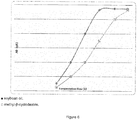
- the fermenter was seeded with 3 L of vegetative inoculum and incubated for 120-192 hours at 37°C, with aeration of 0.5 volume/volume/minute (vvm), relative pressure of 0.5 barg and stirring at 150 rpm. The obtained results are shown in Figure 6 .
- Example 7 Production of AD in a fermenter with the Mycobacterium smegmatis CECT 8332 (MS6039-5941) strain using phytosterol and methyl-B-cyclodextrin
- Fermentation was performed in 2 phases using a vegetative inoculum and fermenter.
- the vegetative inoculum was seeded with 1 ml of microorganism (about 10 8 cells) and incubated in a 5 L fermenter with 3 L of culture medium with the following composition: 54 g/L of molasses, 5.4 g/L of NaNo 3 , 0.6 g/L of NH 4 H 2 PO 4 , and 20 g/L of soybean oil, all adjusted to pH 7.0.
- the vegetative inoculum was incubated for 48-72 hours at 37°C, with aeration of 0.5 volume/volume/minute (vvm), relative pressure of 0.5 barg and stirring at 150 rpm. Cell pellet volumes of 5-20% analyzed by centrifugation for 10 minutes at 2,000 x g were thereby obtained.
- Fermentation was performed in a 42 L fermenter with 30 L of culture medium with the following composition (g/L): 2 g/L of NH 4 NO 3 , 1 g/L of KH 2 PO 4 , 2 g/L of K 2 HPO 4 , 0.2 g/L of KCI, 0.3 g/L of CaCl 2 , 40 g/L of methyl- ⁇ -cyclodextrin (Cavasol® W7M, Wacker Chemie), and 20 g/L of phytosterol; 1 mL of a mixture of micronutrients was additionally added for each L of fermentation medium.
- composition g/L: 2 g/L of NH 4 NO 3 , 1 g/L of KH 2 PO 4 , 2 g/L of K 2 HPO 4 , 0.2 g/L of KCI, 0.3 g/L of CaCl 2 , 40 g/L of methyl- ⁇ -cyclodextrin (Cavasol® W7M, Wacker Che
- composition of the mixture of micronutrients is as follows: 11 g/L of ZnSO 4 , 1 g/L of FeSO 4 , 6 g/L of MnSO 4 , 0.04 g/L of CuSO 4 , 0.3 g/L of CoSO 4 , 0.03 g/L of H 3 PO 3 , and 0.001 g/L of Kl, all adjusted to pH 7.0.
- the fermenter was seeded with 3 L of vegetative inoculum and incubated for 120-192 hours at 37°C, with aeration of 0.5 volume/volume/minute (vvm), relative pressure of 0.5 barg and stirring at 150 rpm. The obtained results are shown in Figure 6 .
- Example 8 Production of ADD in a fermenter with the Mycobacterium smegmatis CECT 8331 (MS6039) strain using phytosterol and vegetable oil
- Fermentation was performed in 2 phases using a vegetative inoculum and fermenter.
- the vegetative inoculum was seeded with 1 ml of microorganism (about 10 8 cells) and incubated in a 5 L fermenter with 3 L of culture medium with the following composition: 54 g/L of molasses, 5.4 g/L of NaNo 3 , 0.6 g/L of NH 4 H 2 PO 4 , 20 g/L of soybean oil and 20 ⁇ g/ml of kanamycin, all adjusted to pH 7.0.
- the vegetative inoculum was incubated for 48-72 hours at 37°C, with aeration of 0.5 volume/volume/minute (vvm), relative pressure of 0.5 barg and stirring at 150 rpm. Cell pellet volumes of 5-20% analyzed by centrifugation for 10 minutes at 2,000 x g were thereby obtained.
- Fermentation was performed in a 42 L fermenter with 30 L of culture medium with the following composition (g/L): 2 g/L of NH 4 NO 3 , 1 g/L of KH 2 PO 4 , 2 g/L of K 2 HPO 4 , 0.2 g/L of KCI, 0.3 g/L of CaCl 2 , 150 g/L of soybean oil, 20 ⁇ g/ml of kanamycin, and 20-40 g/L of phytosterol; 1 mL of a mixture of micronutrients was additionally added for each L of fermentation medium.
- composition g/L: 2 g/L of NH 4 NO 3 , 1 g/L of KH 2 PO 4 , 2 g/L of K 2 HPO 4 , 0.2 g/L of KCI, 0.3 g/L of CaCl 2 , 150 g/L of soybean oil, 20 ⁇ g/ml of kanamycin, and 20-40 g/L of phytosterol; 1 m
- composition of the mixture of micronutrients is as follows: 11 g/L of ZnSO 4 , 1 g/L of FeSO 4 , 6 g/L of MnSO 4 , 0.04 g/L of CuSO 4 , 0.3 g/L of CoSO 4 , 0.03 g/L of H 3 PO 3 , and 0.001 g/L of Kl, all adjusted to pH 7.0.
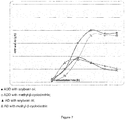
- the fermenter was seeded with 3 L of vegetative inoculum and incubated for 120-192 hours at 37°C, with aeration of 0.5 volume/volume/minute (vvm), relative pressure of 0.5 barg and stirring at 150 rpm. The obtained results are shown in Figure 7 .
- Example 9 Production of ADD in a fermenter with the Mycobacterium smegmatis CECT 8331 (MS6039) strain using phytosterol and methyl- ⁇ -cyclodextrin
- Fermentation was performed in 2 phases using a vegetative inoculum and fermenter.
- the vegetative inoculum was seeded with 1 ml of microorganism (about 10 8 cells) and incubated in a 5 L fermenter with 3 L of culture medium with the following composition: 54 g/L of molasses, 5.4 g/L of NaNo 3 , 0.6 g/L of NH 4 H 2 PO 4 , 20 g/L of soybean oil, and 20 ⁇ g/ml of kanamycin, all adjusted to pH 7.0.
- the vegetative inoculum was incubated for 48-72 hours at 37°C, with aeration of 0.5 volume/volume/minute (vvm), relative pressure of 0.5 barg and stirring at 150 rpm. Cell pellet volumes of 5-20% analyzed by centrifugation for 10 minutes at 2,000 x g were thereby obtained.
- Fermentation was performed in a 42 L fermenter with 30 L of culture medium with the following composition (g/L): 2 g/L of NH 4 NO 3 , 1 g/L of KH 2 PO 4 , 2 g/L of K 2 HPO 4 , 0.2 g/L of KCI, 0.3 g/L of CaCl 2 , 40 g/L of methyl- ⁇ -cyclodextrin (Cavasol® W7M, Wacker Chemie), 20 ⁇ g/ml of kanamycin, and 20 g/L of phytosterol; 1 mL of a mixture of micronutrients was additionally added for each L of fermentation medium.
- composition g/L
- 2 g/L of NH 4 NO 3 2 g/L of NH 4 NO 3
- 1 g/L of KH 2 PO 4 2 g/L of K 2 HPO 4
- 0.2 g/L of KCI 0.2 g/L of KCI
- composition of the mixture of micronutrients is as follows: 11 g/L of ZnSO 4 , 1 g/L of FeSO 4 , 6 g/L of MnSO 4 , 0.04 g/L of CuSO 4 , 0.3 g/L of CoSO 4 , 0.03 g/L of H 3 PO 3 , and 0.001 g/L of Kl, all adjusted to pH 7.0.
- the fermenter was seeded with 3 L of vegetative inoculum and incubated for 120-192 hours at 37°C, with aeration of 0.5 volume/volume/minute (vvm), relative pressure of 0.5 barg and stirring at 150 rpm. The obtained results are shown in Figure 7 .
Landscapes
- Chemical & Material Sciences (AREA)
- Life Sciences & Earth Sciences (AREA)
- Health & Medical Sciences (AREA)
- Organic Chemistry (AREA)
- Engineering & Computer Science (AREA)
- Zoology (AREA)
- Wood Science & Technology (AREA)
- Bioinformatics & Cheminformatics (AREA)
- Genetics & Genomics (AREA)
- Biotechnology (AREA)
- Microbiology (AREA)
- Biochemistry (AREA)
- General Engineering & Computer Science (AREA)
- General Health & Medical Sciences (AREA)
- Biomedical Technology (AREA)
- Medicinal Chemistry (AREA)
- Molecular Biology (AREA)
- Chemical Kinetics & Catalysis (AREA)
- General Chemical & Material Sciences (AREA)
- Tropical Medicine & Parasitology (AREA)
- Virology (AREA)
- Micro-Organisms Or Cultivation Processes Thereof (AREA)
- Preparation Of Compounds By Using Micro-Organisms (AREA)
Abstract
Description
- The present invention is encompassed within the area of biotechnology in the chemical industry, pharmaceutical industry and food industry fields, among others. The developed product makes it applicable for producing steroids by means of bacterial biotransformations, but particularly for producing steroids from natural steroids.
- Steroids are terpenoid lipids with a specific structure containing a cyclopentanoperhydrophenanthrene or gonane nucleus with four fused rings (A-D); this basic structure is modified by adding various functional groups such as carbonyls and hydroxyls (hydrophilic) or hydrocarbon chains (hydrophobic). The physiological activity of steroids depends on their structure, i.e., the type, number and position of the functional groups bound to the steroid nucleus, on their configurational and structural isomerism, i.e., stereoisomerism and regioisomerism, and on the oxidation state of the rings.
- Steroids are widespread in nature and present in all types of organisms. Hundreds of sterols and related compounds produced in plants, such as phytosterols, for example; in insects, such as ecdysteroids, for example; in vertebrates, such as cholesterol, corticosteroids or steroid hormones, for example; and in lower eukaryotes (yeasts and fungi), such as ergosterol, for example, have been identified.
- Steroid-type pharmaceutical products are very important today for maintaining quality of life because many steroids are used as antitumor, anti-inflammatory, antimicrobial, antiviral, antifungal, antiestrogenic, anticonvulsant and antiallergic agents. Furthermore, others are used as agents for the prevention and therapy of many other diseases, such as hormone-dependent breast and prostate cancers, certain forms of colon cancer, obesity, diabetes, rheumatoid arthritis, hypertension, asthma, eczema, inflammations, metabolic disorders, neurodegenerative diseases in the elderly, or central nervous system diseases, among many others. Androgens, anabolic steroids, estrogens, and corticosteroids, among others, are included herein.
- About 300 steroid drugs have been approved up until now for clinical use and this number tends to grow. Steroid medicinal products are among the medical products most widely available on the market and represent the second major category of drugs together with antibiotics. Annual production of steroids is estimated to be more than one million tons with a market worth billions of Euros.
- Many steroids used as drugs are chemically synthesized, but it has been known for a long time that microbial transformation of steroids is a powerful tool for generating new steroid drugs, as well as for efficiently producing intermediate products key for the chemical synthesis of such drugs. Bioconversions allow modifying steroids in positions of the molecule hardly available to or accessible for chemical agents, and functionalization of the molecule can be done regiospecifically and stereospecifically. Furthermore, several reactions can be completed in a single step by means of bioconversion. The foregoing and other advantages of biotransformations have entailed the extensive expansion of microbial technologies in the field of steroids, such that applications of microorganisms for modifying steroids have been reviewed in a number of articles over the past few years (for example, Marina V. Donova et al., Microbial steroid transformations: current state and prospects. Appl. Microbiol. Biotechnol. 2012; 94, 1423-1447).
- The main intermediate products for the industrial synthesis of steroid drugs are 4-androstene-3,17-dione (hereinafter, AD), 9α-hydroxy-4-androstene-3,17-dione (hereinafter, 9-OH-AD), and 1,4-androstadiene-3,17-dione (hereinafter, ADD). Therefore, cost-effective and efficient production of these intermediates is a pressing need in the pharmaceutical industry.
- In the catabolism of microorganisms, 3-ketosteroid-Δ1-dehydrogenase enzyme is responsible for transforming AD into ADD, and 3-ketosteroid 9α-hydroxylase enzyme is responsible for transforming AD into 9-OH-AD.
- Enzymes with 3-ketosteroid-Δ1-dehydrogenase activity contain only one type of subunit and are encoded by a single gene generically referred to as kstD.
- In addition, enzymes described with 3-ketosteroid 9α-hydroxylase activity have two protein subunits and these enzymes are therefore encoded by two different genes, generically referred to as kshA (encoding the oxygenase component of the enzyme) and kshB (encoding the reductase component of the enzyme), respectively.
- One of the main raw materials used in the chemical industry of steroids to obtain the mentioned intermediate products are sapogenins, such as diosgenin. Alternatively, some natural sterols, such as 3β-alcohol steroids containing a double bond at position 5-6 and an aliphatic side chain at C-17, are also used as starting materials in the steroid industry. These steroids include cholesterol, which is known as animal sterol, or phytosterols, which are mixtures of plant-derived sterols, mainly of soybean origin, such as sitosterol, stigmasterol, campesterol and brassicasterol, for example. Since the 1980s, microbial transformation of phytosterol has been a focus of research in the field of steroids ( Marina V. Donova et al., Microbial steroid transformations: current state and prospects. Appl. Microbiol. Biotechnol. 2012, 94, 1423-1447).
- Up until very recently, microbial steroid biotransformation processes were performed using natural microorganisms, either directly without any modification, or using microorganisms mutated by means of conventional methods. Genetic engineering techniques have also been recently applied. Nevertheless, pure AD or ADD has not been successfully produced from cholesterol, phytosterols or other natural sterols up until now.
- Many publications and patents describe these processes and the microorganisms used. Processes for producing AD and ADD from natural sterols by means of strains of Mycobacterium sp. isolated from soil and subsequently mutated by means of UV irradiation have been described, for example (see patent
US 3684657 (1972 ); and William J. Marsheck et al, Microbial Degradation of Sterols, Appl Microbiol., 1972, 23(1), 72-77). - A Mycobacterium smegmatis (hereinafter, M. smegmatis) insertional mutant blocked in the oxygenase component KshA of 3-ketosteroid 9α-hydroxylase enzyme accumulating mixtures of AD and ADD from β-sitosterol has been obtained by means of random mutagenesis using a transposon (Attila Andor et al., Generation of useful insertionally blocked sterol degradation pathway mutants of fast-growing mycobacteria and cloning, characterization, and expression of the terminal oxygenase of the 3-ketosteroid 9α-hydroxylase in Mycobacterium smegmatis mc2155. Appl. Environ. Microbiol. 2006, 72, 6554-6559)
- It must be pointed out that mutants which have been isolated using classical mutagenesis or random insertional mutagenesis with transposons are generally unsuitable for industrial processes due to their genetic instability and/or low bioconversion efficiencies. Furthermore, these strains tend to produce mixtures of AD and ADD, and the difficulty in separating these two products is a key bottleneck for microbial transformation of phytosterols in the industry.
- New molecular biology and genetic engineering technologies have been applied recently to obtain genetically modified strains capable of accumulating AD, ADD and other intermediate products of steroid metabolism. These techniques are based on knowledge about bacterial genomes metabolizing sterols.
- In this sense, several bacterial genomes that metabolize sterols are known, such as the genomes of M. smegmatis mc2155 (GenBank CP000480.1), Mycobacterium tuberculosis H37Rv (GenBank AL123456.3) or Rhodococcus jostii RHA1 (GenBank CP000431.1), for example.
- More specifically, some of the genes involved in cholesterol catabolism in some bacteria have been described ( Jose L. Garcia et al., Catabolism and biotechnological applications of cholesterol degrading bacterium. Microb. Biotechnol. 2012, 5, 679-699)
- A method has also been developed for constructing selective gene deletion mutants in the genus Rhodococcus and the kstD1 gene encoding 3-ketosteroid-Δ1-dehydrogenase (KstD1) enzyme in Rhodococcus erythropolis SQ1 was deleted by means of this method, but the mutant strain still has significant residual KstD enzyme activity and did not accumulate intermediate products (Robert van der Geize R et al., Unmarked gene deletion mutagenesis of kstD, encoding 3-ketosteroid Delta1-dehydrogenase, in Rhodococcus erythropolis SQ1 using sacB as counter-selectable marker, FEMS Microbiol Lett. 2001, 18, 205(2), 197-202 ). However, accumulation of 90H-AD was observed when kstD1 and kstD2 genes were inactivated (Lubbert Dijkhuizen et al., Microbial 9(α)-hydroxylation of steroids, Application of Patent
EP1232278A1 ). - It has also been demonstrated that it is possible to accumulate ADD from phytosterols in the bacterium Rhodococcus erythropolis SQ1 blocked in the two oxygenase (KshA) and reductase (KshB) components of 3-ketosteroid 9α-hydroxylase enzyme by means of genetic engineering through deletion of the two kshA and kshB genes encoding this enzyme (R. van der Geize, et al., Molecular and functional characterization of kshA and kshB, encoding two components of 3-ketosteroid 9α-hydroxylase, a class IA monooxygenase, in Rhodococcus erythropolis strain SQ1. Molecular Microbiology 2002, 45(4), 1007-1018) (Robert Van der Geize et al., Identification of 3-ketosteroid 9α-hydroxylase genes and microorganisms blocked in 3-ketosteroid 9α-hydroxylase activity, patent application
WO 03/070925 - 3-ketosteroid-Δ1-dehydrogenase (KsdD) enzyme activity in the bacterium Mycobacterium neoaurum NwlB-01 has been inactivated and augmented also by means of genetic engineering to produce mixtures of AD and ADD from phytosterols (Wei Wei et al., Inactivation and Augmentation of the Primary 3-Ketosteroid-Δ1-Dehydrogenase in Mycobacterium neoaurum NwlB-01: Biotransformation of Soybean Phytosterols to 4-Androstene-3,17-Dione or 1,4-Androstadiene-3,17-Dione, Appl. Environ. Microbiol. 2010, 76, 4578-4582).
- M. smegmatis and Mycobacterium phlei mutants that do not grow in β-sitosterol and accumulate mixtures of AD, ADD and other intermediate products in the culture medium in the presence of β-sitosterol have been found by means of random mutagenesis using transposons (Attila Andor et al., Generation of useful insertionally blocked sterol degradation pathway mutants of fast-growing mycobacteria and cloning, characterization, and expression of the terminal oxygenase of the 3-ketosteroid 9alpha-hydroxylase in Mycobacterium smegmatis mc(2)155. Appl. Environ. Microbiol. 2006, 72, 6554-6559). One of these mutants has been found to have the transposon inserted in the kshA gene. The problem these transposition mutants present is that they are very unstable due to the nature of transposons. Furthermore, AD and ADD accumulate in the form of a mixture, making their subsequent separation difficult.
- Accumulation of 9α-hydroxy-4-androstene-3,17-dione (9-OH-AD) from AD by means of deletion of 3 kstD genes (kstD1, kstD2 and kstD3) encoding 3-ketosteroid-A1-dehydrogenase ( Laura Fernández de las Heras et al., Molecular characterization of three 3-ketosteroid-Δ(1)-dehydrogenase isoenzymes of Rhodococcus ruber strain Chol-4. J. Steroid Biochem. Mol. Biol., 2012, 132, 271-281 ) has recently been demonstrated in an isolated Rhodococcus ruber strain Chol-4 (Laura Fernández de las Heras et al., Morphological, Physiological, and Molecular Characterization of a Newly Isolated Steroid-Degrading Actinomycete, Identified as Rhodococcus ruber strain Chol-4. Curr. Microbiol. 2009, 59, 548-553). Nor has it been demonstrated in this case that 9-OH AD can be accumulated from natural sterols with genetically modified bacteria.
- M. smegmatis mutant strains with one or two genes with 3-ketosteroid-Δ(1)-dehydrogenase (ksdD) activity that are deleted have been described (Anna Brzostek et al., Identification and targeted disruption of the gene encoding the main 3-ketosteroid dehydrogenase in Mycobacterium smegmatis. Microbiology 2005, 151, 2393-2402). Up to 6 putative genes encoding possible KsdDs have been identified, two of which are selected by homology. Deletion of one of said genes provides a mutant strain capable of accumulating a mixture of AD and 9-OH-AD from cholesterol; nevertheless degradation of AD to ADD is not completely eliminated, confirming the presence of various homologous genes with KsdD activity. Deletion of two genes allows obtaining a mixture of AD and 9-OH-AD without detectable formation of ADD.
- Based on the foregoing it is deduced that a recombinant bacterium capable of producing pure AD or ADD from cholesterol, phytosterols or other natural sterols could not be obtained up until now by means of directed mutagenesis.
- The present invention relates to genetically modified M. smegmatis mc2155 strains with one or more genes involved in cholesterol catabolism being functionally inactivated or completely or partially deleted, as well as to processes for producing substantially pure AD or ADD without them mixing with one another or mixing with 9-OH-AD or 9-OH-ADD, from natural sterols, whether from cholesterol or phytosterols, using said modified strains.
- Therefore, a first aspect of the invention relates to a bacterial strain of the species M. smegmatis, which comprises at least one nucleotide sequence encoding the reductase component of 3-ketosteroid 9 α-hydroxylase enzyme that has been functionally inactivated or completely or partially deleted, and which is capable of producing substantially pure ADD by fermentation.
- A second aspect of the invention relates to the use of said bacterial strain for producing substantially pure ADD form by means of fermenting natural sterols.
- A third aspect of the invention relates to a method for obtaining substantially pure ADD, characterized in that it comprises the steps of:
- a) preparing and sterilizing a mixture of a natural sterol or a mixture of natural sterols in a polyalcohol or a vegetable oil, with the addition of mineral salts;
- b) growing a culture of the previously defined bacterial strain;
- c) separating the cell pellet to obtain a solution containing substantially pure ADD.
- A fourth aspect of the invention relates to a method for obtaining substantially pure AD, characterized in that it comprises the steps of:
- a) preparing and sterilizing a mixture of a natural sterol or a mixture of natural sterols in a polyalcohol or a vegetable oil, with the addition of mineral salts;
- b) growing a culture of the previously defined bacterial strain in the mixture obtained in a);
- c) separating the cell pellet to obtain a solution containing substantially pure AD.
- Another aspect relates to a method for obtaining substantially pure ADD, characterized in that it comprises the steps of:
- a) preparing a mixture of a natural sterol or a mixture of natural sterols in a polyalcohol or a vegetable oil;
- b) preparing a culture of the previously defined bacterial strain;
- c) incubating the mixture from a) with the cell culture from b);
- d) separating the cell pellet to obtain a solution containing substantially pure ADD.
- According to an additional aspect, the invention relates to substantially pure ADD obtainable by means of the previously defined method.
- The invention also relates to the use of said ADD for preparing steroids, as well as to a steroid obtainable from said previously defined ADD.
- According to another aspect, the invention relates to a second bacterial strain of the species M. smegmatis, which comprises at least one nucleotide sequence encoding the reductase component of 3-ketosteroid 9 α-hydroxylase enzyme that has been functionally inactivated or completely or partially deleted, as well as at least one nucleotide sequence encoding 3-ketosteroid-Δ1-dehydrogenase enzyme that has been functionally inactivated or completely or partially deleted, and which is capable of producing substantially pure AD by fermentation.
- Another aspect of the invention relates to the use of this second bacterial strain for producing substantially pure AD by means of fermenting natural sterols.
- An additional aspect relates to a method for obtaining substantially pure AD, characterized in that it comprises the steps of:
- a) preparing a mixture of a natural sterol or a mixture of natural sterols in a polyalcohol or a vegetable oil in the presence of a surfactant;
- b) preparing a culture of said previously defined second bacterial strain;
- c) incubating the mixture from a) with the cell culture from b);
- d) separating the cell pellet to obtain a solution containing substantially pure AD.
- In another aspect, the invention relates to substantially pure AD obtainable by means of the previously defined method. In an additional aspect, the invention also relates to the use of said AD for preparing steroids. Additionally, the invention relates to a steroid obtainable from said AD.
-
-
Figure 1 shows the M. smegmatis CECT 8331 (MS6039) construct.
First, two DNA fragments, one in the region upstream of the MSMEG_6039 gene and another in the region downstream of the same gene, were amplified by means of PCR using the genome of M. smegmatis mc2155 as a template. The two generated DNA fragments were digested with restriction enzymes and cloned into the pJQ200x plasmid, generating the pJQ6039 plasmid. The pJQ6039 plasmid was transformed into competent cells of the M. smegmatis mc2155 strain by means of electroporation, and a mutant strain selection process was started. The CECT 8331 (MS6039) mutant strain was obtained after two selection steps; simple recombinants (gentamicin-resistant, sucrose-sensitive and xylE-positive recombinants) were selected in a first step and they were seeded in a 7H10 agar plate with 10% sucrose to select double recombination events. Sucrose-resistant, gentamicin-sensitive and non xylE gene carrier colonies were analyzed by PCR to confirm deletion of MSMEG_6039, which meant obtaining the CECT 8331 (MS6039) mutant strain. -
Figure 2 shows the M. smegmatis CECT 8332 (MS6039-5941) construct.
First, two DNA fragments, one in the region upstream of the MSMEG_5941 gene and another in the region downstream of the same gene, were amplified by means of PCR using the genome of M. smegmatis mc2155 as a template. The two generated DNA fragments were digested with restriction enzymes and cloned into the pJQ200x plasmid, generating the pJQ5941 plasmid. The pJQ5941 plasmid was transformed into competent cells of the CECT 8331 (MS6039) strain by means of electroporation, and a new mutant strain selection process was started. The CECT 8332 (MS6039-5941) new mutant strain was obtained after two selection steps; simple recombinants (gentamicin-resistant, sucrose-sensitive and xylE-positive recombinants) were selected in a first step, and they were seeded in a 7H10 agar plate with 10% sucrose to select double recombination events. Sucrose-resistant, gentamicin-sensitive and non xylE gene carrier colonies were analyzed by PCR to confirm deletion of MSMEG_5941, which meant obtaining the CECT 8332 (MS6039-5941) mutant strain. -
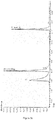
Figure 3 shows the GC/MS chromatograms showing the production of AD and ADD from cholesterol in CECT MS6039 and CECT MS6039-5941 mutants: A) standards B) ADD in CECT MS6039 and C) AD in CECT MS6039-5941. -
Figure 4 shows the GC/MS chromatograms showing the production of AD and ADD from phytosterols in CECT MS6039 and CECT MS6039-5941 mutants: A) standards B) ADD in CECT MS6039 and C) AD in CECT MS6039-5941. -
Figure 5 shows growth curves of M. smegmatis in cholesterol and in ADD as the only carbon source. -
Figure 6 shows the production of AD in a fermenter with the Mycobacterium smegmatis CECT 8332 (MS6039-5941) strain using phytosterol (20 g/L): ■ soybean oil; □ methyl-β-cyclodextrin. -
Figure 7 shows the production of ADD and AD with the Mycobacterium smegmatis CECT 8331 (MS6039) strain using phytosterol (20 g/L): ■ ADD with soybean oil; □ ADD with methyl-β-cyclodextrin; ▲ AD with soybean oil; Δ AD with methyl-β-cyclodextrin. - AD and ADD are used by bacteria as a carbon source when added to a culture medium. Therefore, although mutant AD- and/or ADD-producing bacteria which secrete said substances into the culture medium can be obtained by fermentation, once these compounds are secreted they can be partially metabolized throughout the fermentation time with subsequent losses in the AD and ADD production process yield. This has also been described for M. smegmatis (Anna Brzostek et al., Identification and targeted disruption of the gene encoding the main 3-ketosteroid dehydrogenase in Mycobacterium smegmatis. Microbiology 2005, 151, 2393-2402 ).
- Not withstanding the foregoing, the research conducted by the inventors of the present application has surprisingly determined that wild-type M. smegmatis mc2155 bacterium cannot use the substances AD and ADD as a carbon source when said substances are added to a culture medium, despite being intermediate products in bacterial cholesterol catabolism (see
Figure 5 ). This occurs even in the presence of cholesterol which would activate metabolization thereof. This property is not observed in other actinobacteria of the genera Mycobacterium or Rhodococcus that catabolize cholesterol given that they are capable of growing using AD and ADD as a carbon source. - The bacterium M. smegmatis mc2155 is therefore an ideal bacterium for producing AD and ADD since they cannot be catabolized by the metabolism of the bacterium once secreted into the medium.
- In addition, according to the hypotheses established concerning the operation of the catabolic pathway for cholesterol described for actinobacteria, it has been proposed that any 3-ketosteroid 9α-hydroxylase activity in the producer cell must be inhibited in order to produce ADD from natural sterols. It has also been proposed that any 3-ketosteroid 9α-hydroxylase activity and any 3-ketosteroid-Δ1-dehydrogenase activity must be inhibited in order to produce AD from natural sterols. Notwithstanding the foregoing, no stable M. smegmatis mc2 155 strain with inactivated 3-ketosteroid 9α-hydroxylase activity has been described up until now, and much less a stable strain with inactivated 3-ketosteroid 9α-hydroxylase activities and inactivated 3-ketosteroid-Δ1-dehydrogenase activity.
- Enzymes with 3-ketosteroid-Δ1-dehydrogenase activity contain only one type of subunit and are encoded by a single gene generically referred to as kstD.
- Meanwhile, enzymes described with 3-ketosteroid 9α-hydroxylase activity have two protein subunits, and these enzymes are therefore encoded by two different genes generically referred to as kshA (encoding the oxygenase component of the enzyme) and kshB (encoding the reductase component of the enzyme), respectively.
- It is also known that actinobacteria can have several genes homologous to the kshA, kshB or kstD genes in the same genome, encoding enzymes with the same activities, so several homologous genes must be eliminated in those cases to completely eliminate the mentioned 3-ketosteroid-Δ1-dehydrogenase and 3-ketosteroid 9α-hydroxylase activities. This has been described for M. smegmatis (Anna Brzostek et al., Identification and targeted disruption of the gene encoding the main 3-ketosteroid dehydrogenase in Mycobacterium smegmatis. Microbiology 2005, 151, 2393-2402 ).
- Therefore, it would be expected that inactivation or deletion of a single kshA or kshB gene would not lead to complete elimination of 3-ketosteroid 9α-hydroxylase activity in the modified bacterium. Similarly, it would be expected that elimination of a single kshD gene would not lead de facto to complete elimination of 3-ketosteroid-Δ1-dehydrogenase activity.
- To be able to selectively delete a gene, it is essential to first know its DNA sequence. Different computer programs provided with sequence homology analysis algorithms were used to locate said genes using sequences of the kstH gene (equivalent to kstD) and orf17 gene (equivalent to kshB) of Comamonas testosteroni and sequences of the kstD, kshA1 and kshB genes of Rhodococcus jostii RHA1, as model sequences. This search showed the presence of MSMEG_5941 genes and 6 other additional genes encoding possible enzymes with 3-ketosteroid-Δ1-dehydrogenase activity in the bacterium M. smegmatis. In addition, MSMEG_6039 and MSMEG_2893 genes similar to the kshB gene and MSMEG_5925 and MSMEG_2870 genes similar to the kshA gene were obtained as possible genes encoding a two-component enzyme with 3-ketosteroid 9α-hydroxylase activity in the bacterium M. smegmatis.
- Once the possible genes responsible for 3-ketosteroid-Δ1-dehydrogenase and 3-ketosteroid 9α-hydroxylase activities were identified, MSMEG_5941 and MSMEG_6039 genes were selected due to greater homology, and they were deleted using selective disruption/mutagenesis methods previously described in the literature for actinobacteria ( Robert van der Geize R., et al. Unmarked gene deletion mutagenesis of kstD, encoding 3-ketosteroid-Δ1-dehydrogenase, in Rhodococcus erythropolis SQ1 using sacB as counter-selectable marker. FEMS Microbiol. Lett. 2001, 205, 197-202).
- In one embodiment of the present invention, the MSMEG_6039 gene (kshB, encoding the reductase component of 3-ketosteroid 9α-hydroxylase enzyme) was first deleted based on the hypothesis that deletion of this gene would reduce 3-ketosteroid 9α-hydroxylase activity and this would cause the accumulation of the ADD product when the bacterium metabolizes sterols in the presence of an alternative carbon source. The M. smegmatis CECT MS6039 mutant having the MSMEG_6039 gene deleted was therefore constructed. Residual 3-ketosteroid 9α-hydroxylase activity generated by other homologous genes present in the bacterium would be expected. It was surprisingly found that when the M. smegmatis CECT MS6039 mutant bacterium was grown in minimal culture medium containing cholesterol or a mixture of phytosterols and an alternative carbon source (such as glycerol, for example), the ADD substance accumulated in the culture medium without a significant presence of AD or 9-OH-AD or 9-OH-ADD (see
Figures 3 and4 ). - In another embodiment of the present invention, the MSMEG_5941 (kstD) gene in the mutant bacterium M. smegmatis CECT MS6039 was deleted. This new mutation was formed considering the hypothesis that deletion of this gene would theoretically reduce 3-ketosteroid-Δ1-dehydrogenase activity, and this along with the fact that the bacterium M. smegmatis CECT MS6039 already lacked 3-ketosteroid 9α-hydroxylase activity, would cause the accumulation of the AD product when the bacterium metabolizes sterols in the presence of an alternative carbon source. The M. smegmatis CECT MS6039-5941 mutant having the MSMEG_6039 and MSMEG_5941 genes deleted was therefore constructed. Residual 3-ketosteroid-Δ-1-dehydrogenase activity generated by other homologous genes present in the bacterium would be expected. It was surprisingly found that when the CECT MS6039-5941 mutant bacterium was grown in minimal culture medium containing cholesterol or a mixture of phytosterols and an alternative carbon source (such as glycerol, for example), the AD substance accumulated in the culture medium without a significant presence of AD or 9-OH-AD or 9-OH-ADD (see
Figures 3 and4 ). - Therefore, in a first aspect the present invention relates to a bacterial strain of the species M. smegmatis, which comprises at least one nucleotide sequence encoding the reductase component of 3-ketosteroid 9 α-hydroxylase enzyme that has been functionally inactivated or completely or partially deleted, and which is capable of producing substantially pure ADD by fermentation.
- The nucleotide sequence encoding the reductase component of 3-ketosteroid 9 α-hydroxylase enzyme in said bacterial strain preferably corresponds with:
- a) the sequence having SEQ ID NO 1; or
- b) a variant to the sequence having SEQ ID NO 1 which is at least 75% homologous to SEQ ID NO 1, based on the identity of all the nucleotides of said sequence.
- According to preferred embodiments, the variant to the sequence having SEQ ID NO 1 is preferably at least 80% homologous, even more preferably at least 85% homologous. In other possible embodiments, the variant to the sequence having SEQ ID NO 1 is at least 90%, 95% or 98% homologous.
- According to another preferred embodiment, the nucleotide sequence encoding the reductase component of 3-ketosteroid 9 α-hydroxylase enzyme corresponds with the sequence having SEQ ID NO 1.
- In another preferred embodiment, the nucleotide sequence encoding the reductase component of 3-ketosteroid 9 α-hydroxylase enzyme is completely or partially deleted.
- The bacterial strain preferably corresponds to the strain deposited in the Spanish Type Culture Collection (located at Pare Cientific Universitat de València, Catedrático Agustín Escardino, 9; 46980 Paterna (Valencia), Spain) with accession number CECT 8331 with depositor identification reference number MS6039 on July 4, 2013.
- Another aspect of the invention relates to a second bacterial strain of the species M. smegmatis, which comprises at least one nucleotide sequence encoding the reductase component of 3-ketosteroid 9 α-hydroxylase enzyme that has been functionally inactivated or completely or partially deleted, as well as at least one nucleotide sequence encoding 3-ketosteroid-Δ1-dehydrogenase enzyme that has been functionally inactivated or completely or partially deleted, and which is capable of producing substantially pure AD by fermentation.
- The nucleotide sequence encoding the reductase component of 3-ketosteroid 9 α-hydroxylase enzyme preferably corresponds with:
- a) the sequence having SEQ ID NO 1; or
- b) a variant to the sequence having SEQ ID NO 1 which is at least 75% homologous to SEQ ID NO 1, based on the identity of all the nucleotides of said sequence.
- Even more preferably, said sequence corresponds with the sequence having SEQ ID NO 1.
- According to preferred embodiments, the variant to the sequence having SEQ ID NO 1 is preferably at least 80% homologous, even more preferably at least 85% homologous. In other possible embodiments, the variant to the sequence having SEQ ID NO 1 is at least 90%, 95% or 98% homologous.
- The nucleotide sequence encoding 3-ketosteroid-Δ1-dehydrogenase enzyme also preferably corresponds with:
- a) the sequence having SEQ ID NO 2; or
- b) a variant to the sequence having SEQ ID NO 2 which is at least 75% homologous to SEQ ID NO 2, based on the identity of all the nucleotides of said sequence.
- Said sequence even more preferably corresponds with the sequence having SEQ ID NO 2.
- According to preferred embodiments, the variant to the sequence having SEQ ID NO 2 is preferably at least 80% homologous, even more preferably at least 85% homologous. In other possible embodiments, the variant to the sequence having SEQ ID NO 2 is at least 90%, 95% or 98% homologous.
- According to another preferred embodiment, the nucleotide sequence encoding the reductase component of 3-ketosteroid 9 α-hydroxylase enzyme corresponds with:
- a) the sequence having SEQ ID NO 1; or
- b) a variant to the sequence having SEQ ID NO 1 which is at least 75% homologous to SEQ ID NO 1, based on the identity of all the nucleotides of said sequence;
and the nucleotide sequence encoding 3-ketosteroid-Δ1-dehydrogenase enzyme corresponds with: - c) the sequence having SEQ ID NO 2; or
- d) a variant to the sequence having SEQ ID NO 2 which is at least 75% homologous to SEQ ID NO 2, based on the identity of all the nucleotides of said sequence.
- According to preferred embodiments, the variant to the sequence having SEQ ID NO 1 is preferably at least 80% homologous, even more preferably at least 85% homologous. In other possible embodiments, the variant to the sequence having SEQ ID NO 1 is at least 90%, 95% or 98% homologous. Likewise, the variant to the sequence having SEQ ID NO 2 is preferably at least 80% homologous, even more preferably at least 85% homologous. In other possible embodiments, the variant to the sequence having SEQ ID NO 2 is at least 90%, 95% or 98% homologous.
- The bacterial strain more preferably corresponds to the strain deposited in the Spanish Type Culture Collection (located at Pare Cientffic Universitat de València, Catedrático Agustin Escardino, 9, 46980 Paterna (Valencia), Spain) with accession number CECT 8332 with depositor identification reference MS6039-5941 on July 4, 2013.
- An additional aspect of the invention relates to the use of the first bacterial strain defined above for producing substantially pure ADD by means of fermenting natural sterols. The natural sterols are preferably selected from cholesterol or phytosterols. The natural sterols can only be cholesterol or a phytosterol, or a mixture of phytosterols.
- Another additional aspect of the invention relates to the use of the second bacterial strain defined above, i.e., the double mutant, for producing substantially pure AD by means of fermenting natural sterols. The natural sterols are preferably selected from cholesterol or phytosterols. The natural sterols can only be cholesterol or a phytosterol, or a mixture of phytosterols.
- Another aspect of the invention relates to a method for obtaining substantially pure ADD, characterized in that it comprises the steps of:
- a) preparing and sterilizing a mixture of a natural sterol or a mixture of natural sterols in a polyalcohol or a vegetable oil, with the addition of mineral salts;
- b) growing a culture of the bacterial strain comprising at least one nucleotide sequence encoding the reductase component of 3-ketosteroid 9 α-hydroxylase enzyme that has been functionally inactivated or completely or partially deleted, and in that it is capable of producing substantially pure 1,4-androstadiene-3,17-dione (ADD) by fermentation, as defined above, in the mixture obtained in a);
- c) separating the cell pellet to obtain a solution containing substantially pure ADD.
- According to a particular embodiment, a surfactant is added in step a).
- This method can be carried out both at the laboratory level and the industrial level, preferably at the industrial level.
- Other preferred embodiments are shown in Examples 8 and 9, particularly in reference to preparing culture media.
- An additional aspect of the invention relates to a method for obtaining substantially pure AD, characterized in that it comprises the steps of:
- a) preparing and sterilizing a mixture of a natural sterol or a mixture of natural sterols in a polyalcohol or a vegetable oil, with the addition of mineral salts;
- b) growing a culture of the bacterial strain comprising at least one nucleotide sequence encoding the reductase component of 3-ketosteroid 9 α-hydroxylase enzyme that has been functionally inactivated or completely or partially deleted, and at least one nucleotide sequence encoding 3-ketosteroid-Δ1-dehydrogenase enzyme that has been functionally inactivated or completely or partially deleted; and in that it is capable of producing substantially pure 4-androstene-3,17-dione (AD) by fermentation, as defined above, in the mixture obtained in a);
- c) separating the cell pellet to obtain a solution containing substantially pure AD.
- According to a particular embodiment, a surfactant is added in step a).
- This method can be carried out both at the laboratory level and the industrial level, preferably at the industrial level.
- Other preferred embodiments are shown in Examples 6 and 7, particularly in reference to preparing culture media and the composition thereof.
- According to another aspect, the invention relates to a method for obtaining substantially pure ADD, characterized in that it comprises the steps of:
- a) preparing a mixture of a natural sterol or a mixture of natural sterols in a polyalcohol or a vegetable oil;
- b) preparing a culture of the bacterial strain comprising at least one nucleotide sequence encoding the reductase component of 3-ketosteroid 9 α-hydroxylase enzyme that has been functionally inactivated or completely or partially deleted, and in that it is capable of producing substantially pure 1,4-androstadiene-3,17-dione (ADD) by fermentation, as defined above;
- c) incubating the mixture from a) with the cell culture from b);
- d) separating the cell pellet to obtain a solution containing substantially pure ADD.
- According to a preferred embodiment, the mixture from a) is sterilized before being used in step c). This step is known to the person skilled in the art.
- The polyalcohol of step a) is preferably selected from the group consisting of methyl-beta-cyclodextrin, polyethylene glycol, ethylene glycol, sorbitan monostearate, sorbitan monopalmitate, or mixtures thereof, or mixtures with other polyalcohols.
- The vegetable oil of step a) is preferably selected from soybean oil, sunflower oil, rapeseed oil, olive oil, palm oil, jatropha oil and coconut oil, or mixtures thereof, or mixtures with other vegetable oils.
- Other preferred embodiments are shown in Examples 8 and 9, particularly in reference to preparing culture media and the composition thereof.
- Mineral salts such as ZnSO4, FeSO4, MnSO4, CuSO4, CoSO4, H3PO3, and Kl are preferably added to the mixture of a).
- A surfactant can preferably be incorporated in step a). According to a particular embodiment, said surfactant is selected from polysorbate 80 (Tween 80™) or polysorbate 20 (Tween 20™).
- Step b) of preparing a cell or bacterial culture can be carried out in media known to the person skilled in the art, or even in commercial media, such as rich Middlebrook 7H9 medium (Difco), preferably supplemented with albumin-dextrose-catalase (Becton Dickinson). Alternatively, a culture medium incorporating, for example, one or more molasses, a vegetable oil such as soybean oil, for example, NaNO3 and NH4H2PO4, can be prepared. The culture temperature is preferably between 30 and 44°C, more preferably between 34 and 40°C, even more preferably between 36 and 38°C.
- The incubation medium of step c) can comprise components such as soybean oil, methyl-beta-cyclodextrin, NH4NO3, KH2PO4, K2HPO4, KCl or CaCl2. A mixture of micronutrients incorporating at least one of ZnSO4, FeSO4, MnSO4, CuSO4, CoSO4, H3PO3 and Kl is also preferably added. The incubation temperature is preferably between 30 and 44°C, more preferably between 34 and 40°C, even more preferably between 36 and 38°C.
- According to another particular embodiment, a cell pellet can be obtained before step c) of incubation according to techniques known to the person skilled in the art.
- According to a preferred embodiment, the method for obtaining substantially pure ADD comprises the steps of:
- a) preparing a mixture of a natural sterol or a mixture of natural sterols in a polyalcohol in the presence of a surfactant;
- b) preparing a culture of the first bacterial strain defined above and obtaining a cell pellet therefrom;
- c) incubating the mixture from a) with the cell pellet from b);
- d) separating the cell pellet to obtain a solution containing substantially pure ADD.
- The invention also relates to substantially pure ADD obtainable by means of the preceding method, as well as to the use of said ADD for preparing steroids. Another aspect of the invention relates to a steroid obtainable from said ADD. An additional aspect of the invention relates to a steroid obtained from said ADD.
- Methodologies and processes for producing steroids using ADD as a starting product are known in the state of the art. Such processes and methodologies are described, for example, in publications such as The Organic Chemistry of Drug synthesis, vol 1, Lednicer D. Mitscher L, Wiley 1977 ; Encyclopedia of Pharmaceutical substances, Kleeman and Engels, Thieme Verlag, 2001 ; and Organic reactions in Steroid Chemistry vol II, Fried J, Edwards J, Van Nostrand Reinhold, 1972. These texts are incorporated herein by reference. Such steroids obtainable according to the present invention are preferably those which are part of the estrogen, androgen, progestogen and glucocorticoid families, for example, estrone, estradiol, testosterone or fluoxymesterone, among others.
- Another aspect of the invention relates to a method for obtaining substantially pure AD, characterized in that it comprises the steps of:
- a) preparing a mixture of a natural sterol or a mixture of natural sterols in a polyalcohol or a vegetable oil;
- b) preparing a culture of the bacterial strain comprising at least one nucleotide sequence encoding the reductase component of 3-ketosteroid 9 α-hydroxylase enzyme that has been functionally inactivated or completely or partially deleted, and at least one nucleotide sequence encoding 3-ketosteroid-Δ1-dehydrogenase enzyme that has been functionally inactivated or completely or partially deleted; and in that it is capable of producing substantially pure 4-androstene-3,17-dione (AD) by fermentation, as defined above;
- c) incubating the mixture from a) with the cell culture from b);
- d) separating the cell pellet to obtain a solution containing substantially pure AD.
- According to a preferred embodiment, the mixture of a) is sterilized before being used in step c). This step is known to the person skilled in the art.
- The polyalcohol of step a) is preferably selected from the group consisting of methyl-beta-cyclodextrin, polyethylene glycol, ethylene glycol, sorbitan monostearate, sorbitan monopalmitate, or mixtures thereof, or mixtures with other polyalcohols.
- The vegetable oil is preferably selected from soybean oil, sunflower oil, rapeseed oil, olive oil, palm oil, jatropha oil and coconut oil, or mixtures thereof, or mixtures with other vegetable oils.
- Other preferred embodiments are shown in Examples 6 and 7, particularly in reference to preparing culture media and the composition thereof.
- Mineral salts such as ZnSO4, FeSO4, MnSO4, CuSO4, CoSO4, H3PO3, and Kl are preferably added to the mixture of a).
- Furthermore, a surfactant can optionally be incorporated in step a). According to a particular embodiment, said surfactant is selected from polysorbate 80 (Tween 80™) or polysorbate 20 (Tween 20™).
- Step b) of preparing a cell or bacterial culture can be carried out in media known to the person skilled in the art, or even in commercial media, such as rich Middlebrook 7H9 medium (Difco), preferably supplemented with albumin-dextrose-catalase (Becton Dickinson). Alternatively, a culture medium incorporating, for example, one or more molasses, a vegetable oil such as soybean oil, for example, NaNO3 and NH4H2PO4, can be prepared. The culture temperature is preferably between 30 and 44°C, more preferably between 34 and 40°C, even more preferably between 36 and 38°C.
- The incubation medium of step c) can comprise components such as soybean oil, methyl-beta-cyclodextrin, NH4NO3, KH2PO4, K2HPO4, KCI or CaCl2. A mixture of micronutrients incorporating at least one of ZnSO4, FeSO4, MnSO4, CuSO4, CoSO4, H3PO3 and Kl is also preferably added. The incubation temperature is preferably between 30 and 44°C, more preferably between 34 and 40°C, even more preferably between 36 and 38°C.
- According to another particular embodiment, a cell pellet can be obtained before step c) of incubation according to techniques known to the person skilled in the art.
- According to a preferred embodiment, the method for obtaining substantially pure AD comprises the steps of:
- a) preparing a mixture of a natural sterol or a mixture of natural sterols in a polyalcohol in the presence of a surfactant;
- b) preparing a culture of the previously defined second bacterial strain and obtaining a cell pellet therefrom;
- c) incubating the mixture from a) with the cell pellet from b);
- d) separating the cell pellet to obtain a solution containing substantially pure AD.
- The invention also relates to substantially pure AD obtainable by means of the preceding method, as well as to the use of said AD for preparing steroids. Another aspect of the invention relates to a steroid obtainable from said AD. An additional aspect of the invention relates to a steroid obtained from said AD. Methodologies and processes for producing steroids using AD as the starting product are known in the state of the art. Such processes and methodologies are described, for example, in publications such as The Organic Chemistry of Drug synthesis, vol 1, Lednicer D. Mitscher L, Wiley 1977 ; Encyclopedia of Pharmaceutical substances, Kleeman and Engels, Thieme Verlag, 2001 ; and Organic reactions in Steroid Chemistry vol II, Fried J, Edwards J, Van Nostrand Reinhold, 1972. These texts are incorporated herein by reference. Such steroids obtainable according to the present invention are preferably those which are part of the estrogen, androgen, progestogen and glucocorticoid families, for example, estrone, estradiol, testosterone or fluoxymesterone, among others.
- As it is used herein, the term "deletion of a gene" refers to the complete or partial elimination of a gene by means of completely or partially eliminating the DNA sequence characterizing that gene in the genome of a bacterium.
- As it is used herein, the term "nucleotide sequence that has been functionally inactivated" relates to a nucleotide sequence that is not capable of performing its functionality, i.e., it is not capable of providing a functional enzyme.
- As it is used herein, the term "homologous sequence" refers to a sequence having the indicated % of homology based on the identity of all the nucleotides of said sequence.
- In the context of the present invention, the term "substantially pure" refers to a purity of 95% or more, preferably 97% or more, even more preferably 99% or more, more preferably 100% of the product obtained with respect to the AD content in the case of obtaining ADD and with respect to the ADD content in the case of obtaining AD.
- As it is used herein, the term "catabolism" refers to all enzymatic processes leading to the transformation of a complex substance into other simpler substances which are incorporated into the bacterial biomass or eliminated into the environment.
- The following examples serve to illustrate but do not, in any case, limit the present invention.
- To identify the kshA, kshB and kstD genes in M. smegmatis mc2 155, the genes of C. testosteroni TA441 or R. jostii RHA1 were compared in silico to the genome of M. smegmatis mc2155. The BLAST program (http://www.ncbi.nlm.nih.gov/pubmed) was used to that end.
- Gene sequences encoding 3-ketosteroid-Δ1-dehydrogenase and 3-ketosteroid 9-α-hydroxylase enzymes of C. testosteroni TA441 are deposited in the DDBJ, EMBL and GenBank sequence databases with accession number AB076368, whereas the corresponding genome sequences of R. jostii RHA1 are deposited in the GenBank sequence database with accession number CP000431.1.
- Once the sequences of M. smegmatis were identified, the percentage of similarity between the corresponding protein sequences was determined by means of the ClustalW2 program (http://www.ebi.ac.uk/Tools/msa/clustalw2).
- Sequences identified in M. smegmatis and percentages of similarity are shown in Tables 1 and 2.
- Tables 1 and 2. In silico comparison of the genes of C. testosteroni TA441 or R. jostii RHA1 with respect to the genome of M. smegmatis mc2155. The sequences were identified by means of the BLAST program. The percentage of identity (%) found in each case between protein sequences with greater similarity is indicated using the ClustalW2 program. The sequences of the probes used with respect to C. testosteroni TA441 are deposited in the DDBJ, EMBL and GenBank sequence databases with accession number AB076368. The genome sequence of R. jostii RHA1 is deposited in the GenBank sequence database with accession number CP000431.1.
Table 1 Function Genes in Comamonas testosteroni TA441 Similar genes in Mycobacterium smegmatis mc2155 % identity (clustalW) 3-ketosteroid-Δ1-dehydrogenase (KstD) tesH MSMEG_5941 36 MSMEG_4864 33 3-ketosteroid 9-α-hydroxylase, reductase component (KshB) orf17 MSMEG_039 44 MSMEG 2893 43 Table 2 Genes in Rhodococcus jostii RHA1 Similar genes in Mycobacterium smegmatis mc2155 % identity (clustalW) MSMEG_5941 65 3-ketosteroid-Δ1-dehydrogenase (KstD) MSMEG_4864 39 MSMEG_2869 40 ro04532 MSMEG_2867 31 MSMEG_5835 17 MSMEG_0817 13 MSMEG_4870 30 3-ketosteroid 9-α-hydroxylase, reductase component (KshB) ro05833 MSMEG_6039 56 MSMEG_2893 63 3-ketosteroid 9-α-hydroxylase, oxygenase component (KshA) ro04538 MSMEG_5925 67 MSMEG_2870 53 - The CECT MS6039 strain was constructed by means of homologous recombination using the pJQ200x plasmid, a derivative of the pJQ200 suicide vector that does not replicate in Mycobacterium (Jackson, M., Camacho, L.R., Gicquel, B., and Guilhot, C. (2001) Gene replacement and transposon delivery using the negative selection marker sacB. Mycobacterium tuberculosis Protocols. Parish, T., and Stoker, N.G. (eds). Totowa, NJ, USA: Humana Press Inc, pp. 59-75.). The strategy consists of PCR amplification of two fragments of ∼600 base pairs, one fragment containing a region upstream of the MSMEG_6039 gene (of ∼500 base pairs) and ∼100 base pairs of the 5' end of the gene (using the MSMEG_6039 Up F oligonucleotide: CTAGCTCGAGCCAGTTGTGCACACCGATG (SEQ ID NO 3), and the MSMEG_6039 Up R oligonucleotide: CTAGACTAGTGCAGCGTCAGGAACTGGC (SEQ ID NO 4)), and the second fragment containing a region downstream of the gene (of ∼500 base pairs) and ∼100 base pairs of the 3' end of the gene (using the MSMEG_6039 Down F oligonucleotide: CTAGACTAGTGGTGCACATGGAGATCAACG (SEQ ID NO 5), and the MSMEG_6039 Down R oligonucleotide: CTAGTCTAGAGTACCAGTCGATCGGTGTC (SEQ ID NO 6)). The two generated fragments were digested with the corresponding enzymes and cloned into the pJQ200x plasmid, generating the pJQ6039 plasmid. pJQ6039 was subjected to electroporation into competent cells of M. smegmatis mc2155 to obtain the MS6039 strain. Simple recombination events were selected in 7H10 agar plates (Difco) containing 5 µg ml-1 of gentamicin to which this plasmid confers resistance, and the presence of the xylE gene encoded in pJQ200x was confirmed by means of adding catechol on individual colonies. The appearance of a yellow color indicates the presence of the xylE gene. The colonies were also counter-selected in 10% sucrose, making cells in which pJQ200x has recombined non-viable, due to the presence of the sacB gene conferring sensitivity to sucrose in the plasmid. A single gentamicin-resistant, catechol-positive and sucrose-sensitive colony was cultured in 10 ml of 7H9 medium with 5 µg ml-1 of gentamicin to an optical density of 0.8-0.9. 20 µl of a 1:100 dilution were seeded in a 7H10 agar plate with 10% sucrose for selecting double recombination events. Possible double recombinants (sucrose-resistant recombinants) were selected to check their sensitivity to gentamicin and the absence of the xylE gene. Sucrose-resistant, gentamicin-sensitive and non xylE gene carrier colonies were analyzed by PCR to confirm the elimination of MSMEG_6039, which meant obtaining the MS6039 mutant strain.
- The production media for obtaining ADD in this example are formed by a mixture of 18 mM glycerol and 1.8 mM cholesterol or a mixture of 18 mM glycerol - mixture of phytosterols. The mixture of phytosterols contains (percentage w/w): brassicasterol (2.16%), stigmasterol (14.69%), campesterol (25.19%) and β-sitosterol (53.07%). The amount of the mixture of phytosterols added to the production medium is that in which β-sitosterol is at a concentration of 1 mM. The cholesterol or phytosterols were dissolved in 10% or 5% Tyloxapol, respectively, before being added to the minimal medium with glycerol. Due to the low solubility of cholesterol and phytosterols, the stock solutions of these compounds were heated at 80°C under stirring in an ultrasound bath for 1 hour and then sterilized in an autoclave.
- For ADD production assays, the CECT MS6039 strain was first cultured in 10 ml of rich Middlebrook 7H9 medium (Difco) supplemented with 10% albumin-dextrose-catalase (Becton Dickinson) for 24 hours at a temperature of about 37°C. The cultures were centrifuged and washed. The cell pellets were used for inoculating 20 ml of the production media at an initial OD600 of 0.05 and incubated for 120 hours. Aliquots of the cultures (2 ml) were extracted at different incubation times for liquid chromatography-mass spectrometry (GC/MS) analysis as explained below.
- For GC/MS analysis, aliquots of the cultures (2 ml) were extracted at different incubation times with the same volume of chloroform. This chloroform fraction was then concentrated by evaporation. 50 µl of a 20 mg/ml solution containing pregnenolone in chloroform was added to the aliquots as the internal standard before extraction with chloroform. The concentrated chloroform fractions were analyzed by GC/MS as described below:
- The dry samples were processed in order to obtain the corresponding trimethylsilyl-derivatives. To that end, 50 µL of pyridine (Merck) and 50 µL of N,O-Bis(trimethylsilyl)trifluoroacetamide (BSTFA, Fluka) were added to each sample, incubating at 60°C for 45 minutes in a thermoblock. The trimethylsilyl-derivatives were identified and quantified by means of gas chromatography-mass spectrometry (GC-MS). The analyses were performed in Agilent 7980A-5975C equipment using an HP-5MS column (Agilent, 30 m x 0.25 mm, film thickness of 0.2 µm) and helium (22 psi) as the carrier gas. The split/splitless injector was programmed at a temperature of 300°C, injecting 1 of sample with a 20:1 split ratio for analysis. A temperature program that starts isothermally at 240°C (3 minutes) was used for separating the trimethylsilyl-derivatives, subsequently applying a temperature ramp of 5°C min-1 until a final temperature of 300°C. The compounds were detected, simultaneously recording the chromatograms in full scan mode (m/z range of 50-550) and SIM (selective ion monitoring) mode. In the SIM mode, ions characteristic of each of the compounds of interest were exclusively detected: m/z 458 for cholesterol, 384 for cholestenone, 286 for AD and 284 for ADD. The peak of each analyte in the chromatogram was identified by comparing its retention time and mass spectrum with those of the standards analyzed under the same conditions. Quantification was performed using Agilent GC-ChemStation Rev.B.04.02 (96) software, considering the area of the peaks detected in SIM mode, applying the response factors previously calculated for each compound with respect to the internal standard (cholestenone).
- When cholesterol was used as a steroid source, an accumulation of 1.2 mM of ADD in the culture medium was obtained in 72 hours, which is equivalent to transformation of 50% of the supplied cholesterol. The GC/MS chromatogram can be seen in
Figure 3b . - When phytosterols were used as a steroid source, an accumulation of 1.3 mM of ADD in the culture medium was obtained in 96 hours, which is equivalent to transformation of 50% of the supplied phytosterols. The GC/MS chromatogram can be seen in
Figure 4b . - The CECT MS6039-5941 strain was constructed by means of homologous recombination using the pJQ200x plasmid on the already mutated MS6039 strain. Two fragments of ∼600 base pairs were amplified by PCR, one fragment containing a region upstream of the MSMEG_5941 gene (of ∼ 500 base pairs) and ∼100 base pairs of the 5' end of the gene (using the MSMEG_5941 Up F oligonucleotide: CTAGACTAGTGATGTTGCGAATGTCG ATGTC (SEQ ID NO 7), and the MSMEG_5941 Up R oligonucleotide: CTAGTCTAGACCACCACAACGTCGTACTCC (SEQ ID NO 8)), and the second fragment containing a region downstream of the gene (of ∼500 base pairs) and ∼100 base pairs of the 3' end of the gene (using the MSMEG_5941 Down F oligonucleotide: CTAGTCTAGACCATGACATT CGGTTACCTGG (SEQ ID NO 9) and the MSMEG_5941 Down R oligonucleotide: CTAGGAGCTCGCAGGGA GATCTCGAAATCG (SEQ ID NO 10)). The two generated fragments were digested with the corresponding enzymes and cloned into the pJQ200x plasmid, generating the pJQ5941 plasmid. pJQ5941 was subjected to electroporation into competent cells of the MS6039 strain to obtain the MS6039-5941 strain. Simple recombination events were selected in 7H10 agar plates containing 5 µg ml-1 of gentamicin, and the presence of the xylE gene encoded in pJQ200x was confirmed by means of adding catechol on individual colonies. The colonies were also counter-selected in 10% sucrose. A single gentamicin-resistant, catechol-positive and sucrose-sensitive colony was cultured in 10 ml of 7H9 medium with 5 µg ml-1 of gentamicin to an optical density of 0.8-0.9. 20 µl of a 1:100 dilution were seeded in a 7H10 agar plate with 10% sucrose for selecting double recombination events. Possible double recombinants (sucrose-resistant recombinants) were selected to check their sensitivity to gentamicin and the absence of the xylE gene. Sucrose-resistant, gentamicin-sensitive and non xylE gene carrier colonies were analyzed by PCR to confirm the elimination of MSMEG_5941, which meant obtaining the MS6039-5941 mutant strain.
- The production media for obtaining AD are the same as those used for obtaining ADD (EXAMPLE 3).
- For AD production assays, the CECT MS6039-5941 strain was first cultured in 10 ml of rich Middlebrook 7H9 medium supplemented with 10% albumin-dextrose-catalase for 24 hours. The cultures were centrifuged and washed. The cell pellets were used for inoculating 20 ml of the production medium at an initial OD600 of 0.05 and incubated for 120 hours. Aliquots of the cultures (2 ml) were extracted at different incubation times for gas chromatography-mass spectrometry (GC/MS) analysis as explained below.
- For GC/MS analysis, aliquots of the cultures (2 ml) were extracted at different incubation times with the same volume of chloroform. This chloroform fraction was then concentrated by evaporation. 50 µl of a 20 mg/ml solution containing pregnenolone in chloroform was added to the aliquots as the internal standard before extraction with chloroform. The concentrated chloroform fractions were analyzed by GC/MS as described in Example 3.
- When cholesterol was used as a steroid source, an accumulation of 1.4 mM of AD in the culture medium was obtained in 72 hours, which is equivalent to transformation of 80% of the supplied cholesterol. The GC/MS chromatogram can be seen in
Figure 3c . - When phytosterols were used as a steroid source, an accumulation of 0.9 mM of AD in the culture medium was obtained in 96 hours, which is equivalent to transformation of 44% of the supplied phytosterols. The GC/MS chromatogram can be seen in
Figure 4c . - Fermentation was performed in 2 phases using a vegetative inoculum and fermenter. The vegetative inoculum was seeded with 1 ml of microorganism (about 108 cells) and incubated in a 5 L fermenter with 3 L of culture medium with the following composition: 54 g/L of molasses, 5.4 g/L of NaNo3, 0.6 g/L of NH4H2PO4, and 20 g/L of soybean oil, all adjusted to pH 7.0. The vegetative inoculum was incubated for 48-72 hours at 37°C with aeration of 0.5 volume/volume/minute (vvm), relative pressure of 0.5 barg and stirring at 150 rpm. Cell pellet volumes of 5-20% analyzed by centrifugation for 10 minutes at 2,000 x g were thereby obtained.
- Fermentation (biotransformation) was performed in a 42 L fermenter with 30 L of culture medium with the following composition (g/L): 2 g/L of NH4NO3, 1 g/L of KH2PO4, 2 g/L of K2HPO4, 0.2 g/L of KCI, 0.3 g/L of CaCl2, 150 g/L of soybean oil, and 20-40 g/L of phytosterol; 1 mL of a mixture of micronutrients was additionally added for each L of fermentation medium. The composition of the mixture of micronutrients is as follows: 11 g/L of ZnSO4, 1 g/L of FeSO4, 6 g/L of MnSO4, 0.04 g/L of CuSO4, 0.3 g/L of CoSO4, 0.03 g/L of H3PO3, and 0.001 g/L of Kl, all adjusted to pH 7.0. The fermenter was seeded with 3 L of vegetative inoculum and incubated for 120-192 hours at 37°C, with aeration of 0.5 volume/volume/minute (vvm), relative pressure of 0.5 barg and stirring at 150 rpm. The obtained results are shown in
Figure 6 . - Fermentation was performed in 2 phases using a vegetative inoculum and fermenter. The vegetative inoculum was seeded with 1 ml of microorganism (about 108 cells) and incubated in a 5 L fermenter with 3 L of culture medium with the following composition: 54 g/L of molasses, 5.4 g/L of NaNo3, 0.6 g/L of NH4H2PO4, and 20 g/L of soybean oil, all adjusted to pH 7.0. The vegetative inoculum was incubated for 48-72 hours at 37°C, with aeration of 0.5 volume/volume/minute (vvm), relative pressure of 0.5 barg and stirring at 150 rpm. Cell pellet volumes of 5-20% analyzed by centrifugation for 10 minutes at 2,000 x g were thereby obtained.
- Fermentation (biotransformation) was performed in a 42 L fermenter with 30 L of culture medium with the following composition (g/L): 2 g/L of NH4NO3, 1 g/L of KH2PO4, 2 g/L of K2HPO4, 0.2 g/L of KCI, 0.3 g/L of CaCl2, 40 g/L of methyl-β-cyclodextrin (Cavasol® W7M, Wacker Chemie), and 20 g/L of phytosterol; 1 mL of a mixture of micronutrients was additionally added for each L of fermentation medium. The composition of the mixture of micronutrients is as follows: 11 g/L of ZnSO4, 1 g/L of FeSO4, 6 g/L of MnSO4, 0.04 g/L of CuSO4, 0.3 g/L of CoSO4, 0.03 g/L of H3PO3, and 0.001 g/L of Kl, all adjusted to pH 7.0. The fermenter was seeded with 3 L of vegetative inoculum and incubated for 120-192 hours at 37°C, with aeration of 0.5 volume/volume/minute (vvm), relative pressure of 0.5 barg and stirring at 150 rpm. The obtained results are shown in
Figure 6 . - Fermentation was performed in 2 phases using a vegetative inoculum and fermenter. The vegetative inoculum was seeded with 1 ml of microorganism (about 108 cells) and incubated in a 5 L fermenter with 3 L of culture medium with the following composition: 54 g/L of molasses, 5.4 g/L of NaNo3, 0.6 g/L of NH4H2PO4, 20 g/L of soybean oil and 20 µg/ml of kanamycin, all adjusted to pH 7.0. The vegetative inoculum was incubated for 48-72 hours at 37°C, with aeration of 0.5 volume/volume/minute (vvm), relative pressure of 0.5 barg and stirring at 150 rpm. Cell pellet volumes of 5-20% analyzed by centrifugation for 10 minutes at 2,000 x g were thereby obtained.
- Fermentation (biotransformation) was performed in a 42 L fermenter with 30 L of culture medium with the following composition (g/L): 2 g/L of NH4NO3, 1 g/L of KH2PO4, 2 g/L of K2HPO4, 0.2 g/L of KCI, 0.3 g/L of CaCl2, 150 g/L of soybean oil, 20 µg/ml of kanamycin, and 20-40 g/L of phytosterol; 1 mL of a mixture of micronutrients was additionally added for each L of fermentation medium. The composition of the mixture of micronutrients is as follows: 11 g/L of ZnSO4, 1 g/L of FeSO4, 6 g/L of MnSO4, 0.04 g/L of CuSO4, 0.3 g/L of CoSO4, 0.03 g/L of H3PO3, and 0.001 g/L of Kl, all adjusted to pH 7.0. The fermenter was seeded with 3 L of vegetative inoculum and incubated for 120-192 hours at 37°C, with aeration of 0.5 volume/volume/minute (vvm), relative pressure of 0.5 barg and stirring at 150 rpm. The obtained results are shown in
Figure 7 . - Fermentation was performed in 2 phases using a vegetative inoculum and fermenter. The vegetative inoculum was seeded with 1 ml of microorganism (about 108 cells) and incubated in a 5 L fermenter with 3 L of culture medium with the following composition: 54 g/L of molasses, 5.4 g/L of NaNo3, 0.6 g/L of NH4H2PO4, 20 g/L of soybean oil, and 20 µg/ml of kanamycin, all adjusted to pH 7.0. The vegetative inoculum was incubated for 48-72 hours at 37°C, with aeration of 0.5 volume/volume/minute (vvm), relative pressure of 0.5 barg and stirring at 150 rpm. Cell pellet volumes of 5-20% analyzed by centrifugation for 10 minutes at 2,000 x g were thereby obtained.
- Fermentation (biotransformation) was performed in a 42 L fermenter with 30 L of culture medium with the following composition (g/L): 2 g/L of NH4NO3, 1 g/L of KH2PO4, 2 g/L of K2HPO4, 0.2 g/L of KCI, 0.3 g/L of CaCl2, 40 g/L of methyl-β-cyclodextrin (Cavasol® W7M, Wacker Chemie), 20 µg/ml of kanamycin, and 20 g/L of phytosterol; 1 mL of a mixture of micronutrients was additionally added for each L of fermentation medium. The composition of the mixture of micronutrients is as follows: 11 g/L of ZnSO4, 1 g/L of FeSO4, 6 g/L of MnSO4, 0.04 g/L of CuSO4, 0.3 g/L of CoSO4, 0.03 g/L of H3PO3, and 0.001 g/L of Kl, all adjusted to pH 7.0. The fermenter was seeded with 3 L of vegetative inoculum and incubated for 120-192 hours at 37°C, with aeration of 0.5 volume/volume/minute (vvm), relative pressure of 0.5 barg and stirring at 150 rpm. The obtained results are shown in
Figure 7 . -
- SEQ ID NO 1 (MSMEG_6039)

- SEQ ID NO 2 (MSMEG_5941)


Claims (35)
- A bacterial strain of the species M. smegmatis, characterized in that it comprises at least one nucleotide sequence encoding the reductase component of 3-ketosteroid 9 α-hydroxylase enzyme that has been functionally inactivated or completely or partially deleted, and in that it is capable of producing substantially pure 1,4-androstadiene-3,17-dione (ADD) by fermentation.
- The bacterial strain according to claim 1, characterized in that the nucleotide sequence encoding the reductase component of 3-ketosteroid 9 α-hydroxylase enzyme corresponds with:a) the sequence having SEQ ID NO 1; orb) a variant to the sequence having SEQ ID NO 1 which is at least 75% homologous to SEQ ID NO 1, based on the identity of all the nucleotides of said sequence.
- The bacterial strain according to any one of claims 1 or 2, characterized in that the nucleotide sequence encoding the reductase component of 3-ketosteroid 9 α-hydroxylase enzyme corresponds with the sequence having SEQ ID NO 1.
- The bacterial strain according to any one of claims 1 to 3, characterized in that the nucleotide sequence encoding the reductase component of 3-ketosteroid 9 α-hydroxylase enzyme is completely or partially deleted.
- The bacterial strain according to any one of claims 1 to 4, characterized in that it corresponds to the strain deposited in the Spanish Type Culture Collection with accession number CECT 8331 with depositor identification reference number MS6039 on July 4, 2013.
- A bacterial strain of the species M. smegmatis, characterized in that it comprises at least one nucleotide sequence encoding the reductase component of 3-ketosteroid 9 α-hydroxylase enzyme that has been functionally inactivated or completely or partially deleted, and at least one nucleotide sequence encoding 3-ketosteroid-Δ1-dehydrogenase enzyme that has been functionally inactivated or completely or partially deleted; and in that it is capable of producing substantially pure 4-androstene-3,17-dione (AD) by fermentation.
- The bacterial strain according to claim 6, characterized in that the nucleotide sequence encoding the reductase component of 3-ketosteroid 9 α-hydroxylase enzyme corresponds with:a) the sequence having SEQ ID NO 1; orb) a variant to the sequence having SEQ ID NO 1 which is at least 75% homologous to SEQ ID NO 1, based on the identity of all the nucleotides of said sequence.
- The bacterial strain according to claim 6, characterized in that the nucleotide sequence encoding 3-ketosteroid-Δ1-dehydrogenase enzyme corresponds with:a) the sequence having SEQ ID NO 2; orb) a variant to the sequence having SEQ ID NO 2 which is at least 75% homologous to SEQ ID NO 2, based on the identity of all the nucleotides of said sequence.
- The bacterial strain according to any one of claims 6 to 8, characterized in that the nucleotide sequence encoding the reductase component of 3-ketosteroid 9 α-hydroxylase enzyme corresponds with the sequence having SEQ ID NO 1.
- The bacterial strain according to any one of claims 6 to 9, characterized in that the nucleotide sequence encoding 3-ketosteroid-Δ1-dehydrogenase enzyme corresponds with the sequence having SEQ ID NO 2.
- The bacterial strain according to any one of claims 6 to 10, characterized in that the nucleotide sequence encoding the reductase component of 3-ketosteroid 9α-hydroxylase enzyme corresponds with:a) the sequence having SEQ ID NO 1; orb) a variant to the sequence having SEQ ID NO 1 which is at least 75% homologous to SEQ ID NO 1, based on the identity of all the nucleotides of said sequence;
and in that the nucleotide sequence encoding 3-ketosteroid-Δ1-dehydrogenase enzyme corresponds with:c) the sequence having SEQ ID NO 2; ord) a variant to the sequence having SEQ ID NO 2 which is at least 75% homologous to SEQ ID NO 2, based on the identity of all the nucleotides of said sequence. - The bacterial strain according to any one of claims 6 to 11, characterized in that it corresponds to the strain deposited in the Spanish Type Culture Collection with accession number CECT 8332 with depositor identification reference MS6039-5941 on July 4, 2013.
- Use of the bacterial strain defined in any of claims 1 to 5 for producing substantially pure ADD by means of fermenting natural sterols.
- Use of the bacterial strain defined in any of claims 6 to 12 for producing substantially pure AD by means of fermenting natural sterols.
- Use according to any one of claims 13 or 14, characterized in that the natural sterols are selected from cholesterol or phytosterols.
- A method for obtaining substantially pure ADD, characterized in that it comprises the steps of:a) preparing and sterilizing a mixture of a natural sterol or a mixture of natural sterols in a polyalcohol or a vegetable oil, with the addition of mineral salts;b) growing a culture of the bacterial strain defined in any one of claims 1 to 5 in the mixture obtained in a);c) separating the cell pellet to obtain a solution containing substantially pure ADD.
- The method according to claim 16, characterized in that a surfactant is added in step a).
- A method for obtaining substantially pure AD, characterized in that it comprises the steps of:a) preparing and sterilizing a mixture of a natural sterol or a mixture of natural sterols in a polyalcohol or a vegetable oil, with the addition of mineral salts;b) growing a culture of the bacterial strain defined in any one of claims 6 to 12 in the mixture obtained in a);c) separating the cell pellet to obtain a solution containing substantially pure AD.
- The method according to claim 18, characterized in that a surfactant is added in step a).
- A method for obtaining substantially pure ADD, characterized in that it comprises the steps of:a) preparing a mixture of a natural sterol or a mixture of natural sterols in a polyalcohol or a vegetable oil;b) preparing a culture of the bacterial strain defined in any one of claims 1 to 5;c) incubating the mixture from a) with the cell culture from b);d) separating the cell pellet to obtain a solution containing substantially pure ADD.
- The method according to claim 20, characterized in that a surfactant is added in step a).
- The method according to any one of claims 20 and 21, characterized in that it comprises the steps of:a) preparing a mixture of a natural sterol or a mixture of natural sterols in a polyalcohol in the presence of a surfactant;b) preparing a culture of the bacterial strain defined in any one of claims 1 to 5 and obtaining a cell pellet therefrom;c) incubating the mixture from a) with the cell pellet from b);d) separating the cell pellet to obtain a solution containing substantially pure ADD.
- The method according to any one of claims 20 to 22, characterized in that mineral salts are added in step a).
- The method according to any one of claims 20 to 23, characterized in that the obtained mixture is sterilized in step a).
- A method for obtaining substantially pure AD, characterized in that it comprises the steps of:a) preparing a mixture of a natural sterol or a mixture of natural sterols in a polyalcohol or a vegetable oil;b) preparing a culture of the bacterial strain defined in any one of claims 6 to 12;c) incubating the mixture from a) with the cell culture from b);d) separating the cell pellet to obtain a solution containing substantially pure AD.
- The method according to claim 25, characterized in that a surfactant is added in step a).
- The method according to any one of claims 25 and 26, characterized in that it comprises the steps of:a) preparing a mixture of a natural sterol or a mixture of natural sterols in a polyalcohol in the presence of a surfactant;b) preparing a culture of the bacterial strain defined in any one of claims 6 to 12 and obtaining a cell pellet therefrom;c) incubating the mixture from a) with the cell pellet from b);d) separating the cell pellet to obtain a solution containing substantially pure AD.
- The method according to any one of claims 25 to 27, characterized in that mineral salts are added in step a).
- The method according to any one of claims 25 to 28, characterized in that the obtained mixture is sterilized in step a).
- Substantially pure ADD obtainable by means of the method defined in any one of claims 16, 17 and 20 to 24.
- Substantially pure AD obtainable by means of the method defined in any one of claims 18, 19 and 25 to 29.
- Use of ADD according to claim 30 for preparing steroids.
- Use of AD according to the claim 31 for preparing steroids.
- A steroid obtainable from the ADD defined in claim 30.
- A steroid obtainable from the AD defined in claim 31.
Applications Claiming Priority (2)
| Application Number | Priority Date | Filing Date | Title |
|---|---|---|---|
| ES201430272 | 2014-02-27 | ||
| PCT/ES2015/070144 WO2015128534A1 (en) | 2014-02-27 | 2015-02-27 | Selective recombinant mutants of mycobacterium smegmatis mc2 155 and use thereof for producing 1,4-androstadiene-3,17-dione or 4-androstene-3,17-dione from natural sterols |
Publications (2)
| Publication Number | Publication Date |
|---|---|
| EP3112472A1 true EP3112472A1 (en) | 2017-01-04 |
| EP3112472B1 EP3112472B1 (en) | 2019-03-27 |
Family
ID=52991749
Family Applications (1)
| Application Number | Title | Priority Date | Filing Date |
|---|---|---|---|
| EP15717522.5A Active EP3112472B1 (en) | 2014-02-27 | 2015-02-27 | Selective mycobacterium smegmatis mc2 155 recombinant mutants and use thereof for producing 1,4-androstadiene-3,17-dione or 4-androstene-3,17-dione from natural sterols |
Country Status (3)
| Country | Link |
|---|---|
| EP (1) | EP3112472B1 (en) |
| ES (1) | ES2732749T3 (en) |
| WO (1) | WO2015128534A1 (en) |
Cited By (1)
| Publication number | Priority date | Publication date | Assignee | Title |
|---|---|---|---|---|
| GB2577037A (en) * | 2018-08-09 | 2020-03-18 | Cambrex Karlskoga Ab | Genetically-modified bacteria and uses thereof |
Families Citing this family (3)
| Publication number | Priority date | Publication date | Assignee | Title |
|---|---|---|---|---|
| CN111733122A (en) * | 2020-07-17 | 2020-10-02 | 武汉艾默佳华生物科技有限公司 | Mutant strain HGMS2 for preparing 4-androstene-3, 17-dione (4-AD) |
| CN112921011B (en) * | 2021-04-07 | 2022-05-06 | 江南大学 | A 3-sterone-Δ1-dehydrogenase mutant and engineering bacteria and application |
| CN120366249A (en) * | 2025-04-23 | 2025-07-25 | 浙江工业大学 | 3-Sterone-delta 1-dehydrogenase mutant and application thereof in catalyzing dehydrogenation of steroid compounds |
Family Cites Families (5)
| Publication number | Priority date | Publication date | Assignee | Title |
|---|---|---|---|---|
| US3684657A (en) | 1970-05-11 | 1972-08-15 | Searle & Co | Selective microbiological degradation of steroidal 17-alkyls |
| EP1232278A1 (en) | 1999-10-22 | 2002-08-21 | Akzo Nobel N.V. | MICROBIAL 9$g(a)-HYDROXYLATION OF STEROIDS |
| ATE465247T1 (en) | 2002-02-21 | 2010-05-15 | Organon Nv | IDENTIFICATION OF 3-KETOSTEROID 9-ALFA-HYDROXYLASE GENES AND BLOCKED MICROORGANISMS IN 3-KETOSTEROID 9-ALFA-HYDROXYLASE ACTIVITY |
| CN101918436A (en) * | 2007-11-16 | 2010-12-15 | 维莱尼姆公司 | Compositions and methods for making androstenedione |
| CN101565709B (en) * | 2009-05-20 | 2010-12-29 | 华东理工大学 | 3-sterone-9α-hydroxylase gene, 3-sterone-9α hydroxylase reductase gene, related vectors, engineering bacteria and application |
-
2015
- 2015-02-27 ES ES15717522T patent/ES2732749T3/en active Active
- 2015-02-27 EP EP15717522.5A patent/EP3112472B1/en active Active
- 2015-02-27 WO PCT/ES2015/070144 patent/WO2015128534A1/en not_active Ceased
Cited By (1)
| Publication number | Priority date | Publication date | Assignee | Title |
|---|---|---|---|---|
| GB2577037A (en) * | 2018-08-09 | 2020-03-18 | Cambrex Karlskoga Ab | Genetically-modified bacteria and uses thereof |
Also Published As
| Publication number | Publication date |
|---|---|
| EP3112472B1 (en) | 2019-03-27 |
| ES2732749T3 (en) | 2019-11-25 |
| WO2015128534A1 (en) | 2015-09-03 |
Similar Documents
| Publication | Publication Date | Title |
|---|---|---|
| EP3231870B1 (en) | Mutant lacking the hydroxyacyl-coenzyme a dehydrogenase gene and use thereof | |
| Donova et al. | Mycobacterium sp. mutant strain producing 9α-hydroxyandrostenedione from sitosterol | |
| AU2021289329C1 (en) | Genetically modified organisms for the production of steroid derivatives | |
| CN102272304B (en) | Enzyme protein for cutting sterol side chain and its application | |
| EP3112472B1 (en) | Selective mycobacterium smegmatis mc2 155 recombinant mutants and use thereof for producing 1,4-androstadiene-3,17-dione or 4-androstene-3,17-dione from natural sterols | |
| US20210317502A1 (en) | Genetically-Modified Bacteria And Uses Thereof | |
| JP2017537656A5 (en) | ||
| Felpeto‐Santero et al. | Production of 11α‐hydroxysteroids from sterols in a single fermentation step by Mycolicibacterium smegmatis | |
| Sun et al. | Enhancing production of 9α-hydroxy-androst-4-ene-3, 17-dione (9-OHAD) from phytosterols by metabolic pathway engineering of mycobacteria | |
| Hernández‐Fernández et al. | Identification of the aldolase responsible for the production of 22‐hydroxy‐23, 24‐bisnorchol‐4‐ene‐3‐one from natural sterols in Mycolicibacterium smegmatis | |
| Wang et al. | Microbial metabolism of diosgenin by a novel isolated Mycolicibacterium sp. HK‐90: A promising biosynthetic platform to produce 19‐carbon and 21‐carbon steroids | |
| Liu et al. | Mutation breeding of high 4-androstene-3, 17-dione-producing Mycobacterium neoaurum ZADF-4 by atmospheric and room temperature plasma treatment | |
| EP3473704A1 (en) | Mycobacterium genetically-engineered bacteria and applications thereof in preparation of steroidal compound | |
| Liu et al. | Regio-and stereoselective reduction of 17-oxosteroids to 17β-hydroxysteroids by a yeast strain Zygowilliopsis sp. WY7905 | |
| Li et al. | Enhancing expression of 3-ketosteroid-9α-hydroxylase oxygenase, an enzyme with broad substrate range and high hydroxylation ability, in Mycobacterium sp. LY-1 | |
| Luthra et al. | Biotransformation of 4-androstene-3, 17-dione to androst-1, 4-diene-3, 17-dione by Nocardioides Simplex | |
| Zhang et al. | Efficient production of 9α-hydroxy-steroid from phytosterols in Mycobacterium fortuitum ATCC 6842 by modifying multiple genes | |
| El Refai et al. | Enhancement of-sitosterol bioconversion by Fusarium solani using aqueous-organic solvent system | |
| TWI522470B (en) | Construct for preparation 1,4-androstadiene-3,17-dione, rhodococcus equi containing the same, and method for manufacturing 1,4-androstadiene-3,17-dione by using the same | |
| CN111733122A (en) | Mutant strain HGMS2 for preparing 4-androstene-3, 17-dione (4-AD) | |
| Abd-Elsalam et al. | MICROBIAL CONVERSION OF PLANT STEROL (Β, SITOSTEROLS) INTO IMPORTANT STEROID ANDROGENS USING NEW LOCALLY ISOLATED BACTERIA | |
| Hernández et al. | Identification of the aldolase responsible for the production of 22-hydroxy-23, 24-bisnorchol-4-ene-3-one from natural sterols in Mycolicibacterium smegmatis | |
| Hernández et al. | Improving the production of 22-hydroxy-23, 24-bisnorchol-4-ene-3-one in Mycolicibacterium smegmatis | |
| Yuan et al. | Improving the Production of 9, 21-di hydroxy- 20- methyl-pregna- 4- en- 3- one from Phytosterols in Mycobacterium Neoaurum by Modifying Multiple Genes and Improving the Intracellular Environment | |
| Mahamuni et al. | Metabolic profiling of cholesterol transformation by Pseudomonas aeruginosa strain choltrans (MK782058), an isolate from the rhizosphere of Aloe vera (L.). |
Legal Events
| Date | Code | Title | Description |
|---|---|---|---|
| PUAI | Public reference made under article 153(3) epc to a published international application that has entered the european phase |
Free format text: ORIGINAL CODE: 0009012 |
|
| STAA | Information on the status of an ep patent application or granted ep patent |
Free format text: STATUS: REQUEST FOR EXAMINATION WAS MADE |
|
| 17P | Request for examination filed |
Effective date: 20160829 |
|
| AK | Designated contracting states |
Kind code of ref document: A1 Designated state(s): AL AT BE BG CH CY CZ DE DK EE ES FI FR GB GR HR HU IE IS IT LI LT LU LV MC MK MT NL NO PL PT RO RS SE SI SK SM TR |
|
| AX | Request for extension of the european patent |
Extension state: BA ME |
|
| DAX | Request for extension of the european patent (deleted) | ||
| STAA | Information on the status of an ep patent application or granted ep patent |
Free format text: STATUS: EXAMINATION IS IN PROGRESS |
|
| 17Q | First examination report despatched |
Effective date: 20170914 |
|
| GRAP | Despatch of communication of intention to grant a patent |
Free format text: ORIGINAL CODE: EPIDOSNIGR1 |
|
| STAA | Information on the status of an ep patent application or granted ep patent |
Free format text: STATUS: GRANT OF PATENT IS INTENDED |
|
| 111L | Licence recorded |
Designated state(s): AL AT BE BG CH CY CZ DE DK EE ES FI FR GB GR HR HU IE IS IT LT LU LV MC MK MT NL NO PL PT RO RS SE SI SK SM TR Free format text: EXCLUSIVE LICENSE Name of requester: GADEA BIOPHARMA - GADEA GRUPO FARMACEUTICO, ES Effective date: 20180821 |
|
| INTG | Intention to grant announced |
Effective date: 20181015 |
|
| GRAS | Grant fee paid |
Free format text: ORIGINAL CODE: EPIDOSNIGR3 |
|
| GRAA | (expected) grant |
Free format text: ORIGINAL CODE: 0009210 |
|
| STAA | Information on the status of an ep patent application or granted ep patent |
Free format text: STATUS: THE PATENT HAS BEEN GRANTED |
|
| 111L | Licence recorded |
Designated state(s): AL AT BE BG CH CY CZ DE DK EE ES FI FR GB GR HR HU IE IS IT LT LU LV MC MK MT NL NO PL PT RO RS SE SI SK SM TR Free format text: EXCLUSIVE LICENSE Name of requester: GADEA BIOPHARMA - GADEA GRUPO FARMACEUTICO, ES Effective date: 20180821 |
|
| AK | Designated contracting states |
Kind code of ref document: B1 Designated state(s): AL AT BE BG CH CY CZ DE DK EE ES FI FR GB GR HR HU IE IS IT LI LT LU LV MC MK MT NL NO PL PT RO RS SE SI SK SM TR |
|
| REG | Reference to a national code |
Ref country code: GB Ref legal event code: FG4D |
|
| REG | Reference to a national code |
Ref country code: CH Ref legal event code: EP |
|
| REG | Reference to a national code |
Ref country code: AT Ref legal event code: REF Ref document number: 1113135 Country of ref document: AT Kind code of ref document: T Effective date: 20190415 |
|
| REG | Reference to a national code |
Ref country code: IE Ref legal event code: FG4D |
|
| REG | Reference to a national code |
Ref country code: DE Ref legal event code: R096 Ref document number: 602015027115 Country of ref document: DE |
|
| REG | Reference to a national code |
Ref country code: NL Ref legal event code: FP |
|
| PG25 | Lapsed in a contracting state [announced via postgrant information from national office to epo] |
Ref country code: NO Free format text: LAPSE BECAUSE OF FAILURE TO SUBMIT A TRANSLATION OF THE DESCRIPTION OR TO PAY THE FEE WITHIN THE PRESCRIBED TIME-LIMIT Effective date: 20190627 Ref country code: FI Free format text: LAPSE BECAUSE OF FAILURE TO SUBMIT A TRANSLATION OF THE DESCRIPTION OR TO PAY THE FEE WITHIN THE PRESCRIBED TIME-LIMIT Effective date: 20190327 Ref country code: SE Free format text: LAPSE BECAUSE OF FAILURE TO SUBMIT A TRANSLATION OF THE DESCRIPTION OR TO PAY THE FEE WITHIN THE PRESCRIBED TIME-LIMIT Effective date: 20190327 Ref country code: LT Free format text: LAPSE BECAUSE OF FAILURE TO SUBMIT A TRANSLATION OF THE DESCRIPTION OR TO PAY THE FEE WITHIN THE PRESCRIBED TIME-LIMIT Effective date: 20190327 |
|
| PG25 | Lapsed in a contracting state [announced via postgrant information from national office to epo] |
Ref country code: RS Free format text: LAPSE BECAUSE OF FAILURE TO SUBMIT A TRANSLATION OF THE DESCRIPTION OR TO PAY THE FEE WITHIN THE PRESCRIBED TIME-LIMIT Effective date: 20190327 Ref country code: LV Free format text: LAPSE BECAUSE OF FAILURE TO SUBMIT A TRANSLATION OF THE DESCRIPTION OR TO PAY THE FEE WITHIN THE PRESCRIBED TIME-LIMIT Effective date: 20190327 Ref country code: GR Free format text: LAPSE BECAUSE OF FAILURE TO SUBMIT A TRANSLATION OF THE DESCRIPTION OR TO PAY THE FEE WITHIN THE PRESCRIBED TIME-LIMIT Effective date: 20190628 Ref country code: HR Free format text: LAPSE BECAUSE OF FAILURE TO SUBMIT A TRANSLATION OF THE DESCRIPTION OR TO PAY THE FEE WITHIN THE PRESCRIBED TIME-LIMIT Effective date: 20190327 Ref country code: BG Free format text: LAPSE BECAUSE OF FAILURE TO SUBMIT A TRANSLATION OF THE DESCRIPTION OR TO PAY THE FEE WITHIN THE PRESCRIBED TIME-LIMIT Effective date: 20190627 |
|
| REG | Reference to a national code |
Ref country code: AT Ref legal event code: MK05 Ref document number: 1113135 Country of ref document: AT Kind code of ref document: T Effective date: 20190327 |
|
| PG25 | Lapsed in a contracting state [announced via postgrant information from national office to epo] |
Ref country code: EE Free format text: LAPSE BECAUSE OF FAILURE TO SUBMIT A TRANSLATION OF THE DESCRIPTION OR TO PAY THE FEE WITHIN THE PRESCRIBED TIME-LIMIT Effective date: 20190327 Ref country code: RO Free format text: LAPSE BECAUSE OF FAILURE TO SUBMIT A TRANSLATION OF THE DESCRIPTION OR TO PAY THE FEE WITHIN THE PRESCRIBED TIME-LIMIT Effective date: 20190327 Ref country code: CZ Free format text: LAPSE BECAUSE OF FAILURE TO SUBMIT A TRANSLATION OF THE DESCRIPTION OR TO PAY THE FEE WITHIN THE PRESCRIBED TIME-LIMIT Effective date: 20190327 Ref country code: PT Free format text: LAPSE BECAUSE OF FAILURE TO SUBMIT A TRANSLATION OF THE DESCRIPTION OR TO PAY THE FEE WITHIN THE PRESCRIBED TIME-LIMIT Effective date: 20190727 Ref country code: SK Free format text: LAPSE BECAUSE OF FAILURE TO SUBMIT A TRANSLATION OF THE DESCRIPTION OR TO PAY THE FEE WITHIN THE PRESCRIBED TIME-LIMIT Effective date: 20190327 Ref country code: AL Free format text: LAPSE BECAUSE OF FAILURE TO SUBMIT A TRANSLATION OF THE DESCRIPTION OR TO PAY THE FEE WITHIN THE PRESCRIBED TIME-LIMIT Effective date: 20190327 |
|
| REG | Reference to a national code |
Ref country code: ES Ref legal event code: FG2A Ref document number: 2732749 Country of ref document: ES Kind code of ref document: T3 Effective date: 20191125 |
|
| PG25 | Lapsed in a contracting state [announced via postgrant information from national office to epo] |
Ref country code: PL Free format text: LAPSE BECAUSE OF FAILURE TO SUBMIT A TRANSLATION OF THE DESCRIPTION OR TO PAY THE FEE WITHIN THE PRESCRIBED TIME-LIMIT Effective date: 20190327 Ref country code: SM Free format text: LAPSE BECAUSE OF FAILURE TO SUBMIT A TRANSLATION OF THE DESCRIPTION OR TO PAY THE FEE WITHIN THE PRESCRIBED TIME-LIMIT Effective date: 20190327 |
|
| PG25 | Lapsed in a contracting state [announced via postgrant information from national office to epo] |
Ref country code: AT Free format text: LAPSE BECAUSE OF FAILURE TO SUBMIT A TRANSLATION OF THE DESCRIPTION OR TO PAY THE FEE WITHIN THE PRESCRIBED TIME-LIMIT Effective date: 20190327 Ref country code: IS Free format text: LAPSE BECAUSE OF FAILURE TO SUBMIT A TRANSLATION OF THE DESCRIPTION OR TO PAY THE FEE WITHIN THE PRESCRIBED TIME-LIMIT Effective date: 20190727 |
|
| REG | Reference to a national code |
Ref country code: DE Ref legal event code: R097 Ref document number: 602015027115 Country of ref document: DE |
|
| PG25 | Lapsed in a contracting state [announced via postgrant information from national office to epo] |
Ref country code: DK Free format text: LAPSE BECAUSE OF FAILURE TO SUBMIT A TRANSLATION OF THE DESCRIPTION OR TO PAY THE FEE WITHIN THE PRESCRIBED TIME-LIMIT Effective date: 20190327 |
|
| PLBE | No opposition filed within time limit |
Free format text: ORIGINAL CODE: 0009261 |
|
| STAA | Information on the status of an ep patent application or granted ep patent |
Free format text: STATUS: NO OPPOSITION FILED WITHIN TIME LIMIT |
|
| PG25 | Lapsed in a contracting state [announced via postgrant information from national office to epo] |
Ref country code: SI Free format text: LAPSE BECAUSE OF FAILURE TO SUBMIT A TRANSLATION OF THE DESCRIPTION OR TO PAY THE FEE WITHIN THE PRESCRIBED TIME-LIMIT Effective date: 20190327 |
|
| 26N | No opposition filed |
Effective date: 20200103 |
|
| PG25 | Lapsed in a contracting state [announced via postgrant information from national office to epo] |
Ref country code: TR Free format text: LAPSE BECAUSE OF FAILURE TO SUBMIT A TRANSLATION OF THE DESCRIPTION OR TO PAY THE FEE WITHIN THE PRESCRIBED TIME-LIMIT Effective date: 20190327 |
|
| REG | Reference to a national code |
Ref country code: CH Ref legal event code: PL |
|
| REG | Reference to a national code |
Ref country code: BE Ref legal event code: MM Effective date: 20200229 |
|
| PG25 | Lapsed in a contracting state [announced via postgrant information from national office to epo] |
Ref country code: MC Free format text: LAPSE BECAUSE OF FAILURE TO SUBMIT A TRANSLATION OF THE DESCRIPTION OR TO PAY THE FEE WITHIN THE PRESCRIBED TIME-LIMIT Effective date: 20190327 Ref country code: LU Free format text: LAPSE BECAUSE OF NON-PAYMENT OF DUE FEES Effective date: 20200227 |
|
| PG25 | Lapsed in a contracting state [announced via postgrant information from national office to epo] |
Ref country code: CH Free format text: LAPSE BECAUSE OF NON-PAYMENT OF DUE FEES Effective date: 20200229 Ref country code: LI Free format text: LAPSE BECAUSE OF NON-PAYMENT OF DUE FEES Effective date: 20200229 |
|
| PG25 | Lapsed in a contracting state [announced via postgrant information from national office to epo] |
Ref country code: IE Free format text: LAPSE BECAUSE OF NON-PAYMENT OF DUE FEES Effective date: 20200227 |
|
| PG25 | Lapsed in a contracting state [announced via postgrant information from national office to epo] |
Ref country code: BE Free format text: LAPSE BECAUSE OF NON-PAYMENT OF DUE FEES Effective date: 20200229 |
|
| PG25 | Lapsed in a contracting state [announced via postgrant information from national office to epo] |
Ref country code: MT Free format text: LAPSE BECAUSE OF FAILURE TO SUBMIT A TRANSLATION OF THE DESCRIPTION OR TO PAY THE FEE WITHIN THE PRESCRIBED TIME-LIMIT Effective date: 20190327 Ref country code: CY Free format text: LAPSE BECAUSE OF FAILURE TO SUBMIT A TRANSLATION OF THE DESCRIPTION OR TO PAY THE FEE WITHIN THE PRESCRIBED TIME-LIMIT Effective date: 20190327 |
|
| PG25 | Lapsed in a contracting state [announced via postgrant information from national office to epo] |
Ref country code: MK Free format text: LAPSE BECAUSE OF FAILURE TO SUBMIT A TRANSLATION OF THE DESCRIPTION OR TO PAY THE FEE WITHIN THE PRESCRIBED TIME-LIMIT Effective date: 20190327 |
|
| PGFP | Annual fee paid to national office [announced via postgrant information from national office to epo] |
Ref country code: NL Payment date: 20250228 Year of fee payment: 11 |
|
| PGFP | Annual fee paid to national office [announced via postgrant information from national office to epo] |
Ref country code: DE Payment date: 20250318 Year of fee payment: 11 |
|
| PGFP | Annual fee paid to national office [announced via postgrant information from national office to epo] |
Ref country code: ES Payment date: 20250303 Year of fee payment: 11 |
|
| PGFP | Annual fee paid to national office [announced via postgrant information from national office to epo] |
Ref country code: FR Payment date: 20250228 Year of fee payment: 11 |
|
| PGFP | Annual fee paid to national office [announced via postgrant information from national office to epo] |
Ref country code: IT Payment date: 20250228 Year of fee payment: 11 Ref country code: GB Payment date: 20250306 Year of fee payment: 11 |