EP3112370A1 - Tricyclic heterocyclic compounds and jak inhibitors - Google Patents
Tricyclic heterocyclic compounds and jak inhibitors Download PDFInfo
- Publication number
- EP3112370A1 EP3112370A1 EP16181593.1A EP16181593A EP3112370A1 EP 3112370 A1 EP3112370 A1 EP 3112370A1 EP 16181593 A EP16181593 A EP 16181593A EP 3112370 A1 EP3112370 A1 EP 3112370A1
- Authority
- EP
- European Patent Office
- Prior art keywords
- group
- groups
- aromatic heterocyclyl
- membered
- substituted
- Prior art date
- Legal status (The legal status is an assumption and is not a legal conclusion. Google has not performed a legal analysis and makes no representation as to the accuracy of the status listed.)
- Withdrawn
Links
- 150000002391 heterocyclic compounds Chemical class 0.000 title abstract 2
- 229940122245 Janus kinase inhibitor Drugs 0.000 title description 7
- 125000003118 aryl group Chemical group 0.000 claims description 894
- 125000001424 substituent group Chemical group 0.000 claims description 806
- 125000000623 heterocyclic group Chemical group 0.000 claims description 725
- 125000004093 cyano group Chemical group *C#N 0.000 claims description 316
- 125000005843 halogen group Chemical group 0.000 claims description 313
- 125000004169 (C1-C6) alkyl group Chemical group 0.000 claims description 309
- 125000001997 phenyl group Chemical group [H]C1=C([H])C([H])=C(*)C([H])=C1[H] 0.000 claims description 308
- 125000004435 hydrogen atom Chemical group [H]* 0.000 claims description 295
- 150000001875 compounds Chemical class 0.000 claims description 288
- -1 sulfoxy group Chemical group 0.000 claims description 286
- 125000002887 hydroxy group Chemical group [H]O* 0.000 claims description 246
- 125000006273 (C1-C3) alkyl group Chemical group 0.000 claims description 206
- 125000005913 (C3-C6) cycloalkyl group Chemical group 0.000 claims description 198
- 125000004457 alkyl amino carbonyl group Chemical group 0.000 claims description 176
- 125000000753 cycloalkyl group Chemical group 0.000 claims description 170
- 150000003839 salts Chemical class 0.000 claims description 141
- 239000012453 solvate Substances 0.000 claims description 141
- 125000000171 (C1-C6) haloalkyl group Chemical group 0.000 claims description 140
- 125000005915 C6-C14 aryl group Chemical group 0.000 claims description 139
- 125000004191 (C1-C6) alkoxy group Chemical group 0.000 claims description 126
- 125000004739 (C1-C6) alkylsulfonyl group Chemical group 0.000 claims description 123
- 125000006583 (C1-C3) haloalkyl group Chemical group 0.000 claims description 110
- 125000004454 (C1-C6) alkoxycarbonyl group Chemical group 0.000 claims description 110
- 125000003277 amino group Chemical group 0.000 claims description 110
- 125000006700 (C1-C6) alkylthio group Chemical group 0.000 claims description 104
- 125000004916 (C1-C6) alkylcarbonyl group Chemical group 0.000 claims description 92
- 125000006274 (C1-C3)alkoxy group Chemical group 0.000 claims description 90
- 125000003917 carbamoyl group Chemical group [H]N([H])C(*)=O 0.000 claims description 88
- 125000004122 cyclic group Chemical group 0.000 claims description 87
- 125000000882 C2-C6 alkenyl group Chemical group 0.000 claims description 82
- 125000000449 nitro group Chemical group [O-][N+](*)=O 0.000 claims description 79
- 125000003806 alkyl carbonyl amino group Chemical group 0.000 claims description 74
- 125000004430 oxygen atom Chemical group O* 0.000 claims description 70
- 125000003161 (C1-C6) alkylene group Chemical group 0.000 claims description 65
- 150000001924 cycloalkanes Chemical class 0.000 claims description 61
- 125000006590 (C2-C6) alkenylene group Chemical group 0.000 claims description 59
- 125000003178 carboxy group Chemical group [H]OC(*)=O 0.000 claims description 59
- 125000004434 sulfur atom Chemical group 0.000 claims description 59
- 125000002723 alicyclic group Chemical group 0.000 claims description 58
- 125000004737 (C1-C6) haloalkoxy group Chemical group 0.000 claims description 55
- 229910052717 sulfur Inorganic materials 0.000 claims description 52
- 125000003831 tetrazolyl group Chemical group 0.000 claims description 48
- 125000002947 alkylene group Chemical group 0.000 claims description 45
- 125000004397 aminosulfonyl group Chemical group NS(=O)(=O)* 0.000 claims description 45
- 125000004995 haloalkylthio group Chemical group 0.000 claims description 44
- 125000004433 nitrogen atom Chemical group N* 0.000 claims description 43
- 229910052757 nitrogen Inorganic materials 0.000 claims description 39
- 125000004741 (C1-C6) haloalkylsulfonyl group Chemical group 0.000 claims description 38
- 125000002467 phosphate group Chemical group [H]OP(=O)(O[H])O[*] 0.000 claims description 34
- 125000001476 phosphono group Chemical group [H]OP(*)(=O)O[H] 0.000 claims description 34
- 125000000020 sulfo group Chemical group O=S(=O)([*])O[H] 0.000 claims description 34
- 125000006594 (C1-C3) alkylsulfony group Chemical group 0.000 claims description 31
- 125000004438 haloalkoxy group Chemical group 0.000 claims description 31
- 125000004692 haloalkylcarbonyl group Chemical group 0.000 claims description 26
- 125000006591 (C2-C6) alkynylene group Chemical group 0.000 claims description 25
- 125000005155 haloalkylene group Chemical group 0.000 claims description 25
- 150000001925 cycloalkenes Chemical class 0.000 claims description 24
- 125000001624 naphthyl group Chemical group 0.000 claims description 23
- 125000004455 (C1-C3) alkylthio group Chemical group 0.000 claims description 17
- 125000000262 haloalkenyl group Chemical group 0.000 claims description 14
- 125000004845 (C1-C6) alkylsulfonylamino group Chemical group 0.000 claims description 11
- 125000006310 cycloalkyl amino group Chemical group 0.000 claims description 8
- 125000000000 cycloalkoxy group Chemical group 0.000 claims description 7
- 125000006254 cycloalkyl carbonyl group Chemical group 0.000 claims description 7
- 125000005144 cycloalkylsulfonyl group Chemical group 0.000 claims description 7
- 125000005366 cycloalkylthio group Chemical group 0.000 claims description 7
- 239000003814 drug Substances 0.000 claims description 5
- 239000004480 active ingredient Substances 0.000 claims description 4
- 229940124597 therapeutic agent Drugs 0.000 claims description 2
- 230000002401 inhibitory effect Effects 0.000 abstract description 7
- 150000003230 pyrimidines Chemical class 0.000 abstract description 6
- 150000003222 pyridines Chemical class 0.000 abstract description 3
- 125000001309 chloro group Chemical group Cl* 0.000 description 49
- 125000001153 fluoro group Chemical group F* 0.000 description 49
- 125000001246 bromo group Chemical group Br* 0.000 description 48
- UHOVQNZJYSORNB-UHFFFAOYSA-N Benzene Chemical compound C1=CC=CC=C1 UHOVQNZJYSORNB-UHFFFAOYSA-N 0.000 description 39
- 229910052740 iodine Chemical group 0.000 description 29
- 125000006624 (C1-C6) alkoxycarbonylamino group Chemical group 0.000 description 28
- 239000011630 iodine Chemical group 0.000 description 28
- NQRYJNQNLNOLGT-UHFFFAOYSA-N Piperidine Chemical compound C1CCNCC1 NQRYJNQNLNOLGT-UHFFFAOYSA-N 0.000 description 22
- ZCYVEMRRCGMTRW-UHFFFAOYSA-N 7553-56-2 Chemical group [I] ZCYVEMRRCGMTRW-UHFFFAOYSA-N 0.000 description 21
- 125000004429 atom Chemical group 0.000 description 19
- 125000003601 C2-C6 alkynyl group Chemical group 0.000 description 18
- 125000004450 alkenylene group Chemical group 0.000 description 17
- 125000002915 carbonyl group Chemical group [*:2]C([*:1])=O 0.000 description 17
- 125000006597 (C1-C3) alkylcarbonylamino group Chemical group 0.000 description 15
- 125000002496 methyl group Chemical group [H]C([H])([H])* 0.000 description 14
- 125000001570 methylene group Chemical group [H]C([H])([*:1])[*:2] 0.000 description 14
- RWRDLPDLKQPQOW-UHFFFAOYSA-N Pyrrolidine Chemical compound C1CCNC1 RWRDLPDLKQPQOW-UHFFFAOYSA-N 0.000 description 12
- 125000004432 carbon atom Chemical group C* 0.000 description 12
- 125000006574 non-aromatic ring group Chemical group 0.000 description 12
- XDTMQSROBMDMFD-UHFFFAOYSA-N Cyclohexane Chemical compound C1CCCCC1 XDTMQSROBMDMFD-UHFFFAOYSA-N 0.000 description 11
- 125000004441 haloalkylsulfonyl group Chemical group 0.000 description 10
- DMEGYFMYUHOHGS-UHFFFAOYSA-N heptamethylene Natural products C1CCCCCC1 DMEGYFMYUHOHGS-UHFFFAOYSA-N 0.000 description 10
- RGSFGYAAUTVSQA-UHFFFAOYSA-N Cyclopentane Chemical compound C1CCCC1 RGSFGYAAUTVSQA-UHFFFAOYSA-N 0.000 description 9
- 108010024121 Janus Kinases Proteins 0.000 description 9
- 102000015617 Janus Kinases Human genes 0.000 description 9
- 125000000472 sulfonyl group Chemical group *S(*)(=O)=O 0.000 description 8
- 239000004215 Carbon black (E152) Substances 0.000 description 7
- YLQBMQCUIZJEEH-UHFFFAOYSA-N Furan Chemical compound C=1C=COC=1 YLQBMQCUIZJEEH-UHFFFAOYSA-N 0.000 description 7
- 101000934996 Homo sapiens Tyrosine-protein kinase JAK3 Proteins 0.000 description 7
- 102100025387 Tyrosine-protein kinase JAK3 Human genes 0.000 description 7
- 125000000852 azido group Chemical group *N=[N+]=[N-] 0.000 description 7
- 229930195733 hydrocarbon Natural products 0.000 description 7
- 125000002950 monocyclic group Chemical group 0.000 description 7
- 230000019491 signal transduction Effects 0.000 description 7
- YNAVUWVOSKDBBP-UHFFFAOYSA-N Morpholine Chemical compound C1COCCN1 YNAVUWVOSKDBBP-UHFFFAOYSA-N 0.000 description 6
- GLUUGHFHXGJENI-UHFFFAOYSA-N Piperazine Chemical compound C1CNCCN1 GLUUGHFHXGJENI-UHFFFAOYSA-N 0.000 description 6
- WYURNTSHIVDZCO-UHFFFAOYSA-N Tetrahydrofuran Chemical compound C1CCOC1 WYURNTSHIVDZCO-UHFFFAOYSA-N 0.000 description 6
- ORILYTVJVMAKLC-UHFFFAOYSA-N adamantane Chemical compound C1C(C2)CC3CC1CC2C3 ORILYTVJVMAKLC-UHFFFAOYSA-N 0.000 description 6
- 125000000816 ethylene group Chemical group [H]C([H])([*:1])C([H])([H])[*:2] 0.000 description 6
- RAXXELZNTBOGNW-UHFFFAOYSA-N imidazole Natural products C1=CNC=N1 RAXXELZNTBOGNW-UHFFFAOYSA-N 0.000 description 6
- 208000023275 Autoimmune disease Diseases 0.000 description 5
- 101000997832 Homo sapiens Tyrosine-protein kinase JAK2 Proteins 0.000 description 5
- 102100033444 Tyrosine-protein kinase JAK2 Human genes 0.000 description 5
- 125000000113 cyclohexyl group Chemical group [H]C1([H])C([H])([H])C([H])([H])C([H])(*)C([H])([H])C1([H])[H] 0.000 description 5
- PMPVIKIVABFJJI-UHFFFAOYSA-N Cyclobutane Chemical compound C1CCC1 PMPVIKIVABFJJI-UHFFFAOYSA-N 0.000 description 4
- 101000997835 Homo sapiens Tyrosine-protein kinase JAK1 Proteins 0.000 description 4
- SIKJAQJRHWYJAI-UHFFFAOYSA-N Indole Chemical compound C1=CC=C2NC=CC2=C1 SIKJAQJRHWYJAI-UHFFFAOYSA-N 0.000 description 4
- KYQCOXFCLRTKLS-UHFFFAOYSA-N Pyrazine Chemical compound C1=CN=CC=N1 KYQCOXFCLRTKLS-UHFFFAOYSA-N 0.000 description 4
- JUJWROOIHBZHMG-UHFFFAOYSA-N Pyridine Chemical compound C1=CC=NC=C1 JUJWROOIHBZHMG-UHFFFAOYSA-N 0.000 description 4
- KAESVJOAVNADME-UHFFFAOYSA-N Pyrrole Chemical compound C=1C=CNC=1 KAESVJOAVNADME-UHFFFAOYSA-N 0.000 description 4
- YTPLMLYBLZKORZ-UHFFFAOYSA-N Thiophene Chemical compound C=1C=CSC=1 YTPLMLYBLZKORZ-UHFFFAOYSA-N 0.000 description 4
- 102100033438 Tyrosine-protein kinase JAK1 Human genes 0.000 description 4
- HONIICLYMWZJFZ-UHFFFAOYSA-N azetidine Chemical compound C1CNC1 HONIICLYMWZJFZ-UHFFFAOYSA-N 0.000 description 4
- 210000004027 cell Anatomy 0.000 description 4
- 125000005842 heteroatom Chemical group 0.000 description 4
- 230000011664 signaling Effects 0.000 description 4
- CXWXQJXEFPUFDZ-UHFFFAOYSA-N tetralin Chemical compound C1=CC=C2CCCCC2=C1 CXWXQJXEFPUFDZ-UHFFFAOYSA-N 0.000 description 4
- OGYGFUAIIOPWQD-UHFFFAOYSA-N 1,3-thiazolidine Chemical compound C1CSCN1 OGYGFUAIIOPWQD-UHFFFAOYSA-N 0.000 description 3
- RYHBNJHYFVUHQT-UHFFFAOYSA-N 1,4-Dioxane Chemical compound C1COCCO1 RYHBNJHYFVUHQT-UHFFFAOYSA-N 0.000 description 3
- 210000001744 T-lymphocyte Anatomy 0.000 description 3
- DHXVGJBLRPWPCS-UHFFFAOYSA-N Tetrahydropyran Chemical compound C1CCOCC1 DHXVGJBLRPWPCS-UHFFFAOYSA-N 0.000 description 3
- 206010052779 Transplant rejections Diseases 0.000 description 3
- 208000026935 allergic disease Diseases 0.000 description 3
- ZSIQJIWKELUFRJ-UHFFFAOYSA-N azepane Chemical compound C1CCCNCC1 ZSIQJIWKELUFRJ-UHFFFAOYSA-N 0.000 description 3
- 125000001511 cyclopentyl group Chemical group [H]C1([H])C([H])([H])C([H])([H])C([H])(*)C1([H])[H] 0.000 description 3
- 201000010099 disease Diseases 0.000 description 3
- 208000037265 diseases, disorders, signs and symptoms Diseases 0.000 description 3
- 125000001495 ethyl group Chemical group [H]C([H])([H])C([H])([H])* 0.000 description 3
- 230000001404 mediated effect Effects 0.000 description 3
- 125000004170 methylsulfonyl group Chemical group [H]C([H])([H])S(*)(=O)=O 0.000 description 3
- 229940113083 morpholine Drugs 0.000 description 3
- 210000000056 organ Anatomy 0.000 description 3
- 230000002265 prevention Effects 0.000 description 3
- 125000004076 pyridyl group Chemical group 0.000 description 3
- XSCHRSMBECNVNS-UHFFFAOYSA-N quinoxaline Chemical compound N1=CC=NC2=CC=CC=C21 XSCHRSMBECNVNS-UHFFFAOYSA-N 0.000 description 3
- 108020003175 receptors Proteins 0.000 description 3
- 102000005962 receptors Human genes 0.000 description 3
- 125000003003 spiro group Chemical group 0.000 description 3
- 125000000475 sulfinyl group Chemical group [*:2]S([*:1])=O 0.000 description 3
- 125000000999 tert-butyl group Chemical group [H]C([H])([H])C(*)(C([H])([H])[H])C([H])([H])[H] 0.000 description 3
- BRNULMACUQOKMR-UHFFFAOYSA-N thiomorpholine Chemical compound C1CSCCN1 BRNULMACUQOKMR-UHFFFAOYSA-N 0.000 description 3
- LBUJPTNKIBCYBY-UHFFFAOYSA-N 1,2,3,4-tetrahydroquinoline Chemical compound C1=CC=C2CCCNC2=C1 LBUJPTNKIBCYBY-UHFFFAOYSA-N 0.000 description 2
- JYEUMXHLPRZUAT-UHFFFAOYSA-N 1,2,3-triazine Chemical compound C1=CN=NN=C1 JYEUMXHLPRZUAT-UHFFFAOYSA-N 0.000 description 2
- KEIFWROAQVVDBN-UHFFFAOYSA-N 1,2-dihydronaphthalene Chemical compound C1=CC=C2C=CCCC2=C1 KEIFWROAQVVDBN-UHFFFAOYSA-N 0.000 description 2
- FCEHBMOGCRZNNI-UHFFFAOYSA-N 1-benzothiophene Chemical compound C1=CC=C2SC=CC2=C1 FCEHBMOGCRZNNI-UHFFFAOYSA-N 0.000 description 2
- 125000006017 1-propenyl group Chemical group 0.000 description 2
- XHLHPRDBBAGVEG-UHFFFAOYSA-N 1-tetralone Chemical compound C1=CC=C2C(=O)CCCC2=C1 XHLHPRDBBAGVEG-UHFFFAOYSA-N 0.000 description 2
- YBYIRNPNPLQARY-UHFFFAOYSA-N 1H-indene Chemical compound C1=CC=C2CC=CC2=C1 YBYIRNPNPLQARY-UHFFFAOYSA-N 0.000 description 2
- WGSMVIHKBMAWRN-UHFFFAOYSA-N 2,3,3a,4-tetrahydro-1-benzofuran Chemical compound C1C=CC=C2OCCC21 WGSMVIHKBMAWRN-UHFFFAOYSA-N 0.000 description 2
- KELIOZMTDOSCMM-UHFFFAOYSA-N 2,3,3a,4-tetrahydro-1-benzothiophene Chemical compound C1C=CC=C2SCCC21 KELIOZMTDOSCMM-UHFFFAOYSA-N 0.000 description 2
- KTHDRSYKYMKNEY-UHFFFAOYSA-N 2,3,4,5-tetrahydro-1-benzothiophene Chemical compound C1=CCCC2=C1SCC2 KTHDRSYKYMKNEY-UHFFFAOYSA-N 0.000 description 2
- 125000003903 2-propenyl group Chemical group [H]C([*])([H])C([H])=C([H])[H] 0.000 description 2
- KNTMEDNZPJADJU-UHFFFAOYSA-N 3,4-dihydro-2h-1-benzoxepin-5-one Chemical compound O=C1CCCOC2=CC=CC=C12 KNTMEDNZPJADJU-UHFFFAOYSA-N 0.000 description 2
- YWPMKTWUFVOFPL-UHFFFAOYSA-N 3,4-dihydro-2h-isoquinolin-1-one Chemical compound C1=CC=C2C(=O)NCCC2=C1 YWPMKTWUFVOFPL-UHFFFAOYSA-N 0.000 description 2
- CBKDCOKSXCTDAA-UHFFFAOYSA-N 4,5,6,7-tetrahydro-1-benzothiophene Chemical compound C1CCCC2=C1C=CS2 CBKDCOKSXCTDAA-UHFFFAOYSA-N 0.000 description 2
- IRPQLEYYDURDBA-UHFFFAOYSA-N 5,6-dihydro-4h-cyclopenta[b]thiophene Chemical compound C1=CSC2=C1CCC2 IRPQLEYYDURDBA-UHFFFAOYSA-N 0.000 description 2
- WCTDRGQIEULRBE-UHFFFAOYSA-N 6,7-dihydro-5h-cyclopenta[b]pyrazine Chemical compound C1=CN=C2CCCC2=N1 WCTDRGQIEULRBE-UHFFFAOYSA-N 0.000 description 2
- KDCGOANMDULRCW-UHFFFAOYSA-N 7H-purine Chemical compound N1=CNC2=NC=NC2=C1 KDCGOANMDULRCW-UHFFFAOYSA-N 0.000 description 2
- KYNSBQPICQTCGU-UHFFFAOYSA-N Benzopyrane Chemical compound C1=CC=C2C=CCOC2=C1 KYNSBQPICQTCGU-UHFFFAOYSA-N 0.000 description 2
- LVZWSLJZHVFIQJ-UHFFFAOYSA-N Cyclopropane Chemical compound C1CC1 LVZWSLJZHVFIQJ-UHFFFAOYSA-N 0.000 description 2
- 102000003951 Erythropoietin Human genes 0.000 description 2
- 108090000394 Erythropoietin Proteins 0.000 description 2
- 206010062016 Immunosuppression Diseases 0.000 description 2
- 102000014150 Interferons Human genes 0.000 description 2
- 108010050904 Interferons Proteins 0.000 description 2
- 108010066719 Interleukin Receptor Common gamma Subunit Proteins 0.000 description 2
- 102000003812 Interleukin-15 Human genes 0.000 description 2
- 108090000172 Interleukin-15 Proteins 0.000 description 2
- 108090000978 Interleukin-4 Proteins 0.000 description 2
- 102000004388 Interleukin-4 Human genes 0.000 description 2
- 108010002586 Interleukin-7 Proteins 0.000 description 2
- 102100021592 Interleukin-7 Human genes 0.000 description 2
- 208000014767 Myeloproliferative disease Diseases 0.000 description 2
- UFWIBTONFRDIAS-UHFFFAOYSA-N Naphthalene Chemical compound C1=CC=CC2=CC=CC=C21 UFWIBTONFRDIAS-UHFFFAOYSA-N 0.000 description 2
- ZCQWOFVYLHDMMC-UHFFFAOYSA-N Oxazole Chemical compound C1=COC=N1 ZCQWOFVYLHDMMC-UHFFFAOYSA-N 0.000 description 2
- PCNDJXKNXGMECE-UHFFFAOYSA-N Phenazine Natural products C1=CC=CC2=NC3=CC=CC=C3N=C21 PCNDJXKNXGMECE-UHFFFAOYSA-N 0.000 description 2
- WTKZEGDFNFYCGP-UHFFFAOYSA-N Pyrazole Chemical compound C=1C=NNC=1 WTKZEGDFNFYCGP-UHFFFAOYSA-N 0.000 description 2
- CZPWVGJYEJSRLH-UHFFFAOYSA-N Pyrimidine Chemical compound C1=CN=CN=C1 CZPWVGJYEJSRLH-UHFFFAOYSA-N 0.000 description 2
- SMWDFEZZVXVKRB-UHFFFAOYSA-N Quinoline Chemical compound N1=CC=CC2=CC=CC=C21 SMWDFEZZVXVKRB-UHFFFAOYSA-N 0.000 description 2
- FZWLAAWBMGSTSO-UHFFFAOYSA-N Thiazole Chemical compound C1=CSC=N1 FZWLAAWBMGSTSO-UHFFFAOYSA-N 0.000 description 2
- 125000002777 acetyl group Chemical group [H]C([H])([H])C(*)=O 0.000 description 2
- 125000004448 alkyl carbonyl group Chemical group 0.000 description 2
- 238000004458 analytical method Methods 0.000 description 2
- MWPLVEDNUUSJAV-UHFFFAOYSA-N anthracene Chemical compound C1=CC=CC2=CC3=CC=CC=C3C=C21 MWPLVEDNUUSJAV-UHFFFAOYSA-N 0.000 description 2
- 208000037979 autoimmune inflammatory disease Diseases 0.000 description 2
- 125000002393 azetidinyl group Chemical group 0.000 description 2
- QXNDZONIWRINJR-UHFFFAOYSA-N azocane Chemical compound C1CCCNCCC1 QXNDZONIWRINJR-UHFFFAOYSA-N 0.000 description 2
- CUFNKYGDVFVPHO-UHFFFAOYSA-N azulene Chemical compound C1=CC=CC2=CC=CC2=C1 CUFNKYGDVFVPHO-UHFFFAOYSA-N 0.000 description 2
- IOJUPLGTWVMSFF-UHFFFAOYSA-N benzothiazole Chemical compound C1=CC=C2SC=NC2=C1 IOJUPLGTWVMSFF-UHFFFAOYSA-N 0.000 description 2
- 125000001164 benzothiazolyl group Chemical group S1C(=NC2=C1C=CC=C2)* 0.000 description 2
- 125000001584 benzyloxycarbonyl group Chemical group C(=O)(OCC1=CC=CC=C1)* 0.000 description 2
- 125000002619 bicyclic group Chemical group 0.000 description 2
- 125000004063 butyryl group Chemical group O=C([*])C([H])([H])C([H])([H])C([H])([H])[H] 0.000 description 2
- 150000001721 carbon Chemical group 0.000 description 2
- 229910052799 carbon Inorganic materials 0.000 description 2
- 239000003795 chemical substances by application Substances 0.000 description 2
- VZWXIQHBIQLMPN-UHFFFAOYSA-N chromane Chemical compound C1=CC=C2CCCOC2=C1 VZWXIQHBIQLMPN-UHFFFAOYSA-N 0.000 description 2
- MGNZXYYWBUKAII-UHFFFAOYSA-N cyclohexa-1,3-diene Chemical compound C1CC=CC=C1 MGNZXYYWBUKAII-UHFFFAOYSA-N 0.000 description 2
- JHIVVAPYMSGYDF-UHFFFAOYSA-N cyclohexanone Chemical compound O=C1CCCCC1 JHIVVAPYMSGYDF-UHFFFAOYSA-N 0.000 description 2
- HGCIXCUEYOPUTN-UHFFFAOYSA-N cyclohexene Chemical compound C1CCC=CC1 HGCIXCUEYOPUTN-UHFFFAOYSA-N 0.000 description 2
- LPIQUOYDBNQMRZ-UHFFFAOYSA-N cyclopentene Chemical compound C1CC=CC1 LPIQUOYDBNQMRZ-UHFFFAOYSA-N 0.000 description 2
- 230000002950 deficient Effects 0.000 description 2
- 125000001664 diethylamino group Chemical group [H]C([H])([H])C([H])([H])N(*)C([H])([H])C([H])([H])[H] 0.000 description 2
- 230000004069 differentiation Effects 0.000 description 2
- 125000006263 dimethyl aminosulfonyl group Chemical group [H]C([H])([H])N(C([H])([H])[H])S(*)(=O)=O 0.000 description 2
- 125000002147 dimethylamino group Chemical group [H]C([H])([H])N(*)C([H])([H])[H] 0.000 description 2
- 229940105423 erythropoietin Drugs 0.000 description 2
- 125000001301 ethoxy group Chemical group [H]C([H])([H])C([H])([H])O* 0.000 description 2
- 125000003754 ethoxycarbonyl group Chemical group C(=O)(OCC)* 0.000 description 2
- 125000000031 ethylamino group Chemical group [H]C([H])([H])C([H])([H])N([H])[*] 0.000 description 2
- 125000006260 ethylaminocarbonyl group Chemical group [H]N(C(*)=O)C([H])([H])C([H])([H])[H] 0.000 description 2
- 125000006125 ethylsulfonyl group Chemical group 0.000 description 2
- 125000004705 ethylthio group Chemical group C(C)S* 0.000 description 2
- NIHNNTQXNPWCJQ-UHFFFAOYSA-N fluorene Chemical compound C1=CC=C2CC3=CC=CC=C3C2=C1 NIHNNTQXNPWCJQ-UHFFFAOYSA-N 0.000 description 2
- 125000002541 furyl group Chemical group 0.000 description 2
- MTNDZQHUAFNZQY-UHFFFAOYSA-N imidazoline Chemical compound C1CN=CN1 MTNDZQHUAFNZQY-UHFFFAOYSA-N 0.000 description 2
- 230000001506 immunosuppresive effect Effects 0.000 description 2
- PQNFLJBBNBOBRQ-UHFFFAOYSA-N indane Chemical compound C1=CC=C2CCCC2=C1 PQNFLJBBNBOBRQ-UHFFFAOYSA-N 0.000 description 2
- 125000003453 indazolyl group Chemical group N1N=C(C2=C1C=CC=C2)* 0.000 description 2
- SNWQUNCRDLUDEX-UHFFFAOYSA-N inden-1-one Chemical compound C1=CC=C2C(=O)C=CC2=C1 SNWQUNCRDLUDEX-UHFFFAOYSA-N 0.000 description 2
- LPAGFVYQRIESJQ-UHFFFAOYSA-N indoline Chemical compound C1=CC=C2NCCC2=C1 LPAGFVYQRIESJQ-UHFFFAOYSA-N 0.000 description 2
- 125000003387 indolinyl group Chemical group N1(CCC2=CC=CC=C12)* 0.000 description 2
- 230000005764 inhibitory process Effects 0.000 description 2
- 229940079322 interferon Drugs 0.000 description 2
- HEBMCVBCEDMUOF-UHFFFAOYSA-N isochromane Chemical compound C1=CC=C2COCCC2=C1 HEBMCVBCEDMUOF-UHFFFAOYSA-N 0.000 description 2
- PXZQEOJJUGGUIB-UHFFFAOYSA-N isoindolin-1-one Chemical compound C1=CC=C2C(=O)NCC2=C1 PXZQEOJJUGGUIB-UHFFFAOYSA-N 0.000 description 2
- GWVMLCQWXVFZCN-UHFFFAOYSA-N isoindoline Chemical compound C1=CC=C2CNCC2=C1 GWVMLCQWXVFZCN-UHFFFAOYSA-N 0.000 description 2
- 125000000555 isopropenyl group Chemical group [H]\C([H])=C(\*)C([H])([H])[H] 0.000 description 2
- 125000006262 isopropyl amino sulfonyl group Chemical group 0.000 description 2
- 125000001449 isopropyl group Chemical group [H]C([H])([H])C([H])(*)C([H])([H])[H] 0.000 description 2
- 125000005928 isopropyloxycarbonyl group Chemical group [H]C([H])([H])C([H])(OC(*)=O)C([H])([H])[H] 0.000 description 2
- AWJUIBRHMBBTKR-UHFFFAOYSA-N isoquinoline Chemical compound C1=NC=CC2=CC=CC=C21 AWJUIBRHMBBTKR-UHFFFAOYSA-N 0.000 description 2
- ZLTPDFXIESTBQG-UHFFFAOYSA-N isothiazole Chemical compound C=1C=NSC=1 ZLTPDFXIESTBQG-UHFFFAOYSA-N 0.000 description 2
- CTAPFRYPJLPFDF-UHFFFAOYSA-N isoxazole Chemical compound C=1C=NOC=1 CTAPFRYPJLPFDF-UHFFFAOYSA-N 0.000 description 2
- 125000000842 isoxazolyl group Chemical group 0.000 description 2
- 238000011813 knockout mouse model Methods 0.000 description 2
- 125000000956 methoxy group Chemical group [H]C([H])([H])O* 0.000 description 2
- 125000001160 methoxycarbonyl group Chemical group [H]C([H])([H])OC(*)=O 0.000 description 2
- 125000006261 methyl amino sulfonyl group Chemical group [H]N(C([H])([H])[H])S(*)(=O)=O 0.000 description 2
- 125000000250 methylamino group Chemical group [H]N(*)C([H])([H])[H] 0.000 description 2
- 125000004458 methylaminocarbonyl group Chemical group [H]N(C(*)=O)C([H])([H])[H] 0.000 description 2
- 125000002816 methylsulfanyl group Chemical group [H]C([H])([H])S[*] 0.000 description 2
- 125000002757 morpholinyl group Chemical group 0.000 description 2
- 125000003506 n-propoxy group Chemical group [H]C([H])([H])C([H])([H])C([H])([H])O* 0.000 description 2
- 125000004888 n-propyl amino group Chemical group [H]N(*)C([H])([H])C([H])([H])C([H])([H])[H] 0.000 description 2
- 125000006124 n-propyl sulfonyl group Chemical group 0.000 description 2
- 125000004706 n-propylthio group Chemical group C(CC)S* 0.000 description 2
- UMRZSTCPUPJPOJ-KNVOCYPGSA-N norbornane Chemical compound C1C[C@H]2CC[C@@H]1C2 UMRZSTCPUPJPOJ-KNVOCYPGSA-N 0.000 description 2
- WCPAKWJPBJAGKN-UHFFFAOYSA-N oxadiazole Chemical compound C1=CON=N1 WCPAKWJPBJAGKN-UHFFFAOYSA-N 0.000 description 2
- 125000002971 oxazolyl group Chemical group 0.000 description 2
- YNPNZTXNASCQKK-UHFFFAOYSA-N phenanthrene Chemical compound C1=CC=C2C3=CC=CC=C3C=CC2=C1 YNPNZTXNASCQKK-UHFFFAOYSA-N 0.000 description 2
- 125000003386 piperidinyl group Chemical group 0.000 description 2
- OXCMYAYHXIHQOA-UHFFFAOYSA-N potassium;[2-butyl-5-chloro-3-[[4-[2-(1,2,4-triaza-3-azanidacyclopenta-1,4-dien-5-yl)phenyl]phenyl]methyl]imidazol-4-yl]methanol Chemical compound [K+].CCCCC1=NC(Cl)=C(CO)N1CC1=CC=C(C=2C(=CC=CC=2)C2=N[N-]N=N2)C=C1 OXCMYAYHXIHQOA-UHFFFAOYSA-N 0.000 description 2
- 230000003449 preventive effect Effects 0.000 description 2
- 125000001501 propionyl group Chemical group O=C([*])C([H])([H])C([H])([H])[H] 0.000 description 2
- 125000001436 propyl group Chemical group [H]C([*])([H])C([H])([H])C([H])([H])[H] 0.000 description 2
- 125000003226 pyrazolyl group Chemical group 0.000 description 2
- PBMFSQRYOILNGV-UHFFFAOYSA-N pyridazine Chemical compound C1=CC=NN=C1 PBMFSQRYOILNGV-UHFFFAOYSA-N 0.000 description 2
- UMJSCPRVCHMLSP-UHFFFAOYSA-N pyridine Natural products COC1=CC=CN=C1 UMJSCPRVCHMLSP-UHFFFAOYSA-N 0.000 description 2
- 125000000719 pyrrolidinyl group Chemical group 0.000 description 2
- 125000001567 quinoxalinyl group Chemical group N1=C(C=NC2=CC=CC=C12)* 0.000 description 2
- FOEYMRPOKBCNCR-UHFFFAOYSA-N spiro[2.5]octane Chemical compound C1CC11CCCCC1 FOEYMRPOKBCNCR-UHFFFAOYSA-N 0.000 description 2
- 150000003536 tetrazoles Chemical class 0.000 description 2
- 230000001225 therapeutic effect Effects 0.000 description 2
- VLLMWSRANPNYQX-UHFFFAOYSA-N thiadiazole Chemical compound C1=CSN=N1.C1=CSN=N1 VLLMWSRANPNYQX-UHFFFAOYSA-N 0.000 description 2
- 125000001113 thiadiazolyl group Chemical group 0.000 description 2
- 125000001984 thiazolidinyl group Chemical group 0.000 description 2
- CBDKQYKMCICBOF-UHFFFAOYSA-N thiazoline Chemical compound C1CN=CS1 CBDKQYKMCICBOF-UHFFFAOYSA-N 0.000 description 2
- 125000000335 thiazolyl group Chemical group 0.000 description 2
- 125000001544 thienyl group Chemical group 0.000 description 2
- 229930192474 thiophene Natural products 0.000 description 2
- UJLAWZDWDVHWOW-YPMHNXCESA-N tofacitinib Chemical compound C[C@@H]1CCN(C(=O)CC#N)C[C@@H]1N(C)C1=NC=NC2=C1C=CN2 UJLAWZDWDVHWOW-YPMHNXCESA-N 0.000 description 2
- 150000003852 triazoles Chemical class 0.000 description 2
- 125000001425 triazolyl group Chemical group 0.000 description 2
- 125000000025 triisopropylsilyl group Chemical group C(C)(C)[Si](C(C)C)(C(C)C)* 0.000 description 2
- 125000003258 trimethylene group Chemical group [H]C([H])([*:2])C([H])([H])C([H])([H])[*:1] 0.000 description 2
- 125000006592 (C2-C3) alkenyl group Chemical group 0.000 description 1
- DYLIWHYUXAJDOJ-OWOJBTEDSA-N (e)-4-(6-aminopurin-9-yl)but-2-en-1-ol Chemical compound NC1=NC=NC2=C1N=CN2C\C=C\CO DYLIWHYUXAJDOJ-OWOJBTEDSA-N 0.000 description 1
- UXNCDAQNSQBHEN-UHFFFAOYSA-N 1,2,3,4-tetrahydrophenanthrene Chemical compound C1=CC2=CC=CC=C2C2=C1CCCC2 UXNCDAQNSQBHEN-UHFFFAOYSA-N 0.000 description 1
- FNQJDLTXOVEEFB-UHFFFAOYSA-N 1,2,3-benzothiadiazole Chemical compound C1=CC=C2SN=NC2=C1 FNQJDLTXOVEEFB-UHFFFAOYSA-N 0.000 description 1
- SLLFVLKNXABYGI-UHFFFAOYSA-N 1,2,3-benzoxadiazole Chemical compound C1=CC=C2ON=NC2=C1 SLLFVLKNXABYGI-UHFFFAOYSA-N 0.000 description 1
- LEYNHCZZATYBRQ-UHFFFAOYSA-N 1,2,5,6-tetrahydronaphthalene Chemical compound C1=CCCC2=C1CCC=C2 LEYNHCZZATYBRQ-UHFFFAOYSA-N 0.000 description 1
- LRANPJDWHYRCER-UHFFFAOYSA-N 1,2-diazepine Chemical compound N1C=CC=CC=N1 LRANPJDWHYRCER-UHFFFAOYSA-N 0.000 description 1
- CIISBYKBBMFLEZ-UHFFFAOYSA-N 1,2-oxazolidine Chemical compound C1CNOC1 CIISBYKBBMFLEZ-UHFFFAOYSA-N 0.000 description 1
- CZSRXHJVZUBEGW-UHFFFAOYSA-N 1,2-thiazolidine Chemical compound C1CNSC1 CZSRXHJVZUBEGW-UHFFFAOYSA-N 0.000 description 1
- BCMCBBGGLRIHSE-UHFFFAOYSA-N 1,3-benzoxazole Chemical compound C1=CC=C2OC=NC2=C1 BCMCBBGGLRIHSE-UHFFFAOYSA-N 0.000 description 1
- ZNGWEEUXTBNKFR-UHFFFAOYSA-N 1,4-oxazepane Chemical compound C1CNCCOC1 ZNGWEEUXTBNKFR-UHFFFAOYSA-N 0.000 description 1
- 125000004973 1-butenyl group Chemical group C(=CCC)* 0.000 description 1
- 125000004972 1-butynyl group Chemical group [H]C([H])([H])C([H])([H])C#C* 0.000 description 1
- 125000000530 1-propynyl group Chemical group [H]C([H])([H])C#C* 0.000 description 1
- TZMSYXZUNZXBOL-UHFFFAOYSA-N 10H-phenoxazine Chemical compound C1=CC=C2NC3=CC=CC=C3OC2=C1 TZMSYXZUNZXBOL-UHFFFAOYSA-N 0.000 description 1
- HYZJCKYKOHLVJF-UHFFFAOYSA-N 1H-benzimidazole Chemical compound C1=CC=C2NC=NC2=C1 HYZJCKYKOHLVJF-UHFFFAOYSA-N 0.000 description 1
- BAXOFTOLAUCFNW-UHFFFAOYSA-N 1H-indazole Chemical compound C1=CC=C2C=NNC2=C1 BAXOFTOLAUCFNW-UHFFFAOYSA-N 0.000 description 1
- MGHNDJJPPOAIHK-UHFFFAOYSA-N 1H-inden-1-yl Chemical group C1=CC=C2[CH]C=CC2=C1 MGHNDJJPPOAIHK-UHFFFAOYSA-N 0.000 description 1
- XWIYUCRMWCHYJR-UHFFFAOYSA-N 1h-pyrrolo[3,2-b]pyridine Chemical compound C1=CC=C2NC=CC2=N1 XWIYUCRMWCHYJR-UHFFFAOYSA-N 0.000 description 1
- YQTCQNIPQMJNTI-UHFFFAOYSA-N 2,2-dimethylpropan-1-one Chemical group CC(C)(C)[C]=O YQTCQNIPQMJNTI-UHFFFAOYSA-N 0.000 description 1
- HYKFPJAARRNNRX-UHFFFAOYSA-N 2,3,4,4a,9,9a-hexahydro-1h-carbazole Chemical compound C1=CC=C2C3CCCCC3NC2=C1 HYKFPJAARRNNRX-UHFFFAOYSA-N 0.000 description 1
- GKNLVRYWFYXZFU-UHFFFAOYSA-N 2,3-dihydro-1h-phenalene Chemical compound C1=CC(CCC2)=C3C2=CC=CC3=C1 GKNLVRYWFYXZFU-UHFFFAOYSA-N 0.000 description 1
- 125000003821 2-(trimethylsilyl)ethoxymethyl group Chemical group [H]C([H])([H])[Si](C([H])([H])[H])(C([H])([H])[H])C([H])([H])C(OC([H])([H])[*])([H])[H] 0.000 description 1
- 125000004974 2-butenyl group Chemical group C(C=CC)* 0.000 description 1
- 125000000069 2-butynyl group Chemical group [H]C([H])([H])C#CC([H])([H])* 0.000 description 1
- VHMICKWLTGFITH-UHFFFAOYSA-N 2H-isoindole Chemical compound C1=CC=CC2=CNC=C21 VHMICKWLTGFITH-UHFFFAOYSA-N 0.000 description 1
- NQFKGOQVVYYPJL-UHFFFAOYSA-N 2h-imidazo[4,5-d][1,3]oxazole Chemical compound C1=NC2=NCOC2=N1 NQFKGOQVVYYPJL-UHFFFAOYSA-N 0.000 description 1
- UMZCLZPXPCNKML-UHFFFAOYSA-N 2h-imidazo[4,5-d][1,3]thiazole Chemical compound C1=NC2=NCSC2=N1 UMZCLZPXPCNKML-UHFFFAOYSA-N 0.000 description 1
- 125000004975 3-butenyl group Chemical group C(CC=C)* 0.000 description 1
- 125000000474 3-butynyl group Chemical group [H]C#CC([H])([H])C([H])([H])* 0.000 description 1
- GAMYYCRTACQSBR-UHFFFAOYSA-N 4-azabenzimidazole Chemical compound C1=CC=C2NC=NC2=N1 GAMYYCRTACQSBR-UHFFFAOYSA-N 0.000 description 1
- 125000006043 5-hexenyl group Chemical group 0.000 description 1
- 239000005964 Acibenzolar-S-methyl Substances 0.000 description 1
- WKBOTKDWSSQWDR-UHFFFAOYSA-N Bromine atom Chemical group [Br] WKBOTKDWSSQWDR-UHFFFAOYSA-N 0.000 description 1
- 241000282693 Cercopithecidae Species 0.000 description 1
- 102000004127 Cytokines Human genes 0.000 description 1
- 108090000695 Cytokines Proteins 0.000 description 1
- 108010017213 Granulocyte-Macrophage Colony-Stimulating Factor Proteins 0.000 description 1
- 102100039620 Granulocyte-macrophage colony-stimulating factor Human genes 0.000 description 1
- 206010061598 Immunodeficiency Diseases 0.000 description 1
- 208000029462 Immunodeficiency disease Diseases 0.000 description 1
- 102000018682 Interleukin Receptor Common gamma Subunit Human genes 0.000 description 1
- 108010002350 Interleukin-2 Proteins 0.000 description 1
- 102000000588 Interleukin-2 Human genes 0.000 description 1
- 102100030703 Interleukin-22 Human genes 0.000 description 1
- 108010002386 Interleukin-3 Proteins 0.000 description 1
- 108090001005 Interleukin-6 Proteins 0.000 description 1
- 102000004889 Interleukin-6 Human genes 0.000 description 1
- 108010002335 Interleukin-9 Proteins 0.000 description 1
- 102000000585 Interleukin-9 Human genes 0.000 description 1
- 102000015696 Interleukins Human genes 0.000 description 1
- 108010063738 Interleukins Proteins 0.000 description 1
- KZSNJWFQEVHDMF-BYPYZUCNSA-N L-valine Chemical compound CC(C)[C@H](N)C(O)=O KZSNJWFQEVHDMF-BYPYZUCNSA-N 0.000 description 1
- 208000030289 Lymphoproliferative disease Diseases 0.000 description 1
- 241001465754 Metazoa Species 0.000 description 1
- 241001529936 Murinae Species 0.000 description 1
- 150000001204 N-oxides Chemical class 0.000 description 1
- 206010028980 Neoplasm Diseases 0.000 description 1
- 102100032028 Non-receptor tyrosine-protein kinase TYK2 Human genes 0.000 description 1
- WYNCHZVNFNFDNH-UHFFFAOYSA-N Oxazolidine Chemical compound C1COCN1 WYNCHZVNFNFDNH-UHFFFAOYSA-N 0.000 description 1
- 108091000080 Phosphotransferase Proteins 0.000 description 1
- 102000004022 Protein-Tyrosine Kinases Human genes 0.000 description 1
- 108090000412 Protein-Tyrosine Kinases Proteins 0.000 description 1
- 201000004681 Psoriasis Diseases 0.000 description 1
- 241000219061 Rheum Species 0.000 description 1
- 108010010057 TYK2 Kinase Proteins 0.000 description 1
- 102000036693 Thrombopoietin Human genes 0.000 description 1
- 108010041111 Thrombopoietin Proteins 0.000 description 1
- KZSNJWFQEVHDMF-UHFFFAOYSA-N Valine Natural products CC(C)C(N)C(O)=O KZSNJWFQEVHDMF-UHFFFAOYSA-N 0.000 description 1
- CQPXNTMBZJAWOM-UHFFFAOYSA-N [1,3]dioxolo[4,5-f]quinoline Chemical compound N1=CC=CC2=C(OCO3)C3=CC=C21 CQPXNTMBZJAWOM-UHFFFAOYSA-N 0.000 description 1
- 230000004913 activation Effects 0.000 description 1
- 230000001154 acute effect Effects 0.000 description 1
- 208000037883 airway inflammation Diseases 0.000 description 1
- 150000001338 aliphatic hydrocarbons Chemical group 0.000 description 1
- 125000003342 alkenyl group Chemical group 0.000 description 1
- 125000003545 alkoxy group Chemical group 0.000 description 1
- 125000004453 alkoxycarbonyl group Chemical group 0.000 description 1
- 125000000217 alkyl group Chemical group 0.000 description 1
- 125000000304 alkynyl group Chemical group 0.000 description 1
- 125000004419 alkynylene group Chemical group 0.000 description 1
- 206010003246 arthritis Diseases 0.000 description 1
- 208000006673 asthma Diseases 0.000 description 1
- XYOVOXDWRFGKEX-UHFFFAOYSA-N azepine Chemical compound N1C=CC=CC=C1 XYOVOXDWRFGKEX-UHFFFAOYSA-N 0.000 description 1
- RFRXIWQYSOIBDI-UHFFFAOYSA-N benzarone Chemical compound CCC=1OC2=CC=CC=C2C=1C(=O)C1=CC=C(O)C=C1 RFRXIWQYSOIBDI-UHFFFAOYSA-N 0.000 description 1
- ILMCRZOMKCLIFZ-UHFFFAOYSA-N benzonorbornene Chemical compound C12=CC=CC=C2C2CCC1C2 ILMCRZOMKCLIFZ-UHFFFAOYSA-N 0.000 description 1
- 230000033228 biological regulation Effects 0.000 description 1
- 230000000903 blocking effect Effects 0.000 description 1
- 210000001772 blood platelet Anatomy 0.000 description 1
- 210000001185 bone marrow Anatomy 0.000 description 1
- 125000000484 butyl group Chemical group [H]C([*])([H])C([H])([H])C([H])([H])C([H])([H])[H] 0.000 description 1
- 201000011510 cancer Diseases 0.000 description 1
- 229910052801 chlorine Inorganic materials 0.000 description 1
- 230000001684 chronic effect Effects 0.000 description 1
- WCZVZNOTHYJIEI-UHFFFAOYSA-N cinnoline Chemical compound N1=NC=CC2=CC=CC=C21 WCZVZNOTHYJIEI-UHFFFAOYSA-N 0.000 description 1
- CFBGXYDUODCMNS-UHFFFAOYSA-N cyclobutene Chemical compound C1CC=C1 CFBGXYDUODCMNS-UHFFFAOYSA-N 0.000 description 1
- 125000006311 cyclobutyl amino group Chemical group [H]N(*)C1([H])C([H])([H])C([H])([H])C1([H])[H] 0.000 description 1
- 125000006637 cyclobutyl carbonyl group Chemical group 0.000 description 1
- 125000001995 cyclobutyl group Chemical group [H]C1([H])C([H])([H])C([H])(*)C1([H])[H] 0.000 description 1
- 125000001352 cyclobutyloxy group Chemical group C1(CCC1)O* 0.000 description 1
- UVJHQYIOXKWHFD-UHFFFAOYSA-N cyclohexa-1,4-diene Chemical compound C1C=CCC=C1 UVJHQYIOXKWHFD-UHFFFAOYSA-N 0.000 description 1
- 125000006639 cyclohexyl carbonyl group Chemical group 0.000 description 1
- 125000002933 cyclohexyloxy group Chemical group C1(CCCCC1)O* 0.000 description 1
- WJTCGQSWYFHTAC-UHFFFAOYSA-N cyclooctane Chemical compound C1CCCCCCC1 WJTCGQSWYFHTAC-UHFFFAOYSA-N 0.000 description 1
- 239000004914 cyclooctane Substances 0.000 description 1
- 125000006312 cyclopentyl amino group Chemical group [H]N(*)C1([H])C([H])([H])C([H])([H])C([H])([H])C1([H])[H] 0.000 description 1
- 125000006638 cyclopentyl carbonyl group Chemical group 0.000 description 1
- 125000001887 cyclopentyloxy group Chemical group C1(CCCC1)O* 0.000 description 1
- OOXWYYGXTJLWHA-UHFFFAOYSA-N cyclopropene Chemical compound C1C=C1 OOXWYYGXTJLWHA-UHFFFAOYSA-N 0.000 description 1
- 125000006317 cyclopropyl amino group Chemical group 0.000 description 1
- 125000006255 cyclopropyl carbonyl group Chemical group [H]C1([H])C([H])([H])C1([H])C(*)=O 0.000 description 1
- 125000001559 cyclopropyl group Chemical group [H]C1([H])C([H])([H])C1([H])* 0.000 description 1
- 125000000131 cyclopropyloxy group Chemical group C1(CC1)O* 0.000 description 1
- 230000007547 defect Effects 0.000 description 1
- 238000011161 development Methods 0.000 description 1
- HGGNZMUHOHGHBJ-UHFFFAOYSA-N dioxepane Chemical compound C1CCOOCC1 HGGNZMUHOHGHBJ-UHFFFAOYSA-N 0.000 description 1
- 229940079593 drug Drugs 0.000 description 1
- 210000003743 erythrocyte Anatomy 0.000 description 1
- 125000005678 ethenylene group Chemical group [H]C([*:1])=C([H])[*:2] 0.000 description 1
- 125000006627 ethoxycarbonylamino group Chemical group 0.000 description 1
- 125000002534 ethynyl group Chemical group [H]C#C* 0.000 description 1
- 238000002474 experimental method Methods 0.000 description 1
- 230000002349 favourable effect Effects 0.000 description 1
- 229910052731 fluorine Inorganic materials 0.000 description 1
- 230000006870 function Effects 0.000 description 1
- YRTCKZIKGWZNCU-UHFFFAOYSA-N furo[3,2-b]pyridine Chemical compound C1=CC=C2OC=CC2=N1 YRTCKZIKGWZNCU-UHFFFAOYSA-N 0.000 description 1
- 208000024908 graft versus host disease Diseases 0.000 description 1
- 229910052736 halogen Inorganic materials 0.000 description 1
- 150000002367 halogens Chemical class 0.000 description 1
- 125000000268 heptanoyl group Chemical group O=C([*])C([H])([H])C([H])([H])C([H])([H])C([H])([H])C([H])([H])C([H])([H])[H] 0.000 description 1
- 125000003104 hexanoyl group Chemical group O=C([*])C([H])([H])C([H])([H])C([H])([H])C([H])([H])C([H])([H])[H] 0.000 description 1
- 210000002865 immune cell Anatomy 0.000 description 1
- 230000007813 immunodeficiency Effects 0.000 description 1
- PZOUSPYUWWUPPK-UHFFFAOYSA-N indole Natural products CC1=CC=CC2=C1C=CN2 PZOUSPYUWWUPPK-UHFFFAOYSA-N 0.000 description 1
- RKJUIXBNRJVNHR-UHFFFAOYSA-N indolenine Natural products C1=CC=C2CC=NC2=C1 RKJUIXBNRJVNHR-UHFFFAOYSA-N 0.000 description 1
- 108010074108 interleukin-21 Proteins 0.000 description 1
- 125000006316 iso-butyl amino group Chemical group [H]N(*)C([H])([H])C([H])(C([H])([H])[H])C([H])([H])[H] 0.000 description 1
- 125000002510 isobutoxy group Chemical group [H]C([H])([H])C([H])(C([H])([H])[H])C([H])([H])O* 0.000 description 1
- 125000006631 isobutoxycarbonylamino group Chemical group 0.000 description 1
- 125000000959 isobutyl group Chemical group [H]C([H])([H])C([H])(C([H])([H])[H])C([H])([H])* 0.000 description 1
- 125000005929 isobutyloxycarbonyl group Chemical group [H]C([H])([H])C([H])(C([H])([H])[H])C([H])([H])OC(*)=O 0.000 description 1
- 125000003253 isopropoxy group Chemical group [H]C([H])([H])C([H])(O*)C([H])([H])[H] 0.000 description 1
- 125000006629 isopropoxycarbonylamino group Chemical group 0.000 description 1
- 210000003734 kidney Anatomy 0.000 description 1
- 210000004698 lymphocyte Anatomy 0.000 description 1
- 210000002540 macrophage Anatomy 0.000 description 1
- 238000012423 maintenance Methods 0.000 description 1
- 230000035800 maturation Effects 0.000 description 1
- 230000007246 mechanism Effects 0.000 description 1
- 125000006626 methoxycarbonylamino group Chemical group 0.000 description 1
- 239000000203 mixture Substances 0.000 description 1
- 210000003643 myeloid progenitor cell Anatomy 0.000 description 1
- 125000006606 n-butoxy group Chemical group 0.000 description 1
- 125000004108 n-butyl group Chemical group [H]C([H])([H])C([H])([H])C([H])([H])C([H])([H])* 0.000 description 1
- 125000006126 n-butyl sulfonyl group Chemical group 0.000 description 1
- 125000002004 n-butylamino group Chemical group [H]N(*)C([H])([H])C([H])([H])C([H])([H])C([H])([H])[H] 0.000 description 1
- 125000004708 n-butylthio group Chemical group C(CCC)S* 0.000 description 1
- 125000001298 n-hexoxy group Chemical group [H]C([H])([H])C([H])([H])C([H])([H])C([H])([H])C([H])([H])C([H])([H])O* 0.000 description 1
- 125000001280 n-hexyl group Chemical group C(CCCCC)* 0.000 description 1
- 125000006137 n-hexyl sulfonyl group Chemical group 0.000 description 1
- 125000004718 n-hexylthio group Chemical group C(CCCCC)S* 0.000 description 1
- 125000003935 n-pentoxy group Chemical group [H]C([H])([H])C([H])([H])C([H])([H])C([H])([H])C([H])([H])O* 0.000 description 1
- 125000000740 n-pentyl group Chemical group [H]C([H])([H])C([H])([H])C([H])([H])C([H])([H])C([H])([H])* 0.000 description 1
- 125000006129 n-pentyl sulfonyl group Chemical group 0.000 description 1
- 125000004712 n-pentylthio group Chemical group C(CCCC)S* 0.000 description 1
- 125000004123 n-propyl group Chemical group [H]C([H])([H])C([H])([H])C([H])([H])* 0.000 description 1
- SJYNFBVQFBRSIB-UHFFFAOYSA-N norbornadiene Chemical compound C1=CC2C=CC1C2 SJYNFBVQFBRSIB-UHFFFAOYSA-N 0.000 description 1
- TVMXDCGIABBOFY-UHFFFAOYSA-N octane Chemical compound CCCCCCCC TVMXDCGIABBOFY-UHFFFAOYSA-N 0.000 description 1
- UHHKSVZZTYJVEG-UHFFFAOYSA-N oxepane Chemical compound C1CCCOCC1 UHHKSVZZTYJVEG-UHFFFAOYSA-N 0.000 description 1
- ATYBXHSAIOKLMG-UHFFFAOYSA-N oxepin Chemical compound O1C=CC=CC=C1 ATYBXHSAIOKLMG-UHFFFAOYSA-N 0.000 description 1
- AHHWIHXENZJRFG-UHFFFAOYSA-N oxetane Chemical compound C1COC1 AHHWIHXENZJRFG-UHFFFAOYSA-N 0.000 description 1
- 230000007170 pathology Effects 0.000 description 1
- GUVXZFRDPCKWEM-UHFFFAOYSA-N pentalene Chemical compound C1=CC2=CC=CC2=C1 GUVXZFRDPCKWEM-UHFFFAOYSA-N 0.000 description 1
- UYWQUFXKFGHYNT-UHFFFAOYSA-N phenylmethyl ester of formic acid Natural products O=COCC1=CC=CC=C1 UYWQUFXKFGHYNT-UHFFFAOYSA-N 0.000 description 1
- 102000020233 phosphotransferase Human genes 0.000 description 1
- LFSXCDWNBUNEEM-UHFFFAOYSA-N phthalazine Chemical compound C1=NN=CC2=CC=CC=C21 LFSXCDWNBUNEEM-UHFFFAOYSA-N 0.000 description 1
- IWELDVXSEVIIGI-UHFFFAOYSA-N piperazin-2-one Chemical compound O=C1CNCCN1 IWELDVXSEVIIGI-UHFFFAOYSA-N 0.000 description 1
- XUWHAWMETYGRKB-UHFFFAOYSA-N piperidin-2-one Chemical compound O=C1CCCCN1 XUWHAWMETYGRKB-UHFFFAOYSA-N 0.000 description 1
- 125000004805 propylene group Chemical group [H]C([H])([H])C([H])([*:1])C([H])([H])[*:2] 0.000 description 1
- CPNGPNLZQNNVQM-UHFFFAOYSA-N pteridine Chemical compound N1=CN=CC2=NC=CN=C21 CPNGPNLZQNNVQM-UHFFFAOYSA-N 0.000 description 1
- BWESROVQGZSBRX-UHFFFAOYSA-N pyrido[3,2-d]pyrimidine Chemical compound C1=NC=NC2=CC=CN=C21 BWESROVQGZSBRX-UHFFFAOYSA-N 0.000 description 1
- 125000000714 pyrimidinyl group Chemical group 0.000 description 1
- HNJBEVLQSNELDL-UHFFFAOYSA-N pyrrolidin-2-one Chemical compound O=C1CCCN1 HNJBEVLQSNELDL-UHFFFAOYSA-N 0.000 description 1
- JWVCLYRUEFBMGU-UHFFFAOYSA-N quinazoline Chemical compound N1=CN=CC2=CC=CC=C21 JWVCLYRUEFBMGU-UHFFFAOYSA-N 0.000 description 1
- 230000012121 regulation of immune response Effects 0.000 description 1
- 230000031337 regulation of inflammatory response Effects 0.000 description 1
- 238000011160 research Methods 0.000 description 1
- 206010039073 rheumatoid arthritis Diseases 0.000 description 1
- 150000003384 small molecules Chemical class 0.000 description 1
- 239000000243 solution Substances 0.000 description 1
- ICLSNQFWCNQLMM-UHFFFAOYSA-N spiro[1,4-dihydroquinoxaline-3,1'-cyclopropane]-2-one Chemical compound O=C1NC2=CC=CC=C2NC11CC1 ICLSNQFWCNQLMM-UHFFFAOYSA-N 0.000 description 1
- AKVZTELYAHHLGR-UHFFFAOYSA-N spiro[2.5]oct-7-ene Chemical compound C1CC11C=CCCC1 AKVZTELYAHHLGR-UHFFFAOYSA-N 0.000 description 1
- NECLQTPQJZSWOE-UHFFFAOYSA-N spiro[5.5]undecane Chemical compound C1CCCCC21CCCCC2 NECLQTPQJZSWOE-UHFFFAOYSA-N 0.000 description 1
- 210000000130 stem cell Anatomy 0.000 description 1
- 239000000126 substance Substances 0.000 description 1
- 238000006467 substitution reaction Methods 0.000 description 1
- RUPAXCPQAAOIPB-UHFFFAOYSA-N tert-butyl formate Chemical group CC(C)(C)OC=O RUPAXCPQAAOIPB-UHFFFAOYSA-N 0.000 description 1
- 125000000037 tert-butyldiphenylsilyl group Chemical group [H]C1=C([H])C([H])=C([H])C([H])=C1[Si]([H])([*]C(C([H])([H])[H])(C([H])([H])[H])C([H])([H])[H])C1=C([H])C([H])=C([H])C([H])=C1[H] 0.000 description 1
- 238000012360 testing method Methods 0.000 description 1
- 238000002560 therapeutic procedure Methods 0.000 description 1
- ONCNIMLKGZSAJT-UHFFFAOYSA-N thieno[3,2-b]furan Chemical compound S1C=CC2=C1C=CO2 ONCNIMLKGZSAJT-UHFFFAOYSA-N 0.000 description 1
- DBDCNCCRPKTRSD-UHFFFAOYSA-N thieno[3,2-b]pyridine Chemical compound C1=CC=C2SC=CC2=N1 DBDCNCCRPKTRSD-UHFFFAOYSA-N 0.000 description 1
- 229940125670 thienopyridine Drugs 0.000 description 1
- 239000002175 thienopyridine Substances 0.000 description 1
- 210000001519 tissue Anatomy 0.000 description 1
- 238000002054 transplantation Methods 0.000 description 1
- 125000001889 triflyl group Chemical group FC(F)(F)S(*)(=O)=O 0.000 description 1
- 125000003774 valeryl group Chemical group O=C([*])C([H])([H])C([H])([H])C([H])([H])C([H])([H])[H] 0.000 description 1
- 239000004474 valine Substances 0.000 description 1
Classifications
-
- C—CHEMISTRY; METALLURGY
- C07—ORGANIC CHEMISTRY
- C07D—HETEROCYCLIC COMPOUNDS
- C07D487/00—Heterocyclic compounds containing nitrogen atoms as the only ring hetero atoms in the condensed system, not provided for by groups C07D451/00 - C07D477/00
- C07D487/12—Heterocyclic compounds containing nitrogen atoms as the only ring hetero atoms in the condensed system, not provided for by groups C07D451/00 - C07D477/00 in which the condensed system contains three hetero rings
- C07D487/14—Ortho-condensed systems
-
- C—CHEMISTRY; METALLURGY
- C07—ORGANIC CHEMISTRY
- C07D—HETEROCYCLIC COMPOUNDS
- C07D471/00—Heterocyclic compounds containing nitrogen atoms as the only ring hetero atoms in the condensed system, at least one ring being a six-membered ring with one nitrogen atom, not provided for by groups C07D451/00 - C07D463/00
- C07D471/12—Heterocyclic compounds containing nitrogen atoms as the only ring hetero atoms in the condensed system, at least one ring being a six-membered ring with one nitrogen atom, not provided for by groups C07D451/00 - C07D463/00 in which the condensed system contains three hetero rings
- C07D471/14—Ortho-condensed systems
-
- A—HUMAN NECESSITIES
- A61—MEDICAL OR VETERINARY SCIENCE; HYGIENE
- A61K—PREPARATIONS FOR MEDICAL, DENTAL OR TOILETRY PURPOSES
- A61K31/00—Medicinal preparations containing organic active ingredients
- A61K31/33—Heterocyclic compounds
- A61K31/395—Heterocyclic compounds having nitrogen as a ring hetero atom, e.g. guanethidine or rifamycins
- A61K31/435—Heterocyclic compounds having nitrogen as a ring hetero atom, e.g. guanethidine or rifamycins having six-membered rings with one nitrogen as the only ring hetero atom
- A61K31/4353—Heterocyclic compounds having nitrogen as a ring hetero atom, e.g. guanethidine or rifamycins having six-membered rings with one nitrogen as the only ring hetero atom ortho- or peri-condensed with heterocyclic ring systems
- A61K31/4375—Heterocyclic compounds having nitrogen as a ring hetero atom, e.g. guanethidine or rifamycins having six-membered rings with one nitrogen as the only ring hetero atom ortho- or peri-condensed with heterocyclic ring systems the heterocyclic ring system containing a six-membered ring having nitrogen as a ring heteroatom, e.g. quinolizines, naphthyridines, berberine, vincamine
-
- A—HUMAN NECESSITIES
- A61—MEDICAL OR VETERINARY SCIENCE; HYGIENE
- A61K—PREPARATIONS FOR MEDICAL, DENTAL OR TOILETRY PURPOSES
- A61K31/00—Medicinal preparations containing organic active ingredients
- A61K31/33—Heterocyclic compounds
- A61K31/395—Heterocyclic compounds having nitrogen as a ring hetero atom, e.g. guanethidine or rifamycins
- A61K31/495—Heterocyclic compounds having nitrogen as a ring hetero atom, e.g. guanethidine or rifamycins having six-membered rings with two or more nitrogen atoms as the only ring heteroatoms, e.g. piperazine or tetrazines
- A61K31/505—Pyrimidines; Hydrogenated pyrimidines, e.g. trimethoprim
- A61K31/519—Pyrimidines; Hydrogenated pyrimidines, e.g. trimethoprim ortho- or peri-condensed with heterocyclic rings
-
- A—HUMAN NECESSITIES
- A61—MEDICAL OR VETERINARY SCIENCE; HYGIENE
- A61K—PREPARATIONS FOR MEDICAL, DENTAL OR TOILETRY PURPOSES
- A61K31/00—Medicinal preparations containing organic active ingredients
- A61K31/33—Heterocyclic compounds
- A61K31/395—Heterocyclic compounds having nitrogen as a ring hetero atom, e.g. guanethidine or rifamycins
- A61K31/535—Heterocyclic compounds having nitrogen as a ring hetero atom, e.g. guanethidine or rifamycins having six-membered rings with at least one nitrogen and one oxygen as the ring hetero atoms, e.g. 1,2-oxazines
- A61K31/5365—Heterocyclic compounds having nitrogen as a ring hetero atom, e.g. guanethidine or rifamycins having six-membered rings with at least one nitrogen and one oxygen as the ring hetero atoms, e.g. 1,2-oxazines ortho- or peri-condensed with heterocyclic ring systems
-
- A—HUMAN NECESSITIES
- A61—MEDICAL OR VETERINARY SCIENCE; HYGIENE
- A61K—PREPARATIONS FOR MEDICAL, DENTAL OR TOILETRY PURPOSES
- A61K31/00—Medicinal preparations containing organic active ingredients
- A61K31/33—Heterocyclic compounds
- A61K31/395—Heterocyclic compounds having nitrogen as a ring hetero atom, e.g. guanethidine or rifamycins
- A61K31/54—Heterocyclic compounds having nitrogen as a ring hetero atom, e.g. guanethidine or rifamycins having six-membered rings with at least one nitrogen and one sulfur as the ring hetero atoms, e.g. sulthiame
- A61K31/542—Heterocyclic compounds having nitrogen as a ring hetero atom, e.g. guanethidine or rifamycins having six-membered rings with at least one nitrogen and one sulfur as the ring hetero atoms, e.g. sulthiame ortho- or peri-condensed with heterocyclic ring systems
-
- A—HUMAN NECESSITIES
- A61—MEDICAL OR VETERINARY SCIENCE; HYGIENE
- A61P—SPECIFIC THERAPEUTIC ACTIVITY OF CHEMICAL COMPOUNDS OR MEDICINAL PREPARATIONS
- A61P11/00—Drugs for disorders of the respiratory system
-
- A—HUMAN NECESSITIES
- A61—MEDICAL OR VETERINARY SCIENCE; HYGIENE
- A61P—SPECIFIC THERAPEUTIC ACTIVITY OF CHEMICAL COMPOUNDS OR MEDICINAL PREPARATIONS
- A61P11/00—Drugs for disorders of the respiratory system
- A61P11/06—Antiasthmatics
-
- A—HUMAN NECESSITIES
- A61—MEDICAL OR VETERINARY SCIENCE; HYGIENE
- A61P—SPECIFIC THERAPEUTIC ACTIVITY OF CHEMICAL COMPOUNDS OR MEDICINAL PREPARATIONS
- A61P17/00—Drugs for dermatological disorders
-
- A—HUMAN NECESSITIES
- A61—MEDICAL OR VETERINARY SCIENCE; HYGIENE
- A61P—SPECIFIC THERAPEUTIC ACTIVITY OF CHEMICAL COMPOUNDS OR MEDICINAL PREPARATIONS
- A61P17/00—Drugs for dermatological disorders
- A61P17/04—Antipruritics
-
- A—HUMAN NECESSITIES
- A61—MEDICAL OR VETERINARY SCIENCE; HYGIENE
- A61P—SPECIFIC THERAPEUTIC ACTIVITY OF CHEMICAL COMPOUNDS OR MEDICINAL PREPARATIONS
- A61P17/00—Drugs for dermatological disorders
- A61P17/06—Antipsoriatics
-
- A—HUMAN NECESSITIES
- A61—MEDICAL OR VETERINARY SCIENCE; HYGIENE
- A61P—SPECIFIC THERAPEUTIC ACTIVITY OF CHEMICAL COMPOUNDS OR MEDICINAL PREPARATIONS
- A61P17/00—Drugs for dermatological disorders
- A61P17/10—Anti-acne agents
-
- A—HUMAN NECESSITIES
- A61—MEDICAL OR VETERINARY SCIENCE; HYGIENE
- A61P—SPECIFIC THERAPEUTIC ACTIVITY OF CHEMICAL COMPOUNDS OR MEDICINAL PREPARATIONS
- A61P17/00—Drugs for dermatological disorders
- A61P17/14—Drugs for dermatological disorders for baldness or alopecia
-
- A—HUMAN NECESSITIES
- A61—MEDICAL OR VETERINARY SCIENCE; HYGIENE
- A61P—SPECIFIC THERAPEUTIC ACTIVITY OF CHEMICAL COMPOUNDS OR MEDICINAL PREPARATIONS
- A61P19/00—Drugs for skeletal disorders
- A61P19/02—Drugs for skeletal disorders for joint disorders, e.g. arthritis, arthrosis
-
- A—HUMAN NECESSITIES
- A61—MEDICAL OR VETERINARY SCIENCE; HYGIENE
- A61P—SPECIFIC THERAPEUTIC ACTIVITY OF CHEMICAL COMPOUNDS OR MEDICINAL PREPARATIONS
- A61P21/00—Drugs for disorders of the muscular or neuromuscular system
- A61P21/04—Drugs for disorders of the muscular or neuromuscular system for myasthenia gravis
-
- A—HUMAN NECESSITIES
- A61—MEDICAL OR VETERINARY SCIENCE; HYGIENE
- A61P—SPECIFIC THERAPEUTIC ACTIVITY OF CHEMICAL COMPOUNDS OR MEDICINAL PREPARATIONS
- A61P25/00—Drugs for disorders of the nervous system
-
- A—HUMAN NECESSITIES
- A61—MEDICAL OR VETERINARY SCIENCE; HYGIENE
- A61P—SPECIFIC THERAPEUTIC ACTIVITY OF CHEMICAL COMPOUNDS OR MEDICINAL PREPARATIONS
- A61P25/00—Drugs for disorders of the nervous system
- A61P25/28—Drugs for disorders of the nervous system for treating neurodegenerative disorders of the central nervous system, e.g. nootropic agents, cognition enhancers, drugs for treating Alzheimer's disease or other forms of dementia
-
- A—HUMAN NECESSITIES
- A61—MEDICAL OR VETERINARY SCIENCE; HYGIENE
- A61P—SPECIFIC THERAPEUTIC ACTIVITY OF CHEMICAL COMPOUNDS OR MEDICINAL PREPARATIONS
- A61P29/00—Non-central analgesic, antipyretic or antiinflammatory agents, e.g. antirheumatic agents; Non-steroidal antiinflammatory drugs [NSAID]
-
- A—HUMAN NECESSITIES
- A61—MEDICAL OR VETERINARY SCIENCE; HYGIENE
- A61P—SPECIFIC THERAPEUTIC ACTIVITY OF CHEMICAL COMPOUNDS OR MEDICINAL PREPARATIONS
- A61P3/00—Drugs for disorders of the metabolism
- A61P3/08—Drugs for disorders of the metabolism for glucose homeostasis
- A61P3/10—Drugs for disorders of the metabolism for glucose homeostasis for hyperglycaemia, e.g. antidiabetics
-
- A—HUMAN NECESSITIES
- A61—MEDICAL OR VETERINARY SCIENCE; HYGIENE
- A61P—SPECIFIC THERAPEUTIC ACTIVITY OF CHEMICAL COMPOUNDS OR MEDICINAL PREPARATIONS
- A61P35/00—Antineoplastic agents
-
- A—HUMAN NECESSITIES
- A61—MEDICAL OR VETERINARY SCIENCE; HYGIENE
- A61P—SPECIFIC THERAPEUTIC ACTIVITY OF CHEMICAL COMPOUNDS OR MEDICINAL PREPARATIONS
- A61P35/00—Antineoplastic agents
- A61P35/02—Antineoplastic agents specific for leukemia
-
- A—HUMAN NECESSITIES
- A61—MEDICAL OR VETERINARY SCIENCE; HYGIENE
- A61P—SPECIFIC THERAPEUTIC ACTIVITY OF CHEMICAL COMPOUNDS OR MEDICINAL PREPARATIONS
- A61P37/00—Drugs for immunological or allergic disorders
-
- A—HUMAN NECESSITIES
- A61—MEDICAL OR VETERINARY SCIENCE; HYGIENE
- A61P—SPECIFIC THERAPEUTIC ACTIVITY OF CHEMICAL COMPOUNDS OR MEDICINAL PREPARATIONS
- A61P37/00—Drugs for immunological or allergic disorders
- A61P37/02—Immunomodulators
-
- A—HUMAN NECESSITIES
- A61—MEDICAL OR VETERINARY SCIENCE; HYGIENE
- A61P—SPECIFIC THERAPEUTIC ACTIVITY OF CHEMICAL COMPOUNDS OR MEDICINAL PREPARATIONS
- A61P37/00—Drugs for immunological or allergic disorders
- A61P37/02—Immunomodulators
- A61P37/06—Immunosuppressants, e.g. drugs for graft rejection
-
- A—HUMAN NECESSITIES
- A61—MEDICAL OR VETERINARY SCIENCE; HYGIENE
- A61P—SPECIFIC THERAPEUTIC ACTIVITY OF CHEMICAL COMPOUNDS OR MEDICINAL PREPARATIONS
- A61P37/00—Drugs for immunological or allergic disorders
- A61P37/08—Antiallergic agents
-
- A—HUMAN NECESSITIES
- A61—MEDICAL OR VETERINARY SCIENCE; HYGIENE
- A61P—SPECIFIC THERAPEUTIC ACTIVITY OF CHEMICAL COMPOUNDS OR MEDICINAL PREPARATIONS
- A61P43/00—Drugs for specific purposes, not provided for in groups A61P1/00-A61P41/00
-
- A—HUMAN NECESSITIES
- A61—MEDICAL OR VETERINARY SCIENCE; HYGIENE
- A61P—SPECIFIC THERAPEUTIC ACTIVITY OF CHEMICAL COMPOUNDS OR MEDICINAL PREPARATIONS
- A61P5/00—Drugs for disorders of the endocrine system
- A61P5/14—Drugs for disorders of the endocrine system of the thyroid hormones, e.g. T3, T4
-
- A—HUMAN NECESSITIES
- A61—MEDICAL OR VETERINARY SCIENCE; HYGIENE
- A61P—SPECIFIC THERAPEUTIC ACTIVITY OF CHEMICAL COMPOUNDS OR MEDICINAL PREPARATIONS
- A61P9/00—Drugs for disorders of the cardiovascular system
-
- A—HUMAN NECESSITIES
- A61—MEDICAL OR VETERINARY SCIENCE; HYGIENE
- A61P—SPECIFIC THERAPEUTIC ACTIVITY OF CHEMICAL COMPOUNDS OR MEDICINAL PREPARATIONS
- A61P9/00—Drugs for disorders of the cardiovascular system
- A61P9/10—Drugs for disorders of the cardiovascular system for treating ischaemic or atherosclerotic diseases, e.g. antianginal drugs, coronary vasodilators, drugs for myocardial infarction, retinopathy, cerebrovascula insufficiency, renal arteriosclerosis
-
- C—CHEMISTRY; METALLURGY
- C07—ORGANIC CHEMISTRY
- C07D—HETEROCYCLIC COMPOUNDS
- C07D498/00—Heterocyclic compounds containing in the condensed system at least one hetero ring having nitrogen and oxygen atoms as the only ring hetero atoms
- C07D498/12—Heterocyclic compounds containing in the condensed system at least one hetero ring having nitrogen and oxygen atoms as the only ring hetero atoms in which the condensed system contains three hetero rings
- C07D498/14—Ortho-condensed systems
-
- C—CHEMISTRY; METALLURGY
- C07—ORGANIC CHEMISTRY
- C07D—HETEROCYCLIC COMPOUNDS
- C07D513/00—Heterocyclic compounds containing in the condensed system at least one hetero ring having nitrogen and sulfur atoms as the only ring hetero atoms, not provided for in groups C07D463/00, C07D477/00 or C07D499/00 - C07D507/00
- C07D513/12—Heterocyclic compounds containing in the condensed system at least one hetero ring having nitrogen and sulfur atoms as the only ring hetero atoms, not provided for in groups C07D463/00, C07D477/00 or C07D499/00 - C07D507/00 in which the condensed system contains three hetero rings
- C07D513/14—Ortho-condensed systems
Definitions
- the present invention relates to novel tricyclic pyrimidine compounds and tricyclic pyridine compounds having JAK inhibitory activities.
- JAK Japanese kinase
- JAK3 tyrosine kinase family consisting of four members, JAK1, JAK2, JAK3 and Tyk2 (Tyrosine kinase 2) and plays an important role in cytokine signaling.
- JAK3 While the kinases of this family, except for JAK3, are widely expressed in tissues, expression of JAK3 is restricted to immune cells. This is consistent with the fact that JAK3 plays an important role in various receptor-mediated signaling pathways such as IL (interleukin)-2, IL-4, IL-7, IL-9, IL-15 and IL-21 signaling by noncovalently associating with the common ⁇ chain (Non-Patent Documents 1 and 2).
- Non-Patent Documents 3 and 4 Animal experiments indicate the importance of JAK3 not only in maturation of B- and T-lymphocytes but also in maintenance of T-lymphocyte functions. Therefore, regulation of immune responses via this mechanism is a promising therapy for T-cell lymphoproliferative diseases such as organ transplant rejection and autoimmune diseases.
- JAK2 knockout mice and JAK2-deficient cells suggest involvement of JAK2 in various receptor-mediated signaling pathways such as EPO (Erythropoietin) ⁇ , thrombopoietin, IFN ⁇ , IL-3 and GM-CSF signaling (Non-Patent Documents 6, 7 and 8). These signaling pathways are supposed to mediate differentiation of erythrocyte or thrombocyte progenitor cells in bone marrow. Meanwhile, it is suggested that a substitution of phenylalanine-617 with valine in JAK2 is associated with myeloproliferative diseases (Non-Patent Document 6). Therefore, regulation of differentiation of myeloid progenitor cells via these signaling pathways is therapeutically promising for treatment of myeloproliferative diseases.
- EPO Epithropoietin
- IFN ⁇ IL-3
- GM-CSF signaling GM-CSF signaling
- the JAK inhibitor CP-690,550 is reported to have improved the pathology of rheumatoid arthritis and psoriasis in clinical tests (Non-Patent Documents 9 and 10) and suppressed rejection in a monkey model of kidney transplantation and airway inflammation in a murine asthma model (Non-Patent Documents 11 and 12). From these findings, immunosuppression by JAK inhibitors is considered to be useful for prevention or treatment of organ transplant rejection and post-transplant graft-versus-host reaction, autoimmune diseases and allergic diseases. Although other compounds having JAK inhibitory action than CP-690,550 have been reported (Patent Documents 1 t o11), development of more of such compounds is demanded.
- the object of the present invention is to provide novel drug compounds having excellent JAK inhibitory activities useful for prevention or treatment of autoimmune diseases, inflammatory diseases and allergic diseases.
- the present invention As a result of their extensive research in search of new low-molecular-weight compounds having JAK inhibitory activities, the present inventors found that the compounds of the present invention have high inhibitory action and accomplished the present invention. Namely, the present invention provide:
- the present invention has made it possible to provide novel tricyclic pyrimidine compounds and tricyclic pyridine compounds which have excellent JAK inhibitory action and are especially useful for prevention and treatment of autoimmune diseases, inflammatory diseases and allergic diseases.
- n- denotes normal
- i- denotes iso
- s- or “sec” denotes secondary
- t- or “tert-” denotes tertiary
- c- denotes cyclo
- o- denotes ortho
- m- denotes meta
- p- denotes para
- cis- denotes a cis isomer
- trans- denotes a trans isomer
- E E-
- Z Z isomer
- rac and “racemate” denotes racemate
- diastereomixture denotes a mixture of diastereomers
- Ph denotes phenyl
- Py denotes pyridyl
- Me denotes methyl
- Et denotes ethyl
- Pr denotes propyl
- halogen atom is a fluorine atom, a chlorine atom, a bromine atom or an iodine atom.
- a "C 1-3 alkyl group” is a methyl group, an ethyl group, a propyl group or an isopropyl group.
- a "C 1-6 alkyl group” is a linear or branched alkyl group containing one to six carbon atoms and may, for example, be a methyl group, an ethyl group, a n-propyl group, an isopropyl group, a n-butyl group, an isobutyl group, a t-butyl group, a n-pentyl group, n-hexyl group or the like.
- C 1-3 haloalkyl group is a group derived from the above-mentioned C 1-3 alkyl group by replacing one or more hydrogen atom(s) at arbitrary position(s) by one or more identical or different halogen atoms selected from the group consisting of fluorine atoms, chlorine atoms, bromine atoms and iodine atoms.
- C 1-6 haloalkyl group is a group derived from the above-mentioned C 1-6 alkyl group by replacing one or more hydrogen atom(s) at arbitrary position(s) by one or more identical or different halogen atoms selected from the group consisting of fluorine atoms, chlorine atoms, bromine atoms and iodine atoms.
- a "C 3-11 cycloalkane” is a monocyclic, fused, bridged or spiro aliphatic hydrocarbon ring having 3 to 11 ring-constituting carbon atoms and may, for example, be cyclopropane, cyclobutane, cyclopentane, cyclohexane, cycloheptane, cyclooctane, adamantane, bicyclo[3.1.0]octane, bicyclo[2.2.1]heptane, spiro[5.5]undecane or the like.
- a "C 3-11 cycloalkyl group” is a monovalent group derived from the above-mentioned "C 3-11 cycloalkane” by removing a hydrogen atom at an arbitrary position.
- C 3-6 cycloalkane is a ring having 3 to 6 ring-constituting carbon atoms among the above-mentioned “C 3-11 cycloalkane” and may, for example, be cyclopropane, cyclobutane, cyclopentane, cyclohexane or the like.
- a "C 3-6 cycloalkyl group” is a group having 3 to 6 ring-constituting carbon atoms among the above-mentioned "C 3-11 cycloalkyl group”, and may, for example, be a cyclopropyl group, a cyclobutyl group, a cyclopentyl group, a cyclohexyl group or the like.
- a "C 4-7 cycloalkane” is a ring having 4 to 7 ring-constituting carbon atoms among the above-mentioned “C 3-11 cycloalkane” and may, for example, be cyclobutane, cyclopentane, cyclohexane, cycloheptane or the like.
- a "C 3-11 cycloalkene” is a non-aromatic ring derived from replacing one or more bonds in the above-mentioned "C 3-11 cycloalkane” are replaced by double bond(s) and may, for example, be cyclopropene, cyclobutene, cyclopentene, cyclohexene, cyclohexa-1,3-diene, cyclohexa-1,4-diene, bicyclo[2.2.1]hepta-2,5-diene, spiro[2.5]oct-4-ene, 1,2,5,6-tetrahydronaphthalene or the like.
- a "C 2-6 alkenyl group” is a linear or branched alkenyl group having at least one double bond and 2 to 6 carbon atoms and may, for example be an ethenyl(vinyl) group, a 1-propenyl group, a 2-propenyl(allyl) group, an isopropenyl group, a 1-butenyl group, a 2-butenyl group, a 3-butenyl(homoallyl) group, a 4-pentenyl group, a 5-hexenyl group or the like.
- a "C 2-3 alkenyl group” is an ethenyl(vinyl) group, a 1-propenyl group, a 2-propenyl(allyl) group or an isopropenyl group.
- a "C 2-6 haloalkenyl group” is a group derived from the above-mentioned “C 2-6 alkenyl group” by replacing one or more hydrogen atom(s) at arbitrary position(s) by one or more identical or different halogen atoms selected from the group consisting of fluorine atoms, chlorine atoms, bromine atoms and iodine atoms.
- a "C 2-6 alkynyl group” is a linear or branched alkynyl group having at least one triple bond and 2 to 6 carbon atoms and may, for example be an ethynyl group, a 1-propynyl group, a 3-propynyl group, a 1-butynyl group, a 2-butynyl group, a 3-butynyl group, a 4-pentynyl group, a 5-hexynyl group, a 1,5-hexandiynyl group or the like.
- a "C 1-6 alkoxy group” is a linear or branched alkoxy group having 1 to 6 carbon atoms and may, for example, be a methoxy group, an ethoxy group, a n-propoxy group, an isopropoxy group, a n-butoxy group, an isobutoxy group, a t-butoxy group, a n-pentyloxy group, a n-hexyloxy group or the like.
- a "C 1-3 alkoxy group” is a methoxy group, an ethoxy group, a n-propoxy group or an i-propoxy group.
- C 1-6 haloalkoxy group is a group derived from the above-mentioned "C 1-6 alkoxy group” by replacing one or more hydrogen atom(s) at arbitrary position(s) by one or more identical or different halogen atoms selected from the group consisting of fluorine atoms, chlorine atoms, bromine atoms and iodine atoms.
- a "C 1-3 haloalkoxy group” is a group derived from the above-mentioned "C 1-3 alkoxy group” by replacing one or more hydrogen atom(s) at arbitrary position(s) by one or more identical or different halogen atoms selected from the group consisting of fluorine atoms, chlorine atoms, bromine atoms and iodine atoms.
- a "C 1-6 alkylene group” is a bivalent group derived from the above-mentioned "C 1-6 alkyl group” by removing a hydrogen atom at an arbitrary position and may, for example, be a methylene group, an ethylene group, a propane-1,3-diyl group, a propane-1,2-diyl group, a 2,2-dimethyl-propane-1,3-diyl group, a hexane-1,6-diyl group, or a 3-methylbutane-1,2-diyl group or the like.
- a "C 1-3 alkylene group” is a methylene group, an ethylene group, a propane-1,3-diyl group or a propane-1,2-diyl group.
- C 1-6 haloalkylene group is a group derived from the above-mentioned "C 1-6 alkylene group” by replacing one or more hydrogen atom(s) at arbitrary position(s) by one or more identical or different halogen atoms selected from the group consisting of fluorine atoms, chlorine atoms, bromine atoms and iodine atoms.
- a "C 1 - 3 haloalkylene group” is a group derived from the above-mentioned "C 1-3 alkylene group” by replacing one or more hydrogen atom(s) at arbitrary position(s) by one or more identical or different halogen atoms selected from the group consisting of fluorine atoms, chlorine atoms, bromine atoms and iodine atoms.
- a "C 2-6 alkenylene group” is a bivalent group derived from the above-mentioned "C 2-6 alkenyl group” by removing a hydrogen atom at an arbitrary position and may, for example, be an ethenylene group, an ethene-1,1-diyl group, an ethane-1,2-diyl group, a propene-1,1-diyl group, a propene-1,2-diyl group, a propene-1,3-diyl group, a but-1-ene-1,4-diyl group, a but-1-ene-1,3-diyl group, a but-2-ene-1,4-diyl group, a but-1,3-diene-1,4-diyl group, a pent-2-ene-1,5-diyl group, a hex-3-ene-1,6-diyl group, a hexa-2
- a "C 2-3 alkenylene group” is an ethene-1,1-diyl group, an ethane-1,2-diyl group, a propene-1,1-diyl group, a propene-1,2-diyl group, a propene-1,3-diyl group.
- a "C 2-6 alkynylene group” is a linear or branched alkynylene group having at least one triple bond and 2 to 6 carbon atoms and may, for example, be an ethyn-1,2-diyl group, a propyn-1,2-diyl group, a but-1-yn-1,4-diyl group, a but-1-yn-1,3-diyl group, a but-2-yn-1,4-diyl group, a pent-2-yn-1,5-diyl group, a pent-2-yn-1,4-diyl group, a hex-3-yn-1,6-diyl group or the like.
- a "C 6-14 aromatic carbocycle” is a monocyclic, bicyclic or tricyclic aromatic carbocycle having 6 to 14 carbon atoms as the sole ring-constituting atoms and may, for example, be benzene, pentalene, naphthalene, azulene, anthracene, phenanthrene or the like.
- C 6-14 aryl group is a monovalent group derived from the above-mentioned “C 6-14 aromatic carbocycle " by removing a hydrogen atom and may have the free valence at any position without particular restriction.
- a "5 to 10-membered aromatic heterocycle” is a monocyclic or fused aromatic heterocyclyl group having 5 to 10 ring-constituting atoms including 1 to 5 hetero atoms (such as nitrogen atoms, oxygen atoms and sulfur atoms) and may, for example, be furan, thiophene, pyrrole, imidazole, triazole, tetrazole, thiazole, pyrazole, oxazole, isoxazole, isothiazole, thiadiazole, oxadiazole, pyridine, pyrazine, pyridazine, pyrimidine, triazine, purine, pteridine, quinoline, isoquinoline, naphthylidine, quinoxaline, cinnoline, quinazoline, phthalazine, imidazopyridine, imidazothiazole, imidazooxazole, benzothiazole, benzoxazole,
- a "5 to 10-membered aromatic heterocyclyl group” is a monovalent group derived from the above-mentioned "5 to 10-membered aromatic heterocycle” by removing a hydrogen atom at an arbitrary position and may have the free valence at any position without particular restrictions.
- a “5 to 6-membered aromatic heterocycle” is a monocyclic group having 5 to 6 ring-constituting atoms among the above-mentioned "5 to 10-membered aromatic heterocycles” and may, for example, be pyrrole, pyrazole, imidazole, triazole, tetrazole, pyridine, pyridazine, pyrimidine, pyrazine, triazine, furan, thiophene, thiazole, isothiazole, oxazole, isoxazole, oxadiazole, thiadiazole or the like.
- a “5 to 6-membered aromatic heterocyclyl group” is a monovalent group derived from the above-mentioned "5 to 6-membered aromatic heterocycle” by removing a hydrogen atom at an arbitrary position and may have the free valence at any position without particular restrictions.
- a "3 to 14-membered non-aromatic heterocycle” is a non-aromatic heterocycle:
- a "3 to 14-membered non-aromatic heterocyclyl group” is a monovalent group derived from the above-mentioned "3 to 14-membered non-aromatic heterocycle” by removing a hydrogen atom at an arbitrary position. It may have the free valence at any position without particular restrictions, but in the case of an fused ring system consisting of a non-aromatic ring fused to an aromatic ring, it has the free valence in the non-aromatic ring.
- a "3 to 11-membereed non-aromatic heterocycle” is non-aromatic heterocycle:
- a 3 to 11-membered non-aromatic heterocyclyl group is a monovalent group derived from the above-mentioned "3 to 11-membered non-aromatic heterocycle” by removing a hydrogen atom at an arbitrary position. It may have the free valence at any position without particular restrictions, but in the case of an fused ring system consisting of a non-aromatic ring fused to an aromatic ring, it has the free valence in the non-aromatic ring.
- a "4 to 7-membered non-aromatic heterocycle” is a monocyclic non-aromatic heterocycle:
- a "4 to 7-membered non-aromatic heterocyclyl group” is a monovalent group derived from the above-mentioned "4 to 7-membered non-aromatic heterocycle” by removing a hydrogen atom at an arbitrary position and may have the free valence at any position without particular restrictions.
- C 1-6 alkylthio group is a group consisting of the above-mentioned "C 1-6 alkyl group” attached to a sulfur atom and may, for example, be a methylthio group, an ethylthio group, a n-propylthio group, an isopropylthio group, a n-butylthio group, an isobutylthio group, a t-butylthio group, a n-pentylthio group, a n-hexylthio group or the like.
- C 1-3 alkylthio group is a group consisting of the above-mentioned "C 1-3 alkyl group” attached to a sulfur atom and may, for example, be a methylthio group, an ethylthio group, a n-propylthio group or an isopropylthio group.
- C 1-6 haloalkylthio group is a group derived from the above-mentioned "C 1-6 alkylthio group” by replacing one or more hydrogen atom(s) at arbitrary position(s) by one or more identical or different halogen atoms selected from the group consisting of fluorine atoms, chlorine atoms, bromine atoms and iodine atoms.
- C 1-3 haloalkylthio group is a group derived from the above-mentioned "C 1-3 alkylthio group” by replacing one or more hydrogen atom(s) at arbitrary position(s) by one or more identical or different halogen atoms selected from the group consisting of fluorine atoms, chlorine atoms, bromine atoms and iodine atoms.
- C 1-6 alkylsulfonyl group is a group consisting of the above-mentioned "C 1-6 alkyl group” attached to a sulfonyl group and may, for example, be a methylsulfonyl group, an ethylsulfonyl group, a n-propylsulfonyl group, an isopropylsulfonyl group, a n-butylsulfonyl group, an isobutylsulfonyl group, a t-butylsulfonyl group, a n-pentylsulfonyl group, a n-hexylsulfonyl group or the like.
- C 1-3 alkylsulfonyl group is a group consisting of the above-mentioned "C 1-3 alkyl group” attached to a sulfonyl group and may, for example, be a methylsulfonyl group, an ethylsulfonyl group, a n-propylsulfonyl group or an isopropylsulfonyl group.
- C 1-6 haloalkylsulfonyl group is a group derived from the above-mentioned "C 1-6 alkylsulfonyl group” by replacing one or more hydrogen atom(s) at arbitrary position(s) by one or more identical or different halogen atoms selected from the group consisting of fluorine atoms, chlorine atoms, bromine atoms and iodine atoms.
- C 1-3 haloalkylsulfonyl group is a group derived from the above-mentioned "C 1-3 alkylsulfonyl group” by replacing one or more hydrogen atom(s) at arbitrary position(s) by one or more identical or different halogen atoms selected from the group consisting of fluorine atoms, chlorine atoms, bromine atoms and iodine atoms.
- C 1-6 alkoxycarbonyl group is a group consisting of the above-mentioned "C 1-6 alkoxy group” attached to a carbonyl group and may, for example, be a methoxycarbonyl group, an ethoxycarbonyl group, a n-propoxycarbonyl group, an isopropoxycarbonyl group, a n-butoxycarbonyl group, an isobutoxycarbonyl group, a t-butoxycarbonyl group, a n-pentyloxycarbonyl group, a n-hexyloxycarbonyl group or the like.
- a "C 1-3 alkoxycarbonyl group” is a methoxycarbonyl group, an ethoxycarbonyl group, a n-propoxycarbonyl group or an isopropoxycarbonyl group.
- a "mono-C 1-6 alkylamino group” is a group consisting of the above-mentioned "C 1-6 alkyl group” attached to an amino group and may, for example, be a methylamino group, an ethylamino group, a n-propylamino group, an isopropylamino group, a n-butylamino group, an isobutylamino group, a t-butylamino group, a n-pentylamino group, a n-hexylamino group or the like.
- a "mono-C 1-3 alkylamino group” is a methylamino group, an ethylamino group, a n-propylamino group or an isopropylamino group.
- a "di-C 1-6 alkylamino group” is a group consisting of an amino group attached to two identical or different "C 1-6 alkyl groups” such as those mentioned above and may, for example, be a dimethylamino group, a diethylamino group, a di-n-propylamino group, a diisopropylamino group, a di-n-butylamino group, a diisobutylamino group, a di-t-butylamino group, a di-n-pentylamino group, a di-n-hexylamino group, an N-ethyl-N-methylamino group, an N-methyl-N-n-propylamino group, an N-isopropyl-N-methylamino group, an N-n-butyl-N-methylamino group, an N-isobutyl-N-methylamino group, an N-t-butyl-
- a "di-C 1-3 alkylamino group” is a dimethylamino group, a diethylamino group, a din-propylamino group, a diisopropylamino group, an N-ethyl-N-methylamino group, an N-methyl-N-n-propylamino group, an N-isopropyl-N-methylamino group, an N-ethyl-N-n-propylamino group or an N-ethyl-N-isopropylamino group.
- C 1-6 alkylcarbonyl group is a group consisting of the above-mentioned "C 1-6 alkyl group” attached to a carbonyl group and may, for example, be an acetyl group, a propionyl group, a butyryl group, an isobutyryl group, a pentanoyl group, a 3-methylbutanoyl group, a pivaloyl group, a hexanoyl group or a heptanoyl group.
- a "C 1-3 alkylcarbonyl group” is an acetyl group, a propionyl group, a butyryl group or an isobutyryl group.
- C 1-6 haloalkylcarbonyl group is a group derived from the above-mentioned "C 1-6 alkylcarbonyl group” by replacing one or more hydrogen atom(s) at arbitrary position(s) by one or more identical or different halogen atoms selected from the group consisting of fluorine atoms, chlorine atoms, bromine atoms and iodine atoms.
- C 1-3 haloalkylcarbonyl group is a group derived from the above-mentioned "C 1-3 alkylcarbonyl group” by replacing one or more hydrogen atom(s) at arbitrary position(s) by one or more identical or different halogen atoms selected from the group consisting of fluorine atoms, chlorine atoms, bromine atoms and iodine atoms.
- a "mono-C 1-6 alkylaminocarbonyl group” is a group consisting of the above-mentioned "mono-C 1-6 alkylamino group” attached to a carbonyl group and may, for example, be a methylaminocarbonyl group, an ethylaminocarbonyl group, a n-propylaminocarbonyl group, an isopropylaminocarbonyl group, a n-butylaminocarbonyl group, an isobutylaminocarbonyl group, a t-butylaminocarbonyl group, a n-pentylaminocarbonyl group, a n-hexylaminocarbonyl group or the like.
- a "mono-C 1-3 alkylaminocarbonyl group” is a methylaminocarbonyl group, an ethylaminocarbonyl group, a n-propylaminocarbonyl group or an isopropylaminocarbonyl group.
- a "di-C 1-6 alkylaminocarbonyl group” is a group consisting of the above-mentioned "di-C 1-6 alkylamino group” attached to a carbonyl group and may, for example, be a dimethylaminocarbonyl group, a diethylaminocarbonyl group, a di-n-propylaminocarbonyl group, a diisopropylaminocarbonyl group, a di-n-butylaminocarbonyl group, a diisobutylaminocarbonyl group, a di-t-butylaminocarbonyl group, a di-n-pentylaminocarbonyl group, a di-n-hexylaminocarbonyl group, an N-ethyl-N-methylaminocarbonyl group, an N-methyl-N-n-propylaminocarbonyl group, an N-isopropyl-N-methylaminocarbonyl
- a "di-C 1-3 alkylaminocarbonyl group” is a dimethylaminocarbonyl group, a diethylaminocarbonyl group, a di-n-propylaminocarbonyl group, a diisopropylaminocarbonyl group, an N-ethyl-N-methylaminocarbonyl group, an N-methyl-N-n-propylaminocarbonyl group, an N-isopropyl-N-methylaminocarbonyl group, N-ethyl-N-n-propylaminocarbonyl group, or an N-ethyl-N-isopropylaminocarbonyl group.
- C 1-6 alkylcarbonylamino group is a group consisting of the above-mentioned "C 1-6 alkylcarbonyl group” attached to an amino group and may, for example, be a methylcarbonylamino group, an ethylcarbonylamino group, a n-propylcarbonylamino group, an isopropylcarbonylamino group, a n-butylcarbonylamino group, an isobutylcarbonylamino group, a t-butylcarbonylamino group, a n-pentylcarbonylamino group, a n-hexylcarbonylamino group or the like.
- a "C 1-3 alkylcarbonylamino group” is a methylcarbonylamino group, an ethylcarbonylamino group, a n-propylcarbonylamino group or an isopropylcarbonylamino group.
- a "mono-C 1-6 alkylaminosulfonyl group” is a group consisting of the above-mentioned “mono-C 1-6 alkylamino group” attached to a sulfonyl group and may, for example, be a methylaminosulfonyl group, an ethylaminosulfonyl group, a n-propylaminosulfonyl group, an isopropylaminosulfonyl group, a n-butylaminosulfonyl group, an isobutylaminosulfonyl group, a t-butylaminosulfonyl group, a n-pentylaminosulfonyl group, a n-hexylaminosulfonyl group or the like.
- a "mono-C 1-3 alkylaminosulfonyl group” is a methylaminosulfonyl group, an ethylaminosulfonyl group, a n-propylaminosulfonyl group or an isopropylaminosulfonyl group.
- a "di-C 1-6 alkylaminosulfonyl group” is a group consisting of the above-mentioned “di-C 1-6 alkylamino group” attached to a sulfonyl group and may, for example, be a dimethylaminosulfonyl group, a diethylaminosulfonyl group, a di-n-propylaminosulfonyl group, a diisopropylaminosulfonyl group, a di-n-butylaminosulfonyl group, a diisobutylaminosulfonyl group, a di-t-butylaminosulfonyl group, a di-n-pentylaminosulfonyl group, a di-n-hexylaminosulfonyl group, an N-ethyl-N-methylaminosulfonyl group, an N-methyl-N-propylaminos
- a "di-C 1-3 alkylaminosulfonyl group” is a dimethylaminosulfonyl group, a diethylaminosulfonyl group, a di-n-propylaminosulfonyl group, a diisopropylaminosulfonyl group, an N-ethyl-N-methylaminosulfonyl group, an N-methyl-N-n-propylaminosulfonyl group, an N-isopropyl-N-methylaminosulfonyl group, an N-ethyl-N-n-propylaminosulfonyl group, or an N-ethyl-N-isopropylaminosulfonyl group or an N-isopropyl-N-n-propylaminosulfonyl group.
- C 1-6 alkylsulfonylamino group is a group consisting of the above-mentioned "C 1-6 alkylsulfonyl group” attached to an amino group and may, for example, be a methylsulfonylamino group, an ethylsulfonylamino group, a n-propylsulfonylamino group, an isopropylsulfonylamino group, a n-butylsulfonylamino group, an isobutylsulfonylamino group, a t-butylsulfonylamino group, a n-pentylsulfonylamino group, a n-hexylsulfonylamino group or the like.
- C 1-6 alkoxycarbonylamino group is a group consisting of the above-mentioned "C 1-6 alkoxycarbonyl group” attached to an amino group and may, for example, be a methoxycarbonylamino group, an ethoxycarbonylamino group, a n-propoxycarbonylamino group, an isopropoxycarbonylamino group, a n-butoxycarbonylamino group, an isobutoxycarbonylamino group, a t-butoxycarbonylamino group, a n-pentyloxycarbonylamino group, a n-hexyloxycarbonylamino group or the like.
- C 3-6 cycloalkoxy group is a group consisting of the above-mentioned "C 3-6 cycloalkyl group” attached to an oxygen atom and may, for example, be a cyclopropoxy group, a cyclobutoxy group, a cyclopentyloxy group, a cyclohexyloxy group or the like.
- C 3-6 cycloalkylamino group is a group consisting of the above-mentioned “C 3-6 cycloalkyl group” attached to an amino group and may, for example, be a cyclopropylamino group, a cyclobutylamino group, a cyclopentylamino group, a cyclohexylamino group or the like.
- a "di-C 3-6 cycloalkylamino group” is a group consisting of an amino group attached to two identical or different "C 3-6 cycloalkyl groups” such as those mentioned above and may, for example, be a dicyclopropylamino group, a dicyclobutylamino group, a dicylopentylamino group, a dicyclohexylamino group or the like.
- a "C 3-6 cycloalkylthio group” is a group consisting of the "C 3-6 cycloalkyl group” attached to -S- and may, for example, be a cyclopropylthio group, a cyclobutylthio group, a cyclopentylthio group, a cyclohexylthio group or the like.
- C 3-6 cycloalkylcarbonyl group is a group consisting of the above-mentioned “C 3-6 cycloalkyl group” attached to a carbonyl group and may, for example, be a cyclopropylcarbonyl group, a cyclobutylcarbonyl group, a cyclopentylcarbonyl group, a cyclohexylcarbonyl group or the like.
- C 3-6 cycloalkylsulfonyl group is a group consisting of the above-mentioned “C 3-6 cycloalkyl group” attached to a sulfonyl group and may, for example, be a cyclopropylsulfonyl group, a cyclobutylsulfonyl group, a cyclopentylsulfonyl group, a cyclohexylsulfonyl group or the like.
- a "8 to 14-membered aromatic ring-condensed alicyclic hydrocarbon" is a fused ring system:
- a "8 to 14-membered aromatic ring-condensed alicyclic hydrocarbon group” is a monovalent group derived from the above-mentioned “8 to 14-membered aromatic ring-condensed alicyclic hydrocarbon” by removing a hydrogen atom at an arbitrary position. It may have the free valence at any position in the alicyclic carbocycle without particular restrictions.
- It may, for example, be a 1 H-inden-1-yl group, a 1 H-inden-2-yl group, a 1 H-inden-3-yl group, a 1,2,3,4-tetrahydronaphthalen-1-yl group, a 1,2,3,4-tetrahydronaphthalen-2-yl group, a 1,2,3,4-tetrahydronaphthalen-3-yl group, a 1,2,3,4-tetrahydronaphthalen-4-yl group, a 4-oxo-1,2,3,4-tetrahydronaphthalen-1-yl group, a 9H-fluoren-9-yl group or the like.
- a "8 to 14-membered partially saturated aromatic cyclic group” is a group derived from 1) a bicyclic or tricyclic ring having 8 to 14 ring-constituting atoms and consisting of a non-aromatic ring fused to aromatic rings among the above-mentioned "3 to 14-menbered non-aromatic heterocycle " or 2) the above-mentioned "8 to 14-membered aromatic ring-condensed alicyclic hydrocarbon” by removing a hydrogen atom at an arbitrary position. It may have the free valence at any position in the aromatic ring without particular restrictions.
- It may, for example, be a 1 H-inden-4-yl group, a 1 H-inden-5-yl group, a 1 H-inden-6-yl group, a 1 H-inden-7-yl group, a 5,6,7,8-tetrahydronaphthalen-1-yl group, a 5,6,7,8-tetrahydronaphthalen-2-yl group, a 5,6,7,8-tetrahydronaphthalen-3-yl group, a 5,6,7,8-tetrahydronaphthalen-4-yl group, a 9H-fluorene2-yl group, an indolin-4-yl group, an indolin-5-yl group, an indolin-6-yl group, an indolin-7-yl group, a chroman-5-yl group, a chroman-6-yl group, a chroman-7-yl group, a chroman-8-yl group, a 4,5,6,7-t
- a "8 to 11-membered aromatic ring-condensed alicyclic hydrocarbon" is a fused ring system:
- a "8 to 11-membered aromatic ring-condensed alicyclic hydrocarbon group” is a group derived from the above-mentioned "8 to 11-membered aromatic ring-condensed alicyclic hydrocarbon” by removing a hydrogen atom at an arbitrary position. and may have the free valence at any position in the alicyclic carbocycle without particular restrictions.
- It may, for example, be a 1 H-inden-4-yl group, a 1 H-inden-5-yl group, a 1 H-inden-6-yl group, a 1 H-inden-7-yl group, a 5,6,7,8-tetrahydronaphthalen-1-yl group, a 5,6,7,8-tetrahydronaphthalen-2-yl group, a 5,6,7,8-tetrahydronaphthalen-3-yl group, a 5,6,7,8-tetrahydronaphthalen-4-yl group or the like.
- a "8 to 11-membered partially saturated aromatic cyclic group” is a group derived from 1) a partially saturated aromatic ring having 8 to 11 ring-constituting atoms and consisting of an aromatic ring fused to a non-aromatic ring or 2) the above-mentioned "8 to 11-membered aromatic ring-condensed alicyclic hydrocarbon group" by removing a hydrogen atom at an arbitrary position. and may have the free valence at any position in the aromatic ring without particular restrictions.
- It may, for example, be a 1 H-inden-4-yl group, a 1 H-inden-5-yl group, a 1 H-inden-6-yl group, a 1 H-inden-7-yl group, a 5,6,7,8-tetrahydronaphthalen-1-yl group, a 5,6,7,8-tetrahydronaphthalen-2-yl group, a 5,6,7,8-tetrahydronaphthalen-3-yl group, a 5,6,7,8-tetrahydronaphthalen-4-yl group, an indolin-4-yl group, an indolin-5-yl group, an indolin-6-yl group, an indolin-7-yl group, a chroman-5-yl group, a chroman-6-yl group, a chroman-7-yl group, a chroman-8-yl group, 4,5,6,7-tetrahydrobenzo [b]thiophen-3-yl
- the ring A a is fused to the pyrimidine ring so as to have a carbon atom and a nitrogen atom in common and attached to L 1a via a carbon atom in the ring A a in the formula (I a ).
- the formulae representing L 3a indicate that the left ends of the formulae are bonded to L 2a , and the right ends of the formulae are bonded to R 2a .
- L 1a , L 2a and R 3a may be bounded to the ring B a in the formula (I a ) at any positions of the ring B a without any particular restrictions.
- a preferred embodiment of the substituent R 1a is a hydrogen atom or a halogen atom.
- a more preferred embodiment of the substituent R 1a is a hydrogen atom.
- a preferred embodiment of the substituent Y a is CR 10a (wherein R 10a is a hydrogen atom, a halogen atom, a cyano group, a C 1-6 alkyl group, a C 1-6 haloalkyl group or a C 3-6 cycloalkyl group).
- a more preferred embodiment of the substituent Y a is CR 10a (wherein R 10a is a hydrogen atom).
- a preferred embodiment of the substituent X a is CR 9a (wherein R 9a is a hydrogen atom, a halogen atom, a cyano group, a C 1-6 alkyl group, a C 1-6 haloalkyl group or a C 3-6 cycloalkyl group) or a nitrogen atom.
- a more preferred embodiment of the substituent X a is CR 9a (wherein R 9a is a hydrogen atom).
- substituent X a is CR 9a (wherein R 9a is a halogen atom).
- a preferred embodiment of the ring A a is represented by any of the following formulae (VII a -1) to (VII a -4): (wherein E 2a is an oxygen atom or a sulfur atom, each of R 4a , R 7a and R 8a is independently a hydrogen atom, an amino group, a carbamoyl group, a halogen atom, a cyano group, a C 1-6 alkyl group, a C 1-6 alkoxy group, a C 1-6 alkylthio group, a C 1-6 alkylsulfonyl group (the C 1-6 alkyl group, the C 1-6 alkoxy group, the C 1-6 alkylthio group and the C 1-6 alkylsulfonyl group are unsubstituted or substituted with one or more identical or different substituents independently selected from the substituent set V 3a ), a C 3-6 cycloalkyl group, a 4 to 7-membered non-aro
- a more preferred embodiment of the ring A a is represented by any of the following formulae (IV a -1) to (IV a -3): (wherein E 2a is an oxygen atom or a sulfur atom, R 4a is a hydrogen atom, a halogen atom, a C 1-3 alkyl group, a C 1-3 alkoxy group, a C 1-3 alkylthio group or a C 1-3 alkylsulfonyl group, and R 6a is a hydrogen atom or a C 1-3 alkyl group).
- a further preferred embodiment of the ring A a is represented by any of the following formulae (VIII a -1) to (VIII a -5).
- a particularly preferred embodiment of the ring A a is represented by the formula (XXX a ).
- a preferred embodiment of he substituent L 1a is a single bond or a C 1-3 alkylene group.
- a more preferred embodiment of the substituent L 1a is a single bond or a methylene group.
- a further preferred embodiment of the substituent L 1a is a single bond.
- a preferred embodiment of the ring B a is a C 3-11 cycloalkane, a 3 to 11-membered non-aromatic heterocycle, a C 6-14 aromatic carbocycle or a 5 to 10-membered aromatic heterocycle.
- ring B a is a C 3-11 cycloalkane (a ring-constituting methylene group of the C 3-11 cycloalkane and the C 3-11 cycloalkene is replaced by a carbonyl group).
- a more preferred embodiment of the ring B a is a C 4-7 cycloalkane, a 4 to 7-membered non-aromatic heterocycle, benzene or a 5 to 6-membered aromatic heterocycle.
- ring B a is a C 4-7 cycloalkane (a ring-constituting methylene group of the C 4-7 cycloalkane is replaced by a carbonyl group).
- ring B a is spiro[2,5]octane or adamantane.
- a further preferred embodiment of the ring B a is azetidine, pyrrolidine, piperidine, azepane, cyclobutane, cyclopentane, cyclohexane, bicyclo[2.2.1]heptane, cycloheptane or benzene.
- Another further preferred embodiment of the ring B a is cyclohexanone.
- a particularly preferred embodiment of the ring B a is cyclohexane or piperidine.
- a preferred embodiment of the substituent L 2a is a single bond, a C 1-3 alkylene group or a C 1-3 haloalkylene group (the C 1-3 alkylene group and the C 1-3 haloalkylene group are substituted with a cyano group).
- substituent L 2a is a C 1-3 alkylene group or a C 1-3 haloalkylene group (the C 1-3 alkylene group and the C 1-3 haloalkylene group are unsubstituted or substituted with a hydroxy group).
- substituent L 2a is a C 2-3 alkenylene group (the C 2-3 alkenylene group is unsubstituted or substituted with a hydroxy group or a cyano group).
- substituent L 2a is a C 1-3 alkylene group or a C 2-3 alkenylene group (the C 1-3 alkylene group and the C 2-3 alkenylene group are substituted with two cyano groups).
- substituent L 2a is a C 1-6 alkylene group or a C 2-6 alkenylene group (the C 1-6 alkylene group and the C 2-6 alkenylene group are unsubstituted or substituted with one or two cyano groups) or a C 1-6 haloalkylene.
- a more preferred embodiment of the substituent L 2a is a single bond or a methylene group (the methylene group is unsubstituted or substituted with one or more identical or different halogen atoms independently selected from the group consisting of fluorine atoms, chlorine atoms, bromine atoms and iodine atoms or with a hydroxy group).
- substituent L 2a is an ethylene group (the ethylene group is unsubstituted or substituted with one or more identical or different halogen atoms independently selected from the group consisting of fluorine atoms, chlorine atoms, bromine atoms and iodine atoms or with a hydroxy group) or a propylene group.
- substituent L 2a is a C 1-3 alkylene group (the C 1-3 alkylene group is substituted with a cyano group).
- substituent L 2a is a C 1-3 alkylene group (the C 1-3 alkylene group is substituted with two cyano groups).
- substituent L 2a is a C 2-3 alkenylene group (the C 2-3 alkenylene group is substituted with a cyano group).
- substituent L 2a is a C 2-3 alkenylene group (the C 2-3 alkenylene group is substituted with two cyano groups).
- a further preferred embodiment of the substituent L 2a is a single bond or a methylene group.
- substituent L 2a is a C 1-3 alkylene group (the C 1-3 alkylene group is substituted with one or two cyano groups).
- a preferred embodiment of the substituent L 3a and the substituent R 2a is such that L 3a is a single bond, and R 2a is a hydrogen atom, a halogen atom, a C 3-6 cycloalkyl group, a 3 to 11-membered non-aromatic heterocyclyl group, a phenyl group or a 5 to 10-membered aromatic heterocyclyl group (the C 3-6 cycloalkyl group, the 3 to 11-membered non-aromatic heterocyclyl group, the phenyl group and the 5 to 10-membered aromatic heterocyclyl group are unsubstituted or substituted with one or more identical or different substituents independently selected from the substituent set V 1a ).
- L 3a and the substituent R 2a is such that L 3a is a single bond, and R 2a is a hydrogen atom, a halogen atom, an azido group, a C 3-6 cycloalkyl group, a 3 to 11-membered non-aromatic heterocyclyl group, a phenyl group or a 5 to 10-membered aromatic heterocyclyl group (the C 3-6 cycloalkyl group, the 3 to 11-membered non-aromatic heterocyclyl group, the phenyl group and the 5 to 10-membered aromatic heterocyclyl group are unsubstituted or substituted with one or more identical or different substituents independently selected from the group consisting of the substituent set V 4a , the substituent set V 9a and C 1-6 alkyl groups (the C 1-6 alkyl groups are substituted with a C 1-6 alkoxycarbonylamino group (the C 1-6 alkoxycarbonylamino group is
- R 2a is a 8 to 11-membered partially saturated aromatic cyclic group (the 8 to 11-membered partially saturated aromatic cyclic group is unsubstituted or substituted with one or more identical or different substituents independently selected from the substituent set V 1a ).
- L 3a and the substituent R 2a is such that L 3a is represented by any of the following formulae (V a -1) to (V a -11): (wherein E 1a is an oxygen atom or a sulfur atom, and each of R 12a and R 13a is independently a hydrogen atom , a C 1-6 alkyl group or a C 1-6 haloalkyl group), and R 2a is a hydrogen atom, a C 1-6 alkyl group (the C 1-6 alkyl group is unsubstituted or substituted with one or more identical or different substituents independently selected from the substituent set V 5a ), a C 2-6 alkenyl group, a C 3-6 cycloalkyl group, a 3 to 11-membered non-aromatic heterocyclyl group, a phenyl group or a 5 to 10-membered aromatic heterocyclyl group (the C 2-6 alkenyl group, the C 3-6 cycloalky
- L 3a and the substituent R 2a is such that L 3a is represented by any of the following formulae (XIV a -1) to (XIV a -15) and (XIII a ): (wherein E 1a is an oxygen atom, a sulfur atom or NR 11a (wherein R 11a is a hydroxy group), and each of R 12a and R 13a is independently a hydrogen atom, a C 1-6 alkyl group or a C 1-6 haloalkyl group), and R 2a is a hydrogen atom, a C 1-6 alkyl group, a C 2-6 alkenyl group, a C 2-6 alkynyl group (the C 1-6 alkyl group, the C 2-6 alkenyl group and the C 2-6 alkynyl group are unsubstituted or substituted with one or more identical or different substituents independently selected from the substituent set V 6a and the substituent set V 9a ), a C 3-11 cyclo
- L 3a and the substituent R 2a are such that L 3a is represented by the formula (X a -9): and R 2a is a hydrogen atom.
- L 3a and the substituent R 2a is such that L 3a is represented by any of the following formulae (XXVI a -1) to (XXVI a -5): (wherein E 1a is an oxygen atom or a sulfur atom, and R 12a is a C 1-6 alkyl group or a C 1-6 haloalkyl group (the C 1-6 alkyl group and the C 1-6 haloalkyl group is substituted with one or two identical or different substituents independently selected from the group consisting of hydroxy groups, amino groups, carboxy groups, carbamoyl groups, sulfamoyl groups, halogen atoms, cyano groups, nitro groups, C 1-6 alkoxy groups, C 1-6 haloalkoxy groups, C 1-6 alkylthio groups, C 1-6 haloalkylthio groups, C 1-6 alkylcarbonyl groups, C 1-6 haloalkylcarbonyl groups, C 1-6 alky
- a more preferred embodiment of the substituent L 3a and the substituent R 2a is such that L 3a is a single bond, and R 2a is a hydrogen atom, a halogen atom, a C 3-6 cycloalkyl group, a phenyl group or a 5 to 6-membered aromatic heterocyclyl group (the C 3-6 cycloalkyl group, the phenyl group and the 5 to 6-membered aromatic heterocyclyl group are unsubstituted or substituted with one or more identical or different substituents independently selected from the substituent set V 1a ).
- R 2a is a 3 to 11-membered non-aromatic heterocyclyl group (the 3 to 11-membered non-aromatic heterocyclyl group is unsubstituted or substituted with one or more identical or different substituents independently selected from the substituent set V 1a ).
- R 2a is a C 3-6 cycloalkyl group, a 3 to 11-membered non-aromatic heterocyclyl group, a phenyl group or a 5 to 6-membered aromatic heterocyclyl group (the C 3-6 cycloalkyl group, the 3 to 11-membered non-aromatic heterocyclyl group, the phenyl group and the 5 to 6-membered aromatic heterocyclyl group are substituted with identical or different one ,two or three substituents independently selected from the group consisting of C 1-6 alkyl groups, C 1-6 alkoxy groups, C 1-6 alkylthio groups, C 1-6 alkylsulfonyl groups, C 1-6 alkylcarbonyl groups (the C 1-6 alkyl groups, the C 1-6 alkoxy groups, the C 1-6 alkylthio groups, the C 1-6 alkylsul
- R 2a is a C 3-6 cycloalkyl group, a 3 to 11-membered non-aromatic heterocyclyl group, a phenyl group or a 5 to 6-membered aromatic heterocyclyl group (the C 3-6 cycloalkyl group, the 3 to 11-membered non-aromatic heterocyclyl group, the phenyl group and the 5 to 6-membered aromatic heterocyclyl group are substituted with a substituent selected from the group consisting of a C 1-6 alkyl group, a C 1-6 alkoxy group (the C 1-6 alkyl group and the C 1-6 alkoxy group are substituted with a hydroxy group or a cyano group), a mono-C 1-6 alkylamino group, a di-C 1-6 alkylamino group, a mono-C 1-6 alkylaminocarbonyl group
- Another more preferred embodiment of the substituent L 3a and the substituent R 2a is such that L 3a is a single bond, and R 2a is an azido group.
- R 2a is a 8 to 11-membered partially saturated aromatic cyclic group (the 8 to 11-membered partially saturated aromatic cyclic group is unsubstituted or substituted with one or two identical or different halogen atoms independently selected from the group consisting of fluorine atoms, chlorine atoms, bromine atoms and iodine atoms).
- L 3a is represented by any of the following formulae (IX a -1) to (IX a -9): (wherein R 12a is a hydrogen atom or a C 1-3 alkyl group), and R 2a is a hydrogen atom, a C 1-6 alkyl group or a C 1-6 haloalkyl group (the C 1-6 alkyl group and the C 1-6 haloalkyl group are unsubstituted or substituted with one or two identical or different substituents independently selected from the group consisting of hydroxy groups, amino groups, carbamoyl groups, sulfamoyl groups, tetrazolyl groups, cyano groups, nitro groups, C 3-6 cycloalkyl groups, C 1-3 alkoxy groups, C 1-6 haloalkoxy groups, C 1-3 alkylsulfonyl groups, C 1-3 haloalkylsulfon
- L 3a is represented by any of the following formulae (IX a -1) to (IX a -9): (wherein R 12a is a hydrogen atom, a C 1-3 alkyl group or a C 1-3 haloalkyl group), and R 2a is a hydrogen atom, a C 1-6 alkyl group, a C 1-6 haloalkyl group (the C 1-6 alkyl group and the C 1-6 haloalkyl group are unsubstituted or substituted with one, two or three identical or different substituents independently selected from the group consisting of hydroxy groups, amino groups, carbamoyl groups, sulfamoyl groups, cyano groups, nitro groups, C 1-6 alkoxy groups, C 1-6 haloalkoxy groups, C 1-6 alkylsulfonyl groups, C 1-6 haloalkylsulfonyl groups, mono
- L 3a and the substituent R 2a is such that L 3a is represented by any of the following formulae (XVII a -1) to (XVII a -3): and R 2a is a hydrogen atom or a C 1-6 alkyl group.
- L 3a is represented by the formula (XVIII a ): (wherein R 12a is a hydrogen atom), and R 2a is a C 1-6 alkyl group (the C 1-6 alkyl group is, unsubstituted or substituted with a phenyl group).
- L 3a is represented by any of the following formulae (IX a -1) to (IX a -9): (wherein R 12a is a hydrogen atom, a C 1-3 alkyl group or a C 1-3 haloalkyl group), and R 2a is a C 1-6 alkyl group, a C 1-6 haloalkyl group (the C 1-6 alkyl group and the C 1-6 haloalkyl group are substituted with a substituent selected from the group consisting of a C 3-6 cycloalkyl group, a 3 to 11-membered non-aromatic heterocyclyl group, a phenyl group and a 5 to 10-membered aromatic heterocyclyl group (the C 3-6 cycloalkyl group, the 3 to 11-membered non-aromatic heterocyclyl group, the phenyl group and the 5 to 10-membered aromatic heterocyclyl group (the C 3-6 cycloalkyl group, the 3 to 11-
- L 3a is represented by any of the following formulae (IX a -1) to (IX a -9): (wherein R 12a is a hydrogen atom, a C 1-3 alkyl group or a C 1-3 haloalkyl group), and R 2a is a C 1-6 alkyl group or a C 1-6 haloalkyl group (the C 1-6 alkyl group and the C 1-6 haloalkyl group are substituted with a substituent selected from the group consisting of a C 3-6 cycloalkyl group, a 3 to 11-membered non-aromatic heterocyclyl group, a phenyl group and a 5 to 10-membered aromatic heterocyclyl group (the C 3-6 cycloalkyl group, the 3 to 11-membered non-aromatic heterocyclyl group, the phenyl group and the 5 to 10-membered aromatic heterocyclyl group (the C 3-6 cycloalkyl group, the 3 to 11-
- L 3a is represented by the formula (XVI a ): (wherein R 12a is a hydrogen atom), and R 2a is a 8 to 11-membered partially saturated aromatic cyclic group or a 8 to 11-membered aromatic ring-condensed alicyclic hydrocarbon group (the 8 to 11-membered partially saturated aromatic cyclic group and the 8 to 11-membered aromatic ring-condensed alicyclic hydrocarbon group are unsubstituted or substituted with one or more identical or different substituents independently selected from the group consisting of halogen atoms and hydroxy groups).
- R 12a is a hydrogen atom
- R 2a is a 8 to 11-membered partially saturated aromatic cyclic group or a 8 to 11-membered aromatic ring-condensed alicyclic hydrocarbon group (the 8 to 11-membered partially saturated aromatic cyclic group and the 8 to 11-membered aromatic ring-condensed alicyclic hydrocarbon group are unsubstitute
- L 3a is represented by the formula (X a -10): (wherein E 1a is NR 11a (wherein R 11a is a hydroxy group)), and R 2a is a hydrogen atom.
- L 3a and the substituent R 2a is such that L 3a is represented by any of the following formulae (XXVI a -1) to (XXVI a -5): (wherein E 1a is an oxygen atom, and R 12a is a C 1-6 alkyl group (the C 1-6 alkyl group is substituted with a substituent selected from the group consisting of a hydroxy group, a cyano group, a C 1-3 alkoxy group, a C 3-6 cycloalkyl group, a 4 to 7-membered non-aromatic heterocyclyl group, a phenyl group and a 5 to 6-membered aromatic heterocyclyl group (the C 3-6 cycloalkyl group, the 4 to 7-membered non-aromatic heterocyclyl group, the phenyl group and the 5 to 6-membered aromatic heterocyclyl group are unsubstituted or substituted with a substituent selected from the group consisting of
- a further preferred embodiment of the substituent L 3a and the substituent R 2a is such that L 3a is a single bond, and R 2a is a hydrogen atom, a halogen atom, a C 3-6 cycloalkyl group, a phenyl group or a 5 to 6-membered aromatic heterocyclyl group (the C 3-6 cycloalkyl group, the phenyl group and the 5 to 6-membered aromatic heterocyclyl group are unsubstituted or substituted with identical or different one, two or thee substituents independently selected from the group consisting of hydroxy groups, amino groups, halogen atoms, cyano groups, nitro groups, carbamoyl groups, sulfamoyl groups, C 1-6 alkyl groups, C 1-6 haloalkyl groups, C 1-6 alkoxy groups, C 1-6 haloalkoxy groups, mono-C 1-6 alkylamino groups, di-C 1-6 alkylamino groups, C 1-6 al
- R 2a is a 3 to 11-membered non-aromatic heterocyclyl group (the 3 to 11-membered non-aromatic heterocyclyl group is unsubstituted or substituted with one, two or three identical or different substituents independently selected from the group consisting of hydroxy groups, amino groups, halogen atoms, cyano groups, nitro groups, carbamoyl groups, sulfamoyl groups, C 1-6 alkyl groups, C 1-6 haloalkyl groups, C 1-6 alkoxy groups, C 1-6 haloalkoxy groups, mono-C 1-6 alkylamino groups, di-C 1-6 alkylamino groups, C 1-6 alkylthio groups, C 1-6 haloalkylthio groups, C 1-6 alkylcarbonyl groups, C 1-6 haloalkylcarbonyl groups, C 1-6 haloalkylcarbonyl groups, C 1-6 haloalkylcarbonyl groups, C 1-6
- R 2a is a 4 to 7-membered non-aromatic heterocyclyl group, a phenyl group or a 5 to 6-membered aromatic heterocyclyl group (the 4 to 7-membered non-aromatic heterocyclyl group, the phenyl group and the 5 to 6-membered aromatic heterocyclyl group are substituted with a C 1-6 alkyl group, a C 1-6 alkoxy group (the C 1-6 alkyl group and the C 1-6 alkoxy group are substituted with a substituent selected from the group consisting of a hydroxy group, a cyano group and a C 1-6 alkoxycarbonylamino group), a mono-C 1-6 alkylamino group, a di-C 1-6 alkylamino group, a mono-C 1-6 alkylaminocarbonyl group, a C 1-6 alkylcarbon
- R 2a is a 3 to 11-membered non-aromatic heterocyclyl group (the 3 to 11-membered non-aromatic heterocyclyl group is substituted with a di-C 1-3 alkylaminosulfonyl group).
- R 2a is a 4 to 7-membered non-aromatic heterocyclyl group (the 4 to 7-membered non-aromatic heterocyclyl group is substituted with a phenyl group (the phenyl group is unsubstituted or substituted with one or two identical or different substituents independently selected from the group consisting of halogen atoms, C 1-3 alkyl groups and C 1-3 haloalkyl groups) and with a substituent selected from the group consisting of a hydroxy group, a halogen atom, a cyano group, a C 1-3 alkyl group and a C 1-3 haloalkyl group).
- L 3a is represented by any of the following formulae (XX a -1) to (XX a -3): (wherein R 12a is a hydrogen atom or a C 1-3 alkyl group), and R 2a is a hydrogen atom, a C 1-6 alkyl group or a C 1-6 haloalkyl group (the C 1-6 alkyl group and the C 1-6 haloalkyl group are unsubstituted or substituted with one or two identical or different substituents independently selected from the group consisting of hydroxy groups, cyano groups, C 1-3 alkoxy groups, C 3-6 cycloalkyl groups, 4 to 7-membered non-aromatic heterocyclyl groups, phenyl groups and 5 to 6-membered aromatic heterocyclyl groups).
- L 3a and the substituent R 2a are such that L 3a is represented by any of the following formulae (XXI a -1) to (XXI a -3): and R 2a is a hydrogen atom or a C 1-6 alkyl group (the C 1-6 alkyl group is unsubstituted or substituted with a phenyl groups).
- L 3a is represented by any of the following formulae (XXI a -1) to (XXI a -3): and R 2a is a hydrogen atom or a C 1-6 alkyl group (the C 1-6 alkyl group is unsubstituted or substituted with a phenyl groups).
- L 3a and the substituent R 2a are such that L 3a is represented by the formula (X a -4): and R 2a is a C 1-3 haloalkyl group.
- L 3a is represented by any of the following formulae (XXVIII a -1) to (XXVIII a -3): (wherein E 1a is an oxgen atom, and R 12a is a hydrogen atom or a C 1-3 alkyl group), and R 2a is a C 1-6 alkyl group (the C 1-6 alkyl group is unsubstituted or substituted with a cyano group) or a C 1-6 haloalkyl group.
- L 3a is represented by any of the following formulae (XX a -1) to (XX a -3): (wherein R 12a is a hydrogen atom or a C 1-3 alkyl group), and R 2a is a C 1-6 alkyl group or a C 1-6 haloalkyl group (the C 1-6 alkyl group and the C 1-6 haloalkyl group are substituted with a substituent selected from the group consisting of a mono-C 1-6 alkylaminocarbonyl group (the mono-C 1-6 alkylaminocarbonyl group is unsubstituted or substituted with one or more identical or different halogen atoms independently selected from the group consisting of fluorine atoms, chlorine atoms, bromine atoms and iodine atoms), a C 3-6 cycloalkyl group, a 4 to 7-membered non-aromatic hetero
- L 3a is represented by any of the following formulae (XX a -1) to (XX a -3): (wherein R 12a is a hydrogen atom or a C 1-3 alkyl group), and R 2a is a C 1-6 alkyl group or a C 1-6 haloalkyl group (the C 1-6 alkyl group and the C 1-6 haloalkyl group are substituted with a substituent selected from the group consisting of a C 3-6 cycloalkyl group, a 4 to 7-membered non-aromatic heterocyclyl group, a phenyl group and a 5 to 6-membered aromatic heterocyclyl group (the C 3-6 cycloalkyl group, the 4 to 7-membered non-aromatic heterocyclyl group, the phenyl group and the 5 to 6-membered aromatic heterocyclyl group are substituted with one or two identical or different substituent
- L 3a is represented by any of the following formulae (XXVII a -1) to (XXVII a -5): (wherein R 12a is a hydrogen atom or a C 1-3 alkyl group), and R 2a is a C 3-6 cycloalkyl group, a 3 to 11-membered non-aromatic heterocyclyl group, a phenyl group or a 5 to 10-membered aromatic heterocyclyl group (the C 3-6 cycloalkyl group, the 3 to 11-membered non-aromatic heterocyclyl group, the phenyl group and the 5 to 10-membered aromatic heterocyclyl group are unsubstituted or substituted with one or two identical or different substituents independently selected from the group consisting of hydroxy groups, amino groups, halogen atoms, cyano groups, carbamoyl groups, C 1-6 alkyl groups (the C XXVII a -5): (wherein R 12a is a hydrogen
- L 3a and the substituent R 2a is such that L 3a is represented by any of the following formulae (XXVI a -1) to (XXVI a -5): (wherein E 1a is an oxygen atom, and R 12a is a C 1-6 haloalkyl group), and R 2a is a C 1-6 alkyl group (the C 1-6 alkyl group is unsubstituted or substituted with a substituent selected from the group consisting of a hydroxy group, a cyano group, a C 1-3 alkoxy group, a C 3-6 cycloalkyl group and a phenyl group) or a C 1-6 haloalkyl group.
- L 3a and the substituent R 2a are such that L 3a is represented by the formula (X a -5): and R 2a is a C 1-3 alkyl group.
- L 3a and the substituent R 2a are such that L 3a is represented by the formula (X a -6): and R 2a is a hydrogen atom.
- L 3a is represented by the formula (XVIII a ): (wherein R 12a is a hydrogen atom), and R 2a is a C 1-6 alkyl group or a C 1-3 alkyl group (the C 1-3 alkyl group is substituted with a phenyl group).
- L 3a and the substituent R 2a are such that L 3a is represented by the formula (X a -8): and R 2a is a C 1-3 alkyl group.
- L 3a and the substituent R 2a is such that L 3a is represented by any of the following formulae (XX a -1) to (XX a -3): (wherein R 12a is a hydrogen atom or a C 1-3 alkyl group), and R 2a is a C 1-3 alkyl group (the C 1-3 alkyl group is substituted with a substituent selected from the group consisting of a C 3-6 cycloalkyl group, a 4 to 7-membered non-aromatic heterocyclyl group, a phenyl group and a 5 to 6-membered aromatic heterocyclyl group (the C 3-6 cycloalkyl group, the 4 to 7-membered non-aromatic heterocyclyl group, the phenyl group and the 5 to 6-membered aromatic heterocyclyl group are substituted with a C 1-3 alkyl group or a C 1-3 haloalkyl group)) or a C 2-6 alkyl group
- L 3a and the substituent R 2a is such that L 3a is represented by any of the following formulae (XX a -1) to (XX a -3): (wherein R 12a is a hydrogen atom or a C 1-3 alkyl group), and R 2a is a C 1-3 alkyl group (the C 1-3 alkyl group is substituted with a substituent selected from the group consisting of a phenyl group and a 5 to 6-membered aromatic heterocyclyl group (the phenyl group and the 5 to 6-membered aromatic heterocyclyl group are substituted with a C 1-3 alkyl group or a C 1-3 haloalkyl group and with a substituent selected from the group consisting of a halogen atom, a cyano group, a C 1-3 alkoxy group, a C 1-3 haloalkoxy group and a C 1-3 alkylsulfonyl group)).
- L 3a is represented by the formula (XVI a ): (wherein R 12a is a hydrogen atom), and R 2a is a 8 to 11-membered partially saturated aromatic cyclic group or a 8 to 11-membered aromatic ring-condensed alicyclic hydrocarbon group (the 8 to 11-membered partially saturated aromatic cyclic group and the 8 to 11-membered aromatic ring-condensed alicyclic hydrocarbon group are unsubstituted or substituted with one or two identical or different substituents independently selected from the group consisting of halogen atoms and hydroxy groups).
- L 3a is represented by any of the following formulae (XXVI a -1) to (XXVI a -5):
- a particularly preferred embodiment of the substituent L 3a and the substituent R 2a is such that L 3a is a single bond, and R 2a is a hydrogen atom or a halogen atom.
- R 2a is a particularly preferred embodiment of the substituent L 3a and the substituent R 2a
- L 3a is a single bond
- R 2a is a C 3-6 cycloalkyl group (the C 3-6 cycloalkyl group is unsubstituted or substituted with a C 1-3 haloalkyl group).
- R 2a is a phenyl group or a 5 to 6-membered aromatic heterocyclyl group (the phenyl group and the 5 to 6-membered aromatic heterocyclyl group are unsubstituted or substituted with one, two or three identical or different substituents independently selected from the group consisting of halogen atoms, cyano groups, carbamoyl groups, C 1-3 alkyl groups, C 1-3 alkoxy groups, C 1-3 alkylthio groups, C 1-3 alkylsulfonyl groups, C 1-3 haloalkyl groups, C 1-3 haloalkoxy groups, C 1-3 haloalkylthio groups and 4 to 7-membered non-aromatic heterocyclyl groups).
- R 2a is a 4 to 7-membered non-aromatic heterocyclyl group
- the 4 to 7-membered non-aromatic heterocyclyl group is unsubstituted or substituted with one or two identical or different substituents independently selected from the group consisting of cyano groups, halogen atoms, C 1-3 alkyl groups, C 1-3 haloalkyl groups, hydroxy groups, di-C 1-3 alkylamino groups, carboxy groups, carbamoyl groups, C 1-3 haloalkoxy groups, C 1-3 alkylcarbonylamino groups and 4 to 7-membered non-aromatic heterocyclyl groups).
- R 2a is a phenyl group (the phenyl group is substituted with a substituent selected from the group consisting of a C 1-3 alkoxy group, a di-C 1-3 alkylamino group (the C 1-3 alkoxy group and the di-C 1-3 alkylamino group are substituted with a hydroxy group or a cyano group) and a 5 to 6-membered aromatic heterocyclyl group).
- L 3a and the substituent R 2a is such that L 3a is a single bond, and R 2a is a 5 to 6-membered aromatic heterocyclyl group (the 5 to 6-membered aromatic heterocyclyl group is substituted with a C 1-3 alkyl group (the C 1-3 alkyl group is substituted with a hydroxy group).
- R 2a is a 4 to 7-membered non-aromatic heterocyclyl group (the 4 to 7-membered non-aromatic heterocyclyl group is substituted with a substituent selected from the group consisting of a C 1-6 alkyl group (the C 1-6 alkyl group is substituted with a substituent selected from the group consisting of a hydroxy group, a cyano group and a C 1-6 alkoxycarbonylamino group), a mono-C 1-3 alkylaminocarbonyl group, a C 1-3 alkylcarbonylamino group (the mono-C 1-3 alkylaminocarbonyl group and the C 1-3 alkylcarbonylamino group are substituted with one or more identical or different halogen atoms independently selected from the group consisting of fluorine atoms, chlorine atoms, bromine atoms and io
- R 2a is a 4 to 7-membered non-aromatic heterocyclyl group (the 4 to 7-membered non-aromatic heterocyclyl group is substituted with a phenyl group (the phenyl group is unsubstituted or substituted with one or two identical or different substituents independently selected from the group consisting of halogen atoms and C 1-3 haloalkyl groups) and with a hydroxy group or a cyano group).
- L 3a and the substituent R 2a are such that L 3a is represented by the formula (X a -1): and R 2a is a methyl group (the methyl group is unsubstituted or substituted with a cyano group).
- L 3a and the substituent R 2a are such that L 3a is represented by the formula (X a -1): and R 2a is a hydrogen atom or a C 1-3 haloalkyl group.
- L 3a and the substituent R 2a is such that L 3a is represented by the formula (X a -1): and R 2a is a 4 to 7-membered non-aromatic heterocyclyl group or a phenyl group (the 4 to 7-membered non-aromatic heterocyclyl group and the phenyl group are unsubstituted or substituted with a substituent selected from the group consisting of a hydroxy group, a cyano group, a halogen atom and a C 1-3 haloalkyl group).
- L 3a is represented by the formula (X a -7): (wherein R 12a is a hydrogen atom), and R 2a is a hydrogen atom, a C 1-3 alkyl group or a C 1-3 haloalkyl group (the C 1-3 alkyl group and the a C 1-3 haloalkyl group are unsubstituted or substituted with one or two identical or different substituents independently selected from the group consisting of hydroxy groups, cyano groups and phenyl groups).
- L 3a is represented by the formula (X a -7): (wherein R 12a is a hydrogen atom), and R 2a is a C 1-3 alkyl group (the C 1-3 alkyl group is substituted with a phenyl group (the phenyl group is substituted with a halogen atom or a cyano group)).
- L 3a is represented by the formula (X a -7): (wherein R 12a is a hydrogen atom), and R 2a is a C 1-3 haloalkyl group (the C 1-3 haloalkyl group is substituted with a phenyl group (the phenyl group is substituted with a halogen atom) and with a hydroxy group).
- L 3a is represented by the formula (X a -7): (wherein R 12a is a hydrogen atom), and R 2a is a C 3-6 cycloalkyl group, a phenyl group or a 5 to 6-membered aromatic heterocyclyl group (the C 3-6 cycloalkyl group, the phenyl group and the 5 to 6-membered aromatic heterocyclyl group are unsubstituted or substituted with a substituent selected from the group consisting of a C 1-3 alkyl group, a C 1-3 haloalkyl group and a halogen atom).
- L 3a is represented by the formula (XVI a ): (wherein R 12a is a hydrogen atom or a C 1-3 alkyl group), and R 2a is a hydrogen atom, a C 1-6 alkyl group (the C 1-6 alkyl group is unsubstituted or substituted with a substituent selected from the group consisting of a hydroxy group, a cyano group, a C 1-3 alkoxy group, a C 3-6 cycloalkyl group, a 4 to 7-membered non-aromatic heterocyclyl group, a phenyl group and a 5 to 6-membered aromatic heterocyclyl group) or a C 1-6 haloalkyl group (the C 1-6 haloalkyl group is unsubstituted or substituted with a hydroxy group).
- R 12a is a hydrogen atom or a C 1-3 alkyl group
- R 2a is a hydrogen atom, a C 1-6 alkyl group (
- L 3a is represented by the formula (XVI a ): (wherein R 12a is a C 1-3 haloalkyl group), and R 2a is a C 1-3 alkyl group (the C 1-3 alkyl group is substituted with a C 3-6 cycloalkyl group).
- L 3a is represented by the formula (XVI a ): (wherein R 12a is a hydrogen atom), and R 2a is a C 1-3 alkyl group or a C 1-3 haloalkyl group (the C 1-3 alkyl group and the C 1-3 haloalkyl group are substituted with a hydroxy group and with a phenyl group or a 5 to 6-membered aromatic heterocyclyl group).
- L 3a is represented by the formula (XVI a ): (wherein R 12a is a hydrogen atom or a C 1-3 alkyl group), and R 2a is a C 1-6 alkyl group (the C 1-6 alkyl group is substituted with a phenyl group or a 5 to 6-membered aromatic heterocyclyl group (the phenyl group and the 5 to 6-membered aromatic heterocyclyl group are substituted with one or two identical or different substituents independently selected from the group consisting of halogen atoms, cyano groups, C 1-3 alkoxy groups, C 1-3 haloalkoxy groups and C 1-3 alkylsulfonyl groups)).
- L 3a is represented by the formula (XVI a ): (wherein R 12a is a hydrogen atom), and R 2a is a C 1-6 alkyl group (the C 1-6 alkyl group is substituted with a C 3-6 cycloalkyl group or a 4 to 7-membered non-aromatic heterocyclyl group (the C 3-6 cycloalkyl group and the 4 to 7-membered non-aromatic heterocyclyl group are substituted with a substituent selected from the group consisting of a hydroxy group, a C 1-6 alkoxycarbonyl group and a phenyl group (the phenyl group is unsubstituted or substituted with a halogen atom))).
- R 12a is a hydrogen atom
- R 2a is a C 1-6 alkyl group
- the C 1-6 alkyl group is substituted with a C 3-6 cycloalkyl group or a 4 to 7-membered non-aro
- L 3a is represented by the formula (XVI a ): (wherein R 12a is a hydrogen atom), and R 2a is a C 1-3 alkyl group or a C 1-3 haloalkyl group (the C 1-3 alkyl group and the C 1-3 haloalkyl group are substituted with a phenyl group or a 5 to 6-membered aromatic heterocyclyl group (the phenyl group and the 5 to 6-membered aromatic heterocyclyl group are substituted with one or two identical or different substituents independently selected from the group consisting of halogen atoms, C 1-3 alkoxy groups, C 1-3 haloalkoxy groups and C 1-3 alkylthio groups) and with a hydroxy group).
- R 12a is a hydrogen atom
- R 2a is a C 1-3 alkyl group or a C 1-3 haloalkyl group (the C 1-3 alkyl group and the C 1-3 haloalkyl group are substituted with
- L 3a is represented by the formula (XVI a ): (wherein R 12a is a hydrogen atom or a C 1-3 alkyl group), and R 2a is a C 3-6 cycloalkyl group, a 4 to 7-membered non-aromatic heterocyclyl group (the C 3-6 cycloalkyl group and the 4 to 7-membered non-aromatic heterocyclyl group are unsubstituted or substituted with one or two identical or different substituents independently selected from the group consisting of hydroxy groups, C 1-3 alkyl groups (the C 1-3 alkyl groups are unsubstituted or substituted with a substituent selected from the group consisting of a hydroxy group, a cyano group and a C 1-3 alkoxy group), C 1-3 haloalkyl groups, C 1-6 alkoxycarbonyl groups and phenyl groups (the phenyl groups
- L 3a and the substituent R 2a are such that L 3a is represented by the formula (X a -2): and R 2a is a methyl group (the methyl group is unsubstituted or substituted with a phenyl group).
- L 3a and the substituent R 2a are such that L 3a is represented by the formula (X a -2): and R 2a is a hydrogen atom or a t-butyl group.
- L 3a and the substituent R 2a are such that L 3a is represented by the formula (X a -3): and R 2a is a hydrogen atom.
- L 3a and the substituent R 2a are such that L 3a is represented by the formula (X a -3): and R 2a is a C 1-3 alkyl group.
- L 3a and the substituent R 2a are such that L 3a is represented by the formula (X a -4): and R 2a is a C 1-3 alkyl group.
- L 3a and the substituent R 2a are such that L 3a is represented by the formula (X a -4): and R 2a is a C 3-6 cycloalkyl group or a phenyl group (the phenyl group is unsubstituted or substituted with a halogen atom).
- L 3a is represented by the formula (X a -11): (wherein R 12a is a hydrogen atom or a C 1-3 alkyl group), and R 2a is a C 1-3 alkyl group (the C 1-3 alkyl group is unsubstituted or substituted with a cyano group) or a C 1-3 haloalkyl group.
- L 3a is represented by the formula (X a -11): (wherein R 12a is a C 1-3 haloalkyl group), and R 2a is a C 1-3 alkyl group (the C 1-3 alkyl group is unsubstituted or substituted with a cyano group) or a C 1-3 haloalkyl group.
- L 3a is represented by the formula (X a -12): (wherein R 12a is a hydrogen atom or a C 1-3 alkyl group), and R 2a is a C 1-3 alkyl group (the C 1-3 alkyl group is unsubstituted or substituted with a cyano group) or a C 1-3 haloalkyl group.
- L 3a is represented by the formula (X a -12): (wherein R 12a is a hydrogen atom), and R 2a is a C 3-6 cycloalkyl group.
- L 3a is represented by the formula (X a -13): (wherein R 12a is a hydrogen atom), and R 2a is a C 1-3 alkyl group.
- L 3a and the substituent R 2a are such that L 3a is represented by the formula (X a -5): and R 2a is a methyl group.
- L 3a is represented by the formula (XVIII a ): (wherein R 12a is a hydrogen atom), and R 2a is a methyl group (the methyl group is substituted with a phenyl group) or a t-butyl group.
- L 3a and the substituent R 2a are such that L 3a is represented by the formula (X a -8): and R 2a is a methyl group.
- L 3a is represented by the formula (X a -7): (wherein R 12a is a hydrogen atom), and R 2a is a C 1-3 alkyl group (the C 1-3 alkyl group is substituted with a 5 to 6-membered aromatic heterocyclyl group (the 5 to 6-membered aromatic heterocyclyl group is substituted with a C 1-3 alkyl group)).
- L 3a is represented by the formula (XVI a ): (wherein R 12a is a hydrogen atom), and R 2a is a C 1-3 alkyl group (the C 1-3 alkyl group is substituted with a phenyl group or a 5 to 6-membered aromatic heterocyclyl group (the phenyl group and the 5 to 6-membered aromatic heterocyclyl group are substituted with a C 1-3 alkyl group or a C 1-3 haloalkyl group)) or a C 2-6 alkynyl group.
- L 3a is represented by the formula (XVI a ): (wherein R 12a is a hydrogen atom), and R 2a is a C 1-3 alkyl group (the C 1-3 alkyl group is substituted with a phenyl group or a 5 to 6-membered aromatic heterocyclyl group (the phenyl group and the 5 to 6-membered aromatic heterocyclyl group are substituted with a C 1-3 alkyl group or a C 1-3 haloalkyl group and with a halogen atom)).
- R 12a is a hydrogen atom
- R 2a is a C 1-3 alkyl group
- the C 1-3 alkyl group is substituted with a phenyl group or a 5 to 6-membered aromatic heterocyclyl group (the phenyl group and the 5 to 6-membered aromatic heterocyclyl group are substituted with a C 1-3 alkyl group or a C 1-3 haloalkyl group and with a halogen atom
- L 3a is represented by the formula (X a -11): (wherein R 12a is a C 1-3 alkyl group (the C 1-3 alkyl group is substituted with a cyano group or a 5 to 6-membered aromatic heterocyclyl group (the 5 to 6-membered aromatic heterocyclyl group is unsubstituted or substituted with a C 1-3 alkyl group)) or a C 3-6 cycloalkyl group), and R 2a is a C 1-3 alkyl group (the C 1-3 alkyl group is unsubstituted or substituted with a cyano group) or a C 1-3 haloalkyl group.
- R 12a is a C 1-3 alkyl group (the C 1-3 alkyl group is substituted with a cyano group or a 5 to 6-membered aromatic heterocyclyl group (the 5 to 6-membered aromatic heterocyclyl group is unsubstituted or substituted with a C 1-3 alkyl group
- L 3a is represented by the formula (XVI a ): (wherein R 12a is a C 1-3 alkyl group (the C 1-3 alkyl group is substituted with a substituent selected from the group consisting of a cyano group, a hydroxy group, a C 1-3 alkoxy group, a C 3-6 cycloalkyl group and a phenyl group), a C 3-6 cycloalkyl group or a phenyl group), and R 2a is a C 1-3 alkyl group (the C 1-3 alkyl group is substituted with a substituent selected from the group consisting of a cyano group, a hydroxy group, a C 1-3 alkoxy group, a C 3-6 cycloalkyl group and a phenyl group).
- n a and the substituent R 3a is such that n a is 0, 1 or 2, and R 3a is a hydroxy group, an amino group, a halogen atom, a cyano group, a C 1-3 alkyl group, a C 1-3 haloalkyl group, a C 1-3 alkoxy group or a C 1-3 haloalkoxy group (when n a is 2, R 3a 's may be identical or different).
- n a and the substituent R 3a is such that n a is 0, 1 or 2, and R 3a is a carbamoyl group, a carboxy group, a C 1-3 haloalkylcarbonyl group, a C 1-6 alkoxycarbonyl group, a mono-C 1-3 alkylamino group, di-C 1-3 alkylamino group, mono-C 1-3 alkylaminocarbonyl group, a di-C 1-3 alkylaminocarbonyl group or a C 1-3 alkylcarbonylamino group (when n a is 2, R 3a 's may be identical or different).
- n a and the substituent R 3a is such that n a is 0 or 1, and R 3a is a C 1-3 alkyl group.
- n a and the substituent R 3a is such that n a is 0 or 1, and R 3a is a halogen atom.
- n a and the substituent R 3a is such that n a is 0 or 1, and R 3a is a cyano group.
- n a and the substituent R 3a is such that n a is 0 or 1, and R 3a is a hydroxy group.
- n a and the substituent R 3a is such that n a is 2, and R 3a is a halogen atom or a C 1-3 alkyl group (R 3a 's may be identical or different).
- the ring A b is fused to the pyridine ring so as to have two carbon atoms in common and attached to L 1 b via a nitrogen atom in the ring A b in the formula (I b ). Therefore, when the ring A b is represented by the formula (II b ), the molecule of the compounds as a whole is represented by the formula (I b )-2, and when the ring A b is represented by the formula (III b ), the molecule as a whole is represented by the formula (I b )-3,. and when the ring A b is represented by the formula (IV b ), the molecule as a whole is represented by the formula (I b )-4.
- the formulae representing L 3b indicate that the left ends of the formulae are bonded to L 2b , and the right ends of the formulae are bonded to R 2b .
- L 1b , L 2b and R 3b may be bounded to the ring B b in the formula (I b ) at any positions of the ring B a without any particular restrictions.
- a preferred embodiment of the substituent R 1b is a hydrogen atom or a halogen atom.
- a more preferred embodiment of the substituent R 1b is a hydrogen atom.
- a preferred embodiment of the substituent X b is a nitrogen atom or CR 15b (wherein R 15 b is a hydrogen atom, a halogen atom, a cyano group, a C 1-6 alkyl group, a C 1-6 haloalkyl group or a C 3-6 cycloalkyl group).
- a more preferred embodiment of the substituent X b is a nitrogen atom or CR 15b (wherein R 15b is a hydrogen atom).
- substituent X b is CR 15b (wherein R 15b is a halogen atom).
- a further preferred embodiment of the substituent X b is CR 15b (wherein R 15b is a hydrogen atom).
- a preferred embodiment of the substituent Y b is CR 16 b (wherein R 16b is a hydrogen atom).
- a preferred embodiment of the ring A b is represented by the following formula (IX b -1) or (IX b -2): (wherein E 2b is an oxygen atom, a sulfur atom or NR 17b , and each of R 6b and R 8b is independently a hydrogen atom, an amino group, a carbamoyl group, a halogen atom, a cyano group, a C 1-6 alkyl group, a C 1-6 alkoxy group, a C 1-6 alkylsulfonyl group (the C 1-6 alkyl group, the C 1-6 alkoxy group and the C 1-6 alkylsulfonyl group are unsubstituted or substituted with one or more identical or different substituents independently selected from the substituent set V 3b ), a C 3-6 cycloalkyl group, a 4 to 7-membered non-aromatic heterocyclyl group, a phenyl group or a 5 to 6-membered aromatic
- ring A b is represented by any of the following formulae (X b -1 ) to (X b -10): (wherein E 2b is an oxygen atom, a sulfur atom or NR 17b , and each of R 4b , R 5b , R 6b , R 8b and R 9b is independently a hydrogen atom, an amino group, a carbamoyl group, a halogen atom, a cyano group, a C 1-6 alkyl group, a C 1-6 alkoxy group, a C 1-6 alkylcarbonyl group, a C 1-6 alkylsulfonyl group (the C 1-6 alkyl group, the C 1-6 alkoxy group, the C 1-6 alkylcarbonyl group and the C 1-6 alkylsulfonyl group are unsubstituted or substituted with one or more identical or different substituents independently selected from the substituent set V 3b ), a C 3-6 cycloal
- a more preferred embodiment of the ring A b is represented by the following formula (IX b -1) or (IX b -2) : (wherein E 2b is an oxygen atom, each of R 6b and R 8b is independently a hydrogen atom, a halogen atom or a C 1-3 alkyl group).
- ring A b is represented by any of the following formulae (XXIII b -1 ) to (XXIII b -5): (wherein E 2b is an oxygen atom, each of R 4b , R 5b , R 8b and R 9b is independently a hydrogen atom, a halogen atom or a C 1-3 alkyl group, and R 10b is a hydrogen atom or a C 1-3 alkyl group).
- ring A b is represented by the formula (XXIV b ): (wherein R 10b is a hydrogen atom or a C 1-3 alkyl group).
- R 10b is a C 1-6 alkyl group
- the C 1-6 alkyl group is unsubstituted or substituted with one or two identical or different substituents independently selected from the group consisting of cyano groups, hydroxy groups, C 1-3 alkoxy groups, C 1-3 alkylthio groups, di-C 1-3 alkylamino groups, di-C 1-3 alkylaminocarbonyl groups, C 3-6 cycloalkyl groups, 4 to 7-membered non-aromatic heterocyclyl groups, phenyl groups, and 5 to 6-membered aromatic heterocyclyl groups (the phenyl groups and the 5 to 6-membered aromatic heterocyclyl groups are unsubstituted or substituted with one or two identical or different substituents independently selected from the group consisting of halogen atoms, C 1-3 alkyl groups and C 1-3 halo
- ring A b is represented by the formula (XIV b ): (wherein each of R 4b and R 5b is independently a hydrogen atom or a C 1-3 alkyl group, and R 10b is a C 1-6 alkyl group (the C 1-6 alkyl group is unsubstituted or substituted with one or two identical or different substituents independently selected from the group consisting of cyano groups, hydroxy groups, C 1-3 alkoxy groups, C 1-3 alkylthio groups, di-C 1-3 alkylamino groups, di-C 1-3 alkylaminocarbonyl groups, C 3-6 cycloalkyl groups, 4 to 7-membered non-aromatic heterocyclyl groups), a C 1-6 haloalkyl group, a C 3-6 cycloalkyl group or a 4 to 7-membered non-aromatic heterocyclyl group).
- a further preferred embodiment of the ring A b is represented by the formula (XI b ): (wherein each of R 6b and R 8b is independently a hydrogen atom, a halogen atom or a C 1-3 alkyl group).
- ring A b is represented by the formula (XII b ): (wherein R 8b is a hydrogen atom, a halogen atom or a C 1-3 alkyl group).
- ring A b is represented by the formula (XIII b ): (wherein R 4b is a hydrogen atom, a halogen atom or a C 1-3 alkyl group).
- ring A b is represented by the formula (XIV b ) : (wherein each of R 4b , R 5b and R 10b is independently a hydrogen atom or a C 1-3 alkyl group).
- ring A b is represented by the formula (XXIV b ): (wherein R 10b is a hydrogen atom).
- R 10b is a C 1-6 alkyl group (the C 1-6 alkyl group is unsubstituted or substituted with one or two identical or different substituents independently selected from the group consisting of cyano groups, hydroxy groups, C 1-3 alkoxy groups, C 1-3 alkylthio groups, di-C 1-3 alkylamino groups and 4 to 7-membered non-aromatic heterocyclyl groups), a C 1-6 haloalkyl group, a C 3-6 cycloalkyl group or a 4 to 7-membered non-aromatic heterocyclyl group).
- a particularly preferred embodiment of the A b is represented by the formula (XI b ): (wherein R 6b is a hydrogen atom, a halogen atom or a C 1-3 alkyl group, and R 8b is a hydrogen atom).
- a b is represented by the formula (XII b ): (wherein R 8b is a hydrogen atom).
- a b is represented by the formula (XIII b ) : (wherein R 4b is a hydrogen atom).
- a b is represented by the formula (XIV b ) : (wherein each of R 4b , R 5b and R 10b is a hydrogen atom).
- a preferred embodiment of the substituent L 1 b is a single bond or a C 1-3 alkylene group.
- a more preferred embodiment of the substituent L 1 b is a single bond or a methylene group.
- a further preferred embodiment of the substituent L 1 b is a single bond.
- a preferred embodiment of the ring B b is a C 3-11 cycloalkane, a 3 to 11-membered non-aromatic heterocycle, benzene or a 5 to 10-membered aromatic heterocycle.
- a more preferred embodiment of the B b is a C 4-7 cycloalkane, a 4 to 7-membered non-aromatic heterocycle or a 5 to 6-membered aromatic heterocycle.
- Another more preferred embodiment of the B b is adamantane.
- a further preferred embodiment of the ring B b is a C 4-7 cycloalkane or a 4 to 7-membered non-aromatic heterocycle.
- a particularly preferred embodiment of the ring B b is cyclohexane or piperidine.
- a preferred embodiment of the substituent L 2b is a single bond, a C 1-3 alkylene group or a C 1-3 haloalkylene group (the C 1-3 alkylene group and the C 1-3 haloalkylene group are substituted with a cyano group).
- substituent L 2b is a C 1-3 alkylene group, a C 1-3 haloalkylene group (the C 1-3 alkylene group and the C 1-3 haloalkylene group are unsubstituted or substituted with a hydroxy group) or a C 2-6 alkenylene group (the C 2-6 alkenylene group is unsubstituted or substituted with a cyano group).
- substituent L 2b is a C 1-6 alkylene group (the C 1-6 alkylene group is unsubstituted or substituted with one or two cyano groups) or a C 1-6 haloalkylene group.
- a more preferred embodiment of the substituent L 2b is a single bond or a C 1-3 alkylene group.
- substituent L 2b is a C 1-3 alkylene group.(the C 1-3 alkylene group is substituted with a cyano group) or a C 1-3 haloalkylene group.
- substituent L 2b is a C 2-3 alkenylene group (the C 2-3 alkenylene group is substituted with a cyano group).
- a further preferred embodiment of the substituent L 2b is a single bond or a methylene group.
- a preferred embodiment of the substituent L 3b and the substituent R 2b is such that L 3b is a single bond, and R 2b is a hydrogen atom, a halogen atom, a C 3-6 cycloalkyl group, a 3 to 11-membered non-aromatic heterocyclyl group, a phenyl group or a 5 to 10-membered aromatic heterocyclyl group (the C 3-6 cycloalkyl group, the 3 to 11-membered non-aromatic heterocyclyl group, the phenyl group and the 5 to 10-membered aromatic heterocyclyl group are unsubstituted or substituted with one or more identical or different substituents independently selected from the substituent set V 1b ).
- R 2b is a hydrogen atom, a halogen atom, a C 3-11 cycloalkyl group, a 3 to 11-membered non-aromatic heterocyclyl group, a phenyl group, a naphthyl group, a 5 to 10-membered aromatic heterocyclyl group or a 8 to 11-membered partially saturated aromatic cyclic group (the C 3-11 cycloalkyl group, the 3 to 11-membered non-aromatic heterocyclyl group, the phenyl group, the naphthyl group, the 5 to 10-membered aromatic heterocyclyl group and the 8 to 11-membered partially saturated aromatic cyclic group are unsubstituted or substituted with one or more identical or different substituents independently selected from the substituent set V 4b and the substituent set V 9b ).
- L 3b and the substituent R 2b is such that L 3b is represented by any of the following formulae (VI b -1 ) to (VI b -11): (wherein E 1b is an oxygen atom or a sulfur atom, and each of R 12b and R 13b is independently a hydrogen atom, a C 1-6 alkyl group or a C 1-6 haloalkyl group), and R 2b is a hydrogen atom, a C 1-6 alkyl group (the C 1-6 alkyl group is unsubstituted or substituted with one or more identical or different substituents independently selected from the substituent set V 5b ), a C 2-6 alkenyl group, a C 3-6 cycloalkyl group, a 3 to 11-membered non-aromatic heterocyclyl group, a phenyl group or a 5 to 10-membered aromatic heterocyclyl group (the C 2-6 alkenyl group, the C 3-6 cycloalky
- L 3b and the substituent R 2b is such that L 3b is represented by any of the following formulae (VI b -1 ) to (VI b -11): (wherein E 1b is an oxygen atom or a sulfur atom, and each of R 12b and R 13b is independently a hydrogen atom, a C 1-6 alkyl group or a C 1-6 haloalkyl group (the C 1-6 alkyl group and the C 1-6 haloalkyl group are unsubstituted or substituted with one or two identical or different substituents independently selected from the group consisting of cyano groups, hydroxy groups, C 1-6 alkoxy groups, C 3-6 cycloalkyl groups, 4 to 7-membered non-aromatic heterocyclyl groups, phenyl groups and 5 to 6-membered aromatic heterocyclyl groups)), and R 2b is a hydrogen atom, a C 1-6 alkyl group, a C 2-6 alkenyl group (the
- a more preferred embodiment of the substituent L 3b and the substituent R 2b is such that L 3b is a single bond, and R 2b is a hydrogen atom, a halogen atom, a C 3-6 cycloalkyl group, a phenyl group or a 5 to 6-membered aromatic heterocyclyl group (the C 3-6 cycloalkyl group, the phenyl group and the 5 to 6-membered aromatic heterocyclyl group are unsubstituted or substituted with one or more identical or different substituents independently selected from the substituent set V 1b ).
- R 2b is a hydrogen atom, a halogen atom, a C 3-6 cycloalkyl group, a 4 to 7-membered non-aromatic heterocyclyl group, a phenyl group or a 5 to 10-membered aromatic heterocyclyl group (the C 3-6 cycloalkyl group, the 4 to 7-membered non-aromatic heterocyclyl group, the phenyl group and the 5 to 10-membered aromatic heterocyclyl group are unsubstituted or substituted with one or more identical or different substituents independently selected from the substituent set V 1b ) .
- R 2b is a 4 to 7-membered non-aromatic heterocyclyl group, a phenyl group or a 5 to 6-membered aromatic heterocyclyl group (the 4 to 7-membered non-aromatic heterocyclyl group, the phenyl group and the 5 to 6-membered aromatic heterocyclyl group are unsubstituted or substituted with one or two identical or different substituents independently selected from the group consisting of C 1-6 alkyl groups, C 1-6 alkoxy groups (the C 1-6 alkyl group and the C 1-6 alkoxy group are substituted with a hydroxy group or a cyano group), mono-C 1-6 alkylamino groups, di-C 1-6 alkylamino groups, the mono-C 1-6 alkylaminocarbonyl groups, the di-C 1-6 alkylaminocarbonyl groups, C 1-6 al
- R 2b is a 8 to 11-membered partially saturated aromatic cyclic group (the 8 to 11-membered partially saturated aromatic cyclic group is unsubstituted or substituted with one or more identical or different substituents independently selected from the group consisting of hydroxy groups, amino groups, halogen atoms, cyano groups, nitro groups, carbamoyl groups, sulfamoyl groups, C 1-6 alkyl groups, C 1-6 haloalkyl groups, C 1-6 alkoxy groups, C 1-6 haloalkoxy groups, mono-C 1-6 alkylamino groups, di-C 1-6 alkylamino groups, C 1-6 alkylthio groups, C 1-6 haloalkylthio groups, C 1-6 alkylcarbonyl groups, C 1-6 haloalkylcarbonyl groups, C 1-6 alkylsulfon
- L 3b and the substituent R 2b is such that L 3b is represented by any of the following formulae (XV b -1 ) to (XV b -9): (wherein R 12b is a hydrogen atom or a C 1-6 alkyl group), and R 2b is a hydrogen atom, a C 1-6 alkyl group or a C 1-6 haloalkyl group (the C 1-6 alkyl group and the C 1-6 haloalkyl group are unsubstituted or substituted with one or two identical or different substituents independently selected from the group consisting of hydroxy groups, amino groups, carbamoyl groups, sulfamoyl groups, tetrazolyl groups, cyano groups, nitro groups, C 3-6 cycloalkyl groups, C 1-3 alkoxy groups, C 1-6 haloalkoxy groups, C 1-3 alkylsulfonyl groups, C 1-3 haloalkylsulf
- L 3b and the substituent R 2b is such that L 3b is represented by any of the following formulae (XV b -1) to (XV b -9): (wherein R 12b is a hydrogen atom, a C 1-6 alkyl group or a C 1-6 haloalkyl group), and R 2b is a C 1-6 alkyl group (the C 1-6 alkyl group is substituted with a substituent selected from the group consisting of a C 3-6 cycloalkyl group, a 4 to 7-membered non-aromatic heterocyclyl group, a phenyl group and a 5 to 6-membered aromatic heterocyclyl group (the C 3-6 cycloalkyl group, the 4 to 7-membered non-aromatic heterocyclyl group, the phenyl group and the 5 to 6-membered aromatic heterocyclyl group is substituted with one or two identical or different substituents independently selected from the group consisting of hydroxy
- L 3b and the substituent R 2b is such that L 3b is represented by any of the following formulae (XXXIV b -1) to (XXXIV b -3): (wherein R 12b is a C 1-6 alkyl group (the C 1-6 alkyl group is substituted with a substituent selected from the group consisting of a cyano group, a hydroxy group and a phenyl group)), and R 2b is a C 1-6 alkyl group (the C 1-6 alkyl group is unsubstituted or substituted with a substituent selected from the group consisting of a hydroxy group, a cyano group and a phenyl group) or a C 1-6 haloalkyl group.
- R 12b is a C 1-6 alkyl group (the C 1-6 alkyl group is substituted with a substituent selected from the group consisting of a cyano group, a hydroxy group and a phenyl group)
- R 2b
- a further preferred embodiment of the substituent L 3b and the R 2b is such that L 3b is a single bond, and R 2b is a hydrogen atom, a phenyl group (the phenyl group is unsubstituted or substituted with one or more identical or different substituents independently selected from the group consisting of halogen atoms, hydroxy groups, cyano groups, C 1-3 alkyl groups, C 1-3 haloalkyl groups, C 1-3 alkoxy groups and C 1-3 haloalkoxy groups).
- L 3b and the R 2b is such that L 3b is a single bond, and R 2b is a hydrogen atom, a C 3-6 cycloalkyl group, a phenyl group or a 5 to 6-membered aromatic heterocyclyl group (the phenyl group and the 5 to 6-membered aromatic heterocyclyl group are unsubstituted or substituted with one or more identical or different substituents independently selected from the group consisting of halogen atoms, cyano groups, nitro groups, C 1-3 alkyl groups, C 1-3 haloalkyl groups and C 1-3 alkoxycarbonyl groups).
- R 2b is a 4 to 7-membered non-aromatic heterocyclyl group (the 4 to 7-membered non-aromatic heterocyclyl group is unsubstituted or substituted with one or more identical or different substituents independently selected from the group consisting of hydroxy groups, halogen atoms, cyano groups, C 1-6 alkyl groups, C 1-6 haloalkyl groups, C 1-6 alkoxy groups, C 1-6 haloalkoxy groups and C 1-6 alkoxycarbonyl groups).
- R 2b is a 4 to 7-membered non-aromatic heterocyclyl group (the 4 to 7-membered non-aromatic heterocyclyl group is substituted with a C 1-6 alkyl groups (the C 1-6 alkyl group is substituted with a cyano group)).
- L 3b and the R 2b is such that L 3b is a single bond, and R 2b is a 8 to 11-membered partially saturated aromatic cyclic group (the 8 to 11-membered partially saturated aromatic cyclic group is unsubstituted or substituted with one or more identical or different halogen atoms independently selected from the group consisting of fluorine atoms, chlorine atoms, bromine atoms and iodine atoms).
- L 3b and the R 2b is such that L 3b is represented by the following formula (VIII b -1) or (VIII b -2): and R 2b is a C 1-6 alkyl group or a C 1-3 haloalkyl group (the C 1-6 alkyl group and the C 1-3 haloalkyl group are unsubstituted or substituted with a cyano group or a C 3-6 cycloalkyl group).
- L 3b is represented by the following formula (Vlll b -1) or (VIII b -2):
- R 2b is a C 1-3 alkyl group (the C 1-3 alkyl group is substituted with a phenyl group).
- L 3b is represented by the following formula (Vlll b -1) or (VIII b -2):
- R 2b is a C 1-3 alkyl group (the C 1-3 alkyl group is substituted with a phenyl group (the phenyl group is substituted with a halogen atom)), a C 3-6 cycloalkyl group, a phenyl group or a 5 to 6-membered aromatic heterocyclyl group (the C 3-6 cycloalkyl group, the phenyl group and the 5 to 6-membered aromatic heterocyclyl group are unsubstituted or substituted with one or two identical or different substituents independently selected from the group consisting of halogen atoms, cyano groups, C 1-6 alkyl groups and C 1-3 haloalkyl groups).
- L 3b is represented by the formula (XXV b ): (wherein R 12b is a hydrogen atom), and R 2b is a phenyl group or a 5 to 6-membered aromatic heterocyclyl group (the phenyl group and the 5 to 6-membered aromatic heterocyclyl group are unsubstituted or substituted with a substituent selected from the group consisting of a C 1-3 alkyl group and a C 1-3 haloalkyl group).
- L 3b and the R 2b are such that L 3b is represented by the formula (XXVI b ): and R 2b is a C 1-6 alkyl group (the C 1-6 alkyl group is unsubstituted or substituted with a phenyl group).
- L 3b and the R 2b are such that L 3b is represented by the formula (XXVII b ): and R 2b is a hydrogen atom or a C 1-3 alkyl group.
- L 3b is represented by the formula (XXXV b ): (wherein R 12b is a C 1-3 haloalkyl group), and R 2b is a C 1-6 alkyl group (the C 1-6 alkyl group is unsubstituted or substituted with a cyano group) or a C 1-6 haloalkyl group.
- L 3b is represented by the formula (XXXII b ): (wherein R 12b is a hydrogen atom or a C 1-3 alkyl group), and R 2b is a hydrogen atom, a C 1-6 alkyl group or a C 1-6 haloalkyl group (the C 1-6 alkyl group and the C 1-6 haloalkyl group are unsubstituted or substituted with one or two identical or different substituents independently selected from the group consisting of hydroxy groups, cyano groups, C 1-3 alkoxy groups, C 3-6 cycloalkyl groups, 4 to 7-membered non-aromatic heterocyclyl groups, phenyl groups and 5 to 6-membered aromatic heterocyclyl groups).
- L 3b is represented by the formula (XXXII b ): (wherein R 12b is a C 1-3 haloalkyl group), and R 2b is a hydrogen atom, a C 1-6 alkyl group or a C 1-6 haloalkyl group (the C 1-6 alkyl group and the C 1-6 haloalkyl group are unsubstituted or substituted with one or two identical or different substituents independently selected from the group consisting of hydroxy groups, cyano groups, C 1-3 alkoxy groups, C 3-6 cycloalkyl groups, 4 to 7-membered non-aromatic heterocyclyl groups, phenyl groups and 5 to 6-membered aromatic heterocyclyl groups).
- L 3b is represented by the formula (XXXII b ): (wherein R 12b is a hydrogen atom or a C 1-3 alkyl group), and R 2b is a C 1-6 alkyl group (the C 1-6 alkyl group is substituted with a C 3-6 cycloalkyl group (the C 3-6 cycloalkyl group is substituted with a hydroxy group)), a C 3-6 cycloalkyl group, a 4 to 7-membered non-aromatic heterocyclyl group, a phenyl group or a 5 to 6-membered aromatic heterocyclyl group (the C 3-6 cycloalkyl group, the 4 to 7-membered non-aromatic heterocyclyl group, the phenyl group and the 5 to 6-membered aromatic heterocyclyl group are unsubstituted or substituted with one or two identical or different substituents independently selected from the group
- L 3b is represented by the formula (XXXII b ): (wherein R 12b is a C 1-3 alkyl group (the C 1-3 alkyl group is substituted with a substituent selected from the group consisting of a cyano group, a hydroxy group and a phenyl group)), and R 2b is a C 1-6 alkyl group (the C 1-6 alkyl group is unsubstituted or substituted with a substituent selected from the group consisting of a hydroxy group, a cyano group and a phenyl group) or a C 1-6 haloalkyl group.
- R 12b is a C 1-3 alkyl group (the C 1-3 alkyl group is substituted with a substituent selected from the group consisting of a cyano group, a hydroxy group and a phenyl group)
- R 2b is a C 1-6 alkyl group (the C 1-6 alkyl group is unsubstituted or substitute
- a particularly preferred embodiment of the substituent L 3b and the R 2b is such that L 3b is a single bond, and R 2b is a hydrogrn atom or a phenyl group (the phenyl group is unsubstituted or substituted with one or more identical or different halogen atoms selected from the group consisting of fluorine atoms, chlorine atoms, bromine atoms and iodine atoms).
- R 2b is a phenyl group (the phenyl group is unsubstituted or substituted with one or two identical or different substituents independently selected from the group consisting of halogen atoms, cyano groups and C 1-3 haloalkyl groups).
- R 2b is a 5 to 6-membered aromatic heterocyclyl group (the 5 to 6-membered aromatic heterocyclyl group is unsubstituted or substituted with a substituent selected from the group consisting of a halogen atom, a cyano group, a nitro group, a C 1-3 alkyl group, a C 1-3 haloalkyl group and a C 1-3 alkoxycarbonyl group).
- R 2b is a 4 to 7-membered non-aromatic heterocyclyl group (the 4 to 7-membered non-aromatic heterocyclyl group is unsubstituted or substituted with one or two identical or different substituents independently selected from the group consisting of hydroxy groups, halogen atoms, cyano groups, C 1-3 alkyl groups and C 1-3 haloalkyl groups).
- L 3b and the R 2b is such that L 3b is represented by the following formula (VIII b -1) or (VIII b -2): and R 2b is a methyl group (the methyl group is unsubstituted or substituted with a cyano group, a cyclopropyl group or a trifluoromethyl group) or an isobutyl group.
- L 3b and the R 2b is such that L 3b is represented by the following formula (VIII b -1) or (VIII b -2): and R 2b is a phenyl group (the phenyl group is unsubstituted or substituted with a substituent selected from the group consisting of a halogen atom, a cyano group and a C 1-3 haloalkyl group) or a 5 to 6-membered aromatic heterocyclyl group (the 5 to 6-membered aromatic heterocyclyl group is unsubstituted or substituted with a halogen atom).
- L 3b is represented by the formula (XXXII b ): (wherein R 12b is a hydrogen atom), and R 2b is a C 3-6 cycloalkyl group or a 4 to 7-membered non-aromatic heterocyclyl group (the C 3-6 cycloalkyl group and the 4 to 7-membered non-aromatic heterocyclyl group are unsubstituted or substituted with one or two identical or different substituents independently selected from the group consisting of C 1-3 alkyl groups, C 1-3 haloalkyl groups and C 1-6 alkoxycarbonyl groups).
- n b and the substituent R 3b is such that n b is 0, 1 or 2, and R 3b is a hydroxy group, an amino group, a halogen atom, a cyano group, a C 1-3 alkyl group, a C 1-3 haloalkyl group, a C 1-3 alkoxy group or a C 1-3 haloalkoxy group (when n b is 2, R 3b 's may be identical or different).
- n b and the substituent R 3b is such that n b is 0 or 1, and R 3b is a C 1-3 alkyl group.
- the compounds of the present invention can be synthesized by the processes mentioned later, but the production of the compounds of the present invention is not restricted to these general examples.
- the compounds of the present invention can usually be purified by column chromatography, thin layer chromatography, high performance liquid chromatography (HPLC) or high performance liquid chromatography-mass spectrometry (LC-MS) and, if necessary, they may be obtained with high purity by recrystallization or washing with solvents.
- HPLC high performance liquid chromatography
- LC-MS high performance liquid chromatography-mass spectrometry
- any solvents that are stable and inert under the reaction conditions and do not hinder the reactions may be used without any particular restrictions, and for example, sulfoxide solvents (such as dimethyl sulfoxide), amide solvents (such as N,N-dimethylformamide or N,N-dimethylacetamide), ether solvents (such as diethyl ether, 1,2-dimethoxyethane, tetrahydrofuran, 1,4-dioxane or cyclopentyl methyl ether), halogenated solvents (such as dichloromethane, chloroform or 1,2-dichloroethane), nitrile solvents (such as acetonitrile or propionitrile), aromatic hydrocarbon solvents (such as benzene or toluene), aliphatic hydrocarbon solvents (such as hexane or heptane), ester solvents (such as ethyl acetate), alcohol
- sulfoxide solvents such as dimethyl
- the reaction temperature is chosen appropriately within the range of from -78°C to the boiling point of the solvent used for the reaction, and the production of the compounds of the present invention may be carried out at ordinary pressure or under pressure or with microwave irradiation.
- acids generally used in the production of the compounds of the present invention for example, organic acids (such as acetic acid, trifluoroacetic acid or p-toluenesulfonic acid) and inorganic acids (such as sulfuric acid or hydrochloric acid) may be mentioned.
- organic acids such as acetic acid, trifluoroacetic acid or p-toluenesulfonic acid
- inorganic acids such as sulfuric acid or hydrochloric acid
- organic metal compounds such as n-butyllithium, s-butyllithium, lithiumdiisopropylamide or isopropylmagnesium bromide
- organic bases such as triethylamine, N,N-diisopropylethylamine or N,N-dimethylaminopyridine
- inorganic bases such as sodium carbonate, potassium carbonate, cesium carbonate, sodium hydroxide, potassium hydroxide or sodium hydride
- protected derivatives are defined as compounds which can be converted to the desired product, if necessary, through hydrolysis, reduction, oxidation, alkylation or the like and include compounds protected with chemically acceptable protective groups.
- Protection and deprotection may be carried out by generally known protection and deprotection reactions (for example, by referring to Protective Groups in Organic Synthesis, Fourth edition, T. W. Greene, John Wiley & Sons Inc. (2006 )).
- Hydrolysis, reduction and oxidation may be carried out by generally known functional group conversions (for example, by referring to Comprehensive Organic Transformations, Second Edition, R.C.Larock, Wiley-VCH (1999 )).
- the compounds (1a)-3 can be produced, for example, through the following scheme (1a) (wherein R PR is a hydrogen atom or a protective group such as a Ts group, a TIPS group or a SEM group, and the other symbols are the same as defined above).
- a compound (1a)-1 can be converted to a compound (1a)-2 by using an equivalent or excessive amount of hydrazine or its equivalent in an appropriate solvent or in the absence of solvent at room temperature to a refluxing temperature.
- a compound (1a)-2 can be converted to a compound (1a)-3 by using an equivalent or excessive amount of an oxidizing agent such as manganese dioxide or iodobenzenediacetate in an appropriate solvent or in the absence of solvent at room temperature to a refluxing temperature.
- an oxidizing agent such as manganese dioxide or iodobenzenediacetate
- the presence of an acid or a base is sometimes effective for smooth progress of the reaction.
- a compound (1 a)-3 can also be obtained by using a compound (1 a)-1 and an equivalent or excessive amount of tosylhydrazine or its equivalent in an appropriate solvent or in the absence of solvent at room temperature to a refluxing temperature.
- the presence of a base is sometimes effective for smooth progress of the reaction.
- a compound (1a)-3 having a protective group as R PR can be converted to a compound (1a)-3 having a hydrogen atom as R PR by deprotection.
- the compounds (2a)-2, (2a)-3 and (2a)-4 can be produced, for example, through the following scheme (2a) (wherein E 2a is an oxygen atom or a sulfur atom, R PR is a hydrogen atom or a protective group such as a Ts group, a TIPS group or a SEM group, and the other symbols are the same as defined above).
- a compound (2a)-1 can be converted to a compound (2a)-2 by using an equivalent or excessive amount of R 4a CHO, R 4a CO 2 R Q , R 4a C(OR Q ) 3 , R 4a CONR Q 2 or R 4a C(OR Q ) 2 NR Q 2 (wherein R Q is a hydrogen atom or a C 1-6 alkyl group) in an appropriate solvent or in the absence of solvent at room temperature to a refluxing temperature. Microwave irradiation or the presence of an acid or a base is sometimes effective for smooth progress of the reaction.
- a compound (2a)-1 can be converted to a compound (2a)-3 by using an equivalent or excessive amount of phosgene, phosgene dimer, phosgene trimer, 1,1'-carbonyldiimidazole, dimethyl carbonate, carbon disulfide or 1,1'-thiocarbonyldiimidazole in an appropriate solvent or in the absence of solvent at room temperature to a refluxing temperature.
- phosgene phosgene dimer, phosgene trimer
- 1,1'-carbonyldiimidazole dimethyl carbonate
- carbon disulfide 1,1'-thiocarbonyldiimidazole
- the presence of an acid or a base is sometimes effective for smooth progress of the reaction.
- a compound (2a)-3 can be converted to a compound (2a)-4 by using equivalent or excessive amounts of R 6a -R L (wherein R L is a leaving group such as a halogen atom, a methanesulfonyloxy group or a p-toluenesulfonyloxy group) and a base such as potassium carbonate or sodium hydride in an appropriate solvent or in the absence of solvent at room temperature to a refluxing temperature.
- R L is a leaving group such as a halogen atom, a methanesulfonyloxy group or a p-toluenesulfonyloxy group
- a compound (2a)-3 or (2a)-4 having an oxygen atom as E 2a can be converted to a compound (2a)-3 or (2a)-4 having a sulfur atom as E 2a by using an equivalent or excessive amount of a thiocarbonylation reagent such as phosphorus pentasulfide or Lawesson's reagent in an appropriate solvent or in the absence of solvent at -78°C to a refluxing temperature.
- a thiocarbonylation reagent such as phosphorus pentasulfide or Lawesson's reagent in an appropriate solvent or in the absence of solvent at -78°C to a refluxing temperature.
- the compounds (3a)-3 and (3a)-6 can be produced, for example, through the following scheme (3a) (wherein X A is a chlorine atom, a bromine atom or an iodine atom, each of R x and R Y is independently a C 1-6 alkyl group, and R PR is a hydrogen atom or a protective group such as a Ts group, a TIPS group or a SEM group, and the other symbols are the same as defined above).
- a compound (3a)-1 can be converted to a compound (3a)-3 by a metal-halogen exchange reaction using an equivalent or excessive amount of an organic metal reagent such as isopropylmagnesium chloride, 2,6-dimethylphenylmagnesium bromide or n-butyllithium in an appropriate solvent at -78°C to room temperature followed by treatment with an equivalent or excessive amount of a compound (3a)-2 in an appropriate solvent at -78°C to room temperature.
- an organic metal reagent such as isopropylmagnesium chloride, 2,6-dimethylphenylmagnesium bromide or n-butyllithium
- a compound (3a)-1 can be converted to a compound (3a)-5 by a metal-halogen exchange reaction using an equivalent or excessive amount of an organic metal reagent such as isopropylmagnesium chloride, 2,6-dimethylphenylmagnesium bromide or n-butyllithium in an appropriate solvent at -78°C to room temperature followed by treatment with an equivalent or excessive amount of a compound (3a)-4 in an appropriate solvent at -78°C to room temperature.
- an organic metal reagent such as isopropylmagnesium chloride, 2,6-dimethylphenylmagnesium bromide or n-butyllithium
- a compound (3a)-5 can be converted to a compound (3a)-3 by using an equivalent or excessive amount of an oxidizing agent such as manganese dioxide or 1,1,1-triacetoxy-1,1-dihydro-1,2-benziodoxol-3(1H)-one (Dess-Martin reagent) in an appropriate solvent at -78°C to a refluxing temperature.
- an oxidizing agent such as manganese dioxide or 1,1,1-triacetoxy-1,1-dihydro-1,2-benziodoxol-3(1H)-one (Dess-Martin reagent) in an appropriate solvent at -78°C to a refluxing temperature.
- a compound (3a)-3 can be converted to a compound (3a)-6 by using equivalent or excessive amounts of an amine reagent such as ammonium acetate or hydroxylamine and a reducing agent such as sodium triacetoxyborohydride or zinc in an appropriate solvent or in the absence of solvent at -78°C to a refluxing temperature.
- an amine reagent such as ammonium acetate or hydroxylamine
- a reducing agent such as sodium triacetoxyborohydride or zinc
- a compound (3a)-5 can be converted to a compound (3a)-6 by carrying out a reaction using equivalent or excessive amounts of phthalimide, a Mitsunobu reagent and a phosphine reagent in an appropriate solvent or in the absence of solvent at -78°C to a refluxing temperature, followed by deprotection.
- a Mitsunobu reagent diethyl azodicarboxylate, diisopropyl azodicarboxylate or the like may be mentioned, and as a phosphine reagent, triphenylphosphine, tributylphosphine or the like may be mentioned.
- a compound (3a)-1 having a chlorine atom as X A can be converted to a compound (3a)-1 having a bromine or iodine atom as X A by using an equivalent or excessive amount of hydrobromic acid or hydroiodic acid in an appropriate solvent or in the absence of solvent at 0°C to a refluxing temperature.
- Compounds (3a)-3 and (3a)-6 having a protective group as R PR can be converted to compounds (3a)-3 and (3a)-6 having a hydrogen atom as R PR by deprotection.
- the compounds (4a)-2 can be produced, for example, through the following scheme (4a) (wherein each of R X and R Y is independently a C 1-6 alkyl group, and the other symbols are the same as defined above).
- a compound (4a)-1 can be converted to a compound (4a)-2 by using equivalent or excessive amounts of R Y NH(OR X ) and a condensation agent such as dicyclohexycarbodiimide or 1-ethyl-3-(3-dimethylaminopropyl)carbodiimide hydrochloride in an appropriate solvent or in the absence of solvent at 0°C to a refluxing temperature.
- a condensation agent such as dicyclohexycarbodiimide or 1-ethyl-3-(3-dimethylaminopropyl)carbodiimide hydrochloride in an appropriate solvent or in the absence of solvent at 0°C to a refluxing temperature.
- the presence of an acid or a base is sometimes effective for smooth progress of the reaction.
- the compounds represented by the formula (I a ) can be produced , for example, through the following scheme (5a) (wherein m is 0,1,2 or 3, R PR is a hydrogen atom or a protective group such as a Ts group, a TIPS group or a SEM group, R PR2 is a protective group such as a Boc group or a Cbz group, E 3a is an oxygen atom or a sulfur atom, and the other symbols are the same as defined above).
- a compound (5a)-1 among the compounds (1a)-3 can be converted to a compound (5a)-2 by deprotection.
- a compound (5a)-2 can be converted to a compound (5a)-3 by using equivalent or excessive amounts of an electrophilic reagent represented by R 2a L 3a L 2a -R L (wherein R L is a leaving group such as a halogen atom, a methanesulfonyloxy group, a p-toluenesulfonyloxy group) such as an alkyl halide, a methanesulfonate ester, an acid halide, a sulfonyl chloride, a chloroformate and a base such as triethylamine in an appropriate solvent or in the absence of solvent at -78°C to a refluxing temperature.
- an electrophilic reagent represented by R 2a L 3a L 2a -R L (wherein R L is a leaving group such as a halogen atom, a methanesulfonyloxy group, a p-toluenesulfony
- a compound (5a)-2 can be converted to a compound (5a)-3 by using equivalent or excessive amounts of R 2a -CHO and a reducing agent such as 2-picoline borane or sodium triacetoxyborohydride in an appropriate solvent or in the absence of solvent at room temperature to a refluxing temperature.
- a reducing agent such as 2-picoline borane or sodium triacetoxyborohydride
- a compound (5a)-2 can be converted to a compound (5a)-4 by using equivalent or excessive amounts of a compound (5a)-7 and a base such as potassium carbonate or triethylamine in an appropriate solvent or in the absence of solvent at -78°C to a refluxing temperature.
- a base such as potassium carbonate or triethylamine
- a compound (5a)-2 can be converted to a compound (5a)-5 or/and (5a)-6 by using equivalent or excessive amounts of a compound (5a)-8, a base such as triethylamine and an acid catalyst such as ytterbium (III) trifluoromethanesulfonate in an appropriate solvent or in the absence of solvent at -78°C to a refluxing temperature.
- a base such as triethylamine
- an acid catalyst such as ytterbium (III) trifluoromethanesulfonate
- Compounds (5a)-3, (5a)-4, (5a)-5 and (5a)-6 having a protective group as R PR can be converted to compounds (5a)-3, (5a)-4, (5a)-5 and (5a)-6 having a hydrogen atom as R PR by deprotection.
- the compounds (6a)-3, (6a)-4 and (6a)-5 can be produced, for example, through the following scheme (6a) (wherein m is 0,1,2 or 3, R PR is a hydrogen atom or a protective group such as a Ts group, a TIPS group or a SEM group, R PR3 is a protective group such as a benzyl group or an acetyl group, and the other symbols are the same as defined above).
- a compound (6a)-1 among the compounds (1a)-3 is converted to a compound (6a)-2 by deprotection.
- a compound (6a)-2 can be converted to a compound (6a)-3 by using an equivalent or excessive amount of an oxidizing agent such as 2-iodoxybenzoic acid or pyridinium chlorochromate in an appropriate solvent or in the absence of solvent at-78°C to a refluxing temperature.
- an oxidizing agent such as 2-iodoxybenzoic acid or pyridinium chlorochromate
- a compound (6a)-3 can be converted to a compound (6a)-4 by using equivalent or excessive amounts of a compound (6a)-6 and a reducing agent such as 2-picoline borane or sodium triacetoxyborohydride in an appropriate solvent or in the absence of solvent at room temperature to a refluxing temperature.
- a reducing agent such as 2-picoline borane or sodium triacetoxyborohydride
- a compound (6a)-2 can be converted to a compound (6a)-5 by using equivalent or excessive amounts of an acidic alcohol represented by R 2a -OH such as phenol, a Mitsunobu reagent and a phosphine reagent in an appropriate solvent or in the absence of solvent at -78°C to a refluxing temperature.
- an acidic alcohol represented by R 2a -OH such as phenol
- a Mitsunobu reagent diethyl azodicarboxylate, diisopropyl azodicarboxylate or the like may be mentioned
- phosphine reagent triphenylphosphine, tributylphosphine or the like may be mentioned.
- the compounds (7a)-3, (7a)-4, (7a)-5, (7a)-6, (7a)-7, (7a)-8 and (7a)-9 can be produced, for example, through the following scheme (7a) (wherein m is 0,1,2 or 3, R PR is a hydrogen atom or a protective group such as a Ts group, a TIPS group or a SEM group, R PR3 is a protective group such as a benzyl group or an acetyl group, R Z is a hydrogen atom or a C 1-6 alkyl group, X B is a halogen atom, and the other symbols are the same as defined above).
- R PR is a hydrogen atom or a protective group such as a Ts group, a TIPS group or a SEM group
- R PR3 is a protective group such as a benzyl group or an acetyl group
- R Z is a hydrogen atom or a C 1-6 alkyl group
- X B is a halogen
- a compound (7a)-1 among the compounds (1 a)-3 can be converted to a compound (7a)-2 by deprotection.
- a compound (7a)-2 can be converted to a compound (7a)-3 by using an equivalent or excessive amount of an oxidizing agent such as 2-iodoxybenzoic acid or pyridinium chlorochromate in an appropriate solvent or in the absence of solvent at-78°C to a refluxing temperature.
- an oxidizing agent such as 2-iodoxybenzoic acid or pyridinium chlorochromate
- a compound (7a)-3 can be converted to a compound (7a)-4 by using equivalent or excessive amounts of a compound (7a)-10 and a reducing agent such as 2-picoline borane or sodium triacetoxyborohydride in an appropriate solvent or in the absence of solvent at room temperature to a refluxing temperature.
- a reducing agent such as 2-picoline borane or sodium triacetoxyborohydride
- a compound (7a)-5 can be converted to a compound (7a)-4 by using an equivalent or excessive amount of a compound (7a)-10 in an appropriate solvent or in the absence of solvent at -78°C to a refluxing temperature.
- the presence of a base is sometimes effective for smooth progress of the reaction.
- a compound (7a)-2 can be converted to a compound (7a)-5 by using equivalent or excessive amounts of a halogenating agent and a phosphine reagent in an appropriate solvent or in the absence of solvent at -78°C to a refluxing temperature.
- a halogenating agent N-bromosuccinimide, N,N-diethylaminosulfur trifluoride or the like may be mentioned, and as a phosphine reagent, triphenylphosphine, tributylphosphine or the like may be mentioned.
- a compound (7a)-5 can be converted to a compound (7a)-6 by using an equivalent or excessive amount of a compound (7a)-11 in an appropriate solvent or in the absence of solvent at room temperature to a refluxing temperature.
- the presence of an acid or a base is sometimes effective for smooth progress of the reaction.
- a compound (7a)-2 can be converted to a compound (7a)-7 by using equivalent or excessive amounts of an electrophilic reagent represented by R 2a -R L (R L is a leaving group such as a halogen atom, a methanesulfonyloxy group or a p-toluenesulfonyloxy group) such as an alkyl halide, a methanesulfonyl ester or an acid halide and a base such as potassium carbonate or sodium hydroxide in an appropriate solvent or in the absence of solvent at -78°C to a refluxing temperature.
- R L is a leaving group such as a halogen atom, a methanesulfonyloxy group or a p-toluenesulfonyloxy group
- R L is a leaving group such as a halogen atom, a methanesulfonyloxy group or a p-toluenesulf
- a compound (7a)-2 can be converted to a compound (7a)-7 by using equivalent or excessive amounts of an acidic alcohol represented by R 2a -OH such as phenol, a Mitsunobu reagent and a phosphine reagent in an appropriate solvent or in the absence of solvent at -78°C to a refluxing temperature.
- an acidic alcohol represented by R 2a -OH such as phenol
- a Mitsunobu reagent diethyl azodicarboxylate, diisopropyl azodicarboxylate or the like may be mentioned
- phosphine reagent triphenylphosphine, tributylphosphine or the like may be mentioned.
- a Mitsunobu reagent diethyl azodicarboxylate, diisopropyl azodicarboxylate or the like may be mentioned, and as a phosphine reagent, triphenylphosphine, tributylphosphine or the like may be mentioned.
- Compounds (7a)-3, (7a)-4, (7a)-5, (7a)-6, (7a)-7, (7a)-8 and (7a)-9 having a protective group as R PR can be converted to compounds (7a)-3, (7a)-4, (7a)-5, (7a)-6, (7a)-7, (7a)-8 and (7a)-9 having a hydrogen atom as R PR by deprotection.
- the compounds (8a)-2 and (8a)-3 can be produced, for example, through the following scheme (8a) (wherein m is 0, 1, 2 or 3, R PR is a hydrogen atom or a protective group such as a Ts group, a TIPS group or a SEM group, and the other symbols are the same as defined above).
- a compound (8a)-1 among the compounds (7a)-2 can be converted to a compound (8a)-2 by using an equivalent or excessive amount of an oxidizing agent such as Jones reagent in an appropriate solvent or in the absence of solvent at -78°C to a refluxing temperature.
- an oxidizing agent such as Jones reagent
- a compound (8a)-2 can be converted to a compound (8a)-3 by using equivalent or excessive amounts of a compound (8a)-4 and a condensation agent such as N,N'-dicyclohexylcarbodiimide or 1-ethyl-3-(3-dimethylaminopropyl)carbodiimide hydrochloride in an appropriate solvent or in the absence of solvent at 0°C to a refluxing temperature.
- a condensation agent such as N,N'-dicyclohexylcarbodiimide or 1-ethyl-3-(3-dimethylaminopropyl)carbodiimide hydrochloride in an appropriate solvent or in the absence of solvent at 0°C to a refluxing temperature.
- the presence of an acid or a base is sometimes effective for smooth progress of the reaction.
- Compounds (8a)-2 and (8a)-3 having a protective group as R PR can be converted to compounds (8a)-2 and (8a)-3 having a hydrogen atom as R PR by deprotection.
- the compounds (9a)-2 and (9a)-3 can be produced, for example, through the following scheme (9a) (wherein m is 0, 1, 2 or 3, R PR is a hydrogen atom or a protective group such as a Ts group, a TIPS group or a SEM group, R Z is a hydrogen atom or a C 1-6 alkyl group, and the other symbols are the same as defined above).
- a compound (9a)-1 among the compounds (7a)-9 can be converted to a compound (9a)-2 by using an equivalent or excessive amount of an oxidizing agent such as hydrogen peroxide in an appropriate solvent or in the absence of solvent at-78°C to a refluxing temperature.
- an oxidizing agent such as hydrogen peroxide
- an acid catalyst such as ammonium molybdate tetrahydrate is sometimes effective for smooth progress of the reaction.
- a compound (9a)-2 can be converted to a compound (9a)-3 by using equivalent or excessive amounts of a compound (9a)-4 and a halogenating agent such as thionyl chloride or phosphorus oxychloride in an appropriate solvent or in the absence of solvent at 0°C to a refluxing temperature.
- a halogenating agent such as thionyl chloride or phosphorus oxychloride
- a base such as triethylamine is sometimes effective for smooth progress of the reaction.
- Compounds (9a)-2 and (9a)-3 having a protective group as R PR can be converted to compounds (9a)-2 and (9a)-3 having a hydrogen atom as R PR by deprotection.
- the compounds (10a)-2 and (10a)-3 can be produced, for example, through the following scheme (10a) (wherein m is 0, 1, 2 or 3, R PR is a hydrogen atom or a protective group such as a Ts group, a TIPS group or a SEM group, R Z is a hydrogen atom or a C 1-6 alkyl group, and the other symbols are the same as defined above).
- a compound (10a)-1 among the compounds (7a)-4 can be converted to a compound (10a)-2 by using an equivalent or excessive amount of an acid halide in an appropriate solvent or in the absence of solvent at -78°C to a refluxing temperature.
- the presence of a base is sometimes effective for smooth progress of the reaction.
- a compound (10a)-1 among the compounds (7a)-4 can be converted to a compound (10a)-3 by using an equivalent or excessive amount of a sulfonyl halide in an appropriate solvent or in the absence of solvent at -78°C to a refluxing temperature.
- the presence of a base is sometimes effective for smooth progress of the reaction.
- Compounds (10a)-2 and (10a)-3 having a protective group as R PR can be converted to compounds (10a)-2 and (10a)-3 having a hydrogen atom as R PR by deprotection.
- the compounds (11 a)-2, (11 a)-3, (11 a)-4, (11 a)-5, (11 a)-6, (11a)-7, (11a)-8 and (11a)-9 can be produced, for example, through the following scheme (11 a) (wherein m is 0, 1, 2 or 3, R PR is a hydrogen atom or a protective group such as a Ts group, a TIPS group or a SEM group, R Z is a hydrogen atom or a C 1-6 alkyl group, R Z1 is a C 1-6 alkyl group, and the other symbols are the same as defined above).
- a compound (11 a)-1 can be converted to a compound (11a)-2, (11a)-3 or (11a)-4 by using an equivalent or excessive amounts of a phosphonium ylide such as a Horner-Wadsworth-Emmons reagent and a base such as sodium hydride in an appropriate solvent or in the absence of solvent at -78°C to a refluxing temperature.
- a phosphonium ylide such as a Horner-Wadsworth-Emmons reagent
- a base such as sodium hydride
- a compound (11 a)-2, (11a)-4 or (11a)-3 can be converted to a compound (11a)-5, (11a)-6 or (11a)-7 respectively by using an equivalent or excessive amount of a metal catalyst such as palladium-carbon catalyst under a hydrogen atmosphere in an appropriate solvent at -78°C to a refluxing temperature.
- a metal catalyst such as palladium-carbon catalyst
- a compounds (11 a)-7 can be converted to a compounds (11 a)-8 by deprotection.
- a compound (11 a)-8 can be converted to a compound (11 a)-9 by using equivalent or excessive amounts of a compound (11a)-10 and a condensation agent such as N,N'-dicyclohexylcarbodiimide or 1-ethyl-3-(3-dimethylaminopropyl)carbodiimide hydrochloride in an appropriate solvent or in the absence of solvent at 0°C to a refluxing temperature.
- a condensation agent such as N,N'-dicyclohexylcarbodiimide or 1-ethyl-3-(3-dimethylaminopropyl)carbodiimide hydrochloride in an appropriate solvent or in the absence of solvent at 0°C to a refluxing temperature.
- the presence of an acid or a base is sometimes effective for smooth progress of the reaction.
- Compounds (11a)-2, (11a)-3, (11a)-4, (11 a)-5, (11a)-6, (11 a)-7, (11a)-8 and (11a)-9 having a protective group as R PR can be converted to compounds (11a)-2, (11a)-3, (11a)-4, (11 a)-5, (11a)-6, (11a)-7, (11a)-8 and (11a)-9 having a hydrogen atom as R PR by deprotection.
- the compounds (12a)-2, (12a)-3, (12a)-4 and (12a)-5 can be produced, for example, through the following scheme (12a) (wherein m is 0, 1, 2 or 3, R PR is a hydrogen atom or a protective group such as a Ts group, a TIPS group or a SEM group, R Z is a hydrogen atom or a C 1-6 alkyl group, and the other symbols are the same as defined above).
- a compound (12a)-1 among the compounds (7a)-3 can be converted to a compound (12a)-2 by using equivalent or excessive amounts of a phosphonium ylide such as a Horner-Wadsworth-Emmons reagent and a base such as sodium hydride in an appropriate solvent or in the absence of solvent at -78°C to a refluxing temperature.
- a phosphonium ylide such as a Horner-Wadsworth-Emmons reagent
- a base such as sodium hydride
- a compound (12a)-2 can be converted to a compound (12a)-3 by using an equivalent or excessive amount of a metal catalyst such as palladium-carbon catalyst under a hydrogen atmosphere in an appropriate solvent at -78°C to a refluxing temperature.
- a metal catalyst such as palladium-carbon catalyst
- a compound (12a)-1 can be converted to a compound (12a)-4 by using equivalent or excessive amounts of malononitrile and a base such as piperidine in an appropriate solvent or in the absence of solvent at -78°C to a refluxing temperature.
- a base such as piperidine
- a compound (12a)-4 can be converted to a compound (12a)-5 by using an equivalent or excessive amount of a metal catalyst such as palladium-carbon catalyst under a hydrogen atmosphere in an appropriate solvent at -78°C to a refluxing temperature.
- a metal catalyst such as palladium-carbon catalyst under a hydrogen atmosphere in an appropriate solvent at -78°C to a refluxing temperature.
- Compounds (12a)-2, (12a)-3, (12a)-4 and (12a)-5 having a protective group as R PR can be converted to compounds (12a)-2, (12a)-3, (12a)-4 and (12a)-5 having a hydrogen atom as R PR by deprotection.
- the compounds (1 b)-2 can be produced, for example, through the following scheme (1b) (wherein R PR is a hydrogen atom or a protective group such as a Ts group, a TIPS group or a SEM group, and the other symbols are the same as defined above).
- a compound (1b)-2 can be obtained by cyclization of a compound (1b)-1.
- Microwave irradiation or the presence of an acid catalyst such as acetic acid, trifluoroacetic acid, hydrochloric acid, sulfuric acid or p-toluenesulfonic acid is sometimes effective for smooth progress of the reaction.
- a compound (1 b)-2 having a protective group as R PR can be converted to a compound having a hydrogen atom as R PR by deprotection.
- the compounds (2b)-2 and (3b)-2 can be produced, for example, through the following schemes (2b) and (3b) (wherein Y A is an oxygen atom or a sulfur atom, R PR is a hydrogen atom or a protective group such as a Ts group, a TIPS group or a SEM group, and the other symbols are the same as defined above).
- a compound (2b)-2 can be obtained by cyclization of a compound (2b)-1.
- a compound (2b)-1 can be converted to a compound (2b)-2 by using an equivalent or excessive amount of R 8b CHO, R 8b CO 2 R Q , R 8b C(OR Q ) 3 , R 8b CONR Q 2 or R 8b C(OR Q ) 2 NR Q 2 (wherein R Q is a hydrogen atom or a C 1-6 alkyl group) in an appropriate solvent or in the absence of solvent at room temperature to a refluxing temperature. Microwave irradiation or the presence of an acid or a base is sometimes effective for smooth progress of the reaction.
- a compound (2b)-2 having an oxygen atom as Y A can be converted to a compound (2b)-2 having a sulfur atom as Y A by using an equivalent or excessive amount of a thiocarbonylation agent such as phosphorus pentasulfide or Lawesson's reagent in an appropriate solvent or in the absence of solvent at -78°C to a refluxing temperature.
- a thiocarbonylation agent such as phosphorus pentasulfide or Lawesson's reagent
- a compound (2b)-2 having a protective group as R PR can be converted to a compound having a hydrogen atom as R PR by deprotection.
- a compound (3b)-2 can be obtained by cyclization of a compound (3b)-1 like the synthesis of a compound (2b)-2.
- a compound (3b)-2 having a protective group as R PR can be converted to a compound having a hydrogen atom as R PR by deprotection.
- the compounds (4b)-2, (4b)-3 and (4b)-4 can be produced, for example, through the following scheme (4b) (wherein Y A is an oxygen atom or a sulfur atom, R PR is a hydrogen atom or a protective group such as a Ts group, a TIPS group or a SEM group, and the other symbols are the same as defined above).
- a compound (4b)-2 can be obtained by cyclization of a compound (4b)-1.
- a compound (4b)-1 can be converted to a compound (4b)-2 by using an equivalent or excessive amount of phosgene, phosgene dimmer, phosgene trimer, 1,1'-carbonyldiimidazole, dimethyl carbonate, 1,1'-thiocarbonyldiimidazole, carbon disulfide or the like in an appropriate solvent at room temperature to a refluxing temperature.
- phosgene phosgene dimmer, phosgene trimer, 1,1'-carbonyldiimidazole, dimethyl carbonate, 1,1'-thiocarbonyldiimidazole, carbon disulfide or the like
- phosgene 1,1'-carbonyldiimidazole, dimethyl carbonate, 1,1'-thiocarbonyldiimidazole, carbon disulfide or the like
- the presence of an acid or a base is sometimes effective for smooth progress of the reaction.
- a compound (4b)-2 having hydrogen atoms as R 5b and R 10b can be converted to a compound (4b)-3 by using a catalyst such as palladium-carbon or manganese dioxide in an appropriate solvent at room temperature to a refluxing temperature.
- a catalyst such as palladium-carbon or manganese dioxide in an appropriate solvent at room temperature to a refluxing temperature.
- a compound (4b)-2 or (4b)-3 having an oxygen atom as Y A can be converted to a compound (4b)-2 or (4b)-3 having a sulfur atom as Y A by using a thiocarbonylation agent such as phosphorus pentasulfide or Lawesson's reagent in an appropriate solvent or in the absence of solvent at -78°C to a refluxing temperature.
- a thiocarbonylation agent such as phosphorus pentasulfide or Lawesson's reagent in an appropriate solvent or in the absence of solvent at -78°C to a refluxing temperature.
- a compound (4b)-2 or (4b)-3 having a protective group as R PR can be converted to a compound having a hydrogen atom as R PR by deprotection.
- a compound (4b)-1 having a hydrogen atom as R 10b can be converted to a compound (4b)-4 by cyclization.
- a compound (4b)-1 can be converted to a compound (4b)-4 by using an equivalent or excessive amount of R 8b CHO, R 8b CO 2 R Q , R 8b C(OR Q ) 3 , R 8b CONR Q 2 or R 8b C(OR Q ) 2 NR Q 2 (wherein R Q is a hydrogen atom or C 1-6 alkyl group) in an appropriate solvent or in the absence of solvent at room temperature to a refluxing temperature. Microwave irradiation or the presence of an acid or a base is sometimes effective for smooth progress of the reaction.
- a compound (4b)-4 having a protective group as R PR can be converted to a compound having a hydrogen atom as R PR by deprotection.
- the compounds (5b)-2 can be produced, for example, through the following scheme (5b) (wherein Y A is an oxygen atom or a sulfur atom, R PR is a hydrogen atom or a protective group such as a Ts group, a TIPS group or a SEM group, and the other symbols are the same as defined above).
- a compound (5b)-2 can be obtained by cyclization of a compound (5b)-1.
- a compound (5b)-1 can be converted to a compound (5b)-2 by using an equivalent or excessive amount of R 8b CHO, R 8b CO 2 R Q , R 8b C(OR Q ) 3 , R 8b CONR Q 2 or R 8b C(OR Q ) 2 NR Q 2 (wherein R Q is a hydrogen atom or a C 1-6 alkyl group) in an appropriate solvent or in the absence of solvent at room temperature to a refluxing temperature. Microwave irradiation or the presence of an acid or a base is sometimes effective for smooth progress of the reaction.
- a compound (5b)-2 having an oxygen atom as Y A can be converted to a compound having a sulfur atom as Y A by using an equivalent or excessive amount of a thiocarbonylation agent such as phosphorus pentasulfide or Lawesson's reagent in an appropriate solvent or in the absence of solvent at -78°C to a refluxing temperature.
- a thiocarbonylation agent such as phosphorus pentasulfide or Lawesson's reagent
- a compound (5b)-2 having a protective group as R PR can be converted to a compound having a hydrogen atom as R PR by deprotection.
- the compounds (6b)-2 and (6b)-3 can be produced, for example, through the following scheme (6b) (wherein X B is a bromine atom or an iodine atom, R PR is a hydrogen atom or a protective group such as a Ts group, a TIPS group or a SEM group, and the other symbols are the same as defined above).
- a compound (6b)-3 can be obtained by bromination or iodination of a compound (6b)-1 followed by cyanization of the resulting compound (6b)-2.
- a compound (6b)-1 can be converted to a compound (6b)-2 by using an equivalent or excessive amount of a halogenating agent such as bromine, iodine, N-bromosuccinimide or N-iodosuccinimide in an appropriate solvent or in the absence of solvent at -78°C to a refluxing temperature.
- a halogenating agent such as bromine, iodine, N-bromosuccinimide or N-iodosuccinimide
- a compound (6b)-2 can be converted to a compound (6b)-3 by using an equivalent or excessive amount of a metal cyanide such as copper cyanide or zinc cyanide in the presence of a palladium catalyst such as tetrakis(triphenylphosphine)palladium(0) or bis(triphenylphosphine)palladium(II) dichloride in an appropriate solvent or in the absence of solvent at room temperature to a refluxing temperature.
- a metal cyanide such as copper cyanide or zinc cyanide
- a palladium catalyst such as tetrakis(triphenylphosphine)palladium(0) or bis(triphenylphosphine)palladium(II) dichloride
- a compound (6b)-2 or (6b)-3 having a protective group as R PR can be converted to a compound having a hydrogen atom as R PR by deprotection.
- the compounds (7b)-2 can be produced, for example, through the following scheme (7b) (wherein R L is a leaving group such as a chlorine atom, a methanesulfonyloxy group or a p-toluenesulfonyloxy group, R PR is a hydrogen atom or a protective group such as a Ts group, a TIPS group or a SEM group, and the other symbols are the same as defined above).
- R L is a leaving group such as a chlorine atom, a methanesulfonyloxy group or a p-toluenesulfonyloxy group
- R PR is a hydrogen atom or a protective group such as a Ts group, a TIPS group or a SEM group, and the other symbols are the same as defined above).
- a compound (7b)-2 can be obtained by a Mitsunobu reaction of a compound (7b)-1 with R 10b R PR1 NH (wherein R PR1 is a protective group suited for a Mitsunobu reaction such as a methanesulfonyl group or a p-toluenesulfonyl group) following by deprotection.
- R PR1 is a protective group suited for a Mitsunobu reaction such as a methanesulfonyl group or a p-toluenesulfonyl group
- a compound (7b)-1 can be converted to a compound (7b)-2 by using equivalent or excessive amounts of R 10b R PR1 NH, a Mitsunobu reagent and a phosphine reagent in an appropriate solvent or in the absence of solvent at -78°C to a refluxing temperature, followed by deprotection.
- a Mitsunobu reagent diethyl azodicarboxylate, diisopropyl azodicarboxylate or the like may be mentioned, and as a phosphine reagent, triphenylphosphine, tributylphosphine or the like may be mentioned.
- a compound (7b)-2 having a hydrogen atom as R 10b can be obtained by a similar reaction using phthalimide instead of R 10b R PR1 NH followed by deprotection.
- a compound (7b)-2 can be obtained by conversion of a compound (7b)-1 to a compound (7b)-3 having a leaving group R L followed by a substitution reaction using R 10b NH 2 .
- a compound (7b)-1 can be converted to a compound (7b)-3 by using an equivalent or excessive amount of phosphorus oxychloride, thionyl chloride, methanesulfonyl chloride, p-toluenesulfonyl chloride or the like in an appropriate solvent or in the absence of solvent at -78°C to a refluxing temperature.
- the presence of a base is sometimes effective for smooth progress of the reaction.
- a compound (7b)-3 can be converted to a compound (7b)-2 by using an equivalent or excessive amount of R 10b NH 2 in an appropriate solvent or in the absence of solvent at -78°C to a refluxing temperature. Microwave irradiation or the presence of a base is sometimes effective for smooth progress of the reaction.
- the compounds (8b)-3 can be produced, for example, through the following scheme (8b) (wherein R PR is a hydrogen atom or a protective group such as a Ts group, a TIPS group or a SEM group, and the other symbols are the same as defined above).
- a compound (8b)-3 can be obtained by oxidation of a compound (8b)-1 followed by condensation of the resulting compound (8b)-2.
- a compound (8b)-1 can be converted to a compound (8b)-2 by using an equivalent or excessive amount of a oxidizing agent such as potassium permanganate or sodium chlorite in an appropriate solvent or in the absence of solvent at room temperature to a refluxing temperature.
- a oxidizing agent such as potassium permanganate or sodium chlorite
- a compound (8b)-2 can be converted to a compound (8b)-3 by using equivalent or excessive amounts of ammonia-methanol or its equivalent and a condensation agent such as N,N'-dicyclohexylcarbodiimide or 1-ethyl-3-(3-dimethylaminopropyl)carbodiimide hydrochloride in an appropriate solvent or in the absence of solvent at 0°C to a refluxing temperature.
- a condensation agent such as N,N'-dicyclohexylcarbodiimide or 1-ethyl-3-(3-dimethylaminopropyl)carbodiimide hydrochloride in an appropriate solvent or in the absence of solvent at 0°C to a refluxing temperature.
- a catalyst such as N-hydroxybenzotriazole or a base is sometimes effective for smooth progress of the reaction.
- the compounds (9b)-2 and (9b)-3 can be produced, for example, through the following scheme (9b) (wherein R PR is a hydrogen atom or a protective group such as a Ts group, a TIPS group or a SEM group, and the other symbols are the same as defined above).
- a compound (9b)-2 can be obtained by an addition reaction of a compound (9b)-1.
- a compound (9b)-1 can be converted to a compound (9b)-2 by using an equivalent or excessive amount of an addition reaction reagent in a solvent inert to the reaction at -78°C to a refluxing temperature.
- an addition reaction reagent a hydride reducing agent such as sodium borohydride or diiisobutylaluminum hydride or a metal reagent such as methyllithium or phenylmagnesium bromide may be mentioned.
- a compound (9b)-3 can be obtained by reductive N-alkylation of a compound (9b)-1 through formation of an imine.
- a compound (9b)-1 can be converted to a compound (9b)-3 by using equivalent or excessive amounts of R 10b NH 2 and a hydride reducing agent such as sodium cyanoborohydride or sodium triacetoxyborohydride in an appropriate solvent or in the absence of solvent at 0°C to a refluxing temperature. Microwave irradiation or the presence of an acid is sometimes effective for smooth progress of the reaction.
- a compound having a hydrogen atom as R 10b can be obtained by using hydroxylamine or its equivalent instead of R 10b NH 2 and lithium aluminum hydride, zinc or a hydrogen atmosphere containing palladium-carbon as a reducing agent.
- the compounds (10b)-3, (11 b)-3 and (12b)-3 can be produced, for example, through the following schemes (10b), (11b) and (12b) (wherein R PR is a hydrogen atom or a protective group such as a Ts group, a TIPS group or a SEM group, and the other symbols are the same as defined above).
- a compound (10b)-1 can be converted to a compound (10b)-3 by using an equivalent or excessive amount of an amine derivative (10b)-2 in an appropriate solvent or in the absence of solvent at room temperature to a refluxing temperature.
- the substituent reaction is preferred to be carried out under microwave irradiation or sometimes in the presence of a base or may be carried out under the reaction conditions used for the Buchwald-Hartwig reaction (for example, by referring to Advanced Synthesis & Catalysis, 2004, 346, pp. 1599-1626 ).
- Compounds (11b)-3 and (12b)-3 can be obtained by using a compound (11 b)-1 and an amine derivative (11 b)-2 or a compound (12b)-1 and an amine derivative (12b)-2, like a compound (10b)-3.
- the compounds (13b)-4 can be produced, for example, through the following scheme (13b) (wherein R PR is a hydrogen atom or a protective group such as a Ts group, a TIPS group or a SEM group, R Q is a hydrogen atom or a C 1-6 alkyl group, and the other symbols are the same as defined above).
- a compound (13b)-4 can be obtained by the Stille reaction of compounds (13b)-2 and (13b)-3 (for example, by referring Bulletin of the Chemical Society of Japan,1987,60,pp.767-768 ).
- a compound (13b)-2 can be converted to a compound (13b)-4 by using an equivalent or excessive amount of a compound (13b)-3 in the presence of a palladium catalyst such as tetrakis(triphenylphosphine)palladium (0), bis(triphenylphosphine)palladium (II) dichloride or bis(acetonitrile)palladium (II) dichloride in an appropriate solvent or in the absence of solvent at room temperature to a refluxing temperature.
- a palladium catalyst such as tetrakis(triphenylphosphine)palladium (0), bis(triphenylphosphine)palladium (II) dichloride or bis(acetonitrile)palladium (II) dichloride in an appropriate solvent or in the absence of solvent at room temperature to a refluxing temperature.
- a palladium catalyst such as tetrakis(triphenylphosphine)palladium (0), bis
- a compound (13b)-2 can be obtained by oxidization of a compound (13b)-1 followed by a reaction of the resulting N-oxide derivative with a chlorination agent.
- a compound (13b)-1 can be converted to a compound (13b)-2 by oxidation with an equivalent or excessive amount of an oxidizing agent such as m-chloroperbenzoic acid, peracetic acid or aqueous hydrogen peroxide in an appropriate solvent or in the absence of solvent at 0°C to a refluxing temperature, followed by a reaction of the resulting N-oxide derivative with an equivalent or excessive amount of a chlorination agent such as phosphorus oxychloride or methanesulfonyl chloride in an appropriate solvent or in the absence of solvent at room temperature to a refluxing temperature.
- an oxidizing agent such as m-chloroperbenzoic acid, peracetic acid or aqueous hydrogen peroxide
- a chlorination agent such as phosphorus oxychloride or methanesulfonyl chloride
- the compounds (14b)-3 and (14b)-5 can be produced, for example, through the following scheme (14b) (wherein R PR is a hydrogen atom or a protective group such as a Ts group, a TIPS group or a SEM group, and the other symbols are the same as defined above).
- Compounds (14b)-3 and (14b)-4 can be obtained by coupling of an anion formed from a compound (14b)-2.
- a compound (14b)-2 can be converted to a compound (14b)-3 by lithiation using an equivalent or excessive amount of an organic metal reagent such as n-butyllithium or s-butyllithium in an appropriate solvent or in the absence of solvent at -78°C to room temperature followed by coupling with an electrophilic reagent such as N,N-dimethylformamide, R 4b CO 2 R Q , R 4b CONR Q 2 or R 41 C(O)N(OR Q )R Q (wherein R Q is a hydrogen atom or a C 1-6 alkyl group).
- an organic metal reagent such as n-butyllithium or s-butyllithium in an appropriate solvent or in the absence of solvent at -78°C to room temperature
- an electrophilic reagent such as N,N-dimethylformamide, R 4b CO 2 R Q , R 4b CONR Q 2 or R 41 C(O)N(OR Q )R Q (wherein R
- a compound (14b)-2 can be converted to a compound (14b)-4 by lithiation using an equivalent or excessive amount of an organic metal reagent such as n-butyllithium or s-butyllithium in an appropriate solvent or in the absence of solvent at -78°C to room temperature followed by coupling with an electrophilic reagent such as (R 6b CH 2 S) 2 .
- an organic metal reagent such as n-butyllithium or s-butyllithium in an appropriate solvent or in the absence of solvent at -78°C to room temperature
- a compound (14b)-4 can be converted to a compound (14b)-5 by using an equivalent or excessive amount of an oxidizing agent such as m-chloroperbenzoic acid, peracetic acid or aqueous hydrogen peroxide in an appropriate solvent or in the absence of solvent at 0°C to a refluxing temperature.
- an oxidizing agent such as m-chloroperbenzoic acid, peracetic acid or aqueous hydrogen peroxide
- a compound (14b)-1 can be converted to a compound (14b)-2 by oxidation with an equivalent or excessive amount of an oxidizing agent such as m-chloroperbenzoic acid, peracetic acid or aqueous hydrogen peroxide in an appropriate solvent or in the absence of solvent at 0°C to a refluxing temperature, followed by a reaction of the resulting N-oxide derivative with an equivalent or excessive amount of a chlorination agent such as phosphorus oxychloride or methanesulfonyl chloride in an appropriate solvent or in the absence of solvent at room temperature to a refluxing temperature.
- an oxidizing agent such as m-chloroperbenzoic acid, peracetic acid or aqueous hydrogen peroxide
- a chlorination agent such as phosphorus oxychloride or methanesulfonyl chloride
- the compounds (15b)-4 can be produced, for example, through the following scheme (15b) (wherein R PR is a hydrogen atom or a protective group such as a Ts group, a TIPS group or a SEM group).
- a compound (15b)-4 can be obtained by bromination or iodination of a compound (15b)-2 followed by dehydrogenation of the resulting compound (15b)-3.
- a compound (15b)-3 can be converted to a compound (15b)-4 by using a catalyst such as palladium-carbon or manganese dioxide in an appropriate solvent or in the absence of solvent at room temperature to a refluxing temperature.
- a catalyst such as palladium-carbon or manganese dioxide in an appropriate solvent or in the absence of solvent at room temperature to a refluxing temperature.
- a compound (15b)-2 can be converted to a compound (15b)-3 by using an equivalent or excessive amount of a halogenating agent such as bromine, N-bromosuccinimide, iodine or N-iodosuccinimide in an appropriate solvent or in the absence of solvent at 0°C to a refluxing temperature.
- a halogenating agent such as bromine, N-bromosuccinimide, iodine or N-iodosuccinimide
- a compound (15b)-1 can be converted to a compound (15b)-2 in the presence of a palladium-carbon catalyst under a hydrogen atmosphere in an appropriate solvent or in the absence of solvent at room temperature to a refluxing temperature.
- the compounds (16b)-2 can be produced, for example, through the following scheme (16b).
- a compound (16b)-1 can be converted to a compound (16b)-2 by using an equivalent or excessive amount of R 16b CO 2 R Q or R 16b C(OR Q ) 3 (wherein R Q is a hydrogen atom or a C 1-6 alkyl group) in an appropriate solvent or in the absence of solvent at room temperature to a refluxing temperature.
- the amine compounds (17b)-1 can be produced from the corresponding nitrile compounds, acid amide compounds, oxime compounds, halogen compounds, ketone compounds, aldehyde compounds, alcohol compounds, boron compounds, epoxide compounds, acid imide compounds and carbamate compounds (for example, by referring to Jikken Kagaku Koza vol. 20 Yuki Gosei II, edited by the Chemical Society of Japan, published by MARUZEN Co., Ltd., 1992 ; Bioorganic & Medicinal Chemistry, 13, 4022, 2005 , Kuramochi T.
- the compounds (18b)-2 and (18b)-3 can be produced, for example, through the following scheme (18b) (wherein R PR is a hydrogen atom or a protective group such as a Ts group, a TIPS group or a SEM group, and the other symbols are the same as defined above).
- a compound (18b)-3 can be obtained by cyclization of a compound (18b)-1 followed by a substitution reaction of the resulting compound (18b)-2.
- a compound (18b)-1 can be converted to a compound (18b)-2 by using an equivalent or excessive amount of phosgene, phosgene dimer, phosgene trimer, 1,1'-carbonyldiimidazole, dimethyl carbonate, 1,1'-thiocarbonyldiimidazole , carbon disulfide or the like in an appropriate solvent or in the absence of solvent at room temperature to a refluxing temperature.
- the presence of an acid or a base or microwave irradiation is sometimes effective for smooth progress of the reaction.
- a compound (18b)-2 can be converted to a compound (18b)-3 by using an equivalent or excessive amount of an electrophilic reagent represented by R 10b -R L (wherein R L is a leaving group such as a chlorine atom, a methanesulfonyloxy group or a p-toluenesulfonyloxy group) such as an alkyl halide, an alkyl mesylate or an aryl halide in the presence of a base such as triethylamine in an appropriate solvent or in the absence of solvent at room temperature to a refluxing temperature.
- R L is a leaving group such as a chlorine atom, a methanesulfonyloxy group or a p-toluenesulfonyloxy group
- R L is a leaving group such as a chlorine atom, a methanesulfonyloxy group or a p-toluenesulfonyloxy group
- a compound (18b)-2 can also be converted to a compound (18b)-3 by using equivalent or excessive amounts of a primary or secondary alcohol, a Mitsunobu reagent and a phosphine reagent in an appropriate solvent or in the absence of solvent at -78°C to a refluxing temperature.
- a Mitsunobu reagent diethyl azodicarboxylate, diisopropyl azodicarboxylate or the like may be mentioned, and as a phosphine reagent, triphenylphosphine, tributylphosphine or the like may be mentioned.
- a compound (18b)-2 or (18b)-3 having an oxygen atom as Y A can be converted to a compound (18b)-2 or (18b)-3 having a sulfur atom as Y A by using an equivalent or excessive amount of a thiocarbonylation agent such as phosphorus pentasulfide or Lawesson's reagent in an appropriate solvent or in the absence of solvent at -78°C to a refluxing temperature.
- a thiocarbonylation agent such as phosphorus pentasulfide or Lawesson's reagent
- a compound (18b)-2 or (18)-3 having a protective group as R PR can be converted to a compound having a hydrogen atom as R PR by deprotection.
- the compounds (19b)-2 and (19b)-3 can be produced, for example, through the following scheme (19b) (wherein R PR is a hydrogen atom or a protective group such as a Ts group, a TIPS group or a SEM group, R PR2 is a benzyl type protective group such as a benzyl group or a benzyloxycarbonyl group, m is 0 ⁇ 3, and the other symbols are the same as defined above).
- R PR is a hydrogen atom or a protective group such as a Ts group, a TIPS group or a SEM group
- R PR2 is a benzyl type protective group such as a benzyl group or a benzyloxycarbonyl group
- m is 0 ⁇ 3
- the other symbols are the same as defined above.
- a compound (19b)-3 can be obtained by deprotection of the R PR2 in a compound (19b)-1 among the compounds (2b)-2 followed by a substitution reaction of the resulting compound (19b)-2.
- a compound (19b)-1 having a benzyl type protective group as R PR2 can be converted to a compound (19b)-2 by using a catalytic amount of palladium-carbon under a hydrogen atmosphere in an appropriate solvent at room temperature to a refluxing temperature.
- the presence of an acid is sometimes effective for smooth progress of the reaction.
- a compound (19b)-2 can be converted to a compound (19b)-3 by using equivalent or excessive amounts of an electrophilic reagent represented by R 2b L 3b L 2b -R L (wherein R L is a leaving group such as a halogen atom, a methanesulfonyloxy group or a p-toluenesulfonyloxy group) such as an alkyl halide, an acid chloride, a sulfonyl chloride, a chloroformate ester, an isocyanate or an isothiocyanate and a base such as triethylamine in an appropriate solvent or in the absence of solvent at -78°C to a refluxing temperature.
- an electrophilic reagent represented by R 2b L 3b L 2b -R L (wherein R L is a leaving group such as a halogen atom, a methanesulfonyloxy group or a p-toluenesulf
- a compound (19b)-2 can also be converted to a compound (19b)-3 by using an equivalent or excessive amount of an aldehyde or a ketone in the presence of a hydride reducing agent such as sodium cyanoborohydride or 2-picoline borane in an appropriate solvent or in the absence of solvent at 0°C to a refluxing temperature.
- a hydride reducing agent such as sodium cyanoborohydride or 2-picoline borane
- Microwave irradiation or the presence of an acid is sometimes effective for smooth progress of the reaction.
- a compound (19b)-3 having a protective group as R PR can be converted to a compound having a hydrogen atom as R PR by deprotection.
- the compounds (20b)-2 and (20b)-3 can be produced, for example, through the following scheme (20b) (wherein R PR is a hydrogen atom or a protective group such as a Ts group, a TIPS group or a SEM group, R PR2 is a benzyl type protective group such as a benzyl group or a benzyloxycarbonyl group, m is 0, 1, 2 or 3 and the other symbols are the same as defined above).
- R PR is a hydrogen atom or a protective group such as a Ts group, a TIPS group or a SEM group
- R PR2 is a benzyl type protective group such as a benzyl group or a benzyloxycarbonyl group
- m is 0, 1, 2 or 3 and the other symbols are the same as defined above.
- a compound (20b)-3 can be obtained by deprotection of the R PR2 in a compound (20b)-1 among the compounds (18b)-3 followed by a substitution reaction of the resulting compound (20b)-2.
- a compound (20b)-1 having a benzyl type protective group as R PR2 can be converted to a compound (20b)-2 by using a catalytic amount of palladium-carbon under a hydrogen atmosphere in an appropriate solvent at room temperature to a refluxing temperature.
- the presence of an acid is sometimes effective for smooth progress of the reaction.
- a compound (20b)-2 can be converted to a compound (20b)-3 by using equivalent or excessive amounts of an electrophilic reagent represented by R 2b L 3b L 2b -R L (wherein R L is a leaving group such as a halogen atom, a methanesulfonyloxy group or a p-toluenesulfonyloxy group) such as an alkyl halide, an acid chloride, sulfonyl chloride, a chloroformate, an isocyanate or an isothiocyanate and a base such as triethylamine in an appropriate solvent or in the absence of solvent at -78°C to a refluxing temperature.
- an electrophilic reagent represented by R 2b L 3b L 2b -R L (wherein R L is a leaving group such as a halogen atom, a methanesulfonyloxy group or a p-toluenesulfonyloxy
- a compound (20b)-2 can also be converted to a compound (20b)-3 by using an equivalent or excessive amount of an aldehyde or a ketone in the presence of a reducing agent such as sodium cyanoborohydride or 2-picoline borane in an appropriate solvent or in the absence of solvent at 0°C to a refluxing temperature.
- a reducing agent such as sodium cyanoborohydride or 2-picoline borane
- Microwave irradiation or the presence of an acid is sometimes effective for smooth progress of the reaction.
- a compound (20b)-3 having a protective group as R PR can be converted to a compound having a hydrogen atom as R PR by deprotection.
- the compounds (21 b)-2, (21 b)-3 and (21 b)-4 can be produced, for example, through the following scheme (21b) (wherein R PR is a hydrogen atom or a protective group such as a Ts group, a TIPS group or a SEM group, R PR5 is a protective group such as a benzyl group or an acetyl group, R Z is a hydrogen atom or a C 1-6 alkyl group, m is 0, 1, 2 or 3, and the other symbols are the same as defined above).
- R PR is a hydrogen atom or a protective group such as a Ts group, a TIPS group or a SEM group
- R PR5 is a protective group such as a benzyl group or an acetyl group
- R Z is a hydrogen atom or a C 1-6 alkyl group
- m is 0, 1, 2 or 3 and the other symbols are the same as defined above.
- a compound (21b)-1 among the compounds (18b)-3 is converted to a compound (21 b)-2 by deprotection.
- a compound (21 b)-2 can be converted to a compound (21 b)-3 by oxidation with an equivalent or excessive amount of an oxidizing agent such as 2-iodoxybenzoic acid or pyridinium chlorochromate in an appropriate solvent or in the absence of solvent at-78°C to a refluxing temperature.
- an oxidizing agent such as 2-iodoxybenzoic acid or pyridinium chlorochromate
- a compound (21 b)-3 can be converted to a compound (21 b)-4 by using equivalent or excessive amounts of a compound (21 b)-5 and a reducing agent such as 2-picoline borane or sodium triacetoxyborohydride in an appropriate solvent or in the absence of solvent at room temperature to a refluxing temperature.
- a reducing agent such as 2-picoline borane or sodium triacetoxyborohydride
- the tricyclic pyrimidine compounds of the present invention represented by the formula (I a ) and the tricyclic pyridine compounds of the present invention represented by the formula (I b ) may be present in the form of tautomers or geometrical isomers which undergo endocyclic or exocyclic isomerization, mixtures of tautomers or geometric isomers or mixtures of thereof.
- the compounds of the present invention may be in the form of resolved optical isomers or in the form of mixtures containing them in certain ratios.
- the compounds of the present invention when the compounds of the present invention have two or more asymmetric centers, the compounds of the present invention can be in the form of diastereomers due to optical isomerism about them.
- the compounds of the present invention may be in the form of a mixture of all these isomers in certain ratios.
- diastereomer can be separated by techniques well known to those skilled in the art such as fractional crystallization, and optical isomers can be obtained by techniques well known in the field of organic chemistry for this purpose.
- the tricyclic pyrimidine compounds of the present invention represented by the formula (I a ) and the tricyclic pyridine compounds of the present invention represented by the formula (I b ) or pharmaceutically acceptable salts thereof may be in the form of arbitrary crystals or arbitrary hydrates, depending on the production conditions.
- the present invention covers these crystals, hydrates and mixtures. They may be in the form of solvates with organic solvents such as acetone, ethanol, 1-propanol and 2-propanol, and the present invention covers any of these forms.
- the present invention covers pharmaceutically acceptable salts of the compounds of the present invention represented by the formulae (I a ) and (I b ).
- the compounds of the present invention represented by the formulae (I a ) and (I b ) may be converted to pharmaceutically acceptable salts or may be liberated from the resulting salts, if necessary.
- the pharmaceutically acceptable salts of the present invention may be, for example, salts with alkali metals (such as lithium, sodium and potassium), alkaline earth metals (such as magnesium and calcium), ammonium, organic bases, amino acids, inorganic acids (such as hydrochloric acid, hydrobromic acid, phosphoric acid and sulfuric acid) and organic acids (such as acetic acid, citric acid, maleic acid, fumaric acid, tartaric acid, benzenesulfonic acid, methanesulfonic acid and p-toluenesulfonic acid).
- alkali metals such as lithium, sodium and potassium
- alkaline earth metals such as magnesium and calcium
- ammonium organic bases
- amino acids such as hydrochloric acid, hydrobromic acid, phosphoric acid and sulfuric
- the present invention covers prodrugs of the compounds of the present invention represented by the formulae (I a ) and (I b ).
- Prodrugs are derivatives of medicinal compounds having chemically or metabolically degradable groups and give pharmacologically active medicinal compounds upon solvolysis or under physiological conditions in vivo. Methods for selecting or producing appropriate prodrugs are disclosed in, for example, Design of Prodrugs (Elsevier, Amsterdam 1985 ). In the present invention, in the case of a compound having a hydroxy group, prodrugs like acyloxy derivatives obtained by reacting the compound with appropriate acyl halides, appropriate acid anhydrides or appropriate haloalkoxycarbonyl compounds may, for example, be mentioned.
- prodrugs obtained by reacting the compound having an amino group with appropriate acid halides, appropriate mixed acid anhydrides or haloalkoxycarbonyl compounds may, for example, be mentioned.
- JAK inhibitors and the preventive, therapeutic and/or improving agents for diseases against which inhibition of JAK is effective are those mentioned below among the tricyclic pyrimidine compounds and the tricyclic pyridine compounds of the present invention.
- the preventive, therapeutic and improving agents for diseases against which inhibition of JAK is effective which contain the JAK inhibitors of the present invention, as an active ingredient may usually be administered as oral medicines such as tablets, capsules, powder, granules, pills and syrup, as rectal medicines, percutaneous medicines or injections.
- the agents of the present invention may be administered as a single therapeutic agent or as a mixture with other therapeutic agents. Though they may be administered as they are, they are usually administered in the form of medical compositions.
- These pharmaceutical preparations can be obtained by adding pharmacologically and pharmaceutically acceptable additives by conventional methods. Namely, for oral medicines, ordinary additives such as excipients, lubricants, binders, disintegrants, humectants, plasticizers and coating agents may be used.
- Oral liquid preparations may be in the form of aqueous or oily suspensions, solutions, emulsions, syrups or elixirs or may be supplied as dry syrups to be mixed with water or other appropriate solvents before use.
- Such liquid preparations may contain ordinary additives such as suspending agents, perfumes, diluents and emulsifiers.
- they may be administered as suppositories.
- Suppositories may use an appropriate substance such as cacao butter, laurin tallow, Macrogol, glycerogelatin, Witepsol, sodium stearate and mixtures thereof as the base and may, if necessary, contain an emulsifier, a suspending agent, a preservative and the like.
- pharmaceutical ingredients such as distilled water for injection, physiological saline, 5% glucose solution, propylene glycol and other solvents or solubilizing agents, a pH regulator, an isotonizing agent and a stabilizer may be used to form aqueous dosage forms or dosage forms which need dissolution before use.
- the dose of the agents of the present invention for administration to human is usually about from 0.1 to 1000 mg/body/day in the case of oral drugs or rectal administration and about from 0.05 mg to 500 mg/body/day in the case of injections, though it depends on the age and conditions of the patient.
- the above-mentioned ranges are mere examples, and the dose should be determined from the conditions of the patient.
- JAK3-associated diseases are, in addition to rheumatoid arthristis, inflammatory or proliferative dermatoses such as psoriasis, atopic dermatitis, contact dermatitis, eczematoid dermatitis, seborrheic dermatitis, lichen planus, pemphigus, pemphigoid, epidermolysis bullosa, hives, angioedema, angiitis, erythema, dermal eosinophilia, lupus erythematosus, acne, alopecia areata, immune dermatoses, reversible airway obstruction, mucitis and angitis.
- inflammatory or proliferative dermatoses such as psoriasis, atopic dermatitis, contact dermatitis, eczematoid dermatitis, seborrheic dermatitis, lichen planus,
- JAK3- and JAK1-associated diseases are, in addition to rheumatoid arthristis, asthma, atopic dermatitis, Alzheimer disease, atherosclerosis, cancer, leukemia, rejection of organ or tissue grafts (such as heart, kidney, liver, bone marrow, skin, horn, lung, pancreas, islet, small intestine, extremities, muscles, nerves, intervertebral disks, trachea, myoblasts and cartilage), graft-versus-host reaction after bone marrow transplantation and autoimmune diseases such as rheumatic disease, systemic lupus erythematosus (SLE), Hashimoto's disease, multiple sclerosis, myasthenia gravis, type I diabetes and diabetic complications.
- JAK2-associated diseases include, for example, myeloproliferative disorders.
- Compounds of the present invention are administered either alone or in combination with one or more additional agents such as immunomodulators, antiinflammatory agents or antirheumatic drugs.
- the additional agents may be cyclosporin A, tacrolimus, leflunomide, deoxyspergualin, mycophenolate, azathioprine, etanercept (e.g. Enbrel ® ), infliximab (e.g. Remicade ® ), adalimumab (e.g. Humira ® ), certolizumab pegol (e.g. Cimzia ® ), Golimumab (e.g. Simponi ® ), Anakinra (e.g.
- rituximab e.g. Rituxan ®
- Tocilizumab e.g. Actemra ®
- methotrexate aspirin, acetaminophen, ibuprofen, naproxen, piroxicam, and antiinflmmatory steroids (e.g. prednisolone or dexamethasone), but are not restricted thereto.
- rac- or “racemate” used in texts or tables for a compound having more than one asymmetric center means that the compound is in the form of a racemic mixture of the specified absolute configuration and its enantiomer.
- the 1 H-NMR data show chemical shifts ⁇ (unit: ppm) (splitting pattern, value of integral) measured at 300 MHz (with JNM-ECP300, manufactured by JEOL Ltd or JNM-ECX300, manufactured by JEOL Ltd) using tetramethylsilane as an internal standard.
- Hi Flash column manufactured by Yamazen Corporation, a silica gel 60 manufactured by Merck & Co., Inc. or PSQ60B manufactured by Fuji Silysia Chemical Ltd. was used unless otherwise noted.
- Initiator sixty manufactured by Biotage was used as a microwave reactor.
- LC/MS spectra were measured by using ESI (electrospray ionization).
- ESI + denotes ESI-positive mode
- ESI - denotes ESI-negative mode.
- Hydroiodic acid 55 wt%, 100g was mixed with 4-chloro-7H-pyrrolo[2,3-d]pyrimidine (manufactured by Tokyo Chemical Industry Co., Ltd., 10.6 g, 69.0 mmol) under cooling with ice and stirred at 0°C for 1 hour and then at room temperature for one day.
- the precipitated solid was collected by filtration and washed with water.
- the residue was suspended in water, neutralized with 1 M aqueous sodium hydroxide and filtered.
- the yellow solid was washed with water and dried under reduced pressure to give the title compound as a yellow solid (16.2 g, yield 96%, including 10% 4-chloro-7H-pyrrolo[2,3-d]pyrimidine as the starting compound).
- n-Butyllithium (1.6 M solution in hexane, 0.23 mL, 0.380 mmol) was gradually added dropwise to 4-iodo-7-(triisopropylsilyl)-7H-pyrrolo[2,3-d]pyrimidine (126 mg, 0.310 mmol) in tetrahydrofuran (1.5 mL) cooled to -78°C, and the reaction mixture was stirred at -78°C for 30 minutes. After addition of cyclohexanecarbaldehyde (42 ⁇ L, 0.35 mmol) in tetrahydrofuran (1.5 mL), the reaction mixture was gradually warmed from -78°C to room temperature and stirred for one day.
- Cyclohexyl(7H-pyrrolo[2,3-d]pyrimidin-4-yl)methanone (50.0 mg, 0.218 mmol) in N,N-dimethylformamide (1 mL) was mixed with sodium hydride (60 wt% dispersion in mineral oil, 9.6 mg, 0.24 mmol) and [2-(chloromethoxy)ethyl]trimethylsilane (42.5 ⁇ L, 0.240 mmol) under cooling with ice and stirred for 30 minutes while the temperature was gradually raised to room temperature.
- cyclohexyl(7H-pyrrolo[2,3-d]pyrimidin-4-yl)methanone 500 mg, 2.18 mmol
- N,N-dimethylformamide 5 mL
- sodium hydride 60 wt% dispersion in mineral oil, 96 mg, 2.4 mmol
- chloromethoxy)ethyl]trimethylsilane 425 ⁇ L, 2.40 mmol
- reaction solution and the previously obtained reaction solution were extracted with ethyl acetate, respectively, and the organic layers were washed with saturated aqueous sodium chloride, dried over anhydrous magnesium sulfate and concentrated under reduced pressure.
- reaction mixture and the previously obtained reaction mixture were combined, diluted with ethyl acetate, acidified with 1 M hydrochloric acid and washed with saturated aqueous ammonium chloride and saturated aqueous sodium chloride, and the organic layer was dried over anhydrous sodium sulfate and concentrated under reduced pressure.
- reaction mixture was warmed to room temperature and stirred with (2,6-dimethylphenyl)magnesium bromide (1.0 M solution in tetrahydrofuran, 0.8 mL, 0.80 mmol) and benzyl 3-[methoxy(methyl)carbamoyl]piperidine-1-carboxylate (245 mg, 0.800 mmol) in tetrahydrofuran (3.0 mL) at room temperature for 2.5 hours. After addition of saturated aqueous ammonium chloride, the reaction mixture was extracted with ethyl acetate, and the organic layer was dried over anhydrous sodium sulfate and concentrated under reduced pressure.
- the reaction mixture was allowed to cool to room temperature, diluted with ethyl acetate and washed with saturated aqueous ammonium chloride and saturated aqueous sodium chloride, and the organic layer was dried over anhydrous sodium sulfate and concentrated under reduced pressure.
- the red oil (2.26 g) obtained above was dissolved in ethyl acetate (35 mL) was stirred with active carbon (400 mg) at room temperature for 30 minutes. The mixture was filtered, and the filtrate was concentrated under reduced pressure. The resulting residue was dissolved in acetic acid (35 mL) and stirred with platinum(IV) oxide (162 mg) under a hydrogen atmosphere at 0.5 MPa for 3 days. The reaction mixture was filetered, and the filtrate was concentrated under reduced pressure.
- Diisobutylaluminum hydride (1.0 M solution in toluene, 23.4 mL, 23.7 mmol) was added dropwise to 3-methyl 1-tert-butyl 4-methylpiperidine-1,3-dicarboxylate (2.43 g, 9.46 mmol) in tetrahydrofuran (60 mL) cooled to -78°C, and the resulting reaction mixture was stirred at -78°C for 1 hour and at room temperature for 2 hours, then stirred with methanol and Celite at room temperature for 30 minutes and filtered. The filtrate was concentrated under reduced pressure.
- Nipecotic acid (3.93 g, 30.4 mmol) and sodium carbonate (5.10 g, 48.1 mmol) in water (40 mL) was mixed with benzyl chloroformate (5.20 mL, 36.4 mmol) under cooling with ice and stirred at room temperature for one day.
- benzyl chloroformate 5.20 mL, 36.4 mmol
- the reaction mixture was allowed to separate by adding diethyl ether.
- the aqueous layer was adjusted to pH 1 with concentrated hydrochloric acid and extracted with ethyl acetate.
- the resulting organic layer was washed with saturated aqueous sodium chloride, dried over anhydrous magnesium sulfate and concentrated under reduced pressure to give the title compound as a pale yellow oil (5.86 g, yield 73%).
- Nipecotic acid (1.31 g, 10.2 mmol), benzaldehyde (1.12 g, 10.6 mmol) and 5% palladium-carbon (0.18 g) in methanol (10 mL) was stirred at room temperature for one day under a hydrogen atmosphere.
- the reaction mixture was filtered, and the filtrate was concentrated under reduced pressure.
- the resulting residue was dissolved in methanol (50 mL) was stirred with benzaldehyde (4.40 g, 41.5 mmol) and 5% palladium-carbon (0.118 g) at room temperature for one day.
- the reaction mixture was filtered, and the filtrated was concentrated under reduced pressure.
- 1,3,4-Thiadiazol-2-amine (253 mg, 2.50 mmol) in dimethylacetamide (3 mL) was stirred with phenyl chloroformate (392 ⁇ L, 3.13. mmol) at room temperature for one day. After addition of water, the precipitated solid was collected by filtration, washed with water and hexane and dried under reduced pressure to give the title compound as a colorless solid (418 mg, yield 76%).
- N-Methoxy-N-methylpiperidine-4-carboxamide hydrochloride 600 mg, 2.88 mmol in water (5 mL) was adjusted to pH 10 with 1 M aqueous sodium hydroxide and extracted with 1-butanol. The organic layer was dried over anhydrous sodium sulfate and concentrated under reduced pressure to give a colorless solid. The resulting solid (200 mg, 1.16 mmol) was dissolved in N,N-dimethylformamide (4 mL) and stirred with potassium carbonate (481 mg, 3.48 mmol) and 2,2,2-trifluoroethyl trifluoromethanesulfonate (335 ⁇ L, 2.32 mmol) at room temperature for one day.
- Benzyl chloroformate (1.64 mL, 11.6 mmol) was gradually added dropwise to piperidine-4-carboxylic acid (1.00 g, 7.74 mmol) and sodium carbonate (1.64 g, 15.5 mmol) in water (20 mL) under cooling with ice, and the resulting reaction mixture was stirred for 2 hours. After addition of 1 M aqueous sodium hydroxide, the reaction mixture was allowed to separate by adding ethyl acetate. The resulting aqueous layer was adjusted to pH 4 with 1 M hydrochloric acid and extracted with ethyl acetate, and the organic layer was dried over anhydrous sodium sulfate and concentrated under reduced pressure to give a colorless oil.
- trans-4-Aminocyclohexanecarboxylic acid 500 mg, 3.49 mmol
- water (10 mL) was stirred with di-tert-butyl bicarbonate (1.50 g, 6.98 mmol) and sodium hydroxide (280 mg, 6.98 mmol) at room temperature for 2 hours.
- the reaction mixture was washed with ethyl acetate, and the aqueous layer was adjusted to pH 3 with 1 M hydrochloric acid and extracted with ethyl acetate.
- the organic layer was dried over anhydrous sodium sulfate and concentrated under reduced pressure to give a colorless oil.
- Benzyl chloroformate (885 ⁇ L, 6.30 mmol) was gradually added dropwise to trans-4-aminocyclohexanecarboxylic acid (600 mg, 4.20 mmol) and sodium carbonate (891 mg, 8.40 mmol) in water (12 mL) under cooling with ice, and the reaction mixture was stirred for one day. After addition of 1 M aqueous sodium hydroxide and ethyl acetate, the insoluble solid was collected by filtration to give a colorless solid.
- Reference Synthetic Example a 9 The reactions in Reference Synthetic Example a 9 were carried out in substantially the same manners except that 4,4-difluoroxyclohexanecarboxylic acid, bicycle[2.2.1]heptane-2-carboxylic acid, cycloheptanecarboxylic acid, cyclobutanecarboxylic acid, cyclopentanecarboxylic acid, trans-4-(trifluoromethyl)cyclohexanecarboxylic acid or cis-4-(trifluoromethyl)cyclohexanecarboxylic acid was used instead of 2-methylbenzoic acid to give the compounds of Reference Synthetic Examples a 54 to 60.
- the names, morphologies and yields of the compounds synthesized are shown in Table a 5.
- Reference Synthetic Example a 10 The reactions in Reference Synthetic Example a 10 were carried out in substantially the same manners except that the compounds obtained in Reference Synthetic Examples a 54 to 60 were used instead of N-methoxy-N,2-dimethylbenzamide to give the compounds of Reference Synthetic Examples a 61 to 67.
- the names, morphologies and yields of the compounds synthesized are shown in Table a 6.
- the oil was dissolved in methanol (3 mL), stirred with zinc powder (45.0 mg, 0.685 mmol) and acetic acid (24.0 ⁇ L, 0.411 mmol) at 75°C for 3 hours and allowed to cool to room temperature. After addition of water and saturated aqueous sodium hydrogen carbonate, the reaction mixture was extracted with chloroform. The organic layer was dried over anhydrous sodium sulfate and concentrated under reduced pressure to give the title compound as a yellow oil (50.0 mg, yield 99%).
- Triethylamine (1.68 mL, 12.0 mmol) was added dropwise to 1-[(benzyloxy)carbonyl]pyrrolidine-3-carboxylic acid (1.00 g, 4.01 mmol), N,O-dimethylhydroxylamine hydrochloride (782 mg, 8.02 mmol), 1-(3-dimethylaminopropyl)-3-ethylcarbodiimide hydrochloride (1.54 g, 8.02 mmol) and 1-hydroxybenzotriazole (1.08 g, 8.02 mmol) in chloroform (20 mL), and the reaction mixture was stirred at room temperature for 16 hours.
- n-Butyllithium (2.66 M solution in hexane, 12.4 mL, 33.0 mmol) was added dropwise to 1-bromo-4-fluorobenzene (5.25 g, 30.0 mmol) in tetrahydrofuran (50 mL) cooled to -78°C, and the reaction mixture was stirred at -78°C for 30 minutes, mixed with ethyl 2,2,2-trifluoroacetate (4.64 mL, 45 mmol) at -78°C and then stirred for another 30 minutes while the temperature was gradually raised to room temperature. The reaction mixture was stirred with nitromethane (3.25 mL, 60 mmol) at room temperature for 30 minutes.
- the resulting residue (900 mg) was dissolved in N,N-dimethylformamide (30 mL) and mixed with zinc cyanide (705 mg, 60.0 mmol) and tetrakis(triphenylphosphine)palladium(0) (347 mg, 0.300 mmol), and the reaction mixture was stirred at 150°C for 20 minutes under microwave irradiation.
- the resulting reaction mixture was allowed to cool to room temperature, mixed with saturated aqueous ammonium chloride and extracted with ethyl acetate.
- the organic layer was dried over anhydrous sodium sulfate and concentrated under reduced pressure.
- Trimethylsulfoxonium iodide (7.92 g, 36.0 mmol) in dimethyl sulfoxide (40 mL) was mixed with sodium hydride (55 wt% dispersion in mineral oil, 1.57 g, 36.0 mmol) under cooling with ice, stirred at room temperature for 1 hour and then stirred with (E)-ethyl 3-(4-fluorophenyl)acrylate (5.83 g, 30.0 mmol) for 18 hours.
- trans-Ethyl 2-(4-Fluorophenyl)cycloprpane-1-carboxylate (793 mg, 4.57 mmol) in tetrahydrofuran (7 mL) was stirred with lithium aluminium hydride (173 mg, 4.57 mmol) under cooling with ice for 10 minutes. After addition of 1 M aqueous sodium hydroxide, the reaction mixture was extracted with ethyl acetate, and the organic layer was dried over anhydrous sodium sulfate and concentrated under reduced pressure.
- 3-Hydroxyadamantane-1-carboxylic acid 500 mg, 2.55 mmol
- dichloromethane 15 mL
- 1-(3-dimethylaminopropyl)-3-ethylcarbodiimide hydrochloride 587 mg, 3.06 mmol
- 1-hydroxybenzotriazole 103 mg, 0.765 mmol
- N,O-dimethylhydroxylamine hydrochloride 298 mg, 3.06 mmol
- N,N-diisopropylethylamine 1.06 mL, 6.12 mmol
- reaction mixture was stirred with 4-dimethylaminopyridine (779 mg, 6.38 mmol) at 40°C for 1 hours. After addition of saturated aqueous ammonium chloride, the reaction mixture was extracted with chloroform. The organic layer was washed with 1 M hydrochloric acid and saturated aqueous sodium chloride, dried over anhydrous sodium sulfate and concentrated under reduced pressure to give the title compound as a yellow oil (248 mg, yield 41%).
- reaction mixture was mixed with (2,6-dimethylphenyl)magnesium bromide - tetrahydrofuran solution (1.0 M, 0.575 mL, 0.575 mmol) and 3-hydroxy-N-methoxy-N-methyladamantane-1-carboxamide (55.1 mg, 0.23 mmol) in tetrahydrofuran (1 mL) and then stirred at room temperature for 1 day. After addition of saturated aqueous ammonium chloride, the reaction mixture was extracted with ethyl acetate. The organic layer was washed with water and saturated aqueous sodium chloride, dried over anhydrous sodium sulfate and concentrated under reduced pressure. The residue was purified by silica gel thin layer chromatography (ethyl acetate) to give the title compound as a pale yellow solid (22.5 mg, yield 33%).
- the resulting residue was dissolved in a mixture of dichloromethane (1 mL) and methanol (0.5 mL) and stirred with ethylenediamine (50 ⁇ L, 0.75 mmol) and 1 M aqueous sodium hydroxide (0.5 mL, 0.5 mmol) at room temperature for one day.
- the reaction mixture was diluted with ethyl acetate and washed with saturated aqueous ammonium chloride and saturated aqueous sodium chloride, and the organic layer was dried over anhydrous sodium sulfate and concentrated under reduced pressure.
- the resulting residue (colorless oil, 53.0 mg) was dissolved in methanol (3 mL) and stirred with zinc (128 mg, 1.96 mmol) and acetic acid (37.5 ⁇ L, 0.654 mmol) at 75°C for 7 hours, and the reaction mixture was filtered. Chloroform and saturated aqueous sodium hydrogen carbonate were added to the filtrate, and the precipitate was separated by filtration. The filtrate was extracted with chloroform, and the organic layer was dried over anhydrous magnesium sulfate and concentrated under reduced pressure.
Landscapes
- Health & Medical Sciences (AREA)
- Chemical & Material Sciences (AREA)
- Organic Chemistry (AREA)
- Medicinal Chemistry (AREA)
- Pharmacology & Pharmacy (AREA)
- Veterinary Medicine (AREA)
- Public Health (AREA)
- General Health & Medical Sciences (AREA)
- Animal Behavior & Ethology (AREA)
- Life Sciences & Earth Sciences (AREA)
- General Chemical & Material Sciences (AREA)
- Engineering & Computer Science (AREA)
- Nuclear Medicine, Radiotherapy & Molecular Imaging (AREA)
- Chemical Kinetics & Catalysis (AREA)
- Bioinformatics & Cheminformatics (AREA)
- Immunology (AREA)
- Dermatology (AREA)
- Diabetes (AREA)
- Pulmonology (AREA)
- Epidemiology (AREA)
- Neurology (AREA)
- Biomedical Technology (AREA)
- Neurosurgery (AREA)
- Orthopedic Medicine & Surgery (AREA)
- Endocrinology (AREA)
- Heart & Thoracic Surgery (AREA)
- Physical Education & Sports Medicine (AREA)
- Cardiology (AREA)
- Hematology (AREA)
- Rheumatology (AREA)
- Psychiatry (AREA)
- Emergency Medicine (AREA)
- Obesity (AREA)
- Pain & Pain Management (AREA)
- Hospice & Palliative Care (AREA)
- Oncology (AREA)
- Transplantation (AREA)
- Vascular Medicine (AREA)
- Urology & Nephrology (AREA)
- Pharmaceuticals Containing Other Organic And Inorganic Compounds (AREA)
Abstract

Description
- The present invention relates to novel tricyclic pyrimidine compounds and tricyclic pyridine compounds having JAK inhibitory activities.
- The JAK (Janus kinase) family is a tyrosine kinase family consisting of four members, JAK1, JAK2, JAK3 and Tyk2 (Tyrosine kinase 2) and plays an important role in cytokine signaling.
- While the kinases of this family, except for JAK3, are widely expressed in tissues, expression of JAK3 is restricted to immune cells. This is consistent with the fact that JAK3 plays an important role in various receptor-mediated signaling pathways such as IL (interleukin)-2, IL-4, IL-7, IL-9, IL-15 and IL-21 signaling by noncovalently associating with the common γ chain (Non-Patent Documents 1 and 2).
- Lowered JAK3 protein levels or defects in the common γ chain gene observed in patients with an immunodeficiency called X-linked Severe Combined Immuno Defficiency (XSCID) suggest that blocking of the JAK3 signaling pathway leads to immunosuppression (Non-Patent Documents 3 and 4). Animal experiments indicate the importance of JAK3 not only in maturation of B- and T-lymphocytes but also in maintenance of T-lymphocyte functions. Therefore, regulation of immune responses via this mechanism is a promising therapy for T-cell lymphoproliferative diseases such as organ transplant rejection and autoimmune diseases.
- Analyses of JAK1 knockout mice and JAK1-deficient cells suggest involvement of JAK1 in various receptor-mediated signaling pathways such as IFN (Interferon)α, IFNβ, IFNγ, IL-2, IL-4, IL-6, IL-7 and IL-15 signaling (Non-Patent Document 5). Therefore, regulation of inflammatory responses via these signaling pathways is therapeutically promising for treatment of diseases involving macrophage and lymphocyte activation such as autoimmune diseases and acute and chronic organ transplant rejection.
- Analyses of JAK2 knockout mice and JAK2-deficient cells suggest involvement of JAK2 in various receptor-mediated signaling pathways such as EPO (Erythropoietin) α, thrombopoietin, IFNγ, IL-3 and GM-CSF signaling (Non-Patent Documents 6, 7 and 8). These signaling pathways are supposed to mediate differentiation of erythrocyte or thrombocyte progenitor cells in bone marrow. Meanwhile, it is suggested that a substitution of phenylalanine-617 with valine in JAK2 is associated with myeloproliferative diseases (Non-Patent Document 6). Therefore, regulation of differentiation of myeloid progenitor cells via these signaling pathways is therapeutically promising for treatment of myeloproliferative diseases.
- The JAK inhibitor CP-690,550 is reported to have improved the pathology of rheumatoid arthritis and psoriasis in clinical tests (Non-Patent Documents 9 and 10) and suppressed rejection in a monkey model of kidney transplantation and airway inflammation in a murine asthma model (Non-Patent Documents 11 and 12). From these findings, immunosuppression by JAK inhibitors is considered to be useful for prevention or treatment of organ transplant rejection and post-transplant graft-versus-host reaction, autoimmune diseases and allergic diseases. Although other compounds having JAK inhibitory action than CP-690,550 have been reported (Patent Documents 1 t o11), development of more of such compounds is demanded.
-
- Patent Document 1:
WO01/42246 - Patent Document 2:
WO2008/084861 - Patent Document 3:
WO2010/119875 - Patent Document 4:
WO2011/045702 - Patent Document 5:
WO2011/068881 - Patent Document 6:
WO2011/075334 - Patent Document 7:
WO2007/007919 - Patent Document 8:
WO2007/077949 - Patent Document 9:
WO2009/152133 - Patent Document 10:
WO2011/086053 - Patent Document 11:
WO2011/068899 - Non-Patent Document 1: Cell, 2002, 109, pp. S121-131
- Non-Patent Document 2: Science, 2002, 298, pp., 1630-1634
- Non-Patent Document 3: Nature, 1995, 377, pp. 65-68
- Non-Patent Document 4: Science, 1995, 270, pp. 797-800
- Non-Patent Document 5: J. Immunol., 2007, 178, pp. 2623-2629
- Non-Patent Document 6: Pathol. Biol., 2007, 55, pp. 88-91
- Non-Patent Document 7: Cancer Genet. Cytogenet., 2009, 189, pp. 43-47
- Non-Patent Document 8: Semin. Cell. Dev. Biol., 2008, 19, pp. 385-393
- Non-Patent Document 9: Arthritis Rheum., 2009, 60, pp. 1895-1905
- Non-Patent Document 10: J. Invest. Dermatol., 2009, 129, pp. 2299-2302
- Non-Patent Document 11: Science, 2003, 302, pp. 875-878
- Non-Patent Document 12: Eur. J. Pharmacol., 2008, 582, pp. 154-161
- The object of the present invention is to provide novel drug compounds having excellent JAK inhibitory activities useful for prevention or treatment of autoimmune diseases, inflammatory diseases and allergic diseases.
- As a result of their extensive research in search of new low-molecular-weight compounds having JAK inhibitory activities, the present inventors found that the compounds of the present invention have high inhibitory action and accomplished the present invention. Namely, the present invention provide:
- (1) A compound represented by the formula (Ia):

- [wherein the ring Aa is represented by the following formula (IIa-1 ) or the formula (IIa-2):

- (wherein T1a is a nitrogen atom or CR4a, U1a is a nitrogen atom or CR5a, T2a is a single bond or CR7aR8a, and E2a is an oxygen atom or a sulfur atom),
- Xa is a nitrogen atom or CR9a,
- Ya is CR10a,
- R1a is a hydrogen atom, a halogen atom, a C1-6 alkyl group or a C1-6 haloalkyl group, the ring Ba is a C3-11 cycloalkane, a C3-11 cycloalkene (a ring-constituting methylene group of the C3-11 cycloalkane and the C3-11 cycloalkene may be replaced by a carbonyl group), a 3 to 14-membered non-aromatic heterocycle, a C6-14 aromatic carbocycle or a 5 to 10-membered aromatic heterocycle,
- L1a is a single bond, a C1-6 alkylene group, a C2-6 alkenylene group or a C2-6 alkynylene group (the C1-6 alkylene group, the C2-6 alkenylene group and the C2-6 alkynylene group are unsubstituted or substituted with one or more identical or different substituents independently selected from the group consisting of halogen atoms, hydroxy groups, amino groups, cyano groups and nitro groups),
- L2a is a single bond, a C1-6 alkylene group, a C2-6 alkenylene group, a C2-6 alkynylene group (the C1-6 alkylene group, the C2-6 alkenylene group and the C2-6 alkynylene group are unsubstituted or substituted with one or more identical or different substituents independently selected from the group consisting of halogen atoms, hydroxy groups, amino groups, cyano groups and nitro groups), =C(R15a)- (wherein R15a is a hydrogen atom or a cyano group, and the bond connecting the ring Ba and L2a is a double bond) or =C(R15a)-CH2- (wherein R15a is a hydrogen atom or a cyano group, and the bond connecting the ring Ba and L2a is a double bond),
- L3a is a single bond or represented by any of the following formulae (IIIa-1) to (IIIa-20) and the formula (XIIIa):

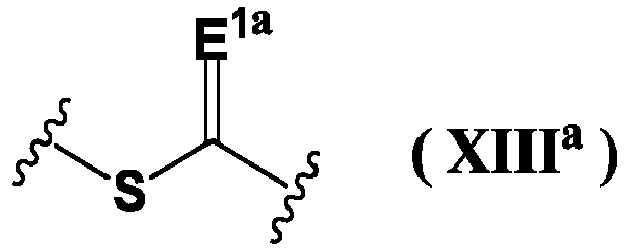
- (wherein E1a is an oxygen atom, a sulfur atom or NR11a),
- when L3a is a single bond, R2a is a hydrogen atom, a halogen atom, an azido group, a C3-11 cycloalkyl group, a 3 to 14-membered non-aromatic heterocyclyl group, a C6-14 aryl group, a 5 to 10-membered aromatic heterocyclyl group, a 8 to 14-membered partially saturated aromatic cyclic group or a 8 to 14-membered aromatic ring-condensed alicyclic hydrocarbon group (the C3-11 cycloalkyl group, the 3 to 14-membered non-aromatic heterocyclyl group, the C6-14 aryl group, the 5 to 10-membered aromatic heterocyclyl group, the 8 to 14-membered partially saturated aromatic cyclic group and the 8 to 14-membered aromatic ring-condensed alicyclic hydrocarbon group are unsubstituted or substituted with one or more identical or different substituents independently selected from the group consisting of the substituent set V4a, substituent set V9a and C1-6 alkyl groups (the C1-6 alkyl groups are substituted with a C1-6 alkoxycarbonylamino group (the C1-6 alkoxycarbonylamino group is unsubstituted or substituted with one or more identical or different halogen atoms independently selected from the group consisting of fluorine atoms, chlorine atoms, bromine atoms and iodine atoms))),
- when L3a is not a single bond, R2a is a hydrogen atom, a C1-6 alkyl group, a C2-6 alkenyl group, a C2-6 alkynyl group (the C1-6 alkyl group the C2-6 alkenyl group and the C2-6 alkynyl group are unsubstituted or substituted with one or more identical or different substituents independently selected from the substituent set V6a and the substituent set V9a), a C3-11 cycloalkyl group, a 3 to 14-membered non-aromatic heterocyclyl group, a C6-14 aryl group, a 5 to 10-membered aromatic heterocyclyl group, a 8 to 14-membered partially saturated aromatic cyclic group or a 8 to 14-membered aromatic ring-condensed alicyclic hydrocarbon group (the C3-11 cycloalkyl group, the 3 to 14-membered non-aromatic heterocyclyl group, the C6-14 aryl group, the 5 to 10-membered aromatic heterocyclyl group, the 8 to 14-membered partially saturated aromatic cyclic group and the 8 to 14-membered aromatic ring-condensed alicyclic hydrocarbon group are unsubstituted or substituted with one or more identical or different substituents independently selected from the substituent set V4a and the substituent set V9a),
- na is 0, 1 or 2,
- R3a is a hydroxy group, an amino group, a carboxy group, a carbamoyl group, a sulfamoyl group, a phosphono group, a phosphonooxy group, a sulfo group, a sulfoxy group, a tetrazolyl group, a halogen atom, a cyano group, a nitro group, a C1-6 alkyl group, a C1-6 haloalkyl group, a C3-11 cycloalkyl group, a C2-6 alkenyl group, a C2-6 haloalkenyl group, a C1-6 alkoxy group, a C1-6 haloalkoxy group, a C1-6 alkylthio group, a C1-6 haloalkylthio group, a C1-6 alkylcarbonyl group, a C1-6 haloalkylcarbonyl group, a C1-6 alkylsulfonyl group, a C1-6 haloalkylsulfonyl group, a C1-6 alkoxycarbonyl group, a mono-C1-6 alkylamino group, a di-C1-6 alkylamino group, a mono-C1-6 alkylaminocarbonyl group, a di-C1-6 alkylaminocarbonyl group or a C1-6 alkylcarbonylamino group (when na is 2, R3a's may be identical or different),
- each of R4a, R5a, R7a and R8a is independently a hydrogen atom, a hydroxy group, an amino group, a carboxy group, a carbamoyl group, a tetrazolyl group, a halogen atom, a cyano group, a C1-6 alkyl group, a C2-6 alkenyl group, a C1-6 alkoxy group, a C1-6 alkylthio group, a C1-6 alkylcarbonyl group, a C1-6 alkylsulfonyl group, a mono-C1-6 alkylamino group, a di-C1-6 alkylamino group (the C1-6 alkyl group, the C2-6 alkenyl group, the C1-6 alkoxy group, the C1-6 alkylthio group, the C1-6 alkylcarbonyl group, the C1-6 alkylsulfonyl group, the mono-C1-6 alkylamino group and the di-C1-6 alkylamino group are unsubstituted or substituted with one or more identical or different substituents independently selected from the substituent set V3a), a C1-6 alkoxycarbonyl group, a C3-11 cycloalkyl group, a 3 to 11-membered non-aromatic heterocyclyl group, a C6-14 aryl group or a 5 to 10-membered aromatic heterocyclyl group (the C3-11 cycloalkyl group, the 3 to 11-membered non-aromatic heterocyclyl group, the C6-14 aryl group and the 5 to 10-membered aromatic heterocyclyl group are unsubstituted or substituted with one or more identical or different substituents independently selected from the substituent set V1a)
- R6a is a hydrogen atom, a C1-6 alkyl group, a C2-6 alkenyl group, a C1-6 alkylcarbonyl group, a C1-6 alkylsulfonyl group, a C1-6 alkoxycarbonyl group, a mono-C1-6 alkylaminocarbonyl group, a di-C1-6 alkylaminocarbonyl group (the C1-6 alkyl group, the C2-6 alkenyl group, the C1-6 alkylcarbonyl group, the C1-6 alkylsulfonyl group, the C1-6 alkoxycarbonyl group, the mono-C1-6 alkylaminocarbonyl group and the di-C1-6 alkylaminocarbonyl group are unsubstituted or substituted with one or more identical or different substituents independently selected from the substituent set V3a), a C3-11 cycloalkyl group, a 3 to 11-membered non-aromatic heterocyclyl group, a C6-14 aryl group or a 5 to 10-membered aromatic heterocyclyl group (the C3-11 cycloalkyl group, the 3 to 11-membered non-aromatic heterocyclyl group, the C6-14 aryl group and the 5 to 10-membered aromatic heterocyclyl group are unsubstituted or substituted with one or more identical or different substituents independently selected from the substituent set V1a)
- each of R9a and R10a is independently a hydrogen atom, a halogen atom, a cyano group, a carbamoyl group, a C1-6 alkyl group, a C1-6 haloalkyl group, a C3-11 cycloalkyl group, a C1-6 alkoxy group, a C1-6 haloalkoxy group, a C1-6 alkylthio group, a C1-6 alkylcarbonyl group, a C1-6 alkylsulfonyl group, a 3 to 11-membered non-aromatic heterocyclyl group, a C6-14 aryl group or a 5 to 10-membered aromatic heterocyclyl group,
- R11a is a hydrogen atom, a hydroxy group, a cyano group, a nitro group, a C1-6 alkyl group or a C1-6 alkoxy group,
- each of R12a , R13a and R14a is independently a hydrogen atom, a C1-6 alkyl group, a C1-6 haloalkyl group (the C1-6 alkyl group and the C1-6 haloalkyl group are unsubstituted or substituted with one or more identical or different substituents independently selected from the substituent set V2a, the substituent set V8a and the substituent set V9a), a C3-11 cycloalkyl group, a 3 to 11-membered non-aromatic heterocyclyl group, a C6-14 aryl group, a 5 to 10-membered aromatic heterocyclyl group, a 8 to 14-membered partially saturated aromatic cyclic group or a 8 to 14-membered aromatic ring-condensed alicyclic hydrocarbon group (the C3-11 cycloalkyl group, the 3 to 11-membered non-aromatic heterocyclyl group, the C6-14 aryl group, the 5 to 10-membered aromatic heterocyclyl group, the 8 to 14-membered partially saturated aromatic cyclic group and the 8 to 14-membered aromatic ring-condensed alicyclic hydrocarbon group are unsubstituted or substituted with one or more identical or different substituents independently selected from the substituent set V4a and the substituent set V9a),
- the substituent set V1a consists of hydroxy groups, amino groups, carboxy groups, carbamoyl groups, sulfamoyl groups, phosphono groups, phosphonooxy groups, sulfo groups, sulfoxy groups, tetrazolyl groups, halogen atoms, cyano groups, nitro groups, C1-6 alkyl groups, C1-6 haloalkyl groups, C3-11 cycloalkyl groups, C2-6 alkenyl groups, C2-6 haloalkenyl groups, C1-6 alkoxy groups, C1-6 haloalkoxy groups, C1-6 alkylthio groups, C1-6 haloalkylthio groups, C1-6 alkylcarbonyl groups, C1-6 haloalkylcarbonyl groups, C1-6 alkylsulfonyl groups, C1-6 haloalkylsulfonyl groups, C1-6 alkoxycarbonyl groups, 3 to 11-membered non-aromatic heterocyclyl groups, mono-C1-6 alkylamino groups, di-C1-6 alkylamino groups, mono-C1-6 alkylaminocarbonyl groups, di-C1-6 alkylaminocarbonyl groups and C1-6 alkylcarbonylamino groups,
- the substituent set V2a consists of the groups in the substituent set V1a and C6-14 aryl groups and 5 to 10-membered aromatic heterocyclyl groups (the C6-14 aryl groups and 5 to 10-membered aromatic heterocyclyl groups are unsubstituted or substituted with one or more identical or different substituents independently selected from the substituent set V1a),
- the substituent set V3a consists of hydroxy groups, amino groups, carboxy groups, carbamoyl groups, sulfamoyl groups, phosphono groups, phosphonooxy groups, sulfo groups, sulfoxy groups, tetrazolyl groups, halogen atoms, cyano groups, nitro groups, C1-6 alkoxy groups, C1-6 haloalkoxy groups, C1-6 alkylthio groups, C1-6 haloalkylthio groups, C1-6 alkylcarbonyl groups, C1-6 haloalkylcarbonyl groups, C1-6 alkylsulfonyl groups, C1-6 haloalkylsulfonyl groups, C1-6 alkoxycarbonyl groups, mono-C1-6 alkylamino groups, di-C1-6 alkylamino groups, mono-C1-6 alkylaminocarbonyl groups, di-C1-6 alkylaminocarbonyl groups, C1-6 alkylcarbonylamino groups, C3-11 cycloalkyl groups, 3 to 11-membered non-aromatic heterocyclyl groups, C6-14 aryl groups and 5 to 10-membered aromatic heterocyclyl groups (the C3-11 cycloalkyl groups, the 3 to 11-membered non-aromatic heterocyclyl groups, the C6-14 aryl groups and the 5 to 10-membered aromatic heterocyclyl groups are unsubstituted or substituted with one or more identical or different substituents independently selected from the substituent set V1a)
- the substituent set V4a consists of hydroxy groups, amino groups, carboxy groups, carbamoyl groups, sulfamoyl groups, phosphono groups, phosphonooxy groups, sulfo groups, sulfoxy groups, tetrazolyl groups, halogen atoms, cyano groups, nitro groups, C1-6 alkyl groups, C2-6 alkenyl groups, C1-6 alkoxy groups, C1-6 alkylthio groups, C1-6 alkylcarbonyl groups, C1-6 alkylsulfonyl groups, C1-6 alkoxycarbonyl groups, mono-C1-6 alkylamino groups, di-C1-6 alkylamino groups, mono-C1-6 alkylaminocarbonyl groups, di-C1-6 alkylaminocarbonyl groups, C1-6 alkylcarbonylamino groups (the C1-6 alkyl groups, the C2-6 alkenyl groups, the C1-6 alkoxy groups, the C1-6 alkylthio groups, the C1-6 alkylcarbonyl groups, the C1-6 alkylsulfonyl groups, the C1-6 alkoxycarbonyl groups, the mono-C1-6 alkylamino groups, the di-C1-6 alkylamino groups, the mono-C1-6 alkylaminocarbonyl groups, the di-C1-6 alkylaminocarbonyl groups and the C1-6 alkylcarbonylamino groups are unsubstituted or substituted with one or more identical or different substituents independently selected from the substituent set V3a), C3-11 cycloalkyl groups, 3 to 11-membered non-aromatic heterocyclyl groups, C6-14 aryl groups and 5 to 10-membered aromatic heterocyclyl groups (the C3-11 cycloalkyl groups, the 3 to 11-membered non-aromatic heterocyclyl groups, the C6-14 aryl group and the 5 to 10-membered aromatic heterocyclyl groups are unsubstituted or substituted with one or more identical or different substituents independently selected from the substituent set V1a),
- the substituent set V5a consists of hydroxy groups, amino groups, carboxy groups, carbamoyl groups, sulfamoyl groups, phosphono groups, phosphonooxy groups, sulfo groups, sulfoxy groups, tetrazolyl groups, halogen atoms, cyano groups, nitro groups, C1-6 alkoxy groups, C1-6 alkylthio groups, C1-6 alkylcarbonyl groups, C1-6 alkylsulfonyl groups, C1-6 alkoxycarbonyl groups, mono-C1-6 alkylamino groups, di-C1-6 alkylamino groups, mono-C1-6 alkylaminocarbonyl groups, di-C1-6 alkylaminocarbonyl groups, C1-6 alkylcarbonylamino groups, C3-11 cycloalkyl groups, 3 to 11-membered non-aromatic heterocyclyl groups, C6-14 aryl group and 5 to 10-membered aromatic heterocyclyl groups (the C1-6 alkoxy groups, the C1-6 alkylthio groups, the C1-6 alkylcarbonyl groups, the C1-6 alkylsulfonyl groups, the C1-6 alkoxycarbonyl groups, the mono-C1-6 alkylamino groups, the di-C1-6 alkylamino groups, the mono-C1-6 alkylaminocarbonyl groups, the di-C1-6 alkylaminocarbonyl groups, the C1-6 alkylcarbonylamino groups, the C3-11 cycloalkyl groups, the 3 to 11-membered non-aromatic heterocyclyl groups, the C6-14 aryl groups and the 5 to 10-membered aromatic heterocyclyl groups are unsubstituted or substituted with one or more identical or different substituents independently selected from the substituent set V3a),
- the substituent set V6a consists of hydroxy groups, amino groups, carboxy groups, carbamoyl groups, sulfamoyl groups, phosphono groups, phosphonooxy groups, sulfo groups, sulfoxy groups, tetrazolyl groups, halogen atoms, cyano groups, nitro groups, C1-6 alkoxy groups, C1-6 alkylthio groups, C1-6 alkylcarbonyl groups, C1-6 alkylsulfonyl groups, C1-6 alkoxycarbonyl groups, mono-C1-6 alkylamino groups, di-C1-6 alkylamino groups, mono-C1-6 alkylaminocarbonyl groups, di-C1-6 alkylaminocarbonyl groups, C1-6 alkylcarbonylamino groups (the C1-6 alkoxy groups, the C1-6 alkylthio groups, the C1-6 alkylcarbonyl groups, the C1-6 alkylsulfonyl groups, the C1-6 alkoxycarbonyl groups, the mono-C1-6 alkylamino groups, the di-C1-6 alkylamino groups, the mono-C1-6 alkylaminocarbonyl groups, the di-C1-6 alkylaminocarbonyl groups and the C1-6 alkylcarbonylamino groups are unsubstituted or substituted with one or more identical or different substituents independently selected from the substituent set V3a), C3-11 cycloalkyl groups, 3 to 11-membered non-aromatic heterocyclyl groups, C6-14 aryl groups, 5 to 10-membered aromatic heterocyclyl groups, 8 to 14-membered partially saturated aromatic cyclic groups and 8 to 14-membered aromatic ring-condensed alicyclic hydrocarbon groups (the C3-11 cycloalkyl groups, the 3 to 11-membered non-aromatic heterocyclyl groups, the C6-14 aryl groups and the 5 to 10-membered aromatic heterocyclyl groups, the 8 to 14-membered partially saturated aromatic cyclic groups and the 8 to 14-membered aromatic ring-condensed alicyclic hydrocarbon groups are unsubstituted or substituted with one or more identical or different substituents independently selected from the substituent set V4a and the substituent set V9a),
- the substituent set Vsa consists of C3-11 cycloalkyl groups, 3 to 11-membered non-aromatic heterocyclyl groups (the C3-11 cycloalkyl groups and 3 to 11-membered non-aromatic heterocyclyl groups are substituted with one or more identical or different substituent independently selected from the substituent set V2a), 8 to 14-membered partially saturated aromatic cyclic groups and 8 to 14-membered aromatic ring-condensed alicyclic hydrocarbon groups (the 8 to 14-membered partially saturated aromatic cyclic groups and the 8 to 14-membered aromatic ring-condensed alicyclic hydrocarbon groups are unsubstituted or substituted with one or more identical or different substituents independently selected from the substituent set V2a), and the substituent set V9a consists of mono-C1-6 alkylaminosulfonyl groups, di-C1-6 alkylaminosulfonyl groups, C1-6 alkylsulfonylamino groups, C1-6 alkoxycarbonylamino groups (the mono-C1-6 alkylaminosulfonyl groups, the di-C1-6 alkylaminosulfonyl groups the C1-6 alkylsulfonylamino groups and the C1-6 alkoxycarbonylamino groups are unsubstituted or substituted with one or more identical or different substituents independently selected from the substituent set V3a), C3-6 cycloalkoxy groups, C3-6 cycloalkylamino groups, C3-6 cycloalkylthio groups, C3-6 cycloalkylcarbonyl groups and C3-6 cycloalkylsulfonyl groups (the C3-6 cycloalkoxy groups, the C3-6 cycloalkylamino groups, the C3-6 cycloalkylthio groups, the C3-6 cycloalkylcarbonyl groups and the C3-6 cycloalkylsulfonyl groups are unsubstituted or substituted with one or more identical or different substituents independently selected from the substituent set V2a)], a tautomer or a pharmaceutically acceptable salt of the compound or a solvate thereof.
- (2) The compound according to (1), which is represented by the formula (1a):

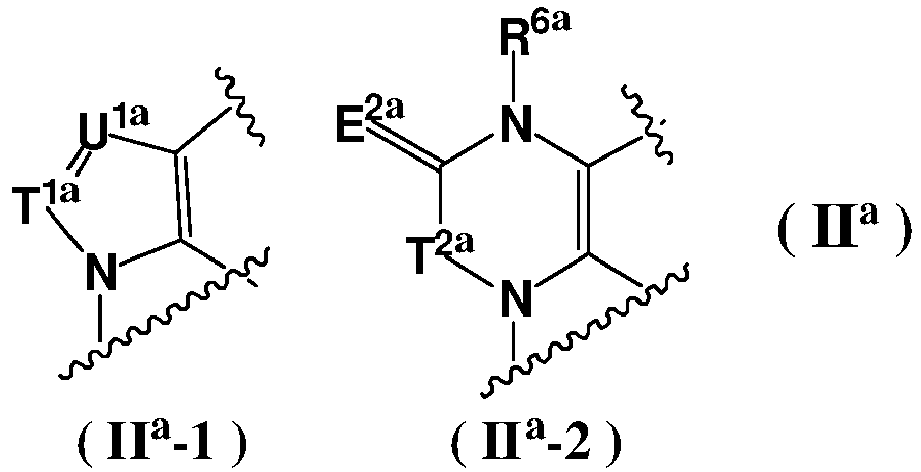
- (wherein T1a is a nitrogen atom or CR4a, U1a is a nitrogen atom or a CR5a, T2a is a single bond or CR7aR8a, E2a is an oxygen atom or a sulfur atom),
- Xa is a nitrogen atom or CR9a,
- Ya is CR10a,
- R1a is a hydrogen atom, a halogen atom, a C1-6 alkyl group or a C1-6 haloalkyl group, the ring Ba is a C3-11 cycloalkane, a C3-11 cycloalkene, a 3 to 11-membered non-aromatic heterocycle, a C6-14 aromatic carbocycle or a 5 to 10-membered aromatic heterocycle, L1a is a single bond, a C1-6 alkylene group, a C2-6 alkenylene group or a C2-6 alkynylene group (the C1-6 alkylene group, the C2-6 alkenylene group and the C2-6 alkynylene group are unsubstituted or substituted with one or more identical or different substituents independently selected from the group consisting of halogen atoms, hydroxy groups, amino groups, cyano groups and nitro groups),
- L2a is a single bond, a C1-6 alkylene group, a C2-6 alkenylene group or a C2-6 alkynylene group (the C1-6 alkylene group, the C2-6 alkenylene group and the C2-6 alkynylene group are unsubstituted or substituted with one or more identical or different substituents independently selected from the group consisting of halogen atoms, hydroxy groups, amino groups, cyano groups and nitro groups),
- L3a is a single bond or represented by any of the following formulae (IIIa-1) to (IIIa-20)

- (wherein E1a is an oxygen atom, a sulfur atom or NR11a),
- when L3a is a single bond, R2a is a hydrogen atom, a halogen atom, a C3-11 cycloalkyl group, a 3 to 11-membered non-aromatic heterocyclyl group, a C6-14 aryl group or a 5 to 10-membered aromatic heterocyclyl group (the C3-11 cycloalkyl group, the 3 to 11-membered non-aromatic heterocyclyl group, the C6-14 aryl group and the 5 to 10-membered aromatic heterocyclyl group are unsubstituted or substituted with one or more identical or different substituents independently selected from the substituent set V4a ),
- when L3a is not a single bond, R2a is a hydrogen atom, a C1-6 alkyl group, a C2-6 alkenyl group (the C1-6 alkyl group and the C2-6 alkenyl group are unsubstituted or substituted with one or more identical or different substituents independently selected from the substituent set V5a), a C3-11 cycloalkyl group, a 3 to 11-membered non-aromatic heterocyclyl group, a C6-14 aryl group or a 5 to 10-membered aromatic heterocyclyl group (the C3-11 cycloalkyl group, the 3 to 11-membered non-aromatic heterocyclyl group, the C6-14 aryl group and the 5 to 10-membered aromatic heterocyclyl group are unsubstituted or substituted with one or more identical or different substituents independently selected from the substituent set V4a),
- na is 0, 1 or 2,
- R3a is a hydroxy group, an amino group, a carboxy group, a carbamoyl group, a sulfamoyl group, a phosphono group, a phosphonooxy group, a sulfo group, a sulfoxy group, a tetrazolyl group, a halogen atom, a cyano group, a nitro group, a C1-6 alkyl group, a C1-6 haloalkyl group, a C3-11 cycloalkyl group, a C2-6 alkenyl group, a C2-6 haloalkenyl group, a C1-6 alkoxy group, a C1-6 haloalkoxy group, a C1-6 alkylthio group, a C1-6 haloalkylthio group, a C1-6 alkylcarbonyl group, a C1-6 haloalkylcarbonyl group, a C1-6 alkylsulfonyl group, a C1-6 haloalkylsulfonyl group, a C1-6 alkoxycarbonyl group, a mono-C1-6 alkylamino group, a di-C1-6 alkylamino group, a mono-C1-6 alkylaminocarbonyl group, a di-C1-6 alkylaminocarbonyl group or a C1-6 alkylcarbonylamino group (when na is 2, R3a's may be identical or different),
- each of R4a, R5a, R1a and R8a is independently a hydrogen atom, a hydroxy group, an amino group, a carboxy group, a carbamoyl group, a tetrazolyl group, a halogen atom, a cyano group, a C1-6 alkyl group, a C2-6 alkenyl group, a C1-6 alkoxy group, a C1-6 alkylthio group, a C1-6 alkylcarbonyl group, a C1-6 alkylsulfonyl group, a mono-C1-6 alkylamino group, a di-C1-6 alkylamino group (the C1-6 alkyl group, the C2-6 alkenyl group, the C1-6 alkoxy group, the C1-6 alkylthio group, the C1-6 alkylcarbonyl group, the C1-6 alkylsulfonyl group, the mono-C1-6 alkylamino group and the di-C1-6 alkylamino group are unsubstituted or substituted with one or more identical or different substituents independently selected from the substituent set V3a), a C1-6 alkoxycarbonyl group, a C3-11 cycloalkyl group, a 3 to 11-membered non-aromatic heterocyclyl group, a C6-14 aryl group or a 5 to 10-membered aromatic heterocyclyl group (the C3-11 cycloalkyl group, the 3 to 11-membered non-aromatic heterocyclyl group, the C6-14 aryl group and the 5 to 10-membered aromatic heterocyclyl group are unsubstituted or substituted with one or more identical or different substituents independently selected from the substituent set V1a)
- R6a is a hydrogen atom, a C1-6 alkyl group, a C2-6 alkenyl group, a C1-6 alkylcarbonyl group, a C1-6 alkylsulfonyl group, a C1-6 alkoxycarbonyl group, a mono-C1-6 alkylaminocarbonyl group, a di-C1-6 alkylaminocarbonyl group (the C1-6 alkyl group, the C2-6 alkenyl group, the C1-6 alkylcarbonyl group, the C1-6 alkylsulfonyl group, the C1-6 alkoxycarbonyl group, the mono-C1-6 alkylaminocarbonyl group and the di-C1-6 alkylaminocarbonyl group are unsubstituted or substituted with one or more identical or different substituents independently selected from the substituent set V3a), a C3-11 cycloalkyl group, a 3 to 11-membered non-aromatic heterocyclyl group, a C6-14 aryl group or a 5 to 10-membered aromatic heterocyclyl group (the C3-11 cycloalkyl group, the 3 to 11-membered non-aromatic heterocyclyl group, the C6-14 aryl group and the 5 to 10-membered aromatic heterocyclyl group are unsubstituted or substituted with one or more identical or different substituents independently selected from the substituent set V1a)
- each of R9a and R10a is independently a hydrogen atom, a halogen atom, a cyano group, a carbamoyl group, a C1-6 alkyl group, a C1-6 haloalkyl group, a C3-11 cycloalkyl group, a C1-6 alkoxy group, a C1-6 haloalkoxy group, a C1-6 alkylthio group, a C1-6 alkylcarbonyl group, a C1-6 alkylsulfonyl group, a 3 to 11-membered non-aromatic heterocyclyl group, a C6-14 aryl group or a 5 to 10-membered aromatic heterocyclyl group,
- R11a is a hydrogen atom, a hydroxy group, a cyano group, a nitro group, a C1-6 alkyl group or a C1-6 alkoxy group,
- each of R12a, R13a and R14a is independently a hydrogen atom, a C1-6 alkyl group or a C1-6 haloalkyl group (the C1-6 alkyl group and the C1-6 haloalkyl group are unsubstituted or substituted with one or more identical or different substituents independently selected from the substituent set V2a),
- the substituent set V1a consists of hydroxy groups, amino groups, carboxy groups, carbamoyl groups, sulfamoyl groups, phosphono groups, phosphonooxy groups, sulfo groups, sulfoxy groups, tetrazolyl groups, halogen atoms, cyano groups, nitro groups, C1-6 alkyl groups, C1-6 haloalkyl groups, C3-11 cycloalkyl groups, C2-6 alkenyl groups, C2-6 haloalkenyl groups, C1-6 alkoxy groups, C1-6 haloalkoxy groups, C1-6 alkylthio groups, C1-6 haloalkylthio groups, C1-6 alkylcarbonyl groups, C1-6 haloalkylcarbonyl groups, C1-6 alkylsulfonyl groups, C1-6 haloalkylsulfonyl groups, C1-6 alkoxycarbonyl groups, 3 to 11-membered non-aromatic heterocyclyl groups, mono-C1-6 alkylamino groups, di-C1-6 alkylamino groups, mono-C1-6 alkylaminocarbonyl groups, di-C1-6 alkylaminocarbonyl groups and C1-6 alkylcarbonylamino groups,
- the substituent set V2a consists of the groups in the substituent set V1a, C6-14 aryl groups and 5 to 10-membered aromatic heterocyclyl groups (the C6-14 aryl group and the 5 to 10-membered aromatic heterocyclyl groups are unsubstituted or substituted with one or more identical or different substituents independently selected from the substituent set V1a)
- the substituent set V3a consists of hydroxy groups, amino groups, carboxy groups, carbamoyl groups, sulfamoyl groups, phosphono groups, phosphonooxy groups, sulfo groups, sulfoxy groups, tetrazolyl groups, halogen atoms, cyano groups, nitro groups, C1-6 alkoxy groups, C1-6 haloalkoxy groups, C1-6 alkylthio groups, C1-6 haloalkylthio groups, C1-6 alkylcarbonyl groups, C1-6 haloalkylcarbonyl groups, C1-6 alkylsulfonyl groups, C1-6 haloalkylsulfonyl groups, C1-6 alkoxycarbonyl groups, mono-C1-6 alkylamino groups, di-C1-6 alkylamino groups, mono-C1-6 alkylaminocarbonyl groups, di-C1-6 alkylaminocarbonyl groups, C1-6 alkylcarbonylamino groups, C3-11 cycloalkyl groups, 3 to 11-membered non-aromatic heterocyclyl groups, C6-14 aryl groups and 5 to 10-membered aromatic heterocyclyl groups (the C3-11 cycloalkyl groups, the 3 to 11-membered non-aromatic heterocyclyl groups, the C6-14 aryl groups and the 5 to 10-membered aromatic heterocyclyl groups are unsubstituted or substituted with one or more identical or different substituents independently selected from the substituent set V1a)
- the substituent set V4a consists of hydroxy groups, amino groups, carboxy groups, carbamoyl groups, sulfamoyl groups, phosphono groups, phosphonooxy groups, sulfo groups, sulfoxy groups, tetrazolyl groups, halogen atoms, cyano groups, nitro groups, C1-6 alkyl groups, C2-6 alkenyl groups, C1-6 alkoxy groups, C1-6 alkylthio groups, C1-6 alkylcarbonyl groups, C1-6 alkylsulfonyl groups, C1-6 alkoxycarbonyl groups, mono-C1-6 alkylamino groups, di-C1-6 alkylamino groups, mono-C1-6 alkylaminocarbonyl groups, di-C1-6 alkylaminocarbonyl groups, C1-6 alkylcarbonylamino groups (the C1-6 alkyl groups, the C2-6 alkenyl groups, the C1-6 alkoxy groups, the C1-6 alkylthio groups, the C1-6 alkylcarbonyl groups, the C1-6 alkylsulfonyl groups, the C1-6 alkoxycarbonyl groups, the mono-C1-6 alkylamino groups, the di-C1-6 alkylamino groups, the mono-C1-6 alkylaminocarbonyl groups, the di-C1-6 alkylaminocarbonyl groups and the C1-6 alkylcarbonylamino groups are unsubstituted or substituted with one or more identical or different substituents independently selected from the substituent set V3a), C3-11 cycloalkyl groups, 3 to 11-membered non-aromatic heterocyclyl groups, C6-14 aryl groups and 5 to 10-membered aromatic heterocyclyl groups (the C3-11 cycloalkyl groups, 3 to 11-membered non-aromatic heterocyclyl groups, C6-14 aryl groups and 5 to 10-membered aromatic heterocyclyl groups are unsubstituted or substituted with one or more identical or different substituents independently selected from the substituent set V1a), and
- the substituent set V5a consists of hydroxy groups, amino groups, carboxy groups, carbamoyl groups, sulfamoyl groups, phosphono groups, phosphonooxy groups, sulfo groups, sulfoxy groups, tetrazolyl groups, halogen atoms, cyano groups, nitro groups, C1-6 alkoxy groups, C1-6 alkylthio groups, C1-6 alkylcarbonyl groups, C1-6 alkylsulfonyl groups, C1-6 alkoxycarbonyl groups, mono-C1-6 alkylamino groups, di-C1-6 alkylamino groups, mono-C1-6 alkylaminocarbonyl groups, di-C1-6 alkylaminocarbonyl groups, C1-6 alkylcarbonylamino groups, C3-11 cycloalkyl groups, 3 to 11-membered non-aromatic heterocyclyl groups, C6-14 aryl groups and 5 to 10-membered aromatic heterocyclyl groups (the C1-6 alkoxy groups, the C1-6 alkylthio groups, the C1-6 alkylcarbonyl groups, the C1-6 alkylsulfonyl groups, the C1-6 alkoxycarbonyl groups, the mono-C1-6 alkylamino groups, the di-C1-6 alkylamino groups, the mono-C1-6 alkylaminocarbonyl groups, the di-C1-6 alkylaminocarbonyl groups, the C1-6 alkylcarbonylamino groups, the C3-11 cycloalkyl groups, the 3 to 11-membered non-aromatic heterocyclyl groups, the C6-14 aryl groups and the 5 to 10-membered aromatic heterocyclyl group are unsubstituted or substituted with one or more identical or different substituents independently selected from the substituent set V3a)], a tautomer or a pharmaceutically acceptable salt of the compound or a solvate thereof.
- (3) The compound according to (2), wherein R1a is a hydrogen atom, a tautomer or a pharmaceutically acceptable salt of the compound or a solvate thereof.
- (4) The compound according to (2) or (3), wherein Ya is CR10a (wherein R10a is a hydrogen atom), a tautomer or a pharmaceutically acceptable salt of the compound or a solvate thereof.
- (5) The compound according to any one of (2) to (4), wherein Xa is a nitrogen atom or CR9a (wherein R9a is a hydrogen atom, a halogen atom, a cyano group, a C1-3 alkyl group, a C1-3 haloalkyl group or a C3-6 cycloalkyl group), a tautomer or a pharmaceutically acceptable salt of the compound or a solvate thereof.
- (6) The compound according to any one of (2) to (5), wherein the ring Aa is represented by any of the following formulae (IVa-1 ) to (IVa-3):

- (7) The compound according to any one of (2) to (6), wherein L1a is a single bond,
L2a is a single bond, a C1-6 alkylene group or a C2-6 alkenylene group (the C1-6 alkylene group and the C2-6 alkenylene group are unsubstituted or substituted with one or more identical or different substituents independently selected from the group consisting of halogen atoms, hydroxy groups, amino groups, cyano groups and nitro groups), the ring Ba is a C3-11 cycloalkane, a C3-11 cycloalkene, a 3 to 11-membered non-aromatic heterocycle, a C6-14 aromatic carbocycle or a 5 to 10-membered an aromatic heterocycle,
na is 0 or 1,
R3a is a hydroxy group, an amino group, a carboxy group, a carbamoyl group, a tetrazolyl group, a halogen atom, a cyano group, a nitro group, a C1-3 alkyl group, a C1-3 haloalkyl group, a C3-6 cycloalkyl group, a C1-3 alkoxy group, a C1-3 haloalkoxy group or a C1-3 alkylsulfonyl group,
L3a is a single bond, and
R2a is a hydrogen atom, a halogen atom, a C3-11 cycloalkyl group, a 3 to 11-membered non-aromatic heterocyclyl group, a phenyl group, a naphthyl group or a 5 to 10-membered aromatic heterocyclyl group (the C3-11 cycloalkyl group, the 3 to 11-membered non-aromatic heterocyclyl group, the phenyl group, the naphthyl group and the 5 to 10-membered aromatic heterocyclyl group are unsubstituted or substituted with one or more identical or different substituents independently selected from the substituent set V4a), a tautomer or a pharmaceutically acceptable salt of the compound or a solvate thereof. - (8) The compound according to any one of (2) to (6), wherein L1a is a single bond or a C1-3 alkylene group,
L2a is a single bond or a C1-3 alkylene group (the C1-3 alkylene group is unsubstituted or substituted with a cyano group or a C1-3 haloalkyl group),
the ring Ba is a C3-11 cycloalkane, a C3-11 cycloalkene, a 3 to 11-membered non-aromatic heterocycle, benzene or a 5 to 6-membered aromatic heterocycle,
na is 0 or 1,
R3a is a hydroxy group, an amino group, a carboxy group, a carbamoyl group, a tetrazolyl group, a halogen atom, a cyano group, a nitro group, a C1-3 alkyl group, a C1-3 haloalkyl group, a C3-6 cycloalkyl group, a C1-3 alkoxy group, a C1-3 haloalkoxy group or a C1-3 alkylsulfonyl group,
L3a is a single bond, and
R2a is a hydrogen atom, a halogen atom, a C3-6 cycloalkyl group, a 4 to 7-membered non-aromatic heterocyclyl group, a phenyl group or a 5 to 6-membered aromatic heterocyclyl group (the C3-6 cycloalkyl group, the 4 to 7-membered non-aromatic heterocyclyl group, the phenyl group and the 5 to 6-membered aromatic heterocyclyl group are unsubstituted or substituted with one or more identical or different substituents independently selected from the substituent set V4a), a tautomer or a pharmaceutically acceptable salt of the compound or a solvate thereof. - (9) The compound according to (7), wherein the ring Ba is a C3-11 cycloalkane, a 4 to 7-membered non-aromatic heterocycle or benzene,
na is, 0 or 1, and
R3a is a hydroxy group, a halogen atom, a cyano group or a C1-3 alkyl group, a tautomer or a pharmaceutically acceptable salt of the compound or a solvate thereof. - (10) The compound according to (7) or (9), wherein L2a is a single bond, a C1-6 alkylene group, a C2-6 alkenylene group or a C1-6 haloalkylene group (the C1-6 alkylene group, the C2-6 alkenylene group and the C1-6 haloalkylene group are unsubstituted or substituted with one or two identical or different substituents independently selected from the group consisting of hydroxy groups and cyano groups),
the ring Ba is a C3-11 cycloalkane or a 4 to 7-membered non-aromatic heterocycle, and R2a is a hydrogen atom, a halogen atom, a C3-6 cycloalkyl group, a 3 to 11-membered non-aromatic heterocyclyl group, a phenyl group or a 5 to 10-membered aromatic heterocyclyl group (the C3-6 cycloalkyl group, the 3 to 11-membered non-aromatic heterocyclyl group, the phenyl group and the 5 to 10-membered aromatic heterocyclyl group are unsubstituted or substituted with one or more identical or different substituents independently selected from the group consisting of hydroxy groups, amino groups, halogen atoms, cyano groups, nitro groups, carboxy groups, carbamoyl groups, sulfamoyl groups, C1-6 alkyl groups, C1-6 alkoxy groups, mono-C1-6 alkylamino groups, di-C1-6 alkylamino groups, C1-6 alkylthio groups, C1-6 alkylcarbonyl groups, C1-6 alkylsulfonyl groups, C1-6 alkoxycarbonyl groups, mono-C1-6 alkylaminocarbonyl groups, di-C1-6 alkylaminocarbonyl groups, C1-6 alkylcarbonylamino groups (the C1-6 alkyl groups, the C1-6 alkoxy groups, the mono-C1-6 alkylamino groups, the di-C1-6 alkylamino groups, the C1-6 alkylthio groups, the C1-6 alkylcarbonyl groups, the C1-6 alkylsulfonyl groups, the C1-6 alkoxycarbonyl groups, the mono-C1-6 alkylaminocarbonyl groups, the di-C1-6 alkylaminocarbonyl groups and the C1-6 alkylcarbonylamino groups are unsubstituted or substituted with one or more identical or different substituents independently selected from the group consisting of halogen atoms, hydroxy groups, amino groups, cyano groups and C1-3 alkoxy groups), C3-6 cycloalkyl groups, 4 to 7-membered non-aromatic heterocyclyl groups, phenyl groups and 5 to 6-membered aromatic heterocyclyl groups (the C3-6 cycloalkyl groups, the 4 to 7-membered non-aromatic heterocyclyl groups, the phenyl groups and the 5 to 6-membered aromatic heterocyclyl groups are unsubstituted or substituted with one or more identical or different substituents independently selected from the group consisting of hydroxy groups, halogen atoms, cyano groups, C1-6 alkyl groups and C1-6 haloalkyl groups)), a tautomer or a pharmaceutically acceptable salt of the compound or a solvate thereof. - (11) The compound according to (7) or (9), wherein L2a is a single bond, a C1-3 alkylene group, a C2-3 alkenylene group (the C1-3 alkylene group and the C2-3 alkenylene group are unsubstituted or substituted with one or two identical or different substituents independently selected from the group consisting of hydroxy groups and cyano groups) or a C1-3 haloalkylene group, and
R2a is a hydrogen atom or a halogen atom, a tautomer or a pharmaceutically acceptable salt of the compound or a solvate thereof. - (12) The compound according to any one of (7), (9) and (10), wherein the ring Ba is a C4-7 cycloalkane or a 4 to 7-membered non-aromatic heterocycle, and
R2a is a 3 to 11-membered non-aromatic heterocyclyl group, a phenyl group or a 5 to 10-membered aromatic heterocyclyl group (the 3 to 11-membered non-aromatic heterocyclyl group, the phenyl group and the 5 to 10-membered aromatic heterocyclyl group are unsubstituted or substituted with one or more identical or different substituents independently selected from the group consisting of hydroxy groups, halogen atoms, cyano groups, carbamoyl groups, C1-3 alkyl groups, C1-3 alkoxy groups, mono-C1-3 alkylamino groups, di-C1-3 alkylamino groups (the C1-3 alkyl groups, the C1-3 alkoxy groups, the mono-C1-3 alkylamino groups and the di-C1-3 alkylamino groups are unsubstituted or substituted with a hydroxy group or a cyano group), C1-3 haloalkyl groups, C1-3 haloalkoxy groups, C1-3 alkylthio groups, C1-3 haloalkylthio groups, C1-3 alkylsulfonyl groups, C1-3 haloalkylsulfonyl groups, 4 to 7-membered non-aromatic heterocyclyl groups, phenyl groups and 5 to 6-membered aromatic heterocyclyl groups (the 4 to 7-membered non-aromatic heterocyclyl groups, the phenyl groups and the 5 to 6-membered aromatic heterocyclyl groups are unsubstituted or substituted with a substituent selected from the group consisting of a halogen atom, a C1-3 alkyl group and a C1-3 haloalkyl group)), a tautomer or a pharmaceutically acceptable salt of the compound or a solvate thereof. - (13) The compound according to any one of (7), (9) and (10), wherein the ring Ba is a C4-7 cycloalkane, and
R2a is a 4 to 7-membered non-aromatic heterocyclyl group (the 4 to 7-membered non-aromatic heterocyclyl group is unsubstituted or substituted with one or two identical or different substituents independently selected from the group consisting of hydroxy groups, halogen atoms, cyano groups, carboxy groups, C1-3 alkyl groups (the C1-3 alkyl groups are unsubstituted or substituted with a hydroxy group or a cyano group), C1-3 haloalkyl groups, C1-3 alkoxy groups, di-C1-3 alkylamino groups, mono-C1-3 alkylaminocarbonyl groups, C1-3 alkylsulfonyl group, C1-3 alkylcarbonylamino groups (the C1-3 alkoxy groups, the di-C1-3 alkylamino groups, the mono-C1-3 alkylaminocarbonyl groups, the C1-3 alkylsulfonyl group and the C1-3 alkylcarbonylamino groups are unsubstituted or substituted with one or more identical or different halogen atoms independently selected from the group consisting of fluorine atoms, chlorine atoms, bromine atoms and iodine atoms), 4 to 7-membered non-aromatic heterocyclyl groups and phenyl groups (the phenyl groups are unsubstituted or substituted with one or two identical or different substituents independently selected from the group consisting of halogen atoms, C1-3 alkyl groups and C1-3 haloalkyl groups)), a tautomer or a pharmaceutically acceptable salt of the compound or a solvate thereof. - (14) The compound according to any one of (2) to (6), wherein L1a is a single bond,
L2a is a single bond, a C1-6 alkylene group or a C2-6 alkenylene group (the C1-6 alkylene group and the C2-6 alkenylene group are unsubstituted or substituted with one or more identical or different substituents independently selected from the group consisting of halogen atoms, hydroxy groups, amino groups, cyano groups and nitro groups), the ring Ba is a C3-11 cycloalkane, a C3-11 cycloalkene, a 3 to 11-membered non-aromatic heterocycle, a C6-14 aromatic carbocycle or a 5 to 10-membered aromatic heterocycle, na is 0 or 1,
R3a is a hydroxy group, an amino group, a carboxy group, a carbamoyl group, a halogen atom, a cyano group, a C1-3 alkyl group, a C1-3 haloalkyl group, a C3-6 cycloalkyl group, a C1-3 alkoxy group, a C1-3 haloalkoxy group or a C1-3 alkylsulfonyl group,
L3a is represented by any of the following formulae (XIVa-1) to (XIVa-15):
- (wherein E1a is an oxygen atom, a sulfur atom or NR11a (wherein R11a is a hydroxy group or a C1-3 alkoxy group), each of R12a and R13a is independently a hydrogen atom, a C1-6 alkyl group or a C1-6 haloalkyl group (the C1-6 alkyl group and the C1-6 haloalkyl group are unsubstituted or substituted with one or more identical or different substituents independently selected from the group consisting of hydroxy groups, amino groups, cyano groups, C3-11 cycloalkyl groups, C1-6 alkoxy groups, C1-6 haloalkoxy groups, C1-6 alkylthio groups, C1-6 alkylsulfonyl groups, C1-6 haloalkylsulfonyl groups, C1-6 alkoxycarbonyl groups, 3 to 11-membered non-aromatic heterocyclyl groups, mono-C1-6 alkylamino groups, di-C1-6 alkylamino groups, mono-C1-6 alkylaminocarbonyl groups, di-C1-6 alkylaminocarbonyl groups, C1-6 alkylcarbonylamino groups, phenyl groups and 5 to 10-membered aromatic heterocyclyl groups (the phenyl groups and the 5 to 10-membered aromatic heterocyclyl groups are unsubstituted or substituted with one or more identical or different substituents independently selected from the substituent set V1a))), and
- R2a is a hydrogen atom, a C1-6 alkyl group, a C2-6 alkenyl group (the C1-6 alkyl group and the C2-6 alkenyl group are unsubstituted or substituted with one or more identical or different substituents independently selected from the substituent set V5a), a C3-11 cycloalkyl group, a 3 to 11-membered non-aromatic heterocyclyl group, a phenyl group, a naphthyl group or a 5 to 10-membered aromatic heterocyclyl group (the C3-11 cycloalkyl group, the 3 to 11-membered non-aromatic heterocyclyl group, the phenyl group, the naphthyl group and the 5 to 10-membered aromatic heterocyclyl group are unsubstituted or substituted with one or more identical or different substituents independently selected from the substituent set V4a), a tautomer or a pharmaceutically acceptable salt of the compound or a solvate thereof.
- (15) The compound according to any one of (2) to (6), wherein L1a is a single bond or a C1-3 alkylene group,
L2a is a single bond or a C1-3 alkylene group (the C1-3 alkylene group is unsubstituted or substituted with a cyano group or a C1-3 haloalkylene group),
the ring Ba is a C3-11 cycloalkane, a C3-11 cycloalkene, a 3 to 11-membered non-aromatic heterocycle, benzene or a 5 to 6-membered aromatic heterocycle,
na is 0 or 1
R3a is a hydroxy group, an amino group, a carbamoyl group, a halogen atom, a cyano group, a C1-3 alkyl group, a C1-3 haloalkyl group, a C3-6 cycloalkyl group, a C1-3 alkoxy group, a C1-3 haloalkoxy group or a C1-3 alkylsulfonyl group,
L3a is represented by any of the following formulae (Va-1) to (Va-11):
- (wherein E1a is an oxygen atom, each of R12a and R13a is independently a hydrogen atom, a C1-6 alkyl group or a C1-6 haloalkyl group), and
- R2a is a hydrogen atom, a C1-6 alkyl group (the C1-6 alkyl group is unsubstituted or substituted with one or more identical or different substituents independently selected from the substituent set V5a), a C3-6 cycloalkyl group, a 4 to 7-membered non-aromatic heterocyclyl group, a phenyl group or a 5 to 6-membered aromatic heterocyclyl group (the C3-6 cycloalkyl group, the 4 to 7-membered non-aromatic heterocyclyl group, the phenyl group and the 5 to 6-membered aromatic heterocyclyl group are unsubstituted or substituted with one or more identical or different substituents independently selected from the substituent set V1a), a tautomer or a pharmaceutically acceptable salt of the compound or a solvate thereof.
- (16) The compound according to (14), wherein L2a is a single bond, a C1-3 alkylene group, a C2-3 alkenylene group (the C1-3 alkylene group and the C2-3 alkenylene group are unsubstituted or substituted with one or two identical or different substituents independently selected from the group consisting of hydroxy groups and cyano groups) or a C1-3 haloalkylene group,
the ring Ba is a C3-11 cycloalkane, a 4 to 7-membered non-aromatic heterocycle or benzene,
na is 0 or 1,
R3a is a halogen atom, a cyano group or a C1-3 alkyl group, and
L3a is represented by any of the following formulae (XVa-1) to (XVa-12):
- (wherein E1a is an oxygen atom or NR11a (wherein R11a is a hydroxy group), and R12a is a hydrogen atom, a C1-6 alkyl group or a C1-6 haloalkyl group (the C1-6 alkyl group and the C1-6 haloalkyl group is unsubstituted or substituted with a substituent selected from the group consisting of a hydroxy group, a cyano group, a C1-3 alkoxy group, a C3-6 cycloalkyl group, a phenyl group and a 5 to 6-membered aromatic heterocyclyl group (the phenyl group and the 5 to 6-membered aromatic heterocyclyl group are unsubstituted or substituted with a substituent selected from the group consisting of a halogen atom, a cyano group, a C1-3 alkyl group and a C1-3 haloalkyl group))), a tautomer or a pharmaceutically acceptable salt of the compound or a solvate thereof.
- (17) The compound according to (14) or (16), wherein L2a is a single bond or a C1-3 alkylene group,
the ring Ba is a C4-7 cycloalkane or a 4 to 7-membered non-aromatic heterocycle, and R2a is a hydrogen atom, a C1-6 alkyl group, a C1-6 haloalkyl group (the C1-6 alkyl group and the C1-6 haloalkyl group are unsubstituted or substituted with one or more identical or different substituents independently selected from the group consisting of cyano groups, hydroxy groups, C1-6 alkoxy groups, mono-C1-6 alkylaminocarbonyl groups, di-C1-6 alkylaminocarbonyl groups (the mono-C1-6 alkylaminocarbonyl groups and the di-C1-6 alkylaminocarbonyl groups are unsubstituted or substituted with one or more identical or different halogen atoms independently selected from the group consisting of fluorine atoms, chlorine atoms, bromine atoms and iodine atoms), C3-6 cycloalkyl groups, 4 to 7-membered non-aromatic heterocyclyl groups, phenyl groups or 5 to 10-membered aromatic heterocyclyl groups (the C3-6 cycloalkyl groups, the 4 to 7-membered non-aromatic heterocyclyl groups, the phenyl groups and the 5 to 10-membered aromatic heterocyclyl groups are unsubstituted or substituted with identical or different one , two or three substituents independently selected from the group consisting of hydroxy groups, halogen atoms, cyano groups, C1-6 alkoxy groups, C1-6 haloalkoxy groups, C1-6 alkylthio groups, C1-6 haloalkylthio groups, C1-6 alkylsulfonyl groups, C1-6 haloalkylsulfonyl groups, C1-6 alkoxycarbonyl groups, 4 to 7-membered non-aromatic heterocyclyl groups and phenyl groups (the phenyl groups are unsubstituted or substituted with a halogen atom))), a C3-11 cycloalkyl group, a 4 to 7-membered non-aromatic heterocyclyl group, a phenyl group, a naphthyl group or a 5 to 10-membered aromatic heterocyclyl group (the C3-11 cycloalkyl group, the 4 to 7-membered non-aromatic heterocyclyl group, the phenyl group, the naphthyl group and the 5 to 10-membered aromatic heterocyclyl group are unsubstituted or substituted with one, two or three identical or different substituents independently selected from the group consisting of hydroxy groups, halogen atoms, cyano groups, C1-6 alkyl groups (the C1-6 alkyl groups are unsubstituted or substituted with one or more identical or different substituents independently selected from the group consisting of halogen atoms, cyano groups, hydroxy groups and C1-3 alkoxy groups), C1-6 alkoxy groups, C1-6 haloalkoxy groups, C1-6 alkylthio groups, C1-6 haloalkylthio groups, C1-6 alkylsulfonyl groups, C1-6 haloalkylsulfonyl groups, C1-6 alkoxycarbonyl groups (the C1-6 alkoxycarbonyl groups are unsubstituted or substituted with one or more identical or different halogen atoms independently selected from the group consisting of fluorine atoms, chlorine atoms, bromine atoms and iodine atoms), 4 to 7-membered non-aromatic heterocyclyl groups and phenyl groups (the phenyl groups are unsubstituted or substituted with a halogen atom)), a tautomer or a pharmaceutically acceptable salt of the compound or a solvate thereof. - (18) The compound according to any one of (14), (16) and (17), wherein L3a is represented by any of the following formulae (XXIIIa-1) to (XXIIIa-7):

- (wherein E1a is an oxygen atom, and R12a is a hydrogen atom, a C1-3 alkyl group (the C1-3 alkyl group is unsubstituted or substituted with a cyano group) or a C1-3 haloalkyl group), and
- R2a is a C1-6 alkyl group (the C1-6 alkyl group is unsubstituted or substituted with a cyano group), a C1-6 haloalkyl group, a C3-6 cycloalkyl group, a 4 to 7-membered non-aromatic heterocyclyl group or a phenyl group (the 4 to 7-membered non-aromatic heterocyclyl group and the phenyl group are unsubstituted or substituted with a substituent selected from the group consisting of a halogen atom, a hydroxy group, a cyano group, a C1-3 alkyl group and a C1-3 haloalkyl group), a tautomer or a pharmaceutically acceptable salt of the compound or a solvate thereof.
- (19) The compound according to any one of (14) and (16) to (18), wherein L3a is represented by any of the following formulae (XXIVa-1 ) to (XXIVa-4):

- (wherein E1a is an oxygen atom, and R12a is a hydrogen atom, a C1-3 alkyl group (the C1-3 alkyl group is unsubstituted or substituted with a cyano group) or a C1-3 haloalkyl group), and
- R2a is a C1-3 alkyl group (the C1-3 alkyl group is unsubstituted or substituted with a cyano group), a C1-3 haloalkyl group or a C3-6 cycloalkyl group, a tautomer or a pharmaceutically acceptable salt of the compound or a solvate thereof.
- (20) The compound according to any one of (14), (16) and (17), wherein L3a is represented by the formula (XVIa):

- (wherein R12a is a hydrogen atom, a C1-3 alkyl group (the C1-3 alkyl group is unsubstituted or substituted with a substituent selected from the group consisting of a hydroxy group, a cyano group, a C1-3 alkoxy group, a C3-6 cycloalkyl group and a phenyl group) or a C1-3 haloalkyl group), and
- R2a is a hydrogen atom, a C1-6 alkyl group (the C1-6 alkyl group is unsubstituted or substituted with one or two identical or different substituents independently selected from the group consisting of cyano groups, hydroxy groups, C1-3 alkoxy groups, mono-C1-3 alkylaminocarbonyl groups (the mono-C1-3 alkylaminocarbonyl groups are unsubstituted or substituted with one or more identical or different halogen atoms independently selected from the group consisting of fluorine atoms, chlorine atoms, bromine atoms and iodine atoms), C3-6 cycloalkyl groups, 4 to 7-membered non-aromatic heterocyclyl groups, phenyl groups and 5 to 6-membered aromatic heterocyclyl groups (the C3-6 cycloalkyl groups, the 4 to 7-membered non-aromatic heterocyclyl groups, the phenyl groups and the 5 to 6-membered aromatic heterocyclyl groups are unsubstituted or substituted with one or two identical or different substituents independently selected from the group consisting of hydroxy groups, halogen atoms, cyano groups, C1-3 alkoxy groups, C1-3 haloalkoxy groups, C1-3 alkylsulfonyl groups, C1-6 alkoxy carbonyl groups and phenyl groups (the phenyl groups are unsubstituted or substituted with a halogen atom))), a C1-6 haloalkyl group (the C1-6 haloalkyl group is unsubstituted or substituted with one or two identical or different substituents independently selected from the group consisting of hydroxy groups, phenyl groups and 5 to 6-membered aromatic heterocyclyl groups (the phenyl groups and the 5 to 6-membered aromatic heterocyclyl groups are unsubstituted or substituted with one or two identical or different substituents independently selected from the group consisting of halogen atoms, C1-3 alkoxy groups and C1-3 alkylthio groups)), a C3-11 cycloalkyl group, a 4 to 7-membered non-aromatic heterocyclyl group, a phenyl group or a 5 to 10-membered aromatic heterocyclyl group (the C3-11 cycloalkyl group, the 4 to 7-membered non-aromatic heterocyclyl group, the phenyl group and the 5 to 10-membered aromatic heterocyclyl group are unsubstituted or substituted with one, two or three identical or different substituents independently selected from the group consisting of hydroxy groups, halogen atoms, cyano groups, C1-3 alkyl groups (the C1-3 alkyl groups are unsubstituted or substituted with a substituent selected from the group consisting of a hydroxy group, a cyano group and a C1-3 alkoxy group), C1-3 haloalkyl groups, C1-3 alkoxy groups, C1-3 haloalkoxy groups, C1-3 alkylsulfonyl groups, C1-3 haloalkylsulfonyl groups, C1-6 alkoxycarbonyl groups, 4 to 7-membered non-aromatic heterocyclyl groups and phenyl groups (the phenyl groups are unsubstituted or substituted with a halogen atom)), a tautomer or a pharmaceutically acceptable salt of the compound or a solvate thereof.
- (21) The compound according to any one of (2) to (12) and (14) to (19), wherein the ring Ba is cyclohexane or piperidine, a tautomer or a pharmaceutically acceptable salt of the compound or a solvate thereof.
- (22) The compound according to (13) or (20), wherein the ring Ba is cyclohexane, a tautomer or a pharmaceutically acceptable salt of the compound or a solvate thereof.
- (23) The compound according to any one of (5) to (22), wherein Xa is CR9a (wherein R9a is a hydrogen atom), a tautomer or a pharmaceutically acceptable salt of the compound or a solvate thereof.
- (24) The compound according to any one of (6) to (23), wherein the ring Aa is represented by any of the following formulae (IVa-1) to (IVa-3):

- (25) The compound according to any one of (8), (23) and (24), wherein L1a is a single bond,
L2a is a single bond or a C1-3 alkylene group,
the ring Ba is a C4-7 cycloalkane, benzene or a 4 to 7-membered non-aromatic heterocycle,
na is 0,
L3a is a single bond, and
R2a is a hydrogen atom, a tautomer or a pharmaceutically acceptable salt of the compound or a solvate thereof. - (26) The compound according to any one of (15), (23) and (24), wherein L1a is a single bond,
L2a is a single bond,
the ring Ba is a C4-7 cycloalkane or a 4 to 7-membered non-aromatic heterocycle,
na is 0,
L3a is represented by any of the following formulae (VIa-1) to (VIa-3):
R2a is a hydrogen atom or a C1-3 alkyl group (the C1-3 alkyl group is unsubstituted or substituted with a cyano group or a phenyl group), a tautomer or a pharmaceutically acceptable salt of the compound or a solvate thereof. - (27) The compound according to any one of (2) to (6), (8), (15), (25) and (26), wherein the ring Ba is cyclohexane, benzene or piperidine, a tautomer or a pharmaceutically acceptable salt of the compound or a solvate thereof.
- (28) The compound according to (1), wherein R1a is a hydrogen atom,
Xa is CR9a (wherein R9a is a hydrogen atom or a halogen atom),
Ya is CR10a (wherein R10a is a hydrogen atom),
the ring Aa is represented by any of the following formulae (IVa-1) to (IVa-3):
- (wherein E2a is an oxygen atom or a sulfur atom, R4a is a hydrogen atom or a C1-3 alkyl group, and R6a is a hydrogen atom),
- L1a is a single bond,
- the ring Ba is a C3-11 cycloalkane, a C3-11 cycloalkene (a ring-constituting methylene group of the C3-11 cycloalkane and the C3-11 cycloalkene may be replaced by a carbonyl group), a 3 to 11-membered non-aromatic heterocycle, a C6-14 aromatic carbocycle or a 5 to 10-membered aromatic heterocycle,
- na is 0, 1 or 2,
- R3a is a hydroxy group, an amino group, a carboxy group, a carbamoyl group, a halogen atom, a cyano group, a C1-3 alkyl group, a C1-3 haloalkyl group or a C1-3 alkoxy group (when na is 2, R3a's may be identical or different),
- L2a is a single bond, a C1-6 alkylene group, a C2-6 alkenylene group (the C1-6 alkylene group and the C2-6 alkenylene group are unsubstituted or substituted with one or more identical or different substituents independently selected from the group consisting of halogen atoms, hydroxy groups, amino groups, cyano groups and nitro groups), =C(R15a)- (wherein R15a is a hydrogen atom or a cyano group, and the bond connecting the ring Ba and L2a is a double bond) or =C(R15a)-CH2- (wherein R15a is a hydrogen atom or a cyano group, and the bond connecting the ring Ba and L2a is a double bond),
- L3a is a single bond or represented by any of the following formulae (XIVa-1) to (XIVa-15) and (XIIIa)


- (wherein E1a is an oxygen atom),
- when L3a is a single bond, R2a is a hydrogen atom, a halogen atom, an azido group, a C3-11 cycloalkyl group, a 3 to 11-membered non-aromatic heterocyclyl group, a C6-14 aryl group, a 5 to 10-membered aromatic heterocyclyl group, a 8 to 11-membered partially saturated aromatic cyclic group or a 8 to 11-membered aromatic ring-condensed alicyclic hydrocarbon group (the C3-11 cycloalkyl group, the 3 to 11-membered non-aromatic heterocyclyl group, the C6-14 aryl group, the 5 to 10-membered aromatic heterocyclyl group, the 8 to 11-membered partially saturated aromatic cyclic group and the 8 to 11-membered aromatic ring-condensed alicyclic hydrocarbon groupg are unsubstituted or substituted with one or more identical or different substituents independently selected from the group consisting of the substituent set V4a, the substituent set V9a and C1-6 alkyl groups (the C1-6 alkyl groups are substituted with a C1-6 alkoxycarbonylamino group (the C1-6 alkoxycarbonylamino group is unsubstituted or substituted with one or more identical or different halogen atoms independently selected from the group consisting of fluorine atoms, chlorine atoms, bromine atoms and iodine atoms))),
- when L3a is not a single bond, R2a is a hydrogen atom, a C1-6 alkyl group, a C2-6 alkenyl group, a C2-6 alkynyl group (the C1-6 alkyl group, the C2-6 alkenyl group and the C2-6 alkynyl group are unsubstituted or substituted with one or more identical or different substituents independently selected from the substituent set V6a and the substituent set V9a), a C3-11 cycloalkyl group, a 3 to 11-membered non-aromatic heterocyclyl group, a C6-14 aryl group, a 5 to 10-membered aromatic heterocyclyl group, a 8 to 11-membered partially saturated aromatic cyclic group or a 8 to 11-membered aromatic ring-condensed alicyclic hydrocarbon group (the C3-11 cycloalkyl group, the 3 to 11-membered non-aromatic heterocyclyl group, the C6-14 aryl group, the 5 to 10-membered aromatic heterocyclyl group, the 8 to 11-membered partially saturated aromatic cyclic group and the 8 to 11-membered aromatic ring-condensed alicyclic hydrocarbon group are unsubstituted or substituted with one or more identical or different substituents independently selected from the substituent set V4a and the substituent set V9a), and each of R12a and R13a is independently a hydrogen atom, a C1-6 alkyl group, a C1-6 haloalkyl group (the C1-6 alkyl group and the C1-6 haloalkyl group are unsubstituted or substituted with one or more identical or different substituents independently selected from the substituent set V2a, the substituent set V8a and the substituent set V9a), a C3-11 cycloalkyl group, a 3 to 11-membered non-aromatic heterocyclyl group, a C6-14 aryl group, a 5 to 10-membered aromatic heterocyclyl group or a 8 to 11-membered partially saturated aromatic cyclic group (the C3-11 cycloalkyl group, the 3 to 11-membered non-aromatic heterocyclyl group, the C6-14 aryl group, the 5 to 10-membered aromatic heterocyclyl group and the 8 to 11-membered partially saturated aromatic cyclic group are unsubstituted or substituted with one or more identical or different substituents independently selected from the substituent set V4a and the substituent set V9a), a tautomer or a pharmaceutically acceptable salt of the compound or a solvate thereof.
- (29) The compound according to (1) or (28), wherein L2a is a single bond, a C1-6 alkylene group, a C2-6 alkenylene group (the C1-6 alkylene group and the C2-6 alkenylene group are unsubstituted or substituted with one or two identical or different substituents independently selected from the group consisting of hydroxy groups and cyano groups) or a C1-6 haloalkylene group,
the ring Ba is a C4-7 cycloalkane (a ring-constituting methylene group of the C4-7 cycloalkane may be replaced by a carbonyl group) or a 4 to 7-membered non-aromatic heterocycle,
na is 0, 1 or 2,
R3a is a cyano group, a C1-3 alkyl group or a halogen atom (when na is 2, R3a's may be identical or different), a tautomer or a pharmaceutically acceptable salt of the compound or a solvate thereof. - (30) The compound according to any one of (1), (28) and (29), wherein L3a is a single bond,
R2a is a hydrogen atom, a halogen atom, an azido group, a C3-11 cycloalkyl group, a 3 to 11-membered non-aromatic heterocyclyl group, a phenyl group, a 5 to 10-membered aromatic heterocyclyl group or a 8 to 11-membered partially saturated aromatic cyclic group (the C3-11 cycloalkyl group, the 3 to 11-membered non-aromatic heterocyclyl group, the phenyl group, the 5 to 10-membered aromatic heterocyclyl group and the 8 to 11-membered partially saturated aromatic cyclic group are unsubstituted or substituted with one or more identical or different substituents independently selected from the group consisting of the substituent set V4a, the substituent set V9a and C1-6 alkyl groups (the C1-6 alkyl groups are substituted with a C1-6 alkoxycarbonylamino group (the C1-6 alkoxycarbonylamino group is unsubstituted or substituted with one or more identical or different halogen atoms independently selected from the group consisting of fluorine atoms, chlorine atoms, bromine atoms and iodine atoms))), a tautomer or a pharmaceutically acceptable salt of the compound or a solvate thereof. - (31) The compound according to (30), wherein L2a is a C1-3 alkylene group,
the ring Ba is a 4 to 7-membered non-aromatic heterocycle,
L3a is a single bond,
R2a is a phenyl group or a 5 to 10-membered aromatic heterocyclyl group or a 8 to 11-membered partially saturated aromatic cyclic group (the phenyl group, the 5 to 10-membered aromatic heterocyclyl group and the 8 to 11-membered partially saturated aromatic cyclic group are unsubstituted or substituted with one, two or three identical or different substituents independently selected from the group consisting of hydroxy groups, halogen atoms, cyano groups, carbamoyl groups, C1-6 alkyl groups, C1-6 haloalkyl groups, C1-6 alkoxy groups, C1-6 haloalkoxy groups, di-C1-6 alkylamino groups, C1-6 alkylthio groups, C1-6 haloalkylthio groups, C1-6 alkylsulfonyl groups, 4 to 7-membered non-aromatic heterocyclyl groups and 5 to 6-membered aromatic heterocyclyl groups), a tautomer or a pharmaceutically acceptable salt of the compound or a solvate thereof. - (32) The compound according to any one of (28) to (30), wherein the ring Ba is a C4-7 cycloalkane,
L3a is a single bond,
R2a is a 3 to 11-membered non-aromatic heterocyclyl group (the 3 to 11-membered non-aromatic heterocyclyl group is unsubstituted or substituted with one or more identical or different substituents independently selected from the group consisting of hydroxy groups, amino groups, halogen atoms, cyano groups, carbamoyl groups, carboxy groups, C1-6 alkyl groups (the C1-6 alkyl groups are unsubstituted or substituted with one or more identical or different halogen atoms independently selected from the group consisting of fluorine atoms, chlorine atoms, bromine atoms and iodine atoms or with a substituent selected from the group consisting of a hydroxy group, a cyano group and a C1-6 alkoxycarbonylamino group), C1-3 alkoxy groups, mono-C1-3 alkylaminocarbonyl groups, C1-3 alkylcarbonylamino groups (the C1-3 alkoxy groups, the mono-C1-3 alkylaminocarbonyl groups, the C1-3 alkylcarbonylamino groups are unsubstituted or substituted with one or more identical or different halogen atoms independently selected from the group consisting of fluorine atoms, chlorine atoms, bromine atoms and iodine atoms), di-C1-3 alkylamino groups, C1-3 alkylsulfonyl groups, di-C1-3 alkylaminosulfonyl groups, C1-6 alkoxycarbonylamino groups, 4 to 7-membered non-aromatic heterocyclyl groups and phenyl groups (the phenyl groups are unsubstituted or substituted with a halogen atom)), a tautomer or a pharmaceutically acceptable salt of the compound or a solvate thereof. - (33) The compound according to any one of (1), (28) and (29), wherein L3a is represented by any of the following formulae (XVa-1) to (XVa-12) and (XIIIa):


- (wherein E1a is an oxygen atom, and R12a is a hydrogen atom, a C1-6 alkyl group (the C1-6 alkyl group is unsubstituted or substituted with a substituent selected from the group consisting of a hydroxy group, a cyano group, a C1-3 alkoxy group, a C3-6 cycloalkyl group, a phenyl group and a 5 to 6-membered aromatic heterocyclyl group (the phenyl group and the 5 to 6-membered aromatic heterocyclyl group are unsubstituted or substituted with a substituent selected from the group consisting of a halogen atom, a cyano group, a C1-3 alkyl group and a C1-3 haloalkyl group)), a C1-6 haloalkyl group, a C3-6 cycloalkyl group or a phenyl group (the phenyl group is unsubstituted or substituted with a halogen atom or a cyano group)),
- R2a is a hydrogen atom, a C1-6 alkyl group (the C1-6 alkyl group is unsubstituted or substituted with one or more identical or different substituents independently selected from the substituent set V6a and the substituent set V9a), a C2-6 alkynyl group, a C3-11 cycloalkyl group, a 3 to 11-membered non-aromatic heterocyclyl group, a phenyl group, a 5 to 10-membered aromatic heterocyclyl group, a 8 to 11-membered partially saturated aromatic cyclic group or a 8 to 11-membered aromatic ring-condensed alicyclic hydrocarbon group (the C3-11 cycloalkyl group, the 3 to 11-membered non-aromatic heterocyclyl group, the phenyl group, the 5 to 10-membered aromatic heterocyclyl group, the 8 to 11-membered partially saturated aromatic cyclic group and the 8 to 11-membered aromatic ring-condensed alicyclic hydrocarbon group are unsubstituted or substituted with one or more identical or different substituents independently selected from the substituent set V4a and the substituent set V9a), a tautomer or a pharmaceutically acceptable salt of the compound or a solvate thereof.
- (34) The compound according to (33), wherein the ring Ba is a C4-7 cycloalkane or a 4 to 7-membered non-aromatic heterocycle,
L3a is represented by the following formulae (XXVa-1) or (XXVa-2):
- (wherein R12a is a hydrogen atom, a C1-3 alkyl group (the C1-3 alkyl group is unsubstituted or substituted with a substituent selected from the group consisting of a hydroxy group, a cyano group, a C1-3 alkoxy group, a C3-6 cycloalkyl group and a phenyl group), a C1-3 haloalkyl group, a C3-6 cycloalkyl group or a phenyl group (the phenyl group is unsubstituted or substituted with a halogen atom or a cyano group)),
- R2a is a hydrogen atom, a C1-6 alkyl group, a C1-6 haloalkyl group (the C1-6 alkyl group and the C1-6 haloalkyl group are unsubstituted or substituted with one or two identical or different substituents independently selected from the group consisting of hydroxy groups, cyano groups, C1-3 alkoxy groups, C1-3 alkylthio groups, C1-3 alkylsulfonyl groups, mono-C1-3 alkylaminocarbonyl groups, di-C1-3 alkylaminocarbonyl groups (the mono-C1-3 alkylaminocarbonyl groups and the di-C1-3 alkylaminocarbonyl groups are unsubstituted or substituted with one or more identical or different halogen atoms independently selected from the group consisting of fluorine atoms, chlorine atoms, bromine atoms and iodine atoms), C3-6 cycloalkyl groups, 4 to 7-membered non-aromatic heterocyclyl groups, phenyl groups and 5 to 6-membered aromatic heterocyclyl groups (the C3-6 cycloalkyl groups, the 4 to 7-membered non-aromatic heterocyclyl groups, the phenyl groups and the 5 to 6-membered aromatic heterocyclyl groups are unsubstituted or substituted with one or two identical or different substituents independently selected from the group consisting of hydroxy groups, amino groups, halogen atoms, cyano groups, C1-3 alkyl groups, C1-3 haloalkyl groups, C1-3 alkoxy groups, C1-3 haloalkoxy groups, C1-3 alkylthio groups, C1-3 haloalkylthio groups, C1-3 alkylsulfonyl groups, C1-3 haloalkylsulfonyl groups, C1-6 alkoxycarbonyl groups, mono-C1-3 alkylamino groups, di-C1-3 alkylamino groups, mono-C1-3 alkylaminocarbonyl groups, di-C1-3 alkylaminocarbonyl groups, C1-3 alkylcarbonylamino group (the C1-6 alkoxycarbonyl groups, the mono-C1-3 alkylamino groups, the di-C1-3 alkylamino groups, the mono-C1-3 alkylaminocarbonyl groups, the di-C1-3 alkylaminocarbonyl groups and the C1-3 alkylcarbonylamino group are unsubstituted or substituted with one or more identical or different halogen atoms independently selected from the group consisting of fluorine atoms, chlorine atoms, bromine atoms and iodine atoms), 4 to 7-membered non-aromatic heterocyclyl groups, phenyl groups (the phenyl groups are unsubstituted or substituted with a halogen atom) and 5 to 6-membered aromatic heterocyclyl groups)), a C2-6 alkynyl group, a C3-6 cycloalkyl group, a 4 to 7-membered non-aromatic heterocyclyl group, a phenyl group, a 8 to 11-membered partially saturated aromatic cyclic group or a 8 to 11-membered aromatic ring-condensed alicyclic hydrocarbon group (the C3-6 cycloalkyl group, the 4 to 7-membered non-aromatic heterocyclyl group, the phenyl group, the 8 to 11-membered partially saturated aromatic cyclic group and the 8 to 11-membered aromatic ring-condensed alicyclic hydrocarbon group are unsubstituted or substituted with one, two or three identical or different substituents independently selected from the group consisting of hydroxy groups, amino groups, halogen atoms, cyano groups, C1-3 alkyl groups (the C1-3 alkyl groups are unsubstituted or substituted with a substituent selected from the group consisting of a hydroxy group, a cyano group and a C1-3 alkoxy group), C1-3 haloalkyl groups, C1-3 alkoxy groups, C1-3 haloalkoxy groups, C1-3 alkylthio groups, C1-3 haloalkylthio groups, C1-3 alkylsulfonyl groups, C1-3 haloalkylsulfonyl groups, C1-6 alkoxycarbonyl groups, mono-C1-3 alkylamino groups, di-C1-3 alkylamino groups, mono-C1-3 alkylaminocarbonyl groups, di-C1-3 alkylaminocarbonyl groups, C1-3 alkylcarbonylamino groups (the C1-6 alkoxycarbonyl groups, the mono-C1-3 alkylamino groups, the di-C1-3 alkylamino groups, the mono-C1-3 alkylaminocarbonyl groups, the di-C1-3 alkylaminocarbonyl groups and the C1-3 alkylcarbonylamino group are unsubstituted or substituted with one or more identical or different halogen atoms independently selected from the group consisting of fluorine atoms, chlorine atoms, bromine atoms and iodine atoms), 4 to 7-membered non-aromatic heterocyclyl groups and phenyl groups (the phenyl groups are unsubstituted or substituted with a halogen atom)), a tautomer or a pharmaceutically acceptable salt of the compound or a solvate thereof.
- (35) The compound according to (33), wherein the ring Ba is a C4-7 cycloalkane,
L3a is represented by any of the following formulae (XXVIa-1) to (XXVIa-5):
- (wherein E1a is an oxygen atom, and R12a is a hydrogen atom, a C1-3 alkyl group (the C1-3 alkyl group is unsubstituted or substituted with a substituent selected from the group consisting of a hydroxy group, a cyano group, a C1-3 alkoxy group, a C3-6 cycloalkyl group, a phenyl group and a 5 to 6-membered aromatic heterocyclyl group (the 5 to 6-membered aromatic heterocyclyl group is unsubstituted or substituted with a C1-3 alkyl group)), a C1-3 haloalkyl group, a C3-6 cycloalkyl group or a phenyl group (the phenyl group is unsubstituted or substituted with a halogen atom or a cyano group)), and
- R2a is a C1-3 alkyl group (the C1-3 alkyl group is unsubstituted or substituted with a cyano group), a C1-3 haloalkyl group or a C3-6 cycloalkyl group, a tautomer or a pharmaceutically acceptable salt of the compound or a solvate thereof.
- (36) The compound according to (34) or (35), wherein L3a is represented by the formula (XVIa):

- (37) The compound according to (33), wherein L3a is represented by the formula (XIIIa):

- (wherein E1a is an oxygen atom),
- R2a is a C1-3 alkyl group, a tautomer or a pharmaceutically acceptable salt of the compound or a solvate thereof.
- (38) The compound according to any one of (1) to (24), (28) to (30) and (32) to (37), wherein L2a is a single bond or a C1-3 alkylene group, a tautomer or a pharmaceutically acceptable salt of the compound or a solvate thereof.
- (39) The compound according to (1) or (28), wherein L1a is a single bond,
the ring Ba is a C4-7 cycloalkane,
L2a is =C(R15a)- (wherein R15a is a hydrogen atom or a cyano group, and the bond connecting the ring Ba and L2a is a double bond) or =C(R15a)-CH2- (wherein R15a is a hydrogen atom or a cyano group, and the bond connecting the ring Ba and L2a is a double bond), and
when L3a is a single bond, R2a is a hydrogen atom, and
when L3a is the formula (Xa-2):
- R2a is a C1-3 alkyl group,
a tautomer or a pharmaceutically acceptable salt of the compound or a solvate thereof.
- R2a is a C1-3 alkyl group,
- (40) The compound according to any one of (1) to (39), wherein na is 0, a tautomer or a pharmaceutically acceptable salt of the compound or a solvate thereof.
- (41) A compound represented by the formula (Ib):


- (wherein T3b is CR4bR5b, C(=O), C(=S), C(=NR17b), a sulfur atom, S(=O) or S(=O)2, U3b is CR6bR7b, C(=O), C(=S), C(=NR17b), NR10b, an oxygen atom, a sulfur atom, S(=O) or S(=O)2, and W3b is CR8bR9b, C(=O), C(=S), C(=NR17b), NR11b, an oxygen atom, a sulfur atom, S(=O) or S(=O)2 (provided that when T3b is CR4bR5b and U3b is CR6bR7b, W3b is not CR8bR9b)),
- Xb is a nitrogen atom or CR15b,
- Yb is CR16b,
- R1b is a hydrogen atom, a halogen atom, a C1-6 alkyl group or a C1-6 haloalkyl group, the ring Bb is a C3-11 cycloalkane, a C3-11 cycloalkene, a 3 to 11-membered non-aromatic heterocycle, a C6-14 aromatic carbocycle or a 5 to 10-membered aromatic heterocycle, L1b is a single bond, a C1-6 alkylene group, a C2-6 alkenylene group or a C2-6 alkynylene group (the C1-6 alkylene group, the C2-6 alkenylene group and the C2-6 alkynylene group are unsubstituted or substituted with one or more identical or different substituents independently selected from the group consisting of halogen atoms, hydroxy groups, amino groups, cyano groups and nitro groups),
- L2b is a single bond, a C1-6 alkylene group, a C2-6 alkenylene group or a C2-6 alkynylene group (the C1-6 alkylene group, the C2-6 alkenylene group and the C2-6 alkynylene group are unsubstituted or substituted with one or more identical or different substituents independently selected from the group consisting of halogen atoms, hydroxy groups, amino groups, cyano groups and nitro groups),
- L3b is a single bond or represented by any of the following formulae (Vb-1) to (Vb-20):

- (wherein E1b is an oxygen atom, a sulfur atom or NR18b),
- when L3b is a single bond, R2b is a hydrogen atom, a halogen atom, a C3-11 cycloalkyl group, a 3 to 14-membered non-aromatic heterocyclyl group, a C6-14 aryl group, a 5 to 10-membered aromatic heterocyclyl group, a 8 to 14-membered partially saturated aromatic cyclic group or a 8 to 14-membered aromatic ring-condensed alicyclic hydrocarbon group (the C3-11 cycloalkyl group, the 3 to 14-membered non-aromatic heterocyclyl group, the C6-14 aryl group, the 5 to 10-membered aromatic heterocyclyl group, the 8 to 14-membered partially saturated aromatic cyclic group and the 8 to 14-membered aromatic ring-condensed alicyclic hydrocarbon group are unsubstituted or substituted with one or more identical or different substituents independently selected from the substituent set V4b and the substituent set V9b),
- when L3b is not a single bond, R2b is a hydrogen atom, a C1-6 alkyl group, a C2-6 alkenyl group (the C1-6 alkyl group and the C2-6 alkenyl group are unsubstituted or substituted with one or more identical or different substituents independently selected from the substituent set V6b and the substituent set V9b), a C3-11 cycloalkyl group, a 3 to 14-membered non-aromatic heterocyclyl group, a C6-14 aryl group, a 5 to 10-membered aromatic heterocyclyl group, a 8 to 14-membered partially saturated aromatic cyclic group or a 8 to 14-membered aromatic ring-condensed alicyclic hydrocarbon group (the C3-11 cycloalkyl group, the 3 to 14-membered non-aromatic heterocyclyl group, the C6-14 aryl group, the 5 to 10-membered aromatic heterocyclyl group, the 8 to 14-membered partially saturated aromatic cyclic group and the 8 to 14-membered aromatic ring-condensed alicyclic hydrocarbon group are unsubstituted or substituted with one or more identical or different substituents independently selected from the substituent set V4b and substituent set V9b),
- nb is 0, 1 or 2,
- R3b is a hydroxy group, an amino group, a carboxy group, a carbamoyl group, a sulfamoyl group, a phosphono group, a phosphonooxy group, a sulfo group, a sulfoxy group, a tetrazolyl group, a halogen atom, a cyano group, a nitro group, a C1-6 alkyl group, a C1-6 haloalkyl group, a C3-11 cycloalkyl group, a C2-6 alkenyl group, a C2-6 haloalkenyl group, a C1-6 alkoxy group, a C1-6 haloalkoxy group, a C1-6 alkylthio group, a C1-6 haloalkylthio group, a C1-6 alkylcarbonyl group, a C1-6 haloalkylcarbonyl group, a C1-6 alkylsulfonyl group, a C1-6 haloalkylsulfonyl group, a C1-6 alkoxycarbonyl group, a mono-C1-6 alkylamino group, a di-C1-6 alkylamino group, a mono-C1-6 alkylaminocarbonyl group, a di-C1-6 alkylaminocarbonyl group or a C1-6 alkylcarbonylamino group (when nb is 2, R3b's may be identical or different),
- each of R4b, R5b, R6b, R7b, R8b and R9b is independently a hydrogen atom, a hydroxy group, an amino group, a carboxy group, a carbamoyl group, a tetrazolyl group, a halogen atom, a cyano group, a C1-6 alkyl group, a C2-6 alkenyl group, a C1-6 alkoxy group, a C1-6 alkylthio group, a C1-6 alkylcarbonyl group, a C1-6 alkylsulfonyl group, a mono-C1-6 alkylamino group, a di-C1-6 alkylamino group (the C1-6 alkyl group, the C2-6 alkenyl group, the C1-6 alkoxy group, the C1-6 alkylthio group, the C1-6 alkylcarbonyl group, the C1-6 alkylsulfonyl group, the mono-C1-6 alkylamino group and the di-C1-6 alkylamino group are unsubstituted or substituted with one or more identical or different substituents independently selected from the substituent set V3b), a C1-6 alkoxycarbonyl group, a C3-11 cycloalkyl group, a 3 to 11-membered non-aromatic heterocyclyl group, a C6-14 aryl group or a 5 to 10-membered aromatic heterocyclyl group (the C3-11 cycloalkyl group, the 3 to 11-membered non-aromatic heterocyclyl group, the C6-14 aryl group and the 5 to 10-membered aromatic heterocyclyl group are unsubstituted or substituted with one or more identical or different substituents independently selected from the substituent set V1b),
- each of R10b and R11b is independently a hydrogen atom, a C1-6 alkyl group, a C2-6 alkenyl group, a C1-6 alkylcarbonyl group, a C1-6 alkylsulfonyl group, a C1-6 alkoxycarbonyl group, a mono-C1-6 alkylaminocarbonyl group, a di-C1-6 alkylaminocarbonyl group (the C1-6 alkyl group, the C2-6 alkenyl group, the C1-6 alkylcarbonyl group, the C1-6 alkylsulfonyl group, the C1-6 alkoxycarbonyl group, the mono-C1-6 alkylaminocarbonyl group and the di-C1-6 alkylaminocarbonyl group are unsubstituted or substituted with one or more identical or different substituents independently selected from the substituent set V3b), a C3-11 cycloalkyl group, a 3 to 11-membered non-aromatic heterocyclyl group, a C6-14 aryl group or a 5 to 10-membered aromatic heterocyclyl group (the C3-11 cycloalkyl group, the 3 to 11-membered non-aromatic heterocyclyl group, the C6-14 aryl group and the 5 to 10-membered aromatic heterocyclyl group are unsubstituted or substituted with one or more identical or different substituents independently selected from the substituent set V1b),
- each of R12b, R13b and R14b is independently a hydrogen atom, a C1-6 alkyl group or a C1-6 haloalkyl group (the C1-6 alkyl group and the C1-6 haloalkyl group are unsubstituted or substituted with one or more identical or different substituents independently selected from the substituent set V3b, the substituent set V8b and the substituent set V9b),
- each of R15b and R16b is independently a hydrogen atom, a halogen atom, a cyano group, a carbamoyl group, a C1-6 alkyl group, a C1-6 haloalkyl group, a C3-11 cycloalkyl group, a C1-6 alkoxy group, a C1-6 haloalkoxy group, a C1-6 alkylthio group, a C1-6 alkylcarbonyl group, a C1-6 alkylsulfonyl group, a 3 to 11-membered non-aromatic heterocyclyl group, a C6-14 aryl group or a 5 to 10-membered aromatic heterocyclyl group,
- each of R17b and R18b is independently a hydrogen atom, a hydroxy group, a cyano group, a nitro group, a C1-6 alkyl group or a C1-6 alkoxy group,
- the substituent set V1b consists of hydroxy groups, amino groups, carboxy groups, carbamoyl groups, sulfamoyl groups, phosphono groups, phosphonooxy groups, sulfo groups, sulfoxy groups, tetrazolyl groups, halogen atoms, cyano groups, nitro groups, C1-6 alkyl groups, C1-6 haloalkyl groups, C3-11 cycloalkyl groups, C2-6 alkenyl groups, C2-6 haloalkenyl groups, C1-6 alkoxy groups, C1-6 haloalkoxy groups, C1-6 alkylthio groups, C1-6 haloalkylthio groups, C1-6 alkylcarbonyl groups, C1-6 haloalkylcarbonyl groups, C1-6 alkylsulfonyl groups, C1-6 haloalkylsulfonyl groups, C1-6 alkoxycarbonyl groups, 3 to 11-membered non-aromatic heterocyclyl groups, mono-C1-6 alkylamino groups, di-C1-6 alkylamino groups, mono-C1-6 alkylaminocarbonyl groups, di-C1-6 alkylaminocarbonyl groups and C1-6 alkylcarbonylamino groups,
- the substituent set V2b consists of the groups in the substituent set V1b, and C6-14 aryl groups and 5 to 10-membered aromatic heterocyclyl groups (the C6-14 aryl groups and the 5 to 10-membered aromatic heterocyclyl groups are unsubstituted or substituted with one or more identical or different substituents independently selected from the substituent set V1b),
- the substituent set V3b consists of hydroxy groups, amino groups, carboxy groups, carbamoyl groups, sulfamoyl groups, phosphono groups, phosphonooxy groups, sulfo groups, sulfoxy groups, tetrazolyl groups, halogen atoms, cyano groups, nitro groups, C1-6 alkoxy groups, C1-6 haloalkoxy groups, C1-6 alkylthio groups, C1-6 haloalkylthio groups, C1-6 alkylcarbonyl groups, C1-6 haloalkylcarbonyl groups, C1-6 alkylsulfonyl groups, C1-6 haloalkylsulfonyl groups, C1-6 alkoxycarbonyl groups, mono-C1-6 alkylamino groups, di-C1-6 alkylamino groups, mono-C1-6 alkylaminocarbonyl groups, di-C1-6 alkylaminocarbonyl groups, C1-6 alkylcarbonylamino groups, C3-11 cycloalkyl groups, 3 to 11-membered non-aromatic heterocyclyl groups, C6-14 aryl group and 5 to 10-membered aromatic heterocyclyl groups (the C3-11 cycloalkyl groups, the 3 to 11-membered non-aromatic heterocyclyl groups, the C6-14 aryl groups and the 5 to 10-membered aromatic heterocyclyl groups are unsubstituted or substituted with one or more identical or different substituents independently selected from the substituent set V1b),
- the substituent set V4b consists of hydroxy groups, amino groups, carboxy groups, carbamoyl groups, sulfamoyl groups, phosphono groups, phosphonooxy groups, sulfo groups, sulfoxy groups, tetrazolyl groups, halogen atoms, cyano groups, nitro groups, C1-6 alkyl groups, C2-6 alkenyl groups, C1-6 alkoxy groups, C1-6 alkylthio groups, C1-6 alkylcarbonyl groups, C1-6 alkylsulfonyl groups, C1-6 alkoxycarbonyl groups, mono-C1-6 alkylamino groups, di-C1-6 alkylamino groups, mono-C1-6 alkylaminocarbonyl groups, di-C1-6 alkylaminocarbonyl groups, C1-6 alkylcarbonylamino groups (the C1-6 alkyl groups, the C2-6 alkenyl groups, the C1-6 alkoxy groups, the C1-6 alkylthio groups, the C1-6 alkylcarbonyl groups, the C1-6 alkylsulfonyl groups, the C1-6 alkoxycarbonyl groups, the mono-C1-6 alkylamino groups, the di-C1-6 alkylamino groups, the mono-C1-6 alkylaminocarbonyl groups, the di-C1-6 alkylaminocarbonyl groups and the C1-6 alkylcarbonylamino groups are unsubstituted or substituted with one or more identical or different substituents independently selected from the substituent set V3b), C3-11 cycloalkyl groups, 3 to 11-membered non-aromatic heterocyclyl groups, C6-14 aryl groups and 5 to 10-membered aromatic heterocyclyl groups (the C3-11 cycloalkyl groups, the 3 to 11-membered non-aromatic heterocyclyl groups, the C6-14 aryl groups and the 5 to 10-membered aromatic heterocyclyl groups are unsubstituted or substituted with one or more identical or different substituents independently selected from the substituent set V1b),
- the substituent set V5b consists of hydroxy groups, amino groups, carboxy groups, carbamoyl groups, sulfamoyl groups, phosphono groups, phosphonooxy groups, sulfo groups, sulfoxy groups, tetrazolyl groups, halogen atoms, cyano groups, nitro groups, C1-6 alkoxy groups, C1-6 alkylthio groups, C1-6 alkylcarbonyl groups, C1-6 alkylsulfonyl groups, C1-6 alkoxycarbonyl groups, mono-C1-6 alkylamino groups, di-C1-6 alkylamino groups, mono-C1-6 alkylaminocarbonyl groups, di-C1-6 alkylaminocarbonyl groups, C1-6 alkylcarbonylamino groups, C3-11 cycloalkyl groups, 3 to 11-membered non-aromatic heterocyclyl groups, C6-14 aryl groups and 5 to 10-membered aromatic heterocyclyl groups (the C1-6 alkoxy groups, the C1-6 alkylthio groups, the C1-6 alkylcarbonyl groups, the C1-6 alkylsulfonyl groups, the C1-6 alkoxycarbonyl groups, the mono-C1-6 alkylamino groups, the di-C1-6 alkylamino groups, the mono-C1-6 alkylaminocarbonyl groups, the di-C1-6 alkylaminocarbonyl groups, the C1-6 alkylcarbonylamino groups, the C3-11 cycloalkyl groups, the 3 to 11-membered non-aromatic heterocyclyl groups, the C6-14 aryl groups and the 5 to 10-membered aromatic heterocyclyl groups are unsubstituted or substituted with one or more identical or different substituents independently selected from the substituent set V3b),
- the substituent set V6b consists of hydroxy groups, amino groups, carboxy groups, carbamoyl groups, sulfamoyl groups, phosphono groups, phosphonooxy groups, sulfo groups, sulfoxy groups, tetrazolyl groups, halogen atoms, cyano groups, nitro groups, C1-6 alkoxy groups, C1-6 alkylthio groups, C1-6 alkylcarbonyl groups, C1-6 alkylsulfonyl groups, C1-6 alkoxycarbonyl groups, mono-C1-6 alkylamino groups, di-C1-6 alkylamino groups, mono-C1-6 alkylaminocarbonyl groups, di-C1-6 alkylaminocarbonyl groups, C1-6 alkylcarbonylamino groups (the C1-6 alkoxy groups, the C1-6 alkylthio groups, the C1-6 alkylcarbonyl groups, the C1-6 alkylsulfonyl groups, the C1-6 alkoxycarbonyl groups, the mono-C1-6 alkylamino groups, the di-C1-6 alkylamino groups, the mono-C1-6 alkylaminocarbonyl groups, the di-C1-6 alkylaminocarbonyl groups and the C1-6 alkylcarbonylamino groups are unsubstituted or substituted with one or more identical or different substituents independently selected from the substituent set V3b), C3-11 cycloalkyl groups, 3 to 11-membered non-aromatic heterocyclyl groups, C6-14 aryl groups, 5 to 10-membered aromatic heterocyclyl groups, 8 to 14-membered partially saturated aromatic cyclic groups and 8 to 14-membered aromatic ring-condensed alicyclic hydrocarbon groups (the C3-11 cycloalkyl groups, the 3 to 11-membered non-aromatic heterocyclyl groups, the C6-14 aryl groups, the 5 to 10-membered aromatic heterocyclyl groups, the 8 to 14-membered partially saturated aromatic cyclic groups and the 8 to 14-membered aromatic ring-condensed alicyclic hydrocarbon groups are unsubstituted or substituted with one or more identical or different substituents independently selected from the substituent set V4b and the substituent set V9b), and the substituent set V8b consists of 8 to 14-membered partially saturated aromatic cyclic groups and 8 to 14-membered aromatic ring-condensed alicyclic hydrocarbon groups (the 8 to 14-membered partially saturated aromatic cyclic groups and the 8 to 14-membered aromatic ring-condensed alicyclic hydrocarbon groups are unsubstituted or substituted with one or more identical or different substituents independently selected from the substituent set V2b),
- the substituent set V9b consists of, mono-C1-6 alkylaminosulfonyl groups, di-C1-6 alkylaminosulfonyl groups, C1-6 alkylsulfonylamino groups (the mono-C1-6 alkylaminosulfonyl groups, di-C1-6 alkylaminosulfonyl groups and C1-6 alkylsulfonylamino groups are unsubstituted or substituted with one or more identical or different substituents independently selected from the substituent set V3b), C3-6 cycloalkoxy groups, C3-6 cycloalkylamino groups, C3-6 cycloalkylthio groups, C3-6 cycloalkylcarbonyl groups and C3-6 cycloalkylsulfonyl groups (the C3-6 cycloalkoxy groups, the C3-6 cycloalkylamino groups, the C3-6 cycloalkylthio groups, the C3-6 cycloalkylcarbonyl groups and the C3-6 cycloalkylsulfonyl groups unsubstituted or substituted with one or more identical or different substituents independently selected from the substituent set V2b)], a tautomer or a pharmaceutically acceptable salt of the compound or a solvate thereof.
- (42) The compound according to (41), which is represented by the formula (Ib):


- (wherein T3b is CR4bR5b, C(=O), C(=S), C(=NR17b), a sulfur atom, S(=O) or S(=O)2, U3b is CR6bR7b, C(=O), C(=S), C(=NR17b), NR10b, an oxygen atom, a sulfur atom, S(=O) or S(=O)2, and W3b is CR8bR9b, C(=O), C(=S), C(=NR17b), NR11b, an oxygen atom, a sulfur atom, S(=O) or S(=O)2 (provided that when T3b is CR4bR5b and U3b is CR 6bR7b, W3b is not CR8bR9b)),
- Xb is a nitrogen atom or CR15b,
- Yb is CR16b,
- R1b is a hydrogen atom, a halogen atom, a C1-6 alkyl group or a C1-6 haloalkyl group, the ring Bb is a C3-11 cycloalkane, a C3-11 cycloalkene, a 3 to 11-membered non-aromatic heterocycle, a C6-14 aromatic carbocycle or a 5 to 10-membered aromatic heterocycle, L1b is a single bond, a C1-6 alkylene group, a C2-6 alkenylene group or a C2-6 alkynylene group (the C1-6 alkylene group, the C2-6 alkenylene group and the C2-6 alkynylene group are unsubstituted or substituted with one or more identical or different substituents independently selected from the group consisting of halogen atoms, hydroxy groups, amino groups, cyano groups and nitro groups),
- L2b is a single bond, a C1-6 alkylene group, a C2-6 alkenylene group or a C2-6 alkynylene group (the C1-6 alkylene group, the C2-6 alkenylene group and the C2-6 alkynylene group are unsubstituted or substituted with one or more identical or different substituents independently selected from the group consisting of halogen atoms, hydroxy groups, amino groups, cyano groups and nitro groups),
- L3b is a single bond or represented by any of the following formulae (Vb-1) to (Vb-20):

- (wherein E1b is an oxygen atom, a sulfur atom or NR18b),
- when L3b is a single bond, R2b is a hydrogen atom, a halogen atom, a C3-11 cycloalkyl group, a 3 to 11-membered non-aromatic heterocyclyl group, a C6-14 aryl group or a 5 to 10-membered aromatic heterocyclyl group (the C3-11 cycloalkyl group, the 3 to 11-membered non-aromatic heterocyclyl group, the C6-14 aryl group and the 5 to 10-membered aromatic heterocyclyl group are unsubstituted or substituted with one or more identical or different substituents independently selected from the substituent set V4b),
- when L3b is not a single bond, R2b is a hydrogen atom, a C1-6 alkyl group, a C2-6 alkenyl group (the C1-6 alkyl group and the C2-6 alkenyl group are unsubstituted or substituted with one or more identical or different substituents independently selected from the substituent set V5b), a C3-11 cycloalkyl group, a 3 to 11-membered non-aromatic heterocyclyl group, a C6-14 aryl group or a 5 to 10-membered aromatic heterocyclyl group (the C3-11 cycloalkyl group, the 3 to 11-membered non-aromatic heterocyclyl group, the C6-14 aryl group and the 5 to 10-membered aromatic heterocyclyl group are unsubstituted or substituted with one or more identical or different substituents independently selected from the substituent set V4b),
- nb is 0, 1 or 2,
- R3b is a hydroxy group, an amino group, a carboxy group, a carbamoyl group, a sulfamoyl group, a phosphono group, a phosphonooxy group, a sulfo group, a sulfoxy group, a tetrazolyl group, a halogen atom, a cyano group, a nitro group, a C1-6 alkyl group, a C1-6 haloalkyl group, a C3-11 cycloalkyl group, a C2-6 alkenyl group, a C2-6 haloalkenyl group, a C1-6 alkoxy group, a C1-6 haloalkoxy group, a C1-6 alkylthio group, a C1-6 haloalkylthio group, a C1-6 alkylcarbonyl group, a C1-6 haloalkylcarbonyl group, a C1-6 alkylsulfonyl group, a C1-6 haloalkylsulfonyl group, a C1-6 alkoxycarbonyl group, a mono-C1-6 alkylamino group, a di-C1-6 alkylamino group, a mono-C1-6 alkylaminocarbonyl group, a di-C1-6 alkylaminocarbonyl group or a C1-6 alkylcarbonylamino group (when nb is 2, R3b's may be identical or different),
- each of R4b, R5b, R6b, R7b, R8b and R9b is independently a hydrogen atom, a hydroxy group, an amino group, a carboxy group, a carbamoyl group, a tetrazolyl group, a halogen atom, a cyano group, a C1-6 alkyl group, a C2-6 alkenyl group, a C1-6 alkoxy group, a C1-6 alkylthio group, a C1-6 alkylcarbonyl group, a C1-6 alkylsulfonyl group, a mono-C1-6 alkylamino group, a di-C1-6 alkylamino group (the C1-6 alkyl group, the C2-6 alkenyl group, the C1-6 alkoxy group, the C1-6 alkylthio group, the C1-6 alkylcarbonyl group, the C1-6 alkylsulfonyl group, the mono-C1-6 alkylamino group and the di-C1-6 alkylamino group are unsubstituted or substituted with one or more identical or different substituents independently selected from the substituent set V3b), a C1-6 alkoxycarbonyl group, a C3-11 cycloalkyl group, a 3 to 11-membered non-aromatic heterocyclyl group, a C6-14 aryl group or a 5 to 10-membered aromatic heterocyclyl group (the C3-11 cycloalkyl group, the 3 to 11-membered non-aromatic heterocyclyl group, the C6-14 aryl group and the 5 to 10-membered aromatic heterocyclyl group are unsubstituted or substituted with one or more identical or different substituents independently selected from the substituent set V1b),
- each of R10b and R11b is independently a hydrogen atom, a C1-6 alkyl group, a C2-6 alkenyl group, a C1-6 alkylcarbonyl group, a C1-6 alkylsulfonyl group, a C1-6 alkoxycarbonyl group, a mono-C1-6 alkylaminocarbonyl group, a di-C1-6 alkylaminocarbonyl group (the C1-6 alkyl group, the C2-6 alkenyl group, the C1-6 alkylcarbonyl group, the C1-6 alkylsulfonyl group, the C1-6 alkoxycarbonyl group, the mono-C1-6 alkylaminocarbonyl group and the di-C1-6 alkylaminocarbonyl group are unsubstituted or substituted with one or more identical or different substituents independently selected from the substituent set V3b), a C3-11 cycloalkyl group, a 3 to 11-membered non-aromatic heterocyclyl group, a C6-14 aryl group or a 5 to 10-membered aromatic heterocyclyl group (the C3-11 cycloalkyl group, the 3 to 11-membered non-aromatic heterocyclyl group, the C6-14 aryl group and the 5 to 10-membered aromatic heterocyclyl group are unsubstituted or substituted with one or more identical or different substituents independently selected from the substituent set V1b),
- each of R12b, R13b and R14b is independently a hydrogen atom, a C1-6 alkyl group or a C1-6 haloalkyl group (the C1-6 alkyl group and the C1-6 haloalkyl group are unsubstituted or substituted with one or more identical or different substituents independently selected from the substituent set V3b),
- each of R15b and R16b is independently a hydrogen atom, a halogen atom, a cyano group, a carbamoyl group, a C1-6 alkyl group, a C1-6 haloalkyl group, a C3-11 cycloalkyl group, a C1-6 alkoxy group, a C1-6 haloalkoxy group, a C1-6 alkylthio group, a C1-6 alkylcarbonyl group, a C1-6 alkylsulfonyl group, a 3 to 11-membered non-aromatic heterocyclyl group, a C6-14 aryl group or a 5 to 10-membered aromatic heterocyclyl group,
- each of R17b and R18b is independently a hydrogen atom, a hydroxy group, a cyano group, a nitro group, a C1-6 alkyl group or a C1-6 alkoxy group,
- the substituent set V1b consists of hydroxy groups, amino groups, carboxy groups, carbamoyl groups, sulfamoyl groups, phosphono groups, phosphonooxy groups, sulfo groups, sulfoxy groups, tetrazolyl groups, halogen atoms, cyano groups, nitro groups, C1-6 alkyl groups, C1-6 haloalkyl groups, C3-11 cycloalkyl groups, C2-6 alkenyl groups, C2-6 haloalkenyl groups, C1-6 alkoxy groups, C1-6 haloalkoxy groups, C1-6 alkylthio groups, C1-6 haloalkylthio groups, C1-6 alkylcarbonyl groups, C1-6 haloalkylcarbonyl groups, C1-6 alkylsulfonyl groups, C1-6 haloalkylsulfonyl groups, C1-6 alkoxycarbonyl groups, 3 to 11-membered non-aromatic heterocyclyl groups, mono-C1-6 alkylamino groups, di-C1-6 alkylamino groups, mono-C1-6 alkylaminocarbonyl groups, di-C1-6 alkylaminocarbonyl groups and C1-6 alkylcarbonylamino groups,
- the substituent set V2b consists of the groups in the substituent set V1b and C6-14 aryl groups and 5 to 10-membered aromatic heterocyclyl groups (the C6-14 aryl groups and 5 to 10-membered aromatic heterocyclyl groups are unsubstituted or substituted with one or more identical or different substituents independently selected from the substituent set V1b),
- the substituent set V3b consists of hydroxy groups, amino groups, carboxy groups, carbamoyl groups, sulfamoyl groups, phosphono groups, phosphonooxy groups, sulfo groups, sulfoxy groups, tetrazolyl groups, halogen atoms, cyano groups, nitro groups, C1-6 alkoxy groups, C1-6 haloalkoxy groups, C1-6 alkylthio groups, C1-6 haloalkylthio groups, C1-6 alkylcarbonyl groups, C1-6 haloalkylcarbonyl groups, C1-6 alkylsulfonyl groups, C1-6 haloalkylsulfonyl groups, C1-6 alkoxycarbonyl groups, mono-C1-6 alkylamino groups, di-C1-6 alkylamino groups, mono-C1-6 alkylaminocarbonyl groups, di-C1-6 alkylaminocarbonyl groups, C1-6 alkylcarbonylamino groups, C3-11 cycloalkyl groups, 3 to 11-membered non-aromatic heterocyclyl groups, C6-14 aryl groups and 5 to 10-membered aromatic heterocyclyl groups (the C3-11 cycloalkyl groups, the 3 to 11-membered non-aromatic heterocyclyl groups, the C6-14 aryl groups and the 5 to 10-membered aromatic heterocyclyl groups are unsubstituted or substituted with one or more identical or different substituents independently selected from the substituent set V1b),
- the substituent set V4b consists of hydroxy groups, amino groups, carboxy groups, carbamoyl groups, sulfamoyl groups, phosphono groups, phosphonooxy groups, sulfo groups, sulfoxy groups, tetrazolyl groups, halogen atoms, cyano groups, nitro groups, C1-6 alkyl groups, C2-6 alkenyl groups, C1-6 alkoxy groups, C1-6 alkylthio groups, C1-6 alkylcarbonyl groups, C1-6 alkylsulfonyl groups, C1-6 alkoxycarbonyl groups, mono-C1-6 alkylamino groups, di-C1-6 alkylamino groups, mono-C1-6 alkylaminocarbonyl groups, di-C1-6 alkylaminocarbonyl groups, C1-6 alkylcarbonylamino groups (the C1-6 alkyl groups, the C2-6 alkenyl groups, the C1-6 alkoxy groups, the C1-6 alkylthio groups, the C1-6 alkylcarbonyl groups, the C1-6 alkylsulfonyl groups, the C1-6 alkoxycarbonyl groups, the mono-C1-6 alkylamino groups, the di-C1-6 alkylamino groups, the mono-C1-6 alkylaminocarbonyl groups, the di-C1-6 alkylaminocarbonyl groups and the C1-6 alkylcarbonylamino groups are unsubstituted or substituted with one or more identical or different substituents independently selected from the substituent set V3b), C3-11 cycloalkyl groups, 3 to 11-membered non-aromatic heterocyclyl groups, C6-14 aryl groups and 5 to 10-membered aromatic heterocyclyl groups (the C3-11 cycloalkyl groups, the 3 to 11-membered non-aromatic heterocyclyl groups, the C6-14 aryl groups and the 5 to 10-membered aromatic heterocyclyl groups are unsubstituted or substituted with one or more identical or different substituents independently selected from the substituent set V1b), and
- the substituent set V5b consists of hydroxy groups, amino groups, carboxy groups, carbamoyl groups, sulfamoyl groups, phosphono groups, phosphonooxy groups, sulfo groups, sulfoxy groups, tetrazolyl groups, halogen atoms, cyano groups, nitro groups, C1-6 alkoxy groups, C1-6 alkylthio groups, C1-6 alkylcarbonyl groups, C1-6 alkylsulfonyl groups, C1-6 alkoxycarbonyl groups, mono-C1-6 alkylamino groups, di-C1-6 alkylamino groups, mono-C1-6 alkylaminocarbonyl groups, di-C1-6 alkylaminocarbonyl groups, C1-6 alkylcarbonylamino groups, C3-11 cycloalkyl groups, 3 to 11-membered non-aromatic heterocyclyl groups, C6-14 aryl groups and 5 to 10-membered aromatic heterocyclyl groups (the C1-6 alkoxy groups, the C1-6 alkylthio groups, the C1-6 alkylcarbonyl groups, the C1-6 alkylsulfonyl groups, the C1-6 alkoxycarbonyl groups, the mono-C1-6 alkylamino groups, the di-C1-6 alkylamino groups, the mono-C1-6 alkylaminocarbonyl groups, the di-C1-6 alkylaminocarbonyl groups, the C1-6 alkylcarbonylamino groups, the C3-11 cycloalkyl groups, the 3 to 11-membered non-aromatic heterocyclyl groups, the C6-14 aryl groups and the 5 to 10-membered aromatic heterocyclyl groups are unsubstituted or substituted with one or more identical or different substituents independently selected from the substituent set V3b)], a tautomer or a pharmaceutically acceptable salt of the compound or a solvate thereof.
- (43) The compound according to (42), wherein R1b is a hydrogen atom, a tautomer or a pharmaceutically acceptable salt of the compound or a solvate thereof.
- (44) The compound according to (42) or (43), wherein Xb is a nitrogen atom or CR15b
(wherein R15b is a hydrogen atom, a halogen atom, a cyano group, a C1-3 alkyl group, a C1-3 haloalkyl group or a C3-6 cycloalkyl group), and
Yb is CR16b (wherein R16b is a hydrogen atom), a tautomer or a pharmaceutically acceptable salt of the compound or a solvate thereof. - (45) The compound according to (44), wherein Xb is a nitrogen atom or CR15b (wherein R15b is a hydrogen atom or a halogen atom), a tautomer or a pharmaceutically acceptable salt of the compound or a solvate thereof.
- (46) The compound according to any one of (42) to (45), wherein the ring Ab is represented by the formula (IIb):


- (47) The compound according to any one of (42) to (45), wherein the ring Ab is represented by any of the following formulae (XVIIIb-1) to (XVIIIb-8):

- (48) The compound according to any one of (42) to (47), wherein L1b is a single bond, L2b is a single bond, a C1-6 alkylene group or a C2-6 alkenylene group (the C1-6 alkylene group and the C2-6 alkenylene group are unsubstituted or substituted with one or more identical or different substituents independently selected from the group consisting of a halogen atoms, hydroxy groups, amino groups, cyano groups and nitro groups),
the ring Bb is a C3-11 cycloalkane, a C3-11 cycloalkene, a 3 to 11-membered non-aromatic heterocycle, a C6-14 aromatic carbocycle or a 5 to 10-membered aromatic heterocycle, nb is, 0 or 1,
R3b is a hydroxy group, an amino group, a halogen atom, a cyano group, a C1-3 alkyl group, a C1-3 haloalkyl group, a C3-6 cycloalkyl group, a C1-3 alkoxy group, a C1-3 haloalkoxy group or a C1-3 alkylsulfonyl group,
L3b is a single bond, and
R2b is a hydrogen atom, a halogen atom, a C3-11 cycloalkyl group, a 3 to 11-membered non-aromatic heterocyclyl group, a phenyl group, a naphthyl group or a 5 to 10-membered aromatic heterocyclyl group (the C3-11 cycloalkyl group, the 3 to 11-membered non-aromatic heterocyclyl group, the phenyl group, the naphthyl group and the 5 to 10-membered aromatic heterocyclyl group are unsubstituted or substituted with one or more identical or different substituents independently selected from the substituent set V4b), a tautomer or a pharmaceutically acceptable salt of the compound or a solvate thereof. - (49) The compound according to any one of (42) to (47), wherein L1b is a single bond or a C1-3 alkylene group,
L2b is a single bond or a C1-3 alkylene group (the C1-3 alkylene group is unsubstituted or substituted with a cyano group or a C1-3 haloalkyl group),
the ring Bb is a C3-11 cycloalkane, a C3-11 cycloalkene, a 3 to 11-membered non-aromatic heterocycle, benzene or a 5 to 6-membered aromatic heterocycle,
nb is, 0 or 1,
R3b is a hydroxy group, an amino group, a carboxy group, a carbamoyl group, a tetrazolyl group, a halogen atom, a cyano group, a nitro group, a C1-3 alkyl group, a C1-3 haloalkyl group, a C3-6 cycloalkyl group, a C1-3 alkoxy group, a C1-3 haloalkoxy group or a C1-3 alkylsulfonyl group,
L3b is a single bond, and
R2b is a hydrogen atom, a halogen atom, a C3-6 cycloalkyl group, a 4 to 7-membered non-aromatic heterocyclyl group, a phenyl group or a 5 to 6-membered aromatic heterocyclyl group (the C3-6 cycloalkyl group, the 4 to 7-membered non-aromatic heterocyclyl group, the phenyl group and the 5 to 6-membered aromatic heterocyclyl group are unsubstituted or substituted with one or more identical or different substituents independently selected from the substituent set V4b), a tautomer or a pharmaceutically acceptable salt of the compound or a solvate thereof. - (50) The compound according to (48), wherein the ring Bb is a C3-11 cycloalkane or a 4 to 7-membered non-aromatic heterocycle,
nb is 0 or 1, and
R3b is a hydroxy group, a C1-3 alkyl group or a C1-3 alkoxy group, a tautomer or a pharmaceutically acceptable salt of the compound or a solvate thereof. - (51) The compound according to (48) or (50), wherein L2b is a single bond, a C1-6 alkylene group, a C2-6 alkenylene group or a C1-6 haloalkylene group (the C1-6 alkylene group, the C2-6 alkenylene group and the C1-6 haloalkylene group are unsubstituted or substituted with one or two identical or different substituents independently selected from the group consisting of hydroxy groups and cyano groups), a tautomer or a pharmaceutically acceptable salt of the compound or a solvate thereof.
- (52) The compound according to any one of (48), (50) and (51), wherein R2b is a hydrogen atom, a C3-6 cycloalkyl group, a 4 to 7-membered non-aromatic heterocyclyl group, a phenyl group or a 5 to 10-membered aromatic heterocyclyl group (the 4 to 7-membered non-aromatic heterocyclyl group, the phenyl group and the 5 to 10-membered aromatic heterocyclyl group are unsubstituted or substituted with one or more identical or different substituents independently selected from the group consisting of hydroxy groups, amino groups, carbamoyl groups, sulfamoyl groups, halogen atoms, cyano groups, nitro groups, C1-6 alkyl groups, C1-6 alkoxy groups, C1-6 alkylthio groups, C1-6 alkylsulfonyl groups, mono-C1-6 alkylamino groups, di-C1-6 alkylamino groups, C1-6 alkoxycarbonyl groups, mono-C1-6 alkylaminocarbonyl groups, di-C1-6 alkylaminocarbonyl groups, C1-6 alkylcarbonylamino groups (the C1-6 alkyl groups, the C1-6 alkoxy groups, the C1-6 alkylthio groups, the C1-6 alkylsulfonyl groups, the mono-C1-6 alkylamino groups, the di-C1-6 alkylamino groups, the C1-6 alkoxycarbonyl groups, the mono-C1-6 alkylaminocarbonyl groups, the di-C1-6 alkylaminocarbonyl groups and the C1-6 alkylcarbonylamino groups are unsubstituted or substituted with one or more identical or different halogen atoms independently selected from the group consisting of fluorine atoms, chlorine atoms, bromine atoms and iodine atoms or with a hydroxy group or a cyano group), C3-6 cycloalkyl groups, 4 to 7-membered non-aromatic heterocyclyl groups, phenyl groups and 5 to 6-membered aromatic heterocyclyl groups), a tautomer or a pharmaceutically acceptable salt of the compound or a solvate thereof.
- (53) The compound according to (52), wherein R2b is a hydrogen atom, a 4 to 7-membered non-aromatic heterocyclyl group, a phenyl group or a 5 to 10-membered aromatic heterocyclyl group (the 4 to 7-membered non-aromatic heterocyclyl group, the phenyl group and the 5 to 10-membered aromatic heterocyclyl group are unsubstituted or substituted with one or two identical or different substituents independently selected from the group consisting of hydroxy groups, halogen atoms, cyano groups, nitro groups, C1-3 alkyl groups (the C1-3 alkyl groups are unsubstituted or substituted with a cyano group), C1-3 haloalkyl groups and C1-6 alkoxycarbonyl groups), a tautomer or a pharmaceutically acceptable salt of the compound or a solvate thereof.
- (54) The compound according to any one of (48) and (50) to (53), wherein L2b is a C1-6 alkylene group, a C2-3 alkenylene group (the C1-6 alkylene group and the C2-3 alkenylene group are unsubstituted or substituted with a cyano group) or C1-6 haloalkylene group, and R2b is, a hydrogen atom, a tautomer or a pharmaceutically acceptable salt of the compound or a solvate thereof.
- (55) The compound according to any one of (42) to (47), wherein L1b is a single bond,
L2b is a single bond, a C1-6 alkylene group or a C2-6 alkenylene group (the C1-6 alkylene group and the C2-6 alkenylene group are unsubstituted or substituted with one or more identical or different substituents independently selected from the group consisting of halogen atoms, hydroxy groups, amino groups, cyano groups and nitro groups),
the ring Bb is a C3-11 cycloalkane, a C3-11 cycloalkene, a 3 to 11-membered non-aromatic heterocyclyl group, a C6-14 aryl group or a 5 to 10-membered aromatic heterocycle,
nb is 0 or 1,
R3b is a hydroxy group, an amino group, a halogen atom, a cyano group, a C1-3 alkyl group, a C1-3 haloalkyl group, a C3-6 cycloalkyl group, a C1-3 alkoxy group or a C1-3 haloalkoxy group,
L3b is represented by any of the following formulae (VIb-1) to (VIb-11):
- (wherein E1b is an oxygen atom or a sulfur atom, each of R12b and R13b is independently a hydrogen atom, a C1-6 alkyl group or a C1-6 haloalkyl group (the C1-6 alkyl group and the C1-6 haloalkyl group are unsubstituted or substituted with one or more identical or different substituents independently selected from the group consisting of halogen atoms, cyano groups, hydroxy group, C1-6 alkoxy groups, C1-6 alkylthio groups, C1-6 alkylsulfonyl groups, C3-6 cycloalkyl groups, 4 to 7-membered non-aromatic heterocyclyl groups, phenyl groups and 5 to 6-membered aromatic heterocyclyl groups (the phenyl groups and the 5 to 6-membered aromatic heterocyclyl groups are unsubstituted or substituted with a substituent selected from the group consisting of a halogen atom, a cyano group, a C1-3 alkyl group and a C1-3 haloalkyl group))), and
- R2b is a hydrogen atom, a C1-6 alkyl group (the C1-6 alkyl group is unsubstituted or substituted with one or more identical or different substituents independently selected from the substituent set V5b), a C3-11 cycloalkyl group, a 3 to 11-membered non-aromatic heterocyclyl group, a phenyl group, a naphthyl group or a 5 to 10-membered aromatic heterocyclyl group (the C3-11 cycloalkyl group, the 3 to 11-membered non-aromatic heterocyclyl group, the phenyl group, the naphthyl group and the 5 to 10-membered aromatic heterocyclyl group are unsubstituted or substituted with one or more identical or different substituents independently selected from the substituent set V4b), a tautomer or a pharmaceutically acceptable salt of the compound or a solvate thereof.
- (56) The compound according to any one of (42) to (47), wherein L1b is a single bond or a C1-3 alkylene group,
L2b is a single bond or a C1-3 alkylene group (the C1-3 alkylene group is unsubstituted or substituted with a cyano group or a C1-3 haloalkyl group),
the ring Bb is a C3-11 cycloalkane, a C3-11 cycloalkene, a 3 to 11-membered non-aromatic heterocycle, benzene or a 5 to 6-membered aromatic heterocycle,
nb is 0 or 1,
R3b is a hydroxy group, an amino group, a carbamoyl group, a halogen atom, a cyano group, a C1-3 alkyl group, a C1-3 haloalkyl group, a C3-6 cycloalkyl group, a C1-3 alkoxy group, a C1-3 haloalkoxy group or a C1-3 alkylsulfonyl group,
L3b is represented by any of the following formulae (VIb-1) to (VIb-11):
- (wherein E1b is an oxygen atom, each of R12b and R13b is independently a hydrogen atom, a C1-6 alkyl group or a C1-6 haloalkyl group), and
- R2b is a hydrogen atom, a C1-6 alkyl group (the C1-6 alkyl group is unsubstituted or substituted with one or more identical or different substituents independently selected from the substituent set V5b), a C3-6 cycloalkyl group, a 4 to 7-membered non-aromatic heterocyclyl group, a phenyl group or a 5 to 6-membered aromatic heterocyclyl group (the C3-6 cycloalkyl group, the 4 to 7-membered non-aromatic heterocyclyl group, the phenyl group and the 5 to 6-membered aromatic heterocyclyl group are unsubstituted or substituted with one or more identical or different substituents independently selected from the substituent set V1b), a tautomer or a pharmaceutically acceptable salt of the compound or a solvate thereof.
- (57) The compound according to (55), wherein the ring Bb is a C3-11 cycloalkane or a 4 to 7-membered non-aromatic heterocycle,
L3b is represented by any of the following formulae (XIXb-1) to (XIXb-7):
- (wherein E1b is an oxygen atom, and R12b is a hydrogen atom, a C1-6 alkyl group (the C1-6 alkyl group is unsubstituted or substituted with one or more identical or different substituents independently selected from the group consisting of cyano groups, hydroxy groups, C1-3 alkoxy groups, C3-6 cycloalkyl groups and phenyl groups) or a C1-6 haloalkyl group), and
- R2b is a hydrogen atom, a C1-6 alkyl group, a C1-6 haloalkyl group (the C1-6 alkyl group and the C1-6 haloalkyl group are unsubstituted or substituted with one or two identical or different substituents independently selected from the group consisting of hydroxy groups, cyano groups, C1-3 alkoxy groups, C1-3 alkylthio groups, C1-3 alkylsulfonyl groups, C3-6 cycloalkyl groups, 4 to 7-membered non-aromatic heterocyclyl groups, phenyl groups and 5 to 6-membered aromatic heterocyclyl groups (the C3-6 cycloalkyl groups, the 4 to 7-membered non-aromatic heterocyclyl groups, the phenyl groups and the 5 to 6-membered aromatic heterocyclyl groups are unsubstituted or substituted with one or more identical or different substituents independently selected from the group consisting of halogen atoms, hydroxy groups, cyano groups, C1-6 alkoxy groups, C1-6 haloalkoxy groups and C1-6 alkoxycarbonyl groups)), a C3-6 cycloalkyl group, a 4 to 7-membered non-aromatic heterocyclyl group, a phenyl group or a 5 to 6-membered aromatic heterocyclyl group (the C3-6 cycloalkyl group, the 4 to 7-membered non-aromatic heterocyclyl group, the phenyl group and the 5 to 6-membered aromatic heterocyclyl group are unsubstituted or substituted with one or more identical or different substituents independently selected from the group consisting of halogen atoms, hydroxy groups, cyano groups, C1-6 alkyl groups, C1-6 haloalkyl groups, C1-6 alkoxy groups, C1-6 haloalkoxy groups and C1-6 alkoxycarbonyl groups), a tautomer or a pharmaceutically acceptable salt of the compound or a solvate thereof.
- (58) The compound according to (55) or (57), wherein L3b is represented by any of the following formulae (XXb-1) to (XXb-4):

- (wherein E1b is an oxygen atom, and R12b is a hydrogen atom, a C1-3 alkyl group (the C1-3 alkyl group is unsubstituted or substituted with a substituent selected from the group consisting of a cyano group, a hydroxy group, a C1-3 alkoxy group, a C3-6 cycloalkyl group and a phenyl group) or C1-3 haloalkyl group)), and
- R2b is a hydrogen atom, a C1-3 alkyl group, a C1-3 haloalkyl group (the C1-3 alkyl group and the C1-3 haloalkyl group are unsubstituted or substituted with one or two identical or different substituent selected from the group consisting of hydroxy groups, cyano groups, C1-3 alkoxy groups, C3-6 cycloalkyl groups, 4 to 7-membered non-aromatic heterocyclyl groups, phenyl groups and 5 to 6-membered aromatic heterocyclyl groups (the C3-6 cycloalkyl groups, the 4 to 7-membered non-aromatic heterocyclyl groups, the phenyl groups and the 5 to 6-membered aromatic heterocyclyl groups are unsubstituted or substituted with a hydroxy group or a halogen atom)), a C3-6 cycloalkyl group, a 4 to 7-membered non-aromatic heterocyclyl group, a phenyl group or a 5 to 6-membered aromatic heterocyclyl group (the C3-6 cycloalkyl group, the 4 to 7-membered non-aromatic heterocyclyl group, the phenyl group and the 5 to 6-membered aromatic heterocyclyl group are unsubstituted or substituted with one or two identical or different substituents independently selected from the group consisting of hydroxy groups, halogen atoms, cyano groups, C1-6 alkyl groups, C1-3 haloalkyl groups and C1-6 alkoxycarbonyl groups), a tautomer or a pharmaceutically acceptable salt of the compound or a solvate thereof.
- (59) The compound according to any one of (48) to (53) or (55) to (58), wherein L2b is a single bond or a C1-3 alkylene group, a tautomer or a pharmaceutically acceptable salt of the compound or a solvate thereof.
- (60) The compound according to any one of (44) to (59), wherein Xb is a nitrogen atom or CR15b (wherein R15b is a hydrogen atom), and
Yb is CR16b (wherein R16b is a hydrogen atom), a tautomer or a pharmaceutically acceptable salt of the compound or a solvate thereof. - (61) The compound according to any one of (46) to (60), wherein the ring Ab is represented by any of the following formulae (VIIb-1) to (VIIb-7):

- (62) The compound according to any one of (46) to (60), wherein the ring Ab is represented by any of the following formulae (XXXIIIb-1) to (XXXIIIb-3):

- (wherein E2b is an oxygen atom, and each of R4b, R5b, R8b, R9b and R10b are hydrogen atoms, and R6b is a hydrogen atom, a halogen atom or a C1-3 alkyl group), a tautomer or a pharmaceutically acceptable salt of the compound or a solvate thereof. L1b
- (63) The compound according to any one of (49), (60) and (61), wherein L1b is a single bond,
L2b is a C1-3 alkylene group,
the ring Bb is a C4-7 cycloalkane or a 4 to 7-membered non-aromatic heterocycle, nb is 0 or 1,
R3b is a C1-3 alkyl group,
L3b is a single bond, and
R2b is a hydrogen atom or a phenyl group (the phenyl group is unsubstituted or substituted with one or more identical or different halogen atoms independently selected from the group consisting of fluorine atoms, chlorine atoms, bromine atoms and iodine atoms), a tautomer or a pharmaceutically acceptable salt of the compound or a solvate thereof. - (64) The compound according to any one of (49), (60) and (61), wherein L1b is a single bond,
L2b is a single bond, the ring Bb is a C4-7 cycloalkane or a 4 to 7-membered non-aromatic heterocycle,
nb is 0,
L3b is a single bond, and
R2b is a hydrogen atom, a tautomer or a pharmaceutically acceptable salt of the compound or a solvate thereof. - (65) The compound according to any one of (56), (60) and (61), wherein L1b is a single bond,
L2b is a single bond,
the ring Bb is a C4-7 cycloalkane or a 4 to 7-membered non-aromatic heterocycle,
nb is 0 or 1,
R3b is a C1-3 alkyl group,
L3b is represented by any of the following formula (VIIIb-1) or (VIIIb-2):
- (66) The compound according to any one of (42) to (65), wherein the ring Bb is cyclohexane or piperidine, a tautomer or a pharmaceutically acceptable salt of the compound or a solvate thereof.
- (67) The compound according to any one of (42) to (62), wherein the ring Bb is a 4 to 7-membered non-aromatic heterocycle, a tautomer or a pharmaceutically acceptable salt of the compound or a solvate thereof.
- (68) The compound according to (41), wherein Xb is a nitrogen atom or CR15b (wherein R15b is a hydrogen atom or a halogen atom),
Yb is CR16b(wherein R16b is a hydrogen atom),
R1b is a hydrogen atom,
the ring Ab is represented by any of the following formulae (XVIIIb-1) to (XVIIIb-8):
- (wherein each of E2b and E3b is independently an oxygen atom or a sulfur atom, each of R4b, R5b, R6b, R8b and R9b is independently a hydrogen atom, a halogen atom or a C1-3 alkyl group, and R10b is a hydrogen atom, a C1-6 alkyl group (the C1-6 alkyl group is unsubstituted or substituted with one or more identical or different substituents independently selected from the substituent set V3b), a C3-11 cycloalkyl group, a 3 to 11-membered non-aromatic heterocyclyl group, a C6-14 aryl group or a 5 to 10-membered aromatic heterocyclyl group (the C3-11 cycloalkyl group, the 3 to 11-membered non-aromatic heterocyclyl group, the C6-14 aryl group and the 5 to 10-membered aromatic heterocyclyl group are unsubstituted or substituted with one or more identical or different substituents independently selected from the substituent set V1b)),
- the ring Bb is a C3-11 cycloalkane, a 3 to 11-membered non-aromatic heterocycle, a C6-14 aromatic carbocycle or a 5 to 10-membered aromatic heterocycle,
- L1b is single bond or a C1-3 alkylene group,
- L2b is a single bond, a C1-6 alkylene group or a C2-6 alkenylene group (the C1-6 alkylene group and the C2-6 alkenylene group are unsubstituted or substituted with one or more identical or different substituents independently selected from the group consisting of halogen atoms, hydroxy groups, amino groups, cyano groups and nitro groups), nb is 0 or 1,
- R3b is a hydroxy group, an amino group, a carboxy group, a carbamoyl group, a tetrazolyl group, a halogen atom, a cyano group, a nitro group, a C1-3 alkyl group, a C1-3 haloalkyl group, a C3-6 cycloalkyl group, a C1-3 alkoxy group, a C1-3 haloalkoxy group or a C1-3 alkylsulfonyl group,
- L3b is a single bond or represented by any of the following formulae (XXIIb-1) to (XXIIb-15):

- (wherein E1b is an oxygen atom or a sulfur atom, and each of R12b and R13b is independently a hydrogen atom, a C1-6 alkyl group or a C1-6 haloalkyl group (the C1-6 alkyl group and the C1-6 haloalkyl group are unsubstituted or substituted with one or more identical or different substituents independently selected from the group consisting of halogen atoms, cyano groups, hydroxy groups, C1-6 alkoxy groups, C1-6 alkylthio groups, C1-6 alkylsulfonyl groups, C3-6 cycloalkyl groups, 4 to 7-membered non-aromatic heterocyclyl groups, phenyl groups and 5 to 6-membered aromatic heterocyclyl groups (the phenyl groups and 5 to 6-membered aromatic heterocyclyl groups are unsubstituted or substituted with a substituent selected from the group consisting of a halogen atom, a cyano group, a C1-3 alkyl group and a C1-3 haloalkyl group))),
- when L3b is a single bond, R2b is a hydrogen atom, a halogen atom, a C3-11 cycloalkyl group, a 3 to 11-membered non-aromatic heterocyclyl group, a phenyl group, a naphthyl group, a 5 to 10-membered aromatic heterocyclyl group, a 8 to 11-membered partially saturated aromatic cyclic group or a 8 to 11-membered aromatic ring-condensed alicyclic hydrocarbon group (the C3-11 cycloalkyl group, the 3 to 11-membered non-aromatic heterocyclyl group, the phenyl group, the naphthyl group, the 5 to 10-membered aromatic heterocyclyl group, the 8 to 11-membered partially saturated aromatic cyclic group and the 8 to 11-membered aromatic ring-condensed alicyclic hydrocarbon group are unsubstituted or substituted with one or more identical or different substituents independently selected from the substituent set V4b and the substituent set V9b),
- when L3b is not a single bond, R2b is a hydrogen atom, a C1-6 alkyl group, a C2-6 alkenyl group (the C1-6 alkyl group and the C2-6 alkenyl group are unsubstituted or substituted with one or more identical or different substituents independently selected from the substituent set V6b and the substituent set V9b), a C3-11 cycloalkyl group, a 3 to 11-membered non-aromatic heterocyclyl group, a C6-14 aryl group, a 5 to 10-membered aromatic heterocyclyl group, a 8 to 11-membered partially saturated aromatic cyclic group or a 8 to 11-membered aromatic ring-condensed alicyclic hydrocarbon group (the C3-11 cycloalkyl group, the 3 to 11-membered non-aromatic heterocyclyl group, the C6-14 aryl group, the 5 to 10-membered aromatic heterocyclyl group, the 8 to 11-membered partially saturated aromatic cyclic group or the 8 to 11-membered aromatic ring-condensed alicyclic hydrocarbon group are unsubstituted or substituted with one or more identical or different substituents independently selected from the substituent set V4b and the substituent set V9b), a tautomer or a pharmaceutically acceptable salt of the compound or a solvate thereof.
- (69) The compound according to (41) or (68), wherein the ring Ab is represented by any of the following formulae (XXIb-1) to (XXIb-4):

- (70) The compound according to any one of (41), (68) and (69), wherein the ring Ab is represented by the following formulae (XXIXb-1) or (XXIXb-2):

- (71) The compound according to any one of (41) and (68) to (71), wherein L1b is a single bond,
L2b is a single bond, a C1-6 alkylene group, a C2-6 alkenylene group or a C1-6 haloalkylene group (the C1-6 alkylene group, the C2-6 alkenylene group and the C1-6 haloalkylene group are unsubstituted or substituted with a hydroxy group or a cyano group),
the ring Bb is a C3-11 cycloalkane or a 4 to 7-membered non-aromatic heterocycle,
nb is 0 or 1, and
R3b is a hydroxy group, a C1-3 alkyl group or a C1-3 alkoxy group, a tautomer or a pharmaceutically acceptable salt of the compound or a solvate thereof. - (72) The compound according to any one of (41) and (68) to (70), wherein L3b is a single bond, and
R2b is a hydrogen atom, a 4 to 7-membered non-aromatic heterocyclyl group, a phenyl group, a 5 to 10-membered aromatic heterocyclyl group or a 8 to 11-membered partially saturated aromatic cyclic group (the 4 to 7-membered non-aromatic heterocyclyl group, the phenyl group, the 5 to 10-membered aromatic heterocyclyl group and the 8 to 11-membered partially saturated aromatic cyclic group are unsubstituted or substituted with one or more identical or different substituents independently selected from the group consisting of hydroxy groups, amino groups, carbamoyl groups, sulfamoyl groups, halogen atoms, cyano groups, nitro groups, C1-6 alkyl groups (the C1-6 alkyl groups are unsubstituted or substituted with a cyano group), C1-6 haloalkyl groups, C3-11 cycloalkyl groups, C1-6 alkoxy groups, C1-6 haloalkoxy groups, C1-6 alkylthio groups, C1-6 haloalkylthio groups, C1-6 alkylsulfonyl groups, C1-6 haloalkylsulfonyl groups, C1-6 alkoxycarbonyl groups, 4 to 7-membered non-aromatic heterocyclyl groups, mono-C1-6 alkylamino groups, di-C1-6 alkylamino groups, phenyl groups, 5 to 6-membered aromatic heterocyclyl groups, mono-C1-6 alkylaminosulfonyl groups and di-C1-6 alkylaminosulfonyl groups), a tautomer or a pharmaceutically acceptable salt of the compound or a solvate thereof. - (73) The compound according to (72), wherein R2b is a hydrogen atom, a phenyl group, a 5 to 10-membered aromatic heterocyclyl group or a 8 to 11-membered partially saturated aromatic cyclic group (the phenyl group, the 5 to 10-membered aromatic heterocyclyl group and the 8 to 11-membered partially saturated aromatic cyclic group are unsubstituted or substituted with one, two or three identical or different substituents independently selected from the group consisting of halogen atoms, cyano groups, nitro groups, C1-3 alkyl groups, C1-3 haloalkyl groups and C1-6 alkoxycarbonyl groups), a tautomer or a pharmaceutically acceptable salt of the compound or a solvate thereof.
- (74) The compound according to (72), wherein R2b is a 4 to 7-membered non-aromatic heterocyclyl group (the 4 to 7-membered non-aromatic heterocyclyl group is unsubstituted or substituted with one or two identical or different substituents independently selected from the group consisting of hydroxy groups, halogen atoms, cyano groups, C1-3 alkyl groups (the C1-3 alkyl groups are unsubstituted or substituted with a cyano group) and C1-3 haloalkyl groups), a tautomer or a pharmaceutically acceptable salt of the compound or a solvate thereof.
- (75) The compound according to any one of (41) and (68) to (71), wherein L3b is represented by any of the following formulae (XIXb-1) to (XIXb-7):

- (wherein E1b is an oxygen atom, and R12b is a hydrogen atom or a C1-6 alkyl group (the C1-6 alkyl group is unsubstituted or substituted with one or more identical or different substituents independently selected from the group consisting of halogen atoms, cyano groups, hydroxy groups, C1-3 allkoxy groups, C3-6 cycloalkyl groups, 4 to 7-membered non-aromatic heterocyclyl groups, phenyl groups and 5 to 6-membered aromatic heterocyclyl groups)), and
- R2b is a hydrogen atom, a C1-6 alkyl group, a C1-6 haloalkyl group (the C1-6 alkyl group and the C1-6 haloalkyl group are unsubstituted or substituted with one or two identical or different substituents independently selected from the group consisting of cyano groups, hydroxy groups, C1-6 alkoxy groups, C1-6 alkylthio groups, C1-6 alkylsulfonyl groups, C3-6 cycloalkyl groups, 4 to 7-membered non-aromatic heterocyclyl groups, phenyl groups and 5 to 6-membered aromatic heterocyclyl groups (the C3-6 cycloalkyl groups, the 4 to 7-membered non-aromatic heterocyclyl groups, the phenyl groups and the 5 to 6-membered aromatic heterocyclyl groups are unsubstituted or substituted with one, two or three identical or different substituents independently selected from the group consisting of the substituent set V2b, mono-C1-6 alkylaminosulfonyl groups and di-C1-6 alkylaminosulfonyl groups)), a C3-6 cycloalkyl group, a 4 to 7-membered non-aromatic heterocyclyl group, a phenyl group, a 5 to 6-membered aromatic heterocyclyl group or a 8 to 11-membered partially saturated aromatic cyclic group (the C3-6 cycloalkyl group, the 4 to 7-membered non-aromatic heterocyclyl group, the phenyl group, the 5 to 6-membered aromatic heterocyclyl group and the 8 to 11-membered partially saturated aromatic cyclic group are unsubstituted or substituted with one, two or three identical or different substituents independently selected from the group consisting of the substituent set V2b, mono-C1-6 alkylaminosulfonyl groups and di-C1-6 alkylaminosulfonyl groups), a tautomer or a pharmaceutically acceptable salt of the compound or a solvate thereof.
- (76) The compound according to (75), wherein L3b is represented by any of the following formulae (XXXIb-1) to (XXXIb-5):

- (wherein E1b is an oxygen atom, and R12b is a hydrogen atom, a C1-3 alkyl group (the C1-3 alkyl group is unsubstituted or substituted with a substituent selected from the group consisting of a cyano group, a hydroxy group, a C1-3 allkoxy group, a C3-6 cycloalkyl group and a phenyl group) or C1-3 haloalkyl group), and
- R2b is a hydrogen atom, a C1-6 alkyl group, a C1-6 haloalkyl group (the C1-6 alkyl group and the C1-6 haloalkyl group are unsubstituted or substituted with one or two identical or different substituent selected from the group consisting of hydroxy groups, cyano groups, C1-3 alkoxy groups, C3-6 cycloalkyl groups, 4 to 7-membered non-aromatic heterocyclyl groups, phenyl groups and 5 to 6-membered aromatic heterocyclyl groups (the C3-6 cycloalkyl groups, the 4 to 7-membered non-aromatic heterocyclyl groups, the phenyl groups and the 5 to 6-membered aromatic heterocyclyl groups are unsubstituted or substituted with a hydroxy group or a halogen atom)), a C3-6 cycloalkyl group, a 4 to 7-membered non-aromatic heterocyclyl group, a phenyl group or a 5 to 6-membered aromatic heterocyclyl group (the C3-6 cycloalkyl group, the 4 to 7-membered non-aromatic heterocyclyl group, the phenyl group and the 5 to 6-membered aromatic heterocyclyl group are unsubstituted or substituted with one or two identical or different substituents independently selected from the group consisting of hydroxy groups, halogen atoms, cyano groups, C1-3 alkyl groups, C1-3 haloalkyl groups and C1-6 alkoxycarbonyl groups), a tautomer or a pharmaceutically acceptable salt of the compound or a solvate thereof.
- (77) The compound according to (75), wherein L3b is represented by the formula (XXXIIb):

- (wherein R12b is a hydrogen atom, a C1-3 alkyl group (the C1-3 alkyl group is unsubstituted or substituted with a substituent selected from the group consisting of a cyano group, a hydroxy group, a C1-3 allkoxy group, a C3-6 cycloalkyl group and a phenyl group) or a C1-3 haloalkyl group), and
- R2b is a hydrogen atom, a C1-3 alkyl group, a C1-3 haloalkyl group (the C1-3 alkyl group and the C1-3 haloalkyl group are unsubstituted or substituted with one or two identical or different substituent selected from the group consisting of hydroxy groups, cyano groups, C1-3 alkoxy groups, C3-6 cycloalkyl groups (the C3-6 cycloalkyl groups are unsubstituted or substituted with a hydroxy groups), 4 to 7-membered non-aromatic heterocyclyl groups, phenyl groups and 5 to 6-membered aromatic heterocyclyl groups), a C3-6 cycloalkyl group or a 4 to 7-membered non-aromatic heterocyclyl group (the C3-6 cycloalkyl group and the 4 to 7-membered non-aromatic heterocyclyl group are unsubstituted or substituted with one or two identical or different substituents independently selected from the group consisting of C1-3 alkyl groups, C1-3 haloalkyl groups and C1-6 alkoxycarbonyl groups), a tautomer or a pharmaceutically acceptable salt of the compound or a solvate thereof.
- (78) The compound according to any one of (41) or (68) to (77), wherein L2b is a single bond or a C1-3 alkylene group, and the ring Bb is cyclohexane or piperidine, a tautomer or a pharmaceutically acceptable salt of the compound or a solvate thereof.
- (79) The compound according to any one of (41) to (78), wherein nb is 0 or 1, and R3b is a C1-3 alkyl group, a tautomer or a pharmaceutically acceptable salt of the compound or a solvate thereof.
- (80) A JAK inhibitor containing the compound as defined in any one of (1) to (79), a tautomer or a pharmaceutically acceptable salt of the compound or a solvate thereof, as an active ingredient.
- (81) A preventive, therapeutic or improving agent for diseases against which inhibition of JAK is effective, which contains the JAK inhibitor as defined in (80).
- (82) A therapeutic agent for articular rheumatism, which contains the JAK inhibitor as defined in (80).
- (83) Medicament containing the compound as defined in any one of (1) to (79), a tautomer or a pharmaceutically acceptable salt of the compound or a solvate thereof, as an active ingredient.
- The present invention has made it possible to provide novel tricyclic pyrimidine compounds and tricyclic pyridine compounds which have excellent JAK inhibitory action and are especially useful for prevention and treatment of autoimmune diseases, inflammatory diseases and allergic diseases.
- Now, the present invention will be described in further detail.
- In the present invention, "n-" denotes normal, "i-" denotes iso, "s-" or "sec" denotes secondary, "t-" or "tert-" denotes tertiary, "c-" denotes cyclo, "o-" denotes ortho, "m-" denotes meta, "p-" denotes para, "cis-" denotes a cis isomer, "trans-" denotes a trans isomer, "(E)-" denotes a E isomer, "(Z)-" denotes a Z isomer, "rac" and "racemate" denotes racemate, "diastereomixture" denotes a mixture of diastereomers, "Ph" denotes phenyl, "Py" denotes pyridyl, "Me" denotes methyl, "Et" denotes ethyl, "Pr" denotes propyl, "Bu" denotes butyl, "Boc" denotes tertiary-butoxycarbonyl, "Cbz" denotes benzyloxycarbonyl, "Ms" denotes methanesulfonyl, "Tf" denotes trifluoromethanesulfonyl, "Ts" denotes p-toluenesulfonyl, "SEM" denotes [2-(trimethylsilyl)ethoxy]methyl, "TIPS" denotes triisopropylsilyl, "TBDPS" denotes tertiary-butyldiphenylsilyl, and "TBS" denotes tertiary-butyldimethylsilyl.
- First, the terms used herein for description of chemical structures will be explained.
- A "halogen atom" is a fluorine atom, a chlorine atom, a bromine atom or an iodine atom.
- A "C1-3 alkyl group" is a methyl group, an ethyl group, a propyl group or an isopropyl group.
- A "C1-6 alkyl group" is a linear or branched alkyl group containing one to six carbon atoms and may, for example, be a methyl group, an ethyl group, a n-propyl group, an isopropyl group, a n-butyl group, an isobutyl group, a t-butyl group, a n-pentyl group, n-hexyl group or the like.
- A "C1-3 haloalkyl group" is a group derived from the above-mentioned C1-3 alkyl group by replacing one or more hydrogen atom(s) at arbitrary position(s) by one or more identical or different halogen atoms selected from the group consisting of fluorine atoms, chlorine atoms, bromine atoms and iodine atoms.
- A "C1-6 haloalkyl group" is a group derived from the above-mentioned C1-6 alkyl group by replacing one or more hydrogen atom(s) at arbitrary position(s) by one or more identical or different halogen atoms selected from the group consisting of fluorine atoms, chlorine atoms, bromine atoms and iodine atoms.
- A "C3-11 cycloalkane" is a monocyclic, fused, bridged or spiro aliphatic hydrocarbon ring having 3 to 11 ring-constituting carbon atoms and may, for example, be cyclopropane, cyclobutane, cyclopentane, cyclohexane, cycloheptane, cyclooctane, adamantane, bicyclo[3.1.0]octane, bicyclo[2.2.1]heptane, spiro[5.5]undecane or the like.
- A "C3-11 cycloalkyl group" is a monovalent group derived from the above-mentioned "C3-11 cycloalkane" by removing a hydrogen atom at an arbitrary position.
- A "C3-6 cycloalkane" is a ring having 3 to 6 ring-constituting carbon atoms among the above-mentioned "C3-11 cycloalkane" and may, for example, be cyclopropane, cyclobutane, cyclopentane, cyclohexane or the like.
- A "C3-6 cycloalkyl group" is a group having 3 to 6 ring-constituting carbon atoms among the above-mentioned "C3-11 cycloalkyl group", and may, for example, be a cyclopropyl group, a cyclobutyl group, a cyclopentyl group, a cyclohexyl group or the like.
- A "C4-7 cycloalkane" is a ring having 4 to 7 ring-constituting carbon atoms among the above-mentioned "C3-11 cycloalkane" and may, for example, be cyclobutane, cyclopentane, cyclohexane, cycloheptane or the like.
- A "C3-11 cycloalkene" is a non-aromatic ring derived from replacing one or more bonds in the above-mentioned "C3-11 cycloalkane" are replaced by double bond(s) and may, for example, be cyclopropene, cyclobutene, cyclopentene, cyclohexene, cyclohexa-1,3-diene, cyclohexa-1,4-diene, bicyclo[2.2.1]hepta-2,5-diene, spiro[2.5]oct-4-ene, 1,2,5,6-tetrahydronaphthalene or the like.
- A "C2-6 alkenyl group" is a linear or branched alkenyl group having at least one double bond and 2 to 6 carbon atoms and may, for example be an ethenyl(vinyl) group, a 1-propenyl group, a 2-propenyl(allyl) group, an isopropenyl group, a 1-butenyl group, a 2-butenyl group, a 3-butenyl(homoallyl) group, a 4-pentenyl group, a 5-hexenyl group or the like.
- A "C2-3 alkenyl group" is an ethenyl(vinyl) group, a 1-propenyl group, a 2-propenyl(allyl) group or an isopropenyl group.
- A "C2-6 haloalkenyl group" is a group derived from the above-mentioned "C2-6 alkenyl group" by replacing one or more hydrogen atom(s) at arbitrary position(s) by one or more identical or different halogen atoms selected from the group consisting of fluorine atoms, chlorine atoms, bromine atoms and iodine atoms.
- A "C2-6 alkynyl group" is a linear or branched alkynyl group having at least one triple bond and 2 to 6 carbon atoms and may, for example be an ethynyl group, a 1-propynyl group, a 3-propynyl group, a 1-butynyl group, a 2-butynyl group, a 3-butynyl group, a 4-pentynyl group, a 5-hexynyl group, a 1,5-hexandiynyl group or the like.
- A "C1-6 alkoxy group" is a linear or branched alkoxy group having 1 to 6 carbon atoms and may, for example, be a methoxy group, an ethoxy group, a n-propoxy group, an isopropoxy group, a n-butoxy group, an isobutoxy group, a t-butoxy group, a n-pentyloxy group, a n-hexyloxy group or the like.
- A "C1-3 alkoxy group" is a methoxy group, an ethoxy group, a n-propoxy group or an i-propoxy group.
- A "C1-6 haloalkoxy group" is a group derived from the above-mentioned "C1-6 alkoxy group" by replacing one or more hydrogen atom(s) at arbitrary position(s) by one or more identical or different halogen atoms selected from the group consisting of fluorine atoms, chlorine atoms, bromine atoms and iodine atoms.
- A "C1-3 haloalkoxy group" is a group derived from the above-mentioned "C1-3 alkoxy group" by replacing one or more hydrogen atom(s) at arbitrary position(s) by one or more identical or different halogen atoms selected from the group consisting of fluorine atoms, chlorine atoms, bromine atoms and iodine atoms.
- A "C1-6 alkylene group" is a bivalent group derived from the above-mentioned "C1-6 alkyl group" by removing a hydrogen atom at an arbitrary position and may, for example, be a methylene group, an ethylene group, a propane-1,3-diyl group, a propane-1,2-diyl group, a 2,2-dimethyl-propane-1,3-diyl group, a hexane-1,6-diyl group, or a 3-methylbutane-1,2-diyl group or the like.
- A "C1-3 alkylene group" is a methylene group, an ethylene group, a propane-1,3-diyl group or a propane-1,2-diyl group.
- A "C1-6 haloalkylene group" is a group derived from the above-mentioned "C1-6 alkylene group" by replacing one or more hydrogen atom(s) at arbitrary position(s) by one or more identical or different halogen atoms selected from the group consisting of fluorine atoms, chlorine atoms, bromine atoms and iodine atoms.
- A "C1-3 haloalkylene group" is a group derived from the above-mentioned "C1-3 alkylene group" by replacing one or more hydrogen atom(s) at arbitrary position(s) by one or more identical or different halogen atoms selected from the group consisting of fluorine atoms, chlorine atoms, bromine atoms and iodine atoms.
- A "C2-6 alkenylene group" is a bivalent group derived from the above-mentioned "C2-6 alkenyl group" by removing a hydrogen atom at an arbitrary position and may, for example, be an ethenylene group, an ethene-1,1-diyl group, an ethane-1,2-diyl group, a propene-1,1-diyl group, a propene-1,2-diyl group, a propene-1,3-diyl group, a but-1-ene-1,4-diyl group, a but-1-ene-1,3-diyl group, a but-2-ene-1,4-diyl group, a but-1,3-diene-1,4-diyl group, a pent-2-ene-1,5-diyl group, a hex-3-ene-1,6-diyl group, a hexa-2,4-diene-1,6-diyl group or the like.
- A "C2-3 alkenylene group" is an ethene-1,1-diyl group, an ethane-1,2-diyl group, a propene-1,1-diyl group, a propene-1,2-diyl group, a propene-1,3-diyl group.
- A "C2-6 alkynylene group" is a linear or branched alkynylene group having at least one triple bond and 2 to 6 carbon atoms and may, for example, be an ethyn-1,2-diyl group, a propyn-1,2-diyl group, a but-1-yn-1,4-diyl group, a but-1-yn-1,3-diyl group, a but-2-yn-1,4-diyl group, a pent-2-yn-1,5-diyl group, a pent-2-yn-1,4-diyl group, a hex-3-yn-1,6-diyl group or the like.
- A "C6-14 aromatic carbocycle" is a monocyclic, bicyclic or tricyclic aromatic carbocycle having 6 to 14 carbon atoms as the sole ring-constituting atoms and may, for example, be benzene, pentalene, naphthalene, azulene, anthracene, phenanthrene or the like.
- A "C6-14 aryl group" is a monovalent group derived from the above-mentioned "C6-14 aromatic carbocycle " by removing a hydrogen atom and may have the free valence at any position without particular restriction.
- A "5 to 10-membered aromatic heterocycle" is a monocyclic or fused aromatic heterocyclyl group having 5 to 10 ring-constituting atoms including 1 to 5 hetero atoms (such as nitrogen atoms, oxygen atoms and sulfur atoms) and may, for example, be furan, thiophene, pyrrole, imidazole, triazole, tetrazole, thiazole, pyrazole, oxazole, isoxazole, isothiazole, thiadiazole, oxadiazole, pyridine, pyrazine, pyridazine, pyrimidine, triazine, purine, pteridine, quinoline, isoquinoline, naphthylidine, quinoxaline, cinnoline, quinazoline, phthalazine, imidazopyridine, imidazothiazole, imidazooxazole, benzothiazole, benzoxazole, benzimidazole, indole, isoindole, indazole, pyrrolopyridine, thienopyridine, furopyridine, benzothiadiazole, benzoxadiazole, pyridopyrimidine, benzofuran, benzothiophene, thienofuran or the like.
- In the case of a "5 to 10-membered aromatic heterocycle" having a C=N double bond, it may be in the form of an N-oxide.
- A "5 to 10-membered aromatic heterocyclyl group" is a monovalent group derived from the above-mentioned "5 to 10-membered aromatic heterocycle" by removing a hydrogen atom at an arbitrary position and may have the free valence at any position without particular restrictions.
- A "5 to 6-membered aromatic heterocycle" is a monocyclic group having 5 to 6 ring-constituting atoms among the above-mentioned "5 to 10-membered aromatic heterocycles" and may, for example, be pyrrole, pyrazole, imidazole, triazole, tetrazole, pyridine, pyridazine, pyrimidine, pyrazine, triazine, furan, thiophene, thiazole, isothiazole, oxazole, isoxazole, oxadiazole, thiadiazole or the like.
- A "5 to 6-membered aromatic heterocyclyl group" is a monovalent group derived from the above-mentioned "5 to 6-membered aromatic heterocycle" by removing a hydrogen atom at an arbitrary position and may have the free valence at any position without particular restrictions.
- A "3 to 14-membered non-aromatic heterocycle" is a non-aromatic heterocycle:
- 1) which has 3 to 14 ring-constituting atoms,
- 2) the ring-constituting atoms of which contains 1 to 7 hetero atoms selected from nitrogen atoms, oxygen atoms or sulfur atoms,
- 3) which may have one or more carbonyl groups, one or more double or triple bonds in the ring system,
- 4) which may contain one or more sulfur atoms in the form of sulfinyl or sulfonyl groups as ring-constituting atoms, and
- 5) which may be a monocyclic ring, a fused ring (in the fused ring, a non-aromatic ring may be fused to non-aromatic ring(s) or to aromatic-ring(s)), a bridged ring or a spiro ring. It may, for example, be azetidine, pyrrolidine, piperidine, azepane, azocane, tetrahydrofuran, tetrahydropyran, morpholine, thiomorpholine, piperazine, thiazolidine, 1,4-dioxane, imidazoline, thiazoline, benzopyran, isochroman, chroman, indoline, isoindoline, azaindane, tetrahydroazanaphthalene, azachroman, tetrahydrobenzofuran, tetrahydrobenzothiophene, 2,3,4,5-tetrahydro-benzo[b]thiophene, ,3,4-dihydro-2H-benzo[b][1,4]dioxepane, 6,7-dihydro-5H-cyclopenta[b]pyrazine, 5,6-dihydro-4H-cyclopenta[b]thiophene, 4,5,6,7-tetrahydrobenz[b]thiophene, 2,3-dihydroisoindol-1-one, 3,4-dihydro-2H-isoquinolin-1-one, 3,4-dihydro-2H-benzo[b]oxepin-5-one, 2,3,4,4a,9,9a-hexahydro-1H-carbazole, 1'H-spiro[cyclopropane-1,2-quinoxalin]-3'(4'H)-one, 10H-phenoxazine, [1,3]dioxolo[4,5-f]quinoline or the like.
- A "3 to 14-membered non-aromatic heterocyclyl group" is a monovalent group derived from the above-mentioned "3 to 14-membered non-aromatic heterocycle" by removing a hydrogen atom at an arbitrary position. It may have the free valence at any position without particular restrictions, but in the case of an fused ring system consisting of a non-aromatic ring fused to an aromatic ring, it has the free valence in the non-aromatic ring.
- A "3 to 11-membereed non-aromatic heterocycle" is non-aromatic heterocycle:
- 1) which has 3 to 11 ring-constituting atoms
- 2) the ring-constituting atoms of which contains 1 to 5 hetero atoms selected from nitrogen atoms, oxygen atoms or sulfur atoms,
- 3) which may have one or more carbonyl groups, one or more double or triple bonds in the ring system,
- 4) which may contain one or more sulfur atoms in the form of sulfinyl or sulfonyl groups as ring-constituting atoms, and
- 5) which may be a monocyclic ring, a fused ring (in the fused ring, a non-aromatic ring may be fused to non-aromatic ring(s) or to aromatic-ring(s)), a bridged ring or a spiro ring. It may, for example, be azetidine, pyrrolidine, piperidine, azepane, azocane, tetrahydrofuran, tetrahydropyran, morpholine, thiomorpholine, piperazine, thiazolidine, 1,4-dioxane, imidazoline, thiazoline, benzopyran, isochroman, chroman, indoline, isoindoline, azaindane, tetrahydroazanaphthalene, azachroman, tetrahydrobenzofuran, tetrahydrobenzothiophene, 2,3,4,5-tetrahydro-benzo[b]thiophene, 3,4-dihydro-2H-benzo[b][1,4]oxepine, 6,7-dihydro-5H-cyclopenta[b]pyrazine, 5,6-dihydro-4H-cyclopenta[b]thiophene, 4,5,6,7-tetrahydrobenzo[b]thiophene, 2,3-dihydroisoindol-1-one, 3,4-dihydro2H-isoquinolin-1-one, 3,4-dihydro2H-benzo[b]oxepin-5-one or the like.
- A 3 to 11-membered non-aromatic heterocyclyl group" is a monovalent group derived from the above-mentioned "3 to 11-membered non-aromatic heterocycle" by removing a hydrogen atom at an arbitrary position. It may have the free valence at any position without particular restrictions, but in the case of an fused ring system consisting of a non-aromatic ring fused to an aromatic ring, it has the free valence in the non-aromatic ring.
- A "4 to 7-membered non-aromatic heterocycle" is a monocyclic non-aromatic heterocycle:
- 1) which has 4 to 7 ring-constituting atoms
- 2) the ring-constituting atoms of which contains 1 to 3 hetero atoms selected from nitrogen atoms, oxygen atoms and sulfur atoms,
- 3) which may have one or more carbonyl groups, one or more double or triple bonds in the ring system, and
- 4) which may contain one or more sulfur atoms in the form of sulfinyl or sulfonyl groups as ring-constituting atoms. It may, for example, be azetidine, pyrrolidine, pyrrolidinone, oxazolidine, isoxazolidine, thiazolidine, isothiazolidine, piperazine, piperazinone, piperidine, piperidinone, morpholine, thiomorpholine, azepine, diazepine, oxetane, tetrahydrofuran, 1,3-dioxorane, tetrahydropyran, 1,4-dioxane, oxepane, homomorpholine or the like.
- A "4 to 7-membered non-aromatic heterocyclyl group" is a monovalent group derived from the above-mentioned "4 to 7-membered non-aromatic heterocycle" by removing a hydrogen atom at an arbitrary position and may have the free valence at any position without particular restrictions.
- A "C1-6 alkylthio group" is a group consisting of the above-mentioned "C1-6 alkyl group" attached to a sulfur atom and may, for example, be a methylthio group, an ethylthio group, a n-propylthio group, an isopropylthio group, a n-butylthio group, an isobutylthio group, a t-butylthio group, a n-pentylthio group, a n-hexylthio group or the like.
- A "C1-3 alkylthio group" is a group consisting of the above-mentioned "C1-3 alkyl group" attached to a sulfur atom and may, for example, be a methylthio group, an ethylthio group, a n-propylthio group or an isopropylthio group.
- A "C1-6 haloalkylthio group" is a group derived from the above-mentioned "C1-6 alkylthio group" by replacing one or more hydrogen atom(s) at arbitrary position(s) by one or more identical or different halogen atoms selected from the group consisting of fluorine atoms, chlorine atoms, bromine atoms and iodine atoms.
- A "C1-3 haloalkylthio group" is a group derived from the above-mentioned "C1-3 alkylthio group" by replacing one or more hydrogen atom(s) at arbitrary position(s) by one or more identical or different halogen atoms selected from the group consisting of fluorine atoms, chlorine atoms, bromine atoms and iodine atoms.
- A "C1-6 alkylsulfonyl group" is a group consisting of the above-mentioned "C1-6 alkyl group" attached to a sulfonyl group and may, for example, be a methylsulfonyl group, an ethylsulfonyl group, a n-propylsulfonyl group, an isopropylsulfonyl group, a n-butylsulfonyl group, an isobutylsulfonyl group, a t-butylsulfonyl group, a n-pentylsulfonyl group, a n-hexylsulfonyl group or the like.
- A "C1-3 alkylsulfonyl group" is a group consisting of the above-mentioned "C1-3 alkyl group" attached to a sulfonyl group and may, for example, be a methylsulfonyl group, an ethylsulfonyl group, a n-propylsulfonyl group or an isopropylsulfonyl group.
- A "C1-6 haloalkylsulfonyl group" is a group derived from the above-mentioned "C1-6 alkylsulfonyl group" by replacing one or more hydrogen atom(s) at arbitrary position(s) by one or more identical or different halogen atoms selected from the group consisting of fluorine atoms, chlorine atoms, bromine atoms and iodine atoms.
- A "C1-3 haloalkylsulfonyl group" is a group derived from the above-mentioned "C1-3 alkylsulfonyl group" by replacing one or more hydrogen atom(s) at arbitrary position(s) by one or more identical or different halogen atoms selected from the group consisting of fluorine atoms, chlorine atoms, bromine atoms and iodine atoms.
- A "C1-6 alkoxycarbonyl group" is a group consisting of the above-mentioned "C1-6 alkoxy group" attached to a carbonyl group and may, for example, be a methoxycarbonyl group, an ethoxycarbonyl group, a n-propoxycarbonyl group, an isopropoxycarbonyl group, a n-butoxycarbonyl group, an isobutoxycarbonyl group, a t-butoxycarbonyl group, a n-pentyloxycarbonyl group, a n-hexyloxycarbonyl group or the like.
- A "C1-3 alkoxycarbonyl group" is a methoxycarbonyl group, an ethoxycarbonyl group, a n-propoxycarbonyl group or an isopropoxycarbonyl group.
- A "mono-C1-6 alkylamino group" is a group consisting of the above-mentioned "C1-6 alkyl group" attached to an amino group and may, for example, be a methylamino group, an ethylamino group, a n-propylamino group, an isopropylamino group, a n-butylamino group, an isobutylamino group, a t-butylamino group, a n-pentylamino group, a n-hexylamino group or the like.
- A "mono-C1-3 alkylamino group" is a methylamino group, an ethylamino group, a n-propylamino group or an isopropylamino group.
- A "di-C1-6 alkylamino group" is a group consisting of an amino group attached to two identical or different "C1-6 alkyl groups" such as those mentioned above and may, for example, be a dimethylamino group, a diethylamino group, a di-n-propylamino group, a diisopropylamino group, a di-n-butylamino group, a diisobutylamino group, a di-t-butylamino group, a di-n-pentylamino group, a di-n-hexylamino group, an N-ethyl-N-methylamino group, an N-methyl-N-n-propylamino group, an N-isopropyl-N-methylamino group, an N-n-butyl-N-methylamino group, an N-isobutyl-N-methylamino group, an N-t-butyl-N-methylamino group, an N-methyl-N-n-pentylamino group, N-n-hexyl-N-methylamino group, an N-ethyl-N-n-propylamino group, an N-ethyl-N-isopropylamino group, an N-n-butyl-N-ethylamino group, an N-ethyl-N-isobutylamino group, an N-t-butyl-N-ethylamino group, an N-ethyl-N-n-pentylamino group, an N-ethyl-N-n-hexylamino group or the like.
- A "di-C1-3 alkylamino group" is a dimethylamino group, a diethylamino group, a din-propylamino group, a diisopropylamino group, an N-ethyl-N-methylamino group, an N-methyl-N-n-propylamino group, an N-isopropyl-N-methylamino group, an N-ethyl-N-n-propylamino group or an N-ethyl-N-isopropylamino group.
- A "C1-6 alkylcarbonyl group" is a group consisting of the above-mentioned "C1-6 alkyl group" attached to a carbonyl group and may, for example, be an acetyl group, a propionyl group, a butyryl group, an isobutyryl group, a pentanoyl group, a 3-methylbutanoyl group, a pivaloyl group, a hexanoyl group or a heptanoyl group.
- A "C1-3 alkylcarbonyl group" is an acetyl group, a propionyl group, a butyryl group or an isobutyryl group.
- A "C1-6 haloalkylcarbonyl group" is a group derived from the above-mentioned "C1-6 alkylcarbonyl group" by replacing one or more hydrogen atom(s) at arbitrary position(s) by one or more identical or different halogen atoms selected from the group consisting of fluorine atoms, chlorine atoms, bromine atoms and iodine atoms.
- A "C1-3 haloalkylcarbonyl group" is a group derived from the above-mentioned "C1-3 alkylcarbonyl group" by replacing one or more hydrogen atom(s) at arbitrary position(s) by one or more identical or different halogen atoms selected from the group consisting of fluorine atoms, chlorine atoms, bromine atoms and iodine atoms.
- A "mono-C1-6 alkylaminocarbonyl group" is a group consisting of the above-mentioned "mono-C1-6 alkylamino group" attached to a carbonyl group and may, for example, be a methylaminocarbonyl group, an ethylaminocarbonyl group, a n-propylaminocarbonyl group, an isopropylaminocarbonyl group, a n-butylaminocarbonyl group, an isobutylaminocarbonyl group, a t-butylaminocarbonyl group, a n-pentylaminocarbonyl group, a n-hexylaminocarbonyl group or the like.
- A "mono-C1-3 alkylaminocarbonyl group" is a methylaminocarbonyl group, an ethylaminocarbonyl group, a n-propylaminocarbonyl group or an isopropylaminocarbonyl group.
- A "di-C1-6 alkylaminocarbonyl group" is a group consisting of the above-mentioned "di-C1-6 alkylamino group" attached to a carbonyl group and may, for example, be a dimethylaminocarbonyl group, a diethylaminocarbonyl group, a di-n-propylaminocarbonyl group, a diisopropylaminocarbonyl group, a di-n-butylaminocarbonyl group, a diisobutylaminocarbonyl group, a di-t-butylaminocarbonyl group, a di-n-pentylaminocarbonyl group, a di-n-hexylaminocarbonyl group, an N-ethyl-N-methylaminocarbonyl group, an N-methyl-N-n-propylaminocarbonyl group, an N-isopropyl-N-methylaminocarbonyl group, an N-n-butyl-N-methylaminocarbonyl group, an N-isobutyl-N-methylaminocarbonyl group, an N-t-butyl-N-methylaminocarbonyl group, an N-methyl-N-n-pentylaminocarbonyl group, an N-n-hexyl-N-methylaminocarbonyl group, an N-ethyl-N-n-propylaminocarbonyl group, an N-ethyl-N-isopropylaminocarbonyl group, an N-n-butyl-N-ethylaminocarbonyl group, an N-ethyl-N-isobutylaminocarbonyl group, an N-t-butyl-N-ethylaminocarbonyl group, an N-ethyl-N-n-pentylaminocarbonyl group, an N-ethyl-N-n-hexylaminocarbonyl group or the like.
- A "di-C1-3 alkylaminocarbonyl group" is a dimethylaminocarbonyl group, a diethylaminocarbonyl group, a di-n-propylaminocarbonyl group, a diisopropylaminocarbonyl group, an N-ethyl-N-methylaminocarbonyl group, an N-methyl-N-n-propylaminocarbonyl group, an N-isopropyl-N-methylaminocarbonyl group, N-ethyl-N-n-propylaminocarbonyl group, or an N-ethyl-N-isopropylaminocarbonyl group.
- A "C1-6 alkylcarbonylamino group" is a group consisting of the above-mentioned "C1-6 alkylcarbonyl group" attached to an amino group and may, for example, be a methylcarbonylamino group, an ethylcarbonylamino group, a n-propylcarbonylamino group, an isopropylcarbonylamino group, a n-butylcarbonylamino group, an isobutylcarbonylamino group, a t-butylcarbonylamino group, a n-pentylcarbonylamino group, a n-hexylcarbonylamino group or the like.
- A "C1-3 alkylcarbonylamino group" is a methylcarbonylamino group, an ethylcarbonylamino group, a n-propylcarbonylamino group or an isopropylcarbonylamino group.
- A "mono-C1-6 alkylaminosulfonyl group" is a group consisting of the above-mentioned "mono-C1-6 alkylamino group" attached to a sulfonyl group and may, for example, be a methylaminosulfonyl group, an ethylaminosulfonyl group, a n-propylaminosulfonyl group, an isopropylaminosulfonyl group, a n-butylaminosulfonyl group, an isobutylaminosulfonyl group, a t-butylaminosulfonyl group, a n-pentylaminosulfonyl group, a n-hexylaminosulfonyl group or the like.
- A "mono-C1-3 alkylaminosulfonyl group" is a methylaminosulfonyl group, an ethylaminosulfonyl group, a n-propylaminosulfonyl group or an isopropylaminosulfonyl group.
- A "di-C1-6 alkylaminosulfonyl group" is a group consisting of the above-mentioned "di-C1-6 alkylamino group" attached to a sulfonyl group and may, for example, be a dimethylaminosulfonyl group, a diethylaminosulfonyl group, a di-n-propylaminosulfonyl group, a diisopropylaminosulfonyl group, a di-n-butylaminosulfonyl group, a diisobutylaminosulfonyl group, a di-t-butylaminosulfonyl group, a di-n-pentylaminosulfonyl group, a di-n-hexylaminosulfonyl group, an N-ethyl-N-methylaminosulfonyl group, an N-methyl-N-n-propylaminosulfonyl group, an N-isopropyl-N-methylaminosulfonyl group, an N-n-butyl-N-methylaminosulfonyl group, an N-isobutyl-N-methylaminosulfonyl group, an N-t-butyl-N-methylaminosulfonyl group, an N-methyl-N-n-pentylaminosulfonyl group, N-n-hexyl-N-methylaminosulfonyl group, an N-ethyl-N-n-propylaminosulfonyl group, an N-ethyl-N-isopropylaminosulfonyl group, an N-n-butyl-N-ethylaminosulfonyl group, an N-ethyl-N-isobutylaminosulfonyl group, an N-t-butyl-N-ethylaminosulfonyl group, an N-ethyl-N-n-pentylaminosulfonyl group, an N-ethyl-N-n-hexylaminosulfonyl group or the like.
- A "di-C1-3 alkylaminosulfonyl group" is a dimethylaminosulfonyl group, a diethylaminosulfonyl group, a di-n-propylaminosulfonyl group, a diisopropylaminosulfonyl group, an N-ethyl-N-methylaminosulfonyl group, an N-methyl-N-n-propylaminosulfonyl group, an N-isopropyl-N-methylaminosulfonyl group, an N-ethyl-N-n-propylaminosulfonyl group, or an N-ethyl-N-isopropylaminosulfonyl group or an N-isopropyl-N-n-propylaminosulfonyl group.
- A "C1-6 alkylsulfonylamino group" is a group consisting of the above-mentioned "C1-6 alkylsulfonyl group" attached to an amino group and may, for example, be a methylsulfonylamino group, an ethylsulfonylamino group, a n-propylsulfonylamino group, an isopropylsulfonylamino group, a n-butylsulfonylamino group, an isobutylsulfonylamino group, a t-butylsulfonylamino group, a n-pentylsulfonylamino group, a n-hexylsulfonylamino group or the like.
- A "C1-6 alkoxycarbonylamino group" is a group consisting of the above-mentioned "C1-6 alkoxycarbonyl group" attached to an amino group and may, for example, be a methoxycarbonylamino group, an ethoxycarbonylamino group, a n-propoxycarbonylamino group, an isopropoxycarbonylamino group, a n-butoxycarbonylamino group, an isobutoxycarbonylamino group, a t-butoxycarbonylamino group, a n-pentyloxycarbonylamino group, a n-hexyloxycarbonylamino group or the like.
- A "C3-6 cycloalkoxy group" is a group consisting of the above-mentioned "C3-6 cycloalkyl group" attached to an oxygen atom and may, for example, be a cyclopropoxy group, a cyclobutoxy group, a cyclopentyloxy group, a cyclohexyloxy group or the like.
- A "C3-6 cycloalkylamino group" is a group consisting of the above-mentioned "C3-6 cycloalkyl group" attached to an amino group and may, for example, be a cyclopropylamino group, a cyclobutylamino group, a cyclopentylamino group, a cyclohexylamino group or the like.
- A "di-C3-6 cycloalkylamino group" is a group consisting of an amino group attached to two identical or different "C3-6 cycloalkyl groups" such as those mentioned above and may, for example, be a dicyclopropylamino group, a dicyclobutylamino group, a dicylopentylamino group, a dicyclohexylamino group or the like.
- A "C3-6 cycloalkylthio group" is a group consisting of the "C3-6 cycloalkyl group" attached to -S- and may, for example, be a cyclopropylthio group, a cyclobutylthio group, a cyclopentylthio group, a cyclohexylthio group or the like.
- A "C3-6 cycloalkylcarbonyl group" is a group consisting of the above-mentioned "C3-6 cycloalkyl group" attached to a carbonyl group and may, for example, be a cyclopropylcarbonyl group, a cyclobutylcarbonyl group, a cyclopentylcarbonyl group, a cyclohexylcarbonyl group or the like.
- A "C3-6 cycloalkylsulfonyl group" is a group consisting of the above-mentioned "C3-6 cycloalkyl group" attached to a sulfonyl group and may, for example, be a cyclopropylsulfonyl group, a cyclobutylsulfonyl group, a cyclopentylsulfonyl group, a cyclohexylsulfonyl group or the like.
- A "8 to 14-membered aromatic ring-condensed alicyclic hydrocarbon" is a fused ring system:
- 1) which has 8 to 14 ring-constituting atoms,
- 2) all the ring-constituting atoms of which are carbon atoms,
- 3) which may have one or more carbonyl groups, one or more double or triple bonds in the ring system, and
- 4) which consists of non-aromatic ring(s) fused to aromatic-ring(s). It may, for example, be 1H-indene, 2,3-dihydroindene, 1H-inden-1-on, 1,2-dihydronaphthalene, 1,2,3,4-tetrahydronaphthalene, 3,4-dihydronaphthalen-1(2H)-on, 1,2,3,4-tetrahydro-1,4-methanonaphthalene, 1,2,3,4-tetrahydrophenanthrene, 2,3-dihydro-1H-phenalene, 9H-fluorene or the like.
- A "8 to 14-membered aromatic ring-condensed alicyclic hydrocarbon group" is a monovalent group derived from the above-mentioned "8 to 14-membered aromatic ring-condensed alicyclic hydrocarbon" by removing a hydrogen atom at an arbitrary position. It may have the free valence at any position in the alicyclic carbocycle without particular restrictions.
- It may, for example, be a 1 H-inden-1-yl group, a 1 H-inden-2-yl group, a 1 H-inden-3-yl group, a 1,2,3,4-tetrahydronaphthalen-1-yl group, a 1,2,3,4-tetrahydronaphthalen-2-yl group, a 1,2,3,4-tetrahydronaphthalen-3-yl group, a 1,2,3,4-tetrahydronaphthalen-4-yl group, a 4-oxo-1,2,3,4-tetrahydronaphthalen-1-yl group, a 9H-fluoren-9-yl group or the like.
- A "8 to 14-membered partially saturated aromatic cyclic group" is a group derived from 1) a bicyclic or tricyclic ring having 8 to 14 ring-constituting atoms and consisting of a non-aromatic ring fused to aromatic rings among the above-mentioned "3 to 14-menbered non-aromatic heterocycle " or 2) the above-mentioned "8 to 14-membered aromatic ring-condensed alicyclic hydrocarbon" by removing a hydrogen atom at an arbitrary position. It may have the free valence at any position in the aromatic ring without particular restrictions.
- It may, for example, be a 1 H-inden-4-yl group, a 1 H-inden-5-yl group, a 1 H-inden-6-yl group, a 1 H-inden-7-yl group, a 5,6,7,8-tetrahydronaphthalen-1-yl group, a 5,6,7,8-tetrahydronaphthalen-2-yl group, a 5,6,7,8-tetrahydronaphthalen-3-yl group, a 5,6,7,8-tetrahydronaphthalen-4-yl group, a 9H-fluorene2-yl group, an indolin-4-yl group, an indolin-5-yl group, an indolin-6-yl group, an indolin-7-yl group, a chroman-5-yl group, a chroman-6-yl group, a chroman-7-yl group, a chroman-8-yl group, a 4,5,6,7-tetrahydrobenzo[b]thiophen-3-yl group, a 2,3,4,4a,9,9a-hexahydro-1 H-carbazol-5-yl group or the like.
- A "8 to 11-membered aromatic ring-condensed alicyclic hydrocarbon" is a fused ring system:
- 1) which has 8 to 11 ring-constituting atoms,
- 2) all the ring-constituting atoms of which are carbon atoms,
- 3) which may have one or more carbonyl groups, one or more double or triple bonds in the ring system, and
- 4) which consists of an alicyclic hydrocarbon fused to a benzene ring, and it may, for example, be 1 H-indene, 2,3-dihydroindene, 1H-inden-1-on, 1,2-dihydronaphthalene, 1,2,3,4-tetrahydronaphthalene, 3,4-dihydronaphthalen-1(2H)-one or the like.
- A "8 to 11-membered aromatic ring-condensed alicyclic hydrocarbon group" is a group derived from the above-mentioned "8 to 11-membered aromatic ring-condensed alicyclic hydrocarbon" by removing a hydrogen atom at an arbitrary position. and may have the free valence at any position in the alicyclic carbocycle without particular restrictions.
- It may, for example, be a 1 H-inden-4-yl group, a 1 H-inden-5-yl group, a 1 H-inden-6-yl group, a 1 H-inden-7-yl group, a 5,6,7,8-tetrahydronaphthalen-1-yl group, a 5,6,7,8-tetrahydronaphthalen-2-yl group, a 5,6,7,8-tetrahydronaphthalen-3-yl group, a 5,6,7,8-tetrahydronaphthalen-4-yl group or the like.
- A "8 to 11-membered partially saturated aromatic cyclic group" is a group derived from 1) a partially saturated aromatic ring having 8 to 11 ring-constituting atoms and consisting of an aromatic ring fused to a non-aromatic ring or 2) the above-mentioned "8 to 11-membered aromatic ring-condensed alicyclic hydrocarbon group" by removing a hydrogen atom at an arbitrary position. and may have the free valence at any position in the aromatic ring without particular restrictions.
- It may, for example, be a 1 H-inden-4-yl group, a 1 H-inden-5-yl group, a 1 H-inden-6-yl group, a 1 H-inden-7-yl group, a 5,6,7,8-tetrahydronaphthalen-1-yl group, a 5,6,7,8-tetrahydronaphthalen-2-yl group, a 5,6,7,8-tetrahydronaphthalen-3-yl group, a 5,6,7,8-tetrahydronaphthalen-4-yl group, an indolin-4-yl group, an indolin-5-yl group, an indolin-6-yl group, an indolin-7-yl group, a chroman-5-yl group, a chroman-6-yl group, a chroman-7-yl group, a chroman-8-yl group, 4,5,6,7-tetrahydrobenzo [b]thiophen-3-yl group or the like.
- Now, the tricyclic pyrimidine compounds of the present invention represented by the formula (Ia) will be described.
- First, how the ring Aa is fused in the tricyclic pyrimidine compounds of the present invention will be described.
- As is indicated in the formula (Ia), the ring Aa is fused to the pyrimidine ring so as to have a carbon atom and a nitrogen atom in common and attached to L1a via a carbon atom in the ring Aa in the formula (Ia).

- Therefore, when the ring Aa is represented by the formula (IIa-1),


- In the present invention, the formulae representing L3a indicate that the left ends of the formulae are bonded to L2a, and the right ends of the formulae are bonded to R2a.
- In the present invention, L1a, L2a and R3a may be bounded to the ring Ba in the formula (Ia) at any positions of the ring Ba without any particular restrictions.
- Next, preferred structures of the respective substituents will be mentioned.
- A preferred embodiment of the substituent R1a is a hydrogen atom or a halogen atom.
- A more preferred embodiment of the substituent R1a is a hydrogen atom.
- A preferred embodiment of the substituent Ya is CR10a (wherein R10a is a hydrogen atom, a halogen atom, a cyano group, a C1-6 alkyl group, a C1-6 haloalkyl group or a C3-6 cycloalkyl group).
- A more preferred embodiment of the substituent Ya is CR10a (wherein R10a is a hydrogen atom).
- A preferred embodiment of the substituent Xa is CR9a (wherein R9a is a hydrogen atom, a halogen atom, a cyano group, a C1-6 alkyl group, a C1-6 haloalkyl group or a C3-6 cycloalkyl group) or a nitrogen atom.
- A more preferred embodiment of the substituent Xa is CR9a (wherein R9a is a hydrogen atom).
- Another more preferred embodiment of the substituent Xa is CR9a (wherein R9a is a halogen atom).
- A preferred embodiment of the ring Aa is represented by any of the following formulae (VIIa-1) to (VIIa-4):

- A more preferred embodiment of the ring Aa is represented by any of the following formulae (IVa-1) to (IVa-3):

- A further preferred embodiment of the ring Aa is represented by any of the following formulae (VIIIa-1) to (VIIIa-5).

- A particularly preferred embodiment of the ring Aa is represented by the formula (XXXa).

- A preferred embodiment of he substituent L1a is a single bond or a C1-3 alkylene group.
- A more preferred embodiment of the substituent L1a is a single bond or a methylene group.
- A further preferred embodiment of the substituent L1a is a single bond.
- A preferred embodiment of the ring Ba is a C3-11 cycloalkane, a 3 to 11-membered non-aromatic heterocycle, a C6-14 aromatic carbocycle or a 5 to 10-membered aromatic heterocycle.
- Another preferred embodiment of the ring Ba is a C3-11 cycloalkane (a ring-constituting methylene group of the C3-11 cycloalkane and the C3-11 cycloalkene is replaced by a carbonyl group).
- A more preferred embodiment of the ring Ba is a C4-7 cycloalkane, a 4 to 7-membered non-aromatic heterocycle, benzene or a 5 to 6-membered aromatic heterocycle.
- Another more preferred embodiment of the ring Ba is a C4-7 cycloalkane (a ring-constituting methylene group of the C4-7 cycloalkane is replaced by a carbonyl group).
- Another more preferred embodiment of the ring Ba is spiro[2,5]octane or adamantane.
- A further preferred embodiment of the ring Ba is azetidine, pyrrolidine, piperidine, azepane, cyclobutane, cyclopentane, cyclohexane, bicyclo[2.2.1]heptane, cycloheptane or benzene.
- Another further preferred embodiment of the ring Ba is cyclohexanone.
- A particularly preferred embodiment of the ring Ba is cyclohexane or piperidine.
- A preferred embodiment of the substituent L2a is a single bond, a C1-3 alkylene group or a C1-3 haloalkylene group (the C1-3 alkylene group and the C1-3 haloalkylene group are substituted with a cyano group).
- Another preferred embodiment of the substituent L2a is a C1-3 alkylene group or a C1-3 haloalkylene group (the C1-3 alkylene group and the C1-3 haloalkylene group are unsubstituted or substituted with a hydroxy group).
- Another preferred embodiment of the substituent L2a is a C2-3 alkenylene group (the C2-3 alkenylene group is unsubstituted or substituted with a hydroxy group or a cyano group).
- Another preferred embodiment of the substituent L2a is a C1-3 alkylene group or a C2-3 alkenylene group (the C1-3 alkylene group and the C2-3 alkenylene group are substituted with two cyano groups).
- Another preferred embodiment of the substituent L2a is a C1-6 alkylene group or a C2-6 alkenylene group (the C1-6 alkylene group and the C2-6 alkenylene group are unsubstituted or substituted with one or two cyano groups) or a C1-6 haloalkylene.
- Another preferred embodiment of the substituent L2a is =C(R15a)- (wherein R15a is a hydrogen atom or a cyano group, and the bond connecting the ring Ba and L2a is a double bond) or =C(R15a)-CH2- (wherein R15a is a cyano group, and the bond connecting the ring Ba and L2a is a double bond).
- A more preferred embodiment of the substituent L2a is a single bond or a methylene group (the methylene group is unsubstituted or substituted with one or more identical or different halogen atoms independently selected from the group consisting of fluorine atoms, chlorine atoms, bromine atoms and iodine atoms or with a hydroxy group).
- Another more preferred embodiment of the substituent L2a is an ethylene group (the ethylene group is unsubstituted or substituted with one or more identical or different halogen atoms independently selected from the group consisting of fluorine atoms, chlorine atoms, bromine atoms and iodine atoms or with a hydroxy group) or a propylene group.
- Another more preferred embodiment of the substituent L2a is a C1-3 alkylene group (the C1-3 alkylene group is substituted with a cyano group).
- Another more preferred embodiment of the substituent L2a is a C1-3 alkylene group (the C1-3 alkylene group is substituted with two cyano groups).
- Another more preferred embodiment of the substituent L2a is a C2-3 alkenylene group (the C2-3 alkenylene group is substituted with a cyano group).
- Another more preferred embodiment of the substituent L2a is a C2-3 alkenylene group (the C2-3 alkenylene group is substituted with two cyano groups).
- A further preferred embodiment of the substituent L2a is a single bond or a methylene group.
- Another further preferred embodiment of the substituent L2a is a C1-3 alkylene group (the C1-3 alkylene group is substituted with one or two cyano groups).
- A preferred embodiment of the substituent L3a and the substituent R2a is such that L3a is a single bond, and R2a is a hydrogen atom, a halogen atom, a C3-6 cycloalkyl group, a 3 to 11-membered non-aromatic heterocyclyl group, a phenyl group or a 5 to 10-membered aromatic heterocyclyl group (the C3-6 cycloalkyl group, the 3 to 11-membered non-aromatic heterocyclyl group, the phenyl group and the 5 to 10-membered aromatic heterocyclyl group are unsubstituted or substituted with one or more identical or different substituents independently selected from the substituent set V1a).
- Another preferred embodiment of the substituent L3a and the substituent R2a is such that L3a is a single bond, and R2a is a hydrogen atom, a halogen atom, an azido group, a C3-6 cycloalkyl group, a 3 to 11-membered non-aromatic heterocyclyl group, a phenyl group or a 5 to 10-membered aromatic heterocyclyl group (the C3-6 cycloalkyl group, the 3 to 11-membered non-aromatic heterocyclyl group, the phenyl group and the 5 to 10-membered aromatic heterocyclyl group are unsubstituted or substituted with one or more identical or different substituents independently selected from the group consisting of the substituent set V4a, the substituent set V9a and C1-6 alkyl groups (the C1-6 alkyl groups are substituted with a C1-6 alkoxycarbonylamino group (the C1-6 alkoxycarbonylamino group is unsubstituted or substituted with one or more identical or different halogen atoms independently selected from the group consisting of fluorine atoms, chlorine atoms, bromine atoms and iodine atoms))).
- Another preferred embodiment of the substituent L3a and the substituent R2a is such that L3a is a single bond, and R2a is a 8 to 11-membered partially saturated aromatic cyclic group (the 8 to 11-membered partially saturated aromatic cyclic group is unsubstituted or substituted with one or more identical or different substituents independently selected from the substituent set V1a).
- Another preferred embodiment of the substituent L3a and the substituent R2a is such that L3a is represented by any of the following formulae (Va-1) to (Va-11):

- Another preferred embodiment of the substituent L3a and the substituent R2a is such that L3a is represented by any of the following formulae (XIVa-1) to (XIVa-15) and (XIIIa):
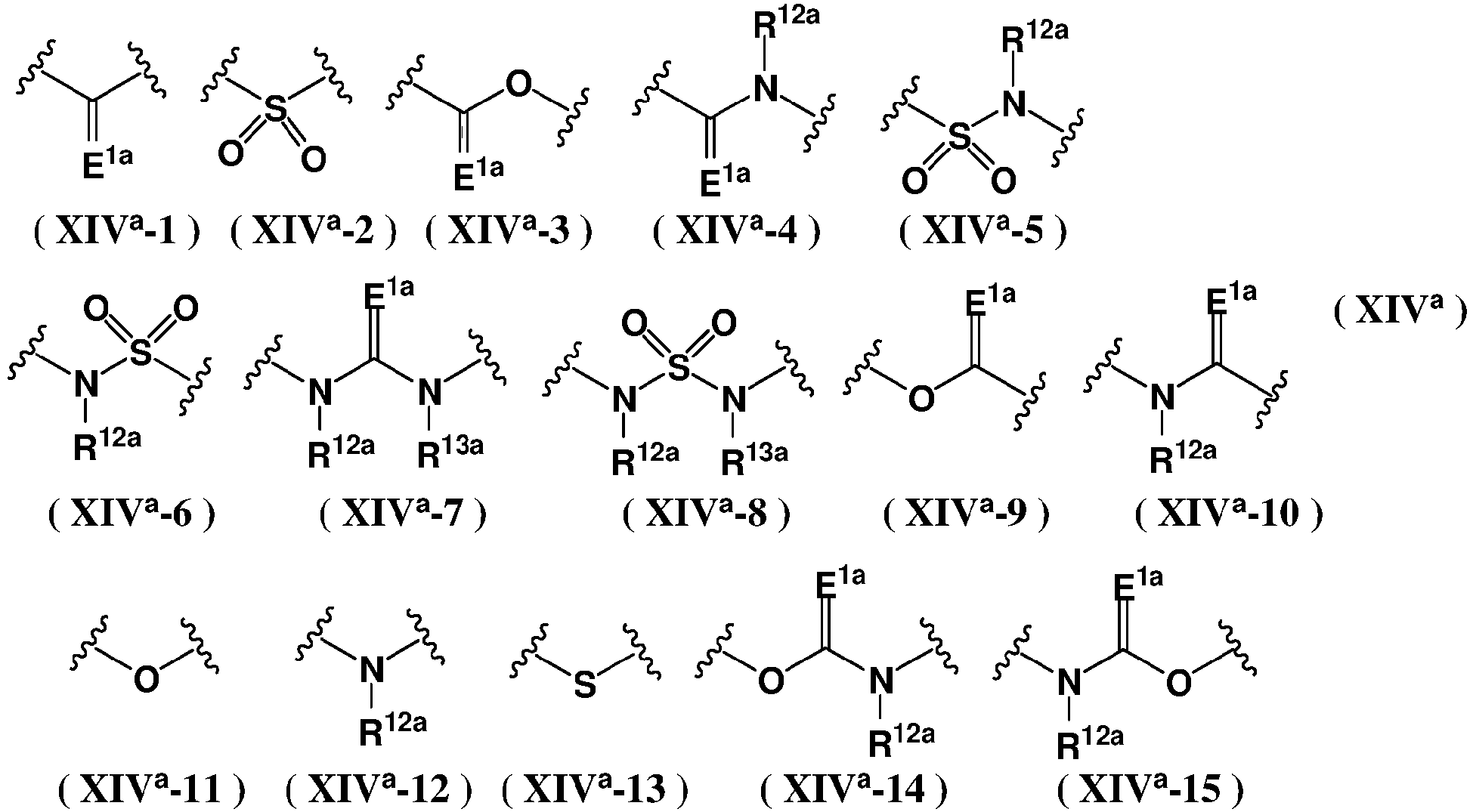

- Another preferred embodiment of the substituent L3a and the substituent R2a is such that L3a is represented by the formula (Xa-9):

- Another preferred embodiment of the substituent L3a and the substituent R2a is such that L3a is represented by any of the following formulae (XXVIa-1) to (XXVIa-5):

- A more preferred embodiment of the substituent L3a and the substituent R2a is such that L3a is a single bond, and R2a is a hydrogen atom, a halogen atom, a C3-6 cycloalkyl group, a phenyl group or a 5 to 6-membered aromatic heterocyclyl group (the C3-6 cycloalkyl group, the phenyl group and the 5 to 6-membered aromatic heterocyclyl group are unsubstituted or substituted with one or more identical or different substituents independently selected from the substituent set V1a).
- Another more preferred embodiment of the substituent L3a and the substituent R2a is such that L3a is a single bond, and R2a is a 3 to 11-membered non-aromatic heterocyclyl group (the 3 to 11-membered non-aromatic heterocyclyl group is unsubstituted or substituted with one or more identical or different substituents independently selected from the substituent set V1a).
- Another more preferred embodiment of the substituent L3a and the substituent R2a is such that L3a is a single bond, and R2a is a C3-6 cycloalkyl group, a 3 to 11-membered non-aromatic heterocyclyl group, a phenyl group or a 5 to 6-membered aromatic heterocyclyl group (the C3-6 cycloalkyl group, the 3 to 11-membered non-aromatic heterocyclyl group, the phenyl group and the 5 to 6-membered aromatic heterocyclyl group are substituted with identical or different one ,two or three substituents independently selected from the group consisting of C1-6 alkyl groups, C1-6 alkoxy groups, C1-6 alkylthio groups, C1-6 alkylsulfonyl groups, C1-6 alkylcarbonyl groups (the C1-6 alkyl groups, the C1-6 alkoxy groups, the C1-6 alkylthio groups, the C1-6 alkylsulfonyl groups and the C1-6 alkylcarbonyl groups are substituted with a substituent selected from the group consisting of a hydroxy group, a cyano group, a C1-6 alkoxy group and a C1-6 alkoxycarbonylamino group), C1-6 alkoxycarbonyl groups, mono-C1-6 alkylamino groups, di-C1-6 alkylamino groups, mono-C1-6 alkylaminocarbonyl groups, di-C1-6 alkylaminocarbonyl groups, C1-6 alkylcarbonylamino groups, (the C1-6 alkoxycarbonyl groups, the mono-C1-6 alkylamino groups, the di-C1-6 alkylamino groups, the mono-C1-6 alkylaminocarbonyl groups, the di-C1-6 alkylaminocarbonyl groups and the C1-6 alkylcarbonylamino groups are substituted with one or more identical or different halogen atoms independently selected from the group consisting of fluorine atoms, chlorine atoms, bromine atoms and iodine atoms or with a hydroxy group or a cyano group), mono-alkylaminosulfonyl groups, di-C1-6 alkylaminosulfonyl groups, C1-6 alkylsulfonylamino groups, C1-6 alkoxycarbonylamino groups (the mono-C1-6 alkylaminosulfonyl groups, the di-C1-6 alkylaminosulfonyl groups, the C1-6 alkylsulfonylamino groups and the C1-6 alkoxycarbonylamino groups are unsubstituted or substituted with one or more identical or different halogen atoms independently selected from the group consisting of fluorine atoms, chlorine atoms, bromine atoms and iodine atoms), phenyl groups and 5 to 6-membered aromatic heterocyclyl groups (the phenyl groups and the 5 to 6-membered aromatic heterocyclyl groups are unsubstituted or substituted with one or two identical or different substituents independently selected from the substituent set V1a)).
- Another more preferred embodiment of the substituent L3a and the substituent R2a is such that L3a is a single bond, and R2a is a C3-6 cycloalkyl group, a 3 to 11-membered non-aromatic heterocyclyl group, a phenyl group or a 5 to 6-membered aromatic heterocyclyl group (the C3-6 cycloalkyl group, the 3 to 11-membered non-aromatic heterocyclyl group, the phenyl group and the 5 to 6-membered aromatic heterocyclyl group are substituted with a substituent selected from the group consisting of a C1-6 alkyl group, a C1-6 alkoxy group (the C1-6 alkyl group and the C1-6 alkoxy group are substituted with a hydroxy group or a cyano group), a mono-C1-6 alkylamino group, a di-C1-6 alkylamino group, a mono-C1-6 alkylaminocarbonyl group, a C1-6 alkylcarbonylamino group (the mono-C1-6 alkylamino group, the di-C1-6 alkylamino group, the mono-C1-6 alkylaminocarbonyl group and the C1-6 alkylcarbonylamino group are substituted with one or more identical or different substituents independently selected from the group consisting of halogen atoms, hydroxy groups and cyano groups), a phenyl group, a 5 to 6-membered aromatic heterocyclyl group (the phenyl group and the 5 to 6-membered aromatic heterocyclyl group are unsubstituted or substituted with one or two identical or different substituents independently selected from the group consisting of halogen atoms, cyano groups, C1-6 alkyl groups and C1-6 haloalkyl groups), a mono-C1-6 alkylaminosulfonyl group, a di-C1-6 alkylaminosulfonyl group, a C1-6 alkylsulfonylamino group and a C1-6 alkoxycarbonylamino group (the mono-C1-6 alkylaminosulfonyl group, the di-C1-6 alkylaminosulfonyl group, the C1-6 alkylsulfonylamino group and the C1-6 alkoxycarbonylamino group are unsubstituted or substituted with one or more identical or different halogen atoms independently selected from the group consisting of fluorine atoms, chlorine atoms, bromine atoms and iodine atoms) and with one or more identical or different substituents independently selected from the group consisting of hydroxy groups, halogen atoms, cyano groups, C1-6 alkyl groups, C1-6 haloalkyl groups, C1-6 alkoxy groups, C1-6 haloalkoxy groups, C1-6 alkylsulfonyl groups and C1-6 haloalkylsulfonyl groups).
- Another more preferred embodiment of the substituent L3a and the substituent R2a is such that L3a is a single bond, and R2a is an azido group.
- Another more preferred embodiment of the substituent L3a and the substituent R2a is such that L3a is a single bond, and R2a is a 8 to 11-membered partially saturated aromatic cyclic group (the 8 to 11-membered partially saturated aromatic cyclic group is unsubstituted or substituted with one or two identical or different halogen atoms independently selected from the group consisting of fluorine atoms, chlorine atoms, bromine atoms and iodine atoms).
- Another more preferred embodiment of the substituent L3a and the substituent R2a is such that L3a is represented by any of the following formulae (IXa-1) to (IXa-9):

- Another more preferred embodiment of the substituent L3a and the substituent R2a is such that L3a is represented by any of the following formulae (IXa-1) to (IXa-9):
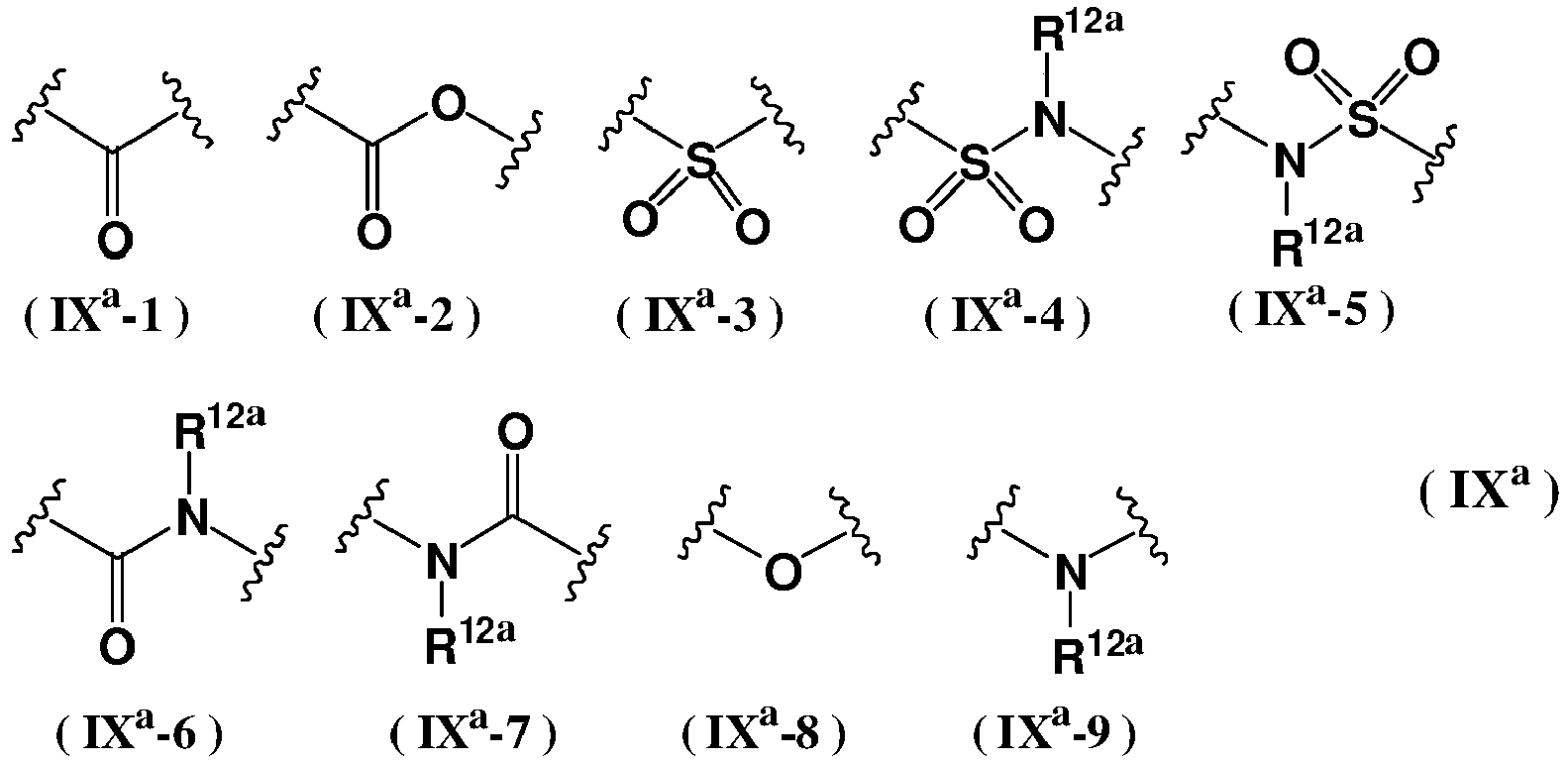
- Another more preferred embodiment of the substituent L3a and the substituent R2a is such that L3a is represented by any of the following formulae (XVIIa-1) to (XVIIa-3):

- Another more preferred embodiment of the substituent L3a and the substituent R2a is such that L3a is represented by the formula (XVIIIa):

- Another more preferred embodiment of the substituent L3a and the substituent R2a is such that L3a is represented by any of the following formulae (IXa-1) to (IXa-9):

- Another more preferred embodiment of the substituent L3a and the substituent R2a is such that L3a is represented by any of the following formulae (IXa-1) to (IXa-9):

- Another more preferred embodiment of the substituent L3a and the substituent R2a is such that L3a is represented by the formula (XVIa):

- Another more preferred embodiment of the substituent L3a and the substituent R2a is such that L3a is represented by the formula (Xa-10):

- Another more preferred embodiment of the substituent L3a and the substituent R2a is such that L3a is represented by any of the following formulae (XXVIa-1) to (XXVIa-5):

- A further preferred embodiment of the substituent L3a and the substituent R2a is such that L3a is a single bond, and R2a is a hydrogen atom, a halogen atom, a C3-6 cycloalkyl group, a phenyl group or a 5 to 6-membered aromatic heterocyclyl group (the C3-6 cycloalkyl group, the phenyl group and the 5 to 6-membered aromatic heterocyclyl group are unsubstituted or substituted with identical or different one, two or thee substituents independently selected from the group consisting of hydroxy groups, amino groups, halogen atoms, cyano groups, nitro groups, carbamoyl groups, sulfamoyl groups, C1-6 alkyl groups, C1-6 haloalkyl groups, C1-6 alkoxy groups, C1-6 haloalkoxy groups, mono-C1-6 alkylamino groups, di-C1-6 alkylamino groups, C1-6 alkylthio groups, C1-6 haloalkylthio groups, C1-6 alkylcarbonyl groups, C1-6 haloalkylcarbonyl groups, C1-6 alkylsulfonyl groups, C1-6 haloalkylsulfonyl groups, carboxy groups, C1-6 alkoxycarbonyl groups, mono-C1-6 alkylaminocarbonyl groups, di-C1-6 alkylaminocarbonyl groups, C1-6 alkylcarbonylamino groups, C3-6 cycloalkyl groups and 4 to 7-membered non-aromatic heterocyclyl groups).
- Another further preferred embodiment of the substituent L3a and the substituent R2a is such that L3a is a single bond, and R2a is a 3 to 11-membered non-aromatic heterocyclyl group (the 3 to 11-membered non-aromatic heterocyclyl group is unsubstituted or substituted with one, two or three identical or different substituents independently selected from the group consisting of hydroxy groups, amino groups, halogen atoms, cyano groups, nitro groups, carbamoyl groups, sulfamoyl groups, C1-6 alkyl groups, C1-6 haloalkyl groups, C1-6 alkoxy groups, C1-6 haloalkoxy groups, mono-C1-6 alkylamino groups, di-C1-6 alkylamino groups, C1-6 alkylthio groups, C1-6 haloalkylthio groups, C1-6 alkylcarbonyl groups, C1-6 haloalkylcarbonyl groups, C1-6 alkylsulfonyl groups, C1-6 haloalkylsulfonyl groups, carboxy groups, C1-6 alkoxycarbonyl groups, mono-C1-6 alkylaminocarbonyl groups, di-C1-6 alkylaminocarbonyl groups, C1-6 alkylcarbonylamino groups, C3-6 cycloalkyl groups and 4 to 7-membered non-aromatic heterocyclyl groups).
- Another further preferred embodiment of the substituent L3a and the substituent R2a is such that L3a is a single bond, and R2a is a 4 to 7-membered non-aromatic heterocyclyl group, a phenyl group or a 5 to 6-membered aromatic heterocyclyl group (the 4 to 7-membered non-aromatic heterocyclyl group, the phenyl group and the 5 to 6-membered aromatic heterocyclyl group are substituted with a C1-6 alkyl group, a C1-6 alkoxy group (the C1-6 alkyl group and the C1-6 alkoxy group are substituted with a substituent selected from the group consisting of a hydroxy group, a cyano group and a C1-6 alkoxycarbonylamino group), a mono-C1-6 alkylamino group, a di-C1-6 alkylamino group, a mono-C1-6 alkylaminocarbonyl group, a C1-6 alkylcarbonylamino group (the mono-C1-6 alkylamino group, the di-C1-6 alkylamino group, the mono-C1-6 alkylaminocarbonyl group and the C1-6 alkylcarbonylamino group are substituted with one or more identical or different halogen atoms independently selected from the group consisting of fluorine atoms, chlorine atoms, bromine atoms and iodine atoms or with a hydroxy group or a cyano group), a C1-6 alkoxycarbonyamino group, a phenyl group and a 5 to 6-membered aromatic heterocyclyl group (the phenyl group and the 5 to 6-membered aromatic heterocyclyl group are unsubstituted or substituted with one or two identical or different substituents independently selected from the group consisting of halogen atoms, cyano groups, C1-3 alkyl groups and C1-3 haloalkyl groups)).
- Another further preferred embodiment of the substituent L3a and the substituent R2a is such that L3a is a single bond, R2a is a 3 to 11-membered non-aromatic heterocyclyl group (the 3 to 11-membered non-aromatic heterocyclyl group is substituted with a di-C1-3alkylaminosulfonyl group).
- Another further preferred embodiment of the substituent L3a and the substituent R2a is such that L3a is a single bond, R2a is a 4 to 7-membered non-aromatic heterocyclyl group (the 4 to 7-membered non-aromatic heterocyclyl group is substituted with a phenyl group (the phenyl group is unsubstituted or substituted with one or two identical or different substituents independently selected from the group consisting of halogen atoms, C1-3 alkyl groups and C1-3 haloalkyl groups) and with a substituent selected from the group consisting of a hydroxy group, a halogen atom, a cyano group, a C1-3 alkyl group and a C1-3 haloalkyl group).
- Another further preferred embodiment of the substituent L3a and the substituent R2a is such that L3a is represented by any of the following formulae (XXa-1) to (XXa-3):

- Another further preferred embodiment of the substituent L3a and the substituent R2a is such that L3a is represented by any of the following formulae (XXIa-1) to (XXIa-3):

- Another further preferred embodiment of the substituent L3a and the substituent R2a is such that L3a is represented by the formula (Xa-4):

R2a is a C1-3 haloalkyl group. - Another further preferred embodiment of the substituent L3a and the substituent R2a is such that L3a is represented by any of the following formulae (XXVIIIa-1) to (XXVIIIa-3):

- Another further preferred embodiment of the substituent L3a and the substituent R2a is such that L3a is represented by any of the following formulae (XXa-1) to (XXa-3):

- Another further preferred embodiment of the substituent L3a and the substituent R2a is such that L3a is represented by any of the following formulae (XXa-1) to (XXa-3):

- Another further preferred embodiment of the substituent L3a and the substituent R2a is such that L3a is represented by any of the following formulae (XXVIIa-1) to (XXVIIa-5):
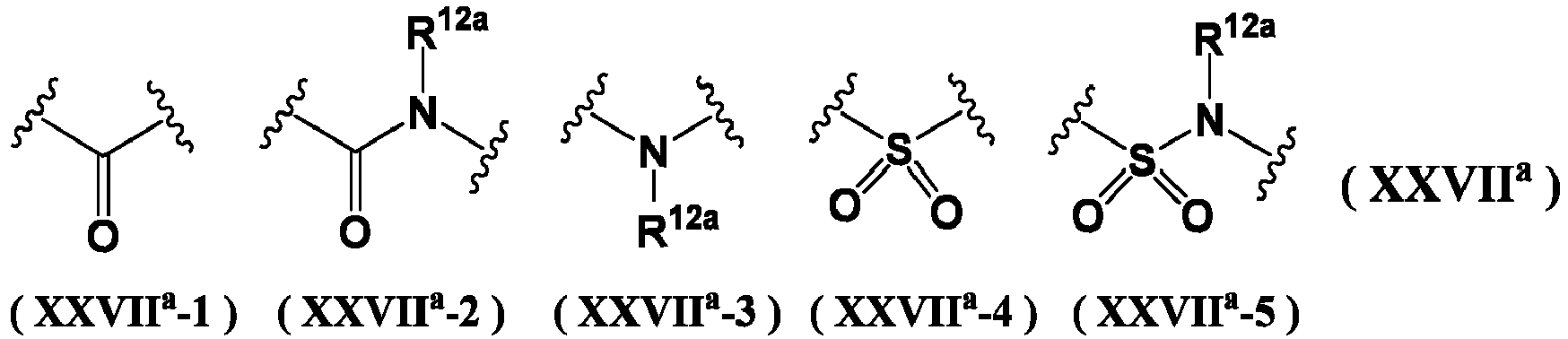
- Another further preferred embodiment of the substituent L3a and the substituent R2a is such that L3a is represented by any of the following formulae (XXVIa-1) to (XXVIa-5):

- Another further preferred embodiment of the substituent L3a and the substituent R2a is such that L3a is represented by the formula (Xa-5):

R2a is a C1-3 alkyl group. - Another further preferred embodiment of the substituent L3a and the substituent R2a is such that L3a is represented by the formula (Xa-6):

R2a is a hydrogen atom. - Another further preferred embodiment of the substituent L3a and the substituent R2a is such that L3a is represented by the formula (XVIIIa):

- Another further preferred embodiment of the substituent L3a and the substituent R2a is such that L3a is represented by the formula (Xa-8):

R2a is a C1-3 alkyl group. - Another further preferred embodiment of the substituent L3a and the substituent R2a is such that L3a is represented by any of the following formulae (XXa-1) to (XXa-3):

- Another further preferred embodiment of the substituent L3a and the substituent R2a is such that L3a is represented by any of the following formulae (XXa-1) to (XXa-3):

- Another further preferred embodiment of the substituent L3a and the substituent R2a is such that L3a is represented by the formula (XVIa):

- Another further preferred embodiment of the substituent L3a and the substituent R2a is such that L3a is represented by any of the following formulae (XXVIa-1) to (XXVIa-5):

- (wherein E1a is an oxygen atom, and R12a is a C1-3 alkyl group (the C1-3 alkyl group is substituted with a substituent selected from the group consisting of a cyano group, a hydroxy group, a C1-3 alkoxy group, a C3-6 cycloalkyl group, a phenyl group and a 5 to 6-membered aromatic heterocyclyl group (the 5 to 6-membered aromatic heterocyclyl group is unsubstituted or substituted with a C1-3 alkyl group)), a C3-6 cycloalkyl group or a phenyl group (the phenyl group is unsubstituted or substituted with a halogen or a cyano group)), and
- R2a is a C1-3 alkyl group, a C1-3 haloalkyl group (the C1-3 alkyl group and the C1-3 haloalkyl group are unsubstituted or substituted with one or two identical or different substituents independently selected from the group consisting of hydroxy groups, cyano groups, C1-3 alkoxy groups, C3-6 cycloalkyl groups, phenyl groups and 5 to 6-membered aromatic heterocyclyl groups).
- A particularly preferred embodiment of the substituent L3a and the substituent R2a is such that L3a is a single bond, and R2a is a hydrogen atom or a halogen atom.
- Another particularly preferred embodiment of the substituent L3a and the substituent R2a is such that L3a is a single bond, and R2a is a C3-6 cycloalkyl group (the C3-6 cycloalkyl group is unsubstituted or substituted with a C1-3 haloalkyl group).
- Another particularly preferred embodiment of the substituent L3a and the substituent R2a is such that L3a is a single bond, and R2a is a phenyl group or a 5 to 6-membered aromatic heterocyclyl group (the phenyl group and the 5 to 6-membered aromatic heterocyclyl group are unsubstituted or substituted with one, two or three identical or different substituents independently selected from the group consisting of halogen atoms, cyano groups, carbamoyl groups, C1-3 alkyl groups, C1-3 alkoxy groups, C1-3 alkylthio groups, C1-3 alkylsulfonyl groups, C1-3 haloalkyl groups, C1-3 haloalkoxy groups, C1-3 haloalkylthio groups and 4 to 7-membered non-aromatic heterocyclyl groups).
- Another particularly preferred embodiment of the substituent L3a and the substituent R2a is such that L3a is a single bond, and R2a is a 4 to 7-membered non-aromatic heterocyclyl group (the 4 to 7-membered non-aromatic heterocyclyl group is unsubstituted or substituted with one or two identical or different substituents independently selected from the group consisting of cyano groups, halogen atoms, C1-3 alkyl groups, C1-3 haloalkyl groups, hydroxy groups, di-C1-3 alkylamino groups, carboxy groups, carbamoyl groups, C1-3 haloalkoxy groups, C1-3 alkylcarbonylamino groups and 4 to 7-membered non-aromatic heterocyclyl groups).
- Another particularly preferred embodiment of the substituent L3a and the substituent R2a is such that L3a is a single bond, and R2a is a phenyl group (the phenyl group is substituted with a substituent selected from the group consisting of a C1-3 alkoxy group, a di-C1-3 alkylamino group (the C1-3 alkoxy group and the di-C1-3 alkylamino group are substituted with a hydroxy group or a cyano group) and a 5 to 6-membered aromatic heterocyclyl group).
- Another particularly preferred embodiment of the substituent L3a and the substituent R2a is such that L3a is a single bond, and R2a is a 5 to 6-membered aromatic heterocyclyl group (the 5 to 6-membered aromatic heterocyclyl group is substituted with a C1-3 alkyl group (the C1-3 alkyl group is substituted with a hydroxy group).
- Another particularly preferred embodiment of the substituent L3a and the substituent R2a is such that L3a is a single bond, and R2a is a 4 to 7-membered non-aromatic heterocyclyl group (the 4 to 7-membered non-aromatic heterocyclyl group is substituted with a substituent selected from the group consisting of a C1-6 alkyl group (the C1-6 alkyl group is substituted with a substituent selected from the group consisting of a hydroxy group, a cyano group and a C1-6 alkoxycarbonylamino group), a mono-C1-3 alkylaminocarbonyl group, a C1-3 alkylcarbonylamino group (the mono-C1-3 alkylaminocarbonyl group and the C1-3 alkylcarbonylamino group are substituted with one or more identical or different halogen atoms independently selected from the group consisting of fluorine atoms, chlorine atoms, bromine atoms and iodine atoms) and a C1-6 alkoxycarbonylamino group).
- Another particularly preferred embodiment of the substituent L3a and the substituent R2a is such that L3a is a single bond, and R2a is a 4 to 7-membered non-aromatic heterocyclyl group (the 4 to 7-membered non-aromatic heterocyclyl group is substituted with a phenyl group (the phenyl group is unsubstituted or substituted with one or two identical or different substituents independently selected from the group consisting of halogen atoms and C1-3 haloalkyl groups) and with a hydroxy group or a cyano group).
- Another particularly preferred embodiment of the substituent L3a and the substituent R2a is such that L3a is represented by the formula (Xa-1):

R2a is a methyl group (the methyl group is unsubstituted or substituted with a cyano group). - Another particularly preferred embodiment of the substituent L3a and the substituent R2a is such that L3a is represented by the formula (Xa-1):

R2a is a hydrogen atom or a C1-3 haloalkyl group. - Another particularly preferred embodiment of the substituent L3a and the substituent R2a is such that L3a is represented by the formula (Xa-1):

R2a is a 4 to 7-membered non-aromatic heterocyclyl group or a phenyl group (the 4 to 7-membered non-aromatic heterocyclyl group and the phenyl group are unsubstituted or substituted with a substituent selected from the group consisting of a hydroxy group, a cyano group, a halogen atom and a C1-3 haloalkyl group). - Another particularly preferred embodiment of the substituent L3a and the substituent R2a is such that L3a is represented by the formula (Xa-7):

- Another particularly preferred embodiment of the substituent L3a and the substituent R2a is such that L3a is represented by the formula (Xa-7):

- Another particularly preferred embodiment of the substituent L3a and the substituent R2a is such that L3a is represented by the formula (Xa-7):

- Another particularly preferred embodiment of the substituent L3a and the substituent R2a is such that L3a is represented by the formula (Xa-7):

- Another particularly preferred embodiment of the substituent L3a and the substituent R2a is such that L3a is represented by the formula (XVIa):

- Another particularly preferred embodiment of the substituent L3a and the substituent R2a is such that L3a is represented by the formula (XVIa):

- Another particularly preferred embodiment of the substituent L3a and the substituent R2a is such that L3a is represented by the formula (XVIa):

- Another particularly preferred embodiment of the substituent L3a and the substituent R2a is such that L3a is represented by the formula (XVIa):

- Another particularly preferred embodiment of the substituent L3a and the substituent R2a is such that L3a is represented by the formula (XVIa):

- Another particularly preferred embodiment of the substituent L3a and the substituent R2a is such that L3a is represented by the formula (XVIa):

- Another particularly preferred embodiment of the substituent L3a and the substituent R2a is such that L3a is represented by the formula (XVIa):

- Another particularly preferred embodiment of the substituent L3a and the substituent R2a is such that L3a is represented by the formula (Xa-2):

R2a is a methyl group (the methyl group is unsubstituted or substituted with a phenyl group). - Another particularly preferred embodiment of the substituent L3a and the substituent R2a is such that L3a is represented by the formula (Xa-2):

R2a is a hydrogen atom or a t-butyl group. - Another particularly preferred embodiment of the substituent L3a and the substituent R2a is such that L3a is represented by the formula (Xa-3):

R2a is a hydrogen atom. - Another particularly preferred embodiment of the substituent L3a and the substituent R2a is such that L3a is represented by the formula (Xa-3):

R2a is a C1-3 alkyl group. - Another particularly preferred embodiment of the substituent L3a and the substituent R2a is such that L3a is represented by the formula (Xa-4):

R2a is a C1-3 alkyl group. - Another particularly preferred embodiment of the substituent L3a and the substituent R2a is such that L3a is represented by the formula (Xa-4):

R2a is a C3-6 cycloalkyl group or a phenyl group (the phenyl group is unsubstituted or substituted with a halogen atom). - Another particularly preferred embodiment of the substituent L3a and the substituent R2a is such that L3a is represented by the formula (Xa-11):

- Another particularly preferred embodiment of the substituent L3a and the substituent R2a is such that L3a is represented by the formula (Xa-11):

- Another particularly preferred embodiment of the substituent L3a and the substituent R2a is such that L3a is represented by the formula (Xa-12):

- Another particularly preferred embodiment of the substituent L3a and the substituent R2a is such that L3a is represented by the formula (Xa-12):

- Another particularly preferred embodiment of the substituent L3a and the substituent R2a is such that L3a is represented by the formula (Xa-13):
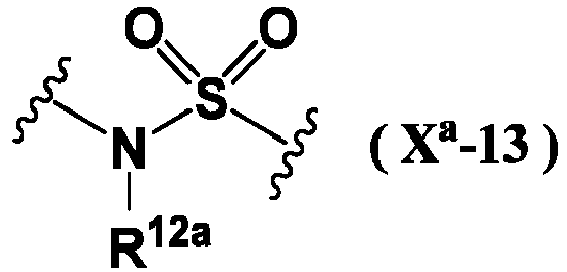
- Another particularly preferred embodiment of the substituent L3a and the substituent R2a is such that L3a is represented by the formula (Xa-5):

- Another particularly preferred embodiment of the substituent L3a and the substituent R2a is such that L3a is represented by the formula (XVIIIa):

- Another particularly preferred embodiment of the substituent L3a and the substituent R2a is such that L3a is represented by the formula (Xa-8):

R2a is a methyl group. - Another particularly preferred embodiment of the substituent L3a and the substituent R2a is such that L3a is represented by the formula (Xa-7):

- Another particularly preferred embodiment of the substituent L3a and the substituent R2a is such that L3a is represented by the formula (XVIa):

- Another particularly preferred embodiment of the substituent L3a and the substituent R2a is such that L3a is represented by the formula (XVIa):

- Another particularly preferred embodiment of the substituent L3a and the substituent R2a is such that L3a is represented by the formula (Xa-11):

- Another particularly preferred embodiment of the substituent L3a and the substituent R2a is such that L3a is represented by the formula (XVIa):

- A preferred embodiment of na and the substituent R3a is such that na is 0, 1 or 2, and R3a is a hydroxy group, an amino group, a halogen atom, a cyano group, a C1-3 alkyl group, a C1-3 haloalkyl group, a C1-3 alkoxy group or a C1-3 haloalkoxy group (when na is 2, R3a 's may be identical or different).
- Another preferred embodiment of na and the substituent R3a is such that na is 0, 1 or 2, and R3a is a carbamoyl group, a carboxy group, a C1-3 haloalkylcarbonyl group, a C1-6 alkoxycarbonyl group, a mono-C1-3alkylamino group, di-C1-3 alkylamino group, mono-C1-3 alkylaminocarbonyl group, a di-C1-3 alkylaminocarbonyl group or a C1-3 alkylcarbonylamino group (when na is 2, R3a 's may be identical or different).
- A more preferred embodiment of na and the substituent R3a is such that na is 0 or 1, and R3a is a C1-3 alkyl group.
- Another more preferred embodiment of na and the substituent R3a is such that na is 0 or 1, and R3a is a halogen atom.
- Another more preferred embodiment of na and the substituent R3a is such that na is 0 or 1, and R3a is a cyano group.
- Another more preferred embodiment of na and the substituent R3a is such that na is 0 or 1, and R3a is a hydroxy group.
- Another more preferred embodiment of na and the substituent R3a is such that na is 2, and R3a is a halogen atom or a C1-3 alkyl group (R3a 's may be identical or different).
- As favorable tricyclic pyrimidine compounds of the present invention for use as JAK inhibitors and as preventive, therapeutic and/or improving agent for diseases against which inhibition of JAK is effective, the following compounds may be mentioned.
1a) Compounds represented by the formula (Ia):
- [wherein R1a is a hydrogen atom or a halogen atom,
- Xa is CR9a (wherein R9a is a hydrogen atom, a halogen atom, a cyano group, a C1-6 alkyl group, a C1-6 haloalkyl group or a C3-6 cycloalkyl group) or a nitrogen atom, Ya is CR10a (wherein R10a is a hydrogen atom),
- the ring Aa is represented by the following formula (IIa-1) or (IIa-2):
- (wherein T1a is a nitrogen atom or CR4a, U1a is a nitrogen atom or CR5a, T2a is a single bond, and E2a is an oxygen atom or a sulfur atom),
- the ring Ba is a C3-11 cycloalkane, a C3-11 cycloalkene (a ring-constituting methylene group of the C3-11 cycloalkane and the C3-11 cycloalkene may be replaced by a carbonyl group), a 3 to 11-membered non-aromatic heterocycle, a C6-14 aromatic carbocycle or a 5 to 10-membered aromatic heterocycle,
- L1a is a single bond or a C1-6 alkylene group,
- L2a is a single bond, a C1-6 alkylene group, a C2-6 alkenylene group (the C1-6 alkylene group and the C2-6 alkenylene group are unsubstituted or substituted with one or more identical or different substituents independently selected from the group consisting of halogen atoms, hydroxy groups, amino groups and cyano groups), =C(R15a)- (wherein R15a is a hydrogen atom or a cyano group, and the bond connecting the ring Ba and L2a is a double bond) or =C(R15a)-CH2- (wherein R15a is a hydrogen atom or a cyano group, and the bond connecting the ring Ba and L2a is a double bond),,
- L3a is a single bond or represented by any of the following formulae (XIVa-1) to (XIVa-15) or (XIIIa):
- (wherein E1a is an oxygen atom or a sulfur atom),
- when L3a is a single bond, R2a is a hydrogen atom, a halogen atom, an azido group, a C3-11 cycloalkyl group, a 3 to 11-membered non-aromatic heterocyclyl group, a C6-14 aryl group , a 5 to 10-membered aromatic heterocyclyl group, a 8 to 11-membered partially saturated aromatic cyclic group or a 8 to 11-membered aromatic ring-condensed alicyclic hydrocarbon group (the C3-11 cycloalkyl group, the 3 to 11-membered non-aromatic heterocyclyl group, the C6-14 aryl group , the 5 to 10-membered aromatic heterocyclyl group, the 8 to 11-membered partially saturated aromatic cyclic group and the 8 to 11-membered aromatic ring-condensed alicyclic hydrocarbon group are unsubstituted or substituted with one or more identical or different substituents independently selected from the group consisting of the substituent set V4a, the substituent set V9a and C1-6 alkyl groups (the C1-6 alkyl groups are substituted with a C1-6 alkoxycarbonylamino group (the C1-6 alkoxycarbonylamino group is unsubstituted or substituted with one or more identical or different halogen atoms independently selected from the group consisting of fluorine atoms, chlorine atoms, bromine atoms and iodine atoms)),
- when L3a is not a single bond, R2a is a hydrogen atom, a C1-6 alkyl group, a C2-6 alkenyl group, a C2-6 alkynyl group (the C1-6 alkyl group, the C2-6 alkenyl group and the C2-6 alkynyl group are unsubstituted or substituted with one or more identical or different substituents independently selected from the substituent set V6a and the substituent set V9a), a C3-11 cycloalkyl group, a 3 to 11-membered non-aromatic heterocyclyl group, a C6-14 aryl group , a 5 to 10-membered aromatic heterocyclyl group, a 8 to 11-membered partially saturated aromatic cyclic group or a 8 to 11-membered aromatic ring-condensed alicyclic hydrocarbon group (the C3-11 cycloalkyl group, the 3 to 11-membered non-aromatic heterocyclyl group, the C6-14 aryl group , the 5 to 10-membered aromatic heterocyclyl group, the 8 to 11-membered partially saturated aromatic cyclic group and the 8 to 11-membered aromatic ring-condensed alicyclic hydrocarbon group are unsubstituted or substituted with one or more identical or different substituents independently selected from the substituent set V4a and the substituent set V9a), na is 0, 1 or 2,
- R3a is a hydroxy group, an amino group, a carboxy group, a carbamoyl group, a sulfamoyl group, a phosphono group, a phosphonooxy group, a sulfo group, a sulfoxy group, a tetrazolyl group, a halogen atom, a cyano group, a nitro group, a C1-6 alkyl group, a C1-6 haloalkyl group, a C3-11 cycloalkyl group, a C2-6 alkenyl group, a C2-6 haloalkenyl group, a C1-6 alkoxy group, a C1-6 haloalkoxy group, a C1-6 alkylthio group, a C1-6 haloalkylthio group, a C1-6 alkylcarbonyl group, a C1-6 haloalkylcarbonyl group, a C1-6 alkylsulfonyl group, a C1-6 haloalkylsulfonyl group, a C1-6 alkoxycarbonyl group, a mono-C1-6 alkylamino group, a di-C1-6 alkylamino group, a mono-C1-6 alkylaminocarbonyl group, a di-C1-6 alkylaminocarbonyl group or a C1-6 alkylcarbonylamino group (when na is 2, R3a's may be identical or different), each of R4a and R5a is independently a hydrogen atom, a hydroxy group, an amino group, a carboxy group, a carbamoyl group, a tetrazolyl group, a halogen atom, a cyano group, a C1-6 alkyl group, a C2-6 alkenyl group, a C1-6 alkoxy group, a C1-6 alkylthio group, a C1-6 alkylcarbonyl group, a C1-6 alkylsulfonyl group, a mono-C1-6 alkylamino group, a di-C1-6 alkylamino group (the C1-6 alkyl group, the C2-6 alkenyl group, the C1-6 alkoxy group, the C1-6 alkylthio group, the C1-6 alkylcarbonyl group, the C1-6 alkylsulfonyl group, the mono-C1-6 alkylamino group and the di-C1-6 alkylamino group are unsubstituted or substituted with one or more identical or different substituents independently selected from the substituent set V3a), a C1-6 alkoxycarbonyl group, a C3-11 cycloalkyl group, a 3 to 11-membered non-aromatic heterocyclyl group, a C6-14 aryl group or a 5 to 10-membered aromatic heterocyclyl group (the C3-11 cycloalkyl group, the 3 to 11-membered non-aromatic heterocyclyl group, the C6-14 aryl group and the 5 to 10-membered aromatic heterocyclyl group are unsubstituted or substituted with one or more identical or different substituents independently selected from the substituent set V1a)
- R6a is a hydrogen atom, a C1-6 alkyl group (the C1-6 alkyl group is unsubstituted or substituted with one or more identical or different substituents independently selected from the substituent set V3a), a C3-6 cycloalkyl group, a 4 to 7-membered non-aromatic heterocyclyl group, a phenyl group or a 5 to 6-membered aromatic heterocyclyl group (the C3-6 cycloalkyl group, the 4 to 7-membered non-aromatic heterocyclyl group, the phenyl group and the 5 to 6-membered aromatic heterocyclyl group are unsubstituted or substituted with one or more identical or different substituents independently selected from the substituent set V1a),
- each of R12a and R13a is independently a hydrogen atom, a C1-6 alkyl group, a C1-6 haloalkyl group (the C1-6 alkyl group and the C1-6 haloalkyl group are unsubstituted or substituted with one or more identical or different substituents independently selected from the substituent set V2a, the substituent set V8a and the substituent set V9a), a C3-11 cycloalkyl group, a 3 to 11-membered non-aromatic heterocyclyl group, a C6-14 aryl group , a 5 to 10-membered aromatic heterocyclyl group, a 8 to 14-membered partially saturated aromatic cyclic group or a 8 to 14-membered aromatic ring-condensed alicyclic hydrocarbon group (the C3-11 cycloalkyl group, the 3 to 11-membered non-aromatic heterocyclyl group, C6-14 aryl group , the 5 to 10-membered aromatic heterocyclyl group, the 8 to 14-membered partially saturated aromatic cyclic group and the 8 to 14-membered aromatic ring-condensed alicyclic hydrocarbon group are unsubstituted or substituted with one or more identical or different substituents independently selected from the substituent set V4a or the substituent set V9a)], tautomers or pharmaceutically acceptable salts of the compounds or solvates thereof.
- (wherein T1a is a nitrogen atom or CR4a, U1a is a nitrogen atom or CR5a, T2a is a single bond, E2a is an oxygen atom or a sulfur atom, and R6a is a hydrogen atom, a C1-6 alkyl group (the C1-6 alkyl group is unsubstituted or substituted with one or more identical or different substituents independently selected from the substituent set V3a), a C3-6 cycloalkyl group, a 4 to 7-membered non-aromatic heterocyclyl group, a phenyl group or a 5 to 6-membered aromatic heterocyclyl group (the C3-6 cycloalkyl group, the 4 to 7-membered non-aromatic heterocyclyl group, the phenyl group and the 5 to 6-membered aromatic heterocyclyl group are unsubstituted or substituted with one or more identical or different substituents independently selected from the substituent set V1a)), L1a is a single bond or a C1-3 alkylene group,
- L2a is a single bond, a C1-6 alkylene group or a C1-6 haloalkylene group (the C1-6 alkylene group and the C1-6 haloalkylene group are unsubstituted or substituted with a hydroxy group or a cyano group),
- the ring Ba is a C3-11 cycloalkane, a C3-11 cycloalkene, a 3 to 11-membered non-aromatic heterocycle, a C6-14 aromatic carbocycle or a 5 to 10-membered aromatic heterocycle, na is 0 or 1, R3a is a hydroxy group, an amino group, a carboxy group, a carbamoyl group, a tetrazolyl group, a halogen atom, a cyano group, a nitro group, a C1-3 alkyl group, a C1-3 haloalkyl group, a C3-6 cycloalkyl group, a C1-3 alkoxy group, a C1-3 haloalkoxy group or a C1-3 alkylsulfonyl group, and
- L3a is a single bond, and R2a is a hydrogen atom, a halogen atom, a C3-6 cycloalkyl group, a 3 to 11-membered non-aromatic heterocyclyl group, a phenyl group or a 5 to 6-membered aromatic heterocyclyl group (the C3-6 cycloalkyl group, the 3 to 11-membered non-aromatic heterocyclyl group, the phenyl group and the 5 to 6-membered aromatic heterocyclyl group are unsubstituted or substituted with one or more identical or different substituents independently selected from the substituent set V4a), or
- L3a is represented by any of the following formulae (Va-1) to (Va-11):
- (wherein E1a is an oxygen atom, and each of R12a and R13a is independently a hydrogen atom or a C1-6 alkyl group), and R2a is a hydrogen atom, a C1-6 alkyl group (the C1-6 alkyl group is unsubstituted or substituted with one or more identical or different substituents independently selected from the substituent set V5a), a C3-6 cycloalkyl group, a 4 to 7-membered non-aromatic heterocyclyl group, a phenyl group or a 5 to 6-membered aromatic heterocyclyl group (the C3-6 cycloalkyl group, the 4 to 7-membered non-aromatic heterocyclyl group, the phenyl group and the 5 to 6-membered aromatic heterocyclyl group are unsubstituted or substituted with one or more identical or different substituents independently selected from the substituent set V4a), and
- each of R4a and R5a is independently a hydrogen atom, an amino group, a carbamoyl group, a halogen atom, a cyano group, a C1-6 alkyl group, a C1-6 haloalkyl group, a C3-6 cycloalkyl group, a C1-6 alkoxy group, a C1-6 haloalkoxy group, a C1-6 alkylsulfonyl group, a 4 to 7-membered non-aromatic heterocyclyl group, a phenyl group or a 5 to 6-membered aromatic heterocyclyl group, tautomers or pharmaceutically acceptable salts of the compounds or solvates thereof.
- (wherein E2a is an oxygen atom or a sulfur atom, R4a is a hydrogen atom, an amino group, a carbamoyl group, a halogen atom, a cyano group, a C1-6 alkyl group, a C1-6 haloalkyl group, a C3-6 cycloalkyl group, a C1-6 alkoxy group, a C1-6 haloalkoxy group, a C1-6 alkylsulfonyl group, a 4 to 7-membered non-aromatic heterocyclyl group, a phenyl
- group or a 5 to 6-membered aromatic heterocyclyl group, and R6a is a hydrogen atom, a C1-6 alkyl group, a C1-6 haloalkyl group, a C3-6 cycloalkyl group, a 4 to 7-membered non-aromatic heterocyclyl group, a phenyl group or a 5 to 6-membered aromatic heterocyclyl group), tautomers or pharmaceutically acceptable salts of the compounds or solvates thereof.
- (wherein R12a is a hydrogen atom, a C1-6 alkyl group or C1-6 haloalkyl group), and
- R2a is a hydrogen atom, a C1-6 alkyl group, a C1-6 haloalkyl group (the C1-6 alkyl group and the C1-6 haloalkyl group are unsubstituted or substituted with a substituent selected from the group consisting of a hydroxy group, a cyano group, a C1-3 alkoxy group, mono-C1-3 alkylaminocarbonyl group (the mono-C1-3 alkylaminocarbonyl group is unsubstituted or substituted with one or more identical or different halogen atoms independently selected from the group consisting of fluorine atoms, chlorine atoms, bromine atoms and iodine atoms), a C3-6 cycloalkyl group, a 4 to 7-membered non-aromatic heterocyclyl group, a phenyl group and a 5 to 6-membered aromatic heterocyclyl group (the C3-6 cycloalkyl group, the 4 to 7-membered non-aromatic heterocyclyl group, the phenyl group and the 5 to 6-membered aromatic heterocyclyl group are unsubstituted or substituted with one or two identical or different substituents independently selected from the group consisting of halogen atoms, cyano groups, hydroxy groups, C1-3 alkoxy groups, C1-3 haloalkoxy groups, C1-3 haloalkylsulfonyl groups, C1-6 alkoxycarbonyl groups, 4 to 7-membered non-aromatic heterocyclyl groups and phenyl groups (the phenyl groups are unsubstituted or substituted with a halogen atom))), a C3-6 cycloalkyl group, a 4 to 7-membered non-aromatic heterocyclyl group, a phenyl group or a 5 to 6-membered aromatic heterocyclyl group (the C3-6 cycloalkyl group, the 4 to 7-membered non-aromatic heterocyclyl group, the phenyl group and the 5 to 6-membered aromatic heterocyclyl group are unsubstituted or substituted with one or two identical or different substituents independently selected from the group consisting of hydroxy groups, halogen atoms, cyano groups, C1-3 alkyl groups (the C1-3 alkyl groups are unsubstituted or substituted with a substituent selected from the group consisting of a hydroxy group, a cyano group and a C1-3 alkoxy group), C1-3 haloalkyl groups, C1-3 alkoxy groups, C1-3 haloalkoxy groups, C1-3 haloalkylsulfonyl groups, 4 to 7-membered non-aromatic heterocyclyl groups and phenyl groups (the phenyl groups are unsubstituted or substituted with a halogen atom)), tautomers or pharmaceutically acceptable salts of the compounds or solvates thereof.
- L1a is a single bond,
- the ring Ba is a C4-7 cycloalkane, (a ring-constituting methylene group of the C4-7 cycloalkane may be replaced by a carbonyl group) or a 4 to 7-membered non-aromatic heterocycle,
- na is 0 or 1,
- R3a is a hydroxy group, a cyano group, a halogen atom or a C1-3 alkyl group,
- L2a is a single bond, a C1-6 alkylene group (the C1-6 alkylene group is unsubstituted or substituted with one or two identical or different substituents independently selected from the group consisting of hydroxy groups and cyano groups), a C1-6 haloalkylene group, a C2-6 alkenylene group (the C1-6 haloalkylene group and the C2-6 alkenylene group are unsubstituted or substituted with one or two cyano groups), =C(R15a)-(wherein R15a is a hydrogen atom or a cyano group, and the bond connecting the ring Ba and L2a is a double bond) or =C(R15a)-CH2- (wherein R15a is a hydrogen atom or a cyano group, and the bond connecting the ring Ba and L2a is a double bond), tautomers or pharmaceutically acceptable salts of the compounds or solvates thereof.
- (wherein R12a is a hydrogen atom, a C1-3 alkyl group (the C1-3 alkyl group is unsubstituted or substituted with a substituent selected from the group consisting of a hydroxy group, a cyano group, a C1-3 alkoxy group, a C3-6 cycloalkyl group and a phenyl group), a C1-3 haloalkyl group, a C3-6 cycloalkyl group or a phenyl group (the phenyl group is unsubstituted or substituted with a halogen atom or a cyano group)), and
- R2a is a hydrogen atom, a C1-6 alkyl group (the C1-6 alkyl group is unsubstituted or substituted with a substituent selected from the group consisting of a hydroxy group, a cyano group, a C1-3 alkoxy group, a mono-C1-3 alkylaminocarbonyl group (the C1-3 alkoxy group and the mono-C1-3 alkylaminocarbonyl group are unsubstituted or substituted with one or more identical or different halogen atoms independently selected from the group consisting of fluorine atoms, chlorine atoms, bromine atoms and iodine atoms), a C3-6 cycloalkyl group, a 3 to 11-membered non-aromatic heterocyclyl group, a phenyl group and a 5 to 10-membered aromatic heterocyclyl group (the C3-6 cycloalkyl group, the 3 to 11-membered non-aromatic heterocyclyl group, the phenyl group and the 5 to 10-membered aromatic heterocyclyl group are unsubstituted or substituted with one or two identical or different substituents independently selected from the group consisting of halogen atoms, cyano groups, C1-3 alkyl groups, C1-3haloalkyl groups, C1-3 alkoxy groups, C1-3 haloalkoxy groups, C1-3 alkylthio groups, C1-3 haloalkylthio groups, C1-3 haloalkylsulfonyl groups and 4 to 7-membered non-aromatic heterocyclyl groups)), a C1-6 haloalkyl group, a C2-6 alkynyl group, a C3-6 cycloalkyl group, a 3 to 11-membered non-aromatic heterocyclyl group, a phenyl group, a naphthyl group, a 5 to 10-membered aromatic heterocyclyl group, a 8 to 11-membered partially saturated aromatic cyclic group or a 8 to 11-membered aromatic ring-condensed alicyclic hydrocarbon group (the C3-6 cycloalkyl group, the 3 to 11-membered non-aromatic heterocyclyl group, the phenyl group, the naphthyl group, the 5 to 10-membered aromatic heterocyclyl group, the 8 to 11-membered partially saturated aromatic cyclic group and the 8 to 11-membered aromatic ring-condensed alicyclic hydrocarbon group are unsubstituted or substituted with one or two identical or different substituents independently selected from the group consisting of hydroxy groups, halogen atoms, cyano groups, C1-3 alkyl groups, C1-3 haloalkyl groups, C1-3 alkoxy groups, C1-3 haloalkoxy groups, C1-3 alkylthio groups, C1-3 haloalkylthio groups, C1-3 haloalkylsulfonyl groups and 4 to 7-membered non-aromatic heterocyclyl groups), tautomers or pharmaceutically acceptable salts of the compounds or solvates thereof.
- (wherein E1a is an oxygen atom, R12a is a C1-6 alkyl group (the C1-6 alkyl group is unsubstituted or substituted with a substituent selected from the group consisting of a cyano group, a hydroxy group, a C1-3 alkoxy group, a C3-6 cycloalkyl gorup and a phenyl group), a C1-6 haloalkyl group, a C3-6 cycloalkyl group or a phenyl group (the phenyl group is unsubstituted or substituted with a halogen atom or a cyano group)), and
- R2a is a C1-6 alkyl group (the C1-6 alkyl group is unsubstituted or substituted with a substituent selected from the group consisting of a cyano group, a hydroxy group, a C1-3 alkoxy group, a C3-6 cycloalkyl gorup and a phenyl group), a C1-6 haloalkyl group, a C3-6 cycloalkyl group or a phenyl group (the phenyl group is unsubstituted or substituted with a halogen atom)), tautomers or pharmaceutically acceptable salts of the compounds or solvates thereof.
- Next, the tricyclic pyridine compounds of the present invention represented by the formula (Ib) will be described.
- First, how the ring Ab is fused in the tricyclic pyridine compounds of the present invention will be described.
- As is indicated in the formula (Ib), the ring Ab is fused to the pyridine ring so as to have two carbon atoms in common and attached to L1b via a nitrogen atom in the ring Ab in the formula (Ib).


- In the present invention, the formulae representing L3b indicate that the left ends of the formulae are bonded to L2b, and the right ends of the formulae are bonded to R2b.
- In the present invention, L1b, L2b and R3b may be bounded to the ring Bb in the formula (Ib) at any positions of the ring Ba without any particular restrictions.
- Next, preferred structures of the respective substituents will be mentioned.
- A preferred embodiment of the substituent R1b is a hydrogen atom or a halogen atom.
- A more preferred embodiment of the substituent R1b is a hydrogen atom.
- A preferred embodiment of the substituent Xb is a nitrogen atom or CR15b (wherein R15b is a hydrogen atom, a halogen atom, a cyano group, a C1-6 alkyl group, a C1-6 haloalkyl group or a C3-6 cycloalkyl group).
- A more preferred embodiment of the substituent Xb is a nitrogen atom or CR15b (wherein R15b is a hydrogen atom).
- Another more preferred embodiment of the substituent Xb is CR15b (wherein R15b is a halogen atom).
- A further preferred embodiment of the substituent Xb is CR15b (wherein R15b is a hydrogen atom).
- A preferred embodiment of the substituent Yb is CR16b (wherein R16b is a hydrogen atom).
- A preferred embodiment of the ring Ab is represented by the following formula (IXb-1) or (IXb-2):

- Another preferred embodiment of the ring Ab is represented by any of the following formulae (Xb-1 ) to (Xb-10):

- A more preferred embodiment of the ring Ab is represented by the following formula (IXb-1) or (IXb-2):

- Another more preferred embodiment of the ring Ab is represented by any of the following formulae (XXIIIb-1 ) to (XXIIIb-5):

- Another more preferred embodiment of the ring Ab is represented by the formula is represented by the formula (XXIVb):

- Another more preferred embodiment of the ring Ab is represented by the formula is represented by the formula (XXIVb):

- Another more preferred embodiment of the ring Ab is represented by the formula is represented by the formula (XIVb):

- A further preferred embodiment of the ring Ab is represented by the formula (XIb):

- Another further preferred embodiment of the ring Ab is represented by the formula (XIIb ):

- Another further preferred embodiment of the ring Ab is represented by the formula (XIIIb):

- Another further preferred embodiment of the ring Ab is represented by the formula (XIVb):

- Another further preferred embodiment of the ring Ab is represented by the formula (XXIVb):

- Another further preferred embodiment of the ring Ab is represented by the formula (XXIVb):

- A particularly preferred embodiment of the Ab is represented by the formula (XIb):
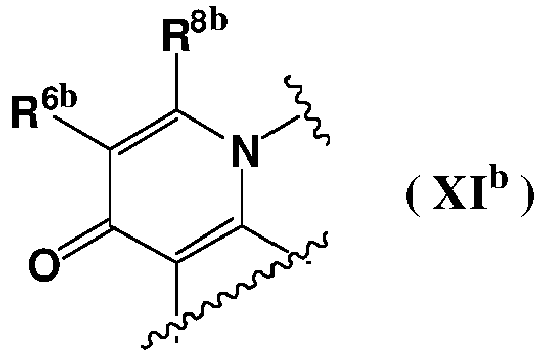
- Another particularly preferred embodiment of the Ab is represented by the formula (XIIb ):

- Another particularly preferred embodiment of the Ab is represented by the formula (XIIIb):

- Another particularly preferred embodiment of the Ab is represented by the formula (XIVb):

- A preferred embodiment of the substituent L1b is a single bond or a C1-3 alkylene group.
- A more preferred embodiment of the substituent L1b is a single bond or a methylene group.
- A further preferred embodiment of the substituent L1b is a single bond.
- A preferred embodiment of the ring Bb is a C3-11 cycloalkane, a 3 to 11-membered non-aromatic heterocycle, benzene or a 5 to 10-membered aromatic heterocycle.
- A more preferred embodiment of the Bb is a C4-7 cycloalkane, a 4 to 7-membered non-aromatic heterocycle or a 5 to 6-membered aromatic heterocycle.
- Another more preferred embodiment of the Bb is adamantane.
- A further preferred embodiment of the ring Bb is a C4-7 cycloalkane or a 4 to 7-membered non-aromatic heterocycle.
- A particularly preferred embodiment of the ring Bb is cyclohexane or piperidine.
- A preferred embodiment of the substituent L2b is a single bond, a C1-3 alkylene group or a C1-3 haloalkylene group (the C1-3 alkylene group and the C1-3 haloalkylene group are substituted with a cyano group).
- Another preferred embodiment of the substituent L2b is a C1-3 alkylene group, a C1-3 haloalkylene group (the C1-3 alkylene group and the C1-3 haloalkylene group are unsubstituted or substituted with a hydroxy group) or a C2-6 alkenylene group (the C2-6 alkenylene group is unsubstituted or substituted with a cyano group).
- Another preferred embodiment of the substituent L2b is a C1-6 alkylene group (the C1-6 alkylene group is unsubstituted or substituted with one or two cyano groups) or a C1-6 haloalkylene group.
- A more preferred embodiment of the substituent L2b is a single bond or a C1-3 alkylene group.
- Another more preferred embodiment of the substituent L2b is a C1-3 alkylene group.(the C1-3 alkylene group is substituted with a cyano group) or a C1-3 haloalkylene group.
- Another more preferred embodiment of the substituent L2b is a C2-3 alkenylene group (the C2-3 alkenylene group is substituted with a cyano group).
- A further preferred embodiment of the substituent L2b is a single bond or a methylene group.
- A preferred embodiment of the substituent L3b and the substituent R2b is such that L3b is a single bond, and R2b is a hydrogen atom, a halogen atom, a C3-6 cycloalkyl group, a 3 to 11-membered non-aromatic heterocyclyl group, a phenyl group or a 5 to 10-membered aromatic heterocyclyl group (the C3-6 cycloalkyl group, the 3 to 11-membered non-aromatic heterocyclyl group, the phenyl group and the 5 to 10-membered aromatic heterocyclyl group are unsubstituted or substituted with one or more identical or different substituents independently selected from the substituent set V1b ).
- Another preferred embodiment of the substituent L3b and the substituent R2b is such that L3b is a single bond, and R2b is a hydrogen atom, a halogen atom, a C3-11 cycloalkyl group, a 3 to 11-membered non-aromatic heterocyclyl group, a phenyl group, a naphthyl group, a 5 to 10-membered aromatic heterocyclyl group or a 8 to 11-membered partially saturated aromatic cyclic group (the C3-11 cycloalkyl group, the 3 to 11-membered non-aromatic heterocyclyl group, the phenyl group, the naphthyl group, the 5 to 10-membered aromatic heterocyclyl group and the 8 to 11-membered partially saturated aromatic cyclic group are unsubstituted or substituted with one or more identical or different substituents independently selected from the substituent set V4b and the substituent set V9b).
- Another preferred embodiment of the substituent L3b and the substituent R2b is such that L3b is represented by any of the following formulae (VIb-1 ) to (VIb-11):
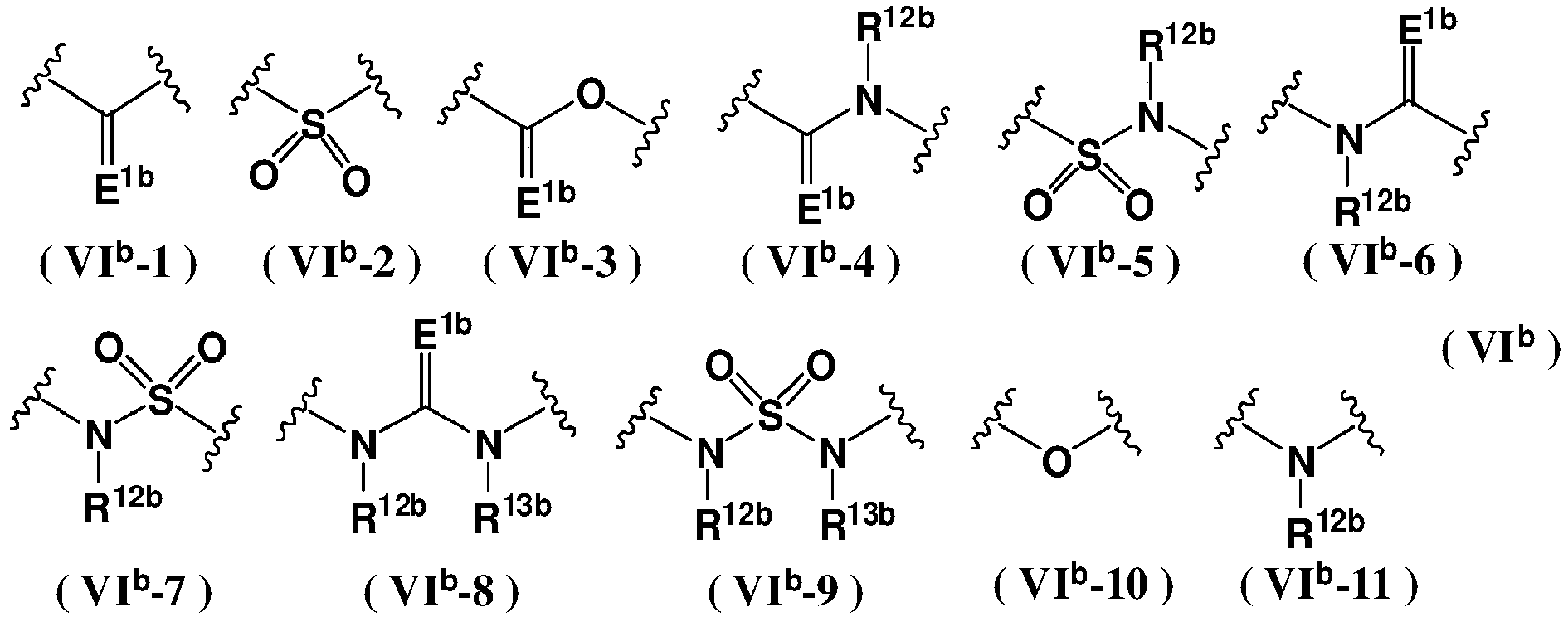
- Another preferred embodiment of the substituent L3b and the substituent R2b is such that L3b is represented by any of the following formulae (VIb-1 ) to (VIb-11):

- A more preferred embodiment of the substituent L3b and the substituent R2b is such that L3b is a single bond, and R2b is a hydrogen atom, a halogen atom, a C3-6 cycloalkyl group, a phenyl group or a 5 to 6-membered aromatic heterocyclyl group (the C3-6 cycloalkyl group, the phenyl group and the 5 to 6-membered aromatic heterocyclyl group are unsubstituted or substituted with one or more identical or different substituents independently selected from the substituent set V1b).
- Another more preferred embodiment of the substituent L3b and the substituent R2b is such that L3b is a single bond, and R2b is a hydrogen atom, a halogen atom, a C3-6 cycloalkyl group, a 4 to 7-membered non-aromatic heterocyclyl group, a phenyl group or a 5 to 10-membered aromatic heterocyclyl group (the C3-6 cycloalkyl group, the 4 to 7-membered non-aromatic heterocyclyl group, the phenyl group and the 5 to 10-membered aromatic heterocyclyl group are unsubstituted or substituted with one or more identical or different substituents independently selected from the substituent set V1b).
- Another more preferred embodiment of the substituent L3b and the substituent R2b is such that L3b is a single bond, and R2b is a 4 to 7-membered non-aromatic heterocyclyl group, a phenyl group or a 5 to 6-membered aromatic heterocyclyl group (the 4 to 7-membered non-aromatic heterocyclyl group, the phenyl group and the 5 to 6-membered aromatic heterocyclyl group are unsubstituted or substituted with one or two identical or different substituents independently selected from the group consisting of C1-6 alkyl groups, C1-6 alkoxy groups (the C1-6 alkyl group and the C1-6 alkoxy group are substituted with a hydroxy group or a cyano group), mono-C1-6 alkylamino groups, di-C1-6 alkylamino groups, the mono-C1-6 alkylaminocarbonyl groups, the di-C1-6 alkylaminocarbonyl groups, C1-6 alkylcarbonylamino groups (the mono-C1-6 alkylamino group, the di-C1-6 alkylamino group, mono-C1-6 alkylaminocarbonyl groups, di-C1-6 alkylaminocarbonyl groups and the C1-6 alkylcarbonylamino groups are substituted with one or more identical or different halogen atoms independently selected from the group consisting of fluorine atoms, chlorine atoms, bromine atoms and iodine atoms), phenyl groups, 5 to 6-membered aromatic heterocyclyl groups (the phenyl group and the 5 to 6-membered aromatic heterocyclyl group are unsubstituted or substituted with one or two identical or different substituents independently selected from the group consisting of halogen atoms, cyano atoms and C1-6 haloalkyl groups)).
- Another more preferred embodiment of the substituent L3b and the substituent R2b is such that L3b is a single bond, and R2b is a 8 to 11-membered partially saturated aromatic cyclic group (the 8 to 11-membered partially saturated aromatic cyclic group is unsubstituted or substituted with one or more identical or different substituents independently selected from the group consisting of hydroxy groups, amino groups, halogen atoms, cyano groups, nitro groups, carbamoyl groups, sulfamoyl groups, C1-6 alkyl groups, C1-6 haloalkyl groups, C1-6 alkoxy groups, C1-6 haloalkoxy groups, mono-C1-6 alkylamino groups, di-C1-6 alkylamino groups, C1-6 alkylthio groups, C1-6 haloalkylthio groups, C1-6 alkylcarbonyl groups, C1-6 haloalkylcarbonyl groups, C1-6 alkylsulfonyl groups, C1-6 haloalkylsulfonyl groups and C1-6 alkoxycarbonyl groups).
- Another more preferred embodiment of the substituent L3b and the substituent R2b is such that L3b is represented by any of the following formulae (XVb-1 ) to (XVb-9):

- Another more preferred embodiment of the substituent L3b and the substituent R2b is such that L3b is represented by any of the following formulae (XVb-1) to (XVb-9):

- Another more preferred embodiment of the substituent L3b and the substituent R2b is such that L3b is represented by any of the following formulae (XXXIVb-1) to (XXXIVb-3):

- A further preferred embodiment of the substituent L3b and the R2b is such that L3b is a single bond, and R2b is a hydrogen atom, a phenyl group (the phenyl group is unsubstituted or substituted with one or more identical or different substituents independently selected from the group consisting of halogen atoms, hydroxy groups, cyano groups, C1-3 alkyl groups, C1-3 haloalkyl groups, C1-3 alkoxy groups and C1-3 haloalkoxy groups).
- Another further preferred embodiment of the substituent L3b and the R2b is such that L3b is a single bond, and R2b is a hydrogen atom, a C3-6 cycloalkyl group, a phenyl group or a 5 to 6-membered aromatic heterocyclyl group (the phenyl group and the 5 to 6-membered aromatic heterocyclyl group are unsubstituted or substituted with one or more identical or different substituents independently selected from the group consisting of halogen atoms, cyano groups, nitro groups, C1-3 alkyl groups, C1-3 haloalkyl groups and C1-3 alkoxycarbonyl groups).
- Another further preferred embodiment of the substituent L3b and the R2b is such that L3b is a single bond, and R2b is an indolinyl group.
- Another further preferred embodiment of the substituent L3b and the R2b is such that L3b is a single bond, and R2b is a 4 to 7-membered non-aromatic heterocyclyl group (the 4 to 7-membered non-aromatic heterocyclyl group is unsubstituted or substituted with one or more identical or different substituents independently selected from the group consisting of hydroxy groups, halogen atoms, cyano groups, C1-6 alkyl groups, C1-6 haloalkyl groups, C1-6 alkoxy groups, C1-6 haloalkoxy groups and C1-6 alkoxycarbonyl groups).
- Another further preferred embodiment of the substituent L3b and the R2b is such that L3b is a single bond, and R2b is a 4 to 7-membered non-aromatic heterocyclyl group (the 4 to 7-membered non-aromatic heterocyclyl group is substituted with a C1-6 alkyl groups (the C1-6 alkyl group is substituted with a cyano group)).
- Another further preferred embodiment of the substituent L3b and the R2b is such that L3b is a single bond, and R2b is a 8 to 11-membered partially saturated aromatic cyclic group (the 8 to 11-membered partially saturated aromatic cyclic group is unsubstituted or substituted with one or more identical or different halogen atoms independently selected from the group consisting of fluorine atoms, chlorine atoms, bromine atoms and iodine atoms).
- Another further preferred embodiment of the substituent L3b and the R2b is such that L3b is represented by the following formula (VIIIb-1) or (VIIIb-2):

R2b is a C1-6 alkyl group or a C1-3 haloalkyl group (the C1-6 alkyl group and the C1-3 haloalkyl group are unsubstituted or substituted with a cyano group or a C3-6 cycloalkyl group). - Another further preferred embodiment of the substituent L3b and the R2b is such that L3b is represented by the following formula (Vlllb-1) or (VIIIb-2):

- R2b is a C1-3 alkyl group (the C1-3 alkyl group is substituted with a phenyl group).
- Another further preferred embodiment of the substituent L3b and the R2b is such that L3b is represented by the following formula (Vlllb-1) or (VIIIb-2):

- R2b is a C1-3 alkyl group (the C1-3 alkyl group is substituted with a phenyl group (the phenyl group is substituted with a halogen atom)), a C3-6 cycloalkyl group, a phenyl group or a 5 to 6-membered aromatic heterocyclyl group (the C3-6 cycloalkyl group, the phenyl group and the 5 to 6-membered aromatic heterocyclyl group are unsubstituted or substituted with one or two identical or different substituents independently selected from the group consisting of halogen atoms, cyano groups, C1-6 alkyl groups and C1-3 haloalkyl groups).
- Another further preferred embodiment of the substituent L3b and the R2b is such that L3b is represented by the formula (XXVb):

- Another further preferred embodiment of the substituent L3b and the R2b is such that L3b is represented by the formula (XXVIb):

R2b is a C1-6 alkyl group (the C1-6 alkyl group is unsubstituted or substituted with a phenyl group). - Another further preferred embodiment of the substituent L3b and the R2b is such that L3b is represented by the formula (XXVIIb):

R2b is a hydrogen atom or a C1-3 alkyl group. - Another further preferred embodiment of the substituent L3b and the R2b is such that L3b is represented by the formula (XXXVb):
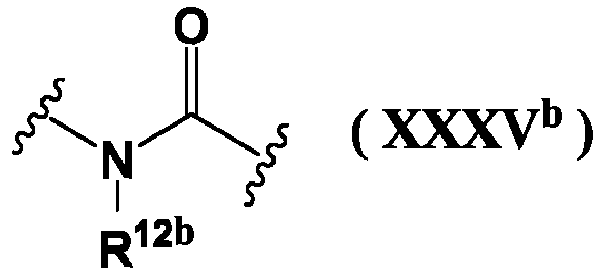
- Another further preferred embodiment of the substituent L3b and the R2b is such that L3b is represented by the formula (XXXIIb):

- Another further preferred embodiment of the substituent L3b and the R2b is such that L3b is represented by the formula (XXXIIb):

- Another further preferred embodiment of the substituent L3b and the R2b is such that L3b is represented by the formula (XXXIIb):

- Another further preferred embodiment of the substituent L3b and the R2b is such that L3b is represented by the formula (XXXIIb):

- A particularly preferred embodiment of the substituent L3b and the R2b is such that L3b is a single bond, and R2b is a hydrogrn atom or a phenyl group (the phenyl group is unsubstituted or substituted with one or more identical or different halogen atoms selected from the group consisting of fluorine atoms, chlorine atoms, bromine atoms and iodine atoms).
- Another particularly preferred embodiment of the substituent L3b and the R2b is such that L3b is a single bond, and R2b is a phenyl group (the phenyl group is unsubstituted or substituted with one or two identical or different substituents independently selected from the group consisting of halogen atoms, cyano groups and C1-3 haloalkyl groups).
- Another particularly preferred embodiment of the substituent L3b and the R2b is such that L3b is a single bond, and R2b is a 5 to 6-membered aromatic heterocyclyl group (the 5 to 6-membered aromatic heterocyclyl group is unsubstituted or substituted with a substituent selected from the group consisting of a halogen atom, a cyano group, a nitro group, a C1-3 alkyl group, a C1-3 haloalkyl group and a C1-3 alkoxycarbonyl group).
- Another particularly preferred embodiment of the substituent L3b and the R2b is such that L3b is a single bond, and R2b is a C3-6 cycloalkyl group.
- Another particularly preferred embodiment of the substituent L3b and the R2b is such that L3b is a single bond, and R2b is a 4 to 7-membered non-aromatic heterocyclyl group (the 4 to 7-membered non-aromatic heterocyclyl group is unsubstituted or substituted with one or two identical or different substituents independently selected from the group consisting of hydroxy groups, halogen atoms, cyano groups, C1-3 alkyl groups and C1-3 haloalkyl groups).
- Another particularly preferred embodiment of the substituent L3b and the R2b is such that L3b is represented by the following formula (VIIIb-1) or (VIIIb-2):

- Another particularly preferred embodiment of the substituent L3b and the R2b is such that L3b is represented by the following formula (VIIIb-1) or (VIIIb-2):

- Another particularly preferred embodiment of the substituent L3b and the R2b is such that L3b is represented by the formula (XXXIIb):

- A preferred embodiment of nb and the substituent R3b is such that nb is 0, 1 or 2, and R3b is a hydroxy group, an amino group, a halogen atom, a cyano group, a C1-3 alkyl group, a C1-3 haloalkyl group, a C1-3 alkoxy group or a C1-3 haloalkoxy group (when nb is 2, R3b's may be identical or different).
- A more preferred embodiment of nb and the substituent R3b is such that nb is 0 or 1, and R3b is a C1-3 alkyl group.
- As favorable tricyclic pyridine compounds of the present invention for use as JAK inhibitors and as preventive, therapeutic and/or improving agent for diseases against which inhibition of JAK is effective, the following compound may be mentioned.
1b) Compounds represented by the formula (Ib):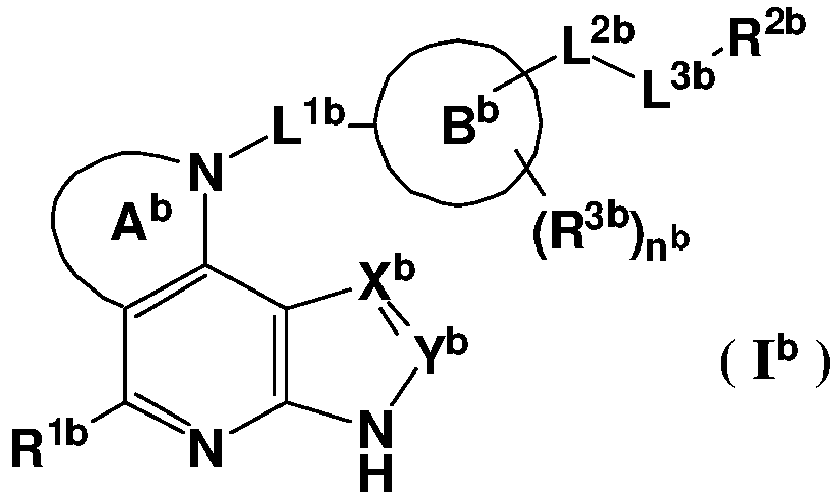
- [wherein R1b is a hydrogen atom or a halogen atom,
- Xb is a nitrogen atom or CR15b (wherein R15b is a hydrogen atom, a halogen atom, a cyano group, a C1-6 alkyl group, a C1-6 haloalkyl group or a C3-6 cycloalkyl group),
- Yb is CR16b (wherein R16b is a hydrogen atom),
- the ring Ab is represented by the formula (IIb):
- (wherein T3b is CR4bR5b, C(=O), C(=S), C(=NR17b), a sulfur atom, S(=O) or S(=O)2, U3b is CR6bR7b, C(=O), C(=S), C(=NR17b), NR10b, an oxygen atom, a sulfur atom, S(=O) or S(=O)2, and W3b is CR8bR9b, C(=O), C(=S), C(=NR17b), NR11b, an oxygen atom, a sulfur atom, S(=O) or S(=O)2 (provided that when T3b is CR4bR5b, and U3b is CR6bR7b, W3b is not CR8bR9b)),
- L1b is a single bond or a C1-3 alkylene group,
- L2b is a single bond, a C1-6 alkylene group, a C2-6 alkenylene group or a C2-6 alkynylene group (the C1-6 alkylene group, the C2-6 alkenylene group and the C2-6 alkynylene group are unsubstituted or substituted with one or more identical or different substituents independently selected from the group consisting of halogen atoms, hydroxy groups, amino groups, cyano groups and nitro groups),
- the ring Bb is a C3-11 cycloalkane, a C3-11 cycloalkene, a 3 to 11-membered non-aromatic heterocycle, a C6-14 aromatic carbocycle or a 5 to 10-membered aromatic heterocycle, nb is 0 or 1,
- R3b is a hydroxy group, an amino group, a carboxy group, a carbamoyl group, a tetrazolyl group, a halogen atom, a cyano group, a nitro group, a C1-3 alkyl group, a C1-3 haloalkyl group, a C3-6 cycloalkyl group, a C1-3 alkoxy group, a C1-3 haloalkoxy group or a C1-3 alkylsulfonyl group, and
- L3b is a single bond or represented by any of the following formulae (XXIIb-1) to (XXIIb-15):

- (wherein E1b is an oxygen atom or a sulfur atom),
- when L3b is a single bond, R2b is a hydrogen atom, a halogen atom, a C3-11 cycloalkyl group, a 3 to 11-membered non-aromatic heterocyclyl group, a C6-14 aryl group , a 5 to 10-membered aromatic heterocyclyl group, a 8 to 11-membered partially saturated aromatic cyclic group or a 8 to 11-membered aromatic ring-condensed alicyclic hydrocarbon group (the C3-11 cycloalkyl group, the 3 to 11-membered non-aromatic heterocyclyl group, the C6-14 aryl group , the 5 to 10-membered aromatic heterocyclyl group, the 8 to 11-membered partially saturated aromatic cyclic group and the 8 to 11-membered aromatic ring-condensed alicyclic hydrocarbon group are unsubstituted or substituted with one or more identical or different substituents independently selected from the substituent set V4b and the substituent set V9b),
- when L3b is not a single bond, R2b is a hydrogen atom, a C1-6 alkyl group, a C2-6 alkenyl group (the C1-6 alkyl group and the C2-6 alkenyl group are unsubstituted or substituted with one or more identical or different substituents independently selected from the substituent set V6b and the substituent set V9b), a C3-11 cycloalkyl group, a 3 to 11-membered non-aromatic heterocyclyl group, a C6-14 aryl group , a 5 to 10-membered aromatic heterocyclyl group, a 8 to 11-membered partially saturated aromatic cyclic group or a 8 to 11-membered aromatic ring-condensed alicyclic hydrocarbon group (the C3-11 cycloalkyl group, the 3 to 11-membered non-aromatic heterocyclyl group, the C6-14 aryl group , the 5 to 10-membered aromatic heterocyclyl group, the 8 to 11-membered partially saturated aromatic cyclic group and the 8 to 11-membered aromatic ring-condensed alicyclic hydrocarbon group are unsubstituted or substituted with one or more identical or different substituents independently selected from the substituent set V4b and the substituent set V9b),
- nb is 0, 1 or 2,
- R3b is a hydroxy group, an amino group, a carboxy group, a carbamoyl group, a sulfamoyl group, a phosphono group, a phosphonooxy group, a sulfo group, a sulfoxy group, a tetrazolyl group, a halogen atom, a cyano group, a nitro group, a C1-6 alkyl group, a C1-6 haloalkyl group, a C3-11 cycloalkyl group, a C2-6 alkenyl group, a C2-6 haloalkenyl group, a C1-6 alkoxy group, a C1-6 haloalkoxy group, a C1-6 alkylthio group, a C1-6 haloalkylthio group, a C1-6 alkylcarbonyl group, a C1-6 haloalkylcarbonyl group, a C1-6 alkylsulfonyl group, a C1-6 haloalkylsulfonyl group, a C1-6 alkoxycarbonyl group, a mono-C1-6 alkylamino group, a di-C1-6 alkylamino group, a mono-C1-6 alkylaminocarbonyl group, a di-C1-6 alkylaminocarbonyl group or a C1-6 alkylcarbonylamino group (when nb is 2, R3b's may be identical or different), each of R4b, R5b, R6b, R7b, R8b and R9b is independently a hydrogen atom, a hydroxy group, an amino group, a carboxy group, a carbamoyl group, a tetrazolyl group, a halogen atom, a cyano group, a C1-6 alkyl group, a C2-6 alkenyl group, a C1-6 alkoxy group, a C1-6 alkylthio group, a C1-6 alkylcarbonyl group, a C1-6 alkylsulfonyl group, a mono-C1-6 alkylamino group, a di-C1-6 alkylamino group (the C1-6 alkyl group, the C2-6 alkenyl group, the C1-6 alkoxy group, the C1-6 alkylthio group, the C1-6 alkylcarbonyl group, the C1-6 alkylsulfonyl group, the mono-C1-6 alkylamino group and the di-C1-6 alkylamino group are unsubstituted or substituted with one or more identical or different substituents independently selected from the substituent set V3b), a C1-6 alkoxycarbonyl group, a C3-11 cycloalkyl group, a 3 to 11-membered non-aromatic heterocyclyl group, a C6-14 aryl group or a 5 to 10-membered aromatic heterocyclyl group (the C3-11 cycloalkyl group, the 3 to 11-membered non-aromatic heterocyclyl group, the C6-14 aryl group and the 5 to 10-membered aromatic heterocyclyl group are unsubstituted or substituted with one or more identical or different substituents independently selected from the substituent set V1b),
- each of R10b and R11b is independently a hydrogen atom, a C1-6 alkyl group, a C2-6 alkenyl group, a C1-6 alkylcarbonyl group, a C1-6 alkylsulfonyl group, a C1-6 alkoxycarbonyl group, a mono-C1-6 alkylaminocarbonyl group, a di-C1-6 alkylaminocarbonyl group (the C1-6 alkyl group, the C2-6 alkenyl group, the C1-6 alkylcarbonyl group, the C1-6 alkylsulfonyl group, the C1-6 alkoxycarbonyl group, the mono-C1-6 alkylaminocarbonyl group and the di-C1-6 alkylaminocarbonyl group are unsubstituted or substituted with one or more identical or different substituents independently selected from the substituent set V3b), a C3-11 cycloalkyl group, a 3 to 11-membered non-aromatic heterocyclyl group, a C6-14 aryl group or a 5 to 10-membered aromatic heterocyclyl group (the C3-11 cycloalkyl group, the 3 to 11-membered non-aromatic heterocyclyl group, the C6-14 aryl group and the 5 to 10-membered aromatic heterocyclyl group are unsubstituted or substituted with one or more identical or different substituents independently selected from the substituent set V1b), each of R12b and R13b is independently a hydrogen atom, a C1-6 alkyl group or a C1-6 haloalkyl group (the C1-6 alkyl group and the C1-6 haloalkyl group are unsubstituted or substituted with one or more identical or different substituents independently selected from the substituent set V3b, the substituent set V8b and the substituent set V9b), and R17b is a hydrogen atom, a hydroxy group, a cyano group, a nitro group, a C1-6 alkyl group or a C1-6 alkoxy group], tautomers or pharmaceutically acceptable salts of the compounds or solvates thereof.
- (wherein T3b is CR4bR5b, C(=O), C(=S), C(=NR17b), a sulfur atom, S(=O) or S(=O)2, U3b is CR6bR7b, C(=O), C(=S), C(=NR17b), NR10b, an oxygen atom, a sulfur atom, S(=O) or S(=O)2, and W3b is CR8bR9b, C(=O), C(=S), C(=NR17b), NR11b, an oxygen atom, a sulfur atom, S(=O) or S(=O)2 (provided that when T3b is CR4bR5b, and U3b is CR6bR7b, W3b is not CR8bR9b)),
- L1b is a single bond or a C1-3 alkylene group,
- L2b is a single bond, a C1-6 alkylene group or a C1-6 haloalkylene group (the C1-6 alkylene group and the C1-6 haloalkylene group are unsubstituted or substituted with one or more hydroxy groups or one or more cyano groups),
- the ring Bb is a C3-11 cycloalkane, a C3-11 cycloalkene, a 3 to 11-membered non-aromatic heterocycle, a C6-14 aromatic carbocycle or a 5 to 10-membered aromatic heterocycle, nb is 0 or 1,
- R3b is a hydroxy group, an amino group, a carboxy group, a carbamoyl group, a tetrazolyl group, a halogen atom, a cyano group, a nitro group, a C1-3 alkyl group, a C1-3 haloalkyl group, a C3-6 cycloalkyl group, a C1-3 alkoxy group, a C1-3 haloalkoxy group or a C1-3 alkylsulfonyl group,
- L3b is a single bond, and R2b is a hydrogen atom, a halogen atom, a C3-6 cycloalkyl group, a 3 to 11-membered non-aromatic heterocyclyl group, a phenyl group or a 5 to 6-membered aromatic heterocyclyl group (the C3-6 cycloalkyl group, the 3 to 11-membered non-aromatic heterocyclyl group, the phenyl group and the 5 to 6-membered aromatic heterocyclyl group are unsubstituted or substituted with one or more identical or different substituents independently selected from the substituent set V4b), or L3b is represented by any of the following formulae (VIb-1) to (VIb-11):

- (wherein E1b is an oxygen atom, and each of R12b and R13b is independently a hydrogen atom or a C1-6 alkyl group), and R2b is a hydrogen atom, a C1-6 alkyl group (the C1-6 alkyl group is unsubstituted or substituted with one or more identical or different substituents independently selected from the substituent set V5b), a C3-6 cycloalkyl group, a 4 to 7-membered non-aromatic heterocyclyl group, a phenyl group or a 5 to 6-membered aromatic heterocyclyl group (the C3-6 cycloalkyl group, the 4 to 7-membered non-aromatic heterocyclyl group, the phenyl group and the 5 to 6-membered aromatic heterocyclyl group are unsubstituted or substituted with one or more identical or different substituents independently selected from the substituent set V4b), each of R4b, R5b, R6b, R7b, R8b and R9b is independently a hydrogen atom, an amino group, a carbamoyl group, a halogen atom, a cyano group, a C1-6 alkyl group, a C1-6 haloalkyl group, a C1-6 alkoxy group, a C1-6 haloalkoxy group, a C1-6 alkylsulfonyl group, a C3-6 cycloalkyl group, a 4 to 7-membered non-aromatic heterocyclyl group, a phenyl group or a 5 to 6-membered aromatic heterocyclyl group (the phenyl group and the 5 to 6-membered aromatic heterocyclyl group are unsubstituted or substituted with one or more identical or different substituents independently selected from the substituent set V1b),
- each of R10b and R11b is independently a hydrogen atom, a C1-6 alkyl group, a C1-6 haloalkyl group, a C3-6 cycloalkyl group, a C1-6 alkoxy group, a C1-6 haloalkoxy group, a C1-6 alkylsulfonyl group, a 4 to 7-membered non-aromatic heterocyclyl group, a phenyl group or a 5 to 6-membered aromatic heterocyclyl group (the phenyl group and the 5 to 6-membered aromatic heterocyclyl group are unsubstituted or substituted with one or more identical or different substituents independently selected from the substituent set V1b), and
- R17b is a hydrogen atom, a hydroxy group, a cyano group, a nitro group, a C1-6 alkyl group or a C1-6 alkoxy group, tautomers or pharmaceutically acceptable salts of the compounds or solvates thereof.
- (wherein R12b is a hydrogen atom, a C1-3 alkyl group (the C1-3 alkyl group is unsubstituted or substituted with a substituent selected from the group consisting of a cyano group, a hydroxy group, a C1-3 alkoxy group, a C3-6 cycloalkyl group and a phenyl group) or a C1-3 haloalkyl group), and
- R2b is a hydrogen atom, a C1-3 alkyl group, a C1-3 haloalkyl group (the C1-3 alkyl group and the C1-3 haloalkyl group are unsubstituted or substituted with one or two identical or different substituents independently selected from the group consisting of hydroxy groups, cyano groups, C1-3 alkoxy groups, C3-6 cycloalkyl groups, 4 to 7-membered non-aromatic heterocyclyl groups, phenyl groups and 5 to 6-membered aromatic heterocyclyl groups (the C3-6 cycloalkyl groups, the 4 to 7-membered non-aromatic heterocyclyl groups, the phenyl groups and the 5 to 6-membered aromatic heterocyclyl groups are unsubstituted or substituted with a substituent selected from the group consisting of a hydroxy group, a halogen atom and a cyano group)), a C3-6 cycloalkyl group or a 4 to 7-membered non-aromatic heterocyclyl group (the C3-6 cycloalkyl group and the 4 to 7-membered non-aromatic heterocyclyl group are unsubstituted or substituted with one or two identical or different substituents independently selected from the group consisting of halogen atoms, cyano groups, C1-3 alkyl groups, C1-3 haloalkyl groups and C1-6 alkoxycarbonyl groups), tautomers or pharmaceutically acceptable salts of the compounds or solvates thereof.
- (wherein E1b is an oxygen atom or a sulfur atom, and each of R12b and R13b is independently a hydrogen atom, a C1-6 alkyl group or a C1-6 haloalkyl group (the C1-6 alkyl group and the C1-6 haloalkyl group are unsubstituted or substituted with one or two identical or different substituents independently selected from the group consisting of cyano groups, hydroxy groups, C1-6 alkoxy groups, C3-6 cycloalkyl groups, 4 to 7-membered non-aromatic heterocyclyl groups, phenyl groups and 5 to 6-membered aromatic heterocyclyl groups)), and
- when L3b is a single bond, R2b is a hydrogen atom, a halogen atom, a C3-11 cycloalkyl group, a 3 to 11-membered non-aromatic heterocyclyl group, a phenyl group, a naphthyl group, a 5 to 10-membered aromatic heterocyclyl group, a 8 to 11-membered partially saturated aromatic cyclic group or a 8 to 11-membered aromatic ring-condensed alicyclic hydrocarbon group (the C3-11 cycloalkyl group, the 3 to 11-membered non-aromatic heterocyclyl group, the phenyl group, the naphthyl group, the 5 to 10-membered aromatic heterocyclyl group, the 8 to 11-membered partially saturated aromatic cyclic group and the 8 to 11-membered aromatic ring-condensed alicyclic hydrocarbon group are unsubstituted or substituted with one or more identical or different substituents independently selected from the substituent set V4b and the substituent set V9b), and
- when L3b is not a single bond, R2b is a hydrogen atom, a C1-6 alkyl group, a C2-6 alkenyl group (the C1-6 alkyl group and the C2-6 alkenyl group are unsubstituted or substituted with one or more identical or different substituents independently selected from the substituent set V6b and the substituent set V9b), a C3-11 cycloalkyl group, a 3 to 11-membered non-aromatic heterocyclyl group, a C6-14 aryl group , a 5 to 10-membered aromatic heterocyclyl group, a 8 to 11-membered partially saturated aromatic cyclic group or a 8 to 11-membered aromatic ring-condensed alicyclic hydrocarbon group (the C3-11 cycloalkyl group, the 3 to 11-membered non-aromatic heterocyclyl group, the C6-14 aryl group , the 5 to 10-membered aromatic heterocyclyl group, the 8 to 11-membered partially saturated aromatic cyclic group and the 8 to 11-membered aromatic ring-condensed alicyclic hydrocarbon group are unsubstituted or substituted with one or more identical or different substituents independently selected from the substituent set V4b and the substituent set V9b), tautomers or pharmaceutically acceptable salts of the compounds or solvates thereof.
- (wherein E2b and E3b are oxygen atoms, R4b, R5b, R8b and R9b are hydrogen atoms, and R6b is a hydrogen atom, a halogen atom or a C1-3 alkyl group, and R10b is a hydrogen atom, a C1-6 alkyl group (the C1-6 alkyl group is unsubstituted or substituted with one or two identical or different substituents independently selected from the group consisting of cyano groups, hydroxy groups, C1-3 alkoxy groups, C1-3 alkylthio groups, di-C1-3 alkylamino groups, di-C1-3 alkylaminocarbonyl groups, C3-6 cycloalkyl groups and 4 to 7-membered non-aromatic heterocyclyl groups), a C1-6 haloalkyl group, a C3-6 cycloalkyl group or a 4 to 7-membered non-aromatic heterocyclyl group), tautomers or pharmaceutically acceptable salts of the compounds or solvates thereof.
- (wherein E1b is an oxygen atom, and R12b is a hydrogen atom, a C1-6 alkyl group (the C1-6 alkyl group is unsubstituted or substituted with one or two identical or different substituents independently selected from the group consisting of cyano groups, hydroxy groups, C1-3 alkoxy groups, C3-6 cycloalkyl groups and phenyl groups) or a C1-6 haloalkyl groups), and
- R2b is a hydrogen atom, a C1-6 alkyl group, a C1-6 haloalkyl group (the C1-6 alkyl group and the C1-6 haloalkyl group are unsubstituted or substituted with one or two identical or different substituents independently selected from the group consisting of cyano groups, hydroxy groups, C3-6 cycloalkyl groups, 4 to 7-membered non-aromatic heterocyclyl groups, phenyl groups, 5 to 6-membered aromatic heterocyclyl groups and 8 to 11-membered partially saturated aromatic cyclic groups (the C3-6 cycloalkyl groups, the 4 to 7-membered non-aromatic heterocyclyl groups, the phenyl groups, the 5 to 6-membered aromatic heterocyclyl groups and the 8 to 11-membered partially saturated aromatic cyclic group are unsubstituted or substituted with one or two identical or different substituents independently selected from the group consisting of hydroxy groups, amino groups, halogen atoms, cyano groups, C1-6 alkyl groups, C1-3 haloalkyl groups, C1-3 alkoxy groups, C1-3 haloalkoxy groups, C1-3 alkylsulfonyl groups, C1-3 haloalkylsulfonyl groups, 4 to 7-membered non-aromatic heterocyclyl group, phenyl groups, 5 to 6-membered aromatic heterocyclyl groups (the phenyl group and the 5 to 6-membered aromatic heterocyclyl group are unsubstituted or substituted with one or two identical or different substituents independently selected from the substituent set V1b), mono-C1-6alkylaminosulfonyl groups, di-C1-6 alkylaminosulfonyl groups and C1-6 alkylsulfonylamino groups)), a C3-6 cycloalkyl group, a 4 to 7-membered non-aromatic heterocyclyl group, a phenyl group, a 5 to 6-membered aromatic heterocyclyl group or a 8 to 11-membered partially saturated aromatic cyclic group (the C3-6 cycloalkyl group, the 4 to 7-membered non-aromatic heterocyclyl group, the phenyl group, the 5 to 6-membered aromatic heterocyclyl group and the 8 to 11-membered partially saturated aromatic cyclic group are unsubstituted or substituted with one or two identical or different substituents independently selected from the group consisting of hydroxy groups, amino groups, halogen atoms, cyano groups, C1-6 alkyl groups, C1-3 haloalkyl groups, C1-3 alkoxy groups, C1-3 haloalkoxy groups, C1-3 alkylsulfonyl groups, C1-3 haloalkylsulfonyl groups, 4 to 7-membered non-aromatic heterocyclyl groups, phenyl groups, 5 to 6-membered aromatic heterocyclyl groups (the phenyl groups and the 5 to 6-membered aromatic heterocyclyl groups are unsubstituted or substituted with one or more identical or different substituents independently selected from the substituent set V1b), mono-C1-6alkylaminosulfonyl groups, di-C1-6 alkylaminosulfonyl groups and C1-6 alkylsulfonylamino groups), tautomers or pharmaceutically acceptable salts of the compounds or solvates thereof.
- (wherein E1b is an oxygen atom, and R12b is a hydrogen atom), and
- R2b is a C1-6 alkyl group (the C1-6 alkyl group is unsubstituted or substituted with a substituent selected from the group consisting of a cyano group, a C3-6 cycloalkyl group, a phenyl group and a 5 to 6-membered aromatic heterocyclyl group (the phenyl group and the 5 to 6-membered aromatic heterocyclyl group are unsubstituted or substituted with one or two identical or different substituents independently selected from the group consisting of halogen atoms, cyano groups, C1-6 alkyl groups and C1-3 haloalkyl groups)), a C1-3 haloalkyl group, a C3-6 cycloalkyl group, a phenyl group or a 5 to 6-membered aromatic heterocyclyl group (the phenyl group and the 5 to 6-membered aromatic heterocyclyl group are unsubstituted or substituted with one or two identical or different substituents independently selected from the group consisting of halogen atoms, cyano groups, C1-3 alkyl groups and C1-3 haloalkyl groups), tautomers or pharmaceutically acceptable salts of the compounds or solvates thereof.
- (wherein R12b is a hydrogen atom, a C1-3 alkyl group (the C1-3 alkyl group is unsubstituted or substituted with a substituent selected from the group consisting of a cyano group, a hydroxy group, a C1-3 alkoxy group, a C3-6 cycloalkyl group and a phenyl group) or a C1-3 haloalkyl group), and
- R2b is a hydrogen atom, a C1-3 alkyl group, a C1-3 haloalkyl group (the C1-3 alkyl group and the C1-3 haloalkyl group are unsubstituted or substituted with one or two identical or different substituents independently selected from the group consisting of hydroxy groups, cyano groups, C1-3 alkoxy groups, C3-6 cycloalkyl groups, 4 to 7-membered non-aromatic heterocyclyl groups, phenyl groups and 5 to 6-membered aromatic heterocyclyl groups (the C3-6 cycloalkyl groups, the 4 to 7-membered non-aromatic heterocyclyl groups, the phenyl groups and the 5 to 6-membered aromatic heterocyclyl groups are unsubstituted or substituted with a substituent selected from the group consisting of a hydroxy group, a halogen atom, a cyano group and a C1-3 haloalkyl group)), a C3-6 cycloalkyl group or a 4 to 7-membered non-aromatic heterocyclyl group (the C3-6 cycloalkyl group and the 4 to 7-membered non-aromatic heterocyclyl group are unsubstituted or substituted with one or two identical or different substituents independently selected from the group consisting of halogen atoms, cyano groups, C1-3 alkyl groups, C1-3 haloalkyl groups and C1-6 alkoxycarbonyl groups), tautomers or pharmaceutically acceptable salts of the compounds or solvates thereof.
- The symbols in Tableb 2 denote the following substituents.




TABLEb 2 Ab B2b Ab B 2 b A b B 2b A b B 2b A 1 B2 1 A 1 B2 3 A 1 B2 5 A 1 B2 7 A 2 B2 1 A 2 B2 3 A 2 B2 5 A 2 B2 7 A 3 B2 1 A 3 B2 3 A 3 B2 5 A 3 B2 7 A 4 B2 1 A 4 B2 3 A 4 B2 5 A 4 B2 7 A 5 B2 1 A 5 B2 3 A 5 B2 5 A 5 B2 7 A 6 B2 1 A 6 B2 3 A 6 B2 5 A 6 B2 7 A 7 B2 1 A 7 B2 3 A 7 B2 5 A 7 B2 7 A 9 B2 1 A 9 B2 3 A 9 B2 5 A 9 B2 7 A 1 B2 2 A 1 B2 4 A 1 B2 6 A 1 B2 8 A 2 B2 2 A 2 B2 4 A 2 B2 6 A 2 B2 8 A 3 B2 2 A 3 B2 4 A 3 B2 6 A 3 B2 8 A 4 B2 2 A 4 B2 4 A 4 B2 6 A 4 B2 8 A 5 B2 2 A 5 B2 4 A 5 B2 6 A 5 B2 8 A 6 B2 2 A 6 B2 4 A 6 B2 6 A 6 B2 8 A 7 B2 2 A 7 B2 4 A 7 B2 6 A 7 B2 8 A 9 B2 2 A 9 B2 4 A 9 B2 6 A 9 B2 8 - The compounds of the present invention can be synthesized by the processes mentioned later, but the production of the compounds of the present invention is not restricted to these general examples.
- The compounds of the present invention can usually be purified by column chromatography, thin layer chromatography, high performance liquid chromatography (HPLC) or high performance liquid chromatography-mass spectrometry (LC-MS) and, if necessary, they may be obtained with high purity by recrystallization or washing with solvents.
- In general, in the production of the compounds of the present invention, any solvents that are stable and inert under the reaction conditions and do not hinder the reactions may be used without any particular restrictions, and for example, sulfoxide solvents (such as dimethyl sulfoxide), amide solvents (such as N,N-dimethylformamide or N,N-dimethylacetamide), ether solvents (such as diethyl ether, 1,2-dimethoxyethane, tetrahydrofuran, 1,4-dioxane or cyclopentyl methyl ether), halogenated solvents (such as dichloromethane, chloroform or 1,2-dichloroethane), nitrile solvents (such as acetonitrile or propionitrile), aromatic hydrocarbon solvents (such as benzene or toluene), aliphatic hydrocarbon solvents (such as hexane or heptane), ester solvents (such as ethyl acetate), alcohol solvents (such as methanol, ethanol, 1-propanol, 2-propanol or ethylene glycol) and water may be mentioned. The reactions may be carried out in an arbitrary mixture of solvents mentioned above or in the absence of a solvent.
- In general, in the production of the compounds of the present invention, the reaction temperature is chosen appropriately within the range of from -78°C to the boiling point of the solvent used for the reaction, and the production of the compounds of the present invention may be carried out at ordinary pressure or under pressure or with microwave irradiation.
- As acids generally used in the production of the compounds of the present invention, for example, organic acids (such as acetic acid, trifluoroacetic acid or p-toluenesulfonic acid) and inorganic acids (such as sulfuric acid or hydrochloric acid) may be mentioned.
- As bases generally used in the production of the compounds of the present invention, for example, organic metal compounds (such as n-butyllithium, s-butyllithium, lithiumdiisopropylamide or isopropylmagnesium bromide), organic bases (such as triethylamine, N,N-diisopropylethylamine or N,N-dimethylaminopyridine) and inorganic bases (such as sodium carbonate, potassium carbonate, cesium carbonate, sodium hydroxide, potassium hydroxide or sodium hydride) may be mentioned.
- General processes for production of the compounds of the present invention are shown below, and the formulae of the intermediate and the end product in each step therein conceptually cover their protected derivatives, too. Herein, protected derivatives are defined as compounds which can be converted to the desired product, if necessary, through hydrolysis, reduction, oxidation, alkylation or the like and include compounds protected with chemically acceptable protective groups.
- Protection and deprotection may be carried out by generally known protection and deprotection reactions (for example, by referring to Protective Groups in Organic Synthesis, Fourth edition, T. W. Greene, John Wiley & Sons Inc. (2006)).
- Hydrolysis, reduction and oxidation may be carried out by generally known functional group conversions (for example, by referring to Comprehensive Organic Transformations, Second Edition, R.C.Larock, Wiley-VCH (1999)).
- First, processes for producing the tricyclic pyrimidine compounds represented by the formula (Ia) will be described.
- Among the tricyclic pyrimidine compounds represented by the formula (Ia), the compounds (1a)-3 can be produced, for example, through the following scheme (1a) (wherein RPR is a hydrogen atom or a protective group such as a Ts group, a TIPS group or a SEM group, and the other symbols are the same as defined above).

- A compound (1a)-1 can be converted to a compound (1a)-2 by using an equivalent or excessive amount of hydrazine or its equivalent in an appropriate solvent or in the absence of solvent at room temperature to a refluxing temperature.
- A compound (1a)-2 can be converted to a compound (1a)-3 by using an equivalent or excessive amount of an oxidizing agent such as manganese dioxide or iodobenzenediacetate in an appropriate solvent or in the absence of solvent at room temperature to a refluxing temperature. The presence of an acid or a base is sometimes effective for smooth progress of the reaction.
- A compound (1 a)-3 can also be obtained by using a compound (1 a)-1 and an equivalent or excessive amount of tosylhydrazine or its equivalent in an appropriate solvent or in the absence of solvent at room temperature to a refluxing temperature. The presence of a base is sometimes effective for smooth progress of the reaction.
- A compound (1a)-3 having a protective group as RPR can be converted to a compound (1a)-3 having a hydrogen atom as RPR by deprotection.
- Among the compounds represented by the formula (Ia), the compounds (2a)-2, (2a)-3 and (2a)-4 can be produced, for example, through the following scheme (2a) (wherein E2a is an oxygen atom or a sulfur atom, RPR is a hydrogen atom or a protective group such as a Ts group, a TIPS group or a SEM group, and the other symbols are the same as defined above).

- A compound (2a)-1 can be converted to a compound (2a)-2 by using an equivalent or excessive amount of R4aCHO, R4aCO2RQ, R4aC(ORQ)3, R4aCONRQ 2 or R4aC(ORQ)2NRQ 2 (wherein RQ is a hydrogen atom or a C1-6 alkyl group) in an appropriate solvent or in the absence of solvent at room temperature to a refluxing temperature. Microwave irradiation or the presence of an acid or a base is sometimes effective for smooth progress of the reaction.
- A compound (2a)-1 can be converted to a compound (2a)-3 by using an equivalent or excessive amount of phosgene, phosgene dimer, phosgene trimer, 1,1'-carbonyldiimidazole, dimethyl carbonate, carbon disulfide or 1,1'-thiocarbonyldiimidazole in an appropriate solvent or in the absence of solvent at room temperature to a refluxing temperature. The presence of an acid or a base is sometimes effective for smooth progress of the reaction.
- A compound (2a)-3 can be converted to a compound (2a)-4 by using equivalent or excessive amounts of R6a-RL (wherein RL is a leaving group such as a halogen atom, a methanesulfonyloxy group or a p-toluenesulfonyloxy group) and a base such as potassium carbonate or sodium hydride in an appropriate solvent or in the absence of solvent at room temperature to a refluxing temperature.
- A compound (2a)-3 or (2a)-4 having an oxygen atom as E2a can be converted to a compound (2a)-3 or (2a)-4 having a sulfur atom as E2a by using an equivalent or excessive amount of a thiocarbonylation reagent such as phosphorus pentasulfide or Lawesson's reagent in an appropriate solvent or in the absence of solvent at -78°C to a refluxing temperature.
- Compounds (2a)-2, (2a)-3 and (2a)-4 having a protective group as RPR can be converted to compounds (2a)-2, (2a)-3 and (2a)-4 having a hydrogen atom as RPR by deprotection.
- The compounds (3a)-3 and (3a)-6 can be produced, for example, through the following scheme (3a) (wherein XA is a chlorine atom, a bromine atom or an iodine atom, each of Rx and RY is independently a C1-6 alkyl group, and RPR is a hydrogen atom or a protective group such as a Ts group, a TIPS group or a SEM group, and the other symbols are the same as defined above).

- A compound (3a)-1 can be converted to a compound (3a)-3 by a metal-halogen exchange reaction using an equivalent or excessive amount of an organic metal reagent such as isopropylmagnesium chloride, 2,6-dimethylphenylmagnesium bromide or n-butyllithium in an appropriate solvent at -78°C to room temperature followed by treatment with an equivalent or excessive amount of a compound (3a)-2 in an appropriate solvent at -78°C to room temperature.
- A compound (3a)-1 can be converted to a compound (3a)-5 by a metal-halogen exchange reaction using an equivalent or excessive amount of an organic metal reagent such as isopropylmagnesium chloride, 2,6-dimethylphenylmagnesium bromide or n-butyllithium in an appropriate solvent at -78°C to room temperature followed by treatment with an equivalent or excessive amount of a compound (3a)-4 in an appropriate solvent at -78°C to room temperature.
- A compound (3a)-5 can be converted to a compound (3a)-3 by using an equivalent or excessive amount of an oxidizing agent such as manganese dioxide or 1,1,1-triacetoxy-1,1-dihydro-1,2-benziodoxol-3(1H)-one (Dess-Martin reagent) in an appropriate solvent at -78°C to a refluxing temperature.
- A compound (3a)-3 can be converted to a compound (3a)-6 by using equivalent or excessive amounts of an amine reagent such as ammonium acetate or hydroxylamine and a reducing agent such as sodium triacetoxyborohydride or zinc in an appropriate solvent or in the absence of solvent at -78°C to a refluxing temperature.
- A compound (3a)-5 can be converted to a compound (3a)-6 by carrying out a reaction using equivalent or excessive amounts of phthalimide, a Mitsunobu reagent and a phosphine reagent in an appropriate solvent or in the absence of solvent at -78°C to a refluxing temperature, followed by deprotection. As a Mitsunobu reagent, diethyl azodicarboxylate, diisopropyl azodicarboxylate or the like may be mentioned, and as a phosphine reagent, triphenylphosphine, tributylphosphine or the like may be mentioned.
- A compound (3a)-1 having a chlorine atom as XA can be converted to a compound (3a)-1 having a bromine or iodine atom as XA by using an equivalent or excessive amount of hydrobromic acid or hydroiodic acid in an appropriate solvent or in the absence of solvent at 0°C to a refluxing temperature.
- Compounds (3a)-3 and (3a)-6 having a protective group as RPR can be converted to compounds (3a)-3 and (3a)-6 having a hydrogen atom as RPR by deprotection.
- The compounds (4a)-2 can be produced, for example, through the following scheme (4a) (wherein each of RX and RY is independently a C1-6 alkyl group, and the other symbols are the same as defined above).

- A compound (4a)-1 can be converted to a compound (4a)-2 by using equivalent or excessive amounts of RYNH(ORX) and a condensation agent such as dicyclohexycarbodiimide or 1-ethyl-3-(3-dimethylaminopropyl)carbodiimide hydrochloride in an appropriate solvent or in the absence of solvent at 0°C to a refluxing temperature. The presence of an acid or a base is sometimes effective for smooth progress of the reaction.
- Among the compounds represented by the formula (Ia), the compounds (5a)-3, (5a)-4, (5a)-5 and (5a)-6 can be produced , for example, through the following scheme (5a) (wherein m is 0,1,2 or 3, RPR is a hydrogen atom or a protective group such as a Ts group, a TIPS group or a SEM group, RPR2 is a protective group such as a Boc group or a Cbz group, E3a is an oxygen atom or a sulfur atom, and the other symbols are the same as defined above).
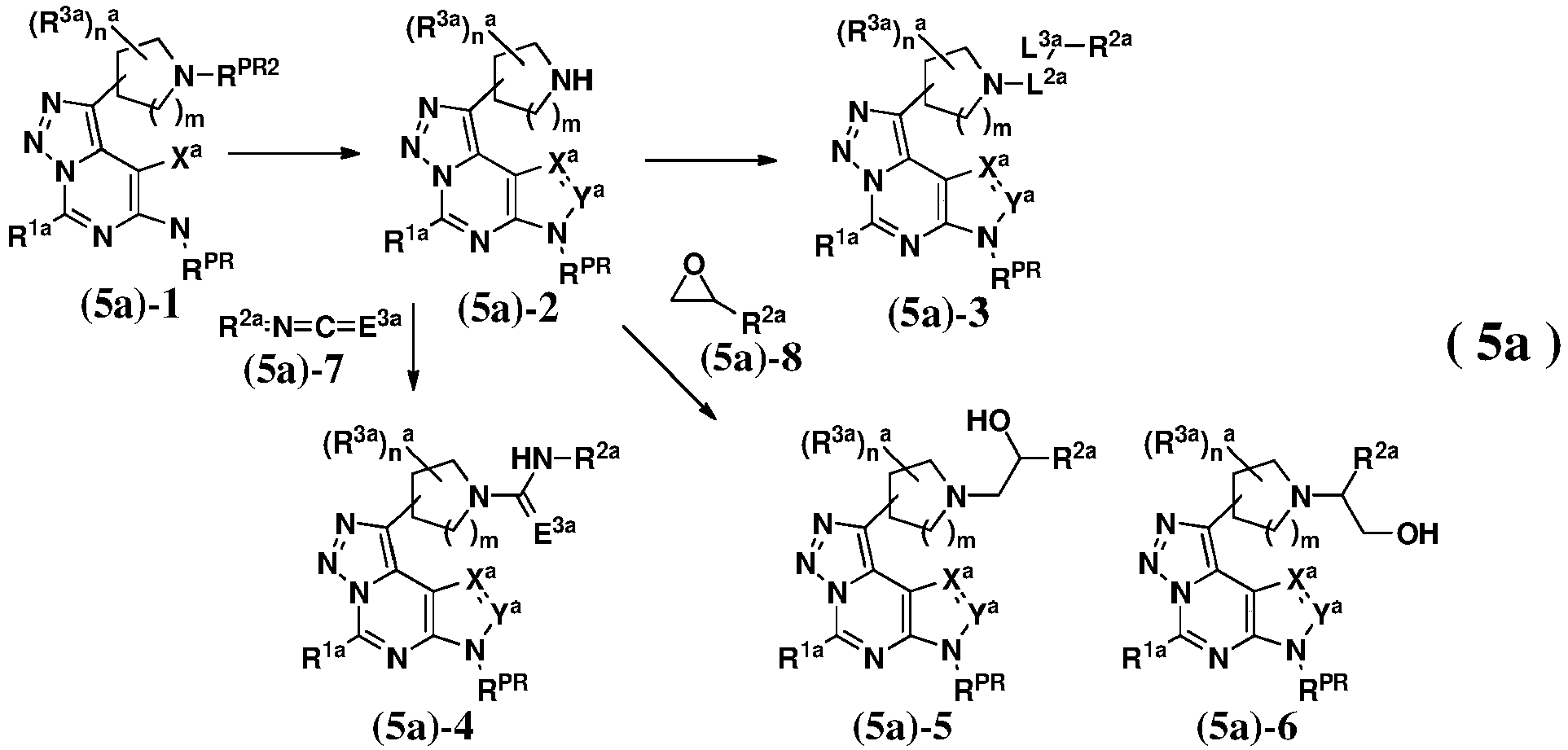
- A compound (5a)-1 among the compounds (1a)-3 can be converted to a compound (5a)-2 by deprotection.
- A compound (5a)-2 can be converted to a compound (5a)-3 by using equivalent or excessive amounts of an electrophilic reagent represented by R2aL3aL2a-RL (wherein RL is a leaving group such as a halogen atom, a methanesulfonyloxy group, a p-toluenesulfonyloxy group) such as an alkyl halide, a methanesulfonate ester, an acid halide, a sulfonyl chloride, a chloroformate and a base such as triethylamine in an appropriate solvent or in the absence of solvent at -78°C to a refluxing temperature.
- A compound (5a)-2 can be converted to a compound (5a)-3 by using equivalent or excessive amounts of R2a-CHO and a reducing agent such as 2-picoline borane or sodium triacetoxyborohydride in an appropriate solvent or in the absence of solvent at room temperature to a refluxing temperature.
- A compound (5a)-2 can be converted to a compound (5a)-4 by using equivalent or excessive amounts of a compound (5a)-7 and a base such as potassium carbonate or triethylamine in an appropriate solvent or in the absence of solvent at -78°C to a refluxing temperature.
- A compound (5a)-2 can be converted to a compound (5a)-5 or/and (5a)-6 by using equivalent or excessive amounts of a compound (5a)-8, a base such as triethylamine and an acid catalyst such as ytterbium (III) trifluoromethanesulfonate in an appropriate solvent or in the absence of solvent at -78°C to a refluxing temperature.
- Compounds (5a)-3, (5a)-4, (5a)-5 and (5a)-6 having a protective group as RPR can be converted to compounds (5a)-3, (5a)-4, (5a)-5 and (5a)-6 having a hydrogen atom as RPR by deprotection.
- Among the compounds represented by the formula (Ia), the compounds (6a)-3, (6a)-4 and (6a)-5 can be produced, for example, through the following scheme (6a) (wherein m is 0,1,2 or 3, RPR is a hydrogen atom or a protective group such as a Ts group, a TIPS group or a SEM group, RPR3 is a protective group such as a benzyl group or an acetyl group, and the other symbols are the same as defined above).

- A compound (6a)-1 among the compounds (1a)-3 is converted to a compound (6a)-2 by deprotection.
- A compound (6a)-2 can be converted to a compound (6a)-3 by using an equivalent or excessive amount of an oxidizing agent such as 2-iodoxybenzoic acid or pyridinium chlorochromate in an appropriate solvent or in the absence of solvent at-78°C to a refluxing temperature.
- A compound (6a)-3 can be converted to a compound (6a)-4 by using equivalent or excessive amounts of a compound (6a)-6 and a reducing agent such as 2-picoline borane or sodium triacetoxyborohydride in an appropriate solvent or in the absence of solvent at room temperature to a refluxing temperature.
- A compound (6a)-2 can be converted to a compound (6a)-5 by using equivalent or excessive amounts of an acidic alcohol represented by R2a-OH such as phenol, a Mitsunobu reagent and a phosphine reagent in an appropriate solvent or in the absence of solvent at -78°C to a refluxing temperature. As a Mitsunobu reagent, diethyl azodicarboxylate, diisopropyl azodicarboxylate or the like may be mentioned, and as a phosphine reagent, triphenylphosphine, tributylphosphine or the like may be mentioned.
- Compounds (6a)-3, (6a)-4 and (6a)-5 having a protective group as RPR can be converted to compounds (6a)-3, (6a)-4 and (6a)-5 having a hydrogen atom as RPR by deprotection.
- Among the compounds represented by the formula (Ia), the compounds (7a)-3, (7a)-4, (7a)-5, (7a)-6, (7a)-7, (7a)-8 and (7a)-9 can be produced, for example, through the following scheme (7a) (wherein m is 0,1,2 or 3, RPR is a hydrogen atom or a protective group such as a Ts group, a TIPS group or a SEM group, RPR3 is a protective group such as a benzyl group or an acetyl group, RZ is a hydrogen atom or a C1-6 alkyl group, XB is a halogen atom, and the other symbols are the same as defined above).

- A compound (7a)-1 among the compounds (1 a)-3 can be converted to a compound (7a)-2 by deprotection.
- A compound (7a)-2 can be converted to a compound (7a)-3 by using an equivalent or excessive amount of an oxidizing agent such as 2-iodoxybenzoic acid or pyridinium chlorochromate in an appropriate solvent or in the absence of solvent at-78°C to a refluxing temperature.
- A compound (7a)-3 can be converted to a compound (7a)-4 by using equivalent or excessive amounts of a compound (7a)-10 and a reducing agent such as 2-picoline borane or sodium triacetoxyborohydride in an appropriate solvent or in the absence of solvent at room temperature to a refluxing temperature.
- A compound (7a)-5 can be converted to a compound (7a)-4 by using an equivalent or excessive amount of a compound (7a)-10 in an appropriate solvent or in the absence of solvent at -78°C to a refluxing temperature. The presence of a base is sometimes effective for smooth progress of the reaction.
- A compound (7a)-2 can be converted to a compound (7a)-5 by using equivalent or excessive amounts of a halogenating agent and a phosphine reagent in an appropriate solvent or in the absence of solvent at -78°C to a refluxing temperature. As a halogenating agent, N-bromosuccinimide, N,N-diethylaminosulfur trifluoride or the like may be mentioned, and as a phosphine reagent, triphenylphosphine, tributylphosphine or the like may be mentioned.
- A compound (7a)-5 can be converted to a compound (7a)-6 by using an equivalent or excessive amount of a compound (7a)-11 in an appropriate solvent or in the absence of solvent at room temperature to a refluxing temperature. The presence of an acid or a base is sometimes effective for smooth progress of the reaction.
- A compound (7a)-2 can be converted to a compound (7a)-7 by using equivalent or excessive amounts of an electrophilic reagent represented by R2a-RL(RL is a leaving group such as a halogen atom, a methanesulfonyloxy group or a p-toluenesulfonyloxy group) such as an alkyl halide, a methanesulfonyl ester or an acid halide and a base such as potassium carbonate or sodium hydroxide in an appropriate solvent or in the absence of solvent at -78°C to a refluxing temperature.
- A compound (7a)-2 can be converted to a compound (7a)-7 by using equivalent or excessive amounts of an acidic alcohol represented by R2a-OH such as phenol, a Mitsunobu reagent and a phosphine reagent in an appropriate solvent or in the absence of solvent at -78°C to a refluxing temperature. As a Mitsunobu reagent, diethyl azodicarboxylate, diisopropyl azodicarboxylate or the like may be mentioned, and as a phosphine reagent, triphenylphosphine, tributylphosphine or the like may be mentioned.
- A compound (7a)-2 can be converted to a compound (7a)-8 or (7a)-9 by using equivalent or excessive amounts of R2aC(=O)OH or R2a(C=O)SH, a Mitsunobu reagent and a phosphine reagent in an appropriate solvent or in the absence of solvent at -78°C to a refluxing temperature. As R2aC(=O)OH, acetic acid or the like may be mentioned, as R2a(C=O)SH, thioacetic acid or the like may be mentioned. As a Mitsunobu reagent, diethyl azodicarboxylate, diisopropyl azodicarboxylate or the like may be mentioned, and as a phosphine reagent, triphenylphosphine, tributylphosphine or the like may be mentioned.
- Compounds (7a)-3, (7a)-4, (7a)-5, (7a)-6, (7a)-7, (7a)-8 and (7a)-9 having a protective group as RPR can be converted to compounds (7a)-3, (7a)-4, (7a)-5, (7a)-6, (7a)-7, (7a)-8 and (7a)-9 having a hydrogen atom as RPR by deprotection.
- Among the compounds represented by the formula (Ia), the compounds (8a)-2 and (8a)-3 can be produced, for example, through the following scheme (8a) (wherein m is 0, 1, 2 or 3, RPR is a hydrogen atom or a protective group such as a Ts group, a TIPS group or a SEM group, and the other symbols are the same as defined above).

- A compound (8a)-1 among the compounds (7a)-2 can be converted to a compound (8a)-2 by using an equivalent or excessive amount of an oxidizing agent such as Jones reagent in an appropriate solvent or in the absence of solvent at -78°C to a refluxing temperature.
- A compound (8a)-2 can be converted to a compound (8a)-3 by using equivalent or excessive amounts of a compound (8a)-4 and a condensation agent such as N,N'-dicyclohexylcarbodiimide or 1-ethyl-3-(3-dimethylaminopropyl)carbodiimide hydrochloride in an appropriate solvent or in the absence of solvent at 0°C to a refluxing temperature. The presence of an acid or a base is sometimes effective for smooth progress of the reaction.
- Compounds (8a)-2 and (8a)-3 having a protective group as RPR can be converted to compounds (8a)-2 and (8a)-3 having a hydrogen atom as RPR by deprotection.
- Among the compounds represented by the formula (Ia), the compounds (9a)-2 and (9a)-3 can be produced, for example, through the following scheme (9a) (wherein m is 0, 1, 2 or 3, RPR is a hydrogen atom or a protective group such as a Ts group, a TIPS group or a SEM group, RZ is a hydrogen atom or a C1-6 alkyl group, and the other symbols are the same as defined above).

- A compound (9a)-1 among the compounds (7a)-9 can be converted to a compound (9a)-2 by using an equivalent or excessive amount of an oxidizing agent such as hydrogen peroxide in an appropriate solvent or in the absence of solvent at-78°C to a refluxing temperature. The presence of an acid catalyst such as ammonium molybdate tetrahydrate is sometimes effective for smooth progress of the reaction.
- A compound (9a)-2 can be converted to a compound (9a)-3 by using equivalent or excessive amounts of a compound (9a)-4 and a halogenating agent such as thionyl chloride or phosphorus oxychloride in an appropriate solvent or in the absence of solvent at 0°C to a refluxing temperature. The presence of a base such as triethylamine is sometimes effective for smooth progress of the reaction.
- Compounds (9a)-2 and (9a)-3 having a protective group as RPR can be converted to compounds (9a)-2 and (9a)-3 having a hydrogen atom as RPR by deprotection.
- Among the compounds represented by the formula (Ia), the compounds (10a)-2 and (10a)-3 can be produced, for example, through the following scheme (10a) (wherein m is 0, 1, 2 or 3, RPR is a hydrogen atom or a protective group such as a Ts group, a TIPS group or a SEM group, RZ is a hydrogen atom or a C1-6 alkyl group, and the other symbols are the same as defined above).

- A compound (10a)-1 among the compounds (7a)-4 can be converted to a compound (10a)-2 by using an equivalent or excessive amount of an acid halide in an appropriate solvent or in the absence of solvent at -78°C to a refluxing temperature. The presence of a base is sometimes effective for smooth progress of the reaction.
- A compound (10a)-1 among the compounds (7a)-4 can be converted to a compound (10a)-3 by using an equivalent or excessive amount of a sulfonyl halide in an appropriate solvent or in the absence of solvent at -78°C to a refluxing temperature. The presence of a base is sometimes effective for smooth progress of the reaction.
- Compounds (10a)-2 and (10a)-3 having a protective group as RPR can be converted to compounds (10a)-2 and (10a)-3 having a hydrogen atom as RPR by deprotection.
- Among the compounds represented by the formula (Ia), the compounds (11 a)-2, (11 a)-3, (11 a)-4, (11 a)-5, (11 a)-6, (11a)-7, (11a)-8 and (11a)-9 can be produced, for example, through the following scheme (11 a) (wherein m is 0, 1, 2 or 3, RPR is a hydrogen atom or a protective group such as a Ts group, a TIPS group or a SEM group, RZ is a hydrogen atom or a C1-6 alkyl group, RZ1 is a C1-6 alkyl group, and the other symbols are the same as defined above).

- A compound (11 a)-1 can be converted to a compound (11a)-2, (11a)-3 or (11a)-4 by using an equivalent or excessive amounts of a phosphonium ylide such as a Horner-Wadsworth-Emmons reagent and a base such as sodium hydride in an appropriate solvent or in the absence of solvent at -78°C to a refluxing temperature.
- A compound (11 a)-2, (11a)-4 or (11a)-3 can be converted to a compound (11a)-5, (11a)-6 or (11a)-7 respectively by using an equivalent or excessive amount of a metal catalyst such as palladium-carbon catalyst under a hydrogen atmosphere in an appropriate solvent at -78°C to a refluxing temperature.
- A compounds (11 a)-7 can be converted to a compounds (11 a)-8 by deprotection.
- A compound (11 a)-8 can be converted to a compound (11 a)-9 by using equivalent or excessive amounts of a compound (11a)-10 and a condensation agent such as N,N'-dicyclohexylcarbodiimide or 1-ethyl-3-(3-dimethylaminopropyl)carbodiimide hydrochloride in an appropriate solvent or in the absence of solvent at 0°C to a refluxing temperature. The presence of an acid or a base is sometimes effective for smooth progress of the reaction.
- Compounds (11a)-2, (11a)-3, (11a)-4, (11 a)-5, (11a)-6, (11 a)-7, (11a)-8 and (11a)-9 having a protective group as RPR can be converted to compounds (11a)-2, (11a)-3, (11a)-4, (11 a)-5, (11a)-6, (11a)-7, (11a)-8 and (11a)-9 having a hydrogen atom as RPR by deprotection.
- Among the compounds represented by the formula (Ia), the compounds (12a)-2, (12a)-3, (12a)-4 and (12a)-5 can be produced, for example, through the following scheme (12a) (wherein m is 0, 1, 2 or 3, RPR is a hydrogen atom or a protective group such as a Ts group, a TIPS group or a SEM group, RZ is a hydrogen atom or a C1-6 alkyl group, and the other symbols are the same as defined above).
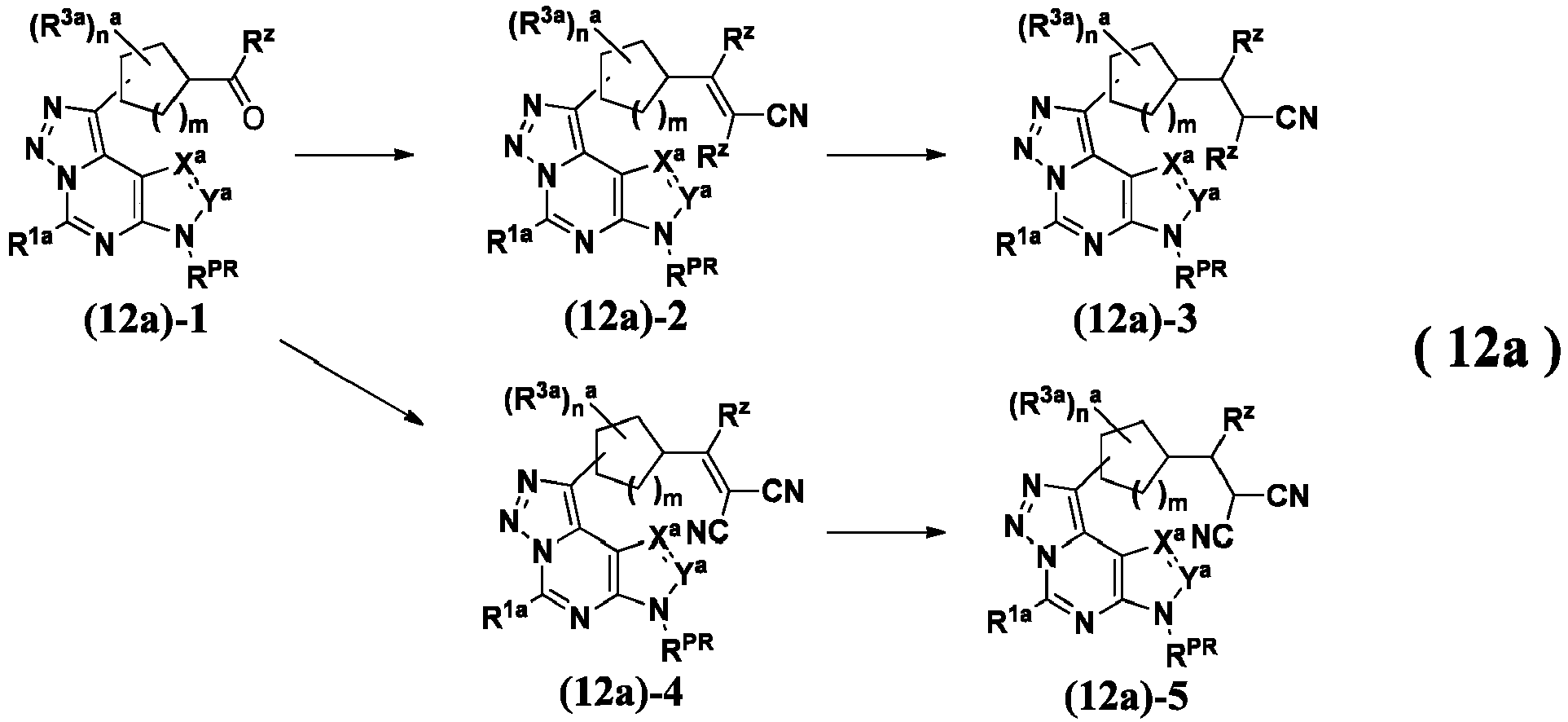
- A compound (12a)-1 among the compounds (7a)-3 can be converted to a compound (12a)-2 by using equivalent or excessive amounts of a phosphonium ylide such as a Horner-Wadsworth-Emmons reagent and a base such as sodium hydride in an appropriate solvent or in the absence of solvent at -78°C to a refluxing temperature.
- A compound (12a)-2 can be converted to a compound (12a)-3 by using an equivalent or excessive amount of a metal catalyst such as palladium-carbon catalyst under a hydrogen atmosphere in an appropriate solvent at -78°C to a refluxing temperature.
- A compound (12a)-1 can be converted to a compound (12a)-4 by using equivalent or excessive amounts of malononitrile and a base such as piperidine in an appropriate solvent or in the absence of solvent at -78°C to a refluxing temperature.
- A compound (12a)-4 can be converted to a compound (12a)-5 by using an equivalent or excessive amount of a metal catalyst such as palladium-carbon catalyst under a hydrogen atmosphere in an appropriate solvent at -78°C to a refluxing temperature.
- Compounds (12a)-2, (12a)-3, (12a)-4 and (12a)-5 having a protective group as RPR can be converted to compounds (12a)-2, (12a)-3, (12a)-4 and (12a)-5 having a hydrogen atom as RPR by deprotection.
- Next, processes for producing the tricyclic pyridine compounds represented by the formula (Ib) will be described.
- Among the tricyclic pyridine compounds represented by the formula (Ib), the compounds (1 b)-2 can be produced, for example, through the following scheme (1b) (wherein RPR is a hydrogen atom or a protective group such as a Ts group, a TIPS group or a SEM group, and the other symbols are the same as defined above).

- A compound (1b)-2 can be obtained by cyclization of a compound (1b)-1.
- A compound (1b)-1 can be converted to a compound (1 b)-2 by using an equivalent or excessive amount of R8bC(=O)R9b or R8bC(ORQ)2R9b (wherein RQ is a hydrogen atom or a C1-6 alkyl group) in an appropriate solvent or in the absence of solvent at room temperature to a refluxing temperature. Microwave irradiation or the presence of an acid catalyst such as acetic acid, trifluoroacetic acid, hydrochloric acid, sulfuric acid or p-toluenesulfonic acid is sometimes effective for smooth progress of the reaction.
- A compound (1 b)-2 having a protective group as RPR can be converted to a compound having a hydrogen atom as RPR by deprotection.
- Among the compounds represented by the formula (Ib), the compounds (2b)-2 and (3b)-2 can be produced, for example, through the following schemes (2b) and (3b) (wherein YA is an oxygen atom or a sulfur atom, RPR is a hydrogen atom or a protective group such as a Ts group, a TIPS group or a SEM group, and the other symbols are the same as defined above).


- A compound (2b)-2 can be obtained by cyclization of a compound (2b)-1.
- A compound (2b)-1 can be converted to a compound (2b)-2 by using an equivalent or excessive amount of R8bCHO, R8bCO2RQ, R8bC(ORQ)3, R8bCONRQ 2 or R8bC(ORQ)2NRQ 2 (wherein RQ is a hydrogen atom or a C1-6 alkyl group) in an appropriate solvent or in the absence of solvent at room temperature to a refluxing temperature. Microwave irradiation or the presence of an acid or a base is sometimes effective for smooth progress of the reaction.
- A compound (2b)-2 having an oxygen atom as YA can be converted to a compound (2b)-2 having a sulfur atom as YA by using an equivalent or excessive amount of a thiocarbonylation agent such as phosphorus pentasulfide or Lawesson's reagent in an appropriate solvent or in the absence of solvent at -78°C to a refluxing temperature.
- A compound (2b)-2 having a protective group as RPR can be converted to a compound having a hydrogen atom as RPR by deprotection.
- A compound (3b)-2 can be obtained by cyclization of a compound (3b)-1 like the synthesis of a compound (2b)-2.
- A compound (3b)-2 having a protective group as RPR can be converted to a compound having a hydrogen atom as RPR by deprotection.
- Among the compounds represented by the formula (Ib), the compounds (4b)-2, (4b)-3 and (4b)-4 can be produced, for example, through the following scheme (4b) (wherein YA is an oxygen atom or a sulfur atom, RPR is a hydrogen atom or a protective group such as a Ts group, a TIPS group or a SEM group, and the other symbols are the same as defined above).
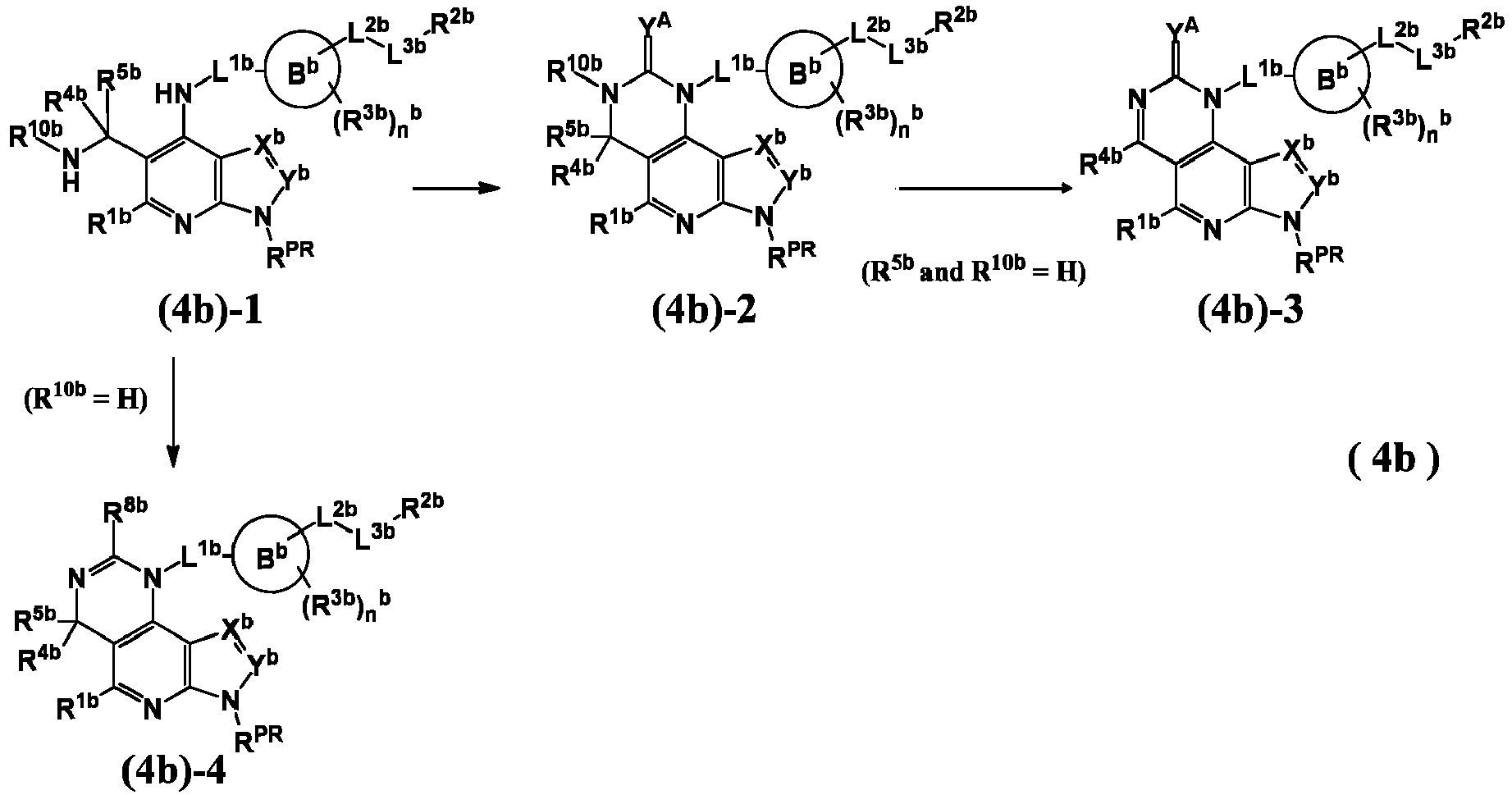
- A compound (4b)-2 can be obtained by cyclization of a compound (4b)-1.
- A compound (4b)-1 can be converted to a compound (4b)-2 by using an equivalent or excessive amount of phosgene, phosgene dimmer, phosgene trimer, 1,1'-carbonyldiimidazole, dimethyl carbonate, 1,1'-thiocarbonyldiimidazole, carbon disulfide or the like in an appropriate solvent at room temperature to a refluxing temperature. The presence of an acid or a base is sometimes effective for smooth progress of the reaction.
- A compound (4b)-2 having hydrogen atoms as R5b and R10b can be converted to a compound (4b)-3 by using a catalyst such as palladium-carbon or manganese dioxide in an appropriate solvent at room temperature to a refluxing temperature.
- A compound (4b)-2 or (4b)-3 having an oxygen atom as YA can be converted to a compound (4b)-2 or (4b)-3 having a sulfur atom as YA by using a thiocarbonylation agent such as phosphorus pentasulfide or Lawesson's reagent in an appropriate solvent or in the absence of solvent at -78°C to a refluxing temperature.
- A compound (4b)-2 or (4b)-3 having a protective group as RPR can be converted to a compound having a hydrogen atom as RPR by deprotection.
- A compound (4b)-1 having a hydrogen atom as R10b can be converted to a compound (4b)-4 by cyclization.
- A compound (4b)-1 can be converted to a compound (4b)-4 by using an equivalent or excessive amount of R8bCHO, R8bCO2RQ, R8bC(ORQ)3, R8bCONRQ 2 or R8bC(ORQ)2NRQ 2 (wherein RQ is a hydrogen atom or C1-6 alkyl group) in an appropriate solvent or in the absence of solvent at room temperature to a refluxing temperature. Microwave irradiation or the presence of an acid or a base is sometimes effective for smooth progress of the reaction.
- A compound (4b)-4 having a protective group as RPR can be converted to a compound having a hydrogen atom as RPR by deprotection.
- Among the compounds represented by the formula (Ib), the compounds (5b)-2 can be produced, for example, through the following scheme (5b) (wherein YA is an oxygen atom or a sulfur atom, RPR is a hydrogen atom or a protective group such as a Ts group, a TIPS group or a SEM group, and the other symbols are the same as defined above).

- A compound (5b)-2 can be obtained by cyclization of a compound (5b)-1.
- A compound (5b)-1 can be converted to a compound (5b)-2 by using an equivalent or excessive amount of R8bCHO, R8bCO2RQ, R8bC(ORQ)3, R8bCONRQ 2 or R8bC(ORQ)2NRQ 2 (wherein RQ is a hydrogen atom or a C1-6 alkyl group) in an appropriate solvent or in the absence of solvent at room temperature to a refluxing temperature. Microwave irradiation or the presence of an acid or a base is sometimes effective for smooth progress of the reaction.
- A compound (5b)-2 having an oxygen atom as YA can be converted to a compound having a sulfur atom as YA by using an equivalent or excessive amount of a thiocarbonylation agent such as phosphorus pentasulfide or Lawesson's reagent in an appropriate solvent or in the absence of solvent at -78°C to a refluxing temperature.
- A compound (5b)-2 having a protective group as RPR can be converted to a compound having a hydrogen atom as RPR by deprotection.
- Among the compounds represented by the formula (Ib), the compounds (6b)-2 and (6b)-3 can be produced, for example, through the following scheme (6b) (wherein XB is a bromine atom or an iodine atom, RPR is a hydrogen atom or a protective group such as a Ts group, a TIPS group or a SEM group, and the other symbols are the same as defined above).

- A compound (6b)-3 can be obtained by bromination or iodination of a compound (6b)-1 followed by cyanization of the resulting compound (6b)-2.
- A compound (6b)-1 can be converted to a compound (6b)-2 by using an equivalent or excessive amount of a halogenating agent such as bromine, iodine, N-bromosuccinimide or N-iodosuccinimide in an appropriate solvent or in the absence of solvent at -78°C to a refluxing temperature.
- A compound (6b)-2 can be converted to a compound (6b)-3 by using an equivalent or excessive amount of a metal cyanide such as copper cyanide or zinc cyanide in the presence of a palladium catalyst such as tetrakis(triphenylphosphine)palladium(0) or bis(triphenylphosphine)palladium(II) dichloride in an appropriate solvent or in the absence of solvent at room temperature to a refluxing temperature.
- A compound (6b)-2 or (6b)-3 having a protective group as RPR can be converted to a compound having a hydrogen atom as RPR by deprotection.
- The compounds (7b)-2 can be produced, for example, through the following scheme (7b) (wherein RL is a leaving group such as a chlorine atom, a methanesulfonyloxy group or a p-toluenesulfonyloxy group, RPR is a hydrogen atom or a protective group such as a Ts group, a TIPS group or a SEM group, and the other symbols are the same as defined above).

- A compound (7b)-2 can be obtained by a Mitsunobu reaction of a compound (7b)-1 with R10bRPR1NH (wherein RPR1 is a protective group suited for a Mitsunobu reaction such as a methanesulfonyl group or a p-toluenesulfonyl group) following by deprotection.
- A compound (7b)-1 can be converted to a compound (7b)-2 by using equivalent or excessive amounts of R10bRPR1NH, a Mitsunobu reagent and a phosphine reagent in an appropriate solvent or in the absence of solvent at -78°C to a refluxing temperature, followed by deprotection. As a Mitsunobu reagent, diethyl azodicarboxylate, diisopropyl azodicarboxylate or the like may be mentioned, and as a phosphine reagent, triphenylphosphine, tributylphosphine or the like may be mentioned. A compound (7b)-2 having a hydrogen atom as R10b can be obtained by a similar reaction using phthalimide instead of R10bRPR1NH followed by deprotection.
- A compound (7b)-2 can be obtained by conversion of a compound (7b)-1 to a compound (7b)-3 having a leaving group RL followed by a substitution reaction using R10bNH2.
- A compound (7b)-1 can be converted to a compound (7b)-3 by using an equivalent or excessive amount of phosphorus oxychloride, thionyl chloride, methanesulfonyl chloride, p-toluenesulfonyl chloride or the like in an appropriate solvent or in the absence of solvent at -78°C to a refluxing temperature. The presence of a base is sometimes effective for smooth progress of the reaction.
- A compound (7b)-3 can be converted to a compound (7b)-2 by using an equivalent or excessive amount of R10bNH2 in an appropriate solvent or in the absence of solvent at -78°C to a refluxing temperature. Microwave irradiation or the presence of a base is sometimes effective for smooth progress of the reaction.
- The compounds (8b)-3 can be produced, for example, through the following scheme (8b) (wherein RPR is a hydrogen atom or a protective group such as a Ts group, a TIPS group or a SEM group, and the other symbols are the same as defined above).

- A compound (8b)-3 can be obtained by oxidation of a compound (8b)-1 followed by condensation of the resulting compound (8b)-2.
- A compound (8b)-1 can be converted to a compound (8b)-2 by using an equivalent or excessive amount of a oxidizing agent such as potassium permanganate or sodium chlorite in an appropriate solvent or in the absence of solvent at room temperature to a refluxing temperature.
- A compound (8b)-2 can be converted to a compound (8b)-3 by using equivalent or excessive amounts of ammonia-methanol or its equivalent and a condensation agent such as N,N'-dicyclohexylcarbodiimide or 1-ethyl-3-(3-dimethylaminopropyl)carbodiimide hydrochloride in an appropriate solvent or in the absence of solvent at 0°C to a refluxing temperature. The presence of a catalyst such as N-hydroxybenzotriazole or a base is sometimes effective for smooth progress of the reaction.
- The compounds (9b)-2 and (9b)-3 can be produced, for example, through the following scheme (9b) (wherein RPR is a hydrogen atom or a protective group such as a Ts group, a TIPS group or a SEM group, and the other symbols are the same as defined above).

- A compound (9b)-2 can be obtained by an addition reaction of a compound (9b)-1.
- A compound (9b)-1 can be converted to a compound (9b)-2 by using an equivalent or excessive amount of an addition reaction reagent in a solvent inert to the reaction at -78°C to a refluxing temperature. As an addition reaction reagent, a hydride reducing agent such as sodium borohydride or diiisobutylaluminum hydride or a metal reagent such as methyllithium or phenylmagnesium bromide may be mentioned.
- A compound (9b)-3 can be obtained by reductive N-alkylation of a compound (9b)-1 through formation of an imine.
- A compound (9b)-1 can be converted to a compound (9b)-3 by using equivalent or excessive amounts of R10bNH2 and a hydride reducing agent such as sodium cyanoborohydride or sodium triacetoxyborohydride in an appropriate solvent or in the absence of solvent at 0°C to a refluxing temperature. Microwave irradiation or the presence of an acid is sometimes effective for smooth progress of the reaction. A compound having a hydrogen atom as R10b can be obtained by using hydroxylamine or its equivalent instead of R10bNH2 and lithium aluminum hydride, zinc or a hydrogen atmosphere containing palladium-carbon as a reducing agent.
- The compounds (10b)-3, (11 b)-3 and (12b)-3 can be produced, for example, through the following schemes (10b), (11b) and (12b) (wherein RPR is a hydrogen atom or a protective group such as a Ts group, a TIPS group or a SEM group, and the other symbols are the same as defined above).


- A compound (10b)-1 can be converted to a compound (10b)-3 by using an equivalent or excessive amount of an amine derivative (10b)-2 in an appropriate solvent or in the absence of solvent at room temperature to a refluxing temperature. The substituent reaction is preferred to be carried out under microwave irradiation or sometimes in the presence of a base or may be carried out under the reaction conditions used for the Buchwald-Hartwig reaction (for example, by referring to Advanced Synthesis & Catalysis, 2004, 346, pp. 1599-1626). It is possible to appropriately combine tris(dibenzylideneacetone)dipalladium (0), tetrakis(triphenylphosphine)palladium(0), palladium (II) acetate or the like with 4,5-bis(diphenylphosphino)-9,9-dimethylxanthene (Xantphos), 2-dicyclohexylphosphino-2',6'-dimethoxybiphenyl (SPhos), 2-dicyclohexylphosphino-2',4',6'-triisopropylbiphenyl (XPhos) or the like, without particular restrictions.
- Compounds (11b)-3 and (12b)-3 can be obtained by using a compound (11 b)-1 and an amine derivative (11 b)-2 or a compound (12b)-1 and an amine derivative (12b)-2, like a compound (10b)-3.
- The compounds (13b)-4 can be produced, for example, through the following scheme (13b) (wherein RPR is a hydrogen atom or a protective group such as a Ts group, a TIPS group or a SEM group, RQ is a hydrogen atom or a C1-6 alkyl group, and the other symbols are the same as defined above).

- A compound (13b)-4 can be obtained by the Stille reaction of compounds (13b)-2 and (13b)-3 (for example, by referring Bulletin of the Chemical Society of Japan,1987,60,pp.767-768).
- A compound (13b)-2 can be converted to a compound (13b)-4 by using an equivalent or excessive amount of a compound (13b)-3 in the presence of a palladium catalyst such as tetrakis(triphenylphosphine)palladium (0), bis(triphenylphosphine)palladium (II) dichloride or bis(acetonitrile)palladium (II) dichloride in an appropriate solvent or in the absence of solvent at room temperature to a refluxing temperature. The presence of an acid or a base is sometimes effective for smooth progress of the reaction.
- A compound (13b)-2 can be obtained by oxidization of a compound (13b)-1 followed by a reaction of the resulting N-oxide derivative with a chlorination agent.
- A compound (13b)-1 can be converted to a compound (13b)-2 by oxidation with an equivalent or excessive amount of an oxidizing agent such as m-chloroperbenzoic acid, peracetic acid or aqueous hydrogen peroxide in an appropriate solvent or in the absence of solvent at 0°C to a refluxing temperature, followed by a reaction of the resulting N-oxide derivative with an equivalent or excessive amount of a chlorination agent such as phosphorus oxychloride or methanesulfonyl chloride in an appropriate solvent or in the absence of solvent at room temperature to a refluxing temperature.
- The compounds (14b)-3 and (14b)-5 can be produced, for example, through the following scheme (14b) (wherein RPR is a hydrogen atom or a protective group such as a Ts group, a TIPS group or a SEM group, and the other symbols are the same as defined above).

- Compounds (14b)-3 and (14b)-4 can be obtained by coupling of an anion formed from a compound (14b)-2.
- A compound (14b)-2 can be converted to a compound (14b)-3 by lithiation using an equivalent or excessive amount of an organic metal reagent such as n-butyllithium or s-butyllithium in an appropriate solvent or in the absence of solvent at -78°C to room temperature followed by coupling with an electrophilic reagent such as N,N-dimethylformamide, R4bCO2RQ, R4bCONRQ 2 or R41C(O)N(ORQ)RQ (wherein RQ is a hydrogen atom or a C1-6 alkyl group).
- A compound (14b)-2 can be converted to a compound (14b)-4 by lithiation using an equivalent or excessive amount of an organic metal reagent such as n-butyllithium or s-butyllithium in an appropriate solvent or in the absence of solvent at -78°C to room temperature followed by coupling with an electrophilic reagent such as (R6bCH2S)2.
- A compound (14b)-4 can be converted to a compound (14b)-5 by using an equivalent or excessive amount of an oxidizing agent such as m-chloroperbenzoic acid, peracetic acid or aqueous hydrogen peroxide in an appropriate solvent or in the absence of solvent at 0°C to a refluxing temperature.
- A compound (14b)-1 can be converted to a compound (14b)-2 by oxidation with an equivalent or excessive amount of an oxidizing agent such as m-chloroperbenzoic acid, peracetic acid or aqueous hydrogen peroxide in an appropriate solvent or in the absence of solvent at 0°C to a refluxing temperature, followed by a reaction of the resulting N-oxide derivative with an equivalent or excessive amount of a chlorination agent such as phosphorus oxychloride or methanesulfonyl chloride in an appropriate solvent or in the absence of solvent at room temperature to a refluxing temperature.
- The compounds (15b)-4 can be produced, for example, through the following scheme (15b) (wherein RPR is a hydrogen atom or a protective group such as a Ts group, a TIPS group or a SEM group).

- A compound (15b)-4 can be obtained by bromination or iodination of a compound (15b)-2 followed by dehydrogenation of the resulting compound (15b)-3.
- A compound (15b)-3 can be converted to a compound (15b)-4 by using a catalyst such as palladium-carbon or manganese dioxide in an appropriate solvent or in the absence of solvent at room temperature to a refluxing temperature.
- A compound (15b)-2 can be converted to a compound (15b)-3 by using an equivalent or excessive amount of a halogenating agent such as bromine, N-bromosuccinimide, iodine or N-iodosuccinimide in an appropriate solvent or in the absence of solvent at 0°C to a refluxing temperature.
- A compound (15b)-1 can be converted to a compound (15b)-2 in the presence of a palladium-carbon catalyst under a hydrogen atmosphere in an appropriate solvent or in the absence of solvent at room temperature to a refluxing temperature.
- The compounds (16b)-2 can be produced, for example, through the following scheme (16b).

- A compound (16b)-1 can be converted to a compound (16b)-2 by using an equivalent or excessive amount of R16bCO2RQ or R16bC(ORQ)3 (wherein RQ is a hydrogen atom or a C1-6 alkyl group) in an appropriate solvent or in the absence of solvent at room temperature to a refluxing temperature.
- For synthesis of 7-azaindole or 1-deazapurine, the following general methods may be referred to.
- As general methods for synthesis of 7-azaindole, those disclosed in Current Organic Chemistry,2001,5,pp.471-506 are known.
- As general methods for synthesis of 1-deazapurine, those disclosed in Shin-pen Hetero-kan Kagoubutsu Ouyou-hen (Kodansha, 2004) pp.233-251 are known.
-

- The amine compounds (17b)-1 can be produced from the corresponding nitrile compounds, acid amide compounds, oxime compounds, halogen compounds, ketone compounds, aldehyde compounds, alcohol compounds, boron compounds, epoxide compounds, acid imide compounds and carbamate compounds (for example, by referring to Jikken Kagaku Koza vol. 20 Yuki Gosei II, edited by the Chemical Society of Japan, published by MARUZEN Co., Ltd., 1992; Bioorganic & Medicinal Chemistry, 13, 4022, 2005, Kuramochi T. et al.; Journal of Medicinal Chemistry, 50, 149, 2007; Journal of Organic Chemistry, 46, 4296, 1981; Journal of Organic Chemistry, 44, 2081, 1979; Acta Chemica Scandinavica, 19, 1741, 1965; and Organic Letters, 5, 4497, 2003).
- Among the compounds represented by the formula (Ib), the compounds (18b)-2 and (18b)-3 can be produced, for example, through the following scheme (18b) (wherein RPR is a hydrogen atom or a protective group such as a Ts group, a TIPS group or a SEM group, and the other symbols are the same as defined above).

- A compound (18b)-3 can be obtained by cyclization of a compound (18b)-1 followed by a substitution reaction of the resulting compound (18b)-2.
- A compound (18b)-1 can be converted to a compound (18b)-2 by using an equivalent or excessive amount of phosgene, phosgene dimer, phosgene trimer, 1,1'-carbonyldiimidazole, dimethyl carbonate, 1,1'-thiocarbonyldiimidazole , carbon disulfide or the like in an appropriate solvent or in the absence of solvent at room temperature to a refluxing temperature. The presence of an acid or a base or microwave irradiation is sometimes effective for smooth progress of the reaction.
- A compound (18b)-2 can be converted to a compound (18b)-3 by using an equivalent or excessive amount of an electrophilic reagent represented by R10b-RL (wherein RL is a leaving group such as a chlorine atom, a methanesulfonyloxy group or a p-toluenesulfonyloxy group) such as an alkyl halide, an alkyl mesylate or an aryl halide in the presence of a base such as triethylamine in an appropriate solvent or in the absence of solvent at room temperature to a refluxing temperature. Microwave irradiation is sometimes effective for smooth progress of the reaction. A compound (18b)-2 can also be converted to a compound (18b)-3 by using equivalent or excessive amounts of a primary or secondary alcohol, a Mitsunobu reagent and a phosphine reagent in an appropriate solvent or in the absence of solvent at -78°C to a refluxing temperature. As a Mitsunobu reagent, diethyl azodicarboxylate, diisopropyl azodicarboxylate or the like may be mentioned, and as a phosphine reagent, triphenylphosphine, tributylphosphine or the like may be mentioned.
- A compound (18b)-2 or (18b)-3 having an oxygen atom as YA can be converted to a compound (18b)-2 or (18b)-3 having a sulfur atom as YA by using an equivalent or excessive amount of a thiocarbonylation agent such as phosphorus pentasulfide or Lawesson's reagent in an appropriate solvent or in the absence of solvent at -78°C to a refluxing temperature.
- A compound (18b)-2 or (18)-3 having a protective group as RPR can be converted to a compound having a hydrogen atom as RPR by deprotection.
- Among the compounds represented by the formula (Ib), the compounds (19b)-2 and (19b)-3 can be produced, for example, through the following scheme (19b) (wherein RPR is a hydrogen atom or a protective group such as a Ts group, a TIPS group or a SEM group, RPR2 is a benzyl type protective group such as a benzyl group or a benzyloxycarbonyl group, m is 0∼3, and the other symbols are the same as defined above).

- A compound (19b)-3 can be obtained by deprotection of the RPR2 in a compound (19b)-1 among the compounds (2b)-2 followed by a substitution reaction of the resulting compound (19b)-2.
- A compound (19b)-1 having a benzyl type protective group as RPR2 can be converted to a compound (19b)-2 by using a catalytic amount of palladium-carbon under a hydrogen atmosphere in an appropriate solvent at room temperature to a refluxing temperature. The presence of an acid is sometimes effective for smooth progress of the reaction.
- A compound (19b)-2 can be converted to a compound (19b)-3 by using equivalent or excessive amounts of an electrophilic reagent represented by R2bL3bL2b-RL (wherein RL is a leaving group such as a halogen atom, a methanesulfonyloxy group or a p-toluenesulfonyloxy group) such as an alkyl halide, an acid chloride, a sulfonyl chloride, a chloroformate ester, an isocyanate or an isothiocyanate and a base such as triethylamine in an appropriate solvent or in the absence of solvent at -78°C to a refluxing temperature. A compound (19b)-2 can also be converted to a compound (19b)-3 by using an equivalent or excessive amount of an aldehyde or a ketone in the presence of a hydride reducing agent such as sodium cyanoborohydride or 2-picoline borane in an appropriate solvent or in the absence of solvent at 0°C to a refluxing temperature. Microwave irradiation or the presence of an acid is sometimes effective for smooth progress of the reaction.
- A compound (19b)-3 having a protective group as RPR can be converted to a compound having a hydrogen atom as RPR by deprotection.
- Among the compounds represented by the formula (Ib), the compounds (20b)-2 and (20b)-3 can be produced, for example, through the following scheme (20b) (wherein RPR is a hydrogen atom or a protective group such as a Ts group, a TIPS group or a SEM group, RPR2 is a benzyl type protective group such as a benzyl group or a benzyloxycarbonyl group, m is 0, 1, 2 or 3 and the other symbols are the same as defined above).

- A compound (20b)-3 can be obtained by deprotection of the RPR2 in a compound (20b)-1 among the compounds (18b)-3 followed by a substitution reaction of the resulting compound (20b)-2.
- A compound (20b)-1 having a benzyl type protective group as RPR2 can be converted to a compound (20b)-2 by using a catalytic amount of palladium-carbon under a hydrogen atmosphere in an appropriate solvent at room temperature to a refluxing temperature. The presence of an acid is sometimes effective for smooth progress of the reaction.
- A compound (20b)-2 can be converted to a compound (20b)-3 by using equivalent or excessive amounts of an electrophilic reagent represented by R2bL3bL2b -RL (wherein RL is a leaving group such as a halogen atom, a methanesulfonyloxy group or a p-toluenesulfonyloxy group) such as an alkyl halide, an acid chloride, sulfonyl chloride, a chloroformate, an isocyanate or an isothiocyanate and a base such as triethylamine in an appropriate solvent or in the absence of solvent at -78°C to a refluxing temperature. A compound (20b)-2 can also be converted to a compound (20b)-3 by using an equivalent or excessive amount of an aldehyde or a ketone in the presence of a reducing agent such as sodium cyanoborohydride or 2-picoline borane in an appropriate solvent or in the absence of solvent at 0°C to a refluxing temperature. Microwave irradiation or the presence of an acid is sometimes effective for smooth progress of the reaction.
- A compound (20b)-3 having a protective group as RPR can be converted to a compound having a hydrogen atom as RPR by deprotection.
- Among the compounds represented by the formula (Ib), the compounds (21 b)-2, (21 b)-3 and (21 b)-4 can be produced, for example, through the following scheme (21b) (wherein RPR is a hydrogen atom or a protective group such as a Ts group, a TIPS group or a SEM group, RPR5 is a protective group such as a benzyl group or an acetyl group, RZ is a hydrogen atom or a C1-6 alkyl group, m is 0, 1, 2 or 3, and the other symbols are the same as defined above).

- A compound (21b)-1 among the compounds (18b)-3 is converted to a compound (21 b)-2 by deprotection.
- A compound (21 b)-2 can be converted to a compound (21 b)-3 by oxidation with an equivalent or excessive amount of an oxidizing agent such as 2-iodoxybenzoic acid or pyridinium chlorochromate in an appropriate solvent or in the absence of solvent at-78°C to a refluxing temperature.
- A compound (21 b)-3 can be converted to a compound (21 b)-4 by using equivalent or excessive amounts of a compound (21 b)-5 and a reducing agent such as 2-picoline borane or sodium triacetoxyborohydride in an appropriate solvent or in the absence of solvent at room temperature to a refluxing temperature.
- Compounds (21 b)-3 and (21 b)-4 having a protective group as RPR can be converted to compounds (21 b)-3 and (21 b)-4 having a hydrogen atom as RPR by deprotection.
- In the present invention, the tricyclic pyrimidine compounds of the present invention represented by the formula (Ia) and the tricyclic pyridine compounds of the present invention represented by the formula (Ib) may be present in the form of tautomers or geometrical isomers which undergo endocyclic or exocyclic isomerization, mixtures of tautomers or geometric isomers or mixtures of thereof. When the compounds of the present invention have an asymmetric center, whether or not resulting from an isomerization, the compounds of the present invention may be in the form of resolved optical isomers or in the form of mixtures containing them in certain ratios. Further, when the compounds of the present invention have two or more asymmetric centers, the compounds of the present invention can be in the form of diastereomers due to optical isomerism about them. The compounds of the present invention may be in the form of a mixture of all these isomers in certain ratios. For example, diastereomer can be separated by techniques well known to those skilled in the art such as fractional crystallization, and optical isomers can be obtained by techniques well known in the field of organic chemistry for this purpose.
- The tricyclic pyrimidine compounds of the present invention represented by the formula (Ia) and the tricyclic pyridine compounds of the present invention represented by the formula (Ib) or pharmaceutically acceptable salts thereof may be in the form of arbitrary crystals or arbitrary hydrates, depending on the production conditions. The present invention covers these crystals, hydrates and mixtures. They may be in the form of solvates with organic solvents such as acetone, ethanol, 1-propanol and 2-propanol, and the present invention covers any of these forms.
- The present invention covers pharmaceutically acceptable salts of the compounds of the present invention represented by the formulae (Ia) and (Ib).
- The compounds of the present invention represented by the formulae (Ia) and (Ib) may be converted to pharmaceutically acceptable salts or may be liberated from the resulting salts, if necessary. The pharmaceutically acceptable salts of the present invention may be, for example, salts with alkali metals (such as lithium, sodium and potassium), alkaline earth metals (such as magnesium and calcium), ammonium, organic bases, amino acids, inorganic acids (such as hydrochloric acid, hydrobromic acid, phosphoric acid and sulfuric acid) and organic acids (such as acetic acid, citric acid, maleic acid, fumaric acid, tartaric acid, benzenesulfonic acid, methanesulfonic acid and p-toluenesulfonic acid).
- The present invention covers prodrugs of the compounds of the present invention represented by the formulae (Ia) and (Ib).
- Prodrugs are derivatives of medicinal compounds having chemically or metabolically degradable groups and give pharmacologically active medicinal compounds upon solvolysis or under physiological conditions in vivo. Methods for selecting or producing appropriate prodrugs are disclosed in, for example, Design of Prodrugs (Elsevier, Amsterdam 1985). In the present invention, in the case of a compound having a hydroxy group, prodrugs like acyloxy derivatives obtained by reacting the compound with appropriate acyl halides, appropriate acid anhydrides or appropriate haloalkoxycarbonyl compounds may, for example, be mentioned. Structures particularly preferred as prodrugs include -OCOC2H5, -OCO(t-Bu),-OCOC15H31, -OCO(m-CO2Na-Ph), -OCOCH2CH2CO2Na, -OCOCH(NH2)CH3,-OCOCH2N(CH3)2, -O-CH2OC(=O)CH3 or the like. In the case of a compound having an amino group, prodrugs obtained by reacting the compound having an amino group with appropriate acid halides, appropriate mixed acid anhydrides or haloalkoxycarbonyl compounds may, for example, be mentioned. Structures particularly preferred as prodrugs include -NHCO(CH2)20OCH3, -NHCOCH(NH2)CH3, -NH-CH2O(C=O)CH3 or the like.
- The JAK inhibitors and the preventive, therapeutic and/or improving agents for diseases against which inhibition of JAK is effective are those mentioned below among the tricyclic pyrimidine compounds and the tricyclic pyridine compounds of the present invention.
- 1) JAK inhibitors containing the compounds as defined in any one of 1a) to 62a) and 1b) to 44b), tautomers or pharmaceutically acceptable salts of the compounds or solvates thereof, as an active ingredient.
- 2) Preventive, therapeutic or improving agents for diseases against which inhibition of JAK is effective, which contains the JAK inhibitors as defined in 1) as an active ingredient.
- 3) Therapeutic agents for rheumatoid arthristis, which contain the JAK inhibitors as defined in 1) as an active ingredient.
- 4) Medicaments containing the compound as defined in any one of 1a) to 62a) and 1b) to 44b), tautomers or pharmaceutically acceptable salts of the compounds or solvates thereof, as an active ingredient.
- The preventive, therapeutic and improving agents for diseases against which inhibition of JAK is effective which contain the JAK inhibitors of the present invention, as an active ingredient may usually be administered as oral medicines such as tablets, capsules, powder, granules, pills and syrup, as rectal medicines, percutaneous medicines or injections. The agents of the present invention may be administered as a single therapeutic agent or as a mixture with other therapeutic agents. Though they may be administered as they are, they are usually administered in the form of medical compositions. These pharmaceutical preparations can be obtained by adding pharmacologically and pharmaceutically acceptable additives by conventional methods. Namely, for oral medicines, ordinary additives such as excipients, lubricants, binders, disintegrants, humectants, plasticizers and coating agents may be used. Oral liquid preparations may be in the form of aqueous or oily suspensions, solutions, emulsions, syrups or elixirs or may be supplied as dry syrups to be mixed with water or other appropriate solvents before use. Such liquid preparations may contain ordinary additives such as suspending agents, perfumes, diluents and emulsifiers. In the case of rectal administration, they may be administered as suppositories. Suppositories may use an appropriate substance such as cacao butter, laurin tallow, Macrogol, glycerogelatin, Witepsol, sodium stearate and mixtures thereof as the base and may, if necessary, contain an emulsifier, a suspending agent, a preservative and the like. For injections, pharmaceutical ingredients such as distilled water for injection, physiological saline, 5% glucose solution, propylene glycol and other solvents or solubilizing agents, a pH regulator, an isotonizing agent and a stabilizer may be used to form aqueous dosage forms or dosage forms which need dissolution before use.
- The dose of the agents of the present invention for administration to human is usually about from 0.1 to 1000 mg/body/day in the case of oral drugs or rectal administration and about from 0.05 mg to 500 mg/body/day in the case of injections, though it depends on the age and conditions of the patient. The above-mentioned ranges are mere examples, and the dose should be determined from the conditions of the patient.
- The present invention is used when it is expected to improve pathology of diseases associated with JAK1, JAK2 and JAK3 separately or in combination. Among these diseases, JAK3-associated diseases are, in addition to rheumatoid arthristis, inflammatory or proliferative dermatoses such as psoriasis, atopic dermatitis, contact dermatitis, eczematoid dermatitis, seborrheic dermatitis, lichen planus, pemphigus, pemphigoid, epidermolysis bullosa, hives, angioedema, angiitis, erythema, dermal eosinophilia, lupus erythematosus, acne, alopecia areata, immune dermatoses, reversible airway obstruction, mucitis and angitis. Among these diseases, JAK3- and JAK1-associated diseases are, in addition to rheumatoid arthristis, asthma, atopic dermatitis, Alzheimer disease, atherosclerosis, cancer, leukemia, rejection of organ or tissue grafts (such as heart, kidney, liver, bone marrow, skin, horn, lung, pancreas, islet, small intestine, extremities, muscles, nerves, intervertebral disks, trachea, myoblasts and cartilage), graft-versus-host reaction after bone marrow transplantation and autoimmune diseases such as rheumatic disease, systemic lupus erythematosus (SLE), Hashimoto's disease, multiple sclerosis, myasthenia gravis, type I diabetes and diabetic complications. Among these diseases, JAK2-associated diseases include, for example, myeloproliferative disorders.
- As an application of the present invention, treatment and prevention of the above-mentioned diseases may be mentioned, but there is no restriction.
- Compounds of the present invention are administered either alone or in combination with one or more additional agents such as immunomodulators, antiinflammatory agents or antirheumatic drugs. The additional agents may be cyclosporin A, tacrolimus, leflunomide, deoxyspergualin, mycophenolate, azathioprine, etanercept (e.g. Enbrel®), infliximab (e.g. Remicade®), adalimumab (e.g. Humira®), certolizumab pegol (e.g. Cimzia®), Golimumab (e.g. Simponi®), Anakinra (e.g. Kineret®), rituximab (e.g. Rituxan®), Tocilizumab (e.g. Actemra®), methotrexate, aspirin, acetaminophen, ibuprofen, naproxen, piroxicam, and antiinflmmatory steroids (e.g. prednisolone or dexamethasone), but are not restricted thereto.
- Now, the present invention will be described in further detail with reference to Reference Synthetic Examples, Synthetic Examples, Assay Examples and Formulation Examples. However, it should be understood that the present invention is by no means restricted by these specific Examples. In the Examples, "NMR" denotes nuclear magnetic resonance, "LC/MS" denotes high performance liquid chromatography-mass spectrometry, "v/v" means volume ratio. In the tables, "Rf" denotes Reference Synthetic Example, "Ex" denotes Synthetic Example, "Structure" denotes chemical structural formula, "diastereomixture" denotes a diastereomeric mixture, "racemate" denotes a racemic mixture, "cis/trans mixture" denotes a cis- and trans-isomeric mixture, and "E/Z mixture" denotes a E- and Z-isomeric mixture, and "Data" denotes physical property data, "condition" denotes measurement condition, "retention time" denotes retention time in LC/MS, "Compound Name" denotes compound name of the synthesized compound, "Morphology" denotes morphology of a synthesized compound, "Yield" denotes yield of a synthesized compound, "quant" denotes quantitative, "min" denotes minute.
- In the Examples herein, "rac-" or "racemate" used in texts or tables for a compound having more than one asymmetric center means that the compound is in the form of a racemic mixture of the specified absolute configuration and its enantiomer.
- The 1H-NMR data show chemical shifts δ (unit: ppm) (splitting pattern, value of integral) measured at 300 MHz (with JNM-ECP300, manufactured by JEOL Ltd or JNM-ECX300, manufactured by JEOL Ltd) using tetramethylsilane as an internal standard. "s" denotes "singlet", "d" denotes "doublet", "t" denotes "triplet", "q" denotes "quartet ", "quint" denotes quintet, "sextet" denotes sextet, "septet" denotes septet, "dd" denotes doublet of doublets, "dt" denotes doublet of triplets, "td" denotes triplet of doublets, "dq" denotes doublet of quartets, "qd" denotes quartet of doublets, "tt" denotes triplet of triplets, "ddd" denotes doublet of doublet of doublets, "m" denotes multiplet, "br" denotes broad, "J" denotes coupling constant, "CDCI3" denotes deuterated chloroform, "CD3OD" denotes deuterated methanol, and "DMSO-d6" denotes deuterated dimethyl sulfoxide.
- For purification by silica gel column chromatography, Hi Flash column manufactured by Yamazen Corporation, a silica gel 60 manufactured by Merck & Co., Inc. or PSQ60B manufactured by Fuji Silysia Chemical Ltd. was used unless otherwise noted.
- For purification by silica gel thin layer chromatography, PLC plate manufactured by Merck & Co., Inc. was used unless otherwise noted.
- As a microwave reactor, Initiator sixty manufactured by Biotage was used.
- LC/MS spectra were measured by using ESI (electrospray ionization). "ESI+" denotes ESI-positive mode, and "ESI-" denotes ESI-negative mode.
- LC/MS condition 1
- Instrument: Waters Alliance-ZQ
- Column: Waters SunFire C18(3.5µm, 2.1×20mm)
- Column Temp.: 40°C
- Eluents: Liquid A: 0.1 % aqueous formic acid
Liquid B: 0.1 % formic acid in acetonitrile - Elution: A mixture of Liquids A and B was flown at 0.4 mL/min while the mixing ratio was linearly changed from 90/10 (v/v) to 15/85 (v/v) over the first 3 minutes, and then the flow rate was linearly changed to 0.5 mL/min for 2 minutes at a constant mixing ratio of 15/85 (v/v). Then, the mixing ratio was linearly changed to 90/10 (v/v) over 0.5 minute and maintained at 90/10 (v/v) for 2.5 minutes.
- LC/MS condition 2
- Instrument: Waters Alliance-ZQ
- Column: Waters SunFire C18(3.5µm, 2.1×20mm)
- Column Temp.: 40°C
- Eluents: Liquid A: 0.2% aqueous formic acid
Liquid B: acetonitrile - Elution: A mixture of Liquids A and B was flown at 0.4 mL/ min while the mixing ratio was linearly changed from 90/10 (v/v) to 15/85 (v/v) over the first 3 minutes, and then the flow rate was linearly changed to 0.5 mL/min over 2 minutes at a constant mixing ratio of 15/85 (v/v). Then, the mixing ratio was linearly changed to 95/5 (v/v) over 0.5 minute and maintained at 95/5 (v/v) for 1.5 minutes.
- LC/MS condition 3
- Instrument:: Thermo LTQ XL
- Column: Waters AQUITY UPLC BEH C18(1.7µm, 2.1×50mm)
- Column Temp.: 40°C
- Eluents: Liquid A: 0.1 % aqueous formic acid
Liquid B: 0.1 % formic acid in acetonitrile - Elution: A mixture of Liquids A and B was flown at 0.6 mL/min at a mixing ratio of 90/10 (v/v) for the first 0.5 minutes, and then the mixing ratio was linearly changed to 10/90 (v/v) over 2.5 minutes and then maintained at 10/90 (v/v) for 0.7 minute. The mixing ratio and the flow rate were linearly changed to 90/10 (v/v) and 0.8 mL/min, respectively, over 0.1 minute, maintained constant for 1 minute and linearly changed to 90/10 (v/v) and 0.6 mL/min, respectively, over 0.1 minute.
- Hydroiodic acid (55 wt%, 100g) was mixed with 4-chloro-7H-pyrrolo[2,3-d]pyrimidine (manufactured by Tokyo Chemical Industry Co., Ltd., 10.6 g, 69.0 mmol) under cooling with ice and stirred at 0°C for 1 hour and then at room temperature for one day. The precipitated solid was collected by filtration and washed with water. The residue was suspended in water, neutralized with 1 M aqueous sodium hydroxide and filtered. The yellow solid was washed with water and dried under reduced pressure to give the title compound as a yellow solid (16.2 g, yield 96%, including 10% 4-chloro-7H-pyrrolo[2,3-d]pyrimidine as the starting compound).
- 4-lodo-7H-pyrrolo[2,3-d]pyrimidine (352 mg, 1.44 mmol) in tetrahydrofuran (15 mL) cooled to 0°C was mixed with sodium hydride (55 wt% dispersion in mineral oil, 75.5 mg, 1.73 mmol) and chlorotriisopropylsilane (0.37 mL, 1.7 mmol) and stirred at room temperature for 45 minutes. After addition of water, the reaction mixture was extracted with ethyl acetate, and the organic layer was dried over anhydrous sodium sulfate and concentrated under reduced pressure. The residue was purified by silica gel column chromatography (hexane / ethyl acetate =100/1 (v/v)) to give the title compound as a pale yellow oil (431 mg, yield 74%).
- n-Butyllithium (1.6 M solution in hexane, 0.23 mL, 0.380 mmol) was gradually added dropwise to 4-iodo-7-(triisopropylsilyl)-7H-pyrrolo[2,3-d]pyrimidine (126 mg, 0.310 mmol) in tetrahydrofuran (1.5 mL) cooled to -78°C, and the reaction mixture was stirred at -78°C for 30 minutes. After addition of cyclohexanecarbaldehyde (42 µL, 0.35 mmol) in tetrahydrofuran (1.5 mL), the reaction mixture was gradually warmed from -78°C to room temperature and stirred for one day. After addition of saturated aqueous ammonium chloride, the reaction mixture was extracted with ethyl acetate, and the organic layer was dried over anhydrous sodium sulfate and concentrated under reduced pressure. The residue was purified by silica gel column chromatography (Hi Flash column amino type manufactured by Yamazen Corporation: hexane / ethyl acetate = 10/1 → 7/1 → 4/1 (v/v)) to give the title compound as a colorless oil (65.5 mg, yield 55%).
- Cyclohexyl[7-(triisopropylsilyl)-7H-pyrrolo[2,3-d]pyrimidin-4-yl]methanol (211 mg, 0.540 mmol) in dichloromethane (7 mL) was stirred with 1,1,1-triacetoxy-1,1-dihydro-1,2-benziodoxoi-3(1H)-one (347 mg, 0.820 mmol) at room temperature for 2.5 hours. After addition of a mixture (1/1 (v/v)) of saturated aqueous sodium hydrogen carbonate and saturated aqueous sodium thiosulfate, the reaction mixture was extracted with ethyl acetate, and the organic layer was dried over anhydrous sodium sulfate and concentrated under reduced pressure. The residue was purified by silica gel column chromatography (hexane/ ethyl acetate = 30/1 (v/v)) to give the title compound as a colorless solid (117 mg, yield 55%).
- Cyclohexyl[7-(triisopropylsilyl)-7H-pyrrolo[2,3-d]pyrimidin-4-yl]methanone (22.4 mg, 58.0 µmol) was stirred with hydrogen chloride - methanol solution (10 wt%, 2.0 mL) at room temperature for 15 minutes. The reaction mixture was concentrated under reduced pressure, and the residue was purified by silica gel column chromatography (Hi Flash column amino type manufactured by Yamazen Corporation: chloroform / methanol = 10/1 (v/v)) to give the title compound as a pale yellow oil (9.2 mg, yield 69%).
- Cyclohexyl(7H-pyrrolo[2,3-d]pyrimidin-4-yl)methanone (50.0 mg, 0.218 mmol) in N,N-dimethylformamide (1 mL) was mixed with sodium hydride (60 wt% dispersion in mineral oil, 9.6 mg, 0.24 mmol) and [2-(chloromethoxy)ethyl]trimethylsilane (42.5 µL, 0.240 mmol) under cooling with ice and stirred for 30 minutes while the temperature was gradually raised to room temperature. Separately, cyclohexyl(7H-pyrrolo[2,3-d]pyrimidin-4-yl)methanone (500 mg, 2.18 mmol) in N,N-dimethylformamide (5 mL) was mixed with sodium hydride (60 wt% dispersion in mineral oil, 96 mg, 2.4 mmol) and (chloromethoxy)ethyl]trimethylsilane (425 µL, 2.40 mmol) under cooling with ice and stirred for 30 minutes while the temperature was gradually raised to room temperature. After addition of water, the reaction solution and the previously obtained reaction solution were extracted with ethyl acetate, respectively, and the organic layers were washed with saturated aqueous sodium chloride, dried over anhydrous magnesium sulfate and concentrated under reduced pressure. The resulting residues were combined and purified by silica gel column chromatography (hexane/ ethyl acetate =5/1 (v/v)) to give the title compound as a pale yellow oil (850 mg, yield 99%).
- Cyclohexyl(7-{[2-(trimethylsilyl)ethoxy]methyl}-7H-pyrrolo[2,3-d]pyrimidin-4-yl)methanone (406 mg, 1.13 mmol) in methanol (10 ml) was stirred with hydroxylamine hydrochloride (395 mg, 5.66 mmol) for 4 hours. After addition of water, the reaction mixture was extracted with ethyl acetate, and the organic layer was dried over anhydrous sodium sulfate and concentrated under reduced pressure. The resulting residue was dissolved in ethanol (3.0 mL), mixed with ammonium acetate (105 mg, 1.36 mmol), water (3 mL) and aqueous ammonia (5 mL) and refluxed with zinc powder (600 mg, 9.17 mmol) for 4 hours. The reaction mixture was allowed to cool to room temperature and filtered, and the filtrate was concentrated under reduced pressure. The residue was purified by silica gel column chromatography (Hi Flash column amino type manufactured by Yamazen Corporation: chloroform / methanol = 20/1 (v/v)) to give the title compound as a yellow oil (390 mg, yield 79%).
- Cyclohexyl(7-{[2-(trimethylsilyl)ehoxy]methyl}-7H-pyrrolo[2,3-d]pyrimidin-4-yl)methanamine (10 mg. 0.028 mmol) in N,N-dimethylformamide dimethyl acetal (0.7 mL) was stirred at 170°C for 30 minutes under microwave irradiation. The reaction mixture was allowed to cool to room temperature and concentrated under reduced pressure, and the resulting residue was dissolved in 1,3-dimethylimidazolidin-2-one (1.0 mL) and stirred at 230°C for 1.5 hours under microwave irradiation. Separately, cyclohexyl(7-{[2-(trimethylsilyl)ethoxy]methyl}-7H-pyrrolo[2,3-d]pyrimidin-4-ylmethanamine (89 mg, 0.25 mmol) in N,N-dimethylformamide dimethyl acetal (1 mL) was stirred at 170°C for 30 minutes under microwave irradiation. The reaction mixture was allowed to cool to room temperature and concentrated under reduced pressure, and the resulting residue was dissolved in 1,3-dimethylimidazolidin-2-one (4.5 mL) and stirred at 230°C for 1.5 hours under microwave irradiation. The reaction mixture and the previously obtained reaction mixture were combined, diluted with ethyl acetate, acidified with 1 M hydrochloric acid and washed with saturated aqueous ammonium chloride and saturated aqueous sodium chloride, and the organic layer was dried over anhydrous sodium sulfate and concentrated under reduced pressure. The residue was purified by silica gel thin layer chromatography (hexane / ethyl acetate = 2/1 → 1/1 →1/2 (v/v)) to give the title compound as a pale yellow oil (31.4 mg, yield 30%).
- 2-Methylbenzoic acid (1.00 g, 7.34 mmol) and 1-(3-dimethylaminopropyl)-3-ethylcarbodiimide hydrochloride (1.69 g, 8.81 mmol) in chloroform (10 mL) stirred with N,N-diisopropylethylamine (1.50 mL, 8.81 mmol) for 10 minutes under cooling with ice and then stirred with N,O-dimethylhydroxylamine hydrochloride (860 mg, 8.81 mmol) and N,N-diisopropylethylamine (1.50 mL, 8.81 mmol) for one day while the temperature was gradually raised to room temperature. After addition of water, the reaction mixture was extracted with chloroform, and the organic layer was washed with saturated aqueous sodium chloride, dried over anhydrous magnesium sulfate and concentrated under reduced pressure. The residue was purified by silica gel column chromatography (hexane / ethyl acetate = 1/1 (v/v)) to give the title compound as a pale yellow oil (658 mg, yield 50%).
- Isopropylmagnesium chloride (2.0 M solution in tetrahydrofuran, 1.05 mL, 2.10 mmol) was gradually added dropwise to 4-iodo-7H-pyrrolo[2,3-d]pyrimidine (245 mg, 1.00 mmol) obtained in Reference Synthetic Examplea 1 in tetrahydrofuran (5 mL) cooled to -78°C, and the resulting reaction mixture was stirred at -78°C for 15 minutes. The reaction mixture was warmed to room temperature and stirred with (2,6-dimethylphenyl)magnesium bromide (1.0 M solution in tetrahydrofuran, 1.1 mL, 1.1 mmol) and N-methoxy-N,2-dimethylbenzamide (180 mg, 1.00 mmol) in tetrahydrofuran (4 mL) at room temperature for one day. After addition of saturated aqueous ammonium chloride, the reaction mixture was extracted with ethyl acetate, and the organic layer was washed with saturated aqueous sodium chloride, dried over anhydrous magnesium sulfate and concentrated under reduced pressure. The residue was purified by silica gel column chromatography (hexane/ ethyl acetate = 2/1 → 1/1 (v/v)) to give the title compound as a pale yellow solid (162 mg, yield 68%).
- The reactions in Reference Synthetic Examplea 9 were carried out in substantially the same manners except that cyclohexanecarboxylic acid was used instead of 2-methylbenzoic acid to give the title compound as a colorless oil (2.14 g, yield 46%).
- The reactions in Reference Synthetic Examplea 10 were carried out in substantially the same manners except that N-methoxy-N-methylcyclohexanecarboxamide was used instead of N-methoxy-N,2-dimethylbenzamide to give the title compound as a pale yellow solid (1.26 g, yield 67%).
- The reactions in Reference Synthetic Examplea 9 were carried out in substantially the same manners except that 2-methylcyclohexanecarboxylic acid was used instead of 2-methylbenzoic acid to give the title compound as a colorless oil (623 mg, yield 48%).
- The reactions in Reference Synthetic Examplea 10 were carried out in substantially the same manners except that N-methoxy-N,2-dimethylcyclohexanecarboxamide was used instead of N-methoxy-N,2-dimethylbenzamide to give the title compound as a colorless solid (165 mg, yield 68%).
- 4-Iodo-7H-pyrrolo[2,3-d]pyrimidine (90 mg, 0.037 mmol) obtained in Reference Synthetic Examplea 1 in N,N-dimethylformamide (4 mL) was stirred with sodium hydride (55 wt% dispersion in mineral oil, 19.2 mg, 0.0440 mmol) and [2-(chloromethoxy)ethyl]trimethylsilane (77.9 µL, 0.0440 mmol) at room temperature for one day. After addition of saturated aqueous sodium chloride, the reaction mixture was extracted with ethyl acetate, and the organic layer was dried over anhydrous sodium sulfate and concentrated under reduced pressure. The residue was purified by silica gel column chromatography (hexane / ethyl acetate = 10/1 → 4/1 (v/v)) to give the title compound as a colorless oil (115 mg, yield 83%).
- 3-Piperidinemethanol (3.59 g, 31.2 mmol) in 1,4-dioxane (8 mL) was mixed with potassium carbonate (4.55 g, 33.0 mmol), 1 M aqueous sodium hydroxide (2 mL) and benzyl chloroformate (5.20 mL, 36.4 mmol) under cooling with ice and stirred at room temperature for one day. After addition of water, the reaction mixture was extracted with ethyl acetate, and the organic layer was washed with saturated aqueous potassium hydrogen sulfate and saturated aqueous sodium chloride, dried over anhydrous magnesium sulfate and concentrated under reduced pressure. The resulting residue was purified by silica gel column chromatography (hexane / ethyl acetate = 1/1 (v/v)) to give the title compound as a colorless oil (6.41 g, yield 83%).
- Benzyl 3-(hydroxymethyl)piperidine-1-carboxylate (2.0 g, 8.0 mmol) in dichloromethane (50 mL) was stirred with 1,1,1-triacetoxy-1,1-dihydro-1,2-benziodoxol-3(1 H)-one (5.1 g, 12 mmol) at room temperature for 2.5 hours. After addition of a mixture (1/1(v/v)) of saturated aqueous sodium hydrogen carbonate and saturated aqueous sodium thiosulfate, the reaction mixture was extracted with ethyl acetate, and the organic layer was dried over anhydrous sodium sulfate and concentrated under reduced pressure. The resulting residue was dissolved in t-butanol (25 mL), mixed with sodium dihydrogen phosphate (2.89 g, 24.1 mmol), water (25 mL) and 2-methyl-2-butene (25 mL, 241 mmol), then stirred with sodium chlorite (3.62 g, 40.1 mmol) at 0°C for 1 hour and then stirred at room temperature for 1 hour. After addition of saturated aqueous sodium thiosulfate, the reaction mixture was extracted with ethyl acetate, and the organic layer was dried over anhydrous sodium sulfate and concentrated under reduced pressure. The resulting residue was dissolved in N,N-dimethylformamide (60 mL) and mixed with N,O-dimethylhydroxylamine hydrochloride (1.02 g, 10.4 mmol) and O-(7-azabenzotriazol-1-yl)-N,N,N',N'-tetramethyluronium hexafluorophosphate (4.0 g, 10.4 mmol) and then stirred with triethylamine (1.5 mL, 10 mmol) at room temperature for 2.5 hours. After addition of water, the reaction mixture was extracted with ethyl acetate, and the organic layer was dried over anhydrous sodium sulfate and concentrated under reduced pressure. The residue was purified by silica gel column chromatography (hexane / ethyl acetate = 3/1 → 1/1 (v/v)) to give the title compound as a pale yellow oil (1.44 mg, yield 59% (three steps)).
- Isopropylmagnesium chloride (2.0 M solution in tetrahydrofuran, 0.4 mL, 0.80mmol) was gradually added dropwise to 4-iodo-7-{[2-(trimethylsilyl)ethoxy]methyl}-7H-pyrrolo[2,3-d]pyrimidine (200 mg, 0.530 mmol) obtained in Reference Synthetic Examplea 15 in tetrahydrofuran (3 mL) cooled to -78°C, and the resulting reaction mixture was stirred at -78°C for 15 minutes. The reaction mixture was warmed to room temperature and stirred with (2,6-dimethylphenyl)magnesium bromide (1.0 M solution in tetrahydrofuran, 0.8 mL, 0.80 mmol) and benzyl 3-[methoxy(methyl)carbamoyl]piperidine-1-carboxylate (245 mg, 0.800 mmol) in tetrahydrofuran (3.0 mL) at room temperature for 2.5 hours. After addition of saturated aqueous ammonium chloride, the reaction mixture was extracted with ethyl acetate, and the organic layer was dried over anhydrous sodium sulfate and concentrated under reduced pressure. The residue was purified by silica gel column chromatography (hexane / ethyl acetate = 4/1 → 2/1 → 1/1 (v/v)) to give the title compound as a yellow oil (107 mg, yield 41%).
- The reactions in Reference Synthetic Examplea 7 were carried out in substantially the same manners except that 3-(7-{[2-(trimethylsilyl)ehoxy]methyl}-7H-pyrrolo[2,3-d]pyrimidine-4-carbonyl)piperidine-1-carboxylate (253 mg, 0.510 mmol) was used instead of cyclohexyl(7-{[2-(trimethylsilyl)ethoxy]methyl}-7H-pyrrolo[2,3-d]pyrimidin-4-yl)methanone to give the title compound as a pale blue oil (183 mg, yield 72%).
- Benzyl 3-[amino(7-{[2-(trimethylsilyl)ethoxy]methy}-7H-pyrrolo[2,3-d]pyrimidin-4-yl)methyl]piperidine-1-carboxylate (63 mg, 0.13 mmol) in N,N-dimethylformamide dimethyl acetal (1 mL) was stirred at 170°C for 30 minutes under microwave irradiation. The reaction mixture was allowed to cool to room temperature and concentrated under reduced pressure, and the resulting residue was dissolved in 1,3-dimethylimidazolidin-2-one (1 mL) and stirred at 230°C for 1.5 hours under microwave irradiation. The reaction mixture was allowed to cool to room temperature, diluted with ethyl acetate and washed with saturated aqueous ammonium chloride and saturated aqueous sodium chloride, and the organic layer was dried over anhydrous sodium sulfate and concentrated under reduced pressure. The concentrate was purified by silica gel thin layer chromatography (hexane / ethyl acetate = 1/1 → 1/2 (v/v)) to give a brown oil containing the title compound (45.2 mg). The resulting mixture was used for the next step.
- The reactions in Reference Synthetic Examplea 9 were carried out in substantially the same manners except that trans-4-(hydroxylmethyl)cyclohexanecarboxylic acid (manufactured by Tokyo Chemical Industry Co., Ltd.) was used instead of 2-methylbenzoic acid to give the title compound as a colorless oil (515 mg, yield 41%).
- trans-4-(Hydroxymethyl)-N-methoxy-N-methylcyclohexanecarboxamide (403 mg, 2.00 mmol) in N,N-dimethylformamide (4 mL) was mixed with tert-butylchlorodiphenylsilane (514 µL, 2.00 mmol) and 1 H-imidazole (136 mg, 2.00 mmol) under cooling with ice and stirred for one day while the temperature was gradually raised to room temperature. After addition of water, the reaction mixture was extracted with ethyl acetate, and the organic layer was washed with saturated aqueous sodium chloride, dried over anhydrous magnesium sulfate and concentrated under reduced pressure. The residue was purified by silica gel column chromatography (hexane / ethyl acetate = 8/1 (v/v)) to give the title compound as a colorless oil (536 mg, yield 61%).
- The reactions in Reference Synthetic Examplea 10 were carried out in substantially the same manners except that trans-4-[(tert-butyldiphenylsilyloxy)methyl]-N-methoxy-N-methylcyclohexanecarboxamide was used instead of N-methoxy-N,2-dimethylbenzamide to give the title compound as a yellow oil (111 mg, yield 59%).
- The reactions in Synthetic Examplea 5 were carried out in substantially the same manners except that {trans-4-[(tert-butyldiphenylsilyloxy)methyl]cyclohexyl}(7H-pyrrolo[2,3-d]pyrimidin-4-yl)methanone obtained in Reference Synthetic Examplea 23 was used instead of (7H-pyrrolo[2,3-d]pyrimidin-4-yl)(o-tolyl)methanone to give the title compound as a pale yellow solid (50.6 mg, yield 46%).
- 4-Methylpyridine-3-carboxylic acid (1.13 g, 6.48 mmol) in methanol (20 mL) was refluxed with concentrated sulfuric acid (4.0 mL) for 2 days under heating. The reaction mixture was concentrated under reduced pressure, gradually adjusted to pH 8 or above with saturated aqueous sodium hydrogen carbonate and extracted with ethyl acetate twice. The resulting organic layer was washed with water and saturated aqueous sodium chloride, dried over anhydrous magnesium sulfate and concentrated under reduced pressure to give a red oil (0.89 g). The reactions were carried out with 4-methylpyridine-3-carboxylic acid (1.77 g, 10.2 mmol) to give a red oil (1.37 g).
- The red oil (2.26 g) obtained above was dissolved in ethyl acetate (35 mL) was stirred with active carbon (400 mg) at room temperature for 30 minutes. The mixture was filtered, and the filtrate was concentrated under reduced pressure. The resulting residue was dissolved in acetic acid (35 mL) and stirred with platinum(IV) oxide (162 mg) under a hydrogen atmosphere at 0.5 MPa for 3 days. The reaction mixture was filetered, and the filtrate was concentrated under reduced pressure. The resulting residue was dissolved in acetonitrile (50 mL) and water (40 mL) and stirred with sodium hydrogen carbonate (5.00 g, 59.5 mmol) and tert-butyl bicarbonate (5.10 g, 23.4 mmol) for one day. The reaction mixture was extracted with diethyl ether twice, and the organic layer was washed with 1 M hydrochloric acid and saturated aqueous magnesium chloride, dried over anhydrous magnesium sulfate and concentrated under reduced pressure. The resulting residue was purified by silica gel column chromatography (hexane / ethyl acetate = 1/1 (v/v)) to give the title compound as a colorless oil (4.33 g, yield 90% (three steps)).
- Diisobutylaluminum hydride (1.0 M solution in toluene, 23.4 mL, 23.7 mmol) was added dropwise to 3-methyl 1-tert-butyl 4-methylpiperidine-1,3-dicarboxylate (2.43 g, 9.46 mmol) in tetrahydrofuran (60 mL) cooled to -78°C, and the resulting reaction mixture was stirred at -78°C for 1 hour and at room temperature for 2 hours, then stirred with methanol and Celite at room temperature for 30 minutes and filtered. The filtrate was concentrated under reduced pressure. The resulting residue was roughly purified by silica gel column chromatography (hexane / ethyl acetate = 4/1 → 2/1 → 1/1 (v/v)) to give a colorless oil (1.62 g). The crude product (1.02 g) was dissolved in dichloromethane (30 mL) and stirred with 1,1,1-triacetoxy-1,1-dihydro-1,2-benziodoxol-3(1 H)-one (2.83 g, 6.67 mmol) at room temperature for 1.5 hours. After addition of a mixture (1/1 (v/v)) of saturated aqueous sodium hydrogen carbonate and saturated aqueous sodium thiosulfate, the reaction mixture was extracted with ethyl acetate, and the organic layer was dried over anhydrous sodium sulfate and concentrated under reduced pressure. The resulting residue was dissolved in t-butanol (12 mL), mixed with sodium dihydrogen phosphate (1.33 g, 11.1 mmol), water (12 mL) and 2-methyl-2-butene (12 mL, 111 mmol) and stirred with sodium chlorite (1.68 g, 18.6 mmol) under cooling with ice for 30 minutes and then at room temperature 1 hour. After addition of saturated aqueous sodium thiosulfate, the reaction mixture was extracted with ethyl acetate, and the organic layer was dried over anhydrous sodium sulfate and concentrated under reduced pressure. The resulting residue was dissolved in N,N-dimethylformamide (30 mL), mixed with N,O-dimethylhydroxylamine hydrochloride (396 mg, 4.06 mmol) and O-(7-azabenzotriazol-1-yl)-N,N,N',N'-tetramethyluronium hexafluorophosphate (2.00 g, 5.41 mmol) and stirred with N,N-diisopropylethylamine (1.50 mL, 8.45 mmol) at room temperature for one day. After addition of water, the reaction solution was extracted with ethyl acetate, and the organic layer was dried over anhydrous sodium sulfate and concentrated under reduced pressure. The residue was purified by silica gel column chromatography (hexane / ethyl acetate = 4/1 → 2/1 (v/v)) to give the title compound as a pale yellow oil (644 mg, yield 38% (four steps)).
- The reactions in Reference Synthetic Examplea 10 were carried out in substantially the same manners except that tert-butyl 3-[methoxy(methyl)carbamoyl]-4-methylpiperidine-1-carboxylate was used instead of N-methoxy-N,2-dimethylbenzamide to give the title compound as a pale yellow solid (53.8 mg, yield 73%).
- The reactions in Reference Synthetic Examplea 9 were carried out in substantially the same manners except that 1-(tert-butoxycarbonyl)piperidine-3-carboxylate was used instead of 2-methylbenzoic acid to give the title compound as a colorless oil (1.68 g, yield 57%).
- The reactions in Reference Synthetic Examplea 10 were carried out in substantially the same manners except that tert-butyl 3-[methoxy(methyl)carbamoyl]piperidine-1-carboxylate was used instead of N-methoxy-N,2-dimethylbenzamide to give the title compound as a pale yellow solid (1.19 g, yield 68%).
- Nipecotic acid (3.93 g, 30.4 mmol) and sodium carbonate (5.10 g, 48.1 mmol) in water (40 mL) was mixed with benzyl chloroformate (5.20 mL, 36.4 mmol) under cooling with ice and stirred at room temperature for one day. After addition of water and 1 M aqueous sodium hydroxide, the reaction mixture was allowed to separate by adding diethyl ether. The aqueous layer was adjusted to pH 1 with concentrated hydrochloric acid and extracted with ethyl acetate. The resulting organic layer was washed with saturated aqueous sodium chloride, dried over anhydrous magnesium sulfate and concentrated under reduced pressure to give the title compound as a pale yellow oil (5.86 g, yield 73%).
- 1-[(Benzyloxy)carbonyl]piperidine-3-carboxylic acid (5.86 g, 22.3 mmol) and N,O-dimethylhydroxylamine hydrochloride (3.55 g, 36.4 mmol) in tetrahydrofuran (60 mL) was stirred with triethylamine (5.50 mL, 39.5 mmol), 1-hydroxybenzotriazole (1.17 g, 8.66 mmol) and 1-(3-dimethylaminopropyl)-3-ethylcarbodiimide hydrochloride (7.18 g, 37.4 mmol) at room temperature for one day. After addition of water, the reaction solution was extracted with ethyl acetate, and the organic layer was washed with saturated aqueous sodium chloride, dried over anhydrous magnesium sulfate and concentrated under reduced pressure. The residue was purified by silica gel column chromatography (hexane / ethyl acetate = 1/1 (v/v)) to give the title compound as a colorless oil (5.95 g, yield 87%).
- The reactions in Reference Synthetic Examplea 10 were carried out in substantially the same manners except that benzyl 3-[methoxy(methyl)carbamoyl]piperidine-1-carboxylate was used instead of N-methoxy-N,2-dimethylbenzamide to give the title compound as a pale yellow solid (3.56 g, yield 53%).
- Nipecotic acid (1.31 g, 10.2 mmol), benzaldehyde (1.12 g, 10.6 mmol) and 5% palladium-carbon (0.18 g) in methanol (10 mL) was stirred at room temperature for one day under a hydrogen atmosphere. The reaction mixture was filtered, and the filtrate was concentrated under reduced pressure. The resulting residue was dissolved in methanol (50 mL) was stirred with benzaldehyde (4.40 g, 41.5 mmol) and 5% palladium-carbon (0.118 g) at room temperature for one day. The reaction mixture was filtered, and the filtrated was concentrated under reduced pressure. The resulting residue was purified by silica gel column chromatography (chloroform / methanol = 10/1 → 5/1 (v/v)) to give the title compound as a colorless oil (1.41 g, yield 63%).
- 1-Benzylpiperidine-3-carboxylic acid (318 mg, 1.45 mmol) and N,O-dimethylhydroxylamine hydrochloride (287 mg, 2.94 mmol) in tetrahydrofuran (5 mL) was stirred with triethylamine (283 µL, 2.03 mmol), 1-hydroxybenzotriazole (101 mg, 0.747 mmol) and 1-(3-dimethylaminopropyl)-3-ethylcarbodiimide hydrochloride (560 mg, 2.92 mmol) at room temperature for one day. After addition of water, the reaction mixture was extracted with ethyl acetate, and the organic layer was washed with saturated aqueous sodium chloride, dried over anhydrous magnesium sulfate and concentrated under reduced pressure. The residues was purified by silica gel column chromatography (hexane / ethyl acetate = 1/1 (v/v)) to give the title compound as a colorless oil (272 mg, yield 71%).
- The reactions in Reference Synthetic Examplea 10 were carried out in substantially the same manners except that 1-benzyl-N-methoxy-N-methylpiperidine-3-carboxamide was used instead of N-methoxy-N,2-dimethylbenzamide to give the title compound as a yellow amorphous (121 mg, yield 91%).
- 1,3,4-Thiadiazol-2-amine (253 mg, 2.50 mmol) in dimethylacetamide (3 mL) was stirred with phenyl chloroformate (392 µL, 3.13. mmol) at room temperature for one day. After addition of water, the precipitated solid was collected by filtration, washed with water and hexane and dried under reduced pressure to give the title compound as a colorless solid (418 mg, yield 76%).
- 3-Methythiazol-5-amine (156 mg, 1.04 mmol) in pyridine (1.2 mL) was mixed with phenyl chloroformate (260 µL, 2.07 mmol) under cooling with ice and stirred at room temperature for 3 hours. The reaction mixture was concentrated under reduced pressure, and after addition of water, extracted with chloroform twice, and the organic layer was concentrated under reduced pressure. The resulting residue was purified by silica gel column chromatography (hexane / ethyl acetate = 1/1 (v/v)) to give the title compound as a pale yellow solid (173 mg, yield 71%).
- The reactions in Reference Synthetic Examplea 9 were carried out in substantially the same manners except that 1-(tert-butoxycarbonyl)piperidine-carboxylic acid was used instead of 2-methylbenzoic acid to give the title compound as a colorless oil (763 mg, yield 64%).
- The reactions in Reference Synthetic Examplea 10 were carried out in substantially the same manners except that tert-butyl 4-[methoxy(methyl)carbamoyl]piperidine-1-carboxylate was used instead of N-methoxy-N,2-dimethylbenzamide to give the title compound as a pale yellow amorphous (486 mg, yield 74%).
- tert-Butyl 4-[methoxy(methyl)carbamoyl]piperidine-1-carboxylate (1.00 g, 3,67 mmol) obtained in Reference Synthetic Examplea 38 in 1,4-dioxane (10 mL) was stirred with 4 M hydrogen chloride - 1,4-dioxane solution (8 mL) at room temperature for one day. The solid precipitated in the reaction mixture was collected by filtration to give the title compound as a colorless solid (650 mg, yield 85%).
- N-Methoxy-N-methylpiperidine-4-carboxamide hydrochloride (600 mg, 2.88 mmol) in water (5 mL) was adjusted to pH 10 with 1 M aqueous sodium hydroxide and extracted with 1-butanol. The organic layer was dried over anhydrous sodium sulfate and concentrated under reduced pressure to give a colorless solid. The resulting solid (200 mg, 1.16 mmol) was dissolved in N,N-dimethylformamide (4 mL) and stirred with potassium carbonate (481 mg, 3.48 mmol) and 2,2,2-trifluoroethyl trifluoromethanesulfonate (335 µL, 2.32 mmol) at room temperature for one day. After addition of water and saturated aqueous sodium chloride, the reaction mixture was extracted with ethyl acetate. The organic layer was dried over anhydrous sodium sulfate and concentrated under reduced pressure. The resulting residue was purified by silica gel column chromatography (methanol / chloroform = 1/19 → 1/9 (v/v)) to give the title compound as a colorless oil (190 mg, yield 26%).
- The reactions in Reference Synthetic Examplea 10 were carried out in substantially the same manners except that N-methoxy-N-methyl-1-(2,2,2-trifluoroethyl)piperidine-4-carboxamide was used instead of N-methoxy-N,2-dimethylbenzamide to give the title compound as a colorless solid (100 mg, yield 43%).
- Benzyl chloroformate (1.64 mL, 11.6 mmol) was gradually added dropwise to piperidine-4-carboxylic acid (1.00 g, 7.74 mmol) and sodium carbonate (1.64 g, 15.5 mmol) in water (20 mL) under cooling with ice, and the resulting reaction mixture was stirred for 2 hours. After addition of 1 M aqueous sodium hydroxide, the reaction mixture was allowed to separate by adding ethyl acetate. The resulting aqueous layer was adjusted to pH 4 with 1 M hydrochloric acid and extracted with ethyl acetate, and the organic layer was dried over anhydrous sodium sulfate and concentrated under reduced pressure to give a colorless oil. The oil was dissolved in chloroform (30 mL) and stirred with N,O-dimethylhydroxylamine hydrochloride (1.50 g, 15.4 mmol), 1-(3-dimethylaminopropyl)-3-ethylcarbodiimide hydrochloride (3.00 g, 15.4 mmol), 1-hydroxybenzotriazole (2.00 g, 15.4 mmol) and triethylamine (3.2 mL, 23.1 mmol) at room temperature for 3 days. After addition of water and saturated aqueous ammonium chloride, the reaction mixture was extracted with chloroform, and the organic layer was dried over anhydrous sodium sulfate and concentrated under reduced pressure. The residue was purified by silica gel column chromatography (hexane / ethyl acetate = 1/1 (v/v)) to give the title compound as a colorless oil (1.57 g, yield 66%).
- The reactions in Reference Synthetic Examplea 10 were carried out in substantially the same manners except that benzyl 4-[methoxy(methyl)carbamoyl]piperidine-1-carboxylate was used instead of N-methoxy-N,2-dimethylbenzamide to give the title compound as a yellow oil (1.40 g, yield 78%).
- trans-4-Aminocyclohexanecarboxylic acid (500 mg, 3.49 mmol) in water (10 mL) was stirred with di-tert-butyl bicarbonate (1.50 g, 6.98 mmol) and sodium hydroxide (280 mg, 6.98 mmol) at room temperature for 2 hours. The reaction mixture was washed with ethyl acetate, and the aqueous layer was adjusted to pH 3 with 1 M hydrochloric acid and extracted with ethyl acetate. The organic layer was dried over anhydrous sodium sulfate and concentrated under reduced pressure to give a colorless oil. The oil was dissolved in chloroform (10 mL) and stirred with N,O-dimethylhydroxylamine hydrochloride (683 mg, 7.00 mmol), 1-(3-dimethylaminopropyl)-3-ethylcarbodiimide hydrochloride (1.34 g, 7.00 mmol), 1-hydroxybenzotriazole (946 mg, 7.00 mmol) and triethylamine (1.50 mL, 10.5 mmol) at room temperature for one day. After addition of water and saturated aqueous sodium chloride, the reaction mixture was extracted with chloroform, and the organic layer was dried over anhydrous sodium sulfate, and concentrated under reduced pressure. The residue was purified by silica gel column chromatography (hexane / ethyl acetate = 2/1 → 1/1 (v/v)) to give the title compound as a colorless solid (513 mg, yield 51%).
- The reactions in Reference Synthetic Examplea 10 were carried out in substantially the same manners except that tert-butyl {trans-4-[methoxy(methyl)carbamoyl]cyclohexyl}carbamate was used instead of N-methoxy-N,2-dimethylbenzamide to give the title compound as a colorless solid (52.0 mg, yield 8.4%).
- Benzyl chloroformate (885 µL, 6.30 mmol) was gradually added dropwise to trans-4-aminocyclohexanecarboxylic acid (600 mg, 4.20 mmol) and sodium carbonate (891 mg, 8.40 mmol) in water (12 mL) under cooling with ice, and the reaction mixture was stirred for one day. After addition of 1 M aqueous sodium hydroxide and ethyl acetate, the insoluble solid was collected by filtration to give a colorless solid. The solid was dissolved in chloroform (10 mL) and stirred with N,O-dimethylhydroxylamine hydrochloride (416 mg, 4.27 mmol), 1-(3-dimethylaminopropyl)-3-ethylcarbodiimide hydrochloride (819 mg, 4.27 mmol), 1-hydroxybenzotriazole (577 mg, 4.27 mmol) and triethylamine (892 µL, 6.40 mmol) at room temperature for one day. After addition of water and saturated aqueous sodium chloride, the reaction mixture was extracted with chloroform, and the organic layer was dried over anhydrous sodium sulfate and concentrated under reduced pressure. The resulting residue was purified by silica gel column chromatography (hexane / ethyl acetate = 2/1 (v/v)) to give the title compound as a colorless solid (350 mg, yield 26%).
- The reactions in Reference Synthetic Examplea 10 were carried out in substantially the same manners except that benzyl {trans-4-[methoxy(methyl)carbamoyl]cyclohexyl}carbamate was used instead of N-methoxy-N,2-dimethylbenzamide to give the title compound as a colorless solid (33.0 mg, yield 9.0%).
- trans-4-(Hydroxymethyl)-N-methoxy-N-methylcyclohexanecarboxamide (200 mg, 0.994 mmol) obtained in Reference Synthetic Examplea 21 in N,N-dimethylformamide (2 mL) was mixed with sodium hydride (55 wt% dispersion in mineral oil, 52.0 mg, 1.19 mmol) and methyl iodide (74.0 µL, 1.19 mmol) under cooling with ice and stirred for 1 hour while the temperature was gradually raised to room temperature. After addition of water, the reaction mixture was extracted with ethyl acetate, and the organic layer was washed with saturated aqueous sodium chloride, dried over anhydrous magnesium sulfate and concentrated under reduced pressure. The residue was purified by silica gel column chromatography (ethyl acetate / hexane = 1/2 → 1/1 (v/v)) to give the title compound as a colorless oil (197 mg, yield 92%).
- The reactions in Reference Synthetic Examplea 10 were carried out in substantially the same manners except that trans-N-methoxy-4-(methoxymethyl)-N-methylcyclohexanecarboxamide was used instead of N-methoxy-N,2-dimethylbenzamide to give the title compound as an ivory solid (153 mg, yield 70%).
- The reactions in Reference Synthetic Examplea 9 were carried out in substantially the same manners except that trans-4-hydroxycyclohexanecarboxylic acid was used instead of 2-methylbenzoic acid to give the title compound as a colorless oil (1.89 g, yield 48%).
- trans-4-Hydroxy-N-methoxy-N-methylcyclohexanecarboxamide (536 mg, 2.86 mmol) in N,N-dimethylformamide (5 mL) was mixed with sodium hydride (55 wt% dispersion in mineral oil, 150 mg, 3.44 mmol) and methyl iodide (214 µL, 3.44 mmol) under cooling with ice and stirred for 3 hours while the temperature was gradually raised to room temperature. After addition of water, the reaction mixture was extracted with ethyl acetate, and the organic layer was washed with saturated aqueous sodium chloride, dried over anhydrous magnesium sulfate and concentrated under reduced pressure. The residue was purified by silica gel column chromatography (ethyl acetate / hexane = 1/2 → 1/1 (v/v)) to give the title compound as a colorless oil (556 mg, yield 97%).
- The reactions in Reference Synthetic Examplea 10 were carried out in substantially the same manners except that trans-N,4-dimethoxy-N-methylcyclohexanecarboxamide was used instead of N-methoxy-N,2-dimethylbenzamide to give the title compound as an ivory solid (178 mg, yield 69%).
- The reactions in Reference Synthetic Examplea 9 were carried out in substantially the same manners except that 4,4-difluoroxyclohexanecarboxylic acid, bicycle[2.2.1]heptane-2-carboxylic acid, cycloheptanecarboxylic acid, cyclobutanecarboxylic acid, cyclopentanecarboxylic acid, trans-4-(trifluoromethyl)cyclohexanecarboxylic acid or cis-4-(trifluoromethyl)cyclohexanecarboxylic acid was used instead of 2-methylbenzoic acid to give the compounds of Reference Synthetic Examplesa 54 to 60. The names, morphologies and yields of the compounds synthesized are shown in Tablea 5.
TABLEa 5 Rf Compound Name Morphology Yield 54 4,4-difluoro-N-methoxy-N-methylcyclohex anecarboxamide colorless oil 63% 55 M-methoxy-N-methylbicyclo[2.2.1]heptane -2-carboxamide colorless oil 47% 56 N-methoxy-N-methylcycloheptanecarboxami de colorless oil 49% 57 N-methoxy-N-methylcyclobutanecarboxamid e colorless oil 57% 58 N-methoxy-N-methylcyclopentanecarboxami de colorless oil 45% 59 trans-N-methoxy-N-methyl-4-(trifluorome thyl)cyclohexanecarboxamide colorless solid 82% 60 cis-N-methoxy-N-methyl-4-(trifluorometh yl)cyclohexanecarboxamide colorless oil 72% - The reactions in Reference Synthetic Examplea 10 were carried out in substantially the same manners except that the compounds obtained in Reference Synthetic Examplesa 54 to 60 were used instead of N-methoxy-N,2-dimethylbenzamide to give the compounds of Reference Synthetic Examplesa 61 to 67. The names, morphologies and yields of the compounds synthesized are shown in Tablea 6.
TABLEa 6 Rf Compound Name Morphology Yield 61 (4,4-difluorocyclohexyl)(7H-pyrrolo[2,3 -d]pyrimidin-4-yl)methanone yellow solid 44% 62 bicyclo[2.2.1]heptan-2-yl(7H-pyrrolo[2, 3-d]pyrimidin-4-yl)methanone pale yellow solid 66% 63 cycloheptyl(7H-pyrrolo[2,3-d]pyrimidin-4-yl)methanone pale yellow solid 76% 64 cyclobutyl(7H-pyrrolo[2,3-d]pyrimidin-4 -yl)methanone pale yellow solid 38% 65 cyclopentyl(7H-pyrrolo[2,3-d]pyrimidin-4-yl)methanone pale yellow solid 73% 66 (7H-pyrrolo[2,3-d]pyrimidin-4-yl)[trans -4-(trifluoromethyl)cyclohexyl]methanon e milky solid 65% 67 (7H-pyrrolo[2,3-d]pyrimidin-4-yl)[cis-4 -(trifluoromethyl)cyclohexyl]methanone milky solid 53% - trans-4-Hydroxy-N-methoxy-N-methylcyclohexanecarboxamide (1.35 g, 7.21 mmol) obtained in Reference Synthetic Examplea 51 in N,N-dimethylformamide (48 mL) was stirred with imidazole (598 mg, 8.65 mmol) and tert-butylchlorodiphenylsilane (2.07 mL, 7.93 mmol) for 4 hours under cooling with ice. After addition of water, the reaction mixture was extracted with ethyl acetate, and the organic layer was washed with saturated aqueous sodium chloride, dried over anhydrous sodium sulfate and concentrated under reduced pressure. The residue was purified by silica gel column chromatography (hexane / ethyl acetate = 15/1 → 7/1 → 3/1 (v/v)) to give the title compound as a colorless oil (1.52 g, yield 50%).
- The reactions in Reference Synthetic Examplea 10 were carried out in substantially the same manners except that trans-4-[(tert-butyldiphenylsilyl)oxy]-N-methoxy-N-methylcyclohexanecarboxamide was used instead of N-methoxy-N,2-dimethylbenzamide to give the title compound as a yellow amorphous (1.34 g, yield 78%).
- The reactions in Synthetic Examplea 5 were carried out in substantially the same manners except that {trans-4-[(tert-butyldiphenylsilyl)oxy]cyclohexyl}(7H-pyrrolo[2,3-d]pyrimidin-4-yl)methanone was used instead of (7H-pyrrolo[2,3-d]pyrimidin-4-yl)(o-tolyl)methanone to give the title compound as a pale yellow solid (838 mg, yield 61 %).
- 4-Hydroxycyclohexanecarboxylic acid (10.0 g, 69.4 mmol) and N,O-dimethylhydroxylamine hydrochloride (8.80 g, 90.2 mmol) in dichloromethane (500 mL) was stirred with 1-(3-dimethylaminopropyl)-3-ethylcarbodiimide hydrochloride (17.3 g, 90.2 mmol), 1-hydroxybenzotriazole (12.2 g, 90.2 mmol) and N,N-diisopropylethylamine (24.2 mL, 139 mmol) at room temperature for one day. After addition of water, the reaction mixture was extracted with chloroform, and the organic layer was washed with saturated aqueous sodium chloride, dried over anhydrous sodium sulfate and concentrated under reduced pressure. The residue was purified by silica gel column chromatography (hexane / ethyl acetate = 1/1 (v/v) → ethyl acetate) to give the title compound as a yellow oil (9.07 g, yield 70%).
- 4-Hydroxy-N-methoxy-N-methylcyclohexanecarboxamide (7.34 g, 39.2 mmol) in N,N-dimethylformamide (200 mL) was stirred with imidazole (4.80 g, 70.6 mmol) and tert-butylchlorodimethylsilane (7.70 g, 51.0 mmol) at room temperature for one day. After addition of water, the reaction mixture was extracted with ethyl acetate, and the organic layer was washed with saturated aqueous sodium chloride, dried over anhydrous sodium sulfate and concentrated under reduced pressure. The residue was purified by silica gel column chromatography (hexane / ethyl acetate = 25/1 → 4/1 (v/v)) to give the title compound as a colorless oil (8.68 g, yield 73%).
- The reactions in Reference Synthetic Examplea 10 were carried out in substantially the same manners except that 4-[(tert-butyldimethylsilyl)oxy]-N-methoxy-N-methylcyclohexanecarboxamide was used instead of N-methoxy-N,2-dimethylbenzamide to give the title compound as a pale yellow solid (7.14 g, yield 69%).
- The reactions in Synthetic Examplea 5 were carried out in substantially the same manners except that {4-[(tert-butyldiphenylsilyl)oxy]cyclohexyl}(7H-pyrrolo[2,3-d]pyrimidin-4-yl)methanone was used instead of (7H-pyrrolo[2,3-d]pyrimidin-4-yl)(o-tolyl)methanone to give the title compound as a pale yellow solid (5.20 g, yield 70%).
- 1-{4-[(tert-Butyldimethylsilyl)oxy]cyclohexyl}-7H-pyrrolo[3,2-e][1,2,3]triazolo[1,5-c]pyrimidine (500 mg, 1.35 mmol) in a mixture of dichloromethane (5 mL) and methanol (5 mL) was stirred with pyridinium p-toluenesulfonate (338 mg, 1.35 mmol) at 60°C for 3 hours. The reaction mixture was concentrated under reduced pressure, and the residue was purified by silica gel column chromatography (hexane / ethyl acetate = 4/1 → 1/1 (v/v) → ethyl acetate) to give the title compound as a colorless solid (259 mg, yield 75%).
- The reactions in Reference Synthetic Examplea 18 were carried out in substantially the same manners except that benzyl 4-[methoxy(methyl)carbamoyl]piperidine-1-carboxylate obtained in Reference Synthetic Examplea 43 was used instead of benzyl 3-[methoxy(methyl)carbamoyl]piperidine-1-carboxylate to give the title compound as a yellow oil (49.6 mg, yield 71%).
- The reactions in Reference Synthetic Examplea 7 were carried out in substantially the same manners except that benzyl 4-(7-{[2-(trimethylsilyl)ethoxy]methyl}-7H-pyrrolo[2,3-d]pyrimidine-4-carbonyl)piperidine-1-carboxylate was used instead of cyclohexyl(7-{[2-(trimethylsilyl)ethoxy]methyl}-7H-pyrrolo[2,3-d]pyrimidin-4-yl)methanone to give the title compound as a colorless oil (33.2 mg, yield 67%).
- The reactions in Reference Synthetic Examplea 20 were carried out in substantially the same manners except that benzyl 4-[amino(7-{[2-(trimethylsilyl)ethoxy]methyl}-7H-pyrrolo[2,3-d]pyrimidin-4-yl)methyl]piperidine-1-caryoxylate was used instead of benzyl 3-[amino(7-{[2-(trimethylsilyl)ethoxy]methy}-7H-pyrrolo[2,3-d]pyrimidin-4-yl)methyl]piperidine-1-carboxylate to give a brown oily mixture containing the title compound (16.0 mg). The resulting mixture was used for the next step without purification.
- Benzyl 4-(7H-pyrrolo[2,3-d]pyrimidine-4-carbonyl)piperidine-1-carboxylate (50.0 mg, 0.137 mmol) obtained in Reference Synthetic Examplea 44 in methanol (1 mL) was stirred with aqueous hydroxylamine (300 µL) at 75°C for 4 hours and allowed to cool to room temperature. After addition of water and saturated aqueous ammonium chloride, the reaction mixture was extracted with chloroform. The organic layer was dried over anhydrous sodium sulfate and concentrated under reduced pressure to give a colorless oil. The oil was dissolved in methanol (3 mL), stirred with zinc powder (45.0 mg, 0.685 mmol) and acetic acid (24.0 µL, 0.411 mmol) at 75°C for 3 hours and allowed to cool to room temperature. After addition of water and saturated aqueous sodium hydrogen carbonate, the reaction mixture was extracted with chloroform. The organic layer was dried over anhydrous sodium sulfate and concentrated under reduced pressure to give the title compound as a yellow oil (50.0 mg, yield 99%).
- tert-Butyl 4-(7H-pyrrolo[2,3-d]pyrimidine-4-carbonyl)piperidine-1-carboxylate (840 mg, 2.54 mmol) obtained in Reference Synthetic Examplea 39 in 1,4-dioxane (3 mL) was stirred with 4 M hydrogen chloride-1,4-dioxane (3 mL) at room temperature for one day. The resulting solid was collected by filtration to give the title compound as a brown solid (677 mg, yield 99%).
- Piperidin-4-yl(7H-pyrrolo[2,3-d]pyrimidin-4-yl)methanone hydrochloride (60.0 mg, 0.224 mmol) in acetonitrile (3 mL) was stirred with 4-(trifluoromethyl)benzyl bromide (70.0 mg, 0.292 mmol) and N,N-diisopropylethylamine (144 µL, 0.784 mmol) at 60°C for 2 hours and allowed to cool to room temperature. After addition of water and saturated aqueous ammonium chloride, the reaction mixture was extracted with ethyl acetate. The organic layer was dried over anhydrous sodium sulfate and concentrated under reduced pressure. The residue was purified by silica gel column chromatography (hexane / ethyl acetate = 1/1 (v/v)) to give the title compound as a pale yellow solid (65.0 mg, yield 75%).
- The reactions in Reference Synthetic Examplea 79 were carried out in substantially the same manners except that (7H-pyrrolo[2,3-d]pyrimidin-4-yl){1-[4-(trifluoromethyl)benzyl]piperidin-4-yl}methanone was used instead of benzyl 4-(7H-pyrrolo[2,3-d]pyrimidine-4-carbonyl)piperidine-1-carboxylate to give the title compound as a colorless solid (65.0 mg, yield 99%).
- The reactions in Reference Synthetic Examplea 43 were carried out in substantially the same manners except that azetidine-3-carboxylic acid was used instead of piperidine-4-carboxylic acid to give the title compound as a colorless oil (1.18 g, yield 21 %).
- The reactions in Reference Synthetic Examplea 10 were carried out in substantially the same manners except that benzyl 3-[methoxy(methyl)carbamoyl]azetidine-1-carboxylate was used instead of N-methoxy-N,2-dimethylbenzamide to give the title compound as a yellow solid (656 mg, yield 46%).
- 4-(Hydroxymethyl)benzoic acid (3.00 g, 19.7 mmol) and N,O-dimethylhydroxylamine hydrochloride (2.31 g, 23.7 mmol) in chloroform (30 mL) was stirred with 1-(3-dimethylaminopropyl)-3-ethylcarbodiimide hydrochloride (4.54 g, 23.7 mmol), 1-hydroxybenzotriazole (3.20 g, 23.7 mmol) and N,N-diisopropylethylamine (8.04 mL, 47.3 mmol) at room temperature for one day. After addition of water, the reaction mixture was extracted with ethyl acetate, and the organic layer was washed with saturated aqueous sodium chloride, dried over anhydrous sodium sulfate and concentrated under reduced pressure to give a mixture containing the title compound as a colorless oil (4.20 g). The resulting mixture was used for the next step.
- 4-(Hydroxymethyl)-N-methoxy-N-methylbenzamide (4.20 g) obtained in Reference Synthetic Examplea 85 in N,N-dimethylformamide (10 mL) was stirred with imidazole (4.00 g, 59.2 mmol) and tert-butylchlorodimethylsilane (3.60 g, 23.7 mmol) at room temperature for one day. After addition of water, the reaction mixture was extracted with ethyl acetate, and the organic layer was washed with saturated aqueous sodium chloride, dried over anhydrous sodium sulfate and concentrated under reduced pressure. The residue was purified by silica gel column chromatography (hexane / ethyl acetate =5/1 → 3/1 (v/v)) to give the title compound as a colorless oil (5.45 g, yield 89% (two steps)).
- The reactions in Reference Synthetic Examplea 10 were carried out in substantially the same manners except that 4-{[(tert-butyldimethylsilyl)oxy]methyl}-N-methoxy-N-methylbenzamide was used instead of N-methoxy-N,2-dimethylbenzamide to give the title compound as a pale yellow solid (4.40 g, yield 68%).
- The reactions in Synthetic Examplea 5 were carried out in substantially the same manners except that (4-{[(tert-butyldimethylsilyl)oxy]methyl)phenyl)(7H-pyrrolo[2,3-d]pyrimidin-4-yl)methanone was used instead of (7H-pyrrolo[2,3-d]pyrimidin-4-yl)(o-tolyl)methanone to give the title compound as a colorless solid (3.58 g, yield 79%).
- The reactions in Reference Synthetic Examplea 85 were carried out in substantially the same manners except that cis-4-(hydroxymethyl)cyclohexanecarboxylic acid was used instead of 4-(hydroxymethyl)benzoic acid to give a mixture containing the title compound as a colorless oil (3.17 g). The resulting mixture was used for the next step.
- The reactions in Reference Synthetic Examplea 86 were carried out in substantially the same manners except that cis-4-(hydroxymethyl)-N-methoxy-N-methylcyclohexanecarboxamide obtained in Reference Synthetic Examplea 89 was used instead of 4-(hydroxymethyl)-N-methoxy-N-methylbenzamide to give the title compound as a colorless oil (5.3 g, yield 89% (two steps)).
- The reactions in Reference Synthetic Examplea 10 were carried out in substantially the same manners except that cis-4-{[(tert-butyldimethylsilyl)oxy]methyl}-N-methoxy-N-methylcyclohexanecarboxamide was used instead of N-methoxy-N,2-dimethylbenzamide to give the title compound as a pale yellow solid (4.50 g, yield 72%).
- The reactions in Synthetic Examplea 5 were carried out in substantially the same manners except that (cis-4-{[(tert-Butyldimethylsilyl)oxy]methyl}cyclohexyl)(7H-pyrrolo[2,3-d]pyrimidin-4-yl)methanone was used instead of (7H-pyrrolo[2,3-d]pyrimidin-4-yl)(o-tolyl)methanone to give the title compound as a pale yellow solid (3.49 g, yield 75%). (although the cis-isomer was used as the starting material, only the transisomer of the title compound was obtained.)
- 5-Methylthiophene-2-carbonitrile (500 mg, 4.06 mmol) in carbon tetrachloride (10 mL) was stirred with N-bromosuccinimide (867 mg, 4.87 mmol) and 2,2'-azobis(isobutyronitrile) (133 mg, 0.810 mmol) at 60°C for 4.5 hours and allowed to cool to room temperature. After addition of saturated aqueous sodium thiosulfate, the reaction mixture was extracted with chloroform, and the organic layer was dried over anhydrous sodium sulfate and concentrated under reduced pressure. The residue was purified by silica gel column chromatography (hexane / ethyl acetate = 2/1 → 1/1 (v/v)) to give the title compound as a yellow oil (186 mg, yield 23%).
- The reactions in Reference Synthetic Examplea 81 were carried out in substantially the same manners except that 4-(bromomethyl)benzonitrile was used instead of 4-(trifluoromethyl)benzyl bromide to give the title compound as a pale yellow solid (150.9 mg, yield 65%).
- The reactions in Reference Synthetic Examplea 15 were carried out in substantially the same manners except that 4-{[4-(7H-pyrrolo[2,3-d]pyrimidine-4-carbonyl)piperidin-1-yl]methyl}benzonitrile was used instead of 4-iodo-7H-pyrrolo[2,3-d]pyrimidine to give the title compound as a yellow oil (124.1 mg, yield 75%).
- The reactions in Reference Synthetic Examplea 7 were carried out in substantially the same manners except that 4-({4-[amino(7-{[2-(trimethylsilyl)ethoxy]methyl}-7H-pyrrolo[2,3-d]pyrimidin-4-yl)methyl]piperidin-1-yl}methyl)benzonitrile was used instead of cyclohexyl(7-{[2-(trimethylsilyl)ethoxy]methyl}-7H-pyrrolo[2,3-d]pyrimidin-4-yl)methanone to give the title compound as a yellow oil (42.9 mg, yield 34%).
- The reactions in Reference Synthetic Examplea 20 were carried out in substantially the same manners except that 4-({4-[amino(7-{[2-(trimethylsilyl)ethoxy]methyl}-7H-pyrrolo[2,3-d]pyrimidin-4-yl)methyl]piperidin-1-yl}methyl)benzonitrile was used instead of benzyl 3-[amino(7-{[2-(trimethylsilyl)ethoxy]methyl}-7H-pyrrolo[2,3-d]pyrimidin-4-yl)methyl]piperidine-1-carboxylate to give a brown oil containing the title compound (37.4 mg). The resulting mixture was used for the next step.
- Triethylamine (1.68 mL, 12.0 mmol) was added dropwise to 1-[(benzyloxy)carbonyl]pyrrolidine-3-carboxylic acid (1.00 g, 4.01 mmol), N,O-dimethylhydroxylamine hydrochloride (782 mg, 8.02 mmol), 1-(3-dimethylaminopropyl)-3-ethylcarbodiimide hydrochloride (1.54 g, 8.02 mmol) and 1-hydroxybenzotriazole (1.08 g, 8.02 mmol) in chloroform (20 mL), and the reaction mixture was stirred at room temperature for 16 hours. After addition of water, the reaction mixture was extracted with chloroform, and the organic layer was dried over anhydrous sodium sulfate and concentrated under reduced pressure. The residue was purified by silica gel column chromatography (hexane / ethyl acetate = 1/1 → 3/7 (v/v)) to give the title compound as a yellow oil (1.11 g, yield 95%).
- The reactions in Reference Synthetic Examplea 10 were carried out in substantially the same manners except that benzyl 3-[methoxy(methyl)carbamoyl]pyrrolidine-1-carboxylate was used instead of N-methoxy-N,2-dimethylbenzamide to give a pale yellow solid containing the title compound (216 mg). The resulting mixture was used for the next step.
- 1-(4-Chlorophenyl)-2,2,2-trifluoroethanone (2.00 g, 9.59 mmol) in nitromethane (10 mL) was stirred with potassium carbonate (1.32 g, 9.59 mmol) at room temperature for 1 hour. After addition of water, the reaction mixture was extracted with ethyl acetate, and the organic layer was dried over anhydrous magnesium sulfate and concentrated under reduced pressure. The resulting residue (pale yellow amorphous, 3.3 g) was dissolved in ethanol (52 mL), then 6 M hydrochloric acid was added dropwise under cooling with ice, and zinc powder (3.13 g, 48.0 mmol) was gradually added. The reaction mixture was stirred for one day while the temperature was gradually raised to room temperature, and filtered through Celite. The filtrate was concentrated under reduced pressure. The residue was mixed with 28 wt% aqueous ammonia and extracted with chloroform, and the organic layer was dried over anhydrous magnesium sulfate and concentrated under reduced pressure. The residue was purified by silica gel column chromatography (hexane / ethyl acetate = 3/1 → 1/1 (v/v)) to give the title compound as a colorless solid (609 mg, yield 26%).
- The reactions in Reference Synthetic Examplea 100 were carried out in substantially the same manners except that 2,2,2-trifluoro-1-phenylethanone was used instead of 1-(4-chlorophenyl)-2,2,2-trifluoroethanone to give the title compound as a colorless solid (54 mg, yield 46%).
- n-Butyllithium (2.66 M solution in hexane, 12.4 mL, 33.0 mmol) was added dropwise to 1-bromo-4-fluorobenzene (5.25 g, 30.0 mmol) in tetrahydrofuran (50 mL) cooled to -78°C, and the reaction mixture was stirred at -78°C for 30 minutes, mixed with ethyl 2,2,2-trifluoroacetate (4.64 mL, 45 mmol) at -78°C and then stirred for another 30 minutes while the temperature was gradually raised to room temperature. The reaction mixture was stirred with nitromethane (3.25 mL, 60 mmol) at room temperature for 30 minutes. The resulting reaction mixture was added to 1 M hydrochloric acid (50 mL) and extracted with ethyl acetate. The organic layer was dried over anhydrous sodium sulfate and concentrated under reduced pressure. The residue was purified by silica gel column chromatography (hexane / ethyl acetate = 5/1 (v/v/)) to give a colorless oil. The colorless oil was dissolved in ethanol (25 mL) and stirred with 10% palladium-carbon (1 g) at room temperature for one day under a hydrogen atmosphere. The reaction mixture was filtered through Celite, and the filtrate was concentrated under reduced pressure to give the title compound as a colorless solid (4.52 g, yield 68% (three steps)).
- Trimethylsulfonium iodide (4.08 g, 20.0 mmol) in dimethyl sulfoxide (15 mL) was stirred with sodium hydride (55 wt% dispersion in mineral oil, 873 mg, 20.0 mmol) at room temperature for 1 hour and then with 4-(trifluoromethyl)styrene (2.96 g, 17.0 mmol) in dimethyl sulfoxide (10 mL) at room temperature for 2 hours. After addition of water, the reaction mixture was extracted with ethyl acetate, and the organic layer was dried over anhydrous sodium sulfate and concentrated under reduced pressure. The residue was purified by silica gel column chromatography (hexane / ethyl acetate = 9/1 (v/v)) to give the title compound as a colorless oil (2.59 g, yield 81%).
- 5% Palladium-carbon (0.87 g) was added to benzyl 4-(7H-pyrrolo[3,2-e][1,2,3]triazolo[1,5-c]pyrimidin-1-yl)piperidine-1-carboxylate (4.88 g, 13.0 mmol) obtained in Synthetic Examplea 26 in a mixture of acetic acid (60 mL), water (6 mL) and ethanol (10 mL), and after then the reaction system was flushed with hydrogen, the reaction mixture was stirred at room temperature for one day and then filtered. The filtrate was concentrated, and the resulting yellow solid was washed with ethanol to give the title compound as a colorless solid (3.30 g, yield 84%).
- 4-Hydroxybenzaldehyde (244 mg, 2.00 mmol) in N,N-dimethylformamide (5 mL) was mixed with sodium hydride (60 wt% dispersion in liquid paraffin, 120 mg, 3.00 mmol) and chloroacetonitrile (189 µL, 3.00 mmol) under cooling with ice and then stirred at 50°C for 3 hours. The reaction mixture was allowed to cool to room temperature and mixed with saturated aqueous ammonium chloride and extracted with ethyl acetate. The organic layer was washed with 1 M aqueous sodium hydroxide, dried over anhydrous sodium sulfate and concentrated under reduced pressure to give the title compound as a brown oil (128 mg, yield 40%).
- 4-(Bromomethyl)benzoic acid (300 mg, 1.40 mmol) in ethyl acetate (5 mL) was stirred with thionyl chloride (249 µL, 3.50 mmol) at 75°C for 9 hours. The reaction mixture was allowed to cool to room temperature and concentrated under reduced pressure. The residue was dissolved in dichloromethane (5 mL) and stirred with 28% ammonia aqueous solution (380 µL, 5.60 mmol) under cooling with ice for 80 minutes. The reaction mixture was mixed with water, and the precipitate was collected by filtration, washed with dichloromethane to give the title compound as a colorless solid (274 mg, yield 91%).
- 5-Methyl-2-(trifluoromethyl)benzonitrile (200 mg, 1.08 mmol) in 1,2-dichloroethane (3 mL) was stirred with N-bromosuccinimide (192 mg, 1.08 mmol) and azobisisobutyronitrile (36.1 mg, 0.22 mmol) at 80°C for 2 hours. The reaction mixture allowed to cool to room temperature and was concentrated under reduced pressure. The residue was purified by silica gel column chromatography (hexane → ethyl acetate / hexane = 1/3 (v/v)) to give the title compound as a colorless solid (140 mg, yield 49%).
- The reactions in Reference Synthetic Examplea 107 were carried out in substantially the same manners except that 4-methylphthalonitrile was used instead of 5-methyl-2-(trifluoromethyl)benzonitrile to give the title compound as a colorless solid (163 mg, yield 52%).
- The reactions in Reference Synthetic Examplea 107 were carried out in substantially the same manners except that 4-methyl-2-(trifluoromethyl)benzonitrile was used instead of 5-methyl-2-(trifluoromethyl)benzonitrile to give the title compound as a colorless solid (177 mg, yield 62%).
- 2-(4-Bromophenyl)ethylamine (2.00 g, 10.0 mmol) in tetrahydrofuran (5 mL) was mixed with Di-tert-butyl dicarbonate (2.20 g, 10.0 mmol) under cooling with ice and then stirred at room temperature for one day. After addition of water, the reaction mixture was extracted with ethyl acetate. The organic layer was dried over anhydrous sodium sulfate and concentrated under reduced pressure. The resulting residue (900 mg) was dissolved in N,N-dimethylformamide (30 mL) and mixed with zinc cyanide (705 mg, 60.0 mmol) and tetrakis(triphenylphosphine)palladium(0) (347 mg, 0.300 mmol), and the reaction mixture was stirred at 150°C for 20 minutes under microwave irradiation. The resulting reaction mixture was allowed to cool to room temperature, mixed with saturated aqueous ammonium chloride and extracted with ethyl acetate. The organic layer was dried over anhydrous sodium sulfate and concentrated under reduced pressure. The residue was purified by silica gel column chromatography (hexane / ethyl acetate = 10/1 → 4/1 (v/v)) to give the title compound as a pale yellow solid (305 mg, yield 41%).
- tert-Butyl 4-cyanophenethylcarbamate (305 mg, 1.24 mmol) in dichloromethane (4 mL) was mixed with trifluoroacetic acid (3.50 mL, 47.1 mmol) under cooling with ice and then stirred at room temperature for 30 minutes. The reaction mixture was concentrated under reduced pressure, mixed with saturated aqueous potassium carbonate and extracted with ethyl acetate. The organic layer was washed with saturated aqueous sodium chloride, dried over anhydrous sodium sulfate and concentrated under reduced pressure to give the title compound as a pale orange solid (72.5 mg, yield 40%).
- tert-Butyl 3-hydroxyazetidine-1-carboxylate (4.02 g, 23.2 mmol) in dichloromethane (305 mL) was mixed with Dess-Martin Periodinane (9.55 g, 22.5 mmol) under cooling with ice and then stirred at room temperature for 3 hours. After addition of 10% aqueous sodium thiosulfate and saturated aqueous sodium hydrogen carbonate under cooling with ice, the reaction mixture was extracted with chloroform, and the organic layer was washed with saturated aqueous sodium chloride, dried over anhydrous magnesium sulfate and concentrated under reduced pressure. The residue was purified by silica gel column chromatography (hexane / ethyl acetate = 2/1 (v/v)) to give the title compound as a colorless solid (3.39 g, yield 85%).
- Methylmagnesium bromide - tetrahydrofuran solution (1.12 M, 3.90 mL, 4.38 mmol) was added dropwise to tert-butyl 3-oxoazetidine-1-carboxylate (500 mg, 2.92 mmol) in tetrahydrofuran (5 mL) under cooling with ice and stirred for 90 minutes. After addition of saturated aqueous ammonium chloride, the reaction mixture was extracted with ethyl acetate, and the organic layer was dried over anhydrous sodium sulfate and concentrated under reduced pressure. The residue was purified by silica gel column chromatography (hexane / ethyl acetate = 2/1 → 1/1 (v/v)) to give the title compound as a colorless solid (224 mg, yield 41%).
- tert-Butyl 3-hydroxy-3-methylazetidine-1-carboxylate (224 mg, 1.20 mmol) in ethyl acetate (1 mL) was mixed with 4 M hydrogen chloride - 1,4-dioxane solution (3.0 mL) under cooling with ice and then stirred at room temperature for 1 hour. The reaction mixture was concentrated under reduced pressure to give a mixture containing the title compound (colorless oil, 162 mg). The mixture was used for the next step without further purification.
- tert-Butyl 3-oxoazetidine-1-carboxylate (500 mg, 2.92 mmol) obtained in Reference Synthetic Examplea 112 and (trifluoromethyl)trimethysilane (0.648 mL, 4.38 mmol) in tetrahydrofuran (10 mL) were mixed with tetrabutylammonium fluoride - tetrahydrofuran solution (1 M, 0.291 mL, 0.291 mmol) under cooling with ice and then stirred at room temperature for 1 hour. After addition of saturated aqueous ammonium chloride, the reaction mixture was extracted with diethyl ether, and the organic layer was dried over anhydrous magnesium sulfate and concentrated under reduced pressure. The residue was mixed with ethyl acetate (5 mL) and 1 M aqueous citric acid (5 mL) and stirred at room temperature for 1 hour. After addition of water, the reaction mixture was extracted with diethyl ether. The organic layer was dried over anhydrous magnesium sulfate and concentrated under reduced pressure. The resulting residue was dissolved in ethyl acetate (1.0 mL), mixed with 4 M hydrogen chloride - 1,4-dioxane solution (4 mL) under cooling with ice and then stirred at room temperature for 22 hours. The reaction mixture was concentrated under reduced pressure, and the precipitate was washed with ethyl acetate to give the title compound as a white solid (340 mg, yield 66% (2 steps)).
- Sodium hydride (55 wt% dispersion in liquid paraffin, 151 mg, 3.46 mmol) in N,N-dimethylformamide (5 mL) was mixed with tert-butyl 3-hydroxyazetidine-1-carboxylate (500 mg, 2.89 mmol) in N,N-dimethylformamide (3 mL) under cooling with ice and stirred for 30 minutes, and the resulting reaction mixture was mixed with 2,2,2-trifluoroethyl trifluoromethanesulfonate (0.499 mL, 3.46 mmol) under cooling with ice and then stirred at room temperature for 5 hours. After addition of water, the reaction mixture was extracted with ethyl acetate, and the organic layer was washed with saturated aqueous sodium chloride, dried over anhydrous magnesium sulfate and concentrated under reduced pressure. The residue was purified by silica gel column chromatography (hexane / ethyl acetate = 3/1 → 1/1 (v/v)) to give the title compound as a colorless solid (350 mg, yield 48%).
- tert-Butyl 3-(2,2,2-trifluoroethoxy)azetidine-1-carboxylate (350 mg, 1.37 mmol) in ethyl acetate (1.0 mL) was mixed with 4 M hydrogen chloride - 1,4-dioxane solution (3.0 mL) under cooling with ice and then stirred at room temperature for 2 hours. The reaction mixture was concentrated to give a mixture containing the title compound as a colorless oil (224 mg). The mixture was used for next step without further purification.
- Isopropylmagnesium chloride-lithium chloride complex - tetrahydrofuran solution (1.3 M, 20.7 mL, 27.0 mmol) was added dropwise to 5-bromo-2-chloropyridine (5.20 g, 27.0 mmol) in tetrahydrofuran (40 mL) under cooling with ice, and the reaction mixture was stirred for 30 minutes and then mixed with ethyl 2,2,2-trifluoroacetate (11.5 g, 81.0 mmol) under cooling with ice and stirred at room temperature for 10 minutes. After addition of 1 M hydrochloric acid, the reaction mixture was extracted with ethyl acetate, and the organic layer was dried over anhydrous sodium sulfate and concentrated under reduced pressure to give a yellow oil. The yellow oil was dissolved in nitromethane (30 mL) and stirred with potassium carbonate (3.73 g, 27.0 mmol) at room temperature for 30 minutes. The reaction mixture was added to 1 M hydrochloric acid and extracted with ethyl acetate, and the organic layer was dried over anhydrous sodium sulfate and concentrated under reduced pressure. The residue was purified by silica gel column chromatography (hexane / ethyl acetate = 3/1 (v/v)) to give a yellow oil. The yellow oil was dissolved in tetrahydrofuran (20 mL), mixed with 10% palladium-carbon (600 mg) and triethylamine (2.60 mL, 18.7 mmol) and then stirred at room temperature for one day under a hydrogen atmosphere. The reaction mixture was filtered, and the filtrate was concentrated under reduced pressure. The residue was purified by silica gel column chromatography (ethyl acetate → ethyl acetate / methanol / triethylamine = 9/1/1 (v/v/v)) to give the title compound as a colorless solid (913 mg, yield 31%(4 steps)).
- The reactions in Reference Synthetic Examplea 102 were carried out in substantially the same manners except that (4-bromomethyl)(methyl)sulfane was used instead of 1-bromo-4-fluorobenzene to give the title compound as a colorless solid (2.61 g, yield 64%).
- The reactions in Reference Synthetic Examplea 102 were carried out in substantially the same manners except that 5-bromo-2-methoxypyridine was used instead of 1-bromo-4-fluorobenzene to give the title compound as a colorless solid (1.52 g, yield 76%).
- The reactions in Reference Synthetic Examplea 100 were carried out in substantially the same manners except that 2,2,2-trifluoro-1-(4-methoxyphenyl)etanone was used instead of 1-(4-Chlorophenyl)-2,2,2-trifluoroethanone to give the title compound as a colorless solid (823 mg, yield 36%).
- The reactions in Synthetic Examplea 100 were carried out in substantially the same manners except that 1-(3,4-dimethoxyphenyl)-2,2,2-trifluoroetanone was used instead of 1-(4-Chlorophenyl)-2,2,2-trifluoroethanone to give the title compound as a colorless solid (532 mg, yield 39%).
- 4-Fluorobenzaldehyde (9.61 g, 80.0 mmol) in tetrahydrofuran (120 mL) was mixed with ethyl 2-(diethoxyphosphoryl)acetate (17.9 g, 80.0 mmol) under cooling with ice, and then sodium ethoxide - ethanol solution (21 wt%, 44.8 mL, 120 mmol) was added dropwise to the reaction mixture under cooling with ice, and the resulting reaction mixture was stirred at room temperature for 2 hours. After addition of water, the reaction mixture was extracted with ethyl acetate, and the organic layer dried over anhydrous sodium sulfate and concentrated under reduced pressure. The residue was purified by silica gel column chromatography (hexane / ethyl acetate = 20/1 → 10/1 (v/v)) to give the title compound as a colorless oil (14.1 g, yield 91%).
- Trimethylsulfoxonium iodide (7.92 g, 36.0 mmol) in dimethyl sulfoxide (40 mL) was mixed with sodium hydride (55 wt% dispersion in mineral oil, 1.57 g, 36.0 mmol) under cooling with ice, stirred at room temperature for 1 hour and then stirred with (E)-ethyl 3-(4-fluorophenyl)acrylate (5.83 g, 30.0 mmol) for 18 hours. After addition of water, the reaction mixture was extracted with ethyl acetate, and the organic layer was dried over anhydrous sodium sulfate and concentrated under reduced pressure. The residue was purified by silica gel column chromatography (hexane / ethyl acetate = 10/1) to give the title compound as a colorless oil (793 mg, yield 13%).
- trans-Ethyl 2-(4-Fluorophenyl)cycloprpane-1-carboxylate (793 mg, 4.57 mmol) in tetrahydrofuran (7 mL) was stirred with lithium aluminium hydride (173 mg, 4.57 mmol) under cooling with ice for 10 minutes. After addition of 1 M aqueous sodium hydroxide, the reaction mixture was extracted with ethyl acetate, and the organic layer was dried over anhydrous sodium sulfate and concentrated under reduced pressure. The resulting residue was dissolved in tetrahydrofuran (10 mL), mixed with triphenylphosphine (999 mg, 3.81 mmol), isoindoline-1,3-dione (560 mg, 3.81 mmol) and azodicarboxylic acid diisopropyl ester - toluene solution (1.9 M, 2.00 mL, 3.81 mmol) under cooling with ice, and the reaction mixture was stirred at room temperature for 1 hour and concentrated under reduced pressure. The residue was purified by silica gel column chromatography (hexane / ethyl acetate = 5/1 (v/v)) to give the title compound as a colorless solid (975 mg, yield 87%(2 steps)).
- 2-{[trans-2-(4-Fluorophenyl)cyclopropyl]methyl}isoindoline-1,3-dione (974 mg, 3.30 mmol) in ethanol (50 mL) was stirred with hydrazine monohydrate (825 mg, 16.5 mmol) at 100°C for 30 minutes. The reaction mixture was concentrated to give the title compound as a colorless oil (360 mg, yield 66%).
- Concentrated sulfuric acid (35 mL) was mixed with concentrated nitric acid (4.5 mL) and 2-adamanthylamine (5.10 g, 4.57 mmol) under cooling with ice, and the reaction mixture was stirred at room temperature for 2 hours. The reaction mixture was added to ice water and adjusted to pH 10 with 7.5 M aqueous sodium hydroxide. After addition of water, the reaction mixture was extracted with chloroform, and the organic layer was dried over anhydrous magnesium sulfate and concentrated under reduced pressure to give the title compound as a yellow solid (2.79 g, yield 61 %).
- 4-Aminoadamantan-1-ol (2.57 g, 15.4 mmol) in tetrahydrofuran (25 mL) was mixed with benzyl chloroformate (2.30 mL, 16.1 mmol) and 1 M aqueous sodium hydroxide (16.0 mL, 16.0 mmol) under cooling with ice and then stirred at room temperature for one day. After addition of 10% aqueous potassium hydrogen sulfate, the reaction mixture was extracted with ethyl acetate, and the organic layer was washed with saturated aqueous sodium chloride, dried over anhydrous magnesium sulfate and concentrated under reduced pressure. The residue was purified by silica gel column chromatography (hexane / ethyl acetate = 1/2 (v/v)) to give benzyl [(1R,2S3S,5S,7S)-5-hydroxyadamantan-2-yl]carbamate (Reference Synthetic Examplea 128a; yellow oil, 1.72 g, yield 37%) in a more polar fraction and benzyl [(1R,2R,3S,5S,7S)-5-hydroxyadamantan-2-yl]carbamate (Reference Synthetic Examplea 128b; yellow oil, 2.24 g, yield 48%) in a less polar fraction.
- Benzyl [(1R,2s,3S,5s,7s)-5-hydroxyadamantan-2-yl]carbamate (318 mg, 1.05 mmol) obtained in Reference Synthetic Examplea 128a and 5% palladium-carbon (63 mg) in methanol (2 mL) were stirred at room temperature for one day under a hydrogen atmosphere. The reaction mixture was filtered, and the filtrate was concentrated under reduced pressure to give the title compound as a colorless solid (144 mg, yield 82%).
- Benzyl [(1R,2r,3S,5s,7s)-5-hydroxyadamantan-2-yl]carbamate (2.24 g, 7.46 mmol) obtained in Reference Synthetic Examplea 128b and 5% palladium-carbon (700 mg) in methanol (30 mL) were stirred at room temperature for one day under a hydrogen atmosphere. The reaction mixture was filtered, and the filtrate was concentrated under reduced pressure to give the title compound as a colorless solid (1.29 g, quantitative yield).
- Borane tetrahydrofuran complex - tetrahydrofuran solution (1.06 M, 12.0 mL, 12.6 mmol) was added dropwise to 2-bromo-2,2-difluoroacetamide (2.00 g, 11.5 mmol) in tetrahydrofuran (20 mL) under cooling with ice, and the resulting reaction mixture was stirred at room temperature for 5 hours. After addition of ethanol (10 mL) and concentrated hydrochloric acid (7 mL), the reaction mixture was concentrated under reduced pressure. The precipitate was collected by filtration to give the title compound as a colorless solid (1.60 g, yield 71%).
- 4-(2-Hydroxyethyl)benzonitrile (200 mg, 1.35 mmol) in tetrahydrofuran (4 mL) was mixed with 4-methylbenzene-1-sulfonyl chloride (389 mg, 2.04 mmol) and triethylamine (569 µL, 4.08 mmol) and stirred at room temperature for 1 day. After addition of water, the reaction mixture was extracted with ethyl acetate. The organic layer was dried over anhydrous sodium sulfate and concentrated under reduced pressure. The residue was purified by silica gel column chromatography (hexane / ethyl acetate = 9/1 → 3/1 → 1/1 (v/v)) to give the title compound as a colorless solid (174 mg, yield 43%).
- 4-(Hydroxymethyl)cyclohexanecarboxic acid (25.0 g, 158 mmol) and N,O-dimethylhydroxylamine hydrochloride (23.1 g, 237 mmol) in chloroform (100 mL) were mixed with 1-(3-Dimethylaminopropyl)-3-ethylcarbodiimide hydrochloride (36.4 g, 190 mmol), 1-hydroxybenzotriazole (5.00 g, 37.0 mmol) and N,N-diisopropylethylamine (41.3 mL, 237 mmol) and stirred at room temperature for 1 day. After addition of water, the reaction mixture was extracted with ethyl acetate. The organic layer was washed with saturated sodium chloride, dried over anhydrous sodium sulfate and concentrated under reduced pressure. The residue was dissolved in N,N-dimethylformamide (100 mL) and mixed with imidazole (21.5 g, 316 mmol) and tert-butylchlorodimethylsilane (26.2 g, 174 mmol). The reaction mixture was stirred at room temperature for 1 day. After addition of water, the reaction mixture was extracted with ethyl acetate. The organic layer was washed with saturated sodium chloride, dried over anhydrous sodium sulfate and concentrated under reduced pressure. The residue was purified by silica gel column chromatography (hexane / ethyl acetate = 5/1 → 3/1 (v/v)) to give the title compound as a colorless oil (32.4 g, yield 65%).
- Isopropylmagnesium chloride-lithium chloride complex - tetrahydrofuran solution (1.3 M, 39.2 mL, 51.0 mmol) was added dropwise to 4-iodo-7H-pyrrolo[2,3-d]pyrimidine (5.00 g, 20.4 mmol) obtained in Reference Synthetic Examplea 1 in tetrahydrofuran (50 mL) at -50°C, and stirred at -50°C for 1 hour. The reaction mixture was mixed with 4-{[(tert-butyldimethylsilyl)oxy]methyl}-N-methoxy-N-methylcyclohexanecarboxamide (6.44 g, 20.4 mmol) in tetrahydrofuran (30 mL) at -50°C and then stirred at room temperature for 23 hours. After addition of saturated aqueous ammonium chloride, the reaction mixture was extracted with ethyl acetate. The organic layer was washed with saturated sodium chloride, dried over anhydrous sodium sulfate and concentrated under reduced pressure. The residue was purified by silica gel column chromatography (hexane / ethyl acetate = 3/1 (v/v)) to give the title compound as a colorless oil (5.14 g, yield 67%).
- (4-{[(tert-Butyldimethylsilyl)oxy]methyl}cyclohexyl)(7H-pyrrolo[2,3-d]pyrimidin-4-yl)methanone (9.23 g, 24.7 mmol) in methanol (200 mL) was mixed with hydrazine monohydrate (38.0 mL, 618 mmol) and then stirred at 80°C for 3 hours. The reaction mixture was allowed to cool to room temperature and mixed with ethyl acetate, washed with water and saturated sodium chloride. The organic layer was dried over anhydrous sodium sulfate and concentrated under reduced pressure. The residue was dissolved in chloroform (240 mL) and mixed with manganese(IV) oxide (10.7 g, 124 mmol). The reaction mixture was stirred at 70°C for 1 day. The reaction mixture was filtered, and the filtrate was concentrated under reduced pressure. The residue was purified by silica gel chromatography (hexane / ethyl acetate = 3/1 (v/v)) to give 1-(cis-4-{[(tertbutyldimethylsilyl)oxy]methyl)}cyclohexyl)-7H-pyrrolo[3,2-e][1,2,3]triazolo[1,5-c]pyrimidine (Reference Synthetic Examplea 135a; pale yellow solid, 670 mg, yield 7%) in a less polar fraction and 1-(trans-4-{[(tert-butyldimethylsilyl)oxy]methyl)}cyclohexyl)-7H-pyrrolo[3,2-e][1,2,3]triazolo[1,5-c]pyrimidine (Reference Synthetic Examplea 135b; pale yellow solid, 5.02 g, yield 52%) in a more polar fraction.
- Cyclopropylamine (0.600 mL, 8.76 mmol) was mixed with 1 M hydrogen chloride - diethylether solution (10 mL) under cooling with ice and stirred for 2 hours. The reaction mixture was concentrated under reduced pressure, and the precipitate was washed with diethyl ether to give the title compound as a colorless solid (686 mg, yield 84%).
- tert-Butyl 3-oxoazetidine-1-carboxylate (300 mg, 1.75 mmol) obtained in Reference Synthetic Examplea 112 in methanol (15 mL) was mixed with acetic acid (1.0 mL), dimethylamine - tetrahydrofuran solution (2.0M, 1.31 mL, 2.63 mmol) and 2-picoline borane (280 mg, 2.63 mmol). The reaction mixture was stirred at room temperature for 1 day. After addition of 1 M aqueous hydrogen chloride, the reaction mixture was extracted with ethyl acetate. The aqueous layer was adjusted to pH 10 with 1 M aqueous sodium hydroxide and extracted with ethyl acetate. The organic layer was dried over anhydrous sodium sulfate and concentrated under reduced pressure to give the title compound as a colorless solid (134 mg, yield 90%).
- The reactions in Reference Synthetic Examplea 137 were carried out in substantially the same manners except that N-methylethanamine hydrochloride was used instead of dimethylamine - tetrahydrofuran solution to give the title compound as a colorless solid (121 mg, yield 46%).
- Potassium tert-butoxide (2.03 g, 21.1 mmol) in tetrahydrofuran (20 mL) was mixed with diethyl cyanomethylphosphonate (3.54 g, 20.0 mmol) in tetrahydrofuran (20 mL) under cooling with ice and stirred for 30 minutes. The reaction mixture was mixed with tert-butyl 3-oxoazetidine-1-carboxylate (2.96 g, 17.3 mmol) obtained in Reference Synthetic Examplea 112 in tetrahydrofuran (20 mL) under cooling with ice and then stirred at room temperature for 1 day. After addition of water, the reaction mixture was extracted with ethyl acetate. The organic layer was washed with saturated sodium chloride, dried over anhydrous magnesium sulfate and concentrated under reduced pressure. The residue was purified by silica gel column chromatography (hexane / ethyl acetate = 3/1 (v/v)) to give the title compound as a colorless solid (1.93 g, yield 58%).
- 3-Hydroxyadamantane-1-carboxylic acid (500 mg, 2.55 mmol) in dichloromethane (15 mL) was mixed with 1-(3-dimethylaminopropyl)-3-ethylcarbodiimide hydrochloride (587 mg, 3.06 mmol), 1-hydroxybenzotriazole (103 mg, 0.765 mmol), N,O-dimethylhydroxylamine hydrochloride (298 mg, 3.06 mmol) and N,N-diisopropylethylamine (1.06 mL, 6.12 mmol) and then stirred at 40°C for 1 hours. The reaction mixture was stirred with 4-dimethylaminopyridine (779 mg, 6.38 mmol) at 40°C for 1 hours. After addition of saturated aqueous ammonium chloride, the reaction mixture was extracted with chloroform. The organic layer was washed with 1 M hydrochloric acid and saturated aqueous sodium chloride, dried over anhydrous sodium sulfate and concentrated under reduced pressure to give the title compound as a yellow oil (248 mg, yield 41%).
- Isopropylmagnesium chloride - tetrahydrofuran solution (2.0 M, 0.518 mL, 1.035 mmol) was gradually added dropwise to 4-iodo-7H-pyrrolo[2,3-d]pyrimidine (56.4 mg, 0.230 mmol) in tetrahydrofuran (1 mL) cooled to -78°C, and the resulting reaction mixture was stirred at -78°C for 15 minutes. The reaction mixture was mixed with (2,6-dimethylphenyl)magnesium bromide - tetrahydrofuran solution (1.0 M, 0.575 mL, 0.575 mmol) and 3-hydroxy-N-methoxy-N-methyladamantane-1-carboxamide (55.1 mg, 0.23 mmol) in tetrahydrofuran (1 mL) and then stirred at room temperature for 1 day. After addition of saturated aqueous ammonium chloride, the reaction mixture was extracted with ethyl acetate. The organic layer was washed with water and saturated aqueous sodium chloride, dried over anhydrous sodium sulfate and concentrated under reduced pressure. The residue was purified by silica gel thin layer chromatography (ethyl acetate) to give the title compound as a pale yellow solid (22.5 mg, yield 33%).
- Cyclohexyl[7-(triisopropylsilyl)-7H-pyrrolo[2,3-d]pyrimidin-4-yl]methanone (48.2 mg, 0.120 mmol) obtained in Reference Synthetic Examplea 4 in acetic acid (1.2 mL) was stirred with ammonium acetate (46.2 mg, 0.600 mmol) and acetaldehyde (purity 90%, 15 µl, 0.24 mmol) at 110°C for 2.5 hours, and the reaction mixture was allowed to cool to room temperature, basified with saturated aqueous sodium hydrogen carbonate and extracted with ethyl acetate. The organic layer was dried over anhydrous sodium sulfate and concentrated under reduced pressure. The residue was purified by silica gel thin layer chromatography (NH-PLC05 plate manufactured by Fuji Silysia Chemical Ltd.: ethyl acetate) and further purified under the same conditions to give the title compound as a brown solid (12.4 mg, yield 41%).
- Cyclohexyl[7-(triisopropylsilyl)-7H-pyrrolo[2,3-d]pyrimidin-4-yl]methanone (52.5 mg, 0.136 mmol) obtained in Reference Synthetic Examplea 4 in formamide (2 mL) was stirred with formic acid (0.4 mL) at 170°C for 2 hours. The reaction mixture was allowed to cool to room temperature, and after dropwise addition of water, basified with 10 M aqueous sodium hydroxide and extracted with ethyl acetate. The organic layer was dried over anhydrous sodium sulfate and concentrated under reduced pressure. The residue was stirred with phosphorus oxychloride (2 mL) at 110°C for 4 hours. The reaction mixture was allowed to cool to room temperature, and after dropwise addition of water, basified with 10 M aqueous sodium hydroxide and extracted with ethyl acetate. The organic layer was dried over anhydrous sodium sulfate and concentrated under reduced pressure. The residue was purified by silica gel column chromatography (Hi Flash column amino type manufactured by Yamazen Corporation: chloroform / methanol = 7/1 (v/v)) and further purified by silica gel thin layer chromatography (NH-PLC05 plate manufactured by Fuji Silysia Chemical Ltd.: ethyl acetate) to give the title compound as a brown solid (2.29 mg. yield 7%).
- Benzyl 3-(7-{[2-(trimethylsilyl)ethoxy]methyl}-7H-imidazo[1,5-c]pyrrolo[3,2-e]pyrimidin-1-yl)piperidine-1-carboxylate obtained in Reference Synthetic Examplea 20 in dichloromethane (1 mL) was stirred with trifluoroacetic acid (0.5 mL) at room temperature for 1.5 hours. The reaction mixture was concentrated under reduced pressure and azeotropically distilled with toluene. The resulting residue was dissolved in a mixture of dichloromethane (1 mL) and methanol (0.5 mL) and stirred with ethylenediamine (50 µL, 0.75 mmol) and 1 M aqueous sodium hydroxide (0.5 mL, 0.5 mmol) at room temperature for one day. The reaction mixture was diluted with ethyl acetate and washed with saturated aqueous ammonium chloride and saturated aqueous sodium chloride, and the organic layer was dried over anhydrous sodium sulfate and concentrated under reduced pressure. The residue was purified by silica gel column chromatography (Hi Flash column amino type manufactured by Yamazen Corporation: chloroform / methanol = 10/1 → 5/1 (v/v)) to give the title compound as a pale yellow oil (17.3 mg, yield 52%).
- Benzyl 3-(7H-imidazo[1,5-c]pyrrolo[3,2-e]pyrimidin-1-yl)piperidine-1-carboxylate (13.3 mg, 0.0354 mmol) and 10% palladium hydroxide-carbon (small amount) in ethanol (1.5 mL) was stirred at room temperature for 2.5 hours under a hydrogen atmosphere. The reaction mixture was filtered, and the filtrate was concentrated under reduced pressure. The resulting residue was dissolved in N,N-dimethylformamide (1 mL) and stirred with 2-cyanoacetic acid (5.0 mg, 0.054 mmol), O-(7-azabenzotriazol-1-yl)-N,N,N',N'-tetramethyluronium hexafluorophosphate (27.5 mg, 0.0722 mmol) and N,N-diisopropylethylamine (19.0 µL, 0.11 mmol) at room temperature for one day. After addition of water, the reaction mixture was extracted with ethyl acetate, and the organic layer was dried over anhydrous sodium sulfate and concentrated under reduced pressure. The residue was purified by silica gel thin layer chromatography (NH-PLC05 plate manufactured by Fuji Silysia Chemical Ltd.: chloroform / methanol =15/1 (v/v)) to give the title compound as a pale yellow oil (1.02 mg, yield 11%).
- (7H-Pyrrolo[2,3-d]pyrimidin-4-yl)(o-tolyl)methanone (50.0 mg, 0.211 mmol) obtained in Reference Synthetic Examplea 10 in methanol (1 ml) was stirred with hydrazine monohydrate (295 µL, 9.48 mmol) at 75°C for 7 hours. After addition of water and 1 M aqueous sodium hydroxide, the reaction mixture was extracted with chloroform, and the organic layer was dried over anhydrous magnesium sulfate and concentrated under reduced pressure. The resulting residue (pale yellow amorphous, 60.3 mg) was dissolved in chloroform (4 mL) and stirred with manganese dioxide (91.6 mg, 1.05 mmol) at 75°C for 6 hours. The reaction mixture was filtered, and the filtrate was concentrated under reduced pressure. The residue was purified by silica gel column chromatography (hexane / ethyl acetate = 4/1 → 1/1 (v/v)) to give the title compound as a white solid (21.5 mg, yield 41 %).
- The reactions in Synthetic Examplea 5 were carried out in substantially the same manners except that cyclohexyl(7H-pyrrolo[2,3-d]pyrimidin-4-yl)methanone obtained in Reference Synthetic Examplea 12 was used instead of (7H-pyrrolo[2,3-d]pyrimidin-4-yl)(o-tolyl)methanone to give the title compound as a pale yellow solid (76.6 mg, yield 73%).
- The reactions in Synthetic Examplea 5 were carried out in substantially the same manners except that (2-methylcyclohexyl)(7H-pyrrolo[2,3-d]pyrimidin-4-yl)methanone obtained in Reference Synthetic Examplea 14 was used instead of (7H-pyrrolo[2,3-d]pyrimidin-4-yl)(o-tolyl)methanone to give the title compound as a pale yellow amorphous (16.9 mg, yield 32%).
- Cyclohexyl(7H-pyrrolo[2,3-d]pyrimidin-4-yl)methanone (50 mg, 0.22 mmol) obtained in Reference Synthetic Examplea 12 in methanol (1 mL) was stirred with hydroxylamine (50 wt% aq., 735 µL, 12.0 mmol) at 75°C for 6 hours. After addition of water and 1 M aqueous sodium hydroxide, the reaction mixture was extracted with chloroform, and the organic layer was dried over anhydrous magnesium sulfate and concentrated under reduced pressure. The resulting residue (colorless oil, 53.0 mg) was dissolved in methanol (3 mL) and stirred with zinc (128 mg, 1.96 mmol) and acetic acid (37.5 µL, 0.654 mmol) at 75°C for 7 hours, and the reaction mixture was filtered. Chloroform and saturated aqueous sodium hydrogen carbonate were added to the filtrate, and the precipitate was separated by filtration. The filtrate was extracted with chloroform, and the organic layer was dried over anhydrous magnesium sulfate and concentrated under reduced pressure. The resulting residue (pale yellow oil, 23.7 mg) was dissolved in methanol (1 mL) and stirred with carbon disulfide (62.0 µL, 1.03 mmol) and triethylamine (43.0 µL, 0.309 mmol) at 75°C for 2 hours. The reaction mixture was concentrated under reduced pressure, and the residue was purified by silica gel column chromatography (Hi Flash column amino type manufactured by Yamazen Corporation: chloroform / methanol = 10/1 (v/v)) to give the title compound as a yellow solid (22.6 mg, yield 38%).
- Cyclohexyl(7H-pyrrolo[2,3-d]pyrimidin-4-yl)methanone (100 mg, 0.436 mmol) obtained in Reference Synthetic Examplea 12 in methanol (2 mL) was stirred with hydroxylamine (50 wt% aq., 1.34 mL, 21.8 mmol) at 75°C for 5 hours. After addition of water and 1 M aqueous sodium hydroxide, the reaction mixture was extracted with chloroform. The organic layer was washed with saturated aqueous sodium chloride, dried over anhydrous magnesium sulfate and concentrated under reduced pressure. The resulting residue (colorless oil, 110 mg) was dissolved in methanol (3 mL) and stirred with zinc (258 mg, 3.93 mmol) and acetic acid (75.0 µL, 1.31 mmol) at 70°C for 7.5 hours, and the reaction mixture was filtered. Chloroform and saturated aqueous sodium hydrogen carbonate were added to the filtrate, and the precipitate was separated by filtration. The filtrate was extracted with dichloromethane, and the organic layer was dried over anhydrous magnesium sulfate and concentrated under reduced pressure. The resulting residue (pale yellow amorphous, 57.5 mg) was dissolved in chloroform (1 mL) and stirred with triphosgene (29.6 mg, 0.0999 mmol) at room temperature for 3 hours. After addition of methanol, the reaction mixture was purified by silica gel column chromatography (Hi Flash column amino type manufactured by Yamazen Corporation: chloroform / methanol = 10/1 (v/v)) to give the title compound as a yellow solid (6.0 mg, yield 5.4%).
- 1-{trans-4-[(tert-Butyldiphenylsilyloxy)methyl]cyclohexyl}-7H-pyrrolo[3,2-e][1,2,3]triazolo[1,5-c]pyrimidine (48.0 mg, 0.0942 mmol) obtained in Reference Synthetic Examplea 24 in tetrahydrofuran (3 mL) was cooled with ice and stirred with tetrabutylammonium fluoride (1.0 M solution in tetrahydrofuran, 104 µL, 0.104 mmol) for 4 hours while the temperature was gradually raised to room temperature. After addition of water, the reaction solution was extracted with ethyl acetate, and the organic layer was washed with saturated aqueous sodium chloride, dried over anhydrous magnesium sulfate and concentrated under reduced pressure. The residue was purified by silica gel column chromatography (chloroform / methanol = 10/1 (v/v)) to give the title compound as a pale yellow solid (25.3 mg, yield 99%).
- The reactions in Synthetic Examplea 5 were carried out in substantially the same manners except that tert-butyl 4-methyl-3-(7H-pyrrolo[2,3-d]pyrimidine-4-carbonyl)piperidine-1-carboxylate obtained in Reference Synthetic Examplea 27 was used instead of (7H- pyrrolo[2,3-d]pyrimidin-4-yl)(o-tolyl)methanone to give the title compound as a pale yellow solid (1.0 mg, yield 1.3%).
- tert-Butyl 4-methyl-3-(7H-pyrrolo[3,2-e][1,2,3]triazolo[1,5-c]pyrimidin-1-yl)piperidine-1-carboxylate (5.6 mg, 0.016 mmol) in 4 M hydrogen chloride - 1,4-dioxane solution (1.0 mL) was stirred under cooling with ice for 1 hour and concentrated under reduced pressure. The residue was dissolved in N,N-dimethylformamide (1 mL) and mixed with 2-cyanoacetic acid (2.7 mg, 0.0314 mmol) and O-(7-azabenzotriazol-1-yl)-N,N,N',N'-tetramethyluronium hexafluorophosphate (11.9 mg, 0.0314 mmol) and then with N,N-diisopylethylamine (0.0082 mL, 0.0471 mmol) and stirred at room temperature for 2 hours. After addition of water, the reaction mixture was extracted with ethyl acetate, and the organic layer was dried over anhydrous sodium sulfate and concentrated under reduced pressure. The residue was purified by silica gel thin layer chromatography (NH-PLC05 plate manufactured by Fuji Silysia Chemical Ltd.: chloroform / methanol =15/1 (v/v)) and further purified by silica gel thin layer chromatography (ethyl acetate) to give the title compound as a pale yellow solid (0.62 mg, yield 12%).
- The reactions in Synthetic Examplea 5 were carried out in substantially the same manners except that tert-butyl 3-(7H-pyrrolo[2,3-d]pyrimidine-4-carbonyl)piperidine-1-carboxylate obtained in Reference Synthetic Examplea 29 was used instead of (7H-pyrrolo[2,3-d]pyrimidin-4-yl)(o-tolyl)methanone to give the title compound as a pale yellow oil (48.2 mg, yield 47%).
- The reactions in Synthetic Examplea 5 were carried out in substantially the same manners except that benzyl 3-(7H-pyrrolo[2,3-d]pyrimidine-4-carbonyl)piperidine-1-carboxylate obtained in Reference Synthetic Examplea 32 was used instead of (7H-pyrrolo[2,3-d]pyrimidin-4-yl)(o-tolyl)methanone to give the title compound as a pale yellow solid (185 mg, yield 85%).
- Benzyl 3-(7H-pyrrolo[3,2-e][1,2,3]triazolo[1,5-c]pyrimidin-1-yl)piperidine-1-carboxylate (25.0 mg, 0.0664 mmol) in ethanol was stirred with 5% palladium-carbon (10 mg) under a hydrogen atmosphere at 50°C for 2.5 hours. The reaction mixture was filtered, and the filtrate was concentrated under reduced pressure to give the title compound as a light brown solid (16.1 mg, yield quantitative).
- The reactions in Synthetic Examplea 5 were carried out in substantially the same manners except that (1-benzylpiperidin-3-yl)(7H-pyrrolo[2,3-d]pyrimidin-4-yl)methanone obtained in Reference Synthetic Examplea 35 was used instead of (7H-pyrrolo[2,3-d]pyrimidin-4-yl)(o-tolyl)methanone to give the title compound as a pale yellow solid (2.6 mg, yield 2.5%).
- 1-(Piperidin-3-yl)-7H-pyrrolo[3,2-e][1,2,3]triazolo[1,5-c]pyrimidine (20.0 mg., 0.0825 mmol) obtained in Synthetic Examplea 15 in N,N-dimethylformamide (1.5 mL) was mixed with 3,3,3-trifluoropropanoic acid (8.6 µL, 0.099 mmol) and O-(7-azabenzotriazol-1-yl)-N,N,N',N'-tetramethyluronium hexafluorophosphate (62.7 mg, 0.165 mmol) and then with N,N-diisopropylethylamine (0.0431 ml, 0.248 mmol) and stirred at room temperature for one day. After addition of water, the reaction mixture was extracted with ethyl acetate, and the organic layer was dried over anhydrous sodium sulfate and concentrated under reduced pressure. The residue was purified by silica gel column chromatography (hexane / ethyl acetate = 1/1 → 1/2 (v/v) → ethyl acetate) to give the title compound as a colorless solid (7.3 mg, yield 25%). SYNTHETIC EXAMPLEa 18
- 1-(Piperidin-3-yl)-7H-pyrrolo[3,2-e][1,2,3]triazolo[1,5-c]pyrimidine (21.9 mg, 0.0903 mmol) obtained in Synthetic Examplea 15 in methanol (1.5 mL) was stirred with 3-pyridinecarboxyaldehyde (12.7 µL, 0.135 mmol) at 50°C for 1.5 hours, then with a small amount of acetic acid at room temperature for 2 hours and with sodium triacetoxyborohydride (28.6 mg, 0.135 mmol) at room temperature for one day. After addition of water, the reaction mixture was extracted with chloroform, and the organic layer was dried over anhydrous sodium sulfate and concentrated under reduced pressure. The residue was purified by silica gel column chromatography (Hi Flash column amino type manufactured by Yamazen Corporation: chloroform / methanol = 15/1 (v/v)) and then by silica gel thin layer chromatography (NH-PLC05 plate manufactured by Fuji Silysia Chemical Ltd.: ethyl acetate) to give the title compound as a colorless solid (5.8 mg, yield 19%).
- The reactions in Synthetic Examplea 18 were carried out in substantially the same manners except that thiazole-5-carbaldehyde was used instead of 3-pyridinecarboxyaldehyde to give the title compound as a colorless solid (3.4 mg, yield 12%).
- 1-(Piperidin-3-yl)-7H-pyrrolo[3,2-e][1,2,3]triazolo[1,5-c]pyrimidine (22.1 mg, 0.0912 mmol) obtained in Synthetic Examplea 15 in tetrahydrofuran (1.5 mL) was stirred with phenyl 1,3,4-thiadiazol-2-ylcarbamate (24.1 mg, 0.109 mmol) obtained in Reference Synthetic Examplea 36 and triethylamine (0.0191 mg, 0.137 mmol) at 60°C for 1.5 hours and then stirred at room temperature for one day. The precipitate in the reaction mixture was washed with ethyl acetate, methanol and tetrahydrofuran, and the solid was dried under reduced pressure to give the title compound as a light brown solid (2.4 mg, yield 7%).
- 1-(Piperidin-3-yl)-7H-pyrrolo[3,2-e][1,2,3]triazolo[1,5-c]pyrimidine (23.2 mg., 0.0957 mmol) obtained in Synthetic Examplea 15 in tetrahydrofuran (1.5 mL) was stirred with phenyl (3-methylisothiazol-5-yl)carbamate (26.9 mg, 0.115 mmol) obtained in Reference Synthetic Examplea 37 and triethylamine (0.0201 mL, 0.144 mmol) at 60°C for 1.5 hours. After addition of water, the reaction mixture was extracted with ethyl acetate, and the organic layer was dried over anhydrous sodium sulfate and concentrated under reduced pressure. The residue was purified by silica gel column chromatography (Hi Flash column amino type manufactured by Yamazen Corporation: chloroform / methanol = 7/1 (v/v)), and the resulting solid was washed with ethyl acetate, methanol and tetrahydrofuran to give the title compound as a light brown solid (3.0 mg, yield 8.3%).
- 1-(Piperidin-3-yl)-7H-pyrrolo[3,2-e][1,2,3]triazolo[1,5-c]pyrimidine (29.4 mg., 0.121 mmol) obtained in Synthetic Examplea 15 in acetonitrile (1.5 mL) was stirred with 4-(bromomethyl)benzonitrile (31.0 mg, 0.168 mmol) and N,N-diisopropylethylamine (0.0317 mL, 0.182 mmol) at 60°C for 2 hours. The reaction mixture was purified by silica gel column chromatography (Hi Flash column amino type manufactured by Yamazen Corporation: hexane / ethyl acetate = 1/1 (v/v) → ethyl acetate) to give the title compound as a colorless solid (24.9 mg, yield 58%).
- The reactions in Synthetic Examplea 22 were carried out in substantially the same manners except that 1-(bromomethyl)-4-(trifluoromethyl)benzene was used instead of 4-(bromomethyl)benzonitrile to give the title compound as a light brown solid (30.9 mg, yield 68%).
- The reactions in Synthetic Examplea 5 were carried out in substantially the same manners except that tert-butyl 4-(7H-pyrrolo[2,3-d]pyrimidin-4-carbonyl)piperidine-1-carboxylate obtained in Reference Synthetic Examplea 39 was used instead of (7H-pyrrolo[2,3-d]pyrimidin-4-yl)(o-tolyl)methanone to give the title compound as a pale yellow solid (157 mg, yield 69%).
- The reactions in Synthetic Examplea 5 were carried out in substantially the same manners except that (7H-pyrrolo[2,3-d]pyrimidin-4-yl)[1-(2,2,2-trifluoroethyl)piperidin-4-yl]methanone obtained in Reference Synthetic Examplea 42 was used instead of (7H-pyrrolo[2,3-d]pyrimidin-4-yl)(o-tolyl)methanone to give the title compound as a pale yellow solid (6.6 mg, yield 12%).
- The reactions in Synthetic Examplea 5 were carried out in substantially the same manners except that benzyl 4-(7H-pyrrolo[2,3-d]pyrimidine-4-carbonyl)piperidine-1-carboxylate obtained in Reference Synthetic Examplea 44 was used instead of (7H-pyrrolo[2,3-d]pyrimidin-4-yl)(o-tolyl)methanone to give the title compound as a colorless solid (49.6 mg, yield 34%).
- 5% Palladium-carbon (10.0 mg) was added to benzyl 4-(7H-pyrrolo[3,2-e][1,2,3]triazolo[1,5-c]pyrimidin-1-yl)piperidine-1-carboxylate (30.0 mg, 0.0800 mmol) in methanol (2 mL) under an argon atmosphere, and after the reaction system was flushed with hydrogen, the reaction mixture was stirred at room temperature for 6 hours and then filtered. The filtrate was concentrated under reduced pressure. The resulting yellow solid was washed with methanol and collected by filtration to give the title compound as a pale yellow solid (5.0 mg, yield 26%).
- 1-(Piperidin-4-yl)-7H-pyrrolo[3,2-e][1,2,3]triazolo[1,5-c]pyrimidine (11.0 mg, 0.0450 mmol) in a mixture of methanol (1 mL) and tetrahydrofuran (1 mL) was stirred with 3-pyridinecarboxyaldehyde (5.0 µL, 0.054 mmol), acetic acid (33 µL) and sodium cyanoborohydride (4.3 mg, 0.068 mmol) at room temperature for one day. The reaction mixture was stirred with sodium triacetoxyborohydride (10.0 mg, 0.047 mmol) for another 2 hours. The resulting reaction mixture was purified by silica gel thin layer chromatography (methanol / chloroform = 1/9 (v/v)) twice to give the title compound as a colorless solid (1.4 mg, yield 9.3%).
- 1-(Piperidin-4-yl)-7H-pyrrolo[3,2-e][1,2,3]triazolo[1,5-c]pyrimidine acetate (30.0 mg, 0.0992 mmol) obtained in Reference Synthetic Examplea 104 in N,N-dimethylformamide (1 mL) was stirred with 3,3,3-trifluoropropionic acid (14.0 µL, 0.161 mmol), 1-(3-dimethylaminopropyl)-3-ethylcarbodiimide hydrochloride (48.0 mg, 0.248 mmol), 1-hydroxybenzotriazole (34.0 mg, 0.248 mmol) and triethylamine (43.0 µL, 0.310 mmol) at room temperature for 3 hours and then with water (1 mL) for another 1 day. After addition of water, the reaction mixture was extracted with ethyl acetate, and the organic layer was dried over anhydrous sodium sulfate and concentrated under reduced pressure. The residue was purified by silica gel column chromatography (hexane / ethyl acetate = 2/1 (v/v)) to give the title compound as a colorless solid (11.7 mg, yield 34%).
- 1-(Piperidin-4-yl)-7H-pyrrolo[3,2-e][1,2,3]triazolo[1,5-c]pyrimidine acetate (25.0 mg, 0.0827 mmol) obtained in Reference Synthetic Examplea 104 in tetrahydrofuran (1 mL) was stirred with phenyl 1,3,4-thiadiazol-2-ylcarbamate (27.0 mg, 0.124 mmol) obtained in Reference Synthetic Examplea 36 and triethylamine (22.0 µL, 0.155 mmol) at room temperature for 2 hours. Water and ethyl acetate were added to the reaction mixture, and the insolubles were collected by filtration. The resulting solid was washed with methanol, chloroform, acetonitrile and ethanol to give the title compound as a colorless solid (19.3 mg, yield 63%).
- The reactions Synthetic Examplea 30 were carried out in substantially the same manners except that phenyl (3-methylisothiazol-5-yl)carbamate obtained in Reference Synthetic Examplea 37 was used instead of phenyl 1,3,4-thiadiazol-2-ylcarbamate to give the title compound as a pale yellow solid (17.6 mg, yield 56%). SYNTHETIC EXAMPLEa 32
- 1-(Piperidin-4-yl)-7H-pyrrolo[3,2-e][1,2,3]triazolo[1,5-c]pyrimidine acetate (20.0 mg, 0.0662 mmol) obtained in Reference Synthetic Examplea 104 in acetonitrile (1 mL) was stirred with benzyl bromide (15.0 µL, 0.124 mmol) and N,N-diisopropylethylamine (28.0 µL, 0.166 mmol) at 60°C for 2 hours. The reaction mixture was purified by silica gel column chromatography (methanol / chloroform = 1/30 → 1/25 (v/v)), and the resulting solid was washed with isopropyl ether to give the title compound as a colorless solid (2.92 mg, yield 13%).
- The reactions in Synthetic Examplea 32 were carried out in substantially the same manners except that 4-(trifluoromethyl)benzyl bromide, 4-cyanobenzyl bromide, 3-cyanobenzyl bromide, 4-(chloromethyl)-3,5-dimethylisoxazole, 4-(trifluoromethoxy)benzyl bromide, 4-(trifluoromethylthio)benzyl bromide, 3-(trifluoromethyl)benzyl bromide, 4-(bromomethyl)-3-fluorobenzonitrile, 1-bromo-4-(bromomethyl)benzene, 1-(2-bromoethyl)-4-(trifluoromethyl)benzene or 4-fluorobenzyl bromide was used instead of benzyl bromide to give the compounds of Synthetic Example a 33 to 43. The names, morphologies and yields of the synthesized compounds are shown in Tablea 7.
TABLEa 7 Ex Compound Name Morphology Yield 33 1-{1-[4-(trifluoromethyl)benzyl]piperid in-4-yl)-7H-pyrrolo[3,2-e][1,2,3]triazo lo[1,5-c]pyrimidine colorless solid 64% 34 4-{[4-(7H-pyrrolo[3,2-e][1,2,3]triazolo [1,5-c]pyrimidin-1-yl)piperidin-1-yl]me thyl}benzonitrile pale yellow solid 38% 35 3-{[4-(7H-pyrrolo[3,2-e][1,2,3]triazolo [1,5-c]pyrimidin-1-yl)piperidin-1-yl]me thyl}benzonitrile colorless solid 37% 36 4-{[4-(7H-pyrrolo[3,2-e][1,2,3]triazolo [1,5-c]pyrimidin-l-yl)piperidin-1-yl]me thyl}-3,5-dimethylisoxazole colorless solid 38% 37 1-{1-[4-(trifluoromethoxy)benzyl]piperi din-4-yl}-7H-pyrrolo[3,2-e][1,2,3]triaz olo[1,5-c]pyrimidine colorless solid 33% 38 1-(1-{4-[(trifluoromethyl)thio]benzyl}p iperidin-4-yl)-7H-pyrrolo[3,2-e][1,2,3] triazolo[1,5-c]pyrimidine colorless solid 28% 39 1-{1-[3-(trifluoromethyl)benzyl]piperid in-4-yl}-7H-pyrrolo[3,2-e][1,2,3]triazo lo[1,5-c]pyrimidine colorless solid 35% 40 4-{[4-(7H-pyrrolo[3,2-e][1,2,3]triazolo [1,5-c]pyrimidin-1-yl)piperidin-1-yl]me thyl}-3-fluorobenzonitrile colorless solid 45% 41 1-[1-(4-bromobenzyl)piperidin-4-yl]-7H-pyrrolo[3,2-e][1,2,3]triazolo[1,5-c]pyr imidine colorless solid 64% 42 1-{1-[4-(trifluoromethyl)phenethyl]pipe ridin-4-yl}-7H-pyrrolo[3,2-e][1,2,3]tri azolo[1,5-c]pyrimidine hydrochloride colorless solid 33% 43 1-[1-(4-fluorobenzyl)piperidin-4-yl]-7H -pyrrolo[3,2-e][1,2,3]triazolo[1,5-c]py rimidine colorless solid 2.0% - 1-(Piperidin-4-yl)-7H-pyrrolo[3,2-e][1,2,3]triazolo[1,5-c]pyrimidine acetate (20.0 mg, 0.0662 mmol) obtained in Reference Synthetic Examplea 104 in methanol (1 mL) was stirred with thiazole-5-carbaldehyde (11.0 µL, 0.124 mmol), acetic acid (100 µL) and 2-picoline borane (13.0 mg, 0.124 mmol) at room temperature for one day. The reaction mixture was purified by silica gel column chromatography (methanol / chloroform = 1/30 → 1/25 → 1/20 (v/v)). The resulting solid was washed with isopropyl ether to give the title compound as a colorless solid (9.05 mg, yield 40%).
- The reactions in Synthetic Example 44 were carried out in substantially the same manners except that 3-phenylpropionaldehyde, 3-fluoro-4-methoxybenzaldehyde, 3,5-bis(trifluoromethyl)benzaldehyde, 2-formylthiazole, 5-chlorothiophene-2-carboxaldehyde, cyclohexanecarboxaldehyde, cyclopentanone, 6-(trifluoromethyl)-3-pyridinecarboxaldehyde, 3,5-difluoro-4-formylbenzonitrile, 4-chlorobenzaldehyde or 3-fluorobenzaldehyde was used instead of thiazole-5-carbaldehyde to give the compounds of Synthetic Examplesa 45 to 55. The names, morphologies and yields of the compounds synthesized are shown in Tablea 8.
TABLEa 8 Ex Compound Name Morphology Yield 45 1-[1-(3-phenylpropyl)piperidin-4-yl]-7H -pyrrolo[3,2-e][1,2,3]triazolo[1,5-c]py rimidine colorless solid 35% 46 1-[1-(3-fluoro-4-methoxybenzyl)piperidi n-4-yl]-7H-pyrrolo[3,2-e][1,2,3]triazol o[1,5-c]pyrimidine colorless solid 62% 47 1-{1-[3,5-bis(trifluoromethyl)benzyl]pi peridin-4-yl}-7H-pyrrolo[3,2-e][1,2,3]t triazolo[1,5-c]pyrimidine colorless solid 31% 48 2-{[4-(7H-pyrrolo[3,2-e][1,2,3]triazolo [1,5-c]pyrimidin-1-yl)piperidin-1-yl]me thyl}thiazole colorless solid 61% 49 1-{1-[(5-chlorothiophen-2-yl)methyl]pip eridin-4-yl}-7H-pyrrolo[3,2-e][1,2,3]tr iazolo[1,5-c]pyrimidine colorless solid 27% 50 1-[1-(cyclohexylmethyl)piperidin-4-yl]-7H-pyrrolo[3,2-e][1,2,3]triazolo[1,5-c] pyrimidine colorless solid 41% 51 1 (cyclopentylpiperidin 4 yl) 7H pyrr olo[3,2-e][1,2,3]triazolo[1,5-c]pyrimid ine colorless solid 63% 52 1-(1-{[6-(trifluoromethyl)pyridin-3-yl] methyl}piperidin-4-yl)-7H-pyrrolo[3,2-e ][1,2,3]triazolo[1,5-c]pyrimidine colorless solid 55% 53 4-{[4-(7H-pyrrolo[3,2-e][1,2,3]triazolo [1,5-c]pyrimidin-1-yl)piperidin-1-yl]me thyl}-3,5-difluorobenzonitrile colorless solid 5.0% 54 1-[1-(4-chlorobenzyl)piperidin-4-yl]-7H -pyrrolo[3,2-e][1,2,3]triazolo[1,5-c]py rimidine colorless solid 24% 55 1-[1-(3-fluorobenzyl)piperidin-4-yl]-7H -pyrrolo[3,2-e][1,2,3]triazolo[1,5-c]py rimidine colorless solid 33% - The reactions in Synthetic Examplea 44 were carried out in substantially the same manners except that 4-(trifluoromethyl)cyclohexanone was used instead of thiazole-5-carbaldehyde to give an isomer mixture as a pale yellow solid. The isomer mixture was purified by silica gel thin layer chromatography (methanol / chloroform = 1/9 (v/v)) to give the two isomers of the title compound in a less polar fraction (Synthetic Examplea 56a; pale yellow solid, 5.6 mg, yield 22%) and in a more polar fraction (Synthetic Examplea 56b; pale yellow solid, 4.9 mg, yield 19%).
- 1-(Piperidin-4-yl)-7H-pyrrolo[3,2-e][1,2,3]triazolo[1,5-c]pyrimidine acetate (20.0 mg, 0.0662 mmol) obtained in Reference Synthetic Examplea 104 in tetrahydrofuran (1 mL) was stirred with 3-(trifluoromethyl)phenyl isocyanate (14.0 µL, 0.0990 mmol) and triethylamine (14.0 µL, 0.0990 mmol) at room temperature for 3 days. The reaction mixture was purified by silica gel thin layer chromatography (methanol / chloroform = 1/9 (v/v)) to give the title compound as a light gray solid (7.5 mg, yield 27%). SYNTHETIC EXAMPLEa 58
- 1-(Piperidin-4-yl)-7H-pyrrolo[3,2-e][1,2,3]triazolo[1,5-c]pyrimidine acetate (20.0 mg, 0.0662 mmol) obtained in Reference Synthetic Examplea 104 in N,N-dimethylformamide (1 mL) was stirred with 4-(trifluoromethyl)benzoyl chloride (14.8 µL, 0.100 mmol) and triethylamine (13.9 µL, 0.100 mmol) under cooling with ice for 80 minutes. After addition of water, the reaction mixture was extracted with chloroform, and the organic layer was dried over anhydrous sodium sulfate and concentrated under reduced pressure. The residue was purified by silica gel thin layer chromatography (methanol / chloroform = 1/19 (v/v)) to give the title compound as a colorless oil (16.3 mg, yield 59%).
- The reactions in Synthetic Examplea 5 were carried out in substantially the same manners except that tert-butyl [trans-4-(7H-pyrrolo[2,3-d]pyrimidine-4-carbonyl)cyclohexyl]carbamate obtained in Reference Synthetic Examplea 46 was used instead of (7H-pyrrolo[2,3-d]pyrimidin-4-yl)(o-tolyl)methanone to give the title compound as a colorless solid (4.7 mg, yield 15%).
- The reactions in Synthetic Examplea 5 were carried out in substantially the same manners except that benzyl [trans-4-(7H-pyrrolo[2,3-d]pyrimidine-4-carbonyl)cyclohexyl]carbamate obtained in Reference Synthetic Examplea 48 was used instead of (7H-pyrrolo[2,3-d]pyrimidin-4-yl)(o-tolyl)methanone to give the title compound as a colorless solid (10.0 mg, yield 29%).
- 5% Palladium-carbon (5.00 mg) was added to benzyl [trans-4-(7H-pyrrolo[3,2-e][1,2,3]triazolo[1,5-c]pyrimidin-1-yl)cyclohexyl]carbamate (7.00 mg, 0.0180 mmol) in a mixture of ethanol (1 mL) and chloroform (1 mL) under an argon atmosphere, and after the reaction system was flushed with hydrogen, the reaction mixture was stirred at room temperature for one day and then filtered. The filtrate was concentrated under reduced pressure. The resulting residue was purified by silica gel thin layer chromatography (NH-PLC05 plate manufactured by Fuji Silysia Chemical Ltd.:methanol /chloroform = 1/19 (v/v)) to give the title compound as a colorless solid (0.35 mg, yield 8.0%). SYNTHETIC EXAMPLEa 62
- The reactions in Synthetic Examplea 5 were carried out in substantially the same manners except that [trans-4-(methoxymethyl)cyclohexyl](7H-pyrrolo[2,3-d]pyrimidin-4-yl)methanone obtained in Reference Synthetic Examplea 50 was used instead of (7H-pyrrolo[2,3-d]pyrimidin-4-yl)(o-tolyl)methanone to give the title compound as a colorless solid (52.4 mg, yield 63%).
- The reactions in Synthetic Examplea 5 were carried out in substantially the same manners except that (trans-4-methoxycyclohexyl)(7H-pyrrolo[2,3-d]pyrimidin-4-yl)methanone obtained in Reference Synthetic Examplea 53 was used instead of (7H-pyrrolo[2,3-d]pyrimidin-4-yl)(o-tolyl)methanone to give the title compound as a pale yellow solid (7.80 mg, yield 7.6%).
- The reactions in Synthetic Examplea 5 were carried out in substantially the same manners except that the compounds obtained in Reference Synthetic Examplesa 61 to 66 were used instead of (7H-pyrrolo[2,3-d]pyrimidin-4-yl)(o-tolyl)methanone to give the title compounds of Synthetic Examplesa 64 to 69. The names, morphologies and yields of the compounds synthesized are shown in Tablea 9.
TABLEa 9 Ex Compound Name Morphology Yield 64 1-(4,4-difluorocyclohexyl)-7H-pyrrolo[3 ,2-e][1,2,3]triazolo[1,5-c]pyrimidine pale cream solid 51% 65 1-(bicyclo[2.2.1]heptan-2-yl)-7H-pyrrol o[3,2-e][1,2,3]triazolo[1,5-c]pyrimidin e colorless solid 47% 66 1-cycloheptyl-7H-pyrrolo[3,2-e][1,2,3]t riazolo[1,5-c]pyrimidine colorless solid 49% 67 1-cyclobutyl-7H-pyrrolo[3,2-e][1,2,3]tr iazolo[1,5-c]pyrimidine colorless solid 56% 68 1-cyclopentyl-7H-pyrrolo[3,2-e][1,2,3]t riazolo[1,5-c]pyrimidine yellow amorphous 10% 69 1-[trans-4-(trifluoromethyl)cyclohexyl] -7H-pyrrolo[3,2-e][1,2,3]triazolo[1,5-c ]pyrimidine colorless solid 12% - The reactions in Synthetic Examplea 5 were carried out in substantially the same manners except that (7H-pyrrolo[2,3-d]pyrimidin-4-yl)[cis-4-(trifluoromethyl)cyclohexyl]methanone obtained in Reference Synthetic Examplea 67 was used instead of (7H-pyrrolo[2,3-d]pyrimidin-4-yl)(o-tolyl)methanone to give the title compound as a colorless solid (12.0 mg, yield 23%). (although the cis-isomer was used as the starting material, only the trans-isomer of the title compound was obtained.) SYNTHETIC EXAMPLEa 71
- Triphenylphosphine (58.0 mg, 0.221 mmol) in tetrahydrofuran (1 mL) was mixed with diisopropyl azodicarboxylate (116 µL, 0.428 mmol) and [trans-4-(7H-pyrrolo[3,2-e][1,2,3]triazolo[1,5-c]pyrimidin-1-yl)cyclohexyl]methanol (30.0 mg, 0.111 mmol) obtained in Synthetic Examplea 10 and thioacetic acid (16.0 µL, 0.225 mmol) under cooling with ice, and stirred for 30 minutes while the temperature was gradually raised to room temperature. After addition of water, the reaction mixture was extracted with ethyl acetate, and the organic layer was washed with saturated aqueous sodium chloride, dried over anhydrous magnesium sulfate and concentrated under reduced pressure. The residue was purified by silica gel column chromatography (ethyl acetate / hexane = 1/10 → 1/3 (v/v)) to give the title compound as a colorless solid (22.4 mg, yield 62%).
- The reactions in Synthetic Examplea 71 were carried out in substantially the same manners except that acetic acid was used instead of thioacetic acid to give the title compound as a colorless solid (18.3 mg, yield 53%).
- [trans-4-(7H-Pyrrolo[3,2-e][1,2,3]triazolo[1,5-c]pyrimidin-1-yl)cyclohexyl]methanol (30.0 mg, 0.111 mmol) obtained in Synthetic Examplea 10 suspended in dichloromethane (3 mL) was mixed with N,N-diethylaminosulfur trifluoride (16.1 µL, 0.122 mmol) under cooling with ice and stirred for 30 minutes while the temperature was gradually raised to room temperature. After addition of water, the reaction mixture was extracted with ethyl acetate, and the organic layer was washed with saturated aqueous sodium chloride, dried over anhydrous magnesium sulfate and concentrated under reduced pressure. The residue was purified by silica gel column chromatography (ethyl acetate /hexane =1/5 → 1/3 (v/v)) to give the title compound as a colorless solid (6.7 mg, yield 22%).
- [trans-4-(7H-Pyrrolo[3,2-e][1,2,3]triazolo[1,5-c]pyrimidin-1 -yl)cyclohexyl] methanol (50.0 mg, 0.184 mmol) obtained in Synthetic Examplea 10 in dichloromethane (3 mL) was mixed with triphenylphosphine (58.0 mg, 0.221 mmol) and N-bromosuccinimide (39.0 mg, 0.221 mmol) under cooling with ice and stirred for 19 hours while the temperature was gradually raised to room temperature. The reaction mixture was purified by silica gel column chromatography (ethyl acetate/ hexane = 1/1 (v/v)) to give the title compound as a colorless solid (27.4 mg, yield 44%).
- The reactions in Synthetic Examplea 74 were carried out in substantially the same manners except that N-chlorosuccinimide was used instead of N-bromosuccinimide to give the title compound as a colorless solid (1.25 mg, yield 2%).
- S-{[trans-4-(7H-Pyrrolo[3,2-e][1,2,3]triazolo[1,5-c]pyrimidin-1-yl)cyclohexyl]methyl} ethanethioate (30.0 mg, 0.0911 mmol) obtained in Synthetic Examplea 71 in methanol (2 mL) was stirred with sodium methoxide (28 wt% solution in methanol, 10 µL) at room temperature for 30 minutes. The solid precipitated in the reaction solution was removed by filtration and washed with methanol. The filtrate and the washings were mixed with water, and the precipitated solid was collected by filtration and dried under reduced pressure to give the title compound as a colorless solid (12.9 mg, yield 49%). SYNTHETIC EXAMPLEa 77
- 1-[trans-4-(Bromomethyl)cyclohexyl]-7H-pyrrolo[3,2-e][1,2,3]triazolo[1,5-c]pyrimidine (27.3 mg, 0.0817 mmol) obtained in Synthetic Examplea 74 in N,N-dimethylformamide (2 mL) was stirred with sodium methanesulfinate (10.8 mg, 0.106 mmol) at room temperature for 30 minutes and then at 65°C for 1.5 hours. The reaction mixture was allowed to cool to room temperature and stirred with sodium methanesulfinate (21.7 mg, 0.212 mmol) at 65°C for 7.5 hours. After addition of water, the reaction mixture was extracted with ethyl acetate, and the organic layer was washed with saturated aqueous sodium chloride, dried over anhydrous magnesium sulfate and concentrated under reduced pressure. The residues was purified by silica gel column chromatography (ethyl acetate / hexane = 1/1 (v/v)) to give the title compound as a colorless solid (5.3 mg, yield 25%).
- [trans-4-(7H-Pyrrolo[3,2-e][1,2,3]triazolo[1,5-c]pyrimidin-1-yl)cyclohexyl]methanol (50.0 mg, 0.184 mmol) obtained in Synthetic Examplea 10 in a mixture of toluene (1 mL) and dimethyl sulfoxide (200 µL) was stirred with 2-iodoxybenzoic acid (62.0 mg, 0.221 mmol) at room temperature for 30 minutes and at 50°C for 3 hours. After addition of saturated aqueous sodium hydrogen carbonate, the reaction mixture was extracted with ethyl acetate. The organic layer was washed with saturated aqueous sodium chloride, dried over anhydrous magnesium sulfate and concentrated under reduced pressure. The residues was purified by silica gel column chromatography (ethyl acetate / hexane = 1/1 (v/v)) to give the title compound as a colorless solid (38.0 mg, yield 77%). SYNTHETIC EXAMPLEa 79
- The reactions in Synthetic Examplea 73 were carried out in substantially the same manners except that trans-4-(7H-pyrrolo[3,2-e][1,2,3]triazolo[1,5-c]pyrimidin-1-yl)cyclohexanecarbaldehyde was used instead of [trans-4-(7H-pyrrolo[3,2-e][1,2,3]triazolo[1,5-c]pyrimidin-1-yl)cyclohexyl]methanol to give the title compound as a colorless solid (21.1 mg, yield 65%).
- trans-4-(7H-Pyrrolo[3,2-e][1,2,3]triazolo[1,5-c]pyrimidin-1-yl)cyclohexanecarbaldehyde (25.8 mg, 0.0958 mmol) obtained in Synthetic Examplea 78 in t-butanol (0.31 mL) was mixed with sodium dihydrogen phosphate (34.4 mg, 0.287 mmol), water (0.31 mL) and 2-methyl-2-butene (0.31 mL, 2.87 mmol) and then with sodium chlorite (43.3 mg, 0.479 mmol) and stirred at room temperature for 2 hours. After addition of saturated aqueous sodium thiosulfate, the reaction mixture was extracted with ethyl acetate, and the organic layer was dried over anhydrous sodium sulfate and concentrated under reduced pressure. The residue was purified by silica gel column chromatography (chloroform / methanol = 10/1 → 4/1 → 2/1 (v/v)) to give the title compound as a colorless solid (14.7 mg, yield 54%).
- 1-{4-[(tert-Butyldiphenylsilyl)oxy]cyclohexyl}-7H-pyrrolo[3,2-e][1,2,3]triazolo[1,5-c]pyrimidine (400 mg, 0.807 mmol) obtained in Reference Synthetic Examplea 70 in tetrahydrofuran (8 mL) was mixed with tetrabutylammonium fluoride (1 M solution in tetrahydrofuran, 0.97 mL, 0.986 mmol) under cooling with ice and stirred at room temperature for 2 hours and then at 40°C for 1.5 hours. The reaction solution was stirred with tetrabutylammonium fluoride (1 M solution in tetrahydrofuran, 0.458 mL, 0.484 mmol) at 40°C for 1 hour. After addition of water, the reaction solution was extracted with chloroform, and the organic layer was washed with saturated aqueous sodium chloride, dried over anhydrous sodium sulfate and concentrated under reduced pressure. The residue was purified by silica gel column chromatography (ethyl acetate → chloroform / methanol = 10/1 (v/v)) to give the title compound as a colorless solid (78.1 mg, yield 37%).
- The reactions in Synthetic Examplea 78 were carried out in substantially the same manners except that trans-4-(7H-pyrrolo[3,2-e][1,2,3]triazolo[1,5-c]pyrimidin-1-yl)cyclohexanol was used instead of [trans-4-(7H-pyrrolo[3,2-e][1,2,3]triazolo[1,5-c]pyrimidin-1-yl)cyclohexyl]methanol to give the title compound as a pale yellow solid (27.1 mg, yield 35%).
- 1-{4-[(tert-Butyldimethylsilyl)oxy]cyclohexyl}-7H-pyrrolo[3,2-e][1,2,3]triazolo[1,5-c]pyrimidine (1.18 g, 3.16 mmol) obtained in Reference Synthetic Examplea 74 in tetrahydrofuran (10 mL) was stirred with tetrabutylammonium fluoride (1 M solution in tetrahydrofuran, 3.8 mL, 3.79 mmol) at room temperature for 15 hours and then with tetrabutylammonium fluoride (1 M solution in tetrahydrofuran, 7.6 mL, 7.58 mmol) at 60°C for 8 hours and then allowed to cool to room temperature. After addition of water, the reaction mixture was extracted with ethyl acetate, and the organic layer was washed with saturated aqueous sodium chloride, dried over anhydrous magnesium sulfate and concentrated under reduced pressure. The residue was purified by silica gel column chromatography (ethyl acetate / hexane = 1/1 (v/v) → ethyl acetate) to give a less polar fraction (colorless solid, 237 mg) and a more polar fraction (colorless solid, 438 mg). The less polar fraction was stirred with tetrabutylammonium fluoride (1 M solution in tetrahydrofuran, 440 µL) at room temperature for 4 days. After addition of water, the reaction solution was extracted with ethyl acetate, and the organic layer was washed with saturated aqueous sodium chloride, dried over anhydrous magnesium sulfate and concentrated under reduced pressure. The concentrate was purified by silica gel column chromatography (hexane/ ethyl acetate = 1/1 (v/v) → ethyl acetate) to give the title compound as a colorless solid (66.4 mg, yield 14%).
- The reactions in Synthetic Examplea 3 were carried out in substantially the same manners except that benzyl 4-(7-{[2-(trimethylsilyl)ethoxy]methyl}-7H-imidazo[1,5-c]pyrrolo[3,2-e]pyrimidin-1-yl)piperidine-1-carboxylate obtained in Reference Synthetic Examplea 78 was used instead of benzyl 3-(7-{[2-(trimethylsilyl)ethoxy]methyl}-7H-imidazo[1,5-c]pyrrolo[3,2-e]pyrimidin-1-yl)piperidine-1-carboxylate to give the title compound as a yellow solid (4.6 mg, yield 2%).
- Benzyl 4-[amino(7H-pyrrolo[2,3-d]pyrimidin-4-yl)methyl]piperidine-1-carboxylate (50.0 mg, 0.137 mmol) obtained in Reference Synthetic Examplea 79 in methanol (1 mL) was stirred with carbon disulfide (81.0 µL, 1.35 mmol) and triethylamine (56.0 µL, 0.405 mmol) at 75°C for 1.5 hours. The reaction mixture was allowed to cool to room temperature, and the precipitated solid was collected by filtration and washed with methanol to give the title compound as a yellow solid (28.0 mg, yield 51%).
- The reactions in Synthetic Examplea 85 were carried out in substantially the same manners except that (7H-pyrrolo[2,3-d]pyrimidin-4-yl){1-[4-(trifluoromethyl)benzyl]piperidin-4-yl}methanamine obtained in Reference Synthetic Examplea 82 was used instead of benzyl 4-[amino(7H-pyrrolo[2,3-d]pyrimidin-4-yl)methyl]piperidine-1-carboxylate to give the title compound as a yellow solid (2.6 mg, yield 4%).
- The reactions in Synthetic Examplea 5 were carried out in substantially the same manners except that benzyl 3-(7H-pyrrolo[2,3-d]pyrimidine-4-carbonyl)azetidine-1-carboxylate obtained in Reference Synthetic Examplea 84 was used instead of (7H-pyrrolo[2,3-d]pyrimidin-4-yl)(o-tolyl)methanone to give the title compound as a yellow solid (186 mg, yield 60%).
- trans-4-(7H-Pyrrolo[3,2-e][1,2,3]triazolo[1,5-c]pyrimidin-1-yl)cyclohexanecarbaldehyde (30.0 mg, 0.111 mmol) obtained in Synthetic Examplea 78 in a mixture of methanol (2 mL) and acetic acid (200 µL) was stirred with thiomorpholine 1,1-dioxide (22.6 mg, 0.167 mmol) at room temperature for 1 hour, and then with 2-picoline borane (17.9 mg, 0.167 mmol) at room temperature for another 3 hours. After addition of water, the reaction mixture was extracted with ethyl acetate, and the organic layer was washed with saturated aqueous sodium chloride, dried over anhydrous magnesium sulfate and concentrated under reduced pressure. A mixture of ethyl acetate (1 mL), hexane (1 mL) and chloroform (100 µL) was added to the residue, and the precipitated solid was collected by filtration to give the title compound as a colorless solid (28.3 mg, yield 65%).
- The reactions in Synthetic Examplea 88 were carried out in substantially the same manners except that piperidin-4-carbonitrile, 3-aminopropanenitrile, morpholine, 4-aminobenzonitrile, 4-(aminomethyl)benzonitrile hydrochloride, (S)-3-fluoropyrrolidine, (R)-3-fluoropyrrolidine, 3,3-dimethylazetidine hydrochloride, 4,4-difluoropiperidine hydrochloride, [4-(trifluoromethyl)phenyl]methanamine, 4-(trifluoromethyl)aniline, 4-fluoroaniline, (4-fluorophenyl)methanamine, 4-fluoro-N-methylaniline, 4-amino-3-methylbenzonitrile, 2-methyl-4-(trifluoromethoxy)aniline, 4-amino-2-(trifluoromethyl)benzonitrile, (5-methylthiophen-2-yl)methanamine hydrochloride, 2-fluoroethanamine hydrochloride, 4-(methylamino)benzonitrile, 1-(3,4-difluorophenyl)ethanamine, [4-(trifluoromethoxy)phenyl]methanamine, 2-(4-fluorophenyl)ethanamine, [4-fluoro-3-(trifluoromethyl)phenyl]methanamine, [4-(methylsulfonyl)phenyl]methanamine, 4-(trifluoromethoxy)aniline, 2-chloro-4-(triluforomethoxy)aniline, 2-amino-5-fluorobenzonitrile, 4-fluoro-2-(trifluoromethyl)aniline, 4-morpholinoaniline, (S)-pyrrolidin-3-ol hydrochloride or (S)-(tetrahydrofuran-2-yl)methanamine was used instead of thiomorpholine 1,1-dioxide to give the compounds of Synthetic Examplesa 89 to 120. The names, morphologies and yields of the compounds synthesized are shown in Tablesa 10 to 12.
TABLEa 10 Ex Compound Name Morphology Yield 89 1-{[trans-4-(7H-pyrrolo[3,2-e][1,2,3]t riazolo[1,5-c]pyrimidin-1-yl)cyclohexy 1]methyl}piperidine-4-carbonitrile colorless solid 83% 90 3-({[trans-4-(7H-pyrrolo[3,2-e][1,2,3] triazolo[1,5-c]pyrimidin-1-yl)cyclohex yl]methyl}amino)propanenitrile colorless solid 74% 91 4-{[trans-4-(7H-pyrrolo[3,2-e][1,2,3]t riazolo[1,5-c]pyrimidin-1-yl)cyclohexy l]methyl}morpholine colorless solid 73% 92 4-({[trans-4-(7H-pyrrolo[3,2-e][1,2,3] triazolo[1,5-c]pyrimidin-1-yl)cyclohex yl]methyl}amino)benzonitrile colorless solid 57% 93 4-[({[trans-4-(7H-pyrrolo[3,2-e][1,2,3 ]triazolo[1,5-c]pyrimidin-1-yl)cyclohe xyl]methyl}amino)methyl]benzonitrile colorless solid 64% 94 1-(trans-4-{[(S)-3-fluoropyrrolidin-1-yl]methyl}cyclohexyl)-7H-pyrrolo[3,2-e ][1,2,3]triazolo[1,5-c]pyrimidine colorless solid 80% 95 1-(trans-4-{[(R)-3-fluoropyrrolidin-1-yl]methyl}cyclohexyl)-7H-pyrrolo[3,2-e ][1,2,3]triazolo[1,5-c]pyrimidine colorless solid 63% 96 1-{trans-4-[(3,3-dimethylazetidin-1-yl )methyl]cyclohexyl}-7H-pyrrolo[3,2-e][ 1,2,3]triazolo[1,5-c]pyrimidine colorless solid 37% 97 1-{trans-4-[(4,4-difluoropiperidin-1-y l)methyl]cyclohexyl}-7H-pyrrolo[3,2-e] [1,2,3]triazolo[1,5-c]pyrimidine colorless solid 64% 98 1-[trans-4-(7H-pyrrolo[3,2-e][1,2,3]tr iazolo[1,5-c]pyrimidin-1-yl)cyclohexyl ]-N-[4-(trifluoromethyl)benzyl]methana mine colorless solid 59% 99 N-{[trans-4-(7H-pyrrolo[3,2-e][1,2,3]t riazolo[1,5-c]pyrimidin-1-yl)cyclohexy l]methyl}-4-(trifluoromethyl)aniline colorless solid 63% 100 N-{[trans-4-(7H-pyrrolo[3,2-e][1,2,3]t riazolo[1,5-c]pyrimidin-1-yl)cyclohexy l]methyl}-4-fluoroaniline colorless solid 31% 101 1-[trans-4-(7H-pyrrolo[3,2-e][1,2,3]tr iazolo[1,5-c]pyrimidin-1-yl)cyclohexyl ]-N-(4-fluorobenzyl)methanamine colorless solid 67% 102 N-{[trans-4-(7H-pyrrolo[3,2-e][1,2,3]t riazolo[1,5c]pyrimidin 1 yl)cyclohexy l]methyl}-4-fluoro-N-methylaniline colorless solid 78% 103 4-({[trans-4-(7H-pyrrolo[3,2-e][1,2,3] triazolo[1,5-c]pyrimidin-1-yl)cyclohex yl]methyl}amino)-3-methylbenzonitrile colorless solid 82% TABLEa 11 Ex Compound Name Morphology Yield 104 N-{[trans-4-(7H-pyrrolo[3,2-e][1,2,3]t riazolo[1,5-c]pyrimidin-1-yl)cyclohexy l]methyl}-2-methyl-4-(trifluoromethoxy )aniline colorless solid 66% 105 4-({[trans-4-(7H-pyrrolo[3,2-e][1,2,3] triazolo[1,5-c]pyrimidin-1-yl)cyclohex yl]methyl}amino)-2-(trifluoromethyl)be nzonitrile colorless solid 61% 106 1-[trans-4-(7H-pyrrolo[3,2-e][1,2,3]tr iazolo[1,5-c]pyrimidin-1-yl)cyclohexyl ]-N-[(5-methylthiophen-2-yl)methyl]met hanamine colorless solid 49% 107 N-{[trans-4-(7H-pyrrolo[3,2-e][1,2,3]t riazolo[1,5-c]pyrimidin-1-yl)cyclohexy l]methyl}-2-fluoroethanamine colorless solid 19% 108 4-({[trans-4-(7H-pyrrolo[3,2-e][1,2,3] triazolo[1,5-c]pyrimidin-1-yl)cyclohex yl]methyl}(methyl)amino)benzonitrile colorless solid 36% 109 N-{[trans-4-(7H-pyrrolo[3,2-e][1,2,3]t riazolo[1,5-c]pyrimidin-1-yl)cyclohexy l]methyl}-1-(3,4-difluorophenyl)ethana mine colorless solid 8.1% 110 1-[trans-4-(7H-pyrrolo[3,2-e][1,2,3]tr iazolo[1,5-c]pyrimidin-1-yl)cyclohexyl ]-N-[4-(trifluoromethoxy)benzyl]methan amine colorless solid 16% 111 N-{[trans-4-(7H-pyrrolo[3,2-e][1,2,3]t riazolo[1,5-c]pyrimidin-1-yl)cyclohexy l]methyl}-2-(4-fluorophenyl)ethanamine pale purple solid 12% 112 1-[trans-4-(7H-pyrrolo[3,2-e][1,2,3]tr iazolo[1,5-c]pyrimidin-1-yl)cyclohexyl ]-N-[4-fluoro-3-(trifluoromethyl)benzy l]methanamine colorless solid 5.1% 113 1-[trans-4-(7H-pyrrolo[3,2-e][1,2,3]tr iazolo[1,5-c]pyrimidin-1-yl)cyclohexyl ]-N-[4-(methylsulfonyl)benzyl]methanam ine colorless solid 5.0% 114 N-{[trans-4-(7H-pyrrolo[3,2-e][1,2,3]t riazolo[1,5-c]pyrimidin-1-yl)cyclohexy l]methyl}-4-(trifluoromethoxy)aniline colorless solid 69% 115 N-{[trans-4-(7H-pyrrolo[3,2-e][1,2,3]t riazolo[1,5-c]pyrimidin-1-yl)cyclohexy l]methyl}-2-chloro-4-(trifluoromethoxy )aniline colorless solid 77% 116 2-({[trans-4-(7H-pyrrolo[3,2-e][1,2,3] triazolo[1,5-c]pyrimidin-1-yl)cyclohex yl]methyl}amino)-5-fluorobenzonitrile colorless solid 59% TABLEa 12 Ex Compound Name Morphology Yield 117 N-{[trans-4-(7H-pyrrolo[3,2-e][1,2,3]t riazolo[1,5-c]pyrimidin-1-yl)cyclohexy l]methyl}-4-fluoro-2-(trifluoromethyl) aniline colorless solid 63% 118 N-{[trans-4-(7H-pyrrolo[3,2-e][1,2,3]t riazolo[1,5-c]pyrimidin-1-yl)cyclohexy l]methyl}-4-morpholinoaniline colorless solid 58% 119 (S)-1-{[trans-4-(7H-pyrrolo[3,2-e][1,2 ,3]triazolo[1,5-c]pyrimidin-1-yl)cyclo hexyl]methyl}pyrrolidin-3-ol pale yellow solid 45% 120 1-[trans-4-(7H-pyrrolo[3,2-c][1,2,3]tr iazolo[1,5-c]pyrimidin-1-yl)cyclohexyl ]-N-{[(S)-tetrahydrofuran-2-yl]methyl} methanamine colorless solid 33% - 4-(7H-Pyrrolo[3,2-e][1,2,3]triazolo[1,5-c]pyrimidin-1-yl)cyclohexanone (21.5 mg, 0.0842 mmol) obtained in Synthetic Examplea 82 in a mixture of methanol (1 mL) and acetic acid (0.1 mL) was stirred with 4-aminobenzonitrile (15.0 mg, 0.126 mmol) and 2-picoline borane (13.5 mg, 0.126 mmol) at room temperature for one day. The reaction mixture was concentrated under reduced pressure, and the residue was purified by silica gel thin layer chromatography (NH-PLC05 plate manufactured by Fuji Silysia Chemical Ltd.: ethyl acetate) to give cis/trans mixture of the title compound as a pale yellow solid (17.1 mg, yield 57%).
- The reactions in Synthetic Examplea 121 were carried out in substantially the same manners except that 2-(pyridin-4-yl)ethanamine, 2-phenylethanamine, morpholine, 2-[3-(trifluoromethyl)phenyl]ethanamine, 2-morpholinoethanamine, piperidine-4-carbonitrile, 4-(trifluoromethyl)aniline, 4-amino-3-fluorobenzonitrile, 4-fluoro-N-methylaniline, 4-fluoroaniline, 4-amino-3-methylbenzonitrile or 2-methyl-4-(trifluoromethoxy)aniline was used instead of 4-aminobenzonitrile to give the compounds of Synthetic Examplesa 122 to 133. The names, morphologies and yields of the compounds synthesized are shown in Tablea 13.
TABLEa 13 Ex Compound Name Morphology Yield 122 N-[2-(pyridin-4-yl)ethyl]-4-(7H-pyrrol o[3,2-e][1,2,3]triazolo[1,5-c]pyrimidi n-1-yl)cyclohexanamine colorless solid 49% 123 N-phenethyl-4-(7H-pyrrolo[3,2-e][1,2,3 ]triazolo[1,5-c]pyrimidin-1-yl)cyclohe xanamine colorless solid 33% 124 4-[4-(7H-pyrrolo[3,2-e][1,2,3]triazolo [1,5-c]pyrimidin-1-yl)cyclohexyl]morph oline pale brown solid 28% 125 4-(7H-pyrrolo[3,2-e][1,2,3]triazolo[1, 5-c]pyrimidin-1-yl)-N-[3-(trifluoromet hyl)phenethyl]cyclohexanamine colorless oil 2.2% 126 N-(2-morpholinoethyl)-4-(7H-pyrrolo[3, 2-e][1,2,3]triazolo[1,5-c]pyrimidin-1-yl)cyclohexanamine gray amorphous 59% 127 1-[4-(7H-pyrrolo[3,2-e][1,2,3]triazolo [1,5-c]pyrimidin-1-yl)cyclohexyl]piper idine-4-carbonitrile colorless solid 67% 128 N-[4-(7H-pyrrolo[3,2-e][1,2,3]triazolo [1,5-c]pyrimidin-1-yl)cyclohexyl]-4-(t rifluoromethyl)aniline pale yellow solid 71% 129 4-{[4-(7H-pyrrolo[3,2-e][1,2,3]triazol o[1,5-c]pyrimidin-1-yl)cyclohexyl]amin o}-3-fluorobenzonitrile colorless solid 8.8% 130 N-[4-(7H-pyrrolo[3,2-e][1,2,3]triazolo [1,5-c]pyrimidin-1-yl)cyclohexyl]-4-fl uoro-N-methylaniline colorless solid 63% 131 N-[4-(7H-pyrrolo[3,2-e][1,2,3]triazolo [1,5-c]pyrimidin-1-yl)cyclohexyl]-4-fl uoroaniline colorless solid 59% 132 4-{[4-(7H-pyrrolo[3,2-e][1,2,3]triazol o[1,5-c]pyrimidin-1-yl)cyclohexyl]amin o)-3-methylbenzonitrile colorless solid 23% 133 N-[4-(7H-pyrrolo[3,2-e][1,2,3]triazolo [1,5-c]pyrimidin-1-yl)cyclohexyl]-2-me thyl-4-(trifluoromethoxy)aniline colorless solid 22% - 4-{[4-(7H-Pyrrolo[3,2-e][1,2,3]triazolo[1,5-c]pyrimidin-1-yl)cyclohexyl]amino}benzonitrile (16.5 mg, 0.462 mmol) obtained in Synthetic Examplea 121 was resolved by silica gel thin layer chromatography (hexane / ethyl acetate =1/2 (v/v)) into 4-{[cis-4-(7H-Pyrrolo[3,2-e][1,2,3]triazolo[1,5-c]pyrimidin-1-yl)cyclohexyl]amino}benzonitrile (Synthetic Examplea 134a; pale yellow solid, 7.3 mg, yield 44%) in a less polar fraction and into 4-{[trans-4-(7H-Pyrrolo[3,2-e][1,2,3]triazolo[1,5-c]pyrimidin-1-yl)cyclohexyl]amino}benzonitrile (Synthetic Examplea 134b; pale yellow solid, 3.0 mg, yield 18%) in a more polar fraction.
- The reactions in Synthetic Examplea 134 were carried out in substantially the same manners except that N-phenethyl-4-(7H-pyrrolo[3,2-e][1,2,3]triazolo[1,5-c]pyrimidin-1-yl)cyclohexanamine obtained in Synthetic Examplea 123 was used instead of 4-{[4-(7H-pyrrolo[3,2-e][1,2,3]triazolo[1,5-c]pyrimidin-1-yl)cyclohexyl]amino}benzonitrile to give cis-N-phenethyl-4-(7H-pyrrolo[3,2-e][1,2,3]triazolo[1,5-c]pyrimidin-1-yl)cyclohexanamine (Synthetic Examplea 135a; colorless solid, 3.22 mg, yield 16%) in a less polar fraction and trans-N-phenethyl-4-(7H-pyrrolo[3,2-e][1,2,3]triazolo[1,5-c]pyrimidin-1-yl)cyclohexanamine (Synthetic Examplea 135b; colorless solid, 2.52 mg, yield 11%) in a more polar fraction.
- 4-(7H-Pyrrolo[3,2-e][1,2,3]triazolo[1,5-c]pyrimidin-1-yl)cyclohexanone (30.0 mg, 0.118 mmol) obtained in Synthetic Examplea 82 in a mixture of methanol (1.5 ml) and acetic acid (0.15 mL) was mixed with 3-phenylpropan-1-amine (25.0 µL, 0.176 mmol) at room temperature and stirred at 40°C for 30 minutes. The reaction mixture was allowed to cool to room temperature and stirred with 2-picoline borane (19.0 mg, 0.176 mmol) at room temperature for one day. After addition of 1 M hydrochloric acid and ethyl acetate, the aqueous layer was separated, and after addition of 1 M aqueous sodium hydroxide, extracted with ethyl acetate. The organic layer was dried over anhydrous sodium sulfate and concentrated under reduced pressure, and the residue was purified by silica gel chromatography (Hi Flash amino silica gel column manufactured by Yamazen Corporation: ethyl acetate / hexane = 1/1 (v/v) → ethyl acetate) to give cis-N-(3-phenylpropyl)-4-(7H-pyrrolo[3,2-e][1,2,3]triazolo[1,5-c]pyrimidin-1-yl)cyclohexanamine (Synthetic Examplea 136a; colorless oil, 6.00 mg, yield 13%) in a less polar fraction and trans-N-(3-phenylpropyl)-4-(7H-pyrrolo[3,2-e][1,2,3]triazolo[1,5-c]pyrimidin-1-yl)cyclohexanamine (Synthetic Examplea 136b; colorless solid, 2.52 mg, yield 5.7%) in a more polar fraction.
- The reactions in Synthetic Examplea 136 were carried out in substantially the same manners except that 4-(aminomethyl)benzonitrile, [4-(trifluoromethyl)phenyl]methanamine or morpholin-4-amine was used instead of 3-phenylpropan-1-amine to give the compounds of Synthetic Examplesa 137a to 139a in less polar fractions and the compounds of Synthetic Examplesa 137b to 139b in more polar fractions. The names, morphologies and yields of the compounds synthesized are shown in Tablea 14.
TABLEa 14 Ex Compound Name Morphology Yield 137a 4-({[cis-4-(7H-pyrrolo[3,2-e][1,2,3]t riazolo[1,5-c]pyrimidin-1-yl)cyclohex yl]amino}methyl)benzonitrile colorless solid 39% 137b 4-({[trans-4-(7H-pyrrolo[3,2-e][1,2,3 ]triazolo[1,5-c]pyrimidin-1-yl)cycloh exyl]amino}methyl)benzonitrile colorless solid 40% 138a cis-4-(7H-pyrrolo[3,2-e][1,2,3]triazo lo[1,5-c]pyrimidin-1-yl)-N-[4-(triflu oromethyl)benzyl]cyclohexanamine colorless solid 51% 138b trans-4-(7H-pyrrolo[3,2-e][1,2,3]tria zolo[1,5-c]pyrimidin-1-yl)-N-[4-(trif luoromethyl)benzyl]cyclohexanamine colorless solid 30% 139a N-[cis-4-(7H-pyrrolo[3,2-e][1,2,3]tri azolo[1,5-c]pyrimidin-1-yl)cyclohexyl ]morpholin-4-amine Pale yellow solid 21% 139b N-[trans-4-(7H-pyrrolo[3,2-e][1,2,3]t riazolo[1,5-c]pyrimidin-1-yl)cyclohex yl]morpholin-4-amine Pale yellow solid 17% - 1-(4-{[(tert-Butyldimethylsilyl)oxy]methyl}phenyl)-7H-pyrrolo[3,2-e][1,2,3]triazolo[1,5-c]pyrimidine (3.58 g, 9.43 mmol) obtained in Reference Synthetic Examplea 88 in a mixture of dichloromethane (20 mL) and methanol (50 mL) was stirred with pyridinium p-toluenesulfonate (1.18 g, 4.72 mmol) at 60°C for 8 hours. The reaction mixture was concentrated under reduced pressure, and the residue was purified by silica gel column chromatography (hexane / ethyl acetate = 1/1 (v/v) → ethyl acetate → ethyl acetate / methanol = 1/1 (v/v)) to give the title compound as an ivory solid (831 mg, yield 33%).
- The reactions in Synthetic Examplea 140 were carried out in substantially the same manners except that 1-(trans-4-{[(tert-butyldimethylsilyl)oxy]methyl}cyclohexyl)-7H-pyrrolo[3,2-e][1,2,3]triazolo[1,5-c]pyrimidine obtained in Reference Synthetic Examplea 92 was used instead of 1-(4-{[(tert-butyldimethylsilyl)oxy]methyl}phenyl)-7H-pyrrolo[3,2-e][1,2,3]triazolo[1,5-c]pyrimidine to give the title compound as a pale yellow solid (2.05 g, yield 78%). (alternative to Synthetic Examplea 10).
- The reactions in Synthetic Examplea 32 were carried out in substantially the same manners except that 1-(bromomethyl)-2-fluorobenzene, 2-(bromomethyl)-5-(trifluoromethyl)furan or 5-(bromomethyl)thiophene-2-carbonitrile (Reference Synthetic Examplea 93) was used instead of benzyl bromide to give the compounds of Synthetic Examplesa 142 to 144. The names, morphologies and yields of the compounds synthesized are shown in Tablea 15.
TABLEa 15 Ex Compound Name Morphology Yield 142 1-[1-(2-fluorobenzyl)piperidin-4-yl]-7 H-pyrrolo[3,2-e][1,2,3]triazolo[1,5-c] pyrimidine colorless solid 11% 143 1-(1-{[5-(trifluoromethyl)furan-2-yl]m ethyl}piperidin-4-yl)-7H-pyrrolo[3,2-e ][1,2,3]triazolo[1,5-c]pyrimidine colorless solid 4.0% 144 5-{[4-(7H-pyrrolo[3,2-e][1,2,3]triazol o[1,5-c]pyrimidin-1-yl)piperidin-1-yl] methyl}thiophene-2-carbonitrile colorless solid 15% - The reactions in Synthetic Examplea 44 were carried out in substantially the same manners except that 6-fluoronicotinaldehyde, furan-2-carbaldehyde, 5-iodofuran-2-carbaldehyde, thiophene-2-carbaldehyde, 5-bromofuran-2-carbaldehyde, 2-chlorothiazole-5-carbaldehyde, 1 H-pyrazole-5-carbaldehyde, 1,2,3-thiadiazole-4-carbaldehyde, 2-bromothiazole-5-carbaldehyde, 4-fluoro-3-(trifluoromethyl)benzaldehyde, 4-chloro-3-(trifluoromethyl)benzaldehyde, 4-(methylsulfonyl)benzaldehyde, 2-fluoro-4-(trifluoromethyl)benzaldehyde, 4-chloro-2-fluorobenzaldehyde, 4-chloro-3-fluorobenzaldehyde, 2-chloroisonicotinaldehyde, 3-fluoroisonicotinaldehyde, 5-fluoropyridine-2-carbaldehyde, 3-chloroisonicotinaldehyde, 2,4-difluorobenzaldehyde, 2-chloro-4-fluorobenzaldehyde, 3,4-difluorobenzaldehyde, 3-fluoro-4-(trifluoromethyl)benzaldehyde, 4-(2-hydroxyethoxy)benzaldehyde, 4-(1,1,2,2-tetrafluoroethoxy)benzaldehyde, 6-methoxynicotinaldehyde or tert-butyl (2-oxoethyl)carbamate was used instead of thiazole-5-carbaldehyde to give the compounds of Synthetic Examplesa 145 to 171. The names, morphologies and yields of the compounds synthesized are shown in Tablesa 16 and 17.
TABLEa 16 Ex Compound Name Morphology Yield 145 1-{1-[(6-fluoropyridin-3-yl)methyl]pip eridin-4-yl}-7H-pyrrolo[3,2-e][1,2,3]t riazolo[1,5-c]pyrimidine colorless solid 66% 146 1-[1-(furan-2-ylmethyl)piperidin-4-yl] -7H-pyrrolo[3,2-e][1,2,3]triazolo[1,5-c]pyrimidine colorless solid 7.0% 147 1-{1-[(5-iodofuran-2-yl)methyl]piperid in-4-yl}-7H-pyrrolo[3,2-e][1,2,3]triaz olo[1,5-c]pyrimidine colorless solid 66% 148 1-[1-(thiophen-2-ylmethyl)piperidin-4-yl]-7H-pyrrolo[3,2-e][1,2,3]triazolo[1 ,5-c]pyrimidine colorless solid 49% 149 1-{1-[(5-bromofuran-2-yl)methyl]piperi din-4-yl}-7H-pyrrolo[3,2-e][1,2,3]tria zolo[1,5-c]pyrimidine colorless solid 56% 150 5-{[4-(7H-pyrrolo[3,2-e][1,2,3]triazol o[1,5-c]pyrimidin-1-yl)piperidin-1-yl] methyl}-2-chlorothiazole colorless solid 62% 151 1-{1-[(1H-pyrazol-5-yl)methyl]piperidi n-4-yl}-7H-pyrrolo[3,2-e][1,2,3]triazo lo[1,5-c]pyrimidine colorless solid 17% 152 4-{[4-(7H-pyrrolo[3,2-e][1,2,3]triazol o[1,5-c]pyrimidin-1-yl)piperidin-1-yl] methyl} 1,2,3 thiadiazole colorless solid 45% 153 5-{[4-(7H-pyrrolo[3,2-e][1,2,3]triazol o[1,5-c]pyrimidin-1-yl)piperidin-1-yl] methyl}-2-bromothiazole colorless solid 58% 154 1-{1-[4-fluoro-3-(trifluoromethyl)benz yl]piperidin-4-yl}-7H-pyrrolo[3,2-e][1 ,2,3]triazolo[1,5-c]pyrimidine colorless solid 27% 155 1-{1-[4-chloro-3-(trifluoromethyl)benz yl]piperidin-4-yl}-7H-pyrrolo[3,2-e][1 ,2,3]triazolo[1,5-c]pyrimidine colorless solid 9.0% 156 1-{1-[4-(methylsulfonyl)benzyl]piperid in-4-yl}-7H-pyrrolo[3,2-e][1,2,3]triaz olo[1,5-c]pyrimidine colorless solid 21% 157 1-{1-[2-fluoro-4-(trifluoromethyl)benz yl]piperidin-4-yl}-7H-pyrrolo[3,2-e][1 ,2,3]triazolo[1,5-c]pyrimidine colorless solid 8.0% 158 1-[1-(4-chloro-2-fluorobenzyl)piperidi n-4-yl]-7H-pyrrolo[3,2-e][1,2,3]triazo lo[1,5-c]pyrimidine colorless solid 50% 159 1-[1-(4-chloro-3-fluorobenzyl)piperidi n-4-yl]-7H-pyrrolo[3,2-e][1,2,3]triazo lo[1,5-c]pyrimidine colorless solid 44% 160 1-{1-[(2-chloropyridin-4-yl)methyl]pip eridin-4-yl}-7H-pyrrolo[3,2-e][1,2,3]t riazolo[1,5-c]pyrimidine colorless solid 39% TABLEa 17 Ex Compound Name Morphology Yield 161 1-{1-[(3-fluoropyridin-4-yl)methyl]pip eridin-4-yl}-7H-pyrrolo[3,2-e][1,2,3]t riazolo[1,5-c]pyrimidine colorless solid 22% 162 1-{1-[(5-fluoropyridin-2-yl)methyl]pip eridin-4-yl}-7H-pyrrolo[3,2-e][1,2,3]t riazolo[1,5-c]pyrimidine colorless solid 39% 163 1-{1-[(3-chloropyridin-4-yl)methyl]pip eridin-4-yl}-7H-pyrrolo[3,2-e][1,2,3]t riazolo[1,5-c]pyrimidine colorless solid 33% 164 1-[1-(2,4-difluorobenzyl)piperidin-4-y l]-7H-pyrrolo[3,2-e][1,2,3]triazolo[1, 5-c]pyrimidine pink solid 17% 165 1-[1-(2-chloro-4-fluorobenzyl)piperidi n-4-yl]-7H-pyrrolo[3,2-e][1,2,3]triazo lo[1,5-c]pyrimidine colorless solid 18% 166 1-[1-(3,4-difluorobenzyl)piperidin-4-y 1]-7H-pyrrolo[3,2-e][1,2,3]triazolo[1, 5-c]pyrimidine colorless solid 30% 167 1-{1-[3-fluoro-4-(trifluoromethyl)benz yl]piperidin-4-yl}-7H-pyrrolo[3,2-e][1 ,2,3]triazolo[1,5-c]pyrimidine colorless solid 15% 168 2-(4-{[4-(7H-pyrrolo[3,2-e][1,2,3]tria zolo[1,5-c]pyrimidin-1-yl)piperidin-1-yl]methyl}phenoxy)ethanol colorless solid 7.0% 169 1-{1-[4-(1,1,2,2-tetrafluoroethoxy)ben zyl]piperidin-4-yl}-7H-pyrrolo[3,2-c][ 1,2,3]triazolo[1,5-c]pyrimidine colorless solid 11% 170 1-{1-[(6-methoxypyridin-3-yl)methyl]pi peridin-4-yl}-7H-pyrrolo[3,2-e][1,2,3] triazolo[1,5-c]pyrimidine colorless solid 15% 171 tert-butyl {2-[4-(7H-pyrrolo[3,2-e][1,2,3]triazol o[1,5-c]pyrimidin-1-yl)piperidin-1-yl] ethyl}carbamate pale yellow amorphous 75% - The reactions in Synthetic Examplea 88 were carried out in substantially the same manners except that 3-amino-1,1,1-trifluoro-2-phenylpropan-2-ol (Reference Synthetic Examplea 101), 4-[(trifluoromethyl)sulfonyl]aniline, 2-phenylethanamine, 2-(trifluoromethyl)-1H-benzo[d]imidazol-6-amine, 4-chloroaniline, (4-chlorophenyl)methanamine, 2-(4-chlorophenyl)ethanamine, 5-fluoroindoline, 3,3'-azanediyldipropanenitrile, (S)-N,N-dimethylpyrrolidin-3-amine, (5-methylfuran-2-yl)methanamine, (5-methylpyrazin-2-yl)methanamine, (S)-1-aminopropan-2-ol, (R)-1-aminopropan-2-ol, 2-amino-1-phenylethanol, (S)-pyrrolidine-3-carbonitrile hydrochloride, 2,2,2-trifluoroethanamine, 5-(methylsulfonyl)indoline, N,N-dimethylindoline-5-sulfonamide, 1-(2-aminoethyl)imidazolidin-2-on, 2-(1H-imidazol-4-yl)ethanamine dihydrochloride or phenylmethanamine was used instead of thiomorpholine 1,1-dioxide to give the compounds of Synthetic Examplesa 172 to 193. The names, morphologies and yields of the compounds synthesized are shown in Tablesa 18 and 19.
TABLEa 18 Ex Compound Name Morphology Yield 172 3-({[trans-4-(7H-pyrrolo[3,2-e][1,2,3] triazolo[1,5-c]pyrimidin-1-yl)cyclohex yl]methyl}amino)-1,1,1-trifluoro-2-phe nylpropan-2-ol colorless solid 31% 173 N-{[trans-4-(7H-pyrrolo[3,2-e][1,2,3]t riazolo[1,5-c]pyrimidin-1-yl)cyclohexy l]methyl}-4-[(trifluoromethyl)sulfonyl ]aniline colorless solid 10% 174 N-{[trans-4-(7H-pyrrolo[3,2-e][1,2,3]t riazolo[1,5-c]pyrimidin-1-yl)cyclohexy l]methyl}-2-phenylethanamine colorless solid 97% 175 N-{[trans-4-(7H-pyrrolo[3,2-e][1,2,3]t riazolo[1,5-c]pyrimidin-1-yl)cyclohexy l]methyl}-2-(trifluoromethyl)-1H-benzo [d]imidazol-5-amine colorless solid 15% 176 N-{[trans-4-(7H-pyrrolo[3,2-e][1,2,3]t riazolo[1,5-c]pyrimidin-1-yl)cyclohexy l]methyl}-4-chloroaniline colorless solid 52% 177 1-[trans-4-(7H-pyrrolo[3,2-e][1,2,3]tr iazolo[1,5-c]pyrimidin-1-yl)cyclohexyl ]-N-(4-chlorobenzyl)methanamine colorless solid 37% 178 N-{[trans-4-(7H-pyrrolo[3,2-e][1,2,3]t riazolo[1,5-c]pyrimidin-1-yl)cyclohexy l]methyl}-2-(4-chlorophenyl)ethanamine pale purple solid 86% 179 1-[trans-4-((5-fluoroindolin-1-yl)meth yl)cyclohexyl]-7H-pyrrolo[3,2-e][1,2,3 ]triazolo[1,5-c]pyrimidine colorless solid 83% 180 3,3'-({[trans-4-(7H-pyrrolo[3,2-e][1,2 ,3]triazolo[1,5-c]pyrimidin-1-yl)cyclo hexyl]methyl}azanediyl)dipropanenitril e colorless solid 74% 181 (S)-1-{[trans-4-(7H-pyrrolo[3,2-e][1,2 ,3]triazolo[1,5-c]pyrimidin-1-yl)cyclo hexyl]methyl}-N,N-dimethylpyrrolidin-3 -amine colorless solid 71% 182 1-[trans-4-(7H-pyrrolo[3,2-e][1,2,3]tr iazolo[1,5-c]pyrimidin-1-yl)cyclohexyl ]-N-[(5-methylfuran-2-yl)methyl]methan amine pale yellow solid 44% 183 1-Ltrans-4-(7H-pyrrolo[3,2-e][1,2,3]tr iazolo[1,5-c]pyrimidin-1-yl)cyclohexyl ]-N-[(5-methylpyrazin-2-yl)methyl]meth anamine colorless solid 55% 184 (S)-1-({[trans-4-(7H-pyrrolo[3,2-e][1, 2,3]triazolo[1,5-c]pyrimidin-1-yl)cycl ohexyl]methyl}amino)propan-2-ol colorless solid 21% 185 (R)-1-({[trans-4-(7H-pyrrolo[3,2-e][1, 2,3]triazolo[1,5-c]pyrimidin-1-yl)cycl ohexyl]methyl}amino)propan-2-ol colorless solid 20% TABLEa 19 Ex Compound Name Morphology Yield 186 2-({[trans-4-(7H-pyrrolo[3,2-e][1,2,3] triazolo[1,5-c]pyrimidin-1-yl)cyclohex yl]methyl}amino)-1-phenylethanol colorless solid 24% 187 (S)-1-{[trans-4-(7H-pyrrolo[3,2-e][1,2 ,3]triazolo[1,5-c]pyrimidin-1-yl)cyclo hexyl]methyl}pyrrolidine-3-carbonitril e colorless solid 71% 188 N-{[trans-4-(7H-pyrrolo[3,2-e][1,2,3]t riazolo[1,5-c]pyrimidin-1-yl)cyclohexy l]methyl}-2,2,2-trifluoroethanamine colorless solid 48% 189 1-(trans-4-{[5-(methylsulfonyl)indolin -1-yl]methyl}cyclohexyl)-7H-pyrrolo[3, 2-e][1,2,3]triazolo[1,5-c]pyrimidine colorless solid 57% 190 1-{[trans-4-(7H-pyrrolo[3,2-e][1,2,3]t riazolo[1,5-c]pyrimidin-1-yl)cyclohexy l]methyl}-N,N-dimethylindoline-5-sulfo namide colorless solid 72% 191 1-[2-({[trans-4-(7H-pyrrolo[3,2-e][1,2 ,3]triazolo[1,5-c]pyrimidin-1-yl)cyclo hexyl]methyl}amino)ethyl]imidazolidin-2-one colorless solid 33% 192 N-{[trans-4-(7H-pyrrolo[3,2-e][1,2,3]t riazolo[1,5-c]pyrimidin-1-yl)cyclohexy l]methyl}-2-(1H-imidazol-4-yl)ethanami ne hydrochloride colorless solid 56% 193 1-[trans-4-(7H-pyrrolo[3,2-e][1,2,3]tr iazolo[1,5-c]pyrimidin-1-yl)cyclohexyl ]-N-benzylmethanamine colorless solid 84% - The reactions in Synthetic Examplea 136 were carried out in substantially the same manners except that phenylmethanamine, (4-fluorophenyl)methanamine, 3-amino-1,1,1-trifluoro-2-phenylpropan-2-ol (Reference Synthetic Examplea 101) or (4-chlorophenyl)methanamine was used instead of 3-phenylpropan-1-amine to give the compounds of Synthetic Examplesa 194a to 197a in less polar fractions and the compounds of Synthetic Examplesa 194b to 197b in more polar fractions. The names, morphologies and yields of the compounds synthesized are shown in Tablea 20.
TABLEa 20 Ex Compound Name Morphology Yield 194a cis-N-benzyl-4-(7H-pyrrolo[3,2-e][1,2 ,3]triazolo[1,5-c]pyrimidin-1-yl)cycl ohexanamine colorless solid 44% 194b trans-N-benzy1-4-(7H-pyrrolo[3,2-e][1 ,2,3]triazolo[1,5-c]pyrimidin-1-yl)cy clohexanamine colorless solid 37% 195a cis-N-(4-fluorobenzyl)-4-(7H-pyrrolo[ 3,2-e][1,2,3]triazolo[1,5-c]pyrimidin -1-yl)cyclohexanamine colorless solid 30% 195b trans-N-(4-fluorobenzyl)-4-(7H-pyrrol o[3,2-e][1,2,3]triazolo[1,5-c]pyrimid in-1-yl)cyclohexanamine colorless solid 24% 196a 3{[cis-4-(7H-pyrrolo[3,2 e][1,2,3]tr iazolo[1,5-c]pyrimidin-1-yl)cyclohexy l]amino}-1,1,1-trifluoro-2-phenylprop an-2-ol colorless solid 34% 196b 3-{[trans-4-(7H-pyrrolo[3,2-e][1,2,3] triazolo[1,5-c]pyrimidin-1-yl)cyclohe xyl]amino}-1,1,1-trifluoro-2-phenylpr opan-2-ol colorless solid 39% 197a cis-N-(4-chlorobenzyl)-4-(7H-pyrrolo[ 3,2-e][1,2,3]triazolo[1,5-c]pyrimidin -1-yl)cyclohexanamine colorless solid 15% 197b trans-N-(4-chlorobenzyl)-4-(7H-pyrrol o[3,2-e][1,2,3]triazolo[1,5-c]pyrimid in-1-yl)cyclohexanamine colorless solid 24% - The reactions in Synthetic Examplea 136 were carried out in substantially the same manners except that 2-(4-chlorophenyl)ethanamine, 3-amino-2-(4-chlorophenyl)-1,1,1-trifluoropropan-2-ol (Reference Synthetic Examplea 100), 3-amino-1,1,1-trifluoro-2-(4-fluorophenyl)propan-2-ol (Reference Synthetic Examplea 102), 2-(4-fluorophenyl)ethanamine, 2-amino-1-phenylethanol, (S)-2-amino-1-phenylethanol or (R)-2-amino-1-phenylethanol was used instead of 3-phenylpropan-1-amine to give the compounds of Synthetic Examplesa 198b to 204b in more polar fractions. The names, morphologies and yields of the compounds synthesized are shown in Tablea 21.
TABLEa 21 Ex Compound Name Morphology Yield 198 b trans-N-(4-chlorophenethyl)-4-(7H-pyr rolo[3,2-e][1,2,3]triazolo[1,5-c]pyri midin-1-yl)cyclohexanamine colorless solid 17% 199 b 3-((trans-4-(7H-pyrrolo[3,2-e][1,2,3] triazolo[1,5-c]pyrimidin-1-yl)cyclohe xyl)amino)-2-(4-chlorophenyl)-1,1,1-t rifluoropropan-2-ol pale green solid 37% 200 b 3-{[trans-4-(7H-pyrrolo[3,2-e][1,2,3] triazolo[1,5-c]pyrimidin-1-yl)cyclohe xyl]amino}-1,1,1-trifluoro-2-(4-fluor ophenyl)propan-2-ol pale green solid 42% 201 b trans-N-(4-fluorophenethyl)-4-(7H-pyr rolo[3,2-e][1,2,3]triazolo[1,5-c]pyri midin-1-yl)cyclohexanamine colorless solid 24% 202 b 2-{[trans-4-(7H-pyrrolo[3,2-e][1,2,3] triazolo[1,5-c]pyrimidin-1-yl)cyclohe xyl]amino}-1-phenylethanol colorless solid 8.0% 203 b (S)-2-{[trans-4-(7H-pyrrolo[3,2-e][1, 2,3]triazolo[1,5-e]pyrimidin-1-yl)cyc lohexyl]amino}-1-phenylethanol pale yellow solid 26% 204 b (R)-2-{[trans-4-(7H-pyrrolo[3,2-e][1, 2,3]triazolo[1,5-c]pyrimidin-1-yl)cyc lohexyl]amino)-1-phenylethanol colorless solid 9.0% - The reactions in Synthetic Examplea 121 were carried out in substantially the same manners except that 4-chloroaniline was used instead of 4-aminobenzonitrile to give the title compound as a colorless solid (10.2 mg, yield 28%).
- trans-4-(7H-Pyrrolo[3,2-e][1,2,3]triazolo[1,5-c]pyrimidin-1-yl)cyclohexanecarboxylic acid (19.5 mg, 0.0683 mmol) obtained in Synthetic Examplea 80 in N,N-dimethylformamide (1.5 mL) was mixed with 4-fluoroaniline (0.0977 mL, 0.102 mmol) and O-(7-azabenzotriazol-1-yl)-N,N,N',N'-tetramethyluronium hexafluorophosphate (38.8 mg, 0.102 mmol) and then with N,N-diisopropylethylamine (0.0238 mL, 0.137 mmol) and stirred at room temperature for 3 hours. After addition of water, the reaction mixture was extracted with ethyl acetate, and the organic layer was washed with saturated aqueous sodium chloride, dried over anhydrous sodium sulfate and concentrated under reduced pressure. The residue was purified by silica gel thin layer chromatography (NH-PLC05 plate manufactured by Fuji Silysia Chemical Ltd.: ethyl acetate). The resulting solid was washed with methanol to give the title compound as a colorless solid (6.45 mg, yield 25%).
- The reactions in Synthetic Examplea 206 were carried out in substantially the same manners except that (4-fluorophenyl)methanamine, 2-(4-fluorophenyl)ethanamine or (S)-3-fluoropyrrolidine was used instead of 4-fluoroaniline to give the compounds of Synthetic Examplesa 207 to 209. The names, morphologies and yields of the compounds synthesized are shown in Tablea 22.
TABLE a 22 Ex Compound Name Morphology Yield 207 trans-N-(4-fluorobenzyl)-4-(7H-pyrrol o[3,2-e][1,2,3]triazolo[1,5-c]pyrimid in-1-yl)cyclohexanecarboxamide colorless solid 56% 208 trans-N-(4-fluorophenethyl)-4-(7H-pyr rolo[3,2-e][1,2,3]triazolo[1,5-c]pyri midin-1-yl)cyclohexanecarboxamide colorless solid 48% 209 [trans-1-(7H-pyrrolo[3,2-e][1,2,3]tri azolo[1,5-c]pyrimidin-1-yl)cyclohexyl ][(S)-3-fluoropyrrolidin-1-yl]methano ne colorless solid 31% - The reactions in Synthetic Examplea 3 were carried out in substantially the same manners except that 4-{[4-(7-{[2-(trimethylsilyl)ethoxy]methyl}-7H-imidazo[1,5-c]pyrrolo[3,2-e]pyrimidin-1-yl)piperidin-1-yl]methyl}benzonitrile obtained in Reference Synthetic Examplea 97 was used instead of benzyl 3-(7-{[2-(trimethylsilyl)ethoxy]methyl}-7H-imidazo[1,5-c]pyrrolo[3,2-e]pyrimidin-1-yl)piperidine-1-carboxylate to give the title compound as a brown solid (1.3 mg, yield 4%).
- The reactions in Synthetic Examplea 5 were carried out in substantially the same manners except that benzyl 3-(7H-pyrrolo[2,3-d]pyrimidine-4-carbonyl)pyrrolidine-1-carboxylate obtained in Reference Synthetic Examplea 99 was used instead of (7H-pyrrolo[2,3-d]pyrimidin-4-yl)(o-tolyl)methanone to give the title compound as a colorless solid (27.4 mg, yield 2%).
- 1-(Piperidin-4-yl)-7H-pyrrolo[3,2-e][1,2,3]triazolo[1,5-c]pyrimidine acetate (33.1 mg, 0.110 mmol) obtained in Reference Synthetic Examplea 104 in ethanol (3 mL) was stirred with water (0.5 mL), triethylamine (0.1 mL), ytterbium (III) trifluoromethanesulfonate (12.7 mg, 0.0237 mmol) and 2-[4-(trifluoromethyl)phenyl]oxirane (47.0 mg, 0.250 mmol) obtained in Reference Synthetic Examplea 103 at 80°C for 3 hours. After addition of water, the reaction mixture was extracted with ethyl acetate, and the organic layer was washed with saturated aqueous sodium chloride, dried over anhydrous magnesium sulfate and concentrated under reduced pressure. The residue was purified by silica gel column chromatography (methanol / chloroform, = 1/20 (v/v)). The resulting solid was washed with hexane / ethyl acetate to give the title compound as a red solid (19.7 mg, yield 42%).
- The reactions in Synthetic Examplea 44 were carried out in substantially the same manners except that 2-(4-formylphenoxy)acetonitrile (Reference Synthetic Examplea 105), 6-chloronicotinaldehyde, (E)-3-(furan-2-yl)acrylaldehyde, 1-methyl-1 H-pyrrole-2-carbaldehyde, 3-chloro-1 H-indazole-5-carbaldehyde, quinoxaline-6-carbaldehyde, oxazole-4-carbaldehyde, 4-(difluoromethoxy) benzaldehyde, 4-(1H-imidazole-1-yl) benzaldehyde, 2-fluoro-4-formylbenzonitrile, 2-fluoro-5-formylbenzonitrile, 2,6-difluoro-4-(trifluoromethyl)benzaldehyde, 3-oxo-3,4-dihydro-2H-benzo[b][1,4]oxazine-6-carbaldehyde or 4-[(2-cyanoethyl)methylamino]benzaldehyde was used instead of thiazole-5-carbaldehyde to give the compounds of Synthetic Examplesa 213 to 226. The names, morphologies and yields of the synthesized compounds are shown in Tablea 23.

- 1-(Piperidin-4-yl)-7H-pyrrolo[3,2-e][1,2,3]triazolo[1,5-c]pyrimidine acetate (20.0 mg, 0.0660 mmol) obtained in Reference Synthetic Examplea 104 in methanol (1 mL) was mixed with 2,2-difluorobenzo[d][1,3]dioxole-5-carbaldehyde (20.0 µL, 0.0990 mmol), nicotinic acid (12.3 mg, 0.0990 mmol), and 2-picoline borane (10.7 mg, 0.0990 mmol) and stirred at room temperature for 1 day. After addition of 1 M aqueous sodium hydroxide, the reaction mixture was extracted with chloroform. The organic layer was dried over anhydrous sodium sulfate and concentrated under reduced pressure. The residue was purified by silica gel thin layer chromatography (methanol / chloroform = 1/10 (v/v)) to give the title compound as a colorless solid (13.1 mg, yield 48%).
- The reactions in Synthetic Examplea 227 were carried out in substantially the same manners except that 5-chlorofuran-2-carbaldehyde, 2,2-difluorobenzo[d][1,3]dioxol-4-carbaldehyde, 3-oxo-2-phenylpropanenitrile, 2,6-dichloronicotinaldehyde, benzo[d]thiazole-2-carbaldehyde, 4,5-dibromothiophene-2-carbaldehyde, 2-morpholinothiazole-5-carbaldehyde, 2-(4-chlorophenyl)-3-oxopropanenitrile, 5-methylthiophene-2-carbaldehyde, 4-bromothiophene-2-carbaldehyde, 5-bromothiophene-2-carbaldehyde or isonicotinaldehyde was used instead of 2,2-difluorobenzo[d][1,3]dioxole-5-carbaldehyde to give the compounds of Synthetic Examplesa 228 to 239. The names, morphologies and yields of the synthesized compounds are shown in Tablea 24.

- The reactions in Synthetic Examplea 32 were carried out in substantially the same manners except that 4-(chloromethyl)thiazole hydrochloride, 4-(bromomethyl)benzamide (Reference Synthetic Examplea 106), 4-(bromomethyl)phthalonitrile (Reference Synthetic Examplea 108), 5-(bromomethyl)-2-(trifluoromethyl)benzonitrile (Reference Synthetic Examplea 107), 4-(bromomethyl)-2-(trifluoromethyl)benzonitrile (Reference Synthetic Examplea 109), (1-bromoethyl)benzene or 2-chloroacetonitrile was used instead of benzylbromide to give the compounds of Synthetic Examplesa 240 to 246. The names, morphologies and yields of the synthesized compounds are shown in Tablea 25.

- The reactions in Synthetic Examplea 88 were carried out in substantially the same manners except that 4-amino-2-chlorobenzonitrile, 4-amino-1-naphthonitrile, 3,4-difluoroaniline, 3,4,5-trifluoroaniline, 4-fluoro-3-(trifluoromethyl)aniline, 5-amino-2-fluorobenzonitrile, 3-aminodihydrothiophen-2(3H)-one hydrochloride, thiazolidine, 2,2-difluoroethaneamine, 3,3,3-trifluoropropane-1-amine, 3-hydroxyazetidine hydrochloride, 4-(trifluoromethyl)piperidine hydrochloride, 2-aminoacetonitrile hydrochloride, piperazin-2-one, piperidine-4-carboxamide, 4-aminophthalonitrile, 5-amino-2-chlorobenzonitrile, 2-(4-aminophenyl)acetonitrile, (R)-pyrrolidine-2-yl methanol, (S)-pyrrolidine-2-yl methanol, (R)-pyrrolidin-3-ol, 2-(benzylamino)ethanol, 2-bromo-2,2-difluoroethaneamine hydrochloride (Reference Synthetic Examplea 131), (4-methoxyphenyl)methanamine, piperidin-4-ol, 2-aminoethanol, 7-amino-2H-benzo[b][1,4]oxazine-3(4H)-one, 6-amino-2H-benzo[b][1,4]oxazine-3(4H)-one, 2,2-difluorobenzo[d][1,3]dioxol-5-amine, (R)-2-amino-1-phenylethanol, (S)-2-amino-1-phenylethanol, azetidine-3-carboxylic acid, 3-aminodihydrofuran-2(3H)-one hydrobromide, cyclopropylamine, azetidine-3-carbonitrile hydrochloride, 4-(2-aminoethyl)benzonitrile (Reference Synthetic Examplea 111), cyclobutanamine, cyclopentanamine, cyclopropylmethanamine, azetidine hydrochloride, pyrrolidine, (R)-4-aminoisoxazolidin-3-one, (R)-(tetrahydrofuran-2-yl)methanamine, 2,2-dimethylcyclopropanamine hydrochloride, 2-methylcyclopropanamine, 1-(trifluoromethyl)cyclopropanamine, 1-(methoxymethyl)cyclopropanamine hydrochloride, oxetan-3-amine, 1-methylcyclopropanamine hydrochloride, dimethylamine hydrochloride, 2-(methylamino)ethanol, 2,2'-azanediyl diethanol, (R)-tert-butyl pyrrolidin-3-ylcarbamate, 3-(phenylamino)propanenitrile, (R)-pyrrolidine-3-carbonitrile hydrochloride, 3-(methylamino)propanenitrile, (1s,3R,4r,5S,7s)-4-aminoadamantan-1-ol (Reference Synthetic Examplea 129), (1s,3R,4s,5S,7s)-4-aminoadamantan-1-ol (Reference Synthetic Examplea 130), trans-4-aminocyclohexanol, 2-(cyclohexylamino)ethanol, tert-butyl (S)-pyrrolidin-3-ylcarbamate, 3-(4-chlorophenyl)oxetan-3-amine hydrochloride, 4-[4-chloro-3-(trifluoromethyl)phenyl]piperidin-4-ol, 4-phenylpiperidine-4-carbonitrile hydrochloride, 2-(piperidin-4-yl)propan-2-ol, cis-2-(aminomethyl)cyclohexanol hydrochloride, 1-(aminomethyl)cyclohexanol hydrochloride, 3-(piperazin-1-yl)propanenitrile, 2-(piperazin-1-yl)ethanol, bicyclo[1.1.1]pentan-1-amine hydrochloride, 1,1,1,3,3,3-hexafluoropropan-2-amine, (R)-N-(pyrrolidin-3-yl)acetamide, (S)-N-(pyrrolidin-3-yl)acetamide, (R)-2,2,2-trifluoro-N-(pyrrolidin-3-yl)acetamide hydrochloride, (S)-2,2,2-trifluoro-N-(pyrrolidin-3-yl)acetamide hydrochloride, 3-(4-fluorophenyl)oxetan-3-amine hydrochloride, 1-(4-fluorophenyl)cyclopropanamine hydrochloride, 1-(4-fluorophenyl)cyclobutanamine hydrochloride, 2-methoxy-N-methylethanamine, bis(2-methoxyethyl)amine, (1-aminocyclopropyl)methanol hydrochloride, 3,3-difluoropyrrolidine hydrochloride, methanamine hydrochloride, ethanamine hydrochloride, propan-2-amine, 2-methylpropan-2-amine, prop-2-yn-1-amine, 4-(piperidin-4-yl)morpholine, tert-butyl 4-(aminomethyl)piperidine-1-carboxylate, tert-butyl (piperidin-4-ylmethyl)carbamate, tert-butyl (S)-3-aminopyrrolidine-1-carboxylate, 3-fluoroazetidine hydrochloride, 3,3-difluoroazetidine hydrochloride, (R)-N,N-dimethylpyrrolidin-3-amine, 2-amino-N-(2,2,2-trifluoroethyl)acetamide hydrochloride, 2,2,3,3,3-pentafluoropropan-1-amine, 3-amino-1,1,1-trifluoropropan-2-ol, thietan-3-amine hydrobromide or 1-(ethylsulfonyl)piperazine was used instead of thiomorpholine 1,1-dioxide to give the compounds of Synthetic Examplesa 247 to 345. The names, morphologies and yields of the synthesized compounds are shown in Tablesa 26 to 33.

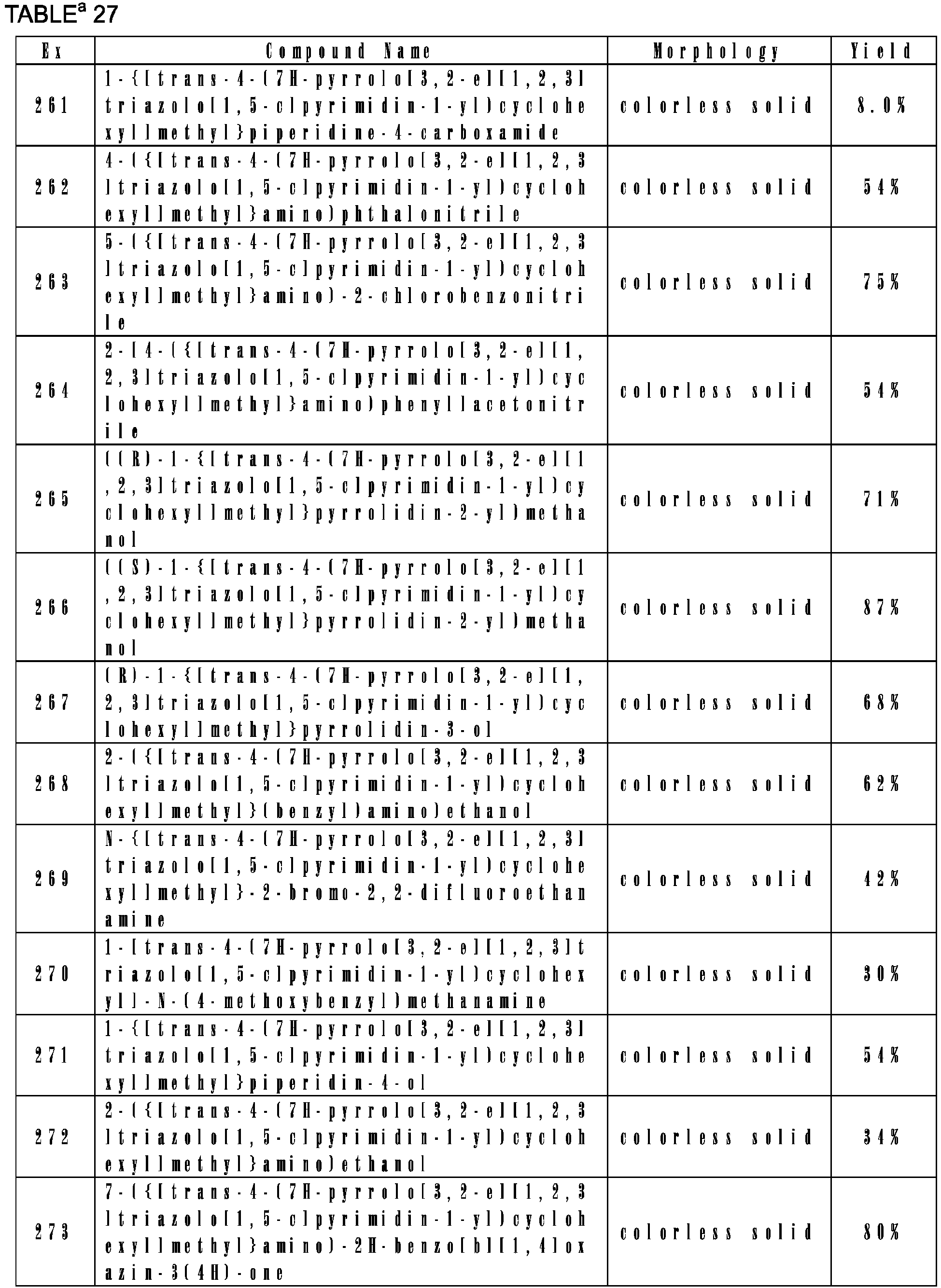
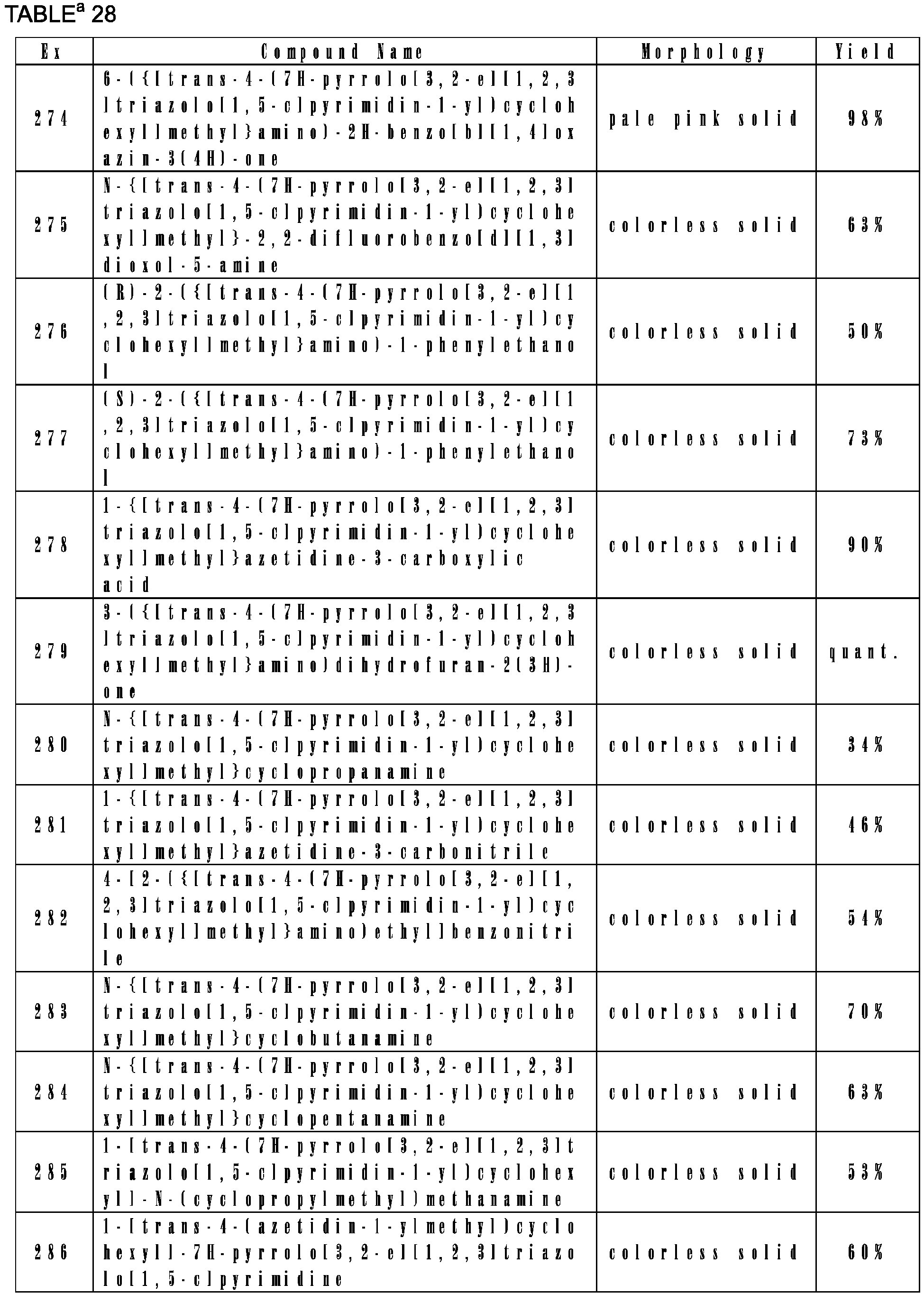


- trans-4-(7H-Pyrrolo[3,2-e][1,2,3]triazolo[1,5-c]pyrimidin-1-yl)cyclohexanecarboxylic acid (10.0 mg, 0.0350 mmol) obtained in Synthetic Examplea 80 in N,N-dimethylformamide (1 mL) was mixed with 1-(3-dimethylaminopropyl)-3-ethylcarbodiimide hydrochloride (8.10 mg, 0.0420 mmol), 1-hydroxybenzotriazole (4.70 mg, 0.0350 mmol) and 3-amino-1,1,1-trifluoro-2-phenylpropan-2-ol (7.20 mg, 0.0350 mmol) obtained in Reference Synthetic Examplea 101 and stirred at room temperature for one day. After addition of saturated aqueous ammonium chloride, the reaction mixture was extracted with ethyl acetate, The organic layer was dried over anhydrous sodium sulfate and concentrated under reduced pressure. The residue was purified by silica gel thin layer chromatography (ethyl acetate / hexane = 1/1 (v/v)) to give the title compound as a colorless solid (5.80 mg, yield 35%).
- The reactions in Synthetic Examplea 346 were carried out in substantially the same manners except that 3-amino-1,1,1-trifluoro-2-(4-fluorophenyl)propan-2-ol obtained in Reference Synthetic Examplea 102 was used instead of 3-amino-1,1,1-trifluoro-2-phenylpropan-2-ol to give the title compound as a colorless solid (7.37 mg, yield 43%).
- The reactions in Synthetic Examplea 206 were carried out in substantially the same manners except that ammonium chloride, 5-methylfurfurylamine, 4-(aminomethyl)benzonitrile hydrochloride, 2-phenylglycinonitrile hydrochloride, 2-(4-chlorophenyl)ethylamine, (S)-2-amino-1-phenylethanol, 2,2,2-trifluoroethylamine hydrochloride, 2-aminoacetonitrile hydrochloride, 3-aminopropionitrile, (S)-pyrrolidine-3-carbonitrile, (S)-pyrrolidine-3-ol, cyclopropylamine, 2-aminoethanol, 3-hydroxyazetidine hydrochloride, 4-(2-aminoethyl)benzonitrile or azetidine-3-carbonitrile hydrochloride was used instead of 4-fluoroaniline to give the compounds of Synthetic Examplesa 348 to 363. The names, morphologies and yields of the synthesized compounds are shown in Tablesa 34 to 35.


- The reactions in Synthetic Examplea 77 were carried out in substantially the same manners except that sodium benzene sulfinate, sodium 4-fluorobenzenesulfinate or sodium cyclopropanesulfinate was used instead of sodium methanesulfinate to give the compounds of Synthetic Examplesa 364 to 366. The names, morphologies and yields of the synthesized compounds are shown in Tablea 36.

- 2,3-Dichloro-5,6-dicyano-p-benzoquinone (50.0 mg, 0.221 mmol) and triphenylphosphine (58.0 mg, 0.221 mmol) in dichloromethane (3 mL) were mixed with tetrabutylammonium iodide (81.7 mg, 0.221 mmol) and [trans-4-(7H-pyrrolo[3,2-e][1,2,3]triazolo[1,5-c]pyirimidin-1-yl)cyclohexyl]methanol (50.0 mg, 0.184 mmol) obtained in Synthetic Examplea 10 and then was stirred at 40°C for 8 hours. After addition of water, the reaction mixture was extracted with ethyl acetate. The organic layer was dried over anhydrous sodium sulfate and concentrated under reduced pressure. The residue was purified by silica gel column chromatography (hexane / ethyl acetate = 1/1 → 3/2 (v/v)) to give the title compound as a colorless solid (51.9 mg, yield 74%).
- 1-[trans-4-(Iodomethyl)cyclohexyl]-7H-pyrrolo[3,2-e][1,2,3]triazolo[1,5-c]pyrimidine (50.0 mg, 0.131 mmol) and sodium trifluoromethylsulfinate (205 mg, 1.31 mmol) in N,N-dimethylformamide(3 mL) were stirred at 100°C for 26 hours. After addition of water, the reaction mixture was extracted with ethyl acetate. The organic layer washed with saturated aqueous sodium hydrogen carbonate, saturated aqueous ammonium chloride and saturated aqueous sodium chloride, dried over anhydrous sodium sulfate and concentrated under reduced pressure. The residue was purified by silica gel column chromatography (hexane / ethyl acetate = 3/2 → 1/1 (v/v)) and preparative HPLC (Waters XBridge Prep C18µm ODS, 19x100mm, acetonitrile / 0.1% aqueous formic acid solution = 20/80 → 80/20(v/v)) to give the title compound as a colorless solid (6.30 mg, yield 12%).
- 1-[trans-4-(Bromomethyl)cyclohexyl]-7H-pyrrolo[3,2-e][1,2,3]triazolo[1,5-c]pyrimidine (50.0 mg, 0.150 mmol) obtained in Synthetic Examplea 74 in tetrahydrofurane (2 mL) was mixed with trimethylsilylazide (39.0 µL, 0.299 mmol) and tetrabutylammonium fluoride - tetrahydrofuran solution (1 M, 299 µL, 0.299 mmol) and then stirred at 50°C for 3 hours. After addition of water, the reaction mixture was extracted with ethyl acetate. The organic layer was washed with saturated aqueous sodium chloride, dried over anhydrous sodium sulfate and concentrated under reduced pressure. The residue was washed with ethyl acetate / hexane (1/5 (v/v)) to give the title compound as a colorless solid (30.6 mg, yield 69%).
- 1-[trans-4-(Azidomethyl)cyclohexyl]-7H-pyrrolo[3,2-e][1,2,3]triazolo[1,5-c]pyrimidine (30.0 mg, 0.101 mmol) and 2-methyl-3-butyn-2-ol (12.0 µL, 0.122 mmol) in dichloromethane (3 mL) were mixed with copper(II) sulfate (24.0 mg, 0.152 mmol) and sodium ascorbate (60.0 mg, 0.304 mmol) and then stirred at 80°C for 2 hours. After addition of water, the reaction mixture was extracted with ethyl acetate. The organic layer was washed with saturated aqueous sodium hydrogen carbonate, dried over anhydrous sodium sulfate and concentrated under reduced pressure. The residue was purified by silica gel column chromatography (hexane / ethyl acetate = 4/1 → 0/1 →ethyl acetate / methanol=20/1 (v/v)) to give the title compound as a colorless solid (13.2 mg, yield 34%).
- 1-[trans-4-(Azidomethyl)cyclohexyl]-7H-pyrrolo[3,2-e][1,2,3]triazolo[1,5-c]pyrimidine (127 mg, 0.427 mmol) obtained in Synthetic Examplea 369 and 5% palladium-carbon (12.7 mg) in methanol (3 mL) and dichloromethane (3 mL) were stirred at room temperature for 4 hours under a hydrogen atmosphere. The reaction mixture was filtered, and the filtrate was concentrated under reduced pressure. The residue was purified by silica gel column chromatography (ethyl acetate / methanol=1/0 → 10/1 (v/v/) to give the title compound as a colorless solid (95.0 mg, yield 82%).
- [trans-4-(7H-Pyrrolo[3,2-e][1,2,3]triazolo[1,5-c]pyrimidin-1-yl)cyclohexyl]methanamine (40.0 mg, 0.148 mmol), 2-cyanoacetic acid (15.0 mg, 0.178 mmol) and O-(7-azabenzotriazol-1-yl)-N,N,N',N'-tetramethyluronium hexafluorophosphate (68.0 mg, 0.178 mmol) in N,N-dimethylformamide (2 mL) were mixed with N,N-diisopropylethylamine (57.0 µL, 0.326 mmol) and stirred at room temperature for 16 hours. After addition of water, the reaction mixture was extracted with ethyl acetate. The organic layer was washed with saturated aqueous sodium hydrogen carbonate, dried over anhydrous sodium sulfate and concentrated under reduced pressure. The residue was purified by silica gel column chromatography (hexane / acetone = 1/1 → 2/3 (v/v)) to give the title compound as a colorless solid (11.4 mg, yield 23%).
- The reactions in Synthetic Examplea 372 were carried out in substantially the same manners except that 3,3,3-trifluoropropanoic acid was used instead of 2-cyanoacetic acid to give the title compound as a colorless solid (5.00 mg, yield 12%). SYNTHETIC EXAMPLEa 374
- 3-Chloro-5-methyl-1H-pyrazole-4-carbaldehyde (100 mg, 0.692 mmol) in N,N-dimethylformamide (2 mL) was mixed with potassium carbonate (287 mg, 2.08 mmol) and 2,2,2-trifluoroethyl trifluoromethanesulfonate (200 µL, 1.38 mmol) and stirred at room temperature for 1 day. After addition of saturated aqueous ammonium chloride, the reaction mixture was extracted with chloroform. The organic layer was dried over anhydrous sodium sulfate and concentrated under reduced pressure. The residue and 1-(piperidin-4-yl)-7H-pyrrolo[3,2-e][1,2,3]triazolo[1,5-c]pyrimidine acetate (20.0 mg, 0.0660 mmol) obtained in Reference Synthetic Examplea 104 were dissolved in methanol (1 mL) and mixed with nicotinic acid (12.3 mg, 0.0990 mmol) and 2-picoline borane (10.7 mg, 0.0990 mmol). The reaction mixture was stirred at room temperature for 1 day. After addition of 1 M aqueous sodium hydroxide, the reaction mixture was extracted with chloroform. The organic layer was dried over anhydrous sodium sulfate and concentrated under reduced pressure. The residue was purified by silica gel thin layer chromatography (methanol / chloroform = 1/10 (v/v)) to give the title compound as a colorless solid (2.35 mg, yield 8%).
- The reactions in Synthetic Examplea 32 were carried out in substantially the same manners except that 4-cyanophenethyl 4-methylbenzenesulfonate (Reference Synthetic Examplea 132) was used instead of benzyl bromide to give the title compound as a colorless solid (7.03mg, yield 29%).
- 1-(Piperidin-4-yl)-7H-pyrrolo[3,2-e][1,2,3]triazolo[1,5-c]pyrimidine acetate (30.0 mg, 0.0992 mmol) obtained in Reference Synthetic Examplea 104 in N,N-dimethylformamide (1 mL) was mixed with 4-fluorobenzonitrile (18.0 mg, 0.149 mmol) and potassium carbonate (27.4 mg, 0.198 mmol) and then stirred at 80°C for 31 hours. After addition of water, the reaction mixture was extracted with chloroform. The organic layer was dried over anhydrous sodium sulfate and concentrated under reduced pressure. The residue was purified by silica gel thin layer chromatography (methanol / chloroform = 1/19 (v/v)) to give the title compound as a colorless solid (0.520mg, yield 2%).
- 4-{[4-(7H-Pyrrolo[3,2-e][1,2,3]triazolo[1,5-c]pyrimidin-1-yl)piperidin-1-yl]methyl}benzonitrile (20.0 mg, 0.0660 mmol) obtained in Synthetic Examplea 34 in N,N-dimethylformamide (1 mL) was mixed with N-chlorosuccinimide (10.7 mg, 0.0990 mmol) and stirred at room temperature for 1 day. After addition of 1 M aqueous sodium hydroxide, the reaction mixture was extracted with chloroform. The organic layer was dried over anhydrous sodium sulfate and concentrated under reduced pressure. The residue was purified by silica gel thin layer chromatography (methanol / chloroform = 1/10 (v/v)) to give the title compound as a colorless solid (13.1 mg, yield 48%).
- The reactions in Synthetic Examplea 121 were carried out in substantially the same manners except that (1R,2S)-1-amino-2,3-dihydro-1H-inden-2-ol, (1 S,2R)-1-amino-2,3-dihydro-1H-inden-2-ol or 3,3'-azanediyldipropanenitrile was used instead of 4-aminobenzonitrile to give cis/trans mixture of the compounds of Synthetic Examplesa 378 to 380. The names, morphologies and yields of the compounds synthesized are shown in Tablea 37.
TABLEa 37 Ex Compound Name Morphology Yield 378 (1R,2S)-1-{[4-(7H-pyrrolo[3,2-e][1,2, 3]triazolo[1,5-c]pyrimidin-1-yl)cyclo hexyl]amino}-2,3-dihydro-1H-inden-2-o l pale yellow solid 63% 379 (1S,2R)-1-{[4-(7H-pyrrolo[3,2-e][1,2, 3]triazolo[1,5-c]pyrimidin-1-yl)cyclo hexyl]amino}-2,3-dihydro-1H-inden-2-o l pale yellow solid 78% 380 3,3'-{[4-(7H-pyrrolo[3,2-e][1,2,3]tri azolo[1,5-c]pyrimidin-1-yl)cyclohexyl ]azanediyl}dipropanenitrile colorless solid 22% - The reactions in Synthetic Examplea 136 were carried out in substantially the same manners except that 4-fluoroaniline, 2-bromo-2,2-difluoroethanamine hydrochloride (Reference Synthetic Examplea 131), 2,2,3,3,3-pentafluoropropylamine or 2-amino-N-(2,2,2-trifluoroethyl)acetamide was used instead of 3-phenylpropan-1-amine to give the compounds of Synthetic Examplesa 381 a to 384a in less polar fractions and the compounds of Synthetic Examplesa 381 b to 384b in more polar fractions. The names, morphologies and yields of the compounds synthesized are shown in Tablea 38.

- The reactions in Synthetic Examplea 136 were carried out in substantially the same manners except that 3-amino-1,1,1-trifluoro-2-(pyridin-3-yl)propan-2-ol, 3-amino-1,1,1-trifluoro-2-[4-(methylthio)phenyl]propan-2-ol, 3-amino-1,1,1-trifluoro-2-(6-methoxypyridin-3-yl)propan-2-ol, 3-amino-1,1,1-trifluoro-2-(4-methoxyphenyl)propan-2-ol, [trans-2-(4-fluorophenyl)cyclopropyl]methanamine, 3-amino-2-(3,4-dimethoxyphenyl)-1,1,1-trifluoropropan-2-ol, 4-(2-aminoethyl)benzonitrile, cyclopropylamine, 2-aminoacetonitrile hydrochloride, 3-aminopropanenitrile, 2,2,2-trifluoroethanamine hydrochloride, cyclopropylmethanamine, dimethylamine (2M solution in tetrahydrofuran), methanamine (2M solution in methanol), 2,2-difluoroethanamine or 1,1,1,3,3,3,-hexafluoropropan-2-amine was used instead of 3-phenylpropan-1-amine to give the compounds of Synthetic Examplesa 385b to 400b in more polar fractions. The names, morphologies and yields of the compounds synthesized are shown in Tablesa 39 to 40.


- The reactions in Synthetic Examplea 141 were carried out in substantially the same manners except that 1-(cis-4-{[(tert-butyldimethylsilyl)oxy]methyl}cyclohexyl)-7H-pyrrolo[3,2-e][1,2,3]triazolo[1,5-c]pyrimidine (Reference Synthetic Examplea 135a) was used instead of 1-(trans-4-{[(tert-butyldimethylsilyl)oxy]methyl}cyclohexyl)-7H-pyrrolo[3,2-e][1,2,3]triazolo[1,5-c]pyrimidine to give the title compound as a pale pink solid (297 mg, yield 57%).
- The reactions in Synthetic Examplea 78 were carried out in substantially the same manners except that [cis-4-(7H-pyrrolo[3,2-e][1,2,3]triazolo[1,5-c]pyrimidin-1-yl)cyclohexyl]methanol was used instead of [trans-4-(7H-pyrrolo[3,2-e][1,2,3]triazolo[1,5-c]pyrimidin-1-yl)cyclohexyl]methanol to give the title compound as a colorless solid (192 mg, yield 88%).
- cis-4-(7H-Pyrrolo[3,2-e][1,2,3]triazolo[1,5-c]pyrimidin-1-yl)cyclohexanecarbaldehyde (30.0 mg, 0.111 mmol) in methanol (2 mL), tetrahydrofuran (1 mL) and acetic acid (100 µL) was mixed with 3-hydroxyazetidine hydrochloride (41.3 mg, 0.334 mmol) and stirred at room temperature for 1 hour. The reaction mixture was mixed with 2-picoline borane (23.8 mg, 0.334 mmol) and stirred at room temperature for 14 hours. After addition of water, the reaction mixture was extracted with ethyl acetate. The aqueous layer was adjusted to pH 10 with 1 M aqueous sodium hydroxide, and extracted with ethyl acetate. The organic layer was dried over anhydrous sodium sulfate and concentrated under reduced pressure. The residue was washed with hexane / ethyl acetate (5/1 (v/v)) to give the title compound as a colorless solid (7.40 mg, yield 31%).
- The reactions in Synthetic Examplea 403 were carried out in substantially the same manners except that (S)-pyrrolidin-3-ol hydrochloride, (R)-pyrrolidin-3-ol hydrochloride or cyclopropylamine hydrochloride (Reference Synthetic Examplea 136) was used instead of 3-hydroxyazetidine hydrochloride to give the compounds of Synthetic Examplesa 404 to 406. The names, morphologies and yields of the compounds synthesized are shown in Tablea 41.

- N-{[trans-4-(7H-Pyrrolo[3,2-e][1,2,3]triazolo[1,5-c]pyrimidin-1-yl)cyclohexyl]methyl}-2,2,2-trifluoroethanamine (20.0 mg, 0.0567 mmol) obtained in Synthetic Examplea 188 in N,N-dimethylformamide (1 mL) was mixed with 2-cyanoacetic acid (9.60 mg, 0.113 mmol) and O-(7-azabenzotriazol-1-yl)-N,N,N',N'-tetramethyluronium hexafluorophosphate (45.0 mg, 0.113 mmol) and stirred with N,N-diisopropylethylamine (0.0346 mL, 0.198 mmol) at room temperature for 2 hours. After addition of water, the reaction mixture was extracted with ethyl acetate. The organic layer was washed with saturated aqueous sodium chloride, dried over anhydrous sodium sulfate and concentrated under reduced pressure. The residue was purified by silica gel column chromatography (hexane / ethyl acetate = 1/1 → 6/1 (v/v)) to give the title compound as a colorless solid (23.6 mg, yield 99%).
- The reactions in Synthetic Examplea 407 were carried out in substantially the same manners except that 2-({[trans-4-(7H-pyrrolo[3,2-e][1,2,3]triazolo[1,5-c]pyrimidin-1-yl)cyclohexyl]methyl}amino)acetonitrile (Synthetic Examplea 259), N-{[trans-4-(7H-pyrrolo[3,2-e][1,2,3]triazolo[1,5-c]pyrimidin-1-yl)cyclohexyl]methyl}cyclopropanamine (Synthetic Examplea 280) or 1-[trans-4-(7H-pyrrolo[3,2-e][1,2,3]triazolo[1,5-c]pyrimidin-1-yl)cyclohexyl]-N-[(5-methylfuran-2-yl)methyl]methanamine (Synthetic Examplea 182) was used instead of N-{[trans-4-(7H-pyrrolo[3,2-e][1,2,3]triazolo[1,5-c]pyrimidin-1-yl)cyclohexyl]methyl}-2,2,2-trifluoroethanamine to give the compounds of Synthetic Examplesa 408 to 410. The names, morphologies and yields of the compounds synthesized are shown in Tablea 42.

- The reactions in Synthetic Examplea 407 were carried out in substantially the same manners except that 3,3,3-trifluoropropionic acid was used instead of 2-cyanoacetic acid to give the title compound as a colorless solid (8.80 mg, yield 33%).
- The reactions in Synthetic Examplea 411 were carried out in substantially the same manners except that 2-({[trans-4-(7H-pyrrolo[3,2-e][1,2,3]triazolo[1,5-c]pyrimidin-1-yl)cyclohexyl]methyl}amino)acetonitrile (Synthetic Examplea 259) was used instead of N-{[trans-4-(7H-pyrrolo[3,2-e][1,2,3]triazolo[1,5-c]pyrimidin-1-yl)cyclohexyl]methyl}-2,2,2-trifluoroethanamine to give the title compound as a colorless solid (6.40 mg, yield 64%).
- trans-4-(7H-Pyrrolo[3,2-e][1,2,3]triazolo[1,5-c]pyrimidin-1-yl)-N-(2,2,2-trifluoroethyl)cyclohexanamine (5.00 mg, 0.0148 mmol) obtained in Synthetic Examplea 395 in methanol (1 mL) and acetic acid (0.1 mL) was mixed with cyclopropanecarbaldehyde (1.60 µL, 0.0222 mmol) and 2-picoline borane (2.30 mg, 0.0222 mmol) and stirred at room temperature for 1 day. After addition of 1 M aqueous sodium hydroxide, the reaction mixture was extracted with ethyl acetate. The orgnic layer was dried over anhydrous sodium sulfate and concentrated under reduced pressure. The residue was purified by silica gel column chromatography (ethyl acetate / hexane = 1/3 → 1/1 (v/v)) to give the title compound as a colorless solid (4.00 mg, yield 70%).
- The reactions in Synthetic Examplea 413 were carried out in substantially the same manners except that 2-({[trans-4-(7H-pyrrolo[3,2-e][1,2,3]triazolo[1,5-c]pyrimidin-1-yl)cyclohexyl]methyl}amino)acetonitrile (Synthetic Examplea 259) or N-{[trans-4-(7H-pyrrolo[3,2-e][1,2,3]triazolo[1,5-c]pyrimidin-1-yl)cyclohexyl]methyl}-2,2,2-trifluoroethanamine (Synthetic Examplea 188) was used instead of trans-4-(7H-pyrrolo[3,2-e][1,2,3]triazolo[1,5-c]pyrimidin-1-yl)-N-(2,2,2-trifluoroethyl)cyclohexanamine to give the compounds of Synthetic Examplesa 414 and 415. The names, morphologies and yields of the compounds synthesized are shown in Tablea 43.

- S-[trans-4-(7H-Pyrrolo[3,2-e][1,2,3]triazolo[1,5-c]pyrimidin-1-yl)cyclohexyl]methyl ethanethioate (127 mg, 0.390 mmol) obtained in Synthetic Examplea 71 in methanol (4 mL) was mixed with ammonium molybdate tetrahydrate (145 mg, 0.117 mmol) and hydrogen peroxide solution (0.63 mL, 7.80 mmol) and stirred at room temperature for 1 day. The reaction mixture was mixed with saturated aqueous sodium thiosulfate, concentrated under reduced pressure and purified by silica gel column chromatography (ethyl acetate / methanol = 4/1 → 1/1 (v/v)). The resulting solid was mixed with water and extracted with n-butanol. The organic layer was dried over anhydrous sodium sulfate and concentrated under reduced pressure to give the title compound as a pale yellow solid (39.8 mg, yield 28%).
- [trans-4-(7H-Pyrrolo[3,2-e][1,2,3]triazolo[1,5-c]pyrimidin-1-yl)cyclohexyl]methanesulfonic acid (17.8 mg, 0.0530 mmol) in dichloromethane (1.5 mL) and N,N-dimethylformamide (1.8 mL) was stirred with thionyl chloride (0.00770 mL, 0.106 mmol) at room temperature for 1 hour. The reaction mixture was concentrated under reduced pressure. The residue was dissolved in dichloromethane (1.0 mL) and mixed with N,N-diisopropylethylamine (0.0923 mL, 0.530 mmol) and cyclopropylamine (0.0148 mL, 0.212 mmol) under cooling with ice and then stirred at room temperature for 1 day. After addition of water, the reaction mixture was extracted with ethyl acetate. The organic layer was washed with saturated aqueous sodium chloride, dried over anhydrous sodium sulfate and concentrated under reduced pressure. The residue was purified by silica gel column chromatography (ethyl hexane / acetate = 4/1 → 1/1 → 1/3 (v/v)) to give the title compound as a brown solid (1.50 mg, yield 7.5%).
- The reactions in Synthetic Examplea 417 were carried out in substantially the same manners except that dimethylamine hydrochloride, 2-aminoacetonitrile hydrochloride or 2,2,2-trifluoroethanamine hydrochloride was used instead of cyclopropylamine to give the compounds of Synthetic Examplesa 418 to 420. The names, morphologies and yields of the compounds synthesized are shown in Tablea 44.

- tert-Butyl 3-(2,2,2-trifluoroethoxy)azetidine-1-carboxylate (350 mg, 1.37 mmol) obtained in Reference Synthetic Examplea 116 in ethyl acetate (1 mL) was mixed with 4 M hydrogen chloride - 1,4-dioxane solution (3 mL) under cooling with ice and then stirred at room temperature for 2 hours. The reaction mixture was concentrated to give a colorless oil (224 mg). The resulting colorless oil (64.0 mg) was dissolved in methanol (2 mL), tetrahydrofuran (1 mL) and acetic acid (100 µL) and stirred with trans-4-(7H-pyrrolo[3,2-e][1,2,3]triazolo[1,5-c]pyrimidin-1-yl)cyclohexanecarbaldehyde (30.0 mg, 0.111 mmol) obtained in Synthetic Examplea 78 at room temperature for 1 hour. The reaction mixture was mixed with 2-picoline borane (23.8 mg, 0.334 mmol) and stirred at room temperature for 14 hours. After addition of water, the reaction mixture was extracted with ethyl acetate. The aqueous layer was adjusted to pH 10 with 1 M aqueous sodium hydroxide, and extracted with ethyl acetate. The organic layer was dried over anhydrous sodium sulfate and concentrated under reduced pressure. The residue was washed with hexane / ethyl acetate (5/1 (v/v)) to give the title compound as a light purple solid (14.9 mg, yield 33%).
- The reactions in Synthetic Examplea 421 were carried out in substantially the same manners except that tert-butyl 3-hydroxy-3-methylazetidine-1-carboxylate (Reference Synthetic Examplea 113), tert-butyl 3-(dimethylamino)azetidine-1-carboxylate (Reference Synthetic Examplea 137) or tert-butyl 3-[ethyl(methyl)amino]azetidine-1-carboxylate (Reference Synthetic Examplea 138) was used instead of tert-butyl 3-(2,2,2-trifluoroethoxy)azetidine-1-carboxylate to give the compounds of Synthetic Examplesa 422 to 424. The names, morphologies and yields of the compounds synthesized are shown in Tablea 45.

- The reactions in Synthetic Examplea 88 were carried out in substantially the same manners except that 3-(trifluoromethyl)azetidin-3-ol hydrochloride (Reference Synthetic Examplea 115) was used instead of thiomorpholine 1,1-dioxide to give the title compound as a colorless solid (11.9 mg, yield 27%).
- 1-{[trans-4-(7H-Pyrrolo[3,2-e][1,2,3]triazolo[1,5-c]pyrimidin-1-yl)cyclohexyl]methyl}azetidine-3-carboxylic acid (40.0 mg, 0.113 mmol) obtained in Synthetic Examplea 278 and 2,2,2-trifluoroethanamine hydrochloride (19.9 mg, 0.147 mmol) in N,N-dimethylformamide (2 mL) were mixed with N,N-diisopropylethylamine (74.9 µL, 0.440 mmol) and (1-cyano-2-ethoxy-2-oxoethylidenaminooxy)dimethylamino-morpholino-carbenium hexafluorophosphate (62.8 mg, 0.147 mmol) and stirred at room temperature for 1 day. After addition of saturated aqueous sodium hydrogen carbonate, the reaction mixture was extracted with ethyl acetate. The organic layer was dried over anhydrous magnesium sulfate and concentrated under reduced pressure. The residue was washed with hexane / chloroform (3/1 (v/v)) to give the title compound as a pale yellow solid (5.40 mg, yield 11%).
- [trans-4-(7H-Pyrrolo[3,2-e][1,2,3]triazolo[1,5-c]pyrimidin-1-yl)cyclohexyl]methanamine (20.0 mg, 0.0740 mmol) obtained in Synthetic Examplea 371 in dichloromethane (2 mL) was mixed with methanesulfonyl chloride (13.8 µL, 0.0814 mmol) under cooling with ice and then stirred at room temperature for 65 hours. After addition of water, the reaction mixture was extracted with ethyl acetate. The aqueous layer was washed with 1 M hydrochloric acid and saturated aqueous ammonium chloride, dried over anhydrous sodium sulfate and concentrated under reduced pressure. The residue was washed with chloroform / hexane (1/5 (v/v)) to give the title compound as a colorless solid (6.00 mg, yield 23%).
- [trans-4-(7H-Pyrrolo[3,2-e][1,2,3]triazolo[1,5-c]pyrimidin-1-yl)cyclohexyl]methanamine (11.2 mg, 0.0414 mmol) obtained in Synthetic Examplea 371 and tert-butyl 3-(cyanomethylene)azetidine-1-carboxylate (10.4 mg, 0.0535 mmol) obtained in Reference Synthetic Examplea 139 in acetonitrile (2 mL) were mixed with 1,8-diazabicyclo[5.4.0]undec-7-ene (12.0 µL, 0.0535 mmol) and stirred at room temperature for 1 day. After addition of water, the reaction mixture was extracted with ethyl acetate. The organic layer was washed with saturated aqueous sodium chloride, dried over anhydrous sodium sulfate and concentrated under reduced pressure. The residue was purified by silica gel column chromatography (NH-silica gel manufactured by Fuji Silysia Chemical Ltd.; chloroform / methanol = 20/1 (v/v)) to give the title compound as a pale yellow solid (14.2 mg, yield 74%).
- [trans-4-(7H-Pyrrolo[3,2-e][1,2,3]triazolo[1,5-c]pyrimidin-1-yl)cyclohexylcarbaldehyde (60.0 mg, 0.223 mmol) obtained in Synthetic Examplea 78 in methanol (1 mL) and water (1 mL) was mixed with hydroxylamine hydrochloride (31.0 mg, 0.446 mmol) and sodium hydrogen carbonate (37.4 mg, 0.446 mmol) and then stirred at 50°C for 5 hours. The reaction mixture was filtered, and the resulting solid washed with water, water / methanol (10/1 (v/v)) and hexane to give the title compound as a colorless solid (44.6 mg, yield 70%).
- trans-4-(7H-Pyrrolo[3,2-e][1,2,3]triazolo[1,5-c]pyrimidin-1-yl)cyclohexanecarbaldehyde oxime (37.4 mg, 0.132 mmol) in dichloromethane (3 mL) was mixed with trifluoromethanesulfonic anhydride (24.0 µL, 0.145 mmol) and 1,8-diazabicyclo[5.4.0]undec-7-ene (43.0 µL, 0.289 mmol) and stirred at room temperature for 18 hours. After addition of water, the reaction mixture was extracted with ethyl acetate. The organic layer was washed with saturated aqueous sodium hydrogen carbonate, dried over anhydrous magnesium sulfate and concentrated under reduced pressure. The residue was purified by silica gel column chromatography (hexane / ethyl acetate = 3/2 (v/v)) and washed with hexane / ethyl acetate (5/1 (v/v)) to give the title compound as a colorless solid (20.7 mg, yield 59%).
- trans-4-(7H-Pyrrolo[3,2-e][1,2,3]triazolo[1,5-c]pyrimidin-1-yl)cyclohexylcarbaldehyde (50.0 mg, 0.186 mmol) obtained in Synthetic Examplea 78 and malononitrile (24.5 mg, 0.371 mmol) were mixed with acetic acid (3 mL), piperidine (18.3 µL, 0.186 mmol) and dichloromethane (2 mL) under cooling with ice and stirred for 1 hours. The reaction mixture was mixed anhydrous sodium sulfate and then stirred room temperature for 17 hours. After addition of water, the reaction mixture was extracted with ethyl acetate. The organic layer was washed with saturated aqueous sodium hydrogen carbonate, dried over anhydrous sodium sulfate and concentrated under reduced pressure. The residue was purified by silica gel column chromatography (hexane / acetone = 2/1 → 3/2 (v/v)) to give the title compound as a colorless solid (36.3 mg, yield 62%).
- 2-{[trans-4-(7H-Pyrrolo[3,2-e][1,2,3]triazolo[1,5-c]pyrimidin-1-yl)cyclohexyl]methylene}malononitrile (25.8 mg, 0.0812 mmol) in tetrahydrofuran (3 mL) was mixed with diethyl 1,4-dihydro-2,6-dimethylpyridine-3,5-dicarboxylate (30.8 mg, 0.122 mmol) and stirred at room temperature for 1 hours. After addition of water, the reaction mixture was extracted with ethyl acetate. The organic layer was washed with saturated aqueous ammonium chloride, dried over anhydrous sodium sulfate and concentrated under reduced pressure. The residue was purified by silica gel column chromatography (hexane / ethyl acetate = 1/1 → 1/2 → 0/1 (v/v)) to give the title compound as a colorless solid (14.2 mg, yield 55%).
- 1-[trans-4-(Iodomethyl)cyclohexyl]-7H-pyrrolo[3,2-e][1,2,3]triazolo[1,5-c]pyrimidine (15.0 mg, 0.0393 mmol) obtained in Synthetic Examplea 367 in tetrahydrofuran (1 mL) was mixed with (trifluoromethyl)trimethysilane (7.60 µL, 0.0512 mmol) and tetrabutylammonium fluoride - tetrahydrofuran solution (1 M, 51.2 µL, 0.0512 mmol) under cooling with ice and then stirred at room temperature for 2 days. The reaction mixture was mixed with water, and the precipitate was collected by filtration. The resulting residue was purified by silica gel thin layer chromatography (ethyl acetate / hexane = 1/1 (v/v)) to give the title compound as a colorless solid (3.80 mg, yield 38%). SYNTHETIC EXAMPLEa 434
- Diethyl (cyanomethyl)phosphonate (37.0 µL, 0.235 mmol) in tetrahydrofuran (1 mL) was mixed with sodium hydride (55 wt% dispersion in mineral oil, 10.0 mg, 0.235 mmol) under cooling with ice and then stirred for 30 minutes. The reaction mixture was mixed with 4-(7H-pyrrolo[3,2-e][1,2,3]triazolo[1,5-c]pyrimidin-1-yl)cyclohexanone (20.0 mg, 0.0783 mmol) obtained in Synthetic Examplea 82 and then stirred at room temperature for 30 minutes. After addition of water, the reaction mixture was extracted with ethyl acetate. The organic layer was washed with saturated aqueous sodium chloride, dried over anhydrous magnesium sulfate and concentrated under reduced pressure. The residue was purified by silica gel column chromatography (ethyl acetate / hexane = 1/2 → 1/1 → 1/0 (v/v)) to give the title compound as a colorless solid (20.0 mg, yield 92%).
- 2-[4-(7H-Pyrrolo[3,2-e][1,2,3]triazolo[1,5-c]pyrimidin-1-yl)cyclohexylidene]acetonitrile (20.0 g, 0.0720 mmol) in tetrahydrofuran (10 mL) were stirred with 5% palladium-carbon (10 mg) at room temperature for 4 hours under a hydrogen atmosphere. The reaction mixture was filtered, and the filtrate was concentrated under reduced pressure. The residue was purified by silica gel thin layer chromatography (hexane / ethyl acetate = 1/1 (v/v)) to give 2-[cis-4-(7H-pyrrolo[3,2-e][1,2,3]triazolo[1,5-c]pyrimidin-1-yl)cyclohexyl]acetonitrile (Synthetic Examplea 435a; colorless solid, 1.30 mg, yield 6%) in a less polar fraction and 2-[trans-4-(7H-pyrrolo[3,2-e][1,2,3]triazolo[1,5-c]pyrimidin-1-yl)cyclohexyl]acetonitrile (Synthetic Examplea 435b; colorless solid, 3.40 mg, yield 17%) in a more polar fraction.
- The reactions in Synthetic Examplea 434 were carried out in substantially the same manners except that ethyl 2-(diethoxyphosphoryl)acetate or diethyl (1-cyanoethyl)phosphonate was used instead of diethyl (cyanomethyl)phosphonate to give the compounds of Synthetic Examplesa 436 and 437. The names, morphologies and yields of the compounds synthesized are shown in Tablea 46.

- The reactions in Synthetic Examplea 435 were carried out in substantially the same manners except that ethyl 2-[4-(7H-pyrrolo[3,2-e][1,2,3]triazolo[1,5-c]pyrimidin-1-yl)cyclohexylidene]acetate obtained in Synthetic Examplea 436 was used instead of 2-[4-(7H-pyrrolo[3,2-e][1,2,3]triazolo[1,5-c]pyrimidin-1-yl)cyclohexylidene]acetonitrile to give the title compound as a colorless solid (cis / trans mixture ; 29.0 mg, yield 51%). SYNTHETIC EXAMPLEa 439
- The reactions in Synthetic Examplea 435 were carried out in substantially the same manners except that 2-[4-(7H-pyrrolo[3,2-e][1,2,3]triazolo[1,5-c]pyrimidin-1-yl)cyclohexylidene]propanenitrile obtained in Synthetic Examplea 437 was used instead of 2-[4-(7H-pyrrolo[3,2-e][1,2,3]triazolo[1,5-c]pyrimidin-1-yl)cyclohexylidene]acetonitrile to give 2-[cis-4-(7H-pyrrolo[3,2-e][1,2,3]triazolo[1,5-c]pyrimidin-1-yl)cyclohexyl]propanenitrile (Synthetic Examplea 439a; colorless solid, 0.750 mg, yield 7%) in a less polar fraction and 2-[trans-4-(7H-pyrrolo[3,2-e][1,2,3]triazolo[1,5-c]pyrimidin-1-yl)cyclohexyl]propanenitrile (Synthetic Examplea 439b; colorless solid, 2.00 mg, yield 19%) in a more polar fraction.
- The reactions in Synthetic Examplea 434 were carried out in substantially the same manners except that trans-4-(7H-pyrrolo[3,2-e][1,2,3]triazolo[1,5-c]pyrimidin-1-yl)cyclohexanecarbaldehyde (30.0 mg, 0.111 mmol) obtained in Synthetic Examplea 78 was used instead of 4-(7H-pyrrolo[3,2-e][1,2,3]triazolo[1,5-c]pyrimidin-1-yl)cyclohexanone to give the title compound as a colorless solid (3.60 mg, yield 7%).
- The reactions in Synthetic Examplea 438 were carried out in substantially the same manners except that (E)-3-[trans-4-(7H-pyrrolo[3,2-e][1,2,3]triazolo[1,5-c]pyrimidin-1-yl)cyclohexyl]acrylonitrile obtained in Synthetic Examplea 440 was used instead of ethyl 2-[4-(7H-pyrrolo[3,2-e][1,2,3]triazolo[1,5-c]pyrimidin-1-yl)cyclohexylidene]acetate to give the title compound as a colorless solid (7.30 mg, yield 72%).
- Ethyl 2-[4-(7H-pyrrolo[3,2-e][1,2,3]triazolo[1,5-c]pyrimidin-1-yl)cyclohexyl]acetate (10.0 mg, 0.0305 mmol) obtained in Synthetic Examplea 438 in tetrahydrofuran (1 mL) was mixed with ethanol (0.5 mL), water (0.25 mL) and 1 M aqueous lithium hydroxide (60 µL, 0.0611 mmol) and stirred at room temperature for 4 hours. The reaction mixture was mixed with 1 M hydrochloric acid and concentrated under reduced pressure. The residue was dissolved in N,N-dimethylformamide (2 mL) and stirred with O-(7-azabenzotriazol-1-yl)-N,N,N',N'-tetramethyluronium hexafluorophosphate (23.2 mg, 0.0610 mmol), N,N-diisopropylethylamine (21.0 µL, 0.122 mmol) and 2,2,2-trifluoroethanamine hydrochloride (8.30 mg, 0.0610 mmol) at room temperature for 13 hours. After addition of saturated aqueous ammonium chloride, the reaction mixture was extracted with ethyl acetate. The organic layer was washed with saturated aqueous sodium chloride, dried over anhydrous magnesium sulfate and concentrated under reduced pressure. The residue was purified by silica gel thin layer chromatography (ethyl acetate) to give 2-[cis-4-(7H-pyrrolo[3,2-e][1,2,3]triazolo[1,5-c]pyrimidin-1-yl)cyclohexyl]-N-(2,2,2-trifluoroethyl)acetamide (Synthetic Examplea 442a; colorless solid, 5.80 mg, yield 50%) in a less polar fraction and 2-[trans-4-(7H-Pyrrolo[3,2-e][1,2,3]triazolo[1,5-c]pyrimidin-1-yl)cyclohexyl]-N-(2,2,2-trifluoroethyl)acetamide (Synthetic Examplea 442b; colorless solid, 3.10 mg, yield 27%) in a more polar fraction.
- The reactions in Synthetic Examplea 442 were carried out in substantially the same manners except that 2-aminoacetonitrile hydrochloride was used instead of 2,2,2-trifluoroethanamine hydrochloride to give 2-[cis-4-(7H-pyrrolo[3,2-e][1,2,3]triazolo[1,5-c]pyrimidin-1-yl)cyclohexyl]-N-(cyanomethyl)acetamide (Synthetic Examplea 443a; pale brown solid, 7.00 mg, yield 47%) in a less polar fraction and 2-[trans-4-(7H-pyrrolo[3,2-e][1,2,3]triazolo[1,5-c]pyrimidin-1-yl)cyclohexyl]-N-(cyanomethyl)acetamide (Synthetic Examplea 443b; pale brown solid, 3.80 mg, yield 25%) in a more polar fraction.
- Trimethylsulfonium iodide (59.0 µL, 0.269 mmol) in dimethyl sulfoxide (1 mL) was stirred with sodium hydride (55 wt% dispersion in mineral oil, 12.0 mg, 0.269 mmol) at room temperature for 30 minutes. The reaction mixture was mixed with 2-[4-(7H-pyrrolo[3,2-e][1,2,3]triazolo[1,5-c]pyrimidin-1-yl)cyclohexylidene]acetonitrile (15.0 mg, 0.0539 mmol) obtained in Synthetic Examplea 434 and then stirred at room temperature for 15 hours. After addition of water, the reaction mixture was extracted with ethyl acetate. The organic layer was washed with saturated aqueous sodium chloride, dried over anhydrous magnesium sulfate and concentrated under reduced pressure. The residue was purified by silica gel column chromatography (ethyl acetate / hexane = 1/1 (v/v)) to give the title compound as a colorless solid (5.80 mg, yield 37%).
- (3-Hydroxyadamantan-1-yl)(7H-pyrrolo[2,3-d]pyrimidin-4-yl)methanone (22.5 mg, 0.0757 mmol) obtained in Reference Synthetic Examplea 141 in methanol (1.5 mL) was mixed with hydrazine hydrate (0.141 mL, 2,27 mmol) and then stirred at 80°C for 2 hours. The reaction mixture was mixed with hydrazine hydrate (0.118 mL, 1.89 mmol) and acetic acid (1 drop) and stirred at 80°C for 2 hours. The reaction mixture was mixed with ethyl acetate, washed with water and saturated sodium chloride. The organic layer was dried over anhydrous sodium sulfate and concentrated under reduced pressure. The residue was dissolved in chloroform (1.5 mL) and mixed with manganese(IV) oxide (32.9 mg, 0.379 mmol). The reaction mixture was stirred at 70°C for 6 hours. The reaction mixture was filtered, and the filtrate was concentrated under reduced pressure. The residue was purified by silica gel thin layer chromatography (ethyl acetate) and further by silica gel thin layer chromatography (NH-PLC05 plate manufactured by Fuji Silysia Chemical Ltd.: ethyl acetate / hexane = 15/1) to give the title compound as a colorless solid (3.30 mg, yield 14%).
- The structural formulae of the compounds obtained the Reference Synthetic Examplesa and Synthetic Examplesa are shown below in Tablesa 47 to 80. The physical property data on the compounds obtained the Reference Synthetic Examplesa and Synthetic Examplesa are shown below in Tablesa 81 to 151.
TABLEa 47 Rf Structure Rf Structure Rf Structure 1 
2 
3 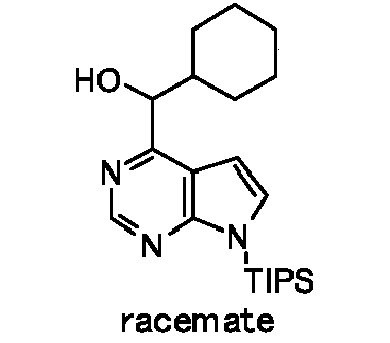
4 
5 
6 
7 
8 
9 
10 
11 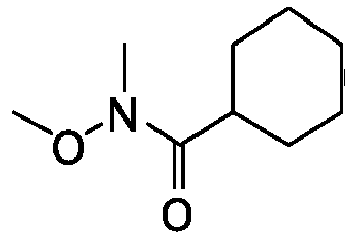
12 
13 
14 
15 
16 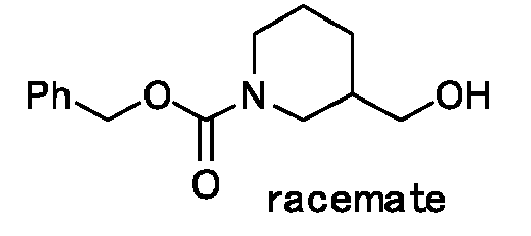
17 
18 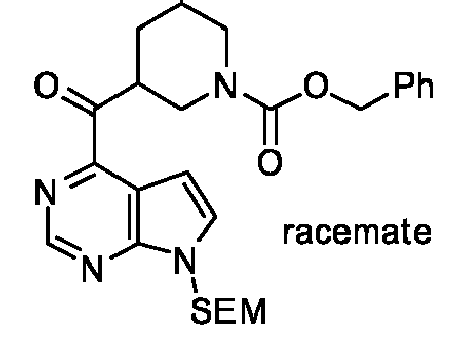
19 
20 
21 
22 
23 
24 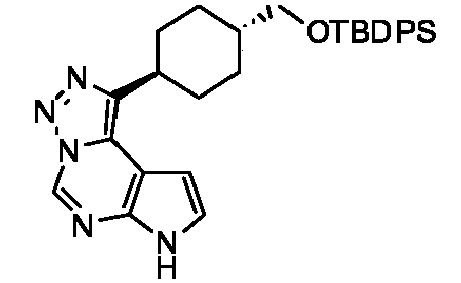
TABLEa 48 Rf Structure Rf Structure Rf Structure 25 
26 
27 
28 
29 
30 
31 
32 
33 
34 
35 
36 
37 
38 
39 
40 
41 
42 
43 
44 
45 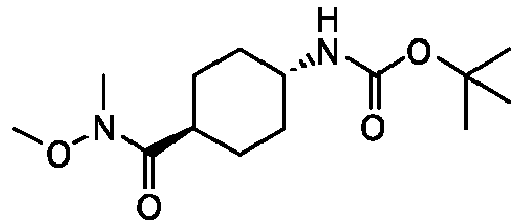
TABLEa 49 Rf Structure Rf Structure Rf Structure 46 
47 
48 
49 
50 
51 
52 
53 
54 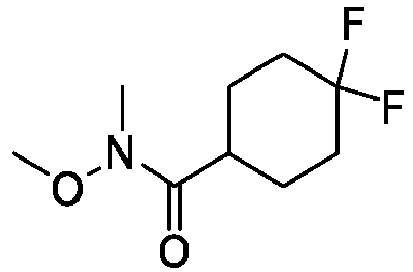
55 
56 
57 
58 
59 
60 
61 
62 
63 
64 
65 
66 
67 
68 
69 
TABLEa 50 Rf Structure Rf Structure Rf Structure 70 
71 
72 
73 
74 
75 
76 
77 
78 
79 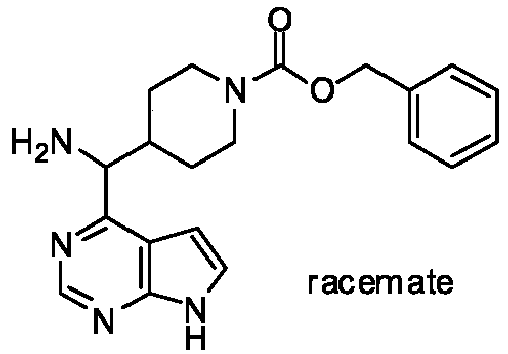
80 
81 
82 
83 
84 
85 
86 
87 
TABLEa 51 Rf Structure Rf Structure Rf Structure 88 
89 
90 
91 
92 
93 
94 
95 
96 
97 
98 
99 
100 
101 
102 
103 
104 
TABLEa 52 Rf Structu re Rf Structure Rf Structure 105 
106 
107 
108 
109 
110 
111 
112 
113 
114 
115 
116 
117 
118 
119 
120 
121 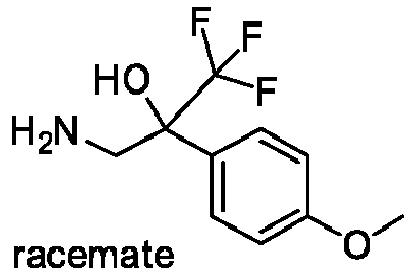
122 
123 
124 
125 
126 
127 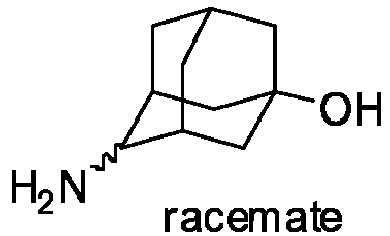
128 a 
128 b 
129 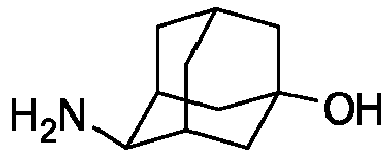
130 
131 
132 
133 
TABLEa 53 Rf Structure Rf Structure Rf Structure 134 
135 a 
135 b 
136 
137 
138 
139 
140 
141 
TABLEa 54 Ex Structure Ex Structure Ex Structure 1 
2 
3 
4 
5 
6 
7 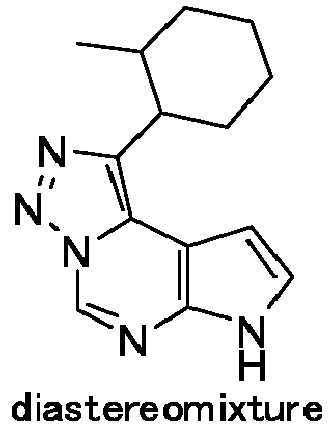
8 
9 
10 
TABLEa 55 Ex Structure Ex Structure Ex Structure 11 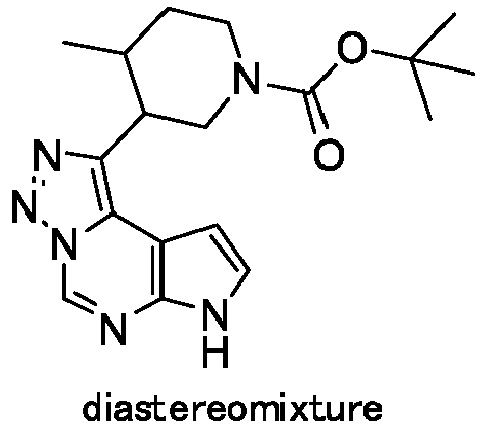
12 
13 
14 
15 
16 
17 
18 
19 
20 
21 
22 
23 
24 
25 
26 
27 
28 
TABLEa 56 Ex Structure Ex Structure Ex Structure 29 
30 
31 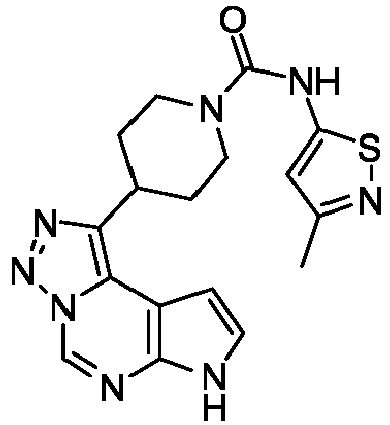
32 
33 
34 
35 
36 
37 
38 
39 
40 
41 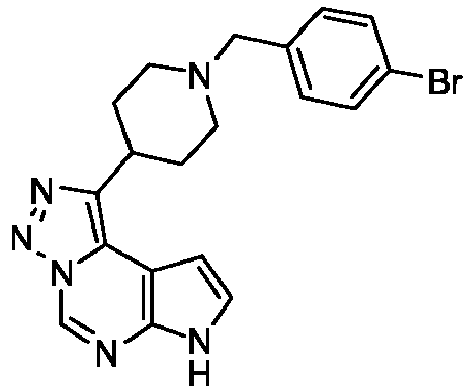
42 
43 
44 
45 
46 
TABLEa 57 Ex Structure Ex Structure Ex Structure 47 
48 
49 
50 
51 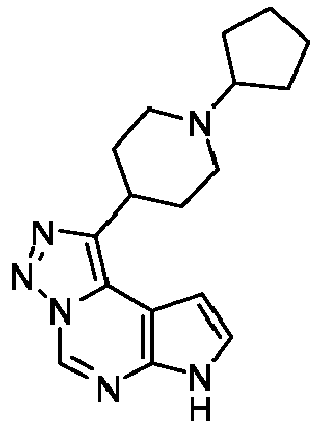
52 
53 
54 
55 
56a 
56b 
57 
58 
59 
60 
61 
62 
63 
TABLEa 58 Ex Structure Ex Structure Ex Structure 64 
65 
66 
67 
68 
69 
70 
71 
72 
73 
74 
75 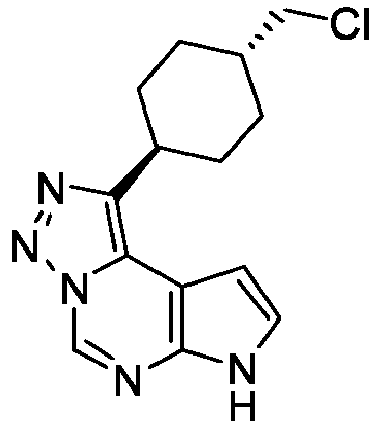
76 
77 
78 
79 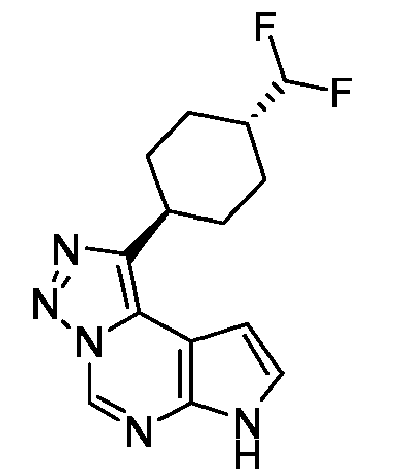
80 
81 
TABLEa 59 Ex Structure Ex Structure Ex Structure 82 
83 
84 
85 
86 
87 
88 
89 
90 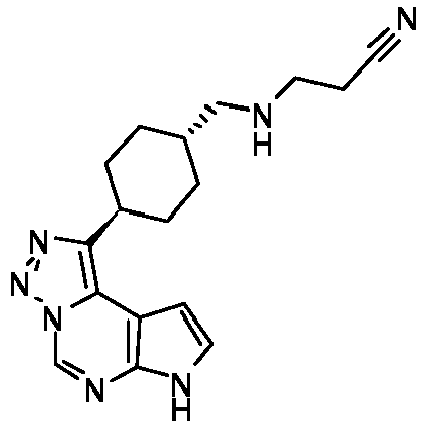
91 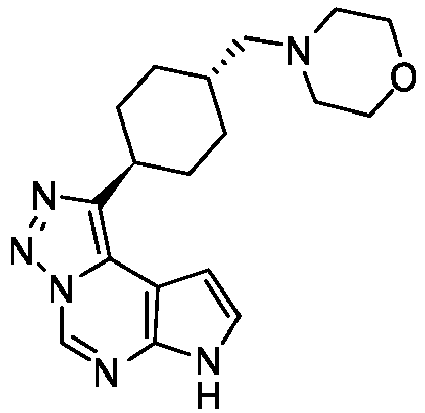
92 
93 
94 
95 
96 
97 
98 
99 
TABLEa 60 Ex Structure Ex Structure Ex Structure 100 
101 
102 
103 
104 
105 
106 
107 
108 
109 
110 
111 
112 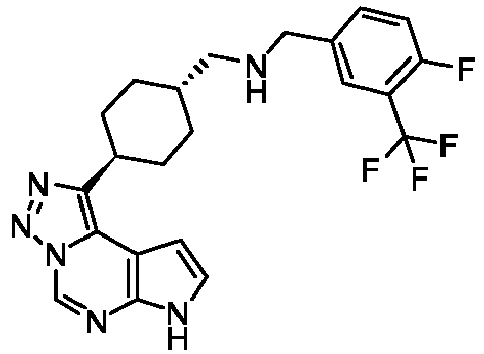
113 
114 
115 
116 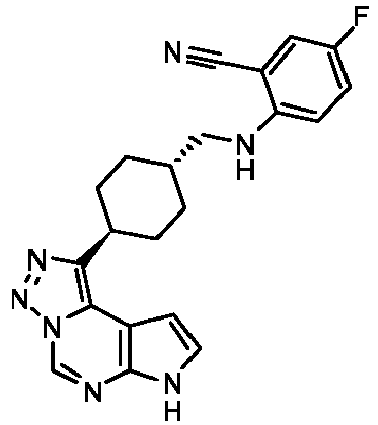
117 
TABLEa 61 Ex Structure Ex Structure Ex Structure 118 
119 
120 
121 
122 
123 
124 
125 
126 
127 
128 
129 
130 
131 
132 
133 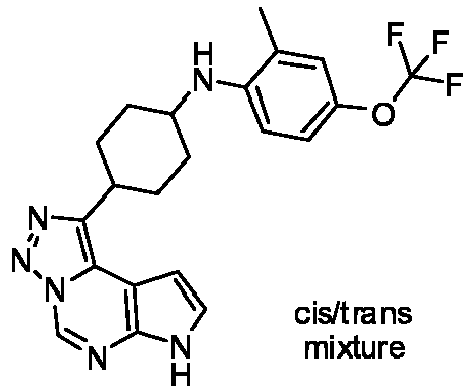
134 a 
134 b 
TABLEa 62 Ex Structure Ex Structure Ex Structure 135 a 
135 b 
136 a 
136 b 
137 a 
137 b 
138 a 
138 b 
139 a 
139 b 
140 
141 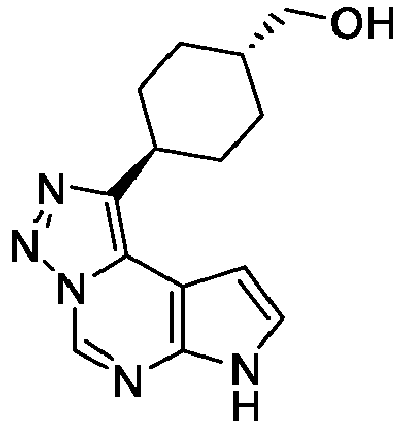
142 
143 
144 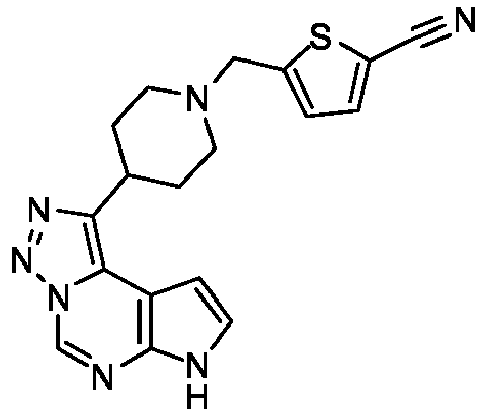
145 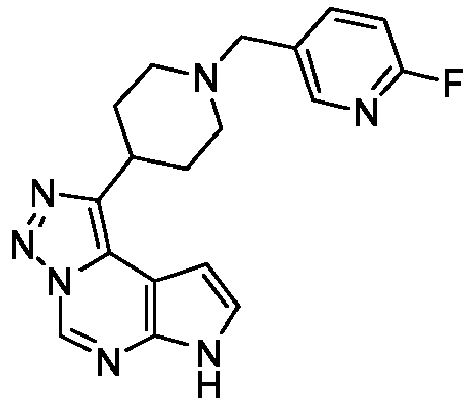
146 
147 
TABLEa 63 Ex Structu re Ex Structure Ex Structure 148 
149 
150 
1 51 
152 
153 
154 
155 
156 
157 
158 
159 
160 
161 
162 
163 
164 
165 
TABLEa 64 Ex Structure Ex Structure Ex Structure 166 
167 
168 
169 
170 
171 
172 
173 
174 
175 
176 
177 
178 
179 
180 
181 
182 
183 
TABLEa 65 Ex Structure Ex Structure Ex Structure 184 
185 
186 
187 
188 
189 
190 
191 
192 
193 
194 a 
194 b 
195 a 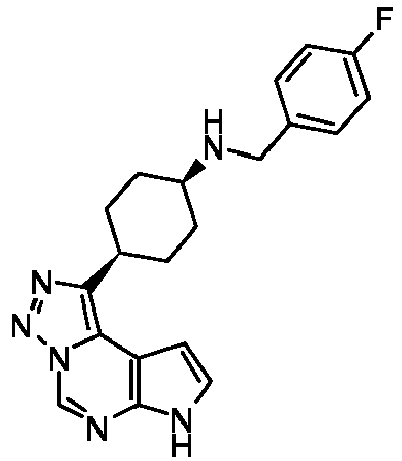
195 b 
196 a 
196 b 
197 a 
197 b 
TABLEa 66 Ex Structure Ex Structure Ex Structure 198 b 
199 b 
200 b 
201 b 
202 b 
203 b 
204 b 
205 
206 
207 
208 
209 
210 
211 
212 
TABLEa 67 Ex Structure Ex Structure Ex Structure 213 
214 
215 
216 
217 
218 
219 
220 
221 
222 
223 
224 
225 
226 
227 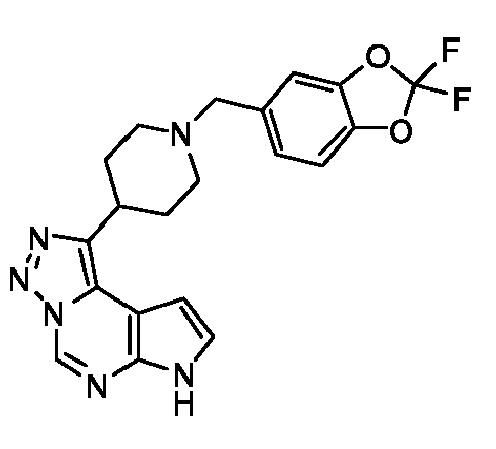
228 
229 
230 
TABLEa 68 Ex Structure Ex Structure Ex Structure 231 
232 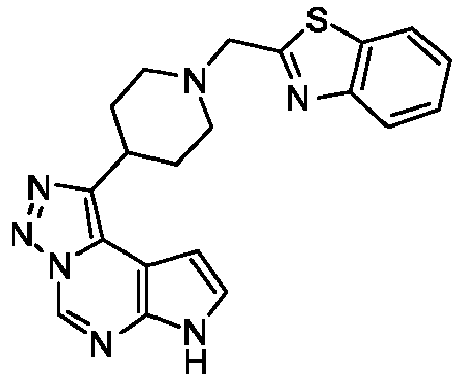
233 
234 
235 
236 
237 
238 
239 
240 
241 
242 
243 
244 
245 
246 
247 
248 
TABLEa 69 Ex Structure Ex Structure Ex Structure 249 
250 
251 
252 
253 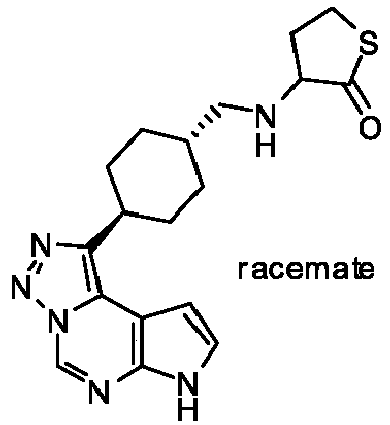
254 
255 
256 
257 
258 
259 
260 
261 
262 
263 
264 
265 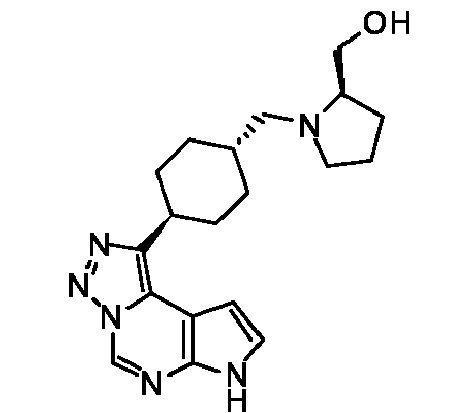
266 
TABLEa 70 Ex Structure Ex Structure Ex Structure 267 
268 
269 
270 
271 
272 
273 
274 
275 
276 
277 
278 
279 
280 
281 
282 
283 
284 
TABLEa 71 Ex Structure Ex Structure Ex Structure 285 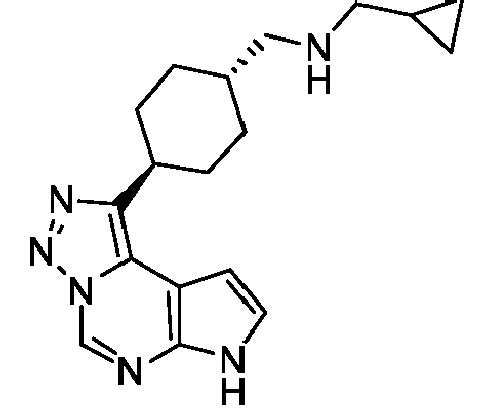
286 
287 
288 
289 
290 
291 
292 
293 
294 
295 
296 
297 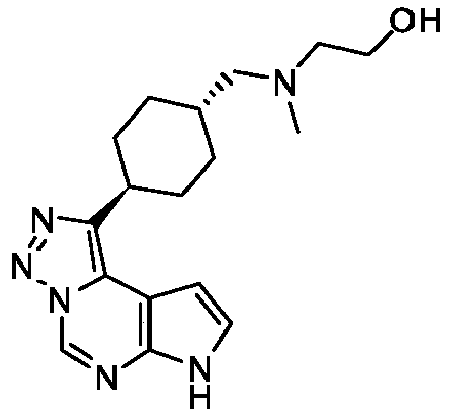
298 
299 
300 
301 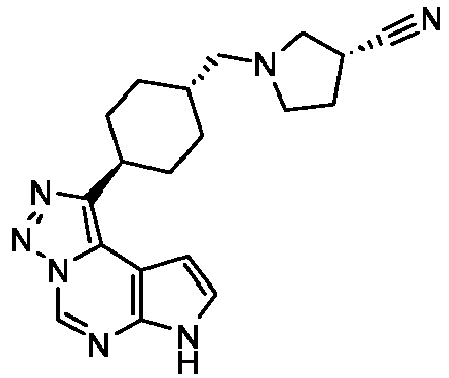
302 
TABLEa 72 Ex Structure Ex Structure Ex Structure 303 
304 
305 
306 
307 
308 
309 
310 
311 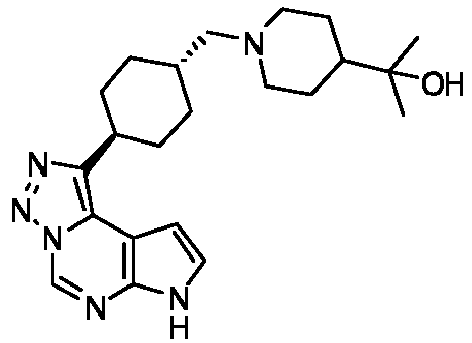
312 
313 
314 
315 
316 
317 
318 
319 
320 
TABLEa 73 Ex Structure Ex Structure Ex Structure 321 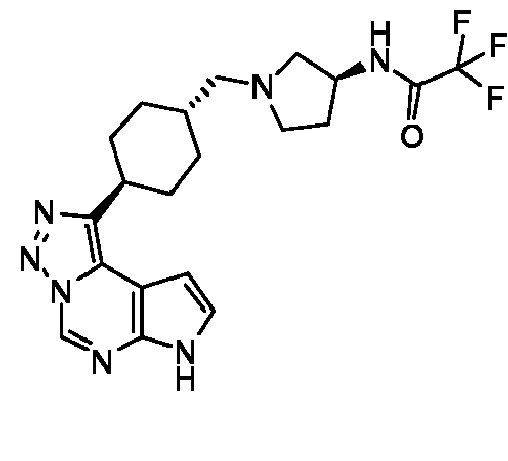
322 
323 
324 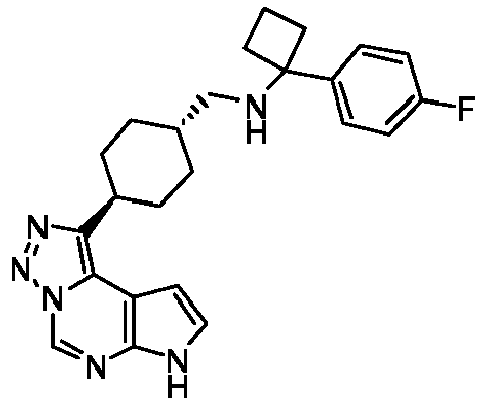
325 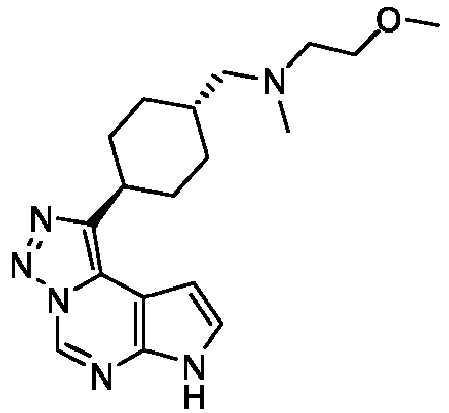
326 
327 
328 
329 
330 
331 
332 
333 
334 
335 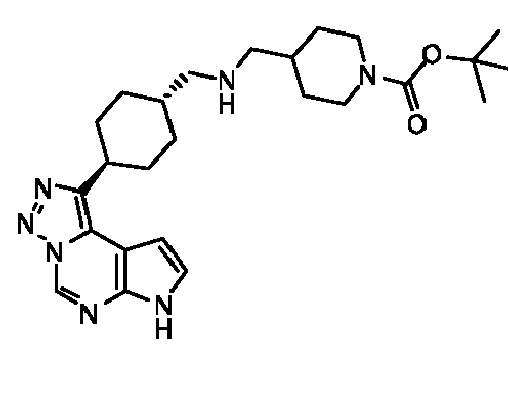
336 
337 
338 
TABLEa 74 Ex Structure Ex Structure Ex Structure 339 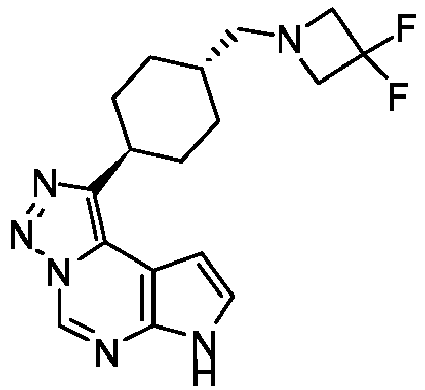
340 
341 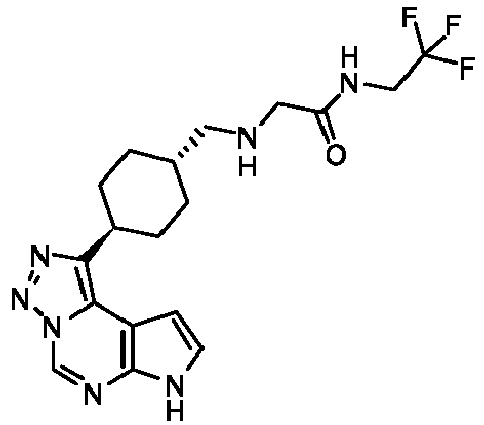
342 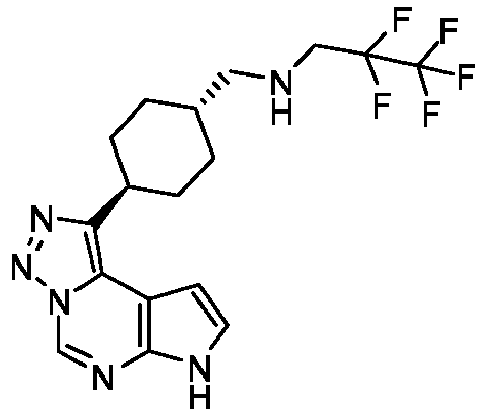
343 
344 
345 
346 
347 
348 
349 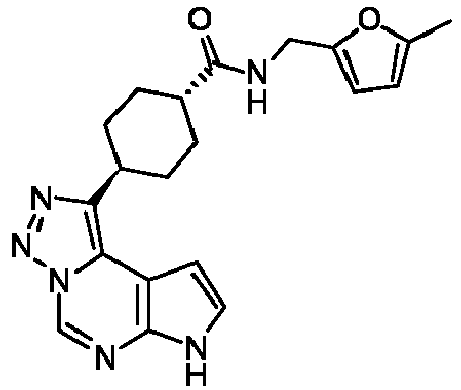
350 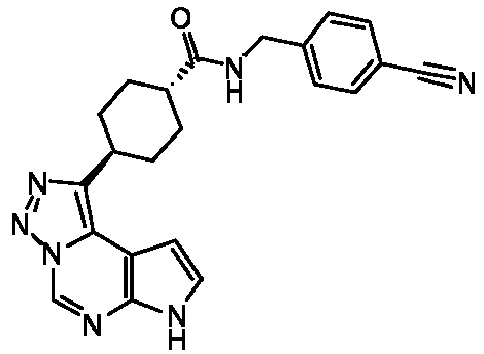
351 
352 
353 
354 
355 
356 
TABLEa 75 Ex Structure Ex Structure Ex Structure 357 
358 
359 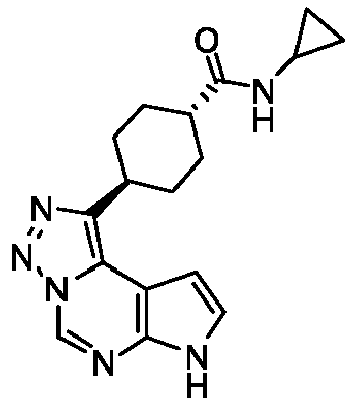
360 
361 
362 
363 
364 
365 
366 
367 
368 
369 
370 
371 
372 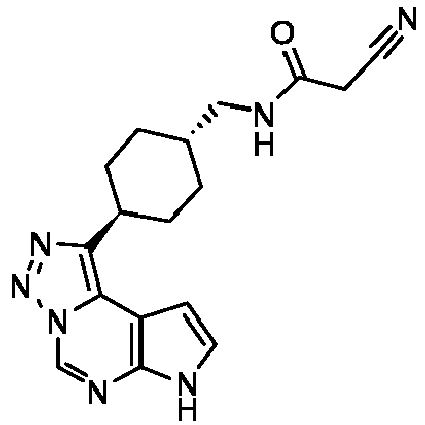
373 
374 
TABLEa 76 Ex Structure Ex Structure Ex Structure 375 
376 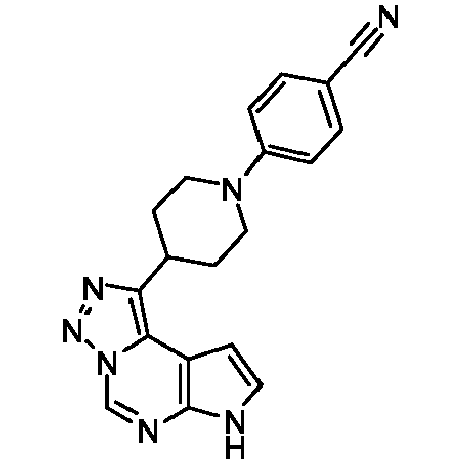
377 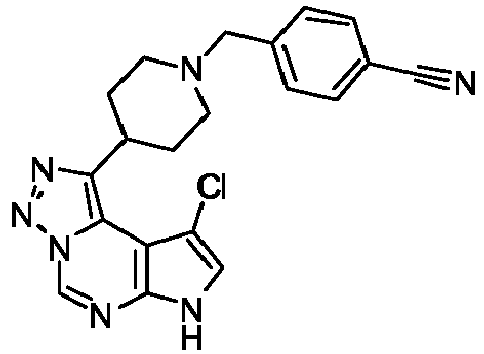
378 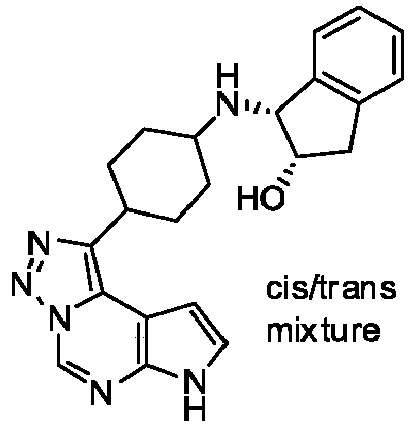
379 
380 
381 a 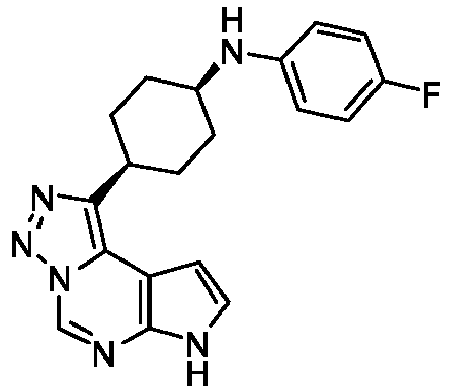
381 b 
382 a 
382 b 
383 a 
383 b 
384 a 
384 b 
385 b 
386 b 
387 b 
388 b 
TABLEa 77 Ex Structure Ex Structure Ex Structure 389 b 
390 b 
391 b 
392 b 
393 b 
394 b 
395 b 
396 b 
397 b 
398 b 
399 b 
400 b 
401 
402 
403 
404 
405 
406 
TABLEa 78 Ex Structure Ex Structure Ex Structure 407 
408 
409 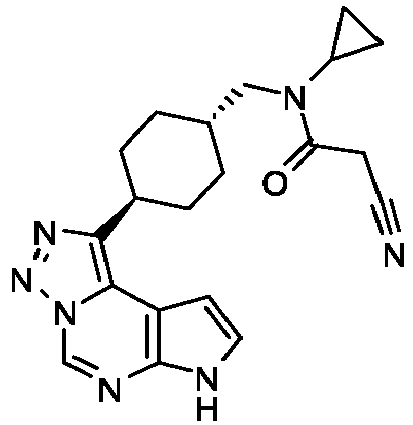
410 
41 1 
412 
413 
414 
415 
416 
417 
418 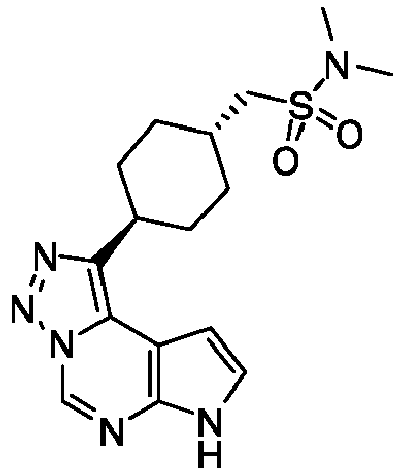
419 
420 
421 
422 
423 
424 
TABLEa 79 Ex Structure Ex Structure Ex Structure 425 
426 
427 
428 
429 
430 
431 
432 
433 
434 
435 a 
435 b 
436 
437 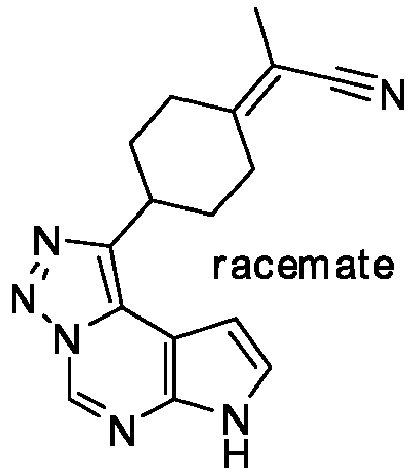
438 
439 a 
439 b 
440 
TABLEa 80 Ex Structure Ex Structure Ex Structure 441 
442 a 
442 b 
443 a 
443 b 
444 
445 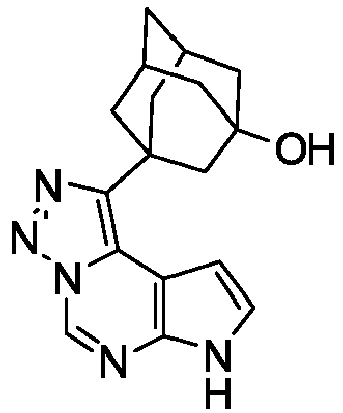
TABLEa 81 Rf Data 1 1H-NMR (DMSO-d6 ) δ: 6.63 (d, J = 2.6 Hz, 1H), 7.67 (t, J = 2.6 Hz, 1H), 8.44 (s, 1H). LC/MS: condition 1, retention time = 2.61 min LC/MS(ESI+) m/z; 246 [M+H]+ LC/MS(ESI-) m/z; 244 [M-H]- 2 1H-NMR (CDCl3) δ: 1.11 (d, J = 7.2 Hz, 18H), 1.79-1.89 (m, 3H), 6.46 (d, J = 3.3 Hz, 1H), 7.31 (d, J = 3.6 Hz, 1H), 8.47 (s, 1H). LC/MS: condition 1, retention time = 5.97 min LC/MS(ESI+) m/z; 402 [M+H]+ 3 LC/MS: condition 1, retention time = 4.91 min LC/MS(ESI+) m/z; 388 [M+H]+ 4 LC/MS: condition 1, retention time = 4.05 min LC/MS(ESI+) m/z; 230 [M-TIPS]+ 5 1H-NMR (CD3OD) δ: 1.46 (dd, J = 18.8, 9.5 Hz, 4H), 1.70-2.00 (m, 6H), 3.90-4.00 (m, 1H), 7.08 (d, J = 3.6 Hz, 1H), 7.63 (d, J = 3.6 Hz, 1H), 8.88 (s, 1 H). LC/MS: condition 1, retention time = 4.02 min LC/MS(ESI+) m/z; 230 [M+H]+ LC/MS(ESI-) m/z; 228 [M-H]- 6 1H-NMR (CDCl3) δ: -0.06 (s, 9H), 0.81-0.97 (m, 2H), 1.19-1.60 (m, 5H), 1.69-2.07 (m, 5H), 3.45-3.58 (m, 2H), 3.86-4.03 (m, 1H), 5.68 (s, 2H), 7.18-7.26 (m, 1H), 7.51 (d, J = 3.6 Hz, 1H), 9.01 (s, 1H). LC/MS: condition 1, retention time = 5.59 min LC/MS(ESI+) m/z; 360 [M+H]+ 7 LC/MS: condition 1, retention time = 3.39 min LC/MS(ESI+) m/z; 361 [M+H]+ 8 LC/MS: condition 1, retention time = 4.54 min LC/MS(ESI+) m/z; 371 [M+1]+ 9 1H-NMR (CDCl3) δ: 2.34 (s, 3H), 3.30 (s, 3H), 3.53 (br s, 3H), 7.12-7.22 (m, 3H), 7.27-7.39 (m, 1H). LC/MS: condition 1, retention time = 2.94 min LC/MS(ESI+) m/z; 180 [M+H]+ 10 1H-NMR (CDCl3) δ: 2.46 (s, 3H), 7.02-7.10 (m, 1H), 7.21-7.39 (m, 2H), 7.40-7.48 (m, 1H), 7.50-7.58 (m, 2H), 9.01 (s, 1H), 9.49 (br s, 1H). LC/MS: condition 1, retention time = 3.59 min LC/MS(ESI+) m/z; 238 [M+H]+ LC/MS(ESI-) m/z; 236 [M-H]- 11 1H-NMR (CDCl3) δ: 1.15-1.58 (m, 5H), 1.61-1.90 (m, 5H), 2.58-2.78 (m, 1 H), 3.17 (s, 3H), 3.69 (s, 3H). LC/MS: condition 1, retention time = 3.47 min LC/MS(ESI+) m/z; 172 [M+H]+ 12 1H-NMR (CDCl3) δ: 1.19-1.60 (m, 5H), 1.68-2.10 (m, 5H), 3.85-4.07 (m, 1H), 7.19-7.25 (m, 1H), 7.45-7.58 (m, 1H), 9.00 (s, 1H), 9.43 (br s, 1H). LC/MS: condition 1, retention time = 4.05 min LC/MS(ESI+) m/z; 230 [M+H]+ LC/MS(ESI-) m/z; 228 [M-H]- TABLEa 82 Rf Data 13 1H-NMR (CDCl3) δ: 0.91(s, 1.5H), 0.94 (s, 1.5H), 1.21-1.91 (m, 8H), 2.00-2.19 (m, 1H), 2.80-2.94 (m, 1H), 3.17 (s, 3H), 3.68 (s, 3H). LC/MS: condition 1, retention time = 3.84 min LC/MS(ESI+) m/z; 186 [M+H]+ 14 1H-NMR (CDCl3) δ: 0.77-0.86 (m, 3H), 1.20-2.00 (m, 8H), 2.31-2.50 (m, 1H), 4.10-4.20 (m, 1H), 7.17-7.22 (m, 1H), 7.43-7.52 (m, 1H), 8.98 (s, 1 H), 9.18 (br s, 1H). LC/MS: condition 1, retention time = 4.22 min LC/MS(ESI+) m/z; 244 [M+H]+ LC/MS(ESI-) m/z; 242 [M-H]- 15 LC/MS: condition 2, retention time = 4.17 min LC/MS(ESI+) m/z; 376 [M+H]+ 16 1H-NMR (CDCl3) δ: 1.10-1.90 (m, 5H), 2.73-3.20 (m, 2H), 3.50 (t, J = 6.0 Hz, 2H), 3.65-4.15 (m, 2H), 5.13 (br s, 2H), 7.22-7.41 (m, 5H). 17 LC/MS: condition 1, retention time = 3.89 min LC/MS(ESI+) m/z; 307 [M+H]+ 18 LC/MS: condition 1, retention time = 5.34 min LC/MS(ESI+) m/z; 495 [M+H]+ 19 LC/MS: condition 2, retention time = 3.77 min LC/MS(ESI+) m/z; 496 [M+H]+ 20 LC/MS: condition 1, retention time = 4.87 min LC/MS(ESI+) m/z; 506 [M+H]+ 21 1H-NMR (CDCl3) δ: 0.93-1.13 (m, 2H), 1.20-1.32 (m, 1H), 1.44-1.65 (m, 2H), 1.78-1.93 (m, 4H), 2.56-2.74 (m, 1H), 3.18 (s, 3H), 3.48 (t, J = 6.0 Hz, 2H), 3.69 (s, 3H). LC/MS: condition 1, retention time = 1.22 min LC/MS(ESI+) m/z; 202 [M+H]+ 22 1H-NMR (CDCl3) δ: 1.05 (s, 9H), 1.40-1.68 (m, 5H), 1.72-1.95 (m, 4H), 2.51-2.73 (m, 1H), 3.18 (s, 3H), 3.47 (d, J = 6.3 Hz, 2H), 3.69 (s, 3H), 7.28-7.48 (m, 6H), 7.53-7.72 (m, 4H). LC/MS: condition 1, retention time = 5.67 min LC/MS(ESI+) m/z; 440 [M+H]+ 23 1H-NMR (CDCl3) δ: 1.07 (s, 9H), 1.42-1.68 (m, 5H), 1.87-2.00 (m, 3H), 2.01-2.13 (m, 1H), 3.53 (d, J = 6.0 Hz, 2H), 3.81-4.00 (m, 1H), 7.20-7.27 (m, 1H), 7.30-7.43 (m, 6H), 7.45-7.53 (m, 1H), 7.59-7.73 (m, 4H), 9.01 (d, J= 4.5 Hz, 1H), 9.07 (br s, 1H). LC/MS: condition 1, retention time = 5.94 min LC/MS(ESI+) m/z; 498 [M+H]+ 24 1H-NMR (CDCl3) δ: 1.09 (s, 9H), 1.17-1.37 (m, 2H), 1.68-1.82 (m, 1H), 1.83-2.21 (m, 6H), 3.07-3.22 (m, 1H), 3.58 (d, J = 6.3 Hz, 2H), 6.75-6.85 (m, 1H), 7.25-7.32 (m, 1H), 7.33-7.50 (m, 6H), 7.62-7.78 (m, 4H), 9.01 (br s, 1H), 9.21 (s, 1H). LC/MS: condition 1, retention time = 5.67 min LC/MS(ESI+) m/z; 510 [M+H]+ LC/MS(ESI-) m/z; 508 [M-H]- TABLEa 83 Rf Data 25 1H-NMR (CDCl3) δ: 0.90-0.98 (m, 3H), 1.45 (s, 9H), 1.30-1.90 (m, 4H), 2.05-2.30 (m, 1H), 2.50-2.85 (m, 1H), 3.30-3.50 (m, 1H), 3.50-4.20 (m, 4H). 26 1H-NMR (CDCl3) δ: 0.87-1.01 (m, 3H), 1.41-1.47 (m, 9H), 1.54-1.79 (m, 4H), 2.80 (s, 2H), 2.89 (q, J = 6.3 Hz, 1H), 3.15-3.22 (m, 3H), 3.56 (br s, 1H), 3.68-3.73 (m, 3H). LC/MS: condition 1, retention time = 3.97 min LC/MS(ESI+) m/z; 231 [M-tBu]+ 27 LC/MS: condition 1, retention time = 4.12 min LC/MS(ESI+) m/z; 345 [M+H]+ LC/MS(ESI-) m/z; 343 [M-H]- 28 1H-NMR (CDCl3) δ: 1.46 (s, 9H), 1.48-1.56 (m, 1H), 1.58-1.76 (m, 2H), 1.88-1.97 (m, 1H), 2.63-2.95 (m, 3H), 3.19 (s, 3H), 3.73 (s, 3H), 4.03-4.22 (m, 2H). LC/MS: condition 1, retention time = 3.60 min LC/MS(ESI+) m/z; 273 [M-tBu]+ 29 LC/MS: condition 1, retention time = 3.87 min LC/MS(ESI+) m/z; 275 [M-tBu]+ LC/MS(ESI-) m/z; 329 [M-H]- 30 LC/MS: condition 1, retention time = 2.88 min LC/MS(ESI+) m/z; 222 [M+H]+ 31 LC/MS: condition 1, retention time = 3.52 min LC/MS(ESI+) m/z; 235 [M+H]+ LC/MS(ESI-) m/z; 233 [M-H]- 32 1H-NMR (CDCl3) δ: 1.65-1.75 (m, 2H), 1.80-1.87 (m, 1H), 2.16-2.23 (m, 1H), 2.91-3.02 (m, 1H), 3.22 (br s, 1H), 4.08-4.19 (m, 2H), 4.38 (br s, 1H), 5.10-5.18 (m, 2H), 7.21 (dd, J = 3.6, 2.0 Hz, 1H), 7.28-7.39 (m, 5H), 7.51 (dd, J = 4.0, 2.3 Hz, 1H), 8.95 (br s, 1H), 9.42 (br s, 1 H). LC/MS: condition 1, retention time = 3.90 min LC/MS(ESI+) m/z; 365 [M+H]+ LC/MS(ESI-) m/z; 363 [M-H]- 33 1H-NMR (CDCl3) δ: 1.35-1.80 (m, 3H), 2.00-2.15 (m, 1H), 2.40-2.59 (m, 1H), 2.93 (ddd, J = 13.0, 10.7, 3.0 Hz, 1H), 2.95-3.26 (m, 1H), 3.92-4.02 (m, 1H), 4.02-4.35 (m, 1H), 5.11 (d, J = 12.4 Hz, 1H), 5.16 (d, J = 12.4 Hz, 1 H), 7.27-7.34 (m, 5H). LC/MS: condition 1, retention time = 3.52 min LC/MS(ESI+) m/z; 264 [M+H]+ LC/MS(ESI-) m/z; 262 [M-H]- 34 1H-NMR (CDCl3) δ: 1.40-1.81 (m, 3H), 1.87-2.00 (m, 1H), 2.68-3.05 (m, 3H), 3.16 (s, 3H), 3.59-3.70 (m, 3H), 4.05-4.34 (m, 2H), 5.11 (d, J = 12.7 Hz, 1 H), 5.16 (d, J= 12.7 Hz, 1H), 7.28-7.39 (m, 5H). LC/MS: condition 1, retention time = 3.70 min LC/MS(ESI+) m/z; 307 [M+H]+ 35 LC/MS: condition 1, retention time = 0.77 min LC/MS(ESI+) m/z; 321 [M+H]+ TABLEa 84 Rf Data 36 1H-NMR (CDCl3) δ: 1.16-1.40 (m, 3H), 1.61-1.82 (m, 1H), 1.85-2.09 (m, 4H), 2.10-2.26 (m, 2H), 3.09-3.25 (m, 1H), 3.58 (t, J = 6.0 Hz, 2H), 6.74-6.85 (m, 1H), 7.20-7.32 (m, 1H), 9.04 (br s, 1H), 9.22 (s, 1H). LC/MS: condition 1, retention time = 2.99 min LC/MS(ESI+) m/z; 272 [M+H]+ LC/MS(ESI-) m/z; 270 [M-H]- 37 1H-NMR (CDCl3) δ: 0.93-1.13 (m, 2H), 1.20-1.32 (m, 1H), 1.44-1.65 (m, 2H), 1.78-1.93 (m, 4H), 2.56-2.74 (m, 1H), 3.18 (s, 3H), 3.48 (t, J = 6.0 Hz, 2H), 3.69 (s, 3H). LC/MS: condition 1, retention time = 1.22 min LC/MS(ESI+) m/z; 202 [M+H]+ 38 1H-NMR (CDCl3) δ: 1.46 (s, 9H), 1.60-1.81 (m, 4H), 2.65-2.90 (m, 3H), 3.18 (s, 3H), 3.71 (s, 3H), 4.00-4.30 (m, 2H). LC/MS: condition 1, retention time = 3.66 min LC/MS(ESI+) m/z; 273 [M+H]+ 39 1H-NMR (CDCl3) δ: 1.40-1.53 (m, 9H), 1.55-1.82 (m, 2H), 1.87-2.10 (m, 2H), 2.80-3.10 (m, 2H), 4.00-4.37 (m, 3H), 7.15-7.30 (m, 1H), 7.46-7.59 (m, 1H), 8.90-9.08 (m, 1H), 9.53 (br s, 1H). LC/MS: condition 1, retention time = 3.87 min LC/MS(ESI+) m/z; 331 [M+H]+ LC/MS(ESI-) m/z; 329 [M-H]- 40 1H-NMR (DMSO-d6 ) δ: 1.63-1.89 (m, 4H), 2.82-3.04 (m, 3H), 3.10 (s, 3H), 3.18-3.31 (m, 2H), 3.69 (s, 3H), 8.73 (br s, 1H), 9.07 (br s, 1H). LC/MS: condition 1, retention time = 0.50 min LC/MS(ESI+) m/z; 173 [M+H]+ 41 1H-NMR (CDCl3) δ: 1.65-1.92 (m, 4H), 2.38-2.51 (m, 2H), 2.57-2.72 (m, 1H), 2.92-3.06 (m, 4H), 3.18 (s, 3H), 3.70 (s, 3H). LC/MS: condition 1, retention time = 0.74 min LC/MS(ESI+) m/z; 255 [M+H]+ 42 1H-NMR (CDCl3) δ: 1.78-2.05 (m, 4H), 2.56-2.68 (m, 2H), 2.87-3.12 (m, 4H), 3.87-4.00 (m, 1H), 7.22-7.25 (m, 1H), 7.26 (s, 1H), 7.50-7.56 (m, 1H), 8.99 (s, 1H), 9.74 (br s, 1H). LC/MS: condition 1, retention time = 2.75 min LC/MS(ESI+) m/z; 313 [M+H]+ 43 1H-NMR (CDCl3) δ: 1.64-1.82 (m, 4H), 2.76-2.95 (m, 3H), 3.18 (s, 3H), 3.71 (s, 3H), 4.12-4.30 (m, 2H), 5,13 (s, 2H), 7.25-7.39 (m, 5H). LC/MS: condition 1, retention time = 3.65 min LC/MS(ESI+) m/z; 307 [M+H]+ 44 1H-NMR (CDCl3) δ: 1.60-1.82 (m, 3H), 1.92-2.09 (m, 2H), 2.95-3.15 (m, 2H), 4.18-4.38 (m, 2H), 5.15 (s, 2H), 7.20-7.25 (m, 1H), 7.25-7.40 (m, 5H), 7.50-7.55 (m, 1H), 8.99 (s, 1H), 9.44-9.71 (m, 1H). LC/MS: condition 1, retention time = 3.90 min LC/MS(ESI+) m/z; 365 [M+H]+ TABLEa 85 Rf Data 45 1H-NMR (CDCl3) δ: 1.02-1.25 (m, 2H), 1.44 (s, 9H), 1.52-1.71 (m, 2H), 1.78-1.89 (m, 2H), 2.02-2.15 (m, 2H), 2.52-2.68 (m, 1H), 3.17 (s, 3H), 3.35-3.50 (m, 1H), 3.69 (s, 3H), 4.28-4.43 (m, 1H). 46 1H-NMR (CDCl3) δ: 1.26-1.41 (m, 2H), 1.46 (s, 9H), 1.52-1.80 (m, 3H), 2.00-2.20 (m, 3H), 3.49 (br s, 1H), 3.82-3.99 (m, 1H), 4.46 (br s, 1H), 7.19-7.25 (m, 1H), 7.46-7.55 (m, 1H), 9.00 (s, 1H), 9.44-9.85 (m, 1 H). LC/MS: condition 1, retention time = 3.84 min LC/MS(ESI+) m/z; 345 [M+H]+ LC/MS(ESI-) m/z; 343 [M-H]- 47 LC/MS: condition 1, retention time = 2.01 min LC/MS(ESI+) m/z; 321 [M+H]+ 48 LC/MS: condition 1, retention time = 2.18 min LC/MS(ESI+) m/z; 379 [M+H]+ LC/MS(ESI-) m/z; 377 [M-H]- 49 1H-NMR (CDCl3) δ: 0.94-1.13 (m, 2H), 1.42-1.71 (m, 4H), 1.75-1.93 (m, 4H), 2.55-2.73 (m, 1H), 3.10-3.26 (m, 4H), 3.32 (s, 3H), 3.68 (s, 3H). LC/MS: condition 1, retention time = 3.19 min LC/MS(ESI+) m/z; 216 [M+H]+ 50 1H-NMR (CDCl3) δ: 1.10-1.30 (m, 2H), 1.41-1.78 (m, 3H), 1.86-2.12 (m, 4H), 3.25 (d, J = 6.3 Hz, 2H), 3.35 (s, 3H), 3.85-4.02 (m, 1H), 7.15-7.30 (m, 1H), 7.45-7.55 (m, 1H), 9.00 (s, 1H), 9.46 (br s, 1H). LC/MS: condition 1, retention time = 3.65 min LC/MS(ESI+) m/z; 274 [M+H]+ LC/MS(ESI-) m/z; 272 [M-H]- 51 1H-NMR (CDCl3) δ: 1.20-1.41 (m, 1H), 1.48-1.70 (m, 4H), 1.77-1.92 (m, 2H), 2.00-2.13 (m, 1H), 2.50-2.73 (m, 1H), 3.18 (s, 3H), 3.55-3.78 (m, 1H), 3.70 (s, 3H). LC/MS: condition 1, retention time = 0.60 min LC/MS(ESI+) m/z; 189 [M+H]+ 52 1H-NMR (CDCl3) δ: 1.22 (qd, J = 13.8, 2.7 Hz, 2H), 1.55 (qd, J = 13.8, 2.7 Hz, 2H), 1.86 (m, 2H), 2.15 (m, 2H), 2.64 (m, 1H), 3.14 (m, 1 H), 3.17 (s, 3H), 3.36 (s, 3H), 3.70 (s, 3H). LC/MS: condition 1, retention time = 1.77 min LC/MS(ESI+) m/z; 202 [M+H]+ 53 1H-NMR (CDCl3) δ: 1.50 (m, 4H), 2.15 (m, 4H), 3.21 (tt, J = 10.5, 3.9Hz, 1H), 3.40 (s, 3H), 3.95 (tt, J = 11.4, 3.6Hz, 1H), 7.23 (dd, J = 3.3, 2.1 Hz, 1H), 7.56 (t, J = 2.4 Hz, 1H), 9.03 (s, 1H), 10.9 (br s, 1H). LC/MS: condition 1, retention time = 3.35 min LC/MS(ESI+) m/z; 260 [M+H]+ LC/MS(ESI-) m/z; 258 [M-H]- TABLEa 86 Rf Data 54 1H-NMR (CDCl3) δ: 1.60-1.95 (m, 6H), 2.10-2.30 (m, 2H), 2.64-2.83 (m, 1 H), 3.18 (s, 3H), 3.71 (s, 3H). LC/MS: condition 1, retention time = 3.05 min LC/MS(ESI+) m/z; 208 [M+H]+ 55 LC/MS: condition 1, retention time = 3.60 min LC/MS(ESI+) m/z; 184 [M+H]+ 56 1H-NMR (CDCl3) δ: 1.35-1.88 (m, 12H), 2.73-2.90 (m, 1H), 3.17 (s, 3H), 3.69 (s, 3H). LC/MS: condition 1, retention time = 3.81 min LC/MS(ESI+) m/z; 186 [M+H]+ 57 1H-NMR (CDCl3) δ: 1.96 (m, 2H), 2.13 (m, 2H), 2.33 (m, 2H), 3.17 (s, 3H), 3.48 (m, 1H), 3.65 (s, 3H). LC/MS: condition 1, retention time = 1.85 min LC/MS(ESI+) m/z; 144 [M+H]+ 58 1H-NMR (CDCl3) δ: 1.57 (m, 2H), 1.78 (m, 6H), 3.10 (m, 1H), 3.19 (s, 3H), 3.69 (s, 3H). LC/MS: condition 1, retention time = 2.94 min LC/MS(ESI+) m/z; 158 [M+H]+ 59 1H-NMR (CDCl3) δ: 1.28-1.64 (m, 4H), 1.83-2.19 (m, 5H), 2.57-2.76 (m, 1 H), 3.18 (s, 3H), 3.70 (s, 3H). LC/MS: condition 1, retention time = 3.74 min LC/MS(ESI+) m/z; 240 [M+H]+ 60 1H-NMR (CDCl3) δ: 1.45-1.80 (m, 4H), 1.82-2.20 (m, 5H), 2.81-2.99 (m, 1 H), 3.17 (s, 3H), 3.68 (s, 3H). LC/MS: condition 1, retention time = 3.77 min LC/MS(ESI+) m/z; 240 [M+H]+ 61 1H-NMR (CDCl3) δ: 1.75-2.35 (m, 8H), 3.94-4.13 (m, 1H), 7.20-7.30 (m, 1 H), 7.46-7.58 (m, 1 H), 8.99 (s, 1 H), 9.13 (br s, 1 H). LC/MS: condition 1, retention time = 3.69 min LC/MS(ESI+) m/z; 266 [M+H]+ LC/MS(ESI-) m/z; 264 [M-H]- 62 1H-NMR (CDCl3) δ: 1.16-1.74 (m, 7H), 1.96 (ddd, J = 12.9, 5.1, 3.3 Hz, 1 H), 2.36 (br s, 1H), 2.86 (br s, 1H), 4.31 (m, 1H), 7.24 (m, 1H), 7.51 (m, 1 H), 9.01 (s, 1H), 9.75 (br s, 1H). LC/MS: condition 1, retention time = 3.92 min LC/MS(ESI+) m/z; 242 [M+H]+ LC/MS(ESI-) m/z; 240 [M-H]- 63 1H-NMR (CDCl3) δ: 1.60-1.82 (m, 10H), 2.03 (m, 2H), 4.16 (tt, J = 8.7, 4.5 Hz, 1H), 7.24 (m, 1H), 7.57 (m, 1H), 9.03 (s, 1H), 11.18 (br s, 1 H). LC/MS: condition 1, retention time = 4.11 min LC/MS(ESI+) m/z; 244 [M+H]+ LC/MS(ESI-) m/z; 242 [M-H]- TABLEa 87 Rf Data 64 1H-NMR (CDCl3) δ: 1.95 (m, 1H), 2.14 (m, 1H), 2.38 (m, 4H), 4.60 (quin t , J = 8.4 Hz, 1 H), 7.28 (m, 1H), 7.52 (m, 1H), 8.97 (s, 1H). LC/MS: condition 1, retention time = 3.22 min LC/MS(ESI+) m/z; 202 [M+H]+ LC/MS(ESI-) m/z; 200 [M-H]- 65 1H-NMR (CDCl3) δ: 1.76 (m, 4H), 1.91 (m, 2H), 2.03 (m, 2H), 4.36 (m, 1 H), 7.26 (m, 1H), 7.55 (m, 1H), 9.03 (s, 1H), 10.43 (br s, 1H). LC/MS: condition 1, retention time = 3.64 min LC/MS(ESI+) m/z; 216 [M+H]+ 66 1H-NMR (DMSO-d6 ) δ: 1.30-1.60 (m, 4H), 1.90-2.13 (m, 4H), 2.20-2.45 (m, 1H), 3.80-4.00 (m, 1H), 6.91-7.05 (m, 1H), 7.75-7.90 (m, 1 H), 8.96 (s, 1H), 12.47 (br s, 1H). LC/MS: condition 1, retention time = 4.07 min LC/MS(ESI+) m/z; 298 [M+H]+ LC/MS(ESI-) m/z; 296 [M-H]- 67 1H-NMR (DMSO-d6 ) δ: 1.50-1.88 (m, 6H), 1.95-2.11 (m, 2H), 2.30-2.45 (m, 1H), 4.05-4.20 (m, 1H), 6.90-7.05 (m, 1H), 7.75-7.90 (m, 1 H), 8.93 (s, 1H), 12.46 (br s, 1H). LC/MS: condition 1, retention time = 4.00 min LC/MS(ESI+) m/z; 298 [M+H]+ LC/MS(ESI-) m/z; 296 [M-H]- 68 1H-NMR (CDCl3) δ: 1.05 (s, 9H), 1.38 (dq, J = 10.9, 3.0 Hz, 4H), 1.65-1.74 (m, 2H), 1.86-1.95 (m, 2H), 2.53-2.65 (m, 1 H), 3.13 (s, 3H), 3.56-3.64 (m, 1H), 3.67 (s, 3H), 7.32-7.45 (m, 6H), 7.64-7.69 (m, 4H). LC/MS: condition 1, retention time = 5.45 min LC/MS(ESI+) m/z; 426 [M+H]+ 69 1H-NMR (CDCl3) δ: 1.07 (s, 9H), 1.30-1.45 (m, 2H), 1.52-1.67 (m, 2H), 1.89-2.00 (m, 4H), 3.60-3.71 (m, 1H), 3.89 (tt, J = 12.2, 3.0 Hz, 1H), 7.17 (dd, J = 3.6, 2.0 Hz, 1H), 7.33-7.49 (m, 7H), 7.65-7.72 (m, 4H), 8.99 (s, 1 H), 9.11 (br s, 1 H). LC/MS: condition 1, retention time = 5.64 min LC/MS(ESI+) m/z; 484 [M+H]+ LC/MS(ESI-) m/z; 482 [M-H]- 70 1H-NMR (CDCl3) δ: 1.09 (s, 5H), 1.15 (s, 4H), 1.53-1.97 (m, 5H), 1.98-2.08 (m, 2H), 2.49 (dq, J= 12.6, 3.0 Hz, 1H), 3.11 (tt, J= 11.2, 3.3 Hz, 0.6H), 3.25 (tt, J = 12.2, 3.3 Hz, 0.4H), 3.75-3.85 (m, 0.6H), 4.13-4.18 (m, 0.4H), 6.71 (dd, J = 3.3, 2.0 Hz, 0.6H), 7.01 (dd, J = 3.0, 2.3 Hz, 0.4H), 7.16 (t, J = 3.3 Hz, 0.6H), 7.21-7.28 (m, 0.4H), 7.34-7.47 (m, 6H), 7.69-7.75 (m, 4H), 9.04 (br s, 1H), 9.18 (s, 0.6H), 9.24 (s, 0.4H). LC/MS: condition 1, retention time = 5.32, 5.39 min (cis/trans mixture) LC/MS(ESI+) m/z; 496 [M+H]+ LC/MS(ESI-) m/z; 494 [M-H]- TABLEa 88 Rf Data 71 1H-NMR (CDCl3) δ: 1.31-1.46 (m, 1H), 1.54-1.67 (m, 4H), 1.81-1.99 (m, 3H), 2.02-2.10 (m, 1H), 2.57-2.79 (m, 1H), 3.18 (d, J = 1.3 Hz, 3H), 3.70 (d, J = 1.7 Hz, 3H), 3.98-4.04 (m, 1H). LC/MS: condition 1, retention time = 0.86 min (cis/trans mixture) LC/MS(ESI+) m/z; 188 [M+H]+ 72 1H-NMR (CDCl3) δ: 0.03-0.05 (m, 6H), 0.85 (s, 4H), 0.86 (s, 5H), 1.27-1.52 (m, 4H), 1.67-1.82 (m, 2H), 1.93 (td, J = 11.9, 3.3 Hz, 2H), 2.53-2.66 (m, 1H), 3.14 (s, 3H), 3.66 (s, 3H), 3.94-3.98 (m, 1H). LC/MS: condition 1, retention time = 4.83, 5.00 min (cis/trans mixture) LC/MS(ESI+) m/z; 302 [M+H]+ 73 1H-NMR (CDCl3) δ: 0.05 (s, 4H), 0.08 (s, 2H), 0.90 (s, 9H), 1.49-1.83 (m, 6H), 1.93-2.08 (m, 2H), 3.59-3.69 (m, 0.3H), 3.93 (tt, J = 11.2, 3.0 Hz, 1H), 4.02-4.07 (m, 0.7H), 7.20-7.26 (m, 1H), 7.52 (dd, J = 4.3, 2.3 Hz, 1H), 9.01 (s, 0.7H), 9.02 (s, 0.3H), 9.78 (br s, 1H). LC/MS: condition 1, retention time = 5.07, 5.14 min (cis/trans mixture) LC/MS(ESI+) m/z; 360 [M+H]+ LC/MS(ESI-) m/z; 358 [M-H]- 74 1H-NMR (CDCl3) δ: 0.11 (s, 3H), 0.14 (s, 3H), 0.93 (s, 4.5H), 0.98 (s, 4.5H), 1.50-1.81 (m, 3H), 1.83-2.17 (m, 4H), 2.37 (dq, J = 12.9, 4.0 Hz, 1 H), 3.15 (tt, J = 11.9. 4.0 Hz, 0.5H), 3.29 (tt, J = 12.6, 4.0 Hz, 0.5H), 3.72-3.84 (m, 0.5H), 4.17 (br s, 0.5H), 6.77 (dd, J = 3.6, 2.0 Hz, 0.5H), 7.12 (dd, J = 3.6, 2.0 Hz, 0.5H), 7.24-7.27 (m, 0.5H), 7.30 (t, J = 3.3 Hz, 0.5H), 9.13 (br s, 1H), 9.22 (s, 0.5H), 9.23 (s, 0.5H). LC/MS: condition 1, retention time = 4.88, 4.97 min (cis/trans mixture) LC/MS(ESI+) m/z; 372 [M+H]+ LC/MS(ESI-) m/z; 370 [M-H]- 75 1H-NMR (DMSO-d6 ) δ: 1.35-1.51 (m, 1H), 1.59-1.71 (m, 1H), 1.71-1.86 (m, 2H), 1.92-2.03 (m, 3H), 3.10 (dt, J = 12.9, 3.6 Hz, 0.7H), 3.18 (dt, J = 15.2, 3.0 Hz, 0.3H), 3.51-3.63 (m, 0.7H), 3.92-3.99 (m, 0.3H), 4.51 (d, J = 2.6 Hz, 0.3H), 4.61 (d, J = 4.3 Hz, 0.7H), 6.82 (dd, J = 3.3, 1.7 Hz, 0.7H), 6.97 (dd, J = 3.3, 1.7 Hz, 0.3H), 7.48 (t, J = 3.0 Hz, 1 H), 9.51 (s, 0.7H), 9.51 (s, 0.3H), 12.51 (br s, 1H). 76 1H-NMR (CDCl3) δ: -0.04 (s, 9H), 0.94 (t, J = 8.1 Hz, 2H), 1.73 (qd, J = 12.4, 3.8 Hz, 2H), 2.00 (br s, 2H), 3.01 (t, J = 12.2 Hz, 2H), 3.55 (t, J = 8.0 Hz, 2H), 4.16 (tt, J = 11.4, 3.6 Hz, 2H), 4.29 (br s, 2H), 5.12 (s, 2H), 5.71 (s, 2H), 7.26 (d, J = 3.6Hz, 1H), 7.31-7.40 (m, 5H), 7.57 (d, J = 3.6Hz, 1 H), 9.03 (s, 1 H). LC/MS: condition 3, retention time = 3.29 min LC/MS(ESI+) m/z; 495 [M+H]+ TABLEa 89 Rf Data 77 1H-NMR (CDCl3) δ: -0.07 (s, 9H), 0.91 (t, J = 8.3 Hz, 2H), 1.27-1.38 (m, 3H), 1.97-2.02 (m, 2H), 2.70-2.74 (m, 2H), 3.53 (t, J = 8.3 Hz, 2H), 4.02-4.23 (m, 3H), 5.10 (s, 2H), 5.64 (d, J = 2.4Hz, 2H), 6.61 (d, J = 3.3Hz, 1H), 7.26-7.33 (m, 6H), 8.85 (s, 1H). LC/MS: condition 3, retention time = 2.26 min LC/MS(ESI+) m/z; 496 [M+H]+ 78 LC/MS: condition 3, retention time = 3.05 min LC/MS(ESI+) m/z; 506 [M+H]+ 79 LC/MS: condition 3, retention time = 1.55 min LC/MS(ESI+) m/z; 366 [M+H]+ 80 LC/MS: condition 3, retention time = 0.70 min LC/MS(ESI+) m/z; 231 [M+H]+ 81 LC/MS: condition 3, retention time = 1.63 min LC/MS(ESI+) m/z; 389 [M+H]+ LC/MS(ESI-) m/z; 387 [M-H]- 82 LC/MS: condition 3, retention time = 1.08 min LC/MS(ESI+) m/z; 390 [M+H]+ 83 1H-NMR (CDCl3) δ: 3.20 (s, 3H), 3.65 (s, 3H), 3.68-3.70 (m, 1H), 4.14 (t, J = 8.7 Hz, 2H), 4.22 (d, J = 6.0 Hz, 2H), 5.09 (s, 2H), 7.30-7.36 (m, 5H). LC/MS: condition 3, retention time = 1.88 min LC/MS(ESI+) m/z; 279 [M+H]+ 84 1H-NMR (CDCl3) δ: 4.31-4.41 (m, 4H), 4.62-4.69 (m, 2H), 5.11 (s, 2H), 7.27-7.36 (m, 6H), 7.55 (dd, J = 3.6, 2.4 Hz, 1H), 8.95 (s, 1H), 9.18 (br s, 1H). LC/MS: condition 3, retention time = 2.09 min LC/MS(ESI+) m/z; 337 [M+H]+ 85 1H-NMR (CDCl3) δ: 1.88 (br s, 1H). 3.35 (s, 3H), 3.55 (s, 3H), 4.74 (s, 2H), 7.39 (d, J = 8.1 Hz, 2H), 7.67 (d, J = 8.1 Hz, 2H). LC/MS: condition 1, retention time = 0.84 min LC/MS(ESI+) m/z; 196 [M+H]+ 86 1H-NMR (CDCl3) δ: 0.11 (s, 6H), 0.95 (s, 9H), 3.35 (s, 3H), 3.55 (s, 3H), 4.77 (s, 2H), 7.35 (d, J = 8.1 Hz, 2H), 7.65 (d, J = 8.1 Hz, 2H). LC/MS: condition 1, retention time = 4.73 min LC/MS(ESI+) m/z; 310 [M+H]+ 87 1H-NMR (CDCl3) δ: 0.12 (s, 6H), 0.96 (s, 9H), 4.83 (s, 2H), 7.00 (dd, J = 3.9, 2.1 Hz, 1 H), 7.47 (d, J = 8.1 Hz, 2H), 7.49 (m, 1H), 8.14 (d, J = 8.1 Hz, 2H), 9.04 (s, 1H), 9.59 (br s, 1H). LC/MS: condition 1, retention time = 4.80 min LC/MS(ESI+) m/z; 368 [M+H]+ LC/MS(ESI-) m/z; 366 [M-H]- 88 1H-NMR (CDCl3) δ: 0.15 (s, 6H), 0.98 (s, 9H), 4.84 (s, 2H), 6.97 (dd, J = 3.3, 2.1 Hz, 1 H), 7.27 (dd, J = 6.0, 3.3 Hz, 1H), 7.50 (d, J = 8.4 Hz, 2H), 7.98 (d, J = 8.4 Hz, 2H), 9.22 (br s, 1H), 9.30 (s, 1H). LC/MS: condition 1, retention time = 4.93 min LC/MS(ESI+) m/z; 380 [M+H]+ TABLEa 90 Rf Data 89 1H-NMR (CDCl3) δ: 1.58 (m, 4H), 1.73 (m, 5H), 2.80 (tt, J = 8.4, 3.6 Hz, 1H), 3.17 (s, 3H), 3.62 (m, 2H), 3.69 (s, 3H). LC/MS: condition 1, retention time = 1.42 min LC/MS(ESI+) m/z; 202 [M+H]+ 90 1H-NMR (CDCl3) δ: 0.04 (s, 6H), 0.89 (s, 9H), 1.55 (m, 4H), 1.69 (m, 5H), 2.80 (tt, J = 7.8, 4.2 Hz, 1H), 3.17 (s, 3H), 3.58 (d, J = 10.5 Hz, 2H), 3.68 (s, 3H). LC/MS: condition 1, retention time = 5.08 min LC/MS(ESI+) m/z; 316 [M+H]+ 91 1H-NMR (CDCl3) δ: 0.06 (s, 6H), 0.90 (s, 9H), 1.71 (m, 7H), 1.90 (m, 2H), 3.53 (d, J = 6.9 Hz, 2H), 4.07 (m, 1H), 7.20 (dd, J = 3.3 2.1 Hz, 1 H), 7.50 (t, J = 3.3 Hz, 1 H), 8.98 (s, 1 H), 9.42 (br s, 1 H). LC/MS: condition 1, retention time = 5.19 min LC/MS(ESI+) m/z; 374 [M+H]+ LC/MS(ESI-) m/z; 372 [M-H]- 92 1H-NMR (CDCl3) δ: 0.08 (s, 6H), 0.93 (s, 9H), 1.22 (m, 2H), 1.70 (m, 1H), 1.90-2.05 (m, 4H), 2.15 (m, 2H), 3.16 (m, 1H), 3.51 (d, J = 6.6 Hz, 2H), 6.08 Hz (m, 1H), 7.27 (m, 1H), 9.16 (br s, 1H), 9.22 (s, 1H). LC/MS: condition 1, retention time = 5.09 min LC/MS(ESI+) m/z; 428 [M+H]+ LC/MS(ESI-) m/z; 426 [M-H]- 93 LC/MS: condition 1, retention time = 3.62 min LC/MS(ESI+) m/z; 202, 204 [M+H]+ 94 1H-NMR (CDCl3) δ: 1.83-2.04 (m, 4H), 2.25 (td, J = 11.6, 2.5 Hz, 2H), 2.93 (d, J = 11.7 Hz, 2H), 3.59 (s, 2H), 3.92-3.99 (m, 1H), 7.24 (dd, J = 3.6, 2.1 Hz, 1H), 7.47 (d, J= 8.1 Hz, 2H), 7.50 (dd, J = 3.6, 2.4 Hz, 1H), 7.61 (d, J = 8.1 Hz, 2H), 8.98 (s, 1H), 9.04 (br s, 1H). LC/MS: condition 3, retention time = 1.25 min LC/MS(ESI+) m/z; 346 [M+H]+ 95 1H-NMR (CDCl3) δ: -0.06 (s, 9H), 0.91 (t, J = 8.3 Hz, 2H), 1.78-2.04 (m, 4H), 2.25 (td, J = 11.6, 2.8 Hz, 2H), 2.93 (d, J = 11.7 Hz, 2H), 3.53 (t, J = 8.3 Hz, 2H), 3.60 (s, 2H), 3.95 (tt, J = 11.4, 3.9 Hz, 1 H), 5.68 (s, 2H), 7.23 (d, J = 3.3 Hz, 1H), 7.47 (d, J = 8.1 Hz, 2H), 7.53 (d, J = 3.6 Hz, 1 H), 7.61 (d, J = 8.7 Hz, 2H), 8.99 (s, 1H). LC/MS: condition 3, retention time = 2.19 min LC/MS(ESI+) m/z; 476 [M+H]+ 96 1H-NMR (CDCl3) δ: -0.07 (s, 9H), 0.90 (t, J = 8.1 Hz, 2H), 1.23 (d, J = 14.4 Hz, 1H), 1.31-1.53 (m, 2H), 1.78-2.01 (m, 6H), 2.73 (d, J = 10.5 Hz, 1 H), 2.89 (d, J = 11.4 Hz, 1H), 3.49 (s, 2H), 3.54 (t, J = 8.1 Hz, 2H), 4.05 (d, J = 7.5 Hz, 1H), 5.65 (d, J = 2.1 Hz, 2H), 6.63 (d, J = 3.6 Hz, 1H), 7.32 (d, J = 3.6 Hz, 1H), 7.41 (d, J = 8.1 Hz, 2H), 7.57 (d, J = 8.1 Hz, 2H), 8.86 (s, 1 H). LC/MS: condition 3, retention time = 1.64 min LC/MS(ESI+) m/z; 477 [M+H]+ 97 LC/MS: condition 3, retention time = 2.15 min LC/MS(ESI+) m/z; 487 [M+H]+ TABLEa 91 Rf Data 98 1H-NMR (CDCl3) δ: 2.05-2.20 (m, 2H), 3.20 (s, 3H), 3.39-3.80 (m, 8H), 5.14 (s, 2H), 7.28-7.39 (m, 5H). LC/MS: condition 3, retention time = 2.02 min LC/MS(ESI+) m/z; 293 [M+H]+ 99 LC/MS: condition 3, retention time = 2.13 min LC/MS(ESI+) m/z; 351 [M+H]+ LC/MS(ESI-) m/z; 349 [M-H]- 100 1H-NMR (CDCl3) δ: 2.74 (br s, 2H), 2.96 (d, J = 12.0 Hz, 1H), 3.54 (d, J = 12.0 Hz, 1H), 7.35 (d, J = 9.0 Hz, 2H), 7.50 (d, J = 9.0 Hz, 2H). LC/MS: condition 1, retention time = 0.78 min LC/MS(ESI+) m/z; 240, 242 [M+H]+ 101 1H-NMR (CDCl3) δ: 2.69 (br s, 1H), 3.02 (d, J = 13.2 Hz, 1H), 3.52 (d, J= 13.2 Hz, 1 H), 7.38 (m, 3H), 7.57 (m, 2H). LC/MS: condition 1, retention time = 0.55 min LC/MS(ESI+) m/z; 206 [M+H]+ 102 1H-NMR (CDCl3) δ: 2.97 (d, J = 12.9 Hz, 1H), 3.57 (d, J = 13.2 Hz, 1H), 7.08 (m, 2H), 7.55 (m, 2H). LC/MS: condition 1, retention time = 0.56 min LC/MS(ESI+) m/z; 224 [M+H]+ 103 1H-NMR(CDCl3) δ: 2.77 (ddd, J = 5.5, 2.5, 1.2 Hz, 1H), 3.19 (ddd, J = 5.5, 4.0, 1.1 Hz, 1 H), 3.92 (dd, J = 4.0, 2.5 Hz, 1H), 7.40 (d, J = 8.3 Hz, 2H), 7.61 (d, J = 8.3 Hz, 2H). 104 1H-NMR (CD3OD) δ: 1.91 (s, 3H), 2.20-2.33 (m, 4H), 3.20-3.30 (m, 2H), 3.50-3.69 (m, 3H), 6.95 (d, J = 3.3 Hz, 1H), 7.43 (d, J = 3.3 Hz, 1H ), 9.34 (s, 1H). LC/MS: condition 1, retention time = 2.15 min LC/MS(ESI+) m/z; 243 [M+H]+ LC/MS(ESI-) m/z; 241 [M-H]- TABLEa 92 Rf Data 105 1H-NMR (CDCl3) δ: 4.87 (s, 2H), 7.11 (d, J = 8.9 Hz, 2H), 7.92 (d, J = 8.9 Hz, 2H), 9.95 (s, 1H). 106 1H-NMR (DMSO-d6 ) δ: 4.72 (s, 2H), 7.38 (br s, 1H), 7.50 (d, J = 8.1 Hz, 2H), 7.83 (d, J = 8.1 Hz, 2H), 7.97 (br s, 1 H). LC/MS: condition 3, retention time = 1.48 min LC/MS(ESI+) m/z; 213, 215 [M+H]+ 107 1H-NMR (CDCl3) δ: 4.49 (s, 2H), 7.73-7.81 (m, 2H), 7.87 (s, 1 H). 108 1H-NMR (CDCl3) δ: 4.48 (s, 2H), 7.74-7.84 (m, 3H). 109 1H-NMR (CDCl3) δ: 4.50 (s, 2H), 7.70 (d, J = 8.7 Hz, 1H), 7.81-7.84 (m, 2H). 110 1H-NMR (CDCl3) δ: 1.43 (s, 9H), 2.87 (t, J = 6.9 Hz, 2H), 3.39 (q, J = 6.9 Hz, 2H), 4.54 (br s, 1H), 7.31 (d, J = 8.6 Hz, 2H), 7.58-7.62 (m, 2H). 111 1H-NMR (CDCl3) δ: 2.83 (q, J = 6.9 Hz, 2H), 2.97-3.04 (m, 2H), 7.27-7.37 (m, 2H), 7.58-7.65 (m, 2H). 112 1H-NMR (CDCl3) δ: 1.48 (s, 9H), 4.70 (s, 4H). 113 1H-NMR (CDCl3) δ: 1.44 (s, 9H), 1.52 (s, 3H), 1.99 (s, 1H), 3.82 (d, J = 8.9 Hz, 2H), 3.86 (d, J = 8.9 Hz, 2H). 115 1H-NMR (CDCl3) δ: 4.06 (d, J = 12.5 Hz, 2H), 4.23 (d, J = 12. 5 Hz, 2H), 7.96 (s, 1H), 9.76 (br s, 2H). 116 1H-NMR (CDCl3) δ: 1.44 (s, 9H), 3.77 (d, J = 8.6 Hz, 1H), 3.85 (d, J = 8.6 Hz, 1H) 3.85-3.92 (m, 2H), 4.06-4.15 (m, 2H), 4.30 -4.40 (m, 1H). 118 1H-NMR (CDCl3) δ: 3.01 (d, J = 13.2 Hz, 1H), 3.62 (d, J = 13. 2 Hz, 1H), 7.35 (m, 1H), 7.93 (m, 1H), 8.60 (m, 1H), 8.78 (s, 1 H). LC/MS: condition 3, retention time = 0.39 min LC/MS(ESI+) m/z; 207 [M+H]+ 119 1H-NMR (CDCl3) δ: 2.49 (s, 3H), 2.98 (d, J = 13.2 Hz, 1H), 3.5 2(d, J = 13.2 Hz, 1H), 7.25 (d, J = 8.1 Hz, 2H), 7.48 (d, J = 8.1 Hz, 2H). LC/MS: condition 3, retention time = 1.44 min LC/MS(ESI+) m/z; 252 [M+H]+ 120 1H-NMR (CDCl3) δ: 2.98 (d, J = 13.2 Hz, 1H), 3.55 (d, J = 13. 2 Hz, 1H), 3.94 (s, 3H) 6.76 (d, J = 8.7 Hz, 1H), 7.77 (dd, J = 8.1, 2.4 Hz, 1H, 8.31 (d, J = 2.4 Hz, 1H). LC/MS: condition 3, retention time = 0.54 min LC/MS(ESI+) m/z; 237 [M+H]+ 121 1H-NMR (CDCl3) δ: 3.02 (d, J = 13.5 Hz, 1H), 3.37 (d, J = 13. 5 Hz, 1H), 3.77 (s, 3H), 6.88 (d, J = 9.0 Hz, 2H), 7.45 (d, J = 9.0 Hz, 2H). TABLEa 93 Rf Data 122 1H-NMR (CDCl3) δ: 3.02 (d, J = 12.9 Hz, 1H), 3.50 (d, J = 13. 5 Hz, 1H), 3.88 (s, 3H), 3.91 (s, 3H), 6.86 (d, J = 8.7 Hz, 1H), 7.04 (m, 1H), 7.17 (d, J = 1.8 Hz, 1H). 123 1H-NMR (CDCl3) δ: 1.34 (t, J = 7.2 Hz, 3H), 4.26 (q, J = 7.2 Hz, 2H), 6.35 (d, J = 15.9 Hz, 1H), 7.07 (m, 2H), 7.51 (m, 2H), 7.64 (d, J = 15.9 Hz, 1 H). LC/MS: condition 1, retention time = 4.17 min LC/MS(ESI+) m/z; 195 [M+H]+ 124 1H-NMR (CDCl3) δ: 1.28 (m, 4H), 1.57 (m, 1H), 1.84 (m, 1H), 2. 50(m, 1H), 4.17 (q, J = 7.2 Hz, 2H), 6.96 (m, 2H), 7.07 (m, 2 H). 125 LC/MS: condition 1, retention time = 4.42 min LC/MS(ESI+) m/z; 296 [M+H]+ 126 1H-NMR (CDCl3) δ: 0.85 (m, 2H), 1.22 (m, 1H), 1.71 (m, 3H), 2.72 (m, 2H), 6.89-7.05 (m, 4H). 127 LC/MS: condition 1, retention time = 0.33 min LC/MS(ESI+) m/z; 168 [M+H]+ 128 a 1H-NMR (CDCl3) δ: 1.52-1.80 (m, 9H), 2.05-2.25 (m, 3H), 3.60-3.75 (m, 1H), 4.90-5.15 (m, 1H), 5.10 (s, 2H), 7.25-7.45 (m, 5H). LC/MS: condition 1, retention time = 3.63 min LC/MS(ESI+) m/z; 302 [M+H]+ 128 b 1H-NMR (CDCl3) δ: 1.41-1.53 (m, 3H), 1.53-1.91 (m, 7H), 2.01-2.25 (m, 3H), 3.73-3.86 (m, 1H), 4.98-5.02 (m, 1H), 5.10 (s, 2H), 7.28-7.43 (m, 5H). LC/MS: condition 1, retention time = 3.63 min LC/MS(ESI+) m/z; 302 [M+H]+ 129 1H-NMR (DMSO-d6 ) δ: 1.20 (d, J = 12.3 Hz, 2H), 1.57 (m, 5H), 1.72 (s, 1 H), 1.92-1.96 (m, 5H), 2.83 (s, 1H), 4.26 (br s, 1H). LC/MS: condition 1, retention time = 0.33 min LC/MS(ESI+) m/z; 168 [M+H]+ 130 1H-NMR (DMSO-d6) δ: 1.27 (d, J = 12.7 Hz, 2H), 1.41-1.63 (m, 6H), 1.76-2.02 (m, 5H), 2.75-2.80 (br s, 1 H). LC/MS: condition 1, retention time = 0.33 min LC/MS(ESI+) m/z; 168 [M+H]+ 131 1H-NMR (CD3OD) δ: 4.03 (dd, J = 13.5, 12.9 Hz, 2H). 132 LC/MS: condition 1, retention time = 4.18 min LC/MS(ESI+) m/z; 302 [M+H]+ 133 1H-NMR (CDCl3) δ: 0.04 (s, 9H), 0.89 (s, 6H), 1.52-1.57 (m, 5 H),1.63-1.72 (m, 5H), 3.17 (s, 3H), 3.55 (d, J = 6.9 Hz, 2H), 3. 68 (s, 3H). 134 1H-NMR (CDCl3) δ: -0.04 (s, 6H), 0.85 (s, 9H), 1.43-1.77 (m, 8H), 1.80-1.94 (m, 2H), 3.49 (d, J = 6.9 Hz, 2H), 7.16 (dd, J = 3.6, 2.1 Hz, 1H), 7.16 (dd, J = 3.6, 2.7 Hz, 1H), 8.95 (s, 1 H), 9.16 (br s, 1H). TABLEa 94 Rf Data 135 a 1H-NMR (CDCl3) δ: -0.06 (s, 6H), 0.83 (s, 9H), 1.61-2.15 (m, 9H), 3.29-3.37 (m, 1H), 3.56(d, J = 6.6 Hz, 2H), 6.72 (dd, J = 3.3 2.1 Hz, 1H), 7.22 (t, J = 3.3 Hz, 1H), ), 9.04 (s, 2H), 9.17 (br s, 1 H). LC/MS: condition 3, retention time = 3.22 min LC/MS(ESI+) m/z; 386 [M+H]+ LC/MS(ESI-) m/z; 384 [M-H]- 135 b 1H-NMR (CDCl3) δ: 0.08 (s, 6H), 0.93 (s, 9H), 1.20 (qd, J = 12.2, 3.6 Hz, 2H), 1.76-1.61 (m, 1H), 2.05-1.84 (m, 4H), 2.19-2.09 (m, 2H), 3.16 (tt, J = 12.2, 3.6 Hz, 1H), 3.52 (d, J = 6.3 Hz, 2H), 6.81 (dd, J = 3.3, 2.0 Hz, 1H), 7.29 (t, J = 3.3 Hz, 1 H), 9.21 (br s, 1H), 9.23 (s, 1 H). LC/MS: condition 3, retention time = 3.20 min LC/MS(ESI+) m/z; 386 [M+H]+ LC/MS(ESI-) m/z; 384 [M-H]- 137 LC/MS: condition 1, retention time = 0.32 min LC/MS(ESI+) m/z; 201 [M+H]+ 138 LC/MS: condition 1, retention time = 0.34 min LC/MS(ESI+) m/z; 215 [M+H]+ 139 1H-NMR (CDCl3) δ: 1.46 (s, 9H), 4.58-4.65 (m, 2H), 4.68-4.74 (m, 2H), 5.36-5.41 (m, 1H). LC/MS: condition 1, retention time = 3.44 min LC/MS(ESI+) m/z; 195 [M+H]+ 140 1H-NMR (CDCl3) δ: 1.56-1.75 (m, 6H), 1.82-1.96 (m, 6H), 2.22-2.28 (m, 2H), 3.17 (s, 3H), 3.68 (s, 3H). LC/MS: condition 3, retention time = 2.84 min LC/MS(ESI+) m/z; 240 [M+H]+ 141 1H-NMR (CDCl3) δ: 1.50-1.97 (m, 8H), 2.10-2.27 (m, 6H), 2.33-2.38 (m, 2H), 6.96-6.99 (m, 1H), 7.43-7.47 (m, 1H), 8.93 (s, 1H), 9.25 (br s, 1H). LC/MS: condition 3, retention time = 3.17 min LC/MS(ESI+) m/z; 298 [M+H]+ LC/MS(ESI-) m/z; 296 [M-H]- TABLEa 95 Ex Data 1 1H-NMR (CDCl3) δ: 1.41-1.52 (m, 3H), 1.77-1.91 (m, 7H), 2.72 (s, 3H), 2.97-3.05 (m, 1H), 6.64 (d, J = 2.3 Hz, 1H), 7.06 (d, J = 2.6 Hz, 1H), 8.29 (s, 1H), 8.80 (br s, 1 H). LC/MS: condition 1, retention time = 1.96 min LC/MS(ESI+) m/z; 255 [M+H]+ 2 1H-NMR (CDCl3) δ: 1.39-1.53 (m, 3H), 1.77-1.95 (m, 7H), 2.95-3.11 (m, 1H), 6.60 (d, J = 3.3 Hz, 1H), 7.12 (d, J= 3.0 Hz, 1H), 8.28 (s, 1H), 8.69 (s, 1H). LC/MS: condition 1, retention time = 2.84 min LC/MS(ESI+) m/z; 241 [M+H]+ 3 LC/MS: condition 1, retention time = 3.56 min LC/MS(ESI+) m/z; 376 [M+H]+ 4 LC/MS: condition 1, retention time = 0.96 min LC/MS(ESI+) m/z; 309 [M+H]+ 5 1H-NMR (CDCl3) δ: 2.46 (s, 3H), 6.60 (dd, J = 3.3, 2.4 Hz, 1H), 7.18-7.23 (m, 1H), 7.28-7.43 (m, 3H), 7.54-7.63 (m, 1H), 9.04 (br s, 1H), 9.32 (s, 1H). LC/MS: condition 1, retention time = 3.87 min LC/MS(ESI+) m/z; 250 [M+H]+ LC/MS(ESI-) m/z; 248 [M-H]- 6 1H-NMR (CDCl3) δ: 1.31-1.69 (m, 3H), 1.72-1.86 (m, 2H), 1.87-2.01 (m, 3H), 2.02-2.16 (m, 2H), 3.07-3.29 (m, 1H), 6.81 (dd, J = 3.3, 2.1 Hz, 1 H), 7.29 (t, J = 3.0 Hz, 1 H), 9.23 (s, 1 H), 9.33 (br s, 1 H). LC/MS: condition 1, retention time = 3.92 min LC/MS(ESI+) m/z; 242 [M+H]+ LC/MS(ESI-) m/z; 240 [M-H]- 7 LC/MS: condition 1, retention time = 4.12 min LC/MS(ESI+) m/z; 256 [M+H]+ LC/MS(ESI-) m/z; 254 [M-H]- 8 1H-NMR (DMSO-d6 ) δ: 1.15-1.55 (m, 3H), 1.60-1.92 (m, 7H), 2.85-3.10 (m, 1H), 6.57 (s, 1H), 7.17 (t, J = 3.0 Hz, 1H), 8.64 (s, 1H), 12.04 (s, 1 H), 12.96 (br s, 1 H). LC/MS: condition 1, retention time = 3.79 min LC/MS(ESI+) m/z; 273 [M+H]+ LC/MS(ESI-) m/z; 271 [M-H]- 9 1H-NMR (DMSO-d6 ) δ: 1.07-1.64 (m, 5H), 1.65-1.89 (m, 5H), 2.67-2.84 (m, 1H), 6.33 (s, 1H), 6.93 (d, J = 2.7 Hz, 1H), 8.01 (d, J = 1.2 Hz, 1H), 10.76 (s, 1H), 11.63 (s, 1H). LC/MS: condition 1, retention time = 3.62 min LC/MS(ESI+) m/z; 257 [M+H]+ 10 1H-NMR (CDCl3) δ: 1.16-1.40 (m, 3H), 1.61-1.82 (m, 1H), 1.85-2.09 (m, 4H), 2.10-2.26 (m, 2H), 3.09-3.25 (m, 1H), 3.58 (t, J = 6.0 Hz, 2H), 6.74-6.85 (m, 1H), 7.20-7.32 (m, 1H), 9.04 (br s, 1H), 9.22 (s, 1 H). LC/MS: condition 1, retention time = 2.99 min LC/MS(ESI+) m/z; 272 [M+H]+ LC/MS(ESI-) m/z; 270 [M-H]- TABLEa 96 Ex Data 11 1H-NMR (CDCl3) δ: 0.86 (d, J = 6.5 Hz, 3H), 1.48 (br s, 9H), 1.87 (d, J = 12.3 Hz, 1 H), 2.04-2.11 (m, 1H), 2.23-2.39 (m, 2H), 2.92 (td, J = 11.0, 4.5 Hz, 2H), 3.17 (t, J = 11.0 Hz, 1 H), 3.48 (d, J = 7.0 Hz, 1 H), 7.24-7.32 (m, 2H), 9.18 (br s, 1H), 9.22 (s, 1H). LC/MS: condition 1, retention time = 4.05 min LC/MS(ESI+) m/z; 301 [M-tBu]+ LC/MS(ESI-) m/z; 355 [M-H]- 12 LC/MS: condition 1, retention time = 3.09 min LC/MS(ESI+) m/z; 324 [M+H]+ 13 1H-NMR (CDCl3) δ: 1.18-1.29 (m, 1H), 1.49 (s, 9H), 1.63-1.77 (m, 1H), 1.90 (dt, J = 13.9, 3.0 Hz, 1H), 2.09-2.33 (m, 2H), 2.87 (t, J = 13.2 Hz, 1H), 3.30 (tt, J = 11.6, 4.3 Hz, 1H), 4.23 (br s, 1H), 4.44 (br s, 1H), 6.92 (br s, 1H), 7.31 (t, J = 3.3 Hz, 1H), 9.23 (s, 1H), 9.27 (br s, 1 H). LC/MS: condition 1, retention time = 3.79 min LC/MS(ESI+) m/z;287 [M-tBu]+ LC/MS(ESI-) m/z; 341 [M-H]- 14 1H-NMR (CDCl3) δ: 1.68-1.80 (m, 1H), 1.93 (d, J = 13.5 Hz, 1H), 2.14-2.37 (m, 2H), 2.95 (br s, 1H), 3.07-3.22 (m, 1 H), 3.26-3.38 (m, 1H), 4.33 (br s, 1H), 4.55 (br s, 1H), 5.20 (d, J = 5.9 Hz, 2H), 6.95-7.17 (m, 1H), 7.28-7.43 (m, 6H), 9.22 (s, 1H), 9.39 (br s, 1H). LC/MS: condition 1, retention time = 3.84 min LC/MS(ESI+) m/z; 377 [M+H]+ LC/MS(ESI-) m/z; 375 [M-H]- 15 1H-NMR (CD3OD) δ: 1.71-1.93 (m, 3H), 2.01-2.24 (m, 2H), 2.70-2.81 (m, 1H), 2.94-3.17 (m, 2H), 3.37-3.47 (m, 1H), 6.91 (d, J = 3.3 Hz, 1H), 7.41 (d, J = 3.0 Hz, 1 H), 9.32 (s, 1 H). LC/MS: condition 1, retention time = 0.35 min LC/MS(ESI+) m/z; 243 [M+H]+ LC/MS(ESI-) m/z; 241 [M-H]- 16 LC/MS: condition 1, retention time = 0.40 min LC/MS(ESI+) m/z; 333 [M+H]+ 17 LC/MS: condition 1, retention time = 3.25 min LC/MS(ESI+) m/z; 353 [M+H]+ LC/MS(ESI-) m/z; 351 [M-H]- 18 1H-NMR (CDCl3) δ: 1.23-1.35 (m, 4H), 1.85-1.96 (m, 2H), 2.20 (m, 1 H), 2.50 (t, J = 11.6 Hz, 1 H), 3.01 (d, J = 10.9 Hz, 1H), 3.16 (d, J = 10.9 Hz, 1H), 3.41-3.53 (m, 1H), 6.71 (dd, J = 3.3, 2.0 Hz, 1H), 7.22-7.31 (m, 2H), 7.70 (d, J = 7.6 Hz, 1H), 8.50 (dd, J = 4.6, 2.0 Hz, 1 H), 8.60 (d, J= 2.0 Hz, 1H), 9.21 (s, 1H), 9.32 (br s, 1H). LC/MS: condition 1, retention time = 0.35 min LC/MS(ESI+) m/z; 334 [M+H]+ LC/MS(ESI-) m/z; 332 [M-H]- TABLEa 97 Ex Data 19 1H-NMR (CDCl3) δ: 1.23-1.29 (m, 1H), 1.85-1.96 (m, 3H), 2.13-2.27 (m, 2H), 2.49 (t, J = 11.2 Hz, 1 H), 3.05 (d, J = 10.2 Hz, 1 H), 3.20 (d, J = 10.9 Hz, 1H), 3.41-3.53 (m, 1H), 6.75 (dd, J = 3.3, 2.0 Hz, 1H), 7.23-7.29 (m, 1H), 8.74 (s, 1H), 9.19 (br s, 1H), 9.21 (s, 1H). LC/MS: condition 1, retention time = 0.35 min LC/MS(ESI+) m/z; 340 [M+H]+ LC/MS(ESI-) m/z; 338 [M-H]- 20 1H-NMR (DMSO-d6 ) δ: 1.62-1.79 (t, J = 12.6 Hz, 1H), 1.81-1.92 (m, 1H), 1.95-2.11 (m, 1 H), 2.12-2.24 (m, 1H), 3.07 (t, J = 12.6 Hz, 1H), 3.21 (m, 1H), 4.37 (d, J = 12.6 Hz, 1H), 4.57 (d, J = 11.6 Hz, 1H), 6.99 (s, 1 H), 7.53 (s, 1H), 8.95 (br s, 1H), 9.56-9.60 (m, 1H), 12.59 (s, 1H). LC/MS: condition 1, retention time = 2.94 min LC/MS(ESI+) m/z; 370 [M+H]+ LC/MS(ESI-) m/z; 368 [M-H]- 21 1H-NMR (DMSO-d6 ) δ: 1.64-1.79 (m, 1H), 1.82-2.06 (m, 2H), 2.13-2.22 (m, 1 H), 2.25 (s, 3H), 3.07 (t, J = 12.2 Hz, 1 H), 4.22 (d, J = 13.2 Hz, 1H), 4.43 (d, J = 12.9 Hz, 1H), 6.59 (s, 1H), 6.98 (d, J = 2.6 Hz, 1H), 7.53 (d, J = 3.3 Hz, 1H), 9.57 (s, 1H), 10.46 (br s, 1H), 12.58 (br s, 1 H). LC/MS: condition 1, retention time = 2.90 min LC/MS(ESI+) m/z; 383 [M+H]+ LC/MS(ESI-) m/z; 381 [M-H]- 22 1H-NMR (CDCl3) δ: 1.26 (t, J = 7.3 Hz, 1H), 1.86-2.01 (m, 2H), 2.15-2.27 (m, 2H), 2.47 (t, J = 11.2 Hz, 1H), 2.98 (d, J = 11.2 Hz, 1H), 3.11 (dt, J = 11.2, 1.7 Hz, 1H), 3.40-3.51 (m, 1H), 3.57 (d, J = 13.9 Hz, 1H), 3.69 (d, J = 13.9 Hz, 1H), 6.66 (dd, J = 3.3, 2.0 Hz, 1H), 7.25-7.28 (m, 1H), 7.49 (d, J = 8.3 Hz, 2H), 7.60 (d, J = 7.9 Hz, 2H), 9.17 (br s, 1H), 9.21 (s, 1H). LC/MS: condition 1, retention time = 0.59 min LC/MS(ESI+) m/z; 358 [M+H]+ LC/MS(ESI-) m/z; 356 [M-H]- 23 1H-NMR (CDCl3) δ: 1.23-1.32 (m, 1H), 1.81-1.98 (m, 2H), 2.15-2.27 (m, 2H), 2.42 (t, J = 11.2 Hz, 1 H), 3.01 (d, J = 10.9 Hz, 1 H), 3.15 (d, J = 10.6 Hz, 1H), 3.45 (td, J = 11.6, 3.0 Hz, 1H), 3.56 (d, J = 13.2 Hz, 1 H), 3.71 (d, J = 13.2 Hz, 1H), 6.58-6.62 (m, 1H), 7.20-7.24 (m, 1 H), 7.48 (d, J = 7.9 Hz, 2H), 7.56 (d, J = 7.9 Hz, 2H), 9.21 (s, 2H). LC/MS: condition 1, retention time = 2.49 min LC/MS(ESI+) m/z; 401 [M+H]+ LC/MS(ESI-) m/z; 399 [M-H]- 24 1H-NMR (CDCl3) δ: 1.51 (s, 9H), 1.95-2.20 (m, 4H), 2.85-3.10 (m, 2H), 3.29-3.48 (m, 1H), 4.15-4.42 (m, 2H), 6.71-6.80 (m, 1H), 7.27-7.35 (m, 1H), 9.23 (s, 1H), 9.27 (br s, 1H). LC/MS: condition 1, retention time = 3.94 min LC/MS(ESI+) m/z; 343 [M-tBu]+ LC/MS(ESI-) m/z; 341 [M-H]- TABLEa 98 Ex Data 25 1H-NMR (CDCl3) δ: 1.99-2.10 (m, 2H), 2.39 (dq, J = 11.7, 3.9 Hz, 2H), 2.65 (dt, J = 11.7, 2.4 Hz, 2H), 3.09 (q, J = 9.6 Hz, 2H), 3.11-3.29 (m, 3H), 6.85 (dd, J = 2.5, 0.9 Hz, 1H), 7.31 (dd, J = 3.0, 0.9 Hz, 1 H), 9.11 (br s, 1H), 9.23 (s, 1 H). LC/MS: condition 1, retention time = 2.30 min LC/MS(ESI+) m/z; 325 [M+H]+ LC/MS(ESI-) m/z; 323 [M-H]- 26 1H-NMR (CDCl3) δ: 2.00-2.15 (m, 4H), 3.01-3.18 (m, 2H), 3.32-3.45 (m, 1H), 4.30-4.44 (m, 2H), 5.19 (s, 2H), 6.70-6.76 (m, 1H), 7.25-7.43 (m, 6H), 9.18 (br s, 1H), 9.22 (s, 1H). LC/MS: condition 1, retention time = 3.79 min LC/MS(ESI+) m/z; 377 [M+H]+ LC/MS(ESI-) m/z; 375 [M-H]- 27 1H-NMR (CD3OD) δ: 2.05-2.15 (m, 4H), 2.90-3.13 (m, 2H), 3.38-3.50 (m, 1H), 6.93 (d, J = 3.3 Hz, 1 H), 7.40 (d, J = 3.3 Hz, 1H), 9.31 (s, 1H). LC/MS: condition 1, retention time = 0.44 min LC/MS(ESI+) m/z; 243 [M+H]+ LC/MS(ESI-) m/z; 241 [M-H]- 28 1H-NMR (CDCl3) δ: 1.95-2.12 (m, 2H), 2.12-2.31 (m, 4H), 2.99-3.12 (m, 2H), 3.17-3.31 (m, 1H), 3.61 (s, 2H), 6.85 (d, J = 2.4 Hz, 1H), 7.23-7.35 (m, 2H), 7.74 (d, J = 7.8 Hz, 1H), 8.52 (dd, J = 4.5, 1.2 Hz, 1 H), 8.62 (d, J = 2.1 Hz, 1 H), 9.22 (s, 1 H), 9.39 (br s, 1 H). LC/MS: condition 3, retention time = 0.52 min LC/MS(ESI+) m/z; 334 [M+H]+ LC/MS(ESI-) m/z; 332 [M-H]- 29 1H-NMR (DMSO-d6 ) δ: 1.64-1.82 (m, 1H), 1.86-2.04 (m, 3H), 2.85-3.00 (m, 1H), 3.30-3.39 (m, 1H), 3.45-3.60 (m, 1H), 3.61-3.84 (m, 2H), 3.92-4.05 (m, 1H), 4.43-4.55 (m, 1H), 6.82-6.90 (m, 1H), 7.49-7.53 (m, 1H), 9.53 (s, 1H), 12.51 (br s, 1H). LC/MS: condition 3, retention time = 1.62 min LC/MS(ESI+) m/z; 353 [M+H]+ LC/MS(ESI-) m/z; 351 [M-H]- 30 1H-NMR (DMSO-d6 ) δ: 1.70-2.10 (m, 4H), 3.09-3.26 (m, 2H), 3.43-3.65 (m, 1H), 4.14-4.50 (m, 2H), 6.85 (s, 1H), 7.49 (s, 1H), 9.00 (br s, 1H), 9.53 (s, 1H), 11.34 (br s, 1H), 12.54 (br s, 1H). LC/MS: condition 3, retention time = 1.40 min LC/MS(ESI+) m/z; 370 [M+H]+ LC/MS(ESI-) m/z; 368 [M-H]- 31 1H-NMR (DMSO-d6 ) δ: 1.70-2.10 (m, 4H), 2.27 (s, 3H), 3.10-3.26 (m, 2H), 3.43-3.64 (m, 1H), 4.15-4.41 (m, 2H), 6.63 (s, 1H), 6.83-6.89 (m, 1H), 7.45-7.52 (m, 1H), 9.54 (s, 1H), 10.48 (s, 1H), 12.55 (br s, 1H). LC/MS: condition 3, retention time = 1.43 min LC/MS(ESI+) m/z; 383 [M+H]+ LC/MS(ESI-) m/z; 381 [M-H]- TABLEa 99 Ex Data 32 1H-NMR (DMSO-d6 ) δ: 1.85-2.08 (m, 4H), 2.13-2.30 (m, 2H), 2.90-3.03 (m, 2H), 3.11-3.25 (m, 1H), 3.55 (s, 2H), 6.81 (s, 1H), 7.20-7.40 (m, 5H), 7.49 (s, 1H), 9.52 (s, 1H), 12.53 (br s, 1H). LC/MS: condition 3, retention time = 1.31 min LC/MS(ESI+) m/z; 333 [M+H]+ 33 1H-NMR (DMSO-d6 ) δ: 1.87-2.11 (m, 4H), 2.18-2.31 (m, 2H), 2.88-3.02 (m, 2H), 3.12-3.26 (m, 1H), 3.65 (s, 2H), 6.83 (s, 1H), 7.49 (m, 1H), 7.60 (d, J = 8.3 Hz, 2H), 7.71 (d, J = 8.3 Hz, 2H), 9.52 (s, 1 H), 12.53 (br s, 1 H). LC/MS: condition 3, retention time = 1.63 min LC/MS(ESI+) m/z; 401 [M+H]+ 34 1H-NMR (DMSO-d6 ) δ: 1.85-2.10 (m, 4H), 2.19-2.33 (m, 2H), 2.87-3.00 (m, 2H), 3.10-3.26 (m, 1H), 3.65 (s, 2H), 6.82 (d, J = 3.0 Hz, 1H), 7.49 (d, J = 3.0 Hz, 1 H), 7.58 (d, J = 8.2 Hz, 2H), 7.81 (d, J = 8.2 Hz, 2H), 9.52 (s, 1H), 12.53 (br s, 1H). LC/MS: condition 3, retention time = 1.23 min LC/MS(ESI+) m/z; 358 [M+H]+ LC/MS(ESI-) m/z; 356 [M-H]- 35 1H-NMR (DMSO-d6 ) δ: 1.85-2.10 (m, 4H), 2.18-2.31 (m, 2H), 2.87-2.99 (m, 2H), 3.13-3.23 (m, 1H), 3.62 (s, 2H), 6.83 (s, 1H), 7.49 (s, 1H), 7.57 (t, J = 7.8 Hz, 1H), 7.67-7.77 (m, 2H), 7.94 (s, 1H), 9.52 (s, 1 H), 12.53 (br s, 1H). LC/MS: condition 3, retention time = 1.24 min LC/MS(ESI+) m/z; 358 [M+H]+ LC/MS(ESI-) m/z; 356 [M-H]- 36 1H-NMR (DMSO-d6 ) δ: 1.85-2.05 (m, 4H), 2.10-2.30 (m, 2H), 2.24 (s, 3H), 2.36 (s, 3H), 2.85-2.99 (m, 2H), 3.10-3.27 (m, 1H), 6.79 (d, J = 3.2 Hz, 1 H), 7.49 (d, J = 3.2 Hz, 1 H), 9.52 (s, 1 H), 12.53 (br s, 1 H). LC/MS: condition 3, retention time = 1.07 min LC/MS(ESI+) m/z; 352 [M+H]+ LC/MS(ESI-) m/z; 350 [M-H]- 37 1H-NMR (DMSO-d6 ) δ: 1.86-2.08 (m, 4H), 2.16-2.29 (m, 2H), 2.88-3.00 (m, 2H), 3.10-3.25 (m, 1H), 3.58 (s, 2H), 6.82 (d, J = 3.0 Hz, 1H), 7.34 (d, J = 8.4 Hz, 2H), 7.46-7.55 (m, 3H), 9.53 (s, 1H), 12.54 (br s, 1 H). LC/MS: condition 3, retention time = 1.69 min LC/MS(ESI+) m/z; 417 [M+H]+ LC/MS(ESI-) m/z; 415 [M-H]- 38 1H-NMR (DMSO-d6 ) δ: 1.87-2.06 (m, 4H), 2.16-2.30 (m, 2H), 2.90-3.03 (m, 2H), 3.12-3.25 (m, 1H), 3.63 (s, 2H), 6.80-6.85 (m, 1 H), 7.49-7.53 (m, 1H), 7.55 (d, J = 7.8 Hz, 2H), 7.70 (d, J = 7.8 Hz, 2H), 9.53 (s, 1H), 12.54 (br s, 1H). LC/MS: condition 3, retention time = 1.78 min LC/MS(ESI+) m/z; 433 [M+H]+ LC/MS(ESI-) m/z; 431 [M-H]- TABLEa 100 Ex Data 39 1H-NMR (DMSO-d6 ) δ: 1.85-2.15 (m, 4H), 2.20-2.38 (m, 2H), 2.88-3.08 (m, 2H), 3.12-3.27 (m, 1H), 3.66 (s, 2H), 6.82 (d, J = 3.0 Hz, 1 H), 7.49 (s, 1 H), 7.52-7.80 (m, 4H), 9.52 (s, 1H), 12.53 (br s, 1H). LC/MS: condition 3, retention time = 1.60 min LC/MS(ESI+) m/z; 401 [M+H]+ LC/MS(ESI-) m/z; 399 [M-H]- 40 1H-NMR (DMSO-d6 ) δ: 1.95-2.09 (m, 4H), 2.27-2.33 (m, 2H), 2.96 (d, J = 11.4 Hz, 2H), 3.15-3.20 (m, 1 H), 3.69 (s, 2H), 6.82 (dd, J = 3.2, 1.4 Hz, 1H), 7.50 (t, J = 2.9 Hz, 1H), 7.72 (d, J = 4.2 Hz, 2H), 7.84 (d, J = 9.9 Hz, 1 H), 9.53 (s, 1 H), 12.54 (br s, 1 H). LC/MS: condition 3, retention time = 1.28 min LC/MS(ESI+) m/z; 376 [M+H]+ LC/MS(ESI-) m/z; 374 [M-H]- 41 1H-NMR (DMSO-d6 ) δ: 1.85-2.05 (m, 4H), 2.14-2.30 (m, 2H), 2.86-3.00 (m, 2H), 3.10-3.25 (m, 1H), 3.53 (s, 2H), 6.79-6.86 (m, 1H), 7.33 (d, J = 8.3 Hz, 2H), 7.44-7.52 (m, 1H), 7.53 (d, J = 8.3 Hz, 2H), 9.52 (s, 1H), 12.53 (br s, 1H). LC/MS: condition 3, retention time = 1.58 min LC/MS(ESI+) m/z; 411, 413 [M+H]+ 42 1H-NMR (DMSO-d6 ) δ: 2.15-2.37 (m, 4H), 3.16-3.30 (m, 3H), 3.36-3.50 (m, 3H), 3.50-3.73 (m, 1H), 3.79-3.82 (m, 2H), 7.07 (br s, 1H), 7.53-7.62 (m, 3H), 7.70-7.79 (m, 2H), 9.57 (s, 1H), 9.75-9.98 (br s, 1 H), 12.61 (br s, 1 H). LC/MS: condition 3, retention time = 1.79 min LC/MS(ESI+) m/z; 415 [M+H]+ LC/MS(ESI-) m/z; 413 [M-H]- 43 1H-NMR (DMSO-d6 ) δ: 1.94-2.06 (m, 4H), 2.20 (td, J= 10.8, 3.3 Hz, 2H), 2.94 (d, J = 11.7 Hz, 2H), 3.18 (septet, J = 5.2 Hz, 1H), 3.54 (s, 2H), 6.82 (d, J = 3.3 Hz, 1 H), 7.16 (tt, J = 9.2, 2.5 Hz, 2H), 7.40 (dd, J = 8.4, 5.7 Hz, 2H), 7.50 (d, J = 3.3 Hz, 1H), 9.52 (s, 1H), 12.53 (br s, 1 H). LC/MS: condition 3, retention time = 1.49 min LC/MS(ESI+) m/z; 351 [M+H]+ LC/MS(ESI-) m/z; 349 [M-H]- 44 1H-NMR (DMSO-d6 ) δ: 1.86-2.08 (m, 4H), 2.20-2.35 (m, 2H), 2.92-3.06 (m, 2H), 3.10-3.25 (m, 1H), 3.84 (s, 2H), 6.82 (d, J = 3.3 Hz, 1 H), 7.49 (d, J = 3.3 Hz, 1H), 7.80 (s, 1H), 9.03 (s, 1H), 9.52 (s, 1 H), 12.53 (br s, 1 H). LC/MS: condition 3, retention time = 0.62 min LC/MS(ESI+) m/z; 340 [M+H]+- LC/MS(ESI-) m/z; 338 [M-H]- 45 1H-NMR (DMSO-d6 ) δ: 1.73-1.88 (m, 2H), 1.88-2.12 (m, 4H), 2.14-2.32 (m, 2H), 2.33-2.50 (m, 2H), 2.59-2.71 (m, 2H), 2.98-3.13 (m, 2H), 3.14-3.25 (m, 1H), 6.82 (s, 1H), 7.10-7.36 (m, 5H), 7.49 (s, 1H), 9.52 (s, 1H), 12.53 (br s, 1H). LC/MS: condition 3, retention time = 1.55 min LC/MS(ESI+) m/z; 361 [M+H]+ LC/MS(ESI-) m/z; 359 [M-H]- TABLEa 101 Ex Data 46 1H-NMR (DMSO-d6 ) δ: 1.91-2.05 (m, 4H), 2.16-2.23 (m, 2H), 2.94 (d, J = 11.4 Hz, 2H), 3.14-3.21 (m, 1H), 3.50 (s, 2H), 3.83 (s, 3H), 6.82 (t, J = 2.4 Hz, 1 H), 7.12-7.20 (m, 3H), 7.50 (t, J = 2.7 Hz, 1 H), 9.53 (s, 1 H), 12.54 (br s, 1 H). LC/MS: condition 3, retention time = 1.39 min LC/MS(ESI+) m/z; 381 [M+H]+ 47 1H-NMR (DMSO-d6 ) δ: 1.85-2.09 (m, 4H), 2.22-2.39 (m, 2H), 2.88-3.03 (m, 2H), 3.12-3.25 (m, 1H), 3.78 (s, 2H), 6.84 (d, J = 2.8 Hz, 1H), 7.49 (d, J = 2.8 Hz, 1H), 8.00 (s, 1H), 8.07 (s, 2H), 9.52 (s, 1H), 12.55 (br s, 1 H). LC/MS: condition 3, retention time = 1.84 min LC/MS(ESI+) m/z; 469 [M+H]+ LC/MS(ESI-) m/z; 467 [M-H]- 48 1H-NMR (DMSO-d6 ) δ: 1.88-2.13 (m, 4H), 2.32-2.46 (m, 2H), 2.97-3.10 (m, 2H), 3.14-3.27 (m, 1H), 3.91 (s, 2H), 6.85 (d, J = 3.0 Hz, 1H), 7.51 (d, J = 3.0 Hz, 1 H), 7.67 (d, J = 3.3 Hz, 1 H), 7.72 (d, J = 3.3 Hz, 1H), 9.52 (s, 1H), 12.55 (br s, 1H). LC/MS: condition 3, retention time = 0.91 min LC/MS(ESI+) m/z; 340 [M+H]+ LC/MS(ESI-) m/z; 338 [M-H]- 49 1H-NMR (DMSO-d6 ) δ: 1.87-2.07 (m, 4H), 2.18-2.34 (m, 2H), 2.94-3.08 (m, 2H), 3.12-3.34 (m, 1H), 3.71 (s, 2H), 6.82 (d, J = 3.3 Hz, 1H), 6.87 (d, J = 3.3 Hz, 1H), 6.96 (d, J = 3.6 Hz, 1H), 7.50 (d, J = 3.6 Hz, 1H), 9.52 (s, 1H), 12.55 (br s, 1H). LC/MS: condition 3, retention time = 1.49 min LC/MS(ESI+) m/z; 373, 375 [M+H]+ LC/MS(ESI-) m/z; 371, 373 [M-H]-50 1H-NMR (DMSO-d6 ) δ: 0.78-0.98 (m, 2H), 1.12-1.32 (m, 3H), 1.59-1.72 (m, 2H), 1.72-1.85 (m, 2H), 1.85-2.04 (m, 4H), 2.04-2.23 (m, 3H), 2.67-2.78 (m, 2H), 2.88-3.05 (m, 3H), 3.08-3.21 (m, 1H), 6.79 (s, 1H), 7.49 (s, 1H), 9.52 (s, 1H), 12.52 (br s, 1H). LC/MS: condition 3, retention time = 1.51 min LC/MS(ESI+) m/z; 339 [M+H]+ LC/MS(ESI-) m/z; 337 [M-H]- 51 1H-NMR (DMSO-d6 ) δ: 1.32-1.70 (m, 6H), 1.77-2.05 (m, 6H), 2.06-2.30 (m, 2H), 3.04-3.23 (m, 3H), 6.80 (d, J = 3.0 Hz, 1H), 7.49 (s, 1H), 9.52 (s, 1 H), 12.53 (br s, 1H). LC/MS: condition 3, retention time = 1.18 min LC/MS(ESI+) m/z; 311 [M+H]+ 52 1H-NMR (DMSO-d6 ) δ: 1.86-2.10 (m, 4H), 2.23-2.35 (m, 2H), 2.90-3.03 (m, 2H), 3.14-3.27 (m, 1H), 3.71 (s, 2H), 6.83 (d, J = 3.3 Hz, 1H), 7.49 (d, J = 3.3 Hz, 1 H), 7.89 (d, J = 8.1 Hz, 1 H), 8.07 (d, J = 9.3 Hz, 1H), 8.75 (s, 1H), 9.52 (s, 1H), 12.53 (br s, 1H). LC/MS: condition 3, retention time = 1.40 min LC/MS(ESI+) m/z; 402 [M+H]+ LC/MS(ESI-) m/z; 400 [M-H]- TABLEa 102 Ex Data 53 1H-NMR (DMSO-d6 ) δ: 1.90-1.97 (m, 4H), 2.26-2.34 (m, 2H), 2.93-2.97 (m, 2H), 3.13 (quint, J = 6.2 Hz, 1H), 3.72 (s, 2H), 6.80 (dd, J = 2.9 Hz, 1.7 Hz, 1H), 7.47 (t, J = 2.9 Hz, 1H), 7.81 (s, 1H), 7.84 (s, 1H), 9.51 (s, 1H), 12.51 (brs, 1H). LC/MS: condition 3, retention time = 1.26 min LC/MS(ESI+) m/z; 394 [M+H]+ 54 1H-NMR (DMSO-d6 ) δ: 1.95-2.02 (m, 4H), 2.18-2.24 (m, 2H), 2.94 (d, J = 11.4 Hz, 2H), 3.55 (s, 2H), 6.79 (d, J = 3.0 Hz, 1 H), 7.40 (s, 4H), 7.48 (d, J= 3.0 Hz, 1H), 9.48 (s, 1H). LC/MS: condition 3, retention time = 1.75 min LC/MS(ESI+) m/z; 367, 369 [M+H]+ LC/MS(ESI-) m/z; 365, 367 [M-H]- 55 1H-NMR (DMSO-d6 ) δ: 1.95-2.03 (m, 4H), 2.19-2.27 (m, 2H), 2.95 (d, J = 12.0 Hz, 2H), 3.58 (s, 2H), 6.80 (d, J = 2.7 Hz, 1H), 7.05-7.22 (m, 3H), 7.35-7.42 (m, 1 H), 7.48 (d, J = 3.3 Hz, 1 H), 9.49(s, 1 H). LC/MS: condition 3, retention time = 1.61 min LC/MS(ESI+) m/z; 351 [M+H]+ 56a 1H-NMR (DMSO-d6 ) δ: 1.20-1.52 (m, 4H), 1.86-2.10 (m, 8H), 2.16-2.41 (m, 3H), 2.63-2.80 (m, 1H), 2.88-3.24 (m, 3H), 6.84 (br s, 1 H), 7.46-7.53 (m, 1H), 9.52 (s, 1H), 12.53 (br s, 1H). LC/MS: condition 3, retention time = 1.57 min LC/MS(ESI+) m/z; 393 [M+H]+ LC/MS(ESI-) m/z; 391 [M-H]- 56b 1H-NMR (DMSO-d6 ) δ: 1.40-1.66 (m, 4H), 1.66-1.85 (m, 2H), 1.92-2.18 (m, 8H), 2.34-2.40 (m, 1H), 2.65-2.77 (m, 1H), 3.08-3.28 (m, 3H), 6.78-6.84 (m, 1H), 7.45-7.56 (m, 1H), 9.52 (s, 1H), 12.53 (br s, 1H). LC/MS: condition 3, retention time = 1.53 min LC/MS(ESI+) m/z; 393 [M+H]+ LC/MS(ESI-) m/z; 391 [M-H]- 57 1H-NMR (DMSO-d6 ) δ: 1.83-2.10 (m, 4H), 3.06-3.22 (m, 2H), 3.43-3.60 (m, 1H), 4.20-4.35 (m, 2H), 6.86 (d, J = 3.3 Hz, 1H), 7.26 (d, J = 8.1 Hz, 1 H), 7.42-7.53 (m, 2H), 7.79 (d, J = 8.1 Hz, 1 H), 7.97 (s, 1 H), 8.94 (s, 1 H), 9.54 (s, 1H), 12.57 (br s, 1H). LC/MS: condition 3, retention time = 2.14 min LC/MS(ESI+) m/z; 430 [M+H]+ LC/MS(ESI-) m/z; 428 [M-H]- 58 1H-NMR (DMSO-d6 ) δ: 1.93-2.07 (m, 4H), 3.17 (br s, 1H), 3.56-3.62 (m, 2H), 4.58 (br s, 1H), 6.86 (d, J = 3.0 Hz, 1H), 7.50 (d, J = 3.0 Hz, 1H), 7.68 (d, J = 8.1 Hz, 2H), 7.85 (d, J = 8.4 Hz, 2H), 9.50 (s, 1H). LC/MS: condition 3, retention time = 2.13 min LC/MS(ESI+) m/z; 415 [M+H]+ LC/MS(ESI-) m/z; 413 [M-H]- TABLEa 103 Ex Data 59 1H-NMR (CDCl3) δ: 1.20-1.42 (m, 4H), 1.48 (s, 9H), 1.92-2.30 (m, 5H), 3.10-3.25 (m, 1H), 3.63 (br s, 1H), 4.47 (br s, 1H), 6.79 (dd, J = 3.3, 1.8 Hz, 1 H), 7.29 (dd, J = 3.3, 1.8 Hz, 1 H), 9.22 (s, 1 H). LC/MS: condition 1, retention time = 3.74 min LC/MS(ESI+) m/z; 357 [M+H]+ LC/MS(ESI-) m/z; 355 [M-H]- 60 1H-NMR (DMSO-d6 ) δ: 1.18 (d, J = 6.6 Hz, 1H), 1.38-1.57 (m, 2H), 1.71-1.90 (m, 2H), 1.91-2.10 (m, 4H), 3.05-3.20 (m, 1H), 3.37-3.54 (m, 1H), 5.03 (s, 2H), 6.81 (d, J = 3.3 Hz, 1H), 7.26-7.42 (m, 5H), 7.48 (d, J = 3.3 Hz, 1H), 9.51 (s, 1H), 12.51 (br s, 1H). LC/MS: condition 3, retention time = 2.10 min LC/MS(ESI+) m/z; 391 [M+H]+ 61 LC/MS: condition 3, retention time = 0.50 min LC/MS(ESI+) m/z; 257 [M+H]+ 62 1H-NMR (CDCl3) δ: 1.15-1.35 (m, 2H), 1.70-1.85 (m, 1H), 1.86-2.07 (m, 4H), 2.08-2.23 (m, 2H), 3.09-3.25 (m, 1H), 3.30 (d, J = 6.3 Hz, 2H), 3.38 (s, 3H), 6.73-6.83 (m, 1H), 7.21-7.33 (m, 1H), 9.02 (br s, 1H), 9.21 (s, 1H). LC/MS: condition 1, retention time = 3.57 min LC/MS(ESI+) m/z; 286 [M+H]+ LC/MS(ESI-) m/z; 284 [M-H]- 63 1H-NMR (CDCl3) δ: 1.46, (m, 2H), 1.95 (m, 2H), 2.24 (m, 4H), 3.18 (tt, J = 12.0, 3.3Hz, 1 H), 3.34 (tt, J = 10.8, 3.9 Hz, 1H), 3.43 (s, 3H), 6.79 (m, 1H), , 7.30 (m, 1H), 9.22 (s, 1H), 9.31 (br s, 1H). LC/MS: condition 1, retention time = 3.13 min LC/MS(ESI+) m/z; 272 [M+H]+ LC/MS(ESI-) m/z; 270 [M-H]- 64 1H-NMR (CDCl3) δ: 1.83-2.43 (m, 8H), 3.27-3.45 (m, 1 H), 6.81 (dd, J = 3.3, 2.1 Hz, 1 H), 7.28-7.39 (m, 1 H), 9.24 (s, 1 H), 9.25 (br s, 1 H). LC/MS: condition 1, retention time = 3.59 min LC/MS(ESI+) m/z; 278 [M+H]+ LC/MS(ESI-) m/z; 276 [M-H]- 65 1H-NMR (CDCl3) δ: 1.23-1.87 (m, 7H), 2.46 (m, 2H), 2.57 (s, 1H), 3.22 (m, 1H), 6.80 (m, 1H), 7.29 (t, J = 3.3 Hz, 1H), 9.17 (br s, 1H), 9.22 (s, 1H). LC/MS: condition 1, retention time = 3.89 min LC/MS(ESI+) m/z; 254 [M+H]+ LC/MS(ESI-) m/z; 252 [M-H]- 66 1H-NMR (CDCl3) δ: 1.67-1.75 (m, 6H), 1.92 (m, 2H), 2.06-2.14 (m, 4H), 3.40 (tt, J = 9.6, 4.8 Hz, 1H), 6.80 (m, 1H), 7.27 (t, J = 2.7Hz, 1 H), 9.03 (br s, 1H), 9.21 (s, 1H). LC/MS: condition 1, retention time = 3.94 min LC/MS(ESI+) m/z; 256 [M+H]+ LC/MS(ESI-) m/z; 254 [M-H]- TABLEa 104 Ex Data 67 1H-NMR (CDCl3) δ: 2.06-2.27 (m, 2H), 2.45-2.72 (m, 4H), 4.05 (quin t , 8.4Hz, 1H), 6.80 (dd, J = 3.3, 2.1, 1H), 7.29 (t, J = 2.7Hz, 1H), 9.17 (br s, 1H), 9.22 (s, 1 H). LC/MS: condition 1, retention time = 3.34 min LC/MS(ESI+) m/z; 214 [M+H]+ LC/MS(ESI-) m/z; 212 [M-H]- 68 1H-NMR (CDCl3) δ: 1.60-2.08 (m, 8H), 3.71 (quin t , J = 9.0Hz, 1H), 7.02 (dd, J = 3.3, 2.1, 1H), 7.34 (dd, J = 3.6, 2.4Hz, 1H), 8.88 (s, 1H), 10.05 (br s, 1H). 69 1H-NMR (DMSO-d6 ) δ: 1.50-1.70 (m, 2H), 1.71-1.92 (m, 2H), 1.93-2.18 (m, 4H), 2.30-2.67 (m, 1H), 3.15-3.38 (m, 1H), 6.87-7.00 (m, 1 H), 7.40-7.55 (m, 1H), 9.52 (s, 1H), 12.52 (br s, 1H). LC/MS: condition 1, retention time = 3.97 min LC/MS(ESI+) m/z; 310 [M+H]+ LC/MS(ESI-) m/z; 308 [M-H]- 70 1H-NMR (DMSO-d6 ) δ: 1.49-1.70 (m, 2H), 1.72-1.93 (m, 2H), 1.95-2.15 (m, 4H), 2.36-2.66 (m, 1H), 3.14-3.39 (m, 1H), 6.93 (dd, J = 3.3, 1.8 Hz, 1H), 7.42-7.55 (m, 1H), 9.52 (s, 1H), 12.52 (br s, 1H). LC/MS: condition 1, retention time = 3.95 min LC/MS(ESI+) m/z; 310 [M+H]+ LC/MS(ESI-) m/z; 308 [M-H]- 71 1H-NMR (DMSO-d6 ) δ: 1.10-1.43 (m, 2H), 1.49-2.17 (m, 7H), 2.36 (s, 3H), 2.87 (d, J = 6.6 Hz, 2H), 3.05-3.22 (m, 1H), 6.73-6.90 (m, 1H), 7.40-7.59 (m, 1H), 9.50 (s, 1H), 12.50 (br s, 1H). LC/MS: condition 1, retention time = 3.88 min LC/MS(ESI+) m/z; 330 [M+H]+ LC/MS(ESI-) m/z; 328 [M-H]- 72 1H-NMR (CDCl3) δ: 1.17-1.40 (m, 2H), 1.71-2.28 (m, 7H), 2.10 (s, 3H), 3.10-3.27 (m, 1H), 4.00 (d, J = 6.6 Hz, 2H), 6.79 (dd, J = 3.3, 2.1 Hz, 1 H), 7.21-7.35 (m, 1H), 9.12 (br s, 1H), 9.22 (s, 1H). LC/MS: condition 1, retention time = 3.55 min LC/MS(ESI+) m/z; 314 [M+H]+ LC/MS(ESI-) m/z; 312 [M-H]- 73 1H-NMR (CDCl3) δ: 1.20-1.50 (m, 2H), 1.64-2.40 (m, 7H), 3.05-3.60 (m, 1H), 4.20-4.50 (m, 2H), 6.70-7.00 (m, 1H), 7.20-7.40 (m, 1H), 9.10 (br s, 1 H), 9.22 (s, 1 H). LC/MS: condition 1, retention time = 3.63 min LC/MS(ESI+) m/z; 274 [M+H]+ LC/MS(ESI-) m/z; 272 [M-H]- 74 1H-NMR (CDCl3) δ: 1.20-1.45 (m, 2H), 1.75-2.28 (m, 7H), 3.07-3.23 (m, 1H), 3.41 (d, J = 6.0 Hz, 2H), 6.72-6.84 (m, 1H), 7.24-7.35 (m, 1 H), 9.02 (br s, 1 H), 9.22 (s, 1 H). LC/MS: condition 1, retention time = 3.97 min LC/MS(ESI+) m/z; 334, 336 [M+H]+ LC/MS(ESI-) m/z; 332, 334 [M-H]- TABLEa 105 Ex Data 75 1H-NMR (CDCl3) δ: 1.23-1.44 (m, 2H), 1.76-2.27 (m, 7H), 3.09-3.25 (m, 1H), 3.51 (d, J = 6.6 Hz, 2H), 6.79 (dd, J = 3.3, 2.1 Hz, 1H), 7.20-7.33 (m, 1H), 9.03 (br s, 1H), 9.22 (s, 1H). LC/MS: condition 2, retention time = 1.75 min LC/MS(ESI+) m/z; 290, 292 [M+H]+ 76 1H-NMR (CDCl3) δ: 1.15-1.31 (m, 2H), 1.32-1.42 (m, 1H), 1.50-1.73 (m, 1H), 1.85-2.03 (m, 2H), 2.04-2.25 (m, 4H), 2.55 (dd, J= 8.3, 6.6 Hz, 2H), 3.06-3.25 (m, 1H), 6.72-6.85 (m, 1H), 7.20-7.36 (m, 1H), 9.00 (br s, 1H), 9.21 (s, 1 H). LC/MS: condition 1, retention time = 3.84 min LC/MS(ESI+) m/z; 288 [M+H]+ LC/MS(ESI-) m/z; 286 [M-H]- 77 1H-NMR (CDCl3) δ: 1.32-1.50 (m, 2H), 1.90-2.09 (m, 2H), 2.01-2.36 (m, 5H), 2.97 (s, 3H), 3.04 (d, J = 5.4 Hz, 2H), 3.10-3.29 (m, 1H), 6.78 (dd, J = 2.1, 3.3 Hz, 1H), 7.29 (t, J = 3.0 Hz, 1H), 9.00 (br s, 1H), 9.21 (s, 1H). LC/MS: condition 1, retention time = 2.87 min LC/MS(ESI+) m/z; 334 [M+H]+ LC/MS(ESI-) m/z; 332 [M-H]- 78 1H-NMR (CDCl3) δ: 1.41-1.69 (m, 2H), 1.89-2.10 (m, 2H), 2.16-2.32 (m, 4H), 2.36-2.54 (m, 1H), 3.09-3.27 (m, 1H), 6.70-6.80 (m, 1H), 7.27-7.35 (m, 1H), 9.03 (br s, 1H), 9.22 (s, 1H), 9.74 (d, J = 1.2 Hz, 1H). LC/MS: condition 1, retention time = 3.13 min LC/MS(ESI+) m/z; 270 [M+H]+ LC/MS(ESI-) m/z; 268 [M-H]- 79 1H-NMR (CDCl3) δ: 1.35-1.60 (m, 2H), 1.80-2.40 (m, 7H), 3.10-3.60 (m, 1H), 5.40-5.90 (m, 1H), 6.72-6.85 (m, 1H), 7.20-7.40 (m, 1H), 9.02 (br s, 1H), 9.22 (s, 1H). LC/MS: condition 1, retention time = 3.74 min LC/MS(ESI+) m/z; 292 [M+H]+ LC/MS(ESI-) m/z; 290 [M-H]- 80 1H-NMR (DMSO-d6 ) δ: 1.60 (dq, J = 12.2, 2.3 Hz, 2H), 1.78 (dq, J = 12.6, 2.3 Hz, 2H), 1.97-2.10 (m, 4H), 2.26-2.37 (m, 1H), 2.43-2.47 (m, 1H), 3.17 (tt, J = 11.6, 3.3 Hz, 1H), 6.86 (d, J = 3.3 Hz, 1H), 7.49 (d, J = 3.0 Hz, 1H), 9.52 (s, 1H), 12.53 (br s, 1H). LC/MS: condition 1, retention time = 2.70 min LC/MS(ESI+) m/z; 286 [M+H]+ LC/MS(ESI-) m/z; 284 [M-H]- 81 1H-NMR (CD3OD) δ: 1.54 (q, J = 11.2 Hz, 2H), 1.91 (dq, J = 12.2, 4.0 Hz, 2H), 2.05-2.18 (m, 4H), 3.17 (dt, J = 12.9, 3.3 Hz, 1H), 3.67-3.78 (m, 1H), 6.82 (d, J = 3.0 Hz, 1 H), 7.40 (d, J = 3.3 Hz, 1 H), 9.30 (s, 1H). LC/MS: condition 1, retention time = 1.79 min LC/MS(ESI+) m/z; 258 [M+H]+ LC/MS(ESI-) m/z; 256 [M-H]- TABLEa 106 Ex Data 82 1H-NMR (CDCl3) δ: 2.38-2.47 (m, 4H), 2.53-2.65 (m, 2H), 2.71 (dt, J = 14.5, 5.0 Hz, 2H), 3.65-3.77 (m, 1H), 6.80 (dd, J = 3.6, 2.0 Hz, 1 H), 7.33 (t, J= 3.0 Hz, 1H), 9.26 (s, 2H). LC/MS: condition 1, retention time = 2.55 min LC/MS(ESI+) m/z; 256 [M+H]+ LC/MS(ESI-) m/z; 254 [M-H]- 83 1H-NMR (CD3OD) δ: 1.79 (m, 4H), 1.97 (m, 2H), 2.34 (m, 2H), 3.26 (m, 1 H), 4.10 (br s, 1 H), 6.96 (d, J = 3.3Hz, 1 H), 7.37 (d, J = 3.0 Hz, 1H), 7.89 (s, 1H), 9.28 (s, 1H). LC/MS: condition 1, retention time = 2.67 min LC/MS(ESI+) m/z; 258 [M+H]+ LC/MS(ESI-) m/z; 256 [M-H]- 84 1H-NMR (CDCl3) δ: 1.97-2.09 (m, 4H), 3.02 (br s, 2H), 3.19-3.26 (m, 1H), 4.37 (br s, 2H), 5.18 (s, 2H), 6.61 (dd, J = 3.2, 2.3 Hz, 1H), 7.09 (t, J = 3.0 Hz, 1H), 7.28-7.41 (m, 5H), 8.11 (s, 1H), 8.50 (s, 1 H), 8.89 (br s, 1 H). LC/MS: condition 3, retention time = 2.05 min LC/MS(ESI+) m/z; 376 [M+H]+ 85 1H-NMR (DMSO-d6 ) δ: 1.64-1.92 (m, 4H), 3.01 (br s, 2H), 3.20-3.30 (m, 1H), 4.07-4.20 (m, 2H), 5.12 (s, 2H), 6.63 (br s, 1H), 7.14-7.20 (m, 1H), 7.29-7.43 (m, 5H), 8.63 (s, 1H), 12.05 (br s, 1H), 13.14 (br s, 1H). LC/MS: condition 3, retention time = 2.20 min LC/MS(ESI+) m/z; 408 [M+H]+ LC/MS(ESI-) m/z; 406 [M-H]- 86 1H-NMR (DMSO-d6 ) δ: 1.62-1.76 (m, 2H), 1.90-2.09 (m, 2H), 2.13-2.28 (m, 2H), 2.85-3.05 (m, 3H), 3.63 (s, 2H), 6.56 (br s, 1H), 7.14-7.21 (m, 1H), 7.69 (d, J = 8.3 Hz, 2H), 7.71 (d, J = 8.3 Hz, 2H), 8.64 (s, 1 H), 12.05 (br s, 1H), 13.14 (br s, 1H). LC/MS: condition 3, retention time = 1.64 min LC/MS(ESI+) m/z; 432 [M+H]+ LC/MS(ESI-) m/z; 430 [M-H]- 87 LC/MS: condition 3, retention time = 2.01 min LC/MS(ESI+) m/z; 349 [M+H]+ LC/MS(ESI-) m/z; 347 [M-H]- 88 1H-NMR (CDCl3) δ: 1.07-1.33 (m, 2H), 1.45-1.73 (m, 1H), 1.80-2.28 (m, 6H), 2.40 (d, J = 7.1 Hz, 2H), 2.90-3.28 (m, 9H), 6.71-6.84 (m, 1 H), 7.20-7.40 (m, 1H), 9.02 (br s, 1H), 9.22 (s, 1H). LC/MS: condition 1, retention time = 1.84 min LC/MS(ESI+) m/z; 389 [M+H]+ LC/MS(ESI-) m/z; 387 [M-H]- 89 1H-NMR (CDCl3) δ: 1.04-1.24 (m, 2H), 1.60-2.40 (m, 15H), 2.55-2.77 (m, 3H), 3.05-3.25 (m, 1H), 6.71-6.84 (m, 1H), 7.20-7.36 (m, 1H), 8.99 (br s, 1H), 9.21 (s, 1 H). LC/MS: condition 1, retention time = 0.39 min LC/MS(ESI+) m/z; 364 [M+H]+ LC/MS(ESI-) m/z; 362 [M-H]- TABLEa 107 Ex Data 90 1H-NMR (CDCl3) δ: 1.21-1.32 (m, 2H), 1.40-2.27 (m, 8H), 2.50-2.75 (m, 4H), 2.97 (t, J = 6.3 Hz, 2H), 3.10-3.25 (m, 1H), 6.71-6.87 (m, 1 H), 7.20-7.35 (m, 1 H), 9.00 (br s, 1 H), 9.21 (s, 1 H). LC/MS: condition 1, retention time = 0.37 min LC/MS(ESI+) m/z; 324 [M+H]+ LC/MS(ESI-) m/z; 322 [M-H]- 91 1H-NMR (CDCl3) δ: 1.05-1.31 (m, 2H), 1.61-1.80 (m, 1H), 1.81-1.99 (m, 2H), 2.00-2.20 (m, 4H), 2.24 (d, J = 7.1 Hz, 2H), 2.39-2.53 (m, 4H), 3.10-3.25 (m, 1H), 3.65-3.81 (m, 4H), 6.71-6.85 (m, 1H), 7.20-7.35 (m, 1H), 9.00 (br s, 1H), 9.21 (s, 1H). LC/MS: condition 1, retention time = 0.37 min LC/MS(ESI+) m/z; 341 [M+H]+ LC/MS(ESI-) m/z; 339 [M-H]- 92 1H-NMR (DMSO-d6 ) δ: 1.15-1.40 (m, 2H), 1.55-1.90 (m, 3H), 1.92-2.12 (m, 4H), 2.99-3.09 (m, 2H), 3.00-3.26 (m, 1H), 6.69 (d, J = 8.9 Hz, 2H), 6.81 (d, J = 3.3 Hz, 2H), 7.45 (d, J = 8.6 Hz, 2H), 7.50 (d, J= 3.3 Hz, 1 H), 9.52 (s, 1H), 12.54 (br s, 1H). LC/MS: condition 1, retention time = 3.95 min LC/MS(ESI+) m/z; 372 [M+H]+ LC/MS(ESI-) m/z; 370 [M-H]- 93 1H-NMR (CDCl3) δ: 1.10-1.31 (m, 2H), 1.50-1.77 (m, 1H), 1.82-2.20 (m, 6H), 2.56 (d, J = 6.6 Hz, 2H), 3.07-3.23 (m, 1H), 3.89 (s, 2H), 6.78 (dd, J = 3.3, 2.1 Hz, 1H), 7.21-7.32 (m, 1H), 7.48 (d, J = 8.6 Hz, 2H), 7.56-7.68 (m, 2H), 9.02 (br s, 1H), 9.21 (s, 1H). LC/MS: condition 1, retention time = 2.27 min LC/MS(ESI+) m/z; 386 [M+H]+ LC/MS(ESI-) m/z; 384 [M-H]- 94 1H-NMR (CDCl3) δ: 1.10-1.30 (m, 2H), 1.50-1.75 (m, 1H), 1.82-2.30 (m, 8H), 2.33-2.60 (m, 3H), 2.63-2.97 (m, 3H), 3.05-3.40 (m, 1H), 5.02-5.33 (m, 1H), 6.72-6.84 (m, 1H), 7.20-7.34 (m, 1H), 9.15 (br s, 1 H), 9.21 (s, 1 H). LC/MS: condition 1, retention time = 0.44 min LC/MS(ESI+) m/z; 343 [M+H]+ LC/MS(ESI-) m/z; 341 [M-H]- 95 1H-NMR (CDCl3) δ: 1.04-1.32 (m, 2H), 1.50-1.77 (m, 1H), 1.81-2.29 (m, 8H), 2.33-2.61 (m, 3H), 2.65-2.98 (m, 3H), 3.09-3.40 (m, 1H), 5.00-5.35 (m, 1H), 6.73-6.85 (m, 1H), 7.21-7.35 (m, 1H), 9.12 (br s, 1H), 9.21 (s, 1H). LC/MS: condition 1, retention time = 0.42 min LC/MS(ESI+) m/z; 343 [M+H]+ LC/MS(ESI-) m/z; 341 [M-H]- 96 1H-NMR (CDCl3) δ: 1.05-1.21 (m, 2H), 1.23 (s, 6H), 1.48-1.66 (m, 1H), 1.79-2.17 (m, 8H), 2.43 (d, J = 6.8 Hz, 2H), 3.00-3.23 (m, 1H), 3.05 (s, 2H), 6.72-6.82 (m, 1H), 7.20-7.32 (m, 1H), 9.21 (s, 1H), 9.41 (br s, 1 H). LC/MS: condition 1, retention time = 0.79 min LC/MS(ESI+) m/z; 339 [M+H]+ LC/MS(ESI-) m/z; 337 [M-H]- TABLEa 108 Ex Data 97 1H-NMR (CDCl3) δ: 1.05-1.33 (m, 2H), 1.50-1.80 (m, 1H), 1.82-2.20 (m, 10H), 2.28 (d, J = 7.4 Hz, 2H), 2.49-2.62 (m, 4H), 3.07-3.44 (m, 1H), 6.79 (dd, J = 3.3, 2.1 Hz, 1H), 7.20-7.34 (m, 1H), 9.15 (br s, 1H), 9.22 (s, 1H). LC/MS: condition 1, retention time = 0.62 min LC/MS(ESI+) m/z; 375 [M+H]+ LC/MS(ESI-) m/z; 373 [M-H]- 98 1H-NMR (DMSO-d6 ) δ: 1.06-1.30 (m, 2H), 1.50-1.66 (m, 1H), 1.68-1.85 (m, 2H), 1.90-2.08 (m, 4H), 2.42 (d, J = 6.6 Hz, 1H), 3.03-3.20 (m, 1H), 3.25-3.38 (m, 1H), 3.81 (s, 2H), 6.70-6.85 (m, 1H), 7.40-7.51 (m, 1H), 7.58 (d, J = 8.3 Hz, 2H), 7.67 (d, J= 8.0 Hz, 2H), 9.51 (s, 1H), 12.51 (br s, 1H). LC/MS: condition 1, retention time = 2.95 min LC/MS(ESI+) m/z; 429 [M+H]+ LC/MS(ESI-) m/z; 427 [M-H]- 99 1H-NMR (DMSO-d6 ) δ: 1.19-1.40 (m, 2H), 1.65-1.88 (m, 3H), 1.95-2.11 (m, 4H), 2.95-3.07 (m, 2H), 3.10-3.25 (m, 1H), 6.40-6.52 (m, 1 H), 6.69 (d, J = 8.6 Hz, 2H), 6.76-6.87 (m, 1H), 7.36 (d, J = 8.6 Hz, 2H), 7.45-7.55 (m, 1H), 9.51 (s, 1H), 12.52 (br s, 1H). LC/MS: condition 1, retention time = 4.49 min LC/MS(ESI+) m/z; 415 [M+H]+ LC/MS(ESI-) m/z; 413 [M-H]- 100 1H-NMR (DMSO-d6 ) δ: 1.16-1.40 (m, 2H), 1.61-1.88 (m, 3H), 1.94-2.10 (m, 4H), 2.85-3.00 (m, 2H), 3.10-3.25 (m, 1H), 5.52-5.65 (m, 1H), 6.50-6.63 (m, 2H), 6.76-6.82 (m, 1H), 6.85-6.98 (m, 2H), 7.49 (t, J = 3.0, 1 H), 9.51 (s, 1H), 12.52 (br s, 1H). LC/MS: condition 1, retention time = 3.63 min LC/MS(ESI+) m/z; 365 [M+H]+ 101 1H-NMR (DMSO-d6 ) δ: 1.10-1.30 (m, 2H), 1.50-2.10 (m, 9H), 3.08-3.21 (m, 1H), 3.69-3.90 (m, 2H), 6.79 (d, J = 3.3 Hz, 1H), 7.10-7.25 (m, 2H), 7.38-7.56 (m, 3H), 9.51 (s, 1H), 12.52 (br s, 1H). LC/MS: condition 1, retention time = 2.67 min LC/MS(ESI+) m/z; 379 [M+H]+ LC/MS(ESI-) m/z; 377 [M-H]- 102 1H-NMR (DMSO-d6 ) δ: 1.18-1.40 (m, 2H), 1.60-2.10 (m, 7H), 2.92 (s, 3H), 3.05-3.25 (m, 3H), 6.68 (dd, J = 9.5, 4.2 Hz, 2H), 6.76-6.83 (m, 1 H), 6.94-7.08 (m, 2H), 7.41-7.54 (m, 1H), 9.50 (s, 1H), 12.52 (br s, 1H). LC/MS: condition 1, retention time = 3.80 min LC/MS(ESI+) m/z; 379 [M+H]+ LC/MS(ESI-) m/z; 377 [M-H]- 103 1H-NMR (DMSO-d6 ) δ: 1.15-1.37 (m, 2H), 1.65-1.88 (m, 3H), 1.91-2.08 (m, 4H), 2.12 (s, 3H), 3.05-3.23 (m, 3H), 5.89-6.00 (m, 1 H), 6.65 (d, J = 8.6 Hz, 1 H), 6.75-6.84 (m, 1 H), 7.26-7.53 (m, 3H), 9.51 (s, 1H), 12.51 (br s, 1H). LC/MS: condition 1, retention time = 4.07 min LC/MS(ESI+) m/z; 386 [M+H]+ LC/MS(ESI-) m/z; 384 [M-H]- TABLEa 109 Ex Data 104 1H-NMR (DMSO-d6 ) δ: 1.15-1.38 (m, 2H), 1.66-1.90 (m, 3H), 1.95-2.10 (m, 4H), 2.13 (s, 3H), 2.95-3.08 (m, 2H), 3.10-3.25 (m, 1 H), 6.56 (d, J = 8.3 Hz, 1H), 6.76-6.85 (m, 1H), 6.91-7.05 (m, 2H), 7.41-7.54 (m, 1H), 9.51 (s, 1H), 12.51 (br s, 1H). LC/MS: condition 1, retention time = 4.67 min LC/MS(ESI+) m/z; 445 [M+H]+ LC/MS(ESI-) m/z; 443 [M-H]- 105 1H-NMR (DMSO-d6 ) δ: 1.15-1.40 (m, 2H), 1.65-1.88 (m, 3H), 1.95-2.10 (m, 4H), 3.01-3.25 (m, 3H), 6.75-6.95 (m, 2H), 7.01-7.12 (m, 1H), 7.27-7.39 (m, 1H), 7.43-7.53 (m, 1H), 7.66-7.77 (m, 1H), 9.51 (s, 1H), 12.52 (br s, 1H). LC/MS: condition 1, retention time = 4.22 min LC/MS(ESI+) m/z; 440 [M+H]+ LC/MS(ESI-) m/z; 438 [M-H]- 106 1H-NMR (DMSO-d6 ) δ: 1.06-1.29 (m, 2H), 1.45-1.63 (m, 1H), 1.65-1.85 (m, 2H), 1.89-2.07 (m, 4H), 2.32-2.62 (m, 2H), 2.39 (s, 3H), 3.05-3.20 (m, 1H), 3.74-3.89 (m, 2H), 6.55-6.67 (m, 1H), 6.71 (d, J = 3.3 Hz, 1 H), 6.80 (d, J = 2.7 Hz, 1 H), 7.42-7.54 (m, 1 H), 9.50 (s, 1H), 12.51 (br s, 1H). LC/MS: condition 1, retention time = 2.75 min LC/MS(ESI+) m/z; 381 [M+H]+ LC/MS(ESI-) m/z; 379 [M-H]- 107 1H-NMR (DMSO-d6 ) δ: 1.06-1.30 (m, 2H), 1.45-1.63 (m, 1H), 1.65-1.87 (m, 2H), 1.89-2.08 (m, 4H), 2.77 (t, J = 5.4 Hz, 1H), 2.81-2.91 (m, 1H), 3.05-3.20 (m, 1H), 4.39 (t, J = 5.1 Hz, 1H), 4.49-4.61 (m, 1H), 6.72-6.85 (m, 1H), 7.40-7.53 (m, 1H), 9.51 (s, 1H), 12.51 (br s, 1H). LC/MS: condition 1, retention time = 0.39 min LC/MS(ESI+) m/z; 317 [M+H]+ LC/MS(ESI-) m/z; 315 [M-H]- 108 1H-NMR (DMSO-d6 ) δ: 1.19-1.42 (m, 2H), 1.60-2.10 (m, 7H), 3.05 (s, 3H), 3.07-3.22 (m, 1H), 3.25-3.41 (m, 2H), 6.70-6.90 (m, 3H), 7.40-7.60 (m, 3H), 9.50 (s, 1H), 12.51 (br s, 1H). LC/MS: condition 1, retention time = 4.10 min LC/MS(ESI+) m/z; 386 [M+H]+ LC/MS(ESI-) m/z; 384 [M-H]- 109 1H-NMR (CDCl3) δ: 1.12-1.28 (m, 2H), 1.33 (d, J = 6.6 Hz, 3H), 1.37-2.16 (m, 7H), 2.30 (dd, J = 11.4, 6.9 Hz, 1H), 2.48 (dd, J = 11.7, 6.3 Hz, 1H), 3.15 (tt, J = 12.0, 3.3 Hz, 1H), 3.74 (q, J = 6.3 Hz, 1 H), 6.77 (d, J = 2.4 Hz, 1H), 7.05-7.7.28 (m, 4H), 9.23 (s, 1H), 9.52 (br s, 1H). LC/MS: condition 1, retention time = 2.89 min LC/MS(ESI+) m/z; 411 [M+H]+ LC/MS(ESI-) m/z; 409 [M-H]- TABLEa 110 Ex Data 110 1H-NMR (CDCl3) δ: 1.22 (m, 2H), 1.86-2.17 (m, 7H), 2.58 (d, J = 6.6 Hz, 2H), 3.18 (tt, J = 11.7, 3.6 Hz, 1H), 3.83 (s, 2H), 6.77 (m, 1H), 7.16-7.39 (m, 5H), 9.22 (s, 1H), 9.43 (br s, 1H). LC/MS: condition 1, retention time = 3.03 min LC/MS(ESI+) m/z; 445 [M+H]+ LC/MS(ESI-) m/z; 443 [M-H]- 111 1H-NMR (CDCl3) δ: 1.22 (m, 2H), 1.85-2.14 (m, 7H), 2.58 (d, J = 6.6 Hz, 2H), 2.72-2.95 (m, 4H), 3.16 (tt, J= 11.7, 3.3 Hz, 1H), 6.78 (d, J = 3.9 Hz, 1H), 6.95-7.27 (m, 5H), 9.21 (s, 1H). LC/MS: condition 1, retention time = 2.81 min LC/MS(ESI+) m/z; 393 [M+H]+ LC/MS(ESI-) m/z; 391 [M-H]- 112 1H-NMR (CDCl3) δ: 1.25 (m, 2H), 1.70 (m, 1H), 1.86-2.18 (m, 6H), 2.57 (d, J = 6.6 Hz, 2H), 3.17 (tt, J = 11.7, 3.6 Hz, 1H), 3.84 (s, 2H), 6.78 (m, 1H), 7.15 (t, J = 9.9 Hz, 1H), 7.29 (t, J = 2.7 Hz, 1H), 7.54 (m, 1 H), 7.60 (dd, J = 6.9, 1.5 Hz, 1 H), 9.25 (s, 1 H), 9.60 (br s, 1 H). LC/MS: condition 1, retention time = 2.97 min LC/MS(ESI+) m/z; 447 [M+H]+ LC/MS(ESI-) m/z; 445 [M-H]- 113 1H-NMR (CDCl3) δ: 1.22 (m, 2H), 1.87-2.17 (m, 7H), 2.57 (d, J = 6.6 Hz, 2H), 3.06 (s, 3H), 3.16 (tt, J = 12.0, 3.3 Hz, 1H), 3.93 (s, 2H), 6.78 (m, 1H), 7.27, (m, 1H), 7.58 (d, J = 8.4 Hz, 2H), 7.90 (d, J = 8.7 Hz, 2H), 9.09 (br s, 1H), 9.21 (s, 1H). LC/MS: condition 1, retention time = 0.70 min LC/MS(ESI+) m/z; 439 [M+H]+ 114 1H-NMR (DMSO-d6 ) δ: 1.27 (q, J = 11.4 Hz, 2H), 1.68-1.85 (m, 3H), 1.96-2.09 (m, 4H), 2.94 (t, J= 5.7 Hz, 1H), 3.17 (d, J= 5.3 Hz, 2H), 5.96 (t, J = 5.7 Hz, 1 H), 6.62 (d, J = 9.0 Hz, 2H), 6.80 (dd, J = 3.3, 1.2 Hz, 1H), 7.04 (d, J = 8.6 Hz, 2H), 7.48 (t, J = 2.5 Hz, 1H), 9.51 (s, 1 H), 12.51 (br s, 1 H). LC/MS: condition 1, retention time = 4.49 min LC/MS(ESI+) m/z; 431 [M+H]+ LC/MS(ESI-) m/z; 429 [M-H]- 115 1H-NMR (DMSO-d6 ) δ: 1.26 (q, J = 11.4 Hz, 2H), 1.76 (q, J = 12.3 Hz, 3H), 1.92-2.07 (m, 4H), 3.10 (t, J = 6.1 Hz, 2H), 5.61 (t, J = 6.1 Hz, 1 H), 6.78-6.82 (m, 2H), 7.17 (dd, J = 8.6, 2.5 Hz, 1H), 7.35 (dd, J = 2.9, 0.8 Hz, 1H), 7.48 (t, J = 2.9 Hz, 1H), 9.51 (s, 1H), 12.51 (br s, 1 H). LC/MS: condition 1, retention time = 4.77 min LC/MS(ESI+) m/z; 465 [M+H]+ LC/MS(ESI-) m/z; 463 [M-H]- TABLEa 111 Ex Data 116 1H-NMR (DMSO-d6 ) δ: 1.25 (q, J = 11.4 Hz, 2H), 1.67-1.83 (m, 3H), 1.91-2.07 (m, 4H), 3.08-3.22 (m, 3H), 6.08 (t, J = 5.7 Hz, 1H), 6.79-6.87 (m, 2H), 7.33 (td, J = 9.0, 3.3 Hz, 1H), 7.42 (dd, J = 8.6, 2.9 Hz, 1 H), 7.48 (d, J = 2.9 Hz, 1 H), 9.51 (s, 1 H), 12.51 (br s, 1 H). LC/MS: condition 1, retention time = 4.15 min LC/MS(ESI+) m/z; 390 [M+H]+ LC/MS(ESI-) m/z; 388 [M-H]- 117 1H-NMR (DMSO-d6 ) δ: 1.25 (dq, J = 12.3, 2.5 Hz, 2H), 1.67-1.83 (m, 3H), 1.94-2.03 (m, 4H), 3.07-3.22 (m, 3H), 5.33 (t, J = 5.7 Hz, 1H), 6.80 (d, J = 2.9 Hz, 1 H), 6.88 (dd, J = 9.0, 4.5 Hz, 1 H), 7.28 (dd, J = 9.0, 3.3 Hz, 1 H), 7.33 (dd, J = 9.0, 3.3 Hz, 1 H), 7.48 (br s, 1 H), 9.50 (s, 1H), 12.51 (br s, 1H). LC/MS: condition 1, retention time = 4.55 min LC/MS(ESI+) m/z; 433 [M+H]+ LC/MS(ESI-) m/z; 431 [M-H]- 118 1H-NMR (DMSO-d6 ) δ: 1.26 (q, J = 11.9 Hz, 2H), 1.67-1.84 (m, 3H), 1.96-2.08 (m, 4H), 2.90 (br s, 5H), 3.17 (t, J = 12.3 Hz, 1H), 3.31 (s, 2H), 3.71 (t, J = 3.7 Hz, 4H), 6.55 (d, J = 7.8 Hz, 2H), 6.77 (d, J = 7.8 Hz, 2H), 6.80 (dd, J = 3.3, 2.0 Hz, 1 H), 7.48 (t, J = 2.9 Hz, 1 H), 9.51 (s, 1 H), 12.52 (br s, 1H). LC/MS: condition 1, retention time = 2.80 min LC/MS(ESI+) m/z; 432 [M+H]+ LC/MS(ESI-) m/z; 430 [M-H]- 119 1H-NMR (CDCl3) δ: 1.06-1.37 (m, 2H), 1.57-2.37 (m, 11 H), 2.38-2.47 (m, 2H), 2.48-2.59 (m, 1H), 2.72-2.87 (m, 1H), 2.90-3.04 (m, 1H), 3.09-3.25 (m, 1H), 4.25-4.44 (m, 1H), 6.71-6.87 (m, 1H), 7.22-7.38 (m, 1H), 9.10 (br s, 1H), 9.21 (s, 1H). LC/MS: condition 1, retention time = 0.39 min LC/MS(ESI+) m/z; 341 [M+H]+ LC/MS(ESI-) m/z; 339 [M-H]- 120 1H-NMR (CDCl3) δ: 1.11-1.33 (m, 2H), 1.42-1.81 (m, 2H), 1.83-2.23 (m, 10H), 2.51-2.83 (m, 4H), 3.07-3.25 (m, 1H), 3.70-3.94 (m, 2H), 3.99-4.14 (m, 1H), 6.72-6.83 (m, 1H), 7.21-7.35 (m, 1H), 9.05 (br s, 1H), 9.21 (s, 1H). LC/MS: condition 1, retention time = 1.19 min LC/MS(ESI+) m/z; 355 [M+H]+ LC/MS(ESI-) m/z; 353 [M-H]- 121 LC/MS: condition 1, retention time = 3.74, 3.87 min (cis/trans mixture) LC/MS(ESI+) m/z; 358 [M+H]+ LC/MS(ESI-) m/z; 356 [M-H]- 122 LC/MS: condition 1, retention time = 0.36 min (cis/trans mixture) LC/MS(ESI+) m/z; 362 [M+H]+ LC/MS(ESI-) m/z; 360 [M-H]- 123 LC/MS: condition 1, retention time = 2.61 min (cis/trans mixture) LC/MS(ESI+) m/z; 361 [M+H]+ LC/MS(ESI-) m/z; 359 [M-H]- TABLEa 112 Ex Data 124 LC/MS: condition 1, retention time = 0.39 min (cis/trans mixture) LC/MS(ESI+) m/z; 327 [M+H]+ LC/MS(ESI-) m/z; 325 [M-H]- 125 LC/MS: condition 1, retention time = 3.04 min (cis/trans mixture) LC/MS(ESI+) m/z; 429 [M+H]+ LC/MS(ESI-) m/z; 427 [M-H]- 126 LC/MS: condition 1, retention time = 0.36 min (cis/trans mixture) LC/MS(ESI+) m/z; 370 [M+H]+ LC/MS(ESI-) m/z; 368 [M-H]- 127 LC/MS: condition 1, retention time = 0.37 min (cis/trans mixture) LC/MS(ESI+) m/z; 350 [M+H]+ LC/MS(ESI-) m/z; 348 [M-H]- 128 LC/MS: condition 1, retention time = 4.25, 4.39 min (cis/trans mixture) LC/MS(ESI+) m/z; 401 [M+H]+ LC/MS(ESI-) m/z; 399 [M-H]- 129 LC/MS: condition 1, retention time = 3.95 min (cis/trans mixture) LC/MS(ESI+) m/z; 376 [M+H]+ LC/MS(ESI-) m/z; 374 [M-H]- 130 LC/MS: condition 1, retention time = 2.79 min (cis/trans mixture) LC/MS(ESI+) m/z; 365 [M+H]+ LC/MS(ESI-) m/z; 363 [M-H]- 131 LC/MS: condition 1, retention time = 2.84, 3.24 min (cis/trans mixture) LC/MS(ESI+) m/z; 351 [M+H]+ LC/MS(ESI-) m/z; 349 [M-H]- 132 LC/MS: condition 1, retention time = 3.94, 4.02 min (cis/trans mixture) LC/MS(ESI+) m/z; 372 [M+H]+ LC/MS(ESI-) m/z; 370 [M-H]- 133 LC/MS: condition 1, retention time = 4.45 min (cis/trans mixture) LC/MS(ESI+) m/z; 431 [M+H]+ LC/MS(ESI-) m/z; 429 [M-H]- 134 a 1H-NMR (DMSO-d 6 ) δ: 1.82-1.95 (m, 6H), 2.07-2.23 (m, 2H), 3.35-3.43 (m, 1H), 3.67 (br s, 1H), 6.77-6.73 (m, 3H), 6.86 (dd, J = 2.9, 1.2 Hz, 1 H), 7.44 (d, J = 9.0 Hz, 2H), 7.50 (t, J = 2.9 Hz, 1H), 9.53 (s, 1H), 12.53 (br s, 1H). LC/MS: condition 1, retention time = 3.88 min LC/MS(ESI+) m/z; 358 [M+H]+ LC/MS(ESI-) m/z; 356 [M-H]-134 b 1H-NMR (DMSO-d6 ) δ: 1.48 (dq, J = 11.9, 3.7 Hz, 2H), 1.86-2.18 (m, 6H), 3.15-3.25 (m, 1H), 3.50 (br s, 1H), 6.64 (d, J = 8.1, 1H), 6.72 (d, J = 8.6 Hz, 2H), 6.90 (dd, J = 3.3, 1.6 Hz, 1H), 7.44 (d, J = 8.6 Hz, 2H), 7.50 (t, J = 2.9 Hz, 1H), 9.52 (s, 1 H), 12.53 (br s, 1H). LC/MS: condition 1, retention time = 3.74 min LC/MS(ESI+) m/z; 358 [M+H]+ LC/MS(ESI-) m/z; 356 [M-H]- TABLEa 113 Ex Data 135 a 1H-NMR (CDCl3) δ: 1.91 (m, 6H), 2.29 (m, 2H), 2.92 (m, 5H), 3.34 (tt, J = 9.9, 3.6Hz, 1 H), 7.10 (d, J = 3.3 Hz, 1H), 7.18-7.33 (m, 6H), 9.21 (s, 1H), 9.69 (br s, 1H). LC/MS: condition 1, retention time = 2.78 min LC/MS(ESI+) m/z; 361 [M+H]+ LC/MS(ESI-) m/z; 359 [M-H]- 135 b 1H-NMR (CDCl3) δ: 1.30 (m, 2H), 1.88 (m, 2H), 2.07 (m, 4H), 2.62 (tt, J = 11.4, 3.3 Hz, 1 H), 2.79 (t, J = 7.5 Hz, 2H), 2.95 (t, J = 7.2 Hz, 2H), 3.10 (tt, J = 12.3, 3.3Hz, 1H), 6.68 (d, J = 2.7 Hz, 1H), 7.12-7.26 (m, 6H), 9.15 (s, 1H), 9.95 (br s, 1H). LC/MS: condition 1, retention time = 2.51 min LC/MS(ESI+) m/z; 361 [M+H]+ LC/MS(ESI-) m/z; 359 [M-H]- 136 a 1H-NMR (CDCl3) δ: 1.31-1.94 (m, 10H), 2.30 (m, 1H), 2.72 (m, 4H), 2.92 (s, 1H), 3.30 (m, 1H), 7.14-7.34 (m, 7H), 9.21 (s, 1H), 9.48 (br s. 1H). LC/MS: condition 1, retention time = 2.84 min LC/MS(ESI+) m/z; 375 [M+H]+ LC/MS(ESI-) m/z; 373 [M-H]- 136 b 1H-NMR (CDCl3) δ: 1.37 (m, 2H), 1.80-2.01 (m, 5H), 2.13 (m, 4H), 2.63 (m, 1 H), 2.70 (t, J = 7.5 Hz, 1H), 2.76 (t, J = 7.5 Hz, 1H), 3.26 (m, 1H), 3.17 (m, 1H), 6.76 (d, J = 3.6Hz, 1H), 7.16-7.34 (m, 6H), 9.21 (br s, 1H), 9.21(s, 1H). LC/MS: condition 1, retention time = 2.76 min LC/MS(ESI+) m/z; 375 [M+H]+ LC/MS(ESI-) m/z; 373 [M-H]- 136 b 1H-NMR (CDCl3) δ: 1.37 (m, 2H), 1.80-2.01 (m, 5H), 2.13 (m, 4H), 2.63 (m, 1 H), 2.70 (t, J = 7.5 Hz, 1H), 2.76 (t, J = 7.5 Hz, 1H), 3.26 (m, 1H), 3.17 (m, 1H), 6.76 (d, J = 3.6Hz, 1H), 7.16-7.34 (m, 6H), 9.21 (br s, 1H), 9.21(s, 1H). LC/MS: condition 1, retention time = 2.76 min LC/MS(ESI+) m/z; 375 [M+H]+ LC/MS(ESI-) m/z; 373 [M-H]- 137 a 1H-NMR (DMSO-d6 ) δ: 1.56-1.71 (m, 4H), 1.80-1.90 (m, 2H), 2.19-2.35 (m, 2H), 2.84 (br s, 1H), 3.19-3.26 (m, 1H), 3.84 (br s, 2H), 7.08 (d, J = 3.0 Hz, 1H), 7.43 (t, J = 2.6 Hz, 1H), 7.63 (d, J = 8.3 Hz, 2H), 7.83 (d, J = 8.3 Hz, 2H), 9.52 (s, 1H), 12.51 (br s, 1H). LC/MS: condition 1, retention time = 1.03 min LC/MS(ESI+) m/z; 372 [M+H]+ 137 b 1H-NMR (CDCl3) δ: 1.40 (dq, J = 12.6, 3.3 Hz, 2H), 1.96 (dq, J = 12.9, 4.0 Hz, 2H), 2.12-2.22 (m, 4H), 2.71 (tt, J = 11.2, 3.6 Hz, 1H), 3.19 (tt, J = 12.2, 3.3 Hz, 1H), 3.96 (s, 2H), 6.77 (dd, J = 3.6, 2.3 Hz, 1 H), 7.30 (t, J= 3.0 Hz, 1H), 7.50 (d, J = 7.9 Hz, 2H), 7.64 (d, J = 8.3 Hz, 2H), 9.14 (br s, 1H), 9.23 (s, 1H). LC/MS: condition 1, retention time = 0.85 min LC/MS(ESI+) m/z; 372 [M+H]+ LC/MS(ESI-) m/z; 370 [M-H]- TABLEa 114 Ex Data 138 a 1H-NMR (CDCl3) δ: 1.74 (t, J = 3.3 Hz, 1 H), 1.76-1.87 (m, 4H), 1.95 (br s, 2H), 2.27-2.42 (m, 2H), 2.99-3.05 (m, 1H), 3.29-3.41 (m, 1H), 3.91 (s, 2H), 7.10 (dd, J = 3.3, 2.0 Hz, 1H), 7.19 (t, J = 2.6 Hz, 1H), 7.53 (d, J = 8.3 Hz, 2H), 7.61 (d, J = 8.3 Hz, 2H), 9.23 (s, 1 H), 9.31 (br s, 1 H). LC/MS: condition 1, retention time = 2.87 min LC/MS(ESI+) m/z; 415 [M+H]+ LC/MS(ESI-) m/z; 413 [M-H]- 138 b 1H-NMR (DMSO-d6 ) δ: 1.35 (q, J = 10.6 Hz, 2H), 1.76 (q, J = 12.2 Hz, 2H), 1.95-2.14 (m, 4H), 2.19-2.32 (m, 1H), 3.15 (t, J = 12.2 Hz, 1 H), 3.89 (s, 2H), 6.80 (d, J = 2.6 Hz, 1H), 7.49 (br s, 1H), 7.61 (d, J = 8.6 Hz, 2H), 7.69 (d, J = 8.3 Hz, 2H), 9.52 (d, J = 1.3 Hz, 1H), 12.53 (br s, 1 H). LC/MS: condition 1, retention time = 2.72 min LC/MS(ESI+) m/z; 415 [M+H]+ LC/MS(ESI-) m/z; 413 [M-H]- 139 a 1H-NMR (CDCl3) δ: 1.64-1.78 (m, 5H), 1.90-1.99 (m, 2H), 2.33 (dq, J = 13.2, 3.0 Hz, 2H), 2.74 (br s, 4H), 3.21 (t, J = 3.3 Hz, 1H), 3.27-3.38 (m, 1H), 3.75 (t, J = 4.6 Hz, 4H), 7.23 (dd, J = 3.6, 2.0 Hz, 1H), 7.28 (t, J = 3.0 Hz, 1H), 9.21 (br s, 1H), 9.22 (s, 1H). LC/MS: condition 1, retention time = 0.79 min LC/MS(ESI+) m/z; 342 [M+H]+ 139 b 1H-NMR (CDCl3) δ: 1.37 (dq, J = 12.9, 4.0 Hz, 2H), 1.57 (br s, 1H), 1.96 (dq, J = 12.6, 3.0 Hz, 2H), 2.08-2.19 (m, 4H), 2.69 (br s, 4H), 2.94 (tt, J = 11.2, 3.3 Hz, 1H), 3.18 (tt, J = 12.2, 4.0 Hz, 1H), 3.76 (t, J = 4.6 Hz, 4H), 6.78 (dd, J = 3.3, 2.3 Hz, 1H), 7.29 (t, J = 2.6 Hz, 1 H), 9.09 (br s, 1 H), 9.22 (s, 1 H). LC/MS: condition 1, retention time = 0.57 min LC/MS(ESI+) m/z; 342 [M+H]+ 140 1H-NMR (DMSO-d6 ) δ: 4.59 (d, J = 5.4 Hz, 2H), 5.27 (t, J = 6.0 Hz, 1H), 6.86 (m, 1H), 7.54 (m, 3H), 7.92 (d, J = 8.1 Hz, 2H), 9.65 (s, 1 H), 12.68 (br s, 1 H). LC/MS: condition 1, retention time = 2.77 min LC/MS(ESI+) m/z; 266 [M+H]+ LC/MS(ESI-) m/z; 264 [M-H]- 141 1H-NMR (DMSO-d6 ) δ: 1.25 (m, 2H), 1.66 (m, 1H), 1.87 (m, 2H), 2.00-2.15 (m, 4H), 3.18 (tt, J = 12.3 Hz, 3.6 Hz, 1H), 3.47 (d, J = 6.6 Hz, 2H), 6.81 Hz (d, J = 3.3 Hz, 1H), 7.38 (d, J = 3.3 Hz, 1H), 9.28 (s, 1 H). LC/MS: condition 1, retention time = 2.80 min LC/MS(ESI+) m/z; 272 [M+H]+ LC/MS(ESI-) m/z; 270 [M-H]- 142 1H-NMR (DMSO-d6 ) δ: 1.88-2.06 (m, 4H), 2.19-2.32 (m, 2H), 2.92-3.02 (m, 2H), 3.10-3.14 (m, 1H), 3.62 (s, 2H), 6.82 (br s, 1H), 7.13-7.25 (m, 2H), 7.27-7.40 (m, 1H), 7.45-7.53 (m, 2H), 9.52 (s, 1 H), 12.52 (br s, 1 H). LC/MS: condition 3, retention time = 1.33 min LC/MS(ESI+) m/z; 351 [M+H]+ LC/MS(ESI-) m/z; 349 [M-H]- TABLEa 115 Ex Data 143 1H-NMR (DMSO-d6 ) δ: 1.88-2.05 (m, 4H), 2.21-2.35 (m, 2H), 2.94-3.03 (m, 2H), 3.10-3.24 (m, 1H), 3.68 (s, 2H), 6.58 (d, J = 3.3 Hz, 1H), 6.81 (d, J = 3.3 Hz, 1H), 7.15-7.20 (m, 1H), 7.46-7.52 (m, 1H), 9.52 (s, 1H), 12.52 (br s, 1H). LC/MS: condition 3, retention time = 1.52 min LC/MS(ESI+) m/z; 391 [M+H]+ LC/MS(ESI-) m/z; 389 [M-H]- 144 LC/MS: condition 3, retention time = 1.22 min LC/MS(ESI+) m/z; 364 [M+H]+ LC/MS(ESI-) m/z; 362 [M-H]- 145 1H-NMR (CDCl3) δ: 1.97-2.11 (m, 2H), 2.12-2.33 (m, 4H), 2.97-3.10 (m, 2H), 3.15-3.31 (m, 1H), 3.59 (s, 2H), 6.80-6.87 (m, 1H), 6.93 (dd, J = 8.4, 2.7 Hz, 1H), 7.31 (t, J = 3.0 Hz, 1H), 7.80-7.90 (m, 1H), 8.15-8.20 (m, 1H), 9.15 (br s, 1H), 9.23 (s, 1H). LC/MS: condition 3, retention time = 1.58 min LC/MS(ESI+) m/z; 411, 413 [M+H]+ 146 1H-NMR (DMSO-d6 ) δ: 1.90-2.04 (m, 4H), 2.19-2.31 (m, 2H), 2.92-3.03 (m, 2H), 3.06-3.20 (m, 1H), 3.57 (s, 2H), 6.30-6.35 (m, 1H), 6.40-6.45 (m, 1H), 6.78-6.84 (m, 1H), 7.47-7.53 (m, 1H), 7.60 (s, 1H), 9.52 (s, 1 H), 12.52 (br s, 1H). LC/MS: condition 3, retention time = 1.14 min LC/MS(ESI+) m/z; 323 [M+H]+ 147 1H-NMR (DMSO-d6 ) δ: 1.84-2.06 (m, 4H), 2.15-2.33 (m, 2H), 2.87-3.04 (m, 2H), 3.06-3.22 (m, 1H), 3.58 (s, 2H), 6.29 (d, J = 3.3 Hz, 1H), 6.63 (d, J = 3.3 Hz, 1H), 6.81 (br s, 1H), 7.44-7.51 (m, 1 H), 9.51 (s, 1 H), 12.52 (br s, 1H). LC/MS: condition 3, retention time = 1.44 min LC/MS(ESI+) m/z; 449 [M+H]+ LC/MS(ESI-) m/z; 447 [M-H]- 148 1H-NMR (DMSO-d6 ) δ: 1.86-2.10 (m, 4H), 2.18-2.33 (m, 2H), 2.94-3.10 (m, 2H), 3.11-3.26 (m, 1H), 3.76 (s, 2H), 6.82 (br s, 1H), 6.91-7.03 (m, 2H), 7.40-7.46 (m, 1H), 7.46-7.53 (m, 1H), 9.52 (s, 1 H), 12.52 (br s, 1 H). LC/MS: condition 3, retention time = 1.24 min LC/MS(ESI+) m/z; 339 [M+H]+ LC/MS(ESI-) m/z; 337 [M-H]- 149 1H-NMR (DMSO-d6 ) δ: 1.84-2.06 (m, 4H), 2.17-2.33 (m, 2H), 2.88-3.04 (m, 2H), 3.05-3.22 (m, 1H), 3.57 (s, 2H), 6.40 (d, J = 3.3 Hz, 1H), 6.51 (d, J = 3.3 Hz, 1H), 6.81 (br s, 1H), 7.43-7.52 (m, 1H), 9.51 (s, 1H), 12.52 (br s, 1H). LC/MS: condition 3, retention time = 1.39 min LC/MS(ESI+) m/z; 401, 403 [M+H]+ 150 1H-NMR (DMSO-d6 ) δ: 1.85-2.08 (m, 4H), 2.20-2.37 (m, 2H), 2.94-3.05 (m, 2H), 3.11-3.27 (m, 1H), 3.78 (s, 2H), 6.82 (br s, 1H), 7.46-7.53 (m, 1H), 7.58 (s, 1H), 9.52 (s, 1H), 12.52 (br s, 1H). LC/MS: condition 3, retention time = 1.21 min LC/MS(ESI+) m/z; 374 [M+H]+ LC/MS(ESI-) m/z; 372 [M-H]- TABLEa 116 Ex Data 151 1H-NMR (DMSO-d6 ) δ: 1.82-2.08 (m, 4H), 2.12-2.28 (m, 2H), 2.86-3.05 (m, 2H), 3.05-3.20 (m, 1H), 3.46-3.65 (m, 2H), 6.09-6.23 (m, 1H), 6.81 (br s, 1H), 7.48 (br s, 1H), 9.52 (s, 1H), 12.52 (br s, 1H). LC/MS: condition 3, retention time = 0.63 min LC/MS(ESI+) m/z; 323 [M+H]+ LC/MS(ESI-) m/z; 321 [M-H]- 152 1H-NMR (DMSO-d6 ) δ: 1.87-2.12 (m, 4H), 2.25-2.42 (m, 2H), 2.97-3.10 (m, 2H), 3.10-3.25 (m, 1H), 4.13 (s, 2H), 6.82 (br s, 1H), 7.45-7.53 (m, 1H), 9.10 (s, 1H), 9.52 (s, 1H), 12.52 (br s, 1H). LC/MS: condition 3, retention time = 0.81 min LC/MS(ESI+) m/z; 341 [M+H]+ LC/MS(ESI-) m/z; 339 [M-H]- 153 1H-NMR (DMSO-d6 ) δ: 1.85-2.06 (m, 4H), 2.20-2.36 (m, 2H), 2.92-3.05 (m, 2H), 3.12-3.27 (m, 1H), 3.80 (s, 2H), 6.82 (br s, 1H), 7.48-7.53 (m, 1H), 7.59 (s, 1H), 9.52 (s, 1H), 12.52 (br s, 1H). LC/MS: condition 3, retention time = 1.58 min LC/MS(ESI+) m/z; 418, 420 [M+H]+ LC/MS(ESI-) m/z; 416, 418 [M-H]- 154 1H-NMR (DMSO-d6 ) δ: 1.96-2.03 (m, 4H), 2.23-2.29 (m, 2H), 2.94 (d, J = 11.4 Hz, 2H), 3.16-3.21 (m, 1H), 3.63 (s, 2H), 6.82 (d, J = 2.4 Hz, 1H), 7.46-7.52 (m, 2H), 7.74 (d, J = 7.5 Hz, 2H), 9.52 (s, 1H), 12.55 (br s, 1H). LC/MS: condition 3, retention time = 1.68 min LC/MS(ESI+) m/z; 419 [M+H]+ LC/MS(ESI-) m/z; 417 [M-H]- 155 1H-NMR (DMSO-d6 ) δ: 1.95-2.06 (m, 4H), 2.23-2.30 (m, 2H), 2.94 (d, J = 11.7 Hz, 2H), 3.16-3.19 (m, 1H), 3.65 (s, 2H), 6.82 (d, J = 3.3 Hz, 1H), 7.49 (d, J = 3.3 Hz, 1H), 7.71 (s, 2H), 7.84 (s, 1H), 9.52 (s, 1H). LC/MS: condition 3, retention time = 1.79 min LC/MS(ESI+) m/z; 435, 437 [M+H]+ LC/MS(ESI-) m/z; 433, 435 [M-H]- 156 1H-NMR (DMSO-d6 ) δ: 1.96-2.04 (m, 4H), 2.23-2.30 (m, 2H), 2.96 (d, J = 10.2 Hz, 2H), 3.22 (s, 3H), 3.67 (s, 2H), 6.81 (d, J = 3.0 Hz, 1H), 7.49 (d, J = 3.3 Hz, 1H), 7.65 (d, J = 8.4 Hz, 2H), 7.91 (d, J = 8.7 Hz, 2H), 9.49 (s, 1H). LC/MS: condition 3, retention time = 1.12 min LC/MS(ESI+) m/z; 411 [M+H]+ LC/MS(ESI-) m/z; 409 [M-H]- 157 1H-NMR (DMSO-d6 ) δ: 1.95-2.07 (m, 4H), 2.27-2.33 (m, 2H), 2.98 (d, J = 11.7 Hz, 2H), 3.15-3.18 (m, 1H), 3.70 (s, 2H), 6.82 (d, J = 3.0 Hz, 1H), 7.49 (d, J = 3.3 Hz, 1H), 7.61-7.68 (m, 2H), 7.76 (t, J = 7.7 Hz, 1H), 9.51 (s, 1H). LC/MS: condition 3, retention time = 1.66 min LC/MS(ESI+) m/z; 419 [M+H]+ LC/MS(ESI-) m/z; 417 [M-H]- TABLEa 117 Ex Data 158 1H-NMR (DMSO-d6 ) δ: 1.94-2.04 (m, 4H), 2.26 (td, J = 10.8, 3.5 Hz, 2H), 2.95 (d, J = 11.7 Hz, 2H), 4.12 (s, 2H), 6.82 (d, J = 3.0 Hz, 1H), 7.31 (dd, J = 8.4, 2.1 Hz, 1H), 7.41 (dd, J = 9.9, 2.1 Hz, 1H), 7.49-7.54 (m, 2H), 9.53 (s, 1H), 12.54 (br s, 1H). LC/MS: condition 3, retention time = 1.54 min LC/MS(ESI+) m/z; 385, 387 [M+H]+ 159 1H-NMR (DMSO-d6 ) δ: 1.95-2.06 (m, 4H), 2.21-2.27 (m, 2H), 2.94 (d, J = 11.4 Hz, 2H), 3.15-3.22 (m, 1H), 3.57 (s, 2H), 6.83 (d, J = 3.3 Hz, 1 H), 7.25 (d, J = 7.8 Hz, 1 H), 7.40 (d, J = 10.8 Hz, 1H), 7.50 (d, J = 3.3 Hz, 1H), 7.56 (t, J = 8.1 Hz, 1H), 9.53 (s, 1H), 12.54 (br s, 1H). LC/MS: condition 3, retention time = 1.58 min LC/MS(ESI+) m/z; 385, 387 [M+H]+ LC/MS(ESI-) m/z; 383, 385 [M-H]- 160 1H-NMR (CDCl3) δ: 1.99-2.13 (m, 2H), 2.17-2.37 (m, 4H), 2.94-3.10 (m, 2H), 3.16-3.32 (m, 1H), 3.59 (s, 2H), 6.80-6.88 (m, 1H), 7.21-7.35 (m, 2H), 7.41 (s, 1H), 8.34 (d, J = 5.1 Hz, 1H), 9.18 (br s, 1H), 9.24 (s, 1H). LC/MS: condition 3, retention time = 1.16 min LC/MS(ESI+) m/z; 368, 370 [M+H]+ LC/MS(ESI-) m/z; 366, 368 [M-H]- 161 1H-NMR (CDCl3) δ: 2.00-2.16 (m, 2H), 2.16-2.42 (m, 4H), 3.00-3.15 (m, 2H), 3.15-3.30 (m, 1H), 3.71 (s, 2H), 6.80-6.90 (m, 1H), 7.28-7.37 (m, 1H), 7.53 (t, J = 5.4 Hz, 1H), 8.38-8.50 (m, 2H), 9.11-9.30 (m, 2H). LC/MS: condition 3, retention time = 0.86 min LC/MS(ESI+) m/z; 352 [M+H]+ LC/MS(ESI-) m/z; 350 [M-H]- 162 1H-NMR (CDCl3) δ: 2.00-2.10 (m, 2H), 2.16-2.42 (m, 4H), 3.01-3.15 (m, 2H), 3.16-3.32 (m, 1H), 3.74 (s, 2H), 6.80-6.89 (m, 1H), 7.29 (t, J = 3.0 Hz, 1H), 7.40 (td, J = 8.7, 3.0 Hz, 1H), 7.54 (dd, J = 8.4, 4.5 Hz, 1H), 8.42 (d, J = 2.7 Hz, 1H), 9.08 (br s, 1H), 9.22 (s, 1H). LC/MS: condition 3, retention time = 1.17 min LC/MS(ESI+) m/z; 352 [M+H]+ LC/MS(ESI-) m/z; 350 [M-H]- 163 1H-NMR (CDCl3) δ: 2.00-2.15 (m, 2H), 2.19-2.50 (m, 4H), 3.02-3.14 (m, 2H), 3.18-3.33 (m, 1H), 3.70 (s, 2H), 6.82-6.91 (m, 1H), 7.29-7.38 (m, 1H), 7.59 (d, J = 4.8 Hz, 1H), 8.48 (d, J = 4.8 Hz, 1H), 8.54 (s, 1H), 9.09 (br s, 1H), 9.23 (s, 1H). LC/MS: condition 3, retention time = 1.13 min LC/MS(ESI+) m/z; 368, 370 [M+H]+ 164 1H-NMR (DMSO-d6 ) δ: 1.93-2.00 (m, 4H), 2.21-2.27 (m, 2H), 2.95 (d, J = 10.5 Hz, 2H), 3.59 (s, 2H), 6.81 (d, J = 2.4 Hz, 1H), 7.10 (t, J = 8.4 Hz, 1H), 7.21 (t, J = 9.3 Hz, 1H), 7.48-7.56 (m, 2H), 9.52 (s, 1H). LC/MS: condition 3, retention time = 1.39 min LC/MS(ESI+) m/z; 369 [M+H]+ TABLEa 118 Ex Data 165 1H-NMR (DMSO-d6 ) δ: 1.95-2.07 (m, 4H), 2.23 (td, J = 11.3, 3.0 Hz, 2H), 2.97 (d, J = 11.1 Hz, 2H), 3.62 (s, 2H), 6.83 (d, J = 3.3 Hz, 1H), 7.25 (td, J = 8.6, 2.6 Hz, 1H), 7.43 (dd, J = 8.9, 2.6 Hz, 1H), 7.50 (d, J = 3.3 Hz, 1H), 7.60 (dd, J = 8.6, 6.2 Hz, 1H), 9.52 (s, 1H). LC/MS: condition 3, retention time = 1.50 min LC/MS(ESI+) m/z; 385, 387 [M+H]+ 166 1H-NMR (DMSO-d6 ) δ: 1.91-2.06 (m, 4H), 2.23 (td, J = 11.2, 3.1 Hz, 2H), 2.94 (d, J = 11.7 Hz, 2H), 3.55 (s, 2H), 6.82 (d, J = 3.3 Hz, 1H), 7.19-7.24 (m, 1H), 7.35-7.45 (m, 2H), 7.50 (d, J = 3.3 Hz, 1H), 9.52 (s, 1H). LC/MS: condition 3, retention time = 1.45 min LC/MS(ESI+) m/z; 369 [M+H]+ LC/MS(ESI-) m/z; 367 [M-H]- 167 1H-NMR (DMSO-d6 ) δ: 1.92-2.09 (m, 4H), 2.25-2.31 (m, 2H), 2.96 (d, J = 12.0 Hz, 2H), 3.67 (s, 2H), 6.82 (d, J = 3.3 Hz, 1H), 7.43-7.52 (m, 3H), 7.77 (t, J = 8.0 Hz, 1H), 9.51 (s, 1H). LC/MS: condition 3, retention time = 1.71 min LC/MS(ESI+) m/z; 419 [M+H]+ LC/MS(ESI-) m/z; 417 [M-H]- 168 1H-NMR (DMSO-d6 ) δ: 1.91-2.23 (m, 8H), 2.91 (t, J = 11.6 Hz, 1H), 3.46 (s, 2H), 3.69-3.71 (m, 2H), 3.96 (br s, 2H), 6.71 (s, 1H), 6.90 (t, J = 6.8 Hz, 2H), 7.25 (t, J = 8.3 Hz, 2H), 7.43 (s, 1H), 9.37 (s, 1H). LC/MS: condition 3, retention time = 1.15 min LC/MS(ESI+) m/z; 393 [M+H]+ 169 1H-NMR (CDCl3) δ: 1.98-2.13 (m, 2H), 2.13-2.34 (m, 4H), 2.98-3.16 (m, 2H), 3.16-3.32 (m, 1H), 3.59 (s, 2H), 5.91 (tt, J = 56.1, 3.0 Hz, 1H), 6.81-6.90 (m, 1H), 7.18 (d, J = 8.4 Hz, 2H), 7.27-7.33 (m, 1H), 7.41 (d, J = 8.4 Hz, 2H), 9.19 (br s, 1H), 9.23 (s, 1H). LC/MS: condition 3, retention time = 1.72 min LC/MS(ESI+) m/z; 449 [M+H]+ LC/MS(ESI-) m/z; 447 [M-H]- 170 1H-NMR (CDCl3) δ: 1.96-2.12 (m, 2H), 2.12-2.35 (m, 4H), 3.00-3.16 (m, 2H), 3.16-3.31 (m, 1H), 3.54 (s, 2H), 3.95 (s, 3H), 6.75 (d, J = 8.1 Hz, 1H), 6.81-6.90 (m, 1H), 7.27-7.36 (m, 1H), 7.64 (dd, J = 8.4, 2.4 Hz, 1H), 8.11 (d, J = 2.1 Hz, 1H), 9.23 (s, 1H), 9.51 (br s, 1H). LC/MS: condition 3, retention time = 1.22 min LC/MS(ESI+) m/z; 364 [M+H]+ 171 LC/MS: condition 3, retention time = 1.40 min LC/MS(ESI+) m/z; 386 [M+H]+ TABLEa 119 Ex Data 172 1H-NMR (CDCl3) δ: 1.12-1.28 (m, 2H), 1.62 (m, 1H), 1.84-2.02 (m, 4H), 2.15 (m, 2H), 2.52 (dd, J = 12.0, 6.9 Hz, 1H), 2.66 (dd, J = 12.0, 6.6 Hz, 1H), 2.98 (d, J = 12.9 Hz, 1H), 3.15 (tt, J = 12.3, 3.3 Hz, 1H), 3.54 (d, J = 12.9 Hz, 1 H), 6.78 (m, 1H), 7.33-7.40 (m, 4H), 7.60 (m, 2H), 9.22 (s, 1H), 9.45 (br s, 1H). LC/MS: condition 1, retention time = 2.81 min LC/MS(ESI+) m/z; 459 [M+H]+ LC/MS(ESI-) m/z; 457 [M-H]- 173 1H-NMR (DMSO-d6 ) δ: 1.23-1.38 (m, 2H), 1.71-1.86 (m, 2H), 1.95-2.09 (m, 4H), 3.08-3.23 (m, 3H), 6.82 (dd, J = 1.7, 3.3 Hz, 1H), 6.86 (d, J = 9.2 Hz, 2H), 7.50 (t, J = 3.0 Hz, 1H), 7.59 (t, J = 5.6 Hz, 1H), 7.68 (d, J = 8.9 Hz, 2H), 9.52 (s, 1H), 12.54 (br s, 1H). LC/MS: condition 1, retention time = 4.30 min LC/MS(ESI+) m/z; 479 [M+H]+ LC/MS(ESI-) m/z; 477 [M-H]- 174 1H-NMR (CD3OD) δ: 1.17-1.33 (m, 2H), 1.70-1.78 (m, 1H), 1.78-1.90 (m, 2H), 1.93-2.01 (m, 2H), 2.06-2.15 (m, 2H), 2.66 (d, J = 7.0 Hz, 2H), 2.79-3.02 (m, 5H), 3.17 (tt, J = 12.3, 3.3 Hz, 1H), 6.79 (d, J = 3.3 Hz, 1H), 7.16-7.32 (m, 6H), 7.38 (d, J = 3.3 Hz, 1H), 9.27 (br s, 1H). LC/MS: condition 1, retention time = 2.75 min LC/MS(ESI+) m/z; 375 [M+H]+ LC/MS(ESI-) m/z; 373 [M-H]- 175 1H-NMR (DMSO-d6 ) δ: 1.24-1.39 (m, 2H), 1.71-1.87 (m, 3H), 2.01-2.09 (m, 5H), 3.00 (d, J = 5.9 Hz, 2H), 3.13-3.25 (m, 1H), 5.94 (bs, 1H), 6.57 (br s, 1H), 6.79-6.83 (m, 2H), 7.44 (d, J = 8.9 Hz, 1H), 7.50 (t, J = 3.0 Hz, 1H), 9.52 (s, 1H), 12.53 (br s, 1H). LC/MS: condition 1, retention time = 3.35 min LC/MS(ESI+) m/z; 455 [M+H]+ LC/MS(ESI-) m/z; 453 [M-H]- 176 1H-NMR (DMSO-d6 ) δ: 1.19-1.34 (m, 2H), 1.69-1.84 (m, 3H), 1.96-2.07 (m, 4H), 2.93 (t, J = 5.6 Hz, 2H), 3.11-3.25 (m, 1H), 5.89 (t, J = 5.6 Hz, 1H), 6.56-6.62 (m, 2H), 6.81 (dd, J = 3.0, 1.7 Hz, 1H), 7.05-7.11 (m, 2H), 7.49 (t, J = 3.0 Hz, 1H), 9.52 (s, 1H), 12.53 (br s, 1 H). LC/MS: condition 1, retention time = 4.32 min LC/MS(ESI+) m/z; 381 [M+H]+ LC/MS(ESI-) m/z; 379 [M-H]- 177 1H-NMR (CDCl3) δ: 1.24 (m, 2H), 1.76 (m, 1H), 1.86-2.17 (m, 6H), 2.57 (d, J = 6.6 Hz, 1H), 3.16 (tt, J = 12.3, 3.6 Hz, 1H), 3.81 (s, 2H), 6.77 (d, J = 3.3 Hz, 1H), 7.26-7.29 (m, 5H), 9.22 (s, 1H), 9.70 (br s, 1H). LC/MS: condition 1, retention time = 2.84 min LC/MS(ESI+) m/z; 395, 397 [M+H]+ LC/MS(ESI-) m/z; 393, 395 [M-H]- TABLEa 120 Ex Data 178 1H-NMR (CDCl3) δ: 1.19 (m, 2H), 1.66 (m, 1H), 1.90 (m, 4H), 2.12 (m, 2H), 2.57 (d, J = 6.6 Hz, 2H), 2.70-2.97 (m, 4H), 3.16 (tt, J = 12.6, 3.3 Hz, 1H), 6.77 (d, J = 3.3 Hz, 1H), 7.15 (m, 3H), 7.27 (m, 2H), 9.21 (s, 1H), 9.33 (br s, 1H). LC/MS: condition 1, retention time = 2.97 min LC/MS(ESI+) m/z; 409, 411 [M+H]+ LC/MS(ESI-) m/z; 407, 409 [M-H]- 179 1H-NMR (CDCl3) δ: 1.17-1.39 (m, 2H), 1.71-2.28 (m, 7H), 2.86-3.06 (m, 4H), 3.10-3.30 (m, 1H), 3.33-3.55 (m, 2H), 6.30-6.43 (m, 1H), 6.70-6.88 (m, 3H), 7.20-7.39 (m, 1H), 9.02 (br s, 1H), 9.22 (s, 1H). LC/MS: condition 1, retention time = 4.40 min LC/MS(ESI+) m/z; 391 [M+H]+ LC/MS(ESI-) m/z; 389 [M-H]- 180 1H-NMR (CDCl3) δ: 1.04-1.28 (m, 2H), 1.46-1.73 (m, 1H), 1.82-2.02 (m, 2H), 2.04-2.23 (m, 4H), 2.39-2.60 (m, 6H), 2.84-3.00 (m, 4H), 3.09-3.28 (m, 1H), 6.72-6.83 (m, 1H), 7.27-7.37 (m, 1H), 8.99 (br s, 1H), 9.21 (s, 1H). LC/MS: condition 1, retention time = 3.38 min LC/MS(ESI+) m/z; 377 [M+H]+ LC/MS(ESI-) m/z; 375 [M-H]- 181 1H-NMR (CDCl3) δ: 1.00-1.31 (m, 2H), 1.50-1.80 (m, 1H), 1.81-2.18 (m, 7H), 2.24 (s, 6H), 2.26-2.59 (m, 4H), 2.68-2.92 (m, 3H), 3.08-3.24 (m, 1H), 6.71-6.83 (m, 1H), 7.17-7.33 (m, 1H), 9.00-9.40 (m, 1H), 9.21 (s, 1H). LC/MS: condition 1, retention time = 0.34 min LC/MS(ESI+) m/z; 368 [M+H]+ LC/MS(ESI-) m/z; 366 [M-H]- 182 1H-NMR (CDCl3) δ: 1.00-1.32 (m, 2H), 1.40-1.80 (m, 1H), 1.82-2.21 (m, 7H), 2.29 (s, 3H), 2.58 (d, J = 6.6 Hz, 2H), 3.08-3.25 (m, 1H), 3.76 (s, 2H), 5.89 (d, J = 2.1 Hz, 1H), 6.06 (d, J = 3.0 Hz, 1H), 6.78 (d, J = 3.0 Hz, 1H), 7.17-7.32 (m, 1H), 9.00-9.40 (m, 1H), 9.21 (s, 1H). LC/MS: condition 1, retention time = 2.49 min LC/MS(ESI+) m/z; 365 [M+H]+ LC/MS(ESI-) m/z; 363 [M-H]- 183 1H-NMR (CDCl3) δ: 1.11-1.35 (m, 2H), 1.40-1.81 (m, 1H), 1.83-2.25 (m, 7H), 2.57 (s, 3H), 2.62 (d, J = 6.6 Hz, 2H), 3.07-3.27 (m, 1H), 3.96 (s, 2H), 6.70-6.85 (m, 1H), 7.10-7.37 (m, 1H), 8.35-8.46 (m, 1H), 8.49-8.59 (m, 1H), 9.00-9.40 (m, 1H), 9.21 (s, 1H). LC/MS: condition 1, retention time = 0.77 min LC/MS(ESI+) m/z; 377 [M+H]+ LC/MS(ESI-) m/z; 375 [M-H]- 184 1H-NMR (CDCl3) δ: 1.11-1.38 (m, 5H), 1.55-2.35 (m, 9H), 2.40-2.85 (m, 4H), 3.09-3.27 (m, 1H), 3.72-3.92 (m, 1H), 6.80 (d, J = 3.3 Hz, 1H), 7.30 (d, J = 3.3 Hz, 1H), 8.60-10.00 (m, 1H), 9.23 (s, 1H). LC/MS: condition 1, retention time = 0.39 min LC/MS(ESI+) m/z; 329 [M+H]+ LC/MS(ESI-) m/z; 327 [M-H]- TABLEa 121 Ex Data 185 1H-NMR (CDCl3) δ: 1.10-1.50 (m, 5H), 1.55-2.35 (m, 9H), 2.40-2.90 (m, 4H), 3.10-3.31 (m, 1H), 3.75-4.00 (m, 1H), 6.80 (d, J = 3.3 Hz, 1H), 7.30 (d, J = 3.3 Hz, 1H), 8.80-10.00 (m, 1H), 9.23 (s, 1H). LC/MS: condition 1, retention time = 0.37 min LC/MS(ESI+) m/z; 329 [M+H]+ LC/MS(ESI-) m/z; 327 [M-H]- 186 1H-NMR (CD3OD) δ: 1.30 (m, 2H), 1.70-2.15 (m, 7H), 2.74 (t, J = 6.6 Hz, 2H), 2.92 (d, J = 6.6 Hz, 2H), 3.21 (tt, J = 12.0, 4.2 Hz, 1H), 4.92 (m, 1H), 6.82 (d, J = 3.3 Hz, 1H), 6.83-7.43 (m, 6H), 9.30 (s, 1H). LC/MS: condition 1, retention time = 2.52 min LC/MS(ESI+) m/z; 391 [M+H]+, LC/MS(ESI-) m/z; 389 [M-H]- 187 1H-NMR (CDCl3) δ: 1.07-1.31 (m, 2H), 1.47-1.74 (m, 1H), 1.80-2.32 (m, 8H), 2.34-2.49 (m, 2H), 2.55-2.80 (m, 3H), 2.88-3.25 (m, 3H), 6.71-6.86 (m, 1H), 7.18-7.39 (m, 1H), 9.01 (br s, 1H), 9.21 (s, 1H). LC/MS: condition 3, retention time = 1.14 min LC/MS(ESI+) m/z; 350 [M+H]+ LC/MS(ESI-) m/z; 348 [M-H]- 188 1H-NMR (CDCl3) δ: 1.10-1.40 (m, 3H), 1.50-1.80 (m, 1H), 1.83-2.24 (m, 6H), 2.68 (d, J = 6.0 Hz, 2H), 3.06-3.50 (m, 3H), 6.70-6.85 (m, 1H), 7.18-7.35 (m, 1H), 9.10 (br s, 1H), 9.22 (s, 1H). LC/MS: condition 3, retention time = 1.30 min LC/MS(ESI+) m/z; 353 [M+H]+ 189 1H-NMR (CDCl3) δ: 1.11-1.45 (m, 3H), 1.78-2.36 (m, 6H), 2.91-3.31 (m, 5H), 3.00 (s, 3H), 3.52-3.80 (m, 2H), 6.40 (d, J = 8.6 Hz, 1H), 6.70-6.90 (m, 1H), 7.20-7.38 (m, 1H), 7.50 (s, 1H), 7.54-7.73 (m, 1H), 9.22 (s, 1H), 9.30 (br s, 1H). LC/MS: condition 3, retention time = 2.13 min LC/MS(ESI+) m/z; 451 [M+H]+, LC/MS(ESI-) m/z; 449 [M-H]- 190 1H-NMR (CDCl3) δ: 1.15-1.40 (m, 3H), 1.80-2.30 (m, 6H), 2.68 (s, 6H), 3.00-3.30 (m, 5H), 3.55-3.74 (m, 2H), 6.40 (d, J = 8.6 Hz, 1H), 6.79 (t, J = 2.4 Hz, 1H), 7.29 (t, J = 3.0 Hz, 1H), 7.34 (s, 1H), 7.50 (dd, J = 8.3, 1.2 Hz, 1H), 9.09 (br s, 1 H), 9.22 (s, 1H). LC/MS: condition 3, retention time =2.35 min LC/MS(ESI+) m/z; 480 [M+H]+, LC/MS(ESI-) m/z; 478 [M-H]- 191 1H-NMR (CDCl3) δ: 1.00-1.40 (m, 3H), 1.50-2.40 (m, 7H), 2.51-2.93 (m, 4H), 3.00-3.23 (m, 1H), 3.25-3.68 (m, 6H), 4.50-4.89 (m, 1H), 6.67-6.84 (m, 1H), 7.20-7.42 (m, 1H), 9.20 (s, 1H), 9.97 (br s, 1H). LC/MS: condition 3, retention time = 1.13 min LC/MS(ESI+) m/z; 383 [M+H]+ LC/MS(ESI-) m/z; 381 [M-H]- 192 1H-NMR (DMSO-d6 ) δ: 1.13-1.42 (m, 2H), 1.64-2.15 (m, 6H), 2.78-3.60 (m, 9H), 6.81 (s, 1H), 7.40-7.62 (m, 2H), 8.99 (s, 1H), 9.08 (br s, 1H), 9.52 (s, 1H), 12.56 (s, 1H), 14.44 (br s, 1H). LC/MS: condition 3, retention time = 0.68 min LC/MS(ESI+) m/z; 365 [M+H]+ LC/MS(ESI-) m/z; 363 [M-H]- TABLEa 122 Ex Data 193 1H-NMR (DMSO-d6 ) δ: 1.10-1.26 (m, 2H), 1.51-1.63 (m, 1H), 1.75 (qd, J = 12.2, 3.3 Hz, 2H), 1.92-2.04 (m, 4H), 2.42 (d, J = 6.6 Hz, 2H), 3.13 (tt, J = 12.6, 3.3 Hz, 1H), 3.72 (s, 2H), 6.80 (d, J = 3.6 Hz, 1H), 7.22 (tt, J = 6.9, 2.0 Hz, 1H), 7.28-7.38 (m, 4H), 7.49 (d, J = 3.3 Hz, 1H), 9.51 (s, 1H), 12.52 (br s, 1H). LC/MS: condition 1, retention time = 2.67 min LC/MS(ESI+) m/z; 361 [M+H]+ LC/MS(ESI-) m/z; 359 [M-H]- 194 a 1H-NMR (DMSO-d6 ) δ: 1.55-1.70 (m, 4H), 1.81-1.92 (m, 2H), 1.99-2.07 (m, 1H), 2.20-2.35 (m, 2H), 2.84-2.89 (m, 1H), 3.16-3.29 (m, 1H), 3.75 (s, 2H), 7.13 (d, J = 3.3 Hz, 1H), 7.23 (tt, J = 6.9, 1.7 Hz, 1 H), 7.31-7.43 (m, 5H), 9.50 (s, 1H), 12.49 (br s, 1H). LC/MS: condition 1, retention time = 2.22 min LC/MS(ESI+) m/z; 347 [M+H]+ LC/MS(ESI-) m/z; 345 [M-H]- 194 b 1H-NMR (DMSO-d6 ) δ: 1.26-1.42 (m, 2H), 1.75 (qd, J = 12.7, 3.3 Hz, 2H), 1.95-2.14 (m, 5H), 2.51-2.62 (m, 1H), 3.15 (tt, J = 12.3, 3.7 Hz, 1H), 3.79 (s, 2H), 6.79 (d, J = 3.3 Hz, 1H), 7.22 (tt, J = 7.4, 1.6 Hz, 1H), 7.28-7.39 (m, 4H), 7.48 (d, J = 3.3 Hz, 1H), 9.50 (s, 1H), 12.51 (br s, 1H). LC/MS: condition 1, retention time = 1.47 min LC/MS(ESI+) m/z; 347 [M+H]+ LC/MS(ESI-) m/z; 345 [M-H]- 195 a 1H-NMR (DMSO-d6 ) δ: 1.54-1.69 (m, 4H), 1.80-1.90 (m, 2H), 2.18-2.33 (m, 2H), 2.81-2.88 (m, 1H), 3.14-3.17 (m, 1H), 3.18-3.30 (m, 1H), 3.73 (s, 2H), 7.08-7.20 (m, 3H), 7.38-7.46 (m, 3H), 9.50 (s, 1 H), 12.49 (br s, 1H). LC/MS: condition 1, retention time = 2.55 min LC/MS(ESI+) m/z; 365 [M+H]+ LC/MS(ESI-) m/z; 363 [M-H]- 195 b 1H-NMR (DMSO-d6 ) δ: 1.25-1.41 (m, 2H), 1.67-1.83 (m, 2H), 1.95-2.12 (m, 5H), 2.51-2.60 (m, 1H), 3.08-3.20 (m, 1H), 3.78 (s, 2H), 6.80 (d, J = 3.3 Hz, 1H), 7.10-7.18 (m, 2H), 7.37-7.44 (m, 2H), 7,49 (d, J = 3.3 Hz, 1H), 9.51 (s, 1H), 12.53 (br s, 1H). LC/MS: condition 1, retention time = 1.03 min LC/MS(ESI+) m/z; 365 [M+H]+ LC/MS(ESI-) m/z; 363 [M-H]- 196 a 1H-NMR (CDCl3) δ: 1.77-1.92 (m, 6H), 2.19 (m, 2H), 2.81 (m, 1H), 3.00 (d, J = 13.2 Hz, 1H), 3.35 (m, 1H), 3.55 (d, J = 13.2 Hz, 1H), 6.75 (d, J = 3.3 Hz, 1H), 7.30 (m, 1H), 7.37 (m, 3H), 7.60 (m, 2H), 9.22 (s, 1H), 9.44 (br s, 1H). LC/MS: condition 1, retention time = 2.75 min LC/MS(ESI+) m/z; 445 [M+H]+ LC/MS(ESI-) m/z; 443 [M-H]- TABLEa 123 Ex Data 196 b 1H-NMR (CDCl3) δ: 1.26-1.38 (m, 2H), 1.92 (m, 2H), 2.15 (m, 4H), 2.62 (tt, J = 11 .4, 3.6 Hz, 1H), 3.02 (d, J = 13.2 Hz, 1H), 3.15 (tt, J = 12.0, 3.3 Hz, 1H), 3.60 (d, J = 13.2 Hz, 1H), 6.74 (d, J = 3.3 Hz, 1H), 7.30 (d, J = 2.7 Hz, 1H), 7.39 (m, 3H), 7.61 (m, 2H), 9.22 (s, 1 H), 9.63 (br s, 1 H). LC/MS: condition 1, retention time = 2.57 min LC/MS(ESI+) m/z; 445 [M+H]+ LC/MS(ESI-) m/z; 443 [M-H]- 197 a 1H-NMR (DMSO-d6 ) δ: 1.56-1.71 (m, 4H), 1.80-1.91 (m, 2H), 2.13-2.35 (m, 3H), 2.82-2.88 (m, 1H), 3.19-3.30 (m, 1H), 3.75 (s, 2H), 7.10 (d, J = 3.3 Hz, 1H), 7.39-7.47 (m, 5H), 9.52 (s, 1H), 12.51 (br s, 1H). LC/MS: condition 1, retention time = 2.75 min LC/MS(ESI+) m/z; 381 [M+H]+ LC/MS(ESI-) m/z; 379 [M-H]- 197 b 1H-NMR (DMSO-d6 ) δ: 1.26-1.41 (m, 2H), 1.75 (qd, J = 12.6, 2.3 Hz, 2H), 1.95-2.12 (m, 5H), 2.54 (tt, J = 10.9, 3.3 Hz, 1H), 3.14 (tt, J = 11.9, 3.3 Hz, 1H), 3.78 (s, 2H), 6.80 (d, J = 3.3 Hz, 1H), 7.34-7.43 (m, 4H), 7.49 (d, J = 3.0 Hz, 1 H), 9.51 (s, 1H), 12.53 (br s, 1H). LC/MS: condition 1, retention time = 2.62 min LC/MS(ESI+) m/z; 381 [M+H]+ LC/MS(ESI-) m/z; 379 [M-H]- 198 b 1H-NMR (CDCl3) δ: 1.33 (m, 2H), 1.94 (m, 2H), 2.14 (m, 4H), 2.69 (m, 1H), 2.83 (t, J = 6.9 Hz, 2H), 2.99 (t, J = 6.9 Hz, 2H), 3.16 (tt, J = 12.0, 3.3 Hz, 1H), 7.75 (d, J = 3.3 Hz, 1H), 7.16 (m, 2H), 7.29 (m, 3H), 9.21 (s, 1H), 9.46 (br s, 1 H). LC/MS: condition 1, retention time = 2.87 min LC/MS(ESI+) m/z; 395, 397 [M+H]+ LC/MS(ESI-) m/z; 393, 395 [M-H]- 199 b 1H-NMR (CDCl3) δ: 1.26-1.38 (m, 2H), 1.92 (m, 2H), 2.15 (m, 4H), 2.62 (tt, J = 11.1, 3.3 Hz, 1H), 2.98 (d, J = 12.9 Hz, 1H), 3.16 (tt, J 12.6, 3.3 Hz, 1H), 3.60 (d, J = 13.2 Hz, 1H), 6.74 (d, J = 3.3 Hz, 1H), 7.30-7.39 (m, 3H), 7.55 (m, 2H), 9.23 (s, 1H), 9.77 (br s, 1H). LC/MS: condition 1, retention time = 2.97 min LC/MS(ESI+) m/z; 479, 481 [M+H]+ LC/MS(ESI-) m/z; 477, 479 [M-H]- 200 b 1H-NMR (CDCl3) δ: 1.26-1.43 (m, 2H), 1.92 (m, 2H), 2.15 (m, 4H), 2.63 (tt, J = 11.4, 3.3 Hz, 1H), 3.00 (d, J = 13.2 Hz, 1H), 3.17 (tt, J = 12.3, 3.3 Hz, 1H), 3.60 (d, J = 13.2 Hz, 1H), 6.74 (d, J = 3.3 Hz, 1H), 7.09 (t, J = 8.4 Hz, 2H), 7.32 (d, J = 3.0 Hz, 1H), 7.59(dd, J = 8.7, 5.7 Hz, 2H), 9.24 (s, 1H), 10.00 (br s, 1H). LC/MS: condition 1, retention time = 2.79 min LC/MS(ESI+) m/z; 463 [M+H]+ LC/MS(ESI-) m/z; 461 [M-H]- TABLEa 124 Ex Data 201 b 1H-NMR (DMSO-d6 ) δ: 1.19-1.35 (m, 2H), 1.78 (qd, J = 12.6, 4.0 Hz, 2H), 1.92-2.07 (m, 4H), 2.51-2.61 (m, 1H), 2.68-2.75 (m, 2H), 2.78-2.86 (m, 2H), 3.07-3.19 (m, 2H), 6.80 (d, J = 3.6 Hz, 1H), 7.06-7.14 (m, 2H), 7.24-7.31 (m, 2H), 7.49 (d, J = 3.6 Hz, 1H), 9.51 (s, 1H), 12.52 (br s, 1H). LC/MS: condition 1, retention time = 2.57 min LC/MS(ESI+) m/z; 379 [M+H]+ LC/MS(ESI-) m/z; 377 [M-H]- 202 b 1H-NMR (CD3OD) δ: 1.52 (m, 2H), 1.90 (m, 2H), 2.18 (m, 4H), 2.80-3.00 (m, 3H), 3.23 (m, 1H), 4.92 (m, 1H), 6.82 (d, J = 3.3 Hz, 1H), 6.83-7.43 (m, 6H), 9.29 (s, 1H). LC/MS: condition 1, retention time = 0.94 min LC/MS(ESI+) m/z; 377 [M+H]+ LC/MS(ESI-) m/z; 375 [M-H]- 203 b 1H-NMR (CD3OD) δ: 1.43 (m, 2H), 1.90 (m, 2H), 2.12 (m, 4H), 2.71 (tt, J = 11.1, 3.9 Hz, 1H), 2.79-2.91 (m, 2H), 3.21 (tt, J = 12.3, 3.6 Hz, 1H), 4.79 (m, 1H), 6.81 (d, J = 3.3 Hz, 1H), 7.25-7.42 (m, 6H), 9.27 (s, 1H). LC/MS: condition 1, retention time = 1.29 min LC/MS(ESI+) m/z; 377 [M+H]+ LC/MS(ESI-) m/z; 375 [M-H]- 204 b 1H-NMR (CD3OD) δ: 1.57 (m, 2H), 1.93 (m, 2H), 2.20 (m, 4H), 2.95-3.09 (m, 3H), 3.24 (m, 1H), 4.90 (m, 1H), 6.83 (d, J = 3.3 Hz, 1H), 7.27-7.44 (m, 6H), 9.30 (s, 1H). LC/MS: condition 1, retention time = 1.29 min LC/MS(ESI+) m/z; 377 [M+H]+ LC/MS(ESI-) m/z; 375 [M-H]- 205 LC/MS: condition 1, retention time = 3.80, 4.15 min (cis/trans mixture) LC/MS(ESI+) m/z; 367 [M+H]+ LC/MS(ESI-) m/z; 365 [M-H]- 206 1H-NMR (DMSO-d6 ) δ: 1.72-1.88 (m, 4H), 1.96-2.13 (m, 4H), 3.19-3.38 (m, 2H), 6.89 (d, J = 3.3 Hz, 1H), 7.10-7.18 (m, 2H), 7.51 (d, J = 3.0 Hz, 1H), 7.63-7.70 (m, 2H), 9.54 (s, 1H), 9.98 (s, 1H), 12.55 (br s, 1H). LC/MS: condition 1, retention time = 3.63 min LC/MS(ESI+) m/z; 379 [M+H]+ LC/MS(ESI-) m/z; 377 [M-H]- 207 1H-NMR (DMSO-d6 ) δ: 1.66-1.82 (m, 4H), 1.89-1.97 (m, 2H), 2.00-2.09 (m, 2H), 2.32-2.43 (m, 1H), 3.14-3.25 (m, 1H), 4.27 (d, J = 6.3 Hz, 2H), 6.86 (dd, J = 3.0, 1.7 Hz, 1H), 7.12-7.20 (m, 2H), 7.26-7.32 (m, 2H), 7.50 (t, J = 3.0 Hz, 1H), 8.31-8.37 (m, 1H), 9.52 (s, 1H), 12.53 (br s, 1H). LC/MS: condition 1, retention time = 3.49 min LC/MS(ESI+) m/z; 393 [M+H]+ LC/MS(ESI-) m/z; 391 [M-H]- TABLEa 125 Ex Data 208 1H-NMR (DMSO-d6 ) δ: 1.60-1.88 (m, 6H), 1.98-2.06 (m, 2H), 2.20-2.31 (m, 1H), 2.72 (t, J = 6.9 Hz, 2H), 3.11-3.22 (m, 1H), 3.24-3.31 (m, 2H), 6.84 (dd, J = 3.0, 1.7 Hz, 1H), 7.07-7.16 (m, 2H), 7.21-7.28 (m, 2H), 7.50 (t, J = 3.0 Hz, 1 H), 7.85 (t, J = 5.6 Hz, 1 H), 9.52 (s, 1H), 12.53 (br s, 1H). LC/MS: condition 1, retention time = 3.59 min LC/MS(ESI+) m/z; 407 [M+H]+ LC/MS(ESI-) m/z; 405 [M-H]- 209 LC/MS: condition 1, retention time = 3.00 min LC/MS(ESI+) m/z; 357 [M+H]+ LC/MS(ESI-) m/z; 355 [M-H]- 210 1H-NMR (DMSO-d6 ) δ: 1.78-1.98 (m, 3H), 2.21 (br s, 1H), 2.91 (br s, 3H), 3.63 (s, 2H), 6.57 (s, 1H), 7.17 (s, 1H), 7.57 (d, J = 7.5 Hz, 2H), 7.82 (d, J = 7.5 Hz, 2H), 8.31 (s, 1H), 8.83 (s, 1H), 11.94 (br s, 1H). LC/MS: condition 3, retention time = 1.21 min LC/MS(ESI+) m/z; 357 [M+H]+ 211 1H-NMR (CDCl3) δ: 2.46-2.63 (m, 2H), 3.58-4.09 (m, 5H), 5.18 (s, 2H), 6.76 (s, 1H), 7.31-7.40 (m, 6H), 9.19 (br s, 1H), 9.24 (s, 1H). LC/MS: condition 3, retention time = 2.05 min LC/MS(ESI+) m/z; 363 [M+H]+ LC/MS(ESI-) m/z; 361 [M-H]- 212 1H-NMR (CDCl3) δ: 2.02-2.41 (m, 5H), 2.45-2.73 (m, 3H), 3.02 (d, J = 10.7 Hz, 1H), 3.21-3.36 (m, 1H), 3.37 (d, J = 9.4 Hz, 1H), 4.86 (dd, J = 10.7, 3.4 Hz, 1H), 6.82 (d, J = 3.0 Hz, 1H), 7.32 (br s, 1H), 7.54 (d, J = 8.3 Hz, 2H), 7.63 (d, J = 8.3 Hz, 2H), 9.14 (br s, 1H), 9.25 (s, 1H). LC/MS: condition 1, retention time = 2.67 min LC/MS(ESI+) m/z; 431 [M+H]+ LC/MS(ESI-) m/z; 429 [M-H]- TABLEa 126 Ex Data 213 LC/MS: condition 3, retention time = 1.35 min LC/MS(ESI+) m/z; 388 [M+H]+ LC/MS(ESI-) m/z; 386 [M-H]- 214 1H-NMR (DMSO-d 6) δ: 1.86-2.05 (m, 4H), 2.19-2.32 (m, 2H), 2.8 8-3.00 (m, 2H), 3.37-3.50 (m, 1H), 3.60 (s, 2H), 6.80-6.85 (m, 1H), 7.47-7.54 (m, 2H), 7.80-7.89 (m, 1H), 8.38-8.42 (m, 1H), 9.53 (s, 1H), 12.54 (br s, 1 H). LC/MS: condition 3, retention time = 1.21 min LC/MS(ESI+) m/z; 368 [M+H]+ LC/MS(ESI-) m/z; 366 [M-H]- 215 1H-NMR (DMSO-d6 ) δ: 1.88-2.08 (m, 4H), 2.13-2.29 (m, 2H), 2.94-3.07 (m, 2H), 3.10-3.22 (m, 3H), 6.10-6.22 (m, 1H), 6.37-6.53 (m, 3H), 6.81 (d, J = 3.2 Hz, 1H), 7.49 (d, J = 3.2 Hz, 1H), 7.60 (s, 1 H), 9.52 (s, 1 H), 12.52 (br s, 1H). LC/MS: condition 3, retention time = 1.40 min LC/MS(ESI+) m/z; 349 [M+H]+ 216 1H-NMR (DMSO-d6 ) δ: 1.84-2.05 (m, 4H), 2.05-2.18 (m, 2H), 2.24 (s, 3H), 2.86-2.96 (m, 2H), 3.15-3.18 (m, 1 H), 6.80 (d, J = 3.2 Hz, 1 H), 7.49 (d, J = 3.2 Hz, 1H), 9.52 (s, 1H), 12.53 (br s, 1 H). LC/MS: condition 3, retention time = 0.47 min LC/MS(ESI+) m/z; 257 [M+H]+ 217 1H-NMR (DMSO-d6 ) 5: 1.85-2.06 (m, 4H), 2.18-2.32 (m, 2H), 2.70-2.76 (m, 1H), 2.90-3.03 (m, 2H), 3.68 (s, 2H), 6.82 (d, J = 3.3 Hz, 1H), 7.45-7.62 (m, 4H), 9.52 (s, 1H), 12.53 (br s, 1H), 13.22 (br s, 1 H). LC/MS: condition 3, retention time = 1.35 min LC/MS(ESI+) m/z; 407, 409 [M+H]+ 218 1H-NMR (DMSO-d6 ) δ: 1.88-2.15 (m, 4H), 2.25-2.40 (m, 2H), 2.97-3.10 (m, 2H), 3.14-3.30 (m, 1H), 3.83 (s, 2H), 6.84 (d, J = 3.0 Hz, 1H), 7.50 (d, J = 3.0 Hz, 1H), 7.89-7.96 (m, 1H), 8.00-8.15 (m, 2H), 8.89-9.00 (m, 2H), 9.52 (s, 1 H), 12.53 (br s, 1H). LC/MS: condition 3, retention time = 1.15 min LC/MS(ESI+) m/z; 385 [M+H]+ 219 1H-NMR (DMSO-d6 ) δ: 1.82-2.08 (m, 4H), 2.20-2.32 (m, 2H), 2.94-3.10 (m, 2H), 3.10-3.23 (m, 1H), 3.50 (s, 2H), 6.80 (d, J = 3.2 Hz, 1H), 7.48 (d, J = 3.2 Hz, 1 H), 8.01 (s, 1 H), 8.31 (s, 1 H), 9.52 (s, 1 H), 12.53 (br s, 1H). LC/MS: condition 3, retention time = 0.63 min LC/MS(ESI+) m/z; 324 [M+H]+ 220 1H-NMR (DMSO-d6 ) δ: 1.93-2.00 (m, 4H), 2.16-2.22 (m, 2H), 2.93 (d, J = 11.4 Hz, 2H), 3.16 (s, 1H), 3.53 (s, 2H), 6.78 (dd, J = 3.3, 1.2, 1 H), 7.13 (d, J = 8.4 Hz, 2H), 7.20 (s, 1 H), 7.39 (d, J = 7.8 Hz, 2H), 7.45-7.47 (m, 1H), 9.48 (s, 1H). LC/MS: condition 3, retention time = 1.54 min LC/MS(ESI+) m/z; 399 [M+H]+ TABLEa 127 Ex Data 221 1H-NMR (DMSO-d6 ) δ: 1.95-2.06 (m, 4H), 2.23 (t, J = 9.8 Hz, 2H), 2.97 (d, J = 10.8 Hz, 2H), 3.16 (s, 1H), 3.59 (s, 2H), 6.80 (d, J = 3.3 Hz, 1 H), 7.08 (s, 1H), 7.47-7.49 (m, 3H), 7.61 (d, J = 8.4 Hz, 2H), 7.72 (s, 1H), 8.22 (s, 1H), 9.49 (s, 1H). LC/MS: condition 3, retention time = 0.48 min LC/MS(ESI+) m/z; 399 [M+H]+ 222 1H-NMR (DMSO-d 6) δ: 1.92-2.09 (m, 4H), 2.25-2.32 (m, 2H), 2.9 4 (d, J = 11.1 Hz, 2H), 3.68 (s, 2H), 6.82 (d, J = 2.7 Hz, 1H), 7.43-7.54 (m, 3H), 7.91 (t, J = 7.5 Hz, 1H), 9.50 (s, 1H). LC/MS: condition 3, retention time = 1.35 min LC/MS(ESI+) m/z; 376 [M+H]+ LC/MS(ESI-) m/z; 374 [M-H]- 223 1H-NMR (DMSO-d6 ) δ: 1.93-2.05 (m, 4H), 2.24 (td, J = 11.1, 3.3 Hz, 2H), 2.92 (d, J = 11.7 Hz, 2H), 3.58 (s, 2H), 6.81 (d, J = 2.7 Hz, 1H), 7.47-7.53 (m, 2H), 7.75-7.80 (m, 1H), 7.86 (dd, J = 6.3, 2.1 Hz, 1H), 9.51 (s, 1 H), 12.51 (br s, 1H). LC/MS: condition 3, retention time = 1.37 min LC/MS(ESI+) m/z; 376 [M+H]+ LC/MS(ESI-) m/z; 374 [M-H]- 224 LC/MS: condition 3, retention time = 1.63 min LC/MS(ESI+) m/z; 437 [M+H]+ LC/MS(ESI-) m/z; 435 [M-H]- 225 1H-NMR (DMSO-d6 ) δ: 1.89-2.08 (m, 4H), 2.11-2.32 (m, 2H), 2.89-3.03 (m, 2H), 3.12-3.26 (m, 1H), 3.40-3.52 (m, 2H), 4.55 (s, 2H), 6.77-7.00 (m, 4H), 7.47-7.53 (m, 1H), 9.52 (s, 1H), 10.66 (br s, 1 H), 12.53 (br s, 1H). LC/MS: condition 3, retention time = 1.23 min LC/MS(ESI+) m/z; 404 [M+H]+ LC/MS(ESI-) m/z; 402 [M-H]- 226 1H-NMR (DMSO-d6 ) δ: 1.90-1.97 (m, 4H), 2.13 (t, J = 10.7 Hz, 2H), 2.69 (t, J = 6.6 Hz, 2H), 2.91-2.96 (m, 5H), 3.41 (s, 2H), 3.64 (t, J = 6.8 Hz, 2H), 6.73 (d, J = 8.4 Hz, 2H), 6.79 (d, J = 3.3 Hz, 1H), 7.15 (d, J = 8.1 Hz, 2H), 7.48 (d, J = 3.0 Hz, 1H), 9.50 (s, 1H). LC/MS: condition 3, retention time = 1.48 min LC/MS(ESI+) m/z; 415 [M+H]+ 227 1H-NMR (DMSO-d6 ) δ: 1.87-2.08 (m, 4H), 2.15-2.30 (m, 2H), 2.90-3.00 (m, 2H), 3.10-3.26 (m, 1 H), 3.57 (s, 2H), 6.82 (d, J = 3.3 Hz, 1 H), 7.19 (dd, J = 1.5, 8.5 Hz, 1H), 7.36 (d, J = 8.5 Hz, 1H), 7.39 (d, J = 1.5 Hz, 1 H), 7.49 (d, J = 3.3 Hz, 1 H), 9.52 (s, 1H), 12.52 (br s, 1H). LC/MS: condition 3, retention time = 1.66 min LC/MS(ESI+) m/z; 413 [M+H]+ LC/MS(ESI-) m/z; 411 [M-H]- TABLEa 128 Ex Data 228 1H-NMR (DMSO-d6 ) δ: 1.87-2.08 (m, 4H), 2.18-2.32 (m, 2H), 2.90-3.03 (m, 2H), 3.04-3.22 (m, 1H), 3.55 (s, 2H), 6.39-6.48 (m, 2H), 6.81 (d, J = 3.0 Hz, 1 H), 7.48 (d, J = 3.0 Hz, 1 H), 9.51 (s, 1 H), 12.52 (br s, 1H). LC/MS: condition 3, retention time = 1.37 min LC/MS(ESI+) m/z; 357, 359 [M+H]+ 229 1H-NMR (DMSO-d 6) δ: 1.86-2.06 (m, 4H), 2.20-2.34 (m, 2H), 2.9 2-3.02 (m, 2H), 3.10-3.24 (m, 1H), 3.67 (s, 2H), 6.80-6.85 (m, 1H), 7.14-7.33 (m, 3H), 7.44-7.50 (m, 1H), 9.52 (s, 1H), 12.52 (br s, 1 H). LC/MS: condition 3, retention time = 1.60 min LC/MS(ESI+) m/z; 413 [M+H]+ LC/MS(ESI-) m/z; 411 [M-H]- 230 1H-NMR (DMSO-d6 ) δ: 1.94-2.17 (m, 4H), 3.46-3.65 (m, 3H), 4.25-4.38 (m, 2H), 6.91 (d, J = 3.3 Hz, 1H), 7.10 (t, J = 6.9 Hz, 1 H), 7.31 (t, J = 6.9 Hz, 2H), 7.51 (d, J = 7.5 Hz, 2H), 7.52 (s, 2H), 9.54 (s, 1H), 12.56 (br s, 1H). LC/MS: condition 3, retention time = 2.23 min LC/MS(ESI+) m/z; 370 [M+H]+ LC/MS(ESI-) m/z; 368 [M-H]- 231 LC/MS: condition 3, retention time = 1.44 min LC/MS(ESI+) m/z; 402, 404 [M+H]+ LC/MS(ESI-) m/z; 400, 403 [M-H]- 232 LC/MS: condition 3, retention time = 1.49 min LC/MS(ESI+) m/z; 390 [M+H]+ LC/MS(ESI-) m/z; 388 [M-H]- 233 LC/MS: condition 3, retention time = 1.77 min LC/MS(ESI+) m/z; 495, 497, 499 [M+H]+ LC/MS(ESI-) m/z; 493, 495, 497 [M-H]- 234 LC/MS: condition 3, retention time = 1.20 min LC/MS(ESI+) m/z; 425 [M+H]+ LC/MS(ESI-) m/z; 423 [M-H]- 235 LC/MS: condition 3, retention time = 2.44 min LC/MS(ESI+) m/z; 404, 406 [M+H]+ LC/MS(ESI-) m/z; 402, 404 [M-H]- 236 LC/MS: condition 3, retention time = 1.46 min LC/MS(ESI+) m/z; 353 [M+H]+ LC/MS(ESI-) m/z; 351 [M-H]- 237 LC/MS: condition 3, retention time = 1.51 min LC/MS(ESI+) m/z; 417, 419 [M+H]+ 238 LC/MS: condition 3, retention time = 1.55 min LC/MS(ESI+) m/z; 417, 419 [M+H]+ LC/MS(ESI-) m/z; 415, 417 [M-H]- 239 LC/MS: condition 3, retention time = 0.50 min LC/MS(ESI+) m/z; 334 [M+H]+ LC/MS(ESI-) m/z; 332 [M-H]- TABLEa 129 Ex Data 240 1H-NMR (DMSO-d6 ) δ: 1.85-2.08 (m, 4H), 2.20-2.34 (m, 2H), 2.96-3.09 (m, 2H), 3.09-3.22 (m, 1 H), 3.74 (s, 2H), 6.81 (d, J = 3.2 Hz, 1H), 7.48 (d, J = 3.2 Hz, 1 H), 7.55 (s, 1 H), 9.06 (s, 1 H), 9.52 (s, 1 H), 12.52 (br s, 1H). LC/MS: condition 3, retention time = 0.88 min LC/MS(ESI+) m/z; 340 [M+H]+ 241 1H-NMR (DMSO-d 6) δ: 1.95-2.08 (m, 4H), 2.22 (t, J = 11.1 Hz, 2 H), 2.95 (d, J = 9.9 Hz, 2H), 3.28 (s, 1H), 3.60 (s, 2H), 6.82 (br s, 1H), 7.28 (br s, 1 H), 7.42 (d, J = 8.1 Hz, 2H), 7.49 (t, J = 2.7 Hz, 1H), 7.84 (d, J = 8.1 Hz, 2H), 7.91 (br s, 1H), 9.51 (s, 1 H), 12.52 (br s, 1 H). LC/MS: condition 3, retention time = 0.73 min LC/MS(ESI+) m/z; 376 [M+H]+ LC/MS(ESI-) m/z; 374 [M-H]- 242 1H-NMR (DMSO-d6 ) δ: 1.95-2.04 (m, 4H), 2.28 (t, J = 10.1 Hz, 2H), 2.92 (d, J = 11.7 Hz, 2H), 3.16-3.19 (m, 1H), 3.70 (s, 2H), 6.82 (dd, J = 3.3, 1.5 Hz, 1H), 7.49 (d, J = 3.3 Hz, 1H), 7.92 (d, J = 8.7 Hz, 1H), 8.11-8.13 (m, 2H), 9.51 (s, 1H). LC/MS: condition 3, retention time = 1.34 min LC/MS(ESI+) m/z; 383 [M+H]+ LC/MS(ESI-) m/z; 381 [M-H]- 243 1H-NMR (DMSO-d6 ) δ: 1.95-2.07 (m, 4H), 2.28 (t, J = 10.1 Hz, 2H), 2.94 (d, J = 11.1 Hz, 2H), 3.71 (s, 2H), 6.83 (dd, J = 3.3, 1.2 Hz, 1H), 7.49 (d, J = 3.3 Hz, 1H), 7.97 (m, 2H), 8.13 (s, 1H), 9.52 (s, 1 H). LC/MS: condition 3, retention time = 1.65 min LC/MS(ESI+) m/z; 426 [M+H]+ LC/MS(ESI-) m/z; 424 [M-H]- 244 1H-NMR (DMSO-d6 ) δ: 1.91-2.08 (m, 4H), 2.30 (td, J = 11.3, 2.9 Hz, 2H), 2.93 (d, J = 11.7 Hz, 2H), 3.16-3.23 (m, 1H), 3.74 (s, 2H), 6.82 (d, J = 3.3 Hz, 1H), 7.48 (d, J = 3.3 Hz, 1 H), 7.89 (d, J = 7.8 Hz, 1 H), 7.98 (s, 1 H), 8.14 (d, J = 7.8 Hz, 1H), 9.50 (s, 1H). LC/MS: condition 3, retention time = 1.60 min LC/MS(ESI+) m/z; 426 [M+H]+ LC/MS(ESI-) m/z; 424 [M-H]- 245 1H-NMR (DMSO-d6 ) δ: 1.35 (d, J = 6.6 Hz, 3H), 1.82-2.05 (m, 4H), 2.05-2.30 (m, 2H), 2.83-2.95 (m, 1 H), 3.02-3.19 (m, 1H), 3.55 (q, J = 6.6 Hz, 1H), 6.79 (d, J = 8.3 Hz, 2H), 7.18-7.28 (m, 1H), 7.28-7.40 (m, 4H), 7.48 (d, J = 3.3 Hz, 1H), 9.51 (s, 1 H), 12.51 (br s, 1H). LC/MS: condition 3, retention time = 1.44 min LC/MS(ESI+) m/z; 347 [M+H]+ LC/MS(ESI-) m/z; 345 [M-H]- 246 LC/MS: condition 3, retention time = 1.16 min LC/MS(ESI+) m/z; 282 [M+H]+ LC/MS(ESI-) m/z; 280 [M-H]- TABLEa 130 Ex Data 247 LC/MS: condition 3, retention time = 2.38 min LC/MS(ESI+) m/z; 406 [M+H]+ LC/MS(ESI-) m/z; 404 [M-H]- 248 LC/MS: condition 3, retention time = 2.48 min LC/MS(ESI+) m/z; 422 [M+H]+ LC/MS(ESI-) m/z; 420 [M-H]- 249 LC/MS: condition 3, retention time = 2.48 min LC/MS(ESI+) m/z; 383 [M+H]+ LC/MS(ESI-) m/z; 381 [M-H]- 250 LC/MS: condition 3, retention time = 2.61 min LC/MS(ESI+) m/z; 401 [M+H]+ LC/MS(ESI-) m/z; 399 [M-H]- 251 LC/MS: condition 3, retention time = 2.67 min LC/MS(ESI+) m/z; 433 [M+H]+ LC/MS(ESI-) m/z; 431 [M-H]- 252 LC/MS: condition 3, retention time = 2.36 min LC/MS(ESI+) m/z; 390 [M+H]+ LC/MS(ESI-) m/z; 388 [M-H]- 253 LC/MS: condition 3, retention time = 0.65 min LC/MS(ESI+) m/z; 371 [M+H]+ LC/MS(ESI-) m/z; 369 [M-H]- 254 LC/MS: condition 3, retention time = 1.24 min LC/MS(ESI+) m/z; 343 [M+H]+ 255 LC/MS: condition 3, retention time = 1.18 min LC/MS(ESI+) m/z; 335 [M+H]+ LC/MS(ESI-) m/z; 333 [M-H]- 256 LC/MS: condition 3, retention time = 1.40 min LC/MS(ESI+) m/z; 367 [M+H]+ LC/MS(ESI-) m/z; 365 [M-H]- 257 LC/MS: condition 3, retention time = 1.08 min LC/MS(ESI+) m/z; 327 [M+H]+ 258 LC/MS: condition 3, retention time = 1.48 min LC/MS(ESI+) m/z; 407 [M+H]+ LC/MS(ESI-) m/z; 405 [M-H]- 259 LC/MS: condition 3, retention time = 1.16 min LC/MS(ESI+) m/z; 310 [M+H]+ LC/MS(ESI-) m/z; 308 [M-H]- 260 LC/MS: condition 3, retention time = 0.96 min LC/MS(ESI+) m/z; 354 [M+H]+ LC/MS(ESI-) m/z; 352 [M-H]- 261 LC/MS: condition 3, retention time = 1.09 min LC/MS(ESI+) m/z; 382 [M+H]+ 262 LC/MS: condition 3, retention time = 2.22 min LC/MS(ESI+) m/z; 397 [M+H]+ LC/MS(ESI-) m/z; 395 [M-H]- TABLEa 131 Ex Data 263 LC/MS: condition 3, retention time = 2.49 min LC/MS(ESI+) m/z; 406 [M+H]+ LC/MS(ESI-) m/z; 404 [M-H]- 264 LC/MS: condition 3, retention time = 2.06 min LC/MS(ESI+) m/z; 386 [M+H]+ LC/MS(ESI-) m/z; 384 [M-H]- 265 LC/MS: condition 3, retention time = 1.17 min LC/MS(ESI+) m/z; 355 [M+H]+ 266 LC/MS: condition 3, retention time = 1.17 min LC/MS(ESI+) m/z; 355 [M+H]+ 267 LC/MS: condition 3, retention time = 1.10 min LC/MS(ESI+) m/z; 341 [M+H]+ 268 LC/MS: condition 3, retention time = 1.51 min LC/MS(ESI+) m/z; 405 [M+H]+ 269 LC/MS: condition 3, retention time = 1.51 min LC/MS(ESI+) m/z; 413 [M+H]+ LC/MS(ESI-) m/z; 411 [M-H]- 270 1H-NMR (CD3OD) δ: 1.34 (m, 2H), 1.84-2.18 (m, 7H), 2.96 (d, J = 6.9 Hz, 2H), 3.23 (m, 1H), 3.82 (s, 3H), 4.17 (s, 2H), 6.81 (d, J = 3.3 Hz, 1 H), 7.01(d, J = 8.7 Hz, 2H), 7.40 (d, J = 3.3 Hz, 1 H), 7.44 (d, J = 8.7 Hz, 2H) 9.30 (s, 1 H). LC/MS: condition 1, retention time = 2.72 min LC/MS(ESI+) m/z; 391 [M+H]+ LC/MS(ESI-) m/z; 389 [M-H]- 271 LC/MS: condition 1, retention time = 0.37 min LC/MS(ESI+) m/z; 355 [M+H]+ LC/MS(ESI-) m/z; 353 [M-H]- 272 LC/MS: condition 1, retention time = 1.40 min LC/MS(ESI+) m/z; 315 [M+H]+ LC/MS(ESI-) m/z; 313 [M-H]- 273 LC/MS: condition 1, retention time = 3.12 min LC/MS(ESI+) m/z; 418 [M+H]+ LC/MS(ESI-) m/z; 416 [M-H]- 274 LC/MS: condition 1, retention time = 3.05 min LC/MS(ESI+) m/z; 418 [M+H]+ LC/MS(ESI-) m/z; 416 [M-H]- 275 LC/MS: condition 1, retention time = 4.40 min LC/MS(ESI+) m/z; 427 [M+H]+ LC/MS(ESI-) m/z; 425 [M-H]- 276 LC/MS: condition 1, retention time = 2.59 min LC/MS(ESI+) m/z; 391 [M+H]+ LC/MS(ESI-) m/z; 389 [M-H]- 277 LC/MS: condition 1, retention time = 2.52 min LC/MS(ESI+) m/z; 391 [M+H]+ LC/MS(ESI-) m/z; 389 [M-H]- TABLEa 132 Ex Data 278 LC/MS: condition 1, retention time = 0.37 min LC/MS(ESI+) m/z; 355 [M+H]+ LC/MS(ESI-) m/z; 353 [M-H]- 279 LC/MS: condition 1, retention time = 0.39 min LC/MS(ESI+) m/z; 355 [M+H]+ LC/MS(ESI-) m/z; 353 [M-H]- 280 LC/MS: condition 1, retention time = 0.63 min LC/MS(ESI+) m/z; 311 [M+H]+ LC/MS(ESI-) m/z; 309 [M-H]- 281 LC/MS: condition 1, retention time = 0.39 min LC/MS(ESI+) m/z; 336 [M+H]+ LC/MS(ESI-) m/z; 334 [M-H]- 282 LC/MS: condition 1, retention time = 2.70 min LC/MS(ESI+) m/z; 400 [M+H]+ LC/MS(ESI-) m/z; 398 [M-H]- 283 LC/MS: condition 3, retention time = 1.36 min LC/MS(ESI+) m/z; 325 [M+H]+ 284 LC/MS: condition 3, retention time = 1.46 min LC/MS(ESI+) m/z; 339 [M+H]+ 285 LC/MS: condition 3, retention time = 1.36 min LC/MS(ESI+) m/z; 325 [M+H]+ 286 LC/MS: condition 3, retention time = 1.15 min LC/MS(ESI+) m/z; 311 [M+H]+ 287 LC/MS: condition 3, retention time = 1.22 min LC/MS(ESI+) m/z; 325 [M+H]+ 288 LC/MS: condition 3, retention time = 1.07 min LC/MS(ESI+) m/z; 356 [M+H]+ LC/MS(ESI-) m/z; 354 [M-H]- 289 LC/MS: condition 3, retention time = 1.33 min LC/MS(ESI+) m/z; 355 [M+H]+ 290 LC/MS: condition 3, retention time = 1.49 min LC/MS(ESI+) m/z; 339 [M+H]+ LC/MS(ESI-) m/z; 337 [M-H]- 291 LC/MS: condition 3, retention time = 1.39 min LC/MS(ESI+) m/z; 325 [M+H]+ LC/MS(ESI-) m/z; 323 [M-H]- 292 LC/MS: condition 3, retention time = 2.33 min LC/MS(ESI+) m/z; 379 [M+H]+ LC/MS(ESI-) m/z; 377 [M-H]- 293 LC/MS: condition 3, retention time = 1.37 min LC/MS(ESI+) m/z; 355 [M+H]+ LC/MS(ESI-) m/z; 353 [M-H]- 294 LC/MS: condition 3, retention time = 1.09 min LC/MS(ESI+) m/z; 327 [M+H]+ LC/MS(ESI-) m/z; 325 [M-H]- TABLEa 133 Ex Data 295 LC/MS: condition 3, retention time = 1.36 min LC/MS(ESI+) m/z; 325 [M+H]+ 296 LC/MS: condition 3, retention time = 1.10 min LC/MS(ESI+) m/z; 299 [M+H]+ 297 LC/MS: condition 3, retention time = 1.07 min LC/MS(ESI+) m/z; 329 [M+H]+ 298 LC/MS: condition 3, retention time = 1.03 min LC/MS(ESI+) m/z; 359 [M+H]+ 299 LC/MS: condition 3, retention time = 1.62 min LC/MS(ESI+) m/z; 440 [M+H]+ 300 LC/MS: condition 3, retention time = 2.38 min LC/MS(ESI+) m/z; 400 [M+H]+ LC/MS(ESI-) m/z; 398 [M-H]- 301 LC/MS: condition 3, retention time = 1.16 min LC/MS(ESI+) m/z; 350 [M+H]+ 302 LC/MS: condition 3, retention time = 1.14 min LC/MS(ESI+) m/z; 338 [M+H]+ LC/MS(ESI-) m/z; 336 [M-H]- 303 LC/MS: condition 3, retention time = 1.31 min LC/MS(ESI+) m/z; 421 [M+H]+ 304 LC/MS: condition 3, retention time = 1.45 min LC/MS(ESI+) m/z; 421 [M+H]+ 305 LC/MS: condition 3, retention time = 1.20 min LC/MS(ESI+) m/z; 369 [M+H]+ 306 LC/MS: condition 3, retention time = 1.54 min LC/MS(ESI+) m/z; 397 [M+H]+ 307 LC/MS: condition 3, retention time = 1.62 min LC/MS(ESI+) m/z; 440 [M+H]+ 308 LC/MS: condition 3, retention time = 1.74 min LC/MS(ESI+) m/z; 437 [M+H]+ LC/MS(ESI-) m/z; 435 [M-H]- 309 LC/MS: condition 3, retention time = 2.00 min LC/MS(ESI+) m/z; 533 [M+H]+ LC/MS(ESI-) m/z; 531 [M-H]- 310 LC/MS: condition 3, retention time = 1.71 min LC/MS(ESI+) m/z; 440 [M+H]+ 311 LC/MS: condition 3, retention time = 1.30 min LC/MS(ESI+) m/z; 397 [M+H]+ 312 LC/MS: condition 3, retention time = 1.46 min LC/MS(ESI+) m/z; 383 [M+H]+ LC/MS(ESI-) m/z; 381 [M-H]- 313 LC/MS: condition 3, retention time = 1.46 min LC/MS(ESI+) m/z; 383 [M+H]+ 314 LC/MS: condition 3, retention time = 1.23 min LC/MS(ESI+) m/z; 393 [M+H]+ TABLEa 134 Ex Data 315 LC/MS: condition 3, retention time = 0.96 min LC/MS(ESI+) m/z; 384 [M+H]+ 316 LC/MS: condition 3, retention time = 1.41 min LC/MS(ESI+) m/z; 337 [M+H]+ 317 LC/MS: condition 3, retention time = 2.52 min LC/MS(ESI+) m/z; 421 [M+H]+ LC/MS(ESI-) m/z; 419 [M-H]- 318 LC/MS: condition 3, retention time = 1.13 min LC/MS(ESI+) m/z; 382 [M+H]+ 319 LC/MS: condition 3, retention time = 1.13 min LC/MS(ESI+) m/z; 382 [M+H]+ 320 LC/MS: condition 3, retention time = 1.41 min LC/MS(ESI+) m/z; 436 [M+H]+ LC/MS(ESI-) m/z; 434 [M-H]- 321 LC/MS: condition 3, retention time = 1.41 min LC/MS(ESI+) m/z; 436 [M+H]+ LC/MS(ESI-) m/z; 434 [M-H]- 322 LC/MS: condition 3, retention time = 1.60 min LC/MS(ESI+) m/z; 421 [M+H]+ LC/MS(ESI-) m/z; 419 [M-H]- 323 LC/MS: condition 3, retention time = 1.76 min LC/MS(ESI+) m/z; 405 [M+H]+ 324 LC/MS: condition 3, retention time = 1.83 min LC/MS(ESI+) m/z; 419 [M+H]+ 325 LC/MS: condition 3, retention time = 1.23 min LC/MS(ESI+) m/z; 343 [M+H]+ 326 LC/MS: condition 3, retention time = 1.38 min LC/MS(ESI+) m/z; 387 [M+H]+ 327 LC/MS: condition 3, retention time = 1.19 min LC/MS(ESI+) m/z; 341 [M+H]+ 328 LC/MS: condition 3, retention time = 1.26 min LC/MS(ESI+) m/z; 361 [M+H]+ LC/MS(ESI-) m/z; 359 [M-H]- 329 LC/MS: condition 3, retention time = 1.08 min LC/MS(ESI+) m/z; 285 [M+H]+ LC/MS(ESI-) m/z; 283 [M-H]- 330 LC/MS: condition 3, retention time = 1.18 min LC/MS(ESI+) m/z; 299 [M+H]+ 331 LC/MS: condition 3, retention time = 1.28 min LC/MS(ESI+) m/z; 313 [M+H]+ 332 LC/MS: condition 3, retention time = 1.38 min LC/MS(ESI+) m/z; 327 [M+H]+ 333 LC/MS: condition 3, retention time = 1.21 min LC/MS(ESI+) m/z; 309 [M+H]+ 334 LC/MS: condition 1, retention time = 0.34 min LC/MS(ESI+) m/z; 424 [M+H]+ LC/MS(ESI-) m/z; 422 [M-H]- TABLEa 135 Ex Data 335 LC/MS: condition 1, retention time = 2.94 min LC/MS(ESI+) m/z; 468 [M+H]+ LC/MS(ESI-) m/z; 466 [M-H]- 336 LC/MS: condition 1, retention time = 2.75 min LC/MS(ESI+) m/z; 468 [M+H]+ LC/MS(ESI-) m/z; 466 [M-H]- 337 LC/MS: condition 1, retention time = 2.77 min LC/MS(ESI+) m/z; 440 [M+H]+ LC/MS(ESI-) m/z; 438 [M-H]- 338 LC/MS: condition 3, retention time = 1.15 min LC/MS(ESI+) m/z; 329 [M+H]- LC/MS(ESI-) m/z; 327 [M-H]- 339 LC/MS: condition 3, retention time = 1.19 min LC/MS(ESI+) m/z; 347 [M+H]+ LC/MS(ESI-) m/z; 345 [M-H]- 340 LC/MS: condition 3, retention time = 0.81 min LC/MS(ESI+) m/z; 368 [M+H]+ 341 LC/MS: condition 3, retention time = 1.39 min LC/MS(ESI+) m/z; 410 [M+H]+ LC/MS(ESI-) m/z; 408 [M-H]- 342 LC/MS: condition 3, retention time = 1.85 min LC/MS(ESI+) m/z; 403 [M+H]+ LC/MS(ESI-) m/z; 401 [M-H]- 343 LC/MS: condition 3, retention time = 1.38 min LC/MS(ESI+) m/z; 383 [M+H]+ LC/MS(ESI-) m/z; 381 [M-H]- 344 LC/MS: condition 3, retention time = 1.31 min LC/MS(ESI+) m/z; 343 [M+H]+ LC/MS(ESI-) m/z; 341 [M-H]- 345 LC/MS: condition 3, retention time = 1.31 min LC/MS(ESI+) m/z; 432 [M+H]+ LC/MS(ESI-) m/z; 430 [M-H]- 346 1H-NMR (CD3OD) δ: 1.39-1.74 (m, 6H), 1.95 (m, 2H), 2.19 (tt, J = 11.7, 3.3, 1H), 3.05 (tt, J = 12.6, 3.9, 1H), 3.67 (d, J = 14.4 Hz, 1H), 4.02 (d, J = 14.4 Hz, 1H), 6.70 (d, J = 3.3 Hz, 1H), 7.28 (m, 4H), 7.50 (m, 2H), 9.17 (s, 1 H). LC/MS: condition 1, retention time = 3.77 min LC/MS(ESI+) m/z; 473 [M+H]+ LC/MS(ESI-) m/z; 389 [M-H]- 347 1H-NMR (CD3OD) δ: 1.41-1.76 (m, 6H), 1.96 (m, 2H), 2.20 (tt, J = 12, 3.3, 1 H), 3.06 (tt, J = 11.7, 3.6, 1 H), 3.65 (d, J = 14.4 Hz, 1 H), 4.02 (d, J = 14.4 Hz, 1H), 6.70 (d, J = 3.3 Hz, 1H), 7.02 (t, J = 8.7 Hz, 2H), 7.28 (d, J = 3.3 Hz, 1H), 7.53 (dd, J = 8.7, 5.4 Hz, 2H), 9.17 (s, 1H). LC/MS: condition 1, retention time = 3.84 min LC/MS(ESI+) m/z; 491 [M+H]+ LC/MS(ESI-) m/z; 489 [M-H]- TABLEa 136 Ex Data 348 1H-NMR (DMSO-d6 ) δ: 1.56-1.85 (m, 4H), 1.92 (dd, J = 12.7, 2.5 Hz, 2H), 2.03 (dd, J = 13.1, 3.3 Hz, 2H), 2.28 (tt, J = 11.4, 3.3 Hz, 1H), 3.16 (tt, J = 11.9, 3.7 Hz, 1H), 6.69 (br s, 1H), 6.82-6.85 (m, 1H), 7.24 (br s, 1H), 7.49 (t, J = 2.9 Hz, 1H), 9.51 (s, 1H), 12.52 (br s, 1 H). LC/MS: condition 1, retention time = 1.22 min LC/MS(ESI+) m/z; 285 [M+H]+ LC/MS(ESI-) m/z; 283 [M-H]- 349 LC/MS: condition 1, retention time = 3.42 min LC/MS(ESI+) m/z; 379 [M+H]+ LC/MS(ESI-) m/z; 377 [M-H]- 350 1H-NMR (DMSO-d6 ) δ: 1.67-1.87 (m, 4H), 1.91-2.10 (m, 4H), 2.35-2.43 (m, 1H), 3.14-3.25 (m, 1H), 4.37 (d, J = 5.7 Hz, 2H), 6.84-6.87 (m, 1 H), 7.44 (d, J = 7.8 Hz, 2H), 7.49 (t, J = 2.9 Hz, 1 H), 7.80 (d, J = 7.8 Hz, 2H), 8.45 (t, J = 5.7 Hz, 1H), 9.51 (s, 1H), 12.52 (br s, 1 H). LC/MS: condition 1, retention time = 3.34 min LC/MS(ESI+) m/z; 400 [M+H]+ LC/MS(ESI-) m/z; 398 [M-H]- 351 1H-NMR (DMSO-d6 ) δ: 1.65-1.83 (m, 4H), 1.88-2.11 (m, 5H), 3.14-3.26 (m, 1H), 6.19 (d, J = 7.8 Hz, 1H), 6.84-6.87 (m, 1H), 7.46-7.51 (m, 6H), 9.14 (d, J = 7.8 Hz, 1H), 9.51 (s, 1H), 12.52 (br s, 1H). LC/MS: condition 1, retention time = 3.34 min LC/MS(ESI+) m/z; 400 [M+H]+ LC/MS(ESI-) m/z; 398 [M-H]- 352 1H-NMR (DMSO-d6 ) δ: 1.60-1.88 (m, 6H), 1.98-2.06 (m, 2H), 2.19-2.32 (m, 1H), 2.69-2.76 (m, 2H), 3.12-3.22 (m, 1H), 3.25-3.33 (m, 2H), 6.83-6.86 (m, 1H), 7.24 (d, J = 8.3 Hz, 2H), 7.35 (d, J = 8.9 Hz, 2H), 7.50 (t, J = 2.6 Hz, 1H), 7.85 (t, J = 5.6 Hz, 1H), 9.52 (s, 1 H), 12.53 (br s, 1 H). LC/MS: condition 1, retention time = 3.84 min LC/MS(ESI+) m/z; 423 [M+H]+ LC/MS(ESI-) m/z; 421 [M-H]- 353 1H-NMR (DMSO-d6 ) δ: 1.55-1.89 (m, 6H), 1.97-2.05 (m, 2H), 2.26-2.39 (m, 1H), 3.11-3.22 (m, 1H), 3.26-3.34 (m, 2H), 4.58-4.66 (m, 1H), 5.45 (d, J = 4.5 Hz, 1H), 6.84 (d, J = 3.3 Hz, 1H), 7.21-7.28 (m, 1H), 7.33 (d, J = 4.1 Hz, 4H), 7.49 (d, J = 3.3 Hz, 1 H), 7.81 (t, J = 5.3 Hz, 1 H), 9.51 (s, 1 H), 12.52 (br s, 1 H). LC/MS: condition 1, retention time = 3.19 min LC/MS(ESI+) m/z; 405 [M+H]+ LC/MS(ESI-) m/z; 403 [M-H]- TABLEa 137 Ex Data 354 1H-NMR (DMSO-d6 ) δ: 1.65-1.82 (m, 4H), 1.87-1.95 (m, 2H), 2.00-2.09 (m, 2H), 2.36-2.43 (m, 1H), 3.13-3.24 (m, 1H), 3.85-3.98 (m, 2H), 6.84-6.87 (m, 1H), 7.49 (t, J = 2.9 Hz, 1H), 8.47 (t, J = 6.5 Hz, 1 H), 9.51 (s, 1 H), 12.52 (br s, 1H). LC/MS: condition 1, retention time = 3.27 min LC/MS(ESI+) m/z; 367 [M+H]+ LC/MS(ESI-) m/z; 365 [M-H]- 355 1H-NMR (DMSO-d6 ) δ: 1.64-1.82 (m, 4H), 1.87-1.96 (m, 2H), 2.01-2.09 (m, 2H), 2.26-2.39 (m, 1H), 3.14-3.25 (m, 1H), 4.15 (d, J = 5.9 Hz, 2H), 6.85-6.88 (m, 1 H), 7.50 (t, J = 2.6 Hz, 1H), 8.55 (t, J = 5.3 Hz, 1H), 9.52 (s, 1 H), 12.53 (br s, 1 H). LC/MS: condition 1, retention time = 2.65 min LC/MS(ESI+) m/z; 324 [M+H]+ LC/MS(ESI-) m/z; 322 [M-H]- 356 1H-NMR (DMSO-d6 ) δ: 1.64-1.82 (m, 4H), 1.87-1.95 (m, 2H), 2.00-2.08 (m, 2H), 2.26-2.37 (m, 1H), 2.66 (t, J = 6.6 Hz, 2H), 3.13-3.24 (m, 1H), 3.26-3.32 (m, 2H), 6.84-6.87 (m, 1H), 7.50 (t, J = 3.3 Hz, 1 H), 8.19 (t, J = 5.6 Hz, 1H), 9.52 (s, 1 H), 12.53 (br s, 1 H). LC/MS: condition 1, retention time = 2.65 min LC/MS(ESI+) m/z; 338 [M+H]+ LC/MS(ESI-) m/z; 336 [M-H]- 357 LC/MS: condition 1, retention time = 2.90 min LC/MS(ESI+) m/z; 364 [M+H]+ LC/MS(ESI-) m/z; 362 [M-H]- 358 LC/MS: condition 1, retention time = 2.47 min LC/MS(ESI+) m/z; 355 [M+H]+ LC/MS(ESI-) m/z; 353 [M-H]- 359 1H-NMR (DMSO-d6 ) δ: 0.39 (dd, J = 4.3, 2.6 Hz, 2H), 0.61 (dd, J = 6.9, 2.3 Hz, 2H), 1.61-1.78 (m, 4H), 1.80-1.89 (m, 2H), 1.98-2.07 (m, 2H), 2.16-2.28 (m, 1H), 2.60-2.68 (m, 1H), 3.11-3.22 (m, 1H), 6.84 (dd, J = 3.3, 2.0 Hz, 1H), 7.50 (t, J = 3.0 Hz, 1 H), 7.83 (d, J = 4.3 Hz, 1 H), 9.52 (s, 1 H), 12.53 (br s, 1 H). LC/MS: condition 1, retention time = 2.92 min LC/MS(ESI+) m/z; 325 [M+H]+ LC/MS(ESI-) m/z; 323 [M-H]- 360 1H-NMR (DMSO-d6 ) δ: 1.62-1.80 (m, 4H), 1.83-1.92 (m, 2H), 1.99-2.07 (m, 2H), 2.26-2.37 (m, 1H), 3.10-3.19 (m, 1H), 3.32-3.44 (m, 4H), 4.65 (t, J = 5.6 Hz, 1 H), 6.83-6.87 (m, 1H), 7.48-7.52 (m, 1 H), 7.76 (t, J = 5.9 Hz, 1H), 9.52 (s, 1H), 12.53 (br s, 1H). LC/MS: condition 1, retention time = 2.34 min LC/MS(ESI+) m/z; 329 [M+H]+ LC/MS(ESI-) m/z; 327 [M-H]- TABLEa 138 Ex Data 361 1H-NMR (DMSO-d6 ) δ: 1.55-1.70 (m, 2H), 1.76-1.87 (m, 4H), 1.97-2.06 (m, 2H), 2.32-2.46 (m, 1H), 3.12-3.23 (m, 1H), 3.58 (dd, J = 10.2, 3.6 Hz, 1H), 3.89-3.96 (m, 1H), 3.99-4.07 (m, 1H), 4.41-4.49 (m, 1H), 5.68-5.73 (m, 1H), 6.88 (dd, J = 3.3, 2.0 Hz, 2H), 7.49 (t, J = 3.0 Hz, 1 H), 9.51 (s, 1 H), 12.52 (br s, 1 H). LC/MS: condition 1, retention time = 1.79 min LC/MS(ESI+) m/z; 341 [M-H]+ LC/MS(ESI-) m/z; 339 [M-H]- 362 1H-NMR (DMSO-d6 ) δ: 1.59-1.86 (m, 6H), 1.98-2.06 (m, 3H), 2.19-2.30 (m, 2H), 2.83 (t, J = 7.3 Hz, 2H), 3.15-3.25 (m, 1H), 6.83-6.86 (m, 1H), 7.43 (d, J = 7.9 Hz, 2H), 7.50 (t, J = 3.0 Hz, 1 H), 7.78 (d, J = 7.6 Hz, 2H), 7.87 (t, J = 5.6 Hz, 1 H), 9.52 (s, 1 H), 12.53 (br s, 1 H). LC/MS: condition 1, retention time = 3.40 min LC/MS(ESI+) m/z; 414 [M+H]+ LC/MS(ESI-) m/z; 412 [M-H]- 363 1H-NMR (DMSO-d6 ) δ: 1.56-1.70 (m, 2H), 1.73-1.91 (m, 4H), 1.97-2.06 (m, 2H), 2.33-2.44 (m, 1H), 3.13-3.25 (m, 1H), 3.74-3.86 (m, 1H), 3.97-4.05 (m, 1H), 4.11-4.20 (m, 1H), 4.41-4.56 (m, 2H), 6.89 (dd, J = 3.3, 2.0 Hz, 1H), 7.49 (t, J = 2.6 Hz, 1H), 9.51 (s, 1 H), 12.52 (br s, 1 H). LC/MS: condition 1, retention time = 2.88 min LC/MS(ESI+) m/z; 350 [M+H]+ LC/MS(ESI-) m/z; 348 [M-H]- 364 1H-NMR (CDCI3) δ: 1.30-1.40 (m, 2H), 1.81-2.02 (m, 2H), 2.05-2.25 (m, 5H), 3.10 (d, J = 6.0 Hz, 2H), 3.12-3.21 (m, 1H), 6.76 (dd, J = 3.6, 2.1 Hz, 1 H), 7.29 (t, J = 3.0 Hz, 1H), 7.55-7.73 (m, 3H), 7.91-7.99 (m, 2H), 9.00 (br s, 1H), 9.21 (s, 1H). LC/MS: condition 3, retention time = 2.00 min LC/MS(ESI+) m/z; 396 [M+H]+ LC/MS(ESI-) m/z; 394 [M-H]- 365 1H-NMR (CDCI3) δ: 1.31-1.56 (m, 2H), 1.86-2.02 (m, 2H), 2.06-2.24 (m, 5H), 3.09 (d, J = 6.0 Hz, 2H), 3.11-3.22 (m, 1H), 6.76 (dd, J = 6.0, 2.4 Hz, 1 H), 7.22-7.31 (m, 3H), 7.93-8.00 (m, 2H), 9.13 (br s, 1H), 9.21 (s, 1H). LC/MS: condition 3, retention time = 2.06 min LC/MS(ESI+) m/z; 414 [M+H]+ LC/MS(ESI-) m/z; 412 [M-H]- 366 1H-NMR (DMSO-d6 ) δ: 0.96-1.07 (m, 4H), 1.31-1.51 (m, 2H), 1.70-1.91 (m, 2H), 1.95-2.18 (m, 4H), 2.69-2.84 (m, 1H), 3.15 (d, J = 5.7 Hz, 2H), 3.65 (s, 2H), 6.81 (dd, J = 3.3, 1.8 Hz, 1 H), 7.49 (t, J = 2.7 Hz, 1H), 9.51 (s, 1 H), 12.52 (br s, 1 H). LC/MS: condition 3, retention time = 1.51 min LC/MS(ESI+) m/z; 360 [M+H]+ LC/MS(ESI-) m/z; 358 [M-H]- TABLEa 139 Ex Data 367 1H-NMR (CDCI3) δ: 1.20-1.38 (m, 2H), 1.58-1.67 (m, 1H), 1.87-2.05 (m, 2H), 2.06-2.21 (m, 4H), 3.09-3.19 (m, 1H), 3.22 (d, J = 6.0 Hz, 2H), 6.78 (dd, J = 3.0, 1.8 Hz, 1H), 7.29 (t, J = 3.0 Hz, 1H), 9.11 (br s, 1H), 9.22 (s, 1 H). LC/MS: condition 3, retention time = 2.42 min LC/MS(ESI+) m/z; 382 [M+H]+ 368 1H-NMR (CDCl3) δ: 1.51-1.56 (m, 2H), 1.92-2.12 (m, 2H), 2.13-2.32 (m, 4H), 2.33-2.51 (m, 1H), 3.11-3.20 (m, 1H), 3.21 (d, J = 6.6 Hz, 2H), 6.77 (dd, J = 6.0, 2.1 Hz, 1H), 7.30 (t, J = 6.0 Hz, 1H), 9.11 (br s, 1 H), 9.22 (s, 1 H). LC/MS: condition 3, retention time = 2.16 min LC/MS(ESI+) m/z; 388 [M+H]+ LC/MS(ESI-) m/z; 386 [M-H]- 369 1H-NMR (CDCl3) δ: 1.20-1.38 (m, 2H), 1.70-1.85 (m, 1H), 1.85-2.08 (m, 4H), 2.11-2.22 (m, 2H), 3.10-3.22 (m, 1H), 3.26 (d, J = 6.6 Hz, 2H), 6.78 (dd, J = 3.3, 2.4 Hz, 1H), 7.29 (t, J = 2.7 Hz, 1H), 9.14 (br s, 1H), 9.22 (s, 1 H). LC/MS: condition 3, retention time = 2.09 min LC/MS(ESI+) m/z; 297 [M+H]+ LC/MS(ESI-) m/z; 295 [M-H]- 370 1H-NMR (DMSO-d6 ) δ: 1.22-1.40 (m, 2H), 1.47 (s, 6H), 1.64-1.83 (m, 3H), 1.91-2.09 (m, 3H), 2.41-2.57 (m, 1H), 3.21-3.36 (m, 1H), 3.30 (br s, 1 H), 4.26 (d, J = 6.9 Hz, 1H), 5.07 (s, 1H), 6.85-6.90 (m, 1H), 7.42-7.52 (m, 1H), 7.89 (s, 1H), 9.52 (s, 1H), 12.53 (s, 1H). LC/MS: condition 3, retention time = 1.53 min LC/MS(ESI+) m/z; 381 [M+H]+ LC/MS(ESI-) m/z; 379 [M-H]- 371 1H-NMR (DMSO-d6 ) δ: 1.06-1.24 (m, 2H), 1.29-1.45 (m, 1H), 1.66-1.84 (m, 2H), 1.87-2.07 (m, 4H), 2.40-2.54 (m, 2H), 3.05-3.20 (m, 1 H), 3.30 (br s, 1 H), 6.79 (d, J = 3.3 Hz, 1 H), 7.48 (d, J = 3.3 Hz, 1H), 9.50 (s, 1H). LC/MS: condition 3, retention time = 0.99 min LC/MS(ESI+) m/z; 271 [M+H]+ 372 1H-NMR (DMSO-d6 ) δ: 1.12-1.31 (m, 2H), 1.52-1.63 (m, 1H), 1.64-1.82 (m, 2H), 1.82-2.07 (m, 4H), 3.04 (t, J = 6.6 Hz, 2H), 3.08-3.20 (m, 1H), 3.65 (s, 2H), 6.80 (dd, J = 3.0, 1.8 Hz, 1H), 7.48 (t, J = 3.0 Hz, 1 H), 8.19-8.28 (m, 1H), 9.51 (s, 1H), 12.51 (br s, 1H). LC/MS: condition 3, retention time = 1.51 min LC/MS(ESI+) m/z; 338 [M+H]+ LC/MS(ESI-) m/z; 336 [M-H]- 373 1H-NMR (DMSO-d6 ) δ: 1.12-1.32 (m, 2H), 1.46-1.64 (m, 1H), 1.65-1.82 (m, 2H), 1.82-2.07 (m, 4H), 3.05 (t, J = 6.0 Hz, 2H), 3.07-3.20 (m, 1H), 3.23 (d, J = 11.6 Hz, 1 H), 3.27-3.35 (m, 1 H), 6.79 (dd, J = 3.0, 1.8 Hz, 1 H), 7.48 (t, J = 3.0 Hz, 1 H), 8.18-8.31 (m, 1H), 9.51 (s, 1 H), 12.51 (br s, 1H). LC/MS: condition 3, retention time = 1.75 min LC/MS(ESI+) m/z; 381 [M+H]+ LC/MS(ESI-) m/z; 379 [M-H]- TABLEa 140 Ex Data 374 1H-NMR (DMSO-d6 ) δ: 1.85-2.02 (m, 4H), 2.13-2.30 (m, 2H), 2.36 (s, 3H), 2.86-2.99 (m, 2H), 3.10-3.24 (m, 1H), 3.67 (s, 2H), 5.09 (q, J = 9.0 Hz, 2H), 6.81 (d, J = 3.3 Hz, 1H), 7.49 (d, J = 3.3 Hz, 1 H), 9.52 (s, 1 H), 12.54 (br s, 1 H). LC/MS: condition 3, retention time = 1.50 min LC/MS(ESI+) m/z; 381 [M+H]+ LC/MS(ESI-) m/z; 379 [M-H]- 375 1H-NMR (DMSO-d6 ) δ: 1.86-2.04 (m, 4H), 2.16-2.32 (m, 2H), 2.62 (t, J = 7.5 Hz, 2H), 2.89 (t, J = 7.5 Hz, 2H), 3.01-3.12 (m, 2H), 3.12-3.24 (m, 1H), 6.76 (d, J = 3.3 Hz, 1 H), 7.47 (d, J = 3.3 Hz, 1H), 7.49 (d, J = 7.8 Hz, 2H), 7.76 (d, J = 7.8 Hz, 2H), 9.52 (s, 1H), 12.53 (br s, 1H). LC/MS: condition 3, retention time = 1.38 min LC/MS(ESI+) m/z; 372 [M+H]+ LC/MS(ESI-) m/z; 370 [M-H]- 376 1H-NMR (CDCI3) δ: 2.19-2.28 (m, 4H), 3.14-3.23 (m, 2H), 3.46-3.53 (m, 1 H), 4.06 (d, J = 12.6 Hz, 2H), 6.67 (dd, J = 3.3, 2.4 Hz, 1H), 6.96 (d, J = 9.0 Hz, 2H), 7.53 (d, J = 9.0 Hz, 2H), 9.06 (br s, 1 H), 9.24 (s, 1 H). LC/MS: condition 3, retention time = 2.07 min LC/MS(ESI+) m/z; 344 [M+H]+ LC/MS(ESI-) m/z; 342 [M-H]- 377 1H-NMR (DMSO-d6 ) δ: 1.90-2.08 (m, 4H), 2.11-2.30 (m, 2H), 2.70-2.76 (m, 1H), 2.87-3.01 (m, 2H), 3.62 (s, 2H), 7.56 (d, J = 8.3 Hz, 2H), 7.66 (s, 1H), 7.80 (d, J = 3.3 Hz, 2H), 9.51 (s, 1H), 12.51 (br s, 1 H). LC/MS: condition 3, retention time = 1.45 min LC/MS(ESI+) m/z; 392, 394 [M+H]+ LC/MS(ESI-) m/z; 390, 392 [M-H]- 378 1H-NMR (CDCI3) δ: 1.56 (m, 2H), 1.94-2.07 (m, 8H), 2.20-2.33 (m, 6H), 3.01-3.26 (m, 7H), 3.41 (m, 1H), 4.26 (d, J = 5.4 Hz, 1H), 4.34 (d, J = 5.4 Hz, 1 H), 4.44 (m, 2H), 6.77 (m, 1H), 6.80 (m, 1H), 7.22-7.32 (m, 10H), 9.22 (s, 2H), 10.04 (br s, 2H). LC/MS: condition 1, retention time = 0.99, 1.25 min (cis/trans mixture) LC/MS(ESI+) m/z; 389 [M+H]+ LC/MS(ESI-) m/z; 387 [M-H]- 379 1H-NMR (CDCI3) δ: 1.57 (m, 2H), 1.94-2.07 (m, 8H), 2.19-2.32 (m, 6H), 3.01-3.22 (m, 7H), 3.41 (m, 1H), 4.27 (d, J = 5.4 Hz, 1H), 4.34 (d, J = 5.4 Hz, 1 H), 4.44 (m, 2H), 6.76 (m, 1H), 6.80 (m, 1H), 7.22-7.30 (m, 10H), 9.22 (s, 2H), 10.28 (br s, 2H). LC/MS: condition 1, retention time = 0.87, 1.03 min (cis/trans mixture) LC/MS(ESI+) m/z; 389 [M+H]+ LC/MS(ESI-) m/z; 387 [M-H]- TABLEa 141 Ex Data 380 1H-NMR (DMSO-d6 ) δ: 1.58 (m, 6H), 1.75-1.84 (m, 12H), 2.02 (m, 4H), 2.17 (m, 2H), 2.60 (m, 12H), 2.75 (m, 3H), 2.82 (m, 12H), 3.17 (m, 2H), 3.51 (m, 1H), 6.82 (m, 1H), 6.88 (m, 2H), 7.48 (m, 3H), 9.50 (s, 2H), 9.52 (s, 1H). LC/MS: condition 1, retention time = 2.75 min LC/MS(ESI+) m/z; 363 [M+H]+ LC/MS(ESI-) m/z; 361 [M-H]- 381 a 1H-NMR (DMSO-d6 ) δ: 1.76-1.96 (m, 6H), 2.10-2.23 (m, 2H), 3.30-3.40 (m, 1 H), 3.49-3.57 (m, 1 H), 5.57 (d, J = 6.9 Hz, 1 H), 6.61-6.68 (m, 2H), 6.86-6.94 (m, 3H), 7.50 (t, J = 2.6 Hz, 1H), 9.53 (s, 1 H), 12.53 (br s, 1 H). LC/MS: condition 1, retention time = 3.22 min LC/MS(ESI+) m/z; 351 [M+H]+ LC/MS(ESI-) m/z; 349 [M-H]- 381 b 1H-NMR (DMSO-d6 ) δ: 1.41 (qd, J = 12.9, 3.6 Hz, 2H), 1.84-2.19 (m, 6H), 3.20 (tt, J = 11.9, 3.6 Hz, 1H), 3.31-3.39 (m, 1H), 5.37 (d, J = 8.3 Hz, 1 H), 6.60-6.66 (m, 2H), 6.86-6.95 (m, 3H), 7.50 (d, J = 3.3 Hz, 1 H), 9.53 (s, 1H), 12.54 (br s, 1H). LC/MS: condition 1, retention time = 2.82 min LC/MS(ESI+) m/z; 351 [M+H]+ LC/MS(ESI-) m/z; 349 [M-H]- 382 a LC/MS: condition 3, retention time = 1.51 min LC/MS(ESI+) m/z; 392, 399 [M+H]+ LC/MS(ESI-) m/z; 390, 397 [M-H]- 382 b 1H-NMR (CDCI3) δ: 1.26-1.46 (m, 2H), 1.87-2.05 (m, 2H), 2.08-2.23 (m, 4H), 2.76-2.91 (m, 1H), 3.10-3.24 (m, 1H), 3.44 (d, J = 12.5 Hz, 1H), 3.48 (d, J = 12.5 Hz, 1H), 6.76 (dd, J = 3.3, 1.8 Hz, 1H), 7.29 (t, J = 3.3 Hz, 1 H), 9.08 (br s, 1 H), 9.21 (s, 1 H). LC/MS: condition 3, retention time = 1.28 min LC/MS(ESI+) m/z; 399 [M+H]+ LC/MS(ESI-) m/z; 397 [M-H]- 383 a 1H-NMR (DMSO-d6 ) δ: 1.60-1.75 (m, 4H), 1.77-1.88 (m, 2H), 2.12-2.25 (m, 1H), 2.25-2.37 (m, 1H), 2.85-2.92 (m, 1H), 3.20-3.40 (m, 3H), 6.98 (dd, J = 3.3, 2.0 Hz, 1 H), 7.45 (t, J = 2.6 Hz, 1 H), 9.52 (s, 1 H), 12.51 (br s, 1 H). LC/MS: condition 1, retention time = 2.90 min LC/MS(ESI+) m/z; 389 [M+H]+ LC/MS(ESI-) m/z; 387 [M-H]- 383 b 1H-NMR (DMSO-d6 ) δ: 1.23-1.39 (m, 2H), 1.70-1.86 (m, 2H), 1.96-2.09 (m, 4H), 2.17-2.28 (m, 1H), 2.54-2.65 (m, 1H), 3.14 (tt, J = 12.2, 3.0 Hz, 1 H), 3.33-3.45 (m, 2H), 6.82 (d, J = 2.6 Hz, 1 H), 7.49 (d, J = 2.6 Hz, 1 H), 9.52 (s, 1 H), 12.53 (br s, 1 H). LC/MS: condition 1, retention time = 1.84 min LC/MS(ESI+) m/z; 389 [M+H]+ LC/MS(ESI-) m/z; 387 [M-H]- TABLEa 142 Ex Data 384 a 1H-NMR (DMSO-d6 ) δ: 1.58-1.86 (m, 6H), 2.09-2.30 (m, 2H), 2.41-2.54 (m, 1H), 2.69-2.81 (m, 1H), 3.25 (s, 2H), 3.88-4.05 (m, 2H), 6.94-6.98 (m, 1H), 7.44 (t, J = 3.0 Hz, 1H), 8.32-8.45 (m, 1H), 9.51 (s, 1H), 12.49 (s, 1H). LC/MS: condition 3, retention time = 1.35 min LC/MS(ESI+) m/z; 396 [M+H]+ LC/MS(ESI-) m/z; 394 [M-H]- 384 b 1H-NMR (DMSO-d6 ) δ: 1.25-1.41 (m, 2H), 1.67-1.84 (m, 2H), 1.94-2.05 (m, 4H), 2.44-2.57 (m, 1H), 3.06-3.20 (m, 1H), 3.26 (s, 2H), 3.87-4.02 (m, 2H), 6.78 (dd, J = 3.0, 1.5 Hz, 1 H), 7.48 (t, J = 3.0 Hz, 1 H), 8.41 (br s, 1H), 9.50 (s, 1H), 12.51 (s, 1H). LC/MS: condition 3, retention time = 1.22 min LC/MS(ESI+) m/z; 396 [M+H]+ LC/MS(ESI-) m/z; 394 [M-H]- 385 b 1H-NMR (CD3OD) δ: 1.35 (m, 2H), 1.84 (m, 2H), 2.07 (m, 4H), 2.58 (tt, J = 11.4, 3.3 Hz, 1H), 3.16 (tt, J = 12.3, 3.3 Hz, 1H), 3.36 (d, J = 13.5 Hz, 1H), 3.46 (d, J = 12.9 Hz, 1 H), 6.77 (d, J = 3.3 Hz, 1H), 7.38 (d, J = 3.3 Hz, 1 H), 7.50 (dd, J = 7.5, 4.2 Hz, 1H), 8.10 (d, J = 8.1 Hz, 1 H), 8.55 (dd, J = 5.1, 1.2 Hz, 1H), 8.81 (d, J = 1.2 Hz, 1H), 9.27 (s, 1H). LC/MS: condition 1, retention time = 0.39 min LC/MS(ESI+) m/z; 446 [M+H]+ LC/MS(ESI-) m/z; 444 [M-H]- 386 b 1H-NMR (CD3OD) δ: 1.43 (m, 2H), 1.84 (m, 2H), 2.09 (m, 4H), 2.49 (s, 3H), 2.69 (tt, J = 11.1, 3.6 Hz, 1H), 3.17 (tt, J = 12.3, 3.3 Hz, 1 H), 3.38 (d, J = 13.2 Hz, 1 H), 3.45 (d, J = 12.9 Hz, 1 H), 6.77 (d, J = 3.3 Hz, 1H), 7.31 (d, J = 8.7 Hz, 2H), 7.38 (d, J = 3.3 Hz, 1H), 7.57 (d, J = 8.7 Hz, 2H), 9.27 (s, 1H). LC/MS: condition 1, retention time = 2.92 min LC/MS(ESI+) m/z; 491 [M+H]+ LC/MS(ESI-) m/z; 489 [M-H]- 387 b 1H-NMR (CD3OD) δ: 1.40 (m, 2H), 1.85 (m, 2H), 2.10 (m, 4H), 2.65 (tt, J = 11.4, 3.6 Hz, 1 H), 3.17 (tt, J = 12.3, 3.6 Hz, 1H), 3.35 (d, J = 13.5 Hz, 1 H), 3.42 (d, J = 13.2 Hz, 1H), 3.93 (s, 3H), 6.77 (d, J = 3.3 Hz, 1 H), 6.84 (d, J = 8.7 Hz, 1 H), 7.38 (d, J = 3.3 Hz, 1 H), 7.89 (s, 1 H), 8.38 (d, J = 2.4 Hz, 1H), 9.27 (s, 1H). LC/MS: condition 1, retention time = 2.49 min LC/MS(ESI+) m/z; 476 [M+H]+ LC/MS(ESI-) m/z; 474 [M-H]- 388 b 1H-NMR (CD3OD) δ: 1.42 (m, 2H), 1.82 (m, 2H), 2.10 (m, 4H), 2.68 (tt, J = 11.4, 3.6, 1 H), 3.17 (tt, J = 12.6, 3.3 Hz, 1H), 3.37 (d, J = 13.2 Hz, 1H), 3.43 (d, 13.2 Hz, 1H), 3.81 (s, 3H), 6.77 (d, J = 3.3 Hz, 1 H), 6.97 (d, J = 9.0 Hz, 2H), 7.38 (d, J = 3.3 Hz, 1 H), 7.56 (d, J = 8.4 Hz, 2H), 9.27 (s, 1H). LC/MS: condition 1, retention time = 2.75 min LC/MS(ESI+) m/z; 475 [M+H]+ LC/MS(ESI-) m/z; 473 [M-H]- TABLEa 143 Ex Data 389 b 1H-NMR (CDCl3) δ: 0.87 (m, 2H), 1.34 (m, 2H), 1.73 (m, 2H), 1.96 (m, 2H), 2.15 (m, 4H), 2.68-2.79 (m, 3H), 3.18 (m, 1 H), 6.77 (d, J = 3.3 Hz, 1 H), 6.90-7.04 (m, 4H), 7.28 (d, J = 3.3 Hz, 1H), 9.16 (br s, 1H), 9.21 (s, 1H). LC/MS: condition 1, retention time = 2.75 min LC/MS(ESI+) m/z; 405 [M+H]+ LC/MS(ESI-) m/z; 403 [M-H]- 390 b 1H-NMR (CDCl3) δ: 1.33 (m, 2H), 1.92 (m, 2H), 2.17 (m, 4H), 2.68 (tt, J = 11.1, 3.3, 1 H), 3.08 (d, J = 12.6Hz, 1H), 3.16 (tt, J = 12.3, 3.9 Hz, 1 H), 3.58 (d, J = 12 Hz, 1H), 3.89 (s, 3H), 3.60 (s, 3H), 6.73 (d, J = 3.0 Hz, 1H), 6.88 (d, J = 8.7 Hz, 1H), 7.07 (d, J = 8.4 Hz, 1H), 7.21 (m, 1H), 7.29 (m, 1H), 9.21 (s, 1H), 9.41 (br s, 1H). LC/MS: condition 1, retention time = 2.67 min LC/MS(ESI+) m/z; 505 [M+H]+ LC/MS(ESI-) m/z; 503 [M-H]- 391 b 1H-NMR (CD30D) δ: 1.40 (m, 2H), 1.90 (m, 2H), 2.14 (m, 4H), 2.71 (m, 1H), 2.94 (s, 4H), 3.29 (m, 1 H), 6.82 (d, J = 3.3 Hz, 1H), 7.40(d, J = 3.3 Hz, 1 H), 7.46 (d, J = 8.1 Hz, 2H), 7.67 (d, J = 8.4 Hz, 2H) 9.30 (s, 1 H). LC/MS: condition 1, retention time = 1.62 min LC/MS(ESI+) m/z; 386 [M+H]+ LC/MS(ESI-) m/z; 384 [M-H]- 392 b 1H-NMR (CDCl3) δ: 0.40 (m, 2H), 0.50 (m, 2H), 1.37 (m, 2H), 1.98 (m, 2H), 2.14-2.26(m, 5H), 2.82 (m, 1H), 3.18 (tt, J = 12.3, 3.3 Hz, 1 H), 3.71, 6.78 (d, J = 3.3 Hz, 1H), 7.30 (d, J = 3.3 Hz, 1H), 9.23 (s, 1H). LC/MS: condition 1, retention time = 3.55 min LC/MS(ESI+) m/z; 424 [M+H]+ LC/MS(ESI-) m/z; 422 [M-H]- 393 b 1H-NMR (CDCl3) δ: 1.42 (m, 2H), 1.95-2.20 (m, 6H), 2.92 (m, 1H), 3.21 (tt, J = 12.6, 3.6 Hz, 1H), 3.71 (d, J = 7.8 Hz, 2H), 6.78 (d, J = 3.3 Hz, 1 H), 7.31 (d, J = 3.3 Hz, 1 H), 9.23 (s, 1 H). LC/MS: condition 1, retention time = 0.35 min LC/MS(ESI+) m/z; 296 [M+H]+ LC/MS(ESI-) m/z; 294 [M-H]- 394 b 1H-NMR (CDCl3) δ: 1.37 (m, 2H), 1.96 (m, 2H), 2.16 (m, 4H), 2.56 (t, J = 6.6 Hz, 2H), 2.71 (tt, J = 11.7, 3.6 Hz, 1 H), 3.04 (t, J = 6.6 Hz, 2H), 3.18 (tt, J = 11.7, 3.9 Hz, 1H), 6.77 (dd, J = 3.3, 2.1 Hz, 1 H), 7.30 (t, J = 2.7 Hz, 1H), 9.22 (s, 1H), 9.36 (br s, 1H). LC/MS: condition 1, retention time = 0.35 min LC/MS(ESI+) m/z; 310 [M+H]+ LC/MS(ESI-) m/z; 308 [M-H]- TABLEa 144 Ex Data 395 b 1H-NMR (CDCl3) δ: 1.38 (m, 2H), 1.96 (m, 2H), 2.17 (m, 4H), 2.78 (tt, J= 11.1, 3.3 Hz, 1H), 3.18 (tt, J= 12.4, 3.3 Hz, 1H), 3.29 (q, J = 9.6 Hz, 2H), 6.76 (dd, J = 3.3, 2.1 Hz, 1H), 7.30 (t, J = 2.7 Hz, 1 H), 9.22 (s, 1 H), 9.43 (br s, 1 H). LC/MS: condition 1, retention time = 0.37 min LC/MS(ESI+) m/z; 339 [M+H]+ LC/MS(ESI-) m/z; 337 [M-H]- 396 b 1H-NMR (CDCl3) δ: 0.16 (m, 2H), 0.51 (m, 2H), 1.01 (m, 1H), 1.42 (m, 2H), 1.98 (m, 2H), 2.17 (m, 4H), 2.60 (d, J = 6.9 Hz, 2H), 2.72 (tt, J= 11.1,3.9 Hz, 1H), 3.19 (tt, J = 12.3, 3.3 Hz, 1H), 6.77 (d, J = 3.3 Hz, 1 H), 7.31 (d, J = 3.3 Hz, 1 H), 9.23 (s, 1 H). LC/MS: condition 1, retention time = 0.37 min LC/MS(ESI+) m/z; 311 [M+H]+ LC/MS(ESI-) m/z; 309 [M-H]- 397 b 1H-NMR (CD30D) δ: 1.51 (m, 2H), 1.95 (m, 2H), 2.18 (m, 4H), 2.39 (s, 6H), 2.42 (m, 1H), 3.15 (tt, J = 11.7, 3.9 Hz, 1H), 6.79 (d, J = 3.3 Hz, 1 H), 7.29 (d, J = 3.3 Hz, 1H), 9.22 (s, 1H). LC/MS: condition 1, retention time = 0.35 min LC/MS(ESI+) m/z; 285 [M+H]+ LC/MS(ESI-) m/z; 283 [M-H]- 398 b 1H-NMR (CDCl3) δ: 1.33 (m, 2H), 1.93 (m, 2H), 2.15 (m, 4H), 2.51 (s, 3H), 2.56 (m, 1H), 3.18 (tt, J = 12.3, 3.6 Hz, 1H), 6.78 (d, J = 3.6 Hz, 1 H), 7.28 (d, J = 3.3 Hz, 1H), 9.21 (s, 1H). LC/MS: condition 1, retention time = 0.35 min LC/MS(ESI+) m/z; 271 [M+H]+ LC/MS(ESI-) m/z; 269 [M-H]- 399 b 1H-NMR (CDCl3) δ: 1.37 (m, 2H), 1.97 (m, 2H), 2.17 (m, 4H), 2.72 (tt, J = 11.4, 3.6 Hz, 1 H), 3.08 (td, J = 15.3, 4.5 Hz, 2H), 3.18 (tt, J = 12.3, 3.3 Hz, 1H), 5.88 (m, 1H), 6.77 (m, 1H), 7.31 (m, 1H), 9.23 (s, 1 H), 9.59 (br s, 1 H). LC/MS: condition 3, retention time = 0.81 min LC/MS(ESI+) m/z; 321 [M+H]+ LC/MS(ESI-) m/z; 319 [M-H]- 400 b 1H-NMR (CDCl3) δ: 1.45 (m, 2H), 1.96 (m, 2H), 2.16 (m, 4H), 2.97 (m, 1 H), 3.18 (tt, J = 12.0, 3.6 Hz, 1H), 3.79 (m, 1H), 6.77 (m, 1H), 7.31 (m, 1 H), 9.17 (br s, 1H), 9.23 (s, 1H). LC/MS: condition 1, retention time = 4.04 min LC/MS(ESI+) m/z; 407 [M+H]+ LC/MS(ESI-) m/z; 405 [M-H]- 401 1H-NMR (CD30D) δ: 1.71-2.18 (m, 9H), 3.33-3.45 (m, 1H), 3.67 (d, J = 6.6 Hz, 2H), 6.80 (d, J = 3.3 Hz, 1 H), 7.39 (d, J = 3.3 Hz, 1 H), 9.30 (s, 1H). LC/MS: condition 3, retention time = 1.53 min LC/MS(ESI+) m/z; 272 [M+H]+ LC/MS(ESI-) m/z; 270 [M-H]- TABLEa 145 Ex Data 402 1H-NMR (CDCl3) δ: 1.76-1.91 (m, 2H), 1.95-2.06 (m, 4H), 2.32-2.44 (m, 2H), 2.54-2.64 (m, 1H), 3.26-3.38 (m, 1H), 6.78 (dd, J = 3.3, 1.8 Hz, 1 H), 7.29 (t, J = 3.0 Hz, 1 H), 9.19 (br s, 1 H), 9.22 (s, 1 H), 9.84 (s, 1 H). LC/MS: condition 3, retention time = 1.71 min LC/MS(ESI+) m/z; 270 [M+H]+ LC/MS(ESI-) m/z; 268 [M-H]- 403 1H-NMR (DMSO-d6 ) δ: 1.56-1.99 (m, 10H), 2.39 (d, J = 6.3 Hz, 2H), 2.65 (dd, J = 7.4, 6.0 Hz, 2H), 3.50 (dd, J = 7.4, 6.0 Hz, 2H), 4.14 (dd, J = 9.8, 3.3 Hz, 2H), 6.76 (d, J = 3.3 Hz, 1 H), 7.47 (d, J = 3.3 Hz, 1 H), 9.50 (s, 1 H), 12.50 (br s, 1H). LC/MS: condition 1, retention time = 0.94 min LC/MS(ESI+) m/z; 327 [M+H]+ 404 1H-NMR (DMSO-d6 ) δ: 1.47-1.62 (m, 1H), 1.63-1.85 (m, 4H), 1.89-2.07 (m, 3H), 2.24-2.59 (m, 6H), 2.65-2.75 (m, 1H), 3.22-3.44 (m, 1H), 4.08-4.29 (m, 1H), 4.62 (d, J = 4.5 Hz, 1H), 2.86-2.98 (m, 1 H), 3.29-3.39 (m, 1H), 6.77 (d, J = 3.3 Hz, 1H), 7.48 (d, J = 3.3 Hz, 1 H), 9.51 (s, 1 H), 12.51 (br s, 1H). LC/MS: condition 3, retention time = 0.95 min LC/MS(ESI+) m/z; 341 [M+H]+ 405 1H-NMR (CDCl3) δ: 1.59-1.96 (m, 7H), 2.06-2.31 (m, 5H), 2.42-2.61 (m, 3H), 2.75 (d, J = 9.8 Hz, 1H), 2.86-2.98 (m, 1H), 3.29-3.39 (m, 1H), 4.26-4.37 (m, 1H), 6.77 (d, J = 3.3 Hz, 1 H), 7.28 (d, J = 3.3 Hz, 1 H), 9.22 (s, 1 H), 9.30 (br s, 1H). LC/MS: condition 3, retention time = 1.20 min LC/MS(ESI+) m/z; 341 [M+H]+ 406 1H-NMR (CDCl3) δ: 0.31-0.49 (m, 4H), 1.54-1.98 (m, 7H), 2.09-2.42 (m, 3H), 2.78 (d, J = 6.6 Hz, 2H), 3.36-3.44 (m, 1H), 6.78 (d, J = 3.0 Hz, 1 H), 7.29 (d, J = 3.0 Hz, 1 H), 9.23 (s, 1 H), 9.27 (br s, 1H). LC/MS: condition 3, retention time = 1.29 min LC/MS(ESI+) m/z; 311 [M+H]+ 407 1H-NMR (DMSO-d6 ) δ: 1.21-1.38 (m, 2H), 1.70-1.83 (m, 4H), 1.91-2.07 (m, 3H), 3.08-3.19 (m, 1H), 3.33 (dd, J = 18.4, 7.8 Hz, 2H), 4.11 (s, 1H), 4.20-4.27 (m, 3H), 6.79-6.83 (m, 1H), 7.49 (q, J = 2.5 Hz, 1 H), 9.51 (s, 1 H), 12.52 (br s, 1H). LC/MS: condition 1, retention time = 3.60 min LC/MS(ESI+) m/z; 420 [M+H]+ LC/MS(ESI-) m/z; 418 [M-H]- 408 1H-NMR (DMSO-d6 ) δ: 1.21-1.36 (m, 2H), 1.69-1.90 (m, 5H), 1.98-2.07 (m, 2H), 3.08-3.19 (m, 1H), 3.26-3.34 (m, 2H), 4.18 (s, 2H), 4.43 (s, 2H), 6.78-6.83 (m, 1H), 7.49-7.52 (m, 1H), 9.52 (s, 1 H), 12.54 (br s, 1 H). LC/MS: condition 1, retention time = 3.09 min LC/MS(ESI+) m/z; 377 [M+H]+ LC/MS(ESI-) m/z; 375 [M-H]- TABLEa 146 Ex Data 409 1H-NMR (DMSO-d6 ) δ: 0.81-0.89 (m, 4H), 1.17-1.30 (m, 2H), 1.70-1.89 (m, 5H), 1.98-2.07 (m, 2H), 2.74-2.81 (m, 1H), 3.10-3.20 (m, 1 H), 3.25 (d, J = 7.6 Hz, 2H), 4.16 (s, 2H), 6.81-6.85 (m, 1H), 7.47-7.52 (m, 1H), 9.52 (s, 1H), 12.53 (br s, 1H). LC/MS: condition 1, retention time = 3.38 min LC/MS(ESI+) m/z; 378 [M+H]+ LC/MS(ESI-) m/z; 376 [M-H]- 410 LC/MS: condition 1, retention time = 3.72 min LC/MS(ESI+) m/z; 432 [M+H]+ LC/MS(ESI-) m/z; 430 [M-H]- 411 1H-NMR (DMSO-d6 ) δ: 1.13-1.38 (m, 2H), 1.70-1.85 (m, 4H), 1.89-2.06 (m, 4H), 3.08-3.21 (m, 1H), 3.21-3.32 (m, 1H), 3.38 (d, J = 7.3 Hz, 2H), 3.76-3.89 (m, 1H), 4.21-4.32 (m, 1 H), 6.80-6.84 (m, 1H), 7.47-7.52 (m, 1H), 9.52 (s, 1H), 12.53 (br s, 1H). LC/MS: condition 1, retention time = 3.97 min LC/MS(ESI+) m/z; 463 [M+H]+ LC/MS(ESI-) m/z; 461 [M-H]- 412 1H-NMR (DMSO-d6 ) δ: 1.22-1.41 (m, 2H), 1.69-1.96 (m, 5H), 1.98-2.08 (m, 2H), 3.10-3.22 (m, 1H), 3.37 (d, J = 7.3 Hz, 2H), 3.71-3.86 (m, 2H), 4.44 (s, 2H), 6.79-6.82 (m, 1H), 7.48-7.53 (m, 1H), 9.53 (s, 1H), 12.54 (br s, 1H). LC/MS: condition 1, retention time = 3.54 min LC/MS(ESI+) m/z; 420 [M+H]+ LC/MS(ESI-) m/z; 418 [M-H]- 413 1H-NMR (CDCl3) δ: 0.15 (m, 2H), 0.55 (m, 2H), 0.90 (m, 1H), 1.48 (m, 2H), 1.90-2.04 (m, 4H), 2.18 (m, 2H), 2.61 (d, J = 6.0 Hz, 2H), 2.97 (m, 1H), 3.12 (m, 1H), 3.18 (q, J = 9.6 Hz, 2H), 6.79 (d, J = 3.3 Hz, 1 H), 7.30 (m, 1H), 9.22 (s, 1H), 9.29 (br s, 1H). LC/MS: condition 1, retention time = 3.85 min LC/MS(ESI+) m/z; 393 [M+H]+ LC/MS(ESI-) m/z; 391 [M-H]- 414 1H-NMR (DMSO-d6 ) δ: 0.12-0.19 (m, 2H), 0.48-0.55 (m, 2H), 0.78-0.90 (m, 1H), 1.08-1.25 (m, 2H), 1.69-2.05 (m, 6H), 2.33-2.39 (m, 5H), 3.09-3.21 (m, 1 H), 3.87 (s, 2H), 6.83-6.86 (m, 1 H), 7.49 (t, J = 3.0 Hz, 1 H), 9.51 (s, 1 H), 12.52 (br s, 1 H). LC/MS: condition 1, retention time = 3.74 min LC/MS(ESI+) m/z; 364 [M+H]+ LC/MS(ESI-) m/z; 362 [M-H]- 415 1H-NMR (DMSO-d6 ) δ: 0.10-0.16 (m, 2H), 0.44-0.52 (m, 2H), 0.83-0.94 (m, 1H), 1.05-1.21 (m, 2H), 1.54-1.68 (m, 1H), 1.68-1.84 (m, 2H), 1.92-2.06 (m, 4H), 2.44-2.58 (m, 4H), 3.09-3.21 (m, 1H), 3.25-3.39 (m, 2H), 6.80-6.84 (m, 1H), 7.47-7.51 (m, 1H), 9.51 (s, 1 H), 12.52 (br s, 1 H). LC/MS: condition 1, retention time = 4.45 min LC/MS(ESI+) m/z; 407 [M+H]+ LC/MS(ESI-) m/z; 405 [M-H]- TABLEa 147 Ex Data 416 1H-NMR (DMSO-d6 ) δ: 1.16-1.28 (m, 3H), 1.67-1.88 (m, 3H), 1.93-2.01 (m, 2H), 2.11-2.19 (m, 2H), 2.40 (d, J = 5.7 Hz, 2H), 3.10 (tt, J= 11.9, 3.7 Hz, 1 H), 6.77-6.80 (m, 1H), 7.48 (t, J= 2.9 Hz, 1 H), 9.50 (s, 1 H), 12.50 (br s, 1H). LC/MS: condition 1, retention time = 2.75 min LC/MS(ESI+) m/z; 336 [M+H]+ LC/MS(ESI-) m/z; 334 [M-H]- 417 LC/MS: condition 1, retention time = 3.30 min LC/MS(ESI+) m/z; 375 [M+H]+ LC/MS(ESI-) m/z; 373 [M-H]- 418 1H-NMR (DMSO-d6 ) δ: 1.39 (qd, J = 12.6, 3.0 Hz, 2H), 1.72-1.87 (m, 2H), 1.97-2.15 (m, 4H), 2.71-2.80 (m, 1H), 2.79 (s, 6H), 2.99 (d, J = 6.6 Hz, 2H), 3.15 (tt, J = 12.2, 3.3 Hz, 1H), 6.81 (dd, J = 3.3, 2.0 Hz, 1H), 7.50 (t, J = 3.0 Hz, 1 H), 9.52 (s, 1 H), 12.54 (br s, 1H). LC/MS: condition 1, retention time = 3.30 min LC/MS(ESI+) m/z; 363 [M+H]+ LC/MS(ESI-) m/z; 361 [M-H]- 419 LC/MS: condition 1, retention time = 3.13 min LC/MS(ESI+) m/z; 374 [M+H]+ LC/MS(ESI-) m/z; 372 [M-H]- 420 LC/MS: condition 3, retention time = 1.89 min LC/MS(ESI+) m/z; 417 [M+H]+ LC/MS(ESI-) m/z; 415 [M-H]- 421 1H-NMR (CDCl3) δ: 1.07-1.30 (m, 2H), 1.80-2.04 (m, 4H), 2.06-2.19 (m, 2H), 2.44 (d, J = 6.6 Hz, 2H), 2.92-3.04 (m, 2H), 3.07-3.19 (m, 1H), 3.67-3.78 (m, 2H), 3.76 (d, J = 8.3 Hz, 1H), 3.82 (d, J = 8.3 Hz, 1 H), 4.20-4.32 (m, 1H), 6.75-6.80 (m, 1H), 7.23-7.29 (m, 1H), 9.10 (br s, 1 H), 9.20 (s, 1H). LC/MS: condition 3, retention time = 1.52 min LC/MS(ESI+) m/z; 409 [M+H]+ 422 1H-NMR (CDCl3) δ: 1.12-1.30 (m, 3H), 1.51 (s, 3H), 1.84-2.18 (m, 7H), 2.43 (d, J = 6.9 Hz, 2H), 3.06 (d, J = 8.3 Hz, 2H), 3.09-3.20 (m, 1 H), 3.35 (d, J = 8.3 Hz, 2H), 6.75-6.81 (m, 1H), 7.22-7.29 (m, 1H), 9.13 (br s, 1H), 9.21 (s, 1H). LC/MS: condition 3, retention time = 1.12 min LC/MS(ESI+) m/z; 341 [M+H]+ 423 1H-NMR (DMSO-d6 ) δ: 1.08-1.24 (m, 2H), 1.35-1.50 (m, 1H), 1.65-1.81 (m, 2H), 1.83-2.01 (m, 4H), 2.00 (s, 6H), 2.29 (d, J = 6.6 Hz, 2H), 2.68-2.75 (m, 3H), 3.11 (tt, J = 12.6, 3.6 Hz, 1H), 3.37-3.42 (m, 2H), 6.79 (d, J = 3.3 Hz, 1 H), 7.47 (d, J = 3.3 Hz, 1 H), 9.49 (s, 1 H), 12.55 (br s, 1H). LC/MS: condition 1, retention time = 0.34 min LC/MS(ESI+) m/z; 354 [M+H]+ LC/MS(ESI-) m/z; 352 [M-H]- TABLEa 148 Ex Data 424 1H-NMR (DMSO-d6 ) δ: 0.94 (t, J = 7.3 Hz, 3H), 1.15 (qd, J = 12.6, 2.6 Hz, 2H), 1.36-1.50 (m, 1H), 1.73 (qd, J = 12.6, 2.6 Hz, 2H), 1.84-2.03 (m, 4H), 1.98 (s, 3H), 2.20 (q, J = 7.3 Hz, 2H), 2.29 (d, J = 6.6 Hz, 2H), 2.69 (t, J = 6.9 Hz, 2H), 2.81-2.92 (m, 1H), 3.11 (tt, J= 11.6, 3.3 Hz, 1 H), 3.43 (t, J= 6.9 Hz, 2H), 6.80 (d, J= 3.3 Hz, 1H), 7.48 (d, J = 3.3 Hz, 1H), 9.51 (s, 1 H), 12.53 (br s, 1 H). LC/MS: condition 1, retention time = 0.34 min LC/MS(ESI+) m/z; 368 [M+H]+ LC/MS(ESI-) m/z; 366 [M-H]- 425 1H-NMR (DMSO-d6 ) δ: 1.05-1.27 (m, 2H), 1.27-1.45 (m, 1H), 1.54-1.82 (m, 2H), 1.83-2.04 (m, 4H), 2.38 (d, J = 6.6 Hz, 1H), 3.03-3.12 (m, 1H), 3.13 (d, J = 9.5 Hz, 2H), 3.55 (d, J = 9.5 Hz, 2H), 6.80 (dd, J = 3.0, 2.1 Hz, 2H), 6.82 (s, 1H), 7.47 (t, J = 3.0 Hz, 1H), 9.50 (s, 1 H), 12.50 (s, 1H). LC/MS: condition 3, retention time = 1.32 min LC/MS(ESI+) m/z; 395 [M+H]+ LC/MS(ESI-) m/z; 393 [M-H]- 426 LC/MS: condition 3, retention time = 1.42 min LC/MS(ESI+) m/z; 436 [M+H]+ LC/MS(ESI-) m/z; 434 [M-H]- 427 1H-NMR (DMSO-d6 ) δ: 1.10-1.30 (m, 2H), 1.49-1.64 (m, 1H), 1.66-1.84 (m, 2H), 1.86-2.08 (m, 4H), 2.82-2.93 (m, 5H), 3.06-3.22 (m, 1H), 6.80 (dd, J= 3.0, 2.1 Hz, 1H), 7.01 (t, J = 6.3 Hz, 1H), 7.48 (t, J = 3.0 Hz, 1 H), 9.51 (s, 1 H), 12.5 (s, 1 H). LC/MS: condition 3, retention time = 1.57 min LC/MS(ESI+) m/z; 349 [M+H]+ LC/MS(ESI-) m/z; 347 [M-H]- 428 1H-NMR (DMSO-d6 ) δ: 1.09-1.28 (m, 2H), 1.40 (s, 9H), 1.64-1.85 (m, 2H), 1.87-2.07 (m, 5H), 2.39-2.57 (m, 2H), 3.05-3.26 (m, 1H), 3.57 (brs, 2H), 4.32 (d, J = 10.2Hz, 2H), 4.62 (d, J = 10.2 Hz, 2H), 6.93 (d, J = 3.3 Hz, 1 H), 7.75 (d, J = 3.3 Hz, 1 H), 9.62 (s, 1 H). LC/MS: condition 3, retention time = 2.09 min LC/MS(ESI+) m/z; 465 [M+H]+ 429 1H-NMR (DMSO-d6 ) δ: 1.40-1.59 (m, 2H), 1.71-2.10 (m, 6H), 2.26-2.40 (m, 1H), 3.09-3.26 (m, 1H), 6.80-6.87 (m, 1H), 6.54 (d, J = 6.8 Hz, 0.2H), 7.31 (d, J = 4.8 Hz, 0.8H), 9.51 (s, 1H) , 10.4 (s, 0.8H), 10.7 (s, 0.2H), 12.51 (s, 1H). LC/MS: condition 3, retention time = 1.51 min LC/MS(ESI+) m/z; 271 [M+H]+ 430 1H-NMR (CDCl3) δ: 1.76-2.06 (m, 4H), 2.16-2.28 (m, 2H), 2.30-2.41 (m, 2H), 2.58-2.73 (m, 1H), 3.17-3.30 (m, 1H), 6.75 (dd, J = 3.3, 1.8 Hz, 1H), 7.31 (t, J = 3.3 Hz, 1H), 9.15 (br s, 1H), 9.22 (s, 1H). LC/MS: condition 3, retention time = 1.68 min LC/MS(ESI+) m/z; 267 [M+H]+ LC/MS(ESI-) m/z; 265 [M-H]- TABLEa 149 Ex Data 431 1H-NMR (CDCl3) δ: 1.48-1.65 (m, 2H), 1.95-2.13 (m, 4H), 2.19-2.33 (m, 2H), 2.85-3.02 (m, 1H), 3.15-3.29 (m, 1H), 6.76 (dd, J = 3.3, 2.1 1Hz, 1H), 7.23 (d, J = 10.4 Hz, 1H), 7.31 (t, J = 3.3 Hz, 1H), 9.20 (br s, 1H), 9.23 (s, 1 H). LC/MS: condition 3, retention time = 1.99 min LC/MS(ESI+) m/z; 318 [M+H]+ LC/MS(ESI-) m/z; 316 [M-H]- 432 1H-NMR (DMSO-d6 ) δ: 1.21-1.39 (m, 2H), 1.54-1.67 (m, 1H), 1.68-1.86 (m, 2H), 1.87-2.11 (m, 6H), 3.08-3.22 (m, 1H), 4.92 (t, J = 7.4 Hz, 1 H), 6.80 (dd, J = 3.0, 1.8 Hz, 1 H), 7.49 (t, J = 3.0 Hz, 1H), 9.51 (s, 1 H), 12.51 (s, 1H). LC/MS: condition 3, retention time = 1.93 min LC/MS(ESI+) m/z; 320 [M+H]+ LC/MS(ESI-) m/z; 318 [M-H]- 433 1H-NMR (DMSO-d6 ) δ: 1.70-1.90 (m, 2H), 2.00-2.18 (m, 2H), 2.23-2.80 (m, 4H), 3.20-3.50 (m, 1H), 4.72 (s, 2H), 6.81 (d, J = 2.7 Hz, 1 H), 7.49 (d, J = 1.8 Hz, 1 H), 9.51 (s, 1 H), 12.52 (br s, 1 H). LC/MS: condition 1, retention time = 3.79 min LC/MS(ESI+) m/z; 254 [M+H]+ LC/MS(ESI-) m/z; 252 [M-H]- 434 1H-NMR (CDCl3) δ: 2.13 (m, 2H), 2.30 (m, 2H), 2.45 (m, 2H), 2.68 (m, 1 H), 3.13 (m, 1H), 3.50 (tt, J = 11.4, 3.9 Hz, 1H), 5.21 (s, 1H), 6.77 (t, J = 3.0 Hz, 1 H), 7.34 (t, J = 3.0 Hz, 1 H), 9.25 (s, 1 H), 9.38 (br s, 1 H). LC/MS: condition 1, retention time = 3.37 min LC/MS(ESI+) m/z; 279 [M+H]+ LC/MS(ESI-) m/z; 277 [M-H]- 435 a 1H-NMR (CDCl3) δ: 1.86 (m, 4H), 1.96 (m, 2H), 2.09 (m, 1H), 2.19 (m, 2H), 2.42 (d, J = 7.5 Hz, 2H), 3.46 (m, 1H), 6.75 (t, J = 3.0 Hz, 1 H), 7.30 (t, J = 3.0 Hz, 1 H), 9.23 (s, 1 H), 9.25 (br s, 1 H). LC/MS: condition 1, retention time = 3.38 min LC/MS(ESI+) m/z; 281 [M+H]+ LC/MS(ESI-) m/z; 279 [M-H]- 435 b 1H-NMR (CDCl3) δ: 1.43 (m, 2H), 1.84-2.01 (m, 3H), 2.05-2.26 (m, 2H), 2.20 (m, 2H), 2.41 (m, 2H), 3.18 (tt, J = 12, 3.6 Hz, 1H), 6.78 (m, 1 H), 7.31 (m, 1H), 9.23 (s, 1H), 9.47 (br s, 1H). LC/MS: condition 1, retention time = 3.27 min LC/MS(ESI+) m/z; 281 [M+H]+ LC/MS(ESI-) m/z; 279 [M-H]- 436 1H-NMR (CDCl3) δ: 1.31 (t, 3H), 2.03-2.32 (m, 5H), 2.40-2.58 (m, 2H), 3.50 (tt, J = 11.1 , 3.6 Hz, 1H), 3.96 (m, 1H), 4.20 (q, J = 6.9 Hz, 2H), 5.76 (s, 1H), 6.78 (dd, J = 3.3, 2.1 Hz, 1 H), 7.33 (t, J = 3.3 Hz, 1H), 9.26 (s, 1 H), 10.02 (br s, 1 H). LC/MS: condition 1, retention time = 3.80 min LC/MS(ESI+) m/z; 326 [M+H]+ LC/MS(ESI-) m/z; 324 [M-H]- TABLEa 150 Ex Data 437 1H-NMR (CDCl3) δ: 1.97 (s, 3H), 2.00-2.28 (m, 5H), 2.44 (m, 1H), 2.90 (m, 1 H), 3.13 (m, 1H), 3.48 (tt, J = 10.8, 3.9 Hz, 1H), 6.76 (m, 1H), 7.31 (m, 1 H), 9.17 (br s, 1H), 9.23 (s, 1H). LC/MS: condition 1, retention time = 3.54 min LC/MS(ESI+) m/z; 293 [M+H]+ LC/MS(ESI-) m/z; 291 [M-H]- 438 1H-NMR (CDCl3) δ: 1.28 (m, 6H), 1.75 (m, 4H), 1.81-2.02 (m, 8H), 2.13-2.32 (m, 8H), 2.43 (d, J = 7.2 Hz, 2H), 3.17 (tt, J = 11.7, 3.6 Hz, 1H), 3.39 (m, 1H), 4.16 (m, 4H), 6.78 (m, 2H), 7.32 (m, 2H) , 9.25 (s, 1H), 9.26 (s, 1H), 10.00 (br s, 2H). LC/MS: condition 1, retention time = 3.80 min (cis/trans mixture) LC/MS(ESI+) m/z; 328 [M+H]+ LC/MS(ESI-) m/z; 326 [M-H]- 439 a 1H-NMR (CDCl3) δ: 1.34 (d, J = 7.2 Hz, 3H), 1.42-1.61 (m, 5H), 1.80 (m, 2H), 1.93 (m, 2H), 2.68 (quin, J= 7.2 Hz, 1H), 3.51 (m, 1 H), 6.76 (m, 1 H), 7.29 (m, 1H), 9.23 (s, 1H). LC/MS: condition 1, retention time = 3.65 min LC/MS(ESI+) m/z; 295 [M+H]+ LC/MS(ESI-) m/z; 293 [M-H]- 439 b 1H-NMR (CDCl3) δ: 1.40 (m, 3H), 1.42-1.61 (m, 5H), 1.97 (m, 2H), 2.20 (m, 2H), 2.65 (quin, J = 6.6 Hz, 1H), 3.19 (m, 1H), 6.79 (m, 1H), 7.31 (m, 1 H), 9.15 (br s, 1H), 9.23 (s, 1H). LC/MS: condition 1, retention time = 3.49 min LC/MS(ESI+) m/z; 295 [M+H]+ LC/MS(ESI-) m/z; 293 [M-H]- 440 1H-NMR (CDCl3) δ: 1.42 (m, 2H), 1.91-2.04 (m, 4H), 2.20 (m, 2H), 2.36 (m, 1 H), 3.16 (tt, J = 12.0, 3.6 Hz, 1H), 5.37 (dd, J = 16.5, 1.5 Hz, 1 H), 6.76 (dd, J= 16.5, 6.9 Hz, 1H), 6.77 (d, J = 3.3, 1H), 7.29 (d, J= 3.3 Hz, 1 H), 9.16 (br s, 1H), 9.22 (s, 1H). LC/MS: condition 1, retention time = 3.54 min LC/MS(ESI+) m/z; 293 [M+H]+ LC/MS(ESI-) m/z; 291 [M-H]- 441 1H-NMR (CDCl3) δ: 1.24 (m, 2H), 1.59-1.73 (m, 5H), 1.87-2.04 (m, 2H), 2.16 (m, 2H), 2.44(t, J = 7.2 Hz, 2H), 3.17 (tt, J = 12.3, 3.3 Hz, 1 H), 6.78 (dd, J = 3.3, 2.1, 1 H), 7.30 (t, J = 3.3 Hz, 1 H), 9.22 (s, 1 H), 9.28 (br s, 1 H). LC/MS: condition 1, retention time = 3.47 min LC/MS(ESI+) m/z; 295 [M+H]+ LC/MS(ESI-) m/z; 293 [M-H]- 442 a 1H-NMR (CDCl3) δ: 1.74 (m, 4H), 1.91-2.17 (m, 6H), 2.31 (m, 1H), 3.40 (m, 1H), 3.93 (m, 2H), 6.77 (m, 1H), 7.25 (m, 1H), 9.12 (br s, 1H ), 9.22 (s, 1H). LC/MS: condition 1, retention time = 3.42 min LC/MS(ESI+) m/z; 381 [M+H]+ LC/MS(ESI-) m/z; 379 [M-H]- TABLEa 151 Ex Data 442 b 1H-NMR (CDCl3) δ: 1.74 (m, 2H), 1.98 (m, 4H), 2.13 (m, 3H), 2.25 (m, 2H), 3.17 (m, 1H), 3.96 (m, 2H), 6.78 (m, 1H), 7.28 (m, 1H), 9.07 (br s, 1H), 9.21 (s, 1 H). LC/MS: condition 1, retention time = 3.30 min LC/MS(ESI+) m/z; 381 [M+H]+ LC/MS(ESI-) m/z; 379 [M-H]- 443 a 1H-NMR (CD30D) δ: 1.75 (m, 4H), 1.94 (m, 3H), 2.10-2.30 (m, 4H), 3.39 (m, 1H), 4.15 (s, 2H), 6.80 (d, J = 3.3 Hz, 1H), 7.38 (d, J = 3.3 Hz, 1 H), 9.29 (s, 1 H). LC/MS: condition 1, retention time = 3.04 min LC/MS(ESI+) m/z; 338 [M+H]+ LC/MS(ESI-) m/z; 336 [M-H]- 443 b 1H-NMR (CD30D) δ: 1.75-2.33 (m, 11H), 3.54 (m, 1H), 4.16 (s, 2H), 6.83 (d, J = 3.3 Hz, 1H), 7.40 (d, J = 3.3 Hz, 1 H), 9.29 (s, 1 H). LC/MS: condition 1, retention time = 2.85 min LC/MS(ESI+) m/z; 338 [M+H]+ LC/MS(ESI-) m/z; 336 [M-H]- 444 1H-NMR (CDCl3) δ: 1.13 (m, 3H), 1.33 (m, 2H), 2.13 (m, 6H), 3.19 (m, 1H), 6.83 (d, J = 3.3 Hz, 1H), 7.33 (d, J = 3.3 Hz, 1H), 9.24 (s, 1H), 9.35 (br s, 1H). LC/MS: condition 1, retention time = 3.32 min LC/MS(ESI+) m/z; 293 [M+H]+ LC/MS(ESI-) m/z; 291 [M-H]- 445 1H-NMR (DMSO-d6 ) δ: 1.60-1.80 (m, 6H), 1.99-2.11 (m, 6H), 2.26-2.32 (m, 2H), 4.60 (s, 1H), 6.83 (dd, J= 3.0, 1.7 Hz, 1H), 7.52 (t, J = 3.0 Hz, 1H), 9.54 (s, 1H), 12.58 (br s, 1H). LC/MS: condition 1, retention time = 3.10 min LC/MS(ESI+) m/z; 310 [M+H]+ LC/MS(ESI-) m/z; 308 [M-H]- - Now, a pharmacological assay of the tricyclic pyrimidine compounds of the present invention will be described.
- JAK1, JAK2, JAK3 and Tyk2 were purchased from Carna Biosciences, Inc. As the substrate, LANCE Ultra ULight-JAK1 Peptide (manufactured by PerkinElmer Co., Ltd.(PE)) was used. Dilute solutions of compounds and enzymes in assay buffer (50 mM HEPES pH7.5, 1 mM EGTA, 1 mM MgCl2, 2 mM DTT, 0.01% Tween20) were dispensed into wells of a 384-well black plate. After 5 minutes of preincubation, dilute solutions of the substrate and ATP (adenosine triphosphate) were added at a final concentration of 100 µM, and the plate was incubated at room temperature for 2 hours. After addition of a termination reagent containing EDTA (ehylenediamine tetraacetic acid) at a final concentration of 10 mM, LANCE Eu-W1024 Anti-phosphotyrosine (PT66) (manufactured by PE) was added, and after 1 hour of incubation, the fluorescences were measured with ARVO-HTS. From the plot of logarithm of a compound concentration and inhibitory activity, the IC50 was calculated. The results of JAK3, JAK1, JAK2 and Tyk2 enzyme assays of the compounds of Synthetic Examplesa are shown in Tablesa 152 to 155. "*" in the Tables indicates IC50 > 1 µM.
TABLEa 152 Exa. No. IC50(µM) JAK3 IC50(µM) JAK1 1 1.4 0.23 2 0.061 0.014 3 1.4 0.057 4 0.29 0.013 5 0.26 0.020 6 0.15 0.0038 7 0.055 0.0042 8 0.43 0.020 9 0.43 0.030 1 0 0.19 0.0031 TABLEa 153 Exa. No. IC50(µM) JAK2 IC50(µM) TYK2 1 0.31 0.59 2 0.017 0.059 3 0.13 * 4 0.026 0.23 5 0.13 0.13 6 0.012 0.046 7 0.012 0.055 8 0.030 0.036 9 0.046 0.078 1 0 0.019 0.037 TABLEa 154 Exa. No. IC50(µM) JAK1 IC50(µM) JAK2 IC50(µM) JAK3 IC50(µM) TYK2 11 0.20 0.34 0.44 4.1 12 0.021 0.22 0.40 0.91 13 0.12 0.25 * * 14 0.021 0.11 1.0 2.2 15 0.29 2.5 4.3 * 16 0.28 0.57 5.3 2.6 17 0.029 0.076 2.1 0.57 18 0.21 0.62 * * 19 0.072 0.27 1.0 1.0 20 0.019 0.032 0.33 0.42 21 0.015 0.11 0.90 0.71 22 0.061 0.56 * 0.88 23 0.55 * * * 24 0.16 0.51 6.9 5.3 25 0.016 0.047 0.44 0.16 26 0.028 0.21 * * 27 0.18 * * * 28 0.019 0.040 0.22 1.5 29 0.094 0.34 * * 30 0.0095 0.064 0.48 0.20 31 0.023 0.21 * * 32 0.0098 0.036 0.38 0.99 33 0.0025 0.019 0.078 0.63 34 0.0033 0.010 0.031 0.17 35 0.0049 0.017 0.26 0.46 36 0.073 0.18 * * 37 0.0054 0.041 0.31 * 38 0.0046 0.032 0.22 * 39 0.0049 0.028 0.53 * 40 0.0022 0.0064 0.037 0.15 41 0.0011 0.0061 0.042 0.15 42 0.082 0.41 * * 43 0.0027 0.014 0.054 0.10 44 0.0049 0.013 0.042 0.12 45 0.066 1.0 * * 46 0.025 0.17 * * 47 0.78 * * * 48 0.022 0.054 0.44 0.46 49 0.00061 0.0027 0.041 0.57 50 0.011 * * * 51 0.25 * * * 52 0.0021 0.018 0.041 0.36 53 0.00032 0.0015 0.024 0.047 54 0.0012 0.015 0.071 0.21 55 0.0061 0.030 0.22 0.39 56a 0.50 * * * 56b 0.035 0.60 * * 57 0.069 * * * 58 0.18 0.82 * * 59 0.032 0.18 * * 60 0.0051 0.032 * 4.2 61 0.016 0.15 0.53 0.44 62 0.0099 0.031 0.47 0.14 63 0.011 0.040 0.78 0.20 64 0.033 0.12 0.93 0.31 65 0.0031 0.013 0.15 0.025 66 0.0033 0.013 0.086 0.027 67 0.052 0.20 0.65 0.41 69 0.0047 0.026 * 0.041 71 0.00094 0.0028 0.055 0.028 72 0.0021 0.0077 0.048 0.032 73 0.0019 0.014 0.065 0.011 74 0.00040 0.003 0.074 0.0026 75 0.00020 0.0010 0.032 0.0012 76 0.00033 0.0022 0.030 0.0097 77 0.0013 0.0054 0.053 0.044 78 0.0033 0.015 0.17 0.055 79 0.0030 0.020 0.39 0.043 81 0.012 0.053 0.64 0.15 82 0.041 0.30 * 0.55 83 0.0091 0.048 0.28 0.096 84 0.018 0.089 0.62 0. 5 4 85 0.053 0.31 * 0.50 86 0.020 0.17 0.48 * 88 0.0055 0.026 0.21 0.15 89 0.025 0.20 * 0.61 90 0.0047 0.026 0. 2 0 0.044 91 0.018 0.094 0.64 0.32 92 0.0058 * * * 93 0.0075 0.061 0.31 0.0059 94 0.0041 0.041 0.83 0.25 95 0.0099 0.083 * 0.43 96 0.027 0.21 * * 97 0.021 0.10 0.97 * 98 0.0033 0.070 0.30 0.0026 99 0.060 0.42 * * 100 0.0093 0.045 0.24 0.47 101 0.0026 0.046 0.22 0.0023 102 0.019 0.15 * * 103 0.016 0.17 * 0.47 104 0.089 * * * 105 0.021 0.19 * 0.37 106 0.0019 0.041 0.28 0.0036 6 107 0.0028 0.055 0.28 0.036 108 0.0039 0.024 0.58 0.58 109 0.0016 0.011 0.16 0.072 110 0.0056 0.091 0.51 0.0049 111 0.0019 0.027 0.22 0.028 112 0.0049 0.079 0.25 0.0033 113 0.0078 0.089 0.71 0.0087 114 0.095 0.43 * 0.87 115 0.13 0.40 * * 116 0.0033 0.032 0.56 0.19 117 0.039 0.36 * * 118 0.015 0.035 * 0.13 119 0.0040 0.039 0.59 0.10 120 0.014 0.20 * 0.12 121 0.0039 0.042 0.46 0.14 122 0.023 0.47 * 0.34 123 0.0061 0.19 0.87 0.23 124 0.029 0.23 * 0.55 125 0.071 * * * 126 0.073 * * * 127 0.017 0.19 * 0.42 128 0.14 * * * 129 0.0071 0.078 * 0.18 130 0.011 0.024 * 0.18 131 0.0054 0.032 0.56 0.13 132 0.0050 0.034 * 0.11 133 0.12 * * * 134a 0.022 0.095 1.0 0.37 134b 0.0022 0.024 0.66 0.056 135a 0.097 0.94 * * 135b 0.0063 0.094 * 0.18 136a 0.14 * * * 136b 0.016 0.29 * 0.45 137a 0.032 0.49 * 0.31 137b 0.0041 0.039 0.38 0.088 138a 0.023 0.74 * 0.25 138b 0.0043 0.043 0.40 0.046 139a 0.26 0.40 0.43 * 139b 0.021 0.076 * 0.50 140 0.028 0.039 0.50 0.13 141 0.0028 0.014 0.24 0.038 142 0.0080 0.014 0.36 0.28 143 0.0025 0.0056 0.18 0.12 144 0.00066 0.0040 0.054 0.062 145 0.0037 0.015 0.026 0.20 146 0.0091 0.020 0.31 0.17 147 0.0024 0.0049 0.18 0.16 148 0.0043 0.010 0.20 0.21 149 0.0014 0.0028 0.060 0.098 150 0.00098 0.022 0.0098 0.091 151 0.049 0.072 0.63 * 152 0.0018 0.0037 0.032 0.11 153 0.0010 0.0023 0.015 0.11 154 0.0086 0.024 0.62 0.70 155 0.011 0.032 0.95 * 156 0.0032 0.042 0.52 0.65 157 0.0020 0.020 0.24 0.31 158 0.00070 0.0044 0.059 0.097 159 0.0016 0.011 0.080 0.30 160 0.0053 0.021 0.35 0.26 161 0.0034 0.011 0.31 0.14 162 0.032 0.20 0.68 * 163 0.010 0.034 0.41 0.31 164 0.0058 0.030 0.23 0.29 165 0.0044 0.020 0.10 0.34 166 0.0053 0.023 0.17 0.49 167 0.0031 0.030 0.17 0.98 168 0.084 0.71 * * 169 0.0050 0.052 0.58 * 170 0.021 0.11 0.52 * 171 0.10 0.94 * * 172 0.013 0.093 * 0.63 173 0.034 0.26 * 0.46 174 0.0057 0.072 0.61 0.099 175 0.0056 0.0074 0.34 0.045 176 0.034 0.19 * * 177 0.0029 0.031 0.20 0.0028 178 0.0026 0.024 0.17 0.053 179 0.028 0.094 * * 180 0.0013 0.0019 0.030 0.022 181 0.024 0.13 * 0.49 182 0.0054 0.039 0.28 0.016 183 0.0061 0.055 0.80 0.041 184 0.0035 0.042 0.58 0.087 185 0.0081 0.051 0.32 0.13 186 0.0027 0.027 0.099 0.044 187 0.0076 0.038 0.37 0.36 188 0.0012 0.0084 0.11 0.063 189 0.011 0.038 0.61 0.38 190 0.022 0.098 * 0.61 191 0.010 0.084 0.92 0.18 192 0.0039 0.038 0.32 0.10 193 0.0053 0.041 0.28 0.0055 194a 0.032 0.74 * 0.33 194b 0.0084 0.046 0.50 0.11 195a 0.030 0.55 * 0.31 195b 0.0070 0.042 0.56 0.12 196a 0.060 0.75 * * 196b 0.0032 0.036 0.29 0.27 197a 0.016 0.40 * 0.15 197b 0.0054 0.045 0.52 0.11 198b 0.0025 0.037 0.40 0.065 199b 0.0035 0.035 0.18 0.44 200b 0.0025 0.032 0.076 0.24 201b 0.0039 0.066 0.41 0.10 202b 0.0034 0.085 0.68 0.26 203b 0.0041 0.16 1.0 0.33 204b 0.0072 0.19 * 0.35 205 0.026 0.25 * 0.75 206 0.27 * * * 207 0.0090 0.055 * * 208 0.0028 0.033 0.36 0.37 209 0.061 0.42 * * 210 0.0047 0.019 0.077 0.29 211 0.12 0.74 * * 212 0.0054 0.047 0.62 0.45 TABLEa 155 Exa. No. IC50 (µM) JAK 1 IC50 (µM) JAK 2 IC50 (µM) JAK 3 IC50 (µM) TYK 2 213 0.024 0.19 * * 214 0.0026 0.013 0.040 0.29 215 0.026 0.25 * * 216 0.38 * * * 217 0.080 0.18 0.38 * 218 0.028 0.14 * * 219 0.039 0.081 0.62 0.97 220 0.013 0.086 0.62 * 221 0.018 0.090 * * 222 0.0035 0.033 0.32 0.77 223 0.015 0.031 0.94 * 224 0.0020 0.012 0.43 0.95 225 0.021 0.20 * * 226 0.28 * * * 227 0.0025 0.021 0.079 0.57 228 0.0016 0.0044 0.17 0.10 229 0.039 0.087 * * 230 0.035 0.13 * * 231 0.0043 0.023 0.23 0.61 232 0.0053 0.033 * 0.74 233 0.021 0.071 * * 234 0.36 0.88 * * 235 0.056 0.37 * * 236 0.0068 0.052 0.45 * 237 0.0015 0.010 0.41 * 238 0.00079 0.0046 0.055 0.11 239 0.0081 0.035 0.61 0.65 240 0.039 0.11 0.60 * 241 0.046 0.17 * * 242 0.0065 0.052 0.96 * 243 0.044 0.29 * * 244 0.0054 0.038 0.44 0.79 245 0.017 0.062 * * 246 0.0053 0.019 0.28 0.14 247 0.013 0.090 0.92 * 248 0.041 0.14 * * 249 0.017 0.056 0.49 0.86 250 0.031 0.18 * * 251 0.031 0.20 * * 252 0.017 0.060 * * 253 0.0011 0.0066 0.14 0.044 254 0.0071 0.024 0.53 0.16 255 0.0025 0.015 0.24 0.14 256 0.015 0.062 0.99 0.27 257 0.0017 0.016 0.49 0.049 258 0.012 0.081 * 0.74 259 0.0021 0.0081 0.27 0.037 260 0.024 0.048 * 0.97 261 0.023 0.091 * 0.64 262 0.0047 0.045 0.59 0.91 263 0.027 0.22 * * 264 0.011 0.032 * * 265 0.046 0.18 * * 266 0.025 0.11 * 0.35 267 0.0010 0.032 0.79 0.019 268 0.0044 0.036 0.72 0.12 269 0.0013 0.012 0.057 0.10 270 0.012 0.10 0.75 0.0048 271 0.020 0.063 * 0.43 272 0.0035 0.053 0.43 0.094 273 0.0046 0.021 0.57 0.24 274 0.0035 0.029 * 0.20 275 0.0067 0.065 0.85 0.52 276 0.0029 0.049 0.063 0.032 277 0.0015 0.033 0.27 0.050 278 0.0043 0.034 0.45 0.40 279 0.0074 0.044 0.53 0.20 280 0.0019 0.062 0.68 0.10 281 0.0077 0.050 0.15 0.48 282 0.0052 0.070 0.39 0.080 283 0.014 0.11 0.90 0.23 284 0.017 0.15 * 0.32 285 0.0091 0.12 0.61 0.068 286 0.0059 0.035 0.57 0.23 287 0.0065 0.077 * 0.33 288 0.046 0.15 0.15 0.37 289 0.021 0.15 0.85 0.16 290 0.0076 0.039 0.50 0.27 291 0.0053 0.10 0.67 0.14 292 0.0027 0.017 0.39 0.27 293 0.024 0.10 0.94 0.31 294 0.022 0.12 0.48 0.34 295 0.0069 0.064 0.84 0.33 296 0.0038 0.065 0.73 0.19 297 0.0095 0.10 * 0.32 298 0.019 0.11 * 0.59 299 0.016 0.17 * * 300 0.025 0.059 0.75 * 301 0.024 0.072 0.96 * 302 0.012 0.029 0.49 0.36 303 0.057 0.35 * * 304 0.049 0.27 * * 305 0.046 0.29 * * 306 0.015 0.054 * 0.62 307 0.0066 0.26 * * 308 0.0024 0.012 0.24 0.79 309 0.0076 0.097 * 0.31 310 0.071 0.38 * * 311 0.025 0.16 * 0.94 312 0.012 0.045 * 0.37 313 0.0084 0.051 * 0.51 314 0.0080 0.19 * 0.75 315 0.010 0.20 * 0.53 316 0.013 0.099 * 0.59 317 0.0013 0.016 0.47 0.62 318 0.0048 0.057 * 0.61 319 0.027 0.23 * * 320 0.0076 0.057 * 0.86 321 0.024 0.21 * * 322 0.0013 0.0071 0.20 0.43 323 0.0051 0.034 0.83 0.78 324 0.0034 0.034 0.66 0.75 325 0.011 0.058 * 0.88 326 0.048 0.31 * * 327 0.0070 0.054 0.79 0.55 328 0.0073 0.033 0.53 0.90 329 0.0048 0.029 0.80 0.21 330 0.0074 0.047 * 0.14 331 0.0088 0.054 * 0.42 332 0.012 0.045 * 0.49 333 0.0085 0.044 * 0.27 334 0.064 * * * 335 0.029 0.29 * 0.71 336 0.025 0.37 * * 337 0.029 0.34 * 0.51 338 0.0069 0.060 0.48 0.59 339 0.018 0.052 0.26 0.86 340 0.021 0.23 * * 341 0.010 0.059 0.31 0.32 342 0.0039 0.034 0.13 0.35 343 0.010 0.063 0.33 0.44 344 0.012 0.068 0.52 0.39 345 0.025 0.20 * * 346 0.0051 0.060 * * 347 0.0069 0.11 0.65 * 348 0.0099 0.051 0.75 0.29 349 0.0059 0.048 * 0.25 350 0.0080 0.047 * 0.54 351 0.012 0.089 * * 352 0.0050 0.029 * * 353 0.0029 0.031 0.35 0.46 354 0.0018 0.026 0.69 0.16 355 0.0042 0.033 * 0.15 356 0.0036 0.036 * 0.16 357 0.067 0.33 * 0.87 358 0.63 0.91 * * 359 0.042 0.22 * 0.56 360 0.026 0.10 * 0.33 361 0.089 0.25 * * 362 0.0074 0.057 * * 363 0.044 0.29 * * 364 0.0057 0.011 0.39 0.21 365 0.0054 0.016 0.74 0.34 366 0.011 0.028 0.28 0.26 367 0.00099 0.0043 0.054 0.0073 368 0.0013 0.0061 0.37 0.030 369 0.00033 0.0017 0.048 0.0092 370 0.0074 0.097 0.59 * 371 0.0033 0.035 0.39 0.18 372 0.0041 0.016 0.23 0.41 373 0.0015 0.011 0.035 0.53 374 0.038 0.18 * * 375 0.047 0.33 * * 376 0.019 0.19 * * 377 0.0045 0.017 0.054 * 378 0.0040 0.071 0.41 0.20 379 0.013 0.11 0.66 0.29 380 0.0020 0.0025 0.20 0.028 381a 0.069 0.22 0.26 * 381b 0.0066 0.057 0.42 0.24 382a 0.015 0.063 0.75 0.76 382b 0.00031 0.0028 0.070 0.013 383a 0.090 0.37 * * 383b 0.0015 0.013 0.50 0.17 384a 0.087 0.56 * * 384b 0.022 0.080 * * 385b 0.0019 0.031 0.18 0.21 386b 0.0017 0.027 0.28 0.39 387b 0.0019 0.032 0.12 0.18 388b 0.0012 0.025 0.26 0.21 389b 0.0079 0.14 * 0.67 390b 0.0024 0.089 0.52 0.36 391b 0.018 0.39 * 0.58 392b 0.014 0.080 0.61 0.33 393b 0.0062 0.030 0.79 0.38 394b 0.015 0.090 * * 395b 0.0022 0.010 0.61 0.15 396b 0.022 0.19 * 0.71 397b 0.023 0.21 * 0.80 398b 0.029 0.11 * 0.75 399b 0.0075 0.029 * 0.20 400b 0.042 0.19 * 0.84 401 0.012 0.036 0.36 0.15 402 0.011 0.030 0.13 0.10 403 0.040 0.30 0.44 0.81 404 0.11 0.35 0.32 * 405 0.025 0.25 * 0.77 406 0.083 0.56 * 0.94 407 0.0034 0.0073 0.31 0.13 408 0.0052 0.013 0.22 0.31 409 0.019 0.032 0.92 0.84 410 0.022 0.040 0.32 0.58 411 0.0043 0.015 0.17 0.36 412 0.0026 0.0056 0.054 0.32 413 0.020 0.031 * 0.62 414 0.0095 0.13 * 0.11 415 0.030 0.095 * * 416 0.029 0.047 * 0.68 417 0.0078 0.026 0.38 0.42 418 0.0043 0.0084 0.33 0.17 419 0.0035 0.0061 0.069 0.27 420 0.0057 0.015 0.41 0.30 421 0.010 0.17 * * 422 0.0028 0.051 * 0.13 423 0.077 0.72 * * 424 0.044 0.48 * * 425 0.0025 0.022 0.082 0.37 426 0.011 0.062 0.87 0.58 427 0.00016 0.0012 0.030 0.016 428 0.19 0.75 * * 429 0.017 0.035 0.79 0.52 430 0.0086 0.049 * 0.41 431 0.0048 0.013 0.29 0.24 432 0.0026 0.0088 0.17 0.067 433 0.0081 0.027 0.71 0.12 434 0.0023 0.014 0.49 0.034 435a 0.0054 0.021 0.72 0.17 435b 0.00011 0.0025 0.032 0.0029 436 0.035 0.17 * * 437 0.020 0.055 0.57 0.45 438 0.017 0.044 0.34 0.58 439a 0.13 0.34 * * 439b 0.0031 0.0067 0.33 0.025 440 0.0053 0.031 0.54 0.14 441 0.0016 0.0046 0.12 0.024 442a 0.027 0.061 0.52 0.79 442b 0.0032 0.014 0.10 0.88 443a 0.026 0.060 0.73 0.54 443b 0.010 0.030 0.34 * 444 0.0034 0.0090 0.25 0.045 445 0.031 0.13 0.22 0.052 - The tricyclic pyrimidine compounds of the present invention have favorable inhibitory activity against JAKs as shown above.
- To be a effective pharmaceutical compound for the target diseases of the present invention, especially for rheumatoid arthritis, it is more favorable that the compounds indicate excellent inhibitory activity against JAKs in human whole blood. Inhibitory activity against JAKs in human whole blood can be assessed by, for example, STAT phosphorylation assay in human whole blood as described below.
- Compounds are added at the various concentrations to human whole blood which is collected from healthy volunteers and preincubated for 30 minutes. Next, cytokine such as IL-2 or IL-6 is added to the mixture and incubated for 15 minutes. Cytokines can be purchased, for example, from PeproTech Inc. Cytokines are added to mixture at 100 ng/mL as final concentration. The mixture including the blood cells are hemolyzed, fixed, permeabilized, washed, and resuspended in stain buffer. BD Cytofix/Cytoperm® solution (manufactured by Becton, Dickinson and Company (BD)), for example, can be used to hemolyze, fix, and permeabilize. Staining buffer (manufactured by BD), for example, can be used as stain buffer according to each protocol issued by BD. Fluorescence-labeled anti-phosphorylated STAT antibody and fluorescence-labeled anti-CD3 antibody are added to the cell suspension and incubated for 30 minutes. Then, cells are washed and resuspended in stain buffer. Fluorescence-labeled anti-phosphorylated STAT antibody and fluorescence-labeled anti-CD3 antibody can be purchased, for example from BD, and final concentration of antibodies can be determined according to each protocols issued by BD. Fluorescence intensity of fluorescence-labeled cells in cell suspension is detected by flow-cytometory. Because the detected fluorescence intensity is proportional to the concentration of the phosphorylated STAT protein in CD3 positive cells, inhibitory activity against STAT phosphorylation by the compounds can be calculated from the ratio between the above mentioned fluorescence intensity and the blank fluorescence intensity which is measured simultaneously without the compounds. From the plot of logarithm of the compound concentrations and the inhibitory activities, the IC50 value can be calculated.
- The inhibitory activity of the tricyclic pyrimidine compounds of the present invention on cell proliferation mediated by JAK signal can be assayed using a human erythro-leukemic cell line, TF-1.
- TF-1 cells can be purchased from ATCC (American Type Culture Collection). TF-1 cells can be expanded in RPMI1640 media containing 5% FBS and 1 ng/mL GM-CSF (Granulocyte Macrophage Colony-Stimulating Factor) using a CO2 incubator (5% CO2, 37°C). At the assay, TF-1 cells washed by PBS (Phosphate Buffered Saline) are resuspended in RPMI1640 media containing 5% FBS, and dispensed in 96-well culture plate at 1 x 10⁴ cells/well. Compounds at various concentrations are added to the cells and preincubated for 30 minutes, and then cytokine such as IL-4 or IL-6 is added to the cells. Culture plates are incubated using a CO2 incubator (5% CO2, 37°C) for 3 days. Cell proliferation can be assayed using WST-8 reagent (Kishida Chemical Co., Ltd.) according to instructions by the manufacturer. The formazan pigment is generated by the addition of WST-8 reagent solution to each well of the culture plates and the subsequent incubation in a CO2 incubator (5% CO2, 37°C) for 4 hours, and then detected by measuring the absorbance at 450 nm with a microplate reader. From the plot of logarithm of the compound concentrations and the inhibitory activities, the IC50 value can be calculated.
- Potassium tert-butoxide (10.3 g, 92.5 mmol) in tetrahydrofuran (25 mL) was stirred at 23 to 27°C for 30 minutes, and dimethyl carbonate (4.67 mL, 55.5 mmol) was added while the temperature was kept at 35°C or below. To the reaction mixture, 3-amino-4-methylpyridine (5.00 g, 46.2 mmol) in tetrahydrofuran (40 mL) stirred at 32 to 38°C for 90 minutes was added dropwise at 20 to 35°C over 2 hours with stirring. The resulting reaction mixture was cooled to 15 to 20°C, stirred with water (25 mL) at 25°C or below for 1 hour and extracted with tetrahydrofuran. The organic layer was azeotropically distilled with toluene under reduced pressure to a volume of about 50 mL and stirred at 23 to 27°C for one day. The precipitated solid was collected by filtration, washed with toluene and dried under reduced pressure to give the title compound as a brown solid (6.77 g, yield 88%).
- Methyl 4-methylpyridin-3-ylcarbamate (30.6 g, 184 mmol) and 5% rhodium-carbon (12 g) in acetic acid (120 mL) were stirred at 72 to 78°C under a hydrogen atmosphere (70-80 psi). After disappearance of the starting materials was confirmed by NMR, the reaction mixture was filtered, and the filtrate was concentrated under reduced pressure to give a concentrate (40.9 g). The concentrate (31.7 g) was stirred with benzaldehyde (21.5 mL, 202 mmol) in toluene (184 mL) at 20 to 30°C for 30 minutes. The resulting toluene solution was added dropwise at 30°C or below to a toluene (40 mL) solution of sodium triacetoxyborohydride (9.35 g, 44.0 mmol) stirred at 20 to 30°C for 1 hour. The resulting reaction mixture was stirred for 2 hours, adjusted to pH 6-7 with 3 M aqueous sodium hydroxide at 20°C to 30°C and extracted with toluene. The organic layer was dried over anhydrous magnesium sulfate and concentrated under reduced pressure to give a brown oil (38.1 g) containing the title compound. The oil was used for the next step without further purification.
- Crude methyl rac-(3R,4R)-1-benzyl-4-methylpiperidin-3-ylcarbamate (2.3 g) in concentrated hydrochloric acid (15 mL) was refluxed for one day under heating and allowed to cool to room temperature. The hydrochloric acid was removed under reduced pressure, and the reaction mixture was partitioned between chloroform and saturated aqueous sodium chloride. The aqueous layer was basified with saturated aqueous sodium carbonate and extracted with ethyl acetate twice, and the organic layers were combined, dried over anhydrous magnesium sulfate and concentrated under reduced pressure. The resulting brown oil (4.94 g) containing the title compound was used for the next step without further purification.
- m-Chloroperbenzoic acid (25 wt% water content, 12.7 g, 55.2 mmol) in ethyl acetate (30 mL) was gradually added dropwise to 1H-pyrrolo[2,3-b]pyridine (5.14 g, 43.5 mmol) in ethyl acetate (45 mL) cooled to 0°C, and the reaction mixture was stirred at room temperature for one day and then stirred with m-chloroperbenzoic acid (25 wt% water content, 3.93 g, 17.1 mmol) in ethyl acetate (4 mL) at room temperature for 4 hours. The reaction mixture was cooled with ice and filtered, and the resulting solid was purified by silica gel column chromatography (silica gel NH type manufactured by Fuji Silysia Chemical Ltd.: chloroform / methanol = 10/1 (v/v)) to give the title compound as a yellow solid (4.95 g, yield 85%).
- 1H-Pyrrolo[2,3-b]pyridine 7-oxide (4.95 g, 36.9 mmol) in N,N-dimethylformamide (10 mL) was heated to 50°C, mixed with methanesulfonyl chloride (8.00 mL, 103 mmol) and stirred at 73°C for 3 hours. The reaction mixture was cooled with ice and diluted with water (70 mL), neutralized with sodium hydroxide and stirred for 10 minutes under cooling with ice. The precipitated solid was collected by filtration, washed with water and dried under reduced pressure to give the title compound as a reddish brown solid (4.65 g, yield 83%).
- 4-Chloro-1H-pyrrolo[2,3-b]pyridine (2.84 g, 18.6 mmol) in N,N-dimethylformamide (10 mL) and tetrahydrofuran (10 mL) was stirred with sodium hydride (55 wt% dispersion in mineral oil, 1.08 g, 27.0 mmol) under cooling with ice for 1 hour. The reaction mixture was stirred with triisopropylsilyl chloride (6.0 mL, 28 mmol) at room temperature for one day. After addition of water, the reaction mixture was warmed to room temperature and extracted with hexane twice. The resulting organic layers were combined, washed with saturated aqueous sodium chloride dried over anhydrous magnesium sulfate and concentrated under reduced pressure. The residue was purified by silica gel column chromatography (hexane) to give the title compound as a reddish brown oil (5.74 mg, yield 99%).
- s-Butyllithium - hexane/cyclohexane solution (1.06 M, 27 mL, 29 mmol) was added to 4-chloro-1-(triisopropylsilyl)-1H-pyrrolo[2,3-b]pyridine (5.74 g, 18.6 mmol) in tetrahydrofuran (50 mL) cooled to -78°C, and the reaction mixture was stirred for 1 hour. The reaction mixture was stirred with N,N-dimethylformamide (7.0 mL, 90 mmol) for another 1 hour and then with 4 M hydrogen chloride - 1,4-dioxane solution (20 mL) for 30 minutes, and after addition of water, extracted with ethyl acetate. The organic layer was washed with saturated aqueous sodium chloride, dried over anhydrous magnesium sulfate and concentrated under reduced pressure. The resulting residue was dissolved in dichloromethane (15 mL) and stirred with trifluoroacetic acid (15 mL) for one day. The reaction mixture was concentrated under reduced pressure, diluted with water and neutralized with saturated aqueous sodium hydrogen carbonate, and the residue was collected by filtration and dried under reduced pressure. The crude product was mixed with ethyl acetate (20 mL) and hexane (20 mL), and the solid was collected by filtration, washed with hexane and dried under reduced pressure to give the title compound as a pale yellow solid (2.72 g, yield 81%).
- 4-Chloro-1H-pyrrolo[2,3-b]pyridine-5-carbaldehyde (845 mg, 4.68 mmol) and cyclohexylamine (2.5 mL, 22 mmol) in ethylene glycol (2 mL) were stirred at 170°C for 1 hour under microwave irradiation. The reaction mixture was allowed to cool to room temperature and, after addition of water, extracted with chloroform. The organic layer was stirred with 2 M hydrochloric acid (20 mL) for 1 hour, and the organic layer was separated. The aqueous layer was adjusted to pH 9 or above with 10 M aqueous sodium hydroxide and extracted with chloroform. The organic layers were combined, washed with saturated aqueous sodium chloride, dried over anhydrous magnesium sulfate and concentrated under reduced pressure. The residue was purified by silica gel column chromatography (chloroform / methanol = 10/1 (v/v)) to give the title compound as a pale yellow oil (804 mg, yield 71%).
- 4-(Cyclohexylamino)-1H-pyrrolo[2,3-b]pyridine-5-carbaldehyde (273 mg, 1.12 mmol) in N,N-dimethylformamide (3 mL) was stirred with sodium hydride (55 wt% dispersion in mineral oil, 61.2 mg, 1.53 mmol) for 1 hour under cooling with ice. The reaction mixture was stirred with [2-(chloromethoxy)ethyl]trimethylsilane (260 µL, 1.47 mmol) at room temperature for one day, and after addition of water, extracted with ethyl acetate. The organic layer was washed with saturated aqueous sodium chloride, dried over anhydrous magnesium sulfate and concentrated under reduced pressure. The resulting residue was purified by silica gel column chromatography (hexane/ ethyl acetate = 5/1 (v/v)) to give the title compound as a pale yellow oil (265 mg, yield 63%).
- 4-(Cyclohexylamino)-1-{[2-(trimethylsilyl)ethoxy]methyl}-1H-pyrrolo[2,3-b]pyridine-5-carbaldehyde (104 mg, 0.279 mmol) in methanol (3 mL) was stirred with sodium borohydride (15.8 mg, 0.418 mmol) at room temperature for 2 hours, after addition of water, the reaction mixture was extracted with chloroform twice, and the organic layers were combined, dried over anhydrous magnesium sulfate and concentrated under reduced pressure. The resulting pale yellow oil containing the title compound was used for the next step without further purification.
- [4-(Cyclohexylamino)-1-{[2-(trimethylsilyl)ethoxy]methyl}-1H-pyrrolo[2,3-b]pyridin-5-yl)methanol (38 mg, 0.10 mmol) and aqueous formaldehyde (35 wt%, 0.6 mL, 8 mmol) in ethanol (2 mL) were stirred at 75°C for 1 hour. The reaction mixture was then stirred with acetic acid (1 mL) at 75°C for 1 hour, allowed to cool to room temperature, and after addition of saturated aqueous sodium hydrogen carbonate, extracted with ethyl acetate. The organic layer was dried over anhydrous sodium sulfate and concentrated under reduced pressure. The residue was purified by silica gel column chromatography (hexane / ethyl acetate = 2/1 (v/v)) to give the title compound as a colorless oil (19.8 mg, yield 51%).
- (4-(Cyclohexylamino)-1-{[2-(trimethylsilyl)ethoxy]methyl}-1H-pyrrolo[2,3-b]pyridin-5-yl)methanol (870 mg, 2,31 mmol) obtained in Reference Synthetic Exampleb 10, phthalimide (681 mg, 4.63 mmol) and triphenylphosphine (1.21, 4.63 mmol) in tetrahydrofuran (10 mL) were stirred at room temperature for 30 minutes and then stirred with diisopropyl azodicarboxylate (936 mg, 4.63 mmol) for one day. The reaction mixture was concentrated under reduced pressure, and after addition of water, extracted with ethyl acetate. The organic layer was dried over anhydrous magnesium sulfate and concentrated under reduced pressure. The residue was purified by silica gel column chromatography (hexane/ ethyl acetate = 10/1 (v/v)) to remove triphenylphosphine oxide. The resulting crude product was dissolved in ethanol (30 mL) and stirred with hydrazine monohydrate (1.0 mL, 12 mmol) at 80°C for 1 hour and allowed to cool to room temperature. The precipitated solid was collected by filtration and washed with ethanol and chloroform. The filtrate and the washings were combined and concentrated under reduced pressure, and the residue was purified by silica gel column chromatography (chloroform / methanol = 20/1 (v/v) to give the title compound as a colorless oil (513 mg, yield 59%).
- 5-(Aminomethyl)-N-cyclohexyl-1-{[2-(trimethylsilyl)ethoxy]methyl}-1H-pyrrolo[2,3-b]pyridin-4-amine (127 mg, 0.339 mmol) in dichloromethane was stirred with 1,1'-carbonyldiimidazole (65.9 mg, 0.407 mmol) at 60°C for 2 hours. The reaction mixture was concentrated under reduced pressure and, after addition of water, extracted with chloroform. The organic layer was dried over anhydrous magnesium sulfate and concentrated under reduced pressure to give the title compound as a colorless oil (93.2 mg, yield 69%).
- 5-(Aminomethyl)-N-cyclohexyl-1-{[2-(trimethylsilyl)ethoxy]methyl)-1H-pyrrolo[2,3-b]pyridin-4-amine (104 mg, 0.278 mmol) obtained in Reference Synthetic Exampleb 12 in ethyl orthoformate (1 mL) was reacted at 180°C for 30 minutes under microwave irradiation and allowed to cool to room temperature. After addition of water, the reaction mixture was extracted with ethyl acetate, and the organic layer was dried over anhydrous magnesium sulfate and concentrated under reduced pressure. The resulting residue was purified by silica gel column chromatography (Hi Flash column amino type manufactured by Yamazen Corporation: hexane/ ethyl acetate = 1/1 (v/v) to give the title compound as a pale yellow oil (48.8 mg, yield 45%).
- 1H-Pyrrolo[2,3-b]pyridine (8.78 g, 74.3 mmol) and 5% palladium-carbon in a mixture of triethylamine (5 mL) and formic acid (30 mL) was stirred at 80°C for 4 days. The reaction mixture was allowed to cool to room temperature and filtered, and the filtrate was concentrated under reduced pressure. The resulting residue was adjusted to pH 12 with 6 M aqueous sodium hydroxide and stirred at 65°C for 5 hours. The reaction mixture was allowed to cool to room temperature and extracted with chloroform, and the organic layer was dried over anhydrous sodium sulfate and concentrated under reduced pressure. The residue was purified by silica gel column chromatography (hexane / ethyl acetate = 1/2 → ethyl acetate / methanol = 20/1 (v/v)) to give the title compound as a pale yellow solid (2.15 g, yield 24%).
- 2,3-Dihydro-1H-pyrrolo[2,3-b]pyridine (4.40 g, 36.6 mmol) in a mixture of pyridine (4.4 mL) and dichloromethane (20 mL) was gradually added dropwise to bromine (7.00 g, 43.8 mmol) in dichloromethane (20 mL) cooled to 0°C, and the resulting reaction mixture was stirred at 0°C for 20 minutes, after addition of saturated aqueous sodium thiosulfate, the reaction mixture was extracted with chloroform, and the organic layer was dried over anhydrous sodium sulfate and concentrated under reduced pressure. The residue was purified by silica gel column chromatography (hexane/ ethyl acetate = 1/1 → 0/1 (v/v)) to give the title compound as a brown solid (2.83 g, yield 39%).
- 5-Bromo-2,3-dihydro-1H-pyrrolo[2,3-b]pyridine (2.83 g, 14.2 mol) and manganese dioxide (5.0 g, 58 mmol) in chloroform (30 mL) were stirred at 65°C for 3 hours. The reaction mixture was allowed to cool to room temperature and filtered, and the solid was washed with chloroform, and the filtrate and the washings were combined and concentrated under reduced pressure. The residue was purified by silica gel column chromatography (hexane/ ethyl acetate / chloroform = 2/1/1 →1/1/0 (v/v/v)) to give the title compound as a brown solid (2.14 g, yield 76%).
- m-Chloroperbenzoic acid (25 wt% water content, 322 mg, 1.40 mmol) in ethyl acetate (5 mL) was gradually added dropwise to 5-bromo-1H-pyrrolo[2,3-b]pyridine (184 mg, 0.934 mmol) in ethyl acetate (10 mL), and the reaction mixture was stirred at room temperature for 6 hours. After addition of saturated aqueous sodium hydrogen carbonate, the reaction mixture was extracted with chloroform, and the organic layer was dried over anhydrous sodium sulfate and concentrated under reduced pressure. The residue was mixed with a mixture of ethyl acetate / hexane = 1/1 (v/v), and the solid was collected by filtration, washed with hexane and dried under reduced pressure to give the title compound as a light brown solid (150 mg, yield 75%).
- 5-Bromo-1H-pyrrolo[2,3-b]pyridine 7-oxide (150 mg, 0.704 mmol) in N,N-dimethylformamide (2 mL) was heated to 50°C and stirred with methanesulfonyl chloride (58 µL, 0.75 mmol) at 70°C for 2 hours and allowed to cool to room temperature. After addition of saturated aqueous sodium chloride, the reaction mixture was extracted with ethyl acetate, and the organic layer was dried over anhydrous sodium sulfate and concentrated under reduced pressure. The resulting residue was dissolved in N,N-dimethylformamide (2 mL), cooled to 0°C, mixed with sodium hydride (55 wt% dispersion in mineral oil, 45 mg, 1.03 mmol) and [2-(chloromethoxy)ethyl]trimethylsilane (186 µL, 1.05 mmol) and stirred at room temperature for 3 hours. After addition of saturated aqueous sodium chloride, the reaction mixture was extracted with ethyl acetate, and the organic layer was dried over anhydrous sodium sulfate and concentrated under reduced pressure. The residue was purified by silica gel column chromatography (hexane / ethyl acetate = 20/1 (v/v)) to give the title compound as a pale yellow oil (158 mg, yield 62%).
- 5-Bromo-4-chloro-1-{[2-(trimethylsilyl)ethoxy]methyl}-1H-pyrrolo[2,3-b]pyridine (150 mg, 0.415 mmol) and cyclohexylamine (1 mL, 9 mmol) in ethylene glycol (1 mL) were stirred at 200°C for 2 hour under microwave irradiation. The reaction mixture was allowed to cool to room temperature and, after addition of saturated aqueous sodium chloride, extracted with ethyl acetate. The organic layer was dried over anhydrous sodium sulfate and concentrated under reduced pressure. The residue was purified by silica gel column chromatography (hexane/ ethyl acetate = 10/1 (v/v)) to give the title compound as an orange oil (141 mg, yield 80%).
- 5-Bromo-N-cyclohexyl-1-{[2-(trimethylsilyl)ethoxy]methyl}-1H-pyrrolo[2,3-b]pyridin-4-amine (160 mg, 0.377 mmol) in toluene (3 mL) was stirred with bis(triphenylphosphine)palladium (II) dichloride (35 mg, 0.050 mmol) and tributyl(1-ethoxyvinyl)tin (382 µL, 1.13 mmol) at 75°C for 3 hours. The reaction mixture was allowed to cool to room temperature and stirred with 1 M hydrochloric acid (2 mL) and potassium fluoride (100 mg, 1.73 mmol) at room temperature for 30 minutes. The reaction mixture was filtered, and the solid was washed with ethyl acetate. The filtrate and the washings were mixed with water and extracted with ethyl acetate, and the organic layer was dried over anhydrous sodium sulfate and concentrated under reduced pressure. The residue was purified by silica gel column chromatography (hexane / ethyl acetate = 20/1 → 5/1 (v/v)) to give the title compound as a yellow oil (58 mg, yield 40%).
- 1-(4-(Cyclohexylamino)-1-{[2-(trimethylsilyl)ethoxy]methyl}-1H-pyrrolo[2,3-b]pyridin-5-yl)ethanone (13 mg, 0.034 mmol) in methanol (1 mL) was stirred with sodium borohydride (30 mg, 0.79 mmol) at room temperature for 1 hour and at 60°C for another 5 hours. The reaction mixture was allowed to cool to room temperature and, after addition of water, extracted with ethyl acetate, and the organic layer was dried over anhydrous sodium sulfate and concentrated under reduced pressure. The residue was purified by silica gel column chromatography (hexane / ethyl acetate = 4/1 → 3/1 (v/v)) to give the title compound as a colorless oil (9.1 mg, yield 70%).
- 1-(4-(Cyclohexylamino)-1-{[2-(trimethylsilyl)ethoxy]methyl}-1H-pyrrolo[2,3-b]pyridin-5-yl)ethanol (9 mg, 0.02 mmol) and aqueous formaldehyde (35 wt%, 0.3 mL, 4 mmol) in ethanol (1 mL) were stirred at 75°C for 1 hour. The reaction mixture was allowed to cool to room temperature and, after addition of water, extracted with ethyl acetate. The organic layer was dried over anhydrous sodium sulfate and concentrated under reduced pressure. The resulting pale yellow oil (9 mg) containing the title compound was used for the next step without further purification.
- 1-(4-(Cyclohexylamino)-1-{[2-(trimethylsilyl)ethoxy]methyl}-1H-pyrrolo[2,3-b]pyridin-5-yl)ethanone (25 mg, 0.065 mmol) obtained in Reference Synthetic Exampleb 21 in N,N-dimethylformamide dimethyl acetal (0.5 mL) was stirred at 180°C for 3 hours under microwave irradiation. The reaction mixture was allowed to cool to room temperature and concentrated under reduced pressure, and the resulting residue was dissolved in tetrahydrofuran (1 mL) and stirred with 1 M hydrochloric acid (1 mL) at 80°C for 1 hour. The reaction mixture was allowed to cool to room temperature and, after addition of saturated aqueous sodium hydrogen carbonate, extracted with chloroform, and the organic layer was dried over anhydrous sodium sulfate and concentrated under reduced pressure. The residue was purified by silica gel column chromatography (hexane / ethyl acetate / methanol = 1/1/0 → 0/10/1 (v/v/v)) to give the title compound as a colorless oil (13.6 mg, yield 53%).
- s-Butyllithium - hexane/cyclohexane solution (1.06 M, 0.700 mL, 0.742 mmol) was gradually added dropwise to 4-chloro-1-(triisopropylsilyl)-1H-pyrrolo[2,3-b]pyridine (100 mg, 0.324 mmol) obtained in Reference Synthetic Exampleb 6 in tetrahydrofuran (1 mL) cooled to -78°C, and the reaction mixture was stirred at -78°C for 30 minutes and stirred with dimethyl disulfide (30 µL, 0.33 mmol) at -78°C for 30 minutes. After addition of 1 M aqueous sodium hydroxide, the reaction mixture was extracted with ethyl acetate, and the organic layer was dried over anhydrous sodium sulfate and concentrated under reduced pressure. The resulting residue was dissolved in ethanol (2 mL) and stirred with ammonium molybdate tetrahydrate (40 mg, 0.032 mmol) and aqueous hydrogen peroxide (30 wt%, 132 µL, 1.29 mmol) at room temperature for 5 hours. After addition of water, the reaction mixture was extracted with ethyl acetate, and the organic layer was dried over anhydrous sodium sulfate and concentrated under reduced pressure. The residue was purified by silica gel column chromatography (hexane / ethyl acetate = 20/1 → 5/1 (v/v)) to give the title compound as a pale yellow oil (61.4 mg, yield 49%).
- 4-Chloro-5-(methylsulfonyl)-1-(triisopropylsilyl)-1H-pyrrolo[2,3-b]pyridine (61 mg, 0.16 mmol) in cyclohexylamine (200 µL, 1.74 mmol) was stirred with N,N-diisopropylethylamine (40 µL, 0.23 mmol) at 120°C for 30 minutes The reaction mixture was allowed to cool to room temperature and, after addition of water, extracted with chloroform, and the organic layer was dried over anhydrous sodium sulfate and concentrated under reduced pressure. The residue was purified by silica gel column chromatography (hexane / ethyl acetate =20/1 → 5/1 (v/v)) to give the title compound as a colorless solid (7.0 mg, yield 15%).
- N-Cyclohexyl-5-(methylsulfonyl)-1H-pyrrolo[2,3-b]pyridin-4-amine (7.0 mg, 0.024 mmol) in N,N-dimethylformamide (1 mL) was stirred with sodium hydride (55 wt% dispersion in mineral oil, 3.0 mg, 0.069 mmol) and [2-(chloromethoxy)ethyl]trimethylsilane (10 µL, 0.057 mmol) at room temperature for 2 hours. After addition of saturated aqueous sodium chloride, the reaction mixture was extracted with ethyl acetate, and the organic layer was dried over anhydrous sodium sulfate and concentrated under reduced pressure. The residue was purified by silica gel column chromatography (hexane / ethyl acetate = 10/1 → 3/1 (v/v)) to give the title compound as a colorless oil (6.1 mg, yield 60%).
- N-Cyclohexyl-5-(methylsulfonyl)-1-{[2-(trimethylsilyl)ethoxy]methyl}-1H-pyrrolo[2,3-b]pyridin-4-amine (6.1 mg, 0.014 mmol) in N,N-dimethylformamide dimethyl acetal (2.5 mL) was stirred at 170°C for 3 hours under microwave irradiation. The reaction mixture was allowed to cool to room temperature and concentrated under reduced pressure. The resulting residue was dissolved in tetrahydrofuran (1 mL) and stirred with 1 M hydrochloric acid (1 mL) at 80°C for 1 hour. The reaction mixture was allowed to cool to room temperature and, after addition of water, extracted with ethyl acetate, and the organic layer was dried over anhydrous sodium sulfate and concentrated under reduced pressure. The resulting pale yellow oil (8.5 mg) containing the title compound was used for the next step without further purification.
- 4-(Cyclohexylamino)-1-{[2-(trimethylsilyl)ethoxy]methyl}-1H-pyrrolo[2,3-b]pyridine-5-carbaldehyde (380 mg, 1.02 mmol) obtained in Reference Synthetic Exampleb 9 in acetic acid (4 mL) was stirred with sulphamic acid (150 mg, 1.54 mmol) and 2-methyl-2-butene (500 µL, 4.71 mmol) under cooling with ice, and then sodium chlorite (100 mg, 1.11 mmol) in water (0.5 mL) was added dropwise, and the resulting reaction mixture was stirred at room temperature for 1 hour. Sodium chlorite (30 mg, 0.33 mmol) in water (0.3 mL) was further added dropwise, and the resulting reaction mixture was stirred for 1 hour. After addition of water, the reaction mixture was extracted with chloroform, and the organic layer was dried over anhydrous sodium sulfate and concentrated under reduced pressure. The residue was purified by silica gel column chromatography (hexane / ethyl acetate = 3/1 → 0/1 (v/v)) to give the title compound as a pale yellow oil (207 mg, yield 52%).
- 4-(Cyclohexylamino)-1-{[2-(trimethylsilyl)ethoxy]methyl}-1H-pyrrolo[2,3-b]pyridine-5-carboxylic acid (100 mg, 0.257 mmol) in dichloromethane (2 mL) was stirred with 1-(3-dimethylaminopropyl)-3-ethylcarbodiimide hydrochloride (10 mg, 0.052 mmol), N-hydroxybenzotriazole (50 mg, 0.37 mmol) and 7 M ammonia - methanol solution (0.2 mL, 1.4 mmol) at room temperature for one day. After addition of saturated aqueous ammonium chloride, the reaction mixture was extracted with chloroform, and the organic layer was dried over anhydrous sodium sulfate and concentrated under reduced pressure. The residue was purified by silica gel column chromatography (hexane / ethyl acetate = 1/1 → 0/1 (v/v)) to give the title compound as a pale yellow amorphous (71.1 mg, yield 71%).
- 4-(Cyclohexylamino)-1-{[2-(trimethylsilyl)ethoxy]methyl}-1H-pyrrolo[2,3-b]pyridine-5-carboxamide (45 mg, 0.12 mmol) in triethyl orthoformate (2 mL) was stirred at 120°C for one day. The reaction mixture was allowed to cool to room temperature and concentrated under reduced pressure, and the residue was purified by silica gel column chromatography (hexane / ethyl acetate = 3/1 → 0/1 (v/v)) to give the title compound as a pale yellow amorphous (12.4 mg, yield 27%).
- 4-(Cyclohexylamino)-N-formyl-1-{[2-(trimethylsilyl)ethoxy]methyl}-1H-pyrrolo[2,3-b]pyridine-5-carboxamide (12.4 mg, 0.0311 mmol) in N-methyl-2-pyrrolidinone (0.5 mL) was stirred at 200°C for 30 minutes under microwave irradiation. The reaction mixture was allowed to cool to room temperature and, after addition of saturated aqueous ammonium chloride, extracted with ethyl acetate, and the organic layer was dried over anhydrous sodium sulfate and concentrated under reduced pressure. The residue was purified by silica gel column chromatography (hexane / ethyl acetate = 1/1 (v/v)) to give the title compound as a pale yellow amorphous (9.2 mg, yield 74%).
- 5-Bromo-4-chloro-1-{[2-(trimethylsilyl)ethoxy]methyl}-1H-pyrrolo[2,3-b]pyridine (47 mg, 0.13 mmol) obtained in Reference Synthetic Exampleb 19 in toluene (1 mL) was stirred with bis(triphenylphosphine)palladium (II) dichloride (10 mg, 0.014 mmol) and tributyl(1-ethoxyvinyl)tin (50 µL, 0.15 mmol) at 120°C for 4 hours. The reaction mixture was allowed to cool to room temperature and stirred with water (2 mL) and potassium fluoride (100 mg, 1.73 mmol) at room temperature for 1 hour. The reaction mixture was filtered, and the solid was washed with ethyl acetate. The filtrate and the washings were mixed with water and extracted with ethyl acetate, and the organic layer was dried over anhydrous sodium sulfate and filtered. The filtrate was stirred with hydrogen chloride - methanol solution (10 wt%, 0.1 mL) at room temperature for 10 minutes. The reaction mixture was concentrated under reduced pressure, and the residue was purified by silica gel column chromatography (hexane / ethyl acetate = 10/1 → 2/1 (v/v)) to give the title compound as a pale yellow oil (20 mg, yield 47%).
- 1-(4-Chloro-1-{[2-(trimethylsilyl)ethoxy]methyl}-1H-pyrrolo[2,3-b]pyridin-5-yl)ethanone (15 mg, 0.46 mmol) and rac-(3R,4R)-1-benzyl-4-methylpiperidin-3-amine (34 mg, 0.17 mmol) obtained in Reference Synthetic Exampleb 3 in ethylene glycol (3 mL) was stirred with N,N-diisopropylethylamine (10 µL, 0.057 mmol) at 200°C for 1 hour under microwave irradiation. The reaction mixture was allowed to cool to room temperature and stirred with methanol (2 mL) and 1 M hydrochloric acid (1 mL) at 50°C for 30 minutes. The reaction mixture was allowed to cool to room temperature and, after addition of saturated aqueous sodium hydrogen carbonate, extracted with ethyl acetate. The organic layer was dried over anhydrous sodium sulfate and concentrated under reduced pressure. The residue was purified by silica gel column chromatography (hexane / ethyl acetate = 10/1 → 4/1 (v/v)) to give the title compound as a yellow oil (7.0 mg, yield 31 %).
- rac-1-(4-{[(3R,4R)-1-Benzyl-4-methylpiperidin-3-yl]amino}-1-{[2-(trimethylsilyl)ethoxy]methyl}-1H-pyrrolo[2,3-b]pyridin-5-yl)ethanone (20 mg, 0.041 mmol) in N,N-dimethylformamide dimethyl acetal (1 mL) was stirred at 170°C for 6 hours under microwave irradiation. The reaction mixture was allowed to cool to room temperature and concentrated under reduced pressure, and the resulting residue was dissolved in tetrahydrofuran (1 mL) and stirred with 1 M hydrochloric acid (1 mL) at 80°C for 1 hour. The reaction mixture was allowed to cool to room temperature and, after addition of saturated aqueous sodium hydrogen carbonate, extracted with chloroform, and the organic layer was dried over anhydrous sodium sulfate and concentrated under reduced pressure. The residue was purified by silica gel column chromatography (hexane / ethyl acetate / methanol = 1/1/0 → 0/5/1 (v/v/v)) to give the title compound as a yellow oil (6.1 mg, yield 30%).
- rac-1-[(3R,4R)-1-Benzyl-4-methylpiperidin-3-yl]-7-{[2-(trimethylsilyl)ethoxy]methyl}-1H-pyrrolo[2,3-h][1,6]naphthyridin-4(7H)-one (98 mg, 0.20 mmol) and 5% palladium-carbon (65 mg) in methanol (2 mL) were stirred at room temperature for 2 hours under a hydrogen atmosphere, then at 40°C for 5 hours and at room temperature for one day. The reaction mixture was filtered, and the filtrate was concentrated under reduced pressure to give the title compound as a pale yellow amorphous (76.8 mg, yield 95%).
- rac-1-[(3R,4R)-4-Methylpiperidin-3-yl]-7-{[2-(trimethylsilyl)ethoxy]methyl}-1H-pyrrolo[2,3-h][1,6]naphthyridin-4(7H)-one (23 mg, 0.056 mmol) in dichloromethane (2 mL) was mixed with N,N-diisopropylethylamine (30 µL, 0.17 mmol) and 2-methylpropane-1-sulfonyl chloride (12 µL, 0.092 mmol) under cooling with ice and stirred at room temperature for 2 hours. After addition of water, the reaction mixture was extracted with ethyl acetate, and the organic layer was dried over anhydrous sodium sulfate and concentrated under reduced pressure. The residue was purified by silica gel column chromatography (hexane / ethyl acetate / methanol = 1/1/0 → 0/10/1 (v/v/v)) to give the title compound as a pale pink solid (18.3 mg, yield 62%).
- 4-Chloro-1H-pyrrolo[2,3-b]pyridine-5-carbaldehyde (247 mg, 1.36 mmol) obtained in Reference Synthetic Exampleb 7 and rac-(3R,4R)-1-benzyl-4-methylpiperidin-3-amine (700 mg, 3,42 mmol) obtained in Reference Synthetic Exampleb 3 in ethylene glycol (3 mL) were stirred at 180°C for 3 hours under microwave irradiation. The reaction mixture was allowed to cool to room temperature and, after addition of water and 1 M aqueous sodium hydroxide, extracted with chloroform, and the organic layer was dried over anhydrous magnesium sulfate and concentrated under reduced pressure. The resulting residue was stirred with 1,4-dioxane (5 mL), 4 M hydrogen chloride - 1,4-dioxane solution (10 mL) and water (2 mL) at room temperature for one day. The reaction mixture was concentrated under reduced pressure, adjusted to pH 9 or above with 1 M aqueous sodium hydroxide and extracted with chloroform and water, and the organic layer was dried over anhydrous magnesium sulfate and concentrated under reduced pressure. The residue was purified by silica gel column chromatography (Hi Flash column amino type manufactured by Yamazen Corporation: hexane / ethyl acetate = 1/1 (v/v)) to give the title compound as a brown oil (154 mg, yield 33%).
- rac-4-{[(3R,4R)-1-Benzyl-4-methylpiperidin-3-yl]amino}-1H-pyrrolo[2,3-b]pyridine-5-carbaldehyde (118 mg, 0.338 mmol) in N,N-dimethylformamide (3 mL) was cooled to 0°C and stirred with sodium hydride (55 wt% dispersion in mineral oil, 126 mg, 0.586 mmol) for 30 minutes and then with [2-(chloromethoxy)ethyl]trimethylsilane (104 µL. 0.586 mmol) at room temperature for one day. After addition of water, the reaction mixture was extracted with chloroform, and the organic layer was dried over anhydrous magnesium sulfate and concentrated under reduced pressure. The residue was purified by silica gel column chromatography (hexane / ethyl acetate = 1/1 (v/v)) to give the title compound as a brown oil (67.5 mg, yield 42%).
- rac-4-{[(3R,4R)-1-Benzyl-4-methylpiperidin-3-yl]amino}-1-{[2-(trimethylsilyl)ethoxy]methyl}-1H-pyrrolo[2,3-b]pyridine-5-carbaldehyde (112 mg, 0.234 mmol) in methanol was stirred with sodium borohydride (13.3 mg, 0.351 mmol) at room temperature for 1 hour. The reaction mixture was concentrated under reduced pressure and, after addition of water, extracted with ethyl acetate, and the organic layer was dried over anhydrous magnesium sulfate and concentrated under reduced pressure. The residue was purified by silica gel column chromatography (Hi Flash column amino type manufactured by Yamazen Corporation: hexane / ethyl acetate = 1/1 (v/v)) to give the title compound as a colorless oil (55 mg, yield 49%).
- rac-(4-{[(3R,4R)-1-Benzyl-4-methylpiperidin-3-yl]amino)-1-{[2-(trimethylsilyl)ethoxy]methyl)-1H-pyrrolo[2,3-b]pyridin-5-yl)methanol (55 mg, 0.11 mmol) was stirred with formic acid (2 mL) and acetic acid (200 µL) at 75°C for 4 hours. The reaction mixture was concentrated under reduced pressure and, after addition of water, extracted with chloroform, and the organic layer was dried over anhydrous magnesium sulfate and concentrated under reduced pressure. The residue was purified by silica gel column chromatography (hexane / ethyl acetate = 2/1 (v/v)) to give the title compound (34.3 mg, yield 61%).
- 2,3-Diamino-5-bromopyridine (4.10 g, 21.8 mmol) in formic acid (25 mL) was stirred at 100°C for 4 hours. The reaction mixture was allowed to cool to room temperature and concentrated under reduced pressure, and the resulting residue was mixed with water and adjusted to pH 8 or above with saturated aqueous sodium hydrogen carbonate. The precipitated solid was collected by filtration, washed with water and chloroform and dried under reduced pressure to give the title compound as a dark brown solid (4.13 g, yield 96%).
- m-Chloroperbenzoic acid (25 wt% water content, 2.77 g, 12.0 mmol) was gradually added dropwise to 6-bromo-3H-imidazo[4,5-b]pyridine (1.58 mg, 7.98 mmol) in ethyl acetate (15 mL), and the reaction mixture was stirred at room temperature for one day. The precipitated solid was collected by filtration and washed with ethyl acetate and diethyl ether and dried under reduced pressure to give the title compound as a pale yellow solid (1.67 g, yield 98%).
- 6-Bromo-3H-imidazo[4,5-b]pyridine 4-oxide (1.88 g, 8.82 mmol) in N,N-dimethylformamide (12 mL) was heated to 50°C, mixed with methansulfonyl chloride (8.00 mL, 103 mmol) and stirred at 73°C for 3 hours. The reaction mixture was cooled with ice and gradually poured into saturated aqueous sodium hydrogen carbonate (75 mL), and the precipitated solid was collected by filtration, washed with water and chloroform and dried under reduced pressure to give the title compound as a dark brown solid (1.07 g, yield 52%).
- 6-Bromo-7-chloro-3H-imidazo[4,5-b]pyridine (1.07 g, 4.60 mmol) in N,N-dimethylformamide (12 mL) was cooled to 0°C, mixed with sodium hydride (55 wt% dispersion in mineral oil, 300 mg, 6.88 mmol) and [2-(chloromethoxy)ethyl]trimethylsilane (12.0 mL, 6.78 mmol) and stirred at room temperature for 3 hours. After addition of saturated aqueous sodium chloride, the reaction mixture was extracted with ethyl acetate, and the organic layer was dried over anhydrous magnesium sulfate and concentrated under reduced pressure. The resulting residue was purified by silica gel column chromatography (hexane / ethyl acetate = 10/1 → 5/1 (v/v)) to give the title compound as a yellow oil (640 mg, yield 38%).
- 6-Bromo-7-chloro-3-{[2-(trimethylsilyl)ethoxy]methyl}-3H-imidazo[4,5-b]pyridine (379 mg, 1.05 mmol) in toluene (6 mL) was stirred with bis(triphenylphosphine)palladium(II) dichloride (106 mg, 0.151 mmol) and tributyl(1-ethoxyvinyl)tin (435 mg, 1.21 mmol) at 120°C 4 hours. The reaction mixture was allowed to cool to room temperature and stirred with water (20 mL) and potassium fluoride (0.5 g) at room temperature for 1 hour. The reaction mixture was extracted with ethyl acetate, and the organic layer was dried over anhydrous magnesium sulfate and filtered. The filtrate was stirred with hydrogen chloride - methanol solution (10 wt%, 4 mL) at room temperature for 10 minutes. The reaction mixture was concentrated under reduced pressure, and the residue was purified by silica gel column chromatography (hexane / ethyl acetate = 5/1 → 3/1 (v/v)) to give the title compound as a yellow solid (89.6 mg, yield 26%).
- 1-[7-Chloro-3-{[2-(trimethylsilyl)ethoxy]methyl}-3H-imidazo[4,5-b]pyridin-6-yl]ethanone (89.6 mg, 0.275 mmol) and cyclohexylamine (214 mg, 2.16 mmol) in ethylene glycol (2 mL) were stirred at 180°C for 1 hour under microwave irradiation. The reaction mixture was allowed to cool to room temperature and, after addition of saturated aqueous sodium chloride, extracted with chloroform. The organic layer was stirred with 2 M hydrochloric acid (12 mL) at room temperature for 1 hour. The reaction mixture was basified with 10 M aqueous sodium hydroxide and extracted with chloroform, and the organic layer was washed with saturated aqueous sodium chloride, dried over anhydrous magnesium sulfate and concentrated under reduced pressure. The residue was purified by silica gel column chromatography hexane / ethyl acetate = 1/1 (v/v)) to give the title compound as a dark brown oil (88.9 mg, yield 83%).
- 1-[7-(Cyclohexylamino)-3-{[2-(trimethylsilyl)ethoxy]methyl}-3H-imidazo[4,5-b]pyridin-6-yl]ethanone (88.9 mg, 0.229 mmol) in N,N-dimethylformamide dimethyl acetal (2.0 mL) was stirred at 180°C for 5 hours. The reaction mixture was allowed to cool to room temperature and concentrated under reduced pressure, and the resulting residue was dissolved in tetrahydrofuran (5 mL) and stirred with 1 M hydrochloric acid (2 mL) at 80°C for 1 hour. The reaction mixture was allowed to cool to room temperature and, after addition of saturated aqueous sodium hydrogen carbonate, extracted with ethyl acetate, and the organic layer was dried over anhydrous magnesium sulfate and concentrated under reduced pressure. The residue was purified by silica gel column chromatography (hexane / ethyl acetate / methanol = 1/1/0 → 0/10/1 (v/v/v)) to give the title compound as a yellow solid (57.5 mg, yield 63%).
- 1-(4-Chloro-1-{[2-(trimethylsilyl)ethoxy]methyl}-1H-pyrrolo[2,3-b]pyridin-5-yl)ethanone (91 mg, 0.28 mmol) obtained in Reference Synthetic Exampleb 33 in dichloromethane (3 mL) was mixed with N-bromosuccinimide (75 mg, 0.42 mmol) under cooling with ice and stirred at room temperature for 2 hours. After addition of saturated aqueous sodium thiosulfate, the reaction mixture was extracted with ethyl acetate, and the organic layer was dried over anhydrous sodium sulfate and concentrated under reduced pressure. The residue was purified by silica gel column chromatography (hexane / ethyl acetate = 5/1 (v/v)) to give the title compound as a colorless oil (61.0 mg, yield 54%).
- 1-(3-Bromo-4-chloro-1-{[2-(trimethylsilyl)ethoxy]methyl}-1H-pyrrolo[2,3-b]pyridin-5-yl)ethanone (61 mg, 0.15 mmol) was stirred with rac-(3R,4R)-1-Benzyl-4-methylpiperidin-3-amine (85 mg, 0.42 mmol) obtained in Reference Synthetic Exampleb 3 and N,N-diisopropylethylamine (50 µL, 0.29 mmol) at 130°C for 5 hours. The reaction mixture was allowed to cool to room temperature and purified by silica gel column chromatography (hexane / ethyl acetate = 10/1 (v/v)) to give the title compound as a pale yellow oil (28.7 mg, yield 33%).
- The reactions in Reference Synthetic Exampleb 35 were carried out in substantially the same manners except that rac-1-(4-{[(3R,4R)-1-benzyl-4-methylpiperidin-3-yl]amino}-3-bromo-1-{[2-(trimethylsilyl)ethoxy]methyl}-1H-pyrrolo[2,3-b]pyridin-5-yl)ethanone was used instead of rac-1-(4-{[(3R,4R)-1-benzyl-4-methylpiperidin-3-yl]amino}-1-{[2-(trimethylsilyl)ethoxy]methyl}-1H-pyrrolo[2,3-b]pyridin-5-yl)ethanone to give the title compound as a colorless oil (12.3 mg, yield 45%).
- 1-(4-Chloro-1-{[2-(trimethylsilyl)ethoxy]methyl}-1H-pyrrolo[2,3-b]pyridin-5-yl)ethanone (80 mg, 0.25 mmol) obtained in Reference Synthetic Exampleb 33 in N,N-dimethylformamide (2 mL) was stirred with N-chlorosuccinimide (66 mg, 0.49 mmol) at 80°C for 3 hours. The reaction mixture was allowed to cool to room temperature and, after addition of saturated aqueous sodium chloride, extracted with ethyl acetate, and the organic layer was dried over anhydrous sodium sulfate and concentrated under reduced pressure. The residue was purified by silica gel column chromatography (hexane / ethyl acetate = 10/1 → 5/1 (v/v)) to give the title compound as a colorless solid (23.8 mg, yield 27%).
- The reactions in Reference Synthetic Exampleb 50 were carried out in substantially the same manners except that 1-(3,4-dichloro-1-{[2-(trimethylsilyl)ethoxy]methyl}-1H-pyrrolo[2,3-b]pyridin-5-yl)ethanone was used instead of 1-(3-bromo-4-chloro-1-{[2-(trimethylsilyl)ethoxy]methyl}-1H-pyrrolo[2,3-b]pyridin-5-yl)ethanone to give the title compound as a pale yellow oil (13.4 mg, yield 39%).
- The reactions in Reference Synthetic Exampleb 35 were carried out in substantially the same manners except that rac-1-(4-{[(3R,4R)-1-benzyl-4-methylpiperidin-3-yl]amino}-3-chloro-1-{[2-(trimethylsilyl)ethoxy]methyl}-1H-pyrrolo[2,3-b]pyridin-5-yl)ethanone was used instead of rac-1-(4-{[(3R,4R)-1-benzyl-4-methylpiperidin-3-yl]amino}-1-{[2-(trimethylsilyl)ethoxy]methyl}-1H-pyrrolo[2,3-b]pyridin-5-yl)ethanone to give the title compound as a colorless oil (5.6 mg, yield 42%).
- 4-Chloro-1H-pyrrolo[2,3-b]pyridine-5-carbaldehyde (550 mg, 3.05 mmol) obtained in Reference Synthetic Exampleb 7 in N,N-dimethylformamide (5 mL) was stirred with sodium hydride (60 wt% dispersion in liquid paraffin, 150 mg, 3.75 mmol) for 10 minutes under cooling with ice and then stirred with [2-(chloromethoxy)ethyl]trimethylsilane (650 µL, 3.67 mmol) at room temperature for 30 minutes. After addition of saturated aqueous ammonium chloride, the reaction mixture was extracted with ethyl acetate, and the organic layer was washed with saturated aqueous sodium chloride, dried over anhydrous magnesium sulfate and concentrated under reduced pressure. The residue was purified by silica gel column chromatography (hexane / ethyl acetate = 5/1 (v/v)) to give the title compound as a colorless solid (815 mg, yield 86%).
- 4-Chloro-1-{[2-(trimethylsilyl)ethoxy]methyl}-1H-pyrrolo[2,3-b]pyridine-5-carbaldehyde (117 mg, 0.360 mmol) in tetrahydrofuran (2 mL) was mixed with ethylmagnesium bromide - tetrahydrofuran solution (1.0 M, 1.0 mL, 1.0 mmol) under cooling with ice and stirred at room temperature for one day. After addition of saturated aqueous ammonium chloride, the reaction mixture was extracted with ethyl acetate, and the organic layer was dried over anhydrous sodium sulfate and concentrated under reduced pressure. The residue was purified by silica gel column chromatography (hexane / ethyl acetate = 4/1 (v/v)) to give the title compound as a colorless oil (75.6 mg, yield 62%).
- 1-(4-Chloro-1-{[2-(trimethylsilyl)ethoxy]methyl}-1H-pyrrolo[2,3-b]pyridin-5-yl)propan-1-ol (75.6 mg, 0.222 mmol) in 1,2-dimethoxyethane (5 mL) was vigorously stirred with manganese dioxide (450 mg, 5.17 mmol) at 60°C for 3 hours and then at 80°C for 3 hours. The reaction mixture was filtered, the solid was washed with chloroform, and the filtrate and the washings were concentrated under reduced pressure. The residue was purified by silica gel column chromatography (hexane / ethyl acetate = 10/1 → 5/1 (v/v)) to give the title compound as a colorless oil (39.9 mg, yield 53%).
- The reactions in Reference Synthetic Exampleb 50 were carried out in substantially the same manners except that 1-(4-chloro-1-{[2-(trimethylsilyl)ethoxy]methyl}-1 H-pyrrolo[2,3-b]pyridin-5-yl)propan-1-one was used instead of 1-(3-bromo-4-chloro-1-{[2-(trimethylsilyl)ethoxy]methyl}-1H-pyrrolo[2,3-b]pyridin-5-yl)ethanone to give the title compound as a pale yellow oil (40.1 mg, yield 71%).
- The reactions in Reference Synthetic Exampleb 35 were carried out in substantially the same manners except that rac-1-(4-{[(3R,4R)-1-benzyl-4-methylpiperidin-3-yl]amino}-1-{[2-(trimethylsilyl)ethoxy]methyl}-1H-pyrrolo[2,3-b]pyridin-5-yl)propan-1-one was used instead of rac-1-(4-{[(3R,4R)-1-benzyl-4-methylpiperidin-3-yl]amino}-1-{[2-(trimethylsilyl)ethoxy]methyl}-1H-pyrrolo[2,3-b]pyridin-5-yl)ethanone to give the title compound as a colorless oil (18.0 mg, yield 44%).
- rac-1-[(3R,4R)-1-Benzyl-4-methylpiperidin-3-yl]-7-{[2-(trimethylsilyl)ethoxy]methyl}-1H-pyrrolo[2,3-h][1,6]naphthyridin-4(7H)-one (70 mg, 0.14 mmol) obtained in Reference Synthetic Exampleb 35 in dichloromethane (5 mL) was mixed with N-bromosuccinimide (25 mg, 0.14 mmol) under cooling with ice and stirred at room temperature for one day and then with N-bromosuccinimide (8 mg, 0.04 mmol) for one day. After addition of saturated aqueous sodium hydrogen carbonate, the reaction mixture was extracted with ethyl acetate, and the organic layer was dried over anhydrous sodium sulfate and concentrated under reduced pressure. The residue was purified by silica gel column chromatography (hexane /ethyl acetate = 5/1 → 2/1 (v/v)) to give a mixture (22.4 mg) containing the title compound. The mixture was used for the next step without further purification.
- rac-1-[(3R,4R)-4-Methylpiperidin-3-yl]-7-{[2-(trimethylsilyl)ethoxy]methyl}-1H-pyrrolo[2,3-h][1,6]naphthyridin-4(7H)-one (20 mg, 0.049 mmol) obtained in Reference Synthetic Exampleb 36 in dichloromethane (2 mL) was stirred with 2-cyanobenzenesulfonyl chloride (15 mg, 0.074 mmol) and N,N-diisopropylethylamine (20 µL, 0.11 mmol) at room temperature for 1 hour. The reaction mixture was purified by silica gel column chromatography (hexane / ethyl acetate / methanol = 1/1/0 → 0/10/1 (v/v/v)) to give the title compound as a colorless solid (24.5 mg, yield 87%).
- The reactions in Reference Synthetic Exampleb 61 were carried out in substantially the same manners except that 3-cyanobenzensulfonyl chloride, ethyl chloroformate, 1-isocyanato-2-(trifluoromethyl)benzene, 1-isocyanato-3-(trifluoromethyl)benzene, 2-(trifluoromethyl)benzoyl chloride, 3-(trifluoromethyl)Ibenzoyl chloride, 2-(4-fluorophenyl)acetyl chloride, 3-(trifluoromethyl)benzenesulfonyl chloride, 4-(trifluoromethyl)benzoyl chloride or benzyl chloroformate was used instead of 2-cyanobenzenesulfonyl chloride to give the compounds of Reference Synthetic Examplesb 62 to 71. The names, morphologies and yields of the compounds synthesized are shown in Tablesb 3 to 4.
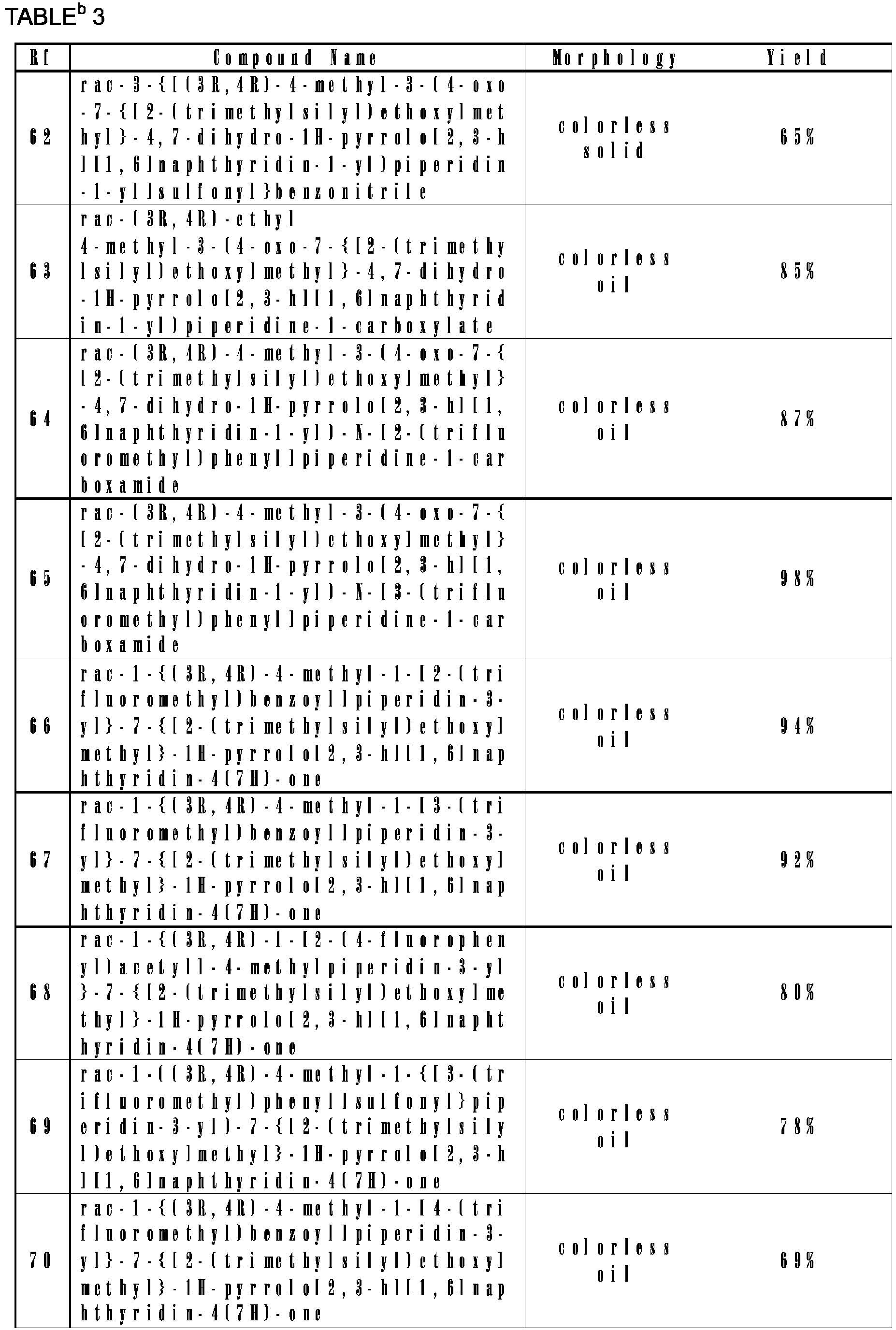

- 1,3,4-Thiadiazol-2-amine (253 mg, 2.50 mmol) in N,N-dimethylacetamide (3 mL) was stirred with phenyl chloroformate (392 µL, 3.13 mmol) at room temperature for one day. Water was added to the reaction mixture, and the precipitated solid was collected by filtration, washed with water and hexane and dried under reduced pressure to give the title compound as a colorless solid (418 mg, yield 76%).
- rac-1-[(3R,4R)-4-Methylpiperidin-3-yl]-7-{[2-(trimethylsilyl)ethoxy]methyl}-1H-pyrrolo[2,3-h][1,6]naphthyridin-4(7H)-one (30.2 mg, 0.0732 mmol) obtained in Reference Synthetic Exampleb 36 in tetrahydrofuran (3 mL) was refluxed with phenyl 1,3,4-thiadizol-2-ylcarbamate (19.6 mg, 0.0886 mmol) and triethylamine (17.9 µL, 0.128 mmol) for 3 hours under heating. The reaction mixture was concentrated under reduced pressure, and the residue was purified by silica gel column chromatography (ethyl acetate → chloroform / methanol = 10/1 (v/v)) to give the title compound as a pale yellow solid (44.0 mg, quantitative yield).
- 3-Methylisothiazol-5-amine (156 mg, 1.04 mmol) in pyridine (1.2 mL) was mixed with phenyl chloroformate (260 µL, 2.07 mmol) under cooling with ice and stirred at room temperature for 3 hours. The reaction mixture was concentrated under reduced pressure, and after addition of water, extracted with chloroform twice, and the organic layer was concentrated under reduced pressure. The residue was purified by silica gel column chromatography (hexane / ethyl acetate = 1/1 (v/v)) to give the title compound as a pale yellow solid (173 mg, yield 71%).
- rac-1-[(3R,4R)-4-Methylpiperidin-3-yl]-7-{[2-(trimethylsilyl)ethoxy]methyl}-1H-pyrrolo[2,3-h][1,6]naphthyridin-4(7H)-one (29.5 mg, 0.0715 mmol) obtained in Reference Synthetic Exampleb 36 in tetrahydrofuran (3 mL) was refluxed with phenyl (3-methylthiazol-5-yl)carbamate (21.2 mg, 0.0905 mmol) and triethylamine (17.5 µL, 0.125 mmol) for 3 hours under heating. The reaction mixture was concentrated under reduced pressure, and the residue was purified by silica gel column chromatography (ethyl acetate → chloroform / methanol = 10/1 (v/v)) to give the title compound as a yellow oil (38.4 mg, yield 97%).
- rac-1-[(3R,4R)-4-Methylpiperidin-3-yl]-7-{[2-(trimethylsilyl)ethoxy]methyl)-1H-pyrrolo[2,3-h][1,6]naphthyridin-4(7H)-one (31.0 mg, 0.751 mmol) obtained in Reference Synthetic Exampleb 36 and triethylamine (30.0 µL, 0.215 mmol) in tetrahydrofuran (4 mL) were stirred with cyclopentanecarbonyl chloride (20.0 µL, 0.165 mmol) at room temperature for one day. After addition of 1 M aqueous sodium hydroxide, the reaction mixture was extracted with chloroform, and the organic layer was washed with saturated aqueous sodium chloride, dried over anhydrous magnesium sulfate and concentrated under reduced pressure. The residue was purified by silica gel column chromatography (chloroform / methanol = 10/1 v/v)) to give the title compound as a pale yellow oil (44.5 mg, quantitative yield).
- rac-1-[(3R,4R)-4-Methylpiperidin-3-yl]-7-{[2-(trimethylsilyl)ethoxy]methyl}-1H-pyrrolo[2,3-h][1,6]naphthyridin-4(7H)-one (24.8 mg, 0.0601 mmol) obtained in Reference Synthetic Exampleb 36 in tetrahydrofuran (4 mL) was stirred sodium hydride (55 wt% dispersion in mineral oil, 49.4 mg, 1.23 mmol) and 3-(trifluoromethyl)benzyl bromide (38.2 mg, 0.160 mmol) at room temperature for one day. After addition of water under cooling with ice, the reaction mixture was extracted with ethyl acetate, and the organic layer was washed with saturated aqueous sodium chloride, dried over anhydrous magnesium sulfate and concentrated under reduced pressure. The residue was purified by silica gel column chromatography (ethyl acetate → chloroform / methanol = 20/1 (v/v)) to give the title compound as a pale yellow oil (26.8 mg, quantitative yield).
- The reactions in Reference Synthetic Exampleb 77 were carried out in substantially the same manners except that 4-(trifluoromethyl)benzyl bromide was used instead of 3-(trifluoromethyl)benzyl bromide to give the title compound as a pale yellow oil (32.8 mg, quantitative yield).
- rac-1-[(3R,4R)-4-Methylpiperidin-3-yl]-7-{[2-(trimethylsilyl)ethoxy]methyl}-1H-pyrrolo[2,3-h][1,6]naphthyridin-4(7H)-one (13.4 mg, 0.0325 mmol) obtained in Reference Synthetic Exampleb 36 in tetrahydrofuran (4 mL) was stirred with sodium hydride (55 wt% dispersion in mineral oil, 30.6 mg, 0.765 mmol) and 2-(trifluoromethyl)benzyl bromide (27.8 mg, 0.116 mmol) at room temperature for one day. After addition of water under cooling with ice, the reaction mixture was extracted with ethyl acetate, and the organic layer was washed with saturated aqueous sodium chloride, dried over anhydrous magnesium sulfate and concentrated under reduced pressure. The residue was purified by silica gel column chromatography (ethyl acetate → chloroform / methanol = 20/1 (v/v)) to give the title compound as a pale yellow oil, which was used for the next step.
- rac-1-[(3R,4R)-4-Methylpiperidin-3-yl]-7-{[2-(trimethylsilyl)ethoxy]methyl}-1H-pyrrolo[2,3-h][1,6]naphthyridin-4(7H)-one (25.0 mg, 0.0606 mmol) obtained in Reference Synthetic Exampleb 36 in tetrahydrofuran (3 mL) was stirred with sodium hydride (55 wt% dispersion in mineral oil, 15.4 mg, 0.385 mmol) and 3-cyanobenzyl bromide (12.8 mg, 0.0653 mmol) at room temperature for one day. The reaction mixture was further stirred with sodium hydride (55 wt% dispersion in mineral oil, 20.8 mg, 0.520 mmol) and 3-cyanobenzyl bromide (11.6 mg, 0.0592 mmol) at room temperature for one day. After addition of water, the reaction mixture was extracted with chloroform twice, and the organic layer was concentrated under reduced pressure. The residue was purified by silica gel column chromatography (ethyl acetate → chloroform / methanol = 10/1 (v/v)) to give the title compound as a pale yellow oil (32.4 mg, quantitative yield).
- The reactions in Reference Synthetic Exampleb 77 were carried out in substantially the same manners except that 2-cyanobenzyl bromide was used instead of 3-(trifluoromethyl)benzyl bromide to give the title compound as a pale yellow oil (31.4 mg, yield 97%).
- The reactions in Reference Synthetic Exampleb 77 were carried out in substantially the same manners except that 4-cyanobenzyl bromide was used instead of 3-(trifluoromethyl)benzyl bromide to give the title compound as a pale yellow oil (28.5 mg, yield 89%).
- rac-1-[(3R,4R)-4-Methylpiperidin-3-yl]-7-{[2-(trimethylsilyl)ethoxy]methyl}-1H-pyrrolo[2,3-h][1,6]naphthyridin-4(7H)-one (20 mg, 0.049 mmol) obtained in Reference Synthetic Exampleb 36 in 1,4-dioxane (2 mL) was stirred with di-tert-butyl bicarbonate (40 mg, 0.18 mmol) and 1 M aqueous sodium hydroxide (200 µL. 0.200 mmol) at room temperature for 1 hour. After addition of water, the reaction mixture was extracted with ethyl acetate, and the organic layer was dried over anhydrous sodium sulfate and concentrated under reduced pressure. The residue was purified by silica gel column chromatography (ethyl acetate / methanol = 1/0 →10/1 (v/v)) to give the title compound as a colorless oil (21.1 mg, yield 85%).
- rac-1-[(3R,4R)-4-Methylpiperidin-3-yl]-7-{[2-(trimethylsilyl)ethoxy]methyl}-1H-pyrrolo[2,3-h][1,6]naphthyridin-4(7H)-one (20 mg, 0.049 mmol) obtained in Reference Synthetic Exampleb 36 in a mixture of N,N-dimethylformamide (2 mL) and dichloromethane (1 mL) was stirred with 4-fluorophenethyl bromide (22 µL, 0.16 mmol) and N,N-diisopropylethylamine (20 µL, 0.11 mmol) at 50°C for 2 hours and then with sodium hydride (60 wt% dispersion in liquid paraffin, 10 mg, 0.24 mmol) at 70°C for 5 hours. The reaction mixture was allowed to cool to room temperature and, after addition of saturated aqueous sodium chloride, extracted with ethyl acetate, and the organic layer was dried over anhydrous sodium sulfate and concentrated under reduced pressure. The residue was purified by silica gel column chromatography (hexane/ ethyl acetate = 1/1 → 0/1 (v/v)) to give a mixture (4.4 mg) containing the title compound. The mixture was used for the next step without further purification.
- rac-1-[(3R,4R)-4-Methylpiperidin-3-yl]-7-{[2-(trimethylsilyl)ethoxy]methyl}-1H-pyrrolo[2,3-h][1,6]naphthyridin-4(7H)-one (32 mg, 0.078 mmol) obtained in Reference Synthetic Exampleb 36 in a mixture of methanol (2 mL) and acetic acid (0.2 mL) was stirred with cyclopentanone (100 µL, 1.13 mmol) and 2-picoline borane (50 mg, 0.47 mmol) at room temperature for 1 hour. After addition of water, the reaction mixture was extracted with ethyl acetate, and the organic layer was dried over anhydrous sodium sulfate and concentrated under reduced pressure. The resulting colorless oil (38 mg) containing the title compound was used for the next step without further purification.
- rac-1-[(3R,4R)-4-Methylpiperidin-3-yl]-7-{[2-(trimethylsilyl)ethoxy]methyl}-1H-pyrrolo[2,3-h][1,6]naphthyridin-4(7H)-one (20 mg, 0.049 mmol) obtained in Reference Synthetic Exampleb 36 in chloroform (2 mL) was stirred with 4-(tert-butyl) cyclohexanecarboxylic acid (20 mg, 0.11 mmol), 1-(3-dimethylaminopropyl)-3-ethylcarbodidimide hydrochloride (20 mg, 0.10 mmol) and N,N-diisopropylethylamine (50 µL, 0.29 mmol) at room temperature for 2 hours. After addition of 0.1 M aqueous sodium hydroxide, the reaction mixture was extracted with ethyl acetate, and the organic layer was washed with 0.1 M hydrochloric acid, dried over anhydrous sodium sulfate and concentrated under reduced pressure. The residue was purified by silica gel column chromatography (ethyl acetate) to give two isomers of the title compound in a less polar fraction (Reference Synthetic Exampleb 86a: colorless oil, 9.0 mg, yield 32%) and in more polar fraction (Reference Synthetic Exampleb 86b: colorless oil, 9.3 mg, yield 33%).
- 4-Chloro-1-{[2-(trimethylsilyl)ethoxy]methyl}-1H-pyrrolo[2,3-b]pyridine-5-carbaldehyde (486 mg, 1.56 mmol) obtained in Reference Synthetic Exampleb 55 in acetic acid (10 mL) was mixed with sulfamic acid (227 mg, 2.34 mmol) and 2-methyl-2-butene (486 µL, 4.58 mmol), and then sodium chlorite (254 mg, 2.81 mmol) in water (0.5 mL) was added dropwise. The resulting reaction mixture was stirred at room temperature for 2 hours, and after addition of water, adjusted to pH 7 with 1 M aqueous sodium hydroxide and extracted with chloroform. The organic layer was dried over anhydrous sodium sulfate and concentrated under reduced pressure. The residue was purified by silica gel column chromatography (ethyl acetate / methanol = 10/1 → 1/1 (v/v)) to give the title compound as a colorless solid (484 mg, yield 95%).
- 4-Chloro-1-{[2-(trimethylsilyl)ethoxy]methyl}-1H-pyrrolo[2,3-b]pyridine-5-carboxylic acid (480 mg, 1.47 mmol) in thionyl chloride (3 mL) was stirred at room temperature for 2 hours. After addition of toluene, the reaction mixture was concentrated under reduced pressure, and after addition of toluene, concentrated under reduced pressure. The residue was dissolved in dichloromethane (5 mL), and ammonia - methanol solution (7.0 M, 1.0 mL, 7.0 mmol) was added dropwise, and the resulting reaction mixture was stirred for 1 hour. After addition of saturated aqueous sodium chloride, the reaction mixture was extracted with ethyl acetate, and the organic layer was dried over anhydrous sodium sulfate and concentrated under reduced pressure to give the title compound as a colorless solid (461 mg, yield 96%).
- 4-Chloro-1-{[2-(trimethylsilyl)ethoxy]methyl}-1H-pyrrolo[2,3-b]pyridine-5-carboxamide (456 mg, 1.40 mmol) was stirred with 1-benzyl-4-aminopiperidine (900 mg, 4.73 mmol) and N,N-diisopropylethylamine (250 µL, 1.44 mmol) at 140°C for 3 hours. The reaction mixture was allowed to cool to room temperature and, after addition of water, extracted with ethyl acetate, and the organic layer was dried over anhydrous sodium sulfate and concentrated under reduced pressure. The residue was purified by silica gel column chromatography (chloroform → ethyl acetate / methanol = 1/0 → 5/1 (v/v)) to give the title compound as a colorless solid (542 mg, yield 81%).
- 4-[(1-Benzylpiperidin-4-yl)amino]-1-{[2-(trimethylsilyl)ethoxy]methyl}-1H-pyrrolo[2,3-b]pyridine-5-carboxamide (484 mg, 1.01 mmol) in N,N-dimethylacetamide (5 mL) was stirred with 1,1'-carbonyldiimidazole (486 mg, 3.00 mmol) at 120°C for 3 hours. The reaction mixture was allowed to cool to room temperature and, after addition of saturated aqueous sodium chloride, extracted with ethyl acetate, and the organic layer was dried over anhydrous sodium sulfate and concentrated under reduced pressure. The residue was purified by silica gel column chromatography (chloroform / methanol = 20/1 (v/v)) to give the title compound as a colorless solid (360 mg, yield 70%).
- 1-(1-Benzylpiperidin-4-yl)-7-{[2-(trimethylsilyl)ethoxy]methyl}-1H-pyrrolo[3',2':5,6]pyrido[4,3-d]pyrimidine-2,4(3H,7H)-dione (360 mg, 0.712 mmol) and 5% palladium-carbon (100 mg) in a mixture of methanol and 10 wt % hydrogen chloride - methanol solution (0.5 mL) were stirred with at room temperature for 2 hours under a hydrogen atmosphere, then at 40°C for 5 hours and at room temperature for one day. The reaction mixture was filtered, and the filtrate was concentrated under reduced pressure to give the title compound as a colorless solid (324 mg, quantitative yield).
- 1-(Piperidin-4-yl)-7-{[2-(trimethylsilyl)ethoxy]methyl}-1H-pyrrolo[3',2':5,6]pyrido[4,3-d]pyrimidine-2,4(3H,7H)-dione hydrochloride (50 mg, 0.111 mmol) and 4-cyanobenzaldehyde (29 mg, 0.22 mmol) in a mixture of methanol (2 ml) and acetic acid (0.2 mL) were stirred with 2-picoline borane (50 mg, 0.47 mmol) at room temperature for 2 days. After addition of 1 M aqueous sodium hydroxide, the reaction mixture was extracted with a mixture of ethyl acetate and 2-propanol, and the organic layer was dried over anhydrous sodium sulfate and concentrated under reduced pressure. The residue was purified by silica gel column chromatography (chloroform / methanol = 10/1 (v/v)) to give the title compound as a colorless solid (23.4 mg, yield 40%).
- The reactions in Reference Synthetic Exampleb 92 were carried out in substantially the same manners except that 5-chlorothiophene-2-carbaldehyde was used instead of 4-cyanobenzaldehyde to give the title compound as a colorless solid (21.1 mg, yield 58%).
- The reactions in Reference Synthetic Exampleb 92 were carried out in substantially the same manners except that 4-(trifluoromethyl)benzaldehyde was used instead of 4-cyanobenzaldehyde to give the title compound as a colorless amorphous (28.1 mg, yield 44%).
- 4-(Cyclohexylamino)-1-{[2-(trimethylsilyl)ethoxy]methyl}-1H-pyrrolo[2,3-b]pyridine-5-carboxamide (26 mg, 0.067 mmol) obtained in Reference Synthetic Exampleb 30 in N,N-dimethylacetamide (1 mL) was stirred with 1,1'-carbonyldiimidazole (22 mg, 0.14 mmol) at 170°C for 2 hours under microwave irradiation. The reaction mixture was allowed to cool to room temperature and, after addition of water, extracted with ethyl acetate, and the organic layer was dried over anhydrous sodium sulfate and concentrated under reduced pressure. The residue was purified by silica gel column chromatography (hexane / ethyl acetate = 1/1 (v/v)) to give the title compound as a colorless solid (13.7 mg, yield 49%).
- Methylmagnesium bromide - diethyl ether solution (3.0 M, 10 mL, 30 mmol) was added dropwise to 4-chloro-1-{[2-(trimethylsilyl)ethoxy]methyl}-1H-pyrrolo[2,3-b]pyridine-5-carbaldehyde (4.89 g, 15.7 mmol) obtained in Reference Synthetic Exampleb 55 in tetrahydrofuran (50 mL) under cooling with ice, and the reaction mixture was stirred for 2 hours. After dropwise addition of water and addition of saturated aqueous ammonium chloride, the reaction mixture was extracted with ethyl acetate, and the organic layer was dried over anhydrous sodium sulfate and concentrated under reduced pressure. The residue was dissolved in 1,2-dimethoxyethane (25 mL) and vigorously stirred with manganese dioxide (9.0 g, 0.10 mol) at 80°C for 4 hours. The reaction mixture was filtered, and the filtrate was concentrated under reduced pressure. The residue was dissolved in 1,2-dimethoxyethane (25 mL) and vigorously stirred with manganese dioxide (9.0 g, 0.10 mol) at 80°C for 4 hours. The reaction mixture was filtered, and the filtrate was concentrated under reduced pressure. The residue was purified by silica gel column chromatography (hexane / ethyl acetate = 10/1 (v/v)) to give the title compound as an orange oil (3.09 g, yield 61 %). (alternative to Reference Synthetic Exampleb 33)
- 1-(4-Chloro-1-{[2-(trimethylsilyl)ethoxy]methyl}-1H-pyrrolo[2,3-b]pyridin-5-yl)ethanone (400 mg, 1.23 mmol) and 1-benzylpiperidin-4-amine (1.70 mL, 8.93 mmol) was stirred with N,N-diisopropylethylamine (251 µL. 1.47 mmol) at 140°C for one day. The reaction mixture was purified by silica gel column chromatography (hexane / ethyl acetate = 1/1 (v/v)) to give the title compound (343 mg, yield 58%).
- 1-{4-[(1-Benzylpiperidin-4-yl)amino]-1-{[2-(trimethylsilyl)ethoxy]methyl}-1H-pyrrolo[2,3-b]pyridin-5-yl}ethanone (343 mg, 0.720 mmol) in N,N-dimethylformamide dimethyl acetal (2 mL) was stirred at 170°C for 6 hours under microwave irradiation. The reaction mixture was allowed to cool to room temperature and concentrated under reduced pressure, and the residue was dissolved in tetrahydrofuran (5 mL) and stirred with 1 M hydrochloric acid (3 mL) at 80°C for 1 hour. After addition of saturated aqueous sodium hydrogen carbonate, the reaction mixture was extracted with chloroform, and the organic layer was dried over anhydrous sodium sulfate and concentrated under reduced pressure. The residue was purified by silica gel column chromatography (chloroform / methanol = 9/1 (v/v)) to give the title compound (299 mg, yield 85%).
- 1-(1-Benzylpiperidin-4-yl)-7-{[2-(trimethylsilyl)ethoxy]methyl}-1H-pyrrolo[2,3-h][1,6]naphthyridin-4(7H)-one (341 mg, 0.697 mmol) in methanol was stirred with 5% palladium-carbon (500 mg) for one day under a hydrogen atmosphere. The reaction mixture was filtered, and the filtrate was concentrated under reduced pressure. The residue was purified by silica gel column chromatography (Hi Flash column amino type manufactured by Yamazen Corporation: chloroform / methanol = 9/1/ (v/v)) to give the title compound (189 mg, yield 68%).
- 1-(Piperidin-4-yl)-7-{[2-(trimethylsilyl)ethoxy]methyl}-1H-pyrrolo[2,3-h][1,6]naphthyridin-4(7H)-one (20 mg, 0.050 mmol) in methanol was stirred with 5-chlorothiophen-2-carbaldehyde (6.3 µL, 0.06 mmol), 2-picoline borane (6.4 mg, 0.06 mmol) and acetic acid (100 µL) for one day. The reaction mixture was concentrated under reduced pressure, and the residue was purified by silica gel column chromatography (chloroform / methanol = 10/1 (v/v)) to give the title compound as a colorless oil (20 mg, yield 75%).
- 1-(Piperidin-4-yl)-7-[{2-(trimethylsilyl)ethoxy}methyl]-1H-pyrrolo[2,3-h][1,6]naphthyridin-4(7H)-one (20 mg, 0.050 mmol) obtained in Reference Synthetic Exampleb 99 in dichloromethane was stirred with 4-(trifluoromethyl)benzyl bromide (14.3 mg, 0.0600 mmol) and triethylamine (10.5 µL, 0.0750 mmol) for one day. After addition of water, the reaction mixture was extracted with chloroform, and the organic layer as dried over anhydrous magnesium sulfate and concentrated under reduced pressure. The residue was purified by silica gel column chromatography (chloroform / methanol = 9/1 (v/v)) to give the title compound (20 mg, yield 72%).
- The reactions in Reference Synthetic Exampleb 101 were carried out in substantially the same manners except that 4-cyanobenzyl bromide was used instead of 4-(trifluoromethyl)benzyl bromide to give the title compound (29.7 mg, yield 77%).
- The reactions in Reference Synthetic Exampleb 101 were carried out in substantially the same manners except that 4-(bromomethyl)-3-fluorobenzonitrile was used instead of 4-(trifluoromethyl)benzyl bromide to give the title compound as a yellow oil (17.6 mg, yield 66%).
- 4-Chloro-1H-pyrrolo[2,3-b]pyridine-5-carbaldehyde (600 mg, 3.32 mmol) obtained in Reference Synthetic Exampleb 7 and 1-benzylpiperidin-4-amine (2.53 g, 13.3 mmol) in ethylene glycol (300 µL) were stirred at 180°C for 2 hours under microwave irradiation. The reaction mixture was allowed to cool to room temperature and, after addition of water, extracted with chloroform, and the organic layer was dried over anhydrous magnesium sulfate and concentrated under reduced pressure. The resulting residue was dissolved in 1,4-dioxane (5 mL) and stirred with 4 M hydrogen chloride - 1,4-dioxane solution (5 mL) and water (2 mL) at room temperature for one day. The reaction mixture was concentrated under reduced pressure, adjusted to pH 9 or above with 1 M aqueous sodium hydroxide and extracted with chloroform and water, and the organic layer was dried over anhydrous magnesium sulfate and concentrated under reduced pressure. The residue was purified by silica gel column chromatography (Hi Flash column amino type manufactured by Yamazen Corporation: hexane / ethyl acetate = 1/1 (v/v)) to give the title compound (672 mg, yield 60%).
- 4-[(1-Benzylpiperidin-4-yl)amino]-1H-pyrrolo[2,3-b]pyridine-5-carbaldehyde (672 mg, 2.01 mmol) in N,N-dimethylformamide (5 mL) was mixed with sodium hydride (55 wt% dispersion in mineral oil, 436 mg, 10.0 mmol) under cooling with ice, and the reaction mixture was stirred for 30 minutes. The reaction mixture was stirred with [2-(chloromethoxyl)ethyl]trimethylsilane (885 µL, 5.00 mmol) at room temperature for one day. After addition of water, the reaction mixture was extracted with chloroform, and the organic layer was dried over anhydrous magnesium sulfate and concentrated under reduced pressure. The residue was purified by silica gel column chromatography (hexane / ethyl acetate = 1/1 (v/v)) to give the title compound (392 mg, yield 42%).
- 4-[(1-Benzylpiperidin-4-yl)amino]-1-{[2-(trimethylsilyl)ethoxy]methyl}-1H-pyrrolo[2,3-b]pyridine-5-carbaldehyde (289 mg, 0.620 mmol) in methanol was stirred with sodium borohydride (35.3 mg, 0.93 mmol) at room temperature for 1 hour. The reaction mixture was concentrated under reduced pressure and, after addition of water, extracted with ethyl acetate. The organic layer was dried over anhydrous magnesium sulfate and concentrated under reduced pressure. The residue was purified by silica gel column chromatography (hexane/ ethyl acetate = 1/1 (v/v)) to give the title compound (258 mg, yield 89%).
- {4-[(1-Benzylpiperidin-4-yl)amino]-1-{[2-(trimethylsilyl)ethoxy]methyl}-1H-pyrrolo[2,3-b]pyridin-5-yl}methanol (212 mg, 0.454 mmol), phthalimide (134 mg, 0.909 mmol) and triphenylphosphine (238 mg, 0.909 mmol) in tetrahydrofuran was stirred at room temperature for 30 minutes and with diisopropyl azodicarboxylate (184 mg, 0.909 mmol) for one day. The reaction mixture was concentrated under reduced pressure and, after addition of water, extracted with ethyl acetate. The residue was purified by silica gel column chromatography (hexane/ ethyl acetate = 1/1/ (v/v)) to remove triphenylphosphine oxide. The residue was dissolved in ethanol (10 mL) and stirred with hydrazine monohydrate (1.00 mL, 11.6 mmol) at 80°C for 1 hour. The reaction mixture was concentrated under reduced pressure and, after addition of water, extracted with chloroform, and the organic layer was dried over anhydrous magnesium sulfate and concentrated under reduced pressure. The residue was purified by silica gel column chromatography (hexane / ethyl acetate = 1/1 (v/v)) to give the title compound (51.1 mg, yield 24%).
- 5-(Aminomethyl)-N-(1-benzylpiperidin-4-yl)-1-{[2-(trimethylsilyl)ethoxy]methyl}-1H-pyrrolo[2,3-b]pyridin-4-amine (38 mg, 0.081 mmol) in dichloromethane was stirred with 1,1'-carbonyldiimidazole (20.0 mg, 0.123 mmol) at 80°C for 1 hour. The reaction mixture was concentrated under reduced pressure and, after addition of water, extracted with ethyl acetate, and the organic layer was dried over anhydrous magnesium sulfate and concentrated under reduced pressure. The residue was purified by silica gel column chromatography (chloroform / methanol =10/1 (v/v)) to give the title compound (30.9 mg, yield 77%).
- 1-(1-Benzylpiperidin-4-yl)-7-{[2-(trimethylsilyl)ethoxy]methyl}-3,4-dihydro-1H-pyrrolo[3',2':5,6]pyrido[4,3-d]pyrimidin-2(7H)-one (61 mg, 0.12 mmol) in ethanol was stirred with 5% palladium-carbon (60 mg) for one day under a hydrogen atmosphere. The reaction mixture was filtered, and the filtrate was concentrated under reduced pressure to give the title compound (48 mg, yield 100%).
- 1-(Piperidin-4-yl)-7-{[2-(trimethylsilyl)ethoxy]methyl}-3,4-dihydro-1H-pyrrolo[3',2':5,6]pyrido[4,3-d]pyrimidin-2(7H)-one (18.5 mg, 0.0460 mmol) in dichloromethane was mixed with phenylmethanesulfonyl chloride (17.5 mg, 0.092 mmol) and triethylamine (12.8 µL, 0.0920 mmol) for 1 hour under cooling with ice. After addition of water, the reaction mixture was extracted with chloroform, and the organic layer was dried over anhydrous magnesium sulfate and concentrated under reduced pressure. The residue was purified by silica gel column chromatography (chloroform / methanol = 9/1 (v/v)) to give the title compound as a pale yellow solid (18.4 mg, yield 72%).
- The reactions in Reference Synthetic Exampleb 110 were carried out in substantially the same manners except that 3-picolyl bromide was used instead of phenylmethanesulfonyl chloride to give the title compound (14 mg, yield 46%).
- The reactions in Reference Synthetic Exampleb 110 were carried out in substantially the same manners except that 4-cyanobenzyl bromide was used instead of phenylmethanesulfonyl chloride to give the title compound (20.6 mg, yield 54%).
- The reactions in Reference Synthetic Exampleb 110 were carried out in substantially the same manners except that 4-(trifluoromethyl)benzyl bromide was used instead of phenylmethanesulfonyl chloride to give the title compound (18.9 mg, yield 46%).
- 1-(Piperidin-4-yl)-7-{[2-(trimethylsilyl)ethoxy]methyl}-3,4-dihydro-1H-pyrrolo[3',2':5,6]pyrido[4,3-d]pyrimidin-2(7H)-one (16.3 mg, 0.0407 mmol) obtained in
- Reference Synthetic Exampleb 109 and phenyl 1,3,4-thiadiazol-2-ylcarbamate (10.8 mg, 0.0488 mol) obtained in Reference Synthetic Exampleb 72 in tetrahydrofuran was stirred with triethylamine (8.1µL, 0.061 mmol) at 60°C for 2 hours. After addition of water, the reaction mixture was extracted with ethyl acetate, and the organic layer was dried over anhydrous magnesium sulfate and concentrated under reduced pressure. The residue was purified by silica gel column chromatography (chloroform / methanol = 9/1 (v/v)) to give the title compound as a colorless solid (20 mg, yield 93%).
- 1-(Piperidin-4-yl)-7-{[2-(trimethylsilyl)ethoxy]methyl}-3,4-dihydro-1H-pyrrolo[3',2':5,6]pyrido[4,3-d]pyrimidin-2(7H)-one (25 mg, 0.062 mmol) obtained in Reference Synthetic Exampleb 109 in N,N-dimethylformamide was stirred with 3,3,3-trifluoropropionic acid (8.7 mg, 0.068 mmol), O-(7-azabenzotriazol-1-yl)-N,N,N',N' tetramethyluronium hexafluorophosphate (28.1 mg, 0.0740 mmol) and N,N-diisopropylethylamine (21.2 µL, 0.124 mmol) at room temperature for 2 hours. After addition of water, the reaction mixture was extracted with ethyl acetate, and the organic layer was dried over anhydrous magnesium sulfate and concentrated under reduced pressure. The residue was purified by silica gel column chromatography (chloroform / methanol = 10/1 (v/v)) to give the title compound as a yellow oil (15.5 mg, yield 49%).
- 1-(Piperidin-4-yl)-7-{[2-(trimethylsilyl)ethoxy]methyl}-3,4-dihydro-1H-pyrrolo[3',2':5,6]pyrido[4,3-d]pyrimidin-2(7H)-one (20 mg, 0.050 mmol) obtained in Reference Synthetic Exampleb 109 in methanol was stirred with thiazol-5-carbaldehyde (6.6 µL, 0.075 mmol), 2-picoline borane (8.0 mg, 0.075 mmol) and acetic acid (100 µL) for one day. The reaction mixture was concentrated under reduced pressure, and the residue was purified by silica gel column chromatography (chloroform / methanol = 10/1 (v/v)) to give the title compound (12 mg, yield 48%).
- The reactions in Reference Synthetic Exampleb 104 were carried out in substantially the same manners except that rac-(3R,4R)-1-benzyl-4-methylpiperidin-3-amine obtained in Reference Synthetic Exampleb 3 was used instead of 1-benzylpiperidin-4-amine to give the title compound as a brown oil (282 mg, yield 30%). (alternative to Reference Synthetic Exampleb 38)
- The reactions in Reference Synthetic Exampleb 105 were carried out in substantially the same manners except that rac-4-{[(3R,4R)-1-benzyl-4-methylpiperidin-3-yl]amino}-1 H-pyrrolo[2,3-b]pyridine-5-carbaldehyde was used instead of 4-[(1-benzylpiperidin-4-yl)amino]-1H-pyrrolo[2,3-b]pyridine-5-carbaldehyde to give the title compound (231 mg, yield 60%). (alternative to Reference Synthetic Exampleb 39)
- The reactions in Reference Synthetic Exampleb 106 were carried out in substantially the same manners except that rac-4-{[(3R,4R)-1-benzyl-4-methylpiperidin-3-yl]amino}-1-{[2-(trimethylsilyl)ethoxy]methyl}-1H-pyrrolo[2,3-b]pyridine-5-carbaldehyde was used instead of 4-[(1-benzylpiperidin-4-yl)amino]-1-{[2-(trimethylsilyl)ethoxy]methyl}-1H-pyrrolo[2,3-b]pyridine-5-carbaldehyde to give the title compound as a yellow oil (105 mg, yield 84%). (alternative to Reference Synthetic Exampleb 40)
- The reactions in Reference Synthetic Exampleb 107 were carried out in substantially the same manners except that rac-(4-{[(3R,4R)-1-benzyl-4-methylpiperidin-3-yl]amino}-1-{[2-(trimethylsilyl)ethoxy]methyl}-1H-pyrrolo[2,3-b]pyridin-5-yl)methanol was used instead of {4-[(1-benzylpiperidin-4-yl)amino]-1-{[2-(trimethylsilyl)ethoxy]methyl}-1H-pyrrolo[2,3-b]pyridin-5-yl}methanol to give the title compound (20.8 mg, yield 21 %).
- The reactions in Reference Synthetic Exampleb 108 were carried out in substantially the same manners except that rac-5-(aminomethyl)-N-[(3R,4R)-1-benzyl-4-methylpiperidin-3-yl]-1-{[2-(trimethylsilyl)ethoxy]methyl}-1H-pyrrolo[2,3-b]pyridine-4-amine was used instead of 5-(aminomethyl)-N-(1-benzylpiperidin-4-yl) -1-{[2-(trimethylsilyl)ethoxy]methyl}-1H-pyrrolo[2,3-b]pyridine-4-amine to give the title compound (22 mg, yield 100%).
- trans-4-Aminocyclohexanecarboxylic acid (314 mg, 2.19 mmol) was gradually added to sodium bis(2-methoxyethoxy)aluminum hydride - toluene solution (65 wt%, 3.0 mL) in toluene (3mL) at 75°C, and the reaction mixture was stirred for 7 hours. The reaction mixture was allowed to cool to room temperature and stirred with 1 M aqueous sodium hydroxide (20 mL) at 80°C for 10 minutes. The reaction mixture was allowed to cool to room temperature and partitioned between water and toluene, and the aqueous layer was extracted with chloroform three times. The organic layer was dried over anhydrous sodium sulfate and concentrated under reduced pressure to give the title compound as a colorless solid (170 mg, yield 60%).
- (trans-4-Aminocyclohexyl)methanol (170 mg, 1.32 mmol) and 1-(4-chloro-1-{[2-(trimethylsilyl)ethoxy]methyl}-1H-pyrrolo[2,3-b]pyridin-5-yl)ethanone (120 mg, 0.369 mmol) obtained in Reference Synthetic Exampleb 96 in N,N-dimethylacetamide (1 mL) were stirred with N,N-diisopropylethylamine (128 µL, 0.735 mmol) at 140°C for 7 hours. The reaction mixture was allowed to cool to room temperature and, after addition of saturated aqueous sodium chloride, extracted with ethyl acetate, and the organic layer was washed with saturated aqueous sodium chloride, dried over anhydrous sodium sulfate and concentrated under reduced pressure. The residue was purified by silica gel column chromatography (ethyl acetate) to give the title compound as a pale yellow oil (118 mg, yield 77%).
- The reactions in Reference Synthetic Exampleb 98 were carried out in substantially the same manners except that 1-(4-{[trans-4-(Hydroxymethyl)cyclohexyl]amino}-1-{[2-(trimethylsilyl)ethoxy]methyl}-1H-pyrrolo[2,3-b]pyridin-5-yl)ethanone was used instead of 1-{4-[(1-benzylpiperidin-4-yl)amino]-1-{[2-(trimethylsilyl)ethoxy]methyl}-1H-pyrrolo[2,3-b]pyridin-5-yl}ethanone to give the title compound as a pale yellow solid (35 mg, yield 29%).
- tert-Butyl (trans-4-hydroxycyclohexyl)carbamate (1.0 g, 4.6 mmol) in tetrahydrofuran (20 mL) was stirred with sodium hydride (55 wt% dispersion in mineral oil, 24 mg, 6.4 mmol) and 15-crown-5 ether (965 µL) for 30 minutes under cooling with ice and then with iodomethane (289 µL) at room temperature for 1 hour. Methanol (2 mL) was added to the reaction mixture, and the precipitated solid was removed by filtration. The filtrate was concentrated under reduced pressure. The residue was purified by silica gel column chromatography (hexane / ethyl acetate = 8/1 (v/v)) to give the title compound (708 mg, yield 67%).
- tert-Butyl (trans-4-methoxycyclohexyl)carbamate in ethanol (5 mL) was stirred with acetyl chloride (1.5 mL) for one day under cooling with ice, and the solvent was concentrated under reduced pressure to give the title compound (475 mg, yield 95%).
- 1-(4-Chloro-1-{[2-(trimethylsilyl)ethoxy]methyl}-1H-pyrrolo[2,3-b]pyridin-5-yl)ethanone (228 mg, 0.170 mmol) obtained in Reference Synthetic Exampleb 96 in ethylene glycol (1 mL) was stirred with trans-4-methoxycyclohexanamine hydrochloride and N,N-diisopropylethylamine at 180°C for 1 hour under microwave irradiation. After addition of saturated aqueous sodium hydrogen carbonate, the reaction mixture was extracted with ethyl acetate, and the organic layer was dried over anhydrous sodium sulfate and concentrated under reduced pressure. The residue was purified by silica gel column chromatography (hexane / ethyl acetate = 1/9 (v/v)) to give the title compound as a yellow oil (179 mg, yield 61 %).
- 1-(4-[(trans-4-Methoxycyclohexyl)amino]-1-{[2-(trimethylsilyl)ethoxy]methyl}-1H-pyrrolo[2,3-b]pyridin-5-yl)ethanone (179 mg, 0.428 mmol) in N,N-dimethylformamide dimethyl acetal (3 mL) was stirred at 170°C for 6 hours under microwave irradiation. The reaction mixture was allowed to cool to room temperature and concentrated under reduced pressure, and the resulting residue was dissolved in tetrahydrofuran (3 mL) and stirred with 1 M hydrochloric acid (3 mL) at 80°C for 1 hour. The reaction mixture was allowed to cool to room temperature and, after addition of saturated aqueous sodium hydrogen carbonate, extracted with chloroform, and the organic layer was dried over anhydrous sodium sulfate and concentrated under reduced pressure. The residue was purified by silica gel column chromatography (chloroform / methanol = 9/1 (v/v)) to give the title compound (141 mg, yield 77%).
- The reactions in Reference Synthetic Exampleb 101 were carried out in substantially the same manners except that 2-(bromomethyl)-5-(trifluoromethyl)furan, 2-(bromomethyl)-5-nitrofuran, ethyl 5-(chloromethyl)furan-2-carboxylate, 4-(chloromethyl)-1,2-difluorobenzene, 1,2-dichloro-4-(chloromethyl)benzene or 5-(chloromethyl)-2-(trifluoromethyl)pyridine was used instead of 4-(trifluoromethyl)benzyl bromide to give the compounds of Reference Examplesb 129 to 134. The names, morphologies and yields of the compounds synthesized are shown in Tableb 5.

- The reactions in Reference Synthetic Exampleb 100 were carried out in substantially the same manners except that 2-chlorothiazole-5-carbaldehyde, 4-fluoro-3-(trifluoromethyl)benzaldehyde, 5-nitrothiophene-3-carbaldehyde, 5-bromofuran-2-carbaldehyde, 5-bromothiophene-2-carbaldehyde, 4-bromothiophene-2-carbaldehyde, 2-bromothiazole-5-carbaldehyde, 2,2-difluorobenzo[d][1,3]dioxole-5-carbaldehyde or 1 H-indole-5-carbaldehyde was used instead of 5-chlorothiophene-2-carbaldehyde to give the compounds of Reference Examplesb 135 to 143. The names, morphologies and yields of the compounds synthesized are shown in Tableb 6.

- 1-(Piperidin-4-yl)-7-{[2-(trimethylsilyl)ethoxy]methyl}-1H-pyrrolo[2,3-h][1,6]naphthyridin-4(7H)-one (20 mg, 0.050 mmol) obtained in Reference Synthetic Exampleb 99 in N,N-dimethylformamide (2 mL) was stirred with 5-chlorothiophene-2-carboxylic acid (13.4 mg, 0.0825 mmol), N,N-diisopropylethylamine (25.5 µL, 0.150 mmol) and O-(7-azabenzotriazol-1-yl)-N,N,N',N'-tetramethyluronium hexafluorophosphate (34.2 mg, 0.0899 mmol) for one day. After addition of water, the reaction mixture was extracted with ethyl acetate, and the organic layer was dried over anhydrous magnesium sulfate and concentrated under reduced pressure. The residue was purified by silica gel column chromatography (chloroform / methanol = 9/1 (v/v)) to give the title compound (40.0 mg, quantitative yield).
- The reactions in Reference Synthetic Exampleb 92 were carried out in substantially the same manners except that tert-butyl (2-oxoethyl)carbamate, 5-bromothiophene-2-carbaldehyde, 2-(tetrahydro-2H-thiopyran-4-yl)acetaldehyde, cyclopropanecarbaldehyde, 2-methylbutanal or 2-(tetrahydro-2H-pyran-4-yl)acetaldehyde was used instead of 4-cyanobenzaldehyde to give the compounds of Reference Synthetic Examplesb 145 to 150. The names, morphologies and yields of the compounds synthesized are shown in Tableb 7.

- 1-(Piperidin-4-yl)-7-{[2-(trimethylsilyl)ethoxy]methyl}-1H-pyrrolo[3',2':5,6]pyrido[4,3-d]pyrimidine-2,4(3H,7H)-dione hydrochloride (40.0 mg, 0.0885 mmol) obtained in Reference Synthetic Exampleb 91 in acetonitrile (1 mL) was mixed with 2-chloroacetonitrile (8.2 µL, 0.133 mmol) and N,N-diisopropylethylamine (31.0 µL, 0.177 mmol) and stirred at 60°C for 26 hours. The reaction mixture was concentrated under reduced pressure, and the residue was purified by silica gel column chromatography (chloroform → methanol / chloroform = 8/92 (v/v)) to give the title compound as a colorless solid (31.2 mg, yield 78%).
- The reactions in Reference Synthetic Exampleb 151 were carried out in substantially the same manners except that 2,2,2-trifluoroethyl trifluoromethanesulfonate, 5-bromopentanenitrile, 6-bromo-1,1,1-trifluorohexane, 4-bromobutanenitrile or 2-(bromomethyl)tetrahydrofuran was used instead of 2-chloroacetonitrile to give the compounds of Reference Synthetic Examplesb 152 to 156. The names, morphologies and yields of the compounds synthesized are shown in Tableb 8.

- 1-(Piperidin-4-yl)-7-{[2-(trimethylsilyl)ethoxy]methyl}-1H-pyrrolo[3',2':5,6]pyrido[4,3-d]pyrimidine-2,4(3H,7H)-dione hydrochloride (40.0 mg, 0.0885 mmol) obtained in Reference Synthetic Exampleb 91 in ethanol (1 mL) was refluxed with acrylonitrile (11.5 µL, 0.176 mmol) and N,N-diisopropylethylamine (18.9 µL, 0.110 mmol) for 8.5 hours. The reaction mixture was concentrated under reduced pressure, and the residue was purified by silica gel column chromatography (chloroform → methanol / chloroform = 6/94 (v/v)) to give the title compound as a colorless solid (27.3 mg, yield 66%).
- Concentrated sulfuric acid (35 mL) was mixed with concentrated nitric acid (4.5 mL) and 2-adamantylamine (5.10 g, 4.57 mmol) under cooling with ice, and the reaction mixture was stirred at room temperature for 2 hours. The reaction mixture was added to ice water and adjusted to pH 10 with 7.5 M aqueous sodium hydroxide. After addition of water, the reaction mixture was extracted with chloroform, and the organic layer was dried over anhydrous magnesium sulfate and concentrated under reduced pressure to give the title compound as a yellow solid (2.79 g, yield 61%).
- 4-Aminoadamantan-1-ol (2.57 g, 15.4 mmol) in tetrahydrofuran (25 mL) was mixed with benzyl chloroformate (2.30 mL, 16.1 mmol) and 1 M aqueous sodium hydroxide (16.0 mL, 16.0 mmol) under cooling with ice and then stirred at room temperature for one day. After addition of 10% aqueous potassium hydrogen sulfate, the reaction mixture was extracted with ethyl acetate, and the organic layer was washed with saturated aqueous sodium chloride, dried over anhydrous magnesium sulfate and concentrated under reduced pressure. The residue was purified by silica gel column chromatography (hexane / ethyl acetate = 1/2 (v/v)) to give benzyl [(1 R,2s,3S,5s,7s)-5-hydroxyadamantan-2-yl]carbamate (Reference Synthetic Exampleb 159a; yellow oil, 1.72 g, yield 37%) in a more polar fraction and benzyl [(1 R,2r,3S,5s,7s)-5-hydroxyadamantan-2-yl]carbamate (Reference Synthetic Exampleb 159b; yellow oil, 2.24 g, yield 48%) in a less polar fraction.
- Benzyl[(1R,2s,3S,5s,7s)-5-hydroxyadamantan-2-yl]carbamate (318 mg, 1.05 mmol) obtained in Reference Synthetic Exampleb 159a and 5% palladium-carbon (63 mg) in methanol (2 mL) were stirred at room temperature for one day under a hydrogen atmosphere. The reaction mixture was filtered, and the filtrate was concentrated under reduced pressure to give the title compound as a colorless solid (144 mg, yield 82%).
- Benzyl[(1R,2r,3S,5s,7s)-5-hydroxyadamantan-2-yl]carbamate (2.24 g, 7.46 mmol) obtained in Reference Synthetic Exampleb 159b and 5% palladium-carbon (700 mg) in methanol (30 mL) were stirred at room temperature for one day under a hydrogen atmosphere. The reaction mixture was filtered, and the filtrate was concentrated under reduced pressure to give the title compound as a colorless solid (1.29 g, quantitative yield).
- tert-Butyl 3-hydroxyazetidine-1-carboxylate (4.02 g, 23.2 mmol) in dichloromethane (305 mL) was mixed with Dess-Martin Periodinane (9.55 g, 22.5 mmol) under cooling with ice and then stirred at room temperature for 3 hours. After addition of 10% aqueous sodium thiosulfate and saturated aqueous sodium hydrogen carbonate under cooling with ice, the reaction mixture was extracted with chloroform, and the organic layer was washed with saturated aqueous sodium chloride, dried over anhydrous magnesium sulfate and concentrated under reduced pressure. The residue was purified by silica gel column chromatography (hexane / ethyl acetate = 2/1 (v/v)) to give the title compound as a colorless solid (3.39 g, yield 85%).
- Diethyl cyanomethylphosphonate (3.54 g, 20.0 mmom) in tetrahydrofuran (20 mL) was added to potassium tert-butoxide (2.03 g, 21.1 mmol) in tetrahydrofuran (30 mL) under cooling with ice and stirred for 30 minutes. The reaction mixture was mixed with tert-butyl 3-oxoazetidine-1-carboxylate (2.96 g, 17.3 mmol) in tetrahydrofuran (15 mL) and stirred at room temperature for 1 day, and after addition of water, extracted with ethyl acetate. The organic layer was washed with saturated aqueous sodium chloride, dried over anhydrous magnesium sulfate and concentrated under reduced pressure. The resulting residue was purified by silica gel column chromatography (hexane / ethyl acetate = 3/1 (v/v)) to give the title compound as a colorless solid (1.93 g, yield 58%).
- tert-Butyl 3-(cyanomethylene)azetidine-1-carboxylate (823 mg, 4.24 mmol) in a mixture of methanol (20 mL) and 1,4-dioxane (10 mL) was stirred with 5% palladium-carbon (129 mg) for one day under a hydrogen atmosphere. The reaction mixture was filtered, and the filtrate was concentrated under reduced pressure. The resulting residue was purified by silica gel column chromatography (hexane / ethyl acetate = 1/1 (v/v)) to give the title compound as a colorless oil (657 mg, yield 79%).
- tert-Butyl 3-(cyanomethyl)azetidine-1-carboxylate (621 mg, 3.17 mmol) in 1,4-dioxane (4 mL) was stirred with 4 M hydrogen chloride - 1,4-dioxane solution (6 mL) at room temperature for 1 day. The reaction mixture was concentrated under reduced pressure to give the title compound as a colorless oil (543 mg, quantitative yield).
- 4-Chloro-1-{[2-(trimethylsilyl)ethoxy]methyl}-1H-pyrrolo[2,3-b]pyridine-5-carboxamide (680 mg, 2.09 mmol) obtained in Reference Synthetic Exampleb 88 in N,N-dimethylacetamide (1.1 mL) was mixed with N,N-diisopropylethylamine (1.1 mL) and (trans-4-Aminocyclohexyl)methanol (945 mg, 7.31 mmol) obtained in Reference Synthetic Exampleb 122 and stirred at 130°C for 3 hours. The reaction mixture was allowed to cool to room temperature and, after addition of saturated aqueous ammonium chloride, extracted with ethyl acetate, and the organic layer was dried over anhydrous sodium sulfate and concentrated under reduced pressure. The residue was purified by silica gel column chromatography (ethyl acetate / hexane = 5/1 (v/v)) to give the title compound as a colorless solid (781 mg, yield 89%).
- 4-{[trans-4-(Hydroxymethyl)cyclohexyl]amino}-1-{[2-(trimethylsilyl)ethoxy]methyl}-1H-pyrrolo[2,3-b]pyridine-5-carboxamide (270 mg, 0.645 mmol) in N,N-dimethylacetamide (3 mL) was mixed with N,N-diisopropylethylamine (3 mL) and 1,1'-carbonyldiimidazole (1.04 g, 6.45 mmol) and stirred at 120°C for 3 hours. The reaction mixture was allowed to cool to room temperature and stirred with 1 M aqueous sodium hydroxide (3 mL) and acetonitrile (3 mL) for 5 hours. After addition of water, the reaction mixture was extracted with ethyl acetate, and the organic layer was dried over anhydrous sodium sulfate and concentrated under reduced pressure. The residue was purified by silica gel column chromatography (ethyl acetate / hexane = 9/1 (v/v)) to give the title compound as a colorless solid (206 mg, yield 73%).
- 1-[trans-4-(Hydroxymethyl)cyclohexyl]-7-{[2-(trimethylsilyl)ethoxy]methyl}-1H-pyrrolo[3',2':5,6]pyrido[4,3-d]pyrimidine-2,4(3H,7H)-dione (107 mg, 0.240 mmol) in a mixture of toluene (1 mL) and dimethyl sulfoxide (0.25 mL) was mixed with 2-iodoxybenzoic acid (80.9 mg, 0.288 mmol) and stirred at 50°C for 2 hours. After addition of saturated aqueous sodium thiosulfate and saturated aqueous sodium hydrogen carbonate, the reaction mixture was stirred at room temperature for 30 minutes, and extracted with ethyl acetate, and the organic layer was dried over anhydrous sodium sulfate and concentrated under reduced pressure. The residue was purified by silica gel column chromatography (ethyl acetate / hexane = 1/1 →7/3 (v/v)) to give the title compound as a colorless solid (70.1 mg, yield 66%).
- trans-4-(2,4-Dioxo-7-{[2-(trimethylsilyl)ethoxy]methyl}-2,3,4,7-tetrahydro-1H-pyrrolo[3',2':5,6]pyrido[4,3-d]pyrimidin-1-yl)cyclohexanecarbaldehyde (30.4 mg, 0.0680 mmol) in a mixture of methanol (0.5 mL) and acetic acid (50 µL) was stirred with 2,2,2-trifluoroethanamine hydrochloride (12.1 mg, 0.089 mmol) and 2-picoline borane (9.50 mg, 0.089 mmol) at room temperature for 1 day. After addition of 1 M aqueous sodium hydroxide, the reaction mixture was extracted with ethyl acetate, and the organic layer was dried over anhydrous sodium sulfate and concentrated under reduced pressure. The residue was purified by silica gel thin layer chromatography (ethyl acetate / hexane = 1/1 (v/v)) to give the title compound as a colorless solid (32.3 mg, yield 90%).
- trans-4-(2,4-Dioxo-7-{[2-(trimethylsilyl)ethoxy]methyl}-2,3,4,7-tetrahydro-1H-pyrrolo[3',2':5,6]pyrido[4,3-d]pyrimidin-1-yl)cyclohexanecarbaldehyde (34.2 mg, 0.0770 mmol) obtained in Reference Synthetic Exampleb 168 in tetrahydrofuran (2 mL) was mixed with diethyl cyanomethylphosphonate (37 µL, 0.235 mmol) and sodium hydride (55 wt% dispersion in mineral oil, 10 mg, 0.235 mmol) under cooling with ice and then stirred at room temperature for 30 minutes. After addition of water, the reaction mixture was extracted with ethyl acetate, and the organic layer was washed with saturated aqueous sodium chloride, dried over anhydrous magnesium sulfate and concentrated under reduced pressure. The residue was purified by silica gel column chromatography (ethyl acetate / hexane = 1/2 →1/0 (v/v)) to give the title compound as a colorless solid (32.0 mg, yield 92%).
- The reactions in Reference Synthetic Exampleb 89 were carried out in substantially the same manners except that (1s,3R,4r,5S,7s)-4-aminoadamantan-1-ol obtained in Reference Synthetic Exampleb 161 or (1s,3R,4s,5S,7s)-4-aminoadamantan-1-ol obtained in Reference Synthetic Exampleb 160 was used instead of 1-benzyl-4-aminopiperidine to give the compounds of Reference Examplesb 171 and 172. The names, morphologies and yields of the compounds synthesized are shown in Tableb 9.

- The reactions in Reference Synthetic Exampleb 90 were carried out in substantially the same manners except that 4-{[(1R,2r,3S,5s,7s)-5-hydroxyadamantan-2-yl]amino}-1-{[2-(trimethylsilyl)ethoxy]methyl}-1H-pyrrolo[2,3-b]pyridine-5-carboxamide obtained in Reference Synthetic Exampleb 171 or4-{[(1R,2s,3S,5s,7s)-5-hydroxyadamantan-2-yl]amino}-1-{[2-(trimethylsilyl)ethoxy]methyl}-1H-pyrrolo[2,3-b]pyridine-5-carboxamide obtained in Reference Synthetic Exampleb 172 was used instead of 4-[(1-benzylpiperidin-4-yl)amino]-1-{[2-(trimethylsilyl)ethoxy]methyl}-1H-pyrrolo[2,3-b]pyridine-5-carboxamide to give the compounds of Reference Synthetic Examplesb 173 and 174. The names, morphologies and yields of the compounds synthesized are shown in Tableb 10.

- The reactions in Reference Synthetic Exampleb 97 were carried out in substantially the same manners except that (1s,3R,4r,5S,7s)-4-aminoadamantan-1-ol obtained in Reference Synthetic Exampleb 161 or (1s,3R,4s,5S,7s)-4-aminoadamantan-1-ol obtained in Reference Synthetic Exampleb 160 was used instead of 1-benzylpiperidine-4-amine to give the compounds of Reference Synthetic Examplesb 175 and 176. The names, morphologies and yields of the compounds synthesized are shown in Tableb 11.

- The reactions in Reference Synthetic Exampleb 98 were carried out in substantially the same manners except that 1-(4-{[(1R,2r,3S,5s,7s)-5-hydroxyadamantan-2-yl]amino}-1-{[2-(trimethylsilyl)ethoxy]methyl}-1H-pyrrolo[2,3-b]pyridin-5-yl)ethanone obtained in Reference Synthetic Exampleb 175 or 1-(4-{[(1R,2s,3S,5s,7s)-5-hydroxyadamantan-2-yl]amino}-1-{[2-(trimethylsilyl)ethoxy]methyl}-1H-pyrrolo[2,3-b]pyridin-5-yl)ethanone obtained in Reference Synthetic Exampleb 176 was used instead of 1-{4-[(1-benzylpiperidin-4-yl)amino]-1-{[2-(trimethylsilyl)ethoxy]methyl}-1H-pyrrolo[2,3-b]pyridin-5-yl}ethanone to give the compounds of Reference Synthetic Examplesb 177 and 178. The names, morphologies and yields of the compounds synthesized are shown in Tableb 12.

- Isopropylmagnesium chloride-lithium chloride complex - tetrahydrofuran solution (1.3 M, 20.7 mL, 27.0 mmol) was added dropwise to 5-bromo-2-chloropyridine (5.20 g, 27.0 mmol) in tetrahydrofuran (40 mL) under cooling with ice, and the reaction mixture was stirred for 30 minutes and then mixed with ethyl 2,2,2-trifluoroacetate (11.5 g, 81.0 mmol) under cooling with ice and stirred at room temperature for 10 minutes. After addition of 1 M hydrochloric acid, the reaction mixture was extracted with ethyl acetate, and the organic layer was dried over anhydrous sodium sulfate and concentrated under reduced pressure to give a yellow oil. The yellow oil was dissolved in nitromethane (30 mL) and stirred with potassium carbonate (3.73 g, 27.0 mmol) at room temperature for 30 minutes. The reaction mixture was added to 1 M hydrochloric acid and extracted with ethyl acetate, and the organic layer was dried over anhydrous sodium sulfate and concentrated under reduced pressure. The residue was purified by silica gel column chromatography (hexane / ethyl acetate = 3/1 (v/v)) to give a yellow oil. The yellow oil was dissolved in tetrahydrofuran (20 mL), mixed with 10% palladium-carbon (600 mg) and triethylamine (2.60 mL, 18.7 mmol) and then stirred at room temperature for one day under a hydrogen atmosphere. The reaction mixture was filtered, and the filtrate was concentrated under reduced pressure. The residue was purified by silica gel column chromatography (ethyl acetate → ethyl acetate / methanol / triethylamine = 9/1/1 (v/v/v)) to give the title compound as a colorless solid (913 mg, yield 31%(4 steps)).
- Crude 1-cyclohexyl-4-methyl-7-{[2-(trimethylsilyl)ethoxy]methyl}-1,2,4,7-tetrahydropyrrolo[3',2':5,6]pyrido[4,3-d][1,3]oxazine (9 mg) obtained in Reference Synthetic Exampleb 23 in N,N-dimethylformamide (1 mL) was stirred with ethylenediamine (50 µL, 0.75 mmol) and tetrabutylammonium fluoride (1.0 M tetrahydrofuran solution, 100 µL, 0.100 mmol) at 80°C for 1 hour and allowed to cool to room temperature. After addition of saturated aqueous sodium chloride, the reaction mixture was extracted with ethyl acetate, and the organic layer was dried over anhydrous sodium sulfate and concentrated under reduced pressure. The residue was purified by silica gel thin layer chromatography (hexane / ethyl acetate = 1/2 (v/v)) to give the title compound as a colorless amorphous (1.8 mg, yield 29% (two steps)).
- 1-Cyclohexyl-7-{[2-(trimethylsilyl)ethoxy]methyl}-1,2,4,7-tetrahydropyrrolo[3',2':5,6]pyrido[4,3-d][1,3]oxazine (17 mg, 0.044 mmol) obtained in Reference Synthetic Exampleb 11 in N,N-dimethylformamide (1 mL) was stirred with ethylenediamine (50 µL, 0.75 mmol) and tetrabutylammonium fluoride (1.0 M tetrahydrofuran solution, 120 µL, 0.120 mmol) at 80°C for 2 hours and allowed to cool to room temperature. After addition of saturated aqueous sodium chloride, the reaction mixture was extracted with ethyl acetate, and the organic layer was dried over anhydrous sodium sulfate and concentrated under reduced pressure. The residue was purified by silica gel thin layer chromatography (ethyl acetate / methanol = 20/1 (v/v)) to give the title compound as a colorless solid (2.0 mg, yield 18%).
- 1-Cyclohexyl-7-{[2-(trimethylsilyl)ethoxy]methyl}-1H-pyrrolo[2,3-h][1,6]naphthyridin-4(7H)-one (9 mg, 0.02 mmol) obtained in Reference Synthetic Exampleb 24 in N,N-dimethylformamide (1 mL) was stirred with ethylenediamine (25 µL, 0.37 mmol) and tetrabutylammonium fluoride (1.0 M tetrahydrofuran solution, 70 µL, 0.070 mmol) at 80°C for 30 minutes and allowed to cool to room temperature. After addition of saturated aqueous sodium chloride, the reaction mixture was extracted with ethyl acetate, and the organic layer was dried over anhydrous sodium sulfate and concentrated under reduced pressure. The residue was purified by silica gel thin layer chromatography (ethyl acetate / methanol = 20/1 (v/v)) to give the title compound as a colorless solid (3.3 mg, yield 54%).
- rac-1-[(3R,4R)-1-Benzyl-4-methylpiperidin-3-yl]-7-{[2-(trimethylsilyl)ethoxy]methyl}-1H-pyrrolo[2,3-h][1,6]naphthyridin-4(7H)-one (90 mg, 0.18 mmol) obtained in Reference Synthetic Exampleb 35 in N,N-dimethylformamide (3 mL) was stirred with ethylenediamine (50 µL, 0.75 mmol) and tetrabutylammonium fluoride (1.0 M tetrahydrofuran solution, 900 µL, 0.900 mmol) at 80°C for 2 hours and allowed to cool to room temperature. After addition of water, the reaction mixture was extracted with chloroform, and the organic layer was dried over anhydrous sodium sulfate and concentrated under reduced pressure. The residue was mixed with ethyl acetate, and the solid was collected by filtration to give the title compound as a pale orange solid (46.5 mg, yield 70%).
- rac-1-[(3R,4R)-1-Benzyl-4-methylpiperidin-3-yl]-1H-pyrrolo[2,3-h][1,6]naphthyridin-4(7H)-one (16 mg, 0.043 mmol) and 5% palladium-carbon (15 mg) in methanol (2 mL) was stirred with hydrogen chloride - methanol solution (10 wt%, 20 µL) at 40°C for 2 hours under a hydrogen atmosphere. The reaction mixture was filtered, and the filtrate was concentrated under reduced pressure to give the title compound as a pale yellow solid (15 mg, quantitative yield).
- rac-1-[(3R,4R)-4-methylpiperidin-3-yl]-1H-pyrrolo[2,3-h][1,6]naphthyridin-4(7H)-one hydrochloride (18 mg, 0.057 mmol) and 2,3-difluorobenzaldehyde (10 mg, 0.070 mmol) in a mixture of methanol (1 mL)/acetic acid (1 mL) was stirred with 2-picoline borane (10 mg, 0.094 mmol) at room temperature for one day. After addition of saturated aqueous sodium hydrogen carbonate and 1 M aqueous sodium hydroxide, the reaction mixture was extracted with chloroform, and the organic layer was dried over anhydrous sodium sulfate and concentrated under reduced pressure. The residue was purified by silica gel thin layer chromatography (chloroform / methanol = 20/1 (v/v)) to give rac-1-[(3R,4R)-1-(2,3-difluorobenzyl)-4-methylpiperidin-3-yl]-1H-pyrrolo[2,3-h][1,6]naphthyridin-4(7H)-one (less polar fraction: 6.1 mg, yield 26%) as a pale yellow solid and rac-1-[(3R,4R)-1,4-dimethylpiperidin-3-yl]-1H-pyrrolo[2,3-h][1,6]naphthyridin-4(7H)-one (more polar fraction: 5.9 mg, yield 35%) as a colorless oil.
- rac-1-[(3R,4R)-4-Methylpiperidin-3-yl]-1H-pyrrolo[2,3-h][1,6]naphthyridin-4(7H)-one hydrochloride (15 mg, 0.040 mmol) obtained in Synthetic Exampleb 5, 1-(3-dimethylaminopropyl)-3-ethylcarbodiimide hydrochloride (10 mg, 0.052 mmol), N-hydroxybenzotriazole (6 mg, 0.04 mmol), 2-cyanoacetic acid (5 mg, 0.06 mmol) and N,N-diisopropylethylamine (30 µL, 0.017 mmol) in N,N-dimethylformamide (0.5 mL) was stirred at room temperature for 2 hours. After addition of water, the reaction mixture was extracted with chloroform, and the aqueous layer was extracted with a mixture of chloroform/2-propanol. The organic layer was dried over anhydrous sodium sulfate and concentrated under reduced pressure. The residue was purified by silica gel thin layer chromatography (ethyl acetate / methanol = 20/1 (v/v)), and the crude product was further purified by silica gel thin layer chromatography (NH-PLC05 plate manufactured by Fuji Silysia Chemical Ltd.: chloroform / methanol = 10/1 (v/v)) to give the title compound as a colorless solid (2.5 mg, yield 17%).
- rac-1-[(3R,4R)-4-Methylpiperidin-3-yl]-1H-pyrrolo[2,3-h][1,6]naphthyridin-4(7H)-one hydrochloride (20 mg, 0.054 mmol) obtained in Synthetic Exampleb 5, 1-(3-dimethylaminopropyl)-3-ethylcarbodiimide hydrochloride (20 mg, 0.10 mmol), 2-cyclopropylacetic acid (10 µL) and N,N-diisopropylethylamine (26 µL, 0.015 mmol) in N,N-dimethylformamide (1 mL) was stirred at room temperature for 6 hours. After addition of saturated aqueous sodium hydrogen carbonate, the reaction mixture was extracted with chloroform, and the organic layer was dried over anhydrous sodium sulfate and concentrated under reduced pressure. The residue was purified by silica gel thin layer chromatography (chloroform / methanol = 15/1 (v/v)), and the crude product was further purified by silica gel thin layer chromatography (NH-PLC05 plate manufactured by Fuji Silysia Chemical Ltd.: chloroform / methanol = 30/1 (v/v)) to give the title compound as a colorless solid (7.9 mg, yield 40%).
- rac-1-[(3R,4R)-4-Methylpiperidin-3-yl]-1H-pyrrolo[2,3-h][1,6]naphthyridin-4(7H)-one hydrochloride (15.6 mg, 0.0489 mmol) obtained in Synthetic Exampleb 5, 1-(3-dimethylaminopropyl)-3-ethylcarbodiimide hydrochloride (12.5 mg, 0.0978 mmol), 3,3,3-trifluoropropionic acid (13 µL, 0.098 mmol) and N,N-diisopropylethylamine (26 µL, 0.015 mmol) in N,N-dimethylformamide (1 mL) was stirred at room temperature for one day. After addition of saturated aqueous sodium hydrogen carbonate, the reaction mixture was extracted with ethyl acetate, and the organic layer was dried over anhydrous sodium sulfate and concentrated under reduced pressure. The residue was purified by silica gel thin layer chromatography (chloroform / methanol = 4/1 (v/v)) to give the title compound as a colorless solid (12.2 mg, yield 64%).
- rac-1-[(3R,4R)-1-(lsobutylsulfonyl)-4-methylpiperidin-3-yl]-7-{[2-(trimethylsilyl)ethoxy]methyl}-11H-pyrrolo[2,3-h][1,6]naphthyridin-4(7H)-one (18 mg, 0.034 mmol) obtained in Reference Synthetic Exampleb 37 in dichloromethane (1 mL) was stirred with trifluoroacetic acid (1 mL) at room temperature for 3 hours. After addition of saturated aqueous sodium hydrogen carbonate, the reaction mixture was extracted with chloroform, and the organic layer was dried over anhydrous sodium sulfate and concentrated under reduced pressure. The residue was dissolved in a mixture of dichloromethane (1 mL) and methanol (1 mL) and stirred with ethylenediamine (100 µL, 1.50 mmol) and 1 M aqueous sodium hydroxide (100 µL, 0.100 mmol) at room temperature for one day. After addition of water, the reaction mixture was extracted with chloroform, and the organic layer was dried over anhydrous sodium sulfate and concentrated under reduced pressure. The residue was purified by silica gel thin layer chromatography (ethyl acetate / methanol = 20/1 (v/v)) to give the title compound as a colorless solid (8.2 mg, yield 60%).
- rac-1-[(3R,4R)-4-Methylpiperidin-3-yl]-1H-pyrrolo[2,3-h][1,6]naphthyridin-4(7H)-one hydrochloride (16 mg, 0.050 mmol) obtained in Synthetic Exampleb 5 in a mixture of dichloromethane (1 mL) and N,N-dimethylformamide (100 µL) was mixed with N,N-diisopropylethylamine (30 µL, 0.17 mmol) and 2,2,2-trifluoroethanesulfonyl chloride (20 mg, 0.11 mmol) under cooling with ice and stirred at room temperature for one day. After addition of saturated aqueous sodium hydrogen carbonate, the reaction mixture was extracted with chloroform, and the organic layer was dried over anhydrous sodium sulfate and concentrated under reduced pressure. The residue was purified by silica gel thin layer chromatography (ethyl acetate / methanol = 10/1 (v/v)) to give the title compound as a colorless solid (2.5 mg, yield 12%).
- Crude 1-cyclohexyl-7-{[2-(trimethylsilyl)ethoxy]methyl}-1,4-dihydropyrrolo[3',2':5,6]pyrido[3,4-b][1,4]thiazine-4,4(7H)-dione (8.5 mg) obtained in Reference Synthetic Exampleb 28 in dichloromethane (1 mL) was stirred with trifluoroacetic acid (1 mL) at room temperature for 3 hours. After addition of saturated aqueous sodium hydrogen carbonate, the reaction mixture was extracted with chloroform, and the organic layer was dried over anhydrous sodium sulfate and concentrated under reduced pressure. The resulting residue was dissolved in methanol (1 mL) and stirred with ethylenediamine (20 µL, 0.30 mmol) and 1 M aqueous sodium hydroxide (20 µL, 0.020 mmol) at room temperature for 3 hours. The precipitated solid was collected by filtration to give the title compound as a colorless solid (1.7 mg, yield 39% (two steps)).
- 1-Cyclohexyl-7-{[2-(trimethylsilyl)ethoxy]methyl}-1H-pyrrolo[3',2':5,6]pyrido[4,3-d]pyrimidin-4(7H)-one (9 mg, 0.02 mmol) obtained in Reference Synthetic Exampleb 32 in dichloromethane (2 mL) was stirred with trifluoroacetic acid (1 mL) at room temperature for 2 hours. After addition of saturated aqueous sodium hydrogen carbonate, the reaction mixture was extracted with chloroform, and the organic layer was dried over anhydrous sodium sulfate and concentrated under reduced pressure. The resulting residue was dissolved in methanol (2 mL) and dichloromethane (1 mL) and stirred with ethylenediamine (50 µL, 0.75 mmol) and 1 M aqueous sodium hydroxide (50 µL, 0.050 mmol) at room temperature for 3 days. After addition of water, the reaction mixture was extracted with chloroform, and the organic layer was dried over anhydrous sodium sulfate and concentrated under reduced pressure. The residue was purified by silica gel thin layer chromatography (chloroform / methanol = 30/1 (v/v)) to give the title compound as a colorless solid (2.1 mg, yield 35%).
- rac-1-[(3R,4R)-1-Benzyl-4-methylpiperidin-3-yl]-7-{[2-(trimethylsilyl)ethoxy]methyl}-1,2,4,7-tetrahydropyrrolo[3',2':5,6]pyrido[4,3-d][1,3]oxazine (64.6 mg, 0.131 mmol) obtained in Reference Synthetic Exampleb 41 in dichloromethane (2 mL) was stirred with trifluoroacetic acid (1 mL) at room temperature for 2 hours, and the reaction mixture was concentrated under reduced pressure. The resulting residue was stirred with dichloromethane (4mL), methanol (2 mL), ethylenediamine (200 µL, 3.00 mmol) and 1 M aqueous sodium hydroxide (2 mL, 2 mmol) at room temperature for 1 hour. The reaction solution was concentrated under reduced pressure, and after addition of water, extracted with chloroform. The organic layer was dried over anhydrous sodium sulfate and concentrated under reduced pressure. The residue was purified by silica gel thin layer chromatography (chloroform / methanol = 10/1 (v/v)) to give the title compound as a pale yellow amorphous (28.2 mg, yield 59%).
- rac-1-[(3R,4R)-1-Benzyl-4-methylpiperidin-3-yl]-1,2,4,7-tetrahydropyrrolo[3',2':5,6]pyrido[4,3-d][1,3]oxazine (28.2 mg, 0.0777 mmol) in ethanol was stirred with 5% palladium-carbon (30 mg) and concentrated hydrochloric acid (2 drops) at 50°C for 2 hours under a hydrogen atmosphere. The reaction mixture was allowed to cool to room temperature and filtered, and the filtrate was concentrated under reduced pressure to give the title compound (21.2 mg, yield 100%).
- rac-1-[(3R,4R)-4-Methylpiperidin-3-yl]-1,2,4,7-tetrahydropyrrolo[3',2':5,6]pyrido[4,3-d][1,3]oxazine (21.2 mg, 0.0777 mmol) in N,N-dimethylformamide was stirred with cyanoacetic acid (15 mg, 0.18 mmol), O-(7-azabenzotriazol-1-yl)-N,N,N',N'-tetramethyluronium hexafluorophosphate (67 mg, 0.18 mmol), N,N-diisopropylethylamine (44.9 µL, 0.264 mmol) at room temperature for one day. After addition of water, the reaction mixture was extracted with ethyl acetate, and the organic layer was dried over anhydrous magnesium sulfate and concentrated under reduced pressure. The resulting residue was purified by silica gel column chromatography (Hi Flash column amino type manufactured by Yamazen Corporation: chloroform / methanol =20/1 (v/v)) to give the title compound as a yellow oil (3 mg, yield 10%).
- 1-Cyclohexyl-7-{[2-(trimethylsilyl)ethoxy]methyl}-3,4-dihydro-1H-pyrrolo[3',2':5,6]pyrido[4,3-d]pyrimidin-2(7H)-one (46.6 mg, 0.116 mmol) obtained in Reference Synthetic Exampleb 13 in dichloromethane (3 mL) was stirred with trifluoroacetic acid (1 mL) at room temperature for 2 hours. The reaction mixture was concentrated under reduced pressure, and the resulting residue was stirred with dichloromethane (2 mL), methanol (1 mL), ethylenediamine (200 µL, 3.00 mmol) and 1 M aqueous sodium hydroxide (1 mL, 1 mmol) for one day. The reaction mixture was concentrated under reduced pressure, and after addition of water, extracted with chloroform, and the organic layer was dried over anhydrous magnesium sulfate and concentrated under reduced pressure to give the title compound as a colorless solid (22.2 mg, yield 70%).
- 1-Cyclohexyl-3,4-dihydro-1H-pyrrolo[3',2':5,6]pyrido[4,3-d]pyrimidin-2(7H)-one (18 mg, 0.066 mmol) in chloroform (2 mL) was stirred with manganese dioxide (100 mg, 1.15 mmol) at 50°C for 5 hours. The reaction mixture was filtered, and the filtrate was purified by silica gel column chromatography (Hi Flash column amino type manufactured by Yamazen Corporation: chloroform / methanol = 10/1 (v/v)) to give the title compound as a colorless solid (0.58 mg, yield 3.2%).
- 1-Cyclohexyl-1,4-dihydro-7-{[2-(trimethylsilyl)ethoxy]methyl}-pyrrolo[3',2':5,6]pyrido[3,4-e]pyrimidine (48.8 mg, 0.127 mmol) obtained in Reference Synthetic Exampleb 14 in dichloromethane (2 mL) was stirred with trifluoroacetic acid (1 mL) for one day. The reaction mixture was concentrated under reduced pressure and stirred with dichloromethane (2 mL), methanol (1 mL), ethylenediamine (300 µL, 4.49 mmol) and 1 M aqueous sodium hydroxide (1 mL, 1 mmol) for one day. The reaction mixture was concentrated under reduced pressure and extracted with chloroform, and the organic layer was dried over anhydrous magnesium sulfate and concentrated under reduced pressure. The residue was purified by silica gel column chromatography (Hi Flash column amino type manufactured by Yamazen Corporation: chloroform / methanol = 10/1 (v/v)) to give the title compound as a colorless solid (11 mg, yield 34%). SYNTHETIC EXAMPLEb 20
- 9-Cyclohexyl-3-{[2-(trimethylsilyl)ethoxy]methyl}-3H-imidazo[4,5-h][1,6]naphthyridin-6(9H)-one (57.5 mg, 0.144 mmol) obtained in Reference Synthetic Exampleb 48 in dichloromethane (2 mL) was stirred with trifluoroacetic acid (2mL) at room temperature for 1 hour. The reaction mixture was concentrated under reduced pressure, and the resulting residue was stirred with dichloromethane (4 mL), methanol (1 mL), ethylenediamine (200 µL, 3.00 mmol) and 1 M aqueous sodium hydroxide (1 mL, 1 mmol) at room temperature for 2 hours. The reaction mixture was concentrated under reduced pressure, and the resulting residue was purified by silica gel chromatography (chloroform / methanol = 10/1 (v/v)) to give the title compound as a pale yellow solid (23.0 mg, yield 59%).
- The reactions in Synthetic Exampleb 10 were carried out in substantially the same manners except that the compounds obtained in Reference Synthetic Examplesb 51, 54, 59 to 71, 73 or 75 to 85 were used instead of rac-1-[(3R,4R)-1-(isobutylsulfonyl)-4-methylpiperidin-3-yl]-7-{[2-(trimethylsilyl)ethoxy]methyl}-1H-pyrrolo[2,3-h][1,6]naphthyridin-4(7H)-one to give the compounds of Synthetic Examplesb 21 to 47. The names, morphologies and yields of the compounds synthesized are shown in Tablesb 13 to 15.
TABLEb13 Ex Compound Name Morphology Yield 21 rac-1-[(3R,4R)-1-benzyl-4-methylpi peridin-3-yl]-9-bromo-1H-pyrrolo[2 , 3-h] [1,6]naphthyridin-4(7H)-one colorless oil 34% 22 rac-1-[(3R,4R)-1-benzyl-4-menthylpi peridin-3-yl]-9-chloro-1H-pyrrolo[ 2,3-h][1,6]naphthyridin-4(7H)-one colorless oil 69% 23 rac-1-[(3R,4R)-1-benzyl-4-methylpi peridin-3-yl]-3-methyl-1H-pyrrolo[ 2,3-h][1,6]naphthyridin-4 (7H)-one colorless oil 60% 24 rac-1-[(3R,4R)-1-benzyl-4-methylpi peridin-3-yl]-3-bromo-1H-pyrrolo[2 , 3-h][1,6]naphthyridin-4(7H)-one colorless oil 2. 3% (two steps) 25 rac-2-{[(3R,4R)-4-methyl-3-(4-oxo-4,7-dyhydro-1H-pyrrolo[2,3-h][1,6] naphthyridin-1-yl)piperidin-1-yl]s ulfonyl}benzonitrile colorless solid 44% 26 rac-3-{[(3R,4R)-4-methyl-3-(4-oxo-4,7-dihydro-1H-pyrrolo[2,3-h][1,6] naphthyridin-1-yl)piperidin-1-yl]s ulfonyl}benzonitrile colorless solid 52% 27 rac-(3R,4R)-ethyl 4-methyl-3-(4-oxo-4,7-dihydro-1H-p yrrolo[2,3-h][1,6]naphthyridin-1-yl) pipridin-1-carbonylate colorless solid 53% 28 rac-(3R,4R)-4-methyl-3-(4-oxo-4,7-dihydro-1H-pyrrolo[2,3-h][1,6]naph thyridin-1-yl)-N-[2-(trifluorometh yl)phenyl]piperidine-1-carboxamide colorless solid 75% 29 rac-(3R,4R)-4-methyl-3-(4-oxo-4,7-dihydro-1H-pyrrolo[2,3-h][1,6]naph thyridin-1-yl)-N-[3-(trifluorometh yl)phenyl]piperidine-1-carboxamide colorless solid 36% 30 rac-1-{(3R,4R)-4-methyl-1-[2-(trifr luromethyl)benzoyl]piperidin-3-yl }-1H-pyrrolo[2,3-h][1,6]naphthyrid in-4(7H)-one colorless solid 37% 31 rac-1-{(3R,4R)-4-methyl-1-[3-(trif luoromethyl)benzoyl]piperidin-3-yl} 1H-pyrrolo[2,3-h][1,6]naphthyrid in-4(7H)-one colorless solid 66% 32 rac-1-{(3R,4R)-1-[2-(4-fluorophenyl) acetyl]-4-methylpiperidin-3-yl}-1H-pyrrolo[2,3-h][1,6]naphthyridin -4(7H)-one colorless solid 79% 33 rac-1-((3R,4R)-4-methyl-1-{[3-(tri fluoromethyl)phenyl]sulfonyl}piper idin-3-yl)-1H-pyrrolo[2,3-h][1,6]n aphtliyridin-4(7H)-one colorless solid 57% TABLEb 14 Ex Compound Name Morphology Yield 34 rac-1-{(3R,4R)-4-methyl-1-[4-(trif luoromethyl)benzoyl]piperidin-3-yl }-1H-pyrrolo[2,3-h][1,6]naphthyrid in-4(7H)-one colorless solid 70% 35 rac-(3R,4R)-benzyl 4-methyl-3-(4-oxo-4,7-dihydro-1H-p yrrolo[2,3-h][1,6]naphthyridin-1-y 1)piperidine-1-carboxylate colorless oil 56% 36 rac (3R, 4R) 4 methyl 3 (4 oxo 4,7 dihydro-1H-pyrrolo[2,3-h][1,6]naph thyridin-1-yl)-N-(1,3,4-thiadiazol -2-yl)piperidine-1-carboxamide pale yellow solid 81% 37 rac-(3R,4R)-4-methyl-N-(3-methylis othiazol-5-yl)-3-(4-oxo-4,7-dihydr o-1H-pyrrolo[2,3-h][1,6]naphthyrid in-1-yl)piperidine-1-carboxamide pale yellow solid 90% 38 rac-1-[(3R,4R)-1-(cyclopentanecarb onyl)-4-methylpiperidin-3-yl]-1H-p yrrolo[2,3h][1,6]naphthyridin4(7 H)-one pale yellow solid 76% 39 rac-1-{(3R,4R)-4-methyl-1-[3-(trif luoromethyl)benzyl]piperidin-3-yl} -1H-pyrrolo[2,3-h][1,6]naphthyridi n-4(7H)-one pale yellow solid 42% 40 rac-1-{(3R,4R)-4-methyl-1-[4-(trif luoromethyl)benzyl]piperidin-3-yl] -1H-pyrrolo[2,3-h][1,6]naphthyridi n-4(7H)-one yellow solid 85% 41 rac-1-{(3R,4R)-4-methyl-1-[2-(trif luoromethyl)benzyl]piperidin-3-yl} -1H-pyrrolo[2,3-h][1,6]naphthyridi n-4(7H)-one yellow solid 57% (two steps) 42 rac-3-{[(3R,4R)-4-methyl-3-(4-oxo-4,7-dihydro-1H-pyrrolo[2,3-h][1,6] naphthyridin-1-yl)piperidin-1-yl]m ethyl}benzonitrile pale yellow solid 88% 43 rac-2-{[(3R,4R)-4-methyl-3-(4-oxo-4,7-dihydro-1H-pyrrolo[2,3-h][1,6] naphthyridin-1-yl)piperidin-1-yl]m ethyl}benzonitrile pale yellow solid 88% 44 rac-4-{[(3R,4R)-4-methyl-3-(4-oxo-4,7-dihydro-1H-pyrrolo[2,3-h][1,6] naphthyridin-1-yl)piperidin-1-yl]m ethyl}benzonitrile yellow solid 41% 45 rac-(3R,4R)-tert-butyl 4-methyl-3-(4-oxo-4,7-dihydro-1H-p yrrolo[2,3-h][1,6]naphthyridin-1-y l)piperidine-1-carboxylate colorless solid 53% TABLEb 15 Ex Compound Name Morphology Yield 46 rac-1-[(3R,4R)-1-(4-fluorophenethy 1)-4-methylpiperidin-3-yl]-1H-pyrr olo[2,3-h][1,6]naphthyridin-4(7H)-one colorless oil 12% (two steps) 47 rac-1-[(3R,4R)-1-cyclopentyl-4-met hylpiperidin-3-yl]-1H-pyrrolo[2,3-h][1,6]naphthyridin-4(7H)-one colorless solid 55% (two steps) - The reactions in Synthetic Exampleb 10 were carried out in substantially the same manners except that Reference Synthetic Examplesb 86a or 86b obtained in Reference Synthetic Exampleb 86 were used instead of rac-1-[(3R,4R)-1-(isobutylsulfonyl)-4-methylpiperidin-3-yl]-7-{[2-(trimethylsilyl)ethoxy]methyl}-1H-pyrrolo[2,3-h][1,6]naphthyridin-4(7H)-one to give the two isomers of the title compound, Synthetic Exampleb 48a (colorless amorphous, 5.0 mg, 71%) or Synthetic Exampleb 48b (colorless amorphous, 4.1 mg, yield 56%).
- The reactions in Synthetic Exampleb 10 were carried out in substantially the same manners except that the compounds obtained in Reference Synthetic Examplesb 90 and 92 to 95 were used instead of rac-1-[(3R,4R)-1-(isobutylsulfonyl)-4-methylpiperidin-3-yl]-7-{[2-(trimethylsilyl)ethoxy]methyl}-1H-pyrrolo[2,3-h][1,6]naphthyridin-4(7H)-one to give the compounds of Synthetic Examplesb 49 to 53. The names, morphologies and yields of the compounds synthesized are shown in Tableb 16.
TABLEb 16 Ex Compound Name Morphology Yield 49 1-(1-benzylpiperidin-4-yl)-1H-pyr rolo[3', 2':5,6]pyrido[4,3-d]pyrim idine-2,4(3H,7H) -dione colorless solid 40% 50 4-{[4-(2,4-dioxo-2,3, 4, 7-tetrahyd ro-1H-pyrrolo[3',2':5,6]pyrido[4, 3-d]pyrimidin-1-yl)piperidin-1-yl ]methyl}benzonitrile colorless solid 69% 51 1-{1-[(5-chlorothiophen-2-yl)meth yl]piperidin-4-yl}-1H-pyrrolo[ 3', 2':5,6]pyrido[4,3-d]pyrimidine-2, 4 (3H, 7H)-dione colorless solid 59% 52 1-{1-[4-(trifluoromethyl)benzyl]p iperidin-4-yl}-1H-pyrrolo[3',2':5 6]pyrido[4,3-d]pyrimidine-2,4(3H ,7H)-dione colorless solid 80% 53 1-cyclohexyl-1H-pyrrolo[3',2':5,6 ]pyrido[4,3-d]pyrimidine-2,4(3H,7 H)-dione colorless solid 21% - The reactions in Synthetic Exampleb 10 were carried out in substantially the same manners except that the compounds obtained in Reference Synthetic Examplesb 98 and 100 to 103 were used instead of rac-1-[(3R,4R)-1-(isobutylsulfonyl)-4-methylpiperidin-3-yl]-7-{[2-(trimethylsilyl)ethoxy]methyl}-1H-pyrrolo[2,3-h][1,6]naphthyridin-4(7H)-one to give the compounds of Synthetic Examplesb 54 to 58. The names, morphologies and yields of the compounds synthesized are shown in Tableb 17.
TABLEb 17 Ex Compound Name Morphology Yield 54 1-(1-benzylpiperidin-4-yl)-1H-pyr rolo[2,3-h][1,6]naphthyridin-4(7H ) -one colorless solid 53% 55 1-{1-[(5-chlorothiophen-2-yl)meth yl]piperidin-4-yl}-1H-pyrrolo[2,3 -h][1,6]naphthyridin-4(7H)-one pale yellow solid 95% 56 1-{1-[4-(trifluoromethyl)benzyl]p iperidin-4-yl}-1H-pyrrolo[2,3-h][2,3-h][ iperidin-4-yl}1H-pyrrolo[2,3-h][ 1,6]naphthyridin-4(7H)-one yellow solid 98% 57 4-{[4-(4-oxo-4,7-dihydro-1H-pyrro lo[2,3-h][1,6]naphthyridin-1-yl)p iperidin-1-yl]methyl}benzonitrile yellow solid 69% 58 3-fluoro-4-{[4-(4-oxo-4,7-dihydro -1H-pyrrolo[2,3-h][1,6]naphthyrid in-1-yl)piperidin-1-yl]methyl}ben zonitrile yellow solid 98% - The reactions in Synthetic Exampleb 10 were carried out in substantially the same manners except that the compounds obtained in Reference Synthetic Examplesb 108 and 110 to 116 and 121 were used instead of rac-1-[(3R,4R)-1-(isobutylsulfonyl)-4-methylpiperidin-3-yl]-7-{[2-(trimethylsilyl)ethoxy]methyl}-1H-pyrrolo[2,3-h][1,6]naphthyridin-4(7H)-one to give the compounds of Synthetic Examplesb 59 to 67. The names, morphologies and yields of the compounds synthesized are shown in Tableb 18.
TABLEb 18 Ex Compound Name Morphology Yield 59 1-(1-benzylpiperidin-4-yl)-3,4-di hydro-1H-pyrrolo[3',2':5, 6] pyrido [4,3-d]pyrimidin-2(7H)-one colorless solid 99% 60 1-[1-(benzylsulfonyl)piperidin-4-yl]-3,4-dihydro-1H-pyrrolo[3',2': 5,6]pyrido[4,3-d]pyrimidin-2(7H)-one colorless solid 47% 61 1-[1-(pyridin-3-ylmethyl)piperidi n-4-yl]-3,4-dihydro-1H-pyrrolo[3' ,2':5,6]pyrido[4,3-d]pyrimidin-2( 7H)-one colorless solid 43% 62 4-{[4-(2-oxo-2,3,4,7-tetrahydro-1 H-pyrrolo[3',2':5,6]Pyrido[4,3-d] pyrimidin-1-yl)piperidin-1-yl]met hyl}benzonitrile brown solid 72% 63 1-{1-[4-(trifluoromethyl)benzyl]p iperidin-4-yl}-3,4-dihydro-1H-pyr rolo[3',2':5,6]pyrido[4,3-d]pyrim idin-2(7H)-one brown solid 77% 64 4-(2-oxo-2,3,4,7-tetrahydro-1H-py rrolo[3',2':5,6]pyrido[4,3-d]pyri midin-1-yl)-N-(1,3,4-thiadiazol-2 -yl)piperidine-1-carboxamide brown solid 86% 65 1-[1-(3,3,3-trifluoropropanoyl)pi peridin-4-yl]-3,4-dihydro-1H-pyrr olo[3',2':5,6]pyrido[4,3-d]pyrimi din-2(7H)-one colorless solid 32% 66 1-[1-(thiazol-5-ylmethyl)piperidi n-4-yl]-3,4-dihydro-1H-pyrrolo[3' ,2':5,6]pyrido[4,3-d]pyrimidin-2( 7H)-one colorless solid 92% 67 rac-1-[(3R,4R)-1-benzyl-4-methylp iperidin-3-yl]-3,4-dihydro-1H-pyr rolo[3',2':5,6]pyrido[4,3-d]pyrim idin-2(7H)-one brown solid 56% - 1-(1-Benzylpiperidin-4-yl)-3,4-dihydro-1H-pyrrolo[3',2':5,6]pyrido[4,3-d]pyrimidin-2(7H)-one (25.6 mg, 0.0708 mmol) obtained in Synthetic Exampleb 59 and 5% palladium-carbon (30 mg) in ethanol was stirred with 10 wt% hydrogen chloride-methanol (2 drops) at 50°C for 2 hours under a hydrogen atmosphere. The reaction mixture was filtered, and the filtrate was concentrated under reduced pressure to give the title compound as a colorless solid (9 mg, yield 46%).
- The reactions in Synthetic Exampleb 10 were carried out in substantially the same manners except that the compounds obtained in Reference Synthetic Examplesb 124 and 128 to 144 were used instead of rac-1-[(3R,4R)-1-(isobutylsulfonyl)-4-methylpiperidin-3-yl]-7-{[2-(trimethylsilyl)ethoxy]methyl}-1H-pyrrolo[2,3-h][1,6]naphthyridin-4(7H)-one to give the compounds of Synthetic Examplesb 69 to 85. The names, morphologies and yields of the compounds synthesized are shown in Tablesb 19 and 20.

TABLEb 20 Ex Compound Name Morphology Yield 83 1-{1-[(2-bromothiazol-5-yl)methyl ]piperidin-4-yl}-1H-pyrrolo[2,3-h ][1,6]naphthyridin-4(7H)-one yellow solid quant 84 1-{1-[(2,2-difluorobenzo[d][1,3]d ioxol-5-yl)methyl]piperidin-4-yl} -1H-pyrrolo[2,3-h][1,6]naphthyrid in-4(7H)-one yellow solid quant 85 1-{1-[(1H-indol-5-yl)methyl]piper idin-4-yl}-1H-pyrrolo[2,3-h][1,6] naphthyridin-4(7H)-one yellow solid 38% - 1-(Piperidin-4-yl)-7-{[2-(trimethylsilyl)ethoxy]methyl}-1H-pyrrolo[2,3-h][1,6]naphthyridin-4(7H)-one (30 mg, 0.075 mmol) obtained in Reference Synthetic Exampleb 99 in dichloromethane was stirred with 4-(chloromethyl)-2-methylthiazole hydrochloride (13.3 mg, 0.0901 mmol) and triethylamine (16 µL, 0.11 mmol) at 40°C for one day. After addition of water, the reaction mixture was extracted with chloroform, and the organic layer was dried over anhydrous magnesium sulfate and concentrated under reduced pressure. The residue was roughly purified by silica gel column chromatography (chloroform / methanol = 9/1 (v/v)), and the resulting crude product was dissolved in dichloromethane (2 mL) and stirred with trifluoroacetic acid (1 mL) at room temperature for 1 hour. The reaction mixture was concentrated under reduced pressure, and the residue was dissolved in a mixture of dichloromethane (2 mL) and methanol (1 mL) and stirred with ethylenediamine (200 µL) and 1 M aqueous sodium hydroxide (1 mL) for one day. After addition of water, the reaction mixture was extracted with chloroform, and the organic layer was dried over anhydrous magnesium sulfate and concentrated under reduced pressure to give the title compound as a brown oil (6.3 mg, yield 22%).
- 1-[1-(5-Chlorothiophene-2-carbonyl)piperidin-4-yl]-7-{[2-(trimethylsilyl)ethoxy]methyl}-1H-pyrrolo[2,3-h][1,6]naphthyridin-4(7H)-one obtained in Reference Synthetic Exampleb 144 in dichloromethane (2 mL) was stirred with trifluoroacetic acid (1 mL) at room temperature for 1 hour. The reaction mixture was concentrated under reduced pressure, and the residue was dissolved in a mixture of dichloromethane (2 mL) and methanol (1 mL) and stirred with ethylenediamine (200 µL) and 1 M aqueous sodium hydroxide (1 mL) for one day. The precipitated solid was collected by filtration to give the title compound as a colorless solid (22.8 mg, yield 73%).
- The reactions in Synthetic Exampleb 14 were carried out in substantially the same manners except that the compounds obtained in Reference Synthetic Examplesb 145 to 157, 167, 169, 170, 173, 174, 177 or 178 were used instead of rac-1-[(3R, 4R)-1-Benzyl-4-methylpiperidin-3-yl]-7-{[2-(trimethylsilyl)ethoxy]methyl}-1,2,4,7-tetrahydro-pyrrolo[3', 2':5,6]pyrido[4,3-d][1,3]oxazine to give the compounds of Synthetic Examplesb 88 to 107. The names, morphologies and yields of the compounds synthesized are shown in Tablesb 21 and 22.


- 1-(Piperidin-4-yl)-7-{[2-(trimethylsilyl)ethoxy]methyl)-1H-pyrrolo[3',2':5,6]pyrido[4,3-d]pyrimidine-2,4(3H,7H)-dione hydrochloride (30.0 mg, 0.0664 mmol) obtained in Reference Synthetic Exampleb 91 and 4-(2-chloroethyl)morpholine hydrochloride (36.8 mg, 0.198 mmol) in acetonitrile (1.5 mL) were mixed with N,N-diisopropylethylamine (79.5 µL, 0.462 mmol) and stirred at 60°C for 15 hours and then with 4-(2-chloroethyl)morpholine hydrochloride (36.8 mg, 0.198 mmol) and N,N-diisopropylethylamine (34.1 µL, 0.198 mmol) for 30.5 hours. The reaction mixture was allowed to cool to room temperature and concentrated under reduced pressure. The resulting residue was purified by silica gel column chromatography (methanol / chloroform = 3/97 → 12/88 (v/v)). The resulting crude product was dissolved in dichloromethane (1.5 mL) and stirred with trifluoroacetic acid (0.5 mL) at room temperature for 2 hours. The reaction mixture was azeotropically distilled with toluene under reduced pressure, and the residue was dissolved in methanol (2 mL) and stirred with ethylenediamine (75 µL, 1.12 mmol) and 1 M aqueous sodium hydroxide (0.8 mL) at room temperature for 2.5 hours. The reaction mixture was concentrated under reduced pressure and, after addition of water, extracted with 1-butanol four times. The organic layer was dried over anhydrous sodium sulfate and concentrated under reduced pressure. The resulting residue was purified by silica gel column chromatography (Hi Flash column amino type manufactured by Yamazen Corporation: methanol / chloroform = 0/1 → 9/91 (v/v)) to give the title compound as a colorless solid (1.5 mg, yield 6% (three steps)).
- 1-[1-(2-Aminoethyl)piperidin-4-yl]-1H-pyrrolo[3',2':5,6]pyrido[4,3-d]pyrimidine-2,4(3H,7H)-dione (20.0 mg, 0.0609 mmol) obtained in Synthetic Exampleb 88 and tert-butyl 4-oxopiperidine-1-carboxylate (24.3 mg, 0.122 mmol) in a mixture of methanol (1 mL) and acetic acid (100 µL) were stirred with 2-picoline borane (13.0 mg, 0.122 mmol) at room temperature for 17 hours. The reaction mixture was basified with 1 M aqueous sodium hydroxide and extracted with a mixture of chloroform and 2-propanol four times. The organic layer was dried over anhydrous sodium sulfate and concentrated under reduced pressure. The residue was purified by silica gel column chromatography (methanol / chloroform = 0/1 → 1/0 (v/v)) to give the title compound as a colorless solid (18.0 mg, yield 57%).
- The reactions in Synthetic Exampleb 109 were carried out in substantially the same manners except that cyclopropanecarbaldehyde was used instead of tert-butyl 4-oxopiperidine-1-carboxylate to give the title compound as a colorless solid (5.5 mg, yield 23%).
- tert-Butyl 4-({2-[4-(2,4-dioxo-2,3,4,7-tetrahydro-1H-pyrrolo[3',2':5,6]pyrido[4,3-d]pyrimidin-1-yl)piperidin-1-yl]ethyl}amino)piperidine-1-carboxylate (16.9 mg, 0.0330 mmol) obtained in Synthetic Exampleb 109 in a mixture of dichloromethane (1 mL) and methanol (1 mL) was stirred with trifluoroacetic acid (100 µL, 1.31 mmol) at room temperature for 2.5 hours and then with trifluoroacetic acid (400 µL, 5.23 mmol) at room temperature for 2.5 hours and then with trifluoroacetic acid (500 µL, 6.53 mmol) at room temperature for 4.5 hours and then with trifluoroacetic acid (2 mL, 26.1 mmol) at room temperature for 16 hours. The reaction mixture was concentrated under reduced pressure, and the resulting residue was purified by silica gel chromatography (Hi Flash column amino type manufactured by Yamazen Corporation: methanol / ethyl acetate = 1/4 → 4/1 (v/v)) to give the title compound as a colorless solid (4.21 mg, yield 30%).
- trans-4-(2,4-Dioxo-7-{[2-(trimethylsilyl)ethoxy]methyl}-2,3,4,7-tetrahydro-1H-pyrrolo[3',2':5,6]pyrido[4,3-d]pyrimidin-1-yl)cyclohexanecarbaldehyde (30.0 mg, 0.067 mmol) obtained in Reference Synthetic Exampleb 168 in a mixture of methanol (0.5 mL) and acetic acid (50 µL) was stirred with (R)-3-hydroxy-pyrrolidine (14.3 mg, 0.088 mmol) and 2-picoline borane (9.4 mg, 0.088 mmol) at room temperature for 1 day. After addition of 1 M aqueous sodium hydroxide, the reaction mixture was extracted with ethyl acetate, and the organic layer was dried over anhydrous sodium sulfate and concentrated under reduced pressure. The residue was purified by silica gel thin layer chromatography (ethyl acetate / methanol = 10/1 (v/v)) to give the compound as a colorless solid. The resulting colorless solid was dissolved in dichloromethane (1.0 mL) and stirred with trifluoroacetic acid (0.4 mL) at room temperature for 5 hours. The reaction mixture was concentrated under reduced pressure, and the resulting residue was stirred with methanol (0.7 mL), ethylenediamine (30 µL) and 1 M aqueous sodium hydroxide (30 µL) at room temperature for 1 day. The reaction mixture was filtered and the resulting solid was washed with water and methanol to give the title compound as a colorless solid (20.0 mg, yield 52% (three steps)).
- The reactions in Synthetic Exampleb 112 were carried out in substantially the same manners except that 3-hydroxyazetidine hydrochloride, thiomorpholine-1,1-dioxide, 4,4-difluoropiperidine, 3,3'-iminodipropionitrile, cyclopropylmethylamine, (R)-3-cyanopyrrolidine, 3,3-dimethylazetidine, 2-methylaminoethanol, 2-(phenylmethyl)aminoethanol, 1-trifluoromethyl-1-cyclopropylamine, N-(2-aminoethyl)morpholine, 2-(azetidin-3-yl)acetonitrile hydrochloride, 2,2-dimethylcyclopropylamine hydrochloride, 1-aminomethylcyclohexanol, aminoacetonitrile hydrochloride, 4-trifluoromethylpiperidine, 3-(trifluoromethyl)azetidin-3-ol hydrochloride, tetrahydrofurylmethylamine, 2-methoxyethanamine or 3-amino-1,1,1-trifluoro-2-(pyridin-3-yl)propan-2-ol obtained in Reference Synthetic Exampleb 179 were used instead of (R)-3-hydroxy-pyrrolidine to give the compounds of Synthetic Examplesb 113 to 132. The names, morphologies and yields of the compounds synthesized are shown in Tablesb 23 and 24.


- 1-[trans -4-(Hydroxymethyl)cyclohexyl]-1H-pyrrolo[3',2':5,6]pyrido[4,3-d]pyrimidine-2,4(3H,7H)-dione (35.0 mg, 0.111 mmol) obtained in Synthetic Exampleb 101 in a mixture of toluene (1 mL) and dimethyl sulfoxide (0.25 mL) was mixed with 2-iodoxybenzoic acid (37.4 mg, 0.133 mmol) and stirred at 50°C for 2 hours. The reaction mixture was allowed to cool to room temperature and stirred with saturated aqueous sodium thiosulfate and saturated aqueous sodium hydrogen carbonate at room temperature for 30 minutes. The precipitated solid was collected by filtration to give the title compound as a colorless solid (26.7 mg, yield 77%).
- 3-[trans-4-(2,4-Dioxo-7-{[2-(trimethylsilyl)ethoxy]methyl}-2,3,4,7-tetrahydro-1H-pyrrolo[3',2':5,6]pyrido[4,3-d]pyrimidin-1-yl)cyclohexyl]acrylonitrile (16.2 mg, 0.0347 mmol) obtained in Reference Synthetic Exampleb 170 in tetrahydrofuran (1.0 mL) was stirred with 5% palladium-carbon (10 mg) at room temperature for 1 day under a hydrogen atmosphere. The reaction mixture was filtered, and the filtrate was concentrated under reduced pressure. The resulting residue was dissolved in dichloromethane (1.0 mL) and stirred with trifluoroacetic acid (0.4 mL) at room temperature for 5 hours. The reaction mixture was concentrated under reduced pressure, and the resulting residue was stirred with methanol (0.7 mL), ethylenediamine (30 µL) and 1 M aqueous sodium hydroxide (30 µL) at room temperature for 1 day. The reaction mixture was filtered, and the resulting solid was washed with water and methanol to give the title compound as a colorless solid (2.73 mg, yield 25% (three steps)).
- 1-(4-{[(2,2,2-Trifluoroethyl)amino]methyl}cyclohexyl)-7-{[2-(trimethylsilyl)ethoxy]methyl}-1H-pyrrolo[3',2':5,6]pyrido[4,3-d]pyrimidine-2,4(3H,7H)-dione (25.0 mg, 0.048 mmol) obtained in Reference Synthetic Exampleb 169 in N,N-dimethylformamide (1 mL) was stirred with 2-cyanoacetic acid (10 mg, 0.071 mmol), O-(7-azabenzotriazol-1-yl)-N,N,N',N'-tetramethyluronium hexafluorophosphate (27 mg, 0.071 mmol) and N,N-diisopropylethylamine (16 µL, 0.095 mmol) at room temperature for 3 days. After addition of saturated aqueous sodium hydrogen carbonate, the reaction mixture was extracted with chloroform, and the organic layer was dried over anhydrous sodium sulfate and concentrated under reduced pressure. The residue was purified by silica gel column chromatography (chloroform / methanol = 19/1 (v/v)) to give the compound as a yellow oil. The resulting yellow oil was dissolved in dichloromethane (1.0 mL) and stirred with trifluoroacetic acid (150 µL) at room temperature for 1 day. The reaction mixture was concentrated under reduced pressure, and the resulting residue was stirred with methanol (1 mL), ethylenediamine (50 µL) and 1 M aqueous sodium hydroxide (50 µL) at room temperature for 1 day. The precipitated solid was collected by filtration to give the title compound as a colorless solid (2.70 mg, yield 14%(three steps)).
- 1-(4-{[(2,2,2-Trifluoroethyl)amino]methyl}cyclohexyl)-7-{[2-(trimethylsilyl)ethoxy]methyl}-1H-pyrrolo[3',2':5,6]pyrido[4,3-d]pyrimidine-2,4(3H,7H)-dione (30 mg, 0.048 mol) obtained in Reference Synthetic Exampleb 169 in a mixture of methanol (1 mL) and acetic acid (100 µL) was stirred with formaldehyde solution (37%) (20 µL) and 2-picoline borane (15 mg, 0.14 mmol) at room temperature for 3 days. After addition of saturated aqueous ammonium chloride, the reaction mixture was extracted with chloroform, and the organic layer was dried over anhydrous sodium sulfate and concentrated under reduced pressure. The resulting residue was purified by silica gel column chromatography (chloroform / methanol = 19/1 (v/v)) to give the compound as a colorless solid. The resulting colorless solid was dissolved in dichloromethane (1 mL) and stirred with trifluoroacetic acid (150 µL) at room temperature for 1 day. The reaction mixture was concentrated under reduced pressure, and the resulting residue was stirred with methanol (1 mL), ethylenediamine (50 µL) and 1 M aqueous sodium hydroxide (50 µL) at room temperature for 1 day. The precipitated solid was collected by filtration to give the title compound as a colorless solid (24.95 mg, quantitative yield (three steps)).
- 1-Cyclohexyl-7-{[2-(trimethylsilyl)ethoxy]methyl}-1H-pyrrolo[3',2':5,6]pyrido[4,3-d]pyrimidine-2,4(3H,7H)-dione (20 mg, 0.048 mmol) obtained in Reference Synthetic Exampleb 95 in N,N-dimethylformamide (1 mL) was mixed with potassium carbonate (10 mg, 0.072 mmol) and 2-chloroacetonitrile (5.0 µL, 0.072 mmol) and stirred at 80°C for 1 day. After addition of saturated aqueous ammonium chloride, the reaction mixture was extracted with chloroform, and the organic layer was dried over anhydrous sodium sulfate and concentrated under reduced pressure. The residue was purified by silica gel column chromatography (ethyl acetate / hexane = 1/4 → 1/3 (v/v)) to give the compound as a yellow oil. The resulting yellow oil was dissolved in dichloromethane (1 mL) and stirred with trifluoroacetic acid (150 µL) at room temperature for 1 day. The reaction mixture was concentrated under reduced pressure, and the resulting residue was stirred with methanol (1 mL), ethylenediamine (50 µL) and 1 M aqueous sodium hydroxide (50 µL) at room temperature for 1 day. The precipitated solid was collected by filtration to give the title compound as a colorless solid (24.5 mg, yield 79%(three steps)).
- The reactions in Synthetic Exampleb 137 were carried out in substantially the same manners except that iodomethane, 2,2,2-trifluoroethyl trifluoromethanesulfonate, 2-bromoethanol, 3-bromopropan-1-ol, 4-(2-chloroethyl)morpholine hydrochloride, chloro(methoxy)methane, 1-bromo-4-fluorobutane, 1-bromo-2-methoxyethane, 2-bromopropanenitrile, (chloromethyl)(methyl)sulfane, bromocyclopentane, (bromomethyl)cyclopropane, 2-(bromomethyl)tetrahydrofuran, 3-(chloromethyl)-3-methyloxetane, 2-chloro-N,N-dimethylacetamide, 2-chloro-N,N-dimethylethanamine hydrochloride or tert-butyl 4-bromopiperidine-1-carboxylate were used instead of 2-chloroacetonitrile to give the compounds of Synthetic Examplesb 138 to 154. The names, morphologies and yields of the compounds synthesized are shown in Tablesb 25 and 26.


- The reactions in Synthetic Exampleb 135 were carried out in substantially the same manners except that 3,3,3-trifluoropropanoic acid was used instead of 2-cyanoacetic acid to give the title compound as a colorless solid (1.95 mg, yield 8% (three steps)).
- The structural formulae of the compounds obtained the Reference Synthetic Examplesb and Synthetic Examplesb are shown below in Tablesb 27 to 44. The physical property data on the compounds obtained the Reference Synthetic Examplesb and Synthetic Examplesb are shown below in Tablesb 45 to 77.
TABLEb 27 Rf Structure Rf Structure Rf Structure 1 
2 
3 
4 
5 
6 
7 
8 
9 
10 
11 
12 
13 
14 
15 
16 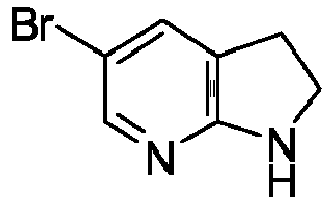
17 
18 
19 
20 
21 
22 
23 
24 
TABLEb 28 Rf Structure Rf Structure Rf Structure 25 
26 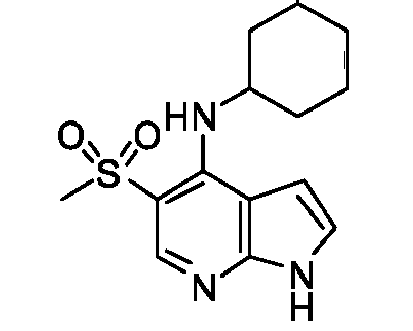
27 
28 
29 
30 
31 
32 
33 
34 
35 
36 
37 
38 
39 9 
40 
41 
42 
43 
44 
45 
46 
47 
48 
TABLEb 29 Rf Structure Rf Structure Rf Structure 49 
50 
51 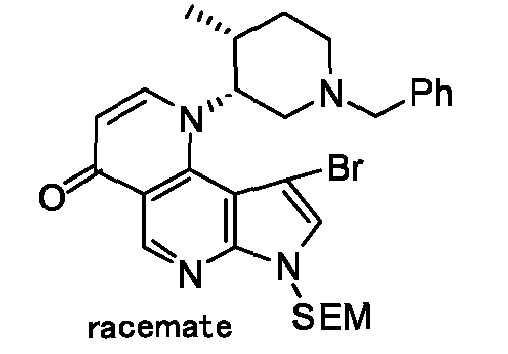
52 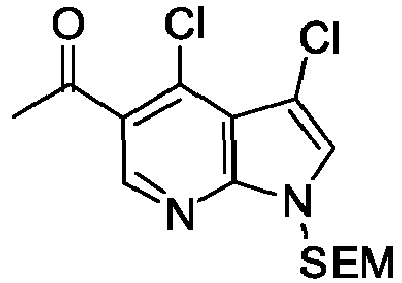
53 
54 
55 
56 
57 
58 
59 
60 
61 
62 
63 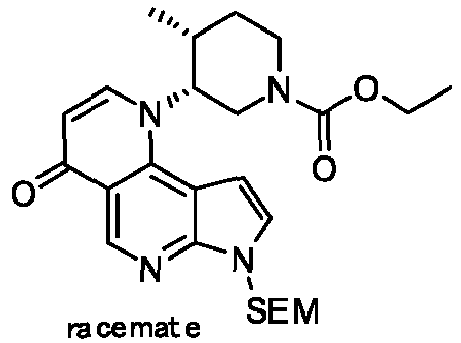
64 
65 
66 
67 
68 
69 
TABLEb 30 Rf Structure Rf Structure Rf Structure 70 
71 
72 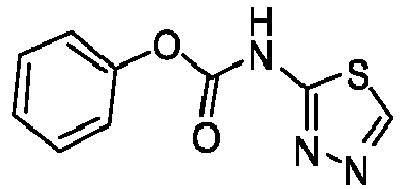
73 
74 
75 
76 
77 
78 
79 
80 
81 
82 
83 
84 
85 
86a 
86b 
87 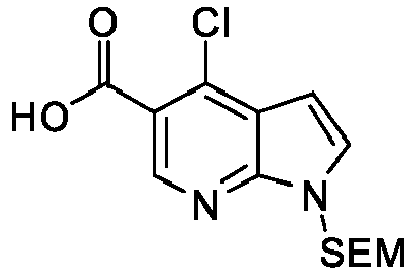
88 
89 
TABLEb 31 Rf Structure Rf Structure Rf Structure 90 
91 
92 
93 
94 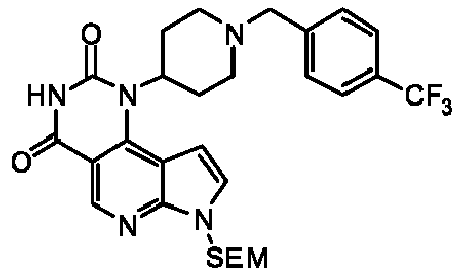
95 
96 
97 
98 
99 
100 
101 
102 
103 
104 
105 
106 
107 
108 
109 
110 
TABLEb 32 Rf Structure Rf Structure Rf Structure 111 
112 
113 
114 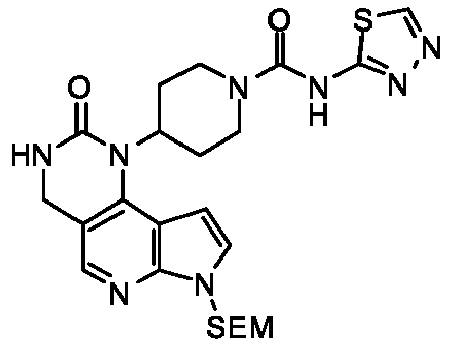
115 
116 
117 
118 
119 
120 
121 
122 
123 
124 
125 
126 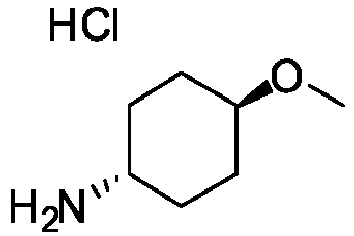
127 
128 
129 
130 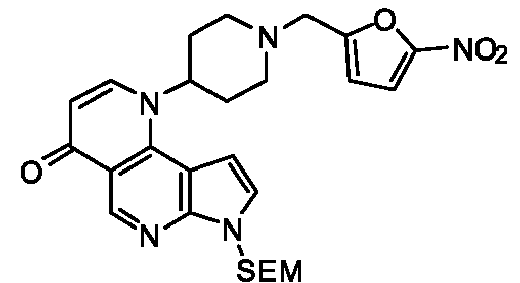
131 
TABLEb 33 Rf Structure Rf Structure Rf Structure 132 
133 
134 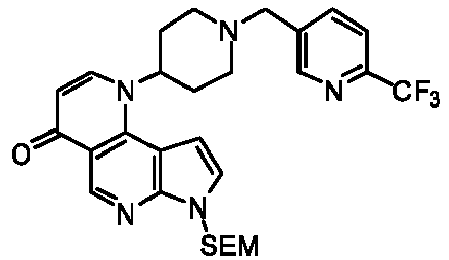
135 
136 
137 
138 
139 
140 
141 
142 
143 
144 
TABLEb 34 Rf Structure Rf Structure Rf Structure 145 
146 
147 
148 
149 
150 
151 
152 
153 
154 
155 
156 
157 
158 
159 a 
159 b 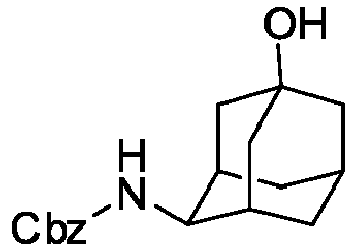
160 
161 
162 
163 
164 
165 
166 
167 
168 
169 
170 
TABLEb 35 Rf Structure Rf Structure Rf Structure 171 
172 
173 
174 
175 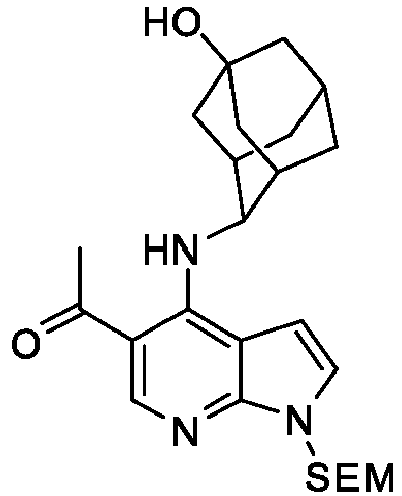
176 
177 
178 
179 
TABLEb 36 Ex Structure Ex Structure Ex Structure 1 
2 
3 
4 
5 
6a 
6b 
7 
8 
9 
10 
11 
12 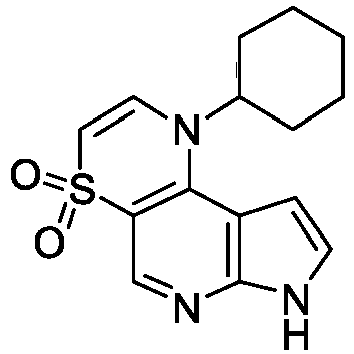
13 
14 
15 
16 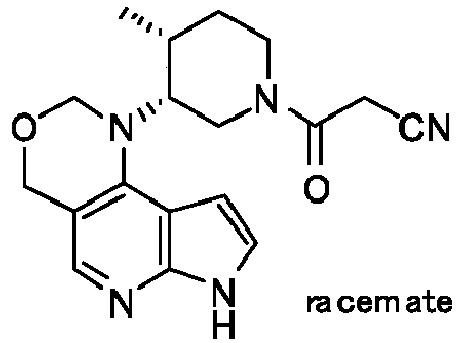
17 
18 
19 
20 
TABLEb 37 Ex Structure Ex Structure Ex Structure 21 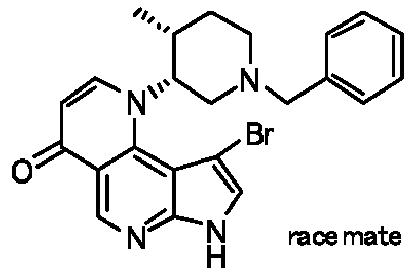
22 
23 
24 
25 
26 
27 
28 
29 
30 
31 
32 
33 
34 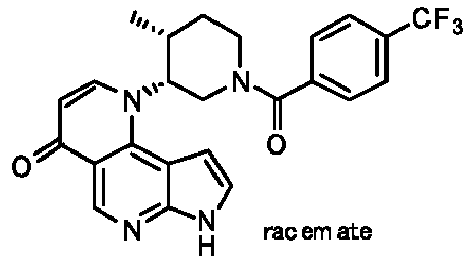
35 
36 
37 
38 
39 
40 
41 
TABLEb 38 Ex Structure Ex Structure Ex Structure 42 
43 
44 
45 
46 
47 
48a 
48b 
49 
50 
51 
52 
53 
54 
55 
56 
57 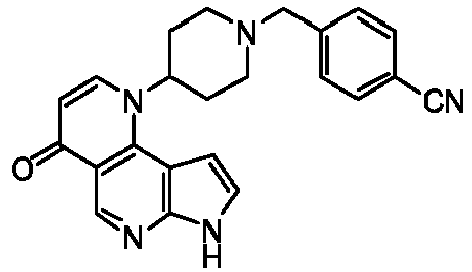
58 
59 
60 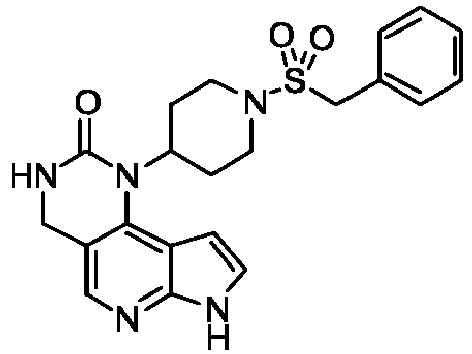
61 
TABLEb 39 Ex Structure Ex Structure Ex Structure 62 
63 
64 
65 
16 
67 
68 
69 
70 
71 
72 
73 
74 
75 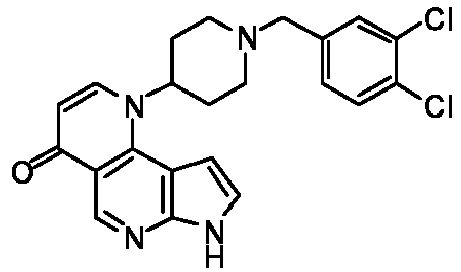
76 
77 
78 
79 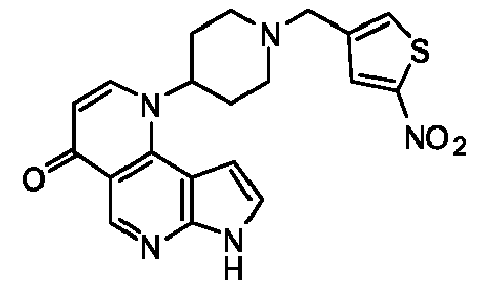
80 
81 
82 
TABLEb 40 Ex Structure Ex Structure Ex Structure 83 
84 
85 
86 
87 
TABLEb 41 Ex Structure Ex Structure Ex Structure 88 
89 
90 
91 
92 
93 
94 
95 
96 
97 
98 
99 
100 
101 
102 
103 
104 
105 
106 
107 
108 
TABLEb 42 Ex Structure Ex Structure Ex Structure 109 
110 
111 
112 
113 
114 
115 
116 
117 
118 
119 
120 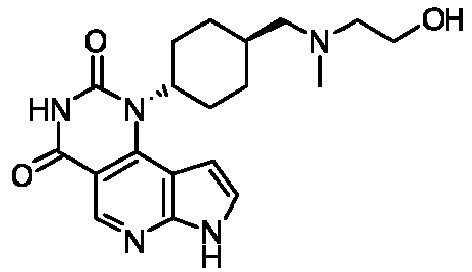
121 
122 
123 
124 
125 
126 
127 
128 
129 
TABLEb 43 Ex Structure Ex Structure Ex Structure 130 
131 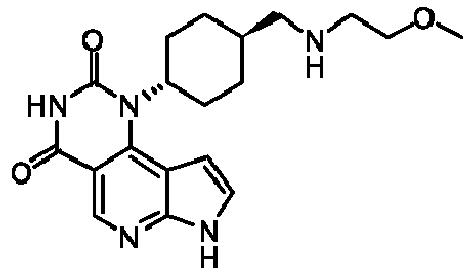
132 
133 
134 
135 
136 
137 
138 
139 
140 
141 
142 
143 
144 
145 
146 
147 
TABLEb 44 Ex Structure Ex Structure Ex Structure 148 
149 
150 
151 
152 
153 
154 
155 


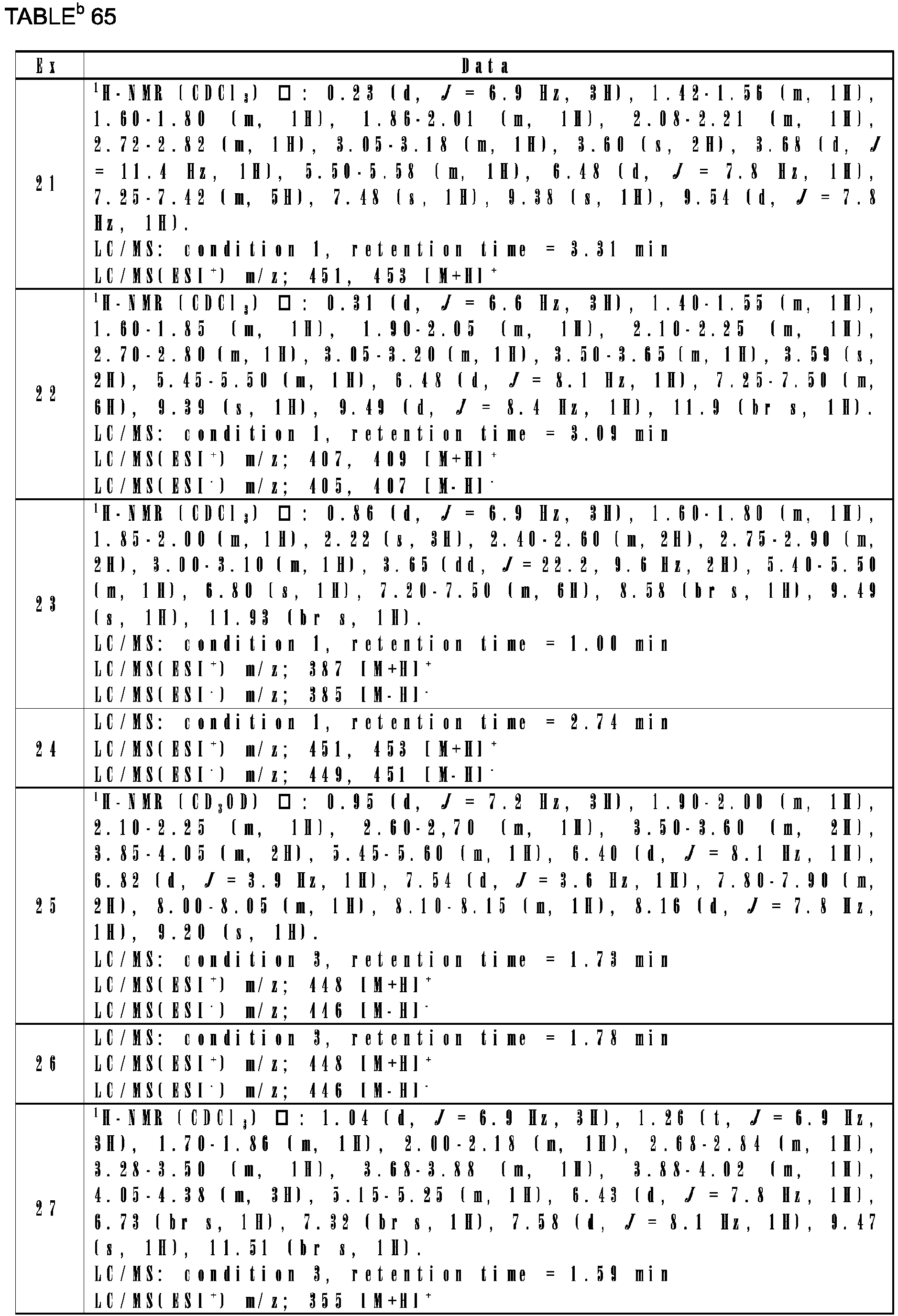


- Now, a pharmacological assay of the tricyclic pyridine compounds of the present invention will be described.
- JAK1, JAK2, JAK3 and Tyk2 were purchased from Carna Biosciences, Inc. As the substrate, LANCE Ultra ULight-JAK1 Peptide (manufactured by PerkinElmer Co., Ltd.(PE)) was used. Dilute solutions of compounds and enzymes in assay buffer (50 mM HEPES pH7.5, 1 mM EGTA, 1 mM MgCl2, 2 mM DTT, 0.01% Tween20) were dispensed into wells of a 384-well black plate. After 5 minutes of preincubation, dilute solutions of the substrate and ATP (adenosine triphosphate) were added at a final concentration of 100 µM, and the plate was incubated at room temperature for 2 hours. After addition of a termination reagent containing EDTA (ehylenediamine tetraacetic acid) at a final concentration of 10 mM, LANCE Eu-W1024 Anti-phosphotyrosine (PT66) (manufactured by PE) was added, and after 1 hour of incubation, the fluorescences were measured with ARVO-HTS. From the plot of logarithm of a compound concentration and inhibitory activity, the IC50 was calculated. The results of JAK3, JAK1, JAK2 and Tyk2 enzyme assays of the compounds of Synthetic Examplesb are shown in Tablesb 78 to 81. "*" in the Tables indicates IC50 > 1 µM.
TABLEb 78 Exb. No. IC50 (µM) JAK3 IC50 (µM) JAK1 1 2.0 0.38 2 1.2 0.33 3 0.22 0.017 4 0.065 0.030 6a 0.031 0.027 6b 0.25 0.19 7 0.0032 0.0017 8 0.041 0.026 9 0.010 0.0040 10 0.034 0.0081 11 0.034 0.012 12 1.3 0.13 13 1.3 0.042 16 0.11 0.038 17 0.69 0.027 18 1.2 0.045 19 2.2 0.029 20 0.51 0.28 TABLEb 79 Exb. No. IC50 (µM) J A K 2 IC50 (µM) T Y K 2 1 2.2 4.1 2 1.9 3.1 3 0.15 0.13 4 0.10 * 6 a 0.046 0.63 6 b 0.38 3.9 7 0.0040 0.060 8 0.075 1.5 9 0.0094 0.15 10 0.039 1.6 11 0.033 0.44 12 0.46 * 13 0.56 * 16 0.088 0.57 17 0.020 0.093 18 0.12 0.25 19 1.3 1.5 20 1.6 0.76 TABLEb 80 Exb. No. IC50 (µM) JAK1 IC50 (µM) JAK2 IC50 (µM) JAK3 IC50 (µM) TYK2 21 0.56 1.3 0.82 * 22 0.33 0.28 0.37 * 23 0.035 0.22 0.10 * 24 0.025 0.74 0.56 * 25 0.055 0.23 0.070 0.70 26 0.0066 0.048 0.10 0.41 27 0.018 0.040 0.042 0.43 28 0.31 2.0 2.3 7.9 29 0.015 0.19 0.20 0.41 30 0.18 * * * 31 0.24 * * * 32 0.081 0.77 0.55 * 33 0.0098 0.12 0.096 0.40 34 0.16 0.86 * * 35 0.018 0.089 0.11 0.99 36 0.00058 0.0032 0.0038 0.051 37 0.0015 0.0061 0.0028 0.062 38 0.0046 0.028 0.031 0.27 39 0.048 0.15 0.18 * 40 0.088 0.50 0.26 * 41 0.20 0.29 0.32 * 42 0.016 0.15 0.093 ** 43 0.030 0.16 0.15 0.51 44 0.014 0.15 0.057 0.84 45 0.012 0.038 0.040 0.44 46 0.033 0.21 0.046 * 47 0.11 0.23 0.11 * 48a 0.14 1.0 * * 48b 0.094 0.46 0.36 * 49 0.0079 0.10 * * 50 0.0087 * * * 51 0.0050 0.36 * * 52 0.021 * * * 53 0.0074 0.048 0.047 0.040 54 0.0030 0.032 0.47 0.32 5 0.0012 0.020 0.21 0.22 56 0.019 0.24 * * 57 0.013 0.25 * 0.86 58 0.037 0.57 * * 59 0.042 0 .16 2.1 4.3 60 0.35 0.48 * * 61 0.077 0 .22 5.4 3.6 62 0.054 0 .36 * * 63 0.12 * * * 64 0.012 0.020 0.22 0.17 65 0.19 0.11 9.5 2.9 66 0.080 0.14 * 0.99 68 0.50 2.4 9.1 * 69 0.036 0.46 * 0.30 70 0.16 * * * 71 0.0019 0.036 0.46 0.38 72 0.0098 0.33 * 0.88 73 0.053 * * * 74 0.0050 0.069 0 .86 0.84 75 0.0089 0.062 * * 76 0.028 0.45 * * 77 0.0079 0.077 1.0 * 78 0.0039 0.066 * * 79 0.00040 0.0063 0.094 0.12 80 0.0016 0.020 0.34 0.24 81 0.000084 0.0016 0.031 0.034 82 0.0021 0.021 0.32 0 .32 83 0.0052 0.043 0.62 0.81 84 0.00075 0.017 0.13 0.33 85 0.075 0.68 * * 86 0.043 * * * 87 0.025 0.38 * * TABLEb 81 Exb. No. IC50 (µM) JAK1 IC50 (µM) JAK2 IC50 (µM) JAK3 IC50 (µM) TYK2 88 0.082 * * * 89 0.011 * * * 90 0.22 * * * 91 0.083 * * * 92 0.097 * * * 93 0.37 * * * 94 0.034 * * 0.93 95 0.017 0.34 * * 96 0.019 * * * 97 0.23 * * * 98 0.021 0.67 * * 99 0.069 * * * 100 0.0066 6 0 .046 * 0.45 101 0.015 0.40 * 0.46 102 0.0028 0.080 0.32 0.091 103 0.0043 0.083 * 0.12 104 0.034 0.046 0.38 0.38 105 3.2 * * * 106 0.047 0.25 0.61 0.38 107 0.31 0.60 0.41 * 108 0.37 * * * 109 0.92 * * * 110 0.42 * * * 111 0.44 * * * 112 0.0026 0.25 * 0.032 113 0.0033 0.22 * 0.19 114 0.010 0.23 0.52 0.25 115 0.030 * * * 116 0.0012 0.012 0.036 0.039 117 0.030 0.85 * 0.80 118 0.027 0.34 * * 119 0.039 * * * 120 0.029 0.73 * 121 0.0074 0.21 * * 122 0.0032 0.49 * 123 0.15 * * * 124 0.025 0.61 * * 125 0.020 0.43 * * 126 0.028 0.36 * * 127 0.0055 0.19 * 0.12 128 0.067 * * * 129 0.0079 0.18 0.81 0.36 130 0.048 * * * 131 0.036 * * 0.78 132 0.0092 0.32 * * 133 0.012 0.27 * 0.41 134 0.0020 0.025 0.81 0.032 135 0.0049 0.060 0.50 0.33 136 0.0032 0.051 0.75 0.32 137 0.057 * 0.91 * 138 0.040 0.42 0.51 * 139 0.10 0.77 * * 140 0.018 0.25 0.78 0.36 141 0.046 0.23 0.80 0.60 142 0.34 * * * 143 0.073 0.85 * * 144 0.053 0.70 * * 145 0.047 0.69 * * 146 0.21 * * * 147 0.098 0.82 * * 148 0.44 * * * 149 0.27 * * * 150 0.092 0.23 0.64 * 151 0.21 * * * 152 0.067 0.21 0.48 * 153 0.33 * * * 154 0.29 * * * 155 0.0021 0.055 0.20 0.14 - The tricyclic pyridine compounds of the present invention have favorable inhibitory activity against JAKs as shown above.
- To be a effective pharmaceutical compound for the target diseases of the present invention, especially for rheumatoid arthritis, it is more favorable that the compounds indicate excellent inhibitory activity against JAKs in human whole blood. Inhibitory activity against JAKs in human whole blood can be assessed by, for example, STAT phosphorylation assay in human whole blood as described below.
- Compounds are added at the various concentrations to human whole blood which is collected from healthy volunteers and preincubated for 30 minutes. Next, cytokine such as IL-2 or IL-6 is added to the mixture and incubated for 15 minutes. Cytokines can be purchased, for example, from PeproTech Inc. Cytokines are added to mixture at 100 ng/mL as final concentration. The mixture including the blood cells are hemolyzed, fixed, permeabilized, washed, and resuspended in stain buffer. BD Cytofix/Cytoperm® solution (manufactured by Becton, Dickinson and Company (BD)), for example, can be used to hemolyze, fix, and permeabilize. Staining buffer (manufactured by BD), for example, can be used as stain buffer according to each protocol issued by BD. Fluorescence-labeled anti-phosphorylated STAT antibody and fluorescence-labeled anti-CD3 antibody are added to the cell suspension and incubated for 30 minutes. Then, cells are washed and resuspended in stain buffer. Fluorescence-labeled anti-phosphorylated STAT antibody and fluorescence-labeled anti-CD3 antibody can be purchased, for example from BD, and final concentration of antibodies can be determined according to each protocols issued by BD. Fluorescence intensity of fluorescence-labeled cells in cell suspension is detected by flow-cytometory. Because the detected fluorescence intensity is proportional to the concentration of the phosphorylated STAT protein in CD3 positive cells, inhibitory activity against STAT phosphorylation by the compounds can be calculated from the ratio between the above mentioned fluorescence intensity and the blank fluorescence intensity which is measured simultaneously without the compounds. From the plot of logarithm of the compound concentrations and the inhibitory activities, the IC50 value can be calculated.
- The inhibitory activity of the tricyclic pyridine compounds of the present invention on cell proliferation mediated by JAK signal can be assayed using a human erythroleukemic cell line, TF-1.
- TF-1 cells can be purchased from ATCC (American Type Culture Collection). TF-1 cells can be expanded in RPMI1640 media containing 5% FBS and 1 ng/mL GM-CSF (Granulocyte Macrophage Colony-Stimulating Factor) using a CO2 incubator (5% CO2, 37°C). At the assay, TF-1 cells washed by PBS (Phosphate Buffered Saline) are resuspended in RPMI1640 media containing 5% FBS, and dispensed in 96-well culture plate at 1 x 10⁴ cells/well. Compounds at various concentrations are added to the cells and preincubated for 30 minutes, and then cytokine such as IL-4 or IL-6 is added to the cells. Culture plates are incubated using a CO2 incubator (5% CO2,37°C) for 3 days. Cell proliferation can be assayed using WST-8 reagent (Kishida Chemical Co., Ltd.) according to instructions by the manufacturer. The formazan pigment is generated by the addition of WST-8 reagent solution to each well of the culture plates and the subsequent incubation in a CO2 incubator (5% CO2,37°C) for 4 hours, and then detected by measuring the absorbance at 450 nm with a microplate reader. From the plot of logarithm of the compound concentrations and the inhibitory activities, the IC50 value can be calculated.
- Now, examples of formulations of tricyclic pyrimidine compounds represented by the formula (Ia) and tricyclic pyridine compounds represented by the formula (Ib) of the present invention (hereinafter referred to collectively as compounds represented by the formula (I)) will be shown.
- A granule preparation containing the following ingredients is prepared. Ingredients
Compound represented by the formula (I) 10 mg Lactose 700 mg Corn Starch 274 mg HPC-L 16 mg Total 1000 mg - A compound represented by the formula (I) and lactose are sifted through a 60-mesh sieve. Corn starch is sifted though a 120-mesh sieve. They are mixed in a V-type blender. The powder mixture is kneaded with a low-viscosity hydroxypropylcellulose (HPC-L) aqueous solution, granulated (extrusion granulation, die size 0.5-1 mm) and dried. The resulting dry granules are sifted through a shaking sieve (12/60 mesh) to obtain a granule preparation.
- A powder preparation for capsulation containing the following ingredients is prepared.
Ingredients Compound represented by the formula (I) 10 mg Lactose 79 mg Corn Starch 10 mg Magnesium Stearate 1 mg Total 100 mg - A compound represented by the formula (I) and lactose are sifted through a 60-mesh sieve. Corn starch is sifted though a 120-mesh sieve. They are mixed with magnesium stearate in a V-type blender. The 10% powder is put in hard gelatin capsules No. 5, 100 mg each.
- A granule preparation for capsulation containing the following ingredients is prepared.
Ingredients Compound represented by the formula (1) 15 mg Lactose 90 mg Corn Starch 42 mg HPC-L 3 mg Total 150 mg - A compound represented by the formula (I) and lactose are sifted through a 60-mesh sieve. Corn starch is sifted though a 120-mesh sieve. They are mixed in a V-type blender. The powder mixture is kneaded with a low-viscosity hydroxypropylcellulose (HPC-L) aqueous solution, granulated and dried. The resulting dry granules are sifted through a shaking sieve (12/60 mesh). The granules are put in hard gelatin capsules No. 4, 150 mg each.
- A tablet preparation containing the following ingredients is prepared.
Ingredients Compound represented by the formula (I) 10 mg Lactose 90 mg Microcrystalline cellulose 30 mg Magnesium Stearate 5 mg CMC-Na 15 mg Total 150 mg - A compound represented by the formula (I), lactose, microcrystalline cellulose and CMC-Na (carboxymethylcellulose sodium salt) are sifted through a 60-mesh sieve and mixed. The powder mixture is mixed with magnesium stearate to give a bulk powder mixture. The powder mixture is compressed directly into 150 mg tablets.
- An intravenous preparation is prepared as follows.
Compound represented by the formula (I) 100 mg Saturated Fatty Acid Glyceride 1000 ml - Solutions having the above-mentioned composition are usually administered to a patient intravenously at a rate of 1 ml per 1 minute.
- The compounds of the present invention have excellent JAK inhibitory activities and are useful for prevention or treatment of autoimmune diseases, especially rheumatoid arthritis, inflammatory diseases and allergic diseases.


the ring Aa is represented by the following formula (IIa-1) or (IIa-2):

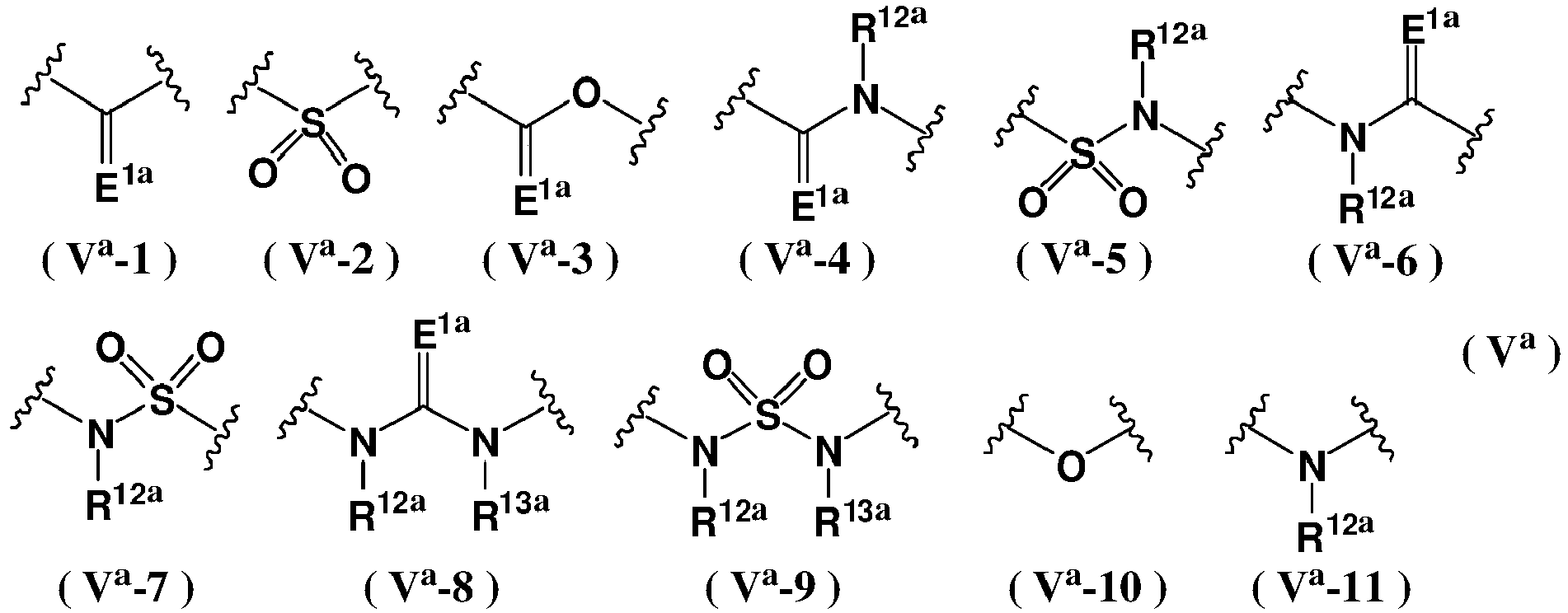
4a) The compounds according to 2a) or 3a), wherein Ya is CR10a (wherein R10a is a hydrogen atom), tautomers or pharmaceutically acceptable salts of the compounds or solvates thereof.
5a) The compounds according to any one of 2a) to 4a), wherein Xa is a nitrogen atom or CR9a (wherein R9a is a hydrogen atom, a halogen atom or a cyano group), tautomers or pharmaceutically acceptable salts of the compounds or solvates thereof.
6a) The compounds according to any one of 2a) to 5a), wherein Xa is CR9a (wherein R9a is a hydrogen atom), tautomers or pharmaceutically acceptable salts of the compounds or solvates thereof.
7a) The compounds according to any one of 2a) to 6a), wherein the ring Aa is represented by any of the following formulae (IVa-1) to (IVa-3):


9a) The compounds according to any one of 2a) to 8a), wherein L1a is a single bond, tautomers or pharmaceutically acceptable salts of the compounds or solvates thereof.
10a) The compounds according to any one of 2a) to 9a), wherein L2a is a single bond or a C1-3 alkylene group (the C1-3 alkylene group is unsubstituted or substituted with a cyano group) or a C1-3 haloalkylene group, tautomers or pharmaceutically acceptable salts of the compounds or solvates thereof.
11a) The compounds according to any one of 2a) to 9a), wherein L2a is a single bond or a methylene group, tautomers or pharmaceutically acceptable salts of the compounds or solvates thereof.
12a) The compounds according to any one of 2a) to 11a), wherein the ring Ba is a C4-7 cycloalkane, benzene or a 4 to 7-membered non-aromatic heterocycle, tautomers or pharmaceutically acceptable salts of the compounds or solvates thereof. 13a) The compounds according to any one of 2a) to 11a), wherein the ring Ba is cyclohexane, benzene or piperidine, tautomers or pharmaceutically acceptable salts of the compounds or solvates thereof.
14a) The compounds according to any one of 2a) to 11a), wherein the ring Ba is spiro[2,5]octane or adamantane, tautomers or pharmaceutically acceptable salts of the compounds or solvates thereof.
15a) The compounds according to any one of 2a) to 11a), wherein the ring Ba is cyclohexane, tautomers or pharmaceutically acceptable salts of the compounds or solvates thereof.
16a) The compounds according to any one of 2a) to 15a), wherein na is 0 or 1, and R3a is a methyl group, tautomers or pharmaceutically acceptable salts of the compounds or solvates thereof.
17a) The compounds according to any one of 2a) to 15a), wherein na is 0 or 1, and R3a is a halogen atom, tautomers or pharmaceutically acceptable salts of the compounds or solvates thereof.
18a) The compounds according to any one of 2a) to 15a), wherein na is 0 or 1, and R3a is a cyano group, tautomers or pharmaceutically acceptable salts of the compounds or solvates thereof.
19a) The compounds according to any one of 2a) to 15a), wherein na is 0 or 1, and R3a is a hydroxy group, tautomers or pharmaceutically acceptable salts of the compounds or solvates thereof.
20a) The compounds according to any one of 2a) to 15a), wherein na is 0, tautomers or pharmaceutically acceptable salts of the compounds or solvates thereof.
21a) The compounds according to any one of 2a) to 20a), wherein L3a is a single bond, and R2a is a hydrogen atom, tautomers or pharmaceutically acceptable salts of the compounds or solvates thereof.
22a) The compounds according to any one of 2a) to 20a), wherein L3a is a single bond, and R2a is a halogen atom, tautomers or pharmaceutically acceptable salts of the compounds or solvates thereof.
23a) The compounds according to any one of 2a) to 20a), wherein L3a is a single bond, and R2a is a C3-6 cycloalkyl group or a 3 to 11-membered non-aromatic heterocyclyl group (the C3-6 cycloalkyl group and the 3 to 11-membered non-aromatic heterocyclyl group are unsubstituted or substituted with one or more identical or different substituents independently selected from the group consisting of hydroxy groups, cyano groups, halogen atoms, carboxy groups, carbamoyl groups, C1-6 alkyl groups (the C1-6 alkyl groups are unsubstituted or substituted with a hydroxy group or a cyano group), C1-6 haloalkyl groups, C1-6 haloalkoxy groups, di-C1-6 alkylamino groups, C1-6 alkylsulfonyl groups, mono-C1-6 alkylaminocarbonyl groups, C1-6 alkylcarbonylamino groups (the mono-C1-6 alkylaminocarbonyl groups and the C1-6 alkylcarbonylamino groups are unsubstituted or substituted with one or more identical or different halogen atoms independently selected from the group consisting of fluorine atoms, chlorine atoms, bromine atoms and iodine atoms), 4 to 7-membered non-aromatic heterocyclyl groups and phenyl groups (the phenyl groups are unsubstituted or substituted with one or two identical or different substituents independently selected from the group consisting of halogen atoms and C1-6 haloalkyl groups)), tautomers or pharmaceutically acceptable salts of the compounds or solvates thereof.
24a) The compounds according to 23a), wherein L3a is a single bond, and R2a is a cyclohexyl group or a cyclopentyl group (the cyclohexyl group and the cyclopentyl group are unsubstituted or substituted with a C1-3 alkyl group or a C1-3 haloalkyl group), tautomers or pharmaceutically acceptable salts of the compounds or solvates thereof.
25a) The compounds according to 23a), wherein L3a is a single bond, and R2a is an azetidinyl group, a pyrrolidinyl group, a piperidinyl group, a morpholinyl group, a 1,1-dioxothiomorpholino group, a thiazolidinyl group, a piperadinyl group, an oxopiperadinyl group or a indolinyl group (the azetidinyl group, the pyrrolidinyl group, the piperidinyl group, the morpholinyl group, the 1,1-dioxothiomorpholino group, the thiazolidinyl group, the piperadinyl group, the oxopiperadinyl group and the indolinyl group are unsubstituted or substituted with one or two identical or different substituents independently selected from the group consisting of hydroxy groups, cyano groups, halogen atoms, carboxy groups, carbamoyl groups, C1-6 alkyl groups (the C1-6 alkyl groups are unsubstituted or substituted with a hydroxy group or a cyano group), C1-6 haloalkyl groups, C1-6 haloalkoxy groups, di-C1-6 alkylamino groups, C1-6 alkylsulfonyl groups, mono-C1-6 alkylaminocarbonyl groups, C1-6 alkylcarbonylamino groups (the mono-C1-6 alkylaminocarbonyl groups and the C1-6 alkylcarbonylamino groups are unsubstituted or substituted with one or more identical or different halogen atoms independently selected from the group consisting of fluorine atoms, chlorine atoms, bromine atoms and iodine atoms), 4 to 7-membered non-aromatic heterocyclyl groups and phenyl groups (the phenyl groups are unsubstituted or substituted with one or two identical or different substituents independently selected from the group consisting of halogen atoms and C1-6 haloalkyl groups)), tautomers or pharmaceutically acceptable salts of the compounds or solvates thereof.
26a) The compounds according to any one of 2a) to 20a), wherein L3a is a single bond, and R2a is a phenyl group or a 5 to 10-membered aromatic heterocyclyl group (the phenyl group and the 5 to 10-membered aromatic heterocyclyl group are unsubstituted or substituted with one or more identical or different substituents independently selected from the group consisting of halogen atoms, cyano groups, carbamoyl groups, C1-6 alkyl groups, C1-6 alkoxy groups, di-C1-3 alkylamino groups (the C1-6 alkyl groups, the C1-6 alkoxy groups and the di-C1-3 alkylamino groups are unsubstituted or substituted with a hydroxy group or a cyano group), C1-6 alkylthio groups, C1-6 alkylsulfonyl groups, C1-6 haloalkyl groups, C1-6 haloalkoxy groups, C1-6 haloalkylthio groups, 4 to 7-membered non-aromatic heterocyclyl groups and 5 to 6-membered aromatic heterocyclyl groups), tautomers or pharmaceutically acceptable salts of the compounds or solvates thereof.
27a) The compounds according to any one of 2a) to 20a), wherein L3a is a single bond, and R2a is a phenyl group or a 5 to 6-membered aromatic heterocyclyl group (the phenyl group and the 5 to 6-membered aromatic heterocyclyl group are unsubstituted or substituted with one, two or three identical or different substituents independently selected from the group consisting of halogen atoms, hydroxy groups, cyano groups, C1-6 alkyl groups, C1-6 alkoxy groups, C1-6 alkylthio groups, mono-C1-3 alkylamino groups, di-C1-3 alkylamino groups, C1-6 alkylsulfonyl groups (the C1-6 alkyl group, the C1-6 alkoxy group, the C1-6 alkylthio group, the mono-C1-3 alkylamino group, the di-C1-3 alkylamino group and the C1-6 alkylsulfonyl group are unsubstituted or substituted with a hydroxy group or a cyano group), C1-6 haloalkyl groups, C1-6 haloalkoxy groups, C1-6 haloalkylthio groups and C1-6 haloalkylsulfonyl groups), tautomers or pharmaceutically acceptable salts of the compounds or solvates thereof.
28a) The compounds according to 27a), wherein L3a is a single bond, and R2a is a phenyl group (the phenyl group is unsubstituted or substituted with one, two or three identical or different substituents independently selected from the group consisting of halogen atoms, cyano groups, C1-3 alkyl groups, C1-3 alkoxy groups (the C1-3 alkoxy group is unsubstituted or substituted with a hydroxy group or a cyano group), C1-3 alkylthio groups, C1-3 alkylsulfonyl groups, C1-3 haloalkyl groups, C1-3 haloalkoxy groups, C1-3 haloalkylthio groups, di-C1-3 alkylamino groups (the di-C1-3 alkylamino groups are unsubstituted or substituted with a cyano group), carbamoyl groups and 5 to 6-membered aromatic heterocyclyl groups), tautomers or pharmaceutically acceptable salts of the compounds or solvates thereof.
29a) The compounds according to 27a), wherein L3a is a single bond, and R2a is a furanyl group, a thienyl group, a pyrazolyl group, an isoxazolyl group, a thiazolyl group, a thiadiazolyl group, an indazolyl group, a quinoxalinyl group, an oxazolyl group, a benzothiazolyl group, a triazolyl group or a pyridinyl group (the furanyl group, the thienyl group, the pyrazolyl group, the isoxazolyl group, the thiazolyl group, the thiadiazolyl group, the indazolyl group, the quinoxalinyl group, the oxazolyl group, the benzothiazolyl group, the triazolyl group and the pyridinyl group are unsubstituted or substituted with identical or different one, two or three substituents independently selected from the group consisting of halogen atoms, cyano groups, C1-3 alkyl groups (the C1-3 alkyl groups are unsubstituted or substituted with a hydroxy group), C1-3 haloalkyl groups, hydroxy groups, C1-3 alkoxy groups, 4 to 7-membered non-aromatic heterocyclyl group and C1-3 haloalkoxy groups), tautomers or pharmaceutically acceptable salts of the compounds or solvates thereof.
30a) The compounds according to any one of 2a) to 20a), wherein L3a is represented by the following formula (XIa-1) or (XIa-2):

31a) The compounds according to any one of 2a) to 20a), wherein L3a is represented by the formula (Xa-1):

32a) The compounds according to any one of 2a) to 20a), wherein L3a is represented by the formula (Xa-10):

33a) The compounds according to any one of 2a) to 20a), wherein L3a is represented by the formula (Xa-2):

34a) The compounds according to any one of 2a) to 20a), wherein L3a is represented by the formula (Xa-3):

35a) The compounds according to any one of 2a) to 20a), wherein L3a is represented by the formula (Xa-3):

36a) The compounds according to any one of 2a) to 20a), wherein L3a is represented by the formula (Xa-4):

37a) The compounds according to any one of 2a) to 20a), wherein L3a is represented by the formula (Xa-7):

38a) The compounds according to any one of 2a) to 20a), wherein L3a is represented by the formula (XVIa)


40a) The compounds according to any one of 2a) to 20a), wherein L3a is represented by the formula (Xa-11):

41a) The compounds according to any one of 2a) to 20a), wherein L3a is represented by the formula (Xa-12):
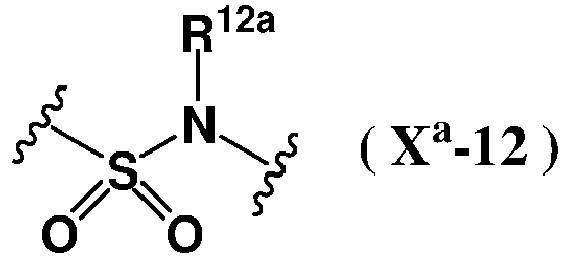
42a) The compounds according to any one of 2a) to 20a), wherein L3a is represented by the formula (Xa-13):

43a) The compounds according to 1a), wherein R1a is a hydrogen atom,
Xa is CR9a (wherein R9a is a hydrogen atom),
Ya is CR10a (wherein R10a is a hydrogen atom),
the ring Aa is represented by any of the following formulae (VIIIa-1) to (VIII-5):

45a) The compounds according to 43a), wherein L2a is a single bond, a C1-3 alkylene, a C2-3 alkenylene group (the C1-3 alkylene group and the C2-3 alkenylene group are unsubstituted or substituted with one or two cyano groups) or a C1-3 haloalkylene group, tautomers or pharmaceutically acceptable salts of the compounds or solvates thereof. 46a) The compounds according to 43a), wherein na is 0, tautomers or pharmaceutically acceptable salts of the compounds or solvates thereof.
47a) The compounds according to any one of 1a) or 43a) to 46a), wherein L3a is a single bond,
R2a is a hydrogen atom, a halogen atom, an azido group, a 3 to 11-membered non-aromatic heterocyclyl group, a phenyl group, a 5 to 10-membered aromatic heterocyclyl group or a 8 to 11-membered partially saturated aromatic cyclic group (the 3 to 11-membered non-aromatic heterocyclyl group, the phenyl group, the 5 to 10-membered aromatic heterocyclyl group and the 8 to 11-membered partially saturated aromatic cyclic group are unsubstituted or substituted with one, two or three identical or different substituents independently selected from the group consisting of hydroxy groups, amino groups, halogen atoms, cyano groups, nitro groups, carbamoyl groups, sulfamoyl groups, C1-6 alkyl groups, C1-6 haloalkyl groups, C1-6 alkoxy groups, C1-6 haloalkoxy groups, mono-C1-6 alkylamino groups, di-C1-6 alkylamino groups, C1-6 alkylthio groups, C1-6 haloalkylthio groups, C1-6 alkylcarbonyl groups, C1-6 haloalkylcarbonyl groups, C1-6 alkylsulfonyl groups, C1-6 haloalkylsulfonyl groups, mono-C1-6 alkylaminosulfonyl groups, di-C1-6 alkylaminosulfonyl groups, C1-6 alkoxycarbonyl groups, mono-C1-6 alkylaminocarbonyl groups, di-C1-6 alkylaminocarbonyl groups, C1-6 alkylcarbonylamino groups, C1-6 alkoxycarbonylamino groups (the C1-6 alkoxycarbonyl groups, the mono-C1-6 alkylaminocarbonyl groups, the di-C1-6 alkylaminocarbonyl groups, the C1-6 alkylcarbonylamino groups and the C1-6 alkoxycarbonylamino groups are unsubstituted or substituted with one or more identical or different halogen atoms independently selected from the group consisting of fluorine atoms, chlorine atoms, bromine atoms and iodine atoms), C3-6 cycloalkyl groups, 4 to 7-membered non-aromatic heterocyclyl groups, phenyl groups and 5 to 6-membered aromatic heterocyclyl groups), tautomers or pharmaceutically acceptable salts of the compounds or solvates thereof.
48a) The compounds according to any one of 1a) or 43a) to 46a), wherein R2a is a 3 to 11-membered non-aromatic heterocyclyl group (the 3 to 11-membered non-aromatic heterocyclyl group is unsubstituted or substituted with one or two identical or different substituents independently selected from the group consisting of cyano groups, halogen atoms, hydroxy groups, amino groups, carbamoyl groups, sulfamoyl groups, C1-3 alkyl groups (the C1-3 alkyl groups are unsubstituted or substituted with a substituent selected from the group consisting of a cyano group, a hydroxy group and a C1-6 alkoxycarbonylamino group), C1-3 haloalkyl groups, C1-3 alkoxy groups, mono-C1-3 alkylamino groups, di-C1-3 alkylamino groups, C1-3 alkylsulfonyl groups, mono-C1-3 alkylaminocarbonyl groups, di-C1-3 alkylaminocarbonyl groups, mono-C1-3 alkylaminosulfonyl groups, di-C1-3 alkylaminosulfonyl groups, C1-3 alkylcarbonylamino groups and C1-6 alkoxycarbonylamino groups (the C1-3 alkoxy groups, the mono-C1-3 alkylamino groups, the di-C1-3 alkylamino groups, the C1-3 alkylsulfonyl groups, the mono-C1-3 alkylaminocarbonyl groups, the di-C1-3 alkylaminocarbonyl groups, the mono-C1-3 alkylaminosulfonyl groups, the di-C1-3 alkylaminosulfonyl groups, the C1-3 alkylcarbonylamino groups and the C1-6 alkoxycarbonylamino groups are unsubstituted or substituted with one or more identical or different halogen atoms independently selected from the group consisting of fluorine atoms, chlorine atoms, bromine atoms and iodine atoms or with a cyano group)), tautomers or pharmaceutically acceptable salts of the compounds or solvates thereof.
49a) The compounds according to any one of 1a) or 43a) to 46a), wherein L3a is represented by the formulae (XVIa):


51a) The compounds according to any one of 1a) or 43a) to 46a), wherein L3a is represented by any of the following formulae (XXVIa-1 ) to (XXVIa-5):


53a) The compounds according to any one of 1a) or 43a) to 46a), wherein L3a is represented by the formula (Xa-5):

54a) The compounds according to any one of 1a) or 43a) to 46a), wherein L3a is represented by the formula (Xa-6):

R2a is a hydrogen atom, tautomers or pharmaceutically acceptable salts of the compounds or solvates thereof.
55a) The compounds according to any one of 1a) or 43a) to 46a), wherein L3a is represented by the formula (XVIIIa):

56a) The compounds according to any one of 1a) or 43a) to 46a), wherein L3a is represented by the formula (Xa-8):

R2a is a C1-3 alkyl group, tautomers or pharmaceutically acceptable salts of the compounds or solvates thereof.
57a) The compounds according to any one of 1a), 2a) or 43a) to 56a), which is represented by the following formula (XXIIa-1) or (XXIIa-2):

58a) Compounds represented by the formula (XIIa):
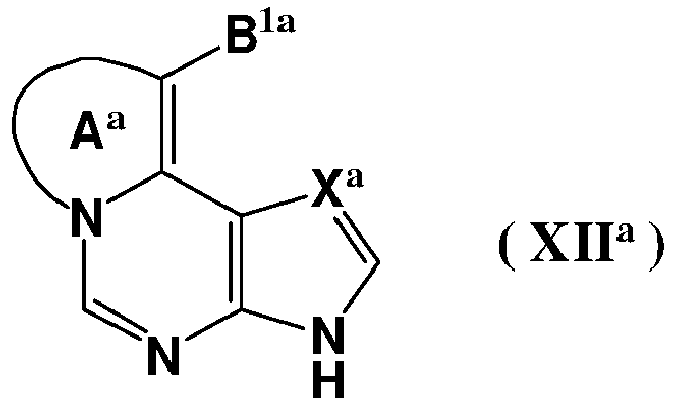
The symbols in Tablea 1 denote the following substituents.


| Aa | B1a | Aa | B1a | Aa | B1a | Aa | B1a |
| A 1 | B11 | A 1 | B13 | A 1 | B15 | A 1 | B17 |
| A 2 | B11 | A 2 | B13 | A 2 | B15 | A 2 | B17 |
| A 3 | B11 | A 3 | B13 | A 3 | B15 | A 3 | B17 |
| A 4 | B11 | A 4 | B13 | A 4 | B15 | A 4 | B17 |
| A 5 | B11 | A 5 | B13 | A 5 | B15 | A 5 | B17 |
| A 6 | B11 | A 6 | B13 | A 6 | B15 | A 6 | B17 |
| A 7 | B11 | A 7 | B13 | A 7 | B15 | A 7 | B17 |
| A 8 | B11 | A 8 | B13 | A 8 | B15 | A 8 | B17 |
| A1 | B12 | A 1 | B14 | A 1 | B16 | A 1 | B18 |
| A2 | B12 | A 2 | B14 | A 2 | B16 | A 2 | B18 |
| A3 | B12 | A 3 | B14 | A 3 | B16 | A 3 | B18 |
| A 4 | B12 | A 4 | B14 | A 4 | B16 | A 4 | B18 |
| A 5 | B12 | A 5 | B14 | A 5 | B16 | A 5 | B18 |
| A 6 | B12 | A 6 | B14 | A 6 | B16 | A 6 | B18 |
| A 7 | B12 | A 7 | B14 | A 7 | B16 | A 7 | B18 |
| A 8 | B12 | A 8 | B14 | A 8 | B16 | A 8 | B18 |

The symbols in Tablea 2 denote the following substituents.


| Aa | B2a | Aa | B2a | Aa | B2a | Aa | B2a |
| A1 | B21 | A1 | B23 | A1 | B25 | A1 | B27 |
| A2 | B21 | A2 | B23 | A2 | B25 | A2 | B27 |
| A3 | B21 | A3 | B23 | A3 | B25 | A3 | B27 |
| A4 | B21 | A4 | B23 | A4 | B25 | A4 | B27 |
| A5 | B21 | A5 | B23 | A5 | B25 | A5 | B27 |
| A6 | B21 | A6 | B23 | A6 | B25 | A6 | B27 |
| A7 | B21 | A7 | B23 | A7 | B25 | A7 | B27 |
| A8 | B21 | A8 | B23 | A8 | B25 | A8 | B27 |
| A1 | B22 | A1 | B24 | A1 | B26 | A1 | B28 |
| A2 | B22 | A2 | B24 | A2 | B26 | A2 | B28 |
| A3 | B22 | A3 | B24 | A3 | B26 | A3 | B28 |
| A4 | B22 | A4 | B24 | A4 | B26 | A4 | B28 |
| A5 | B22 | A5 | B24 | A5 | B26 | A5 | B28 |
| A6 | B22 | A6 | B24 | A6 | B26 | A6 | B28 |
| A7 | B22 | A7 | B24 | A7 | B26 | A7 | B28 |
| A8 | B22 | A8 | B24 | A8 | B26 | A8 | B28 |

The symbols in Tablea 3 denote the following substituents.


| Aa | B3a | Aa | B3a | Aa | B3a | Aa | B3a |
| A1 | B31 | A1 | B33 | A1 | B35 | A1 | B37 |
| A2 | B31 | A2 | B33 | A2 | B35 | A2 | B37 |
| A3 | B31 | A3 | B33 | A3 | B35 | A3 | B37 |
| A4 | B31 | A4 | B33 | A4 | B35 | A4 | B37 |
| A5 | B31 | A5 | B33 | A5 | B35 | A5 | B37 |
| A6 | B31 | A6 | B33 | A6 | B35 | A6 | B37 |
| A7 | B31 | A7 | B33 | A7 | B35 | A7 | B37 |
| A8 | B31 | A8 | B33 | A8 | B35 | A8 | B37 |
| A1 | B32 | A1 | B34 | A1 | B36 | A1 | B38 |
| A2 | B32 | A2 | B34 | A2 | B36 | A2 | B38 |
| A3 | B32 | A3 | B34 | A3 | B36 | A3 | B38 |
| A4 | B32 | A4 | B34 | A4 | B36 | A4 | B38 |
| A5 | B32 | A5 | B34 | A5 | B36 | A5 | B38 |
| A6 | B32 | A6 | B34 | A6 | B36 | A6 | B38 |
| A7 | B32 | A7 | B34 | A7 | B36 | A7 | B38 |
| A8 | B32 | A8 | B34 | A8 | B36 | A8 | B38 |

The symbols in Tablea 4 denote the following substituents.




| Aa | B4a | Aa | B4a | Aa | B4a | Aa | B4a |
| A1 | B41 | A1 | B43 | A1 | B45 | A1 | B47 |
| A2 | B41 | A2 | B43 | A2 | B45 | A2 | B47 |
| A3 | B41 | A3 | B43 | A3 | B45 | A3 | B47 |
| A4 | B41 | A4 | B43 | A4 | B45 | A4 | B47 |
| A5 | B41 | A5 | B43 | A5 | B45 | A5 | B47 |
| A6 | B41 | A6 | B43 | A6 | B45 | A6 | B47 |
| A7 | B41 | A7 | B43 | A7 | B45 | A7 | B47 |
| A8 | B41 | A8 | B43 | A8 | B45 | A8 | B47 |
| A1 | B42 | A1 | B44 | A1 | B46 | A1 | B48 |
| A2 | B42 | A2 | B44 | A2 | B46 | A2 | B48 |
| A3 | B42 | A3 | B44 | A3 | B46 | A3 | B48 |
| A4 | B42 | A4 | B44 | A4 | B46 | A4 | B48 |
| A5 | B42 | A5 | B44 | A5 | B46 | A5 | B48 |
| A6 | B42 | A6 | B44 | A6 | B46 | A6 | B48 |
| A7 | B42 | A7 | B44 | A7 | B46 | A7 | B48 |
| A8 | B42 | A8 | B44 | A8 | B46 | A8 | B48 |


Xb is a nitrogen atom or CR15b (wherein R15b is a hydrogen atom, a halogen atom, a cyano group, a C1-6 alkyl group, a C1-6 haloalkyl group or a C3-6 cycloalkyl group),
Yb is CR16b (wherein R16b is a hydrogen atom),
the ring Ab is represented by the formula (IIb):


4b) The compounds according to any one of 1b) to 3b), wherein Xb is a nitrogen atom or a CR15b (wherein R15b is a hydrogen atom, a halogen atom or a cyano group) or a nitrogen atom, tautomers or pharmaceutically acceptable salts of the compounds or solvates thereof.
5b) The compounds according to any one of 1b) to 4b), wherein Xb is a nitrogen atom or CR15b (wherein R15b is a hydrogen atom), tautomers or pharmaceutically acceptable salts of the compounds or solvates thereof.
6b) The compounds according to any one of 1b) to 5b), wherein Yb is CR16b (wherein R16b is a hydrogen atom), tautomers or pharmaceutically acceptable salts of the compounds or solvates thereof.
7b) The compounds according to any one of 1b) to 6b), wherein the ring Ab is represented by any of the following formulae (VIIb-1) to (VIIb-7):

8b) The compounds according to any one of 1b) to 6b), wherein the ring Ab is represented by the formula (XXVIIIb):

9b) The compounds according to any one of 1b) to 7b), wherein the ring Ab is represented by any of the following formulae (XVIb-1) to (XVIb-7):

10b) The compounds according to any one of 1b) to 6b), wherein the ring Ab is represented by any of the following formula (XXIXb-1) or (XXIXb-2)

11b) The compounds according to any one of 1b) to 10b), wherein L1b is a single bond, tautomers or pharmaceutically acceptable salts of the compounds or solvates thereof.
12b) The compounds according to any one of 1b) to 11b), wherein L2b is a single bond or a C1-6 alkylene group, a C1-6 alkenylene group (the C1-6 alkylene group and the C1-6 alkenylene group are unsubstituted or substituted with a cyano group) or a C1-6 haloalkylene group, tautomers or pharmaceutically acceptable salts of the compounds or solvates thereof.
13b) The compounds according to any one of 1b) to 11b), wherein L2b is a single bond or a C1-3 alkylene group, tautomers or pharmaceutically acceptable salts of the compounds or solvates thereof.
14b) The compounds according to any one of 1b) to 11b), wherein L2b is a single bond or a methylene group, tautomers or pharmaceutically acceptable salts of the compounds or solvates thereof.
15b) The compounds according to any one of 1b) to 14b), wherein the ring Bb is a C4-7 cycloalkane or a 4 to 7-membered non-aromatic heterocycle, tautomers or pharmaceutically acceptable salts of the compounds or solvates thereof.
16b) The compounds according to any one of 1b) to 14b), wherein the ring Bb is cyclohexane or piperidine, tautomers or pharmaceutically acceptable salts of the compounds or solvates thereof.
17b) The compounds according to any one of 1b) to 16b), wherein nb is, 0 or 1, and R3b is a methyl group, tautomers or pharmaceutically acceptable salts of the compounds or solvates thereof.
18b) The compounds according to any one of 1b) to 17b), wherein L3b is a single bond, and R2b is a hydrogen atom, a C3-6 cycloalkyl group, a 4 to 7-membered non-aromatic heterocyclyl group, a phenyl group or a 5 to 10-membered aromatic heterocyclyl group (the C3-11 cycloalkyl group, the 4 to 7-membered non-aromatic heterocyclyl group, the phenyl group and the 5 to 10-membered aromatic heterocyclyl group are unsubstituted or substituted with one or more identical or different substituents independently selected from the substituent set V1b), tautomers or pharmaceutically acceptable salts of the compounds or solvates thereof.
19b) The compounds according to any one of 1b) to 17b), wherein L3b is a single bond, and R2b is a hydrogen atom, a 4 to 7-membered non-aromatic heterocyclyl group, a phenyl group or a 5 to 6-membered aromatic heterocyclyl group (the 4 to 7-membered non-aromatic heterocyclyl group, the phenyl group and the 5 to 6-membered aromatic heterocyclyl group are unsubstituted or substituted with one or two identical or different substituents independently selected from the group consisting of hydroxy groups, halogen atoms, cyano groups, nitro groups, C1-6 alkyl groups, C1-6 alkoxy groups and C1-6 alkoxycarbonyl groups (the C1-6 alkyl groups, the C1-6 alkoxy groups and the C1-6 alkoxycarbonyl groups are unsubstituted or substituted with one or more identical or different substituents independently selected from the group consisting of halogen atoms and cyano groups)), tautomers or pharmaceutically acceptable salts of the compounds or solvates thereof.
20b) The compounds according to any one of 1b) to 17b), wherein L3b is a single bond, and R2b is a hydrogen atom or a phenyl group (the phenyl group is unsubstituted or substituted with one or two halogen atoms), tautomers or pharmaceutically acceptable salts of the compounds or solvates thereof.
21b) The compounds according to any one of 1b) to 17b), wherein L3b is a single bond, and R2b is a C3-6 cycloalkyl group, tautomers or pharmaceutically acceptable salts of the compounds or solvates thereof.
22b) The compounds according to any one of 1b) to 17b), wherein L3b is a single bond, and R2b is a 4 to 7-membered non-aromatic heterocyclyl group (the 4 to 7-membered non-aromatic heterocyclyl group is unsubstituted or substituted with one or more identical or different substituents independently selected from the group consisting of hydroxy groups, halogen atoms, cyano groups, C1-6 alkyl groups (the C1-6 alkyl groups are unsubstituted or substituted with a cyano group), C1-6 haloalkyl groups, C1-6 alkoxy groups, C1-6 haloalkoxy groups and C1-6 alkoxycarbonyl groups), tautomers or pharmaceutically acceptable salts of the compounds or solvates thereof.
23b) The compounds according to any one of 1b) to 17b), wherein L3b is represented by any of the following formulae (XIXb-1) to (XIXb-7):

24b) The compounds according to any one of 1b) to 17b), wherein L3b is represented by the following formula (VIIIb-1) or (VIIIb-2):

25b) The compounds according to any one of 1b) to 17b), wherein L3b is represented by the following formula (VIIIb-1) or (VIIIb-2):

26b) The compounds according to any one of 1b) to 17b), wherein L3b is represented by the formula (XXVIb):

27b) The compounds according to any one of 1b) to 17b), wherein L3b is represented by the formula (XXVb):

28b) The compounds according to any one of 1b) to 17b), wherein L3b is represented by the formula (XXVIIb):

29b) The compounds according to any one of 1b) to 17b), wherein L3b is represented by the formula (XXXIIb):


31b) The compounds according to 1b), wherein Xb is a nitrogen atom or CR15b (wherein R15b is a hydrogen atom or a halogen atom),
Yb is CR16b (wherein R16b is a hydrogen atom),
R1b is a hydrogen atom,
the ring Ab is represented by any of the following formulae (XVIIIb-1) to (XVIIIb-8):

the ring Bb is a C3-11 cycloalkane, a 3 to 11-membered non-aromatic heterocycle, a C6-14 aromatic carbocycle or a 5 to 10-membered aromatic heterocycle,
L1b is a single bond or a C1-3 alkylene group,
L2b is a single bond, a C1-6 alkylene group or a C2-6 alkenylene group (the C1-6 alkylene group and the C2-6 alkenylene group are unsubstituted or substituted with one or more identical or different substituents independently selected from the group consisting of halogen atoms, hydroxy groups, amino groups, cyano groups and nitro groups),
nb is 0 or 1,
R3b is a hydroxy group, an amino group, a carboxy group, a carbamoyl group, a tetrazolyl group, a halogen atom, a cyano group, a nitro group, a C1-3 alkyl group, a C1-3 haloalkyl group, a C3-6 cycloalkyl group, a C1-3 alkoxy group, a C1-3 haloalkoxy group or a C1-3 alkylsulfonyl group,
L3b is a single bond or is represented by any of the following formulae (VIb-1) to (VIb-11)


L2b is a single bond , a C1-6 alkylene group (the C1-6 alkylene group is unsubstituted or substituted with a hydroxy group or a cyano group) or a C1-6 haloalkylene group, the ring Bb is a C4-7 cycloalkane or a 4 to 7-membered non-aromatic heterocycle,
nb is 0 or 1, and
R3b is a C1-3 alkyl group, tautomers or pharmaceutically acceptable salts of the compounds or solvates thereof.
34b) The compounds according to any one of 1b) and 31b) to 33b), wherein L3b is a single bond, and
R2b is a hydrogen atom, a 4 to 7-membered non-aromatic heterocyclyl group, a phenyl group, a 5 to 10-membered aromatic heterocyclyl group or a 8 to 11-membered partially saturated aromatic cyclic group (the 4 to 7-membered non-aromatic heterocyclyl group, the phenyl group, the 5 to 10-membered aromatic heterocyclyl group and the 8 to 11-membered partially saturated aromatic cyclic group are unsubstituted or substituted with one or more identical or different substituents independently selected from the group consisting of hydroxy groups, amino groups, carbamoyl groups, sulfamoyl groups, halogen atoms, cyano groups, nitro groups, C1-6 alkyl groups (the C1-6 alkyl groups are unsubstituted or substituted with a cyano group), C1-6 haloalkyl groups, C3-11 cycloalkyl group, C1-6 alkoxy groups, C1-6 haloalkoxy groups, C1-6 alkylthio groups, C1-6 haloalkylthio groups, C1-6 alkylsulfonyl groups, C1-6 haloalkylsulfonyl groups, C1-6 alkoxycarbonyl groups, 4 to 7-membered non-aromatic heterocyclyl groups, mono-C1-6 alkylamino groups, di-C1-6 alkylamino groups, phenyl groups and 5 to 6-membered aromatic heterocyclyl groups), tautomers or pharmaceutically acceptable salts of the compounds or solvates thereof.
35b) The compounds according to any one of 1b) and 31b) to 33b), wherein L3b is a single bond, and
R2b is a 8 to 11-membered partially saturated aromatic cyclic group (the 8 to 11-membered partially saturated aromatic cyclic group is unsubstituted or substituted with one or more identical or different halogen atoms independently selected from the group consisting of fluorine atoms, chlorine atoms, bromine atoms and iodine atoms), tautomers or pharmaceutically acceptable salts of the compounds or solvates thereof.
36b) The compounds according to 34b) or 35b), wherein L2b is a C1-3 alkylene group, and the ring Bb is cyclohexane or piperidine, tautomers or pharmaceutically acceptable salts of the compounds or solvates thereof.
37b) The compounds according to any one of 1b) and 31b) to 33b), wherein L3b is represented by any of the following formulae (XIXb-1) to (XIXb-7):


41b) The compounds according to 37b) or 40b), wherein L2b is a single bond or a C1-3 alkylene group, and the ring Bb is a cyclohexane or piperidine, tautomers or pharmaceutically acceptable salts of the compounds or solvates thereof.
42b) Compounds represented by the formula (XVIIb):


| Ab | B1b | Ab | B1b | Ab | B1b | Ab | B1b |
| A 1 | B1 1 | A 1 | B1 3 | A 1 | B1 5 | A 1 | B17 |
| A 2 | B1 1 | A 2 | B1 3 | A 2 | B1 5 | A 2 | B17 |
| A 3 | B1 1 | A 3 | B1 3 | A 3 | B1 5 | A 3 | B17 |
| A 4 | B1 1 | A 4 | B1 3 | A 4 | B1 5 | A 4 | B17 |
| A 5 | B1 1 | A 5 | B1 3 | A 5 | B1 5 | A 5 | B17 |
| A 6 | B1 1 | A 6 | B1 3 | A 6 | B1 5 | A 6 | B17 |
| A 7 | B1 1 | A 7 | B1 3 | A 7 | B1 5 | A 7 | B17 |
| A 8 | B1 1 | A 8 | B1 3 | A 8 | B1 5 | A 8 | B17 |
| A 1 | B1 2 | A 1 | B1 4 | A 1 | B1 6 | A 1 | B18 |
| A 2 | B1 2 | A 2 | B1 4 | A 2 | B1 6 | A 2 | B18 |
| A 3 | B1 2 | A 3 | B1 4 | A 3 | B1 6 | A 3 | B18 |
| A 4 | B1 2 | A 4 | B1 4 | A 4 | B1 6 | A 4 | B18 |
| A 5 | B1 2 | A 5 | B1 4 | A 5 | B1 6 | A 5 | B18 |
| A 6 | B1 2 | A 6 | B1 4 | A 6 | B1 6 | A 6 | B18 |
| A 7 | B1 2 | A 7 | B1 4 | A 7 | B1 6 | A 7 | B18 |
| A 8 | B1 2 | A 8 | B1 4 | A 8 | B1 6 | A 8 | B18 |

Claims (12)
- A compound represented by the formula (Ib):
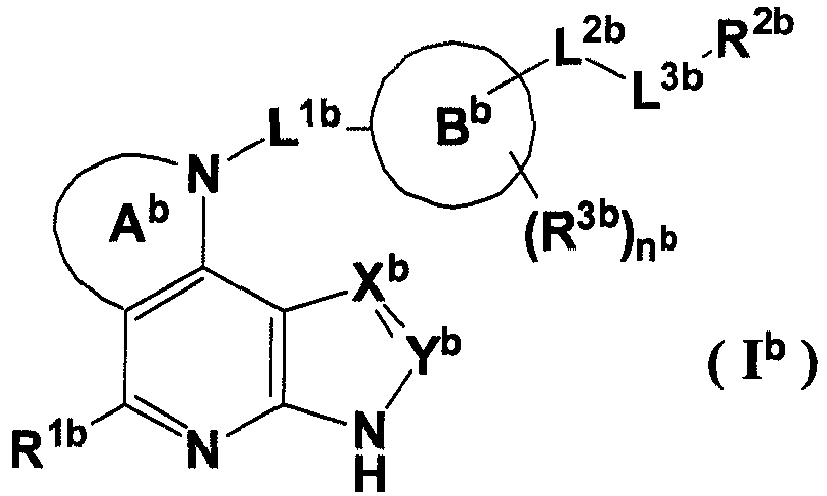


 (wherein T3b is CR4bR5b, C(=O), C(=S), C(=NR17b), a sulfur atom, S(=O) or S(=O)2, U3b is CR6bR7b, C(=O), C(=S), C(=NR17b), NR10b, an oxygen atom, a sulfur atom, S(=O) or S(=O)2, and W3b is CR8bR9b, C(=O), C(=S), C(=NR17b), NR11b, an oxygen atom, a sulfur atom, S(=O) or S(=O)2 (provided that when T3b is CR4bR5b and U3b is CR6bR7b, W3b is not CR8bR9b)),Xb is a nitrogen atom or CR15b,Yb is CR16b,R1b is a hydrogen atom, a halogen atom, a C1-6 alkyl group or a C1-6 haloalkyl group,the ring Bb is a C3-11 cycloalkane, a C3-11 cycloalkene, a 3 to 11-membered non-aromatic heterocycle, a C6-14 aromatic carbocycle or a 5 to 10-membered aromatic heterocycle,L1b is a single bond, a C1-6 alkylene group, a C2-6 alkenylene group or a C2-6 alkynylene group (the C1-6 alkylene group, the C2-6 alkenylene group and the C2-6 alkynylene group are unsubstituted or substituted with one or more identical or different substituents independently selected from the group consisting of halogen atoms, hydroxy groups, amino groups, cyano groups and nitro groups),L2b is a single bond, a C1-6 alkylene group, a C2-6 alkenylene group or a C2-6 alkynylene group (the C1-6 alkylene group, the C2-6 alkenylene group and the C2-6 alkynylene group are unsubstituted or substituted with one or more identical or different substituents independently selected from the group consisting of halogen atoms, hydroxy groups, amino groups, cyano groups and nitro groups),L3b is a single bond or represented by any of the following formulae (Vb-1) to (Vb-20):
 (wherein E1b is an oxygen atom, a sulfur atom or NR18b),when L3b is a single bond, R2b is a hydrogen atom, a halogen atom, a C3-11 cycloalkyl group, a 3 to 14-membered non-aromatic heterocyclyl group, a C6-14 aryl group, a 5 to 10-membered aromatic heterocyclyl group, a 8 to 14-membered partially saturated aromatic cyclic group or a 8 to 14-membered aromatic ring-condensed alicyclic hydrocarbon group (the C3-11 cycloalkyl group, the 3 to 14-membered non-aromatic heterocyclyl group, the C6-14 aryl group, the 5 to 10-membered aromatic heterocyclyl group, the 8 to 14-membered partially saturated aromatic cyclic group and the 8 to 14-membered aromatic ring-condensed alicyclic hydrocarbon group are unsubstituted or substituted with one or more identical or different substituents independently selected from the substituent set V4b and the substituent set V9b),when L3b is not a single bond, R2b is a hydrogen atom, a C1-6 alkyl group, a C2-6 alkenyl group (the C1-6 alkyl group and the C2-6 alkenyl group are unsubstituted or substituted with one or more identical or different substituents independently selected from the substituent set V6b and the substituent set V9b), a C3-11 cycloalkyl group, a 3 to 14-membered non-aromatic heterocyclyl group, a C6-14 aryl group, a 5 to 10-membered aromatic heterocyclyl group, a 8 to 14-membered partially saturated aromatic cyclic group or a 8 to 14-membered aromatic ring-condensed alicyclic hydrocarbon group (the C3-11 cycloalkyl group, the 3 to 14-membered non-aromatic heterocyclyl group, the C6-14 aryl group, the 5 to 10-membered aromatic heterocyclyl group, the 8 to 14-membered partially saturated aromatic cyclic group and the 8 to 14-membered aromatic ring-condensed alicyclic hydrocarbon group are unsubstituted or substituted with one or more identical or different substituents independently selected from the substituent set V4b and substituent set V9b),nb is 0, 1 or 2,R3b is a hydroxy group, an amino group, a carboxy group, a carbamoyl group, a sulfamoyl group, a phosphono group, a phosphonooxy group, a sulfo group, a sulfoxy group, a tetrazolyl group, a halogen atom, a cyano group, a nitro group, a C1-6 alkyl group, a C1-6 haloalkyl group, a C3-11 cycloalkyl group, a C2-6 alkenyl group, a C2-6 haloalkenyl group, a C1-6 alkoxy group, a C1-6 haloalkoxy group, a C1-6 alkylthio group, a C1-6 haloalkylthio group, a C1-6 alkylcarbonyl group, a C1-6 haloalkylcarbonyl group, a C1-6 alkylsulfonyl group, a C1-6 haloalkylsulfonyl group, a C1-6 alkoxycarbonyl group, a mono-C1-6 alkylamino group, a di-C1-6 alkylamino group, a mono-C1-6 alkylaminocarbonyl group, a di-C1-6 alkylaminocarbonyl group or a C1-6 alkylcarbonylamino group (when nb is 2, R3b's may be identical or different),each of R4b, R5b, R6b, R7b, R8b and R9b is independently a hydrogen atom, a hydroxy group, an amino group, a carboxy group, a carbamoyl group, a tetrazolyl group, a halogen atom, a cyano group, a C1-6 alkyl group, a C2-6 alkenyl group, a C1-6 alkoxy group, a C1-6 alkylthio group, a C1-6 alkylcarbonyl group, a C1-6 alkylsulfonyl group, a mono-C1-6 alkylamino group, a di-C1-6 alkylamino group (the C1-6 alkyl group, the C2-6 alkenyl group, the C1-6 alkoxy group, the C1-6 alkylthio group, the C1-6 alkylcarbonyl group, the C1-6 alkylsulfonyl group, the mono-C1-6 alkylamino group and the di-C1-6 alkylamino group are unsubstituted or substituted with one or more identical or different substituents independently selected from the substituent set V3b), a C1-6 alkoxycarbonyl group, a C3-11 cycloalkyl group, a 3 to 11-membered non-aromatic heterocyclyl group, a C6-14 aryl group or a 5 to 10-membered aromatic heterocyclyl group (the C3-11 cycloalkyl group, the 3 to 11-membered non-aromatic heterocyclyl group, the C6-14 aryl group and the 5 to 10-membered aromatic heterocyclyl group are unsubstituted or substituted with one or more identical or different substituents independently selected from the substituent set V1b),each of R10b and R11b is independently a hydrogen atom, a C1-6 alkyl group, a C2-6 alkenyl group, a C1-6 alkylcarbonyl group, a C1-6 alkylsulfonyl group, a C1-6 alkoxycarbonyl group, a mono-C1-6 alkylaminocarbonyl group, a di-C1-6 alkylaminocarbonyl group (the C1-6 alkyl group, the C2-6 alkenyl group, the C1-6 alkylcarbonyl group, the C1-6 alkylsulfonyl group, the C1-6 alkoxycarbonyl group, the mono-C1-6 alkylaminocarbonyl group and the di-C1-6 alkylaminocarbonyl group are unsubstituted or substituted with one or more identical or different substituents independently selected from the substituent set V3b), a C3-11 cycloalkyl group, a 3 to 11-membered non-aromatic heterocyclyl group, a C6-14 aryl group or a 5 to 10-membered aromatic heterocyclyl group (the C3-11 cycloalkyl group, the 3 to 11-membered non-aromatic heterocyclyl group, the C6-14 aryl group and the 5 to 10-membered aromatic heterocyclyl group are unsubstituted or substituted with one or more identical or different substituents independently selected from the substituent set V1b),each of R12b, R13b and R14b is independently a hydrogen atom, a C1-6 alkyl group or a C1-6 haloalkyl group (the C1-6 alkyl group and the C1-6 haloalkyl group are unsubstituted or substituted with one or more identical or different substituents independently selected from the substituent set V3b, the substituent set V8b and the substituent set V9b),each of R15b and R16b is independently a hydrogen atom, a halogen atom, a cyano group, a carbamoyl group, a C1-6 alkyl group, a C1-6 haloalkyl group, a C3-11 cycloalkyl group, a C1-6 alkoxy group, a C1-6 haloalkoxy group, a C1-6 alkylthio group, a C1-6 alkylcarbonyl group, a C1-6 alkylsulfonyl group, a 3 to 11-membered non-aromatic heterocyclyl group, a C6-14 aryl group or a 5 to 10-membered aromatic heterocyclyl group,each of R17b and R18b is independently a hydrogen atom, a hydroxy group, a cyano group, a nitro group, a C1-6 alkyl group or a C1-6 alkoxy group,the substituent set V1b consists of hydroxy groups, amino groups, carboxy groups, carbamoyl groups, sulfamoyl groups, phosphono groups, phosphonooxy groups, sulfo groups, sulfoxy groups, tetrazolyl groups, halogen atoms, cyano groups, nitro groups, C1-6 alkyl groups, C1-6 haloalkyl groups, C3-11 cycloalkyl groups, C2-6 alkenyl groups, C2-6 haloalkenyl groups, C1-6 alkoxy groups, C1-6 haloalkoxy groups, C1-6 alkylthio groups, C1-6 haloalkylthio groups, C1-6 alkylcarbonyl groups, C1-6 haloalkylcarbonyl groups, C1-6 alkylsulfonyl groups, C1-6 haloalkylsulfonyl groups, C1-6 alkoxycarbonyl groups, 3 to 11-membered non-aromatic heterocyclyl groups, mono-C1-6 alkylamino groups, di-C1-6 alkylamino groups, mono-C1-6 alkylaminocarbonyl groups, di-C1-6 alkylaminocarbonyl groups and C1-6 alkylcarbonylamino groups,the substituent set V2b consists of the groups in the substituent set V1b, and C6-14 aryl groups and 5 to 10-membered aromatic heterocyclyl groups (the C6-14 aryl groups and the 5 to 10-membered aromatic heterocyclyl groups are unsubstituted or substituted with one or more identical or different substituents independently selected from the substituent set V1b),the substituent set V3b consists of hydroxy groups, amino groups, carboxy groups, carbamoyl groups, sulfamoyl groups, phosphono groups, phosphonooxy groups, sulfo groups, sulfoxy groups, tetrazolyl groups, halogen atoms, cyano groups, nitro groups, C1-6 alkoxy groups, C1-6 haloalkoxy groups, C1-6 alkylthio groups, C1-6 haloalkylthio groups, C1-6 alkylcarbonyl groups, C1-6 haloalkylcarbonyl groups, C1-6 alkylsulfonyl groups, C1-6 haloalkylsulfonyl groups, C1-6 alkoxycarbonyl groups, mono-C1-6 alkylamino groups, di-C1-6 alkylamino groups, mono-C1-6 alkylaminocarbonyl groups, di-C1-6 alkylaminocarbonyl groups, C1-6 alkylcarbonylamino groups, C3-11 cycloalkyl groups, 3 to 11-membered non-aromatic heterocyclyl groups, C6-14 aryl group and 5 to 10-membered aromatic heterocyclyl groups (the C3-11 cycloalkyl groups, the 3 to 11-membered non-aromatic heterocyclyl groups, the C6-14 aryl groups and the 5 to 10-membered aromatic heterocyclyl groups are unsubstituted or substituted with one or more identical or different substituents independently selected from the substituent set V1b),the substituent set V4b consists of hydroxy groups, amino groups, carboxy groups, carbamoyl groups, sulfamoyl groups, phosphono groups, phosphonooxy groups, sulfo groups, sulfoxy groups, tetrazolyl groups, halogen atoms, cyano groups, nitro groups, C1-6 alkyl groups, C2-6 alkenyl groups, C1-6 alkoxy groups, C1-6 alkylthio groups, C1-6 alkylcarbonyl groups, C1-6 alkylsulfonyl groups, C1-6 alkoxycarbonyl groups, mono-C1-6 alkylamino groups, di-C1-6 alkylamino groups, mono-C1-6 alkylaminocarbonyl groups, di-C1-6 alkylaminocarbonyl groups, C1-6 alkylcarbonylamino groups (the C1-6 alkyl groups, the C2-6 alkenyl groups, the C1-6 alkoxy groups, the C1-6 alkylthio groups, the C1-6 alkylcarbonyl groups, the C1-6 alkylsulfonyl groups, the C1-6 alkoxycarbonyl groups, the mono-C1-6 alkylamino groups, the di-C1-6 alkylamino groups, the mono-C1-6 alkylaminocarbonyl groups, the di-C1-6 alkylaminocarbonyl groups and the C1-6 alkylcarbonylamino groups are unsubstituted or substituted with one or more identical or different substituents independently selected from the substituent set V3b), C3-11 cycloalkyl groups, 3 to 11-membered non-aromatic heterocyclyl groups, C6-14 aryl groups and 5 to 10-membered aromatic heterocyclyl groups (the C3-11 cycloalkyl groups, the 3 to 11-membered non-aromatic heterocyclyl groups, the C6-14 aryl groups and the 5 to 10-membered aromatic heterocyclyl groups are unsubstituted or substituted with one or more identical or different substituents independently selected from the substituent set V1b),the substituent set V5b consists of hydroxy groups, amino groups, carboxy groups, carbamoyl groups, sulfamoyl groups, phosphono groups, phosphonooxy groups, sulfo groups, sulfoxy groups, tetrazolyl groups, halogen atoms, cyano groups, nitro groups, C1-6 alkoxy groups, C1-6 alkylthio groups, C1-6 alkylcarbonyl groups, C1-6 alkylsulfonyl groups, C1-6 alkoxycarbonyl groups, mono-C1-6 alkylamino groups, di-C1-6 alkylamino groups, mono-C1-6 alkylaminocarbonyl groups, di-C1-6 alkylaminocarbonyl groups, C1-6 alkylcarbonylamino groups, C3-11 cycloalkyl groups, 3 to 11-membered non-aromatic heterocyclyl groups, C6-14 aryl groups and 5 to 10-membered aromatic heterocyclyl groups (the C1-6 alkoxy groups, the C1-6 alkylthio groups, the C1-6 alkylcarbonyl groups, the C1-6 alkylsulfonyl groups, the C1-6 alkoxycarbonyl groups, the mono-C1-6 alkylamino groups, the di-C1-6 alkylamino groups, the mono-C1-6 alkylaminocarbonyl groups, the di-C1-6 alkylaminocarbonyl groups, the C1-6 alkylcarbonylamino groups, the C3-11 cycloalkyl groups, the 3 to 11-membered non-aromatic heterocyclyl groups, the C6-14 aryl groups and the 5 to 10-membered aromatic heterocyclyl groups are unsubstituted or substituted with one or more identical or different substituents independently selected from the substituent set V3b),the substituent set V6b consists of hydroxy groups, amino groups, carboxy groups, carbamoyl groups, sulfamoyl groups, phosphono groups, phosphonooxy groups, sulfo groups, sulfoxy groups, tetrazolyl groups, halogen atoms, cyano groups, nitro groups, C1-6 alkoxy groups, C1-6 alkylthio groups, C1-6 alkylcarbonyl groups, C1-6 alkylsulfonyl groups, C1-6 alkoxycarbonyl groups, mono-C1-6 alkylamino groups, di-C1-6 alkylamino groups, mono-C1-6 alkylaminocarbonyl groups, di-C1-6 alkylaminocarbonyl groups, C1-6 alkylcarbonylamino groups (the C1-6 alkoxy groups, the C1-6 alkylthio groups, the C1-6 alkylcarbonyl groups, the C1-6 alkylsulfonyl groups, the C1-6 alkoxycarbonyl groups, the mono-C1-6 alkylamino groups, the di-C1-6 alkylamino groups, the mono-C1-6 alkylaminocarbonyl groups, the di-C1-6 alkylaminocarbonyl groups and the C1-6 alkylcarbonylamino groups are unsubstituted or substituted with one or more identical or different substituents independently selected from the substituent set V3b), C3-11 cycloalkyl groups, 3 to 11-membered non-aromatic heterocyclyl groups, C6-14 aryl groups, 5 to 10-membered aromatic heterocyclyl groups, 8 to 14-membered partially saturated aromatic cyclic groups and 8 to 14-membered aromatic ring-condensed alicyclic hydrocarbon groups (the C3-11 cycloalkyl groups, the 3 to 11-membered non-aromatic heterocyclyl groups, the C6-14 aryl groups, the 5 to 10-membered aromatic heterocyclyl groups, the 8 to 14-membered partially saturated aromatic cyclic groups and the 8 to 14-membered aromatic ring-condensed alicyclic hydrocarbon groups are unsubstituted or substituted with one or more identical or different substituents independently selected from the substituent set V4b and the substituent set V9b), and the substituent set V8b consists of 8 to 14-membered partially saturated aromatic cyclic groups and 8 to 14-membered aromatic ring-condensed alicyclic hydrocarbon groups (the 8 to 14-membered partially saturated aromatic cyclic groups and the 8 to 14-membered aromatic ring-condensed alicyclic hydrocarbon groups are unsubstituted or substituted with one or more identical or different substituents independently selected from the substituent set V2b),the substituent set V9b consists of, mono-C1-6 alkylaminosulfonyl groups, di-C1-6 alkylaminosulfonyl groups, C1-6 alkylsulfonylamino groups (the mono-C1-6 alkylaminosulfonyl groups, di-C1-6 alkylaminosulfonyl groups and C1-6 alkylsulfonylamino groups are unsubstituted or substituted with one or more identical or different substituents independently selected from the substituent set V3b), C3-6 cycloalkoxy groups, C3-6 cycloalkylamino groups, C3-6 cycloalkylthio groups, C3-6 cycloalkylcarbonyl groups and C3-6 cycloalkylsulfonyl groups (the C3-6 cycloalkoxy groups, the C3-6 cycloalkylamino groups, the C3-6 cycloalkylthio groups, the C3-6 cycloalkylcarbonyl groups and the C3-6 cycloalkylsulfonyl groups unsubstituted or substituted with one or more identical or different substituents independently selected from the substituent set V2b)], a tautomer or a pharmaceutically acceptable salt of the compound or a solvate thereof.
 - The compound according to Claim 1, which is represented by the formula (Ib):


 (wherein T3b is CR4bR5b, C(=O), C(=S), C(=NR17b), a sulfur atom, S(=O) or S(=O)2, U3b is CR6bR7b, C(=O), C(=S), C(=NR17b), NR10b, an oxygen atom, a sulfur atom, S(=O) or S(=O)2, and W3b is CR8bR9b, C(=O), C(=S), C(=NR17b), NR11b, an oxygen atom, a sulfur atom, S(=O) or S(=O)2 (provided that when T3b is CR4bR5b and U3b is CR6bR7b, W3b is not CR8bR9b)),Xb is a nitrogen atom or CR15b,Yb is CR16b,R1b is a hydrogen atom, a halogen atom, a C1-6 alkyl group or a C1-6 haloalkyl group, the ring Bb is a C3-11 cycloalkane, a C3-11 cycloalkene, a 3 to 11-membered non-aromatic heterocycle, a C6-14 aromatic carbocycle or a 5 to 10-membered aromatic heterocycle, L1b is a single bond, a C1-6 alkylene group, a C2-6 alkenylene group or a C2-6 alkynylene group (the C1-6 alkylene group, the C2-6 alkenylene group and the C2-6 alkynylene group are unsubstituted or substituted with one or more identical or different substituents independently selected from the group consisting of halogen atoms, hydroxy groups, amino groups, cyano groups and nitro groups),L2b is a single bond, a C1-6 alkylene group, a C2-6 alkenylene group or a C2-6 alkynylene group (the C1-6 alkylene group, the C2-6 alkenylene group and the C2-6 alkynylene group are unsubstituted or substituted with one or more identical or different substituents independently selected from the group consisting of halogen atoms, hydroxy groups, amino groups, cyano groups and nitro groups),L3b is a single bond or represented by any of the following formulae (Vb-1) to (Vb-20):
 (wherein E1b is an oxygen atom, a sulfur atom or NR18b),when L3b is a single bond, R2b is a hydrogen atom, a halogen atom, a C3-11 cycloalkyl group, a 3 to 11-membered non-aromatic heterocyclyl group, a C6-14 aryl group or a 5 to 10-membered aromatic heterocyclyl group (the C3-11 cycloalkyl group, the 3 to 11-membered non-aromatic heterocyclyl group, the C6-14 aryl group and the 5 to 10-membered aromatic heterocyclyl group are unsubstituted or substituted with one or more identical or different substituents independently selected from the substituent set V4b),when L3b is not a single bond, R2b is a hydrogen atom, a C1-6 alkyl group, a C2-6 alkenyl group (the C1-6 alkyl group and the C2-6 alkenyl group are unsubstituted or substituted with one or more identical or different substituents independently selected from the substituent set V5b), a C3-11 cycloalkyl group, a 3 to 11-membered non-aromatic heterocyclyl group, a C6-14 aryl group or a 5 to 10-membered aromatic heterocyclyl group (the C3-11 cycloalkyl group, the 3 to 11-membered non-aromatic heterocyclyl group, the C6-14 aryl group and the 5 to 10-membered aromatic heterocyclyl group are unsubstituted or substituted with one or more identical or different substituents independently selected from the substituent set V4b),nb is 0, 1 or 2,R3b is a hydroxy group, an amino group, a carboxy group, a carbamoyl group, a sulfamoyl group, a phosphono group, a phosphonooxy group, a sulfo group, a sulfoxy group, a tetrazolyl group, a halogen atom, a cyano group, a nitro group, a C1-6 alkyl group, a C1-6 haloalkyl group, a C3-11 cycloalkyl group, a C2-6 alkenyl group, a C2-6 haloalkenyl group, a C1-6 alkoxy group, a C1-6 haloalkoxy group, a C1-6 alkylthio group, a C1-6 haloalkylthio group, a C1-6 alkylcarbonyl group, a C1-6 haloalkylcarbonyl group, a C1-6 alkylsulfonyl group, a C1-6 haloalkylsulfonyl group, a C1-6 alkoxycarbonyl group, a mono-C1-6 alkylamino group, a di-C1-6 alkylamino group, a mono-C1-6 alkylaminocarbonyl group, a di-C1-6 alkylaminocarbonyl group or a C1-6 alkylcarbonylamino group (when nb is 2, R3b's may be identical or different),each of R4b, R5b, R6b, R7b, R8b and R9b is independently a hydrogen atom, a hydroxy group, an amino group, a carboxy group, a carbamoyl group, a tetrazolyl group, a halogen atom, a cyano group, a C1-6 alkyl group, a C2-6 alkenyl group, a C1-6 alkoxy group, a C1-6 alkylthio group, a C1-6 alkylcarbonyl group, a C1-6 alkylsulfonyl group, a mono-C1-6 alkylamino group, a di-C1-6 alkylamino group (the C1-6 alkyl group, the C2-6 alkenyl group, the C1-6 alkoxy group, the C1-6 alkylthio group, the C1-6 alkylcarbonyl group, the C1-6 alkylsulfonyl group, the mono-C1-6 alkylamino group and the di-C1-6 alkylamino group are unsubstituted or substituted with one or more identical or different substituents independently selected from the substituent set V3b), a C1-6 alkoxycarbonyl group, a C3-11 cycloalkyl group, a 3 to 11-membered non-aromatic heterocyclyl group, a C6-14 aryl group or a 5 to 10-membered aromatic heterocyclyl group (the C3-11 cycloalkyl group, the 3 to 11-membered non-aromatic heterocyclyl group, the C6-14 aryl group and the 5 to 10-membered aromatic heterocyclyl group are unsubstituted or substituted with one or more identical or different substituents independently selected from the substituent set V1b),each of R10b and R11b is independently a hydrogen atom, a C1-6 alkyl group, a C2-6 alkenyl group, a C1-6 alkylcarbonyl group, a C1-6 alkylsulfonyl group, a C1-6 alkoxycarbonyl group, a mono-C1-6 alkylaminocarbonyl group, a di-C1-6 alkylaminocarbonyl group (the C1-6 alkyl group, the C2-6 alkenyl group, the C1-6 alkylcarbonyl group, the C1-6 alkylsulfonyl group, the C1-6 alkoxycarbonyl group, the mono-C1-6 alkylaminocarbonyl group and the di-C1-6 alkylaminocarbonyl group are unsubstituted or substituted with one or more identical or different substituents independently selected from the substituent set V3b), a C3-11 cycloalkyl group, a 3 to 11-membered non-aromatic heterocyclyl group, a C6-14 aryl group or a 5 to 10-membered aromatic heterocyclyl group (the C3-11 cycloalkyl group, the 3 to 11-membered non-aromatic heterocyclyl group, the C6-14 aryl group and the 5 to 10-membered aromatic heterocyclyl group are unsubstituted or substituted with one or more identical or different substituents independently selected from the substituent set V1b),each of R12b, R13b and R14b is independently a hydrogen atom, a C1-6 alkyl group or a C1-6 haloalkyl group (the C1-6 alkyl group and the C1-6 haloalkyl group are unsubstituted or substituted with one or more identical or different substituents independently selected from the substituent set V3b),each of R15b and R16b is independently a hydrogen atom, a halogen atom, a cyano group, a carbamoyl group, a C1-6 alkyl group, a C1-6 haloalkyl group, a C3-11 cycloalkyl group, a C1-6 alkoxy group, a C1-6 haloalkoxy group, a C1-6 alkylthio group, a C1-6 alkylcarbonyl group, a C1-6 alkylsulfonyl group, a 3 to 11-membered non-aromatic heterocyclyl group, a C6-14 aryl group or a 5 to 10-membered aromatic heterocyclyl group,each of R17b and R18b is independently a hydrogen atom, a hydroxy group, a cyano group, a nitro group, a C1-6 alkyl group or a C1-6 alkoxy group,the substituent set V1b consists of hydroxy groups, amino groups, carboxy groups, carbamoyl groups, sulfamoyl groups, phosphono groups, phosphonooxy groups, sulfo groups, sulfoxy groups, tetrazolyl groups, halogen atoms, cyano groups, nitro groups, C1-6 alkyl groups, C1-6 haloalkyl groups, C3-11 cycloalkyl groups, C2-6 alkenyl groups, C2-6 haloalkenyl groups, C1-6 alkoxy groups, C1-6 haloalkoxy groups, C1-6 alkylthio groups, C1-6 haloalkylthio groups, C1-6 alkylcarbonyl groups, C1-6 haloalkylcarbonyl groups, C1-6 alkylsulfonyl groups, C1-6 haloalkylsulfonyl groups, C1-6 alkoxycarbonyl groups, 3 to 11-membered non-aromatic heterocyclyl groups, mono-C1-6 alkylamino groups, di-C1-6 alkylamino groups, mono-C1-6 alkylaminocarbonyl groups, di-C1-6 alkylaminocarbonyl groups and C1-6 alkylcarbonylamino groups,the substituent set V2b consists of the groups in the substituent set V1b and C6-14 aryl groups and 5 to 10-membered aromatic heterocyclyl groups (the C6-14 aryl groups and 5 to 10-membered aromatic heterocyclyl groups are unsubstituted or substituted with one or more identical or different substituents independently selected from the substituent set V1b),the substituent set V3b consists of hydroxy groups, amino groups, carboxy groups, carbamoyl groups, sulfamoyl groups, phosphono groups, phosphonooxy groups, sulfo groups, sulfoxy groups, tetrazolyl groups, halogen atoms, cyano groups, nitro groups, C1-6 alkoxy groups, C1-6 haloalkoxy groups, C1-6 alkylthio groups, C1-6 haloalkylthio groups, C1-6 alkylcarbonyl groups, C1-6 haloalkylcarbonyl groups, C1-6 alkylsulfonyl groups, C1-6 haloalkylsulfonyl groups, C1-6 alkoxycarbonyl groups, mono-C1-6 alkylamino groups, di-C1-6 alkylamino groups, mono-C1-6 alkylaminocarbonyl groups, di-C1-6 alkylaminocarbonyl groups, C1-6 alkylcarbonylamino groups, C3-11 cycloalkyl groups, 3 to 11-membered non-aromatic heterocyclyl groups, C6-14 aryl groups and 5 to 10-membered aromatic heterocyclyl groups (the C3-11 cycloalkyl groups, the 3 to 11-membered non-aromatic heterocyclyl groups, the C6-14 aryl groups and the 5 to 10-membered aromatic heterocyclyl groups are unsubstituted or substituted with one or more identical or different substituents independently selected from the substituent set V1b),the substituent set V4b consists of hydroxy groups, amino groups, carboxy groups, carbamoyl groups, sulfamoyl groups, phosphono groups, phosphonooxy groups, sulfo groups, sulfoxy groups, tetrazolyl groups, halogen atoms, cyano groups, nitro groups, C1-6 alkyl groups, C2-6 alkenyl groups, C1-6 alkoxy groups, C1-6 alkylthio groups, C1-6 alkylcarbonyl groups, C1-6 alkylsulfonyl groups, C1-6 alkoxycarbonyl groups, mono-C1-6 alkylamino groups, di-C1-6 alkylamino groups, mono-C1-6 alkylaminocarbonyl groups, di-C1-6 alkylaminocarbonyl groups, C1-6 alkylcarbonylamino groups (the C1-6 alkyl groups, the C2-6 alkenyl groups, the C1-6 alkoxy groups, the C1-6 alkylthio groups, the C1-6 alkylcarbonyl groups, the C1-6 alkylsulfonyl groups, the C1-6 alkoxycarbonyl groups, the mono-C1-6 alkylamino groups, the di-C1-6 alkylamino groups, the mono-C1-6 alkylaminocarbonyl groups, the di-C1-6 alkylaminocarbonyl groups and the C1-6 alkylcarbonylamino groups are unsubstituted or substituted with one or more identical or different substituents independently selected from the substituent set V3b), C3-11 cycloalkyl groups, 3 to 11-membered non-aromatic heterocyclyl groups, C6-14 aryl groups and 5 to 10-membered aromatic heterocyclyl groups (the C3-11 cycloalkyl groups, the 3 to 11-membered non-aromatic heterocyclyl groups, the C6-14 aryl groups and the 5 to 10-membered aromatic heterocyclyl groups are unsubstituted or substituted with one or more identical or different substituents independently selected from the substituent set V1b), andthe substituent set V5b consists of hydroxy groups, amino groups, carboxy groups, carbamoyl groups, sulfamoyl groups, phosphono groups, phosphonooxy groups, sulfo groups, sulfoxy groups, tetrazolyl groups, halogen atoms, cyano groups, nitro groups, C1-6 alkoxy groups, C1-6 alkylthio groups, C1-6 alkylcarbonyl groups, C1-6 alkylsulfonyl groups, C1-6 alkoxycarbonyl groups, mono-C1-6 alkylamino groups, di-C1-6 alkylamino groups, mono-C1-6 alkylaminocarbonyl groups, di-C1-6 alkylaminocarbonyl groups, C1-6 alkylcarbonylamino groups, C3-11 cycloalkyl groups, 3 to 11-membered non-aromatic heterocyclyl groups, C6-14 aryl groups and 5 to 10-membered aromatic heterocyclyl groups (the C1-6 alkoxy groups, the C1-6 alkylthio groups, the C1-6 alkylcarbonyl groups, the C1-6 alkylsulfonyl groups, the C1-6 alkoxycarbonyl groups, the mono-C1-6 alkylamino groups, the di-C1-6 alkylamino groups, the mono-C1-6 alkylaminocarbonyl groups, the di-C1-6 alkylaminocarbonyl groups, the C1-6 alkylcarbonylamino groups, the C3-11 cycloalkyl groups, the 3 to 11-membered non-aromatic heterocyclyl groups, the C6-14 aryl groups and the 5 to 10-membered aromatic heterocyclyl groups are unsubstituted or substituted with one or more identical or different substituents independently selected from the substituent set V3b)], a tautomer or a pharmaceutically acceptable salt of the compound or a solvate thereof.
 - The compound according to Claim 1 or 2, wherein the ring Ab is represented by any of the following formulae (XVIIIb-1) to (XVIIIb-8):

- The compound according to any one of Claims 1 to 3, wherein L1b is a single bond, L2b is a single bond, a C1-6 alkylene group or a C2-6 alkenylene group (the C1-6 alkylene group and the C2-6 alkenylene group are unsubstituted or substituted with one or more identical or different substituents independently selected from the group consisting of a halogen atoms, hydroxy groups, amino groups, cyano groups and nitro groups),
the ring Bb is a C3-11 cycloalkane, a C3-11 cycloalkene, a 3 to 11-membered non-aromatic heterocycle, a C6-14 aromatic carbocycle or a 5 to 10-membered aromatic heterocycle,
nb is, 0 or 1,
R3b is a hydroxy group, an amino group, a halogen atom, a cyano group, a C1-3 alkyl group, a C1-3 haloalkyl group, a C3-6 cycloalkyl group, a C1-3 alkoxy group, a C1-3 haloalkoxy group or a C1-3 alkylsulfonyl group,
L3b is a single bond, and
R2b is a hydrogen atom, a halogen atom, a C3-11 cycloalkyl group, a 3 to 11-membered non-aromatic heterocyclyl group, a phenyl group, a naphthyl group or a 5 to 10-membered aromatic heterocyclyl group (the C3-11 cycloalkyl group, the 3 to 11-membered non-aromatic heterocyclyl group, the phenyl group, the naphthyl group and the 5 to 10-membered aromatic heterocyclyl group are unsubstituted or substituted with one or more identical or different substituents independently selected from the substituent set V4b), a tautomer or a pharmaceutically acceptable salt of the compound or a solvate thereof. - The compound according to Claim 2 or 3, wherein L1b is a single bond,
L2b is a single bond, a C1-6 alkylene group or a C2-6 alkenylene group (the C1-6 alkylene group and the C2-6 alkenylene group are unsubstituted or substituted with one or more identical or different substituents independently selected from the group consisting of halogen atoms, hydroxy groups, amino groups, cyano groups and nitro groups),
the ring Bb is a C3-11 cycloalkane, a C3-11 cycloalkene, a 3 to 11-membered non-aromatic heterocyclyl group, a C6-14 aryl group or a 5 to 10-membered aromatic heterocycle,
nb is 0 or 1,
R3b is a hydroxy group, an amino group, a halogen atom, a cyano group, a C1-3 alkyl group, a C1-3 haloalkyl group, a C3-6 cycloalkyl group, a C1-3 alkoxy group or a C1-3 haloalkoxy group,
L3b is represented by any of the following formulae (VIb-1) to (VIb-11):
R2b is a hydrogen atom, a C1-6 alkyl group (the C1-6 alkyl group is unsubstituted or substituted with one or more identical or different substituents independently selected from the substituent set V5b), a C3-11 cycloalkyl group, a 3 to 11-membered non-aromatic heterocyclyl group, a phenyl group, a naphthyl group or a 5 to 10-membered aromatic heterocyclyl group (the C3-11 cycloalkyl group, the 3 to 11-membered non-aromatic heterocyclyl group, the phenyl group, the naphthyl group and the 5 to 10-membered aromatic heterocyclyl group are unsubstituted or substituted with one or more identical or different substituents independently selected from the substituent set V4b), a tautomer or a pharmaceutically acceptable salt of the compound or a solvate thereof. - The compound according to Claim 1, wherein Xb is a nitrogen atom or CR15b (wherein R15b is a hydrogen atom or a halogen atom),
Yb is CR16b(wherein R16b is a hydrogen atom),
R1b is a hydrogen atom,
the ring Ab is represented by any of the following formulae (XVIIIb-1) to (XVIIIb-8): (wherein each of E2b and E3b is independently an oxygen atom or a sulfur atom, each of R4b , R5b, R6b, R8b and R9b is independently a hydrogen atom, a halogen atom or a C1-3 alkyl group, and R10b is a hydrogen atom, a C1-6 alkyl group (the C1-6 alkyl group is unsubstituted or substituted with one or more identical or different substituents independently selected from the substituent set V3b), a C3-11 cycloalkyl group, a 3 to 11-membered non-aromatic heterocyclyl group, a C6-14 aryl group or a 5 to 10-membered aromatic heterocyclyl group (the C3-11 cycloalkyl group, the 3 to 11-membered non-aromatic heterocyclyl group, the C6-14 aryl group and the 5 to 10-membered aromatic heterocyclyl group are unsubstituted or substituted with one or more identical or different substituents independently selected from the substituent set V1b)),the ring Bb is a C3-11 cycloalkane, a 3 to 11-membered non-aromatic heterocycle, a C6-14 aromatic carbocycle or a 5 to 10-membered aromatic heterocycle,L1b is single bond or a C1-3 alkylene group,L2b is a single bond, a C1-6 alkylene group or a C2-6 alkenylene group (the C1-6 alkylene group and the C2-6 alkenylene group are unsubstituted or substituted with one or more identical or different substituents independently selected from the group consisting of halogen atoms, hydroxy groups, amino groups, cyano groups and nitro groups),nb is 0 or 1,R3b is a hydroxy group, an amino group, a carboxy group, a carbamoyl group, a tetrazolyl group, a halogen atom, a cyano group, a nitro group, a C1-3 alkyl group, a C1-3 haloalkyl group, a C3-6 cycloalkyl group, a C1-3 alkoxy group, a C1-3 haloalkoxy group or a C1-3 alkylsulfonyl group,L3b is a single bond or represented by any of the following formulae (XXIIb-1) to (XXIIb-15):
 (wherein E1b is an oxygen atom or a sulfur atom, and each of R12b and R13b is independently a hydrogen atom, a C1-6 alkyl group or a C1-6 haloalkyl group (the C1-6 alkyl group and the C1-6 haloalkyl group are unsubstituted or substituted with one or more identical or different substituents independently selected from the group consisting of halogen atoms, cyano groups, hydroxy groups, C1-6 alkoxy groups, C1-6 alkylthio groups, C1-6 alkylsulfonyl groups, C3-6 cycloalkyl groups, 4 to 7-membered non-aromatic heterocyclyl groups, phenyl groups and 5 to 6-membered aromatic heterocyclyl groups (the phenyl groups and 5 to 6-membered aromatic heterocyclyl groups are unsubstituted or substituted with a substituent selected from the group consisting of a halogen atom, a cyano group, a C1-3 alkyl group and a C1-3 haloalkyl group))),when L3b is a single bond, R2b is a hydrogen atom, a halogen atom, a C3-11 cycloalkyl group, a 3 to 11-membered non-aromatic heterocyclyl group, a phenyl group, a naphthyl group, a 5 to 10-membered aromatic heterocyclyl group, a 8 to 11-membered partially saturated aromatic cyclic group or a 8 to 11-membered aromatic ring-condensed alicyclic hydrocarbon group (the C3-11 cycloalkyl group, the 3 to 11-membered non-aromatic heterocyclyl group, the phenyl group, the naphthyl group, the 5 to 10-membered aromatic heterocyclyl group, the 8 to 11-membered partially saturated aromatic cyclic group and the 8 to 11-membered aromatic ring-condensed alicyclic hydrocarbon group are unsubstituted or substituted with one or more identical or different substituents independently selected from the substituent set V4b and the substituent set V9b),when L3b is not a single bond, R2b is a hydrogen atom, a C1-6 alkyl group, a C2-6 alkenyl group (the C1-6 alkyl group and the C2-6 alkenyl group are unsubstituted or substituted with one or more identical or different substituents independently selected from the substituent set V6b and the substituent set V9b), a C3-11 cycloalkyl group, a 3 to 11-membered non-aromatic heterocyclyl group, a C6-14 aryl group, a 5 to 10-membered aromatic heterocyclyl group, a 8 to 11-membered partially saturated aromatic cyclic group or a 8 to 11-membered aromatic ring-condensed alicyclic hydrocarbon group (the C3-11 cycloalkyl group, the 3 to 11-membered non-aromatic heterocyclyl group, the C6-14 aryl group, the 5 to 10-membered aromatic heterocyclyl group, the 8 to 11-membered partially saturated aromatic cyclic group or the 8 to 11-membered aromatic ring-condensed alicyclic hydrocarbon group are unsubstituted or substituted with one or more identical or different substituents independently selected from the substituent set V4b and the substituent set V9b), a tautomer or a pharmaceutically acceptable salt of the compound or a solvate thereof.
 - The compound according to Claim 1 or 6, wherein the ring Ab is represented by the following formulae (XXIXb-1) or (XXIXb-2):

- The compound according to any one of Claims 1, 6 and 7, wherein L1b is a single bond,
L2b is a single bond, a C1-6 alkylene group, a C2-6 alkenylene group or a C1-6 haloalkylene group (the C1-6 alkylene group, the C2-6 alkenylene group and the C1-6 haloalkylene group are unsubstituted or substituted with a hydroxy group or a cyano group),
the ring Bb is a C3-11 cycloalkane or a 4 to 7-membered non-aromatic heterocycle,
nb is 0 or 1, and
R3b is a hydroxy group, a C1-3 alkyl group or a C1-3 alkoxy group, a tautomer or a pharmaceutically acceptable salt of the compound or a solvate thereof. - The compound according to any one of Claims 1, 6, 7 and 8, wherein L3b is a single bond, and
R2b is a hydrogen atom, a 4 to 7-membered non-aromatic heterocyclyl group, a phenyl group, a 5 to 10-membered aromatic heterocyclyl group or a 8 to 11-membered partially saturated aromatic cyclic group (the 4 to 7-membered non-aromatic heterocyclyl group, the phenyl group, the 5 to 10-membered aromatic heterocyclyl group and the 8 to 11-membered partially saturated aromatic cyclic group are unsubstituted or substituted with one or more identical or different substituents independently selected from the group consisting of hydroxy groups, amino groups, carbamoyl groups, sulfamoyl groups, halogen atoms, cyano groups, nitro groups, C1-6 alkyl groups (the C1-6 alkyl groups are unsubstituted or substituted with a cyano group), C1-6 haloalkyl groups, C3-11 cycloalkyl groups, C1-6 alkoxy groups, C1-6 haloalkoxy groups, C1-6 alkylthio groups, C1-6 haloalkylthio groups, C1-6 alkylsulfonyl groups, C1-6 haloalkylsulfonyl groups, C1-6 alkoxycarbonyl groups, 4 to 7-membered non-aromatic heterocyclyl groups, mono-C1-6 alkylamino groups, di-C1-6 alkylamino groups, phenyl groups, 5 to 6-membered aromatic heterocyclyl groups, mono-C1-6 alkylaminosulfonyl groups and di-C1-6 alkylaminosulfonyl groups), a tautomer or a pharmaceutically acceptable salt of the compound or a solvate thereof. - The compound according to any one of Claims 1, 6, 7 and 8, wherein L3b is represented by any of the following formulae (XIXb-1) to (XIXb-7):
 (wherein E1b is an oxygen atom, and R12b is a hydrogen atom or a C1-6 alkyl group (the C1-6 alkyl group is unsubstituted or substituted with one or more identical or different substituents independently selected from the group consisting of halogen atoms, cyano groups, hydroxy groups, C1-3 allkoxy groups, C3-6 cycloalkyl groups, 4 to 7-membered non-aromatic heterocyclyl groups, phenyl groups and 5 to 6-membered aromatic heterocyclyl groups)), andR2b is a hydrogen atom, a C1-6 alkyl group, a C1-6 haloalkyl group (the C1-6 alkyl group and the C1-6 haloalkyl group are unsubstituted or substituted with one or two identical or different substituents independently selected from the group consisting of cyano groups, hydroxy groups, C1-6 alkoxy groups, C1-6 alkylthio groups, C1-6 alkylsulfonyl groups, C3-6 cycloalkyl groups, 4 to 7-membered non-aromatic heterocyclyl groups, phenyl groups and 5 to 6-membered aromatic heterocyclyl groups (the C3-6 cycloalkyl groups, the 4 to 7-membered non-aromatic heterocyclyl groups, the phenyl groups and the 5 to 6-membered aromatic heterocyclyl groups are unsubstituted or substituted with one, two or three identical or different substituents independently selected from the group consisting of the substituent set V2b, mono-C1-6 alkylaminosulfonyl groups and di-C1-6 alkylaminosulfonyl groups)), a C3-6 cycloalkyl group, a 4 to 7-membered non-aromatic heterocyclyl group, a phenyl group, a 5 to 6-membered aromatic heterocyclyl group or a 8 to 11-membered partially saturated aromatic cyclic group (the C3-6 cycloalkyl group, the 4 to 7-membered non-aromatic heterocyclyl group, the phenyl group, the 5 to 6-membered aromatic heterocyclyl group and the 8 to 11-membered partially saturated aromatic cyclic group are unsubstituted or substituted with one, two or three identical or different substituents independently selected from the group consisting of the substituent set V2b, mono-C1-6 alkylaminosulfonyl groups and di-C1-6 alkylaminosulfonyl groups), a tautomer or a pharmaceutically acceptable salt of the compound or a solvate thereof.
 - A therapeutic agent for use in treating articular rheumatism, which contains the compound as defined in any one of Claims 1 to 10, a tautomer or a pharmaceutically acceptable salt of the compound or a solvate thereof, as an active ingredient.
- Medicament containing the compound as defined in any one of Claims 1 to 10, a tautomer or a pharmaceutically acceptable salt of the compound or a solvate thereof, as an active ingredient.
Applications Claiming Priority (6)
| Application Number | Priority Date | Filing Date | Title |
|---|---|---|---|
| JP2011177289 | 2011-08-12 | ||
| JP2011177270 | 2011-08-12 | ||
| JP2012097073 | 2012-04-20 | ||
| JP2012103517 | 2012-04-27 | ||
| JP2012103516 | 2012-04-27 | ||
| EP12756572.9A EP2742049A1 (en) | 2011-08-12 | 2012-08-10 | Tricyclic heterocyclic compounds and jak inhibitors |
Related Parent Applications (1)
| Application Number | Title | Priority Date | Filing Date |
|---|---|---|---|
| EP12756572.9A Division EP2742049A1 (en) | 2011-08-12 | 2012-08-10 | Tricyclic heterocyclic compounds and jak inhibitors |
Publications (1)
| Publication Number | Publication Date |
|---|---|
| EP3112370A1 true EP3112370A1 (en) | 2017-01-04 |
Family
ID=46826883
Family Applications (2)
| Application Number | Title | Priority Date | Filing Date |
|---|---|---|---|
| EP12756572.9A Withdrawn EP2742049A1 (en) | 2011-08-12 | 2012-08-10 | Tricyclic heterocyclic compounds and jak inhibitors |
| EP16181593.1A Withdrawn EP3112370A1 (en) | 2011-08-12 | 2012-08-10 | Tricyclic heterocyclic compounds and jak inhibitors |
Family Applications Before (1)
| Application Number | Title | Priority Date | Filing Date |
|---|---|---|---|
| EP12756572.9A Withdrawn EP2742049A1 (en) | 2011-08-12 | 2012-08-10 | Tricyclic heterocyclic compounds and jak inhibitors |
Country Status (17)
| Country | Link |
|---|---|
| US (2) | US9216999B2 (en) |
| EP (2) | EP2742049A1 (en) |
| JP (2) | JP6123804B2 (en) |
| KR (1) | KR102021159B1 (en) |
| CN (2) | CN103732597B (en) |
| AU (1) | AU2012295802B2 (en) |
| BR (1) | BR112014002472A2 (en) |
| CA (1) | CA2841458C (en) |
| IL (2) | IL230812A0 (en) |
| IN (1) | IN2014MN00228A (en) |
| MX (1) | MX365311B (en) |
| MY (2) | MY166970A (en) |
| PH (1) | PH12013502670A1 (en) |
| RU (1) | RU2632870C2 (en) |
| TW (1) | TWI601727B (en) |
| UA (1) | UA114606C2 (en) |
| WO (1) | WO2013024895A1 (en) |
Families Citing this family (75)
| Publication number | Priority date | Publication date | Assignee | Title |
|---|---|---|---|---|
| US7960139B2 (en) | 2007-03-23 | 2011-06-14 | Academia Sinica | Alkynyl sugar analogs for the labeling and visualization of glycoconjugates in cells |
| JP5986745B2 (en) | 2008-07-15 | 2016-09-06 | アカデミア シニカAcademia Sinica | Glycan arrays on PTFE-like aluminum-coated glass slides and related methods |
| US11377485B2 (en) | 2009-12-02 | 2022-07-05 | Academia Sinica | Methods for modifying human antibodies by glycan engineering |
| US10087236B2 (en) | 2009-12-02 | 2018-10-02 | Academia Sinica | Methods for modifying human antibodies by glycan engineering |
| WO2011130332A1 (en) | 2010-04-12 | 2011-10-20 | Academia Sinica | Glycan arrays for high throughput screening of viruses |
| WO2012088266A2 (en) | 2010-12-22 | 2012-06-28 | Incyte Corporation | Substituted imidazopyridazines and benzimidazoles as inhibitors of fgfr3 |
| BR112014002472A2 (en) * | 2011-08-12 | 2017-04-11 | Nissan Chemical Ind Ltd | "tricyclic heterocyclic compounds, their use, therapeutic agent for joint rheumatism and drug" |
| LT3495367T (en) | 2012-06-13 | 2021-02-25 | Incyte Holdings Corporation | MODIFIED TRICYCLIC COMPOUNDS AS FGFR INHIBITORS |
| WO2014026125A1 (en) | 2012-08-10 | 2014-02-13 | Incyte Corporation | Pyrazine derivatives as fgfr inhibitors |
| WO2014031498A1 (en) | 2012-08-18 | 2014-02-27 | Academia Sinica | Cell-permeable probes for identification and imaging of sialidases |
| AU2013305827A1 (en) | 2012-08-21 | 2015-03-05 | Academia Sinica | Benzocyclooctyne compounds and uses thereof |
| US9266892B2 (en) | 2012-12-19 | 2016-02-23 | Incyte Holdings Corporation | Fused pyrazoles as FGFR inhibitors |
| EP2955181B1 (en) * | 2013-02-08 | 2019-10-30 | Nissan Chemical Corporation | Tricyclic pyrrolopyridine compound, and jak inhibitor |
| US9447025B2 (en) | 2013-03-14 | 2016-09-20 | Kalyra Pharmaceuticals, Inc. | Bicyclic analgesic compounds |
| LT2986610T (en) | 2013-04-19 | 2018-04-10 | Incyte Holdings Corporation | Bicyclic heterocycles as fgfr inhibitors |
| US10086054B2 (en) | 2013-06-26 | 2018-10-02 | Academia Sinica | RM2 antigens and use thereof |
| WO2014210564A1 (en) | 2013-06-27 | 2014-12-31 | Academia Sinica | Glycan conjugates and use thereof |
| JP6486368B2 (en) | 2013-09-06 | 2019-03-20 | アカデミア シニカAcademia Sinica | Activation of human iNKT cells using glycolipids containing modified glycosyl groups |
| EP3080072A4 (en) | 2013-12-12 | 2017-07-19 | Kalyra Pharmaceuticals, inc. | Bicyclic alkyl compounds and synthesis |
| TW201620939A (en) | 2014-01-16 | 2016-06-16 | 中央研究院 | Composition and method for treating and detecting cancer |
| US10150818B2 (en) | 2014-01-16 | 2018-12-11 | Academia Sinica | Compositions and methods for treatment and detection of cancers |
| CN113336653A (en) | 2014-03-07 | 2021-09-03 | 里科瑞尔姆Ip控股有限责任公司 | Propalane derivatives and synthesis |
| EP3129767B1 (en) | 2014-03-27 | 2021-09-01 | Academia Sinica | Reactive labelling compounds and uses thereof |
| EP2924026A1 (en) | 2014-03-28 | 2015-09-30 | Novartis Tiergesundheit AG | Aminosulfonylmethylcyclohexanes as JAK inhibitors |
| WO2015174376A1 (en) * | 2014-05-14 | 2015-11-19 | 日産化学工業株式会社 | Tricyclic compound and jak inhibitor |
| AU2015267045B2 (en) | 2014-05-27 | 2021-02-25 | Academia Sinica | Anti-HER2 glycoantibodies and uses thereof |
| US10118969B2 (en) | 2014-05-27 | 2018-11-06 | Academia Sinica | Compositions and methods relating to universal glycoforms for enhanced antibody efficacy |
| KR20170003720A (en) | 2014-05-27 | 2017-01-09 | 아카데미아 시니카 | Anti-cd20 glycoantibodies and uses thereof |
| DK3149045T3 (en) | 2014-05-27 | 2023-03-06 | Academia Sinica | COMPOSITIONS AND METHODS OF UNIVERSAL GLYCOFORMS FOR ENHANCED ANTIBODIST EFFECT |
| JP7063538B2 (en) | 2014-05-28 | 2022-05-09 | アカデミア シニカ | Anti-TNFα sugar-manipulated antibody group and its use |
| EP3191500A4 (en) | 2014-09-08 | 2018-04-11 | Academia Sinica | HUMAN iNKT CELL ACTIVATION USING GLYCOLIPIDS |
| CN106999451B (en) | 2014-09-17 | 2021-04-02 | 里科瑞尔姆Ip控股有限责任公司 | bicyclic compounds |
| US10851105B2 (en) | 2014-10-22 | 2020-12-01 | Incyte Corporation | Bicyclic heterocycles as FGFR4 inhibitors |
| US9975965B2 (en) | 2015-01-16 | 2018-05-22 | Academia Sinica | Compositions and methods for treatment and detection of cancers |
| US10495645B2 (en) | 2015-01-16 | 2019-12-03 | Academia Sinica | Cancer markers and methods of use thereof |
| US10342858B2 (en) | 2015-01-24 | 2019-07-09 | Academia Sinica | Glycan conjugates and methods of use thereof |
| MA41551A (en) | 2015-02-20 | 2017-12-26 | Incyte Corp | BICYCLIC HETEROCYCLES USED AS FGFR4 INHIBITORS |
| SG11201706287PA (en) | 2015-02-20 | 2017-09-28 | Incyte Corp | Bicyclic heterocycles as fgfr inhibitors |
| WO2016134294A1 (en) | 2015-02-20 | 2016-08-25 | Incyte Corporation | Bicyclic heterocycles as fgfr4 inhibitors |
| AU2017231749A1 (en) | 2016-03-08 | 2018-09-20 | Academia Sinica | Methods for modular synthesis of N-glycans and arrays thereof |
| AU2017316663B2 (en) | 2016-08-22 | 2024-02-22 | CHO Pharma Inc. | Antibodies, binding fragments, and methods of use |
| NZ751284A (en) | 2016-10-03 | 2022-09-30 | Hangzhou Highlightll Pharmaceutical Co Ltd | Novel jak1 selective inhibitors and uses thereof |
| KR20200018440A (en) | 2017-05-15 | 2020-02-19 | 리커리엄 아이피 홀딩스, 엘엘씨 | Painkiller compounds |
| AR111960A1 (en) | 2017-05-26 | 2019-09-04 | Incyte Corp | CRYSTALLINE FORMS OF A FGFR INHIBITOR AND PROCESSES FOR ITS PREPARATION |
| EP3656806B1 (en) | 2017-07-20 | 2024-08-21 | Mitsubishi Chemical Corporation | Sheet molding compound, fiber-reinforced composite material, and method for producing fiber-reinforced composite material |
| US10800775B2 (en) | 2017-11-03 | 2020-10-13 | Aclaris Therapeutics, Inc. | Pyrazolyl pyrrolo[2,3-b]pyrmidine-5-carboxylate analogs and methods of making the same |
| KR102821964B1 (en) | 2017-11-03 | 2025-06-19 | 어클라리스 쎄라퓨틱스, 인코포레이티드 | Substituted pyrrolopyrimidine JAK inhibitors and methods for their manufacture and use |
| KR102034538B1 (en) * | 2017-11-28 | 2019-10-21 | 주식회사한국파마 | Jak inhibitor compounds, and method of preparing the same |
| ES3061844T3 (en) | 2018-05-04 | 2026-04-07 | Incyte Corp | Salts of an fgfr inhibitor |
| MX2020011718A (en) | 2018-05-04 | 2021-02-15 | Incyte Corp | SOLID FORMS OF A FIBROBLAST GROWTH FACTOR RECEPTOR (FGFR) INHIBITOR AND PROCESSES FOR PREPARING THEM. |
| EP3833350A4 (en) | 2018-08-10 | 2022-05-18 | Aclaris Therapeutics, Inc. | PYRROLOPYRIMIDINE ITC INHIBITORS |
| US11628162B2 (en) | 2019-03-08 | 2023-04-18 | Incyte Corporation | Methods of treating cancer with an FGFR inhibitor |
| US11420966B2 (en) | 2019-05-02 | 2022-08-23 | Aclaris Therapeutics, Inc. | Substituted pyrrolopyridines as JAK inhibitors |
| EP3969458A4 (en) | 2019-05-13 | 2023-05-17 | Borah, Inc. | Chemical compounds |
| US11591329B2 (en) | 2019-07-09 | 2023-02-28 | Incyte Corporation | Bicyclic heterocycles as FGFR inhibitors |
| KR102228442B1 (en) * | 2019-08-14 | 2021-03-16 | (주)호모미미쿠스 | Scheme based ideation platform and case reuse based knowledge recommendation method |
| US12122767B2 (en) | 2019-10-01 | 2024-10-22 | Incyte Corporation | Bicyclic heterocycles as FGFR inhibitors |
| TWI891666B (en) | 2019-10-14 | 2025-08-01 | 美商英塞特公司 | Bicyclic heterocycles as fgfr inhibitors |
| US11566028B2 (en) | 2019-10-16 | 2023-01-31 | Incyte Corporation | Bicyclic heterocycles as FGFR inhibitors |
| WO2021113462A1 (en) | 2019-12-04 | 2021-06-10 | Incyte Corporation | Derivatives of an fgfr inhibitor |
| CA3163875A1 (en) | 2019-12-04 | 2021-06-10 | Incyte Corporation | Tricyclic heterocycles as fgfr inhibitors |
| US12012409B2 (en) | 2020-01-15 | 2024-06-18 | Incyte Corporation | Bicyclic heterocycles as FGFR inhibitors |
| JP7835690B2 (en) * | 2020-05-20 | 2026-03-25 | バイエル・アクチエンゲゼルシヤフト | Method for producing butyl-(5S)-5-({2-[4-(butoxycarbonyl)phenyl]ethyl}[2-(2-{[3-chloro-4'-(trifluoromethyl)[biphenyl]-4-yl]methoxy}phenyl)ethyl]amino)-5,6,7,8-tetrahydroquinoline-2-carboxylate |
| WO2022040172A1 (en) * | 2020-08-18 | 2022-02-24 | Incyte Corporation | Process and intermediates for preparing a jak1 inhibitor |
| CR20230129A (en) | 2020-08-18 | 2023-07-13 | Incyte Corp | Process and intermediates for preparing a jak inhibitor |
| WO2022117090A1 (en) * | 2020-12-03 | 2022-06-09 | 成都科岭源医药技术有限公司 | Polycyclic compound, and preparation method therefor and use thereof |
| TW202304459A (en) | 2021-04-12 | 2023-02-01 | 美商英塞特公司 | Combination therapy comprising an fgfr inhibitor and a nectin-4 targeting agent |
| EP4352060A1 (en) | 2021-06-09 | 2024-04-17 | Incyte Corporation | Tricyclic heterocycles as fgfr inhibitors |
| JP2024522189A (en) | 2021-06-09 | 2024-06-11 | インサイト・コーポレイション | Tricyclic Heterocycles as FGFR Inhibitors |
| CA3226714A1 (en) | 2021-07-12 | 2023-01-19 | Incyte Corporation | Process and intermediates for preparing baricitinib |
| KR20240144178A (en) | 2021-12-29 | 2024-10-02 | 바이엘 악티엔게젤샤프트 | Treatment of cardiopulmonary disorders |
| EP4457215A1 (en) | 2021-12-29 | 2024-11-06 | Bayer Aktiengesellschaft | Process for preparing (5s)-{[2-(4-carboxyphenyl)ethyl] 2-(2-{ 3-chloro-4'-(trifluoromethyl)biphenyl-4- yl]methoxy}phenyl)ethyl]aminol-5,6,7,8-tetrahydroquinoline-2-carboxylic acid and its crystalline forms for use as pharmaceutically active compound |
| KR20240161147A (en) | 2022-03-14 | 2024-11-12 | 슬랩 파마슈티컬스 엘엘씨 | multicyclic compounds |
| CN116554057B (en) * | 2023-05-05 | 2023-12-15 | 杭州安道药业有限公司 | Compounds for reducing Erythropoietin (EPO) production and uses thereof |
| CN117586285B (en) * | 2024-01-19 | 2024-04-05 | 英矽智能科技(上海)有限公司 | Tri-fused ring compounds |
Citations (12)
| Publication number | Priority date | Publication date | Assignee | Title |
|---|---|---|---|---|
| WO2001042246A2 (en) | 1999-12-10 | 2001-06-14 | Pfizer Products Inc. | PYRROLO[2,3-d]PYRIMIDINE COMPOUNDS |
| WO2007007919A2 (en) | 2005-07-14 | 2007-01-18 | Astellas Pharma Inc. | Heterocyclic janus kinase 3 inhibitors |
| WO2007077949A1 (en) | 2005-12-28 | 2007-07-12 | Astellas Pharma Inc. | Heterocyclic janus kinase 3 inhibitors |
| WO2007134259A2 (en) * | 2006-05-11 | 2007-11-22 | Irm Llc | Compounds and compositions as protein kinase inhibitors |
| WO2008084861A1 (en) | 2007-01-12 | 2008-07-17 | Astellas Pharma Inc. | Condensed pyridine compound |
| WO2009152133A1 (en) | 2008-06-10 | 2009-12-17 | Abbott Laboratories | Novel tricyclic compounds |
| WO2010119875A1 (en) | 2009-04-14 | 2010-10-21 | アステラス製薬株式会社 | Fused pyrrolopyridine derivative |
| WO2011045702A1 (en) | 2009-10-15 | 2011-04-21 | Pfizer Inc. | Pyrrolo[2,3-d] pyrimidine compounds |
| WO2011068881A1 (en) | 2009-12-01 | 2011-06-09 | Abbott Laboratories | Novel tricyclic compounds |
| WO2011068899A1 (en) | 2009-12-01 | 2011-06-09 | Abbott Laboratories | Novel tricyclic compounds |
| WO2011075334A1 (en) | 2009-12-18 | 2011-06-23 | Pfizer Inc. | Pyrrolo[2,3-d]pyrimidine compounds |
| WO2011086053A1 (en) | 2010-01-12 | 2011-07-21 | F. Hoffmann-La Roche Ag | Tricyclic heterocyclic compounds, compositions and methods of use thereof |
Family Cites Families (9)
| Publication number | Priority date | Publication date | Assignee | Title |
|---|---|---|---|---|
| ATE449483T1 (en) * | 2005-06-29 | 2009-12-15 | Nxp Bv | SYNCHRONIZATION SCHEME WITH ADAPTIVE REFERENCE FREQUENCY CORRECTION |
| EP2350053B1 (en) * | 2008-10-17 | 2013-12-11 | Whitehead Institute For Biomedical Research | Modulators of MTOR Complexes |
| US8361962B2 (en) * | 2009-07-27 | 2013-01-29 | Roche Palo Alto Llc | Tricyclic inhibitors of JAK |
| CN201663335U (en) * | 2010-01-04 | 2010-12-01 | 飞利浦(中国)投资有限公司 | A docking station and a multimedia system including the docking station |
| CN102399233B (en) * | 2010-09-15 | 2014-08-13 | 山东轩竹医药科技有限公司 | Dual PI3K and mTOR inhibitor compounds |
| WO2012085176A1 (en) * | 2010-12-23 | 2012-06-28 | F. Hoffmann-La Roche Ag | Tricyclic pyrazinone compounds, compositions and methods of use thereof as janus kinase inhibitors |
| WO2012149280A2 (en) * | 2011-04-29 | 2012-11-01 | Abbott Laboratories | Novel tricyclic compounds |
| WO2013007765A1 (en) * | 2011-07-13 | 2013-01-17 | F. Hoffmann-La Roche Ag | Fused tricyclic compounds for use as inhibitors of janus kinases |
| BR112014002472A2 (en) * | 2011-08-12 | 2017-04-11 | Nissan Chemical Ind Ltd | "tricyclic heterocyclic compounds, their use, therapeutic agent for joint rheumatism and drug" |
-
2012
- 2012-08-10 BR BR112014002472A patent/BR112014002472A2/en not_active Application Discontinuation
- 2012-08-10 CN CN201280039516.6A patent/CN103732597B/en not_active Expired - Fee Related
- 2012-08-10 KR KR1020147003535A patent/KR102021159B1/en not_active Expired - Fee Related
- 2012-08-10 US US14/238,507 patent/US9216999B2/en not_active Expired - Fee Related
- 2012-08-10 EP EP12756572.9A patent/EP2742049A1/en not_active Withdrawn
- 2012-08-10 EP EP16181593.1A patent/EP3112370A1/en not_active Withdrawn
- 2012-08-10 MY MYPI2013004458A patent/MY166970A/en unknown
- 2012-08-10 PH PH1/2013/502670A patent/PH12013502670A1/en unknown
- 2012-08-10 MX MX2014001687A patent/MX365311B/en active IP Right Grant
- 2012-08-10 UA UAA201402447A patent/UA114606C2/en unknown
- 2012-08-10 MY MYPI2017001028A patent/MY176647A/en unknown
- 2012-08-10 JP JP2014524585A patent/JP6123804B2/en active Active
- 2012-08-10 CN CN201510345134.1A patent/CN105001226B/en not_active Expired - Fee Related
- 2012-08-10 RU RU2014109363A patent/RU2632870C2/en not_active IP Right Cessation
- 2012-08-10 IN IN228MUN2014 patent/IN2014MN00228A/en unknown
- 2012-08-10 WO PCT/JP2012/070876 patent/WO2013024895A1/en not_active Ceased
- 2012-08-10 TW TW101129126A patent/TWI601727B/en not_active IP Right Cessation
- 2012-08-10 AU AU2012295802A patent/AU2012295802B2/en not_active Ceased
- 2012-08-10 CA CA2841458A patent/CA2841458C/en not_active Expired - Fee Related
-
2014
- 2014-02-04 IL IL230812A patent/IL230812A0/en unknown
-
2015
- 2015-10-02 US US14/873,897 patent/US9556187B2/en not_active Expired - Fee Related
-
2016
- 2016-04-25 IL IL245309A patent/IL245309B/en active IP Right Grant
-
2017
- 2017-03-16 JP JP2017051721A patent/JP6432624B2/en not_active Expired - Fee Related
Patent Citations (12)
| Publication number | Priority date | Publication date | Assignee | Title |
|---|---|---|---|---|
| WO2001042246A2 (en) | 1999-12-10 | 2001-06-14 | Pfizer Products Inc. | PYRROLO[2,3-d]PYRIMIDINE COMPOUNDS |
| WO2007007919A2 (en) | 2005-07-14 | 2007-01-18 | Astellas Pharma Inc. | Heterocyclic janus kinase 3 inhibitors |
| WO2007077949A1 (en) | 2005-12-28 | 2007-07-12 | Astellas Pharma Inc. | Heterocyclic janus kinase 3 inhibitors |
| WO2007134259A2 (en) * | 2006-05-11 | 2007-11-22 | Irm Llc | Compounds and compositions as protein kinase inhibitors |
| WO2008084861A1 (en) | 2007-01-12 | 2008-07-17 | Astellas Pharma Inc. | Condensed pyridine compound |
| WO2009152133A1 (en) | 2008-06-10 | 2009-12-17 | Abbott Laboratories | Novel tricyclic compounds |
| WO2010119875A1 (en) | 2009-04-14 | 2010-10-21 | アステラス製薬株式会社 | Fused pyrrolopyridine derivative |
| WO2011045702A1 (en) | 2009-10-15 | 2011-04-21 | Pfizer Inc. | Pyrrolo[2,3-d] pyrimidine compounds |
| WO2011068881A1 (en) | 2009-12-01 | 2011-06-09 | Abbott Laboratories | Novel tricyclic compounds |
| WO2011068899A1 (en) | 2009-12-01 | 2011-06-09 | Abbott Laboratories | Novel tricyclic compounds |
| WO2011075334A1 (en) | 2009-12-18 | 2011-06-23 | Pfizer Inc. | Pyrrolo[2,3-d]pyrimidine compounds |
| WO2011086053A1 (en) | 2010-01-12 | 2011-07-21 | F. Hoffmann-La Roche Ag | Tricyclic heterocyclic compounds, compositions and methods of use thereof |
Non-Patent Citations (26)
| Title |
|---|
| "Comprehensive Organic Transformations", 1999, WILEY-VCH |
| "Design of Prodrugs", 1985, ELSEVIER |
| "Shin-pen Hetero-kan Kagoubutsu Ouyou-hen", 2004, KODANSHA, pages: 233 - 251 |
| ACTA CHEMICA SCANDINAVICA, vol. 19, 1965, pages 1741 |
| ADVANCED SYNTHESIS & CATALYSIS, vol. 346, 2004, pages 1599 - 1626 |
| ARTHRITIS RHEUM., vol. 60, 2009, pages 1895 - 1905 |
| BIOORGANIC & MEDICINAL CHEMISTRY, vol. 13, 2005, pages 4022 |
| BULLETIN OF THE CHEMICAL SOCIETY OF JAPAN, vol. 60, 1987, pages 767 - 768 |
| CANCER GENET. CYTOGENET., vol. 189, 2009, pages 43 - 47 |
| CELL, vol. 109, 2002, pages 121 - 131 |
| CURRENT ORGANIC CHEMISTRY, vol. 5, 2001, pages 471 - 506 |
| EUR. J. PHARMACOL., vol. 582, 2008, pages 154 - 161 |
| J. IMMUNOL., vol. 178, 2007, pages 2623 - 2629 |
| J. INVEST. DERMATOL., vol. 129, 2009, pages 2299 - 2302 |
| JOURNAL OF ORGANIC CHEMISTRY, vol. 44, 1979, pages 2081 |
| JOURNAL OF ORGANIC CHEMISTRY, vol. 46, 1981, pages 4296 |
| KURAMOCHI T. ET AL., JOURNAL OF MEDICINAL CHEMISTRY, vol. 50, 2007, pages 149 |
| NATURE, vol. 377, 1995, pages 65 - 68 |
| ORGANIC LETTERS, vol. 5, 2003, pages 4497 |
| PATHOL. BIOL., vol. 55, 2007, pages 88 - 91 |
| SCIENCE, vol. 270, 1995, pages 797 - 800 |
| SCIENCE, vol. 298, 2002, pages 1630 - 1634 |
| SCIENCE, vol. 302, 2003, pages 875 - 878 |
| SEMIN. CELL. DEV. BIOL., vol. 19, 2008, pages 385 - 393 |
| T. W. GREENE: "Protective Groups in Organic Synthesis", 2006, JOHN WILEY & SONS INC. |
| YUKI GOSEI II: "Jikken Kagaku Koza", vol. 20, 1992, MARUZEN CO., LTD. |
Also Published As
Similar Documents
| Publication | Publication Date | Title |
|---|---|---|
| US9556187B2 (en) | Substituted pyrrolo[3′,2′:5,6]pyrido[4,3-d]pyrimidines and JAK inhibitors comprising the same | |
| JP6494624B2 (en) | Substituted 4,5,6,7-tetrahydropyrazolo [1,5-A] pyrazine derivatives as casein kinase 1D / E inhibitors | |
| EP3060563B1 (en) | Ring-fused bicyclic pyridyl derivatives as fgfr4 inhibitors | |
| EP2763990B1 (en) | Pyrrolopyrazine kinase inhibitors | |
| EP2791139B1 (en) | Substituted heterocyclic compounds as tropomyosin receptor kinase a (trka) inhibitors | |
| EP4079734B1 (en) | Triazolopyridazine derivative, preparation method therefor, pharmaceutical composition thereof, and use thereof | |
| KR20190018645A (en) | Positive allosteric modulator of muscarinic acetylcholine receptor M4 | |
| KR101947289B1 (en) | Novel pyrrolopyrimidine compound or salt thereof, pharmaceutical composition containing same, especially agent for prevention and/or treatment of tumors etc based on nae inhibitory effect | |
| EP4137484A1 (en) | Tricyclic compounds as egfr inhibitors | |
| EP4219500A1 (en) | Condensed heterocyclic compound | |
| HK1232539A1 (en) | Tricyclic heterocyclic compounds and jak inhibitors | |
| EP4592286A1 (en) | Macrocyclic nitrogen-containing crown ether compound and use thereof as protein kinase inhibitor | |
| NZ620037B2 (en) | Tricyclic heterocyclic compounds and jak inhibitors | |
| NZ709835B2 (en) | Tricyclic heterocyclic compounds and jak inhibitors | |
| HK1251551A1 (en) | Azetidine derivative, preparation method therefor, and use thereof | |
| HK1222388B (en) | Ring-fused bicyclic pyridyl derivatives as fgfr4 inhibitors | |
| HK1181752A (en) | Novel homopiperazine derivatives as protein tyrosine kinase inhibitors and pharmaceutical use thereof |
Legal Events
| Date | Code | Title | Description |
|---|---|---|---|
| PUAI | Public reference made under article 153(3) epc to a published international application that has entered the european phase |
Free format text: ORIGINAL CODE: 0009012 |
|
| AC | Divisional application: reference to earlier application |
Ref document number: 2742049 Country of ref document: EP Kind code of ref document: P |
|
| AK | Designated contracting states |
Kind code of ref document: A1 Designated state(s): AL AT BE BG CH CY CZ DE DK EE ES FI FR GB GR HR HU IE IS IT LI LT LU LV MC MK MT NL NO PL PT RO RS SE SI SK SM TR |
|
| AX | Request for extension of the european patent |
Extension state: BA ME |
|
| 17P | Request for examination filed |
Effective date: 20170630 |
|
| RBV | Designated contracting states (corrected) |
Designated state(s): AL AT BE BG CH CY CZ DE DK EE ES FI FR GB GR HR HU IE IS IT LI LT LU LV MC MK MT NL NO PL PT RO RS SE SI SK SM TR |
|
| REG | Reference to a national code |
Ref country code: HK Ref legal event code: DE Ref document number: 1232539 Country of ref document: HK |
|
| 17Q | First examination report despatched |
Effective date: 20180327 |
|
| RAP1 | Party data changed (applicant data changed or rights of an application transferred) |
Owner name: NISSAN CHEMICAL CORPORATION |
|
| GRAP | Despatch of communication of intention to grant a patent |
Free format text: ORIGINAL CODE: EPIDOSNIGR1 |
|
| INTG | Intention to grant announced |
Effective date: 20181128 |
|
| STAA | Information on the status of an ep patent application or granted ep patent |
Free format text: STATUS: THE APPLICATION IS DEEMED TO BE WITHDRAWN |
|
| 18D | Application deemed to be withdrawn |
Effective date: 20190409 |
|
| REG | Reference to a national code |
Ref country code: HK Ref legal event code: WD Ref document number: 1232539 Country of ref document: HK |