EP3112369A1 - Fused pyrazole derivative having autotaxin inhibitory activity - Google Patents
Fused pyrazole derivative having autotaxin inhibitory activity Download PDFInfo
- Publication number
- EP3112369A1 EP3112369A1 EP15754487.5A EP15754487A EP3112369A1 EP 3112369 A1 EP3112369 A1 EP 3112369A1 EP 15754487 A EP15754487 A EP 15754487A EP 3112369 A1 EP3112369 A1 EP 3112369A1
- Authority
- EP
- European Patent Office
- Prior art keywords
- substituted
- unsubstituted
- aromatic
- heterocyclyl
- carbocyclyl
- Prior art date
- Legal status (The legal status is an assumption and is not a legal conclusion. Google has not performed a legal analysis and makes no representation as to the accuracy of the status listed.)
- Withdrawn
Links
- 0 *C(*)(C(*)(*)N1*)[n]2nc(*)c(*)c2C1=O Chemical compound *C(*)(C(*)(*)N1*)[n]2nc(*)c(*)c2C1=O 0.000 description 20
- GHSAOHWUWHAJDS-INIZCTEOSA-N CC(C)Nc(cc(cc1)Cl)c1-c1n[n]([C@@H](C)CN(Cc(cc2)ccc2C#N)C2=O)c2c1 Chemical compound CC(C)Nc(cc(cc1)Cl)c1-c1n[n]([C@@H](C)CN(Cc(cc2)ccc2C#N)C2=O)c2c1 GHSAOHWUWHAJDS-INIZCTEOSA-N 0.000 description 1
- KPWYVFKQYHSHKV-UHFFFAOYSA-N CC(C)OCC(CN(Cc(cc1)ccc1C#N)C(c1c2)=O)[n]1nc2-c(cc1)ccc1Cl Chemical compound CC(C)OCC(CN(Cc(cc1)ccc1C#N)C(c1c2)=O)[n]1nc2-c(cc1)ccc1Cl KPWYVFKQYHSHKV-UHFFFAOYSA-N 0.000 description 1
- CWZGUFGKGCLLTP-UHFFFAOYSA-N CCCC(CN(CC(N(CC1)CCC1C(OCC)=O)=O)C(c1c2)=O)[n]1nc2-c(cc1)ccc1Cl Chemical compound CCCC(CN(CC(N(CC1)CCC1C(OCC)=O)=O)C(c1c2)=O)[n]1nc2-c(cc1)ccc1Cl CWZGUFGKGCLLTP-UHFFFAOYSA-N 0.000 description 1
- UGYGEKBWJLDQIK-UHFFFAOYSA-N CCCC(CN(Cc(cc1)ccc1C#N)C(C1=C2)=O)N1NC2N(CC1)CCC1C(F)(F)F Chemical compound CCCC(CN(Cc(cc1)ccc1C#N)C(C1=C2)=O)N1NC2N(CC1)CCC1C(F)(F)F UGYGEKBWJLDQIK-UHFFFAOYSA-N 0.000 description 1
- XHFLPWUEMDEOOT-INIZCTEOSA-N CCCC(Nc1c(-c2n[n]([C@@H](C)CN(Cc(cc3)ccc3C#N)C3=O)c3c2)c(CO)cc(Cl)c1)=O Chemical compound CCCC(Nc1c(-c2n[n]([C@@H](C)CN(Cc(cc3)ccc3C#N)C3=O)c3c2)c(CO)cc(Cl)c1)=O XHFLPWUEMDEOOT-INIZCTEOSA-N 0.000 description 1
- PTMVRLXUEMMDDB-UHFFFAOYSA-N CCCCC(CN(CC(CNC1)[O]1=O)C(c1c2)=O)[n]1nc2-c(cc1)ccc1Cl Chemical compound CCCCC(CN(CC(CNC1)[O]1=O)C(c1c2)=O)[n]1nc2-c(cc1)ccc1Cl PTMVRLXUEMMDDB-UHFFFAOYSA-N 0.000 description 1
- XPNVSNDRQPYOCE-UHFFFAOYSA-N CCCCC(CN(CC(N(C)CCN)=O)C(c1c2)=O)[n]1nc2-c(cc1)ccc1Cl Chemical compound CCCCC(CN(CC(N(C)CCN)=O)C(c1c2)=O)[n]1nc2-c(cc1)ccc1Cl XPNVSNDRQPYOCE-UHFFFAOYSA-N 0.000 description 1
- UXJKLTMKLLUDPG-DIAVIDTQSA-N CCCCC(CN(CC(N1[C@H](C)C=CCC1)=O)C(c1c2)=O)[n]1nc2-c(cc1)ccc1Cl Chemical compound CCCCC(CN(CC(N1[C@H](C)C=CCC1)=O)C(c1c2)=O)[n]1nc2-c(cc1)ccc1Cl UXJKLTMKLLUDPG-DIAVIDTQSA-N 0.000 description 1
- KMHHEBTVOOKBIK-UHFFFAOYSA-N CCCCC(CN(CC(NC1CCCC1)=O)C(c1c2)=O)[n]1nc2-c(cc1)ccc1Cl Chemical compound CCCCC(CN(CC(NC1CCCC1)=O)C(c1c2)=O)[n]1nc2-c(cc1)ccc1Cl KMHHEBTVOOKBIK-UHFFFAOYSA-N 0.000 description 1
- CDSOOBTWIMBYKP-UHFFFAOYSA-N CCCCC(CN(CC(OC(C)(C)C)=O)C(c1c2)=O)[n]1nc2-c(cc1)ccc1Cl Chemical compound CCCCC(CN(CC(OC(C)(C)C)=O)C(c1c2)=O)[n]1nc2-c(cc1)ccc1Cl CDSOOBTWIMBYKP-UHFFFAOYSA-N 0.000 description 1
- CAALOIJDZDTKLC-UHFFFAOYSA-N CCCCC(CN(Cc(cc1)ccc1C#N)C(c1c2)=O)[n]1nc2-c(cc1)ccc1S(F)(F)(F)(F)F Chemical compound CCCCC(CN(Cc(cc1)ccc1C#N)C(c1c2)=O)[n]1nc2-c(cc1)ccc1S(F)(F)(F)(F)F CAALOIJDZDTKLC-UHFFFAOYSA-N 0.000 description 1
- PUPBSECTOYRXAK-UHFFFAOYSA-N CCCCC(CN(Cc1ccccn1)C(c1c2)=O)[n]1nc2-c(cc1)ccc1Cl Chemical compound CCCCC(CN(Cc1ccccn1)C(c1c2)=O)[n]1nc2-c(cc1)ccc1Cl PUPBSECTOYRXAK-UHFFFAOYSA-N 0.000 description 1
- VLIVJGFCRKYUAM-UHFFFAOYSA-N CCCCC(CN(Cc1cnc[n]1C)C(C1=CC2C)=O)N1NC2c(cc1)ccc1Cl Chemical compound CCCCC(CN(Cc1cnc[n]1C)C(C1=CC2C)=O)N1NC2c(cc1)ccc1Cl VLIVJGFCRKYUAM-UHFFFAOYSA-N 0.000 description 1
- URJMHEFAZPXHGS-BGYRXZFFSA-N CCCCC([n](c1c2)nc2N([C@H](CC2)C3)[C@@H]2CC3(F)F)=CN(Cc(cc2)ccc2C#N)C1=O Chemical compound CCCCC([n](c1c2)nc2N([C@H](CC2)C3)[C@@H]2CC3(F)F)=CN(Cc(cc2)ccc2C#N)C1=O URJMHEFAZPXHGS-BGYRXZFFSA-N 0.000 description 1
- KWGSGWAUIBFJBD-UHFFFAOYSA-N CCCCCC(CN(CC(N(CCC1)CC1C(N)=O)=O)C(c1c2)=O)[n]1nc2-c(cc1)ccc1Cl Chemical compound CCCCCC(CN(CC(N(CCC1)CC1C(N)=O)=O)C(c1c2)=O)[n]1nc2-c(cc1)ccc1Cl KWGSGWAUIBFJBD-UHFFFAOYSA-N 0.000 description 1
- XFIYYTLKMPCNEL-UHFFFAOYSA-N CCCCCC(CN(CC(N1CCC(C)CC1)=O)C(c1c2)=O)[n]1nc2-c(cc1)ccc1Cl Chemical compound CCCCCC(CN(CC(N1CCC(C)CC1)=O)C(c1c2)=O)[n]1nc2-c(cc1)ccc1Cl XFIYYTLKMPCNEL-UHFFFAOYSA-N 0.000 description 1
- CASRMMOYLPTPQK-UHFFFAOYSA-N CCCCCC(CN(CC(N1CCCCC1)=O)C(c1c2)=O)[n]1nc2C(C=C1)=CCC1Cl Chemical compound CCCCCC(CN(CC(N1CCCCC1)=O)C(c1c2)=O)[n]1nc2C(C=C1)=CCC1Cl CASRMMOYLPTPQK-UHFFFAOYSA-N 0.000 description 1
- MJAFBCGFKCFOAO-UHFFFAOYSA-N CCCCCC(CN(CC(NC(Cc1ccccc1)C(O)=O)=O)C(c1c2)=O)[n]1nc2C(C=C1)=CCC1Cl Chemical compound CCCCCC(CN(CC(NC(Cc1ccccc1)C(O)=O)=O)C(c1c2)=O)[n]1nc2C(C=C1)=CCC1Cl MJAFBCGFKCFOAO-UHFFFAOYSA-N 0.000 description 1
- DZWJMBXFSXMZNI-UHFFFAOYSA-N CCCCCC(CN(CC(O)=O)C(c1c2)=O)[n]1nc2-c(cc1)ccc1Cl Chemical compound CCCCCC(CN(CC(O)=O)C(c1c2)=O)[n]1nc2-c(cc1)ccc1Cl DZWJMBXFSXMZNI-UHFFFAOYSA-N 0.000 description 1
- UNTXURFWFOBBIV-UHFFFAOYSA-N CCCCCC(CN(CNC(OC(C)(C)C)=O)C(c1c2)=O)[n]1nc2-c(cc1)ccc1Cl Chemical compound CCCCCC(CN(CNC(OC(C)(C)C)=O)C(c1c2)=O)[n]1nc2-c(cc1)ccc1Cl UNTXURFWFOBBIV-UHFFFAOYSA-N 0.000 description 1
- UFMBMWYBDGSSRE-UHFFFAOYSA-N CCCCCC(CN(Cc(cc1)ccc1NC(C)=O)C(c1c2)=O)[n]1nc2-c(cc1)ccc1Cl Chemical compound CCCCCC(CN(Cc(cc1)ccc1NC(C)=O)C(c1c2)=O)[n]1nc2-c(cc1)ccc1Cl UFMBMWYBDGSSRE-UHFFFAOYSA-N 0.000 description 1
- MQGZTKUUIAAOQC-UHFFFAOYSA-N CCCCCC(CN(c(cc1)ccc1C(O)=O)C(c1c2)=O)[n]1nc2-c(cc1)ccc1Cl Chemical compound CCCCCC(CN(c(cc1)ccc1C(O)=O)C(c1c2)=O)[n]1nc2-c(cc1)ccc1Cl MQGZTKUUIAAOQC-UHFFFAOYSA-N 0.000 description 1
- SHNUBEZPHBRKES-UHFFFAOYSA-N CCCCCC(CN(c(cc1)ccc1C(OCC)=O)C(c1c2)=O)[n]1nc2-c(cc1)ccc1Cl Chemical compound CCCCCC(CN(c(cc1)ccc1C(OCC)=O)C(c1c2)=O)[n]1nc2-c(cc1)ccc1Cl SHNUBEZPHBRKES-UHFFFAOYSA-N 0.000 description 1
- UARDZTMUKJIKAR-UHFFFAOYSA-N CCCCCC(CNC(c1c2)=O)[n]1nc2-c(cc1)ccc1Cl Chemical compound CCCCCC(CNC(c1c2)=O)[n]1nc2-c(cc1)ccc1Cl UARDZTMUKJIKAR-UHFFFAOYSA-N 0.000 description 1
- CQCJHVDSMKZNOJ-UHFFFAOYSA-N CCCOCC(CN(CC(OC(C)(C)C)=O)C(c1c2)=O)[n]1nc2-c(cc1)ccc1Cl Chemical compound CCCOCC(CN(CC(OC(C)(C)C)=O)C(c1c2)=O)[n]1nc2-c(cc1)ccc1Cl CQCJHVDSMKZNOJ-UHFFFAOYSA-N 0.000 description 1
- YESIDURCFWSMTR-VULFUBBASA-N CN(CCC#N)C(CN(CC[n](c1c2)nc2-c(ccc(/C=N/C)c2)c2NC(C2CC2)=O)C1=O)=O Chemical compound CN(CCC#N)C(CN(CC[n](c1c2)nc2-c(ccc(/C=N/C)c2)c2NC(C2CC2)=O)C1=O)=O YESIDURCFWSMTR-VULFUBBASA-N 0.000 description 1
- LVBRLOLYPSMXSH-UHFFFAOYSA-N COC(c(c([N+]([O-])=O)c(cc1)Cl)c1Br)=O Chemical compound COC(c(c([N+]([O-])=O)c(cc1)Cl)c1Br)=O LVBRLOLYPSMXSH-UHFFFAOYSA-N 0.000 description 1
- OBWUYVGDPUEJDP-UHFFFAOYSA-N COC(c(cc(cc1)Cl)c1[Br]=C)=O Chemical compound COC(c(cc(cc1)Cl)c1[Br]=C)=O OBWUYVGDPUEJDP-UHFFFAOYSA-N 0.000 description 1
- NHFAVZNNBSBWPN-UHFFFAOYSA-N COC(c1cc(Cl)cc([N+]([O-])=O)c1Br)=O Chemical compound COC(c1cc(Cl)cc([N+]([O-])=O)c1Br)=O NHFAVZNNBSBWPN-UHFFFAOYSA-N 0.000 description 1
- UAHWTHMDTUMDKM-LFUZPPSTSA-N C[C@@H](CN(CC(N(C)CCC#N)=O)C(C1(C)C2)=O)N1N=C2C(CCC(CN=C)=C1)=C1NC(COC)=O Chemical compound C[C@@H](CN(CC(N(C)CCC#N)=O)C(C1(C)C2)=O)N1N=C2C(CCC(CN=C)=C1)=C1NC(COC)=O UAHWTHMDTUMDKM-LFUZPPSTSA-N 0.000 description 1
- BOEYVAKTOIZQFL-GXFFZTMASA-N C[C@@H](CN(C[C@@H](CN1)OC1=O)C(c1c2)=O)[n]1nc2-c(ccc(Cl)c1)c1NC(C)=O Chemical compound C[C@@H](CN(C[C@@H](CN1)OC1=O)C(c1c2)=O)[n]1nc2-c(ccc(Cl)c1)c1NC(C)=O BOEYVAKTOIZQFL-GXFFZTMASA-N 0.000 description 1
- MSMAPSAXUFTHPS-AWEZNQCLSA-N C[C@@H](CN(Cc(cc1)ccc1C#N)C(c1c2)=O)[n]1nc2-c(c(CO)cc(Cl)c1)c1NC(C)=O Chemical compound C[C@@H](CN(Cc(cc1)ccc1C#N)C(c1c2)=O)[n]1nc2-c(c(CO)cc(Cl)c1)c1NC(C)=O MSMAPSAXUFTHPS-AWEZNQCLSA-N 0.000 description 1
- XWJKMECKJIEPCB-HNNXBMFYSA-N C[C@@H](CN(Cc(cc1)ccc1C#N)C(c1c2)=O)[n]1nc2-c(c(N(C)C)c1)c(CO)cc1Cl Chemical compound C[C@@H](CN(Cc(cc1)ccc1C#N)C(c1c2)=O)[n]1nc2-c(c(N(C)C)c1)c(CO)cc1Cl XWJKMECKJIEPCB-HNNXBMFYSA-N 0.000 description 1
- JIPHCFWBHVCDRG-INIZCTEOSA-N C[C@@H](CN(Cc(cc1)ccc1C#N)C(c1c2)=O)[n]1nc2-c(cc1)c(CC[NH+](C)[O-])cc1Cl Chemical compound C[C@@H](CN(Cc(cc1)ccc1C#N)C(c1c2)=O)[n]1nc2-c(cc1)c(CC[NH+](C)[O-])cc1Cl JIPHCFWBHVCDRG-INIZCTEOSA-N 0.000 description 1
- WRPPTQWOMYJYTJ-HNNXBMFYSA-N C[C@@H](CN(Cc1ccc(C#N)cc1)C(c1c2)=O)[n]1nc2-c(c(CO)c1)c(C)cc1Cl Chemical compound C[C@@H](CN(Cc1ccc(C#N)cc1)C(c1c2)=O)[n]1nc2-c(c(CO)c1)c(C)cc1Cl WRPPTQWOMYJYTJ-HNNXBMFYSA-N 0.000 description 1
- WYGZTHYDBSUTSH-UHFFFAOYSA-N Cc1ccc(CN(CC(CCCCC2)[n](c3c4)nc4-c(ccc(Cl)c4)c4NC2=O)C3=O)cc1 Chemical compound Cc1ccc(CN(CC(CCCCC2)[n](c3c4)nc4-c(ccc(Cl)c4)c4NC2=O)C3=O)cc1 WYGZTHYDBSUTSH-UHFFFAOYSA-N 0.000 description 1
- GQWNWGDIAIZMFS-UHFFFAOYSA-N NC(C1)C(Br)=CCC1C(F)(F)F Chemical compound NC(C1)C(Br)=CCC1C(F)(F)F GQWNWGDIAIZMFS-UHFFFAOYSA-N 0.000 description 1
- WWYODVULHVMAMO-UHFFFAOYSA-N NC(CC(C1)C(F)(F)F)=CC1=O Chemical compound NC(CC(C1)C(F)(F)F)=CC1=O WWYODVULHVMAMO-UHFFFAOYSA-N 0.000 description 1
- DVPBSSWUITWNGY-UHFFFAOYSA-N O=C(c1cc(COc2ccccc2)n[n]1C(C1)F)N1c(cc1)ccc1F Chemical compound O=C(c1cc(COc2ccccc2)n[n]1C(C1)F)N1c(cc1)ccc1F DVPBSSWUITWNGY-UHFFFAOYSA-N 0.000 description 1
- QUDMUIFOLZBGAK-UHFFFAOYSA-N O=C(c1cc(COc2ccccc2)n[n]1CC1)N1c(cc1)ccc1F Chemical compound O=C(c1cc(COc2ccccc2)n[n]1CC1)N1c(cc1)ccc1F QUDMUIFOLZBGAK-UHFFFAOYSA-N 0.000 description 1
- YBTYGNLNHFTCGV-QVZMGFRASA-N OC(c1cc(CN([C@H](CCC2)C2[n]2nc(C34C=CC(Cl)=CC3C4)cc22)C2=O)ccc1)=O Chemical compound OC(c1cc(CN([C@H](CCC2)C2[n]2nc(C34C=CC(Cl)=CC3C4)cc22)C2=O)ccc1)=O YBTYGNLNHFTCGV-QVZMGFRASA-N 0.000 description 1
Classifications
-
- C—CHEMISTRY; METALLURGY
- C07—ORGANIC CHEMISTRY
- C07D—HETEROCYCLIC COMPOUNDS
- C07D487/00—Heterocyclic compounds containing nitrogen atoms as the only ring hetero atoms in the condensed system, not provided for by groups C07D451/00 - C07D477/00
- C07D487/02—Heterocyclic compounds containing nitrogen atoms as the only ring hetero atoms in the condensed system, not provided for by groups C07D451/00 - C07D477/00 in which the condensed system contains two hetero rings
- C07D487/04—Ortho-condensed systems
-
- A—HUMAN NECESSITIES
- A61—MEDICAL OR VETERINARY SCIENCE; HYGIENE
- A61P—SPECIFIC THERAPEUTIC ACTIVITY OF CHEMICAL COMPOUNDS OR MEDICINAL PREPARATIONS
- A61P1/00—Drugs for disorders of the alimentary tract or the digestive system
- A61P1/16—Drugs for disorders of the alimentary tract or the digestive system for liver or gallbladder disorders, e.g. hepatoprotective agents, cholagogues, litholytics
-
- A—HUMAN NECESSITIES
- A61—MEDICAL OR VETERINARY SCIENCE; HYGIENE
- A61P—SPECIFIC THERAPEUTIC ACTIVITY OF CHEMICAL COMPOUNDS OR MEDICINAL PREPARATIONS
- A61P11/00—Drugs for disorders of the respiratory system
-
- A—HUMAN NECESSITIES
- A61—MEDICAL OR VETERINARY SCIENCE; HYGIENE
- A61P—SPECIFIC THERAPEUTIC ACTIVITY OF CHEMICAL COMPOUNDS OR MEDICINAL PREPARATIONS
- A61P13/00—Drugs for disorders of the urinary system
-
- A—HUMAN NECESSITIES
- A61—MEDICAL OR VETERINARY SCIENCE; HYGIENE
- A61P—SPECIFIC THERAPEUTIC ACTIVITY OF CHEMICAL COMPOUNDS OR MEDICINAL PREPARATIONS
- A61P13/00—Drugs for disorders of the urinary system
- A61P13/02—Drugs for disorders of the urinary system of urine or of the urinary tract, e.g. urine acidifiers
-
- A—HUMAN NECESSITIES
- A61—MEDICAL OR VETERINARY SCIENCE; HYGIENE
- A61P—SPECIFIC THERAPEUTIC ACTIVITY OF CHEMICAL COMPOUNDS OR MEDICINAL PREPARATIONS
- A61P13/00—Drugs for disorders of the urinary system
- A61P13/12—Drugs for disorders of the urinary system of the kidneys
-
- A—HUMAN NECESSITIES
- A61—MEDICAL OR VETERINARY SCIENCE; HYGIENE
- A61P—SPECIFIC THERAPEUTIC ACTIVITY OF CHEMICAL COMPOUNDS OR MEDICINAL PREPARATIONS
- A61P15/00—Drugs for genital or sexual disorders; Contraceptives
-
- A—HUMAN NECESSITIES
- A61—MEDICAL OR VETERINARY SCIENCE; HYGIENE
- A61P—SPECIFIC THERAPEUTIC ACTIVITY OF CHEMICAL COMPOUNDS OR MEDICINAL PREPARATIONS
- A61P17/00—Drugs for dermatological disorders
-
- A—HUMAN NECESSITIES
- A61—MEDICAL OR VETERINARY SCIENCE; HYGIENE
- A61P—SPECIFIC THERAPEUTIC ACTIVITY OF CHEMICAL COMPOUNDS OR MEDICINAL PREPARATIONS
- A61P17/00—Drugs for dermatological disorders
- A61P17/02—Drugs for dermatological disorders for treating wounds, ulcers, burns, scars, keloids, or the like
-
- A—HUMAN NECESSITIES
- A61—MEDICAL OR VETERINARY SCIENCE; HYGIENE
- A61P—SPECIFIC THERAPEUTIC ACTIVITY OF CHEMICAL COMPOUNDS OR MEDICINAL PREPARATIONS
- A61P19/00—Drugs for skeletal disorders
- A61P19/02—Drugs for skeletal disorders for joint disorders, e.g. arthritis, arthrosis
-
- A—HUMAN NECESSITIES
- A61—MEDICAL OR VETERINARY SCIENCE; HYGIENE
- A61P—SPECIFIC THERAPEUTIC ACTIVITY OF CHEMICAL COMPOUNDS OR MEDICINAL PREPARATIONS
- A61P21/00—Drugs for disorders of the muscular or neuromuscular system
-
- A—HUMAN NECESSITIES
- A61—MEDICAL OR VETERINARY SCIENCE; HYGIENE
- A61P—SPECIFIC THERAPEUTIC ACTIVITY OF CHEMICAL COMPOUNDS OR MEDICINAL PREPARATIONS
- A61P25/00—Drugs for disorders of the nervous system
-
- A—HUMAN NECESSITIES
- A61—MEDICAL OR VETERINARY SCIENCE; HYGIENE
- A61P—SPECIFIC THERAPEUTIC ACTIVITY OF CHEMICAL COMPOUNDS OR MEDICINAL PREPARATIONS
- A61P25/00—Drugs for disorders of the nervous system
- A61P25/04—Centrally acting analgesics, e.g. opioids
-
- A—HUMAN NECESSITIES
- A61—MEDICAL OR VETERINARY SCIENCE; HYGIENE
- A61P—SPECIFIC THERAPEUTIC ACTIVITY OF CHEMICAL COMPOUNDS OR MEDICINAL PREPARATIONS
- A61P25/00—Drugs for disorders of the nervous system
- A61P25/28—Drugs for disorders of the nervous system for treating neurodegenerative disorders of the central nervous system, e.g. nootropic agents, cognition enhancers, drugs for treating Alzheimer's disease or other forms of dementia
-
- A—HUMAN NECESSITIES
- A61—MEDICAL OR VETERINARY SCIENCE; HYGIENE
- A61P—SPECIFIC THERAPEUTIC ACTIVITY OF CHEMICAL COMPOUNDS OR MEDICINAL PREPARATIONS
- A61P27/00—Drugs for disorders of the senses
- A61P27/02—Ophthalmic agents
-
- A—HUMAN NECESSITIES
- A61—MEDICAL OR VETERINARY SCIENCE; HYGIENE
- A61P—SPECIFIC THERAPEUTIC ACTIVITY OF CHEMICAL COMPOUNDS OR MEDICINAL PREPARATIONS
- A61P29/00—Non-central analgesic, antipyretic or antiinflammatory agents, e.g. antirheumatic agents; Non-steroidal antiinflammatory drugs [NSAID]
-
- A—HUMAN NECESSITIES
- A61—MEDICAL OR VETERINARY SCIENCE; HYGIENE
- A61P—SPECIFIC THERAPEUTIC ACTIVITY OF CHEMICAL COMPOUNDS OR MEDICINAL PREPARATIONS
- A61P35/00—Antineoplastic agents
-
- A—HUMAN NECESSITIES
- A61—MEDICAL OR VETERINARY SCIENCE; HYGIENE
- A61P—SPECIFIC THERAPEUTIC ACTIVITY OF CHEMICAL COMPOUNDS OR MEDICINAL PREPARATIONS
- A61P37/00—Drugs for immunological or allergic disorders
- A61P37/02—Immunomodulators
- A61P37/06—Immunosuppressants, e.g. drugs for graft rejection
-
- A—HUMAN NECESSITIES
- A61—MEDICAL OR VETERINARY SCIENCE; HYGIENE
- A61P—SPECIFIC THERAPEUTIC ACTIVITY OF CHEMICAL COMPOUNDS OR MEDICINAL PREPARATIONS
- A61P43/00—Drugs for specific purposes, not provided for in groups A61P1/00-A61P41/00
-
- A—HUMAN NECESSITIES
- A61—MEDICAL OR VETERINARY SCIENCE; HYGIENE
- A61P—SPECIFIC THERAPEUTIC ACTIVITY OF CHEMICAL COMPOUNDS OR MEDICINAL PREPARATIONS
- A61P9/00—Drugs for disorders of the cardiovascular system
-
- A—HUMAN NECESSITIES
- A61—MEDICAL OR VETERINARY SCIENCE; HYGIENE
- A61P—SPECIFIC THERAPEUTIC ACTIVITY OF CHEMICAL COMPOUNDS OR MEDICINAL PREPARATIONS
- A61P9/00—Drugs for disorders of the cardiovascular system
- A61P9/10—Drugs for disorders of the cardiovascular system for treating ischaemic or atherosclerotic diseases, e.g. antianginal drugs, coronary vasodilators, drugs for myocardial infarction, retinopathy, cerebrovascula insufficiency, renal arteriosclerosis
-
- C—CHEMISTRY; METALLURGY
- C07—ORGANIC CHEMISTRY
- C07D—HETEROCYCLIC COMPOUNDS
- C07D487/00—Heterocyclic compounds containing nitrogen atoms as the only ring hetero atoms in the condensed system, not provided for by groups C07D451/00 - C07D477/00
- C07D487/12—Heterocyclic compounds containing nitrogen atoms as the only ring hetero atoms in the condensed system, not provided for by groups C07D451/00 - C07D477/00 in which the condensed system contains three hetero rings
- C07D487/18—Bridged systems
-
- C—CHEMISTRY; METALLURGY
- C07—ORGANIC CHEMISTRY
- C07D—HETEROCYCLIC COMPOUNDS
- C07D491/00—Heterocyclic compounds containing in the condensed ring system both one or more rings having oxygen atoms as the only ring hetero atoms and one or more rings having nitrogen atoms as the only ring hetero atoms, not provided for by groups C07D451/00 - C07D459/00, C07D463/00, C07D477/00 or C07D489/00
- C07D491/12—Heterocyclic compounds containing in the condensed ring system both one or more rings having oxygen atoms as the only ring hetero atoms and one or more rings having nitrogen atoms as the only ring hetero atoms, not provided for by groups C07D451/00 - C07D459/00, C07D463/00, C07D477/00 or C07D489/00 in which the condensed system contains three hetero rings
- C07D491/14—Ortho-condensed systems
- C07D491/147—Ortho-condensed systems the condensed system containing one ring with oxygen as ring hetero atom and two rings with nitrogen as ring hetero atom
-
- C—CHEMISTRY; METALLURGY
- C07—ORGANIC CHEMISTRY
- C07D—HETEROCYCLIC COMPOUNDS
- C07D519/00—Heterocyclic compounds containing more than one system of two or more relevant hetero rings condensed among themselves or condensed with a common carbocyclic ring system not provided for in groups C07D453/00 or C07D455/00
Definitions
- the present invention fused pyrazole derivatives having autotaxin inhibitory activity, as well as pharmaceutical comprising said fused pyrazole derivatives as an active ingredient.
- Lysophosphatidic acid is a lipid mediator that exhibits a variety of effects, such as cell proliferation, intracellular calcium influx, cytoskeletal changes, cell migration, via signal transduction through G protein-coupled receptor expressed on cell surface (LPA1-6). It has been reported that the lipid is involved in abnormalities of living body, such as fibrosis, pain, cancer, inflammation, arteriosclerosis (Non-Patent Document 1).
- LPA can be biosynthesized by several metabolic pathways, primarily via hydrolysisof lysophosphatidylcholine by autotaxin (ENPP2, ATX).
- ATX is a secreted protein of ENPP ( E cto n ucleotide p yrophosphatase and p hosphodiesterase) family (ENPP1-7) and referred to as ENPP2.
- ENPP E cto n ucleotide p yrophosphatase and p hosphodiesterase family
- ENPP1-7 E cto n ucleotide p yrophosphatase and p hosphodiesterase family
- ENPP2-7 E cto n ucleotide p yrophosphatase and p hosphodiesterase family
- ENPP2-7 E cto n ucleotide p yrophosphatase and p hosphodiesterase
- Fibrosis can occur in any organ, and the mechanism of its progression is common regardless of the trigger involved.
- Pathological feature of chronic kidney disease includes renal glomerular fibrosis and tubulointerstitial fibrosis. Dropout and fibrosis of parenchymal cells prevail in the pathology of end-stage renal failure. In chronic kidney disease patients having tubulointerstitial fibrosis, the progress to renal failure is faster as compared to chronic kidney disease patients without such fibrosis.
- an antihypertensive drug such as angiotensin receptor antagonists and calcium antagonists
- an antihypertensive drug such as angiotensin receptor antagonists and calcium antagonists
- Patent Document 1 to 3 and 6 disclose dihydropyrazolopyradinone derivaties that are mGluR5 receptor allosteric modulators.
- Non-patent Document 2 discloses dihydropyrazolopyradinone derivatives having an inhibitroty activity on MK2.
- Patent Document 4, 5 and Non-patent Document 3 disclose dihydropyrazolopyradinone having an inhibitory activity on HIV integrase.
- Patent Document 7 discloses imidazopyridinone derivatives having an inhibitory activity on autotaxine.
- the object of the present invention is to provide fused pyrazole derivatives having an excellent inhibitory activity on autotaxine.
- the present invention is based on the inventor's discovery of the fused pyrazole derivatives having an excellent inhibitory activity on autotaxin.
- the present invention relates to the following.
- the compound of the present invention exhibits excellent autotaxin inhibitory activity, and is useful as the prevention or treatment of a disease involving especially autotaxin.
- Halogen includes fluorine, chlorine, bromine and iodine. Fluorine and chlorine are particularly preferable.
- Alkyl means a straight or branched hydrocarbon group having 1 to 10 carbon atoms, and includes alkyl of 1 to 6 carbon atoms, alkyl of 1 to 4 carbon atoms, and alkyl of 1 to 3 carbon atoms and the like.
- Examples include methyl, ethyl, n-propyl, isopropyl, n-butyl, isobutyl, sec-butyl, tert-butyl, n-pentyl, isopentyl, neopentyl, hexyl, isohexyl, n-heptyl, isoheptyl, n-octyl, isooctyl, n-nonyl, n-decyl and the like.
- alkyl for R 3 include methyl, ethyl, n-propyl, isopropyl, n-butyl, isobutyl, sec-butyl., tert-butyl and the like. In particular, methyl, ethyl, n-propyl, or n-butyl is preferred.
- alkyl' for R 5a and R 5b include methyl, ethyl, n-propyl, isopropyl, n-butyl, isobutyl, sec-butyl, tert-butyl, n-pentyl, isohexyl and the like.
- methyl, ethyl, n-propyl, n-butyl, n-pentyl, methylbutyl, n-hexyl, isohexyl, or ethylpentyl is preferred.
- alkyl for R 5a is particularly methyl or ethyl.
- alkyl for R 5b is particularly methyl, ethyl, n-propyl, isopropyl, n-butyl, or n-pentyl, more preferred is n-butyl or n-pentyl.
- alkyloxy examples include methyloxy, ethyloxy, n-propyloxy, isopropyloxy, tert-butyloxy, n-octyloxy, isobutyimethythexyloxy, n-nonyloxy and the like, in particular, methyloxy, ethyloxy, n-propyloxy and the like are preferred.
- alkyloxy for R 5b is methyloxy or ethyloxy.
- Haloalkyl and haloalkyloxy mean respectively alkyl and alkyloxy substituted with 1 to 5, preferably 1 to 3, "halogen" at a substitutable position.
- haloalkyl for R 5b include monohaloalkyl, dihaloalkyl, and trihaloalkyl.
- trifluorometyl, trifluoroethyl, and heptafluorobutyl are prefered.
- Alkenyl means a linear or branched hydrocarbon group having 2 to 10 carbon atoms and one or more double bonds at any position, and includes alkenyl of 2 to 8 carbon atoms, alkenyl of 3 to 6. Examples include vinyl, propenyl, isopropenyl, butenyl, isobutenyl, prenyl, butadienyl, pentenyl, isopentenyl, pentadienyl, hexenyl, isohexenyl, hexadienyl, heptenyl, octenyl, nonenyl, decenyl and the like.
- alkenyl moiety of "alkenyloxy”, “alkenyloxycarbonyl”, “alkenyl carbonyl”, “alkenylsulfinyl”, “alkenylsulfonyl” and “alkenylthio” has the same meaning as defined above “alkenyl”.
- Alkynyl means a linear or branced hydrocarbon group having 2 to 10 carbon atoms and one or more triple bonds at any position, and includes alkynyl of 2 to 6 carbon atoms, alkynyl of 2 to 4 carbon atoms. Examples include ethynyl, propynyl, butynyl, pentynyl, hexynyl, heptynyl, octynyl, nonynyl, decynyl and the like. Also, the alkynyl may further have a double bond, as well as one or more triple bonds at anyl position.
- alkynyl moiety of "alkynyloxy”, “alkynyloxycarbonyl”, “alkynylcarbonyl”, “alkynylsulfinyl”, “alkynylsulfonyl” and “alkynylthio” has the same meaning as defined above “alkynyl”.
- Non-aromatic carbocyclyl includes cyclic saturated hydrocarbon group having 3 to 8 carbon atoms, groups wherein such cyclic saturated hydrocarbon ring is fused with further one or two 3- to 8-membered rings and cyclic unsaturated aliphatic hydrocarbon groups having 3 to 8 carbon atoms, and groups wherein such cyclic unsaturated aliphatic hydrocarbon ring is fused with further one or two 3- to 8-membered rings.
- cyclic saturated hydrocarbon group having 3 to 8 carbon atoms examples include cyclopropyl, cyclobutyl, cyclopentyl, cyclohexyl, cycloheptyl, cyclooctyl.
- a cyclic saturated hydrocarbon group having 3 to 6 carbon atoms and a cyclic saturated hydrocarbon group having 5 or 6 carbon atoms are preferred.
- ring to be fused with the cyclic saturated hydrocarbon group having 3 to 8 carbon atoms include non-aromatic carbocyclic rings, such as cycloalkane ring (for example: cyclohexane, cyclopentane etc.) and cycloalkene ring (for example: cyclohexene, cyclopentene etc.); non-aromatic heterocyclic rings, such as piperidine ring, piperazine ring and morpholine ring etc.
- the cyclic saturated hydrocarbon group having 3 to 8 carbon atoms should be involved in the linkage of such fused ring.
- the ring to be fused with the cyclic unsaturated aliphatic hydrocarbon group having 3 to 8 carbon atoms include carbocyclic rings: such as aromatic carbocyclic rings (for example: benzene ring, naphthalene ring) and non-aromatic carbocyclic rings (for example: cycloalkane rings such as cyclohexane ring and cyclopentane ring, cycloalkene rings such as cyclohexene ring and cyclopentene ring); and heterocyclic rings: such as aromatic heterocyclic rings (for example: pyridine ring, pyrimidine ring, pyrrole ring, imidazole ring) and non-aromatic heterocyclic rings (for example: piperidine ring, piperazine ring, morpholine ring).
- the cyclic unsaturated aliphatic hydrocarbon group having 3 to 8 carbon atoms should be involved in the linkage of such fused ring.
- non-aromatic carbocyclic group examples include the following groups. These groups may have a substituent at any substitutable position.
- non-aromatic carbocyclic group for R 1 include cycloalkyl, cycloalkenyl and the like.
- cyclopropyl, cyclobutyl, cyclopentyl, cyclohexyl, cyclopentenyl, cyclohexenyl and the like are preferable.
- non-aromatic carbocyclyl for R 3 include cycloalkyl, cycloalkenyl and the like.
- cyclopropyl, cyclobutyl, cyclopentyl, cyclohexyl, cyclopentenyl, cyclohexenyl and the like are preferable.
- non-aromatic carbocyclic ring moiety of "non-aromatic carbocyclyloxy”, “non-aromatic carbocyclyloxycarbonyl", “non-aromatic carbocyclylcarbonyl", “non-aromatic carbocyclylsulfinyl", “non-aromatic carbocyclylsulfonyl", “non-aromatic carbocyclylthio", "alkyloxycarbonyl non-aromatic carbocyclyl", “carboxy non-aromatic carbocyclylalkyl", “carboxy non-aromatic carbocyclyl”, “cyano non-aromatic carbocyclyl", "hydroxy non-aromatic carbocyclyl", “non-aromatic carbocyclyloarbonylamino", “cyano non-aromatic carbocyclylcarbamoyl non-aromatic heterocyclyl” and the like is as defined above "non-ar
- Aromatic carbocyclyl includes monocyclic or polycyclic aromatic carbocyclic groups and groups wherein such monocyclic or polycyclic aromatic carbocyclic ring is fused with further one or two 3- to 8-membered rings.
- Specific examples of the monocyclic or polycyclic aromatic carbocyclic group include phenyl, naphthyl, anthryl and phenanthryl, Particularly, phenyl is preferred.
- ring to be fused with the monocycli or polycyclic aromatic carbocyclic group include non-aromatic carbocycle such as cycloalkane rings (for example: cyclohexane ring, cyclopentane ring etc.), cycloalkene rings (for example: cyclohexene ring, cyclopentene ring etc.), and non-aromatic heterocycle (for example: piperidine ring, piperazine ring, morpholine ring etc).
- the monocyclic or polycyclic aromatic carbocyclyl should be involved in the linkage of such fused ring.
- aromatic carbocyclic groups examples include the following groups. These groups may have a substituent at any possible position.
- aromatic carbocyclyl for R 1 include phenyl, naphthyl, anthryl and phenanthryl and the like. In particular, phenyl is preferred.
- Aromatic heterocyclyl means monocyclic or polycyclic aromatic heterocyclic groups having one or more heteroatoms selected from O, S and N in the ring and groups wherein such monocyclic or polycyclic aromatic heterocyclyl is fused with further one or two 3- to 8-membered rings.
- Preferred examples of the monocyclic aromatic heterocyclyl include 5- or 6-membered aromatic heterocyclyl such as pyrrolyl, imidazolyl, pyrazolyl, pyridyl, pyridazinyl, pyrimidinyl, pyrazinyl, triazolyl, triazinyl, tetrazolyl, isoxazolyl, oxazolyl, oxadiazolyl, isothiazolyl, thiazolyl, thiadiazolyl, furyl, thienyl and the like.
- aromatic heterocyclyl such as pyrrolyl, imidazolyl, pyrazolyl, pyridyl, pyridazinyl, pyrimidinyl, pyrazinyl, triazolyl, triazinyl, tetrazolyl, isoxazolyl, oxazolyl, oxadiazolyl, isothiazolyl,
- polycyclic aromatic heterocyclyl include aromatic heterocyclyl fused with a 5- or 6-membered ring, such as bicyclic aromatic heterocyclyl (for example: indolyl, isoindolyl, indazolyl, indolizinyl, quinolinyl, isoquinolinyl, cinnolinyl, phthalazinyl, quinazolinyl, naphthyridinyl, quinoxalinyl, purinyl, puteridinyl, benzimidazolyl, benzisoxazolyl, benzoxazolyl, benzoxadiazolyl, benzisothiazolyl, benzothiazolyl, benzothiadiazolyl, benzofuryl, isobenzofuryl, benzothienyl, benzotriazolyl, imidazopyridyl, triazolopyridyl, imidazothiazolyl, pyradinopyrid
- the ring to be fused the monocyclic or polycyclic aromatic heterocyclic groups include non-aromatic carbocycle such as cycloalkane. rings (for example: cyclohexane ring, cyclopentane ring etc.), cycloalkene rings (for example: cyclohexene ring, cyclo pentene ring etc.), non-aromatic heterocycle (for example, piperidine ring, piperazine ring, morpholine ring etc.).
- the monocyclic or polycyclcic aromatic heterocyclyl should be involved in the linkage of such fused ring.
- aromatic heterocyclic groups examples include the following groups. These groups may have a substituent at any possible position.
- aromatic heterocyclyl for R 1 include pyrrolyl, imidazolyl, pyrazolyl, pyridyl, pyridadinyl, pyrimidinyl, pyrazinyl, triazolyl, triazinyl, tetrazolyl, isoxazolyl, oxazolyl, oxadiazolyl, isothiazolyl, thiazolyl, thiadiazolyl, furyl, thienyl and the like.
- pyridyl is preferred.
- 2-pyridyl and 3-pyridyl are more preferred.
- aromatic heterocyclyl for R 3 include pyrrolyl, imidazolyl, pyrazolyl, pyridyl, pyridazinyl, pyrimidinyl, pyrazinyl, triazolyl, triazinyl, tetrazolyl, isoxazolyl, oxazolyl, ocadiazolyl, isothiazolyl, thiazolyl, thiadiazolyl, furyl, thienyl and the like.
- pyridyl is preferred.
- aromatic heterocyclyl moiety of "aromatic heterocyclyloxy”, “aromatic heterocyclyloxycarbonyl”, “aromatic heterocyclylcarbonyl”, “aromatic heterocyclylsulfinyl", “aromatic heterocyclyfsulfonyl", “aromatic heterocyclylthio", "aromatic heterocyclylalkyl", “hydroxy aromatic heterocyclylalkyl", “aromatic heterocyclylamino” and the like is as defined above "aromatic heterocycle”.
- Non-aromatic heterocyclyl means monocyclic or polycyclic non-aromatic heterocyclyl having one or more heteroatoms selected from O, S and N in the ring and groups wherein such non-aromatic heterocyclic ring is fused with further one or two 3- to 8-membered rings.
- the monocyclic non-aromatic heterocyclyl include dioxanyl, thiiranyl, oxiranyl, oxathioranyl, azetidinyl, thianyl, pyrrolidinyl, pyrrolinyl, imidazolidinyl, imidazolinyl, pyrazolidinyl, pyrazolinyl, piperidyl, piperidino, piperazinyl, piperazino, morpholinyl, morpholino, oxadiadinyl, dihydropyridyl, thiomorpholinyl, thiomorpholino, tetrahydrofuryl, tetrahydropyranyl, tetrahydrothiazolyl, tetrahydroisothiazolyl, oxazolidyl, thiazolidyl and the like.
- non-aromatic heterocyclyl examples include indolinyl, isoindolinyl, chromanyl, isochromanyl, isomannyl and the like. Any ring of the polycyclic non-aromatic heterocyclyl may be involved in the linkage.
- non-aromatic heterocyclyl examples include the following groups.
- non-aromatic heterocycle formula for R 1 include azethidinyl, piperidyl, piperidino, piperazinyl, piperadino, morpholinyl, morpholino and the like.
- pirrolidinyl, piperidinyl, piperazinyl, morpholinyl, morpholine, azepanyl, isoindolinyl and the like are preferred. More preferable are azetidinyl, piperidinyl, isoindolinyl and the like.
- substituted or unsubstituted non-aromatic carbocyclyl or substituted or unsubstituted non-aromatic heterocyclyl are optionally substituted with one or two oxo, thioxo or substituted or unsubstituted imino.
- substitutent group for "substituted alkyl", “substituted alkenyl”, “substituted alkynyl”, “substituted non-aromatic carbocyclyl”, “substituted aromatic carbocyclyl”.
- substituent for "substituted alkyl” in R 3 include hydroxy, carboxy, aromatic carbocyclyl optionally substituted with one or more substituent(s) selected from the above Substituent group ⁇ ", aromatic heterocyclyl optionally substituted with carboxy, carbamoyl optionally substituted with one or more substituent(s) selected from the above Substituent group ⁇ ", carbonyl optionally substituted with one or more substituent(s) selected from the Substituent group ⁇ ", amino optionally substituted with one or more sunstituent(s) selected from the substituent group ⁇ " and the like.
- substituents for "substituted alkyl" in R 5a and R 5b include hydroxy, halogen, alkyloxy optionally substituted with halogen, aromatic carbocyclyl, aromatic carbocyclylalkyloxy and the like.
- substituents for "substituted aromatic carbocyclyl", “substituted non-aromatic heterocyclyl",and “substituted non-aromatic heterocyclylcarbonyl” in R 1 include halogen, cyano, formyl, carboxy, trihaloalkyl, cyanoalkyl, hydroxyalkyl, alkenyl, alkyloxy, trihaloalkyloxy, alkyloxyalkyl, alkylcarbamoylalkyl, alkylaminoalkyl, dialkylaminoalkyl, amino, alkylamino, dialkylamino, cyanoalkylamino, trihaloalkylamino, alkylcarbonylamino, monohaloalkylcarbonylamino, trihaloalkylcarbonylamino, hydroxyalkylcarbonylamino, alkyloxycarbonylamino, alkyloxyalkylcarbonylamino, non-aro
- substituent for "substituted amino" in R 4 include alkyl, hydroxy alkyl, alkyloxy alkyl, carboxyalkyl, alkylaminoalkyl, aromatic carbocyclylalkyl, alkyloxy aromatic carbocyclylalkyl, alkyloxycarbonylalkyl, carboxy aromatic carbocyclylalkyl, alkylamino aromatic carbocyclylalkyl, methylene dioxy aromatic carbocyclylalkyl, aromatic heterocyclylalkyl, alkyl aromatic heterocyclylalkyl, non-aromatic heterocyclylalkyl, alkyl non-aromatic heterocyclylamino, alkylcarbonylaminoalkyl, non-aromatic carbocyclyl, alkylaminosulfonyl and the like.
- Pentafluorothio means a group represented by the formula:
- formula (I) is represented by the following formula:
- R 1 , R 2 , R 3 , R 4a , R 4b , R 5a and R 5b in a compound represented by formula (I): are described below. Compounds having possible combination of the substituents in the following embodiments are preferable.
- R 1 includes substituted or unsubstituted aromatic carbocyclyl, substituted or unsubstituted aromatic heterocyclyl, substituted or unsubstituted non-aromatic carbocyclyl, substituted or unsubstituted non-aromatic heterocyclyl, substituted or unsubstituted alkyl, substituted or unsubstituted alkenyl, substituted or unsubstituted alkynyl, substituted or unsubstituted aromatic carbocyclylcarbonyl, substituted or unsubstituted aromatic heterocyclylcarbonyl, substituted or unsubstituted non-aromatic carbocyclylcarbonyl, substituted or unsubstituted non-aromatic heterocyclylcarbonyl, substituted or unsubstituted carbamoyl, substituted or unsubstituted alkyloxy, substituted or unsubstituted alkenyloxy, substituted or unsubstituted alkyny
- R 1 include substituted or unsubstituted aromatic carbocyclyl, substituted or unsubstituted non-aromatic carbocyclyl, substituted or unsubstituted non-aromatic heterocyclyl, substituted or unsubstituted alkenyl, substituted or unsubstituted alkynyl, substituted or unsubstituted aromatic carbocyclylcarbonyl, substituted or unsubstituted aromatic heterocyclylcarbonyl, substituted or unsubstituted non-aromatic carbocyclylcarbonyl, substituted or unsubstituted non-aromatic heterocyclylcarbonyl, substituted or unsubstituted carbamoyl, substituted or unsubstituted alkenyloxy, substituted or unsubstituted alkynyloxy, substituted or unsubstituted aromatic carbocyclyloxy, substituted or unsubstituted non-aromatic carbocycl
- R 1 include substituted or unsubstituted non-aromatic carbocyclyl, substituted or unsubstituted aromatic carbocyclyl or substituted or unsubstituted non-aromatic heterocyclyl.
- R 1 include non-aromatic carbocyclyl optionally substitute with one or more substituent(s) selected from the Substituent group B (halogen, cyano, formyl, carboxy, hydroxyalkyl, cyanoalkyl, trihaloalkyl, alkyloxyalkyl, alkylcarbamoylalkyl, alkylaminoalkyl, dialkylaminoalkyl, alkylaminocarbonylamino, alkyloxy, trihaloalkyloxy, amino, alkylamino, cyanoalkylamino, alkylcarbonylamino, monohaloalkylcarbonylamino, trihaloalkylcarbonylamino, hydroxyalkylcarbonylamino, alkylaminocarbonylamino, dialkylaminoalkylcarbonylamino, non-aromatic carbocyclylcarbonylamino, alkylaminocarbonylamino, alkylaminocarbonyla
- R 1 include aromatic carbocyclyl substituted with one or more substituent(s) selected from the Substituent group B or unsunstituted aromatic carbocyclyl.
- R 1 include phenyl substituted with one or more substituent(s) selected from the Substituent group C consisting of halogen, cyano, formyl, carboxy, trihaloalkyl, cyanoalkyl, hydroxyalkyl, alkenyl, alkyloxy, trihaloalkyloxy, alkyloxyalkyl, alkylcarbamoylalkyl, alkylaminoalkyl, dialkylaminoalkyl, amino, alkylamino, dialkylamino, cyanoalkylamino, trihaloalkylamino, alkylcarbonylamino, monohaloalkylcarbonylamino, trihaloalkylcarbonylamino, non-aromatic carbocyclylcarbonylamino, hydroxyalkylcarbonylamino, alkyloxycarbonylamino, alkyloxyalkylcarbonylamino, alkylaminocarbony
- R 1 include a group represented by formula: wherein R 1a is halogen, cyano, substituted alkyl, substituted or unsubstituted alkenyl, substituted or unsubstituted alkynyl, substituted alkyloxy, substituted or unsubstituted alkenyloxy, substituted or unsubstituted alkynyloxy, substituted or unsubstituted alkylthio, substituted or unsubstituted alkenylthio, or substituted or unsubstituted alkynylthio, R 1b is halogen, cyano, hydroxy, formyl, carboxy, substituted or unsubstituted alkyl, substituted or unsubstituted alkenyl, substituted or unsubstituted alkynyl, substituted or unsubstituted aromatic carbocyclyl, substituted or unsubstituted aromatic heterocyclyl, substituted or unsubsti
- R 1a includes halogen, cyano, trihaloalkyl, alkyloxy, and trihaloalkyloxy.
- R 1b include halogen, formyl, cyanoalkyl, hydroxyalkyl, alkyloxyalkyl, alkylaminoalkyl, dialkylaminoalkyl, alkenyl, amino, alkylamino, cyanoalkylamino, trihaloalkylamino, alkylcarbonylamino, haloalkylcarbonylamino, trihaloalkylcarbonylamino, hydroxyalkylcarbonylamino, alkyloxyalkylcarbonylamino, alkyloxycarbonylamino, alkylaminocarbonylamino, dialkylaminoalkylcarbonylamino, non-aromatic carbocyclylcarbonylamino, alkylsulfonylamino, and aromatic carbocyclylamino.
- R 2 is hydrogen, halogen, cyano, formyl, carboxy, substituted or unsubstituted alkyl, substituted or unsubstituted alkenyl, substituted or unsubstituted alkynyl, substituted or unsubstituted non-aromatic carbocyclyl, substituted or unsubstituted aromatic carbocyclyl, substituted or unsubstituted non-aromatic heterocyclyl, substituted or unsubstituted aromatic heterocyclyl, substituted or unsubstituted amino, substituted or unsubstituted alkylthio, substituted or unsubstituted alkenylthio, substituted or unsubstituted alkynylthio, substituted or unsubstituted non-aromatic carbocyclylthio, substituted or unsubstituted aromatic carbocyclylthio, substituted or unsubstituted non-aromatic heterocyclylthio, substituted
- R 2 includes hydrogen
- R 3 is hydrogen, substituted or unsubstituted alkyl, substituted or unsubstituted alkenyl, substituted or unsubstituted alkynyl, substituted or unsubstituted non-aromatic carbocyclyl, substituted or unsubstituted aromatic carbocyclyl, substituted or unsubstituted non-aromatic heterocyclyl, substituted or unsubstituted aromatic heterocyclyl, substituted or unsubstituted alkylcarbonyl, substituted or unsubstituted alkenylcarbonyl, substituted or unsubstituted alkynylcarbonyl, substituted or unsubstituted non-aromatic carbocyclylcarbonyl, substituted or unsubstituted aromatic carbocyclylcarbonyl, substituted or unsubstituted non-aromatic heterocyclylcarbonyl, substituted or unsubstituted aromatic heterocyclylcarbonyl, substituted or un
- R 3 include alkyl subsitutted with one or more substituent(s) selected from the above Substituent group A", alkenyl substituted with one or more substituent(s) selected from the above Substituent group A", alkynyl substituted with one or more sustituent(s) selected from the above Substituent group A", substituted or unsubstituted aromatic carbocyclyl or substituted or unsubstituted aromatic heterocyclyl
- the other preferable embodiment of the said one or more substituent(s) selected from the Substituent group A" in R 3 include hydroxy, carboxy, aromatic carbocyclyl optionally substituted with one or more substituent(s) selected from the above Substituent group ⁇ ", substituted or unsubstituted non-aromatic heterocyclyl, aromatic heterocyclyl optionally substituted with carboxy, carbamoyl optionally substituted with one or more substituent(s) selected from the above the Substituent group ⁇ ", carbonyl optionally substituted with one or more subsituent(s) selected from the above Substituent group ⁇ " and amino optionally substituted with one or more sustiuent(s) selected from the above Substituent group ⁇ ".
- R 4a and R 4b are each independently hydrogen, halogen, hydroxy, cyano, formyl, carboxy, substituted or unsubstituted alkyl, substituted or unsubstituted alkenyl, substituted or unsubstituted alkynyl, substituted or unsubstituted non-aromatic carbocyclyl, substituted or unsubstituted aromatic carbocyclyl, substituted or unsubstituted non-aromatic heterocyclyl, substituted or unsubstituted aromatic heterocyclyl, substituted or unsubstituted amino, substituted or unsubstituted alkyloxy, substituted or unsubstituted alkenyloxy, substituted or unsubstituted alkynyloxy, substituted or unsubstituted non-aromatic carbocyclyloxy, substituted or unsubstituted aromatic carbocyclyloxy, substituted or unsubstituted non-aromatic heterocyclyl
- R 4a and R 4b include that both of them is hydrogen.
- Preferable embodiment of R 4a and R 5b include that they are taken together to form substituted or unsubstituted non-aromatic heterocycle.
- R 4a and R 5b include that they are taken togetherto form a bond.
- R 4b and R 5 include that they are taken together to form substituted or unsubstituted non-aromatic carbocycle or substituted or unsubstituted non-aromatic heterocycle.
- R 5a is hydrogen, halogen, substituted or unsubstituted alkyl, substituted or unsubstituted alkenyl, substituted or unsubstituted alkynyl, substituted or unsubstituted non-aromatic carbocyclyl, substituted or unsubstituted aromatic carbocyclyl, substituted or unsubstituted non-aromatic heterocyclyl, substituted or unsubstituted aromatic heterocyclyl, substituted or unsubstituted alkyl oxy, substituted or unsubstituted alkenyloxy, substituted or unsubstituted alkynyloxy, substituted or unsubstituted non-aromatic carbocyclyloxy, substituted or unsubstituted aromatic carbocyclyloxy, substituted or unsubstituted non-aromatic heterocyclyloxy or substituted or unsubstituted aromatic heterocyclyloxy.
- R 5a include hydrogen, substituted or unsubstituted alkyl, substituted or unsubstituted alkenyl or substituted or unsubstituted alkynyl.
- R 5a include hydrogen or substituted or unsubstituted alkyl.
- R 5a include hydrogen.
- R 5b is halogen, substituted or unsubstituted alkyl, substituted or unsubstituted alkenyl, substituted or unsubstituted alkynyl, substituted or unsubstituted non-aromatic carbocyclyl, substituted or unsubstituted aromatic carbocyclyl, substituted or unsubstituted non-aromatic heterocyclyl, substituted or unsubstituted aromatic heterocyclyl, substituted or unsubstituted alkyloxy, substituted or unsubstituted alkenyloxy, substituted or unsubstituted alkynyloxy, substituted or unsubstituted non-aromatic carbocyclyloxy, substituted or unsubstituted aromatic carbocyclyloxy, substituted or unsubstituted non-aromatic heterocyclyloxy or substituted or unsubstituted aromatic heterocyclyloxy.
- R 5b include substituted or unsubstituted alkyl, substituted or unsubstituted alkenyl or substituted or unsubstituted alkynyl.
- R 5b include substituted or unsubstituted C2 to C10 alkyl.
- R 5b include substituted or unsubstituted alkyl, wherein the substituent is hydroxy, halogen, alkyloxy optionally substituted with halogen, aromatic carbocyclyl or aromatic carbocyclylalkyloxy.
- R 1 is, preferably, (Ia) substituted or unsubstituted aromatic carbocyclyl, substituted or unsubstituted aromatic heterocyclyl, substituted or unsubstituted non-aromatic carbocyclyl, substituted or unsubstituted non-aromatic heterocyclyl, substituted or unsubstituted alkyl, substituted or unsubstituted alkenyl, substituted or unsubstituted alkynyl, substituted or unsubstituted aromatic carbocyclylcarbonyl, substituted or unsubstituted aromatic heterocyclylcarbonyl, substituted or unsubstituted non-aromatic carbocyclylcarbonyl or substituted or unsubstituted non-aromatic heterocyclylcarbonyl, substituted or unsubstituted carbamoyl, substituted or unsubstituted alkyloxy, substituted or unsubstituted alkenyloxy, substituted or unsub
- the compounds or its pharmaceutical acceptable salt are also preferable embodiments of the present invention.
- the compounds of the present invention are not limited to specific isomers and include all possible isomers (e.g., keto-enol isomers, imine-enamine isomers, diastereisomers, enantioisomer, rotamers and the like, racemates or mixture thereof.
- One or more hydrogen, carbon and/or other atoms in the compounds of the present invention may be replaced with isotopes of hydrogen, carbon and /or other atoms respectively.
- the isotopes include hydrogen, carbon, nitrogen, oxygen, phosphorus, sulfur, fluorine, iodine and chlorine, such as 2 H, 3 H, 11 C, 13 C, 14 C, 15 N, 18 O, 17 O, 31 P, 32 P, 35 S, 18 F, 123 I and 36 Cl respectively.
- the compounds of the present invention include compounds replaced with these isotopes.
- the compounds replaced with the above isotopes are useful as pharmaceuticals and include all of radiolabeled compounds of the compound of the present invetion.
- the present invention also includes a method of radiolabeling in the manufacture of the radiolabeled compounds. Such radiolabeled compounds are useful in the studies for metabolized drug pharmacokinetics and binding assay and also as a diagnostic tool.
- a radiolabeled compound of the compounds of the present invention can be prepared using methods well-known in the art.
- a tritium-labeled compound of formula (I) can be prepared by introducing a tritium into a compound of formula (I), through a catalytic dehalogenation using a tritium. This method comprises reacting with an appropriately-halogenated precursor of the compound of formula (I) with tritium gas in the presence of an appropriate catalyst, such as Pd/C, and in the presence or absent of a base.
- an appropriate catalyst such as Pd/C
- the other appropriate methods for preparing a tritium-labeled compound can be found in " Isotopes in the Physical and Biomedical Sciences, Vol.1, Labeled Compounds (Part A), Chapter 6 (1987 )".
- a 14 C - labeled compound can be prepared by using a raw material having 14 C carbon.
- salts of the compounds of the present invention include, for example, salts with alkaline metals such as lithium, sodium, potassium and the like; alkaline earth metals such as calcium, barium and the like; magnecium; transition metals such as zinc, iron and the like; ammonium; organic bases such as trimethylamine, trimethylamine, dicyclohexylamine, ethanolamine, diethanolamine, triethanolamine, meglumine, ethylenediamine, pyridine, picoline, quinolone and the like; amino acids; or inorganic acids such as hydrochloric acid, sulfuric acid, nitric acid, carbonic acid, hydrobromic acid, phosphoric acid, hydroiodic acid and the like; and organic acids such as formic acid, acetic acid, propionic acid, trifluoroacetic acid, citric acid, lactic acid, tartaric acid, oxalic acid, maleic acid, fumaric acid, mandelic acid, glutaric acid, malic acid, benzoic
- the compounds of the present invention or pharmaceutically acceptable salts thereof may exist in a form of solvate (e.g., hydrate and the like) and/or crystal polymorphs.
- the present invention encompasses those various solvates and crystal polymorphs.
- the "solvates” may be those wherein any numbers of solvent molecules (e.g. water melecules and the like) are coordinated with the compounds of the present invention.
- the compounds of the present invention or pharmaceutically acceptable salts thereof Whent the compounds of the present invention or pharmaceutically acceptable salts thereof are allowed to stand in the atmosphere, the compounds may absorb water, resulting in attachement of adsorbed water or formation of hydrates. Recrystallization of the compounds of the present invention or pharmaceutically acceptable salts thereof may produce crystal polymorphs.
- the compounds of the present invention may form prodrugs.
- Such prodrugs are encompassed by the present invention.
- Prodrugs are derivatives of the compounds of the invention with a chemically or metabolically degradable group(s), and the compounds are converted to pharmaceutically active compounds of the invention through solvolysis or under physiological conditions in vivo.
- the prodrugs include compounds that are converted to a compound of the invention through enzymatic oxidation, reduction, hydrolysis or the like under physiological conditions in vivo, compounds that are converted to a compound of the invention through hydrolysis by gastric acid, and the like. Methods for selecting and preparing suitable prodrug derivatives are described in, for example, "Design of Prodrugs, Elsevier, Amsterdam, 1985". The prodrugs themselves may have some activity.
- the prodrugs may be acyloxy derivatives and sulfonyloxy derivatives that are prepared by, for example, reacting a compound having hydroxyl group(s) with suitable acyl halide, suitable acid anhydride, suitable sulfonyl chloride, suitable sulfonyl anhydride or mixed anhydride, or by reacting with a condensing agent.
- Examples include CH 3 COO-, C 2 H 5 COO-, t-BuCOO-, C 15 H 31 COO-, PhCOO-, (m-NaOOCPh)COO-, NaOOCCH 2 CH 2 COO-, CH 3 CH(NH 2 )COO-, CH 2 N(CH 3 ) 2 COO-, CH 3 SO 3 -, CH 3 CH 2 SO 3 -, CF 3 SO 3 -, CH 2 FSO 3 -, CF 3 CH 2 SO 3 -, p-CH 3 -O-PhSO 3 -, PhSO 3 -, and p-CH 3 PhSO 3 -.
- Chroplasmic kidney disease means a condition where either or both of (1) kidney disorder (urine abnormalities such as proteinuria, e.g. microalbuminuria, abnormal urinary sediment, abnormal finding of clinical imaging such as single kidney and polycystic kidney disease, decreased renal function such as increased serum creatinine, electrolyte abnormalities such as hypokalemia due to tubular damage, and abnormal finding of renal tissue biopsy) and (2) deterioration in renal function less than 60 mL/min/1.73m 2 of GFR (glomerular filtration rate) is present for over three months.
- urine abnormalities such as proteinuria, e.g. microalbuminuria, abnormal urinary sediment, abnormal finding of clinical imaging such as single kidney and polycystic kidney disease, decreased renal function such as increased serum creatinine, electrolyte abnormalities such as hypokalemia due to tubular damage, and abnormal finding of renal tissue biopsy
- deterioration in renal function less than 60 mL/min/1.73m 2 of GFR glomerular filtration rate
- the compounds of the present invention are produced according to general procetures as described below. Also, the compounds of the invention can be prepared according to other methods based on the knowledge in organic chemistry.
- PG is an amino protecting group such as Boc etc., the other symbols are as defined above.
- the compound a1 is reacted with ammonium hydroxide, and then reacted with a protecting agent to obtain Compound a2.
- solvent examples include 2-propanol, dichloromethane, tetrahydrofuran, N,N-dimethylformamide, ethanol, water, toluene, acetonitrile, 1,4-dioxane and the like, and these solvents may be used alone or in combination.
- Ammonium hydroxide may be used in 1 to 50 mole equivalents, preferably 5 to 30 mole equivalents of Compound a1.
- the reaction temperature may be room temperature to 200°C, preferably 50°C to 150°C, and the reaction can be conducted in seeled tube as required.
- the reaction time may be 0.1 to 24 hours, preferably 1 to 12 hours.
- amino-protecting agent examples include (Boc) 2 O, Fmoc-Cl, benzyloxy chloride, benzyl bromide and the like, and the amount of the amino protecting agent may be 1 to 50 mole equivalents, preferably 1 to 10 mole equivalents of Compound a1.
- Examples of the solvent for protecting amino group include dichloromethane, tetrahydrofuran, ethyl acetate, water, 1,2-dimethoxyethane, N,N-dimethylformamide, acetonitrile, 1,4-dioxane, acetone and the like, and these solvents may be used alone or in combination.
- the reaction temperature for protecting amino group may be 0°C to 100°C, preferably room temparature.
- the reaction time for protecting amino group may be 0.1 to 24 hours, preferably 1 to 5 hours.
- R a1 is substituted or unsubstituted alkyl, substituted or unsubstituted alkenyl or substituted or unsubstituted alkynyl, the other symbols are as defined above.
- Compound a4 can be obtained by reacting the solution of Compound a3 with Compound a2 in the presence of triphenylphosphine and a condensing agent.
- reaction solvent examples include tetrahydrofuran, dichloromethane, ethyl acetate, water, methanol, N,N-dimethylformamide, acetonitrile, 1,4-dioxane, toluene and the like, and these solvents may be used alone or in combination.
- Triphenylphosphine may be used in 1 to 10 mole equivalents, preferably 1 to 3 mole equivalent of Compound a3.
- the condensing agent examples include isopropyl azodicarboxylate, di-tert-butyl azodicarboxylate, diethyl azodicarboxylate, aluminium oxide, sulfuric acid, diphosphorus pentaoxide, sulfur trioxide, dicyclohexyl carbodimide and the like.
- the amount of the condensing agent may be 1 to 10 mole equivalents, preferably 1 to 3 mole equivalents of Compound a3.
- the reaction temperature may be 0°C to reflux temperature, preferably 0°C to room temperature.
- the reaction time may be 0.1 to 24 hours, preferably 1 to 5 hours.
- Compound 5a can be obtained by reacting the solution of Compound a4 with a deprotecting agent.
- the various salts of Compound 5a can be obtained as to the deprotecting agent.
- reaction solvent examples include ethyl acetate, methanol, water, ethanol, 2-propanol, dichloromethane, THF, 1,4-dioxane, tetrahydrofuran and the like, and these solvents may be used alone or in combination.
- Examples of the deprotecting agent include hydrochloric acid / ethyl acetate, sodium hydroxide, palladium carbon, trichloroethyl chloroformate, piperidine, morpholine, tetrabutyl ammoniumfluoride and the like.
- the amount of the deprotecting agent may be 1 to 100 mole equivalents, preferably 1 to 20 mole eqiovalents of Compound a4.
- the reaction temperature may be 0°C to reflux temeparature, preferably room temeprature.
- the reaction time may be 0.1 to 24 hours, preferably 1 to 5 hours.
- Compound a6 can be obtained by heating Compound a5.
- the salt of Compound a5 can be heating in the presence of base.
- reaction solvent examples include ethanol, water, dichloromethane, tetrahydrofuran, N,N-dimethylformamide, methanol, 1,4-dioxane, acetonitrile, toluene, ethyl acetate and the like, and these solvents may be used alone or in combination.
- base examples include triethylamine, diisopropylethylamine, sodium hydroxide, potassium carbonate and the like. The amount of the base may be 1 to 10 mole equivalents, preferably 1 to 5 mole equivalents of Compound a4.
- the reaction temperature may be 50°C to refux temperature, preferably reflux temperature.
- the reaction time may be 0.1 to 24 hours, preferably 1 to 5 hours.
- Compound a7 can be obtained by reacting Compound a6 with an electrophile in the presence of base.
- reaction solvent examples include tetrahydrofuran, ethanol, water, dichloromethane, N, N-dimethylformamide, methanol, 1,4-dioxane, acetonitrile, toluene, ethyl acetate and the like, and the solvent may be used alone or in combination.
- electrophile examples include halide, mesylate, tosylate and the like. The amount of the electrophile may be 1 to 10 mole equivalents, preferably 1 to 5 mole equivalents of Compound a6.
- Examples of base may be potassium tert-butoxide, sodium hydride, potassium carbonate, cesium carbonate, triethylamine, diisopropylethylamine, DBU and the like.
- the amount of the base may be 1 to 10 mole equivalents, preferably 1 to 5 mole equivalents of Compound a6.
- the reaction temperature may be under ice-cooling to reflux temperature, preferably under ice-cooling to room temperature.
- the reaction time may be 0.1 to 24 hours, preferably 0.1 to 5 hours.
- R a2 is substituted or unsubstituted alkyl, substituted or unsubstituted alkenyl, substituted or unsubstituted alkynyl, substituted or unsubstituted non-aromatic carbocyclyl, substituted or unsubstituted aromatic carbocyclyl, substituted or unsubstituted non-aromatic heterocyclyl or substituted or unsubstituted aromatic heterocyclyl
- R a3 is substituted or unsubstituted alkylene, substituted or unsubstituted alkenylene, substituted or unsubstituted alkynylene, substituted or unsubstituted non-aromatic carbocyclediyl, substituted or unsubstituted aromatic carbocyclediyl, substituted or unsubstituted non-aromatic heterocyclediyl, substituted or unsubstituted aromatic heterocyclediyl, substituted or unsubstituted alky
- Compound a9 can be obtained by hydrolyzing Compound a8.
- reaction solvent examples include tetrahydrofuran, ethanol, water, dichloromethane, N,N-dimethylformamide, methanol, 1,4-dioxane, acetonitrile, toluene, ethyl acetate and the like, these solvents may be used alone or in combination.
- base examples include sodium hydroxide, lithium hydroxide, potassium hydroxide and the like. The amount of the base may be 1 to 10 mole equivalents, preferably 1 to 5 mole equivalents of Compound a8.
- the reaction temperature may be under ice-cooling to reflux temperature, preferably room temperature.
- the reaction time may be 0.1 to 24 hours, preferably 0.1 to 5 hours.
- R a4 and R a5 are each independently hydrogen, substituted or unsubstituted alkyl, substituted or unsubstituted alkenyl, substituted or unsubstituted non-aromatic carbocyclyl, substituted or unsubstituted aromatic carbocyclyl, substituted or unsubstituted non-aromatic heterocyclyl, substituted or unsubstituted aromatic heterocyclyl, or R a4 and R a5 are taken together with the nitrogen atom bonded them to form substituted or unsubstituted nitrogen-containing non-aromatic heterocyclyl, the other symbols are as defined above.
- Compound a10 can be obtained by reacting Compound a9 with amine in the presence of condensing agents.
- reaction solvent examples include N,N-dimethylformamide, ehtanol, water, dichloromethane, tetrahydrofuran, methanol, 1,4-dioxane, acetonitrile, toluene, ethyl acetate and the like, and these solvents may be used alone or in combination.
- the base examples include triethylamine, potassium tert-butoxide, potassium carbonate, cesium carbonate, diisopropylethylamine, DBU and the like.
- the amount of the base may be 1 to 10 mole equivalents, preferably 1 to 5 mole equivalents of Compound a9.
- the condensing agent examples include HATU, WSC, DCC and the like.
- the amount of the condensing agent may be 1 to 10 mole equivalents, preferably 1 to 5 mole equivalents of Compound a9.
- the amine may be used in 1 to 10 mole equivalents, preferably 1 to 5 mole equivalents of Compound a9.
- the reaction temperature may be under ice-cooling to reflux temperature, preferably room temperature.
- the reaction time may be 0.1 to 24 hours, preferably 1 to 5 hours.
- Compound a11 can be obtained by reacting Compound a9 with DPPA in the presence of base.
- reaction solvent examples include tert-buthanol, water, dichloromethane, N,N-dimethylformamide, ethanol, tetrahydrofuran, methanol, 1,4-dioxane, acetonitrile, toluene, ethyl acetate, benzene and the like, and these solvents may be used alone or in combination.
- Examples of the base include triethylamine, diisopropylethylamine, and the like.
- the amount of the base may be 1 to 10 mole equivalents, preferably 1 to 3 mole equivalents of Compound a9.
- the amount of DPPA may be 1 to 10 mole equivalents, preferably 1 to 5 mole equivalents of Compound a9.
- the reaction temeperature may be room temperature to reflux temperature, preferably reflux temperature.
- the reatction time may be 1 to 24 hours, preferably 1 to 5 hours.
- R a6 is substituted or unsubstituted alkyl, substituted or unsubstituted alkenyl, substituted or unsubstituted non-aromatic carbocyclyl, substituted or unsubstituted aromatic carbocyclyl, substituted or unsubstituted non-aromatic heterocyclyl or substituted or unsubstituted aromatic heterocyclyl, the other symbols are as defined above.
- Compound a12 can be obtained by reacting acid anhydride or acid halide in the presence of base after reacting Compound a11 with deprotecting agents.
- reaction solvent for deprotecting reaction examples include ethyl acetate, water, dicloromethane, N, N-dimethylformamide, ethanol, tetrahydrofuran, methanol, 1,4-dioxane, acetonitrile, toluene and the like, and these solvents may be used alone or in combination.
- Examples of the deprotecting agent include hydrochloric acid / ethyl acetate, methane sulfonic acid, trifluoroacetic acid, sulfuric acid, iodotrimethylsilane, aluminium trichloride, bromocatechol borane, trimethylsilyl chloride, trimethylsilyl triflate and the like.
- the amount of the deprotecting agent may be 1 to 100 mole equivalents, preferably 1 to 50 mole equivalents of Compound a11.
- Examples of the base include triethylamine, cesium carbonate, potassium carbonate, diisopropylethylamine, sodium hydroxide, potassium hydroxide, sodium carbonate and the like.
- the amount of the base may be 1 to 10 mole equivalents, preferably 1 to 5 mole equivalents of Compound a11.
- the amount of the acid anhydride or acid halide may be 1 to 5 mole equivalents, preferably 1 to 3 mole equivalents of Compound a11.
- reaction solvent examples include methanol, water, dichloromethane, N,N-dimethylformamide, ethanol, tetrahydrofuran, 1,4-dioxane, acetonitrile, toluene, ethyl acetate and the like, and these solvents may be used alone or in combination.
- the reaction temperature may be 0°C to refux temperature, preferably room temperature.
- the reaction time may be 1 to 24 hours, preferably 1 to 12 hours.
- Compound a13 can be obtained by reacting Compound a9 with reductants in the presence of bases and ethyl chloroformate.
- reaction solvent examples include tetrahydrofuran, diethylether, 1,4-dioxane and the like, and these solvents may be used alone or in combination.
- Examples of the base include triethylamine, diisopropylethylamine, sodium hydrogen carbonate, sodium hydroxide and the like.
- the amount of the base may be 1 to 10 equivalents, preferably 1 to 3 mole equivalents of Compound a9.
- the reductant examples include sodium borohydride, lithium aluminium hydride, sodium triacetoxyborohydride and the like.
- the amount of the reductant may be 1 to 10 mole equivalents, preferably 1 to 5 mole equivalents of Compound a9.
- Ethyl chloroformate may be used in 1 to 10 mole equivalents, preferably 1 to 3 mole equivalents of Compound a9.
- the reaction temperature may be under ice-cooling to reflux temperature, preferably under ice-cooling to room temperature.
- the reaction time may be 0.1 to 24 hours, preferably 0.1 to 5 hours.
- Compound a15 can be obtained by reacting Compound a14 with azido compounds in the presence of additives.
- reaction solvent examples include methanol, water, diethylether, dicholoromethane, tetrahydrofuran, N,N-dimethylformamide, ethanol, toluene, acetonitrile, benzene and the like, and these solvents may be used alone or in combination.
- azido compounds examples include sodium azido, trimethylsilyl azido, lithium azido and the like.
- the amount of the azido compounds may be 1 to 50 mole equivalents, preferably 1 to 10 mole equivalents of Compound a14.
- additives include ammonium chloride, zinc dicholoride, tetrabutylammonium chloride, titanium tetraisopropoxide, boran trifluoride / ether, cerium trichloride, cerium ammonium nitrate and the like.
- the amount of the additives may be 1 to 20 mole equivalents, preferably 1 to 10 mole equivalents of Compound a14.
- the reaction temperature may be room temperature to reflux temperature, preferably reflux temerature.
- the reaction time may be 0.1 to 24 hours, preferably 1 to 5 hours.
- Compound a17 can be obtained by heating Compound a16 in the presence of triphenylphosphines.
- reaction solvent examples include tetrahydrofuran, water, methanol, ethyl acetate, dichloromethane, N,N-dimethylformamide, ethanol, 1,4-dioxane, acetonitrile, toluene and the like, and these solvents may be used alone or in combination.
- Triphenylphosphine may be used in 1 to 10 mole equivalents, preferably 1 to 5 mole equivalents of Compound a16.
- Polymer bounded triphenylphosphine may be also used as phosphines.
- the reaction temperature may be 50°C to reflux temperature, preferably reflux temperature.
- the reaction time may be 1 to 24 hours, preferably 1 to 12 hours.
- R a7 is substituted or unsubstituted alkylene, substituted or unsubstituted alkenylene, substituted or unsubstituted alkynylene, substituted or unsubstituted alkylene oxy, substituted or unsubstituted alkenylene oxy or substituted or unsubstituted alkynylene oxy
- R a6 is substituted or unsubstituted alkyl, substituted or unsubstituted alkenyl or substituted or unsubstituted alkynyl, the other symbols are as defined above.
- Compound a19 can be obtained by deprotecting Compound a18.
- reaction solvent incude dichloromethane, ethanol, methanol, 2-propanol, dichloromethane, 1,2-dichloroethane, acetic acid, tetrahydrofuran, N,N-dimethylformamide, benzene, toluene, acetonitrile, 1,4-dioxane, diethylether and the like, these solvents may be used alone or in combination.
- Examples of the deprotecting agent include borane tribromide, palladium carbon, Raney nickel, sodium / ammonia, trimethylsilyl iodide, tin tetrachloride, iron trichloride, chromium trioxide and the like.
- the amount of the deprotecting agent may be 1 to 20 mole equivalents, preferably 3 to 10 mole equivalents of Compound a18.
- the reaction temperature may be under ice-cooling to reflux temperature, preferably room temperature.
- the reaction time may be 0.1 to 24 hours, preferably 0.1 to 5 hours.
- the compound of the present invention thus obtained may be purified and crystallized in a variety of solvents.
- the solvent to be used include alcohols (methanol, ethanol, isopropylalcohol, n-butanol etc.), ether (diethylether, diisopropylether etc.), methyl acetate, ethyl acetate, chloroform, methylene chloride, tetrahydrofuran, N,N-dimethylformamide, toluene, benzene, xylene, acetonitrile, hexane, dioxane, dimethoxyethane, water or a mixture thereof.
- the compound may be dissolved in the solvent under heating, and the impurities are removbed. The solution is then gradually cooled and filtered to collect the precipitated solid or crystal.
- the compound of the present invention has autotaxin inhibitory acivity. Accordingly, the pharmaceutical composition containing the compound of the present invention is useful as a therapeutic and/or prophylactic agent for diseases involving autotaxin.
- the diseases involving autotaxin include, for example, urinary extraction failure, chronic kidney disease or renal fibrosis, interstitial pneumonitis or pulmonary fibrosis, scleroderma, pain, fibromyalgia, rheumatoid arthritis, angiogenesis, cancer, formation, growth and propagation of tumor, arteriosclerosis, ocular diseases, choroidal neovascularization and diabetic retinopathy, inflammatory diseases, arthritis, neurodegeneration, restenosis, wound healing, transplant rejection, endometriosis and the like.
- the pharmaceutical composition containing the compound the the present invention is usefule as a therapeutic agent and/or preventive agent for these diseases. More preferably, the pharmaceutical composition containing the compound of the present invention is useful as a therapeutic agent and/or preventive agent for urinary extraction failure, interstitial lung disease or fibroid lung, renal fibrosis, hepatic fibrosis, pachyderma, pain, fibromyalgia syndrome, arthsitis and rheumatism, disseminated sclerosis or endometriosis and the like.
- the compound of the present invention may have a utility as as pharmaceutical, as well as autotaxin inhibitory effect, characterized by any of or all of the features as follows:
- the compound of the present invention has low affinity for ENPP1, ENPP3 to 7 receptors and high selectivity for ENPP2 receptor.
- the pharmaceutical composition of the present invention may be administered orally in a formulation as conventionally used including tablets, granules, powders, capsules, pills, solution, syrups, buccal or sublingual.
- the pharmaceutical composition may be administered parentally in a formulation as conventionally used including injections such as intramuscular or intravenous injection, suppositories, transdermal absorbents, inhalants, etc.
- the pharmaceutical composition may be prepared by mixing an effective amount of the compound of the invention with various pharmaceutical additives suitable for the formulation, such as excipients, binders, moistening agents, disintegrants, lubricants, diluents and the like.
- various pharmaceutical additives suitable for the formulation such as excipients, binders, moistening agents, disintegrants, lubricants, diluents and the like.
- an active ingredient together with a suitable carrier may be sterilized to obtaine a pharmaceutical composition.
- excipients examples include lactose, saccharose, glucose, starch, calcium carbonate, crystalline cellulose and the like.
- binders examples include methylcellulose, carboxymethylcellulose, hydroxyprapylcellulose, gelatin, polyvinylpyrrolidone and the like.
- disintegrants include carboxymethylcellulose, sodium carboxymethylcellulose, starch, sodium alginate, agar, sodium lauryl sulfate and the like.
- lubricants examples include talc, magnesium stearate, macrogol and the like. For base materials of suppositories, cacao oil, macrogol, methylcellulose and the like may be used.
- Solubilizing agents, suspending agents, emulsifiers, stabilizers, preservatives, isotonic agents and the like may be added when the composition is prepared as solutions, emulsified or suspended injections.
- Sweetening agents, flavors and the like, which are commonly used, may be added for oral formulation.
- the dosage of the pharmaceutical composition of the invention is determined in the light of the age and weight of the patient, the type and severity of the disease to be treated, and the route for administration and the like.
- the dosage In the case of oral administration to adults, the dosage is usually in the range of 0.05 to 100mg/kg/day, preferably 0.1 to 10mg/kg/day.
- the dosage In the case of parenteral administration, the dosage is variable depending on the administration route, but is usually 0.005 to 10mg/kg/day, preferably in the range of 0.01 to 1mg/kg/day.
- the dosage may be administered in single or divided doses.
- Compound 26 was prepared using dimethyl 1H-pyrazole-3,5-dicarboxylate as a starting material according to Example 10.
- Compound 30 was prepared using ethyl 3-bromo-1H-pyrazole-5-carboxylate as a starting material according to Example 10.
- Test Example 1 Evaluation of aoutotaxin inhibitor
- Solution A containing 25mM Tris-HCl buffer (pH7.5), 100mM NaCl, 5mM MgCl2, and 0.1 % BSA was prepared.
- Mouse autotaxin enzyme (purchased from R&D system) was diluted with Solution A, and 5 ⁇ l of which was added to a solution of test compound in DMSO. Furthermore, 5 ⁇ l of 0.5 ⁇ M TG-mTMP in Solution A was added and allowed react at room temperature for 2 hours. 5 ⁇ l of 150mM EDTA in Solution A was added to quench the reaction, and a fluorescent dye TokyoGreen, which was produced by the reaction, was detected.
- the fluorescence was detected using ViewLux (PerkinElmer, Inc.) with an excitation wavelength of 480nm and a fluorescence wavelength of 540nm.
- the percent inhibition of the test compound was calculated by assuming the sample with no test compound as 0% inhibition and the test sample with no enzyme as 100% inhibition, and the percent inhibitions at different concentrations of the test compound were plotted to obtain a concentration-dependent curve.
- the IC50 value which is the concentration of the test compound that resulted in 50% inhibition, was determined from the curve.
- Solution A containing 25mM Tris-HCl buffer (pH7.5), 100mM NaCl, 5mM MgCl2, 0.1% BSA was prepared.
- Human autotaxin enzyme purchased from R&D System
- Solution A was diluted with Solution A, and 5 ⁇ l of which was added to a solution of test compound in DMSO.
- 5 ⁇ l of 0.5 ⁇ M TG-mTMP in Solution A was added and allowed to react at room temperature for 2 hours.
- 5 ⁇ l of 150mM EDTA in Solution A was added to quench the reaction, and the fluorescent dye TokyoGreen, which was produced by the reaction, was detected.
- the fluorescenece was detected using ViewLux (PerkinElmer, Inc.) with an excitation wavelength of 480nm and a fluorescence wavelength of 540nm.
- the percent inhibition of the test compound was calculated by assuming the sample with no test compound as 0% inhibition and the sample with no enzyme as 100% inhibition, and the percent inhibitions at different concentrations of the test compound were plotted to obtain a concentration-dependent curve.
- the IC50 value which is the concentration of the test compound that resulted in 50% inhibition, was determined from the curve.
- Solution B containing 100mM Tris-HCl buffer (pH7.5), 150mM NaCl, 5mM MgCl2, and 0.05% Triton X-100 was prepared.
- Human autotaxin enzyme purchased from R&D System
- Solution B was diluted with Solution B, and 2.5 ⁇ l of which was added to a solution of test compound in DMSO.
- 2.5 ⁇ l of 200 ⁇ M 18:0 Lyso PC purchased from Avanti Polar Lipids
- the coline assay reagent 100mM Tris-HCl buffer (pH7.5), 5mM MgCl2, 7 ⁇ g/ml coline oxidase, 10pg/ml peroxydase, 25 ⁇ M 10-acetyl-3,7-dihydroxyphenoxazine, and excess autotaxin inhibitor
- the fluorescent dye Resorufin which was produced by the reaction, was detected.
- the fluorescence was detected using ViewLux (PerkinElmer,Inc.) with a excitation wavelength of 531nm and a fluorescence wavelength of 598nm.
- the percent inhibition of the test compound was calculated by assuming the sample with no test compound as 0% inhibition and the sample with no enzyme as 100% inhibition, and the percent inhibitions at different concentrations of the test compound were plotted to obtain a concentration-dependent curve.
- the IC50 value which is the concentration of the test compound that resulted in 50% inhibition, was determined from the curve.
- Method A Test Example 1;(Method B: Test Example 2;Method C: Test Example 3 Enzyme inhibitory activity: A:IC50 ⁇ 10 nM, B:10 nM ⁇ IC50 ⁇ 100 nM C:100 nM ⁇ IC50 ⁇ 1000 nM, D:1000 nM ⁇ IC50
- Inhibitory activity Compound No. inhibitory activity I-0121 B I-0161 C I-0122 B I-0162 D I-0123 D I-0163 C I-0124 A I-0164 C I-0125 D I-0165 D I-0126 D I-0166 D I-0127 D I-0167 D I-0128 D I-0168 D I-0129 D I-0169 D I-0130 C I-0170 B I-0131 C I-0171 D I-0132 B I-0172 D I-0133 D I-0173 C I-0134 D I-0174 D I-0135 C I-0175 B I-0136 D I-0176 A I-0137 B I-0177 D I-0138 C I-0178 C I-0139 D I-0179 C I-0140 D I-0180 D I-0141 C I-0181 C I-0142 C I-0182 D I-0143 D I-0183 B I-0144 D I-0184 A I-0145 C I-0185 B I-0146 D I-0186 D I-0147 C I-0187 C I-0148 A I-0188 B I-0149 C I-0189 B I-0150 A I-0190 B I-0151
- Inhibitory activity Compound No. Inhibitory activity Compound No. Inhibitory activity Compound No. Inhibitory activity I-0201 B I-0241 C I-0281 C I-0202 D I-0242 C I-0282 D I-0203 D I-0243 C I-0283 C I-0204 B I-0244 C I-0284 D I-0205 C I-0245 C I-0285 A I-0206 D I-0246 B I-0286 D I-0207 B I-0247 B I-0287 D I-0208 B I-0248 C I-0288 D I-0209 B I-0249 B I-0289 B I-0210 B I-0250 B I-0290 C I-0211 B I-0251 C I-0291 B I-0212 C I-0252 B I-0292 B I-0213 B I-0253 D I-0293 C I-0214 B I-0254 B I-0294 B I-0215 C I-0255 B I-0295 B I
- inhibitory activity I-0321 B I-0322 B I-0323 C I-0324 D I-0325 D I-0326 D I-0327 D I-0328 C I-0329 D I-0330 A I-0331 C I-0332 B I-0333 B I-0334 A I-0335 A I-0336 D I-0337 B I-0338 B I-0339 A I-0340 B I-0341 B I-0342 C I-0343 B I-0344 A I-0345 A I-0346 C I-0347 B I-0348 B I-0349 C I-0350 A I-0351 A I-0352 B I-0353 A I-0354 A I-0355 A I-0356 A I-0357 A I-0358 B I-0359 B I-0360 C I-0361 C [Table 58] Compound No. inhibitory activity I-0362 B I-0363 B I-0364 B I-0365 B I-0366 B I-0367 B I-0368
- CYP1A2, 2C9, 2C19, 2D6, 3A4 7-ethoxyresorufin O-deethylation
- CYP2C9, 2C19, 2D6, 3A4 7-ethoxyresorufin O-deethylation
- CYP2C9 7-ethoxyresorufin O-deethylation
- CYP2C9 7-ethoxyresorufin O-deethylation
- CYP2C9 tolbutamide methyl-hydroxylation
- CYP2C19 mephenyloin 4'-hydroxylation
- CYP2D6 dextromethorphan O-demethylation
- CYP3A4 terfenedine hydroxylation
- test sample which contains the substrate, humen hepatic microsome and test compound at the amounts as described above in 50 mM Hepes buffer, was added to a 96-well plate.
- Tributamide hydroxide (CYP2C9 metabolite), mephenyloin 4' hydroxide (CYP2C19 metabolite), dextromethorphan (CYP2D6 metabolite) and terfenadine alcohol (CYP3A4 metabolite) were determined by LC/MS/MS.
- test sample was put into appropriate container.
- To the container was added 200 ⁇ L each of JP-1 solution (sodium chloride 2.0g, hydrochloric acid 7.0mL and water to reach 1000mL), JP-2 solution (phosphate buffer (pH 6.8) 500mL and water 500mL) and 20mmol/L TCA (sodium taurocholate)/JP-2 solution (TCA 1.08g and water to reach 100mL).
- JP-1 solution sodium chloride 2.0g, hydrochloric acid 7.0mL and water to reach 1000mL
- JP-2 solution phosphate buffer (pH 6.8) 500mL and water 500mL
- 20mmol/L TCA (sodium taurocholate)/JP-2 solution TCA 1.08g and water to reach 100mL.
- TCA sodium taurocholate
- the dilution ratio was changed if necessary. After checking if any bubble or precipitate occurred, the container was sealed and shaken. Quantification was performed by absolute calibration method using HPLC.
- Formulation Example 1 Tablets Compound of formula (I) 15mg Starch 15mg Lactose 15mg Crystalline cellulose 19mg Polyvinyl alcohol 3mg Distilled water 30ml Calcium stearate 3mg
- Formulation Examples 3 Granules Compound of formula (I) 30g Lactose 265g Magnesium stearate 5g
- the above ingredients are mixed uniformaly and compressed.
- the compressed mixture is milled, granylated and sirved to obtain the desired size of granules.
- the present invention is applicable in the pharmaceutical firld, for example, in the development and production of medicaments for the treatment of fibrotic diseases.
Landscapes
- Health & Medical Sciences (AREA)
- Chemical & Material Sciences (AREA)
- Organic Chemistry (AREA)
- Engineering & Computer Science (AREA)
- Bioinformatics & Cheminformatics (AREA)
- Chemical Kinetics & Catalysis (AREA)
- Veterinary Medicine (AREA)
- General Chemical & Material Sciences (AREA)
- Medicinal Chemistry (AREA)
- Nuclear Medicine, Radiotherapy & Molecular Imaging (AREA)
- Public Health (AREA)
- Pharmacology & Pharmacy (AREA)
- Life Sciences & Earth Sciences (AREA)
- Animal Behavior & Ethology (AREA)
- General Health & Medical Sciences (AREA)
- Neurology (AREA)
- Immunology (AREA)
- Urology & Nephrology (AREA)
- Biomedical Technology (AREA)
- Neurosurgery (AREA)
- Heart & Thoracic Surgery (AREA)
- Rheumatology (AREA)
- Cardiology (AREA)
- Dermatology (AREA)
- Pain & Pain Management (AREA)
- Physical Education & Sports Medicine (AREA)
- Orthopedic Medicine & Surgery (AREA)
- Transplantation (AREA)
- Ophthalmology & Optometry (AREA)
- Pulmonology (AREA)
- Psychiatry (AREA)
- Hospice & Palliative Care (AREA)
- Vascular Medicine (AREA)
- Endocrinology (AREA)
- Reproductive Health (AREA)
- Gastroenterology & Hepatology (AREA)
- Pharmaceuticals Containing Other Organic And Inorganic Compounds (AREA)
- Nitrogen Condensed Heterocyclic Rings (AREA)
Abstract
Description
- The present invention fused pyrazole derivatives having autotaxin inhibitory activity, as well as pharmaceutical comprising said fused pyrazole derivatives as an active ingredient.
- Lysophosphatidic acid (LPA) is a lipid mediator that exhibits a variety of effects, such as cell proliferation, intracellular calcium influx, cytoskeletal changes, cell migration, via signal transduction through G protein-coupled receptor expressed on cell surface (LPA1-6). It has been reported that the lipid is involved in abnormalities of living body, such as fibrosis, pain, cancer, inflammation, arteriosclerosis (Non-Patent Document 1).
- LPA can be biosynthesized by several metabolic pathways, primarily via hydrolysisof lysophosphatidylcholine by autotaxin (ENPP2, ATX). ATX is a secreted protein of ENPP (Ectonucleotide pyrophosphatase and phosphodiesterase) family (ENPP1-7) and referred to as ENPP2. ATX is the only one of this family that has a lysophospholipase D activity and thus is involved in LPA production. It has been reported that inhibiting the enzyme activity of ATX to inhibit LPA production is effective in the treatment of fibrotic diseases (Non-patent Document 1).
- Fibrosis can occur in any organ, and the mechanism of its progression is common regardless of the trigger involved.
- Animal tissues and organs maintain its structure with fibers such as collagen, and injured tissues and orgens are restored to the original condition through the process of wound healing with collagen production. However, in case where the tissue receives immunological, chemical, mechanical, metabolic or other injuries repeatedly or experiences a greater degree of injury, excessive accumulation of fibrous connective tissue may occur. Accumulation of such connective tissue is irreversible, and fibers abnormally increased cause fibrosis that is associated with dysfunction of tissues and organs.
- Pathological feature of chronic kidney disease includes renal glomerular fibrosis and tubulointerstitial fibrosis. Dropout and fibrosis of parenchymal cells prevail in the pathology of end-stage renal failure. In chronic kidney disease patients having tubulointerstitial fibrosis, the progress to renal failure is faster as compared to chronic kidney disease patients without such fibrosis.
- For preventing and treating chronic kidney disease, treatments with an antihypertensive drug, such as angiotensin receptor antagonists and calcium antagonists, have been practiced, as well as advice on daily living and dietary. However, the effect from such conventional treatments is not enough to be satisfied, and there still exists an ongoing need for new drugs to make prevention and treatment more effective.
- Patent Document 1 to 3 and 6 disclose dihydropyrazolopyradinone derivaties that are mGluR5 receptor allosteric modulators.
- Non-patent Document 2 discloses dihydropyrazolopyradinone derivatives having an inhibitroty activity on MK2.
- Patent Document 4, 5 and Non-patent Document 3 disclose dihydropyrazolopyradinone having an inhibitory activity on HIV integrase.
- However, it is not described or suggested that such compounds inhibit autotaxin or may be a therapeutic agent for chronic kidney disease.
- On the other hand, Patent Document 7 discloses imidazopyridinone derivatives having an inhibitory activity on autotaxine.
-
- [Patent Document 1]
WO2013/192350 - [Patent Document 2]
WO2013/192346 - [Patent Document 3]
WO2012/83224 - [Patent Document 4]
WO2007/50510 - [Patent Document 5]
WO2005/120516 - [Patent Document 6]
WO2014/195311 - [Patent Document 7]
WO2014/133112 -
- [Non-Patent Document 1] Nature, vol.411, pp.494-498 (2001)
- [Non-patent Document 2] Bioorganic&Medicinal Chemistry Letters, vol.21, issue:12, pp.3818-3822
- [Non-Patent Document 3] Bioorganic&Medicinal Chemistry Letters, vol. 18, issue:2, pp.721-725
- The object of the present invention is to provide fused pyrazole derivatives having an excellent inhibitory activity on autotaxine.
- The present invention is based on the inventor's discovery of the fused pyrazole derivatives having an excellent inhibitory activity on autotaxin.
- The present invention relates to the following.
- (1) A compound of formula (1) or a pharmaceutically acceptable salt thereof:

- R1 is substituted or unsubstituted aromatic carbocyclyl, substituted or unsubstituted aromatic heterocyclyl, substituted or unsubstituted non-aromatic carbocyclyl, substituted or unsubstituted non-aromatic heterocyclyl, substituted or unsubstituted alkyl, substituted or unsubstituted alkenyl, substituted or unsubstituted alkynyl, substituted or unsubstituted aromatic carbocyclylcarbonyl, substituted or unsubstituted aromatic heterocyclylcarbonyl, substituted or unsubstituted non-aromatic carbocyclylcarbonyl, substituted or unsubstituted non-aromatic heterocyclylcarbonyl, substituted or unsubstituted carbamoyl, substituted or unsubstituted alkyloxy, substituted or unsubstituted alkenyloxy, substituted or unsubstituted alkynyloxy, substituted or unsubstituted aromatic carbocyclyloxy, substituted or unsubstituted non-aromatic carbocyclyloxy, substituted or unsubstituted aromatic heterocyclyloxy, substituted or unsubstituted non-aromatic heterocyclyloxy or substituted or unsubstituted amino;
- R2 is hydrogen, halogen, cyano, formyl, carboxy, substituted or unsubstituted alkyl, substituted or unsubstituted alkenyl, substituted or unsubstituted alkynyl, substituted or unsubstituted non-aromatic carbocyclyl, substituted or unsubstituted aromatic carbocyclyl, substituted or unsubstituted non-aromatic heterocyclyl, substituted or unsubstituted aromatic heterocyclyl, substituted or unsubstituted amino, substituted or unsubstituted alkylthio, substituted or unsubstituted alkenylthio, substituted or unsubstituted alkynylthio, substituted or unsubstituted non-aromatic carbocyclylthio, substituted or unsubstituted aromatic carbocyclylthio, substituted or unsubstituted non-aromatic heterocyclylthio, substituted or unsubstituted aromatic heterocyclylthio, substituted or unsubstituted alkylcarbonyl, substituted or unsubstituted alkenylcarbonyl, substituted or unsubstituted alkynylcarbonyl, substituted or unsubstituted non-aromatic carbocyclylcarbonyl, substituted or unsubstituted aromatic carbocyclylcarbonyl, substituted or unsubstituted non-aromatic heterocyclylcarbonyl, substituted or unsubstituted aromatic heterocyclylcarbonyl, substituted or unsubstituted alkyloxycarbonyl, substituted or unsubstituted alkenyloxycarbonyl, substituted or unsubstituted alkynyloxycarbonyl, substituted or unsubstituted non-aromatic carbocyclyloxycarbonyl, substituted or unsubstituted aromatic carbocyclyloxycarbonyl, substituted or unsubstituted non-aromatic heterocyclyloxycarbonyl, substituted or unsubstituted aromatic heterocyclyloxycarbonyl, substituted or unsubstituted carbamoyl, substituted or unsubstituted sulfamoyl, substituted or unsubstituted alkylsulfinyl, substituted or unsubstituted alkenylsulfinyl, substituted or unsubstituted alkynylsulfinyl, substituted or unsubstituted non-aromatic carbocyclylsulfinyl, substituted or unsubstituted aromatic carbocyclylsulfinyl, substituted or unsubstituted non-aromatic heterocyclylsulfinyl, substituted or unsubstituted aromatic heterocyclylsulfinyl, substituted or unsubstituted alkylsulfonyl, substituted or unsubstituted alkenylsulfonyl, substituted or unsubstituted alkynylsulfonyl, substituted or unsubstituted non-aromatic carbocyclylsulfonyl, substituted or unsubstituted aromatic carbocyclylsulfonyl, substituted or unsubstituted non-aromatic heterocyclylsulfonyl or substituted or unsubstituted aromatic heterocyclylsulfonyl;
- R3 is hydrogen, substituted or unsubstituted alkyl, substituted or unsubstituted alkenyl, substituted or unsubstituted alkynyl, substituted or unsubstituted non-aromatic carbocyclyl, substituted or unsubstituted aromatic carbocyclyl, substituted or unsubstituted non-aromatic heterocyclyl, substituted or unsubstituted aromatic heterocyclyl, substituted or unsubstituted alkylcarbonyl, substituted or unsubstituted alkenylcarbonyl, substituted or unsubstituted alkynylcarbonyl, substituted or unsubstituted non-aromatic carbocyclylcarbonyl, substituted or unsubstituted aromatic carbocyclylcarbonyl, substituted or unsubstituted non-aromatic heterocyclylcarbonyl, substituted or unsubstituted aromatic heterocyclylcarbonyl, substituted or unsubstituted alkyloxycarbonyl, substituted or unsubstituted alkenyloxycarbonyl, substituted or unsubstituted alkynyloxycarbonyl, substituted or unsubstituted non-aromatic carbocyclyloxycarbonyl, substituted or unsubstituted aromatic carbocyclyloxycarbonyl, substituted or unsubstituted non-aromatic heterocyclyloxycarbonyl, substituted or unsubstituted aromatic heterocyclyloxycarbonyl, substituted or unsubstituted carbamoyl, substituted or unsubstituted sulfamoyl, substituted or unsubstituted alkylsulfonyl, substituted or unsubstituted alkenylsulfonyl, substituted or unsubstituted alkynylsulfonyl, substituted or unsubstituted non-aromatic carbocyclylsulfonyl, substituted or unsubstituted aromatic carbocyclylsulfonyl, substituted or unsubstituted non-aromatic heterocyclylsulfonyl or substituted or unsubstituted aromatic heterocyclylsulfonyl;
- R4a and R4b are each independently hydrogen, halogen, hydroxy, cyano, formyl, carboxy, substituted or unsubstituted alkyl, substituted or unsubstituted alkenyl, substituted or unsubstituted alkynyl, substituted or unsubstituted non-aromatic carbocyclyl, substituted or unsubstituted aromatic carbocyclyl, substituted or unsubstituted non-aromatic heterocyclyl, substituted or unsubstituted aromatic heterocyclyl, substituted or unsubstituted amino, substituted or unsubstituted alkyloxy, substituted or unsubstituted alkenyloxy, substituted or unsubstituted alkynyloxy, substituted or unsubstituted non-aromatic carbocyclyloxy, substituted or unsubstituted aromatic carbocyclyloxy, substituted or unsubstituted non-aromatic heterocyclyloxy, substituted or unsubstituted aromatic heterocyclyloxy, substituted or unsubstituted alkylthio, substituted or unsubstituted alkenylthio, substituted or unsubstituted alkynylthio, substituted or unsubstituted non-aromatic carbocyclylthio, substituted or unsubstituted aromatic carbocyclylthio, substituted or unsubstituted non-aromatic heterocyclylthio, substituted or unsubstituted aromatic heterocyclylthio, substituted or unsubstituted alkylcarbonyl, substituted or unsubstituted alkenylcarbonyl, substituted or unsubstituted alkynylcarbonyl, substituted or unsubstituted non-aromatic carbocyclylcarbonyl, substituted or unsubstituted aromatic carbocyclylcarbonyl, substituted or unsubstituted non-aromatic heterocyclylcarbonyl, substituted or unsubstituted aromatic heterocyclylcarbonyl, substituted or unsubstituted alkyloxycarbonyl, substituted or unsubstituted alkenyloxycarbonyl, substituted or unsubstituted alkynyloxycarbonyl, substituted or unsubstituted non-aromatic carbocyclyloxycarbonyl, substituted or unsubstituted aromatic carbocyclyloxycarbonyl, substituted or unsubstituted non-aromatic heterocyclyloxycarbonyl, substituted or unsubstituted aromatic heterocyclyloxycarbonyl, substituted or unsubstituted carbamoyl, substituted or unsubstituted sulfamoyl, substituted or unsubstituted alkylsulfinyl, substituted or unsubstituted alkenylsulfinyl, substituted or unsubstituted alkynylsulfinyl, substituted or unsubstituted non-aromatic carbocyclylsulfinyl, substituted or unsubstituted aromatic carbocyclylsulfinyl, substituted or unsubstituted non-aromatic heterocyclylsulfinyl, substituted or unsubstituted aromatic heterocyclylsulfinyl, substituted or unsubstituted alkylsulfonyl, substituted or unsubstituted alkenylsulfonyl, substituted or unsubstituted alkynylsulfonyl, substituted or unsubstituted non-aromatic carbocyclylsulfonyl, substituted or unsubstituted aromatic carbocyclylsulfonyl, substituted or unsubstituted non-aromatic heterocyclylsulfonyl or substituted or unsubstituted aromatic heterocyclylsulfonyl,
- R5a is hydrogen, substituted or unsubstituted alkyl, substituted or unsubstituted alkenyl, substituted or unsubstituted alkynyl, substituted or unsubstituted non-aromatic carbocyclyl, substituted or unsubstituted aromatic carbocyclyl, substituted or unsubstituted non-aromatic heterocyclyl, substituted or unsubstituted aromatic heterocyclyl, substituted or unsubstituted alkyloxy, substituted or unsubstituted alkenyloxy, substituted or unsubstituted alkynyloxy, substituted or unsubstituted non-aromatic carbocyclyloxy, substituted or unsubstituted aromatic carbocyclyloxy, substituted or unsubstituted non-aromatic heterocyclyloxy or substituted or unsubstituted aromatic heterocyclyloxy,
- R5b is substituted or unsubstituted alkyl, substituted or unsubstituted alkenyl, substituted or unsubstituted alkynyl, substituted or unsubstituted non-aromatic carbocyclyl, substituted or unsubstituted aromatic carbocyclyl, substituted or unsubstituted non-aromatic heterocyclyl, substituted or unsubstituted aromatic heterocyclyl, substituted or unsubstituted alkyloxy, substituted or unsubstituted alkenyloxy, substituted or unsubstituted alkynyloxy, substituted or unsubstituted non-aromatic carbocyclyloxy, substituted or unsubstituted aromatic carbocyclyloxy, substituted or unsubstituted non-aromatic heterocyclyloxy or substituted or unsubstituted aromatic heterocyclyloxy, or R4b and R5b may be taken together to form a bond, or R4b and R5b may be taken together to form substituted or unsubstituted aromatic carbocycle or substituted or unsubstituted non-aromatic heterocycle,
- (i) a compound wherein R1 is substituted or unsubstituted phenyloxymethyl or substituted or unsubstituted pyridyloxymethyl, R2 is hydrogen, R5a is hydrogen, and R5b is substituted or unsubstituted methyl,
- (ii) a compound wherein R3 is hydrogen or methyl, and either one of R5a and R5b or each of them are each independently unsubstituted methyloxy or unsubstituted ethyloxy,
and - (iii) the compounds represented as follows:


- (2) The compound according to (1), wherein R1 is substituted or unsubstituted aromatic carbocyclyl, substituted or unsubstituted non-aromatic carbocyclyl, substituted or unsubstituted non-aromatic heterocyclyl, substituted or unsubstituted alkenyl, substituted or unsubstituted alkynyl, substituted or unsubstituted aromatic carbocyclylcarbonyl, substituted or unsubstituted aromatic heterocyclylcarbonyl, substituted or unsubstituted non-aromatic carbocyclylcarbonyl , substituted or unsubstituted non-aromatic heterocyclylcarbonyl, substituted or unsubstituted carbamoyl, substituted or unsubstituted alkenyloxy, substituted or unsubstituted alkynyloxy, substituted or unsubstituted aromatic carbocyclyloxy, substituted or unsubstituted non-aromatic carbocyclyloxy, substituted or unsubstituted aromatic heterocyclyloxy, substituted or unsubstituted non-aromatic heterocyclyloxy or substituted or unsubstituted amino, or a pharmaceutically acceptable salt thereof.
- (3) The compound according to (1), wherein R1 is substituted or unsubstituted non-aromatic carbocyclyl, substituted or unsubstituted aromatic carbocyclyl or substituted or unsubstituted non-aromatic heterocyclyl, or a pharmaceutically acceptable salt thereof.
- (4) The compound according to (1), wherein R1 is substituted or unsubstituted aromatic carbocyclyl, or a pharmaceutically acceptable salt thereof.
- (5) The compound according to any one of (1) to (4), wherein R2 is hydrogen, or a pharmaceutically acceptable salt thereof.
- (6) The compound according to any one of (1) to (5), wherein R3 is alkyl substituted with one or more substitutent(s) selected from the Substituent group A (wherein the Substituent group A consists of hydroxy, carboxy, substituted or unsubstituted alkyloxy, substituted or unsubstituted alkenyloxy, substituted or unsubstituted alkynyloxy, substituted or unsubstituted non-aromatic carbocyclyl, substituted or unsubstituted aromatic carbocyclyl, substituted or unsubstituted non-aromatic heterocyclyl, substituted or unsubstituted aromatic heterocyclyl, substituted or unsubstituted amino, substituted or unsubstituted carbamoyl, substituted or unsubstituted carbonyl and substituted or unsubstituted sulfamoyl), alkenyl substituted with one or more substitutednt(s) selected from the Substituent group A or alkynyl substituted with one or more substitutent(s) selected from the Substituent group A, substituted or unsubstituted aromatic carbocyclyl or substituted or unsubstituted aromatic heterocyclyl, or a pharmaceutically acceptable salt thereof.
- (7) The compound according to (6), wherein substituent(s) selected from the Substituent group A is(are) any one of hydroxy, carboxy, aromatic carbocyclyl optionally substituted with one or more substituent(s) selected from the Substituent group α, aromatic heterocyclyl optionally substituted with carboxy, carbamoyl optionally substituted with one or more substituent(s) selected from the Substituent group β, carbonyl optionally substituted with one or more substituent(s) selected from the Substituent group γ, and amino optionally substituted with one or more substituent(s) selected from the Substituent group δ,
wherein
the Substituent group α consists of hydroxy, carboxy, cyano, alkyl, hydroxyalkyl, carboxyalkyl, carboxy(alkyl), carbamoyl, alkyloxycarbonyl, alkyloxycarbonylalkyl, aromatic carbocyclylsulfonylalkyl, alkyloxy, alkylcarbonyloxy, alkylaminoalkyloxy, aromatic carbocyclyloxy, alkylcarbonyl, hydroxy non-aromatic heterocyclylcarbonyl, alkylcarbonylamino, alkylsulfonyl and non-aromatic heterocyclylsulfonyl,
the substituent group β consists of alkyl, carboxyalkyl, aromatic carbocyclylalkyl, aromatic carbocyclylalkyl(carboxy), carboxyalkyl(alkyl), alkylaminoalkyl, alkylaminoalkyl(alkyl), alkylcarbamoylalkyl, carboxy non-aromatic carbocyclylalkyl, aromatic carbocycly](carboxy)alkyl, carboxy aromatic carbocyclylalkyl, carboxy aromatic carbocyclyl, carboxyalkyl aromatic carbocyclyl, cyano non-aromatic carbocyclyl, carboxy non-aromatic carbocyclyl, aromatic heterocyclyl, non-aromatic carbocyclyl, aromatic carbocyclyl, carboxy aromatic carbocyclyl, alkyloxycarbonyl non-aromatic carbocyclyl and alkyloxycarbonyl,
the Substituent group γ consists of alkyloxy, non-aromatic heterocyclylalkyloxy, carbamoyl aromatic carbocyclyl, carboxy aromatic heterocyclyl, non-aromatic heterocyclyl, hydroxy non-aromatic heterocyclyl, alkyl non-aromatic heterocyclyl, hydroxyalkyl non-aromatic heterocyclyl, carboxyalkyl non-aromatic heterocyclyl, aromatic carbocyclylalkyl non-aromatic heterocyclyl, non-aromatic heterocyclylalkyl non-aromatic heterocyclyl, non-aromatic heterocyclylcarbonyl non-aromatic heterocyclyl, alkyloxycarbonyl non-aromatic heterocyclyl, carboxy non-aromatic heterocyclyl, carbamoyl non-aromatic heterocyclyl, alkylamino non-aromatic heterocyclyl, oxo non-aromatic heterocyclyl and aromatic carbocyclyl non-aromatic heterocyclyl,
the Substituent group δ consists of alkyl, carboxyalkyl, alkylcarbonyl and alkyloxy carbonyl, or a pharmaceutically acceptable salt thereof. - (8) The compound according to any one of (1) to (7), wherein R4a and R4b are hydrogen, or a pharmaceutically acceptable salt thereof.
- (9) The compound according to any one of (1) to (7), wherein R4b and R5b are taken together to form substituted or unsubstituted non-aromatic carbocycle or substituted or unsubstituted non-aromatic heterocycle, or a pharmaceutical acceptable salt thereof.
- (10) The compound according to any one of (1) to (8), wherein R5a is hydrogen, substituted or unsubstituted alkyl, substituted or unsubstituted alkenyl or substituted or unsubstituted alkynyl, R5b is substituted or unsubstituted alkyl, substituted or unsubstituted alkenyl or substituted or unsubstituted alkynyl, or a pharmaceutically acceptable salt thereof.
- (11) The compound according to any one of (1) to (8), wherein R5a is hydrogen or substituted or unsubstituted alkyl, R5b is substituted or unsubstituted C2 to C10 alkyl, or a pharmaceutically acceptable salt thereof.
- (12) The compound according to any one of (1) to (8), wherein R5a is hydrogen, R5b is substituted or unsubstituted C2 to C10 alkyl, or a pharmaceutically acceptable salt thereof.
- (13) The compound according to (1), wherein R1 is substituted or unsubstituted aromatic carbocyclyl, substituted or unsubstituted non-aromatic heterocyclyl or substituted or unsubstituted non-aromatic heterocyclylcarbonyl, wherein the substituent(s) is(are) each selected from a group consisting of halogen, cyano, carboxy, trihaloalkyl, cyanoalkyl, trihaloalkyloxy and alkylcarbonylamino,
R2 is hydrogen,
R3 is hydrogen, alkyl substituted with one or more substituent(s) selected from the Substituent group A, aromatic carbocyclyl optionally substituted carboxy, or aromatic heterocyclyl, the said substituent(s) selected from the Substituent group A is(are) hydroxy, carboxy, aromatic carbocyclyl optionally substituted with the Substituent group α, aromatic heterocyclyl optionally substituted with carboxy, carbamoyl optionally substituted with one or more substitutent(s) selected from the Substituent group β, carbonyl optionally substituted with one or more substitutent(s) selected from the the Substituent group γ,or amino optionally substituted with one or more substitutent(s) selected from the Substituent group δ,
wherein, the said substitutent(s) selected from the Substituent group α is(are) any one of a group consisting of hydroxy, carboxy, cyano, alkyl, hydroxyalkyl, carboxyalkyl, carbamoyl, alkyloxycarbonyl, alkyloxycarbonylalkyl, aromatic carbocyclylsulfonylalkyl, alkylcarbonyloxy, alkylaminoalkyloxy, aromatic carbocyclyloxy, alkylcarbonyl, hydroxy non-aromatic heterocyclylcarbonyl , alkylcarbonylamino, alkylsulfonyl, and non-aromatic heterocyclylsulfonyl,
the said substituent(s) selected from the Substituent group β is(are) any one of a group consisting of alkyl, carboxyalkyl, aromatic carbocyclylalkyl, aromatic carbocyclylalkyl(carboxy), carboxyalkyl(alkyl), alkylaminoalkyl, alkylaminoalkyl(alkyl), alkylcarbamoylalkyl, carboxy non-aromatic carbocyclylalkyl, carboxy aromatic carbocyclylalkyl, aromatic carbocycle(carboxy)alkyl, carboxy aromatic carbocyclylalkyl,
carboxyalkyl aromatic carbocyclyl, cyano non-aromatic carbocyclyl, carboxy non-aromatic carbocyclyl, aromatic heterocyclyl, aromatic carbocyclyl, carboxy aromatic carbocyclyl, or alkyloxy carbonyl non-aromatic carbocyclyl,
the said substituent(s) selected from the Substituent group γ is(are) any one of a group consisting of alkyloxy, non-aromatic heterocyclylalkyloxy, non-aromatic heterocyclyl, hydroxy non-aromatic heterocyclyl, alkyl non-aromatic heterocyclyl, hydroxyalkyl non-aromatic heterocyclyl, carboxyalkyl non-aromatic heterocyclyl, aromatic carbocyclylalkyl non-aromatic heterocyclyl, non-aromatic heterocyclylalkyl non-aromatic heterocyclyl, non-aromatic heterocyclylcarbonyl non-aromatic heterocyclyl, alkyloxycarbonyl non-aromatic heterocyclyl, carboxy non-aromatic heterocyclyl, carbamoyl non-aromatic heterocyclyl, alkylamino non-aromatic heterocyclyl, oxo non-aromatic heterocyclyl or aromatic carbocycle non-aromatic heterocyclyl,
the said substituent(s) selected from the Substituent group δ is(are) alkyl carbonyl or alkyloxycarbonyl,
R4a and R4b are each hydrogen, R5a is hydrogen or unsubstituted alkyl, R5b is substituted or unsubstituted alkyl, wherein the substituent(s) is(are) hydroxy , halogen, alkyloxy optionally substituted with halogen, aromatic carbocyclyl or aromatic carbocyclylalkyloxy, or
R4a and R5a are each hydrogen, R4b and R5b are taken together to form substituted or unsubstituted non-aromatic carbocycle or substituted or unsubstituted non-aromatic heterocycle, or a pharmaceutically acceptable salt thereof. - (14) A pharmaceutical composition comprising the compound according to any one of (1) to (13) or a pharmaceutically acceptable salt thereof as an active ingredient.
- (15) The pharmaceutical composition according to (14), which possesses an autotaxin inhibitory activity.
- (16) A method for the prevention or treatment of a disease involving autotaxin, which is characterized by administering the compound according to any one of (1) to (13) or a pharmaceutically acceptable salt thereof.
- (17) The compound according to any one of (1) to (13) for the prevention or treatment of a disease involving autotaxin or a pharmaceutically acceptable salt thereof.
- (18) Use of a compound according to any one of (1) to (13) or a pharmaceutically acceptable salt thereof for the manufacture of a medicament for the prevention or treatment of a disease involving autotaxin.
- (1') A compound of formula (I) or a pharmaceutically acceptable salt thereof:

- R1 is substituted or unsubstituted aromatic carbocyclyl, substituted or unsubstituted aromatic heterocyclyl, substituted or unsubstituted non-aromatic carbocyclyl, substituted or unsubstituted non-aromatic heterocyclyl, substituted or unsubstituted alkyl, substituted or unsubstituted alkenyl, substituted or unsubstituted alkynyl, substituted or unsubstituted aromatic carbocyclylcarbonyl, substituted or unsubstituted aromatic heterocyclylcarbonyl, substituted or unsubstituted non-aromatic carbocyclylcarbonyl, substituted or unsubstituted non-aromatic heterocyclylcarbonyl, substituted or unsubstituted carbamoyl, substituted or unsubstituted alkyloxy, substituted or unsubstituted alkenyloxy, substituted or unsubstituted alkynyloxy, substituted or unsubstituted aromatic carbocyclyloxy, substituted or unsubstituted non-aromatic carbocyclyloxy, substituted or unsubstituted aromatic heterocyclyloxy, substituted or unsubstituted non-aromatic heterocyclyloxy or substituted or unsubstituted amino,
- R2 is hydrogen, halogen, cyano, formyl, carboxy, substituted or unsubstituted alkyl, substituted or unsubstituted alkenyl, substituted or unsubstituted alkynyl, substituted or unsubstituted non-aromatic carbocyclyl, substituted or unsubstituted aromatic carbocyclyl, substituted or unsubstituted non-aromatic heterocyclyl, substituted or unsubstituted aromatic heterocyclyl, substituted or unsubstituted amino, substituted or unsubstituted alkylthio, substituted or unsubstituted alkenylthio, substituted or unsubstituted alkynylthio, substituted or unsubstituted non-aromatic carbocyclylthio, substituted or unsubstituted aromatic carbocyclylthio, substituted or unsubstituted non-aromatic heterocyclylthio, substituted or unsubstituted aromatic heterocyclylthio, substituted or unsubstituted alkylcarbonyl, substituted or unsubstituted alkenylcarbonyl, substituted or unsubstituted alkynylcarbonyl, substituted or unsubstituted non-aromatic carbocyclylcarbonyl, substituted or unsubstituted aromatic carbocyclylcarbonyl, substituted or unsubstituted non-aromatic heterocyclylcarbonyl, substituted or unsubstituted aromatic heterocyclylcarbonyl, substituted or unsubstituted alkyloxycarbonyl, substituted or unsubstituted alkenyloxycarbonyl, substituted or unsubstituted alkynyloxycarbonyl, substituted or unsubstituted non-aromatic carbocyclyloxycarbonyl, substituted or unsubstituted aromatic carbocyclyloxycarbonyl, substituted or unsubstituted non-aromatic heterocyclyloxycarbonyl, substituted or unsubstituted aromatic heterocyclyloxycarbonyl, substituted or unsubstituted carbamoyl, substituted or unsubstituted sulfamoyl, substituted or unsubstituted alkylsulfinyl, substituted or unsubstituted alkenylsuffinyl, substituted or unsubstituted alkynylsulfinyl, substituted or unsubstituted non-aromatic carbocyclylsulfinyl, substituted or unsubstituted aromatic carbocyclylsulfinyl, substituted or unsubstituted non-aromatic heterocyclylsulfinyl, substituted or unsubstituted aromatic heterocyclylsuifinyl, substituted or unsubstituted alkylsulfonyl, substituted or unsubstituted alkenylsulfonyl, substituted or unsubstituted alkynylsulfonyl, substituted or unsubstituted non-aromatic carbocyclylsulfonyl, substituted or unsubstituted aromatic carbocyclylsulfonyl, substituted or unsubstituted non-aromatic heterocyclylsulfonyl or substituted or unsubstituted aromatic heterocyclylsulfonyl,
- R3 is hydrogen, substituted or unsubstituted alkyl, substituted or unsubstituted alkenyl, substituted or unsubstituted alkynyl, substituted or unsubstituted non-aromatic carbocyclyl, substituted or unsubstituted aromatic carbocyclyl, substituted or unsubstituted non-aromatic heterocyclyl, substituted or unsubstituted aromatic heterocyclyl, substituted or unsubstituted alkylcarbonyl, substituted or unsubstituted alkenylcarbonyl, substituted or unsubstituted alkynylcarbonyl, substituted or unsubstituted non-aromatic carbocyclylcarbonyl, substituted or unsubstituted aromatic carbocyclylcarbonyl, substituted or unsubstituted non-aromatic heterocyclylcarbonyl, substituted or unsubstituted aromatic heterocyclylcarbonyl, substituted or unsubstituted alkyloxycarbonyl, substituted or unsubstituted alkenytoxycarbonyl, substituted or unsubstituted alkynyloxycarbonyl, substituted or unsubstituted non-aromatic carbocyclyloxycarbonyl, substituted or unsubstituted aromatic carbocyclyloxycarbonyl, substituted or unsubstituted non-aromatic heterocyclyloxycarbonyl, substituted or unsubstituted aromatic heterocyclyloxycarbonyl, substituted or unsubstituted carbamoyl, substituted or unsubstituted sulfamoyl, substituted or unsubstituted alkylsulfonyl, substituted or unsubstituted alkenylsulfonyl, substituted or unsubstituted alkynylsulfonyl, substituted or unsubstituted non-aromatic carbocyclylsulfonyl, substituted or unsubstituted aromatic carbocyclylsulfonyl, substituted or unsubstituted non-aromatic heterocyclylsulfonyl or substituted or unsubstituted aromatic heterocyclylsulfonyl,
- R4a and R4b are each independently hydrogen, halogen, hydroxy, cyano, formyl, carboxy, substituted or unsubstituted alkyl, substituted or unsubstituted alkenyl, substituted or unsubstituted alkynyl, substituted or unsubstituted non-aromatic carbocyclyl, substituted or unsubstituted aromatic carbocyclyl, substituted or unsubstituted non-aromatic heterocyclyl, substituted or unsubstituted aromatic heterocyclyl, substituted or unsubstituted amino, substituted or unsubstituted alkyloxy, substituted or unsubstituted alkenyloxy, substituted or unsubstituted alkynyloxy, substituted or unsubstituted non-aromatic carbocyclyloxy, substituted or unsubstituted aromatic carbocyclyloxy, substituted or unsubstituted non-aromatic heterocyclyloxy, substituted or unsubstituted aromatic heterocyclyloxy, substituted or unsubstituted alkylthio, substituted or unsubstituted alkenylthio, substituted or unsubstituted alkynylthio, substituted or unsubstituted non-aromatic carbocyclylthio, substituted or unsubstituted aromatic carbocyclylthio, substituted or unsubstituted non-aromatic heterocyclylthio, substituted or unsubstituted aromatic heterocyclylthio, substituted or unsubstituted alkylcarbonyl, substituted or unsubstituted alkenylcarbonyl, substituted or unsubstituted alkynylcarbonyl, substituted or unsubstituted non-aromatic carbocyclylcarbonyl, substituted or unsubstituted aromatic carbocyclylcarbonyl, substituted or unsubstituted non-aromatic heterocyclylcarbonyl, substituted or unsubstituted aromatic heterocyclylcarbonyl, substituted or unsubstituted alkyloxycarbonyl, substituted or unsubstituted alkenyloxycarbonyl, substituted or unsubstituted alkynyloxycarbonyl, substituted or unsubstituted non-aromatic carbocyclyloxycarbonyl, substituted or unsubstituted aromatic carbocyclyloxycarbonyl, substituted or unsubstituted non-aromatic heterocyclyloxycarbonyl, substituted or unsubstituted aromatic heterocyclyloxycarbonyl, substituted or unsubstituted carbamoyl, substituted or unsubstituted sulfamoyl, substituted or unsubstituted alkylsulfinyl, substituted or unsubstituted alkenylsulfinyl, substituted or unsubstituted alkynylsulfinyl, substituted or unsubstituted non-aromatic carbocyclylsulfinyl, substituted or unsubstituted aromatic carbocyclylsulfinyl, substituted or unsubstituted non-aromatic heterocyclylsulfinyl, substituted or unsubstituted aromatic heterocyclylsulfinyl, substituted or unsubstituted alkylsulfonyl, substituted or unsubstituted alkenylsulfonyl, substituted or unsubstituted alkynylsulfonyl, substituted or unsubstituted non-aromatic carbocyclylsulfonyl, substituted or unsubstituted aromatic carbocyclylsulfonyl, substituted or unsubstituted non-aromatic heterocyclylsulfonyl or substituted or unsubstituted aromatic heterocyclylsulfonyl,
- R5a is hydrogen, halogen, substituted or unsubstituted alkyl, substituted or unsubstituted alkenyl, substituted or unsubstituted alkynyl, substituted or unsubstituted non-aromatic carbocyclyl, substituted or unsubstituted aromatic carbocyclyl, substituted or unsubstituted non-aromatic heterocyclyl, substituted or unsubstituted aromatic heterocyclyl, substituted or unsubstituted alkyloxy, substituted or unsubstituted alkenyloxy, substituted or unsubstituted alkynyloxy, substituted or unsubstituted non-aromatic carbocyclyloxy, substituted or unsubstituted aromatic carbocyclyloxy, substituted or unsubstituted non-aromatic heterocyclyloxy or substituted or unsubstituted aromatic heterocyclyloxy,
- R5b is halogen, substituted or unsubstituted alkyl, substituted or unsubstituted alkenyl, substituted or unsubstituted alkynyl, substituted or unsubstituted non-aromatic carbocyclyl, substituted or unsubstituted aromatic carbocyclyl, substituted or unsubstituted non-aromatic heterocyclyl, substituted or unsubstituted aromatic heterocyclyl, substituted or unsubstituted alkyloxy, substituted or unsubstituted alkenyloxy, substituted or unsubstituted alkynyloxy, substituted or unsubstituted non-aromatic carbocyclyloxy, substituted or unsubstituted aromatic carbocyclyloxy, substituted or unsubstituted non-aromatic heterocyclyloxy or substituted or unsubstituted aromatic heterocyclyloxy, or
- R4b and R5b may be taken together to form a bond, R5b may be taken together with the substituent on R1 to form substituted or unsubstituted non-aromatic carbocycle or substituted or unsubstituted non-aromatic heterocycle, or R4b and R5b may be taken together to form substituted or unsubstituted non-aromatic carbocycle or substituted or unsubstituted non-aromatic heterocycle,
- (i) a compound wherein R1 is substituted or unsubstituted phenyloxymethyl or substituted or unsubstituted pyridyloxymethyl, R2 is hydrogen, R5a is hydrogen or substituted or unsubstituted methyl, and R5b is substituted or unsubstituted methyl,
- (ii) a compound wherein R3 is hydrogen or unsubstituted methyl, and either one of R5a and R5b or each of them are each independently unsubstituted methyloxy or unsubstituted ethyloxy,
and - (iii) the compounds represented as follows:


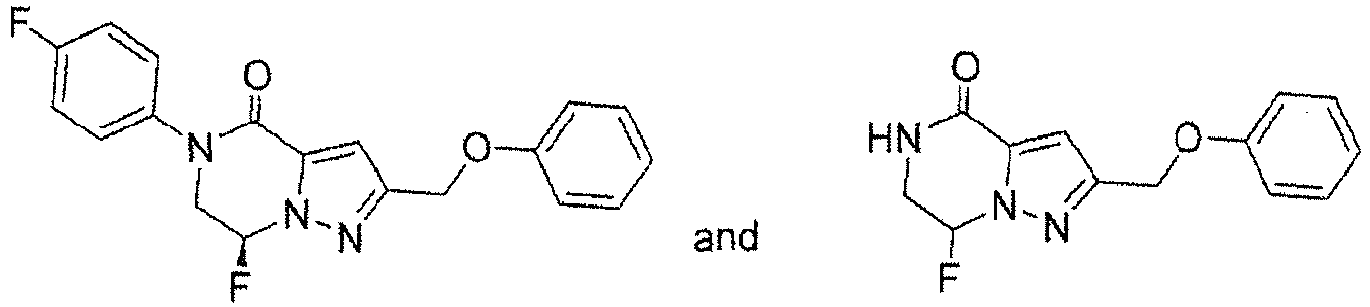
- (1 ") A compound of formula (1) or a pharmaceutically acceptable salt thereof:

- R1 is substituted or unsubstituted aromatic carbocyclyl, substituted or unsubstituted aromatic heterocyclyl, substituted or unsubstituted non-aromatic carbocyclyl, substituted or unsubstituted non-aromatic heterocyclyl, substituted or unsubstituted alkyl, substituted or unsubstituted alkenyl, substituted or unsubstituted alkynyl, substituted or unsubstituted aromatic carbocyclylcarbonyl, substituted or unsubstituted aromatic heterocyclylcarbonyl, substituted or unsubstituted non-aromatic carbocyclylcarbonyl, substituted or unsubstituted non-aromatic heterocyclylcarbonyl, substituted or unsubstituted carbamoyl, substituted or unsubstituted alkyloxy, substituted or unsubstituted alkenyloxy, substituted or unsubstituted alkynyloxy, substituted or unsubstituted aromatic carbocyclyloxy, substituted or unsubstituted non-aromatic carbocyclyloxy, substituted or unsubstituted aromatic heterocyclyloxy, substituted or unsubstituted non-aromatic heterocyclyloxy or substituted or unsubstituted amino,
- R2 is hydrogen, halogen, cyano, formyl, carboxy, substituted or unsubstituted alkyl, substituted or unsubstituted alkenyl, substituted or unsubstituted alkynyl, substituted or unsubstituted non-aromatic carbocyclyl, substituted or unsubstituted aromatic carbocyclyl, substituted or unsubstituted non-aromatic heterocyclyl, substituted or unsubstituted aromatic heterocyclyl, substituted or unsubstituted amino, substituted or unsubstituted alkylthio, substituted or unsubstituted alkenylthio, substituted or unsubstituted alkynylthio, substituted or unsubstituted non-aromatic carbocyclylthio, substituted or unsubstituted aromatic carbocyclylthio, substituted or unsubstituted non-aromatic heterocyclylthio, substituted or unsubstituted aromatic heterocyclylthio, substituted or unsubstituted alkylcarbonyl, substituted or unsubstituted alkenylcarbonyl, substituted or unsubstituted alkynylcarbonyl, substituted or unsubstituted non-aromatic carbocyclylcarbonyl, substituted or unsubstituted aromatic carbocyclylcarbonyl, substituted or unsubstituted non-aromatic heterocyclylcarbonyl, substituted or unsubstituted aromatic heterocyclylcarbonyl, substituted or unsubstituted alkyloxycarbonyl, substituted or unsubstituted alkenyloxycarbonyl, substituted or unsubstituted alkynyloxycarbonyl, substituted or unsubstituted non-aromatic carbocyclyloxycarbonyl, substituted or unsubstituted aromatic carbocyclyloxycarbonyl, substituted or unsubstituted non-aromatic heterocyclyloxycarbonyl, substituted or unsubstituted aromatic heterocyclyloxycarbonyl, substituted or unsubstituted carbamoyl, substituted or unsubstituted sulfamoyl, substituted or unsubstituted alkylsulfinyl, substituted or unsubstituted alkenylsulfinyl, substituted or unsubstituted alkynylsulfinyl, substituted or unsubstituted non-aromatic carbocyclylsulfinyl, substituted or unsubstituted aromatic carbocyclylsulfinyl, substituted or unsubstituted non-aromatic heterocyclylsulfinyl, substituted or unsubstituted aromatic heterocyclylsulfinyl, substituted or unsubstituted alkylsulfonyl, substituted or unsubstituted alkenylsulfonyl, substituted or unsubstituted alkynylsulfonyl, substituted or unsubstituted non-aromatic carbocyclylsulfonyl, substituted or unsubstituted aromatic carbocyclylsulfonyl, substituted or unsubstituted non-aromatic heterocyclylsulfonyl or substituted or unsubstituted aromatic heterocyclylsulfonyl,
- R3 is hydrogen, substituted or unsubstituted alkyl, substituted or unsubstituted alkenyl, substituted or unsubstituted alkynyl, substituted or unsubstituted non-aromatic carbocyclyl, substituted or unsubstituted aromatic carbocyclyl, substituted or unsubstituted non-aromatic heterocyclyl, substituted or unsubstituted aromatic heterocyclyl, substituted or unsubstituted alkylcarbonyl, substituted or unsubstituted alkenylcarbonyl, substituted or unsubstituted alkynylcarbonyl, substituted or unsubstituted non-aromatic carbocyclylcarbonyl, substituted or unsubstituted aromatic carbocyclylcarbonyl, substituted or unsubstituted non-aromatic heterocyclylcarbonyl, substituted or unsubstituted aromatic heterocyclylcarbonyl, substituted or unsubstituted alkyloxycarbonyl, substituted or unsubstituted alkenyloxycarbonyl, substituted or unsubstituted alkynyloxycarbonyl, substituted or unsubstituted non-aromatic carbocyclyloxycarbonyl, substituted or unsubstituted aromatic carbocyclyloxycarbonyl, substituted or unsubstituted non-aromatic heterocyclyloxycarbonyl, substituted or unsubstituted aromatic heterocyclyloxycarbonyl, substituted or unsubstituted carbamoyl, substituted or unsubstituted sulfamoyl, substituted or unsubstituted alkylsulfonyl, substituted or unsubstituted alkenylsulfonyl, substituted or unsubstituted alkynylsulfonyl, substituted or unsubstituted non-aromatic carbocyclylsulfonyl, substituted or unsubstituted aromatic carbocyclylsulfonyl, substituted or unsubstituted non-aromatic heterocyclylsulfonyl or substituted or unsubstituted aromatic heterocyclylsulfonyl,
- R4a and R4b are each independently hydrogen, halogen, hydroxy, cyano, formyl, carboxy, substituted or unsubstituted alkyl, substituted or unsubstituted alkenyl, substituted or unsubstituted alkynyl, substituted or unsubstituted non-aromatic carbocyclyl, substituted or unsubstituted aromatic carbocyclyl, substituted or unsubstituted non-aromatic heterocyclyl, substituted or unsubstituted aromatic heterocyclyl, substituted or unsubstituted amino, substituted or unsubstituted alkyloxy, substituted or unsubstituted alkenyloxy, substituted or unsubstituted alkynyloxy, substituted or unsubstituted non-aromatic carbocyclyloxy, substituted or unsubstituted aromatic carbocyclyloxy, substituted or unsubstituted non-aromatic heterocyclyloxy, substituted or unsubstituted aromatic heterocyclyloxy, substituted or unsubstituted alkylthio, substituted or unsubstituted alkenylthio, substituted or unsubstituted alkynylthio, substituted or unsubstituted non-aromatic carbocyclylthio, substituted or unsubstituted aromatic carbocyclylthio, substituted or unsubstituted non-aromatic heterocyclylthio, substituted or unsubstituted aromatic heterocyclylthio, substituted or unsubstituted alkylcarbonyl, substituted or unsubstituted alkenylcarbonyl, substituted or unsubstituted alkynylcarbonyl, substituted or unsubstituted non-aromatic carbocyclylcarbonyl, substituted or unsubstituted aromatic carbocyclylcarbonyl, substituted or unsubstituted non-aromatic heterocyclylcarbonyl, substituted or unsubstituted aromatic heterocyclylcarbonyl, substituted or unsubstituted alkyloxycarbonyl, substituted or unsubstituted alkenyloxycarbonyl, substituted or unsubstituted alkynyloxycarbonyl, substituted or unsubstituted non-aromatic carbocyclyloxycarbonyl, substituted or unsubstituted aromatic carbocyclyloxycarbonyl, substituted or unsubstituted non-aromatic heterocyclyloxycarbonyl, substituted or unsubstituted aromatic heterocyclyloxycarbonyl, substituted or unsubstituted carbamoyl, substituted or unsubstituted sulfamoyl, substituted or unsubstituted alkylsuffinyl, substituted or unsubstituted alkenylsulfinyl, substituted or unsubstituted alkynylsulfinyl, substituted or unsubstituted non-aromatic carbocyclylsulfinyl, substituted or unsubstituted aromatic carbocyclylsulfinyl, substituted or unsubstituted non-aromatic heterocyclylsulfinyl, substituted or unsubstituted aromatic heterocyclylsulfinyl, substituted or unsubstituted alkylsulfonyl, substituted or unsubstituted alkenylsulfonyl, substituted or unsubstituted alkynylsulfonyl, substituted or unsubstituted non-aromatic carbocyclylsulfonyl, substituted or unsubstituted aromatic carbocyclylsulfonyl, substituted or unsubstituted non-aromatic heterocyclylsulfonyl or substituted or unsubstituted aromatic heterocyclylsulfonyl,
- R5a is hydrogen, halogen, substituted or unsubstituted alkyl, substituted or unsubstituted alkenyl, substituted or unsubstituted alkynyl, substituted or unsubstituted non-aromatic carbocyclyl, substituted or unsubstituted aromatic carbocyclyl, substituted or unsubstituted non-aromatic heterocyclyl, substituted or unsubstituted aromatic heterocyclyl, substituted or unsubstituted alkyloxy, substituted or unsubstituted alkenyloxy, substituted or unsubstituted alkynyloxy, substituted or unsubstituted non-aromatic carbocyclyloxy, substituted or unsubstituted aromatic carbocyclyloxy, substituted or unsubstituted non-aromatic heterocyclyloxy or substituted or unsubstituted aromatic heterocyclyloxy,
- R5b is halogen, substituted or unsubstituted alkyl, substituted or unsubstituted alkenyl, substituted or unsubstituted alkynyl, substituted or unsubstituted non-aromatic carbocyclyl, substituted or unsubstituted aromatic carbocyclyl, substituted or unsubstituted non-aromatic heterocyclyl, substituted or unsubstituted aromatic heterocyclyl, substituted or unsubstituted alkyloxy, substituted or unsubstituted alkenyloxy, substituted or unsubstituted alkynyloxy, substituted or unsubstituted non-aromatic carbocyclyloxy, substituted or unsubstituted aromatic carbocyclyloxy, substituted or unsubstituted non-aromatic heterocyclyloxy or substituted or unsubstituted aromatic heterocyclyloxy, or
- R4b and R5a may be taken together to form a bond, R5b and the substituent on the R1 may be taken together to form substituted or unsubstituted non-aromatic carbocycle or substituted or unsubstituted non-aromatic heterocycle, or R4b and R5b may be taken together to form substituted or unsubstituted non-aromatic carbocycle or substituted or unsubstituted non-aromatic heterocycle,
provided that- (i) a compound, wherein R1 is substituted or unsubstituted phenyloxymethyl or substituted or unsubstituted pyridyloxymethyl, R2 is hydrogen, R5a is hydrogen or substituted or unsubstituted methyl, and R5b is substituted or unsubstituted methyl,
- (iii) a compound, wherein R3 is hydrogen or unsubstituted methyl, and either one of R5a and R5b or each of them are each independently unsubstituted methyloxy or unsubstituted ethyloxy,
and - (iii) the compounds represented as follows:


- (2') The compound according to (1') or (1"), wherein R1 is substituted or unsubstituted aromatic carbocyclyl, substituted or unsubstituted non-aromatic carbocyclyl, substituted or unsubstituted non-aromatic heterocyclyl, substituted or unsubstituted alkenyl, substituted or unsubstituted alkynyl, substituted or unsubstituted aromatic carbocyclylcarbonyl, substituted or unsubstituted aromatic heterocyclylcarbonyl, substituted or unsubstituted non-aromatic carbocyclylcarbonyl, substituted or unsubstituted non-aromatic heterocyclylcarbonyl, substituted or unsubstituted carbamoyl, substituted or unsubstituted alkenyloxy, substituted or unsubstituted alkynyloxy, substituted or unsubstituted aromatic carbocyclyloxy, substituted or unsubstituted non-aromatic carbocyclyloxy, substituted or unsubstituted aromatic heterocyclyloxy, substituted or unsubstituted non-aromatic heterocyclyloxy or substituted or unsubstituted amino, or a pharmaceutically acceptable salt thereof.
- (3') The compound according to (1') or (1"), wherein R1 is substituted or unsubstituted non-aromatic carbocyclyl, substituted or unsubstituted aromatic carbocyclyl or substituted or unsubstituted non-aromatic heterocyclyl, or a pharmaceutically acceptable salt thereof.
- (4') The compound according to (1') or (1"), wherein R1 is substituted or unsubstituted aromatic carbocyclyl, or a pharmaceutically acceptable salt thereof.
- (4") The compound according to (1') or (1"), wherein R1 is substituted or unsubstituted phenyl, or a pharmaceutically acceptable salt thereof.
- (4"') The compound according to (1) or (1"), wherein R1 is substituted phenyl, wherein the substituent(s) is(are) each one or more substituent(s) selected from the group consisting of halogen, cyano, formyl, carboxy, trihaloalkyl, cyanoalkyl, hydroxyalkyl, trihaloalkyloxy, alkyloxyalkyl, alkylcarbamoylalkyl, alkylaminoalkyl, dialkylaminoalkyl, amino, alkylamino, cyanoalkylamino, alkylcarbonylamino, monohalo-alkylcarbonylamino, trihaloalkylcarbonylamino, non-aromatic carbocyclylcarbonyl amino, hydroxyalkylcarbonylamino, alkylaminocarbonylamino, dialkylaminocarbonylamino, alkylsulfonylamino, aromatic heterocycle amino, trihaloalkylcarbamoyl, alkyloxyalkylcarbamoyl, and aromatic carbocyclyl, or a pharmaceutically acceptable salt thereof.
- {4"") The compound according to (1') or (1 "), wherein R1 is substituted phenyl, wherein the substituent(s) is(are) each one or more substituents selected from the group consisting of halogen, cyano, formyl, carboxy, trihaloalkyl, cyanoalkyl, hydroxyalkyl, alkenyl, alkyloxy, trihaloalkyloxy, alkyloxyalkyl, alkylcarbamoylalkyl, alkylaminoalkyl, dialkylaminoalkyl, amino, alkylamino, dialkylamino, cyanoalkylamino, trihaloalkylamino, alkylcarbonylamino, monohaloalkylcarbonylamino, trihaloalkylcarbonylamino, non-aromatic carbocyclylcarbonylamino, hydroxyalkylcarbonylamino, alkyloxycarbonylamino, alkyloxyalkylcarbonylamino, alkylaminocarbonylamino, dialkylaminocarbonylamino, alkylsulfonylamino, aromatic heterocyclylamino, trihaloalkylcarbamoyl, alkyloxyalkylcarbamoyl, pentafuluorothio, and aromatic carbocyclyl, or a pharmaceutically acceptable salt thereof.
- (5') The compound according to any one of (1') to (4""), wherein R2 is hydrogen, or a pharmaceutically acceptable salt thereof.
- (6') The compound according to any one of (1') to (5'), wherein R3 is alkyl substituted with one or more substituent(s) selected from the Substituent group A', wherein the Substituent group A' consists of hydroxy, carboxy, substituted or unsubstituted alkyloxy, substituted or unsubstituted alkenyloxy, substituted or unsubstituted alkynyloxy, substituted or unsubstituted non-aromatic carbocyclyl, substituted or unsubstituted aromatic carbocyclyl, substituted or unsubstituted non-aromatic heterocyclyl, substituted or unsubstituted aromatic heterocyclyl, substituted or unsubstituted alkylcarbonyl, substituted or unsubstituted alkenylcarbonyl, substituted or unsubstituted alkynylcarbonyl, substituted or unsubstituted aromatic carbocyclylcarbonyl , substituted or unsubstituted non-aromatic carbocyclylcarbonyl, substituted or unsubstituted aromatic heterocyclylcarbonyl, substituted or unsubstituted non-aromatic heterocyclylcarbonyl, substituted or unsubstituted amino, substituted or unsubstituted carbamoyl, substituted or unsubstituted carbonyl, and substituted or unsubstituted sulfamoyl, alkenyl substituted with one or more substituent(s) selected from the Substituent group A', alkynyl substituted with one or more substituent(s) selected from the Substituent group A', substituted or unsubstituted aromatic carbocyclyl, or substituted or unsubstituted aromatic heterocyclyl, or a pharmaceutically acceptable salt thereof.
- (6") The compound according to any one of (1') to (5'), wherein R3 is alkyl substituted with one or more substituent(s) is(are) selected from the Substituent group A" (wherein the Substituent group A" is hydroxy, carboxy, substituted or unsubstituted alkyloxy, substituted or unsubstituted alkenyloxy, substituted or unsubstituted alkynyloxy, substituted or unsubstituted non-aromatic carbocyclyl, substituted or unsubstituted aromatic carbocyclyl, substituted or unsubstituted non-aromatic heterocyclyl, substituted or unsubstituted aromatic heterocyclyl, substituted or unsubstituted aromatic carbocyclyloxy, substituted or unsubstituted alkylcarbonyl, substituted or unsubstituted alkenylcarbonyl, substituted or unsubstituted alkynylcarbonyl, substituted or unsubstituted aromatic carbocyclylcarbonyl, substituted or unsubstituted non-aromatic carbocyclylcarbonyl, substituted or unsubstituted aromatic heterocyclylcarbonyl, substituted or unsubstituted non-aromatic heterocyclylcarbonyl, substituted or unsubstituted alkyloxycarbonyl, substituted or unsubstituted amino, substituted or unsubstituted carbamoyl, substituted or unsubstituted carbonyl and substituted or unsubstituted sulfamoyl), alkenyl substituted with one or more the substituent(s) selected from the Substituent group A", or alkynyl substituted with one or more substituent(s) selected from the Substituent group A", substituted or unsubstituted aromatic carbocyclyl, or substituted or unsubstituted aromatic heterocyclyl, or a pharmaceutically acceptable salt thereof.
- (7') The compound according to (6') or (6"), wherein the substituent(s) selected from the Substituent group A' or the Substituent group A" is(are) hydroxy, carboxy, aromatic carbocyclyl optionally substituted with one or more substituent(s) selected from the Substituent group α', substituted or unsubstituted non-aromatic heterocyclyl, aromatic heterocyclyl optionally substituted with carboxy, carbamoyl optionally substituted with one or more substituent(s) selected from the Substituent group β', carbonyl optionally substituted with one or more substituent(s) selected from the Substituent group γ', and amino optionally substituted with one or more substituent(s) selected from the substituent group δ',
wherein
the Substituent group α' consists of hydroxy, carboxy, cyano, alkyl, hydroxyalkyl, carboxyalkyl, carboxy(alkyl), carbamoyl, alkyloxycarbonyl, alkyloxycarbonylalkyl, aromatic carbocyclylsulfonylalkyl, alkyloxy, alkylcarbonyloxy, alkyaminoalkyloxy, aromatic carbocyclyloxy, alkylcarbonyl, hydroxy non-aromatic heterocyclylcarbonyl,
alkylcarbonylamino, alkylsulfonyl and non-aromatic heterocyclylsulfonyl, the Substituent group β' consists of alkyl, cyanoalkyl, dicyanoalkyl, carboxyalkyl, hydroxyalkyl, di(hydroxy)alkyl, trihalo(hydroxy)alkyl, hydroxyalkyloxyalkyl, aromatic carbocyclylalkyl, aromatic carbocyclyl(cyano)alkyl, hydroxy aromatic carbocyclylalkyl, aromatic heterocyclyialkyl, hydroxy aromatic heterocyclylalkyl, aromatic carbocyclylalkyl(carboxy), oxo non-aromatic heterocyclylalkyl, hydroxyalkyl non-aromatic heterocyclylalkyl, carboxy alkyl(alkyl), alkylaminoalkyl, alkylaminoalkyl(alkyl), carbamoylalkyl, alkylcarbamoylalkyl, dialkylcarbamoylalkyl, carboxy non-aromatic carbocyclylalkyl, aromatic carbocyclyl(carboxy)alkyl, aromatic carbocyclyl(hydroxy)alkyl, carboxy aromatic carbocyclylalkyl, carboxy aromatic carbocyclyl, carboxyalkyl aromatic carbocyclyl, cyano non-aromatic carbocyclyl, hydroxy non-aromatic carbocyclyl, carboxy non-aromatic carbocyclyl, aromatic heterocyclyl, non-aromatic carbocyclyl, aromatic carbocyclyl, carboxy aromatic carbocyclyl, aromatic heterocyclyl, non-aromatic carbocyclyl, aromatic carbocyclyl, carboxy aromatic carbocyclyl, alkyloxycarbonyl non-aromatic carbocyclyl, and alkyloxycarbonyl,
the Substituent group γ' consists of alkyloxy, non-aromatic heterocyclyfalkyloxy, carbamoyl aromatic carbocyclyl, carboxy aromatic heterocyclyl, non-aromatic heterocyclyl, hydroxy non-aromatic heterocyclyl, cyano non-aromatic heterocyclyl, alkyl non-aromatic heterocyclyl, dialkyl non-aromatic heterocyclyl, hydroxyalkyl non-aromatic heterocyclyl, hydroxyalkyloxy non-aromatic heterocyclyl, carboxyalkyl non-aromatic heterocyclyl, aromatic carbocyclylalkyl non-aromatic heterocyclyl, non-aromatic heterocyclylalkyl non-aromatic heterocyclyl, non-aromatic heterocyclylcarbonyl non-aromatic heterocyclyl, alkyloxycarbonyl non-aromatic heterocyclyl, carboxy non-aromatic heterocyclyl, carbamoyl non-aromatic heterocyclyl, cyanoalkylcarbamoyl non-aromatic carbocycle group, alkylamino non-aromatic heterocyclyl, oxo non-aromatic heterocyclyl, and aromatic carbocycle non-aromatic heterocyclyl,
the Substituent group δ' consists of alkyl, carboxyalkyl, alkylcarbonyl, cyanoalkylcarbonyl and alkyloxycarbonyl, or a pharmaceutically acceptable salt thereof. - (7") The compound according to (6') or (6"), wherein the substituent(s) selected from the Substituent group A'or the Substituent group A" is(are) hydroxy, carboxy, aromatic carbocyclyl optionally substituted with one or more subsituent(s) selected from the Substituent group α", non-aromatic heterocyclyl optionally substituted with one or more substituent(s) selected from the Substituent group α", aromatic heterocyclyl optionally substituted with carboxy, carbamoyl optionally substituted with one or more substituent(s) selected from the Substituent group β", carbonyl optionally substituted with one or more substituent(s) selected from the Substituent group γ", and amino optionally substituted with one or more substituent(s) selected from the Substituent group δ",
wherein
the Substituent group α" consists of hydroxy, carboxy, cyano, alkyl, hydroxyalkyl, carboxyalkyl, carboxy(alkyl), cyanoalkyl, carbamoyl, alkyloxycarbonyl, alkyloxycarbonylalkyl, aromatic carbocyclylsulfonylalkyl, alkyloxy, alkylcarbonyloxy, alkylaminoalkyloxy, dialkylaminoalkyloxy, aromatic carbocyclyloxy, alkylcarbonyl, hydroxy non-aromatic heterocyclylcarbonyl , alkylcarbonylamino, alkylsulfonyl, and non-aromatic heterocyclylsulfonyl,
the Substituent group β" consists of alkyl, cyano alkyl, dicyanoalkyl, carboxyalkyl, hydroxyalkyl, di(hydroxy )alkyl, trihalo(hydroxy)alkyl, hydroxyalkyloxyalkyl, aromatic carbocyclylalkyl, aromatic carbocyclyl(cyano)alkyl, hydroxy aromatic carbocyclylalkyl, aromatic heterocyclylalkyl, hydroxy aromatic heterocyclylalkyl, aromatic carbocyclylalkyl(carboxy), oxo non-aromatic heterocyclylalkyl, hydroxyalkyl non-aromatic heterocyclylalkyl, carboxyalkyl(alkyl), alkylaminoalkyl, dialkylaminoalkyl, alkylaminoalkyl(alkyl), carbamoylalky, alkylcarbamoylalkyl, dialkylcarbamoylalkyl, carboxy non-aromatic carbocyclylalkyl, aromatic carbocyclyl(carboxy)alkyl, aromatic carbocyclyl(hydroxy)alkyl, carboxy aromatic carbocyclylalkyl, carboxy aromatic carbocyclyl, carboxyalkyl aromatic carbocyclyl, cyano non-aromatic carbocyclyl, hydroxy non-aromatic carbocyclyl, carboxy non-aromatic carbocyclyl, aromatic heterocyclyl, non-aromatic carbocyclyl, aromatic carbocyclyl, carboxy aromatic carbocyclyl, aromatic heterocyclyl, non-aromatic carbocyclyl, aromatic carbocyclyl, carboxy aromatic carbocyclyl, alkyloxycarbonyl non-aromatic carbocyclyl and alkyloxycarbonyl, the substituent group γ" consists of alkyl, alkyloxy, non-aromatic heterocyclylalkyloxy, carbamoyl aromatic carbocyclyl, non-aromatic carbocyclyl, carboxy aromatic heterocyclyl, non-aromatic heterocyclyl, hydroxy non-aromatic heterocyclyl, cyano non-aromatic heterocyclyl, alkyl non-aromatic heterocyclyl, dialkyl non-aromatic heterocyclyl, hydroxyalkyl non-aromatic heterocyclyl, hydroxyalkyloxy non-aromatic heterocyclyl, carboxyalkyl non-aromatic heterocyclyl, aromatic carbocyclylalkyl non-aromatic heterocyclyl, non-aromatic heterocyclylalkyl non-aromatic heterocyclyl, non-aromatic heterocyclylcarbonyl non-aromatic heterocyclyl, alkyloxycarbonyl non-aromatic heterocyclyl, carboxy non-aromatic heterocyclyl, carbamoyl non-aromatic heterocyclyl, cyanoalkyl carbamoyl non-aromatic carbocycle group, cyano non-aromatic carbocyclylcarbamoyl non-aromatic heterocyclyl, alkylamino non-aromatic heterocyclyl, dialkylamino non-aromatic heterocyclyl, oxo non-aromatic heterocyclyl, and aromatic carbocyclyl non-aromatic heterocyclyl,
the Substituent group δ" consists of alkyl, carboxyalkyl, alkylcarbonyl, hydroxyalkylcarbonyl, cyanoalkylcarbonyl and alkyloxycarbonyl, or a pharmaceutically acceptable salt thereof. - (8') The compound according to any one of (1') to (7"), wherein R4a and R4b are hydrogen, or a pharmaceutically acceptable salt thereof.
- (9') The compound according to any one of (1') to (7"), wherein R4b and R5b are taken together to form substituted or unsubstituted non-aromatic carbocycle or substituted or unsubstituted non-aromatic heterocycle, or a pharmaceutically acceptable salt thereof.
- (10') The compound according to any one of (1') to (8'), wherein R5a is hydrogen, substituted or unsubstituted alkyl, substituted or unsubstituted alkenyl or substituted or unsubstituted alkynyl, R5b is substituted or unsubstituted alkyl, substituted or unsubstituted alkenyl or substituted or unsubstituted alkynyl, or a pharmaceutically acceptable salt thereof.
- (11") The compound according to any one of (1') to (8'), wherein R5a is hydrogen or substituted or unsubstituted alkyl, R5b is substituted or unsubstituted C2-C10 alkyl, or a pharmaceutically acceptable salt thereof.
- (12') The compound according to any one of (1') to (8'), wherein R5a is hydrogen, R5b is substituted or unsubstituted C2-C10 alkyl, or a pharmaceutically acceptable salt thereof.
- (12") The compound according to any one of (1') to (8'), wherein R5a is hydrogen, R5b is substituted alkyl, wherein the substituent(s) is(are) selected from the group consisting of hydroxy, halogen, alkyloxy optionally substituted with halogen, aromatic carbocyclyl and aromatic carbocyclylalkyloxy, or a pharmaceutical acceptable salt thereof.
- (13') The compound according to any one of (1'), wherein R1 is substituted or unsubstituted aromatic carbocyclyl, substituted or unsubstituted non-aromatic heterocyclyl or substituted or unsubstituted non-aromatic heterocyclylcarbonyl, wherein the substituent(s) is(are) each selected from the group consisting of halogen, cyano, carboxy, trihaloalkyl, cyanoalkyl, trihaloalkyloxy and alkylcarbonylamino, R2 is hydrogen, R3 is hydrogen, alkyl substituted with one or more substituent(s) selected from the Substituent group A, aromatic carbocyclyl optionally substituted with carboxy, trihaloalkyl or oxo non-aromatic heterocyclyl optionally substituted with cyanoalkyl, or aromatic heterocyclyl,
the substituent(s) selected from the said substituent group A' is(are) hydroxy, carboxy, aromatic carbocyclyl optionally substituted with one or more substituent(s) selected from the Substituent group α', non-aromatic heterocyclyl, oxo non-aromatic heterocyclyl optionally substituted with one or more substituent(s) selected from the Substituent group α', aromatic heterocyclyl optionally substituted with carboxy, carbamoyl optionally substituted with one or more substituent(s) selected from the Substituent group β', carbonyl optionally substituted with one or more substituent(s) selected from the Substituent group γ', or amino optionally substituted with one or more substitutent(s) selected with the Substituent group δ',
wherein
the substituent(s) selected from the said Substituent group α' is(are) hydroxy, carboxy, cyano, alkyl, hydroxyalkyl, carboxyalkyl, carbamoyl, alkyloxycarbonyl, alkyloxycarbonylalkyl, aromatic carbocyclylsulfonylalkyl, alkylcarbonyloxy, alkylaminoalkyloxy, aromatic carbocyclyloxy, alkylcarbonyl, hydroxy non-aromatic heterocyclylcarbonyl, alkylcarbonylamino, alkylsulfonyl or non-aromatic heterocyclylsulfonyl,
the substituent(s) selected from the said substituent group β' is(are) alkyl, cyanoalkyl, carboxyalkyl, hydroxyalkyl, aromatic carbocyclylalkyl , aromatic heterocyclylalkyl, aromatic carbocyclylalkyl(carboxy), oxo non-aromatic heterocyclylalkyl , carboxyalkyl(alkyl), alkylaminoalkyl, alkylaminoalkyl(alkyl), alkylcarbamoylalkyl, carboxy non-aromatic carbocyclylalkyl, carboxy aromatic carbocyclylalkyl, aromatic carbocyclyl(carboxy)alkyl, carboxy aromatic carbocyclylalkyl , carboxyalkyl aromatic carbocyclyl, cyano non-aromatic carbocyclyl, carboxy non-aromatic carbocyclyl, aromatic heterocyclyl, aromatic carbocyclyl, carboxy aromatic carbocyclyl, or alkyloxycarbonyl non-aromatic carbocycly],
the subsituent(s) selected from the said Substituent group γ' is(are) alkyloxy, non-aromatic heterocyclylalkyloxy, non-aromatic heterocyclyl, hydroxy non-aromatic heterocyclyl, cyano non-aromatic heterocyclyl, alkyl non-aromatic heterocyclyl, hydroxyalkyl non-aromatic heterocyclyl, carboxylalkyl non-aromatic heterocyclyl, aromatic carbocyclylalkyl non-aromatic heterocyclyl, non-aromatic heterocyclylalkyl non-aromatic heterocyclyl, non-aromatic heterocyclylcarbonyl non-aromatic heterocyclyl, alkyloxycarbonyl non-aromatic heterocyclyl, carboxy non-aromatic heterocyclyl, carbamoyl non-aromatic heterocyclyl, cyanoalkylcarbamoyl non-aromatic carbocyclyl, alkylamino non-aromatic heterocyclyl, oxo non-aromatic heterocyclyl or aromatic carbocyclyl non-aromatic heterocyclyl,
the substituent(s) selected from the said Substituent group δ' is(are) alkylcarbonyl, cyanoalkylcarbonyl or alkyloxycarbonyl,
R4a and R4b are hydrogen, R5a is hydrogen or unsubstituted alkyl, R5b is substituted or unsubstituted alkyl, wherein the substituent(s) is(are) hydroxy, halogen, alkyloxy optionally substituted with halogen, aromatic carbocyclyl or aromatic carbocyclylalkyloxy, or
R4a and R5a are hydrogen, R4b and R5b are taken together to form substituted or unsubstituted non-aromatic carbocycle or substituted or unsubstituted non-aromatic heterocycle, or a pharmaceutically acceptable salt thereof. - (13") The compound according to (1 "), wherein R1 is substituted or unsubstituted aromatic carbocyclyl, substituted or unsubstituted non-aromatic heterocyclyl or substituted or unsubstituted non-aromatic heterocyclylcarbonyl, wherein the substituent(s) is(are) each selected from the group consisting of halogen, cyano, formyl, carboxy, hydroxyalkyl, trihaloalkyl, cyanoalkyl, alkylaminoalkyl, alkylaminocarbonylalkyl, alkyloxy, trihaloalkyloxy, amino, alkylamino, trihaloalkylamino, cyanoalkylamino, alkylcarbonylamino, hydroxyalkylcarbonylamino, haloalkylcarbonylamino, trihaloalkylcarbonylamino, alkyloxycarbonylamino, alkyloxyalkylcarbonylamino, non-aromatic carbocyclylcarbonylamino, alkylsulfonylamino, aromatic carbocyclyl, pentafuluorothio, and aromatic heterocyclyl,
R2 is hydrogen,
R3 is hydrogen, alkyl substituted with one or more substituent(s) selected from the Substituent group A", aromatic carbocyclyl optionally substituted with carboxy, oxo non-aromatic heterocyclyl optionally substituted trihaloalkyl or cyanoalkyl, or aromatic heterocyclyl,
the substituent(s) selected from the Substituent group A" is(are) hydroxy, carboxy, aromatic carbocyclyl optionally substituted with one or more substituent(s) selected from the Substituent group α", non-aromatic heterocyclyl, oxo non-aromatic heterocyclyl optionally substituted with one or more substituent(s) selected form the Substituent group α", aromatic heterocyclyl optionally substituted with carboxy, carbamoyl optionally substituted with one or more substituent(s) selected with the Substituent group β", carbonyl optionally substituted with one or more substituent(s) selected from a substituent group γ", or amino optionally substituted with one or more substituent(s) selected from the Substituent group δ",
wherein
the substituent(s) selected from the Substituent group α" is(are) hydroxy, carboxy, cyano, alkyl, hydroxyalkyl, carboxyalkyl, cyanoalkyl, carbamoyl, alkyloxycarbonyl, alkyloxycarbonylalkyl, aromatic carbocyclylsulfonylalkyl, alkylcarbonyloxy, alkylaminoalkyloxy, dialkylaminoalkyloxy, aromatic carbocyclyloxy, alkylcarbonyl, hydroxy non-aromatic heterocyclylcarbonyl , alkylcarbonylamino, alkylsulfonyl or non-aromatic heterocyclylsulfonyl,
the substituent(s) selected from the Substituent group β" is(are) alkyl, cyanoalkyl, carboxyalkyl, hydroxyalkyl, aromatic carbocyclylalkyl, aromatic heterocyclylalkyl, aromatic carbocyclylalkyl(carboxy), oxo non-aromatic heterocyclylalkyl, carboxyalkyl(alkyl), alkylaminoalkyl, dialkylaminoalkyl, alkylaminoalkyl(alkyl), alkylcarbamoylalkyl, carboxy non-aromatic carbocyclylalkyl, carboxy aromatic carbocyclylalkyl , aromatic carbocyclyl(carboxy)alkyl, carboxy aromatic carbocyclylalkyl, carboxyalkyl aromatic carbocyclyl, cyano non-aromatic carbocyclyl, carboxy non-aromatic carbocyclyl, aromatic heterocyclyl, aromatic carbocyclyl, carboxy aromatic carbocyclyl, or alkyloxycarbonyl non-aromatic carbocyclyl,
the substituent(s) selected from the Substituent group γ" is(are) alkyl, alkyloxy, non-aromatic heterocyclylalkyloxy, non-aromatic carbocyclyl, non-aromatic heterocyclyl, hydroxy non-aromatic heterocyclyl, cyano non-aromatic heterocyclyl, alkyl non-aromatic heterocyclyl, hydroxyalkyl non-aromatic heterocyclyl, carboxyalkyl non-aromatic heterocyclyl, aromatic carbocyclylalkyl non-aromatic heterocyclyl, non-aromatic heterocyclylalkyl non-aromatic heterocyclyl, non-aromatic heterocyclylcarbonyl non-aromatic heterocyclyl, alkyloxycarbonyl non-aromatic heterocyclyl, carboxy non-aromatic heterocyclyl, carbamoyl non-aromatic heterocyclyl, cyanoalkylcarbamoyl non-aromatic carbocycyl, cyano non-aromatic carbocyclylcarbamoyl non-aromatic heterocyclyl, alkylamino non-aromatic heterocyclyl, oxo non-aromatic heterocyclyl or aromatic carbocyclyl non-aromatic heterocyclyl,
the s s ubstituent(s) selected from the Substituent group δ" is(are) alkylcarbonyl, cyanoalkylcarbonyl, hydroxyalkylcarbonyl or alkyloxycarbonyl,
R4a and R4b are hydrogen, R5a is hydrogen or unsubstituted alkyl, R5b is substituted or unsubstituted alkyl, wherein the substituent(s) is(are) hydroxy, halogen, alkyloxy optionally substituted with halogen, non-aromatic carbocyclyl, aromatic carbocyclyl or aromatic carbocyclylalkyloxy, or
R4a and R5a are hydrogen, R4b and R5b are taken together to form substituted or unsubstituted non-aromatic carbocycle or substituted or unsubstituted non-aromatic heterocycle, or a pharmaceutically acceptable salt thereof. - (14') A pharmaceutical composition comprising the compound according to any one of (1') to (13") or a pharmaceutically acceptable salt thereof as an active ingredient.
- (15') The pharmaceutical composition according to (14'), which has an autotaxin inhibitory activity.
- (16') A method for the prevention or treatment of a disease involving autotaxin, which is characterized by administering the compound according to any one of (1') to (13") or a pharmaceutically acceptable salt thereof.
- (17') The compound according to any one of (1') to (13") for the prevention or treatment of a disease involving autotaxin or a pharmaceutically acceptable salt thereof.
- (18') Use of a compound according to any one of (1') to (13') or a pharmaceutically acceptable salt thereof for the manufacture of a medicament for the prevention or treatment of a disease involving autotaxin.
(19') An autotaxin inhibitor comprising a compound of formula (I): -

- R1 is substituted or unsubstituted aromatic carbocyclyl, substituted or unsubstituted aromatic heterocyclyl, substituted or unsubstituted non-aromatic carbocyclyl, substituted or unsubstituted non-aromatic heterocyclyl, substituted or unsubstituted alkyl, substituted or unsubstituted alkenyl, substituted or unsubstituted alkynyl, substituted or unsubstituted aromatic carbocyclylcarbonyl, substituted or unsubstituted aromatic heterocyclylcarbonyl, substituted or unsubstituted non-aromatic carbocyclylcarbonyl, substituted or unsubstituted non-aromatic heterocyclylcarbonyl, substituted or unsubstituted carbamoyl, substituted or unsubstituted alkyloxy, substituted or unsubstituted alkenyloxy, substituted or unsubstituted alkynyloxy, substituted or unsubstituted aromatic carbocyclyloxy, substituted or unsubstituted non-aromatic carbocyclyloxy, substituted or unsubstituted aromatic heterocyclyloxy, substituted or unsubstituted non-aromatic heterocyclyloxy or substituted or unsubstituted amino,
- R2 is hydrogen, halogen, cyano, formyl, carboxy, substituted or unsubstituted alkyl, substituted or unsubstituted alkenyl, substituted or unsubstituted alkynyl, substituted or unsubstituted non-aromatic carbocyclyl, substituted or unsubstituted aromatic carbocyclyl, substituted or unsubstituted non-aromatic heterocyclyl, substituted or unsubstituted aromatic heterocyclyl, substituted or unsubstituted amino, substituted or unsubstituted alkylthio, substituted or unsubstituted alkenylthio, substituted or unsubstituted alkynylthio, substituted or unsubstituted non-aromatic carbocyclylthio, substituted or unsubstituted aromatic carbocyclylthio, substituted or unsubstituted non-aromatic heterocyclylthio, substituted or unsubstituted aromatic heterocyclylthio, substituted or unsubstituted alkylcarbonyl, substituted or unsubstituted alkenylcarbonyl, substituted or unsubstituted alkynylcarbonyl, substituted or unsubstituted non-aromatic carbocyclylcarbonyl, substituted or unsubstituted aromatic carbocyclylcarbonyl, substituted or unsubstituted non-aromatic heterocyclylcarbonyl, substituted or unsubstituted aromatic heterocyclylcarbonyl, substituted or unsubstituted alkyloxycarbonyl, substituted or unsubstituted alkenyloxycarbonyl, substituted or unsubstituted alkynyloxycarbonyl, substituted or unsubstituted non-aromatic carbocyclyloxycarbonyl, substituted or unsubstituted aromatic carbocyclyloxycarbonyl, substituted or unsubstituted non-aromatic heterocyclyloxycarbonyl, substituted or unsubstituted aromatic heterocyclyloxycarbonyl, substituted or unsubstituted carbamoyl, substituted or unsubstituted sulfamoyl, substituted or unsubstituted alkylsulfinyl, substituted or unsubstituted alkenylsulfinyl, substituted or unsubstituted alkynylsulfinyl, substituted or unsubstituted non-aromatic carbocyclylsulfinyl, substituted or unsubstituted aromatic carbocyclylsulfinyl, substituted or unsubstituted non-aromatic heterocyclylsulfinyl, substituted or unsubstituted aromatic heterocyclylsulfinyl, substituted or unsubstituted alkylsulfonyl, substituted or unsubstituted alkenylsulfonyl, substituted or unsubstituted alkynylsulfonyl, substituted or unsubstituted non-aromatic carbocyclylsulfonyl, substituted or unsubstituted aromatic carbocyclylsulfonyl, substituted or unsubstituted non-aromatic heterocyclylsulfonyl or substituted or unsubstituted aromatic heterocyclylsulfonyl,
- R3 is hydrogen, substituted or unsubstituted alkyl, substituted or unsubstituted alkenyl, substituted or unsubstituted alkynyl, substituted or unsubstituted non-aromatic carbocyclyl, substituted or unsubstituted aromatic carbocyclyl, substituted or unsubstituted non-aromatic heterocyclyl, substituted or unsubstituted aromatic heterocyclyl, substituted or unsubstituted alkylcarbonyl, substituted or unsubstituted alkenylcarbonyl, substituted or unsubstituted alkynylcarbonyl, substituted or unsubstituted non-aromatic carbocyclylcarbonyl, substituted or unsubstituted aromatic carbocyclylcarbonyl, substituted or unsubstituted non-aromatic heterocyclylcarbonyl, substituted or unsubstituted aromatic heterocyclylcarbonyl, substituted or unsubstituted alkyloxycarbonyl, substituted or unsubstituted alkenyloxycarbonyl, substituted or unsubstituted alkynyloxycarbonyl, substituted or unsubstituted non-aromatic carbocyclyloxycarbonyl, substituted or unsubstituted aromatic carbocyclyfoxycarbonyl, substituted or unsubstituted non-aromatic heterocyclyfoxycarbonyl, substituted or unsubstituted aromatic heterocyclyloxycarbonyl, substituted or unsubstituted carbamoyl, substituted or unsubstituted sulfamoyl, substituted or unsubstituted alkylsulfonyl, substituted or unsubstituted alkenylsulfonyl, substituted or unsubstituted alkynylsulfonyl, substituted or unsubstituted non-aromatic carbocyclylsulfonyl, substituted or unsubstituted aromatic carbocyclylsulfonyl, substituted or unsubstituted non-aromatic heterocyclylsulfonyl, or substituted or unsubstituted aromatic heterocyclylsulfonyl,
- R4a and R4b are each independently hydrogen, halogen, hydroxy, cyano, formyl, carboxy, substituted or unsubstituted alkyl, substituted or unsubstituted alkenyl, substituted or unsubstituted alkynyl, substituted or unsubstituted non-aromatic carbocyclyl, substituted or unsubstituted aromatic carbocyclyl, substituted or unsubstituted non-aromatic heterocyclyl, substituted or unsubstituted aromatic heterocyclyl, substituted or unsubstituted amino, substituted or unsubstituted alkyloxy, substituted or unsubstituted alkenyloxy, substituted or unsubstituted alkynyloxy, substituted or unsubstituted non-aromatic carbocyclyloxy, substituted or unsubstituted aromatic carbocyclyloxy, substituted or unsubstituted non-aromatic heterocyclyloxy, substituted or unsubstituted aromatic heterocyclyloxy, substituted or unsubstituted alkylthio, substituted or unsubstituted alkenylthio, substituted or unsubstituted alkynylthio, substituted or unsubstituted non-aromatic carbocyclylthio, substituted or unsubstituted aromatic carbocyclylthio, substituted or unsubstituted non-aromatic heterocyclylthio, substituted or unsubstituted aromatic heterocyclylthio, substituted or unsubstituted alkylcarbonyl, substituted or unsubstituted alkenylcarbonyl, substituted or unsubstituted alkynylcarbonyl, substituted or unsubstituted non-aromatic carbocyclylcarbonyl , substituted or unsubstituted aromatic carbocyclylcarbonyl, substituted or unsubstituted non-aromatic heterocyclylcarbonyl , substituted or unsubstituted aromatic heterocyclylcarbonyl , substituted or unsubstituted alkyloxycarbonyl, substituted or unsubstituted alkenyloxycarbonyl, substituted or unsubstituted alkynyloxycarbonyl, substituted or unsubstituted non-aromatic carbocyclyloxycarbonyl, substituted or unsubstituted aromatic carbocyclyloxycarbonyl, substituted or unsubstituted non-aromatic heterocyclyloxycarbonyl, substituted or unsubstituted aromatic heterocyclyloxycarbonyl, substituted or unsubstituted carbamoyl, substituted or unsubstituted sulfamoyl, substituted or unsubstituted alkylsulfinyl, substituted or unsubstituted alkenylsulfinyl, substituted or unsubstituted alkynylsulfinyl, substituted or unsubstituted non-aromatic carbocyclylsulfinyl, substituted or unsubstituted aromatic carbocyclylsulfinyl, substituted or unsubstituted non-aromatic heterocyclylsulfinyl, substituted or unsubstituted aromatic heterocyclylsulfinyl, substituted or unsubstituted alkylsulfonyl, substituted or unsubstituted alkenylsulfonyl, substituted or unsubstituted alkynylsulfonyl, substituted or unsubstituted non-aromatic carbocyclylsulfonyl, substituted or unsubstituted aromatic carbocyclylsulfonyl, substituted or unsubstituted non-aromatic heterocyclylsulfonyl, or substituted or unsubstituted aromatic heterocyclylsulfonyl,
- R5a is hydrogen, halogen, substituted or unsubstituted alkyl, substituted or unsubstituted alkenyl, substituted or unsubstituted alkynyl, substituted or unsubstituted non-aromatic carbocyclyl, substituted or unsubstituted aromatic carbocyclyl, substituted or unsubstituted non-aromatic heterocyclyl, substituted or unsubstituted aromatic heterocyclyl, substituted or unsubstituted alkyloxy, substituted or unsubstituted alkenyloxy, substituted or unsubstituted alkynyloxy, substituted or unsubstituted non-aromatic carbocyclyloxy, substituted or unsubstituted aromatic carbocyclyloxy, substituted or unsubstituted non-aromatic heterocyclyloxy or substituted or unsubstituted aromatic heterocyclyloxy,
- R5b is halogen, substituted or unsubstituted alkyl, substituted or unsubstituted alkenyl, substituted or unsubstituted alkynyl, substituted or unsubstituted non-aromatic carbocyclyl, substituted or unsubstituted aromatic carbocyclyl, substituted or unsubstituted non-aromatic heterocyclyl, substituted or unsubstituted aromatic heterocyclyl, substituted or unsubstituted alkyloxy, substituted or unsubstituted alkenyloxy, substituted or unsubstituted alkynyloxy, substituted or unsubstituted non-aromatic carbocyclyloxy, substituted or unsubstituted aromatic carbocyclyloxy, or R4b and R5b may be taken together to form a bond, or R4b and R5b may be taken together to form substituted or unsubstituted non-aromatic carbocycle or substituted or unsubstituted non-aromatic heterocycle, or a pharmaceutically acceptable salt thereof.
- The compound of the present invention exhibits excellent autotaxin inhibitory activity, and is useful as the prevention or treatment of a disease involving especially autotaxin.
- The definitions of the terms as used herein are as follows. Unless specified otherwise, these terms are used alone or in combination with another term in the meaning as defined.
- "Halogen" includes fluorine, chlorine, bromine and iodine. Fluorine and chlorine are particularly preferable.
- "Alkyl" means a straight or branched hydrocarbon group having 1 to 10 carbon atoms, and includes alkyl of 1 to 6 carbon atoms, alkyl of 1 to 4 carbon atoms, and alkyl of 1 to 3 carbon atoms and the like. Examples include methyl, ethyl, n-propyl, isopropyl, n-butyl, isobutyl, sec-butyl, tert-butyl, n-pentyl, isopentyl, neopentyl, hexyl, isohexyl, n-heptyl, isoheptyl, n-octyl, isooctyl, n-nonyl, n-decyl and the like.
- Specific examples of "alkyl" for R3 include methyl, ethyl, n-propyl, isopropyl, n-butyl, isobutyl, sec-butyl., tert-butyl and the like. In particular, methyl, ethyl, n-propyl, or n-butyl is preferred.
- Specific examples of "alkyl' for R5a and R5b include methyl, ethyl, n-propyl, isopropyl, n-butyl, isobutyl, sec-butyl, tert-butyl, n-pentyl, isohexyl and the like. In particular, methyl, ethyl, n-propyl, n-butyl, n-pentyl, methylbutyl, n-hexyl, isohexyl, or ethylpentyl is preferred.
- The preferred example of "alkyl" for R5a is particularly methyl or ethyl.
- The preferred example of "alkyl" for R5b is particularly methyl, ethyl, n-propyl, isopropyl, n-butyl, or n-pentyl, more preferred is n-butyl or n-pentyl.
- The alkyl moiety of "alkyloxy", "alkyloxycarbonyl", "alkylcarbonyl", "alkylsulfinyl", "alkylsulfonyl", "alkylthio", "alkylamino", "alkylaminoalkyl", "alkylaminoalkyl(alkyl)", "alkylaminoalkyloxy", "alkylaminocarbonylamino", "alkylaminocarbonylalkyl", "alkylamino non-aromatic heterocyclyl", "alkyloxyalkyl", "alkyloxyalkylcarbonylamino", "alkyloxycarbonylalkyl", "alkyloxycarbonyl non-aromatic carbocyclyl", "alkylcarbamoylalkyl", "alkylcarbonylamino", "alkylcarbonyloxy", "alkylsulfonylamino", "alkylnon-aromatic heterocyclyl", "oxo non-aromatic heterocyclylalkyl", "carbamoylalkyl", "carboxy(alkyl)", "carboxyalkyl", "carboxyalkyl(alkyl)", "carboxyalkyl non-aromatic heterocyclyl", "carboxyalkyl aromatic carbocyclyl", "carboxy non-aromatic carbocyclylalkyl", "carboxy aromatic carbocyclylalkyl", "di(hydroxy)alkyl", "cyanoalkyl", "cyanoalkylamino", "dialkylaminoalkyl", "dialkylaminoalkylcarbonylamino", "dialkylcarbamoylalkyl", "dialkyl non-aromatic heterocyclyl", "dicyanoalkyl", "trihalo(hydroxy)alkyl", "trihaloalkyl", "trihaloalkyloxy", "haloalkylcarbonylamino", "trihaloalkylcarbonylamino", "hydroxyalkyl", "hydroxyalkyloxyalkyl", "hydroxyalkyloxy non-aromatic heterocyclyl", "hydroxyalkylcarbonylamino", "hydroxyalkyl non-aromatic heterocyclylalkyl", "hydroxyalkyl non-aromatic heterocyclyl", "hydroxy aromatic carbocyclylalkyl", "hydroxy aromatic heterocyclylalkyl", "monohaloalkylcarbonylamino", "non-aromatic heterocyclylalkyloxy", "non-aromatic heterocyclylalkyl non-aromatic heterocyclyl", "aromatic carbocyclyl(carboxy)alkyl", "aromatic carbocyclyl(cyano)alkyl", "aromatic carbocyclyl(hydroxy)alkyl", "aromatic carbocyclylalkyl", "aromatic carbocyclylalkyl(carboxy)", "aromatic carbocyclylalkyl non-aromatic heterocyclyl", "aromatic carbocyclylsulfonylalkyl", "aromatic heterocyclylalkyl", "dialkylamino", "trihaloalkylamino", "alkyloxycarbonylamino", "dialkylaminoalkyloxy", "dialkylamino non-aromatic heterocyclyl", "hydroxyalkylcarbonyl" is as defined above "alkyl".
- Namely, the examples of "alkyloxy" include methyloxy, ethyloxy, n-propyloxy, isopropyloxy, tert-butyloxy, n-octyloxy, isobutyimethythexyloxy, n-nonyloxy and the like, in particular, methyloxy, ethyloxy, n-propyloxy and the like are preferred.
- In particular, the preferred example of "alkyloxy" for R5b is methyloxy or ethyloxy.
- "Haloalkyl" and "haloalkyloxy" mean respectively alkyl and alkyloxy substituted with 1 to 5, preferably 1 to 3, "halogen" at a substitutable position.
- Specific examples of "haloalkyl" for R5b include monohaloalkyl, dihaloalkyl, and trihaloalkyl. In particular, trifluorometyl, trifluoroethyl, and heptafluorobutyl are prefered.
- "Alkenyl" means a linear or branched hydrocarbon group having 2 to 10 carbon atoms and one or more double bonds at any position, and includes alkenyl of 2 to 8 carbon atoms, alkenyl of 3 to 6. Examples include vinyl, propenyl, isopropenyl, butenyl, isobutenyl, prenyl, butadienyl, pentenyl, isopentenyl, pentadienyl, hexenyl, isohexenyl, hexadienyl, heptenyl, octenyl, nonenyl, decenyl and the like.
- The alkenyl moiety of "alkenyloxy", "alkenyloxycarbonyl", "alkenyl carbonyl", "alkenylsulfinyl", "alkenylsulfonyl" and "alkenylthio" has the same meaning as defined above "alkenyl".
- "Alkynyl" means a linear or branced hydrocarbon group having 2 to 10 carbon atoms and one or more triple bonds at any position, and includes alkynyl of 2 to 6 carbon atoms, alkynyl of 2 to 4 carbon atoms. Examples include ethynyl, propynyl, butynyl, pentynyl, hexynyl, heptynyl, octynyl, nonynyl, decynyl and the like. Also, the alkynyl may further have a double bond, as well as one or more triple bonds at anyl position.
- The alkynyl moiety of "alkynyloxy", "alkynyloxycarbonyl", "alkynylcarbonyl", "alkynylsulfinyl", "alkynylsulfonyl" and "alkynylthio" has the same meaning as defined above "alkynyl".
- "Non-aromatic carbocyclyl" includes cyclic saturated hydrocarbon group having 3 to 8 carbon atoms, groups wherein such cyclic saturated hydrocarbon ring is fused with further one or two 3- to 8-membered rings and cyclic unsaturated aliphatic hydrocarbon groups having 3 to 8 carbon atoms, and groups wherein such cyclic unsaturated aliphatic hydrocarbon ring is fused with further one or two 3- to 8-membered rings.
- Specific examples of the cyclic saturated hydrocarbon group having 3 to 8 carbon atoms include cyclopropyl, cyclobutyl, cyclopentyl, cyclohexyl, cycloheptyl, cyclooctyl. In particular, a cyclic saturated hydrocarbon group having 3 to 6 carbon atoms and a cyclic saturated hydrocarbon group having 5 or 6 carbon atoms are preferred.
- Specific examples of the ring to be fused with the cyclic saturated hydrocarbon group having 3 to 8 carbon atoms include non-aromatic carbocyclic rings, such as cycloalkane ring (for example: cyclohexane, cyclopentane etc.) and cycloalkene ring (for example: cyclohexene, cyclopentene etc.); non-aromatic heterocyclic rings, such as piperidine ring, piperazine ring and morpholine ring etc. The cyclic saturated hydrocarbon group having 3 to 8 carbon atoms should be involved in the linkage of such fused ring.
- Specific examples of the ring to be fused with the cyclic unsaturated aliphatic hydrocarbon group having 3 to 8 carbon atoms include carbocyclic rings: such as aromatic carbocyclic rings (for example: benzene ring, naphthalene ring) and non-aromatic carbocyclic rings (for example: cycloalkane rings such as cyclohexane ring and cyclopentane ring, cycloalkene rings such as cyclohexene ring and cyclopentene ring); and heterocyclic rings: such as aromatic heterocyclic rings (for example: pyridine ring, pyrimidine ring, pyrrole ring, imidazole ring) and non-aromatic heterocyclic rings (for example: piperidine ring, piperazine ring, morpholine ring). The cyclic unsaturated aliphatic hydrocarbon group having 3 to 8 carbon atoms should be involved in the linkage of such fused ring.
- Examples of the non-aromatic carbocyclic group include the following groups. These groups may have a substituent at any substitutable position.

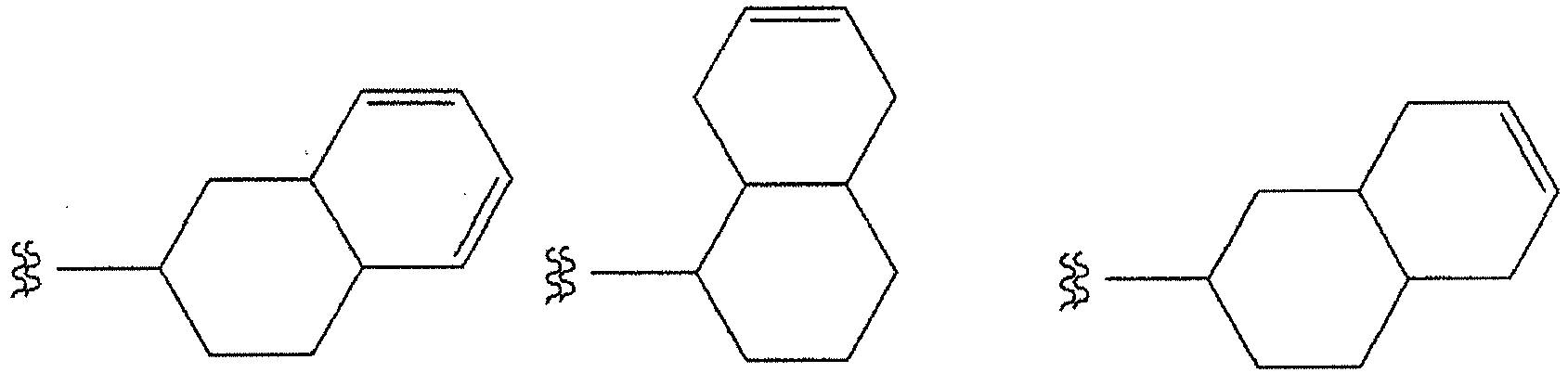


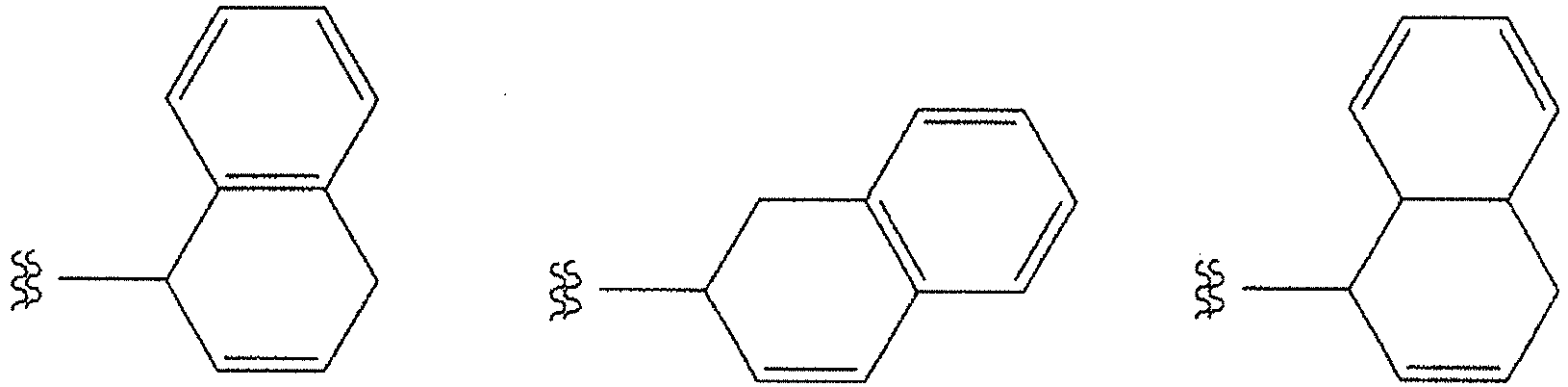


- Specific examples of "non-aromatic carbocyclic group" for R1 include cycloalkyl, cycloalkenyl and the like. In particular, cyclopropyl, cyclobutyl, cyclopentyl, cyclohexyl, cyclopentenyl, cyclohexenyl and the like are preferable.
- Sprcific examples of "non-aromatic carbocyclyl for R3 include cycloalkyl, cycloalkenyl and the like. In particular, cyclopropyl, cyclobutyl, cyclopentyl, cyclohexyl, cyclopentenyl, cyclohexenyl and the like are preferable.
- The non-aromatic carbocyclic ring moiety of "non-aromatic carbocyclyloxy", "non-aromatic carbocyclyloxycarbonyl", "non-aromatic carbocyclylcarbonyl", "non-aromatic carbocyclylsulfinyl", "non-aromatic carbocyclylsulfonyl", "non-aromatic carbocyclylthio", "alkyloxycarbonyl non-aromatic carbocyclyl", "carboxy non-aromatic carbocyclylalkyl", "carboxy non-aromatic carbocyclyl", "cyano non-aromatic carbocyclyl", "hydroxy non-aromatic carbocyclyl", "non-aromatic carbocyclyloarbonylamino", "cyano non-aromatic carbocyclylcarbamoyl non-aromatic heterocyclyl" and the like is as defined above "non-aromatic carbocycle".
- "Aromatic carbocyclyl" includes monocyclic or polycyclic aromatic carbocyclic groups and groups wherein such monocyclic or polycyclic aromatic carbocyclic ring is fused with further one or two 3- to 8-membered rings. Specific examples of the monocyclic or polycyclic aromatic carbocyclic group include phenyl, naphthyl, anthryl and phenanthryl, Particularly, phenyl is preferred.
- Specific examples of the ring to be fused with the monocycli or polycyclic aromatic carbocyclic group include non-aromatic carbocycle such as cycloalkane rings (for example: cyclohexane ring, cyclopentane ring etc.), cycloalkene rings (for example: cyclohexene ring, cyclopentene ring etc.), and non-aromatic heterocycle (for example: piperidine ring, piperazine ring, morpholine ring etc). The monocyclic or polycyclic aromatic carbocyclyl should be involved in the linkage of such fused ring.
- Examples of the aromatic carbocyclic groups include the following groups. These groups may have a substituent at any possible position.


- Specific examples of "aromatic carbocyclyl" for R1 include phenyl, naphthyl, anthryl and phenanthryl and the like. In particular, phenyl is preferred.
- The aromatic carbocycle moiety of "aromatic carbocyclyloxy", "aromatic carbocyclyloxycarbonyl", "aromatic carbocyclylcarbonyl", "aromatic carbocyclylsulfinyl", "aromatic carbocyclylsulfonyl", "aromatic carbocyclylthio", "carbamoyl aromatic carbocyclyl", "carboxyalkyl aromatic carbocyclyl", "carboxy aromatic carbocyclyl", "carboxy aromatic carbocyclylalkyl", "carboxy aromatic carbocyclyl", "aromatic carbocyclyl(carboxy)alkyl", "aromatic carbocyclylalkyl", "aromatic carbocyclylalkyl non-aromatic heterocyclyl", "aromatic carbocyclylsulfonylalkyl", "aromatic carbocyclyl non-aromatic heterocyclyl", "aromatic carbocyclyl(cyano)alkyl", "hydroxy aromatic carbocyclylalkyl", "aromatic carbocyclyl(hydroxy)alkyl" is as defined above "aromatic carbocycle".
- "Aromatic heterocyclyl" means monocyclic or polycyclic aromatic heterocyclic groups having one or more heteroatoms selected from O, S and N in the ring and groups wherein such monocyclic or polycyclic aromatic heterocyclyl is fused with further one or two 3- to 8-membered rings.
- Preferred examples of the monocyclic aromatic heterocyclyl include 5- or 6-membered aromatic heterocyclyl such as pyrrolyl, imidazolyl, pyrazolyl, pyridyl, pyridazinyl, pyrimidinyl, pyrazinyl, triazolyl, triazinyl, tetrazolyl, isoxazolyl, oxazolyl, oxadiazolyl, isothiazolyl, thiazolyl, thiadiazolyl, furyl, thienyl and the like.
- Preferred examples of the polycyclic aromatic heterocyclyl include aromatic heterocyclyl fused with a 5- or 6-membered ring, such as bicyclic aromatic heterocyclyl (for example: indolyl, isoindolyl, indazolyl, indolizinyl, quinolinyl, isoquinolinyl, cinnolinyl, phthalazinyl, quinazolinyl, naphthyridinyl, quinoxalinyl, purinyl, puteridinyl, benzimidazolyl, benzisoxazolyl, benzoxazolyl, benzoxadiazolyl, benzisothiazolyl, benzothiazolyl, benzothiadiazolyl, benzofuryl, isobenzofuryl, benzothienyl, benzotriazolyl, imidazopyridyl, triazolopyridyl, imidazothiazolyl, pyradinopyridazinyl, oxazolopyridyl, thiazolopyridyl etc.); and tricyclic aromatic heterocyclyl (for example: carbazolyl, acridinyl, xanthenyl, phenothiazinyl, phenoxathiinyl, phenoxazinyl, dibenzofuryl etc.). Any ring of the polycyclic aromatic heterocyclyl may be involved in the linkage.
- Specific examples of the ring to be fused the monocyclic or polycyclic aromatic heterocyclic groups include non-aromatic carbocycle such as cycloalkane. rings (for example: cyclohexane ring, cyclopentane ring etc.), cycloalkene rings (for example: cyclohexene ring, cyclo pentene ring etc.), non-aromatic heterocycle (for example, piperidine ring, piperazine ring, morpholine ring etc.). The monocyclic or polycyclcic aromatic heterocyclyl should be involved in the linkage of such fused ring.
- Examples of the aromatic heterocyclic groups include the following groups. These groups may have a substituent at any possible position.


- Specific examples of "aromatic heterocyclyl" for R1 include pyrrolyl, imidazolyl, pyrazolyl, pyridyl, pyridadinyl, pyrimidinyl, pyrazinyl, triazolyl, triazinyl, tetrazolyl, isoxazolyl, oxazolyl, oxadiazolyl, isothiazolyl, thiazolyl, thiadiazolyl, furyl, thienyl and the like. In particular, pyridyl is preferred. Moreover, 2-pyridyl and 3-pyridyl are more preferred.
- Specific examples of "aromatic heterocyclyl" for R3 include pyrrolyl, imidazolyl, pyrazolyl, pyridyl, pyridazinyl, pyrimidinyl, pyrazinyl, triazolyl, triazinyl, tetrazolyl, isoxazolyl, oxazolyl, ocadiazolyl, isothiazolyl, thiazolyl, thiadiazolyl, furyl, thienyl and the like. In particular, pyridyl is preferred.
- The aromatic heterocyclyl moiety of "aromatic heterocyclyloxy", "aromatic heterocyclyloxycarbonyl", "aromatic heterocyclylcarbonyl", "aromatic heterocyclylsulfinyl", "aromatic heterocyclyfsulfonyl", "aromatic heterocyclylthio", "aromatic heterocyclylalkyl", "hydroxy aromatic heterocyclylalkyl", "aromatic heterocyclylamino" and the like is as defined above "aromatic heterocycle".
- "Non-aromatic heterocyclyl" means monocyclic or polycyclic non-aromatic heterocyclyl having one or more heteroatoms selected from O, S and N in the ring and groups wherein such non-aromatic heterocyclic ring is fused with further one or two 3- to 8-membered rings.
- Specific examples of the monocyclic non-aromatic heterocyclyl include dioxanyl, thiiranyl, oxiranyl, oxathioranyl, azetidinyl, thianyl, pyrrolidinyl, pyrrolinyl, imidazolidinyl, imidazolinyl, pyrazolidinyl, pyrazolinyl, piperidyl, piperidino, piperazinyl, piperazino, morpholinyl, morpholino, oxadiadinyl, dihydropyridyl, thiomorpholinyl, thiomorpholino, tetrahydrofuryl, tetrahydropyranyl, tetrahydrothiazolyl, tetrahydroisothiazolyl, oxazolidyl, thiazolidyl and the like.
- Specific examples of the non-aromatic heterocyclyl include indolinyl, isoindolinyl, chromanyl, isochromanyl, isomannyl and the like. Any ring of the polycyclic non-aromatic heterocyclyl may be involved in the linkage.
- Examples of the non-aromatic heterocyclyl include the following groups.


- Specific examples of "non-aromatic heterocycle formula" for R1 include azethidinyl, piperidyl, piperidino, piperazinyl, piperadino, morpholinyl, morpholino and the like. In particular, pirrolidinyl, piperidinyl, piperazinyl, morpholinyl, morpholine, azepanyl, isoindolinyl and the like are preferred. More preferable are azetidinyl, piperidinyl, isoindolinyl and the like.
- The non-aromatic heterocyclic ring moiety of "non-aromatic heterocyclyloxy", "non-aromatic heterocyclyloxycarbonyl", "non-aromatic heterocyclylcarbonyl", "non-aromatic heterocyclylsulfinyl", "non-aromatic heterocyclylsulfonyl", "non-aromatic heterocyclylthio", "alkylamino non-aromatic heterocyclyl", "alkyl non-aromatic heterocyclyl", "oxo non-aromatic heterocyclyl","carbamoyl non-aromatic heterocyclyl", "carboxyalkyl non-aromatic heterocyclyl", "carboxy non-aromatic heterocyclyl, "hydroxyalkyl non-aromatic heterocyclyl", "hydroxy non-aromatic heterocyclylcarbonyl", "hydroxy non-aromatic heterocyclyl", "non-aromatic heterocyclylalkyloxy", "non-aromatic heterocyclylalkyl non-aromatic heterocyclyl", "non-aromatic heterocyclylcarbonyl non-aromatic heterocyclyl", "non-aromatic heterocyclylsulfonyl", "oxo non-aromatic heterocyclylalkyl", "hydroxyalkyl non-aromatic heterocyclylalkyl", "cyano non-aromatic heterocyclyl", "dialkyl non-aromatic heterocyclyl", "hydroxyalkyloxy non-aromatic heterocyclyl", "cyano non-aromatic carbocyclylcarbamoyl non-aromatic heterocyclyl", "dialkylamino non-aromatic heterocyclyl", "cyano non-aromatic carbocyclylcarbamoyl non-aromatic heterocyclyl" and the like is as defined above "non-aromatic heterocycle".
- The substituted or unsubstituted non-aromatic carbocyclyl or substituted or unsubstituted non-aromatic heterocyclyl are optionally substituted with one or two oxo, thioxo or substituted or unsubstituted imino.
- Examples of the substitutent group for "substituted alkyl", "substituted alkenyl", "substituted alkynyl", "substituted non-aromatic carbocyclyl", "substituted aromatic carbocyclyl". "substituted aromatic heterocyclyl" or "substituted non-aromatic heterocyclyl" include halogen, hydroxy, mercapto, nitro, nitroso, cyano, azido, formyl, amino, carboxy, alkyl, haloalkyl, alkenyl, alkynyl, non-aromatic carbocyclyl, aromatic carbocyclyl, aromatic heterocyclyl, non-aromatic heterocyclyl, substituted carbamoyl, substituted sulfamoyl, substituted amidino, a group of formula: -O-Rx, a group of formula: -O-C(=O)-Rx, a group of formula: -C(=O)-Rx, a group of formula : -C(=O)-O-Rx, a group of formula: -S-Rx or a group formula: -SO2-Rx wherein Rx is alkyl, haloalkyl, alkenyl, alkynyl, non-aromatic carbocyclyl, aromatic carbocyclyl, aromatic heterocyclyl, non-aromatic heterocyclyl, carbamoyl, sulfamoyl or amidino. One or more of these substituents may occur at any substitutable position.
- Specific examples of the substituent for "substituted alkyl" in R3 include hydroxy, carboxy, aromatic carbocyclyl optionally substituted with one or more substituent(s) selected from the above Substituent group α", aromatic heterocyclyl optionally substituted with carboxy, carbamoyl optionally substituted with one or more substituent(s) selected from the above Substituent group β", carbonyl optionally substituted with one or more substituent(s) selected from the Substituent group γ", amino optionally substituted with one or more sunstituent(s) selected from the substituent group δ" and the like.
- Specific examples of the substituent for "substituted alkyl" in R5a and R5b include hydroxy, halogen, alkyloxy optionally substituted with halogen, aromatic carbocyclyl, aromatic carbocyclylalkyloxy and the like.
- Specific examples of the substituent for "substituted aromatic carbocyclyl", "substituted non-aromatic heterocyclyl",and "substituted non-aromatic heterocyclylcarbonyl" in R1 include halogen, cyano, formyl, carboxy, trihaloalkyl, cyanoalkyl, hydroxyalkyl, alkenyl, alkyloxy, trihaloalkyloxy, alkyloxyalkyl, alkylcarbamoylalkyl, alkylaminoalkyl, dialkylaminoalkyl, amino, alkylamino, dialkylamino, cyanoalkylamino, trihaloalkylamino, alkylcarbonylamino, monohaloalkylcarbonylamino, trihaloalkylcarbonylamino, hydroxyalkylcarbonylamino, alkyloxycarbonylamino, alkyloxyalkylcarbonylamino, non-aromatic carbocyclylcarbonylamino, alkylamino carbonylamino, dialkylaminocarbonylamino, alkylsulfonylamino, aromatic heterocycylamino, trihaloalkylcarbamoyl, alkyloxyalkylcarbamoyl, dialkylaminocarbonylamino, pentafluorothio, aromatic carbocyclyl and the like.
- Specific examples of the substituent of the substituent for "substituted amino", "substituted carbamoyl", "substituted sulfamoyl", "substituted amidino" or "substituted imino" include hydroxy, cyano, formyl, alkyl, haloalkyl, alkenyl, alkynyl, non-aromatic carbocyclyl, aromatic carbocyclyl, aromatic heterocyclyl, non-aromatic heterocyclyl, carbamoyl, sulfamoyl, amidino, a group of formula: -O-R, a group of formula: -C(=O)-R, a group of formula: -C(=O)-O-R, or a group of formula: -SO2-R, wherein R include alkyl, haloalkyl, alkenyl, alkynyl, non-aromatic carbocyclyl, aromatic carbocyclyl, aromatic heterocyclyl or non-aromatic heterocyclyl. One or two of these substituents may occur at any substitutable position.
- Specific examples of the substituent for "substituted amino" in R4 include alkyl, hydroxy alkyl, alkyloxy alkyl, carboxyalkyl, alkylaminoalkyl, aromatic carbocyclylalkyl, alkyloxy aromatic carbocyclylalkyl, alkyloxycarbonylalkyl, carboxy aromatic carbocyclylalkyl, alkylamino aromatic carbocyclylalkyl, methylene dioxy aromatic carbocyclylalkyl, aromatic heterocyclylalkyl, alkyl aromatic heterocyclylalkyl, non-aromatic heterocyclylalkyl, alkyl non-aromatic heterocyclylamino, alkylcarbonylaminoalkyl, non-aromatic carbocyclyl, alkylaminosulfonyl and the like.
- "Pentafluorothio" means a group represented by the formula:

- In the case of "R4b and R5a may be taken together to form a bond" in formula (I), formula (I) is represented by the following formula:
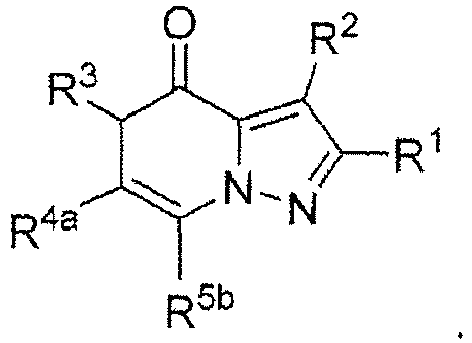
- Preferred embodiments of R1 , R2, R3, R4a, R4b , R5a and R5b in a compound represented by formula (I):

- R1 includes substituted or unsubstituted aromatic carbocyclyl, substituted or unsubstituted aromatic heterocyclyl, substituted or unsubstituted non-aromatic carbocyclyl, substituted or unsubstituted non-aromatic heterocyclyl, substituted or unsubstituted alkyl, substituted or unsubstituted alkenyl, substituted or unsubstituted alkynyl, substituted or unsubstituted aromatic carbocyclylcarbonyl, substituted or unsubstituted aromatic heterocyclylcarbonyl, substituted or unsubstituted non-aromatic carbocyclylcarbonyl, substituted or unsubstituted non-aromatic heterocyclylcarbonyl, substituted or unsubstituted carbamoyl, substituted or unsubstituted alkyloxy, substituted or unsubstituted alkenyloxy, substituted or unsubstituted alkynyloxy, substituted or unsubstituted aromatic carbocyclyloxy, substituted or unsubstituted non-aromatic carbocyclyloxy, substituted or unsubstituted aromatic heterocyclyloxy, substituted or unsubstituted non-aromatic heterocyclyloxy or substituted or unsubstituted amino.
- Preferable embodiments of R1 include substituted or unsubstituted aromatic carbocyclyl, substituted or unsubstituted non-aromatic carbocyclyl, substituted or unsubstituted non-aromatic heterocyclyl, substituted or unsubstituted alkenyl, substituted or unsubstituted alkynyl, substituted or unsubstituted aromatic carbocyclylcarbonyl, substituted or unsubstituted aromatic heterocyclylcarbonyl, substituted or unsubstituted non-aromatic carbocyclylcarbonyl, substituted or unsubstituted non-aromatic heterocyclylcarbonyl, substituted or unsubstituted carbamoyl, substituted or unsubstituted alkenyloxy, substituted or unsubstituted alkynyloxy, substituted or unsubstituted aromatic carbocyclyloxy, substituted or unsubstituted non-aromatic carbocyclyloxy, substituted or unsubstituted aromatic heterocyclyloxy, substituted or unsubstituted non-aromatic heterocyclyloxy or substituted or unsubstituted amino.
- The other preferable embodiments of R1 include substituted or unsubstituted non-aromatic carbocyclyl, substituted or unsubstituted aromatic carbocyclyl or substituted or unsubstituted non-aromatic heterocyclyl.
- The other more preferable embodiments of R1 include non-aromatic carbocyclyl optionally substitute with one or more substituent(s) selected from the Substituent group B (halogen, cyano, formyl, carboxy, hydroxyalkyl, cyanoalkyl, trihaloalkyl, alkyloxyalkyl, alkylcarbamoylalkyl, alkylaminoalkyl, dialkylaminoalkyl, alkylaminocarbonylamino, alkyloxy, trihaloalkyloxy, amino, alkylamino, cyanoalkylamino, alkylcarbonylamino, monohaloalkylcarbonylamino, trihaloalkylcarbonylamino, hydroxyalkylcarbonylamino, alkylaminocarbonylamino, dialkylaminoalkylcarbonylamino, non-aromatic carbocyclylcarbonylamino, alkylaminocarbonylamino, alkyloxyalkylcarbonylamino, alkylsulfonylamino, aromatic heterocyclylamino, trihaloalkylcarbamoyl, alkyloxyalkylcarbamoyl and aromatic carbocyclyl), aromatic carbocyclyl optionally substituted with one or more substituent(s) selected with the Substituent group B, non-aromatic heterocyclyl optionally substituted with one or more substituent(s) selected with a substituent group B, and non-aromatic heterocyclyl optionally substituted with one or more substituent(s) selected from a substituent group B.
- The other more preferable embodiments of R1 include aromatic carbocyclyl substituted with one or more substituent(s) selected from the Substituent group B or unsunstituted aromatic carbocyclyl.
- The other more preferable embodiments of R1, include phenyl substituted with one or more substituent(s) selected from the Substituent group C consisting of halogen, cyano, formyl, carboxy, trihaloalkyl, cyanoalkyl, hydroxyalkyl, alkenyl, alkyloxy, trihaloalkyloxy, alkyloxyalkyl, alkylcarbamoylalkyl, alkylaminoalkyl, dialkylaminoalkyl, amino, alkylamino, dialkylamino, cyanoalkylamino, trihaloalkylamino, alkylcarbonylamino, monohaloalkylcarbonylamino, trihaloalkylcarbonylamino, non-aromatic carbocyclylcarbonylamino, hydroxyalkylcarbonylamino, alkyloxycarbonylamino, alkyloxyalkylcarbonylamino, alkylaminocarbonylamino, dialkylaminocarbonylamino, alkylsulfonylamino, aromatic heterocycleylamino and trihaloalkylcarbamoyl, alkyloxyalkylcarbamoyl and aromatic carbocyclyl.
- The other more preferable embodiments of R1 include a group represented by formula:

m is integer of 0 to 3. - The other preferable embodiments of R1a include halogen, cyano, trihaloalkyl, alkyloxy, and trihaloalkyloxy.
- The other more preferable embodiments of R1b include halogen, formyl, cyanoalkyl, hydroxyalkyl, alkyloxyalkyl, alkylaminoalkyl, dialkylaminoalkyl, alkenyl, amino, alkylamino, cyanoalkylamino, trihaloalkylamino, alkylcarbonylamino, haloalkylcarbonylamino, trihaloalkylcarbonylamino, hydroxyalkylcarbonylamino, alkyloxyalkylcarbonylamino, alkyloxycarbonylamino, alkylaminocarbonylamino, dialkylaminoalkylcarbonylamino, non-aromatic carbocyclylcarbonylamino, alkylsulfonylamino, and aromatic carbocyclylamino.
- R2 is hydrogen, halogen, cyano, formyl, carboxy, substituted or unsubstituted alkyl, substituted or unsubstituted alkenyl, substituted or unsubstituted alkynyl, substituted or unsubstituted non-aromatic carbocyclyl, substituted or unsubstituted aromatic carbocyclyl, substituted or unsubstituted non-aromatic heterocyclyl, substituted or unsubstituted aromatic heterocyclyl, substituted or unsubstituted amino, substituted or unsubstituted alkylthio, substituted or unsubstituted alkenylthio, substituted or unsubstituted alkynylthio, substituted or unsubstituted non-aromatic carbocyclylthio, substituted or unsubstituted aromatic carbocyclylthio, substituted or unsubstituted non-aromatic heterocyclylthio, substituted or unsubstituted aromatic heterocyclylthio, substituted or unsubstituted alkylcarbonyl, substituted or unsubstituted alkenylcarbonyl, substituted or unsubstituted alkynylcarbonyl, substituted or unsubstituted non-aromatic carbocyclylcarbonyl , substituted or unsubstituted aromatic carbocyclylcarbonyl , substituted or unsubstituted non-aromatic heterocyclylcarbonyl , substituted or unsubstituted aromatic heterocyclylcarbonyl , substituted or unsubstituted alkyl oxy carbonyl, substituted or unsubstituted alkenyloxycarbonyl, substituted or unsubstituted alkynyloxycarbonyl, substituted or unsubstituted non-aromatic carbocyclyloxycarbonyl, substituted or unsubstituted aromatic carbocyclyloxycarbonyl, substituted or unsubstituted non-aromatic heterocyclyloxycarbonyl, substituted or unsubstituted aromatic heterocyclyloxycarbonyl, substituted or unsubstituted carbamoyl, substituted or unsubstituted sulfamoyl, substituted or unsubstituted alkylsulfinyl, substituted or unsubstituted alkenylsulfinyl, substituted or unsubstituted alkynylsulfinyl, substituted or unsubstituted non-aromatic carbocyclylsulfinyl, substituted or unsubstituted aromatic carbocyclylsulfinyl, substituted or unsubstituted non-aromatic heterocyclylsulfinyl, substituted or unsubstituted aromatic heterocyclylsulfinyl, substituted or unsubstituted alkylsulfonyl, substituted or unsubstituted alkenylsulfonyl, substituted or unsubstituted alkynylsulfonyl, substituted or unsubstituted non-aromatic carbocyclylsulfonyl, substituted or unsubstituted aromatic carbocyclylsulfonyl, substituted or unsubstituted non-aromatic heterocyclylsulfonyl or substituted or unsubstituted aromatic heterocyclylsulfonyl.
- Preferable embodiment of R2 includes hydrogen.
- R3 is hydrogen, substituted or unsubstituted alkyl, substituted or unsubstituted alkenyl, substituted or unsubstituted alkynyl, substituted or unsubstituted non-aromatic carbocyclyl, substituted or unsubstituted aromatic carbocyclyl, substituted or unsubstituted non-aromatic heterocyclyl, substituted or unsubstituted aromatic heterocyclyl, substituted or unsubstituted alkylcarbonyl, substituted or unsubstituted alkenylcarbonyl, substituted or unsubstituted alkynylcarbonyl, substituted or unsubstituted non-aromatic carbocyclylcarbonyl, substituted or unsubstituted aromatic carbocyclylcarbonyl, substituted or unsubstituted non-aromatic heterocyclylcarbonyl, substituted or unsubstituted aromatic heterocyclylcarbonyl, substituted or unsubstituted alkyloxycarbonyl, substituted or unsubstituted alkenyloxycarbonyl, substituted or unsubstituted alkynyloxycarbonyl, substituted or unsubstituted non-aromatic carbocyclyloxycarbonyl, substituted or unsubstituted aromatic carbocyclyloxycarbonyl, substituted or unsubstituted non-aromatic heterocyclyloxycarbonyl, substituted or unsubstituted aromatic heterocyclyloxycarbonyl, substituted or unsubstituted carbamoyl, substituted or unsubstituted sulfamoyl, substituted or unsubstituted alkylsulfonyl, substituted or unsubstituted alkenylsulfonyl, substituted or unsubstituted alkynylsulfonyl, substituted or unsubstituted non-aromatic carbocyclylsulfonyl, substituted or unsubstituted aromatic carbocyclylsulfonyl, substituted or unsubstituted non-aromatic heterocyclylsulfonyl or substituted or unsubstituted aromatic heterocyclylsulfonyl.
- Preferable embodiments of R3 include alkyl subsitutted with one or more substituent(s) selected from the above Substituent group A", alkenyl substituted with one or more substituent(s) selected from the above Substituent group A", alkynyl substituted with one or more sustituent(s) selected from the above Substituent group A", substituted or unsubstituted aromatic carbocyclyl or substituted or unsubstituted aromatic heterocyclyl
- The other preferable embodiment of the said one or more substituent(s) selected from the Substituent group A" in R3 include hydroxy, carboxy, aromatic carbocyclyl optionally substituted with one or more substituent(s) selected from the above Substituent group α", substituted or unsubstituted non-aromatic heterocyclyl, aromatic heterocyclyl optionally substituted with carboxy, carbamoyl optionally substituted with one or more substituent(s) selected from the above the Substituent group β", carbonyl optionally substituted with one or more subsituent(s) selected from the above Substituent group γ" and amino optionally substituted with one or more sustiuent(s) selected from the above Substituent group δ".
- R4a and R4b are each independently hydrogen, halogen, hydroxy, cyano, formyl, carboxy, substituted or unsubstituted alkyl, substituted or unsubstituted alkenyl, substituted or unsubstituted alkynyl, substituted or unsubstituted non-aromatic carbocyclyl, substituted or unsubstituted aromatic carbocyclyl, substituted or unsubstituted non-aromatic heterocyclyl, substituted or unsubstituted aromatic heterocyclyl, substituted or unsubstituted amino, substituted or unsubstituted alkyloxy, substituted or unsubstituted alkenyloxy, substituted or unsubstituted alkynyloxy, substituted or unsubstituted non-aromatic carbocyclyloxy, substituted or unsubstituted aromatic carbocyclyloxy, substituted or unsubstituted non-aromatic heterocyclyloxy, substituted or unsubstituted aromatic heterocyclyloxy, substituted or unsubstituted alkylthio, substituted or unsubstituted alkenylthio, substituted or unsubstituted alkynylthio, substituted or unsubstituted non-aromatic carbocyclylthio, substituted or unsubstituted aromatic carbocyclylthio, substituted or unsubstituted non-aromatic heterocyclylthio, substituted or unsubstituted aromatic heterocyclylthio, substituted or unsubstituted alkylcarbonyl, substituted or unsubstituted alkenylcarbonyl, substituted or unsubstituted alkynylcarbonyl, substituted or unsubstituted non-aromatic carbocyclylcarbonyl, substituted or unsubstituted aromatic carbocyclylcarbonyl, substituted or unsubstituted non-aromatic heterocyclylcarbonyl, substituted or unsubstituted aromatic heterocyclylcarbonyl, substituted or unsubstituted alkyloxycarbonyl, substituted or unsubstituted alkenyloxycarbonyl, substituted or unsubstituted alkynyloxycarbonyl, substituted or unsubstituted non-aromatic carbocyclyloxycarbonyl, substituted or unsubstituted aromatic carbocyclyloxycarbonyl, substituted or unsubstituted non-aromatic heterocyclyloxycarbonyl, substituted or unsubstituted aromatic heterocyclyloxycarbonyl, substituted or unsubstituted carbamoyl, substituted or unsubstituted sulfamoyl, substituted or unsubstituted alkylsulfinyl, substituted or unsubstituted alkenylsulfinyl, substituted or unsubstituted alkynylsulfinyl, substituted or unsubstituted non-aromatic carbocyclylsulfinyl, substituted or unsubstituted aromatic carbocyclylsulfinyl, substituted or unsubstituted non-aromatic heterocyclylsulfinyl, substituted or unsubstituted aromatic heterocyclylsulfinyl, substituted or unsubstituted alkylsulfonyl, substituted or unsubstituted alkenylsulfonyl, substituted or unsubstituted alkynylsulfonyl, substituted or unsubstituted non-aromatic carbocyclylsulfonyl, substituted or unsubstituted aromatic carbocyclylsulfonyl, substituted or unsubstituted non-aromatic heterocyclylsulfonyl or substituted or unsubstituted aromatic heterocyclylsulfonyl.
- Preferable embodiment of R4a and R4b include that both of them is hydrogen. Preferable embodiment of R4a and R5b include that they are taken together to form substituted or unsubstituted non-aromatic heterocycle.
- The other preferable embodiments of R4a and R5b include that they are taken togetherto form a bond.
- Preferable embodiments of R4b and R5 include that they are taken together to form substituted or unsubstituted non-aromatic carbocycle or substituted or unsubstituted non-aromatic heterocycle.
- R5a is hydrogen, halogen, substituted or unsubstituted alkyl, substituted or unsubstituted alkenyl, substituted or unsubstituted alkynyl, substituted or unsubstituted non-aromatic carbocyclyl, substituted or unsubstituted aromatic carbocyclyl, substituted or unsubstituted non-aromatic heterocyclyl, substituted or unsubstituted aromatic heterocyclyl, substituted or unsubstituted alkyl oxy, substituted or unsubstituted alkenyloxy, substituted or unsubstituted alkynyloxy, substituted or unsubstituted non-aromatic carbocyclyloxy, substituted or unsubstituted aromatic carbocyclyloxy, substituted or unsubstituted non-aromatic heterocyclyloxy or substituted or unsubstituted aromatic heterocyclyloxy.
- Preferable embodiments of R5a include hydrogen, substituted or unsubstituted alkyl, substituted or unsubstituted alkenyl or substituted or unsubstituted alkynyl.
- The other more preferable embodiment(s) of R5a include hydrogen or substituted or unsubstituted alkyl.
- The other more preferable embodiments of R5a include hydrogen.
- R5b is halogen, substituted or unsubstituted alkyl, substituted or unsubstituted alkenyl, substituted or unsubstituted alkynyl, substituted or unsubstituted non-aromatic carbocyclyl, substituted or unsubstituted aromatic carbocyclyl, substituted or unsubstituted non-aromatic heterocyclyl, substituted or unsubstituted aromatic heterocyclyl, substituted or unsubstituted alkyloxy, substituted or unsubstituted alkenyloxy, substituted or unsubstituted alkynyloxy, substituted or unsubstituted non-aromatic carbocyclyloxy, substituted or unsubstituted aromatic carbocyclyloxy, substituted or unsubstituted non-aromatic heterocyclyloxy or substituted or unsubstituted aromatic heterocyclyloxy.
- Preferable embodiments of R5b include substituted or unsubstituted alkyl, substituted or unsubstituted alkenyl or substituted or unsubstituted alkynyl.
- The other preferable embodiments of R5b include substituted or unsubstituted C2 to C10 alkyl.
- The other more preferable embodiments of R5b include substituted or unsubstituted alkyl, wherein the substituent is hydroxy, halogen, alkyloxy optionally substituted with halogen, aromatic carbocyclyl or aromatic carbocyclylalkyloxy.
- Preferred embodiments of the invention are described below.
- Preferred embodiments of the substituents for R1, R2, R3, R4a, R4b, R5a and R5b in formula (I) are described in (Ia) to (Iz) and (la') to (Ie'). Compounds having possible combination of the following embodiments are preferable.
- R1 is, preferably, (Ia) substituted or unsubstituted aromatic carbocyclyl, substituted or unsubstituted aromatic heterocyclyl, substituted or unsubstituted non-aromatic carbocyclyl, substituted or unsubstituted non-aromatic heterocyclyl, substituted or unsubstituted alkyl, substituted or unsubstituted alkenyl, substituted or unsubstituted alkynyl, substituted or unsubstituted aromatic carbocyclylcarbonyl, substituted or unsubstituted aromatic heterocyclylcarbonyl, substituted or unsubstituted non-aromatic carbocyclylcarbonyl or substituted or unsubstituted non-aromatic heterocyclylcarbonyl, substituted or unsubstituted carbamoyl, substituted or unsubstituted alkyloxy, substituted or unsubstituted alkenyloxy, substituted or unsubstituted alkynyloxy, substituted or unsubstituted aromatic carbocyclyloxy, substituted or unsubstituted non-aromatic carbocyclyloxy, substituted or unsubstituted aromatic heterocyclyloxy, substituted or unsubstituted non-aromatic heterocyclyloxy or substituted or unsubstituted amino, (Ib) substituted or unsubstituted aromatic carbocyclyl, substituted or unsubstituted aromatic heterocyclyl, substituted or unsubstituted non-aromatic carbocyclyl or substituted or unsubstituted non-aromatic heterocyclyl, (Ic) substituted or unsubstituted aromatic carbocyclyl or substituted or unsubstituted aromatic heterocyclyl, (Id) substituted or unsubstituted alkyl, substituted or unsubstituted alkenyl or substituted or unsubstituted alkynyl, (Ie) substituted or unsubstituted aromatic carbocyclylcarbonyl , substituted or unsubstituted aromatic heterocyclylcarbonyl , substituted or unsubstituted non-aromatic carbocyclylcarbonyl or substituted or unsubstituted non-aromatic heterocyclylcarbonyl or substituted or unsubstituted carbamoyl, or (If) substituted or unsubstituted alkyloxy, substituted or unsubstituted alkenyloxy, substituted or unsubstituted alkynyloxy, substituted or unsubstituted aromatic carbocyclyloxy, substituted or unsubstituted non-aromatic carbocyclyloxy, substituted or unsubstituted aromatic heterocyclyloxy, substituted or unsubstituted non-aromatic heterocyclyloxy or substituted or unsubstituted amino, (If') non-aromatic carbocyclyl optionally substituted with one or more substituent(s) selected from the Substituent group B consisting of halogen, cyano, formyl, carboxy, hydroxy alkyl, cyano alkyl, trihaloalkyl, alkyloxyalkyl, alkylcarbamoylalkyl, alkylaminoalkyl, dialkylaminoalkyl, alkylaminocarbonylamino, alkyloxy, trihaloalkyloxy, amino, alkylamino, cyanoalkylamino, alkylcarbonyl amino, monohaloalkylcarbonylamino, trihaloalkylcarbonylamino, hydroxyalkylcarbonylamino, alkylaminocarbonylamino, dialkylaminoalkylcarbonylamino, non-aromatic carbocyclylcarbonyl amino, alkylaminocarbonylamino, alkyloxyalkylcarbonylamino, alkylsulfonylamino, aromatic heterocyclylamino, trihaloalkylcarbamoyl, alkyloxyalkylcarbamoyl and aromatic carbocyclyl, aromatic carbocyclyl optionally substituted with one or more substituent(s) selected from the Substituent group B, non-aromatic heterocyclyl optionally substituted with one or more substituent(s) selected from the Substituent group B, non-aromatic heterocyclyl optionally substituted with one or more substituent(s) selected from the Substituent group B, (If") aromatic carbocyclyl optionally substituted with one or more substituent(s) selected from the Substituent group B, (If"') phenyl substituted with one or more substituent(s) selected form the Substituent group C consisting od halogen, cyano, formyl, carboxy, trihaloalkyl, cyanoalkyl, hydroxyalkyl, alkenyl, alkyloxy, trihaloalkyloxy, alkyloxyalkyl, alkylcarbamoylalkyl, alkylaminoalkyl, dialkylaminoalkyl, amino, alkylamino, dialkylamino, cyanoalkylamino, trihaloalkylamino, alkylcarbonylamino, monohaloalkylcarbonylamino, trihaloalkylcarbonylamino, non-aromatic carbocyclylcarbonylamino, hydroxyalkylcarbonylamino, alkyloxycarbonylamino, alkyloxyalkylcarbonylamino, alkylaminocarbonylamino, dialkylaminocarbonylamino, alkylsulfonylamino, aromatic heterocyclylamino and trihaloalkylcarbamoyl, alkyloxyalkylcarbamoyl and aromatic carbocyclyl, (If"") a group represented by formula:

- wherein R1a is halogen, cyano, substituted alkyl, substituted or unsubstituted alkenyl, substituted or unsubstituted alkynyl, substituted alkyloxy, substituted or unsubstituted alkenyloxy, substituted or unsubstituted alkynyloxy, substituted or unsubstituted alkylthio, substituted or unsubstituted alkenylthio, substituted or unsubstituted alkynylthio, R1b is halogen, cyano, hydroxy, formyl, carboxy, substituted or unsubstituted alkyl, substituted or unsubstituted alkenyl, substituted or unsubstituted alkynyl, substituted or unsubstituted aromatic carbocyclyl, substituted or unsubstituted aromatic heterocyclyl, substituted or unsubstituted non-aromatic carbocyclyl, substituted or unsubstituted non-aromatic heterocyclyl, substituted or unsubstituted alkyloxy, substituted or unsubstituted alkenyloxy, substituted or unsubstituted alkynyloxy, substituted or unsubstituted aromatic carbocyclyloxy, substituted or unsubstituted aromatic heterocyclyloxy, substituted or unsubstituted non-aromatic carbocyclyloxy, substituted or unsubstituted non-aromatic heterocyclyloxy, substituted or unsubstituted alkylcarbonyl, substituted or unsubstituted alkenyl carbonyl, substituted or unsubstituted alkynyl carbonyl, substituted or unsubstituted aromatic carbocyclylcarbonyl , substituted or unsubstituted aromatic heterocyclylcarbonyl , substituted or unsubstituted non-aromatic carbocyclylcarbonyl, substituted or unsubstituted non-aromatic heterocyclylcarbonyf , substituted or unsubstituted alkyloxycarbonyl, substituted or unsubstituted alkynyloxycarbonyl, substituted or unsubstituted alkynyloxycarbonyl, substituted or unsubstituted aromatic carbocyclyloxycarbonyl, substituted or unsubstituted aromatic heterocyclyloxycarbonyl, substituted or unsubstituted non-aromatic carbocyclyloxycarbonyl, substituted or unsubstituted non-aromatic heterocyclyloxy carbonyl, substituted or unsubstituted carbamoyl, substituted or unsubstituted alkylthio, substituted or unsubstituted alkenylthio, substituted or unsubstituted alkynylthio, substituted or unsubstituted aromatic carbocyclylthio, substituted or unsubstituted aromatic heterocyclylthio, substituted or unsubstituted non-aromatic carbocyclylthio, substituted or unsubstituted non-aromatic heterocyclylthio, substituted or unsubstituted alkylsulfinyl, substituted or unsubstituted alkenylsulfinyl, substituted or unsubstituted alkynylsulfinyl, substituted or unsubstituted aromatic carbocyclylsulfinyl, substituted or unsubstituted aromatic heterocyclylsulfinyl, substituted or unsubstituted non-aromatic carbocyclylsulfinyl, substituted or unsubstituted non-aromatic heterocyclylsulfinyl, substituted or unsubstituted alkylsulfonyl, substituted or unsubstituted alkenylsulfonyl, substituted or unsubstituted alkynylsulfonyl, substituted or unsubstituted aromatic carbocyclylsulfonyl, substituted or unsubstituted aromatic heterocyclylsulfonyl, substituted or unsubstituted non-aromatic carbocyclylsulfonyl, substituted or unsubstituted non-aromatic heterocyclylsulfonyl, substituted or unsubstituted carbamoyl, substituted or unsubstituted sulfamoyl or substituted or unsubstituted amino,
- m is an integer of 0 to 3, (If""') a group represented by formula:
- wherein R1a is halogen, cyano, trihaloalkyl, alkyl oxy, trihaloalkyloxy, R1b is halogen, formyl, cyanoalkyl, hydroxyalkyl, alkyloxyalkyl, alkylaminoalkyl, dialkylaminoalkyl, alkenyl, amino, alkylamino, cyanoalkylamino, trihaloalkylamino, alkylcarbonylamino, haloalkylcarbonylamino, trihaloalkylcarbonylamino, hydroxyalkylcarbonylamino, alkyloxyalkylcarbonylamino, alkyloxycarbonylamino, alkylaminocarbonylamino, dialkylaminoalkylcarbonylamino, non-aromatic carbocyclylcarbonyl amino, alkylsulfonylamino, aromatic carbocyclylamino, m is an integer of 0 to 3.
- R2 is, preferably, (Ig) hydrogen, halogen, cyano, formyl, carboxy, substituted or unsubstituted alkyl, substituted or unsubstituted alkenyl, substituted or unsubstituted alkynyl, substituted or unsubstituted non-aromatic carbocyclyl, substituted or unsubstituted aromatic carbocyclyl, substituted or unsubstituted non-aromatic heterocyclyl, substituted or unsubstituted aromatic heterocyclyl, substituted or unsubstituted amino, substituted or unsubstituted alkylthio, substituted or unsubstituted alkenylthio, substituted or unsubstituted alkynylthio, substituted or unsubstituted non-aromatic carbocyclylthio, substituted or unsubstituted aromatic carbocyclylthio, substituted or unsubstituted non-aromatic heterocyclylthio, substituted or unsubstituted aromatic heterocyclylthio, substituted or unsubstituted alkylcarbonyl, substituted or unsubstituted alkenylcarbonyl, substituted or unsubstituted alkynylcarbonyl, substituted or unsubstituted non-aromatic carbocyclylcarbonyl , substituted or unsubstituted aromatic carbocyclylcarbonyl , substituted or unsubstituted non-aromatic heterocyclylcarbonyl , substituted or unsubstituted aromatic heterocyclylcarbonyl , substituted or unsubstituted alkyloxycarbonyl, substituted or unsubstituted alkenyloxycarbonyl, substituted or unsubstituted alkynyloxycarbonyl, substituted or unsubstituted non-aromatic carbocyclyloxycarbonyl, substituted or unsubstituted aromatic carbocyclyloxycarbonyl, substituted or unsubstituted non-aromatic heterocyclyloxycarbonyl, substituted or unsubstituted aromatic heterocyclyloxycarbonyl, substituted or unsubstituted carbamoyl, substituted or unsubstituted sulfamoyl, substituted or unsubstituted alkylsulfinyl, substituted or unsubstituted alkenylsulfinyl, substituted or unsubstituted alkynylsulfinyl, substituted or unsubstituted non-aromatic carbocyclylsulfinyl, substituted or unsubstituted aromatic carbocyclylsulfinyl, substituted or unsubstituted non-aromatic heterocyclylsulfinyl, substituted or unsubstituted aromatic heterocyclylsulfinyl, substituted or unsubstituted alkylsulfonyl, substituted or unsubstituted alkenylsulfonyl, substituted or unsubstituted alkynylsulfonyl, substituted or unsubstituted non-aromatic carbocyclylsulfonyl, substituted or unsubstituted aromatic carbocyclylsulfonyl, substituted or unsubstituted non-aromatic heterocyclylsulfonyl or substituted or unsubstituted aromatic heterocyclylsulfonyl, (Ih) hydrogen, halogen, cyano, formyl, carboxy, substituted or unsubstituted alkyl, substituted or unsubstituted alkenyl or substituted or unsubstituted alkynyl, or (Ii) hydrogen.
- R3 is, preferably, (Ij) hydrogen, substituted or unsubstituted alkyl, substituted or unsubstituted alkenyl, substituted or unsubstituted alkynyl, substituted or unsubstituted non-aromatic carbocyclyl, substituted or unsubstituted aromatic carbocyclyl, substituted or unsubstituted non-aromatic heterocyclyl, substituted or unsubstituted aromatic heterocyclyl, substituted or unsubstituted alkylcarbonyl, substituted or unsubstituted alkenylcarbonyl, substituted or unsubstituted alkynylcarbonyl, substituted or unsubstituted non-aromatic carbocyclylcarbonyl , substituted or unsubstituted aromatic carbocyclylcarbonyl , substituted or unsubstituted non-aromatic heterocyclylcarbonyl, substituted or unsubstituted aromatic heterocyclylcarbonyl, substituted or unsubstituted alkyloxycarbonyl, substituted or unsubstituted alkenyloxycarbonyl, substituted or unsubstituted alkynyloxycarbonyl, substituted or unsubstituted non-aromatic carbocyclyloxycarbonyl, substituted or unsubstituted aromatic carbocyclyloxycarbonyl, substituted or unsubstituted non-aromatic heterocyclyloxycarbonyl, substituted or unsubstituted aromatic heterocyclyloxycarbonyl, substituted or unsubstituted carbamoyl, substituted or unsubstituted sulfamoyl, substituted or unsubstituted alkylsulfonyl, substituted or unsubstituted alkenylsulfonyl, substituted or unsubstituted alkynylsulfonyl, substituted or unsubstituted non-aromatic carbocyclylsulfonyl, substituted or unsubstituted aromatic carbocyclylsulfonyl, substituted or unsubstituted non-aromatic heterocyclylsulfonyl or substituted or unsubstituted aromatic heterocyclylsulfonyl, (Ik) substituted or unsubstituted alkyl, substituted or unsubstituted alkenyl or substituted or unsubstituted alkynyl, (II) substituted or unsubstituted non-aromatic carbocyclyl or substituted or unsubstituted aromatic carbocyclyl, substituted or unsubstituted non-aromatic heterocyclyl or substituted or unsubstituted aromatic heterocyclyl, (Im) substituted or unsubstituted alkyl carbonyl, substituted or unsubstituted alkenylcarbonyl, substituted or unsubstituted alkynylcarbonyl, substituted or unsubstituted non-aromatic carbocyclylcarbonyl, substituted or unsubstituted aromatic carbocyclylcarbonyl, substituted or unsubstituted non-aromatic heterocyclylcarbonyl, substituted or unsubstituted aromatic heterocyclylcarbonyl, substituted or unsubstituted alkyloxycarbonyl, substituted or unsubstituted alkenyloxycarbonyl, substituted or unsubstituted alkynyloxycarbonyl, substituted or unsubstituted non-aromatic carbocyclyloxycarbonyl, substituted or unsubstituted aromatic carbocyclyloxycarbonyl, substituted or unsubstituted non-aromatic heterocyclyloxycarbonyl, substituted or unsubstituted aromatic heterocyclyloxycarbonyl, substituted or unsubstituted carbamoyl, substituted or unsubstituted sulfamoyl, substituted or unsubstituted alkylsulfonyl, substituted or unsubstituted alkenylsulfonyl, substituted or unsubstituted alkynylsulfonyl, substituted or unsubstituted non-aromatic carbocyclylsulfonyl, substituted or unsubstituted aromatic carbocyclylsulfonyl, substituted or unsubstituted non-aromatic heterocyclylsulfonyl or substituted or unsubstituted aromatic heterocyclylsulfonyl, (In) alkyl substituted with one or more substituent(s) selected from the above Substituent group A", alkenyl substituted with one or more substituent(s) selected from the above Substituent group A or alkynyl substituted with one or more substituent(s) selected from the above Substituent group A, (Io) alkyl substituted with one or more substituent(s) selected from the above Substituent group A", (Ip) alkyl substituted with a substituent selected form the Substituent group D, wherein the Substituent group D is hydroxy, carboxy, aromatic carbocyclyl optionally substituted with one or more substituent(s) selected from the above Substituent group α", aromatic heterocyclyl optionally substituted with carboxy, carbamoyl optionally substituted with one or more substituent(s) selected from the above Substituent group β", carbonyl optionally substituted with one or more substituent(s) selected from the above Substituent group γ", and amino optionally substituted with one or more substituent(s) selected from the above Substituent group δ", or (Ip') alkyl substituted with one or more substituent(s) selected from the above Substituent group A", wherein the substituent(s) selected from the Substituent group A" is hydroxy, carboxy, aromatic carbocyclyl optionally substituted with one or more substituent(s) selected from the Substituent group α", non-aromatic heterocyclyl optionally substituted with one or more substituent(s) selected from the Substituent group α", aromatic heterocyclyl optionally substituted with carboxy, carbamoyl optionally substituted with one or more substituent(s) selected from the Substituent group β", carbonyl optionally substituted with one or more substituent(s) selected from the Substituent group γ" and amino optionally substituted with one or more substituent(s) selected from the Substituent group δ".
- R4a and R4b are, preferably, (Iq) each independently hydrogen, halogen, hydroxy, cyano, formyl, carboxy, substituted or unsubstituted alkyl, substituted or unsubstituted alkenyl, substituted or unsubstituted alkynyl, substituted or unsubstituted non-aromatic carbocyclyl, substituted or unsubstituted aromatic carbocyclyl, substituted or unsubstituted non-aromatic heterocyclyl, substituted or unsubstituted aromatic heterocyclyl, substituted or unsubstituted amino, substituted or unsubstituted alkyloxy, substituted or unsubstituted alkenyloxy, substituted or unsubstituted alkynyloxy, substituted or unsubstituted non-aromatic carbocyclyloxy, substituted or unsubstituted aromatic carbocyclyloxy, substituted or unsubstituted non-aromatic heterocyclyloxy, substituted or unsubstituted aromatic heterocyclyloxy, substituted or unsubstituted alkylthio, substituted or unsubstituted alkenylthio, substituted or unsubstituted alkynylthio, substituted or unsubstituted non-aromatic carbocyclylthio, substituted or unsubstituted aromatic carbocyclylthio, substituted or unsubstituted non-aromatic heterocyclylthio, substituted or unsubstituted aromatic heterocyclylthio, substituted or unsubstituted alkylcarbonyl, substituted or unsubstituted alkenylcarbonyl, substituted or unsubstituted alkynylcarbonyl, substituted or unsubstituted non-aromatic carbocyclylcarbonyl substituted or unsubstituted aromatic carbocyclylcarbonyl , substituted or unsubstituted non-aromatic heterocyclylcarbonyl , substituted or unsubstituted aromatic heterocyclylcarbonyl , substituted or unsubstituted alkyloxycarbonyl, substituted or unsubstituted alkenyloxycarbonyl, substituted or unsubstituted alkynyloxycarbonyl, substituted or unsubstituted non-aromatic carbocyclyloxycarbonyl, substituted or unsubstituted aromatic carbocyclyloxycarbonyl, substituted or unsubstituted non-aromatic heterocyclyloxycarbonyl, substituted or unsubstituted aromatic heterocyclyloxycarbonyl, substituted or unsubstituted carbamoyl, substituted or unsubstituted sulfamoyl, substituted or unsubstituted alkylsulfinyl, substituted or unsubstituted alkenylsulfinyl, substituted or unsubstituted alkynylsulfinyl, substituted or unsubstituted non-aromatic carbocyclylsulfinyl, substituted or unsubstituted aromatic carbocyclylsulfinyl, substituted or unsubstituted non-aromatic heterocyclylsulfinyl, substituted or unsubstituted aromatic heterocyclylsulfinyl, substituted or unsubstituted alkylsulfonyl, substituted or unsubstituted alkenyl sulfonyl, substituted or unsubstituted alkynyl sulfonyl, substituted or unsubstituted non-aromatic carbocyclylsulfonyl, substituted or unsubstituted aromatic carbocyclylsulfonyl, substituted or unsubstituted non-aromatic heterocyclylsulfonyl or substituted or unsubstituted aromatic heterocyclylsulfonyl, R4b and R5b are taken together to form a bond, or R4b and R5b are taken together to form substituted or unsubstituted non-aromatic carbocycle or substituted or unsubstituted non-aromatic heterocycle; (Ir) each independently hydrogen, halogen, hydroxy, cyano, formyl, carboxy, substituted or unsubstituted alkyl, substituted or unsubstituted alkenyl, substituted or unsubstituted alkynyl, substituted or unsubstituted non-aromatic carbocyclyl, substituted or unsubstituted aromatic carbocyclyl, substituted or unsubstituted non-aromatic heterocyclyl, substituted or unsubstituted aromatic heterocyclyl, substituted or unsubstituted amino, substituted or unsubstituted alkyloxy, substituted or unsubstituted alkenyloxy, substituted or unsubstituted alkynyloxy, substituted or unsubstituted non-aromatic carbocyclyloxy, substituted or unsubstituted aromatic carbocyclyloxy, substituted or unsubstituted non-aromatic heterocyclyloxy, substituted or unsubstituted aromatic heterocyclyloxy, substituted or unsubstituted alkylthio, substituted or unsubstituted alkenylthio, substituted or unsubstituted alkynylthio, substituted or unsubstituted non-aromatic carbocyclylthio, substituted or unsubstituted aromatic carbocyclylthio, substituted or unsubstituted non-aromatic heterocyclylthio, substituted or unsubstituted aromatic heterocyclylthio, substituted or unsubstituted alkylcarbonyl, substituted or unsubstituted alkenylcarbonyl, substituted or unsubstituted alkynylcarbonyl, substituted or unsubstituted non-aromatic carbocyclylcarbonyl, substituted or unsubstituted aromatic carbocyclylcarbonyl, substituted or unsubstituted non-aromatic heterocyclylcarbonyl, substituted or unsubstituted aromatic heterocyclylcarbonyl, substituted or unsubstituted alkyloxycarbonyl, substituted or unsubstituted alkenyloxycarbonyl, substituted or unsubstituted alkynyloxycarbonyl, substituted or unsubstituted non-aromatic carbocyclyloxycarbonyl, substituted or unsubstituted aromatic carbocyclyloxycarbonyl, substituted or unsubstituted non-aromatic heterocyclyloxycarbonyl, substituted or unsubstituted aromatic heterocyclyloxycarbonyl, substituted or unsubstituted carbamoyl, substituted or unsubstituted sulfamoyl, substituted or unsubstituted alkylsulfinyl, substituted or unsubstituted alkenylsulfinyl, substituted or unsubstituted alkynylsulfinyl, substituted or unsubstituted non-aromatic carbocyclylsulfinyl, substituted or unsubstituted aromatic carbocyclylsulfinyl, substituted or unsubstituted non-aromatic heterocyclylsulfinyl, substituted or unsubstituted aromatic heterocyclylsulfinyl, substituted or unsubstituted alkylsulfonyl, substituted or unsubstituted alkenylsulfonyl, substituted or unsubstituted alkynylsulfonyl, substituted or unsubstituted non-aromatic carbocyclylsulfonyl, substituted or unsubstituted aromatic carbocyclylsulfonyl, substituted or unsubstituted non-aromatic heterocyclylsulfonyl or substituted or unsubstituted aromatic heterocyclylsulfonyl, (Is) each independently hydrogen, halogen, hydroxy, cyano, formyl, carboxy, substituted or unsubstituted alkyl, substituted or unsubstituted alkenyl, substituted or unsubstituted alkynyl or substituted or unsubstituted amino, (it) each independently hydrogen, substituted or unsubstituted non-aromatic carbocyclyl, substituted or unsubstituted aromatic carbocyclyl, substituted or unsubstituted non-aromatic heterocyclyl or substituted or unsubstituted aromatic heterocyclyl, (Iu) R4b and R5b are taken together to form substituted or unsubstituted non-aromatic carbocycle or substituted or unsubstituted non-aromatic heterocycle, (Iv) R4b and R5b are taken together to form a bond, or (Iw) R4a and R4b are hydrogen.
- R5a is, preferably, (Ix) hydrogen, substituted or unsubstituted alkyl, substituted or unsubstituted alkenyl, substituted or unsubstituted alkynyl, substituted or unsubstituted non-aromatic carbocyclyl, substituted or unsubstituted aromatic carbocyclyl, substituted or unsubstituted non-aromatic heterocyclyl, substituted or unsubstituted aromatic heterocyclyl, substituted or unsubstituted alkyloxy, substituted or unsubstituted alkenyloxy, substituted or unsubstituted alkynyloxy, substituted or unsubstituted non-aromatic carbocyclyloxy, substituted or unsubstituted aromatic carbocyclyloxy, substituted or unsubstituted non-aromatic heterocyclyloxy or substituted or unsubstituted aromatic heterocyclyloxy, (Iy) hydrogen, substituted or unsubstituted alkyl, substituted or unsubstituted alkenyl or substituted or unsubstituted alkynyl, or (Iz) hydrogen,.
- R5b is, preferably, (Ia') substituted or unsubstituted alkyl, substituted or unsubstituted alkenyl, substituted or unsubstituted alkynyl, substituted or unsubstituted non-aromatic carbocyclyl, substituted or unsubstituted aromatic carbocyclyl, substituted or unsubstituted non-aromatic heterocyclyl, substituted or unsubstituted aromatic heterocyclyl, substituted or unsubstituted alkyloxy, substituted or unsubstituted alkenyloxy, substituted or unsubstituted alkynyloxy, substituted or unsubstituted non-aromatic carbocyclyloxy, substituted or unsubstituted aromatic carbocyclyloxy, substituted or unsubstituted non-aromatic heterocyclyloxy or substituted or unsubstituted aromatic heterocyclyloxy, (Ib') substituted or unsubstituted alkyl, substituted or unsubstituted alkenyl or substituted or unsubstituted alkynyl, (Ic') substituted or unsubstituted non-aromatic carbocyclyl, substituted or unsubstituted aromatic carbocyclyl, substituted or unsubstituted non-aromatic heterocyclyl or substituted or unsubstituted aromatic heterocyclyl, (Id') substituted or unsubstituted alkyloxy, substituted or unsubstituted alkenyloxy, substituted or unsubstituted alkynyloxy, substituted or unsubstituted non-aromatic carbocyclyloxy, substituted or unsubstituted aromatic carbocyclyloxy, substituted or unsubstituted non-aromatic heterocyclyloxy or substituted or unsubstituted aromatic heterocyclyloxy, or (Ie') substituted or unsubstituted C2 to C10 alkyl.
- The compounds or its pharmaceutical acceptable salt are also preferable embodiments of the present invention.


- The compounds of the present invention are not limited to specific isomers and include all possible isomers (e.g., keto-enol isomers, imine-enamine isomers, diastereisomers, enantioisomer, rotamers and the like, racemates or mixture thereof.
- One or more hydrogen, carbon and/or other atoms in the compounds of the present invention may be replaced with isotopes of hydrogen, carbon and /or other atoms respectively. Examples of the isotopes include hydrogen, carbon, nitrogen, oxygen, phosphorus, sulfur, fluorine, iodine and chlorine, such as 2H, 3H, 11C, 13C, 14C, 15N, 18O, 17O, 31P, 32P, 35S, 18F, 123I and 36Cl respectively. The compounds of the present invention include compounds replaced with these isotopes. The compounds replaced with the above isotopes are useful as pharmaceuticals and include all of radiolabeled compounds of the compound of the present invetion. The present invention also includes a method of radiolabeling in the manufacture of the radiolabeled compounds. Such radiolabeled compounds are useful in the studies for metabolized drug pharmacokinetics and binding assay and also as a diagnostic tool.
- A radiolabeled compound of the compounds of the present invention can be prepared using methods well-known in the art. For example, a tritium-labeled compound of formula (I) can be prepared by introducing a tritium into a compound of formula (I), through a catalytic dehalogenation using a tritium. This method comprises reacting with an appropriately-halogenated precursor of the compound of formula (I) with tritium gas in the presence of an appropriate catalyst, such as Pd/C, and in the presence or absent of a base. The other appropriate methods for preparing a tritium-labeled compound can be found in "Isotopes in the Physical and Biomedical Sciences, Vol.1, Labeled Compounds (Part A), Chapter 6 (1987)". A 14C - labeled compound can be prepared by using a raw material having 14C carbon.
- Pharmaceutically acceptable salts of the compounds of the present invention include, for example, salts with alkaline metals such as lithium, sodium, potassium and the like; alkaline earth metals such as calcium, barium and the like; magnecium; transition metals such as zinc, iron and the like; ammonium; organic bases such as trimethylamine, trimethylamine, dicyclohexylamine, ethanolamine, diethanolamine, triethanolamine, meglumine, ethylenediamine, pyridine, picoline, quinolone and the like; amino acids; or inorganic acids such as hydrochloric acid, sulfuric acid, nitric acid, carbonic acid, hydrobromic acid, phosphoric acid, hydroiodic acid and the like; and organic acids such as formic acid, acetic acid, propionic acid, trifluoroacetic acid, citric acid, lactic acid, tartaric acid, oxalic acid, maleic acid, fumaric acid, mandelic acid, glutaric acid, malic acid, benzoic acid, phthalic acid, ascorbic acid, benzenesulfonic acid, p-toluenesulfonic acid, methanesulfonic acid, ethane sulfonic acid and the like, particularly salts with hydrochloric acid, sulfuric acid, phosphoric acid, tartaric acid and methanesulfonic acid. These salts can be formed according to conventional methods.
- The compounds of the present invention or pharmaceutically acceptable salts thereof may exist in a form of solvate (e.g., hydrate and the like) and/or crystal polymorphs. The present invention encompasses those various solvates and crystal polymorphs. The "solvates" may be those wherein any numbers of solvent molecules (e.g. water melecules and the like) are coordinated with the compounds of the present invention. Whent the compounds of the present invention or pharmaceutically acceptable salts thereof are allowed to stand in the atmosphere, the compounds may absorb water, resulting in attachement of adsorbed water or formation of hydrates. Recrystallization of the compounds of the present invention or pharmaceutically acceptable salts thereof may produce crystal polymorphs.
- The compounds of the present invention may form prodrugs. Such prodrugs are encompassed by the present invention. Prodrugs are derivatives of the compounds of the invention with a chemically or metabolically degradable group(s), and the compounds are converted to pharmaceutically active compounds of the invention through solvolysis or under physiological conditions in vivo. The prodrugs include compounds that are converted to a compound of the invention through enzymatic oxidation, reduction, hydrolysis or the like under physiological conditions in vivo, compounds that are converted to a compound of the invention through hydrolysis by gastric acid, and the like. Methods for selecting and preparing suitable prodrug derivatives are described in, for example, "Design of Prodrugs, Elsevier, Amsterdam, 1985". The prodrugs themselves may have some activity.
- In case where the compound of the present invention or a pharmaceutically acceptable salt thereof has hydroxyl group(s), the prodrugs may be acyloxy derivatives and sulfonyloxy derivatives that are prepared by, for example, reacting a compound having hydroxyl group(s) with suitable acyl halide, suitable acid anhydride, suitable sulfonyl chloride, suitable sulfonyl anhydride or mixed anhydride, or by reacting with a condensing agent. Examples include CH3 COO-, C2H5COO-, t-BuCOO-, C15H31COO-, PhCOO-, (m-NaOOCPh)COO-, NaOOCCH2 CH2 COO-, CH3CH(NH2)COO-, CH2N(CH3)2COO-, CH3SO3-, CH3CH2SO3-, CF3SO3-, CH2FSO3-, CF3CH2SO3-, p-CH3 -O-PhSO3-, PhSO3-, and p-CH3PhSO3-.
- "Chronic kidney disease" means a condition where either or both of (1) kidney disorder (urine abnormalities such as proteinuria, e.g. microalbuminuria, abnormal urinary sediment, abnormal finding of clinical imaging such as single kidney and polycystic kidney disease, decreased renal function such as increased serum creatinine, electrolyte abnormalities such as hypokalemia due to tubular damage, and abnormal finding of renal tissue biopsy) and (2) deterioration in renal function less than 60 mL/min/1.73m2 of GFR (glomerular filtration rate) is present for over three months.
- The compounds of the present invention are produced according to general procetures as described below. Also, the compounds of the invention can be prepared according to other methods based on the knowledge in organic chemistry.
-
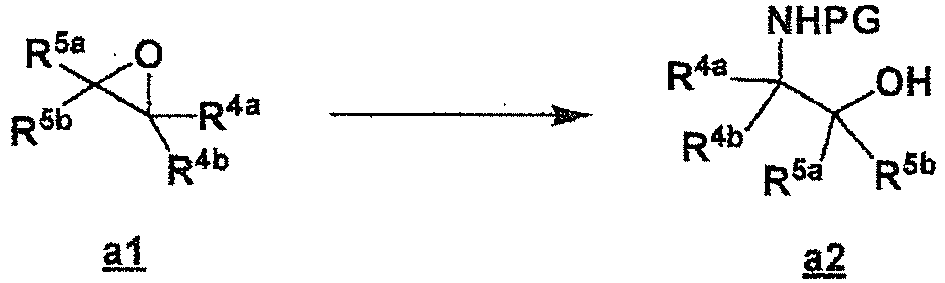
PG is an amino protecting group such as Boc etc., the other symbols are as defined above. - The compound a1 is reacted with ammonium hydroxide, and then reacted with a protecting agent to obtain Compound a2.
- Examples of the solvent include 2-propanol, dichloromethane, tetrahydrofuran, N,N-dimethylformamide, ethanol, water, toluene, acetonitrile, 1,4-dioxane and the like, and these solvents may be used alone or in combination.
- Ammonium hydroxide may be used in 1 to 50 mole equivalents, preferably 5 to 30 mole equivalents of Compound a1.
- The reaction temperature may be room temperature to 200°C, preferably 50°C to 150°C, and the reaction can be conducted in seeled tube as required.
- The reaction time may be 0.1 to 24 hours, preferably 1 to 12 hours.
- Examples of the amino-protecting agent include (Boc)2O, Fmoc-Cl, benzyloxy chloride, benzyl bromide and the like, and the amount of the amino protecting agent may be 1 to 50 mole equivalents, preferably 1 to 10 mole equivalents of Compound a1.
- Examples of the solvent for protecting amino group include dichloromethane, tetrahydrofuran, ethyl acetate, water, 1,2-dimethoxyethane, N,N-dimethylformamide, acetonitrile, 1,4-dioxane, acetone and the like, and these solvents may be used alone or in combination.
- The reaction temperature for protecting amino group may be 0°C to 100°C, preferably room temparature.
- The reaction time for protecting amino group may be 0.1 to 24 hours, preferably 1 to 5 hours.
-

Ra1 is substituted or unsubstituted alkyl, substituted or unsubstituted alkenyl or substituted or unsubstituted alkynyl, the other symbols are as defined above. Compound a4 can be obtained by reacting the solution of Compound a3 with Compound a2 in the presence of triphenylphosphine and a condensing agent. - Examples of the reaction solvent include tetrahydrofuran, dichloromethane, ethyl acetate, water, methanol, N,N-dimethylformamide, acetonitrile, 1,4-dioxane, toluene and the like, and these solvents may be used alone or in combination.
- Triphenylphosphine may be used in 1 to 10 mole equivalents, preferably 1 to 3 mole equivalent of Compound a3.
- Examples of the condensing agent include isopropyl azodicarboxylate, di-tert-butyl azodicarboxylate, diethyl azodicarboxylate, aluminium oxide, sulfuric acid, diphosphorus pentaoxide, sulfur trioxide, dicyclohexyl carbodimide and the like. The amount of the condensing agent may be 1 to 10 mole equivalents, preferably 1 to 3 mole equivalents of Compound a3.
- The reaction temperature may be 0°C to reflux temperature, preferably 0°C to room temperature.
- The reaction time may be 0.1 to 24 hours, preferably 1 to 5 hours.
-

- Compound 5a can be obtained by reacting the solution of Compound a4 with a deprotecting agent. The various salts of Compound 5a can be obtained as to the deprotecting agent.
- Examples of the reaction solvent include ethyl acetate, methanol, water, ethanol, 2-propanol, dichloromethane, THF, 1,4-dioxane, tetrahydrofuran and the like, and these solvents may be used alone or in combination.
- Examples of the deprotecting agent include hydrochloric acid / ethyl acetate, sodium hydroxide, palladium carbon, trichloroethyl chloroformate, piperidine, morpholine, tetrabutyl ammoniumfluoride and the like. The amount of the deprotecting agent may be 1 to 100 mole equivalents, preferably 1 to 20 mole eqiovalents of Compound a4.
- The reaction temperature may be 0°C to reflux temeparature, preferably room temeprature.
- The reaction time may be 0.1 to 24 hours, preferably 1 to 5 hours.
-

- Compound a6 can be obtained by heating Compound a5. The salt of Compound a5 can be heating in the presence of base.
- Examples of the reaction solvent include ethanol, water, dichloromethane, tetrahydrofuran, N,N-dimethylformamide, methanol, 1,4-dioxane, acetonitrile, toluene, ethyl acetate and the like, and these solvents may be used alone or in combination. Examples of the base include triethylamine, diisopropylethylamine, sodium hydroxide, potassium carbonate and the like. The amount of the base may be 1 to 10 mole equivalents, preferably 1 to 5 mole equivalents of Compound a4.
- The reaction temperature may be 50°C to refux temperature, preferably reflux temperature.
- The reaction time may be 0.1 to 24 hours, preferably 1 to 5 hours.
-

- Examples of the reaction solvent include tetrahydrofuran, ethanol, water, dichloromethane, N, N-dimethylformamide, methanol, 1,4-dioxane, acetonitrile, toluene, ethyl acetate and the like, and the solvent may be used alone or in combination. Examples of the electrophile include halide, mesylate, tosylate and the like. The amount of the electrophile may be 1 to 10 mole equivalents, preferably 1 to 5 mole equivalents of Compound a6.
- Examples of base may be potassium tert-butoxide, sodium hydride, potassium carbonate, cesium carbonate, triethylamine, diisopropylethylamine, DBU and the like. The amount of the base may be 1 to 10 mole equivalents, preferably 1 to 5 mole equivalents of Compound a6.
- The reaction temperature may be under ice-cooling to reflux temperature, preferably under ice-cooling to room temperature.
- The reaction time may be 0.1 to 24 hours, preferably 0.1 to 5 hours.
-

- Compound a9 can be obtained by hydrolyzing Compound a8.
- Examples of the reaction solvent include tetrahydrofuran, ethanol, water, dichloromethane, N,N-dimethylformamide, methanol, 1,4-dioxane, acetonitrile, toluene, ethyl acetate and the like, these solvents may be used alone or in combination. Examples of base include sodium hydroxide, lithium hydroxide, potassium hydroxide and the like. The amount of the base may be 1 to 10 mole equivalents, preferably 1 to 5 mole equivalents of Compound a8.
- The reaction temperature may be under ice-cooling to reflux temperature, preferably room temperature.
- The reaction time may be 0.1 to 24 hours, preferably 0.1 to 5 hours.
-

- Compound a10 can be obtained by reacting Compound a9 with amine in the presence of condensing agents.
- Examples of the reaction solvent include N,N-dimethylformamide, ehtanol, water, dichloromethane, tetrahydrofuran, methanol, 1,4-dioxane, acetonitrile, toluene, ethyl acetate and the like, and these solvents may be used alone or in combination. Examples of the base include triethylamine, potassium tert-butoxide, potassium carbonate, cesium carbonate, diisopropylethylamine, DBU and the like. The amount of the base may be 1 to 10 mole equivalents, preferably 1 to 5 mole equivalents of Compound a9.
- Examples of the condensing agent include HATU, WSC, DCC and the like. The amount of the condensing agent may be 1 to 10 mole equivalents, preferably 1 to 5 mole equivalents of Compound a9.
- The amine may be used in 1 to 10 mole equivalents, preferably 1 to 5 mole equivalents of Compound a9.
- The reaction temperature may be under ice-cooling to reflux temperature, preferably room temperature.
- The reaction time may be 0.1 to 24 hours, preferably 1 to 5 hours.
-

- Compound a11 can be obtained by reacting Compound a9 with DPPA in the presence of base.
- Examples of the reaction solvent include tert-buthanol, water, dichloromethane, N,N-dimethylformamide, ethanol, tetrahydrofuran, methanol, 1,4-dioxane, acetonitrile, toluene, ethyl acetate, benzene and the like, and these solvents may be used alone or in combination.
- Examples of the base include triethylamine, diisopropylethylamine, and the like. The amount of the base may be 1 to 10 mole equivalents, preferably 1 to 3 mole equivalents of Compound a9.
- The amount of DPPA may be 1 to 10 mole equivalents, preferably 1 to 5 mole equivalents of Compound a9.
- The reaction temeperature may be room temperature to reflux temperature, preferably reflux temperature.
- The reatction time may be 1 to 24 hours, preferably 1 to 5 hours.
-

- Compound a12 can be obtained by reacting acid anhydride or acid halide in the presence of base after reacting Compound a11 with deprotecting agents.
- Examples of the reaction solvent for deprotecting reaction include ethyl acetate, water, dicloromethane, N, N-dimethylformamide, ethanol, tetrahydrofuran, methanol, 1,4-dioxane, acetonitrile, toluene and the like, and these solvents may be used alone or in combination.
- Examples of the deprotecting agent include hydrochloric acid / ethyl acetate, methane sulfonic acid, trifluoroacetic acid, sulfuric acid, iodotrimethylsilane, aluminium trichloride, bromocatechol borane, trimethylsilyl chloride, trimethylsilyl triflate and the like. The amount of the deprotecting agent may be 1 to 100 mole equivalents, preferably 1 to 50 mole equivalents of Compound a11.
- Examples of the base include triethylamine, cesium carbonate, potassium carbonate, diisopropylethylamine, sodium hydroxide, potassium hydroxide, sodium carbonate and the like.
- The amount of the base may be 1 to 10 mole equivalents, preferably 1 to 5 mole equivalents of Compound a11.
- The amount of the acid anhydride or acid halide may be 1 to 5 mole equivalents, preferably 1 to 3 mole equivalents of Compound a11.
- Examples of the reaction solvent include methanol, water, dichloromethane, N,N-dimethylformamide, ethanol, tetrahydrofuran, 1,4-dioxane, acetonitrile, toluene, ethyl acetate and the like, and these solvents may be used alone or in combination.
- The reaction temperature may be 0°C to refux temperature, preferably room temperature.
- The reaction time may be 1 to 24 hours, preferably 1 to 12 hours.
-

- Compound a13 can be obtained by reacting Compound a9 with reductants in the presence of bases and ethyl chloroformate.
- Examples of the reaction solvent include tetrahydrofuran, diethylether, 1,4-dioxane and the like, and these solvents may be used alone or in combination.
- Examples of the base include triethylamine, diisopropylethylamine, sodium hydrogen carbonate, sodium hydroxide and the like. The amount of the base may be 1 to 10 equivalents, preferably 1 to 3 mole equivalents of Compound a9.
- Examples of the reductant include sodium borohydride, lithium aluminium hydride, sodium triacetoxyborohydride and the like. The amount of the reductant may be 1 to 10 mole equivalents, preferably 1 to 5 mole equivalents of Compound a9.
- Ethyl chloroformate may be used in 1 to 10 mole equivalents, preferably 1 to 3 mole equivalents of Compound a9.
- The reaction temperature may be under ice-cooling to reflux temperature, preferably under ice-cooling to room temperature.
- The reaction time may be 0.1 to 24 hours, preferably 0.1 to 5 hours.
-

- Compound a15 can be obtained by reacting Compound a14 with azido compounds in the presence of additives.
- Examples of the reaction solvent include methanol, water, diethylether, dicholoromethane, tetrahydrofuran, N,N-dimethylformamide, ethanol, toluene, acetonitrile, benzene and the like, and these solvents may be used alone or in combination.
- Examples of azido compounds include sodium azido, trimethylsilyl azido, lithium azido and the like. The amount of the azido compounds may be 1 to 50 mole equivalents, preferably 1 to 10 mole equivalents of Compound a14.
- Examples of additives include ammonium chloride, zinc dicholoride, tetrabutylammonium chloride, titanium tetraisopropoxide, boran trifluoride / ether, cerium trichloride, cerium ammonium nitrate and the like. The amount of the additives may be 1 to 20 mole equivalents, preferably 1 to 10 mole equivalents of Compound a14.
- The reaction temperature may be room temperature to reflux temperature, preferably reflux temerature.
- The reaction time may be 0.1 to 24 hours, preferably 1 to 5 hours.
-

- Compound a17 can be obtained by heating Compound a16 in the presence of triphenylphosphines.
- Examples of the reaction solvent include tetrahydrofuran, water, methanol, ethyl acetate, dichloromethane, N,N-dimethylformamide, ethanol, 1,4-dioxane, acetonitrile, toluene and the like, and these solvents may be used alone or in combination. Triphenylphosphine may be used in 1 to 10 mole equivalents, preferably 1 to 5 mole equivalents of Compound a16. Polymer bounded triphenylphosphine may be also used as phosphines.
- The reaction temperature may be 50°C to reflux temperature, preferably reflux temperature.
- The reaction time may be 1 to 24 hours, preferably 1 to 12 hours.
-

- Examples of the reaction solvent incude dichloromethane, ethanol, methanol, 2-propanol, dichloromethane, 1,2-dichloroethane, acetic acid, tetrahydrofuran, N,N-dimethylformamide, benzene, toluene, acetonitrile, 1,4-dioxane, diethylether and the like, these solvents may be used alone or in combination.
- Examples of the deprotecting agent include borane tribromide, palladium carbon, Raney nickel, sodium / ammonia, trimethylsilyl iodide, tin tetrachloride, iron trichloride, chromium trioxide and the like. The amount of the deprotecting agent may be 1 to 20 mole equivalents, preferably 3 to 10 mole equivalents of Compound a18.
- The reaction temperature may be under ice-cooling to reflux temperature, preferably room temperature.
- The reaction time may be 0.1 to 24 hours, preferably 0.1 to 5 hours.
- The compound of the present invention thus obtained may be purified and crystallized in a variety of solvents. Examples of the solvent to be used include alcohols (methanol, ethanol, isopropylalcohol, n-butanol etc.), ether (diethylether, diisopropylether etc.), methyl acetate, ethyl acetate, chloroform, methylene chloride, tetrahydrofuran, N,N-dimethylformamide, toluene, benzene, xylene, acetonitrile, hexane, dioxane, dimethoxyethane, water or a mixture thereof. The compound may be dissolved in the solvent under heating, and the impurities are removbed. The solution is then gradually cooled and filtered to collect the precipitated solid or crystal.
- The compound of the present invention has autotaxin inhibitory acivity. Accordingly, the pharmaceutical composition containing the compound of the present invention is useful as a therapeutic and/or prophylactic agent for diseases involving autotaxin. The diseases involving autotaxin include, for example, urinary extraction failure, chronic kidney disease or renal fibrosis, interstitial pneumonitis or pulmonary fibrosis, scleroderma, pain, fibromyalgia, rheumatoid arthritis, angiogenesis, cancer, formation, growth and propagation of tumor, arteriosclerosis, ocular diseases, choroidal neovascularization and diabetic retinopathy, inflammatory diseases, arthritis, neurodegeneration, restenosis, wound healing, transplant rejection, endometriosis and the like. The pharmaceutical composition containing the compound the the present invention is usefule as a therapeutic agent and/or preventive agent for these diseases. More preferably, the pharmaceutical composition containing the compound of the present invention is useful as a therapeutic agent and/or preventive agent for urinary extraction failure, interstitial lung disease or fibroid lung, renal fibrosis, hepatic fibrosis, pachyderma, pain, fibromyalgia syndrome, arthsitis and rheumatism, disseminated sclerosis or endometriosis and the like. The compound of the present invention may have a utility as as pharmaceutical, as well as autotaxin inhibitory effect, characterized by any of or all of the features as follows:
- a) weak inhibitory effect on CYP enzyme (e.g. CYP1A2, CYP2C9, CYP3A4, etc.);
- b) good pharmacokinetics, such as high bioavailability and appropriate clearance;
- c) low toxicity (e.g. anemia-induced action);
- d) high metabolic stability;
- e) high water solubility;
- f) high brain migration;
- g) free of gastrointestinal disorders (e.g., hemorrhagic enteritis, gastrointestinal ulcers, gastrointestinal bleeding, etc.).
- Also, the compound of the present invention has low affinity for ENPP1, ENPP3 to 7 receptors and high selectivity for ENPP2 receptor.
- The pharmaceutical composition of the present invention may be administered orally in a formulation as conventionally used including tablets, granules, powders, capsules, pills, solution, syrups, buccal or sublingual. The pharmaceutical composition may be administered parentally in a formulation as conventionally used including injections such as intramuscular or intravenous injection, suppositories, transdermal absorbents, inhalants, etc.
- The pharmaceutical composition may be prepared by mixing an effective amount of the compound of the invention with various pharmaceutical additives suitable for the formulation, such as excipients, binders, moistening agents, disintegrants, lubricants, diluents and the like. For injections, an active ingredient together with a suitable carrier may be sterilized to obtaine a pharmaceutical composition.
- Examples of the excipients include lactose, saccharose, glucose, starch, calcium carbonate, crystalline cellulose and the like. Examples of the binders include methylcellulose, carboxymethylcellulose, hydroxyprapylcellulose, gelatin, polyvinylpyrrolidone and the like. Examples of the disintegrants include carboxymethylcellulose, sodium carboxymethylcellulose, starch, sodium alginate, agar, sodium lauryl sulfate and the like. Examples of the lubricants include talc, magnesium stearate, macrogol and the like. For base materials of suppositories, cacao oil, macrogol, methylcellulose and the like may be used. Solubilizing agents, suspending agents, emulsifiers, stabilizers, preservatives, isotonic agents and the like, which are commonly used, may be added when the composition is prepared as solutions, emulsified or suspended injections. Sweetening agents, flavors and the like, which are commonly used, may be added for oral formulation.
- The dosage of the pharmaceutical composition of the invention is determined in the light of the age and weight of the patient, the type and severity of the disease to be treated, and the route for administration and the like. In the case of oral administration to adults, the dosage is usually in the range of 0.05 to 100mg/kg/day, preferably 0.1 to 10mg/kg/day. In the case of parenteral administration, the dosage is variable depending on the administration route, but is usually 0.005 to 10mg/kg/day, preferably in the range of 0.01 to 1mg/kg/day. The dosage may be administered in single or divided doses.
- The present invention is further explained by the following Examples and Test Examples, which are not intented to limit the scope of the present invention.
- The abbreviations as used herein represent the following meaning.
- Me: methyl
- Et: ethyl
- Bu: butyl
- Ph: phenyl
- PPh3, TPP: triphenylphosphine
- AcOEt: ethyl acetate
- DMF: N, N-dimethylformamide
- TFA: trifluoroacetic acid
- DMSO: dimethyl sulfoxide
- THF: tetrahydrofuran
- DIEA, Hunig's Base: N,N-diisopropylethylamine
- TBAF: tetrabutylammonium fluoride
- SEM: 2-(trimethylsilyl)ethoxymethyl
- OAc: acetoxy group
- mCPBA: methachloroperbenzoic acid
- NMP: 1-methylpyrrolidine-2-one
- LAH: lithium aluminium hydride
- DBU: 1,8-diazabicyclo[5.4.0]undeca-7-ene
- DCM: methylene chloride
- TEA: triethylamine
- TMS: tetramethylsilane
- HATU: O-(7-azabenzotriazole-1-yl)-N,N,N',N'-tetramethyluronium hexafluorophosphate
- DPPA: diphenylphosphoryl azide
- PdCl2(dppf)-DCM: 1,1'-bis(diphenylphosphino)ferrocene-palladium(II)dichloride-dichloromethane complex
- NMR analysis of the compounds obtained in the Example was carried out at 400MHz, using deuterated dimethyl sulfoxide (d6-DMSO) or deuterochloroform (CDCl3).
- LC/MS was measured under the following conditions.
-
- Column: ACQUITY UPLC BEH C18 (1.7µm i.d.2.1x50mm) (Waters)
- Flow rate: 0.8mL/min
- UV detection wavelength: 254nm
-
- [A] 0.1% formic acid in water
- [B] 0.1% formic acid in acetonitrile
- Gradient: linear gradient from 10% to 100% [B] over 3.5 minutes, and then 100% [B] was maintained for 0.5 minutes.
-
- Column: Shim-pack XR-ODS (2.2µm, i.d.50x3.0mm) (Shimadzu)
- Flow rate: 1.6mL/min
- UV detection wavelength: 254nm
-
- [A] 0.1 % formic acid in water
- [B] 0.1 % formic acid in acetonitrile
- Gradient: linear gradient from 10% to 100% [B] over 3 minutes, and then 100% [B] was maintained for 0.5 minute.
-
- Column: ACQUITY UPLC (regidtration of trademark) BEH C18
- flow rate: 0.55 mL/min
- UV detection wavelength: 254nm
-
- [A] 0.1% formic acid in water
- [B] 0.1% formic acid in acetonitrile
- Gradient: linear gradient from 10% to 100% [B] over 3 minutes, and then 100% [B] was maintained for 0.5 minute.
-

- To a solution of Compound 1 (300mg, 2.63mmol) in 2-propanol (1mL) was added ammonium hydroxide (2mL, 51.4mmol), and the solution was stirred at 100°C for 4.5 hours in sealed tube, and further stirred at 80°C for 6 hours. After the reaction mixture was concentrated under reduced pressure, the residue was dissolved in dichloromethane (2mL), added di-tert-butyl carbonate (0.671mL, 2.89mmol), and stirred at room temperature for 1 hour. After the reaction mixture was concentrated under reduced pressure, the residue was purified by silica gel chromatography (chroloform / methanol) to yield Compound 2 (400mg, yield: 66%) as a colorless oil.
1H-NMR (CDCl3)δ: 4.90 (br s, 1 H), 3.74-3.54 (m, 1H), 3.40-3.24 (m, 1H), 3.05-2.95 (m, 1 H), 2.24 (br s, 1 H), 1.50-1.25 (m, 17H), 0.89 (t, 3H, J = 6.8 Hz). -
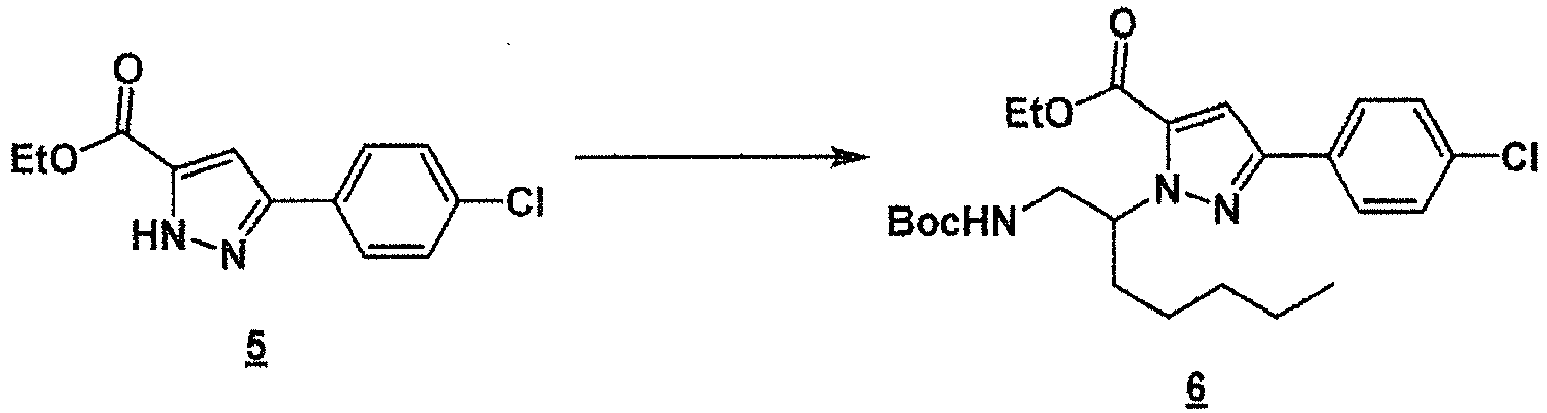
- To a solution of Compound 5 (100mg, 0.399mmol) in tetrahydrofuran (2mL) was added triphenylphosphine (126mg, 0.479mmol) and Compound 2 (111mg, 0.479mmol). The solution was added isopropyl azodicarboxylate (0.093mL, 0.479mmol) under ice-cooling, and stirred at room temperature for 1 hour. After the reaction mixture was concentrated under reduced pressure, the residue was purified by silica gel chromatography (hexane / ethyl acetate) to yield Compound 6(126mg, yield: 68%) as colorless oil.
1H-NMR (CDCl3)δ: 7.75 (d, 2H, J = 8.5 Hz), 7.38 (d, 2H, J = 8.5 Hz), 7.09 (s, 1 H), 5.50-5.43 (m, 1H), 4.83 (br s, 1 H), 4.36 (q, 2H, J = 7.1 Hz), 3.62 (t, 2H, J = 5.9 Hz), 2.05-1.93 (m, 1H), 1.83-1.72 (m, 1H), 1.45-1.38 (m, 11H), 1.32-1.09 (m, 5H), 0.91-0.79 (m, 5H). -

- To a solution of Compound 6 (124mg, 0.267mmol) in ethyl acetate (1mL) was added 4mol/L hydrochrolic acid / ethyl acetate (1mL, 4.00mmol), and the solution was stirred at room temperature for 2 hours. The reaction mixture was concentrated under reduced pressure to yield Compound 7 (100mg, yield: 94%) as a white solid.
1H-NMR (DMSO-D6)δ: 8.00-7.90 (m, 5H), 7.53-7.49 (m, 2H), 5.54-5.46 (m, 1 H), 4.36 (q, 2H, J = 7.1 Hz), 3.51 (t, 1H, J = 11.0 Hz), 1.88-1.77 (m, 2H), 1.35 (t, 3H, J = 7.1 Hz), 1.25-1.10 (m, 6H), 0.97 (br s, 1 H), 0.78 (t, 3H, J = 6.5 Hz). -

- To a solution of Compound 7 (98mg, 0.245mmol) in ethanol was added trimethylamine (0.136mL, 0.979 mmol) and the solution was stirred at reflux temperature for 8.5 hours. After the reaction solution was concentrated under reduced pressure, the residue was purified by silica gel chromatography (hexane / ethyl acetate) to yield Compound 8 ((1-0001), 70mg, yield: 90%) as a white solid.
1H-NMR (CDCl3)δ: 7.75 (dt, 2H, J = 9.0, 2.2 Hz), 7.38 (dt, 2H, J = 9.0, 2.2 Hz), 7.13 (s, 1 H), 6.02 (s, 1H), 4.44 (dt, 1 H, J = 13.3, 5.0 Hz), 3.91 (dq, 1 H, J = 12.9, 2.2 Hz), 3.57 (ddd, 1H, J = 13.0, 5.0, 3.7 Hz), 2.21-2.13 (m, 1H), 1.89-1.80 (m, 1H), 1.50-1.30 (m, 6H), 0.90 (t, 3H, J = 7.3 Hz). -

- To a solution of Compound 8 (63mg, 0.198mmol) in tetrahydrofuran (1 mL) was added potassium tert-butoxide (26.7mg, 0.238mmol) under ice-cooling, the solution was stirred for 10 minutes. To the solution was added ethyl 2-bromoacetate (0.026mL, 0.238mmol) under ice-cooling and stirred for 30 minutes. After the reaction solution was dropwised into 10% citric acid solution, the mixture was extracted with ethyl acetate, The organic layer was washed with water and brine, and dried with anhydrous sodium sulfate. After the organic layer was concentrated under reduced pressure, the residue was purified by silica gel chromatography (hexane / ethyl acetate) to yield Compound 9 ((I-0002), 75mg, yield: 94%) as a white solid.
1H-NMR (CDCl3)δ: 7.75 (dt, 2H, J = 9.0, 2.2 Hz), 7.38 (dt, 2H, J = 9.0, 2.2 Hz), 7.13 (s, 1H), 4.53-4.43 (m, 1 H), 4.33 (s, 2H), 4.24 (q, 2H, J = 7.1 Hz), 4.00 (dd, 1H, J = 12.8, 4.5 Hz), 3.62 (dd, 1H, J = 12.8, 5.5 Hz), 2.25-2.17 (m, 1H), 1.95-1.82 (m, 1H), 1.51-1.24 (m, 6H), 1.30 (t, 3H, J = 7.1 Hz), 0.90 (t, 3H, J = 7.0 Hz). -
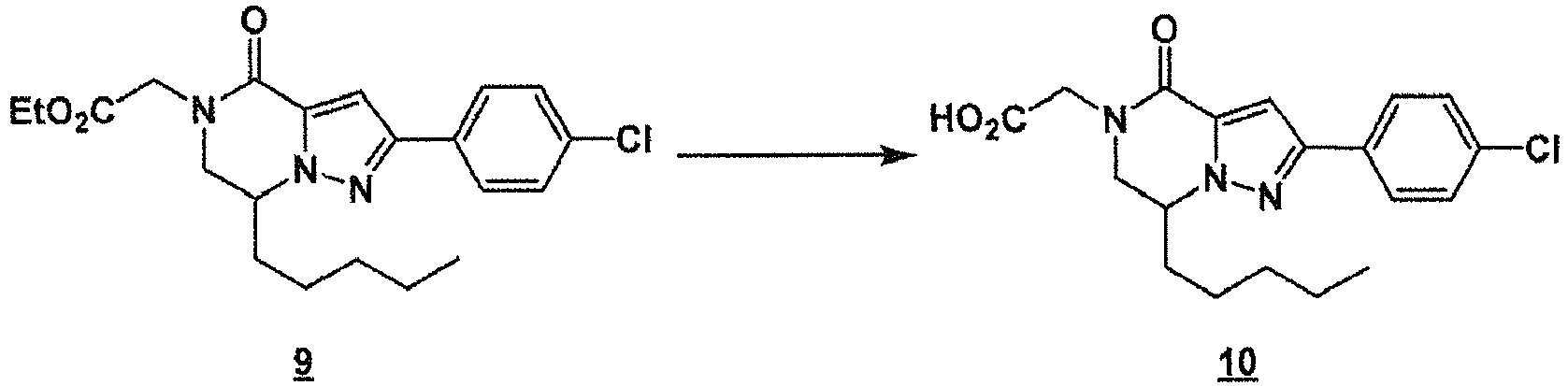
- To a solution of Compound 9 (65mg, 0.161mmol) in tetrahydrofuran (1 mL) and ethanol (1mL) was added 2mol/L sodium hydroxide solution (0.241mL, 0.483mmol), the solution was stirred at room temperature for 1 hours. The reaction mixture was added 2mol/L hydrochloric acid solution (0.240mL, 0,483mmol) and concentrated under reduced pressure. To the residue was added water, and extracted with ethyl acetate twice, and then the organic layer was dried with anhydrous sodium sulfate. The organic layer was concentrated under reduced pressure to yield Compound 10 ((I-0003), 58mg, yield: 96%) as a white solid.
1H-NMR (CDCl3)δ: 7.74 (dt, 2H, J = 8.9, 2.1 Hz), 7.38 (dt, 2H, J = 8.9, 2.1 Hz), 7.14 (s, 1H), 4.54-4.45 (m, 1 H), 4.39 (s, 2H), 4.01 (dd, 1H, J = 12.7, 4.6 Hz), 3.63 (dd, 1H, J = 12.7, 5.5 Hz), 2.25-2.14 (m, 1H), 1.93-1.82 (m, 1H), 1.53-1.21 (m, 7H), 0.89 (t, 3H, J = 7.0 Hz). -

- To a solution of Compound 10 (48mg, 0.128mmol) in N,N-dimethylformamide (0.5mL) was added trimethylamine (0.021mL, 0.153mmol), HATU (58.3mg, 0.153mmol) and ethyl piperidine-4-carboxylate (0.024mL, 0.153mmol), the solution was stirred at room temperature for 1.5 hours. To the reaction solution was added 10% citric acid solution, and extracted with ethyl acetate twice. The oranic layer was washed with 10% citric acid solution, saturated sodium hydrogen carbonate solution and brine, and dried with anhydrous sodium sulfate. The organic layer was concentrated under reduced pressure, the residue was purified by silica gel chromatography (hexane / ethyl acetate) to yield Compound 11 ((I-0004), 65mg, yield: 99%) as a white solid.
1H-NMR (CDCl3)δ: 7.74 (d, 2H, J = 8.5 Hz), 7.37 (d, 2H, J = 8.5 Hz), 7.11 (s, 1 H), 4.56-4.22 (m, 4H), 4.16 (q, 2H, J = 7.2 Hz), 4.00 (ddd, 1H, J = 28.4, 12.6, 4.3 Hz), 3.86 (d, 1H, J = 14.1 Hz), 3.75-3.65 (m, 1 H), 3.28-3.14 (m, 1H), 2.97-2.85 (m, 1H), 2.56 (br s, 1H), 2.28-2.15 (m, 1H), 1.99 (t, 2H, J = 10.8 Hz), 1.89-1.67 (m, 3H), 1.50-1.31 (m, 6H), 1.27 (t, 3H, J = 7.2 Hz), 0.90 (t, 3H, J = 7.0 Hz). -

- To a solution of Compound 11 (53mg, 0.103mmol) in ethanol (1mL) was added 2mol/L sodium hydroxide solution (0.154mL, 0.309mmol), the solution was stirred at room temperature for 2 hours. To the reaction micture was added 2mol/L hydrochloric acid solution (0.150mL, 0.300mmol), and concentrated under reduced pressure. To the residue was added water (5mL), and the mixture was stirred at room temperature for 30 minutes. The precipitated solid was filtered to yield compound 12 ((I-0007), 40mg, yield: 80%) as a white solid.
1H-NMR (DMSO-D6)δ: 7.90 (2H, d, J = 7.5 Hz), 7.48 (2H, d, J = 7.8 Hz), 7.28 (1 H, s), 4.59-4.49 (1H, m), 4.48-4.34 (2H, m), 4.23-4.12 (1H, m), 4.04-3.92 (1H, m), 3.85-3.74 (1H, m), 3.68-3.59 (1H, m), 3.13 (1H, t, J = 11.7 Hz), 2.83-2.71 (1H, m), 2.09-1.93 (1H, m), 1.92-1.73 (3H, m), 1.64-1.48 (1H, m), 1.48-1.34 (3H, m), 1.34-1.23 (4H, m), 0.92-0.82 (3H, m). -

- To a solution of Compound 10 (90mg, 0.239mmol) in tert-butanol(2mL) was added triethylamine (0.050mL, 0.359mmol) and DPPA (77uL, 0.359mmol), the solution was stirred at reflux temperature for 4 hours. The reaction solution was concentrated under reduced pressure, the residue was purified by silica gel chromatography (hexane / ethyl acetate) to yield Compound 13 ((I-0005), 35mg, yield: 33%) as a white solid.
1H-NMR (CDCl3)δ: 7.74 (dt, 2H, J = 9.0, 2.2 Hz), 7.38 (dt, 2H, J = 9.0, 2.2 Hz), 7.10 (s, 1H), 5.58 (t, 1H, J = 7.0 Hz), 4.85 (dq, 2H, J = 30.5, 7.0 Hz), 4.46-4.38 (m, 1H), 4.08 (dd, 1H, J = 13.2, 4.4 Hz), 3.85 (dd, 1H, J = 13.2, 4.4 Hz), 2.10-1.98 (m, 1H), 1.85-1.73 (m, 1 H), 1.53-1.24 (m, 6H), 1.45 (s, 9H), 0.89 (t, 3H, J = 7.0 Hz). -

- To a solution of Compound 13 (30mg, 0,067mmol) in ethyl acetate (0.5mL) and chloroform (0.2mL) added 4mol/L hydrochloric acid ethyl acetate solution (0.5mL, 2.000mmol), the mixture was stirred at room temperature for 3.5 hours. The reaction mixture was concentrated under reduced pressure, to the residue was added methanol (1mL). To the reaction solution was added triethylamine (0.279mL, 0.201mmol) and acetic anhydrous (0.00952uL, 0.101mmol), and stirred at room temperature for 5 hours. The reaction solution was concentrated under reduced pressure, the residue was purified by silica gel chromatography (hexane / ethyl acetate) to yield Compound 14 ((I-0151), 19mg, yield: 73%) as a white solid.
1H-NMR (CDCl3)δ: 7.74 (dt, 2H, J = 9.0, 2.2 Hz), 7.38 (dt, 2H, J = 9.0, 2.2 Hz), 7.10 (s, 1 H), 6.58 (t, 1H, J = 6.7 Hz), 4.93 (d, 2H, J = 6.7 Hz), 4.42 (dt, 1 H, J = 13.3, 5.3 Hz), 4.08 (dd, 1H, J = 13.3, 4.5 Hz), 3.85 (dd, 1H, J = 13.3, 5.3 Hz), 2.13-2.02 (m, 1H), 2.02 - (s, 3H), 1.82-1.72 (m, 1H), 1.50-1.30 (m, 6H), 0.93-0.88 (m, 3H).
-

- To a solution of Compound 10 (50mg, 0.133mmol) in tetrahydrofuran (1mL) was added triethylamine (0.022mL, 0.160mmol). To the mixture was added ethyl chloroformate (0.015mL, 0.160mmol) under ice-cooling, and stirred for 30 minutes. To the mixture was added sodium borohydride (15.1mg, 0.399mmol), and stirred at room temperature for 30 minutes. To the reaction mixture was added brine, and extracted with ethyl acetate twice. The organic layer was washed with water and brine, dried with anhydrous sodium sulfate, and concentrated under reduced pressure. The residue was purified by silica gel chromatography (hexane / ethyl acetate) to yield Compound 15 ((I-0006), 30mg, yield: 62%) as colorless oil.
1H-NMR (CDCl3)δ: 7.74 (dt, 2H, J = 8.9, 2.1 Hz), 7.38 (dt, 2H, J = 8.9, 2.1 Hz), 7.10 (s, 1H), 4.44 (dt, 1 H, J = 13.4, 5.1 Hz), 4.03 (dd, 1H, J = 13.1, 4.5 Hz), 3.92 (t, 2H, J = 5.0 Hz), 3.82-3.65 (m, 3H), 2.28-2.09 (m, 2H), 1.88-1.77 (m, 1H), 1.50-1.24 (m, 6H), 0.93-0.88 (m, 3H). -

- To a mixed solution of Compound 16(0.187mL, 1.218mmol) in methanol (1 mL) and water (0.1 mL) was added sodium azide (396mg, 6.09mmol) and ammonium chloride (195mg, 3.65mmol), the solution was stirred at reflux temperature for 2 hours. To the reaction mixture was added ethyl acetate, the insoluble material was filtered out. The filtrate was concentrated under reduced pressure to yield Compound 17 as a crude compound.
-
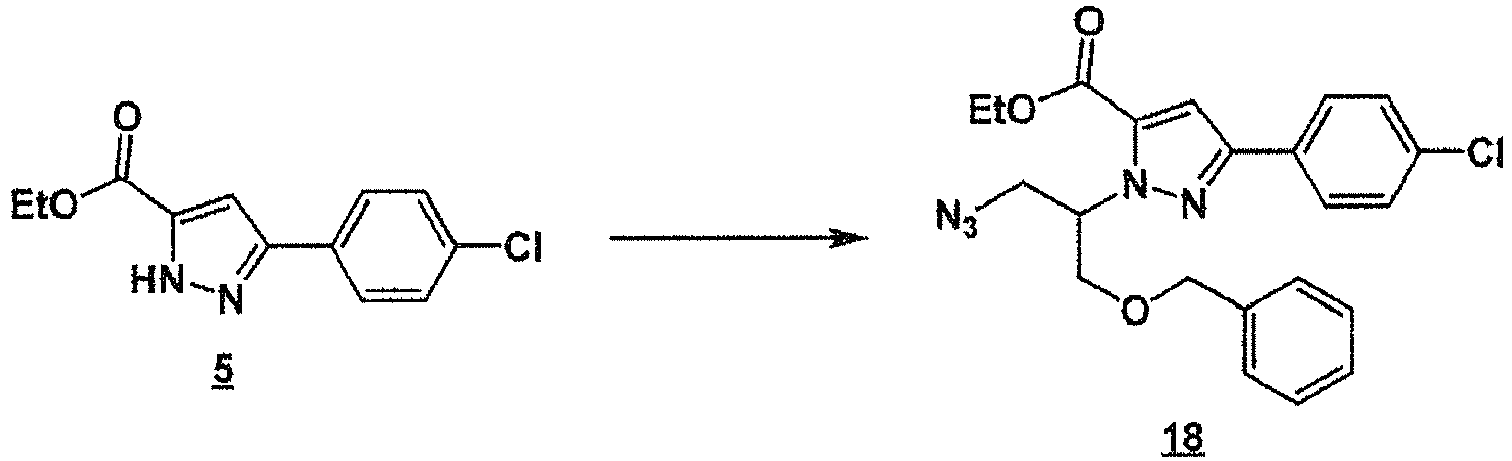
- To a solution of Compound 17 obtained in Step 1 in tetrahydrofuran (2mL) was added Compound 5 (218mg, 0.870mmol), diisopropyl azodicarboxylate (0.220mL, 1.131mmol) and triphenylphosphine (297mg, 1.131mmol), the mixture was stirred at room temperature for 1 hour. The reaction mixture was concentrated under reduced pressure, the residue was purified by silica gel chromatography (hexane / ethyl acetate) to yield Compound 18 (335mg, yield: 88%) as colorless oil.
1H-NMR (CDCl3)δ: 7.74 (dt, 2H, J = 9.0, 2.1 Hz), 7.37 (dt, 2H, J = 9.0, 2.1 Hz), 7.32-7.21 (m, 5H), 7.14 (s, 1H), 5.82-5.76 (m, 1H), 4.51 (dd, 2H, J = 17.1, 12.0 Hz), 4.37 (q, 2H, J = 7.2 Hz), 4.01 (dd, 1H, J = 12.8, 8.8 Hz), 3.89 (ddd, 2H, J = 24.2, 9.9, 6.6 Hz), 3.74 (dd, 1H, J = 12.5, 4.5 Hz), 1.40 (t, 3H, J = 7.2 Hz). -

- To a mixed solution of Compound 18 obtained in Step 2 in tetrahydrofuran (2mL) and water (0.4mL) was added polymer bounded triphenylphosphine (751 mg, 2.251mmol), the mixture was stirred at reflux temperature for 5 hours. The reaction mixture was cooled to room temperature, and then added ethyl acetate. The insoluble material was filtered out through celite, the filtrate was concentrated under redused pressure. To the residue was added ethyl acetate (10mL), the precipitated solid was filtered to yield Compound 19 ((I-0024), 210mg, yield: 76%) as a white solid.
1H-NMR (CDCl3)δ: 7.73 (d, 2H, J = 8.3 Hz), 7.41-7.29 (m, 7H), 7.13 (s, 1H), 5.85 (s, 1H), 4.68 (td, 1H, J = 8.8, 4.4 Hz), 4.59 (dd, 2H, J = 18.1, 11.8 Hz), 3.98-3.83 (m, 4H). -

- To a solution of Compound 19 (1.0g, 2.72mmol) in tetrahydrofuran (2mL) was added methyl 3-(bromomethyl)benzoate (685mg, 2.99mmol) and potassium tert-butoxide (366mg, 3.26mmol), the solution was stirred at room temperature for 2 hours. To the reaction solution was added 2mol/L hydrochloric acid solution, and extracted with ethyl acetate. The organic layer was washed with water, and dried with anhydrous sodium sulfate. The solution was concentrated under reduced pressure to yield a crude Compound 20 (1.62g, yield: quant.) as tan oil.
LC/MS Method: C, retention time: 2.83 min -

- To a solution of Compound 20 (1.62g) obtained in step 1 in tetrahydrofuran (16mL) was added 2mol/L sodium hydroxide solution (3.92mL, 7.85mmol), the solution was stirred at 50°C for 2 hours. To the reaction solution was added 2mol/L hydrochloric acid solution (5mL) and water, and extracted with ethyl acetate. The orgagnic layer was washed with water, dried with anhydrous sodium sulfate, and the solution was concentrated under reduced pressure. The residue was purified by suspending with ethyl acetate and hexane to yield Compound 21((I-0173), 855mg, yield; 54%) as a white solid.
1H-NMR (δppm TMS/CDCl3) 7.94 (1 H, s), 7.93-7.84 (3H, m), 7.61 (1H, d, J = 7.8 Hz), 7.52-7.45 (3H, m), 7.37 (1H, s), 7.31-7.24 (3H, m), 7.18-7.11 (2H, m), 4.92 (1H, d, J = 14.9 Hz), 4.82-4.74 (1 H, m), 4.60 (1 H, d, J = 14.9 Hz), 4.35 (2H, dd, J = 28.2, 12.0 Hz), 4.06-3.93 (1H, m), 3.78-3.65 (3H, m). -

- To a suspension of Compound 21 (700mg, 1,395mmol) in dichloromethane (5mL) was added 1.0mol/L borane tribromide dichloromethane solution (7mL, 7mmol), the mixture was stirred at room temperature for 3 hours. To the reaction solution was added water, and extracted with ethyl acetate. The organic layer was washed with water, dried with anhydrous sodium sulfate, and the solution was concentrated under reduced pressure. The residue was purified by suspending with ethyl acetate and hexane to yield Compound 22 ((I-0174), 460mg, yield: 80%) as a colorless solid.
1H-NMR (δppm TMS/DMSO-D6) 7.97-7.85 (4H, m), 7.61 (1H, d, J = 7.5 Hz), 7.54-7.45 (3H, m), 7.35 (1H, s), 5.21 (1H, br s), 4.78 (2H, dd, J = 26.3, 15.4 Hz), 4.58-4.48 (1H, m), 3.88 (1H, dd, J = 13.2, 5.0 Hz), 3.84-3.68 (3H, m). -

- To a suspension of Compound 22 (75mg, 0.182mmol) in tetrahydrofuran (5mL) added sodium hydride (145.6mg, 3.64mmol) and 1-iodopropane (618.7mg, 3.64mmol), the mixture was stirred at 60°C for 4 hours. To the reaction mixture was added water, and extracted with ethyl acetate. The organic layer was washed with water, dried with anhydrous sodium sulfate, and the filtrate was concentrated under reduced pressure. The residue was purified by silica gel chromatography (chloroform / methanol) to yield Compound 23((I-0176), 32.5mg, yield: 39%) as colorless oil.
1H-NMR (δppm TMS/CDCl3) 8.10-8.03 (2H, m), 7.73 (2H, d, J = 8.5 Hz), 7.64 (1 H, d, J = 7.8 Hz), 7.49 (1H, t, J = 7.7 Hz), 7.38 (2H, d, J = 8.5 Hz), 7.17 (1H, s), 5.04 (1H, d, J = 14.7 Hz), 4.65-4.54 (2H, m), 3.87 (1H, dd, J = 13.1, 4.6 Hz), 3.81-3.71 (2H, m), 3.52 (1H, t, J = 9.3 Hz), 3.32-3,24 (1H, m), 3.17-3.07 (1H, m), 1.48-1.37 (2H, m), 0.79 (3H, t, J = 7.4 Hz). -

- To a solution of Compound 8(100mg, 0.315mmol) in DMA (3ml) was added cupper(I) iodide (5.99mg, 0.031mmol), 2-(dimethylamino)acetic acid (9.73mg, 0.094mmol), cesium carbonate (308mg, 0.944mmol) and ethyl 4-iodebenzoate (87mg, 0.315mmol), the solution was stirred under MW irradiation at 150°C for 30 minutes. To the reaction mixture was added 2mol/L hydrochloric acid aqueous solution, and extracted with ethyl acetate. The organic layer was washed with water, dried with anhydrous sodium sulfate, and then the solution was concentrated under reduced pressure to yield crude Compound 24 (209mg).
-

- To a solution of Compound 24 (209mg) in tetrahydrofuran (4ml) was added 2mol/L sodium hydroxide aqueous solution (400ul), the solution was stirred at 50°C for 2 hours. To the reaction mixture was added 2 mol/L hydrochloric acid aqueous solution, and extracted with ethyl acetate. The organic layer was washed with water, dried with anhydrous sodium sulfate, and then the solution was concentrated under reduced pressure. The residue was purified by silica gel chromatography (chloroform / methanol) to yield Compound 25((I-0179), 64mg, yield: 46%) as a colorless solid.
1H-NMR (δppm TMS/CDCl3) 8.19 (2H, d, J = 8.0 Hz), 7.78 (2H, d, J = 7.9 Hz), 7.51 (2H, d, J = 8.0 Hz), 7.40 (2H, d, J = 7.8 Hz), 7.23 (1 H, s), 4.65-4.56 (1 H, m), 4.40 (1H, dd, J = 12.7, 4.0 Hz), 4.02 (1H, dd, J = 12.4, 4.9 Hz), 2.32-2.19 (1H, m), 1.99-1.85 (2H, m), 1.54-1.42 (2H, m), 1.42-1.26 (4H, m), 0.89 (3H, t, J = 6.6 Hz). - Compound 26 was prepared using dimethyl 1H-pyrazole-3,5-dicarboxylate as a starting material according to Example 10.
-

- To a solution of Compound 26 (530mg, 2.00mmol) in tetrahydrofuran (5mL) was added 4-(bromomethyl)benzonitrile (431mg, 2.197mmol) and potassium tert-butoxide (247mg, 2.197mmol), the solution was sirred at room temperature for 2 hours. To the reaction mixture was added methanol (5mL) and 2mol/L sodium hydroxide aqueous solution (2mL), and then stirred at room temperature for 20 minutes. To the reaction solution was added 1mol/L hydrochloric acid aqueous solution, and extracted with ethyl acetate. The organic layer was dried with anhydrous sodium sulfate, and concentrated under reduced pressure. The residue was purified by silica gel chromatography (chloroform / methanol) to yield Compound 28 (404mg, yield: 55%) as a white solid.
LC/MS Method: B, retention time: 1.86 min, M+H: 367 -

- To a solution of Compound 28 (30mg, 0.082mmol) in N,N-dimethylformamide (0.5mL) was added triethylamine (0.034.0mL, 0.246mmol), HATU (37.4mg, 0.098mmol) and piperidine-4-carbonitrile (13.53mg, 0.123mmol), the solution was stirred at room temperature for 1 hour. To the reaction mixture was added water, and extracted with ethyl acetate. The organic layer was dried with anhydrous sodium sulfate. The organic layer was concentrated under reduced pressure, the residue was purified by silica gel chromatography (hexane / ethyl acetate) to yield Compound 29 ((I-0180), 32mg, yield: 86%) as colorless oil.
LC/MS Method: B, retenteion time: 2.04min, M+H: 459
1H-NMR (δppm TMS/CDCl3) 8.02 (s, 1 H), 7.67 (d, 2H, J = 7.5 Hz), 7.45 (d, 2H, J = 7.5 Hz), 4.98 (d, 1H, J = 15.1 Hz), 4.61 (d, 1H, J = 15.1 Hz), 4.39-4.36 (m, 1H), 4.13-3.74 (m, 5H), 3.42 (dd, 1 H, J = 12.8, 4.5 Hz), 2.05-1.95 (m, 5H), 1.25-1.17 (m, 6H), 0.86 (t, 3H, J = 5.8 Hz). - Compound 30 was prepared using ethyl 3-bromo-1H-pyrazole-5-carboxylate as a starting material according to Example 10.
-

- To a solution of Compound 30 (350mg, 1.356mmol) in tetrahydrofuran (5mL) was added 4-(bromomethyl)benzonitrile (319mg, 1.627mmol) and potassium tert-butoxide (183mg, 1.627mmol), the solution was stirred at room temperature for 20 minutes. To the reaction mixture was added methanol (5mL) and 2mol/L sodium hydroxide aqueous solution (2mL), and then stirred at room temperature for 20 minutes. To the reaction mixture was added water, and extracted with ethyl acetate. The organic layer was dried with anhydrous sodium sulfate, and concentrated under reduced pressure. The residue was purified by silica gel chromatography (hexane / ethyl acetate) to yield Compound 31 (520mg, yield: quant.) as a white solid.
LC/MS Method: B, retention time: 2.14 min, M+H: 373 -

- A solution of palladium acetate (1.203mg, 5.36umol) and RuPhos (7.50mg, 0.016mmol) in 1,4-dioxane (0.5mL) was stirred at room temperature for 15 minutes under nitrogen atomosphere. To the reaction solution was added Compound 31 (20mg, 0.054mmol), 4-(trifluoromethyl)piperidine (16.41mg, 0.107mmol) and sodium tert-butoxide (7.72mg, 0.080mmol) under nitrogen atomosphere, and the mixture was stirred at 100°C for 1 hours. To the reaction mixture was added water, and extracted with ethyl acetate. The organic layer was dried with anhydrous sodium sulfate. The organic layer was concentrated under reduced pressure, and the residue was purified by silica gel chromatography (hexane / ethyl acetate) to yield Compound 32((I-0182), 11.4mg, yield: 48%) as a white solid.
LC/MS Method: B, retention time: 2.42 min, M+H: 446
1H-NMR (δppm TMS/CDCl3) 7.66 (d, 2H, J = 7.8 Hz), 7.44 (d, 2H, J = 7.8 Hz), 6.29 (s, 1H), 4.94 (d, 1H, J = 15.1 Hz), 4.59 (d, 1H, J = 15.1 Hz), 4.19-4.17 (m, 1H), 3.84 (t, 2H, J = 11.7 Hz), 3.75 (dd, 1H, J = 12.8, 4.3 Hz), 3.33 (dd, 1H, J = 12.9, 4.6 Hz), 2.70 (t, 2H, J = 12.3 Hz), 2.16-2.13 (m, 1 H), 1.93-1.90 (m, 3H), 1.75-1.69 (m, 2H), 1.50-1.49 (m, 1 H), 1.27-1.13 (m, 2H), 0.85 (t, 3H, J = 7.2 Hz). -

- To a solution of Compound 31 (20mg, 0.054mmol) in N,N-dimethylformamide (0.5mL) was added 4-chlorophenyl boronic acid (12.57mg, 0.080mmol), PdCl2(dppf) dichloromethane complex (4.4mg, 0.0054mmol) and 2mol/L sodium carbonate aqueous solution (0.107mL, 0.214mmol), the solution was stirred at 100°C for 1.5 hours. To the reaction mixture was added water, and extracted ethyl acetate. The organic layer was dried with anhydrous sodium sulfate, and concentrated under reduced pressure. The residue was purified by silica gel chromatography (hexane / ethyl acetate) to yield Compound 33((I-0181), 14.8mg, yield: 68%) as a white solid.
LC/MS Method: B, retention time: 2.55 min, M+H: 405
1H-NMR (δppm TMS/CDCl3) 7.74 (d, 2H, J = 7.8 Hz), 7.68 (d, 2H, J = 7.8 Hz), 7.47 (d, 2H, J = 7.8 Hz), 7.38 (d, 2H, J = 8.0 Hz), 7.16 (s, 1 H), 4.98 (d, 1H, J = 15.3 Hz), 4.64 (d, 1H, J = 15.1 Hz), 4.42-4.40 (m, 1H), 3.83 (dd, 1H, J = 13.1, 4.3 Hz), 3.42 (dd, 1H, J = 13.1, 4.8 Hz), 2.06-1.97 (m, 1 H), 1.33-1.22 (m, 2H), 0.89 (t, 3H, J = 7.3 Hz). -

- To a compound 34 (20mg, 0.05mmol) in dichloromathene (1 mL) was added triethylamine (35ul, 0.26mmol) and butyryl chloride (8.2mg, 0.08mmol), the solution was stirred at room temperature for 40 minutes. To the reaction solution was added 1mol/L hydrochloric acid aqueous solution, extracted with ethyl acetate. The organic layer was dried with anhydrous sodium sulfate, and concentrated under reduced pressure. The residue was purified by silica gel chromatography (ethyl acetate / hexane) to yield Compound 35 (18mg, yield: 76%) as a white solid.
1H-NMR (CDCl3) δ: 11.03 (1 H, s), 8.78 (1H, s), 7.69 (2H, d, J = 7.8 Hz), 7.56 (1 H, d, J = 8.5 Hz), 7.47 (2H, d, J = 7.8 Hz), 7.10 (1H, d, J = 8.3 Hz), 4.89-4.80 (2H, m), 4.59-4.57 (1 H, m), 3.69 (1H, dd, J = 12.8, 4.3 Hz), 3.55-3.49 (1 H, m), 2.38 (2H, dd, J = 9.8, 5.3 Hz), 1.82-1.77 (2H, m), 1.64 (3H, d, J = 6.3 Hz), 1.00 (3H, t, J = 7.3 Hz).
LC-MS: m/z=462. [M+H]+ -

- To a solution of Compound 34 (20mg, 0.05mmol) in dichloromathene (200uL) was added water (4.6ul, 0.26mmol), acetoaldehyde (28.5ul, 0.51 mmol) and cyano trimethylsilane (63.3ul, 0.51mmol), the solution was stirred at room temperature for 1.5 hours. To the reaction mixture was added water, and extracted with ethyl acetate. The organic layer was dried with anhydrous sodium sulfate, and concentrated under reduced pressure. The residue was purified by silica gel chromatography (ethyl acetate / hexane) to yield Compound 36 (16mg, yield: 71%).
1H-NMR (CDCl3) δ: 7.89-7.87 (1 H, m), 7.68 (2H, d, J = 7.5 Hz), 7.53 (1 H, d, J = 8.3 Hz), 7.46 (2H, d, J = 7.8 Hz), 7.24 (1H, s), 6.86 (1H, t, J = 4.3 Hz), 6.79 (1 H, s), 4.90-4.77 (2H, m), 4.58-4.50 (1 H, m), 4.40-4.36 (1 H, m), 3.69-3.62 (1 H, m), 3.52-3.47 (1 H, m), 1.77 (3H, d, J = 7.0 Hz).
LC-MS: m/z=445. [M+H]+ -

- To a solution of Compound 34 (20mg, 0.05mmol) in 2-propanol (500uL) was added 2-bromothiazole (45.5ul, 0.51 mmol) and p-toluenesulufonic acid hydrate (9.7mg, 0.05mmol), the solution was stirred at 120°C for 1 hours. To the reaction mixture was added water, and extracted with ethyl acetate. The organic layer was dried with anhydrous sodium sulfate, and concentrated under reduced pressure. The residue was purified by silica gel chromatography (ethyl acetate / hexane) to yield Compound 37 (21mg, yield: 87%) as a gray solid.
1H-NMR (CDCl3) δ: 11.23 (1 H, s), 8.53 (1 H, s), 7.68 (2H, d, J = 7.8 Hz), 7.58 (1 H, d, J = 8.3 Hz), 7.47 (2H, d, J = 7.5 Hz), 7.35 (1H, d, J = 3.5 Hz), 7.02 (1H, d, J = 8.3 Hz), 6.71 (1H, d, J = 3.3 Hz), 4.88-4.80 (2H, m), 4.63-4.60 (1H, m), 3.68 (1H, dd, J = 12.7, 4.4 Hz), 3.54-3.48 (1 H, m), 1.68 (3H, d, J = 6.5 Hz).
LC-MS: m/z=475. [M+H]+ -

- To a solution of Compound 34 (50mg, 0.13mmol) in acetonitrile (600uL) was added tert-butyl nitrite (45.9ul, 0.38mmol) and copper(I) bromide (54.9mg, 0.38mmol), and the solution was stirred at room temperature for 1.5 hours. To the reaction mixture was added water, and extracted with ethyl acetate. The organic layer was dried with anhydrous sodium sulfate, and concentrated under reduced pressure. The residue was purified by silica gel chromatopraphy (ethyl acetate / hexane) to yield Compound 38 (48mg, yield: 83%) as a yellow solid.
1H-NMR (CDCl3) δ: 7.68-7.65 (4H, m), 7.47 (2H, d, J = 7.8 Hz), 7.41 (1H, s), 7.35 (1H, d, J = 8.3 Hz), 4.83 (2H, s), 4.59-4.55 (1 H, m), 3.73-3.70 (1 H, m), 3.45 (1 H, dd, J = 12.5, 8.0 Hz), 1.60-1.58 (3H, m).
LC-MS: m/z=454. [M+H]+ -

- To a mixed solution of Compound 39 (20mg, 0.05mmol) in tetrahydrofuran (500uL) and methanol (500uL) was added sodium borohydride (18.7mg, 0.49mmol), and the solution was stirred at room temperature for 50 minutes. To the reaction mixture was added water, and extracted with ethyl acetate. The organic layer was dried with anhydrous sodium sulfate, and concentrated unser reduced pressure. The redsidue was purified by silica gel chromatography (ethyl acetate / hexane) to yield Compound 40 (15mg, yield: 75%) as a white solid.
1H-NMR (CDCl3) δ: 7.68 (2H, d, J = 7.5 Hz), 7.53 (1 H, t, J = 4.1 Hz), 7.47 (3H, d, J = 8.5 Hz), 7.37 (1H, d, J = 8.0 Hz), 7.18 (1H, s), 4.94-4.91 (1H, m), 4.84 (2H, s), 4.62-4.55 (3H, m), 3.73-3.68 (1 H, m), 3.52-3.47 (1 H, m), 1.62-1.59 (3H, m).
LC-MS: m/z=407. [M+H]+ -

- To a solution of Compound 40 (8mg, 0.02mmol) in tetrahydrofuran (800uL) was added sodium hydride (3.9mg, 0.10mmol) under ice-cooling,the solution was stirred for 10 minutes. To the reaction mixture was added methyl iodide (6.2ul, 0.10mmol), and stirred at room temperature overnight. To the reaction solution was added water, and extracted with ethyl acetate. The organic layer was dried with anhydrous sodium sulfate, and concentrated under reduced pressure. The residue was purified by reversed phase silica gel chromatography (acetonitrile / water) to yield Compound 41 (6mg, yield: 73%) as a yellow viscous solid.
1H-NMR (CDCl3) δ: 7.68 (2H, d, J = 8.3 Hz), 7.59 (1 H, d, J = 2.0 Hz), 7.55 (1H, d, J = 8.3 Hz), 7.47 (2H, d, J = 8.0 Hz), 7.32 (1H, dd, J = 8.3, 2.3 Hz), 7.11 (1H, s), 4.83 (2H, s), 4.62 (2H, s), 4.58-4.56 (1H, m), 3.71 (1 H, dd, J = 12.9, 4.6 Hz), 3.48-3.46 (1 H, m), 3.43 (3H, s), 1.63-1.59 (3H, m).
LC-MS: m/z=421. [M+H]+ -

- To a solution of Compound 42 (2g, 8.02mmol) in tetrahydrofuran (800uL) was added sufric acid (20ml, 8.02mmol) at -10°C, the solution was stirred for 40 minutes. The reaction mixture was poured into ice water, and extracted with ethyl acetate. The oranic layer was washed with water, dried with anhydrous sodium sulfate, and concentrated under reduced pressure. The residue was purified by silica gel chromatography (ethyl acetate / hexane) to yield the mixture of Compound 43 and 44 (2.2g, yield: 93%). LC/MS Method: B, retention time: 2.18 min
-

- To a solution of the mixture of Compound 43 and 44 (1.7g, 5.77 mmol) in tetrahydrofuran (20mL) was added diisobutylamuminium hydride (14.4ml, 14.4mmol) at -78°C, and the solution was gradually warmed to 0°C. The reaction mixture was poured into the mixed solvent of ethyl acetate and methanol, and then Rochelle salt aqueous solution was added to the solution. After extracted, the organic layer was washed with water, dried with anhydrous sodium sulfate, and concentrated under reduced pressure. The residue was purified by silica gel chromatography (ethyl acetate / hexane) to yield the mixture of Compound 45 and 46 (1.65g, yield: quant).
LC/MS Method: B, retention time: 1.79 min, 1.87 min -

- To a mixed solution of the mixture of Compound 45 and 46 (1.55g, 5.82mmol) in ethanol (10mL) and water (2.5mL) was added ammonium chloride (933mg, 17.45mmol) and iron (974mg, 17.45mmol), the solution was stirred at 80°C for 20 minutes. The reaction mixture was filtered, to the filtrate was added water, and extracted with ethyl acetate. The organic layer was dried with anhydrous sodium sulfate, and concentrated under reduced pressure. The residue was purified by suspention with ethyl acetate / hexane to yield Compound 47 (620mg, yield: 45%) as a white solid.
1H-NMR (DMSO-D6) δ: 6.74 (1H, d, J = 2.8 Hz), 6.69 (1H, d, J = 2.5 Hz), 5.58 (2H, s), 5.41 (1H, t, J = 5.6 Hz), 4.40 (2H, d, J = 5.0 Hz).
LC-MS: m/z=235. [M+H]+ -
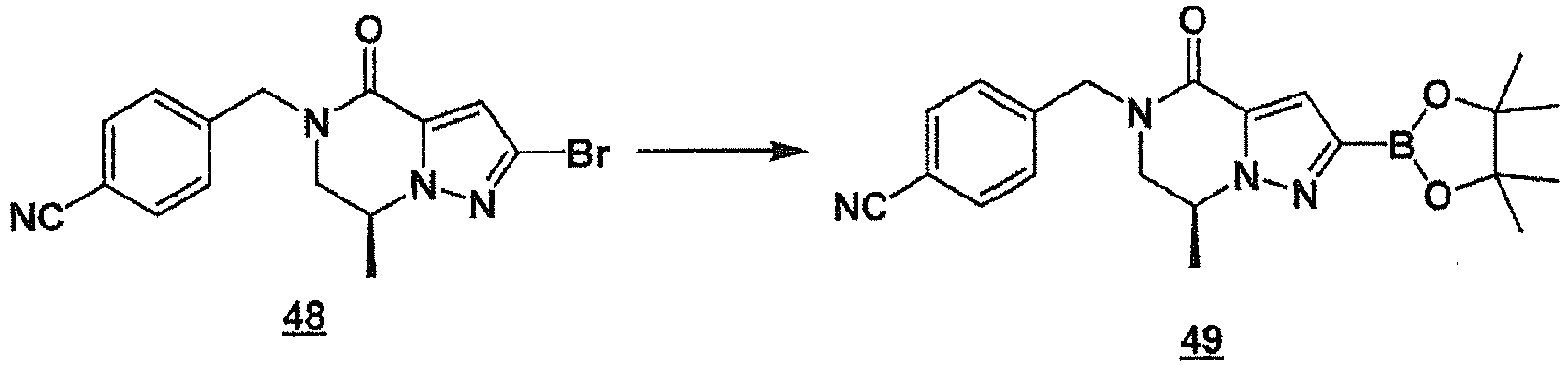
- To a solution of Compound 48 (100mg, 0.29mmol) in 1,4-dioxane (1.5mL) was added bis(pinacolate)diboron (176mg, 0.70mmol), PdCl2(dppf)-DGM (47.2mg, 0.06mmol) and potassium acetate (170mg, 1.74mmol), the solution was stirred at 100°C for 2.5 hours. The reaction mixture was filtered, the filtrate was concentrated under reduced pressure. The residue was purified by diol silica gel chromatography (ethyl acetate / hexane) to yield crude Compound 49 as tan oil.
LC-MS: m/z=311. [M-C6H13]+ -

- To a solution of Compound 49 (50mg, 0.13mmol) in tetrahydrofuran (500uL) was added Compound 47 (45.2mg, 0.19mmol), chloro(2-dicyclohexylphosphino-2',4',6'-triisopropyl-1,1'-biphenyl)[2-(2'-amino-1,1'-biphenyl)]palladium(II) (9.1mg, 0.01mmol) and 2mmol/L tripotassium phosphate aqueous solution (127ul, 0.26mmol), the solution was stirred at 60°C for 45 minutes. To the reaction mixture was added water, and extracted with ethyl acetate. The organic layer was dried with anhydrous sodium sulfate, concentrated under reduced pressure. The residue was purified by silica gel chromatography (chloroform / methanol) to yield Compound 50 (35 mg, yield: 65%) as a tan solid. 1H-NMR (CDCl3) δ: 7.69 (2H, d, J = 7.4 Hz), 7.48 (2H, d, J = 7.4 Hz), 7.18 (1H, s), 6.88 (1H, s), 6.74 (1H, s), 4.84 (2H, s), 4.59-4.58 (1H, m), 4.26 (2H, d, J = 5.9 Hz), 4.05 (2H, s), 3.74-3.68 (2H, m), 3.53-3.48 (1H, m), 1.59 (3H, d, J = 6.4 Hz), 1.14-1.13 (1H, m). LC-MS: m/z=422. [M+H]+
-

- To a solution of Compound 50 (17mg, 0.04mmol) in dichloromethane (1mL) was added acetoaldehyde (4.5ul, 0.08mmol), acetic acid (4.6ul, 0.08mmol) and sodium triacetoxyborohydride (12.8mg, 0.06mmol) at -20°C, the solution was stirred for 40 minutes. To the reaction mixture was added water, and extracted with ethyl acetate. The organic layer was dried with anhydrous sodium sulfate, and concentrated under reduced pressure. The residue was purified by reversed phase silica gel chromatography (acetonitrile / water) to yield Compound 51 (I-0356) (5mg, yield: 28%). 1H-NMR (CDCl3) δ: 7.69-7.68 (2H, m), 7.49-7.48 (2H, m), 7.13 (1H, s), 6.81 (1H, d, J = 2.0 Hz), 6.64 (1H, d, J = 2.0 Hz), 4.84 (2H, s), 4.60-4.58 (1H, m), 4.26-4.21 (3H, m), 3.72 (1 H, dd, J = 12.9, 4.6 Hz), 3.53-3.49 (2H, m), 3.16-3.09 (2H, m), 1.62-1.60 (3H, m), 1.21 (3H, t, J = 7.2 Hz).
LC-MS: m/z=450. [M+H]+ -
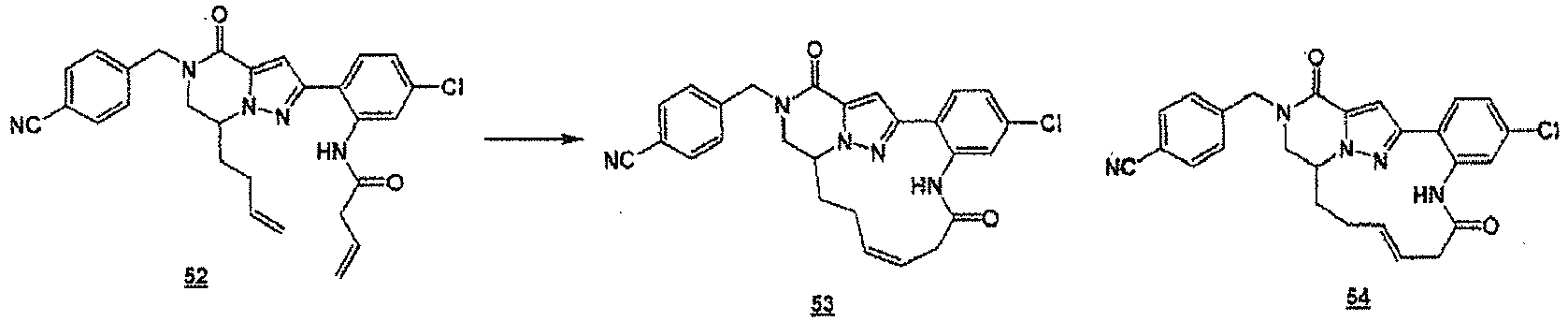
- To a solution of Compound 52 (16mg, 0.03mmol) in dichloromethane(600uL) was added Grubbs II catalyst (8.2mg, 0.001mmol), the solution was stirred at room temperature for 1 hour. To the reaction mixture was added water, and extracted with ethyl acetate. The organic layer was dried with anhydrous sodium sulfate, and concentrated under reduced pressure. The residue was purified by reversed phase silica gel chromatography (acetonitrile / water) to yield Compound 53 (I-0358) (2mg, yield: 15%) and Compound 54 (I-0357)(4mg, yield: 29%).
Compound 53
1H-NMR (CDCl3) δ: 11.11 (1H, s), 8.35 (1 H, d, J = 2.0 Hz), 7.69 (2H, d, J = 8.3 Hz), 7.47-7.44 (3H, m), 7.14-7.12 (1H, m), 7.10 (1H, d, J = 3.3 Hz), 5.83-5.77 (2H, m), 4.93 (1H, d, J = 15.1 Hz), 4.76-4.70 (2H, m), 4.05-4.00 (1H, m), 3.37 (1H, dd, J = 13.1, 3.3 Hz), 3.20 (1H, dd, J = 15.8, 9.0 Hz), 3.06-3.03 (1H, m), 2.45-2.39 (1H, m), 2.12-2.09 (2H, m), 1.87-1.80 (1 H, m).
LC-MS: m/z=472. [M+H]+
Compound 54 - 1 H-NMR (CDCl3) δ: 11.20 (1H, s), 8.74 (1H, d, J = 2.0 Hz), 7.69 (2H, d, J = 8.3 Hz), 7.47 (3H, dd, J = 8.3, 5.0 Hz), 7.19 (1 H, s), 7.11 (1H, dd, J = 8.3, 2.3 Hz), 5.85-5.78 (1 H, m), 5.71-5.67 (1H, m), 4.83 (2H, dd, J = 22.6, 15.3 Hz), 4.47-4.45 (1H, m), 3.59 (2H, d, J = 7.3 Hz), 3.13 (2H, d, J = 7.3 Hz), 2.56-2.53 (1H, m), 2.38-2.24 (2H, m), 2.02-1.96 (1H, m).
LC-MS: m/z=472. [M+H]+ -

- To a solution of the mixture of Compound 53 and 54(20mg, 0.04mmol) in tetrahydrofuran (1 mL) was added Pt/carbon (26.3mg, 0.13mmol), the solution was stirred at room temperature for 1 hour under hydrogen atomosphere. The reaction mixture was filtered, the filtrate was concentrated under reduced pressure. The residue was purified by silica gel chromatography (chloroform / methanol), after that purified by suspension with ethyl acetate / hexane to yield Compound 55 (I-0355) (17mg, yield: 85%) as a gray solid. 1H-NMR (CDCl3) δ: 10.86 (1H, s), 8.47 (1H, d, J = 2.3 Hz), 7.68 (2H, d, J = 8.3 Hz), 7.52 (1 H, d, J = 8.3 Hz), 7.46 (2H, d, J = 8.3 Hz), 7.20 (1H, s), 7.13 (1H, dd, J = 8.4, 2.1 Hz), 4.82 (2H, s), 4.44-4.43 (1H, m), 3.68 (1 H, dd, J = 12.9, 4.6 Hz), 3.51 (1H, dd, J = 12.9, 8.2 Hz), 2.51-2.46 (2H, m), 1.94-1.85 (4H, m), 1.64-1.58 (3H, m), 1.31-1.28 (1H, m). LC-MS: m/z=474, [M+H]+
-

- To a solution of Compound 56 (5g, 34.3mmol) in dichloromethane (60mL) was added pyridine (4.2ml, 51.5mmol) under ice-cooling, dropwised a solution of bromine (1.8ml, 34.3mmol) in dichloromethane (40mL), the solution was stirred for 1 hour. To the reaction mixture was added sodium thiosulfate aqueous solution, and extracted with ethyl acetate. The organic layer was dried with anhydrous sodium sulfate, and concentrated under reduced pressure. The residue was purified by silica gel chromatography (ethyl acetate / hexane) to yield Compound 57 (6.4g, yield: 83%) as an orange solid.
LC-MS: m/z=223. [M+H]+ -
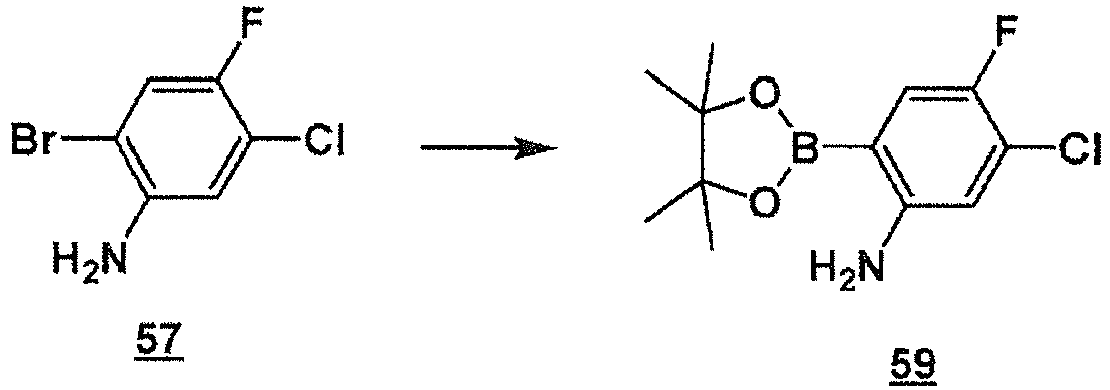
- To a solution of Compound 57 (600mg, 2.67mmol) in 1,4-dioxane (6mL) was added bis(pinacolate)diboron (815mg, 3.21 mmol), PdCl2(dppf)-DCM (218mg, 0.27mmol) and potassium acetate (787mg, 8.02mmol), and the solution was stirred at 100°C for 1 hour. The reaction mixture was filtered, the filtrate was concentrated under reduced pressure. The residue was purified by diol silica gel chromatograpy (ethyl acetate / hexane) to yield crude Compound 59 as black oil.
LC-MS: m/z=188. [M+H]+ -

- To a solution of Compound 50 (20mg, 0.047mmol) in N,N-dimethylformamide (1mL) was added potassium carbonate (9.8mg, 0.071mmol) and methyl iodide (57ul, 0.91 mmol), the solution was stirred at 70°C for 3.5 hours. To the reaction mixture was added water, and extracted with ethyl acetate. The organic layer was dried with anhydrous sodium sulfate, and concentrated under reduced pressure. The residue was purified by reversed phase silica gel chromatography (acetonitrile / water) to yield Compound 60 (11.3mg, yield: 53%) as a yellow viscous solid.
LC/MS Method: B, LC-MS: m/z=450. [M+H]+, retenteion time: 1.84min
1H-NMR (CDCl3) δ: 7.69 (2H, d, J = 8.0 Hz), 7.49 (2H, d, J = 8.0 Hz), 7.27 (2H, d, J = 8.5 Hz), 7.06 (1H, d, J = 1.8 Hz), 7.01 (1 H, d, J = 1.8 Hz), 4.84 (2H, dd, J = 18.3, 15.3 Hz), 4.61-4.55 (2H, m), 4.23-4.20 (2H, m), 3.73 (1H, dd, J = 12.8, 4.5 Hz), 3.48 (1H, dd, J = 12.9, 8.2 Hz), 2.54 (6H, s), 1.55 (3H, dd, J = 13.4, 6.7 Hz). -

- To a solution of Compound 61 (900mg, 4.85mmol) in tetrahydrofuran (10mL) was added N-bromosuccinimide (906mg, 15.09mmol) at -20°C, the solution was warmed to room temperature, and stirred for 10 minutes. To the reaction mixture was added 10% sodium thiosulfate aqueous solution, and extracted with ethyl acetate. The organic layer was dried with anhydrous sodium sulfate, and concentrated under reduced pressure. The residue was purified by silica gel chromatography (ethyl acetate / hexane) to yield Compound 62 (600mg, yield: 47%) as a white solid.
LC/MS Method: B, LC-MS: m/z=263. [M+H]+, retention time: 1.86min
1H-NMR (DMSO-D6) δ: 7.91 (1H, s), 6.86 (1H, s), 6.38 (2H, s), 3.76 (3H, s). -

- To a solution of Compound 62 (300mg, 1.13mmol) in tetrahydrofuran (10mL) was added 1mol/L diisobutyl aluminium hydride in hexane solution(5.67mL, 5.67mmol) at -78°C. The solution was warmed to 0°C, and stirred for 30 minutes. The reaction mixture was cooled to -78°C, added methanol, and added into the mixed solution of ethyl acetate and potassium sodium tartrate. The mixture was extracted, the organic layer was washed with water, dried with anhydrous sodium sulfate, and concentrated under reduced pressure. The residue was purified by suspension with ethyl acetate / hexane to yield Compound 63(250mg, yield: 93%) as a white solid.
- LC/MS Method: B, LC-MS: m/z=235. [M+H]+, retention time: 1.35min
-

- To a solution of Compound 51 (22mg, 0.049mmol) in dichloromethane (1 mL) was added Dess-Martin reagent (31.1mg, 0.073mmol), the solution was stirred at room temperature for 1 hour. To the reaction mixture was added water, extracted with ethyl acetate. The organic layer was dried with anhydrous sodium sulfate, and concentrated under reduced pressure. The residue was purified by silica gel chromatography (ethyl acetate / hexane) to yield Compound 64 (22mg, yield: 100%) as a yellow amorphous.
LC/MS Method: B, LC-MS: m/z=448. [M+H]+, retention time: 2.35min
1H-NMR (CDCl3) δ: 9.82 (1H, s), 7.69 (2H, d, J = 8.0 Hz), 7.49 (2H, d, J = 8.3 Hz), 7.00 (1H, s), 6.83 (1 H, d, J = 1.8 Hz), 5.02 (1H, s), 4.84 (2H, s), 4.63-4.60 (1H, m), 3.73 (1H, dd, J = 12.9, 4.4 Hz), 3.65-3.64 (1 H, m), 3.51 (1H, dd, J = 13.1, 8.3 Hz), 3.17-3.15 (2H, m), 1.60 (3H, d, J = 6.5 Hz), 1.24 (3H, t, J = 7.2 Hz). -

- To a solution of potassium tert-butoxide (20mg, 0.179mmol) in tetrahydrofuran (500uL) was added p-toluenesulfonyl methyl isocyanide(17.4mL, 0.089mmol) at -78°C, the solution was stirred for 10 minutes. To the reaction mixture was added a solution of Compound 64 (20mg, 0.045mmol) in tetrahydrofuran (500uL) an -78°C, and the solution was stirred for 1 hour. To the reaction mixture was added methanol (500uL), and the solution was stirred at reflux temperature for 30 minutes. To the reaction mixture was added water, and extracted ethyl acetate. The organic layer was dried with anhydrous sodium sulfate, concentrated under reduced pressure. The residue was purified by silica gel chromatography (ethyl acetate / hexane) to yield Compound 65 (4.5 mg, yield: 22%) as yellow oil.
LC/MS Method: B, LC-MS: m/z=458. [M+H]+, retention time: 2.63min 1H-NMR (CDCl3) δ: 7.68 (2H, d, J = 7.9 Hz), 7.53 (2H, d, J = 8.9 Hz), 7.48 (2H, d, J = 7.9 Hz), 7.39 (1 H, d, J = 8.3 Hz), 7.10 (1 H, s), 4.99 (1 H, d, J = 15.2 Hz), 4.65 (1 H, d, J = 15.1 Hz), 4.43-4.41 (1H, m), 4.14 (2H, s), 3.83 (1H, dd, J = 12.9, 4.6 Hz), 3.47 (1H, dd, J = 12.9, 5.5 Hz), 2.05-2.03 (1 H, m), 1.66-1.62 (3H, m), 1.30-1.14 (6H, m), 0.87 (3H, t, J = 6.8 Hz). -

- To a solution of Compound 66 (14mg, 0.026mmol) in N,N-dimethylacetoamide (800uL) was added copper cyanide (7.06mg, 0.079mmol), and the solution was stirred at 150°C for 30 minutes. To the reaction solution was added water, and extracted with ethyl acetate. The organic layer was dried with anhydrous sodium sulfate, and concentrated under reduced pressure. The residue was purified by silica gel chromatography (methanol / chloroform), and then purified by suspension with ethyl acetate / hexane / diisopropyl ether to yield Compound 67(12 mg, yield: 57%) as a white solid.
LC/MS Method: B, LC-MS: m/z=432. [M+H]+, retention time: 1.91min
1H-NMR (CDCl3) δ: 7.71 (4H, dd, J = 15.0, 7.8 Hz), 7.48 (2H, d, J = 7.7 Hz), 7.37 (1H, s), 4.84 (2H, s), 4.62-4.60 (1 H, m), 4.42 (2H, d, J = 7.0 Hz), 4.02-4.00 (1H, m), 3.72 (1 H, dd, J = 13.2, 4.3 Hz), 3.53-3.51 (1H, m), 1.60 (3H, d, J = 6.3 Hz). -

- To a solution of Compound 67 (30mg, 0.069mmol) in N,N-dimethylacetamide (1mL) was added zinc (13.6mg, 0.208mmol), zinc dicyanide (41.4mg, 0.097mmol) and palladium (40.7mg, 0.021mmol) under nitrogen atmosphere, the solution was stirred at 100°C for 2 hours. To the reaction mixture was added water, extracted with ethyl acetate. The organic layer was dried with anhydrous sodium sulfate, and concentrated under reduced pressure. The residue was purified by silica gel chromatography (methanol / chloroform), and purified by reversed phase silica gel chromatography (acetonitrile / water) to yield Compound 68 (10 mg, yield: 34%) as white oil.
LC/MS Method: B, LC-MS: m/z=423. [M+H]+, retention time: 1.91 min
1 H-NMR (CDCl3) δ: 8.03 (2H, dd, J = 18.7, 1.6 Hz), 7.69 (2H, d, J = 8.3 Hz), 7.49 (2H, d, J = 8.3 Hz), 7.42 (1 H, s), 4.84 (2H, s), 4.66-4.63 (1 H, m), 4.53 (2H, d, J = 5.3 Hz), 3.86 (1H, br s), 3.74 (1H, dd, J = 13.1, 4.5 Hz), 3.56-3.49 (1H, m). -

- To a solution of Compound 39 (28mg, 0.069mmol) in acetonitrile (1mL) was added propionaldehyde (12uL, 0.173mmol), malononitrile (22.8mg, 0.346mmol) and acetic acid (16uL, 0.277mmol), the solution was stirred at room temperature for 10 minutes. To the reaction mixture was added ammonium acetate (13.3mg, 0.173mmol), the solution was stirred at 80°C for 8 hours. To the reaction mixture was added water, and extracted with ethyl acetate. The organic layer was dried with anhydrous sodium sulfate, and concentrated under reduced pressure. The residue wad purified by silica gel chromatography (ethyl acetate / hexane), and purified by suspension with ethyl acetate / hexane to yield Compound 69 (4 mg, yield: 14%) as a white solid.
LC/MS Method: B, LC-MS: m/z=417. [M+H]+, retention time: 1.55min
1H-NMR (CDCl3) δ: 7.69 (2H, d, J = 8.3 Hz), 7.48-7.45 (3H, m), 7.37-7.34 (2H, m), 7.08 (1H, d, J = 8.0 Hz), 4.87-4.81 (4H, m), 4.56-4.55 (1H, m), 4.47 (1H, br s), 3.80-3.71 (2H, m), 3.51-3.48 (1H, m), 2.19-2.18 (1H, m), 1.57 (4H, dd, J = 6.5, 2.7 Hz), 1.04-0.96 (3H, m). -

- To a solution of Compound 70 (2.75g, 15.27mmol) in toluene (10mL) was added 2-methylpropane-1-ol (10mL, 15.27mmol) and p-toluenesulfonic acid (263mg, 1.527mmol), the solution was stirred at reflux temperature for 2 hours. To the reaction mixture was added water, and extracted with ethyl acetate. The organic layer was dried with anhydrous sodium sulfate, and concentrated under reduced pressure. The residue was purified by silica gel chromatography (ethyl acetate / hexane) to yield Compound 71 (3.4g, yield: 94%) as colorless oil.
LC/MS Method: B, LC-MS: m/z=236., retention time: 2.12min -

- To a solution of Compound 71 (3.4g, 14.39mmol) in tetrahydrofuran (30mL) was added lithium aluminium hydride(546mg, 14.39mmol) under ice-cooling, the solution was stirred for 1 hour. To the reaction mixture was added 2mol/L hydrochloric acid aqueous solution (36mL, 72.0mmol), and stirred at room temperature for 21 hours. To the reaction mixture was added water, and extracted with diethylether. The organic layer was dried with anhydrous sodium sulfate, and concentrated under reduced pressure. The residue was purified by silica gel chromatography (ethyl acetate / hexane) to yield Compound 72 (1.4g, yield: 59%) as colorless oil.
LC/MS Method: B, LC-MS: m/z=165. [M+H]+, retention time: 1.46min 1 H-NMR (CDCl3) δ: 6.98 (1H, ddd, J = 9.9, 6.1, 2.7 Hz), 6.14-6.10 (1 H, m), 2.89-2.80 (1H, m), 2.71-2.64 (2H, m), 2.52-2.43 (2H, m). -

- To a solution of Compound 72 (1.4g, 8.53mmol) in dichloromethane (14mL) was added bromine (484mL, 9.38mmol) under ice-cooling, the solution was stirred for 15 minutes. To the reaction solution was added triethylamine (2.01mL, 14.50mmol), and stirred at room temperature for 1 hour. To the reaction mixture was added sodium thiosulfate aqueous solution, and extracted with ethyl acetate. The organic layer was dried with anhydrous sodium sulfate, and concentrated under reduced pressure. The residue was purified by silica gel chromatography (ethyl acetate / hexane) to yield Compound 73 (800 mg, yield: 39%) as a white solid.
1H-NMR (CDCl3) δ: 7.40-7.37 (1H, m), 2.97-2.91 (2H, m), 2.75-2.54 (3H, m). -
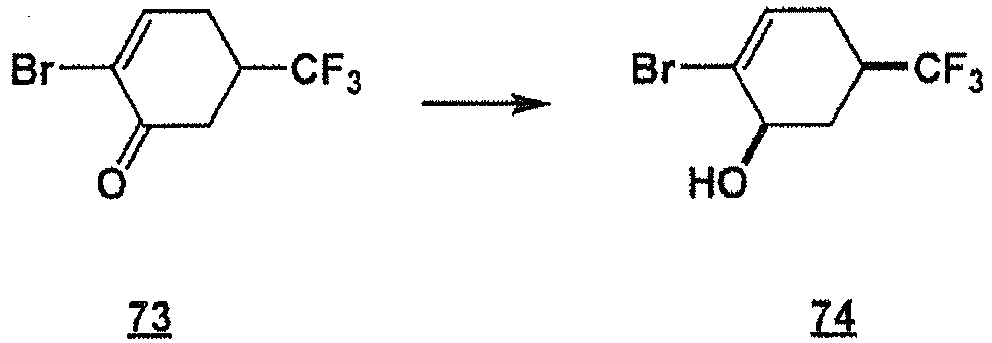
- To a solution of Compound 73 (800mg, 3.29mmol) in methanol(10mL) was added cerium chloride (1.35g, 3.62mmol), and added sodium borohydride (137 mg, 3.62 mmol) at-25°C, the solution was stirred at -20°C for 40 minutes. To the reaction solution was added water, and extracted with ethyl acetate. The organic layer was dried with anhydrous sodium sulfate, and concentrated under reduced pressure to yield Compound 74 (780mg, yield: 97%) as colorless oil.
1H-NMR (CDCl3) δ: 6.15-6.15 (1 H, m), 4.35-4.32 (1H, m), 2.54-2.44 (2H, m), 2.30-2.24 (3H, m), 1.73 (1H, td, J = 13.1, 10.1 Hz). -

- To a solution of Compound 74 (38mg, 0.155mmol) in tetrahydrofuran (1mL) was added benzoic acid (24.6mg, 0.202mmol) and isopropyl azodicarboxylate (39.2uL, 0.202mmol), and added triphenylphosphine (48.8mg, 0.186mmol) under ice-cooling, the solution was stirred at room temperature for 1 hour. The reaction mixture was concentrated under reduced pressure, the residue was purified by silica gel chromatography (ethyl acetate / hexane) to yield Compound 75 (50mg, yield: 92%) as yellow oil.
1H-NMR (CDCl3) δ: 8.07 (2H, d, J = 7.7 Hz), 7.62-7.58 (1H, m), 7.47 (2H, t, J = 7.7 Hz), 6.41 (1H, dd, J = 5.8, 2.3 Hz), 5.76 (1H, s), 2.64-2.62 (1H, m), 2.50-2.47 (1H, m), 2.37-2.24 (2H, m), 2.03-1.99 (1 H, m). -

- To a solution of Compound 75 (50mg, 0.143mmol) in tetrahydrofuran (1mL) and methanol (500uL) was added 2 mol/L sodium hydroxide aqueous solution (215uL, 0.430mmol), and the solution was stirred at room temperature overnight. To the reaction mixture was added water, and extracted with ethyl acetate. The organic layer was dried with anhydrous sodium sulfate, and concentrated under reduced pressure. The residue was purified by silica gel chromatography (ethyl acetate / hexane) to yield Compound 76 (30mg, yield: 86%) as yellow oil.
1H-NMR (CDCl3) δ: 6.19 (1H, dd, J = 5.8, 2.3 Hz), 4.34 (1H, s), 2.67-2.61 (1H, m), 2.42-2.34 (1H, m), 2.21-2.17 (2H, m), 1.83 (1H, td, J = 13.4, 4.1 Hz). -

- To a solution of Compound 76 (30mg, 0.122mmol) in tetrahydrofuran (1mL) was added isoindoline-1,3-dione (21.6mg, 0.147mmol) and isopropyl azodicarboxylate (28.6uL, 0.147mmol), and added triphenylphosphine (35.3mg, 0.135mmol) under ice-cooling. The solution was stirred under ice-cooling for 40 minutes. The reaction mixture was concentrated under reduced pressure, the residue was purified by silica gel chromatography (ethyl acetate / hexane) to yield Compound 77 (30mg, yield: 66%) as colorless oil. 1 H-NMR (CDCl3) δ: 7.88-7.85 (1H, m), 7.77-7.75 (1 H, m), 6.34-6.33 (0H, m), 5.09-5.06 (0H, m), 2.67-2.49 (1H, m), 2.43-2.42 (1H, m), 2.28-2.25 (1H, m).
-

- To a solution of Compound 77 (150mg, 0.401mmol) in ethanol(1mL) was added hydrazine hydrate (197uL, 4.01mmol), the solution was stirred at 80°C for 3 hours. After the insoluble material was removed, to the solution was added water, and extracted with ethyl acetate. The organic layer was dried with anhydrous sodium sulfate, and concentrated under reduced pressure to yield Compound 78 (100mg) as colorless oil. The obtained crude product was used in next step without further purification.
LC/MS Method: B, LC-MS: m/z=243. [M+H], retention time: 0.74min -

- To a solution of Compound 78 (100mg, 0.410mmol) in dichloromethane (2mL) was added pyridine (49.6uL, 0.615mmol) and acetic anhydrous (46.5uL, 0.492mmol), the solution was stirred at room temperature for 30 minutes. To the reaction solution was added methanol, and concentrated under reduced pressure. The residue was purified by silica gel chromatography (ethyl acetate / hexane) to yield Compound 79 (110mg, yield: 94%) as a white solid.
LC/MS Method: B, LC-MS: m/z=285. [M+H]+, retention time: 1.59min 1 H-NMR (CDCl3) δ: 6.24-6.23 (1 H, m), 5.89 (1 H, d, J = 8.0 Hz), 4.85-4.81 (1 H, m), 2.58-2.45 (2H, m), 2.36-2.28 (1H, m), 2.24-2.16 (1H, m), 2.05 (3H, s), 1.60 (1H, td, J = 12.6, 10.6 Hz). -

- To a solution of Compound 70 (450mg, 2.498mmol) in toluene(5mL) was added ammonium acetate (193mg, 2.498mmol), the solution was stirred at reflux temperature for 1.5 hours. The reaction mixture was concentrated under reduced pressure to yield Compound 80 (440mg, yield: 98%).
LC/MS Method: B, LC-MS: m/z=179. [M+H]+, retention time: 0.87min
1H-NMR (CDCl3) δ: 5.33 (1H, s), 4.61 (2H, s), 2.91-2.81 (2H, m), 2.64-2.55 (2H, m), 2.46-2.43 (1 H, m). -

- To a solution of Compound 80 (440mg, 2.456mmol) in tetrahydrofuran (5mL) was added pyridine (496uL, 6.14mmol) and acetylchloride (351 uL, 4.91 mmol), the solution was stirred at 60°C for 1 hour. To the reaction solution was added water, and extracted with ethyl acetate. The organic layer was dried with anhydrous sodium sulfate, and concentrated under reduced pressure. The residue was purified by silica gel chromatography (ethyl acetate / hexane) to yield Compound 81 (180mg, yield: 33%) as a yellow solid.
LC/MS Method: B, LC-MS: m/z=221. [M+H]+, retention time: 1.20min
1H-NMR (CDCl3) δ: 7.98 (1 H, s), 6.60 (1 H, d; J = 1.5 Hz), 2.90-2.62 (4H, m), 2.42-2.38 (1H, m), 2.17 (3H, s). -

- To a solution of Compound 81 (150mg, 0.678mmol) in N,N-dimethylformamide (3mL) was added N-bromosuccinimide (133mg, 0.746mmol) under ice-cooling, the solution was stirred at room temperature overnight. To the reaction mixture was added water, and extracted with ethyl acetate. The organic layer was dried with anhydrous sodium sulfate, concentrated under reduced pressure. The residue was purified by silica gel chromatography (ethyl acetate / hexane) to yield Compound 82 (230mg, yield: quant.) as a yellow solid.
LC/MS Method: B, LC-MS: m/z=301. [M+H]+, retention time: 1.52min
1H-NMR (CDCl3) δ: 8.02-7.99 (1H, m), 3.83-3.78 (1H, m), 3.10 (1H, dd, J = 18.6, 11.0 Hz), 2.96-2.81 (2H, m), 2.61 (1H, dd, J = 16.1, 12.8 Hz), 2.29 (3H, s). -

- To a solution of Compound 83 (50mg, 0.103mmol) in methanol(1mL) was added sodium borohydride (19.5mg, 0.515mmol) at -40°C, the solution was stirred at around -30°C to 0°C for 30 minutes. To the reaction mixture was added water, and extracted with ethyl acetate. The organic layer was dried with anhydrous sodium sulfate, and concentrated under reduced pressure. The residue was purified by silica gel chromatography (methanol / chloroform) and purified by suspension with ethyl acetate / isopropylether to yield Compound 84 (20mg, yield: 40%) as a white solid.
LC/MS Method: B, LC-MS: m/z=488. [M+H]+, retention time: 1.78min, 1.80min 1 H-NMR (CDCl3) δ: 10.54-10.53 (1 H, m), 7.67 (2H, d, J = 8.0 Hz), 7.45 (2H, d, J = 8.0 Hz), 7.12-7.10 (1H, m), 4.89-4.75 (3H, m), 4.55-4.49 (1H, m), 3.64 (1H, dd, J = 12.8, 4.3 Hz), 3.50-3.33 (2H, m), 2.97-2.93 (1H, m), 2.53-2.37 (2H, m), 2.12-2.12 (3H, m), 2.03-1.99 (1 H, m), 1.72-1.53 (7H, m). -

- To a solution of Compound 84 (22mg, 0.045mmol) in tetrahydrofuran (1.5mL) was added lithium perchlorate (240mg, 2.256mmol) and triethylsilane (36.0uL, 0.226mmol), the solution was stirred for 40 minutes under microwave irradiation. The reaction mixture was purified by reversed phase silica gel chromatography (water / acetonitrile) to yield Compound 85 (3mg, yield: 14%) as a white solid.
LC/MS Method: B, LC-MS: m/z=472. [M+H]+, retention time: 2.12min 1 H-NMR (CDCl3) δ: 10.80 (1H, s), 7.67 (2H, d, J = 8.3 Hz), 7.46 (2H, d, J = 8.3 Hz), 6.88 (1H, s), 4.82 (2H, ddd, J = 21.1, 15.4, 3.7 Hz), 4.56-4.48 (1 H, m), 3.65-3.62 (1 H, m), 3.51-3.45 (1H, m), 3.33-3.25 (1H, m), 3.03-2.94 (1H, m), 2.61-2.58 (1H, m), 2.49-2.45 (1H, m), 2.35-2.33 (1H, m), 2.15-2.05 (4H, m), 1.68-1.63 (3H, m). - The following compounds were prepared in a similar manner.
[Table 1] Compound No. Structure LCMS method RT (min) [M+H] I-0001 
B 2.42 318 I-0002 
B 2.77 404 I-0003 
B 2.38 376 I-0004 
B 2.68 516 I-0005 
B 2.86 447 I-0006 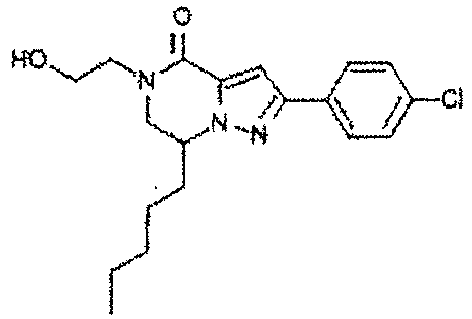
D 4.54 362 I-0007 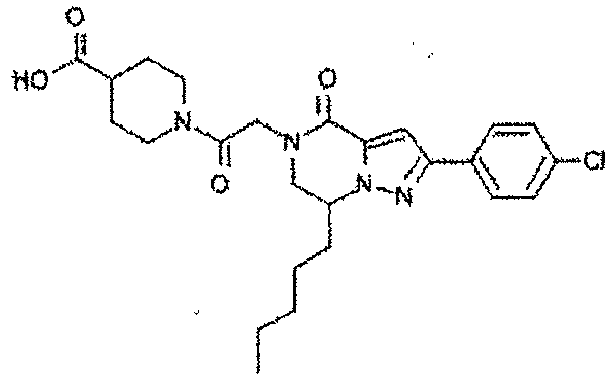
A 2.33 487 [Table 2] I-0008 
B 2.32 389 I-0009 
B 2.31 374 I-0010 
B 2.31 374 I-0011 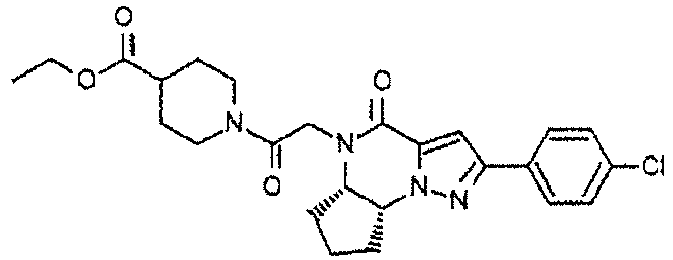
B 2.25 485 I-0012 
B 1.9 457 I-0013 
B 1.9 457 I-0014 
B 2.32 362 I-0015 
B 2.26 473 I-0016 
B 1.91 445 [Table 3] I-0017 
B 2.28 362 I-0018 
B 2.3 374 I-0019 
B 2.15 348 I-0020 
B 2.15 348 I-0021 
B 2.37 410 I-0022 
B 2.41 376 I-0023 
B 2.38 416 I-0024 
B 2.19 368 [Table 4] I-0025 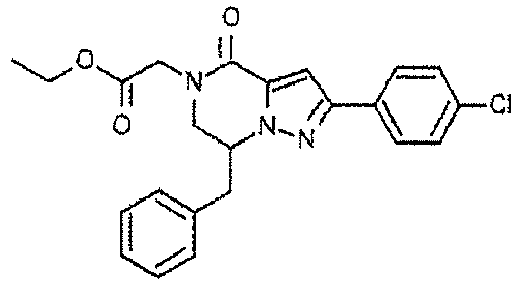
B 2.53 424 I-0026 
B 2.54 454 I-0027 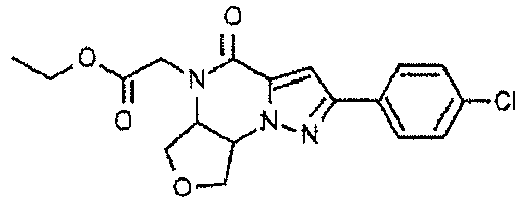
C 2.07 376 I-0028 
B 1.72 459 I-0029 
B 1.62 431 I-0030 
A 3.21 533 I-0031 
A 3.42 513 I-0032 
A 3.03 519 [Table 5] I-0033 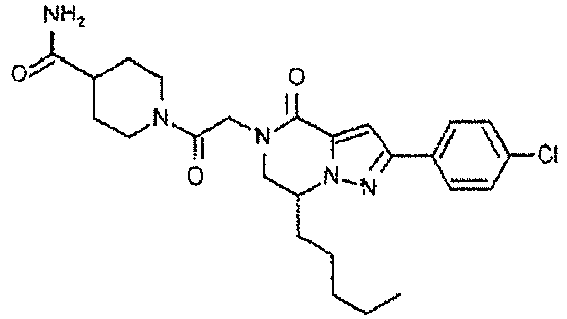
A 2.32 486 I-0034 
A 2.06 472 I-0035 
A 2.29 445 I-0036 
A 3.06 519 I-0037 
A 2.25 458 I-0038 
A 2.33 460 I-0039 
A 3.1 485 I-0040 
A 2.43 459 [Table 6] I-0041 
A 2.74 554 I-0042 
A 2.79 495 I-0043 
A 2.38 447 I-0044 
A 2.3 447 I-0045 
A 2.49 509 I-0046 
A 2.43 489 I-0047 
A 2.33 461 I-0048 
A 2.5 501 [Table 7] I-0049 
A 2.61 495 I-0050 
A 2.48 487 I-0051 
A 2.88 515 I-0052 
A 2.58 487 I-0053 
A 2.51 501 I-0054 
A 2.48 515 I-0055 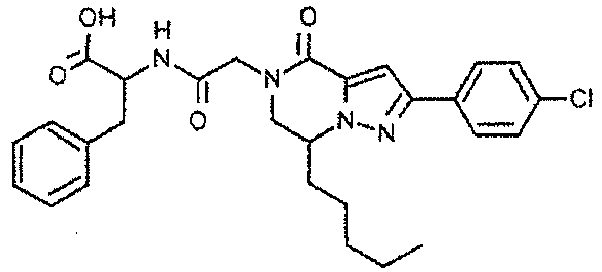
A 2.7 523 I-0056 
A 2.59 509 [Table 8] I-0057 
A 2.5 503 I-0058 
A 2.63 523 I-0059 
A 2.3 433 I-0060 
A 2.48 501 I-0061 
A 2.37 475 I-0062 
A 2.57 475 I-0063 
A 2.43 485 I-0064 
A 2.62 509 [Table 9] I-0065 
A 2.41 473 I-0066 
A 2.41 473 I-0067 
A 2.58 509 I-0068 
A 2.56 501 I-0069 
A 2.62 509 I-0070 
A 2.49 487 I-0071 
A 2.93 457 I-0072 
A 3.08 519 [Table 10] I-0073 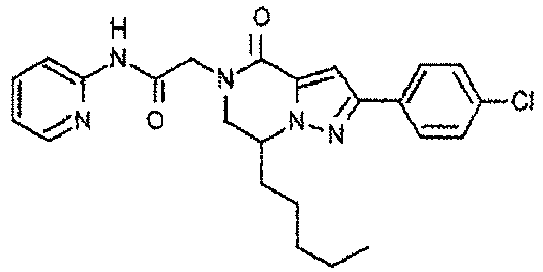
A 2.69 452 I-0074 
A 2.72 443 I-0075 
A 2.75 443 I-0076 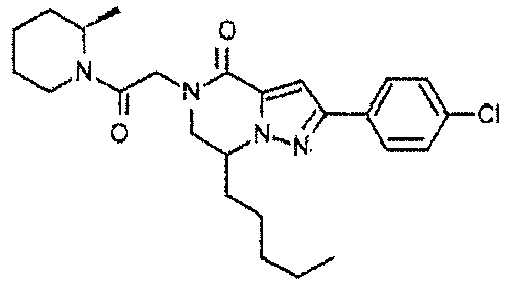
A 2.9 457 I-0077 
A 2.65 417 I-0078 
A 3.26 547 I-0079 
A 3.16 485 I-0080 
A 2.92 457 [Table 11] I-0081 
A 2.76 443 I-0082 
A 2.89 457 I-0083 
A 2.8 443 I-0084 
A 2.08 452 I-0085 
A 2.92 465 I-0086 
A 2.21 452 I-0087 
A 2.87 451 I-0088 
A 2.78 431 [Table 12] I-0089 
A 2.46 473 I-0090 
A 2.52 473 I-0091 
A 3.02 471 I-0092 
A 2.4 459 I-0093 
A 2.92 457 I-0094 
A 2.36 459 I-0095 
A 2.33 486 I-0096 
A 2.42 473 [Table 13] I-0097 
A 2.61 429 I-0098 
A 2.89 457 I-0099 
A 2.82 465 I-0100 
A 1.94 444 I-0101 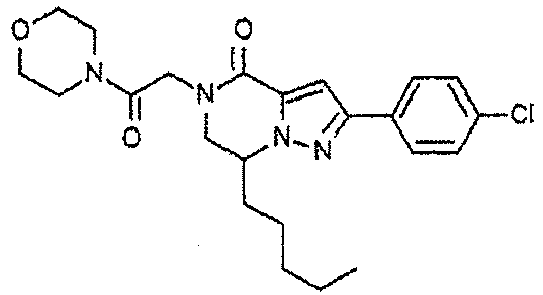
A 2.61 445 I-0102 
A 2.01 460 I-0103 
A 1.91 446 I-0104 
A 1.9 460 [Table 14] I-0105 
A 3.13 519 I-0106 
A 3.1 519 I-0107 
A 2.98 505 I-0108 
A 2.53 403 I-0109 
A 2.15 556 I-0110 
A 2.95 505 I-0111 
A 1.92 486 I-0112 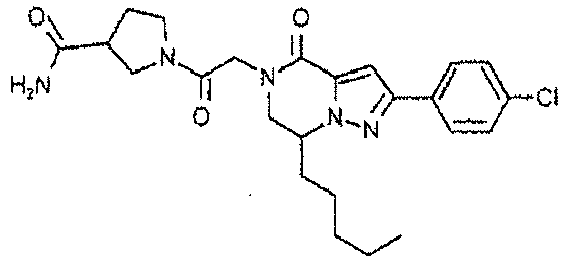
A 2.24 472 [Table 15] I-0113 
A 2.47 457 I-0114 
A 2.21 473 I-0115 
A 2.92 457 I-0116 
A 2.9 457 I-0117 
A 2.75 443 I-0118 
A 2.61 509 I-0119 
A 2.59 509 I-0120 
A 2.67 466 [Table 16] I-0121 
A 2.72 508 I-0122 
A 2.74 466 I-0123 
A 2.67 424 I-0124 
A 2.65 466 I-0125 
A 3.08 494 I-0126 
A 3.1 480 I-0127 
A 3.18 422 I-0128 
A 3.19 422 [Table 17] I-0129 
A 2.93 433 I-0130 
A 3.2 422 I-0131 
A 2.9 433 I-0132 
A 2.9 433 I-0133 
A 2.58 465 I-0134 
A 2.16 509 I-0135 
A 2.2 509 I-0136 
A 2.84 480 [Table 18] I-0137 
A 2.43 535 I-0138 
A 2.25 509 I-0139 
A 2.95 557 I-0140 
A 2.93 466 I-0141 
A 2.68 486 I-0142 
A 2.63 465 I-0143 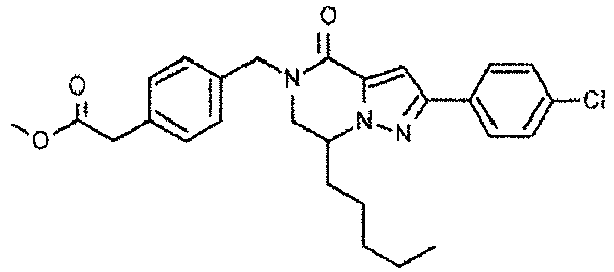
A 2.96 480 I-0144 
A 3.06 562 [Table 19] I-0145 
A 2.64 438 I-0146 
A 3.33 500 I-0147 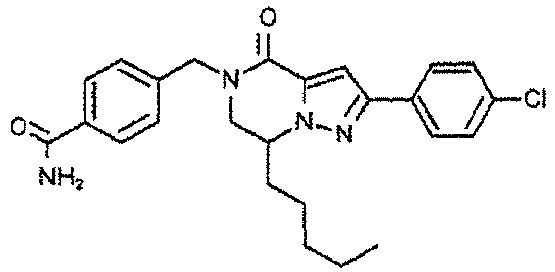
A 2.43 451 I-0148 
A 2.73 452 I-0149 
A 2.35 422 I-0150 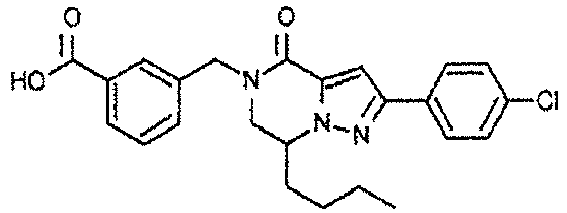
A 2.54 438 I-0151 
A 2.22 375 I-0152 
A 2.05 387 [Table 20] I-0153 
A 2.08 375 I-0154 
A 1.86 373 I-0155 
A 1.68 391 I-0156 
A 1.64 391 I-0157 
A 1.68 405 I-0158 
A 1.9 431 I-0159 
A 1.81 431 I-0160 
A 2.08 467 [Table 21] I-0161 
A 1.91 419 I-0162 
A 1.63 377 I-0163 
A 2.12 410 I-0164 
A 2.37 377 I-0165 
A 2.37 377 I-0166 
A 1.76 453 I-0167 
A 1.88 479 I-0168 
A 1.8 453 [Table 22] I-0169 
A 1.89 395 I-0170 
A 2.12 410 I-0171 
A 2.12 368 I-0172 
A 2.51 352 I-0273 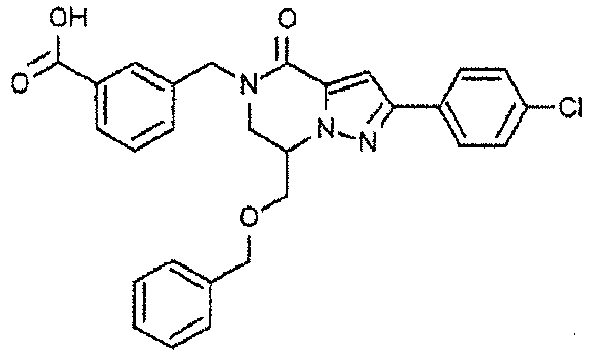
A 2.51 502 I-0174 
A 1.81 412 I-0175 
A 2.24 440 I-0176 
A 2.4 454 [Table 23] I-0177 
A 2.73 483 I-0178 
A 2.49 421 I-0179 
A 2.82 438 I-0180 
B 2.04 459 I-0181 
B 2.55 405 I-0182 
B 2.42 446 I-0183 
B 2.66 419 I-0184 
A 2.53 453 [Table 24] I-0185 
A 2.38 453 I-0186 
A 2.86 545 I-0187 
B 2.27 426 I-0188 
B 2.35 462 I-0189 
B 2.46 476 I-0190 
B 2.41 507 I-0191 
B 2.69 453 I-0192 
B 2.55 508 [Table 25] I-0193 
B 2.49 435 I-0194 
B 2.71 469 I-0195 
B 2.4 493 I-0196 
B 2.05 392 I-0197 
B 2.24 304 I-0198 
B 1.88 306 I-0199 
B 2.02 320 I-0200 
A 2.44 395 [Table 26] I-0201 
B 2.35 410 I-0202 
A 2.74 452 I-0203 
A 2.74 468 I-0204 
B 2.54 447 I-0205 
B 2.40 415 I-0206 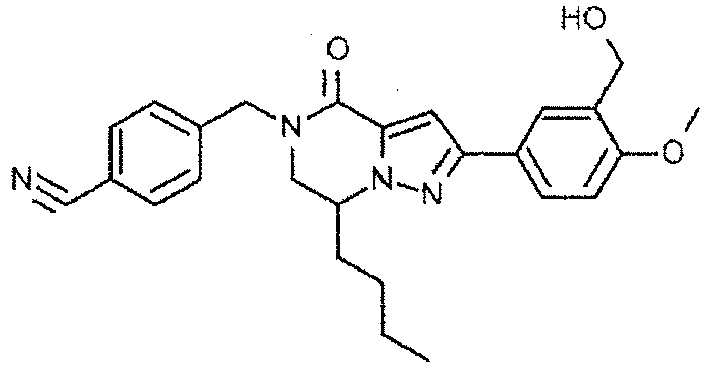
B 2.10 445 I-0207 
B 2.35 449 [Table 27] I-0208 
A 2.50 414 I-0209 
A 2.43 428 I-0210 
A 2.20 472 I-0211 
A 2.56 439 I-0212 
A 2.12 449 I-0213 
A 2.37 400 I-0214 
A 2.55 442 [Table 28] I-0215 
A 2.05 418 I-0216 
A 2.46 473 I-0217 
A 2.12 405 I-0218 
A 2.11 405 I-0219 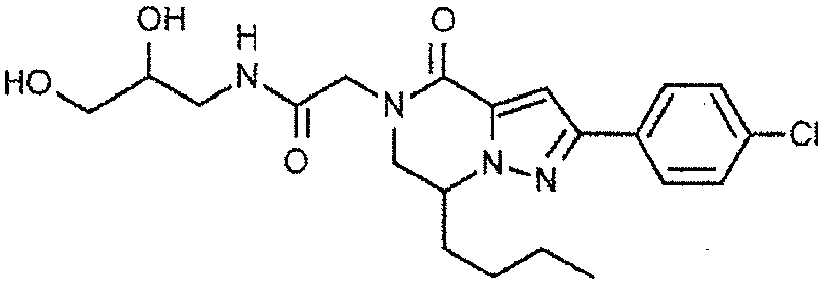
A 2.01 435 I-0220 
A 2.49 454 I-0221 
A 2.33 445 [Table 29] I-0222 
A 2.04 432 I-0223 
A 2.60 459 I-0224 
A 2.11 432 I-0225 
A 2.20 460 I-0226 
A 2.44 467 I-0227 
A 2.62 429 I-0228 
A 2.62 496 [Table 30] I-0229 
A 2.25 433 I-0230 
A 2.33 412 I-0231 
A 2.46 425 I-0232 
A 2.17 443 I-0233 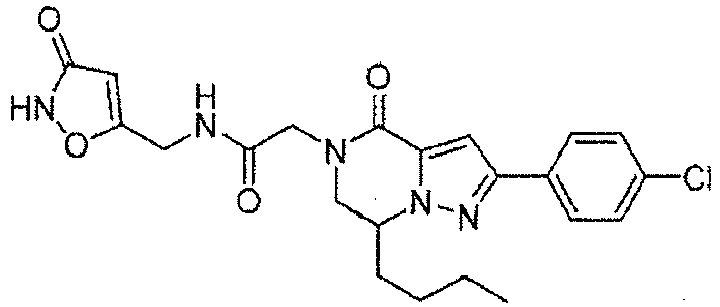
A 2.25 458 I-0234 
A 2.18 455 I-0235 
A 2.49 467 [Table 31] I-0236 
A 2.06 468 I-0237 
A 2.12 461 I-0238 
A 2.34 471 I-0239 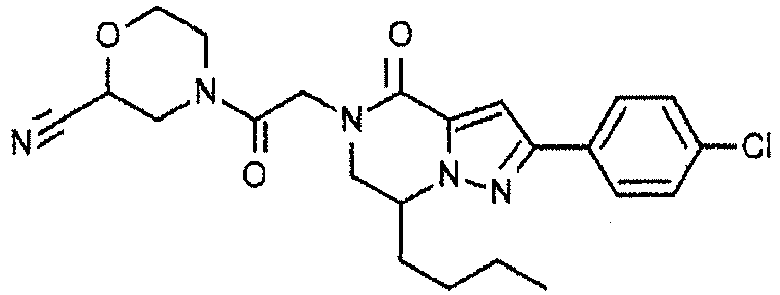
A 2.50 456 I-0240 
A 2.49 445 I-0241 
A 2.77 443 I-0242 
A 2.80 443 [Table 32] I-0243 
A 2.25 490 I-0244 
A 2.35 428 I-0245 
A 2.29 445 I-0246 
A 2.62 429 I-0247 
A 2.77 443 I-0248 
A 2.80 443 I-0249 
B 2.63 390 [Table 33] I-0250 
A 2.81 434 I-0251 
A 2.19 442 I-0252 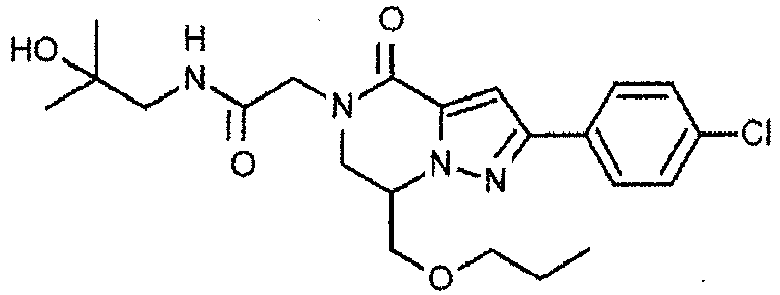
A 2.01 449 I-0253 
A 2.12 378 I-0254 
A 2.96 428 I-0255 
A 2.01 395 I-0256 
A 2.39 395 [Table 34] I-0257 
A 1.88 395 I-0258 
A 1.77 398 I-0259 
A 2.24 399 I-0260 
A 2.44 385 I-0261 
A 2.80 435 I-0262 
A 2.90 436 I-0263 
A 2.73 400 [Table 35] I-0264 
A 2.59 469 I-0265 
A 2.71 447 I-0266 
A 2.12 403 I-0267 
A 2.82 397 I-0268 
A 2.63 388 I-0269 
A 2.46 388 [Table 36] I-0270 
A 2.93 424 I-0271 
A 2.52 362 I-0272 
A 3.03 464 I-0273 
A 1.71 417 I-0274 
A 2.39 360 I-0275 
A 2.46 445 [Table 37] I-0276 
B 2.66 457 I-0277 
B 2.43 420 I-0278 
B 1.74 462 I-0279 
B 2.56 501 I-0280 
B 2.56 444 I-0281 
B 2.47 434 [Table 38] I-0282 
B 1.73 476 I-0283 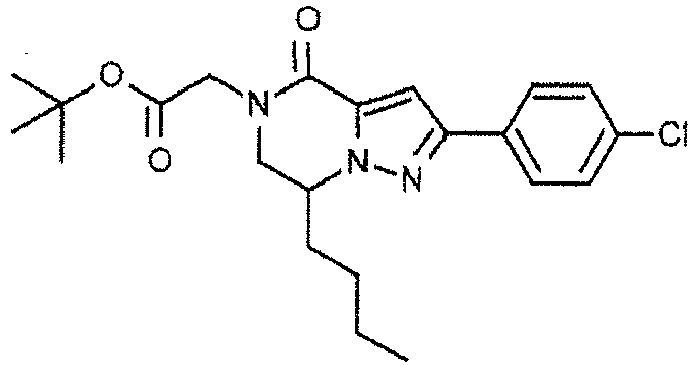
B 2.80 418 I-0284 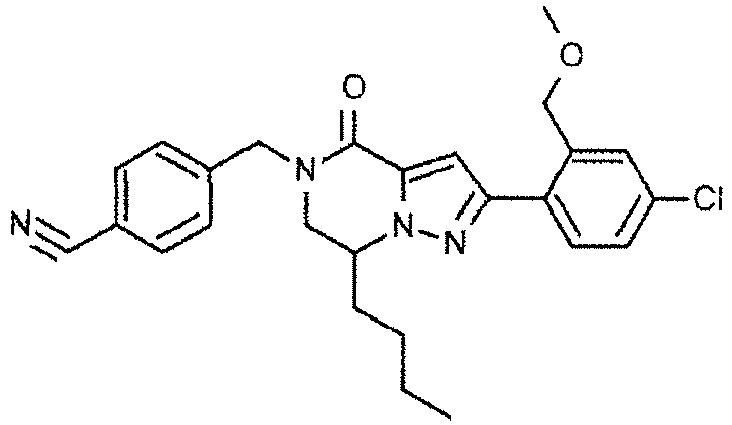
B 2.67 463 I-0285 
B 2.16 434 I-0286 
A 2.75 452 I-0287 
A 2.82 466 [Table 39] I-0288 
B 1.77 333 I-0289 
B 2.29 400 I-0290 
B 2.14 391 I-0291 
B 2.53 435 I-0292 
B 2.37 426 I-0293 
B 2.46 458 [Table 40] I-0294 
B 2.59 390 I-0295 
B 2.35 551 I-0296 
B 2.22 405 I-0297 
B 2.03 407 I-0298 
B 2.23 402 I-0299 
B 2.34 442 I-0300 
B 2.19 416 [Table 41] I-0301 
A 2.87 462 I-0302 
A 2.42 428 I-0303 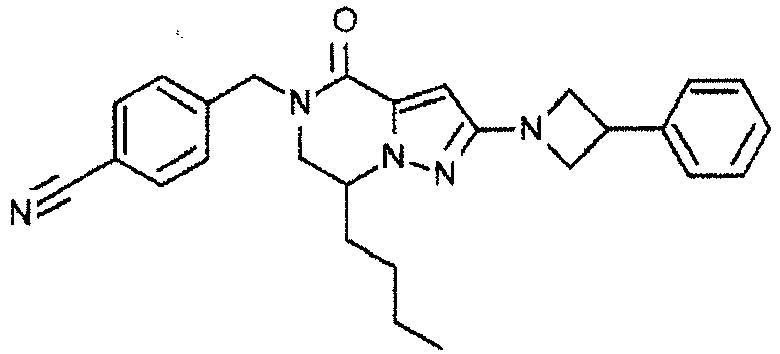
A 2.59 440 I-0304 
A 2.17 417 I-0305 
A 2.67 460 I-0306 
A 2.63 426 [Table 42] I-0307 
A 2.58 454 I-0308 
B 2.45 512 I-0309 
B 2.31 491 I-0310 
A 2.72 465 I-0311 
A 2.31 494 I-4312 
A 2.33 487 [Table 43] I-0313 
A 2.33 487 I-0314 
A 2.16 482 I-0315 
A 1.99 489 I-0316 
B 1.70 418 I-0317 
B 1.69 418 [Table 44] I-0318 
A 2.07 529 I-0319 
A 2.11 489 I-0320 
B 2.13 392 I-0321 
B 2.38 462 I-0322 
B 2.33 460 I-0323 
B 2.15 470 I-0324 
B 2.52 475 [Table 45] I-0325 
8 2.25 445 I-0326 
B 2.45 456 I-0327 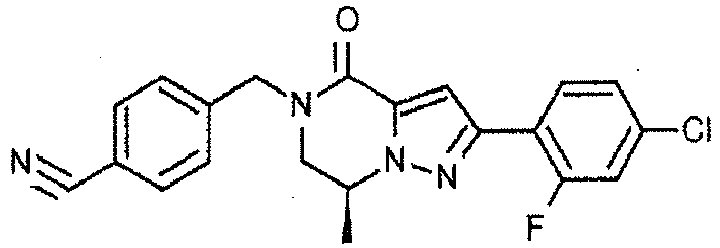
B 2.36 395 I-0328 
B 2.55 420 I-0329 
B 2.31 421 I-0330 
B 2.16 452 I-0331 
B 2.57 490 [Table 46] I-0332 
B 1.54 477 I-0333 
B 2.21 468 I-0334 
B 2.26 484 I-0335 
B 1.90 425 I-0336 
B 1.86 448 I-0337 
B 2.07 435 [Table 47] I-0338 
B 1.45 409 I-0339 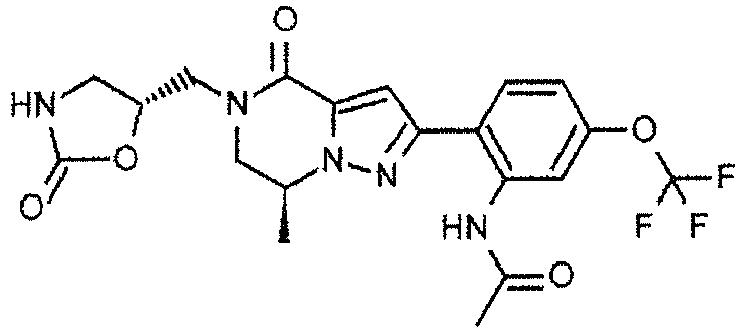
B 1.85 468 I-0340 
B 1.78 484 I-0341 
B 1.54 434 I-0342 
B 2.04 449 I-0343 
B 2.25 487 [Table 48] I-0344 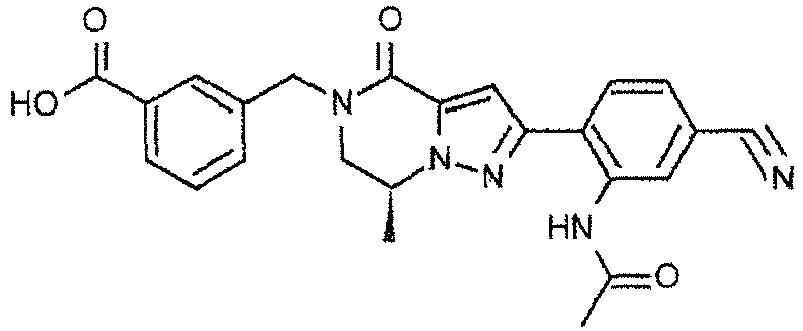
B 1.80 444 I-0345 
B 2.17 503 I-0346 
B 1.78 422 I-0347 
B 1.73 464 I-0348 
B 1.55 455 I-0349 
B 2.65 434 [Table 49] I-0350 
B 1.76 460 I-0351 
B 1.64 464 I-0352 
B 1.82 502 I-0353 
B 1.64 452 I-0354 
B 1.97 488 [Table 50] I-0355 
B 2.21 474 I-0356 
B 2.1 450 I-0357 
B 2.29 472 I-0358 
B 2.23 472 I-0359 
B 1.94 476 [Table 51] I-0360 
B 1.42 450 I-0361 
B 2.11 486 [Table 52] I-0362 
B 1.80 394 I-0363 
B 2.04 445 I-0364 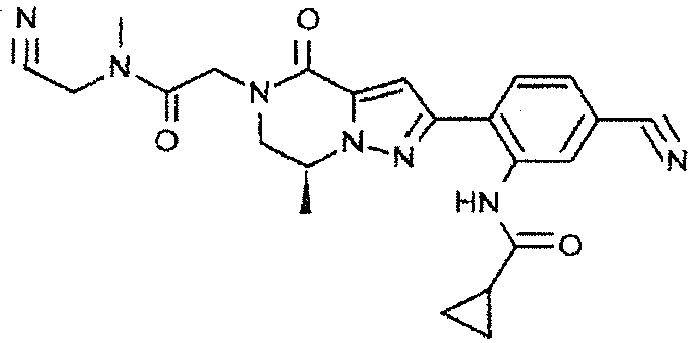
B 1.79 446 I-0365 
B 2.05 455 I-0366 
B 2.12 472 [Table 53] I-0367 
B 1.81 475 I-0368 
B 2.00 486 I-0369 
B 1.78, 1.80 486 (nega) I-0370 
B 2.05 493 I-0371 
B 2.08 500 I-0372 
B 2.76 511 - Solution A containing 25mM Tris-HCl buffer (pH7.5), 100mM NaCl, 5mM MgCl2, and 0.1 % BSA was prepared. Mouse autotaxin enzyme (purchased from R&D system) was diluted with Solution A, and 5μl of which was added to a solution of test compound in DMSO. Furthermore, 5μl of 0.5μM TG-mTMP in Solution A was added and allowed react at room temperature for 2 hours. 5µl of 150mM EDTA in Solution A was added to quench the reaction, and a fluorescent dye TokyoGreen, which was produced by the reaction, was detected. The fluorescence was detected using ViewLux (PerkinElmer, Inc.) with an excitation wavelength of 480nm and a fluorescence wavelength of 540nm. The percent inhibition of the test compound was calculated by assuming the sample with no test compound as 0% inhibition and the test sample with no enzyme as 100% inhibition, and the percent inhibitions at different concentrations of the test compound were plotted to obtain a concentration-dependent curve. The IC50 value, which is the concentration of the test compound that resulted in 50% inhibition, was determined from the curve.

- Solution A containing 25mM Tris-HCl buffer (pH7.5), 100mM NaCl, 5mM MgCl2, 0.1% BSA was prepared. Human autotaxin enzyme (purchased from R&D System) was diluted with Solution A, and 5µl of which was added to a solution of test compound in DMSO. Furthermore, 5µl of 0.5μM TG-mTMP in Solution A was added and allowed to react at room temperature for 2 hours. 5µl of 150mM EDTA in Solution A was added to quench the reaction, and the fluorescent dye TokyoGreen, which was produced by the reaction, was detected. The fluorescenece was detected using ViewLux (PerkinElmer, Inc.) with an excitation wavelength of 480nm and a fluorescence wavelength of 540nm.
- The percent inhibition of the test compound was calculated by assuming the sample with no test compound as 0% inhibition and the sample with no enzyme as 100% inhibition, and the percent inhibitions at different concentrations of the test compound were plotted to obtain a concentration-dependent curve. The IC50 value, which is the concentration of the test compound that resulted in 50% inhibition, was determined from the curve.
- Solution B containing 100mM Tris-HCl buffer (pH7.5), 150mM NaCl, 5mM MgCl2, and 0.05% Triton X-100 was prepared. Human autotaxin enzyme (purchased from R&D System) was diluted with Solution B, and 2.5μl of which was added to a solution of test compound in DMSO. Furthermore, 2.5μl of 200μM 18:0 Lyso PC (purchased from Avanti Polar Lipids) in Solution B was added and allowed to react at room temperature for 2 hours. After completion of the reaction, 15μl of the coline assay reagent (100mM Tris-HCl buffer (pH7.5), 5mM MgCl2, 7μg/ml coline oxidase, 10pg/ml peroxydase, 25μM 10-acetyl-3,7-dihydroxyphenoxazine, and excess autotaxin inhibitor) was added and allowed to react at room temperature for 20 minutes. The fluorescent dye Resorufin, which was produced by the reaction, was detected. The fluorescence was detected using ViewLux (PerkinElmer,Inc.) with a excitation wavelength of 531nm and a fluorescence wavelength of 598nm.
- The percent inhibition of the test compound was calculated by assuming the sample with no test compound as 0% inhibition and the sample with no enzyme as 100% inhibition, and the percent inhibitions at different concentrations of the test compound were plotted to obtain a concentration-dependent curve. The IC50 value, which is the concentration of the test compound that resulted in 50% inhibition, was determined from the curve.
- The results obtained by the test method described the above Test Example 3 are shown in the following tables.
- Method A: Test Example 1;(Method B: Test Example 2;Method C: Test Example 3
Enzyme inhibitory activity:
A:IC50 < 10 nM, B:10 nM ≦ IC50 < 100 nM C:100 nM ≦ IC50 < 1000 nM,
D:1000 nM ≦ IC50 -
[Table 54] Compound No Inhibitory activity Compound No Inhibitory activity Compound No inhibitory activity I-0001 D I-0041 B I-0081 C I-0002 B I-0042 C I-0082 B I-0003 D I-0043 8 I-0083 C I-0004 B I-0044 B I-0084 D I-0005 C I-0045 C I-0085 D I-0006 C I-0046 C I-0086 C I-0007 A I-0047 B I-0087 D I-0008 B I-0048 B I-0088 C I-0009 C I-0049 B I-0089 B I-0010 D I-0050 8 I-0090 B I-0011 D I-0051 C I-0091 C I-0012 C I-0052 A I-0092 C I-0013 D I-0053 B I-0093 C I-0014 D I-0054 C I-0094 B I-0015 D I-0055 A I-0095 B I-0016 D I-0056 B I-0096 C I-0017 D I-0057 C I-0097 C I-0018 D I-0058 C I-0098 C I-0019 D I-0059 B I-0099 C I-0020 D I-0060 C I-0100 C I-0021 D I-0061 B I-0101 C I-0022 D I-0062 A I-0102 D I-0023 D I-0063 B I-0103 D I-0024 D I-0064 A I-0104 D I-0025 C I-0065 B I-0105 C I-0026 D I-0066 B I-0106 C I-0027 D I-0067 C I-0107 C I-0028 D I-0068 A I-0108 C I-0029 D I-0069 A I-0109 D I-0030 D I-0070 B I-0110 C I-0031 D I-0071 C I-0111 D I-0032 C I-0072 D I-0112 c I-0033 D I-0073 D I-0113 B I-0034 D I-0074 C I-0114 D I-0035 C I-0075 B I-0115 C I-0036 B I-0076 C I-0116 B I-0037 B I-0077 C I-0117 C I-0038 C I-0078 D I-0118 D I-0039 C I-0079 C I-0119 B I-0040 C I-0080 B I-0120 B [Table 55] Compound No. Inhibitory activity Compound No. inhibitory activity I-0121 B I-0161 C I-0122 B I-0162 D I-0123 D I-0163 C I-0124 A I-0164 C I-0125 D I-0165 D I-0126 D I-0166 D I-0127 D I-0167 D I-0128 D I-0168 D I-0129 D I-0169 D I-0130 C I-0170 B I-0131 C I-0171 D I-0132 B I-0172 D I-0133 D I-0173 C I-0134 D I-0174 D I-0135 C I-0175 B I-0136 D I-0176 A I-0137 B I-0177 D I-0138 C I-0178 C I-0139 D I-0179 C I-0140 D I-0180 D I-0141 C I-0181 C I-0142 C I-0182 D I-0143 D I-0183 B I-0144 D I-0184 A I-0145 C I-0185 B I-0146 D I-0186 D I-0147 C I-0187 C I-0148 A I-0188 B I-0149 C I-0189 B I-0150 A I-0190 B I-0151 B I-0191 C I-0152 D I-0192 C I-0153 D I-0193 C I-0154 D I-0194 C I-0155 D I-0195 C I-0156 D I-0196 C I-0157 D I-0197 D I-0158 C I-0198 D I-0159 D I-0199 D I-0160 B I-0200 D [Table 56] Compound No. Inhibitory activity Compound No. Inhibitory activity Compound No. Inhibitory activity I-0201 B I-0241 C I-0281 C I-0202 D I-0242 C I-0282 D I-0203 D I-0243 C I-0283 C I-0204 B I-0244 C I-0284 D I-0205 C I-0245 C I-0285 A I-0206 D I-0246 B I-0286 D I-0207 B I-0247 B I-0287 D I-0208 B I-0248 C I-0288 D I-0209 B I-0249 B I-0289 B I-0210 B I-0250 B I-0290 C I-0211 B I-0251 C I-0291 B I-0212 C I-0252 B I-0292 B I-0213 B I-0253 D I-0293 C I-0214 B I-0254 B I-0294 B I-0215 C I-0255 B I-0295 B I-0216 C I-0256 C I-0296 C I-0217 C I-0257 C I-0297 C I-0218 C I-0258 C I-0298 C I-0219 C I-0259 C I-0299 B I-0220 C I-0260 C I-0300 D I-0221 C I-0261 C I-0301 D I-0222 C I-0262 D I-0302 c I-0223 C I-0263 C I-0303 D I-0224 C I-0264 B I-0304 D I-0225 C I-0265 B I-0305 C I-0226 C I-0266 B I-0306 D I-0227 C I-0267 C I-0307 D I-0228 C I-0268 B I-0308 D I-0229 C I-0269 B I-0309 C I-0230 B I-0270 C I-0310 D I-0231 D I-0211 C I-0311 A I-0232 B I-0272 D I-0312 B I-0233 B I-0273 C I-0313 A I-0234 C I-0274 C I-0314 G I-0235 B I-0275 B I-0315 C I-0236 D I-0276 C I-0316 B I-0237 C I-0277 C I-0317 C I-0238 C I-0278 D I-0318 A I-0239 B I-0279 B I-0319 A I-0240 C I-0280 B I-0320 D [Table 57] Compound No. inhibitory activity I-0321 B I-0322 B I-0323 C I-0324 D I-0325 D I-0326 D I-0327 D I-0328 C I-0329 D I-0330 A I-0331 C I-0332 B I-0333 B I-0334 A I-0335 A I-0336 D I-0337 B I-0338 B I-0339 A I-0340 B I-0341 B I-0342 C I-0343 B I-0344 A I-0345 A I-0346 C I-0347 B I-0348 B I-0349 C I-0350 A I-0351 A I-0352 B I-0353 A I-0354 A I-0355 A I-0356 A I-0357 A I-0358 B I-0359 B I-0360 C I-0361 C [Table 58] Compound No. inhibitory activity I-0362 B I-0363 B I-0364 B I-0365 B I-0366 B I-0367 B I-0368 B I-0369 C I-0370 B I-0371 C I-0372 C - Using commercially available pooled human hepatic microsome, the compound was tested to assess inhibitory effect on the typical substrate metabolism reactions of human main five CYP enzyme forms (CYP1A2, 2C9, 2C19, 2D6, 3A4), specifically, 7-ethoxyresorufin O-deethylation (CYP1A2), tolbutamide methyl-hydroxylation (CYP2C9), mephenyloin 4'-hydroxylation (CYP2C19), dextromethorphan O-demethylation (CYP2D6) terfenedine hydroxylation (CYP3A4).
- The reaction conditions were as follows.
Substrates: - 0.5 μmol/L ethoxyresorufin (CYP1A2),
- 100 μmol/L tolbutamide (CYP2C9),
- 50 μmol/L S-mephenitoin (CYP2C19),
- 5 μmol/L dextromethorphan (CYP2D6),
- 1 μmol/L terfenadine (CYP3A4);
- Reaction Time: 15 minutes;
- Reaction Temperature: 37°C;
- Enzyme: pooled human hepatic microsome 0.2 mg protein/mL;
- Concentration of Test Compound: 1, 5, 10, 20 μmol/L (four points).
- A test sample, which contains the substrate, humen hepatic microsome and test compound at the amounts as described above in 50 mM Hepes buffer, was added to a 96-well plate. The cofoator NADPH was added to initiate metabolism reaction. After the incubation at 37°C for 15 minutes, a methanol/acetonitrile=1/1 (v/v) solution was added to stop the reaction. After centrifugation at 3000 rpm for 15 minutes, resotufin (CYP1A2 metabolite) in the supernatant was quantified by fluorescent multilabel counter. Tributamide hydroxide (CYP2C9 metabolite), mephenyloin 4' hydroxide (CYP2C19 metabolite), dextromethorphan (CYP2D6 metabolite) and terfenadine alcohol (CYP3A4 metabolite) were determined by LC/MS/MS.
- Only DMSO, which was the solvent for the test compound, was added to the reaction system as the control (100%). For each concentration of the test compound, the remaining activity (%) was calculated, and the IC50 was calculated by reverse presumption by a logistic model using the concentration and the inhibition rate.
- Assessment of metabolic stability in hepatic microsomes:
- To tris-hydrochloric acid buffer (pH 7.4), were added NADPH (the final concentration was 1 mM in case of oxidative methabolism), hepatic microsomes (the final concentration was 0.5 mg protein/mL) and test compound (the final concentration was 2μM), and the mixture was reacted at 37°C for 0 and 30 minutes. In case of conjugated glucuronic acid, UDPGA (the final concentration was 5mM) was added instead of NADPH. The reaction was stopped by addition of acetonitrile/methanol= 1/1 (v/v) (2 parts by volumn of the reaction solution). After the centrifugation, the supernatant was measured by HPLC. By comparing the results obtained from the reactions for 0 and 30 minutes, the loss of the compound by metabolic reaction was calculated to assess the metabolic stability of the compound of the invention.
- Appropriate amount of test sample was put into appropriate container. To the container was added 200µL each of JP-1 solution (sodium chloride 2.0g, hydrochloric acid 7.0mL and water to reach 1000mL), JP-2 solution (phosphate buffer (pH 6.8) 500mL and water 500mL) and 20mmol/L TCA (sodium taurocholate)/JP-2 solution (TCA 1.08g and water to reach 100mL). In the case that the test compound was dissolved after the addition of the test solution, bulk powder was added as appropriate. The container was sealed and shaken for 1 hour at 37°C. The mixture was filtered, and 100μL of methanol was added to each 100μL aliquot of the filtrate to make the filtrates two-fold diluted.
- The dilution ratio was changed if necessary. After checking if any bubble or precipitate occurred, the container was sealed and shaken. Quantification was performed by absolute calibration method using HPLC.
- The following Fromulation Examples are only exemplified and not intended to limit the scope of the invention.
Formulation Example 1: Tablets Compound of formula (I) 15mg Starch 15mg Lactose 15mg Crystalline cellulose 19mg Polyvinyl alcohol 3mg Distilled water 30ml Calcium stearate 3mg - The above ingredients except calcium stearate are uniformly mixed and milled to granylate, and dried to obtain a suitable size of granules. Then, the granules are added with calcium stearate and compressed to form a tablet.
Formulation Examples 2: Capsules Compound of formula (I) 10mg Magnesium stearate 10mg Lactose 80mg - The above ingredients are mixed uniformly to obtain powders or fine granules, which are then filled in a capsule.
Formulation Examples 3: Granules Compound of formula (I) 30g Lactose 265g Magnesium stearate 5g - The above ingredients are mixed uniformaly and compressed. The compressed mixture is milled, granylated and sirved to obtain the desired size of granules.
- The present invention is applicable in the pharmaceutical firld, for example, in the development and production of medicaments for the treatment of fibrotic diseases.

Claims (20)
- A compound of formula (I) or a pharmaceutical acceptable salt thereof:
 R1 is substituted or unsubstituted aromatic carbocyclyl, substituted or unsubstituted aromatic heterocyclyl, substituted or unsubstituted non-aromatic carbocyclyl, substituted or unsubstituted non-aromatic heterocyclyl, substituted or unsubstituted alkyl, substituted or unsubstituted alkenyl, substituted or unsubstituted alkynyl, substituted or unsubstituted aromatic carbocyclylcarbonyl, substituted or unsubstituted aromatic heterocyclylcarbonyl, substituted or unsubstituted non-aromatic carbocyclylcarbonyl, substituted or unsubstituted non-aromatic heterocyclylcarbonyl, substituted or unsubstituted carbamoyl, substituted or unsubstituted alkyloxy, substituted or unsubstituted alkenyloxy, substituted or unsubstituted alkynyloxy, substituted or unsubstituted aromatic carbocyclyloxy, substituted or unsubstituted non-aromatic carbocyclyloxy, substituted or unsubstituted aromatic heterocyclyloxy, substituted or unsubstituted non-aromatic heterocyclyloxy or substituted or unsubstituted amino,R2 is hydrogen, halogen, cyano, formyl, carboxy, substituted or unsubstituted alkyl, substituted or unsubstituted alkenyl, substituted or unsubstituted alkynyl, substituted or unsubstituted non-aromatic carbocyclyl, substituted or unsubstituted aromatic carbocyclyl, substituted or unsubstituted non-aromatic heterocyclyl, substituted or unsubstituted aromatic heterocyclyl, substituted or unsubstituted amino, substituted or unsubstituted alkylthio, substituted or unsubstituted alkenylthio, substituted or unsubstituted alkynylthio, substituted or unsubstituted non-aromatic carbocyclylthio, substituted or unsubstituted aromatic carbocyclylthio, substituted or unsubstituted non-aromatic heterocyclylthio, substituted or unsubstituted aromatic heterocyclylthio, substituted or unsubstituted alkylcarbonyl, substituted or unsubstituted alkenylcarbonyl, substituted or unsubstituted alkynylcarbonyl, substituted or unsubstituted non-aromatic carbocyclylcarbonyl, substituted or unsubstituted aromatic carbocyclylcarbonyl, substituted or unsubstituted non-aromatic heterocyclylcarbonyl, substituted or unsubstituted aromatic heterocyclylcarbonyl , substituted or unsubstituted alkyloxycarbonyl, substituted or unsubstituted alkenyloxycarbonyl, substituted or unsubstituted alkynyloxycarbonyl, substituted or unsubstituted non-aromatic carbocyclyloxycarbonyl, substituted or unsubstituted aromatic carbocyclyloxycarbonyl, substituted or unsubstituted non-aromatic heterocyclyloxycarbonyl, substituted or unsubstituted aromatic heterocyclyloxycarbonyl, substituted or unsubstituted carbamoyl, substituted or unsubstituted sulfamoyl, substituted or unsubstituted alkylsulfinyl, substituted or unsubstituted alkenylsulfinyl, substituted or unsubstituted alkynylsulfinyl, substituted or unsubstituted non-aromatic carbocyclylsulfinyl, substituted or unsubstituted aromatic carbocyclylsulfinyl, substituted or unsubstituted non-aromatic heterocyclylsulfinyl, substituted or unsubstituted aromatic heterocyclylsulfinyl, substituted or unsubstituted alkylsulfonyl, substituted or unsubstituted alkenylsulfonyl, substituted or unsubstituted alkynylsulfonyl, substituted or unsubstituted non-aromatic carbocyclylsulfonyl, substituted or unsubstituted aromatic carbocyclylsulfonyl, substituted or unsubstituted non-aromatic heterocyclylsulfonyl or substituted or unsubstituted aromatic heterocyclylsulfonyl,R3 is hydrogen, substituted or unsubstituted alkyl, substituted or unsubstituted alkenyl, substituted or unsubstituted alkynyl, substituted or unsubstituted non-aromatic carbocyclyl, substituted or unsubstituted aromatic carbocyclyl, substituted or unsubstituted non-aromatic heterocyclyl, substituted or unsubstituted aromatic heterocyclyl, substituted or unsubstituted alkylcarbonyl, substituted or unsubstituted alkenylcarbonyl, substituted or unsubstituted alkynylcarbonyl, substituted or unsubstituted non-aromatic carbocyclylcarbonyl , substituted or unsubstituted aromatic carbocyclylcarbonyl , substituted or unsubstituted non-aromatic heterocyclylcarbonyl , substituted or unsubstituted aromatic heterocyclylcarbonyl , substituted or unsubstituted alkyloxycarbonyl, substituted or unsubstituted alkenyloxycarbonyl, substituted or unsubstituted alkynyloxycarbonyl, substituted or unsubstituted non-aromatic carbocyclyloxycarbonyl, substituted or unsubstituted aromatic carbocyclyloxycarbonyl, substituted or unsubstituted non-aromatic heterocyclyloxycarbonyl, substituted or unsubstituted aromatic heterocyclyloxycarbonyl, substituted or unsubstituted carbamoyl, substituted or unsubstituted sulfamoyl, substituted or unsubstituted alkylsulfonyl, substituted or unsubstituted alkenylsulfonyl, substituted or unsubstituted alkynylsulfonyl, substituted or unsubstituted non-aromatic carbocyclylsulfonyl, substituted or unsubstituted aromatic carbocyclylsulfonyl, substituted or unsubstituted non-aromatic heterocyclylsulfonyl or substituted or unsubstituted aromatic heterocyclylsulfonyl,R4a and R4b are each independently hydrogen, halogen, hydroxy, cyano, formyl, carboxy, substituted or unsubstituted alkyl, substituted or unsubstituted alkenyl, substituted or unsubstituted alkynyl, substituted or unsubstituted non-aromatic carbocyclyl, substituted or unsubstituted aromatic carbocyclyl, substituted or unsubstituted non-aromatic heterocyclyl, substituted or unsubstituted aromatic heterocyclyl, substituted or unsubstituted amino, substituted or unsubstituted alkyloxy, substituted or unsubstituted alkenyloxy, substituted or unsubstituted alkynyloxy, substituted or unsubstituted non-aromatic carbocyclyloxy, substituted or unsubstituted aromatic carbocyclyloxy, substituted or unsubstituted non-aromatic heterocyclyloxy, substituted or unsubstituted aromatic heterocyclyloxy, substituted or unsubstituted alkylthio, substituted or unsubstituted alkenylthio, substituted or unsubstituted alkynylthio, substituted or unsubstituted non-aromatic carbocyclylthio, substituted or unsubstituted aromatic carbocyclylthio, substituted or unsubstituted non-aromatic heterocyclylthio, substituted or unsubstituted aromatic heterocyclylthio, substituted or unsubstituted alkylcarbonyl, substituted or unsubstituted alkenylcarbonyl, substituted or unsubstituted alkynylcarbonyl, substituted or unsubstituted non-aromatic carbocyclylcarbonyl, substituted or unsubstituted aromatic carbocyclylcarbonyl, substituted or unsubstituted non-aromatic heterocyclylcarbonyl, substituted or unsubstituted aromatic heterocyclylcarbonyl, substituted or unsubstituted alkyloxycarbonyl, substituted or unsubstituted alkenyloxycarbonyl, substituted or unsubstituted alkynyloxycarbonyl, substituted or unsubstituted non-aromatic carbocyclyloxycarbonyl, substituted or unsubstituted aromatic carbocyclyloxycarbonyl, substituted or unsubstituted non-aromatic heterocyclyloxycarbonyl, substituted or unsubstituted aromatic heterocyclyloxycarbonyl, substituted or unsubstituted carbamoyl, substituted or unsubstituted sulfamoyl, substituted or unsubstituted alkylsulfinyl, substituted or unsubstituted alkenylsulfinyl, substituted or unsubstituted alkynylsulfinyl, substituted or unsubstituted non-aromatic carbocyclylsufinyl, substituted or unsubstituted aromatic carbocyclylsulfinyl, substituted or unsubstituted non-aromatic heterocyclysulfinyl, substituted or unsubstituted aromatic heterocyclylsulfinyl, substituted or unsubstituted alkylsulfonyl, substituted or unsubstituted alkenylsulfonyl, substituted or unsubstituted alkynylsulfonyl, substituted or unsubstituted aromatic carbocyclylsulfonyl, substituted or unsubstituted aromatic carbocyclylsulfonyl, substituted or unsubstituted non-aromatic heterocyclylsulfonyl or substituted or unsubstituted aromatic heterocyclylsulfonyl.R5a is hydrogen, halogen, substituted or unsubstituted alkyl, substituted or unsubstituted alkenyl, substituted or unsubstituted alkynyl, substituted or unsubstituted non-aromatic carbocyclyl, substituted or unsubstituted aromatic carbocyclyl, substituted or unsubstituted non-aromatic heterocyclyl, substituted or unsubstituted aromatic heterocyclyl, substituted or unsubstituted alkyloxy, substituted or unsubstituted alkenyloxy, substituted or unsubstituted alkynyloxy, substituted or unsubstituted non-aromatic carbocyclyloxy, substituted or unsubstituted aromatic carbocyclyloxy, substituted or unsubstituted non-aromatic heterocyclyloxy or substituted or unsubstituted aromatic heterocyclyloxy,R5b is halogen, substituted or unsubstituted alkyl, substituted or unsubstituted alkenyl, substituted or unsubstituted alkynyl, substituted or unsubstituted non-aromatic carbocyclyl, substituted or unsubstituted aromatic carbocyclyl, substituted or unsubstituted non-aromatic heterocyclyl, substituted or unsubstituted aromatic heterocyclyl, substituted or unsubstituted alkyloxy, substituted or unsubstituted alkenyloxy, substituted or unsubstituted alkynyloxy, substituted or unsubstituted non-aromatic carbocyclyloxy, substituted or unsubstituted aromatic carbocyclyloxy, substituted or unsubstituted non-aromatic heterocyclyloxy or substituted or unsubstituted aromatic heterocyclyloxy, orR4b and R5a may be taken together to form a bond, R5b may be taken together with the substituent on R1 to form substituted or unsubstituted non-aromatic carbocycle or substituted or unsubstituted non-aromatic heterocycle, or R4b and R5b may be taken together to form substituted or unsubstituted non-aromatic carbocycle or substituted or unsubstituted non-aromatic heterocycle,provided that(i) a compound wherein R1 is substituted or unsubstituted phenyloxymethyl or substituted or unsubstituted pyridyloxymethyl, R2 is hydrogen, R5a is hydrogen or substituted or unsubstituted methyl, and R5b is substituted or unsubstituted methyl,(ii) a compound wherein R3 is hydrogen or unsubstituted methyl, and either one of R5a and R5b or each of them are each independently unsubstituted methyloxy or unsubstituted ethyloxy,
and(iii) a compound represented as follows:


- The compound according to Claim 1, wherein R1 is substituted or unsubstituted aromatic carbocyclyl, substituted or unsubstituted non-aromatic carbocyclyl, substituted or unsubstituted non-aromatic heterocyclyl, substituted or unsubstituted alkenyl, substituted or unsubstituted alkynyl, substituted or unsubstituted aromatic carbocyclylcarbonyl, substituted or unsubstituted aromatic heterocyclylcarbonyl, substituted or unsubstituted non-aromatic carbocyclylcarbonyl, substituted or unsubstituted non-aromatic heterocyclylcarbonyl, substituted or unsubstituted carbamoyl, substituted or unsubstituted alkenyloxy, substituted or unsubstituted alkynyloxy, substituted or unsubstituted aromatic carbocyclyloxy, substituted or unsubstituted non-aromatic carbocyclyloxy, substituted or unsubstituted aromatic heterocyclyloxy, substituted or unsubstituted non-aromatic heterocyclyloxy or substituted or unsubstituted amino, or a pharmaceutically acceptable salt thereof.
- The compound according to Claim 1, wherein R1 is substituted or unsubstituted non-aromatic carbocyclyl, substituted or unsubstituted aromatic carbocyclyl or substituted or unsubstituted non-aromatic heterocyclyl, or a pharmaceutically acceptable salt thereof.
- The compound according to Claim 1, wherein R1 is substituted or unsubstituted aromatic carbocyclyl, or a pharmaceutically acceptable salt thereof.
- The compound according to Claim 1, wherein R1 is substituted or unsubstituted phenyl, or a pharmaceutically acceptable salt thereof.
- The compound according to Claim 5, wherein R1 is substituted phenyl, wherein the substituent(s) is(are) each dependently one or more substituent(s) selected from halogen, cyano, formyl, carboxy, trihaloalkyl, cyanoalkyl, hydroxyalkyl, alkenyl, alkyloxy, trihaloalkyloxy, alkyloxyalkyl, alkylcarbamoylalkyl, alkylaminoalkyl, dialkylaminoalkyl, amino, alkylamino, dialkylamino, cyanoalkylamino, trihaloalkylamino, alkylcarbonylamino, monohaloalkylcarbonylamino, trihaloalkylcarbonylamino, non-aromatic carbocyclylcarbonylamino, hydroxyalkylcarbonylamino, alkyloxycarbonylamino, alkyloxyalkylcarbonylamino, alkylaminocarbonylamino, dialkylaminocarbonylamino, alkylsulfonylamino, aromatic heterocyclylamino, trihaloalkyfcarbamoyl, alkyloxyalkylcarbamoyl, pentafluorothio and aromatic carbocycly, or a pharmaceutically acceptable salt thereof.
- The compound according to any one of Claims 1 to 6, wherein R2 is hydrogen, or a pharmaceutically acceptable salt thereof.
- The compound according to any one of Claims 1 to 7, wherein R3 is alkyl substituted with one or more substituent(s) selected from the Substituent group A",
wherein the Substituent group A" consists of hydroxy, carboxy, substituted or unsubstituted alkyloxy, substituted or unsubstituted alkenyloxy, substituted or unsubstituted alkynyloxy, substituted or unsubstituted non-aromatic carbocyclyl, substituted or unsubstituted aromatic carbocyclyl, substituted or unsubstituted non-aromatic heterocyclyl, substituted or unsubstituted aromatic heterocyclyl, substituted or unsubstituted aromatic carbocyclyloxy, substituted or unsubstituted alkylcarbonyl, substituted or unsubstituted alkenylcarbonyl, substituted or unsubstituted alkynylcarbonyl, substituted or unsubstituted aromatic carbocyclylcarbonyl, substituted or unsubstituted non-aromatic carbocyclylcarbonyl, substituted or unsubstituted aromatic heterocyclylcarbonyl, substituted or unsubstituted non-aromatic heterocyclylcarbonyl, substituted or unsubstituted alkyloxycarbonyl, substituted or unsubstituted amino, substituted or unsubstituted carbamoyl and substituted or unsubstituted sulfamoyl, alkenyl substituted with one or more substituent(s) selected from the Substituent group A", substituted or unsubstituted aromatic carbocyclyl or substituted or unsubstituted aromatic heterocyclyl,
or a pharmaceutically acceptable salt thereof. - The compound according to Claim 8, wherein the substituent(s) selected from the Substituent group A" is(are) hydroxy, carboxy, aromatic carbocyclyl optionally substituted with one or more substituent(s) selected from the Substituent group α", non-aromatic heterocyclyl optionally substituted with one or more substituent(s) selected from the Substituent group α", aromatic heterocyclyl optionally substituted with carboxy, carbamoyl optionally substituted with one or more substituent(s) selected from the Substituent group β", carbonyl optionally substituted with one or more substituent(s) selected from the Substituent group γ" and amino optionally substituted with one or more substituent(s) selected from the Substituent group δ",
wherein the Substituent group α" consists of hydroxy, carboxy, cyano, alkyl, hydroxyalkyl, carboxyalkyl, carboxyalkyl, cyanoalkyl, carbamoyl, alkyloxycarbonyl, alkyloxycarbonylalkyl, aromatic carbocyclylsulfonylalkyl, alkyloxy, alkylcarbonyloxy, alkylaminoalkyloxy, dialkylaminoalkyloxy, aromatic carbocyclyloxy, alkylcarbonyl, hydroxy non-aromatic heterocyclylcarbonyl , alkylcarbonylamino, alkylsulfonyl and non-aromatic heterocyclylsulfonyl,
the Substituent group β" consists of alkyl, cyanoalkyl, dicyanoalkyl, carboxyalkyl, hydroxyalkyl, di(hydroxy)alkyl, trihalo(hydroxy)alkyl, hydroxyalkyloxyalkyl, aromatic carbocyclylalkyl, aromatic carbocyclyl(cyano)alkyl, hydroxy aromatic carbocyclylalkyl, aromatic heterocyclylalkyl, hydroxy aromatic heterocyclylalkyl, aromatic carbocyclylalkyl (carboxy), oxo non-aromatic heterocyclylalkyl, hydroxyalkyl non-aromatic heterocyclylalkyl, carboxyalkyl(alkyl), alkylaminoalkyl, dialkylaminoalkyl, alkylaminoalkyl(alkyl), carbamoylalkyl, alkylcarbamoylalkyl, dialkylcarbamoylalkyl, carboxy non-aromatic carbocyclylalkyl, aromatic carbocyclyl (carboxy)alkyl, aromatic carbocyclyl(hydroxy)alkyl, carboxy aromatic carbocyclylalkyl, carboxy aromatic carbocyclyl, carboxyalkyl aromatic carbocyclyl, cyano non-aromatic carbocyclyl, hydroxy non-aromatic carbocyclyl, carboxy non-aromatic carbocyclyl, aromatic heterocyclyl, non-aromatic carbocyclyl, aromatic carbocyclyl, carboxy aromatic carbocyclyl, alkyloxycarbonyl non-aromatic carbocyclyl and alkyloxycarbonyl,
the Substituent group γ" consists of alkyl, alkyloxy, non-aromatic heterocyclylalkyloxy, carbamoyl aromatic carbocyclyl, non-aromatic carbocyclyl, carboxy aromatic heterocyclyl, non-aromatic heterocyclyl, hydroxy non-aromatic heterocyclyl, cyano non-aromatic heterocyclyl, alkyl non-aromatic heterocyclyl, dialkyl non-aromatic heterocyclyl, hydroxyalkyl non-aromatic heterocyclyl, hydroxyalkyloxy non-aromatic heterocyclyl, carboxyalkyl non-aromatic heterocyclyl, aromatic carbocyclylalkyl non-aromatic heterocyclyl, non-aromatic heterocyclylalkyl non-aromatic heterocyclyl, non-aromatic heterocyclylcarbonyl non-aromatic heterocyclyl, alkyloxycarbonyl non-aromatic heterocyclyl, carboxy non-aromatic heterocyclyl, carbamoyl non-aromatic heterocyclyl, cyanoalkylcarbamoyl non-aromatic carbocyclyl, cyano non-aromatic carbocyclylcarbamoyl non-aromatic heterocyclyl, alkylamino non-aromatic heterocyclyl, dialkyl amino non-aromatic heterocyclyl, oxo non-aromatic heterocyclyl and aromatic carbocyclyl non-aromatic heterocyclyl,
the Substituent group δ" consists of alkyl, carboxyalkyl, alkylcarbonyl, hydroxyalkylcarbonyl, cyanoalkylcarbonyl and alkyloxycarbonyl,
or a pharmaceutically acceptable salt thereof. - The compound according to any one of Claims 1 to 9, wherein R4a and R4b are hydrogen, or a pharmaceutically acceptable salt thereof.
- The compound according to any one of Claims 1 to 9, wherein R4b and R5b are taken together to form substituted or unsubstituted non-aromatic carbocycle or substituted or unsubstituted non-aromatic heterocycle, or a pharmaceutically acceptable salt thereof.
- The compound according to any one of Claims 1 to 10, wherein R5a is hydrogen, substituted or unsubstituted alkyl, substituted or unsubstituted alkenyl or substituted or unsubstituted alkynyl, R5b is substituted or unsubstituted alkyl, substituted or unsubstituted alkenyl or substituted or unsubstituted alkynyl, or a pharmaceutically acceptable salt thereof.
- The compound according to any one of Claims 1 to 10, wherein R5a is hydrogen or substituted or unsubstituted alkyl, R5b is substituted or unsubstituted C2-C10 alkyl, or a pharmaceutically acceptable salt thereof.
- The compound according to any one of Claims 1 to 10, wherein R5a is hydrogen, R5b is substituted or unsubstituted C2-C10 alkyl, or a pharmaceutically acceptable salt thereof.
- The compound according to any one of Claims 1 to 10, wherein R5a is hydrogen, R5b is substituted alkyl, wherein the substituent(s) is(are) each dependently selected from the group consisting of hydroxy, halogen, alkyloxy optionally substituted with halogen, aromatic carbocyclyl and aromatic carbocyclylalkyloxy, or a pharmaceutically acceptable salt thereof
- The compound according to Claim 1, wherein R1 is substituted or unsubstituted aromatic carbocyclyl, substituted or unsubstituted non-aromatic heterocyclyl or substituted or unsubstituted non-aromatic heterocyclylcarbonyl,
wherein the substituent(s) is (are) each dependently selected from the group consisting of halogen, cyano, formyl, carboxy, hydroxyalkyl, trihaloalkyl, cyanoalkyl, alkylaminoalkyl, alkylaminocarbonylalkyl, alkyloxy, trihaloalkyloxy, amino, alkylamino, trihaloalkylamino, cyanoalkylamino, alkylcarbonylamino, hydroxyalkylcarbonylamino, haloalkylcarbonylamino, trihaloalkylcarbonylamino, alkyloxycarbonylamino, alkyloxyalkylcarbonylamino, non-aromatic carbocyclylcarbonylamino, alkylsulfonylamino, aromatic carbocyclyl, pentafluorothio and aromatic heterocyclyl, R2 is hydrogen, R3 is hydrogen, alkyl substituted with one or more substituent(s) selected from the Substituent group A", aromatic carbocyclyl optionally substituted with carboxy, trihaloalkyl or oxo non-aromatic heterocyclyl optionally substituted with cyanoalkyl, or aromatic heterocyclyl, the substituent(s) selected from the said Substituent group A" is hydroxy, carboxy, aromatic carbocyclyl optionally substituted with one or more substituent(s) selected from the Substituent group α", non-aromatic heterocyclyl, oxo non-aromatic heterocyclyl optionally substituted with one or more substituent(s) selected with the Substituent group α", aromatic heterocyclyl optionally substituted with carboxy, carbamoyl optionally substituted with one or more substituent(s) selected from the Substituent group β", carbonyl optionally substituted with one or more substituent(s) selected from a substituent group γ" or amino optionally substituted with one or more substituent(s) selected from a substituent group δ",
wherein the substituent(s) selected from the said Substituent group α" is hydroxy, carboxy, cyano, alkyl, hydroxyalkyl, carboxyalkyl, cyanoalkyl, carbamoyl, alkyloxycarbonyl, alkyloxycarbonylalkyl, aromatic carbocyclylsulfonylalkyl, alkylcarbonyloxy, alkylaminoalkyloxy, dialkylaminoalkyloxy, aromatic carbocyclyloxy, alkylcarbonyl, hydroxy non-aromatic heterocyclylcarbonyl , alkylcarbonylamino, alkylsulfonyl or non-aromatic heterocyclylsulfonyl,
the substituent(s) selected from the said Substituent group β" is alkyl, cyanoalkyl, carboxyalkyl, hydroxyalkyl, aromatic carbocyclylalkyl, aromatic heterocyclylalkyl, aromatic carbocyclylalkyl(carboxy), oxo non-aromatic heterocyclylalkyl, carboxyalkyl(alkyl), alkylaminoalkyl, dialkylaminoalkyl, alkylaminoalkyl(alkyl), alkylcarbamoylalkyl, carboxy non-aromatic carbocyclylalkyl, carboxy aromatic carbocyclylalkyl aromatic carbocycle (carboxy)alkyl, carboxy aromatic carbocyclylalkyl, carboxyalkyl aromatic carbocyclyl, cyano non-aromatic carbocyclyl, carboxy non-aromatic carbocyclyl, aromatic heterocyclyl, aromatic carbocyciyi, carboxy aromatic carbocyclyl, or alkyloxycarbonyl non-aromatic carbocyclyl,
the substituent(s) selected from the said Substituent group γ" is alkyl, alkyloxy, non-aromatic heterocyclylalkyl oxy, non-aromatic carbocyclyl, non-aromatic heterocyclyl, hydroxy non-aromatic heterocyclyl, cyano non-aromatic heterocyclyl, alkyl non-aromatic heterocyclyl, hydroxyalkyl non-aromatic heterocyclyl, carboxyalkyl non-aromatic heterocyclyl, aromatic carbocyclylalkyl non-aromatic heterocyclyl, non-aromatic heterocyclylalkyl non-aromatic heterocyclyl, non-aromatic heterocyclylcarbonyl non-aromatic heterocyclyl, alkyloxycarbonyl non-aromatic heterocyclyl, carboxy non-aromatic heterocyclyl, carbamoyl non-aromatic heterocyclyl, cyanoalkylcarbamoyl non-aromatic carbocycle, cyano non-aromatic carbocyclylcarbamoyl non-aromatic heterocyclyl, alkylamino non-aromatic heterocyclyl, oxo non-aromatic heterocyclyl or aromatic carbocycle non-aromatic heterocyclyl,
the substituent(s) selected from the said Substituent group δ" is alkylcarbonyl, cyanoalkylcarbonyl, hydroxyalkylcarbonyl or alkyloxycarbonyl,
R4a and R4b are hydrogen, R5a is hydrogen or unsubstituted alkyl, R5b is substituted or unsubstituted alkyl, wherein the substituent is hydroxy, halogen, alkyloxy optionally substituted with halogen, non-aromatic carbocyclyl, aromatic carbocyclyl or aromatic carbocyclylalkyl oxy, or
R4a and R5a are hydrogen, R4b and R5b are taken together to form substituted or unsubstituted non-aromatic carbocycle or substituted or unsubstituted non-aromatic heterocycle,
or a pharmaceutically acceptable salt thereof. - A pharmaceutical composition comprising the compound according to any one of Claims 1 to 16 or a pharmaceutically acceptable salt thereof.
- The pharmaceutical composition according to Claim 17, which has an autotaxin inhibitory effect.
- A method for the prevention or treatment of a disease involving autotaxin, which is characterized by administering the compound according to any one of Claims 1 to 16 or a pharmaceutically acceptable salt thereof.
- The compound according to any one of Claims 1 to 16, for the prevention or treatment of a disease involving autotaxin or a pharmaceutically acceptable salt thereof.
Applications Claiming Priority (3)
| Application Number | Priority Date | Filing Date | Title |
|---|---|---|---|
| JP2014037591 | 2014-02-27 | ||
| JP2014176146 | 2014-08-29 | ||
| PCT/JP2015/055693 WO2015129821A1 (en) | 2014-02-27 | 2015-02-26 | Fused pyrazole derivative having autotaxin inhibitory activity |
Publications (2)
| Publication Number | Publication Date |
|---|---|
| EP3112369A1 true EP3112369A1 (en) | 2017-01-04 |
| EP3112369A4 EP3112369A4 (en) | 2017-09-20 |
Family
ID=54009135
Family Applications (1)
| Application Number | Title | Priority Date | Filing Date |
|---|---|---|---|
| EP15754487.5A Withdrawn EP3112369A4 (en) | 2014-02-27 | 2015-02-26 | Fused pyrazole derivative having autotaxin inhibitory activity |
Country Status (4)
| Country | Link |
|---|---|
| US (1) | US10189843B2 (en) |
| EP (1) | EP3112369A4 (en) |
| JP (1) | JP6513075B2 (en) |
| WO (1) | WO2015129821A1 (en) |
Cited By (2)
| Publication number | Priority date | Publication date | Assignee | Title |
|---|---|---|---|---|
| US11198695B2 (en) | 2017-07-14 | 2021-12-14 | Shionogi & Co., Ltd. | Fused ring derivative having MGAT-2 inhibitory activity |
| US12227509B2 (en) | 2019-01-11 | 2025-02-18 | Shionogi & Co., Ltd. | Dihydropyrazolopyrazinone derivative having MGAT2 inhibitory activity |
Families Citing this family (5)
| Publication number | Priority date | Publication date | Assignee | Title |
|---|---|---|---|---|
| JP6703778B2 (en) * | 2015-08-26 | 2020-06-03 | 塩野義製薬株式会社 | Fused carbonylaminoalkyl-substituted fused pyrazole derivative having autotaxin inhibitory activity |
| MY201041A (en) | 2017-11-24 | 2024-01-31 | Sumitomo Pharma Co Ltd | Substituted pyrazolo[1,5-a]pyrazines as negative allosteric modulators of group ii metabotropic glutamate receptor |
| SG11202010679SA (en) | 2018-05-17 | 2020-11-27 | Bayer Ag | Substituted dihydropyrazolo pyrazine carboxamide derivatives |
| US20260008780A1 (en) * | 2022-06-07 | 2026-01-08 | NodThera Limited | Substituted 3,4-dihydroisoquinolin-1(2h)-one derivatives and related uses |
| WO2026037432A1 (en) * | 2024-08-16 | 2026-02-19 | 中研眼健康服务常州有限公司 | Substituted pyridine compounds, preparation method therefor, and use thereof |
Family Cites Families (16)
| Publication number | Priority date | Publication date | Assignee | Title |
|---|---|---|---|---|
| JPH04191736A (en) * | 1990-11-27 | 1992-07-10 | Fuji Photo Film Co Ltd | Silver halide color photosensitive material |
| US20070082908A1 (en) * | 2003-08-29 | 2007-04-12 | Dainippon Sumitomo Pharma Co., Ltd. | Bicycle pyrazole derivative |
| US7476666B2 (en) | 2004-06-09 | 2009-01-13 | Merck & Co., Inc. | HIV integrase inhibitors |
| WO2006030847A1 (en) | 2004-09-17 | 2006-03-23 | Dainippon Sumitomo Pharma Co., Ltd. | Novel bicyclic pyrazole derivative |
| DE102004054665A1 (en) | 2004-11-12 | 2006-05-18 | Bayer Cropscience Gmbh | Substituted bicyclic and tricyclic pyrazole derivatives Methods for the preparation and use as herbicides and plant growth regulators |
| AU2006306355A1 (en) | 2005-10-27 | 2007-05-03 | Merck & Co., Inc. | HIV integrase inhibitors |
| CN101367819B (en) | 2008-09-24 | 2010-08-18 | 山东大学 | 5-substituent-2-(4-substituted phenyl)-6,7-dihydrogen pyrazole-[1,5-a]pyrazine-4(5H)-ketone derivant and uses thereof |
| EP2575794A2 (en) * | 2010-06-04 | 2013-04-10 | B.S.R.C. "Alexander Fleming" | Autotaxin pathway modulation and uses thereof |
| EP2651222A4 (en) * | 2010-12-17 | 2014-04-30 | Univ Vanderbilt | USE OF BICYCLIC TRIAZOLE AND PYRAZOLE LACTAMS AS ALLUSTERIC MODULATORS OF MGLUR5 RECEPTORS |
| US20130345204A1 (en) | 2012-06-20 | 2013-12-26 | Vanderbilt University | Substituted bicyclic cycloalkyl pyrazole lactam analogs as allosteric modulators of mglur5 receptors |
| CA2876969A1 (en) | 2012-06-20 | 2013-12-27 | Vanderbilt University | Substituted bicyclic alkoxy pyrazole analogs as allosteric modulators of mglur5 receptors |
| US20130345205A1 (en) | 2012-06-20 | 2013-12-26 | Vanderbilt University | Substituted bicyclic aralkyl pyrazole lactam analogs as allosteric modulators of mglur5 receptors |
| US20160002247A1 (en) | 2013-03-01 | 2016-01-07 | The University Of Tokyo | 8-substituted imidazopyrimidinone derivative having autotaxin inhibitory activity |
| JO3368B1 (en) * | 2013-06-04 | 2019-03-13 | Janssen Pharmaceutica Nv | 6, 7- dihydropyrazolu [5,1-a] pyrazine-4 (5 hands) -on compounds and their use as negative excretory regulators of Miglore 2 receptors. |
| JP2015059118A (en) * | 2013-09-20 | 2015-03-30 | 大日本住友製薬株式会社 | Tetrahydropyrazolopyrazine derivatives |
| UY35834A (en) * | 2013-11-14 | 2015-05-29 | Bristol Myers Squibb Company Una Corporación Del Estado De Delaware | PIPERAZINAS DE PIRAZOLO REPLACED AS INHIBITORS OF CASEÍNA QUINASA 1 DELTA AND EPSILON |
-
2015
- 2015-02-26 US US15/120,763 patent/US10189843B2/en not_active Expired - Fee Related
- 2015-02-26 JP JP2016505304A patent/JP6513075B2/en not_active Expired - Fee Related
- 2015-02-26 EP EP15754487.5A patent/EP3112369A4/en not_active Withdrawn
- 2015-02-26 WO PCT/JP2015/055693 patent/WO2015129821A1/en not_active Ceased
Cited By (4)
| Publication number | Priority date | Publication date | Assignee | Title |
|---|---|---|---|---|
| US11198695B2 (en) | 2017-07-14 | 2021-12-14 | Shionogi & Co., Ltd. | Fused ring derivative having MGAT-2 inhibitory activity |
| US12024519B2 (en) | 2017-07-14 | 2024-07-02 | Shionogi & Co., Ltd. | Fused ring derivative having MGAT-2 inhibitory activity |
| US12454533B2 (en) | 2017-07-14 | 2025-10-28 | Shionogi & Co., Ltd. | Fused ring derivative having MGAT-2 inhibitory activity |
| US12227509B2 (en) | 2019-01-11 | 2025-02-18 | Shionogi & Co., Ltd. | Dihydropyrazolopyrazinone derivative having MGAT2 inhibitory activity |
Also Published As
| Publication number | Publication date |
|---|---|
| EP3112369A4 (en) | 2017-09-20 |
| JP6513075B2 (en) | 2019-05-15 |
| US10189843B2 (en) | 2019-01-29 |
| WO2015129821A1 (en) | 2015-09-03 |
| US20160376278A1 (en) | 2016-12-29 |
| JPWO2015129821A1 (en) | 2017-03-30 |
Similar Documents
| Publication | Publication Date | Title |
|---|---|---|
| AU2020343671C1 (en) | RIP1 inhibitory compounds and methods for making and using the same | |
| WO2024259169A1 (en) | Pyrimidine based modulators and uses thereof | |
| US10189843B2 (en) | Fused pyrazole derivative having autotaxin inhibitory activity | |
| US11634432B2 (en) | mTORC1 modulators and uses thereof | |
| AU2016297886B2 (en) | Compounds, compositions and methods of increasing CFTR activity | |
| AU2018208676A1 (en) | Macrocyclic compounds as trk kinase inhibitors | |
| JP2017537122A (en) | 1,3-thiazol-2-yl substituted benzamide | |
| WO2014133112A1 (en) | 8-substituted imidazopyrimidinone derivative having autotaxin inhibitory activity | |
| WO2020042995A1 (en) | Highly active sting protein agonist compound | |
| US12441691B2 (en) | Bicyclic 1,4-diazepanones and therapeutic uses thereof | |
| EP3187492A1 (en) | Pyrimidinone derivative having autotaxin-inhibitory activity | |
| WO2024148308A1 (en) | Novel, reversible dpp1 inhibitors and uses thereof | |
| EP4559917A1 (en) | Compound for recovering p53 mutation function and use thereof | |
| WO2022135390A1 (en) | Ketohexokinase inhibitor and use thereof | |
| US10105373B2 (en) | Fused triterpene compounds and uses thereof | |
| WO2015064714A1 (en) | 1-substituted imidazopyrimidinone derivative having autotaxin-inhibiting activity | |
| WO2025106383A1 (en) | Pyrrolidinyl derivatives useful as hcn1/hcn 2 modulators | |
| WO2024213101A1 (en) | Substituted heterocyclic compound | |
| JP7627269B2 (en) | RORγt inhibitors, their preparation and use | |
| EP4582425A1 (en) | Prodrug of jak kinase inhibitor | |
| WO2024220874A2 (en) | Otub1 small-molecule binders and otub1-recruiting deubiquitinase-targeting chimeras (dubtacs) | |
| EA053096B1 (en) | JAK KINASE INHIBITOR PRODRUG | |
| HK40066722A (en) | Subsituted diazaheterobicyclic compounds and use thereof | |
| EA050745B1 (en) | APPLICATION OF BICYCLIC COMPOUNDS FOR THE TREATMENT OF DISEASES | |
| IL296700A (en) | Process, preparations and crystalline forms of substituted pyridinone-pyridinyl compounds |
Legal Events
| Date | Code | Title | Description |
|---|---|---|---|
| PUAI | Public reference made under article 153(3) epc to a published international application that has entered the european phase |
Free format text: ORIGINAL CODE: 0009012 |
|
| 17P | Request for examination filed |
Effective date: 20160926 |
|
| AK | Designated contracting states |
Kind code of ref document: A1 Designated state(s): AL AT BE BG CH CY CZ DE DK EE ES FI FR GB GR HR HU IE IS IT LI LT LU LV MC MK MT NL NO PL PT RO RS SE SI SK SM TR |
|
| AX | Request for extension of the european patent |
Extension state: BA ME |
|
| DAX | Request for extension of the european patent (deleted) | ||
| A4 | Supplementary search report drawn up and despatched |
Effective date: 20170823 |
|
| RIC1 | Information provided on ipc code assigned before grant |
Ipc: A61K 31/55 20060101ALI20170817BHEP Ipc: A61P 25/00 20060101ALI20170817BHEP Ipc: A61P 13/02 20060101ALI20170817BHEP Ipc: A61P 25/04 20060101ALI20170817BHEP Ipc: A61P 19/02 20060101ALI20170817BHEP Ipc: A61P 13/12 20060101ALI20170817BHEP Ipc: A61P 17/02 20060101ALI20170817BHEP Ipc: A61P 9/00 20060101ALI20170817BHEP Ipc: A61P 21/00 20060101ALI20170817BHEP Ipc: A61P 11/00 20060101ALI20170817BHEP Ipc: A61P 9/10 20060101ALI20170817BHEP Ipc: A61K 31/4985 20060101ALI20170817BHEP Ipc: A61K 31/5377 20060101ALI20170817BHEP Ipc: A61P 1/16 20060101ALI20170817BHEP Ipc: A61P 17/00 20060101ALI20170817BHEP Ipc: C07D 487/04 20060101AFI20170817BHEP |
|
| 17Q | First examination report despatched |
Effective date: 20180903 |
|
| GRAP | Despatch of communication of intention to grant a patent |
Free format text: ORIGINAL CODE: EPIDOSNIGR1 |
|
| INTG | Intention to grant announced |
Effective date: 20200213 |
|
| STAA | Information on the status of an ep patent application or granted ep patent |
Free format text: STATUS: THE APPLICATION IS DEEMED TO BE WITHDRAWN |
|
| 18D | Application deemed to be withdrawn |
Effective date: 20200624 |