EP3108935B1 - Composition comprising scirpusin a and scirpusin b and anti-obesity potential thereof - Google Patents
Composition comprising scirpusin a and scirpusin b and anti-obesity potential thereof Download PDFInfo
- Publication number
- EP3108935B1 EP3108935B1 EP16184143.2A EP16184143A EP3108935B1 EP 3108935 B1 EP3108935 B1 EP 3108935B1 EP 16184143 A EP16184143 A EP 16184143A EP 3108935 B1 EP3108935 B1 EP 3108935B1
- Authority
- EP
- European Patent Office
- Prior art keywords
- kcal
- fat
- group
- scirpusin
- cypro
- Prior art date
- Legal status (The legal status is an assumption and is not a legal conclusion. Google has not performed a legal analysis and makes no representation as to the accuracy of the status listed.)
- Active
Links
Images






Classifications
-
- A—HUMAN NECESSITIES
- A61—MEDICAL OR VETERINARY SCIENCE; HYGIENE
- A61K—PREPARATIONS FOR MEDICAL, DENTAL OR TOILETRY PURPOSES
- A61K31/00—Medicinal preparations containing organic active ingredients
- A61K31/33—Heterocyclic compounds
- A61K31/335—Heterocyclic compounds having oxygen as the only ring hetero atom, e.g. fungichromin
- A61K31/34—Heterocyclic compounds having oxygen as the only ring hetero atom, e.g. fungichromin having five-membered rings with one oxygen as the only ring hetero atom, e.g. isosorbide
- A61K31/343—Heterocyclic compounds having oxygen as the only ring hetero atom, e.g. fungichromin having five-membered rings with one oxygen as the only ring hetero atom, e.g. isosorbide condensed with a carbocyclic ring, e.g. coumaran, bufuralol, befunolol, clobenfurol, amiodarone
-
- A—HUMAN NECESSITIES
- A61—MEDICAL OR VETERINARY SCIENCE; HYGIENE
- A61K—PREPARATIONS FOR MEDICAL, DENTAL OR TOILETRY PURPOSES
- A61K36/00—Medicinal preparations of undetermined constitution containing material from algae, lichens, fungi or plants, or derivatives thereof, e.g. traditional herbal medicines
- A61K36/18—Magnoliophyta (angiosperms)
- A61K36/88—Liliopsida (monocotyledons)
- A61K36/89—Cyperaceae (Sedge family)
- A61K36/8905—Cyperus (flatsedge)
-
- A—HUMAN NECESSITIES
- A61—MEDICAL OR VETERINARY SCIENCE; HYGIENE
- A61P—SPECIFIC THERAPEUTIC ACTIVITY OF CHEMICAL COMPOUNDS OR MEDICINAL PREPARATIONS
- A61P3/00—Drugs for disorders of the metabolism
-
- A—HUMAN NECESSITIES
- A61—MEDICAL OR VETERINARY SCIENCE; HYGIENE
- A61P—SPECIFIC THERAPEUTIC ACTIVITY OF CHEMICAL COMPOUNDS OR MEDICINAL PREPARATIONS
- A61P3/00—Drugs for disorders of the metabolism
- A61P3/04—Anorexiants; Antiobesity agents
-
- A—HUMAN NECESSITIES
- A61—MEDICAL OR VETERINARY SCIENCE; HYGIENE
- A61P—SPECIFIC THERAPEUTIC ACTIVITY OF CHEMICAL COMPOUNDS OR MEDICINAL PREPARATIONS
- A61P3/00—Drugs for disorders of the metabolism
- A61P3/06—Antihyperlipidemics
Definitions
- the invention in general pertains to a process for the bioactivity guided fractionation of the rhizomes of Cyperus rotundus to obtain anti-adipogenic/anti-obesity compositions comprising A. scirpusin A and scirpusin B and B. piceatannol and its dimers scirpusin A and scirpusin B and a composition for use in the treatment of obesity.
- Scirpusin A as a hydroxystilbene dimer from Xinjiang wine grape has been previously reported by Kong Q et al in J Sci Food Agric. 2010 Apr 15;90(5):823-8 .
- Scirpusin A has been noted for its amyloid-beta-peptide aggregation inhibitory activity (Rivière C et al (2010)), singlet oxygen quenching and DNA protective activity (Kong Q et al (2010)) and beta- secretase inhibitory activity (Jeon SY et al (2007)).
- Scirpusin B is a well established vaso-relaxing dimer of piceatannol and has been obtained in large amounts from passion fruit ( Sano S et al, "Identification of the strong vaso-relaxing substance scirpusin B, a dimer of piceatannol, from passion fruit (Passiflora edulis) seeds, J Agric Food Chem. 2011 Jun 8;59(11):6209-13 . Scirpusin B is also noted for its mild GSH activity (Maruki-Uchida H et al (2013)) and anti-HIV properties (Yang GX et al (2005)).
- US 2006 110479 A1 discloses a natural antiviral composition
- a natural antiviral composition comprising extracts of plant Cyperus rotundus and/or plant Cyperus scariosus and a pharmaceutically acceptable carrier, methods of making the plant extracts, methods for preparing the composition and methods of treating diseases related to acute and chronic hepatitis B and other viral diseases of the liver.
- the hexane fraction has been characterized to contain ⁇ - Cypernone, Rotundene, ⁇ - selinene, Calamenene, Cyperene, d- cadinene, Cyperotundone, Cadalene, Patchoulenone, Nootkatene, Sugeonol, g-calacorene, Kobusone, Cyperol, Isokobusone and Epi- ⁇ -selinene ( Yadav et al. International Journal of Pharmaceutical and Clinical Research 2010; 2(1): 20-22 ). But the present invention discloses anti-obesity activity in ethyl acetate fraction of Cyperus rotundus.
- This ethyl acetate fraction does not contain any of the many constituents of the hexane fraction.
- the present ethyl acetate fraction contains stilbenoid derived compounds, a class of compounds not reported to be occurring Cyperus rotundus by any investigator thus far. Hence it is the unique combination of the unexpected discovery of the occurrence of stilbenoid derived compounds and further their anti-obesity action.
- compositions comprising A. scirpusin A and scirpusin B and B. piceatannol and its dimers scirpusin A and scirpusin B through bioactivity guided fractionation of the rhizomes of Cyperus rotundus.
- the present invention fulfills the aforesaid objective and provides further related advantages.
- the present invention discloses a method of obtaining compositions comprising A. scirpusin A and scirpusin B and B. piceatannol and its dimers scirpusin A and scirpusin B through bioactivity guided fractionation of the rhizomes of Cyperus rotundus and a composition for use in the treatment of obesity.
- the present invention relates to a process for the bioactivity guided fractionation of the rhizomes of Cyperus rotundus to obtain anti-adipogenic/anti-obesity compositions
- hexane extract in step 2 is constitutionally different from ethyl acetate fraction detailed in step 7.
- ethyl acetate extract of Cyperus rotundus is quite different from the hexane extract that was the subject of investigation in Lemaure et al. 2007.
- Dried rhizomes of Cyperus rotundus were pulverized to form a coarse powder.
- the pulverized powder was then extracted with 3 volumes of hexane followed by heating, reflux for 3 hours and filtering to obtain the hexane soluble fraction and spent material.
- the spent material is further extracted with 3 volumes of methanol followed by heating, reflux for 3 hours and filtering to obtain the methanol soluble active fraction and spent material.
- the methanol soluble fraction is solubilized in aqueous methanol and successively partitioned with chloroform (CHCl 3 ), Ethyl acetate (EtOAc) and methanol to obtain the chloroform layer, ethyl acetate layer and the aqueous methanol layer respectively.
- the chloroform layer, ethyl acetate layer and the aqueous methanol layer are subjected to further bioactivity guided fractionation, wherein the bioactivity parameter was the ability of the chloroform layer, ethyl acetate layer and the aqueous methanol layer to inhibit adipogenesis in 3T3-L1 mouse adipocytes (mammalian adipocytes).
- the steps of the Oil Red O staining technique as adapted from Salazar Olivo et al (1995), Wu Z et al (1998), Fu M et al (2005) to study extent of adipogenesis inhibition is explained in EXAMPLE 1A herein below. The results are mentioned in Table A.
- EXAMPLE 1A Terminal differentiation of adipocytes is accompanied by the accumulation of great amounts of lipids in large cytoplasmic vesicles.
- a common assay to measure adipocyte differentiation in cell culture is with the dye Oil Red-O (ORO).
- ORO is a lipid-soluble bright red dye which is a reliable indicator of adipocyte differentiation.
- Oil Red O (Solvent Red 27, Sudan Red 5B, C.I. 26125, and C26H24N4O) is a lysochrome (fat-soluble dye) diazo dye used for staining of neutral triglycerides and lipids on frozen sections and some lipoproteins on paraffin sections. It has the appearance of a red powder with maximum absorption at 518(359) nm.
- Oil Red O is one of the dyes used for Sudan staining. Similar dyes include Sudan III, Sudan IV, and Sudan Black B. The staining has to be performed on fresh samples, as alcohol fixation removes the lipids. Oil Red O largely replaced Sudan III and Sudan IV, as it provides much deeper red color and the stains are therefore much easier to see.
- Oil red O is an oil soluble dye. Oil soluble dyes exhibit greater solubility of the dye in lipoid substances in the tissues/cells, than in the usual hydro alcoholic dye solvents. Hence, it will deeply stain the cells.
- 3T3-L1 cells approximately 60 X 104 cells are seeded for 48-72 hrs to get 70-80% confluence. After 48 hrs 200 ⁇ l of AIM (Adipogenesis induction medium) freshly prepared is added. 72 hrs later 200 ⁇ l APM (Adipogenesis progression medium) with the test compounds in different concentrations is added to the wells. The cells are incubated for 48 hrs in a humidified atmosphere (370 C) of 5% CO2 and 95% air. The supernatant is collected and stored for the estimation of leptin, adiponectin, IL-6 and TNF-alpha. Cells are fixed by adding 100 ⁇ l of 10% formalin and ORO staining is done. OD is read at 492 nm in microplate reader.
- the ethyl acetate layer exemplified the best bioactivity in terms of adipogenesis inhibition with an IC 50 ( ⁇ g/ml) value of 9.39.
- This fraction was then subjected to column fractionation to identify the bioactivity (adipogenesis inhibition) biomarker.
- Column fractionation involved the step of eluting sub fractions of the ethyl acetate layer with increasing polarity of methanol: chloroform mixture.
- the sub fractions of ethyl acetate layer are labeled as I, II, III and IV are subjected to bioactivity (anti-adipogenesis) evaluation.
- the essential steps of anti-adipogenic activity evaluation involves the procedure outlined herein above EXAMPLE 1A.
- Table B SAMPLE IC 50 ⁇ g/ml Sub fraction I (Non-polar constituents) 23.21 Sub fraction II (Naturally enriched in piceatannol along with dimers scirpusin A and scirpusin B) 41.05 Sub fraction III (Naturally enriched in piceatannol dimers scirpusin A and scirpusin B) 13.31 Sub fraction IV (Naturally enriched in piceatannol dimers scirpusin A and scirpusin B) 18.75
- Solvent B concentration increased from 5% during 0-5 minutes, 5 - 60 % during 5-20 minutes, 60 -100 % during 20-25 minutes, 100 - 5% during 25-27 minutes and remained constant at 5% during 27-35 minutes.
- the Stationary phase included Thermo BDS hypersil, C18 Column (Dimension - 250mm x 4.6mm); Flow rate: 1 ml/min; Detection Range: 260 nm
- Ionization parameters APCI positive mode, Source voltage - 4.50 kV, Capillary temperature - 225 degrees, Capillary voltage - 43.00 V.
- Mass of Scirpusin A is reported to be 470.13.
- the mass [M+H] observed at 18.77 min in positive ionization mode using the above protocol is 471.08.
- Mass of Scirpusin B is reported to be 486.
- the mass [M+H] observed at 17.94 min in positive ionization mode is 487.05.
- NMR data (CD3OD): ⁇ : 56.73, 93.50, 95.39, 100.79, 102.93, 105.87 x 2, 112.21, 112.63, 114.83, 114.91, 117.03, 118.42, 118.61, 122.17, 129.46, 129.53, 133.53, 135.60, 144.90, 145.01, 145.09, 145.21, 146.27, 158.36, 158.56 x 2, 161.46.
- the APT (Attached Proton Test) NMR spectrum obtained at 500 MHz further confirmed the structure of Scirpusin B.
- Scirpusin B was also isolated from passion fruits isolated by Sano et al., 2011 and compared directly with Scirpusin B isolated by us from Cyperus rotundus as described above and the identity of HPLC retention times, mass spec data and NMR data corroborated the presence of Scirpusin B in Cyperus rotundus in the most convincing way.
- the objective of the study was to evaluate the efficacy of Cypro-AF and Cypro-D1 extracts for anti-obesity effect in C57 mice.
- mice Animal species Mice Strain C57 Body weight range Males: 22-27g; Females: 20-24g Age at treatment 8-10 weeks Number of Groups 6 groups (One Control, One High fat diet control and Four treatment groups) Number of animals / group Each group contained 10 animals (5 Males + 5 Females). Female animals used were nulliparous and non-pregnant. Total No. of animals 60 Identification Cage cards and individual animal ear notching method.
- the animals were housed under standard laboratory conditions, air-conditioned with adequate fresh air supply (Air changes 12-15 per hour), room temperature 22 ⁇ 3°C, relative humidity 30-70 %, with 12 hours light and 12 hours dark cycle. The temperature and relative humidity were recorded once daily. Housing Individual animals were housed in a standard polypropylene cage (Size: L 290 x B 140 x H 140 mm) with stainless steel mesh top grill having facilities for holding pellet feed and drinking water in water bottle fitted with stainless steel sipper tube. Clean sterilized paddy husk was provided as bedding material. Acclimatization The animals were acclimatized for 7 days to laboratory conditions and were observed for clinical signs daily.
- Grouping of animals was done on the last day of acclimatization by body weight randomization and stratification method. Grouping of animals was done such that body weight variation of animals used does not exceed ⁇ 20% of the mean body weight of each group.
- test items Cypro-AF and Cypro-D1 were dissolved in distilled water for formulating different doses. Freshly formulated test items were administered through oral route by gavage. The volume of dosage per animal was maintained at 10 ml/kg body weight for all the animals throughout the study period. The following table provided details of the test formulation.
- the G1 Control group animals were fed with normal control diet feed D12450B containing 10 kcal% fat and the G2 to G6 group animals were fed with high fat diet feed D12492 containing 60 kcal% fat during the induction of obesity and during main study.
- blood samples were collected from the animals in tubes containing potassium ethylene di-amide tetra acetic acid (K2-EDTA) anticoagulant for hematology and without anticoagulant for clinical chemistry.
- K2-EDTA potassium ethylene di-amide tetra acetic acid
- the blood samples collected in tubes without anticoagulant were centrifuged at 3000 rpm for 10 minutes to obtain serum.
- Blood samples were collected humanely from retro-orbital plexus puncture method under mild ether anesthesia with the help of a fine capillary tube. The following hematology and clinical chemistry parameters were analyzed.
- the animals were subjected to external and internal gross pathological examinations.
- the following organs from all animals was trimmed of any adherent tissue, as appropriate and weighed wet as soon as possible to avoid drying: Brain, Thymus, Liver, Adrenals, Kidneys (paired organs), spleen, Heart, Ovaries/Testes (paired organs).
- the raw data obtained from the present study were subjected to computer statistical processing.
- the computer printout of the data was verified with the original raw data.
- the data was subjected to One-way ANOVA (Analysis of Variance) with Dunnett's post test for the data on body weights, hematology and clinical chemistry parameters, organ weights using GraphPad Prism version 5.01, GraphPad Software.
- Table-1-Summary of weekly average feed consumption (g) of male animals FEED CONSUMPTION (g) Group Treatment Days 7 14 21 28 35 42 49 54 G1 a Control (with 10 kcal% fat) 2.80 ⁇ 0.13 3.50 ⁇ 0.11 4.46 ⁇ 0.10 4.55 ⁇ 0.11 5.15 ⁇ 0.18 4.63 ⁇ 0.23 4.82 ⁇ 0.19 5.10 ⁇ 0.25 G2 b High fat diet Control (with 60 kcal% Fat) 2.86 ⁇ 0.21 3.63 ⁇ 0.15 4.38 ⁇ 0.42 4.77 ⁇ 0.21 5.00 ⁇ 0.27 4.89 ⁇ 0.20 4.83 ⁇ 0.23 4.96 ⁇ 0.14 G3 CYPRO-AF 50 mg/kg + High fat diet (with 60 kcal% Fat) 2.79 ⁇ 0.19 3.67 ⁇ 0.14 4.45 ⁇ 0.10 4.75 ⁇ 0.19 5.12 ⁇ 0.16 4.89 ⁇ 0.35 4.96 ⁇ 0.04 4.92 ⁇ 0.47 G4
- Table-3 Summary of body weight (G) of male animals BODY WEIGHT (g) Group Treatment Days 1 7 14 21 28 35 42 49 55 G1 a Control (with 10 kcal% fat) 23.34 ⁇ 1.11 23.50 ⁇ 0.93 23.88 ⁇ 1.08 23.48 ⁇ 0.86 25.04 ⁇ 1.05 26.70 ⁇ 1.40 28.62 ⁇ 3.31 29.16 ⁇ 3.75 31.00 ⁇ 4.12 G2 b High fat diet Control (with 60 kcal% Fat) 23.48 ⁇ 1.06 24.10 ⁇ 0.86 24.58 ⁇ 1.09 26.12 ⁇ 1.12 28.48 ⁇ 1.98 30.72 ⁇ 1.72 32.50 ⁇ 1.53 33.66 ⁇ 1.78 35.20 ⁇ 0.95 G3 CYPRO-AF 50 mg/kg + High fat diet (with 60 kcal% Fat) 23.42 ⁇ 1.06 24.30 ⁇ 1.63 24.90 ⁇ 1.71 25.96 ⁇ 1.49 27.80 ⁇ 2.84 29.48 ⁇ 3.50 30.28 ⁇
- MCHC Mean corpuscular hemoglobin concentration
Landscapes
- Health & Medical Sciences (AREA)
- Life Sciences & Earth Sciences (AREA)
- Natural Medicines & Medicinal Plants (AREA)
- Pharmacology & Pharmacy (AREA)
- Veterinary Medicine (AREA)
- Public Health (AREA)
- Chemical & Material Sciences (AREA)
- General Health & Medical Sciences (AREA)
- Medicinal Chemistry (AREA)
- Animal Behavior & Ethology (AREA)
- Engineering & Computer Science (AREA)
- Epidemiology (AREA)
- Chemical Kinetics & Catalysis (AREA)
- Organic Chemistry (AREA)
- Nuclear Medicine, Radiotherapy & Molecular Imaging (AREA)
- General Chemical & Material Sciences (AREA)
- Obesity (AREA)
- Hematology (AREA)
- Bioinformatics & Cheminformatics (AREA)
- Diabetes (AREA)
- Biotechnology (AREA)
- Alternative & Traditional Medicine (AREA)
- Botany (AREA)
- Medical Informatics (AREA)
- Microbiology (AREA)
- Mycology (AREA)
- Child & Adolescent Psychology (AREA)
- Pharmaceuticals Containing Other Organic And Inorganic Compounds (AREA)
- Medicines Containing Plant Substances (AREA)
- Medicines That Contain Protein Lipid Enzymes And Other Medicines (AREA)
- Acyclic And Carbocyclic Compounds In Medicinal Compositions (AREA)
Description
- The invention in general pertains to a process for the bioactivity guided fractionation of the rhizomes of Cyperus rotundus to obtain anti-adipogenic/anti-obesity compositions comprising A. scirpusin A and scirpusin B and B. piceatannol and its dimers scirpusin A and scirpusin B and a composition for use in the treatment of obesity.
- Scirpusin A as a hydroxystilbene dimer from Xinjiang wine grape has been previously reported by Kong Q et al in J Sci Food Agric. 2010 Apr 15;90(5):823-8. Scirpusin A has been noted for its amyloid-beta-peptide aggregation inhibitory activity (Rivière C et al (2010)), singlet oxygen quenching and DNA protective activity (Kong Q et al (2010)) and beta- secretase inhibitory activity (Jeon SY et al (2007)).
- Scirpusin B is a well established vaso-relaxing dimer of piceatannol and has been obtained in large amounts from passion fruit (Sano S et al, "Identification of the strong vaso-relaxing substance scirpusin B, a dimer of piceatannol, from passion fruit (Passiflora edulis) seeds, J Agric Food Chem. 2011 Jun 8;59(11):6209-13. Scirpusin B is also noted for its mild GSH activity (Maruki-Uchida H et al (2013)) and anti-HIV properties (Yang GX et al (2005)).
- "Red wine, fruit compound could help block fat cell formation", April 04, 2012, URL: http://www.purdue.edu/newsroom/research/2012/120404KimPiceatannol.html disclose that the natural stilbene piceatannol inhibits adipogenesis via modulation of mitotic clonal expansion and insulin receptor-dependent insulin signaling in early phase of differentiation. From the document it is known that in the presence of piceatannol a delay or complete inhibition of adipogenesis can be observed. It is further disclosed that piceatannol is contained in passion fruit.
- From Lam et al., Phytochemistry, Pergamon Press, GB, 2008, vol. 69, no. 5, pages 1173 - 1178 it is known to extract stilbenoids of the seeds of Syagrus romanzoffiana. One of the stilbenoids is the dimeric stilbenoid scirpusin C.
- Kyoko Kobayashi et al., Biological & Pharmaceutical Bulletin, 2006, volume 29, disclose isolation of piceatannol and scirpusin B from stem bark of Callistemon rigidus.
- Toshio Morikawa et al., Chemical and Pharmaceutical Bulletin, 2010, volume 58, describe extraction of stilbene dimers, longusols A, B, and C as well as stilbenes piceatannol, trans-scirpusins A and B and others from Cyperus longus.
- From K. Nakajima, Chem. Pharm. Bull., 1978, vol. 262, no. 10, pages 3050 - 3057 isolation of scirpusin A and scirpusin B from the rhizoma of Scirpus fluviatilis (Torr.) A. Gray as well as structures of scirpusin A and scirpusin B are known.
- Shoko Sano et al., Journal of Agricultural and Food Chemistry, 2011, 59 (11), pages 6209 - 6213 disclose that piceatannol and a dimer of piceatannol, scirpusin B, are present in passion fruit seeds.
- From
KR 2011 0134552 A -
US 2006 110479 A1 discloses a natural antiviral composition comprising extracts of plant Cyperus rotundus and/or plant Cyperus scariosus and a pharmaceutically acceptable carrier, methods of making the plant extracts, methods for preparing the composition and methods of treating diseases related to acute and chronic hepatitis B and other viral diseases of the liver. - Won-Gil Seo et al., Journal of Ethnopharmacology, volume 76, describe inhibitory effects of methanol extract of Cyperus rotundus rhizomes on nitric oxide and superoxide productions by murine macrophage cell line, RAW 264.7 cells.
- Soumaya Kilani et al., Annals of Microbiology, 2007, vol. 57, no. 4, pages 657 - 664 disclose different extracts and essential oil from the tubers of Cyperus rotundus. Tests revealed that the extracts have antimutagenic effects with Salmonella typhimurium TA98 and TA100 strains towards the mutagen Aflatoxin B1 as well as with E. coli PQ37 strain against Aflatoxin B1 and nifuroxazide mutagens.
- It has been previously reported that hexane extract of Cyperus rotundus tuber extracts exhibit anti-obesity properties. (Administration of Cyperus rotundus rhizomes extract prevents Weight Gain in Obese Zucker rats. Lemaure et al. 2007. Phytother Res. 21: 724 - 730.). The hexane fraction has been characterized to contain α - Cypernone, Rotundene, β - selinene, Calamenene, Cyperene, d- cadinene, Cyperotundone, Cadalene, Patchoulenone, Nootkatene, Sugeonol, g-calacorene, Kobusone, Cyperol, Isokobusone and Epi-α-selinene (Yadav et al. International Journal of Pharmaceutical and Clinical Research 2010; 2(1): 20-22). But the present invention discloses anti-obesity activity in ethyl acetate fraction of Cyperus rotundus. This ethyl acetate fraction does not contain any of the many constituents of the hexane fraction. The present ethyl acetate fraction contains stilbenoid derived compounds, a class of compounds not reported to be occurring Cyperus rotundus by any investigator thus far. Hence it is the unique combination of the unexpected discovery of the occurrence of stilbenoid derived compounds and further their anti-obesity action. It is also a surprising finding that following the bioactivity guided fractionation of the rhizomes from Cyperus rotundus, a subfraction of ethyl acetate layer was characterized by the concentrated presence of two piceatannol dimers scirpusin A and scirpusin B which showed excellent anti-adipogenic effect in comparison to another subfraction that was concentrated with piceatannol along with dimers scirpusin A and scirpusin B. Thus the inventors of the present invention demonstrate for the first time the presence of scirpusin A and scirpusin B in the ethyl acetate fraction of the rhizomes Cyperus rotundus and anti-adipogenesis/anti-obesity potential thereof.
- It is an objective of the present invention to disclose a method of obtaining compositions comprising A. scirpusin A and scirpusin B and B. piceatannol and its dimers scirpusin A and scirpusin B through bioactivity guided fractionation of the rhizomes of Cyperus rotundus.
- The present invention fulfills the aforesaid objective and provides further related advantages.
- The present invention discloses a method of obtaining compositions comprising A. scirpusin A and scirpusin B and B. piceatannol and its dimers scirpusin A and scirpusin B through bioactivity guided fractionation of the rhizomes of Cyperus rotundus and a composition for use in the treatment of obesity. Other features and advantages of the present invention will become apparent from the following more detailed description, taken in conjunction with the accompanying images, which illustrate, by way of example, the principle of the invention.
-
-
FIG. 1 shows a flowchart outlining the steps of extracting active principles from the rhizomes of Cyperus rotundus. -
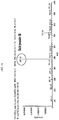
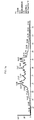
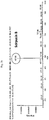
FIGs. 2 ,2a ,2b and3 ,3a ,3b and3c show the LC-MS analysis of subfractions III and IV respectively of the ethyl acetate layer naturally enriched with piceatannol dimers scirpusin A and scirpusin B. -
FIG. 4 and5 show the data from the HRMS indicating that the [M+H] values obtained therein correspond very well with the structure of the dimer and reported data (Sano et al., 2011) on the same. - The present invention relates to a process for the bioactivity guided fractionation of the rhizomes of Cyperus rotundus to obtain anti-adipogenic/anti-obesity compositions comprising A. scirpusin A and scirpusin B represented by
STR# 1 and STR#2 and B. piceatannol and its dimers scirpusin A and scirpusin B represented bySTR# 1 and STR#2 respectively, said process comprising the steps of: - 1. Drying the rhizomes of Cyperus rotundus and pulverizing the same to form a coarse powder;
- 2. Extracting the powder of
step 1 with 3 volumes of hexane followed by heating, reflux for 3 hours and filtering to obtain the hexane soluble fraction and spent material; - 3. Extracting the spent material of step 2 with 3 volumes of methanol followed by heating, reflux for 3 hours and filtering to obtain the methanol soluble active fraction and spent material;
- 4. Solubilizing the methanol soluble active fraction of
step 3 in aqueous methanol and successively partitioning with chloroform (CHCl3), Ethyl acetate (EtOAc) and methanol to obtain the chloroform layer, ethyl acetate layer and the aqueous methanol layer respectively. - 5. Subjecting the chloroform layer, ethyl acetate layer and the aqueous methanol layer to further bioactivity guided fractionation, wherein the bioactivity parameter is the ability of the chloroform layer, ethyl acetate layer and the aqueous methanol layer to inhibit adipogenesis in 3T3-L1 mouse adipocytes (mammalian adipocytes).
- 6. Calculating the IC50 (µg/ml) values for adipogenesis inhibition exemplified by chloroform layer, ethyl acetate layer and the aqueous methanol layer (0, 9.39 and 66.42 respectively).
- 7. Fractionation of the ethyl acetate layer using column fractionation to identify the bioactivity (adipogenesis inhibition) biomarker, said fractionation includes the step where fractions are eluted with increasing polarity of methanol: chloroform to yield subfractions of the ethyl acetate layer (fraction).
- 8. Subjecting the sub fractions of step 7 for bioactivity (anti-adipogenesis) analysis.
- 9. Identifying the most bioactive sub fractions of step 8 and subjecting the same to LC-MS analysis to identify the bioactive principles scirpusin A and scirpusin B;
- 10. Subjecting sub fractions of step 7 through the preparative HPLC to obtain purified dimer and subjecting the same to High Resolution Mass Spectroscopy (HRMS), liquid chromatography-mass spectrometry (LC-MS/MS) and Nuclear Magnetic Resonance Spectroscopy (NMR) to confirm the mass and structures of scirpusin bioactive principles.
- The present inventors investigated the hexane extract referred in step 2 preceding and found that Scirpusin A & Scirpusin B were not present. Hence hexane extract in
step 1 is constitutionally different from ethyl acetate fraction detailed in step 7. Thus the ethyl acetate extract of Cyperus rotundus is quite different from the hexane extract that was the subject of investigation in Lemaure et al. 2007. Phytother Res. 21: 724 - 730 - The following sections of this specification consist of illustrative examples of the most preferred embodiments of the present invention.
- Dried rhizomes of Cyperus rotundus were pulverized to form a coarse powder. The pulverized powder was then extracted with 3 volumes of hexane followed by heating, reflux for 3 hours and filtering to obtain the hexane soluble fraction and spent material. The spent material is further extracted with 3 volumes of methanol followed by heating, reflux for 3 hours and filtering to obtain the methanol soluble active fraction and spent material. The methanol soluble fraction is solubilized in aqueous methanol and successively partitioned with chloroform (CHCl3), Ethyl acetate (EtOAc) and methanol to obtain the chloroform layer, ethyl acetate layer and the aqueous methanol layer respectively. The chloroform layer, ethyl acetate layer and the aqueous methanol layer are subjected to further bioactivity guided fractionation, wherein the bioactivity parameter was the ability of the chloroform layer, ethyl acetate layer and the aqueous methanol layer to inhibit adipogenesis in 3T3-L1 mouse adipocytes (mammalian adipocytes). The steps of the Oil Red O staining technique as adapted from Salazar Olivo et al (1995), Wu Z et al (1998), Fu M et al (2005) to study extent of adipogenesis inhibition is explained in EXAMPLE 1A herein below. The results are mentioned in Table A.
- EXAMPLE 1A: Terminal differentiation of adipocytes is accompanied by the accumulation of great amounts of lipids in large cytoplasmic vesicles. A common assay to measure adipocyte differentiation in cell culture is with the dye Oil Red-O (ORO). ORO is a lipid-soluble bright red dye which is a reliable indicator of adipocyte differentiation.
- Principle: Oil Red O (Solvent Red 27, Sudan Red 5B, C.I. 26125, and C26H24N4O) is a lysochrome (fat-soluble dye) diazo dye used for staining of neutral triglycerides and lipids on frozen sections and some lipoproteins on paraffin sections. It has the appearance of a red powder with maximum absorption at 518(359) nm. Oil Red O is one of the dyes used for Sudan staining. Similar dyes include Sudan III, Sudan IV, and Sudan Black B. The staining has to be performed on fresh samples, as alcohol fixation removes the lipids. Oil Red O largely replaced Sudan III and Sudan IV, as it provides much deeper red color and the stains are therefore much easier to see. Oil red O is an oil soluble dye. Oil soluble dyes exhibit greater solubility of the dye in lipoid substances in the tissues/cells, than in the usual hydro alcoholic dye solvents. Hence, it will deeply stain the cells.
- 3T3-L1 cells approximately 60 X 104 cells are seeded for 48-72 hrs to get 70-80% confluence. After 48
hrs 200 µl of AIM (Adipogenesis induction medium) freshly prepared is added. 72 hrs later 200 µl APM (Adipogenesis progression medium) with the test compounds in different concentrations is added to the wells. The cells are incubated for 48 hrs in a humidified atmosphere (370 C) of 5% CO2 and 95% air. The supernatant is collected and stored for the estimation of leptin, adiponectin, IL-6 and TNF-alpha. Cells are fixed by adding 100 µl of 10% formalin and ORO staining is done. OD is read at 492 nm in microplate reader. - The results are expressed as IC50 values using Graphpad prism software. The percentage of inhibition of adipogenesis is calculated as follows,

- Where C-absorbance of Oil red O in differentiating/undifferentiated cells
T-absorbance of Oil red O in sample treated differentiating/undifferentiated cells.Table A Sample Percent inhibition at variable concentration IC50 µg/ml 3.12 µg/ml 6.25 µg/ml 12.5 µg/ml 25 µg/ ml 50 µg/ml Hexane layer 1.29% 12.09% 18.97% 26.25% 40.13% 52.22 Methanol layer -NIL- 5.58% 13.7% 25.75% 41.74% 66.42 CHCl3 layer -NIL- 8.91% 9.58% 24.21% 26.66% - (EtOAc) layer 18.98% 26.77% 53.55% 73.63% 88.41% 9.39 - The ethyl acetate layer exemplified the best bioactivity in terms of adipogenesis inhibition with an IC50 (µg/ml) value of 9.39. This fraction was then subjected to column fractionation to identify the bioactivity (adipogenesis inhibition) biomarker. Column fractionation involved the step of eluting sub fractions of the ethyl acetate layer with increasing polarity of methanol: chloroform mixture. The sub fractions of ethyl acetate layer are labeled as I, II, III and IV are subjected to bioactivity (anti-adipogenesis) evaluation. The essential steps of anti-adipogenic activity evaluation involves the procedure outlined herein above EXAMPLE 1A. The results are summarized herein below in Table B.
Table B SAMPLE IC50 µg/ml Sub fraction I (Non-polar constituents) 23.21 Sub fraction II (Naturally enriched in piceatannol along with dimers scirpusin A and scirpusin B) 41.05 Sub fraction III (Naturally enriched in piceatannol dimers scirpusin A and scirpusin B) 13.31 Sub fraction IV (Naturally enriched in piceatannol dimers scirpusin A and scirpusin B) 18.75 - Sub fractions III and IV were then subjected to LC-MS with both fractions being enriched in piceatannol dimers scirpusin A and scirpusin B (
FIGs 2 and3 ). The LC-MS/MS analysis was performed on Thermo Electronics Finnigan LCQ Advantage MAX spectrometer using an RP C18 column (250 x 4.6 mm, 5µ particle size). The system consisted of a Thermo-Finnigan surveyor PDA detector, an LC pump and an autosampler. The Mobile Phase included a Gradient run for 35 minutes with Solvent (A) 0.1% Acetic acid in water and Solvent (B) Acetonitrile. Solvent B concentration increased from 5% during 0-5 minutes, 5 - 60 % during 5-20 minutes, 60 -100 % during 20-25 minutes, 100 - 5% during 25-27 minutes and remained constant at 5% during 27-35 minutes. The Stationary phase included Thermo BDS hypersil, C18 Column (Dimension - 250mm x 4.6mm); Flow rate: 1 ml/min; Detection Range: 260 nm - Ionization parameters: APCI positive mode, Source voltage - 4.50 kV, Capillary temperature - 225 degrees, Capillary voltage - 43.00 V.
- Data interpretation: Mass of Scirpusin A is reported to be 470.13. The mass [M+H] observed at 18.77 min in positive ionization mode using the above protocol is 471.08. Mass of Scirpusin B is reported to be 486. The mass [M+H] observed at 17.94 min in positive ionization mode is 487.05.
- The first level of confirmation of the presence of dimers of Piceatannol in the Cyperus extract was based on this preliminary information on mass. Scirpusin A was directly confirmed by direct comparison with an authentic sample of Scirpusin A.
- Subfractions were then subjected through the preparative HPLC to obtain purified dimer scirpusin B which was then studied using the analytical tools High Resolution Mass Spectroscopy (HRMS), liquid chromatography-mass spectrometry (LC-MS/MS) and Nuclear Magnetic Resonance Spectroscopy (NMR) to be confirmed as scirpusin B. Data from the HRMS indicated [M+H]=487.138 which matched very well with the structure of the dimer and reported data (Sano et al., 2011) on the same (
FIGs. 4 and5 ) and the structure of scirpusin B was also confirmed using cryogenic probe NMR (FIG. 6). The compound was identified after comparison with the data available in literature (Sano et al., 2011). NMR data (CD3OD): δ: 56.73, 93.50, 95.39, 100.79, 102.93, 105.87 x 2, 112.21, 112.63, 114.83, 114.91, 117.03, 118.42, 118.61, 122.17, 129.46, 129.53, 133.53, 135.60, 144.90, 145.01, 145.09, 145.21, 146.27, 158.36, 158.56 x 2, 161.46. The APT (Attached Proton Test) NMR spectrum obtained at 500 MHz further confirmed the structure of Scirpusin B. Authentic sample of Scirpusin B was also isolated from passion fruits isolated by Sano et al., 2011 and compared directly with Scirpusin B isolated by us from Cyperus rotundus as described above and the identity of HPLC retention times, mass spec data and NMR data corroborated the presence of Scirpusin B in Cyperus rotundus in the most convincing way. - Objective of the test: The objective of the study was to evaluate the efficacy of Cypro-AF and Cypro-D1 extracts for anti-obesity effect in C57 mice.
-
Animal species Mice Strain C57 Body weight range Males: 22-27g; Females: 20-24g Age at treatment 8-10 weeks Number of Groups 6 groups (One Control, One High fat diet control and Four treatment groups) Number of animals / group Each group contained 10 animals (5 Males + 5 Females). Female animals used were nulliparous and non-pregnant. Total No. of animals 60 Identification Cage cards and individual animal ear notching method. -
Conditions The animals were housed under standard laboratory conditions, air-conditioned with adequate fresh air supply (Air changes 12-15 per hour), room temperature 22 ± 3°C, relative humidity 30-70 %, with 12 hours light and 12 hours dark cycle. The temperature and relative humidity were recorded once daily.Housing Individual animals were housed in a standard polypropylene cage (Size: L 290 x B 140 x H 140 mm) with stainless steel mesh top grill having facilities for holding pellet feed and drinking water in water bottle fitted with stainless steel sipper tube. Clean sterilized paddy husk was provided as bedding material. Acclimatization The animals were acclimatized for 7 days to laboratory conditions and were observed for clinical signs daily. Diet The animals were fed ad libitum with VRK's "Scientist's Choice" brand Laboratory animal feed manufactured by VRK Nutritional Solutions, Bibwewadi - Kondhwa Road, Pune. throughout the acclimatization period. D12450B diet (with 10 kcal% Fat) and D12492 High fat diet (with 60 kcal% Fat) manufactured by Research Diet Inc, USA procured from Indus Marketing, Hyderabad, Andhra Pradesh, INDIA was used for Induction of obesity and Main study. Water Clean drinking water was provided ad libitum throughout the acclimatization and Obesity induction period. Deep bore-well water passed through Reverse osmosis unit was provided in plastic water bottles with stainless steel sipper tubes. - Grouping: Grouping of animals was done on the last day of acclimatization by body weight randomization and stratification method. Grouping of animals was done such that body weight variation of animals used does not exceed ±20% of the mean body weight of each group.
- Study Design: The animals were divided into 6 groups viz.,
Group Group Treatment Dose (mg/kg Bwt) Number of Animals Animal Numbers Male Female Male Female G1 Control (with 10 kcal% Fat) - 5 5 1-5 31-35 G2 High fat diet Control (with 60 kcal% Fat) - 5 5 6-10 36-40 G3 CYPRO- AF 50 mg/kg + High fat diet (with 60 kcal% Fat)50 5 5 11-15 41-45 G4 CYPRO- AF 100 mg/kg + High fat diet (with 60 kcal% Fat)100 5 5 16-20 46-50 G5 CYPRO- AF 200 mg/kg + High fat diet (with 60 kcal% Fat)200 5 5 21-25 51-55 G6 CYPRO-D1 - 10 mg/kg + High fat diet (with 60 kcal% Fat) 10 5 5 26-30 56-60 Total: 30 30 - - Total number of animals: 60 - The test items Cypro-AF and Cypro-D1 were dissolved in distilled water for formulating different doses. Freshly formulated test items were administered through oral route by gavage. The volume of dosage per animal was maintained at 10 ml/kg body weight for all the animals throughout the study period. The following table provided details of the test formulation.
Group Dose (mg/kg Bwt) Concentration (mg/ml) Quantity (mg) Volume of distilled water (ml) G1 - - - 4.0 G2 - - - 4.0 G3 50 5 20 4.0 G4 100 10 40 4.0 G5 200 20 80 4.0 G6 10 1 4 4.0 - Obesity induction: The G1 Control group animals were fed with normal control diet feed D12450B containing 10 kcal% fat and the G2 to G6 group animals were fed with high fat diet feed D12492 containing 60 kcal% fat during the induction of obesity and during main study.
- Main study was started after the induction of obesity. The 3 doses of Cypro-AF and 1 dose of Cypro-D1 were administered to animals from Day 28 daily consecutively for a period of 27 days. The feeding of the diets continued in the main study was done in induction of obesity. The G1 Control and G2 High fat diet control group animals administered with distilled water while other groups animals received test items from Day 28 to Day 54 of the study period. The dose volume of administration was maintained according to the weekly body weight of individual animals. The total duration of the study was 61 days (7 days Acclimatization period + 27 days Induction of obesity + 27 days Main study).
- The following observations were made for during the study period.
- Individual animal feed consumption were recorded. Weekly average feed consumption was calculated and recorded.
- Individual animal body weights were recorded on the day of receipt on
Day 1 and weekly (±1 day) thereafter during the study period. - All the animals were clinically observed twice daily during the study period.
- At the completion of the study period, blood samples were collected from the animals in tubes containing potassium ethylene di-amide tetra acetic acid (K2-EDTA) anticoagulant for hematology and without anticoagulant for clinical chemistry. The blood samples collected in tubes without anticoagulant were centrifuged at 3000 rpm for 10 minutes to obtain serum. Blood samples were collected humanely from retro-orbital plexus puncture method under mild ether anesthesia with the help of a fine capillary tube. The following hematology and clinical chemistry parameters were analyzed.
- The following hematology parameters were estimated using Sysmex, KX-21 (Transasia Bio-Medicals Ltd., India):
Parameters Units Hemoglobin (Hb) g/dL Haematocrit (Hct) % Erythrocyte Count 106 cells/µL Total Leukocyte Count 103 cells/µL Mean corpuscular volume (MCV) fL Mean corpuscular hemoglobin (MCH) Pg Mean corpuscular hemoglobin concentration (MCHC) g/ dL Platelet Count 103 cells/µL Differential Leucocytes Count (DLC) % Clotting time secs - The following clinical chemistry parameters were analyzed using the "Erba Mannheim Chem Touch analyzer" (Transasia Bio-Medicals Ltd., India) from serum samples.
Parameters Units Total Protein g/dL Albumin g/dL Glucose mg/dL Alanine aminotransferase (ALT) IU/L Aspartate aminotransferase (AST) IU/L Triglycerides mg/dL Total Cholesterol mg/dL High Density lipid (HDL) mg/dL Very Low density lipid (VLDL) mg/dL Low density Lipid (LDL) mg/dL - After the completion of the study period, on Day 55, all the animals were humanely sacrificed by exposing them to excess carbon-di-oxide in gas chamber and subjected to following external and internal gross necropsy.
- The animals were subjected to external and internal gross pathological examinations.
- The following organs from all animals was trimmed of any adherent tissue, as appropriate and weighed wet as soon as possible to avoid drying: Brain, Thymus, Liver, Adrenals, Kidneys (paired organs), spleen, Heart, Ovaries/Testes (paired organs).
- The following fat deposits from all the animals was collected and weighed.
- 1. Epididymal Fat
- 2. Brown Fat
- 3. Ovarian Fat
- The raw data obtained from the present study were subjected to computer statistical processing. The computer printout of the data (in the form of appendix) was verified with the original raw data. After verification, the data was subjected to One-way ANOVA (Analysis of Variance) with Dunnett's post test for the data on body weights, hematology and clinical chemistry parameters, organ weights using GraphPad Prism version 5.01, GraphPad Software. All analyses and comparisons will be evaluated at the 95% level of confidence (P<0.05), indicated by the designated by the superscripts of a where G1 is compared to G3, G4, G5, and G6 and b where G2 is compared to G3, G4, G5, and G6 throughout the report as stated below: *: Statistically significant (P<0.05) wherever applicable.
- The data were subjected to One way - ANOVA statistical analysis by comparing the following:
G1 group {Control group (with 10 kcal% Fat)} to G3 group {CYPRO-AF 50 mg/kg + High fat diet (with 60 kcal% Fat)}, G4 group {CYPRO-AF -100 mg/kg + High fat diet (with 60 kcal% Fat)}, G5 group {CYPRO-AF 200 mg/kg + High fat diet (with 60 kcal% Fat)} and G6 group {CYPRO-D1 10 mg/kg + High fat diet (with 60 kcal% Fat)} as represented below:G1 group Control group (with 10 kcal% Fat) G3 group CYPRO- AF 50 mg/kg + High fat diet (with 60 kcal% Fat)G4 group CYPRO-AF -100 mg/kg + High fat diet (with 60 kcal% Fat) G5 group CYPRO- AF 200 mg/kg + High fat diet (with 60 kcal% Fat)G6 group CYPRO- D1 10 mg/kg + High fat diet (with 60 kcal% Fat)
G2 - High fat diet Control (with 60 kcal% Fat) to G3 group {CYPRO-AF 50 mg/kg + High fat diet (with 60 kcal% Fat)}, G4 group {CYPRO-AF -100 mg/kg + High fat diet (with 60 kcal% Fat)}, G5 group {CYPRO-AF 200 mg/kg + High fat diet (with 60 kcal% Fat)} and G6 group {CYPRO-D1 10 mg/kg + High fat diet (with 60 kcal% Fat)} as represented shown below:G2 group High fat diet Control (with 60 kcal% Fat) G3 group CYPRO- AF 50 mg/kg + High fat diet (with 60 kcal% Fat)G4 group CYPRO-AF -100 mg/kg + High fat diet (with 60 kcal% Fat) G5 group CYPRO- AF 200 mg/kg + High fat diet (with 60 kcal% Fat)G6 group CYPRO- D1 10 mg/kg + High fat diet (with 60 kcal% Fat) - The summary of weekly average feed consumption of male and female animals is presented in Table-1 and Table-2 respectively. There were no statistical significant differences in the feed consumption of animals during the study period.
Table-1-Summary of weekly average feed consumption (g) of male animals FEED CONSUMPTION (g) Group Treatment Days 7 14 21 28 35 42 49 54 G1a Control (with 10 kcal% fat) 2.80±0.13 3.50±0.11 4.46±0.10 4.55±0.11 5.15±0.18 4.63±0.23 4.82±0.19 5.10±0.25 G2b High fat diet Control (with 60 kcal% Fat) 2.86±0.21 3.63±0.15 4.38±0.42 4.77±0.21 5.00±0.27 4.89±0.20 4.83±0.23 4.96±0.14 G3 CYPRO-AF 50 mg/kg + High fat diet (with 60 kcal% Fat) 2.79±0.19 3.67±0.14 4.45±0.10 4.75±0.19 5.12±0.16 4.89±0.35 4.96±0.04 4.92±0.47 G4 CYPRO-AF 100 mg/kg + High fat diet (with 60 kcal% Fat) 2.73±0.16 3.64±0.19 4.27±0.24 4.75±0.18 5.12±0.05 4.73±0.28 4.99±0.16 5.15±0.19 G5 CYPRO-AF 200 mg/kg + High fat diet (with 60 kcal% Fat) 2.99±0.09 3.63±0.15 4.41±0.10 4.84±0.06 5.20±0.13 4.89±0.14 5.02±0.09 5.12±0.12 G6 CYPRO-D1 10 mg/kg + High fat diet (with 60 kcal% Fat) 2.87±0.21 3.66±0.18 4.34±0.26 4.63±0.25 5.03±0.26 4.91±0.10 5.01±0.19 5.21±0.25 n=5; Values are Mean ± Standard Deviation; P>0.05 Table-2: Summary of weekly average feed consumption (G) of female animals FEED CONSUMPTION Group Treatment Days 7 14 21 28 35 42 49 56 G1a Control (with 10 kcal% fat) 2.90±0.25 3.42±0.30 3.87±0.31 4.40±0.51 4.88±0.24 4.95±0.15 4.54±0.19 4.51±0.15 G2b High fat diet Control (with 60 kcal% Fat) 2.92±0.37 3.53±0.25 3.54±0.33 4.17±0.41 4.80±0.36 4.59±0.31 4.36±0.08 4.43±0.13 G3 CYPRO-AF 50 mg/kg + High fat diet (with 60 kcal% Fat) 2.77±0.26 3.27±0.32 3.48±0.22 4.27±0.49 4.75±0.55 5.11±0.09 4.42±0.14 4.33±0.23 G4 CYPRO-AF 100 mg/kg + High fat diet (with 60 kcal% Fat) 2.72±0.15 3.40±0.69 3.59±0.37 4.59±0.27 4.55±0.33 4.89±0.08 4.35±0.21 4.38±0.17 G5 CYPRO-AF 200 mg/kg + High fat diet (with 60 kcal% Fat) 2.90±0.38 3.34±0.30 3.56±0.46 4.37±0.31 4.42±0.39 5.02±0.26 4.63±0.30 4.26±0.12 G6 CYPRO-D1 10 mg/kg + High fat diet (with 60 kcal% Fat) 3.08±0.21 3.80±0.53 3.59±0.31 4.65±0.28 4.54±0.14 5.09±0.19 4.56±0.15 4.31±0.19 n=5; Values are Mean ± Standard Deviation; P>0.05 - The summary of weekly body weight of male and female animals is presented in Table-3 and Table-4 respectively.
Table-3: Summary of body weight (G) of male animals BODY WEIGHT (g) Group Treatment Days 1 7 14 21 28 35 42 49 55 G1a Control (with 10 kcal% fat) 23.34±1.11 23.50±0.93 23.88±1.08 23.48±0.86 25.04±1.05 26.70±1.40 28.62±3.31 29.16±3.75 31.00±4.12 G2b High fat diet Control (with 60 kcal% Fat) 23.48±1.06 24.10±0.86 24.58±1.09 26.12±1.12 28.48±1.98 30.72±1.72 32.50±1.53 33.66±1.78 35.20±0.95 G3 CYPRO-AF 50 mg/kg + High fat diet (with 60 kcal% Fat) 23.42±1.06 24.30±1.63 24.90±1.71 25.96±1.49 27.80±2.84 29.48±3.50 30.28±3.39 30.98±2.95 33.34±1.78 G4 CYPRO-AF 100 mg/kg + High fat diet (with 60 kcal% Fat) 23.24±1.18 23.78±1.62 24.68±1.48 26.14±2.12 28.70±1.72 29.22±3.06 30.04±3.38 30.00±2.85 32.94±2.49 G5 CYPRO-AF 200 mg/kg + High fat diet (with 60 kcal% Fat) 23.60±1.03 24.32±0.60 24.98±1.31 26.08±1.01 28.90±0.82 30.60±1.65 30.50±3.28 31.06±3.61 33.46±3.40 G6 CYPRO-D1 10 mg/kg + High fat diet (with 60 kcal% Fat) 23.68±1.20 24.50±1.19 25.24±1.18 26.26±1.53 29.04±3.11 29.62±3.76 29.86±2.86 30.58±2.63 33.38±2.76 n=5; Values are Mean ± Standard Deviation; P>0.05 Table-4: Summary of body weight (G) of female animals BODY WEIGHT (g) Group Treatment Days 1 7 14 21 28 35 42 49 55 G1a Control (with 10 kcal% fat) 21.08±0.82 21.70±0.81 22.24±0.26 23.12±0.68 23.98±1.17 24.82±2.41 25.10±2.59 26.12±1.91 27.74±1.02 G2b High fat diet Control (with 60 kcal% Fat) 21.38±1.02 22.02±0.67 22.20±0.98 23.10±0.76 25.04±0.34 26.40±0.89 28.26±0.78 30.70±1.70 33.02±1.80 G3 CYPRO-AF 50 mg/kg + High fat diet (with 60 kcal% Fat) 21.14±0.87 21.76±0.36 22.76±0.68 24.30±0.85 25.84±0.81 25.30±1.35 26.62±1.68 28.66±1.01 30.58±1.76 G4 CYPRO-AF 100 mg/kg + High fat diet (with 60 kcal% Fat) 21.32±1.03 21.62±1.53 23.68±1.08 25.56±1.19 26.32±0.69 26.30±1.30 26.84±2.34 28.08±3.07 30.30±3.54 G5 CYPRO-AF 200 mg/kg + High fat diet (with 60 kcal% Fat) 20.94±0.95 21.32±1.18 23.14±0.97 24.94±1.32 26.12±0.98 25.90±1.23 26.30±2.04 27.62±1.06 30.22±1.63 G6 CYPRO-D1 10 mg/kg + High fat diet (with 60 kcal% Fat) 21.34±1.27 21.58±0.69 23.16±1.08 25.46±0.86 26.72±0.61 26.18±0.98 26.08±1.47 28.44±1.82 29.78±1.74 n=5; Values are Mean ± Standard Deviation;* - Significant difference, P<0.05 - In male animals, there was statistical significant increase in mean weekly body weight values of on
Day 21 in G3 group {CYPRO-AF - 50 mg/kg + High fat diet (with 60 kcal% Fat)}, G4 group {CYPRO-AF - 100 mg/kg + High fat diet (with 60 kcal% Fat)}, G5 group {CYPRO-AF -200 mg/kg +High fat diet (with 60 kcal% Fat)} and G6 group {CYPRO-D1 - 10 mg/kg + High fat diet (with 60 kcal% Fat)} compared to G1 group {Control group (with 10 kcal% Fat)}. These changes were considered to be due to difference in fat content of the feed. - In male animals, there was statistical significant increase in mean weekly body weight values of on Day 28 in G4 group {CYPRO-AF - 100 mg/kg + High fat diet (with 60 kcal% Fat)}, G5 group {CYPRO-AF -200 mg/kg + High fat diet (with 60 kcal% Fat)} and G6 group {CYPRO-D1 - 10 mg/kg + High fat diet (with 60 kcal% Fat)} compared to G1 group {Control group (with 10 kcal% Fat)}. These changes were considered to be due to difference in fat content of the feed.
- In male animals, there was decrease in mean weekly body weight values of on
Day 35, 42, 49 and 55 in G3 group {CYPRO-AF - 50 mg/kg + High fat diet (with 60 kcal% Fat)}, G4 group {CYPRO-AF - 100 mg/kg + High fat diet (with 60 kcal% Fat)}, G5 group {CYPRO-AF - 200 mg/kg + High fat diet (with 60 kcal% Fat)} and G6 group {CYPRO-D1 - 10 mg/kg + High fat diet (with 60 kcal% Fat)} compared to G1 group {Control group (with 10 kcal% Fat)}. These changes were considered to be due to administration of test items. - In female animals, there was statistical significant increase in mean weekly body weight values of on
Day 21 in G4 group {CYPRO-AF - 100 mg/kg + High fat diet (with 60 kcal% Fat)}, G5 group {CYPRO-AF -200 mg/kg + High fat diet (with 60 kcal% Fat)} and G6 group {CYPRO-D1 - 10 mg/kg + High fat diet (with 60 kcal% Fat)} compared to G1 group {Control group (with 10 kcal% Fat)}. These changes were considered to be due to difference in fat content of the feed. - In female animals, there was statistical significant increase in mean weekly body weight values of on Day 28 in G3 group {CYPRO-AF - 50 mg/kg + High fat diet (with 60 kcal% Fat)}, G4 group {CYPRO-AF - 100 mg/kg + High fat diet (with 60 kcal% Fat)}, G5 group {CYPRO-AF -200 mg/kg + High fat diet (with 60 kcal% Fat)} and G6 group {CYPRO-D1 - 10 mg/kg + High fat diet (with 60 kcal% Fat)} compared to G1 group {Control group (with 10 kcal% Fat)}. These change were considered to be due to difference in fat content of the feed.
- In female animals, there was decrease in mean weekly body weight values of on
Day 35, 42, 49 and 55 in G3 group {CYPRO-AF - 50 mg/kg + High fat diet (with 60 kcal% Fat)}, G4 group {CYPRO-AF - 100 mg/kg + High fat diet (with 60 kcal% Fat)}, G5 group {CYPRO-AF -200 mg/kg + High fat diet (with 60 kcal% Fat)} and G6 group {CYPRO-D1 - 10 mg/kg + High fat diet (with 60 kcal% Fat)} compared to G1 group {Control group (with 10 kcal% Fat)}. These change were considered to be due to administration of test items. - The summary of clinical signs of male and female animals is presented in Table-5 and Table-6 respectively. The animals were found to healthy and normal in health status during the clinical observations during the study period.
Table-5: Summary of Clinical Signs Observations in Male Animals Group CLINICAL SIGNS OBSERVATIONS Treatment Days 1 2-7 8-14 15-21 22-28 29-35 36-42 43-49 50-55 G1a Control (with 10 kcal% fat) N N N N N N N N N G2b High fat diet Control (with 60 kcal% Fat) N N N N N N N N N G3 CYPRO-AF 50 mg/kg + High fat diet (with 60 kcal% Fat) N N N N N N N N N G4 CYPRO-AF 100 mg/kg + High fat diet (with 60 kcal% Fat) N N N N N N N N N G5 CYPRO-AF 200 mg/kg + High fat diet (with 60 kcal% Fat) N N N N N N N N N G6 CYPRO-D1 10 mg/kg + High fat diet (with 60 kcal% Fat) N N N N N N N N N n=5; N-Normal Table- 6: Summary of clinical signs observations of female animals Group CLINICAL SIGNS OBSERVATIONS Treatment Days 1 2-7 8-14 15-21 22-28 29-35 36-42 43-49 50-55 G1a Control (with 10 kcal% fat) N N N N N N N N N G2b High fat diet Control (with 60 kcal% Fat) N N N N N N N N N G3 CYPRO-AF 50 mg/kg + High fat diet (with 60 kcal% Fat) N N N N N N N N N G4 CYPRO-AF 100 mg/kg + High fat diet (with 60 kcal% Fat) N N N N N N N N N G5 CYPRO-AF 200 mg/kg + High fat diet (with 60 kcal% Fat) N N N N N N N N N G6 CYPRO-D1 10 mg/kg + High fat diet (with 60 kcal% Fat) N N N N N N N N N n=5; N-Normal - The summary of hematological parameters estimations of male and female animals is presented in Table-7 and Table-8 respectively.


- Hematology parameters statistical analysis comparison between G1 to G3, G4, G5, and G6
- In male animals, there was statistical significant increase in mean MCHC value of G4 group {CYPRO-AF -100 mg/kg + High fat diet (with 60 kcal% Fat)} compared to G1 group {Control group (with 10 kcal% Fat)}. These changes can be considered as incidental as there was no dose dependent response.
- In female animals, there was statistical significant increase in mean MCV and MCH values of G3 group {CYPRO-AF -50 mg/kg + High fat diet (with 60 kcal% Fat)} compared to G1 group {Control group (with 10 kcal% Fat)}. These changes can be considered as incidental as there was no dose dependent response.
- In female animals, there was statistical significant increase in mean MCH and MCHC values of G5 group {CYPRO-AF -200 mg/kg + High fat diet (with 60 kcal% Fat)} compared to G2 group {High fat diet control group (with 60 kcal% Fat)}. This change can be considered as incidental as there was no dose dependent response.
- The summary of clinical chemistry parameters estimations of male and female animals is presented in Table-9 and Table-10 respectively.


- Clinical chemistry parameters statistical analysis comparison between G1 to G3, G4, G5, and G6
- In female animals, there was statistical significant decrease in mean Total protein values of G3 group {CYPRO-AF -50 mg/kg + High fat diet (with 60 kcal% Fat)} and G4 group {CYPRO-AF -100 mg/kg + High fat diet (with 60 kcal% Fat)} compared to G1 group {Control group (with 10 kcal% Fat)}. These changes were considered to be due to difference in fat content of the feed.
- In female animals, there was statistical significant decrease in mean Triglyceride values G3 group {CYPRO-AF -50 mg/kg + High fat diet (with 60 kcal% Fat)}, G4 group {CYPRO-AF -100 mg/kg + High fat diet (with 60 kcal% Fat)}, G5 group {CYPRO-AF -200 mg/kg + High fat diet (with 60 kcal% Fat)} and G6 group {CYPRO-D1 - 10 mg/kg + High fat diet (with 60 kcal% Fat)} compared to G1 group {Control group (with 10 kcal% Fat)}. These change were considered to be due to difference in fat content of the feed.
- In male animals, there was statistical significant increase in mean Total Cholesterol value of G3 group {CYPRO-AF -50 mg/kg + High fat diet (with 60 kcal% Fat)} and G6 group {CYPRO-
D1 10 mg/kg + High fat diet (with 60 kcal% Fat)} compared to G1 group {Control group (with 10 kcal% Fat)}. These change were considered to be due to difference in fat content of the feed. - In female animals, there was statistical significant increase in mean Total Cholesterol values of G5 group {CYPRO-AF -200 mg/kg + High fat diet (with 60 kcal% Fat)} compared to G1 group {Control group (with 10 kcal% Fat)}. This change can be considered due to difference in fat content of the feed.
- In male animals, there was statistical significant decrease in mean High density lipids value of G5 group {CYPRO-AF - 200 mg/kg + High fat diet (with 60 kcal% Fat)} compared to G1 group {Control group (with 10 kcal% Fat)}. This change can be considered due to difference in fat content of the feed.
- In male animals, there was statistical significant increase in mean Low density lipids value of G3 group {CYPRO-AF -50 mg/kg + High fat diet (with 60 kcal% Fat)}, G4 group {CYPRO-AF -100 mg/kg + High fat diet (with 60 kcal% Fat)} and G6 group {CYPRO-D1 - 10 mg/kg + High fat diet (with 60 kcal% Fat)} compared to G1 group {Control group (with 10 kcal% Fat)}. These change were considered to be due to difference in fat content of the feed.
- In female animals, there was statistical significant increase in mean Very low density lipids value of G5 group {CYPRO-AF - 200 mg/kg + High fat diet (with 60 kcal% Fat)} compared to G1 group {Control group (with 10 kcal% Fat)}. This change can be considered due to difference in fat content of the feed.
- Clinical chemistry parameters statistical analysis comparison between G2 to G3, G4, G5, and G6
- In male animals, there was decrease in mean Triglycerides values of G3 group {CYPRO-
AF 50 mg/kg + High fat diet (with 60 kcal% Fat)}, G4 group {CYPRO-AF -100 mg/kg + High fat diet (with 60 kcal% Fat)}, G5 group {CYPRO-AF 200 mg/kg + High fat diet (with 60 kcal% Fat)} and G6 group {CYPRO-D1 10 mg/kg + High fat diet (with 60 kcal% Fat)} compared to G2 group High fat diet Control (with 60 kcal% Fat). This decrease in mean Triglycerides values changes could be due the effect of the test items. - In female animals, there was statistical significant decrease in mean Triglycerides values of G6 group {CYPRO-
D1 10 mg/kg + High fat diet (with 60 kcal% Fat)} compared to G2 group High fat diet Control (with 60 kcal% Fat). This decrease in mean Triglyceride values changes could be due the effect of the test items. - There was decrease in mean Triglyceride values of G3 group {CYPRO-
AF 50 mg/kg + High fat diet (with 60 kcal% Fat)}, G4 group {CYPRO-AF 100 mg/kg + High fat diet (with 60 kcal% Fat)} and G5 group {CYPRO-AF 200 mg/kg + High fat diet (with 60 kcal% Fat)} compared to G2 group High fat diet Control (with 60 kcal% Fat). These decrease in mean Triglyceride values changes could be due the effect of the test items. - In male animals, there was decrease in mean Total Cholesterol values of G3 group {CYPRO-
AF 50 mg/kg + High fat diet (with 60 kcal% Fat)}, G4 group {CYPRO-AF -100 mg/kg + High fat diet (with 60 kcal% Fat)} and G5 group {CYPRO-AF 200 mg/kg + High fat diet (with 60 kcal% Fat)} compared to G2 group High fat diet Control (with 60 kcal% Fat). This decrease in mean Total Cholesterol values changes could be due the effect of the test items. - In female animals, there was decrease in mean Total Cholesterol values of G3 group {CYPRO-
AF 50 mg/kg + High fat diet (with 60 kcal% Fat)}, G4 group {CYPRO-AF 100 mg/kg + High fat diet (with 60 kcal% Fat)}, and G6 group {CYPRO-D1 10 mg/kg +High fat diet (with 60 kcal% Fat)} compared to G2 group High fat diet Control (with 60 kcal% Fat). These decrease in mean Total Cholesterol values changes could be due the effect of the test items. - In male animals, there was statistical significant decrease in mean High density lipids values of G3 group {CYPRO-
AF 50 mg/kg + High fat diet (with 60 kcal% Fat)}, G4 group {CYPRO-AF -100 mg/kg + High fat diet (with 60 kcal% Fat)}, G5 group {CYPRO-AF 200 mg/kg + High fat diet (with 60 kcal% Fat)} and G6 group {CYPRO-D1 10 mg/kg + High fat diet (with 60 kcal% Fat)} compared to G2 group High fat diet Control (with 60 kcal% Fat). - The statistical significant decrease in mean High density lipid values changes could be due the effect of the test items.
- In female animals, there was statistical significant decrease in mean High density lipids values of G3 group {CYPRO-
AF 50 mg/kg + High fat diet (with 60 kcal% Fat)}, G4 group {CYPRO-AF 100 mg/kg + High fat diet (with 60 kcal% Fat)}, G5 group {CYPRO-AF 200 mg/kg + High fat diet (with 60 kcal% Fat)} and G6 group {CYPRO-D1 10 mg/kg + High fat diet (with 60 kcal% Fat)} compared to G2 group High fat diet Control (with 60 kcal% Fat). These decreases in mean High density lipid values changes could be due the effect of the test items. - In male animals, there was decrease in mean Low density lipids values of G5 group {CYPRO-
AF 200 mg/kg + High fat diet (with 60 kcal% Fat)} compared to G2 group High fat diet Control (with 60 kcal% Fat). This decrease in mean Low density lipid values changes could be due the effect of the test items. - In male animals, there was decrease in mean Very low density lipids values of G3 group {CYPRO-
AF 50 mg/kg + High fat diet (with 60 kcal% Fat)}, G4 group {CYPRO-AF -100 mg/kg + High fat diet (with 60 kcal% Fat)}, G5 group {CYPRO-AF 200 mg/kg + High fat diet (with 60 kcal% Fat)} and G6 group {CYPRO-D1 10 mg/kg + High fat diet (with 60 kcal% Fat)} compared to G2 group High fat diet Control (with 60 kcal% Fat). This decrease in mean Very low density lipid values changes could be due the effect of the test items. - In female animals, there was marginal decrease in mean Very low density lipids values of G3 group {CYPRO-
AF 50 mg/kg + High fat diet (with 60 kcal% Fat)}, G4 group {CYPRO-AF 100 mg/kg + High fat diet (with 60 kcal% Fat)}, and G6 group {CYPRO-D1 10 mg/kg + High fat diet (with 60 kcal% Fat)} compared to G2 group High fat diet Control (with 60 kcal% Fat). These decreases in mean Very low density lipid values changes could be due the effect of the test items. - Conclusion: From the present study, it can be concluded that the test items Cypro-AF and Cypro-D1 had an effect on decreasing parameters such as HDL, Triglycerides, Cholesterol, LDL and VLDL concentrations in high fat diet induced obese male and female C57 animals at 50, 100 and 200 mg/kg Bwt of Cypro-AF and 10 mg/kg Bwt of Cypro-D1. No significant statistical changes were observed in the organ weights and fat deposits upon necropsy of animals.
- While the invention has been described with respect to a preferred embodiment it is to be clearly understood by those skilled in the art that the invention is not limited thereto. Rather, scope of the invention is to be interpreted only in conjunction with the appended claims.

Claims (4)
- A process for the bioactivity guided fractionation of the rhizomes of Cyperus rotundus to obtain anti-adipogenic/anti-obesity compositions comprising A. scirpusin A and scirpusin B represented by STR#1 and STR#2 and B. piceatannol and its dimers scirpusin A and scirpusin B represented by STR#1 and STR#2 respectively, said process comprising the steps of:a) Drying the rhizomes of Cyperus rotundus and pulverizing the same to form a coarse powder;b) Extracting the powder of step a) with 3 volumes of hexane followed by heating, reflux for 3 hours and filtering to obtain the hexane soluble fraction and spent material;c) Extracting the spent material of step b) with 3 volumes of methanol followed by heating, reflux for 3 hours and filtering to obtain the methanol soluble active fraction and spent material;d) Solubilizing the methanol soluble active fraction of step c) in aqueous methanol and successively partitioning with chloroform (CHCl3), Ethyl acetate (EtOAc) and methanol to obtain the chloroform layer, ethyl acetate layer and the aqueous methanol layer respectively;e) Subjecting the chloroform layer, ethyl acetate layer and the aqueous methanol layer to further bioactivity guided fractionation, wherein the bioactivity parameter is the ability of the chloroform layer, ethyl acetate layer and the aqueous methanol layer to inhibit adipogenesis in 3T3-L1 mouse adipocytes (mammalian adipocytes);f) Calculating the IC50 (µg/ml) values for adipogenesis inhibition exemplified by chloroform layer, ethyl acetate layer and the aqueous methanol layer (0, 9.39 and 66.42 respectively);g) Fractionation of the ethyl acetate layer using column fractionation to identify the bioactivity (adipogenesis inhibition) biomarker, said fractionation includes the step where fractions are eluted with increasing polarity of methanol: chloroform to yield sub-fractions of the ethyl acetate layer (fraction);h) Subjecting the sub fractions of step g) for bioactivity (anti-adipogenesis) analysis;i) Identifying the most bioactive sub fractions of step h) and subjecting the same to LC-MS analysis to identify the bioactive principles scirpusin A and scirpusin B;j) Subjecting sub fractions of step g) through the preparative HPLC to obtain purified dimer and subjecting the same to High Resolution Mass Spectroscopy (HRMS), liquid chromatography-mass spectrometry (LC-MS/MS) and Nuclear Magnetic Resonance Spectroscopy (NMR) to confirm the mass and structures of scirpusin bioactive principles.

- A process according to claim 1, wherein determination of inhibition of adipogenesis in 3T3-L1 mouse adipocytes comprises Oil Red-O staining of the adipocytes.
- A process according to claim 2, wherein the adipocytes are fixed with formalin before staining.
- A composition, wherein the composition is the ethyl acetate layer obtained in step d) of the process according to claim 1 for use in the treatment of obesity.
Priority Applications (1)
| Application Number | Priority Date | Filing Date | Title |
|---|---|---|---|
| PL16184143T PL3108935T3 (en) | 2012-07-18 | 2013-07-17 | Composition comprising scirpusin a and scirpusin b and anti-obesity potential thereof |
Applications Claiming Priority (3)
| Application Number | Priority Date | Filing Date | Title |
|---|---|---|---|
| US201261672849P | 2012-07-18 | 2012-07-18 | |
| PCT/US2013/050940 WO2014015067A2 (en) | 2012-07-18 | 2013-07-17 | Composition comprising scirpusin a and scirpusin b anti-obesity potential thereof |
| EP13819890.8A EP2744571B1 (en) | 2012-07-18 | 2013-07-17 | Scirpusin a and scirpusin b and anti-obesity potential thereof |
Related Parent Applications (2)
| Application Number | Title | Priority Date | Filing Date |
|---|---|---|---|
| EP13819890.8A Division EP2744571B1 (en) | 2012-07-18 | 2013-07-17 | Scirpusin a and scirpusin b and anti-obesity potential thereof |
| EP13819890.8A Division-Into EP2744571B1 (en) | 2012-07-18 | 2013-07-17 | Scirpusin a and scirpusin b and anti-obesity potential thereof |
Publications (2)
| Publication Number | Publication Date |
|---|---|
| EP3108935A1 EP3108935A1 (en) | 2016-12-28 |
| EP3108935B1 true EP3108935B1 (en) | 2020-04-22 |
Family
ID=49947067
Family Applications (2)
| Application Number | Title | Priority Date | Filing Date |
|---|---|---|---|
| EP16184143.2A Active EP3108935B1 (en) | 2012-07-18 | 2013-07-17 | Composition comprising scirpusin a and scirpusin b and anti-obesity potential thereof |
| EP13819890.8A Active EP2744571B1 (en) | 2012-07-18 | 2013-07-17 | Scirpusin a and scirpusin b and anti-obesity potential thereof |
Family Applications After (1)
| Application Number | Title | Priority Date | Filing Date |
|---|---|---|---|
| EP13819890.8A Active EP2744571B1 (en) | 2012-07-18 | 2013-07-17 | Scirpusin a and scirpusin b and anti-obesity potential thereof |
Country Status (11)
| Country | Link |
|---|---|
| US (1) | US9387193B2 (en) |
| EP (2) | EP3108935B1 (en) |
| JP (1) | JP6135761B2 (en) |
| KR (2) | KR101717889B1 (en) |
| AU (1) | AU2013292593B2 (en) |
| CA (1) | CA2883176C (en) |
| EA (1) | EA025578B1 (en) |
| NZ (1) | NZ622927A (en) |
| PH (1) | PH12015500349B1 (en) |
| PL (2) | PL2744571T3 (en) |
| WO (1) | WO2014015067A2 (en) |
Families Citing this family (4)
| Publication number | Priority date | Publication date | Assignee | Title |
|---|---|---|---|---|
| CA2979195A1 (en) * | 2015-05-06 | 2016-11-10 | Sami Labs Limited | Extracts of cyperus rotundus comprising piceatannol, scirpusin a and scirpusin b useful for the treatment of obesity and hypercholesterolemia |
| CN104910172B (en) * | 2015-06-24 | 2017-07-11 | 辽宁中医药大学 | Five kinds of talan trimer preparation methods and its application |
| US11925671B2 (en) * | 2020-01-17 | 2024-03-12 | Muhammed Majeed | Process and compositions for enhancing energy expenditure |
| CN112666277B (en) * | 2020-11-30 | 2022-07-08 | 四川新绿色药业科技发展有限公司 | HPLC (high Performance liquid chromatography) characteristic spectrum construction and detection method for rhizoma cyperi medicinal materials, decoction pieces, standard decoction and formula granules |
Family Cites Families (8)
| Publication number | Priority date | Publication date | Assignee | Title |
|---|---|---|---|---|
| US8017634B2 (en) * | 2003-12-29 | 2011-09-13 | President And Fellows Of Harvard College | Compositions for treating obesity and insulin resistance disorders |
| US20060110479A1 (en) * | 2004-11-24 | 2006-05-25 | Mitra Shankar K | Natural composition for curing hepatitis-B, methods for making the same and pharmaceutical formulations thereof |
| KR20080050794A (en) * | 2006-12-04 | 2008-06-10 | 장용훈 | Composition for the prevention and treatment of obesity containing complex herbal extract (MST) |
| CN101274050B (en) * | 2007-03-28 | 2011-05-18 | 复旦大学 | Application of rhizome of Common Burreed in preparation of medicament for curing virosis |
| WO2011033524A2 (en) * | 2009-08-04 | 2011-03-24 | Laila Nutraceuticals | Agents from ficus hispida for the amelioration of metabolic syndrome and related diseases |
| KR20110087808A (en) * | 2010-01-27 | 2011-08-03 | 이경준 | Development of composition material for the prevention and treatment of obesity containing complex herbal extracts, improvement of liver function by constitution, and treatment of triglyceride reduction simultaneously |
| KR101188581B1 (en) * | 2010-06-09 | 2012-10-05 | 동국대학교 경주캠퍼스 산학협력단 | Composition comprising Cyperus rotundus methalnol extracts for preventing or treating Sepsis |
| US20120029085A1 (en) * | 2010-07-29 | 2012-02-02 | Mackay Jon | Stabilization of quinol composition such as catecholamine drugs |
-
2013
- 2013-07-17 JP JP2015523232A patent/JP6135761B2/en not_active Expired - Fee Related
- 2013-07-17 EA EA201490752A patent/EA025578B1/en unknown
- 2013-07-17 US US13/944,634 patent/US9387193B2/en active Active
- 2013-07-17 NZ NZ622927A patent/NZ622927A/en not_active IP Right Cessation
- 2013-07-17 EP EP16184143.2A patent/EP3108935B1/en active Active
- 2013-07-17 KR KR1020167003216A patent/KR101717889B1/en not_active Expired - Fee Related
- 2013-07-17 WO PCT/US2013/050940 patent/WO2014015067A2/en not_active Ceased
- 2013-07-17 AU AU2013292593A patent/AU2013292593B2/en not_active Ceased
- 2013-07-17 PL PL13819890T patent/PL2744571T3/en unknown
- 2013-07-17 KR KR1020147009359A patent/KR101600212B1/en not_active Expired - Fee Related
- 2013-07-17 CA CA2883176A patent/CA2883176C/en active Active
- 2013-07-17 PL PL16184143T patent/PL3108935T3/en unknown
- 2013-07-17 EP EP13819890.8A patent/EP2744571B1/en active Active
-
2015
- 2015-02-17 PH PH12015500349A patent/PH12015500349B1/en unknown
Non-Patent Citations (1)
| Title |
|---|
| None * |
Also Published As
| Publication number | Publication date |
|---|---|
| JP2015527324A (en) | 2015-09-17 |
| KR101717889B1 (en) | 2017-03-17 |
| WO2014015067A3 (en) | 2014-04-10 |
| EP2744571A4 (en) | 2015-10-21 |
| PL3108935T3 (en) | 2020-10-05 |
| CA2883176A1 (en) | 2014-01-23 |
| EP3108935A1 (en) | 2016-12-28 |
| JP6135761B2 (en) | 2017-05-31 |
| KR20160018878A (en) | 2016-02-17 |
| EA201490752A1 (en) | 2016-05-31 |
| AU2013292593A1 (en) | 2014-04-17 |
| AU2013292593B2 (en) | 2018-04-26 |
| WO2014015067A2 (en) | 2014-01-23 |
| WO2014015067A4 (en) | 2014-05-30 |
| US20140024706A1 (en) | 2014-01-23 |
| EP2744571B1 (en) | 2019-10-16 |
| AU2013292593A8 (en) | 2014-05-01 |
| KR101600212B1 (en) | 2016-03-04 |
| PL2744571T3 (en) | 2020-04-30 |
| PH12015500349A1 (en) | 2015-04-20 |
| EA025578B1 (en) | 2017-01-30 |
| US9387193B2 (en) | 2016-07-12 |
| NZ622927A (en) | 2017-03-31 |
| CA2883176C (en) | 2020-12-01 |
| PH12015500349B1 (en) | 2021-01-06 |
| KR20140065438A (en) | 2014-05-29 |
| EP2744571A2 (en) | 2014-06-25 |
Similar Documents
| Publication | Publication Date | Title |
|---|---|---|
| Colegate et al. | Dehydropyrrolizidine alkaloids, including monoesters with an unusual esterifying acid, from cultivated Crotalaria juncea (Sunn Hemp cv.‘Tropic Sun’) | |
| Gupta et al. | A dose dependent adaptogenic and safety evaluation of Rhodiola imbricata Edgew, a high altitude rhizome | |
| CN110237064B (en) | Use of dicaffeoylquinic acid in preparation of gout medicine | |
| EP2744571B1 (en) | Scirpusin a and scirpusin b and anti-obesity potential thereof | |
| Li et al. | The signatures of liver metabolomics and gut microbiota in high-fat diet fed mice supplemented with rhododendrol | |
| Amat et al. | Traditional Uighur Medicine Karapxa decoction, inhibits liver xanthine oxidase and reduces serum uric acid concentrations in hyperuricemic mice and scavenges free radicals in vitro | |
| Razzivina et al. | Phenolic content and anti-inflammatory activity of cultivated and wild-type galium odoratum extracts in murine bone marrow-derived macrophages | |
| Park et al. | Evaluation of genetic toxicity, acute and sub-chronic oral toxicity and systemic safety of Agrimonia pilosa and Rhus gall 50% ethanolic extract mixture (APRG64) in vitro and in vivo (rodent and non-rodent animal models) | |
| Aadil et al. | Comparative study of in-vitro antioxidant and antidiabetic activity of plant extracts of Acacia arabica, Murraya koeingii, Catharanthus roseus and Rouwolfia serpentina | |
| Kamau et al. | Anti-arthritic potential and mechanistic insights of methanol extract of Rhamnus prinoides Engl. in complete Freund’s adjuvant-induced rats: JK Kamau et al. | |
| Makkiyah et al. | Phytochemical Test and Acute Safety Evaluation of Oral Purple Leaves (Graptophyllum Pictum L. Griff) Extract in Rats. | |
| Ladeji et al. | Investigations of biological activities of aqueous extracts of Prosopis africana in rats with chemical-induced oxidative stress | |
| US10172903B2 (en) | Composition comprising scirpusin A and scirpusin B and anti-obesity potential thereof | |
| HK1232483B (en) | Composition comprising scirpusin a and scirpusin b and anti-obesity potential thereof | |
| CN109316504B (en) | A kind of preparation technology of walnut polyphenol and its neuroprotective use | |
| HK1232483A1 (en) | Composition comprising scirpusin a and scirpusin b and anti-obesity potential thereof | |
| Soola et al. | Phytochemical (qualitative, quantitative), proximate analysis, toxicological implication and characterisation of aqueous Ocimum Gratissmum leaf extract | |
| Majeed et al. | Subjective biosafety assessment of bisdemethoxycurcumin from the rhizomes of Curcuma longa | |
| Aikpitanyi et al. | Methanol extract of Monodora myristica seeds ameliorates lead acetate-induced leucocytosis and hematological alterations | |
| EP3291805B1 (en) | Composition comprising scirpusin a and scirpusin b and anti-obesity potential thereof | |
| JP7773157B2 (en) | Method for manufacturing anticancer drug for bladder cancer | |
| Tiwari et al. | Pharmacognostical and antidiabetic activity of leaves of Calotropis procera wild. | |
| Ezean et al. | Effects of ethyl acetate fraction of Psychotria vogeliana leaf on liver function, kidney function, and cytokines level of induced rheumatoid arthritis in albino rats | |
| Onyemelukwe et al. | Morphological Alterations of the Kidney of Albino Rats Following Oral Administration of Aqueous and Methanolic Leaf Extract of Gongronema latifolium | |
| CN115433185A (en) | Monoterpene indole alkaloid, and preparation method and application thereof |
Legal Events
| Date | Code | Title | Description |
|---|---|---|---|
| PUAI | Public reference made under article 153(3) epc to a published international application that has entered the european phase |
Free format text: ORIGINAL CODE: 0009012 |
|
| STAA | Information on the status of an ep patent application or granted ep patent |
Free format text: STATUS: THE APPLICATION HAS BEEN PUBLISHED |
|
| AC | Divisional application: reference to earlier application |
Ref document number: 2744571 Country of ref document: EP Kind code of ref document: P |
|
| AK | Designated contracting states |
Kind code of ref document: A1 Designated state(s): AL AT BE BG CH CY CZ DE DK EE ES FI FR GB GR HR HU IE IS IT LI LT LU LV MC MK MT NL NO PL PT RO RS SE SI SK SM TR |
|
| STAA | Information on the status of an ep patent application or granted ep patent |
Free format text: STATUS: REQUEST FOR EXAMINATION WAS MADE |
|
| 17P | Request for examination filed |
Effective date: 20170614 |
|
| RBV | Designated contracting states (corrected) |
Designated state(s): AL AT BE BG CH CY CZ DE DK EE ES FI FR GB GR HR HU IE IS IT LI LT LU LV MC MK MT NL NO PL PT RO RS SE SI SK SM TR |
|
| REG | Reference to a national code |
Ref country code: HK Ref legal event code: DE Ref document number: 1232483 Country of ref document: HK |
|
| STAA | Information on the status of an ep patent application or granted ep patent |
Free format text: STATUS: EXAMINATION IS IN PROGRESS |
|
| 17Q | First examination report despatched |
Effective date: 20181211 |
|
| GRAP | Despatch of communication of intention to grant a patent |
Free format text: ORIGINAL CODE: EPIDOSNIGR1 |
|
| STAA | Information on the status of an ep patent application or granted ep patent |
Free format text: STATUS: GRANT OF PATENT IS INTENDED |
|
| INTG | Intention to grant announced |
Effective date: 20191212 |
|
| RIN1 | Information on inventor provided before grant (corrected) |
Inventor name: VAIDYANATHAN, PRITI Inventor name: PANDEY, ANJALI Inventor name: BHAT, BEENA Inventor name: NAGABHUSHANAM, KALYANAM Inventor name: MAJEED, MUHAMMED Inventor name: BANI, SARANG Inventor name: KALMAN, DOUGLAS |
|
| GRAS | Grant fee paid |
Free format text: ORIGINAL CODE: EPIDOSNIGR3 |
|
| GRAA | (expected) grant |
Free format text: ORIGINAL CODE: 0009210 |
|
| STAA | Information on the status of an ep patent application or granted ep patent |
Free format text: STATUS: THE PATENT HAS BEEN GRANTED |
|
| AC | Divisional application: reference to earlier application |
Ref document number: 2744571 Country of ref document: EP Kind code of ref document: P |
|
| AK | Designated contracting states |
Kind code of ref document: B1 Designated state(s): AL AT BE BG CH CY CZ DE DK EE ES FI FR GB GR HR HU IE IS IT LI LT LU LV MC MK MT NL NO PL PT RO RS SE SI SK SM TR |
|
| REG | Reference to a national code |
Ref country code: CH Ref legal event code: EP |
|
| REG | Reference to a national code |
Ref country code: IE Ref legal event code: FG4D |
|
| REG | Reference to a national code |
Ref country code: DE Ref legal event code: R096 Ref document number: 602013068317 Country of ref document: DE |
|
| REG | Reference to a national code |
Ref country code: AT Ref legal event code: REF Ref document number: 1259294 Country of ref document: AT Kind code of ref document: T Effective date: 20200515 |
|
| REG | Reference to a national code |
Ref country code: LT Ref legal event code: MG4D |
|
| REG | Reference to a national code |
Ref country code: NL Ref legal event code: MP Effective date: 20200422 |
|
| PG25 | Lapsed in a contracting state [announced via postgrant information from national office to epo] |
Ref country code: IS Free format text: LAPSE BECAUSE OF FAILURE TO SUBMIT A TRANSLATION OF THE DESCRIPTION OR TO PAY THE FEE WITHIN THE PRESCRIBED TIME-LIMIT Effective date: 20200822 Ref country code: SE Free format text: LAPSE BECAUSE OF FAILURE TO SUBMIT A TRANSLATION OF THE DESCRIPTION OR TO PAY THE FEE WITHIN THE PRESCRIBED TIME-LIMIT Effective date: 20200422 Ref country code: NO Free format text: LAPSE BECAUSE OF FAILURE TO SUBMIT A TRANSLATION OF THE DESCRIPTION OR TO PAY THE FEE WITHIN THE PRESCRIBED TIME-LIMIT Effective date: 20200722 Ref country code: FI Free format text: LAPSE BECAUSE OF FAILURE TO SUBMIT A TRANSLATION OF THE DESCRIPTION OR TO PAY THE FEE WITHIN THE PRESCRIBED TIME-LIMIT Effective date: 20200422 Ref country code: GR Free format text: LAPSE BECAUSE OF FAILURE TO SUBMIT A TRANSLATION OF THE DESCRIPTION OR TO PAY THE FEE WITHIN THE PRESCRIBED TIME-LIMIT Effective date: 20200723 Ref country code: NL Free format text: LAPSE BECAUSE OF FAILURE TO SUBMIT A TRANSLATION OF THE DESCRIPTION OR TO PAY THE FEE WITHIN THE PRESCRIBED TIME-LIMIT Effective date: 20200422 Ref country code: LT Free format text: LAPSE BECAUSE OF FAILURE TO SUBMIT A TRANSLATION OF THE DESCRIPTION OR TO PAY THE FEE WITHIN THE PRESCRIBED TIME-LIMIT Effective date: 20200422 Ref country code: PT Free format text: LAPSE BECAUSE OF FAILURE TO SUBMIT A TRANSLATION OF THE DESCRIPTION OR TO PAY THE FEE WITHIN THE PRESCRIBED TIME-LIMIT Effective date: 20200824 |
|
| REG | Reference to a national code |
Ref country code: AT Ref legal event code: MK05 Ref document number: 1259294 Country of ref document: AT Kind code of ref document: T Effective date: 20200422 |
|
| PG25 | Lapsed in a contracting state [announced via postgrant information from national office to epo] |
Ref country code: LV Free format text: LAPSE BECAUSE OF FAILURE TO SUBMIT A TRANSLATION OF THE DESCRIPTION OR TO PAY THE FEE WITHIN THE PRESCRIBED TIME-LIMIT Effective date: 20200422 Ref country code: BG Free format text: LAPSE BECAUSE OF FAILURE TO SUBMIT A TRANSLATION OF THE DESCRIPTION OR TO PAY THE FEE WITHIN THE PRESCRIBED TIME-LIMIT Effective date: 20200722 Ref country code: RS Free format text: LAPSE BECAUSE OF FAILURE TO SUBMIT A TRANSLATION OF THE DESCRIPTION OR TO PAY THE FEE WITHIN THE PRESCRIBED TIME-LIMIT Effective date: 20200422 Ref country code: HR Free format text: LAPSE BECAUSE OF FAILURE TO SUBMIT A TRANSLATION OF THE DESCRIPTION OR TO PAY THE FEE WITHIN THE PRESCRIBED TIME-LIMIT Effective date: 20200422 |
|
| PG25 | Lapsed in a contracting state [announced via postgrant information from national office to epo] |
Ref country code: AL Free format text: LAPSE BECAUSE OF FAILURE TO SUBMIT A TRANSLATION OF THE DESCRIPTION OR TO PAY THE FEE WITHIN THE PRESCRIBED TIME-LIMIT Effective date: 20200422 |
|
| REG | Reference to a national code |
Ref country code: DE Ref legal event code: R097 Ref document number: 602013068317 Country of ref document: DE |
|
| PG25 | Lapsed in a contracting state [announced via postgrant information from national office to epo] |
Ref country code: EE Free format text: LAPSE BECAUSE OF FAILURE TO SUBMIT A TRANSLATION OF THE DESCRIPTION OR TO PAY THE FEE WITHIN THE PRESCRIBED TIME-LIMIT Effective date: 20200422 Ref country code: SM Free format text: LAPSE BECAUSE OF FAILURE TO SUBMIT A TRANSLATION OF THE DESCRIPTION OR TO PAY THE FEE WITHIN THE PRESCRIBED TIME-LIMIT Effective date: 20200422 Ref country code: DK Free format text: LAPSE BECAUSE OF FAILURE TO SUBMIT A TRANSLATION OF THE DESCRIPTION OR TO PAY THE FEE WITHIN THE PRESCRIBED TIME-LIMIT Effective date: 20200422 Ref country code: IT Free format text: LAPSE BECAUSE OF FAILURE TO SUBMIT A TRANSLATION OF THE DESCRIPTION OR TO PAY THE FEE WITHIN THE PRESCRIBED TIME-LIMIT Effective date: 20200422 Ref country code: AT Free format text: LAPSE BECAUSE OF FAILURE TO SUBMIT A TRANSLATION OF THE DESCRIPTION OR TO PAY THE FEE WITHIN THE PRESCRIBED TIME-LIMIT Effective date: 20200422 Ref country code: CZ Free format text: LAPSE BECAUSE OF FAILURE TO SUBMIT A TRANSLATION OF THE DESCRIPTION OR TO PAY THE FEE WITHIN THE PRESCRIBED TIME-LIMIT Effective date: 20200422 Ref country code: RO Free format text: LAPSE BECAUSE OF FAILURE TO SUBMIT A TRANSLATION OF THE DESCRIPTION OR TO PAY THE FEE WITHIN THE PRESCRIBED TIME-LIMIT Effective date: 20200422 Ref country code: ES Free format text: LAPSE BECAUSE OF FAILURE TO SUBMIT A TRANSLATION OF THE DESCRIPTION OR TO PAY THE FEE WITHIN THE PRESCRIBED TIME-LIMIT Effective date: 20200422 |
|
| PG25 | Lapsed in a contracting state [announced via postgrant information from national office to epo] |
Ref country code: SK Free format text: LAPSE BECAUSE OF FAILURE TO SUBMIT A TRANSLATION OF THE DESCRIPTION OR TO PAY THE FEE WITHIN THE PRESCRIBED TIME-LIMIT Effective date: 20200422 Ref country code: MC Free format text: LAPSE BECAUSE OF FAILURE TO SUBMIT A TRANSLATION OF THE DESCRIPTION OR TO PAY THE FEE WITHIN THE PRESCRIBED TIME-LIMIT Effective date: 20200422 |
|
| PLBE | No opposition filed within time limit |
Free format text: ORIGINAL CODE: 0009261 |
|
| REG | Reference to a national code |
Ref country code: CH Ref legal event code: PL |
|
| STAA | Information on the status of an ep patent application or granted ep patent |
Free format text: STATUS: NO OPPOSITION FILED WITHIN TIME LIMIT |
|
| 26N | No opposition filed |
Effective date: 20210125 |
|
| REG | Reference to a national code |
Ref country code: BE Ref legal event code: MM Effective date: 20200731 |
|
| PG25 | Lapsed in a contracting state [announced via postgrant information from national office to epo] |
Ref country code: LU Free format text: LAPSE BECAUSE OF NON-PAYMENT OF DUE FEES Effective date: 20200717 Ref country code: LI Free format text: LAPSE BECAUSE OF NON-PAYMENT OF DUE FEES Effective date: 20200731 Ref country code: CH Free format text: LAPSE BECAUSE OF NON-PAYMENT OF DUE FEES Effective date: 20200731 |
|
| PG25 | Lapsed in a contracting state [announced via postgrant information from national office to epo] |
Ref country code: SI Free format text: LAPSE BECAUSE OF FAILURE TO SUBMIT A TRANSLATION OF THE DESCRIPTION OR TO PAY THE FEE WITHIN THE PRESCRIBED TIME-LIMIT Effective date: 20200422 Ref country code: BE Free format text: LAPSE BECAUSE OF NON-PAYMENT OF DUE FEES Effective date: 20200731 |
|
| PG25 | Lapsed in a contracting state [announced via postgrant information from national office to epo] |
Ref country code: IE Free format text: LAPSE BECAUSE OF NON-PAYMENT OF DUE FEES Effective date: 20200717 |
|
| PG25 | Lapsed in a contracting state [announced via postgrant information from national office to epo] |
Ref country code: TR Free format text: LAPSE BECAUSE OF FAILURE TO SUBMIT A TRANSLATION OF THE DESCRIPTION OR TO PAY THE FEE WITHIN THE PRESCRIBED TIME-LIMIT Effective date: 20200422 Ref country code: MT Free format text: LAPSE BECAUSE OF FAILURE TO SUBMIT A TRANSLATION OF THE DESCRIPTION OR TO PAY THE FEE WITHIN THE PRESCRIBED TIME-LIMIT Effective date: 20200422 Ref country code: CY Free format text: LAPSE BECAUSE OF FAILURE TO SUBMIT A TRANSLATION OF THE DESCRIPTION OR TO PAY THE FEE WITHIN THE PRESCRIBED TIME-LIMIT Effective date: 20200422 |
|
| PG25 | Lapsed in a contracting state [announced via postgrant information from national office to epo] |
Ref country code: MK Free format text: LAPSE BECAUSE OF FAILURE TO SUBMIT A TRANSLATION OF THE DESCRIPTION OR TO PAY THE FEE WITHIN THE PRESCRIBED TIME-LIMIT Effective date: 20200422 |
|
| PGFP | Annual fee paid to national office [announced via postgrant information from national office to epo] |
Ref country code: DE Payment date: 20250722 Year of fee payment: 13 |
|
| PGFP | Annual fee paid to national office [announced via postgrant information from national office to epo] |
Ref country code: PL Payment date: 20250707 Year of fee payment: 13 |
|
| PGFP | Annual fee paid to national office [announced via postgrant information from national office to epo] |
Ref country code: GB Payment date: 20250724 Year of fee payment: 13 |
|
| PGFP | Annual fee paid to national office [announced via postgrant information from national office to epo] |
Ref country code: FR Payment date: 20250723 Year of fee payment: 13 |