EP3107312A1 - Active noise reduction headphones, and noise reduction control method and system applied to headphones - Google Patents
Active noise reduction headphones, and noise reduction control method and system applied to headphones Download PDFInfo
- Publication number
- EP3107312A1 EP3107312A1 EP15874892.1A EP15874892A EP3107312A1 EP 3107312 A1 EP3107312 A1 EP 3107312A1 EP 15874892 A EP15874892 A EP 15874892A EP 3107312 A1 EP3107312 A1 EP 3107312A1
- Authority
- EP
- European Patent Office
- Prior art keywords
- noise
- reduction
- feedback
- sub
- band
- Prior art date
- Legal status (The legal status is an assumption and is not a legal conclusion. Google has not performed a legal analysis and makes no representation as to the accuracy of the status listed.)
- Granted
Links
Images


Classifications
-
- G—PHYSICS
- G10—MUSICAL INSTRUMENTS; ACOUSTICS
- G10K—SOUND-PRODUCING DEVICES; METHODS OR DEVICES FOR PROTECTING AGAINST, OR FOR DAMPING, NOISE OR OTHER ACOUSTIC WAVES IN GENERAL; ACOUSTICS NOT OTHERWISE PROVIDED FOR
- G10K11/00—Methods or devices for transmitting, conducting or directing sound in general; Methods or devices for protecting against, or for damping, noise or other acoustic waves in general
- G10K11/16—Methods or devices for protecting against, or for damping, noise or other acoustic waves in general
- G10K11/175—Methods or devices for protecting against, or for damping, noise or other acoustic waves in general using interference effects; Masking sound
- G10K11/178—Methods or devices for protecting against, or for damping, noise or other acoustic waves in general using interference effects; Masking sound by electro-acoustically regenerating the original acoustic waves in anti-phase
- G10K11/1781—Methods or devices for protecting against, or for damping, noise or other acoustic waves in general using interference effects; Masking sound by electro-acoustically regenerating the original acoustic waves in anti-phase characterised by the analysis of input or output signals, e.g. frequency range, modes, transfer functions
- G10K11/17813—Methods or devices for protecting against, or for damping, noise or other acoustic waves in general using interference effects; Masking sound by electro-acoustically regenerating the original acoustic waves in anti-phase characterised by the analysis of input or output signals, e.g. frequency range, modes, transfer functions characterised by the analysis of the acoustic paths, e.g. estimating, calibrating or testing of transfer functions or cross-terms
- G10K11/17815—Methods or devices for protecting against, or for damping, noise or other acoustic waves in general using interference effects; Masking sound by electro-acoustically regenerating the original acoustic waves in anti-phase characterised by the analysis of input or output signals, e.g. frequency range, modes, transfer functions characterised by the analysis of the acoustic paths, e.g. estimating, calibrating or testing of transfer functions or cross-terms between the reference signals and the error signals, i.e. primary path
-
- G—PHYSICS
- G10—MUSICAL INSTRUMENTS; ACOUSTICS
- G10K—SOUND-PRODUCING DEVICES; METHODS OR DEVICES FOR PROTECTING AGAINST, OR FOR DAMPING, NOISE OR OTHER ACOUSTIC WAVES IN GENERAL; ACOUSTICS NOT OTHERWISE PROVIDED FOR
- G10K11/00—Methods or devices for transmitting, conducting or directing sound in general; Methods or devices for protecting against, or for damping, noise or other acoustic waves in general
- G10K11/16—Methods or devices for protecting against, or for damping, noise or other acoustic waves in general
- G10K11/175—Methods or devices for protecting against, or for damping, noise or other acoustic waves in general using interference effects; Masking sound
- G10K11/178—Methods or devices for protecting against, or for damping, noise or other acoustic waves in general using interference effects; Masking sound by electro-acoustically regenerating the original acoustic waves in anti-phase
- G10K11/1781—Methods or devices for protecting against, or for damping, noise or other acoustic waves in general using interference effects; Masking sound by electro-acoustically regenerating the original acoustic waves in anti-phase characterised by the analysis of input or output signals, e.g. frequency range, modes, transfer functions
-
- G—PHYSICS
- G10—MUSICAL INSTRUMENTS; ACOUSTICS
- G10K—SOUND-PRODUCING DEVICES; METHODS OR DEVICES FOR PROTECTING AGAINST, OR FOR DAMPING, NOISE OR OTHER ACOUSTIC WAVES IN GENERAL; ACOUSTICS NOT OTHERWISE PROVIDED FOR
- G10K11/00—Methods or devices for transmitting, conducting or directing sound in general; Methods or devices for protecting against, or for damping, noise or other acoustic waves in general
- G10K11/16—Methods or devices for protecting against, or for damping, noise or other acoustic waves in general
- G10K11/175—Methods or devices for protecting against, or for damping, noise or other acoustic waves in general using interference effects; Masking sound
- G10K11/178—Methods or devices for protecting against, or for damping, noise or other acoustic waves in general using interference effects; Masking sound by electro-acoustically regenerating the original acoustic waves in anti-phase
- G10K11/1781—Methods or devices for protecting against, or for damping, noise or other acoustic waves in general using interference effects; Masking sound by electro-acoustically regenerating the original acoustic waves in anti-phase characterised by the analysis of input or output signals, e.g. frequency range, modes, transfer functions
- G10K11/17813—Methods or devices for protecting against, or for damping, noise or other acoustic waves in general using interference effects; Masking sound by electro-acoustically regenerating the original acoustic waves in anti-phase characterised by the analysis of input or output signals, e.g. frequency range, modes, transfer functions characterised by the analysis of the acoustic paths, e.g. estimating, calibrating or testing of transfer functions or cross-terms
- G10K11/17817—Methods or devices for protecting against, or for damping, noise or other acoustic waves in general using interference effects; Masking sound by electro-acoustically regenerating the original acoustic waves in anti-phase characterised by the analysis of input or output signals, e.g. frequency range, modes, transfer functions characterised by the analysis of the acoustic paths, e.g. estimating, calibrating or testing of transfer functions or cross-terms between the output signals and the error signals, i.e. secondary path
-
- G—PHYSICS
- G10—MUSICAL INSTRUMENTS; ACOUSTICS
- G10K—SOUND-PRODUCING DEVICES; METHODS OR DEVICES FOR PROTECTING AGAINST, OR FOR DAMPING, NOISE OR OTHER ACOUSTIC WAVES IN GENERAL; ACOUSTICS NOT OTHERWISE PROVIDED FOR
- G10K11/00—Methods or devices for transmitting, conducting or directing sound in general; Methods or devices for protecting against, or for damping, noise or other acoustic waves in general
- G10K11/16—Methods or devices for protecting against, or for damping, noise or other acoustic waves in general
- G10K11/175—Methods or devices for protecting against, or for damping, noise or other acoustic waves in general using interference effects; Masking sound
- G10K11/178—Methods or devices for protecting against, or for damping, noise or other acoustic waves in general using interference effects; Masking sound by electro-acoustically regenerating the original acoustic waves in anti-phase
- G10K11/1781—Methods or devices for protecting against, or for damping, noise or other acoustic waves in general using interference effects; Masking sound by electro-acoustically regenerating the original acoustic waves in anti-phase characterised by the analysis of input or output signals, e.g. frequency range, modes, transfer functions
- G10K11/17821—Methods or devices for protecting against, or for damping, noise or other acoustic waves in general using interference effects; Masking sound by electro-acoustically regenerating the original acoustic waves in anti-phase characterised by the analysis of input or output signals, e.g. frequency range, modes, transfer functions characterised by the analysis of the input signals only
- G10K11/17823—Reference signals, e.g. ambient acoustic environment
-
- G—PHYSICS
- G10—MUSICAL INSTRUMENTS; ACOUSTICS
- G10K—SOUND-PRODUCING DEVICES; METHODS OR DEVICES FOR PROTECTING AGAINST, OR FOR DAMPING, NOISE OR OTHER ACOUSTIC WAVES IN GENERAL; ACOUSTICS NOT OTHERWISE PROVIDED FOR
- G10K11/00—Methods or devices for transmitting, conducting or directing sound in general; Methods or devices for protecting against, or for damping, noise or other acoustic waves in general
- G10K11/16—Methods or devices for protecting against, or for damping, noise or other acoustic waves in general
- G10K11/175—Methods or devices for protecting against, or for damping, noise or other acoustic waves in general using interference effects; Masking sound
- G10K11/178—Methods or devices for protecting against, or for damping, noise or other acoustic waves in general using interference effects; Masking sound by electro-acoustically regenerating the original acoustic waves in anti-phase
- G10K11/1781—Methods or devices for protecting against, or for damping, noise or other acoustic waves in general using interference effects; Masking sound by electro-acoustically regenerating the original acoustic waves in anti-phase characterised by the analysis of input or output signals, e.g. frequency range, modes, transfer functions
- G10K11/17821—Methods or devices for protecting against, or for damping, noise or other acoustic waves in general using interference effects; Masking sound by electro-acoustically regenerating the original acoustic waves in anti-phase characterised by the analysis of input or output signals, e.g. frequency range, modes, transfer functions characterised by the analysis of the input signals only
- G10K11/17825—Error signals
-
- G—PHYSICS
- G10—MUSICAL INSTRUMENTS; ACOUSTICS
- G10K—SOUND-PRODUCING DEVICES; METHODS OR DEVICES FOR PROTECTING AGAINST, OR FOR DAMPING, NOISE OR OTHER ACOUSTIC WAVES IN GENERAL; ACOUSTICS NOT OTHERWISE PROVIDED FOR
- G10K11/00—Methods or devices for transmitting, conducting or directing sound in general; Methods or devices for protecting against, or for damping, noise or other acoustic waves in general
- G10K11/16—Methods or devices for protecting against, or for damping, noise or other acoustic waves in general
- G10K11/175—Methods or devices for protecting against, or for damping, noise or other acoustic waves in general using interference effects; Masking sound
- G10K11/178—Methods or devices for protecting against, or for damping, noise or other acoustic waves in general using interference effects; Masking sound by electro-acoustically regenerating the original acoustic waves in anti-phase
- G10K11/1783—Methods or devices for protecting against, or for damping, noise or other acoustic waves in general using interference effects; Masking sound by electro-acoustically regenerating the original acoustic waves in anti-phase handling or detecting of non-standard events or conditions, e.g. changing operating modes under specific operating conditions
-
- G—PHYSICS
- G10—MUSICAL INSTRUMENTS; ACOUSTICS
- G10K—SOUND-PRODUCING DEVICES; METHODS OR DEVICES FOR PROTECTING AGAINST, OR FOR DAMPING, NOISE OR OTHER ACOUSTIC WAVES IN GENERAL; ACOUSTICS NOT OTHERWISE PROVIDED FOR
- G10K11/00—Methods or devices for transmitting, conducting or directing sound in general; Methods or devices for protecting against, or for damping, noise or other acoustic waves in general
- G10K11/16—Methods or devices for protecting against, or for damping, noise or other acoustic waves in general
- G10K11/175—Methods or devices for protecting against, or for damping, noise or other acoustic waves in general using interference effects; Masking sound
- G10K11/178—Methods or devices for protecting against, or for damping, noise or other acoustic waves in general using interference effects; Masking sound by electro-acoustically regenerating the original acoustic waves in anti-phase
- G10K11/1785—Methods, e.g. algorithms; Devices
-
- G—PHYSICS
- G10—MUSICAL INSTRUMENTS; ACOUSTICS
- G10K—SOUND-PRODUCING DEVICES; METHODS OR DEVICES FOR PROTECTING AGAINST, OR FOR DAMPING, NOISE OR OTHER ACOUSTIC WAVES IN GENERAL; ACOUSTICS NOT OTHERWISE PROVIDED FOR
- G10K11/00—Methods or devices for transmitting, conducting or directing sound in general; Methods or devices for protecting against, or for damping, noise or other acoustic waves in general
- G10K11/16—Methods or devices for protecting against, or for damping, noise or other acoustic waves in general
- G10K11/175—Methods or devices for protecting against, or for damping, noise or other acoustic waves in general using interference effects; Masking sound
- G10K11/178—Methods or devices for protecting against, or for damping, noise or other acoustic waves in general using interference effects; Masking sound by electro-acoustically regenerating the original acoustic waves in anti-phase
- G10K11/1785—Methods, e.g. algorithms; Devices
- G10K11/17857—Geometric disposition, e.g. placement of microphones
-
- G—PHYSICS
- G10—MUSICAL INSTRUMENTS; ACOUSTICS
- G10K—SOUND-PRODUCING DEVICES; METHODS OR DEVICES FOR PROTECTING AGAINST, OR FOR DAMPING, NOISE OR OTHER ACOUSTIC WAVES IN GENERAL; ACOUSTICS NOT OTHERWISE PROVIDED FOR
- G10K11/00—Methods or devices for transmitting, conducting or directing sound in general; Methods or devices for protecting against, or for damping, noise or other acoustic waves in general
- G10K11/16—Methods or devices for protecting against, or for damping, noise or other acoustic waves in general
- G10K11/175—Methods or devices for protecting against, or for damping, noise or other acoustic waves in general using interference effects; Masking sound
- G10K11/178—Methods or devices for protecting against, or for damping, noise or other acoustic waves in general using interference effects; Masking sound by electro-acoustically regenerating the original acoustic waves in anti-phase
- G10K11/1787—General system configurations
- G10K11/17879—General system configurations using both a reference signal and an error signal
- G10K11/17881—General system configurations using both a reference signal and an error signal the reference signal being an acoustic signal, e.g. recorded with a microphone
-
- H—ELECTRICITY
- H04—ELECTRIC COMMUNICATION TECHNIQUE
- H04R—LOUDSPEAKERS, MICROPHONES, GRAMOPHONE PICK-UPS OR LIKE ACOUSTIC ELECTROMECHANICAL TRANSDUCERS; ELECTRIC HEARING AIDS; PUBLIC ADDRESS SYSTEMS
- H04R1/00—Details of transducers, loudspeakers or microphones
- H04R1/10—Earpieces; Attachments therefor ; Earphones; Monophonic headphones
- H04R1/1083—Reduction of ambient noise
-
- G—PHYSICS
- G10—MUSICAL INSTRUMENTS; ACOUSTICS
- G10K—SOUND-PRODUCING DEVICES; METHODS OR DEVICES FOR PROTECTING AGAINST, OR FOR DAMPING, NOISE OR OTHER ACOUSTIC WAVES IN GENERAL; ACOUSTICS NOT OTHERWISE PROVIDED FOR
- G10K2210/00—Details of active noise control [ANC] covered by G10K11/178 but not provided for in any of its subgroups
- G10K2210/10—Applications
- G10K2210/108—Communication systems, e.g. where useful sound is kept and noise is cancelled
- G10K2210/1081—Earphones, e.g. for telephones, ear protectors or headsets
-
- G—PHYSICS
- G10—MUSICAL INSTRUMENTS; ACOUSTICS
- G10K—SOUND-PRODUCING DEVICES; METHODS OR DEVICES FOR PROTECTING AGAINST, OR FOR DAMPING, NOISE OR OTHER ACOUSTIC WAVES IN GENERAL; ACOUSTICS NOT OTHERWISE PROVIDED FOR
- G10K2210/00—Details of active noise control [ANC] covered by G10K11/178 but not provided for in any of its subgroups
- G10K2210/30—Means
- G10K2210/301—Computational
- G10K2210/3016—Control strategies, e.g. energy minimization or intensity measurements
-
- G—PHYSICS
- G10—MUSICAL INSTRUMENTS; ACOUSTICS
- G10K—SOUND-PRODUCING DEVICES; METHODS OR DEVICES FOR PROTECTING AGAINST, OR FOR DAMPING, NOISE OR OTHER ACOUSTIC WAVES IN GENERAL; ACOUSTICS NOT OTHERWISE PROVIDED FOR
- G10K2210/00—Details of active noise control [ANC] covered by G10K11/178 but not provided for in any of its subgroups
- G10K2210/30—Means
- G10K2210/301—Computational
- G10K2210/3026—Feedback
-
- G—PHYSICS
- G10—MUSICAL INSTRUMENTS; ACOUSTICS
- G10K—SOUND-PRODUCING DEVICES; METHODS OR DEVICES FOR PROTECTING AGAINST, OR FOR DAMPING, NOISE OR OTHER ACOUSTIC WAVES IN GENERAL; ACOUSTICS NOT OTHERWISE PROVIDED FOR
- G10K2210/00—Details of active noise control [ANC] covered by G10K11/178 but not provided for in any of its subgroups
- G10K2210/30—Means
- G10K2210/301—Computational
- G10K2210/3027—Feedforward
-
- G—PHYSICS
- G10—MUSICAL INSTRUMENTS; ACOUSTICS
- G10K—SOUND-PRODUCING DEVICES; METHODS OR DEVICES FOR PROTECTING AGAINST, OR FOR DAMPING, NOISE OR OTHER ACOUSTIC WAVES IN GENERAL; ACOUSTICS NOT OTHERWISE PROVIDED FOR
- G10K2210/00—Details of active noise control [ANC] covered by G10K11/178 but not provided for in any of its subgroups
- G10K2210/30—Means
- G10K2210/301—Computational
- G10K2210/3046—Multiple acoustic inputs, multiple acoustic outputs
-
- H—ELECTRICITY
- H04—ELECTRIC COMMUNICATION TECHNIQUE
- H04R—LOUDSPEAKERS, MICROPHONES, GRAMOPHONE PICK-UPS OR LIKE ACOUSTIC ELECTROMECHANICAL TRANSDUCERS; ELECTRIC HEARING AIDS; PUBLIC ADDRESS SYSTEMS
- H04R1/00—Details of transducers, loudspeakers or microphones
- H04R1/10—Earpieces; Attachments therefor ; Earphones; Monophonic headphones
- H04R1/1008—Earpieces of the supra-aural or circum-aural type
-
- H—ELECTRICITY
- H04—ELECTRIC COMMUNICATION TECHNIQUE
- H04R—LOUDSPEAKERS, MICROPHONES, GRAMOPHONE PICK-UPS OR LIKE ACOUSTIC ELECTROMECHANICAL TRANSDUCERS; ELECTRIC HEARING AIDS; PUBLIC ADDRESS SYSTEMS
- H04R1/00—Details of transducers, loudspeakers or microphones
- H04R1/10—Earpieces; Attachments therefor ; Earphones; Monophonic headphones
- H04R1/1016—Earpieces of the intra-aural type
-
- H—ELECTRICITY
- H04—ELECTRIC COMMUNICATION TECHNIQUE
- H04R—LOUDSPEAKERS, MICROPHONES, GRAMOPHONE PICK-UPS OR LIKE ACOUSTIC ELECTROMECHANICAL TRANSDUCERS; ELECTRIC HEARING AIDS; PUBLIC ADDRESS SYSTEMS
- H04R2410/00—Microphones
- H04R2410/05—Noise reduction with a separate noise microphone
-
- H—ELECTRICITY
- H04—ELECTRIC COMMUNICATION TECHNIQUE
- H04R—LOUDSPEAKERS, MICROPHONES, GRAMOPHONE PICK-UPS OR LIKE ACOUSTIC ELECTROMECHANICAL TRANSDUCERS; ELECTRIC HEARING AIDS; PUBLIC ADDRESS SYSTEMS
- H04R2410/00—Microphones
- H04R2410/07—Mechanical or electrical reduction of wind noise generated by wind passing a microphone
-
- H—ELECTRICITY
- H04—ELECTRIC COMMUNICATION TECHNIQUE
- H04R—LOUDSPEAKERS, MICROPHONES, GRAMOPHONE PICK-UPS OR LIKE ACOUSTIC ELECTROMECHANICAL TRANSDUCERS; ELECTRIC HEARING AIDS; PUBLIC ADDRESS SYSTEMS
- H04R2460/00—Details of hearing devices, i.e. of ear- or headphones covered by H04R1/10 or H04R5/033 but not provided for in any of their subgroups, or of hearing aids covered by H04R25/00 but not provided for in any of its subgroups
- H04R2460/01—Hearing devices using active noise cancellation
-
- H—ELECTRICITY
- H04—ELECTRIC COMMUNICATION TECHNIQUE
- H04R—LOUDSPEAKERS, MICROPHONES, GRAMOPHONE PICK-UPS OR LIKE ACOUSTIC ELECTROMECHANICAL TRANSDUCERS; ELECTRIC HEARING AIDS; PUBLIC ADDRESS SYSTEMS
- H04R3/00—Circuits for transducers
- H04R3/005—Circuits for transducers for combining the signals of two or more microphones
Definitions
- the present invention relates to the technical field of active noise reduction for intelligent earphones, and more specifically relates to a noise-reduction control method and system for active noise-reduction earphones, as well as active noise-reduction earphones.
- Earphones have been widely applied in people's daily life and work. Besides the functions of enjoying music and entertainments, earphones are also widely applied to insulate noise for maintaining a relatively quiet environment. However, for low-frequency noises, earphones are very limited in the effect and capability of noise insulation.
- An active noise-reduction technology adopts an approach of generating a signal having a same amplitude but an inverse phase relative to an external noise so as to counteract the noise entering into an earphone.
- the active noise-reduction technologies adopted in current earphone are mostly fixed noise-reduction technologies, which have the following defects: in a constantly changing external environment, when the external noise is equivalent to a fixed noise-reduction amount, a relatively good noise-reduction effect will be generated; however, when the external noise is higher than the fixed noise-reduction amount, it will occur that the noise-reduction effect cannot be optimal; or when the external noise is lower than the fixed noise-reduction amount, an active noise-reduction module will actually produce a new noise into human ears.
- a main objective of the present invention is to provide a noise-reduction control method and system for active noise-reduction earphones, as well as active noise-reduction earphones, so as to solve a technical problem that an active noise-reduction technology with fixed noise-reduction cannot optimize a noise-reduction effect.
- an embodiment of the present invention provides a noise-reduction control method for active noise-reduction earphones, a feedforward microphone being provided on each earphone of the active noise-reduction earphones, respectively; the feedforward microphone being disposed outside of the earphone; the noise-reduction control method comprising:
- an embodiment of the present invention further provides a noise-reduction control system for active noise-reduction earphones, a feedforward microphone being provided on each earphone of the active noise-reduction earphones, respectively; the feedforward microphone being disposed outside of the earphone; the noise-reduction control system comprising:
- an embodiment of the present invention provides active noise-reduction earphones, a feedforward microphone and a feedback microphone being provided on each earphone of the active noise-reduction earphones respectively, wherein the feedforward microphone is disposed outside of the earphone, the feedback microphone is disposed inside a coupled cavity coupling the earphone with a human ear; each earphone of the active noise-reduction earphones is provided with the noise-reduction control system according to the technical solution above.
- the technical solution provided in the embodiments of the present invention can detect an environment condition in which a user wears the active noise-reduction earphones based on auditory characteristics of human ears by adopting technical means of calculating a weighted energy of a signal from frequency domain and temporal domain, so as to comprehensively judge whether active noise-reduction control is needed for a type and frequency distribution of the current noise; dynamically calculate the adjusted noise-reduction amount by technical means of calculating sub-band energy values of the noise signal that is real-time collected by the microphone; and employ different noise-reduction solutions intelligently for different noise-reduction systems by technical means of performing feedforward noise reduction based on the feedforward noise-reduction amount and performing feedback noise reduction based on the feedback noise-reduction amount.
- the present solution can accurately control noise reduction, dynamically and intelligently adjust noise reduction; therefore, compared with the active noise reduction technique with fixed noise reduction, the present solution can optimize a noise reduction effect.
- the present invention may also dispose a feedback microphone on each earphone of the active noise-reduction earphones so as to finely adjust a feedback noise-reduction amount of the noise-reduction system using a feedback microphone disposed within a coupled cavity coupling the earphone and a human ear, which guarantees that the noise suppression reaches an optimal effect.
- the present invention employs dynamic dual-threshold values such that the dynamic adjustment process is a gradually changing process, which avoids noise caused by frequently adjusting the noise-reduction levels.
- the present invention may also determine whether wind noise exists currently based on correlation between noise signals collected by two feedforward microphones, and perform a special noise-reduction control in the case of wind noise.
- a main technical idea of the present invention is to detect, using multiple microphones, an environment in which a user wears active noise-reduction earphones; to judge whether to use active noise-reduction for a type and frequency distribution of a current noise based on an auditory effect of human ears, and to adopt a dynamic and adjustable noise-reduction scheme, in conjunction with two noise-reduction systems (i.e., feedforward and feedback), in the earphones to guarantee an optimized effect of noise suppression.
- two noise-reduction systems i.e., feedforward and feedback
- FIG. 1 illustrates a schematic diagram of an active noise-reduction earphone provided with two microphones according to an embodiment of the present invention.
- One is a feedforward microphone, e.g., MIC_1 in Fig. 1 , disposed outside of the earphone; the other is a feedback microphone, e.g., MIC_2 in Fig. 1 , disposed within a coupled cavity coupling the earphone with a human ear.
- the active noise-reduction earphones After the earphones are powered, the active noise-reduction earphones start operating (which may be forcedly turned off).
- the whole noise-reduction system may also be divided into a feedforward noise-reduction system and a feedback noise-reduction system.
- the two systems focus on different noise-reduction frequency bands; therefore, it is required to intelligently detect the external environment and intelligently combine the two noise-reduction systems, so as to achieve an optimal noise-reduction amount.
- a principle of the active noise-reduction earphones is to counteract noise by producing a signal with a phase inversed to a phase of an external noise, thereby achieving the objective of noise reduction.
- MIC_1 is mounted outside of the earphone (e.g., upper corner of the outside) for detecting noise in the external environment, thereby controlling an earphone to produce a signal with an inverse phase. That is a feedforward noise-reduction system.
- the MIC_2 is mounted within a coupled cavity coupling the earphone with a human ear. It will detect an amplitude of the noise residual within the coupled cavity and also produce a signal with an inverse phase relative to the noise from the coupled cavity, which further reduces the noise entering into human ears, thereby maximizing the noise-reduction amount.
- Fig. 2 illustrates a flow diagram of a noise-reduction control method for active noise-reduction earphones according to an embodiment of the present invention. As illustrated in Fig. 2 , the method comprises:
- the present embodiment performs weighted measurement to an input signal so as to adopt a dynamic and tunable noise-reduction scheme for the type and frequency distribution of the current noise.
- the weighted measurement comprises frequency-domain weighting and temporal-domain weighting.
- Second Step temporal-domain weighting.
- the frequency weighted data are more in conformity with human ears' auditory sense. However, if the noise suddenly disappears, its sound level does not disappear immediately at the temporal domain, and there will be a falling rate. At this time, a time constant is used to smooth the signal for performing temporal-domain weighting processing.
- SPL(n) denotes a sound level, i.e., finally derived weighted energy
- ⁇ denotes a temporal weighting coefficient
- Energy(n) denotes an energy value of a current frame, which is a square of the frequency-weighted y(n).
- Step S220 judging whether active noise-reduction control is needed at the current time based on the weighted energy.
- the weighted energy SPL(n) derived from the step S210 will be compared with a threshold value. When the SPL(n) is greater than the threshold value, active noise-reduction will be performed; if the SPL(n) is less than the threshold value, active noise reduction will be unnecessary.
- the size of the threshold value needs to be selected based on an actually designed earphone.
- Step S230 when the active noise-reduction control is needed, calculating an energy value of a first sub-band and an energy value of a second sub-band of the noise signal collected by the feedforward microphone at the current time.
- suppression of external environment noise is performed in divided frequency bands, i.e., the effects of noise reduction are also different over different frequencies.
- the active noise reduction mainly focuses on the low-frequency part, while the noise entering into human ears is mainly high-frequency noise, if the same active noise-reduction method is still adopted over different frequencies at this time, it essentially makes no help to noise reduction; instead, it will introduce more noise, causing the human ears uncomfortable. Therefore, by performing different noise reduction processing to different frequency bands, the present embodiment enhances noise-reduction effect.
- a first sub-band and a second sub-band are determined based on a feedforward noise-reduction curve and a feedback noise-reduction curve of an active noise reduction earphone, respectively.
- the feedforward noise-reduction curve is obtained by detecting a feedforward noise-reduction performance of the active noise-reduction earphone
- the feedback noise-reduction curve is obtained by detecting a feedback noise-reduction performance of the active noise-reduction earphone
- the first sub-band is selected within a certain frequency band range nearby the maximum amplitude point of the feedforward noise reduction curve (a difference between a frequency point of the maximum amplitude in the certain frequency band range and a frequency point of the maximum amplitude point of the entire feedforward noise reduction curve is less than a set value)
- the second sub-band is selected within a certain frequency band range nearby the maximum amplitude point of the feedback noise-reduction curve (a difference between a frequency point of the maximum amplitude in the certain frequency band range and a frequency point of the maximum amplitude point
- the noise meets the threshold requirement such that it is needed to perform the active noise-reduction control, it is needed to resolve an energy value of the first sub-band and an energy value of the second sub-band, respectively.
- the second kind of manner may be transforming s 1 into the frequency domain through FFT (Fast Fourier Transformation), and then making statistics on the energy values of the first sub-band A and the second sub-band B.
- FFT Fast Fourier Transformation
- y(n) denotes the sub-band signal s1 after h A ( n ), n denotes time.
- ⁇ denotes a weight coefficient, whose value may be determined based on a frequency-response curve; (subband 1, subband2) denotes a frequency-domain range of the sub-band A.
- Step S240 determining a feedforward noise-reduction amount and a feedback noise reduction amount based on the energy value of the first sub-band and the energy value of the second sub-band, respectively.
- the energy values of the two sub-bands are compared with a preset threshold value.
- the energy value of the first sub-band and the energy value of the second sub-band are compared with threshold values corresponding to different noise-reduction levels, respectively, to determine an initial value of a feedforward noise-reduction amount and an initial value of the feedback noise-reduction amount, respectively.
- the present embodiment tracks and calculates a sub-band energy value once in each certain time interval (e.g., every second) so as to keep track of the change.
- Change of the noise causes the feedforward active noise-reduction and feedback active noise-reduction modules to re-adjust their own noise-reduction amounts.
- the adjusting process is a gradually changing process.
- the present solution adopts a dual-threshold manner.
- an ascending threshold value and a descending threshold value are provided for adjacent two noise-reduction levels, respectively; moreover, the ascending threshold value is greater than the descending threshold value; the energy values of the sub-bands of the noise signal collected by the feedforward microphone at each time are recorded.
- the energy value of the first sub-band and the energy value of the second sub-band are required to be recorded, separately. Because the method of determining the feedforward noise-reduction amount based on the energy value of the first sub-band is identical to the method of determining the feed-back noise-reduction amount based on the energy value of the second sub-band, the description below will generally refer to them as a sub-band, without distinguishing a first sub-band from a second sub-band.
- the feedforward noise-reduction amount (corresponding to the first sub-band) or the feedback noise-reduction amount (corresponding to the second sub-band) is kept at the previous noise-reduction level; and if the energy value of the sub-band is greater than the ascending threshold value, the feedforward noise reduction amount or the feedback noise reduction amount is increased by one noise-reduction level.
- the feedforward noise reduction amount or the feedback noise-reduction amount is kept at the previous noise-reduction level; and if the energy value of the sub-band is less than the descending threshold value, the feedforward noise-reduction amount or the feedback noise-reduction amount is decreased by one noise-reduction level.
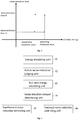
- Fig. 3 illustrates a schematic diagram of level jumping of a noise-reduction system according to an embodiment of the present invention.
- an ascending threshold value Threshold0_up and a descending threshold value Threshold0_down are employed; in addition, Threshold0_up> Threshold0_down constantly stands.
- the number of noise-reduction levels is selected and partitioned based on the needs of the active noise-reduction earphone, i.e., the noise-reduction level may also jump between noise-reduction level B and noise-reduction level C, and the like.
- the noise-reduction levels may be preferably selected to 10. If the noise-reduction amplitude range that can be achieved by the active noise-reduction earphone is 25dB, then the dB numbers corresponding to respective noise-reduction levels increment, if the first level is a 2.5dB noise-reduction amount, then the second level is a 5dB noise-reduction amount, the third level is a 7.5dB noise reduction amount, and so on.
- Step 250 controlling the earphone to perform feedforward noise reduction based on the determined feedforward noise-reduction amount, and controlling the earphone to perform feedback noise-reduction based on the determined feedback noise-reduction amount. For example, controlling the feedforward noise-reduction module in the earphone to perform feedforward noise reduction based on the determined feedforward noise reduction amount, and controlling the feedback noise reduction module in the earphone to perform feedback noise reduction based on the determined feedback reduction amount.
- steps S210 to S250 may be performed by a control chip in the earphone.
- the technical solution provided in the embodiments of the present invention can detect an environment condition in which a user wears the active noise-reduction earphone according to auditory characteristics of human ears by adopting technical means of calculating a weighted energy of a signal from the perspectives of frequency domain and temporal domain, so as to comprehensively judge whether active noise-reduction control is needed for a type and frequency distribution of the current noise; can dynamically calculate a size of adjusting the noise-reduction amount by technical means of calculating sub-band energy values of the noise signal that is real-time collected by the microphone; and can employ different noise-reduction solutions intelligently for different noise-reduction systems by technical means of performing feedforward noise reduction based on the feedforward noise reduction amount and performing feedback noise reduction based on the feedback noise-reduction amount .
- the present solution can accurately control noise-reduction, dynamically and intelligently adjust the noise reduction; therefore, compared with the active noise reduction technique with fixed noise reduction, the present solution can optimize a noise reduction effect.
- the active noise-reduction amount of the earphone can be adaptively adjusted based on the environment where the user uses the earphone, which ensures that the earphone achieves a maximum noise-reduction amount with respect to the external environmental noise; meanwhile, the user's use state is judged and no damage will be caused to music signals.
- a noise-reduction control method in another preferred embodiment provides a solution of adaptively fine tuning the noise-reduction amount of the feedback microphone so as to enhance the accuracy of feedback noise-reduction control, the method further comprising:
- controlling the earphone to perform feedback noise reduction based on the determined feedback noise reduction amount comprises: adjusting the feedback noise-reduction amount based on the calculated energy of the signal collected by the feedback microphone at the current time; and controlling the earphone to perform feedback noise reduction based on the adjusted feedback noise reduction amount.
- an appropriate adaptive amendment is performed to the feedback noise-reduction amount based on the noise-reduction result of the feedback microphone.
- the earphone After controlling the earphone to perform feedback noise reduction based on the adjusted feedback noise reduction amount, obtaining a noise-reduced signal collected by the feedback microphone, and calculating the energy of the noise-reduced signal; judging whether the energy of the signal collected by the feedback microphone at the current time is less than the energy of the noise-reduced signal; if so, controlling the earphone to perform feedback noise reduction based on the adjusted feedback noise reduction amount; if not, controlling the earphone to perform feedback noise reduction based on the feedback noise-reduction amount before adjustment.
- noise-reduction control is first performed by applying the solution illustrated in Fig. 2 , when judging the energy of signal s2 collected by the feedback microphone exceeds a certain threshold, the feedback noise reduction amount will be lifted to use a new noise reduction level so as to adjust the feedback noise-reduction amount; then, the signal energy before adjustment is compared with the signal energy after adjustment; if lifting the feedback noise reduction amount can reduce the energy of s2, the adjusted new noise-reduction level will be continued to use; if lifting the feedback noise-reduction amount cannot reduce the energy of s2, the previous noise-reduction level before adjustment will be restored.
- the preferred embodiment of the present invention ensures an optimal effect of noise suppression by adaptively fine tuning the feedback noise-reduction amount of the feedback noise-reduction system using a feedback microphone disposed within a coupled cavity coupling the earphone with a human ear.
- the noise-reduction control method according to the present invention provides a solution for wind noise; the method further comprises:
- the present embodiment adopts a solution of closing the feedforward active noise reduction while increasing the feedback noise-reduction amount when wind noise appears.
- the wind noise detection employed in the present embodiment is implemented based on signal correlation.
- the inventors find through analyzing the principle of producing a wind noise that when wind passes through a microphone, pressure will be produced on the microphone.
- the wind noise collected by each microphone is random, i.e., the wind noises collected by any two microphones are irrelevant.
- correlation judgment may be performed using two inputs of the feedforward microphones: if the signals reaching the two feedforward microphones are irrelevant, it may be judged that wind noise is encountered currently. Because any other noise will have an extremely strong correlation with voice, judgment of the wind noise may be performed by calculating the correlation between signals of two feedforward microphones. The specific calculation procedure is provided below:
- the preferred embodiment of the present invention may judge whether wind noise exists currently and perform noise-reduction control to eliminate the wind noise when the wind noise exists.
- the embodiments of the present invention further provide a noise-reduction control system for an active noise-reduction earphone.
- Fig. 4 illustrates a schematic structural diagram of a noise-reduction control system for an active noise-reduction earphone according to an embodiment of the present invention, the noise-reduction control system comprising: an energy weighting unit 41, an active noise-reduction judging unit 42, a sub-band energy computing unit 43, a noise-reduction amount determining unit 44, a feedforward noise reduction controlling unit 45, and a feedback noise-reduction controlling unit 46.
- the energy weighting unit 41 is configured to perform frequency-domain weighting and temporal-domain weighting to a noise signal collected by a feedforward microphone at current time to obtain a weighted energy.
- the present embodiment performs weighted measurement to an input signal so as to adopt a dynamic and tunable noise-reduction scheme for the type and frequency distribution of the current noise.
- the energy weighting unit 41 is specifically configured to calculate the weighted energies of the frequency-domain weighting and the temporal-domain weighting.
- Second Step temporal-domain weighting.
- the frequency weighted data are more in conformity with human ears' auditory sense. However, if the noise suddenly disappears, its sound level does not disappear immediately in the temporal domain, and there will be a falling rate. At this time, a time constant is used to smooth the signal for performing temporal-domain weighting processing.
- SPL(n) denotes a sound level, i.e., finally derived weighted energy
- ⁇ denotes a temporal weighting coefficient
- Energy(n) denotes an energy value of a current frame, which is a square of the frequency-weighted y(n).
- the active noise-reduction judging unit 42 is configured to judge whether active noise-reduction control is needed at the current time based on the weighted energy obtained by the energy weighting unit 41.
- the sub-band energy calculating unit 43 is configured to, when the active noise-reduction judging unit 42 determines a need of the active noise-reduction control, calculate an energy value of a first sub-band and an energy value of a second sub-band of the noise signal collected by the feedforward microphone at the current time, wherein the first sub-band and the second sub-band are determined based on a feedforward noise-reduction curve and a feedback noise-reduction curve of the earphone, respectively.
- suppression of external environment noise is performed in divided frequency bands, i.e., over different frequencies, the effects of noise reduction are also different.
- the active noise reduction mainly focuses on the low-frequency part, while the noise entering into human ears is mainly high-frequency noise, if the same active noise-reduction method is still adopted over different frequencies at this time, it essentially makes no help to noise reduction; instead, it will introduce more noise, causing the human ears uncomfortable. Therefore, by performing different noise reduction processing to different frequency bands, the present embodiment enhances noise-reduction effect.
- the feedforward noise-reduction curve is obtained by detecting a feedforward noise-reduction performance of the active noise-reduction earphone;
- the feedback noise-reduction curve is obtained by detecting a feedback noise-reduction performance of the active noise-reduction earphone;
- the first sub-band is selected within a certain frequency band range nearby the maximum amplitude point of the feedforward noise reduction curve (a difference between a frequency point of the maximum amplitude in the certain frequency band range and the frequency point of the maximum amplitude point of the entire feedforward noise reduction curve is less than a set value)
- the second sub-band is selected within a certain frequency band range nearby the maximum amplitude point of the feedback noise-reduction curve (a difference between the frequency point of the maximum amplitude in the certain frequency band range and the frequency point of the maximum amplitude point of the entire feedback noise-reduction curve is less than a set value).
- the noise meets the threshold requirement such that it is needed to perform the active noise-reduction control, it is needed to resolve an energy value of the first sub-band and an energy value of the second sub-band, respectively.
- one may be making a noise signal s1 collected by the feedforward microphone MIC_1 at the current time subjected to a bandpass filter h A ( n ) of the first sub-band
- the second kind of manner may be transforming s 1 into the frequency domain through FFT (Fast Fourier Transformation), and then making statistics on the energy values of the first sub-band A and the second sub-band B.
- FFT Fast Fourier Transformation
- y(n) denotes the sub-band signal s1 after h A ( n ), n denotes time.
- ⁇ denotes a weight coefficient, whose value may be determined based on a frequency-response curve; (subband 1, subband2) denotes a frequency-domain range of the sub-band A.
- the noise-reduction amount determining unit 44 is configured to determine a feedforward noise-reduction amount and a feedback noise reduction amount based on the energy value of the first sub-band and the energy value of the second sub-band, respectively, which are calculated by the sub-band energy calculating unit 43;
- the noise-reduction amount determining unit 44 comprises an initial value determining module, a dual-threshold setting module, an energy value recording module, a noise-reduction level increasing module, and a noise-reduction level decreasing module;
- the initial value determining module is configured to compare the energy value of the first sub-band and the energy value of the second sub-band with threshold values corresponding to different noise-reduction levels, respectively, to determine an initial value of a feedforward noise-reduction amount and an initial value of the feedback noise-reduction amount, respectively;
- the dual-threshold setting module is configured to set an ascending threshold value and a descending threshold value for adjacent two noise-reduction levels, respectively, the ascending threshold value being greater than the descending threshold value;
- the energy value recording module is configured to record the energy values of the first sub-band and the second sub-band of the noise signal collected by the feedforward microphone at each time.
- the noise-reduction level increasing module is configured to, when it is determined that the energy value of the first sub-band or the energy value of the second sub-band at the current time is in a process from small to large, if the energy value of the first sub-band or the second sub-band is greater than the descending threshold value, keep the feedforward noise-reduction amount or the feedback noise-reduction amount at the previous noise-reduction level; and if the energy value of the first sub-band or second sub-band is greater than the ascending threshold value, increase the feedforward noise reduction amount or the feedback noise reduction amount by one noise-reduction level.
- the noise-reduction level decreasing module is configured to, when it is determined that the energy value of the first sub-band or the energy value of the second sub-band at the current time is in a process from large to small, if the energy value of the first sub-band or the energy value of the second sub-band is smaller than the ascending threshold value, keep the feedforward noise reduction amount or the feedback noise-reduction amount at the previous noise-reduction level; and if the energy value of the first sub-band or the energy value of the second sub-band is less than the descending threshold value, decrease the feedforward noise-reduction amount or the feedback noise-reduction amount by one noise-reduction level.
- the feedforward noise-reduction controlling unit 45 is configured to control the earphone to perform feedforward noise reduction based on the feedforward noise-reduction amount;
- the feedback noise-reduction controlling unit 46 is configured to control the earphone to perform feedback noise-reduction based on the feedback noise-reduction amount.
- the noise-reduction control system provides a feedback microphone on each earphone of the active noise-reduction earphone, the feedback microphone being disposed within a coupled cavity of the earphone.
- the noise-reduction control system further comprises a feedback energy calculating unit configured to calculate energy of the signal collected by the feedback microphone at the current time when it is determined that no sound is played in the earphone.
- the feedback noise-reduction controlling unit 46 in the embodiment shown in Fig. 4 further comprises: a feedback noise-reduction amount adjusting module configured to adjust the feedback noise-reduction amount based on the energy of the signal collected by the feedback microphone at the current time, which is calculated by the feedback energy calculating unit, to control the earphone to perform feedback noise reduction based on the adjusted feedback noise reduction amount.
- a feedback noise-reduction amount adjusting module configured to adjust the feedback noise-reduction amount based on the energy of the signal collected by the feedback microphone at the current time, which is calculated by the feedback energy calculating unit, to control the earphone to perform feedback noise reduction based on the adjusted feedback noise reduction amount.
- the feedback noise-reduction amount adjusting module is also specifically configured to, after controlling the earphone to perform feedback noise reduction based on the adjusted feedback noise reduction amount, obtain a noise-reduced signal collected by the feedback microphone, and calculate the energy of the noise-reduced signal; judge whether the energy of the signal collected by the feedback microphone at the current time is less than the energy of the noise-reduced signal; if so, control the earphone to perform feedback noise reduction based on the adjusted feedback noise reduction amount; if not, control the earphone to perform feedback noise reduction based on the feedback noise-reduction amount before adjustment.
- the preferred embodiment of the present invention ensures an optimal effect of noise suppression by adaptively fine tuning the feedback noise-reduction amount of the feedback noise-reduction system using a feedback microphone disposed within a coupled cavity coupling the earphone with a human ear.
- the noise-reduction control system further comprises:
- the preferred embodiment of the present invention may judge whether wind noise exists currently and perform noise-reduction control to eliminate the wind noise when the wind noise exists.
- each earphone of the active noise-reduction earphones is provided with the noise-reduction control system according to the technical solution above.
- the active noise-reduction earphone comprises an environmental noise detecting module 51, a noise analyzing and controlling module 52, a feedforward noise-reduction module 531, and a feedback noise-reduction module 532, wherein the feedforward noise-reduction module 531 and the feedback noise-reduction module 532 jointly constitute an active noise-reduction module 53; while the functions performed by the environment noise detection module 51 and the noise analyzing and controlling module 52 may also be implemented by the noise-reduction control system for the active noise reduction earphones as illustrated in Fig. 4 .
- the environment noise detecting module 51 real-time collects the noise signal at the current time through a feedforward microphone to detect the environment noise.
- the noise analyzing and controlling module 52 performs weighted energy calculation to the noise signal collected by the feedforward microphone at the current time, and analyzes to judge whether an active noise-reduction control needs to be performed at the current time based on the weighted energy; if it is judged to need an active noise-reduction control, further calculates and determines the feedforward noise-reduction amount and the feedback noise-reduction amount, to control the feedforward noise-reduction module 531 in the active noise-reduction module 53 to perform feedforward noise reduction based on the feedforward noise reduction amount, and to control the feedback noise-reduction module 532 in the active noise-reduction module 53 to perform feedback noise reduction based on the feedback noise reduction amount.
- a noise-reduction control method and system for active noise-reduction earphones and active noise-reduction earphones can suppress environmental noise by detecting the environment of the active noise-reduction earphones and adopting a dynamic and tunable noise-reduction solution with respect to the type and frequency distribution of the current noise; compared with the existing active noise-reduction technology with fixed noise reduction, the noise-reduction effect can reach the optimal.
- the present invention may also dispose a feedback microphone on each earphone of the active noise-reduction earphones so as to finely tune a feedback noise-reduction amount of the noise-reduction system using a feedback microphone disposed within a coupled cavity coupling the earphones and a human ear, which guarantees that the noise suppression reaches an optimal effect.
- the present invention employs dynamic dual-threshold values such that the dynamic adjustment process is a gradually changing process, which avoids noise caused by frequently adjusting the noise-reduction levels.
- the present invention may also determine whether wind noise exists currently based on correlation between noise signals collected by two feedforward microphones, and perform a special noise-reduction control in the case of wind noise.
Landscapes
- Physics & Mathematics (AREA)
- Engineering & Computer Science (AREA)
- Acoustics & Sound (AREA)
- Multimedia (AREA)
- Signal Processing (AREA)
- Soundproofing, Sound Blocking, And Sound Damping (AREA)
- Headphones And Earphones (AREA)
Abstract
Description
- The present invention relates to the technical field of active noise reduction for intelligent earphones, and more specifically relates to a noise-reduction control method and system for active noise-reduction earphones, as well as active noise-reduction earphones.
- Earphones have been widely applied in people's daily life and work. Besides the functions of enjoying music and entertainments, earphones are also widely applied to insulate noise for maintaining a relatively quiet environment. However, for low-frequency noises, earphones are very limited in the effect and capability of noise insulation.
- An active noise-reduction technology adopts an approach of generating a signal having a same amplitude but an inverse phase relative to an external noise so as to counteract the noise entering into an earphone. However, the active noise-reduction technologies adopted in current earphone are mostly fixed noise-reduction technologies, which have the following defects: in a constantly changing external environment, when the external noise is equivalent to a fixed noise-reduction amount, a relatively good noise-reduction effect will be generated; however, when the external noise is higher than the fixed noise-reduction amount, it will occur that the noise-reduction effect cannot be optimal; or when the external noise is lower than the fixed noise-reduction amount, an active noise-reduction module will actually produce a new noise into human ears.
- In view of the above, a main objective of the present invention is to provide a noise-reduction control method and system for active noise-reduction earphones, as well as active noise-reduction earphones, so as to solve a technical problem that an active noise-reduction technology with fixed noise-reduction cannot optimize a noise-reduction effect.
- In order to achieve the above objective, a technical solution according to an embodiment of the present invention is implemented as such:
- In one aspect, an embodiment of the present invention provides a noise-reduction control method for active noise-reduction earphones, a feedforward microphone being provided on each earphone of the active noise-reduction earphones, respectively; the feedforward microphone being disposed outside of the earphone; the noise-reduction control method comprising:
- performing frequency-domain weighting and temporal-domain weighting to a noise signal collected by the feedforward microphone at current time to obtain a weighted energy;
- judging whether active noise-reduction control is needed at the current time based on the weighted energy;
- when the active noise-reduction control is needed, calculating an energy value of a first sub-band and an energy value of a second sub-band of the noise signal collected by the feedforward microphone at the current time, wherein the first sub-band and the second sub-band are determined based on a feedforward noise-reduction curve and a feedback noise-reduction curve of the earphone, respectively;
- determining a feedforward noise-reduction amount and a feedback noise-reduction amount based on the energy value of the first sub-band and the energy value of the second sub-band, respectively;
- controlling the earphone to perform feedforward noise reduction based on the feedforward noise-reduction amount, and controlling the earphone to perform feedback noise reduction based on the feedback noise-reduction amount.
- In another aspect, an embodiment of the present invention further provides a noise-reduction control system for active noise-reduction earphones, a feedforward microphone being provided on each earphone of the active noise-reduction earphones, respectively; the feedforward microphone being disposed outside of the earphone; the noise-reduction control system comprising:
- an energy weighting unit configured to perform frequency-domain weighting and temporal-domain weighting to a noise signal collected by the feedforward microphone at current time to obtain a weighted energy;
- an active noise-reduction judging unit configured to judge whether active noise-reduction control is needed at the current time based on the weighted energy obtained by the energy weighting unit;
- a sub-band energy calculating unit configured to, when the active noise-reduction judging unit judges that the active noise-reduction control is needed, calculate an energy value of a first sub-band and an energy value of a second sub-band of the noise signal collected by the feedforward microphone at the current time, wherein the first sub-band and the second sub-band are determined based on a feedforward noise-reduction curve and a feedback noise-reduction curve of the earphone, respectively;
- a noise-reduction amount determining unit configured to determine a feedforward noise-reduction amount and a feedback noise-reduction amount based on the energy value of the first sub-band and the energy value of the second sub-band calculated by the sub-band energy calculating unit, respectively;
- a feedforward noise-reduction controlling unit configured to control the earphone to perform feedforward noise reduction based on the feedforward noise-reduction amount; and
- a feedback noise-reduction controlling unit configured to control the earphone to perform feedback noise reduction based on the feedback noise-reduction amount.
- In a further aspect, an embodiment of the present invention provides active noise-reduction earphones, a feedforward microphone and a feedback microphone being provided on each earphone of the active noise-reduction earphones respectively, wherein the feedforward microphone is disposed outside of the earphone, the feedback microphone is disposed inside a coupled cavity coupling the earphone with a human ear; each earphone of the active noise-reduction earphones is provided with the noise-reduction control system according to the technical solution above.
- Compared with the prior art, the embodiments of the present invention provide the following advantageous effects:
- The technical solution provided in the embodiments of the present invention can detect an environment condition in which a user wears the active noise-reduction earphones based on auditory characteristics of human ears by adopting technical means of calculating a weighted energy of a signal from frequency domain and temporal domain, so as to comprehensively judge whether active noise-reduction control is needed for a type and frequency distribution of the current noise; dynamically calculate the adjusted noise-reduction amount by technical means of calculating sub-band energy values of the noise signal that is real-time collected by the microphone; and employ different noise-reduction solutions intelligently for different noise-reduction systems by technical means of performing feedforward noise reduction based on the feedforward noise-reduction amount and performing feedback noise reduction based on the feedback noise-reduction amount. The present solution can accurately control noise reduction, dynamically and intelligently adjust noise reduction; therefore, compared with the active noise reduction technique with fixed noise reduction, the present solution can optimize a noise reduction effect.
- In one preferred solution, the present invention may also dispose a feedback microphone on each earphone of the active noise-reduction earphones so as to finely adjust a feedback noise-reduction amount of the noise-reduction system using a feedback microphone disposed within a coupled cavity coupling the earphone and a human ear, which guarantees that the noise suppression reaches an optimal effect. In another preferred solution, the present invention employs dynamic dual-threshold values such that the dynamic adjustment process is a gradually changing process, which avoids noise caused by frequently adjusting the noise-reduction levels. In a further preferred solution, the present invention may also determine whether wind noise exists currently based on correlation between noise signals collected by two feedforward microphones, and perform a special noise-reduction control in the case of wind noise.
- The drawings, which provide further understanding of the present invention and constitute part of the specification, are used, together with the embodiments of the present invention, for explaining the present invention, rather than limiting the present invention. In the accompanying drawings:
-
Fig. 1 illustrates a schematic diagram of an active noise-reduction earphone provided with two microphones according to an embodiment of the present invention; -
Fig. 2 illustrates a flow diagram of a noise-reduction control method for active noise-reduction earphones according to an embodiment of the present invention; -
Fig. 3 illustrates a schematic diagram of level jumping of a noise-reduction system according to an embodiment of the present invention; -
Fig. 4 illustrates a schematic structural diagram of a noise-reduction control system for active noise-reduction earphones according to an embodiment of the present invention; -
Fig. 5 illustrates a structural diagram of an active noise-reduction earphone according to an embodiment of the present invention. - A main technical idea of the present invention is to detect, using multiple microphones, an environment in which a user wears active noise-reduction earphones; to judge whether to use active noise-reduction for a type and frequency distribution of a current noise based on an auditory effect of human ears, and to adopt a dynamic and adjustable noise-reduction scheme, in conjunction with two noise-reduction systems (i.e., feedforward and feedback), in the earphones to guarantee an optimized effect of noise suppression.
- In order to make the objectives, technical solutions, and advantages of the present invention much clearer, the embodiments of the present invention will be described in further detail with reference to the accompanying drawings.
- In order to overcome the deficiencies of traditional active noise-reduction earphones, which make a uniform processing to all noises without considering kinds of external noises, the present solution adopts multiple microphones to detect the external environment.
Fig. 1 illustrates a schematic diagram of an active noise-reduction earphone provided with two microphones according to an embodiment of the present invention. One is a feedforward microphone, e.g., MIC_1 inFig. 1 , disposed outside of the earphone; the other is a feedback microphone, e.g., MIC_2 inFig. 1 , disposed within a coupled cavity coupling the earphone with a human ear. After the earphones are powered, the active noise-reduction earphones start operating (which may be forcedly turned off). The whole noise-reduction system may also be divided into a feedforward noise-reduction system and a feedback noise-reduction system. The two systems focus on different noise-reduction frequency bands; therefore, it is required to intelligently detect the external environment and intelligently combine the two noise-reduction systems, so as to achieve an optimal noise-reduction amount. - A principle of the active noise-reduction earphones is to counteract noise by producing a signal with a phase inversed to a phase of an external noise, thereby achieving the objective of noise reduction. As shown in
Fig. 1 , MIC_1 is mounted outside of the earphone (e.g., upper corner of the outside) for detecting noise in the external environment, thereby controlling an earphone to produce a signal with an inverse phase. That is a feedforward noise-reduction system. The MIC_2 is mounted within a coupled cavity coupling the earphone with a human ear. It will detect an amplitude of the noise residual within the coupled cavity and also produce a signal with an inverse phase relative to the noise from the coupled cavity, which further reduces the noise entering into human ears, thereby maximizing the noise-reduction amount. - On one hand, the embodiments of the present invention provide a noise-reduction control method for active noise-reduction earphones.
Fig. 2 illustrates a flow diagram of a noise-reduction control method for active noise-reduction earphones according to an embodiment of the present invention. As illustrated inFig. 2 , the method comprises: - Step S210: performing frequency-domain weighting and temporal-domain weighting to a noise signal collected by a feedforward microphone at current time to obtain a weighted energy.
- Due to the specialties of human ears, i.e., human ears are less sensitive to low-frequency and high-frequency signals than to medium frequencies. In order to calculate human sense to noise more truly, the present embodiment performs weighted measurement to an input signal so as to adopt a dynamic and tunable noise-reduction scheme for the type and frequency distribution of the current noise.
- The weighted measurement comprises frequency-domain weighting and temporal-domain weighting.
- First Step: frequency-domain weighting. A frequency filter R(f) is designed according to the following frequency weighting equation, wherein f denotes the frequency of a signal, and RA(f) denotes a frequency weighting coefficient:

- If the sound signal is s1, while y(n) is derived after frequency weighting, then y(n)= RA(f)* s1.
- Second Step: temporal-domain weighting. The frequency weighted data are more in conformity with human ears' auditory sense. However, if the noise suddenly disappears, its sound level does not disappear immediately at the temporal domain, and there will be a falling rate. At this time, a time constant is used to smooth the signal for performing temporal-domain weighting processing.
- Temporal-domain weighting may be performed with the following time weighting manner:

- Wherein SPL(n) denotes a sound level, i.e., finally derived weighted energy; α denotes a temporal weighting coefficient; Energy(n) denotes an energy value of a current frame, which is a square of the frequency-weighted y(n).
- Step S220: judging whether active noise-reduction control is needed at the current time based on the weighted energy.
- The weighted energy SPL(n) derived from the step S210 will be compared with a threshold value. When the SPL(n) is greater than the threshold value, active noise-reduction will be performed; if the SPL(n) is less than the threshold value, active noise reduction will be unnecessary. The size of the threshold value needs to be selected based on an actually designed earphone.
- Step S230: when the active noise-reduction control is needed, calculating an energy value of a first sub-band and an energy value of a second sub-band of the noise signal collected by the feedforward microphone at the current time.
- In the present embodiment, suppression of external environment noise is performed in divided frequency bands, i.e., the effects of noise reduction are also different over different frequencies. This mainly considers that if the active noise reduction mainly focuses on the low-frequency part, while the noise entering into human ears is mainly high-frequency noise, if the same active noise-reduction method is still adopted over different frequencies at this time, it essentially makes no help to noise reduction; instead, it will introduce more noise, causing the human ears uncomfortable. Therefore, by performing different noise reduction processing to different frequency bands, the present embodiment enhances noise-reduction effect.
- Wherein, a first sub-band and a second sub-band are determined based on a feedforward noise-reduction curve and a feedback noise-reduction curve of an active noise reduction earphone, respectively. Specifically, the feedforward noise-reduction curve is obtained by detecting a feedforward noise-reduction performance of the active noise-reduction earphone; the feedback noise-reduction curve is obtained by detecting a feedback noise-reduction performance of the active noise-reduction earphone; the first sub-band is selected within a certain frequency band range nearby the maximum amplitude point of the feedforward noise reduction curve (a difference between a frequency point of the maximum amplitude in the certain frequency band range and a frequency point of the maximum amplitude point of the entire feedforward noise reduction curve is less than a set value), and the second sub-band is selected within a certain frequency band range nearby the maximum amplitude point of the feedback noise-reduction curve (a difference between a frequency point of the maximum amplitude in the certain frequency band range and a frequency point of the maximum amplitude point of the entire feedback noise-reduction curve is less than a set value).
- When the noise meets the threshold requirement such that it is needed to perform the active noise-reduction control, it is needed to resolve an energy value of the first sub-band and an energy value of the second sub-band, respectively.
- There are two kinds of calculation manners: one may be making a noise signal s1 collected by the feedforward microphone MIC_1 at the current time subjected to a bandpass filter hA (n) of the first sub-band A and a bandpass filter hB (n) of the second sub-band B. The second kind of manner may be transforming s 1 into the frequency domain through FFT (Fast Fourier Transformation), and then making statistics on the energy values of the first sub-band A and the second sub-band B. Now, explanations will be made with the first sub-band A as an example.
- Manner 1: calculate the energy value EnergyA of the first sub-band A through a sub-band filter method; see the equation as follows:


- Wherein, y(n) denotes the sub-band signal s1 after hA (n), n denotes time.
- Manner 2: a method of calculating the sub-band energy EnergyA of the first sub-band A through FFT; see the equation below:


- Wherein, α denotes a weight coefficient, whose value may be determined based on a frequency-response curve; (subband 1, subband2) denotes a frequency-domain range of the sub-band A.
- Step S240: determining a feedforward noise-reduction amount and a feedback noise reduction amount based on the energy value of the first sub-band and the energy value of the second sub-band, respectively.
- After the energies of the first sub-band and the second sub-band are derived, the energy values of the two sub-bands are compared with a preset threshold value. Specifically, in the present embodiment, the energy value of the first sub-band and the energy value of the second sub-band are compared with threshold values corresponding to different noise-reduction levels, respectively, to determine an initial value of a feedforward noise-reduction amount and an initial value of the feedback noise-reduction amount, respectively.
- It should be noted that when the earphone is turned on, it is defaulted that active noise reduction is not needed currently. When it is determined to need to start active noise reduction, initial values of two sub-band energies are calculated; then, the feedforward noise reduction amount and the feedback noise-reduction amount at the initial time are determined based on the noise-reduction levels corresponding to the initial values.
- Because the environmental noise where the earphone is located will change constantly, the present embodiment tracks and calculates a sub-band energy value once in each certain time interval (e.g., every second) so as to keep track of the change. Change of the noise causes the feedforward active noise-reduction and feedback active noise-reduction modules to re-adjust their own noise-reduction amounts. However, the adjusting process is a gradually changing process. In order to prevent the noise-reduction level from jumping back and forth due to change of noise around the threshold, which causes uncomfortable auditory sense to human ears, the present solution adopts a dual-threshold manner.
- Specifically, an ascending threshold value and a descending threshold value are provided for adjacent two noise-reduction levels, respectively; moreover, the ascending threshold value is greater than the descending threshold value; the energy values of the sub-bands of the noise signal collected by the feedforward microphone at each time are recorded. It should be noted that the energy value of the first sub-band and the energy value of the second sub-band are required to be recorded, separately. Because the method of determining the feedforward noise-reduction amount based on the energy value of the first sub-band is identical to the method of determining the feed-back noise-reduction amount based on the energy value of the second sub-band, the description below will generally refer to them as a sub-band, without distinguishing a first sub-band from a second sub-band.
- When it is determined that the energy value of the sub-band at the current time is in a process from small to large (the change trend of the energy value may be obtained based on the recorded energy values of the sub-band), if the energy value of the sub-band is greater than the descending threshold value, the feedforward noise-reduction amount (corresponding to the first sub-band) or the feedback noise-reduction amount (corresponding to the second sub-band) is kept at the previous noise-reduction level; and if the energy value of the sub-band is greater than the ascending threshold value, the feedforward noise reduction amount or the feedback noise reduction amount is increased by one noise-reduction level.
- When it is determined that the energy value of the sub-band at the current time is in a process from large to small, if the energy value of the sub-band is smaller than the ascending threshold value, the feedforward noise reduction amount or the feedback noise-reduction amount is kept at the previous noise-reduction level; and if the energy value of the sub-band is less than the descending threshold value, the feedforward noise-reduction amount or the feedback noise-reduction amount is decreased by one noise-reduction level.
-
Fig. 3 illustrates a schematic diagram of level jumping of a noise-reduction system according to an embodiment of the present invention. As illustrated inFig. 3 , in adjacent two noise-reduction levels (e.g., noise-reduction level A, noise-reduction level B), an ascending threshold value Threshold0_up and a descending threshold value Threshold0_down are employed; in addition, Threshold0_up> Threshold0_down constantly stands. - 1.First change scenario: during the process when the sub-band energy of the external environment noise changes from small to large, i.e., when the system is at the noise-reduction level A, when the sub-band energy is greater than Threshold0_down, the active noise-reduction system does not jump between noise-reduction levels; however, if the energy continues being enlarged till the sub-band energy is greater than Threshold0_up, the feedforward noise-reduction amount or the feedback noise-reduction amount of the active noise-reduction system jumps upward by one level to the noise-reduction level B.
- 2. On the contrary, in a second change scenario, the sub-band energy of the external environment noise changes from large to small, i.e., when the system is at the noise-reduction level B, if the sub-band energy is less than Threshold0_up, the active noise-reduction system does not jump between noise-reduction levels; however, if the energy continues being less till the sub-band energy is smaller than Threshold0_down, the feedforward noise-reduction amount or the feedback noise-reduction amount of the active noise-reduction system jumps downward by one level to noise-reduction level A.
- The number of noise-reduction levels is selected and partitioned based on the needs of the active noise-reduction earphone, i.e., the noise-reduction level may also jump between noise-reduction level B and noise-reduction level C, and the like. For example, the noise-reduction levels may be preferably selected to 10. If the noise-reduction amplitude range that can be achieved by the active noise-reduction earphone is 25dB, then the dB numbers corresponding to respective noise-reduction levels increment,, if the first level is a 2.5dB noise-reduction amount, then the second level is a 5dB noise-reduction amount, the third level is a 7.5dB noise reduction amount, and so on.
- Step 250: controlling the earphone to perform feedforward noise reduction based on the determined feedforward noise-reduction amount, and controlling the earphone to perform feedback noise-reduction based on the determined feedback noise-reduction amount. For example, controlling the feedforward noise-reduction module in the earphone to perform feedforward noise reduction based on the determined feedforward noise reduction amount, and controlling the feedback noise reduction module in the earphone to perform feedback noise reduction based on the determined feedback reduction amount.
- Till now, the noise-reduction control method for the active noise-reduction earphone as illustrated in
Fig. 2 is completed. Operations of steps S210 to S250 may be performed by a control chip in the earphone. - The technical solution provided in the embodiments of the present invention can detect an environment condition in which a user wears the active noise-reduction earphone according to auditory characteristics of human ears by adopting technical means of calculating a weighted energy of a signal from the perspectives of frequency domain and temporal domain, so as to comprehensively judge whether active noise-reduction control is needed for a type and frequency distribution of the current noise; can dynamically calculate a size of adjusting the noise-reduction amount by technical means of calculating sub-band energy values of the noise signal that is real-time collected by the microphone; and can employ different noise-reduction solutions intelligently for different noise-reduction systems by technical means of performing feedforward noise reduction based on the feedforward noise reduction amount and performing feedback noise reduction based on the feedback noise-reduction amount . The present solution can accurately control noise-reduction, dynamically and intelligently adjust the noise reduction; therefore, compared with the active noise reduction technique with fixed noise reduction, the present solution can optimize a noise reduction effect.
- Through the present invention, the active noise-reduction amount of the earphone can be adaptively adjusted based on the environment where the user uses the earphone, which ensures that the earphone achieves a maximum noise-reduction amount with respect to the external environmental noise; meanwhile, the user's use state is judged and no damage will be caused to music signals.
- Based on the above embodiments, a noise-reduction control method in another preferred embodiment provides a solution of adaptively fine tuning the noise-reduction amount of the feedback microphone so as to enhance the accuracy of feedback noise-reduction control, the method further comprising:
- When determining that no sound is played within the earphone, calculating, using the feedback microphone provided respectively within a coupled cavity coupling the earphone with a human ear on each earphone of the active noise-reduction earphone, energy of the signal collected by the feedback microphone at the current time.
- Then, in step S250, controlling the earphone to perform feedback noise reduction based on the determined feedback noise reduction amount comprises: adjusting the feedback noise-reduction amount based on the calculated energy of the signal collected by the feedback microphone at the current time; and controlling the earphone to perform feedback noise reduction based on the adjusted feedback noise reduction amount. In this way, an appropriate adaptive amendment is performed to the feedback noise-reduction amount based on the noise-reduction result of the feedback microphone.
- The process of performing an appropriate adaptive amendment to the feedback noise-reduction amount is provided below:
- After controlling the earphone to perform feedback noise reduction based on the adjusted feedback noise reduction amount, obtaining a noise-reduced signal collected by the feedback microphone, and calculating the energy of the noise-reduced signal; judging whether the energy of the signal collected by the feedback microphone at the current time is less than the energy of the noise-reduced signal; if so, controlling the earphone to perform feedback noise reduction based on the adjusted feedback noise reduction amount; if not, controlling the earphone to perform feedback noise reduction based on the feedback noise-reduction amount before adjustment.
- In other words, noise-reduction control is first performed by applying the solution illustrated in
Fig. 2 , when judging the energy of signal s2 collected by the feedback microphone exceeds a certain threshold, the feedback noise reduction amount will be lifted to use a new noise reduction level so as to adjust the feedback noise-reduction amount; then, the signal energy before adjustment is compared with the signal energy after adjustment; if lifting the feedback noise reduction amount can reduce the energy of s2, the adjusted new noise-reduction level will be continued to use; if lifting the feedback noise-reduction amount cannot reduce the energy of s2, the previous noise-reduction level before adjustment will be restored. - The preferred embodiment of the present invention ensures an optimal effect of noise suppression by adaptively fine tuning the feedback noise-reduction amount of the feedback noise-reduction system using a feedback microphone disposed within a coupled cavity coupling the earphone with a human ear.
- In another preferred embodiment, the noise-reduction control method according to the present invention provides a solution for wind noise; the method further comprises:
- calculating a correlation between noise signals collected by two feedforward microphones on two earphones of the active noise-reduction earphone at the current time, and judging whether wind noise exists at the current time based on a calculation result of the correlation; if it is judged that wind noise exists at the current time, controlling the earphone to stop feedforward noise reduction based on a feedforward noise-reduction amount, and determining an increment of the feedback noise-reduction amount based on the feedforward noise-reduction amount, thereby controlling the earphone to perform feedback noise reduction based on the incremented feedback noise reduction amount.
- Considering that the feedforward active noise-reduction system cannot play a role of noise reduction with respect to wind noise, which, instead, will also magnify the noise, the present embodiment adopts a solution of closing the feedforward active noise reduction while increasing the feedback noise-reduction amount when wind noise appears.
- The wind noise detection employed in the present embodiment is implemented based on signal correlation. The inventors find through analyzing the principle of producing a wind noise that when wind passes through a microphone, pressure will be produced on the microphone. The wind noise collected by each microphone is random, i.e., the wind noises collected by any two microphones are irrelevant. However, for any active noise and signal, there exists a correlation between the signal collected by the microphone and the signal source. For a stereo microphone, correlation judgment may be performed using two inputs of the feedforward microphones: if the signals reaching the two feedforward microphones are irrelevant, it may be judged that wind noise is encountered currently. Because any other noise will have an extremely strong correlation with voice, judgment of the wind noise may be performed by calculating the correlation between signals of two feedforward microphones. The specific calculation procedure is provided below:
- 1. Suppose the signals collected by two feedforward microphones are x1(n), x2(n), respectively. First, calculate the FFTs of the two paths of signals, resulting in frequency-domain signals X1(k), X2(k) of the two paths of signals.
- 2. Calculate the autocorrelation function R(k) of the two paths of signals in the frequency domain based on the following autocorrelation equation, wherein conj denotes resolving a complex conjugate:

- 3. Normalize the calculation results R(k) to smooth the calculation results. Whether wind noise exists may be confirmed based on the correlation between the smoothed calculation results derived in this step, i.e., when the smoothed calculation results indicate a low correlation, it is confirmed that wind noise exists. Or, enter in step 4 to perform judgment after extracting the smoothed calculation results derived in the present step.
- 4. Extract a correlation between signals at a preset frequency band (e.g., 93.75Hz∼781.25Hz).
- The preferred embodiment of the present invention may judge whether wind noise exists currently and perform noise-reduction control to eliminate the wind noise when the wind noise exists.
- In the other aspect, the embodiments of the present invention further provide a noise-reduction control system for an active noise-reduction earphone.
Fig. 4 illustrates a schematic structural diagram of a noise-reduction control system for an active noise-reduction earphone according to an embodiment of the present invention, the noise-reduction control system comprising: anenergy weighting unit 41, an active noise-reduction judging unit 42, a sub-bandenergy computing unit 43, a noise-reductionamount determining unit 44, a feedforward noisereduction controlling unit 45, and a feedback noise-reduction controlling unit 46. - Wherein, the
energy weighting unit 41 is configured to perform frequency-domain weighting and temporal-domain weighting to a noise signal collected by a feedforward microphone at current time to obtain a weighted energy. - Due to the specialties of human ears, i.e., human ears are less sensitive to low-frequency and high-frequency signals than to medium frequencies. In order to calculate human sense to noise more truly, the present embodiment performs weighted measurement to an input signal so as to adopt a dynamic and tunable noise-reduction scheme for the type and frequency distribution of the current noise.
- The
energy weighting unit 41 is specifically configured to calculate the weighted energies of the frequency-domain weighting and the temporal-domain weighting. - First Step: frequency-domain weighting. A frequency filter R(f) is designed according to the following frequency weighting equation, wherein f denotes the frequency of a signal, and RA(f) denotes a frequency weighting coefficient:

- If the sound signal is s1, while y(n) is derived after frequency weighting, then y(n)= RA(f)* s1.
- Second Step: temporal-domain weighting. The frequency weighted data are more in conformity with human ears' auditory sense. However, if the noise suddenly disappears, its sound level does not disappear immediately in the temporal domain, and there will be a falling rate. At this time, a time constant is used to smooth the signal for performing temporal-domain weighting processing.
- Temporal-domain weighting may be performed with the following time weighting manner:

- Wherein SPL(n) denotes a sound level, i.e., finally derived weighted energy; α denotes a temporal weighting coefficient; Energy(n) denotes an energy value of a current frame, which is a square of the frequency-weighted y(n).
- The active noise-
reduction judging unit 42 is configured to judge whether active noise-reduction control is needed at the current time based on the weighted energy obtained by theenergy weighting unit 41. - The sub-band
energy calculating unit 43 is configured to, when the active noise-reduction judging unit 42 determines a need of the active noise-reduction control, calculate an energy value of a first sub-band and an energy value of a second sub-band of the noise signal collected by the feedforward microphone at the current time, wherein the first sub-band and the second sub-band are determined based on a feedforward noise-reduction curve and a feedback noise-reduction curve of the earphone, respectively. - In the present embodiment, suppression of external environment noise is performed in divided frequency bands, i.e., over different frequencies, the effects of noise reduction are also different. This mainly considers that if the active noise reduction mainly focuses on the low-frequency part, while the noise entering into human ears is mainly high-frequency noise, if the same active noise-reduction method is still adopted over different frequencies at this time, it essentially makes no help to noise reduction; instead, it will introduce more noise, causing the human ears uncomfortable. Therefore, by performing different noise reduction processing to different frequency bands, the present embodiment enhances noise-reduction effect.
- Specifically, the feedforward noise-reduction curve is obtained by detecting a feedforward noise-reduction performance of the active noise-reduction earphone; the feedback noise-reduction curve is obtained by detecting a feedback noise-reduction performance of the active noise-reduction earphone; the first sub-band is selected within a certain frequency band range nearby the maximum amplitude point of the feedforward noise reduction curve (a difference between a frequency point of the maximum amplitude in the certain frequency band range and the frequency point of the maximum amplitude point of the entire feedforward noise reduction curve is less than a set value), and the second sub-band is selected within a certain frequency band range nearby the maximum amplitude point of the feedback noise-reduction curve (a difference between the frequency point of the maximum amplitude in the certain frequency band range and the frequency point of the maximum amplitude point of the entire feedback noise-reduction curve is less than a set value).
- When the noise meets the threshold requirement such that it is needed to perform the active noise-reduction control, it is needed to resolve an energy value of the first sub-band and an energy value of the second sub-band, respectively.
- There are two kinds of calculation manners: one may be making a noise signal s1 collected by the feedforward microphone MIC_1 at the current time subjected to a bandpass filter hA (n) of the first sub-band
- A and a bandpass filter hB (n) of the second sub-band B. The second kind of manner may be transforming s 1 into the frequency domain through FFT (Fast Fourier Transformation), and then making statistics on the energy values of the first sub-band A and the second sub-band B. Now, explanations will be made with the first sub-band A as an example.
- Manner 1: calculate the energy value EnergyA of the first sub-band A through the sub-band filter method; see the equation as follows:
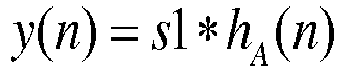

- Wherein, y(n) denotes the sub-band signal s1 after hA (n), n denotes time.
- Manner 2: a method of calculating the sub-band energy EnergyA of the first sub-band A through FFT; see the equation below:


- Wherein, α denotes a weight coefficient, whose value may be determined based on a frequency-response curve; (subband 1, subband2) denotes a frequency-domain range of the sub-band A.
- The noise-reduction
amount determining unit 44 is configured to determine a feedforward noise-reduction amount and a feedback noise reduction amount based on the energy value of the first sub-band and the energy value of the second sub-band, respectively, which are calculated by the sub-bandenergy calculating unit 43; - Preferably, the noise-reduction
amount determining unit 44 comprises an initial value determining module, a dual-threshold setting module, an energy value recording module, a noise-reduction level increasing module, and a noise-reduction level decreasing module; - The initial value determining module is configured to compare the energy value of the first sub-band and the energy value of the second sub-band with threshold values corresponding to different noise-reduction levels, respectively, to determine an initial value of a feedforward noise-reduction amount and an initial value of the feedback noise-reduction amount, respectively;
- The dual-threshold setting module is configured to set an ascending threshold value and a descending threshold value for adjacent two noise-reduction levels, respectively, the ascending threshold value being greater than the descending threshold value;
- The energy value recording module is configured to record the energy values of the first sub-band and the second sub-band of the noise signal collected by the feedforward microphone at each time.
- The noise-reduction level increasing module is configured to, when it is determined that the energy value of the first sub-band or the energy value of the second sub-band at the current time is in a process from small to large, if the energy value of the first sub-band or the second sub-band is greater than the descending threshold value, keep the feedforward noise-reduction amount or the feedback noise-reduction amount at the previous noise-reduction level; and if the energy value of the first sub-band or second sub-band is greater than the ascending threshold value, increase the feedforward noise reduction amount or the feedback noise reduction amount by one noise-reduction level.
- The noise-reduction level decreasing module is configured to, when it is determined that the energy value of the first sub-band or the energy value of the second sub-band at the current time is in a process from large to small, if the energy value of the first sub-band or the energy value of the second sub-band is smaller than the ascending threshold value, keep the feedforward noise reduction amount or the feedback noise-reduction amount at the previous noise-reduction level; and if the energy value of the first sub-band or the energy value of the second sub-band is less than the descending threshold value, decrease the feedforward noise-reduction amount or the feedback noise-reduction amount by one noise-reduction level.
- The feedforward noise-
reduction controlling unit 45 is configured to control the earphone to perform feedforward noise reduction based on the feedforward noise-reduction amount; and - The feedback noise-
reduction controlling unit 46 is configured to control the earphone to perform feedback noise-reduction based on the feedback noise-reduction amount. - In one preferred embodiment, the noise-reduction control system provides a feedback microphone on each earphone of the active noise-reduction earphone, the feedback microphone being disposed within a coupled cavity of the earphone. The noise-reduction control system further comprises a feedback energy calculating unit configured to calculate energy of the signal collected by the feedback microphone at the current time when it is determined that no sound is played in the earphone.
- Preferably, the feedback noise-
reduction controlling unit 46 in the embodiment shown inFig. 4 further comprises: a feedback noise-reduction amount adjusting module configured to adjust the feedback noise-reduction amount based on the energy of the signal collected by the feedback microphone at the current time, which is calculated by the feedback energy calculating unit, to control the earphone to perform feedback noise reduction based on the adjusted feedback noise reduction amount. - Further preferably, the feedback noise-reduction amount adjusting module is also specifically configured to, after controlling the earphone to perform feedback noise reduction based on the adjusted feedback noise reduction amount, obtain a noise-reduced signal collected by the feedback microphone, and calculate the energy of the noise-reduced signal; judge whether the energy of the signal collected by the feedback microphone at the current time is less than the energy of the noise-reduced signal; if so, control the earphone to perform feedback noise reduction based on the adjusted feedback noise reduction amount; if not, control the earphone to perform feedback noise reduction based on the feedback noise-reduction amount before adjustment.
- The preferred embodiment of the present invention ensures an optimal effect of noise suppression by adaptively fine tuning the feedback noise-reduction amount of the feedback noise-reduction system using a feedback microphone disposed within a coupled cavity coupling the earphone with a human ear.
- In another preferred embodiment, the noise-reduction control system further comprises:
- a wind noise judging unit configured to calculate a correlation between noise signals collected by two feedforward microphones on two earphones of the active noise-reduction earphones at the current time, and judge whether wind noise exists at the current time based on a calculation result of the correlation;
- a wind noise processing unit configured to, if it is judged by the wind noise judging unit that wind noise exists at the current time, control the earphone to stop feedforward noise reduction based on a feedforward noise-reduction amount, and determine an increment of the feedback noise-reduction amount based on the feedforward noise-reduction amount, thereby controlling the earphone to perform feedback noise reduction based on the incremented feedback noise reduction amount.
- The preferred embodiment of the present invention may judge whether wind noise exists currently and perform noise-reduction control to eliminate the wind noise when the wind noise exists.
- According to another aspect of the present invention, there is further provided active noise-reduction earphones, a feedforward microphone and a feedback microphone being provided on each earphone of the active noise-reduction earphones, respectively, wherein the feedforward microphone is disposed outside of the earphone, the feedback microphone is disposed inside a coupled cavity coupling the earphone with a human ear; each earphone of the active noise-reduction earphones is provided with the noise-reduction control system according to the technical solution above.
- Refer to
Fig. 5 , in which a structural diagram of an active noise-reduction earphone provided according to the embodiments of the present invention is presented. The active noise-reduction earphone comprises an environmentalnoise detecting module 51, a noise analyzing and controllingmodule 52, a feedforward noise-reduction module 531, and a feedback noise-reduction module 532, wherein the feedforward noise-reduction module 531 and the feedback noise-reduction module 532 jointly constitute an active noise-reduction module 53; while the functions performed by the environmentnoise detection module 51 and the noise analyzing and controllingmodule 52 may also be implemented by the noise-reduction control system for the active noise reduction earphones as illustrated inFig. 4 . - When the active noise-reduction earphones operate, the environment
noise detecting module 51 real-time collects the noise signal at the current time through a feedforward microphone to detect the environment noise. The noise analyzing and controllingmodule 52 performs weighted energy calculation to the noise signal collected by the feedforward microphone at the current time, and analyzes to judge whether an active noise-reduction control needs to be performed at the current time based on the weighted energy; if it is judged to need an active noise-reduction control, further calculates and determines the feedforward noise-reduction amount and the feedback noise-reduction amount, to control the feedforward noise-reduction module 531 in the active noise-reduction module 53 to perform feedforward noise reduction based on the feedforward noise reduction amount, and to control the feedback noise-reduction module 532 in the active noise-reduction module 53 to perform feedback noise reduction based on the feedback noise reduction amount. - In view of the above, a noise-reduction control method and system for active noise-reduction earphones and active noise-reduction earphones, as provided by the embodiments of the present invention, can suppress environmental noise by detecting the environment of the active noise-reduction earphones and adopting a dynamic and tunable noise-reduction solution with respect to the type and frequency distribution of the current noise; compared with the existing active noise-reduction technology with fixed noise reduction, the noise-reduction effect can reach the optimal.
- In one preferred solution, the present invention may also dispose a feedback microphone on each earphone of the active noise-reduction earphones so as to finely tune a feedback noise-reduction amount of the noise-reduction system using a feedback microphone disposed within a coupled cavity coupling the earphones and a human ear, which guarantees that the noise suppression reaches an optimal effect. In another preferred solution, the present invention employs dynamic dual-threshold values such that the dynamic adjustment process is a gradually changing process, which avoids noise caused by frequently adjusting the noise-reduction levels. In a further preferred solution, the present invention may also determine whether wind noise exists currently based on correlation between noise signals collected by two feedforward microphones, and perform a special noise-reduction control in the case of wind noise.
- What have been described above are only preferred embodiments of the present invention, not intended to limit the protection scope of the present invention. Any modifications, equivalent replacements, improvements and the like within the spirit and principle of the present invention should be covered within the protection scope of the present invention.
Claims (12)
- A noise-reduction control method for active noise-reduction earphones, characterized in providing a feedforward microphone on each earphone of the active noise-reduction earphones, respectively; the feedforward microphone being disposed outside of the earphone; the noise-reduction control method comprising:performing frequency-domain weighting and temporal-domain weighting to a noise signal collected by the feedforward microphone at current time to obtain a weighted energy;judging whether active noise-reduction control is needed at the current time based on the weighted energy;when the active noise-reduction control is needed, calculating an energy value of a first sub-band and an energy value of a second sub-band of the noise signal collected by the feedforward microphone at the current time, wherein the first sub-band and the second sub-band are determined based on a feedforward noise-reduction curve and a feedback noise-reduction curve of the earphone, respectively;determining a feedforward noise-reduction amount and a feedback noise-reduction amount based on the energy value of the first sub-band and the energy value of the second sub-band, respectively;controlling the earphone to perform feedforward noise reduction based on the feedforward noise-reduction amount, andcontrolling the earphone to perform feedback noise reduction based on the feedback noise-reduction amount.
- The noise-reduction control method according to claim 1, characterized in providing a feedback microphone on each earphone of the active noise-reduction earphones, respectively, the feedback microphone being provided within a coupled cavity coupling the earphone with a human ear, the noise-reduction control method further comprises:calculating energy of a signal collected by the feedback microphone at the current time when it is determined that no sound is played in the earphone;the controlling the earphone to perform feedback noise reduction based on the feedback noise-reduction amount further comprises:adjusting the feedback noise-reduction amount based on the calculated energy of the signal collected by the feedback microphone at the current time; andcontrolling the earphone to perform feedback noise reduction based on the adjusted feedback noise-reduction amount.
- The noise-reduction control method according to claim 2, characterized in that the controlling the earphone to perform feedback noise reduction based on the adjusted feedback noise-reduction amount further comprises:after controlling the earphone to perform feedback noise reduction based on the adjusted feedback noise reduction amount, obtaining a noise-reduced signal collected by the feedback microphone, and calculating energy of the noise-reduced signal;judging whether the energy of the signal collected by the feedback microphone at the current time is less than the energy of the noise-reduced signal; if so, controlling the earphone to perform feedback noise reduction based on the adjusted feedback noise-reduction amount; if not, controlling the earphone to perform feedback noise reduction based on the feedback noise-reduction amount before adjustment.
- The noise-reduction control method according to claim 1, characterized in that the determining a feedforward noise-reduction amount and a feedback noise-reduction amount based on the energy value of the first sub-band and the energy value of the second sub-band, respectively, comprises:comparing the energy value of the first sub-band and the energy value of the second sub-band with threshold values corresponding to different noise-reduction levels, respectively, to determine an initial value of the feedforward noise-reduction amount and an initial value of the feedback noise-reduction amount, respectively.
- The noise-reduction control method according to claim 4, characterized in that the determining a feedforward noise-reduction amount and a feedback noise-reduction amount based on the energy value of the first sub-band and the energy value of the second sub-band, respectively, further comprises:setting an ascending threshold value and a descending threshold value for adjacent two noise-reduction levels, respectively, the ascending threshold value being greater than the descending threshold value;recording the energy value of the first sub-band and the energy value of the second sub-band of the noise signal collected by the feedforward microphone at each time;when it is determined that the energy value of the first sub-band or the energy value of the second sub-band at the current time is in a process from small to large, if the energy value of the first sub-band or the energy value of the second sub-band is greater than the descending threshold value, keeping the feedforward noise-reduction amount or the feedback noise-reduction amount at the previous noise-reduction level; and if the energy value of the first sub-band or the energy value of the second sub-band is greater than the ascending threshold value, increasing the feedforward noise reduction amount or the feedback noise reduction amount by one noise-reduction level;when it is determined that the energy value of the first sub-band or the energy value of the second sub-band at the current time is in a process from large to small, if the energy value of the first sub-band or the energy value of the second sub-band is smaller than the ascending threshold value, keeping the feedforward noise reduction amount or the feedback noise-reduction amount at the previous noise-reduction level; and if the energy value of the first sub-band or the energy value of the second sub-band is less than the descending threshold value, decreasing the feedforward noise-reduction amount or the feedback noise-reduction amount by one noise-reduction level.
- The noise-reduction control method according to any one of claims 1-5, characterized in that the noise-reduction control method further comprises:calculating a correlation between noise signals collected by two feedforward microphones on two earphones of the active noise-reduction earphones at the current time, and judging whether wind noise exists at the current time based on a calculation result of the correlation;if it is judged that wind noise exists at the current time, controlling the earphone to stop feedforward noise reduction based on the feedforward noise-reduction amount, and determining an increment of the feedback noise-reduction amount based on the feedforward noise-reduction amount, thereby controlling the earphone to perform feedback noise reduction based on the incremented feedback noise-reduction amount.
- A noise-reduction control system for active noise-reduction earphones, characterized in that a feedforward microphone is provided on each earphone of the active noise-reduction earphones, respectively, the feedforward microphone being disposed outside of the earphone; the noise-reduction control system comprises:an energy weighting unit configured to perform frequency-domain weighting and temporal-domain weighting to a noise signal collected by the feedforward microphone at current time to obtain a weighted energy;an active noise-reduction judging unit configured to judge whether active noise-reduction control is needed at the current time based on the weighted energy obtained by the energy weighting unit;a sub-band energy calculating unit configured to, when the active noise-reduction judging unit judges that the active noise-reduction control is needed, calculate an energy value of a first sub-band and an energy value of a second sub-band of the noise signal collected by the feedforward microphone at the current time, wherein the first sub-band and the second sub-band are determined based on a feedforward noise-reduction curve and a feedback noise-reduction curve of the earphone, respectively;a noise-reduction amount determining unit configured to determine a feedforward noise-reduction amount and a feedback noise-reduction amount based on the energy value of the first sub-band and the energy value of the second sub-band calculated by the sub-band energy calculating unit, respectively;a feedforward noise-reduction controlling unit configured to control the earphone to perform feedforward noise reduction based on the feedforward noise-reduction amount; anda feedback noise-reduction controlling unit configured to control the earphone to perform feedback noise reduction based on the feedback noise-reduction amount.
- The noise-reduction control system according to claim 7, characterized in that a feedback microphone is provided on each earphone of the active noise-reduction earphones, respectively, the feedback microphone being provided within a coupled cavity coupling the earphone with a human ear, the noise-reduction control system further comprises: a feedback energy calculating unit configured to calculate energy of a signal collected by the feedback microphone at the current time when it is determined that no sound is played in the earphone;
the feedback noise-reduction controlling unit further comprises:a feedback noise-reduction amount adjusting module configured to adjust the feedback noise-reduction amount based on the energy of the signal collected by the feedback microphone at the current time calculated by the feedback energy calculating unit; and control the earphone to perform feedback noise-reduction based on the adjusted feedback noise-reduction amount. - The noise-reduction control system according to claim 8, characterized in that the feedback noise-reduction amount adjusting module is further configured to: after controlling the earphone to perform feedback noise reduction based on the adjusted feedback noise-reduction amount, obtain a noise-reduced signal collected by the feedback microphone, and calculate energy of the noise-reduced signal; judge whether the energy of the signal collected by the feedback microphone at the current time is less than the energy of the noise-reduced signal; if so, control the earphone to perform feedback noise reduction based on the adjusted feedback noise-reduction amount; if not, control the earphone to perform feedback noise reduction based on the feedback noise-reduction amount before adjustment.
- The noise-reduction control system according to claim 7, characterized in that the noise-reduction amount determining unit comprises:an initial value determining module configured to compare the energy value of the first sub-band and the energy value of the second sub-band with threshold values corresponding to different noise-reduction levels, respectively, to determine an initial value of the feedforward noise-reduction amount and an initial value of the feedback noise-reduction amount, respectively;a dual-threshold setting module configured to set an ascending threshold value and a descending threshold value for adjacent two noise-reduction levels, respectively, the ascending threshold value being greater than the descending threshold value;an energy value recording module configured to record the energy value of the first sub-band and the energy value of the second sub-band of the noise signal collected by the feedforward microphone at each time;the noise-reduction level increasing module configured to, when it is determined that the energy value of the first sub-band or the energy value of the second sub-band at the current time is in a process from small to large, if the energy value of the first sub-band or the energy value of the second sub-band is greater than the descending threshold value, keep the feedforward noise-reduction amount or the feedback noise-reduction amount at the previous noise-reduction level; and if the energy value of the first sub-band or the energy value of the second sub-band is greater than the ascending threshold value, increase the feedforward noise-reduction amount or the feedback noise-reduction amount by one noise-reduction level; anda noise-reduction level decreasing module configured to, when it is determined that the energy value of the first sub-band or the energy value of the second sub-band at the current time is in a process from large to small, if the energy value of the first sub-band or the energy value of the second sub-band is smaller than the ascending threshold value, keep the feedforward noise-reduction amount or the feedback noise-reduction amount at the previous noise-reduction level; and if the energy value of the first sub-band or the energy value of the second sub-band is less than the descending threshold value, decrease the feedforward noise-reduction amount or the feedback noise-reduction amount by one noise-reduction level.
- The noise-reduction control system according to any one of claims 7-10, characterized in that the noise-reduction control system further comprises:a wind noise judging unit configured to calculate a correlation between noise signals collected by two feedforward microphones on two earphones of the active noise-reduction earphones at the current time, and judge whether wind noise exists at the current time based on a calculation result of the correlation;a wind noise processing unit configured to, if it is judged that wind noise exists at the current time, control the earphone to stop feedforward noise reduction based on a feedforward noise-reduction amount, and determine an increment of the feedback noise-reduction amount based on the feedforward noise-reduction amount, thereby controlling the earphone to perform feedback noise reduction based on the incremented feedback noise-reduction amount.
- Active noise-reduction earphones, characterized in that a feedforward microphone and a feedback microphone are provided on each earphone of the active noise-reduction earphones respectively, wherein the feedforward microphone is disposed outside of the earphone, the feedback microphone is disposed inside a coupled cavity coupling the earphone with a human ear; each earphone of the active noise-reduction earphones is provided with the noise-reduction control system according to any one of claims 7-11.
Applications Claiming Priority (2)
| Application Number | Priority Date | Filing Date | Title |
|---|---|---|---|
| CN201410854148.1A CN104602163B (en) | 2014-12-31 | 2014-12-31 | Active noise reduction earphone and method for noise reduction control and system applied to the earphone |
| PCT/CN2015/089249 WO2016107206A1 (en) | 2014-12-31 | 2015-09-09 | Active noise reduction headphones, and noise reduction control method and system applied to headphones |
Publications (3)
| Publication Number | Publication Date |
|---|---|
| EP3107312A1 true EP3107312A1 (en) | 2016-12-21 |
| EP3107312A4 EP3107312A4 (en) | 2017-06-14 |
| EP3107312B1 EP3107312B1 (en) | 2018-04-18 |
Family
ID=53127596
Family Applications (1)
| Application Number | Title | Priority Date | Filing Date |
|---|---|---|---|
| EP15874892.1A Active EP3107312B1 (en) | 2014-12-31 | 2015-09-09 | Active noise reduction headphones, and noise reduction control method and system applied to headphones |
Country Status (6)
| Country | Link |
|---|---|
| US (2) | US9928825B2 (en) |
| EP (1) | EP3107312B1 (en) |
| JP (1) | JP6215488B2 (en) |
| CN (1) | CN104602163B (en) |
| DK (1) | DK3107312T3 (en) |
| WO (1) | WO2016107206A1 (en) |
Cited By (7)
| Publication number | Priority date | Publication date | Assignee | Title |
|---|---|---|---|---|
| CN107750028A (en) * | 2017-12-06 | 2018-03-02 | 贵州翔通科技实业有限公司 | Earphone |
| US9928825B2 (en) | 2014-12-31 | 2018-03-27 | Goertek Inc. | Active noise-reduction earphones and noise-reduction control method and system for the same |
| JP2018163304A (en) * | 2017-03-27 | 2018-10-18 | 旭化成エレクトロニクス株式会社 | Signal processing apparatus and active noise cancellation system |
| WO2019046384A1 (en) * | 2017-08-31 | 2019-03-07 | Bose Corporation | Wind noise mitigation in active noise cancelling headphone system and method |
| WO2019210983A1 (en) * | 2018-05-02 | 2019-11-07 | Harman Becker Automotive Systems Gmbh | Feedfoward active noise control |
| EP3716652A1 (en) * | 2019-03-29 | 2020-09-30 | Sonova AG | Hearing device with active noise control based on wind noise |
| EP4373133A4 (en) * | 2021-07-16 | 2024-09-25 | RealMe Chongqing Mobile Telecommunications Corp., Ltd. | AUDIO DATA PROCESSING METHOD AND DEVICE AND ELECTRONIC DEVICE |
Families Citing this family (58)
| Publication number | Priority date | Publication date | Assignee | Title |
|---|---|---|---|---|
| CN105120391B (en) * | 2015-09-15 | 2018-04-10 | 中山阿迪通电子科技有限公司 | Device capable of actively reducing noise and improving tone quality of earphone |
| CN105321524A (en) * | 2015-09-29 | 2016-02-10 | 深圳东方酷音信息技术有限公司 | Digital feed-forward adaptive hybrid active noise control method and device |
| CN105744417A (en) * | 2016-01-20 | 2016-07-06 | 苏州咖啦魔哆信息技术有限公司 | Noise-reduction Bluetooth headset |
| CN105979415B (en) * | 2016-05-30 | 2019-04-12 | 歌尔股份有限公司 | A kind of noise-reduction method, device and the noise cancelling headphone of the gain of automatic adjusument noise reduction |
| CN107517415B (en) * | 2016-06-16 | 2024-06-07 | 江西斐耳科技有限公司 | Intelligent earphone |
| CN106535027B (en) * | 2016-12-30 | 2020-01-31 | 佳禾智能科技股份有限公司 | Device for monitoring the noise reduction effect of noise-cancelling headphones and active noise-cancelling headphones with adjustable noise reduction effect |
| US10096313B1 (en) * | 2017-09-20 | 2018-10-09 | Bose Corporation | Parallel active noise reduction (ANR) and hear-through signal flow paths in acoustic devices |
| TW201939968A (en) * | 2018-03-16 | 2019-10-01 | 李鵬 | Earphone device |
| CN108513100B (en) * | 2018-04-13 | 2019-04-09 | 张洋 | Automatic silene system based on signal analysis |
| CN108847208B (en) * | 2018-05-04 | 2020-11-27 | 歌尔科技有限公司 | Noise reduction processing method and device and earphone |
| CN108429960B (en) * | 2018-05-08 | 2021-07-27 | 深圳市乔威电源有限公司 | Windproof noise-reducing earphone |
| CN108712709A (en) * | 2018-08-15 | 2018-10-26 | 会听声学科技(北京)有限公司 | Noise cancelling headphone test device and system, its microphone trouble-shooter, system and method |
| CN109195045B (en) * | 2018-08-16 | 2020-08-25 | 歌尔科技有限公司 | Method and device for detecting wearing state of earphone and earphone |
| CN109151643B (en) * | 2018-09-07 | 2024-09-06 | 歌尔科技有限公司 | Earphone and earphone unit |
| CN109474865B (en) * | 2018-10-30 | 2021-03-09 | 歌尔科技有限公司 | Wind noise prevention method, earphone and storage medium |
| US20220254329A1 (en) * | 2019-02-05 | 2022-08-11 | Sony Group Corporation | Speaker unit and sound system |
| CN110031088B (en) * | 2019-04-17 | 2020-04-07 | 珠海格力电器股份有限公司 | Electronic equipment fault detection method, device, equipment and range hood |
| CN111866662B (en) * | 2019-04-25 | 2022-01-04 | 瑞昱半导体股份有限公司 | Adjusting method for active noise reduction and related circuit |
| CN110099323B (en) * | 2019-05-23 | 2021-04-23 | 歌尔科技有限公司 | Active noise reduction earphone |
| CN110610693B (en) * | 2019-08-09 | 2022-04-05 | 漳州立达信光电子科技有限公司 | Weighted mixed type active anti-noise system and controller |
| WO2021065095A1 (en) * | 2019-10-03 | 2021-04-08 | ソニー株式会社 | Signal processing device, signal processing device, computer program, and audio device |
| CN110830862A (en) * | 2019-10-10 | 2020-02-21 | 广东思派康电子科技有限公司 | A noise-cancelling earphone with adaptive noise reduction |
| EP4035153B1 (en) | 2019-12-12 | 2025-10-22 | Shenzhen Shokz Co., Ltd. | Systems and methods for noise control |
| CN113286214B (en) * | 2020-02-20 | 2022-09-27 | 小鸟创新(北京)科技有限公司 | Earphone signal processing method and device and earphone |
| DE102020202206A1 (en) * | 2020-02-20 | 2021-08-26 | Sivantos Pte. Ltd. | Method for suppressing inherent noise in a microphone arrangement |
| CN111405406B (en) * | 2020-03-27 | 2021-12-24 | 歌尔股份有限公司 | Noise reduction method and device for hybrid noise reduction earphone, wireless earphone and storage medium |
| CN111402850A (en) * | 2020-04-21 | 2020-07-10 | 西安云脉智能技术有限公司 | A device with active noise cancellation |
| US20230169948A1 (en) * | 2020-05-07 | 2023-06-01 | Sony Group Corporation | Signal processing device, signal processing program, and signal processing method |
| CN111741401B (en) * | 2020-08-26 | 2021-01-01 | 恒玄科技(北京)有限公司 | Wireless communication method for wireless headset assembly and wireless headset assembly |
| CN111935584A (en) * | 2020-08-26 | 2020-11-13 | 恒玄科技(上海)股份有限公司 | Wind noise processing method and device for wireless earphone assembly and earphone |
| CN112188350B (en) * | 2020-10-30 | 2025-06-13 | 深圳市中科蓝讯科技股份有限公司 | Headphone noise reduction circuit and headphone device |
| CN112420066B (en) * | 2020-11-05 | 2024-05-14 | 深圳市卓翼科技股份有限公司 | Noise reduction method, device, computer equipment and computer readable storage medium |
| CN112492438B (en) * | 2020-11-16 | 2022-07-26 | 上海电机学院 | In-cabin feedback active noise reduction headset active noise reduction method |
| CN112584267A (en) * | 2020-12-03 | 2021-03-30 | 广东思派康电子科技有限公司 | Method for preventing strong wind noise and earphone |
| CN112866852A (en) * | 2020-12-23 | 2021-05-28 | 广东思派康电子科技有限公司 | Delay design method for preventing ping-pong through triggering of strong wind noise and Bluetooth headset |
| CN114697782B (en) * | 2020-12-25 | 2025-04-11 | 小鸟创新(北京)科技有限公司 | Headphone wind noise recognition method, device and headphone |
| CN112788466A (en) * | 2021-02-07 | 2021-05-11 | 恒玄科技(上海)股份有限公司 | Filter parameter configuration method of active noise reduction earphone and active noise reduction earphone |
| CN113259797B (en) * | 2021-04-06 | 2022-06-14 | 歌尔股份有限公司 | Noise reduction circuit, noise reduction method and earphone |
| US12549886B2 (en) | 2021-04-30 | 2026-02-10 | Sony Group Corporation | Information processing apparatus and information processing method |
| CN113099350B (en) * | 2021-05-06 | 2023-02-03 | 深圳市美恩微电子有限公司 | Bluetooth headset capable of automatically reducing noise during music playing |
| CN113490123B (en) * | 2021-07-07 | 2023-10-31 | 东莞市逸音电子科技有限公司 | Automatic production test method for active noise reduction based on AI |
| CN113421539B (en) * | 2021-07-19 | 2023-10-10 | 北京安声浩朗科技有限公司 | Active noise reduction method and device, electronic equipment and computer readable storage medium |
| US20230049570A1 (en) * | 2021-08-11 | 2023-02-16 | Scott C Harris | Smart Sound Appliance |
| CN113573200A (en) * | 2021-08-13 | 2021-10-29 | 惠州市欧凡实业有限公司 | Noise reduction earphone capable of actively balancing ear pressure and active noise reduction method |
| CN114040284B (en) * | 2021-09-26 | 2024-02-06 | 北京小米移动软件有限公司 | Noise processing method, noise processing device, terminal and storage medium |
| CN116033311B (en) * | 2021-10-26 | 2025-07-08 | 珠海市杰理科技股份有限公司 | Active noise reduction method, device, circuit, equipment and system |
| CN114095826B (en) * | 2021-11-23 | 2024-04-09 | 歌尔科技有限公司 | Bone conduction earphone control method, bone conduction earphone and readable storage medium |
| CN114071309B (en) * | 2021-12-20 | 2023-08-25 | 歌尔科技有限公司 | Headphone Noise Reduction Method, Device, Equipment, and Computer-Readable Storage Medium |
| CN114268878B (en) * | 2021-12-20 | 2025-05-30 | 歌尔科技有限公司 | Noise reduction mode adjustment method, device, equipment and storage medium |
| CN114422893A (en) * | 2021-12-28 | 2022-04-29 | 歌尔科技有限公司 | Noise reduction processing method and device, earphone and storage medium |
| CN114550686B (en) * | 2022-02-25 | 2025-08-26 | 青岛海信日立空调系统有限公司 | Air conditioning device and control method thereof |
| CN114420081B (en) * | 2022-03-30 | 2022-06-28 | 中国海洋大学 | Wind noise suppression method of active noise reduction equipment |
| CN115103254A (en) * | 2022-06-01 | 2022-09-23 | 歌尔科技有限公司 | Noise reduction mode control method and device, earphone equipment and storage medium |
| CN115860355A (en) * | 2022-11-03 | 2023-03-28 | 国网宁夏电力有限公司电力科学研究院 | Wireless interactive method, system, equipment and device for commissioning of power transmission and transformation system |
| CN115580806B (en) * | 2022-11-25 | 2023-03-10 | 杭州兆华电子股份有限公司 | Headset noise reduction method based on automatic weight calculation of filter and noise reduction headset |
| CN115884030A (en) * | 2022-12-07 | 2023-03-31 | 北京小米移动软件有限公司 | Noise reduction method and device, earphone equipment, storage medium and chip |
| CN116055935A (en) * | 2022-12-28 | 2023-05-02 | 徐剑波 | A sleep noise reduction earphone and method for automatically adjusting noise reduction level thereof |
| CN115985279A (en) * | 2023-01-17 | 2023-04-18 | 安徽聆思智能科技有限公司 | A signal conditioning method and active noise reduction system |
Family Cites Families (29)
| Publication number | Priority date | Publication date | Assignee | Title |
|---|---|---|---|---|
| FR2739214B1 (en) * | 1995-09-27 | 1997-12-19 | Technofirst | METHOD AND DEVICE FOR ACTIVE HYBRID MITIGATION OF VIBRATION, ESPECIALLY MECHANICAL, SOUND OR SIMILAR VIBRATION |
| US6996241B2 (en) | 2001-06-22 | 2006-02-07 | Trustees Of Dartmouth College | Tuned feedforward LMS filter with feedback control |
| CA2481629A1 (en) * | 2004-09-15 | 2006-03-15 | Dspfactory Ltd. | Method and system for active noise cancellation |
| JP5194434B2 (en) * | 2006-11-07 | 2013-05-08 | ソニー株式会社 | Noise canceling system and noise canceling method |
| JP2008122729A (en) * | 2006-11-14 | 2008-05-29 | Sony Corp | Noise reduction device, noise reduction method, noise reduction program, and noise reduction voice output device |
| GB2449083B (en) * | 2007-05-09 | 2012-04-04 | Wolfson Microelectronics Plc | Cellular phone handset with ambient noise reduction |
| JP5228647B2 (en) * | 2008-06-19 | 2013-07-03 | ソニー株式会社 | Noise canceling system, noise canceling signal forming method, and noise canceling signal forming program |
| US9202456B2 (en) * | 2009-04-23 | 2015-12-01 | Qualcomm Incorporated | Systems, methods, apparatus, and computer-readable media for automatic control of active noise cancellation |
| US8184822B2 (en) * | 2009-04-28 | 2012-05-22 | Bose Corporation | ANR signal processing topology |
| US8155334B2 (en) | 2009-04-28 | 2012-04-10 | Bose Corporation | Feedforward-based ANR talk-through |
| CN103996398B (en) * | 2009-04-28 | 2017-05-24 | 伯斯有限公司 | Sound-dependent anr signal processing adjustment |
| CN102449687B (en) | 2009-04-28 | 2013-08-07 | 伯斯有限公司 | ANR with adaptive gain |
| CN102111697B (en) | 2009-12-28 | 2015-03-25 | 歌尔声学股份有限公司 | Method and device for controlling noise reduction of microphone array |
| US8385559B2 (en) * | 2009-12-30 | 2013-02-26 | Robert Bosch Gmbh | Adaptive digital noise canceller |
| EP2362381B1 (en) * | 2010-02-25 | 2019-12-18 | Harman Becker Automotive Systems GmbH | Active noise reduction system |
| JP2012023637A (en) * | 2010-07-15 | 2012-02-02 | Audio Technica Corp | Noise cancel headphone |
| CN102469399A (en) * | 2010-11-10 | 2012-05-23 | 四川微迪数字技术有限公司 | Noise reduction hearing aid |
| DK2555189T3 (en) * | 2010-11-25 | 2017-01-23 | Goertek Inc | Speech enhancement method and device for noise reduction communication headphones |
| US8718291B2 (en) * | 2011-01-05 | 2014-05-06 | Cambridge Silicon Radio Limited | ANC for BT headphones |
| DE102011013343B4 (en) * | 2011-03-08 | 2012-12-13 | Austriamicrosystems Ag | Active Noise Control System and Active Noise Reduction System |
| US8693700B2 (en) * | 2011-03-31 | 2014-04-08 | Bose Corporation | Adaptive feed-forward noise reduction |
| CN102306496B (en) | 2011-09-05 | 2014-07-09 | 歌尔声学股份有限公司 | Noise elimination method, device and system of multi-microphone array |
| CN102348151B (en) * | 2011-09-10 | 2015-07-29 | 歌尔声学股份有限公司 | Noise canceling system and method, intelligent control method and device, communication equipment |
| JP2013102370A (en) | 2011-11-09 | 2013-05-23 | Sony Corp | Headphone device, terminal device, information transmission method, program, and headphone system |
| EP2677765B1 (en) * | 2012-06-20 | 2018-11-28 | AKG Acoustics GmbH | Headphone for active noise suppression |
| US9020160B2 (en) * | 2012-11-02 | 2015-04-28 | Bose Corporation | Reducing occlusion effect in ANR headphones |
| CN204046798U (en) | 2014-08-29 | 2014-12-24 | 安百特半导体有限公司 | A Noise Canceling Headphone and Its Driving Circuit Combining Feedforward and Feedback |
| CN104602163B (en) | 2014-12-31 | 2017-12-01 | 歌尔股份有限公司 | Active noise reduction earphone and method for noise reduction control and system applied to the earphone |
| CN104661153B (en) * | 2014-12-31 | 2018-02-02 | 歌尔股份有限公司 | A kind of compensation method of earphone audio, device and earphone |
-
2014
- 2014-12-31 CN CN201410854148.1A patent/CN104602163B/en active Active
-
2015
- 2015-09-09 WO PCT/CN2015/089249 patent/WO2016107206A1/en not_active Ceased
- 2015-09-09 JP JP2016559193A patent/JP6215488B2/en active Active
- 2015-09-09 US US15/126,754 patent/US9928825B2/en active Active
- 2015-09-09 EP EP15874892.1A patent/EP3107312B1/en active Active
- 2015-09-09 DK DK15874892.1T patent/DK3107312T3/en active
-
2017
- 2017-12-29 US US15/857,903 patent/US10115387B2/en active Active
Cited By (14)
| Publication number | Priority date | Publication date | Assignee | Title |
|---|---|---|---|---|
| US10115387B2 (en) | 2014-12-31 | 2018-10-30 | Goertek Inc. | Active noise-reduction earphones and noise-reduction control method and system for the same |
| US9928825B2 (en) | 2014-12-31 | 2018-03-27 | Goertek Inc. | Active noise-reduction earphones and noise-reduction control method and system for the same |
| JP2018163304A (en) * | 2017-03-27 | 2018-10-18 | 旭化成エレクトロニクス株式会社 | Signal processing apparatus and active noise cancellation system |
| US10582293B2 (en) | 2017-08-31 | 2020-03-03 | Bose Corporation | Wind noise mitigation in active noise cancelling headphone system and method |
| WO2019046384A1 (en) * | 2017-08-31 | 2019-03-07 | Bose Corporation | Wind noise mitigation in active noise cancelling headphone system and method |
| CN107750028A (en) * | 2017-12-06 | 2018-03-02 | 贵州翔通科技实业有限公司 | Earphone |
| CN107750028B (en) * | 2017-12-06 | 2024-03-29 | 贵州翔通科技实业有限公司 | Earphone |
| WO2019210983A1 (en) * | 2018-05-02 | 2019-11-07 | Harman Becker Automotive Systems Gmbh | Feedfoward active noise control |
| CN111971741A (en) * | 2018-05-02 | 2020-11-20 | 哈曼贝克自动系统股份有限公司 | Feed forward active noise control |
| US11514882B2 (en) | 2018-05-02 | 2022-11-29 | Harman Becker Automotive Systems Gmbh | Feedforward active noise control |
| EP3716652A1 (en) * | 2019-03-29 | 2020-09-30 | Sonova AG | Hearing device with active noise control based on wind noise |
| CN111757231A (en) * | 2019-03-29 | 2020-10-09 | 索诺瓦公司 | Hearing device with active noise control based on wind noise |
| EP4373133A4 (en) * | 2021-07-16 | 2024-09-25 | RealMe Chongqing Mobile Telecommunications Corp., Ltd. | AUDIO DATA PROCESSING METHOD AND DEVICE AND ELECTRONIC DEVICE |
| US12573364B2 (en) | 2021-07-16 | 2026-03-10 | Realme Chongqing Mobile Telecommunications Corp., Ltd. | Audio data processing method, electronic device, and non-transitory computer-readable storage medium |
Also Published As
| Publication number | Publication date |
|---|---|
| US10115387B2 (en) | 2018-10-30 |
| CN104602163A (en) | 2015-05-06 |
| WO2016107206A1 (en) | 2016-07-07 |
| US20180122359A1 (en) | 2018-05-03 |
| JP6215488B2 (en) | 2017-10-18 |
| EP3107312A4 (en) | 2017-06-14 |
| CN104602163B (en) | 2017-12-01 |
| DK3107312T3 (en) | 2018-07-16 |
| US9928825B2 (en) | 2018-03-27 |
| EP3107312B1 (en) | 2018-04-18 |
| US20180018954A1 (en) | 2018-01-18 |
| JP2017518522A (en) | 2017-07-06 |
Similar Documents
| Publication | Publication Date | Title |
|---|---|---|
| EP3107312B1 (en) | Active noise reduction headphones, and noise reduction control method and system applied to headphones | |
| EP3869821B1 (en) | Signal processing method and device for earphone, and earphone | |
| US12211479B2 (en) | Automatic gain control in an active noise reduction (ANR) signal flow path | |
| EP3803851B1 (en) | Real-time detection of feedback instability | |
| US9560456B2 (en) | Hearing aid and method of detecting vibration | |
| EP3618058B1 (en) | Compensation and automatic gain control in active noise reduction devices | |
| US10580398B2 (en) | Parallel compensation in active noise reduction devices | |
| US10553195B2 (en) | Dynamic compensation in active noise reduction devices | |
| WO2016107207A1 (en) | Headphone audio effect compensation method and device, and headphone | |
| US9443533B2 (en) | Measuring and improving speech intelligibility in an enclosure | |
| WO2024054487A1 (en) | Active noise reduction with impulse detection and suppression | |
| US20060217068A1 (en) | Systems and methods for adjustable audio operation in a mobile communication device | |
| KR100883896B1 (en) | Voice Clarity Improvement Device and Method | |
| US20230197050A1 (en) | Wind noise suppression system | |
| EP4158625B1 (en) | A own voice detector of a hearing device | |
| CN107210766B (en) | audio signal processing equipment | |
| CN113421539B (en) | Active noise reduction method and device, electronic equipment and computer readable storage medium | |
| US11527232B2 (en) | Applying noise suppression to remote and local microphone signals | |
| JP5277355B1 (en) | Signal processing apparatus, hearing aid, and signal processing method |
Legal Events
| Date | Code | Title | Description |
|---|---|---|---|
| PUAI | Public reference made under article 153(3) epc to a published international application that has entered the european phase |
Free format text: ORIGINAL CODE: 0009012 |
|
| STAA | Information on the status of an ep patent application or granted ep patent |
Free format text: STATUS: REQUEST FOR EXAMINATION WAS MADE |
|
| 17P | Request for examination filed |
Effective date: 20160916 |
|
| AK | Designated contracting states |
Kind code of ref document: A1 Designated state(s): AL AT BE BG CH CY CZ DE DK EE ES FI FR GB GR HR HU IE IS IT LI LT LU LV MC MK MT NL NO PL PT RO RS SE SI SK SM TR |
|
| AX | Request for extension of the european patent |
Extension state: BA ME |
|
| REG | Reference to a national code |
Ref country code: DE Ref legal event code: R079 Ref document number: 602015010261 Country of ref document: DE Free format text: PREVIOUS MAIN CLASS: H04R0003000000 Ipc: G10K0011178000 |
|
| A4 | Supplementary search report drawn up and despatched |
Effective date: 20170517 |
|
| RIC1 | Information provided on ipc code assigned before grant |
Ipc: G10K 11/178 20060101AFI20170511BHEP Ipc: G10L 21/0208 20130101ALI20170511BHEP Ipc: H04R 1/10 20060101ALI20170511BHEP Ipc: H04R 3/00 20060101ALI20170511BHEP |
|
| GRAP | Despatch of communication of intention to grant a patent |
Free format text: ORIGINAL CODE: EPIDOSNIGR1 |
|
| STAA | Information on the status of an ep patent application or granted ep patent |
Free format text: STATUS: GRANT OF PATENT IS INTENDED |
|
| DAV | Request for validation of the european patent (deleted) | ||
| DAX | Request for extension of the european patent (deleted) | ||
| INTG | Intention to grant announced |
Effective date: 20171117 |
|
| GRAS | Grant fee paid |
Free format text: ORIGINAL CODE: EPIDOSNIGR3 |
|
| GRAA | (expected) grant |
Free format text: ORIGINAL CODE: 0009210 |
|
| STAA | Information on the status of an ep patent application or granted ep patent |
Free format text: STATUS: THE PATENT HAS BEEN GRANTED |
|
| AK | Designated contracting states |
Kind code of ref document: B1 Designated state(s): AL AT BE BG CH CY CZ DE DK EE ES FI FR GB GR HR HU IE IS IT LI LT LU LV MC MK MT NL NO PL PT RO RS SE SI SK SM TR |
|
| REG | Reference to a national code |
Ref country code: GB Ref legal event code: FG4D |
|
| REG | Reference to a national code |
Ref country code: CH Ref legal event code: EP |
|
| REG | Reference to a national code |
Ref country code: AT Ref legal event code: REF Ref document number: 991270 Country of ref document: AT Kind code of ref document: T Effective date: 20180515 |
|
| REG | Reference to a national code |
Ref country code: IE Ref legal event code: FG4D |
|
| REG | Reference to a national code |
Ref country code: DE Ref legal event code: R096 Ref document number: 602015010261 Country of ref document: DE |
|
| REG | Reference to a national code |
Ref country code: DK Ref legal event code: T3 Effective date: 20180709 |
|
| REG | Reference to a national code |
Ref country code: NL Ref legal event code: MP Effective date: 20180418 |
|
| REG | Reference to a national code |
Ref country code: LT Ref legal event code: MG4D |
|
| REG | Reference to a national code |
Ref country code: FR Ref legal event code: PLFP Year of fee payment: 4 |
|
| PG25 | Lapsed in a contracting state [announced via postgrant information from national office to epo] |
Ref country code: NL Free format text: LAPSE BECAUSE OF FAILURE TO SUBMIT A TRANSLATION OF THE DESCRIPTION OR TO PAY THE FEE WITHIN THE PRESCRIBED TIME-LIMIT Effective date: 20180418 |
|
| PG25 | Lapsed in a contracting state [announced via postgrant information from national office to epo] |
Ref country code: BG Free format text: LAPSE BECAUSE OF FAILURE TO SUBMIT A TRANSLATION OF THE DESCRIPTION OR TO PAY THE FEE WITHIN THE PRESCRIBED TIME-LIMIT Effective date: 20180718 Ref country code: FI Free format text: LAPSE BECAUSE OF FAILURE TO SUBMIT A TRANSLATION OF THE DESCRIPTION OR TO PAY THE FEE WITHIN THE PRESCRIBED TIME-LIMIT Effective date: 20180418 Ref country code: NO Free format text: LAPSE BECAUSE OF FAILURE TO SUBMIT A TRANSLATION OF THE DESCRIPTION OR TO PAY THE FEE WITHIN THE PRESCRIBED TIME-LIMIT Effective date: 20180718 Ref country code: AL Free format text: LAPSE BECAUSE OF FAILURE TO SUBMIT A TRANSLATION OF THE DESCRIPTION OR TO PAY THE FEE WITHIN THE PRESCRIBED TIME-LIMIT Effective date: 20180418 Ref country code: SE Free format text: LAPSE BECAUSE OF FAILURE TO SUBMIT A TRANSLATION OF THE DESCRIPTION OR TO PAY THE FEE WITHIN THE PRESCRIBED TIME-LIMIT Effective date: 20180418 Ref country code: PL Free format text: LAPSE BECAUSE OF FAILURE TO SUBMIT A TRANSLATION OF THE DESCRIPTION OR TO PAY THE FEE WITHIN THE PRESCRIBED TIME-LIMIT Effective date: 20180418 Ref country code: LT Free format text: LAPSE BECAUSE OF FAILURE TO SUBMIT A TRANSLATION OF THE DESCRIPTION OR TO PAY THE FEE WITHIN THE PRESCRIBED TIME-LIMIT Effective date: 20180418 Ref country code: ES Free format text: LAPSE BECAUSE OF FAILURE TO SUBMIT A TRANSLATION OF THE DESCRIPTION OR TO PAY THE FEE WITHIN THE PRESCRIBED TIME-LIMIT Effective date: 20180418 |
|
| PG25 | Lapsed in a contracting state [announced via postgrant information from national office to epo] |
Ref country code: RS Free format text: LAPSE BECAUSE OF FAILURE TO SUBMIT A TRANSLATION OF THE DESCRIPTION OR TO PAY THE FEE WITHIN THE PRESCRIBED TIME-LIMIT Effective date: 20180418 Ref country code: HR Free format text: LAPSE BECAUSE OF FAILURE TO SUBMIT A TRANSLATION OF THE DESCRIPTION OR TO PAY THE FEE WITHIN THE PRESCRIBED TIME-LIMIT Effective date: 20180418 Ref country code: GR Free format text: LAPSE BECAUSE OF FAILURE TO SUBMIT A TRANSLATION OF THE DESCRIPTION OR TO PAY THE FEE WITHIN THE PRESCRIBED TIME-LIMIT Effective date: 20180719 Ref country code: LV Free format text: LAPSE BECAUSE OF FAILURE TO SUBMIT A TRANSLATION OF THE DESCRIPTION OR TO PAY THE FEE WITHIN THE PRESCRIBED TIME-LIMIT Effective date: 20180418 |
|
| REG | Reference to a national code |
Ref country code: AT Ref legal event code: MK05 Ref document number: 991270 Country of ref document: AT Kind code of ref document: T Effective date: 20180418 |
|
| PG25 | Lapsed in a contracting state [announced via postgrant information from national office to epo] |
Ref country code: PT Free format text: LAPSE BECAUSE OF FAILURE TO SUBMIT A TRANSLATION OF THE DESCRIPTION OR TO PAY THE FEE WITHIN THE PRESCRIBED TIME-LIMIT Effective date: 20180820 |
|
| REG | Reference to a national code |
Ref country code: DE Ref legal event code: R097 Ref document number: 602015010261 Country of ref document: DE |
|
| PG25 | Lapsed in a contracting state [announced via postgrant information from national office to epo] |
Ref country code: RO Free format text: LAPSE BECAUSE OF FAILURE TO SUBMIT A TRANSLATION OF THE DESCRIPTION OR TO PAY THE FEE WITHIN THE PRESCRIBED TIME-LIMIT Effective date: 20180418 Ref country code: EE Free format text: LAPSE BECAUSE OF FAILURE TO SUBMIT A TRANSLATION OF THE DESCRIPTION OR TO PAY THE FEE WITHIN THE PRESCRIBED TIME-LIMIT Effective date: 20180418 Ref country code: AT Free format text: LAPSE BECAUSE OF FAILURE TO SUBMIT A TRANSLATION OF THE DESCRIPTION OR TO PAY THE FEE WITHIN THE PRESCRIBED TIME-LIMIT Effective date: 20180418 Ref country code: CZ Free format text: LAPSE BECAUSE OF FAILURE TO SUBMIT A TRANSLATION OF THE DESCRIPTION OR TO PAY THE FEE WITHIN THE PRESCRIBED TIME-LIMIT Effective date: 20180418 Ref country code: SK Free format text: LAPSE BECAUSE OF FAILURE TO SUBMIT A TRANSLATION OF THE DESCRIPTION OR TO PAY THE FEE WITHIN THE PRESCRIBED TIME-LIMIT Effective date: 20180418 |
|
| PLBE | No opposition filed within time limit |
Free format text: ORIGINAL CODE: 0009261 |
|
| STAA | Information on the status of an ep patent application or granted ep patent |
Free format text: STATUS: NO OPPOSITION FILED WITHIN TIME LIMIT |
|
| PG25 | Lapsed in a contracting state [announced via postgrant information from national office to epo] |
Ref country code: SM Free format text: LAPSE BECAUSE OF FAILURE TO SUBMIT A TRANSLATION OF THE DESCRIPTION OR TO PAY THE FEE WITHIN THE PRESCRIBED TIME-LIMIT Effective date: 20180418 Ref country code: IT Free format text: LAPSE BECAUSE OF FAILURE TO SUBMIT A TRANSLATION OF THE DESCRIPTION OR TO PAY THE FEE WITHIN THE PRESCRIBED TIME-LIMIT Effective date: 20180418 |
|
| 26N | No opposition filed |
Effective date: 20190121 |
|
| PG25 | Lapsed in a contracting state [announced via postgrant information from national office to epo] |
Ref country code: MC Free format text: LAPSE BECAUSE OF FAILURE TO SUBMIT A TRANSLATION OF THE DESCRIPTION OR TO PAY THE FEE WITHIN THE PRESCRIBED TIME-LIMIT Effective date: 20180418 |
|
| REG | Reference to a national code |
Ref country code: CH Ref legal event code: PL |
|
| PG25 | Lapsed in a contracting state [announced via postgrant information from national office to epo] |
Ref country code: SI Free format text: LAPSE BECAUSE OF FAILURE TO SUBMIT A TRANSLATION OF THE DESCRIPTION OR TO PAY THE FEE WITHIN THE PRESCRIBED TIME-LIMIT Effective date: 20180418 |
|
| REG | Reference to a national code |
Ref country code: BE Ref legal event code: MM Effective date: 20180930 |
|
| REG | Reference to a national code |
Ref country code: IE Ref legal event code: MM4A |
|
| PG25 | Lapsed in a contracting state [announced via postgrant information from national office to epo] |
Ref country code: LU Free format text: LAPSE BECAUSE OF NON-PAYMENT OF DUE FEES Effective date: 20180909 |
|
| PG25 | Lapsed in a contracting state [announced via postgrant information from national office to epo] |
Ref country code: IE Free format text: LAPSE BECAUSE OF NON-PAYMENT OF DUE FEES Effective date: 20180909 |
|
| PG25 | Lapsed in a contracting state [announced via postgrant information from national office to epo] |
Ref country code: BE Free format text: LAPSE BECAUSE OF NON-PAYMENT OF DUE FEES Effective date: 20180930 Ref country code: LI Free format text: LAPSE BECAUSE OF NON-PAYMENT OF DUE FEES Effective date: 20180930 Ref country code: CH Free format text: LAPSE BECAUSE OF NON-PAYMENT OF DUE FEES Effective date: 20180930 |
|
| PG25 | Lapsed in a contracting state [announced via postgrant information from national office to epo] |
Ref country code: MT Free format text: LAPSE BECAUSE OF NON-PAYMENT OF DUE FEES Effective date: 20180909 |
|
| PG25 | Lapsed in a contracting state [announced via postgrant information from national office to epo] |
Ref country code: TR Free format text: LAPSE BECAUSE OF FAILURE TO SUBMIT A TRANSLATION OF THE DESCRIPTION OR TO PAY THE FEE WITHIN THE PRESCRIBED TIME-LIMIT Effective date: 20180418 |
|
| PG25 | Lapsed in a contracting state [announced via postgrant information from national office to epo] |
Ref country code: HU Free format text: LAPSE BECAUSE OF FAILURE TO SUBMIT A TRANSLATION OF THE DESCRIPTION OR TO PAY THE FEE WITHIN THE PRESCRIBED TIME-LIMIT; INVALID AB INITIO Effective date: 20150909 Ref country code: CY Free format text: LAPSE BECAUSE OF FAILURE TO SUBMIT A TRANSLATION OF THE DESCRIPTION OR TO PAY THE FEE WITHIN THE PRESCRIBED TIME-LIMIT Effective date: 20180418 Ref country code: MK Free format text: LAPSE BECAUSE OF NON-PAYMENT OF DUE FEES Effective date: 20180418 |
|
| PG25 | Lapsed in a contracting state [announced via postgrant information from national office to epo] |
Ref country code: IS Free format text: LAPSE BECAUSE OF FAILURE TO SUBMIT A TRANSLATION OF THE DESCRIPTION OR TO PAY THE FEE WITHIN THE PRESCRIBED TIME-LIMIT Effective date: 20180818 |
|
| PGFP | Annual fee paid to national office [announced via postgrant information from national office to epo] |
Ref country code: DK Payment date: 20250829 Year of fee payment: 11 Ref country code: DE Payment date: 20250916 Year of fee payment: 11 |
|
| PGFP | Annual fee paid to national office [announced via postgrant information from national office to epo] |
Ref country code: GB Payment date: 20250919 Year of fee payment: 11 |
|
| PGFP | Annual fee paid to national office [announced via postgrant information from national office to epo] |
Ref country code: FR Payment date: 20250929 Year of fee payment: 11 |