EP3106155A1 - Treatment and diagnosis of hereditary xerocytosis - Google Patents
Treatment and diagnosis of hereditary xerocytosis Download PDFInfo
- Publication number
- EP3106155A1 EP3106155A1 EP15305921.7A EP15305921A EP3106155A1 EP 3106155 A1 EP3106155 A1 EP 3106155A1 EP 15305921 A EP15305921 A EP 15305921A EP 3106155 A1 EP3106155 A1 EP 3106155A1
- Authority
- EP
- European Patent Office
- Prior art keywords
- kcnn4
- gardos channel
- channel
- arg352his
- subject
- Prior art date
- Legal status (The legal status is an assumption and is not a legal conclusion. Google has not performed a legal analysis and makes no representation as to the accuracy of the status listed.)
- Withdrawn
Links
- 208000019688 dehydrated hereditary stomatocytosis Diseases 0.000 title claims abstract description 28
- 238000003745 diagnosis Methods 0.000 title abstract description 5
- 108091006146 Channels Proteins 0.000 claims abstract description 89
- 101001026236 Homo sapiens Intermediate conductance calcium-activated potassium channel protein 4 Proteins 0.000 claims abstract description 76
- 102200065305 rs774455945 Human genes 0.000 claims abstract description 67
- 102100037441 Intermediate conductance calcium-activated potassium channel protein 4 Human genes 0.000 claims abstract description 61
- 230000035772 mutation Effects 0.000 claims abstract description 52
- 238000000034 method Methods 0.000 claims abstract description 40
- 239000003112 inhibitor Substances 0.000 claims abstract description 24
- 101150088123 KCNN4 gene Proteins 0.000 claims abstract description 21
- 241000282414 Homo sapiens Species 0.000 claims abstract description 15
- 238000000338 in vitro Methods 0.000 claims abstract description 12
- 238000003205 genotyping method Methods 0.000 claims abstract description 6
- 210000003743 erythrocyte Anatomy 0.000 claims description 26
- 238000012360 testing method Methods 0.000 claims description 18
- 239000000523 sample Substances 0.000 claims description 17
- 102000053013 human KCNN4 Human genes 0.000 claims description 15
- 210000004369 blood Anatomy 0.000 claims description 13
- 239000008280 blood Substances 0.000 claims description 13
- 108020004999 messenger RNA Proteins 0.000 claims description 13
- KBFUQFVFYYBHBT-UHFFFAOYSA-N TRAM-34 Chemical compound ClC1=CC=CC=C1C(N1N=CC=C1)(C=1C=CC=CC=1)C1=CC=CC=C1 KBFUQFVFYYBHBT-UHFFFAOYSA-N 0.000 claims description 11
- 150000001875 compounds Chemical class 0.000 claims description 10
- 150000002500 ions Chemical class 0.000 claims description 10
- 239000002773 nucleotide Substances 0.000 claims description 10
- 125000003729 nucleotide group Chemical group 0.000 claims description 10
- ZLMJMSJWJFRBEC-UHFFFAOYSA-N Potassium Chemical compound [K] ZLMJMSJWJFRBEC-UHFFFAOYSA-N 0.000 claims description 9
- 239000012634 fragment Substances 0.000 claims description 9
- 239000011591 potassium Substances 0.000 claims description 9
- 229910052700 potassium Inorganic materials 0.000 claims description 9
- 150000007523 nucleic acids Chemical class 0.000 claims description 8
- 238000012163 sequencing technique Methods 0.000 claims description 8
- FWMNVWWHGCHHJJ-SKKKGAJSSA-N 4-amino-1-[(2r)-6-amino-2-[[(2r)-2-[[(2r)-2-[[(2r)-2-amino-3-phenylpropanoyl]amino]-3-phenylpropanoyl]amino]-4-methylpentanoyl]amino]hexanoyl]piperidine-4-carboxylic acid Chemical compound C([C@H](C(=O)N[C@H](CC(C)C)C(=O)N[C@H](CCCCN)C(=O)N1CCC(N)(CC1)C(O)=O)NC(=O)[C@H](N)CC=1C=CC=CC=1)C1=CC=CC=C1 FWMNVWWHGCHHJJ-SKKKGAJSSA-N 0.000 claims description 7
- 150000001413 amino acids Chemical class 0.000 claims description 6
- RAXXELZNTBOGNW-UHFFFAOYSA-N imidazole Natural products C1=CNC=N1 RAXXELZNTBOGNW-UHFFFAOYSA-N 0.000 claims description 6
- 102000039446 nucleic acids Human genes 0.000 claims description 6
- 108020004707 nucleic acids Proteins 0.000 claims description 6
- SCTZUZTYRMOMKT-UHFFFAOYSA-N senicapoc Chemical compound C=1C=C(F)C=CC=1C(C=1C=CC(F)=CC=1)(C(=O)N)C1=CC=CC=C1 SCTZUZTYRMOMKT-UHFFFAOYSA-N 0.000 claims description 6
- 210000001995 reticulocyte Anatomy 0.000 claims description 5
- 239000004475 Arginine Substances 0.000 claims description 4
- ODKSFYDXXFIFQN-UHFFFAOYSA-N arginine Natural products OC(=O)C(N)CCCNC(N)=N ODKSFYDXXFIFQN-UHFFFAOYSA-N 0.000 claims description 4
- 230000008859 change Effects 0.000 claims description 4
- 238000007894 restriction fragment length polymorphism technique Methods 0.000 claims description 4
- 238000012216 screening Methods 0.000 claims description 4
- 229950000348 senicapoc Drugs 0.000 claims description 4
- 238000006243 chemical reaction Methods 0.000 claims description 3
- 238000009396 hybridization Methods 0.000 claims description 3
- 230000002265 prevention Effects 0.000 claims description 3
- 238000000734 protein sequencing Methods 0.000 claims description 3
- 230000002441 reversible effect Effects 0.000 claims description 3
- LEZWWPYKPKIXLL-UHFFFAOYSA-N 1-{2-(4-chlorobenzyloxy)-2-(2,4-dichlorophenyl)ethyl}imidazole Chemical compound C1=CC(Cl)=CC=C1COC(C=1C(=CC(Cl)=CC=1)Cl)CN1C=NC=C1 LEZWWPYKPKIXLL-UHFFFAOYSA-N 0.000 claims description 2
- JJHMLHQXETUMLO-UHFFFAOYSA-N 2,2,2-tris(4-fluorophenyl)-n'-hydroxyethanimidamide Chemical compound C=1C=C(F)C=CC=1C(C=1C=CC(F)=CC=1)(C(=N)NO)C1=CC=C(F)C=C1 JJHMLHQXETUMLO-UHFFFAOYSA-N 0.000 claims description 2
- RLFHNDPAZCMTFD-UHFFFAOYSA-N 2,2-bis(4-fluorophenyl)-n'-methoxy-2-phenylethanimidamide Chemical compound C=1C=C(F)C=CC=1C(C=1C=CC(F)=CC=1)(C(=N)NOC)C1=CC=CC=C1 RLFHNDPAZCMTFD-UHFFFAOYSA-N 0.000 claims description 2
- BYMVMERQSJVEEQ-UHFFFAOYSA-N 2-(2-chlorophenyl)-2,2-bis(4-fluorophenyl)-n'-hydroxyethanimidamide Chemical compound C=1C=C(F)C=CC=1C(C=1C(=CC=CC=1)Cl)(C(=N)NO)C1=CC=C(F)C=C1 BYMVMERQSJVEEQ-UHFFFAOYSA-N 0.000 claims description 2
- YIPHCOSBXRGNBT-UHFFFAOYSA-N 2-(2-fluorophenyl)-2-(4-fluorophenyl)-n'-hydroxy-2-phenylethanimidamide Chemical compound C=1C=C(F)C=CC=1C(C=1C(=CC=CC=1)F)(C(=N/O)/N)C1=CC=CC=C1 YIPHCOSBXRGNBT-UHFFFAOYSA-N 0.000 claims description 2
- 108020004705 Codon Proteins 0.000 claims description 2
- 229910000147 aluminium phosphate Inorganic materials 0.000 claims description 2
- 230000003321 amplification Effects 0.000 claims description 2
- 230000001857 anti-mycotic effect Effects 0.000 claims description 2
- 239000002543 antimycotic Substances 0.000 claims description 2
- 239000012472 biological sample Substances 0.000 claims description 2
- 229960004022 clotrimazole Drugs 0.000 claims description 2
- VNFPBHJOKIVQEB-UHFFFAOYSA-N clotrimazole Chemical compound ClC1=CC=CC=C1C(N1C=NC=C1)(C=1C=CC=CC=1)C1=CC=CC=C1 VNFPBHJOKIVQEB-UHFFFAOYSA-N 0.000 claims description 2
- 229960003913 econazole Drugs 0.000 claims description 2
- HNDVDQJCIGZPNO-UHFFFAOYSA-N histidine Natural products OC(=O)C(N)CC1=CN=CN1 HNDVDQJCIGZPNO-UHFFFAOYSA-N 0.000 claims description 2
- 210000000265 leukocyte Anatomy 0.000 claims description 2
- 239000003446 ligand Substances 0.000 claims description 2
- 239000003550 marker Substances 0.000 claims description 2
- 238000004949 mass spectrometry Methods 0.000 claims description 2
- 229960000282 metronidazole Drugs 0.000 claims description 2
- VAOCPAMSLUNLGC-UHFFFAOYSA-N metronidazole Chemical compound CC1=NC=C([N+]([O-])=O)N1CCO VAOCPAMSLUNLGC-UHFFFAOYSA-N 0.000 claims description 2
- MPCXLRIABAPAIH-UHFFFAOYSA-N n-[2-(2-chlorophenyl)-2,2-diphenylethylidene]hydroxylamine Chemical compound C=1C=CC=CC=1C(C=1C(=CC=CC=1)Cl)(C=NO)C1=CC=CC=C1 MPCXLRIABAPAIH-UHFFFAOYSA-N 0.000 claims description 2
- BQZRKUSVOZWJOV-UHFFFAOYSA-N n-[2-(4,5-dihydro-1,3-oxazol-2-yl)phenyl]-3-(trifluoromethyl)benzenesulfonamide Chemical compound FC(F)(F)C1=CC=CC(S(=O)(=O)NC=2C(=CC=CC=2)C=2OCCN=2)=C1 BQZRKUSVOZWJOV-UHFFFAOYSA-N 0.000 claims description 2
- XFBMDTAAOHWXMX-UHFFFAOYSA-N n-[2-(furan-2-yl)phenyl]-3-(trifluoromethyl)benzenesulfonamide Chemical compound FC(F)(F)C1=CC=CC(S(=O)(=O)NC=2C(=CC=CC=2)C=2OC=CC=2)=C1 XFBMDTAAOHWXMX-UHFFFAOYSA-N 0.000 claims description 2
- RQQZAZSZNWUFSI-UHFFFAOYSA-N n-[4,5-dimethoxy-2-(3-methyl-1,2,4-oxadiazol-5-yl)phenyl]-3-(trifluoromethyl)benzenesulfonamide Chemical compound N=1C(C)=NOC=1C=1C=C(OC)C(OC)=CC=1NS(=O)(=O)C1=CC=CC(C(F)(F)F)=C1 RQQZAZSZNWUFSI-UHFFFAOYSA-N 0.000 claims description 2
- MDMKPGVOOWLQGN-UHFFFAOYSA-N n-[4-methoxy-2-(1,3-oxazol-2-yl)phenyl]benzenesulfonamide Chemical compound N=1C=COC=1C1=CC(OC)=CC=C1NS(=O)(=O)C1=CC=CC=C1 MDMKPGVOOWLQGN-UHFFFAOYSA-N 0.000 claims description 2
- HYIMSNHJOBLJNT-UHFFFAOYSA-N nifedipine Chemical compound COC(=O)C1=C(C)NC(C)=C(C(=O)OC)C1C1=CC=CC=C1[N+]([O-])=O HYIMSNHJOBLJNT-UHFFFAOYSA-N 0.000 claims description 2
- 229960001597 nifedipine Drugs 0.000 claims description 2
- 238000003199 nucleic acid amplification method Methods 0.000 claims description 2
- NBIIXXVUZAFLBC-UHFFFAOYSA-N phosphoric acid Substances OP(O)(O)=O NBIIXXVUZAFLBC-UHFFFAOYSA-N 0.000 claims description 2
- KHBQMWCZKVMBLN-UHFFFAOYSA-N Benzenesulfonamide Chemical compound NS(=O)(=O)C1=CC=CC=C1 KHBQMWCZKVMBLN-UHFFFAOYSA-N 0.000 claims 1
- ODKSFYDXXFIFQN-BYPYZUCNSA-P L-argininium(2+) Chemical compound NC(=[NH2+])NCCC[C@H]([NH3+])C(O)=O ODKSFYDXXFIFQN-BYPYZUCNSA-P 0.000 claims 1
- 229960003121 arginine Drugs 0.000 claims 1
- 125000001997 phenyl group Chemical group [H]C1=C([H])C([H])=C(*)C([H])=C1[H] 0.000 claims 1
- 210000004027 cell Anatomy 0.000 description 66
- 210000000287 oocyte Anatomy 0.000 description 24
- HEMHJVSKTPXQMS-UHFFFAOYSA-M Sodium hydroxide Chemical compound [OH-].[Na+] HEMHJVSKTPXQMS-UHFFFAOYSA-M 0.000 description 12
- 230000004913 activation Effects 0.000 description 12
- 238000002474 experimental method Methods 0.000 description 12
- 108020004414 DNA Proteins 0.000 description 11
- 239000011575 calcium Substances 0.000 description 10
- 230000003834 intracellular effect Effects 0.000 description 10
- FAPWRFPIFSIZLT-UHFFFAOYSA-M Sodium chloride Chemical compound [Na+].[Cl-] FAPWRFPIFSIZLT-UHFFFAOYSA-M 0.000 description 9
- 208000007502 anemia Diseases 0.000 description 9
- 230000001684 chronic effect Effects 0.000 description 9
- LSGOVYNHVSXFFJ-UHFFFAOYSA-N vanadate(3-) Chemical compound [O-][V]([O-])([O-])=O LSGOVYNHVSXFFJ-UHFFFAOYSA-N 0.000 description 9
- 229910052791 calcium Inorganic materials 0.000 description 8
- 208000007475 hemolytic anemia Diseases 0.000 description 8
- OYPRJOBELJOOCE-UHFFFAOYSA-N Calcium Chemical compound [Ca] OYPRJOBELJOOCE-UHFFFAOYSA-N 0.000 description 7
- 238000011534 incubation Methods 0.000 description 7
- 102000000584 Calmodulin Human genes 0.000 description 6
- 108010041952 Calmodulin Proteins 0.000 description 6
- 230000000875 corresponding effect Effects 0.000 description 6
- 230000007423 decrease Effects 0.000 description 6
- 208000037265 diseases, disorders, signs and symptoms Diseases 0.000 description 6
- 229940050410 gluconate Drugs 0.000 description 6
- 108090000623 proteins and genes Proteins 0.000 description 6
- 238000005070 sampling Methods 0.000 description 6
- 239000000243 solution Substances 0.000 description 6
- JKMHFZQWWAIEOD-UHFFFAOYSA-N 2-[4-(2-hydroxyethyl)piperazin-1-yl]ethanesulfonic acid Chemical compound OCC[NH+]1CCN(CCS([O-])(=O)=O)CC1 JKMHFZQWWAIEOD-UHFFFAOYSA-N 0.000 description 5
- UXVMQQNJUSDDNG-UHFFFAOYSA-L Calcium chloride Chemical compound [Cl-].[Cl-].[Ca+2] UXVMQQNJUSDDNG-UHFFFAOYSA-L 0.000 description 5
- 101001129789 Homo sapiens Piezo-type mechanosensitive ion channel component 1 Proteins 0.000 description 5
- 102100031693 Piezo-type mechanosensitive ion channel component 1 Human genes 0.000 description 5
- 241000269370 Xenopus <genus> Species 0.000 description 5
- 241000269368 Xenopus laevis Species 0.000 description 5
- 239000001110 calcium chloride Substances 0.000 description 5
- 229910001628 calcium chloride Inorganic materials 0.000 description 5
- 150000001768 cations Chemical class 0.000 description 5
- 230000000694 effects Effects 0.000 description 5
- 230000005764 inhibitory process Effects 0.000 description 5
- 239000012528 membrane Substances 0.000 description 5
- 230000003204 osmotic effect Effects 0.000 description 5
- 239000011780 sodium chloride Substances 0.000 description 5
- XLYOFNOQVPJJNP-UHFFFAOYSA-N water Substances O XLYOFNOQVPJJNP-UHFFFAOYSA-N 0.000 description 5
- RGHNJXZEOKUKBD-SQOUGZDYSA-M D-gluconate Chemical compound OC[C@@H](O)[C@@H](O)[C@H](O)[C@@H](O)C([O-])=O RGHNJXZEOKUKBD-SQOUGZDYSA-M 0.000 description 4
- HIYAVKIYRIFSCZ-UHFFFAOYSA-N calcium ionophore A23187 Natural products N=1C2=C(C(O)=O)C(NC)=CC=C2OC=1CC(C(CC1)C)OC1(C(CC1C)C)OC1C(C)C(=O)C1=CC=CN1 HIYAVKIYRIFSCZ-UHFFFAOYSA-N 0.000 description 4
- 230000018044 dehydration Effects 0.000 description 4
- 238000006297 dehydration reaction Methods 0.000 description 4
- 208000035475 disorder Diseases 0.000 description 4
- 239000002609 medium Substances 0.000 description 4
- 230000035945 sensitivity Effects 0.000 description 4
- 238000007619 statistical method Methods 0.000 description 4
- 230000000638 stimulation Effects 0.000 description 4
- 238000001262 western blot Methods 0.000 description 4
- TZCPCKNHXULUIY-RGULYWFUSA-N 1,2-distearoyl-sn-glycero-3-phosphoserine Chemical compound CCCCCCCCCCCCCCCCCC(=O)OC[C@H](COP(O)(=O)OC[C@H](N)C(O)=O)OC(=O)CCCCCCCCCCCCCCCCC TZCPCKNHXULUIY-RGULYWFUSA-N 0.000 description 3
- ZWZWYGMENQVNFU-UHFFFAOYSA-N Glycerophosphorylserin Natural products OC(=O)C(N)COP(O)(=O)OCC(O)CO ZWZWYGMENQVNFU-UHFFFAOYSA-N 0.000 description 3
- 206010018910 Haemolysis Diseases 0.000 description 3
- 206010065973 Iron Overload Diseases 0.000 description 3
- CSNNHWWHGAXBCP-UHFFFAOYSA-L Magnesium sulfate Chemical compound [Mg+2].[O-][S+2]([O-])([O-])[O-] CSNNHWWHGAXBCP-UHFFFAOYSA-L 0.000 description 3
- 108091028043 Nucleic acid sequence Proteins 0.000 description 3
- 239000002299 complementary DNA Substances 0.000 description 3
- 230000003247 decreasing effect Effects 0.000 description 3
- 230000007547 defect Effects 0.000 description 3
- 230000002489 hematologic effect Effects 0.000 description 3
- 230000008588 hemolysis Effects 0.000 description 3
- 239000013612 plasmid Substances 0.000 description 3
- 238000007480 sanger sequencing Methods 0.000 description 3
- 239000011734 sodium Substances 0.000 description 3
- 230000032258 transport Effects 0.000 description 3
- 210000004291 uterus Anatomy 0.000 description 3
- 238000007482 whole exome sequencing Methods 0.000 description 3
- HIYAVKIYRIFSCZ-CYEMHPAKSA-N 5-(methylamino)-2-[[(2S,3R,5R,6S,8R,9R)-3,5,9-trimethyl-2-[(2S)-1-oxo-1-(1H-pyrrol-2-yl)propan-2-yl]-1,7-dioxaspiro[5.5]undecan-8-yl]methyl]-1,3-benzoxazole-4-carboxylic acid Chemical compound O=C([C@@H](C)[C@H]1O[C@@]2([C@@H](C[C@H]1C)C)O[C@@H]([C@@H](CC2)C)CC=1OC2=CC=C(C(=C2N=1)C(O)=O)NC)C1=CC=CN1 HIYAVKIYRIFSCZ-CYEMHPAKSA-N 0.000 description 2
- HIYAVKIYRIFSCZ-CVXKHCKVSA-N Calcimycin Chemical compound CC([C@H]1OC2([C@@H](C[C@H]1C)C)O[C@H]([C@H](CC2)C)CC=1OC2=CC=C(C(=C2N=1)C(O)=O)NC)C(=O)C1=CC=CN1 HIYAVKIYRIFSCZ-CVXKHCKVSA-N 0.000 description 2
- 108091005462 Cation channels Proteins 0.000 description 2
- WQZGKKKJIJFFOK-GASJEMHNSA-N Glucose Natural products OC[C@H]1OC(O)[C@H](O)[C@@H](O)[C@@H]1O WQZGKKKJIJFFOK-GASJEMHNSA-N 0.000 description 2
- HVLSXIKZNLPZJJ-TXZCQADKSA-N HA peptide Chemical compound C([C@@H](C(=O)N[C@@H](CC(O)=O)C(=O)N[C@@H](C(C)C)C(=O)N1[C@@H](CCC1)C(=O)N[C@@H](CC(O)=O)C(=O)N[C@@H](CC=1C=CC(O)=CC=1)C(=O)N[C@@H](C)C(O)=O)NC(=O)[C@H]1N(CCC1)C(=O)[C@@H](N)CC=1C=CC(O)=CC=1)C1=CC=C(O)C=C1 HVLSXIKZNLPZJJ-TXZCQADKSA-N 0.000 description 2
- 108010054147 Hemoglobins Proteins 0.000 description 2
- 102000001554 Hemoglobins Human genes 0.000 description 2
- 101710087467 Intermediate conductance calcium-activated potassium channel protein 4 Proteins 0.000 description 2
- 108010052285 Membrane Proteins Proteins 0.000 description 2
- 230000002159 abnormal effect Effects 0.000 description 2
- 230000005856 abnormality Effects 0.000 description 2
- 230000003213 activating effect Effects 0.000 description 2
- 238000004458 analytical method Methods 0.000 description 2
- 230000033228 biological regulation Effects 0.000 description 2
- 230000009460 calcium influx Effects 0.000 description 2
- 239000003710 calcium ionophore Substances 0.000 description 2
- 210000000170 cell membrane Anatomy 0.000 description 2
- 239000006285 cell suspension Substances 0.000 description 2
- 238000002655 chelation therapy Methods 0.000 description 2
- 201000010099 disease Diseases 0.000 description 2
- CJAONIOAQZUHPN-KKLWWLSJSA-N ethyl 12-[[2-[(2r,3r)-3-[2-[(12-ethoxy-12-oxododecyl)-methylamino]-2-oxoethoxy]butan-2-yl]oxyacetyl]-methylamino]dodecanoate Chemical compound CCOC(=O)CCCCCCCCCCCN(C)C(=O)CO[C@H](C)[C@@H](C)OCC(=O)N(C)CCCCCCCCCCCC(=O)OCC CJAONIOAQZUHPN-KKLWWLSJSA-N 0.000 description 2
- DEFVIWRASFVYLL-UHFFFAOYSA-N ethylene glycol bis(2-aminoethyl)tetraacetic acid Chemical compound OC(=O)CN(CC(O)=O)CCOCCOCCN(CC(O)=O)CC(O)=O DEFVIWRASFVYLL-UHFFFAOYSA-N 0.000 description 2
- 230000004907 flux Effects 0.000 description 2
- 239000008103 glucose Substances 0.000 description 2
- 230000002401 inhibitory effect Effects 0.000 description 2
- 238000011835 investigation Methods 0.000 description 2
- 238000005259 measurement Methods 0.000 description 2
- 230000007246 mechanism Effects 0.000 description 2
- 239000008188 pellet Substances 0.000 description 2
- 229920001184 polypeptide Polymers 0.000 description 2
- 230000003823 potassium efflux Effects 0.000 description 2
- 238000002360 preparation method Methods 0.000 description 2
- 102000004196 processed proteins & peptides Human genes 0.000 description 2
- 108090000765 processed proteins & peptides Proteins 0.000 description 2
- 230000002035 prolonged effect Effects 0.000 description 2
- 102000004169 proteins and genes Human genes 0.000 description 2
- 238000012552 review Methods 0.000 description 2
- 238000005204 segregation Methods 0.000 description 2
- 241000894007 species Species 0.000 description 2
- 238000010911 splenectomy Methods 0.000 description 2
- PVHUJELLJLJGLN-INIZCTEOSA-N (S)-nitrendipine Chemical compound CCOC(=O)C1=C(C)NC(C)=C(C(=O)OC)[C@@H]1C1=CC=CC([N+]([O-])=O)=C1 PVHUJELLJLJGLN-INIZCTEOSA-N 0.000 description 1
- 108091032973 (ribonucleotides)n+m Proteins 0.000 description 1
- 102000040650 (ribonucleotides)n+m Human genes 0.000 description 1
- WXMVWUBWIHZLMQ-UHFFFAOYSA-N 3-methyl-1-octylimidazolium Chemical compound CCCCCCCCN1C=C[N+](C)=C1 WXMVWUBWIHZLMQ-UHFFFAOYSA-N 0.000 description 1
- 238000002182 39K nuclear magnetic resonance spectroscopy Methods 0.000 description 1
- 108010044267 Abnormal Hemoglobins Proteins 0.000 description 1
- 229930024421 Adenine Natural products 0.000 description 1
- GFFGJBXGBJISGV-UHFFFAOYSA-N Adenine Chemical compound NC1=NC=NC2=C1N=CN2 GFFGJBXGBJISGV-UHFFFAOYSA-N 0.000 description 1
- 229920001817 Agar Polymers 0.000 description 1
- HJCMDXDYPOUFDY-WHFBIAKZSA-N Ala-Gln Chemical compound C[C@H](N)C(=O)N[C@H](C(O)=O)CCC(N)=O HJCMDXDYPOUFDY-WHFBIAKZSA-N 0.000 description 1
- 241000894006 Bacteria Species 0.000 description 1
- 101100314454 Caenorhabditis elegans tra-1 gene Proteins 0.000 description 1
- 101710205660 Calcium-transporting ATPase Proteins 0.000 description 1
- 101710134161 Calcium-transporting ATPase sarcoplasmic/endoplasmic reticulum type Proteins 0.000 description 1
- 108010078791 Carrier Proteins Proteins 0.000 description 1
- 108010023798 Charybdotoxin Proteins 0.000 description 1
- 108010062745 Chloride Channels Proteins 0.000 description 1
- 102000011045 Chloride Channels Human genes 0.000 description 1
- VEXZGXHMUGYJMC-UHFFFAOYSA-M Chloride anion Chemical compound [Cl-] VEXZGXHMUGYJMC-UHFFFAOYSA-M 0.000 description 1
- 239000006144 Dulbecco’s modified Eagle's medium Substances 0.000 description 1
- 108050000784 Ferritin Proteins 0.000 description 1
- 102000008857 Ferritin Human genes 0.000 description 1
- 238000008416 Ferritin Methods 0.000 description 1
- 208000035185 Hemolytic Congenital Anemia Diseases 0.000 description 1
- 206010060893 Hereditary haemolytic anaemia Diseases 0.000 description 1
- 101000677883 Homo sapiens ATP-binding cassette sub-family B member 6 Proteins 0.000 description 1
- 241000702617 Human parvovirus B19 Species 0.000 description 1
- DGAQECJNVWCQMB-PUAWFVPOSA-M Ilexoside XXIX Chemical compound C[C@@H]1CC[C@@]2(CC[C@@]3(C(=CC[C@H]4[C@]3(CC[C@@H]5[C@@]4(CC[C@@H](C5(C)C)OS(=O)(=O)[O-])C)C)[C@@H]2[C@]1(C)O)C)C(=O)O[C@H]6[C@@H]([C@H]([C@@H]([C@H](O6)CO)O)O)O.[Na+] DGAQECJNVWCQMB-PUAWFVPOSA-M 0.000 description 1
- 102000004310 Ion Channels Human genes 0.000 description 1
- 108090000862 Ion Channels Proteins 0.000 description 1
- 208000015924 Lithiasis Diseases 0.000 description 1
- 102000018697 Membrane Proteins Human genes 0.000 description 1
- 241001465754 Metazoa Species 0.000 description 1
- 238000012565 NMR experiment Methods 0.000 description 1
- 238000005481 NMR spectroscopy Methods 0.000 description 1
- 238000000636 Northern blotting Methods 0.000 description 1
- 239000004677 Nylon Substances 0.000 description 1
- 206010030113 Oedema Diseases 0.000 description 1
- 206010033546 Pallor Diseases 0.000 description 1
- 208000005107 Premature Birth Diseases 0.000 description 1
- 206010052185 Pseudohyperkalaemia Diseases 0.000 description 1
- 240000004808 Saccharomyces cerevisiae Species 0.000 description 1
- 101001049892 Scorpio palmatus Potassium channel toxin alpha-KTx 6.2 Proteins 0.000 description 1
- 238000002105 Southern blotting Methods 0.000 description 1
- 206010041660 Splenomegaly Diseases 0.000 description 1
- 238000010162 Tukey test Methods 0.000 description 1
- QPMSXSBEVQLBIL-CZRHPSIPSA-N ac1mix0p Chemical compound C1=CC=C2N(C[C@H](C)CN(C)C)C3=CC(OC)=CC=C3SC2=C1.O([C@H]1[C@]2(OC)C=CC34C[C@@H]2[C@](C)(O)CCC)C2=C5[C@]41CCN(C)[C@@H]3CC5=CC=C2O QPMSXSBEVQLBIL-CZRHPSIPSA-N 0.000 description 1
- 210000004430 acanthocyte Anatomy 0.000 description 1
- 229960000643 adenine Drugs 0.000 description 1
- 239000008272 agar Substances 0.000 description 1
- 230000002457 bidirectional effect Effects 0.000 description 1
- 230000005540 biological transmission Effects 0.000 description 1
- 238000001574 biopsy Methods 0.000 description 1
- 230000017531 blood circulation Effects 0.000 description 1
- 210000004899 c-terminal region Anatomy 0.000 description 1
- -1 calcium activated potassium Chemical class 0.000 description 1
- 239000000969 carrier Substances 0.000 description 1
- 238000004113 cell culture Methods 0.000 description 1
- 239000002791 cell membrane marker Substances 0.000 description 1
- 230000001413 cellular effect Effects 0.000 description 1
- 239000003153 chemical reaction reagent Substances 0.000 description 1
- 238000002192 cholecystectomy Methods 0.000 description 1
- 201000001516 congenital hemolytic anemia Diseases 0.000 description 1
- 238000012937 correction Methods 0.000 description 1
- 230000002596 correlated effect Effects 0.000 description 1
- CNVQLPPZGABUCM-LIGYZCPXSA-N ctx toxin Chemical compound C([C@@H](C(=O)N[C@H](C(=O)N[C@@H](CC(N)=O)C(=O)N[C@H](C(=O)N[C@@H](CO)C(=O)N[C@H]1CSSC[C@H]2C(=O)N[C@H](C(N[C@@H](CC(N)=O)C(=O)N[C@@H](CCCCN)C(=O)N[C@@H](CCCCN)C(=O)N[C@H]3CSSC[C@@H](C(N[C@@H](CC=4C5=CC=CC=C5NC=4)C(=O)N[C@@H](CO)C(=O)N[C@H](C(=O)N[C@@H](CSSC[C@H](NC(=O)[C@H](CCCNC(N)=N)NC3=O)C(=O)N[C@@H](CC=3C=CC(O)=CC=3)C(=O)N[C@@H](CO)C(O)=O)C(=O)N[C@@H](CCC(N)=O)C(=O)N[C@@H](CCCNC(N)=N)C(=O)N[C@@H](CC(C)C)C(=O)N[C@@H](CC=3NC=NC=3)C(=O)N[C@@H](CC(N)=O)C(=O)N[C@@H]([C@@H](C)O)C(=O)N[C@@H](CO)C(=O)N[C@@H](CCCNC(N)=N)C(=O)NCC(=O)N[C@@H](CCCCN)C(=O)N2)C(C)C)=O)NC(=O)[C@H](CCC(O)=O)NC(=O)[C@H](CCCCN)NC(=O)[C@H](CO)NC(=O)[C@H]([C@@H](C)O)NC(=O)[C@H]([C@@H](C)O)NC1=O)=O)CCSC)C(C)C)[C@@H](C)O)NC(=O)[C@H]1NC(=O)CC1)C1=CC=CC=C1 CNVQLPPZGABUCM-LIGYZCPXSA-N 0.000 description 1
- 230000009089 cytolysis Effects 0.000 description 1
- 230000002950 deficient Effects 0.000 description 1
- 230000001419 dependent effect Effects 0.000 description 1
- 238000001514 detection method Methods 0.000 description 1
- 238000002405 diagnostic procedure Methods 0.000 description 1
- 238000009792 diffusion process Methods 0.000 description 1
- 238000010494 dissociation reaction Methods 0.000 description 1
- 230000005593 dissociations Effects 0.000 description 1
- 238000009826 distribution Methods 0.000 description 1
- 231100000673 dose–response relationship Toxicity 0.000 description 1
- 239000003814 drug Substances 0.000 description 1
- 238000001962 electrophoresis Methods 0.000 description 1
- 238000002001 electrophysiology Methods 0.000 description 1
- 230000007831 electrophysiology Effects 0.000 description 1
- 238000005516 engineering process Methods 0.000 description 1
- 238000011067 equilibration Methods 0.000 description 1
- 210000003617 erythrocyte membrane Anatomy 0.000 description 1
- 230000000763 evoking effect Effects 0.000 description 1
- 208000024987 familial hemolytic anemia Diseases 0.000 description 1
- 210000003754 fetus Anatomy 0.000 description 1
- 238000009472 formulation Methods 0.000 description 1
- 238000010230 functional analysis Methods 0.000 description 1
- 238000002825 functional assay Methods 0.000 description 1
- 230000004927 fusion Effects 0.000 description 1
- 230000002068 genetic effect Effects 0.000 description 1
- 239000011521 glass Substances 0.000 description 1
- 238000010438 heat treatment Methods 0.000 description 1
- 238000005534 hematocrit Methods 0.000 description 1
- 230000002949 hemolytic effect Effects 0.000 description 1
- 230000013632 homeostatic process Effects 0.000 description 1
- 210000005260 human cell Anatomy 0.000 description 1
- 230000036571 hydration Effects 0.000 description 1
- 238000006703 hydration reaction Methods 0.000 description 1
- 238000003364 immunohistochemistry Methods 0.000 description 1
- 238000012405 in silico analysis Methods 0.000 description 1
- 230000002779 inactivation Effects 0.000 description 1
- 208000015181 infectious disease Diseases 0.000 description 1
- 230000003993 interaction Effects 0.000 description 1
- 238000005342 ion exchange Methods 0.000 description 1
- 239000002555 ionophore Substances 0.000 description 1
- 230000000236 ionophoric effect Effects 0.000 description 1
- 239000007788 liquid Substances 0.000 description 1
- 229910052943 magnesium sulfate Inorganic materials 0.000 description 1
- 235000019341 magnesium sulphate Nutrition 0.000 description 1
- 238000012423 maintenance Methods 0.000 description 1
- 238000004519 manufacturing process Methods 0.000 description 1
- 239000000463 material Substances 0.000 description 1
- 239000000203 mixture Substances 0.000 description 1
- QYKHYNZCGZUYLJ-UHFFFAOYSA-N n-[4-methyl-2-(1,3-oxazol-2-yl)phenyl]-3-(trifluoromethyl)benzenesulfonamide Chemical compound N=1C=COC=1C1=CC(C)=CC=C1NS(=O)(=O)C1=CC=CC(C(F)(F)F)=C1 QYKHYNZCGZUYLJ-UHFFFAOYSA-N 0.000 description 1
- 238000007481 next generation sequencing Methods 0.000 description 1
- 229960005425 nitrendipine Drugs 0.000 description 1
- 231100000252 nontoxic Toxicity 0.000 description 1
- 230000003000 nontoxic effect Effects 0.000 description 1
- 229920001778 nylon Polymers 0.000 description 1
- 210000000496 pancreas Anatomy 0.000 description 1
- 230000001717 pathogenic effect Effects 0.000 description 1
- 230000007918 pathogenicity Effects 0.000 description 1
- 230000010412 perfusion Effects 0.000 description 1
- 230000035699 permeability Effects 0.000 description 1
- 239000000546 pharmaceutical excipient Substances 0.000 description 1
- 230000035790 physiological processes and functions Effects 0.000 description 1
- 239000011148 porous material Substances 0.000 description 1
- 238000004313 potentiometry Methods 0.000 description 1
- 230000035935 pregnancy Effects 0.000 description 1
- 208000037920 primary disease Diseases 0.000 description 1
- 238000000159 protein binding assay Methods 0.000 description 1
- 238000001273 protein sequence alignment Methods 0.000 description 1
- 238000011002 quantification Methods 0.000 description 1
- 238000004445 quantitative analysis Methods 0.000 description 1
- 230000002829 reductive effect Effects 0.000 description 1
- 230000004044 response Effects 0.000 description 1
- 230000000717 retained effect Effects 0.000 description 1
- 150000003839 salts Chemical class 0.000 description 1
- 238000013515 script Methods 0.000 description 1
- 208000007056 sickle cell anemia Diseases 0.000 description 1
- 229910052708 sodium Inorganic materials 0.000 description 1
- 238000004611 spectroscopical analysis Methods 0.000 description 1
- 238000010561 standard procedure Methods 0.000 description 1
- 230000004936 stimulating effect Effects 0.000 description 1
- 229960005322 streptomycin Drugs 0.000 description 1
- 238000006467 substitution reaction Methods 0.000 description 1
- 239000006228 supernatant Substances 0.000 description 1
- 239000000725 suspension Substances 0.000 description 1
- 230000002459 sustained effect Effects 0.000 description 1
- 230000008961 swelling Effects 0.000 description 1
- 238000007910 systemic administration Methods 0.000 description 1
- 230000001225 therapeutic effect Effects 0.000 description 1
- 238000001890 transfection Methods 0.000 description 1
Images


Classifications
-
- A—HUMAN NECESSITIES
- A61—MEDICAL OR VETERINARY SCIENCE; HYGIENE
- A61K—PREPARATIONS FOR MEDICAL, DENTAL OR TOILETRY PURPOSES
- A61K31/00—Medicinal preparations containing organic active ingredients
- A61K31/16—Amides, e.g. hydroxamic acids
- A61K31/165—Amides, e.g. hydroxamic acids having aromatic rings, e.g. colchicine, atenolol, progabide
- A61K31/167—Amides, e.g. hydroxamic acids having aromatic rings, e.g. colchicine, atenolol, progabide having the nitrogen of a carboxamide group directly attached to the aromatic ring, e.g. lidocaine, paracetamol
-
- G—PHYSICS
- G01—MEASURING; TESTING
- G01N—INVESTIGATING OR ANALYSING MATERIALS BY DETERMINING THEIR CHEMICAL OR PHYSICAL PROPERTIES
- G01N33/00—Investigating or analysing materials by specific methods not covered by groups G01N1/00 - G01N31/00
- G01N33/48—Biological material, e.g. blood, urine; Haemocytometers
- G01N33/50—Chemical analysis of biological material, e.g. blood, urine; Testing involving biospecific ligand binding methods; Immunological testing
- G01N33/68—Chemical analysis of biological material, e.g. blood, urine; Testing involving biospecific ligand binding methods; Immunological testing involving proteins, peptides or amino acids
- G01N33/6872—Intracellular protein regulatory factors and their receptors, e.g. including ion channels
-
- A—HUMAN NECESSITIES
- A61—MEDICAL OR VETERINARY SCIENCE; HYGIENE
- A61K—PREPARATIONS FOR MEDICAL, DENTAL OR TOILETRY PURPOSES
- A61K31/00—Medicinal preparations containing organic active ingredients
- A61K31/16—Amides, e.g. hydroxamic acids
- A61K31/165—Amides, e.g. hydroxamic acids having aromatic rings, e.g. colchicine, atenolol, progabide
-
- A—HUMAN NECESSITIES
- A61—MEDICAL OR VETERINARY SCIENCE; HYGIENE
- A61K—PREPARATIONS FOR MEDICAL, DENTAL OR TOILETRY PURPOSES
- A61K31/00—Medicinal preparations containing organic active ingredients
- A61K31/185—Acids; Anhydrides, halides or salts thereof, e.g. sulfur acids, imidic, hydrazonic or hydroximic acids
- A61K31/19—Carboxylic acids, e.g. valproic acid
- A61K31/195—Carboxylic acids, e.g. valproic acid having an amino group
- A61K31/197—Carboxylic acids, e.g. valproic acid having an amino group the amino and the carboxyl groups being attached to the same acyclic carbon chain, e.g. gamma-aminobutyric acid [GABA], beta-alanine, epsilon-aminocaproic acid or pantothenic acid
- A61K31/198—Alpha-amino acids, e.g. alanine or edetic acid [EDTA]
-
- A—HUMAN NECESSITIES
- A61—MEDICAL OR VETERINARY SCIENCE; HYGIENE
- A61K—PREPARATIONS FOR MEDICAL, DENTAL OR TOILETRY PURPOSES
- A61K31/00—Medicinal preparations containing organic active ingredients
- A61K31/33—Heterocyclic compounds
- A61K31/395—Heterocyclic compounds having nitrogen as a ring hetero atom, e.g. guanethidine or rifamycins
- A61K31/41—Heterocyclic compounds having nitrogen as a ring hetero atom, e.g. guanethidine or rifamycins having five-membered rings with two or more ring hetero atoms, at least one of which being nitrogen, e.g. tetrazole
- A61K31/415—1,2-Diazoles
-
- A—HUMAN NECESSITIES
- A61—MEDICAL OR VETERINARY SCIENCE; HYGIENE
- A61K—PREPARATIONS FOR MEDICAL, DENTAL OR TOILETRY PURPOSES
- A61K31/00—Medicinal preparations containing organic active ingredients
- A61K31/33—Heterocyclic compounds
- A61K31/395—Heterocyclic compounds having nitrogen as a ring hetero atom, e.g. guanethidine or rifamycins
- A61K31/41—Heterocyclic compounds having nitrogen as a ring hetero atom, e.g. guanethidine or rifamycins having five-membered rings with two or more ring hetero atoms, at least one of which being nitrogen, e.g. tetrazole
- A61K31/4164—1,3-Diazoles
-
- A—HUMAN NECESSITIES
- A61—MEDICAL OR VETERINARY SCIENCE; HYGIENE
- A61K—PREPARATIONS FOR MEDICAL, DENTAL OR TOILETRY PURPOSES
- A61K31/00—Medicinal preparations containing organic active ingredients
- A61K31/33—Heterocyclic compounds
- A61K31/395—Heterocyclic compounds having nitrogen as a ring hetero atom, e.g. guanethidine or rifamycins
- A61K31/41—Heterocyclic compounds having nitrogen as a ring hetero atom, e.g. guanethidine or rifamycins having five-membered rings with two or more ring hetero atoms, at least one of which being nitrogen, e.g. tetrazole
- A61K31/4164—1,3-Diazoles
- A61K31/4168—1,3-Diazoles having a nitrogen attached in position 2, e.g. clonidine
-
- A—HUMAN NECESSITIES
- A61—MEDICAL OR VETERINARY SCIENCE; HYGIENE
- A61K—PREPARATIONS FOR MEDICAL, DENTAL OR TOILETRY PURPOSES
- A61K31/00—Medicinal preparations containing organic active ingredients
- A61K31/33—Heterocyclic compounds
- A61K31/395—Heterocyclic compounds having nitrogen as a ring hetero atom, e.g. guanethidine or rifamycins
- A61K31/41—Heterocyclic compounds having nitrogen as a ring hetero atom, e.g. guanethidine or rifamycins having five-membered rings with two or more ring hetero atoms, at least one of which being nitrogen, e.g. tetrazole
- A61K31/4164—1,3-Diazoles
- A61K31/4174—Arylalkylimidazoles, e.g. oxymetazolin, naphazoline, miconazole
-
- A—HUMAN NECESSITIES
- A61—MEDICAL OR VETERINARY SCIENCE; HYGIENE
- A61K—PREPARATIONS FOR MEDICAL, DENTAL OR TOILETRY PURPOSES
- A61K31/00—Medicinal preparations containing organic active ingredients
- A61K31/33—Heterocyclic compounds
- A61K31/395—Heterocyclic compounds having nitrogen as a ring hetero atom, e.g. guanethidine or rifamycins
- A61K31/435—Heterocyclic compounds having nitrogen as a ring hetero atom, e.g. guanethidine or rifamycins having six-membered rings with one nitrogen as the only ring hetero atom
- A61K31/44—Non condensed pyridines; Hydrogenated derivatives thereof
- A61K31/4422—1,4-Dihydropyridines, e.g. nifedipine, nicardipine
-
- A—HUMAN NECESSITIES
- A61—MEDICAL OR VETERINARY SCIENCE; HYGIENE
- A61P—SPECIFIC THERAPEUTIC ACTIVITY OF CHEMICAL COMPOUNDS OR MEDICINAL PREPARATIONS
- A61P7/00—Drugs for disorders of the blood or the extracellular fluid
-
- C—CHEMISTRY; METALLURGY
- C12—BIOCHEMISTRY; BEER; SPIRITS; WINE; VINEGAR; MICROBIOLOGY; ENZYMOLOGY; MUTATION OR GENETIC ENGINEERING
- C12Q—MEASURING OR TESTING PROCESSES INVOLVING ENZYMES, NUCLEIC ACIDS OR MICROORGANISMS; COMPOSITIONS OR TEST PAPERS THEREFOR; PROCESSES OF PREPARING SUCH COMPOSITIONS; CONDITION-RESPONSIVE CONTROL IN MICROBIOLOGICAL OR ENZYMOLOGICAL PROCESSES
- C12Q1/00—Measuring or testing processes involving enzymes, nucleic acids or microorganisms; Compositions therefor; Processes of preparing such compositions
- C12Q1/68—Measuring or testing processes involving enzymes, nucleic acids or microorganisms; Compositions therefor; Processes of preparing such compositions involving nucleic acids
- C12Q1/6876—Nucleic acid products used in the analysis of nucleic acids, e.g. primers or probes
- C12Q1/6883—Nucleic acid products used in the analysis of nucleic acids, e.g. primers or probes for diseases caused by alterations of genetic material
-
- G—PHYSICS
- G01—MEASURING; TESTING
- G01N—INVESTIGATING OR ANALYSING MATERIALS BY DETERMINING THEIR CHEMICAL OR PHYSICAL PROPERTIES
- G01N33/00—Investigating or analysing materials by specific methods not covered by groups G01N1/00 - G01N31/00
- G01N33/48—Biological material, e.g. blood, urine; Haemocytometers
- G01N33/50—Chemical analysis of biological material, e.g. blood, urine; Testing involving biospecific ligand binding methods; Immunological testing
-
- G—PHYSICS
- G01—MEASURING; TESTING
- G01N—INVESTIGATING OR ANALYSING MATERIALS BY DETERMINING THEIR CHEMICAL OR PHYSICAL PROPERTIES
- G01N33/00—Investigating or analysing materials by specific methods not covered by groups G01N1/00 - G01N31/00
- G01N33/48—Biological material, e.g. blood, urine; Haemocytometers
- G01N33/50—Chemical analysis of biological material, e.g. blood, urine; Testing involving biospecific ligand binding methods; Immunological testing
- G01N33/5005—Chemical analysis of biological material, e.g. blood, urine; Testing involving biospecific ligand binding methods; Immunological testing involving human or animal cells
- G01N33/5008—Chemical analysis of biological material, e.g. blood, urine; Testing involving biospecific ligand binding methods; Immunological testing involving human or animal cells for testing or evaluating the effect of chemical or biological compounds, e.g. drugs, cosmetics
-
- G—PHYSICS
- G01—MEASURING; TESTING
- G01N—INVESTIGATING OR ANALYSING MATERIALS BY DETERMINING THEIR CHEMICAL OR PHYSICAL PROPERTIES
- G01N33/00—Investigating or analysing materials by specific methods not covered by groups G01N1/00 - G01N31/00
- G01N33/48—Biological material, e.g. blood, urine; Haemocytometers
- G01N33/50—Chemical analysis of biological material, e.g. blood, urine; Testing involving biospecific ligand binding methods; Immunological testing
- G01N33/5005—Chemical analysis of biological material, e.g. blood, urine; Testing involving biospecific ligand binding methods; Immunological testing involving human or animal cells
- G01N33/5008—Chemical analysis of biological material, e.g. blood, urine; Testing involving biospecific ligand binding methods; Immunological testing involving human or animal cells for testing or evaluating the effect of chemical or biological compounds, e.g. drugs, cosmetics
- G01N33/502—Chemical analysis of biological material, e.g. blood, urine; Testing involving biospecific ligand binding methods; Immunological testing involving human or animal cells for testing or evaluating the effect of chemical or biological compounds, e.g. drugs, cosmetics for testing non-proliferative effects
-
- C—CHEMISTRY; METALLURGY
- C12—BIOCHEMISTRY; BEER; SPIRITS; WINE; VINEGAR; MICROBIOLOGY; ENZYMOLOGY; MUTATION OR GENETIC ENGINEERING
- C12Q—MEASURING OR TESTING PROCESSES INVOLVING ENZYMES, NUCLEIC ACIDS OR MICROORGANISMS; COMPOSITIONS OR TEST PAPERS THEREFOR; PROCESSES OF PREPARING SUCH COMPOSITIONS; CONDITION-RESPONSIVE CONTROL IN MICROBIOLOGICAL OR ENZYMOLOGICAL PROCESSES
- C12Q2600/00—Oligonucleotides characterized by their use
- C12Q2600/118—Prognosis of disease development
-
- C—CHEMISTRY; METALLURGY
- C12—BIOCHEMISTRY; BEER; SPIRITS; WINE; VINEGAR; MICROBIOLOGY; ENZYMOLOGY; MUTATION OR GENETIC ENGINEERING
- C12Q—MEASURING OR TESTING PROCESSES INVOLVING ENZYMES, NUCLEIC ACIDS OR MICROORGANISMS; COMPOSITIONS OR TEST PAPERS THEREFOR; PROCESSES OF PREPARING SUCH COMPOSITIONS; CONDITION-RESPONSIVE CONTROL IN MICROBIOLOGICAL OR ENZYMOLOGICAL PROCESSES
- C12Q2600/00—Oligonucleotides characterized by their use
- C12Q2600/156—Polymorphic or mutational markers
-
- G—PHYSICS
- G01—MEASURING; TESTING
- G01N—INVESTIGATING OR ANALYSING MATERIALS BY DETERMINING THEIR CHEMICAL OR PHYSICAL PROPERTIES
- G01N2333/00—Assays involving biological materials from specific organisms or of a specific nature
- G01N2333/435—Assays involving biological materials from specific organisms or of a specific nature from animals; from humans
- G01N2333/705—Assays involving receptors, cell surface antigens or cell surface determinants
-
- G—PHYSICS
- G01—MEASURING; TESTING
- G01N—INVESTIGATING OR ANALYSING MATERIALS BY DETERMINING THEIR CHEMICAL OR PHYSICAL PROPERTIES
- G01N2800/00—Detection or diagnosis of diseases
- G01N2800/22—Haematology
-
- G—PHYSICS
- G01—MEASURING; TESTING
- G01N—INVESTIGATING OR ANALYSING MATERIALS BY DETERMINING THEIR CHEMICAL OR PHYSICAL PROPERTIES
- G01N2800/00—Detection or diagnosis of diseases
- G01N2800/50—Determining the risk of developing a disease
Definitions
- the present invention relates to the diagnosis of hereditary xerocytosis and the treatment of this disorder.
- Water and solute homeostasis is essential for the maintenance of erythrocyte integrity and is controlled via the regulation of monovalent cation content.
- erythrocytes hydration exist and are characterized by an abnormal permeability of the erythrocyte membrane to sodium and potassium, resulting either in swelling or shrinkage of red cells (Rinehart et al. , 2010).
- Clinically, these inherited disorders are associated with chronic hemolytic anemia and are due to defects in various transmembrane ion channels or transporters (Da Costa L, et al. , 2013).
- HX Hereditary Xerocytosis, ([OMIM] 194380), is an autosomal dominant congenital hemolytic anemia characterized by primary erythrocyte dehydration (Miller et al. , 1971).
- red blood cells exhibit an altered intracellular cation content and cellular dehydration which is responsible for an increased erythrocyte mean corpuscular hemoglobin concentration (MCHC) and decreased erythrocyte osmotic fragility (Archer et al. , 2014).
- MCHC mean corpuscular hemoglobin concentration
- HX has been associated with missense mutations in FAM38A encoding the red cell membrane mechanosensitive cation channel, PIEZO1 (Zarychanski et al. , 2012; Andolfo et al. , 2013a). Functional studies have demonstrated that in PIEZO1, the mutations slowed channel inactivation and introduced a pronounced latency for activation (Bae et al. , 2013). More recently, another type of red cell ion exchange defect associated with pseudohyperkalemia has been linked to mutations in the ATP binding cassette transporter ABCB6 (Andolfo et al. , 2013b). Rinehart et al. (2010) report that a locus for hereditary xerocytosis has been mapped to 16q23-q24, but the affected gene has not yet been identified.
- the Gardos channel is a cation channel also referred to as KCa3.1 or KCNN4. It is a Ca 2+ sensitive, intermediate conductance, potassium selective channel, initially described in pancreas cells but present in many cell types including erythrocytes (Maher and Kuchel, 2003).
- the locus of the gene encoding the Gardos channel (KCNN4 protein) is mapped 19q13.2.
- the Gardos channel is made of 4 identical subunits; each subunit is encoded by a single gene, KCNN4, and comprises 6 transmembrane domains and a pore region between the 5 th and the 6 th transmembrane domains ( Figure 2D ) (Maher and Kuchel, 2003).
- the Gardos channel In steady state conditions, the Gardos channel is inactive. Its function is not fully elucidated in mature normal erythrocytes. Under external stimulation, intracellular Ca 2+ increases and then interacts with Calmodulin molecules that are bound tightly on each of the four channel subunits of the Gardos channel. Ca 2+ binding to Calmodulin results in the opening of the channel and rapid K + and water efflux leading to erythrocyte dehydration and shrinkage, a mechanism referred to as the Gardos effect (Maher and Kuchel, 2003; Fanger et al. , 1999). Red blood cells are in constant movement during blood circulation where they experience mechanical stress on their membrane.
- the inventors have identified a missense mutation (p.Arg352His mutation) located in one of the functional regions of the Gardos channel and its association with chronic hemolysis and dehydrated cells in two unrelated HX families with eight affected HX persons.
- the affected individuals present chronic anemia that varies in severity.
- Their red cells exhibit a panel of various shape abnormalities such as elliptocytes, hemighosts, schizocytes and very rare stomatocytic cells.
- the missense mutation concerns a highly conserved residue among species, located in the region interacting with Calmodulin and responsible for the channel opening and the K + efflux.
- the present invention provides an inhibitor of the Gardos channel (KCNN4 protein) for use in the treatment of hereditary xerocytosis.
- the Gardos channel is a Ca 2+ sensitive, intermediate conductance, potassium selective channel also referred to as KCa3.1 or KCNN4 (Maher and Kuchel, 2003).
- the Gardos channel can be a wild-type Gardos channel or a mutant Gardos channel, such as the Gardos channel (KCNN4 protein) variant p.Arg352His.
- the Gardos channel is from human origin.
- the amino acid sequence of the wild-type human Gardos channel (KCNN4 protein) is available under accession number 015554 (GI:17366160) in the UniProtKB database, and referred herein to as SEQ ID NO: 2.
- An inhibitor of the Gardos channel refers to a selective Gardos channel blocker that specifically inhibits the efflux of potassium from the erythrocytes.
- An inhibitor of the Gardos channel can be identified by screening a collection of candidate compounds for their ability to specifically inhibit the efflux of potassium from the erythrocytes. Methods for measuring the inhibition of the efflux of potassium from the erythrocytes are known in themselves. Examples of such methods are described in Brugnara et al. , 1993a and 1993b; Ellory et al. , 1994. Both the percent inhibition of the Gardos channel and the IC 50 of an inhibitor of the Gardos channel can be assayed utilizing the methods described in Brugnara et al. , 1993b.
- the potency of an inhibitor of the Gardos channel can be assayed using erythrocytes by a method such as that disclosed by Brugnara et al. , 1993a.
- Inhibitors of the Gardos channel include organic molecules, amino acids and antibodies.
- the antibodies can be polyclonal or monoclonal antobodies.
- antibody or “antibodies” as used herein also encompasses functional fragments of antibodies, including fragments of chimeric, humanized, single chain antibodies or fragments thereof (e.g. , Fv, Fab, Fab'and F(ab') 2 fragments). Suitable antibodies are those which are directed to KCNN4 protein (Gardos channel).
- said antibody is a monoclonal antibody, or fragment thereof.
- the inhibitor of the Gardos channel is selected from the group consisting of imidazole antimycotics (Brugnara et al. , 1996), such as clotrimazole (Brugnara et al. , 1993a) metronidazole (Brugnara et al. , 1993a), econazole (Brugnara et al. , 1993a); arginine (Romero et al. , 2002); Tram-34 (1-[(2-Chlorophenyl)diphenylmethyl]-1H-pyrazole) (Wulff et al.
- imidazole antimycotics such as clotrimazole (Brugnara et al. , 1993a) metronidazole (Brugnara et al. , 1993a), econazole (Brugnara et al. , 1993a); arginine (Romero et al. , 2002); Tram-
- Said inhibitor of the Gardos channel can be administered by itself, or mixed with suitable carriers or excipient(s). It can be used systemically. One can use any formulation suitable for systemic administration.
- treatment includes the administration of an inhibitor of the Gardos channel as defined above to a subject who has hereditary xerocytosis, with the purpose to alleviate, relieve, alter, remedy, ameliorate, improve or affect this disorder.
- the subject is preferably a human subject, more preferably a human subject who is a carrier for the missense mutation c.1055G>A in the KCNN4 gene encoding the Gardos channel, resulting in an amino acid change from arginine to histidine in codon 352 (p.Arg352His).
- the nucleic acid sequence of the wild-type human KCNN4 gene encoding the Gardos channel (Map:19q13.2) is available under the accession number NC_000019.10 (GI:568815579 ) in the NCBI GenBank database.
- the nucleic acid sequence of the mRNA (cDNA) encoded by the wild-type human KCNN4 gene is available under the accession number NM_002250.2 (GI:25777651) in the NCBI GenBank database, referred herein to as SEQ ID NO: 1.
- KCNN4 protein The amino acid sequence of the wild-type human Gardos channel (KCNN4 protein) is available under accession number 015554 (GI:17366160) in the UniProtKB database or NM_002250.2 (GI:25777651) in the NCBI GenBank database, referred herein to as SEQ ID NO: 2.
- the present invention also provides a method for treating hereditary xerocytosis, comprising administering to a subject in need thereof an inhibitor of the Gardos channel (KCNN4 protein) as defined above.
- the present invention also provides the use of an inhibitor of the Gardos channel (KCNN4 protein) as defined above for the preparation of a medicament for treating hereditary xerocytosis.
- KCNN4 protein an inhibitor of the Gardos channel
- the present invention also provides a method for genotyping, in vitro, the KCNN4 gene in a human subject comprising the steps of:
- determining the nucleotide corresponding to the nucleotide present at position c.1055 of the KCNN4 gene encoding the Gardos channel refers to determining the nucleotide corresponding to the nucleotide present at position c.1055 of the KCNN4 gene encoding the Gardos channel, either in said isolated mRNA or genomic DNA.
- Said subject is suffering or not from hereditary xerocytosis.
- Methods for obtaining a nucleic acid sample from a subject are well known in the art.
- Methods for isolating mRNA or genomic DNA from a subject are also well known in the art.
- the mRNA or genomic DNA can be obtained from a blood sample from said subject, in particular from reticulocytes from said subject for isolating mRNA or from white blood cells from said subject for isolating genomic DNA.
- Methods for determining said nucleotide in step (b) comprise the methods for detecting a single nucleotide polymorphism (SNP) which are well known in this art.
- SNP single nucleotide polymorphism
- PCR primers whose nucleotide sequences may be obtained from the sequences containing the SNP to be amplified.
- the PCR amplified fragments can then be analyzed by sequencing (e.g., Sanger sequencing) or hybridization techniques.
- the PCR amplified fragments can also be analyzed on mass spectrometer through specific extension primers distinguishing the two variants (wild-type or variant) known at the polymorphic site.
- a set of PCR primers as defined above include the set of PCR primers of SEQ ID NO: 5 and SEQ ID NO: 6.
- a SNP in mRNA or genomic DNA can also be determined by reverse dot blot.
- the subject is suffering from hereditary xerocytosis if the nucleotide present at position c.1055 of the KCNN4 gene encoding the Gardos channel is adenine (A).
- the present invention also provides an in vitro method of diagnosing the presence of or predisposition to hereditary xerocytosis in a human subject, comprising the step of:
- detecting the presence of the missense mutation c.1055G>A in the KCNN4 gene refers to detecting the presence of the mutation corresponding to missense mutation c.1055G>A in the KCNN4 gene, either in mRNA or genomic DNA from a nucleic acid sample obtained from said subject.
- the presence of the missense mutation c.1055G>A in the KCNN4 gene encoding the Gardos channel can be detected by genotyping the KCNN4 gene in said human subject as described above.
- KCNN4 protein Gardos channel
- a ligand such as an antibody
- the present invention also provides a kit for diagnosing a hereditary xerocytosis comprising the probe of SEQ ID NO: 3 and/or the probe of SEQ ID NO: 4.
- the present invention also provides the use of the probe of SEQ ID NO: 3 and/or the probe of SEQ ID NO: 4 for in vitro diagnosing a hereditary xerocytosis in a human subject.
- the present invention also relates to methods for screening inhibitors of the Gardos channel.
- Such inhibitors are useful as selective Gardos channel blocker that specifically inhibits the efflux of potassium from the erythrocytes, and therefore for treating hereditary xerocytosis.
- the methods include binding assays and/or functional assays, and may be performed in vitro, in cell systems (yeast, bacteria, Xenopus oocyte) or in animals, involving the human Gardos channel (KCNN4 protein) variant p.Arg352His.
- cells can be native, i.e., cells that normally express the Gardos channel (KCNN4 protein) variant p.Arg352His polypeptide, as a biopsy or expanded in cell culture.
- these native cells are derived from erythrocytes.
- cells are recombinant host cells, in particular Xenopus laevis oocytes, expressing the Gardos channel (KCNN4 protein) variant p.Arg352His.
- the present invention therefore provides an in vitro method for screening a biologically active inhibitor of the human Gardos channel (KCNN4 protein) variant p.Arg352His, said method comprising contacting in vitro a test compound with the human Gardos channel (KCNN4 protein) variant p.Arg352His and determining the ability of said test compound to prevent ion conductance through the channel when compared to the wild-type human Gardos channel (KCNN4 protein) of SEQ ID NO: 2, wherein preventing ion conductance through the channel when compared to the wild-type human Gardos channel (KCNN4 protein) of SEQ ID NO: 2 provides an indication as to the ability of the compound to inhibit the human Gardos channel (KCNN4 protein) variant p.Arg352His.
- the method comprises expressing a plasmid containing the mutated cDNA encoding the human Gardos channel (KCNN4 protein) variant p.Arg352His in Xenopus laevis oocytes and measuring the current voltage in the presence of the test compound; a decrease in the conductance indicating that said test compound inhibits the human Gardos channel (KCNN4 protein) variant p.Arg352His.
- erythrocytes expressing the Gardos channel (KCNN4 protein) variant p.Arg352His polypeptide are exposed to a test compound and a Rb-containing medium.
- the initial rate of 86 Rb transport can be calculated from a parameter such as the linear least square slope of 86 Rb uptake by the erythrocytes.
- Inhibitory constants can be calculated by standard methods using computer-assisted nonlinear curve fitting.
- the invention further comprises other features which will emerge from the following description, which refers to the identification of the p.Arg352His mutation in the Gardos channel and its association with chronic hemolysis and dehydrated cells, as well as to the appended figures:
- Hematological tests An osmotic fragility test, based on the observation of the fragility of red blood cells in hypotonic saline solutions, was performed immediately after sampling and after 24 hours' incubation at 4° or 37°C.
- NMR experiments were performed on a 400 AVANCE wide-bore spectrometer (Bruker Biospin, Billerica, MA), using stimulation by the ionophore A23187 (Sigma Aldrich).
- NGS Sequencing Exome sequencing was performed after exome enrichment using Ion AmpliSeqTM (Thermo Fisher Scientific Inc., Waltham, MA USA), template preparation using the Ion PITM Template OT2 200 Kit v2 on the Ion OneTouchTM 2 System and sequencing using the Ion PITM Chip Kit v2 and Ion PITM Sequencing 200 Kit v2 on the Ion ProtonTM Sequencer (Thermo Fisher Scientific Inc., Waltham, MA USA).
- Raw data were first aligned with the provided software suite to generate BAM files. The coverage and sequencing depth analysis were computed using the BEDtools suite v2.17 (Quinlan and Hall, 2010) and in-house scripts. Variants were identified using the Torrent Browser Variant caller (version 4.0.2), annotated and prioritized with the in-house "VarAFT" system that includes Annovar (Wang et al. , 2010).
- the mutation was confirmed on DNA samples and KCNN4 transcripts from fresh reticulocytes by Sanger sequencing (3500XL Genetic AnalyzerR, Life Technologies, Carlsbad, CA).
- E xpression in Xenopus oocytes Plasmid pcDNA3KCNN4-HA (Joiner et al. , 2001) was used to introduce the point mutation p.Arg352His by PCR. A Hemagglutinin tag (HA) was present in the C-terminal end of KCNN4 (Joiner et al. , 1997).
- Female Xenopus laevis were anaesthetized with MS222 according to the procedure recommended by ethics committee of the applicants. Oocytes were harvested and injected as previously published (Barneaud-Rocca et al. , 2011).
- HEK293 cells transfection HEK293 cells were grown in DMEM glutamax (Gibco) 10%FBS penicillin-streptomycin. Cells were co-transfected with 1 ⁇ g of WT or point mutated pcDNA3-KCNN4-HA and 0.5 ⁇ g of pIRES-eYFP using CaPO4.16 hours later, cells were washed twice with PBS and patch-clamp recordings on fluorescently labeled cells.
- Patch-clamp electrophysiology Glass pipettes (Brand, Wertheim, Germany) were made on a horizontal pipette puller (P-97; Sutter Instrument Co.; Navato, CA) to give a final resistance ranging from 3 to 5 M ⁇ .
- the bath solution was in mM: NaCl 140, KCl 5, CaCl 2 1, Glucose 29, Hepes 25 pH 7.4 adjusted with NaOH.
- the intracellular solution was in mM: KCl 30, KGluconate 100, EGTA 5, Hepes 10 pH 7.2 adjusted with NaOH, CaCl 2 4.19 (corresponding to 1 ⁇ M free calcium), MgATP 2. Currents were measured at room temperature using a ramp protocol form -120 to +80 mv from a holding potential of -60mV (sampling frequency 10 kHz; filtered 1 kHz)
- Immunohistochemistry Immunodetection of KCNN4-HA in HEK293 cells was performed using anti-HA antibody (Sigma-Aldrich).
- Red cell cation content and volume measurements Fresh venous blood was obtained by venipuncture from an informed patient from family 1 and a healthy volunteer. For 24 hours' incubation, blood samples were stored at 37°C or 4°C.
- proband 1 a fetus for severe in utero anemia without edema, requiring 1 transfusion in utero at week 27 (Hb: 30 g/l).
- Hb 30 g/l
- the reticulocyte count progressively increased and Hb value stabilized at 90g/l at 3 months of age. No further transfusion was necessary.
- the proband demonstrated mild anemia and splenomegaly.
- proband 2 In a second unrelated family (Family 2) the proband (proband 2), a 25 year-old person, has suffered from moderate chronic hemolytic anemia since early childhood. She was never transfused and underwent a cholecystectomy because of biliary lithiasis. Her father was originated from Tru and was reported to have severe hemolytic anemia treated by splenectomy and occasional transfusions. Her 2 year-old son was born after a normal pregnancy carried to term, he also presented with a well-tolerated chronic hemolytic anemia. The hematological parameters of proband 1, his mother, proband 2 and her son are summarized in table 1 below. In addition to anemia, all 4 have a discrete increase of MCHC value.
- Table 1 Hematological parameters for 4 subjects carrying the KCNN4 c.1055G>A mutation (representative values in steady state conditions) values in steady state conditions) Normal range for adults Hb (g/l) 130-160 MCV (fl) 80-100 Reticulocytes count (G/l) 20-80 MCHC(g/l) 310-350 Platelets (G/l) 150-400 Ferritin ( ⁇ g/l) 22-322 Proband 1 (age 4) 98 87.9 263 356 319 116 Proband 1 mother 85 109 255 354 783 94 Proband 2 110 93.1 249 361 230 Nd Proband 2's son (age 2) 104 86.9 363 365 464 121
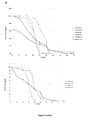
- a microscopic examination of blood smears from proband 1 showed mild anisopoikilocytosis with less than 1% of target cells, polychromatophilic red blood cells, teardrop cells, elliptocytes with sometimes abnormal hemoglobin distribution, hemighosts, bite cells, knizocytes, schizocytes and rare stomatocytic red cells ( Figure 1B ).
- anomalies were similar with more significant anisopoikilocytosis and the presence of acanthocytes ( Figure 1B ). There was no basophilic stippling of red blood cells.
- the EMA test, electrophoresis of red cell membrane proteins and hemoglobin study were normal for all of them.
- the diagnosis of xerocytosis was not retained initially as there was almost no stomatocyte on blood films and repeated ektacytometry was considered as normal for all 4 tested affected individuals.
- the missense mutation c.1055G>A (p.Arg352His), confirmed by Sanger sequencing, is located in the Calmodulin interacting region and involves a residue highly conserved among species ( Figure 1C ); it was predicted pathogenic by in silico analysis (Polyphen: http://genetics.bwh.harvard.edu/pph2), with a score of 0.992 for a maximum of 1. Mutation segregation was studied in 3 other members of Family 1, two affected and one unaffected by chronic hemolysis and was consistent with a dominant transmission of the phenotype linked to the mutation. After direct sequencing of KCNN4 in the 2 affected subjects of Family 2, the same missense mutation c.1055G>A, was identified in heterozygous condition for both of them.
- dehydrated red cells are usually associated with haemolytic anemia because shrinkage stimulates Phosphatidylserine (PS) exposure as previously shown in both normal red blood cells, G6PD deficient cells and HbS cells (Lang et al. , 2004; Weiss et al. , 2011).
- PS Phosphatidylserine
- a relationship between cation leakage and hemolytic anemia has also been observed for other membrane proteins mutations including Band 3 mutations (Bruce et al. , 2005).
- Iron overload due to chronic anemia is difficult to evaluate in Family 1 as the mother's proband has regularly been transfused and treated by Deferriprox and the proband himself is too young to suffer from iron overload. In the second family, the patients exhibit moderate iron overload as observed in chronic hemolytic anemia.
- the function of the Gardos channel variant p.Arg352His was then investigated by the expression of a plasmid containing the mutated cDNA in Xenopus laevis oocytes.
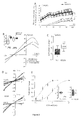
- the current voltage curves showed that the missense mutation p.Arg352His does not prevent ion conductance through the channel when compared to the wild type channel ( Figure 2A ).
- the activation phase of WT and p.Arg352His channel induced by calcium ionophore was similar but, whereas WT KCNN4 activity decreases after reaching a maximum, the p.Arg352His mutant activity remains quite constant for several minutes.
- HEK293 cells were transfected with WT or mutated channel. The mutation does not prevent addressing of the channel to plasma membrane.
- Whole-cell recording shows a different calcium dependent-activation kinetic for HEK293 cells expressing WT or p.Arg352His KCNN4 ( Figure 3A ).
- the current progressively appears while Ca 2+ diffuses from the pipette to the intracellular compartment.
- the current is activated immediately after break-in for the mutant and further increases during the time of recording.
- the maximum current density is increased in p.Arg352His KCNN4 expressing cells ( Figure 3A-C ).
- KCNN4 should be activated by lower calcium concentration in patient red cells compared to control.
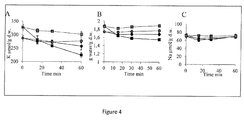
- vanadate increases intracellular Ca 2+ concentration in red cells by inhibiting the calcium pump and also by activating the calcium influx (Varecka and Carafoli, 1982; Bennekou et al. , 2012).
- Figure 4 illustrates the K + content of control or patient red cells in presence of 5mM vanadate with or without 10 ⁇ M TRAM-34.
- K + content of red cells in blood stored for 24 hours at 37°C or 4°C is given in table 2 below.
- Table 2 K + content in red cells as a function of blood temperature. Data are expressed in ⁇ mol per gram of dry weight ( ⁇ mol/g d.w. +/- S.D. for 3 samples).
Landscapes
- Health & Medical Sciences (AREA)
- Life Sciences & Earth Sciences (AREA)
- Chemical & Material Sciences (AREA)
- General Health & Medical Sciences (AREA)
- Medicinal Chemistry (AREA)
- Engineering & Computer Science (AREA)
- Animal Behavior & Ethology (AREA)
- Pharmacology & Pharmacy (AREA)
- Public Health (AREA)
- Veterinary Medicine (AREA)
- Epidemiology (AREA)
- Immunology (AREA)
- Molecular Biology (AREA)
- Hematology (AREA)
- Biomedical Technology (AREA)
- Urology & Nephrology (AREA)
- Analytical Chemistry (AREA)
- Organic Chemistry (AREA)
- Pathology (AREA)
- Cell Biology (AREA)
- Microbiology (AREA)
- Biotechnology (AREA)
- Physics & Mathematics (AREA)
- Bioinformatics & Cheminformatics (AREA)
- Biochemistry (AREA)
- Proteomics, Peptides & Aminoacids (AREA)
- General Physics & Mathematics (AREA)
- Food Science & Technology (AREA)
- Genetics & Genomics (AREA)
- Wood Science & Technology (AREA)
- Zoology (AREA)
- Toxicology (AREA)
- Tropical Medicine & Parasitology (AREA)
- Nuclear Medicine, Radiotherapy & Molecular Imaging (AREA)
- General Chemical & Material Sciences (AREA)
- Chemical Kinetics & Catalysis (AREA)
- Diabetes (AREA)
- Pain & Pain Management (AREA)
- General Engineering & Computer Science (AREA)
- Biophysics (AREA)
Abstract
The invention relates to an in vitro method of diagnosis of hereditary xerocytosis in a subject, comprising genotyping the KCNN4 gene encoding the Gardos channel in said subject. The invention also relates to an inhibitor of the KCNN4 protein for use in the treatment of hereditary xerocytosis, in particular in a human subject who is a carrier of the missense mutation c.1055G>A in the KCNN4 gene.
Description
- The present invention relates to the diagnosis of hereditary xerocytosis and the treatment of this disorder.
- Water and solute homeostasis is essential for the maintenance of erythrocyte integrity and is controlled via the regulation of monovalent cation content. Several primary disorders of erythrocytes hydration exist and are characterized by an abnormal permeability of the erythrocyte membrane to sodium and potassium, resulting either in swelling or shrinkage of red cells (Rinehart et al., 2010). Clinically, these inherited disorders are associated with chronic hemolytic anemia and are due to defects in various transmembrane ion channels or transporters (Da Costa L, et al., 2013).
- Hereditary Xerocytosis, (HX) ([OMIM] 194380), is an autosomal dominant congenital hemolytic anemia characterized by primary erythrocyte dehydration (Miller et al., 1971). In HX patients, red blood cells exhibit an altered intracellular cation content and cellular dehydration which is responsible for an increased erythrocyte mean corpuscular hemoglobin concentration (MCHC) and decreased erythrocyte osmotic fragility (Archer et al., 2014). Under the microscope, blood films show various shape abnormalities, the most characteristic being a central pallor, straight or crescent-shaped, which leads to the denomination of stomatocyte for these cells and of Dehydrated Hereditary Stomatocytosis as an alternative name for HX (Da Costa et al., 2013).
- HX has been associated with missense mutations in FAM38A encoding the red cell membrane mechanosensitive cation channel, PIEZO1 (Zarychanski et al., 2012; Andolfo et al., 2013a). Functional studies have demonstrated that in PIEZO1, the mutations slowed channel inactivation and introduced a pronounced latency for activation (Bae et al., 2013). More recently, another type of red cell ion exchange defect associated with pseudohyperkalemia has been linked to mutations in the ATP binding cassette transporter ABCB6 (Andolfo et al., 2013b). Rinehart et al. (2010) report that a locus for hereditary xerocytosis has been mapped to 16q23-q24, but the affected gene has not yet been identified.
- The Gardos channel is a cation channel also referred to as KCa3.1 or KCNN4. It is a Ca2+ sensitive, intermediate conductance, potassium selective channel, initially described in pancreas cells but present in many cell types including erythrocytes (Maher and Kuchel, 2003). The locus of the gene encoding the Gardos channel (KCNN4 protein) is mapped 19q13.2. The Gardos channel is made of 4 identical subunits; each subunit is encoded by a single gene, KCNN4, and comprises 6 transmembrane domains and a pore region between the 5th and the 6th transmembrane domains (
Figure 2D ) (Maher and Kuchel, 2003). In steady state conditions, the Gardos channel is inactive. Its function is not fully elucidated in mature normal erythrocytes. Under external stimulation, intracellular Ca2+ increases and then interacts with Calmodulin molecules that are bound tightly on each of the four channel subunits of the Gardos channel. Ca2+ binding to Calmodulin results in the opening of the channel and rapid K+ and water efflux leading to erythrocyte dehydration and shrinkage, a mechanism referred to as the Gardos effect (Maher and Kuchel, 2003; Fanger et al., 1999). Red blood cells are in constant movement during blood circulation where they experience mechanical stress on their membrane. Using on-cell patch clamp experiments, it has been shown that local membrane deformation can act as a stimulating event in red cells and lead to Gardos activation, suggesting that this mechanosensory mechanism may allow erythrocytes to adapt their volume and shape to pass through the narrow capillaries of the microvasculature (Dyrda et al., 2010). A number of recent studies have described its role in a variety of physiological events and pointed it out as an interesting therapeutic target in a large panel of human diseases (Wulff and Köhler, 2013; Wulff and Castle, 2010). - The inventors have identified a missense mutation (p.Arg352His mutation) located in one of the functional regions of the Gardos channel and its association with chronic hemolysis and dehydrated cells in two unrelated HX families with eight affected HX persons. The affected individuals present chronic anemia that varies in severity. Their red cells exhibit a panel of various shape abnormalities such as elliptocytes, hemighosts, schizocytes and very rare stomatocytic cells. The missense mutation concerns a highly conserved residue among species, located in the region interacting with Calmodulin and responsible for the channel opening and the K+ efflux.
- The diagnostic of this disorders in these persons was prevented by the fact that two of the tests which could have led to biological diagnosis are no longer performed in routine laboratories: Osmotic Resistance has very often been replaced by the EMA test, which is normal in the present cases, and intra-erythrocytic K+ determination is currently no longer offered on a routine basis.
- The provision of a new diagnostic test of hereditary xerocytosis is therefore of clinical interest.
- The functional experiments performed on Xenopus oocytes showed that the channel mutated on residue 352 is normally activated by Ca2+ influx, permits an efflux of K+ of increased intensity when compared to the wild-type (wt) channel and remains open and active during a prolonged period when compared to the normal channel. It is likely that the mutation, removing a positive charge in the Calmodulin binding domain of the Gardos channel, modifies interactions with this activating partner, resulting in a more active channel. Experiments on the human cell line HEK293 confirmed the higher current density for mutated KCNN4. Despite the mutation in the Calmodulin binding site, the trafficking properties of the mutant are similar and unaffected in cells with very different trafficking properties (HEK293 and Xenopus oocytes). These experiments showed that p.Arg352His mutation changes Ca2+ sensitivity of the channel that is activated by 10 times lower Ca2+ concentration. The anomaly in the kinetic of activation combined with a higher sensitivity to Ca2+ confers pathogenicity to p.Arg352His KCNN4.
- The description of such a molecular defect provides a rationale for the treatment of this type of HX by specific inhibitors of the Gardos channel such as the Senicapoc, which was tested in the past in a phase III study for the treatment of Sickle Cell disease and was proven, on this occasion, to be non-toxic (Ataga et al., 2011).
- Accordingly, the present invention provides an inhibitor of the Gardos channel (KCNN4 protein) for use in the treatment of hereditary xerocytosis.
- The Gardos channel is a Ca2+ sensitive, intermediate conductance, potassium selective channel also referred to as KCa3.1 or KCNN4 (Maher and Kuchel, 2003). The Gardos channel can be a wild-type Gardos channel or a mutant Gardos channel, such as the Gardos channel (KCNN4 protein) variant p.Arg352His.
- In a preferred embodiment, the Gardos channel is from human origin. The amino acid sequence of the wild-type human Gardos channel (KCNN4 protein) is available under accession number 015554 (GI:17366160) in the UniProtKB database, and referred herein to as SEQ ID NO: 2.
- An inhibitor of the Gardos channel refers to a selective Gardos channel blocker that specifically inhibits the efflux of potassium from the erythrocytes.
- An inhibitor of the Gardos channel can be identified by screening a collection of candidate compounds for their ability to specifically inhibit the efflux of potassium from the erythrocytes. Methods for measuring the inhibition of the efflux of potassium from the erythrocytes are known in themselves. Examples of such methods are described in Brugnara et al., 1993a and 1993b; Ellory et al., 1994. Both the percent inhibition of the Gardos channel and the IC50 of an inhibitor of the Gardos channel can be assayed utilizing the methods described in Brugnara et al., 1993b.
- The potency of an inhibitor of the Gardos channel can be assayed using erythrocytes by a method such as that disclosed by Brugnara et al., 1993a.
- Inhibitors of the Gardos channel include organic molecules, amino acids and antibodies.
- The antibodies can be polyclonal or monoclonal antobodies. The term "antibody" or "antibodies" as used herein also encompasses functional fragments of antibodies, including fragments of chimeric, humanized, single chain antibodies or fragments thereof (e.g., Fv, Fab, Fab'and F(ab') 2 fragments). Suitable antibodies are those which are directed to KCNN4 protein (Gardos channel). Advantageously, said antibody is a monoclonal antibody, or fragment thereof.
- In a preferred embodiment, the inhibitor of the Gardos channel is selected from the group consisting of imidazole antimycotics (Brugnara et al., 1996), such as clotrimazole (Brugnara et al., 1993a) metronidazole (Brugnara et al., 1993a), econazole (Brugnara et al., 1993a); arginine (Romero et al., 2002); Tram-34 (1-[(2-Chlorophenyl)diphenylmethyl]-1H-pyrazole) (Wulff et al., 2000); Charybdotoxin; Maurotoxin (Castle et al., 2002); nifedipine (Brugnara et al., 1993a); Nitrendipine (Brugnara et al., 1993a); inhibitors of calcium activated potassium flux that display selectivity and a potency towards the Gardos channel described in
International Applications WO 00/50026 WO 2004/016221 ,WO 2005/113490 andWO 2006/084031 , including senicapoc (ICA-17043; bis(4-fluorophenyl)phenyl acetamide; Ataga et al., 2008; 2009), 2,2-Bis(4-fluorophenyl)-N-methoxy-2-phenylacetamidine, 2-(2-Chlorophenyl)-2,2-diphenylacetaldehyde oxime, 2-(2-Chlorophenyl)-2,2-bis(4-fluorophenyl)-N-hydroxyacetamidine, 2,2,2-Tris(4-fluorophenyl)-N-hydroxyacetamidine, 2-(2-Fluorophenyl)-2-(4-fluorophenyl)-N-hydroxy-2-phenylacetamidine, phosphoric acid 3-(2-oxazolyl)-4-[3-(trifluoromethyl)phenylsulfonamido]phenyl monoester, N-[2-(4,5-Dihydrooxazol-2-yl)phenyl]-3-(trifluoromethyl)benzenesulfonamide, N-[4-Methoxy-2-(2-oxazolyl)phenyl]benzenesulfonamide, N-[4,5-Dimethoxy-2-(3-methyl-1,2,4-oxadiazol-5-yl)phenyl]-3-(trifluoromethyl)benzenesulfonamide, N-[2-(2-Furyl)phenyl]-3-(trifluoromethyl)benzenesulfonamide and N-[4-Methyl-2-(2-oxazolyl)phenyl]-3-(trifluoromethyl)benzenesulfonamide, preferably senicapoc (see also Stocker et al., 2003). - Said inhibitor of the Gardos channel can be administered by itself, or mixed with suitable carriers or excipient(s). It can be used systemically. One can use any formulation suitable for systemic administration.
- As used herein, the terms "treatment" or "treating" includes the administration of an inhibitor of the Gardos channel as defined above to a subject who has hereditary xerocytosis, with the purpose to alleviate, relieve, alter, remedy, ameliorate, improve or affect this disorder.
- The subject is preferably a human subject, more preferably a human subject who is a carrier for the missense mutation c.1055G>A in the KCNN4 gene encoding the Gardos channel, resulting in an amino acid change from arginine to histidine in codon 352 (p.Arg352His).
- The nucleic acid sequence of the wild-type human KCNN4 gene encoding the Gardos channel (Map:19q13.2) is available under the accession number NC_000019.10 (GI:568815579 ) in the NCBI GenBank database.
- The nucleic acid sequence of the mRNA (cDNA) encoded by the wild-type human KCNN4 gene is available under the accession number NM_002250.2 (GI:25777651) in the NCBI GenBank database, referred herein to as SEQ ID NO: 1.
- The amino acid sequence of the wild-type human Gardos channel (KCNN4 protein) is available under accession number 015554 (GI:17366160) in the UniProtKB database or NM_002250.2 (GI:25777651) in the NCBI GenBank database, referred herein to as SEQ ID NO: 2.
- Methods for identifying said mutation are described below.
- The present invention also provides a method for treating hereditary xerocytosis, comprising administering to a subject in need thereof an inhibitor of the Gardos channel (KCNN4 protein) as defined above.
- The present invention also provides the use of an inhibitor of the Gardos channel (KCNN4 protein) as defined above for the preparation of a medicament for treating hereditary xerocytosis.
- The present invention also provides a method for genotyping, in vitro, the KCNN4 gene in a human subject comprising the steps of:
- (a) isolating mRNA or genomic DNA from a nucleic acid sample obtained from said subject,
- (b) determining the nucleotide present at position c.1055 of the KCNN4 gene encoding the Gardos channel.
- As used herein, the term "determining the nucleotide corresponding to the nucleotide present at position c.1055 of the KCNN4 gene encoding the Gardos channel" refers to determining the nucleotide corresponding to the nucleotide present at position c.1055 of the KCNN4 gene encoding the Gardos channel, either in said isolated mRNA or genomic DNA.
- Said subject is suffering or not from hereditary xerocytosis.
- Methods for obtaining a nucleic acid sample from a subject are well known in the art. Methods for isolating mRNA or genomic DNA from a subject are also well known in the art.
- Advantageously, the mRNA or genomic DNA can be obtained from a blood sample from said subject, in particular from reticulocytes from said subject for isolating mRNA or from white blood cells from said subject for isolating genomic DNA.
- Methods for determining said nucleotide in step (b) comprise the methods for detecting a single nucleotide polymorphism (SNP) which are well known in this art.
- Methods for detecting SNPs have been described in the prior art, including selective hybridization techniques (e.g., reverse dot blot, Southern blot for DNAs, Northern blot for RNAs,), selective amplification, nucleic acid sequencing, restriction fragment length polymorphism (RFLP), amplified fragment length polymorphism (AFLP), ligation chain reaction (LCR), mass spectrometry (see for review Kaplan and Delpech, 2007).
- In particular, to determine a SNP in mRNA or genomic DNA, it may be necessary to amplify the corresponding mRNA or genomic region respectively. For this, it can be used PCR primers whose nucleotide sequences may be obtained from the sequences containing the SNP to be amplified. The PCR amplified fragments can then be analyzed by sequencing (e.g., Sanger sequencing) or hybridization techniques. The PCR amplified fragments can also be analyzed on mass spectrometer through specific extension primers distinguishing the two variants (wild-type or variant) known at the polymorphic site.
- By way of examples, a set of PCR primers as defined above include the set of PCR primers of SEQ ID NO: 5 and SEQ ID NO: 6.
- A SNP in mRNA or genomic DNA can also be determined by reverse dot blot. One can use the probe of SEQ ID NO: 3 to determine the wild-type sequence and the probe of SEQ ID NO: 4 to determine the variant (mutant) sequence.
- According to the method for genotyping it can be deduced that the subject is suffering from hereditary xerocytosis if the nucleotide present at position c.1055 of the KCNN4 gene encoding the Gardos channel is adenine (A).
- The present invention also provides an in vitro method of diagnosing the presence of or predisposition to hereditary xerocytosis in a human subject, comprising the step of:
- (i) providing a biological sample from said subject and
- (ii) detecting the presence of the missense mutation c.1055G>A in the KCNN4 gene encoding the Gardos channel encoded by the KCNN4 gene or the missense mutation p.Arg352His in the Gardos channel (KCNN4 protein), preferably detecting the presence of the missense mutation c.1055G>A in the KCNN4 gene encoding the Gardos channel,
- As used herein the term "detecting the presence of the missense mutation c.1055G>A in the KCNN4 gene" refers to detecting the presence of the mutation corresponding to missense mutation c.1055G>A in the KCNN4 gene, either in mRNA or genomic DNA from a nucleic acid sample obtained from said subject.
- The presence of the missense mutation c.1055G>A in the KCNN4 gene encoding the Gardos channel can be detected by genotyping the KCNN4 gene in said human subject as described above.
- Methods for determining a point mutation in a protein are well known in this art (see for review Kaplan and Delpech, 2007). The presence of the p.Arg352His mutation in the Gardos channel (KCNN4 protein) can be detected by protein sequencing or binding to a ligand (such as an antibody) specifically directed to the Gardos channel (KCNN4 protein) variant p.Arg352His, in particular by western blot using antibodies specifically directed to the Gardos channel (KCNN4 protein) variant p.Arg352His, preferably by protein sequencing.
- The present invention also provides a kit for diagnosing a hereditary xerocytosis comprising the probe of SEQ ID NO: 3 and/or the probe of SEQ ID NO: 4.
- The present invention also provides the use of the probe of SEQ ID NO: 3 and/or the probe of SEQ ID NO: 4 for in vitro diagnosing a hereditary xerocytosis in a human subject.
- The present invention also relates to methods for screening inhibitors of the Gardos channel. Such inhibitors are useful as selective Gardos channel blocker that specifically inhibits the efflux of potassium from the erythrocytes, and therefore for treating hereditary xerocytosis.
- The methods include binding assays and/or functional assays, and may be performed in vitro, in cell systems (yeast, bacteria, Xenopus oocyte) or in animals, involving the human Gardos channel (KCNN4 protein) variant p.Arg352His.
- For cell systems, cells can be native, i.e., cells that normally express the Gardos channel (KCNN4 protein) variant p.Arg352His polypeptide, as a biopsy or expanded in cell culture. Preferably, these native cells are derived from erythrocytes. Alternatively, cells are recombinant host cells, in particular Xenopus laevis oocytes, expressing the Gardos channel (KCNN4 protein) variant p.Arg352His.
- The present invention therefore provides an in vitro method for screening a biologically active inhibitor of the human Gardos channel (KCNN4 protein) variant p.Arg352His, said method comprising contacting in vitro a test compound with the human Gardos channel (KCNN4 protein) variant p.Arg352His and determining the ability of said test compound to prevent ion conductance through the channel when compared to the wild-type human Gardos channel (KCNN4 protein) of SEQ ID NO: 2, wherein preventing ion conductance through the channel when compared to the wild-type human Gardos channel (KCNN4 protein) of SEQ ID NO: 2 provides an indication as to the ability of the compound to inhibit the human Gardos channel (KCNN4 protein) variant p.Arg352His.
- In a preferred embodiment of said method, the method comprises expressing a plasmid containing the mutated cDNA encoding the human Gardos channel (KCNN4 protein) variant p.Arg352His in Xenopus laevis oocytes and measuring the current voltage in the presence of the test compound; a decrease in the conductance indicating that said test compound inhibits the human Gardos channel (KCNN4 protein) variant p.Arg352His.
- In another preferred embodiment of said method, erythrocytes expressing the Gardos channel (KCNN4 protein) variant p.Arg352His polypeptide are exposed to a test compound and a Rb-containing medium. The initial rate of 86Rb transport can be calculated from a parameter such as the linear least square slope of 86Rb uptake by the erythrocytes. Inhibitory constants can be calculated by standard methods using computer-assisted nonlinear curve fitting.
- A method for measuring current voltage in Xenopus laevis oocytes is described in the Example below.
- In addition to the above features, the invention further comprises other features which will emerge from the following description, which refers to the identification of the p.Arg352His mutation in the Gardos channel and its association with chronic hemolysis and dehydrated cells, as well as to the appended figures:
-
Figure 1 : Red blood cell and DNA investigations. A: Family pedigrees showing mutation segregation; B: Blood film smears (MGG) for theproband 1 and his mother; C: Multiple interspecies protein sequence alignment of KCNN4 in the region of residue 352; D: KCNN4 transcript sequencing: upper panel: wild type sequence; bottom panel: transcript with mutation c.1055G>A (p.Arg352His). E: Red cell Osmotic fragility test using osmolar gradient ranging from 0.1 to 1% of NaCl solution. A: at T0 and at 37°C for a Control, Mother and Proband fromFamily 1. B: after T24h incubation at 4° or 37°C for a control and the proband. -
Figure 2 : Functional analysis of the Gardos channel variant p.Arg352His. A: Activation kinetic. For oocytes expressing WT KCNN4 or p.Arg352His KCNN4, the current at 0 mV was plotted as a function of time (left panel). The maximal intensity of the current being different between WT and mutated KCNN4, a ratio between I at different times and the Imax was calculated for each condition and plotted as a function of time. Data are means of 15 (WT) or 22 (p.Arg352His) oocytes coming from 3 different batches. The arrow indicates the opening of calcium ionophore perfusion. The bar graph (right panel) quantifies the remaining current at 220 s in oocytes expressing WT or p.Arg352His KCNN4. The current at 220 s was divided by Imax (at about 135 s) for each recording. Data are means +/- sem of 15 (WT) or 22 (p.Arg352His) oocytes. Statistical analysis were done using the Mann and Whitney test, the two bars are different with a risk of 0.2% (bidirectional). B: Current-voltage curves of WT and mutated KCNN4 in oocyte membranes with quantification. I/V curves correspond to the maximal current recorded for WT or p.Arg352His KCNN4 expressing oocytes (around 135 s) in gluconate medium with 1 µM A23187. Data are means of ramps recorded on 15 (WT) or 22 (p.Arg352His) oocytes. NI are control (non-injected) oocytes (n=4). Inset: western blot detection of WT and mutated KCNN4 indicated by the arrow (around 50 kDa). C: TRAM-34 inhibition: once the maximal current was reached in oocytes expressing p.Arg352His mutant, 10 µM TRAM-34 was added. This induced a rapid current decrease. The mean value of maximal currents at 50 mV was calculated (white bar) and compared to the mean value of minimal currents at 50 mV after TRAM-34 addition (grey bar). Data are means of 4 oocytes +/-sem. -
Figure 3 : KCNN4 expression in HEK293 cells. A: Activation kinetic of wt and p.Arg352His KCNN4 recorded in whole cell configuration. WT KCNN4 or p.Arg352His KCNN4 were expressed in HEK293 cells and then subjected to patch-clamp experiment in whole cell configuration. Current were recorded immediately after break-in using a 150ms voltage ramp protocol from -120 to +80 mV from an holding potential of -60 mV. The current at -20 mV was plotted as a function of time. Values are mean ± SEM of 12-8 experiments. B: Representative current/voltage curves for HEK293 expressing wt or p.Arg352His KCNN4. Inset (upper left) represents reversal potentials just after break-in and at the steady state. Values are represented as a Tukey's plot (n=12-8) Statistical analyses were done using Kruskal and Wallis test followed by a Tukey post-hoc test. C: Tukey's plots showing current density at -20mV in wt and mutated sk4 (n=12-8; *** p< 0.001). Statistical analysis was performed using a Mann and Whitney test. D: Representative traces of Ca2+-dependent activation of wt and p.Arg352His KCNN4 current recorded in an inside-out macropatch configuration. Currents were elicited by 150 ms voltage ramps from -120 to +80 mV. Each trace corresponds to a different concentration of Ca2+ indicated on the right hand side of the I/V. E: Normalized K+ current measured at -45 mV in response to [Ca2+]i was plotted as a function of [Ca2+]I for wt (squares) and p.Arg352His mutated KCNN4 (circles). The experimental values (mean ± SEM) were fitted with the Hill equation (Origin software (Northampton, MA)):
where Y is relative KCNN4 current at -45 mV (I/Imax) for each [Ca2+], Ymax is the maximum current (Imax), K0.5 is the apparent dissociation constant, and n is the Hill coefficient. Insert (lower right) show Hill equation parameter K0.5 and nh. Values are represented as Tukey's plot (n=4, *p<0. 05). Statistical analysis was performed using a Mann and Whitney test. -
Figure 4 : Cation contents and cell volume as a function of incubation time with vanadate. A: K+ content, B: cell water and C: Na+ contents in red cells incubated with 5 mM vanadate (black circles for control red cells, black squares for patient red cells) or 5mM vanadate with 10 µM TRAM-34 (grey circles for control red cells and grey squares for patient red cells). Data in µmol per g of dry weight, are mean ± S.D., n=3. - Hematological tests: An osmotic fragility test, based on the observation of the fragility of red blood cells in hypotonic saline solutions, was performed immediately after sampling and after 24 hours' incubation at 4° or 37°C.
- NMR: NMR experiments were performed on a 400 AVANCE wide-bore spectrometer (Bruker Biospin, Billerica, MA), using stimulation by the ionophore A23187 (Sigma Aldrich).
- NGS Sequencing: Exome sequencing was performed after exome enrichment using Ion AmpliSeq™ (Thermo Fisher Scientific Inc., Waltham, MA USA), template preparation using the Ion PI
™ Template OT2 200 Kit v2 on theIon OneTouch™ 2 System and sequencing using the Ion PI™ Chip Kit v2 and IonPI™ Sequencing 200 Kit v2 on the Ion Proton™ Sequencer (Thermo Fisher Scientific Inc., Waltham, MA USA). Raw data were first aligned with the provided software suite to generate BAM files. The coverage and sequencing depth analysis were computed using the BEDtools suite v2.17 (Quinlan and Hall, 2010) and in-house scripts. Variants were identified using the Torrent Browser Variant caller (version 4.0.2), annotated and prioritized with the in-house "VarAFT" system that includes Annovar (Wang et al., 2010). - The mutation was confirmed on DNA samples and KCNN4 transcripts from fresh reticulocytes by Sanger sequencing (3500XL Genetic AnalyzerR, Life Technologies, Carlsbad, CA).
- Expression in Xenopus oocytes: Plasmid pcDNA3KCNN4-HA (Joiner et al., 2001) was used to introduce the point mutation p.Arg352His by PCR. A Hemagglutinin tag (HA) was present in the C-terminal end of KCNN4 (Joiner et al., 1997). Female Xenopus laevis were anaesthetized with MS222 according to the procedure recommended by ethics committee of the applicants. Oocytes were harvested and injected as previously published (Barneaud-Rocca et al., 2011).
- Current recording was performed as follow: a ramp protocol between -120 to +80 mV for 2 seconds, holding potential -80 mV, was applied using Clampex (PClamp, Molecular Devices Corporation). To avoid looking at chloride channel activation, current recording was done in MBS where chloride was substituted by gluconate (Na-gluconate 85 mM and K-
gluconate 1 mM). Junction potential was minimized using an agar bridge and KCl 3M. Electrodes filled with KCl 3M were 0.5 MOhm resistance. After equilibration in this gluconate MBS, KCNN4 was activated by the calcium ionophore A23187, 1 µM in MBS gluconate. In control oocytes, no current was activated by ionophore addition. - Western blotting on oocyte: Oocyte membrane were prepared as previously described (Martial et al., 2007). Immunodetection of KCNN4-HA was done using an anti-HA antibody (1/1000, Sigma). To compare KCNN4 expression levels in different samples, the cell membrane marker β1 Na,KATPase was used (1/500, Sigma). Signals were detected by chemiluminescent reaction with Immobilon Western reagent (Millipore) and a Fusion FX7 (Vilber-Lourmat, France). The intensity of KCNN4 bands relative to the β1 Na,K-ATPase signal was quantified using ImageJ Version 1.44 software (NCBI).
- HEK293 cells transfection: HEK293 cells were grown in DMEM glutamax (Gibco) 10%FBS penicillin-streptomycin. Cells were co-transfected with 1 µg of WT or point mutated pcDNA3-KCNN4-HA and 0.5 µg of pIRES-eYFP using CaPO4.16 hours later, cells were washed twice with PBS and patch-clamp recordings on fluorescently labeled cells.
- Patch-clamp electrophysiology: Glass pipettes (Brand, Wertheim, Germany) were made on a horizontal pipette puller (P-97; Sutter Instrument Co.; Navato, CA) to give a final resistance ranging from 3 to 5 MΩ. For whole cell experiments the bath solution was in mM: NaCl 140, KCl 5,
CaCl 2 1, Glucose 29,Hepes 25 pH 7.4 adjusted with NaOH. The intracellular solution was in mM:KCl 30,KGluconate 100, EGTA 5,Hepes 10 pH 7.2 adjusted with NaOH, CaCl2 4.19 (corresponding to 1µM free calcium),MgATP 2. Currents were measured at room temperature using a ramp protocol form -120 to +80 mv from a holding potential of -60mV (sampling frequency 10 kHz; filtered 1 kHz) - Inside-out recordings: Calcium-dependence of KCNN4 was studied with intracellular (bath) solutions in mM:
KCl 30,KGluconate 100, EGTA 5,Hepes 10 pH 7.2 adjusted with KOH, CaCl2 with varying concentrations 4.91; 4.19; 3.61; 2.82; 1.7 ( 10-5; 10-6; 5.10-7; 2.5.10-7; 10-7 M of free calcium). Maxchelator was used to calculate free Ca2+ concentration (http://maxchelator.stanford.edu/CaEGTA-TS.htm). Extracellular solution in mM: NaCl 140, KCl 5,CaCl 2 1, Glucose 29,Hepes 25 pH 7.4 adjusted with NaOH. Currents were evoked by voltage ramps from -120 to 80 mV (150 ms), filtered at 1 kHz and acquired with a sampling frequency of 10 kHz. All traces were corrected for liquid junction potential. For dose response experiments, normalized values of currents at -45 mV were plotted against free Ca2+ concentration. - All patch-clamp experiments were performed with a PC-controlled
EPC 9 patch-clamp amplifier (HEKA, Lambrecht/Pfalz, Germany). Currents were acquired and analyzed with Pulse and Pulsefit softwares (HEKA). - Immunohistochemistry: Immunodetection of KCNN4-HA in HEK293 cells was performed using anti-HA antibody (Sigma-Aldrich).
- Red cell cation content and volume measurements: Fresh venous blood was obtained by venipuncture from an informed patient from
family 1 and a healthy volunteer. For 24 hours' incubation, blood samples were stored at 37°C or 4°C. - For vanadate experiments: blood was washed 4 times at room temperature in medium containing (in mM): NaCl (147) KCl (5) MgSO4 (2) CaCl2 (1) Hepes/NaOH pH7.4 (10). Red cell suspension was then incubated at 37°C, 30% hematocrit and 5 mM vanadate was added alone or with 10 µM TRAM-34. A few minutes before sampling time, 400 µl of cell suspension were taken to fill 3 nylon tubes that were centrifuged for 10 minutes at 4°C, 20000 g at the exact sampling time. The supernatant was collected for extracellular ion content measurements. The pellet of red cells was extracted and immediately weighted wet. Dry weight was measured after overnight heating (80°C). Water content was calculated with a correction of 3.64% corresponding to trapped medium between packed cells. Intracellular ions were extracted from dried pellets by overnight incubation at 4°C in 5 ml milliRho water (Millipore). Na+ and K+ were measured by flame spectroscopy with an Eppendorf ELEX6361.
- It was initially investigated a fetus (proband 1) for severe in utero anemia without edema, requiring 1 transfusion in utero at week 27 (Hb: 30 g/l). After preterm birth, he received 3 additional transfusions: immediately after birth, at 2 weeks (Hb: 65 g/l) and at 6 weeks of age (Hb: 70 g/l) and was then treated with EPO for 6 weeks. Under treatment, the reticulocyte count progressively increased and Hb value stabilized at 90g/l at 3 months of age. No further transfusion was necessary. Currently, at 4
years 10 months of age, the proband demonstrated mild anemia and splenomegaly. Clinical history revealed that the mother's proband was affected with a chronic moderate hemolytic anemia of unknown origin from childhood. She was treated with regular transfusion regimen from infancy to adolescence. Chelation therapy was started at 8 years of age and a splenectomy performed at 25 years old. During adult life, she received 2 transfusions, one after a delivery and another one during an infection by the parvovirus B19. Four other members of this family (Family 1) originated from France, were also affected by chronic hemolytic anemia (Figure 1A ). Three out of 4 were splenectomized and 2 of them have received regular transfusions and chelation therapy in periods of time. - In a second unrelated family (Family 2) the proband (proband 2), a 25 year-old person, has suffered from moderate chronic hemolytic anemia since early childhood. She was never transfused and underwent a cholecystectomy because of biliary lithiasis. Her father was originated from Poland and was reported to have severe hemolytic anemia treated by splenectomy and occasional transfusions. Her 2 year-old son was born after a normal pregnancy carried to term, he also presented with a well-tolerated chronic hemolytic anemia. The hematological parameters of
proband 1, his mother,proband 2 and her son are summarized in table 1 below. In addition to anemia, all 4 have a discrete increase of MCHC value.Table 1: Hematological parameters for 4 subjects carrying the KCNN4 c.1055G>A mutation (representative values in steady state conditions) values in steady state conditions) Normal range for adults Hb (g/l) 130-160 MCV (fl) 80-100 Reticulocytes count (G/l) 20-80 MCHC(g/l) 310-350 Platelets (G/l) 150-400 Ferritin (µg/l) 22-322 Proband 1 (age 4) 98 87.9 263 356 319 116 Proband 1 mother 85 109 255 354 783 94 Proband 2110 93.1 249 361 230 Nd Proband 2's son (age 2) 104 86.9 363 365 464 121 - A microscopic examination of blood smears from
proband 1 showed mild anisopoikilocytosis with less than 1% of target cells, polychromatophilic red blood cells, teardrop cells, elliptocytes with sometimes abnormal hemoglobin distribution, hemighosts, bite cells, knizocytes, schizocytes and rare stomatocytic red cells (Figure 1B ). For his mother and forproband 2, anomalies were similar with more significant anisopoikilocytosis and the presence of acanthocytes (Figure 1B ). There was no basophilic stippling of red blood cells. - The EMA test, electrophoresis of red cell membrane proteins and hemoglobin study were normal for all of them. The diagnosis of xerocytosis was not retained initially as there was almost no stomatocyte on blood films and repeated ektacytometry was considered as normal for all 4 tested affected individuals.
- Whole exome sequencing was performed for 3 subjects in
Family 1, the proband, his affected mother and his unaffected sister. Variants were filtered against dbSNP137 and for heterozygous exonic mutations present in affected individuals only. Thirty-three genes were found carrying exonic, non-synonymous heterozygous mutations among which KCNN4 encoding the Gardos channel, was the most consistent candidate because of its expression in red cells. The missense mutation c.1055G>A (p.Arg352His), confirmed by Sanger sequencing, is located in the Calmodulin interacting region and involves a residue highly conserved among species (Figure 1C ); it was predicted pathogenic by in silico analysis (Polyphen: http://genetics.bwh.harvard.edu/pph2), with a score of 0.992 for a maximum of 1. Mutation segregation was studied in 3 other members ofFamily 1, two affected and one unaffected by chronic hemolysis and was consistent with a dominant transmission of the phenotype linked to the mutation. After direct sequencing of KCNN4 in the 2 affected subjects ofFamily 2, the same missense mutation c.1055G>A, was identified in heterozygous condition for both of them. Splicing was not affected by the substitution as normal-sized transcripts were heterozygotes for the mutation (Figure 1D ). Using the data of exome sequencing inproband 1, it was confirmed that no mutation was present in FAM38, encoding PIEZO1 and described as the major cause of HX up to now. - Further investigations were then performed for
proband 1 and his mother. Osmotic fragility was tested to check red cells dehydration. Both mother and son had an abnormal profile after 24 hours of incubation at 37°C: 50% red cells lysis was obtained with reduced salt concentration when compared to a normal control (Figure 1E ). The profiles were similar to normal control when the same analysis is performed after 24h at 4°C explaining why ektacytometry was normal as it was performed after incubation at 4°C. Plasmatic K+ concentrations in various conditions of time and temperature after sampling were measured by potentiometry and were in normal ranges. Dynamic efflux of K+ under Ca2+ stimulation was assessed by 39K NMR of erythrocytes suspensions using stimulation by the ionophore A23187. Except for a short delay in K+ exit following Ca2+ activation, no perturbation was observed (data not shown). - In addition, dehydrated red cells are usually associated with haemolytic anemia because shrinkage stimulates Phosphatidylserine (PS) exposure as previously shown in both normal red blood cells, G6PD deficient cells and HbS cells (Lang et al., 2004; Weiss et al., 2011). A relationship between cation leakage and hemolytic anemia has also been observed for other membrane proteins
mutations including Band 3 mutations (Bruce et al., 2005). In the present study, it was observed in the patients with mutation in the Gardos channel, a variability in disease severity with a level of anemia rather severe inFamily 1 whereas individuals ofFamily 2 and individuals with PIEZO1 mutations, present normal or subnormal Hb levels (Carella et al., 1998; Houston et al., 2011). Indeed, 2 of the affected individuals fromFamily 1 exhibit pronounced anemia with an extremely severe episode of in utero anemia for the proband (with no other identified cause, especially no maternal-fetal incompatibility) and numerous transfusions required at many occasions, for his mother. This suggests that susceptibility to scramblase activation resulting from prolonged Ca2+ activation and leading to PS exposure may be enhanced in these patients. Iron overload due to chronic anemia is difficult to evaluate inFamily 1 as the mother's proband has regularly been transfused and treated by Deferriprox and the proband himself is too young to suffer from iron overload. In the second family, the patients exhibit moderate iron overload as observed in chronic hemolytic anemia. - The function of the Gardos channel variant p.Arg352His was then investigated by the expression of a plasmid containing the mutated cDNA in Xenopus laevis oocytes. The current voltage curves showed that the missense mutation p.Arg352His does not prevent ion conductance through the channel when compared to the wild type channel (
Figure 2A ). The activation phase of WT and p.Arg352His channel induced by calcium ionophore was similar but, whereas WT KCNN4 activity decreases after reaching a maximum, the p.Arg352His mutant activity remains quite constant for several minutes. The high and sustained currents with p.Arg352His made it difficult to record for more than 2 minutes after the peak. The reversion potential (-120 mV) was similar between WT and the mutated channel but the current elicited by p.Arg352His KCNN4 expression in Xenopus oocyte was higher than observed with WT (Figure 2B ). Western blots confirmed that both proteins are expressed at similar levels, suggesting that the conductance increase observed for the mutated channel is directly associated with the mutation. These data indicate that the mutation alters the regulation of channel activity favoring a longer activated-state. Inhibition tests performed with TRAM-34, the classical inhibitor of KCNN4, result in decreased current production indicating that the p.Arg352His variant is sensitive to inhibition (Figure 2C ). - To further characterize the p.Arg352His KCNN4, HEK293 cells were transfected with WT or mutated channel. The mutation does not prevent addressing of the channel to plasma membrane. Whole-cell recording shows a different calcium dependent-activation kinetic for HEK293 cells expressing WT or p.Arg352His KCNN4 (
Figure 3A ). For the former, the current progressively appears while Ca2+ diffuses from the pipette to the intracellular compartment. By contrast, in the latter case, the current is activated immediately after break-in for the mutant and further increases during the time of recording. As in oocyte experiments, the maximum current density is increased in p.Arg352His KCNN4 expressing cells (Figure 3A-C ). These results suggest that the mutation increases channel sensitivity to calcium. The leftward shift in reversal potential observed between break-in and steady-state for WT confirms the delay due to Ca2+ diffusion to activate the channel. This delay is not observed for p.Arg352His KCNN4. The calcium sensitivity of WT versus mutated KCNN4 was further explored by performing giant excised inside-out patch-clamp experiments.Figure 3D shows representative traces of K+ currents as a function of voltage and Ca2+ concentrations applied to the internal face of the membrane. InFigure 3E , currents at -45 mV are plotted as a function of Ca2+ concentrations. Quantitative analysis showed the calcium dependence of the WT KCNN4 to have an apparent Kd of 0.95 µM ± 0.09 whereas the apparent Kd is 0.21 µM ± 0.02 for p.Arg352His mutant. The Hill coefficients are not statistically different between WT and mutant KCNN4 (3.75 ± 1.45 and 3.3 ± 0.85 respectively, n=4). - According to electrophysiological data, KCNN4 should be activated by lower calcium concentration in patient red cells compared to control. To assess the effect of an increase in intracellular Ca2+ on the kinetic of Gardos channel activation in control or patient red cells, the net potassium flux was measured in red cells treated by vanadate. Vanadate increases intracellular Ca2+ concentration in red cells by inhibiting the calcium pump and also by activating the calcium influx (Varecka and Carafoli, 1982; Bennekou et al., 2012).
Figure 4 illustrates the K+ content of control or patient red cells in presence of 5mM vanadate with or without 10 µM TRAM-34. Whereas vanadate did not significantly change intracellular K+ content in control red cells in 1 hour, a significant decrease in intracellular K+ was observed in patient red cells and this decrease was blocked by TRAM-34. The K+ efflux is correlated to cell volume decrease as illustrated onFigure 4B . No significant change in Na+ contents was observed in control and in patient red cells at the same time (Figure 4C ). - The K+ content of red cells in blood stored for 24 hours at 37°C or 4°C is given in table 2 below.
Table 2: K+ content in red cells as a function of blood temperature. Data are expressed in µmol per gram of dry weight (µmol/g d.w. +/- S.D. for 3 samples). K+ content t0 24 h 37°C 24 h 4°CControl 281.1 +/-4.9 260.0 +/-1.7 257.0 +/-3.4 Proband l'aunt (affected) 316.9 +/- 5.5 223.1 +/-10.2 281.6 +/- 4.6 - In control red cells, the K+ content is decreased by 21.1 µmol/g d.w. after 24h at 37°C. This variation is similar for blood stored for 24h at 4°C (-24.1 µmol/g d.w.). In contrast, there is a K+ loss of 93.8 µmol/g d.w. in patient red cells stored at 37°C compared to 35.3 µmol/g d.w. for patient blood stored for 24h at 4°C.
-
- Andolfo I, et al., 2013a, Blood. 121:3925-3935.
- Andolfo I, et al., 2013b, Am J Hematol. 88:66-72.
- Archer NM, et al., 2014, Am J Hematol. 89:1142-1146.
- AtagaKI, et al., 2008, Blood. 111:3991-3997.
- Ataga KI, et al., 2009, Expert Opin Investig Drugs. 18:231-239.
- Ataga KI, et al., 2011, Br J Haematol. 153:92-104.
- Bae C, et al., 2013, Proc Natl Acad Sci U S A. 110:E1162-1168.
- Barneaud-Rocca et al., 2011, J Biol. Chem. 286:8909-8916.
- Bennekou P, et al., 2012. Blood Cells Mol. Dis. 48:102-109.
- Bruce LJ, et al., 2005, Nat Genet. 37:1258-1263.
- Brugnara C, et al., 1993a, J Clin Invest. 92:520-526.
- Brugnara C, et al., 1993b, J. Biol. Chem. 268:8760-8768
- Brugnara C, et al., 1996, J Clin Invest. 97:1227-1234.
- Carella M, et al., 1998, Am J Hum Genet. 63:810-816.
- Castle A, et al., 2002, Mol. Pharmacol. 63:409-18.
- Da Costa L, et al., 2013, Blood Rev. 27:167-178.
- Dyrda A, et al., 2010, PLoS One. 5:e9447.
- Ellory JC, et al., 1994, Br J Pharmacol. 111:903-905
- Fanger CM, et al., 1999, J Biol Chem. 274:5746-5754.
- Houston BL, et al., 2011, Blood Cells Mol Dis. 47:226-231.
- Joiner WJ, et al., 1997, Proc Natl Acad Sci U S A. 94:11013-11018.
- Joiner WJ, et al., 2001, J Biol Chem. 276:37980-5.
- Kaplan JM and Delpech M., 2007, Biologie moleculaire et medecine (3° Éd.) (Coll. De la biologie à la clinique), Ed. Flammarion
- Lang F, et al., 2004, Adv Exp Med Biol. 559:211-217.
- Maher AD, Kuchel PW, 2003, Int J Biochem Cell Biol. 35:1182-1197.
- Martial S, et al., 2007, J Cell Physiol. 213:70-78.
- Miller DR, et al., 1971, Blood. 38:184-204.
- Morales P, et al., 2013, J Gen Physiol. 142:37-60.
- Quinlan AR and Hall IM, 2010, Bioinformatics. 26:841-842.
- Rinehart J, et al., 2010, Curr Opin Hematol. 17:191-197.
- Romero JR, et al., 2002, Blood. 99:1103-1108.
- Stocker W, et al., 2003, Blood. 101:2412-2418.
- Varecka L and Carafoli E., 1982, J Biol Chem. 257:7414-7421.
- Wang K, et al., 2010, Nucleic Acids Res.;38: e164.
- Weiss E, et al., 2011, Anemia. 2011:379894.
- Wulff H, Castle NA, 2010, Expert Rev Clin Pharmacol. 3:385-396.
- WulffH, et al., 2000, PNAS. 97:8151-8156.
- Wulff H, Köhler R, 2013, J Cardiovasc Pharmacol. 61:102-112.
- Zarychanski R, et al., 2012, Blood. 120:1908-1915.


Claims (15)
- An inhibitor of the Gardos channel (KCNN4 protein) for use in the treatment of hereditary xerocytosis, wherein said inhibitor is a selective Gardos channel blocker that specifically inhibits the efflux of potassium from the erythrocytes.
- The inhibitor for use according to claim 1, characterized in that it is selected from the group consisting of an organic molecule, an amino acid and an antibody.
- The inhibitor for use according to claim 2, characterized in that it is selected from the group consisting of imidazole antimycotics, clotrimazole, metronidazole, econazole, arginine, Tram-34, harybdotoxin, nifedipine, 2,2-Bis(4-fluorophenyl)-N-methoxy-2-phenylacetamidine, 2-(2-Chlorophenyl)-2,2-diphenylacetaldehyde oxime, 2-(2-Chlorophenyl)-2,2-bis(4-fluorophenyl)-N-hydroxyacetamidine, 2,2,2-Tris(4-fluorophenyl)-N-hydroxyacetamidine, 2-(2-Fluorophenyl)-2-(4-fluorophenyl)-N-hydroxy-2-phenylacetamidine, phosphoric acid 3-(2-oxazolyl)-4-[3-(trifluoromethyl)phenylsulfonamido]phenyl monoester, N-[2-(4,5-Dihydrooxazol-2-yl)phenyl]-3-(trifluoromethyl)benzenesulfonamide, N-[4-Methoxy-2-(2-oxazolyl)phenyl]benzenesulfonamide, N-[4,5-Dimethoxy-2-(3-methyl-1,2,4-oxadiazol-5-yl)phenyl]-3-(trifluoromethyl)benzenesulfonamide, N-[2-(2-Furyl)phenyl]-3-(trifluoromethyl)benzenesulfonamide and N-[4-Methyl-2-(2-oxazolyl)phenyl]-3µ-(trifluoromethyl)benzenesulfonamide and senicapoc.
- The inhibitor for use according to any one of claims 1 to 3, characterized in that it is used in the treatment of hereditary xerocytosis of a human subject who is a carrier of the missense mutation c.1055G>A in the KCNN4 gene encoding the Gardos channel, resulting in an amino acid change from arginine to histidine in codon 352.
- A method for genotyping, in vitro, the KCNN4 gene in a human subject comprising the steps of:(a) isolating mRNA or genomic DNA from a nucleic acid sample obtained from said subject,(b) determining the nucleotide present at position c.1055 of the KCNN4 gene encoding the Gardos channel.
- The method according to claim 5, characterized in that the mRNA or genomic DNA is obtained from a blood sample from said subject.
- The method according to claim 5 or claim 6, characterized in that the mRNA is obtained from reticulocytes from said subject and the genomic DNA is obtained from white blood cells from said subject.
- The method according to any one of claims 5 to 7, characterized in that said step (b) is carried out by hybridization techniques, selective amplification, nucleic acid sequencing, restriction fragment length polymorphism (RFLP), amplified fragment length polymorphism (AFLP), ligation chain reaction (LCR) or mass spectrometry.
- The method according to any one of claims 5 to 7, characterized in that said nucleotide is determined by reverse dot blot using the probes of SEQ ID NO: 3 and SEQ ID NO: 4.
- An in vitro method of diagnosing the presence of or predisposition to hereditary xerocytosis in a human subject, comprising the step of:(i) providing a biological sample from said subject and(ii) detecting the presence of the missense mutation c.1055G>A in the KCNN4 gene encoding the Gardos channel or the missense mutation p.Arg352His in the Gardos channel (KCNN4 protein),the presence of said mutation constituting a marker of a hereditary xerocytosis or a predisposition to hereditary xerocytosis in said subject.
- The method according to claim 10, characterized in that the presence of the missense mutation c.1055G>A in the KCNN4 gene encoding the Gardos channel is detected by genotyping the KCNN4 gene in said human subject according to the method of any one of claims 5 to 9.
- The method according to claim 10, characterized in that the presence of the p.Arg352His mutation in the Gardos channel is detected by protein sequencing or binding to a ligand specifically directed to the Gardos channel variant p.Arg352His.
- A kit for diagnosing a hereditary xerocytosis comprising the probe of SEQ ID NO: 3 and/or the probe of SEQ ID NO: 4.
- Use of the probe of SEQ ID NO: 3 and/or the probe of SEQ ID NO: 4 for in vitro diagnosing a hereditary xerocytosis in a human subject.
- An in vitro a method for screening a biologically active inhibitor of the human Gardos channel (KCNN4 protein) variant p.Arg352His, said method comprising contacting in vitro a test compound with the human Gardos channel (KCNN4 protein) variant p.Arg352His of SEQ ID NO: 2 and determining the ability of said test compound to prevent ion conductance through the channel when compared to the wild-type human Gardos channel (KCNN4 protein) of SEQ ID NO: 2, wherein preventing ion conductance through the channel when compared to the wild-type human Gardos channel (KCNN4 protein) of SEQ ID NO: 2 provides an indication as to the ability of the compound to inhibit the human Gardos channel (KCNN4 protein) variant p.Arg352His.
Priority Applications (5)
| Application Number | Priority Date | Filing Date | Title |
|---|---|---|---|
| EP15305921.7A EP3106155A1 (en) | 2015-06-15 | 2015-06-15 | Treatment and diagnosis of hereditary xerocytosis |
| EP16741540.5A EP3307252A1 (en) | 2015-06-15 | 2016-06-15 | Treatment and diagnosis of hereditary xerocytosis |
| JP2017563327A JP2018519275A (en) | 2015-06-15 | 2016-06-15 | Treatment and diagnosis of hereditary dry erythrocytosis |
| PCT/EP2016/063745 WO2016202854A1 (en) | 2015-06-15 | 2016-06-15 | Treatment and diagnosis of hereditary xerocytosis |
| US15/578,982 US20180136227A1 (en) | 2015-06-15 | 2016-06-15 | Treatment and Diagnosis of Hereditary Xerocytosis |
Applications Claiming Priority (1)
| Application Number | Priority Date | Filing Date | Title |
|---|---|---|---|
| EP15305921.7A EP3106155A1 (en) | 2015-06-15 | 2015-06-15 | Treatment and diagnosis of hereditary xerocytosis |
Publications (1)
| Publication Number | Publication Date |
|---|---|
| EP3106155A1 true EP3106155A1 (en) | 2016-12-21 |
Family
ID=53398009
Family Applications (2)
| Application Number | Title | Priority Date | Filing Date |
|---|---|---|---|
| EP15305921.7A Withdrawn EP3106155A1 (en) | 2015-06-15 | 2015-06-15 | Treatment and diagnosis of hereditary xerocytosis |
| EP16741540.5A Withdrawn EP3307252A1 (en) | 2015-06-15 | 2016-06-15 | Treatment and diagnosis of hereditary xerocytosis |
Family Applications After (1)
| Application Number | Title | Priority Date | Filing Date |
|---|---|---|---|
| EP16741540.5A Withdrawn EP3307252A1 (en) | 2015-06-15 | 2016-06-15 | Treatment and diagnosis of hereditary xerocytosis |
Country Status (4)
| Country | Link |
|---|---|
| US (1) | US20180136227A1 (en) |
| EP (2) | EP3106155A1 (en) |
| JP (1) | JP2018519275A (en) |
| WO (1) | WO2016202854A1 (en) |
Cited By (2)
| Publication number | Priority date | Publication date | Assignee | Title |
|---|---|---|---|---|
| WO2018162426A1 (en) * | 2017-03-06 | 2018-09-13 | INSERM (Institut National de la Santé et de la Recherche Médicale) | Treatment and diagnosis of hereditary xerocytosis |
| EP3532045A4 (en) * | 2016-10-25 | 2020-07-22 | Paracelsus Neuroscience LLC | Use of senicapoc for treatment of neuropathic pain |
Families Citing this family (1)
| Publication number | Priority date | Publication date | Assignee | Title |
|---|---|---|---|---|
| CN120154730B (en) * | 2025-05-16 | 2025-07-25 | 南方科技大学 | Application of potassium calcium activated channel subfamily N member 4 inhibitor in the preparation of drugs for preventing and treating abdominal aortic aneurysm and/or delaying the progression of abdominal aortic aneurysm |
Citations (6)
| Publication number | Priority date | Publication date | Assignee | Title |
|---|---|---|---|---|
| WO2000050026A1 (en) | 1999-02-23 | 2000-08-31 | Icagen, Inc. | Gardos channel antagonists |
| WO2004016221A2 (en) | 2002-08-15 | 2004-02-26 | Icagen, Inc | Sulfonamides as potassium channel blockers |
| WO2005113490A1 (en) | 2004-05-21 | 2005-12-01 | Icagen, Inc. | Sulfone-containing prodrugs |
| WO2006084031A1 (en) | 2005-02-01 | 2006-08-10 | Icagen, Inc. | Imines as ion channel modulators |
| US20080293623A1 (en) * | 2007-04-30 | 2008-11-27 | Nhs Blood And Transplant | Enriched haptoglobin polymers for the treatment of disease |
| WO2014064465A1 (en) * | 2012-10-25 | 2014-05-01 | Nhs Blood And Transplant | Method for detecting cation leaks |
-
2015
- 2015-06-15 EP EP15305921.7A patent/EP3106155A1/en not_active Withdrawn
-
2016
- 2016-06-15 US US15/578,982 patent/US20180136227A1/en not_active Abandoned
- 2016-06-15 WO PCT/EP2016/063745 patent/WO2016202854A1/en not_active Ceased
- 2016-06-15 EP EP16741540.5A patent/EP3307252A1/en not_active Withdrawn
- 2016-06-15 JP JP2017563327A patent/JP2018519275A/en active Pending
Patent Citations (6)
| Publication number | Priority date | Publication date | Assignee | Title |
|---|---|---|---|---|
| WO2000050026A1 (en) | 1999-02-23 | 2000-08-31 | Icagen, Inc. | Gardos channel antagonists |
| WO2004016221A2 (en) | 2002-08-15 | 2004-02-26 | Icagen, Inc | Sulfonamides as potassium channel blockers |
| WO2005113490A1 (en) | 2004-05-21 | 2005-12-01 | Icagen, Inc. | Sulfone-containing prodrugs |
| WO2006084031A1 (en) | 2005-02-01 | 2006-08-10 | Icagen, Inc. | Imines as ion channel modulators |
| US20080293623A1 (en) * | 2007-04-30 | 2008-11-27 | Nhs Blood And Transplant | Enriched haptoglobin polymers for the treatment of disease |
| WO2014064465A1 (en) * | 2012-10-25 | 2014-05-01 | Nhs Blood And Transplant | Method for detecting cation leaks |
Non-Patent Citations (40)
| Title |
|---|
| ANDOLFO I ET AL., AM J HEMATOL., vol. 88, 2013, pages 66 - 72 |
| ANDOLFO I, BLOOD, vol. 121, 2013, pages 3925 - 3935 |
| ARCHER NM ET AL., AM J HEMATOL., vol. 89, 2014, pages 1142 - 1146 |
| ATAGA KI ET AL., BLOOD, vol. 111, 2008, pages 3991 - 3997 |
| ATAGA KI ET AL., EXPERT OPIN INVESTIG DRUGS, vol. 18, 2009, pages 231 - 239 |
| ATAGA KI, BR J HAEMATOL., vol. 153, 2011, pages 92 - 104 |
| BAE C, PROC NATL ACAD SCI U S A., vol. 110, 2013, pages E1162 - 1168 |
| BARNEAUD-ROCCA ET AL., J BIOL. CHEM., vol. 286, 2011, pages 8909 - 8916 |
| BENNEKOU P ET AL., BLOOD CELLS MOL. DIS., vol. 48, 2012, pages 102 - 109 |
| BRUCE LJ ET AL., NAT GENET., vol. 37, 2005, pages 1258 - 1263 |
| BRUGNARA C ET AL., J CLIN INVEST., vol. 92, 1993, pages 520 - 526 |
| BRUGNARA C ET AL., J CLIN INVEST., vol. 97, 1996, pages 1227 - 1234 |
| BRUGNARA C ET AL., J. BIOL. CHEM., vol. 268, 1993, pages 8760 - 8768 |
| CARELLA M ET AL., AM J HUM GENET., vol. 63, 1998, pages 810 - 816 |
| CASTLE A ET AL., MOL. PHARMACOL., vol. 63, 2002, pages 409 - 18 |
| DA COSTA L ET AL., BLOOD REV., vol. 27, 2013, pages 167 - 178 |
| DYRDA A ET AL., PLOS ONE, vol. 5, 2010, pages E9447 |
| ELLORY JC ET AL., BR J PHARMACOL., vol. 111, 1994, pages 903 - 905 |
| FANGER CM ET AL., J BIOL CHEM., vol. 274, 1999, pages 5746 - 5754 |
| HOUSTON BL ET AL., BLOOD CELLS MOL DIS., vol. 47, 2011, pages 226 - 231 |
| JOINER WJ ET AL., J BIOL CHEM., vol. 276, 2001, pages 37980 - 5 |
| JOINER WJ ET AL., PROC NATL ACAD SCI U S A., vol. 94, 1997, pages 11013 - 11018 |
| KAPLAN JM; DELPECH M.: "Biologie moleculaire et medecine", 2007 |
| LANG F ET AL., ADV EXP MED BIOL., vol. 559, 2004, pages 211 - 217 |
| MAHER AD; KUCHEL PW, INT J BIOCHEM CELL BIOL, vol. 35, 2003, pages 1182 - 1197 |
| MARTIAL S ET AL., J CELL PHYSIOL., vol. 213, 2007, pages 70 - 78 |
| MILLER DR ET AL., BLOOD, vol. 38, 1971, pages 184 - 204 |
| MORALES P ET AL., J GEN PHYSIOL., vol. 142, 2013, pages 37 - 60 |
| QUINLAN AR; HALL IM, BIOINFORMATICS, vol. 26, 2010, pages 841 - 842 |
| RINEHART J ET AL., CURR OPIN HEMATOL., vol. 17, 2010, pages 191 - 197 |
| ROMERO JR ET AL., BLOOD, vol. 99, 2002, pages 1103 - 1108 |
| STOCKER W ET AL., BLOOD, vol. 101, 2003, pages 2412 - 2418 |
| STUART M CAHALAN ET AL: "Piezo1 links mechanical forces to red blood cell volume", ELIFE, vol. 4, 22 May 2015 (2015-05-22), XP055224839, DOI: 10.7554/eLife.07370 * |
| VARECKA L; CARAFOLI E., J BIOL CHEM., vol. 257, 1982, pages 7414 - 7421 |
| WANG K ET AL., NUCLEIC ACIDS RES., vol. 38, 2010, pages E164 |
| WEISS E ET AL., ANEMIA, 2011, pages 379894 |
| WULFF H ET AL., PNAS, vol. 97, 2000, pages 8151 - 8156 |
| WULFF H; CASTLE NA, EXPERT REV CLIN PHARMACOL., vol. 3, 2010, pages 385 - 396 |
| WULFF H; KÖHLER R, J CARDIOVASC PHARMACOL, vol. 61, 2013, pages 102 - 112 |
| ZARYCHANSKI R ET AL., BLOOD, vol. 120, 2012, pages 1908 - 1915 |
Cited By (2)
| Publication number | Priority date | Publication date | Assignee | Title |
|---|---|---|---|---|
| EP3532045A4 (en) * | 2016-10-25 | 2020-07-22 | Paracelsus Neuroscience LLC | Use of senicapoc for treatment of neuropathic pain |
| WO2018162426A1 (en) * | 2017-03-06 | 2018-09-13 | INSERM (Institut National de la Santé et de la Recherche Médicale) | Treatment and diagnosis of hereditary xerocytosis |
Also Published As
| Publication number | Publication date |
|---|---|
| WO2016202854A1 (en) | 2016-12-22 |
| JP2018519275A (en) | 2018-07-19 |
| US20180136227A1 (en) | 2018-05-17 |
| EP3307252A1 (en) | 2018-04-18 |
Similar Documents
| Publication | Publication Date | Title |
|---|---|---|
| Rapetti-Mauss et al. | A mutation in the Gardos channel is associated with hereditary xerocytosis | |
| Jarolim et al. | Autosomal dominant distal renal tubular acidosis is associated in three families with heterozygosity for the R589H mutation in the AE1 (band 3) Cl−/HCO3− exchanger | |
| US10004784B2 (en) | Use of hepcidin as a regulator of iron homeostasis | |
| Tanphaichitr et al. | Novel AE1 mutations in recessive distal renal tubular acidosis. Loss-of-function is rescued by glycophorin A. | |
| Yang et al. | WNK kinases regulate thiazide-sensitive Na-Cl cotransport | |
| US20230404949A1 (en) | Method of treating or preventing neurodegeneration | |
| Randolph | Hemoglobinopathies (structural defects in hemoglobin) | |
| WO2011157283A1 (en) | Treatment of coagulopathy with hyperfibrinolysis | |
| Boder et al. | Mechanistic interactions of uromodulin with the thick ascending limb: perspectives in physiology and hypertension | |
| Ichhaporia et al. | SIL1, the endoplasmic-reticulum-localized BiP co-chaperone, plays a crucial role in maintaining skeletal muscle proteostasis and physiology | |
| US20180136227A1 (en) | Treatment and Diagnosis of Hereditary Xerocytosis | |
| Hata et al. | Two autopsy cases of sudden unexpected death from Dravet syndrome with novel de novo SCN1A variants | |
| US8871443B2 (en) | Schizophrenia-related isoform of KCNH2 and development of antipsychotic drugs | |
| Pfleger et al. | Detection of caveolin-3/caveolin-1/P2X7R complexes in mice atrial cardiomyocytes in vivo and in vitro | |
| WO2018202471A1 (en) | Tmem16a modulation for diagnostic or therapeutic use in pulmonary hypertension (ph) | |
| Trebak et al. | Addressing the pathophysiology of venous thrombosis and chronic kidney disease in sickle cell trait using a mouse model | |
| Stewart et al. | Loss-of-function and gain-of-function phenotypes of stomatocytosis mutant RhAG F65S | |
| Asadifar et al. | Platelet aggregation increased by advanced glycated hemoglobin | |
| Bookchin et al. | Preserved function of the plasma membrane calcium pump of red blood cells from diabetic subjects with high levels of glycated haemoglobin | |
| EP3999104A1 (en) | Use of recombinant adamts13 for treating sickle cell disease | |
| WO2018162426A1 (en) | Treatment and diagnosis of hereditary xerocytosis | |
| Russell | Understanding Disease Pathology of Amyotrophic Lateral Sclerosis by Determining Novel Disease-Causing Loci | |
| Wu et al. | Mertk promotes early microglial-mediated synaptic engulfment in Alzheimer's disease | |
| Arya | Understanding the novel genetic mechanisms of congenital hyperinsulinaemic hypoglycaemia. | |
| US20200115427A1 (en) | Method for diagnosing or treating pulmonary fibrosis using s100a13 protein |
Legal Events
| Date | Code | Title | Description |
|---|---|---|---|
| PUAI | Public reference made under article 153(3) epc to a published international application that has entered the european phase |
Free format text: ORIGINAL CODE: 0009012 |
|
| AK | Designated contracting states |
Kind code of ref document: A1 Designated state(s): AL AT BE BG CH CY CZ DE DK EE ES FI FR GB GR HR HU IE IS IT LI LT LU LV MC MK MT NL NO PL PT RO RS SE SI SK SM TR |
|
| AX | Request for extension of the european patent |
Extension state: BA ME |
|
| STAA | Information on the status of an ep patent application or granted ep patent |
Free format text: STATUS: THE APPLICATION IS DEEMED TO BE WITHDRAWN |
|
| 18D | Application deemed to be withdrawn |
Effective date: 20170622 |