EP3104856B1 - Method of priming plants against abiotic stress factors - Google Patents
Method of priming plants against abiotic stress factors Download PDFInfo
- Publication number
- EP3104856B1 EP3104856B1 EP15749116.8A EP15749116A EP3104856B1 EP 3104856 B1 EP3104856 B1 EP 3104856B1 EP 15749116 A EP15749116 A EP 15749116A EP 3104856 B1 EP3104856 B1 EP 3104856B1
- Authority
- EP
- European Patent Office
- Prior art keywords
- plants
- nosh
- plant
- drought
- releasing moiety
- Prior art date
- Legal status (The legal status is an assumption and is not a legal conclusion. Google has not performed a legal analysis and makes no representation as to the accuracy of the status listed.)
- Active
Links
- 0 CC*OC1OC1NCCC* Chemical compound CC*OC1OC1NCCC* 0.000 description 21
- VZVOTQGHDNUUFT-UHFFFAOYSA-N Cc(cc1)ccc1C(SS1)=CC1=S Chemical compound Cc(cc1)ccc1C(SS1)=CC1=S VZVOTQGHDNUUFT-UHFFFAOYSA-N 0.000 description 2
- KXOWPZIRZLVRDI-PKNBQFBNSA-N O/N=C1/SSC(c(cc2)ccc2I)=C1 Chemical compound O/N=C1/SSC(c(cc2)ccc2I)=C1 KXOWPZIRZLVRDI-PKNBQFBNSA-N 0.000 description 2
- YFEMZHLFJHDUKM-UHFFFAOYSA-N CC(C)(CNC(CCC(Oc(cccc1)c1C(Oc(cc1)ccc1N=C=S)=O)=O)=O)SN=O Chemical compound CC(C)(CNC(CCC(Oc(cccc1)c1C(Oc(cc1)ccc1N=C=S)=O)=O)=O)SN=O YFEMZHLFJHDUKM-UHFFFAOYSA-N 0.000 description 1
- ABUSDPCTQLPGSQ-UHFFFAOYSA-N CCC(c(cc1)ccc1C(SS1)=CC1=O)I Chemical compound CCC(c(cc1)ccc1C(SS1)=CC1=O)I ABUSDPCTQLPGSQ-UHFFFAOYSA-N 0.000 description 1
- PUROBCQFBUJAAQ-UHFFFAOYSA-N CCCCc1ccc(CC=[U])cc1 Chemical compound CCCCc1ccc(CC=[U])cc1 PUROBCQFBUJAAQ-UHFFFAOYSA-N 0.000 description 1
- AVFZOVWCLRSYKC-UHFFFAOYSA-N CN1CCCC1 Chemical compound CN1CCCC1 AVFZOVWCLRSYKC-UHFFFAOYSA-N 0.000 description 1
- UQGIEZGCCUAUGR-UHFFFAOYSA-N Cc1ccc(C(N)=S)c(C)c1 Chemical compound Cc1ccc(C(N)=S)c(C)c1 UQGIEZGCCUAUGR-UHFFFAOYSA-N 0.000 description 1
- VDTNKXSVUGXUOJ-UHFFFAOYSA-N NC(c(cc1)ccc1O)=S Chemical compound NC(c(cc1)ccc1O)=S VDTNKXSVUGXUOJ-UHFFFAOYSA-N 0.000 description 1
- TZTMLWRQGVUGLG-UHFFFAOYSA-N O=C1SSC(c(cc2)ccc2I)=C1 Chemical compound O=C1SSC(c(cc2)ccc2I)=C1 TZTMLWRQGVUGLG-UHFFFAOYSA-N 0.000 description 1
Images


Classifications
-
- C—CHEMISTRY; METALLURGY
- C07—ORGANIC CHEMISTRY
- C07D—HETEROCYCLIC COMPOUNDS
- C07D339/00—Heterocyclic compounds containing rings having two sulfur atoms as the only ring hetero atoms
- C07D339/02—Five-membered rings
- C07D339/04—Five-membered rings having the hetero atoms in positions 1 and 2, e.g. lipoic acid
-
- A—HUMAN NECESSITIES
- A01—AGRICULTURE; FORESTRY; ANIMAL HUSBANDRY; HUNTING; TRAPPING; FISHING
- A01N—PRESERVATION OF BODIES OF HUMANS OR ANIMALS OR PLANTS OR PARTS THEREOF; BIOCIDES, e.g. AS DISINFECTANTS, AS PESTICIDES OR AS HERBICIDES; PEST REPELLANTS OR ATTRACTANTS; PLANT GROWTH REGULATORS
- A01N33/00—Biocides, pest repellants or attractants, or plant growth regulators containing organic nitrogen compounds
- A01N33/16—Biocides, pest repellants or attractants, or plant growth regulators containing organic nitrogen compounds containing nitrogen-to-oxygen bonds
- A01N33/18—Nitro compounds
- A01N33/20—Nitro compounds containing oxygen or sulfur attached to the carbon skeleton containing the nitro group
-
- A—HUMAN NECESSITIES
- A01—AGRICULTURE; FORESTRY; ANIMAL HUSBANDRY; HUNTING; TRAPPING; FISHING
- A01N—PRESERVATION OF BODIES OF HUMANS OR ANIMALS OR PLANTS OR PARTS THEREOF; BIOCIDES, e.g. AS DISINFECTANTS, AS PESTICIDES OR AS HERBICIDES; PEST REPELLANTS OR ATTRACTANTS; PLANT GROWTH REGULATORS
- A01N43/00—Biocides, pest repellants or attractants, or plant growth regulators containing heterocyclic compounds
- A01N43/02—Biocides, pest repellants or attractants, or plant growth regulators containing heterocyclic compounds having rings with one or more oxygen or sulfur atoms as the only ring hetero atoms
- A01N43/24—Biocides, pest repellants or attractants, or plant growth regulators containing heterocyclic compounds having rings with one or more oxygen or sulfur atoms as the only ring hetero atoms with two or more hetero atoms
- A01N43/26—Biocides, pest repellants or attractants, or plant growth regulators containing heterocyclic compounds having rings with one or more oxygen or sulfur atoms as the only ring hetero atoms with two or more hetero atoms five-membered rings
-
- A—HUMAN NECESSITIES
- A01—AGRICULTURE; FORESTRY; ANIMAL HUSBANDRY; HUNTING; TRAPPING; FISHING
- A01N—PRESERVATION OF BODIES OF HUMANS OR ANIMALS OR PLANTS OR PARTS THEREOF; BIOCIDES, e.g. AS DISINFECTANTS, AS PESTICIDES OR AS HERBICIDES; PEST REPELLANTS OR ATTRACTANTS; PLANT GROWTH REGULATORS
- A01N59/00—Biocides, pest repellants or attractants, or plant growth regulators containing elements or inorganic compounds
-
- A—HUMAN NECESSITIES
- A61—MEDICAL OR VETERINARY SCIENCE; HYGIENE
- A61K—PREPARATIONS FOR MEDICAL, DENTAL OR TOILETRY PURPOSES
- A61K31/00—Medicinal preparations containing organic active ingredients
- A61K31/21—Esters, e.g. nitroglycerine, selenocyanates
- A61K31/215—Esters, e.g. nitroglycerine, selenocyanates of carboxylic acids
- A61K31/235—Esters, e.g. nitroglycerine, selenocyanates of carboxylic acids having an aromatic ring attached to a carboxyl group
- A61K31/24—Esters, e.g. nitroglycerine, selenocyanates of carboxylic acids having an aromatic ring attached to a carboxyl group having an amino or nitro group
-
- A—HUMAN NECESSITIES
- A61—MEDICAL OR VETERINARY SCIENCE; HYGIENE
- A61K—PREPARATIONS FOR MEDICAL, DENTAL OR TOILETRY PURPOSES
- A61K31/00—Medicinal preparations containing organic active ingredients
- A61K31/33—Heterocyclic compounds
- A61K31/38—Heterocyclic compounds having sulfur as a ring hetero atom
- A61K31/385—Heterocyclic compounds having sulfur as a ring hetero atom having two or more sulfur atoms in the same ring
-
- A—HUMAN NECESSITIES
- A61—MEDICAL OR VETERINARY SCIENCE; HYGIENE
- A61K—PREPARATIONS FOR MEDICAL, DENTAL OR TOILETRY PURPOSES
- A61K31/00—Medicinal preparations containing organic active ingredients
- A61K31/60—Salicylic acid; Derivatives thereof
- A61K31/618—Salicylic acid; Derivatives thereof having the carboxyl group in position 1 esterified, e.g. salsalate
- A61K31/621—Salicylic acid; Derivatives thereof having the carboxyl group in position 1 esterified, e.g. salsalate having the hydroxy group in position 2 esterified, e.g. benorylate
-
- A—HUMAN NECESSITIES
- A61—MEDICAL OR VETERINARY SCIENCE; HYGIENE
- A61K—PREPARATIONS FOR MEDICAL, DENTAL OR TOILETRY PURPOSES
- A61K31/00—Medicinal preparations containing organic active ingredients
- A61K31/60—Salicylic acid; Derivatives thereof
- A61K31/625—Salicylic acid; Derivatives thereof having heterocyclic substituents, e.g. 4-salicycloylmorpholine
Definitions
- Abiotic stress factors such as drought, salinity, and heat represent key elements limiting agricultural productivity worldwide. Close examination of plant-to-plant communication in nature has revealed the development of unique strategies from plants for responding to abiotic stress, with one of the most interesting being through priming for improved defense responses.
- the process of priming involves prior exposure to a biotic or abiotic stress factor making a plant more resistant to future exposure. Priming can also be achieved by applying natural or synthetic compounds which act as signaling transducers, 'activating' the plant's defense system. Although the phenomenon has been known for many years, it has only recently been suggested that priming can enhance the resistance of crops to environmental stresses in the field.
- Salicylic acid beyond defence: its role in plant growth and development discloses the role of salicylic acid in the plant growth and development.
- Nitric oxide-activated hydrogen sulfide is essential for cadmium stress response in bermudagrass (Cynodondactylon (L). Pers.)” (PLANT PHYSIOLOGY AND BIOCHEMISTRY, vol. 74 , pages 99-107 ) discloses the synergistic effect of SNP+NaHS in a plant being under cadmium stress.
- Salicylic acid alleviates decreases in photosynthesis under salt stress by enhancing nitrogen and sulfur assimilation and antioxidant metabolism differentially in two mungbean cultivars.
- the invention relates to a method of reducing cellular damage to a plant including treating the plant with a composition including a compound containing an NO-releasing moiety and an H 2 S-releasing moiety covalently bonded to an aspirin derived core formula I: wherein:
- X is Y is preferably -C(O)-(CH 2 ) n -ONO 2 .
- Preferred compounds of the invention include:
- the invention also relates to a method of priming a plant against abiotic stress factors selected from drought, salinity, heat or combinations thereof including treating the plant with a composition including a compound containing an NO-releasing moiety and an H 2 S-releasing moiety covalently bonded to an aspirin derived core as defined herein above.
- Also disclosed is a method of promoting growth of a plant including treating the plant with a composition including a compound containing an NO-releasing moiety and an H 2 S-releasing moiety covalently bonded to an aspirin derived core or NOSH.
- a composition including a compound containing an NO-releasing moiety and an H 2 S-releasing moiety covalently bonded to an aspirin derived core or NOSH.
- Preferred compounds are described above.
- the invention relates to reducing cellar damage to a plant comprising treating the plant with a composition comprising a compound containing an NO-releasing moiety and an H 2 S-releasing moiety covalently bonded to an aspirin derived core.
- the plant may be any type of plant.
- Preferred plants are terrestrial plants since they are most adversely affected by abiotic stress factors such as drought, salinity, and heat.
- a method of reducing cellular damage to a plant comprising treating the plant with a composition comprising a compound containing an NO-releasing moiety and an H 2 S-releasing moiety covalently bonded to an aspirin derived core as defined in claim 1.
- the compound is of formula (I): wherein each of p and q, independently, is 0 or 1; each of L 1 and L 2 , independently, is a linker, the linker being -C(O)-, -(CH 2 ) m -, -(CH 2 ) m -O-, -(CH 2 ) m -C(O)-, -(CH 2 ) m -C(O)O-, -(CH 2 ) m -OC(O)O-, -C(O)-(CH 2 ) m -O-, -C(O)-(CH 2 ) m -C(O)-, -OC(O)-(CH 2 ) m -O-, -OC(O)-(CH 2 ) m -O-, -OC(O)-(CH 2 ) m -O-, -OC(O)-(CH 2 ) m -O-, -
- X can be In some embodiments of such compounds, Y can be -C(O)-(CH 2 ) n -ONO 2 , and p and q can be 0. Examples of such compounds are
- NOSH-1 is also referred to herein as NOSH-aspirin, NOSH-A, or NOSHA.
- Y can be -(CH 2 ) n -ONO 2
- p can be
- q can be 1
- L 2 can be -OC(O)-(CH 2 ) m -C(O)-.
- An example of such a compound is
- X can be -C(O)-(CH 2 ) n -ONO 2 .
- Y can be and p and q can be 0.
- An example of such compounds is
- a NO-releasing moiety refers to a moiety that can be cleaved from a parent compound to generate NO under physiological conditions after the parent compound is administered to a patient.
- the NO-releasing moiety is selected from the group consisting of -NO, -C(O)-(CH 2 ) n -ONO 2 , -O-(CH 2 ) n -ONO 2 , -(CH 2 ) n -ONO 2 , -C(O)-CH 2 -C(CH 3 ) 2 -SNO, -NH-CH 2 -C(CH 3 ) 2 -SNO,-CH 2 -C(CH 3 ) 2 -SNO, in which n is 1, 2, 3, 4, 5, 6, or 7;
- R a is H, C 1 -C 10 alkyl, aryl, S(O) 2 -aryl, CN, or CON(R b ) 2 ; and each R b , independently
- alkyl refers to a saturated, linear or branched hydrocarbon moiety, such as -CH 3 or -CH(CH 3 ) 2 .
- aryl refers to a hydrocarbon moiety having one or more aromatic rings. Examples of aryl moieties include phenyl (Ph), naphthyl, pyrenyl, anthryl, and phenanthryl. Alkyl and aryl mentioned herein include both substituted and unsubstituted moieties, unless specified otherwise.
- aryl Possible substituents on aryl include, but are not limited to, C 1 -C 10 alkyl, C 2 -C 10 alkenyl, C 2 -C 10 alkynyl, C 3 -C 20 cycloalkyl, C 3 -C 20 cycloalkenyl, C 1 -C 20 heterocycloalkyl, C 1 -C 20 heterocycloalkenyl, C 1 -C 10 alkoxy, aryl, aryloxy, heteroaryl, heteroaryloxy, amino, C 1 -C 10 alkylamino, C 1 -C 20 dialkylamino, arylamino, diarylamino, C 1 -C 10 alkylsulfonamino, arylsulfonamino, C 1 -C 10 alkylimino, arylimino, C 1 -C 10 alkylsulfonimino, arylsulfonimino, hydroxyl, halo,
- a H 2 S-releasing moiety refers to a moiety that can be cleaved from a parent compound to generate H 2 S under physiological conditions after the parent compound is administered to a patient.
- the H 2 S-releasing moiety is selected from the group consisting of:
- NOSH NO-releasing moiety
- H 2 S-releasing moiety H 2 S-releasing moiety without an NSAID-derived core
- the compounds of the invention may be synthesized by known methods in the art. For example, see International Patent Publication No. WO 2013/025790 , which discusses synthesis of the compounds.
- the compounds can be administered to the plants by any known method in the art.
- the compounds may be dissolved in water and the solution may be sprayed on the plants or poured onto the soil covering the roots of the plants.
- the solution may also be added to an irrigation system.
- An appropriate dosage of compound can be readily determined by a person having skill in the art. Dosage may vary depending upon the species of plant, the size of the plant, and the general health of the plant. For example, the minimum dosage per plant per day may be about 50 mg, 75 mg, or 100 mg. The maximum dosage per plant per day may be about 300 mg, 400 mg, 500 mg, or 600 mg per plant per day. A single dosage may be dissolved in 1 or more gallons of water and administered to the plant.
- the dosage may be dissolved in a solvent and administered to the plant by foliar spraying.
- Foliar spraying involves feeding the plant by applying the composition and dosage directly to the leaves of the plant.
- the choice of solvent and dosage can be determined by a person having skill in the art. Water and methanol are preferred solvents. Certain solvents must be avoided because they cause toxicity in some plants.
- any dosage can be used that does not adversely affect the plant. Dosages can easily be determined by trial and error as each type of plant may have different needs. For example, a minimum dosage may be about 10 ⁇ M, 20 ⁇ M, 30 ⁇ M, or 50 ⁇ M. Likewise, for example, the maximum dosage may be about 150 ⁇ M, 200 ⁇ M, or 300 ⁇ M. A preferred dosage may be about 100 ⁇ M.
- Lipid peroxidation is a widely used stress indicator of plant membranes.
- Heath and Packer is the basic protocol used or adapted in numerous studies dealing with lipid peroxidation. See Heath RL, Packer L. 1968, Photoperoxidation in isolated chloroplasts. I. Kinetics and stoichiometry of fatty acid peroxidation. Archives in Biochemistry and Biophysics 125,189-198 . Measuring hydrogen peroxide levels is also well known in the art.
- the invention in another embodiment, relates to a method of priming a plant against abiotic stress factors comprising treating the plant with a composition comprising a compound containing an NO-releasing moiety and an H 2 S-releasing moiety covalently bonded to an aspirin derived core as described above. Priming the plant includes administering the compound to a plant so it may better withstand abiotic stress factors such as drought, salinity, and heat.
- Also disclosed is a method of promoting plant growth comprising treating the plant with a composition comprising a compound containing an NO-releasing moiety and an H 2 S-releasing moiety covalently bonded to an aspirin derived core or NOSH, as described above. Promoting plant growth may involve greener leaves, healthier leaves, bigger leaves, more leaves, overall increased weight, and/or faster growth compared to control plants.
- the plant may be treated by any method known in the art. For example, treatment of the plant may begin at the seedling stage where the seeds may be coated with a composition containing the compound. Compositions may be formulated so that the compound is released slowly to the seed throughout the germination process. The plant may also be treated after germination of the seed by traditional methods by which plant food and fertilizers are administered such as by foliar spraying or by administration of the compound directly to the soil or during watering.
- the present study shows the ameliorative effect of NOSH-aspirin application on Medicago truncatula plants subjected to drought stress conditions, whereby cellular damage was significantly lowered, as was hydrogen peroxide content, after application of the priming agent, thus highlighting a novel function-use for this compound.
- Medicago truncatula ecotype Jemalong A17 plants were used for the purposes of this study. These were grown in soil medium under controlled, optimal growth conditions and were then subjected to drought stress. Drought was imposed by withholding watering for 9d (for detailed growth and stress conditions see Filippou et al., 2011). Both NOSH and NOSH-aspirin were applied at 100 ⁇ M concentration by foliar spraying at the start of stress imposition. The hybrid donors were diluted in 70% (v/v) and 30% (v/v) methanol, 20% (v/v) acetone or 20% (v/v) DMSO.
- ROS reactive oxygen species
- NOSH-A pre-treated plants prior to drought stress imposition showed significantly lower H 2 O 2 levels compared with drought-stress samples when using 30% (v/v) MetOH ( Fig. 5 ).
- proline content was evaluated as proline is a major osmoprotective molecule involved in the defense response of plants to abiotic stress conditions (Filippou et al., 2013b). Results showed that pre-treatment of plants with NOSH-A (dissolved in 30% (v/v) MetOH) prior to drought stress imposition resulted in increased proline content compared with drought-stressed alone samples ( Fig. 6 ).
- qRT-PCR gene expression analysis was carried out for key defense-related genes, including major enzymatic antioxidants (CAT, Cu / ZnSOD, FeSOD, cAPX ) , as well as genes involved in proline biosynthesis ( P5CS, P5CR ) .
- major enzymatic antioxidants CAT, Cu / ZnSOD, FeSOD, cAPX
- P5CS, P5CR genes involved in proline biosynthesis
- NOSH-A pre-treated plants demonstrated significant transcriptional regulation for most of the genes examined, with FeSOD, P5CS and P5CR showing significant induction in pre-treated and subsequently stressed plants compared with stressed alone plants, while cAPX showed significant suppression ( Fig. 7 ).
- Medicago sativa plants were used for the purposes of this study. These were grown in soil medium under controlled, optimal growth conditions and were then subjected to drought stress. Drought was imposed by withholding watering until drought symptoms (loss of turgour, wilting, chlorosis) were observed (6 d after stress imposition). Samples were then re-watered to observe recovery potential after 1 day (7 d). Both NOSH and NOSH-aspirin were applied at 100 ⁇ M concentration by foliar spraying at the start of stress imposition. The hybrid donors were diluted in 30% (v/v) methanol.
- Physiological parameters were measured with a DT-Porometer AP4 (Delta-TDevices,Cambridge,UK) and an OptiSci OS-30p chlorophyll fluorometer (Opti-Sciences, Hudson, NH, USA) respectively (Filippou et al., 2013). Chlorophyll fluorescence (Fv/Fm) of leaves represents the maximum photochemical efficiency of photosystem II (PSII).
- lipid peroxidation levels (TBARS content), nitric oxide (NO) content (nitrosative stress) and hydrogen peroxide (H 2 O 2 ) content (oxidative stress) as previously described (Filippou et al., 2011; Tanou et al., 2012), while osmoprotective capacity was evaluated by proline content (ninhydrin assay) as previously described (Antoniou et al., 2013).
- Antioxidant enzyme activities SOD and CAT
- Real-time RT-PCR gene expression analysis was carried out using a Biorad IQ5 thermocycler as previously described (Filippou et al., 2013).
- ROS reactive oxygen
- RNS reactive nitrogen
- H 2 O 2 content was ameliorated even further in NOSH and NOSH-A pretreated plants following rewatering at 7 d compared with respective pretreated, drought-stressed samples at 6 d ( Fig. 14A ), indicating an improved capacity to recover which also correlates with increased CAT enzymatic activity following rewatering in these samples compared with drought-stressed alone samples ( Fig. 16B ).
- proline content was evaluated as proline is a major osmoprotective molecule involved in the defense response of plants to abiotic stress conditions (Filippou et al., 2013). Results showed drought stress imposition leads to massive proline induction as expected (Filippou et al, 2014), while pretreatment of plants with NOSH and NOSH-A prior to drought stress imposition resulted in significantly lower proline content compared with drought-stressed alone samples ( Fig. 15 ).
- SOD dismutates superoxide radicals to hydrogen peroxide
- CAT directly scavenges hydrogen peroxide.
- Both enzymes appear to be regulated in response to stress and priming agent pretreatment in a differential manner ( Fig. 16 ). More specifically, activity of both SOD and CAT is significantly induced in 6 d drought-stressed plants compared with control, watered plants, likely in an attempt to tackle the oxidative burst resulting from stress imposition, whereas NOSH and NOSH-A pretreated and subsequently stressed plants show similar SOD and CAT activity levels to control, watered plants.
- the cellular enzymatic antioxidant battery linked with ROS scavenging is very complex involving several other components (e.g. APX), isoforms in several compartments (e.g. peroxisomes, chloroplasts, mitochondria), as well as non-enzymatic antioxidants (e.g. ascorbic acid, tocopherols and glutathione).
- qRT-PCR gene expression analysis was carried out ( Fig. 17 ) for key defense-related genes, including major enzymatic antioxidants ( GST17, Cu / ZnSOD, FeSOD, cAPX ) linked with ROS scavenging, as well as genes involved in NO biosynthesis (NR).
- major enzymatic antioxidants GST17, Cu / ZnSOD, FeSOD, cAPX
- ROS scavenging genes involved in NO biosynthesis
- PIP aquaporin
- NOSH and NOSH-A pretreated and subsequently stressed plants compared with stressed alone plants demonstrated significant transcriptional regulation (induction) for SOD isoforms ( Fig. 17 ) which are linked with dismutation of superoxide radicals to H 2 O 2 , in agreement with a recent report by Fotopoulos et al.
- Figures 18-21 are the plates of all examined leaf series. Acetone controls are used in order to examine the effect of the organic solvent itself on the growth of plants.
- ImageJ leaf area analysis was carried out for control plants and plants treated with 10 ⁇ M NOSH or NOSH-A as macroscopic analysis revealed visible growth induction in this case, contrarily to plants treated with 100 ⁇ M NOSH or NOSH-A. See Figure 22 .
- Results show that there is significantly higher true leaf 4 and 5 area in plants treated with 10 ⁇ M NOSH compared with control samples, while no significant increase was observed in NOSH-A treated plants. Interestingly, the overall rosette area (total leaf area per plant) is significantly increased by 37% in NOSH-treated plants compared with control plants.
Landscapes
- Health & Medical Sciences (AREA)
- Life Sciences & Earth Sciences (AREA)
- Chemical & Material Sciences (AREA)
- General Health & Medical Sciences (AREA)
- Public Health (AREA)
- Veterinary Medicine (AREA)
- Animal Behavior & Ethology (AREA)
- Epidemiology (AREA)
- Pharmacology & Pharmacy (AREA)
- Medicinal Chemistry (AREA)
- Organic Chemistry (AREA)
- Wood Science & Technology (AREA)
- Pest Control & Pesticides (AREA)
- Zoology (AREA)
- Plant Pathology (AREA)
- Environmental Sciences (AREA)
- Dentistry (AREA)
- Engineering & Computer Science (AREA)
- Agronomy & Crop Science (AREA)
- Inorganic Chemistry (AREA)
- Emergency Medicine (AREA)
- Agricultural Chemicals And Associated Chemicals (AREA)
- Pretreatment Of Seeds And Plants (AREA)
- Cultivation Of Plants (AREA)
- Breeding Of Plants And Reproduction By Means Of Culturing (AREA)
Description
- Abiotic stress factors such as drought, salinity, and heat represent key elements limiting agricultural productivity worldwide. Close examination of plant-to-plant communication in nature has revealed the development of unique strategies from plants for responding to abiotic stress, with one of the most interesting being through priming for improved defense responses. The process of priming involves prior exposure to a biotic or abiotic stress factor making a plant more resistant to future exposure. Priming can also be achieved by applying natural or synthetic compounds which act as signaling transducers, 'activating' the plant's defense system. Although the phenomenon has been known for many years, it has only recently been suggested that priming can enhance the resistance of crops to environmental stresses in the field.
- There is a need for new priming agents that work better to prepare plants for exposure to abiotic stress factors.
- There is also a need for new cost-effective means of promoting plant growth from the time of seeding throughout the maturity of a plant.
- The document "Salicylic acid beyond defence: its role in plant growth and development" (JOURNAL OF EXPERIMENTAL BOTANY, vol. 62, no. 10, 28 February 2011, pages 3321-3338) discloses the role of salicylic acid in the plant growth and development. The document "Nitric oxide-activated hydrogen sulfide is essential for cadmium stress response in bermudagrass (Cynodondactylon (L). Pers.)" (PLANT PHYSIOLOGY AND BIOCHEMISTRY, vol. 74 , pages 99-107) discloses the synergistic effect of SNP+NaHS in a plant being under cadmium stress. The document "Salicylic acid alleviates decreases in photosynthesis under salt stress by enhancing nitrogen and sulfur assimilation and antioxidant metabolism differentially in two mungbean cultivars" (JOURNAL OF PLANT PHYSIOLOGY, 2011, pages 807-815) discloses the effect of salicylic acid (also named aspirin) in the photosynthesis under salt stress.
- The invention relates to a method of reducing cellular damage to a plant including treating the plant with a composition including a compound containing an NO-releasing moiety and an H2S-releasing moiety covalently bonded to an aspirin derived core formula I:

- each of p and q, independently, is 0 or 1;
- each of L1 and L2, independently, is a linker, the linker being -C(O)-, -(CH2)m-, -(CH2)m-O-, -(CH2)m-C(O)-, -(CH2)m-C(O)O-, -(CH2)m-OC(O)O-, -C(O)-(CH2)m-O-, -C(O)-(CH2)m-C(O)-, -OC(O)-(CH2)m-O-, -OC(O)-(CH2)m-C(O)-, or -OC(O)-(CH2)m-C(O)O-, in which m is 1, 2, 3, 4, 5, 6, or 7;
- X is a H2S-releasing moiety or a NO-releasing moiety;
- Y is a NO-releasing moiety or a H2S-releasing moiety, provided that X and Y are not simultaneously H2S-releasing moieties or NO-releasing moieties;
- Z is O or NH; and
- each of R1, R2, R3, and R4, independently, is H, halo, C1-C10 alkyl, or N(R)2, in which R is H or C1-C10 alkyl,
- In a preferred embodiment, X is

- Preferred compounds of the invention include:


- The invention also relates to a method of priming a plant against abiotic stress factors selected from drought, salinity, heat or combinations thereof including treating the plant with a composition including a compound containing an NO-releasing moiety and an H2S-releasing moiety covalently bonded to an aspirin derived core as defined herein above.
- Also disclosed is a method of promoting growth of a plant including treating the plant with a composition including a compound containing an NO-releasing moiety and an H2S-releasing moiety covalently bonded to an aspirin derived core or NOSH. Preferred compounds are described above.
-
-
Fig. 1 Cellular damage indicated by leaf MDA content in drought-stressed M. truncatula plants in the presence or absence of NOSH/NOSH-aspirin pre-treatment (dissolved in 70% (v/v) MetOH) (n=3). -
Fig. 2 Cellular damage indicated by leaf MDA content in drought-stressed M. truncatula plants in the presence or absence of NOSH-aspirin pre-treatment dissolved in 30% (v/v) MetOH (n=3). -
Fig. 3 Toxicity symptoms (manifested as chlorosis) resulting from treatment with 20% acetone (a) or 20% DMSO (b) in leaves of M. truncatula plants. -
Fig. 4 Hydrogen peroxide content in leaves of drought-stressed M. truncatula plants in the presence or absence of NOSH/NOSH-aspirin pre-treatment (dissolved in 70% (v/v) MetOH) (n=3). -
Fig. 5 Hydrogen peroxide content in leaves of drought-stressed M. truncatula plants in the presence or absence of NOSH-aspirin pre-treatment (dissolved in 30% (v/v) MetOH) (n=3). -
Fig. 6 Proline content in leaves of drought-stressed M. truncatula plants in the presence or absence of NOSH-A pre-treatment (dissolved in 30% (v/v) MetOH) (n=3). -
Fig. 7 Real-time RT-PCR relative gene expression levels in leaves of NOSH-A (dissolved in 30% (v/v) MetOH) pre-treated, drought-stressed M. truncatula plants compared with drought-stressed samples). CAT=catalase, Cu/ZnSOD=Cu/Zn superoxide dismutase, FeSOD=Fe superoxide dismutase, cAPX=cytosolic ascorbate peroxidase, P5CS and P5CR are major enzymes involved in proline biosynthesis. -
Fig. 8 Schematic representation of experimental setup. -
Fig. 9 Phenotypes of groups of samples atday 6 following drought stress imposition. -
Fig. 10 Phenotypes of groups of samples at day 7 (6 d drought stress + 1 d rewatering/ recovery). -
Fig. 11 Phenotypes of groups of samples at day 13 (following two waves of drought stress). -
Fig. 12 Chlorophyll fluorescence and stomatal conductance levels of plants at 6 d (drought stress) and 7 d (recovery). -
Fig. 13 Cellular damage indicated by leaf MDA content in M. sativa plants in the presence or absence of NOSH/NOSH-aspirin pretreatment. -
Fig. 14 Hydrogen peroxide (A) and nitric oxide (B) content in leaves of drought-stressed M. sativa plants in the presence or absence of NOSH/NOSH-aspirin pretreatment at 6 d (drought stress) and 7 d (recovery). -
Fig. 15 Proline content in leaves of drought-stressed M. sativa plants in the presence or absence of NOSH/NOSH-aspirin pretreatment at 6 d (drought stress) and 7 d (recovery). -
Fig. 16 Superoxide dismutase (SOD; A) and catalase (CAT; B) enzymatic activity in leaves of drought-stressed M. sativa plants in the presence or absence of NOSH/NOSH-aspirin pretreatment at 6 d (drought stress) and 7 d (recovery). -
Fig. 17 Real-time RT-PCR relative gene expression in leaves of drought-stressed M. sativa plants in the presence or absence of NOSH/NOSH-aspirin pretreatment at 6 d (drought stress) and 7 d (recovery) compared with control plants. NR=nitrate reductase, GST17= glutathione S-transferase 17, Cu/ZnSOD=Cu/Zn superoxide dismutase, FeSOD=Fe superoxide dismutase, APX=cytosolic ascorbate peroxidase, PIP=aquaporin. -
Fig. 18 Leaf series of individual plants treated with water or 20% (v/v) acetone. -
Fig. 19 Leaf series of individual plants treated with 10µM NOSH. -
Fig. 20 Leaf series of individual plants treated with 10µM NOSH-A. -
Fig. 21 Leaf series of individual plants treated with 100µM NOSH or NOSH-A. -
Fig. 22 Leaf area analysis of control plants and plants treated with 10µM NOSH or NOSH-A. Rosette area indicates the total leaf area per plant (leaves form a rosette at the base of the plant - any leaves that might appear on the flowering stem are not included in the rosette, although leaves are normally not developed along the stem by 23 DAS when sampling takes place). - The invention relates to reducing cellar damage to a plant comprising treating the plant with a composition comprising a compound containing an NO-releasing moiety and an H2S-releasing moiety covalently bonded to an aspirin derived core. The plant may be any type of plant. Preferred plants are terrestrial plants since they are most adversely affected by abiotic stress factors such as drought, salinity, and heat.
- Provided is a method of reducing cellular damage to a plant comprising treating the plant with a composition comprising a compound containing an NO-releasing moiety and an H2S-releasing moiety covalently bonded to an aspirin derived core as defined in
claim 1. - Also provided is a method of priming a plant against abiotic stress factors, wherein the abiotic stress factor is drought, salinity, heat, or combinations thereof, comprising treating the plant with a composition comprising a compound containing an NO-releasing moiety and an H2S-releasing moiety covalently bonded to an aspirin derived core as defined in
claim 2. - Compounds containing an NO-releasing moiety and an H2S-releasing moiety covalently bonded to an aspirin derived core are known in the art. See International Patent Publication No.
WO 2013/025790 . - According to the present invention, the compound is of formula (I):

- In a subset of the compounds of formula (I), X can be


- NOSH-1 is also referred to herein as NOSH-aspirin, NOSH-A, or NOSHA.
In some embodiments of such compounds, Y can be -(CH2)n-ONO2, p can be 0, q can be 1, and L2 can be -OC(O)-(CH2)m-C(O)-. An example of such a compound is
- In another subset of the compounds of formula (I), X can be -C(O)-(CH2)n-ONO2. In such a compound, Y can be


- Other examples of the compounds of formula (I) include:


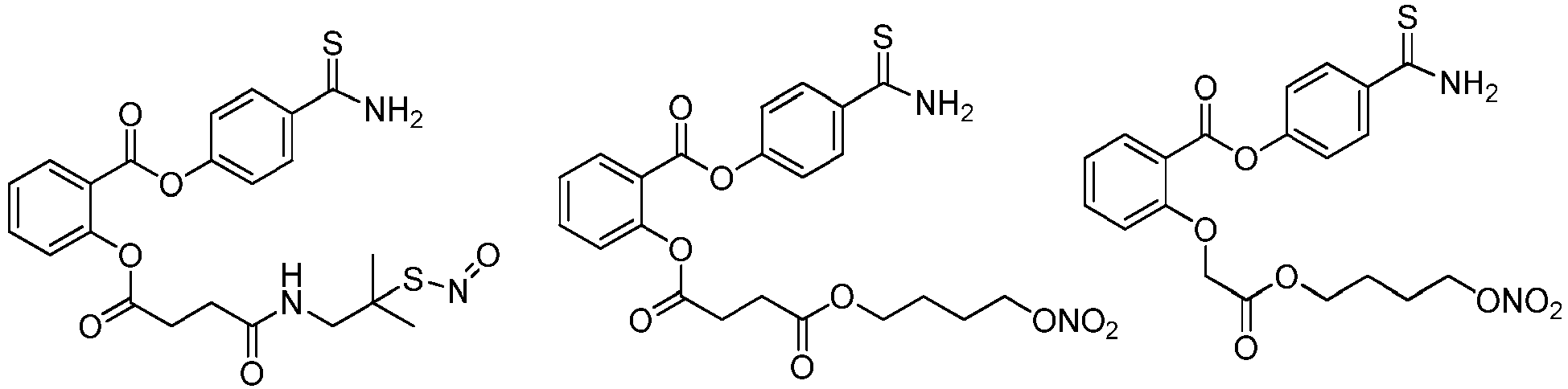


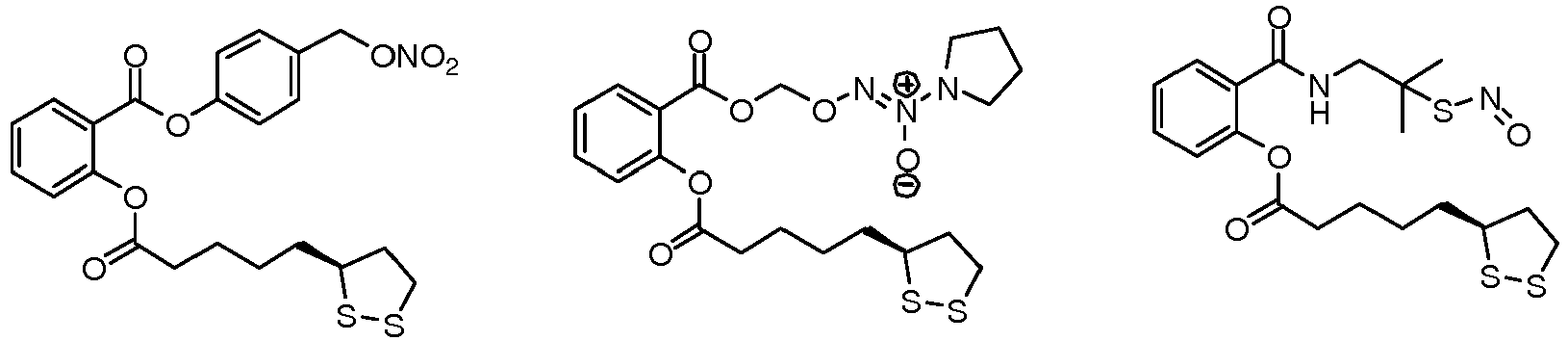


- As used herein, "a NO-releasing moiety" refers to a moiety that can be cleaved from a parent compound to generate NO under physiological conditions after the parent compound is administered to a patient. According to the present invention, the NO-releasing moiety is selected from the group consisting of -NO, -C(O)-(CH2)n-ONO2, -O-(CH2)n-ONO2, -(CH2)n-ONO2, -C(O)-CH2-C(CH3)2-SNO, -NH-CH2-C(CH3)2-SNO,-CH2-C(CH3)2-SNO,


- The term "alkyl" refers to a saturated, linear or branched hydrocarbon moiety, such as -CH3 or -CH(CH3)2. The term "aryl" refers to a hydrocarbon moiety having one or more aromatic rings. Examples of aryl moieties include phenyl (Ph), naphthyl, pyrenyl, anthryl, and phenanthryl. Alkyl and aryl mentioned herein include both substituted and unsubstituted moieties, unless specified otherwise. Possible substituents on aryl include, but are not limited to, C1-C10 alkyl, C2-C10 alkenyl, C2-C10 alkynyl, C3-C20 cycloalkyl, C3-C20 cycloalkenyl, C1-C20 heterocycloalkyl, C1-C20 heterocycloalkenyl, C1-C10 alkoxy, aryl, aryloxy, heteroaryl, heteroaryloxy, amino, C1-C10 alkylamino, C1-C20 dialkylamino, arylamino, diarylamino, C1-C10 alkylsulfonamino, arylsulfonamino, C1-C10 alkylimino, arylimino, C1-C10 alkylsulfonimino, arylsulfonimino, hydroxyl, halo, thio, C1-C10 alkylthio, arylthio, C1-C10 alkylsulfonyl, arylsulfonyl, arylsulfonamide, heteroarylsulfonamide, acylamino, aminoacyl, aminothioacyl, amidino, guanidine, ureido, cyano, nitro, nitroso, azido, acyl, thioacyl, acyloxy, carboxyl, and carboxylic ester. On the other hand, possible substituents on alkyl include all of the above-recited substituents except C1-C10 alkyl.
- As used herein, "a H2S-releasing moiety" refers to a moiety that can be cleaved from a parent compound to generate H2S under physiological conditions after the parent compound is administered to a patient. According to the present invention, the H2S-releasing moiety is selected from the group consisting of:


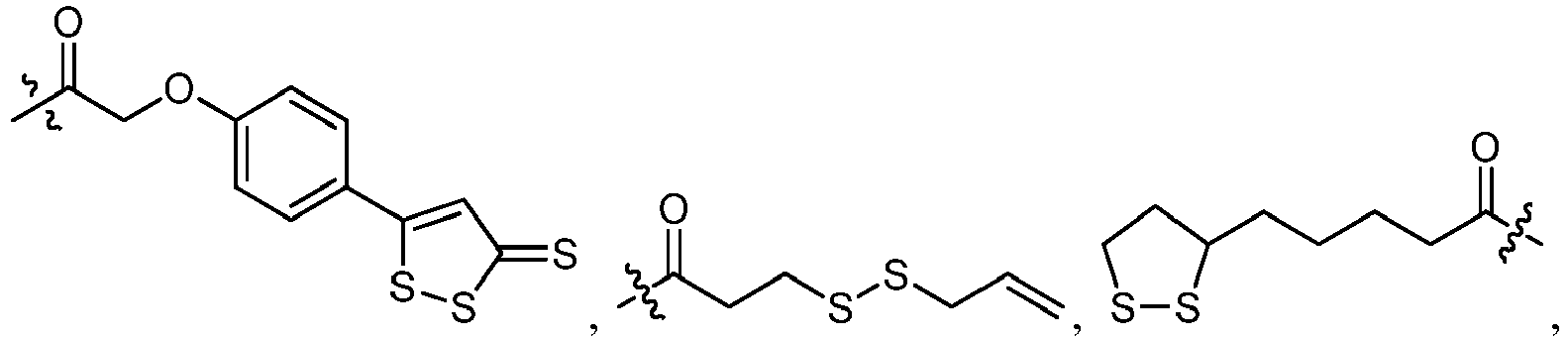


- Also disclosed herein is the compound NOSH, an NO-releasing moiety and an H2S-releasing moiety without an NSAID-derived core. The structure of NOSH is shown below:

- The compounds of the invention may be synthesized by known methods in the art. For example, see International Patent Publication No.
WO 2013/025790 , which discusses synthesis of the compounds. - The compounds can be administered to the plants by any known method in the art. For example, the compounds may be dissolved in water and the solution may be sprayed on the plants or poured onto the soil covering the roots of the plants. The solution may also be added to an irrigation system.
- An appropriate dosage of compound can be readily determined by a person having skill in the art. Dosage may vary depending upon the species of plant, the size of the plant, and the general health of the plant. For example, the minimum dosage per plant per day may be about 50 mg, 75 mg, or 100 mg. The maximum dosage per plant per day may be about 300 mg, 400 mg, 500 mg, or 600 mg per plant per day. A single dosage may be dissolved in 1 or more gallons of water and administered to the plant.
- Alternatively, the dosage may be dissolved in a solvent and administered to the plant by foliar spraying. Foliar spraying involves feeding the plant by applying the composition and dosage directly to the leaves of the plant. The choice of solvent and dosage can be determined by a person having skill in the art. Water and methanol are preferred solvents. Certain solvents must be avoided because they cause toxicity in some plants.
- Any dosage can be used that does not adversely affect the plant. Dosages can easily be determined by trial and error as each type of plant may have different needs. For example, a minimum dosage may be about 10µM, 20 µM, 30 µM, or 50µM. Likewise, for example, the maximum dosage may be about 150 µM, 200 µM, or 300 µM. A preferred dosage may be about 100 µM.
- Cellular damage in leaves can be measured by determining lipid peroxidation (Malondialdehyde [MDA] content) and hydrogen peroxide (H2O2) levels. Lipid peroxidation is a widely used stress indicator of plant membranes. For example, the method described by Heath and Packer is the basic protocol used or adapted in numerous studies dealing with lipid peroxidation. See Heath RL, Packer L. 1968, Photoperoxidation in isolated chloroplasts. I. Kinetics and stoichiometry of fatty acid peroxidation. Archives in Biochemistry and Biophysics 125,189-198. Measuring hydrogen peroxide levels is also well known in the art.
- In another embodiment, the invention relates to a method of priming a plant against abiotic stress factors comprising treating the plant with a composition comprising a compound containing an NO-releasing moiety and an H2S-releasing moiety covalently bonded to an aspirin derived core as described above. Priming the plant includes administering the compound to a plant so it may better withstand abiotic stress factors such as drought, salinity, and heat.
- Also disclosed isa method of promoting plant growth comprising treating the plant with a composition comprising a compound containing an NO-releasing moiety and an H2S-releasing moiety covalently bonded to an aspirin derived core or NOSH, as described above. Promoting plant growth may involve greener leaves, healthier leaves, bigger leaves, more leaves, overall increased weight, and/or faster growth compared to control plants.
- The plant may be treated by any method known in the art. For example, treatment of the plant may begin at the seedling stage where the seeds may be coated with a composition containing the compound. Compositions may be formulated so that the compound is released slowly to the seed throughout the germination process. The plant may also be treated after germination of the seed by traditional methods by which plant food and fertilizers are administered such as by foliar spraying or by administration of the compound directly to the soil or during watering.
- The present study shows the ameliorative effect of NOSH-aspirin application on Medicago truncatula plants subjected to drought stress conditions, whereby cellular damage was significantly lowered, as was hydrogen peroxide content, after application of the priming agent, thus highlighting a novel function-use for this compound.
- Mature (40d) Medicago truncatula ecotype Jemalong A17 plants were used for the purposes of this study. These were grown in soil medium under controlled, optimal growth conditions and were then subjected to drought stress. Drought was imposed by withholding watering for 9d (for detailed growth and stress conditions see Filippou et al., 2011). Both NOSH and NOSH-aspirin were applied at 100µM concentration by foliar spraying at the start of stress imposition. The hybrid donors were diluted in 70% (v/v) and 30% (v/v) methanol, 20% (v/v) acetone or 20% (v/v) DMSO. Cellular damage was evaluated by lipid peroxidation levels (TBARS content) and hydrogen peroxide (H2O2) content as previously described (Filippou et al., 2011; Tanou et al., 2012), while osmoprotective capacity was evaluated by proline content (ninhydrin assay) as previously described (Antoniou et al., 2013). Real-time RT-PCR gene expression analysis was carried out using a Biorad IQ5 thermocycler as previously described (Filippou et al., 2013b). Relative quantification of gene expression and statistical analysis of all qRT-PCR data (pairwise fixed reallocation randomization test) were performed using the REST software according to Pfaffl et al. (2002). The actin 11 gene was used as a housekeeping reference gene. All analyses were carried out using three independent biological pools of samples as replicates (with a minimum of three independent plants per pooled sample).
- An examination of cellular damage levels was performed by means of spectrophotometric determination of lipid peroxidation. Significant membrane damage was observed under drought conditions; however, MDA content was lowered following NOSH and NOSH-aspirin (NOSH-A) pre-treatment diluted in 70% (v/v) MetOH, with NOSH-aspirin providing statistically significant protection in comparison with control samples (
Fig. 1 ). - The experiment was repeated using 30% (v/v) MetOH as a solvent, where the protective effect of NOSH-A pre-treatment was observed once more, with primed plants showing significantly lower lipid peroxidation levels compared with drought-stressed, control samples (
Fig. 2 ). - Further attempts were made to examine the efficiency of other solvents for NOSH-A; these included 20% DMSO and 20% acetone. However, treatment with the solvent itself resulted in toxicity symptoms (extensive chlorosis; see
Fig. 3 ) although protection in NOSH-A pre-treated plants was still evident from lower lipid peroxidation levels; therefore, these solvents were avoided for further studies and MetOH was chosen as an optimal solvent for the donor. - Abiotic stress conditions are associated with increased levels of reactive oxygen species (ROS), which are toxic for the cells. During such conditions, the production of ROS exceeds the capacity of the antioxidative systems to remove them, causing oxidative stress. Quantification of H2O2 (major ROS) content revealed a massive induction in drought-stressed plants, which was significantly reversed in NOSH-aspirin (dissolved in 70% (v/v) MetOH) pre-treated plants compared with control samples (
Fig. 4 ). - Similarly, NOSH-A pre-treated plants prior to drought stress imposition showed significantly lower H2O2 levels compared with drought-stress samples when using 30% (v/v) MetOH (
Fig. 5 ). - In addition, proline content was evaluated as proline is a major osmoprotective molecule involved in the defense response of plants to abiotic stress conditions (Filippou et al., 2013b). Results showed that pre-treatment of plants with NOSH-A (dissolved in 30% (v/v) MetOH) prior to drought stress imposition resulted in increased proline content compared with drought-stressed alone samples (
Fig. 6 ). - Finally, qRT-PCR gene expression analysis was carried out for key defense-related genes, including major enzymatic antioxidants (CAT, Cu/ZnSOD, FeSOD, cAPX), as well as genes involved in proline biosynthesis (P5CS, P5CR). Interestingly, NOSH-A pre-treated plants demonstrated significant transcriptional regulation for most of the genes examined, with FeSOD, P5CS and P5CR showing significant induction in pre-treated and subsequently stressed plants compared with stressed alone plants, while cAPX showed significant suppression (
Fig. 7 ). The induction in the proline biosynthetic enzyme gene expression levels comes in support of the observed increased proline content, while the induction in FeSOD transcripts is in agreement with a recent report by Fotopoulos et al. (2014), who demonstrated that treatment with 100 µM of NO donor sodium nitroprusside results in significant induction of FeSOD in mature Medicago truncatula plants. - The current findings show NOSH-aspirin's capacity to provide significant protection in Medicago truncatula plants against drought stress conditions, which result in major cellular damage in controls plants.
- A new, large pharmacological approach experiment has been carried out, where a variety of treatments and combinations thereof were applied. The treatments were as follows:

- Mature (42 d) Medicago sativa plants were used for the purposes of this study. These were grown in soil medium under controlled, optimal growth conditions and were then subjected to drought stress. Drought was imposed by withholding watering until drought symptoms (loss of turgour, wilting, chlorosis) were observed (6 d after stress imposition). Samples were then re-watered to observe recovery potential after 1 day (7 d). Both NOSH and NOSH-aspirin were applied at 100µM concentration by foliar spraying at the start of stress imposition. The hybrid donors were diluted in 30% (v/v) methanol. Physiological parameters (stomatal conductance and chlorophyll fluorescence) were measured with a DT-Porometer AP4 (Delta-TDevices,Cambridge,UK) and an OptiSci OS-30p chlorophyll fluorometer (Opti-Sciences, Hudson, NH, USA) respectively (Filippou et al., 2013). Chlorophyll fluorescence (Fv/Fm) of leaves represents the maximum photochemical efficiency of photosystem II (PSII). Cellular damage was evaluated by lipid peroxidation levels (TBARS content), nitric oxide (NO) content (nitrosative stress) and hydrogen peroxide (H2O2) content (oxidative stress) as previously described (Filippou et al., 2011; Tanou et al., 2012), while osmoprotective capacity was evaluated by proline content (ninhydrin assay) as previously described (Antoniou et al., 2013). Antioxidant enzyme activities (SOD and CAT) were measured as previously described (Filippou et al., 2014). Real-time RT-PCR gene expression analysis was carried out using a Biorad IQ5 thermocycler as previously described (Filippou et al., 2013). Relative quantification of gene expression and statistical analysis of all qRT-PCR data (pairwise fixed reallocation randomization test) were performed using the REST software according to Pfaffl et al. (2002). The actin 11 gene was used as a housekeeping reference gene. All analyses were carried out using three independent biological pools of samples as replicates (with a minimum of fifteen independent plants per pooled sample). The experimental setup is shown schematically in
Fig. 8 . - Macroscopic (phenotypic) observation of plants showed that NOSH and NOSH-A pretreated plants that were subsequently drought-stressed had significantly improved vitality, turgor and greening in comparison with drought-stressed plants which demonstrated extensive chlorosis and loss of turgor indicative of stress-related damage at 6 d after stress imposition (
Fig. 9 ). - Rewatering for 1 d revealed that NOSH and NOSH-A pretreated samples had notably improved recovery capacity compared with drought-stressed alone samples, as pretreated plants retained turgor and greening while stressed-alone plants showed extensive chlorosis and initial signs of necrosis (
Fig. 10 ). - Interestingly, plants were left to grow following rewatering for another 6 days without any further watering on the basis of a second 'wave' of drought stress. Phenotypic observations revealed that NOSH and NOSH-A pretreated plants maintained growth and vitality, while drought-stressed alone plants showed extensive levels of tissue necrosis (
Fig. 11 ). - Measurements of physiological parameters indicative of the physiological state of the plant indicated that drought-stressed plants had significantly lower (stomatal conductance and chlorophyll fluorescence) levels compared with watered plants indicative of a stressed state, while NOSH and NOSH-A pretreated and subsequently stressed plants had ameliorated (significantly higher) stomatal conductance and chlorophyll levels compared with drought-stressed samples (
Fig. 12 ). - An examination of cellular damage levels was performed by means of spectrophotometric determination of lipid peroxidation. Significant membrane damage was observed under drought conditions; however, MDA content was lowered following NOSH and NOSH-aspirin pretreatment, with both NOSH and NOSH-aspirin providing statistically significant protection in comparison with drought-stressed samples (
Fig. 13 ). In addition, rewatering could not ameliorate cellular damage in drought-stressed samples (showing further increase in MDA content at 7 d), whereas NOSH and NOSH-A pretreated samples maintained low MDA content levels close to those of control, watered samples (Fig. 13 ). - Abiotic stress conditions are associated with increased levels of reactive oxygen (ROS) and reactive nitrogen (RNS) species content, which are toxic for the cells. During such conditions, the production of ROS and RNS exceeds the capacity of the antioxidative defense systems to remove them, causing nitro-oxidative stress. Quantification of H2O2 (major ROS) and nitric oxide (NO; major RNS) content revealed a massive induction in drought-stressed plants, which was significantly reversed in NOSH and NOSH-aspirin pretreated plants compared with drought-stressed samples (
Fig. 14A ,B ). Interestingly, H2O2 content was ameliorated even further in NOSH and NOSH-A pretreated plants following rewatering at 7 d compared with respective pretreated, drought-stressed samples at 6 d (Fig. 14A ), indicating an improved capacity to recover which also correlates with increased CAT enzymatic activity following rewatering in these samples compared with drought-stressed alone samples (Fig. 16B ). - In addition, proline content was evaluated as proline is a major osmoprotective molecule involved in the defense response of plants to abiotic stress conditions (Filippou et al., 2013). Results showed drought stress imposition leads to massive proline induction as expected (Filippou et al, 2014), while pretreatment of plants with NOSH and NOSH-A prior to drought stress imposition resulted in significantly lower proline content compared with drought-stressed alone samples (
Fig. 15 ). - The enzymatic activity of two key antioxidants (SOD and CAT) were evaluated. SOD dismutates superoxide radicals to hydrogen peroxide, while CAT directly scavenges hydrogen peroxide. Both enzymes appear to be regulated in response to stress and priming agent pretreatment in a differential manner (
Fig. 16 ). More specifically, activity of both SOD and CAT is significantly induced in 6 d drought-stressed plants compared with control, watered plants, likely in an attempt to tackle the oxidative burst resulting from stress imposition, whereas NOSH and NOSH-A pretreated and subsequently stressed plants show similar SOD and CAT activity levels to control, watered plants. Interestingly, rewatering results in a reversal of trends, where SOD and CAT activity is significantly induced in primed and stressed plants compared with stressed-alone plants, suggesting an improved capacity to recover which also correlates with further lowered H2O2 levels (Fig. 14 ). In any case, it should be noted that the cellular enzymatic antioxidant battery linked with ROS scavenging is very complex involving several other components (e.g. APX), isoforms in several compartments (e.g. peroxisomes, chloroplasts, mitochondria), as well as non-enzymatic antioxidants (e.g. ascorbic acid, tocopherols and glutathione). - Finally, qRT-PCR gene expression analysis was carried out (
Fig. 17 ) for key defense-related genes, including major enzymatic antioxidants (GST17, Cu/ZnSOD, FeSOD, cAPX) linked with ROS scavenging, as well as genes involved in NO biosynthesis (NR). In addition, an aquaporin (PIP) was also examined which is linked with response to water deficit and transport. Interestingly, NOSH and NOSH-A pretreated and subsequently stressed plants compared with stressed alone plants demonstrated significant transcriptional regulation (induction) for SOD isoforms (Fig. 17 ) which are linked with dismutation of superoxide radicals to H2O2, in agreement with a recent report by Fotopoulos et al. (2014), who demonstrated that treatment with 100 µM of NO donor sodium nitroprusside results in significant induction of FeSOD in mature Medicago truncatula plants. In addition, it should be noted that rewatering resulted in general suppression of most genes examined in NOSH/NOSH-A pretreated and subsequently stressed plants compared with drought-stressed alone plants, suggesting that the plants are in a better position to recover without the further transcriptional activation of defense-related genes which is energy consuming for the plant. - The current findings show NOSH and NOSH-aspirin's capacity to provide significant protection in Medicago sativa plants against drought stress conditions, which result in major cellular damage and nitro-oxidative stress in control plants.
- An in vitro experiment was carried out in order to evaluate the potential of NOSH and NOSH-A for growth promotion in terms of leaf area increase in Arabidopsis thaliana plants.
- Arabidopsis thaliana Col-0 plants were used for the purposes of this study. Seeds were placed on MS agar plates containing 10µM or 100µM NOSH or NOSH-A (diluted in 20% (v/v) acetone) which were then incubated in the dark at 4° C for 4 days for stratification purposes. Appropriate control plates were also prepared. The plates were then placed in a growth chamber and leaves were sampled at 23 DAS (days after sowing). Complete leaf series were examined from seven individual plants per treatment (n = 7). A complete leaf series consists of all leaves from each individual plant, starting from the cotyledons and including all true leaves, harvested and examined in order of presence on the plant (from older to younger true leaf). These leaves are excised and placed on agar plates where photographs are taken and leaf areas are calculated using ImageJ software (http://imagej.nih.gov/ij/).
-
Figures 18-21 are the plates of all examined leaf series. Acetone controls are used in order to examine the effect of the organic solvent itself on the growth of plants. - An interesting observation is that the specific NOSH-treated plants displayed increased greening, suggesting higher levels of photosynthetic pigments.
- ImageJ leaf area analysis was carried out for control plants and plants treated with 10µM NOSH or NOSH-A as macroscopic analysis revealed visible growth induction in this case, contrarily to plants treated with 100µM NOSH or NOSH-A. See
Figure 22 . - Results show that there is significantly higher
true leaf - The current findings suggest that 10µM NOSH application results in significant induction in growth in terms of leaf area in in vitro grown plants.


Claims (5)
- A method of reducing cellular damage to a plant comprising treating the plant with a composition comprising a compound containing an NO-releasing moiety and an H2S-releasing moiety covalently bonded to an aspirin derived core of formula I:
 each of p and q, independently, is 0 or 1;each of L1 and L2, independently, is a linker, the linker being -C(O)-, -(CH2)m-, -(CH2)m-O-,-(CH2)m-C(O)-, -(CH2)m-C(O)O-, -(CH2)m-OC(O)O-, -C(O)-(CH2)m-O-, -C(O)-(CH2)m-C(O)-, -OC(O)-(CH2)m-O-, -OC(O)-(CH2)m-C(O)-, or -OC(O)-(CH2)m-C(O)O-, in which m is 1, 2, 3, 4, 5, 6, or 7;X is a H2S-releasing moiety or a NO-releasing moiety;Y is a NO-releasing moiety or a H2S-releasing moiety, provided that X and Y are not simultaneously H2S-releasing moieties or NO-releasing moieties;Z is O or NH; andeach of R1, R2, R3, and R4, independently, is H, halo, C1-C10 alkyl, or N(R)2, in which R is H or C1-C10 alkyl,wherein the H2S-releasing moiety is





- A method of priming a plant against abiotic stress factors, wherein the abiotic stress factor is drought, salinity, heat, or combinations thereof, comprising treating the plant with a composition comprising a compound containing an NO-releasing moiety and an H2S-releasing moiety covalently bonded to an aspirin derived core of formula I:
 each of p and q, independently, is 0 or 1;each of L1 and L2, independently, is a linker, the linker being -C(O)-, -(CH2)m-, -(CH2)m-O-,-(CH2)m-C(O)-, -(CH2)m-C(O)O-, -(CH2)m-OC(O)O-, -C(O)-(CH2)m-O-, -C(O)-(CH2)m-C(O)-, -OC(O)-(CH2)m-O-, -OC(O)-(CH2)m-C(O)-, or -OC(O)-(CH2)m-C(O)O-, in which m is 1, 2, 3, 4, 5, 6, or 7;X is a H2S-releasing moiety or a NO-releasing moiety;Y is a NO-releasing moiety or a H2S-releasing moiety, provided that X and Y are not simultaneously H2S-releasing moieties or NO-releasing moieties;Z is O or NH; andeach of R1, R2, R3, and R4, independently, is H, halo, C1-C10 alkyl, or N(R)2, in which R is H or C1-C10 alkyl;wherein the H2S-releasing moiety is


- A method according to claim 1 or 2, wherein X is

- A method according to claim 3, wherein Y is -C(O)-(CH2)n-ONO2.
- A method according to any one of the preceding claims, wherein the compound is


Applications Claiming Priority (3)
| Application Number | Priority Date | Filing Date | Title |
|---|---|---|---|
| US201461939064P | 2014-02-12 | 2014-02-12 | |
| US201462006295P | 2014-06-02 | 2014-06-02 | |
| PCT/US2015/015380 WO2015123273A1 (en) | 2014-02-12 | 2015-02-11 | Method of priming plants against abiotic stress factors and promoting growth |
Publications (3)
| Publication Number | Publication Date |
|---|---|
| EP3104856A1 EP3104856A1 (en) | 2016-12-21 |
| EP3104856A4 EP3104856A4 (en) | 2017-10-11 |
| EP3104856B1 true EP3104856B1 (en) | 2020-01-08 |
Family
ID=53800581
Family Applications (1)
| Application Number | Title | Priority Date | Filing Date |
|---|---|---|---|
| EP15749116.8A Active EP3104856B1 (en) | 2014-02-12 | 2015-02-11 | Method of priming plants against abiotic stress factors |
Country Status (8)
| Country | Link |
|---|---|
| US (1) | US10071981B2 (en) |
| EP (1) | EP3104856B1 (en) |
| CN (1) | CN106102739B (en) |
| AU (1) | AU2015217310B2 (en) |
| CA (1) | CA2938446C (en) |
| ES (1) | ES2775432T3 (en) |
| IL (2) | IL247190B (en) |
| WO (1) | WO2015123273A1 (en) |
Families Citing this family (1)
| Publication number | Priority date | Publication date | Assignee | Title |
|---|---|---|---|---|
| EP4665150A1 (en) * | 2023-02-16 | 2025-12-24 | Research Foundation Of The City University Of New York | A method of treating seeds and seeds produced thereby |
Family Cites Families (1)
| Publication number | Priority date | Publication date | Assignee | Title |
|---|---|---|---|---|
| AU2012296624B2 (en) * | 2011-08-15 | 2017-08-31 | Research Foundation Of The City University Of New York | NO- and H2S- releasing compounds |
-
2015
- 2015-02-11 EP EP15749116.8A patent/EP3104856B1/en active Active
- 2015-02-11 ES ES15749116T patent/ES2775432T3/en active Active
- 2015-02-11 CA CA2938446A patent/CA2938446C/en active Active
- 2015-02-11 CN CN201580015149.XA patent/CN106102739B/en active Active
- 2015-02-11 US US15/115,959 patent/US10071981B2/en active Active
- 2015-02-11 WO PCT/US2015/015380 patent/WO2015123273A1/en not_active Ceased
- 2015-02-11 AU AU2015217310A patent/AU2015217310B2/en active Active
-
2016
- 2016-08-08 IL IL247190A patent/IL247190B/en active IP Right Grant
-
2019
- 2019-07-29 IL IL268323A patent/IL268323B/en unknown
Non-Patent Citations (1)
| Title |
|---|
| None * |
Also Published As
| Publication number | Publication date |
|---|---|
| US10071981B2 (en) | 2018-09-11 |
| IL268323A (en) | 2019-09-26 |
| ES2775432T3 (en) | 2020-07-27 |
| IL268323B (en) | 2021-09-30 |
| IL247190B (en) | 2019-09-26 |
| CA2938446A1 (en) | 2015-08-20 |
| AU2015217310A1 (en) | 2016-08-18 |
| AU2015217310B2 (en) | 2019-10-31 |
| US20170174651A1 (en) | 2017-06-22 |
| EP3104856A1 (en) | 2016-12-21 |
| CN106102739A (en) | 2016-11-09 |
| CN106102739B (en) | 2020-08-25 |
| IL247190A0 (en) | 2016-09-29 |
| CA2938446C (en) | 2022-04-26 |
| EP3104856A4 (en) | 2017-10-11 |
| WO2015123273A1 (en) | 2015-08-20 |
Similar Documents
| Publication | Publication Date | Title |
|---|---|---|
| Sheteiwy et al. | Association of jasmonic acid priming with multiple defense mechanisms in wheat plants under high salt stress | |
| Xu et al. | Abscisic acid alleviates harmful effect of saline–alkaline stress on tomato seedlings | |
| Zhang et al. | Melatonin improved waterlogging tolerance in alfalfa (Medicago sativa) by reprogramming polyamine and ethylene metabolism | |
| Li et al. | Dopamine alleviates salt‐induced stress in Malus hupehensis | |
| Hu et al. | Fiber and seed type of hemp (Cannabis sativa L.) responded differently to salt-alkali stress in seedling growth and physiological indices | |
| Zhao et al. | Melatonin increases the chilling tolerance of chloroplast in cucumber seedlings by regulating photosynthetic electron flux and the ascorbate-glutathione cycle | |
| Tian et al. | Physiological responses of wheat seedlings to drought and UV-B radiation. Effect of exogenous sodium nitroprusside application | |
| Cuypers et al. | Biphasic effect of copper on the ascorbate‐glutathione pathway in primary leaves of Phaseolus vulgaris seedlings during the early stages of metal assimilation | |
| Ghassen | Agro-physiological and biochemical responses of faba bean (Vicia faba L. var.‘minor’) genotypes to water deficit stress | |
| Sakamoto et al. | Involvement of hydrogen peroxide in leaf abscission signaling, revealed by analysis with an in vitro abscission system in Capsicum plants | |
| Deng et al. | Stereoselective toxicity of metconazole to the antioxidant defenses and the photosynthesis system of Chlorella pyrenoidosa | |
| Yang et al. | A disturbed auxin signaling affects adventitious root outgrowth in Solanum dulcamara under complete submergence | |
| Liu et al. | Chalcone isomerase gene (OsCHI3) increases rice drought tolerance by scavenging ROS via flavonoid and ABA metabolic pathways | |
| Çatav et al. | Physiological, biochemical, and molecular responses of wheat seedlings to salinity and plant-derived smoke | |
| Martins et al. | Diclofenac shifts the role of root glutamine synthetase and glutamate dehydrogenase for maintaining nitrogen assimilation and proline production at the expense of shoot carbon reserves in Solanum lycopersicum L | |
| Ubaidillah et al. | Enhancing salt tolerance in rice genotypes through exogenous melatonin application by modulating growth patterns and antistress agents | |
| Guan et al. | LcSABP2, a salicylic acid binding protein 2 gene from Lycium chinense, confers resistance to triclosan stress in Nicotiana tabacum | |
| Hu et al. | Spermidine mediated endogenous nitric oxide coordinately boosts stability through antioxidant capacity and Na+/K+ transporters in tomato under saline-alkaline stress | |
| Wang et al. | Effect of nitric oxide treatment on antioxidant responses and psbA gene expression in two wheat cultivars during grain filling stage under drought stress and rewatering | |
| Yang et al. | Salt gradient-driven adaptation in okra: uncovering mechanisms of tolerance and growth regulation | |
| Li et al. | Overexpression of CsHMGB alleviates phytotoxicity and propamocarb residues in cucumber | |
| Liu et al. | The presence of moderate salt can increase tolerance of Elaeagnus angustifolia seedlings to waterlogging stress | |
| Li et al. | Preconditioning alters antioxidative enzyme responses in rice seedlings to water stress | |
| AU2015217310B2 (en) | Method of priming plants against abiotic stress factors and promoting growth | |
| Banerjee et al. | Fluoride-induced toxicity is ameliorated in a susceptible indica rice cultivar by exogenous application of the nitric oxide donor, sodium nitroprusside |
Legal Events
| Date | Code | Title | Description |
|---|---|---|---|
| PUAI | Public reference made under article 153(3) epc to a published international application that has entered the european phase |
Free format text: ORIGINAL CODE: 0009012 |
|
| STAA | Information on the status of an ep patent application or granted ep patent |
Free format text: STATUS: REQUEST FOR EXAMINATION WAS MADE |
|
| 17P | Request for examination filed |
Effective date: 20160908 |
|
| AK | Designated contracting states |
Kind code of ref document: A1 Designated state(s): AL AT BE BG CH CY CZ DE DK EE ES FI FR GB GR HR HU IE IS IT LI LT LU LV MC MK MT NL NO PL PT RO RS SE SI SK SM TR |
|
| AX | Request for extension of the european patent |
Extension state: BA ME |
|
| RAP1 | Party data changed (applicant data changed or rights of an application transferred) |
Owner name: RESEARCH FOUNDATION OF THE CITY UNIVERSITY OF NEW Owner name: CYPRUS UNIVERSITY OF TECHNOLOGY |
|
| RIN1 | Information on inventor provided before grant (corrected) |
Inventor name: FOTOPOULOS, VASILEIOS Inventor name: KASHFI, KHOSROW |
|
| DAX | Request for extension of the european patent (deleted) | ||
| A4 | Supplementary search report drawn up and despatched |
Effective date: 20170912 |
|
| RIC1 | Information provided on ipc code assigned before grant |
Ipc: A61K 31/385 20060101AFI20170906BHEP Ipc: A61K 31/621 20060101ALI20170906BHEP Ipc: A61K 31/625 20060101ALI20170906BHEP Ipc: A01N 33/00 20060101ALI20170906BHEP |
|
| STAA | Information on the status of an ep patent application or granted ep patent |
Free format text: STATUS: EXAMINATION IS IN PROGRESS |
|
| 17Q | First examination report despatched |
Effective date: 20181221 |
|
| GRAP | Despatch of communication of intention to grant a patent |
Free format text: ORIGINAL CODE: EPIDOSNIGR1 |
|
| STAA | Information on the status of an ep patent application or granted ep patent |
Free format text: STATUS: GRANT OF PATENT IS INTENDED |
|
| INTG | Intention to grant announced |
Effective date: 20190812 |
|
| GRAS | Grant fee paid |
Free format text: ORIGINAL CODE: EPIDOSNIGR3 |
|
| GRAA | (expected) grant |
Free format text: ORIGINAL CODE: 0009210 |
|
| STAA | Information on the status of an ep patent application or granted ep patent |
Free format text: STATUS: THE PATENT HAS BEEN GRANTED |
|
| AK | Designated contracting states |
Kind code of ref document: B1 Designated state(s): AL AT BE BG CH CY CZ DE DK EE ES FI FR GB GR HR HU IE IS IT LI LT LU LV MC MK MT NL NO PL PT RO RS SE SI SK SM TR |
|
| REG | Reference to a national code |
Ref country code: GB Ref legal event code: FG4D |
|
| REG | Reference to a national code |
Ref country code: CH Ref legal event code: EP |
|
| REG | Reference to a national code |
Ref country code: DE Ref legal event code: R096 Ref document number: 602015045169 Country of ref document: DE |
|
| REG | Reference to a national code |
Ref country code: IE Ref legal event code: FG4D |
|
| REG | Reference to a national code |
Ref country code: AT Ref legal event code: REF Ref document number: 1221833 Country of ref document: AT Kind code of ref document: T Effective date: 20200215 |
|
| REG | Reference to a national code |
Ref country code: NL Ref legal event code: FP |
|
| REG | Reference to a national code |
Ref country code: GR Ref legal event code: EP Ref document number: 20200401006 Country of ref document: GR Effective date: 20200615 |
|
| REG | Reference to a national code |
Ref country code: LT Ref legal event code: MG4D |
|
| REG | Reference to a national code |
Ref country code: ES Ref legal event code: FG2A Ref document number: 2775432 Country of ref document: ES Kind code of ref document: T3 Effective date: 20200727 |
|
| PG25 | Lapsed in a contracting state [announced via postgrant information from national office to epo] |
Ref country code: RS Free format text: LAPSE BECAUSE OF FAILURE TO SUBMIT A TRANSLATION OF THE DESCRIPTION OR TO PAY THE FEE WITHIN THE PRESCRIBED TIME-LIMIT Effective date: 20200108 Ref country code: LT Free format text: LAPSE BECAUSE OF FAILURE TO SUBMIT A TRANSLATION OF THE DESCRIPTION OR TO PAY THE FEE WITHIN THE PRESCRIBED TIME-LIMIT Effective date: 20200108 Ref country code: NO Free format text: LAPSE BECAUSE OF FAILURE TO SUBMIT A TRANSLATION OF THE DESCRIPTION OR TO PAY THE FEE WITHIN THE PRESCRIBED TIME-LIMIT Effective date: 20200408 Ref country code: FI Free format text: LAPSE BECAUSE OF FAILURE TO SUBMIT A TRANSLATION OF THE DESCRIPTION OR TO PAY THE FEE WITHIN THE PRESCRIBED TIME-LIMIT Effective date: 20200108 Ref country code: PT Free format text: LAPSE BECAUSE OF FAILURE TO SUBMIT A TRANSLATION OF THE DESCRIPTION OR TO PAY THE FEE WITHIN THE PRESCRIBED TIME-LIMIT Effective date: 20200531 |
|
| PG25 | Lapsed in a contracting state [announced via postgrant information from national office to epo] |
Ref country code: LV Free format text: LAPSE BECAUSE OF FAILURE TO SUBMIT A TRANSLATION OF THE DESCRIPTION OR TO PAY THE FEE WITHIN THE PRESCRIBED TIME-LIMIT Effective date: 20200108 Ref country code: SE Free format text: LAPSE BECAUSE OF FAILURE TO SUBMIT A TRANSLATION OF THE DESCRIPTION OR TO PAY THE FEE WITHIN THE PRESCRIBED TIME-LIMIT Effective date: 20200108 Ref country code: HR Free format text: LAPSE BECAUSE OF FAILURE TO SUBMIT A TRANSLATION OF THE DESCRIPTION OR TO PAY THE FEE WITHIN THE PRESCRIBED TIME-LIMIT Effective date: 20200108 Ref country code: IS Free format text: LAPSE BECAUSE OF FAILURE TO SUBMIT A TRANSLATION OF THE DESCRIPTION OR TO PAY THE FEE WITHIN THE PRESCRIBED TIME-LIMIT Effective date: 20200508 Ref country code: BG Free format text: LAPSE BECAUSE OF FAILURE TO SUBMIT A TRANSLATION OF THE DESCRIPTION OR TO PAY THE FEE WITHIN THE PRESCRIBED TIME-LIMIT Effective date: 20200408 |
|
| REG | Reference to a national code |
Ref country code: CH Ref legal event code: PL |
|
| REG | Reference to a national code |
Ref country code: DE Ref legal event code: R097 Ref document number: 602015045169 Country of ref document: DE |
|
| REG | Reference to a national code |
Ref country code: BE Ref legal event code: MM Effective date: 20200229 |
|
| PG25 | Lapsed in a contracting state [announced via postgrant information from national office to epo] |
Ref country code: SM Free format text: LAPSE BECAUSE OF FAILURE TO SUBMIT A TRANSLATION OF THE DESCRIPTION OR TO PAY THE FEE WITHIN THE PRESCRIBED TIME-LIMIT Effective date: 20200108 Ref country code: EE Free format text: LAPSE BECAUSE OF FAILURE TO SUBMIT A TRANSLATION OF THE DESCRIPTION OR TO PAY THE FEE WITHIN THE PRESCRIBED TIME-LIMIT Effective date: 20200108 Ref country code: SK Free format text: LAPSE BECAUSE OF FAILURE TO SUBMIT A TRANSLATION OF THE DESCRIPTION OR TO PAY THE FEE WITHIN THE PRESCRIBED TIME-LIMIT Effective date: 20200108 Ref country code: CZ Free format text: LAPSE BECAUSE OF FAILURE TO SUBMIT A TRANSLATION OF THE DESCRIPTION OR TO PAY THE FEE WITHIN THE PRESCRIBED TIME-LIMIT Effective date: 20200108 Ref country code: RO Free format text: LAPSE BECAUSE OF FAILURE TO SUBMIT A TRANSLATION OF THE DESCRIPTION OR TO PAY THE FEE WITHIN THE PRESCRIBED TIME-LIMIT Effective date: 20200108 Ref country code: MC Free format text: LAPSE BECAUSE OF FAILURE TO SUBMIT A TRANSLATION OF THE DESCRIPTION OR TO PAY THE FEE WITHIN THE PRESCRIBED TIME-LIMIT Effective date: 20200108 Ref country code: LU Free format text: LAPSE BECAUSE OF NON-PAYMENT OF DUE FEES Effective date: 20200211 Ref country code: DK Free format text: LAPSE BECAUSE OF FAILURE TO SUBMIT A TRANSLATION OF THE DESCRIPTION OR TO PAY THE FEE WITHIN THE PRESCRIBED TIME-LIMIT Effective date: 20200108 |
|
| PLBE | No opposition filed within time limit |
Free format text: ORIGINAL CODE: 0009261 |
|
| STAA | Information on the status of an ep patent application or granted ep patent |
Free format text: STATUS: NO OPPOSITION FILED WITHIN TIME LIMIT |
|
| REG | Reference to a national code |
Ref country code: AT Ref legal event code: MK05 Ref document number: 1221833 Country of ref document: AT Kind code of ref document: T Effective date: 20200108 |
|
| PG25 | Lapsed in a contracting state [announced via postgrant information from national office to epo] |
Ref country code: CH Free format text: LAPSE BECAUSE OF NON-PAYMENT OF DUE FEES Effective date: 20200229 Ref country code: LI Free format text: LAPSE BECAUSE OF NON-PAYMENT OF DUE FEES Effective date: 20200229 |
|
| 26N | No opposition filed |
Effective date: 20201009 |
|
| PG25 | Lapsed in a contracting state [announced via postgrant information from national office to epo] |
Ref country code: IE Free format text: LAPSE BECAUSE OF NON-PAYMENT OF DUE FEES Effective date: 20200211 Ref country code: AT Free format text: LAPSE BECAUSE OF FAILURE TO SUBMIT A TRANSLATION OF THE DESCRIPTION OR TO PAY THE FEE WITHIN THE PRESCRIBED TIME-LIMIT Effective date: 20200108 |
|
| PG25 | Lapsed in a contracting state [announced via postgrant information from national office to epo] |
Ref country code: SI Free format text: LAPSE BECAUSE OF FAILURE TO SUBMIT A TRANSLATION OF THE DESCRIPTION OR TO PAY THE FEE WITHIN THE PRESCRIBED TIME-LIMIT Effective date: 20200108 Ref country code: BE Free format text: LAPSE BECAUSE OF NON-PAYMENT OF DUE FEES Effective date: 20200229 Ref country code: PL Free format text: LAPSE BECAUSE OF FAILURE TO SUBMIT A TRANSLATION OF THE DESCRIPTION OR TO PAY THE FEE WITHIN THE PRESCRIBED TIME-LIMIT Effective date: 20200108 |
|
| PG25 | Lapsed in a contracting state [announced via postgrant information from national office to epo] |
Ref country code: TR Free format text: LAPSE BECAUSE OF FAILURE TO SUBMIT A TRANSLATION OF THE DESCRIPTION OR TO PAY THE FEE WITHIN THE PRESCRIBED TIME-LIMIT Effective date: 20200108 Ref country code: MT Free format text: LAPSE BECAUSE OF FAILURE TO SUBMIT A TRANSLATION OF THE DESCRIPTION OR TO PAY THE FEE WITHIN THE PRESCRIBED TIME-LIMIT Effective date: 20200108 Ref country code: CY Free format text: LAPSE BECAUSE OF FAILURE TO SUBMIT A TRANSLATION OF THE DESCRIPTION OR TO PAY THE FEE WITHIN THE PRESCRIBED TIME-LIMIT Effective date: 20200108 |
|
| PG25 | Lapsed in a contracting state [announced via postgrant information from national office to epo] |
Ref country code: MK Free format text: LAPSE BECAUSE OF FAILURE TO SUBMIT A TRANSLATION OF THE DESCRIPTION OR TO PAY THE FEE WITHIN THE PRESCRIBED TIME-LIMIT Effective date: 20200108 Ref country code: AL Free format text: LAPSE BECAUSE OF FAILURE TO SUBMIT A TRANSLATION OF THE DESCRIPTION OR TO PAY THE FEE WITHIN THE PRESCRIBED TIME-LIMIT Effective date: 20200108 |
|
| PGFP | Annual fee paid to national office [announced via postgrant information from national office to epo] |
Ref country code: NL Payment date: 20260226 Year of fee payment: 12 |
|
| PGFP | Annual fee paid to national office [announced via postgrant information from national office to epo] |
Ref country code: GB Payment date: 20260227 Year of fee payment: 12 |
|
| PGFP | Annual fee paid to national office [announced via postgrant information from national office to epo] |
Ref country code: ES Payment date: 20260302 Year of fee payment: 12 |
|
| PGFP | Annual fee paid to national office [announced via postgrant information from national office to epo] |
Ref country code: DE Payment date: 20260227 Year of fee payment: 12 |
|
| PGFP | Annual fee paid to national office [announced via postgrant information from national office to epo] |
Ref country code: IT Payment date: 20260219 Year of fee payment: 12 |
|
| PGFP | Annual fee paid to national office [announced via postgrant information from national office to epo] |
Ref country code: FR Payment date: 20260225 Year of fee payment: 12 |
|
| PGFP | Annual fee paid to national office [announced via postgrant information from national office to epo] |
Ref country code: GR Payment date: 20260226 Year of fee payment: 12 |