EP3104607A1 - Method and apparatus of encoding or decoding coding units of a video content in a palette coding mode using an adaptive palette predictor - Google Patents
Method and apparatus of encoding or decoding coding units of a video content in a palette coding mode using an adaptive palette predictor Download PDFInfo
- Publication number
- EP3104607A1 EP3104607A1 EP16173459.5A EP16173459A EP3104607A1 EP 3104607 A1 EP3104607 A1 EP 3104607A1 EP 16173459 A EP16173459 A EP 16173459A EP 3104607 A1 EP3104607 A1 EP 3104607A1
- Authority
- EP
- European Patent Office
- Prior art keywords
- size
- level
- video content
- palette predictor
- palette
- Prior art date
- Legal status (The legal status is an assumption and is not a legal conclusion. Google has not performed a legal analysis and makes no representation as to the accuracy of the status listed.)
- Ceased
Links
Images










Classifications
-
- H—ELECTRICITY
- H04—ELECTRIC COMMUNICATION TECHNIQUE
- H04N—PICTORIAL COMMUNICATION, e.g. TELEVISION
- H04N19/00—Methods or arrangements for coding, decoding, compressing or decompressing digital video signals
- H04N19/10—Methods or arrangements for coding, decoding, compressing or decompressing digital video signals using adaptive coding
- H04N19/102—Methods or arrangements for coding, decoding, compressing or decompressing digital video signals using adaptive coding characterised by the element, parameter or selection affected or controlled by the adaptive coding
- H04N19/124—Quantisation
-
- H—ELECTRICITY
- H04—ELECTRIC COMMUNICATION TECHNIQUE
- H04N—PICTORIAL COMMUNICATION, e.g. TELEVISION
- H04N19/00—Methods or arrangements for coding, decoding, compressing or decompressing digital video signals
- H04N19/10—Methods or arrangements for coding, decoding, compressing or decompressing digital video signals using adaptive coding
- H04N19/102—Methods or arrangements for coding, decoding, compressing or decompressing digital video signals using adaptive coding characterised by the element, parameter or selection affected or controlled by the adaptive coding
-
- H—ELECTRICITY
- H04—ELECTRIC COMMUNICATION TECHNIQUE
- H04N—PICTORIAL COMMUNICATION, e.g. TELEVISION
- H04N19/00—Methods or arrangements for coding, decoding, compressing or decompressing digital video signals
- H04N19/10—Methods or arrangements for coding, decoding, compressing or decompressing digital video signals using adaptive coding
- H04N19/102—Methods or arrangements for coding, decoding, compressing or decompressing digital video signals using adaptive coding characterised by the element, parameter or selection affected or controlled by the adaptive coding
- H04N19/129—Scanning of coding units, e.g. zig-zag scan of transform coefficients or flexible macroblock ordering [FMO]
-
- H—ELECTRICITY
- H04—ELECTRIC COMMUNICATION TECHNIQUE
- H04N—PICTORIAL COMMUNICATION, e.g. TELEVISION
- H04N19/00—Methods or arrangements for coding, decoding, compressing or decompressing digital video signals
- H04N19/10—Methods or arrangements for coding, decoding, compressing or decompressing digital video signals using adaptive coding
- H04N19/134—Methods or arrangements for coding, decoding, compressing or decompressing digital video signals using adaptive coding characterised by the element, parameter or criterion affecting or controlling the adaptive coding
-
- H—ELECTRICITY
- H04—ELECTRIC COMMUNICATION TECHNIQUE
- H04N—PICTORIAL COMMUNICATION, e.g. TELEVISION
- H04N19/00—Methods or arrangements for coding, decoding, compressing or decompressing digital video signals
- H04N19/10—Methods or arrangements for coding, decoding, compressing or decompressing digital video signals using adaptive coding
- H04N19/134—Methods or arrangements for coding, decoding, compressing or decompressing digital video signals using adaptive coding characterised by the element, parameter or criterion affecting or controlling the adaptive coding
- H04N19/136—Incoming video signal characteristics or properties
-
- H—ELECTRICITY
- H04—ELECTRIC COMMUNICATION TECHNIQUE
- H04N—PICTORIAL COMMUNICATION, e.g. TELEVISION
- H04N19/00—Methods or arrangements for coding, decoding, compressing or decompressing digital video signals
- H04N19/10—Methods or arrangements for coding, decoding, compressing or decompressing digital video signals using adaptive coding
- H04N19/134—Methods or arrangements for coding, decoding, compressing or decompressing digital video signals using adaptive coding characterised by the element, parameter or criterion affecting or controlling the adaptive coding
- H04N19/136—Incoming video signal characteristics or properties
- H04N19/14—Coding unit complexity, e.g. amount of activity or edge presence estimation
-
- H—ELECTRICITY
- H04—ELECTRIC COMMUNICATION TECHNIQUE
- H04N—PICTORIAL COMMUNICATION, e.g. TELEVISION
- H04N19/00—Methods or arrangements for coding, decoding, compressing or decompressing digital video signals
- H04N19/10—Methods or arrangements for coding, decoding, compressing or decompressing digital video signals using adaptive coding
- H04N19/134—Methods or arrangements for coding, decoding, compressing or decompressing digital video signals using adaptive coding characterised by the element, parameter or criterion affecting or controlling the adaptive coding
- H04N19/146—Data rate or code amount at the encoder output
- H04N19/15—Data rate or code amount at the encoder output by monitoring actual compressed data size at the memory before deciding storage at the transmission buffer
-
- H—ELECTRICITY
- H04—ELECTRIC COMMUNICATION TECHNIQUE
- H04N—PICTORIAL COMMUNICATION, e.g. TELEVISION
- H04N19/00—Methods or arrangements for coding, decoding, compressing or decompressing digital video signals
- H04N19/10—Methods or arrangements for coding, decoding, compressing or decompressing digital video signals using adaptive coding
- H04N19/134—Methods or arrangements for coding, decoding, compressing or decompressing digital video signals using adaptive coding characterised by the element, parameter or criterion affecting or controlling the adaptive coding
- H04N19/154—Measured or subjectively estimated visual quality after decoding, e.g. measurement of distortion
-
- H—ELECTRICITY
- H04—ELECTRIC COMMUNICATION TECHNIQUE
- H04N—PICTORIAL COMMUNICATION, e.g. TELEVISION
- H04N19/00—Methods or arrangements for coding, decoding, compressing or decompressing digital video signals
- H04N19/10—Methods or arrangements for coding, decoding, compressing or decompressing digital video signals using adaptive coding
- H04N19/134—Methods or arrangements for coding, decoding, compressing or decompressing digital video signals using adaptive coding characterised by the element, parameter or criterion affecting or controlling the adaptive coding
- H04N19/157—Assigned coding mode, i.e. the coding mode being predefined or preselected to be further used for selection of another element or parameter
- H04N19/16—Assigned coding mode, i.e. the coding mode being predefined or preselected to be further used for selection of another element or parameter for a given display mode, e.g. for interlaced or progressive display mode
-
- H—ELECTRICITY
- H04—ELECTRIC COMMUNICATION TECHNIQUE
- H04N—PICTORIAL COMMUNICATION, e.g. TELEVISION
- H04N19/00—Methods or arrangements for coding, decoding, compressing or decompressing digital video signals
- H04N19/10—Methods or arrangements for coding, decoding, compressing or decompressing digital video signals using adaptive coding
- H04N19/169—Methods or arrangements for coding, decoding, compressing or decompressing digital video signals using adaptive coding characterised by the coding unit, i.e. the structural portion or semantic portion of the video signal being the object or the subject of the adaptive coding
- H04N19/17—Methods or arrangements for coding, decoding, compressing or decompressing digital video signals using adaptive coding characterised by the coding unit, i.e. the structural portion or semantic portion of the video signal being the object or the subject of the adaptive coding the unit being an image region, e.g. an object
- H04N19/176—Methods or arrangements for coding, decoding, compressing or decompressing digital video signals using adaptive coding characterised by the coding unit, i.e. the structural portion or semantic portion of the video signal being the object or the subject of the adaptive coding the unit being an image region, e.g. an object the region being a block, e.g. a macroblock
-
- H—ELECTRICITY
- H04—ELECTRIC COMMUNICATION TECHNIQUE
- H04N—PICTORIAL COMMUNICATION, e.g. TELEVISION
- H04N19/00—Methods or arrangements for coding, decoding, compressing or decompressing digital video signals
- H04N19/10—Methods or arrangements for coding, decoding, compressing or decompressing digital video signals using adaptive coding
- H04N19/169—Methods or arrangements for coding, decoding, compressing or decompressing digital video signals using adaptive coding characterised by the coding unit, i.e. the structural portion or semantic portion of the video signal being the object or the subject of the adaptive coding
- H04N19/182—Methods or arrangements for coding, decoding, compressing or decompressing digital video signals using adaptive coding characterised by the coding unit, i.e. the structural portion or semantic portion of the video signal being the object or the subject of the adaptive coding the unit being a pixel
-
- H—ELECTRICITY
- H04—ELECTRIC COMMUNICATION TECHNIQUE
- H04N—PICTORIAL COMMUNICATION, e.g. TELEVISION
- H04N19/00—Methods or arrangements for coding, decoding, compressing or decompressing digital video signals
- H04N19/10—Methods or arrangements for coding, decoding, compressing or decompressing digital video signals using adaptive coding
- H04N19/169—Methods or arrangements for coding, decoding, compressing or decompressing digital video signals using adaptive coding characterised by the coding unit, i.e. the structural portion or semantic portion of the video signal being the object or the subject of the adaptive coding
- H04N19/186—Methods or arrangements for coding, decoding, compressing or decompressing digital video signals using adaptive coding characterised by the coding unit, i.e. the structural portion or semantic portion of the video signal being the object or the subject of the adaptive coding the unit being a colour or a chrominance component
-
- H—ELECTRICITY
- H04—ELECTRIC COMMUNICATION TECHNIQUE
- H04N—PICTORIAL COMMUNICATION, e.g. TELEVISION
- H04N19/00—Methods or arrangements for coding, decoding, compressing or decompressing digital video signals
- H04N19/46—Embedding additional information in the video signal during the compression process
-
- H—ELECTRICITY
- H04—ELECTRIC COMMUNICATION TECHNIQUE
- H04N—PICTORIAL COMMUNICATION, e.g. TELEVISION
- H04N19/00—Methods or arrangements for coding, decoding, compressing or decompressing digital video signals
- H04N19/50—Methods or arrangements for coding, decoding, compressing or decompressing digital video signals using predictive coding
- H04N19/593—Methods or arrangements for coding, decoding, compressing or decompressing digital video signals using predictive coding involving spatial prediction techniques
-
- H—ELECTRICITY
- H04—ELECTRIC COMMUNICATION TECHNIQUE
- H04N—PICTORIAL COMMUNICATION, e.g. TELEVISION
- H04N19/00—Methods or arrangements for coding, decoding, compressing or decompressing digital video signals
- H04N19/60—Methods or arrangements for coding, decoding, compressing or decompressing digital video signals using transform coding
- H04N19/61—Methods or arrangements for coding, decoding, compressing or decompressing digital video signals using transform coding in combination with predictive coding
-
- H—ELECTRICITY
- H04—ELECTRIC COMMUNICATION TECHNIQUE
- H04N—PICTORIAL COMMUNICATION, e.g. TELEVISION
- H04N19/00—Methods or arrangements for coding, decoding, compressing or decompressing digital video signals
- H04N19/90—Methods or arrangements for coding, decoding, compressing or decompressing digital video signals using coding techniques not provided for in groups H04N19/10-H04N19/85, e.g. fractals
- H04N19/96—Tree coding, e.g. quad-tree coding
Definitions
- the present invention relates to a method and apparatus of encoding or decoding coding units of a video content in a palette coding mode using an adaptive palette predictor with an adaptive maximum size.
- non-camera-captured content videos or screen content videos have received great interests lately due to the rapid growth of application areas such as wireless displays, remote computer desktop access, real-time screen sharing for videoconferencing, cloud gaming, etc.
- application areas such as wireless displays, remote computer desktop access, real-time screen sharing for videoconferencing, cloud gaming, etc.
- screen content videos contain a significant portion of computer-rendered graphics and text with fewer number of colors and the repetition of textual patterns.
- a coding block typically contains only the foreground text color and the background color.
- the random patterns of text characters and letters make it challenging for the current coding block to find a matching block in the same or previously coded pictures. It may also be challenging to utilize the directional local intra prediction for efficient compression in this circumstance. Since traditional intra and inter video coding tools were designed primarily for camera-captured content videos, and screen content videos have significantly different characterizes from camera-captured content videos, these traditional intra and inter video coding tools are less sufficient for screen content videos. Therefore, it creates an urgent need for efficient coding of screen content videos.
- HEVC High Efficiency Video Coding
- SCC Screen content coding
- Palette coding is a major color-based prediction method. Different from traditionally intra and inter prediction that mainly removes redundancy between different coding units, palette coding targets at the redundancy of repetitive pixel values/patterns within the coding unit. In order to reduce the overhead of transmitting the original value of the major colors, a palette prediction was introduced in palette coding. In the current palette coding mode, all pixels of a coding block are analyzed and classified into a list of major colors, except for some rarely used pixels that cannot be classified to any of the major colors, which are classified into escape colors. Each major color is a representative color which has high frequency of occurrence in the coding block.
- a color index table i.e., a palette
- each index entry associated with one major color. All the pixels in the CU are converted into corresponding indices, except the escape pixels with the escape colors.
- FIG. 1 illustrates a simplified version of the palette coding process.
- the encoder starts a checking process to check if each of the index entries representing the major colors in the current CU matches any of the major colors in the current palette predictor. For each entry in the palette predictor, a flag (1: used; 0: not used) is sent to signal whether or not this entry is used in the current palette. If yes, this entry will be put in front of the current palette. Therefore, the flags corresponding to the entries of the current palette predictor are sent to signal which one(s) of the major colors in the current palette predictor is used in the current CU.
- the number of them and their pixel (e.g., Y/Cb/Cr or R/G/B) values are signaled, and these signaled new entries are put at the bottom of the current palette.
- An example of the palette coding mode at the encoder side is illustrated in FIG. 2 .
- the current palette size is then calculated as the number of reused palette entries plus the number of signaled new palette entries.
- the decoder receives the flags indicating which one(s) of the major colors in the current palette predictor is used in the current CU.
- the decoder checks the current palette predictor in order with the flags to determine which one(s) of the major colors in the current palette predictor is used in the current CU.
- the decoder also receives their pixel (e.g., Y/Cb/Cr or R/G/B) values of the new palette entries not in the current palette predictor.
- the decoder then generates a received palette for the CU with index entries corresponding to the used major colors (with the flag (1)) in the current palette predictor in front of the received palette, followed by the index entries corresponding to new major colors not in the current palette predictor.
- An example of the palette coding mode at the decoder side is illustrated in FIG. 3 .
- the palette predictor is updated for the next CU or palette-coded CU. This is done using the information of the current palette.
- the entries (including the new entries) of the current/received palette are put in front of the new palette predictor, followed by those unused entries from the previous palette predictor.
- the new palette predictor size is then calculated as the size of the current palette plus the number of unused palette entries.
- An example of the update of the palette predictor is illustrated in FIG. 4 .
- the maximum size of the palette predictor can be assigned as an arbitrary positive number.
- the lack of the limitation of the palette predictor maximum size raises problems in implementation and the update process of the palette predictor, because the decoder may need to prepare a buffer with an unlimited size for hardware implementation of the palette prediction, which is infeasible under the current technology.
- the current palette coding mode only allows one fixed maximum size of the palette predictor signaled at the SPS level regardless of the complexity of the video or the coding quality.
- the fixed palette predictor maximum size makes the palette coding inefficient and ineffective, because it may not fit the need for all different coding conditions and coding quality requirements.
- a method of encoding or decoding coding units of a video content in a palette coding mode using an adaptive palette predictor comprises: adaptively determining a maximum size of the adaptive palette predictor based on at least one of a complexity of the video content and coding quality of the video content; and encoding or decoding the coding units of the video content in the palette coding mode using the adaptive palette predictor while limiting the adaptive palette predictor that is derived from all palette(s) of previously encoded or decoded coding unit(s) of the video content within the maximum size determined in the adaptively determining step.
- an apparatus for encoding or decoding coding units of a video content in a palette coding mode using an adaptive palette predictor comprises: a memory device storing the adaptive palette predictor; an adaptive palette predictor size determination unit configured to adaptively determine a maximum size of the adaptive palette predictor based on at least one of a complexity of the video content and coding quality of the video content; and an encoder or decoder configured to encode or decode the coding units of the video content in the palette coding mode using the adaptive palette predictor stored in the memory device while limiting the adaptive palette predictor that is derived from all palette(s) of previously encoded or decoded coding unit(s) of the video content within the maximum size provided by the adaptive palette predictor size determination unit.
- a palette predictor with a fixed palette predictor maximum size may not fit the need for all different coding conditions and coding quality requirements in the palette coding mode. If the coding quality requirement is high, more major colors are expected to be generated with fine classification. Therefore, in order to have a good palette prediction, the maximum size of the palette predictor should be set higher to contain more major colors that have appeared in the previously decoded coding units. On the other hand, when coding quality requirement is low, less major colors are expected in the coding unit. Therefore, the maximum size of the palette predictor should be set lower to reduce the checking time of comparing index entries of the current palette with the palette predictor and reduce the chance to transmit the values of the unpredicted major colors, thereby improving the coding efficiency.
- the major colors for the complex coding unit will increase and require a larger sized palette predictor to improve the hitting rate for coding efficiency.
- the simple video content or coding unit may not need so many major colors to represent. Therefore, the size of the palette predictors can be reduced to eliminate the extra checking times and to reduce the overhead of transmitting unused flags for the palette predictor. Therefore, instead of only having one fixed maximum size of the palette predictor, the maximum size of the palette predictor should be adaptively changed according to the complexity of the video content and the coding quality to enhance the coding efficiency in the palette coding mode.
- FIG. 5 is a block diagram of an apparatus for encoding or decoding coding units of a video content in a palette coding mode using an adaptive palette predictor in accordance with an embodiment of the present invention.
- the apparatus 100 comprises a memory device 20 storing the adaptive palette predictor 30; an adaptive palette predictor size determination unit 60 configured to adaptively determine a maximum size of the adaptive palette predictor 30 based on at least one of a complexity of the video content and coding quality of the video content; and an encoder or decoder 40 configured to encode or decode the coding units of the video content in the palette coding mode using the adaptive palette predictor 30 stored in the memory device 20 while limiting the adaptive palette predictor that is derived from all palette(s) of previously encoded or decoded coding unit(s) of the video content within the maximum size provided by the adaptive palette predictor size determination unit 60.
- the apparatus can be implemented by a processor with firmware/software, logic circuits, and/or hardware encoder/decoder, etc.
- FIG. 6 is a block diagram of the adaptive palette predictor size determination unit 60 in accordance with an embodiment of the present invention.
- the adaptive palette predictor size determination unit 60 receives the following parameters including the adjustment parameter V, the palette maximum size (the palette size of the coding units is equal to or less than the palette maximum size), M, and parameter(s) representing the complexity of the video content and/or the coding quality of the video content.
- the adaptive palette predictor size determination unit 60 may also the delta palette predictor size and/or the palette size of the coding units.
- the upper bound of the maximum size of the adaptive palette predictor is set based on M and the palette maximum size.
- the upper bound is set to be M* the palette maximum size
- the upper bound is set to be one of the following: round (M* the palette maximum size), ceiling (M* the palette maximum size), floor (M* the palette maximum size), round (M)* the palette maximum size, ceiling (M)* the palette maximum size, and floor (M)* the palette maximum size.
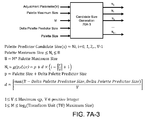
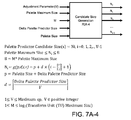
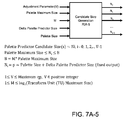
- FIGs. 7A-1 through 7A-5, 7B and 7C-1 through 7C-2 illustrate several embodiments of the candidate size generation unit 70 as shown in FIG. 6 .
- each of the candidate size generation units 70A-1, 70A-2, 70A-3, 70A-4, and 70A-5 is configured to generate the set of candidate size(s) of the adaptive palette predictor 30 further based on the delta palette predictor size and the palette size in addition to V, M, and the palette maximum size.
- the candidate size generation unit 70B is configured to generate the set of candidate size(s) of the adaptive palette predictor 30 further based on the delta palette predictor size in addition to V, M, and the palette maximum size without further based on the palette size.
- each of the candidate size generation units 70C-1 and 70C-2 is configured to generate the set of candidate size(s) of the adaptive palette predictor 30 based on V, M, and the palette maximum size without further based on the delta palette predictor size or the palette size.
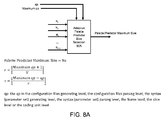
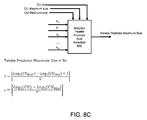
- FIGs. 8A-8E illustrate several embodiments of the adaptive palette predictor size selection unit 80 as shown in FIG. 6 .
- each of the adaptive palette predictor size selection units 80A and 80B is configured to adaptively select one candidate size from the set of candidate size(s) Ni of the adaptive palette predictor 30, based on the coding quality of the video content, as the maximum size of the adaptive palette predictor 30.
- the coding quality is determined based on at least one of a current quantization parameter of and a maximum quantization parameter of a coding unit level, a slice level, a frame level, a syntax (parameter set) parsing level (e.g. SPS/PPS/VPS/SEI parsing level), a syntax (parameter set) generating level (e.g. SPS/PPS/VPS/SEI generating level), a configuration files parsing level, or a configuration files generating level of the video content, and V ⁇ the maximum quantization parameter (qp).
- a current quantization parameter of and a maximum quantization parameter of a coding unit level e.g. SPS/PPS/VPS/SEI parsing level
- a syntax (parameter set) generating level e.g. SPS/PPS/VPS/SEI generating level
- the adaptive palette predictor size selection units 80A adaptively selects one candidate size from the set of candidate size(s) Ni of the adaptive palette predictor 30 as follows:
- the coding quality is the current quantization parameter (qp) of the coding unit level, the slice level, the frame level, the syntax (parameter set) parsing level (e.g. SPS/PPS/VPS/SEI parsing level), the syntax (parameter set) generating level (e.g.
- the adaptive palette predictor size selection unit is configured to adaptively select the one candidate size from the set of candidate size(s) Ni of the adaptive palette predictor by selecting from a look-up table a size corresponding to the current quantization parameter of the coding unit level, the slice level, the frame level, the syntax (parameter set) parsing level, the syntax (parameter set) generating level, the configuration files parsing level, or the configuration files generating level of the video content.
- the adaptive palette predictor size selection units 80B adaptively selects one candidate size from the set of candidate size(s) Ni of the adaptive palette predictor 30 as follows:
- qp the qp in the configuration files generating level (in the encoder), the configuration files parsing level (in the encoder), the syntax (parameter set) generating level (in the encoder), the syntax (parameter set) parsing level (in the decoder), the frame level, the slice level or the coding unit level.
- Palette Predictor Maximum Size Determined by Lookup Table mapping between qp and the candidate size(s) Ni.
- each of the adaptive palette predictor size selection units 80C, 80D and 80E is configured to adaptively select one candidate size from the set of candidate size(s) Ni of the adaptive palette predictor 30, based on the complexity of the video content, as the maximum size of the adaptive palette predictor 30.
- a size of the coding unit is set between a minimum coding unit size and a maximum coding unit size, and the complexity of the video content is determined based on at least one of the size of the coding unit of the video content, the maximum coding unit size and the minimum coding unit size, and a frame size of the video content.
- the complexity of the video content is determined based on the size of the coding unit of the video content, the maximum coding unit size and the minimum coding unit size.
- the adaptive palette predictor size selection units 80C adaptively selects one candidate size from the set of candidate size(s) Ni of the adaptive palette predictor 30 as follows:
- the complexity of the video content is the size of the coding unit of the video content
- the adaptive palette predictor size selection unit is configured to adaptively select the one candidate size from the set of candidate size(s) Ni of the adaptive palette predictor by selecting from a look-up table a size corresponding to the size of the coding unit of the video content.
- the adaptive palette predictor size selection units 80D adaptively selects one candidate size from the set of candidate size(s) Ni of the adaptive palette predictor 30 as follows:
- Palette Predictor Maximum Size Determined by Lookup Table mapping between the CU size and the candidate size(s) Ni.
- V 4 with a mapping between different CU sizes and the candidate sizes N 0 - N 3 .
- the complexity of the video content is the frame size of the video content
- the adaptive palette predictor size selection unit is configured to adaptively select the one candidate size from the set of candidate size(s) Ni of the adaptive palette predictor by selecting from a look-up table a size corresponding to the frame size of the video content.
- the adaptive palette predictor size selection units 80E adaptively selects one candidate size from the set of candidate size(s) Ni of the adaptive palette predictor 30 as follows:
- Palette Predictor Maximum Size Determined by Lookup Table mapping between the CU size and the candidate size(s) Ni.
- the encoder or decoder 40 is further configured to encode or decode a current coding unit of the video content in the palette coding mode using the adaptive palette predictor 30 that is derived from all palette(s) of previously encoded or decoded coding unit(s) of the video content; and update the adaptive palette predictor 30 for a next coding unit from the adaptive palette predictor 30 for the current coding unit and the palette of the current coding unit while limiting the adaptive palette predictor 30 for the next coding unit within the maximum size.
- the candidate size generation unit 70A-1 will generate only one candidate size, i.e., N 0 , of the adaptive palette predictor 30.
- the adaptive palette predictor size selection unit 80A will select N 0 (128) as the maximum size of the adaptive palette predictor 30.
- the candidate size generation unit 70A-1 will generate three candidate sizes, i.e., N 0 , N 1 and N 2 , of the adaptive palette predictor 30.
- the selecting process can also be implemented by a lookup table (LUT) as follows when applying all possible qp to the above equations: qp Palette Predictor Maximum Size 0 ⁇ qp ⁇ 16 N 2 (106) 17 ⁇ qp ⁇ 34 N 1 (96) 35 ⁇ qp ⁇ 52 N 0 (86)
- LUT lookup table
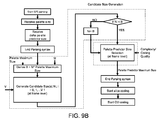
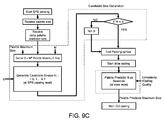
- FIGs. 9A-9D illustrate some possible arrangements of the candidate size generation process and the adaptive palette predictor size selection process in the palette coding mode in accordance with embodiments of the present invention.
- the candidate size generation process that is performed by the candidate size generation unit to generate the set of candidate size(s) of the adaptive palette predictor can be performed at one of the following levels: the configuration files parsing level for the encoder, and the configuration files generating level for the encoder, the syntax (parameter set) parsing level (e.g. SPS/PPS/VPS/SEI parsing level) for the decoder, the syntax (parameter set) generating level (e.g.
- SPS/PPS/VPS/SEI parameter set generating level for the encoder, the frame level, the slice level, and the coding unit level, and the adaptive palette predictor size selection process that is performed by the adaptive palette predictor size selection unit to adaptively select one candidate size from the set of candidate size(s) of the adaptive palette predictor can also be performed at one of the above levels.
- both the candidate size generation process and the adaptive palette predictor size selection process are performed at the same level.
- both the candidate size generation process and the adaptive palette predictor size selection process are performed at the SPS parsing level.
- both the candidate size generation process and the adaptive palette predictor size selection process are performed at the frame parsing level.
- both the candidate size generation process and the adaptive palette predictor size selection process can be performed at the slice level, or at the coding unit level.
- the candidate size generation process and the adaptive palette predictor size selection process are performed at different levels. For example, as embodied in FIG. 9C , the candidate size generation process is performed at the SPS parsing level, and the adaptive palette predictor size selection process is performed at the slice level. As embodied in FIG. 9D , the candidate size generation process is performed at the SPS parsing level, and the adaptive palette predictor size selection process is performed at the coding unit level.
- the adaptive palette predictor size selection process can be performed at the same level as the candidate size generation process or another level therebelow.
- the adaptive palette predictor size selection process can be performed at the SPS parsing level, the frame level, the slice level, or the coding unit level; when the candidate size generation process is performed in the SPS frame level, the adaptive palette predictor size selection process can be performed at the frame level, the slice level, or the coding unit level, but not at the SPS parsing level, because it is higher than the frame level.
- the coding units are encoded/decoded in the palette coding mode using an adaptive palette predictor with an adaptive maximum size based on the complexity of the video content and/or the coding quality of the video content, the coding efficiency will be improved/enhanced, i.e., higher hitting rate on the palette predictor, lower checking time for comparing index entries of the palette and the palette predictor, smaller memory/buffer size, lower overhead for transmitting the flags and/or unpredicted major color values.
Landscapes
- Engineering & Computer Science (AREA)
- Multimedia (AREA)
- Signal Processing (AREA)
- Compression Or Coding Systems Of Tv Signals (AREA)
- Compression Of Band Width Or Redundancy In Fax (AREA)
- Color Television Systems (AREA)
Abstract
Description
- The present invention relates to a method and apparatus of encoding or decoding coding units of a video content in a palette coding mode using an adaptive palette predictor with an adaptive maximum size.
- Technologies for coding non-camera-captured content videos or screen content videos have received great interests lately due to the rapid growth of application areas such as wireless displays, remote computer desktop access, real-time screen sharing for videoconferencing, cloud gaming, etc. Compared to camera-captured content videos, which contain rich colors and complex patterns, screen content videos contain a significant portion of computer-rendered graphics and text with fewer number of colors and the repetition of textual patterns.
- For example, in a screen content image with text, a coding block typically contains only the foreground text color and the background color. Sometimes, the random patterns of text characters and letters make it challenging for the current coding block to find a matching block in the same or previously coded pictures. It may also be challenging to utilize the directional local intra prediction for efficient compression in this circumstance. Since traditional intra and inter video coding tools were designed primarily for camera-captured content videos, and screen content videos have significantly different characterizes from camera-captured content videos, these traditional intra and inter video coding tools are less sufficient for screen content videos. Therefore, it creates an urgent need for efficient coding of screen content videos.
- In response to the market demands, the ITU-T Video Coding Expert Group and ISO/IEC Motion Picture Expert Group have jointly launched a new standardization project, i.e., the High Efficiency Video Coding (HEVC) extensions on screen content coding (SCC). Several new video coding tools, including palette coding, have been developed and adopted into HEVC SCC draft standard to efficiently encode/decode screen content videos.
- Palette coding is a major color-based prediction method. Different from traditionally intra and inter prediction that mainly removes redundancy between different coding units, palette coding targets at the redundancy of repetitive pixel values/patterns within the coding unit. In order to reduce the overhead of transmitting the original value of the major colors, a palette prediction was introduced in palette coding. In the current palette coding mode, all pixels of a coding block are analyzed and classified into a list of major colors, except for some rarely used pixels that cannot be classified to any of the major colors, which are classified into escape colors. Each major color is a representative color which has high frequency of occurrence in the coding block. For each palette coded coding unit (CU), a color index table, i.e., a palette, is formed with each index entry associated with one major color. All the pixels in the CU are converted into corresponding indices, except the escape pixels with the escape colors.
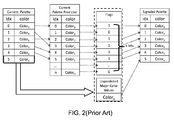
FIG. 1 illustrates a simplified version of the palette coding process. - Then, the encoder starts a checking process to check if each of the index entries representing the major colors in the current CU matches any of the major colors in the current palette predictor. For each entry in the palette predictor, a flag (1: used; 0: not used) is sent to signal whether or not this entry is used in the current palette. If yes, this entry will be put in front of the current palette. Therefore, the flags corresponding to the entries of the current palette predictor are sent to signal which one(s) of the major colors in the current palette predictor is used in the current CU. For those entries in the current palette but not in the palette predictor, the number of them and their pixel (e.g., Y/Cb/Cr or R/G/B) values are signaled, and these signaled new entries are put at the bottom of the current palette. An example of the palette coding mode at the encoder side is illustrated in
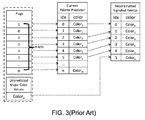
FIG. 2 . The current palette size is then calculated as the number of reused palette entries plus the number of signaled new palette entries. - At the decoder side, the decoder receives the flags indicating which one(s) of the major colors in the current palette predictor is used in the current CU. The decoder checks the current palette predictor in order with the flags to determine which one(s) of the major colors in the current palette predictor is used in the current CU. The decoder also receives their pixel (e.g., Y/Cb/Cr or R/G/B) values of the new palette entries not in the current palette predictor. The decoder then generates a received palette for the CU with index entries corresponding to the used major colors (with the flag (1)) in the current palette predictor in front of the received palette, followed by the index entries corresponding to new major colors not in the current palette predictor. An example of the palette coding mode at the decoder side is illustrated in
FIG. 3 . - After palette coding the current CU or decoding the current palette-coded CU, the palette predictor is updated for the next CU or palette-coded CU. This is done using the information of the current palette. The entries (including the new entries) of the current/received palette are put in front of the new palette predictor, followed by those unused entries from the previous palette predictor. The new palette predictor size is then calculated as the size of the current palette plus the number of unused palette entries. An example of the update of the palette predictor is illustrated in
FIG. 4 . - However, in the current design, the maximum size of the palette predictor can be assigned as an arbitrary positive number. The lack of the limitation of the palette predictor maximum size raises problems in implementation and the update process of the palette predictor, because the decoder may need to prepare a buffer with an unlimited size for hardware implementation of the palette prediction, which is infeasible under the current technology. In addition, the current palette coding mode only allows one fixed maximum size of the palette predictor signaled at the SPS level regardless of the complexity of the video or the coding quality. The fixed palette predictor maximum size makes the palette coding inefficient and ineffective, because it may not fit the need for all different coding conditions and coding quality requirements.
- Accordingly, it is an object of the present invention to provide an adaptive maximum size of the palette predictor according to the complexity of the video content and/or the coding quality of the video content to improve the coding efficiency in a palette coding mode.
- To achieve the above-mentioned object, according to a first aspect of the present invention, a method of encoding or decoding coding units of a video content in a palette coding mode using an adaptive palette predictor is provided. The method comprises: adaptively determining a maximum size of the adaptive palette predictor based on at least one of a complexity of the video content and coding quality of the video content; and encoding or decoding the coding units of the video content in the palette coding mode using the adaptive palette predictor while limiting the adaptive palette predictor that is derived from all palette(s) of previously encoded or decoded coding unit(s) of the video content within the maximum size determined in the adaptively determining step.
- Furthermore, according to a second aspect of the present invention, an apparatus for encoding or decoding coding units of a video content in a palette coding mode using an adaptive palette predictor is provided. The apparatus comprises: a memory device storing the adaptive palette predictor; an adaptive palette predictor size determination unit configured to adaptively determine a maximum size of the adaptive palette predictor based on at least one of a complexity of the video content and coding quality of the video content; and an encoder or decoder configured to encode or decode the coding units of the video content in the palette coding mode using the adaptive palette predictor stored in the memory device while limiting the adaptive palette predictor that is derived from all palette(s) of previously encoded or decoded coding unit(s) of the video content within the maximum size provided by the adaptive palette predictor size determination unit.
- Further scope of applicability of the present invention will become apparent from the detailed description given hereinafter. However, it should be understood that the detailed description and specific examples, while indicating preferred embodiments of the invention, are given by way of illustration only, since various changes and modifications within the spirit and scope of the invention will become apparent to those skilled in the art from this detailed description.
- The present invention will become more fully understood from the detailed description given hereinbelow and the accompanying drawings which are given by way of illustration only, and thus are not limitative of the present invention, and wherein:
-
FIG. 1 illustrates a simplified version of the palette coding process; -
FIG. 2 illustrates an example of the palette coding mode at the encoder side; -
FIG. 3 illustrates an example of the palette coding mode at the decoder side; -
FIG. 4 illustrates an example of the update of the palette predictor; -
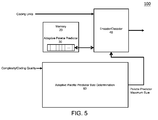
FIG. 5 is a block diagram of an apparatus for encoding or decoding coding units of a video content in a palette coding mode using an adaptive palette predictor in accordance with an embodiment of the present invention; -
FIG. 6 is a block diagram of an adaptive palette predictor size determination unit in accordance with an embodiment of the present invention; -
FIGs. 7A-1 through 7A-5, 7B and 7C-1 through 7C-2 X illustrate several embodiments of the candidate size generation unit as shown inFIG. 6 ; -
FIGs. 8A-8E illustrate several embodiments of the adaptive palette predictor size selection unit as shown inFIG. 6 ; and -
FIGs. 9A-9D illustrate some possible arrangements of the candidate size generation process and the adaptive palette predictor size selection process in the palette coding mode in accordance with embodiments of the present invention. - The present invention will now be described in detail with reference to the accompanying drawings, wherein the same reference numerals will be used to identify the same or similar elements throughout the several views. It should be noted that the drawings should be viewed in the direction of orientation of the reference numerals.
- As mentioned, a palette predictor with a fixed palette predictor maximum size may not fit the need for all different coding conditions and coding quality requirements in the palette coding mode. If the coding quality requirement is high, more major colors are expected to be generated with fine classification. Therefore, in order to have a good palette prediction, the maximum size of the palette predictor should be set higher to contain more major colors that have appeared in the previously decoded coding units. On the other hand, when coding quality requirement is low, less major colors are expected in the coding unit. Therefore, the maximum size of the palette predictor should be set lower to reduce the checking time of comparing index entries of the current palette with the palette predictor and reduce the chance to transmit the values of the unpredicted major colors, thereby improving the coding efficiency. In addition, with regard to the video content complexity, the major colors for the complex coding unit will increase and require a larger sized palette predictor to improve the hitting rate for coding efficiency. On the other hand, the simple video content or coding unit may not need so many major colors to represent. Therefore, the size of the palette predictors can be reduced to eliminate the extra checking times and to reduce the overhead of transmitting unused flags for the palette predictor. Therefore, instead of only having one fixed maximum size of the palette predictor, the maximum size of the palette predictor should be adaptively changed according to the complexity of the video content and the coding quality to enhance the coding efficiency in the palette coding mode.
-
FIG. 5 is a block diagram of an apparatus for encoding or decoding coding units of a video content in a palette coding mode using an adaptive palette predictor in accordance with an embodiment of the present invention. As illustrated inFIG. 5 , theapparatus 100 comprises amemory device 20 storing theadaptive palette predictor 30; an adaptive palette predictorsize determination unit 60 configured to adaptively determine a maximum size of theadaptive palette predictor 30 based on at least one of a complexity of the video content and coding quality of the video content; and an encoder ordecoder 40 configured to encode or decode the coding units of the video content in the palette coding mode using theadaptive palette predictor 30 stored in thememory device 20 while limiting the adaptive palette predictor that is derived from all palette(s) of previously encoded or decoded coding unit(s) of the video content within the maximum size provided by the adaptive palette predictorsize determination unit 60. In an embodiment, the apparatus can be implemented by a processor with firmware/software, logic circuits, and/or hardware encoder/decoder, etc. -
FIG. 6 is a block diagram of the adaptive palette predictorsize determination unit 60 in accordance with an embodiment of the present invention. As shown inFIG. 6 , the adaptive palette predictorsize determination unit 60 receives the following parameters including the adjustment parameter V, the palette maximum size (the palette size of the coding units is equal to or less than the palette maximum size), M, and parameter(s) representing the complexity of the video content and/or the coding quality of the video content. In some embodiments, the adaptive palette predictorsize determination unit 60 may also the delta palette predictor size and/or the palette size of the coding units. - As shown in
FIG. 6 , the adaptive palette predictorsize determination unit 60 includes: a candidatesize generation unit 70 configured to generate a set of candidate size(s) Ni (i = 0, 1,...,V-1) of theadaptive palette predictor 30 based on at least V, M, and the palette maximum size, wherein V is an integer and V ≥ 1, M ≥ 1, and Ni ≥ the palette maximum size and Ni is capped at an upper bound of the maximum size of the adaptive palette predictor if Ni is larger than the upper bound; and an adaptive palette predictorsize selection unit 80 configured to adaptively select one candidate size from the set of candidate size(s) Ni of the adaptive palette predictor, based on the at least one of the complexity of the video content and the coding quality of the video content, as the maximum size of the adaptive palette predictor. In an embodiment, the upper bound of the maximum size of the adaptive palette predictor is set based on M and the palette maximum size. In an embodiment, when M is an integer, the upper bound is set to be M* the palette maximum size, and when M is not an integer, the upper bound is set to be one of the following: round (M* the palette maximum size), ceiling (M* the palette maximum size), floor (M* the palette maximum size), round (M)* the palette maximum size, ceiling (M)* the palette maximum size, and floor (M)* the palette maximum size. -
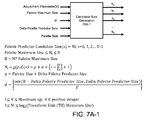
FIGs. 7A-1 through 7A-5, 7B and 7C-1 through 7C-2 illustrate several embodiments of the candidatesize generation unit 70 as shown inFIG. 6 . - In the embodiments shown in
FIG. 7A-1 through 7A-5 , each of the candidatesize generation units 70A-1, 70A-2, 70A-3, 70A-4, and 70A-5 is configured to generate the set of candidate size(s) of theadaptive palette predictor 30 further based on the delta palette predictor size and the palette size in addition to V, M, and the palette maximum size. - In the embodiment shown in
FIG. 7A-1 , the candidatesize generation units 70A-1 generates a set of candidate size(s) Ni (i = 0, 1,...,V-1) of theadaptive palette predictor 30 as follows:
where - Palette Maximum Size ≤ Ni ≤ B,
- B = M*Palette Maximum Size (i.e., the upper bound of the maximum size of the adaptive palette predictor, and M is an integer in this embodiment),


- 1≤ V ≤ Maximum qp, and V is a positive integer, and
- 1≤ M ≤ log2 (Transform Unit (TU) Maximum Size).
- In the embodiment shown in
FIG. 7A-2 , the candidatesize generation units 70A-2 generates a set of candidate size(s) Ni (i = 0, 1,...,V-1) of theadaptive palette predictor 30 as follows:
where - Palette Maximum Size ≤ Ni ≤ B,
- B = M*Palette Maximum Size (i.e., the upper bound of the maximum size of the adaptive palette predictor, and M is an integer in this embodiment),


- 1≤ V ≤ Maximum qp, and V is a positive integer, and
- 1≤ M ≤ log2 (Transform Unit (TU) Maximum Size).
- In the embodiment shown in
FIG. 7A-3 , the candidatesize generation units 70A-3 generates a set of candidate size(s) Ni (i = 0, 1,...,V-1) of theadaptive palette predictor 30 as follows:
where - Palette Maximum Size ≤ Ni ≤ B,
- B = M*Palette Maximum Size (i.e., the upper bound of the maximum size of the adaptive palette predictor, and M is an integer in this embodiment),


- 1≤ V ≤ Maximum qp, and V is a positive integer, and
- 1≤ M ≤ log2 (Transform Unit (TU) Maximum Size).
- In the embodiment shown in
FIG. 7A-4 , the candidatesize generation units 70A-4 generates a set of candidate size(s) Ni (i = 0, 1,...,V-1) of theadaptive palette predictor 30 as follows:
where - Palette Maximum Size ≤ Ni ≤ B,
- B = M*Palette Maximum Size (i.e., the upper bound of the maximum size of the adaptive palette predictor, and M is an integer in this embodiment),


- 1≤ V ≤ Maximum qp, and V is a positive integer, and
- 1≤ M ≤ log2 (Transform Unit (TU) Maximum Size).
- In the embodiment shown in
FIG. 7A-5 , the candidatesize generation units 70A-5 generates a set of candidate size(s) Ni (i = 0, 1,...,V-1) of theadaptive palette predictor 30 as follows:
where - Palette Maximum Size ≤ Ni ≤ B,
- B = M*Palette Maximum Size (i.e., the upper bound of the maximum size of the adaptive palette predictor, and M is an integer in this embodiment),
- 1≤ V ≤ Maximum qp, and V is a positive integer, and
- 1≤ M ≤ log2 (Transform Unit (TU) Maximum Size).
- In other words, the set of candidate size(s) Ni is a fixed output for i = 0, 1,...,V-1.
- In the embodiment shown in
FIG. 7B , the candidatesize generation unit 70B is configured to generate the set of candidate size(s) of theadaptive palette predictor 30 further based on the delta palette predictor size in addition to V, M, and the palette maximum size without further based on the palette size. - In the embodiment shown in
FIG. 7B , the candidatesize generation units 70B generates a set of candidate size(s) Ni (i = 0, 1,..., V-1) of theadaptive palette predictor 30 as follows:
where - Palette Maximum Size ≤ Ni ≤ B,
- B = M*Palette Maximum Size (i.e., the upper bound of the maximum size of the adaptive palette predictor, and M is an integer in this embodiment),
- 1≤ V ≤ Maximum qp, and V is a positive integer, and
- 1≤ M ≤ log2 (Transform Unit (TU) Maximum Size).
- In the embodiments shown in
FIGs. 7C-1 and 7C-2 , each of the candidatesize generation units 70C-1 and 70C-2 is configured to generate the set of candidate size(s) of theadaptive palette predictor 30 based on V, M, and the palette maximum size without further based on the delta palette predictor size or the palette size. - In the embodiment shown in
FIG. 7C-1 , the candidatesize generation units 70C-1 generates a set of candidate size(s) Ni (i = 0, 1,..., V-1) of theadaptive palette predictor 30 as follows:
where - Palette Maximum Size ≤ Ni ≤ B,
- B = M*Palette Maximum Size (i.e., the upper bound of the maximum size of the adaptive palette predictor, and M is an integer in this embodiment),
- 1≤ V ≤ Maximum qp, and V is a positive integer, and
- 1≤ M ≤ log2 (Transform Unit (TU) Maximum Size).
- In the embodiment shown in
FIG. 7C-2 , the candidatesize generation units 70C-2 generates a set of candidate size(s) Ni (i = 0, 1,..., V-1) of theadaptive palette predictor 30 as follows: - Ni is determined based on a lookup table.
- Palette Maximum Size ≤ Ni ≤ B (i.e., the upper bound of the maximum size of the adaptive palette predictor, and M is an integer in this embodiment),
- B = M*Palette Maximum Size,
- 1≤ V ≤ Maximum qp, and V is a positive integer, and
- 1≤ M ≤ log2 (Transform Unit (TU) Maximum Size).
- Below is an example of the lookup table for V = 4
Palette Predictor Maximum Size N3 128 N2 96 N 186 No 64 -
FIGs. 8A-8E illustrate several embodiments of the adaptive palette predictorsize selection unit 80 as shown inFIG. 6 . - In the embodiments shown in
FIGs. 8A and8B , each of the adaptive palette predictorsize selection units adaptive palette predictor 30, based on the coding quality of the video content, as the maximum size of theadaptive palette predictor 30. - In an embodiment, the coding quality is determined based on at least one of a current quantization parameter of and a maximum quantization parameter of a coding unit level, a slice level, a frame level, a syntax (parameter set) parsing level (e.g. SPS/PPS/VPS/SEI parsing level), a syntax (parameter set) generating level (e.g. SPS/PPS/VPS/SEI generating level), a configuration files parsing level, or a configuration files generating level of the video content, and V ≤ the maximum quantization parameter (qp).
- For example, in the embodiment shown in
FIG. 8A , the adaptive palette predictorsize selection units 80A adaptively selects one candidate size from the set of candidate size(s) Ni of theadaptive palette predictor 30 as follows: - Palette Predictor Maximum Size = Ns,
- qp: the qp in the configuration files generating level (in the encoder), the configuration files parsing level (in the encoder), the syntax (parameter set) generating level (in the encoder), the syntax (parameter set) parsing level (in the decoder), the frame level, the slice level or the coding unit level,


- 1≤V ≤ Maximum qp, and V is a positive integer.
- In an embodiment, the coding quality is the current quantization parameter (qp) of the coding unit level, the slice level, the frame level, the syntax (parameter set) parsing level (e.g. SPS/PPS/VPS/SEI parsing level), the syntax (parameter set) generating level (e.g. SPS/PPS/VPS/SEI parameter set generating level), the configuration files parsing level, or the configuration files generating level of the video content, and the adaptive palette predictor size selection unit is configured to adaptively select the one candidate size from the set of candidate size(s) Ni of the adaptive palette predictor by selecting from a look-up table a size corresponding to the current quantization parameter of the coding unit level, the slice level, the frame level, the syntax (parameter set) parsing level, the syntax (parameter set) generating level, the configuration files parsing level, or the configuration files generating level of the video content.
- For example, in the embodiment shown in
FIG. 8B , the adaptive palette predictorsize selection units 80B adaptively selects one candidate size from the set of candidate size(s) Ni of theadaptive palette predictor 30 as follows: - qp: the qp in the configuration files generating level (in the encoder), the configuration files parsing level (in the encoder), the syntax (parameter set) generating level (in the encoder), the syntax (parameter set) parsing level (in the decoder), the frame level, the slice level or the coding unit level.
- Palette Predictor Maximum Size: Determined by Lookup Table mapping between qp and the candidate size(s) Ni.
- Below is an example of the lookup table for V = 3 with a mapping between different ranges of qp and the candidate sizes N0 - N2.
qp Palette Predictor Maximum Size 0≤qp≤16 N2 (106) 17≤qp≤34 N1 (96) 35≤qp≤51 N0 (86) - In the embodiments shown in
FIGs. 8C ,8D and8E , each of the adaptive palette predictorsize selection units adaptive palette predictor 30, based on the complexity of the video content, as the maximum size of theadaptive palette predictor 30. - In an embodiment, a size of the coding unit is set between a minimum coding unit size and a maximum coding unit size, and the complexity of the video content is determined based on at least one of the size of the coding unit of the video content, the maximum coding unit size and the minimum coding unit size, and a frame size of the video content.
- In an embodiment, the complexity of the video content is determined based on the size of the coding unit of the video content, the maximum coding unit size and the minimum coding unit size.
- For example, in the embodiment shown in
FIG. 8C , the adaptive palette predictorsize selection units 80C adaptively selects one candidate size from the set of candidate size(s) Ni of theadaptive palette predictor 30 as follows: - Palette Predictor Maximum Size = Ns,
- In an embodiment, the complexity of the video content is the size of the coding unit of the video content, and the adaptive palette predictor size selection unit is configured to adaptively select the one candidate size from the set of candidate size(s) Ni of the adaptive palette predictor by selecting from a look-up table a size corresponding to the size of the coding unit of the video content.
- For example, in the embodiment shown in
FIG. 8D , the adaptive palette predictorsize selection units 80D adaptively selects one candidate size from the set of candidate size(s) Ni of theadaptive palette predictor 30 as follows: - Palette Predictor Maximum Size: Determined by Lookup Table mapping between the CU size and the candidate size(s) Ni.
- Below is an example of the lookup table for V = 4 with a mapping between different CU sizes and the candidate sizes N0 - N3.
CU size Palette Predictor Maximum Size 64 N3 (127) 32 N2 (64) 16 N1 (32) 8 N0 (16) - In an embodiment, the complexity of the video content is the frame size of the video content, and the adaptive palette predictor size selection unit is configured to adaptively select the one candidate size from the set of candidate size(s) Ni of the adaptive palette predictor by selecting from a look-up table a size corresponding to the frame size of the video content.
- For example, in the embodiment shown in
FIG. 8E , the adaptive palette predictorsize selection units 80E adaptively selects one candidate size from the set of candidate size(s) Ni of theadaptive palette predictor 30 as follows: - Palette Predictor Maximum Size: Determined by Lookup Table mapping between the CU size and the candidate size(s) Ni.
- Below is an example of the lookup table for V = 3 with a mapping between different frame sizes and the candidate sizes N0 - N2.
Frame size Palette Predictor Maximum Size 8K N2 (511) 4K N1 (255) Full HD N0 (127) - In an embodiment, the encoder or
decoder 40 is further configured to encode or decode a current coding unit of the video content in the palette coding mode using theadaptive palette predictor 30 that is derived from all palette(s) of previously encoded or decoded coding unit(s) of the video content; and update theadaptive palette predictor 30 for a next coding unit from theadaptive palette predictor 30 for the current coding unit and the palette of the current coding unit while limiting theadaptive palette predictor 30 for the next coding unit within the maximum size. - For illustration purpose, the following examples use the candidate
size generation unit 70A-1 shown inFIG. 7A-1 and the adaptive palette predictorsize selection unit 80A shown inFIG. 8A to illustrate how a set of candidate size(s) Ni (i = 0, 1,...,V-1) of the adaptive palette predictor is generated and how the maximum size of the adaptive palette predictor is selected from the set of candidate size(s) Ni. - Example 1: V = 1, M = 2, Palette Maximum Size = Palette Size = Delta Palette Predictor Size = 64; Maximum qp =51, qp = any value ≤ Maximum qp.
- In this example, since V = 1, in the candidate size generation process, the candidate
size generation unit 70A-1 will generate only one candidate size, i.e., N0, of theadaptive palette predictor 30.
- For the adaptive palette predictor size selection process, since there is only one candidate size N0 (128), the adaptive palette predictor
size selection unit 80A will select N0 (128) as the maximum size of theadaptive palette predictor 30. - In addition, the same result will be obtained as follows:


Palette Predictor Maximum Size = NS = N0. - In addition, since N0 (128) is not larger than B (i.e., the upper bound of the maximum size of the adaptive palette predictor) = M* Palette Maximum Size (2*64) = 128, N0 (128) will be selected as the maximum size of the
adaptive palette predictor 30. - Example 2: V = 3, M = 2, Palette Maximum Size = Palette Size = 64; Delta Palette Predictor Size = 32; Maximum qp =52, qp = 15.
- In this example, since V = 3, in the candidate size generation process, the candidate
size generation unit 70A-1 will generate three candidate sizes, i.e., N0, N1 and N2, of theadaptive palette predictor 30.


- For the adaptive palette predictor size selection process, the adaptive palette predictor
size selection unit 80A will select one of N0 (86), N1 (96) and N2 (106) as the maximum size of theadaptive palette predictor 30 as follows:

Palette Predictor Maximum Size = NS = N2 (106). - In addition, since N2 (106) is not larger than B (i.e., the upper bound of the maximum size of the adaptive palette predictor) = M* Palette Maximum Size (2*64) = 128, N2 (106) will not be capped by B and will be selected as the maximum size of the
adaptive palette predictor 30. - In this example, the selecting process can also be implemented by a lookup table (LUT) as follows when applying all possible qp to the above equations:
qp Palette Predictor Maximum Size 0≤qp≤16 N2 (106) 17≤qp≤34 N1 (96) 35≤qp≤52 N0 (86) -
FIGs. 9A-9D illustrate some possible arrangements of the candidate size generation process and the adaptive palette predictor size selection process in the palette coding mode in accordance with embodiments of the present invention. - In an embodiment, the candidate size generation process that is performed by the candidate size generation unit to generate the set of candidate size(s) of the adaptive palette predictor can be performed at one of the following levels: the configuration files parsing level for the encoder, and the configuration files generating level for the encoder, the syntax (parameter set) parsing level (e.g. SPS/PPS/VPS/SEI parsing level) for the decoder, the syntax (parameter set) generating level (e.g. SPS/PPS/VPS/SEI parameter set generating level) for the encoder, the frame level, the slice level, and the coding unit level, and the adaptive palette predictor size selection process that is performed by the adaptive palette predictor size selection unit to adaptively select one candidate size from the set of candidate size(s) of the adaptive palette predictor can also be performed at one of the above levels.
- In an embodiment, both the candidate size generation process and the adaptive palette predictor size selection process are performed at the same level. For example, as embodied in
FIG. 9A , both the candidate size generation process and the adaptive palette predictor size selection process are performed at the SPS parsing level. As embodied inFIG. 9B , both the candidate size generation process and the adaptive palette predictor size selection process are performed at the frame parsing level. Similarly, both the candidate size generation process and the adaptive palette predictor size selection process can be performed at the slice level, or at the coding unit level. - In another embodiment, the candidate size generation process and the adaptive palette predictor size selection process are performed at different levels. For example, as embodied in
FIG. 9C , the candidate size generation process is performed at the SPS parsing level, and the adaptive palette predictor size selection process is performed at the slice level. As embodied inFIG. 9D , the candidate size generation process is performed at the SPS parsing level, and the adaptive palette predictor size selection process is performed at the coding unit level. - In brief, when the candidate size generation process is performed in one of the following levels: the configuration files parsing level for the encoder, and the configuration files generating level for the encoder, the syntax (parameter set) parsing level (e.g. SPS/PPS/VPS/SEI parsing level) for the decoder, the syntax (parameter set) generating level (e.g. SPS/PPS/VPS/SEI parameter set generating level) for the encoder, the frame level, the slice level, and the coding unit level, the adaptive palette predictor size selection process can be performed at the same level as the candidate size generation process or another level therebelow. For example, when the candidate size generation process is performed in the SPS parsing level, the adaptive palette predictor size selection process can be performed at the SPS parsing level, the frame level, the slice level, or the coding unit level; when the candidate size generation process is performed in the SPS frame level, the adaptive palette predictor size selection process can be performed at the frame level, the slice level, or the coding unit level, but not at the SPS parsing level, because it is higher than the frame level.
- As illustrated above, since the coding units are encoded/decoded in the palette coding mode using an adaptive palette predictor with an adaptive maximum size based on the complexity of the video content and/or the coding quality of the video content, the coding efficiency will be improved/enhanced, i.e., higher hitting rate on the palette predictor, lower checking time for comparing index entries of the palette and the palette predictor, smaller memory/buffer size, lower overhead for transmitting the flags and/or unpredicted major color values.


1≤ V ≤ Maximum qp, and V is a positive integer.
Claims (20)
- A method of encoding or decoding coding units of a video content in a palette coding mode using an adaptive palette predictor, the method comprising:adaptively determining a maximum size of the adaptive palette predictor based on at least one of a complexity of the video content and coding quality of the video content; andencoding or decoding the coding units of the video content in the palette coding mode using the adaptive palette predictor while limiting the adaptive palette predictor that is derived from all palette(s) of previously encoded or decoded coding unit(s) of the video content within the maximum size determined in the adaptively determining step.
- The method of claim1, wherein a palette size of the coding units is equal to or less than a palette maximum size, and the adaptively determining step includes:generating a set of candidate size(s) Ni (i = 0, 1,...,V-1) of the adaptive palette predictor based on at least V, M, and the palette maximum size, wherein V is an integer and V ≥ 1, M ≥ 1, and Ni ≥ the palette maximum size and Ni is capped at an upper bound that is set based on M and the palette maximum size if Ni is larger than the upper bound; andadaptively selecting one candidate size from the set of candidate size(s) Ni of the adaptive palette predictor, based on the at least one of the complexity of the video content and the coding quality of the video content, as a maximum size of the adaptive palette predictor.
- The method of claim 2, wherein the step of generating the set of candidate size(s) of the adaptive palette predictor is further based on a delta palette predictor size, and preferably wherein the step of generating the set of candidate size(s) of the adaptive palette predictor is further based on the palette size.
- The method of any one of the claims 1 to 3, wherein a size of the coding unit is set between a minimum coding unit size and a maximum coding unit size, and the complexity of the video content is determined based on at least one of the size of the coding unit of the video content, the maximum coding unit size and the minimum coding unit size, and a frame size of the video content.
- The method of claim 4, wherein
the complexity of the video content is determined based on the size of the coding unit of the video content, the maximum coding unit size and the minimum coding unit size, or wherein
the complexity of the video content is the size of the coding unit of the video content or the frame size of the video content, and the step of adaptively selecting the one candidate size from the set of candidate size(s) Ni of the adaptive palette predictor includes selecting from a look-up table a size corresponding to the size of the coding unit of the video content or the frame size of the video content. - The method of any one of the claims 1 to 5, wherein the coding quality is determined based on at least one of a current quantization parameter of and a maximum quantization parameter of a coding unit level, a slice level, a frame level, a syntax (parameter set) parsing level, a syntax (parameter set) generating level, a configuration files parsing level, or a configuration files generating level of the video content, and V ≤ the maximum quantization parameter, and preferably wherein
the coding quality is the current quantization parameter of the coding unit level, the slice level, the frame level, the syntax (parameter set) parsing level, the syntax (parameter set) generating level, the configuration files parsing level, or the configuration files generating level of the video content, and the step of adaptively selecting the one candidate size from the set of candidate size(s) Ni of the adaptive palette predictor includes selecting from a look-up table a size corresponding to the current quantization parameter of the coding unit level, the slice level, the frame level, the syntax (parameter set) parsing level, the syntax (parameter set) generating level, the configuration files parsing level, or the configuration files generating level of the video content. - The method of claim 2 or any one of the claims 3 to 6 in dependence on claim 2, wherein the step of adaptively selecting the one candidate size from the set of candidate size(s) Ni of the adaptive palette predictor includes selecting from a look-up table a size corresponding to either the complexity of the video content or the coding quality of the video content.
- The method of claim 2 or any one of the claims 3 to 7 in dependence on claim 2, wherein the step of generating the set of candidate size(s) of the adaptive palette predictor is performed at one of a configuration files generating level, a configuration files parsing level, a syntax (parameter set) generating level, a syntax (parameter set) parsing level, a frame level, a slice level, and a coding unit level.
- The method of claim 8, wherein
the step of adaptively selecting the one candidate size from the set of candidate size(s) Ni of the adaptive palette predictor is performed at the same one of the configuration files generating level, the configuration files parsing level, the syntax (parameter set) generating level, the syntax (parameter set) parsing level, the frame level, the slice level, and the coding unit level, or wherein
the step of adaptively selecting the one candidate size from the set of candidate size(s) Ni of the adaptive palette predictor is performed at another one of the configuration files generating level, the configuration files parsing level, the syntax (parameter set) generating level, the syntax (parameter set) parsing level, the frame level, the slice level, and the coding unit level. - The method of any one of the claims 1 to 9, wherein the step of encoding or decoding the coding units of the video content in the palette coding mode using the adaptive palette predictor while limiting the adaptive palette predictor within the maximum size includes:encoding or decoding a current coding unit of the video content in the palette coding mode using the adaptive palette predictor that is derived from all palette(s) of previously encoded or decoded coding unit(s) of the video content; andupdating the adaptive palette predictor for a next coding unit from the adaptive palette predictor for the current coding unit and the palette of the current coding unit while limiting the adaptive palette predictor for the next coding unit within the maximum size.
- An apparatus for encoding or decoding coding units of a video content in a palette coding mode using an adaptive palette predictor, the apparatus comprising:a memory device (20) storing the adaptive palette predictor;an adaptive palette predictor size determination unit (60) configured to adaptively determine a maximum size of the adaptive palette predictor based on at least one of a complexity of the video content and coding quality of the video content; andan encoder or decoder (40) configured to encode or decode the coding units of the video content in the palette coding mode using the adaptive palette predictor stored in the memory device while limiting the adaptive palette predictor that is derived from all palette(s) of previously encoded or decoded coding unit(s) of the video content within the maximum size provided by the adaptive palette predictor size determination unit.
- The apparatus of claim 11, wherein a palette size of the coding units is equal to or less than a palette maximum size, and the adaptive palette predictor size determination unit includes:a candidate size generation unit (70) configured to generate a set of candidate size(s) Ni (i = 0, 1,...,V-1) of the adaptive palette predictor based on at least V, M, and the palette maximum size, wherein V is an integer and V ≥ 1, M ≥ 1, and Ni ≥ the palette maximum size and Ni is capped at an upper bound that is set based on M and the palette maximum size if Ni is larger than the upper bound; andan adaptive palette predictor size selection unit (80) configured to adaptively select one candidate size from the set of candidate size(s) Ni of the adaptive palette predictor, based on the at least one of the complexity of the video content and the coding quality of the video content, as the maximum size of the adaptive palette predictor.
- The apparatus of claim 12, wherein the candidate size generation unit is configured to generate the set of candidate size(s) of the adaptive palette predictor further based on a delta palette predictor size, and preferably wherein the candidate size generation unit is configured to generate the set of candidate size(s) of the adaptive palette predictor further based on the palette size.
- The apparatus of any one of the claims 11 to 13, wherein a size of the coding unit is set between a minimum coding unit size and a maximum coding unit size, and the complexity of the video content is determined based on at least one of the size of the coding unit of the video content, the maximum coding unit size and the minimum coding unit size, and a frame size of the video content.
- The apparatus of claim 14, wherein
the complexity of the video content is determined based on the size of the coding unit of the video content, the maximum coding unit size and the minimum coding unit size, or wherein
the complexity of the video content is the size of the coding unit of the video content or the frame size of the video content, and the adaptive palette predictor size selection unit is configured to adaptively select the one candidate size from the set of candidate size(s) Ni of the adaptive palette predictor by selecting from a look-up table a size corresponding to the size of the coding unit of the video content or the frame size of the video content. - The apparatus of any one of the claims 11 to 15, wherein the coding quality is determined based on at least one of a current quantization parameter of and a maximum quantization parameter of a coding unit level, a slice level, a frame level, a syntax (parameter set) parsing level, a syntax (parameter set) generating level, a configuration files parsing level, or a configuration files generating level of the video content, and V ≤ the maximum quantization parameter, and preferably wherein
wherein the coding quality is the current quantization parameter of the coding unit level, the slice level, the frame level, the syntax (parameter set) parsing level, the syntax (parameter set) generating level, the configuration files parsing level, or the configuration files generating level of the video content, and the adaptive palette predictor size selection unit is configured to adaptively select the one candidate size from the set of candidate size(s) Ni of the adaptive palette predictor by selecting from a look-up table a size corresponding to the current quantization parameter of the coding unit level, the slice level, the frame level, the syntax (parameter set) parsing level, the syntax (parameter set) generating level, the configuration files parsing level, or the configuration files generating level of the video content. - The apparatus of any one of the claims 11 to 16, wherein the adaptive palette predictor size selection unit is configured to adaptively select the one candidate size from the set of candidate size(s) Ni of the adaptive palette predictor by selecting from a look-up table a size corresponding to either the complexity of the video content or the coding quality of the video content.
- The apparatus of any one of the claims 11 to 17, wherein the candidate size generation unit is configured to generate the set of candidate size(s) Ni of the adaptive palette predictor at one of a configuration files generating level, a configuration files parsing level, a syntax (parameter set) generating level, a syntax (parameter set) parsing level, a frame level, a slice level, and a coding unit level.
- The apparatus of claim 18, wherein
the adaptive palette predictor size selection unit is configured to adaptively select the one candidate size from the set of candidate size(s) Ni of the adaptive palette predictor at the same one of the configuration files generating level, the configuration files parsing level, the syntax (parameter set) generating level, the syntax (parameter set) parsing level, the frame level, the slice level, and the coding unit level, or wherein
the adaptive palette predictor size selection unit is configured to adaptively select the one candidate size from the set of candidate size(s) Ni of the adaptive palette predictor at another one of the configuration files generating level, the configuration files parsing level, the syntax (parameter set) generating level, the syntax (parameter set) parsing level, the frame level, the slice level, and the coding unit level. - The apparatus of any one of the claims claim 11 to 19, wherein the encoder or decoder is further configured to
encode or decode a current coding unit of the video content in the palette coding mode using the adaptive palette predictor that is derived from all palette(s) of previously encoded or decoded coding unit(s) of the video content; and
update the adaptive palette predictor for a next coding unit from the adaptive palette predictor for the current coding unit and the palette of the current coding unit while limiting the adaptive palette predictor for the next coding unit within the maximum size.
Applications Claiming Priority (1)
| Application Number | Priority Date | Filing Date | Title |
|---|---|---|---|
| US201562172256P | 2015-06-08 | 2015-06-08 |
Publications (1)
| Publication Number | Publication Date |
|---|---|
| EP3104607A1 true EP3104607A1 (en) | 2016-12-14 |
Family
ID=56117547
Family Applications (1)
| Application Number | Title | Priority Date | Filing Date |
|---|---|---|---|
| EP16173459.5A Ceased EP3104607A1 (en) | 2015-06-08 | 2016-06-08 | Method and apparatus of encoding or decoding coding units of a video content in a palette coding mode using an adaptive palette predictor |
Country Status (5)
| Country | Link |
|---|---|
| US (2) | US20160360205A1 (en) |
| EP (1) | EP3104607A1 (en) |
| JP (2) | JP2017022696A (en) |
| CN (1) | CN106254871B (en) |
| TW (1) | TWI574551B (en) |
Cited By (1)
| Publication number | Priority date | Publication date | Assignee | Title |
|---|---|---|---|---|
| WO2021061998A1 (en) * | 2019-09-24 | 2021-04-01 | Qualcomm Incorporated | Simplified palette predictor update for video coding |
Families Citing this family (23)
| Publication number | Priority date | Publication date | Assignee | Title |
|---|---|---|---|---|
| US9936199B2 (en) * | 2014-09-26 | 2018-04-03 | Dolby Laboratories Licensing Corporation | Encoding and decoding perceptually-quantized video content |
| TWI577177B (en) * | 2014-10-06 | 2017-04-01 | 財團法人工業技術研究院 | Coding method and decodind method for color palette and electronic device |
| US10390020B2 (en) * | 2015-06-08 | 2019-08-20 | Industrial Technology Research Institute | Video encoding methods and systems using adaptive color transform |
| JP6148785B1 (en) * | 2016-12-26 | 2017-06-14 | 株式会社Cygames | Information processing system, information processing apparatus, and program |
| US11012715B2 (en) * | 2018-02-08 | 2021-05-18 | Qualcomm Incorporated | Intra block copy for video coding |
| WO2020084476A1 (en) | 2018-10-22 | 2020-04-30 | Beijing Bytedance Network Technology Co., Ltd. | Sub-block based prediction |
| CN111083492B (en) | 2018-10-22 | 2024-01-12 | 北京字节跳动网络技术有限公司 | Gradient calculation in bidirectional optical flow |
| WO2020098648A1 (en) | 2018-11-12 | 2020-05-22 | Beijing Bytedance Network Technology Co., Ltd. | Using combined inter intra prediction in video processing |
| WO2020103877A1 (en) | 2018-11-20 | 2020-05-28 | Beijing Bytedance Network Technology Co., Ltd. | Coding and decoding of video coding modes |
| CN113056914B (en) | 2018-11-20 | 2024-03-01 | 北京字节跳动网络技术有限公司 | Partial position based difference calculation |
| CN113170106B (en) * | 2018-11-28 | 2024-12-13 | 北京字节跳动网络技术有限公司 | Extended method for motion reference in intra block copy mode |
| US11146805B2 (en) * | 2018-11-30 | 2021-10-12 | Tencent America LLC | Method and apparatus for video coding |
| CN113170195B (en) | 2018-12-22 | 2024-09-03 | 北京字节跳动网络技术有限公司 | Intra block copy mode with dual tree partitioning |
| CN113647109B (en) * | 2019-02-17 | 2024-07-05 | 北京字节跳动网络技术有限公司 | Motion candidate list construction for Intra Block Copy (IBC) mode and non-IBC Inter mode |
| WO2020177755A1 (en) | 2019-03-06 | 2020-09-10 | Beijing Bytedance Network Technology Co., Ltd. | Usage of converted uni-prediction candidate |
| WO2020219858A1 (en) * | 2019-04-25 | 2020-10-29 | Beijing Dajia Internet Information Technology Co., Ltd. | Methods and apparatus of video coding using palette mode |
| CN117579830A (en) | 2019-06-21 | 2024-02-20 | 北京字节跳动网络技术有限公司 | Adaptive in-loop color space conversion and selective use of other codec tools |
| CN115152219B (en) | 2019-11-07 | 2026-04-17 | 抖音视界有限公司 | Quantization characteristics of adaptive in-loop color space transformation in video encoding and decoding |
| TW202130170A (en) * | 2019-12-20 | 2021-08-01 | 日商索尼股份有限公司 | Image processing device and image processing method |
| CN116418983B (en) * | 2019-12-30 | 2023-10-31 | 阿里巴巴(中国)有限公司 | Method and apparatus for encoding video data in palette mode |
| CN111327950B (en) * | 2020-03-05 | 2021-08-06 | 腾讯科技(深圳)有限公司 | A kind of video transcoding method and device |
| CN113784129B (en) * | 2020-06-10 | 2024-11-22 | Oppo广东移动通信有限公司 | Point cloud quality assessment method, encoder, decoder and storage medium |
| CN117579842A (en) * | 2023-11-30 | 2024-02-20 | 浙江大学 | A lossless ARGB compression method based on intra-block prediction |
Family Cites Families (19)
| Publication number | Priority date | Publication date | Assignee | Title |
|---|---|---|---|---|
| US7634405B2 (en) | 2005-01-24 | 2009-12-15 | Microsoft Corporation | Palette-based classifying and synthesizing of auditory information |
| AR064274A1 (en) | 2006-12-14 | 2009-03-25 | Panasonic Corp | MOVEMENT IMAGE CODING METHOD, MOVING IMAGE CODING DEVICE, MOVING IMAGE RECORDING METHOD, RECORDING MEDIA, MOVING IMAGE PLAYBACK METHOD, IMPROVEMENT AND IMPROVEMENT SYSTEM |
| TWI440228B (en) * | 2011-09-29 | 2014-06-01 | 光頡科技股份有限公司 | Light emitting diode package structure and manufacturing method thereof |
| US11259020B2 (en) * | 2013-04-05 | 2022-02-22 | Qualcomm Incorporated | Determining palettes in palette-based video coding |
| US9609336B2 (en) * | 2013-04-16 | 2017-03-28 | Fastvdo Llc | Adaptive coding, transmission and efficient display of multimedia (acted) |
| US9558567B2 (en) | 2013-07-12 | 2017-01-31 | Qualcomm Incorporated | Palette prediction in palette-based video coding |
| CN104301737B (en) | 2013-07-15 | 2017-11-17 | 华为技术有限公司 | The coding/decoding method of target image block and coding method and decoder and encoder |
| US9607574B2 (en) | 2013-08-09 | 2017-03-28 | Apple Inc. | Video data compression format |
| US20150110181A1 (en) * | 2013-10-18 | 2015-04-23 | Samsung Electronics Co., Ltd. | Methods for palette prediction and intra block copy padding |
| CN106165424B (en) | 2014-03-14 | 2019-08-16 | Vid拓展公司 | Method, decoder and encoder for palette decoding and encoding video data |
| US10362336B2 (en) | 2014-03-25 | 2019-07-23 | Qualcomm Incorporated | Palette predictor signaling with run length code for video coding |
| US10750198B2 (en) * | 2014-05-22 | 2020-08-18 | Qualcomm Incorporated | Maximum palette parameters in palette-based video coding |
| CN105323583B (en) | 2014-06-13 | 2019-11-15 | 财团法人工业技术研究院 | Encoding method, decoding method, encoding/decoding system, encoder and decoder |
| US20150373327A1 (en) * | 2014-06-20 | 2015-12-24 | Qualcomm Incorporated | Block adaptive color-space conversion coding |
| US10687064B2 (en) | 2014-08-04 | 2020-06-16 | Qualcomm Incorporated | Palette mode encoding and decoding with inferred pixel scan order |
| EP3192261A1 (en) * | 2014-09-12 | 2017-07-19 | VID SCALE, Inc. | Inter-component de-correlation for video coding |
| CN105491379A (en) | 2014-10-01 | 2016-04-13 | 财团法人工业技术研究院 | Decoder, encoder, decoding method, encoding method and encoding/decoding system |
| US9877029B2 (en) | 2014-10-07 | 2018-01-23 | Qualcomm Incorporated | Palette index binarization for palette-based video coding |
| US10085027B2 (en) * | 2015-03-06 | 2018-09-25 | Qualcomm Incorporated | Adaptive mode checking order for video encoding |
-
2015
- 2015-12-24 US US14/757,556 patent/US20160360205A1/en not_active Abandoned
-
2016
- 2016-06-08 US US15/177,203 patent/US10225556B2/en active Active
- 2016-06-08 CN CN201610405825.0A patent/CN106254871B/en active Active
- 2016-06-08 JP JP2016114199A patent/JP2017022696A/en active Pending
- 2016-06-08 EP EP16173459.5A patent/EP3104607A1/en not_active Ceased
- 2016-06-08 TW TW105118188A patent/TWI574551B/en active
-
2018
- 2018-04-10 JP JP2018075717A patent/JP2018137796A/en active Pending
Non-Patent Citations (8)
| Title |
|---|
| GISQUET (CANON) C: "SCCE3: Cross-check of JCTVC-R0166 on Test A.5", 18. JCT-VC MEETING; 30-6-2014 - 9-7-2014; SAPPORO; (JOINT COLLABORATIVE TEAM ON VIDEO CODING OF ISO/IEC JTC1/SC29/WG11 AND ITU-T SG.16 ); URL: HTTP://WFTP3.ITU.INT/AV-ARCH/JCTVC-SITE/,, no. JCTVC-R0092, 27 June 2014 (2014-06-27), XP030116346 * |
| JOSHI R ET AL: "Description of Core Experiment 5 (CE5): Maximum Palette Size and Maximum Palette Predictor Size", 18. JCT-VC MEETING; 30-6-2014 - 9-7-2014; SAPPORO; (JOINT COLLABORATIVE TEAM ON VIDEO CODING OF ISO/IEC JTC1/SC29/WG11 AND ITU-T SG.16 ); URL: HTTP://WFTP3.ITU.INT/AV-ARCH/JCTVC-SITE/,, no. JCTVC-R1105-v3, 23 August 2014 (2014-08-23), XP030116712 * |
| JOSHI R ET AL: "Screen Content Coding Test Model 4 Encoder Description (SCM 4)", 20. JCT-VC MEETING; 10-2-2105 - 18-2-2015; GENEVA; (JOINT COLLABORATIVE TEAM ON VIDEO CODING OF ISO/IEC JTC1/SC29/WG11 AND ITU-T SG.16 ); URL: HTTP://WFTP3.ITU.INT/AV-ARCH/JCTVC-SITE/,, no. JCTVC-T1014, 1 June 2015 (2015-06-01), XP030117420 * |
| MISRA K ET AL: "Palette SPS syntax cleanup", 20. JCT-VC MEETING; 10-2-2105 - 18-2-2015; GENEVA; (JOINT COLLABORATIVE TEAM ON VIDEO CODING OF ISO/IEC JTC1/SC29/WG11 AND ITU-T SG.16 ); URL: HTTP://WFTP3.ITU.INT/AV-ARCH/JCTVC-SITE/,, no. JCTVC-T0134, 31 January 2015 (2015-01-31), XP030117291 * |
| WANG W ET AL: "Non-CE5: CU dependent color palette maximum size", 19. JCT-VC MEETING; 17-10-2014 - 24-10-2014; STRASBOURG; (JOINT COLLABORATIVE TEAM ON VIDEO CODING OF ISO/IEC JTC1/SC29/WG11 AND ITU-T SG.16 ); URL: HTTP://WFTP3.ITU.INT/AV-ARCH/JCTVC-SITE/,, no. JCTVC-S0201, 9 October 2014 (2014-10-09), XP030116986 * |
| XIAOYU XIU ET AL: "Palette-Based Coding in the Screen Content Coding Extension of the HEVC Standard", 2015 DATA COMPRESSION CONFERENCE, 1 April 2015 (2015-04-01), pages 253 - 262, XP055281837, ISBN: 978-1-4799-8430-5, DOI: 10.1109/DCC.2015.79 * |
| YILING XU ET AL: "2-D Index Map Coding for HEVC Screen Content Compression", DATA COMPRESSION CONFERENCE. PROCEEDINGS, IEEE COMPUTER SOCIETY, PISCATAWAY, NJ, US, 7 April 2015 (2015-04-07), pages 263 - 272, XP032963974, ISSN: 1068-0314, ISBN: 978-0-7695-2545-7, [retrieved on 20150702], DOI: 10.1109/DCC.2015.62 * |
| Y-J CHANG ET AL: "Non-CE1: On maximum palette predictor size", 21. JCT-VC MEETING; 19-6-2015 - 26-6-2015; WARSAW; (JOINT COLLABORATIVE TEAM ON VIDEO CODING OF ISO/IEC JTC1/SC29/WG11 AND ITU-T SG.16 ); URL: HTTP://WFTP3.ITU.INT/AV-ARCH/JCTVC-SITE/,, no. JCTVC-U0097-v4, 19 June 2015 (2015-06-19), XP030117529 * |
Cited By (4)
| Publication number | Priority date | Publication date | Assignee | Title |
|---|---|---|---|---|
| WO2021061998A1 (en) * | 2019-09-24 | 2021-04-01 | Qualcomm Incorporated | Simplified palette predictor update for video coding |
| US11240507B2 (en) | 2019-09-24 | 2022-02-01 | Qualcomm Incorporated | Simplified palette predictor update for video coding |
| CN114402604A (en) * | 2019-09-24 | 2022-04-26 | 高通股份有限公司 | Simplified palette predictor update for video coding |
| CN114402604B (en) * | 2019-09-24 | 2025-01-07 | 高通股份有限公司 | Simplified palette predictor update for video codecs |
Also Published As
| Publication number | Publication date |
|---|---|
| CN106254871B (en) | 2020-08-18 |
| TW201709730A (en) | 2017-03-01 |
| JP2017022696A (en) | 2017-01-26 |
| US20160360207A1 (en) | 2016-12-08 |
| JP2018137796A (en) | 2018-08-30 |
| CN106254871A (en) | 2016-12-21 |
| US10225556B2 (en) | 2019-03-05 |
| US20160360205A1 (en) | 2016-12-08 |
| TWI574551B (en) | 2017-03-11 |
Similar Documents
| Publication | Publication Date | Title |
|---|---|---|
| US10225556B2 (en) | Method and apparatus of encoding or decoding coding units of a video content in a palette coding mode using an adaptive palette predictor | |
| US11477462B2 (en) | Entropy coding using transform class | |
| US11082695B2 (en) | Method and apparatus of binarization and context-adaptive coding for syntax in video coding | |
| US10368092B2 (en) | Encoder-side decisions for block flipping and skip mode in intra block copy prediction | |
| US10805644B2 (en) | Device and method for entropy encoding and decoding | |
| US9807402B2 (en) | Method of color palette coding applicable to electronic device and electronic device using the same | |
| US9460527B2 (en) | Pattern mode for frame buffer compression | |
| US20110292247A1 (en) | Image compression method with random access capability | |
| JP2017505010A (en) | Method and apparatus for encoding or decoding pixel block | |
| US8902992B2 (en) | Decoder for selectively decoding predetermined data units from a coded bit stream | |
| US20150229933A1 (en) | Adaptive screen and video coding scheme | |
| WO2016131408A1 (en) | Method and apparatus for palette predictor initialization for palette coding in video and image compression | |
| US8675732B2 (en) | Method and apparatus of compressing image data | |
| US20130235231A1 (en) | Vector embedded graphics coding | |
| US8396308B2 (en) | Image coding based on interpolation information | |
| EP4011078A1 (en) | Palette predictor size adaptation in video coding | |
| US11006133B2 (en) | Image compression technique | |
| US20260106970A1 (en) | Decoding method, encoding method, decoder and encoder | |
| US8922671B2 (en) | Method of compression of images using a natural mode and a graphics mode | |
| JP2007235758A (en) | Image encoding apparatus and method, computer program, and computer-readable storage medium | |
| EP3063940B1 (en) | Method and device for predictive coding/decoding of a group of pictures of a sequence of images with conversion of the dynamic of the values of the pixels | |
| CN116897538A (en) | Gradient-based pixel-wise image spatial prediction | |
| CN118264806A (en) | Image processing method, device, computer equipment, and storage medium |
Legal Events
| Date | Code | Title | Description |
|---|---|---|---|
| PUAI | Public reference made under article 153(3) epc to a published international application that has entered the european phase |
Free format text: ORIGINAL CODE: 0009012 |
|
| STAA | Information on the status of an ep patent application or granted ep patent |
Free format text: STATUS: THE APPLICATION HAS BEEN PUBLISHED |
|
| AK | Designated contracting states |
Kind code of ref document: A1 Designated state(s): AL AT BE BG CH CY CZ DE DK EE ES FI FR GB GR HR HU IE IS IT LI LT LU LV MC MK MT NL NO PL PT RO RS SE SI SK SM TR |
|
| AX | Request for extension of the european patent |
Extension state: BA ME |
|
| STAA | Information on the status of an ep patent application or granted ep patent |
Free format text: STATUS: REQUEST FOR EXAMINATION WAS MADE |
|
| 17P | Request for examination filed |
Effective date: 20170613 |
|
| RBV | Designated contracting states (corrected) |
Designated state(s): AL AT BE BG CH CY CZ DE DK EE ES FI FR GB GR HR HU IE IS IT LI LT LU LV MC MK MT NL NO PL PT RO RS SE SI SK SM TR |
|
| STAA | Information on the status of an ep patent application or granted ep patent |
Free format text: STATUS: EXAMINATION IS IN PROGRESS |
|
| 17Q | First examination report despatched |
Effective date: 20200323 |
|
| STAA | Information on the status of an ep patent application or granted ep patent |
Free format text: STATUS: THE APPLICATION HAS BEEN REFUSED |
|
| 18R | Application refused |
Effective date: 20240531 |