EP3101839A1 - Method and apparatus for isolating an active participant in a group of participants using light field information - Google Patents
Method and apparatus for isolating an active participant in a group of participants using light field information Download PDFInfo
- Publication number
- EP3101839A1 EP3101839A1 EP15305850.8A EP15305850A EP3101839A1 EP 3101839 A1 EP3101839 A1 EP 3101839A1 EP 15305850 A EP15305850 A EP 15305850A EP 3101839 A1 EP3101839 A1 EP 3101839A1
- Authority
- EP
- European Patent Office
- Prior art keywords
- participants
- images
- active participant
- light field
- group
- Prior art date
- Legal status (The legal status is an assumption and is not a legal conclusion. Google has not performed a legal analysis and makes no representation as to the accuracy of the status listed.)
- Withdrawn
Links
Images

Classifications
-
- H—ELECTRICITY
- H04—ELECTRIC COMMUNICATION TECHNIQUE
- H04N—PICTORIAL COMMUNICATION, e.g. TELEVISION
- H04N21/00—Selective content distribution, e.g. interactive television or video on demand [VOD]
- H04N21/40—Client devices specifically adapted for the reception of or interaction with content, e.g. set-top-box [STB]; Operations thereof
- H04N21/43—Processing of content or additional data, e.g. demultiplexing additional data from a digital video stream; Elementary client operations, e.g. monitoring of home network or synchronising decoder's clock; Client middleware
- H04N21/442—Monitoring of processes or resources, e.g. detecting the failure of a recording device, monitoring the downstream bandwidth, the number of times a movie has been viewed, the storage space available from the internal hard disk
- H04N21/44213—Monitoring of end-user related data
- H04N21/44218—Detecting physical presence or behaviour of the user, e.g. using sensors to detect if the user is leaving the room or changes his face expression during a TV programme
-
- H—ELECTRICITY
- H04—ELECTRIC COMMUNICATION TECHNIQUE
- H04L—TRANSMISSION OF DIGITAL INFORMATION, e.g. TELEGRAPHIC COMMUNICATION
- H04L12/00—Data switching networks
- H04L12/02—Details
- H04L12/16—Arrangements for providing special services to substations
- H04L12/18—Arrangements for providing special services to substations for broadcast or conference, e.g. multicast
- H04L12/1813—Arrangements for providing special services to substations for broadcast or conference, e.g. multicast for computer conferences, e.g. chat rooms
- H04L12/1822—Conducting the conference, e.g. admission, detection, selection or grouping of participants, correlating users to one or more conference sessions, prioritising transmission
-
- H—ELECTRICITY
- H04—ELECTRIC COMMUNICATION TECHNIQUE
- H04N—PICTORIAL COMMUNICATION, e.g. TELEVISION
- H04N21/00—Selective content distribution, e.g. interactive television or video on demand [VOD]
- H04N21/40—Client devices specifically adapted for the reception of or interaction with content, e.g. set-top-box [STB]; Operations thereof
- H04N21/41—Structure of client; Structure of client peripherals
- H04N21/422—Input-only peripherals, i.e. input devices connected to specially adapted client devices, e.g. global positioning system [GPS]
- H04N21/4223—Cameras
-
- H—ELECTRICITY
- H04—ELECTRIC COMMUNICATION TECHNIQUE
- H04N—PICTORIAL COMMUNICATION, e.g. TELEVISION
- H04N21/00—Selective content distribution, e.g. interactive television or video on demand [VOD]
- H04N21/40—Client devices specifically adapted for the reception of or interaction with content, e.g. set-top-box [STB]; Operations thereof
- H04N21/47—End-user applications
- H04N21/475—End-user interface for inputting end-user data, e.g. personal identification number [PIN], preference data
- H04N21/4751—End-user interface for inputting end-user data, e.g. personal identification number [PIN], preference data for defining user accounts, e.g. accounts for children
-
- H—ELECTRICITY
- H04—ELECTRIC COMMUNICATION TECHNIQUE
- H04N—PICTORIAL COMMUNICATION, e.g. TELEVISION
- H04N7/00—Television systems
- H04N7/14—Systems for two-way working
- H04N7/15—Conference systems
Definitions
- This disclosure relates to isolating an active participant in a group of participants.
- Typical audio-video conference systems enable participants at distant locations to interact with each other on-line. Such systems include one or more video cameras to capture participants' images as well as multiple microphones to capture participants' audio.
- Present-day audio-video conference systems configured as described above, operate in a static mode with regard to which participants are active and which are not. Thus, such systems do not render the displayed participants' images and audio to isolate an active participant, e.g., a participant that is currently speaking.
- present day video conference systems use conventional video cameras, which typically lack the ability to focus on a particular participant (e.g., an "active" participant) within a group of participants, especially if the participants sit close together.
- a particular participant e.g., an "active" participant
- conventional television cameras focusing on an active participant will likely also include participants that reside to close to the active participant.
- a method for isolating an active participant in a group of participants includes capturing images of participants in the conference using a light field camera. Identification of an active one of the participants in the conference then occurs. Thereafter, rendering of the participants' images occurs to isolate the active participant by adjusting image focus based on depth information obtained from the images captured by the light field camera.
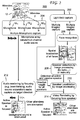
- FIGURE 1 depicts an exemplary system 10 in accordance with an aspect of the present principles for isolating an active participant (e.g., a participant currently speaking) in a group 12 of participants.
- the group 12 includes participants 14 1 , 14 2 , 14 3 and 14 4 , although the number of participants could include more or less than the four participants depicted in FIG. 1 .
- the system 10 includes an array 15 of microphones, illustratively depicted by microphones 16 1 and 16 2 , for capturing audio of the participants 14 1 , 14 2 , 14 3 and 14 4 .
- the number of participants exceeds the number of microphones so some participants share a microphone.
- the number of microphones in the array 15 will equal the number of participants, so each individual participant has his or her own microphone. In practice, the greater the number of microphones, the easier it becomes to separate the audio associated with the active participant.
- the system 10 advantageously renders the audio from the array of microphones 15 to mute all but the active participant (e.g., the participant currently speaking). By way of such audio processing, if a new participant begins speaking, muting of the other participants can occur without any distortion. Thus, after rendering only the audio of the active participant remains audible, even though all of the microphones in the array 15 still remain active.
- the system 10 includes a computer 18, illustratively depicted as a laptop computer.
- the computer 18 could take other forms such as a desktop computer, a server, smart phone or a set top-box for example.
- the computer 18 receives audio from each of the microphones 16 1 and 16 2 of the array 15.
- the system 10 could include a port interface (not shown) for interfacing multiple microphones to the computer.
- the system 10 also includes at least one light field (plenoptic) camera 20.
- Typical light field cameras are characterized by an array of micro-lenses (not shown) in the optical path of an otherwise conventional image sensor (not shown), which enables the light field camera to sense intensity, color, and directional information.
- Present day manufacturers of such light field cameras include Lytro and Raytrix among others.
- the light field camera 20 provides its video signal to the computer 18, which can display the image captured by the light field camera on an external monitor 22. If the monitor 22 has the ability to reproduce audio, then the monitor will reproduce the audio from the computer 18 as processed by the computer.
- the computer 18 makes use of image depth information obtained from the light field camera 20 to adjust the focus so that the pixels comprising the image of the active participant remain in focus while the pixels lying outside those comprising the active participant remain out of focus.
- Obtaining an image acquired using a light-field camera, such as the light filed camera 20 enables changing of the focus a posteriori.
- the computer 18 can obtain sub-images, each of them corresponding to a slightly different viewpoint.
- the computer 18 can easily reconstruct a depth map of the objects in the sub-images and then set the focus arbitrarily on objects at depth D, while blurring the objects at depth D' different from D.
- the computer 18 can simulate a "real" photograph taken with camera (not shown) having a focal length D with objects more blurred the further they are from the focal plane of the camera.
- the depth of field can also be chosen arbitrarily, provided it is not greater than the one corresponding to the physical aperture of the light-field camera (which is quite large).
- FIGURE 2 depicts in flow chart form the steps of a process 200 in accordance with the present principles for isolating the active participant in the group 12 of participants of FIG. 1 .
- the process 200 of FIG. 2 commences by capturing the image of the group 12 of participants by the light field camera 20 of FIG. 1 during step 202.
- the audio associated with the group 12 of participants undergoes capture by microphones 16 1 -16 3 in an array of microphones during step 204.
- the array of microphones depicted in FIG 2 includes three microphones 16 1 -16 3 as compared to the two microphones 16 1 and 16 2 in the array 15 depicted in FIG. 1 .
- the image capture and audio capture typically occurs simultaneously although steps 202 and 204 could occur at separate times, as long as the time difference between them remains relatively short to avoid lag.
- step 206 face recognition occurs during step 206 to localize faces in the image captured by the light field camera 20 of FIG. 1 .
- the computer 18 of FIG. 1 performs such face recognition during step 206 by extracting features characteristic of each human face and thereafter the computer separates the face(s) from the background.
- face recognition occurs during step 206 to localize faces in the image captured by the light field camera 20 of FIG. 1 .
- the computer 18 of FIG. 1 performs such face recognition during step 206 by extracting features characteristic of each human face and thereafter the computer separates the face(s) from the background.
- detection e.g., identification
- Identification of the active participant can occur manually by an operator based on observations of the participants to determine which is currently speaking. In some instances, if the operator is familiar with the various participants' voice, the operator can use that information in addition to, or even in place of a visual observation to identify the active participant.
- Identification of the active participant during step 208 can also occur automatically.
- the computer 18 could analyze the faces detected during step 206 for lip movement to determine which participant currently speaking to identify that person as the active participant.
- Another approach to automatic identification of the active participant could include identifying all of the participants in the group of participants 12 by matching the faces recognized during step 206 to known pictures of participants.
- the computer 18 could then perform voice recognition on the audio to identify the individual participant currently speaking and then match the voice of the person actually speaking to the face of a corresponding participant to identify that participant as the active participant.
- the computer 18 then undertakes speaker (participant) localization during step 210, whereupon the computer 18 of FIG. 1 processes the image captured by the light field camera 20 to establish a depth and direction for all participants. Thereafter, the computer 18 executes step 212 to render the audio from the microphone array from the microphone array to mute or otherwise attenuate the audio from all but the active participant localized during step 210.
- the computer 18 can employ various techniques to render the audio in this manner. For example, the computer 18 could employ beamforming to control the phase and relative amplitude of the audio from each microphone to create a pattern of constructive and destructive interference in the wave front associated with the audio from the microphones in the array.
- the computer 18 could also make use of audio source separation techniques as well as known audio capture techniques to mute or otherwise attenuate the audio from all but the active participant using depth and direction information from the light field image capture of the participants.
- the computer 18 of FIG. 1 isolates the image of the active participant during step 214.
- the computer 18 renders the video image to focus on the active participant by blurring the image of other participants.
- the computer 18 makes use of image depth information obtained from the light field camera 20 to adjust the focus so that the pixels comprising the image of the active participant remain in focus while the pixels lying outside those comprising the active participant remain out of focus.
- the computer 18 accomplishes this task by constructing a depth map of the objects in sub-images obtained from the light field camera 20 and then setting the focus arbitrarily on objects at depth D, while blurring the objects at depth D' different from D. In this way, the light field information from the light field camera guides the video rendering performed during step 212.
- the technique of the present principles for isolating an active participant within a group of participants has been described in the context of an audio-video conferencing system, the technique has application in many other environments.
- the technique could be used in the context of capturing the audio and images of a live show, for example a concert or sporting event, to enable isolation of a participant among a group of participants.
- the technique could enable moving of a microphone in a given direction or changing the audio focus of a given directional microphone to increase audio zoom accuracy.
- the isolation technique of the present principles could be employed during post processing, assuming both video and depth information undergo capture at shooting stage and remain available at post-production time. At this stage, the director or other personnel can easily modify a given focus plan without shooting the scene again because of a lack of a corresponding audio source. To that end, the process of the present principles can be semi-automatic at least for a preview or useful for fine tuning audio from video.
- Implementation of the technique for isolating the active participant in a group of participants described can occur by executing instructions on a processor, and storage of such instructions (and/or data values produced by an implementation) can take place on a processor-readable non-transitory medium such as, for example, an integrated circuit, a software carrier or other storage device such as, for example, a hard disk, a compact diskette (“CD”), an optical disc (such as, for example, a DVD, often referred to as a digital versatile disc or a digital video disc), a random access memory (“RAM”), or a read-only memory (“ROM”).
- a processor-readable non-transitory medium such as, for example, an integrated circuit, a software carrier or other storage device such as, for example, a hard disk, a compact diskette (“CD”), an optical disc (such as, for example, a DVD, often referred to as a digital versatile disc or a digital video disc), a random access memory (“RAM”), or a read-only memory (“ROM”).
- a processor may be characterized, therefore, as, for example, both a device configured to carry out a process and a device that includes a processor-readable medium (such as a storage device) having instructions for carrying out a process. Further, a processor-readable medium may store, in addition to or in lieu of instructions, data values produced by an implementation.
- implementations may produce a variety of signals formatted to carry information that may be, for example, stored or transmitted.
- the information may include, for example, instructions for performing a method, or data produced by one of the described implementations.
- a signal can undergo formatting to carry as data the rules for writing or reading the syntax of a described embodiment, or to carry as data the actual syntax-values written by a described embodiment.
- Such a signal may be formatted, for example, as an electromagnetic wave (for example, using a radio frequency portion of spectrum) or as a baseband signal.
- the formatting may include, for example, encoding a data stream and modulating a carrier with the encoded data stream.
- the information that the signal carries may be, for example, analog or digital information.
- the signal can undergo transmission over a variety of different wired or wireless links, as is known.
- the signal may be stored on a processor-readable medium.
Landscapes
- Engineering & Computer Science (AREA)
- Multimedia (AREA)
- Signal Processing (AREA)
- Health & Medical Sciences (AREA)
- General Health & Medical Sciences (AREA)
- Social Psychology (AREA)
- Computer Networks & Wireless Communication (AREA)
- Child & Adolescent Psychology (AREA)
- Human Computer Interaction (AREA)
- Databases & Information Systems (AREA)
- General Engineering & Computer Science (AREA)
- Two-Way Televisions, Distribution Of Moving Picture Or The Like (AREA)
Abstract
Isolation of an active participant in a group of participants commences by capturing images of participants in the conference using a light field camera. Identification of an active one of the participants in the conference then occurs. Thereafter, adjustment of the participants' images occurs to isolate the active participant by adjusting image focus based on depth information obtained from the images captured by the light field camera.
Description
- This disclosure relates to isolating an active participant in a group of participants.
- Typical audio-video conference systems enable participants at distant locations to interact with each other on-line. Such systems include one or more video cameras to capture participants' images as well as multiple microphones to capture participants' audio. Present-day audio-video conference systems configured as described above, operate in a static mode with regard to which participants are active and which are not. Thus, such systems do not render the displayed participants' images and audio to isolate an active participant, e.g., a participant that is currently speaking.
- Moreover, present day video conference systems use conventional video cameras, which typically lack the ability to focus on a particular participant (e.g., an "active" participant) within a group of participants, especially if the participants sit close together. Thus, with conventional television cameras, focusing on an active participant will likely also include participants that reside to close to the active participant.
- Thus, a need exists for an improved method and apparatus that overcomes aforementioned disadvantages, especially, the ability to isolate a currently active participant from other participants in the group.
- Briefly, in accordance with an aspect of the present principles, a method for isolating an active participant in a group of participants includes capturing images of participants in the conference using a light field camera. Identification of an active one of the participants in the conference then occurs. Thereafter, rendering of the participants' images occurs to isolate the active participant by adjusting image focus based on depth information obtained from the images captured by the light field camera.
- It is an object of the present principles to provide a technique for isolating an active participant in a group of participants;
- It is another object of the present principles to accomplish isolation of an active participant in a group of participants automatically;
- It is another object of the present principles to accomplish isolation of an active participant by adjusting the image focus based of depth information obtained from images captured by the light field camera.
-
-
FIGURE 1 depicts a block schematic diagram of an exemplary apparatus for practicing the participant isolation technique of the present principles, and -
FIGURE 2 depicts a block schematic diagram of a flowchart depicting the steps of the participant isolation technique of the present principles. -
FIGURE 1 depicts an exemplary system 10 in accordance with an aspect of the present principles for isolating an active participant (e.g., a participant currently speaking) in agroup 12 of participants. In the illustrated embodiment, thegroup 12 includes participants 141, 142, 143 and 144, although the number of participants could include more or less than the four participants depicted inFIG. 1 . The system 10 includes anarray 15 of microphones, illustratively depicted by microphones 161 and 162, for capturing audio of the participants 141, 142, 143 and 144. In the exemplary embodiment ofFIG. 1 , the number of participants exceeds the number of microphones so some participants share a microphone. In other instances, the number of microphones in thearray 15 will equal the number of participants, so each individual participant has his or her own microphone. In practice, the greater the number of microphones, the easier it becomes to separate the audio associated with the active participant. As discussed in detail hereinafter, the system 10 advantageously renders the audio from the array ofmicrophones 15 to mute all but the active participant (e.g., the participant currently speaking). By way of such audio processing, if a new participant begins speaking, muting of the other participants can occur without any distortion. Thus, after rendering only the audio of the active participant remains audible, even though all of the microphones in thearray 15 still remain active. - The system 10 includes a
computer 18, illustratively depicted as a laptop computer. However, thecomputer 18 could take other forms such as a desktop computer, a server, smart phone or a set top-box for example. Thecomputer 18 receives audio from each of the microphones 161 and 162 of thearray 15. Depending on the number of microphones in thearray 15 and the number of available ports on thecomputer 18, the system 10 could include a port interface (not shown) for interfacing multiple microphones to the computer. - The system 10 also includes at least one light field (plenoptic)
camera 20. Typical light field cameras are characterized by an array of micro-lenses (not shown) in the optical path of an otherwise conventional image sensor (not shown), which enables the light field camera to sense intensity, color, and directional information. Present day manufacturers of such light field cameras include Lytro and Raytrix among others. Thelight field camera 20 provides its video signal to thecomputer 18, which can display the image captured by the light field camera on anexternal monitor 22. If themonitor 22 has the ability to reproduce audio, then the monitor will reproduce the audio from thecomputer 18 as processed by the computer. - The
computer 18 makes use of image depth information obtained from thelight field camera 20 to adjust the focus so that the pixels comprising the image of the active participant remain in focus while the pixels lying outside those comprising the active participant remain out of focus. Obtaining an image acquired using a light-field camera, such as the light filedcamera 20 enables changing of the focus a posteriori. From image acquired by the light-field camera 20, thecomputer 18 can obtain sub-images, each of them corresponding to a slightly different viewpoint. Thecomputer 18 can easily reconstruct a depth map of the objects in the sub-images and then set the focus arbitrarily on objects at depth D, while blurring the objects at depth D' different from D. In this way, thecomputer 18 can simulate a "real" photograph taken with camera (not shown) having a focal length D with objects more blurred the further they are from the focal plane of the camera. Moreover, the depth of field can also be chosen arbitrarily, provided it is not greater than the one corresponding to the physical aperture of the light-field camera (which is quite large). The size b of the blur kernel for objects at depth D' can be computed using the chosen depth focus D and the virtual aperture A:
-
FIGURE 2 depicts in flow chart form the steps of aprocess 200 in accordance with the present principles for isolating the active participant in thegroup 12 of participants ofFIG. 1 . Theprocess 200 ofFIG. 2 commences by capturing the image of thegroup 12 of participants by thelight field camera 20 ofFIG. 1 duringstep 202. The audio associated with thegroup 12 of participants undergoes capture by microphones 161-163 in an array of microphones duringstep 204. (Note the array of microphones depicted inFIG 2 includes three microphones 161-163 as compared to the two microphones 161 and 162 in thearray 15 depicted inFIG. 1 .) The image capture and audio capture typically occurs simultaneously althoughsteps - Following
steps step 206 to localize faces in the image captured by thelight field camera 20 ofFIG. 1 . Thecomputer 18 ofFIG. 1 performs such face recognition duringstep 206 by extracting features characteristic of each human face and thereafter the computer separates the face(s) from the background. Presently, there exists a variety of commercially available software programs for accomplishing this task. - Thereafter, detection (e.g., identification) of the active participant occurs during
step 208. Identification of the active participant can occur manually by an operator based on observations of the participants to determine which is currently speaking. In some instances, if the operator is familiar with the various participants' voice, the operator can use that information in addition to, or even in place of a visual observation to identify the active participant. - Identification of the active participant during
step 208 can also occur automatically. Thecomputer 18 could analyze the faces detected duringstep 206 for lip movement to determine which participant currently speaking to identify that person as the active participant. Another approach to automatic identification of the active participant could include identifying all of the participants in the group ofparticipants 12 by matching the faces recognized duringstep 206 to known pictures of participants. Thecomputer 18 could then perform voice recognition on the audio to identify the individual participant currently speaking and then match the voice of the person actually speaking to the face of a corresponding participant to identify that participant as the active participant. - Having identified the active participant, the
computer 18 then undertakes speaker (participant) localization during step 210, whereupon thecomputer 18 ofFIG. 1 processes the image captured by thelight field camera 20 to establish a depth and direction for all participants. Thereafter, thecomputer 18 executesstep 212 to render the audio from the microphone array from the microphone array to mute or otherwise attenuate the audio from all but the active participant localized during step 210. Thecomputer 18 can employ various techniques to render the audio in this manner. For example, thecomputer 18 could employ beamforming to control the phase and relative amplitude of the audio from each microphone to create a pattern of constructive and destructive interference in the wave front associated with the audio from the microphones in the array. Thecomputer 18 could also make use of audio source separation techniques as well as known audio capture techniques to mute or otherwise attenuate the audio from all but the active participant using depth and direction information from the light field image capture of the participants. - The
computer 18 ofFIG. 1 isolates the image of the active participant duringstep 214. Duringstep 214, thecomputer 18 renders the video image to focus on the active participant by blurring the image of other participants. As discussed above, thecomputer 18 makes use of image depth information obtained from thelight field camera 20 to adjust the focus so that the pixels comprising the image of the active participant remain in focus while the pixels lying outside those comprising the active participant remain out of focus. Thecomputer 18 accomplishes this task by constructing a depth map of the objects in sub-images obtained from thelight field camera 20 and then setting the focus arbitrarily on objects at depth D, while blurring the objects at depth D' different from D. In this way, the light field information from the light field camera guides the video rendering performed duringstep 212. - While the technique of the present principles for isolating an active participant within a group of participants has been described in the context of an audio-video conferencing system, the technique has application in many other environments. For example, the technique could be used in the context of capturing the audio and images of a live show, for example a concert or sporting event, to enable isolation of a participant among a group of participants. The technique could enable moving of a microphone in a given direction or changing the audio focus of a given directional microphone to increase audio zoom accuracy.
- Moreover, the isolation technique of the present principles could be employed during post processing, assuming both video and depth information undergo capture at shooting stage and remain available at post-production time. At this stage, the director or other personnel can easily modify a given focus plan without shooting the scene again because of a lack of a corresponding audio source. To that end, the process of the present principles can be semi-automatic at least for a preview or useful for fine tuning audio from video.
- Implementation of the technique for isolating the active participant in a group of participants described can occur by executing instructions on a processor, and storage of such instructions (and/or data values produced by an implementation) can take place on a processor-readable non-transitory medium such as, for example, an integrated circuit, a software carrier or other storage device such as, for example, a hard disk, a compact diskette ("CD"), an optical disc (such as, for example, a DVD, often referred to as a digital versatile disc or a digital video disc), a random access memory ("RAM"), or a read-only memory ("ROM"). Such instructions can reside in an application program tangibly embodied on a processor-readable medium. Such Instructions can exist in hardware, firmware, software, or a combination. Further, such instructions can exist in an operating system, a separate application, or a combination of the two. A processor may be characterized, therefore, as, for example, both a device configured to carry out a process and a device that includes a processor-readable medium (such as a storage device) having instructions for carrying out a process. Further, a processor-readable medium may store, in addition to or in lieu of instructions, data values produced by an implementation.
- As will be evident to one of skill in the art, implementations may produce a variety of signals formatted to carry information that may be, for example, stored or transmitted. The information may include, for example, instructions for performing a method, or data produced by one of the described implementations. For example, a signal can undergo formatting to carry as data the rules for writing or reading the syntax of a described embodiment, or to carry as data the actual syntax-values written by a described embodiment. Such a signal may be formatted, for example, as an electromagnetic wave (for example, using a radio frequency portion of spectrum) or as a baseband signal. The formatting may include, for example, encoding a data stream and modulating a carrier with the encoded data stream. The information that the signal carries may be, for example, analog or digital information. The signal can undergo transmission over a variety of different wired or wireless links, as is known. The signal may be stored on a processor-readable medium.
- A number of implementations have been described. Nevertheless, various modifications can occur. For example, elements of different implementations can undergo combination, modification or removal to produce other implementations. Additionally, one of ordinary skill will understand that other structures and processes can undergo substitution for those disclosed and the resulting implementations will perform at least substantially the same function(s), in at least substantially the same way(s), to achieve at least substantially the same result(s) as the implementations disclosed. Accordingly, these and other implementations are contemplated by this application.
Claims (8)
- A method for isolating an active participant in a group of participants, comprising
capturing images of participants in the group of participants (202) by a light field camera (20);
identifying an active one of the participants in the group of participants (206); and rendering the participants' images to isolate the active participant (208) by adjusting image focus based on depth information obtained from images captured by the light field camera. - The method according to claim 1 comprising;
obtaining sub-images within the images captured by the light field camera, each sub-image corresponding to a different viewpoint;
constructing a depth map of objects in the sub-images; and
setting a focus on an object at particular depth value while blurring the objects at depth values different than the particular depth value. - The method according to claim 1 wherein identification of the active participant occurs automatically.
- The method according to claim 1 wherein identification of the active participant occurs manually.
- A system for isolating an active participant in a group of participants, comprising,
a light field camera (20) capturing images of participants in the conference;
a processor (18) coupled to the camera and the array of microphones, the processor configured to (a) identify an active one of the participants in the group of participants (206); and (b) render the participants' images to isolate the active participant (208) by adjusting image focus based on depth information obtained from images captured by the light field camera. - The system according to claim 5 wherein the renders the participants' images to isolate the active participant by (a) obtaining sub-images within the images captured by the light field camera, each sub-image to a different viewpoint; (b) constructing a depth map of objects in the sub-images; and (c) setting a focus on an object at particular depth value while blurring the objects at depth values different than the particular depth value.
- The system 9 wherein the processor identifies the active participant automatically.
- The system according to claim 9 wherein the processor identifies the active participant in response to manual input from an operator.
Priority Applications (1)
| Application Number | Priority Date | Filing Date | Title |
|---|---|---|---|
| EP15305850.8A EP3101839A1 (en) | 2015-06-03 | 2015-06-03 | Method and apparatus for isolating an active participant in a group of participants using light field information |
Applications Claiming Priority (1)
| Application Number | Priority Date | Filing Date | Title |
|---|---|---|---|
| EP15305850.8A EP3101839A1 (en) | 2015-06-03 | 2015-06-03 | Method and apparatus for isolating an active participant in a group of participants using light field information |
Publications (1)
| Publication Number | Publication Date |
|---|---|
| EP3101839A1 true EP3101839A1 (en) | 2016-12-07 |
Family
ID=53476794
Family Applications (1)
| Application Number | Title | Priority Date | Filing Date |
|---|---|---|---|
| EP15305850.8A Withdrawn EP3101839A1 (en) | 2015-06-03 | 2015-06-03 | Method and apparatus for isolating an active participant in a group of participants using light field information |
Country Status (1)
| Country | Link |
|---|---|
| EP (1) | EP3101839A1 (en) |
Cited By (2)
| Publication number | Priority date | Publication date | Assignee | Title |
|---|---|---|---|---|
| CN113473066A (en) * | 2021-05-10 | 2021-10-01 | 上海明我信息技术有限公司 | Video conference picture adjusting method |
| US11386562B2 (en) | 2018-12-28 | 2022-07-12 | Cyberlink Corp. | Systems and methods for foreground and background processing of content in a live video |
Citations (3)
| Publication number | Priority date | Publication date | Assignee | Title |
|---|---|---|---|---|
| US20100309284A1 (en) * | 2009-06-04 | 2010-12-09 | Ramin Samadani | Systems and methods for dynamically displaying participant activity during video conferencing |
| US20110093273A1 (en) * | 2009-10-16 | 2011-04-21 | Bowon Lee | System And Method For Determining The Active Talkers In A Video Conference |
| US20140176663A1 (en) * | 2012-12-20 | 2014-06-26 | Microsoft Corporation | Privacy camera |
-
2015
- 2015-06-03 EP EP15305850.8A patent/EP3101839A1/en not_active Withdrawn
Patent Citations (3)
| Publication number | Priority date | Publication date | Assignee | Title |
|---|---|---|---|---|
| US20100309284A1 (en) * | 2009-06-04 | 2010-12-09 | Ramin Samadani | Systems and methods for dynamically displaying participant activity during video conferencing |
| US20110093273A1 (en) * | 2009-10-16 | 2011-04-21 | Bowon Lee | System And Method For Determining The Active Talkers In A Video Conference |
| US20140176663A1 (en) * | 2012-12-20 | 2014-06-26 | Microsoft Corporation | Privacy camera |
Cited By (2)
| Publication number | Priority date | Publication date | Assignee | Title |
|---|---|---|---|---|
| US11386562B2 (en) | 2018-12-28 | 2022-07-12 | Cyberlink Corp. | Systems and methods for foreground and background processing of content in a live video |
| CN113473066A (en) * | 2021-05-10 | 2021-10-01 | 上海明我信息技术有限公司 | Video conference picture adjusting method |
Similar Documents
| Publication | Publication Date | Title |
|---|---|---|
| EP3101838A1 (en) | Method and apparatus for isolating an active participant in a group of participants | |
| JP5222939B2 (en) | Simulate shallow depth of field to maximize privacy in videophones | |
| KR102142641B1 (en) | Systems and methods for multiscopic noise reduction and high-dynamic range | |
| US10880466B2 (en) | Method of refocusing images captured by a plenoptic camera and audio based refocusing image system | |
| US11037308B2 (en) | Intelligent method for viewing surveillance videos with improved efficiency | |
| CN104813649A (en) | Video frame processing method | |
| JP2012015651A (en) | Electronic apparatus | |
| CN104378635A (en) | Video region-of-interest (ROI) encoding method based on microphone array assistance | |
| CN104301596A (en) | Video processing method and device | |
| CN111741187A (en) | Image processing method, device and storage medium | |
| US11342001B2 (en) | Audio and video processing | |
| JP2015040941A (en) | Imaging apparatus, control method thereof, and program | |
| JP2011211291A (en) | Image processing apparatus, imaging apparatus and display device | |
| WO2023189079A1 (en) | Image processing device, image processing method, and program | |
| US9305600B2 (en) | Automated video production system and method | |
| KR20140094791A (en) | Apparatus and method for processing image of mobile terminal comprising camera | |
| US11044399B2 (en) | Video surveillance system | |
| US8537266B2 (en) | Apparatus for processing digital image and method of controlling the same | |
| CN113506320A (en) | Image processing method and device, electronic equipment and storage medium | |
| US11711611B2 (en) | Image capturing apparatus, storage medium, and image capturing method | |
| CN108769525B (en) | Image adjusting method, device, equipment and storage medium | |
| KR102268337B1 (en) | Augmented Reality-based performance video viewing system and performance image providing method using it | |
| CN119383482B (en) | An image processing method, apparatus and storage medium | |
| US20250193339A1 (en) | Videoconference image enhancement based on scene models | |
| JP4506190B2 (en) | VIDEO DISPLAY DEVICE, VIDEO DISPLAY METHOD, VIDEO DISPLAY METHOD PROGRAM, AND RECORDING MEDIUM CONTAINING VIDEO DISPLAY METHOD PROGRAM |
Legal Events
| Date | Code | Title | Description |
|---|---|---|---|
| PUAI | Public reference made under article 153(3) epc to a published international application that has entered the european phase |
Free format text: ORIGINAL CODE: 0009012 |
|
| AK | Designated contracting states |
Kind code of ref document: A1 Designated state(s): AL AT BE BG CH CY CZ DE DK EE ES FI FR GB GR HR HU IE IS IT LI LT LU LV MC MK MT NL NO PL PT RO RS SE SI SK SM TR |
|
| AX | Request for extension of the european patent |
Extension state: BA ME |
|
| STAA | Information on the status of an ep patent application or granted ep patent |
Free format text: STATUS: THE APPLICATION IS DEEMED TO BE WITHDRAWN |
|
| 18D | Application deemed to be withdrawn |
Effective date: 20170608 |