EP3101558A1 - A system and method for managing the storing of data - Google Patents
A system and method for managing the storing of data Download PDFInfo
- Publication number
- EP3101558A1 EP3101558A1 EP16171767.3A EP16171767A EP3101558A1 EP 3101558 A1 EP3101558 A1 EP 3101558A1 EP 16171767 A EP16171767 A EP 16171767A EP 3101558 A1 EP3101558 A1 EP 3101558A1
- Authority
- EP
- European Patent Office
- Prior art keywords
- data
- data store
- store
- query
- block
- Prior art date
- Legal status (The legal status is an assumption and is not a legal conclusion. Google has not performed a legal analysis and makes no representation as to the accuracy of the status listed.)
- Ceased
Links
Images


Classifications
-
- G—PHYSICS
- G06—COMPUTING OR CALCULATING; COUNTING
- G06F—ELECTRIC DIGITAL DATA PROCESSING
- G06F16/00—Information retrieval; Database structures therefor; File system structures therefor
- G06F16/20—Information retrieval; Database structures therefor; File system structures therefor of structured data, e.g. relational data
- G06F16/22—Indexing; Data structures therefor; Storage structures
- G06F16/2228—Indexing structures
-
- G—PHYSICS
- G06—COMPUTING OR CALCULATING; COUNTING
- G06F—ELECTRIC DIGITAL DATA PROCESSING
- G06F16/00—Information retrieval; Database structures therefor; File system structures therefor
- G06F16/20—Information retrieval; Database structures therefor; File system structures therefor of structured data, e.g. relational data
- G06F16/24—Querying
- G06F16/245—Query processing
- G06F16/2455—Query execution
- G06F16/24568—Data stream processing; Continuous queries
-
- H—ELECTRICITY
- H04—ELECTRIC COMMUNICATION TECHNIQUE
- H04L—TRANSMISSION OF DIGITAL INFORMATION, e.g. TELEGRAPHIC COMMUNICATION
- H04L43/00—Arrangements for monitoring or testing data switching networks
- H04L43/02—Capturing of monitoring data
- H04L43/026—Capturing of monitoring data using flow identification
-
- H—ELECTRICITY
- H04—ELECTRIC COMMUNICATION TECHNIQUE
- H04L—TRANSMISSION OF DIGITAL INFORMATION, e.g. TELEGRAPHIC COMMUNICATION
- H04L43/00—Arrangements for monitoring or testing data switching networks
- H04L43/04—Processing captured monitoring data, e.g. for logfile generation
- H04L43/045—Processing captured monitoring data, e.g. for logfile generation for graphical visualisation of monitoring data
Definitions
- Some embodiments relate to a system and method for managing the storing of data in a data network environment.
- Data networks may be arranged such that the monitoring and/or capturing of data flows is required.
- the amount of data which needs to be captured may be relatively large. Queries may also need to be run with respected to the captured data.
- a system comprising: an input configured to receive data; a writer configured to write at least some of said data to said to a data store; a controller configured to read data from said data store, wherein said controller is configured to control the rate at which data is read from data store with respect to writing of data by said writer to said data store; and at least one query function configured to receive a stream of said data substantially in real time and when said stream of data is unavailable in real time to subsequently obtain that unavailable data from said data store.
- the controller may be configured to obtain said unavailable data from said data store and write said unavailable data to shared memory, said at least one query function being configured to access said unavailable data from said shared memory.
- the system may comprise an indexing function, said indexing function configured to provide at least one of said query functions.
- the controller may be configured to prioritize writing by said writer to said data store over reading from said data store.
- the system may comprise at least one buffer configured to receive data from said input before said data is written to said data store.
- the controller may be configured to change a rate at which data is read from said data store in response to a state of said at least one buffer.
- the writer may be configured to capture a plurality of data flows and to provide a serialized output.
- the writer may be configured to sequentially write said serialized output to said data store
- the system may comprise an indexer configured to index said data and cause corresponding index information to be stored in said data store.
- the index information may be written directly to the data store by the indexer or may be passed to the writer for writing to the data store.
- At least one query function may be provided in a virtual machine.
- the controller may be configured to control scheduling of a plurality of queries from said at least one query function.
- a control channel may be provided for at least one query function, said control channel being provided between said query function and said controller, wherein requests for data are provided from said query function to said control block via the control channel
- Only said controller may be configured to read data from said data store.
- the data may comprise a plurality of data flows, each data flow comprising a plurality of packets.
- the system may comprise a data store.
- a method comprising: receiving data; writing at least some of said data to a data store; reading data from said data store; controlling the rate at which data is read from data store with respect to writing of data to said data store; and performing a query on a stream of said data substantially in real time and when said stream of data is unavailable in real time to subsequently obtain that unavailable data from said data store.
- the method may comprise obtaining said unavailable data from said data store and writing said unavailable data to shared memory, and accessing said unavailable data from said shared memory for said query.
- the method may comprising performing indexing.
- the method may comprise prioritizing writing to said data store over reading from said data store.
- the method may comprises changing a rate at which data is read from said data store in response to a state of at least one buffer which stores data prior to the writing of said data.
- the writing may comprise capturing a plurality of data flows and providing a serialized output.
- the method may comprise sequentially writing said serialized output to said data store
- the method may comprise indexing said data and cause corresponding index information to be stored in said data store.
- the method may comprise control scheduling of a plurality of queries from said at least one query function.
- the method may comprise providing a control channel wherein requests for data for the query are provided via the control channel
- the data may comprise a plurality of data flows, each data flow comprising a plurality of packets.
- a computer program product comprising a computer readable storage device having a computer readable program code stored therein, said computer readable program code containing instructions configured to be executed by one or more processors a system to cause a method to be implemented, said method comprising: writing received data to a data store; reading data from said data store; controlling the rate at which data is read from data store with respect to writing of data to said data store; and performing a query on a stream of said data substantially in real time and when said stream of data is unavailable in real time to subsequently obtain that unavailable data from said data store.
- the computer program product may be able to cause any one or more of the previous method features to be performed.
- Some embodiments may be provided in the context of a data network where monitoring and/or capturing of data flows is required.
- the monitoring of the data flows may be performed for network performance purposes, to determine a threat, for network management purposes, for statistics and/or for any other suitable reason. In some situations, it may be required that one or more specific flows need to be captured. For example one or more flows identified by a particular set of IP addresses may be required to be captured.
- Embodiments may be used in any scenario which requires the capture of data. Some embodiments may capture all data whereas other embodiments may only capture some of the data flows.
- Some embodiments are configured to index data flows. Indexing will provide indexing information for the data flows.
- the indexing information may take any suitable form and may for example be metadata.
- the data flows may be made up of packets.
- different data flows may correspond to different channels.
- this indexing of data flows may be in real time. Indexes speed up access to data flows and summary data when querying. Indexes may be stored in any suitable memory and in some embodiments the memory is provided by one or more disks.
- the indexing of the data flows may be such that statistics for a GUI (graphical user interface) or the like may be provided. This may be to provide information on top talkers on the network or the like. Indexes provide a quicker way to locate data of interest (e.g. the packets corresponding to a flow) and/or may provide summary information (e.g. number of packets/bytes in a flow). These searches may be done using the underlying data, but generally the indexes makes these operations faster.
- GUI graphical user interface
- every packet which is received may be indexed.
- Some embodiments may, for example, provide TCP conversation analysis
- a data flow is captured by a capture block 10.
- the data flow may comprise data packets.
- the capture block 10 has a virtual interface VI 12 or the like which receives the data flow.
- the data flow from the VI is provided to an export block 14 which passes the live packets to an indexing block 30 which indexes the data flow. This is described in more detail later.
- the capture block may be provided by a network interface device or card.
- the export block 14 also provides the packets to a block writer 20 and in particular to an import block 22 of the block writer 20.
- the block writer 20 also receives indexing data from the indexing block 30.
- the block writer will write the data flow and the indexes to a block store 40.
- the indexing data and the associated data are stored on a common disk. In other embodiments, the indexing data and associated data are stored on separate disk devices. In this case, separate block writers or separate block writer instances may be provided for the indexing data and the associated data.
- the block writer is arranges to serialize the captured data to provide a single output thread.
- a single writer thread per block store device may be provided.
- the block writer ensures that the writes to the block store are sequential.
- the data flow which is received by the block writer may comprise a plurality of threads.
- the different threads may come from the same capture block or different capture blocks.
- Embodiments may be such the non sequential access to the block store is avoided. Sequential access increases the rate at which it is possible to write to disk. This is ensured by multiplexing by the import block of the input streams to provide the single serial output to the block store.
- some of the data flow may still require indexing if the indexing block is unable to index in real time all the packets of the data flow.
- control block 50 Data flows and the associated indexes (if available) can be read out by a control block 50.
- the control block 50 has an export block 52 which can export from the control block.
- the control block is able to provide the data flows and any available indexes to the indexing block 30 and/or to one or more query blocks 70, 60 and 90 as is described in more detail below.
- the control block is arranged to read blocks of data from the block store 40 into shared memory (not shown in Figure 1 ), and makes those blocks of data available to one or more consumers of the data. Those consumers may be indexers, other analytics, queries or the like.
- the control block is configured to monitor buffer utilization in the capture path (that is buffers in the capture block), and if the buffer utilization gets too high, the control block throttles the rate of reading from the block store 40 so that the block writer 20 has enough bandwidth to keep up with the capture rate.
- each consumer has a control channel that it uses to request the blocks that it needs.
- Data is passed from the control block to the or each consumer using shared memory.
- the control block has a pool of memory used for data/index blocks and consumers map at least some of this pool into their own address space.
- a consumer requests a block, it is read from the block store by the control block into the shared memory, and the control block provides information which indicates to the consumer where the block can be found in the shared memory.
- the control block 50 may function as a cache of blocks of data. If a consumer requests a block of data that is already in the memory pool, then it is not necessary to read that block of data from the block store again.
- the control block is the only block which is able to read data from the block store.
- the control block may be configured to prioritize writing to the block store over reading. This is done by throttling the rate at which the control block submits reads to the block store.
- the capture path exports information about buffer utilisation that the control block imports. If buffer utilisation is getting high, then the block writer is not writing to disk fast enough, so the control block reduces the rate of reads, or stops them altogether.
- control block is able to schedule different queries. Different ones of the queries may have different priorities and/or completion times.
- the control block is able to control the scheduling of the queries accordingly. In other embodiments, the control of the scheduling of queries may alternatively or additionally be carried out elsewhere.
- control block when the block writer is writing to the data store, the control block may slow down or stop the reading of data from the block store for the queries.
- control block may prioritise one or more queries over one or more other queries or may slow down each of the queries so that the queries are all continued to be run but at a lower rate.
- a query may be run based on data read out of the block store into shared memory.
- the control block throttles the data, the query may fall behind. This may be the case when there is a large quantity of data to be captured.
- the control block will control the reading out of data from the block store to cause query to catch up. This may be when, for example, the quantity of data to be written to disk is relatively low.
- the query may use the data already in shared memory while waiting for the data from the block store.
- the may need to delivered to the query function in the order by which it was received or the query may be able to process out of ordered data (using for example timestamp metadata).
- more than one query may be running in parallel.
- At least some of the queries may be run in separate containers in order to provide resource isolation. In some embodiments, there may be a plurality of consumer containers. These are described in more detail later and generally provide query functions.
- the received packets from the capture block 10 are output to the indexing block 30.
- the indexing block 30 may provide online indexing and analytics.
- the indexing block may provide real time indexing.
- the live packets are captured by import block 32 of the indexing block and processed by process block 36. If the indexing block has indexed a packet in real time, indexing information is sent to the block writer which writes the packet and the indexing information into the block store. The indexing information may provide summary information. If the indexing block is not able to index on a live basis, the catch up packets are read out by the control block from the block store into memory so as to be accessible to the indexing block.
- the indexing block will provide the indexing information for the catch up packets to the block writer which writes the indexing information into the block store.
- the process block 36 may allow different data sources (for example the catch up packets and the live packets) to be combined into one stream or to be individually selected, as required.
- a real time query may be carried by the online indexing an analytics block on the received data.
- the real time query may fall behind as the block is not able to keep up with the input data.
- the control block is configured to read out the catch up packets from the block store into shared memory The online indexing and analytics block is then able to use the catch up packets to bring the "real time" query back up to date.
- a plurality of different queries can be supported. In some embodiments, more than one query may be supported.
- streaming query block 70 One example is a streaming query which is performed by streaming query block 70.
- a streaming query is one which is constantly being performed to provide an updated results, for example taking into account a different time period.
- the streaming query block has an import block 72 which has access to the data in the block store. Access to this data is controlled by the control block.
- the import block gets data which is read out by the control block into shared memory as described previously. That data is fed into the query processing pipeline, which generates a query result.
- the query result may consist of one or more of:
- tabular data may be presented in the form of a table or graph.
- a second query block 60 is shown with an import block 62.
- the second query block may generally operate as described previously.
- the block may perform a query over the data and generate a result which may be written to a query result file 80.
- the query result may be as previously described.
- a third query component 90 has an import block 92 and a query bock 94.
- the query and query result may be as described previously.
- This block may implement a virtual file system which presents the set of packets selected by the query as a file 100 formatted according to the PCAP (packet capture) standard or any other suitable file format. Any suitable application that is capable of reading a PCAP file is able to consume the packets selected by the query.
- PCAP packet capture
- an API may be provided between the control block and a separate execution domain running a query.
- the separate execution domain may be provided in a virtual machine with a VI virtual interface to the API.
- data may be passed between components using shared memory or sockets.
- Shared memory can be used within processes and between processes on the same host/VM. If passing data between components on different hosts/VMs then sockets may be used.
- the queries may use graph structures which defines how code should execute the queries.
- Nodes are used to represent data and edges are lines which connect nodes to nodes.
- information about one or more of these nodes and/or edges may be stored and may be reused in different queries.
- Results of a query may be written to a cache memory which may be the same or different to the shared memory.
- the cache memory may be provided by one or more disks. This may be the same or different to the block store.
- the result of a query may be written to cache such that these result may be used in a subsequent query.
- the result of a query may be written into the cache memory as a set of partial results.
- the results of the previous query may be read out of memory and used as part of results of the current query. It should be appreciated that the results of the previous query may be processed further in order to obtain the results of the current query.
- the cached information may be an intermediate result generated as part of query processing.
- the query processing has a plurality of steps and a final output.
- the final output may be cached as may the data generated at one or more of the intermediate steps. In other embodiments only the final output may be cached. Alternatively or additionally only the result of one or more of the intermediate steps may be stored and not the final result.
- a window may be generated with respect to the results of a previous query, to allow a subsequent query to drill down into the results of the previous query.
- the results of that previous query may be stored in cache memory.
- flow records associated with a query may be stored in the cache memory.
- the indexes may be cached as opposed to data blocks.
- the data blocks may additionally or alternatively by stored in the cache memory.
- the query function may receive real time data where possible, but if the data is throttled or cannot keep up, the query function can transition to historical data and back to real time.
- the query function is aware of the current time and so whether it is behind or not.
- the system may ensure a seamless transition between live data which is received through shared memory and catchup which comes from the block store.
- every incoming frame or packet should match a flow template. Therefore either a matching flow template exists or a new one needs to be created dynamically.
- information is provided to locate the persisted frame and is associated with the flow meta-data.
- Each packet is parsed and set of header fields extracted. These fields, together with other meta-data are combined to form a flow key.
- the other meta-data may comprise one or more of timestamp, packet ID, error indication(s) and the like.
- a flow consists of the set of packets that match a particular flow key. For each unique flow key a flow record is maintained that consists of the flow key, summary data for packets in the corresponding flow and location data for packets in the flow.
- the summary data may comprise one or more of the number of packets and bytes in the flow.
- the location data may comprise a list of packet indicators, each giving the location of a packet in the block store that is a member of the flow.
- the location data may include comprise a list of block indicators, each giving the location of a block in the block store, each block containing at least one packet that is a member of the flow.
- the location data may comprise packet indicators giving the location of the first packet in the flow following a temporal boundary.
- indexing may be used in other embodiments, such as compressed bitmap indexes.
- Some embodiments may use a disk ring-buffer as the data store for storing in the indexing blocks. When frames in the disk ring-buffer get overwritten, the flow entries are updated to keep the meta-data current and consistent.
- the table below shows some examples of header/ data types and fields in the header/data types. Header / Type Field Bytes in header Bytes to be Indexed Ethernet Destination MAC 6 6
- Source MAC 6 6 802.1 Q tag 2 1 802.1 Q tag 2 2 2
- a flow is defined as all frames or packets sharing common values for one or more header fields with all other fields wild-carded.
- the flow records contain the unique combinations of values seen in the fields in the above table.
- Linked to each flow record may be a list of absolute offsets into the persistent storage of each frame or packet in the flow (8-bytes per offset). Also linked to each flow record may be a list of absolute offsets representing the first frame or packet (if any) on or immediately following a 1 second (or any other suitable value) temporal boundary.
- the performance of this lookup may have a direct impact on the rate at which frames or packets are indexed. Taking the case of 64-byte frames with an 8-byte IFG (inter frame gap), a new frame will arrive at 10Gbps every 64ns. At 40Gbps, that shrinks by a factor of four to a new frame arriving every 16ns.
- Each record in the table may hold all the flow values (for example 31 bytes with room for further fields such as capture point ID, capture port ID etc.) as well as pointers or indexes to reference the associated flow table(s) (for example 8 bytes x 2) so assigning a cache-line per entry may provide the necessary capacity.
- a table of 131,072 entries (50% load) may be required making it ⁇ 8.4MB.
- Some embodiments may aim to reduce indexing load during capture.
- disk latencies may mask increased query processing latencies.
- the index meta-data may be bounded at ⁇ 10% of packet storage.
- this is by way of example only and different ratios between the index meta-data and the packet storage may alternatively be used.
- Packets within a flow may be linked together.
- the position of the packets in the storage device may be stored as part of that flow record, to aid rapid flow retrieval.
- These may be the absolute offsets into the persistent storage device.
- One advantage of using absolute offsets may be that this allows flow offsets to be aged as newer ones overwrite old captured records.
- Any suitable size of index may be used. By way of example only, a 64-bit index into the persistent storage device may be used. However, different index sizes may be used in different embodiments.
- one or more packets may be part of two or more flows.
- a packet may have one index or more than one index.
- An index may be provided for each flow which the packet is part of.
- Queries may be run over a defined time-range at second resolution. It may be desirable to maintain more than one index, for example a secondary index may be provided which provides rapid retrieval of the blocks associated with the primary index.
- a secondary index might be in the form of a compressed bitmap index. This may provide rapid retrieval.
- per-flow statistics may be presented as a per-flow summary (total frames, total bytes) or possibly broken down graphically by day/hour/minute/second.
- the following per-flow data may be collected/collated every second. This may be carried out by the indexing block. It should be appreciated that in other embodiments, one or more of these variable may not be collected/collated and/or one or more other variables may be collected/collated.
- Variable Size (bytes) Major Time 4 Index of first packet after second boundary in block store (bytes) 8 Index of first frame after second boundary in block store (bytes) 8 Packets 4 Bytes 4
- the flow record 100 comprises the fields discussed in relation to Table 1. Also shown are the n Frame offsets 102 and the per flow statistics provided by records 104.
- the size of the flow record may not be of importance as there is only one per flow.
- Each frame offset may for example be 8 bytes. In different embodiments, a different frame offset size may be used. In some embodiments, there may be one such offset per frame captured.
- the size of the temporal buffer may be bounded only by retention time.
- a flow template hash table may be stored in RAM for indexing performance.
- Flow records may be stored in the RDB to facilitate querying.
- Each flow buffer containing 64-bit or the like offsets may be implemented as a flat file with new offsets being added using buffered writes to the end of the file.
- Each flow temporal buffer may be implemented as a file with a new record added once a second to the end of the file.
- both writes can be buffered and combined for efficiency and performance if required.
- Metadata aging may be dealt with.
- One example of a suitable scheme may be as follows. Ageing may done on a per second basis or other time frame. Once a second (or other suitable time frame), each flow's first record disk index is compared to the current write pointer. If the data pointed to has been overwritten, the flow index entries within that second are removed from the flow buffer using the buffer index offsets in the temporal record and the temporal record is removed too.
- the fallocate() call may allow this and may de-allocate space freeing up file system blocks anywhere in the file.
- the temporal buffer entries may provide all the statistics required to build top N flow tables for display via the frames and bytes fields. As per-second data is maintained, the generation of flow charts may be supported.
- the querying performed by the query functions may take any suitable form.
- the querying may comprise one or more of the following:
- the resulting record set should satisfy the query.
- the result of a query may not necessarily be packets. More complex queries may alternatively or additionally be provided.
- the absolute offsets may be converted into a list of stripes containing at least one necessary record, read in complete stripes and filter out records not matching the query expression.
- the system comprises a redundant array of independent disks RAID 202 which provide the block store 40.
- the RAID 202 are controlled by a RAID controller 204.
- the RAID controller 204 may be at least partially provided in the OS (operating system) 208.
- One or more network interface devices (erg NICs) 200 may be provided which provides an interface between a network (not shown) and the OS 208.
- the NIC may be supported by a device driver 210 in the OS.
- the data which is received by the NIC may be passed to the capture block 10 which in some embodiments is located in the user space.
- the data thus goes from the NIC to host memory and from there to the block writer and indexing block.
- the indexing block 30 and block writer are also provided in the user space.
- the control block 50 is provided in the operating system.
- the query blocks may be provided in the user space.
- a data flow may be provided by one or more packets. In some embodiments, a data flow may be provided by one or more frames. In some embodiments, a frame may comprise one or more packets. It should be appreciated in other embodiments, any other suitable unit or block of data may comprise a data flow.
- Embodiments may be provided by hardware blocks comprising one or more processors configured to run computer executable instructions in conjunction with at least one memory.
- One or more of the functional blocks shown in Figure 1 may be regarded as a software module.
- One or more of the functional blocks may alternatively or additionally be provided by suitable hardware blocks.
- At least part of some embodiments may be considered to be a virtual appliance which is provided by suitable hardware.
- At least part of some embodiments may be provided by one or more servers.
- An appropriately adapted computer program code product or products may be used for implementing the embodiments, when loaded on an appropriate data processing apparatus.
- the program code product for providing the operation may be stored on, provided and embodied by means of an appropriate carrier medium.
- An appropriate computer program can be embodied on a computer readable record medium. A possibility is to download the program code product via a data network.
- computer executable instructions may be downloaded to cause hardware to provide the system of embodiments.
Landscapes
- Engineering & Computer Science (AREA)
- Data Mining & Analysis (AREA)
- Theoretical Computer Science (AREA)
- Databases & Information Systems (AREA)
- Physics & Mathematics (AREA)
- General Engineering & Computer Science (AREA)
- General Physics & Mathematics (AREA)
- Computer Networks & Wireless Communication (AREA)
- Signal Processing (AREA)
- Computational Linguistics (AREA)
- Software Systems (AREA)
- Information Retrieval, Db Structures And Fs Structures Therefor (AREA)
Abstract
Description
- Some embodiments relate to a system and method for managing the storing of data in a data network environment.
- Data networks may be arranged such that the monitoring and/or capturing of data flows is required. The amount of data which needs to be captured may be relatively large. Queries may also need to be run with respected to the captured data.
- According to one embodiment, there is provided a system comprising: an input configured to receive data; a writer configured to write at least some of said data to said to a data store; a controller configured to read data from said data store, wherein said controller is configured to control the rate at which data is read from data store with respect to writing of data by said writer to said data store; and at least one query function configured to receive a stream of said data substantially in real time and when said stream of data is unavailable in real time to subsequently obtain that unavailable data from said data store.
- The controller may be configured to obtain said unavailable data from said data store and write said unavailable data to shared memory, said at least one query function being configured to access said unavailable data from said shared memory.
- The system may comprise an indexing function, said indexing function configured to provide at least one of said query functions.
- The controller may be configured to prioritize writing by said writer to said data store over reading from said data store.
- The system may comprise at least one buffer configured to receive data from said input before said data is written to said data store.
- The controller may be configured to change a rate at which data is read from said data store in response to a state of said at least one buffer.
- The writer may be configured to capture a plurality of data flows and to provide a serialized output.
- The writer may be configured to sequentially write said serialized output to said data store
- The system may comprise an indexer configured to index said data and cause corresponding index information to be stored in said data store. The index information may be written directly to the data store by the indexer or may be passed to the writer for writing to the data store.
- At least one query function may be provided in a virtual machine.
- The controller may be configured to control scheduling of a plurality of queries from said at least one query function.
- A control channel may be provided for at least one query function, said control channel being provided between said query function and said controller, wherein requests for data are provided from said query function to said control block via the control channel
- Only said controller may be configured to read data from said data store.
- The data may comprise a plurality of data flows, each data flow comprising a plurality of packets.
- The system may comprise a data store.
- According to another aspect, there is provided a method comprising: receiving data; writing at least some of said data to a data store; reading data from said data store; controlling the rate at which data is read from data store with respect to writing of data to said data store; and performing a query on a stream of said data substantially in real time and when said stream of data is unavailable in real time to subsequently obtain that unavailable data from said data store.
- The method may comprise obtaining said unavailable data from said data store and writing said unavailable data to shared memory, and accessing said unavailable data from said shared memory for said query.
- The method may comprising performing indexing.
- The method may comprise prioritizing writing to said data store over reading from said data store.
- The method may comprises changing a rate at which data is read from said data store in response to a state of at least one buffer which stores data prior to the writing of said data.
- The writing may comprise capturing a plurality of data flows and providing a serialized output.
- The method may comprise sequentially writing said serialized output to said data store
- The method may comprise indexing said data and cause corresponding index information to be stored in said data store.
- The method may comprise control scheduling of a plurality of queries from said at least one query function.
- The method may comprise providing a control channel wherein requests for data for the query are provided via the control channel
- The data may comprise a plurality of data flows, each data flow comprising a plurality of packets.
- According to another aspect, there is provided a computer program product, comprising a computer readable storage device having a computer readable program code stored therein, said computer readable program code containing instructions configured to be executed by one or more processors a system to cause a method to be implemented, said method comprising: writing received data to a data store; reading data from said data store; controlling the rate at which data is read from data store with respect to writing of data to said data store; and performing a query on a stream of said data substantially in real time and when said stream of data is unavailable in real time to subsequently obtain that unavailable data from said data store.
- The computer program product may be able to cause any one or more of the previous method features to be performed.
- It should be appreciated that each of the above features may be used in combination with any one or more other features.
- Some embodiments will now be described by way of example only with reference to the accompanying Figures in which:
-
Figure 1 shows a schematic view of an embodiment; -
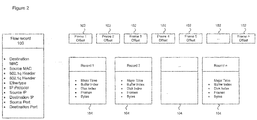
Figure 2 shows a summary of information stored per data flow in some embodiments; and -
Figure 3 shows a network architecture in which embodiments may be provided. - Some embodiments may be provided in the context of a data network where monitoring and/or capturing of data flows is required.
- The monitoring of the data flows may be performed for network performance purposes, to determine a threat, for network management purposes, for statistics and/or for any other suitable reason. In some situations, it may be required that one or more specific flows need to be captured. For example one or more flows identified by a particular set of IP addresses may be required to be captured.
- In some situations, it may be desirable to capture all data flows, which are then archived and potentially retrieved at a later date.
- Embodiments may be used in any scenario which requires the capture of data. Some embodiments may capture all data whereas other embodiments may only capture some of the data flows.
- Some embodiments are configured to index data flows. Indexing will provide indexing information for the data flows. The indexing information may take any suitable form and may for example be metadata.
- The data flows may be made up of packets. In some embodiments, different data flows may correspond to different channels. In some embodiments, this indexing of data flows may be in real time. Indexes speed up access to data flows and summary data when querying. Indexes may be stored in any suitable memory and in some embodiments the memory is provided by one or more disks.
- The indexing of the data flows may be such that statistics for a GUI (graphical user interface) or the like may be provided. This may be to provide information on top talkers on the network or the like. Indexes provide a quicker way to locate data of interest (e.g. the packets corresponding to a flow) and/or may provide summary information (e.g. number of packets/bytes in a flow). These searches may be done using the underlying data, but generally the indexes makes these operations faster.
- In some embodiments, every packet which is received may be indexed.
- Statistics and other data for a GUI may be obtained in two ways:
- (1) Doing queries (which use index data and/or the underlying packet data).
- (2) Generate live summary data, for example using the online indexing and analytics function which is discussed in more detail later.
- Some embodiments may, for example, provide TCP conversation analysis
- A data flow is captured by a
capture block 10. The data flow may comprise data packets. In particular, thecapture block 10 has avirtual interface VI 12 or the like which receives the data flow. The data flow from the VI is provided to anexport block 14 which passes the live packets to anindexing block 30 which indexes the data flow. This is described in more detail later. In some embodiments, the capture block may be provided by a network interface device or card. - The
export block 14 also provides the packets to ablock writer 20 and in particular to animport block 22 of theblock writer 20. Theblock writer 20 also receives indexing data from theindexing block 30. The block writer will write the data flow and the indexes to ablock store 40. In some embodiments, the indexing data and the associated data are stored on a common disk. In other embodiments, the indexing data and associated data are stored on separate disk devices. In this case, separate block writers or separate block writer instances may be provided for the indexing data and the associated data. - In some embodiments, the block writer is arranges to serialize the captured data to provide a single output thread. Thus, a single writer thread per block store device may be provided. The block writer ensures that the writes to the block store are sequential. For example the data flow which is received by the block writer may comprise a plurality of threads. The different threads may come from the same capture block or different capture blocks. Embodiments may be such the non sequential access to the block store is avoided. Sequential access increases the rate at which it is possible to write to disk. This is ensured by multiplexing by the import block of the input streams to provide the single serial output to the block store.
- As will be discussed later, some of the data flow may still require indexing if the indexing block is unable to index in real time all the packets of the data flow.
- Data flows and the associated indexes (if available) can be read out by a control block 50.The
control block 50 has an export block 52 which can export from the control block. The control block is able to provide the data flows and any available indexes to theindexing block 30 and/or to one or more query blocks 70, 60 and 90 as is described in more detail below. - The control block is arranged to read blocks of data from the
block store 40 into shared memory (not shown inFigure 1 ), and makes those blocks of data available to one or more consumers of the data. Those consumers may be indexers, other analytics, queries or the like. - The control block is configured to monitor buffer utilization in the capture path (that is buffers in the capture block), and if the buffer utilization gets too high, the control block throttles the rate of reading from the
block store 40 so that theblock writer 20 has enough bandwidth to keep up with the capture rate. - In some embodiments, each consumer has a control channel that it uses to request the blocks that it needs. Data is passed from the control block to the or each consumer using shared memory. The control block has a pool of memory used for data/index blocks and consumers map at least some of this pool into their own address space. When a consumer requests a block, it is read from the block store by the control block into the shared memory, and the control block provides information which indicates to the consumer where the block can be found in the shared memory.
- The
control block 50 may function as a cache of blocks of data. If a consumer requests a block of data that is already in the memory pool, then it is not necessary to read that block of data from the block store again. - The control block is the only block which is able to read data from the block store. The control block may be configured to prioritize writing to the block store over reading. This is done by throttling the rate at which the control block submits reads to the block store. The capture path exports information about buffer utilisation that the control block imports. If buffer utilisation is getting high, then the block writer is not writing to disk fast enough, so the control block reduces the rate of reads, or stops them altogether.
- In some embodiments, the control block is able to schedule different queries. Different ones of the queries may have different priorities and/or completion times. The control block is able to control the scheduling of the queries accordingly. In other embodiments, the control of the scheduling of queries may alternatively or additionally be carried out elsewhere.
- Thus in embodiments, when the block writer is writing to the data store, the control block may slow down or stop the reading of data from the block store for the queries. In some embodiments, the control block may prioritise one or more queries over one or more other queries or may slow down each of the queries so that the queries are all continued to be run but at a lower rate.
- In some embodiments, a query may be run based on data read out of the block store into shared memory. When the control block throttles the data, the query may fall behind. This may be the case when there is a large quantity of data to be captured. The control block will control the reading out of data from the block store to cause query to catch up. This may be when, for example, the quantity of data to be written to disk is relatively low. Where a query uses a mix of data already stored in the shared memory and data to be written to the shared memory from the block store, the query may use the data already in shared memory while waiting for the data from the block store. In some embodiments, the may need to delivered to the query function in the order by which it was received or the query may be able to process out of ordered data (using for example timestamp metadata).
- In some embodiments, more than one query may be running in parallel.
- In some embodiments, at least some of the queries may be run in separate containers in order to provide resource isolation. In some embodiments, there may be a plurality of consumer containers. These are described in more detail later and generally provide query functions.
- In some embodiments, the received packets from the
capture block 10 are output to theindexing block 30. Theindexing block 30 may provide online indexing and analytics. In some embodiments, the indexing block may provide real time indexing. In some embodiments, the live packets are captured by import block 32 of the indexing block and processed byprocess block 36. If the indexing block has indexed a packet in real time, indexing information is sent to the block writer which writes the packet and the indexing information into the block store. The indexing information may provide summary information. If the indexing block is not able to index on a live basis, the catch up packets are read out by the control block from the block store into memory so as to be accessible to the indexing block. The indexing block will provide the indexing information for the catch up packets to the block writer which writes the indexing information into the block store. Theprocess block 36 may allow different data sources (for example the catch up packets and the live packets) to be combined into one stream or to be individually selected, as required. - In some embodiments, a real time query may be carried by the online indexing an analytics block on the received data. In some embodiments, the real time query may fall behind as the block is not able to keep up with the input data. In this situation, the control block is configured to read out the catch up packets from the block store into shared memory The online indexing and analytics block is then able to use the catch up packets to bring the "real time" query back up to date.
- In some embodiments, a plurality of different queries can be supported. In some embodiments, more than one query may be supported.
- One example is a streaming query which is performed by streaming
query block 70. A streaming query is one which is constantly being performed to provide an updated results, for example taking into account a different time period. The streaming query block has an import block 72 which has access to the data in the block store. Access to this data is controlled by the control block. - Generally, for a query (which may or may not be a streaming query), the import block gets data which is read out by the control block into shared memory as described previously. That data is fed into the query processing pipeline, which generates a query result. The query result may consist of one or more of:
- tabular data; flow records; where to find matched packets; and matched packets themselves.
- In some embodiments, tabular data may be presented in the form of a table or graph.
- In some embodiments, it is possible to inspect one or more packets using a streaming query.
- In the example shown in
Figure 1 , asecond query block 60 is shown with animport block 62. The second query block may generally operate as described previously. The block may perform a query over the data and generate a result which may be written to aquery result file 80. The query result may be as previously described. - A
third query component 90 has animport block 92 and aquery bock 94. The query and query result may be as described previously. This block may implement a virtual file system which presents the set of packets selected by the query as afile 100 formatted according to the PCAP (packet capture) standard or any other suitable file format. Any suitable application that is capable of reading a PCAP file is able to consume the packets selected by the query. - In some embodiments an API may be provided between the control block and a separate execution domain running a query. The separate execution domain may be provided in a virtual machine with a VI virtual interface to the API.
- In some embodiments, data may be passed between components using shared memory or sockets. Shared memory can be used within processes and between processes on the same host/VM. If passing data between components on different hosts/VMs then sockets may be used.
- The queries may use graph structures which defines how code should execute the queries. Nodes are used to represent data and edges are lines which connect nodes to nodes. In some embodiments, information about one or more of these nodes and/or edges may be stored and may be reused in different queries.
- Results of a query may be written to a cache memory which may be the same or different to the shared memory. In some embodiments the cache memory may be provided by one or more disks. This may be the same or different to the block store. The result of a query may be written to cache such that these result may be used in a subsequent query. For example the result of a query may be written into the cache memory as a set of partial results. For example, there may be a partial (or complete) overlap between a current query and a previous query. For at least part of the overlap, the results of the previous query may be read out of memory and used as part of results of the current query. It should be appreciated that the results of the previous query may be processed further in order to obtain the results of the current query.
- In some embodiments, the cached information may be an intermediate result generated as part of query processing. For example, the query processing has a plurality of steps and a final output. The final output may be cached as may the data generated at one or more of the intermediate steps. In other embodiments only the final output may be cached. Alternatively or additionally only the result of one or more of the intermediate steps may be stored and not the final result.
- In some embodiments, a window may be generated with respect to the results of a previous query, to allow a subsequent query to drill down into the results of the previous query. The results of that previous query may be stored in cache memory.
- In some embodiments flow records associated with a query may be stored in the cache memory.
- In some embodiments, the indexes may be cached as opposed to data blocks. However in other embodiments, the data blocks may additionally or alternatively by stored in the cache memory.
- The query function may receive real time data where possible, but if the data is throttled or cannot keep up, the query function can transition to historical data and back to real time. The query function is aware of the current time and so whether it is behind or not. The system may ensure a seamless transition between live data which is received through shared memory and catchup which comes from the block store.
- There may be many simultaneously active queries running on the system, some of which are over indexed flows, others which are over the entire capture.
- The function of the indexing block will now be described in more detail. In some embodiments, every incoming frame or packet should match a flow template. Therefore either a matching flow template exists or a new one needs to be created dynamically. In some embodiments, information is provided to locate the persisted frame and is associated with the flow meta-data.
- Each packet is parsed and set of header fields extracted. These fields, together with other meta-data are combined to form a flow key. The other meta-data may comprise one or more of timestamp, packet ID, error indication(s) and the like. A flow consists of the set of packets that match a particular flow key. For each unique flow key a flow record is maintained that consists of the flow key, summary data for packets in the corresponding flow and location data for packets in the flow.
- The summary data may comprise one or more of the number of packets and bytes in the flow.
- The location data may comprise a list of packet indicators, each giving the location of a packet in the block store that is a member of the flow.
- The location data may include comprise a list of block indicators, each giving the location of a block in the block store, each block containing at least one packet that is a member of the flow.
- The location data may comprise packet indicators giving the location of the first packet in the flow following a temporal boundary.
- Various other representations of location data are possible, in other embodiments.
- Other methods for indexing may be used in other embodiments, such as compressed bitmap indexes.
- Some embodiments, may use a disk ring-buffer as the data store for storing in the indexing blocks. When frames in the disk ring-buffer get overwritten, the flow entries are updated to keep the meta-data current and consistent. The table below shows some examples of header/ data types and fields in the header/data types.
Header/Type Field Bytes in header Bytes to be Indexed Ethernet Destination MAC 6 6 Source MAC 6 6 802.1 Q tag 2 1 802.1 Q tag 2 2 Ethertype 2 2 ARP Stop Here IP IP Protocol 1 1 Source IP 4 4 Destination IP 4 4 ICMP/IGMP Stop Here TCP/ UDP Source Port 2 2 Destination Port 2 2 - In some embodiments, a flow is defined as all frames or packets sharing common values for one or more header fields with all other fields wild-carded. In some embodiments the flow records contain the unique combinations of values seen in the fields in the above table.
- Linked to each flow record may be a list of absolute offsets into the persistent storage of each frame or packet in the flow (8-bytes per offset). Also linked to each flow record may be a list of absolute offsets representing the first frame or packet (if any) on or immediately following a 1 second (or any other suitable value) temporal boundary.
- Due to the need to identify (or create) a flow entry for every incoming frame or packet, the performance of this lookup may have a direct impact on the rate at which frames or packets are indexed. Taking the case of 64-byte frames with an 8-byte IFG (inter frame gap), a new frame will arrive at 10Gbps every 64ns. At 40Gbps, that shrinks by a factor of four to a new frame arriving every 16ns.
- Each record in the table may hold all the flow values (for example 31 bytes with room for further fields such as capture point ID, capture port ID etc.) as well as pointers or indexes to reference the associated flow table(s) (for example 8 bytes x 2) so assigning a cache-line per entry may provide the necessary capacity. By way of example, to handle a maximum of 65,536 flows, a table of 131,072 entries (50% load) may be required making it ≈8.4MB.
- Some embodiments may aim to reduce indexing load during capture. In some embodiments disk latencies may mask increased query processing latencies.
- In some embodiments, the index meta-data may be bounded at ∼10% of packet storage. However, this is by way of example only and different ratios between the index meta-data and the packet storage may alternatively be used.
- Packets within a flow may be linked together. In some embodiments, the position of the packets in the storage device may be stored as part of that flow record, to aid rapid flow retrieval. These may be the absolute offsets into the persistent storage device. One advantage of using absolute offsets may be that this allows flow offsets to be aged as newer ones overwrite old captured records. Any suitable size of index may be used. By way of example only, a 64-bit index into the persistent storage device may be used. However, different index sizes may be used in different embodiments.
- It should be appreciated that in some embodiments, one or more packets may be part of two or more flows. In that scenario, a packet may have one index or more than one index. An index may be provided for each flow which the packet is part of.
- Queries may be run over a defined time-range at second resolution. It may be desirable to maintain more than one index, for example a secondary index may be provided which provides rapid retrieval of the blocks associated with the primary index. A secondary index might be in the form of a compressed bitmap index. This may provide rapid retrieval.
- It may be desirable to keep detailed per-flow statistics for display via a web interface. These statistics may be presented as a per-flow summary (total frames, total bytes) or possibly broken down graphically by day/hour/minute/second. The following per-flow data may be collected/collated every second. This may be carried out by the indexing block. It should be appreciated that in other embodiments, one or more of these variable may not be collected/collated and/or one or more other variables may be collected/collated.
Variable Size (bytes) Major Time 4 Index of first packet after second boundary in block store (bytes) 8 Index of first frame after second boundary in block store (bytes) 8 Packets 4 Bytes 4 - Reference is made to
Figure 2 which schematically shows the information stored per flow. Theflow record 100 comprises the fields discussed in relation to Table 1. Also shown are the n Frame offsets 102 and the per flow statistics provided byrecords 104. - In some embodiments, in terms of storage, the size of the flow record may not be of importance as there is only one per flow.
- Each frame offset may for example be 8 bytes. In different embodiments, a different frame offset size may be used. In some embodiments, there may be one such offset per frame captured.
- The size of the temporal buffer may be bounded only by retention time.
- A flow template hash table may be stored in RAM for indexing performance. Flow records may be stored in the RDB to facilitate querying. Each flow buffer containing 64-bit or the like offsets may be implemented as a flat file with new offsets being added using buffered writes to the end of the file. Each flow temporal buffer may be implemented as a file with a new record added once a second to the end of the file.
- In some embodiments, as both flow offsets and temporal records are written directly to a file, both writes can be buffered and combined for efficiency and performance if required.
- In some embodiments, metadata aging may be dealt with. One example of a suitable scheme may be as follows. Ageing may done on a per second basis or other time frame. Once a second (or other suitable time frame), each flow's first record disk index is compared to the current write pointer. If the data pointed to has been overwritten, the flow index entries within that second are removed from the flow buffer using the buffer index offsets in the temporal record and the temporal record is removed too. The fallocate()call may allow this and may de-allocate space freeing up file system blocks anywhere in the file.
- The temporal buffer entries may provide all the statistics required to build top N flow tables for display via the frames and bytes fields. As per-second data is maintained, the generation of flow charts may be supported.
- The querying performed by the query functions may take any suitable form. In some embodiments, the querying may comprise one or more of the following:
- evaluate the query expression to obtain the minimum list of flows that are required to satisfy the expression;
- use the temporal indexes into the flow tables to only extract the subset of the offsets in each required flow file;
- combine the offsets into a single list, which is then used to obtain the records on disk; and
- as each frame is obtained, prune out any that fail to match the query.
- The resulting record set should satisfy the query. This is only one example of a query process. The result of a query may not necessarily be packets. More complex queries may alternatively or additionally be provided.
- In some embodiments, rather than reading records individually, the absolute offsets may be converted into a list of stripes containing at least one necessary record, read in complete stripes and filter out records not matching the query expression.
- Reference is made to
Figure 3 which shows an architecture in which some embodiments may be provided. The system comprises a redundant array ofindependent disks RAID 202 which provide theblock store 40. TheRAID 202 are controlled by aRAID controller 204. TheRAID controller 204 may be at least partially provided in the OS (operating system) 208. One or more network interface devices (erg NICs) 200 may be provided which provides an interface between a network (not shown) and theOS 208. The NIC may be supported by adevice driver 210 in the OS. - The data which is received by the NIC may be passed to the
capture block 10 which in some embodiments is located in the user space. The data thus goes from the NIC to host memory and from there to the block writer and indexing block. Theindexing block 30 and block writer are also provided in the user space. In some embodiments, thecontrol block 50 is provided in the operating system. - In some embodiments the query blocks may be provided in the user space.
- In some embodiments, a data flow may be provided by one or more packets. In some embodiments, a data flow may be provided by one or more frames. In some embodiments, a frame may comprise one or more packets. It should be appreciated in other embodiments, any other suitable unit or block of data may comprise a data flow.
- Embodiments may be provided by hardware blocks comprising one or more processors configured to run computer executable instructions in conjunction with at least one memory. One or more of the functional blocks shown in
Figure 1 may be regarded as a software module. One or more of the functional blocks may alternatively or additionally be provided by suitable hardware blocks. - At least part of some embodiments may be considered to be a virtual appliance which is provided by suitable hardware.
- In some embodiments, at least part of some embodiments may be provided by one or more servers.
- An appropriately adapted computer program code product or products may be used for implementing the embodiments, when loaded on an appropriate data processing apparatus. The program code product for providing the operation may be stored on, provided and embodied by means of an appropriate carrier medium. An appropriate computer program can be embodied on a computer readable record medium. A possibility is to download the program code product via a data network.
- In some embodiments, computer executable instructions may be downloaded to cause hardware to provide the system of embodiments.
- The applicant hereby discloses in isolation each individual feature described herein and any combination of two or more such features, to the extent that such features or combinations are capable of being carried out based on the present specification as a whole in the light of the common general knowledge of a person skilled in the art, irrespective of whether such features or combinations of features solve any problems disclosed herein, and without limitation to the scope of the claims. The applicant indicates that aspects of the present invention may consist of any such individual feature or combination of features. In view of the foregoing description it will be evident to a person skilled in the art that various modifications may be made within the scope of the invention.
Claims (15)
- A system comprising:an input configured to receive data;a writer configured to write at least some of said data to a data store;a controller configured to read data from said data store, wherein said controller is configured to control the rate at which data is read from data store with respect to writing of data by said writer to said data store; andat least one query function configured to receive a stream of said data substantially in real time and when said stream of data is unavailable in real time to subsequently obtain that unavailable data from said data store.
- The system as claimed in claim 1, wherein said controller is configured to obtain said unavailable data from said data store and write said unavailable data to shared memory, said at least one query function being configured to access said unavailable data from said shared memory.
- The system as claimed in any preceding claim, comprising an indexing function, said indexing function configured to provide at least one of said query functions.
- A system as claimed in any preceding claim, wherein said controller is configured to prioritize writing by said writer to said data store over reading from said data store.
- A system as claimed in any preceding claim, comprising at least one buffer configured to receive data from said input before said data is written to said data store, wherein said controller is configured to change a rate at which data is read from said data store in response to a state of said at least one buffer.
- A system as claimed in any preceding claim, wherein said writer is configured to:capture a plurality of data flows and to provide a serialized output; andsequentially write said serialized output to said data store.
- A system as claimed in any preceding claim comprising an indexing function configured to index said data and cause corresponding index information to be stored in said data store.
- A system as claimed in any preceding claim, wherein at least one query function is provided in a virtual machine.
- A system as claimed in any preceding claim, wherein said controller is configured to control scheduling of a plurality of queries from said at least one query function.
- A system as claimed in any preceding claim, wherein a control channel is provided for at least one query function, said control channel being provided between said query function and said controller, wherein requests for data are provided from said query function to said control block via the control channel
- A system as claimed in any preceding claim wherein only said controller is configured to read data from said data store.
- A system as claimed in any preceding claim, wherein data comprises a plurality of data flows, each data flow comprising a plurality of packets.
- A system as claimed in any preceding claim, further comprising a data store.
- A computer implemented method comprising:receiving data;writing at least some of said data to a data store;reading data from said data store;controlling the rate at which data is read from data store with respect to writing of data to said data store; andperforming a query on a stream of said data substantially in real time and when said stream of data is unavailable in real time to subsequently obtain that unavailable data from said data store.
- A computer program product, comprising a computer readable storage device having a computer readable program code stored therein, said computer readable program code containing instructions configured to be executed by one or more processors of a system to cause a method to be implemented, said method comprising:writing received data to a data store;reading data from said data store;controlling the rate at which data is read from data store with respect to writing of data to said data store; andperforming a query on a stream of said data substantially in real time and when said stream of data is unavailable in real time to subsequently obtain that unavailable data from said data store.
Priority Applications (1)
| Application Number | Priority Date | Filing Date | Title |
|---|---|---|---|
| EP21167700.0A EP3869354A1 (en) | 2015-06-03 | 2016-05-27 | A system and method for managing the storing of data |
Applications Claiming Priority (1)
| Application Number | Priority Date | Filing Date | Title |
|---|---|---|---|
| US14/730,094 US10691661B2 (en) | 2015-06-03 | 2015-06-03 | System and method for managing the storing of data |
Related Child Applications (1)
| Application Number | Title | Priority Date | Filing Date |
|---|---|---|---|
| EP21167700.0A Division EP3869354A1 (en) | 2015-06-03 | 2016-05-27 | A system and method for managing the storing of data |
Publications (1)
| Publication Number | Publication Date |
|---|---|
| EP3101558A1 true EP3101558A1 (en) | 2016-12-07 |
Family
ID=56117494
Family Applications (2)
| Application Number | Title | Priority Date | Filing Date |
|---|---|---|---|
| EP16171767.3A Ceased EP3101558A1 (en) | 2015-06-03 | 2016-05-27 | A system and method for managing the storing of data |
| EP21167700.0A Pending EP3869354A1 (en) | 2015-06-03 | 2016-05-27 | A system and method for managing the storing of data |
Family Applications After (1)
| Application Number | Title | Priority Date | Filing Date |
|---|---|---|---|
| EP21167700.0A Pending EP3869354A1 (en) | 2015-06-03 | 2016-05-27 | A system and method for managing the storing of data |
Country Status (2)
| Country | Link |
|---|---|
| US (1) | US10691661B2 (en) |
| EP (2) | EP3101558A1 (en) |
Families Citing this family (2)
| Publication number | Priority date | Publication date | Assignee | Title |
|---|---|---|---|---|
| US10733167B2 (en) | 2015-06-03 | 2020-08-04 | Xilinx, Inc. | System and method for capturing data to provide to a data analyser |
| CN117056358A (en) * | 2023-08-29 | 2023-11-14 | 新疆联海创智信息科技有限公司 | Data storage and data query method and device |
Citations (2)
| Publication number | Priority date | Publication date | Assignee | Title |
|---|---|---|---|---|
| US20130254324A1 (en) * | 2012-03-20 | 2013-09-26 | Alexander Kramnik | Read-throttled input/output scheduler |
| US20140355613A1 (en) * | 2013-05-30 | 2014-12-04 | Solarflare Communications, Inc. | Packet capture |
Family Cites Families (48)
| Publication number | Priority date | Publication date | Assignee | Title |
|---|---|---|---|---|
| WO2000019664A2 (en) | 1998-09-30 | 2000-04-06 | Netscout Service Level Corporation | Managing computer resources |
| US6836800B1 (en) | 1998-09-30 | 2004-12-28 | Netscout Systems, Inc. | Managing computer resources |
| WO2003005228A1 (en) | 2001-07-03 | 2003-01-16 | Yahoo, Inc. | Method and system for providing access to content associated with an event |
| US6801940B1 (en) | 2002-01-10 | 2004-10-05 | Networks Associates Technology, Inc. | Application performance monitoring expert |
| US7299277B1 (en) | 2002-01-10 | 2007-11-20 | Network General Technology | Media module apparatus and method for use in a network monitoring environment |
| US7711751B2 (en) | 2002-06-13 | 2010-05-04 | Netscout Systems, Inc. | Real-time network performance monitoring system and related methods |
| US20030236819A1 (en) * | 2002-06-20 | 2003-12-25 | Greubel James David | Queue-based data retrieval and transmission |
| US7031884B1 (en) | 2002-07-12 | 2006-04-18 | Netscout Systems, Inc. | System and method for analyzing data streams |
| AU2003261445A1 (en) | 2002-08-09 | 2004-02-25 | Netscout Systems Inc. | Intrusion detection system and network flow director method |
| US7315542B2 (en) | 2002-09-30 | 2008-01-01 | Avago Technologies General Ip (Singapore) Pte. Ltd. | Handling and discarding packets in a switching subnetwork |
| US7953876B1 (en) | 2002-10-24 | 2011-05-31 | Emulex Design & Manufacturing Corporation | Virtual interface over a transport protocol |
| US20040133733A1 (en) | 2002-11-06 | 2004-07-08 | Finisar Corporation | Storing, retrieving and displaying captured data in a network analysis system |
| US8180943B1 (en) * | 2003-03-27 | 2012-05-15 | Nvidia Corporation | Method and apparatus for latency based thread scheduling |
| US20050066045A1 (en) | 2003-09-03 | 2005-03-24 | Johnson Neil James | Integrated network interface supporting multiple data transfer protocols |
| US7093037B2 (en) | 2003-09-22 | 2006-08-15 | Emulex Design & Manufacturing Corporation | Generalized queue and specialized register configuration for coordinating communications between tightly coupled processors |
| US7181675B2 (en) | 2003-10-06 | 2007-02-20 | Avago Technologies General Ip (Singapore) Pte. Ltd. | System and method for checksum offloading |
| US8898339B2 (en) | 2003-12-12 | 2014-11-25 | Napatech A/S | Method of transferring data implying a network analyser card |
| US7764626B2 (en) | 2004-10-04 | 2010-07-27 | Riverbed Technology, Inc. | Role grouping of hosts in computer networks |
| EP1832054B1 (en) | 2004-12-23 | 2018-03-21 | Symantec Corporation | Method and apparatus for network packet capture distributed storage system |
| US8914726B2 (en) | 2005-08-20 | 2014-12-16 | Riverbed Technology, Inc. | Visualizing a complex network based on a set of objects of interest |
| US8311059B2 (en) | 2005-09-07 | 2012-11-13 | Emulex Design & Manufacturing Corporation | Receive coalescing and automatic acknowledge in network interface controller |
| US7680925B2 (en) | 2006-01-24 | 2010-03-16 | Cisco Technology, Inc. | Method and system for testing provisioned services in a network |
| US8447802B2 (en) | 2006-03-08 | 2013-05-21 | Riverbed Technology, Inc. | Address manipulation to provide for the use of network tools even when transaction acceleration is in use over a network |
| US7613714B2 (en) | 2006-05-02 | 2009-11-03 | Netscout Systems, Inc. | Systems and methods for analyzing a stream of data records relating to electronic data processing performance |
| US20090290848A1 (en) | 2007-01-11 | 2009-11-26 | Michael James Brown | Method and System for Generating a Replay Video |
| US8341739B2 (en) | 2007-05-24 | 2012-12-25 | Foundry Networks, Llc | Managing network security |
| US8125908B2 (en) | 2007-12-04 | 2012-02-28 | Extrahop Networks, Inc. | Adaptive network traffic classification using historical context |
| US8762513B2 (en) | 2007-12-19 | 2014-06-24 | Emulex Corporation | Network adapter based zoning enforcement |
| US8655833B2 (en) * | 2008-06-17 | 2014-02-18 | Qualcomm Incorporated | Database architecture for supporting group communications among wireless communication devices |
| US8064350B2 (en) | 2008-09-25 | 2011-11-22 | Verizon Patent And Licensing Inc. | Method and system for simplifying protocol analysis |
| US8572609B2 (en) | 2009-07-01 | 2013-10-29 | Riverbed Technology, Inc. | Configuring bypass functionality of a network device based on the state of one or more hosted virtual machines |
| US8634437B2 (en) | 2009-07-01 | 2014-01-21 | Riverbed Technology, Inc. | Extended network protocols for communicating metadata with virtual machines |
| US8494000B1 (en) | 2009-07-10 | 2013-07-23 | Netscout Systems, Inc. | Intelligent slicing of monitored network packets for storing |
| WO2011032954A1 (en) | 2009-09-15 | 2011-03-24 | Napatech A/S | An apparatus for analyzing a data packet, a data packet processing system and a method |
| US8635387B2 (en) | 2009-10-09 | 2014-01-21 | Emulex Design & Manufacturing Corporation | Enhanced I/O performance in a multi-processor system via interrupt affinity schemes |
| KR20120102722A (en) | 2009-12-04 | 2012-09-18 | 나파테크 에이/에스 | An apparatus, an assembly and a method of operating a plurality of analyzing means reading and ordering data packets |
| US8582454B2 (en) | 2010-04-08 | 2013-11-12 | Netscout Systems, Inc. | Real-time adaptive processing of network data packets for analysis |
| EP2668753B1 (en) | 2011-01-28 | 2017-10-04 | Napatech A/S | An apparatus and a method for receiving and forwarding data packets |
| KR101383238B1 (en) | 2011-03-07 | 2014-04-08 | 케이비에이2, 인코포레이티드 | Systems and methods for analytic data gathering from image providers at an event or geographic location |
| WO2012163395A1 (en) | 2011-05-30 | 2012-12-06 | Napatech A/S | An apparatus and a method of parallel receipt, forwarding and time stamping data packets using synchronized clocks |
| US9065744B2 (en) | 2011-06-20 | 2015-06-23 | Netscout Systems, Inc. | Performance optimized and configurable state based heuristic for the classification of real-time transport protocol traffic |
| GB2504458B (en) | 2012-06-08 | 2017-02-01 | Microsoft Technology Licensing Llc | Real-time communication |
| US8626912B1 (en) * | 2013-03-15 | 2014-01-07 | Extrahop Networks, Inc. | Automated passive discovery of applications |
| US9606887B2 (en) | 2013-03-15 | 2017-03-28 | Riverbed Technology, Inc. | Persisting large volumes of data in an efficient unobtrusive manner |
| US8867343B2 (en) | 2013-03-15 | 2014-10-21 | Extrahop Networks, Inc. | Trigger based recording of flows with play back |
| US8848744B1 (en) | 2013-03-15 | 2014-09-30 | Extrahop Networks, Inc. | Resynchronization of passive monitoring of a flow based on hole detection |
| US9025486B1 (en) | 2013-10-08 | 2015-05-05 | Netscout Systems, Inc. | Determining quality of radio access network transmissions |
| US10733167B2 (en) | 2015-06-03 | 2020-08-04 | Xilinx, Inc. | System and method for capturing data to provide to a data analyser |
-
2015
- 2015-06-03 US US14/730,094 patent/US10691661B2/en active Active
-
2016
- 2016-05-27 EP EP16171767.3A patent/EP3101558A1/en not_active Ceased
- 2016-05-27 EP EP21167700.0A patent/EP3869354A1/en active Pending
Patent Citations (2)
| Publication number | Priority date | Publication date | Assignee | Title |
|---|---|---|---|---|
| US20130254324A1 (en) * | 2012-03-20 | 2013-09-26 | Alexander Kramnik | Read-throttled input/output scheduler |
| US20140355613A1 (en) * | 2013-05-30 | 2014-12-04 | Solarflare Communications, Inc. | Packet capture |
Also Published As
| Publication number | Publication date |
|---|---|
| US10691661B2 (en) | 2020-06-23 |
| EP3869354A1 (en) | 2021-08-25 |
| US20160357793A1 (en) | 2016-12-08 |
Similar Documents
| Publication | Publication Date | Title |
|---|---|---|
| US9674298B1 (en) | Efficient access to sparse packets in large repositories of stored network traffic | |
| US11425058B2 (en) | Generation of descriptive data for packet fields | |
| US9876701B1 (en) | Arrangement for efficient search and retrieval of indexes used to locate captured packets | |
| US9465662B2 (en) | Processor with efficient work queuing | |
| US10621080B2 (en) | Pipelined hash table with reduced collisions | |
| Emmerich et al. | FlowScope: Efficient packet capture and storage in 100 Gbit/s networks | |
| US10454833B1 (en) | Pipeline chaining | |
| DE112017003294B4 (en) | Technologies for scalable sending and receiving of packets | |
| US9584332B2 (en) | Message processing method and device | |
| US9529640B2 (en) | Work request processor | |
| US8463928B2 (en) | Efficient multiple filter packet statistics generation | |
| US9112708B1 (en) | Processing multicast packets in a network device | |
| US11847108B2 (en) | System and method for capturing data to provide to a data analyser | |
| US12184520B2 (en) | High-speed packet filtering | |
| CN107241305A (en) | A kind of network protocol analysis system and its analysis method based on polycaryon processor | |
| CN111970213B (en) | A method for writing data into a memory and a network element | |
| US10691661B2 (en) | System and method for managing the storing of data | |
| WO2020252142A1 (en) | Telemetry capture system for storage systems | |
| CN110519180A (en) | Network card virtualization queue scheduling method and system | |
| DE112017003018T5 (en) | TECHNOLOGIES FOR COORDINATING ACCESS TO DATA PACKAGES IN A MEMORY | |
| US10831561B2 (en) | Method for changing allocation of data using synchronization token | |
| US9996468B1 (en) | Scalable dynamic memory management in a network device | |
| US10069767B1 (en) | Method of dynamically allocating buffers for packet data received onto a networking device | |
| US7561589B2 (en) | Virtual address storage which may be of particular use in generating fragmented packets | |
| US11841830B2 (en) | Dynamic switching of catalog sharing protocols |
Legal Events
| Date | Code | Title | Description |
|---|---|---|---|
| PUAI | Public reference made under article 153(3) epc to a published international application that has entered the european phase |
Free format text: ORIGINAL CODE: 0009012 |
|
| STAA | Information on the status of an ep patent application or granted ep patent |
Free format text: STATUS: THE APPLICATION HAS BEEN PUBLISHED |
|
| AK | Designated contracting states |
Kind code of ref document: A1 Designated state(s): AL AT BE BG CH CY CZ DE DK EE ES FI FR GB GR HR HU IE IS IT LI LT LU LV MC MK MT NL NO PL PT RO RS SE SI SK SM TR |
|
| AX | Request for extension of the european patent |
Extension state: BA ME |
|
| STAA | Information on the status of an ep patent application or granted ep patent |
Free format text: STATUS: REQUEST FOR EXAMINATION WAS MADE |
|
| 17P | Request for examination filed |
Effective date: 20170607 |
|
| RBV | Designated contracting states (corrected) |
Designated state(s): AL AT BE BG CH CY CZ DE DK EE ES FI FR GB GR HR HU IE IS IT LI LT LU LV MC MK MT NL NO PL PT RO RS SE SI SK SM TR |
|
| STAA | Information on the status of an ep patent application or granted ep patent |
Free format text: STATUS: EXAMINATION IS IN PROGRESS |
|
| 17Q | First examination report despatched |
Effective date: 20190418 |
|
| RAP1 | Party data changed (applicant data changed or rights of an application transferred) |
Owner name: XILINX, INC. |
|
| STAA | Information on the status of an ep patent application or granted ep patent |
Free format text: STATUS: THE APPLICATION HAS BEEN REFUSED |
|
| 18R | Application refused |
Effective date: 20201119 |