EP3101249A1 - Fuel system coking sensor - Google Patents
Fuel system coking sensor Download PDFInfo
- Publication number
- EP3101249A1 EP3101249A1 EP16172953.8A EP16172953A EP3101249A1 EP 3101249 A1 EP3101249 A1 EP 3101249A1 EP 16172953 A EP16172953 A EP 16172953A EP 3101249 A1 EP3101249 A1 EP 3101249A1
- Authority
- EP
- European Patent Office
- Prior art keywords
- sensor
- coking
- fuel
- heatable collecting
- collecting element
- Prior art date
- Legal status (The legal status is an assumption and is not a legal conclusion. Google has not performed a legal analysis and makes no representation as to the accuracy of the status listed.)
- Granted
Links
Images

Classifications
-
- F—MECHANICAL ENGINEERING; LIGHTING; HEATING; WEAPONS; BLASTING
- F02—COMBUSTION ENGINES; HOT-GAS OR COMBUSTION-PRODUCT ENGINE PLANTS
- F02C—GAS-TURBINE PLANTS; AIR INTAKES FOR JET-PROPULSION PLANTS; CONTROLLING FUEL SUPPLY IN AIR-BREATHING JET-PROPULSION PLANTS
- F02C7/00—Features, components parts, details or accessories, not provided for in, or of interest apart form groups F02C1/00 - F02C6/00; Air intakes for jet-propulsion plants
- F02C7/30—Preventing corrosion or unwanted deposits in gas-swept spaces
-
- F—MECHANICAL ENGINEERING; LIGHTING; HEATING; WEAPONS; BLASTING
- F02—COMBUSTION ENGINES; HOT-GAS OR COMBUSTION-PRODUCT ENGINE PLANTS
- F02C—GAS-TURBINE PLANTS; AIR INTAKES FOR JET-PROPULSION PLANTS; CONTROLLING FUEL SUPPLY IN AIR-BREATHING JET-PROPULSION PLANTS
- F02C7/00—Features, components parts, details or accessories, not provided for in, or of interest apart form groups F02C1/00 - F02C6/00; Air intakes for jet-propulsion plants
- F02C7/22—Fuel supply systems
-
- F—MECHANICAL ENGINEERING; LIGHTING; HEATING; WEAPONS; BLASTING
- F02—COMBUSTION ENGINES; HOT-GAS OR COMBUSTION-PRODUCT ENGINE PLANTS
- F02C—GAS-TURBINE PLANTS; AIR INTAKES FOR JET-PROPULSION PLANTS; CONTROLLING FUEL SUPPLY IN AIR-BREATHING JET-PROPULSION PLANTS
- F02C9/00—Controlling gas-turbine plants; Controlling fuel supply in air- breathing jet-propulsion plants
- F02C9/26—Control of fuel supply
- F02C9/28—Regulating systems responsive to plant or ambient parameters, e.g. temperature, pressure, rotor speed
-
- G—PHYSICS
- G01—MEASURING; TESTING
- G01N—INVESTIGATING OR ANALYSING MATERIALS BY DETERMINING THEIR CHEMICAL OR PHYSICAL PROPERTIES
- G01N27/00—Investigating or analysing materials by the use of electric, electrochemical, or magnetic means
- G01N27/02—Investigating or analysing materials by the use of electric, electrochemical, or magnetic means by investigating impedance
- G01N27/04—Investigating or analysing materials by the use of electric, electrochemical, or magnetic means by investigating impedance by investigating resistance
- G01N27/14—Investigating or analysing materials by the use of electric, electrochemical, or magnetic means by investigating impedance by investigating resistance of an electrically-heated body in dependence upon change of temperature
-
- F—MECHANICAL ENGINEERING; LIGHTING; HEATING; WEAPONS; BLASTING
- F05—INDEXING SCHEMES RELATING TO ENGINES OR PUMPS IN VARIOUS SUBCLASSES OF CLASSES F01-F04
- F05D—INDEXING SCHEME FOR ASPECTS RELATING TO NON-POSITIVE-DISPLACEMENT MACHINES OR ENGINES, GAS-TURBINES OR JET-PROPULSION PLANTS
- F05D2260/00—Function
- F05D2260/60—Fluid transfer
- F05D2260/607—Preventing clogging or obstruction of flow paths by dirt, dust, or foreign particles
-
- G—PHYSICS
- G01—MEASURING; TESTING
- G01N—INVESTIGATING OR ANALYSING MATERIALS BY DETERMINING THEIR CHEMICAL OR PHYSICAL PROPERTIES
- G01N21/00—Investigating or analysing materials by the use of optical means, i.e. using sub-millimetre waves, infrared, visible or ultraviolet light
- G01N21/84—Systems specially adapted for particular applications
- G01N21/88—Investigating the presence of flaws or contamination
- G01N21/94—Investigating contamination, e.g. dust
- G01N2021/945—Liquid or solid deposits of macroscopic size on surfaces, e.g. drops, films, or clustered contaminants
-
- G—PHYSICS
- G01—MEASURING; TESTING
- G01N—INVESTIGATING OR ANALYSING MATERIALS BY DETERMINING THEIR CHEMICAL OR PHYSICAL PROPERTIES
- G01N21/00—Investigating or analysing materials by the use of optical means, i.e. using sub-millimetre waves, infrared, visible or ultraviolet light
- G01N21/17—Systems in which incident light is modified in accordance with the properties of the material investigated
- G01N21/55—Specular reflectivity
-
- G—PHYSICS
- G01—MEASURING; TESTING
- G01N—INVESTIGATING OR ANALYSING MATERIALS BY DETERMINING THEIR CHEMICAL OR PHYSICAL PROPERTIES
- G01N21/00—Investigating or analysing materials by the use of optical means, i.e. using sub-millimetre waves, infrared, visible or ultraviolet light
- G01N21/84—Systems specially adapted for particular applications
- G01N21/8422—Investigating thin films, e.g. matrix isolation method
-
- Y—GENERAL TAGGING OF NEW TECHNOLOGICAL DEVELOPMENTS; GENERAL TAGGING OF CROSS-SECTIONAL TECHNOLOGIES SPANNING OVER SEVERAL SECTIONS OF THE IPC; TECHNICAL SUBJECTS COVERED BY FORMER USPC CROSS-REFERENCE ART COLLECTIONS [XRACs] AND DIGESTS
- Y02—TECHNOLOGIES OR APPLICATIONS FOR MITIGATION OR ADAPTATION AGAINST CLIMATE CHANGE
- Y02T—CLIMATE CHANGE MITIGATION TECHNOLOGIES RELATED TO TRANSPORTATION
- Y02T50/00—Aeronautics or air transport
- Y02T50/60—Efficient propulsion technologies, e.g. for aircraft
Definitions
- the system 200 may be configured for measuring and detecting coking, e.g., thereby providing an advanced indication of impending coking downstream near a higher or maximum temperature region of engine 10.
- An exemplary sensor 218 may include an upstream sensor as part of system 200.
- Sensor 218 may include one or more pressure, optical, temperature, proximity, vibration, or impedance sensors or any combination thereof that are configured to measure a parameter or a parameter change related to any of pressure, reflectivity, emissivity, temperature, distance, thickness, normal or resonant frequency, mass, or impedance or conductance.
- the system 200 may be configured to measure and detect coking, e.g., thereby indicating near or downstream of a higher or maximum temperature region of engine 10.
- sensor 218 may be part of or integrated into heatable collecting element 216 and may be configured to provide heat and detect any of the parameters herein.
- Coking of the first and second heatable collecting elements 216a, 216b may increase the pressure differential between the inlet and outlet of flow directing elements 214a, 214b.
- sensor 218 may be configured to measure an indication of coking (e.g., physical build-up or accumulation of deposits) on at least one of the heatable collecting elements 216a, 216b by measuring the pressure differential between sensor 218a and 218b and, in response to the coking indication, communicate a coking condition signal to an engine control 114.
- an indication of coking e.g., physical build-up or accumulation of deposits
- the coking sensor system 106 may be positioned in a primary flow area that receives a full fuel flow or a bypass flow area that receives a partial fuel flow, e.g., to reduce the cooling provided by the fuel flow to the one or more heatable elements 216 thereby reducing the power required to heat the one or more heatable elements 216.
Landscapes
- Engineering & Computer Science (AREA)
- Chemical & Material Sciences (AREA)
- Combustion & Propulsion (AREA)
- Mechanical Engineering (AREA)
- General Engineering & Computer Science (AREA)
- Health & Medical Sciences (AREA)
- Electrochemistry (AREA)
- Physics & Mathematics (AREA)
- Chemical Kinetics & Catalysis (AREA)
- Life Sciences & Earth Sciences (AREA)
- Analytical Chemistry (AREA)
- Biochemistry (AREA)
- General Health & Medical Sciences (AREA)
- General Physics & Mathematics (AREA)
- Immunology (AREA)
- Pathology (AREA)
- Production Of Liquid Hydrocarbon Mixture For Refining Petroleum (AREA)
- Combined Controls Of Internal Combustion Engines (AREA)
Abstract
Description
- An improved system for a gas turbine engine, and more specifically, a fuel system having a coking sensor configured to detect an indication of coking including a build-up or accumulation of unwanted deposits such as carbon.
- Gas turbine engines typically include a compressor, a fuel system, a combustor, and a turbine. The compressor compresses air drawn into the engine and delivers high pressure air to the combustor. The fuel system delivers fuel such as liquid hydrocarbon fuel to the combustor, where it is mixed with the high pressure air and is ignited. Products of a combustion reaction in the combustor are directed into the turbine where work is extracted to drive the compressor and, sometimes, an output shaft. More specifically, combustors in gas turbine engines provide an energy release that drives the turbine. This energy release takes the form of high temperature gases. The handling of these gases drives the overall performance of the engine.
- Recent advancements in such a gas turbine engine may use the liquid hydrocarbon fuel to cool hotter portions of the engine. In the process of cooling, the fuel can be heated to temperatures above the thermal stability limit of fuel, thereby resulting in the formation of coking including gum, tar, and varnish deposits within the fuel system. An approach for preventing such deposits involves removing or reducing the dissolved oxygen normally found in untreated jet fuel as it flows into the engine. Insufficient oxygen removal may occur due to failure or miscalibration of the oxygen removal system. The safety and efficient operation of a robustly engineered "hot fuel" system requires a means to detect such failure by measuring either oxygen concentration directly or the formation of coke deposits caused by insufficient oxygen removal. Thus, detection of coking is crucial to the operation and maintenance of gas turbine engines operating with fuel temperatures above thermal stability limits.
- Traditional systems for measuring the percentage of entrained oxygen in the liquid hydrocarbon fuels are unsuitable for aircraft applications due to their size and weight. Further, typical systems may require regular calibration and adjustment resulting in variable and unreliable data outputs. Moreover, traditional systems do not provide an indication of factors, other than oxygen, that influence fuel quality and contribute to the coking of engine surfaces
- Thus, there is a need for a system, apparatus, and method to detect coking in fuel systems, e.g., that operate above the fuel thermal stability limit and rely on an oxygen removal device to reduce accumulation of unwanted deposits such as carbon. Accordingly, the detection of coking by this method may facilitate a change in engine operating conditions to slow the coke deposition rate, or the timely maintenance of the engine fuel system for removal of unwanted deposits, thereby increasing engine efficiency and reliability.
- According to the present disclosure, there is provided a coking sensor system and a method of operating a coking detection system, as set forth in the appended claims.
- While the claims are not limited to a specific illustration, an appreciation of the various aspects is best gained through a discussion of various examples thereof. Referring now to the drawings, exemplary illustrations are shown in detail. Although the drawings represent the illustrations, the drawings are not necessarily to scale and certain features may be exaggerated to better illustrate and explain an innovative aspect of an example. Further, the exemplary illustrations described herein are not intended to be exhaustive or otherwise limiting or restricted to the precise form and configuration shown in the drawings and disclosed in the following detailed description. Exemplary illustrations are described in detail by referring to the drawings as follows:
-
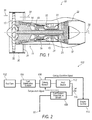
FIG. 1 illustrates an exemplary gas turbine engine; -
FIG. 2 illustrates an exemplary fuel system, for example, including a fuel tank, a fuel stabilization system, a coking sensor system, a heat source, a fuel system temperature sensor, and an engine control; -
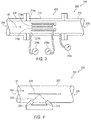
FIG. 3 illustrates an exemplary embodiment of a coking sensor system, for example, including one or more heatable collecting elements having surfaces configured to induce coking, and one or more pressure sensors; -
FIG. 4 illustrates another exemplary embodiment of a coking sensor system, for example, including one or more heatable collecting elements having surfaces configured to induce coking, and an optical sensor; -
FIG. 5 illustrates another exemplary embodiment of a coking sensor system, for example, including one or more heatable collecting elements having surfaces configured to induce coking, and a temperature sensor; -
FIG. 6 illustrates another exemplary embodiment of a coking sensor system, for example, including one or more heatable collecting elements having surfaces configured to induce coking, and a proximity sensor; and -
FIG. 7 illustrates another exemplary embodiment of a coking sensor system, for example, including one or more heatable collecting elements having surfaces configured to induce coking, and a vibration sensor. - For the purposes of promoting an understanding of the principles of the embodiments, reference will now be made to the embodiments illustrated in the drawings and specific language will be used to describe the same. It will nevertheless be understood that no limitation of the scope of the embodiments is thereby intended. Any alterations and further modifications in the described embodiments, and any further applications of the principles of the embodiments as described herein are contemplated as would normally occur to one skilled in the art to which the embodiment relates.
- An exemplary coking sensor system may be configured to induce and detect an indication of coking upstream of higher or maximum temperature regions of the engine based on the downstream conditions. The higher or maximum temperature regions may operate at temperatures above the thermal stability limit of fuel (e.g., liquid hydrocarbon fuel), thereby producing coking in the engine fuel system at higher or maximum temperature regions of the engine. The higher or maximum temperature regions may include any heat source that may heat the fuel, e.g., any portion of the engine that may raise the fuel temperature above its thermal stability limit such as a heat exchanger, fuel cooled cooler, or another hotter portion of the engine. Fuel systems may include a fuel stabilization system to reduce or eliminate coking. A fuel system temperature sensor may be configured to measure a fuel system temperature range near or downstream of the heat source and provide a fuel system temperature signal to a coking sensor system upstream of the heat source. The coking sensor system may be configured to heat the upstream fuel to the fuel system temperature range, thereby inducing coking conditions upstream of the heat source that are comparable to the downstream coking conditions near or downstream of the heat source. By imparting heat at the fuel system temperature range, the coking sensor system may detect an indication of coking upstream of the heat source and, in response to the coking condition, provide a coking condition signal to the engine control, thereby providing a notification to the engine control and allowing the engine control to take appropriate actions with respect to the coking indication.
- An exemplary coking sensor system may include one or more heatable collecting elements having one or more surfaces configured to induce coking. The heatable collecting elements may be configured to be positioned in a fuel supply passage having an inlet and an outlet. The heatable collecting elements may be configured to generate heat at or over a range of fuel system temperature, e.g., to induce coking with respect to the surfaces of the heatable collecting element. The heatable collecting elements may be made with the same or similar materials and surface finishes to those in the hotter portions of the fuel system, so as to replicate catalytic effects and induce coking upstream under comparable conditions to those downstream in the engine. The system may also include a sensor configured to detect an indication of coking (e.g., physical build-up or accumulation of deposits) with respect to at least one of the heatable collecting elements and, in response to the coking indication, communicate a coking condition signal to an engine control.
-
Figure 1 illustrates agas turbine engine 10, which includes afan 12, alow pressure compressor 14, ahigh pressure compressor 16, acombustor 18, ahigh pressure turbine 20, and alow pressure turbine 22. Thehigh pressure compressor 16 is connected to afirst rotor shaft 24 while thelow pressure compressor 14 is connected to asecond rotor shaft 26. Theshafts engine centerline axis 28.Ambient air 30 enters thefan 12 and is directed across afan rotor 32 in an annularfan bypass duct 34, which in part is circumscribed bynacelle 36. Thebypass airflow 38 provides engine thrust while theprimary gas stream 40 is directed toarea 50 and into thecombustor 18 and thehigh pressure turbine 20. Thefan nacelle 36 is spaced radially outwardly from thecore casing 37 to define anannular bypass duct 34 therebetween. During operation, thecore engine 11 powers thefan 12 which pressurizesambient air 30 to produce propulsion thrust in thefan air 38 bypassing thecore engine 11 and discharged from the fan exhaust nozzle (not shown). -
Figure 2 illustrates afuel system 100.Fuel system 100 may include afuel tank 102, afuel stabilization system 104, acoking sensor system 106, a fuelsystem temperature sensor 108, afuel line 110, aheat source 112, and anengine control 114. Thefuel stabilization system 104 may include a fuel treatment device configured to treat fuel and/or an oxygen removal device configured to remove oxygen from fuel. Thecoking sensor system 106 may be positioned downstream of thefuel stabilization system 104 and upstream or remote fromheat source 112.Heat source 112 may include any portion of theengine 10 that may raise the fuel temperature above its thermal stability limit such as a heat exchanger, fuel cooled cooler, or a hotter portion of theengine 10. It is appreciated that the fuel cooled cooler may utilize air, oil, refrigerant, any other heat carrying fluid or material, or any combination thereof. Fuel from thefuel tank 102 may pass along thefuel stabilization system 104,coking sensor system 106, heat source 112 (e.g., heating the fuel), and the fuelsystem temperature sensor 108. The fuelsystem temperature sensor 108 may include a downstream sensor relative tocoking sensor system 106, e.g., positioned remote fromcoking sensor system 106 and at one or more locations downstream of thecoking sensor system 106 and near or downstream ofheat source 112. The fuelsystem temperature sensor 108 may be configured to measure a fuel system temperature range (e.g., a temperature or a range of temperatures measured downstream ofcoking sensor system 106 near or downstream of a higher or maximum temperature region of engine 10) offuel system 100 and communicate the fuel system temperature range to thecoking sensor system 106. With the measured fuel system temperature range, thecoking sensor system 106 may generate heat at or over the fuel system temperature range upstream of theheat source 112, thereby inducing coking on one or more heatable collectingelements 216 under similar conditions to that experienced by the surfaces of theengine 10 that are downstream ofcoking sensor system 106, e.g., near or downstream of a higher or maximum temperature region ofengine 10. In response to detecting coking in thecoking sensor system 106, thecoking sensor system 106 may send a coking condition signal to theengine control 114, e.g., thereby providing a notification of coking with respect to the downstream surfaces ofengine 10. -
Figure 3 illustrates an exemplary embodiment ofcoking sensor system 106 includingcoking sensor system 200.System 200 may include afuel line 202 having aninlet 204 and anoutlet 206 forming a fuel passage, e.g., a fuel supply passage. Thefuel line 202 may include aninlet portion 208 in fluid communication with thefuel stabilization system 104, asensor portion 210 configured to detect coking, and anoutlet portion 212 in fluid communication with thecombustor 18. Thesensor portion 210 may be fixedly or removeably attachable with respect to the inlet andoutlet portions sensor portion 210. Thesystem 200 may include one or a plurality of heatable collectingelements 216, flow directing elements 214, andsensors 218. - The
system 200 may be configured for measuring and detecting coking, e.g., thereby providing an advanced indication of impending coking downstream near a higher or maximum temperature region ofengine 10. Anexemplary sensor 218 may include an upstream sensor as part ofsystem 200.Sensor 218 may include one or more pressure, optical, temperature, proximity, vibration, or impedance sensors or any combination thereof that are configured to measure a parameter or a parameter change related to any of pressure, reflectivity, emissivity, temperature, distance, thickness, normal or resonant frequency, mass, or impedance or conductance. Thesystem 200 may be configured to measure and detect coking, e.g., thereby indicating near or downstream of a higher or maximum temperature region ofengine 10. Alternatively or in addition,sensor 218 may be part of or integrated intoheatable collecting element 216 and may be configured to provide heat and detect any of the parameters herein. - First and second
heatable collecting elements fuel line 202, e.g., a fuel supply passage ofengine 10. Flow directing element 214 may be disposed about theheatable collecting elements heatable collecting elements heatable collecting elements heatable collecting elements heatable collecting elements flow directing elements sensor 218 may be configured to measure an indication of coking (e.g., physical build-up or accumulation of deposits) on at least one of theheatable collecting elements sensor engine control 114. In addition, thecoking sensor system 106 may be positioned in a primary flow area that receives a full fuel flow or a bypass flow area that receives a partial fuel flow, e.g., to reduce the cooling provided by the fuel flow to the one or moreheatable elements 216 thereby reducing the power required to heat the one or moreheatable elements 216. - One or more heatable collecting
elements 216 may be temperature-controlled and may include one or more surfaces (e.g., first and second surfaces) that may be heated to induce coking formation thereon.Heatable collecting element 216 may be configured to generate heat to provide surface temperatures similar to those downstream of thecoking sensor system 106, e.g., near or downstream of a higher or maximum temperature region ofengine 10. For example,heatable collecting element 216 may be configured to convert electricity into heat through resistive heating. One or more heatable collectingelements 216 may be configured as a wire or plate, which may be inserted into a fuel line 110 a fuel system, e.g., afuel supply line 202 of a "hot fuel" system. -
Heatable collecting element 216 may be configured to facilitate the detection of the onset of coking, e.g., by inducing the heat currently being experienced near or downstream of a higher or maximum temperature region ofengine 10. Theheatable collecting element 216 may be heated to a surface temperature that the flowing fuel is likely to encounter further downstream in theengine 10. Theheatable collecting element 216 may generate a surface temperature at a predefined heatable collecting set point that may be adjustable, e.g., in response to the fuelsystem temperature sensor 108 or temperatures measured during engine testing or startup. Theheatable collecting element 216 may include any material and surface texture comparable to coke-prone surfaces of the "hot fuel" system, e.g., downstream of thecoking sensor system 106. Thus, the system may be configured to detect the onset of coking upstream of the higher or maximum temperature regions to preserve the engine surfaces downstream of thecoking sensor system 106, e.g., a fuel nozzle ofengine 10. Thus, one or more heatable collecting elements may generate heat at or over the fuel system temperature range, thereby inducing coking on one or more heatable collectingelements 216 under similar conditions to that of the engine surfaces downstream ofcoking sensor system 106, e.g., near or downstream of a higher or maximum temperature region ofengine 10. -
Sensors 218 may be configured to detect an indication of coking (e.g., physical build-up or accumulation of deposits) in response to measured parameter or parameter change such as an increase or decrease relative to a coking threshold, e.g., predefined parameter or range based on measurements taken prior to or during the start of engine operation to provide a baseline for changes during operation. With further reference toFigure 3 ,system 200 may includesensor 218. Thesensor 218 may include aninlet pressure sensor 218b configured to measure an inlet static pressure (Pi) with respect to theinlet 204, anelement pressure sensor 218a configured to measure a sensor static pressure (Ps) with respect to at least one of the first and secondheatable collecting elements outlet pressure sensor 218c (Po) configured to measure an outlet static pressure with respect to theoutlet 206.Sensors 218 are configured to detect coking in response to a measured change relative to a baseline or threshold pressure, e.g., predefined to indicate coking. For example, coking may be detected according to the following formula:
sensor 218 may detect coking based on the relative pressure change. -
Figure 4 illustrates another exemplary embodiment of acoking sensor system 200 includingsensor 218, e.g., one or more optical sensors. Thesensor 218 may be in communication withlight source 220.Light source 220 may direct light beam toward and at an angle with respect to at least oneheatable collecting element 216. Theheatable collecting element 216 may reflect at least a portion ofbeam 222 tosensor 218. Theheatable collecting element 216 may generate heat at or over the fuel system temperature range, e.g., thereby inducing coking on theheatable collecting element 216. Coking on theheatable collecting element 216 may change the reflectivity or emissivity of its surface.Sensor 218 may measure the changes inbeam 222 in response to the change in the surface ofheatable collecting element 216 with respect to the coking threshold, thereby detecting coking atcoking sensor system 200, e.g., to indicate coking near or downstream of a higher or maximum temperature region ofengine 10. Accordingly,sensor 218 may detect coking based on the reflectivity or emissivity change. -
Figure 5 illustrates another exemplary embodiment of a coking sensorsystem including sensor 218, e.g., a temperature sensor. Thesensor 218 may be embedded in or disposed on one or more heatable collectingelements 216. Theheatable collecting element 216 may generate heat at or over the fuel system temperature range, e.g., thereby inducing coking on theheatable collecting element 216.Coking heatable collecting element 216, e.g., thereby insulating theheatable collecting element 216 from fuel passing throughfuel line 202. Thesensor 218 may measure the relative temperature increase with respect to the coking threshold, thereby detecting coking atcoking sensor system 200, e.g., to indicate coking near or downstream of a higher or maximum temperature region ofengine 10. As a result,sensor 218 may detect coking based on the relative temperature change. -
Figure 6 illustrates another exemplary embodiment of a coking sensorsystem including sensor 218, e.g., a proximity sensor such as a laser proximity sensor. Thesensor 218 may be embedded in or disposed on the fuel supply passage offuel line 202. Theheatable collecting element 216 may generate heat at or over the fuel system temperature range, e.g., thereby inducingcoking element 216. Coking may build on the heatable collecting surfaces 216, e.g., thereby increasing the thickness of and reducing the distance between the collectingsurface 216 andsensor 218. Alternatively or in addition, one or moreadditional sensors 218 may be positioned at other locations along thefuel line 202, e.g., asecond sensor 218 on the opposite side offuel line 202 and to measure coke building on opposite surface ofheatable collecting element 216. Thus, a first parameter may be measured on a first surface ofheatable collecting surface 216a and a second parameter may be measured on a second surface ofheatable collecting surface 216b, which may be used for calibration ofsystem 200 or redundant measurements to confirm the accuracy ofsystem 200. Thesensor 218 may measure the distance decrease with respect to the coking threshold, thereby detecting coking atcoking sensor system 200, e.g., to indicate coking near or downstream of a higher or maximum temperature region ofengine 10. Accordingly,sensor 218 may detect coking based on the distance change. -
Figure 7 illustrates another exemplary embodiment of a coking sensorsystem including sensor 218, e.g., a vibration sensor such as an accelerometer or transducer. Thesensor 218 may be positioned relative to at least one of the first and secondheatable collecting elements heatable collecting element 216 may generate heat at or over the fuel system temperature range, e.g., thereby inducing coking on theheatable collecting element 216.Coking surfaces heatable collecting surfaces fuel line 202 and over heatable collectingelement 216. Thesensor 218 may measure the relative frequency change with respect to the coking threshold, thereby detecting coking at thecoking sensor system 200, e.g., to indicate coking near or downstream of a higher or maximum temperature region ofengine 10. As a result,sensor 218 may detect coking based on the vibrational change. - Methods of operation are also contemplated. An exemplary method may include providing at least one
heatable collecting element 216 having first and second surfaces. The method may further comprise measuring a fuel system temperature range downstream of the at least oneheatable collecting element 216 using adownstream sensor 108, heating the at least oneheatable collecting element 216 to approximately the fuel system temperature range, detecting an indication of coking on at least one of the first and second surfaces using anupstream sensor 218, and communicating a coking condition signal to theengine control 114. - In addition, methods of self-cleaning are also contemplated, e.g., after coking is detected and/or before the next operation of the
engine 10. Air may be passed through thesystem 200 instead of fuel while the heatable collecting elements 116 are heated. The heatable collecting elements 116 may heat the coking deposits to a temperature sufficient to burn-off the carbon deposits. Thus,system 200 may be configured to perform self-cleaning. - The foregoing may provide a number of advantages. The
coking sensor system 106 may provide improved accuracy over traditional systems. For example, thecoking sensor system 106 may more directly measure the pressure, optical, temperature, proximity/thickness, and vibrational changes of the heatable collecting and/or collecting elements under comparable conditions to engine surfaces in higher or maximum temperature regions of theengine 10. Further, thecoking sensor system 106 may directly focus on the detection of coking instead of tangential parameters such as fuel composition, thereby further enhancing accuracy over typical systems. Moreover, thecoking sensor system 106 may be positioned in an upstream location that may be more easily cleaned or maintained, more easily accessed in the event of repair, removal, or replacement, and more benign or thermally tolerable tosensors 218, e.g., remote from the higher or maximum temperature regions of theengine 10. In addition,coking sensor system 106 may provide coking detection for fuel systems such as hot fuel systems and may be used to determine the effectiveness of oxygen removal systems. - Aspects of the disclosure will below be described by numbered clauses:
- 1. A
coking sensor system gas turbine engine 10, comprising:- at least one
heatable collecting element 216 having first and second surfaces, the at least oneheating element 216 being configured to be positioned in afuel supply passage 202 having aninlet 204 and anoutlet 206, the at least one of theheatable collecting element 216 being configured to generate heat at or over a fuel system temperature range to inducecoking - a
sensor 218 configured to detect an indication of coking on at least oneheatable collecting element 216 and, in response to the coking indication, communicate a coking condition signal to anengine control 114.
- at least one
- 2. The
system sensor 218 includes aninlet pressure sensor 218b positioned with respect to theinlet 204, anelement pressure sensor 218a positioned with respect to the at least oneheatable collecting element 216, and anoutlet pressure sensor 218c positioned with respect to theoutlet 206. - 3. The
system sensor 218 is configured to detect the coking indication based on a relative pressure increase of theelement pressure sensor 218a relative to the inlet andoutlet pressure sensors - 4. The
system sensor 218 includes an optical sensor in communication with alight source 220. - 5. The
system sensor 218 includes a temperature sensor disposed in communication with the at least oneheatable collecting element 216. - 6. The
system sensor 218 includes a proximity sensor positioned relative to thefuel supply passage 202. - 7. The
system sensor 218 includes a vibration sensor positioned relative to the at least oneheatable collecting element 216. - 8. The
system gas turbine engine 10. - 9. A method for operation of a
coking detection system gas turbine engine 10, comprising;
providing at least oneheatable collecting element 216 having first and second surfaces, the at least oneheatable collecting element 216 being configured to be positioned in afuel supply passage 202 having aninlet 204 and anoutlet 206;
measuring a fuel system temperature range downstream of the at least oneheatable collecting element 216 using adownstream sensor 108;
heating the at least oneheatable collecting element 216 to approximately the fuel system temperature range;
detecting an indication ofcoking upstream sensor 218; and
communicating, in response to thecoking indication engine control 114. - 10. The method of clause 9, wherein the
upstream sensor 218 includes aninlet pressure sensor 218b positioned with respect to theinlet 204, anelement pressure sensor 218a positioned with respect to the at least oneheatable collecting element 216, and anoutlet pressure sensor 218c positioned with respect to theoutlet 206. - 11. The method of
clause 10, wherein theupstream sensor 218 is configured to detect thecoking indication element pressure sensor 218a relative to the inlet andoutlet pressure sensors - 12. The method of any one of clauses 9 to 11, wherein the
upstream sensor 218 includes an optical sensor in communication with alight source 220. - 13. The method of any one of clauses 9 to 12, wherein the
upstream sensor 218 includes a temperature sensor disposed in the at least oneheatable collecting element 216. - 14. The method of any one of clauses 9 to 13, wherein the
upstream sensor 218 includes a proximity sensor positioned relative to thefuel supply passage 202. - 15. The method of any one of clauses 9 to 14, wherein the
upstream sensor 218 includes a vibration sensor positioned relative to the at least oneheatable collecting element 216. - 16. A gas
turbine engine system 10 with coking detection, comprising:- a
compressor - a
combustor 18; - a
fuel system 100 having afuel supply passage compressor combustor 18, thefuel system 100 having acoking sensor system - at least one
heatable collecting element 216 having first and second surfaces and being configured to be positioned in thefuel supply passage inlet 204 and anoutlet 206, the at least oneheatable collecting element 216 being configured to generate heat at or over a fuel system temperature range to induce coking with respect to at least one of the first and second surfaces, and - a
sensor 218 configured to detect an indication ofcoking element 216 and, in response to the coking indication, communicate a coking condition signal to anengine control 114.
- at least one
- a
- 17. The
system 10 ofclause 16, wherein thesensor 218 includes aninlet pressure sensor 218b positioned with respect to theinlet 204, anelement pressure sensor 218a positioned with respect to the at least oneheatable collecting element 216, and anoutlet pressure sensor 218c positioned with respect to theoutlet 206. - 18. The
system 10 of clause 17, wherein thesensor 218 is configured to detect thecoking indication element pressure sensor 218a relative to the inlet andoutlet pressure sensors - 19. The
system 10 of any one ofclauses 16 to 18, wherein thesensor 218 includes an optical sensor in communication with alight source 220. - 20. The
system 10 of any one ofclauses 16 to 12, wherein thesensor 218 includes a temperature sensor disposed in the at least oneheatable collecting element 216. - 21. The
system 10 of any one ofclauses 16 to 20, wherein thesensor 218 includes a proximity sensor positioned relative to thefuel supply passage - 22. The
system 10 of any one ofclauses 16 to 21, wherein thesensor 218 includes a vibration sensor positioned relative to the at least oneheatable collecting element 216. - The exemplary embodiments herein may be used in conjunction with any system of any vehicle including any engine system thereof. Merely as examples, embodiments of the present disclosure may include or be used in conjunction with any of the systems and methods disclosed in the cross-referenced disclosures mentioned above, which have been incorporated herein.
- It will be appreciated that the aforementioned method and devices may be modified to have some components and steps removed, or may have additional components and steps added, all of which are deemed to be within the spirit of the present disclosure. Even though the present disclosure has been described in detail with reference to specific embodiments, it will be appreciated that the various modifications and changes can be made to these embodiments without departing from the scope of the present disclosure as set forth in the claims. The specification and the drawings are to be regarded as an illustrative thought instead of merely restrictive thought.
Claims (15)
- A coking sensor system (106, 200) for use in a gas turbine engine (10), comprising:at least one heatable collecting element (216) having first and second surfaces, the at least one heating element (216) being configured to be positioned in a fuel supply passage (202) having an inlet (204) and an outlet (206), the at least one of the heatable collecting element (216) being configured to generate heat at or over a fuel system temperature range to induce coking (217a, 217b) on at least one of the first and second surfaces, anda sensor (218) configured to detect an indication of coking on at least one heatable collecting element (216) and, in response to the coking indication, communicate a coking condition signal to an engine control (114).
- The system (106, 200) of claim 1, wherein the sensor (218) includes an inlet pressure sensor (218b) positioned with respect to the inlet (204), an element pressure sensor (218a) positioned with respect to the at least one heatable collecting element (216), and an outlet pressure sensor (218c) positioned with respect to the outlet (206).
- The system (106, 200) of claim 2, wherein the sensor (218) is configured to detect the coking indication based on a relative pressure increase of the element pressure sensor (218a) relative to the inlet and outlet pressure sensors (218b, 218c).
- The system (106, 200) of any one of the preceding claims, wherein the sensor (218) includes an optical sensor in communication with a light source (220).
- The system (106, 200) of any one of the preceding claims, wherein the sensor (218) includes a temperature sensor disposed in communication with the at least one heatable collecting element (216).
- The system (106, 200) of any one of the preceding claims, wherein the sensor (218) includes a proximity sensor positioned relative to the fuel supply passage (202).
- The system (106, 200) of any one of the preceding claims, wherein the sensor (218) includes a vibration sensor positioned relative to the at least one heatable collecting element (216).
- The system (106, 200) of any one of the preceding claims, comprising a gas turbine engine (10).
- A method for operation of a coking detection system (106, 200) for a gas turbine engine (10), comprising;
providing at least one heatable collecting element (216) having first and second surfaces, the at least one heatable collecting element (216) being configured to be positioned in a fuel supply passage (202) having an inlet (204) and an outlet (206);
measuring a fuel system temperature range downstream of the at least one heatable collecting element (216) using a downstream sensor (108);
heating the at least one heatable collecting element (216) to approximately the fuel system temperature range;
detecting an indication of coking (217a, 217b) on at least one of the first and second surfaces using an upstream sensor (218); and
communicating, in response to the coking indication (217a, 217b), a coking condition signal to an engine control (114). - The method of claim 9, wherein the upstream sensor (218) includes an inlet pressure sensor (218b) positioned with respect to the inlet (204), an element pressure sensor (218a) positioned with respect to the at least one heatable collecting element (216), and an outlet pressure sensor (218c) positioned with respect to the outlet (206).
- The method of claim 10, wherein the upstream sensor (218) is configured to detect the coking indication (217a, 217b) based on a relative pressure increase of the element pressure sensor (218a) relative to the inlet and outlet pressure sensors (218b, 218c).
- The method of any one of claims 9 to 11, wherein the upstream sensor (218) includes an optical sensor in communication with a light source (220).
- The method of any one of claims 9 to 12, wherein the upstream sensor (218) includes a temperature sensor disposed in the at least one heatable collecting element (216).
- The method of any one of claims 9 to 13, wherein the upstream sensor (218) includes a proximity sensor positioned relative to the fuel supply passage (202).
- The method of any one of claims 9 to 14, wherein the upstream sensor (218) includes a vibration sensor positioned relative to the at least one heatable collecting element (216).
Applications Claiming Priority (1)
| Application Number | Priority Date | Filing Date | Title |
|---|---|---|---|
| US201562171301P | 2015-06-05 | 2015-06-05 |
Publications (2)
| Publication Number | Publication Date |
|---|---|
| EP3101249A1 true EP3101249A1 (en) | 2016-12-07 |
| EP3101249B1 EP3101249B1 (en) | 2018-08-15 |
Family
ID=56686615
Family Applications (1)
| Application Number | Title | Priority Date | Filing Date |
|---|---|---|---|
| EP16172953.8A Not-in-force EP3101249B1 (en) | 2015-06-05 | 2016-06-03 | A coking sensor system and its method of operation |
Country Status (2)
| Country | Link |
|---|---|
| US (2) | US10196988B2 (en) |
| EP (1) | EP3101249B1 (en) |
Cited By (8)
| Publication number | Priority date | Publication date | Assignee | Title |
|---|---|---|---|---|
| US20160356224A1 (en) * | 2015-06-05 | 2016-12-08 | Rolls-Royce Corporation | Fuel system coking sensor |
| EP3418734A1 (en) * | 2017-06-20 | 2018-12-26 | United Technologies Corporation | Early coking detection in aircraft fuel |
| CN109254014A (en) * | 2018-10-19 | 2019-01-22 | 深圳市鹰眼在线电子科技有限公司 | Camera sensing device chip tester structure and method |
| CN115263615A (en) * | 2022-08-05 | 2022-11-01 | 北京航空航天大学 | Fuel heating system and fuel heating method |
| GB2614951A (en) * | 2021-12-21 | 2023-07-26 | Rolls Royce Plc | Determination of fuel characteristics |
| US12060838B2 (en) | 2021-12-21 | 2024-08-13 | Rolls-Royce Plc | Determination of fuel characteristics |
| US12152542B2 (en) | 2021-12-21 | 2024-11-26 | Rolls-Royce Plc | Transmittance parameters |
| US12152496B2 (en) | 2021-12-21 | 2024-11-26 | Rolls-Royce Plc | Exhaust content |
Families Citing this family (13)
| Publication number | Priority date | Publication date | Assignee | Title |
|---|---|---|---|---|
| US11187156B2 (en) * | 2017-11-21 | 2021-11-30 | General Electric Company | Thermal management system |
| US11066950B2 (en) | 2019-06-12 | 2021-07-20 | Pratt & Whitney Canada Corp. | System and method for diagnosing a condition of an engine from volcanic ash found in lubricating fluid |
| US11774427B2 (en) * | 2019-11-27 | 2023-10-03 | General Electric Company | Methods and apparatus for monitoring health of fuel oxygen conversion unit |
| US11513059B2 (en) | 2020-04-06 | 2022-11-29 | Solar Turbines Incorporated | Contamination sensor for gas turbine engines |
| US11773776B2 (en) | 2020-05-01 | 2023-10-03 | General Electric Company | Fuel oxygen reduction unit for prescribed operating conditions |
| US11591965B2 (en) | 2021-03-29 | 2023-02-28 | General Electric Company | Thermal management system for transferring heat between fluids |
| US12115470B2 (en) | 2021-04-27 | 2024-10-15 | General Electric Company | Fuel oxygen reduction unit |
| US12005377B2 (en) | 2021-06-15 | 2024-06-11 | General Electric Company | Fuel oxygen reduction unit with level control device |
| US11946378B2 (en) | 2022-04-13 | 2024-04-02 | General Electric Company | Transient control of a thermal transport bus |
| US11927142B2 (en) * | 2022-07-25 | 2024-03-12 | General Electric Company | Systems and methods for controlling fuel coke formation |
| CN115236120A (en) * | 2022-08-05 | 2022-10-25 | 北京航空航天大学 | Fuel oil coking characteristic test system and fuel oil coking characteristic test method |
| US12480447B2 (en) | 2024-04-02 | 2025-11-25 | Rtx Corporation | Real-time optical coking sensor |
| US12428999B1 (en) * | 2024-04-02 | 2025-09-30 | Rtx Corporation | Real-time thermal coking sensor |
Citations (2)
| Publication number | Priority date | Publication date | Assignee | Title |
|---|---|---|---|---|
| EP2783160A1 (en) * | 2012-03-26 | 2014-10-01 | Siemens Aktiengesellschaft | Burner arrangement, combustor, gas turbine engine and method for determining a rate of soot deposition in gas turbine combustors |
| US20140311953A1 (en) * | 2012-05-03 | 2014-10-23 | Exxonmobil Research And Engineering Company | Method to optimize run lengths and product quality in coking processes and system for performing the same |
Family Cites Families (49)
| Publication number | Priority date | Publication date | Assignee | Title |
|---|---|---|---|---|
| US3318667A (en) * | 1963-09-06 | 1967-05-09 | Monsanto Res Corp | Micro coker |
| US4158610A (en) * | 1978-03-28 | 1979-06-19 | Bethlehem Steel Corporation | Method and apparatus for determining and controlling amount of carbon deposited on a surface by a gas |
| US4209490A (en) * | 1978-08-28 | 1980-06-24 | Institute Of Gas Technology | Reactor coking simulator |
| DE19630209C2 (en) * | 1996-07-26 | 1998-06-04 | Dornier Gmbh | Use of a gas sensor for the selective detection of hydrocarbons in low-oxygen gases |
| US6602471B1 (en) * | 1999-05-14 | 2003-08-05 | Honda Giken Kogyo Kabushiki Kaisha | Adsorption amount sensor and coking sensor for internal combustion engine |
| US6490927B2 (en) * | 2000-12-22 | 2002-12-10 | Honeywell International Inc. | Method for detecting multiple types of corrosion |
| JP2003065130A (en) * | 2001-08-30 | 2003-03-05 | Hitachi Ltd | Diagnostic device for air-fuel mixture supply device and diagnostic method thereof |
| DE10319664A1 (en) * | 2003-05-02 | 2004-11-18 | Robert Bosch Gmbh | Particle detection sensor |
| US7450235B1 (en) * | 2005-01-18 | 2008-11-11 | Translume, Inc. | Optical sensing of fluid condition-method and apparatus |
| US7377112B2 (en) | 2005-06-22 | 2008-05-27 | United Technologies Corporation | Fuel deoxygenation for improved combustion performance |
| US8469700B2 (en) * | 2005-09-29 | 2013-06-25 | Rosemount Inc. | Fouling and corrosion detector for burner tips in fired equipment |
| KR20080089418A (en) * | 2005-12-21 | 2008-10-06 | 엑손모빌 리서치 앤드 엔지니어링 컴퍼니 | Corrosion resistant materials for reducing fouling, heat transfer parts with improved corrosion and fouling resistance, and methods for reducing fouling |
| US7819009B2 (en) | 2006-02-28 | 2010-10-26 | Frederic Borah | Vibration Monitoring System |
| US7864322B2 (en) * | 2006-03-23 | 2011-01-04 | The Research Foundation Of State University Of New York | Optical methods and systems for detecting a constituent in a gas containing oxygen in harsh environments |
| US10539524B2 (en) * | 2006-11-16 | 2020-01-21 | General Electric Company | Resonant sensing system and method for monitoring properties of an industrial fluid |
| US10260388B2 (en) * | 2006-11-16 | 2019-04-16 | General Electric Company | Sensing system and method |
| US10254270B2 (en) * | 2006-11-16 | 2019-04-09 | General Electric Company | Sensing system and method |
| US10018613B2 (en) * | 2006-11-16 | 2018-07-10 | General Electric Company | Sensing system and method for analyzing a fluid at an industrial site |
| FR2910967B1 (en) * | 2006-12-28 | 2009-04-03 | Commissariat Energie Atomique | DEVICE AND METHOD FOR CONTINUOUSLY MEASURING TARGET CONCENTRATION IN A GASEOUS FLOW |
| CN101680662B (en) * | 2007-03-30 | 2011-05-18 | 川崎成套设备股份有限公司 | Monitoring device and detection method of rubber-like substance and gas turbine equipment |
| US20100275689A1 (en) * | 2007-06-15 | 2010-11-04 | Exxonmobil Research And Engineering Company | Tuning Fork Oscillator Activated or Deactivated by a Predetermined Condition |
| JP4483922B2 (en) * | 2007-09-26 | 2010-06-16 | トヨタ自動車株式会社 | Fuel deterioration detection device for internal combustion engine |
| US8141368B2 (en) | 2008-11-11 | 2012-03-27 | Delavan Inc | Thermal management for fuel injectors |
| CN102395878B (en) * | 2009-04-06 | 2014-12-10 | 森西克有限公司 | Gas sensor |
| WO2011129007A1 (en) * | 2010-04-15 | 2011-10-20 | トヨタ自動車株式会社 | Abnormality detection device for fuel property detection device |
| CN101914644B (en) * | 2010-08-05 | 2013-02-13 | 马鞍山钢铁股份有限公司 | Blast furnace feeding material alkali metal fusion loading device and method thereof |
| US9260673B2 (en) * | 2010-09-27 | 2016-02-16 | General Electric Company | Method for operating a gasifier |
| EP2458161B1 (en) | 2010-11-24 | 2014-11-12 | Techspace Aero S.A. | Method for monitoring the oil system of a turbomachine |
| EP2492481A1 (en) * | 2011-02-22 | 2012-08-29 | Delphi Technologies Holding S.à.r.l. | Soot sensor functional capability monitoring |
| GB2490678A (en) * | 2011-05-10 | 2012-11-14 | Rolls Royce Plc | A gas turbine power plant cooling system controller |
| DE102011084545B4 (en) * | 2011-10-14 | 2023-03-16 | Ford Global Technologies, Llc | Method for reducing the particle emission of a spark-ignition internal combustion engine with direct injection and an internal combustion engine for carrying out such a method |
| US20130199571A1 (en) * | 2011-11-10 | 2013-08-08 | Reaction Systems, Llc | Novel thermal method for rapid coke measurement in liquid rocket engines |
| CN102788425B (en) * | 2012-07-06 | 2014-07-23 | 西安交通大学 | Electric heat conduction oil heater for electrified coil |
| US9146181B2 (en) * | 2012-07-27 | 2015-09-29 | Generel Electric Company | System and method for contaminant detection in fluid streams |
| US9778115B2 (en) | 2013-03-28 | 2017-10-03 | Exxonmobil Research And Engineering Company | Method and system for detecting deposits in a vessel |
| US20140302614A1 (en) * | 2013-04-04 | 2014-10-09 | Jason M. Porter | Impedance-based sensor for detection of catalyst coking in fuel reforming systems |
| FR3010738B1 (en) * | 2013-09-13 | 2015-09-11 | Turbomeca | METHOD FOR MONITORING A DEGREE OF COKEFACTION AT THE JOINT LEVEL BY A GAS GENERATOR SHAFT |
| CN204255790U (en) * | 2014-11-26 | 2015-04-08 | 中国石油天然气股份有限公司 | Device for rapid determination of coking tendency of heavy oil when heated |
| CN204255788U (en) * | 2014-11-26 | 2015-04-08 | 中国石油天然气股份有限公司 | Device for rapid determination of coking tendency of heavy oil when heated |
| US10196988B2 (en) * | 2015-06-05 | 2019-02-05 | Rolls-Royce Corporation | Fuel system coking sensor |
| CN205133526U (en) * | 2015-11-24 | 2016-04-06 | 中国矿业大学(北京) | High temperature entrained flow gasifica tion pyrolysis combined test device and system |
| US10801408B2 (en) * | 2016-02-03 | 2020-10-13 | Rolls-Royce North American Technologies Inc. | Gas turbine engine with thermoelectric system |
| US10241007B2 (en) * | 2016-02-08 | 2019-03-26 | United Technologies Corporation | System and method for the calculation of a fuel lacquer index |
| US10823075B2 (en) * | 2016-05-20 | 2020-11-03 | Raytheon Technologies Corporation | Oil coking mitigation in a gas turbine engine |
| US10466123B2 (en) * | 2017-06-20 | 2019-11-05 | United Technologies Corporation | Early coking detection in aircraft fuel |
| CN108181425A (en) * | 2017-11-27 | 2018-06-19 | 上海交通大学 | Fuel oil carbon distribution coking experiment porch |
| US10815906B2 (en) * | 2018-03-12 | 2020-10-27 | Raytheon Technologies Corporation | Systems and methods for fuel-based thermal management |
| GB201804814D0 (en) * | 2018-03-26 | 2018-05-09 | Rolls Royce Plc | A fuel injector, a combustion chamber comprising a fuel injector and a method of detecting coking in a combustion chamber fuel injector |
| CN108760817B (en) * | 2018-04-16 | 2020-06-23 | 哈尔滨工业大学 | Online detection test device for inhibiting pyrolysis coking in hydrocarbon fuel pipe by electric field |
-
2016
- 2016-06-02 US US15/171,579 patent/US10196988B2/en active Active
- 2016-06-03 EP EP16172953.8A patent/EP3101249B1/en not_active Not-in-force
-
2018
- 2018-12-26 US US16/233,076 patent/US10982598B2/en active Active
Patent Citations (2)
| Publication number | Priority date | Publication date | Assignee | Title |
|---|---|---|---|---|
| EP2783160A1 (en) * | 2012-03-26 | 2014-10-01 | Siemens Aktiengesellschaft | Burner arrangement, combustor, gas turbine engine and method for determining a rate of soot deposition in gas turbine combustors |
| US20140311953A1 (en) * | 2012-05-03 | 2014-10-23 | Exxonmobil Research And Engineering Company | Method to optimize run lengths and product quality in coking processes and system for performing the same |
Cited By (11)
| Publication number | Priority date | Publication date | Assignee | Title |
|---|---|---|---|---|
| US20160356224A1 (en) * | 2015-06-05 | 2016-12-08 | Rolls-Royce Corporation | Fuel system coking sensor |
| US10196988B2 (en) * | 2015-06-05 | 2019-02-05 | Rolls-Royce Corporation | Fuel system coking sensor |
| EP3418734A1 (en) * | 2017-06-20 | 2018-12-26 | United Technologies Corporation | Early coking detection in aircraft fuel |
| CN109254014A (en) * | 2018-10-19 | 2019-01-22 | 深圳市鹰眼在线电子科技有限公司 | Camera sensing device chip tester structure and method |
| GB2614951A (en) * | 2021-12-21 | 2023-07-26 | Rolls Royce Plc | Determination of fuel characteristics |
| US12060838B2 (en) | 2021-12-21 | 2024-08-13 | Rolls-Royce Plc | Determination of fuel characteristics |
| US12078112B2 (en) | 2021-12-21 | 2024-09-03 | Rolls-Royce Plc | Determination of fuel characteristics |
| US12152542B2 (en) | 2021-12-21 | 2024-11-26 | Rolls-Royce Plc | Transmittance parameters |
| US12152496B2 (en) | 2021-12-21 | 2024-11-26 | Rolls-Royce Plc | Exhaust content |
| US12152497B2 (en) | 2021-12-21 | 2024-11-26 | Rolls-Royce Plc | Contrail parameters |
| CN115263615A (en) * | 2022-08-05 | 2022-11-01 | 北京航空航天大学 | Fuel heating system and fuel heating method |
Also Published As
| Publication number | Publication date |
|---|---|
| US20160356224A1 (en) | 2016-12-08 |
| US10196988B2 (en) | 2019-02-05 |
| US20190136767A1 (en) | 2019-05-09 |
| US10982598B2 (en) | 2021-04-20 |
| EP3101249B1 (en) | 2018-08-15 |
Similar Documents
| Publication | Publication Date | Title |
|---|---|---|
| US10982598B2 (en) | System and method for coking detection | |
| JP5926889B2 (en) | Thermal measurement system and leak detection method | |
| Albert et al. | Experimental simulation of contaminant deposition on a film cooled turbine airfoil leading edge | |
| CN102762840A (en) | Method of determining combustor outlet temperature and method of controlling gas turbine | |
| EP2574198A1 (en) | Method of detecting a predetermined condition in a gas turbine and failure detection system for a gas turbine | |
| JP4180664B2 (en) | High temperature spot detection device for stationary or moving blades of combustion turbine | |
| Albert et al. | Experimental simulation of contaminant deposition on a film-cooled turbine vane pressure side with a trench | |
| CN114264482A (en) | Experimental system for measuring comprehensive cooling efficiency of turbine blade top of gas turbine | |
| EP2833071B1 (en) | Methods for inspecting cooling holes | |
| Mensch et al. | Simulations of multiphase particle deposition on a gas turbine endwall with impingement and film cooling | |
| WO2021004106A1 (en) | Online monitoring device for deposit thickness on bottom of horizontal flue, and method | |
| JP6505179B2 (en) | Exhaust gas temperature detection probe assembly | |
| JP2012036895A (en) | System and method for operating gas turbine | |
| JP6088704B2 (en) | Gas turbine and method of operating a gas turbine | |
| TW202126964A (en) | Abnormality detecting device and display device | |
| Tao et al. | Temperature field measurements in swirl spray flames using two-line planar laser induced fluorescence thermometry | |
| JP7179954B2 (en) | Acoustic detection of flashback in gas turbine combustion | |
| Saxena et al. | Effect of squealer geometry on tip flow and heat transfer for a turbine blade in a low speed cascade | |
| Schneider et al. | A new test rig for laser optical investigations of lean jet engine burners | |
| McFerran et al. | Dirt Ingestion Impacts on Cooling Within a Double-Walled Combustor Liner | |
| Manneschmidt et al. | Dusting hole film cooling heat transfer on a transonic turbine blade tip | |
| Kolarević et al. | Measuring parameters of Phoenix-100 gas-generator | |
| Lira et al. | Investigation of Fuel Deposition in an Aviation Fuel Injector Under Controlled Conditions Using a Last-Chance Screen | |
| Kosman | The influence of cooling flows on the operating conditions of the ultra-supercritical steam turbine components | |
| Jacques et al. | A methodology and case study of outboard traverse flame detection on aeroderivative gas turbines |
Legal Events
| Date | Code | Title | Description |
|---|---|---|---|
| PUAI | Public reference made under article 153(3) epc to a published international application that has entered the european phase |
Free format text: ORIGINAL CODE: 0009012 |
|
| STAA | Information on the status of an ep patent application or granted ep patent |
Free format text: STATUS: THE APPLICATION HAS BEEN PUBLISHED |
|
| AK | Designated contracting states |
Kind code of ref document: A1 Designated state(s): AL AT BE BG CH CY CZ DE DK EE ES FI FR GB GR HR HU IE IS IT LI LT LU LV MC MK MT NL NO PL PT RO RS SE SI SK SM TR |
|
| AX | Request for extension of the european patent |
Extension state: BA ME |
|
| STAA | Information on the status of an ep patent application or granted ep patent |
Free format text: STATUS: REQUEST FOR EXAMINATION WAS MADE |
|
| 17P | Request for examination filed |
Effective date: 20170607 |
|
| RBV | Designated contracting states (corrected) |
Designated state(s): AL AT BE BG CH CY CZ DE DK EE ES FI FR GB GR HR HU IE IS IT LI LT LU LV MC MK MT NL NO PL PT RO RS SE SI SK SM TR |
|
| GRAP | Despatch of communication of intention to grant a patent |
Free format text: ORIGINAL CODE: EPIDOSNIGR1 |
|
| STAA | Information on the status of an ep patent application or granted ep patent |
Free format text: STATUS: GRANT OF PATENT IS INTENDED |
|
| INTG | Intention to grant announced |
Effective date: 20170906 |
|
| GRAJ | Information related to disapproval of communication of intention to grant by the applicant or resumption of examination proceedings by the epo deleted |
Free format text: ORIGINAL CODE: EPIDOSDIGR1 |
|
| GRAP | Despatch of communication of intention to grant a patent |
Free format text: ORIGINAL CODE: EPIDOSNIGR1 |
|
| INTG | Intention to grant announced |
Effective date: 20180209 |
|
| GRAS | Grant fee paid |
Free format text: ORIGINAL CODE: EPIDOSNIGR3 |
|
| GRAA | (expected) grant |
Free format text: ORIGINAL CODE: 0009210 |
|
| STAA | Information on the status of an ep patent application or granted ep patent |
Free format text: STATUS: THE PATENT HAS BEEN GRANTED |
|
| AK | Designated contracting states |
Kind code of ref document: B1 Designated state(s): AL AT BE BG CH CY CZ DE DK EE ES FI FR GB GR HR HU IE IS IT LI LT LU LV MC MK MT NL NO PL PT RO RS SE SI SK SM TR |
|
| REG | Reference to a national code |
Ref country code: CH Ref legal event code: EP Ref country code: GB Ref legal event code: FG4D Ref country code: AT Ref legal event code: REF Ref document number: 1030044 Country of ref document: AT Kind code of ref document: T Effective date: 20180815 |
|
| REG | Reference to a national code |
Ref country code: IE Ref legal event code: FG4D |
|
| REG | Reference to a national code |
Ref country code: DE Ref legal event code: R096 Ref document number: 602016004702 Country of ref document: DE |
|
| REG | Reference to a national code |
Ref country code: NL Ref legal event code: MP Effective date: 20180815 |
|
| REG | Reference to a national code |
Ref country code: LT Ref legal event code: MG4D |
|
| REG | Reference to a national code |
Ref country code: AT Ref legal event code: MK05 Ref document number: 1030044 Country of ref document: AT Kind code of ref document: T Effective date: 20180815 |
|
| PG25 | Lapsed in a contracting state [announced via postgrant information from national office to epo] |
Ref country code: RS Free format text: LAPSE BECAUSE OF FAILURE TO SUBMIT A TRANSLATION OF THE DESCRIPTION OR TO PAY THE FEE WITHIN THE PRESCRIBED TIME-LIMIT Effective date: 20180815 Ref country code: LT Free format text: LAPSE BECAUSE OF FAILURE TO SUBMIT A TRANSLATION OF THE DESCRIPTION OR TO PAY THE FEE WITHIN THE PRESCRIBED TIME-LIMIT Effective date: 20180815 Ref country code: NL Free format text: LAPSE BECAUSE OF FAILURE TO SUBMIT A TRANSLATION OF THE DESCRIPTION OR TO PAY THE FEE WITHIN THE PRESCRIBED TIME-LIMIT Effective date: 20180815 Ref country code: SE Free format text: LAPSE BECAUSE OF FAILURE TO SUBMIT A TRANSLATION OF THE DESCRIPTION OR TO PAY THE FEE WITHIN THE PRESCRIBED TIME-LIMIT Effective date: 20180815 Ref country code: BG Free format text: LAPSE BECAUSE OF FAILURE TO SUBMIT A TRANSLATION OF THE DESCRIPTION OR TO PAY THE FEE WITHIN THE PRESCRIBED TIME-LIMIT Effective date: 20181115 Ref country code: GR Free format text: LAPSE BECAUSE OF FAILURE TO SUBMIT A TRANSLATION OF THE DESCRIPTION OR TO PAY THE FEE WITHIN THE PRESCRIBED TIME-LIMIT Effective date: 20181116 Ref country code: FI Free format text: LAPSE BECAUSE OF FAILURE TO SUBMIT A TRANSLATION OF THE DESCRIPTION OR TO PAY THE FEE WITHIN THE PRESCRIBED TIME-LIMIT Effective date: 20180815 Ref country code: AT Free format text: LAPSE BECAUSE OF FAILURE TO SUBMIT A TRANSLATION OF THE DESCRIPTION OR TO PAY THE FEE WITHIN THE PRESCRIBED TIME-LIMIT Effective date: 20180815 Ref country code: IS Free format text: LAPSE BECAUSE OF FAILURE TO SUBMIT A TRANSLATION OF THE DESCRIPTION OR TO PAY THE FEE WITHIN THE PRESCRIBED TIME-LIMIT Effective date: 20181215 Ref country code: NO Free format text: LAPSE BECAUSE OF FAILURE TO SUBMIT A TRANSLATION OF THE DESCRIPTION OR TO PAY THE FEE WITHIN THE PRESCRIBED TIME-LIMIT Effective date: 20181115 |
|
| PG25 | Lapsed in a contracting state [announced via postgrant information from national office to epo] |
Ref country code: HR Free format text: LAPSE BECAUSE OF FAILURE TO SUBMIT A TRANSLATION OF THE DESCRIPTION OR TO PAY THE FEE WITHIN THE PRESCRIBED TIME-LIMIT Effective date: 20180815 Ref country code: LV Free format text: LAPSE BECAUSE OF FAILURE TO SUBMIT A TRANSLATION OF THE DESCRIPTION OR TO PAY THE FEE WITHIN THE PRESCRIBED TIME-LIMIT Effective date: 20180815 Ref country code: AL Free format text: LAPSE BECAUSE OF FAILURE TO SUBMIT A TRANSLATION OF THE DESCRIPTION OR TO PAY THE FEE WITHIN THE PRESCRIBED TIME-LIMIT Effective date: 20180815 |
|
| PG25 | Lapsed in a contracting state [announced via postgrant information from national office to epo] |
Ref country code: CZ Free format text: LAPSE BECAUSE OF FAILURE TO SUBMIT A TRANSLATION OF THE DESCRIPTION OR TO PAY THE FEE WITHIN THE PRESCRIBED TIME-LIMIT Effective date: 20180815 Ref country code: RO Free format text: LAPSE BECAUSE OF FAILURE TO SUBMIT A TRANSLATION OF THE DESCRIPTION OR TO PAY THE FEE WITHIN THE PRESCRIBED TIME-LIMIT Effective date: 20180815 Ref country code: ES Free format text: LAPSE BECAUSE OF FAILURE TO SUBMIT A TRANSLATION OF THE DESCRIPTION OR TO PAY THE FEE WITHIN THE PRESCRIBED TIME-LIMIT Effective date: 20180815 Ref country code: PL Free format text: LAPSE BECAUSE OF FAILURE TO SUBMIT A TRANSLATION OF THE DESCRIPTION OR TO PAY THE FEE WITHIN THE PRESCRIBED TIME-LIMIT Effective date: 20180815 Ref country code: EE Free format text: LAPSE BECAUSE OF FAILURE TO SUBMIT A TRANSLATION OF THE DESCRIPTION OR TO PAY THE FEE WITHIN THE PRESCRIBED TIME-LIMIT Effective date: 20180815 Ref country code: IT Free format text: LAPSE BECAUSE OF FAILURE TO SUBMIT A TRANSLATION OF THE DESCRIPTION OR TO PAY THE FEE WITHIN THE PRESCRIBED TIME-LIMIT Effective date: 20180815 |
|
| REG | Reference to a national code |
Ref country code: DE Ref legal event code: R097 Ref document number: 602016004702 Country of ref document: DE |
|
| PG25 | Lapsed in a contracting state [announced via postgrant information from national office to epo] |
Ref country code: DK Free format text: LAPSE BECAUSE OF FAILURE TO SUBMIT A TRANSLATION OF THE DESCRIPTION OR TO PAY THE FEE WITHIN THE PRESCRIBED TIME-LIMIT Effective date: 20180815 Ref country code: SM Free format text: LAPSE BECAUSE OF FAILURE TO SUBMIT A TRANSLATION OF THE DESCRIPTION OR TO PAY THE FEE WITHIN THE PRESCRIBED TIME-LIMIT Effective date: 20180815 Ref country code: SK Free format text: LAPSE BECAUSE OF FAILURE TO SUBMIT A TRANSLATION OF THE DESCRIPTION OR TO PAY THE FEE WITHIN THE PRESCRIBED TIME-LIMIT Effective date: 20180815 |
|
| PLBE | No opposition filed within time limit |
Free format text: ORIGINAL CODE: 0009261 |
|
| STAA | Information on the status of an ep patent application or granted ep patent |
Free format text: STATUS: NO OPPOSITION FILED WITHIN TIME LIMIT |
|
| 26N | No opposition filed |
Effective date: 20190516 |
|
| PG25 | Lapsed in a contracting state [announced via postgrant information from national office to epo] |
Ref country code: SI Free format text: LAPSE BECAUSE OF FAILURE TO SUBMIT A TRANSLATION OF THE DESCRIPTION OR TO PAY THE FEE WITHIN THE PRESCRIBED TIME-LIMIT Effective date: 20180815 |
|
| PGFP | Annual fee paid to national office [announced via postgrant information from national office to epo] |
Ref country code: DE Payment date: 20190627 Year of fee payment: 4 |
|
| PG25 | Lapsed in a contracting state [announced via postgrant information from national office to epo] |
Ref country code: MC Free format text: LAPSE BECAUSE OF FAILURE TO SUBMIT A TRANSLATION OF THE DESCRIPTION OR TO PAY THE FEE WITHIN THE PRESCRIBED TIME-LIMIT Effective date: 20180815 |
|
| REG | Reference to a national code |
Ref country code: CH Ref legal event code: PL |
|
| REG | Reference to a national code |
Ref country code: BE Ref legal event code: MM Effective date: 20190630 |
|
| PG25 | Lapsed in a contracting state [announced via postgrant information from national office to epo] |
Ref country code: TR Free format text: LAPSE BECAUSE OF FAILURE TO SUBMIT A TRANSLATION OF THE DESCRIPTION OR TO PAY THE FEE WITHIN THE PRESCRIBED TIME-LIMIT Effective date: 20180815 |
|
| PG25 | Lapsed in a contracting state [announced via postgrant information from national office to epo] |
Ref country code: IE Free format text: LAPSE BECAUSE OF NON-PAYMENT OF DUE FEES Effective date: 20190603 |
|
| PG25 | Lapsed in a contracting state [announced via postgrant information from national office to epo] |
Ref country code: BE Free format text: LAPSE BECAUSE OF NON-PAYMENT OF DUE FEES Effective date: 20190630 Ref country code: LI Free format text: LAPSE BECAUSE OF NON-PAYMENT OF DUE FEES Effective date: 20190630 Ref country code: LU Free format text: LAPSE BECAUSE OF NON-PAYMENT OF DUE FEES Effective date: 20190603 Ref country code: CH Free format text: LAPSE BECAUSE OF NON-PAYMENT OF DUE FEES Effective date: 20190630 |
|
| PG25 | Lapsed in a contracting state [announced via postgrant information from national office to epo] |
Ref country code: PT Free format text: LAPSE BECAUSE OF FAILURE TO SUBMIT A TRANSLATION OF THE DESCRIPTION OR TO PAY THE FEE WITHIN THE PRESCRIBED TIME-LIMIT Effective date: 20181215 |
|
| REG | Reference to a national code |
Ref country code: DE Ref legal event code: R119 Ref document number: 602016004702 Country of ref document: DE |
|
| GBPC | Gb: european patent ceased through non-payment of renewal fee |
Effective date: 20200603 |
|
| PG25 | Lapsed in a contracting state [announced via postgrant information from national office to epo] |
Ref country code: GB Free format text: LAPSE BECAUSE OF NON-PAYMENT OF DUE FEES Effective date: 20200603 |
|
| PG25 | Lapsed in a contracting state [announced via postgrant information from national office to epo] |
Ref country code: CY Free format text: LAPSE BECAUSE OF FAILURE TO SUBMIT A TRANSLATION OF THE DESCRIPTION OR TO PAY THE FEE WITHIN THE PRESCRIBED TIME-LIMIT Effective date: 20180815 Ref country code: DE Free format text: LAPSE BECAUSE OF NON-PAYMENT OF DUE FEES Effective date: 20210101 |
|
| PG25 | Lapsed in a contracting state [announced via postgrant information from national office to epo] |
Ref country code: MT Free format text: LAPSE BECAUSE OF FAILURE TO SUBMIT A TRANSLATION OF THE DESCRIPTION OR TO PAY THE FEE WITHIN THE PRESCRIBED TIME-LIMIT Effective date: 20180815 Ref country code: HU Free format text: LAPSE BECAUSE OF FAILURE TO SUBMIT A TRANSLATION OF THE DESCRIPTION OR TO PAY THE FEE WITHIN THE PRESCRIBED TIME-LIMIT; INVALID AB INITIO Effective date: 20160603 |
|
| PG25 | Lapsed in a contracting state [announced via postgrant information from national office to epo] |
Ref country code: MK Free format text: LAPSE BECAUSE OF FAILURE TO SUBMIT A TRANSLATION OF THE DESCRIPTION OR TO PAY THE FEE WITHIN THE PRESCRIBED TIME-LIMIT Effective date: 20180815 |
|
| P01 | Opt-out of the competence of the unified patent court (upc) registered |
Effective date: 20230528 |
|
| PGFP | Annual fee paid to national office [announced via postgrant information from national office to epo] |
Ref country code: FR Payment date: 20230622 Year of fee payment: 8 |
|
| PG25 | Lapsed in a contracting state [announced via postgrant information from national office to epo] |
Ref country code: FR Free format text: LAPSE BECAUSE OF NON-PAYMENT OF DUE FEES Effective date: 20240630 |