EP3100280B1 - Method of preparation of cas04:dy, mn - Google Patents
Method of preparation of cas04:dy, mn Download PDFInfo
- Publication number
- EP3100280B1 EP3100280B1 EP15711887.8A EP15711887A EP3100280B1 EP 3100280 B1 EP3100280 B1 EP 3100280B1 EP 15711887 A EP15711887 A EP 15711887A EP 3100280 B1 EP3100280 B1 EP 3100280B1
- Authority
- EP
- European Patent Office
- Prior art keywords
- caso
- radiation
- phosphor
- new
- dose
- Prior art date
- Legal status (The legal status is an assumption and is not a legal conclusion. Google has not performed a legal analysis and makes no representation as to the accuracy of the status listed.)
- Active
Links
Images


Classifications
-
- C—CHEMISTRY; METALLURGY
- C09—DYES; PAINTS; POLISHES; NATURAL RESINS; ADHESIVES; COMPOSITIONS NOT OTHERWISE PROVIDED FOR; APPLICATIONS OF MATERIALS NOT OTHERWISE PROVIDED FOR
- C09K—MATERIALS FOR MISCELLANEOUS APPLICATIONS, NOT PROVIDED FOR ELSEWHERE
- C09K11/00—Luminescent materials, e.g. electroluminescent or chemiluminescent
- C09K11/08—Luminescent materials, e.g. electroluminescent or chemiluminescent containing inorganic luminescent materials
- C09K11/77—Luminescent materials, e.g. electroluminescent or chemiluminescent containing inorganic luminescent materials containing rare earth metals
-
- C—CHEMISTRY; METALLURGY
- C09—DYES; PAINTS; POLISHES; NATURAL RESINS; ADHESIVES; COMPOSITIONS NOT OTHERWISE PROVIDED FOR; APPLICATIONS OF MATERIALS NOT OTHERWISE PROVIDED FOR
- C09K—MATERIALS FOR MISCELLANEOUS APPLICATIONS, NOT PROVIDED FOR ELSEWHERE
- C09K11/00—Luminescent materials, e.g. electroluminescent or chemiluminescent
- C09K11/08—Luminescent materials, e.g. electroluminescent or chemiluminescent containing inorganic luminescent materials
- C09K11/77—Luminescent materials, e.g. electroluminescent or chemiluminescent containing inorganic luminescent materials containing rare earth metals
- C09K11/7704—Halogenides
-
- C—CHEMISTRY; METALLURGY
- C09—DYES; PAINTS; POLISHES; NATURAL RESINS; ADHESIVES; COMPOSITIONS NOT OTHERWISE PROVIDED FOR; APPLICATIONS OF MATERIALS NOT OTHERWISE PROVIDED FOR
- C09K—MATERIALS FOR MISCELLANEOUS APPLICATIONS, NOT PROVIDED FOR ELSEWHERE
- C09K11/00—Luminescent materials, e.g. electroluminescent or chemiluminescent
- C09K11/08—Luminescent materials, e.g. electroluminescent or chemiluminescent containing inorganic luminescent materials
- C09K11/77—Luminescent materials, e.g. electroluminescent or chemiluminescent containing inorganic luminescent materials containing rare earth metals
- C09K11/7713—Sulfates
-
- G—PHYSICS
- G01—MEASURING; TESTING
- G01T—MEASUREMENT OF NUCLEAR OR X-RADIATION
- G01T1/00—Measuring X-radiation, gamma radiation, corpuscular radiation, or cosmic radiation
- G01T1/16—Measuring radiation intensity
- G01T1/20—Measuring radiation intensity with scintillation detectors
- G01T1/2012—Measuring radiation intensity with scintillation detectors using stimulable phosphors, e.g. stimulable phosphor sheets
-
- G—PHYSICS
- G21—NUCLEAR PHYSICS; NUCLEAR ENGINEERING
- G21K—HANDLING OF PARTICLES OR IONISING RADIATION NOT OTHERWISE PROVIDED FOR; IRRADIATION DEVICES; GAMMA RAY OR X-RAY MICROSCOPES
- G21K4/00—Conversion screens for the conversion of the spatial distribution of X-rays or particle radiation into visible images, e.g. fluoroscopic screens
Definitions
- thermoluminescent phosphor a thermoluminescent phosphor and a process for the preparation thereof.
- Ionizing radiation such as X-rays, alpha rays, beta rays, and gamma rays
- Dosimeters may measure an individual's or an object's radiation dose and also cumulative dose which is accumulated over a period of time.
- a thermoluminescent dosimeter is a type of radiation dosimeter which measures ionizing radiation dose by measuring the amount of visible light emitted from a crystal in the detector when the crystal is heated after its irradiation. The amount of light emitted depends upon the amount of radiation exposure received by it. TLD is extensively used for radiation monitoring of workers engaged in radiation area and environmental radiation measurement.
- CaSO 4 Calcium Sulphate
- TL Thermoluminescent
- Dy Dysprosium
- TSL Thermally Stimulated Luminescence
- Literature survey shows that the first synthetic CaSO 4 , activated with Manganese (Mn), showed high sensitivity, but its glow curve exhibited a single peak at low temperature (90°C). Therefore, fading of radiation dose recorded of this material was very pronounced (40-85% in the first 3 days after exposures).
- Mn Manganese
- the credit for the development of a highly sensitive CaSO 4 TLD material goes to Yamashita et al. Later Nambi et al. have studied the TL properties of CaSO 4 phosphors doped individually by different rare earth (RE) elements and concluded that Dysprosium (Dy) and Thulium (Tm) are the most efficient activators and that the optimum concentration of the dopant is 0.1%.
- thermoluminescent phosphor which is Ultrasensitive compared to known materials.
- thermoluminescent phosphor which is easy to prepare.
- Another object of this invention is to propose a thermoluminescent phosphor, which can measure low radiation doses.
- thermoluminescent phosphor which is cost-effective.
- thermoluminescent phosphor a thermoluminescent phosphor
- thermoluminescent phosphor to be produced is CaSO 4 : Dy,Mn.
- the procedure of preparation of CaSO 4 involves the standard production route known which is based on the recrystallization method as proposed by Yamashita et al [ T. Yamashita, N. Nada, H. Onishi and S. Kitamura, Calcium sulphate activated by thulium or dysprosium for thermoluminescence dosimetry, Health Phys. 21 (1971) 295 .].
- Yamashita et al. T. Yamashita, N. Nada, H. Onishi and S. Kitamura, Calcium sulphate activated by thulium or dysprosium for thermoluminescence dosimetry, Health Phys. 21 (1971) 295 .
- Yamashita et al. the difference between the method adopted by Yamashita et al. and the process according to the instant invention lies in the activator compounds i.e.
- Dysprosium in the form of DyCl 3
- oxide salt of Dysprosium Dy 2 O 3
- Yamashita oxide salt of Dysprosium
- the inventors have further added Manganese (in the form of MnCl 2 ) as a co-dopant to produce CaSO 4 :Dy,Mn to increase its sensitiviy, and they have carried out thorough evaluation of this new material CaSO 4 :Dy,Mn prepared by them.
- the acid vapours are sucked through an air flux created by suction pump, and collected in the flask (5).
- the powder thus obtained in the closed system is the required microcrystalline phosphor of CaSO 4 :Dy,Mn.
- the sample is washed several times with water to remove any traces of residual acid.
- the optimized concentration of 0.1 mol% of Dy was kept constant for preparation of other samples.
- the CaSO 4 :Dy (in 0.1mol%) was prepared so that it may serve as control.
- CaSO 4 :Mn was prepared by doping host CaSO 4 with Manganese (Mn) in the form of MnCl 2 by the same method of preparation keeping the Mn concentration to be 0.1 mol%.
- CaSO 4 :Mn was prepared as control phosphor in order to carry out comparison studies with new phosphor CaSO 4 :Dy,Mn and another control phosphor CaSO 4 :Dy.
- a new TL phosphor CaSO 4 :Dy,Mn was prepared by adding Dy in the form of DyCl 3 and Mn in the form of MnCl 2 into the host compound CaSO 4 .
- the molar concentration of the dopants Dy and Mn were varied and it was that the concentration affects the sensitivity of the phosphor.
- the ratio of Dy and Mn was varied as CaSO 4 :Dy (x),Mn (1-x) where x varies from 0 to 1 in steps of 0.025 mol%, total quantity of dopants being 0.1 mol%.
- Table 1 shows the effect on TL intensity with variation in the dopant concentration of Dy and Mn.
- Another control CaSO 4 :Mn has the peak at low temperature at around 110°C and hence prone to show pronounced fading of TL intensity with time(literature reports 40-85% fading in 3 days).
- the new phosphor CaSO 4 :Dy,Mn has peak at around 240°C and hence has much low fading of 11% in 3 months.
- the sample CaSO 4 :Dy(0.025),Mn(0.075) showed a good TL intensity, it was further tested for its dose response with different doses of gamma irradiation.
- the sample was irradiated in a radiation dose range of 10 microGray ( ⁇ Gy) to 100 Gray (Gy).
- the TL response curves of CaSO 4 :Dy(0.025),Mn(0.075) samples irradiated by gamma rays are shown in Fig. 4 .
- the response curve of the material irradiated by gamma rays with a dose range of 10 ⁇ Gy to 100 Gy shows linearity in the full range.
- the TL fading curve of CaSO 4 :Dy(0.25),Mn(0.75) and the standard (control) phosphor CaSO 4 :Dy was also recorded and is shown in Fig. 5 . Both the samples were irradiated with a radiation dose of 1 Gy and stored in a simple vial without taking any precautions to shield it from light and humidity and the glow curves were recorded at various intervals for a period of around 90 days. The variation in the peak intensity over the storage time gives the amount of fading in the sample. Fading of about 10% in CaSO 4 :Dy while the fading in our new phosphor CaSO 4 :Dy(0.25),Mn(0.75) was observed to be 11%.
- the new thermoluminescence material CaSO 4 :Dy(0.25), Mn(0.75) is a very sensitive TL material which can measure small radiation accurately since it is about twice sensitive than the CaSO 4 :Dy.
- the new material is also capable of measuring large radiation doses since its response to radiation in linear in a very wide range. With the advancement of technology in medical imaging equipment (like digital radiography, computed radiography, computed tomography, digital mammography, DEXA etc.) the radiation exposure in imaging is getting smaller.
- the new TL material CaSO 4 :Dy, Mn being very sensitive can be used to measure the smaller radiation doses.
- this new TL compound was irradiated along with control; CaSO 4 :Dy in a mammography machine ( Figure 6a ) and a radiography machine ( Figure 6b ) pasted on human stimulation phantoms.
- Mammography uses low-energy X-rays to image the human breast and is used as a diagnostic and a screening tool for detection of breast cancer tumor.
- the goal of mammography is the early detection of breast cancer typically through detection of characteristic masses and/or microcalifications.
- Mammograms use low doses of ionizing radiations to create images which are then analyzed by the Radiologists for any abnormal Findings. The examination is performed by selecting parameters such as kVp (peak kilo voltage) and mAs (milli Ampere second) which is applied to x-ray tube for generation of x-rays from x-ray tube. The selection of kVp and mAs determines the energy and quantity of x-ray photons.
- kVp and mAs are selected on the basis of the breast thickness and density of the patient.
- CaSO 4 :Dy(0.25),Mn(0.75) and the standard (control) sample CaSO 4 :Dy were irradiated with 23 kVp x-rays with mAs varying in the range of 10 to 500 by a mammography X-ray unit manufactured by Philips Mammo Dignost using a breast simulator called mammography phantom.
- the radiation doses were varied by controlling the imaging machine parameters to obtain full range of radiation doses.
- This new TL material (phosphor) CaSO 4 :Dy(0.25),Mn(0.75) which has optimised Dy and Mn ratio exhibits improved TL properties and an increased TL intensity by a factor of approximately two over the existing standard CaSO 4 :Dy and overcomes the major disadvantage of high fading of CaSO 4 :Mn (due to low temperature peak of CaSO 4 :Mn).
- the standard (control) microcrystalline CaSO 4 :Dy phosphor (better known as TLD 900) is a sensitive phosphor but the sensitivity of the phosphor CaSO 4 :Dy(0.25),Mn(0.75) according to the invention is even better.
- Most of the phosphors known today show sublinear response at low doses and this poses a problem in estimating the low radiation doses. Since radiation doses in any amount entails certain risk, its dosimetry is important.
- CaSO 4 :Dy(0.25),Mn(0.75) material could be a good candidate for low doses as it has a good sensitivity at low doses and is linear to a wide range of radiation exposures. Also, the fading of CaSO 4 :Dy(0.25),Mn(0.75) is similar to that of CaSO 4 :Dy estimated over a period of three months. All these confirm that the new phosphor CaSO 4 :Dy(0.25),Mn(0.75) is more suitable for radiation dosimetry than standard CaSO 4 :Dy material.
Landscapes
- Chemical & Material Sciences (AREA)
- Engineering & Computer Science (AREA)
- Inorganic Chemistry (AREA)
- Organic Chemistry (AREA)
- Materials Engineering (AREA)
- High Energy & Nuclear Physics (AREA)
- Physics & Mathematics (AREA)
- General Engineering & Computer Science (AREA)
- Health & Medical Sciences (AREA)
- Life Sciences & Earth Sciences (AREA)
- General Physics & Mathematics (AREA)
- Molecular Biology (AREA)
- Spectroscopy & Molecular Physics (AREA)
- Luminescent Compositions (AREA)
- Medicines Containing Antibodies Or Antigens For Use As Internal Diagnostic Agents (AREA)
Description
- This invention relates to a thermoluminescent phosphor and a process for the preparation thereof.
- Ionizing radiation, such as X-rays, alpha rays, beta rays, and gamma rays, are undetectable by the human senses and therefore require a measuring device to detect, measure and record the amount of radiation. Dosimeters may measure an individual's or an object's radiation dose and also cumulative dose which is accumulated over a period of time. A thermoluminescent dosimeter (TLD) is a type of radiation dosimeter which measures ionizing radiation dose by measuring the amount of visible light emitted from a crystal in the detector when the crystal is heated after its irradiation. The amount of light emitted depends upon the amount of radiation exposure received by it. TLD is extensively used for radiation monitoring of workers engaged in radiation area and environmental radiation measurement. Calcium Sulphate (CaSO4) is one of the most investigated materials which is used as TLD. It has been experimentally modified with several dopant to increase/modify its Thermoluminescent (TL) sensitivity, the Dysprosium (Dy) doping, in particularly has been the most successful in the series. CaSO4:Dy is always the choice when it comes to radiation exposures for personnel monitoring. It remains one of the most attractive TLD materials because of ease preparation in large quantity with essentially the same Thermoluminescent (TL) properties and its high sensitivity. The stability of its response even in adverse climatic conditions further adds to its demand in monitoring doses in the field. The need for further enhancing the Thermally Stimulated Luminescence (TSL) sensitivity of CaSO4:Dy is felt in order to cater to the dose range used in the area of radiological medical imaging, nuclear medicine, interventional fluoroscopy x-rays in medical use like urology, orthopaedics, cardiology, anaesthesiology, dental and medical radiation research use which are getting smaller and smaller with the advent of safe and smart technology. For example, radiation doses involved in medical imaging (like Radiography, Computed Tomography (CT), Fluoroscopy during angioplasty and angiography, Mammography etc.) has come down significantly as compared to the radiation doses involved in these medical imaging devices a decade ago.
- Literature survey shows that the first synthetic CaSO4, activated with Manganese (Mn), showed high sensitivity, but its glow curve exhibited a single peak at low temperature (90°C). Therefore, fading of radiation dose recorded of this material was very pronounced (40-85% in the first 3 days after exposures). The credit for the development of a highly sensitive CaSO4 TLD material goes to Yamashita et al. Later Nambi et al. have studied the TL properties of CaSO4 phosphors doped individually by different rare earth (RE) elements and concluded that Dysprosium (Dy) and Thulium (Tm) are the most efficient activators and that the optimum concentration of the dopant is 0.1%.
- With advancement in technology, the amount of radiation dose in radiation use in medicine and medical imaging has become smaller. Therefore, ultrasensitive TL dosimeters and more sensitive phosphors compared to CaSO4:Dy for low doses of radiation, are the need of the hour.
- It is therefore an object of this invention to propose a thermoluminescent phosphor, which is Ultrasensitive compared to known materials.
- It is a further object of this invention to propose a thermoluminescent phosphor, which is easy to prepare.
- Another object of this invention is to propose a thermoluminescent phosphor, which can measure low radiation doses.
- Yet another object of this invention is to propose a thermoluminescent phosphor, which is cost-effective.
- These and other objects of the invention will be apparent to a person skilled in the art, on reading the ensuing description, in conjunction with the accompanying drawing.
-
-
Fig. 1 : Set-up for samples preparations by recrystallisation method. -
Fig. 2 : TL glow curves for CaSO4:Dy(x), Mn(1-x) for x varing in steps of 0.025 mol% for a Gamma dose of 1 Gy. The highest TL intensity was found for glow curves for CaSO4:Dy (0.025), Mn(0.075). -
Fig. 3 : TL glow curve (a) represents CaSO4:Dy(0.1mol%), curve(b) represents CaSO4:Mn(0.1 mol%) and curve (c) shows CaSO4:Dy (0.025 mol%), Mn (0.075mol%) for a Gamma radiation dose of 1 Gy. -
Fig. 4 : TL response curves of CaSO4:Dy (0.025), Mn (0.075) sample subjected to gamma rays in the dose range of 10µGy-100Gy (10 micro Gray-100 Gray) -
Fig. 5 : Graphs for fading of microcrystalline CaSO4:Dy and CaSO4:Dy (0.025), Mn (0.075) -
Fig. 6 : A Breast Phantom with TL phosphors pasted on it being irradiated in mammography Unit (a). A Chest Phantom with TL phosphors pasted on it being irradiated in a X-Ray radiography Unit (b). -
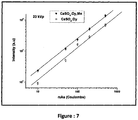
Fig. 7 : TL Response for new CaSO4:Dy, Mn and CaSO4:Dy in mammography. The radiation dose was varied by charging x ray tube current (mA) and exposure time(s). - Thus, according to this invention is provided a process for the preparation of a thermoluminescent phosphor.
- In accordance with this invention, the thermoluminescent phosphor to be produced is CaSO4: Dy,Mn. The procedure of preparation of CaSO4 involves the standard production route known which is based on the recrystallization method as proposed by Yamashita et al [T. Yamashita, N. Nada, H. Onishi and S. Kitamura, Calcium sulphate activated by thulium or dysprosium for thermoluminescence dosimetry, Health Phys. 21 (1971) 295.]. However the difference between the method adopted by Yamashita et al. and the process according to the instant invention lies in the activator compounds i.e. chloride form of Dysprosium (in the form of DyCl3) was used by us unlike oxide salt of Dysprosium (Dy2O3) used by Yamashita. Moreover, the inventors have further added Manganese (in the form of MnCl2) as a co-dopant to produce CaSO4:Dy,Mn to increase its sensitiviy, and they have carried out thorough evaluation of this new material CaSO4:Dy,Mn prepared by them. All the samples of CaSO4:Dy,Mn were prepared dissolving Analytical Reagent (AR) grade CaSO4 matrix and the dopants in desired ratios and quantities in hot concentrated sulphuric acid, and mixing the solutions, followed by slow evaporation of the solvent therefrom using a temperature controlled electric heater in a well-closed system to avoid escape of the acid vapours to the atmosphere. The apparatus used in this method is shown in
Figure 1 . The solution is heated in a four-necked flask (1) seated in a heating mantle (2). The main neck and two other necks are closed and the remaining neck is connected to a flask (4), through a condensation (3). This flask (4) is the acid condensing flask (4). The acid vapours are sucked through an air flux created by suction pump, and collected in the flask (5). The powder thus obtained in the closed system is the required microcrystalline phosphor of CaSO4:Dy,Mn. The sample is washed several times with water to remove any traces of residual acid. - First of all CaSO4:Dy was prepared by adding DyCl3 (which is at variance with the method of Yamashita et. al to CaSO4). Several samples of CaSO4:Dy for different concentrations of dysprosium varying from 0.05 to 0.3 mol% were prepared and the TL glow curves were recorded. It was found that the optimized concentration of Dy in CaSO4:Dy came out to be 0.1 mol%. A plot of the TL intensity as a function of Dysprosium concentration in CaSO4 after a gamma radiation dose of 1 Gray (Gy) clearly shows that the highest signal intensity for same radiation dose is for 0.1 mol% of Dysprosium in CaSO4:Dy.
- The optimized concentration of 0.1 mol% of Dy was kept constant for preparation of other samples. In this way the CaSO4:Dy (in 0.1mol%) was prepared so that it may serve as control.
- Next CaSO4:Mn was prepared by doping host CaSO4 with Manganese (Mn) in the form of MnCl2 by the same method of preparation keeping the Mn concentration to be 0.1 mol%. CaSO4:Mn was prepared as control phosphor in order to carry out comparison studies with new phosphor CaSO4:Dy,Mn and another control phosphor CaSO4:Dy.
- A new TL phosphor CaSO4:Dy,Mn was prepared by adding Dy in the form of DyCl3 and Mn in the form of MnCl2 into the host compound CaSO4. The molar concentration of the dopants Dy and Mn were varied and it was that the concentration affects the sensitivity of the phosphor. For arriving at the maximum TL read out signal from new TL material CaSO4:Dy,Mn the ratio of Dy and Mn was varied as CaSO4:Dy (x),Mn (1-x) where x varies from 0 to 1 in steps of 0.025 mol%, total quantity of dopants being 0.1 mol%.
Fig. 2 shows the TL glow curves of the sample with variation in Dy and Mn doping for radiation dose of 1 Gy. It is observed that the TL intensity increases with the increase in the Mn concentration. The maximum TL intensity was received in the CaSO4:Dy(0.025),Mn(0.075) combination. - Table 1 shows the effect on TL intensity with variation in the dopant concentration of Dy and Mn.
Table 1. Variation of TL intensity with variation in relative ratio of dopants Dy and Mn in CaSO4. The maximum intensity was found to be for CaSO4:Dy (0.025), Mn(0.075) CaSO4:Dy(x),Mn(1-x) (x=0-1 in steps of 0.025) Dy Mn TL Intensity (a.u) (peak height) CaSO4: Dy 1 0 2.06×10 CaSO4:Dy(0.025),Mn(0.075) 0.025 0.075 4.61×10⁷ CaSO4:Dy(0.050),Mn(0.050) 0.050 0.050 3.62×10⁷ CaSO4:Dy(0.075),Mn(0.025) 0.075 0.025 2.85×10⁷ CaSO4: Mn 0 1 3.18×10⁷ - The invention will now be explained in greater details with the help of the following non-limiting example.
- 8.60 g of CaSO4.2H2O was taken in conc H2SO4 (around 50 ml), and a solution was prepared. 0.075mol% of MnCl2.4H2O (∼0.0074g) and 0.025mol% of DyCl2.6H2O (∼0.0047g) in powder form were added to the above solution and mixed in a 4-necked round bottomed flask and was heated on a heating mantle. The set-up used for the reaction is shown in
Fig. 1 . The temperature was maintained at around 350°C, and the solvent was allowed to evaporate, which was sucked into a conical flask connected to the RB flask through a condenser and a suction pump. As the sulphuric acid was distilled off, a crystalline powder was left in the RB flask. This was the microcrystalline CaSO4:Dy(0.025), Mn(0.075) which was washed several times with water to remove any trace of residual acid. - In conclusion, three samples were prepared: control CaSO4:Dy(0.1 mol%), another control CaSO4:Mn(0.1 mol%) and the new phosphor CaSO4:Dy(0.025mol%), Mn(0.075mol%). All three were subjected to a gamma radiation dose of 1 Gray (Gy) from a Cesium-137 (137Cs) radioactive source.
Fig. 3 shows the comparative TL glow curves for the three samples shows that the new material CaSO4:Dy,Mn gives about twice TL intensity 4.61×10⁷ arbitrary unit (a.u.) than standard CaSO4:Dy (curve "a" inFig. 3 ) which is giving TL intensity 2.06×10⁷ a.u. Another control CaSO4:Mn has the peak at low temperature at around 110°C and hence prone to show pronounced fading of TL intensity with time(literature reports 40-85% fading in 3 days). The new phosphor CaSO4:Dy,Mn has peak at around 240°C and hence has much low fading of 11% in 3 months. - Since the sample CaSO4:Dy(0.025),Mn(0.075) showed a good TL intensity, it was further tested for its dose response with different doses of gamma irradiation. The sample was irradiated in a radiation dose range of 10 microGray (µGy) to 100 Gray (Gy). The TL response curves of CaSO4:Dy(0.025),Mn(0.075) samples irradiated by gamma rays are shown in
Fig. 4 . The response curve of the material irradiated by gamma rays with a dose range of 10 µGy to 100 Gy shows linearity in the full range. Linearity over a wide range and the ability to measure doses in the range of microgray makes this material ideal for personnel and environmental dosimetry. Experiments have shown that this new material can measure radiation dose as low as 10 microGray. This new material can be used to measure therapeutic doses (which is 2 Gy) as well since it maintains its linearity even in the range of Grays. Therefore, we conclude that this new TL material is equally sensitive from very low dose of microgray to large dose in Gray. It is noteworthy that 1Gy=1000000 µGy. - The TL fading curve of CaSO4:Dy(0.25),Mn(0.75) and the standard (control) phosphor CaSO4:Dy was also recorded and is shown in
Fig. 5 . Both the samples were irradiated with a radiation dose of 1 Gy and stored in a simple vial without taking any precautions to shield it from light and humidity and the glow curves were recorded at various intervals for a period of around 90 days. The variation in the peak intensity over the storage time gives the amount of fading in the sample. Fading of about 10% in CaSO4:Dy while the fading in our new phosphor CaSO4:Dy(0.25),Mn(0.75) was observed to be 11%. - The new thermoluminescence material CaSO4:Dy(0.25), Mn(0.75) is a very sensitive TL material which can measure small radiation accurately since it is about twice sensitive than the CaSO4:Dy. The new material is also capable of measuring large radiation doses since its response to radiation in linear in a very wide range. With the advancement of technology in medical imaging equipment (like digital radiography, computed radiography, computed tomography, digital mammography, DEXA etc.) the radiation exposure in imaging is getting smaller. The new TL material CaSO4:Dy, Mn being very sensitive can be used to measure the smaller radiation doses. Application of new Phosphor CaSO4:Dy, Mn.
- To confirm the capability of new CaSO4:Dy, Mn to measure smaller radiation dose, this new TL compound was irradiated along with control; CaSO4:Dy in a mammography machine (
Figure 6a ) and a radiography machine (Figure 6b ) pasted on human stimulation phantoms. - Mammography uses low-energy X-rays to image the human breast and is used as a diagnostic and a screening tool for detection of breast cancer tumor. The goal of mammography is the early detection of breast cancer typically through detection of characteristic masses and/or microcalifications. Mammograms use low doses of ionizing radiations to create images which are then analyzed by the Radiologists for any abnormal Findings. The examination is performed by selecting parameters such as kVp (peak kilo voltage) and mAs (milli Ampere second) which is applied to x-ray tube for generation of x-rays from x-ray tube. The selection of kVp and mAs determines the energy and quantity of x-ray photons. Therefore, kVp and mAs are selected on the basis of the breast thickness and density of the patient. For the mammography study CaSO4:Dy(0.25),Mn(0.75) and the standard (control) sample CaSO4:Dy were irradiated with 23 kVp x-rays with mAs varying in the range of 10 to 500 by a mammography X-ray unit manufactured by Philips Mammo Dignost using a breast simulator called mammography phantom. The radiation doses were varied by controlling the imaging machine parameters to obtain full range of radiation doses. It was seen that new CaSO4:Dy, Mn showed linear response to dose in whole dose range while the control CaSO4:Dy could not maintain the linear response at low doses (
Fig. 7 ). A plot of the variation of TL response curves (peak intensity) of both the samples with x-ray quantity (controlled by milliampere second) in mammography, shows that the sample CaSO4:Dy was sublinear below 100 mAs unlike the newly prepared sample CaSO4:Dy(0.25),Mn(0.75) which showed linearity in the full dose range. This significant feature of linearity along with good intensity in low dose ranges shown by our sample makes it in close proximity of an ideal phosphor. - This new TL material (phosphor) CaSO4:Dy(0.25),Mn(0.75) which has optimised Dy and Mn ratio exhibits improved TL properties and an increased TL intensity by a factor of approximately two over the existing standard CaSO4:Dy and overcomes the major disadvantage of high fading of CaSO4:Mn (due to low temperature peak of CaSO4:Mn). The standard (control) microcrystalline CaSO4:Dy phosphor (better known as TLD 900) is a sensitive phosphor but the sensitivity of the phosphor CaSO4:Dy(0.25),Mn(0.75) according to the invention is even better. Most of the phosphors known today show sublinear response at low doses and this poses a problem in estimating the low radiation doses. Since radiation doses in any amount entails certain risk, its dosimetry is important.
- CaSO4:Dy(0.25),Mn(0.75) material could be a good candidate for low doses as it has a good sensitivity at low doses and is linear to a wide range of radiation exposures. Also, the fading of CaSO4:Dy(0.25),Mn(0.75) is similar to that of CaSO4:Dy estimated over a period of three months. All these confirm that the new phosphor CaSO4:Dy(0.25),Mn(0.75) is more suitable for radiation dosimetry than standard CaSO4:Dy material.
Claims (2)
- A process for the preparation of a thermoluminescent phosphor, comprising the steps of separately dissolving calcium sulphate (CaSO4), Dysprosium chloride (DyCl3) and Manganese chloride (MnCl2) in hot concentrated sulphuric acid, to obtain sulphuric acid solutions of CaSO4, DyCl3 and MnCl2, mixing the solutions followed by slow evaporation of the solvent to obtain a powder of microcrystalline phosphor of CaSO4: Dy, Mn.
- The process as claimed in claim 1, wherein evaporation is carried out at 350°C in a closed system.
Applications Claiming Priority (2)
| Application Number | Priority Date | Filing Date | Title |
|---|---|---|---|
| IN302DE2014 | 2014-01-31 | ||
| PCT/IN2015/000064 WO2015114669A1 (en) | 2014-01-31 | 2015-02-02 | Sensitization of thermoluminescent dosimeter cas04:dy by co-doping with mn in particular proportion for measurement of low radiation doses and the method of preparation of cas04:dy, mn |
Publications (2)
| Publication Number | Publication Date |
|---|---|
| EP3100280A1 EP3100280A1 (en) | 2016-12-07 |
| EP3100280B1 true EP3100280B1 (en) | 2019-10-30 |
Family
ID=52727197
Family Applications (1)
| Application Number | Title | Priority Date | Filing Date |
|---|---|---|---|
| EP15711887.8A Active EP3100280B1 (en) | 2014-01-31 | 2015-02-02 | Method of preparation of cas04:dy, mn |
Country Status (4)
| Country | Link |
|---|---|
| US (1) | US10273406B2 (en) |
| EP (1) | EP3100280B1 (en) |
| CN (1) | CN106068320B (en) |
| WO (1) | WO2015114669A1 (en) |
Family Cites Families (4)
| Publication number | Priority date | Publication date | Assignee | Title |
|---|---|---|---|---|
| US3883748A (en) * | 1967-06-29 | 1975-05-13 | Matsushita Electric Industrial Co Ltd | Phosphor for thermoluminescent type radiation dosimeter |
| DE3628511A1 (en) | 1986-08-22 | 1988-03-03 | Roland Leroux | Method of determining the dose of and instant of exposure to radioactive radiation, material for carrying out the method and a method of preparing such a material |
| KR100426337B1 (en) * | 2002-01-30 | 2004-04-08 | 한국원자력연구소 | METHOD FOR FABRICATING CaSO4 THERMOLUMINESCENT DETECTORS FOR ELAPSED TIME OF ACCIDENT |
| CN102965100A (en) * | 2012-11-15 | 2013-03-13 | 华南理工大学 | Bivalent bismuth ion-doped barium sulfate red fluorescent material and preparation method thereof |
-
2015
- 2015-02-02 WO PCT/IN2015/000064 patent/WO2015114669A1/en not_active Ceased
- 2015-02-02 EP EP15711887.8A patent/EP3100280B1/en active Active
- 2015-02-02 US US15/115,430 patent/US10273406B2/en not_active Expired - Fee Related
- 2015-02-02 CN CN201580009712.2A patent/CN106068320B/en not_active Expired - Fee Related
Non-Patent Citations (1)
| Title |
|---|
| None * |
Also Published As
| Publication number | Publication date |
|---|---|
| CN106068320B (en) | 2019-09-20 |
| US10273406B2 (en) | 2019-04-30 |
| EP3100280A1 (en) | 2016-12-07 |
| WO2015114669A1 (en) | 2015-08-06 |
| CN106068320A (en) | 2016-11-02 |
| US20170166809A1 (en) | 2017-06-15 |
Similar Documents
| Publication | Publication Date | Title |
|---|---|---|
| Seco et al. | Review on the characteristics of radiation detectors for dosimetry and imaging | |
| US12128254B2 (en) | Multi-spectral fluorescence for in-vivo determination of proton energy and range in proton therapy | |
| Bahl et al. | CaSO4: Dy, Mn: A new and highly sensitive thermoluminescence phosphor for versatile dosimetry | |
| Nanto | Photostimulable Storage Phosphor Materials and Their Application to Radiation Monitoring. | |
| JP3777486B2 (en) | Phosphor, radiation detector using the same, and X-ray CT apparatus | |
| Yukihara et al. | Applications of optically stimulated luminescence in medical dosimetry | |
| Fernández et al. | Thermoluminescent dosimeters for low dose X-ray measurements | |
| JP2002156456A (en) | X-ray imaging system and imaging method | |
| Kawaguchi et al. | Energy dependence and angular dependence of an optically stimulated luminescence dosimeter in the mammography energy range | |
| Aboelezz et al. | Nano-barium–strontium sulfate as a new thermoluminescence dosimeter | |
| JP2014094996A (en) | Scintillator material, scintillator, radiation detector, and medical equipment | |
| Junot et al. | Feasibility study of CaSO4: Tb, Yb as a thermoluminescent dosimeter | |
| Musa et al. | Reproducibility assessment of commercial optically stimulated luminescence system in diagnostic X-ray beams | |
| US10273406B2 (en) | Sensitization of thermoluminescent dosimeter CaSO4:Dy by co-doping with Mn in particular proportion for measurement of low radiation doses and the method of preparation of CaSO4:Dy, Mn | |
| Martini et al. | Imaging performance of a CaWO4/CMOS sensor | |
| Palan et al. | Borate Phosphors for Radiation Dosimetery | |
| Cortés et al. | Electron absorbed dose measurements in LINACs by thermoluminescent dosimeters | |
| JPS61270298A (en) | Diamond as hot luminescence substance | |
| Riesen et al. | Optical storage phosphors and materials for ionizing radiation | |
| Nattudurai et al. | New characterization and evaluation of BaSO4: Eu as a thermoluminescent radiation dosimeter | |
| Dong et al. | Study on the angular dependence of personal exposure dosimeter–focus on thermoluminescent dosimeter and photoluminescent dosimeter | |
| Kurosawa et al. | Scintillation Properties of ${\rm Nd}^{3+} $-Doped ${\rm Lu} _ {2}{{\rm O} _3} $ Ceramics in the Visible and Infrared Regions | |
| Mahala et al. | Study of radiophotoluminescence of Eu doped CaSO4 phosphor for gamma dosimetric applications | |
| Shinde et al. | Development and Characterisation of a BaSO4: Eu, P Phosphor as a High Sensitive TL Dosemeter | |
| Mahala et al. | Gamma dosimetric properties of radiophotoluminescent CaSO4: Eu3+ with novel readout instrument |
Legal Events
| Date | Code | Title | Description |
|---|---|---|---|
| PUAI | Public reference made under article 153(3) epc to a published international application that has entered the european phase |
Free format text: ORIGINAL CODE: 0009012 |
|
| STAA | Information on the status of an ep patent application or granted ep patent |
Free format text: STATUS: REQUEST FOR EXAMINATION WAS MADE |
|
| 17P | Request for examination filed |
Effective date: 20160801 |
|
| AK | Designated contracting states |
Kind code of ref document: A1 Designated state(s): AL AT BE BG CH CY CZ DE DK EE ES FI FR GB GR HR HU IE IS IT LI LT LU LV MC MK MT NL NO PL PT RO RS SE SI SK SM TR |
|
| AX | Request for extension of the european patent |
Extension state: BA ME |
|
| DAX | Request for extension of the european patent (deleted) | ||
| STAA | Information on the status of an ep patent application or granted ep patent |
Free format text: STATUS: EXAMINATION IS IN PROGRESS |
|
| 17Q | First examination report despatched |
Effective date: 20180905 |
|
| RIC1 | Information provided on ipc code assigned before grant |
Ipc: C09K 11/77 20060101ALI20190403BHEP Ipc: G01T 1/20 20060101ALI20190403BHEP Ipc: G21K 4/00 20060101AFI20190403BHEP |
|
| GRAP | Despatch of communication of intention to grant a patent |
Free format text: ORIGINAL CODE: EPIDOSNIGR1 |
|
| STAA | Information on the status of an ep patent application or granted ep patent |
Free format text: STATUS: GRANT OF PATENT IS INTENDED |
|
| INTG | Intention to grant announced |
Effective date: 20190522 |
|
| GRAS | Grant fee paid |
Free format text: ORIGINAL CODE: EPIDOSNIGR3 |
|
| GRAA | (expected) grant |
Free format text: ORIGINAL CODE: 0009210 |
|
| STAA | Information on the status of an ep patent application or granted ep patent |
Free format text: STATUS: THE PATENT HAS BEEN GRANTED |
|
| AK | Designated contracting states |
Kind code of ref document: B1 Designated state(s): AL AT BE BG CH CY CZ DE DK EE ES FI FR GB GR HR HU IE IS IT LI LT LU LV MC MK MT NL NO PL PT RO RS SE SI SK SM TR |
|
| REG | Reference to a national code |
Ref country code: GB Ref legal event code: FG4D |
|
| REG | Reference to a national code |
Ref country code: CH Ref legal event code: EP |
|
| REG | Reference to a national code |
Ref country code: AT Ref legal event code: REF Ref document number: 1197026 Country of ref document: AT Kind code of ref document: T Effective date: 20191115 |
|
| REG | Reference to a national code |
Ref country code: DE Ref legal event code: R096 Ref document number: 602015040666 Country of ref document: DE |
|
| REG | Reference to a national code |
Ref country code: IE Ref legal event code: FG4D |
|
| REG | Reference to a national code |
Ref country code: LT Ref legal event code: MG4D |
|
| PG25 | Lapsed in a contracting state [announced via postgrant information from national office to epo] |
Ref country code: LV Free format text: LAPSE BECAUSE OF FAILURE TO SUBMIT A TRANSLATION OF THE DESCRIPTION OR TO PAY THE FEE WITHIN THE PRESCRIBED TIME-LIMIT Effective date: 20191030 Ref country code: SE Free format text: LAPSE BECAUSE OF FAILURE TO SUBMIT A TRANSLATION OF THE DESCRIPTION OR TO PAY THE FEE WITHIN THE PRESCRIBED TIME-LIMIT Effective date: 20191030 Ref country code: NL Free format text: LAPSE BECAUSE OF FAILURE TO SUBMIT A TRANSLATION OF THE DESCRIPTION OR TO PAY THE FEE WITHIN THE PRESCRIBED TIME-LIMIT Effective date: 20191030 Ref country code: PT Free format text: LAPSE BECAUSE OF FAILURE TO SUBMIT A TRANSLATION OF THE DESCRIPTION OR TO PAY THE FEE WITHIN THE PRESCRIBED TIME-LIMIT Effective date: 20200302 Ref country code: BG Free format text: LAPSE BECAUSE OF FAILURE TO SUBMIT A TRANSLATION OF THE DESCRIPTION OR TO PAY THE FEE WITHIN THE PRESCRIBED TIME-LIMIT Effective date: 20200130 Ref country code: FI Free format text: LAPSE BECAUSE OF FAILURE TO SUBMIT A TRANSLATION OF THE DESCRIPTION OR TO PAY THE FEE WITHIN THE PRESCRIBED TIME-LIMIT Effective date: 20191030 Ref country code: LT Free format text: LAPSE BECAUSE OF FAILURE TO SUBMIT A TRANSLATION OF THE DESCRIPTION OR TO PAY THE FEE WITHIN THE PRESCRIBED TIME-LIMIT Effective date: 20191030 Ref country code: GR Free format text: LAPSE BECAUSE OF FAILURE TO SUBMIT A TRANSLATION OF THE DESCRIPTION OR TO PAY THE FEE WITHIN THE PRESCRIBED TIME-LIMIT Effective date: 20200131 Ref country code: NO Free format text: LAPSE BECAUSE OF FAILURE TO SUBMIT A TRANSLATION OF THE DESCRIPTION OR TO PAY THE FEE WITHIN THE PRESCRIBED TIME-LIMIT Effective date: 20200130 Ref country code: PL Free format text: LAPSE BECAUSE OF FAILURE TO SUBMIT A TRANSLATION OF THE DESCRIPTION OR TO PAY THE FEE WITHIN THE PRESCRIBED TIME-LIMIT Effective date: 20191030 |
|
| REG | Reference to a national code |
Ref country code: NL Ref legal event code: MP Effective date: 20191030 |
|
| PG25 | Lapsed in a contracting state [announced via postgrant information from national office to epo] |
Ref country code: RS Free format text: LAPSE BECAUSE OF FAILURE TO SUBMIT A TRANSLATION OF THE DESCRIPTION OR TO PAY THE FEE WITHIN THE PRESCRIBED TIME-LIMIT Effective date: 20191030 Ref country code: HR Free format text: LAPSE BECAUSE OF FAILURE TO SUBMIT A TRANSLATION OF THE DESCRIPTION OR TO PAY THE FEE WITHIN THE PRESCRIBED TIME-LIMIT Effective date: 20191030 Ref country code: IS Free format text: LAPSE BECAUSE OF FAILURE TO SUBMIT A TRANSLATION OF THE DESCRIPTION OR TO PAY THE FEE WITHIN THE PRESCRIBED TIME-LIMIT Effective date: 20200229 |
|
| PG25 | Lapsed in a contracting state [announced via postgrant information from national office to epo] |
Ref country code: AL Free format text: LAPSE BECAUSE OF FAILURE TO SUBMIT A TRANSLATION OF THE DESCRIPTION OR TO PAY THE FEE WITHIN THE PRESCRIBED TIME-LIMIT Effective date: 20191030 |
|
| PG25 | Lapsed in a contracting state [announced via postgrant information from national office to epo] |
Ref country code: RO Free format text: LAPSE BECAUSE OF FAILURE TO SUBMIT A TRANSLATION OF THE DESCRIPTION OR TO PAY THE FEE WITHIN THE PRESCRIBED TIME-LIMIT Effective date: 20191030 Ref country code: CZ Free format text: LAPSE BECAUSE OF FAILURE TO SUBMIT A TRANSLATION OF THE DESCRIPTION OR TO PAY THE FEE WITHIN THE PRESCRIBED TIME-LIMIT Effective date: 20191030 Ref country code: ES Free format text: LAPSE BECAUSE OF FAILURE TO SUBMIT A TRANSLATION OF THE DESCRIPTION OR TO PAY THE FEE WITHIN THE PRESCRIBED TIME-LIMIT Effective date: 20191030 Ref country code: EE Free format text: LAPSE BECAUSE OF FAILURE TO SUBMIT A TRANSLATION OF THE DESCRIPTION OR TO PAY THE FEE WITHIN THE PRESCRIBED TIME-LIMIT Effective date: 20191030 Ref country code: DK Free format text: LAPSE BECAUSE OF FAILURE TO SUBMIT A TRANSLATION OF THE DESCRIPTION OR TO PAY THE FEE WITHIN THE PRESCRIBED TIME-LIMIT Effective date: 20191030 |
|
| REG | Reference to a national code |
Ref country code: DE Ref legal event code: R097 Ref document number: 602015040666 Country of ref document: DE |
|
| REG | Reference to a national code |
Ref country code: AT Ref legal event code: MK05 Ref document number: 1197026 Country of ref document: AT Kind code of ref document: T Effective date: 20191030 |
|
| PG25 | Lapsed in a contracting state [announced via postgrant information from national office to epo] |
Ref country code: SM Free format text: LAPSE BECAUSE OF FAILURE TO SUBMIT A TRANSLATION OF THE DESCRIPTION OR TO PAY THE FEE WITHIN THE PRESCRIBED TIME-LIMIT Effective date: 20191030 Ref country code: SK Free format text: LAPSE BECAUSE OF FAILURE TO SUBMIT A TRANSLATION OF THE DESCRIPTION OR TO PAY THE FEE WITHIN THE PRESCRIBED TIME-LIMIT Effective date: 20191030 Ref country code: IT Free format text: LAPSE BECAUSE OF FAILURE TO SUBMIT A TRANSLATION OF THE DESCRIPTION OR TO PAY THE FEE WITHIN THE PRESCRIBED TIME-LIMIT Effective date: 20191030 |
|
| PLBE | No opposition filed within time limit |
Free format text: ORIGINAL CODE: 0009261 |
|
| STAA | Information on the status of an ep patent application or granted ep patent |
Free format text: STATUS: NO OPPOSITION FILED WITHIN TIME LIMIT |
|
| REG | Reference to a national code |
Ref country code: CH Ref legal event code: PL |
|
| 26N | No opposition filed |
Effective date: 20200731 |
|
| REG | Reference to a national code |
Ref country code: BE Ref legal event code: MM Effective date: 20200229 |
|
| PG25 | Lapsed in a contracting state [announced via postgrant information from national office to epo] |
Ref country code: LU Free format text: LAPSE BECAUSE OF NON-PAYMENT OF DUE FEES Effective date: 20200202 Ref country code: MC Free format text: LAPSE BECAUSE OF FAILURE TO SUBMIT A TRANSLATION OF THE DESCRIPTION OR TO PAY THE FEE WITHIN THE PRESCRIBED TIME-LIMIT Effective date: 20191030 |
|
| PG25 | Lapsed in a contracting state [announced via postgrant information from national office to epo] |
Ref country code: SI Free format text: LAPSE BECAUSE OF FAILURE TO SUBMIT A TRANSLATION OF THE DESCRIPTION OR TO PAY THE FEE WITHIN THE PRESCRIBED TIME-LIMIT Effective date: 20191030 Ref country code: AT Free format text: LAPSE BECAUSE OF FAILURE TO SUBMIT A TRANSLATION OF THE DESCRIPTION OR TO PAY THE FEE WITHIN THE PRESCRIBED TIME-LIMIT Effective date: 20191030 Ref country code: LI Free format text: LAPSE BECAUSE OF NON-PAYMENT OF DUE FEES Effective date: 20200229 Ref country code: CH Free format text: LAPSE BECAUSE OF NON-PAYMENT OF DUE FEES Effective date: 20200229 |
|
| PG25 | Lapsed in a contracting state [announced via postgrant information from national office to epo] |
Ref country code: IE Free format text: LAPSE BECAUSE OF NON-PAYMENT OF DUE FEES Effective date: 20200202 Ref country code: FR Free format text: LAPSE BECAUSE OF NON-PAYMENT OF DUE FEES Effective date: 20200229 |
|
| PG25 | Lapsed in a contracting state [announced via postgrant information from national office to epo] |
Ref country code: BE Free format text: LAPSE BECAUSE OF NON-PAYMENT OF DUE FEES Effective date: 20200229 |
|
| PGFP | Annual fee paid to national office [announced via postgrant information from national office to epo] |
Ref country code: GB Payment date: 20220221 Year of fee payment: 8 Ref country code: DE Payment date: 20220221 Year of fee payment: 8 |
|
| PG25 | Lapsed in a contracting state [announced via postgrant information from national office to epo] |
Ref country code: TR Free format text: LAPSE BECAUSE OF FAILURE TO SUBMIT A TRANSLATION OF THE DESCRIPTION OR TO PAY THE FEE WITHIN THE PRESCRIBED TIME-LIMIT Effective date: 20191030 Ref country code: MT Free format text: LAPSE BECAUSE OF FAILURE TO SUBMIT A TRANSLATION OF THE DESCRIPTION OR TO PAY THE FEE WITHIN THE PRESCRIBED TIME-LIMIT Effective date: 20191030 Ref country code: CY Free format text: LAPSE BECAUSE OF FAILURE TO SUBMIT A TRANSLATION OF THE DESCRIPTION OR TO PAY THE FEE WITHIN THE PRESCRIBED TIME-LIMIT Effective date: 20191030 |
|
| PG25 | Lapsed in a contracting state [announced via postgrant information from national office to epo] |
Ref country code: MK Free format text: LAPSE BECAUSE OF FAILURE TO SUBMIT A TRANSLATION OF THE DESCRIPTION OR TO PAY THE FEE WITHIN THE PRESCRIBED TIME-LIMIT Effective date: 20191030 |
|
| REG | Reference to a national code |
Ref country code: DE Ref legal event code: R119 Ref document number: 602015040666 Country of ref document: DE |
|
| GBPC | Gb: european patent ceased through non-payment of renewal fee |
Effective date: 20230202 |
|
| PG25 | Lapsed in a contracting state [announced via postgrant information from national office to epo] |
Ref country code: GB Free format text: LAPSE BECAUSE OF NON-PAYMENT OF DUE FEES Effective date: 20230202 |
|
| PG25 | Lapsed in a contracting state [announced via postgrant information from national office to epo] |
Ref country code: GB Free format text: LAPSE BECAUSE OF NON-PAYMENT OF DUE FEES Effective date: 20230202 Ref country code: DE Free format text: LAPSE BECAUSE OF NON-PAYMENT OF DUE FEES Effective date: 20230901 |