EP3099003A1 - Efficient key derivation with forward secrecy - Google Patents
Efficient key derivation with forward secrecy Download PDFInfo
- Publication number
- EP3099003A1 EP3099003A1 EP16169448.4A EP16169448A EP3099003A1 EP 3099003 A1 EP3099003 A1 EP 3099003A1 EP 16169448 A EP16169448 A EP 16169448A EP 3099003 A1 EP3099003 A1 EP 3099003A1
- Authority
- EP
- European Patent Office
- Prior art keywords
- master key
- value
- new
- session
- key
- Prior art date
- Legal status (The legal status is an assumption and is not a legal conclusion. Google has not performed a legal analysis and makes no representation as to the accuracy of the status listed.)
- Granted
Links
Images


Classifications
-
- H—ELECTRICITY
- H04—ELECTRIC COMMUNICATION TECHNIQUE
- H04L—TRANSMISSION OF DIGITAL INFORMATION, e.g. TELEGRAPHIC COMMUNICATION
- H04L63/00—Network architectures or network communication protocols for network security
- H04L63/06—Network architectures or network communication protocols for network security for supporting key management in a packet data network
- H04L63/061—Network architectures or network communication protocols for network security for supporting key management in a packet data network for key exchange, e.g. in peer-to-peer networks
-
- H—ELECTRICITY
- H04—ELECTRIC COMMUNICATION TECHNIQUE
- H04L—TRANSMISSION OF DIGITAL INFORMATION, e.g. TELEGRAPHIC COMMUNICATION
- H04L9/00—Cryptographic mechanisms or cryptographic arrangements for secret or secure communications; Network security protocols
- H04L9/08—Key distribution or management, e.g. generation, sharing or updating, of cryptographic keys or passwords
- H04L9/0816—Key establishment, i.e. cryptographic processes or cryptographic protocols whereby a shared secret becomes available to two or more parties, for subsequent use
-
- H—ELECTRICITY
- H04—ELECTRIC COMMUNICATION TECHNIQUE
- H04L—TRANSMISSION OF DIGITAL INFORMATION, e.g. TELEGRAPHIC COMMUNICATION
- H04L63/00—Network architectures or network communication protocols for network security
- H04L63/06—Network architectures or network communication protocols for network security for supporting key management in a packet data network
- H04L63/062—Network architectures or network communication protocols for network security for supporting key management in a packet data network for key distribution, e.g. centrally by trusted party
-
- H—ELECTRICITY
- H04—ELECTRIC COMMUNICATION TECHNIQUE
- H04L—TRANSMISSION OF DIGITAL INFORMATION, e.g. TELEGRAPHIC COMMUNICATION
- H04L9/00—Cryptographic mechanisms or cryptographic arrangements for secret or secure communications; Network security protocols
- H04L9/08—Key distribution or management, e.g. generation, sharing or updating, of cryptographic keys or passwords
- H04L9/0861—Generation of secret information including derivation or calculation of cryptographic keys or passwords
Definitions
- Various embodiments disclosed herein relate generally to secure channel communications and, more particularly but not exclusively, to session key derivation and master key secrecy.
- a secure channel When two devices want to communicate securely, they typically first establish a secure channel. This channel will provide protection for confidentiality, integrity, and/or authentication of the exchanged messages.
- the method of choice to implement this secure channel is usually based on symmetric cryptography. In that setting, both devices first share a common and secret symmetric key usually called the master key.
- the master key is typically either predefined at manufacturing time or obtained via public key-based key exchange protocols (for instance elliptic curve Diffie-Hellman). In well-designed secure channels, the master key is never used as-is to encrypt, authenticate, or sign the messages. Instead, the master key is used to generate so-called session keys that are then each dedicated to a particular task (like encryption or authentication) for a limited period of time.
- Non-transitory machine-readable medium encoded with instructions for execution by a processor, the non-transitory machine-readable medium including: instructions for determining a master key value for use in secure communications with an external device, wherein the master key value is used as a master key; instructions for deriving a session key using the master key; instructions for generating a new master key value based on the master key; instructions for deleting the current master key value; and instructions for using the new master key value as the master key.
- a device including a processor, the processor being configured to determine a master key value for use in secure communications with an external device, wherein the master key value is used as a master key, derive a session key using the master key, generate a new master key value based on the master key, delete the current master key value, and use the new master key value as the master key.
- Various embodiments described herein relate to a method for execution by a processor, the method including: determining a master key value for use in secure communications with an external device, wherein the master key value is used as a master key; deriving a session key using the master key; generating a new master key value based on the master key; deleting the current master key value, and using the new master key value as the master key.
- generating a new master key value based on the master key comprises: combining the session key with at least one additional session key derived using the master key to form the new master key value.
- generating a new master key value based on the master key comprises: combining the current master key value with at least the session key to form the new master key.
- generating a new master key value comprises encrypting a constant value using the master key.
- generating a new master key value comprises applying an XOR function to two or more cryptographic keys.
- deriving at least one session key using the master key comprises: encrypting at least one constant value using the master key.
- deriving at least one session key using the master key comprises: combining the current value of the master key with the new value of the master key to produce a session key.
- the method further comprises periodically re-executing generating a new master key.
- negotiating a master key value with the external device comprises negotiating with a secure element that is part of the same device as the processor.
- the instructions for generating a new master key value based on the master key include: instructions for combining the session key with at least one additional session key derived using the master key to form the new master key value.
- the instructions for generating a new master key value based on the master key include: instructions for combining the current master key value with at least the session key to form the new master key.
- the instructions for generating a new master key value include instructions for encrypting a constant value using the master key.
- the instructions for generating a new master key value include instructions for applying an XOR function to two or more cryptographic keys.
- the instructions for deriving at least one session key using the master key include: instructions for encrypting at least one constant value using the master key.
- the instructions for deriving at least one session key using the master key include: instructions for combining the current value of the master key with the new value of the master key to produce a session key.
- Various embodiments additionally include instructions for periodically re-executing the instructions for generating a new master key.
- the instructions for negotiating a master key value with a different device include instructions for negotiating with a secure element that is part of the same device as the processor.
- non-transitory machine-readable medium is encoded with instructions for execution by a secure element within a host device.
- Various embodiments described herein attempt to provide forward secrecy for secured communications by periodically altering the master key and discarding all old versions of the master key. Both parties to a communication alter the master key in the same way, such that renegotiation of the master key need not be performed; instead, both devices modify the master key according to the same protocol and therefore always hold the same version of the master key. In this way, even if the current master key is compromised, the attacker does not have access to previous versions of the master key and therefore may not be able to decrypt previously-intercepted communications.
- FIG. 1 illustrates an example of a hardware system 100 for performing secure communications.
- the hardware system 100 may be virtually any device that communicates using an encrypted protocol.
- the device 100 includes a processor 120, memory 130, secure element 140, network interface 150, and storage 160 interconnected via one or more system buses 110. It will be understood that FIG. 1 constitutes, in some respects, an abstraction and that the actual organization of the components of the device 100 may be more complex than illustrated.
- the processor 120 may be any hardware device capable of executing instructions stored in memory 130 or storage 160 or otherwise processing data.
- the processor may include a microprocessor, field programmable gate array (FPGA), application-specific integrated circuit (ASIC), or other similar devices.
- FPGA field programmable gate array
- ASIC application-specific integrated circuit
- the memory 130 may include various memories such as, for example L1, L2, or L3 cache or system memory. As such, the memory 130 may include static random access memory (SRAM), dynamic RAM (DRAM), flash memory, read only memory (ROM), or other similar memory devices.
- SRAM static random access memory
- DRAM dynamic RAM
- ROM read only memory
- the secure element 140 may be a device for performing secured functions such as, for example, storing secret information or performing cryptographic processing.
- the secure element 140 may include hardware such as a processor, a memory, and an interface to the bus 110.
- the rest of the hardware device 100 may be referred to as a host device to the secure element.
- the secure element 140 and processor 120 both implement a session key derivation method, such as one of the examples described herein, to enable secure communications therebetween.
- only one of the secure element 140 and processor 120 may implement such a method along with another external device which is accessible via the network interface.
- the network interface 150 may include one or more devices for enabling communication with other hardware devices.
- the network interface 150 may include a network interface card (NIC) configured to communicate according to the Ethernet protocol.
- the network interface 150 may implement a TCP/IP stack for communication according to the TCP/IP protocols.
- the network interface may include a near-field communication (NFC) chip, 3G chip, or 4G chip along with appropriate antennas to enable wireless communications.
- NFC near-field communication
- the storage 160 may include one or more machine-readable storage media such as read-only memory (ROM), random-access memory (RAM), magnetic disk storage media, optical storage media, flash-memory devices, or similar storage media.
- the storage 160 may store instructions for execution by the processor 120 or data upon with the processor 120 may operate.
- the storage 160 may store a base operating system 161 for controlling various basic operations of the hardware 100 and multiple applications 162 for performing various functions on behalf of the user.
- the applications 162 may include a web browser, a music player, or a wireless payment application (or a non-secured portion thereof, with the secured portion residing on the secure element 140).
- the storage 160 also stores a master key 163 and multiple session keys 164.
- the initial value of the master key 163 is pre-configured as stored in the storage 160 at the time of device manufacturing while in other embodiments the initial value of the master key 163 is negotiated between two devices according to an appropriate key exchange protocol.
- the storage 160 includes master key exchange instructions 165 that transmit a master key value to or receive a master key value from another device.
- the storage 160 also includes encryption instructions 166 such as, for example, an AES implementation that can be used in conjunction with the session keys 166 to encrypt communications.
- the storage 160 includes session key generation instructions 167.
- the session key generation instructions 167 also include master key modification instructions 168 that periodically alter the master key 163 value.
- the master key modification instructions 168 may generate a new master key value and subsequently delete the current master key value by, for example, overwriting the current master key value with the new master key value or other data or by freeing an area in memory storing the current master key value.
- master key modification instructions 168 may generate a new master key value and subsequently delete the current master key value by, for example, overwriting the current master key value with the new master key value or other data or by freeing an area in memory storing the current master key value.
- the memory 130 may also be considered to constitute a “storage device” and the storage 160 may be considered a “memory.” Various other arrangements will be apparent. Further, the memory 130 and storage 160 may both be considered to be “non-transitory machine-readable media.” As used herein, the term “non-transitory” will be understood to exclude transitory signals but to include all forms of storage, including both volatile and non-volatile memories.
- the various components may be duplicated in various embodiments.
- the processor 120 may include multiple microprocessors that are configured to independently execute the methods described herein or are configured to perform steps or subroutines of the methods described herein such that the multiple processors cooperate to achieve the functionality described herein.
- the various hardware components may belong to separate physical systems.
- the processor 120 may include a first processor in a first server and a second processor in a second server.
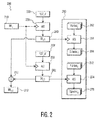
- FIG. 2 illustrates a first example of a method 200 for generating session keys and a new master key.
- the method 200 may correspond to the session key generation instructions 167 of FIG. 1 .
- the method 200 utilizes a current master key 210 to generate two session keys 240, 242.
- the method 200 encrypts two constants 220, 222 using an AES encryption algorithm (e.g ., in ECB mode applied to one block) 230, 232 and the current master key 210.
- the constants 220, 222 may be any values that two implementations of the method 200 agree will be used for generation of the session keys 240, 242.
- these constants 220, 222 may be pre-configured literal values, agreed-upon variables, or a combination thereof.
- CST_A 220 may be a counter value appended to a device identifier
- CST_B 222 may be a current time (e.g ., the current hour and minute) appended to the device identifier. It will be apparent that virtually any value may be used as a constant 220, 222 as long as both parties to the communication are agreed as to which values will be used. In various embodiments, the selected constants need not be kept secret.
- session keys 240, 242 may be used as part of ordinary cryptographic operations 260 performed by the operating system or applications.
- the session keys 240, 242 may be used by other AES processes 264, 274 to encrypt plaintext 262, 272 for transmission to another device as ciphertext 266, 276 (or to decrypt ciphertext 266, 276 into usable plaintext 262, 274).
- additional session keys may be generated in similar, agreed-upon manners.
- the method 200 generates a new master key 212 to replace the current master key 210 by combining the two session keys 240, 242.
- the session keys are combined using an exclusive or (XOR) operation 250.
- XOR exclusive or
- other combination functions may be used such as a not-and (NAND) operation, encryption of one session key using another, or any other transformative function.
- more than two session keys may be combined to form the new master key value 212. For example, four session keys may be XOR'ed together to produce a single master key value.
- the new master key value 212 After the new master key value 212 is generated, it replaces the old master key value 210.
- the method may overwrite a master key variable or space in memory with the new value 212, thereby deleting the old master key value 210.
- the method 200 provides forward secrecy. It will be appreciated that the method 200 may be executed periodically to refresh the session keys 240, 242 and, as such, the value of the master key may periodically change.
- an attacker that has compromised the session keys 240, 242 may generate the next master key 212 and, as such, may be able to generate each new session key in the future.
- various implementations may also utilize the old value of the master key in generating the new master key; as such, the attacker would also have to compromise the old value of the master key, which is generally protected using different, and often more stringent, techniques from those used to protect the session key.
- FIG. 3 illustrates a second example of a method 300 for generating session keys and a new master key.
- the method 300 may correspond to the session key generation instructions 167 of FIG. 1 .
- the method 300 is largely similar to the previous example method 200.
- a master key 310 is used to encrypt 330, 332 agreed-upon constants 320, 322 to produce session keys 340, 342.
- the session keys 340, 342 may then be used for secure communication operations 360 by the OS or applications to, for example, encrypt 364, 374 plaintext communications 362, 372 to produce encrypted communications 366, 376 (or to perform the reverse process of decryption).
- the method 300 combines the old master key value 310 with one or more of the session keys 340, 342. As shown, the master key 310 is combined with a first session key 340 via an XOR operation 350, the result of which is then combined with a second session key 342 via another XOR operation 352. As before, fewer or additional session keys may utilized and alternative or additional combination techniques may be used.
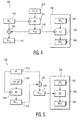
- FIG. 4 illustrates a third example of a method 400 for generating a session key and a new master key.
- the method 400 may correspond to the session key generation instructions 167 of FIG. 1 . As shown, the method is similar to the previous example method 300.
- the method 400 uses a master key 410 to encrypt 430 an agreed-upon constant 420 to produce a session key 440.
- the session key 440 may then be used for secure communication operations 460 by the OS or applications to, for example, encrypt 464 plaintext communications 462 to produce encrypted communications 466 (or to perform the reverse process of decryption).
- the method 400 combines the old master key value 410 with one session key 440. As shown, the combination operation is an XOR 450. As before, fewer or additional session keys may utilized and alternative or additional combination techniques may be used.
- the third example method 400 is similar to the second example method 300 with the difference that the new master key 412 may be generated using only a single session key (and the old value for the master key).
- the method 400 may be used to modify the master key after generation of each new session key.
- the method 400 may only be used to modify the master key when a session key for a specific function is generated. For example, if an implementation generates different session keys for encryption and authentication, the method 400 may only be used to change the master key whenever the session key for the encryption task (and not for the authentication task) is generated.
- the method 400 may only be used to change the master key whenever the session key for the encryption task (and not for the authentication task) is generated.
- FIG. 5 illustrates a fourth example of a method 500 for generating a session key and a new master key.
- the method 500 may correspond to the session key generation instructions 167 of FIG. 1 .
- This fourth example method 500 illustrates the use of a different combination function to create the new master key (as well as an alternative method to create a session key).
- the method 500 first uses the current master key value 510 to generate a new master key value 512. Specifically, the method 500 encrypts 530 a constant value 520 that, as with previously-described constant values 220, 222, 320, 322, 420 is agreed-upon by the parties to the secure communication and between which the master key is shared. The result of the encryption step 530 is taken as the new value of the master key 512.
- the new master key 512 After the new master key 512 is generated, it can be used along with the old master key 510 to generate a new session key 540. Specifically, as shown, the two master keys 510, 512 are combined via an XOR operation 550 to produce a session key 540. The session key 540 may then be used for secure communication operations 560 by the OS or applications to, for example, encrypt 564 plaintext communications 562 to produce encrypted communications 566 (or to perform the reverse process of decryption). After the session key 540 is generated, the method 500 may delete the old master key value 510 to further guard against the value being compromised.
- the method 500 may be used to modify the master key with the generation of each new session key.
- the method 500 may only be used to modify the master key when a session key for a specific function is to be generated. For example, if an implementation generates different session keys for encryption and authentication, the method 500 may only be used to change the master key whenever the session key for the encryption task (and not for the authentication task) is generated.
- the method 500 may be modified to not produce any session key at all, executing only the encryption operation 530 to generate the new master key 512.
- the parties to the communication may be configured to periodically alter their master key based on such a modified method.
- Various other modifications will be apparent.
- various embodiments enable the efficient derivation of session keys with the benefit of forward secrecy. For example, by periodically generating a new master key according to an agreed-upon process, the parties to a communication can provide forward secrecy to the master key without communicating each new master key to each other. Further, by using agreed-upon constants and simple combination operations to generate master and session keys, various embodiments are able to quickly and efficiently derive encryption keys necessary for secure communications. Such embodiments may be particularly beneficial in environments where secure communications are to be performed very quickly such as, for example, an "instant on" scenario (e.g ., a mobile device is activated or unlocked by a fingerprint scan which is compared against a fingerprint key stored in a secure element of the mobile device).
- an "instant on” scenario e.g ., a mobile device is activated or unlocked by a fingerprint scan which is compared against a fingerprint key stored in a secure element of the mobile device.
- various embodiments of the invention may be implemented in hardware.
- various embodiments may be implemented as instructions stored on a non-transitory machine-readable storage medium, such as a volatile or non-volatile memory, which may be read and executed by at least one processor to perform the operations described in detail herein.
- a machine-readable storage medium may include any mechanism for storing information in a form readable by a machine, such as a personal or laptop computer, a server, or other computing device.
- a non-transitory machine-readable storage medium excludes transitory signals but may include both volatile and non-volatile memories, including but not limited to read-only memory (ROM), random-access memory (RAM), magnetic disk storage media, optical storage media, flash-memory devices, and similar storage media.
- any block diagrams herein represent conceptual views of illustrative circuitry embodying the principles of the invention.
- any flow charts, flow diagrams, state transition diagrams, pseudo code, and the like represent various processes which may be substantially represented in machine readable media and so executed by a computer or processor, whether or not such computer or processor is explicitly shown.
Landscapes
- Engineering & Computer Science (AREA)
- Computer Security & Cryptography (AREA)
- Computer Networks & Wireless Communication (AREA)
- Signal Processing (AREA)
- Computer Hardware Design (AREA)
- Computing Systems (AREA)
- General Engineering & Computer Science (AREA)
- Mobile Radio Communication Systems (AREA)
Abstract
Description
- Various embodiments disclosed herein relate generally to secure channel communications and, more particularly but not exclusively, to session key derivation and master key secrecy.
- When two devices want to communicate securely, they typically first establish a secure channel. This channel will provide protection for confidentiality, integrity, and/or authentication of the exchanged messages. The method of choice to implement this secure channel is usually based on symmetric cryptography. In that setting, both devices first share a common and secret symmetric key usually called the master key. The master key is typically either predefined at manufacturing time or obtained via public key-based key exchange protocols (for instance elliptic curve Diffie-Hellman). In well-designed secure channels, the master key is never used as-is to encrypt, authenticate, or sign the messages. Instead, the master key is used to generate so-called session keys that are then each dedicated to a particular task (like encryption or authentication) for a limited period of time.
- A brief summary of various embodiments is presented below. Some simplifications and omissions may be made in the following summary, which is intended to highlight and introduce some aspects of the various embodiments, but not to limit the scope of the invention. Detailed descriptions of a preferred embodiment adequate to allow those of ordinary skill in the art to make and use the inventive concepts will follow in later sections.
- Various embodiments described herein relate to a non-transitory machine-readable medium encoded with instructions for execution by a processor, the non-transitory machine-readable medium including: instructions for determining a master key value for use in secure communications with an external device, wherein the master key value is used as a master key; instructions for deriving a session key using the master key; instructions for generating a new master key value based on the master key; instructions for deleting the current master key value; and instructions for using the new master key value as the master key.
- Various embodiments described herein relate to a device including a processor, the processor being configured to determine a master key value for use in secure communications with an external device, wherein the master key value is used as a master key, derive a session key using the master key, generate a new master key value based on the master key, delete the current master key value, and use the new master key value as the master key.
- Various embodiments described herein relate to a method for execution by a processor, the method including: determining a master key value for use in secure communications with an external device, wherein the master key value is used as a master key; deriving a session key using the master key; generating a new master key value based on the master key; deleting the current master key value, and using the new master key value as the master key.
- Various embodiments are described wherein generating a new master key value based on the master key comprises: combining the session key with at least one additional session key derived using the master key to form the new master key value.
- Various embodiments are described wherein generating a new master key value based on the master key comprises: combining the current master key value with at least the session key to form the new master key.
- Various embodiments are described wherein generating a new master key value comprises encrypting a constant value using the master key.
- Various embodiments are described wherein generating a new master key value comprises applying an XOR function to two or more cryptographic keys.
- Various embodiments are described wherein deriving at least one session key using the master key comprises: encrypting at least one constant value using the master key.
- Various embodiments are described wherein deriving at least one session key using the master key comprises: combining the current value of the master key with the new value of the master key to produce a session key.
- Various embodiments are described wherein the method further comprises periodically re-executing generating a new master key.
- Various embodiments are described wherein negotiating a master key value with the external device comprises negotiating with a secure element that is part of the same device as the processor.
- Various embodiments are described wherein the instructions for generating a new master key value based on the master key include: instructions for combining the session key with at least one additional session key derived using the master key to form the new master key value.
- Various embodiments are described wherein the instructions for generating a new master key value based on the master key include: instructions for combining the current master key value with at least the session key to form the new master key.
- Various embodiments are described wherein the instructions for generating a new master key value include instructions for encrypting a constant value using the master key.
- Various embodiments are described wherein the instructions for generating a new master key value include instructions for applying an XOR function to two or more cryptographic keys.
- Various embodiments are described wherein the instructions for deriving at least one session key using the master key include: instructions for encrypting at least one constant value using the master key.
- Various embodiments are described wherein the instructions for deriving at least one session key using the master key include: instructions for combining the current value of the master key with the new value of the master key to produce a session key.
- Various embodiments additionally include instructions for periodically re-executing the instructions for generating a new master key.
- Various embodiments are described wherein the instructions for negotiating a master key value with a different device include instructions for negotiating with a secure element that is part of the same device as the processor.
- Various embodiments are described wherein the non-transitory machine-readable medium is encoded with instructions for execution by a secure element within a host device.
- In order to better understand various embodiments, reference is made to the accompanying drawings, wherein:
-
FIG. 1 illustrates an example of a hardware system for performing secure communications; -
FIG. 2 illustrates a first example of a method for generating session keys and a new master key; -
FIG. 3 illustrates a second example of a method for generating session keys and a new master key; -
FIG. 4 illustrates a third example of a method for generating a session key and a new master key; and -
FIG. 5 illustrates a fourth example of a method for generating a session key and a new master key. - To facilitate understanding, identical reference numerals have been used to designate elements having substantially the same or similar structure or substantially the same or similar function.
- The description and drawings presented herein illustrate various principles. It will be appreciated that those skilled in the art will be able to devise various arrangements that, although not explicitly described or shown herein, embody these principles and are included within the scope of this disclosure. As used herein, the term, "or" refers to a non-exclusive or (i.e., and/or), unless otherwise indicated (e.g., "or else" or "or in the alternative"). Additionally, the various embodiments described herein are not necessarily mutually exclusive and may be combined to produce additional embodiments that incorporate the principles described herein.
- As noted above, many secure communications implementations utilize a shared master key between devices which is then used to generate session keys that are actually used for tasks such as encryption and digital signing. If the master key is compromised, however, an attacker will be able to generate the session keys themselves and access the content of any intercepted communications, including both future and past communications.
- Various embodiments described herein attempt to provide forward secrecy for secured communications by periodically altering the master key and discarding all old versions of the master key. Both parties to a communication alter the master key in the same way, such that renegotiation of the master key need not be performed; instead, both devices modify the master key according to the same protocol and therefore always hold the same version of the master key. In this way, even if the current master key is compromised, the attacker does not have access to previous versions of the master key and therefore may not be able to decrypt previously-intercepted communications.
-
FIG. 1 illustrates an example of ahardware system 100 for performing secure communications. Thehardware system 100 may be virtually any device that communicates using an encrypted protocol. As shown, thedevice 100 includes aprocessor 120,memory 130,secure element 140,network interface 150, andstorage 160 interconnected via one ormore system buses 110. It will be understood thatFIG. 1 constitutes, in some respects, an abstraction and that the actual organization of the components of thedevice 100 may be more complex than illustrated. - The
processor 120 may be any hardware device capable of executing instructions stored inmemory 130 orstorage 160 or otherwise processing data. As such, the processor may include a microprocessor, field programmable gate array (FPGA), application-specific integrated circuit (ASIC), or other similar devices. - The
memory 130 may include various memories such as, for example L1, L2, or L3 cache or system memory. As such, thememory 130 may include static random access memory (SRAM), dynamic RAM (DRAM), flash memory, read only memory (ROM), or other similar memory devices. - The
secure element 140 may be a device for performing secured functions such as, for example, storing secret information or performing cryptographic processing. As such, thesecure element 140 may include hardware such as a processor, a memory, and an interface to thebus 110. The rest of thehardware device 100 may be referred to as a host device to the secure element. In various embodiments, thesecure element 140 andprocessor 120 both implement a session key derivation method, such as one of the examples described herein, to enable secure communications therebetween. Alternatively, only one of thesecure element 140 andprocessor 120 may implement such a method along with another external device which is accessible via the network interface. - The
network interface 150 may include one or more devices for enabling communication with other hardware devices. For example, thenetwork interface 150 may include a network interface card (NIC) configured to communicate according to the Ethernet protocol. Additionally, thenetwork interface 150 may implement a TCP/IP stack for communication according to the TCP/IP protocols. Additionally or alternatively, the network interface may include a near-field communication (NFC) chip, 3G chip, or 4G chip along with appropriate antennas to enable wireless communications. Various alternative or additional hardware or configurations for thenetwork interface 150 will be apparent. - The
storage 160 may include one or more machine-readable storage media such as read-only memory (ROM), random-access memory (RAM), magnetic disk storage media, optical storage media, flash-memory devices, or similar storage media. In various embodiments, thestorage 160 may store instructions for execution by theprocessor 120 or data upon with theprocessor 120 may operate. For example, thestorage 160 may store abase operating system 161 for controlling various basic operations of thehardware 100 andmultiple applications 162 for performing various functions on behalf of the user. For example, theapplications 162 may include a web browser, a music player, or a wireless payment application (or a non-secured portion thereof, with the secured portion residing on the secure element 140). - To enable secure communications (e.g. with the
secure element 140 or via the network interface 150), thestorage 160 also stores amaster key 163 andmultiple session keys 164. In various embodiments, the initial value of themaster key 163 is pre-configured as stored in thestorage 160 at the time of device manufacturing while in other embodiments the initial value of themaster key 163 is negotiated between two devices according to an appropriate key exchange protocol. In the latter embodiments, thestorage 160 includes masterkey exchange instructions 165 that transmit a master key value to or receive a master key value from another device. Thestorage 160 also includesencryption instructions 166 such as, for example, an AES implementation that can be used in conjunction with thesession keys 166 to encrypt communications. - Periodically,
new session keys 164 are generated (at both ends of the secure communication channel) to reduce the likelihood that thesession keys 164 will be compromised. As such, thestorage 160 includes sessionkey generation instructions 167. To provide forward secrecy, the sessionkey generation instructions 167 also include masterkey modification instructions 168 that periodically alter themaster key 163 value. For example, the masterkey modification instructions 168 may generate a new master key value and subsequently delete the current master key value by, for example, overwriting the current master key value with the new master key value or other data or by freeing an area in memory storing the current master key value. Various example embodiments of the sessionkey generation instructions 167 and masterkey modification instructions 168 will be described below. - It will be apparent that various information described as stored in the
storage 160 may be additionally or alternatively stored in thememory 130. In this respect, thememory 130 may also be considered to constitute a "storage device" and thestorage 160 may be considered a "memory." Various other arrangements will be apparent. Further, thememory 130 andstorage 160 may both be considered to be "non-transitory machine-readable media." As used herein, the term "non-transitory" will be understood to exclude transitory signals but to include all forms of storage, including both volatile and non-volatile memories. - While the
host device 100 is shown as including one of each described component, the various components may be duplicated in various embodiments. For example, theprocessor 120 may include multiple microprocessors that are configured to independently execute the methods described herein or are configured to perform steps or subroutines of the methods described herein such that the multiple processors cooperate to achieve the functionality described herein. Further, where thedevice 100 is implemented in a cloud computing system, the various hardware components may belong to separate physical systems. For example, theprocessor 120 may include a first processor in a first server and a second processor in a second server. -
FIG. 2 illustrates a first example of amethod 200 for generating session keys and a new master key. Themethod 200 may correspond to the sessionkey generation instructions 167 ofFIG. 1 . As shown, themethod 200 utilizes acurrent master key 210 to generate twosession keys method 200 encrypts twoconstants current master key 210. Theconstants method 200 agree will be used for generation of thesession keys constants - After the
session keys cryptographic operations 260 performed by the operating system or applications. For example, as shown, thesession keys plaintext ciphertext 266, 276 (or to decryptciphertext usable plaintext 262, 274). It will be understood that additional session keys (not shown) may be generated in similar, agreed-upon manners. - Also after session key generation, the
method 200 generates anew master key 212 to replace thecurrent master key 210 by combining the twosession keys operation 250. It will be appreciated that other combination functions may be used such as a not-and (NAND) operation, encryption of one session key using another, or any other transformative function. Additionally, it will be appreciated that more than two session keys may be combined to form the newmaster key value 212. For example, four session keys may be XOR'ed together to produce a single master key value. - After the new
master key value 212 is generated, it replaces the old masterkey value 210. For example, the method may overwrite a master key variable or space in memory with thenew value 212, thereby deleting the old masterkey value 210. By deleting the old masterkey value 210, the chances of the old master key value being compromised (and, consequently, the chances of thesession keys method 200 provides forward secrecy. It will be appreciated that themethod 200 may be executed periodically to refresh thesession keys - With knowledge of the
method 200 used, an attacker that has compromised thesession keys next master key 212 and, as such, may be able to generate each new session key in the future. To help combat this, various implementations may also utilize the old value of the master key in generating the new master key; as such, the attacker would also have to compromise the old value of the master key, which is generally protected using different, and often more stringent, techniques from those used to protect the session key. -
FIG. 3 illustrates a second example of amethod 300 for generating session keys and a new master key. Themethod 300 may correspond to the sessionkey generation instructions 167 ofFIG. 1 . As can be seen, themethod 300 is largely similar to theprevious example method 200. Amaster key 310 is used to encrypt 330, 332 agreed-uponconstants session keys session keys secure communication operations 360 by the OS or applications to, for example, encrypt 364, 374plaintext communications encrypted communications 366, 376 (or to perform the reverse process of decryption). - To produce a new
master key value 312, themethod 300 combines the old masterkey value 310 with one or more of thesession keys master key 310 is combined with afirst session key 340 via anXOR operation 350, the result of which is then combined with asecond session key 342 via anotherXOR operation 352. As before, fewer or additional session keys may utilized and alternative or additional combination techniques may be used. -
FIG. 4 illustrates a third example of amethod 400 for generating a session key and a new master key. Themethod 400 may correspond to the sessionkey generation instructions 167 ofFIG. 1 . As shown, the method is similar to theprevious example method 300. Themethod 400 uses amaster key 410 to encrypt 430 an agreed-upon constant 420 to produce asession key 440. Thesession key 440 may then be used forsecure communication operations 460 by the OS or applications to, for example, encrypt 464plaintext communications 462 to produce encrypted communications 466 (or to perform the reverse process of decryption). - To produce a new
master key value 412, themethod 400 combines the old masterkey value 410 with onesession key 440. As shown, the combination operation is anXOR 450. As before, fewer or additional session keys may utilized and alternative or additional combination techniques may be used. - Thus, the
third example method 400 is similar to thesecond example method 300 with the difference that thenew master key 412 may be generated using only a single session key (and the old value for the master key). As such, themethod 400 may be used to modify the master key after generation of each new session key. Alternatively, themethod 400 may only be used to modify the master key when a session key for a specific function is generated. For example, if an implementation generates different session keys for encryption and authentication, themethod 400 may only be used to change the master key whenever the session key for the encryption task (and not for the authentication task) is generated. Various other modifications will be apparent. -
FIG. 5 illustrates a fourth example of amethod 500 for generating a session key and a new master key. Themethod 500 may correspond to the sessionkey generation instructions 167 ofFIG. 1 . Thisfourth example method 500 illustrates the use of a different combination function to create the new master key (as well as an alternative method to create a session key). - As shown, the
method 500 first uses the currentmaster key value 510 to generate a newmaster key value 512. Specifically, themethod 500 encrypts 530 aconstant value 520 that, as with previously-describedconstant values encryption step 530 is taken as the new value of themaster key 512. - After the
new master key 512 is generated, it can be used along with theold master key 510 to generate anew session key 540. Specifically, as shown, the twomaster keys XOR operation 550 to produce asession key 540. Thesession key 540 may then be used forsecure communication operations 560 by the OS or applications to, for example, encrypt 564plaintext communications 562 to produce encrypted communications 566 (or to perform the reverse process of decryption). After thesession key 540 is generated, themethod 500 may delete the old masterkey value 510 to further guard against the value being compromised. - The
method 500 may be used to modify the master key with the generation of each new session key. Alternatively, themethod 500 may only be used to modify the master key when a session key for a specific function is to be generated. For example, if an implementation generates different session keys for encryption and authentication, themethod 500 may only be used to change the master key whenever the session key for the encryption task (and not for the authentication task) is generated. As yet another alternative, themethod 500 may be modified to not produce any session key at all, executing only theencryption operation 530 to generate thenew master key 512. For example, the parties to the communication may be configured to periodically alter their master key based on such a modified method. Various other modifications will be apparent. - According to the foregoing, various embodiments enable the efficient derivation of session keys with the benefit of forward secrecy. For example, by periodically generating a new master key according to an agreed-upon process, the parties to a communication can provide forward secrecy to the master key without communicating each new master key to each other. Further, by using agreed-upon constants and simple combination operations to generate master and session keys, various embodiments are able to quickly and efficiently derive encryption keys necessary for secure communications. Such embodiments may be particularly beneficial in environments where secure communications are to be performed very quickly such as, for example, an "instant on" scenario (e.g., a mobile device is activated or unlocked by a fingerprint scan which is compared against a fingerprint key stored in a secure element of the mobile device). Various additional benefits will be apparent in view of the foregoing.
- It should be apparent from the foregoing description that various embodiments of the invention may be implemented in hardware. Furthermore, various embodiments may be implemented as instructions stored on a non-transitory machine-readable storage medium, such as a volatile or non-volatile memory, which may be read and executed by at least one processor to perform the operations described in detail herein. A machine-readable storage medium may include any mechanism for storing information in a form readable by a machine, such as a personal or laptop computer, a server, or other computing device. Thus, a non-transitory machine-readable storage medium excludes transitory signals but may include both volatile and non-volatile memories, including but not limited to read-only memory (ROM), random-access memory (RAM), magnetic disk storage media, optical storage media, flash-memory devices, and similar storage media.
- It should be appreciated by those skilled in the art that any block diagrams herein represent conceptual views of illustrative circuitry embodying the principles of the invention. Similarly, it will be appreciated that any flow charts, flow diagrams, state transition diagrams, pseudo code, and the like represent various processes which may be substantially represented in machine readable media and so executed by a computer or processor, whether or not such computer or processor is explicitly shown.
- Although the various embodiments have been described in detail with particular reference to certain aspects thereof, it should be understood that the invention is capable of other embodiments and its details are capable of modifications in various obvious respects. As is readily apparent to those skilled in the art, variations and modifications can be effected while remaining within the spirit and scope of the invention. Accordingly, the foregoing disclosure, description, and figures are for illustrative purposes only and do not in any way limit the invention, which is defined only by the claims.
Claims (15)
- A method for execution by a processor, the method comprising:determining a master key value for use in secure communications with an external device, wherein the master key value is used as a master key;deriving a session key using the master key;generating a new master key value based on the master key;deleting the current master key value; andusing the new master key value as the master key.
- The method of claim 1, wherein generating a new master key value based on the master key comprises:combining the session key with at least one additional session key derived using the master key to form the new master key value.
- The method of any preceding claim, wherein generating a new master key value based on the master key comprises:combining the current master key value with at least the session key to form the new master key.
- The method of any preceding claim, wherein generating a new master key value comprises encrypting a constant value using the master key.
- The method of any preceding claim, wherein generating a new master key value comprises applying an XOR function to two or more cryptographic keys.
- The method of any preceding claim, wherein deriving at least one session key using the master key comprises:encrypting at least one constant value using the master key.
- The method of any preceding claim, wherein deriving at least one session key using the master key comprises:combining the current value of the master key with the new value of the master key to produce a session key.
- The method of any preceding claim, further comprising periodically re-executing generating a new master key.
- The method of any preceding claim, wherein negotiating a master key value with the external device comprises negotiating with a secure element that is part of the same device as the processor.
- A non-transitory machine-readable medium comprising instructions for carrying out the method of any preceding claim.
- The non-transitory machine-readable medium of claim 10, wherein the non-transitory machine-readable medium is encoded with instructions for execution by a secure element within a host device.
- A device including a processor, the processor being configured todetermine a master key value for use in secure communications with an external device, wherein the master key value is used as a master key,derive a session key using the master key,generate a new master key value based on the master key,delete the current master key value, anduse the new master key value as the master key.
- The device of claim 12, wherein in generating a new master key value based on the master key, the processor is configured to:combine the session key with at least one additional session key derived using the master key to form the new master key value.
- The device of claim 12 or 13, wherein in generating a new master key value based on the master key, the processor is configured to:combine the current master key value with at least the session key to form the new master key.
- The device of claim 12, 13 or 14, wherein in generating a new master key value, the processor is configured to encrypt a constant value using the master key.
Applications Claiming Priority (1)
| Application Number | Priority Date | Filing Date | Title |
|---|---|---|---|
| US14/724,315 US9674165B2 (en) | 2015-05-28 | 2015-05-28 | Efficient key derivation with forward secrecy |
Publications (2)
| Publication Number | Publication Date |
|---|---|
| EP3099003A1 true EP3099003A1 (en) | 2016-11-30 |
| EP3099003B1 EP3099003B1 (en) | 2021-01-27 |
Family
ID=55967186
Family Applications (1)
| Application Number | Title | Priority Date | Filing Date |
|---|---|---|---|
| EP16169448.4A Not-in-force EP3099003B1 (en) | 2015-05-28 | 2016-05-12 | Efficient key derivation with forward secrecy |
Country Status (3)
| Country | Link |
|---|---|
| US (1) | US9674165B2 (en) |
| EP (1) | EP3099003B1 (en) |
| CN (1) | CN106209352B (en) |
Cited By (3)
| Publication number | Priority date | Publication date | Assignee | Title |
|---|---|---|---|---|
| EP3291481A1 (en) * | 2016-09-02 | 2018-03-07 | BlackBerry Limited | Decrypting encrypted data on an electronic device |
| CN108667623A (en) * | 2018-05-28 | 2018-10-16 | 广东工业大学 | A SM2 Elliptic Curve Signature Verification Algorithm |
| US10348502B2 (en) | 2016-09-02 | 2019-07-09 | Blackberry Limited | Encrypting and decrypting data on an electronic device |
Families Citing this family (9)
| Publication number | Priority date | Publication date | Assignee | Title |
|---|---|---|---|---|
| US10460314B2 (en) * | 2013-07-10 | 2019-10-29 | Ca, Inc. | Pre-generation of session keys for electronic transactions and devices that pre-generate session keys for electronic transactions |
| CN106789055B (en) * | 2017-01-20 | 2019-08-30 | 兴唐通信科技有限公司 | One-way process forward secrecy Implementation Technology |
| US11210664B2 (en) * | 2018-10-02 | 2021-12-28 | Capital One Services, Llc | Systems and methods for amplifying the strength of cryptographic algorithms |
| CN111600829A (en) * | 2019-02-21 | 2020-08-28 | 杭州萤石软件有限公司 | Method and system for secure communication between IoT devices |
| EP3955514A4 (en) * | 2019-04-12 | 2023-01-04 | FeliCa Networks, Inc. | INFORMATION PROCESSING TERMINAL, INFORMATION PROCESSING DEVICE, INFORMATION PROCESSING METHOD, PROGRAM AND INFORMATION PROCESSING SYSTEM |
| CN110266498B (en) * | 2019-06-28 | 2022-04-08 | 恒宝股份有限公司 | Safe payment system and method for non-stop automobile |
| US11343089B2 (en) * | 2019-07-10 | 2022-05-24 | Tunnel VUE Inc. | Cryptography system and method |
| CN114095159B (en) * | 2021-11-11 | 2023-10-31 | 北京三快在线科技有限公司 | Encryption communication method, device, computer equipment and storage medium |
| CN119402192B (en) * | 2024-12-30 | 2025-05-27 | 苏州元脑智能科技有限公司 | A key replacement method, cluster system, device, medium and product |
Citations (1)
| Publication number | Priority date | Publication date | Assignee | Title |
|---|---|---|---|---|
| US20070003063A1 (en) * | 2005-06-29 | 2007-01-04 | Ned Smith | Methods and apparatus to perform associated security protocol extensions |
Family Cites Families (14)
| Publication number | Priority date | Publication date | Assignee | Title |
|---|---|---|---|---|
| JP4370721B2 (en) * | 2000-04-06 | 2009-11-25 | ソニー株式会社 | Information recording apparatus, information reproducing apparatus, information recording method, information reproducing method, key update terminal apparatus, generation management key update method, information recording medium, and program providing medium |
| US7266842B2 (en) * | 2002-04-18 | 2007-09-04 | International Business Machines Corporation | Control function implementing selective transparent data authentication within an integrated system |
| CN100558035C (en) * | 2006-08-03 | 2009-11-04 | 西安电子科技大学 | A two-way authentication method and system |
| US7817802B2 (en) * | 2006-10-10 | 2010-10-19 | General Dynamics C4 Systems, Inc. | Cryptographic key management in a communication network |
| CN100581102C (en) * | 2007-05-31 | 2010-01-13 | 北京泛亚创知科技发展有限公司 | A method for secure data transmission in a wireless sensor network |
| US20100002885A1 (en) * | 2008-03-26 | 2010-01-07 | Ericsson Inc. | Efficient multiparty key exchange |
| US20100153709A1 (en) * | 2008-12-10 | 2010-06-17 | Qualcomm Incorporated | Trust Establishment From Forward Link Only To Non-Forward Link Only Devices |
| DE102009022233A1 (en) * | 2009-05-20 | 2010-11-25 | Feustel, Dietmar | Use of a character string in systems of cryptography, statistics, simulation, randomization, slot machines and the like. |
| CN102111761B (en) * | 2009-12-28 | 2014-01-01 | 华为终端有限公司 | Secrete key management method and equipment |
| US9197616B2 (en) * | 2010-03-19 | 2015-11-24 | Cisco Technology, Inc. | Out-of-band session key information exchange |
| US9087212B2 (en) * | 2012-01-25 | 2015-07-21 | Massachusetts Institute Of Technology | Methods and apparatus for securing a database |
| CN103116730B (en) * | 2013-01-21 | 2016-05-11 | 厦门市美亚柏科信息股份有限公司 | A kind of decryption method of DPAPI enciphered data and system |
| US10460314B2 (en) * | 2013-07-10 | 2019-10-29 | Ca, Inc. | Pre-generation of session keys for electronic transactions and devices that pre-generate session keys for electronic transactions |
| US8996873B1 (en) * | 2014-04-08 | 2015-03-31 | Cloudflare, Inc. | Secure session capability using public-key cryptography without access to the private key |
-
2015
- 2015-05-28 US US14/724,315 patent/US9674165B2/en active Active
-
2016
- 2016-05-12 EP EP16169448.4A patent/EP3099003B1/en not_active Not-in-force
- 2016-05-18 CN CN201610330358.XA patent/CN106209352B/en not_active Expired - Fee Related
Patent Citations (1)
| Publication number | Priority date | Publication date | Assignee | Title |
|---|---|---|---|---|
| US20070003063A1 (en) * | 2005-06-29 | 2007-01-04 | Ned Smith | Methods and apparatus to perform associated security protocol extensions |
Non-Patent Citations (2)
| Title |
|---|
| "Chapter 13: Key Management Techniques ED - Menezes A J; Van Oorschot P C; Vanstone S A", 1 October 1996 (1996-10-01), XP001525013, ISBN: 978-0-8493-8523-0, Retrieved from the Internet <URL:http://www.cacr.math.uwaterloo.ca/hac/> * |
| ELAINE BARKER ET AL: "NIST Special Publication 800-57: Recommendation for Key Management Part 1: General, revision 3", REOMMENDATION FOR KEY MANAGEMENT PART 1: GENERAL, 1 July 2012 (2012-07-01), XP055307975, Retrieved from the Internet <URL:http://nvlpubs.nist.gov/nistpubs/Legacy/SP/nistspecialpublication800-57p1r3.pdf> [retrieved on 20161005], DOI: 10.6028/NIST.SP.800-57pt1r3 * |
Cited By (5)
| Publication number | Priority date | Publication date | Assignee | Title |
|---|---|---|---|---|
| EP3291481A1 (en) * | 2016-09-02 | 2018-03-07 | BlackBerry Limited | Decrypting encrypted data on an electronic device |
| US10341102B2 (en) | 2016-09-02 | 2019-07-02 | Blackberry Limited | Decrypting encrypted data on an electronic device |
| US10348502B2 (en) | 2016-09-02 | 2019-07-09 | Blackberry Limited | Encrypting and decrypting data on an electronic device |
| CN108667623A (en) * | 2018-05-28 | 2018-10-16 | 广东工业大学 | A SM2 Elliptic Curve Signature Verification Algorithm |
| CN108667623B (en) * | 2018-05-28 | 2021-10-19 | 广东工业大学 | An SM2 Elliptic Curve Signature Verification Algorithm |
Also Published As
| Publication number | Publication date |
|---|---|
| US20160352706A1 (en) | 2016-12-01 |
| CN106209352A (en) | 2016-12-07 |
| US9674165B2 (en) | 2017-06-06 |
| CN106209352B (en) | 2021-06-18 |
| EP3099003B1 (en) | 2021-01-27 |
Similar Documents
| Publication | Publication Date | Title |
|---|---|---|
| EP3099003B1 (en) | Efficient key derivation with forward secrecy | |
| US20250330308A1 (en) | Symmetric cryptographic system and method, and encryption and decryption modules therefor | |
| TWI736271B (en) | Method, device and equipment for generating and using private key in asymmetric key | |
| CN110868291B (en) | Data encryption transmission method, device, system and storage medium | |
| EP3289723B1 (en) | Encryption system, encryption key wallet and method | |
| US9973334B2 (en) | Homomorphically-created symmetric key | |
| US20200195446A1 (en) | System and method for ensuring forward & backward secrecy using physically unclonable functions | |
| US20120144193A1 (en) | Open protocol for authentication and key establishment with privacy | |
| WO2019010421A1 (en) | Systems and methods for generating symmetric cryptographic keys | |
| US11206130B2 (en) | Customizing cryptographic keys between multiple hosts | |
| EP3695561A1 (en) | Secure provisioning of data to client device | |
| CN106100823B (en) | Password protection device | |
| Yousif et al. | Enhancing approach for information security in hadoop | |
| US10848312B2 (en) | Zero-knowledge architecture between multiple systems | |
| Zhang et al. | Two-factor remote authentication protocol with user anonymity based on elliptic curve cryptography | |
| US12489609B2 (en) | Method for arranging a shared cryptographic key and method for encrypted communication, computer program product and device | |
| CN105227313B (en) | Method and related apparatus for providing credentials and for communicating via multiple protocols | |
| CN101682513A (en) | Authentication method and electronic device for performing authentication | |
| CN110086627B (en) | Quantum communication service station key negotiation method and system based on asymmetric key pool pair and time stamp | |
| US12580746B2 (en) | Method for securely negotiating symmetrical keys between two participants in a communication | |
| Karrothu et al. | An Escrow-Free and Authenticated Group Key Management in Internet of Things | |
| Vivek et al. | Forward secure on-device encryption scheme withstanding cold boot attack | |
| HK40035825B (en) | Blockchain all-in-one machine, password accelerator card thereof, and key management method and device | |
| HK40035825A (en) | Blockchain all-in-one machine, password accelerator card thereof, and key management method and device | |
| Serraj et al. | The Password Authenticated Connection Establishment Protocol (PACE) Based on Imaginary Quadratic Fields |
Legal Events
| Date | Code | Title | Description |
|---|---|---|---|
| PUAI | Public reference made under article 153(3) epc to a published international application that has entered the european phase |
Free format text: ORIGINAL CODE: 0009012 |
|
| AK | Designated contracting states |
Kind code of ref document: A1 Designated state(s): AL AT BE BG CH CY CZ DE DK EE ES FI FR GB GR HR HU IE IS IT LI LT LU LV MC MK MT NL NO PL PT RO RS SE SI SK SM TR |
|
| AX | Request for extension of the european patent |
Extension state: BA ME |
|
| STAA | Information on the status of an ep patent application or granted ep patent |
Free format text: STATUS: REQUEST FOR EXAMINATION WAS MADE |
|
| 17P | Request for examination filed |
Effective date: 20170530 |
|
| RBV | Designated contracting states (corrected) |
Designated state(s): AL AT BE BG CH CY CZ DE DK EE ES FI FR GB GR HR HU IE IS IT LI LT LU LV MC MK MT NL NO PL PT RO RS SE SI SK SM TR |
|
| STAA | Information on the status of an ep patent application or granted ep patent |
Free format text: STATUS: EXAMINATION IS IN PROGRESS |
|
| 17Q | First examination report despatched |
Effective date: 20171020 |
|
| GRAP | Despatch of communication of intention to grant a patent |
Free format text: ORIGINAL CODE: EPIDOSNIGR1 |
|
| STAA | Information on the status of an ep patent application or granted ep patent |
Free format text: STATUS: GRANT OF PATENT IS INTENDED |
|
| INTG | Intention to grant announced |
Effective date: 20200713 |
|
| GRAJ | Information related to disapproval of communication of intention to grant by the applicant or resumption of examination proceedings by the epo deleted |
Free format text: ORIGINAL CODE: EPIDOSDIGR1 |
|
| STAA | Information on the status of an ep patent application or granted ep patent |
Free format text: STATUS: EXAMINATION IS IN PROGRESS |
|
| INTC | Intention to grant announced (deleted) | ||
| GRAP | Despatch of communication of intention to grant a patent |
Free format text: ORIGINAL CODE: EPIDOSNIGR1 |
|
| STAA | Information on the status of an ep patent application or granted ep patent |
Free format text: STATUS: GRANT OF PATENT IS INTENDED |
|
| INTG | Intention to grant announced |
Effective date: 20201127 |
|
| GRAS | Grant fee paid |
Free format text: ORIGINAL CODE: EPIDOSNIGR3 |
|
| GRAA | (expected) grant |
Free format text: ORIGINAL CODE: 0009210 |
|
| STAA | Information on the status of an ep patent application or granted ep patent |
Free format text: STATUS: THE PATENT HAS BEEN GRANTED |
|
| AK | Designated contracting states |
Kind code of ref document: B1 Designated state(s): AL AT BE BG CH CY CZ DE DK EE ES FI FR GB GR HR HU IE IS IT LI LT LU LV MC MK MT NL NO PL PT RO RS SE SI SK SM TR |
|
| REG | Reference to a national code |
Ref country code: GB Ref legal event code: FG4D |
|
| REG | Reference to a national code |
Ref country code: CH Ref legal event code: EP |
|
| REG | Reference to a national code |
Ref country code: AT Ref legal event code: REF Ref document number: 1359294 Country of ref document: AT Kind code of ref document: T Effective date: 20210215 |
|
| REG | Reference to a national code |
Ref country code: IE Ref legal event code: FG4D |
|
| REG | Reference to a national code |
Ref country code: DE Ref legal event code: R096 Ref document number: 602016051959 Country of ref document: DE |
|
| REG | Reference to a national code |
Ref country code: NL Ref legal event code: MP Effective date: 20210127 |
|
| REG | Reference to a national code |
Ref country code: LT Ref legal event code: MG9D |
|
| REG | Reference to a national code |
Ref country code: AT Ref legal event code: MK05 Ref document number: 1359294 Country of ref document: AT Kind code of ref document: T Effective date: 20210127 |
|
| PG25 | Lapsed in a contracting state [announced via postgrant information from national office to epo] |
Ref country code: FI Free format text: LAPSE BECAUSE OF FAILURE TO SUBMIT A TRANSLATION OF THE DESCRIPTION OR TO PAY THE FEE WITHIN THE PRESCRIBED TIME-LIMIT Effective date: 20210127 Ref country code: GR Free format text: LAPSE BECAUSE OF FAILURE TO SUBMIT A TRANSLATION OF THE DESCRIPTION OR TO PAY THE FEE WITHIN THE PRESCRIBED TIME-LIMIT Effective date: 20210428 Ref country code: HR Free format text: LAPSE BECAUSE OF FAILURE TO SUBMIT A TRANSLATION OF THE DESCRIPTION OR TO PAY THE FEE WITHIN THE PRESCRIBED TIME-LIMIT Effective date: 20210127 Ref country code: LT Free format text: LAPSE BECAUSE OF FAILURE TO SUBMIT A TRANSLATION OF THE DESCRIPTION OR TO PAY THE FEE WITHIN THE PRESCRIBED TIME-LIMIT Effective date: 20210127 Ref country code: BG Free format text: LAPSE BECAUSE OF FAILURE TO SUBMIT A TRANSLATION OF THE DESCRIPTION OR TO PAY THE FEE WITHIN THE PRESCRIBED TIME-LIMIT Effective date: 20210427 Ref country code: NL Free format text: LAPSE BECAUSE OF FAILURE TO SUBMIT A TRANSLATION OF THE DESCRIPTION OR TO PAY THE FEE WITHIN THE PRESCRIBED TIME-LIMIT Effective date: 20210127 Ref country code: NO Free format text: LAPSE BECAUSE OF FAILURE TO SUBMIT A TRANSLATION OF THE DESCRIPTION OR TO PAY THE FEE WITHIN THE PRESCRIBED TIME-LIMIT Effective date: 20210427 Ref country code: PT Free format text: LAPSE BECAUSE OF FAILURE TO SUBMIT A TRANSLATION OF THE DESCRIPTION OR TO PAY THE FEE WITHIN THE PRESCRIBED TIME-LIMIT Effective date: 20210527 |
|
| PG25 | Lapsed in a contracting state [announced via postgrant information from national office to epo] |
Ref country code: SE Free format text: LAPSE BECAUSE OF FAILURE TO SUBMIT A TRANSLATION OF THE DESCRIPTION OR TO PAY THE FEE WITHIN THE PRESCRIBED TIME-LIMIT Effective date: 20210127 Ref country code: AT Free format text: LAPSE BECAUSE OF FAILURE TO SUBMIT A TRANSLATION OF THE DESCRIPTION OR TO PAY THE FEE WITHIN THE PRESCRIBED TIME-LIMIT Effective date: 20210127 Ref country code: PL Free format text: LAPSE BECAUSE OF FAILURE TO SUBMIT A TRANSLATION OF THE DESCRIPTION OR TO PAY THE FEE WITHIN THE PRESCRIBED TIME-LIMIT Effective date: 20210127 Ref country code: RS Free format text: LAPSE BECAUSE OF FAILURE TO SUBMIT A TRANSLATION OF THE DESCRIPTION OR TO PAY THE FEE WITHIN THE PRESCRIBED TIME-LIMIT Effective date: 20210127 Ref country code: LV Free format text: LAPSE BECAUSE OF FAILURE TO SUBMIT A TRANSLATION OF THE DESCRIPTION OR TO PAY THE FEE WITHIN THE PRESCRIBED TIME-LIMIT Effective date: 20210127 |
|
| PG25 | Lapsed in a contracting state [announced via postgrant information from national office to epo] |
Ref country code: IS Free format text: LAPSE BECAUSE OF FAILURE TO SUBMIT A TRANSLATION OF THE DESCRIPTION OR TO PAY THE FEE WITHIN THE PRESCRIBED TIME-LIMIT Effective date: 20210527 |
|
| REG | Reference to a national code |
Ref country code: DE Ref legal event code: R097 Ref document number: 602016051959 Country of ref document: DE |
|
| PG25 | Lapsed in a contracting state [announced via postgrant information from national office to epo] |
Ref country code: CZ Free format text: LAPSE BECAUSE OF FAILURE TO SUBMIT A TRANSLATION OF THE DESCRIPTION OR TO PAY THE FEE WITHIN THE PRESCRIBED TIME-LIMIT Effective date: 20210127 Ref country code: EE Free format text: LAPSE BECAUSE OF FAILURE TO SUBMIT A TRANSLATION OF THE DESCRIPTION OR TO PAY THE FEE WITHIN THE PRESCRIBED TIME-LIMIT Effective date: 20210127 Ref country code: SM Free format text: LAPSE BECAUSE OF FAILURE TO SUBMIT A TRANSLATION OF THE DESCRIPTION OR TO PAY THE FEE WITHIN THE PRESCRIBED TIME-LIMIT Effective date: 20210127 |
|
| PG25 | Lapsed in a contracting state [announced via postgrant information from national office to epo] |
Ref country code: ES Free format text: LAPSE BECAUSE OF FAILURE TO SUBMIT A TRANSLATION OF THE DESCRIPTION OR TO PAY THE FEE WITHIN THE PRESCRIBED TIME-LIMIT Effective date: 20210127 Ref country code: DK Free format text: LAPSE BECAUSE OF FAILURE TO SUBMIT A TRANSLATION OF THE DESCRIPTION OR TO PAY THE FEE WITHIN THE PRESCRIBED TIME-LIMIT Effective date: 20210127 Ref country code: SK Free format text: LAPSE BECAUSE OF FAILURE TO SUBMIT A TRANSLATION OF THE DESCRIPTION OR TO PAY THE FEE WITHIN THE PRESCRIBED TIME-LIMIT Effective date: 20210127 Ref country code: RO Free format text: LAPSE BECAUSE OF FAILURE TO SUBMIT A TRANSLATION OF THE DESCRIPTION OR TO PAY THE FEE WITHIN THE PRESCRIBED TIME-LIMIT Effective date: 20210127 |
|
| PLBE | No opposition filed within time limit |
Free format text: ORIGINAL CODE: 0009261 |
|
| STAA | Information on the status of an ep patent application or granted ep patent |
Free format text: STATUS: NO OPPOSITION FILED WITHIN TIME LIMIT |
|
| REG | Reference to a national code |
Ref country code: CH Ref legal event code: PL |
|
| 26N | No opposition filed |
Effective date: 20211028 |
|
| GBPC | Gb: european patent ceased through non-payment of renewal fee |
Effective date: 20210512 |
|
| PG25 | Lapsed in a contracting state [announced via postgrant information from national office to epo] |
Ref country code: LI Free format text: LAPSE BECAUSE OF NON-PAYMENT OF DUE FEES Effective date: 20210531 Ref country code: MC Free format text: LAPSE BECAUSE OF FAILURE TO SUBMIT A TRANSLATION OF THE DESCRIPTION OR TO PAY THE FEE WITHIN THE PRESCRIBED TIME-LIMIT Effective date: 20210127 Ref country code: LU Free format text: LAPSE BECAUSE OF NON-PAYMENT OF DUE FEES Effective date: 20210512 Ref country code: CH Free format text: LAPSE BECAUSE OF NON-PAYMENT OF DUE FEES Effective date: 20210531 Ref country code: AL Free format text: LAPSE BECAUSE OF FAILURE TO SUBMIT A TRANSLATION OF THE DESCRIPTION OR TO PAY THE FEE WITHIN THE PRESCRIBED TIME-LIMIT Effective date: 20210127 |
|
| REG | Reference to a national code |
Ref country code: BE Ref legal event code: MM Effective date: 20210531 |
|
| PG25 | Lapsed in a contracting state [announced via postgrant information from national office to epo] |
Ref country code: SI Free format text: LAPSE BECAUSE OF FAILURE TO SUBMIT A TRANSLATION OF THE DESCRIPTION OR TO PAY THE FEE WITHIN THE PRESCRIBED TIME-LIMIT Effective date: 20210127 |
|
| PG25 | Lapsed in a contracting state [announced via postgrant information from national office to epo] |
Ref country code: IT Free format text: LAPSE BECAUSE OF FAILURE TO SUBMIT A TRANSLATION OF THE DESCRIPTION OR TO PAY THE FEE WITHIN THE PRESCRIBED TIME-LIMIT Effective date: 20210127 Ref country code: IE Free format text: LAPSE BECAUSE OF NON-PAYMENT OF DUE FEES Effective date: 20210512 Ref country code: GB Free format text: LAPSE BECAUSE OF NON-PAYMENT OF DUE FEES Effective date: 20210512 |
|
| PG25 | Lapsed in a contracting state [announced via postgrant information from national office to epo] |
Ref country code: IS Free format text: LAPSE BECAUSE OF FAILURE TO SUBMIT A TRANSLATION OF THE DESCRIPTION OR TO PAY THE FEE WITHIN THE PRESCRIBED TIME-LIMIT Effective date: 20210527 |
|
| PG25 | Lapsed in a contracting state [announced via postgrant information from national office to epo] |
Ref country code: BE Free format text: LAPSE BECAUSE OF NON-PAYMENT OF DUE FEES Effective date: 20210531 |
|
| PGFP | Annual fee paid to national office [announced via postgrant information from national office to epo] |
Ref country code: FR Payment date: 20220421 Year of fee payment: 7 |
|
| PG25 | Lapsed in a contracting state [announced via postgrant information from national office to epo] |
Ref country code: HU Free format text: LAPSE BECAUSE OF FAILURE TO SUBMIT A TRANSLATION OF THE DESCRIPTION OR TO PAY THE FEE WITHIN THE PRESCRIBED TIME-LIMIT; INVALID AB INITIO Effective date: 20160512 |
|
| PG25 | Lapsed in a contracting state [announced via postgrant information from national office to epo] |
Ref country code: CY Free format text: LAPSE BECAUSE OF FAILURE TO SUBMIT A TRANSLATION OF THE DESCRIPTION OR TO PAY THE FEE WITHIN THE PRESCRIBED TIME-LIMIT Effective date: 20210127 |
|
| P01 | Opt-out of the competence of the unified patent court (upc) registered |
Effective date: 20230725 |
|
| PG25 | Lapsed in a contracting state [announced via postgrant information from national office to epo] |
Ref country code: MK Free format text: LAPSE BECAUSE OF FAILURE TO SUBMIT A TRANSLATION OF THE DESCRIPTION OR TO PAY THE FEE WITHIN THE PRESCRIBED TIME-LIMIT Effective date: 20210127 |
|
| PG25 | Lapsed in a contracting state [announced via postgrant information from national office to epo] |
Ref country code: FR Free format text: LAPSE BECAUSE OF NON-PAYMENT OF DUE FEES Effective date: 20230531 |
|
| PGFP | Annual fee paid to national office [announced via postgrant information from national office to epo] |
Ref country code: DE Payment date: 20240418 Year of fee payment: 9 |
|
| PG25 | Lapsed in a contracting state [announced via postgrant information from national office to epo] |
Ref country code: MT Free format text: LAPSE BECAUSE OF FAILURE TO SUBMIT A TRANSLATION OF THE DESCRIPTION OR TO PAY THE FEE WITHIN THE PRESCRIBED TIME-LIMIT Effective date: 20210127 |
|
| REG | Reference to a national code |
Ref country code: DE Ref legal event code: R119 Ref document number: 602016051959 Country of ref document: DE |
|
| PG25 | Lapsed in a contracting state [announced via postgrant information from national office to epo] |
Ref country code: TR Free format text: LAPSE BECAUSE OF FAILURE TO SUBMIT A TRANSLATION OF THE DESCRIPTION OR TO PAY THE FEE WITHIN THE PRESCRIBED TIME-LIMIT Effective date: 20210127 |
|
| PG25 | Lapsed in a contracting state [announced via postgrant information from national office to epo] |
Ref country code: DE Free format text: LAPSE BECAUSE OF NON-PAYMENT OF DUE FEES Effective date: 20251202 |