EP3098985A1 - Digital broadcasting receiver - Google Patents
Digital broadcasting receiver Download PDFInfo
- Publication number
- EP3098985A1 EP3098985A1 EP16164258.2A EP16164258A EP3098985A1 EP 3098985 A1 EP3098985 A1 EP 3098985A1 EP 16164258 A EP16164258 A EP 16164258A EP 3098985 A1 EP3098985 A1 EP 3098985A1
- Authority
- EP
- European Patent Office
- Prior art keywords
- image
- slide show
- divided data
- data
- show data
- Prior art date
- Legal status (The legal status is an assumption and is not a legal conclusion. Google has not performed a legal analysis and makes no representation as to the accuracy of the status listed.)
- Withdrawn
Links
- 238000013075 data extraction Methods 0.000 abstract description 22
- 230000032258 transport Effects 0.000 description 18
- 238000000034 method Methods 0.000 description 12
- 238000012986 modification Methods 0.000 description 5
- 230000004048 modification Effects 0.000 description 5
- 238000010586 diagram Methods 0.000 description 4
- 230000001174 ascending effect Effects 0.000 description 2
- 238000006243 chemical reaction Methods 0.000 description 2
- 230000003111 delayed effect Effects 0.000 description 2
- 239000000284 extract Substances 0.000 description 2
- 238000000605 extraction Methods 0.000 description 2
- 230000003321 amplification Effects 0.000 description 1
- 238000012790 confirmation Methods 0.000 description 1
- 230000006735 deficit Effects 0.000 description 1
- 230000001419 dependent effect Effects 0.000 description 1
- 238000003199 nucleic acid amplification method Methods 0.000 description 1
- 230000005236 sound signal Effects 0.000 description 1
Images

Classifications
-
- H—ELECTRICITY
- H04—ELECTRIC COMMUNICATION TECHNIQUE
- H04H—BROADCAST COMMUNICATION
- H04H20/00—Arrangements for broadcast or for distribution combined with broadcast
- H04H20/42—Arrangements for resource management
- H04H20/426—Receiver side
-
- H—ELECTRICITY
- H04—ELECTRIC COMMUNICATION TECHNIQUE
- H04H—BROADCAST COMMUNICATION
- H04H20/00—Arrangements for broadcast or for distribution combined with broadcast
- H04H20/86—Arrangements characterised by the broadcast information itself
-
- H—ELECTRICITY
- H04—ELECTRIC COMMUNICATION TECHNIQUE
- H04H—BROADCAST COMMUNICATION
- H04H2201/00—Aspects of broadcast communication
- H04H2201/10—Aspects of broadcast communication characterised by the type of broadcast system
- H04H2201/20—Aspects of broadcast communication characterised by the type of broadcast system digital audio broadcasting [DAB]
Definitions
- the present invention relates to a digital broadcasting receiver that receives program data according to digital audio broadcasting (DAB) broadcasting standard, and the like.
- DAB digital audio broadcasting
- DAB receivers that receive digital radio broadcasting conforming to an European standard are known (for example, see Patent Literature 1).
- the DAB receivers have a function of slide show to display images, which are being sent, in order of receipt, in addition to a function to receive broadcasting data and output audio.
- This slide show receives slide show data having a predetermined capacity (8 Kbytes), to which segment numbers in ascending order are allocated, in numerical order, and displays one image when a capacity reaches data capacity of the one image (up to 50 Kbytes). In this way, an image to be displayed is sequentially updated every time receipt of data of each one image is completed.
- Patent Literature 1 JP 2011-114478 A
- the present invention has been made in view of the foregoing, and an objective of the present invention is to provide a digital broadcasting receiver that can suppress the delay of the updating period of image.
- the invention relates to a digital broadcasting receiver according to claim 1. Embodiments are disclosed herein below and in the dependent claims.
- a digital broadcasting receiver that receives a plurality of divided data and displays an image, the divided data being obtained such that image data necessary for displaying one image is divided and distributed, includes a data receiving unit configured to receive the divided data in distributed order, a divided data storing processing unit configured to store the divided data received by the data receiving unit to a storage unit having a predetermined capacity, and an image display unit configured to read and display the plurality of divided data from the storage unit, after the plurality of divided data corresponding to one image is received and stored in the storage unit.
- the divided data storing processing unit discards the divided data corresponding to the first image stored in the storage unit until then, and starts an operation to store the divided data corresponding to the second image to the storage unit.
- a data amount of each image is determined for each image, and the divided data storing processing unit desirably discards the divided data corresponding to the first image stored in the storage unit until then, when the first divided data corresponding to the second image has been received before a total value of received data amounts of the divided data corresponding to the first data reaches the data amount of the first image. Accordingly, whether discarding the divided data can be easily determined based on a result of comparison between the total value of the data amounts of the received divided data and the data amount of the image.
- the plurality of divided data is associated with identification information that identifies a corresponding image
- the divided data storing processing unit desirably identifies which of the first and second images the divided data corresponds, based on the identification information. Accordingly, which image the divided data corresponds can be easily determined.
- the divided data storing processing unit desirably withholds the discard of the divided data corresponding to the first image stored in the storage unit until then, when the first divided data corresponding to the second image has been received by the data receiving unit and a capacity of an unused area of the storage unit is a predetermined value or more at that point, before the receipt of the plurality of divided data corresponding to the first image is completed.
- the predetermined value is desirably the same as the data amount of the divided data.
- the divided data storing processing unit desirably discards the divided data, after instructing the display unit to display the first image using the divided data before discarding the divided data corresponding to the first image stored in the storage unit until then, when the first divided data corresponding to the second image has been received by the data receiving unit before the receipt of the plurality of divided data corresponding to the first image is completed. Accordingly, the first image, of which receipt of all the divided data is not completed, can be forcibly displayed, and lack of the entire first image can be avoided.
- the predetermined capacity of the storage unit is desirably the same as a maximum data amount of one image. Accordingly, the capacity of the storage unit can be made small and reduction of cost can be achieved, and the delay of the updating period of image can be suppressed.
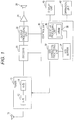
- FIG. 1 is a diagram illustrating a configuration of a DAB receiver of an embodiment.
- the DAB receiver of the present embodiment includes a tuner 10, a decoder 20, an output processing unit 22, an amplifier 24, a speaker 26, a control unit 30, a display unit 40, and an operation unit 42.
- This DAB receiver is mounted on a vehicle.
- the tuner 10 and the decoder 20 are used to receive a broadcasting program.
- the tuner 10 and the decoder 20 receive a digital broadcasting signal (DAB broadcasting signal) broadcasted in a multi-carrier system using orthogonal frequency division multiplexing (OFDM) as a modulation system, and perform demodulation processing and decoding processing for the received signal to reproduce sound data.
- DVB broadcasting signal digital broadcasting signal
- OFDM orthogonal frequency division multiplexing
- the tuner 10 includes a front end (F/E) 12 and an analog-digital converter (A/D) 14.
- the front end 12 converts the broadcasting signal received through an antenna 16 into an intermediate frequency signal.
- the analog-digital converter 14 converts the analog intermediate frequency signal into digital data (intermediate frequency data).
- the decoder 20 performs demodulating processing and decoding processing for the intermediate frequency data, and extracts a service (an audio service or a data service) specified by a user by operating the operation unit 42.
- the demodulating processing and the decoding processing are performed by the decoder 20.
- the decoder 20 up to which part is processed in the analog processing and from which part is processed in the digital processing can be appropriately changed.
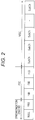
- FIG. 2 is a diagram illustrating a frame configuration of the DAB broadcasting signal. As illustrated in FIG. 2 , a frame of the DAB broadcasting signal is configured from a synchronization channel, a first information channel FIC, and a main service channel MSC.
- the synchronization channel is made of a NULL symbol and a phase reference symbol PRS, and is used to detect a head portion of the frame and synchronize the frame.
- the first information channel FIC is an area that describes content of the main service channel MSC, and includes time/date data, array data of a service (program), a label (name) of a service, a service identification code SID, and the like.
- a plurality of first information groups (FIGs) is energy-spread, and configures one first information block (FIB) that is a predetermined information unit. Further, each FIB is convolutionally encoded, and three convolutionally-encoded FIBs configure one FIG.
- the main service channel MSC includes audio data and the like respectively corresponding to a plurality of services.
- This main service channel MSC includes a plurality of energy-spread, convolutionally-encoded, and time-interleaved sub channels (SubChs).
- the output processing unit 22 is input the audio data output from the decoder 20, and performs variable control of the volume, superimposing processing of another sound (for example, an operation sound), and the like.
- the amplifier 24 amplifies the audio data output from the output processing unit 22 and outputs a sound after amplification from the speaker 26.
- This conversion processing may be performed in the output processing unit 22.
- a digital/analog converter may be provided in a subsequent stage of the output processing unit 22, and the conversion may be performed.
- the control unit 30 controls a receiving operation of the entire DAB receiver and performs image display processing based on slide show data. Therefore, the control unit 30 includes a slide show data (SSD) extraction processing unit 32, a slide show data (SSD) buffer 34, and a slide show (SS) display processing unit 36.
- SSD slide show data
- SSD slide show data
- SS slide show
- the slide show data extraction processing unit 32 extracts slide show data from the frame of the DAB broadcasting signal received using the tuner 10 and the decoder 20, the slide show data being one of data services.
- a slide show is images made of still images (JPEG data, bitmap data, or the like), moving images, and the like corresponding to sounds (music) being in output.
- image data corresponding to still images, which are being sent is received and is displayed in order of receipt.
- Image data corresponding to each image has a data amount of up to 50 Kbytes, and is configured from a plurality of slide show data, each slide show data being fixed length data of 8 Kbytes. Each image is associated with a different transport ID. Further, segment numbers in ascending order from "0" are attached to the plurality of slide show data that configures each image data, and a necessary number of the slide show data is received in order of the segment numbers "0", "1", "2” ....
- the size (data amount) of each image data is included in the first information channel FIC as header information, and when a total value of the data amounts of the slide show data received in order of the segment numbers reaches the aforementioned size, receipt of all data of the image data is considered to be completed, and the processing is moved onto display processing.
- the slide show data buffer 34 temporarily stores, before display, the slide show data received by the tuner 10 and the decoder 20, and extracted by the slide show data extraction processing unit 32.
- the slide show data buffer 34 has the same capacity as 50 Kbytes that is the maximum data amount of one image.
- the capacity of the slide show data buffer 34 may not necessarily be the same as 50 Kbytes that is the maximum data amount of one image.
- the capacity of the slide show data buffer 34 is favorably 50 Kbytes, which is the minimum capacity by which one image can be reliably displayed, in the perspective of cost reduction.
- the slide show data buffer 34 may be provided outside the control unit 30.
- the slide show display processing unit 36 After the plurality of slide show data corresponding to one image is received and stored in the slide show data buffer 34, the slide show display processing unit 36 reads the plurality of slide show data from the slide show data buffer 34 and displays the plurality of slide show data in the display unit 40.
- the slide show display processing unit 36 includes a video RAM (VRAM) 38 corresponding to a display screen of the display unit 40, and reads the plurality of slide show data corresponding to one image stored in the slide show data buffer 34 and writes the plurality of slide show data to the video RAM 38, so that the image display processing of the slide show for the display unit 40 is performed.
- VRAM video RAM
- the above-described tuner 10 and decoder 20 correspond to a data receiving unit
- the slide show data extraction processing unit 32 corresponds to a divided data storing processing unit
- the slide show data buffer 34 corresponds to a storage unit
- the slide show display processing unit 36 corresponds to an image display unit, respectively.
- the above-described slide show data corresponds to divided data
- the transport ID corresponds to identification information that identifies an image, respectively.
- the DAB receiver of the present embodiment has such a configuration. Next, an image display operation of the slide show will be described.
- FIG. 3 is a flowchart illustrating an operation procedure of displaying images of a slide show in order of receipt.
- the slide show data extraction processing unit 32 determines whether having received (extracted) the slide show data (step 100). In a case where no slide show data has been received, negative determination is performed and the determination is repeated.
- the slide show data extraction processing unit 32 determines whether the segment number of the extracted slide show data is "0" (step 102). When the segment number is "0", that is, when first slide show data that configures the image data has been received, the affirmative determination is performed. In this case, the slide show data extraction processing unit 32 holds the transport ID corresponding to the slide show data (step 104). Further, the slide show data extraction processing unit 32 discards the slide show data of the transport ID held corresponding to a previous image, from the slide show data buffer 34 (step 106), and then stores the slide show data extracted this time to the slide show data buffer 34 (step 108).
- the slide show data extraction processing unit 32 determines whether all the slide show data of the same transport ID have been completed (step 110). This determination is performed by checking whether the total value of the data amounts of the slide show data received in order of the segment numbers has reached the size of the image data corresponding to these slide show data. When unreceived slide show data exists, the negative determination is performed in the determination of step 110, and the processing is returned to step 100 and the receiving determination of the slide show data is repeated.
- the slide show data extraction processing unit 32 determines whether the transport ID of the slide show data received this time is the same as the transport ID held before in step 104 (step 112). When the transports ID are the same, the affirmative determination is performed, and the processing is moved onto step 108 and the slide show data received this time is stored in the slide show data buffer 34. Meanwhile, when the transport ID is different, the negative determination is performed in the determination of step 112. In this case, the slide show data extraction processing unit 32 does not store the slide show data received this time and discard the data (step 114). Following that, the processing is returned to step 100, and the receiving determination of the slide show data is repeated.
- step 110 the slide show display processing unit 36 reads all the slide show data corresponding to one image stored in the slide show data buffer 34, and displays the slide show data in the display unit 40 (step 116). Following that, the slide show display processing unit 36 (or the slide show data extraction processing unit 32) discards the slide show data in the slide show data buffer 34 (step 118). Following that, the processing is returned to step 100, and the receiving determination of the slide show data is repeated.
- the DAB receiver of the present embodiment even when the slide show data corresponding to the second image is received before receipt of the slide show data (divided data) corresponding to the first image is completed, only the slide show data of the first image is discarded, and the second image can be displayed using the slide show data received thereafter. Therefore, the delay of the updating period of image can be suppressed, compared with a case where these two images are not displayed.
- the data amount of each image is determined for each image, and when the first slide show data corresponding to the second image has been received before the total value of the received data amounts of the slide show data corresponding to the first image reaches the data amount of the one image, the slide show data corresponding to the first image stored in the slide show data buffer 34 until then is discarded. In this way, whether the slide show data is discarded can be easily determined based on a comparison result of the total value of the data amounts of the received slide show data and the data amount of the image.
- the plurality of slide show data is associated with the transport ID as the identification information that identifies the corresponding image, and the slide show data extraction processing unit 32 identifies which image the slide show data corresponds, based on the transport ID. Accordingly, which image the slide show data corresponds can be easily determined.
- the storage capacity of the slide show data buffer 34 is set equal to the maximum data amount of one image (for example, 50 Kbytes). Accordingly, the storage capacity of the slide show data buffer 34 can be made small and the cost reduction can be achieved, and the delay of the updating period of image can be suppressed.
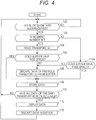
- FIG. 4 is a flowchart illustrating an operation procedure of a modification of displaying images of a slide show in order of receipt.
- a data amount of each image is up to 50 Kbytes. However, it is rare that image data of that data amount is sent, and typically the image data is about 20 to 30 Kbytes. Therefore, it can be considered that, when the data amount of a first image is small and there is a sufficient free space in a slide show data buffer 34, slide show data of the first image may not be immediately discarded because the slide show data of a second image has been received.
- the operation procedure illustrated in FIG. 4 reflects the above idea.
- the operation procedure illustrated in FIG. 4 is different from the operation procedure illustrated in FIG. 3 in that step 105 is added to between steps 104 and 106, and steps 112 and 114 are replaced with step 112A.
- step 105 is added to between steps 104 and 106
- steps 112 and 114 are replaced with step 112A.
- description will be given, focusing on operations of these added and
- a slide show data extraction processing unit 32 determines whether the slide show data buffer 34 has a free space (a capacity of an unused area is a predetermined value or more) (step 105). For example, since the data amount of each slide show data is 8 Kbytes, when the free space is 8 Kbytes or more (the capacity being in use of the slide show data buffer 34 is 42 Kbytes or less), one slide show data can be stored in the slide show data buffer 34.
- the slide show data extraction processing unit 32 stores the slide show data extracted this time to the slide show data buffer 34. Further, when the free space is smaller than the predetermined value, negative determination is performed in the determination of step 105. In this case, the processing is moved onto step 106, and the slide show data extraction processing unit 32 discards the slide show data of the transport ID held corresponding to a previous image, from the slide show data buffer 34.
- the slide show data extraction processing unit 32 determines whether the slide show data buffer 34 has a free space (the capacity of the unused area is a predetermined value or more, this free space is 8 Kbytes, which is the same as the case of step 105) (step 112A).
- the free space is the predetermined value or more
- the affirmative determination is performed and the processing is moved onto step 108
- the slide show data extraction processing unit 32 stores the slide show data extracted this time to the slide show data buffer 34.
- the negative determination is performed in the determination of step 112A. In this case, the processing is moved onto step 106, and the slide show data extraction processing unit 32 discards the slide show data of the transport ID held corresponding to a previous image, from the slide show data buffer 34.
- the discard of the slide show data is withheld when there is a sufficient free space of the slide show data buffer 34, so that first image may be able to be displayed. In this case, lack of an image can be avoided.
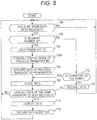
- FIG. 5 is a flowchart illustrating an operation procedure of another modification of displaying images of a slide show in order of receipt.
- the slide show data corresponding to the first image is discarded.
- the first image may be forcibly displayed before the slide show data is discarded.
- the image data of the first image is in the bitmap format, or the like, even if a part of slide show data is unreceived, the first image (having a partial deficit) can be displayed using received slide show data.
- the operation procedure illustrated in FIG. 5 is different from the operation procedure illustrated in FIG. 3 in that step 105A is added to between steps 104 and 106.
- step 105A is added to between steps 104 and 106.
- a slide show display processing unit 36 reads the slide show data of the transport ID held corresponding to a previous image, from a slide show data buffer 34, and displays the slide show data in a display unit 40 (step 105A). Following that, the processing is moved onto step 106, and a slide show data extraction processing unit 32 discards the slide show data of the transport ID held corresponding to the previous image, from the slide show data buffer 34.
- the first image of which receipt of all the slide show data is not completed, is forcibly displayed, whereby lack of the first image can be avoided even when the slide show data corresponding to the second image is received first.
- the present invention is not limited to the above-described embodiment, and various modifications can be made within the scope of the claims of the present invention.
- a case of realizing the function of a slide show by the DAB receiver has been described.
- the present invention can be applied to a case of displaying one image after a plurality of divided data, which is to be received in order, is received in other receivers.
- the present invention even if the divided data corresponding to the second image is received before the receipt of the divided data corresponding to the first image is completed, only the divided data of the first image is discarded, and the second image can be displayed. Therefore, the delay of the updating period of image can be suppressed, compared with a case where these two images cannot be displayed.
Landscapes
- Engineering & Computer Science (AREA)
- Signal Processing (AREA)
- Business, Economics & Management (AREA)
- General Business, Economics & Management (AREA)
- Circuits Of Receivers In General (AREA)
- Two-Way Televisions, Distribution Of Moving Picture Or The Like (AREA)
Abstract
Description
- The present invention relates to a digital broadcasting receiver that receives program data according to digital audio broadcasting (DAB) broadcasting standard, and the like.
- Conventionally, DAB receivers that receive digital radio broadcasting conforming to an European standard are known (for example, see Patent Literature 1). The DAB receivers have a function of slide show to display images, which are being sent, in order of receipt, in addition to a function to receive broadcasting data and output audio. This slide show receives slide show data having a predetermined capacity (8 Kbytes), to which segment numbers in ascending order are allocated, in numerical order, and displays one image when a capacity reaches data capacity of the one image (up to 50 Kbytes). In this way, an image to be displayed is sequentially updated every time receipt of data of each one image is completed.
- Patent Literature 1:
JP 2011-114478 A - By the way, in the DAB receiver disclosed in Patent Literature 1, a plurality of images is received in order and displayed. There is a problem that, when first slide show data that configures a second image is received before last slide show data that configures a first image is received, the data that configure these two images are discarded, and an updating period of image is substantially delayed. If the updating period of image is delayed, correspondence between the image, and a sound output in parallel deviate, and display content becomes unnatural. Therefore, it is not desirable.
- The present invention has been made in view of the foregoing, and an objective of the present invention is to provide a digital broadcasting receiver that can suppress the delay of the updating period of image.
- The invention relates to a digital broadcasting receiver according to claim 1. Embodiments are disclosed herein below and in the dependent claims.
- According to an aspect, a digital broadcasting receiver according to the present invention that receives a plurality of divided data and displays an image, the divided data being obtained such that image data necessary for displaying one image is divided and distributed, includes a data receiving unit configured to receive the divided data in distributed order, a divided data storing processing unit configured to store the divided data received by the data receiving unit to a storage unit having a predetermined capacity, and an image display unit configured to read and display the plurality of divided data from the storage unit, after the plurality of divided data corresponding to one image is received and stored in the storage unit. When first divided data corresponding to a second image has been received by the data receiving unit before receipt of the plurality of divided data corresponding to a first image is completed, the divided data storing processing unit discards the divided data corresponding to the first image stored in the storage unit until then, and starts an operation to store the divided data corresponding to the second image to the storage unit.
- Even if the divided data corresponding to the second image has been received before the receipt of the divided data corresponding to the first image is completed, only the divided data of the first image is discarded, and the second image can be displayed. Therefore, the delay of the updating period of image can be suppressed, compared with a case where both the two images are not displayed.
- Further, according to an embodiment a data amount of each image is determined for each image, and the divided data storing processing unit desirably discards the divided data corresponding to the first image stored in the storage unit until then, when the first divided data corresponding to the second image has been received before a total value of received data amounts of the divided data corresponding to the first data reaches the data amount of the first image. Accordingly, whether discarding the divided data can be easily determined based on a result of comparison between the total value of the data amounts of the received divided data and the data amount of the image.
- Further, according to an embodiment the plurality of divided data is associated with identification information that identifies a corresponding image, and the divided data storing processing unit desirably identifies which of the first and second images the divided data corresponds, based on the identification information. Accordingly, which image the divided data corresponds can be easily determined.
- Further, according to an embodiment the divided data storing processing unit desirably withholds the discard of the divided data corresponding to the first image stored in the storage unit until then, when the first divided data corresponding to the second image has been received by the data receiving unit and a capacity of an unused area of the storage unit is a predetermined value or more at that point, before the receipt of the plurality of divided data corresponding to the first image is completed. Especially, the predetermined value is desirably the same as the data amount of the divided data. When there is a sufficient free space of the storage unit, the discard of the divided data is withheld, whereby the first image may be able to be displayed. In this case, lack of the image can be avoided.
- Further, according to an embodiment the divided data storing processing unit desirably discards the divided data, after instructing the display unit to display the first image using the divided data before discarding the divided data corresponding to the first image stored in the storage unit until then, when the first divided data corresponding to the second image has been received by the data receiving unit before the receipt of the plurality of divided data corresponding to the first image is completed. Accordingly, the first image, of which receipt of all the divided data is not completed, can be forcibly displayed, and lack of the entire first image can be avoided.
- Further, according to an embodiment the predetermined capacity of the storage unit is desirably the same as a maximum data amount of one image. Accordingly, the capacity of the storage unit can be made small and reduction of cost can be achieved, and the delay of the updating period of image can be suppressed.
-
-
FIG. 1 is a diagram illustrating a configuration of a DAB receiver of an embodiment. -
FIG. 2 is a diagram illustrating a frame configuration of a DAB broadcasting signal. -
FIG. 3 is a flowchart illustrating an operation procedure of displaying images of a slide show in order of receipt. -
FIG. 4 is a flowchart illustrating an operation procedure of a modification of displaying images of a slide show in order of receipt. -
FIG. 5 is a flowchart illustrating an operation procedure of another modification of displaying images of a slide show in order of receipt. - Hereinafter, a digital audio broadcasting (DAB) receiver of an embodiment to which a digital broadcasting receiver of the present invention is applied will be described with reference to the drawings.
FIG. 1 is a diagram illustrating a configuration of a DAB receiver of an embodiment. As illustrated inFIG. 1 , the DAB receiver of the present embodiment includes atuner 10, adecoder 20, anoutput processing unit 22, anamplifier 24, aspeaker 26, acontrol unit 30, adisplay unit 40, and anoperation unit 42. This DAB receiver is mounted on a vehicle. - The
tuner 10 and thedecoder 20 are used to receive a broadcasting program. To be specific, thetuner 10 and thedecoder 20 receive a digital broadcasting signal (DAB broadcasting signal) broadcasted in a multi-carrier system using orthogonal frequency division multiplexing (OFDM) as a modulation system, and perform demodulation processing and decoding processing for the received signal to reproduce sound data. For example, thetuner 10 includes a front end (F/E) 12 and an analog-digital converter (A/D) 14. Thefront end 12 converts the broadcasting signal received through anantenna 16 into an intermediate frequency signal. The analog-digital converter 14 converts the analog intermediate frequency signal into digital data (intermediate frequency data). Thedecoder 20 performs demodulating processing and decoding processing for the intermediate frequency data, and extracts a service (an audio service or a data service) specified by a user by operating theoperation unit 42. - In present embodiment, after the intermediate frequency signal output from the
front end 12 is converted into the digital data, the demodulating processing and the decoding processing are performed by thedecoder 20. However, up to which part is processed in the analog processing and from which part is processed in the digital processing can be appropriately changed. -
FIG. 2 is a diagram illustrating a frame configuration of the DAB broadcasting signal. As illustrated inFIG. 2 , a frame of the DAB broadcasting signal is configured from a synchronization channel, a first information channel FIC, and a main service channel MSC. - The synchronization channel is made of a NULL symbol and a phase reference symbol PRS, and is used to detect a head portion of the frame and synchronize the frame. The first information channel FIC is an area that describes content of the main service channel MSC, and includes time/date data, array data of a service (program), a label (name) of a service, a service identification code SID, and the like. A plurality of first information groups (FIGs) is energy-spread, and configures one first information block (FIB) that is a predetermined information unit. Further, each FIB is convolutionally encoded, and three convolutionally-encoded FIBs configure one FIG. The main service channel MSC includes audio data and the like respectively corresponding to a plurality of services. This main service channel MSC includes a plurality of energy-spread, convolutionally-encoded, and time-interleaved sub channels (SubChs).
- The
output processing unit 22 is input the audio data output from thedecoder 20, and performs variable control of the volume, superimposing processing of another sound (for example, an operation sound), and the like. Theamplifier 24 amplifies the audio data output from theoutput processing unit 22 and outputs a sound after amplification from thespeaker 26. In reality, the audio data subjected to various types of processing in theoutput processing unit 22 needs to be converted into an analog sound signal. This conversion processing may be performed in theoutput processing unit 22. However, a digital/analog converter may be provided in a subsequent stage of theoutput processing unit 22, and the conversion may be performed. - The
control unit 30 controls a receiving operation of the entire DAB receiver and performs image display processing based on slide show data. Therefore, thecontrol unit 30 includes a slide show data (SSD)extraction processing unit 32, a slide show data (SSD)buffer 34, and a slide show (SS)display processing unit 36. Note that configurations related to control of usual receiving operations (a configuration necessary for an operation to select a service (program) to be received, an operation to display received content about the service being in receipt, and the like) are not illustrated. - The slide show data
extraction processing unit 32 extracts slide show data from the frame of the DAB broadcasting signal received using thetuner 10 and thedecoder 20, the slide show data being one of data services. A slide show is images made of still images (JPEG data, bitmap data, or the like), moving images, and the like corresponding to sounds (music) being in output. In the slide show to be processed in the present embodiment, image data corresponding to still images, which are being sent, is received and is displayed in order of receipt. - Image data corresponding to each image has a data amount of up to 50 Kbytes, and is configured from a plurality of slide show data, each slide show data being fixed length data of 8 Kbytes. Each image is associated with a different transport ID. Further, segment numbers in ascending order from "0" are attached to the plurality of slide show data that configures each image data, and a necessary number of the slide show data is received in order of the segment numbers "0", "1", "2" .... Further, the size (data amount) of each image data is included in the first information channel FIC as header information, and when a total value of the data amounts of the slide show data received in order of the segment numbers reaches the aforementioned size, receipt of all data of the image data is considered to be completed, and the processing is moved onto display processing.
- The slide
show data buffer 34 temporarily stores, before display, the slide show data received by thetuner 10 and thedecoder 20, and extracted by the slide show dataextraction processing unit 32. For example, the slideshow data buffer 34 has the same capacity as 50 Kbytes that is the maximum data amount of one image. Note that the capacity of the slideshow data buffer 34 may not necessarily be the same as 50 Kbytes that is the maximum data amount of one image. However, the capacity of the slideshow data buffer 34 is favorably 50 Kbytes, which is the minimum capacity by which one image can be reliably displayed, in the perspective of cost reduction. The slideshow data buffer 34 may be provided outside thecontrol unit 30. - After the plurality of slide show data corresponding to one image is received and stored in the slide
show data buffer 34, the slide showdisplay processing unit 36 reads the plurality of slide show data from the slideshow data buffer 34 and displays the plurality of slide show data in thedisplay unit 40. For example, the slide showdisplay processing unit 36 includes a video RAM (VRAM) 38 corresponding to a display screen of thedisplay unit 40, and reads the plurality of slide show data corresponding to one image stored in the slideshow data buffer 34 and writes the plurality of slide show data to thevideo RAM 38, so that the image display processing of the slide show for thedisplay unit 40 is performed. - The above-described
tuner 10 anddecoder 20 correspond to a data receiving unit, the slide show dataextraction processing unit 32 corresponds to a divided data storing processing unit, the slideshow data buffer 34 corresponds to a storage unit, and the slide showdisplay processing unit 36 corresponds to an image display unit, respectively. Further, the above-described slide show data corresponds to divided data, and the transport ID corresponds to identification information that identifies an image, respectively. - The DAB receiver of the present embodiment has such a configuration. Next, an image display operation of the slide show will be described.
-
FIG. 3 is a flowchart illustrating an operation procedure of displaying images of a slide show in order of receipt. The slide show dataextraction processing unit 32 determines whether having received (extracted) the slide show data (step 100). In a case where no slide show data has been received, negative determination is performed and the determination is repeated. - When the slide show data has been received, affirmative determination is performed in the determination of
step 100. Next, the slide show dataextraction processing unit 32 determines whether the segment number of the extracted slide show data is "0" (step 102). When the segment number is "0", that is, when first slide show data that configures the image data has been received, the affirmative determination is performed. In this case, the slide show dataextraction processing unit 32 holds the transport ID corresponding to the slide show data (step 104). Further, the slide show dataextraction processing unit 32 discards the slide show data of the transport ID held corresponding to a previous image, from the slide show data buffer 34 (step 106), and then stores the slide show data extracted this time to the slide show data buffer 34 (step 108). Next, the slide show dataextraction processing unit 32 determines whether all the slide show data of the same transport ID have been completed (step 110). This determination is performed by checking whether the total value of the data amounts of the slide show data received in order of the segment numbers has reached the size of the image data corresponding to these slide show data. When unreceived slide show data exists, the negative determination is performed in the determination ofstep 110, and the processing is returned to step 100 and the receiving determination of the slide show data is repeated. - Further, when the segment number of the received slide show data is a number other than "0", the negative determination is performed in the determination of
step 102. Next, the slide show dataextraction processing unit 32 determines whether the transport ID of the slide show data received this time is the same as the transport ID held before in step 104 (step 112). When the transports ID are the same, the affirmative determination is performed, and the processing is moved ontostep 108 and the slide show data received this time is stored in the slideshow data buffer 34. Meanwhile, when the transport ID is different, the negative determination is performed in the determination ofstep 112. In this case, the slide show dataextraction processing unit 32 does not store the slide show data received this time and discard the data (step 114). Following that, the processing is returned to step 100, and the receiving determination of the slide show data is repeated. - Further, when all the slide show data of the same transport ID has been completed, the affirmative confirmation is performed in the determination of
step 110. Next, the slide showdisplay processing unit 36 reads all the slide show data corresponding to one image stored in the slideshow data buffer 34, and displays the slide show data in the display unit 40 (step 116). Following that, the slide show display processing unit 36 (or the slide show data extraction processing unit 32) discards the slide show data in the slide show data buffer 34 (step 118). Following that, the processing is returned to step 100, and the receiving determination of the slide show data is repeated. - As described above, in the DAB receiver of the present embodiment, even when the slide show data corresponding to the second image is received before receipt of the slide show data (divided data) corresponding to the first image is completed, only the slide show data of the first image is discarded, and the second image can be displayed using the slide show data received thereafter. Therefore, the delay of the updating period of image can be suppressed, compared with a case where these two images are not displayed.
- Further, the data amount of each image is determined for each image, and when the first slide show data corresponding to the second image has been received before the total value of the received data amounts of the slide show data corresponding to the first image reaches the data amount of the one image, the slide show data corresponding to the first image stored in the slide
show data buffer 34 until then is discarded. In this way, whether the slide show data is discarded can be easily determined based on a comparison result of the total value of the data amounts of the received slide show data and the data amount of the image. - Further, the plurality of slide show data is associated with the transport ID as the identification information that identifies the corresponding image, and the slide show data
extraction processing unit 32 identifies which image the slide show data corresponds, based on the transport ID. Accordingly, which image the slide show data corresponds can be easily determined. - Further, the storage capacity of the slide
show data buffer 34 is set equal to the maximum data amount of one image (for example, 50 Kbytes). Accordingly, the storage capacity of the slideshow data buffer 34 can be made small and the cost reduction can be achieved, and the delay of the updating period of image can be suppressed. -
FIG. 4 is a flowchart illustrating an operation procedure of a modification of displaying images of a slide show in order of receipt. A data amount of each image is up to 50 Kbytes. However, it is rare that image data of that data amount is sent, and typically the image data is about 20 to 30 Kbytes. Therefore, it can be considered that, when the data amount of a first image is small and there is a sufficient free space in a slideshow data buffer 34, slide show data of the first image may not be immediately discarded because the slide show data of a second image has been received. The operation procedure illustrated inFIG. 4 reflects the above idea. The operation procedure illustrated inFIG. 4 is different from the operation procedure illustrated inFIG. 3 in thatstep 105 is added to betweensteps step 112A. Hereinafter, description will be given, focusing on operations of these added and replacedsteps - In a case where a segment number of received slide show data is "0" (affirmative determination in determination of step 102) and after a transport ID is held (step 104), a slide show data
extraction processing unit 32 determines whether the slideshow data buffer 34 has a free space (a capacity of an unused area is a predetermined value or more) (step 105). For example, since the data amount of each slide show data is 8 Kbytes, when the free space is 8 Kbytes or more (the capacity being in use of the slideshow data buffer 34 is 42 Kbytes or less), one slide show data can be stored in the slideshow data buffer 34. When the free space is a predetermined value (= 8 Kbytes) or more, the affirmative determination is performed in the determination ofstep 105 and the processing is moved ontostep 108 without performing the operation of step 106 (discard of the slide show data), and the slide show dataextraction processing unit 32 stores the slide show data extracted this time to the slideshow data buffer 34. Further, when the free space is smaller than the predetermined value, negative determination is performed in the determination ofstep 105. In this case, the processing is moved ontostep 106, and the slide show dataextraction processing unit 32 discards the slide show data of the transport ID held corresponding to a previous image, from the slideshow data buffer 34. - Further, when the segment number of the received slide show data is a number other than "0", and the negative determination is performed in the determination of
step 102, next, the slide show dataextraction processing unit 32 determines whether the slideshow data buffer 34 has a free space (the capacity of the unused area is a predetermined value or more, this free space is 8 Kbytes, which is the same as the case of step 105) (step 112A). When the free space is the predetermined value or more, the affirmative determination is performed and the processing is moved ontostep 108, and the slide show dataextraction processing unit 32 stores the slide show data extracted this time to the slideshow data buffer 34. Further, when the free space is smaller than the predetermined value, the negative determination is performed in the determination ofstep 112A. In this case, the processing is moved ontostep 106, and the slide show dataextraction processing unit 32 discards the slide show data of the transport ID held corresponding to a previous image, from the slideshow data buffer 34. - As described above, the discard of the slide show data is withheld when there is a sufficient free space of the slide
show data buffer 34, so that first image may be able to be displayed. In this case, lack of an image can be avoided. -
FIG. 5 is a flowchart illustrating an operation procedure of another modification of displaying images of a slide show in order of receipt. In the operation procedure illustrated inFIG. 3 , when the first slide show data corresponding to the second image has been received before receipt of all the slide show data corresponding to the first image is completed, the slide show data corresponding to the first image is discarded. However, the first image may be forcibly displayed before the slide show data is discarded. In a case where the image data of the first image is in the bitmap format, or the like, even if a part of slide show data is unreceived, the first image (having a partial deficit) can be displayed using received slide show data. The operation procedure illustrated inFIG. 5 is different from the operation procedure illustrated inFIG. 3 in thatstep 105A is added to betweensteps step 105A. - When a segment number of received slide show data is "0" (affirmative determination in determination of step 102), and after a transport ID is held (step 104), a slide show
display processing unit 36 reads the slide show data of the transport ID held corresponding to a previous image, from a slideshow data buffer 34, and displays the slide show data in a display unit 40 (step 105A). Following that, the processing is moved ontostep 106, and a slide show dataextraction processing unit 32 discards the slide show data of the transport ID held corresponding to the previous image, from the slideshow data buffer 34. - As described above, the first image, of which receipt of all the slide show data is not completed, is forcibly displayed, whereby lack of the first image can be avoided even when the slide show data corresponding to the second image is received first.
- Note that the present invention is not limited to the above-described embodiment, and various modifications can be made within the scope of the claims of the present invention. In the above-described embodiment, a case of realizing the function of a slide show by the DAB receiver has been described. However, the present invention can be applied to a case of displaying one image after a plurality of divided data, which is to be received in order, is received in other receivers.
- As described above, according to the present invention, even if the divided data corresponding to the second image is received before the receipt of the divided data corresponding to the first image is completed, only the divided data of the first image is discarded, and the second image can be displayed. Therefore, the delay of the updating period of image can be suppressed, compared with a case where these two images cannot be displayed.
-
- 10
- tuner
- 20
- decoder
- 22
- output processing unit
- 30
- control unit
- 32
- slide show data (SSD) extraction processing unit
- 34
- slide show data (SSD) buffer
- 36
- slide show (SS) display processing unit
- 40
- display unit
- 42
- operation unit
Claims (7)
- A digital broadcasting receiver that is configured to receive a plurality of divided data and to display an image, the divided data being obtained such that image data necessary for displaying one image is divided and distributed, the digital broadcasting receiver comprising:a data receiving unit (10, 20) configured to receive the divided data in distributed order;a divided data storing processing unit (32) configured to store the divided data received by the data receiving unit (10, 20) to a storage unit (34) having a predetermined capacity; andan image display unit (36) configured to read and display the plurality of divided data from the storage unit (34), after the plurality of divided data corresponding to one image is received and stored in the storage unit (34), wherein,when first divided data corresponding to a second image has been received by the data receiving unit (10, 20) before receipt of the plurality of divided data corresponding to a first image is completed, the divided data storing processing unit is configured to (32) discard the divided data corresponding to the first image stored in the storage unit (34) until then, and to start an operation to store the divided data corresponding to the second image to the storage unit (34).
- The digital broadcasting receiver according to claim 1, wherein
a data amount of each image is determined for each image, and
the divided data storing processing unit (32) is configured to discard the divided data corresponding to the first image stored in the storage unit (34) until then, when the first divided data corresponding to the second image has been received before a total value of received data amounts of the divided data corresponding to the first image reaches the data amount of the first image. - The digital broadcasting receiver according to claim 1 or 2, wherein
the plurality of divided data is associated with identification information that identifies a corresponding image, and
the divided data storing processing unit (32) is configured to identify which of the first and second images the divided data corresponds, based on the identification information. - The digital broadcasting receiver according to one of claims 1 to 3 , wherein
the divided data storing processing unit (32) is configured to withhold the discard of the divided data corresponding to the first image stored in the storage unit (34) until then, when the first divided data corresponding to the second image has been received by the data receiving unit (10, 20) and a capacity of an unused area of the storage unit (34) is a predetermined value or more at that point, before the receipt of the plurality of divided data corresponding to the first image is completed. - The digital broadcasting receiver according to claim 4, wherein
the predetermined value is the same as the data amount of the divided data. - The digital broadcasting receiver according to one of claims 1 to 5 , wherein
the divided data storing processing unit (32) is configured to discard the divided data, after instructing the display unit to display the first image using the divided data before discarding the divided data corresponding to the first image stored in the storage unit (34) until then, when the first divided data corresponding to the second image has been received by the data receiving unit (10, 20) before the receipt of the plurality of divided data corresponding to the first image is completed. - The digital broadcasting receiver according to one of claims 1 to 6 , wherein
the predetermined capacity of the storage unit (34) is the same as a maximum data amount of one image.
Applications Claiming Priority (1)
| Application Number | Priority Date | Filing Date | Title |
|---|---|---|---|
| JP2015110426A JP6407098B2 (en) | 2015-05-29 | 2015-05-29 | Digital broadcast receiver |
Publications (1)
| Publication Number | Publication Date |
|---|---|
| EP3098985A1 true EP3098985A1 (en) | 2016-11-30 |
Family
ID=55701811
Family Applications (1)
| Application Number | Title | Priority Date | Filing Date |
|---|---|---|---|
| EP16164258.2A Withdrawn EP3098985A1 (en) | 2015-05-29 | 2016-04-07 | Digital broadcasting receiver |
Country Status (2)
| Country | Link |
|---|---|
| EP (1) | EP3098985A1 (en) |
| JP (1) | JP6407098B2 (en) |
Citations (3)
| Publication number | Priority date | Publication date | Assignee | Title |
|---|---|---|---|---|
| KR20090094651A (en) * | 2008-03-03 | 2009-09-08 | 엘지전자 주식회사 | Method for providing presentation control information in digital multimedia broadcasting |
| JP2011114478A (en) | 2009-11-25 | 2011-06-09 | Alpine Electronics Inc | Digital radio broadcast receiving apparatus |
| US20120189069A1 (en) * | 2009-04-15 | 2012-07-26 | Ibiquity Digital Corporation | Systems and Methods for a Multiport Synchronous-Asynchronous Client for Scheduling and Delivering Content for Digital Radio Broadcast Transmission |
Family Cites Families (3)
| Publication number | Priority date | Publication date | Assignee | Title |
|---|---|---|---|---|
| JP2001195807A (en) * | 2000-01-06 | 2001-07-19 | Nikon Gijutsu Kobo:Kk | Recording device |
| JP4624854B2 (en) * | 2005-05-27 | 2011-02-02 | 株式会社三共 | Image processing device |
| JP5490564B2 (en) * | 2010-02-24 | 2014-05-14 | アルパイン株式会社 | Digital audio broadcast receiving apparatus and digital audio broadcast receiving method |
-
2015
- 2015-05-29 JP JP2015110426A patent/JP6407098B2/en not_active Expired - Fee Related
-
2016
- 2016-04-07 EP EP16164258.2A patent/EP3098985A1/en not_active Withdrawn
Patent Citations (3)
| Publication number | Priority date | Publication date | Assignee | Title |
|---|---|---|---|---|
| KR20090094651A (en) * | 2008-03-03 | 2009-09-08 | 엘지전자 주식회사 | Method for providing presentation control information in digital multimedia broadcasting |
| US20120189069A1 (en) * | 2009-04-15 | 2012-07-26 | Ibiquity Digital Corporation | Systems and Methods for a Multiport Synchronous-Asynchronous Client for Scheduling and Delivering Content for Digital Radio Broadcast Transmission |
| JP2011114478A (en) | 2009-11-25 | 2011-06-09 | Alpine Electronics Inc | Digital radio broadcast receiving apparatus |
Non-Patent Citations (1)
| Title |
|---|
| "Digital Audio Broadcasting (DAB); MOT Slide Show; User Application Specification European Broadcasting Union Union Européenne de Radio-Télévision EBU.UER; ETSI TS 101 499", TECHNICAL SPECIFICATION, EUROPEAN TELECOMMUNICATIONS STANDARDS INSTITUTE (ETSI), 650 ROUTE DES LUCIOLES, SOPHIA ANTIPOLIS CEDEX, F-06921, FRANCE, vol. BC, no. V2.1.1, 1 January 2006 (2006-01-01), XP014032285 * |
Also Published As
| Publication number | Publication date |
|---|---|
| JP6407098B2 (en) | 2018-10-17 |
| JP2016225825A (en) | 2016-12-28 |
Similar Documents
| Publication | Publication Date | Title |
|---|---|---|
| JP5867772B2 (en) | Receiving device and program | |
| JP6177679B2 (en) | Broadcast receiver | |
| US20060271991A1 (en) | Method for providing user interface using received terrestrial digital broadcasting data in a mobile communication terminal | |
| TW200408207A (en) | Digital Audio Broadcasting receiver | |
| JP2011250331A (en) | Data filtering device and data filtering method | |
| EP3098985A1 (en) | Digital broadcasting receiver | |
| JP5059315B2 (en) | Digital multimedia broadcast receiving apparatus and user interface method thereof | |
| JP2001177778A (en) | Receiving apparatus and method | |
| EP2360860B1 (en) | Digital audio broadcasting reception apparatus and digital audio broadcasting reception method | |
| CN1521966B (en) | Multimedia data rebuilding method through DAB receiver | |
| JP4884787B2 (en) | Broadcast receiving apparatus and channel selection method | |
| US7966639B2 (en) | Digital broadcast receiver and digital broadcast content processing method | |
| US8229583B2 (en) | Apparatus and method of setting received broadcasting sound source data as functional sound of mobile phone | |
| US20070214479A1 (en) | Digital broadcasting system and method for broadcasting service provider data | |
| JP3694393B2 (en) | Multiple broadcast receiver | |
| KR102339168B1 (en) | Digital radio broadcasting control method and apparatus | |
| KR20150102498A (en) | Method and apparatus for transmitting/receiving signalling information in a digital broadcastin system | |
| EP1995953A3 (en) | Digital broadcasting receiver | |
| EP2693670A1 (en) | Receiver apparatus, reception method, program, and reception system | |
| JP4708324B2 (en) | Program transmission control apparatus, program transmission control method, program transmission control program, and recording medium recording the program | |
| JP2023002916A (en) | Broadcast station list creation device, broadcast station list creation method and broadcast receiver | |
| JP6301720B2 (en) | Digital broadcast receiver | |
| EP2448154A1 (en) | Digital audio broadcasting receiver and label information display method of the same | |
| EP1744478A2 (en) | Method for transmission of digital data from a broadcast data receiver | |
| KR20070075641A (en) | DMB terminal and method for providing broadcast preview service |
Legal Events
| Date | Code | Title | Description |
|---|---|---|---|
| PUAI | Public reference made under article 153(3) epc to a published international application that has entered the european phase |
Free format text: ORIGINAL CODE: 0009012 |
|
| AK | Designated contracting states |
Kind code of ref document: A1 Designated state(s): AL AT BE BG CH CY CZ DE DK EE ES FI FR GB GR HR HU IE IS IT LI LT LU LV MC MK MT NL NO PL PT RO RS SE SI SK SM TR |
|
| AX | Request for extension of the european patent |
Extension state: BA ME |
|
| 17P | Request for examination filed |
Effective date: 20170516 |
|
| RBV | Designated contracting states (corrected) |
Designated state(s): AL AT BE BG CH CY CZ DE DK EE ES FI FR GB GR HR HU IE IS IT LI LT LU LV MC MK MT NL NO PL PT RO RS SE SI SK SM TR |
|
| 17Q | First examination report despatched |
Effective date: 20200409 |
|
| STAA | Information on the status of an ep patent application or granted ep patent |
Free format text: STATUS: THE APPLICATION IS DEEMED TO BE WITHDRAWN |
|
| 18D | Application deemed to be withdrawn |
Effective date: 20200820 |