EP3098798A1 - Data processing method, server and terminal for internet of vehicles - Google Patents
Data processing method, server and terminal for internet of vehicles Download PDFInfo
- Publication number
- EP3098798A1 EP3098798A1 EP14884934.2A EP14884934A EP3098798A1 EP 3098798 A1 EP3098798 A1 EP 3098798A1 EP 14884934 A EP14884934 A EP 14884934A EP 3098798 A1 EP3098798 A1 EP 3098798A1
- Authority
- EP
- European Patent Office
- Prior art keywords
- travel data
- program script
- user
- terminal
- server
- Prior art date
- Legal status (The legal status is an assumption and is not a legal conclusion. Google has not performed a legal analysis and makes no representation as to the accuracy of the status listed.)
- Granted
Links
Images
Classifications
-
- G—PHYSICS
- G07—CHECKING-DEVICES
- G07C—TIME OR ATTENDANCE REGISTERS; REGISTERING OR INDICATING THE WORKING OF MACHINES; GENERATING RANDOM NUMBERS; VOTING OR LOTTERY APPARATUS; ARRANGEMENTS, SYSTEMS OR APPARATUS FOR CHECKING NOT PROVIDED FOR ELSEWHERE
- G07C5/00—Registering or indicating the working of vehicles
- G07C5/008—Registering or indicating the working of vehicles communicating information to a remotely located station
-
- H—ELECTRICITY
- H04—ELECTRIC COMMUNICATION TECHNIQUE
- H04L—TRANSMISSION OF DIGITAL INFORMATION, e.g. TELEGRAPHIC COMMUNICATION
- H04L67/00—Network arrangements or protocols for supporting network services or applications
- H04L67/01—Protocols
- H04L67/12—Protocols specially adapted for proprietary or special-purpose networking environments, e.g. medical networks, sensor networks, networks in vehicles or remote metering networks
-
- B—PERFORMING OPERATIONS; TRANSPORTING
- B60—VEHICLES IN GENERAL
- B60W—CONJOINT CONTROL OF VEHICLE SUB-UNITS OF DIFFERENT TYPE OR DIFFERENT FUNCTION; CONTROL SYSTEMS SPECIALLY ADAPTED FOR HYBRID VEHICLES; ROAD VEHICLE DRIVE CONTROL SYSTEMS FOR PURPOSES NOT RELATED TO THE CONTROL OF A PARTICULAR SUB-UNIT
- B60W40/00—Estimation or calculation of non-directly measurable driving parameters for road vehicle drive control systems not related to the control of a particular sub unit, e.g. by using mathematical models
- B60W40/08—Estimation or calculation of non-directly measurable driving parameters for road vehicle drive control systems not related to the control of a particular sub unit, e.g. by using mathematical models related to drivers or passengers
- B60W40/09—Driving style or behaviour
-
- G—PHYSICS
- G06—COMPUTING OR CALCULATING; COUNTING
- G06Q—INFORMATION AND COMMUNICATION TECHNOLOGY [ICT] SPECIALLY ADAPTED FOR ADMINISTRATIVE, COMMERCIAL, FINANCIAL, MANAGERIAL OR SUPERVISORY PURPOSES; SYSTEMS OR METHODS SPECIALLY ADAPTED FOR ADMINISTRATIVE, COMMERCIAL, FINANCIAL, MANAGERIAL OR SUPERVISORY PURPOSES, NOT OTHERWISE PROVIDED FOR
- G06Q40/00—Finance; Insurance; Tax strategies; Processing of corporate or income taxes
- G06Q40/08—Insurance
-
- G—PHYSICS
- G06—COMPUTING OR CALCULATING; COUNTING
- G06Q—INFORMATION AND COMMUNICATION TECHNOLOGY [ICT] SPECIALLY ADAPTED FOR ADMINISTRATIVE, COMMERCIAL, FINANCIAL, MANAGERIAL OR SUPERVISORY PURPOSES; SYSTEMS OR METHODS SPECIALLY ADAPTED FOR ADMINISTRATIVE, COMMERCIAL, FINANCIAL, MANAGERIAL OR SUPERVISORY PURPOSES, NOT OTHERWISE PROVIDED FOR
- G06Q50/00—Information and communication technology [ICT] specially adapted for implementation of business processes of specific business sectors, e.g. utilities or tourism
- G06Q50/40—Business processes related to the transportation industry
-
- G—PHYSICS
- G07—CHECKING-DEVICES
- G07C—TIME OR ATTENDANCE REGISTERS; REGISTERING OR INDICATING THE WORKING OF MACHINES; GENERATING RANDOM NUMBERS; VOTING OR LOTTERY APPARATUS; ARRANGEMENTS, SYSTEMS OR APPARATUS FOR CHECKING NOT PROVIDED FOR ELSEWHERE
- G07C5/00—Registering or indicating the working of vehicles
- G07C5/02—Registering or indicating driving, working, idle, or waiting time only
-
- G—PHYSICS
- G08—SIGNALLING
- G08G—TRAFFIC CONTROL SYSTEMS
- G08G1/00—Traffic control systems for road vehicles
- G08G1/01—Detecting movement of traffic to be counted or controlled
- G08G1/0104—Measuring and analyzing of parameters relative to traffic conditions
- G08G1/0108—Measuring and analyzing of parameters relative to traffic conditions based on the source of data
- G08G1/0112—Measuring and analyzing of parameters relative to traffic conditions based on the source of data from the vehicle, e.g. floating car data [FCD]
-
- G—PHYSICS
- G08—SIGNALLING
- G08G—TRAFFIC CONTROL SYSTEMS
- G08G1/00—Traffic control systems for road vehicles
- G08G1/01—Detecting movement of traffic to be counted or controlled
- G08G1/0104—Measuring and analyzing of parameters relative to traffic conditions
- G08G1/0125—Traffic data processing
- G08G1/0129—Traffic data processing for creating historical data or processing based on historical data
-
- G—PHYSICS
- G09—EDUCATION; CRYPTOGRAPHY; DISPLAY; ADVERTISING; SEALS
- G09B—EDUCATIONAL OR DEMONSTRATION APPLIANCES; APPLIANCES FOR TEACHING, OR COMMUNICATING WITH, THE BLIND, DEAF OR MUTE; MODELS; PLANETARIA; GLOBES; MAPS; DIAGRAMS
- G09B19/00—Teaching not covered by other main groups of this subclass
- G09B19/16—Control of vehicles or other craft
- G09B19/167—Control of land vehicles
-
- H—ELECTRICITY
- H04—ELECTRIC COMMUNICATION TECHNIQUE
- H04L—TRANSMISSION OF DIGITAL INFORMATION, e.g. TELEGRAPHIC COMMUNICATION
- H04L67/00—Network arrangements or protocols for supporting network services or applications
- H04L67/01—Protocols
- H04L67/06—Protocols specially adapted for file transfer, e.g. file transfer protocol [FTP]
-
- B—PERFORMING OPERATIONS; TRANSPORTING
- B60—VEHICLES IN GENERAL
- B60W—CONJOINT CONTROL OF VEHICLE SUB-UNITS OF DIFFERENT TYPE OR DIFFERENT FUNCTION; CONTROL SYSTEMS SPECIALLY ADAPTED FOR HYBRID VEHICLES; ROAD VEHICLE DRIVE CONTROL SYSTEMS FOR PURPOSES NOT RELATED TO THE CONTROL OF A PARTICULAR SUB-UNIT
- B60W50/00—Details of control systems for road vehicle drive control not related to the control of a particular sub-unit, e.g. process diagnostic or vehicle driver interfaces
- B60W2050/0062—Adapting control system settings
- B60W2050/0075—Automatic parameter input, automatic initialising or calibrating means
-
- B—PERFORMING OPERATIONS; TRANSPORTING
- B60—VEHICLES IN GENERAL
- B60W—CONJOINT CONTROL OF VEHICLE SUB-UNITS OF DIFFERENT TYPE OR DIFFERENT FUNCTION; CONTROL SYSTEMS SPECIALLY ADAPTED FOR HYBRID VEHICLES; ROAD VEHICLE DRIVE CONTROL SYSTEMS FOR PURPOSES NOT RELATED TO THE CONTROL OF A PARTICULAR SUB-UNIT
- B60W2556/00—Input parameters relating to data
- B60W2556/45—External transmission of data to or from the vehicle
Definitions
- the sender is further configured to:
- the processor is further configured to:
- the receiver may be specifically at least one of an on-board diagnostic system OBD module, a global positioning system GPS, and an acceleration sensor; where that the receiver is configured to acquire the travel data is specifically:
- Step 102 Perform training on the historical travel data to obtain a program script used to analyze a driving behavior of a user.
- an elliptic curve algorithm featuring relatively small memory resource consumption and an easy algorithm may be used, or another relatively complex encryption algorithm may be used.
- the present invention sets no limitation on an encryption algorithm.
- the server calculates an average of acquired historical travel data that is in a same period of time, where this average is a standard used to analyze a user driving behavior that is in the same period of time.
- the processor 102 is configured to perform training on the historical travel data that is acquired by the receiver 101, to obtain a program script used to analyze a driving behavior of a user.
- the processor 102 first performs training on, according to the set service model, the historical travel data to generate the data flow analysis function, and then analyzes the generated data flow analysis function to generate the program script, where the program script is used to analyze the driving behavior of the user.
- the receiver 101 is specifically configured to: acquire the historical travel data from a third-party data server; or acquire the historical travel data from the terminal, where the historical travel data is travel data of a fixed period of time in which a vehicle travels.
- the third-party data server acquires travel data that is in a fixed period of time and uploaded by the terminal.
- the terminal may periodically upload the travel data of a period of time to the third-party data server.
- the third-party data server creates a table that stores the travel data.
- the historical travel data recording table is used to record the travel data that is of the terminal in a fixed period of time, where the travel data includes: a vehicle speed, an acceleration, geographical location information, and the like.
- the third-party data server may store, according to a corresponding type, the travel data uploaded by the terminal in a corresponding historical travel data table.
- the sender 103 is further configured to send a standard that is used to analyze the driving behavior of the user to the terminal.
- the sender 103 may further send the standard that is used to analyze the driving behavior of the user to the terminal, where the standard is used to analyze whether a driving behavior of the user in a period of time belongs to normal driving.
- the server calculates an average of acquired historical travel data that is in a same period of time, where this average is a standard used to analyze a driving behavior of the user in the same period of time.
- the sender 103 may encrypt the program script.
- the OBD device is inserted into a specific interface of a vehicle, where the OBD device includes at least one of an on-board diagnostic system OBD module, a GPS, and an acceleration sensor.
- the OBD device acquires a vehicle speed, a rotational speed of an engine, and the like from the OBD module, acquires geographical location information from the GPS, and acquires an acceleration from the acceleration sensor. Therefore, the receiver 201 receives at least one piece of the following information: the vehicle speed and the rotational speed of the engine, the geographical location information, and the acceleration.
- the first value is compared with the standard that is used to analyze the driving behavior of the user and acquired by the receiver, and the driving behavior of the user is analyzed.
- the first value may be a variance or an average.
- the terminal first receives a program script that is sent by a server and used to analyze a driving behavior of a user, then the terminal acquires travel data, and finally the terminal analyzes the driving behavior of the user according to the received program script and the acquired travel data.
- the driving behavior of the user is dynamically analyzed according to the program script and the travel data, which resolves a problem that algorithm accuracy decreases because an algorithm is not updated in time, ensures accuracy of analyzing the driving behavior of the user, and further decreases additional costs brought by updating terminal firmware.
Landscapes
- Engineering & Computer Science (AREA)
- Physics & Mathematics (AREA)
- Business, Economics & Management (AREA)
- General Physics & Mathematics (AREA)
- Theoretical Computer Science (AREA)
- Accounting & Taxation (AREA)
- Finance (AREA)
- Chemical & Material Sciences (AREA)
- General Business, Economics & Management (AREA)
- Analytical Chemistry (AREA)
- Strategic Management (AREA)
- Economics (AREA)
- Marketing (AREA)
- Health & Medical Sciences (AREA)
- General Health & Medical Sciences (AREA)
- Technology Law (AREA)
- Development Economics (AREA)
- Mechanical Engineering (AREA)
- Transportation (AREA)
- Mathematical Physics (AREA)
- Tourism & Hospitality (AREA)
- Automation & Control Theory (AREA)
- Signal Processing (AREA)
- Computer Networks & Wireless Communication (AREA)
- Primary Health Care (AREA)
- Human Resources & Organizations (AREA)
- Educational Administration (AREA)
- Educational Technology (AREA)
- Entrepreneurship & Innovation (AREA)
- Medical Informatics (AREA)
- Computing Systems (AREA)
- Traffic Control Systems (AREA)
- Time Recorders, Dirve Recorders, Access Control (AREA)
- Information Transfer Between Computers (AREA)
- Operations Research (AREA)
Abstract
Description
- The present invention relates to technologies of Internet of Vehicles, and in particular, to a method for processing data on Internet of Vehicles, a server, and a terminal.
- An Internet of Vehicles system refers to implementing collection, storage, and sending of all working situations (static and dynamic data) of a vehicle by installing an on-board terminal device on a vehicle dashboard. The on-board terminal device is an important compositional part in the Internet of Vehicles system, and is responsible for collecting data on Internet of Vehicles, where the data on Internet of Vehicles specifically refers to information, such as a movement state and an oil consumption state of the vehicle, that is collected by using an on-board sensing device, such as an on-board diagnostic system (On-Board Diagnostic System, OBD for short) and an acceleration sensor. A development goal of the Internet of Vehicles is to implement extraction of various attribute information of all vehicles on an information network platform, and perform effective supervision on a running state of the vehicle and provide a comprehensive service according to different function requirements.
- In the prior art, one solution is that a server collects travel data of a user, and analyzes a driving behavior of the user, and then sends an analysis result to a terminal. However, this solution can only be applied to a user who does not worry about privacy protection. Another solution is that an algorithm used to analyze a driving behavior of a user is permanently stored in a terminal, which effectively protects privacy of the user. However, due to a change in a travel area of the user, or a change of a user requirement, when the permanently stored algorithm needs to be updated or a new algorithm needs to be added, if terminal firmware is not updated in time, algorithm accuracy may be caused to decrease.
- Embodiments of the present invention provide a method for processing data on Internet of Vehicles, a server, and a terminal, so as to resolve a problem that algorithm accuracy decreases because a terminal device of an Internet of Vehicles system is not updated in time.
- A first aspect of the present invention provides a method for processing data on Internet of Vehicles, where the method is applied to a server, and the method includes:
- acquiring historical travel data;
- performing training on the historical travel data to obtain a program script used to analyze a driving behavior of a user; and
- sending the program script to a terminal.
- In a first possible implementation manner of the first aspect, the performing training on the historical travel data to obtain a program script used to analyze a driving behavior of a user is specifically:
- analyzing, according to a set service model, the historical travel data to obtain a data flow analysis function; and
- generating the program script according to the data flow analysis function.
- With reference to the first aspect or the first possible implementation manner of the first aspect, in a second possible implementation manner of the first aspect, the acquiring historical travel data specifically includes:
- acquiring the historical travel data from a third-party data server;
or - acquiring the historical travel data from the terminal; where
- the historical travel data is travel data of a fixed period of time in which a vehicle travels.
- With reference to the first aspect or any one of the first to the second possible implementation manners of the first aspect, in a third possible implementation manner of the first aspect, after the sending the program script to a terminal, the method further includes:
- sending a standard used to analyze the driving behavior of the user to the terminal.
- With reference to the first aspect or any one of the first to the third possible implementation manners of the first aspect, in a fourth possible implementation manner of the first aspect, after the sending the program script to a terminal, the method further includes:
- receiving a request for updating the program script; and
- updating the program script according to the request for updating the program script.
- A second aspect of the present invention provides a method for processing data on Internet of Vehicles, where the method is applied to a terminal, and the method includes:
- receiving a program script that is used to analyze a driving behavior of a user and sent by a server;
- acquiring travel data; and
- analyzing the driving behavior of the user according to the program script and the travel data.
- In a first possible implementation manner of the second aspect, the acquiring travel data includes:
- acquiring the travel data from at least one of an on-board diagnostic system OBD module, a global positioning system GPS, and an acceleration sensor; where
- acquiring the travel data from the OBD module is specifically acquiring a vehicle speed and a rotational speed of an engine;
or - acquiring the travel data from the GPS is specifically acquiring geographical location information;
or - acquiring the travel data from the acceleration sensor is specifically acquiring an acceleration.
- With reference to the second aspect or the first possible implementation manner of the second aspect, in a second possible implementation manner of the second aspect, before the analyzing the driving behavior of the user according to the program script and the travel data, the method further includes:
- acquiring a standard that is used to analyze the driving behavior of the user and sent by the server; where
- the analyzing the driving behavior of the user according to the program script and the travel data is specifically:
- substituting the travel data into the program script, executing the program script, and generating a first value; and
- comparing the first value with the standard that is used to analyze the driving behavior of the user, and analyzing the driving behavior of the user; where
- the first value may be a variance or an average.
- With reference to the second aspect or the first possible implementation manner of the second aspect, in a third possible implementation manner of the second aspect, after the analyzing the driving behavior of the user according to the program script and the travel data, the method further includes:
- detecting, according to the acquired geographical location information, whether the geographical location information changes; and
- when it is detected that the geographical location information changes, requesting the server to update the program script.
- With reference to the second aspect or any one of the first to the third possible implementation manners of the second aspect, in a fourth possible implementation manner of the second aspect, after the acquiring travel data, the method further includes:
- collecting travel data of a fixed period of time in which a vehicle travels; and
- sending the travel data to the server.
- A third aspect of the present invention provides a server, including:
- a receiver, configured to acquire historical travel data;
- a processor, configured to perform training on the historical travel data to obtain a program script used to analyze a driving behavior of a user; and
- a sender, configured to send, to a terminal, the program script generated by performing training by the processor.
- In a first possible implementation manner of the third aspect, the processor is specifically configured to:
- analyze, according to a set service model, the historical travel data to obtain a data flow analysis function; and
- generate the program script according to the data flow analysis function.
- With reference to the third aspect or the first possible implementation manner of the third aspect, in a second possible implementation manner of the third aspect, the receiver is specifically configured to:
- acquire the historical travel data from a third-party data server;
or - acquire the historical travel data from the terminal; where
- the historical travel data is travel data of a fixed period of time in which a vehicle travels.
- With reference to the third aspect or any one of the first to the second possible implementation manners of the third aspect, in a third possible implementation manner of the third aspect, the sender is further configured to:
- send a standard used to analyze driving the behavior of the user to the terminal.
- With reference to the third aspect or any one of the first to the third possible implementation manners of the third aspect, in a fourth possible implementation manner of the third aspect, the receiver is further configured to:
- receive a request for updating the program script.
- With reference to the third aspect or any one of the first to the fourth possible implementation manners of the third aspect, in a fifth possible implementation manner of the third aspect, the processor is further configured to:
- update the program script according to the request that is for updating the program script and received by the receiver.
- A fourth aspect of the present invention provides a terminal, where the terminal includes:
- a receiver, configured to: receive a program script that is used to analyze a driving behavior of a user and sent by a server, and acquire travel data; and
- a processor, configured to analyze the driving behavior of the user according to the program script received by the receiver and the acquired travel data.
- In a first possible implementation manner of the fourth aspect, the receiver may be specifically at least one of an on-board diagnostic system OBD module, a global positioning system GPS, and an acceleration sensor; where
that the receiver is configured to acquire the travel data is specifically: - acquiring the travel data from the OBD module, which is specifically acquiring a vehicle speed and a rotational speed of an engine;
or - acquiring the travel data from the GPS, which is specifically acquiring geographical location information;
or - acquiring the travel data from the acceleration sensor, which is specifically acquiring acceleration.
- With reference to the fourth aspect or the first possible implementation manner of the fourth aspect, in a second possible implementation manner of the fourth aspect, the receiver is further configured to:
- acquire a standard that is used to analyze the driving behavior of the user and sent by the server.
- With reference to the fourth aspect or any one of the first to the second possible implementation manners of the fourth aspect, in a third possible implementation manner of the fourth aspect, the processor is specifically configured to:
- substitute the travel data into the program script, execute the program script, and generate a first value; and
- compare the first value with the standard that is used to analyze the driving behavior of the user and acquired by the receiver, and analyze the driving behavior of the user; where
- With reference to the fourth aspect or the first possible implementation manner of the fourth aspect, in a fourth possible implementation manner of the fourth aspect, the processor is further configured to:
- detect, according to the acquired geographical location information, whether the geographical location information changes; and
- when it is detected that the geographical location information changes, request the server to update the program script.
- With reference to the fourth aspect or any one of the first to the fourth possible implementation manners of the fourth aspect, in a fifth possible implementation manner of the fourth aspect, the terminal further includes a sender; where
the processor is further configured to collect travel data of a fixed period of time in which a vehicle travels; and
the sender is configured to send the travel data to the server. - In the method for processing data on Internet of Vehicles, the terminal, and the system provided in the present invention, the server first acquires historical travel data, and then performs training on the historical travel data to obtain a program script used to analyze a driving behavior of a user, and finally sends the program script to the terminal. The driving behavior of the user is dynamically analyzed according to the program script and the travel data, which resolves a problem that algorithm accuracy decreases because an algorithm is not updated in time, and ensures accuracy of analyzing the driving behavior of the user.
- To describe the technical solutions in the embodiments of the present invention or in the prior art more clearly, the following briefly introduces the accompanying drawings required for describing the embodiments or the prior art. Apparently, the accompanying drawings in the following description show some embodiments of the present invention, and persons of ordinary skill in the art may still derive other drawings from these accompanying drawings without creative efforts.
-
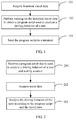
FIG. 1 is a flowchart of a method for processing data on Internet of Vehicles according to an embodiment of the present invention; -
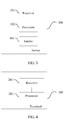
FIG. 2 is a flowchart of a method for processing data on Internet of Vehicles according to another embodiment of the present invention; -
FIG. 3 is a schematic structural diagram of a server according to an embodiment of the present invention; -
FIG. 4 is a schematic structural diagram of a terminal according to an embodiment of the present invention; and -
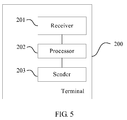
FIG. 5 is a schematic structural diagram of a terminal according to another embodiment of the present invention. - To make the objectives, technical solutions, and advantages of the embodiments of the present invention clearer, the following clearly and completely describes the technical solutions in the embodiments of the present invention with reference to the accompanying drawings in the embodiments of the present invention. Apparently, the described embodiments are some rather than all of the embodiments of the present invention. All other embodiments obtained by persons of ordinary skill in the art based on the embodiments of the present invention without creative efforts shall fall within the protection scope of the present invention.
- Technologies described in this specification may be applied to various communications systems, for example, current 2G and 3G communications systems, Wi-Fi communications system, and a next-generation communications system, for example, a Global System for Mobile Communications (Global System for Mobile communications, GSM for short), a Code Division Multiple Access (Code Division Multiple Access, CDMA for short) system, a Time Division Multiple Access (Time Division Multiple Access, TDMA for short) system, a Wideband Code Division Multiple Access (Wideband Code Division Multiple Access Wireless, WCDMA for short) system, a Frequency Division Multiple Access (Frequency Division Multiple Addressing, FDMA for short) system, an Orthogonal Frequency-Division Multiple Access (Orthogonal Frequency-Division Multiple Access, OFDMA for short) system, a single-carrier FDMA (SC-FDMA) system, a General Packet Radio Service (General Packet Radio Service, GPRS for short) system, a Long Term Evolution (Long Term Evolution, LTE for short) system, and other communications systems.
- At present, in order to provide a premium discount service for a user, an insurance company needs to analyze a driving behavior of the user. For example, when the user encounters a traffic accident and requires the insurance company to settle a claim, the insurance company may analyze the driving behavior of the user, where the driving behavior may be a danger index of a current road section, an acceleration of a vehicle, and whether the user performs an action of abrupt deceleration. When the insurance company learns, by viewing a terminal, that a danger index of a road section on which the user encounters an accident is rather large, the acceleration of the vehicle is relatively small, and there is an abrupt deceleration behavior, the insurance company may possibly conclude that it is due to a too dangerous road, and the user makes an effort to avoid the accident, and in this case, the user may obtain more compensation from the insurance company. However, when the insurance company learns, by viewing the terminal, that the danger index of the road section on which the user encounters the accident is rather small, the acceleration of the vehicle is relatively large, and there is no abrupt deceleration behavior, in this case, the user may obtain relatively small compensation, because most liabilities are possibly on the driving behavior of the user.
- Currently, a program used to analyze a driving behavior of a user is permanently stored in a terminal when a vehicle is delivered from a factory. Because judgment standards are not all the same for different provinces and different countries, in this way, if a geographical location of the user changes, an inaccurate analysis result of the program may be caused, which consequently brings benefit losses to the user. In a method for processing data on Internet of Vehicles provided in embodiments of the present invention, a program script that is used to analyze a driving behavior of a user and is in a terminal device may be updated in real time, and therefore an analysis result is more accurate.
-
FIG. 1 is a flowchart of a method for processing data on Internet of Vehicles according to an embodiment of the present invention. The method provided in this embodiment of the present invention may be applied to a server, where the server may be a Trivial File Transfer Protocol (Trivial File Transfer Protocol, TFTP for short) server, a Dynamic Host Configuration Protocol (Dynamic Host Configuration Protocol, DHCP for short) server, or the like on a network side, and the present invention sets no limitation on a type of the server. The server of the present invention may be located in an equipment room. In addition, in this embodiment of the present invention, the involved terminal may be inserted into an OBD device with a specific interface inside a vehicle. As shown inFIG. 1 , the method includes: - Step 101: Acquire historical travel data.
- The historical travel data is travel data of a fixed period of time in which a vehicle travels.
- The fixed period of time may be specifically one week, 10 days, one month, or the like, that is, the server may acquire travel data of one week in which the vehicle travels, or may acquire travel data of 10 days in which the vehicle travels, or may acquire travel data of one month in which the vehicle travels. The present invention sets no limitation on the fixed period of time.
- Optionally, the server may acquire the historical travel data from a third-party data server.
- First, the third-party data server acquires the historical travel data. Specifically, the third-party data server acquires the travel data that is in one fixed period of time and uploaded by the terminal. The terminal periodically uploads the travel data that is in one fixed period of time to the third-party data server.
- After the terminal uploads the travel data that is in one fixed period of time to the third-party data server, the third-party data server creates a table that stores the travel data, and the third-party data server sends, to the server, the table that stores the travel data.
- As shown in Table 1, Table 1 is historical travel data of the user in March, where the fixed period of time is one week, and the historical travel data is collected at a time interval of collecting travel data once a week. The travel data, including: a vehicle speed, an acceleration, geographical location information of the vehicle, and the like, of the vehicle is recorded in the table.

- Optionally, the server may also acquire the historical travel data from the terminal.
- That the server acquires the historical travel data from the terminal may be specifically that the terminal periodically uploads the travel data to the server remotely by using a GPRS function and according to a fixed period of time.
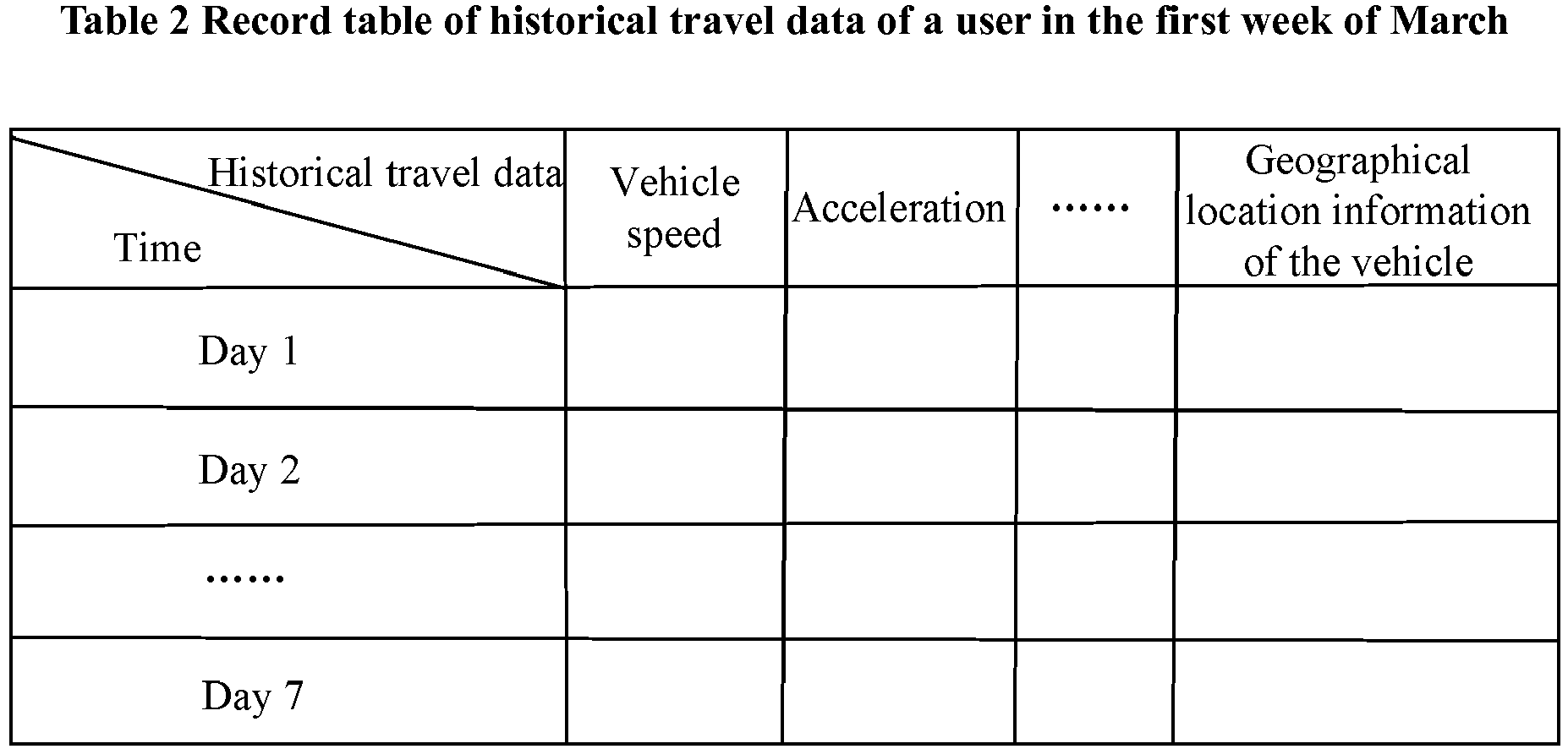
- The server creates a table that stores the historical travel data, and travel data of the vehicle in one fixed period of time is recorded in the table, where the travel data includes a vehicle speed, an acceleration, geographical location information of the vehicle, and the like. After the terminal uploads the travel data, the server stores the travel data in a corresponding table according to a corresponding type. A table that stores the travel data and is created on a server side may be the same as, or may be different from a table that stores the travel data and is created by the third-party data server.
- As shown in Table 2, Table 2 is historical travel data of the user in the first week of March, where the fixed period of time is one day, and the historical travel data is collected at a time interval of collecting travel data once a day.
- Step 102: Perform training on the historical travel data to obtain a program script used to analyze a driving behavior of a user.
- The server may perform training on the historical travel data collected from the third-party data server or the terminal, to obtain the program script used to analyze the driving behavior of the user. The driving behavior of the user may be a danger index of a road section on which the user drives, a driving distance of the user, oil consumption statistics for driving of the user, geographical location information for driving of the user, or the like. The present invention sets no limitation on the driving behavior of the user.
- Optionally, the server first analyzes, according to a set service model, the historical travel data to obtain a data flow analysis function, and then analyzes the data flow analysis function to generate the program script.
- Specifically, the server performs, according to the set service model, training on the historical travel data acquired from the third-party data server or the terminal, to generate the data flow analysis function, and then analyzes the generated data flow analysis function to generate the program script, where the program script is used to analyze the driving behavior of the user.
- For example, on a two-dimensional plane of (x, y), historical data (x, y) of N values is collected, where the historical data represents N dots on the two-dimensional plane. In this case, a model is defined, and the model is defined as a circle; and it is hoped that under this model, 90% of the dots may be included in the circle. In this case, a radius of the model needs to be determined according to the historical data, that is, analysis is performed according to the historical data to obtain a value of the radius of the model, upon which 90% of the dots may fall within the circle. The radius is not unique. Under a premise of ensuring that 90% of the dots fall within the circle, a model with a minimum radius is used as an optimal model, and then a radius of the obtained model and a formula of the model are written into the script. This process is a training process.
- The service model may be specifically a model defined according to a service requirement, such as a road danger index evaluation model, an accident risk model, and an oil consumption estimation model. The present invention sets no limitation on the service model. Multiple pieces of historical travel data may be used for training a same service model.
- Step 103: Send the program script to a terminal.
- The server sends, to the terminal, the program script generated by means of training, so that the terminal analyzes the driving behavior of the user according to the program script.
- Further, before sending the program script to the terminal, the server may encrypt the program script.
- Specifically, to ensure security of a transmission process of the program script, and prevent other servers from forging an identity and sending a malicious program script to the terminal, before sending, to the terminal, the program script generated by performing training on the historical travel data, the server may encrypt the program script by using a preset private key, so as to ensure that the terminal can receive a secure program script. After receiving an encrypted program script, the terminal may try to decrypt the encrypted program script by using a preset public key. If decryption is successful, it is proved that the program script is a secure program script, and may be used to analyze the driving behavior of the user. If the decryption fails, it is proved that the program script is an insecure program script and is abandoned.
- When the program script is encrypted, an elliptic curve algorithm featuring relatively small memory resource consumption and an easy algorithm may be used, or another relatively complex encryption algorithm may be used. The present invention sets no limitation on an encryption algorithm.
- Optionally, after sending the program script to the terminal, the server may further send a standard used to analyze the driving behavior of the user to the terminal.
- Specifically, the server may further send the standard used to analyze the driving behavior of the user to the terminal, where the standard is used to analyze whether a driving behavior of the user in a period of time belongs to normal driving.
- Specifically, the server calculates an average of acquired historical travel data that is in a same period of time, where this average is a standard used to analyze a user driving behavior that is in the same period of time.
- For example, the server analyzes, according to collected historical travel data in a period of time, an average of vehicle speeds that are in this period of time, where the average of the vehicle speeds is a standard value of a vehicle speed. The standard value of the vehicle speed in this period of time that is sent by the server to the terminal is 70 (km/h). The terminal is an OBD device that is inserted into a specific interface inside the vehicle, where the OBD device includes a screen. An average vehicle speed that is in the same period of time and analyzed by the terminal is 80 (km/h), and that the vehicle speed exceeds the average by 14.3% may be displayed on the terminal. If a traffic accident occurs, an insurance company may provide a more reasonable premium discount service for the user according to this percentage.
- Optionally, after sending the program script to the terminal, the server receives a request for updating the program script; and updates the program script according to the request for updating the program script.
- Specifically, because a method used for analyzing the driving behavior of the user is different in different countries and different provinces, program scripts used to analyze the driving behavior of the user are also different. The terminal may detect, according to geographical location information acquired by a global positioning system (Global Positioning System, GPS for short), whether the geographical location information of the user changes. When detecting a change in a geographic location of the user, the terminal may actively request the server to update a current program script used to analyze the driving behavior of the user. After receiving the request, which is sent by the terminal, for updating the program script, the server may first acquire historical travel data of a current geographical location of the user from the third-party data server or the terminal, then analyzes the acquired historical travel data, generates a program script used to analyze the driving behavior of the user, and sends the program script to the terminal. The terminal may update an existing program script according to the received program script, so that the program script is applicable to the current geographical location, and the terminal analyzes the driving behavior of the user more accurately. The updating a current program script used to analyze the driving behavior of the user may be modifying the existing program script, or may be adding a new program script.
- In the method for processing data on Internet of Vehicles provided in this embodiment of the present invention, a server first acquires historical travel data, and then performs training on the historical travel data to obtain a program script used to analyze a driving behavior of a user, and finally sends the program script to a terminal. The driving behavior of the user is dynamically analyzed according to the program script and the travel data, which resolves a problem that algorithm accuracy decreases because an algorithm is not updated in time, ensures accuracy of analyzing the driving behavior of the user, and further decreases additional costs brought by updating terminal firmware.
-
FIG. 2 is a flowchart of a method for processing data on Internet of Vehicles according to another embodiment of the present invention. The method provided in this embodiment of the present invention may be applied to a terminal, where the terminal may be an OBD device that is inserted in a specific interface inside a vehicle. As shown inFIG. 2 , the method includes: - Step 201: Receive a program script that is used to analyze a driving behavior of a user and sent by a server.
- The terminal receives the program script that is used to analyze the driving behavior of the user and sent by the server.
- Further, after receiving the program script sent by the server, the terminal may decrypt the program script by using a preset public key. If decryption is successful, it is proved that the program script is a secure program script, and may be used to analyze the driving behavior of the user. If the decryption fails, it is proved that the program script is an insecure program script and is abandoned.
- Further, the terminal may make one copy of the program script, encrypt code in the program script by using hardware encryption or a software encryption method such as obfuscated code encryption, and store the code that is in the program script to be used in next scheduling.
- Step 202: Acquire travel data.
- The terminal acquires the travel data used to analyze the driving behavior of the user.
- Optionally, the terminal acquires the travel data from at least one of an OBD module, a GPS, and an acceleration sensor.
- Specifically, a vehicle speed, a rotational speed of an engine, and the like are acquired from the OBD module, geographical location information is acquired from the GPS, and acceleration information is acquired from the acceleration sensor.
- Step 203: Analyze the driving behavior of the user according to the program script and the travel data.
- The terminal may analyze the driving behavior of the user according to the program script sent by the server and the collected travel data.
- Optionally, before the terminal analyzes the driving behavior of the user according to the program script and the travel data, the terminal may further acquire a standard that is sent by the server and used to analyze the driving behavior of the user.
- Specifically, the terminal substitutes the acquired travel data into the program script sent by the server, executes the program script, and generates a first value, and then compares the first value with the standard that is used to analyze the driving behavior of the user, where the first value may be a variance or an average.
- For example, an average of danger indexes of different nodes in a road section may be used to represent a danger index of the road section. The terminal queries danger indexes of different nodes in a driving road section in a period of time from a local geographic information system (Geographic Information System, GIS for short) agent, by calculating an average of the danger indexes of different nodes of the road section, a road section danger index in a same period of time may be obtained, and then the road section danger index obtained by means of calculation is compared with a road section security index standard that is sent by the server and received by the terminal. For example, the road section danger index obtained by means of calculation is 80, and the received road security index standard sent by the server is 30. In this case, that the road security index standard is exceeded by 60% may be displayed on the terminal, that is, the road section at this moment is relatively dangerous. If a traffic accident occurs during the same period of time, the insurance company may also provide a more reasonable premium discount service for the user according to data such as a relative danger index of a road section, and whether the user has an acceleration behavior.
- The GIS agent acquires the danger indexes of different nodes in the road section from a third-party road section information server. The third-party road section information server may set road nodes according to a preconfigured distance interval, and acquire a danger index of each road node.
- Optionally, after analyzing the driving behavior of the user according to the program script and the travel data, the terminal detects the geographical location information; and when it is detected that the geographical location information changes, the terminal may request the server to update the program script.
- Specifically, because a method used for analyzing the driving behavior of the user is different in different countries and different provinces, program scripts used to analyze the driving behavior of the user are also different. In one case, the terminal may detect, according to geographical location information acquired by the GPS, whether the geographical location information of the user changes. When the terminal detects a change in the geographical location information of the user, the terminal may actively request the server to update a current program script used to analyze the driving behavior of the user. When the terminal receives an updated program script, the terminal may update an existing program script according to the received program script, so that the program script is applicable to a current geographic location, and the terminal analyzes the driving behavior of the user more accurately. The updating a current program script used to analyze the driving behavior of the user may be modifying the existing program script, or may be adding a new program script.
- Optionally, after analyzing the driving behavior of the user according to the program script and the travel data, the terminal collects travel data of a fixed period of time in which a vehicle travels, and sends the travel data to the server.
- Specifically, if the user is willing to send travel data of the user to the server, the user may send the travel data that is in the fixed period of time to the server by using a GPRS function of the terminal, and store the travel data in a historical travel data recording table on the server side, to serve as historical travel data used by the server to help the user analyze the program script.
- In the method for processing data on Internet of Vehicles provided in this embodiment of the present invention, a terminal first receives a program script that is sent by a server and used to analyze a driving behavior of a user, and then the terminal acquires travel data, and finally the terminal analyzes the driving behavior of the user according to the received program script and the acquired travel data. The driving behavior of the user is dynamically analyzed according to the program script and the travel data, which resolves a problem that algorithm accuracy decreases because an algorithm is not updated in time, ensures accuracy of analyzing the driving behavior of the user, and further decreases additional costs brought by updating terminal firmware.
-
FIG. 3 is a schematic structural diagram of a server according an embodiment of the present invention. As shown inFIG. 3 , aserver 100 includes: areceiver 101, aprocessor 102, and asender 103. - The
receiver 101 is configured to acquire historical travel data. - The
processor 102 is configured to perform training on the historical travel data that is acquired by thereceiver 101, to obtain a program script used to analyze a driving behavior of a user. - The
sender 103 is configured to send, to a terminal, the program script generated by performing training by theprocessor 102. - Optionally, the
processor 102 is specifically configured to: analyze, according to a set service model, the historical travel data to obtain a data flow analysis function; and analyze the data flow analysis function to generate the program script. - Specifically, the
processor 102 first performs training on, according to the set service model, the historical travel data to generate the data flow analysis function, and then analyzes the generated data flow analysis function to generate the program script, where the program script is used to analyze the driving behavior of the user. - The service model may be specifically a model defined according to a service requirement, such as a road danger index evaluation model, an accident risk model, an oil consumption estimation model. The present invention sets no limitation on the service model. Multiple pieces of historical travel data may be used for training a same service model.
- Optionally, the
receiver 101 is specifically configured to: acquire the historical travel data from a third-party data server; or acquire the historical travel data from the terminal, where the historical travel data is travel data of a fixed period of time in which a vehicle travels. - Specifically, the third-party data server acquires travel data that is in a fixed period of time and uploaded by the terminal. The terminal may periodically upload the travel data of a period of time to the third-party data server. After the terminal uploads the travel data of the fixed period of time to the third-party data server, the third-party data server creates a table that stores the travel data. For example, the historical travel data recording table is used to record the travel data that is of the terminal in a fixed period of time, where the travel data includes: a vehicle speed, an acceleration, geographical location information, and the like. After the terminal uploads the travel data, the third-party data server may store, according to a corresponding type, the travel data uploaded by the terminal in a corresponding historical travel data table. The third-party data server sends, to the server, the table that stores the travel data. As shown in Table 1, Table 1 is historical travel data of the user in March, where the fixed period of time is one week, and the historical travel data is collected at a time interval of collecting travel data once a week.
- In another embodiment of the present invention, the terminal may periodically upload the travel data to the server remotely by using a GPRS function according to a fixed period of time. The server may create a table that stores the historical travel data, where the table records the travel data of the vehicle in a fixed period of time, and the travel data includes a vehicle speed, an acceleration, geographical location information of the vehicle, and the like. After the terminal uploads personal travel data, the server stores the travel data in a corresponding table according to a corresponding type. A table that stores the travel data and is created on a server side may be the same as, or may be different from a table that stores the travel data and is created by the third-party data server.
- As shown in Table 2, Table 2 is historical travel data of the user in the first week of March, where the fixed period of time is one day, and the historical travel data is collected at a time interval of collecting travel data once a day.
- Optionally, the
sender 103 is further configured to send a standard that is used to analyze the driving behavior of the user to the terminal. - Specifically, the
sender 103 may further send the standard that is used to analyze the driving behavior of the user to the terminal, where the standard is used to analyze whether a driving behavior of the user in a period of time belongs to normal driving. Specifically, the server calculates an average of acquired historical travel data that is in a same period of time, where this average is a standard used to analyze a driving behavior of the user in the same period of time. - Optionally, the
receiver 101 is further configured to receive a request for updating the program script. - Optionally, the
processor 102 is further configured to update the program script according to the request that is for updating the program script and received by the receiver. - Specifically, because a method used for analyzing the driving behavior of the user is different in different countries and different provinces, program scripts used to analyze the driving behavior of the user are also different. The terminal may detect, according to geographical location information acquired by the GPS, whether the geographical location information of the user changes. When the terminal detects a change in a geographical location of the user, the terminal may actively request the server to update a current program script used to analyze the driving behavior of the user. After the
receiver 101 receives the request, which is sent by the terminal, for updating the program script, theprocessor 102 may first acquire historical travel data of the current geographical location of the user from the third-party data server or the terminal, and then analyzes the acquired historical travel data, generates a program script used to analyze the driving behavior of the user, and sends the program script to the terminal by using thesender 103. The terminal may update an existing program script according to the received program script, so that the program script is applicable to the current geographical location, and the terminal analyzes the driving behavior of the user more accurately. The updating a current program script used to analyze the driving behavior of the user may be modifying the existing program script, or may be adding a new program script. - Further, before sending, to the terminal, the program script generated by performing training by the
processor 102, thesender 103 may encrypt the program script. - Specifically, to ensure security of a transmission process of the program script, and prevent other servers from forging an identity and sending a malicious program script to the terminal, before sending, to the terminal, a program script generated after performing training on the historical travel data, the
sender 103 may encrypt the program script by using a preset private key, so as to ensure that the terminal can receive a secure program script. After receiving an encrypted program script, the terminal may try to decrypt the encrypted program script by using a preset public key. If decryption is successful, it is proved that the program script is a secure program script, and may be used to analyze the driving behavior of the user. If the decryption fails, it is proved that the program script is an insecure program script and is abandoned. - When the program script is encrypted, an elliptic curve algorithm featuring relatively small memory resource consumption and an easy algorithm may be used, or another relatively complex encryption algorithm may be used. The present invention sets no limitation on an encryption algorithm.
- In the server provided in this embodiment of the present invention, the server first acquires historical travel data, and then performs training on the historical travel data to obtain a program script used to analyze a driving behavior of a user, and finally sends the program script to a terminal. The driving behavior of the user is dynamically analyzed according to the program script and the travel data, which resolves a problem that algorithm accuracy decreases because an algorithm is not updated in time, ensures accuracy of analyzing the driving behavior of the user, and further decreases additional costs brought by updating terminal firmware.
-
FIG. 4 is a schematic structural diagram of a terminal according to an embodiment of the present invention. As shown inFIG. 4 , a terminal 200 includes: areceiver 201 and aprocessor 202. - The
receiver 201 is configured to: receive a program script that is used to analyze a driving behavior of a user and sent by a server, and acquire travel data. - The
processor 202 is configured to analyze the driving behavior of the user according to the program script and the travel data that are acquired by thereceiver 201. - In another embodiment of the present invention, the
receiver 201 in the terminal 200 may receive travel data acquired by an OBD device. Thereceiver 201 may be specifically a mobile communications module, for example, a GPRS communications module. - The OBD device is inserted into a specific interface of a vehicle, where the OBD device includes at least one of an on-board diagnostic system OBD module, a GPS, and an acceleration sensor. The OBD device acquires a vehicle speed, a rotational speed of an engine, and the like from the OBD module, acquires geographical location information from the GPS, and acquires an acceleration from the acceleration sensor. Therefore, the
receiver 201 receives at least one piece of the following information: the vehicle speed and the rotational speed of the engine, the geographical location information, and the acceleration. - In another embodiment of the present invention, the
receiver 201 in the terminal 200 is integrated with an OBD device. That is, thereceiver 201 may be specifically a mobile communications module integrated with an OBD device, for example, a GPRS communications module integrated with an OBD device. The OBD device includes at least one of an OBD module, a GPS, and an acceleration sensor. Thereceiver 201 integrated with the OBD device is inserted into a specific interface of a vehicle. - The
receiver 201 may directly acquire at least one piece of the following information: the vehicle speed and the rotational speed of the engine, the geographical location information, and the acceleration. - Optionally, the
receiver 201 is further configured to acquire a standard that is used to analyze the driving behavior of the user and sent by the server. - Further, after the
receiver 201 receives the program script sent by the server, theprocessor 202 may decrypt the program script by using a preset public key. If decryption is successful, it is proved that the program script is a secure program script, and may be used to analyze the driving behavior of the user. If the decryption fails, it is proved that the program script is an insecure program script and is abandoned. - Further, the
processor 202 may make one copy of the program script, encrypt code in the program script by using hardware encryption or a software encryption method such as obfuscated code encryption, and store the code that is in the program script to be used in next scheduling. - Optionally, the
processor 202 is specifically configured to substitute the travel data into the program script, execute the program script, and generate a first value. - The first value is compared with the standard that is used to analyze the driving behavior of the user and acquired by the receiver, and the driving behavior of the user is analyzed.
- The first value may be a variance or an average.
- Specifically, the
processor 202 substitutes the acquired driving data into the program script sent by the server, executes the program script, and generates the first value; and then compares the first value with the standard that is used to analyze the driving behavior of the user and received by thereceiver 201, where the first value may be a variance or an average. - Optionally, the
processor 202 is further configured to: detect geographical location information; and when it is detected that the geographical location information changes, request the server to update the program script. - Specifically, because a method used for analyzing the driving behavior of the user is different in different countries and different provinces, program scripts used to analyze the driving behavior of the user are also different. In one case, the
processor 202 detects, according to geographical location information acquired by the GPS, whether the geographical location information of the user changes. When theprocessor 202 detects a change in the geographical location information of the user, theprocessor 202 may actively request the server to update a current program script used to analyze the driving behavior of the user. When thereceiver 201 receives an updated program script, theprocessor 202 may update an existing program script according to the received program script, so that the program script is applicable to a current geographical location, and theprocessor 202 analyzes the driving behavior of the user more accurately. The updating a current program script used to analyze the driving behavior of the user may be modifying the existing program script, or may be adding a new program script. - In addition, as shown in
FIG. 5 , for the terminal 200, the terminal 200 may further include asender 203. - The
processor 202 is further configured to collect travel data of a fixed period of time in which a vehicle travels. - The
sender 203 is configured to send the travel data to the server. - The
sender 203 may be specifically a mobile communications module, for example, a GPRS communications module. - In the terminal provided in this embodiment of the present invention, the terminal first receives a program script that is sent by a server and used to analyze a driving behavior of a user, then the terminal acquires travel data, and finally the terminal analyzes the driving behavior of the user according to the received program script and the acquired travel data. The driving behavior of the user is dynamically analyzed according to the program script and the travel data, which resolves a problem that algorithm accuracy decreases because an algorithm is not updated in time, ensures accuracy of analyzing the driving behavior of the user, and further decreases additional costs brought by updating terminal firmware.
- Persons of ordinary skill in the art may understand that all or some of the steps of the method embodiments may be implemented by a program instructing relevant hardware. The program may be stored in a computer readable storage medium. When the program runs, the steps of the method embodiments are performed. The foregoing storage medium includes: any medium that can store program code, such as a ROM, a RAM, a magnetic disk, or an optical disc.
- Finally, it should be noted that the foregoing embodiments are merely intended for describing the technical solutions of the present invention, but not for limiting the present invention. Although the present invention is described in detail with reference to the foregoing embodiments, persons of ordinary skill in the art should understand that they may still make modifications to the technical solutions described in the foregoing embodiments or make equivalent replacements to some or all technical features thereof, without departing from the scope of the technical solutions of the embodiments of the present invention.
Claims (22)
- A method for processing data on Internet of Vehicles, wherein the method is applied to a server, and the method comprises:acquiring historical travel data;performing training on the historical travel data to obtain a program script used to analyze a driving behavior of a user; andsending the program script to a terminal.
- The method according to claim 1, wherein the performing training on the historical travel data to obtain a program script used to analyze a driving behavior of a user is specifically:analyzing, according to a set service model, the historical travel data to obtain a data flow analysis function; andgenerating the program script according to the data flow analysis function.
- The method according to claim 1 or 2, wherein the acquiring historical travel data specifically comprises:acquiring the historical travel data from a third-party data server;
oracquiring the historical travel data from the terminal; whereinthe historical travel data is travel data of a fixed period of time in which a vehicle travels. - The method according to any one of claims 1 to 3, wherein after the sending the program script to a terminal, the method further comprises:sending a standard used to analyze the driving behavior of the user to the terminal.
- The method according to any one of claims 1 to 4, wherein after the sending the program script to a terminal, the method further comprises:receiving a request for updating the program script; andupdating the program script according to the request for updating the program script.
- A method for processing data on Internet of Vehicles, wherein the method is applied to a terminal, and the method comprises:receiving a program script that is used to analyze a driving behavior of a user and sent by a server;acquiring travel data; andanalyzing the driving behavior of the user according to the program script and the travel data.
- The method according to claim 6, wherein the acquiring travel data comprises:acquiring the travel data from at least one of an on-board diagnostic system OBD module, a global positioning system GPS, and an acceleration sensor; whereinacquiring the travel data from the OBD module is specifically acquiring a vehicle speed and a rotational speed of an engine;
oracquiring the travel data from the GPS is specifically acquiring geographical location information;
oracquiring the travel data from the acceleration sensor is specifically acquiring an acceleration. - The method according to claim 6 or 7, wherein before the analyzing the driving behavior of the user according to the program script and the travel data, the method further comprises:acquiring a standard that is used to analyze the driving behavior of the user and sent by the server; whereinthe analyzing the driving behavior of the user according to the program script and the travel data is specifically:substituting the travel data into the program script, executing the program script, and generating a first value; andcomparing the first value with the standard that is used to analyze the driving behavior of the user, and analyzing the driving behavior of the user; whereinthe first value may be a variance or an average.
- The method according to claim 6 or 7, wherein after the analyzing the driving behavior of the user according to the program script and the travel data, the method further comprises:detecting, according to the acquired geographical location information, whether the geographical location information changes; andwhen it is detected that the geographical location information changes, requesting the server to update the program script.
- The method according to any one of claims 6 to 9, wherein after the acquiring travel data, the method further comprises:collecting travel data of a fixed period of time in which a vehicle travels; andsending the travel data to the server.
- A server, comprising:a receiver, configured to acquire historical travel data;a processor, configured to perform training on the historical travel data to obtain a program script used to analyze a driving behavior of a user; anda sender, configured to send, to a terminal, the program script generated by performing training by the processor.
- The server according to claim 11, wherein the processor is specifically configured to:analyze, according to a set service model, the historical travel data to obtain a data flow analysis function; andgenerate the program script according to the data flow analysis function.
- The server according to claim 11 or 12, wherein the receiver is specifically configured to:acquire the historical travel data from a third-party data server;
oracquire the historical travel data from the terminal; whereinthe historical travel data is travel data of a fixed period of time in which a vehicle travels. - The server according to any one of claims 11 to 13, wherein the sender is further configured to:send a standard used to analyze the driving behavior of the user to the terminal.
- The server according to any one of claims 11 to 14, wherein the receiver is further configured to:receive a request for updating the program script.
- The server according to any one of claims 11 to 15, wherein the processor is further configured to:update the program script according to the request that is for updating the program script and received by the receiver.
- A terminal, wherein the terminal comprises:a receiver, configured to: receive a program script that is used to analyze a driving behavior of a user and sent by a server, and acquire travel data; anda processor, configured to analyze the driving behavior of the user according to the program script received by the receiver and the acquired travel data.
- The terminal according to claim 17, wherein the receiver may be specifically at least one of an on-board diagnostic system OBD module, a global positioning system GPS, and an acceleration sensor; wherein
that the receiver is configured to acquire the travel data is specifically:acquiring the travel data from the OBD module, which is specifically acquiring a vehicle speed and a rotational speed of an engine;
oracquiring the travel data from the GPS, which is specifically acquiring geographical location information;
oracquiring the travel data from the acceleration sensor, which is specifically acquiring an acceleration. - The terminal according to claim 17 or 18, wherein the receiver is further configured to:acquire a standard that is used to analyze the driving behavior of the user and sent by the server.
- The terminal according to claims 17 to 19, wherein the processor is specifically configured to:substitute the travel data into the program script, execute the program script, and generate a first value; andcompare the first value with the standard that is used to analyze the driving behavior of the user and acquired by the receiver, and analyze the driving behavior of the user; whereinthe first value may be a variance or an average.
- The terminal according to claim 17 or 18, wherein the processor is further configured to:detect, according to the acquired geographical location information, whether the geographical location information changes; andwhen it is detected that the geographical location information changes, request the server to update the program script.
- The terminal according to any one of claims 17 to 21, wherein the terminal further comprises a sender; wherein
the processor is further configured to collect travel data of a fixed period of time in which a vehicle travels; and
the sender is configured to send the travel data to the server.
Applications Claiming Priority (1)
| Application Number | Priority Date | Filing Date | Title |
|---|---|---|---|
| PCT/CN2014/072914 WO2015131351A1 (en) | 2014-03-05 | 2014-03-05 | Data processing method, server and terminal for internet of vehicles |
Publications (3)
| Publication Number | Publication Date |
|---|---|
| EP3098798A1 true EP3098798A1 (en) | 2016-11-30 |
| EP3098798A4 EP3098798A4 (en) | 2017-01-25 |
| EP3098798B1 EP3098798B1 (en) | 2018-04-25 |
Family
ID=52975447
Family Applications (1)
| Application Number | Title | Priority Date | Filing Date |
|---|---|---|---|
| EP14884934.2A Active EP3098798B1 (en) | 2014-03-05 | 2014-03-05 | Data processing method, server and terminal for internet of vehicles |
Country Status (5)
| Country | Link |
|---|---|
| US (1) | US10699496B2 (en) |
| EP (1) | EP3098798B1 (en) |
| JP (1) | JP6320559B2 (en) |
| CN (2) | CN104429047B (en) |
| WO (1) | WO2015131351A1 (en) |
Cited By (1)
| Publication number | Priority date | Publication date | Assignee | Title |
|---|---|---|---|---|
| WO2021252050A1 (en) | 2020-06-10 | 2021-12-16 | Allstate Insurance Company | Data processing system for secure data sharing and customized output generation |
Families Citing this family (27)
| Publication number | Priority date | Publication date | Assignee | Title |
|---|---|---|---|---|
| CN105139648B (en) * | 2015-08-11 | 2018-01-30 | 北京奇虎科技有限公司 | Driving habit data creation method and system |
| CN106971250A (en) * | 2016-01-13 | 2017-07-21 | 阿里巴巴集团控股有限公司 | A kind of data processing method and device |
| US10318247B2 (en) * | 2016-03-18 | 2019-06-11 | Ford Global Technologies, Llc | Scripting on a telematics control unit |
| CN106094787A (en) * | 2016-06-03 | 2016-11-09 | 中国电信股份有限公司广东号百信息服务分公司 | A kind of car networked system and collecting method thereof |
| CN109416873B (en) * | 2016-06-24 | 2022-02-15 | 瑞士再保险有限公司 | Autonomous or partially autonomous motor vehicle with automated risk control system and corresponding method |
| US10470189B2 (en) | 2016-06-27 | 2019-11-05 | At&T Intellectual Property I, L.P. | Facilitation of efficient software downloads for vehicles |
| CN108255839B (en) * | 2016-12-28 | 2020-10-27 | 沈阳美行科技有限公司 | User travel management system and related method |
| CN107444404B (en) * | 2017-07-25 | 2019-10-25 | 武汉依迅北斗空间技术有限公司 | A kind of evaluation method and device of driving behavior standard degree |
| CN108091138A (en) * | 2017-12-29 | 2018-05-29 | 安徽中凯信息产业股份有限公司 | A kind of car networking data processing method |
| CN108416267A (en) * | 2018-02-02 | 2018-08-17 | 辽宁友邦网络科技有限公司 | A kind of auxiliary driving method and system for logistics transportation |
| CN110225446B (en) * | 2018-03-01 | 2021-01-29 | 北京嘀嘀无限科技发展有限公司 | System, method and device for identifying driving behavior and storage medium |
| CN108657187A (en) * | 2018-03-29 | 2018-10-16 | 斑马网络技术有限公司 | Vehicle is accustomed to method for early warning |
| US11245583B2 (en) * | 2018-05-03 | 2022-02-08 | Micron Technology, Inc. | Determining whether a vehicle should be configured for a different region |
| CN109583741B (en) * | 2018-11-23 | 2021-03-09 | 上海交通大学 | Driving trajectory risk assessment method and system |
| US10890907B2 (en) * | 2018-12-14 | 2021-01-12 | Toyota Jidosha Kabushiki Kaisha | Vehicle component modification based on vehicular accident reconstruction data |
| CN109901887B (en) * | 2019-01-24 | 2024-05-28 | 平安科技(深圳)有限公司 | Plug-in model deployment method, electronic device and computer readable storage medium |
| JP7212590B2 (en) * | 2019-07-08 | 2023-01-25 | 株式会社日立ハイテク | Accident risk diagnosis method, accident risk diagnosis device, and accident risk diagnosis system |
| KR102851313B1 (en) * | 2020-03-31 | 2025-08-27 | 현대자동차주식회사 | Vehicle and method for controlling thereof |
| CN114162131B (en) * | 2020-09-10 | 2025-05-09 | 深圳引望智能技术有限公司 | Driving behavior monitoring method and device |
| CN112319489B (en) * | 2020-11-18 | 2022-03-04 | 三一重型装备有限公司 | Driving behavior monitoring method, driving behavior monitoring system, server and storage medium |
| CN113178071B (en) * | 2021-04-22 | 2022-04-29 | 深圳壹账通智能科技有限公司 | Driving risk level identification method and device, electronic equipment and readable storage medium |
| CN113246999B (en) * | 2021-04-30 | 2022-07-19 | 中寰卫星导航通信有限公司 | Driving behavior analysis method and device and readable storage medium |
| CN113119985B (en) * | 2021-05-31 | 2022-12-06 | 东风商用车有限公司 | Automobile driving data monitoring method, device, equipment and storage medium |
| CN113992709B (en) * | 2021-10-12 | 2023-11-03 | 北京理工新源信息科技有限公司 | Intelligent vehicle-mounted early warning terminal equipment based on 5G communication |
| CN114220191B (en) * | 2021-12-13 | 2023-11-21 | 平安国际融资租赁有限公司 | Driving state identification method and device, computer equipment and readable storage medium |
| CN115102944B (en) * | 2022-06-09 | 2024-06-14 | 海南视联通信技术有限公司 | Terminal upgrading method, terminal, server, electronic equipment and storage medium |
| CN116704747A (en) * | 2022-12-29 | 2023-09-05 | 摩斯智联科技有限公司 | System for judging vehicle accident and controlling wind based on edge calculation |
Family Cites Families (43)
| Publication number | Priority date | Publication date | Assignee | Title |
|---|---|---|---|---|
| US7715961B1 (en) | 2004-04-28 | 2010-05-11 | Agnik, Llc | Onboard driver, vehicle and fleet data mining |
| US9189895B2 (en) * | 2005-06-01 | 2015-11-17 | Allstate Insurance Company | Motor vehicle operating data collection and analysis |
| US9384111B2 (en) * | 2011-12-23 | 2016-07-05 | Zonar Systems, Inc. | Method and apparatus for GPS based slope determination, real-time vehicle mass determination, and vehicle efficiency analysis |
| US8117049B2 (en) * | 2007-04-10 | 2012-02-14 | Hti Ip, Llc | Methods, systems, and apparatuses for determining driver behavior |
| WO2008134888A1 (en) * | 2007-05-02 | 2008-11-13 | Intelligent Mechatronic Systems Inc. | Recording and reporting of driving characteristics with privacy protection |
| JP2008296682A (en) * | 2007-05-30 | 2008-12-11 | Katsuya Ikuta | On-vehicle dangerous driving monitor, dangerous driving centralized supervisory system, and dangerous driving prevention system |
| JP2009073465A (en) * | 2007-08-28 | 2009-04-09 | Fuji Heavy Ind Ltd | Safe driving support system |
| KR20090054171A (en) * | 2007-11-26 | 2009-05-29 | 한국전자통신연구원 | Vehicle and driver information management system and method |
| US9665910B2 (en) * | 2008-02-20 | 2017-05-30 | Hartford Fire Insurance Company | System and method for providing customized safety feedback |
| US20100017870A1 (en) | 2008-07-18 | 2010-01-21 | Agnik, Llc | Multi-agent, distributed, privacy-preserving data management and data mining techniques to detect cross-domain network attacks |
| DE102008041618B4 (en) * | 2008-08-27 | 2013-02-28 | Ford Global Technologies, Llc | Method and device for evaluating the driving style of a driver in a motor vehicle in relation to the fuel consumption |
| CN101436347A (en) * | 2008-12-09 | 2009-05-20 | 北京交通大学 | Prediction method for rapid road travel time |
| US8854199B2 (en) * | 2009-01-26 | 2014-10-07 | Lytx, Inc. | Driver risk assessment system and method employing automated driver log |
| US8095261B2 (en) | 2009-03-05 | 2012-01-10 | GM Global Technology Operations LLC | Aggregated information fusion for enhanced diagnostics, prognostics and maintenance practices of vehicles |
| US8751058B2 (en) | 2009-09-29 | 2014-06-10 | The Invention Science Fund I, Llc | Selective implementation of an optional vehicle mode |
| US9082308B2 (en) * | 2009-10-20 | 2015-07-14 | Cartasite Inc. | Driver performance analysis and consequence |
| IL201810A (en) * | 2009-10-29 | 2015-06-30 | Greenroad Driving Technologies Ltd | Method and device for evaluating a vehicle's fuel consumption efficiency |
| CN102081859B (en) * | 2009-11-26 | 2014-10-01 | 上海遥薇(集团)有限公司 | Control method of bus arrival time prediction model |
| JP5824702B2 (en) * | 2009-12-11 | 2015-11-25 | オプテックス株式会社 | Driving behavior detection method and apparatus |
| CN102044095A (en) | 2010-09-10 | 2011-05-04 | 深圳市航天星网通讯有限公司 | Personal driving behaviour analysis management control system |
| CN101984630B (en) * | 2010-11-03 | 2012-12-19 | 北京中交兴路信息科技有限公司 | Vehicle detection method based on vehicle-mounted mobile terminal |
| US20120202176A1 (en) * | 2011-02-08 | 2012-08-09 | Honda Motor Co., Ltd. | Objective measure of driving performance |
| US9292471B2 (en) * | 2011-02-18 | 2016-03-22 | Honda Motor Co., Ltd. | Coordinated vehicle response system and method for driver behavior |
| US8698639B2 (en) * | 2011-02-18 | 2014-04-15 | Honda Motor Co., Ltd. | System and method for responding to driver behavior |
| CA2828275C (en) * | 2011-02-25 | 2019-01-08 | Vnomics Corp. | System and method for in-vehicle operator training |
| US9171409B2 (en) * | 2011-05-04 | 2015-10-27 | GM Global Technology Operations LLC | System and method for vehicle driving style determination |
| JP5856387B2 (en) * | 2011-05-16 | 2016-02-09 | トヨタ自動車株式会社 | Vehicle data analysis method and vehicle data analysis system |
| US20110307188A1 (en) * | 2011-06-29 | 2011-12-15 | State Farm Insurance | Systems and methods for providing driver feedback using a handheld mobile device |
| US20130006674A1 (en) * | 2011-06-29 | 2013-01-03 | State Farm Insurance | Systems and Methods Using a Mobile Device to Collect Data for Insurance Premiums |
| US8996234B1 (en) * | 2011-10-11 | 2015-03-31 | Lytx, Inc. | Driver performance determination based on geolocation |
| JP5510471B2 (en) * | 2012-01-20 | 2014-06-04 | トヨタ自動車株式会社 | Driving model creation device, driving model creation method, driving evaluation device, driving evaluation method, and driving support system |
| CN104471219B (en) * | 2012-06-27 | 2017-07-11 | 三菱电机株式会社 | Driving mode evaluating apparatus and driving mode evaluation method |
| US9096234B2 (en) * | 2012-11-20 | 2015-08-04 | General Motors Llc | Method and system for in-vehicle function control |
| US9569984B2 (en) * | 2012-12-11 | 2017-02-14 | Abalta Technologies, Inc. | Recording, monitoring, and analyzing driver behavior |
| US9141582B1 (en) * | 2012-12-19 | 2015-09-22 | Allstate Insurance Company | Driving trip and pattern analysis |
| US9081650B1 (en) * | 2012-12-19 | 2015-07-14 | Allstate Insurance Company | Traffic based driving analysis |
| US8876535B2 (en) * | 2013-03-15 | 2014-11-04 | State Farm Mutual Automobile Insurance Company | Real-time driver observation and scoring for driver's education |
| CN103208205B (en) * | 2013-03-20 | 2015-05-13 | 北京航空航天大学 | Vehicle safety driving early warning method based on vehicle internet |
| CN103310651B (en) * | 2013-05-24 | 2016-03-02 | 北京市交通信息中心 | A kind of public transport based on real-time road condition information is arrived at a station Forecasting Methodology |
| CN103413359A (en) * | 2013-07-18 | 2013-11-27 | 江苏中科天安智联科技有限公司 | Bad driving behavior analysis evaluation system |
| US9349228B2 (en) * | 2013-10-23 | 2016-05-24 | Trimble Navigation Limited | Driver scorecard system and method |
| US9714037B2 (en) * | 2014-08-18 | 2017-07-25 | Trimble Navigation Limited | Detection of driver behaviors using in-vehicle systems and methods |
| JP6439735B2 (en) * | 2016-04-14 | 2018-12-19 | トヨタ自動車株式会社 | Driving support device |
-
2014
- 2014-03-05 US US15/123,587 patent/US10699496B2/en active Active
- 2014-03-05 CN CN201480001790.3A patent/CN104429047B/en active Active
- 2014-03-05 CN CN201711293804.5A patent/CN108200121B/en active Active
- 2014-03-05 JP JP2016555544A patent/JP6320559B2/en active Active
- 2014-03-05 EP EP14884934.2A patent/EP3098798B1/en active Active
- 2014-03-05 WO PCT/CN2014/072914 patent/WO2015131351A1/en not_active Ceased
Cited By (2)
| Publication number | Priority date | Publication date | Assignee | Title |
|---|---|---|---|---|
| WO2021252050A1 (en) | 2020-06-10 | 2021-12-16 | Allstate Insurance Company | Data processing system for secure data sharing and customized output generation |
| EP4165624A4 (en) * | 2020-06-10 | 2024-10-02 | Allstate Insurance Company | DATA PROCESSING SYSTEM FOR SECURE DATA SHARING AND CUSTOM OUTPUT GENERATION |
Also Published As
| Publication number | Publication date |
|---|---|
| JP2017517779A (en) | 2017-06-29 |
| JP6320559B2 (en) | 2018-05-09 |
| EP3098798A4 (en) | 2017-01-25 |
| CN104429047B (en) | 2018-02-02 |
| CN104429047A (en) | 2015-03-18 |
| US10699496B2 (en) | 2020-06-30 |
| CN108200121A (en) | 2018-06-22 |
| EP3098798B1 (en) | 2018-04-25 |
| WO2015131351A1 (en) | 2015-09-11 |
| US20170076510A1 (en) | 2017-03-16 |
| CN108200121B (en) | 2021-09-14 |
Similar Documents
| Publication | Publication Date | Title |
|---|---|---|
| US10699496B2 (en) | Method for processing data on internet of vehicles, server, and terminal | |
| US10931698B2 (en) | Network threat detection and management system based on user behavior information | |
| Narain et al. | Inferring user routes and locations using zero-permission mobile sensors | |
| EP3688953B1 (en) | Creating a pseudonym for requesting a network slice | |
| KR102680551B1 (en) | Method and system for managing edr data in a cloud-based manner | |
| Handte et al. | Crowd Density Estimation for Public Transport Vehicles. | |
| US20180248863A1 (en) | Systems and methods for user authentication using pattern-based risk assessment and adjustment | |
| JP6669138B2 (en) | Attack monitoring system and attack monitoring method | |
| US11837084B2 (en) | Traffic flow estimation apparatus, traffic flow estimation method, traffic flow estimation program, and storage medium storing traffic flow estimation program | |
| Cristea et al. | Fingerprinting smartphones remotely via ICMP timestamps | |
| EP2832033A1 (en) | Method and apparatus for secured social networking | |
| WO2019061992A1 (en) | Method for optimizing investigation grid, electronic device, and computer readable storage medium | |
| US9942900B1 (en) | System and method for improved band-channel scanning and network switching | |
| EP3624472A1 (en) | Information processing method, device and system | |
| CN105989149A (en) | Method and system for extracting and recognizing fingerprint of user equipment | |
| Ackermann et al. | Privacy-aware publication of wi-fi sensor data for crowd monitoring and tourism analytics | |
| EP3590025A2 (en) | Smart context subsampling on-device system | |
| EP3586552B1 (en) | Evaluating ip location accuracy on a mobile device | |
| EP2949267A1 (en) | Portable electronic device, diagnosis method, and diagnosis program | |
| JP2021071424A (en) | Function notifying device | |
| CN108429723B (en) | Access control method and device | |
| US8489732B1 (en) | System and method of using spatial and temporal signals to identify and prevent attacks | |
| US12081593B2 (en) | Internet of things system and process implementing a filter | |
| US10416271B2 (en) | Systems and methods for beacon device fleet management | |
| WO2018019015A1 (en) | Wireless charging method and device with intelligent monitoring |
Legal Events
| Date | Code | Title | Description |
|---|---|---|---|
| PUAI | Public reference made under article 153(3) epc to a published international application that has entered the european phase |
Free format text: ORIGINAL CODE: 0009012 |
|
| 17P | Request for examination filed |
Effective date: 20160824 |
|
| AK | Designated contracting states |
Kind code of ref document: A1 Designated state(s): AL AT BE BG CH CY CZ DE DK EE ES FI FR GB GR HR HU IE IS IT LI LT LU LV MC MK MT NL NO PL PT RO RS SE SI SK SM TR |
|
| AX | Request for extension of the european patent |
Extension state: BA ME |
|
| A4 | Supplementary search report drawn up and despatched |
Effective date: 20161222 |
|
| RIC1 | Information provided on ipc code assigned before grant |
Ipc: G08G 1/01 20060101ALI20161216BHEP Ipc: G08G 1/127 20060101AFI20161216BHEP Ipc: B60W 50/00 20060101ALI20161216BHEP Ipc: B60W 40/09 20120101ALI20161216BHEP Ipc: G06Q 40/08 20120101ALI20161216BHEP Ipc: G07C 5/00 20060101ALI20161216BHEP |
|
| DAX | Request for extension of the european patent (deleted) | ||
| RIC1 | Information provided on ipc code assigned before grant |
Ipc: G06Q 40/08 20120101ALI20170623BHEP Ipc: G08G 1/01 20060101ALI20170623BHEP Ipc: B60W 40/09 20120101ALI20170623BHEP Ipc: G08G 1/127 20060101AFI20170623BHEP Ipc: G07C 5/00 20060101ALI20170623BHEP Ipc: B60W 50/00 20060101ALI20170623BHEP |
|
| GRAP | Despatch of communication of intention to grant a patent |
Free format text: ORIGINAL CODE: EPIDOSNIGR1 |
|
| STAA | Information on the status of an ep patent application or granted ep patent |
Free format text: STATUS: GRANT OF PATENT IS INTENDED |
|
| INTG | Intention to grant announced |
Effective date: 20170929 |
|
| GRAS | Grant fee paid |
Free format text: ORIGINAL CODE: EPIDOSNIGR3 |
|
| GRAA | (expected) grant |
Free format text: ORIGINAL CODE: 0009210 |
|
| STAA | Information on the status of an ep patent application or granted ep patent |
Free format text: STATUS: THE PATENT HAS BEEN GRANTED |
|
| AK | Designated contracting states |
Kind code of ref document: B1 Designated state(s): AL AT BE BG CH CY CZ DE DK EE ES FI FR GB GR HR HU IE IS IT LI LT LU LV MC MK MT NL NO PL PT RO RS SE SI SK SM TR |
|
| REG | Reference to a national code |
Ref country code: GB Ref legal event code: FG4D |
|
| REG | Reference to a national code |
Ref country code: CH Ref legal event code: EP |
|
| REG | Reference to a national code |
Ref country code: AT Ref legal event code: REF Ref document number: 993686 Country of ref document: AT Kind code of ref document: T Effective date: 20180515 |
|
| REG | Reference to a national code |
Ref country code: IE Ref legal event code: FG4D |
|
| REG | Reference to a national code |
Ref country code: DE Ref legal event code: R096 Ref document number: 602014024698 Country of ref document: DE |
|
| REG | Reference to a national code |
Ref country code: NL Ref legal event code: FP |
|
| REG | Reference to a national code |
Ref country code: LT Ref legal event code: MG4D |
|
| PG25 | Lapsed in a contracting state [announced via postgrant information from national office to epo] |
Ref country code: BG Free format text: LAPSE BECAUSE OF FAILURE TO SUBMIT A TRANSLATION OF THE DESCRIPTION OR TO PAY THE FEE WITHIN THE PRESCRIBED TIME-LIMIT Effective date: 20180725 Ref country code: FI Free format text: LAPSE BECAUSE OF FAILURE TO SUBMIT A TRANSLATION OF THE DESCRIPTION OR TO PAY THE FEE WITHIN THE PRESCRIBED TIME-LIMIT Effective date: 20180425 Ref country code: PL Free format text: LAPSE BECAUSE OF FAILURE TO SUBMIT A TRANSLATION OF THE DESCRIPTION OR TO PAY THE FEE WITHIN THE PRESCRIBED TIME-LIMIT Effective date: 20180425 Ref country code: LT Free format text: LAPSE BECAUSE OF FAILURE TO SUBMIT A TRANSLATION OF THE DESCRIPTION OR TO PAY THE FEE WITHIN THE PRESCRIBED TIME-LIMIT Effective date: 20180425 Ref country code: SE Free format text: LAPSE BECAUSE OF FAILURE TO SUBMIT A TRANSLATION OF THE DESCRIPTION OR TO PAY THE FEE WITHIN THE PRESCRIBED TIME-LIMIT Effective date: 20180425 Ref country code: NO Free format text: LAPSE BECAUSE OF FAILURE TO SUBMIT A TRANSLATION OF THE DESCRIPTION OR TO PAY THE FEE WITHIN THE PRESCRIBED TIME-LIMIT Effective date: 20180725 Ref country code: ES Free format text: LAPSE BECAUSE OF FAILURE TO SUBMIT A TRANSLATION OF THE DESCRIPTION OR TO PAY THE FEE WITHIN THE PRESCRIBED TIME-LIMIT Effective date: 20180425 |
|
| PG25 | Lapsed in a contracting state [announced via postgrant information from national office to epo] |
Ref country code: RS Free format text: LAPSE BECAUSE OF FAILURE TO SUBMIT A TRANSLATION OF THE DESCRIPTION OR TO PAY THE FEE WITHIN THE PRESCRIBED TIME-LIMIT Effective date: 20180425 Ref country code: LV Free format text: LAPSE BECAUSE OF FAILURE TO SUBMIT A TRANSLATION OF THE DESCRIPTION OR TO PAY THE FEE WITHIN THE PRESCRIBED TIME-LIMIT Effective date: 20180425 Ref country code: GR Free format text: LAPSE BECAUSE OF FAILURE TO SUBMIT A TRANSLATION OF THE DESCRIPTION OR TO PAY THE FEE WITHIN THE PRESCRIBED TIME-LIMIT Effective date: 20180726 Ref country code: HR Free format text: LAPSE BECAUSE OF FAILURE TO SUBMIT A TRANSLATION OF THE DESCRIPTION OR TO PAY THE FEE WITHIN THE PRESCRIBED TIME-LIMIT Effective date: 20180425 |
|
| REG | Reference to a national code |
Ref country code: AT Ref legal event code: MK05 Ref document number: 993686 Country of ref document: AT Kind code of ref document: T Effective date: 20180425 |
|
| PG25 | Lapsed in a contracting state [announced via postgrant information from national office to epo] |
Ref country code: PT Free format text: LAPSE BECAUSE OF FAILURE TO SUBMIT A TRANSLATION OF THE DESCRIPTION OR TO PAY THE FEE WITHIN THE PRESCRIBED TIME-LIMIT Effective date: 20180827 |
|
| REG | Reference to a national code |
Ref country code: DE Ref legal event code: R097 Ref document number: 602014024698 Country of ref document: DE |
|
| PG25 | Lapsed in a contracting state [announced via postgrant information from national office to epo] |
Ref country code: SK Free format text: LAPSE BECAUSE OF FAILURE TO SUBMIT A TRANSLATION OF THE DESCRIPTION OR TO PAY THE FEE WITHIN THE PRESCRIBED TIME-LIMIT Effective date: 20180425 Ref country code: RO Free format text: LAPSE BECAUSE OF FAILURE TO SUBMIT A TRANSLATION OF THE DESCRIPTION OR TO PAY THE FEE WITHIN THE PRESCRIBED TIME-LIMIT Effective date: 20180425 Ref country code: EE Free format text: LAPSE BECAUSE OF FAILURE TO SUBMIT A TRANSLATION OF THE DESCRIPTION OR TO PAY THE FEE WITHIN THE PRESCRIBED TIME-LIMIT Effective date: 20180425 Ref country code: CZ Free format text: LAPSE BECAUSE OF FAILURE TO SUBMIT A TRANSLATION OF THE DESCRIPTION OR TO PAY THE FEE WITHIN THE PRESCRIBED TIME-LIMIT Effective date: 20180425 Ref country code: AT Free format text: LAPSE BECAUSE OF FAILURE TO SUBMIT A TRANSLATION OF THE DESCRIPTION OR TO PAY THE FEE WITHIN THE PRESCRIBED TIME-LIMIT Effective date: 20180425 Ref country code: DK Free format text: LAPSE BECAUSE OF FAILURE TO SUBMIT A TRANSLATION OF THE DESCRIPTION OR TO PAY THE FEE WITHIN THE PRESCRIBED TIME-LIMIT Effective date: 20180425 |
|
| REG | Reference to a national code |
Ref country code: DE Ref legal event code: R081 Ref document number: 602014024698 Country of ref document: DE Owner name: HUAWEI DEVICE CO., LTD., DONGGUAN, CN Free format text: FORMER OWNER: HUAWEI DEVICE CO., LTD., SHENZHEN, GUANGDONG, CN |
|
| REG | Reference to a national code |
Ref country code: GB Ref legal event code: 732E Free format text: REGISTERED BETWEEN 20190124 AND 20190130 |
|
| PG25 | Lapsed in a contracting state [announced via postgrant information from national office to epo] |
Ref country code: IT Free format text: LAPSE BECAUSE OF FAILURE TO SUBMIT A TRANSLATION OF THE DESCRIPTION OR TO PAY THE FEE WITHIN THE PRESCRIBED TIME-LIMIT Effective date: 20180425 Ref country code: SM Free format text: LAPSE BECAUSE OF FAILURE TO SUBMIT A TRANSLATION OF THE DESCRIPTION OR TO PAY THE FEE WITHIN THE PRESCRIBED TIME-LIMIT Effective date: 20180425 |
|
| PLBE | No opposition filed within time limit |
Free format text: ORIGINAL CODE: 0009261 |
|
| STAA | Information on the status of an ep patent application or granted ep patent |
Free format text: STATUS: NO OPPOSITION FILED WITHIN TIME LIMIT |
|
| 26N | No opposition filed |
Effective date: 20190128 |
|
| REG | Reference to a national code |
Ref country code: NL Ref legal event code: HC Owner name: HUAWEI DEVICE (SHENZHEN) CO., LTD.; CN Free format text: DETAILS ASSIGNMENT: CHANGE OF OWNER(S), CHANGE OF OWNER(S) NAME; FORMER OWNER NAME: HUAWEI DEVICE CO., LTD. Effective date: 20190115 Ref country code: NL Ref legal event code: PD Owner name: HUAWEI DEVICE CO., LTD.; CN Free format text: DETAILS ASSIGNMENT: CHANGE OF OWNER(S), ASSIGNMENT; FORMER OWNER NAME: HUAWEI DEVICE (SHENZHEN) CO., LTD. Effective date: 20190115 |
|
| PG25 | Lapsed in a contracting state [announced via postgrant information from national office to epo] |
Ref country code: SI Free format text: LAPSE BECAUSE OF FAILURE TO SUBMIT A TRANSLATION OF THE DESCRIPTION OR TO PAY THE FEE WITHIN THE PRESCRIBED TIME-LIMIT Effective date: 20180425 |
|
| PG25 | Lapsed in a contracting state [announced via postgrant information from national office to epo] |
Ref country code: MC Free format text: LAPSE BECAUSE OF FAILURE TO SUBMIT A TRANSLATION OF THE DESCRIPTION OR TO PAY THE FEE WITHIN THE PRESCRIBED TIME-LIMIT Effective date: 20180425 |
|
| REG | Reference to a national code |
Ref country code: CH Ref legal event code: PL |
|
| PG25 | Lapsed in a contracting state [announced via postgrant information from national office to epo] |
Ref country code: AL Free format text: LAPSE BECAUSE OF FAILURE TO SUBMIT A TRANSLATION OF THE DESCRIPTION OR TO PAY THE FEE WITHIN THE PRESCRIBED TIME-LIMIT Effective date: 20180425 Ref country code: LU Free format text: LAPSE BECAUSE OF NON-PAYMENT OF DUE FEES Effective date: 20190305 |
|
| REG | Reference to a national code |
Ref country code: BE Ref legal event code: MM Effective date: 20190331 |
|
| PG25 | Lapsed in a contracting state [announced via postgrant information from national office to epo] |
Ref country code: IE Free format text: LAPSE BECAUSE OF NON-PAYMENT OF DUE FEES Effective date: 20190305 Ref country code: CH Free format text: LAPSE BECAUSE OF NON-PAYMENT OF DUE FEES Effective date: 20190331 Ref country code: LI Free format text: LAPSE BECAUSE OF NON-PAYMENT OF DUE FEES Effective date: 20190331 |
|
| PG25 | Lapsed in a contracting state [announced via postgrant information from national office to epo] |
Ref country code: BE Free format text: LAPSE BECAUSE OF NON-PAYMENT OF DUE FEES Effective date: 20190331 |
|
| PG25 | Lapsed in a contracting state [announced via postgrant information from national office to epo] |
Ref country code: TR Free format text: LAPSE BECAUSE OF FAILURE TO SUBMIT A TRANSLATION OF THE DESCRIPTION OR TO PAY THE FEE WITHIN THE PRESCRIBED TIME-LIMIT Effective date: 20180425 |
|
| PG25 | Lapsed in a contracting state [announced via postgrant information from national office to epo] |
Ref country code: MT Free format text: LAPSE BECAUSE OF NON-PAYMENT OF DUE FEES Effective date: 20190305 |
|
| PG25 | Lapsed in a contracting state [announced via postgrant information from national office to epo] |
Ref country code: CY Free format text: LAPSE BECAUSE OF FAILURE TO SUBMIT A TRANSLATION OF THE DESCRIPTION OR TO PAY THE FEE WITHIN THE PRESCRIBED TIME-LIMIT Effective date: 20180425 |
|
| PG25 | Lapsed in a contracting state [announced via postgrant information from national office to epo] |
Ref country code: IS Free format text: LAPSE BECAUSE OF FAILURE TO SUBMIT A TRANSLATION OF THE DESCRIPTION OR TO PAY THE FEE WITHIN THE PRESCRIBED TIME-LIMIT Effective date: 20180825 |
|
| PG25 | Lapsed in a contracting state [announced via postgrant information from national office to epo] |
Ref country code: HU Free format text: LAPSE BECAUSE OF FAILURE TO SUBMIT A TRANSLATION OF THE DESCRIPTION OR TO PAY THE FEE WITHIN THE PRESCRIBED TIME-LIMIT; INVALID AB INITIO Effective date: 20140305 |
|
| PG25 | Lapsed in a contracting state [announced via postgrant information from national office to epo] |
Ref country code: MK Free format text: LAPSE BECAUSE OF FAILURE TO SUBMIT A TRANSLATION OF THE DESCRIPTION OR TO PAY THE FEE WITHIN THE PRESCRIBED TIME-LIMIT Effective date: 20180425 |
|
| PGFP | Annual fee paid to national office [announced via postgrant information from national office to epo] |
Ref country code: NL Payment date: 20260213 Year of fee payment: 13 |
|
| PGFP | Annual fee paid to national office [announced via postgrant information from national office to epo] |
Ref country code: GB Payment date: 20260202 Year of fee payment: 13 |
|
| PGFP | Annual fee paid to national office [announced via postgrant information from national office to epo] |
Ref country code: DE Payment date: 20260204 Year of fee payment: 13 |
|
| PGFP | Annual fee paid to national office [announced via postgrant information from national office to epo] |
Ref country code: FR Payment date: 20260209 Year of fee payment: 13 |