EP3098257B1 - Method of glycerolysis of polyurethane waste product - Google Patents
Method of glycerolysis of polyurethane waste product Download PDFInfo
- Publication number
- EP3098257B1 EP3098257B1 EP15460070.4A EP15460070A EP3098257B1 EP 3098257 B1 EP3098257 B1 EP 3098257B1 EP 15460070 A EP15460070 A EP 15460070A EP 3098257 B1 EP3098257 B1 EP 3098257B1
- Authority
- EP
- European Patent Office
- Prior art keywords
- glycerolysis
- polyurethane
- waste
- agent
- polyurethane waste
- Prior art date
- Legal status (The legal status is an assumption and is not a legal conclusion. Google has not performed a legal analysis and makes no representation as to the accuracy of the status listed.)
- Not-in-force
Links
Images


Classifications
-
- C—CHEMISTRY; METALLURGY
- C08—ORGANIC MACROMOLECULAR COMPOUNDS; THEIR PREPARATION OR CHEMICAL WORKING-UP; COMPOSITIONS BASED THEREON
- C08J—WORKING-UP; GENERAL PROCESSES OF COMPOUNDING; AFTER-TREATMENT NOT COVERED BY SUBCLASSES C08B, C08C, C08F, C08G or C08H
- C08J11/00—Recovery or working-up of waste materials
- C08J11/04—Recovery or working-up of waste materials of polymers
- C08J11/10—Recovery or working-up of waste materials of polymers by chemically breaking down the molecular chains of polymers or breaking of crosslinks, e.g. devulcanisation
- C08J11/18—Recovery or working-up of waste materials of polymers by chemically breaking down the molecular chains of polymers or breaking of crosslinks, e.g. devulcanisation by treatment with organic material
- C08J11/22—Recovery or working-up of waste materials of polymers by chemically breaking down the molecular chains of polymers or breaking of crosslinks, e.g. devulcanisation by treatment with organic material by treatment with organic oxygen-containing compounds
- C08J11/24—Recovery or working-up of waste materials of polymers by chemically breaking down the molecular chains of polymers or breaking of crosslinks, e.g. devulcanisation by treatment with organic material by treatment with organic oxygen-containing compounds containing hydroxyl groups
-
- C—CHEMISTRY; METALLURGY
- C08—ORGANIC MACROMOLECULAR COMPOUNDS; THEIR PREPARATION OR CHEMICAL WORKING-UP; COMPOSITIONS BASED THEREON
- C08J—WORKING-UP; GENERAL PROCESSES OF COMPOUNDING; AFTER-TREATMENT NOT COVERED BY SUBCLASSES C08B, C08C, C08F, C08G or C08H
- C08J2375/00—Characterised by the use of polyureas or polyurethanes; Derivatives of such polymers
- C08J2375/04—Polyurethanes
-
- Y—GENERAL TAGGING OF NEW TECHNOLOGICAL DEVELOPMENTS; GENERAL TAGGING OF CROSS-SECTIONAL TECHNOLOGIES SPANNING OVER SEVERAL SECTIONS OF THE IPC; TECHNICAL SUBJECTS COVERED BY FORMER USPC CROSS-REFERENCE ART COLLECTIONS [XRACs] AND DIGESTS
- Y02—TECHNOLOGIES OR APPLICATIONS FOR MITIGATION OR ADAPTATION AGAINST CLIMATE CHANGE
- Y02W—CLIMATE CHANGE MITIGATION TECHNOLOGIES RELATED TO WASTEWATER TREATMENT OR WASTE MANAGEMENT
- Y02W30/00—Technologies for solid waste management
- Y02W30/50—Reuse, recycling or recovery technologies
- Y02W30/62—Plastics recycling; Rubber recycling
Definitions
- the present invention concerns a method of polyurethane waste chemical recycling and glycerolysates obtained by this method from polyurethane waste using an eco-reagent obtained from waste by-product.
- the invention is applicable in particular for polyurethane production and rubber processing.
- Polyurethane waste is generated during the production of technical items as scraps or post-production heads, and come from furniture, construction and automotive industry ( Yang W et al.: Procedia Environ. Sci. 2012, 16, 167-175 ).
- glycolysis EP 0,714,930 ; EP 1,693,409 ; US 5,300,530 ; US 6,069,182 ; US 6,750,260 ; US 8,962,704
- hydrolysis US 4,196,148 ; US 4,316,992 ; US 4,317,939
- acidolysis US 4,339,358
- aminolysis CN 103,012,838 ; EP 1,149,862 ; of which the main process is glycolysis.
- glycolysis occur transesterification reactions of urethane bonds or urea in a case poly(ester-urethane) or poly(urea-urethane), respectively.
- thermo-chemical degradation oligomeric compounds terminated with hydroxyl and amino groups, mainly mono- and dicarbamates.
- low molecular weight glycol esters are also created, origin from glycol used for glycolysis reaction and acid from which was built starting oligoestrol ( Datta J. and Rohn M.: Polimery 2007, 52(9), 627-633 ).
- Bio-agent can be castor oil or oil polyols produced from castor oil, rapeseed oil, fish oil, soybean oil or mixtures thereof.
- the decomposition reaction is carried out in the temperature range of 150-300 °C and used decomposition catalysts are monoethanolamine, diethanolamine, triethanolamine, sodium hydroxide, potassium hydroxide, sodium ethoxide, potassium ethoxide, potassium butoxide, titanium (IV) isopropoxide, titanium (IV) propoxide, titanium (IV).
- a disadvantage of this method is the need to separate the liquid product from the solid residue by filtration.
- Patent WO 2009/024102 relates to the glycerolysis of a waste polyurethane foam with a polyhydric polyol selected from a list of polyols comprising also glycerin. However, these polyols are in pure form. Moreover, there are no examples of using glycerol.
- a glycerolysis method of polyurethane waste according to the invention is characterised in that, the crude glycerine used as the glycerolysis agent, is glycerine obtained as a by-product from the biodiesel fuel production, which is heated, preferably to a temperature between 160 to 220 °C. Then to the so-prepared glycerolysis agent, at once or in batches polyurethane waste is added in the form of foams or elastomers, while maintaining the weight ratio of polyurethane waste polyurethane relative to the glycerolysis agent from 1: 1 to 10: 1, preferably maintaining continuous excess of polyurethane waste in relation to the glycerolysis agent.
- Glycerolysis process is carried out at a temperature of from 150 to 290 °C, preferably from 220 °C to 240 °C under normal pressure or elevated pressure up to 1.0 atm., until complete dissolution of a waste polyurethane, and preferably the resulting glycerolysate is cooled.
- glycerolysis reaction is carried out in the presence of a catalyst in the form of potassium acetate or sodium acetate or 1,4-diazabicyclo [2.2.2] octane or zinc (II) stearate or tin (II) octoate or dibutyl tin dilaurate or or titanium(IV) butoxide or titanium(IV) isopropoxide or titanium(IV) propoxide or monoethanolamine or diethanolamine or triethanolamine or lithium hydroxide or sodium hydroxide or potassium hydroxide or sodium ethanolate or potassium ethanolate with the proviso that the catalyst is added to the reaction mixture prior to the addition of polyurethane waste.
- a catalyst in the form of potassium acetate or sodium acetate or 1,4-diazabicyclo [2.2.2] octane or zinc (II) stearate or tin (II) octoate or dibutyl tin dilaurate or or titanium(IV
- the glycerine has a purity of from 40 to 99.5%.
- the invention allows to carry out polyurethane waste glycerolysis without the need to distill glycerolysis agent after the reaction, and at the same time obtain products with desired properties.
- the invention method is environmentally friendly and leads to obtaining semi-products from expensive and difficult to manage polyurethane waste using raw materials waste.
- Usage of the method according to the invention crude glycerine, a by-product of the biodiesel production process, allows simultaneous management of crude glycerine and polyurethane chemical recycling.
- the usage of crude glycerine, which was obtained in the processing of natural oils for biodiesel fuel, in the polyurethane decomposition, is a way to manage crude glycerine, technical post-production waste.
- Crude glycerine, used according to the invention, as a natural glycerolysis agent may also be derived as a by-product from processes for preparing methyl esters from natural resources.
- the method of the invention can be carried out in the technical installation for glycolysis.
- Glycerolysates obtained in accordance to invention, constitute a new group of semi-products useful as an alternative component in the polyurethane synthesis to produce various of urethane polymers and in rubber processing, where it can be used as a plasticiser.
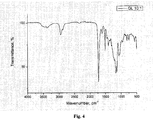
- Fig. 1 , Fig .2 , Fig. 3 and Fig. 4 show the FTIR spectra of obtained glycerolysates, respectively Example 1, 2, 3 and 4.
- the mixture was heated up to 170 ° and the loading of polyurethane waste in the form of polyurethane foam began, maintain the weight ratio of polyurethane waste to crude glycerine 2:1.
- the polyurethane waste was added to reactor stepwise at a rate to allow mixing of the reactor contents.
- the dosing time of foams scraps was 15 minutes.
- glycerolysis reaction temperature was maintained at 210-220 °C and in atmospheric pressure.
- the reaction was continued until a complete dissolution of the waste polyurethane. After completion of the process, the contents of the reactor was cooled.
- the reaction yield was 85%.
- a glycerolysis process of polyurethane waste was carried out as described in Example 1 except that the reaction was performed in the absence of a catalyst.
- Then the loading of fragmented elastomer was started, while the weight ratio of the elastomer to the waste glycerol 1: 1 was maintained.
- the elastomer was added in batches at a rate to allow mixing of the reactor contents.
- the dosing time of polyurethane waste was 15 minutes.
- glycerolysis reaction temperature was maintained at 220-230 °C and atmospheric pressure.
- the reaction was continued for 15 minutes until complete dissolution of polyurethane. After completion of the process, the contents of the reactor was cooled.
- the reaction yield was 89%.
- a glycerolysis process of polyurethane waste was carried out as described in Example 1 except that, the steel reactor was charged with 40 g of crude glycerine with a purity of 60%, obtained as a by-product from the biodiesel fuel production and 0.8 g of the catalyst in the form 1,4-diazabicyclo[2.2.2]octane. The mixture was heated to a temperature 180 °C and then fragmented polyurethane elastomer was added at once. The weight ratio of elastomer to crude glycerol was 4: 1. During glycerolysis reaction, the temperature was maintained at 230-240 °C and in atmospheric pressure. The reaction was continued for 35 minutes until complete dissolution of polyurethane waste. After completion of the process, the contents of the reactor was cooled.
- a glycerolysis process of polyurethane waste was carried out as described in Example 3 except that, the steel reactor was charged with 18 g of crude glycerine with a purity of 60% and 0.91 g of zinc stearate (II). The mixture was heated to 190 °C and then loading of fragmented elastomer started. The weight ratio of elastomer to crude glycerol was 10: 1. Polyurethane elastomer was added portion-wise at such rate to allow mixing of the reactor contents. The dosing time of polyurethane waste was 35 minutes. During glycerolysis reaction temperature was maintained at 220-230 °C and atmospheric pressure. Upon completion of dosing the polyurethanes waste, the reaction was continued for 50 minutes until complete dissolution of polyurethane. After completion of the process, the contents of the reactor was cooled.
- the reaction yield was 96%.
Landscapes
- Chemical & Material Sciences (AREA)
- Life Sciences & Earth Sciences (AREA)
- Sustainable Development (AREA)
- Health & Medical Sciences (AREA)
- Chemical Kinetics & Catalysis (AREA)
- Medicinal Chemistry (AREA)
- Polymers & Plastics (AREA)
- Organic Chemistry (AREA)
- Separation, Recovery Or Treatment Of Waste Materials Containing Plastics (AREA)
- Polyurethanes Or Polyureas (AREA)
Description
- The present invention concerns a method of polyurethane waste chemical recycling and glycerolysates obtained by this method from polyurethane waste using an eco-reagent obtained from waste by-product. The invention is applicable in particular for polyurethane production and rubber processing.
- Polyurethane waste is generated during the production of technical items as scraps or post-production heads, and come from furniture, construction and automotive industry (Yang W et al.: Procedia Environ. Sci. 2012, 16, 167-175).
- In the most of common methods of polyurethane chemical recycling major importance play processes as follows: glycolysis (
EP 0,714,930 ;EP 1,693,409 ;US 5,300,530 ;US 6,069,182 ;US 6,750,260 ;US 8,962,704 ), hydrolysis (US 4,196,148 ;US 4,316,992 ;US 4,317,939 ), acidolysis (US 4,339,358 ) and aminolysis (CN 103,012,838 ;EP 1,149,862 ;) of which the main process is glycolysis. During glycolysis occur transesterification reactions of urethane bonds or urea in a case poly(ester-urethane) or poly(urea-urethane), respectively. It can also occur cleavage of crosslinking groups: allophanate or biuret. The products of the thermo-chemical degradation are oligomeric compounds terminated with hydroxyl and amino groups, mainly mono- and dicarbamates. In addition to these products, low molecular weight glycol esters are also created, origin from glycol used for glycolysis reaction and acid from which was built starting oligoestrol (Datta J. and Rohn M.: Polimery 2007, 52(9), 627-633). - It is known from the Polish Patent
PL 209,960 - From the literature (Borda et al.: Polym. Degrad. Stab. 2000, 68, 419-422) ,it is known a glycolysis method of poly(ether-urethane) flexible foams and elastomers using as a glycgolysis agent aliphatic glycols, diethanolamine and mixtures of ethylene glycol and diethanolamine. A big disadvantage of this method is obtaining the two phases and there's the need to decant the upper phase to obtain a similar product to the polyol. An additional disadvantage is that obtained, by this method, glycolysates are characterised by very high viscosity.
- From the literature (Nike et al.: Polym Bull 2007, 58, 411-423) and (Nikje et al.: Polym Bull 2007, 59, 91-104) is known a glycerolysis method of polyurethane foam using as a decomposing agent, glycerol from petrochemical origin - Iranian Petrochemical Company. This process is carried out using sodium hydroxide, potassium hydroxide as a catalyst. Studies have shown that the product obtained by this method have similar spectroscopic characteristics as the pure polyol used in the polyurethane synthesis. The hydroxyl number of the derived polyol from glycolysis is higher than the pure polyol. A disadvantage of this method is a need to drain the liquid from the solid impurities and unreacted foam and the need for centrifuging the liquid product in order to separate the unreacted polyol from glycerine and byproducts.
- In the patent
EP 2,480,584 it is described using oil or fat of vegetable or animal origin, as bio-agent for polyurethane chemical decomposition is described, which is an alternative mean to the petrochemical products. Bio-agent can be castor oil or oil polyols produced from castor oil, rapeseed oil, fish oil, soybean oil or mixtures thereof. The decomposition reaction is carried out in the temperature range of 150-300 °C and used decomposition catalysts are monoethanolamine, diethanolamine, triethanolamine, sodium hydroxide, potassium hydroxide, sodium ethoxide, potassium ethoxide, potassium butoxide, titanium (IV) isopropoxide, titanium (IV) propoxide, titanium (IV). A disadvantage of this method is the need to separate the liquid product from the solid residue by filtration. - Patent
WO 2009/024102 relates to the glycerolysis of a waste polyurethane foam with a polyhydric polyol selected from a list of polyols comprising also glycerin. However, these polyols are in pure form. Moreover, there are no examples of using glycerol. - So far, no crude glycerine derived from the production of biodiesel was used to thermo-chemical decomposition of polyurethane materials in the form of foams or elastomers.
- A glycerolysis method of polyurethane waste according to the invention is characterised in that, the crude glycerine used as the glycerolysis agent, is glycerine obtained as a by-product from the biodiesel fuel production, which is heated, preferably to a temperature between 160 to 220 °C. Then to the so-prepared glycerolysis agent, at once or in batches polyurethane waste is added in the form of foams or elastomers, while maintaining the weight ratio of polyurethane waste polyurethane relative to the glycerolysis agent from 1: 1 to 10: 1, preferably maintaining continuous excess of polyurethane waste in relation to the glycerolysis agent. Glycerolysis process is carried out at a temperature of from 150 to 290 °C, preferably from 220 °C to 240 °C under normal pressure or elevated pressure up to 1.0 atm., until complete dissolution of a waste polyurethane, and preferably the resulting glycerolysate is cooled.
- Preferably, glycerolysis reaction is carried out in the presence of a catalyst in the form of potassium acetate or sodium acetate or 1,4-diazabicyclo [2.2.2] octane or zinc (II) stearate or tin (II) octoate or dibutyl tin dilaurate or or titanium(IV) butoxide or titanium(IV) isopropoxide or titanium(IV) propoxide or monoethanolamine or diethanolamine or triethanolamine or lithium hydroxide or sodium hydroxide or potassium hydroxide or sodium ethanolate or potassium ethanolate with the proviso that the catalyst is added to the reaction mixture prior to the addition of polyurethane waste.
- The glycerine has a purity of from 40 to 99.5%.
- The invention allows to carry out polyurethane waste glycerolysis without the need to distill glycerolysis agent after the reaction, and at the same time obtain products with desired properties. The invention method is environmentally friendly and leads to obtaining semi-products from expensive and difficult to manage polyurethane waste using raw materials waste. Usage of the method according to the invention crude glycerine, a by-product of the biodiesel production process, allows simultaneous management of crude glycerine and polyurethane chemical recycling. The usage of crude glycerine, which was obtained in the processing of natural oils for biodiesel fuel, in the polyurethane decomposition, is a way to manage crude glycerine, technical post-production waste. Crude glycerine, used according to the invention, as a natural glycerolysis agent may also be derived as a by-product from processes for preparing methyl esters from natural resources. The method of the invention can be carried out in the technical installation for glycolysis.
- Glycerolysates, obtained in accordance to invention, constitute a new group of semi-products useful as an alternative component in the polyurethane synthesis to produce various of urethane polymers and in rubber processing, where it can be used as a plasticiser.
- The invention is further illustrated in the embodiments and the figures where
Fig. 1 ,Fig .2 ,Fig. 3 andFig. 4 show the FTIR spectra of obtained glycerolysates, respectively Example 1, 2, 3 and 4. - Glycerolysis agent as crude glycerine with purity 60%, obtained from bio-diesel fuel production, was introduced in amount of 67 g to a steel reactor, to which 0.67 g the catalyst in the form of potassium acetate was added. The mixture was heated up to 170 ° and the loading of polyurethane waste in the form of polyurethane foam began, maintain the weight ratio of polyurethane waste to crude glycerine 2:1. The polyurethane waste was added to reactor stepwise at a rate to allow mixing of the reactor contents. The dosing time of foams scraps was 15 minutes. During glycerolysis reaction temperature was maintained at 210-220 °C and in atmospheric pressure. Upon completion of dosing the polyurethane waste, the reaction was continued until a complete dissolution of the waste polyurethane. After completion of the process, the contents of the reactor was cooled.
- The reaction yield was 85%.
- The polyurethane was decomposed to a liquid product of the following characteristics:
- 1) hydroxyl number of 113.6 mg KOH/g,
- 2) average molecular weight of 1482 g/mol,
- 3) density of 1.1043 g/cm3;
- 4) dynamic viscosity (at 70 °C) of 180 mPa·s.
- The chemical structure of the obtained glycerolysate determined based on the FTIR spectrum. FTIR spectrum of glycerolysate following this procedure is shown in
Fig. 1 - A glycerolysis process of polyurethane waste was carried out as described in Example 1 except that the reaction was performed in the absence of a catalyst. To the steel reactor was introduced crude glycerine with a purity of 60%, obtained from the production of methyl esters, and was heated up to 180 °C. Then the loading of fragmented elastomer was started, while the weight ratio of the elastomer to the waste glycerol 1: 1 was maintained. The elastomer was added in batches at a rate to allow mixing of the reactor contents. The dosing time of polyurethane waste was 15 minutes. During glycerolysis reaction temperature was maintained at 220-230 °C and atmospheric pressure. Upon completion of dosing the polyurethanes waste, the reaction was continued for 15 minutes until complete dissolution of polyurethane. After completion of the process, the contents of the reactor was cooled.
- The reaction yield was 89%.
- The following characteristics indicated obtained glycerolysate:
- 1) hydroxyl number of 213.2 mg KOH/g;
- 2) average molecular weight of 789 g/mol;
- 3) density of 1.200 g/cm3;
- 4) dynamic viscosity (at 70 °C) of 240 mPa·s.
- The chemical structure of the obtained glycerolysates determined based on the FTIR spectrum. FTIR spectrum of obtained glycerolysates following this procedure is shown in
Fig. 2 . - A glycerolysis process of polyurethane waste was carried out as described in Example 1 except that, the steel reactor was charged with 40 g of crude glycerine with a purity of 60%, obtained as a by-product from the biodiesel fuel production and 0.8 g of the catalyst in the
form 1,4-diazabicyclo[2.2.2]octane. The mixture was heated to a temperature 180 °C and then fragmented polyurethane elastomer was added at once. The weight ratio of elastomer to crude glycerol was 4: 1. During glycerolysis reaction, the temperature was maintained at 230-240 °C and in atmospheric pressure. The reaction was continued for 35 minutes until complete dissolution of polyurethane waste. After completion of the process, the contents of the reactor was cooled. - The reaction yield was 94%.
- The resulting glycerolysate had the following characteristics:
- 1) hydroxyl number of 211 mg KOH/g;
- 2) average molecular weight of 797 g/mol;
- 3) density of 1.1852 g/cm3;
- 4) dynamic viscosity (at 70 °C) of 206 mPa·s.
- The chemical structure of the obtained glycerolysates determined based on the FTIR spectrum. FTIR spectrum of obtained glycerolysates following this procedure is shown in
Fig. 3 . - A glycerolysis process of polyurethane waste was carried out as described in Example 3 except that, the steel reactor was charged with 18 g of crude glycerine with a purity of 60% and 0.91 g of zinc stearate (II). The mixture was heated to 190 °C and then loading of fragmented elastomer started. The weight ratio of elastomer to crude glycerol was 10: 1. Polyurethane elastomer was added portion-wise at such rate to allow mixing of the reactor contents. The dosing time of polyurethane waste was 35 minutes. During glycerolysis reaction temperature was maintained at 220-230 °C and atmospheric pressure. Upon completion of dosing the polyurethanes waste, the reaction was continued for 50 minutes until complete dissolution of polyurethane. After completion of the process, the contents of the reactor was cooled.
- The reaction yield was 96%.
- The following characteristics indicated obtained glycerolysate:
- 1) hydroxyl number of 165.5 mg KOH/g;
- 2) average molecular weight of 1017 g/mol;
- 3) density of 1.1790 g/cm3;
- 4) dynamic viscosity (at 70 °C) of 1050 mPa·s.
- The chemical structure of the obtained glycerolysates determined based on the FTIR spectrum. FTIR spectrum of obtained glycerolysates following this procedure is shown in
Fig. 4 .
Claims (2)
- A process of polyurethane waste chemical recycling for converting polyurethane materials into reusable semi-product by crude glycerine, characterised in that, crude glycerine obtained as a by-product from the biodiesel fuel production is used for the glycerolysis of waste polyurethane foam or elastomer as glycerolysis agent and the waste glycerine have a purity of 40 to 99,5%, comprising the steps of heating the glycerolysis agent, preferably to the temperature between 160 and 220°C, then adding to the so-prepared glycerolysis agent, at one or in batches, polyurethane waste in the form of polyurethane foams or elastomer and mixing polyurethane waste with the glycerolysis agent in the weight ratio of polyurethane waste in relation to the glycerolysis agent range from 1:1 to 10:1, preferably maintaining continuous excess of polyurethane waste relative to the glycerolysis agent, wherein the glycerolysis process is carried out at a temperature between 150 to 290°C, preferably from 220 °C to 240 °C, under normal pressure or elevated pressure up to 1.0 atm, until complete dissolution of the polyurethane, and after that preferably obtained glycerolysate is cooled.
- A process according to Claim 1,characterised in that, the glycerolysis reaction is carried out in the presence of a catalyst of potassium acetate or sodium acetate or 1,4-diazabicyclo [2.2.2] octane or zinc (II) stearate or tin (II) octoate or dibutyl tin dilaurate or titanium (IV) butoxide or titanium (IV) isopropoxide or titanium (IV) propoxide or monoethanolamine or diethanolamine or triethanolamine or lithium hydroxide or sodium hydroxide or potassium hydroxide or sodium ethanolate or potassium ethanolate with the proviso that the catalyst is added to the reaction mixture prior to the addition of polyurethane waste.
Applications Claiming Priority (1)
| Application Number | Priority Date | Filing Date | Title |
|---|---|---|---|
| PL412311A PL232824B1 (en) | 2015-05-12 | 2015-05-12 | Glycerolysis of polyurethane waste |
Publications (2)
| Publication Number | Publication Date |
|---|---|
| EP3098257A1 EP3098257A1 (en) | 2016-11-30 |
| EP3098257B1 true EP3098257B1 (en) | 2021-12-15 |
Family
ID=54427688
Family Applications (1)
| Application Number | Title | Priority Date | Filing Date |
|---|---|---|---|
| EP15460070.4A Not-in-force EP3098257B1 (en) | 2015-05-12 | 2015-09-10 | Method of glycerolysis of polyurethane waste product |
Country Status (2)
| Country | Link |
|---|---|
| EP (1) | EP3098257B1 (en) |
| PL (1) | PL232824B1 (en) |
Cited By (1)
| Publication number | Priority date | Publication date | Assignee | Title |
|---|---|---|---|---|
| LU501979B1 (en) | 2022-04-29 | 2023-10-30 | Kemijski Inst | Chemical recycling of polyurethane foams with amines |
Families Citing this family (2)
| Publication number | Priority date | Publication date | Assignee | Title |
|---|---|---|---|---|
| DE102018209567A1 (en) * | 2018-06-14 | 2019-12-19 | Rampf Holding Gmbh & Co. Kg | Process for the degradation of plastics |
| CN110092882B (en) * | 2019-05-31 | 2021-06-22 | 山东理工大学 | Method for preparing flame-retardant polyurethane foam based on waste paint residue |
Family Cites Families (15)
| Publication number | Priority date | Publication date | Assignee | Title |
|---|---|---|---|---|
| US4196148A (en) | 1977-07-18 | 1980-04-01 | Ford Motor Company | Hydrolysis of polyurethane foams |
| PL112547B1 (en) | 1978-09-28 | 1980-10-31 | Inst Avtomatiki Syst Energ | Method of measuring the rate of flow of dry hot air in restriced passages and system for measuring the rate of flow of dry hot air in restricted passages |
| DE2951617C2 (en) | 1979-12-21 | 1985-08-14 | Wilhelm Prof. Dr.-Ing. 5100 Aachen Schütz | Process and system for processing polyurethane |
| US4316992A (en) | 1981-02-23 | 1982-02-23 | Ford Motor Company | Process for polyol recovery from polyurethane foam comprising alcohol and steam hydrolysis |
| US4317939A (en) | 1981-02-23 | 1982-03-02 | Ford Motor Company | Catalyzed dissolution-hydrolysis of polyurethane wastes |
| US5300530A (en) | 1992-12-11 | 1994-04-05 | Air Products And Chemicals, Inc. | Process for modifying the glycolysis reaction product of polyurethane scrap |
| DE4442379A1 (en) | 1994-11-29 | 1996-05-30 | Bayer Ag | Process for the glycolytic degradation of polyurethane plastics |
| DE19510638A1 (en) | 1995-03-23 | 1996-09-26 | Basf Schwarzheide Gmbh | Process for recycling plastic waste in which polyurethanes are mixed with other plastics |
| AU2001243354A1 (en) | 2000-02-28 | 2001-09-12 | Troy Polymers | Process for chemical recycling of polyurethane-containing scrap |
| US6660779B2 (en) | 2000-04-28 | 2003-12-09 | Matsushita Refrigeration Company | Method of manufacturing rigid polyurethane foam material, method of manufacturing refrigerator, and refrigerator |
| EP1693409A1 (en) | 2005-02-16 | 2006-08-23 | Repsol Quimica S.A. | Process for the recovery of polyols from polyurethane foam waste using a novel catalyst |
| CZ301686B6 (en) * | 2007-08-23 | 2010-05-26 | Ústav makromolekulární chemie AV CR, v.v.i. | Recycling process of waste polyurethane foams |
| CZ2009620A3 (en) | 2009-09-22 | 2011-04-06 | Ústav makromolekulární chemie AV CR, v.v.i. | Raw material for producing polyurethanes and process for preparing thereof from waste polyurethane |
| US8609740B2 (en) | 2011-06-28 | 2013-12-17 | International Automotive Components Group North America, Inc. | Closed-loop recycled polyurethane foam, methods of manufacture and products therefrom |
| CN103012838A (en) | 2011-09-21 | 2013-04-03 | 绍兴市恒丰聚氨酯实业有限公司 | Waste polyurethane foam aminolysis recycling method |
-
2015
- 2015-05-12 PL PL412311A patent/PL232824B1/en unknown
- 2015-09-10 EP EP15460070.4A patent/EP3098257B1/en not_active Not-in-force
Cited By (2)
| Publication number | Priority date | Publication date | Assignee | Title |
|---|---|---|---|---|
| LU501979B1 (en) | 2022-04-29 | 2023-10-30 | Kemijski Inst | Chemical recycling of polyurethane foams with amines |
| WO2023209022A1 (en) | 2022-04-29 | 2023-11-02 | Kemijski Institut | Recycling of polyurethanes by aminolysis with reagents comprising primary and/or secondary and tertiary amino groups in the structure |
Also Published As
| Publication number | Publication date |
|---|---|
| PL412311A1 (en) | 2016-11-21 |
| EP3098257A1 (en) | 2016-11-30 |
| PL232824B1 (en) | 2019-07-31 |
Similar Documents
| Publication | Publication Date | Title |
|---|---|---|
| Liu et al. | Opportunities in closed-loop molecular recycling of end-of-life polyurethane | |
| Zhao et al. | Recycling polyurethanes through transcarbamoylation | |
| Wieczorek et al. | Recycling of polyurethane foams via glycolysis: A review | |
| Kim | Chemical recycling of poly (bisphenol A carbonate) | |
| Trzebiatowska et al. | Evaluation of the glycerolysis process and valorisation of recovered polyol in polyurethane synthesis | |
| Johansen et al. | Closed-loop recycling of polyols from thermoset polyurethanes by tert-amyl alcohol-mediated depolymerization of flexible foams | |
| Molero et al. | Recovery of polyols from flexible polyurethane foam by “split-phase” glycolysis: Study on the influence of reaction parameters | |
| Pagliaro | Glycerol: the renewable platform chemical | |
| Molero et al. | Recovery of polyols from flexible polyurethane foam by “split-phase” glycolysis with new catalysts | |
| Bhandari et al. | Chemical depolymerization of polyurethane foam via ammonolysis and aminolysis | |
| EP2480584B1 (en) | Raw material for polyurethane production and process for its preparing from waste polyurethane | |
| EP3098257A1 (en) | Method of glicerolysis of polyurethane waste product and glycerolysates obtained by the method | |
| Domingos et al. | Polyurethane foams from liquefied orange peel wastes | |
| US20210214518A1 (en) | Improved method of recycling polyurethane materials | |
| KR101298525B1 (en) | Hybrid Binder Composition Based on Depolymerizate of Polyurethane and Method of Using the Same | |
| Yu et al. | Characteristics of glycolysis products of polyurethane foams made with polyhydric alcohol liquefied Cryptomeria japonica wood | |
| Alavi Nikje et al. | Glycerin as a new glycolysing agent for chemical recycling of cold cure polyurethane foam wastes in “split-phase” condition | |
| CN113354863B (en) | Degradation method of waste polyurethane and polyurethane heat-insulating material | |
| CN117801205A (en) | A method for preparing polyurethane soft foam polyol from waste polyurethane foam | |
| Kim et al. | Sustainable Polyurethane Systems: Integrating Green Synthesis and Closed-Loop Recovery | |
| Polecki et al. | Polyurethane Recycling: Sustainable Development Perspectives and Innovative Approaches | |
| JPH11158320A (en) | Reduction in primary amine content of composition containing polyol | |
| KR20090089211A (en) | Polyisocyanate using polyurethane scrap depolymer and its preparation method | |
| CN104494006A (en) | Process for processing waste polyurethane | |
| JPH1060154A (en) | Hydrolysis of plastics, especially polyurethane |
Legal Events
| Date | Code | Title | Description |
|---|---|---|---|
| PUAI | Public reference made under article 153(3) epc to a published international application that has entered the european phase |
Free format text: ORIGINAL CODE: 0009012 |
|
| 17P | Request for examination filed |
Effective date: 20150918 |
|
| AK | Designated contracting states |
Kind code of ref document: A1 Designated state(s): AL AT BE BG CH CY CZ DE DK EE ES FI FR GB GR HR HU IE IS IT LI LT LU LV MC MK MT NL NO PL PT RO RS SE SI SK SM TR |
|
| AX | Request for extension of the european patent |
Extension state: BA ME |
|
| STAA | Information on the status of an ep patent application or granted ep patent |
Free format text: STATUS: EXAMINATION IS IN PROGRESS |
|
| 17Q | First examination report despatched |
Effective date: 20200415 |
|
| RIC1 | Information provided on ipc code assigned before grant |
Ipc: C08L 75/04 20060101ALN20201211BHEP Ipc: C08J 11/24 20060101AFI20201211BHEP |
|
| RIC1 | Information provided on ipc code assigned before grant |
Ipc: C08L 75/04 20060101ALN20201218BHEP Ipc: C08J 11/24 20060101AFI20201218BHEP |
|
| RIC1 | Information provided on ipc code assigned before grant |
Ipc: C08J 11/24 20060101AFI20210225BHEP Ipc: C08L 75/04 20060101ALN20210225BHEP |
|
| RIC1 | Information provided on ipc code assigned before grant |
Ipc: C08J 11/24 20060101AFI20210302BHEP Ipc: C08L 75/04 20060101ALN20210302BHEP |
|
| GRAP | Despatch of communication of intention to grant a patent |
Free format text: ORIGINAL CODE: EPIDOSNIGR1 |
|
| STAA | Information on the status of an ep patent application or granted ep patent |
Free format text: STATUS: GRANT OF PATENT IS INTENDED |
|
| RIC1 | Information provided on ipc code assigned before grant |
Ipc: C08L 75/04 20060101ALN20210407BHEP Ipc: C08J 11/24 20060101AFI20210407BHEP |
|
| INTG | Intention to grant announced |
Effective date: 20210420 |
|
| GRAS | Grant fee paid |
Free format text: ORIGINAL CODE: EPIDOSNIGR3 |
|
| RIN1 | Information on inventor provided before grant (corrected) |
Inventor name: KOPCZYNSKA, PATRYCJA JUTRZENKA TRZEBIATOWSKA Inventor name: DATTA, JANUSZ |
|
| GRAA | (expected) grant |
Free format text: ORIGINAL CODE: 0009210 |
|
| STAA | Information on the status of an ep patent application or granted ep patent |
Free format text: STATUS: THE PATENT HAS BEEN GRANTED |
|
| AK | Designated contracting states |
Kind code of ref document: B1 Designated state(s): AL AT BE BG CH CY CZ DE DK EE ES FI FR GB GR HR HU IE IS IT LI LT LU LV MC MK MT NL NO PL PT RO RS SE SI SK SM TR |
|
| REG | Reference to a national code |
Ref country code: GB Ref legal event code: FG4D Ref country code: CH Ref legal event code: EP |
|
| REG | Reference to a national code |
Ref country code: IE Ref legal event code: FG4D Ref country code: DE Ref legal event code: R096 Ref document number: 602015075746 Country of ref document: DE |
|
| REG | Reference to a national code |
Ref country code: AT Ref legal event code: REF Ref document number: 1455486 Country of ref document: AT Kind code of ref document: T Effective date: 20220115 |
|
| REG | Reference to a national code |
Ref country code: LT Ref legal event code: MG9D |
|
| REG | Reference to a national code |
Ref country code: NL Ref legal event code: MP Effective date: 20211215 |
|
| PG25 | Lapsed in a contracting state [announced via postgrant information from national office to epo] |
Ref country code: RS Free format text: LAPSE BECAUSE OF FAILURE TO SUBMIT A TRANSLATION OF THE DESCRIPTION OR TO PAY THE FEE WITHIN THE PRESCRIBED TIME-LIMIT Effective date: 20211215 Ref country code: LT Free format text: LAPSE BECAUSE OF FAILURE TO SUBMIT A TRANSLATION OF THE DESCRIPTION OR TO PAY THE FEE WITHIN THE PRESCRIBED TIME-LIMIT Effective date: 20211215 Ref country code: FI Free format text: LAPSE BECAUSE OF FAILURE TO SUBMIT A TRANSLATION OF THE DESCRIPTION OR TO PAY THE FEE WITHIN THE PRESCRIBED TIME-LIMIT Effective date: 20211215 Ref country code: BG Free format text: LAPSE BECAUSE OF FAILURE TO SUBMIT A TRANSLATION OF THE DESCRIPTION OR TO PAY THE FEE WITHIN THE PRESCRIBED TIME-LIMIT Effective date: 20220315 |
|
| REG | Reference to a national code |
Ref country code: AT Ref legal event code: MK05 Ref document number: 1455486 Country of ref document: AT Kind code of ref document: T Effective date: 20211215 |
|
| PG25 | Lapsed in a contracting state [announced via postgrant information from national office to epo] |
Ref country code: SE Free format text: LAPSE BECAUSE OF FAILURE TO SUBMIT A TRANSLATION OF THE DESCRIPTION OR TO PAY THE FEE WITHIN THE PRESCRIBED TIME-LIMIT Effective date: 20211215 Ref country code: NO Free format text: LAPSE BECAUSE OF FAILURE TO SUBMIT A TRANSLATION OF THE DESCRIPTION OR TO PAY THE FEE WITHIN THE PRESCRIBED TIME-LIMIT Effective date: 20220315 Ref country code: LV Free format text: LAPSE BECAUSE OF FAILURE TO SUBMIT A TRANSLATION OF THE DESCRIPTION OR TO PAY THE FEE WITHIN THE PRESCRIBED TIME-LIMIT Effective date: 20211215 Ref country code: HR Free format text: LAPSE BECAUSE OF FAILURE TO SUBMIT A TRANSLATION OF THE DESCRIPTION OR TO PAY THE FEE WITHIN THE PRESCRIBED TIME-LIMIT Effective date: 20211215 Ref country code: GR Free format text: LAPSE BECAUSE OF FAILURE TO SUBMIT A TRANSLATION OF THE DESCRIPTION OR TO PAY THE FEE WITHIN THE PRESCRIBED TIME-LIMIT Effective date: 20220316 |
|
| PG25 | Lapsed in a contracting state [announced via postgrant information from national office to epo] |
Ref country code: NL Free format text: LAPSE BECAUSE OF FAILURE TO SUBMIT A TRANSLATION OF THE DESCRIPTION OR TO PAY THE FEE WITHIN THE PRESCRIBED TIME-LIMIT Effective date: 20211215 |
|
| PG25 | Lapsed in a contracting state [announced via postgrant information from national office to epo] |
Ref country code: SM Free format text: LAPSE BECAUSE OF FAILURE TO SUBMIT A TRANSLATION OF THE DESCRIPTION OR TO PAY THE FEE WITHIN THE PRESCRIBED TIME-LIMIT Effective date: 20211215 Ref country code: SK Free format text: LAPSE BECAUSE OF FAILURE TO SUBMIT A TRANSLATION OF THE DESCRIPTION OR TO PAY THE FEE WITHIN THE PRESCRIBED TIME-LIMIT Effective date: 20211215 Ref country code: RO Free format text: LAPSE BECAUSE OF FAILURE TO SUBMIT A TRANSLATION OF THE DESCRIPTION OR TO PAY THE FEE WITHIN THE PRESCRIBED TIME-LIMIT Effective date: 20211215 Ref country code: PT Free format text: LAPSE BECAUSE OF FAILURE TO SUBMIT A TRANSLATION OF THE DESCRIPTION OR TO PAY THE FEE WITHIN THE PRESCRIBED TIME-LIMIT Effective date: 20220418 Ref country code: ES Free format text: LAPSE BECAUSE OF FAILURE TO SUBMIT A TRANSLATION OF THE DESCRIPTION OR TO PAY THE FEE WITHIN THE PRESCRIBED TIME-LIMIT Effective date: 20211215 Ref country code: EE Free format text: LAPSE BECAUSE OF FAILURE TO SUBMIT A TRANSLATION OF THE DESCRIPTION OR TO PAY THE FEE WITHIN THE PRESCRIBED TIME-LIMIT Effective date: 20211215 Ref country code: CZ Free format text: LAPSE BECAUSE OF FAILURE TO SUBMIT A TRANSLATION OF THE DESCRIPTION OR TO PAY THE FEE WITHIN THE PRESCRIBED TIME-LIMIT Effective date: 20211215 |
|
| PG25 | Lapsed in a contracting state [announced via postgrant information from national office to epo] |
Ref country code: PL Free format text: LAPSE BECAUSE OF FAILURE TO SUBMIT A TRANSLATION OF THE DESCRIPTION OR TO PAY THE FEE WITHIN THE PRESCRIBED TIME-LIMIT Effective date: 20211215 Ref country code: AT Free format text: LAPSE BECAUSE OF FAILURE TO SUBMIT A TRANSLATION OF THE DESCRIPTION OR TO PAY THE FEE WITHIN THE PRESCRIBED TIME-LIMIT Effective date: 20211215 |
|
| REG | Reference to a national code |
Ref country code: DE Ref legal event code: R097 Ref document number: 602015075746 Country of ref document: DE |
|
| PG25 | Lapsed in a contracting state [announced via postgrant information from national office to epo] |
Ref country code: IS Free format text: LAPSE BECAUSE OF FAILURE TO SUBMIT A TRANSLATION OF THE DESCRIPTION OR TO PAY THE FEE WITHIN THE PRESCRIBED TIME-LIMIT Effective date: 20220415 |
|
| PLBE | No opposition filed within time limit |
Free format text: ORIGINAL CODE: 0009261 |
|
| STAA | Information on the status of an ep patent application or granted ep patent |
Free format text: STATUS: NO OPPOSITION FILED WITHIN TIME LIMIT |
|
| PG25 | Lapsed in a contracting state [announced via postgrant information from national office to epo] |
Ref country code: DK Free format text: LAPSE BECAUSE OF FAILURE TO SUBMIT A TRANSLATION OF THE DESCRIPTION OR TO PAY THE FEE WITHIN THE PRESCRIBED TIME-LIMIT Effective date: 20211215 Ref country code: AL Free format text: LAPSE BECAUSE OF FAILURE TO SUBMIT A TRANSLATION OF THE DESCRIPTION OR TO PAY THE FEE WITHIN THE PRESCRIBED TIME-LIMIT Effective date: 20211215 |
|
| PGFP | Annual fee paid to national office [announced via postgrant information from national office to epo] |
Ref country code: DE Payment date: 20220131 Year of fee payment: 8 |
|
| 26N | No opposition filed |
Effective date: 20220916 |
|
| PG25 | Lapsed in a contracting state [announced via postgrant information from national office to epo] |
Ref country code: SI Free format text: LAPSE BECAUSE OF FAILURE TO SUBMIT A TRANSLATION OF THE DESCRIPTION OR TO PAY THE FEE WITHIN THE PRESCRIBED TIME-LIMIT Effective date: 20211215 |
|
| PG25 | Lapsed in a contracting state [announced via postgrant information from national office to epo] |
Ref country code: MC Free format text: LAPSE BECAUSE OF FAILURE TO SUBMIT A TRANSLATION OF THE DESCRIPTION OR TO PAY THE FEE WITHIN THE PRESCRIBED TIME-LIMIT Effective date: 20211215 |
|
| REG | Reference to a national code |
Ref country code: CH Ref legal event code: PL |
|
| GBPC | Gb: european patent ceased through non-payment of renewal fee |
Effective date: 20220910 |
|
| REG | Reference to a national code |
Ref country code: BE Ref legal event code: MM Effective date: 20220930 |
|
| PG25 | Lapsed in a contracting state [announced via postgrant information from national office to epo] |
Ref country code: IT Free format text: LAPSE BECAUSE OF FAILURE TO SUBMIT A TRANSLATION OF THE DESCRIPTION OR TO PAY THE FEE WITHIN THE PRESCRIBED TIME-LIMIT Effective date: 20211215 |
|
| PG25 | Lapsed in a contracting state [announced via postgrant information from national office to epo] |
Ref country code: LU Free format text: LAPSE BECAUSE OF NON-PAYMENT OF DUE FEES Effective date: 20220910 |
|
| PG25 | Lapsed in a contracting state [announced via postgrant information from national office to epo] |
Ref country code: LI Free format text: LAPSE BECAUSE OF NON-PAYMENT OF DUE FEES Effective date: 20220930 Ref country code: IE Free format text: LAPSE BECAUSE OF NON-PAYMENT OF DUE FEES Effective date: 20220910 Ref country code: FR Free format text: LAPSE BECAUSE OF NON-PAYMENT OF DUE FEES Effective date: 20220930 Ref country code: CH Free format text: LAPSE BECAUSE OF NON-PAYMENT OF DUE FEES Effective date: 20220930 |
|
| PG25 | Lapsed in a contracting state [announced via postgrant information from national office to epo] |
Ref country code: BE Free format text: LAPSE BECAUSE OF NON-PAYMENT OF DUE FEES Effective date: 20220930 |
|
| PG25 | Lapsed in a contracting state [announced via postgrant information from national office to epo] |
Ref country code: GB Free format text: LAPSE BECAUSE OF NON-PAYMENT OF DUE FEES Effective date: 20220910 |
|
| PG25 | Lapsed in a contracting state [announced via postgrant information from national office to epo] |
Ref country code: HU Free format text: LAPSE BECAUSE OF FAILURE TO SUBMIT A TRANSLATION OF THE DESCRIPTION OR TO PAY THE FEE WITHIN THE PRESCRIBED TIME-LIMIT; INVALID AB INITIO Effective date: 20150910 |
|
| REG | Reference to a national code |
Ref country code: DE Ref legal event code: R119 Ref document number: 602015075746 Country of ref document: DE |
|
| PG25 | Lapsed in a contracting state [announced via postgrant information from national office to epo] |
Ref country code: CY Free format text: LAPSE BECAUSE OF FAILURE TO SUBMIT A TRANSLATION OF THE DESCRIPTION OR TO PAY THE FEE WITHIN THE PRESCRIBED TIME-LIMIT Effective date: 20211215 |
|
| PG25 | Lapsed in a contracting state [announced via postgrant information from national office to epo] |
Ref country code: MK Free format text: LAPSE BECAUSE OF FAILURE TO SUBMIT A TRANSLATION OF THE DESCRIPTION OR TO PAY THE FEE WITHIN THE PRESCRIBED TIME-LIMIT Effective date: 20211215 |
|
| PG25 | Lapsed in a contracting state [announced via postgrant information from national office to epo] |
Ref country code: TR Free format text: LAPSE BECAUSE OF FAILURE TO SUBMIT A TRANSLATION OF THE DESCRIPTION OR TO PAY THE FEE WITHIN THE PRESCRIBED TIME-LIMIT Effective date: 20211215 |
|
| PG25 | Lapsed in a contracting state [announced via postgrant information from national office to epo] |
Ref country code: DE Free format text: LAPSE BECAUSE OF NON-PAYMENT OF DUE FEES Effective date: 20240403 |
|
| PG25 | Lapsed in a contracting state [announced via postgrant information from national office to epo] |
Ref country code: MT Free format text: LAPSE BECAUSE OF FAILURE TO SUBMIT A TRANSLATION OF THE DESCRIPTION OR TO PAY THE FEE WITHIN THE PRESCRIBED TIME-LIMIT Effective date: 20211215 |