EP3095912B1 - Composition for coating of printing paper - Google Patents
Composition for coating of printing paper Download PDFInfo
- Publication number
- EP3095912B1 EP3095912B1 EP16179031.6A EP16179031A EP3095912B1 EP 3095912 B1 EP3095912 B1 EP 3095912B1 EP 16179031 A EP16179031 A EP 16179031A EP 3095912 B1 EP3095912 B1 EP 3095912B1
- Authority
- EP
- European Patent Office
- Prior art keywords
- starch
- mfc
- paper
- linting
- gum
- Prior art date
- Legal status (The legal status is an assumption and is not a legal conclusion. Google has not performed a legal analysis and makes no representation as to the accuracy of the status listed.)
- Active
Links
Images







Classifications
-
- D—TEXTILES; PAPER
- D21—PAPER-MAKING; PRODUCTION OF CELLULOSE
- D21H—PULP COMPOSITIONS; PREPARATION THEREOF NOT COVERED BY SUBCLASSES D21C OR D21D; IMPREGNATING OR COATING OF PAPER; TREATMENT OF FINISHED PAPER NOT COVERED BY CLASS B31 OR SUBCLASS D21G; PAPER NOT OTHERWISE PROVIDED FOR
- D21H11/00—Pulp or paper, comprising cellulose or lignocellulose fibres of natural origin only
- D21H11/16—Pulp or paper, comprising cellulose or lignocellulose fibres of natural origin only modified by a particular after-treatment
- D21H11/18—Highly hydrated, swollen or fibrillatable fibres
-
- B—PERFORMING OPERATIONS; TRANSPORTING
- B41—PRINTING; LINING MACHINES; TYPEWRITERS; STAMPS
- B41M—PRINTING, DUPLICATING, MARKING, OR COPYING PROCESSES; COLOUR PRINTING
- B41M5/00—Duplicating or marking methods; Sheet materials for use therein
- B41M5/50—Recording sheets characterised by the coating used to improve ink, dye or pigment receptivity, e.g. for ink-jet or thermal dye transfer recording
- B41M5/52—Macromolecular coatings
-
- C—CHEMISTRY; METALLURGY
- C09—DYES; PAINTS; POLISHES; NATURAL RESINS; ADHESIVES; COMPOSITIONS NOT OTHERWISE PROVIDED FOR; APPLICATIONS OF MATERIALS NOT OTHERWISE PROVIDED FOR
- C09D—COATING COMPOSITIONS, e.g. PAINTS, VARNISHES OR LACQUERS; FILLING PASTES; CHEMICAL PAINT OR INK REMOVERS; INKS; CORRECTING FLUIDS; WOODSTAINS; PASTES OR SOLIDS FOR COLOURING OR PRINTING; USE OF MATERIALS THEREFOR
- C09D101/00—Coating compositions based on cellulose, modified cellulose, or cellulose derivatives
- C09D101/02—Cellulose; Modified cellulose
-
- C—CHEMISTRY; METALLURGY
- C09—DYES; PAINTS; POLISHES; NATURAL RESINS; ADHESIVES; COMPOSITIONS NOT OTHERWISE PROVIDED FOR; APPLICATIONS OF MATERIALS NOT OTHERWISE PROVIDED FOR
- C09D—COATING COMPOSITIONS, e.g. PAINTS, VARNISHES OR LACQUERS; FILLING PASTES; CHEMICAL PAINT OR INK REMOVERS; INKS; CORRECTING FLUIDS; WOODSTAINS; PASTES OR SOLIDS FOR COLOURING OR PRINTING; USE OF MATERIALS THEREFOR
- C09D103/00—Coating compositions based on starch, amylose or amylopectin or on their derivatives or degradation products
- C09D103/02—Starch; Degradation products thereof, e.g. dextrin
-
- C—CHEMISTRY; METALLURGY
- C09—DYES; PAINTS; POLISHES; NATURAL RESINS; ADHESIVES; COMPOSITIONS NOT OTHERWISE PROVIDED FOR; APPLICATIONS OF MATERIALS NOT OTHERWISE PROVIDED FOR
- C09D—COATING COMPOSITIONS, e.g. PAINTS, VARNISHES OR LACQUERS; FILLING PASTES; CHEMICAL PAINT OR INK REMOVERS; INKS; CORRECTING FLUIDS; WOODSTAINS; PASTES OR SOLIDS FOR COLOURING OR PRINTING; USE OF MATERIALS THEREFOR
- C09D103/00—Coating compositions based on starch, amylose or amylopectin or on their derivatives or degradation products
- C09D103/04—Starch derivatives
-
- C—CHEMISTRY; METALLURGY
- C09—DYES; PAINTS; POLISHES; NATURAL RESINS; ADHESIVES; COMPOSITIONS NOT OTHERWISE PROVIDED FOR; APPLICATIONS OF MATERIALS NOT OTHERWISE PROVIDED FOR
- C09D—COATING COMPOSITIONS, e.g. PAINTS, VARNISHES OR LACQUERS; FILLING PASTES; CHEMICAL PAINT OR INK REMOVERS; INKS; CORRECTING FLUIDS; WOODSTAINS; PASTES OR SOLIDS FOR COLOURING OR PRINTING; USE OF MATERIALS THEREFOR
- C09D103/00—Coating compositions based on starch, amylose or amylopectin or on their derivatives or degradation products
- C09D103/04—Starch derivatives
- C09D103/06—Esters
-
- C—CHEMISTRY; METALLURGY
- C09—DYES; PAINTS; POLISHES; NATURAL RESINS; ADHESIVES; COMPOSITIONS NOT OTHERWISE PROVIDED FOR; APPLICATIONS OF MATERIALS NOT OTHERWISE PROVIDED FOR
- C09D—COATING COMPOSITIONS, e.g. PAINTS, VARNISHES OR LACQUERS; FILLING PASTES; CHEMICAL PAINT OR INK REMOVERS; INKS; CORRECTING FLUIDS; WOODSTAINS; PASTES OR SOLIDS FOR COLOURING OR PRINTING; USE OF MATERIALS THEREFOR
- C09D103/00—Coating compositions based on starch, amylose or amylopectin or on their derivatives or degradation products
- C09D103/04—Starch derivatives
- C09D103/08—Ethers
-
- C—CHEMISTRY; METALLURGY
- C09—DYES; PAINTS; POLISHES; NATURAL RESINS; ADHESIVES; COMPOSITIONS NOT OTHERWISE PROVIDED FOR; APPLICATIONS OF MATERIALS NOT OTHERWISE PROVIDED FOR
- C09D—COATING COMPOSITIONS, e.g. PAINTS, VARNISHES OR LACQUERS; FILLING PASTES; CHEMICAL PAINT OR INK REMOVERS; INKS; CORRECTING FLUIDS; WOODSTAINS; PASTES OR SOLIDS FOR COLOURING OR PRINTING; USE OF MATERIALS THEREFOR
- C09D103/00—Coating compositions based on starch, amylose or amylopectin or on their derivatives or degradation products
- C09D103/04—Starch derivatives
- C09D103/10—Oxidised starch
-
- C—CHEMISTRY; METALLURGY
- C09—DYES; PAINTS; POLISHES; NATURAL RESINS; ADHESIVES; COMPOSITIONS NOT OTHERWISE PROVIDED FOR; APPLICATIONS OF MATERIALS NOT OTHERWISE PROVIDED FOR
- C09D—COATING COMPOSITIONS, e.g. PAINTS, VARNISHES OR LACQUERS; FILLING PASTES; CHEMICAL PAINT OR INK REMOVERS; INKS; CORRECTING FLUIDS; WOODSTAINS; PASTES OR SOLIDS FOR COLOURING OR PRINTING; USE OF MATERIALS THEREFOR
- C09D105/00—Coating compositions based on polysaccharides or on their derivatives, not provided for in groups C09D101/00 or C09D103/00
-
- C—CHEMISTRY; METALLURGY
- C09—DYES; PAINTS; POLISHES; NATURAL RESINS; ADHESIVES; COMPOSITIONS NOT OTHERWISE PROVIDED FOR; APPLICATIONS OF MATERIALS NOT OTHERWISE PROVIDED FOR
- C09D—COATING COMPOSITIONS, e.g. PAINTS, VARNISHES OR LACQUERS; FILLING PASTES; CHEMICAL PAINT OR INK REMOVERS; INKS; CORRECTING FLUIDS; WOODSTAINS; PASTES OR SOLIDS FOR COLOURING OR PRINTING; USE OF MATERIALS THEREFOR
- C09D105/00—Coating compositions based on polysaccharides or on their derivatives, not provided for in groups C09D101/00 or C09D103/00
- C09D105/04—Alginic acid; Derivatives thereof
-
- C—CHEMISTRY; METALLURGY
- C09—DYES; PAINTS; POLISHES; NATURAL RESINS; ADHESIVES; COMPOSITIONS NOT OTHERWISE PROVIDED FOR; APPLICATIONS OF MATERIALS NOT OTHERWISE PROVIDED FOR
- C09D—COATING COMPOSITIONS, e.g. PAINTS, VARNISHES OR LACQUERS; FILLING PASTES; CHEMICAL PAINT OR INK REMOVERS; INKS; CORRECTING FLUIDS; WOODSTAINS; PASTES OR SOLIDS FOR COLOURING OR PRINTING; USE OF MATERIALS THEREFOR
- C09D105/00—Coating compositions based on polysaccharides or on their derivatives, not provided for in groups C09D101/00 or C09D103/00
- C09D105/06—Pectin; Derivatives thereof
-
- C—CHEMISTRY; METALLURGY
- C09—DYES; PAINTS; POLISHES; NATURAL RESINS; ADHESIVES; COMPOSITIONS NOT OTHERWISE PROVIDED FOR; APPLICATIONS OF MATERIALS NOT OTHERWISE PROVIDED FOR
- C09D—COATING COMPOSITIONS, e.g. PAINTS, VARNISHES OR LACQUERS; FILLING PASTES; CHEMICAL PAINT OR INK REMOVERS; INKS; CORRECTING FLUIDS; WOODSTAINS; PASTES OR SOLIDS FOR COLOURING OR PRINTING; USE OF MATERIALS THEREFOR
- C09D105/00—Coating compositions based on polysaccharides or on their derivatives, not provided for in groups C09D101/00 or C09D103/00
- C09D105/12—Agar-agar; Derivatives thereof
-
- D—TEXTILES; PAPER
- D21—PAPER-MAKING; PRODUCTION OF CELLULOSE
- D21H—PULP COMPOSITIONS; PREPARATION THEREOF NOT COVERED BY SUBCLASSES D21C OR D21D; IMPREGNATING OR COATING OF PAPER; TREATMENT OF FINISHED PAPER NOT COVERED BY CLASS B31 OR SUBCLASS D21G; PAPER NOT OTHERWISE PROVIDED FOR
- D21H17/00—Non-fibrous material added to the pulp, characterised by its constitution; Paper-impregnating material characterised by its constitution
- D21H17/20—Macromolecular organic compounds
- D21H17/21—Macromolecular organic compounds of natural origin; Derivatives thereof
- D21H17/24—Polysaccharides
- D21H17/25—Cellulose
-
- D—TEXTILES; PAPER
- D21—PAPER-MAKING; PRODUCTION OF CELLULOSE
- D21H—PULP COMPOSITIONS; PREPARATION THEREOF NOT COVERED BY SUBCLASSES D21C OR D21D; IMPREGNATING OR COATING OF PAPER; TREATMENT OF FINISHED PAPER NOT COVERED BY CLASS B31 OR SUBCLASS D21G; PAPER NOT OTHERWISE PROVIDED FOR
- D21H17/00—Non-fibrous material added to the pulp, characterised by its constitution; Paper-impregnating material characterised by its constitution
- D21H17/20—Macromolecular organic compounds
- D21H17/21—Macromolecular organic compounds of natural origin; Derivatives thereof
- D21H17/24—Polysaccharides
- D21H17/28—Starch
-
- D—TEXTILES; PAPER
- D21—PAPER-MAKING; PRODUCTION OF CELLULOSE
- D21H—PULP COMPOSITIONS; PREPARATION THEREOF NOT COVERED BY SUBCLASSES D21C OR D21D; IMPREGNATING OR COATING OF PAPER; TREATMENT OF FINISHED PAPER NOT COVERED BY CLASS B31 OR SUBCLASS D21G; PAPER NOT OTHERWISE PROVIDED FOR
- D21H19/00—Coated paper; Coating material
- D21H19/10—Coatings without pigments
-
- D—TEXTILES; PAPER
- D21—PAPER-MAKING; PRODUCTION OF CELLULOSE
- D21H—PULP COMPOSITIONS; PREPARATION THEREOF NOT COVERED BY SUBCLASSES D21C OR D21D; IMPREGNATING OR COATING OF PAPER; TREATMENT OF FINISHED PAPER NOT COVERED BY CLASS B31 OR SUBCLASS D21G; PAPER NOT OTHERWISE PROVIDED FOR
- D21H19/00—Coated paper; Coating material
- D21H19/36—Coatings with pigments
- D21H19/44—Coatings with pigments characterised by the other ingredients, e.g. the binder or dispersing agent
- D21H19/54—Starch
-
- D—TEXTILES; PAPER
- D21—PAPER-MAKING; PRODUCTION OF CELLULOSE
- D21H—PULP COMPOSITIONS; PREPARATION THEREOF NOT COVERED BY SUBCLASSES D21C OR D21D; IMPREGNATING OR COATING OF PAPER; TREATMENT OF FINISHED PAPER NOT COVERED BY CLASS B31 OR SUBCLASS D21G; PAPER NOT OTHERWISE PROVIDED FOR
- D21H19/00—Coated paper; Coating material
- D21H19/80—Paper comprising more than one coating
- D21H19/82—Paper comprising more than one coating superposed
- D21H19/824—Paper comprising more than one coating superposed two superposed coatings, both being non-pigmented
-
- D—TEXTILES; PAPER
- D21—PAPER-MAKING; PRODUCTION OF CELLULOSE
- D21H—PULP COMPOSITIONS; PREPARATION THEREOF NOT COVERED BY SUBCLASSES D21C OR D21D; IMPREGNATING OR COATING OF PAPER; TREATMENT OF FINISHED PAPER NOT COVERED BY CLASS B31 OR SUBCLASS D21G; PAPER NOT OTHERWISE PROVIDED FOR
- D21H21/00—Non-fibrous material added to the pulp, characterised by its function, form or properties; Paper-impregnating or coating material, characterised by its function, form or properties
- D21H21/14—Non-fibrous material added to the pulp, characterised by its function, form or properties; Paper-impregnating or coating material, characterised by its function, form or properties characterised by function or properties in or on the paper
- D21H21/16—Sizing or water-repelling agents
-
- D—TEXTILES; PAPER
- D21—PAPER-MAKING; PRODUCTION OF CELLULOSE
- D21H—PULP COMPOSITIONS; PREPARATION THEREOF NOT COVERED BY SUBCLASSES D21C OR D21D; IMPREGNATING OR COATING OF PAPER; TREATMENT OF FINISHED PAPER NOT COVERED BY CLASS B31 OR SUBCLASS D21G; PAPER NOT OTHERWISE PROVIDED FOR
- D21H21/00—Non-fibrous material added to the pulp, characterised by its function, form or properties; Paper-impregnating or coating material, characterised by its function, form or properties
- D21H21/14—Non-fibrous material added to the pulp, characterised by its function, form or properties; Paper-impregnating or coating material, characterised by its function, form or properties characterised by function or properties in or on the paper
- D21H21/18—Reinforcing agents
-
- D—TEXTILES; PAPER
- D21—PAPER-MAKING; PRODUCTION OF CELLULOSE
- D21H—PULP COMPOSITIONS; PREPARATION THEREOF NOT COVERED BY SUBCLASSES D21C OR D21D; IMPREGNATING OR COATING OF PAPER; TREATMENT OF FINISHED PAPER NOT COVERED BY CLASS B31 OR SUBCLASS D21G; PAPER NOT OTHERWISE PROVIDED FOR
- D21H27/00—Special paper not otherwise provided for, e.g. made by multi-step processes
- D21H27/30—Multi-ply
- D21H27/38—Multi-ply at least one of the sheets having a fibrous composition differing from that of other sheets
-
- B—PERFORMING OPERATIONS; TRANSPORTING
- B41—PRINTING; LINING MACHINES; TYPEWRITERS; STAMPS
- B41M—PRINTING, DUPLICATING, MARKING, OR COPYING PROCESSES; COLOUR PRINTING
- B41M5/00—Duplicating or marking methods; Sheet materials for use therein
- B41M5/50—Recording sheets characterised by the coating used to improve ink, dye or pigment receptivity, e.g. for ink-jet or thermal dye transfer recording
- B41M5/52—Macromolecular coatings
- B41M5/5236—Macromolecular coatings characterised by the use of natural gums, of proteins, e.g. gelatins, or of macromolecular carbohydrates, e.g. cellulose
-
- C—CHEMISTRY; METALLURGY
- C08—ORGANIC MACROMOLECULAR COMPOUNDS; THEIR PREPARATION OR CHEMICAL WORKING-UP; COMPOSITIONS BASED THEREON
- C08L—COMPOSITIONS OF MACROMOLECULAR COMPOUNDS
- C08L1/00—Compositions of cellulose, modified cellulose or cellulose derivatives
- C08L1/02—Cellulose; Modified cellulose
-
- C—CHEMISTRY; METALLURGY
- C08—ORGANIC MACROMOLECULAR COMPOUNDS; THEIR PREPARATION OR CHEMICAL WORKING-UP; COMPOSITIONS BASED THEREON
- C08L—COMPOSITIONS OF MACROMOLECULAR COMPOUNDS
- C08L2205/00—Polymer mixtures characterised by other features
- C08L2205/14—Polymer mixtures characterised by other features containing polymeric additives characterised by shape
- C08L2205/16—Fibres; Fibrils
-
- C—CHEMISTRY; METALLURGY
- C08—ORGANIC MACROMOLECULAR COMPOUNDS; THEIR PREPARATION OR CHEMICAL WORKING-UP; COMPOSITIONS BASED THEREON
- C08L—COMPOSITIONS OF MACROMOLECULAR COMPOUNDS
- C08L3/00—Compositions of starch, amylose or amylopectin or of their derivatives or degradation products
- C08L3/04—Starch derivatives, e.g. crosslinked derivatives
-
- Y—GENERAL TAGGING OF NEW TECHNOLOGICAL DEVELOPMENTS; GENERAL TAGGING OF CROSS-SECTIONAL TECHNOLOGIES SPANNING OVER SEVERAL SECTIONS OF THE IPC; TECHNICAL SUBJECTS COVERED BY FORMER USPC CROSS-REFERENCE ART COLLECTIONS [XRACs] AND DIGESTS
- Y10—TECHNICAL SUBJECTS COVERED BY FORMER USPC
- Y10T—TECHNICAL SUBJECTS COVERED BY FORMER US CLASSIFICATION
- Y10T428/00—Stock material or miscellaneous articles
- Y10T428/31504—Composite [nonstructural laminate]
- Y10T428/31971—Of carbohydrate
-
- Y—GENERAL TAGGING OF NEW TECHNOLOGICAL DEVELOPMENTS; GENERAL TAGGING OF CROSS-SECTIONAL TECHNOLOGIES SPANNING OVER SEVERAL SECTIONS OF THE IPC; TECHNICAL SUBJECTS COVERED BY FORMER USPC CROSS-REFERENCE ART COLLECTIONS [XRACs] AND DIGESTS
- Y10—TECHNICAL SUBJECTS COVERED BY FORMER USPC
- Y10T—TECHNICAL SUBJECTS COVERED BY FORMER US CLASSIFICATION
- Y10T428/00—Stock material or miscellaneous articles
- Y10T428/31504—Composite [nonstructural laminate]
- Y10T428/31971—Of carbohydrate
- Y10T428/31975—Of cellulosic next to another carbohydrate
-
- Y—GENERAL TAGGING OF NEW TECHNOLOGICAL DEVELOPMENTS; GENERAL TAGGING OF CROSS-SECTIONAL TECHNOLOGIES SPANNING OVER SEVERAL SECTIONS OF THE IPC; TECHNICAL SUBJECTS COVERED BY FORMER USPC CROSS-REFERENCE ART COLLECTIONS [XRACs] AND DIGESTS
- Y10—TECHNICAL SUBJECTS COVERED BY FORMER USPC
- Y10T—TECHNICAL SUBJECTS COVERED BY FORMER US CLASSIFICATION
- Y10T428/00—Stock material or miscellaneous articles
- Y10T428/31504—Composite [nonstructural laminate]
- Y10T428/31971—Of carbohydrate
- Y10T428/31975—Of cellulosic next to another carbohydrate
- Y10T428/31978—Cellulosic next to another cellulosic
-
- Y—GENERAL TAGGING OF NEW TECHNOLOGICAL DEVELOPMENTS; GENERAL TAGGING OF CROSS-SECTIONAL TECHNOLOGIES SPANNING OVER SEVERAL SECTIONS OF THE IPC; TECHNICAL SUBJECTS COVERED BY FORMER USPC CROSS-REFERENCE ART COLLECTIONS [XRACs] AND DIGESTS
- Y10—TECHNICAL SUBJECTS COVERED BY FORMER USPC
- Y10T—TECHNICAL SUBJECTS COVERED BY FORMER US CLASSIFICATION
- Y10T428/00—Stock material or miscellaneous articles
- Y10T428/31504—Composite [nonstructural laminate]
- Y10T428/31971—Of carbohydrate
- Y10T428/31975—Of cellulosic next to another carbohydrate
- Y10T428/31978—Cellulosic next to another cellulosic
- Y10T428/31982—Wood or paper
-
- Y—GENERAL TAGGING OF NEW TECHNOLOGICAL DEVELOPMENTS; GENERAL TAGGING OF CROSS-SECTIONAL TECHNOLOGIES SPANNING OVER SEVERAL SECTIONS OF THE IPC; TECHNICAL SUBJECTS COVERED BY FORMER USPC CROSS-REFERENCE ART COLLECTIONS [XRACs] AND DIGESTS
- Y10—TECHNICAL SUBJECTS COVERED BY FORMER USPC
- Y10T—TECHNICAL SUBJECTS COVERED BY FORMER US CLASSIFICATION
- Y10T428/00—Stock material or miscellaneous articles
- Y10T428/31504—Composite [nonstructural laminate]
- Y10T428/31971—Of carbohydrate
- Y10T428/31975—Of cellulosic next to another carbohydrate
- Y10T428/31978—Cellulosic next to another cellulosic
- Y10T428/31986—Regenerated or modified
-
- Y—GENERAL TAGGING OF NEW TECHNOLOGICAL DEVELOPMENTS; GENERAL TAGGING OF CROSS-SECTIONAL TECHNOLOGIES SPANNING OVER SEVERAL SECTIONS OF THE IPC; TECHNICAL SUBJECTS COVERED BY FORMER USPC CROSS-REFERENCE ART COLLECTIONS [XRACs] AND DIGESTS
- Y10—TECHNICAL SUBJECTS COVERED BY FORMER USPC
- Y10T—TECHNICAL SUBJECTS COVERED BY FORMER US CLASSIFICATION
- Y10T428/00—Stock material or miscellaneous articles
- Y10T428/31504—Composite [nonstructural laminate]
- Y10T428/31971—Of carbohydrate
- Y10T428/31993—Of paper
Definitions
- the current invention relates to use of compositions for reducing the linting and dusting tendency of printing paper during printing.
- Linting and dusting are terms used to define the tendency of a paper surface to shed loose and weakly bonded particles and accumulate these on the blanket during offset printing.
- Linting is a fibre, fibre fragment, ray cell or vessel element removal phenomenon related to both pulp and paper properties as well as printing conditions. Dusting is the result of loss of filler or other fine materials that are not firmly attached to the paper surface. When removed during printing, linting and dusting materials easily accumulate on the printing blanket, especially in the first printing unit when multiple printing units are used.
- the mechanism of linting is not entirely understood and solving problems related to linting may be difficult processes.
- the mechanism of linting can generally be ascribed the inter-fibre bonding strength on the paper surface. That is to say, lint and dust are removed from the surface of the paper when the external forces exceed the forces holding the sheet together.
- Picking is another aspect when it comes to the printability of paper.
- Picking stands for the pulling out of fibres or small clusters of fibres. Picking may in extreme cases result in sheet delamination, whereby large uniform areas are lifted from the paper surface. Picking occurs when the split resistance of the ink and hence the stress perpendicular to the paper surface exceeds the local strength of the paper surface at the outlet of the nip. Picking may result in linting.
- Material removed from the paper surface consists mostly of poorly fibrillated fibres, non-fibrous cell materials (such as ray cells, vessels, bagasse pith etc) as well as fibre fragments, fines and debris. It is well-known that coarse and stiff fibres require a higher energy input during refining in order to minimize linting. The energy input hence is probably one of the more important parameters affecting linting.
- Linting results in deterioration of the print quality to the point where the press must by stopped and cleaned. This cleaning process is both tedious and costly.
- the linting tendency of paper can therefore have a strong effect on pressroom efficiency, particularly in high volume printing operations such as newspaper production.
- the continued trend towards increased use of offset printing in high volume multi-colour printing operations has made linting a considerable economic problem and a source of frequent customer complaints. Consequently, there exists a need for improved sheets of paper with reduced linting and dusting propensity and additionally compositions for affecting said improvements.
- MFC microfibrillated cellulose
- polysaccharide hydrocolloid may be any starch or gum.
- Gums that are suitably used in accordance with the current invention are exemplified by the group comprising locust bean gum, karaya gum, xanthan gum, gum arabic, gum ghatti, gum agar, pectin, gum targacanth, alginates,.cellulose gums (e.g carboxymethyl cellulose, alkylcellulose, hydroxyalkylcellulose, hydroxyethylcellulose, hydroxypropylcellulose), guar gum, tamarind gum, and carrageenan.
- locust bean gum karaya gum, xanthan gum, gum arabic, gum ghatti, gum agar, pectin, gum targacanth, alginates,.
- cellulose gums e.g carboxymethyl cellulose, alkylcellulose, hydroxyalkylcellulose, hydroxyethylcellulose, hydroxypropylcellulose
- guar gum tamarind gum, and carrageenan.
- the polysaccharide hydrocolloid is starch.
- the starch used may be any commercially available starch, comprising any combination of the two starch polymers amylase and amylopectin.
- the starch may be used in its native, in an anionic or cationic form.
- the starch may be modified using any of the following treatments; enzymes, thermo treatment, APS peroxide, etherification, esterification, oxidation (e.g. hypochlorite), acid hydrolysis, dextrinose, catioinization, hydroxyethylation, carboxymethylation, and acetylation.
- polysaccharide hydrocolloids selected from the group consisting of guar, tamarind, locust, karaya cellulose ether, xanthan, pectin, alginates, carrageenin, or agar may form part of the starch formulation binder.
- the composition may consist exclusively of MFC and polysaccharide hydrocolloid(s), such as starch.
- Exemplary plants from which starch may be obtained comprise potatoes, cassava, barley, wheat, corn, rice, tapioca, arrowroot, sago. Although a variety of different starches may be used, it will be recognized by those skilled in the art that differences in amylose content, branching, molecular weight and content of native lipid between various starch varieties will result in different chemical and physical properties and will thus infuence the characteristics of the coating.
- Said microfibrillated cellulose may be manufactured from any cellulose containing fibres, which may be found in chemical pulp, mechanical pulp, thermomechanical pulp, chemi(thermo)mechanical pulp (CMP or CTMP).
- the pulp used may consist of pulp from hardwood, softwood or a combination of both types of wood.
- the pulp may e.g. contain a mixture of pine and spruce or a mixture of birch and spruce.
- the chemical pulps that may be used in accordance with the present invention include all types of chemical wood-based pulps, such as bleached, half-bleached and unbleached sulphite, kraft and soda pulps, and mixtures or combinations of these.
- the pulp may during manufacture of MFC be of any consistency, ranging from low consistency through medium consistency to high consistency.
- the fibre origin may be wood or any other cellulose containing plant.
- said fibres are treated in suspension with the aid of a mechanical comminution device, and said device may e.g. be a refiner, a fluidizer, a homogenizer or a microfluidizer.
- a pre-treatment of the fibres may also be performed prior to the treatment in said device.
- the polysaccharide hydrocolloid has a better ability than the MFC to penetrate the paper during coating, whereas the upper part of the coating to a greater extent consists of MFC.
- MFC as such has problems penetrating the paper, due to its high water retention capacity and particle size. Consequently, there exists a great synergistic effect of the composition disclosed.
- composition of MFC and the polysaccharide hydrocolloid offers a coating that holds the linting particles in place, partially anchors the particles internally in the sheet and anchors the MFC layer to the sheet.
- the polysaccharide hydrocolloid used may be branched or unbranched, and may be native or modified, such as nonionic ethers, anionicilly modified or cationic.
- One measure to reduce the agglomeration propensity is to ensure that the MFC and polysaccharide hydrocolloid used have substantially the same charge.
- anionic MFC may be combined with anionic polysaccharide hydrocolloid to minimize agglomeration.
- the composition comprising MFC and the polysaccharide hydrocolloid comprises 1-90 % by weight of MFC, with the balance comprising apolysaccharide hydrocolloid. In another embodiment of the invention, said composition comprises 2-50 % by weight of MFC, with the balance comprising polysaccharide hydrocolloid. In yet an embodiment of the invention, the composition comprises 3-25 % by weight of MFC, with the balance comprising polysaccharide hydrocolloid.
- the composition comprises 5-15 % by weight of MFC, with the balance comprising the polysaccharide hydrocolloid.
- % by weight is as used herein calculated based on the total weight of the respective composition or mixture, unless defined otherwise.
- compositions of the invention are suitable for both coating and surface sizing applications.
- a paper may be coated with the composition comprising MFC and the polysaccharide hydrocolloid. This paper has reduced linting propensity, while at the same time retaining acceptable ink absorbency.
- the ink absorbency may be in the same range as that of a conventional, uncoated paper.
- a coated paper comprising a first layer of the polysaccharide hydrocolloid and a second layer of MFC may be provided.
- the number of layers may be varied according to preferences.
- the polysaccharide hydrocolloid layer(s) form a foundation, to which the MFC is sufficiently bound.
- the polysaccharide hydrocolloid enhances the interface between the MFC layer(s) and the paper surface. Thereby, the linting and dusting propensity of the final paper is reduced.
- MFC may be used to e.g. reinforce the surface characteristics of e.g. commercial newsprint sheet.
- the polysaccharide hydrocolloid layer(s) of the coated paper in one embodiment comprises starch chosen from the group consisting of branched or unbranched native starch, anionic starch and cationic starch, peroxidized starch, etherified starch, esterified starch, oxidized starch, hydrolyzed starch, dextrinozed, starch hydroxyethylated starch, and acetylated starch, respectively.
- the starch used may be any commercially available starch, comprising any combination of the two starch polymers amylase and amylopectine.
- the polysaccharide hydrocolloid is chosen from the group consisting of locust bean gum, karaya gum, xanthan gum, gum arabic, gum ghatti, pectin, targacanth, alginates, cellulose gums, guar gum, tamarind gum.
- the coated paper has an amount of MFC in the region of 0.1 - 60 g/m 2 of the paper product. In another embodiment, the coated paper has an amount of MFC in the region of 0.5-40 g/m 2 of the paper. In yet an embodiment, the coated paper has an amount of MFC in the region of 1-30 g/m 2 of the paper. In still another embodiment, the coated paper has an amount of MFC in the region of 3-20 g/m 2 of the paper.
- composition comprising starch and MFC to provide a barrier on a paper.
- the paper coated with the composition comprising MFC and starch may be used as a barrier.
- a method for reducing the linting and/or dusting of a paper comprising coating of a paper with any composition as herein described.
- Paper as used herein comprises any paper, sheet of paper and any other wood fibre based product.
- thermo mechanical pulp from Hallsta Paper mill (Holmen Paper, Sweden) was used. For preservation reasons, the pulp was frozen and thawn. After the pulp was thawned, the freeness in deionized water was 173 CSF (ISO 5267-2). Freeness measured at the mill was 102 CSF.
- C-starch Cationic starch
- the C-starch was mixed with 200 mL deionized water to a concentration of around 1.5 wt-% and was heated to 90-95 °C and kept at this temperature for 15 minutes. After cooling, the solution was diluted to a volume of 1 L.
- A-PAM Anionic polyacrylamide
- A-PAM (PL156, anionic charge density: 40 mole-%, Ciba, UK) was used as an adjuvant to retain C-starch (by complexation) at high C-starch dosages.
- A-PAM solution 0.125g of A-PAM was soaked in 1.5 ml ethanol for 2 minutes. After an addition of 50 ml deionized water, the composition was mixed thoroughly for 2 minutes. Then the composition was stirred for 2 hours and left over night without stirring.
- Anionic starch (A-starch)
- the A-starch was mixed with deionized water to a concentration of around 10 wt-% and was then heated to 95 °C and kept at this temperature for 15 minutes. The pH was adjusted to pH 8 prior to the sizing experiments.
- MFC Microfibrillated Cellulose
- the dissolving softwood-pulp was first carboxymethylated to a D.S. of approximately 0.1 following a method described elsewhere ( Wagberg, L., Decher, G., Norgren, M. Lindström, T., Ankerfors, M., and Axnäs, K.. Langmuir (2008), 24(3), 784-795 .).
- the pulp was made into a an MFC by passing the carboxymethylated pulp at a concentration of 2 wt-% once through a high-pressure homogenizer (Microfluidizer M-110EH, Microfluidics Corp., USA) equipped with two differently sized chambers (diameter of 200 ⁇ m and 100 ⁇ m connected in series) with 170 MPa as the operating pressure.
- the formed MFC which was a highly viscous gel, was diluted with deionized water to 0.56 wt-%, and was then dispersed with one pass through the high-pressure homogeniser in the same way as before.
- blends of MFC and A-starch (50 %: 50 %, mass ratio) were prepared in the following way: A composition of MFC and A-starch was passed once through a high-pressure homogenizer (Microfluidizer M-110EH, Microfluidics Corp., USA) equipped with two differently sized chambers (diameter of 200 ⁇ m and 100 ⁇ m connected in series) with 170 MPa operating pressure.
- a high-pressure homogenizer Microfluidizer M-110EH, Microfluidics Corp., USA
- composition was treated using an ultrasonic bath (Bransonic Ultrasonic Cleaner 5510E-MT, Bransonic Ultrasonics Corp., USA) for 10 minutes and was then placed on a vibrating table for 40 minutes to remove the entrapped air bubbles in the gel.
- an ultrasonic bath Bransonic Ultrasonic Cleaner 5510E-MT, Bransonic Ultrasonics Corp., USA
- the freeze dried TMP pulp was, thawn and hot-disintegrated at 85-95 °C at 1200 rpm for 10 minutes in order to reduce the latency of the pulp.
- the pulp was treated with 1, 2 and 5 % C-starch for 10 minutes before sheet-forming.
- 0.1 % A-PAM was used as an adjuvant (complexing agent) to secure an almost quantitative C-Starch deposition onto the TMP-furnish. In this case the A-PAM was added 10 sec after the C-starch and then left 10 minutes before sheet-forming.
- the surface sizing was done with a bench coater (KCC coater M202, RK Print-coat Instruments Ltd., UK) equipped with wire-wound rods. Sizing was performed at a speed of the moving rod of approx. 5 m/min. The surface sizing operation was performed on the top side only on the Formette Dynamique sheets and along the MD direction.
- the sheets were pre-dried at room temperature until the tackiness disappeared and finally dried against a hot gloss Photo-dryer. All surface sized sheets were dried for the same time. Repeated and parallel surface sizing operations were carried out. The basis weight of the paper was 100 g/m 2 , while the coat weight was varied up to 5 g/m 2 . The following chemicals were surface sized: A-starch, MFC and 50/50 weight-% A-starch/ MFC composition. In the experiments, at least 3 different surface sizing levels were used. All samples, including blank or reference sheets making, sheets by internal treatments and sheets by surface treatments, were prepared according to the matrix shown in Table 1.
- the surface sized sheets were also calendered after the surface sizing treatment. Firstly, the surface sized sheets were conditioned according to the standard method SCAN-P 2:75 (Scandinavian Pulp, Paper and Board Testing Committee) for at least 48 hours. The sheets were then calendered once in the soft nip laboratory calender under a line pressure of 12 kN/m at a roll temperature of 22 °C before further surface analysis and printing tests were performed.
- the result is a number of particles, which have been shed from the surface at a specific speed.
- the particle counting was performed using an image analysis software (Linting Large Part, STFI-Packforsk AB, Sweden). This software distinguishes between four different groups of particles in the images: fibres, clusters, particles and small particles. The criteria for the groups are:
- the LPT-measurements in this work were based on the IGT pick resistance method (ISO 3783) using an IGT-printability tester (IGT AIC 2-5, Reprotest b.v., The Netherlands).
- IGT AIC 2-5 IGT-printability tester
- the steel disc was made sticky using 13.7 ⁇ 1.1 mg of pick-test oil (IGT Pick Test Oil (404.004.020) middle viscosity, Paper Test Equipment, Sweden).
- Fibre Rising Tester is a method developed by STFI-Packforsk in the beginning of the 1990's (Hoc 2005).
- Fibre rising tendency is defined as the amount and the size of fibres that rises from the paper surface when the paper is wetted, dried and then transported over a thin roll. This method gives information of how the bonds between the surface fibres can resist wet induced fibre rising. It is also possible to measure the dry dusting by just turning the wetting procedure off.
- the principle is that a paper sample is wetted with a certain amount of water and is then dried with IR-heating element. The amount of fibre rising and roughness is continuously registered by a CCD-camera as the sample is being bent over a thin roll.
- the FRT evaluates the sample based on two types of changes, referred to as Long Fibre Rising and Short Fibre Rising.
- Long fibres are bonded only at one end and extend more than 0.1 mm above the surface, while the short fibres are bonded along most of their length and extend no more than 0.1 mm above the surface. It is the long fibres that can cause linting problems due to their relatively long free ends and they are expressed as total length in millimetres.
- DAT 1100 Dynamic Angle Tester
- ESEM micrographs of sheet surfaces and cross-sections were taken to study the surface morphology and the layer structure of the sheets.
- the ESEM-micrographs were captured using ESEM model XL30 ESEM-FEG (Environmental Scanning Electron Microscope-Field Emission Gun) from Philips, The Netherlands.
- ESEM micrographs of the paper surfaces were also taken in high vacuum mode using SE detector (Secondary Electrons) at the same accelerating voltage 10 kV. WD was somewhat shorter ca 8.5 mm.
- the sheet surfaces were coated with a thin conducting layer of gold to prevent charging.
- ESEM micrographs of the cross-sections, giving z-direction information about the sheet structure, were obtained from the embedded papers.
- the paper samples were embedded in epoxy resin Spurr, grounded and then polished to obtain a smooth surface.
- the particles picked up on the print disc were evaluated with image analysis regarding the area coverage, number and size classification in the STFI-LPT method. Furthermore, LPT describes the tendency of a paper to shed particles as a function of printing speed. Hence, the results of the LPT are believed to be a good quantification of the linting tendency. To simplify the analysis result, the area coverage of particles picked up in the LPT-results as a function of print speed is discussed in the following.
- the TMP sheets were made with a reference sheet and with the addition of C-starch (1 %, 2 % and 5 % C-starch + 0.1 % A-PAM) to the wet stock.
- A-PAM was used as a co-additive in order to retain the non-adsorbed extraneous C-starch at the highest addition level. Basically, the retention of C-starch to the fibres was quantitative.
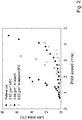
- the LPT results from these internally sized sheets are displayed in Figure 1 . It was clearly observed that, at the same linting tendency, the print speed could be increased with the addition of C-starch. In other words, the surface strength of the sheets was increased by the addition of C-starch. An excess of more than 1 % C-starch was, however, necessary in order to significantly improve the linting tendency of the TMP sheets.
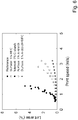
- Figure 3 displays a similar series of experiments, where a reference sheet (internal sized with 5 % C-starch) was surface sized using A-starch, MFC, and a mixture of MFC with A-starch (50 %: 50 %, mass ratio) at similar addition levels.
- a reference sheet internal sized with 5 % C-starch
- MFC surface sized using A-starch
- A-starch 50 %: 50 %, mass ratio
- the MFC has a very high water retention capacity, hence it will not penetrate the sheet and a weak zone is formed at the interface between the MFC-film and the paper surface. This explains the synergistic role of using MFC and A-starch together.
- the A-starch will simply enhance the interface between the MFC-film and the paper surface, strongly decreasing the linting propensity of the sheet.
- a surface treatment of a newsprint sheet may jeopardize the ink absorbency of the sheet, resulting in ink set off and slow drying of the ink. Therefore, treated sheets were tested with respect to the oil absorbency after internal or surface sizing treatments.
- the oil absorbency test the volume of an oil drop on the surface of a paper sheet is recorded versus time and typical results are displayed in Figure 8 .
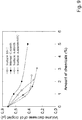
- the data were also displayed as a decrease of the oil drop vs. time as displayed in Figure 9 .
- Both an internal sizing treatment and a surface treatment results in a slightly lower oil absorption.
- Surface treatments results in a barrier type retarded absorption, whereas an internal treatment results in a more consolidated sheet resulting in retardation of the oil absorbency.
- the decreasing tendency of oil absorption is limited.
- Fibre rising is defined as the amount and the size of fibres that rise from the paper surface when the sheet is wetted, dried and then transported over a thin roller.
- the commercial newsprint was surface treated with MFC and the results of FRT are shown in the following Figure 11.
- Figure 11 shows that the long fibre rising content (LRC) was decreased after the MFC surface treatment.
- the short fibre rising area (SRA) and total fibre rising area (TRA) were decreased firstly but increased when the amount of coating MFC exceeded a certain point
- Examples of ESEM images of starch, MFC and MFC/starch coated sheets illustrate an appearance of both sheet surfaces (figures 16a-d) and cross-sections (figures 17a-d).
- the surface is fairly rough.
- the coating results in a smoother surface (figures 16b-d).
- the MFC coating results a smoother surface than the A-starch. This probably is a result of a better film forming for the MFC.
- This difference can also be seen in cross section images if Figure 13b (A-starch) is compared to Figure 13c (MFC).
- the MFC seems to form a relatively thick film that lays on top of the sheet surface while the A-starch forms a thinner film which also penetrates into the sheet in a different way.
- the weakness of the MFC film is that it seems to be less anchored to the sheet which causes delamination between the MFC layer and the sheet (see Figure 5 ).
- the weakness with the A-starch is instead that it is not as effective in decreasing the linting. This might be due to the poorer film forming by the A-starch seen in Figure 13b .
- By combining A-starch and MFC it is still possible to form a film on top of the sheet (see Figure 13d ). This film is probably mainly composed of MFC.
- the A-starch can instead penetrate into the sheet in a better way. Based on the linting results shown above, one could speculate that a combination of MFC and A-starch is beneficial since it offers a possibility to both coat the sheet with a film that holds the linting particles in place as well as partially anchoring the particles internally in the sheet as well as anchoring the MFC film to the sheet.
- the linting tendency of newspaper can be alleviated via surface sizing treatments with MFC, starch or a mixture of the two additives. Compared with merely internal treatment with C-starch, the surface treatment is more efficient in decreasing linting tendency.
- the MFC gel does not penetrate easily into the base sheet due to its high water retention capacity. Therefore, a sheet coated with MFC may delaminate at higher printing speeds than a sheet coated with A-starch or MFC+A-starch. It was found that there is a synergism in using a mixture of MFC and A-starch, which decreased the linting propensity more than the application of either MFC or A-starch.
- A-starch functions to reinforce the phase boundary between the MFC and the base sheet. It was also found that the long fibre rising tendency strongly decreased with MFC surface applications. Oil absorbency was found to decrease somewhat with increasing amount of coating chemicals.
Landscapes
- Chemical & Material Sciences (AREA)
- Life Sciences & Earth Sciences (AREA)
- Engineering & Computer Science (AREA)
- Materials Engineering (AREA)
- Wood Science & Technology (AREA)
- Organic Chemistry (AREA)
- Paper (AREA)
Description
- The current invention relates to use of compositions for reducing the linting and dusting tendency of printing paper during printing.
- Linting and dusting are terms used to define the tendency of a paper surface to shed loose and weakly bonded particles and accumulate these on the blanket during offset printing.
- Linting is a fibre, fibre fragment, ray cell or vessel element removal phenomenon related to both pulp and paper properties as well as printing conditions. Dusting is the result of loss of filler or other fine materials that are not firmly attached to the paper surface. When removed during printing, linting and dusting materials easily accumulate on the printing blanket, especially in the first printing unit when multiple printing units are used.
- The mechanism of linting is not entirely understood and solving problems related to linting may be difficult processes. The mechanism of linting can generally be ascribed the inter-fibre bonding strength on the paper surface. That is to say, lint and dust are removed from the surface of the paper when the external forces exceed the forces holding the sheet together.
- Picking is another aspect when it comes to the printability of paper. Picking stands for the pulling out of fibres or small clusters of fibres. Picking may in extreme cases result in sheet delamination, whereby large uniform areas are lifted from the paper surface. Picking occurs when the split resistance of the ink and hence the stress perpendicular to the paper surface exceeds the local strength of the paper surface at the outlet of the nip. Picking may result in linting.
- Material removed from the paper surface consists mostly of poorly fibrillated fibres, non-fibrous cell materials (such as ray cells, vessels, bagasse pith etc) as well as fibre fragments, fines and debris. It is well-known that coarse and stiff fibres require a higher energy input during refining in order to minimize linting. The energy input hence is probably one of the more important parameters affecting linting.
- Surface sizing is a known procedure for alleviating the linting tendency of newsprint. The linting problem cannot, however, be regarded solely as a papermaking problem. Printing press variables have a strong influence on paper linting performance and must by carefully controlled. Important press room factors include edition size, web lead configuration through the press (departure angle etc.), ink properties (viscosity and tack) and the fountain solution (quantity and quality). Linting can also be caused by an incorrect ink/water balance. From earlier studies, it can be concluded that several press variables often contribute to linting.
- Linting results in deterioration of the print quality to the point where the press must by stopped and cleaned. This cleaning process is both tedious and costly. The linting tendency of paper can therefore have a strong effect on pressroom efficiency, particularly in high volume printing operations such as newspaper production. The continued trend towards increased use of offset printing in high volume multi-colour printing operations has made linting a considerable economic problem and a source of frequent customer complaints. Consequently, there exists a need for improved sheets of paper with reduced linting and dusting propensity and additionally compositions for affecting said improvements.
- According to the invention defined in the appended claims, use is made of a compositioncomprising microfibrillated cellulose (herein below referred to as MFC) and one or more polysaccharide hydrocolloid to reduce the linting and dusting propensity of said paper during printing. The polysaccharide hydrololloid may be any starch or gum. Gums that are suitably used in accordance with the current invention are exemplified by the group comprising locust bean gum, karaya gum, xanthan gum, gum arabic, gum ghatti, gum agar, pectin, gum targacanth,
alginates,.cellulose gums (e.g carboxymethyl cellulose, alkylcellulose, hydroxyalkylcellulose, hydroxyethylcellulose, hydroxypropylcellulose), guar gum, tamarind gum, and carrageenan. - In one embodiment of the invention, the polysaccharide hydrocolloid is starch. The starch used may be any commercially available starch, comprising any combination of the two starch polymers amylase and amylopectin. The starch may be used in its native, in an anionic or cationic form. The starch may be modified using any of the following treatments; enzymes, thermo treatment, APS peroxide, etherification, esterification, oxidation (e.g. hypochlorite), acid hydrolysis, dextrinose, catioinization, hydroxyethylation, carboxymethylation, and acetylation. Additionally, other polysaccharide hydrocolloids selected from the group consisting of guar, tamarind, locust, karaya cellulose ether, xanthan, pectin, alginates, carrageenin, or agar may form part of the starch formulation binder.
- The composition may consist exclusively of MFC and polysaccharide hydrocolloid(s), such as starch.
- Exemplary plants from which starch may be obtained comprise potatoes, cassava, barley, wheat, corn, rice, tapioca, arrowroot, sago. Although a variety of different starches may be used, it will be recognized by those skilled in the art that differences in amylose content, branching, molecular weight and content of native lipid between various starch varieties will result in different chemical and physical properties and will thus infuence the characteristics of the coating.
- Processes for the manufacture of MFC are disclosed in e.g.
WO2007/091942 and Swedish patent applicationSE 0800807-0 - Said microfibrillated cellulose (also commonly referred to as nanocellulose, nanofibrillated cellulose, nanofibres, microfibers) may be manufactured from any cellulose containing fibres, which may be found in chemical pulp, mechanical pulp, thermomechanical pulp, chemi(thermo)mechanical pulp (CMP or CTMP). The pulp used may consist of pulp from hardwood, softwood or a combination of both types of wood. The pulp may e.g. contain a mixture of pine and spruce or a mixture of birch and spruce. The chemical pulps that may be used in accordance with the present invention include all types of chemical wood-based pulps, such as bleached, half-bleached and unbleached sulphite, kraft and soda pulps, and mixtures or combinations of these.
- The pulp may during manufacture of MFC be of any consistency, ranging from low consistency through medium consistency to high consistency. The fibre origin may be wood or any other cellulose containing plant. Normally, said fibres are treated in suspension with the aid of a mechanical comminution device, and said device may e.g. be a refiner, a fluidizer, a homogenizer or a microfluidizer. A pre-treatment of the fibres may also be performed prior to the treatment in said device.
- Of the component parts of the composition, the polysaccharide hydrocolloid has a better ability than the MFC to penetrate the paper during coating, whereas the upper part of the coating to a greater extent consists of MFC. MFC as such has problems penetrating the paper, due to its high water retention capacity and particle size. Consequently, there exists a great synergistic effect of the composition disclosed.
- The advantage of the composition of MFC and the polysaccharide hydrocolloid is three-fold: it offers a coating that holds the linting particles in place, partially anchors the particles internally in the sheet and anchors the MFC layer to the sheet.
- The polysaccharide hydrocolloid used may be branched or unbranched, and may be native or modified, such as nonionic ethers, anionicilly modified or cationic.
- When choosing the combination of MFC and polysaccharide hydrocolloid, attention is directed towards reducing the agglomeration propensity of the combination. This may be seen to by adjustment of the pH or salt content of the combination. Adjustment of said variables is well within the competence of the person skilled in the art.
- One measure to reduce the agglomeration propensity is to ensure that the MFC and polysaccharide hydrocolloid used have substantially the same charge. For example, anionic MFC may be combined with anionic polysaccharide hydrocolloid to minimize agglomeration.
- In one embodiment of the invention, the composition comprising MFC and the polysaccharide hydrocolloid comprises 1-90 % by weight of MFC, with the balance comprising apolysaccharide hydrocolloid. In another embodiment of the invention, said composition comprises 2-50 % by weight of MFC, with the balance comprising polysaccharide hydrocolloid. In yet an embodiment of the invention, the composition comprises 3-25 % by weight of MFC, with the balance comprising polysaccharide hydrocolloid.
- In another embodiment, the composition comprises 5-15 % by weight of MFC, with the balance comprising the polysaccharide hydrocolloid.
- % by weight is as used herein calculated based on the total weight of the respective composition or mixture, unless defined otherwise.
- The compositions of the invention are suitable for both coating and surface sizing applications.
- A paper may be coated with the composition comprising MFC and the polysaccharide hydrocolloid. This paper has reduced linting propensity, while at the same time retaining acceptable ink absorbency. The ink absorbency may be in the same range as that of a conventional, uncoated paper.
- A coated paper comprising a first layer of the polysaccharide hydrocolloid and a second layer of MFC may be provided. The number of layers may be varied according to preferences. The polysaccharide hydrocolloid layer(s) form a foundation, to which the MFC is sufficiently bound. The polysaccharide hydrocolloid enhances the interface between the MFC layer(s) and the paper surface. Thereby, the linting and dusting propensity of the final paper is reduced. MFC may be used to e.g. reinforce the surface characteristics of e.g. commercial newsprint sheet.
- The polysaccharide hydrocolloid layer(s) of the coated paper in one embodiment comprises starch chosen from the group consisting of branched or unbranched native starch, anionic starch and cationic starch, peroxidized starch, etherified starch, esterified starch, oxidized starch, hydrolyzed starch, dextrinozed, starch hydroxyethylated starch, and acetylated starch, respectively. The starch used may be any commercially available starch, comprising any combination of the two starch polymers amylase and amylopectine.
- In another embodiment of the invention, the polysaccharide hydrocolloid is chosen from the group consisting of locust bean gum, karaya gum, xanthan gum, gum arabic, gum ghatti, pectin, targacanth, alginates, cellulose gums, guar gum, tamarind gum.
- In one embodiment, the coated paper has an amount of MFC in the region of 0.1 - 60 g/m2 of the paper product. In another embodiment, the coated paper has an amount of MFC in the region of 0.5-40 g/m2 of the paper. In yet an embodiment, the coated paper has an amount of MFC in the region of 1-30 g/m2 of the paper. In still another embodiment, the coated paper has an amount of MFC in the region of 3-20 g/m2 of the paper.
- In an aspect of the invention there is provided use of the composition comprising starch and MFC to provide a barrier on a paper.
- The paper coated with the composition comprising MFC and starch may be used as a barrier.
- In an aspect of the invention, there is provided a method for reducing the linting and/or dusting of a paper, comprising coating of a paper with any composition as herein described.
- "Paper" as used herein comprises any paper, sheet of paper and any other wood fibre based product.
- The present invention will now be described with reference to the accompanying drawings. The embodiments and examples shall merely be seen as an illustration of the spirit and scope of the current invention, and in no way whatsoever as a limitation.
-
-
Figure 1 shows the linting tendency of reference sheets with different amounts of C-starch for internal treatments. -
Figure 2 shows the linting tendency of sheets (with 2 % C-starch, internal treatment) which were surface treated using different chemicals at similar coating levels. -
Figure 3 shows the linting tendency of sheet (with 5 % C-starch, internal treatment) which were surface treated using different chemicals at similar coating levels. -
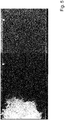
Figure 4 shows images on the print disc at end of the print speed = 3.18 m/s, whereby the reference sheets were treated without any surface chemical. -
Figure 5 shows images on the print disc at delaminating critical print speed = 4.64 m/s, whereby the reference sheets were coated with MFC at 2.1 g/m2. -
Figure 6 shows the linting propensity of blank sheets with different chemical treatments at the same addition level (1 %). -
Figure 7 shows the linting propensity of blank sheets with different chemical treatments at the same addition level (2 %). -
Figure 8 shows oil drop volume vs. time, whereby different chemical treatments have been performed. -
Figure 9 shows oil absorbency (displayed as volume decrease of oil droplet between 1 and 5s of contact time) of sheets with different chemical treatments. -
Figure 10 shows the linting tendency of commercial newsprint with different levels of MFC coatings. -
Figure 11 shows the fibre rising tendency (FRT) results of commercial newsprint with different amounts of MFC surface treatment. -
Figure 12 shows ESEM micrographs of sheet surfaces with different coatings. -
Figure 13 shows ESEM micrographs of cross-sections of sheets with different coatings. - In the linting experiments, a never dried commercial spruce (Picea abies) thermo mechanical pulp (TMP) from Hallsta Paper mill (Holmen Paper, Sweden), was used. For preservation reasons, the pulp was frozen and thawn. After the pulp was thawned, the freeness in deionized water was 173 CSF (ISO 5267-2). Freeness measured at the mill was 102 CSF. In another set of linting experiments a commercial newsprint (improved newsprint, grammage = 60 g/m2, Bendtsen surface roughness = 150-230 ml/min) was used (Hallsta Paper mill, Holmen Paper, Sweden). In the manufacture of MFC, a commercial sulphite softwood-dissolving pulp (Domsjö Dissolving Plus; Domsjö Fabriker AB, Sweden), from 60 % Norway spruce (Picea abies) and 40 % Scottish Pine (Pinus sylvestris), with a hemicellulose content of 4.5 % (measured as solubility in 18 % NaOH) and a lignin content of 0.6 % was used. The pulp was thoroughly washed with deionized water and used in its never-dried form.
- For the internal treatments, a commercial potato C-starch was used (Amylofax PW, Degree of substitution (D.S.)= 0.035, Avebe, The Netherlands). In order to gelatinise the C-starch, the C-starch was mixed with 200 mL deionized water to a concentration of around 1.5 wt-% and was heated to 90-95 °C and kept at this temperature for 15 minutes. After cooling, the solution was diluted to a volume of 1 L.
- A-PAM (PL156, anionic charge density: 40 mole-%, Ciba, UK) was used as an adjuvant to retain C-starch (by complexation) at high C-starch dosages. In order to prepare an A-PAM solution, 0.125g of A-PAM was soaked in 1.5 ml ethanol for 2 minutes. After an addition of 50 ml deionized water, the composition was mixed thoroughly for 2 minutes. Then the composition was stirred for 2 hours and left over night without stirring.
- In the surface size treatments, an anionic oxidized potato starch (Perlcoat 158, charge density = 153.2 µeq/g, Lyckeby Industrial AB, Sweden) was employed. In order to gelatinise the A-starch, the A-starch was mixed with deionized water to a concentration of around 10 wt-% and was then heated to 95 °C and kept at this temperature for 15 minutes. The pH was adjusted to
pH 8 prior to the sizing experiments. - The dissolving softwood-pulp was first carboxymethylated to a D.S. of approximately 0.1 following a method described elsewhere (Wagberg, L., Decher, G., Norgren, M. Lindström, T., Ankerfors, M., and Axnäs, K.. Langmuir (2008), 24(3), 784-795.). Thereafter, the pulp was made into a an MFC by passing the carboxymethylated pulp at a concentration of 2 wt-% once through a high-pressure homogenizer (Microfluidizer M-110EH, Microfluidics Corp., USA) equipped with two differently sized chambers (diameter of 200 µm and 100 µm connected in series) with 170 MPa as the operating pressure. The formed MFC, which was a highly viscous gel, was diluted with deionized water to 0.56 wt-%, and was then dispersed with one pass through the high-pressure homogeniser in the same way as before.
- Based on the concentrations of MFC and A-starch, blends of MFC and A-starch (50 %: 50 %, mass ratio) were prepared in the following way: A composition of MFC and A-starch was passed once through a high-pressure homogenizer (Microfluidizer M-110EH, Microfluidics Corp., USA) equipped with two differently sized chambers (diameter of 200 µm and 100 µm connected in series) with 170 MPa operating pressure. After that, the composition was treated using an ultrasonic bath (Bransonic Ultrasonic Cleaner 5510E-MT, Bransonic Ultrasonics Corp., USA) for 10 minutes and was then placed on a vibrating table for 40 minutes to remove the entrapped air bubbles in the gel.
- The freeze dried TMP pulp was, thawn and hot-disintegrated at 85-95 °C at 1200 rpm for 10 minutes in order to reduce the latency of the pulp. For the internal treatments, the pulp was treated with 1, 2 and 5 % C-starch for 10 minutes before sheet-forming. When 5 % C-starch was used 0.1 % A-PAM was used as an adjuvant (complexing agent) to secure an almost quantitative C-Starch deposition onto the TMP-furnish. In this case the A-PAM was added 10 sec after the C-starch and then left 10 minutes before sheet-forming. Tap water was used and the pH was set to pH = 8 Sheets with a basis weight of 100 ± 2 g/m2 were made in the Formette Dynamique Sheet former (CTP, Grenoble, France) (Sauret et al. 1969). The sheets were pressed together with blotters at 8.1 kg/cm2 for 5.5 minutes, then the blotters were replaced with new ones and the sheet was pressed at the same pressure for 2 minutes more. The drying of the sheets was performed against a hot gloss Photo-dryer.
- The surface sizing was done with a bench coater (KCC coater M202, RK Print-coat Instruments Ltd., UK) equipped with wire-wound rods. Sizing was performed at a speed of the moving rod of approx. 5 m/min. The surface sizing operation was performed on the top side only on the Formette Dynamique sheets and along the MD direction.
- The sheets were pre-dried at room temperature until the tackiness disappeared and finally dried against a hot gloss Photo-dryer. All surface sized sheets were dried for the same time. Repeated and parallel surface sizing operations were carried out. The basis weight of the paper was 100 g/m2, while the coat weight was varied up to 5 g/m2. The following chemicals were surface sized: A-starch, MFC and 50/50 weight-% A-starch/ MFC composition. In the experiments, at least 3 different surface sizing levels were used. All samples, including blank or reference sheets making, sheets by internal treatments and sheets by surface treatments, were prepared according to the matrix shown in Table 1.

- All sheets were pre-calendered in a soft nip laboratory calender (DT Laboratory Calender, DT Paper Science Oy, Finland), under a line pressure of 16 kN/m at a roll temperature of 22 °C for one time. Thereafter, the sheets were calendered twice on each side of the sheets, which gave a Bendtsen surface roughness around 200 ± 50 ml/min (see below). This is a normal value for commercial newsprint sheets.
- The surface sized sheets were also calendered after the surface sizing treatment. Firstly, the surface sized sheets were conditioned according to the standard method SCAN-P 2:75 (Scandinavian Pulp, Paper and Board Testing Committee) for at least 48 hours. The sheets were then calendered once in the soft nip laboratory calender under a line pressure of 12 kN/m at a roll temperature of 22 °C before further surface analysis and printing tests were performed.
- Grammage and weight of coating layer was determined according to standard method SCAN-P 6:75 (Scandinavian Pulp, Paper and Board Testing Committee). The Bendtsen method (ISO 8791-2) was used for the determination and control of surface roughness.
- In this method, developed at STFI-Packforsk AB, Sweden, a paper sample is placed on an IGT-printability tester and the steel disc, made sticky with a thin film of pick-test oil is pressed against the paper. A print is then made at an accelerating speed. The disc is then photographed with a CCD-camera in a stereomicroscope. The disc is divided into 20 segments, which correspond to each photo taken by the camera. Since the acceleration is not linear, the four first and the two last segments on the disc were left out of the analysis. Hence, the measurements are performed on segments 5-18. The photos from these segments are analyzed and the amount of particles present (particles that have been removed from the surface of the sheets) is counted (particles/cm2). The result is a number of particles, which have been shed from the surface at a specific speed. The particle counting was performed using an image analysis software (Linting Large Part, STFI-Packforsk AB, Sweden). This software distinguishes between four different groups of particles in the images: fibres, clusters, particles and small particles. The criteria for the groups are:
- Fibre: The object's circumference is > 2 mm and its rectangularity is < 0.3 i.e. the object is long.
- Cluster: The object's area is > 0.3 mm2 or its circumference is > 2 mm and its rectangularity is > 0.3.
- Particle: The object's area is 0.02 - 0.3 mm2.
- Small particle: If none of the above, the object is a small particle.
- The LPT-measurements in this work were based on the IGT pick resistance method (ISO 3783) using an IGT-printability tester (IGT AIC 2-5, Reprotest b.v., The Netherlands). The steel disc was made sticky using 13.7 ± 1.1 mg of pick-test oil (IGT Pick Test Oil (404.004.020) middle viscosity, Paper Test Equipment, Sweden).
- Instead of detecting the start of the pick on the test strip, the particles picked up on the print disc were detected using a CCD-camera (Model ICD 700, Ikegami, Japan, used resolution = 15 µm/pixel) connected to a stereomicroscope (Model SZ-CTV, Olympus Sverige AB, Sweden). The maximum print speed measured was 5.0 m/s.
- The Fibre Rising Tester is a method developed by STFI-Packforsk in the beginning of the 1990's (Hoc 2005). Fibre rising tendency (FRT) is defined as the amount and the size of fibres that rises from the paper surface when the paper is wetted, dried and then transported over a thin roll. This method gives information of how the bonds between the surface fibres can resist wet induced fibre rising. It is also possible to measure the dry dusting by just turning the wetting procedure off. The principle is that a paper sample is wetted with a certain amount of water and is then dried with IR-heating element. The amount of fibre rising and roughness is continuously registered by a CCD-camera as the sample is being bent over a thin roll.
- When the paper is exposed to moisture and heat, different types of structural changes may occur on the surface. The FRT evaluates the sample based on two types of changes, referred to as Long Fibre Rising and Short Fibre Rising. Long fibres are bonded only at one end and extend more than 0.1 mm above the surface, while the short fibres are bonded along most of their length and extend no more than 0.1 mm above the surface. It is the long fibres that can cause linting problems due to their relatively long free ends and they are expressed as total length in millimetres.
- Changes in the surface structure appear when the fibre network of the paper in the surface comes into contact with water and heat. These changes give rise to two separate effects, roughening and fibre rising. Both these effects can be described by the measurement of four parameters:
- LRC (Long Rising Component) is a parameter, which describes the extent of the fibre rising as the total measured length of all fibres which rise from the paper surface after the surface treatment.
- SRA (Short Rising Area) is a parameter, which describes the increase in surface roughness (roughening) as the measurement of the total area of all the particles which have been lifted from the paper surface but cannot be identified as fibres since the height of each of these particles is less than 0.1 mm.
- TRA (Total Rising Area) is a parameter, which is defined as the total area of all the raised fibres including the area of all the particles which have been lifted from the paper surface but which are not fibres.
- Q (Fibre Quantity) is the number of identified fibres, i.e. the particles whose length is greater than 0.1 mm. In this work, the samples were cut in 4.0 cm wide and at least 10 cm long strips. Ordinary copy paper was taped to the ends of the strips to make the test more material efficient (the FRT needed a longer sample than the area it actually needed for performing the test). The sample was placed in the FRT (FIBRO 1000, Fibro system AB, Sweden) and tested in the machine direction (MD). The sample was wetted with 6.0 g/m2 of water. After that the paper was dried using IR-heating element until the paper surface had a temperature of 110 °C. The sample was then transported over the thin roller and a CCD-camera registered rising fibres and roughness. In
total 100 images were analysed by the equipment. Three specimens per sheet sample were measured. - To estimate the ink absorbency for sheets, contact angle measurements were performed using a Dynamic Angle Tester (DAT 1100, Fibro system AB, Sweden). The measurements were performed by dropping a drop of castor oil (Castor oil USP, density = 0.96 g/cm3, Sigma-Aldrich Inc., USA) on the top side of the sheets. The initial drop volume was 7.0 µL and the change in drop volume over time (time span 0-12 s), drop base diameter and contact angle was measured. For each sheet sample, 8 parallel paper strips were measured (8 drops/paper strip) to get an average value.
- ESEM micrographs of sheet surfaces and cross-sections were taken to study the surface morphology and the layer structure of the sheets. The ESEM-micrographs were captured using ESEM model XL30 ESEM-FEG (Environmental Scanning Electron Microscope-Field Emission Gun) from Philips, The Netherlands. The working conditions were as follows: accelerating voltage = 10 kV, WD = 9 mm (working distance), low vacuum mode with BSE detector (backscattered electrons), and pressure in sample chamber = 0.1 kPa. ESEM micrographs of the paper surfaces were also taken in high vacuum mode using SE detector (Secondary Electrons) at the same accelerating
voltage 10 kV. WD was somewhat shorter ca 8.5 mm. For high vacuum mode the sheet surfaces were coated with a thin conducting layer of gold to prevent charging. ESEM micrographs of the cross-sections, giving z-direction information about the sheet structure, were obtained from the embedded papers. The paper samples were embedded in epoxy resin Spurr, grounded and then polished to obtain a smooth surface. - Compared with the conventional IGT pick resistance method, according to which the start of the pick on the test strip is recorded, the particles picked up on the print disc were evaluated with image analysis regarding the area coverage, number and size classification in the STFI-LPT method. Furthermore, LPT describes the tendency of a paper to shed particles as a function of printing speed. Hence, the results of the LPT are believed to be a good quantification of the linting tendency. To simplify the analysis result, the area coverage of particles picked up in the LPT-results as a function of print speed is discussed in the following.
- The TMP sheets were made with a reference sheet and with the addition of C-starch (1 %, 2 % and 5 % C-starch + 0.1 % A-PAM) to the wet stock. A-PAM was used as a co-additive in order to retain the non-adsorbed extraneous C-starch at the highest addition level. Basically, the retention of C-starch to the fibres was quantitative. The LPT results from these internally sized sheets are displayed in
Figure 1 . It was clearly observed that, at the same linting tendency, the print speed could be increased with the addition of C-starch. In other words, the surface strength of the sheets was increased by the addition of C-starch. An excess of more than 1 % C-starch was, however, necessary in order to significantly improve the linting tendency of the TMP sheets. - In
Figure 2 , a reference sheet (internally sized with 2 % C-starch) was surface sized with A-starch, MFC, and a mixture of MFC with A-starch (50 %: 50 %, mass ratio), respectively, at a similar addition level. FromFigure 2 it is clear that both surface sizing with A-starch and MFC effectively reduces the linting tendency of the sheets. Secondly, there is also shown that there is a synergistic effect of adding both MFC and A-starch to the surface of the papers. -
Figure 3 displays a similar series of experiments, where a reference sheet (internal sized with 5 % C-starch) was surface sized using A-starch, MFC, and a mixture of MFC with A-starch (50 %: 50 %, mass ratio) at similar addition levels. In this series of experiments an important observation was made. Despite the covering of the paper surface with a continuous MFC film, the sheet coated using MFC was easily delaminated when exceeding a certain critical printing speed. When the print disc was examined (seefigures 7 and8 ) it was observed that the print disc was cleaner prior to delamination and that when the sheet was delaminated chunks of debris (film plus debris) was found. The MFC has a very high water retention capacity, hence it will not penetrate the sheet and a weak zone is formed at the interface between the MFC-film and the paper surface. This explains the synergistic role of using MFC and A-starch together. The A-starch will simply enhance the interface between the MFC-film and the paper surface, strongly decreasing the linting propensity of the sheet. - Several series of experiments with different levels of internal and surface sizing additions using MFC, A-starch and C-starch using TMP were then exercised. In order to correct for slightly different addition levels in the various experiments a software (DataFit 7.0) was used to calculate the interpolated values at the addition levels of 1, 2 and 5 %. The results so obtained are displayed in
figures 9 ,10 and11 . Hence,Figure 6 displays the effects of 1 % internal C-starch addition and 1 % surface addition of MFC, A-starch and a mixture of MFC/A-starch (50/50 %). The effect of the internal addition of C-starch was again small, whereas both A-starch and MFC gave significant reductions in linting tendency. The synergism of adding a mixture of A-starch and MFC was again clear.Figure 7 displays the results with an addition of 2 % and the results are essentially similar to those inFigure 8 , but the surface strength of the sheets are, of course, stronger. - A surface treatment of a newsprint sheet may jeopardize the ink absorbency of the sheet, resulting in ink set off and slow drying of the ink. Therefore, treated sheets were tested with respect to the oil absorbency after internal or surface sizing treatments. In the oil absorbency test the volume of an oil drop on the surface of a paper sheet is recorded versus time and typical results are displayed in
Figure 8 . The data were also displayed as a decrease of the oil drop vs. time as displayed inFigure 9 . Both an internal sizing treatment and a surface treatment results in a slightly lower oil absorption. Surface treatments results in a barrier type retarded absorption, whereas an internal treatment results in a more consolidated sheet resulting in retardation of the oil absorbency. However, in comparison with the blank sheet, the decreasing tendency of oil absorption is limited. - The Formette Dynamique laboratory paper sheets used in the previous part of the report, are characterized as having superior formation characteristics and in one series of experiments, commercial newsprint was also coated with MFC for comparison. The results are shown in
Figure 10 . MFC-coatings alleviate the linting propensity for commercial newsprint sheets just as for the laboratory sheets. - The oil absorption was also investigated. All these experiments demonstrate the efficiency of MFC to reinforce the surface characteristics of a commercial newsprint sheet.
- Fibre rising is defined as the amount and the size of fibres that rise from the paper surface when the sheet is wetted, dried and then transported over a thin roller. The commercial newsprint was surface treated with MFC and the results of FRT are shown in the following
Figure 11. Figure 11 shows that the long fibre rising content (LRC) was decreased after the MFC surface treatment. However, the short fibre rising area (SRA) and total fibre rising area (TRA) were decreased firstly but increased when the amount of coating MFC exceeded a certain point - Examples of ESEM images of starch, MFC and MFC/starch coated sheets illustrate an appearance of both sheet surfaces (figures 16a-d) and cross-sections (figures 17a-d). As can be seen on the reference sheet before coating (
Figure 12a ) the surface is fairly rough. The coating results in a smoother surface (figures 16b-d). The MFC coating results a smoother surface than the A-starch. This probably is a result of a better film forming for the MFC. This difference can also be seen in cross section images ifFigure 13b (A-starch) is compared toFigure 13c (MFC). The MFC seems to form a relatively thick film that lays on top of the sheet surface while the A-starch forms a thinner film which also penetrates into the sheet in a different way. As was disclosed above, the weakness of the MFC film is that it seems to be less anchored to the sheet which causes delamination between the MFC layer and the sheet (seeFigure 5 ). The weakness with the A-starch is instead that it is not as effective in decreasing the linting. This might be due to the poorer film forming by the A-starch seen inFigure 13b . By combining A-starch and MFC it is still possible to form a film on top of the sheet (seeFigure 13d ). This film is probably mainly composed of MFC. The A-starch, can instead penetrate into the sheet in a better way. Based on the linting results shown above, one could speculate that a combination of MFC and A-starch is beneficial since it offers a possibility to both coat the sheet with a film that holds the linting particles in place as well as partially anchoring the particles internally in the sheet as well as anchoring the MFC film to the sheet. - The linting tendency of newspaper can be alleviated via surface sizing treatments with MFC, starch or a mixture of the two additives. Compared with merely internal treatment with C-starch, the surface treatment is more efficient in decreasing linting tendency. The MFC gel does not penetrate easily into the base sheet due to its high water retention capacity. Therefore, a sheet coated with MFC may delaminate at higher printing speeds than a sheet coated with A-starch or MFC+A-starch. It was found that there is a synergism in using a mixture of MFC and A-starch, which decreased the linting propensity more than the application of either MFC or A-starch. A-starch functions to reinforce the phase boundary between the MFC and the base sheet. It was also found that the long fibre rising tendency strongly decreased with MFC surface applications. Oil absorbency was found to decrease somewhat with increasing amount of coating chemicals.
Claims (8)
- Use of a coating composition comprising microfibrillated cellulose (MFC) and one or more polysaccharide hydrocolloids for reducing the linting and/or dusting of a paper.
- Use of a coating composition according to claim 1, wherein the composition comprises 1-90 % by weight of MFC, with the balance comprising polysaccharide hydrocolloid(s).
- Use of a coating composition according to claim 1, wherein the composition comprises 2-50 % by weight of MFC, with the balance comprising polysaccharide hydrocolloid(s).
- Use of a coating composition according to claim 1, wherein the composition comprises 3-25 % by weight of MFC, with the balance comprising polysaccharide hydrocolloid(s).
- Use of a coating composition according to claim 1, wherein the composition comprises 5-15 % by weight of MFC, with the balance comprising polysaccharide hydrocolloid(s).
- Use of a coating composition according to any one of claims 1-5, wherein the polysaccharide hydrocolloid is starch.
- Use of a coating composition according to claim 6, wherein the starch is chosen from the group consisting of native starch, anionic starch, cationic starch, peroxidized starch, etherified starch, esterified starch, oxidized starch, hydrolyzed starch, dextrinozed starch, hydroxyethylated starch, and acetylated starch.
- Use of a coating composition according to any one of claims 1-5, wherein the polysaccharide hydrocolloid is chosen from the group consisting of locust bean gum, karaya gum, xanthan gum, gum arabic, gum ghatti, pectin, targacanth, alginates, cellulose gums, guar gum, agar gum, carrageenan and tamarind gum.
Priority Applications (1)
| Application Number | Priority Date | Filing Date | Title |
|---|---|---|---|
| PL16179031T PL3095912T3 (en) | 2008-04-03 | 2009-04-03 | Composition for coating of printing paper |
Applications Claiming Priority (3)
| Application Number | Priority Date | Filing Date | Title |
|---|---|---|---|
| US4193208P | 2008-04-03 | 2008-04-03 | |
| PCT/SE2009/050355 WO2009123560A1 (en) | 2008-04-03 | 2009-04-03 | Composition for coating of printing paper |
| EP09727832.9A EP2268864B1 (en) | 2008-04-03 | 2009-04-03 | Composition for coating of printing paper |
Related Parent Applications (1)
| Application Number | Title | Priority Date | Filing Date |
|---|---|---|---|
| EP09727832.9A Division EP2268864B1 (en) | 2008-04-03 | 2009-04-03 | Composition for coating of printing paper |
Publications (2)
| Publication Number | Publication Date |
|---|---|
| EP3095912A1 EP3095912A1 (en) | 2016-11-23 |
| EP3095912B1 true EP3095912B1 (en) | 2019-02-06 |
Family
ID=41135816
Family Applications (2)
| Application Number | Title | Priority Date | Filing Date |
|---|---|---|---|
| EP16179031.6A Active EP3095912B1 (en) | 2008-04-03 | 2009-04-03 | Composition for coating of printing paper |
| EP09727832.9A Active EP2268864B1 (en) | 2008-04-03 | 2009-04-03 | Composition for coating of printing paper |
Family Applications After (1)
| Application Number | Title | Priority Date | Filing Date |
|---|---|---|---|
| EP09727832.9A Active EP2268864B1 (en) | 2008-04-03 | 2009-04-03 | Composition for coating of printing paper |
Country Status (13)
| Country | Link |
|---|---|
| US (1) | US8241756B2 (en) |
| EP (2) | EP3095912B1 (en) |
| JP (1) | JP2011516739A (en) |
| KR (1) | KR101444396B1 (en) |
| CN (2) | CN103835182B (en) |
| BR (1) | BRPI0911075B1 (en) |
| CA (1) | CA2720388C (en) |
| CL (1) | CL2009000812A1 (en) |
| ES (2) | ES2722523T3 (en) |
| PL (2) | PL2268864T3 (en) |
| PT (2) | PT2268864T (en) |
| RU (1) | RU2509184C2 (en) |
| WO (1) | WO2009123560A1 (en) |
Families Citing this family (49)
| Publication number | Priority date | Publication date | Assignee | Title |
|---|---|---|---|---|
| PL2236545T3 (en) | 2009-03-30 | 2015-02-27 | Omya Int Ag | Process for the production of nano-fibrillar cellulose gels |
| HUE045496T2 (en) | 2009-03-30 | 2019-12-30 | Fiberlean Tech Ltd | Process for the production of nano-fibrillar cellulose suspensions |
| SE0950819A1 (en) * | 2009-11-03 | 2011-05-04 | Stora Enso Oyj | A coated substrate, a process for producing a coated substrate, a package and a dispersion coating |
| EP2319984B2 (en) * | 2009-11-04 | 2025-04-02 | Kemira Oyj | Process for production of paper |
| JP5883393B2 (en) | 2009-11-06 | 2016-03-15 | ストラ エンソ オーワイジェイ | Methods for producing paper or paperboard products and paper or paperboard produced according to these methods |
| US20130000856A1 (en) * | 2010-03-15 | 2013-01-03 | Upm-Kymmene Oyj | Method for improving the properties of a paper product and forming an additive component and the corresponding paper product and additive component and use of the additive component |
| EP2386683B1 (en) | 2010-04-27 | 2014-03-19 | Omya International AG | Process for the production of gel-based composite materials |
| DK2386682T3 (en) | 2010-04-27 | 2014-06-23 | Omya Int Ag | Process for preparing structured materials using nano-fibrillar cellulose gels |
| BR112012029601B1 (en) | 2010-05-27 | 2020-10-27 | Kemira Oyj | composition, method for producing a self-supporting film, self-supporting film, multilayered object, method for producing a multilayered object and use of a composition |
| CA2800141C (en) * | 2010-05-27 | 2016-03-29 | Fpinnovations | Adhesion with nanocrystalline cellulose |
| SE1050985A1 (en) * | 2010-09-22 | 2012-03-23 | Stora Enso Oyj | A paper or paperboard product and a process of manufacture of a paper or paperboard product |
| FI126513B (en) * | 2011-01-20 | 2017-01-13 | Upm Kymmene Corp | Method for improving strength and retention and paper product |
| RU2471032C1 (en) * | 2011-05-24 | 2012-12-27 | Открытое акционерное общество "Троицкая бумажная фабрика" (ОАО "ТБФ") | Paper pulp for making paper |
| WO2013098025A1 (en) | 2011-12-29 | 2013-07-04 | Tetra Laval Holdings & Finance S.A. | A packaging laminate for a packaging container, as well as packaging containers produced from the packaging laminate |
| CN102628241B (en) * | 2012-04-26 | 2015-04-01 | 金东纸业(江苏)股份有限公司 | Sizing agent, preparation method thereof and coated paper applying same |
| CN102660893B (en) * | 2012-04-26 | 2014-12-24 | 金东纸业(江苏)股份有限公司 | Sizing liquid, preparation method and coated paper using sizing liquid |
| GB2502955B (en) * | 2012-05-29 | 2016-07-27 | De La Rue Int Ltd | A substrate for security documents |
| US9353313B2 (en) | 2012-08-09 | 2016-05-31 | Auburn University | Microdevices and methods of manufacture |
| CN103590281B (en) * | 2012-08-14 | 2015-12-16 | 金东纸业(江苏)股份有限公司 | Table glue and apply the sized paper of this table glue |
| EP2897810B1 (en) * | 2012-09-24 | 2017-03-29 | Paper and Fibre Research Institute | Coating composition of nano cellulose, its uses and a method for its manufacture |
| CN102966002B (en) * | 2012-11-29 | 2015-07-15 | 广东中烟工业有限责任公司 | Preparation of enhancer for nanofiber whisker paper and application method of enhancer to coating of paper-making tobacco sheets |
| GB201304717D0 (en) | 2013-03-15 | 2013-05-01 | Imerys Minerals Ltd | Paper composition |
| PL2799618T3 (en) * | 2013-04-29 | 2016-12-30 | The use of micronized cellulose and fluorescent bleaching agent for surface treatment of cellulosic materials | |
| AU2014336965A1 (en) * | 2013-10-18 | 2016-06-02 | Queensland University Of Technology | Lignin-based waterproof coating |
| RU2656495C2 (en) * | 2014-02-21 | 2018-06-05 | ДОМТАР ПЭЙПЕР КОМПАНИ ЭлЭлСи | Cellulose fibers with increased surface |
| SE539366C2 (en) | 2014-12-18 | 2017-08-15 | Stora Enso Oyj | Process for the production of paper or board coated with a coating comprising microfibrillated cellulose and a water retention agent |
| ITUB20153369A1 (en) * | 2015-09-03 | 2017-03-03 | Nicholas Iarocci | Cigarette paper filter and filter paper pad |
| SE539771C2 (en) * | 2015-09-17 | 2017-11-28 | Stora Enso Oyj | Method for manufacturing surface sized dense films comprising microfibrillated cellulose |
| CN108350663B (en) * | 2015-09-23 | 2021-06-15 | 斯道拉恩索公司 | Printing paper without ink |
| PL3362508T3 (en) | 2015-10-14 | 2019-10-31 | Fiberlean Tech Ltd | 3d-formable sheet material |
| SE540274C2 (en) * | 2015-11-27 | 2018-05-22 | Stora Enso Oyj | A ground cover mulch comprising a microfibrillated polysaccharide |
| FI130254B (en) * | 2016-02-03 | 2023-05-11 | Kemira Oyj | Process for the production of microfibrillated cellulose and product |
| US11846072B2 (en) | 2016-04-05 | 2023-12-19 | Fiberlean Technologies Limited | Process of making paper and paperboard products |
| EP3828339B1 (en) | 2016-04-05 | 2023-11-29 | FiberLean Technologies Limited | Paper and paperboard products |
| SE539950C2 (en) * | 2016-05-20 | 2018-02-06 | Stora Enso Oyj | An uv blocking film comprising microfibrillated cellulose, amethod for producing said film and use of a composition hav ing uv blocking properties |
| CN106381755B (en) * | 2016-09-20 | 2018-10-16 | 陕西科技大学 | A kind of paper diaper villus fibrous paper smears and preparation method thereof |
| SE541435C2 (en) * | 2016-10-31 | 2019-10-01 | Stora Enso Oyj | Process for providing coating layer comprising microfibrillated cellulose |
| SE540387C2 (en) * | 2016-12-21 | 2018-09-04 | Stora Enso Oyj | A process for surface sizing using a jet cooked dispersion comprising microfibrillated cellulose, starch and pigment and / or filler |
| SE1750411A1 (en) * | 2017-04-03 | 2018-10-04 | ||
| EP3668712B1 (en) * | 2017-08-14 | 2024-10-16 | Borregaard AS | Microfibrillated cellulose as rheology modifier in adhesives |
| SE543324C2 (en) | 2017-12-19 | 2020-11-24 | Stora Enso Oyj | A method to produce a fibrous product comprising microfibrillated cellulose |
| CN108891144B (en) * | 2018-07-04 | 2020-04-10 | 广东晋泽科技有限公司 | Environment-friendly green printing process for corrugated board |
| CN109403136B (en) * | 2018-11-01 | 2021-05-18 | 浙江科技学院 | Composite coating for improving mechanical property of paper and preparation method thereof |
| CN110158361A (en) * | 2019-05-22 | 2019-08-23 | 济南圣泉集团股份有限公司 | A kind of modified corrugated paper and its preparation method and application |
| CN110420815A (en) * | 2019-08-10 | 2019-11-08 | 苏州市盛林纸制品有限公司 | Paper-plastic packaging anti-fluff sealing process and paper-plastic packaging |
| CN110747676B (en) * | 2019-10-31 | 2022-04-26 | 广宁县正达特种纸业有限公司 | Preparation method and application of high-strength double-sided offset paper |
| CN110978643B (en) * | 2019-12-16 | 2022-09-09 | 厦门世凯威包装工业有限公司 | Energy-saving and environment-friendly corrugated board production process |
| WO2024110786A1 (en) * | 2022-11-22 | 2024-05-30 | Fiberlean Technologies Limited | Barrier coatings applied to nanocellulose-coated paper and paperboard |
| WO2024218566A1 (en) * | 2023-04-21 | 2024-10-24 | Fiberlean Technologies Limited | Barrier layers comprising nanocellulose onto the surface of paper or paperboard substrates at the wet end of a papermaking process |
Family Cites Families (18)
| Publication number | Priority date | Publication date | Assignee | Title |
|---|---|---|---|---|
| SU562606A1 (en) * | 1975-10-27 | 1977-06-25 | Всесоюзное научно-производственное объединение целлюлозно-бумажной промышленности | Paper pulp for the manufacture of technical and printed types of paper |
| JPS58191296A (en) | 1982-05-04 | 1983-11-08 | ダイセル化学工業株式会社 | Paper coating composition |
| US5263999A (en) * | 1991-09-10 | 1993-11-23 | Philip Morris Incorporated | Smoking article wrapper for controlling burn rate and method for making same |
| US6183596B1 (en) * | 1995-04-07 | 2001-02-06 | Tokushu Paper Mfg. Co., Ltd. | Super microfibrillated cellulose, process for producing the same, and coated paper and tinted paper using the same |
| JP2967804B2 (en) * | 1995-04-07 | 1999-10-25 | 特種製紙株式会社 | Ultrafine fibrillated cellulose, method for producing the same, method for producing coated paper using ultrafine fibrillated cellulose, and method for producing dyed paper |
| JP3503420B2 (en) | 1997-05-16 | 2004-03-08 | 日清紡績株式会社 | Ink jet recording sheet |
| US6602994B1 (en) * | 1999-02-10 | 2003-08-05 | Hercules Incorporated | Derivatized microfibrillar polysaccharide |
| JP2001288692A (en) * | 2000-03-31 | 2001-10-19 | Oji Paper Co Ltd | Paper manufacturing method |
| JP4009423B2 (en) * | 2000-12-19 | 2007-11-14 | 凸版印刷株式会社 | Modified fine fibrillated cellulose and method for producing the same, paper sheet to which modified fine fibrillated cellulose is added, and coated paper using modified fine fibrillated cellulose |
| DE10122331B4 (en) | 2001-05-08 | 2005-07-21 | Alpha Calcit Füllstoff Gesellschaft Mbh | Process for recycling and use of rejects |
| SE0203743D0 (en) * | 2002-12-18 | 2002-12-18 | Korsnaes Ab Publ | Fiber suspension of enzyme treated sulphate pulp and carboxymethylcellulose for surface application in paperboard and paper production |
| JP2006291379A (en) * | 2005-04-08 | 2006-10-26 | Oji Paper Co Ltd | Pulp washing method |
| US8182918B2 (en) * | 2005-05-23 | 2012-05-22 | Cornell Research Foundation, Inc | Cured soy protein with green strengthening additive and fabrication of such into green composite |
| RU2306375C1 (en) * | 2005-12-06 | 2007-09-20 | Федеральное Государственное Унитарное Предприятие "Гознак" (Фгуп "Гознак") | Method for manufacture of ink-jet printing paper with pigment coat and ink-jet printing paper with pigment coat |
| AU2007212781B2 (en) | 2006-02-08 | 2011-01-27 | Stfi-Packforsk Ab | Method for the manufacturing of microfibrillated cellulose |
| WO2008008576A2 (en) * | 2006-07-13 | 2008-01-17 | Meadwestvaco Corporation | Selectively reinforced paperboard cartons |
| EP1945855B1 (en) | 2006-09-12 | 2009-11-18 | MeadWestvaco Corporation | Paperboard containing microplatelet cellulose particles |
| SE0800807L (en) | 2008-04-10 | 2009-10-11 | Stfi Packforsk Ab | New procedure |
-
2009
- 2009-04-03 EP EP16179031.6A patent/EP3095912B1/en active Active
- 2009-04-03 CN CN201410015580.1A patent/CN103835182B/en not_active Expired - Fee Related
- 2009-04-03 PL PL09727832T patent/PL2268864T3/en unknown
- 2009-04-03 CA CA 2720388 patent/CA2720388C/en active Active
- 2009-04-03 BR BRPI0911075-5A patent/BRPI0911075B1/en not_active IP Right Cessation
- 2009-04-03 CL CL2009000812A patent/CL2009000812A1/en unknown
- 2009-04-03 PT PT97278329T patent/PT2268864T/en unknown
- 2009-04-03 EP EP09727832.9A patent/EP2268864B1/en active Active
- 2009-04-03 WO PCT/SE2009/050355 patent/WO2009123560A1/en not_active Ceased
- 2009-04-03 ES ES16179031T patent/ES2722523T3/en active Active
- 2009-04-03 US US12/935,922 patent/US8241756B2/en active Active
- 2009-04-03 PT PT16179031T patent/PT3095912T/en unknown
- 2009-04-03 JP JP2011502902A patent/JP2011516739A/en active Pending
- 2009-04-03 PL PL16179031T patent/PL3095912T3/en unknown
- 2009-04-03 KR KR1020107024747A patent/KR101444396B1/en not_active Expired - Fee Related
- 2009-04-03 RU RU2010144842/12A patent/RU2509184C2/en active
- 2009-04-03 CN CN2009801208998A patent/CN102057105A/en active Pending
- 2009-04-03 ES ES09727832.9T patent/ES2600759T3/en active Active
Non-Patent Citations (1)
| Title |
|---|
| None * |
Also Published As
| Publication number | Publication date |
|---|---|
| CA2720388A1 (en) | 2009-10-08 |
| EP2268864B1 (en) | 2016-08-03 |
| JP2011516739A (en) | 2011-05-26 |
| CN103835182B (en) | 2018-11-16 |
| PL2268864T3 (en) | 2017-02-28 |
| RU2509184C2 (en) | 2014-03-10 |
| EP3095912A1 (en) | 2016-11-23 |
| CL2009000812A1 (en) | 2010-04-16 |
| PT2268864T (en) | 2016-11-08 |
| EP2268864A4 (en) | 2013-05-15 |
| BRPI0911075B1 (en) | 2019-04-09 |
| RU2010144842A (en) | 2012-05-10 |
| CN103835182A (en) | 2014-06-04 |
| PT3095912T (en) | 2019-05-28 |
| EP2268864A1 (en) | 2011-01-05 |
| CN102057105A (en) | 2011-05-11 |
| PL3095912T3 (en) | 2019-08-30 |
| ES2600759T3 (en) | 2017-02-10 |
| ES2722523T3 (en) | 2019-08-13 |
| US20110081554A1 (en) | 2011-04-07 |
| CA2720388C (en) | 2013-11-26 |
| KR101444396B1 (en) | 2014-09-23 |
| BRPI0911075A2 (en) | 2017-06-20 |
| KR20100127881A (en) | 2010-12-06 |
| WO2009123560A1 (en) | 2009-10-08 |
| US8241756B2 (en) | 2012-08-14 |
Similar Documents
| Publication | Publication Date | Title |
|---|---|---|
| EP2268864B1 (en) | Composition for coating of printing paper | |
| EP2396470B1 (en) | A method for producing modified cellulose | |
| FI127348B (en) | Strengthener, its use and a method for increasing the strength properties of paper | |
| JP5384984B2 (en) | Printing paper | |
| FI127284B (en) | Process for making paper, cardboard or equivalent | |
| JP2019520490A (en) | Microfibrillated film | |
| CN1795307A (en) | Papers for liquid electrophotographic printing and method for making same | |
| WO2021090192A1 (en) | Mfc substrate with enhanced water vapour barrier | |
| JP3765149B2 (en) | Pulp, paper and coated paper | |
| JP2021075827A (en) | Food packaging paper | |
| JP7377176B2 (en) | food packaging paper | |
| WO2004081284A1 (en) | Process for producing paper | |
| JP3852470B2 (en) | Paper manufacturing method | |
| WO2026062329A1 (en) | Use of an anionic composition and a method for surface sizing | |
| CA3165198A1 (en) | Product containing an anionic cellulose derivative and its use in paper industry |
Legal Events
| Date | Code | Title | Description |
|---|---|---|---|
| PUAI | Public reference made under article 153(3) epc to a published international application that has entered the european phase |
Free format text: ORIGINAL CODE: 0009012 |
|
| AC | Divisional application: reference to earlier application |
Ref document number: 2268864 Country of ref document: EP Kind code of ref document: P |
|
| AK | Designated contracting states |
Kind code of ref document: A1 Designated state(s): AT BE BG CH CY CZ DE DK EE ES FI FR GB GR HR HU IE IS IT LI LT LU LV MC MK MT NL NO PL PT RO SE SI SK TR |
|
| RIN1 | Information on inventor provided before grant (corrected) |
Inventor name: ANKERFORS, MIKAEL Inventor name: LINDSTROEM, TOM Inventor name: SONG, HAINONG Inventor name: HOC, MIROSLAV |
|
| STAA | Information on the status of an ep patent application or granted ep patent |
Free format text: STATUS: REQUEST FOR EXAMINATION WAS MADE |
|
| 17P | Request for examination filed |
Effective date: 20170518 |
|
| RBV | Designated contracting states (corrected) |
Designated state(s): AT BE BG CH CY CZ DE DK EE ES FI FR GB GR HR HU IE IS IT LI LT LU LV MC MK MT NL NO PL PT RO SE SI SK TR |
|
| STAA | Information on the status of an ep patent application or granted ep patent |
Free format text: STATUS: EXAMINATION IS IN PROGRESS |
|
| 17Q | First examination report despatched |
Effective date: 20170927 |
|
| GRAP | Despatch of communication of intention to grant a patent |
Free format text: ORIGINAL CODE: EPIDOSNIGR1 |
|
| STAA | Information on the status of an ep patent application or granted ep patent |
Free format text: STATUS: GRANT OF PATENT IS INTENDED |
|
| INTG | Intention to grant announced |
Effective date: 20180723 |
|
| GRAS | Grant fee paid |
Free format text: ORIGINAL CODE: EPIDOSNIGR3 |
|
| GRAA | (expected) grant |
Free format text: ORIGINAL CODE: 0009210 |
|
| STAA | Information on the status of an ep patent application or granted ep patent |
Free format text: STATUS: THE PATENT HAS BEEN GRANTED |
|
| RAP1 | Party data changed (applicant data changed or rights of an application transferred) |
Owner name: RISE INNVENTIA AB |
|
| AC | Divisional application: reference to earlier application |
Ref document number: 2268864 Country of ref document: EP Kind code of ref document: P |
|
| AK | Designated contracting states |
Kind code of ref document: B1 Designated state(s): AT BE BG CH CY CZ DE DK EE ES FI FR GB GR HR HU IE IS IT LI LT LU LV MC MK MT NL NO PL PT RO SE SI SK TR |
|
| REG | Reference to a national code |
Ref country code: GB Ref legal event code: FG4D |
|
| REG | Reference to a national code |
Ref country code: CH Ref legal event code: EP Ref country code: AT Ref legal event code: REF Ref document number: 1094981 Country of ref document: AT Kind code of ref document: T Effective date: 20190215 |
|
| REG | Reference to a national code |
Ref country code: IE Ref legal event code: FG4D |
|
| REG | Reference to a national code |
Ref country code: DE Ref legal event code: R096 Ref document number: 602009056970 Country of ref document: DE |
|
| REG | Reference to a national code |
Ref country code: SE Ref legal event code: TRGR |
|
| REG | Reference to a national code |
Ref country code: NL Ref legal event code: FP |
|
| REG | Reference to a national code |
Ref country code: PT Ref legal event code: SC4A Ref document number: 3095912 Country of ref document: PT Date of ref document: 20190528 Kind code of ref document: T Free format text: AVAILABILITY OF NATIONAL TRANSLATION Effective date: 20190430 |
|
| REG | Reference to a national code |
Ref country code: LT Ref legal event code: MG4D |
|
| PG25 | Lapsed in a contracting state [announced via postgrant information from national office to epo] |
Ref country code: LT Free format text: LAPSE BECAUSE OF FAILURE TO SUBMIT A TRANSLATION OF THE DESCRIPTION OR TO PAY THE FEE WITHIN THE PRESCRIBED TIME-LIMIT Effective date: 20190206 Ref country code: NO Free format text: LAPSE BECAUSE OF FAILURE TO SUBMIT A TRANSLATION OF THE DESCRIPTION OR TO PAY THE FEE WITHIN THE PRESCRIBED TIME-LIMIT Effective date: 20190506 |
|
| REG | Reference to a national code |
Ref country code: ES Ref legal event code: FG2A Ref document number: 2722523 Country of ref document: ES Kind code of ref document: T3 Effective date: 20190813 |
|
| REG | Reference to a national code |
Ref country code: AT Ref legal event code: MK05 Ref document number: 1094981 Country of ref document: AT Kind code of ref document: T Effective date: 20190206 |
|
| PG25 | Lapsed in a contracting state [announced via postgrant information from national office to epo] |
Ref country code: BG Free format text: LAPSE BECAUSE OF FAILURE TO SUBMIT A TRANSLATION OF THE DESCRIPTION OR TO PAY THE FEE WITHIN THE PRESCRIBED TIME-LIMIT Effective date: 20190506 Ref country code: GR Free format text: LAPSE BECAUSE OF FAILURE TO SUBMIT A TRANSLATION OF THE DESCRIPTION OR TO PAY THE FEE WITHIN THE PRESCRIBED TIME-LIMIT Effective date: 20190507 Ref country code: LV Free format text: LAPSE BECAUSE OF FAILURE TO SUBMIT A TRANSLATION OF THE DESCRIPTION OR TO PAY THE FEE WITHIN THE PRESCRIBED TIME-LIMIT Effective date: 20190206 Ref country code: IS Free format text: LAPSE BECAUSE OF FAILURE TO SUBMIT A TRANSLATION OF THE DESCRIPTION OR TO PAY THE FEE WITHIN THE PRESCRIBED TIME-LIMIT Effective date: 20190606 Ref country code: HR Free format text: LAPSE BECAUSE OF FAILURE TO SUBMIT A TRANSLATION OF THE DESCRIPTION OR TO PAY THE FEE WITHIN THE PRESCRIBED TIME-LIMIT Effective date: 20190206 |
|
| PG25 | Lapsed in a contracting state [announced via postgrant information from national office to epo] |
Ref country code: RO Free format text: LAPSE BECAUSE OF FAILURE TO SUBMIT A TRANSLATION OF THE DESCRIPTION OR TO PAY THE FEE WITHIN THE PRESCRIBED TIME-LIMIT Effective date: 20190206 Ref country code: EE Free format text: LAPSE BECAUSE OF FAILURE TO SUBMIT A TRANSLATION OF THE DESCRIPTION OR TO PAY THE FEE WITHIN THE PRESCRIBED TIME-LIMIT Effective date: 20190206 Ref country code: SK Free format text: LAPSE BECAUSE OF FAILURE TO SUBMIT A TRANSLATION OF THE DESCRIPTION OR TO PAY THE FEE WITHIN THE PRESCRIBED TIME-LIMIT Effective date: 20190206 Ref country code: DK Free format text: LAPSE BECAUSE OF FAILURE TO SUBMIT A TRANSLATION OF THE DESCRIPTION OR TO PAY THE FEE WITHIN THE PRESCRIBED TIME-LIMIT Effective date: 20190206 |
|
| REG | Reference to a national code |
Ref country code: DE Ref legal event code: R097 Ref document number: 602009056970 Country of ref document: DE |
|
| REG | Reference to a national code |
Ref country code: CH Ref legal event code: PL |
|
| PLBE | No opposition filed within time limit |
Free format text: ORIGINAL CODE: 0009261 |
|
| STAA | Information on the status of an ep patent application or granted ep patent |
Free format text: STATUS: NO OPPOSITION FILED WITHIN TIME LIMIT |
|
| REG | Reference to a national code |
Ref country code: BE Ref legal event code: MM Effective date: 20190430 |
|
| PG25 | Lapsed in a contracting state [announced via postgrant information from national office to epo] |
Ref country code: AT Free format text: LAPSE BECAUSE OF FAILURE TO SUBMIT A TRANSLATION OF THE DESCRIPTION OR TO PAY THE FEE WITHIN THE PRESCRIBED TIME-LIMIT Effective date: 20190206 Ref country code: LU Free format text: LAPSE BECAUSE OF NON-PAYMENT OF DUE FEES Effective date: 20190403 Ref country code: MC Free format text: LAPSE BECAUSE OF FAILURE TO SUBMIT A TRANSLATION OF THE DESCRIPTION OR TO PAY THE FEE WITHIN THE PRESCRIBED TIME-LIMIT Effective date: 20190206 |
|
| 26N | No opposition filed |
Effective date: 20191107 |
|
| PG25 | Lapsed in a contracting state [announced via postgrant information from national office to epo] |
Ref country code: LI Free format text: LAPSE BECAUSE OF NON-PAYMENT OF DUE FEES Effective date: 20190430 Ref country code: CH Free format text: LAPSE BECAUSE OF NON-PAYMENT OF DUE FEES Effective date: 20190430 |
|
| PG25 | Lapsed in a contracting state [announced via postgrant information from national office to epo] |
Ref country code: SI Free format text: LAPSE BECAUSE OF FAILURE TO SUBMIT A TRANSLATION OF THE DESCRIPTION OR TO PAY THE FEE WITHIN THE PRESCRIBED TIME-LIMIT Effective date: 20190206 Ref country code: BE Free format text: LAPSE BECAUSE OF NON-PAYMENT OF DUE FEES Effective date: 20190430 |
|
| PG25 | Lapsed in a contracting state [announced via postgrant information from national office to epo] |
Ref country code: TR Free format text: LAPSE BECAUSE OF FAILURE TO SUBMIT A TRANSLATION OF THE DESCRIPTION OR TO PAY THE FEE WITHIN THE PRESCRIBED TIME-LIMIT Effective date: 20190206 |
|
| PG25 | Lapsed in a contracting state [announced via postgrant information from national office to epo] |
Ref country code: IE Free format text: LAPSE BECAUSE OF NON-PAYMENT OF DUE FEES Effective date: 20190403 |
|
| PG25 | Lapsed in a contracting state [announced via postgrant information from national office to epo] |
Ref country code: CY Free format text: LAPSE BECAUSE OF FAILURE TO SUBMIT A TRANSLATION OF THE DESCRIPTION OR TO PAY THE FEE WITHIN THE PRESCRIBED TIME-LIMIT Effective date: 20190206 |
|
| PG25 | Lapsed in a contracting state [announced via postgrant information from national office to epo] |
Ref country code: MT Free format text: LAPSE BECAUSE OF FAILURE TO SUBMIT A TRANSLATION OF THE DESCRIPTION OR TO PAY THE FEE WITHIN THE PRESCRIBED TIME-LIMIT Effective date: 20190206 Ref country code: HU Free format text: LAPSE BECAUSE OF FAILURE TO SUBMIT A TRANSLATION OF THE DESCRIPTION OR TO PAY THE FEE WITHIN THE PRESCRIBED TIME-LIMIT; INVALID AB INITIO Effective date: 20090403 |
|
| REG | Reference to a national code |
Ref country code: DE Ref legal event code: R082 Ref document number: 602009056970 Country of ref document: DE Representative=s name: ZACCO LEGAL RECHTSANWALTSGESELLSCHAFT MBH, DE |
|
| PG25 | Lapsed in a contracting state [announced via postgrant information from national office to epo] |
Ref country code: MK Free format text: LAPSE BECAUSE OF FAILURE TO SUBMIT A TRANSLATION OF THE DESCRIPTION OR TO PAY THE FEE WITHIN THE PRESCRIBED TIME-LIMIT Effective date: 20190206 |
|
| PGFP | Annual fee paid to national office [announced via postgrant information from national office to epo] |
Ref country code: NL Payment date: 20240315 Year of fee payment: 16 |
|
| PGFP | Annual fee paid to national office [announced via postgrant information from national office to epo] |
Ref country code: CZ Payment date: 20240326 Year of fee payment: 16 Ref country code: GB Payment date: 20240307 Year of fee payment: 16 |
|
| PGFP | Annual fee paid to national office [announced via postgrant information from national office to epo] |
Ref country code: SE Payment date: 20240312 Year of fee payment: 16 Ref country code: PL Payment date: 20240305 Year of fee payment: 16 Ref country code: IT Payment date: 20240313 Year of fee payment: 16 Ref country code: FR Payment date: 20240321 Year of fee payment: 16 |
|
| PGFP | Annual fee paid to national office [announced via postgrant information from national office to epo] |
Ref country code: DE Payment date: 20240306 Year of fee payment: 16 |
|
| PGFP | Annual fee paid to national office [announced via postgrant information from national office to epo] |
Ref country code: ES Payment date: 20240509 Year of fee payment: 16 |
|
| PGFP | Annual fee paid to national office [announced via postgrant information from national office to epo] |
Ref country code: FI Payment date: 20240412 Year of fee payment: 16 |
|
| PGFP | Annual fee paid to national office [announced via postgrant information from national office to epo] |
Ref country code: PT Payment date: 20240402 Year of fee payment: 16 |
|
| PG25 | Lapsed in a contracting state [announced via postgrant information from national office to epo] |
Ref country code: CZ Free format text: LAPSE BECAUSE OF NON-PAYMENT OF DUE FEES Effective date: 20250403 |
|
| REG | Reference to a national code |
Ref country code: DE Ref legal event code: R119 Ref document number: 602009056970 Country of ref document: DE |
|
| REG | Reference to a national code |
Ref country code: SE Ref legal event code: EUG |
|
| REG | Reference to a national code |
Ref country code: NL Ref legal event code: MM Effective date: 20250501 |
|
| PG25 | Lapsed in a contracting state [announced via postgrant information from national office to epo] |
Ref country code: PT Free format text: LAPSE BECAUSE OF NON-PAYMENT OF DUE FEES Effective date: 20251003 |
|
| GBPC | Gb: european patent ceased through non-payment of renewal fee |
Effective date: 20250403 |
|
| PG25 | Lapsed in a contracting state [announced via postgrant information from national office to epo] |
Ref country code: DE Free format text: LAPSE BECAUSE OF NON-PAYMENT OF DUE FEES Effective date: 20251104 |
|
| PG25 | Lapsed in a contracting state [announced via postgrant information from national office to epo] |
Ref country code: GB Free format text: LAPSE BECAUSE OF NON-PAYMENT OF DUE FEES Effective date: 20250403 |
|
| PG25 | Lapsed in a contracting state [announced via postgrant information from national office to epo] |
Ref country code: FI Free format text: LAPSE BECAUSE OF NON-PAYMENT OF DUE FEES Effective date: 20250403 |
|
| PG25 | Lapsed in a contracting state [announced via postgrant information from national office to epo] |
Ref country code: FR Free format text: LAPSE BECAUSE OF NON-PAYMENT OF DUE FEES Effective date: 20250430 Ref country code: NL Free format text: LAPSE BECAUSE OF NON-PAYMENT OF DUE FEES Effective date: 20250501 |
|
| PG25 | Lapsed in a contracting state [announced via postgrant information from national office to epo] |
Ref country code: SE Free format text: LAPSE BECAUSE OF NON-PAYMENT OF DUE FEES Effective date: 20250404 |
|
| PG25 | Lapsed in a contracting state [announced via postgrant information from national office to epo] |
Ref country code: IT Free format text: LAPSE BECAUSE OF NON-PAYMENT OF DUE FEES Effective date: 20250403 |