EP3095872A1 - A method of producing alpha amino acids - Google Patents
A method of producing alpha amino acids Download PDFInfo
- Publication number
- EP3095872A1 EP3095872A1 EP15168111.1A EP15168111A EP3095872A1 EP 3095872 A1 EP3095872 A1 EP 3095872A1 EP 15168111 A EP15168111 A EP 15168111A EP 3095872 A1 EP3095872 A1 EP 3095872A1
- Authority
- EP
- European Patent Office
- Prior art keywords
- enzyme
- alpha
- fatty acid
- cell
- acid
- Prior art date
- Legal status (The legal status is an assumption and is not a legal conclusion. Google has not performed a legal analysis and makes no representation as to the accuracy of the status listed.)
- Withdrawn
Links
- 235000008206 alpha-amino acids Nutrition 0.000 title claims abstract description 25
- 238000000034 method Methods 0.000 title claims description 25
- 150000001371 alpha-amino acids Chemical class 0.000 title description 5
- 235000014113 dietary fatty acids Nutrition 0.000 claims abstract description 83
- 229930195729 fatty acid Natural products 0.000 claims abstract description 83
- 239000000194 fatty acid Substances 0.000 claims abstract description 83
- 102000004190 Enzymes Human genes 0.000 claims abstract description 77
- 108090000790 Enzymes Proteins 0.000 claims abstract description 77
- 150000004665 fatty acids Chemical class 0.000 claims abstract description 64
- 238000007254 oxidation reaction Methods 0.000 claims abstract description 55
- 230000014509 gene expression Effects 0.000 claims abstract description 37
- 230000003647 oxidation Effects 0.000 claims abstract description 36
- 238000005805 hydroxylation reaction Methods 0.000 claims abstract description 18
- 150000004666 short chain fatty acids Chemical class 0.000 claims abstract description 17
- 230000035772 mutation Effects 0.000 claims abstract description 16
- 150000002576 ketones Chemical class 0.000 claims abstract description 15
- 230000033444 hydroxylation Effects 0.000 claims abstract description 14
- 150000001370 alpha-amino acid derivatives Chemical class 0.000 claims abstract description 13
- OFHCOWSQAMBJIW-AVJTYSNKSA-N alfacalcidol Chemical compound C1(/[C@@H]2CC[C@@H]([C@]2(CCC1)C)[C@H](C)CCCC(C)C)=C\C=C1\C[C@@H](O)C[C@H](O)C1=C OFHCOWSQAMBJIW-AVJTYSNKSA-N 0.000 claims abstract description 7
- 230000000813 microbial effect Effects 0.000 claims abstract description 7
- 210000004027 cell Anatomy 0.000 claims description 113
- 150000001413 amino acids Chemical class 0.000 claims description 56
- 229940024606 amino acid Drugs 0.000 claims description 40
- 235000001014 amino acid Nutrition 0.000 claims description 40
- 101150053185 P450 gene Proteins 0.000 claims description 25
- 102000008109 Mixed Function Oxygenases Human genes 0.000 claims description 20
- 108010074633 Mixed Function Oxygenases Proteins 0.000 claims description 20
- 229940061720 alpha hydroxy acid Drugs 0.000 claims description 19
- 108090000623 proteins and genes Proteins 0.000 claims description 19
- ROHFNLRQFUQHCH-YFKPBYRVSA-N L-leucine Chemical compound CC(C)C[C@H](N)C(O)=O ROHFNLRQFUQHCH-YFKPBYRVSA-N 0.000 claims description 17
- 101710088194 Dehydrogenase Proteins 0.000 claims description 16
- 230000002829 reductive effect Effects 0.000 claims description 14
- 108010001058 Acyl-CoA Dehydrogenase Proteins 0.000 claims description 9
- 108010015742 Cytochrome P-450 Enzyme System Proteins 0.000 claims description 9
- 102000002004 Cytochrome P-450 Enzyme System Human genes 0.000 claims description 9
- 108010023922 Enoyl-CoA hydratase Proteins 0.000 claims description 9
- 230000004133 fatty acid degradation Effects 0.000 claims description 9
- 229960003136 leucine Drugs 0.000 claims description 9
- 102000002735 Acyl-CoA Dehydrogenase Human genes 0.000 claims description 8
- 239000004395 L-leucine Substances 0.000 claims description 8
- 235000019454 L-leucine Nutrition 0.000 claims description 8
- 108010028658 Leucine Dehydrogenase Proteins 0.000 claims description 8
- 102000004316 Oxidoreductases Human genes 0.000 claims description 8
- 108090000854 Oxidoreductases Proteins 0.000 claims description 8
- 108030001056 (S)-2-hydroxy-acid oxidases Proteins 0.000 claims description 7
- 102100038838 2-Hydroxyacid oxidase 2 Human genes 0.000 claims description 7
- 102000011426 Enoyl-CoA hydratase Human genes 0.000 claims description 7
- 102100029103 3-ketoacyl-CoA thiolase Human genes 0.000 claims description 5
- 108010003902 Acetyl-CoA C-acyltransferase Proteins 0.000 claims description 5
- 108010026621 2-hydroxyisocaproate dehydrogenase Proteins 0.000 claims description 4
- 238000012217 deletion Methods 0.000 claims description 4
- 230000037430 deletion Effects 0.000 claims description 4
- 108010056652 D-2-hydroxyacid dehydrogenase Proteins 0.000 claims description 3
- 108010073450 Lactate 2-monooxygenase Proteins 0.000 claims description 3
- 102000003929 Transaminases Human genes 0.000 claims description 3
- 108090000340 Transaminases Proteins 0.000 claims description 3
- 108700036338 EC 1.1.1.337 Proteins 0.000 claims description 2
- 102000003855 L-lactate dehydrogenase Human genes 0.000 claims description 2
- 108700023483 L-lactate dehydrogenases Proteins 0.000 claims description 2
- 102000003960 Ligases Human genes 0.000 claims description 2
- 108090000364 Ligases Proteins 0.000 claims description 2
- 210000003527 eukaryotic cell Anatomy 0.000 claims description 2
- 108010020180 2,4-dienoyl-CoA reductase Proteins 0.000 claims 1
- 102000009724 2,4-dienoyl-CoA reductase Human genes 0.000 claims 1
- 238000006243 chemical reaction Methods 0.000 description 72
- 229940088598 enzyme Drugs 0.000 description 57
- 239000000758 substrate Substances 0.000 description 43
- 239000000047 product Substances 0.000 description 37
- MHAJPDPJQMAIIY-UHFFFAOYSA-N Hydrogen peroxide Chemical compound OO MHAJPDPJQMAIIY-UHFFFAOYSA-N 0.000 description 31
- 150000007523 nucleic acids Chemical class 0.000 description 25
- 230000000694 effects Effects 0.000 description 23
- 229920001184 polypeptide Polymers 0.000 description 23
- 108090000765 processed proteins & peptides Proteins 0.000 description 23
- 102000004196 processed proteins & peptides Human genes 0.000 description 23
- 230000015572 biosynthetic process Effects 0.000 description 22
- 239000003960 organic solvent Substances 0.000 description 19
- 229930027945 nicotinamide-adenine dinucleotide Natural products 0.000 description 17
- 241000588724 Escherichia coli Species 0.000 description 16
- 150000001280 alpha hydroxy acids Chemical class 0.000 description 16
- 230000037361 pathway Effects 0.000 description 16
- IAZDPXIOMUYVGZ-UHFFFAOYSA-N Dimethylsulphoxide Chemical compound CS(C)=O IAZDPXIOMUYVGZ-UHFFFAOYSA-N 0.000 description 15
- BAWFJGJZGIEFAR-NNYOXOHSSA-O NAD(+) Chemical compound NC(=O)C1=CC=C[N+]([C@H]2[C@@H]([C@H](O)[C@@H](COP(O)(=O)OP(O)(=O)OC[C@@H]3[C@H]([C@@H](O)[C@@H](O3)N3C4=NC=NC(N)=C4N=C3)O)O2)O)=C1 BAWFJGJZGIEFAR-NNYOXOHSSA-O 0.000 description 14
- LRQKBLKVPFOOQJ-YFKPBYRVSA-N L-norleucine Chemical compound CCCC[C@H]([NH3+])C([O-])=O LRQKBLKVPFOOQJ-YFKPBYRVSA-N 0.000 description 12
- OKKJLVBELUTLKV-UHFFFAOYSA-N Methanol Chemical compound OC OKKJLVBELUTLKV-UHFFFAOYSA-N 0.000 description 12
- 150000004716 alpha keto acids Chemical class 0.000 description 12
- 239000007864 aqueous solution Substances 0.000 description 12
- 108020004707 nucleic acids Proteins 0.000 description 12
- 102000039446 nucleic acids Human genes 0.000 description 12
- 238000000746 purification Methods 0.000 description 11
- WWZKQHOCKIZLMA-UHFFFAOYSA-N Caprylic acid Natural products CCCCCCCC(O)=O WWZKQHOCKIZLMA-UHFFFAOYSA-N 0.000 description 10
- XEKOWRVHYACXOJ-UHFFFAOYSA-N Ethyl acetate Chemical compound CCOC(C)=O XEKOWRVHYACXOJ-UHFFFAOYSA-N 0.000 description 10
- 108091028043 Nucleic acid sequence Proteins 0.000 description 10
- BOPGDPNILDQYTO-NNYOXOHSSA-N nicotinamide-adenine dinucleotide Chemical compound C1=CCC(C(=O)N)=CN1[C@H]1[C@H](O)[C@H](O)[C@@H](COP(O)(=O)OP(O)(=O)OC[C@@H]2[C@H]([C@@H](O)[C@@H](O2)N2C3=NC=NC(N)=C3N=C2)O)O1 BOPGDPNILDQYTO-NNYOXOHSSA-N 0.000 description 10
- QTBSBXVTEAMEQO-UHFFFAOYSA-N Acetic acid Chemical compound CC(O)=O QTBSBXVTEAMEQO-UHFFFAOYSA-N 0.000 description 9
- 238000002290 gas chromatography-mass spectrometry Methods 0.000 description 9
- 230000001965 increasing effect Effects 0.000 description 9
- 239000000523 sample Substances 0.000 description 9
- LFQSCWFLJHTTHZ-UHFFFAOYSA-N Ethanol Chemical compound CCO LFQSCWFLJHTTHZ-UHFFFAOYSA-N 0.000 description 8
- XJLXINKUBYWONI-DQQFMEOOSA-N [[(2r,3r,4r,5r)-5-(6-aminopurin-9-yl)-3-hydroxy-4-phosphonooxyoxolan-2-yl]methoxy-hydroxyphosphoryl] [(2s,3r,4s,5s)-5-(3-carbamoylpyridin-1-ium-1-yl)-3,4-dihydroxyoxolan-2-yl]methyl phosphate Chemical compound NC(=O)C1=CC=C[N+]([C@@H]2[C@H]([C@@H](O)[C@H](COP([O-])(=O)OP(O)(=O)OC[C@@H]3[C@H]([C@@H](OP(O)(O)=O)[C@@H](O3)N3C4=NC=NC(N)=C4N=C3)O)O2)O)=C1 XJLXINKUBYWONI-DQQFMEOOSA-N 0.000 description 8
- 239000000872 buffer Substances 0.000 description 8
- 239000003054 catalyst Substances 0.000 description 8
- 150000001875 compounds Chemical class 0.000 description 8
- KMPQIYXXLIFPKA-UHFFFAOYSA-N ethyl 4-acetyloxybutanoate Chemical compound CCOC(=O)CCCOC(C)=O KMPQIYXXLIFPKA-UHFFFAOYSA-N 0.000 description 8
- FUZZWVXGSFPDMH-UHFFFAOYSA-N hexanoic acid Chemical compound CCCCCC(O)=O FUZZWVXGSFPDMH-UHFFFAOYSA-N 0.000 description 8
- 238000004519 manufacturing process Methods 0.000 description 8
- GONOPSZTUGRENK-UHFFFAOYSA-N benzyl(trichloro)silane Chemical compound Cl[Si](Cl)(Cl)CC1=CC=CC=C1 GONOPSZTUGRENK-UHFFFAOYSA-N 0.000 description 7
- 238000009396 hybridization Methods 0.000 description 7
- 239000007788 liquid Substances 0.000 description 7
- 239000002609 medium Substances 0.000 description 7
- 239000000203 mixture Substances 0.000 description 7
- 239000007800 oxidant agent Substances 0.000 description 7
- 230000001590 oxidative effect Effects 0.000 description 7
- 235000018102 proteins Nutrition 0.000 description 7
- 102000004169 proteins and genes Human genes 0.000 description 7
- QKNYBSVHEMOAJP-UHFFFAOYSA-N 2-amino-2-(hydroxymethyl)propane-1,3-diol;hydron;chloride Chemical compound Cl.OCC(N)(CO)CO QKNYBSVHEMOAJP-UHFFFAOYSA-N 0.000 description 6
- GHPVDCPCKSNJDR-UHFFFAOYSA-N 2-hydroxydecanoic acid Chemical compound CCCCCCCCC(O)C(O)=O GHPVDCPCKSNJDR-UHFFFAOYSA-N 0.000 description 6
- GPPUPQFYDYLTIY-UHFFFAOYSA-N 2-oxooctanoic acid Chemical compound CCCCCCC(=O)C(O)=O GPPUPQFYDYLTIY-UHFFFAOYSA-N 0.000 description 6
- NAKFRQULMGLXBT-UHFFFAOYSA-N 6-methoxyquinolin-8-ol Chemical compound N1=CC=CC2=CC(OC)=CC(O)=C21 NAKFRQULMGLXBT-UHFFFAOYSA-N 0.000 description 6
- WEVYAHXRMPXWCK-UHFFFAOYSA-N Acetonitrile Chemical compound CC#N WEVYAHXRMPXWCK-UHFFFAOYSA-N 0.000 description 6
- FERIUCNNQQJTOY-UHFFFAOYSA-N Butyric acid Chemical compound CCCC(O)=O FERIUCNNQQJTOY-UHFFFAOYSA-N 0.000 description 6
- 101000928714 Lacticaseibacillus paracasei D-2-hydroxyisocaproate dehydrogenase Proteins 0.000 description 6
- HEMHJVSKTPXQMS-UHFFFAOYSA-M Sodium hydroxide Chemical compound [OH-].[Na+] HEMHJVSKTPXQMS-UHFFFAOYSA-M 0.000 description 6
- ZSLZBFCDCINBPY-ZSJPKINUSA-N acetyl-CoA Chemical compound O[C@@H]1[C@H](OP(O)(O)=O)[C@@H](COP(O)(=O)OP(O)(=O)OCC(C)(C)[C@@H](O)C(=O)NCCC(=O)NCCSC(=O)C)O[C@H]1N1C2=NC=NC(N)=C2N=C1 ZSLZBFCDCINBPY-ZSJPKINUSA-N 0.000 description 6
- 230000003197 catalytic effect Effects 0.000 description 6
- GHVNFZFCNZKVNT-UHFFFAOYSA-N decanoic acid Chemical compound CCCCCCCCCC(O)=O GHVNFZFCNZKVNT-UHFFFAOYSA-N 0.000 description 6
- 230000002255 enzymatic effect Effects 0.000 description 6
- -1 hydroxy fatty acid Chemical class 0.000 description 6
- 230000008929 regeneration Effects 0.000 description 6
- 238000011069 regeneration method Methods 0.000 description 6
- WHUUTDBJXJRKMK-VKHMYHEASA-N L-glutamic acid Chemical compound OC(=O)[C@@H](N)CCC(O)=O WHUUTDBJXJRKMK-VKHMYHEASA-N 0.000 description 5
- AYFVYJQAPQTCCC-GBXIJSLDSA-N L-threonine Chemical compound C[C@@H](O)[C@H](N)C(O)=O AYFVYJQAPQTCCC-GBXIJSLDSA-N 0.000 description 5
- 239000002253 acid Substances 0.000 description 5
- 150000001412 amines Chemical class 0.000 description 5
- 238000004458 analytical method Methods 0.000 description 5
- 238000003556 assay Methods 0.000 description 5
- 235000019439 ethyl acetate Nutrition 0.000 description 5
- 239000000543 intermediate Substances 0.000 description 5
- 238000004895 liquid chromatography mass spectrometry Methods 0.000 description 5
- 239000006166 lysate Substances 0.000 description 5
- 239000012074 organic phase Substances 0.000 description 5
- 239000012071 phase Substances 0.000 description 5
- 230000008569 process Effects 0.000 description 5
- 239000011541 reaction mixture Substances 0.000 description 5
- 150000003839 salts Chemical class 0.000 description 5
- 239000000243 solution Substances 0.000 description 5
- 239000000126 substance Substances 0.000 description 5
- NQPDZGIKBAWPEJ-UHFFFAOYSA-N valeric acid Chemical compound CCCCC(O)=O NQPDZGIKBAWPEJ-UHFFFAOYSA-N 0.000 description 5
- XLYOFNOQVPJJNP-UHFFFAOYSA-N water Substances O XLYOFNOQVPJJNP-UHFFFAOYSA-N 0.000 description 5
- GYSCBCSGKXNZRH-UHFFFAOYSA-N 1-benzothiophene-2-carboxamide Chemical compound C1=CC=C2SC(C(=O)N)=CC2=C1 GYSCBCSGKXNZRH-UHFFFAOYSA-N 0.000 description 4
- 102000052553 3-Hydroxyacyl CoA Dehydrogenase Human genes 0.000 description 4
- 108700020831 3-Hydroxyacyl-CoA Dehydrogenase Proteins 0.000 description 4
- RLFWWDJHLFCNIJ-UHFFFAOYSA-N 4-aminoantipyrine Chemical compound CN1C(C)=C(N)C(=O)N1C1=CC=CC=C1 RLFWWDJHLFCNIJ-UHFFFAOYSA-N 0.000 description 4
- QGZKDVFQNNGYKY-UHFFFAOYSA-N Ammonia Chemical compound N QGZKDVFQNNGYKY-UHFFFAOYSA-N 0.000 description 4
- 108020004414 DNA Proteins 0.000 description 4
- QNAYBMKLOCPYGJ-REOHCLBHSA-N L-alanine Chemical compound C[C@H](N)C(O)=O QNAYBMKLOCPYGJ-REOHCLBHSA-N 0.000 description 4
- URLKBWYHVLBVBO-UHFFFAOYSA-N Para-Xylene Chemical group CC1=CC=C(C)C=C1 URLKBWYHVLBVBO-UHFFFAOYSA-N 0.000 description 4
- 229960003767 alanine Drugs 0.000 description 4
- 230000008901 benefit Effects 0.000 description 4
- 230000004071 biological effect Effects 0.000 description 4
- 239000006227 byproduct Substances 0.000 description 4
- 125000004432 carbon atom Chemical group C* 0.000 description 4
- 238000006356 dehydrogenation reaction Methods 0.000 description 4
- 230000001419 dependent effect Effects 0.000 description 4
- XBDQKXXYIPTUBI-UHFFFAOYSA-N dimethylselenoniopropionate Natural products CCC(O)=O XBDQKXXYIPTUBI-UHFFFAOYSA-N 0.000 description 4
- 150000002148 esters Chemical class 0.000 description 4
- 238000000605 extraction Methods 0.000 description 4
- 239000012634 fragment Substances 0.000 description 4
- 244000005700 microbiome Species 0.000 description 4
- FBUKVWPVBMHYJY-UHFFFAOYSA-N nonanoic acid Chemical compound CCCCCCCCC(O)=O FBUKVWPVBMHYJY-UHFFFAOYSA-N 0.000 description 4
- 239000008188 pellet Substances 0.000 description 4
- 239000013612 plasmid Substances 0.000 description 4
- 238000002360 preparation method Methods 0.000 description 4
- 230000035484 reaction time Effects 0.000 description 4
- 230000009467 reduction Effects 0.000 description 4
- 239000002904 solvent Substances 0.000 description 4
- 239000006228 supernatant Substances 0.000 description 4
- 238000003786 synthesis reaction Methods 0.000 description 4
- MTCFGRXMJLQNBG-REOHCLBHSA-N (2S)-2-Amino-3-hydroxypropansäure Chemical compound OC[C@H](N)C(O)=O MTCFGRXMJLQNBG-REOHCLBHSA-N 0.000 description 3
- 102000016928 DNA-directed DNA polymerase Human genes 0.000 description 3
- 108010014303 DNA-directed DNA polymerase Proteins 0.000 description 3
- 108010050375 Glucose 1-Dehydrogenase Proteins 0.000 description 3
- PEDCQBHIVMGVHV-UHFFFAOYSA-N Glycerine Chemical compound OCC(O)CO PEDCQBHIVMGVHV-UHFFFAOYSA-N 0.000 description 3
- DHMQDGOQFOQNFH-UHFFFAOYSA-N Glycine Chemical compound NCC(O)=O DHMQDGOQFOQNFH-UHFFFAOYSA-N 0.000 description 3
- DCXYFEDJOCDNAF-REOHCLBHSA-N L-asparagine Chemical compound OC(=O)[C@@H](N)CC(N)=O DCXYFEDJOCDNAF-REOHCLBHSA-N 0.000 description 3
- CKLJMWTZIZZHCS-REOHCLBHSA-N L-aspartic acid Chemical compound OC(=O)[C@@H](N)CC(O)=O CKLJMWTZIZZHCS-REOHCLBHSA-N 0.000 description 3
- HNDVDQJCIGZPNO-YFKPBYRVSA-N L-histidine Chemical compound OC(=O)[C@@H](N)CC1=CN=CN1 HNDVDQJCIGZPNO-YFKPBYRVSA-N 0.000 description 3
- KDXKERNSBIXSRK-YFKPBYRVSA-N L-lysine Chemical compound NCCCC[C@H](N)C(O)=O KDXKERNSBIXSRK-YFKPBYRVSA-N 0.000 description 3
- FFEARJCKVFRZRR-BYPYZUCNSA-N L-methionine Chemical compound CSCC[C@H](N)C(O)=O FFEARJCKVFRZRR-BYPYZUCNSA-N 0.000 description 3
- COLNVLDHVKWLRT-QMMMGPOBSA-N L-phenylalanine Chemical compound OC(=O)[C@@H](N)CC1=CC=CC=C1 COLNVLDHVKWLRT-QMMMGPOBSA-N 0.000 description 3
- QIVBCDIJIAJPQS-VIFPVBQESA-N L-tryptophane Chemical compound C1=CC=C2C(C[C@H](N)C(O)=O)=CNC2=C1 QIVBCDIJIAJPQS-VIFPVBQESA-N 0.000 description 3
- OUYCCCASQSFEME-QMMMGPOBSA-N L-tyrosine Chemical compound OC(=O)[C@@H](N)CC1=CC=C(O)C=C1 OUYCCCASQSFEME-QMMMGPOBSA-N 0.000 description 3
- KZSNJWFQEVHDMF-BYPYZUCNSA-N L-valine Chemical compound CC(C)[C@H](N)C(O)=O KZSNJWFQEVHDMF-BYPYZUCNSA-N 0.000 description 3
- 108091034117 Oligonucleotide Proteins 0.000 description 3
- 102100021702 Putative cytochrome P450 2D7 Human genes 0.000 description 3
- 102000002932 Thiolase Human genes 0.000 description 3
- 108060008225 Thiolase Proteins 0.000 description 3
- 239000004473 Threonine Substances 0.000 description 3
- JLCPHMBAVCMARE-UHFFFAOYSA-N [3-[[3-[[3-[[3-[[3-[[3-[[3-[[3-[[3-[[3-[[3-[[5-(2-amino-6-oxo-1H-purin-9-yl)-3-[[3-[[3-[[3-[[3-[[3-[[5-(2-amino-6-oxo-1H-purin-9-yl)-3-[[5-(2-amino-6-oxo-1H-purin-9-yl)-3-hydroxyoxolan-2-yl]methoxy-hydroxyphosphoryl]oxyoxolan-2-yl]methoxy-hydroxyphosphoryl]oxy-5-(5-methyl-2,4-dioxopyrimidin-1-yl)oxolan-2-yl]methoxy-hydroxyphosphoryl]oxy-5-(6-aminopurin-9-yl)oxolan-2-yl]methoxy-hydroxyphosphoryl]oxy-5-(6-aminopurin-9-yl)oxolan-2-yl]methoxy-hydroxyphosphoryl]oxy-5-(6-aminopurin-9-yl)oxolan-2-yl]methoxy-hydroxyphosphoryl]oxy-5-(6-aminopurin-9-yl)oxolan-2-yl]methoxy-hydroxyphosphoryl]oxyoxolan-2-yl]methoxy-hydroxyphosphoryl]oxy-5-(5-methyl-2,4-dioxopyrimidin-1-yl)oxolan-2-yl]methoxy-hydroxyphosphoryl]oxy-5-(4-amino-2-oxopyrimidin-1-yl)oxolan-2-yl]methoxy-hydroxyphosphoryl]oxy-5-(5-methyl-2,4-dioxopyrimidin-1-yl)oxolan-2-yl]methoxy-hydroxyphosphoryl]oxy-5-(5-methyl-2,4-dioxopyrimidin-1-yl)oxolan-2-yl]methoxy-hydroxyphosphoryl]oxy-5-(6-aminopurin-9-yl)oxolan-2-yl]methoxy-hydroxyphosphoryl]oxy-5-(6-aminopurin-9-yl)oxolan-2-yl]methoxy-hydroxyphosphoryl]oxy-5-(4-amino-2-oxopyrimidin-1-yl)oxolan-2-yl]methoxy-hydroxyphosphoryl]oxy-5-(4-amino-2-oxopyrimidin-1-yl)oxolan-2-yl]methoxy-hydroxyphosphoryl]oxy-5-(4-amino-2-oxopyrimidin-1-yl)oxolan-2-yl]methoxy-hydroxyphosphoryl]oxy-5-(6-aminopurin-9-yl)oxolan-2-yl]methoxy-hydroxyphosphoryl]oxy-5-(4-amino-2-oxopyrimidin-1-yl)oxolan-2-yl]methyl [5-(6-aminopurin-9-yl)-2-(hydroxymethyl)oxolan-3-yl] hydrogen phosphate Polymers Cc1cn(C2CC(OP(O)(=O)OCC3OC(CC3OP(O)(=O)OCC3OC(CC3O)n3cnc4c3nc(N)[nH]c4=O)n3cnc4c3nc(N)[nH]c4=O)C(COP(O)(=O)OC3CC(OC3COP(O)(=O)OC3CC(OC3COP(O)(=O)OC3CC(OC3COP(O)(=O)OC3CC(OC3COP(O)(=O)OC3CC(OC3COP(O)(=O)OC3CC(OC3COP(O)(=O)OC3CC(OC3COP(O)(=O)OC3CC(OC3COP(O)(=O)OC3CC(OC3COP(O)(=O)OC3CC(OC3COP(O)(=O)OC3CC(OC3COP(O)(=O)OC3CC(OC3COP(O)(=O)OC3CC(OC3COP(O)(=O)OC3CC(OC3COP(O)(=O)OC3CC(OC3COP(O)(=O)OC3CC(OC3COP(O)(=O)OC3CC(OC3CO)n3cnc4c(N)ncnc34)n3ccc(N)nc3=O)n3cnc4c(N)ncnc34)n3ccc(N)nc3=O)n3ccc(N)nc3=O)n3ccc(N)nc3=O)n3cnc4c(N)ncnc34)n3cnc4c(N)ncnc34)n3cc(C)c(=O)[nH]c3=O)n3cc(C)c(=O)[nH]c3=O)n3ccc(N)nc3=O)n3cc(C)c(=O)[nH]c3=O)n3cnc4c3nc(N)[nH]c4=O)n3cnc4c(N)ncnc34)n3cnc4c(N)ncnc34)n3cnc4c(N)ncnc34)n3cnc4c(N)ncnc34)O2)c(=O)[nH]c1=O JLCPHMBAVCMARE-UHFFFAOYSA-N 0.000 description 3
- 238000002835 absorbance Methods 0.000 description 3
- 125000000539 amino acid group Chemical group 0.000 description 3
- BFNBIHQBYMNNAN-UHFFFAOYSA-N ammonium sulfate Chemical compound N.N.OS(O)(=O)=O BFNBIHQBYMNNAN-UHFFFAOYSA-N 0.000 description 3
- 229910052921 ammonium sulfate Inorganic materials 0.000 description 3
- 229960005261 aspartic acid Drugs 0.000 description 3
- 238000012512 characterization method Methods 0.000 description 3
- 230000009615 deamination Effects 0.000 description 3
- 238000006481 deamination reaction Methods 0.000 description 3
- 238000001212 derivatisation Methods 0.000 description 3
- 238000012224 gene deletion Methods 0.000 description 3
- 239000011521 glass Substances 0.000 description 3
- 229960002989 glutamic acid Drugs 0.000 description 3
- PCHJSUWPFVWCPO-UHFFFAOYSA-N gold Chemical compound [Au] PCHJSUWPFVWCPO-UHFFFAOYSA-N 0.000 description 3
- 239000010931 gold Substances 0.000 description 3
- 229910052737 gold Inorganic materials 0.000 description 3
- 238000011065 in-situ storage Methods 0.000 description 3
- 238000011534 incubation Methods 0.000 description 3
- 239000007791 liquid phase Substances 0.000 description 3
- 239000012528 membrane Substances 0.000 description 3
- 229960004452 methionine Drugs 0.000 description 3
- 125000002496 methyl group Chemical group [H]C([H])([H])* 0.000 description 3
- FEMOMIGRRWSMCU-UHFFFAOYSA-N ninhydrin Chemical compound C1=CC=C2C(=O)C(O)(O)C(=O)C2=C1 FEMOMIGRRWSMCU-UHFFFAOYSA-N 0.000 description 3
- 238000005580 one pot reaction Methods 0.000 description 3
- 239000002245 particle Substances 0.000 description 3
- 150000002978 peroxides Chemical class 0.000 description 3
- 229920002401 polyacrylamide Polymers 0.000 description 3
- 229920006395 saturated elastomer Polymers 0.000 description 3
- 238000010186 staining Methods 0.000 description 3
- 229960002898 threonine Drugs 0.000 description 3
- NKTOLZVEWDHZMU-UHFFFAOYSA-N 2,5-xylenol Chemical compound CC1=CC=C(C)C(O)=C1 NKTOLZVEWDHZMU-UHFFFAOYSA-N 0.000 description 2
- NYHNVHGFPZAZGA-UHFFFAOYSA-N 2-hydroxyhexanoic acid Chemical compound CCCCC(O)C(O)=O NYHNVHGFPZAZGA-UHFFFAOYSA-N 0.000 description 2
- 102100021834 3-hydroxyacyl-CoA dehydrogenase Human genes 0.000 description 2
- VHYFNPMBLIVWCW-UHFFFAOYSA-N 4-Dimethylaminopyridine Chemical compound CN(C)C1=CC=NC=C1 VHYFNPMBLIVWCW-UHFFFAOYSA-N 0.000 description 2
- 108010031025 Alanine Dehydrogenase Proteins 0.000 description 2
- NLXLAEXVIDQMFP-UHFFFAOYSA-N Ammonia chloride Chemical compound [NH4+].[Cl-] NLXLAEXVIDQMFP-UHFFFAOYSA-N 0.000 description 2
- IJGRMHOSHXDMSA-UHFFFAOYSA-N Atomic nitrogen Chemical compound N#N IJGRMHOSHXDMSA-UHFFFAOYSA-N 0.000 description 2
- 244000063299 Bacillus subtilis Species 0.000 description 2
- OKTJSMMVPCPJKN-UHFFFAOYSA-N Carbon Chemical group [C] OKTJSMMVPCPJKN-UHFFFAOYSA-N 0.000 description 2
- 102100035882 Catalase Human genes 0.000 description 2
- 108010053835 Catalase Proteins 0.000 description 2
- CKLJMWTZIZZHCS-UHFFFAOYSA-N D-OH-Asp Natural products OC(=O)C(N)CC(O)=O CKLJMWTZIZZHCS-UHFFFAOYSA-N 0.000 description 2
- QNAYBMKLOCPYGJ-UHFFFAOYSA-N D-alpha-Ala Natural products CC([NH3+])C([O-])=O QNAYBMKLOCPYGJ-UHFFFAOYSA-N 0.000 description 2
- RTZKZFJDLAIYFH-UHFFFAOYSA-N Diethyl ether Chemical compound CCOCC RTZKZFJDLAIYFH-UHFFFAOYSA-N 0.000 description 2
- 101150071111 FADD gene Proteins 0.000 description 2
- WQZGKKKJIJFFOK-GASJEMHNSA-N Glucose Natural products OC[C@H]1OC(O)[C@H](O)[C@@H](O)[C@@H]1O WQZGKKKJIJFFOK-GASJEMHNSA-N 0.000 description 2
- 241000282414 Homo sapiens Species 0.000 description 2
- QNAYBMKLOCPYGJ-UWTATZPHSA-N L-Alanine Natural products C[C@@H](N)C(O)=O QNAYBMKLOCPYGJ-UWTATZPHSA-N 0.000 description 2
- CKLJMWTZIZZHCS-UWTATZPHSA-N L-Aspartic acid Natural products OC(=O)[C@H](N)CC(O)=O CKLJMWTZIZZHCS-UWTATZPHSA-N 0.000 description 2
- ONIBWKKTOPOVIA-BYPYZUCNSA-N L-Proline Chemical compound OC(=O)[C@@H]1CCCN1 ONIBWKKTOPOVIA-BYPYZUCNSA-N 0.000 description 2
- ZDXPYRJPNDTMRX-VKHMYHEASA-N L-glutamine Chemical compound OC(=O)[C@@H](N)CCC(N)=O ZDXPYRJPNDTMRX-VKHMYHEASA-N 0.000 description 2
- AGPKZVBTJJNPAG-WHFBIAKZSA-N L-isoleucine Chemical compound CC[C@H](C)[C@H](N)C(O)=O AGPKZVBTJJNPAG-WHFBIAKZSA-N 0.000 description 2
- 239000004472 Lysine Substances 0.000 description 2
- 101710122864 Major tegument protein Proteins 0.000 description 2
- 241001465754 Metazoa Species 0.000 description 2
- 101100390398 Mus musculus Ptk2 gene Proteins 0.000 description 2
- LRHPLDYGYMQRHN-UHFFFAOYSA-N N-Butanol Chemical compound CCCCO LRHPLDYGYMQRHN-UHFFFAOYSA-N 0.000 description 2
- 239000007832 Na2SO4 Substances 0.000 description 2
- FCXZBWSIAGGPCB-YFKPBYRVSA-N O-acetyl-L-homoserine Chemical compound CC(=O)OCC[C@H]([NH3+])C([O-])=O FCXZBWSIAGGPCB-YFKPBYRVSA-N 0.000 description 2
- 101710148592 PTS system fructose-like EIIA component Proteins 0.000 description 2
- 101710169713 PTS system fructose-specific EIIA component Proteins 0.000 description 2
- VYPSYNLAJGMNEJ-UHFFFAOYSA-N Silicium dioxide Chemical compound O=[Si]=O VYPSYNLAJGMNEJ-UHFFFAOYSA-N 0.000 description 2
- PMZURENOXWZQFD-UHFFFAOYSA-L Sodium Sulfate Chemical compound [Na+].[Na+].[O-]S([O-])(=O)=O PMZURENOXWZQFD-UHFFFAOYSA-L 0.000 description 2
- FAPWRFPIFSIZLT-UHFFFAOYSA-M Sodium chloride Chemical compound [Na+].[Cl-] FAPWRFPIFSIZLT-UHFFFAOYSA-M 0.000 description 2
- 101710199973 Tail tube protein Proteins 0.000 description 2
- XSQUKJJJFZCRTK-UHFFFAOYSA-N Urea Chemical compound NC(N)=O XSQUKJJJFZCRTK-UHFFFAOYSA-N 0.000 description 2
- 238000010521 absorption reaction Methods 0.000 description 2
- GOVNVPJYMDJYSR-UHFFFAOYSA-N aceburic acid Chemical compound CC(=O)OCCCC(O)=O GOVNVPJYMDJYSR-UHFFFAOYSA-N 0.000 description 2
- 239000000654 additive Substances 0.000 description 2
- 235000004279 alanine Nutrition 0.000 description 2
- 238000005576 amination reaction Methods 0.000 description 2
- 229910021529 ammonia Inorganic materials 0.000 description 2
- 238000000137 annealing Methods 0.000 description 2
- 229960001230 asparagine Drugs 0.000 description 2
- 238000010352 biotechnological method Methods 0.000 description 2
- 229910052799 carbon Inorganic materials 0.000 description 2
- 230000015556 catabolic process Effects 0.000 description 2
- 239000013592 cell lysate Substances 0.000 description 2
- 238000005119 centrifugation Methods 0.000 description 2
- 238000004587 chromatography analysis Methods 0.000 description 2
- 230000000295 complement effect Effects 0.000 description 2
- 238000011109 contamination Methods 0.000 description 2
- 239000006184 cosolvent Substances 0.000 description 2
- MWKFXSUHUHTGQN-UHFFFAOYSA-N decan-1-ol Chemical compound CCCCCCCCCCO MWKFXSUHUHTGQN-UHFFFAOYSA-N 0.000 description 2
- 230000003247 decreasing effect Effects 0.000 description 2
- 238000006731 degradation reaction Methods 0.000 description 2
- 238000001514 detection method Methods 0.000 description 2
- 238000000502 dialysis Methods 0.000 description 2
- POULHZVOKOAJMA-UHFFFAOYSA-N dodecanoic acid Chemical compound CCCCCCCCCCCC(O)=O POULHZVOKOAJMA-UHFFFAOYSA-N 0.000 description 2
- 230000032050 esterification Effects 0.000 description 2
- 238000005886 esterification reaction Methods 0.000 description 2
- 238000001704 evaporation Methods 0.000 description 2
- 230000008020 evaporation Effects 0.000 description 2
- 238000000855 fermentation Methods 0.000 description 2
- 230000004151 fermentation Effects 0.000 description 2
- 238000000769 gas chromatography-flame ionisation detection Methods 0.000 description 2
- 238000012239 gene modification Methods 0.000 description 2
- 230000005017 genetic modification Effects 0.000 description 2
- 235000013617 genetically modified food Nutrition 0.000 description 2
- 239000008103 glucose Substances 0.000 description 2
- 229960002743 glutamine Drugs 0.000 description 2
- MNWFXJYAOYHMED-UHFFFAOYSA-N heptanoic acid Chemical compound CCCCCCC(O)=O MNWFXJYAOYHMED-UHFFFAOYSA-N 0.000 description 2
- 229960002885 histidine Drugs 0.000 description 2
- 230000036571 hydration Effects 0.000 description 2
- 238000006703 hydration reaction Methods 0.000 description 2
- 239000003978 infusion fluid Substances 0.000 description 2
- 239000007924 injection Substances 0.000 description 2
- 238000002347 injection Methods 0.000 description 2
- 238000003780 insertion Methods 0.000 description 2
- 230000037431 insertion Effects 0.000 description 2
- 229960000310 isoleucine Drugs 0.000 description 2
- 229930027917 kanamycin Natural products 0.000 description 2
- SBUJHOSQTJFQJX-NOAMYHISSA-N kanamycin Chemical compound O[C@@H]1[C@@H](O)[C@H](O)[C@@H](CN)O[C@@H]1O[C@H]1[C@H](O)[C@@H](O[C@@H]2[C@@H]([C@@H](N)[C@H](O)[C@@H](CO)O2)O)[C@H](N)C[C@@H]1N SBUJHOSQTJFQJX-NOAMYHISSA-N 0.000 description 2
- 229960000318 kanamycin Drugs 0.000 description 2
- 229930182823 kanamycin A Natural products 0.000 description 2
- 229960003646 lysine Drugs 0.000 description 2
- 229920002521 macromolecule Polymers 0.000 description 2
- 230000014759 maintenance of location Effects 0.000 description 2
- 239000000463 material Substances 0.000 description 2
- 238000005259 measurement Methods 0.000 description 2
- 239000002207 metabolite Substances 0.000 description 2
- VNWKTOKETHGBQD-UHFFFAOYSA-N methane Chemical compound C VNWKTOKETHGBQD-UHFFFAOYSA-N 0.000 description 2
- 229930182817 methionine Natural products 0.000 description 2
- 235000006109 methionine Nutrition 0.000 description 2
- UQDUPQYQJKYHQI-UHFFFAOYSA-N methyl laurate Chemical compound CCCCCCCCCCCC(=O)OC UQDUPQYQJKYHQI-UHFFFAOYSA-N 0.000 description 2
- 229960002446 octanoic acid Drugs 0.000 description 2
- 229960005190 phenylalanine Drugs 0.000 description 2
- 238000001556 precipitation Methods 0.000 description 2
- 229960002429 proline Drugs 0.000 description 2
- 235000019260 propionic acid Nutrition 0.000 description 2
- 239000003531 protein hydrolysate Substances 0.000 description 2
- IUVKMZGDUIUOCP-BTNSXGMBSA-N quinbolone Chemical compound O([C@H]1CC[C@H]2[C@H]3[C@@H]([C@]4(C=CC(=O)C=C4CC3)C)CC[C@@]21C)C1=CCCC1 IUVKMZGDUIUOCP-BTNSXGMBSA-N 0.000 description 2
- 230000001172 regenerating effect Effects 0.000 description 2
- 238000012216 screening Methods 0.000 description 2
- 229960001153 serine Drugs 0.000 description 2
- 238000002741 site-directed mutagenesis Methods 0.000 description 2
- 238000002415 sodium dodecyl sulfate polyacrylamide gel electrophoresis Methods 0.000 description 2
- 229910052938 sodium sulfate Inorganic materials 0.000 description 2
- 229960004799 tryptophan Drugs 0.000 description 2
- 229960004441 tyrosine Drugs 0.000 description 2
- 229960004295 valine Drugs 0.000 description 2
- 239000013598 vector Substances 0.000 description 2
- 238000005406 washing Methods 0.000 description 2
- WRIDQFICGBMAFQ-UHFFFAOYSA-N (E)-8-Octadecenoic acid Natural products CCCCCCCCCC=CCCCCCCC(O)=O WRIDQFICGBMAFQ-UHFFFAOYSA-N 0.000 description 1
- 239000005968 1-Decanol Substances 0.000 description 1
- 238000001644 13C nuclear magnetic resonance spectroscopy Methods 0.000 description 1
- LCZUOKDVTBMCMX-UHFFFAOYSA-N 2,5-dimethyl pyrazine Natural products CC1=CN=C(C)C=N1 LCZUOKDVTBMCMX-UHFFFAOYSA-N 0.000 description 1
- 101710105017 2-Hydroxyacid oxidase Proteins 0.000 description 1
- PWKSKIMOESPYIA-UHFFFAOYSA-N 2-acetamido-3-sulfanylpropanoic acid Chemical compound CC(=O)NC(CS)C(O)=O PWKSKIMOESPYIA-UHFFFAOYSA-N 0.000 description 1
- QDGAVODICPCDMU-UHFFFAOYSA-N 2-amino-3-[3-[bis(2-chloroethyl)amino]phenyl]propanoic acid Chemical compound OC(=O)C(N)CC1=CC=CC(N(CCCl)CCCl)=C1 QDGAVODICPCDMU-UHFFFAOYSA-N 0.000 description 1
- BFSVOASYOCHEOV-UHFFFAOYSA-N 2-diethylaminoethanol Chemical compound CCN(CC)CCO BFSVOASYOCHEOV-UHFFFAOYSA-N 0.000 description 1
- OTIQERGVDQYVAK-UHFFFAOYSA-N 2-methylpropanoic acid Chemical compound CC(C)C(O)=O.CC(C)C(O)=O OTIQERGVDQYVAK-UHFFFAOYSA-N 0.000 description 1
- LQJBNNIYVWPHFW-UHFFFAOYSA-N 20:1omega9c fatty acid Natural products CCCCCCCCCCC=CCCCCCCCC(O)=O LQJBNNIYVWPHFW-UHFFFAOYSA-N 0.000 description 1
- 108010046716 3-Methyl-2-Oxobutanoate Dehydrogenase (Lipoamide) Proteins 0.000 description 1
- OXDRRSIWCCBLOE-UHFFFAOYSA-N 3-methylbutanoic acid Chemical compound CC(C)CC(O)=O.CC(C)CC(O)=O OXDRRSIWCCBLOE-UHFFFAOYSA-N 0.000 description 1
- QFVHZQCOUORWEI-UHFFFAOYSA-N 4-[(4-anilino-5-sulfonaphthalen-1-yl)diazenyl]-5-hydroxynaphthalene-2,7-disulfonic acid Chemical compound C=12C(O)=CC(S(O)(=O)=O)=CC2=CC(S(O)(=O)=O)=CC=1N=NC(C1=CC=CC(=C11)S(O)(=O)=O)=CC=C1NC1=CC=CC=C1 QFVHZQCOUORWEI-UHFFFAOYSA-N 0.000 description 1
- 229960000549 4-dimethylaminophenol Drugs 0.000 description 1
- AWQSAIIDOMEEOD-UHFFFAOYSA-N 5,5-Dimethyl-4-(3-oxobutyl)dihydro-2(3H)-furanone Chemical compound CC(=O)CCC1CC(=O)OC1(C)C AWQSAIIDOMEEOD-UHFFFAOYSA-N 0.000 description 1
- QSBYPNXLFMSGKH-UHFFFAOYSA-N 9-Heptadecensaeure Natural products CCCCCCCC=CCCCCCCCC(O)=O QSBYPNXLFMSGKH-UHFFFAOYSA-N 0.000 description 1
- 102000002296 Acyl-CoA Dehydrogenases Human genes 0.000 description 1
- 102100026026 Acyl-CoA synthetase short-chain family member 3, mitochondrial Human genes 0.000 description 1
- 244000153158 Ammi visnaga Species 0.000 description 1
- 235000010585 Ammi visnaga Nutrition 0.000 description 1
- 239000004475 Arginine Substances 0.000 description 1
- DCXYFEDJOCDNAF-UHFFFAOYSA-N Asparagine Natural products OC(=O)C(N)CC(N)=O DCXYFEDJOCDNAF-UHFFFAOYSA-N 0.000 description 1
- 108010011485 Aspartame Proteins 0.000 description 1
- 241000193830 Bacillus <bacterium> Species 0.000 description 1
- 241000194107 Bacillus megaterium Species 0.000 description 1
- 235000014469 Bacillus subtilis Nutrition 0.000 description 1
- 241000222120 Candida <Saccharomycetales> Species 0.000 description 1
- 239000005632 Capric acid (CAS 334-48-5) Substances 0.000 description 1
- 239000005635 Caprylic acid (CAS 124-07-2) Substances 0.000 description 1
- 102000005870 Coenzyme A Ligases Human genes 0.000 description 1
- 241000186216 Corynebacterium Species 0.000 description 1
- 108010001539 D-lactate dehydrogenase Proteins 0.000 description 1
- 108020005199 Dehydrogenases Proteins 0.000 description 1
- 108010028143 Dioxygenases Proteins 0.000 description 1
- 102000016680 Dioxygenases Human genes 0.000 description 1
- 241000588722 Escherichia Species 0.000 description 1
- 241000672609 Escherichia coli BL21 Species 0.000 description 1
- 241001198387 Escherichia coli BL21(DE3) Species 0.000 description 1
- 108090000371 Esterases Proteins 0.000 description 1
- 241000206602 Eukaryota Species 0.000 description 1
- 241000233866 Fungi Species 0.000 description 1
- WHUUTDBJXJRKMK-UHFFFAOYSA-N Glutamic acid Natural products OC(=O)C(N)CCC(O)=O WHUUTDBJXJRKMK-UHFFFAOYSA-N 0.000 description 1
- 239000004471 Glycine Substances 0.000 description 1
- 108090000604 Hydrolases Proteins 0.000 description 1
- 102000004157 Hydrolases Human genes 0.000 description 1
- 241000588915 Klebsiella aerogenes Species 0.000 description 1
- XUJNEKJLAYXESH-REOHCLBHSA-N L-Cysteine Chemical compound SC[C@H](N)C(O)=O XUJNEKJLAYXESH-REOHCLBHSA-N 0.000 description 1
- 235000019766 L-Lysine Nutrition 0.000 description 1
- FFEARJCKVFRZRR-UHFFFAOYSA-N L-Methionine Natural products CSCCC(N)C(O)=O FFEARJCKVFRZRR-UHFFFAOYSA-N 0.000 description 1
- ODKSFYDXXFIFQN-BYPYZUCNSA-N L-arginine Chemical compound OC(=O)[C@@H](N)CCCN=C(N)N ODKSFYDXXFIFQN-BYPYZUCNSA-N 0.000 description 1
- 235000014852 L-arginine Nutrition 0.000 description 1
- 229930064664 L-arginine Natural products 0.000 description 1
- ODKSFYDXXFIFQN-BYPYZUCNSA-P L-argininium(2+) Chemical compound NC(=[NH2+])NCCC[C@H]([NH3+])C(O)=O ODKSFYDXXFIFQN-BYPYZUCNSA-P 0.000 description 1
- 229930182816 L-glutamine Natural products 0.000 description 1
- 229930182844 L-isoleucine Natural products 0.000 description 1
- 229930195722 L-methionine Natural products 0.000 description 1
- 229930182821 L-proline Natural products 0.000 description 1
- ROHFNLRQFUQHCH-UHFFFAOYSA-N Leucine Natural products CC(C)CC(N)C(O)=O ROHFNLRQFUQHCH-UHFFFAOYSA-N 0.000 description 1
- 102000004882 Lipase Human genes 0.000 description 1
- 108090001060 Lipase Proteins 0.000 description 1
- 239000004367 Lipase Substances 0.000 description 1
- 102000003820 Lipoxygenases Human genes 0.000 description 1
- 108090000128 Lipoxygenases Proteins 0.000 description 1
- 108010011449 Long-chain-fatty-acid-CoA ligase Proteins 0.000 description 1
- 239000006142 Luria-Bertani Agar Substances 0.000 description 1
- 239000006137 Luria-Bertani broth Substances 0.000 description 1
- KDXKERNSBIXSRK-UHFFFAOYSA-N Lysine Natural products NCCCCC(N)C(O)=O KDXKERNSBIXSRK-UHFFFAOYSA-N 0.000 description 1
- 239000007993 MOPS buffer Substances 0.000 description 1
- 102100025169 Max-binding protein MNT Human genes 0.000 description 1
- 102000018697 Membrane Proteins Human genes 0.000 description 1
- 108010052285 Membrane Proteins Proteins 0.000 description 1
- 102000016943 Muramidase Human genes 0.000 description 1
- 108010014251 Muramidase Proteins 0.000 description 1
- 241000187479 Mycobacterium tuberculosis Species 0.000 description 1
- 101000619903 Mycolicibacterium smegmatis L-lactate 2-monooxygenase Proteins 0.000 description 1
- 108010062010 N-Acetylmuramoyl-L-alanine Amidase Proteins 0.000 description 1
- 108010007843 NADH oxidase Proteins 0.000 description 1
- 239000005642 Oleic acid Substances 0.000 description 1
- ZQPPMHVWECSIRJ-UHFFFAOYSA-N Oleic acid Natural products CCCCCCCCC=CCCCCCCCC(O)=O ZQPPMHVWECSIRJ-UHFFFAOYSA-N 0.000 description 1
- 101710116435 Outer membrane protein Proteins 0.000 description 1
- 238000012408 PCR amplification Methods 0.000 description 1
- 239000005643 Pelargonic acid Substances 0.000 description 1
- 108091005804 Peptidases Proteins 0.000 description 1
- 241000235648 Pichia Species 0.000 description 1
- 239000004743 Polypropylene Substances 0.000 description 1
- 239000004793 Polystyrene Substances 0.000 description 1
- ONIBWKKTOPOVIA-UHFFFAOYSA-N Proline Natural products OC(=O)C1CCCN1 ONIBWKKTOPOVIA-UHFFFAOYSA-N 0.000 description 1
- 239000004365 Protease Substances 0.000 description 1
- 108010009736 Protein Hydrolysates Proteins 0.000 description 1
- 241000589516 Pseudomonas Species 0.000 description 1
- LCTONWCANYUPML-UHFFFAOYSA-M Pyruvate Chemical compound CC(=O)C([O-])=O LCTONWCANYUPML-UHFFFAOYSA-M 0.000 description 1
- 102100037486 Reverse transcriptase/ribonuclease H Human genes 0.000 description 1
- 241000589194 Rhizobium leguminosarum Species 0.000 description 1
- 241000235070 Saccharomyces Species 0.000 description 1
- 240000004808 Saccharomyces cerevisiae Species 0.000 description 1
- 235000014680 Saccharomyces cerevisiae Nutrition 0.000 description 1
- 241000235346 Schizosaccharomyces Species 0.000 description 1
- MTCFGRXMJLQNBG-UHFFFAOYSA-N Serine Natural products OCC(N)C(O)=O MTCFGRXMJLQNBG-UHFFFAOYSA-N 0.000 description 1
- 108700005078 Synthetic Genes Proteins 0.000 description 1
- AYFVYJQAPQTCCC-UHFFFAOYSA-N Threonine Natural products CC(O)C(N)C(O)=O AYFVYJQAPQTCCC-UHFFFAOYSA-N 0.000 description 1
- QIVBCDIJIAJPQS-UHFFFAOYSA-N Tryptophan Natural products C1=CC=C2C(CC(N)C(O)=O)=CNC2=C1 QIVBCDIJIAJPQS-UHFFFAOYSA-N 0.000 description 1
- KZSNJWFQEVHDMF-UHFFFAOYSA-N Valine Natural products CC(C)C(N)C(O)=O KZSNJWFQEVHDMF-UHFFFAOYSA-N 0.000 description 1
- 241000607598 Vibrio Species 0.000 description 1
- 241000235013 Yarrowia Species 0.000 description 1
- 238000009825 accumulation Methods 0.000 description 1
- 150000007513 acids Chemical class 0.000 description 1
- 230000003213 activating effect Effects 0.000 description 1
- 239000011543 agarose gel Substances 0.000 description 1
- 239000003905 agrochemical Substances 0.000 description 1
- 150000001298 alcohols Chemical class 0.000 description 1
- 150000001299 aldehydes Chemical class 0.000 description 1
- 150000001335 aliphatic alkanes Chemical class 0.000 description 1
- 125000001931 aliphatic group Chemical group 0.000 description 1
- 125000000217 alkyl group Chemical group 0.000 description 1
- SRVFFFJZQVENJC-IHRRRGAJSA-N aloxistatin Chemical compound CCOC(=O)[C@H]1O[C@@H]1C(=O)N[C@@H](CC(C)C)C(=O)NCCC(C)C SRVFFFJZQVENJC-IHRRRGAJSA-N 0.000 description 1
- OBETXYAYXDNJHR-UHFFFAOYSA-N alpha-ethylcaproic acid Natural products CCCCC(CC)C(O)=O OBETXYAYXDNJHR-UHFFFAOYSA-N 0.000 description 1
- 230000004075 alteration Effects 0.000 description 1
- 235000019270 ammonium chloride Nutrition 0.000 description 1
- VZTDIZULWFCMLS-UHFFFAOYSA-N ammonium formate Chemical compound [NH4+].[O-]C=O VZTDIZULWFCMLS-UHFFFAOYSA-N 0.000 description 1
- 150000003863 ammonium salts Chemical class 0.000 description 1
- 239000001166 ammonium sulphate Substances 0.000 description 1
- 235000011130 ammonium sulphate Nutrition 0.000 description 1
- 238000005349 anion exchange Methods 0.000 description 1
- 238000013459 approach Methods 0.000 description 1
- 239000008346 aqueous phase Substances 0.000 description 1
- ODKSFYDXXFIFQN-UHFFFAOYSA-N arginine Natural products OC(=O)C(N)CCCNC(N)=N ODKSFYDXXFIFQN-UHFFFAOYSA-N 0.000 description 1
- 229960003121 arginine Drugs 0.000 description 1
- 235000009697 arginine Nutrition 0.000 description 1
- 125000003118 aryl group Chemical group 0.000 description 1
- 235000009582 asparagine Nutrition 0.000 description 1
- 239000000605 aspartame Substances 0.000 description 1
- IAOZJIPTCAWIRG-QWRGUYRKSA-N aspartame Chemical compound OC(=O)C[C@H](N)C(=O)N[C@H](C(=O)OC)CC1=CC=CC=C1 IAOZJIPTCAWIRG-QWRGUYRKSA-N 0.000 description 1
- 229960003438 aspartame Drugs 0.000 description 1
- 235000010357 aspartame Nutrition 0.000 description 1
- 235000003704 aspartic acid Nutrition 0.000 description 1
- 230000004888 barrier function Effects 0.000 description 1
- OQFSQFPPLPISGP-UHFFFAOYSA-N beta-carboxyaspartic acid Natural products OC(=O)C(N)C(C(O)=O)C(O)=O OQFSQFPPLPISGP-UHFFFAOYSA-N 0.000 description 1
- 238000013452 biotechnological production Methods 0.000 description 1
- 239000001045 blue dye Substances 0.000 description 1
- 238000004364 calculation method Methods 0.000 description 1
- 238000011088 calibration curve Methods 0.000 description 1
- 239000004202 carbamide Substances 0.000 description 1
- 150000001721 carbon Chemical group 0.000 description 1
- 239000011203 carbon fibre reinforced carbon Substances 0.000 description 1
- 125000003178 carboxy group Chemical group [H]OC(*)=O 0.000 description 1
- 125000002843 carboxylic acid group Chemical group 0.000 description 1
- 238000006555 catalytic reaction Methods 0.000 description 1
- 238000004113 cell culture Methods 0.000 description 1
- 230000006037 cell lysis Effects 0.000 description 1
- 210000000170 cell membrane Anatomy 0.000 description 1
- 230000008859 change Effects 0.000 description 1
- 238000003776 cleavage reaction Methods 0.000 description 1
- 230000000052 comparative effect Effects 0.000 description 1
- 238000010276 construction Methods 0.000 description 1
- 238000007796 conventional method Methods 0.000 description 1
- 230000008878 coupling Effects 0.000 description 1
- 238000010168 coupling process Methods 0.000 description 1
- 238000005859 coupling reaction Methods 0.000 description 1
- 230000001351 cycling effect Effects 0.000 description 1
- 150000001924 cycloalkanes Chemical class 0.000 description 1
- 150000001925 cycloalkenes Chemical class 0.000 description 1
- 229960002433 cysteine Drugs 0.000 description 1
- XUJNEKJLAYXESH-UHFFFAOYSA-N cysteine Natural products SCC(N)C(O)=O XUJNEKJLAYXESH-UHFFFAOYSA-N 0.000 description 1
- 235000018417 cysteine Nutrition 0.000 description 1
- 238000010908 decantation Methods 0.000 description 1
- 230000000593 degrading effect Effects 0.000 description 1
- 238000013461 design Methods 0.000 description 1
- 238000011161 development Methods 0.000 description 1
- 230000018109 developmental process Effects 0.000 description 1
- 235000015872 dietary supplement Nutrition 0.000 description 1
- 230000029087 digestion Effects 0.000 description 1
- 150000002009 diols Chemical class 0.000 description 1
- 238000004821 distillation Methods 0.000 description 1
- 239000003814 drug Substances 0.000 description 1
- 238000001035 drying Methods 0.000 description 1
- 238000001962 electrophoresis Methods 0.000 description 1
- 238000010828 elution Methods 0.000 description 1
- 239000000839 emulsion Substances 0.000 description 1
- 229940092559 enterobacter aerogenes Drugs 0.000 description 1
- 230000007613 environmental effect Effects 0.000 description 1
- 235000020776 essential amino acid Nutrition 0.000 description 1
- 239000003797 essential amino acid Substances 0.000 description 1
- RIFGWPKJUGCATF-UHFFFAOYSA-N ethyl chloroformate Chemical compound CCOC(Cl)=O RIFGWPKJUGCATF-UHFFFAOYSA-N 0.000 description 1
- 125000004494 ethyl ester group Chemical group 0.000 description 1
- 125000001495 ethyl group Chemical group [H]C([H])([H])C([H])([H])* 0.000 description 1
- 238000002474 experimental method Methods 0.000 description 1
- 239000013604 expression vector Substances 0.000 description 1
- FVTCRASFADXXNN-SCRDCRAPSA-N flavin mononucleotide Chemical compound OP(=O)(O)OC[C@@H](O)[C@@H](O)[C@@H](O)CN1C=2C=C(C)C(C)=CC=2N=C2C1=NC(=O)NC2=O FVTCRASFADXXNN-SCRDCRAPSA-N 0.000 description 1
- 235000013305 food Nutrition 0.000 description 1
- 235000019264 food flavour enhancer Nutrition 0.000 description 1
- 235000003599 food sweetener Nutrition 0.000 description 1
- 238000001640 fractional crystallisation Methods 0.000 description 1
- 125000000524 functional group Chemical group 0.000 description 1
- 230000004927 fusion Effects 0.000 description 1
- 239000000499 gel Substances 0.000 description 1
- 238000002523 gelfiltration Methods 0.000 description 1
- 230000002068 genetic effect Effects 0.000 description 1
- 238000010353 genetic engineering Methods 0.000 description 1
- 235000013922 glutamic acid Nutrition 0.000 description 1
- 239000004220 glutamic acid Substances 0.000 description 1
- ZDXPYRJPNDTMRX-UHFFFAOYSA-N glutamine Natural products OC(=O)C(N)CCC(N)=O ZDXPYRJPNDTMRX-UHFFFAOYSA-N 0.000 description 1
- 235000004554 glutamine Nutrition 0.000 description 1
- 229960002449 glycine Drugs 0.000 description 1
- 150000002373 hemiacetals Chemical class 0.000 description 1
- 125000001072 heteroaryl group Chemical group 0.000 description 1
- NUKZAGXMHTUAFE-UHFFFAOYSA-N hexanoic acid methyl ester Natural products CCCCCC(=O)OC NUKZAGXMHTUAFE-UHFFFAOYSA-N 0.000 description 1
- 238000004128 high performance liquid chromatography Methods 0.000 description 1
- HNDVDQJCIGZPNO-UHFFFAOYSA-N histidine Natural products OC(=O)C(N)CC1=CN=CN1 HNDVDQJCIGZPNO-UHFFFAOYSA-N 0.000 description 1
- 108010017999 homoisocitrate dehydrogenase Proteins 0.000 description 1
- 235000006486 human diet Nutrition 0.000 description 1
- 230000007062 hydrolysis Effects 0.000 description 1
- 238000006460 hydrolysis reaction Methods 0.000 description 1
- 230000003301 hydrolyzing effect Effects 0.000 description 1
- 230000000640 hydroxylating effect Effects 0.000 description 1
- 238000000338 in vitro Methods 0.000 description 1
- 230000002779 inactivation Effects 0.000 description 1
- 230000001939 inductive effect Effects 0.000 description 1
- 230000005764 inhibitory process Effects 0.000 description 1
- 230000003834 intracellular effect Effects 0.000 description 1
- 230000002427 irreversible effect Effects 0.000 description 1
- 238000002955 isolation Methods 0.000 description 1
- AGPKZVBTJJNPAG-UHFFFAOYSA-N isoleucine Natural products CCC(C)C(N)C(O)=O AGPKZVBTJJNPAG-UHFFFAOYSA-N 0.000 description 1
- QXJSBBXBKPUZAA-UHFFFAOYSA-N isooleic acid Natural products CCCCCCCC=CCCCCCCCCC(O)=O QXJSBBXBKPUZAA-UHFFFAOYSA-N 0.000 description 1
- 230000000670 limiting effect Effects 0.000 description 1
- 235000019421 lipase Nutrition 0.000 description 1
- 238000000622 liquid--liquid extraction Methods 0.000 description 1
- 235000018977 lysine Nutrition 0.000 description 1
- 239000004325 lysozyme Substances 0.000 description 1
- 229960000274 lysozyme Drugs 0.000 description 1
- 235000010335 lysozyme Nutrition 0.000 description 1
- 239000011159 matrix material Substances 0.000 description 1
- 230000007246 mechanism Effects 0.000 description 1
- 238000002844 melting Methods 0.000 description 1
- 230000008018 melting Effects 0.000 description 1
- 230000004060 metabolic process Effects 0.000 description 1
- 150000004702 methyl esters Chemical class 0.000 description 1
- 238000002156 mixing Methods 0.000 description 1
- 230000004048 modification Effects 0.000 description 1
- 238000012986 modification Methods 0.000 description 1
- 238000012544 monitoring process Methods 0.000 description 1
- 238000002703 mutagenesis Methods 0.000 description 1
- 231100000350 mutagenesis Toxicity 0.000 description 1
- 230000000869 mutational effect Effects 0.000 description 1
- 229910052757 nitrogen Inorganic materials 0.000 description 1
- 235000015097 nutrients Nutrition 0.000 description 1
- ZQPPMHVWECSIRJ-KTKRTIGZSA-N oleic acid Chemical compound CCCCCCCC\C=C/CCCCCCCC(O)=O ZQPPMHVWECSIRJ-KTKRTIGZSA-N 0.000 description 1
- 230000002018 overexpression Effects 0.000 description 1
- 108010023506 peroxygenase Proteins 0.000 description 1
- 239000003208 petroleum Substances 0.000 description 1
- ISWSIDIOOBJBQZ-UHFFFAOYSA-N phenol group Chemical group C1(=CC=CC=C1)O ISWSIDIOOBJBQZ-UHFFFAOYSA-N 0.000 description 1
- COLNVLDHVKWLRT-UHFFFAOYSA-N phenylalanine Natural products OC(=O)C(N)CC1=CC=CC=C1 COLNVLDHVKWLRT-UHFFFAOYSA-N 0.000 description 1
- 238000013492 plasmid preparation Methods 0.000 description 1
- 239000002798 polar solvent Substances 0.000 description 1
- 238000003752 polymerase chain reaction Methods 0.000 description 1
- 108091033319 polynucleotide Proteins 0.000 description 1
- 102000040430 polynucleotide Human genes 0.000 description 1
- 239000002157 polynucleotide Substances 0.000 description 1
- 239000013641 positive control Substances 0.000 description 1
- 230000004481 post-translational protein modification Effects 0.000 description 1
- 229910052700 potassium Inorganic materials 0.000 description 1
- 239000011591 potassium Substances 0.000 description 1
- 239000008057 potassium phosphate buffer Substances 0.000 description 1
- 238000003825 pressing Methods 0.000 description 1
- 125000002924 primary amino group Chemical group [H]N([H])* 0.000 description 1
- 238000000011 protein activity measurement Methods 0.000 description 1
- 229930182852 proteinogenic amino acid Natural products 0.000 description 1
- 238000011002 quantification Methods 0.000 description 1
- 238000010791 quenching Methods 0.000 description 1
- 230000000171 quenching effect Effects 0.000 description 1
- 238000003753 real-time PCR Methods 0.000 description 1
- 238000010188 recombinant method Methods 0.000 description 1
- 238000004064 recycling Methods 0.000 description 1
- 239000012925 reference material Substances 0.000 description 1
- 230000002441 reversible effect Effects 0.000 description 1
- 210000003705 ribosome Anatomy 0.000 description 1
- 102220263142 rs529265811 Human genes 0.000 description 1
- 108060007223 rubredoxin Proteins 0.000 description 1
- 230000007017 scission Effects 0.000 description 1
- 238000000926 separation method Methods 0.000 description 1
- 230000035939 shock Effects 0.000 description 1
- 239000000377 silicon dioxide Substances 0.000 description 1
- IFGCUJZIWBUILZ-UHFFFAOYSA-N sodium 2-[[2-[[hydroxy-(3,4,5-trihydroxy-6-methyloxan-2-yl)oxyphosphoryl]amino]-4-methylpentanoyl]amino]-3-(1H-indol-3-yl)propanoic acid Chemical compound [Na+].C=1NC2=CC=CC=C2C=1CC(C(O)=O)NC(=O)C(CC(C)C)NP(O)(=O)OC1OC(C)C(O)C(O)C1O IFGCUJZIWBUILZ-UHFFFAOYSA-N 0.000 description 1
- 239000011780 sodium chloride Substances 0.000 description 1
- 159000000000 sodium salts Chemical class 0.000 description 1
- 238000000638 solvent extraction Methods 0.000 description 1
- 238000001228 spectrum Methods 0.000 description 1
- 238000003756 stirring Methods 0.000 description 1
- 238000003860 storage Methods 0.000 description 1
- 125000001424 substituent group Chemical group 0.000 description 1
- 238000006467 substitution reaction Methods 0.000 description 1
- WPLOVIFNBMNBPD-ATHMIXSHSA-N subtilin Chemical compound CC1SCC(NC2=O)C(=O)NC(CC(N)=O)C(=O)NC(C(=O)NC(CCCCN)C(=O)NC(C(C)CC)C(=O)NC(=C)C(=O)NC(CCCCN)C(O)=O)CSC(C)C2NC(=O)C(CC(C)C)NC(=O)C1NC(=O)C(CCC(N)=O)NC(=O)C(CC(C)C)NC(=O)C(NC(=O)C1NC(=O)C(=C/C)/NC(=O)C(CCC(N)=O)NC(=O)C(CC(C)C)NC(=O)C(C)NC(=O)CNC(=O)C(NC(=O)C(NC(=O)C2NC(=O)CNC(=O)C3CCCN3C(=O)C(NC(=O)C3NC(=O)C(CC(C)C)NC(=O)C(=C)NC(=O)C(CCC(O)=O)NC(=O)C(NC(=O)C(CCCCN)NC(=O)C(N)CC=4C5=CC=CC=C5NC=4)CSC3)C(C)SC2)C(C)C)C(C)SC1)CC1=CC=CC=C1 WPLOVIFNBMNBPD-ATHMIXSHSA-N 0.000 description 1
- 230000009469 supplementation Effects 0.000 description 1
- 239000003765 sweetening agent Substances 0.000 description 1
- 230000002103 transcriptional effect Effects 0.000 description 1
- 108091006107 transcriptional repressors Proteins 0.000 description 1
- 230000009466 transformation Effects 0.000 description 1
- OUYCCCASQSFEME-UHFFFAOYSA-N tyrosine Natural products OC(=O)C(N)CC1=CC=C(O)C=C1 OUYCCCASQSFEME-UHFFFAOYSA-N 0.000 description 1
- 150000004670 unsaturated fatty acids Chemical class 0.000 description 1
- 235000021122 unsaturated fatty acids Nutrition 0.000 description 1
- 229940005605 valeric acid Drugs 0.000 description 1
- 239000004474 valine Substances 0.000 description 1
- 238000011179 visual inspection Methods 0.000 description 1
- 238000001262 western blot Methods 0.000 description 1
- 108010034306 xylene monooxygenase Proteins 0.000 description 1
Images


Classifications
-
- C—CHEMISTRY; METALLURGY
- C12—BIOCHEMISTRY; BEER; SPIRITS; WINE; VINEGAR; MICROBIOLOGY; ENZYMOLOGY; MUTATION OR GENETIC ENGINEERING
- C12P—FERMENTATION OR ENZYME-USING PROCESSES TO SYNTHESISE A DESIRED CHEMICAL COMPOUND OR COMPOSITION OR TO SEPARATE OPTICAL ISOMERS FROM A RACEMIC MIXTURE
- C12P13/00—Preparation of nitrogen-containing organic compounds
- C12P13/04—Alpha- or beta- amino acids
-
- C—CHEMISTRY; METALLURGY
- C12—BIOCHEMISTRY; BEER; SPIRITS; WINE; VINEGAR; MICROBIOLOGY; ENZYMOLOGY; MUTATION OR GENETIC ENGINEERING
- C12N—MICROORGANISMS OR ENZYMES; COMPOSITIONS THEREOF; PROPAGATING, PRESERVING, OR MAINTAINING MICROORGANISMS; MUTATION OR GENETIC ENGINEERING; CULTURE MEDIA
- C12N9/00—Enzymes; Proenzymes; Compositions thereof; Processes for preparing, activating, inhibiting, separating or purifying enzymes
- C12N9/0004—Oxidoreductases (1.)
- C12N9/0006—Oxidoreductases (1.) acting on CH-OH groups as donors (1.1)
-
- C—CHEMISTRY; METALLURGY
- C12—BIOCHEMISTRY; BEER; SPIRITS; WINE; VINEGAR; MICROBIOLOGY; ENZYMOLOGY; MUTATION OR GENETIC ENGINEERING
- C12N—MICROORGANISMS OR ENZYMES; COMPOSITIONS THEREOF; PROPAGATING, PRESERVING, OR MAINTAINING MICROORGANISMS; MUTATION OR GENETIC ENGINEERING; CULTURE MEDIA
- C12N9/00—Enzymes; Proenzymes; Compositions thereof; Processes for preparing, activating, inhibiting, separating or purifying enzymes
- C12N9/0004—Oxidoreductases (1.)
- C12N9/0012—Oxidoreductases (1.) acting on nitrogen containing compounds as donors (1.4, 1.5, 1.6, 1.7)
- C12N9/0014—Oxidoreductases (1.) acting on nitrogen containing compounds as donors (1.4, 1.5, 1.6, 1.7) acting on the CH-NH2 group of donors (1.4)
- C12N9/0016—Oxidoreductases (1.) acting on nitrogen containing compounds as donors (1.4, 1.5, 1.6, 1.7) acting on the CH-NH2 group of donors (1.4) with NAD or NADP as acceptor (1.4.1)
-
- C—CHEMISTRY; METALLURGY
- C12—BIOCHEMISTRY; BEER; SPIRITS; WINE; VINEGAR; MICROBIOLOGY; ENZYMOLOGY; MUTATION OR GENETIC ENGINEERING
- C12N—MICROORGANISMS OR ENZYMES; COMPOSITIONS THEREOF; PROPAGATING, PRESERVING, OR MAINTAINING MICROORGANISMS; MUTATION OR GENETIC ENGINEERING; CULTURE MEDIA
- C12N9/00—Enzymes; Proenzymes; Compositions thereof; Processes for preparing, activating, inhibiting, separating or purifying enzymes
- C12N9/0004—Oxidoreductases (1.)
- C12N9/0065—Oxidoreductases (1.) acting on hydrogen peroxide as acceptor (1.11)
-
- C—CHEMISTRY; METALLURGY
- C12—BIOCHEMISTRY; BEER; SPIRITS; WINE; VINEGAR; MICROBIOLOGY; ENZYMOLOGY; MUTATION OR GENETIC ENGINEERING
- C12P—FERMENTATION OR ENZYME-USING PROCESSES TO SYNTHESISE A DESIRED CHEMICAL COMPOUND OR COMPOSITION OR TO SEPARATE OPTICAL ISOMERS FROM A RACEMIC MIXTURE
- C12P13/00—Preparation of nitrogen-containing organic compounds
- C12P13/04—Alpha- or beta- amino acids
- C12P13/06—Alanine; Leucine; Isoleucine; Serine; Homoserine
Definitions
- the present invention relates to a biotechnological method of producing alpha amino acids.
- the method relates to a biotechnological production of at least one amino acid from a short chain fatty acid.
- Amino acids are especially useful as additives in animal feed and as nutritional supplements for human beings. They can also be used in infusion solutions and may function as synthetic intermediates for the manufacture of pharmaceuticals and agricultural chemicals. Some examples of amino acids in industry include, L-glutamic acid used as a flavour enhancer for food, L-lysine and methionine used as large volume additives for animal feed, and L-tryptophan and L-threonine having similar potential applications. L-phenylalanine and L-aspartic acid are used as key components in the manufacture of the sweetener aspartame. Infusion solutions require a range of amino acids including those essential in human diets. Accordingly, amino acids have multiple purposes in a variety of fields and it is thus essential that a safe and efficient means is available for the production of amino acids.
- Fermentation methods have the disadvantages of having slow rates of conversion, costly purifications, and very high capital investments. Also, extraction from protein hydrolysates is used only in a few cases because usually the desired amino acid is a relatively low percentage of the total protein. Consequently, enzymatic bioconversion is the ideal method of amino acid production. Enzymatic conversions offer advantages primarily due to reduced capital investments, lower purification costs, and higher rates of conversion. However, the available enzymatic conversations can only function with certain starting substrates. Accordingly, there is always a need in the art for an alternative biotechnological method of producing amino acids from a different starting substrate that works and is efficient.
- the present invention attempts to solve the problems mentioned above by providing a cell that can be used to produce an alpha amino acid from a short chain fatty acid, wherein the short chain fatty acid is a C 4 - C 10 fatty acid.
- the cell may comprise an increased expression relative to the wild type of at least one of the following enzymes:
- a cell capable of producing at least one alpha amino acid from at least one fatty acid, wherein the cell is genetically modified to comprise
- the enzymes in the cell according to any aspect of the present invention may comprise at least one of the following enzymes: alpha monooxygenase (E 1 ), a dehydrogenase (E 2 ), and a leucine dehydrogenase (E 3 ). More in particular, the cell according to any aspect of the present invention may be capable of increased expression relative to the wild type cell of a monooxygenase (E 1 ), a dehydrogenase (E 2 ), and a leucine dehydrogenase (E 3 ).
- the cell according to any aspect of the present invention allows for a three step process to be carried out in a single pot with no product purification/separation of the polar substrate intermediates ( ⁇ -hydroxy acid, ⁇ -keto acid) required between the stages.
- another advantage of the cell according to any aspect of the present invention lies in the activity of enzymes E 2 and E 3 being redox-neutral, which saves significant cost of redox equivalents and the reaction equilibrium may be completely shifted towards amino acid production.
- enzymes E 2 and E 3 allow for recycling of NAD(P)H co-factor.
- alpha amino acid refers to an amino acid having both the amine and the carboxylic acid groups attached to the first (alpha-) carbon atom. They are known as 2-, alpha-, or ⁇ -amino acids and comprise a generic formula of H 2 NCHRCOOH wherein R may be an organic substituent. Alpha amino acids include the 23 proteinogenic amino acids.
- proteinogenic amino acid refers to an amino acid selected from the group comprising alanine, arginine, asparagine, aspartic acid, cysteine, glutamic acid, glutamine, glycine, histidine, isoleucine, leucine, lysine, methionine, phenylalanine, proline, serine, threonine, tryptophan, tyrosine and valine.
- the alpha amino acid may be selected from the group consisting of L-alanine, L-arginine, L-asparagine, L-aspartic acid, L-cysteine, L-glutamic acid, L-glutamine, L-glycine, L-histidine, L-isoleucine, L-leucine, L-lysine, L-methionine, L-phenylalanine, L-proline, L-serine, L-threonine, L-tryptophan, L-tyrosine and L-valine. More in particular, the alpha amino acid may be L-leucine. In one example, the alpha amino acid may also be an O-acetyl-L-homoserine.
- the term 'short chain fatty acid' used in the present invention refers to a sub-group of fatty acids with aliphatic tails of less than 10 carbons.
- the fatty acid may be a saturated, unsaturated, branched or unbranched fatty acid.
- the short chain fatty acid used according to any aspect of the present invention may be selected from the group consisting of propionic acid, butyric acid/ butanoic acid, valeric acid/ pentanoic acid, caproic acid/ hexanoic acid, enanthic acid/ heptanoic acid, caprylic acid/ octanoic acid, pelargonic acid/ nonanoic acid, capric acid/ decanoic acid and the like.
- the short chain fatty acid used according to any aspect of the present invention may be a C 4 - C 10 fatty acid.
- the fatty acid may be selected from the group consisting of acetic acid, propionic acid, isobutyric acid (2-methylpropanoic acid), butyric acid, isovaleric acid (3-methylbutanoic acid), valeric acid (pentanoic acid), and the like.
- the fatty acid may be 4-acetyloxy-butyric acid.
- the cell according to any aspect of the present invention may refer to a wide range of microbial cells.
- the cell may be a prokaryotic or a lower eukaryotic cell selected from the group consisting of Pseudomonas, Corynebacterium, Bacillus and Escherichia.
- the cell may be Escherichia coli.
- the cell may be a lower eukaryote, such as a fungus from the group comprising Saccharomyces, Candida, Pichia, Schizosaccharomyces and Yarrowia, particularly, Saccharomyces cerevisiae.
- the cell may be an isolated cell, in other words a pure culture of a single strain, or may comprise a mixture of at least two strains.
- Biotechnologically relevant cells are commercially available, for example from the American Type Culture Collection (ATCC) or the German Collection of Microorganisms and Cell Cultures (DSMZ). Particles for keeping and modifying cells are available from the prior art, for example Sambrook/Fritsch/Maniatis (1989).
- the cell may be genetically modified to increase the expression relative to the wild type cell of enzyme E 1 capable of catalysing the hydroxylation of the fatty acid to an alpha-hydroxy fatty acid; enzyme E 2 capable of catalysing the oxidation of the an alpha-hydroxy fatty acid to an alpha ketone; and/or enzyme E 3 capable of catalysing the oxidation of the an alpha ketone to an alpha amino acid.
- E 1 may be an alpha monooxygenase
- E 2 may be a dehydrogenase
- E 3 may be an amino acid dehydrogenase.
- wild type as used herein in conjunction with a cell or microorganism may denote a cell with a genome make-up that is in a form as seen naturally in the wild. The term may be applicable for both the whole cell and for individual genes. The term “wild type” therefore does not include such cells or such genes where the gene sequences have been altered at least partially by man using recombinant methods.
- any of the enzymes used according to any aspect of the present invention may be an isolated enzyme.
- the enzymes used according to any aspect of the present invention may be used in an active state and in the presence of all cofactors, substrates, auxiliary and/or activating polypeptides or factors essential for its activity.
- isolated means that the enzyme of interest is enriched compared to the cell in which it occurs naturally.
- the enzyme may be enriched by SDS polyacrylamide electrophoresis and/or activity assays.
- the enzyme of interest may constitute more than 5, 10, 20, 50, 75, 80, 85, 90, 95 or 99 percent of all the polypeptides present in the preparation as judged by visual inspection of a polyacrylamide gel following staining with Coomassie blue dye.
- the cell and/or enzyme used according to any aspect of the present invention may be recombinant.
- the term "recombinant” as used herein, refers to a molecule or is encoded by such a molecule, particularly a polypeptide or nucleic acid that, as such, does not occur naturally but is the result of genetic engineering or refers to a cell that comprises a recombinant molecule.
- a nucleic acid molecule is recombinant if it comprises a promoter functionally linked to a sequence encoding a catalytically active polypeptide and the promoter has been engineered such that the catalytically active polypeptide is overexpressed relative to the level of the polypeptide in the corresponding wild type cell that comprises the original unaltered nucleic acid molecule.
- nucleic acid molecule, polypeptide, more specifically an enzyme used according to any aspect of the present invention is recombinant or not has not necessarily implications for the level of its expression.
- one or more recombinant nucleic acid molecules, polypeptides or enzymes used according to any aspect of the present invention may be overexpressed.
- the term "overexpressed”, as used herein, means that the respective polypeptide encoded or expressed is expressed at a level higher or at higher activity than would normally be found in the cell under identical conditions in the absence of genetic modifications carried out to increase the expression, for example in the respective wild type cell.
- the person skilled in the art is familiar with numerous ways to bring about overexpression.
- the nucleic acid molecule to be overexpressed or encoding the polypeptide or enzyme to be overexpressed may be placed under the control of a strong inducible promoter such as the lac promoter.
- a strong inducible promoter such as the lac promoter.
- the state of the art describes standard plasmids that may be used for this purpose, for example the pET system of vectors exemplified by pET-3a (commercially available from Novagen). Whether or not a nucleic acid or polypeptide is overexpressed may be determined by way of quantitative PCR reaction in the case of a nucleic acid molecule, SDS polyacrylamide electrophoreses, Western blotting or comparative activity assays in the case of a polypeptide.
- a microorganism may comprise one or more gene deletions. Gene deletions may be accomplished by mutational gene deletion approaches, and/or starting with a mutant strain having reduced or no expression of one or more of these enzymes, and/or other methods known to those skilled in the art.
- the alpha monooxygenase (E 1 ) used according to any aspect of the present invention may be an enzyme capable of catalyzing the alpha-hydroxylation of fatty acid substrates.
- E 1 may be an oxidase selected from the group consisting of rubredoxin-dependent alkane oxidases (EC 1.14.15.3), cytochrome P450 alkane oxidases (EC 1.14.14.1), xylene monooxygenases (EC 1.14.15.-), methane monoxygenases (EC 1.14.13.25), lipoxygenase (EC 1.13.11.-), hydratase (EC 4.2.1.-), 12-hydroxylase (EC 1.14.13.-), diol synthase (EC 1.13.11.- and EC 1.13.12.-), and variants thereof.
- rubredoxin-dependent alkane oxidases EC 1.14.15.3
- cytochrome P450 alkane oxidases EC 1.14.14.1
- the monooxygenase may be capable of oxidising a fatty acid to the respective hydroxy fatty acid.
- the monooxygenase may be a cytochrome P450 enzyme.
- the cytochrome P450 enzyme may be P450 Cla or P450 BSB (EC 1.11.2.4).
- the monooxygenase used according to any aspect of the present invention may comprise an amino acid sequence that has 50, 55, 60, 65, 70, 75, 80, 85, 90, 95 or 100% sequence identity to SEQ ID NO:1 or 2.
- E 1 may be a cytochrome P450 enzyme that comes in contact with H 2 O 2 according to any aspect of the present invention.
- the application of H 2 O 2 and stability of the P450 enzyme in presence of peroxide may be improved with use of an in-situ H 2 O 2 producing system.
- An example of the in-situ H 2 O 2 producing system may involve the controlled formation of peroxide in the reaction vessel.
- controlled formation of peroxide in the reaction vessel may be carried out using a sensor-controlled electrochemical generation of H 2 O 2 (Getrey et al., 2014 and Kreig et al., 2011).
- E 1 may be capable of catalysing O 2 -dependent hydroxylation where O 2 may be the sole oxidant.
- E 1 may be P450 Cla and/or P450 BSB (Malca et al., 2011 and Girhard et al., 2007).
- E 1 may be a fatty acid hydroxylating peroxygenases from the CYP152-family (Malca et al., 2011).
- E 1 may be P450 BM3 monooxygenase (EC 1.14.14.1).
- the teachings of the present invention may not only be carried out using biological macromolecules having the exact amino acid or nucleic acid sequences referred to in this application explicitly, for example by name or accession number, or implicitly, but also using variants of such sequences.
- variant comprises amino acid or nucleic acid sequences, respectively, that are at least 70, 75, 80, 85, 90, 92, 94, 95, 96, 97, 98 or 99 % identical to the reference amino acid or nucleic acid sequence, wherein preferably amino acids other than those essential for the function, for example the catalytic activity of a protein, or the fold or structure of a molecule are deleted, substituted or replaced by insertions or essential amino acids are replaced in a conservative manner to the effect that the biological activity of the reference sequence or a molecule derived therefrom is preserved.
- variants are used synonymously and interchangeably with the term “homologue”.
- variants may be prepared by introducing deletions, insertions or substitutions in amino acid or nucleic acid sequences as well as fusions comprising such macromolecules or variants thereof.
- the term "variant”, with regard to amino acid sequence comprises, in addition to the above sequence identity, amino acid sequences that comprise one or more conservative amino acid changes with respect to the respective reference or wild type sequence or comprises nucleic acid sequences encoding amino acid sequences that comprise one or more conservative amino acid changes.
- the term "variant" of an amino acid sequence or nucleic acid sequence comprises, in addition to the above degree of sequence identity, any active portion and/or fragment of the amino acid sequence or nucleic acid sequence, respectively, or any nucleic acid sequence encoding an active portion and/or fragment of an amino acid sequence.
- active portion refers to an amino acid sequence or a nucleic acid sequence, which is less than the full length amino acid sequence or codes for less than the full length amino acid sequence, respectively, wherein the amino acid sequence or the amino acid sequence encoded, respectively retains at least some of its essential biological activity.
- an active portion and/or fragment of a protease may be capable of hydrolysing peptide bonds in polypeptides.
- the phrase "retains at least some of its essential biological activity”, as used herein, means that the amino acid sequence in question has a biological activity exceeding and distinct from the background activity and the kinetic parameters characterising said activity, more specifically k cat and K M , are preferably within 3, 2, or 1 order of magnitude of the values displayed by the reference molecule with respect to a specific substrate.
- the term "variant" of a nucleic acid comprises nucleic acids the complementary strand of which hybridises, preferably under stringent conditions, to the reference or wild type nucleic acid. A skilled person would be able to easily determine the monooxygenases that will be capable of making hydroxyl fatty acids.
- Stringency of hybridisation reactions is readily determinable by one ordinary skilled in the art, and generally is an empirical calculation dependent on probe length, washing temperature and salt concentration. In general, longer probes require higher temperatures for proper annealing, while shorter probes need lower temperatures.
- Hybridisation generally depends on the ability of denatured DNA to reanneal to complementary strands when present in an environment below their melting temperature. The higher the degree of desired homology between the probe and hybridisable sequence, the higher the relative temperature which may be used. As a result it follows that higher relative temperatures would tend to make the reaction conditions more stringent, while lower temperature less so. For additional details and explanation of stringency of hybridisation reactions, see F. M. Ausubel (1995).
- Probes having a lower degree of identity with respect to the target sequence may hybridise, but such hybrids are unstable and will be removed in a washing step under stringent conditions, for example by lowering the concentration of salt to 2 x SSC or, optionally and subsequently, to 0,5 x SSC, while the temperature is, in order of increasing preference, approximately 50 °C - 68 °C, approximately 52 °C - 68 °C, approximately 54 °C - 68 °C, approximately 56 °C - 68 °C, approximately 58 °C - 68 °C, approximately 60 °C - 68 °C, approximately 62 °C - 68 °C, approximately 64 °C - 68 °C, approximately 66 °C - 68 °C.
- the temperature is approximately 64 °C - 68 °C or approximately 66 °C - 68 °C. It is possible to adjust the concentration of salt to 0.2 x SSC or even 0.1 x SSC. Polynucleotide fragments having a degree of identity with respect to the reference or wild type sequence of at least 70, 80, 90, 91, 92, 93, 94, 95, 96, 97, 98, 99 % may be isolated.
- the term "homologue" of a nucleic acid sequence refers to any nucleic acid sequence that encodes the same amino acid sequence as the reference nucleic acid sequence, in line with the degeneracy of the genetic code.
- the dehydrogenase (E 2 ) may be capable of catalysing the conversion/ oxidation of an alpha-hydroxy acid to the respective alpha-keto acid.
- E 2 may be an alpha-hydroxyacid dehydrogenase (EC 1.1.3.15). More in particular, E 2 may be 2-hydroxyisocaproate dehydrogenase (EC 1.1.1.-) and/or lactate dehydrogenase (EC 1.1.1.28).
- the dehydrogenase used according to any aspect of the present invention may comprise an amino acid sequence that has 50, 55, 60, 65, 70, 75, 80, 85, 90, 95 or 100% sequence identity to SEQ ID NO: 3 and/or SEQ ID NO: 5.
- E 2 may be an alpha-hydroxy acid oxidase (EC 1.1.3.15), which can catalyse the reaction using O 2 as oxidant (producing H 2 O 2 ). This would be advantageous for the oxidation of ⁇ -hydroxyacids 1a-d (scheme 1), as it is irreversible and produces H 2 O 2 (Malca et al., 2011) using P 450 catalysts (Scheme 1).
- E 2 may be an FMN-dependent 2-hydroxyacid oxidase (EC 1.1.3.15). More in particular, E 2 may be selected from the group consisting of lactate oxidase (EC 1.1.3.2), (S)-2-hydroxy-acid oxidase (EC 1.1.3.15) and D- or L-mandelate oxidase [EC 1.1.3.X].
- E 2 may be a monooxygenase where O 2 may be used as an oxidant.
- E 2 may be a lactate monooxygenase (EC 1.13.12.4) or a P450 monooxygenase which may be capable of oxidising an alpha-hydroxy acid to the respective alpha-keto acid.
- E 2 may be a dioxygenase (EC 1.13.11) which may be capable of oxidising fatty acids at the alpha-position forming an alpha-hydroperoxy fatty acid, which can then be reduced to yield the alpha-hydroxy acid (Adam, W., 1998 and Adam, W., 1996).
- E 2 may be the same P450 monooxygenase as E 1 leading to double oxidation of the fatty acid to form the respective ketone.
- E 1 and E 2 may be the same enzyme and therefore the cell according to any aspect of the present invention may be genetically modified to only increase the expression relative to the wild type cell of two enzymes: E 1 and E 3 .
- E 3 used according to any aspect of the present invention may be an amino acid dehydrogenase.
- the amino acid dehydrogenase may be capable of catalysing the conversion of alpha keto acid, ammonia and NADH to an amino acid, water and NAD+ to.
- the amino acid dehydrogenase may be an alanine dehydrogenase, i.e. an enzyme capable of catalysing the conversion of pyruvate, ammonia and NADH to L-alanine, water and NAD+.
- suitable amino acid dehydrogenases comprise alanine dehydrogenases from Bacillus subtilis (accession number: L20916), Rhizobium leguminosarum (accession number: CP001622), Vibrio proteolytikus (accession number: AF070716), Mycobacterium tuberculosis (accession number: X63069) and Enterobacter aerogenes (accession number AB013821).
- E 3 may be leucine dehydrogenase (EC 1.4.1.9) capable of deamination of L-norleucine and L-leucine.
- the leucine dehydrogenase used according to any aspect of the present invention may comprise an amino acid sequence that has 50, 55, 60, 65, 70, 75, 80, 85, 90, 95 or 100% sequence identity to SEQ ID NO:4.
- E 3 may be an ⁇ -transaminase.
- the ⁇ -transaminase may be selected from any of them as described in Hwang and Kim (2004), Kaulmann et al. (2007), and Yun et al. (2005).
- a skilled person would be capable of easily measuring the activity of each of the enzymes E 1 , E 2 and E 3 .
- a skilled person may use the assay disclosed in Malca S.H, 2011.
- a skilled person may use the assay disclosed in H. Scblin et al, 1984 and Hummel W., et al., 1985.
- the expression of E 3 in a cell, whether it is increased or decreased, may be measured using the assay disclosed at least in Abrahamson M.J., 2012.
- a skilled person would easily be able to identify other well-known methods in the art that may be used for measuring the expression of the enzymes used in the cell of the present invention.
- a source of amine may be added to the cell according to any aspect of the present invention to produce at least one alpha amino acid from at least fatty acid.
- the source of amines may be any ammonium salt known in the art. More in particular, the amine may be selected from the group consisting of ammonium formate, ammonium chloride, ammonium sulphate and the like.
- the source of amine when E 3 is an alpha transaminase, the source of amine may be alanine.
- the following cascade of reactions take place to produce at least one alpha amino acid from at least one short chain fatty acid.
- hexanoic acid may be converted to an amino acid, in particular L-Leucine and the three-step process may be carried out in a single pot without isolating the intermediates.
- step 1 may comprise the hydroxylation of the fatty acid in ⁇ / ß-position using a monooxygenase.
- the ⁇ -hydroxy acid may be oxidised by an ⁇ -keto acid dehydrogenase (EC 1.2.4.4) (for example, L/D-HIC DHS (EC 1.1.1.337) and an amino acid dehydrogenase (for example leucine-dehdrogenase) to animate the ⁇ -amino acid.
- Stages 2 and 3 are redox-neutral, and the amination necessary cofactor, NAD(P)H is obtained from the oxidation of the ⁇ -hydroxy acid.
- the cell according to any aspect of the present invention may have reduced capacity of fatty acid degradation by beta-oxidation relative to the wild type cell.
- the reduced fatty acid degradation activity compared to the wild type cell may be a result of decreased expression relative to the wild type cell of at least one enzyme selected from the group consisting of acyl-CoA dehydrogenase (FadE) (E 6 ) (EC:1.3.99.-), enoyl-CoA hydratase (FadB) (E 7 ) (EC 4.2.1.17), (R)-3-hydroxyacyl-CoA dehydrogenase (FadB) (E 8 ) (EC 1.1.1.35) and 3-ketoacyl-CoA thiolase (FadA) (E 9 ) (EC:2.3.1.16).
- the term "having a reduced fatty acid degradation capacity”, as used herein, means that the respective cell degrades fatty acids, in particular those taken up from the environment, at a lower rate than a comparable cell or wild type cell having normal fatty acid degradation capacity would under identical conditions.
- the fatty acid degradation of such a cell is lower on account of deletion, inhibition or inactivation of at least one gene encoding an enzyme involved in the ⁇ -oxidation pathway.
- at least one enzyme involved in the ⁇ -oxidation pathway has lost, in order of increasing preference, 5, 10, 20, 40, 50, 75, 90 or 99 % activity relative to the activity of the same enzyme under comparable conditions in the respective wild type microorganism.
- the person skilled in the art may be familiar with various techniques that may be used to delete a gene encoding an enzyme or reduce the activity of such an enzyme in a cell, for example by exposition of cells to radioactivity followed by accumulation or screening of the resulting mutants, site-directed introduction of point mutations or knock out of a chromosomally integrated gene encoding for an active enzyme, as described in Sambrook/Fritsch/Maniatis (1989).
- the transcriptional repressor FadR may be over expressed to the effect that expression of enzymes involved in the ⁇ -oxidation pathway is repressed (Fujita, Y., et al, 2007).
- deletion of a gene means that the nucleic acid sequence encoding said gene is modified such that the expression of active polypeptide encoded by said gene is reduced.
- the gene may be deleted by removing in-frame a part of the sequence comprising the sequence encoding for the catalytic active centre of the polypeptide.
- the ribosome binding site may be altered such that the ribosomes no longer translate the corresponding RNA. It would be within the routine skills of the person skilled in the art to measure the activity of enzymes expressed by living cells using standard essays as described in enzymology text books, for example Cornish-Bowden, 1995.
- Degradation of fatty acids is accomplished by a sequence of enzymatically catalysed reactions.
- fatty acids are taken up and translocated across the cell membrane via a transport/acyl-activation mechanism involving at least one outer membrane protein and one inner membrane-associated protein which has fatty acid-CoA ligase activity, referred to in the case of E. coli as FadL and FadD / FadK, respectively.
- FadL and FadD / FadK fatty acid-CoA ligase activity
- the fatty acid to be degraded is subjected to enzymes catalysing other reactions of the ⁇ -oxidation pathway.
- the first intracellular step involves the conversion of acyl-CoA to enoyl-CoA through acyl-CoA dehydrogenase, the latter referred to as FadE in the case of E. coli.
- the activity of an acyl-CoA dehydrogenase may be assayed as described in the state of art, for example by monitoring the concentration of NADH spectrophotometrically at 340 nm in 100 mM MOPS, pH 7.4, 0.2 mM Enoyl-CoA, 0.4 mM NAD + .
- the resulting enoyl-CoA is converted to 3-ketoacyl-CoA via 3-hydroxylacyl-CoA through hydration and oxidation, catalysed by enoyl-CoA hydratase/(R)-3-hydroxyacyl-CoA dehydrogenase, referred to as FadB and FadJ in E. coli.
- Enoyl-CoA hydratase/3-hydroxyacyl-CoA dehydrogenase activity, more specifically formation of the product NADH may be assayed spectrophotometrically as described in the state of the art, for example as outlined for FadE.
- 3-ketoacyl-CoA thiolase, FadA and FadI in E.
- ketoacyl-CoA thiolase catalyses the cleavage of 3-ketoacyl-CoA, to give acetyl-CoA and the input acyl-CoA shortened by two carbon atoms.
- the activity of ketoacyl-CoA thiolase may be assayed as described in the state of the art, for example in Antonenkov, V., et al, 1997.
- a cell having a reduced fatty acid degradation capacity refers to a cell having a reduced capability of taking up and/or degrading fatty acids, particularly those having at least eight carbon chains.
- the fatty acid degradation capacity of a cell may be reduced in various ways.
- the cell according to any aspect of the present invention has, compared to its wild type, a reduced activity of an enzyme involved in the ⁇ -oxidation pathway.
- enzyme involved in the ⁇ -oxidation pathway refers to an enzyme that interacts directly with a fatty acid or a derivative thereof formed as part of the degradation of the fatty acid via the ⁇ -oxidation pathway.
- the ⁇ -oxidation pathway comprises a sequence of reactions effecting the conversion of a fatty acid to acetyl-CoA and the CoA ester of the shortened fatty acid.
- the enzyme involved in the ⁇ -oxidation pathway may by recognizing the fatty acid or derivative thereof as a substrate, converts it to a metabolite formed as a part of the ⁇ -oxidation pathway.
- the acyl-CoA dehydrogenase (EC 1.3.99.-) is an enzyme involved in the ⁇ -oxidation pathway as it interacts with fatty acid-CoA and converts fatty acid-CoA ester to enoyl-CoA, which is a metabolite formed as part of the ⁇ -oxidation.
- the term "enzyme involved in the ⁇ -oxidation pathway”, as used herein, comprises any polypeptide from the group comprising acyl-CoA dehydrogenase (EC 1.3.99.-), enoyl-CoA hydratase (EC 4.2.1.17), 3-hydroxyacyl-CoA dehydrogenase EC 1.1.1.35) and 3-keto-acyl-CoA thiolase (EC 2.3.1.16).
- the acyl-CoA synthetase (EC 6.2.1.1) may catalyse the conversion of a fatty acid to the CoA ester of a fatty acid, i.e.
- the polypeptides FadD and FadK in E. coli are acyl-CoA dehydrogenases.
- the term "acyl-CoA dehydrogenase", as used herein, may be a polypeptide capable of catalysing the conversion of an acyl-CoA to enoyl-CoA, as part of the ⁇ -oxidation pathway.
- coli may be an acyl-CoA dehydrogenase.
- enoyl-CoA hydratase as used herein, also referred to as 3-hydroxyacyl-CoA dehydrogenase, refers to a polypeptide capable of catalysing the conversion of enoyl-CoA to 3-ketoacyl-CoA through hydration and oxidation, as part of the ⁇ -oxidation pathway.
- the polypeptides FadB and FadJ in E. coli are enoyl-CoA hydratases.
- ketoacyl-CoA thiolase may refer to a polypeptide capable of catalysing the cleaving of 3-ketoacyl-CoA, resulting in an acyl-CoA shortened by two carbon atoms and acetyl-CoA, as the final step of the ⁇ -oxidation pathway.
- the polypeptides FadA and FadI in E. coli are ketoacyl-CoA thiolases.
- a method of producing at least one alpha amino acid from at least one short chain fatty acid comprising contacting a recombinant microbial cell with a medium comprising the short chain fatty acid, wherein the short chain fatty acid is a C 4 - C 10 fatty acid; and wherein the microbial cell is genetically modified to comprise
- contacting means bringing about direct contact between the amino acid, the fatty acid and/or the cell according to any aspect of the present invention in an aqueous solution.
- the cell, the amino acid and the fatty acid may not be in different compartments separated by a barrier such as an inorganic membrane. If the amino acid or fatty acid is soluble and may be taken up by the cell or can diffuse across biological membranes, it may simply be added to the cell according to any aspect of the present invention in an aqueous solution. In case it is insufficiently soluble, it may be solved in a suitable organic solvent prior to addition to the aqueous solution.
- aqueous solutions of amino acids or fatty acids having insufficient solubility by adding suitable organic and/or polar solvents.
- solvents may be provided in the form of an organic phase comprising liquid organic solvent.
- the organic solvent or phase may be considered liquid when liquid at 25 °C and standard atmospheric pressure.
- a fatty acid may be provided in the form of a fatty acid ester such as the respective methyl or ethyl ester.
- the compounds and catalysts may be contacted in vitro, i.e. in a more or less enriched or even purified state, or may be contacted in situ, i.e. they are made as part of the metabolism of the cell and subsequently react inside the cell.
- an aqueous solution or “medium” comprises any solution comprising water, mainly water as solvent that may be used to keep the cell according to any aspect of the present invention, at least temporarily, in a metabolically active and/or viable state and comprises, if such is necessary, any additional substrates.
- media usually referred to as media that may be used to keep inventive cells, for example LB medium in the case of E. coli. It is advantageous to use as an aqueous solution a minimal medium, i.e.
- M9 medium may be used as a minimal medium.
- the fatty acid is added to an aqueous solution comprising the cell according to any aspect of the present invention.
- This step may not only comprise temporarily contacting the fatty acid with the solution, but in fact incubating the fatty acid in the presence of the cell sufficiently long to allow for an oxidation reaction and possible further downstream reactions to occur, for example for at least 1 , 2, 4, 5, 10 or 20 hours.
- the temperature chosen must be such that the inventive cells remains catalytically competent and/or metabolically active, for example 10 to 42 °C, preferably 30 to 40 °C, in particular, 32 to 38 °C in case the cell is an E. coli cell.
- the method according to any aspect of the present invention may comprise a further step of adding a "water-immiscible organic solvent" into the mixture of the cell according to any aspect of the present invention and fatty acids either following step (a) or simultaneously with step (a).
- a "water-immiscible organic solvent” into the mixture of the cell according to any aspect of the present invention and fatty acids either following step (a) or simultaneously with step (a).
- water-immiscible organic solvent refers to a compound comprising at least two carbon atoms and having the tendency to form, in the presence of an aqueous liquid phase, at 25 °C, another liquid phase, which is clearly separate from the aqueous phase.
- the separate phase may be a continuous liquid phase or an emulsion.
- water-immiscible refers to the tendency of a liquid compound not to be soluble in the water.
- water-immiscible means that a compound designated as such has a pH-value (J Sangster, 1997) the decadic logarithm of which exceeds 0, 0.5, 1 or 2.
- water-immiscible organic solvents include, but are not limited to water-immiscible solvents from the group comprising substituted and linear alkanes liquid at room temperature, cycloalkanes, cycloalkenes, aryls, fatty acids, fatty acid esters, alcohols, heterocycloalkanes, heterocycloalkenes and heteroaryls.
- the water-immiscible organic solvents may comprise more than one organic solvent.
- the term "extracting" a product using a "water-immiscible organic solvent”, as used herein, means that the aqueous solution comprising the cell according to any aspect of the present invention is contacted with the water-immiscible organic solvent sufficiently long as to allow the product to enter the phase comprising the water-immiscible solvent. Subsequently, the phase comprising the water-immiscible organic solvent may be separated from the aqueous solution, for example by distillation or by decantation.
- the water-immiscible organic solvent may be a fatty acid or an ester thereof, in one example, the fatty acid is represented by the formula CH 3 - (CH 2 ) x - COORs, wherein x is 8, 9, 10, 28 and is more preferably 12 or more than 12, and wherein Rs is H, or alkyl, the latter may be methyl or ethyl.
- the water-immiscible organic solvent may be an unsaturated fatty acid, one having a carbon-carbon double bond at position 9 of the carbon chain, or one having 12 carbon atoms or more.
- the water-immiscible organic solvent may be oleic acid or hexanoic acid or lauric acid methyl ester.
- the volume of the water-immiscible organic solvent is such that it is straightforward to separate it from the aqueous solution.
- the volume of the water-immiscible organic solvent is 2 to 98, 5 to 95, 10 to 40, or 20 to 30 percent of the total combined volumes of aqueous solution and water-immiscible organic solvent.
- the cofactor of the method according to any aspect of the present invention may be NAD+/NADH. More in particular, the method further comprises a coupled process of cofactor regeneration for regenerating the consumed cofactor NAD(P)+.
- the coupled cofactor regenerating process also comprises the regeneration of the consumed sacrificial alpha-keto acid.
- cofactor regeneration and regeneration of sacrificial alpha-keto acid are coupled to the amination process merely sub-stoichiometric, or catalytic, amounts of cofactor and fatty acids are required.
- the acid is applied in at least stoichiometric amounts, or even at a molar excess of said acid may be of advantage.
- P450 Cla Hydroxylation of selected fatty acids was carried out using a fresh preparation of purified P450 Cla .
- P450 Cla was characterised for key catalytic parameters specific activities were determined for three selected substrates as shown in Table 1.
- Table 1 Catalytic and kinetic characterization of P450 Cla for conversion of 10 mM of selected fatty acids. All reactions were performed in triplicate.
- the purified compound was used for catalytic characterization of P450 Cla in the conversion of decanoic acid (Table 1).
- L-norleucine and L-leucine both commercial standards were performed using a purified leucine-DH. Reactions contained 10 mM substrate, 10 mM NAD+ and 5 ⁇ l leucine-DH in a final volume of 1 ml Tris-HCl (pH 8.5, 0.1 M). Oxidation of the amino acids was successful as indicated by increasing UV absorption at 340 nm, corresponding to (concomitant) formation of NADH ( Figure 3 ).
- P450 BSß was expressed and purified as described in Matsunaga et al. 2001.
- P450 Cla was ordered as synthetic gene and cloned into the pET28a expression vector. Efficient expression of P450 Cla was obtained by applying the expression protocol (TBmedia, 20 h, 30 °C) as described in Nazor et al. (2008) under heading 'shake flask expression of P450 BM3'. Purification was performed according to the published protocol (Girhard M., et al, 2007) with minor alterations as (unreported) precipitation of P450 Cla during dialysis occured. The dialysis buffer was supplemented with 300 mM NaCl to prevent precipitation of P450 Cla .
- hydroxylation of fatty acid substrates 1a-d (scheme 2) was performed employing purified P450 Cla and P450 BSß .
- the results are summarized in Table 2.
- the oxidant source was varied in case of P450 Cla while only H 2 O 2 was used with P450 BSß .
- Table 2 Conversion of fatty acid substrates 1a-d with P450 Cla and CYP BSß Catalyst Oxidant Substrate Concentration [mM] Conversion [%] 2a-d [mM] ⁇ / ⁇ -Regioselectivity (2a-d vs 3a-d) P450 Cla H 2 O 2 1d 10 >99 a n.q.
- Reaction conditions for P450 Cla 3 ⁇ M P450 Cla ; Tris-HCl (pH 7.5; 0.1 M); 2.5 to 5 % EtOH (cosolvent for the substrate). 1.6 mM H 2 O 2 was supplemented every hour (total 9.6 mM for 5 mM substrate and 19.2 mM for 10 mM substrate).
- P450 BSß 3 ⁇ M P450 BSß ; KPi buffer (pH 7.0; 0.1 M); 5 % EtOH (cosolvent). 1.6 mM H 2 O 2 was supplemented every hour (total 8 mM for 5 mM substrate and 16mM for 10 mM substrate). All products were identified by GC-MS and/or comparison with authentic materials.
- the second oxidation was achieved by using two stereocomplementary 2-hydroxyisocaproate dehydrogenases (D-/L-HICDH) (scheme 2). Both enzymes were reported to catalyze the oxidation of 2a and 2b, however the reduction of ⁇ -keto-acids 4 was strongly favoured (>100-fold more efficient).
- the two HICDH enzymes were expressed and stored as lyophilized cell-free lysates until use.
- the results for the oxidation of ⁇ -hydroxy acids 2a-b are summarized in Table 3.
- an NADH-oxidase (YcnD from Bacillus subtillis ), which catalyzes the oxidation of NADH with formation of H 2 O 2 as by-product, was employed in one reaction set-up to prove an internal NAD(P)+ regeneration system (scheme 2).
- Reaction conditions 10 mM Substrate (2a-b), 0.1 M KPi pH 7.5, 10 ⁇ l purified YcnD, 0.5 mg catalase (-600 U); D-/L-HICDH (5 mg each; lyophilized cell free lysate), 1 mM NAD+ (all reactions also performed with 6.75 mM); final volume 1 ml. Reactions were performed at RT with stirring at 170 rpm for 24 h.
- Oxidation of the respective ⁇ -hydroxy acids 2a/b was also monitored spectrophotometrically by following the concomitant reduction of NAD+ via measurement of absorbance at 340 nm, however, no linear increase in absorbance could be detected.
- reduction of ⁇ -keto-acids 4a/b could be monitored by linear depletion of NADH, indicating that HICDH-proteins were active.
- Reduction of 2-oxo-octanoic acid 4b to 2-hydroxy octanoic acid 2b was also confirmed by GC-FID.
- hydroxylation of all four fatty acid substrates was performed as described above using 3 ⁇ M P450 Cla , 10 mM substrate and 2.5 % EtOH in a final volume of 1 ml Tris-HCl (pH 7.5, 0.1 M). H 2 O 2 was supplemented every 30 min (23 times; 36.8 mM total). After 24 h, the hydroxylation reaction (step 1) was stopped by adding 1200 U catalase (1 mg), 20 ⁇ l of (NH 4 )2SO 4 (2.5 M stock) and the pH was adjusted to 8.5 using 1 M NaOH.
- step 2 and 3 of the cascade Land D-HICDH (0.25 mg), 10 mM NAD+ and 5 ⁇ l purified leucine-DH were added to the reaction mixture. After 24 h reaction time, 2 ⁇ l of the reaction volume were spotted on a TLC plate along with a commercial standard of L-norleucine as reference material (positive control). After elution of products acetic acid/H2O/n-butanol as mobile phase (1:1:3), the plate was stained with ninhydrin and heated gently for colour development. Only the sample from the enzyme cascade with hexanoic acid gave a distinct red spot after ninhydrin staining indicating the formation of norleucine.
- reaction sample indicating formation of norleucine positive ninhydrin staining on TLC plate
- EAB Ethyl acetoxy-butanoate
- the 3.1 kb P450 BM3 gene from Bacillus megaterium (CYP102A1) was cloned into the 2 kb pET22b-derived pALXtreme-1 a plasmid (Blanusa et al., 2011).
- the pALXtreme-1 a plasmid
- Preparation of chemical competent cells was achieved following a standard protocol generating 108 clones per ⁇ pUC19 (Inoue et al., 1990).
- plasmid preparations were performed using the QIAGEN QIAprep Spin Miniprep Kit (Hilden, Germany). All chemicals used were of analytical grade and purchased from Sigma Aldrich (Steinheim, Germany), abcr (Karlsruhe, Germany) or AppliChem (Darmstadt, Germany). Oligonucleotides used for mutagenesis were obtained from Eurofins MWG Operon (Ebersberg, Germany) and produced at HPLC purity. Enzymes were received from New England Biolabs (Frankfurt, Germany) and Sigma Aldrich (Steinheim, Germany). dNTPs were purchased from Fermentas (St. Leon-Rot, Germany).
- the clear supernatant was used for assaying monooxygenase activity by measuring NADPH depletion at 340 nm in a Tecan Sunrise MTP reader (Groeding, Austria; Glieder & Meinhld, 2003).
- 96-well quarz glass MTPs (Hellma, Muellheim, Germany) were used during all measurements with p-xylene since the substrate reacts with most poly-propylene and poly-styrene based materials.
- a reaction mixture in MTP format contained 1.5 % DMSO, 200 mM p-xylene, 10 to 50 ⁇ l cell lysate and 0.16 mM NADPH in a final volume of 250 ⁇ l 50 mM KPi buffer pH 7.5.
- the amount of lysate had to be adjusted in a way that linear depletion of NADPH could be monitored reliably for 2 min.
- the reaction was stopped by pipetting 25 ⁇ l quenching buffer (4 M urea in 0.1 M NaOH) in the reaction mixture, followed by addition of 20 ⁇ l 4-aminoantipyrine (4-AAP) (5 mg/ml) and 20 ⁇ l potassium peroxodisulphate (5 mg/ml) for phenolic product quantification (Wong et al., 2005).
- Oligonucleotides were designed for optimal PCR product yields according to recommendations of user's manual from Stratagene's QuikChange Site-directed mutagenesis Kit (Stratagene, La Jolla, CA, USA).
- a standard PCR set-up contained 20 ng plasmid DNA, 5 U Phusion DNA polymerase, 1 x Phusion DNA polymerase buffer, 0.2 mM dNTP mix and 0.4 ⁇ M of forward and reverse primer (Table 4).
- PCRs were performed in thin wall PCR tubes (Saarstedt, Nuembrecht, Germany) and using an Eppendorf Mastercycler proS (Hamburg, Germany).
- the cycling protocol was performed according to Stratagene's QuikChange Site-directed mutagenesis Kit manual instruction (Stratagene, La Jolla, CA, USA). Temperatures and incubation times during each PCR cycle were adjusted to provider's recommendation for Phusion DNA polymerase (New England Biolabs, Frankfurt, Germany). Annealing temperature during each PCR cycle was adjusted to 55 °C for 30 s.
- Successful PCR amplifications were verified on 0.8% agarose gel according to a standard protocol (Maniatis et al. 1982).
- Digestion of template DNA was achieved by addition of 20 U Dpnl to 50 ⁇ l PCR mixture followed by incubation at 37°C for 3 h.
- the PCR products were transformed without further purification into chemically competent E .coli Gold (DE3) laqI Q1 cells using a heat shock transformation protocol (Hanahan et al., 1991).
- Recovered cells were plated and incubated overnight at 37° C on LB agar plates containing 100 Mg/ml kanamycin. Obtained colonies were transferred with sterile toothpicks into Greiner BioOne 96-well microtiterplates (MTP) (Frickenhausen, Germany) pre-filled with 100 ⁇ l LB media and 100 Mg/ml kanamycin.
- MTP Greiner BioOne 96-well microtiterplates
- the grown culture of the P450 BM3 mutant were centrifuged for 15 min at 2900 g and 4° C in an Eppendorf 5804R centrifuge (Hamburg, Germany) for removal of residual expression media. Obtained pellets were washed in 50 mM KPi pH 7.8 and spin down again applying the same centrifugation program (15 min; 2900 g; 4° C). The supernatant was removed and pellets were stored at -20° C for 12 h. For purification, frozen cell pellets were resuspended in 10 ml 50mM KPi buffer pH 7.8 prior to disruption in an Avestin EmulsiFlex-C3 high-pressure homogenizer (Ottawa, ON, Canada) by applying three cycles of 1500 bar pressure.
- Avestin EmulsiFlex-C3 high-pressure homogenizer Ottawa, ON, Canada
- Concentrated protein samples were desalted and equilibrated in 50 mM KPi pH 7.5 buffer using a PD-10 gel-filtration column (GE Healthcare, Muenchen, Germany). Finally enzyme samples were shock-frozen for long time storage in liquid N2 and lyophilized in an Alpha 1 -2 LD plus freeze-dryer (Christ, Osterode am Harz, Germany) for 48 h at -54° C.
- the essential NADPH cofactor was regenerated using a glucose dehydrogenase (GDH) and glucose as shown in Scheme 3.
- GDH glucose dehydrogenase
- a mass-scanning was done to identify potential products formed during conversion of EAB with P450 BM3. At 2.96 min retention time a peak was detected that elutes before the substrate (retention time 3.699) indicating formation of a more polar compound. The same product peak was not detected in the control reaction which contains E. coli cells without P450 BM3.
- P450 BM3 variant M2 possibly catalyses the formation of target 2c and unwanted side product 2d in rather equal amount. was hydrolyzed by E. coli endogeneous enzymes (e.g. esterases, lipases).
Landscapes
- Chemical & Material Sciences (AREA)
- Life Sciences & Earth Sciences (AREA)
- Organic Chemistry (AREA)
- Health & Medical Sciences (AREA)
- Engineering & Computer Science (AREA)
- Zoology (AREA)
- Wood Science & Technology (AREA)
- Genetics & Genomics (AREA)
- Bioinformatics & Cheminformatics (AREA)
- General Health & Medical Sciences (AREA)
- Biochemistry (AREA)
- General Engineering & Computer Science (AREA)
- Microbiology (AREA)
- Biotechnology (AREA)
- Medicinal Chemistry (AREA)
- Molecular Biology (AREA)
- Biomedical Technology (AREA)
- Chemical Kinetics & Catalysis (AREA)
- General Chemical & Material Sciences (AREA)
- Micro-Organisms Or Cultivation Processes Thereof (AREA)
- Preparation Of Compounds By Using Micro-Organisms (AREA)
- Enzymes And Modification Thereof (AREA)
Abstract
The present invention provides a microbial cell capable of producing at least one alpha amino acid from at least one short chain fatty acid, wherein the cell is genetically modified to comprise
- at least a first genetic mutation that increases the expression relative to the wild type cell of an enzyme E1 capable of catalysing the hydroxylation of the fatty acid to an alpha-hydroxy fatty acid,
- at least a second genetic mutation that increases the expression relative to the wild type cell of an enzyme E2 capable of catalysing the oxidation of the an alpha-hydroxy fatty acid to an alpha ketone, and
- at least a third genetic mutation that increases the expression relative to the wild type cell of enzyme E3 capable of catalysing the oxidation of the alpha ketone to an alpha amino acid wherein the short chain fatty acid is a C4- C10 fatty acid.
- at least a first genetic mutation that increases the expression relative to the wild type cell of an enzyme E1 capable of catalysing the hydroxylation of the fatty acid to an alpha-hydroxy fatty acid,
- at least a second genetic mutation that increases the expression relative to the wild type cell of an enzyme E2 capable of catalysing the oxidation of the an alpha-hydroxy fatty acid to an alpha ketone, and
- at least a third genetic mutation that increases the expression relative to the wild type cell of enzyme E3 capable of catalysing the oxidation of the alpha ketone to an alpha amino acid wherein the short chain fatty acid is a C4- C10 fatty acid.
Description
- The present invention relates to a biotechnological method of producing alpha amino acids. In particular, the method relates to a biotechnological production of at least one amino acid from a short chain fatty acid.
- Amino acids are especially useful as additives in animal feed and as nutritional supplements for human beings. They can also be used in infusion solutions and may function as synthetic intermediates for the manufacture of pharmaceuticals and agricultural chemicals. Some examples of amino acids in industry include, L-glutamic acid used as a flavour enhancer for food, L-lysine and methionine used as large volume additives for animal feed, and L-tryptophan and L-threonine having similar potential applications. L-phenylalanine and L-aspartic acid are used as key components in the manufacture of the sweetener aspartame. Infusion solutions require a range of amino acids including those essential in human diets. Accordingly, amino acids have multiple purposes in a variety of fields and it is thus essential that a safe and efficient means is available for the production of amino acids.
- Conventional methods used for the synthesis of amino acids include fermentation, chemical synthesis, extraction from protein hydrolyzates, enzymatic bioconversions and the like. Chemical synthesis of amino acids generally involves the initial formation of a racemic mixture, followed by a chemical or enzymatic resolution of this mixture to yield the optically active product. The chemical resolution is usually by fractional crystallization of the diasteromeric salts of the amino acid. The enzymatic resolution involves using the enzyme L-aminocylase. However, this method usually involves the production of undesired isomers and is not the preferred method for production of amino acids that are to be consumed.
- Fermentation methods have the disadvantages of having slow rates of conversion, costly purifications, and very high capital investments. Also, extraction from protein hydrolysates is used only in a few cases because usually the desired amino acid is a relatively low percentage of the total protein. Consequently, enzymatic bioconversion is the ideal method of amino acid production. Enzymatic conversions offer advantages primarily due to reduced capital investments, lower purification costs, and higher rates of conversion. However, the available enzymatic conversations can only function with certain starting substrates. Accordingly, there is always a need in the art for an alternative biotechnological method of producing amino acids from a different starting substrate that works and is efficient.
- The present invention attempts to solve the problems mentioned above by providing a cell that can be used to produce an alpha amino acid from a short chain fatty acid, wherein the short chain fatty acid is a C4- C10 fatty acid. In particular, the cell may comprise an increased expression relative to the wild type of at least one of the following enzymes:
- enzyme E1 capable of catalysing the hydroxylation of the fatty acid to an alpha-hydroxy fatty acid;
- enzyme E2 capable of catalysing the oxidation of the an alpha-hydroxy fatty acid to an alpha ketone; and
- enzyme E3 capable of catalysing the oxidation of the an alpha ketone to an alpha amino acid.
- According to any aspect of the present invention, there is provided a cell capable of producing at least one alpha amino acid from at least one fatty acid, wherein the cell is genetically modified to comprise
- at least a first genetic mutation that increases the expression relative to the wild type cell of an enzyme E1 capable of catalysing the hydroxylation of the fatty acid to an alpha-hydroxy fatty acid,
- at least a second genetic mutation that increases the expression relative to the wild type cell of an enzyme E2 capable of catalysing the oxidation of the an alpha-hydroxy fatty acid to an alpha ketone, and
- at least a third genetic mutation that increases the expression relative to the wild type cell of enzyme E3 capable of catalysing the oxidation of the an alpha ketone to an alpha amino acidwherein the fatty acid is a C4- C10 fatty acid.
- In particular, the enzymes in the cell according to any aspect of the present invention may comprise at least one of the following enzymes: alpha monooxygenase (E1), a dehydrogenase (E2), and a leucine dehydrogenase (E3). More in particular, the cell according to any aspect of the present invention may be capable of increased expression relative to the wild type cell of a monooxygenase (E1), a dehydrogenase (E2), and a leucine dehydrogenase (E3).
- The cell according to any aspect of the present invention, allows for a three step process to be carried out in a single pot with no product purification/separation of the polar substrate intermediates (α-hydroxy acid, α-keto acid) required between the stages. Also, another advantage of the cell according to any aspect of the present invention lies in the activity of enzymes E2 and E3 being redox-neutral, which saves significant cost of redox equivalents and the reaction equilibrium may be completely shifted towards amino acid production. In particular, enzymes E2 and E3 allow for recycling of NAD(P)H co-factor.
- An alpha amino acid refers to an amino acid having both the amine and the carboxylic acid groups attached to the first (alpha-) carbon atom. They are known as 2-, alpha-, or α-amino acids and comprise a generic formula of H2NCHRCOOH wherein R may be an organic substituent. Alpha amino acids include the 23 proteinogenic amino acids. The term "proteinogenic amino acid", as used herein, refers to an amino acid selected from the group comprising alanine, arginine, asparagine, aspartic acid, cysteine, glutamic acid, glutamine, glycine, histidine, isoleucine, leucine, lysine, methionine, phenylalanine, proline, serine, threonine, tryptophan, tyrosine and valine. In particular, the alpha amino acid may be selected from the group consisting of L-alanine, L-arginine, L-asparagine, L-aspartic acid, L-cysteine, L-glutamic acid, L-glutamine, L-glycine, L-histidine, L-isoleucine, L-leucine, L-lysine, L-methionine, L-phenylalanine, L-proline, L-serine, L-threonine, L-tryptophan, L-tyrosine and L-valine. More in particular, the alpha amino acid may be L-leucine. In one example, the alpha amino acid may also be an O-acetyl-L-homoserine.
- The term 'short chain fatty acid' used in the present invention refers to a sub-group of fatty acids with aliphatic tails of less than 10 carbons. The fatty acid may be a saturated, unsaturated, branched or unbranched fatty acid. In particular, the short chain fatty acid used according to any aspect of the present invention may be selected from the group consisting of propionic acid, butyric acid/ butanoic acid, valeric acid/ pentanoic acid, caproic acid/ hexanoic acid, enanthic acid/ heptanoic acid, caprylic acid/ octanoic acid, pelargonic acid/ nonanoic acid, capric acid/ decanoic acid and the like. More in particular, the short chain fatty acid used according to any aspect of the present invention may be a C4- C10 fatty acid. Even more in particular, the fatty acid may be selected from the group consisting of acetic acid, propionic acid, isobutyric acid (2-methylpropanoic acid), butyric acid, isovaleric acid (3-methylbutanoic acid), valeric acid (pentanoic acid), and the like. In one example, the fatty acid may be 4-acetyloxy-butyric acid.
- The cell according to any aspect of the present invention may refer to a wide range of microbial cells. In particular, the cell may be a prokaryotic or a lower eukaryotic cell selected from the group consisting of Pseudomonas, Corynebacterium, Bacillus and Escherichia. In one example, the cell may be Escherichia coli. In another example, the cell may be a lower eukaryote, such as a fungus from the group comprising Saccharomyces, Candida, Pichia, Schizosaccharomyces and Yarrowia, particularly, Saccharomyces cerevisiae. The cell may be an isolated cell, in other words a pure culture of a single strain, or may comprise a mixture of at least two strains. Biotechnologically relevant cells are commercially available, for example from the American Type Culture Collection (ATCC) or the German Collection of Microorganisms and Cell Cultures (DSMZ). Particles for keeping and modifying cells are available from the prior art, for example Sambrook/Fritsch/Maniatis (1989).
- The cell may be genetically modified to increase the expression relative to the wild type cell of enzyme E1 capable of catalysing the hydroxylation of the fatty acid to an alpha-hydroxy fatty acid; enzyme E2 capable of catalysing the oxidation of the an alpha-hydroxy fatty acid to an alpha ketone; and/or enzyme E3 capable of catalysing the oxidation of the an alpha ketone to an alpha amino acid. E1 may be an alpha monooxygenase, E2 may be a dehydrogenase, and/or E3 may be an amino acid dehydrogenase.
- The phrase "wild type" as used herein in conjunction with a cell or microorganism may denote a cell with a genome make-up that is in a form as seen naturally in the wild. The term may be applicable for both the whole cell and for individual genes. The term "wild type" therefore does not include such cells or such genes where the gene sequences have been altered at least partially by man using recombinant methods.
- Any of the enzymes used according to any aspect of the present invention, may be an isolated enzyme. In particular, the enzymes used according to any aspect of the present invention may be used in an active state and in the presence of all cofactors, substrates, auxiliary and/or activating polypeptides or factors essential for its activity. The term "isolated", as used herein, means that the enzyme of interest is enriched compared to the cell in which it occurs naturally. The enzyme may be enriched by SDS polyacrylamide electrophoresis and/or activity assays. For example, the enzyme of interest may constitute more than 5, 10, 20, 50, 75, 80, 85, 90, 95 or 99 percent of all the polypeptides present in the preparation as judged by visual inspection of a polyacrylamide gel following staining with Coomassie blue dye.
- The cell and/or enzyme used according to any aspect of the present invention may be recombinant. The term "recombinant" as used herein, refers to a molecule or is encoded by such a molecule, particularly a polypeptide or nucleic acid that, as such, does not occur naturally but is the result of genetic engineering or refers to a cell that comprises a recombinant molecule. For example, a nucleic acid molecule is recombinant if it comprises a promoter functionally linked to a sequence encoding a catalytically active polypeptide and the promoter has been engineered such that the catalytically active polypeptide is overexpressed relative to the level of the polypeptide in the corresponding wild type cell that comprises the original unaltered nucleic acid molecule.
- Whether or not a nucleic acid molecule, polypeptide, more specifically an enzyme used according to any aspect of the present invention, is recombinant or not has not necessarily implications for the level of its expression. However, in one example one or more recombinant nucleic acid molecules, polypeptides or enzymes used according to any aspect of the present invention may be overexpressed. The term "overexpressed", as used herein, means that the respective polypeptide encoded or expressed is expressed at a level higher or at higher activity than would normally be found in the cell under identical conditions in the absence of genetic modifications carried out to increase the expression, for example in the respective wild type cell. The person skilled in the art is familiar with numerous ways to bring about overexpression. For example, the nucleic acid molecule to be overexpressed or encoding the polypeptide or enzyme to be overexpressed may be placed under the control of a strong inducible promoter such as the lac promoter. The state of the art describes standard plasmids that may be used for this purpose, for example the pET system of vectors exemplified by pET-3a (commercially available from Novagen). Whether or not a nucleic acid or polypeptide is overexpressed may be determined by way of quantitative PCR reaction in the case of a nucleic acid molecule, SDS polyacrylamide electrophoreses, Western blotting or comparative activity assays in the case of a polypeptide. Genetic modifications may be directed to transcriptional, translational, and/or post-translational modifications that result in a change of enzyme activity and/or selectivity under selected and/or identified culture conditions. Thus, in various examples of the present invention, to function more efficiently, a microorganism may comprise one or more gene deletions. Gene deletions may be accomplished by mutational gene deletion approaches, and/or starting with a mutant strain having reduced or no expression of one or more of these enzymes, and/or other methods known to those skilled in the art.
- The alpha monooxygenase (E1) used according to any aspect of the present invention may be an enzyme capable of catalyzing the alpha-hydroxylation of fatty acid substrates. In particular, E1 may be an oxidase selected from the group consisting of rubredoxin-dependent alkane oxidases (EC 1.14.15.3), cytochrome P450 alkane oxidases (EC 1.14.14.1), xylene monooxygenases (EC 1.14.15.-), methane monoxygenases (EC 1.14.13.25), lipoxygenase (EC 1.13.11.-), hydratase (EC 4.2.1.-), 12-hydroxylase (EC 1.14.13.-), diol synthase (EC 1.13.11.- and EC 1.13.12.-), and variants thereof. In particular, the monooxygenase may be capable of oxidising a fatty acid to the respective hydroxy fatty acid. In particular, the monooxygenase may be a cytochrome P450 enzyme. Even more in particular, the cytochrome P450 enzyme may be P450Cla or P450BSB (EC 1.11.2.4). Even more in particular, the monooxygenase used according to any aspect of the present invention may comprise an amino acid sequence that has 50, 55, 60, 65, 70, 75, 80, 85, 90, 95 or 100% sequence identity to SEQ ID NO:1 or 2.
- In one example, E1 may be a cytochrome P450 enzyme that comes in contact with H2O2 according to any aspect of the present invention. The application of H2O2 and stability of the P450 enzyme in presence of peroxide may be improved with use of an in-situ H2O2 producing system. An example of the in-situ H2O2 producing system may involve the controlled formation of peroxide in the reaction vessel. In particular, controlled formation of peroxide in the reaction vessel may be carried out using a sensor-controlled electrochemical generation of H2O2 (Getrey et al., 2014 and Kreig et al., 2011).
- In another example, E1 may be capable of catalysing O2-dependent hydroxylation where O2 may be the sole oxidant. For example, E1 may be P450Cla and/or P450 BSB (Malca et al., 2011 and Girhard et al., 2007). In one example, E1 may be a fatty acid hydroxylating peroxygenases from the CYP152-family (Malca et al., 2011). In another example, E1 may be P450 BM3 monooxygenase (EC 1.14.14.1).
- The teachings of the present invention may not only be carried out using biological macromolecules having the exact amino acid or nucleic acid sequences referred to in this application explicitly, for example by name or accession number, or implicitly, but also using variants of such sequences. The term "variant", as used herein, comprises amino acid or nucleic acid sequences, respectively, that are at least 70, 75, 80, 85, 90, 92, 94, 95, 96, 97, 98 or 99 % identical to the reference amino acid or nucleic acid sequence, wherein preferably amino acids other than those essential for the function, for example the catalytic activity of a protein, or the fold or structure of a molecule are deleted, substituted or replaced by insertions or essential amino acids are replaced in a conservative manner to the effect that the biological activity of the reference sequence or a molecule derived therefrom is preserved. The state of the art comprises algorithms that may be used to align two given nucleic acid or amino acid sequences and to calculate the degree of identity, see Arthur Lesk (2008), Thompson et al., 1994, and Katoh et al., 2005. The term "variant" is used synonymously and interchangeably with the term "homologue". Such variants may be prepared by introducing deletions, insertions or substitutions in amino acid or nucleic acid sequences as well as fusions comprising such macromolecules or variants thereof. In one example, the term "variant", with regard to amino acid sequence, comprises, in addition to the above sequence identity, amino acid sequences that comprise one or more conservative amino acid changes with respect to the respective reference or wild type sequence or comprises nucleic acid sequences encoding amino acid sequences that comprise one or more conservative amino acid changes. In one example, the term "variant" of an amino acid sequence or nucleic acid sequence comprises, in addition to the above degree of sequence identity, any active portion and/or fragment of the amino acid sequence or nucleic acid sequence, respectively, or any nucleic acid sequence encoding an active portion and/or fragment of an amino acid sequence. The term "active portion", as used herein, refers to an amino acid sequence or a nucleic acid sequence, which is less than the full length amino acid sequence or codes for less than the full length amino acid sequence, respectively, wherein the amino acid sequence or the amino acid sequence encoded, respectively retains at least some of its essential biological activity. For example an active portion and/or fragment of a protease may be capable of hydrolysing peptide bonds in polypeptides. The phrase "retains at least some of its essential biological activity", as used herein, means that the amino acid sequence in question has a biological activity exceeding and distinct from the background activity and the kinetic parameters characterising said activity, more specifically kcat and KM, are preferably within 3, 2, or 1 order of magnitude of the values displayed by the reference molecule with respect to a specific substrate. Similarly, the term "variant" of a nucleic acid comprises nucleic acids the complementary strand of which hybridises, preferably under stringent conditions, to the reference or wild type nucleic acid. A skilled person would be able to easily determine the monooxygenases that will be capable of making hydroxyl fatty acids.
- Stringency of hybridisation reactions is readily determinable by one ordinary skilled in the art, and generally is an empirical calculation dependent on probe length, washing temperature and salt concentration. In general, longer probes require higher temperatures for proper annealing, while shorter probes need lower temperatures. Hybridisation generally depends on the ability of denatured DNA to reanneal to complementary strands when present in an environment below their melting temperature. The higher the degree of desired homology between the probe and hybridisable sequence, the higher the relative temperature which may be used. As a result it follows that higher relative temperatures would tend to make the reaction conditions more stringent, while lower temperature less so. For additional details and explanation of stringency of hybridisation reactions, see F. M. Ausubel (1995). The person skilled in the art may follow the instructions given in the manual "The DIG System Users Guide for Filter Hybridization", Boehringer Mannheim GmbH, Mannheim, Germany, 1993 and in Liebl et al., 1991 on how to identify DNA sequences by means of hybridisation. In one example, stringent conditions are applied for any hybridisation, i.e. hybridisation occurs only if the probe is 70 % or more identical to the target sequence. Probes having a lower degree of identity with respect to the target sequence may hybridise, but such hybrids are unstable and will be removed in a washing step under stringent conditions, for example by lowering the concentration of salt to 2 x SSC or, optionally and subsequently, to 0,5 x SSC, while the temperature is, in order of increasing preference, approximately 50 °C - 68 °C, approximately 52 °C - 68 °C, approximately 54 °C - 68 °C, approximately 56 °C - 68 °C, approximately 58 °C - 68 °C, approximately 60 °C - 68 °C, approximately 62 °C - 68 °C, approximately 64 °C - 68 °C, approximately 66 °C - 68 °C. In a particularly preferred embodiment, the temperature is approximately 64 °C - 68 °C or approximately 66 °C - 68 °C. It is possible to adjust the concentration of salt to 0.2 x SSC or even 0.1 x SSC. Polynucleotide fragments having a degree of identity with respect to the reference or wild type sequence of at least 70, 80, 90, 91, 92, 93, 94, 95, 96, 97, 98, 99 % may be isolated. The term "homologue" of a nucleic acid sequence, as used herein, refers to any nucleic acid sequence that encodes the same amino acid sequence as the reference nucleic acid sequence, in line with the degeneracy of the genetic code.
- According to any aspect of the present invention, the dehydrogenase (E2) may be capable of catalysing the conversion/ oxidation of an alpha-hydroxy acid to the respective alpha-keto acid. In particular, E2 may be an alpha-hydroxyacid dehydrogenase (EC 1.1.3.15). More in particular, E2 may be 2-hydroxyisocaproate dehydrogenase (EC 1.1.1.-) and/or lactate dehydrogenase (EC 1.1.1.28). Even more in particular, the dehydrogenase used according to any aspect of the present invention may comprise an amino acid sequence that has 50, 55, 60, 65, 70, 75, 80, 85, 90, 95 or 100% sequence identity to SEQ ID NO: 3 and/or SEQ ID NO: 5. In another example, E2 may be an alpha-hydroxy acid oxidase (EC 1.1.3.15), which can catalyse the reaction using O2 as oxidant (producing H2O2). This would be advantageous for the oxidation of α-hydroxyacids 1a-d (scheme 1), as it is irreversible and produces H2O2 (Malca et al., 2011) using P450 catalysts (Scheme 1). In particular, E2 may be an FMN-dependent 2-hydroxyacid oxidase (EC 1.1.3.15). More in particular, E2 may be selected from the group consisting of lactate oxidase (EC 1.1.3.2), (S)-2-hydroxy-acid oxidase (EC 1.1.3.15) and D- or L-mandelate oxidase [EC 1.1.3.X].

- In another example, E2 may be a monooxygenase where O2 may be used as an oxidant. In another example, E2 may be a lactate monooxygenase (EC 1.13.12.4) or a P450 monooxygenase which may be capable of oxidising an alpha-hydroxy acid to the respective alpha-keto acid. In a further example, E2 may be a dioxygenase (EC 1.13.11) which may be capable of oxidising fatty acids at the alpha-position forming an alpha-hydroperoxy fatty acid, which can then be reduced to yield the alpha-hydroxy acid (Adam, W., 1998 and Adam, W., 1996).
- In one example, E2 may be the same P450 monooxygenase as E1 leading to double oxidation of the fatty acid to form the respective ketone. In this example, E1 and E2 may be the same enzyme and therefore the cell according to any aspect of the present invention may be genetically modified to only increase the expression relative to the wild type cell of two enzymes: E1 and E3.
- E3 used according to any aspect of the present invention may be an amino acid dehydrogenase. In particular, the amino acid dehydrogenase may be capable of catalysing the conversion of alpha keto acid, ammonia and NADH to an amino acid, water and NAD+ to. The amino acid dehydrogenase may be an alanine dehydrogenase, i.e. an enzyme capable of catalysing the conversion of pyruvate, ammonia and NADH to L-alanine, water and NAD+. Examples of suitable amino acid dehydrogenases comprise alanine dehydrogenases from Bacillus subtilis (accession number: L20916), Rhizobium leguminosarum (accession number: CP001622), Vibrio proteolytikus (accession number: AF070716), Mycobacterium tuberculosis (accession number: X63069) and Enterobacter aerogenes (accession number AB013821). In another example, E3 may be leucine dehydrogenase (EC 1.4.1.9) capable of deamination of L-norleucine and L-leucine. More in particular, the leucine dehydrogenase used according to any aspect of the present invention may comprise an amino acid sequence that has 50, 55, 60, 65, 70, 75, 80, 85, 90, 95 or 100% sequence identity to SEQ ID NO:4. In another example, E3 may be an ω-transaminase. The ω-transaminase may be selected from any of them as described in Hwang and Kim (2004), Kaulmann et al. (2007), and Yun et al. (2005).
- A skilled person would be capable of easily measuring the activity of each of the enzymes E1, E2 and E3. For example, to determine if the expression of E1 is increased in a cell, a skilled person may use the assay disclosed in Malca S.H, 2011. For example, to determine if the expression of E2 is increased in a cell, a skilled person may use the assay disclosed in H. Schütte et al, 1984 and Hummel W., et al., 1985. The expression of E3 in a cell, whether it is increased or decreased, may be measured using the assay disclosed at least in Abrahamson M.J., 2012. A skilled person would easily be able to identify other well-known methods in the art that may be used for measuring the expression of the enzymes used in the cell of the present invention.
- In one example, a source of amine may be added to the cell according to any aspect of the present invention to produce at least one alpha amino acid from at least fatty acid. In particular, the source of amines may be any ammonium salt known in the art. More in particular, the amine may be selected from the group consisting of ammonium formate, ammonium chloride, ammonium sulphate and the like. In one example, when E3 is an alpha transaminase, the source of amine may be alanine. In one example, the following cascade of reactions take place to produce at least one alpha amino acid from at least one short chain fatty acid.

- In one specific example, hexanoic acid may be converted to an amino acid, in particular L-Leucine and the three-step process may be carried out in a single pot without isolating the intermediates. In particular,
step 1 may comprise the hydroxylation of the fatty acid in α / ß-position using a monooxygenase. Instep 2, the α-hydroxy acid may be oxidised by an α-keto acid dehydrogenase (EC 1.2.4.4) (for example, L/D-HIC DHS (EC 1.1.1.337) and an amino acid dehydrogenase (for example leucine-dehdrogenase) to animate the α-amino acid.Stages 2 and 3 are redox-neutral, and the amination necessary cofactor, NAD(P)H is obtained from the oxidation of the α-hydroxy acid. - The cell according to any aspect of the present invention may have reduced capacity of fatty acid degradation by beta-oxidation relative to the wild type cell. In particular, the reduced fatty acid degradation activity compared to the wild type cell may be a result of decreased expression relative to the wild type cell of at least one enzyme selected from the group consisting of acyl-CoA dehydrogenase (FadE) (E6) (EC:1.3.99.-), enoyl-CoA hydratase (FadB) (E7) (EC 4.2.1.17), (R)-3-hydroxyacyl-CoA dehydrogenase (FadB) (E8) (EC 1.1.1.35) and 3-ketoacyl-CoA thiolase (FadA) (E9) (EC:2.3.1.16).
- The term "having a reduced fatty acid degradation capacity", as used herein, means that the respective cell degrades fatty acids, in particular those taken up from the environment, at a lower rate than a comparable cell or wild type cell having normal fatty acid degradation capacity would under identical conditions. In one example, the fatty acid degradation of such a cell is lower on account of deletion, inhibition or inactivation of at least one gene encoding an enzyme involved in the β-oxidation pathway. In one example, at least one enzyme involved in the β-oxidation pathway has lost, in order of increasing preference, 5, 10, 20, 40, 50, 75, 90 or 99 % activity relative to the activity of the same enzyme under comparable conditions in the respective wild type microorganism. The person skilled in the art may be familiar with various techniques that may be used to delete a gene encoding an enzyme or reduce the activity of such an enzyme in a cell, for example by exposition of cells to radioactivity followed by accumulation or screening of the resulting mutants, site-directed introduction of point mutations or knock out of a chromosomally integrated gene encoding for an active enzyme, as described in Sambrook/Fritsch/Maniatis (1989). In addition, the transcriptional repressor FadR may be over expressed to the effect that expression of enzymes involved in the β-oxidation pathway is repressed (Fujita, Y., et al, 2007). The phrase "deletion of a gene", as used herein, means that the nucleic acid sequence encoding said gene is modified such that the expression of active polypeptide encoded by said gene is reduced. For example, the gene may be deleted by removing in-frame a part of the sequence comprising the sequence encoding for the catalytic active centre of the polypeptide. Alternatively, the ribosome binding site may be altered such that the ribosomes no longer translate the corresponding RNA. It would be within the routine skills of the person skilled in the art to measure the activity of enzymes expressed by living cells using standard essays as described in enzymology text books, for example Cornish-Bowden, 1995.
- Degradation of fatty acids is accomplished by a sequence of enzymatically catalysed reactions. First of all, fatty acids are taken up and translocated across the cell membrane via a transport/acyl-activation mechanism involving at least one outer membrane protein and one inner membrane-associated protein which has fatty acid-CoA ligase activity, referred to in the case of E. coli as FadL and FadD / FadK, respectively. Inside the cell, the fatty acid to be degraded is subjected to enzymes catalysing other reactions of the β-oxidation pathway. The first intracellular step involves the conversion of acyl-CoA to enoyl-CoA through acyl-CoA dehydrogenase, the latter referred to as FadE in the case of E. coli. The activity of an acyl-CoA dehydrogenase may be assayed as described in the state of art, for example by monitoring the concentration of NADH spectrophotometrically at 340 nm in 100 mM MOPS, pH 7.4, 0.2 mM Enoyl-CoA, 0.4 mM NAD+. The resulting enoyl-CoA is converted to 3-ketoacyl-CoA via 3-hydroxylacyl-CoA through hydration and oxidation, catalysed by enoyl-CoA hydratase/(R)-3-hydroxyacyl-CoA dehydrogenase, referred to as FadB and FadJ in E. coli. Enoyl-CoA hydratase/3-hydroxyacyl-CoA dehydrogenase activity, more specifically formation of the product NADH may be assayed spectrophotometrically as described in the state of the art, for example as outlined for FadE. Finally, 3-ketoacyl-CoA thiolase, FadA and FadI in E. coli, catalyses the cleavage of 3-ketoacyl-CoA, to give acetyl-CoA and the input acyl-CoA shortened by two carbon atoms. The activity of ketoacyl-CoA thiolase may be assayed as described in the state of the art, for example in Antonenkov, V., et al, 1997.
- The phrase "a cell having a reduced fatty acid degradation capacity", as used herein, refers to a cell having a reduced capability of taking up and/or degrading fatty acids, particularly those having at least eight carbon chains. The fatty acid degradation capacity of a cell may be reduced in various ways. In particular, the cell according to any aspect of the present invention has, compared to its wild type, a reduced activity of an enzyme involved in the β-oxidation pathway. The term "enzyme involved in the β-oxidation pathway", as used herein, refers to an enzyme that interacts directly with a fatty acid or a derivative thereof formed as part of the degradation of the fatty acid via the β-oxidation pathway. The β-oxidation pathway comprises a sequence of reactions effecting the conversion of a fatty acid to acetyl-CoA and the CoA ester of the shortened fatty acid. The enzyme involved in the β-oxidation pathway may by recognizing the fatty acid or derivative thereof as a substrate, converts it to a metabolite formed as a part of the β-oxidation pathway. For example, the acyl-CoA dehydrogenase (EC 1.3.99.-) is an enzyme involved in the β-oxidation pathway as it interacts with fatty acid-CoA and converts fatty acid-CoA ester to enoyl-CoA, which is a metabolite formed as part of the β-oxidation. In another example, the term "enzyme involved in the β-oxidation pathway", as used herein, comprises any polypeptide from the group comprising acyl-CoA dehydrogenase (EC 1.3.99.-), enoyl-CoA hydratase (EC 4.2.1.17), 3-hydroxyacyl-CoA dehydrogenase EC 1.1.1.35) and 3-keto-acyl-CoA thiolase (EC 2.3.1.16). The acyl-CoA synthetase (EC 6.2.1.1) may catalyse the conversion of a fatty acid to the CoA ester of a fatty acid, i.e. a molecule, wherein the functional group -OH of the carboxy group is replaced with -S-CoA and introducing the fatty acid into the β-oxidation pathway. For example, the polypeptides FadD and FadK in E. coli (accession number: BAA15609.1 and NP_416216.4, respectively) are acyl-CoA dehydrogenases. In one example, the term "acyl-CoA dehydrogenase", as used herein, may be a polypeptide capable of catalysing the conversion of an acyl-CoA to enoyl-CoA, as part of the β-oxidation pathway. For example, the polypeptide FadE in E. coli (accession number: BAA77891.2) may be an acyl-CoA dehydrogenase. The term "enoyl-CoA hydratase", as used herein, also referred to as 3-hydroxyacyl-CoA dehydrogenase, refers to a polypeptide capable of catalysing the conversion of enoyl-CoA to 3-ketoacyl-CoA through hydration and oxidation, as part of the β-oxidation pathway. For example, the polypeptides FadB and FadJ in E. coli (accession numbers: BAE77457.1 and P77399.1, respectively) are enoyl-CoA hydratases. The term "ketoacyl-CoA thiolase", as used herein, may refer to a polypeptide capable of catalysing the cleaving of 3-ketoacyl-CoA, resulting in an acyl-CoA shortened by two carbon atoms and acetyl-CoA, as the final step of the β-oxidation pathway. For example, the polypeptides FadA and FadI in E. coli (accession number: YP_491599.1and P76503.1, respectively) are ketoacyl-CoA thiolases.
- According to another aspect of the present invention, there is provided a method of producing at least one alpha amino acid from at least one short chain fatty acid, the method comprising contacting a recombinant microbial cell with a medium comprising the short chain fatty acid,
wherein the short chain fatty acid is a C4- C10 fatty acid; and
wherein the microbial cell is genetically modified to comprise - at least a first genetic mutation that increases the expression relative to the wild type cell of an enzyme E1 capable of catalysing the hydroxylation of the fatty acid to an alpha-hydroxy fatty acid,
- at least a second genetic mutation that increases the expression relative to the wild type cell of an enzyme E2 capable of catalysing the oxidation of the an alpha-hydroxy fatty acid to an alpha ketone, and
- at least a third genetic mutation that increases the expression relative to the wild type cell of enzyme E3 capable of catalysing the oxidation of the an alpha ketone to an alpha amino acid.
- The term "contacting", as used herein, means bringing about direct contact between the amino acid, the fatty acid and/or the cell according to any aspect of the present invention in an aqueous solution. For example, the cell, the amino acid and the fatty acid may not be in different compartments separated by a barrier such as an inorganic membrane. If the amino acid or fatty acid is soluble and may be taken up by the cell or can diffuse across biological membranes, it may simply be added to the cell according to any aspect of the present invention in an aqueous solution. In case it is insufficiently soluble, it may be solved in a suitable organic solvent prior to addition to the aqueous solution. The person skilled in the art is able to prepare aqueous solutions of amino acids or fatty acids having insufficient solubility by adding suitable organic and/or polar solvents. Such solvents may be provided in the form of an organic phase comprising liquid organic solvent. In one example, the organic solvent or phase may be considered liquid when liquid at 25 °C and standard atmospheric pressure. In another example, a fatty acid may be provided in the form of a fatty acid ester such as the respective methyl or ethyl ester. In another example, the compounds and catalysts may be contacted in vitro, i.e. in a more or less enriched or even purified state, or may be contacted in situ, i.e. they are made as part of the metabolism of the cell and subsequently react inside the cell.
- The term "an aqueous solution" or "medium" comprises any solution comprising water, mainly water as solvent that may be used to keep the cell according to any aspect of the present invention, at least temporarily, in a metabolically active and/or viable state and comprises, if such is necessary, any additional substrates. The person skilled in the art is familiar with the preparation of numerous aqueous solutions, usually referred to as media that may be used to keep inventive cells, for example LB medium in the case of E. coli. It is advantageous to use as an aqueous solution a minimal medium, i.e. a medium of reasonably simple composition that comprises only the minimal set of salts and nutrients indispensable for keeping the cell in a metabolically active and/or viable state, by contrast to complex mediums, to avoid dispensable contamination of the products with unwanted side products. For example, M9 medium may be used as a minimal medium.
- According to any aspect of the present invention, the fatty acid is added to an aqueous solution comprising the cell according to any aspect of the present invention. This step may not only comprise temporarily contacting the fatty acid with the solution, but in fact incubating the fatty acid in the presence of the cell sufficiently long to allow for an oxidation reaction and possible further downstream reactions to occur, for example for at least 1 , 2, 4, 5, 10 or 20 hours. The temperature chosen must be such that the inventive cells remains catalytically competent and/or metabolically active, for example 10 to 42 °C, preferably 30 to 40 °C, in particular, 32 to 38 °C in case the cell is an E. coli cell.
- In one example, the method according to any aspect of the present invention may comprise a further step of adding a "water-immiscible organic solvent" into the mixture of the cell according to any aspect of the present invention and fatty acids either following step (a) or simultaneously with step (a). The person skilled in the art knows numerous water-immiscible organic solvents that may be used according to any aspect of the present invention. In one example, the term "water-immiscible organic solvent", as used herein, refers to a compound comprising at least two carbon atoms and having the tendency to form, in the presence of an aqueous liquid phase, at 25 °C, another liquid phase, which is clearly separate from the aqueous phase. The separate phase may be a continuous liquid phase or an emulsion. In on example, the term "water-immiscible", as used herein, refers to the tendency of a liquid compound not to be soluble in the water. In another example, the term "water-immiscible", as used herein, means that a compound designated as such has a pH-value (J Sangster, 1997) the decadic logarithm of which exceeds 0, 0.5, 1 or 2. Examples of water-immiscible organic solvents include, but are not limited to water-immiscible solvents from the group comprising substituted and linear alkanes liquid at room temperature, cycloalkanes, cycloalkenes, aryls, fatty acids, fatty acid esters, alcohols, heterocycloalkanes, heterocycloalkenes and heteroaryls. The water-immiscible organic solvents may comprise more than one organic solvent. In a preferred embodiment, the term "extracting" a product using a "water-immiscible organic solvent", as used herein, means that the aqueous solution comprising the cell according to any aspect of the present invention is contacted with the water-immiscible organic solvent sufficiently long as to allow the product to enter the phase comprising the water-immiscible solvent. Subsequently, the phase comprising the water-immiscible organic solvent may be separated from the aqueous solution, for example by distillation or by decantation.
- In one example, the water-immiscible organic solvent may be a fatty acid or an ester thereof, in one example, the fatty acid is represented by the formula CH3 - (CH2)x - COORs, wherein x is 8, 9, 10, 28 and is more preferably 12 or more than 12, and wherein Rs is H, or alkyl, the latter may be methyl or ethyl. In one example, the water-immiscible organic solvent may be an unsaturated fatty acid, one having a carbon-carbon double bond at position 9 of the carbon chain, or one having 12 carbon atoms or more. In another example, the water-immiscible organic solvent may be oleic acid or hexanoic acid or lauric acid methyl ester. The volume of the water-immiscible organic solvent is such that it is straightforward to separate it from the aqueous solution. In one example, the volume of the water-immiscible organic solvent is 2 to 98, 5 to 95, 10 to 40, or 20 to 30 percent of the total combined volumes of aqueous solution and water-immiscible organic solvent.
- In particular, the cofactor of the method according to any aspect of the present invention may be NAD+/NADH. More in particular, the method further comprises a coupled process of cofactor regeneration for regenerating the consumed cofactor NAD(P)+. The coupled cofactor regenerating process also comprises the regeneration of the consumed sacrificial alpha-keto acid. Thus, if cofactor regeneration and regeneration of sacrificial alpha-keto acid are coupled to the amination process merely sub-stoichiometric, or catalytic, amounts of cofactor and fatty acids are required. In one example, wherein regeneration of said sacrificial alpha-keto acid shall not take place, the acid is applied in at least stoichiometric amounts, or even at a molar excess of said acid may be of advantage.
- The inventions are further illustrated by the following figures and non-limiting examples from which further embodiments, aspects and advantages of the present invention may be taken.
-
Figure 1 is the results of GC-Chromatogram and MS-spectra for 2-hydroxydecanoic acid (rt 8.2 min) after purification and esterification. -
Figure 2 is a graph showing the results of oxidation of 2-hydroxyhexanoic (2-OH-C6) and 2-hydroxyotcanoic acid (2-OH-C8) by L-/D-HICDH. Following NADH concentrations were estimated after 1 min reaction time: 2-OH-C6 (1 mM): 45 µM; 2-OH-C6 (10 mM): 142 µM; 2-OH-C8 (1 mM): 41 µM; 2-OH-C8 (10 mM): 126µM. -
Figure 3 is a graph showing the oxidation of L-leucine and L-norleucine using Leu-DH. -
Figure 4 is the results of a GC-MS chromatogram after one-pot three-step cascade conversion of 10 mM hexanoic acid and derivatization (upper; black line). The lower chromatogram (blue line) shows derivatized sample of 4 mg of L-norleucine (commercial standard; -8.9 min). -
Figure 5 is a graph showing: A: Reaction with 2b containing D-/L-HICDH and YcnD; B: Analytical standard of 4b; C: Analytical standard of 2b. -
Figure 6 is an LC-MS scan for mass 190.08+1 after conversion of EAB with P450 BM3 variant M2. a =product peak 1 with mass 191. b =product peak 2 with mass 191. - The foregoing describes preferred embodiments, which, as will be understood by those skilled in the art, may be subject to variations or modifications in design, construction or operation without departing from the scope of the claims. These variations, for instance, are intended to be covered by the scope of the claims.
- Hydroxylation of selected fatty acids was carried out using a fresh preparation of purified P450Cla. P450Cla was characterised for key catalytic parameters specific activities were determined for three selected substrates as shown in Table 1.
Table 1: Catalytic and kinetic characterization of P450Cla for conversion of 10 mM of selected fatty acids. All reactions were performed in triplicate. Substrate Time [min] H2O2 [mM] Product [mM] Coupling* [%] Selectivity [% α-OH] TTN [-] TON [min-1] U mg-1§ C10 5 0.8 0.67 ± 0.04 83 >95 % 1330 266 5.5 C10 15 0.8 0.6 ± 0.02 75 >95 % 1207 80 1.7 C10 30 1.6 1.2 ± 0.06 75 >95 % 2406 80 1.7 C8 5 0.8 0.49 ± 0.02 61 >95 % 488 98 2.0 C8 15 0.8 0.51 ± 0.01 63 >95 % 506 34 07 C8 30 1.6 0.94 ± 0.05 59 >95 % 938 31 0.7 C6 5 0.8 0.69 = 0.06 87 >95 % 695 139 2.9 C6 15 0.8 0.71 = 0.03 88 >95 % 706 47 1.0 C6 30 1.6 0.88 = 0.07 55 >95 % 880 29 0.6 - Conditions: 0.5 µM P450Cla used in reactions with C10; 1 µM P450Cla used in reactions with C8 and C6; All reactions were performed in Tris-HCl (pH 7.5, 0.1 M) at RT and 170 rpm shaking in closed glass vials; *molProduct -1 molH2O2 -1; §molecular weight of P450Cla is 48 kDa, values only relevant at initial rate.
- Results showed that P450Cla displayed the desired selectivity (>90 % α-OH) as well as specific activity for all three substrates with a chain-length of C6, C8 and C10 (≥1 U mg-1).
- Synthesis of 2-hydroxydecanoic acid was done in 10 ml Tris-HCl (pH 7.5; 0.1 M) employing 4µM P450Cla, 20 mM decanoic acid (38.8 mg of the sodium salt) and 2.5 % EtOH (RT, 170 rpm shaking). Hydrogen peroxide (1.6 mM) was added every 30 min (20 times; in total 32 mM) to the reaction mixture. After 24 h reaction time, 1 ml 5 N HCl was added to stop the reaction. Product extraction was repeated five times using 5 ml EtOAc prior to purification by silica chromatography column using EtOAc/petroleum ether/acetic acid as mobile phase (80:20:1.2). Fractions containing the desired product were combined and concentrated by evaporation under reduced pressure. With the present set up, 16 mg of 2-hydroxydecanoic acid (46 % isolated yield, TTNP450 ∼ 3040) was isolated which was confirmed by GC-MS, 1 H- and 13C-NMR (
Figure 1 ). - The purified compound was used for catalytic characterization of P450Cla in the conversion of decanoic acid (Table 1).
- A modified protocol for oxidation of 2-hydroxy acids with L-and D-HICDH was established allowing oxidation of 2-hydroxyhexanoic acid and 2-hydroxyoctanoic acid (both commercial standards) that are produced in
step 1 of the cascade (Scheme 1). Reactions contained 1 or 10 mM substrate, 1 % DMSO, 10 mM NAD+ and 0.25 mg of L- and D-HICDH (cell free freeze-dried lysates) in a final volume of 1 ml Tris-HCl (pH 8.5, 0.1 M). Oxidation of the α-hydroxy acid substrates was successful as indicated by increasing UV absorption at 340 nm, corresponding to (concomitant) formation of NADH (Figure 2 ). - Deamination of L-norleucine and L-leucine (both commercial standards) was performed using a purified leucine-DH. Reactions contained 10 mM substrate, 10 mM NAD+ and 5 µl leucine-DH in a final volume of 1 ml Tris-HCl (pH 8.5, 0.1 M). Oxidation of the amino acids was successful as indicated by increasing UV absorption at 340 nm, corresponding to (concomitant) formation of NADH (
Figure 3 ). - P450BSß was expressed and purified as described in Matsunaga et al. 2001. P450Cla was ordered as synthetic gene and cloned into the pET28a expression vector. Efficient expression of P450Cla was obtained by applying the expression protocol (TBmedia, 20 h, 30 °C) as described in Nazor et al. (2008) under heading 'shake flask expression of P450 BM3'. Purification was performed according to the published protocol (Girhard M., et al, 2007) with minor alterations as (unreported) precipitation of P450Cla during dialysis occured. The dialysis buffer was supplemented with 300 mM NaCl to prevent precipitation of P450Cla. Next, hydroxylation of fatty acid substrates 1a-d (scheme 2) was performed employing purified P450Cla and P450BSß. The results are summarized in Table 2. The oxidant source was varied in case of P450Cla while only H2O2 was used with P450BSß.
Table 2: Conversion of fatty acid substrates 1a-d with P450Cla and CYPBSß Catalyst Oxidant Substrate Concentration [mM] Conversion [%] 2a-d [mM] α/β-Regioselectivity (2a-d vs 3a-d) P450Cla H2O2 1d 10 >99a n.q.d P460Cla H2O2 1d 5 >99a n.q.d P450Cla H2O2 1c 10 >99a n.q.d P450Cla H2O2 1c 5 >99a n.q.d P450Cla H2O2 1b 10 >99 10c 2a-d >95%e P450Cla H2O2 1b 5 96 4.8 P450Cla H2O2 1a 10 51 5.1c P450Cla H2O2 1a 5 62 3.1 P450Cla+CamAB O2 + NADPH 1d 10 5b n.q.d Catalyst Oxidant Substrate Concentration [mM] Conversion [%] 2a-d [mM] α/β-Regioselectivity (2a-d vs 3a-d) P450Cla O2 + NADPH 1d 10 0 n.q.d ------ CYPBSß H2O2 1c 10 46a n.q.d 2c/3c 56/44 CYPBSß H2O2 1c 5 54a n.q.d 2c/3c 64/36 CYPBSß H2O2 1b 10 16 1.6 2b/3b 76/24 CYPBSß H2O2 1b 5 24 1.2 2b/3b 84/16 CYPBSß H2O2 1a 10 11 1.1 2a >95%e CYPBSß H2O2 1a 5 16 08 2a >95%e aBased on substrate depletion. b5 % of product area was obtained for reaction with H2O2 and 10 mM of 1d, first entry. coutside of calibration range (only traces of substrate left). dn.q. = not quantified (reference compounds not available). e 3a-d not detected. - Reaction conditions for P450Cla: 3µM P450Cla; Tris-HCl (pH 7.5; 0.1 M); 2.5 to 5 % EtOH (cosolvent for the substrate). 1.6 mM H2O2 was supplemented every hour (total 9.6 mM for 5 mM substrate and 19.2 mM for 10 mM substrate).
- Reaction conditions for P450BSß: 3µM P450BSß; KPi buffer (pH 7.0; 0.1 M); 5 % EtOH (cosolvent). 1.6 mM H2O2 was supplemented every hour (total 8 mM for 5 mM substrate and 16mM for 10 mM substrate). All products were identified by GC-MS and/or comparison with authentic materials.
- All reactions were performed in closed glass vials for 24 h reaction time at RT with 170 rpm shaking. The reactions were quenched by addition of 100 µl 5 N HCl. Extractions were performed with 500 µl EtOAc containing 0.1 % 1-decanol as internal standard. After drying over Na2SO4, derivatization of acids to corresponding methyl esters was realized by mixing 150 µl of organic phase with 90µl of MeOH prior to supplementation of 20 µl of TMSCHN2 for esterification. Samples were analyzed by GC-FID and GC-MS. Commercial standards of 2-hydroxycaproic acid (2a), 2-hydroxyoctanoic acid (2b) and 2-oxooctanoic acid (4b) were used as references. Calibration curves were obtained from standards 1a-d and 2a-b prepared identically to the reaction mixtures (5 concentration points from 10 µM to 1 mM). Results show that P450Cla is the better catalyst for α-hydroxylation of fatty acids with regards to regioselectivity (>95 % for 2a-d) and conversion (up to >99 %). Conversions tend to decrease with shorter chain length of the substrates, especially in case of CYPBSß while P450Cla prefers hydroxylation of dodecanoic acid 1d, especially at lower substrate concentration (5 mM).
- The second oxidation (dehydrogenation) was achieved by using two stereocomplementary 2-hydroxyisocaproate dehydrogenases (D-/L-HICDH) (scheme 2). Both enzymes were reported to catalyze the oxidation of 2a and 2b, however the reduction of α-keto-acids 4 was strongly favoured (>100-fold more efficient). The two HICDH enzymes were expressed and stored as lyophilized cell-free lysates until use. The results for the oxidation of α-hydroxy acids 2a-b are summarized in Table 3. In order to drive the reaction towards the thermodynamically unfavoured α-keto-products 4a-b, an NADH-oxidase (YcnD from Bacillus subtillis), which catalyzes the oxidation of NADH with formation of H2O2 as by-product, was employed in one reaction set-up to prove an internal NAD(P)+ regeneration system (scheme 2).

- In first exploratory experiments (Table 3, the oxidation of α-hydroxy acids 2a/b to the respective α-keto acids 4a/b (Scheme 2) was not efficiently catalyzed by the D-/L-HIC proteins, but traces of α-keto-
acid product 4b could be detected in presence of YcnD (Figure 5 , A), indicating the unfavourable reaction equilibrium.Table 3 Oxidation/dehydrogenation of α-hydroxy acids 2a-b using D/L-HICDH catalysts. Catalysts Substrate α-Ketoacid 4a/b detected [Y/N] D/L- HICDH 2b No D/L-HICDH- YcnD 2b Yes (traces) YcnD 2b No --- 2b No D/L-HICDH 2a No D/L-HICDH-YcnD 2a No YcnD 2a No - Reaction conditions: 10 mM Substrate (2a-b), 0.1 M KPi pH 7.5, 10 µl purified YcnD, 0.5 mg catalase (-600 U); D-/L-HICDH (5 mg each; lyophilized cell free lysate), 1 mM NAD+ (all reactions also performed with 6.75 mM);
final volume 1 ml. Reactions were performed at RT with stirring at 170 rpm for 24 h. - Oxidation of the respective α-hydroxy acids 2a/b was also monitored spectrophotometrically by following the concomitant reduction of NAD+ via measurement of absorbance at 340 nm, however, no linear increase in absorbance could be detected. On the other hand, reduction of α-keto-acids 4a/b could be monitored by linear depletion of NADH, indicating that HICDH-proteins were active. Reduction of 2-oxo-
octanoic acid 4b to 2-hydroxyoctanoic acid 2b was also confirmed by GC-FID. - Hydroxylation of all four fatty acid substrates (C4, C6, C8, C10) was performed as described above using 3 µM P450Cla, 10 mM substrate and 2.5 % EtOH in a final volume of 1 ml Tris-HCl (pH 7.5, 0.1 M). H2O2 was supplemented every 30 min (23 times; 36.8 mM total). After 24 h, the hydroxylation reaction (step 1) was stopped by adding 1200 U catalase (1 mg), 20µl of (NH4)2SO4(2.5 M stock) and the pH was adjusted to 8.5 using 1 M NaOH. For
step 2 and 3 of the cascade, Land D-HICDH (0.25 mg), 10 mM NAD+ and 5 µl purified leucine-DH were added to the reaction mixture. After 24 h reaction time, 2 µl of the reaction volume were spotted on a TLC plate along with a commercial standard of L-norleucine as reference material (positive control). After elution of products acetic acid/H2O/n-butanol as mobile phase (1:1:3), the plate was stained with ninhydrin and heated gently for colour development. Only the sample from the enzyme cascade with hexanoic acid gave a distinct red spot after ninhydrin staining indicating the formation of norleucine. All other substrates did not display product (amino acid) formation. The following control reactions were performed to confirm the overall success of the two step cascade leaving one of the following components out of the reaction: 1) P450; 2) L- or D-HICDH; 3) Leu-DH; 4) fatty acid substrate; 5) H2O2; 6) (NH4)2SO4; 7) NAD+. The reaction samples were analyzed by TLC as shown before, but formation of norleucine could not be detected. - The reaction sample indicating formation of norleucine (positive ninhydrin staining on TLC plate) was freeze dried in liquid nitrogen and lyophilized overnight. Freeze dried residues were resuspended in 300 µl MeOH followed by addition of DMAP (5 % in 700 µl MeOH) and 150 µl ethyl chloroformate. The solution was stirred at 700 rpm for 50 min at 50 °C. MeOH was removed by evaporation (dry air flow) and 700 µl HCl solution (2 %) were added. The solution was extracted three times with 600 µl EtOAc and the organic phases were dried over anhydrous Na2SO4 prior to injection into GC-MS. In addition, 4 mg of L-norleucine (commercial standard) was treated in the same way and served as reference. The successful production of norleucine employing the three step one-pot cascade and hexanoic acid as substrate was confirmed by GC-MS (
Figure 4 ). - Alpha oxidation of 4-acetyloxy-butyric acid using the method disclosed in example 3. The results would include the intermediate alpha hydroxy acetyl butuyric acid as well as the product O-acetyl-L-homoserine.
- Ethyl acetoxy-butanoate (EAB) was converted with P450 BM3 variant M2 employing O2 as oxidant.
- The 3.1 kb P450 BM3 gene from Bacillus megaterium (CYP102A1) was cloned into the 2 kb pET22b-derived pALXtreme-1 a plasmid (Blanusa et al., 2011). For expression of the P450 BM3 monooxygenase ( EC 1.14.14.1) the pALXtreme-1, a plasmid, was transformed into chemical competent E. coli BL21 Gold (DE3)-derived E. coli laqIQ1 Gold (DE3) cells. Preparation of chemical competent cells was achieved following a standard protocol generating 108 clones per µξ pUC19 (Inoue et al., 1990). All plasmid preparations were performed using the QIAGEN QIAprep Spin Miniprep Kit (Hilden, Germany). All chemicals used were of analytical grade and purchased from Sigma Aldrich (Steinheim, Germany), abcr (Karlsruhe, Germany) or AppliChem (Darmstadt, Germany). Oligonucleotides used for mutagenesis were obtained from Eurofins MWG Operon (Ebersberg, Germany) and produced at HPLC purity. Enzymes were received from New England Biolabs (Frankfurt, Germany) and Sigma Aldrich (Steinheim, Germany). dNTPs were purchased from Fermentas (St. Leon-Rot, Germany).
- For protein activity measurement of the P450 BM3 mutant libraries, frozen pellets of grown expression cultures stored for 4h at -20° C in 96-deep-well plates were resuspended by retro-pipetting in 150
µl 50 mM potassium phosphate buffer (KPi) pH 7.5. Additional 150µl 50 mM KPi pH 7.5 was added containing 5 mg/ml lysozyme. Plates were incubated for 1 h at 900 rpm and 37°C in an Infors HT Microtron shaker to ensure entire cell lysis. Plates with lysed cells were centrifuged for 15 min at 3200 g and 4° C in an Eppendorf 581 OR centrifuge to spin down cell debris. The clear supernatant was used for assaying monooxygenase activity by measuring NADPH depletion at 340 nm in a Tecan Sunrise MTP reader (Groeding, Austria; Glieder & Meinhld, 2003). 96-well quarz glass MTPs (Hellma, Muellheim, Germany) were used during all measurements with p-xylene since the substrate reacts with most poly-propylene and poly-styrene based materials. A reaction mixture in MTP format contained 1.5 % DMSO, 200 mM p-xylene, 10 to 50 µl cell lysate and 0.16 mM NADPH in a final volume of 250µl 50 mM KPi buffer pH 7.5. The amount of lysate had to be adjusted in a way that linear depletion of NADPH could be monitored reliably for 2 min. The reaction was stopped by pipetting 25 µl quenching buffer (4 M urea in 0.1 M NaOH) in the reaction mixture, followed by addition of 20 µl 4-aminoantipyrine (4-AAP) (5 mg/ml) and 20 µl potassium peroxodisulphate (5 mg/ml) for phenolic product quantification (Wong et al., 2005). After 30 min incubation at 750 rpm on an Eppendorf MixMate MTP shaker (Hamburg, Germany) the amount of 2.5-DMP was quantified at 509 nm absorbance in a Tecan Sunrise MTP reader (Wong et al.,supra). Mutants for next rounds of saturation were selected based upon best performance for NADPH depletion as well as highest formation of 2,5-DMP. Improved variants of P450 BM3 were sequenced at MWG Eurofins DNA (Ebersberg, Germany) and analyzed using Clone Manager 9 Professional Edition software (Scientific & Educational Software, Cary, NC, USA). - Three amino acid residues were chosen for iterative NNK saturation (R47, Y51, and I401). Amino acid residues R47 and Y51 were simultaneously saturated meanwhile site I401 was saturated as a single position. Oligonucleotides were designed for optimal PCR product yields according to recommendations of user's manual from Stratagene's QuikChange Site-directed mutagenesis Kit (Stratagene, La Jolla, CA, USA). A standard PCR set-up contained 20 ng plasmid DNA, 5 U Phusion DNA polymerase, 1 x Phusion DNA polymerase buffer, 0.2 mM dNTP mix and 0.4 µM of forward and reverse primer (Table 4). All PCRs were performed in thin wall PCR tubes (Saarstedt, Nuembrecht, Germany) and using an Eppendorf Mastercycler proS (Hamburg, Germany). The cycling protocol was performed according to Stratagene's QuikChange Site-directed mutagenesis Kit manual instruction (Stratagene, La Jolla, CA, USA). Temperatures and incubation times during each PCR cycle were adjusted to provider's recommendation for Phusion DNA polymerase (New England Biolabs, Frankfurt, Germany). Annealing temperature during each PCR cycle was adjusted to 55 °C for 30 s. Successful PCR amplifications were verified on 0.8% agarose gel according to a standard protocol (Maniatis et al. 1982). Digestion of template DNA was achieved by addition of 20 U Dpnl to 50 µl PCR mixture followed by incubation at 37°C for 3 h. The PCR products were transformed without further purification into chemically competent E .coli Gold (DE3) laqIQ1 cells using a heat shock transformation protocol (Hanahan et al., 1991). Recovered cells were plated and incubated overnight at 37° C on LB agar plates containing 100 Mg/ml kanamycin. Obtained colonies were transferred with sterile toothpicks into Greiner BioOne 96-well microtiterplates (MTP) (Frickenhausen, Germany) pre-filled with 100 µl LB media and 100 Mg/ml kanamycin. The plates were incubated for 14 h at 900 rpm and 37° C in an Infors HT Microtron shaker (Bottmingen, Switzerland) followed by addition of 100 µl of 50% glycerol (W/V). All MTPs were stored at -80° C prior to expression of mutant libraries.
Table 4. Oligonucleotides used for NNK saturation of targeted amino acid residues. Position Primer name SEQ ID No: Primer sequence 5' - 3' R47/Y51 R47/ Y51 Fw 6 CGAGGCGCCTGGTNNKGTAACGCGCNNKTTATCAAGTCAGCG R47/Y51 Rv 7 CGCTGACTTGATAAMNNGCGCGTTACMNNACCAGGCGCCTCG I401 I401 Fw 8 CAGCGTGCGTGTNNKGGTCAGCAGTTC I401 Rw 9 GAACTGCTGACCMNNACACGCACGCTG - The grown culture of the P450 BM3 mutant were centrifuged for 15 min at 2900 g and 4° C in an Eppendorf 5804R centrifuge (Hamburg, Germany) for removal of residual expression media. Obtained pellets were washed in 50 mM KPi pH 7.8 and spin down again applying the same centrifugation program (15 min; 2900 g; 4° C). The supernatant was removed and pellets were stored at -20° C for 12 h. For purification, frozen cell pellets were resuspended in 10 ml 50mM KPi buffer pH 7.8 prior to disruption in an Avestin EmulsiFlex-C3 high-pressure homogenizer (Ottawa, ON, Canada) by applying three cycles of 1500 bar pressure. Cell debris was removed by centrifuging homogenized samples for 30 min at 16000 g and 4° C in a Sorvall RC-6 Plus ultracentrifuge (Thermo Scientific, Rockford, IL, USA). Removal of small insoluble particles was achieved by pressing the supernatant through a 0.45 µM membrane filter. The filtered cell lysate was loaded on a Kronlab TAC15/ 125PE5-AB-2 column (YMC Europe GmbH, Dinslaken, Germany) prefilled with Toyopearl DEAE 650S anion exchange matrix (Tosoh Bioscience, Stuttgart, Germany). An AKTAprime Plus chromatography system with UV- detection (GE Healthcare, Muenchen, Germany) was used for purification and collection of eluted protein samples. A standard protocol was applied to purify P450 BM3 wild-type as well as the variant M2 (R47S/Y51W/I401M) (Schwaneberg et al.1999). Eluted protein samples were collected and purity was estimated on a 10% sodium dodecyl sulfate-polyacrylamide gel electrophoresis (SDS-PAGE). Fractions containing active and approximately 90% pure protein, were pooled in an Amicon Ultra-4 centrifugation tube (30 kDa cutoff; Millipore, Schwalbach, Germany) and concentrated to a final volume of 2 ml. Concentrated protein samples were desalted and equilibrated in 50 mM KPi pH 7.5 buffer using a PD-10 gel-filtration column (GE Healthcare, Muenchen, Germany). Finally enzyme samples were shock-frozen for long time storage in liquid N2 and lyophilized in an Alpha 1 -2 LD plus freeze-dryer (Christ, Osterode am Harz, Germany) for 48 h at -54° C.
- The essential NADPH cofactor was regenerated using a glucose dehydrogenase (GDH) and glucose as shown in Scheme 3.

- Reactions were done in 1 mL scale (KPi-buffer, pH 7.5, 0.1 M) containing following components:
- 12 U GDH
- 100 mM glucose
- 400 µM NADP+
- 50 mM EBA (substrate) in DMSO (5 % V/V DMSO final)
- 50 mg cell free freeze dried lysate of P450 BM3 variant M2
-
- a) Empty vector; 50 mg of freeze dried E. coli BL21 (DE3) cells containing no P450 enzyme
- b) Reaction containing no substrate (5 % V/V DMSO supplemented instead)
- The product was recovered by liquid-liquid extraction using 500 µL EtOAc as organic phase. No product could be identified by GC-MS.
- LC-MS analysis as formation of unstable (polar) intermediates/products occured (e.g. emiacetals), depending on the regioselectivity of the P450 monooxygenase catalyst (Scheme 4).

- For analysis, 100 µl of the reaction volume were mixed with 100 µl acetonitrile followed by centrifugation to remove insoluble particles. The supernatant was diluted 1:50 in H2O/acetonitrile (50:50; V/V) followed by injection into the LC-MS.
- To identify potentially formed side-products, LC-MS scans were done for following masses:
- a) 130.06+1 = Product 2a
- b) 146.06+1 = Product 3a
- c) 132.08+1 =
Product 2b - d) 190.08+1 = Product 2c and 2d
- e) 174.09+1 = Substrate (EAB) 1a
- A mass-scanning was done to identify potential products formed during conversion of EAB with P450 BM3. At 2.96 min retention time a peak was detected that elutes before the substrate (retention time 3.699) indicating formation of a more polar compound. The same product peak was not detected in the control reaction which contains E. coli cells without P450 BM3.
- Detection of mass 190.08+1 revealed formation of two product peaks at 2.9 and 3.0 min that were only present in the reaction samples containing P450 BM3 variant M2 and EAB as substrate (
Figure 6 ) Both peaks were not detectable in the control reactions nor in the substrate as possible contamination. In addition, the product peaks elute earlier than the substrate (3.699 min) indicating a higher polarity possibly due to a hydroxylation of EAB. - A large peak signal was obtained for mass 132.06+1 (-20 % area) most likely corresponding to the formation of
compound 2b (Scheme 4). - Formation of an unstable hemiacetal by P450 BM3 variant M2 is very unlikely since the same compound was also detected in the EV control reaction and no aldehyde formation occurred (2a, Scheme 1). Accordingly, intrinsic E. coli hydrolases were most likely responsible for the catalysing the formation of 2b.
- P450 BM3 variant M2 possibly catalyses the formation of target 2c and unwanted side product 2d in rather equal amount. was hydrolyzed by E. coli endogeneous enzymes (e.g. esterases, lipases).
-
- Abrahamson, M.J., Angew. Chem. Int. Ed. 2012, 51, 3969 -3972
- A C Rosenzweig, et al., (1993) Nature, 366, 537-543
- Adam, W. et al., (1996) Tetrahedron: Asymmetry, 7, 2287
- Adam, W. et al., (1998) J. Am. Chem. Soc., 120, 11044
- Blanusa et al. , Anal. Biochem 406, 141 -146, 2011
- Getrey et. al., (2014) Green Chem., 16:1104
- Girhard, M., et al., (2007) Biochem. Biophys. Res. Commun., 362, 114-119
- Glieder & Meinhld, Methods Mol. Biol 230, Clifton, N.J. , USA, 157-170, 2003
- Grant, C, et al. (2011) Enzyme and Microbial Technology, 480-486
- Gutierrez, A., et al, (2011)Arch. Biochem. Biophys.; 514 (1-2): 33-43
- H. Schütte, et al., (1984), Appl. Microbiol. Technol., 19, 167-176
- Hanahan et al., Methods in enzymology 1991, 204, 63-1 13
- Hwang and Kim (2004) Enzyme and Microbial Technology; 34: 429 - 436
- Inoue et al., Gene 1990, 96, 23-28
- J Sangster, Octanol-Water Partition Coefficients: Fundamentals and Physical Chemistry, Vol. 2 of Wiley Series in Solution Chemistry, John Wiley & Sons, Chichester, 1997
- Kaulmann et al. (2007) Enzyme and Microbial Technology; 41: 628-637
- Koch, D. J., et al., (2009)Appl. and Env. Microbiology, 337-344
- Lo Piccolo, L, et al. (2011) Appl. Environm. Microbiol, 77 (4): 1204-12013
- Malca S.H., et al (2011) Biochimica et Biophysica Acta 1814 257-264
- Maniatis et al., 1982 1 - 545
- Matsunaga M., Ukena K. and Tsutsui K. (2001) Brain Res. 899, 112-122
- Nazor et al. (2008) Protein Engineering, Design & Selection; 21(1): 29-35
- Nguyen, H. H. T., et al., (1998), J. Biol. Chem. 273, 7957-7966
- Schwaneberg et al. J. Chromatogr. , A 1999, 848, 149-159.
- W. Hummel, et al., (1985), Appl. Microbiol. Technol. 1985, 21, 7-15
- Wong et al., J. Biomol.
- Yun et al. (2005) Applied and Environmental microbiology; 4220-4224
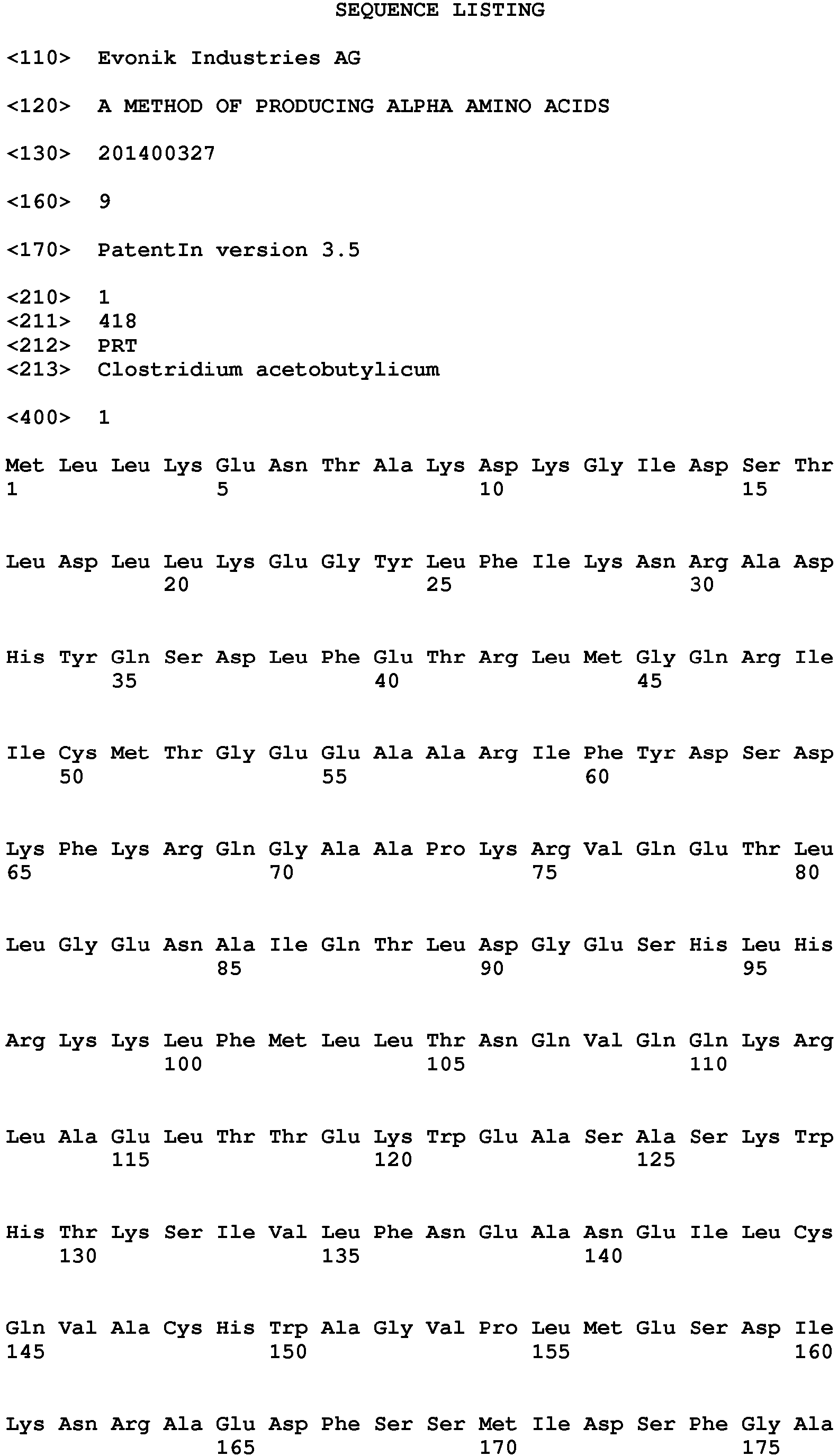


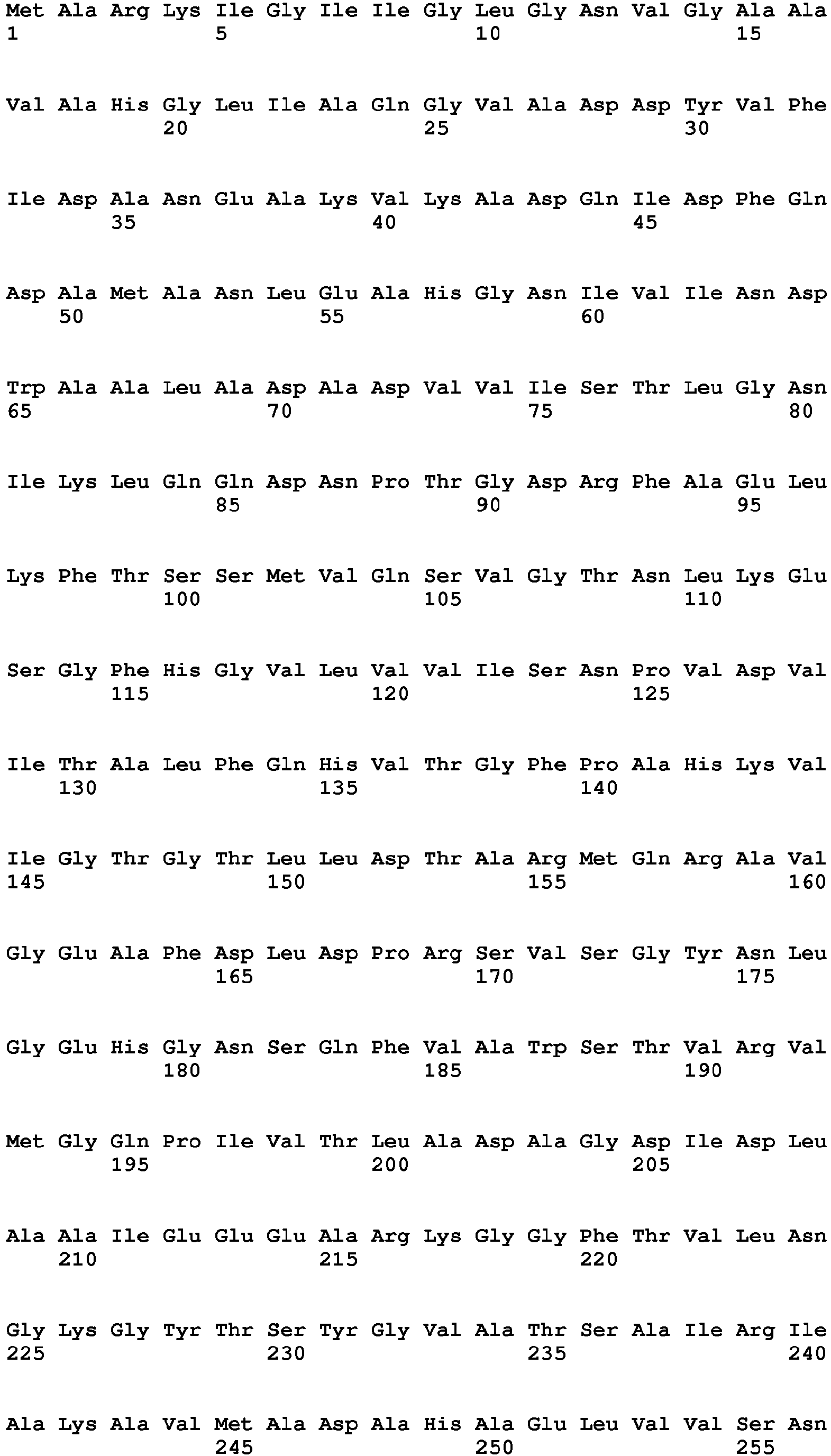


Claims (15)
- A microbial cell capable of producing at least one alpha amino acid from at least one short chain fatty acid, wherein the cell is genetically modified to comprise- at least a first genetic mutation that increases the expression relative to the wild type cell of an enzyme E1 capable of catalysing the hydroxylation of the fatty acid to an alpha-hydroxy fatty acid,- at least a second genetic mutation that increases the expression relative to the wild type cell of an enzyme E2 capable of catalysing the oxidation of the an alpha-hydroxy fatty acid to an alpha ketone, and- at least a third genetic mutation that increases the expression relative to the wild type cell of enzyme E3 capable of catalysing the oxidation of the alpha ketone to an alpha amino acid wherein the short chain fatty acid is a C4- C10 fatty acid.
- The cell according to claim 1, wherein the enzyme E1 is a cytochrome P450 enzyme (EC 1.14.x.x).
- The cell according to claim 2, wherein the cytochrome P450 enzyme is P450Cla (EC 1.11.2.4) or P450BSB (EC 1.11.2.4).
- The cell according to any one of the preceding claims, wherein the enzyme E2 is a dehydrogenase selected from the group consisting of alpha-hydroxy acid oxidase (EC 1.1.1.337), alpha-hydroxy acid dehydrogenase (EC 1.1.1.345) and monooxygenase.
- The cell according to any one of the preceding claims, wherein E2 is selected from the group consisting of 2-hydroxyisocaproate dehydrogenase (EC 1.1.1.-), lactate dehydrogenase (EC. 1.1.1.28), lactate oxidase (EC 1.1.3.2), (S)-2-hydroxy-acid oxidase (EC 1.1.3.15), D- or L-mandelate oxidase (EC 1.1.3.X) and P450 monooxygenase (EC 1.14.x.x).
- The cell according to any of the preceding claims, wherein the enzyme E3 is selected from the group consisting of an amino acid dehydrogenase and alpha transaminase.
- The cell according to any of the preceding claims, wherein the enzyme E2 is 2-hydroxyisocaproate dehydrogenase (EC 1.1.1.-).and/or E3 is leucine dehydrogenase (EC 1.4.1.9).
- The cell according to any one of the preceding claims, wherein- E1 has 60% sequence identity with SEQ ID NO: 1 or 2,- E2 has 60% sequence identity with SEQ ID NO: 3 and/or SEQ ID NO: 5; and/or- E3 has 60% sequence identity with SEQ ID NO: 4.
- The cell according to any one of the preceding claims, wherein the cell is a prokaryotic or a lower eukaryotic cell.
- The cell according to any of the preceding claims, wherein the cell further comprises a reduced fatty acid degradation capacity relative to the wild type cell.
- The cell according to claim 10, wherein the fatty acid degradation capacity is reduced by deletion of a gene encoding an enzyme selected from the group consisting of fatty acid importer, fatty acid-CoA ligase, acyl-CoA dehydrogenase, 2,4-dienoyl-CoA reductase, enoyl-CoA hydratase and 3-ketoacyl-CoA thiolase.
- A method of producing at least one alpha amino acid from at least one short chain fatty acid, the method comprising- contacting a recombinant microbial cell with a medium comprising the short chain fatty acid,
wherein the short chain fatty acid is a C4- C10 fatty acid; and
wherein the microbial cell is genetically modified to comprise- at least a first genetic mutation that increases the expression relative to the wild type cell of an enzyme E1 capable of catalysing the hydroxylation of the fatty acid to an alpha-hydroxy fatty acid,- at least a second genetic mutation that increases the expression relative to the wild type cell of an enzyme E2 capable of catalysing the oxidation of the an alpha-hydroxy fatty acid to an alpha ketone, and- at least a third genetic mutation that increases the expression relative to the wild type cell of enzyme E3 capable of catalysing the oxidation of the an alpha ketone to an alpha amino acid. - The method according to claim 12, wherein- the enzyme E1 is a monooxygenase;- the enzyme E2 is a dehydrogenase; and/or- the enzyme E3 is amino acid dehydrogenase or alpha transaminase.
- The method according to any one of claims 12 to 13, wherein- the enzyme E1 is a cytochrome P450 enzyme;- the enzyme E2 is selected from the group consisting of alpha-hydroxy acid oxidase, alpha-hydroxy acid dehydrogenase and monooxygenase; and/or- the enzyme E3 is leucine dehydrogenase.
- The method according to any one of claims 12 to 14 wherein the alpha amino acid is L-leucine.
Priority Applications (2)
| Application Number | Priority Date | Filing Date | Title |
|---|---|---|---|
| EP15168111.1A EP3095872A1 (en) | 2015-05-19 | 2015-05-19 | A method of producing alpha amino acids |
| PCT/EP2016/059486 WO2016184656A1 (en) | 2015-05-19 | 2016-04-28 | A method of producing alpha amino acids |
Applications Claiming Priority (1)
| Application Number | Priority Date | Filing Date | Title |
|---|---|---|---|
| EP15168111.1A EP3095872A1 (en) | 2015-05-19 | 2015-05-19 | A method of producing alpha amino acids |
Publications (1)
| Publication Number | Publication Date |
|---|---|
| EP3095872A1 true EP3095872A1 (en) | 2016-11-23 |
Family
ID=53180612
Family Applications (1)
| Application Number | Title | Priority Date | Filing Date |
|---|---|---|---|
| EP15168111.1A Withdrawn EP3095872A1 (en) | 2015-05-19 | 2015-05-19 | A method of producing alpha amino acids |
Country Status (2)
| Country | Link |
|---|---|
| EP (1) | EP3095872A1 (en) |
| WO (1) | WO2016184656A1 (en) |
Families Citing this family (4)
| Publication number | Priority date | Publication date | Assignee | Title |
|---|---|---|---|---|
| EP2944697A1 (en) | 2014-05-13 | 2015-11-18 | Evonik Degussa GmbH | Method of producing nylon |
| EP3390622B1 (en) | 2015-12-17 | 2020-05-13 | Evonik Operations GmbH | A genetically modified acetogenic cell |
| JP2019523271A (en) | 2016-07-27 | 2019-08-22 | エボニック デグサ ゲーエムベーハーEvonik Degussa GmbH | N-acetylhomoserine |
| CN108467861B (en) * | 2018-04-27 | 2021-10-22 | 扬州大学 | Sequence, preparation method and application of OleT-BM3R, a biocatalyst for catalytic synthesis of linear alpha-olefins |
Citations (2)
| Publication number | Priority date | Publication date | Assignee | Title |
|---|---|---|---|---|
| EP2639308A1 (en) * | 2012-03-12 | 2013-09-18 | Evonik Industries AG | Enzymatic omega-oxidation and -amination of fatty acids |
| EP2647696A1 (en) * | 2012-04-02 | 2013-10-09 | Evonik Degussa GmbH | Method for aerobic production of alanine or a compound arising using alanine |
-
2015
- 2015-05-19 EP EP15168111.1A patent/EP3095872A1/en not_active Withdrawn
-
2016
- 2016-04-28 WO PCT/EP2016/059486 patent/WO2016184656A1/en not_active Ceased
Patent Citations (2)
| Publication number | Priority date | Publication date | Assignee | Title |
|---|---|---|---|---|
| EP2639308A1 (en) * | 2012-03-12 | 2013-09-18 | Evonik Industries AG | Enzymatic omega-oxidation and -amination of fatty acids |
| EP2647696A1 (en) * | 2012-04-02 | 2013-10-09 | Evonik Degussa GmbH | Method for aerobic production of alanine or a compound arising using alanine |
Non-Patent Citations (27)
| Title |
|---|
| "The DIG System Users Guide for Filter Hybridization", 1993, BOEHRINGER MANNHEIM GMBH |
| "Wiley Series in Solution Chemistry", vol. 2, 1997, JOHN WILEY & SONS |
| A C ROSENZWEIG ET AL., NATURE, vol. 366, 1993, pages 537 - 543 |
| ABRAHAMSON, M.J., ANGEW. CHEM. INT. ED., vol. 51, 2012, pages 3969 - 3972 |
| ADAM, W. ET AL., J. AM. CHEM. SOC., vol. 120, 1998, pages 11044 |
| ADAM, W. ET AL., TETRAHEDRON: ASYMMETRY, vol. 7, 1996, pages 2287 |
| BLANUSA ET AL., ANAL. BIOCHEM, vol. 406, 2011, pages 141 - 146 |
| GETREY, GREEN CHEM., vol. 16, 2014, pages 1104 |
| GIRHARD, M. ET AL., BIOCHEM. BIOPHYS. RES. COMMUN., vol. 362, 2007, pages 114 - 119 |
| GLIEDER; MEINHLD, METHODS MOL. BIOL, vol. 230, 2003, pages 157 - 170 |
| GRANT, C ET AL., ENZYME AND MICROBIAL TECHNOLOGY, 2011, pages 480 - 486 |
| GUTIERREZ, A. ET AL., ARCH. BIOCHEM. BIOPHYS., vol. 514, no. 1-2, 2011, pages 33 - 43 |
| H. SCHUTTE ET AL., APPL. MICROBIOL. TECHNOL., vol. 19, 1984, pages 167 - 176 |
| HANAHAN ET AL., METHODS IN ENZYMOLOGY, vol. 204, 1991, pages 63 - 1 13 |
| HWANG; KIM, ENZYME AND MICROBIAL TECHNOLOGY, vol. 34, 2004, pages 429 - 436 |
| INOUE ET AL., GENE, vol. 96, 1990, pages 23 - 28 |
| KAULMANN ET AL., ENZYME AND MICROBIAL TECHNOLOGY, vol. 41, 2007, pages 628 - 637 |
| KOCH, D. J. ET AL., APPL. AND ENV. MICROBIOLOGY, 2009, pages 337 - 344 |
| LO PICCOLO, L ET AL., APPL. ENVIRONM. MICROBIOL, vol. 77, no. 4, 2011, pages 1204 - 12013 |
| MALCA S.H. ET AL., BIOCHIMICA ET BIOPHYSICA ACTA, vol. 1814, 2011, pages 257 - 264 |
| MATSUNAGA M.; UKENA K; TSUTSUI K., BRAIN RES., vol. 899, 2001, pages 112 - 122 |
| NAZOR ET AL., PROTEIN ENGINEERING, DESIGN & SELECTION, vol. 21, no. 1, 2008, pages 29 - 35 |
| NGUYEN, H. H. T. ET AL., J. BIOL. CHEM., vol. 273, 1998, pages 7957 - 7966 |
| SCHWANEBERG ET AL., J. CHROMATOGR. , A, vol. 848, 1999, pages 149 - 159 |
| W. HUMMEL ET AL., APPL. MICROBIOL. TECHNOL., vol. 21, 1985, pages 7 - 15 |
| WONG ET AL., J. BIOMOL. SCREENING, vol. 10, 2005, pages 246 - 252 |
| YUN ET AL., APPLIED AND ENVIRONMENTAL MICROBIOLOGY, 2005, pages 4220 - 4224 |
Also Published As
| Publication number | Publication date |
|---|---|
| WO2016184656A1 (en) | 2016-11-24 |
| WO2016184656A8 (en) | 2017-06-15 |
Similar Documents
| Publication | Publication Date | Title |
|---|---|---|
| WO2010022763A1 (en) | Method for the preparation of 2-hydroxy-isobutyrate | |
| US7202069B2 (en) | (R)-2-octanol dehydrogenases, methods for producing the enzymes, DNA encoding the enzymes, and methods for producing alcohols using the enzymes | |
| WO2015028423A1 (en) | A method for producing acyl amino acids | |
| US9885060B2 (en) | Alkene production | |
| US8168412B2 (en) | Method for producing optically-active amine compound, recombinant vector, and transformant containing the vector | |
| CA2697038C (en) | Process for the enantioselective enzymatic reduction of intermediates | |
| CA2888073A1 (en) | Process for producing alpha.omega-diols from alkanes or 1-alkanols employing a cyp153 alkane hydroxylase | |
| WO2015176922A1 (en) | Biosynthetic production of acyl amino acids | |
| EP3095868A1 (en) | Methionine production | |
| EP3095872A1 (en) | A method of producing alpha amino acids | |
| US20090029430A1 (en) | Novel Carbonyl Reductase, Gene Therefor and Use Thereof | |
| AU2003221082B2 (en) | Novel carbonyl reductase, gene encoding it and process for producing optically active alcohols using the same | |
| WO2006013801A1 (en) | Novel carbonyl reductase, gene thereof and method of using the same | |
| EP2623595B1 (en) | Novel transaminase showing high activity for glutamic acid, gene encoding same, and method for utilization thereof | |
| Verseck et al. | Screening, overexpression and characterization of an N-acylamino acid racemase from Amycolatopsis orientalis subsp. lurida | |
| EP2623593B1 (en) | Novel aminotransferase and gene encoding same, and use of the aminotransferase and the gene | |
| US7250278B2 (en) | α-keto acid reductase, method for producing the same, and method for producing optically active α-hydroxy acids using the same | |
| WO2016165968A1 (en) | Acyl amino acid production | |
| EP1236796B1 (en) | Novel enone reductases isolated from Kluyveromyces lactis, methods for producing same, and methods for selectively reducing a carbon-carbon double bond of an Alpha, Beta-unsaturated ketone using the reductases | |
| US7901923B2 (en) | Microorganism of Enterobacteriacae genus harboring genes associated with L-carnitine biosynthesis and method of producing L-carnitine using the microorganism | |
| WO2025142753A1 (en) | Crotonaldehyde-crotyl alcohol dehydrogenase mutant | |
| EP2930244A1 (en) | Microorganisms and methods for producing acrylate and other products from homoserine | |
| Kockelkorn et al. | Malonyl-Coenzyme A Reductase in the |
Legal Events
| Date | Code | Title | Description |
|---|---|---|---|
| PUAI | Public reference made under article 153(3) epc to a published international application that has entered the european phase |
Free format text: ORIGINAL CODE: 0009012 |
|
| STAA | Information on the status of an ep patent application or granted ep patent |
Free format text: STATUS: THE APPLICATION HAS BEEN WITHDRAWN |
|
| AK | Designated contracting states |
Kind code of ref document: A1 Designated state(s): AL AT BE BG CH CY CZ DE DK EE ES FI FR GB GR HR HU IE IS IT LI LT LU LV MC MK MT NL NO PL PT RO RS SE SI SK SM TR |
|
| AX | Request for extension of the european patent |
Extension state: BA ME |
|
| 18W | Application withdrawn |
Effective date: 20161026 |