EP3095328B1 - Process for the production of a miticide composition - Google Patents
Process for the production of a miticide composition Download PDFInfo
- Publication number
- EP3095328B1 EP3095328B1 EP14878494.5A EP14878494A EP3095328B1 EP 3095328 B1 EP3095328 B1 EP 3095328B1 EP 14878494 A EP14878494 A EP 14878494A EP 3095328 B1 EP3095328 B1 EP 3095328B1
- Authority
- EP
- European Patent Office
- Prior art keywords
- oxalic acid
- miticide
- acid
- heating
- treatment
- Prior art date
- Legal status (The legal status is an assumption and is not a legal conclusion. Google has not performed a legal analysis and makes no representation as to the accuracy of the status listed.)
- Active
Links
Images
Classifications
-
- A—HUMAN NECESSITIES
- A01—AGRICULTURE; FORESTRY; ANIMAL HUSBANDRY; HUNTING; TRAPPING; FISHING
- A01N—PRESERVATION OF BODIES OF HUMANS OR ANIMALS OR PLANTS OR PARTS THEREOF; BIOCIDES, e.g. AS DISINFECTANTS, AS PESTICIDES OR AS HERBICIDES; PEST REPELLANTS OR ATTRACTANTS; PLANT GROWTH REGULATORS
- A01N37/00—Biocides, pest repellants or attractants, or plant growth regulators containing organic compounds containing a carbon atom having three bonds to hetero atoms with at the most two bonds to halogen, e.g. carboxylic acids
- A01N37/02—Saturated carboxylic acids or thio analogues thereof; Derivatives thereof
- A01N37/04—Saturated carboxylic acids or thio analogues thereof; Derivatives thereof polybasic
-
- A—HUMAN NECESSITIES
- A01—AGRICULTURE; FORESTRY; ANIMAL HUSBANDRY; HUNTING; TRAPPING; FISHING
- A01K—ANIMAL HUSBANDRY; AVICULTURE; APICULTURE; PISCICULTURE; FISHING; REARING OR BREEDING ANIMALS, NOT OTHERWISE PROVIDED FOR; NEW BREEDS OF ANIMALS
- A01K47/00—Beehives
- A01K47/06—Other details of beehives, e.g. ventilating devices, entrances to hives, guards, partitions or bee escapes
-
- A—HUMAN NECESSITIES
- A01—AGRICULTURE; FORESTRY; ANIMAL HUSBANDRY; HUNTING; TRAPPING; FISHING
- A01K—ANIMAL HUSBANDRY; AVICULTURE; APICULTURE; PISCICULTURE; FISHING; REARING OR BREEDING ANIMALS, NOT OTHERWISE PROVIDED FOR; NEW BREEDS OF ANIMALS
- A01K51/00—Appliances for treating beehives or parts thereof, e.g. for cleaning or disinfecting
-
- A—HUMAN NECESSITIES
- A01—AGRICULTURE; FORESTRY; ANIMAL HUSBANDRY; HUNTING; TRAPPING; FISHING
- A01N—PRESERVATION OF BODIES OF HUMANS OR ANIMALS OR PLANTS OR PARTS THEREOF; BIOCIDES, e.g. AS DISINFECTANTS, AS PESTICIDES OR AS HERBICIDES; PEST REPELLANTS OR ATTRACTANTS; PLANT GROWTH REGULATORS
- A01N25/00—Biocides, pest repellants or attractants, or plant growth regulators, characterised by their forms, or by their non-active ingredients or by their methods of application, e.g. seed treatment or sequential application; Substances for reducing the noxious effect of the active ingredients to organisms other than pests
- A01N25/08—Biocides, pest repellants or attractants, or plant growth regulators, characterised by their forms, or by their non-active ingredients or by their methods of application, e.g. seed treatment or sequential application; Substances for reducing the noxious effect of the active ingredients to organisms other than pests containing solids as carriers or diluents
-
- A—HUMAN NECESSITIES
- A01—AGRICULTURE; FORESTRY; ANIMAL HUSBANDRY; HUNTING; TRAPPING; FISHING
- A01N—PRESERVATION OF BODIES OF HUMANS OR ANIMALS OR PLANTS OR PARTS THEREOF; BIOCIDES, e.g. AS DISINFECTANTS, AS PESTICIDES OR AS HERBICIDES; PEST REPELLANTS OR ATTRACTANTS; PLANT GROWTH REGULATORS
- A01N25/00—Biocides, pest repellants or attractants, or plant growth regulators, characterised by their forms, or by their non-active ingredients or by their methods of application, e.g. seed treatment or sequential application; Substances for reducing the noxious effect of the active ingredients to organisms other than pests
- A01N25/08—Biocides, pest repellants or attractants, or plant growth regulators, characterised by their forms, or by their non-active ingredients or by their methods of application, e.g. seed treatment or sequential application; Substances for reducing the noxious effect of the active ingredients to organisms other than pests containing solids as carriers or diluents
- A01N25/10—Macromolecular compounds
-
- A—HUMAN NECESSITIES
- A01—AGRICULTURE; FORESTRY; ANIMAL HUSBANDRY; HUNTING; TRAPPING; FISHING
- A01N—PRESERVATION OF BODIES OF HUMANS OR ANIMALS OR PLANTS OR PARTS THEREOF; BIOCIDES, e.g. AS DISINFECTANTS, AS PESTICIDES OR AS HERBICIDES; PEST REPELLANTS OR ATTRACTANTS; PLANT GROWTH REGULATORS
- A01N25/00—Biocides, pest repellants or attractants, or plant growth regulators, characterised by their forms, or by their non-active ingredients or by their methods of application, e.g. seed treatment or sequential application; Substances for reducing the noxious effect of the active ingredients to organisms other than pests
- A01N25/22—Biocides, pest repellants or attractants, or plant growth regulators, characterised by their forms, or by their non-active ingredients or by their methods of application, e.g. seed treatment or sequential application; Substances for reducing the noxious effect of the active ingredients to organisms other than pests containing ingredients stabilising the active ingredients
-
- A—HUMAN NECESSITIES
- A01—AGRICULTURE; FORESTRY; ANIMAL HUSBANDRY; HUNTING; TRAPPING; FISHING
- A01N—PRESERVATION OF BODIES OF HUMANS OR ANIMALS OR PLANTS OR PARTS THEREOF; BIOCIDES, e.g. AS DISINFECTANTS, AS PESTICIDES OR AS HERBICIDES; PEST REPELLANTS OR ATTRACTANTS; PLANT GROWTH REGULATORS
- A01N25/00—Biocides, pest repellants or attractants, or plant growth regulators, characterised by their forms, or by their non-active ingredients or by their methods of application, e.g. seed treatment or sequential application; Substances for reducing the noxious effect of the active ingredients to organisms other than pests
- A01N25/24—Biocides, pest repellants or attractants, or plant growth regulators, characterised by their forms, or by their non-active ingredients or by their methods of application, e.g. seed treatment or sequential application; Substances for reducing the noxious effect of the active ingredients to organisms other than pests containing ingredients to enhance the sticking of the active ingredients
-
- A—HUMAN NECESSITIES
- A01—AGRICULTURE; FORESTRY; ANIMAL HUSBANDRY; HUNTING; TRAPPING; FISHING
- A01N—PRESERVATION OF BODIES OF HUMANS OR ANIMALS OR PLANTS OR PARTS THEREOF; BIOCIDES, e.g. AS DISINFECTANTS, AS PESTICIDES OR AS HERBICIDES; PEST REPELLANTS OR ATTRACTANTS; PLANT GROWTH REGULATORS
- A01N37/00—Biocides, pest repellants or attractants, or plant growth regulators containing organic compounds containing a carbon atom having three bonds to hetero atoms with at the most two bonds to halogen, e.g. carboxylic acids
- A01N37/02—Saturated carboxylic acids or thio analogues thereof; Derivatives thereof
-
- A—HUMAN NECESSITIES
- A01—AGRICULTURE; FORESTRY; ANIMAL HUSBANDRY; HUNTING; TRAPPING; FISHING
- A01N—PRESERVATION OF BODIES OF HUMANS OR ANIMALS OR PLANTS OR PARTS THEREOF; BIOCIDES, e.g. AS DISINFECTANTS, AS PESTICIDES OR AS HERBICIDES; PEST REPELLANTS OR ATTRACTANTS; PLANT GROWTH REGULATORS
- A01N37/00—Biocides, pest repellants or attractants, or plant growth regulators containing organic compounds containing a carbon atom having three bonds to hetero atoms with at the most two bonds to halogen, e.g. carboxylic acids
- A01N37/36—Biocides, pest repellants or attractants, or plant growth regulators containing organic compounds containing a carbon atom having three bonds to hetero atoms with at the most two bonds to halogen, e.g. carboxylic acids containing at least one carboxylic group or a thio analogue, or a derivative thereof, and a singly bound oxygen or sulfur atom attached to the same carbon skeleton, this oxygen or sulfur atom not being a member of a carboxylic group or of a thio analogue, or of a derivative thereof, e.g. hydroxy-carboxylic acids
Definitions
- the present invention belongs to the field of the miticides used for pest control and treatment in bee hives.
- the invention proposes a manufacturing process of a miticide composition.
- Varroasis in honey bees constitutes an external parasitosis caused by Varroa destructor mite, as reported by researchers Laura G. Espinosa Monta ⁇ o and Ernesto Guzman Novoa on the efficacy of two natural miticides, formic acid and thymol, to control Varroa destructor mites in honey bees ( Apis mellifera L. ) in Villa Guerrero, Mexico State, Mexico ( Veterinaria Mexico, vol. 38, number 1, January-March, 2007, pp. 9-19 ).
- Varroasis is the most serious problem faced by beekeepers all over the world. Varroa affects adult bees as well as their brood. Productivity is affected when infestation exceeds 10% of adult bees in a colony. When infestation reaches 30% to 40%, consequences are devastating. Consequences are low weight and shorter life span, leading to a decrease in honey production of up to 60%.
- oxalic acid Slight but significant differences in toxicity of oxalic acid were found among mites from different brood stages; the median lethal density for mites from pupae with white eyes was 1.49. Citric acid was less toxic than oxalic acid. The addition of sucrose to oxalic acid made the material more hygroscopic and the mortality of the mites increased at 75% R.H. Glycerol showed a similar synergic activity irrespective of relative humidity.
- OA has a low acute toxicity to honey bees and a high acute toxicity to mites.
- the apparatus comprises a box-like container accommodating in its interior at least one reservoir for liquid-tight, accessible from outside through a nozzle, an atomizing device of a liquid solution or suspension contained in the reservoir, means for the delivery of the liquid atomized solution or suspension into micrometric drops outside the apparatus, and a control unit programmed for timing the delivery of the solution or suspension to the outside, for the determination of the quantity of solution or suspension delivered and for emitting alarm signals in case of malfunction, the apparatus being powered DC with the energy supplied by a solar panel located outside of the container.
- the liquid solution or suspension comprises tonic and nutrient ingredients, mainly consisting of milk powder, sugars and lower organic acids, antioxidant and antiseptic ingredients contained in plant extracts and healing ingredients to bees, such as essential oils of thyme and oxalic acid.
- tonic and nutrient ingredients mainly consisting of milk powder, sugars and lower organic acids, antioxidant and antiseptic ingredients contained in plant extracts and healing ingredients to bees, such as essential oils of thyme and oxalic acid.
- US2012/171268 A1 discloses a dispenser, comprising: a polyester membrane; and a gel disposed within the polyester membrane, the gel comprising a C1 to C10 carboxylic acid and a thickener, wherein the polyester membrane comprises a semiaromatic copolyester.
- the C1 to C10 carboxylic acid may be formic acid, acetic acid, oxalic acid, malic acid, tartaric acid, glycolic acid, lactic acid, citric acid, mandelic acid, or mixtures thereof.
- MAHMOOD, R. ET AL. Control of Varroa destructor using oxalic acid, formic acid and bayvarol strip in Apis mellifera (Hymenoptera: Apidae) colonies
- PAKISTAN JOURNAL OF ZOOLOGY vol. 44, no. 6, 2012, pages 1473-1477 , discloses the effectiveness of oxalic acid (3.2%), formic acid (3.2%) and flumethrin strip (Bayvarol) for the control of Varroa destructor mite in broodless honeybee colonies. The highest mean efficacy and honey yield was found in oxalic acid treatment.
- EBERT, T.A. ET AL. "Oral toxicity of essential oils and organic acids fed to honey bees (Apis mellifera)", JOURNAL OF APICULTURAL RESEARCH AND BEE WORLD, 2007, vol. 46, no. 4, pages 220-224 , discloses a test carried out to evaluate adult bee toxicity of ten products: cineole, clove oil, formic acid, marjoram oil, menthol, oregano oil, oxalic acid, sage oil, thymol and wintergreen. The results obtained indicated that the tested products could all be used safely for treateing bees orally if dose is carefully managed in the hive.
- MATO I. ET AL.: "Significance of nonaromatic organic acids in honey”
- JOURNAL OF FOOD PROTECTION vol. 66, no. 12, 2003, pages 2371-2376 , discloses that several nonaromatic acids are present in honey, and that formic acid, lactic acid and oxalic acid are effective against Varroa.
- CHRISTOPHER BUTCH ET AL. "Production of tartrates by cyanide-mediated dimerization of glyoxalate: a potential abiotic pathway to the citric acid cycle", JOURNAL OF THE AMERICAN CHEMICAL SOCIETY, vol. 135, no. 36, 30 August 2013 (2013-08-30), pages 13440-13445, US ISSN: 0002-7863, DOI: 10.1021/ja405103r , discloses a pathway for the abiotic formation of meso- and DL-tartrates in 80% yield via the cyanide-catalyzed dimerization of glyoxylate under alkaline conditions.
- the prolonged action miticide composition obtained by the process of the invention allows the effective control of Varroasis in Apis mellifera hives in a simple manner, solving the problem of using chemical compounds and acid or organic substances in aqueous solutions which have side effects on bee populations.
- composition obtained by the process of the invention is preferably free from added polymers and water. Also, it is free from crystals for a period of at least 2 years kept at temperatures of between 0 °C and 40 °C.. Also, said composition comprises a density between 1 and 1.5 g/cm3.
- Object of the present invention is the manufacturing process of a miticide composition according to claim 1 and, comprising the following steps:
- step a mixing glycerol and oxalic acid at a rate between 3:1 and 1:3 and heating the mixture according to said step b. up to a temperature ranging from 90oC to 150oC during a period of time between 1 and 5000 seconds.
- glycerin comprises a concentration of between 5 and 95% (V/V) preferably between 50 and 75 % and the oxalic acid comprises a concentration of between 5 and 95 % (V/V), preferably of between 25 and 50% (V/V).
- V/V concentration of between 5 and 95%
- the oxalic acid comprises a concentration of between 5 and 95 % (V/V), preferably of between 25 and 50% (V/V).
- it comprises heating up to a temperature ranging from 60 C° to 150°C, preferably from 90 C° to 120°C, over a time of between 1 and 5000 seconds, preferably of between 1 and 600 seconds. More preferably said step b. comprises heating up to a temperature ranging from 100oC to 120oC during a period of time between 1 and 120 seconds.
- said manufacturing process of the miticide composition of the present invention in said step b. comprises a continuous process and heating by means of a continuous flow heat exchanger up to a temperature ranging from 100oC to 130oC during a period of time between 1 and 60 seconds.
- the miticide composition of prolonged action obtained by the process of the present invention results in a highly efficient miticide for the control of Varroa destructor mite, a pest which is typical of bees ( Apis mellifera ).
- the strips of a suitable porous material, such as cellulose, impregnated in the composition obtained by the process of the invention result in a veterinary product which is introduced in hives.
- the miticide composition obtained by the process of the invention retains its miticide properties for at least 40 days, more than two reproductive periods of varroa destructor.
- the organic composition obtained by the process of the invention shows a number of properties, such as:
- the composition obtained by the process of the invention is a good agent for mite control, in autumn as well as in spring, when oviposition is high and a minimum of 20 days is needed to interrupt the cycle.
- the composition obtained by the process of the invention does not require bees to consume it, which constitutes one of the advantages of the treatment, thus avoiding bee intoxication.
- it allows a non-contaminant treatment; therefore it may be used all the year round, even during harvest without leaving contaminant residues in bee hive products.
- it may be used for decades since the development of resistance is practically improbable due to its organic nature. For all the stated above, it is an excellent solution to the problem of mite control among bee populations, and extremely useful for beekeepers of the region, Argentina and the world.
- Oxalic acid is an organic chemical compound found in nature in fruits, some plants and even -in small quantities, in honey. This means that using it against Varroa and because it is degradable, it does not contaminate honey. This also happens with tartaric acid, which is widely used in food products.
- Oxalic acid has been widely used in Europe, mainly in countries such as Switzerland, France and Germany, showing an excellent efficacy against Varroa in bee hives without brood. Up to the moment, two forms of application are used: spraying or syrup or mixture of water and sugar. In both cases, the composition is applied 3 times, every 7 days.
- This phenomenon comprises analyzing the life cycle of Varroa, which has a total duration of 16 days out of which 12 is the period when it reproduces within operculated brood cells and the remaining days in phoretic state, i.e., on adult bees.
- composition obtained by the process according to the present invention can be impregnated in a certain quantity of cellulose, which may be hydromethyil cellulose, hydroxyethyl cellulose, hydroxypropylcellulose, paper, cardboard, which shall be hereby called cellulose strips, and applied on colonies of a large surface with brood, in a dose ranging from 1 to 10 strips per bee hive control Varroa destructor in said bee hives, with an efficacy higher than 90%, even higher than 97%.
- cellulose which may be hydromethyil cellulose, hydroxyethyl cellulose, hydroxypropylcellulose, paper, cardboard, which shall be hereby called cellulose strips
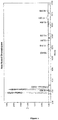
- composition was obtained, the chromatogram of which can be seen in Figure 1 , where the concentration of oxalic acid is 146 mg/g; of tartaric acid is 714 mg/g and of formic acid is 14 mg/g.
- the solution leaving said exchanger enters a cooler which takes said solution to a temperature lower than 40 °C, thus obtaining the composition which was fractioned into 1600 grams in pouches of 300 microns.
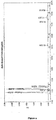
- composition was obtained, the chromatogram of which can be seen in Figure 2 , where the concentration of oxalic acid is 90 mg/g; of tartaric acid is 686 mg/g and of formic acid is 5 mg/g.
- analysis was performed applying the official method AOAC 986.13 (2000), accordint to internal standards and with a DAD (215 nm).
- the process starts at 2 vertical hoppers where the raw material: glycerin and oxalic acid, are stored. Due to the high viscosity of the raw material at low temperature and so as to ensure a minimum degree of fluidity towards the production line, a suitable heating degree is provided, by means of a lower power electric-tracing.
- Components preferably in a 1:1 ratio are loaded into the mixer from the bottom of the hopper by means of a couple of pumps, in proportions previously stated according to different doses, applications and/or field treatment. Viscosity is kept at acceptable values, as the step prior to the start of the pumping process, by continuous removal of the preparation and always under controlled temperature by heating (circulating hot water through the jacket of the mixer).
- An impeller pump is fed from a mixing unit, thus establishing a continuous flow of the preparation being processed through a heat exchanger.
- the mixture reaches a temperature of the order of 120 °C.
- the heating fluid in the jacket is thermal oil, which allows operation at heating temperatures of about 170 °C, keeping the circuit pressure at atmospheric value. Residence time has been adjusted by 30 seconds.
- the product undergoes accelerated cooling by means of an exchanger which is conceived in a similar manner to the previos one, which uses well water or a cooling tower to lower the product temperature to around 40 °C, to be poured in an intermediate storage tank operating as a buffer between heating-cooling stages and the final dosing-filling stage.
- the miticide composition is kept in the buffer tank at an approximate temperature of 40 °C, by continuous heating with hot water circulating through the tank jacket. Simultaneously, a slight removal by means of a mechanical stirrer allows ensuring the right degree of homogeneity.
- the tablet, wafer or board filling device is fed from the buffer tank by controlled pumping.
- Such tablets, wafers or boards are meant for the final distribution of the manufactured miticide in the bee hives.
- the miticide composition of prolonged action against Varroa destructor obtained in Example 1 already fractionated into 1600 grams placed into 300 micron pouches, impreganates 32 cellulose strips, 30 mm wide and 3 mm thick which are immersed in said pouches. Said pouches containing cellulose strips and said composition were allowed to rest for 24 hours without closing them, to be subsequently sealed. Thus, packages of 32 miticide strips were obtained.
- Efficacy and residue levels were determined in different hive matrices (honey, wax and bees) generated by the application of the miticide composition obtained by the process of the invention .
- hive matrices honey, wax and bees
- a field study was performed during Autumn 2013 (March-April) using 24 bee hives divided in two groups, one of 7 units (bee hives without treatment, control group) and the other of 17 (bee hives which received the composition obtained by the process of the invention in cellulose strips). Prior to the tests, colonies were stabilized in populations of bees and reserves. Samples were taken from the three matrices in 14 bee hives (7 from each group, randomly) at two different moments: before placing the treatment and just after memoving it.
- mite mortality caused by the treatment at days 7, 14, 28, 35 and 42 was monitored.
- a shock treatment with Amivar500® was performed on removing the miticide strips from the bee hives.
- Dosing Amivar500® was conducted according to specifications given on the label of the commercial product.
- the population of adult bees and brood was quantified before and after the miticide treatment so as to evaluate the impact of the drug on the population status of the colonies.
- Table 3 shows the number of fallen mites for each monitoring time (days 7, 14, 28, 35 and 42) in bee hives which had received miticide treatment and in bee hives without treatment.
- Table 3 shows the number of fallen mites for each monitoring time (days 7, 14, 28, 35 and 42) in bee hives which had received miticide treatment and in bee hives without treatment.
- Table 4 provides information on the boxes covered with adult bees and brood before and after the end of the miticide treatment. Observing the corresponding table it can be noticed that the miticide treatment does not show negative effects on bee colonies. Table 4 Boxes covered with adult bees and brood before and after applying the formulation with oxalic acid. Before treatment After treatment Treated 8.7 (1.2) 8 (0.5) Number of boxes covered with adult bees Untreated 9 (0.44) 8.6 (0.2) Treated 4.6 (0.8) 3.2 (0.44) Number of boxes with brood untreated 4.7 (0.3) 3.1 (0.33)
Landscapes
- Life Sciences & Earth Sciences (AREA)
- Environmental Sciences (AREA)
- General Health & Medical Sciences (AREA)
- Health & Medical Sciences (AREA)
- Plant Pathology (AREA)
- Pest Control & Pesticides (AREA)
- Agronomy & Crop Science (AREA)
- Engineering & Computer Science (AREA)
- Dentistry (AREA)
- Wood Science & Technology (AREA)
- Zoology (AREA)
- Toxicology (AREA)
- Biodiversity & Conservation Biology (AREA)
- Animal Husbandry (AREA)
- Agricultural Chemicals And Associated Chemicals (AREA)
Description
- The present invention belongs to the field of the miticides used for pest control and treatment in bee hives.
- The invention proposes a manufacturing process of a miticide composition.
- Varroasis in honey bees, Apis mellifera L., constitutes an external parasitosis caused by Varroa destructor mite, as reported by researchers Laura G. Espinosa Montaño and Ernesto Guzman Novoa on the efficacy of two natural miticides, formic acid and thymol, to control Varroa destructor mites in honey bees (Apis mellifera L.) in Villa Guerrero, Mexico State, Mexico (Veterinaria Mexico, vol. 38, number 1, January-March, 2007, pp. 9-19). Varroasis is the most serious problem faced by beekeepers all over the world. Varroa affects adult bees as well as their brood. Productivity is affected when infestation exceeds 10% of adult bees in a colony. When infestation reaches 30% to 40%, consequences are devastating. Consequences are low weight and shorter life span, leading to a decrease in honey production of up to 60%.
- In order to control said mite numerous efforts have been made. Some of them focused on the use of synthetic miticides but it has been observed that mites develop resistance against them; they are toxic to bees and people and leave chemical residues on honey and wax.
- Obtaining bees genetically resistant to this mite is foreseen, but such technology is still at the stage of a project.
- The use of certain natural miticides such as formic acid and thymol essential oil, is known for showing low toxicity and low environmental impact, for not leaving residues in honey or wax, or because their residues break down/degrade or volatilize in a short time.
- Using chemicals indiscriminately poses two potential risks: the development of mite resistance to the active principle used and the detection of miticide residues in bee hive products. The reproductive features and the high reproductive rate of this mite are factors that make setting control strategies increasingly complex. Since their appearance and for a long time Coumaphos has been one of the most efficient molecules to control varroasis. Unfortunately, badly formulated treatments due to the flaws in the system of pharmaceutical surveillance at the manufacturing laboratories, the indiscriminate and/or non professional use of this active principle have caused the mite resistance development over a vast area of the national territory.
- The same situation occurs regarding amitraz, another active principle used, since the Laboratorio de Artrópodos (Atrópodos Laboratory) at the Universidad Nacional de Mar del Plata (National University of Mar del Plata) has determined the first hints of resistance sites on different locations of the country. Flumethrin, a pyrethroid, is the only synthetic active principle which may remain effective for some more seasons. According to what was shown by its pyrethroid predecesor (fluvalinate), the appearance of resistance is likely to occur in a short term. On the other hand, the existing organic treatments on the market have low efficacy in bee hives with brood cycles and numerous constraints according to the geographical region. Therefore, Argentinian beekeepers producers are seriously affected since without an efficient treatment of this parasitosis, they may hardly keep their bee hives productive and even alive over large regions around the country.
- The most important countries with beekeeping production are seriously concerned since no multinational company has been able to provide them with a final solution to this parasitosis.
- The increased tolerance to the main pyrethroid and organophosphorus miticides used, as well as the appearance of residues of these molecules or their metabolites in the various bee hive products has determined the need for new miticides which may be used within an integral program aimed at the control of this parasitic disease.
- Several attempts have been made to solve these problems, such as the one described in patent application n°
US2012171268 , related to a dispenser filled with a gel comprising a C1 to C10 carboxylic acid and a gelling agent. Said gel is encased by a polyester membrane. This application describes the preparation of an acid-based gel (preferably formic acid) which is introduced in a biodegradable polyester pouch for further gellification and may use glycerol as antifreezing agent. Besides, sugar dissolved in water is added in the preparation of the gel so as to promote the corrosion of the container and allow the release of formic acid. Said dispenser permeates the formic acid vapor, affecting the mite but also killing bees. - The use of oxalic acid in an aqueous medium is known to be laborious and inefficient, in addition to its low efficiency in the presence of brood and the impossibility to be used in cold periods (Eguaras - Ruffinengo Estrategias Para el control de Varroa/Strategies to control Varroa- Pp. 70 to 77) http://www.laboratoriobaldan.com/esp/ensayos/eficacia ab var bio.pdf
- In the same sense, it has been known for some time that essential oils, especially thymol, have efficient effects against Varroasis. Similarly, certain organic acids such as lactic and formic acid can be mentioned, but it is also known that applying them is difficult, there may be risks if misused and they are expensive and demand additional work for the beekeeper.
- Scientific document 'Activity of oxalic and citric acids on the mite Varroa destructor in laboratory assays' of Norberto Milani - 1 January 2001 (2001-01-01), URL: http://www.apidologie.org/articles/apido/pdf/2001/02/milani.pdf - studied the toxicity of oxalic and citric acid to Varroa destructor Anderson and Trueman with a laboratory assay. A contact test was used for the bioassay. Capsules were sprayed with solutions of the acids in a Potter tower and allowed to dry. Slight but significant differences in toxicity of oxalic acid were found among mites from different brood stages; the median lethal density for mites from pupae with white eyes was 1.49. Citric acid was less toxic than oxalic acid. The addition of sucrose to oxalic acid made the material more hygroscopic and the mortality of the mites increased at 75% R.H. Glycerol showed a similar synergic activity irrespective of relative humidity.
- In the scientific document 'Acute contact toxicity of oxalic acid to Varroa destructor (Acari: Varroidae) and their Apis mellifera (Hymenoptera: Apidae) hosts in laboratory bioassays' of Lincoln Aliano - 1 January 2006 (2006-01-01) - URL: http://digitalcommons.unl.edu/cgi/viewcontent.cgi?article=1049&context=entomologyfacpub laboratory bioassays were performed to characterize the acute contact toxicity of oxalic acid (OA) to Varroa destructor (Anderson and Trueman) and their honey bee hosts (Apis mellifera L.). Specifically, glass-vial residual bioassays were conducted to determine the lethal concentration of OA for V. destructor, and topical applications of OA in acetone were conducted to determine the lethal dose for honey bees. The results indicated that OA has a low acute toxicity to honey bees and a high acute toxicity to mites.
- International patent application
WO 2013/030854 A1 discloses a method for preventing and treating Colony Collapse Disorder, consisting in the use of an automated device that delivers a diet specifically calibrated for consumption by farm colonies of bees to be treated. The apparatus comprises a box-like container accommodating in its interior at least one reservoir for liquid-tight, accessible from outside through a nozzle, an atomizing device of a liquid solution or suspension contained in the reservoir, means for the delivery of the liquid atomized solution or suspension into micrometric drops outside the apparatus, and a control unit programmed for timing the delivery of the solution or suspension to the outside, for the determination of the quantity of solution or suspension delivered and for emitting alarm signals in case of malfunction, the apparatus being powered DC with the energy supplied by a solar panel located outside of the container. The liquid solution or suspension comprises tonic and nutrient ingredients, mainly consisting of milk powder, sugars and lower organic acids, antioxidant and antiseptic ingredients contained in plant extracts and healing ingredients to bees, such as essential oils of thyme and oxalic acid. - International patent application
WO 2010/064013 A2 concerns a composition for the treatment of varroa mite infestations in honeybee colonies, comprising a base layer and an active layer, wherein the active layer comprises an effective amount of an acaricidal compound. -
US2012/171268 A1 discloses a dispenser, comprising: a polyester membrane; and a gel disposed within the polyester membrane, the gel comprising a C1 to C10 carboxylic acid and a thickener, wherein the polyester membrane comprises a semiaromatic copolyester. The C1 to C10 carboxylic acid may be formic acid, acetic acid, oxalic acid, malic acid, tartaric acid, glycolic acid, lactic acid, citric acid, mandelic acid, or mixtures thereof. - GIOVENAZZO, PO. ET AL.: "Evaluation of spring organic treatments against Varroa destructor (Acari: Varroidea) in honey bee Apis mellifera (Hymenoptera: Apidae) colonies in eastern Canada", EXPERIMENTAL AND APPLIED ACAROLOGY, 2011, vol. 55, 26 March 2011 (2011-03-26), pages 65-76, discloses the efficacy of two organic acid treatments, i.e., formic acid and oxalic acid, for the spring control of Varroa destructor in honey bee colonies. The treatments with formic acid and oxalic acid that were tested slowed down varroa population built up during summer.
- GREGORC, A. ET AL.: "The control of Varroa destructor using oxalic acid", THE VETERINARY JOURNAL, vol. 163, 2002, pages 306-310, discloses the acaricidal effect of a solution of 2,9% oxalic acid and 31,95% sucrose.
- MAHMOOD, R. ET AL.: "Control of Varroa destructor using oxalic acid, formic acid and bayvarol strip in Apis mellifera (Hymenoptera: Apidae) colonies", PAKISTAN JOURNAL OF ZOOLOGY, vol. 44, no. 6, 2012, pages 1473-1477, discloses the effectiveness of oxalic acid (3.2%), formic acid (3.2%) and flumethrin strip (Bayvarol) for the control of Varroa destructor mite in broodless honeybee colonies. The highest mean efficacy and honey yield was found in oxalic acid treatment.
- EBERT, T.A. ET AL.: "Oral toxicity of essential oils and organic acids fed to honey bees (Apis mellifera)", JOURNAL OF APICULTURAL RESEARCH AND BEE WORLD, 2007, vol. 46, no. 4, pages 220-224, discloses a test carried out to evaluate adult bee toxicity of ten products: cineole, clove oil, formic acid, marjoram oil, menthol, oregano oil, oxalic acid, sage oil, thymol and wintergreen. The results obtained indicated that the tested products could all be used safely for treateing bees orally if dose is carefully managed in the hive.
- MATO, I. ET AL.: "Significance of nonaromatic organic acids in honey", JOURNAL OF FOOD PROTECTION, vol. 66, no. 12, 2003, pages 2371-2376, discloses that several nonaromatic acids are present in honey, and that formic acid, lactic acid and oxalic acid are effective against Varroa.
- CHRISTOPHER BUTCH ET AL.: "Production of tartrates by cyanide-mediated dimerization of glyoxalate: a potential abiotic pathway to the citric acid cycle", JOURNAL OF THE AMERICAN CHEMICAL SOCIETY, vol. 135, no. 36, 30 August 2013 (2013-08-30), pages 13440-13445, US ISSN: 0002-7863, DOI: 10.1021/ja405103r, discloses a pathway for the abiotic formation of meso- and DL-tartrates in 80% yield via the cyanide-catalyzed dimerization of glyoxylate under alkaline conditions.
- The prolonged action miticide composition obtained by the process of the invention allows the effective control of Varroasis in Apis mellifera hives in a simple manner, solving the problem of using chemical compounds and acid or organic substances in aqueous solutions which have side effects on bee populations.
-
-
Figure 1 : It corresponds to the chromatogram of the composition obtained by the process in Example 1, where the concentration of oxalic acid is 146 mg/g; tartaric acid is 714 mg/g and formic acid is 14 mg/g. Analysis was performed applying the official method AOAC 986.13 (2000), applying internal standards and with a DAD (215 nm). -
Figure 2 : It corresponds to the chromatogram of the composition obtained by the process in Example 2, where the concentration of oxalic acid is 90 mg/g; tartaric acid is 686 mg/g and formic acid is 5 mg/g. Analysis was performed applying the official method AOAC 986.13 (2000), applying internal standards and with a DAD (215 nm). -
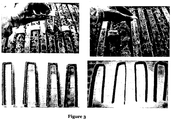
Figure 3 : Miticide strips can be seen placed in the bee hive and before placement.Figure 3 is not according to the invention. -
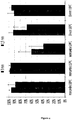
Figure 4 : Influence of cellulose thickness and temperature, time and manner of heating of the solution on the efficacy of the treatments evaluated.Figure 4 is not according to the invention. - The process to manufacture from oxalic acid and glycerin of a miticide composition which retains its miticide properties for at least 40 days, against Varroa destructor in bee hives, wherein said composition comprises glycerin between 0 and 20% (W/W), oxalic acid between 5 and 20 % (W/W), tartaric acid between 50 and 80% (W/W) and formic acid between 0.5 and 15% (W/W), comprises the following steps:
- a. mixing glycerin and oxalic acid,
- b. heating the mixture of step a., and
- c. cooling the mixture.
- The composition obtained by the process of the invention is preferably free from added polymers and water. Also, it is free from crystals for a period of at least 2 years kept at temperatures of between 0 °C and 40 °C.. Also, said composition comprises a density between 1 and 1.5 g/cm3.
- Object of the present invention is the manufacturing process of a miticide composition according to claim 1 and, comprising the following steps:
- a. mixing glycerin and oxalic acid,
- b. heating the mixture,
- c. cooling the mixture.
- In particular, to obtain the miticide composition it is proposed according to said step a. mixing glycerol and oxalic acid at a rate between 3:1 and 1:3 and heating the mixture according to said step b. up to a temperature ranging from 90ºC to 150ºC during a period of time between 1 and 5000 seconds.
- In a specially preferred embodiment in step a. of said process, glycerin comprises a concentration of between 5 and 95% (V/V) preferably between 50 and 75 % and the oxalic acid comprises a concentration of between 5 and 95 % (V/V), preferably of between 25 and 50% (V/V). And at step b. it comprises heating up to a temperature ranging from 60 C° to 150°C, preferably from 90 C° to 120°C, over a time of between 1 and 5000 seconds, preferably of between 1 and 600 seconds. More preferably said step b. comprises heating up to a temperature ranging from 100ºC to 120ºC during a period of time between 1 and 120 seconds.
- In a preferred embodiment of the invention said manufacturing process of the miticide composition of the present invention in said step b. comprises a continuous process and heating by means of a continuous flow heat exchanger up to a temperature ranging from 100ºC to 130ºC during a period of time between 1 and 60 seconds.
- The term "miticide" is hereby equivalent to "acaricide".
- The miticide composition of prolonged action obtained by the process of the present invention, results in a highly efficient miticide for the control of Varroa destructor mite, a pest which is typical of bees (Apis mellifera). The strips of a suitable porous material, such as cellulose, impregnated in the composition obtained by the process of the invention, result in a veterinary product which is introduced in hives.
- The miticide composition obtained by the process of the invention retains its miticide properties for at least 40 days, more than two reproductive periods of varroa destructor.
- The organic composition obtained by the process of the invention shows a number of properties, such as:
- It does not originate synthetic residues.
- Its use does not develop resistance in the short or medium-term by the infestations it treats.
- It is capable of acting along successive cycles of infestations without the need to be applied again.
- It has a low production cost, which implies a lower economic impact in farming activities.
- It is easily applied on Langstroth bee hives.
- Applied on Apis mellifera colonies, it is an effective product for the elimination of Varroa spp mites.
- It does not have proved harmful effects on Apis mellifera colonies.
- It is capable of remaining effective over more than 42 days, requiring only one application, interrupting the Varroasis cycle and resulting in efficacy higher than all existing formulations of organic origin.
- The composition obtained by the process of the invention is a good agent for mite control, in autumn as well as in spring, when oviposition is high and a minimum of 20 days is needed to interrupt the cycle. The composition obtained by the process of the invention does not require bees to consume it, which constitutes one of the advantages of the treatment, thus avoiding bee intoxication. On the other hand, it allows a non-contaminant treatment; therefore it may be used all the year round, even during harvest without leaving contaminant residues in bee hive products. Finally, it may be used for decades since the development of resistance is practically improbable due to its organic nature. For all the stated above, it is an excellent solution to the problem of mite control among bee populations, and extremely useful for beekeepers of the region, Argentina and the world.
- Oxalic acid is an organic chemical compound found in nature in fruits, some plants and even -in small quantities, in honey. This means that using it against Varroa and because it is degradable, it does not contaminate honey. This also happens with tartaric acid, which is widely used in food products.
- Oxalic acid has been widely used in Europe, mainly in countries such as Switzerland, France and Germany, showing an excellent efficacy against Varroa in bee hives without brood. Up to the moment, two forms of application are used: spraying or syrup or mixture of water and sugar. In both cases, the composition is applied 3 times, every 7 days.
- These application forms only allow an efficacy over 50% in the absence of brood in the bee hive or during cold periods. This phenomenon comprises analyzing the life cycle of Varroa, which has a total duration of 16 days out of which 12 is the period when it reproduces within operculated brood cells and the remaining days in phoretic state, i.e., on adult bees.
- In the traditional form of application, spraying over honeycomb boxes, some hours after the operation the ventilation and the own temperature of the colony cause the solution drops to dehydrate, oxalic acid crystalizes and loses its acidic power.
- The composition obtained by the process according to the present invention can be impregnated in a certain quantity of cellulose, which may be hydromethyil cellulose, hydroxyethyl cellulose, hydroxypropylcellulose, paper, cardboard, which shall be hereby called cellulose strips, and applied on colonies of a large surface with brood, in a dose ranging from 1 to 10 strips per bee hive control Varroa destructor in said bee hives, with an efficacy higher than 90%, even higher than 97%.
- The following examples show details of the claimed process.
- 5 kg of oxalic acid and 5 kg of glycerin were placed in a container on heat and the solution was stirred until it reached a temperature of 100, and kept for 40 minutes.
- The solution mentioned above was cooled naturally by removing the heat source until a temperature lower than 40°C was reached. It was subsequently fractioned into 1600 grams in pouches of 300 microns.
- Thus the composition was obtained, the chromatogram of which can be seen in
Figure 1 , where the concentration of oxalic acid is 146 mg/g; of tartaric acid is 714 mg/g and of formic acid is 14 mg/g. - As regards techniques, analysis was performed applying the official method AOAC 986.13 (2000), according to internal standards and with a DAD (215 nm).
- 5 kg of oxalic acid and 5 kg of glycerin were mixed in a PVC tank, and it was stirred until a uniform mixture was obtained. This mixture was pumped into a heat exchanger whose exchange liquid is an oil at a temperature of 117 °C. Residence time in said exchanger was 24 minutes.
- The solution leaving said exchanger enters a cooler which takes said solution to a temperature lower than 40 °C, thus obtaining the composition which was fractioned into 1600 grams in pouches of 300 microns.
- Therefore, the composition was obtained, the chromatogram of which can be seen in
Figure 2 , where the concentration of oxalic acid is 90 mg/g; of tartaric acid is 686 mg/g and of formic acid is 5 mg/g. As regards techniques, analysis was performed applying the official method AOAC 986.13 (2000), accordint to internal standards and with a DAD (215 nm). - The process starts at 2 vertical hoppers where the raw material: glycerin and oxalic acid, are stored. Due to the high viscosity of the raw material at low temperature and so as to ensure a minimum degree of fluidity towards the production line, a suitable heating degree is provided, by means of a lower power electric-tracing.
- Components preferably in a 1:1 ratio are loaded into the mixer from the bottom of the hopper by means of a couple of pumps, in proportions previously stated according to different doses, applications and/or field treatment. Viscosity is kept at acceptable values, as the step prior to the start of the pumping process, by continuous removal of the preparation and always under controlled temperature by heating (circulating hot water through the jacket of the mixer).
- An impeller pump is fed from a mixing unit, thus establishing a continuous flow of the preparation being processed through a heat exchanger. At the exchanger outlet, the mixture reaches a temperature of the order of 120 °C. The heating fluid in the jacket is thermal oil, which allows operation at heating temperatures of about 170 °C, keeping the circuit pressure at atmospheric value. Residence time has been adjusted by 30 seconds.
- After the heating stage, the product undergoes accelerated cooling by means of an exchanger which is conceived in a similar manner to the previos one, which uses well water or a cooling tower to lower the product temperature to around 40 °C, to be poured in an intermediate storage tank operating as a buffer between heating-cooling stages and the final dosing-filling stage.
- The miticide composition is kept in the buffer tank at an approximate temperature of 40 °C, by continuous heating with hot water circulating through the tank jacket. Simultaneously, a slight removal by means of a mechanical stirrer allows ensuring the right degree of homogeneity.
- The tablet, wafer or board filling device is fed from the buffer tank by controlled pumping. Such tablets, wafers or boards are meant for the final distribution of the manufactured miticide in the bee hives.
- The miticide composition of prolonged action against Varroa destructor obtained in Example 1, already fractionated into 1600 grams placed into 300 micron pouches, impreganates 32 cellulose strips, 30 mm wide and 3 mm thick which are immersed in said pouches. Said pouches containing cellulose strips and said composition were allowed to rest for 24 hours without closing them, to be subsequently sealed. Thus, packages of 32 miticide strips were obtained.
- Different miticide strips were manufactured varying the process conditions to evaluate the miticide efficacy against Varroa destructor starting from the compositions according to Examples 1, 2 and 3 and its incorporation to cellulose strips according to Example 4.
- Different miticide formulations were evaluated on the basis of processing oxalic acid and glycerin according to Examples 1 and 2 in cellulose strips as in Example 4, in the months of April, May and June at an apiary at Cabaña Cristal located in General Daniel Cerri (Province of Buenos Aires), with two different heating methods to be applied to the solution: according to a) heat exchanger (as shown in Example 2); and b) direct heat transmission (as shown in Example 1).
- The resulting solutions were cooled until a temperature lower than 40°C was reached, and subsequently fractionated into 2500 grams in pouches of 300 microns, containing 100 or 50 cellulose strips depending on being 1.5 mm or 3 mm thick. Packages with the cellulose strips and the solution were placed without sealing/closure, open. After 24 hours packages were finally sealed.
Table 1. Treatments evaluated. Treatment Heating Temperature reached (ºC) Heating time (minutes) Cellulose Thickness (mm) Oxa 9 (T1) Heat Exchanger 109 8.3 3 Oxa 10 (T1) 109 8.3 1.5 Oxa 11 (T2) 117 27 3 Oxa 12 (T2) 117 27 1.5 Oxa 13 (T3) 124 34 3 Oxa 14 (T3) 124 34 1.5 Oxa 15 (T4) Direct heat transmission 100 40 3 Oxa 16 (T4) 100 40 1.5 Oxa 17 (T5) 109 60 3 Oxa 18 (T5) 109 60 1.5 - On April 3rd, 50 test bee hives were didived inton 10 groups of 5 randomly taken. The chemical shock needed to obtain the number of Varroa mites not controlled by the treatment was done 42 days later with amitraz. To evaluate efficacy grid floors were used, which allowed counting dead mites during the treatment and after the chemical shock with amitraz treatment. Efficacy was calculated as the quotient of the number of falling mites before the chemical shock and the total number.
Table 2. Working schedule April 03 -Place grid floor. -Place treatment April 10 -Count mites April 17 -Count mites April 24 -Count mites May 01 -Count mites May 08 -Count mites May 15 -Count mites -Remove treatment -Place chemical shock June 19 -Count mites -Remove chemical shock -Remove grid floors - At first, no significant differences were found regarding treatments with thicknesses of 1.5mm and those of 3mm. The incidence of cellulose thickness on the practicality of the application was irrelevant, since the only difference found was a greater flabbiness for the thinner cellulose which in some cases bent.
-
Figure 4 it can be observed that the larger width of the cellulose increases the efficacy in treatments and in turn decreases variability. On the other hand, in the treatments applied by heat exchanger there is a significant decrease of product efficacy for being manufactured at temperatures higher than 120°C for longer than 30 minutes (Oxa 13 and Oxa 14). In turn, it is concluded that treatments applied by exchanger at lower temperatures are more efficient and show a lower variability than with direct heating. - Determination of the efficacy and residuality of the miticide composition obtained by the process of the invention to be applied to bee colonies with constant brood cycle.
- Efficacy and residue levels were determined in different hive matrices (honey, wax and bees) generated by the application of the miticide composition obtained by the process of the invention . In order to do so, a field study was performed during Autumn 2013 (March-April) using 24 bee hives divided in two groups, one of 7 units (bee hives without treatment, control group) and the other of 17 (bee hives which received the composition obtained by the process of the invention in cellulose strips). Prior to the tests, colonies were stabilized in populations of bees and reserves. Samples were taken from the three matrices in 14 bee hives (7 from each group, randomly) at two different moments: before placing the treatment and just after memoving it. Also, mite mortality caused by the treatment at days 7, 14, 28, 35 and 42 was monitored. On removing the miticide strips from the bee hives, a shock treatment with Amivar500® was performed. Dosing Amivar500® was conducted according to specifications given on the label of the commercial product. The population of adult bees and brood was quantified before and after the miticide treatment so as to evaluate the impact of the drug on the population status of the colonies. Thus, the efficacy of the miticide composition obtained by the process of the invention and the potential variation of the oxalic acid residues generated by said composition at different monitored times was evaluated.
- Table 3 shows the number of fallen mites for each monitoring time (days 7, 14, 28, 35 and 42) in bee hives which had received miticide treatment and in bee hives without treatment.
Table 3 shows the number of fallen mites for each monitoring time (days 7, 14, 28, 35 and 42) in bee hives which had received miticide treatment and in bee hives without treatment. Test Treatment Bee hive Number of fallen mites per day: Total Number of mites fallen on shock treatment Efficacy of the formulation (%) 7 14 28 35 42 Apiary: Mar del Plata 2013 Formulation 1 34 48 27 1 0 110 9 92.4 2 120 106 24 1 0 251 21 92.3 3 56 214 56 0 2 328 13 96.2 4 12 47 22 2 0 83 1 98.8 5 87 119 17 1 1 225 42 84.3 6 20 42 2 1 4 69 3 95.8 7 41 12 9 0 0 62 7 89.8 8 54 185 144 4 15 402 21 95.1 9 0 282 46 14 0 342 14 96.1 10 48 655 565 45 3 1316 16 98.8 11 19 186 112 18 3 338 1 99.7 12 267 50 49 0 5 373 15 96.1 13 100 815 348 41 1 1305 0 100 14 88 560 400 815 253 2116 70 96.8 15 42 72 63 3 2 182 20 90.1 16 26 10 33 1 3 73 23 76 17 49 70 49 15 12 189 18 91.3 - Table 4 provides information on the boxes covered with adult bees and brood before and after the end of the miticide treatment. Observing the corresponding table it can be noticed that the miticide treatment does not show negative effects on bee colonies.
Table 4 Boxes covered with adult bees and brood before and after applying the formulation with oxalic acid. Before treatment After treatment Treated 8.7 (1.2) 8 (0.5) Number of boxes covered with adult bees Untreated 9 (0.44) 8.6 (0.2) Treated 4.6 (0.8) 3.2 (0.44) Number of boxes with brood untreated 4.7 (0.3) 3.1 (0.33) - The physico-chemical analysis of the product by GC-FID (Fares Taie Clinical Analysis Laboratory) allowed a satisfactory evaluation of residues generated by the application of the composition obtained by the process of the present invention on completion of the treatment (day 42). Analysis show that said formulation does not generate oxalic acid residues in the different matrices of the bee hives analyzed at the end of the treatment. Tables 5 and 6 show the results of residues detected in the course of the test for the matrices of honey and wax, respectively. As it can be seen in Table 5, in general, all bee hives (treated or untreated) increased their level of oxalic acid at the end of the treatment, which shows that the increase in honey of the active principle is due to external sources (flowers) and not to the composition obtained by the process of the present invention.
Table 5. Residues of oxalic acid (mg/kg) detected in honey before (day 0) and after (day 42) applying the miticide treatment. Detection limit: 0.5mg/kg. Quantification limit 1 mg/kg Group Before treatment On treatment completion Treated 1 16.2 0 Treated 2 8.2 9.21 Treated 3 3.2 9.9 Treated 4 4.4 35.37 Treated 5 12.9 26.65 Treated 6 2.7 7.66 Treated 7 5.2 28.47 Untreated 8 10.2 0 Untreated 9 17.1 14.39 Untreated 10 0 10.68 Untreated 11 2.5 16.21 Untreated 12 13.6 33.91 Untreated 13 33.8 44.61 Untreated 14 - - Residues of oxalic acid (mg/kg) detected in honey before (day 0) and after (day 42) applying the miticide treatment. Detection limit: 1.5 mg/kg. Quantification limit 12 mg/kg Group Before treatment On treatment completion Tratada 1 0 0 Tratada 20 0 Tratada 30 0 Treated 4 0 0 Treated 5 0 0 Treated 6 0 0 Treated 7 0 0 Untreated 8 0 0 Untreated 9 0 0 Untreated 10 0 0 Untreated 11 0 0 Untreated 12 0 0 Untreated 13 0 0 Untreated 14 0 0
Claims (8)
- A process to manufacture from oxalic acid and glycerin of a miticide composition which retains its miticide properties for at least 40 days, against Varroa destructor in bee hives, wherein said composition comprises glycerin between 0 and 20% (W/W), oxalic acid between 5 and 20 % (W/W), tartaric acid between 50 and 80% (W/W) and formic acid between 0.5 and 15% (W/W), which process comprises the following steps:a. mixing glycerin and oxalic acid,b. heating the mixture of step a., andc. cooling the mixture.
- The process according to claim 1, wherein at step a. glycerin comprises a concentration of between 5 and 95% (V/V) and the oxalic acid comprises a concentration of between 5 and 95% (V/V).
- The process according to claim 1 wherein at step a. glycerin comprises a concentration of between 50 and 75% (V/V) and the oxalic acid comprises a concentration of between 25 and 50% (V/V).
- The process according to claim 1, wherein step b. comprises heating up to a temperature ranging from 60°C to 150°C during a period of time ranging from 1 to 5000 seconds.
- The process according to claim 1, wherein step b. comprises heating up to a temperature ranging from 90ºC to 120ºC during a period of time ranging from 1 to 600 seconds.
- The process according to claim 1, wherein step b. comprises heating up to a temperature ranging from 100ºC to 120ºC during a period of time ranging from 1 to 120 seconds.
- The process according to claim 1, wherein step b. comprises a continuous process and heating by means of a continuous flow heat exchanger, up to a temperature ranging from 100ºC to 130ºC during a period of time ranging between 1 and 60 seconds.
- The process according to claim 1, wherein step a. comprises mixing the glycerin and oxalic acid at a ratio from 1:3 to 3:1, and step b. comprises heating up to a temperature ranging from 90ºC to 150ºC during a period of time ranging from 1 to 5000 seconds.
Applications Claiming Priority (2)
| Application Number | Priority Date | Filing Date | Title |
|---|---|---|---|
| ARP140100124A AR094659A1 (en) | 2014-01-14 | 2014-01-14 | A COMPARITION OF LONG-TERM ACTION |
| PCT/ES2014/070346 WO2015107233A1 (en) | 2014-01-14 | 2014-04-22 | Prolonged-action acaricide composition and production method, acaricide strip and method for controlling the varroa destructor mite |
Publications (3)
| Publication Number | Publication Date |
|---|---|
| EP3095328A1 EP3095328A1 (en) | 2016-11-23 |
| EP3095328A4 EP3095328A4 (en) | 2017-05-31 |
| EP3095328B1 true EP3095328B1 (en) | 2019-11-20 |
Family
ID=53542440
Family Applications (1)
| Application Number | Title | Priority Date | Filing Date |
|---|---|---|---|
| EP14878494.5A Active EP3095328B1 (en) | 2014-01-14 | 2014-04-22 | Process for the production of a miticide composition |
Country Status (14)
| Country | Link |
|---|---|
| US (1) | US11071299B2 (en) |
| EP (1) | EP3095328B1 (en) |
| CN (1) | CN106163279A (en) |
| AR (1) | AR094659A1 (en) |
| BR (1) | BR112016015463A2 (en) |
| CA (1) | CA2935872C (en) |
| CL (1) | CL2016001769A1 (en) |
| ES (1) | ES2773577T3 (en) |
| MX (1) | MX386830B (en) |
| PT (1) | PT3095328T (en) |
| RU (1) | RU2657022C2 (en) |
| UA (1) | UA119155C2 (en) |
| UY (1) | UY35339A (en) |
| WO (1) | WO2015107233A1 (en) |
Families Citing this family (8)
| Publication number | Priority date | Publication date | Assignee | Title |
|---|---|---|---|---|
| IL244290B (en) * | 2015-11-30 | 2018-11-29 | Keren Ilan | System for prevention of infectious diseases to parent stock |
| IT201700003997A1 (en) * | 2017-01-16 | 2018-07-16 | Chemicals Laif S P A | PHARMACEUTICAL COMPOSITION ACARICIDE FOR TREATMENT OF PATHOLOGIES OF BEES |
| ES1215109Y (en) * | 2018-03-27 | 2018-09-26 | Chicon Carnero Jose Paulino | Acaricide container strip |
| ES2827123B2 (en) * | 2019-11-19 | 2022-03-21 | Soc Cooperativa Andaluza Campo Museo De La Miel Rancho Cortesano | Product against varroasis, manufacturing process and method for the treatment of varroasis by means of the same |
| CN111066689B (en) * | 2019-12-11 | 2021-04-16 | 浙江大学 | Device for preventing and controlling nest insects by using parasitic wasps and application thereof |
| WO2022225408A1 (en) * | 2021-04-21 | 2022-10-27 | OLIVER, Colleen | Controlling bee diseases and pests |
| CN114711233A (en) * | 2022-04-19 | 2022-07-08 | 李刚 | Slow-release agent for preventing and treating bee mites |
| GR20230100572A (en) * | 2023-07-12 | 2025-02-11 | Στεφανος Σπυριδωνα Ζαφειροπουλος | OXALATE EMULSION PREPARATION FOR THE PROTECTION OF BEE HOUSINGS |
Family Cites Families (8)
| Publication number | Priority date | Publication date | Assignee | Title |
|---|---|---|---|---|
| GB9612403D0 (en) * | 1996-06-13 | 1996-08-14 | Sandoz Ltd | Organic compounds |
| US20060008492A1 (en) * | 2004-07-09 | 2006-01-12 | Pablo Janowicz | Composition and method for delivering chemical agent to insects |
| US7767234B2 (en) * | 2006-03-31 | 2010-08-03 | John I. Haas, Inc. | Compositions and methods for controlling a honey bee parasitic mite |
| CN101449661A (en) * | 2007-12-05 | 2009-06-10 | 赵炜 | Acarid treatment method |
| GB0822000D0 (en) | 2008-12-02 | 2009-01-07 | Vita Europ Ltd | Control of parasites |
| CN102647911B (en) * | 2009-09-14 | 2014-09-17 | 巴斯夫欧洲公司 | Dispensers containing polyester film for the control of mites in hives |
| JP5539080B2 (en) | 2010-07-15 | 2014-07-02 | キヤノン株式会社 | Information processing apparatus, information processing system, information processing apparatus control method, communication state confirmation method, and program |
| ITRM20110450A1 (en) * | 2011-08-26 | 2013-02-27 | Vecchio Francesca Del | EQUIPMENT METHOD INGREDIENTS AND FORMULATIONS FOR PRODUCING SOLUTIONS WITH A HIGH NOURISHING AND CURIOUS RECONSTITUTING NOURISHING EFFECT FOR A COMPLETE AND AUTOMATED SYSTEM TO PREVENT AND FIGHT THE BEALS SPLASH SYNDROME |
-
2014
- 2014-01-14 AR ARP140100124A patent/AR094659A1/en active IP Right Grant
- 2014-02-20 UY UY0001035339A patent/UY35339A/en active IP Right Grant
- 2014-04-22 CN CN201480073140.XA patent/CN106163279A/en active Pending
- 2014-04-22 WO PCT/ES2014/070346 patent/WO2015107233A1/en not_active Ceased
- 2014-04-22 UA UAA201608575A patent/UA119155C2/en unknown
- 2014-04-22 RU RU2016132416A patent/RU2657022C2/en active
- 2014-04-22 MX MX2016008479A patent/MX386830B/en unknown
- 2014-04-22 BR BR112016015463A patent/BR112016015463A2/en not_active Application Discontinuation
- 2014-04-22 PT PT148784945T patent/PT3095328T/en unknown
- 2014-04-22 US US15/111,587 patent/US11071299B2/en active Active
- 2014-04-22 CA CA2935872A patent/CA2935872C/en active Active
- 2014-04-22 EP EP14878494.5A patent/EP3095328B1/en active Active
- 2014-04-22 ES ES14878494T patent/ES2773577T3/en active Active
-
2016
- 2016-07-11 CL CL2016001769A patent/CL2016001769A1/en unknown
Non-Patent Citations (5)
| Title |
|---|
| "A new formulation with oxalic acid for Varroa destructor control to be applied during permanent brood presence on Apis mellifera colonies", 2018, article MAGGI, MATÍAS, ARGENTINA * |
| "Ficha de datos de seguridad. Ácido oxálico", 2018 * |
| "Fichas internacionales de seguridad química. Acido fórmico", 2018 * |
| CHRISTOPHER BUTCH ET AL: "Production of Tartrates by Cyanide-Mediated Dimerization of Glyoxylate: A Potential Abiotic Pathway to the Citric Acid Cycle", JOURNAL OF THE AMERICAN CHEMICAL SOCIETY, vol. 135, no. 36, 30 August 2013 (2013-08-30), US, pages 13440 - 13445, XP055492740, ISSN: 0002-7863, DOI: 10.1021/ja405103r * |
| FLORIS, SATTA, GARAU: "Effectiveness, persistence and residue of amitraz plastic strips in the apiary control of Varroa destructor", 2001, article APIDOLOGIE 32, pages: 577 - 585 * |
Also Published As
| Publication number | Publication date |
|---|---|
| UY35339A (en) | 2015-07-31 |
| US20170042147A1 (en) | 2017-02-16 |
| CL2016001769A1 (en) | 2017-11-10 |
| WO2015107233A1 (en) | 2015-07-23 |
| EP3095328A4 (en) | 2017-05-31 |
| MX2016008479A (en) | 2016-10-28 |
| RU2657022C2 (en) | 2018-06-08 |
| US11071299B2 (en) | 2021-07-27 |
| PT3095328T (en) | 2020-03-03 |
| BR112016015463A2 (en) | 2019-10-01 |
| EP3095328A1 (en) | 2016-11-23 |
| CA2935872A1 (en) | 2015-07-23 |
| UA119155C2 (en) | 2019-05-10 |
| CN106163279A (en) | 2016-11-23 |
| MX386830B (en) | 2025-03-19 |
| CA2935872C (en) | 2021-06-01 |
| RU2016132416A (en) | 2018-02-20 |
| ES2773577T3 (en) | 2020-07-13 |
| AR094659A1 (en) | 2015-08-19 |
Similar Documents
| Publication | Publication Date | Title |
|---|---|---|
| CA2935872C (en) | A miticide composition of prolonged action and its manufacturing process, a miticide strip and a procedure to control varroa destructor mite | |
| CN104039131B (en) | Methods, devices and compositions for preventing and treating colony collapse disorder | |
| EP3737241B1 (en) | Solid nutritional composition with acaricide activity for apiculture for use in the prophylaxis and treatment of varroa infestations | |
| EP2735229A1 (en) | Product for treatment of bee families and process for its application | |
| CN105343189A (en) | Mixed essential oil for preventing and controlling mites in honeybees | |
| KR101355393B1 (en) | Fermented insect's natural food comprising sericulture products and manufacturing method thereof | |
| Menkissoglu-Spiroudi et al. | Residues in honey and beeswax caused by beekeeping treatments | |
| US20250160328A1 (en) | Compositions and methods for reducing parasitic infestation of honey bee hives | |
| CN105265397A (en) | Application of eugenol as medicine for preventing bee mites | |
| Shumkova et al. | Results of Doxycycline Administration on Bee Colonies. | |
| Zhelyazkova et al. | Effectiveness of Oxalis bee and Ecostop for prophylaxis and control of varroosis in honey bees (Apis mellifera L.). | |
| EP4740734A1 (en) | Treatment of mite infestation | |
| EP1374678A1 (en) | Microcapsules for controlling mites | |
| Aliano | An investigation of techniques for using oxalic acid to reduce Varroa mite populations in honey bee colonies and package bees | |
| Pătruică et al. | Influence of Essential Oils on Queen Prolificacy and Bee Colony Health | |
| ES2540501B1 (en) | Food composition of honey bees and procedure to control infections in said bees by said food | |
| CA2707280A1 (en) | Stabilized synthetic brood pheromone and race-specific ratios of components for manipulating the behavior and physiology of honey bees | |
| CN108478545A (en) | Method of the menthol as prevention bee mite drug | |
| Crespo et al. | Field trial on the efficacy of commercial miticides for Varroa destructor (Acari: varroidae) control in Olavarria county (province of Buenos Aires, Argentina) | |
| BG757Y1 (en) | Means for varroathosis control | |
| NZ719549A (en) | Method, apparatus and compositions for the prophylaxis and treatment of colony collapse disorder |
Legal Events
| Date | Code | Title | Description |
|---|---|---|---|
| PUAI | Public reference made under article 153(3) epc to a published international application that has entered the european phase |
Free format text: ORIGINAL CODE: 0009012 |
|
| 17P | Request for examination filed |
Effective date: 20160712 |
|
| AK | Designated contracting states |
Kind code of ref document: A1 Designated state(s): AL AT BE BG CH CY CZ DE DK EE ES FI FR GB GR HR HU IE IS IT LI LT LU LV MC MK MT NL NO PL PT RO RS SE SI SK SM TR |
|
| AX | Request for extension of the european patent |
Extension state: BA ME |
|
| DAX | Request for extension of the european patent (deleted) | ||
| A4 | Supplementary search report drawn up and despatched |
Effective date: 20170503 |
|
| RIC1 | Information provided on ipc code assigned before grant |
Ipc: A01N 25/24 20060101ALI20170425BHEP Ipc: A01P 7/02 20060101ALI20170425BHEP Ipc: A01N 25/08 20060101ALI20170425BHEP Ipc: A01N 37/02 20060101AFI20170425BHEP Ipc: A01N 37/04 20060101ALI20170425BHEP Ipc: A01K 47/06 20060101ALI20170425BHEP |
|
| STAA | Information on the status of an ep patent application or granted ep patent |
Free format text: STATUS: EXAMINATION IS IN PROGRESS |
|
| 17Q | First examination report despatched |
Effective date: 20180131 |
|
| GRAP | Despatch of communication of intention to grant a patent |
Free format text: ORIGINAL CODE: EPIDOSNIGR1 |
|
| STAA | Information on the status of an ep patent application or granted ep patent |
Free format text: STATUS: GRANT OF PATENT IS INTENDED |
|
| INTG | Intention to grant announced |
Effective date: 20190605 |
|
| GRAS | Grant fee paid |
Free format text: ORIGINAL CODE: EPIDOSNIGR3 |
|
| GRAA | (expected) grant |
Free format text: ORIGINAL CODE: 0009210 |
|
| STAA | Information on the status of an ep patent application or granted ep patent |
Free format text: STATUS: THE PATENT HAS BEEN GRANTED |
|
| AK | Designated contracting states |
Kind code of ref document: B1 Designated state(s): AL AT BE BG CH CY CZ DE DK EE ES FI FR GB GR HR HU IE IS IT LI LT LU LV MC MK MT NL NO PL PT RO RS SE SI SK SM TR |
|
| REG | Reference to a national code |
Ref country code: GB Ref legal event code: FG4D |
|
| REG | Reference to a national code |
Ref country code: CH Ref legal event code: EP |
|
| REG | Reference to a national code |
Ref country code: IE Ref legal event code: FG4D |
|
| REG | Reference to a national code |
Ref country code: DE Ref legal event code: R096 Ref document number: 602014057308 Country of ref document: DE |
|
| REG | Reference to a national code |
Ref country code: AT Ref legal event code: REF Ref document number: 1203115 Country of ref document: AT Kind code of ref document: T Effective date: 20191215 |
|
| REG | Reference to a national code |
Ref country code: CH Ref legal event code: NV Representative=s name: ISLER AND PEDRAZZINI AG, CH |
|
| REG | Reference to a national code |
Ref country code: PT Ref legal event code: SC4A Ref document number: 3095328 Country of ref document: PT Date of ref document: 20200303 Kind code of ref document: T Free format text: AVAILABILITY OF NATIONAL TRANSLATION Effective date: 20200220 |
|
| REG | Reference to a national code |
Ref country code: NL Ref legal event code: MP Effective date: 20191120 |
|
| REG | Reference to a national code |
Ref country code: LT Ref legal event code: MG4D |
|
| PG25 | Lapsed in a contracting state [announced via postgrant information from national office to epo] |
Ref country code: NO Free format text: LAPSE BECAUSE OF FAILURE TO SUBMIT A TRANSLATION OF THE DESCRIPTION OR TO PAY THE FEE WITHIN THE PRESCRIBED TIME-LIMIT Effective date: 20200220 Ref country code: FI Free format text: LAPSE BECAUSE OF FAILURE TO SUBMIT A TRANSLATION OF THE DESCRIPTION OR TO PAY THE FEE WITHIN THE PRESCRIBED TIME-LIMIT Effective date: 20191120 Ref country code: GR Free format text: LAPSE BECAUSE OF FAILURE TO SUBMIT A TRANSLATION OF THE DESCRIPTION OR TO PAY THE FEE WITHIN THE PRESCRIBED TIME-LIMIT Effective date: 20200221 Ref country code: NL Free format text: LAPSE BECAUSE OF FAILURE TO SUBMIT A TRANSLATION OF THE DESCRIPTION OR TO PAY THE FEE WITHIN THE PRESCRIBED TIME-LIMIT Effective date: 20191120 Ref country code: LT Free format text: LAPSE BECAUSE OF FAILURE TO SUBMIT A TRANSLATION OF THE DESCRIPTION OR TO PAY THE FEE WITHIN THE PRESCRIBED TIME-LIMIT Effective date: 20191120 Ref country code: LV Free format text: LAPSE BECAUSE OF FAILURE TO SUBMIT A TRANSLATION OF THE DESCRIPTION OR TO PAY THE FEE WITHIN THE PRESCRIBED TIME-LIMIT Effective date: 20191120 Ref country code: SE Free format text: LAPSE BECAUSE OF FAILURE TO SUBMIT A TRANSLATION OF THE DESCRIPTION OR TO PAY THE FEE WITHIN THE PRESCRIBED TIME-LIMIT Effective date: 20191120 |
|
| PG25 | Lapsed in a contracting state [announced via postgrant information from national office to epo] |
Ref country code: IS Free format text: LAPSE BECAUSE OF FAILURE TO SUBMIT A TRANSLATION OF THE DESCRIPTION OR TO PAY THE FEE WITHIN THE PRESCRIBED TIME-LIMIT Effective date: 20200320 Ref country code: RS Free format text: LAPSE BECAUSE OF FAILURE TO SUBMIT A TRANSLATION OF THE DESCRIPTION OR TO PAY THE FEE WITHIN THE PRESCRIBED TIME-LIMIT Effective date: 20191120 Ref country code: HR Free format text: LAPSE BECAUSE OF FAILURE TO SUBMIT A TRANSLATION OF THE DESCRIPTION OR TO PAY THE FEE WITHIN THE PRESCRIBED TIME-LIMIT Effective date: 20191120 |
|
| REG | Reference to a national code |
Ref country code: ES Ref legal event code: FG2A Ref document number: 2773577 Country of ref document: ES Kind code of ref document: T3 Effective date: 20200713 |
|
| PG25 | Lapsed in a contracting state [announced via postgrant information from national office to epo] |
Ref country code: DK Free format text: LAPSE BECAUSE OF FAILURE TO SUBMIT A TRANSLATION OF THE DESCRIPTION OR TO PAY THE FEE WITHIN THE PRESCRIBED TIME-LIMIT Effective date: 20191120 Ref country code: RO Free format text: LAPSE BECAUSE OF FAILURE TO SUBMIT A TRANSLATION OF THE DESCRIPTION OR TO PAY THE FEE WITHIN THE PRESCRIBED TIME-LIMIT Effective date: 20191120 Ref country code: EE Free format text: LAPSE BECAUSE OF FAILURE TO SUBMIT A TRANSLATION OF THE DESCRIPTION OR TO PAY THE FEE WITHIN THE PRESCRIBED TIME-LIMIT Effective date: 20191120 Ref country code: CZ Free format text: LAPSE BECAUSE OF FAILURE TO SUBMIT A TRANSLATION OF THE DESCRIPTION OR TO PAY THE FEE WITHIN THE PRESCRIBED TIME-LIMIT Effective date: 20191120 |
|
| REG | Reference to a national code |
Ref country code: DE Ref legal event code: R097 Ref document number: 602014057308 Country of ref document: DE |
|
| PG25 | Lapsed in a contracting state [announced via postgrant information from national office to epo] |
Ref country code: SK Free format text: LAPSE BECAUSE OF FAILURE TO SUBMIT A TRANSLATION OF THE DESCRIPTION OR TO PAY THE FEE WITHIN THE PRESCRIBED TIME-LIMIT Effective date: 20191120 Ref country code: SM Free format text: LAPSE BECAUSE OF FAILURE TO SUBMIT A TRANSLATION OF THE DESCRIPTION OR TO PAY THE FEE WITHIN THE PRESCRIBED TIME-LIMIT Effective date: 20191120 |
|
| PLBE | No opposition filed within time limit |
Free format text: ORIGINAL CODE: 0009261 |
|
| STAA | Information on the status of an ep patent application or granted ep patent |
Free format text: STATUS: NO OPPOSITION FILED WITHIN TIME LIMIT |
|
| 26N | No opposition filed |
Effective date: 20200821 |
|
| PG25 | Lapsed in a contracting state [announced via postgrant information from national office to epo] |
Ref country code: PL Free format text: LAPSE BECAUSE OF FAILURE TO SUBMIT A TRANSLATION OF THE DESCRIPTION OR TO PAY THE FEE WITHIN THE PRESCRIBED TIME-LIMIT Effective date: 20191120 Ref country code: SI Free format text: LAPSE BECAUSE OF FAILURE TO SUBMIT A TRANSLATION OF THE DESCRIPTION OR TO PAY THE FEE WITHIN THE PRESCRIBED TIME-LIMIT Effective date: 20191120 Ref country code: MC Free format text: LAPSE BECAUSE OF FAILURE TO SUBMIT A TRANSLATION OF THE DESCRIPTION OR TO PAY THE FEE WITHIN THE PRESCRIBED TIME-LIMIT Effective date: 20191120 |
|
| PG25 | Lapsed in a contracting state [announced via postgrant information from national office to epo] |
Ref country code: LU Free format text: LAPSE BECAUSE OF NON-PAYMENT OF DUE FEES Effective date: 20200422 |
|
| REG | Reference to a national code |
Ref country code: BE Ref legal event code: MM Effective date: 20200430 |
|
| PG25 | Lapsed in a contracting state [announced via postgrant information from national office to epo] |
Ref country code: BE Free format text: LAPSE BECAUSE OF NON-PAYMENT OF DUE FEES Effective date: 20200430 |
|
| PG25 | Lapsed in a contracting state [announced via postgrant information from national office to epo] |
Ref country code: IE Free format text: LAPSE BECAUSE OF NON-PAYMENT OF DUE FEES Effective date: 20200422 |
|
| REG | Reference to a national code |
Ref country code: AT Ref legal event code: UEP Ref document number: 1203115 Country of ref document: AT Kind code of ref document: T Effective date: 20191120 |
|
| PG25 | Lapsed in a contracting state [announced via postgrant information from national office to epo] |
Ref country code: MT Free format text: LAPSE BECAUSE OF FAILURE TO SUBMIT A TRANSLATION OF THE DESCRIPTION OR TO PAY THE FEE WITHIN THE PRESCRIBED TIME-LIMIT Effective date: 20191120 Ref country code: CY Free format text: LAPSE BECAUSE OF FAILURE TO SUBMIT A TRANSLATION OF THE DESCRIPTION OR TO PAY THE FEE WITHIN THE PRESCRIBED TIME-LIMIT Effective date: 20191120 |
|
| PG25 | Lapsed in a contracting state [announced via postgrant information from national office to epo] |
Ref country code: MK Free format text: LAPSE BECAUSE OF FAILURE TO SUBMIT A TRANSLATION OF THE DESCRIPTION OR TO PAY THE FEE WITHIN THE PRESCRIBED TIME-LIMIT Effective date: 20191120 |
|
| P01 | Opt-out of the competence of the unified patent court (upc) registered |
Effective date: 20230516 |
|
| PGFP | Annual fee paid to national office [announced via postgrant information from national office to epo] |
Ref country code: DE Payment date: 20250429 Year of fee payment: 12 |
|
| PGFP | Annual fee paid to national office [announced via postgrant information from national office to epo] |
Ref country code: ES Payment date: 20250611 Year of fee payment: 12 Ref country code: GB Payment date: 20250428 Year of fee payment: 12 |
|
| PGFP | Annual fee paid to national office [announced via postgrant information from national office to epo] |
Ref country code: AL Payment date: 20250417 Year of fee payment: 12 Ref country code: IT Payment date: 20250422 Year of fee payment: 12 |
|
| PGFP | Annual fee paid to national office [announced via postgrant information from national office to epo] |
Ref country code: PT Payment date: 20250402 Year of fee payment: 12 |
|
| PGFP | Annual fee paid to national office [announced via postgrant information from national office to epo] |
Ref country code: FR Payment date: 20250425 Year of fee payment: 12 |
|
| PGFP | Annual fee paid to national office [announced via postgrant information from national office to epo] |
Ref country code: BG Payment date: 20250417 Year of fee payment: 12 |
|
| PGFP | Annual fee paid to national office [announced via postgrant information from national office to epo] |
Ref country code: CH Payment date: 20250501 Year of fee payment: 12 |
|
| PGFP | Annual fee paid to national office [announced via postgrant information from national office to epo] |
Ref country code: AT Payment date: 20250402 Year of fee payment: 12 |
|
| PGFP | Annual fee paid to national office [announced via postgrant information from national office to epo] |
Ref country code: TR Payment date: 20250418 Year of fee payment: 12 |