EP3091465A1 - Monitoring device, monitoring method, and monitoring program - Google Patents
Monitoring device, monitoring method, and monitoring program Download PDFInfo
- Publication number
- EP3091465A1 EP3091465A1 EP15762284.6A EP15762284A EP3091465A1 EP 3091465 A1 EP3091465 A1 EP 3091465A1 EP 15762284 A EP15762284 A EP 15762284A EP 3091465 A1 EP3091465 A1 EP 3091465A1
- Authority
- EP
- European Patent Office
- Prior art keywords
- website
- information
- blacklist
- inspection
- malicious
- Prior art date
- Legal status (The legal status is an assumption and is not a legal conclusion. Google has not performed a legal analysis and makes no representation as to the accuracy of the status listed.)
- Granted
Links
Images





Classifications
-
- G—PHYSICS
- G06—COMPUTING OR CALCULATING; COUNTING
- G06F—ELECTRIC DIGITAL DATA PROCESSING
- G06F21/00—Security arrangements for protecting computers, components thereof, programs or data against unauthorised activity
- G06F21/50—Monitoring users, programs or devices to maintain the integrity of platforms, e.g. of processors, firmware or operating systems
- G06F21/55—Detecting local intrusion or implementing counter-measures
-
- G—PHYSICS
- G06—COMPUTING OR CALCULATING; COUNTING
- G06F—ELECTRIC DIGITAL DATA PROCESSING
- G06F21/00—Security arrangements for protecting computers, components thereof, programs or data against unauthorised activity
- G06F21/50—Monitoring users, programs or devices to maintain the integrity of platforms, e.g. of processors, firmware or operating systems
- G06F21/55—Detecting local intrusion or implementing counter-measures
- G06F21/56—Computer malware detection or handling, e.g. anti-virus arrangements
-
- H—ELECTRICITY
- H04—ELECTRIC COMMUNICATION TECHNIQUE
- H04L—TRANSMISSION OF DIGITAL INFORMATION, e.g. TELEGRAPHIC COMMUNICATION
- H04L63/00—Network architectures or network communication protocols for network security
- H04L63/14—Network architectures or network communication protocols for network security for detecting or protecting against malicious traffic
- H04L63/1433—Vulnerability analysis
-
- H—ELECTRICITY
- H04—ELECTRIC COMMUNICATION TECHNIQUE
- H04L—TRANSMISSION OF DIGITAL INFORMATION, e.g. TELEGRAPHIC COMMUNICATION
- H04L63/00—Network architectures or network communication protocols for network security
- H04L63/14—Network architectures or network communication protocols for network security for detecting or protecting against malicious traffic
- H04L63/1441—Countermeasures against malicious traffic
- H04L63/145—Countermeasures against malicious traffic the attack involving the propagation of malware through the network, e.g. viruses, trojans or worms
-
- G—PHYSICS
- G06—COMPUTING OR CALCULATING; COUNTING
- G06F—ELECTRIC DIGITAL DATA PROCESSING
- G06F2221/00—Indexing scheme relating to security arrangements for protecting computers, components thereof, programs or data against unauthorised activity
- G06F2221/21—Indexing scheme relating to G06F21/00 and subgroups addressing additional information or applications relating to security arrangements for protecting computers, components thereof, programs or data against unauthorised activity
- G06F2221/2119—Authenticating web pages, e.g. with suspicious links
-
- G—PHYSICS
- G06—COMPUTING OR CALCULATING; COUNTING
- G06F—ELECTRIC DIGITAL DATA PROCESSING
- G06F2221/00—Indexing scheme relating to security arrangements for protecting computers, components thereof, programs or data against unauthorised activity
- G06F2221/21—Indexing scheme relating to G06F21/00 and subgroups addressing additional information or applications relating to security arrangements for protecting computers, components thereof, programs or data against unauthorised activity
- G06F2221/2149—Restricted operating environment
Definitions
- the present invention relates to a monitoring device, a monitoring method, and a monitoring program.
- malicious websites Websites with malicious intent (hereinafter referred to as malicious websites) have been used for various cyber-attacks such as a malware infection and a phishing attack.
- blacklisting malicious websites in advance, it is possible to block access by a user to a malicious website, and to prevent an attack by the malicious website.
- malicious websites are found by inspecting uniform resource locators (URLs) listed by keyword search in search engines, by following hyperlinks, by inspecting URLs of spam mail, and based on user reports (see Non Patent Literatures 1 to 4).
- URLs uniform resource locators
- IP internet protocol
- the inspection system can normally access the malicious website only once. Therefore, for example, in a case where the inspection system confirms the existence of the malicious website by a normal response (response of status code "200 OK") of a hypertext transfer protocol (HTTP), when cloaking is being conducted in the malicious website, the inspection system cannot obtain a response from the malicious website (for example, although status code "200 OK" is responded, content therein is harmless or there is no content therein). As a result, there occurs the following problem: the inspection system determines that the malicious website no longer exists although it actually exists, and unregisters the URL of the malicious website from the blacklist.
- a normal response response of status code "200 OK”
- HTTP hypertext transfer protocol
- An object of the present invention is to solve the above problem and to register information of a malicious website which actually exists on a blacklist.
- the present invention comprising: an inspection unit that inspects a redirect code inserted into content of a compromised website; an addition unit that adds, in accordance with a result of the inspection, when information of a new website is described in the redirect code, information of the website to a blacklist; and an unregistration unit that unregisters, in accordance with a result of the inspection, information of the website that is no longer described in the redirect code from the blacklist.
- the present invention it is possible to prevent information of a malicious website which actually no longer exists from being registered permanently on a blacklist, without unregistering information of a malicious website which actually exists. As a result, it is possible to add information of a new malicious website on the blacklist, and to suppress an increase in the number of entries on the blacklist to reduce a period of time taken for filtering processing using the blacklist.
- FIG. 1 A configuration diagram of a system according to the embodiment is illustrated in FIG. 1 .
- the system is configured to include a website 10 to be inspected, a malicious website 20, a monitoring device 30, and a blacklist 40.
- the website 10 is a website to be inspected by the monitoring device 30, and it is assumed that the website 10 is known to be compromised in advance.
- the website 10 includes content 11. It is assumed that the content 11 has been compromised by an attacker and a code (redirect code) for redirecting access to the content 11 to the malicious website 20 is embedded therein.
- the malicious website 20 is a website managed by the attacker, and includes malicious content 21.
- the monitoring device 30 continuously inspects the redirect code in the content 11 of the website 10, and performs registration on and unregistration from the blacklist 40, using a result of the inspection. For example, when the monitoring device 30 has found information of a new malicious website 20 from the redirect code inserted into the content 11, the monitoring device 30 registers the information of the malicious website 20 on the blacklist 40. Examples of the information of the malicious website 20 include a URL, a fully qualified domain name (FQDN), and an IP address assigned to the FQDN.
- the monitoring device 30 inspects the redirect code in the content 11 of the website. When it has been found that the redirect code no longer includes the information of the malicious website 20 previously registered on the blacklist 40, the monitoring device 30 unregisters the information of the malicious website 20 from the blacklist 40.
- the blacklist 40 is information indicating information of the malicious website 20.
- the number of websites 10 to be inspected by the monitoring device 30 may be one, or more than one, as illustrated in FIG. 1 .
- FIG. 2 is a diagram illustrating a configuration of the monitoring device.
- the monitoring device 30 includes an input/output unit 31, a communication unit 32, a control unit 33, and a storage unit 34.
- the input/output unit 31 is responsible for input/output of various data between the input/output unit 31 and an external device (for example, a device which stores the blacklist 40).
- the communication unit 32 is responsible for communication with the website 10, and the like.
- the control unit 33 includes an inspection unit 331, an addition unit 332, and an unregistration unit 333.
- the inspection unit 331 inspects a redirect code in the content 11 of the website 10 to be inspected. For example, the inspection unit 331 inspects, at predetermined intervals, a redirection destination described in the redirect code in the content 11 of the website 10 to be inspected, specifically, information of the malicious website 20 described in an src attribute of an iframe tag or a script tag of the content 11 (for example, a URL). When the information of the malicious website 20 is described in the redirect code, the inspection unit 331 acquires the information of the malicious website 20, and records the information in a malicious website existence confirmation table in the storage unit 34. Details of the malicious website existence confirmation table will be described later.
- the interval of the inspection performed by the inspection unit 331 in consideration of a lifetime of a URL of a general malicious website 20, for example, one day.
- the reasons therefor are as follows.
- the inspection interval is set to be too longer than the lifetime of the URL of the malicious website 20, there may be a case where the inspection is omitted in the inspection unit 331 in spite that the URL of the malicious website 20 exists.
- the inspection interval is set to be too shorter than the lifetime of the URL of the malicious website 20, there may be a case where an inspection processing load on the inspection unit 331 increases excessively.
- the inspection interval described above can be appropriately changed by a user of the monitoring device 30.
- the addition unit 332 refers to the malicious website existence confirmation table, and adds, to the blacklist 40, information of a new malicious website 20 described in the redirect code in the content 11 of at least any website 10 among the websites 10 to be inspected.
- the unregistration unit 333 unregisters, from the blacklist 40, information of the malicious website 20 which is no longer described in the redirect code in the content 11 of any website 10.
- the storage unit 34 stores the above-described malicious website existence confirmation table.
- the malicious website existence confirmation table is information which indicates the result of the inspection of each website 10 performed by the inspection unit 331, and information which indicates, for each website 10 to be inspected, information of the malicious website 20 (appeared website) described in the redirect code in the content 11 of the website 10, and a period of time during which the information of the malicious website 20 is described, in correspondence to each other.
- the malicious website existence confirmation table is updated each time the inspection unit 331 performs the inspection.
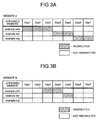
- the malicious website existence confirmation table includes, for example, a plurality of tables such as those illustrated in FIGS. 3A to 3C .
- FIG. 3A illustrates a period of time (lifetime) during which each of "example.com”, “example.net”, and “example.org” is described in the redirection destination of the content 11 of a website A.
- FIG. 3B illustrates a period of time during which "example.com”, “example.net”, or “example.org” is described in the redirection destination of the content 11 of a website B.
- FIG. 3A illustrates a period of time (lifetime) during which each of "example.com”, “example.net”, and “example.org” is described in the redirection destination of the content 11 of a website A.
- FIG. 3B illustrates a period of time during which "example.com”, “example.net”, or “example.org” is described in the redirection destination
- 3C illustrates a period of time during which "example.com”, “example.net”, or “example.org” is described in the redirection destination of the content 11 of a website C.
- shaded portions represent a period of time during which redirection to the appeared website has occurred in the website.
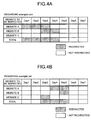
- FIGS. 4A to 4C Information of a correspondence between the information of the appeared website and the lifetime thereof, which information has been extracted from the malicious website existence confirmation table, is illustrated in FIGS. 4A to 4C .
- FIG. 4A illustrates the lifetime of "example.com” in each website 10.
- FIG. 4B illustrates the lifetime of "example.net” in each website 10.
- FIG. 4C illustrates the lifetime of "example.org” in each website 10.
- the row “Total” in the information in FIGS. 4A to 4C indicates that the appeared website has existed in the period of time in any of the websites 10. For example, it is indicated that the "example.com” illustrated in FIG. 4A has existed in the website A from Day 1 to Day 3, has existed in the website B from Day 3 to Day 4, and in totality, has existed from Day 1 to Day 4. Similarly, it is indicated that the “example.net” illustrated in FIG. 4B has existed from Day 3 to Day 5 in totality, and that the “example.org” illustrated in FIG. 4C has existed from Day 4 to Day 7 in totality.
- the addition unit 332 refers to the malicious website existence confirmation table described above, and adds, to the blacklist 40, information of a malicious website 20 newly appeared in any website 10 among the websites 10 to be inspected.
- the unregistration unit 333 refers to the malicious website existence confirmation table, and unregisters, from the blacklist 40, information of a malicious website 20 which no longer exists in any website 10 among the websites 10 to be inspected.
- the timing may be a time point immediately after the unregistration unit 333 has determined, after referring to the malicious website existence confirmation table, that information of the malicious website 20 no longer exists in any website 10 among the websites 10 to be inspected.
- the timing may be a time point when a predetermined period of time has elapsed after the determination.
- the unregistration unit 333 unregisters the information, for example, when the inspection interval (for example, one day) set by the inspection unit 331 has elapsed after the determination. By doing so, when there is information of a malicious website 20 which has been determined to no longer exist in the previous inspection but has been determined to exist in the subsequent inspection, it is possible for the unregistration unit 333 to avoid unregistering, from the blacklist 40, the information of the malicious website 20.
- FIG. 5 A flowchart of processing performed by the monitoring device 30 is illustrated in FIG. 5 .
- the inspection unit 331 of the monitoring device 30 lists the content 11 of the website 10 to be inspected (S1). Then, the inspection unit 331 inspects the content 11 of the website 10 to be inspected in order. In other words, the inspection unit 331 inspects one piece of the content 11 of the website 10 to be inspected, and lists a malicious website 20, which is a redirection destination in the content 11 (S2).
- the inspection unit 331 adds the information of the appeared website in the malicious website existence confirmation table (S4). Thereafter, the inspection unit 331 reflects the inspection result on the malicious website existence confirmation table (S5).
- the inspection unit 331 has executed processing for all appeared websites listed in S2 (YES in S6), and has confirmed that the content of all websites 10 to be inspected has been inspected (YES in S7), the step moves to S8.
- the appeared website (malicious website 20) listed in S2 is not a new one (NO in S3), the step moves to S5.
- the unregistration unit 333 removes (unregisters), from the blacklist 40, a malicious website 20 which has existed in any of the websites 10 at the previous inspection, but has not existed in this inspection, among the malicious websites 20 (appeared websites) stored in the malicious website existence confirmation table.
- the addition unit 332 adds information of the newly appeared malicious website 20 to the blacklist 40 (S8).
- the monitoring device 30 executes the above processing at predetermined intervals, and performs addition and unregistration of information of the malicious website 20 to and from the blacklist 40. By doing so, the monitoring device 30 can register, on the blacklist 40, information of a new malicious website 20 described as a redirection destination in any website 10 among the websites 10 to be inspected. Thereafter, the monitoring device 30 can unregister, from the blacklist 40, information of the malicious website 20 which has been no longer described as a redirection destination in any website 10.
- the above-described monitoring device 30 may determine whether a malicious website 20 is kept on the blacklist 40 according to the length of the lifetime of the malicious website 20.
- the unregistration unit 333 of the monitoring device 30 preferentially unregisters information of a malicious website 20 having shorter lifetime indicated in the malicious website existence confirmation table, among information of the malicious websites 20 registered on the blacklist 40.
- the unregistration unit 333 may exclude the information from information to be unregistered.
- the monitoring device 30 may refer to the malicious website existence confirmation table and keep information of the malicious websites 20 which existed in many websites 10 in the past on the blacklist 40 preferentially in proportion to the number of the websites 10 in which the malicious website 20 existed.
- the website 10 to be inspected may be corrected promptly, for example, when an administrator of the website 10 notices intrusion, or when a reminder is issued from an external organization. Therefore, a decoy website prepared in advance (see Non Patent Literature 5) may be used as the website 10. By doing so, redirection to the malicious website 20 can be observed for a long period of time. In addition, this procedure saves labor for seeking a compromised website, thereby realizing efficient observation.
- the monitoring device 30 it is possible to prevent information of a malicious website 20 which actually no longer exists from being registered permanently on the blacklist 40, without unregistering information of a malicious website 20 which actually exists from the blacklist 40.
- the monitoring device 30 can add information of a new malicious website 20 on the blacklist 40, and suppress an increase in the number of entries on the blacklist 40 to reduce a period of time taken for filtering processing using the blacklist 40.
- FIG. 6 is a diagram illustrating a computer which executes the monitoring program.
- a computer 1000 includes, for example, a memory 1010, a CPU 1020, a hard disk drive interface 1030, a disk drive interface 1040, a serial port interface 1050, a video adaptor 1060, and a network interface 1070. Each of the units is connected by a bus 1080.
- the memory 1010 includes a read only memory (ROM) 1011 and a random access memory (RAM) 1012.
- the ROM 1011 stores, for example, a boot program such as a basic input output system (BIOS).
- BIOS basic input output system
- the hard disk drive interface 1030 is connected to a hard disk drive 1090.
- the disk drive interface 1040 is connected to a disk drive 1100.
- a detachable storage medium such as a magnet disk and an optical disc is inserted into the disk drive 1100.
- a mouse 1110 and a keyboard 1120 are connected to the serial port interface 1050.
- a display 1130 is connected to the video adaptor 1060.
- the hard disk drive 1090 stores, for example, an OS 1091, an application program 1092, a program module 1093, and program data 1094.
- the malicious website existence confirmation table described in the above embodiment is stored, for example, in the hard disk drive 1090 or the memory 1010.
- the monitoring program is stored, for example, as a program module in which an instruction executed by the computer 1000 is described, in the hard disk drive 1090.
- a program module is stored in the hard disk drive 1090, in which program module, each processing executed by the monitoring device 30, which has been described in the above embodiment, is described.
- Data used for information processing performed by the monitoring program is stored as program data, for example, in the hard disk drive 1090.
- the CPU 1020 reads, as needed, the program module 1093 and the program data 1094 stored in the hard disk drive 1090 to the RAM 1012, and executes each procedure describe above.
- the program module 1093 and the program data 1094 according to the monitoring program are not limited to those stored in the hard disk drive 1090.
- the program module 1093 and the program data 1094 may be stored in a detachable storage medium and read by the CPU 1020 through the disk drive 1100 or the like.
- the program module 1093 and the program data 1094 according to the monitoring program may be stored in other computer connected through a network such as a local area network (LAN) and a wide area network (WAN), and read by the CPU 1020 through the network interface 1070.
- LAN local area network
- WAN wide area network
Landscapes
- Engineering & Computer Science (AREA)
- Computer Security & Cryptography (AREA)
- Computer Hardware Design (AREA)
- General Engineering & Computer Science (AREA)
- Theoretical Computer Science (AREA)
- Software Systems (AREA)
- Signal Processing (AREA)
- Computer Networks & Wireless Communication (AREA)
- Computing Systems (AREA)
- Physics & Mathematics (AREA)
- General Physics & Mathematics (AREA)
- Health & Medical Sciences (AREA)
- General Health & Medical Sciences (AREA)
- Virology (AREA)
- Information Transfer Between Computers (AREA)
Abstract
Description
- The present invention relates to a monitoring device, a monitoring method, and a monitoring program. Background
- Websites with malicious intent (hereinafter referred to as malicious websites) have been used for various cyber-attacks such as a malware infection and a phishing attack. By blacklisting malicious websites in advance, it is possible to block access by a user to a malicious website, and to prevent an attack by the malicious website. There are various methods for finding malicious websites. For example, malicious websites are found by inspecting uniform resource locators (URLs) listed by keyword search in search engines, by following hyperlinks, by inspecting URLs of spam mail, and based on user reports (see Non Patent Literatures 1 to 4).
- In general, there is an upper limit of the number of entries which can be registered on a blacklist. A volume of processing for matching URL is increased with the increasing number of entries registered on a blacklist. Accordingly, it is preferable to unregister malicious websites no longer used from the blacklist as much as possible. Therefore, countermeasures have been taken, for example, URLs of malicious websites registered on a blacklist are removed after the elapse of a certain period of time (for example, 24 hours, seven days, or the like) (hereinafter referred to as aging), and URLs of malicious websites which do not respond are unregistered.
-
- Non Patent Literature 1: The Honeynet Project, "Know Your Enemy: Malicious Web Servers", [online], [retrieval date: January 7, 2014], Internet <http://www.honeynet.org/papers/mws>
- Non Patent Literature 2: Mitsuaki Akiyama, "Searching structural neighborhood of malicious URLs to improve blacklisting", IEEE/IPSJ SAINT, 2011
- Non Patent Literature 3: Jack W.Stokes, "WebCop: Locating Neighborhoods of Malware on the Web", USENIX LEET, 2010
- Non Patent Literature 4: Luca Invernizzi, "EvilSeed: A Guided Approach to Finding Malicious Web Pages", IEEE Security and Privacy, 2012
- Non Patent Literature 5: Mitsuaki Akiyama, "Design and Implementation of High Interaction Client Honeypot for Drive-by-Download Attacks", IEICE Transaction on Communication, Vol. 93-B, pp.1131-1139, 2010
- However, when URLs are unregistered from a blacklist by the above-described aging, a URL of a website which actually exists as a malicious website may be unregistered.
- Even in a method in which a URL of a malicious website which does not respond is unregistered from a blacklist, there is a risk that a malicious website which actually exists is determined to no longer exist by an inspection system when the malicious website uses a technique, which is called cloaking, for circumventing a security inspection. As an example of the cloaking, there is a method in which a malicious website records internet protocol (IP) address information of a client which has accessed the malicious website, and prohibits second and subsequent access from the client having the same IP address.
- When the malicious website conducts the cloaking, the inspection system can normally access the malicious website only once. Therefore, for example, in a case where the inspection system confirms the existence of the malicious website by a normal response (response of status code "200 OK") of a hypertext transfer protocol (HTTP), when cloaking is being conducted in the malicious website, the inspection system cannot obtain a response from the malicious website (for example, although status code "200 OK" is responded, content therein is harmless or there is no content therein). As a result, there occurs the following problem: the inspection system determines that the malicious website no longer exists although it actually exists, and unregisters the URL of the malicious website from the blacklist.
- An object of the present invention is to solve the above problem and to register information of a malicious website which actually exists on a blacklist. Solution to Problem
- To solve the problems described above and achieve the object, the present invention comprising: an inspection unit that inspects a redirect code inserted into content of a compromised website; an addition unit that adds, in accordance with a result of the inspection, when information of a new website is described in the redirect code, information of the website to a blacklist; and an unregistration unit that unregisters, in accordance with a result of the inspection, information of the website that is no longer described in the redirect code from the blacklist.
- According to the present invention, it is possible to prevent information of a malicious website which actually no longer exists from being registered permanently on a blacklist, without unregistering information of a malicious website which actually exists. As a result, it is possible to add information of a new malicious website on the blacklist, and to suppress an increase in the number of entries on the blacklist to reduce a period of time taken for filtering processing using the blacklist.
-
-
FIG. 1 is a diagram illustrating a configuration of a system according to an embodiment. -
FIG. 2 is a diagram illustrating a configuration of a monitoring device. -
FIG. 3A is a drawing illustrating an example of a malicious website existence confirmation table. -
FIG. 3B is a drawing illustrating an example of the malicious website existence confirmation table. -
FIG. 3C is a drawing illustrating an example of the malicious website existence confirmation table. -
FIG. 4A is a drawing illustrating an example of information extracting, from malicious website existence confirmation tables, a correspondence between information of an appeared website and the lifetime thereof. -
FIG. 4B is a drawing illustrating an example of information extracting, from malicious website existence confirmation tables, a correspondence between information of an appeared website and the lifetime thereof. -
FIG. 4C is a drawing illustrating an example of information extracting, from malicious website existence confirmation tables, a correspondence between information of an appeared website and the lifetime thereof. -
FIG. 5 is a flowchart illustrating a processing procedure performed by the monitoring device. -
FIG. 6 is a diagram illustrating a computer which executes a monitoring program. - Hereinbelow, a mode for carrying out the present invention (embodiment) will be described. The present invention is not limited to the embodiment.
- A configuration diagram of a system according to the embodiment is illustrated in
FIG. 1 . The system is configured to include awebsite 10 to be inspected, amalicious website 20, amonitoring device 30, and ablacklist 40. - The
website 10 is a website to be inspected by themonitoring device 30, and it is assumed that thewebsite 10 is known to be compromised in advance. Thewebsite 10 includescontent 11. It is assumed that thecontent 11 has been compromised by an attacker and a code (redirect code) for redirecting access to thecontent 11 to themalicious website 20 is embedded therein. - The
malicious website 20 is a website managed by the attacker, and includesmalicious content 21. - The
monitoring device 30 continuously inspects the redirect code in thecontent 11 of thewebsite 10, and performs registration on and unregistration from theblacklist 40, using a result of the inspection. For example, when themonitoring device 30 has found information of a newmalicious website 20 from the redirect code inserted into thecontent 11, themonitoring device 30 registers the information of themalicious website 20 on theblacklist 40. Examples of the information of themalicious website 20 include a URL, a fully qualified domain name (FQDN), and an IP address assigned to the FQDN. Themonitoring device 30 inspects the redirect code in thecontent 11 of the website. When it has been found that the redirect code no longer includes the information of themalicious website 20 previously registered on theblacklist 40, themonitoring device 30 unregisters the information of themalicious website 20 from theblacklist 40. - The
blacklist 40 is information indicating information of themalicious website 20. - The number of
websites 10 to be inspected by themonitoring device 30 may be one, or more than one, as illustrated inFIG. 1 . - In addition, there may be a case where even information of a
malicious website 20, which is no longer described in the redirect code in thecontent 11, will be described therein again after the elapse of a predetermined period of time. In that case, even though themonitoring device 30 has once unregistered the information from theblacklist 40, the information will be found in an inspection performed thereafter, and registered on theblacklist 40. - Next, the
monitoring device 30 will be described in detail usingFIG. 2. FIG. 2 is a diagram illustrating a configuration of the monitoring device. - The
monitoring device 30 includes an input/output unit 31, a communication unit 32, a control unit 33, and a storage unit 34. - The input/output unit 31 is responsible for input/output of various data between the input/output unit 31 and an external device (for example, a device which stores the blacklist 40). The communication unit 32 is responsible for communication with the
website 10, and the like. - The control unit 33 includes an
inspection unit 331, an addition unit 332, and anunregistration unit 333. - The
inspection unit 331 inspects a redirect code in thecontent 11 of thewebsite 10 to be inspected. For example, theinspection unit 331 inspects, at predetermined intervals, a redirection destination described in the redirect code in thecontent 11 of thewebsite 10 to be inspected, specifically, information of themalicious website 20 described in an src attribute of an iframe tag or a script tag of the content 11 (for example, a URL). When the information of themalicious website 20 is described in the redirect code, theinspection unit 331 acquires the information of themalicious website 20, and records the information in a malicious website existence confirmation table in the storage unit 34. Details of the malicious website existence confirmation table will be described later. It is preferable to set the interval of the inspection performed by theinspection unit 331 in consideration of a lifetime of a URL of a generalmalicious website 20, for example, one day. The reasons therefor are as follows. When the inspection interval is set to be too longer than the lifetime of the URL of themalicious website 20, there may be a case where the inspection is omitted in theinspection unit 331 in spite that the URL of themalicious website 20 exists. When the inspection interval is set to be too shorter than the lifetime of the URL of themalicious website 20, there may be a case where an inspection processing load on theinspection unit 331 increases excessively. The inspection interval described above can be appropriately changed by a user of themonitoring device 30. - The addition unit 332 refers to the malicious website existence confirmation table, and adds, to the
blacklist 40, information of a newmalicious website 20 described in the redirect code in thecontent 11 of at least anywebsite 10 among thewebsites 10 to be inspected. - In accordance with a result of the inspection performed by the
inspection unit 331, theunregistration unit 333 unregisters, from theblacklist 40, information of themalicious website 20 which is no longer described in the redirect code in thecontent 11 of anywebsite 10. - The storage unit 34 stores the above-described malicious website existence confirmation table. The malicious website existence confirmation table is information which indicates the result of the inspection of each
website 10 performed by theinspection unit 331, and information which indicates, for eachwebsite 10 to be inspected, information of the malicious website 20 (appeared website) described in the redirect code in thecontent 11 of thewebsite 10, and a period of time during which the information of themalicious website 20 is described, in correspondence to each other. The malicious website existence confirmation table is updated each time theinspection unit 331 performs the inspection. - The malicious website existence confirmation table includes, for example, a plurality of tables such as those illustrated in
FIGS. 3A to 3C . Here,FIG. 3A illustrates a period of time (lifetime) during which each of "example.com", "example.net", and "example.org" is described in the redirection destination of thecontent 11 of a website A.FIG. 3B illustrates a period of time during which "example.com", "example.net", or "example.org" is described in the redirection destination of thecontent 11 of a website B.FIG. 3C illustrates a period of time during which "example.com", "example.net", or "example.org" is described in the redirection destination of thecontent 11 of a website C. InFIGS. 3A to 3C , andFIGS. 4A to 4C , shaded portions represent a period of time during which redirection to the appeared website has occurred in the website. - When a new
malicious website 20 is found by theinspection unit 331, information of the appeared website is added to the malicious website existence confirmation table. - Information of a correspondence between the information of the appeared website and the lifetime thereof, which information has been extracted from the malicious website existence confirmation table, is illustrated in
FIGS. 4A to 4C .FIG. 4A illustrates the lifetime of "example.com" in eachwebsite 10.FIG. 4B illustrates the lifetime of "example.net" in eachwebsite 10.FIG. 4C illustrates the lifetime of "example.org" in eachwebsite 10. - The row "Total" in the information in
FIGS. 4A to 4C indicates that the appeared website has existed in the period of time in any of thewebsites 10. For example, it is indicated that the "example.com" illustrated inFIG. 4A has existed in the website A from Day 1 to Day 3, has existed in the website B from Day 3 to Day 4, and in totality, has existed from Day 1 to Day 4. Similarly, it is indicated that the "example.net" illustrated inFIG. 4B has existed from Day 3 to Day 5 in totality, and that the "example.org" illustrated inFIG. 4C has existed from Day 4 to Day 7 in totality. - For example, the addition unit 332 refers to the malicious website existence confirmation table described above, and adds, to the
blacklist 40, information of amalicious website 20 newly appeared in anywebsite 10 among thewebsites 10 to be inspected. In addition, theunregistration unit 333 refers to the malicious website existence confirmation table, and unregisters, from theblacklist 40, information of amalicious website 20 which no longer exists in anywebsite 10 among thewebsites 10 to be inspected. Regarding timing for unregistering the information of themalicious website 20 from theblacklist 40, the timing may be a time point immediately after theunregistration unit 333 has determined, after referring to the malicious website existence confirmation table, that information of themalicious website 20 no longer exists in anywebsite 10 among thewebsites 10 to be inspected. Alternatively, the timing may be a time point when a predetermined period of time has elapsed after the determination. In the latter case, theunregistration unit 333 unregisters the information, for example, when the inspection interval (for example, one day) set by theinspection unit 331 has elapsed after the determination. By doing so, when there is information of amalicious website 20 which has been determined to no longer exist in the previous inspection but has been determined to exist in the subsequent inspection, it is possible for theunregistration unit 333 to avoid unregistering, from theblacklist 40, the information of themalicious website 20. - A flowchart of processing performed by the
monitoring device 30 is illustrated inFIG. 5 . - First, the
inspection unit 331 of themonitoring device 30 lists thecontent 11 of thewebsite 10 to be inspected (S1). Then, theinspection unit 331 inspects thecontent 11 of thewebsite 10 to be inspected in order. In other words, theinspection unit 331 inspects one piece of thecontent 11 of thewebsite 10 to be inspected, and lists amalicious website 20, which is a redirection destination in the content 11 (S2). - When the appeared website (malicious website 20) listed in S2 is a new one (YES in S3), the
inspection unit 331 adds the information of the appeared website in the malicious website existence confirmation table (S4). Thereafter, theinspection unit 331 reflects the inspection result on the malicious website existence confirmation table (S5). When theinspection unit 331 has executed processing for all appeared websites listed in S2 (YES in S6), and has confirmed that the content of allwebsites 10 to be inspected has been inspected (YES in S7), the step moves to S8. On the other hand, when the appeared website (malicious website 20) listed in S2 is not a new one (NO in S3), the step moves to S5. - When there is, among the appeared websites listed in S2, an appeared website which has not been subjected to the processing yet (NO in S6), the step returns to S3. When there is, among the
content 11 of thewebsite 10 to be inspected,content 11 which has not been inspected yet (NO in S7), the step returns to S2. - In a case of YES in S7, the
unregistration unit 333 removes (unregisters), from theblacklist 40, amalicious website 20 which has existed in any of thewebsites 10 at the previous inspection, but has not existed in this inspection, among the malicious websites 20 (appeared websites) stored in the malicious website existence confirmation table. The addition unit 332 adds information of the newly appearedmalicious website 20 to the blacklist 40 (S8). - The
monitoring device 30 executes the above processing at predetermined intervals, and performs addition and unregistration of information of themalicious website 20 to and from theblacklist 40. By doing so, themonitoring device 30 can register, on theblacklist 40, information of a newmalicious website 20 described as a redirection destination in anywebsite 10 among thewebsites 10 to be inspected. Thereafter, themonitoring device 30 can unregister, from theblacklist 40, information of themalicious website 20 which has been no longer described as a redirection destination in anywebsite 10. - The above-described
monitoring device 30 may determine whether amalicious website 20 is kept on theblacklist 40 according to the length of the lifetime of themalicious website 20. - For example, the
unregistration unit 333 of themonitoring device 30 preferentially unregisters information of amalicious website 20 having shorter lifetime indicated in the malicious website existence confirmation table, among information of themalicious websites 20 registered on theblacklist 40. In addition, even in a case of information of amalicious website 20 which no longer exists in anywebsite 10, if the lifetime of themalicious website 20 in the past indicated in the malicious website existence confirmation table is relatively long, theunregistration unit 333 may exclude the information from information to be unregistered. - By doing so, information of the
malicious websites 20 which have (or have had) a relatively long lifetime is kept on theblacklist 40 preferentially in proportion to the length of the lifetime. - In addition, the
monitoring device 30 may refer to the malicious website existence confirmation table and keep information of themalicious websites 20 which existed inmany websites 10 in the past on theblacklist 40 preferentially in proportion to the number of thewebsites 10 in which themalicious website 20 existed. - The
website 10 to be inspected may be corrected promptly, for example, when an administrator of thewebsite 10 notices intrusion, or when a reminder is issued from an external organization. Therefore, a decoy website prepared in advance (see Non Patent Literature 5) may be used as thewebsite 10. By doing so, redirection to themalicious website 20 can be observed for a long period of time. In addition, this procedure saves labor for seeking a compromised website, thereby realizing efficient observation. - According to the
monitoring device 30 described above, it is possible to prevent information of amalicious website 20 which actually no longer exists from being registered permanently on theblacklist 40, without unregistering information of amalicious website 20 which actually exists from theblacklist 40. As a result, themonitoring device 30 can add information of a newmalicious website 20 on theblacklist 40, and suppress an increase in the number of entries on theblacklist 40 to reduce a period of time taken for filtering processing using theblacklist 40. - It is also possible to create a program in which processing performed by the
monitoring device 30 according to the above embodiment is described in a computer-executable language. In that case, the same effect as that of the above embodiment can be obtained by a computer executing the program. Furthermore, the same processing as that of the above embodiment may be realized by recording the program in a computer-readable recording medium, and by causing a computer to read and execute the program recorded in the recording medium. Hereinbelow, a description will be given for an example of a computer which executes a monitoring program realizing the same function as that of themonitoring device 30. -
FIG. 6 is a diagram illustrating a computer which executes the monitoring program. As illustrated inFIG. 6 , acomputer 1000 includes, for example, amemory 1010, aCPU 1020, a harddisk drive interface 1030, adisk drive interface 1040, aserial port interface 1050, avideo adaptor 1060, and anetwork interface 1070. Each of the units is connected by abus 1080. - The
memory 1010 includes a read only memory (ROM) 1011 and a random access memory (RAM) 1012. TheROM 1011 stores, for example, a boot program such as a basic input output system (BIOS). The harddisk drive interface 1030 is connected to ahard disk drive 1090. Thedisk drive interface 1040 is connected to adisk drive 1100. For example, a detachable storage medium such as a magnet disk and an optical disc is inserted into thedisk drive 1100. For example, amouse 1110 and akeyboard 1120 are connected to theserial port interface 1050. For example, adisplay 1130 is connected to thevideo adaptor 1060. - Here, as illustrated in
FIG. 6 , thehard disk drive 1090 stores, for example, anOS 1091, anapplication program 1092, aprogram module 1093, andprogram data 1094. The malicious website existence confirmation table described in the above embodiment is stored, for example, in thehard disk drive 1090 or thememory 1010. - The monitoring program is stored, for example, as a program module in which an instruction executed by the
computer 1000 is described, in thehard disk drive 1090. Specifically, a program module is stored in thehard disk drive 1090, in which program module, each processing executed by themonitoring device 30, which has been described in the above embodiment, is described. - Data used for information processing performed by the monitoring program is stored as program data, for example, in the
hard disk drive 1090. TheCPU 1020 reads, as needed, theprogram module 1093 and theprogram data 1094 stored in thehard disk drive 1090 to theRAM 1012, and executes each procedure describe above. - The
program module 1093 and theprogram data 1094 according to the monitoring program are not limited to those stored in thehard disk drive 1090. For example, theprogram module 1093 and theprogram data 1094 may be stored in a detachable storage medium and read by theCPU 1020 through thedisk drive 1100 or the like. Alternatively, theprogram module 1093 and theprogram data 1094 according to the monitoring program may be stored in other computer connected through a network such as a local area network (LAN) and a wide area network (WAN), and read by theCPU 1020 through thenetwork interface 1070. -
- 10
- Website
- 11
- Content
- 20
- Malicious website
- 21
- Malicious content
- 30
- Monitoring device
- 31
- Input/output unit
- 32
- Communication unit
- 33
- Control unit
- 34
- Storage unit
- 40
- Blacklist
- 331
- Inspection unit
- 332
- Addition unit
- 333
- Unregistration unit
Claims (5)
- A monitoring device comprising:an inspection unit that inspects a redirect code inserted into content of a compromised website;an addition unit that adds, in accordance with a result of the inspection, when information of a new website is described in the redirect code, information of the website to a blacklist; andan unregistration unit that unregisters, in accordance with a result of the inspection, information of the website that is no longer described in the redirect code from the blacklist.
- The monitoring device according to claim 1, wherein
the inspection unit inspects content of one or more compromised websites,
the addition unit adds, in accordance with a result of the inspection, when information of a new website is described in the redirect code in the content of at least any of the websites, information of the website to the blacklist, and
the unregistration unit unregisters, in accordance with a result of the inspection, information of the website that is no longer described in the redirect code in the content of any website from the blacklist. - The monitoring device according to claim 1 or 2, wherein
the addition unit acquires, as information of the website, a uniform resource locator (URL), a fully qualified domain name (FQDN), or an internet protocol (IP) address assigned to the FQDN. - A monitoring method comprising:inspecting a redirect code inserted into content of a compromised website;adding, in accordance with a result of the inspection, when information of a new website is described in the redirect code, information of the website to a blacklist; andunregistering, in accordance with a result of the inspection, information of the website that is no longer described in the redirect code from the blacklist.
- A monitoring program that causes a computer to execute:inspecting a redirect code inserted into content of a compromised website;adding, in accordance with a result of the inspection, when information of a new website is described in the redirect code, information of the website to a blacklist; andunregistering, in accordance with a result of the inspection, information of the website that is no longer described in the redirect code from the blacklist.
Applications Claiming Priority (2)
| Application Number | Priority Date | Filing Date | Title |
|---|---|---|---|
| JP2014050278 | 2014-03-13 | ||
| PCT/JP2015/056660 WO2015137249A1 (en) | 2014-03-13 | 2015-03-06 | Monitoring device, monitoring method, and monitoring program |
Publications (3)
| Publication Number | Publication Date |
|---|---|
| EP3091465A1 true EP3091465A1 (en) | 2016-11-09 |
| EP3091465A4 EP3091465A4 (en) | 2017-06-07 |
| EP3091465B1 EP3091465B1 (en) | 2019-03-06 |
Family
ID=54071695
Family Applications (1)
| Application Number | Title | Priority Date | Filing Date |
|---|---|---|---|
| EP15762284.6A Active EP3091465B1 (en) | 2014-03-13 | 2015-03-06 | Monitoring device, monitoring method, and monitoring program |
Country Status (5)
| Country | Link |
|---|---|
| US (1) | US10108797B2 (en) |
| EP (1) | EP3091465B1 (en) |
| JP (1) | JP5986338B2 (en) |
| CN (1) | CN106104554B (en) |
| WO (1) | WO2015137249A1 (en) |
Families Citing this family (5)
| Publication number | Priority date | Publication date | Assignee | Title |
|---|---|---|---|---|
| JP6711000B2 (en) * | 2016-02-12 | 2020-06-17 | 日本電気株式会社 | Information processing apparatus, virus detection method, and program |
| US10860715B2 (en) * | 2016-05-26 | 2020-12-08 | Barracuda Networks, Inc. | Method and apparatus for proactively identifying and mitigating malware attacks via hosted web assets |
| JP6823201B2 (en) * | 2017-12-20 | 2021-01-27 | 日本電信電話株式会社 | Classification device, classification method, and classification program |
| CN108282489B (en) * | 2018-02-07 | 2020-01-31 | 网宿科技股份有限公司 | A vulnerability scanning method, server and system |
| US12625956B2 (en) * | 2024-01-05 | 2026-05-12 | Target Brands, Inc. | Performing automated digital investigations of phishing attempts |
Family Cites Families (10)
| Publication number | Priority date | Publication date | Assignee | Title |
|---|---|---|---|---|
| US7272853B2 (en) * | 2003-06-04 | 2007-09-18 | Microsoft Corporation | Origination/destination features and lists for spam prevention |
| US8914309B2 (en) * | 2004-08-20 | 2014-12-16 | Ebay Inc. | Method and system for tracking fraudulent activity |
| US7873635B2 (en) * | 2007-05-31 | 2011-01-18 | Microsoft Corporation | Search ranger system and double-funnel model for search spam analyses and browser protection |
| US9351193B2 (en) * | 2009-01-28 | 2016-05-24 | Headwater Partners I Llc | Intermediate networking devices |
| US20120084151A1 (en) * | 2009-12-30 | 2012-04-05 | Kozak Frank J | Facilitation of user management of unsolicited server operations and extensions thereto |
| US20120084349A1 (en) * | 2009-12-30 | 2012-04-05 | Wei-Yeh Lee | User interface for user management and control of unsolicited server operations |
| US9246932B2 (en) | 2010-07-19 | 2016-01-26 | Sitelock, Llc | Selective website vulnerability and infection testing |
| GB2505533B (en) * | 2012-12-14 | 2014-07-09 | F Secure Corp | Security method and apparatus |
| CN103475669B (en) * | 2013-09-25 | 2016-04-27 | 上海交通大学 | Website credit blacklist based on association analysis generates method and system |
| US9485206B2 (en) * | 2013-12-19 | 2016-11-01 | Websafety, Inc. | Devices and methods for improving web safety and deterrence of cyberbullying |
-
2015
- 2015-03-06 WO PCT/JP2015/056660 patent/WO2015137249A1/en not_active Ceased
- 2015-03-06 CN CN201580012784.2A patent/CN106104554B/en active Active
- 2015-03-06 EP EP15762284.6A patent/EP3091465B1/en active Active
- 2015-03-06 JP JP2016507494A patent/JP5986338B2/en active Active
- 2015-03-06 US US15/121,272 patent/US10108797B2/en active Active
Also Published As
| Publication number | Publication date |
|---|---|
| CN106104554A (en) | 2016-11-09 |
| US20160364567A1 (en) | 2016-12-15 |
| JP5986338B2 (en) | 2016-09-06 |
| CN106104554B (en) | 2019-03-15 |
| US10108797B2 (en) | 2018-10-23 |
| WO2015137249A1 (en) | 2015-09-17 |
| EP3091465B1 (en) | 2019-03-06 |
| JPWO2015137249A1 (en) | 2017-04-06 |
| EP3091465A4 (en) | 2017-06-07 |
Similar Documents
| Publication | Publication Date | Title |
|---|---|---|
| US10523609B1 (en) | Multi-vector malware detection and analysis | |
| US9734332B2 (en) | Behavior profiling for malware detection | |
| JP5572763B2 (en) | Website scanning apparatus and method | |
| US9027128B1 (en) | Automatic identification of malicious budget codes and compromised websites that are employed in phishing attacks | |
| US10108797B2 (en) | Monitoring device, monitoring method and monitoring program | |
| US8955138B1 (en) | Systems and methods for reevaluating apparently benign behavior on computing devices | |
| US11785044B2 (en) | System and method for detection of malicious interactions in a computer network | |
| EP3101580B1 (en) | Website information extraction device, system, website information extraction method, and website information extraction program | |
| CN102932329A (en) | Method and device for intercepting behaviors of program, and client equipment | |
| JP6450022B2 (en) | Analysis device, analysis method, and analysis program | |
| CN105550593A (en) | Cloud disk file monitoring method and device based on local area network | |
| US11533323B2 (en) | Computer security system for ingesting and analyzing network traffic | |
| US20200076845A1 (en) | System and method for prevention of threat | |
| CN115001724B (en) | Network threat intelligence management method, device, computing equipment and computer readable storage medium | |
| US9275226B1 (en) | Systems and methods for detecting selective malware attacks | |
| JP5980968B2 (en) | Information processing apparatus, information processing method, and program | |
| JP5752642B2 (en) | Monitoring device and monitoring method | |
| JP2015179416A (en) | Blacklist expansion device, blacklist expansion method, and blacklist expansion program | |
| WO2016118153A1 (en) | Marking nodes for analysis based on domain name system resolution | |
| JP2014112448A (en) | Access controller, access control method and access control program | |
| CN103457942A (en) | Method and device for processing system files | |
| KR101542762B1 (en) | Network based safe-browsing db generating and distribution method and safe-browsing method | |
| Ferrell | Apt infection discovery using dns data | |
| Maung et al. | HACKFOSICS: forensics tool for extract live remnant data and examine dead artifact | |
| Purohit et al. | Enhanced Link Redirection Interface for Secured Browsing using Web Browser Extensions |
Legal Events
| Date | Code | Title | Description |
|---|---|---|---|
| PUAI | Public reference made under article 153(3) epc to a published international application that has entered the european phase |
Free format text: ORIGINAL CODE: 0009012 |
|
| 17P | Request for examination filed |
Effective date: 20160801 |
|
| AK | Designated contracting states |
Kind code of ref document: A1 Designated state(s): AL AT BE BG CH CY CZ DE DK EE ES FI FR GB GR HR HU IE IS IT LI LT LU LV MC MK MT NL NO PL PT RO RS SE SI SK SM TR |
|
| AX | Request for extension of the european patent |
Extension state: BA ME |
|
| A4 | Supplementary search report drawn up and despatched |
Effective date: 20170508 |
|
| RIC1 | Information provided on ipc code assigned before grant |
Ipc: H04L 29/06 20060101ALI20170428BHEP Ipc: G06F 13/00 20060101ALI20170428BHEP Ipc: G06F 21/56 20130101ALI20170428BHEP Ipc: G06F 21/55 20130101AFI20170428BHEP |
|
| DAV | Request for validation of the european patent (deleted) | ||
| DAX | Request for extension of the european patent (deleted) | ||
| STAA | Information on the status of an ep patent application or granted ep patent |
Free format text: STATUS: EXAMINATION IS IN PROGRESS |
|
| 17Q | First examination report despatched |
Effective date: 20180116 |
|
| GRAP | Despatch of communication of intention to grant a patent |
Free format text: ORIGINAL CODE: EPIDOSNIGR1 |
|
| STAA | Information on the status of an ep patent application or granted ep patent |
Free format text: STATUS: GRANT OF PATENT IS INTENDED |
|
| INTG | Intention to grant announced |
Effective date: 20181218 |
|
| GRAS | Grant fee paid |
Free format text: ORIGINAL CODE: EPIDOSNIGR3 |
|
| GRAA | (expected) grant |
Free format text: ORIGINAL CODE: 0009210 |
|
| STAA | Information on the status of an ep patent application or granted ep patent |
Free format text: STATUS: THE PATENT HAS BEEN GRANTED |
|
| AK | Designated contracting states |
Kind code of ref document: B1 Designated state(s): AL AT BE BG CH CY CZ DE DK EE ES FI FR GB GR HR HU IE IS IT LI LT LU LV MC MK MT NL NO PL PT RO RS SE SI SK SM TR |
|
| REG | Reference to a national code |
Ref country code: GB Ref legal event code: FG4D |
|
| REG | Reference to a national code |
Ref country code: CH Ref legal event code: EP Ref country code: AT Ref legal event code: REF Ref document number: 1105525 Country of ref document: AT Kind code of ref document: T Effective date: 20190315 |
|
| REG | Reference to a national code |
Ref country code: DE Ref legal event code: R096 Ref document number: 602015025915 Country of ref document: DE |
|
| REG | Reference to a national code |
Ref country code: IE Ref legal event code: FG4D |
|
| REG | Reference to a national code |
Ref country code: NL Ref legal event code: MP Effective date: 20190306 |
|
| REG | Reference to a national code |
Ref country code: LT Ref legal event code: MG4D |
|
| PG25 | Lapsed in a contracting state [announced via postgrant information from national office to epo] |
Ref country code: NO Free format text: LAPSE BECAUSE OF FAILURE TO SUBMIT A TRANSLATION OF THE DESCRIPTION OR TO PAY THE FEE WITHIN THE PRESCRIBED TIME-LIMIT Effective date: 20190606 Ref country code: FI Free format text: LAPSE BECAUSE OF FAILURE TO SUBMIT A TRANSLATION OF THE DESCRIPTION OR TO PAY THE FEE WITHIN THE PRESCRIBED TIME-LIMIT Effective date: 20190306 Ref country code: LT Free format text: LAPSE BECAUSE OF FAILURE TO SUBMIT A TRANSLATION OF THE DESCRIPTION OR TO PAY THE FEE WITHIN THE PRESCRIBED TIME-LIMIT Effective date: 20190306 Ref country code: SE Free format text: LAPSE BECAUSE OF FAILURE TO SUBMIT A TRANSLATION OF THE DESCRIPTION OR TO PAY THE FEE WITHIN THE PRESCRIBED TIME-LIMIT Effective date: 20190306 |
|
| PG25 | Lapsed in a contracting state [announced via postgrant information from national office to epo] |
Ref country code: NL Free format text: LAPSE BECAUSE OF FAILURE TO SUBMIT A TRANSLATION OF THE DESCRIPTION OR TO PAY THE FEE WITHIN THE PRESCRIBED TIME-LIMIT Effective date: 20190306 Ref country code: LV Free format text: LAPSE BECAUSE OF FAILURE TO SUBMIT A TRANSLATION OF THE DESCRIPTION OR TO PAY THE FEE WITHIN THE PRESCRIBED TIME-LIMIT Effective date: 20190306 Ref country code: RS Free format text: LAPSE BECAUSE OF FAILURE TO SUBMIT A TRANSLATION OF THE DESCRIPTION OR TO PAY THE FEE WITHIN THE PRESCRIBED TIME-LIMIT Effective date: 20190306 Ref country code: BG Free format text: LAPSE BECAUSE OF FAILURE TO SUBMIT A TRANSLATION OF THE DESCRIPTION OR TO PAY THE FEE WITHIN THE PRESCRIBED TIME-LIMIT Effective date: 20190606 Ref country code: GR Free format text: LAPSE BECAUSE OF FAILURE TO SUBMIT A TRANSLATION OF THE DESCRIPTION OR TO PAY THE FEE WITHIN THE PRESCRIBED TIME-LIMIT Effective date: 20190607 Ref country code: HR Free format text: LAPSE BECAUSE OF FAILURE TO SUBMIT A TRANSLATION OF THE DESCRIPTION OR TO PAY THE FEE WITHIN THE PRESCRIBED TIME-LIMIT Effective date: 20190306 |
|
| REG | Reference to a national code |
Ref country code: AT Ref legal event code: MK05 Ref document number: 1105525 Country of ref document: AT Kind code of ref document: T Effective date: 20190306 |
|
| PG25 | Lapsed in a contracting state [announced via postgrant information from national office to epo] |
Ref country code: SK Free format text: LAPSE BECAUSE OF FAILURE TO SUBMIT A TRANSLATION OF THE DESCRIPTION OR TO PAY THE FEE WITHIN THE PRESCRIBED TIME-LIMIT Effective date: 20190306 Ref country code: PT Free format text: LAPSE BECAUSE OF FAILURE TO SUBMIT A TRANSLATION OF THE DESCRIPTION OR TO PAY THE FEE WITHIN THE PRESCRIBED TIME-LIMIT Effective date: 20190706 Ref country code: AL Free format text: LAPSE BECAUSE OF FAILURE TO SUBMIT A TRANSLATION OF THE DESCRIPTION OR TO PAY THE FEE WITHIN THE PRESCRIBED TIME-LIMIT Effective date: 20190306 Ref country code: RO Free format text: LAPSE BECAUSE OF FAILURE TO SUBMIT A TRANSLATION OF THE DESCRIPTION OR TO PAY THE FEE WITHIN THE PRESCRIBED TIME-LIMIT Effective date: 20190306 Ref country code: IT Free format text: LAPSE BECAUSE OF FAILURE TO SUBMIT A TRANSLATION OF THE DESCRIPTION OR TO PAY THE FEE WITHIN THE PRESCRIBED TIME-LIMIT Effective date: 20190306 Ref country code: EE Free format text: LAPSE BECAUSE OF FAILURE TO SUBMIT A TRANSLATION OF THE DESCRIPTION OR TO PAY THE FEE WITHIN THE PRESCRIBED TIME-LIMIT Effective date: 20190306 Ref country code: ES Free format text: LAPSE BECAUSE OF FAILURE TO SUBMIT A TRANSLATION OF THE DESCRIPTION OR TO PAY THE FEE WITHIN THE PRESCRIBED TIME-LIMIT Effective date: 20190306 Ref country code: CZ Free format text: LAPSE BECAUSE OF FAILURE TO SUBMIT A TRANSLATION OF THE DESCRIPTION OR TO PAY THE FEE WITHIN THE PRESCRIBED TIME-LIMIT Effective date: 20190306 |
|
| REG | Reference to a national code |
Ref country code: CH Ref legal event code: PL |
|
| PG25 | Lapsed in a contracting state [announced via postgrant information from national office to epo] |
Ref country code: SM Free format text: LAPSE BECAUSE OF FAILURE TO SUBMIT A TRANSLATION OF THE DESCRIPTION OR TO PAY THE FEE WITHIN THE PRESCRIBED TIME-LIMIT Effective date: 20190306 Ref country code: LU Free format text: LAPSE BECAUSE OF NON-PAYMENT OF DUE FEES Effective date: 20190306 Ref country code: PL Free format text: LAPSE BECAUSE OF FAILURE TO SUBMIT A TRANSLATION OF THE DESCRIPTION OR TO PAY THE FEE WITHIN THE PRESCRIBED TIME-LIMIT Effective date: 20190306 |
|
| REG | Reference to a national code |
Ref country code: BE Ref legal event code: MM Effective date: 20190331 |
|
| REG | Reference to a national code |
Ref country code: DE Ref legal event code: R097 Ref document number: 602015025915 Country of ref document: DE |
|
| PG25 | Lapsed in a contracting state [announced via postgrant information from national office to epo] |
Ref country code: IS Free format text: LAPSE BECAUSE OF FAILURE TO SUBMIT A TRANSLATION OF THE DESCRIPTION OR TO PAY THE FEE WITHIN THE PRESCRIBED TIME-LIMIT Effective date: 20190706 Ref country code: AT Free format text: LAPSE BECAUSE OF FAILURE TO SUBMIT A TRANSLATION OF THE DESCRIPTION OR TO PAY THE FEE WITHIN THE PRESCRIBED TIME-LIMIT Effective date: 20190306 |
|
| PLBE | No opposition filed within time limit |
Free format text: ORIGINAL CODE: 0009261 |
|
| STAA | Information on the status of an ep patent application or granted ep patent |
Free format text: STATUS: NO OPPOSITION FILED WITHIN TIME LIMIT |
|
| PG25 | Lapsed in a contracting state [announced via postgrant information from national office to epo] |
Ref country code: LI Free format text: LAPSE BECAUSE OF NON-PAYMENT OF DUE FEES Effective date: 20190331 Ref country code: CH Free format text: LAPSE BECAUSE OF NON-PAYMENT OF DUE FEES Effective date: 20190331 Ref country code: IE Free format text: LAPSE BECAUSE OF NON-PAYMENT OF DUE FEES Effective date: 20190306 Ref country code: MC Free format text: LAPSE BECAUSE OF FAILURE TO SUBMIT A TRANSLATION OF THE DESCRIPTION OR TO PAY THE FEE WITHIN THE PRESCRIBED TIME-LIMIT Effective date: 20190306 Ref country code: DK Free format text: LAPSE BECAUSE OF FAILURE TO SUBMIT A TRANSLATION OF THE DESCRIPTION OR TO PAY THE FEE WITHIN THE PRESCRIBED TIME-LIMIT Effective date: 20190306 |
|
| 26N | No opposition filed |
Effective date: 20191209 |
|
| PG25 | Lapsed in a contracting state [announced via postgrant information from national office to epo] |
Ref country code: BE Free format text: LAPSE BECAUSE OF NON-PAYMENT OF DUE FEES Effective date: 20190331 Ref country code: SI Free format text: LAPSE BECAUSE OF FAILURE TO SUBMIT A TRANSLATION OF THE DESCRIPTION OR TO PAY THE FEE WITHIN THE PRESCRIBED TIME-LIMIT Effective date: 20190306 |
|
| PG25 | Lapsed in a contracting state [announced via postgrant information from national office to epo] |
Ref country code: TR Free format text: LAPSE BECAUSE OF FAILURE TO SUBMIT A TRANSLATION OF THE DESCRIPTION OR TO PAY THE FEE WITHIN THE PRESCRIBED TIME-LIMIT Effective date: 20190306 |
|
| PG25 | Lapsed in a contracting state [announced via postgrant information from national office to epo] |
Ref country code: MT Free format text: LAPSE BECAUSE OF NON-PAYMENT OF DUE FEES Effective date: 20190306 |
|
| PG25 | Lapsed in a contracting state [announced via postgrant information from national office to epo] |
Ref country code: CY Free format text: LAPSE BECAUSE OF FAILURE TO SUBMIT A TRANSLATION OF THE DESCRIPTION OR TO PAY THE FEE WITHIN THE PRESCRIBED TIME-LIMIT Effective date: 20190306 |
|
| PG25 | Lapsed in a contracting state [announced via postgrant information from national office to epo] |
Ref country code: HU Free format text: LAPSE BECAUSE OF FAILURE TO SUBMIT A TRANSLATION OF THE DESCRIPTION OR TO PAY THE FEE WITHIN THE PRESCRIBED TIME-LIMIT; INVALID AB INITIO Effective date: 20150306 |
|
| PG25 | Lapsed in a contracting state [announced via postgrant information from national office to epo] |
Ref country code: MK Free format text: LAPSE BECAUSE OF FAILURE TO SUBMIT A TRANSLATION OF THE DESCRIPTION OR TO PAY THE FEE WITHIN THE PRESCRIBED TIME-LIMIT Effective date: 20190306 |
|
| REG | Reference to a national code |
Ref country code: DE Ref legal event code: R081 Ref document number: 602015025915 Country of ref document: DE Owner name: NTT, INC., JP Free format text: FORMER OWNER: NIPPON TELEGRAPH AND TELEPHONE CORPORATION, TOKYO, JP Ref country code: DE Ref legal event code: R082 Ref document number: 602015025915 Country of ref document: DE Representative=s name: DENNEMEYER & ASSOCIATES RECHTSANWALTSGESELLSCH, DE |
|
| PGFP | Annual fee paid to national office [announced via postgrant information from national office to epo] |
Ref country code: GB Payment date: 20260324 Year of fee payment: 12 |
|
| PGFP | Annual fee paid to national office [announced via postgrant information from national office to epo] |
Ref country code: DE Payment date: 20260319 Year of fee payment: 12 |
|
| PGFP | Annual fee paid to national office [announced via postgrant information from national office to epo] |
Ref country code: FR Payment date: 20260320 Year of fee payment: 12 |