EP3091025A1 - Beverage dispensing equipment - Google Patents
Beverage dispensing equipment Download PDFInfo
- Publication number
- EP3091025A1 EP3091025A1 EP15167037.9A EP15167037A EP3091025A1 EP 3091025 A1 EP3091025 A1 EP 3091025A1 EP 15167037 A EP15167037 A EP 15167037A EP 3091025 A1 EP3091025 A1 EP 3091025A1
- Authority
- EP
- European Patent Office
- Prior art keywords
- disaccharide
- linker moiety
- nylon
- atom
- lactose
- Prior art date
- Legal status (The legal status is an assumption and is not a legal conclusion. Google has not performed a legal analysis and makes no representation as to the accuracy of the status listed.)
- Withdrawn
Links
- 235000013361 beverage Nutrition 0.000 title claims description 44
- 235000013405 beer Nutrition 0.000 claims abstract description 59
- 150000002016 disaccharides Chemical class 0.000 claims description 70
- -1 polyethylene Polymers 0.000 claims description 69
- 125000005647 linker group Chemical group 0.000 claims description 64
- 239000000463 material Substances 0.000 claims description 52
- 229910052799 carbon Inorganic materials 0.000 claims description 40
- GUBGYTABKSRVRQ-QKKXKWKRSA-N Lactose Natural products OC[C@H]1O[C@@H](O[C@H]2[C@H](O)[C@@H](O)C(O)O[C@@H]2CO)[C@H](O)[C@@H](O)[C@H]1O GUBGYTABKSRVRQ-QKKXKWKRSA-N 0.000 claims description 36
- 239000008101 lactose Substances 0.000 claims description 33
- GUBGYTABKSRVRQ-XLOQQCSPSA-N Alpha-Lactose Chemical compound O[C@@H]1[C@@H](O)[C@@H](O)[C@@H](CO)O[C@H]1O[C@@H]1[C@@H](CO)O[C@H](O)[C@H](O)[C@H]1O GUBGYTABKSRVRQ-XLOQQCSPSA-N 0.000 claims description 28
- 125000004429 atom Chemical group 0.000 claims description 28
- 239000004677 Nylon Substances 0.000 claims description 27
- 229920001778 nylon Polymers 0.000 claims description 27
- 229910001220 stainless steel Inorganic materials 0.000 claims description 26
- 239000010935 stainless steel Substances 0.000 claims description 25
- 125000003118 aryl group Chemical group 0.000 claims description 16
- 239000004952 Polyamide Substances 0.000 claims description 13
- 125000004432 carbon atom Chemical group C* 0.000 claims description 13
- 229920002647 polyamide Polymers 0.000 claims description 13
- 229920000573 polyethylene Polymers 0.000 claims description 12
- 239000004698 Polyethylene Substances 0.000 claims description 10
- 229920006324 polyoxymethylene Polymers 0.000 claims description 10
- 229920002554 vinyl polymer Polymers 0.000 claims description 9
- 229930182556 Polyacetal Natural products 0.000 claims description 6
- 229920003229 poly(methyl methacrylate) Polymers 0.000 claims description 6
- 239000004926 polymethyl methacrylate Substances 0.000 claims description 6
- HDTRYLNUVZCQOY-UHFFFAOYSA-N α-D-glucopyranosyl-α-D-glucopyranoside Natural products OC1C(O)C(O)C(CO)OC1OC1C(O)C(O)C(O)C(CO)O1 HDTRYLNUVZCQOY-UHFFFAOYSA-N 0.000 claims description 5
- LGQKSQQRKHFMLI-SJYYZXOBSA-N (2s,3r,4s,5r)-2-[(3r,4r,5r,6r)-4,5,6-trihydroxyoxan-3-yl]oxyoxane-3,4,5-triol Chemical compound O[C@@H]1[C@@H](O)[C@H](O)CO[C@H]1O[C@H]1[C@H](O)[C@@H](O)[C@H](O)OC1 LGQKSQQRKHFMLI-SJYYZXOBSA-N 0.000 claims description 5
- QIGJYVCQYDKYDW-UHFFFAOYSA-N 3-O-alpha-D-mannopyranosyl-D-mannopyranose Natural products OC1C(O)C(O)C(CO)OC1OC1C(O)C(CO)OC(O)C1O QIGJYVCQYDKYDW-UHFFFAOYSA-N 0.000 claims description 5
- LGQKSQQRKHFMLI-UHFFFAOYSA-N 4-O-beta-D-xylopyranosyl-beta-D-xylopyranose Natural products OC1C(O)C(O)COC1OC1C(O)C(O)C(O)OC1 LGQKSQQRKHFMLI-UHFFFAOYSA-N 0.000 claims description 5
- NLHHRLWOUZZQLW-UHFFFAOYSA-N Acrylonitrile Chemical compound C=CC#N NLHHRLWOUZZQLW-UHFFFAOYSA-N 0.000 claims description 5
- GUBGYTABKSRVRQ-CUHNMECISA-N D-Cellobiose Chemical compound O[C@@H]1[C@@H](O)[C@H](O)[C@@H](CO)O[C@H]1O[C@@H]1[C@@H](CO)OC(O)[C@H](O)[C@H]1O GUBGYTABKSRVRQ-CUHNMECISA-N 0.000 claims description 5
- SQNRKWHRVIAKLP-UHFFFAOYSA-N D-xylobiose Natural products O=CC(O)C(O)C(CO)OC1OCC(O)C(O)C1O SQNRKWHRVIAKLP-UHFFFAOYSA-N 0.000 claims description 5
- HDTRYLNUVZCQOY-WSWWMNSNSA-N Trehalose Natural products O[C@@H]1[C@@H](O)[C@@H](O)[C@@H](CO)O[C@@H]1O[C@@H]1[C@H](O)[C@@H](O)[C@@H](O)[C@@H](CO)O1 HDTRYLNUVZCQOY-WSWWMNSNSA-N 0.000 claims description 5
- HDTRYLNUVZCQOY-LIZSDCNHSA-N alpha,alpha-trehalose Chemical compound O[C@@H]1[C@@H](O)[C@H](O)[C@@H](CO)O[C@@H]1O[C@@H]1[C@H](O)[C@@H](O)[C@H](O)[C@@H](CO)O1 HDTRYLNUVZCQOY-LIZSDCNHSA-N 0.000 claims description 5
- JCQLYHFGKNRPGE-FCVZTGTOSA-N lactulose Chemical compound OC[C@H]1O[C@](O)(CO)[C@@H](O)[C@@H]1O[C@H]1[C@H](O)[C@@H](O)[C@@H](O)[C@@H](CO)O1 JCQLYHFGKNRPGE-FCVZTGTOSA-N 0.000 claims description 5
- 229960000511 lactulose Drugs 0.000 claims description 5
- PFCRQPBOOFTZGQ-UHFFFAOYSA-N lactulose keto form Natural products OCC(=O)C(O)C(C(O)CO)OC1OC(CO)C(O)C(O)C1O PFCRQPBOOFTZGQ-UHFFFAOYSA-N 0.000 claims description 5
- QIGJYVCQYDKYDW-LCOYTZNXSA-N laminarabiose Chemical compound O[C@@H]1[C@@H](O)[C@H](O)[C@@H](CO)O[C@H]1O[C@H]1[C@H](O)[C@@H](CO)OC(O)[C@@H]1O QIGJYVCQYDKYDW-LCOYTZNXSA-N 0.000 claims description 5
- 229920000571 Nylon 11 Polymers 0.000 claims description 4
- 235000014214 soft drink Nutrition 0.000 claims description 4
- JHWNWJKBPDFINM-UHFFFAOYSA-N Laurolactam Chemical compound O=C1CCCCCCCCCCCN1 JHWNWJKBPDFINM-UHFFFAOYSA-N 0.000 claims description 3
- 229920000299 Nylon 12 Polymers 0.000 claims description 3
- 229920003189 Nylon 4,6 Polymers 0.000 claims description 3
- 229920002292 Nylon 6 Polymers 0.000 claims description 3
- 229920002302 Nylon 6,6 Polymers 0.000 claims description 3
- 235000019987 cider Nutrition 0.000 claims description 3
- 235000013365 dairy product Nutrition 0.000 claims description 3
- 125000000172 C5-C10 aryl group Chemical group 0.000 claims 6
- 238000000034 method Methods 0.000 abstract description 17
- 239000004695 Polyether sulfone Substances 0.000 description 37
- 229920006393 polyether sulfone Polymers 0.000 description 37
- 150000001721 carbon Chemical group 0.000 description 33
- 229910052760 oxygen Inorganic materials 0.000 description 32
- 229910052717 sulfur Inorganic materials 0.000 description 31
- XLYOFNOQVPJJNP-UHFFFAOYSA-N water Substances O XLYOFNOQVPJJNP-UHFFFAOYSA-N 0.000 description 26
- 239000012954 diazonium Substances 0.000 description 25
- OKKJLVBELUTLKV-UHFFFAOYSA-N Methanol Chemical compound OC OKKJLVBELUTLKV-UHFFFAOYSA-N 0.000 description 24
- 239000000243 solution Substances 0.000 description 24
- 235000014633 carbohydrates Nutrition 0.000 description 23
- 239000012528 membrane Substances 0.000 description 23
- 150000001720 carbohydrates Chemical class 0.000 description 22
- 150000001768 cations Chemical class 0.000 description 21
- 125000005309 thioalkoxy group Chemical group 0.000 description 20
- 238000012360 testing method Methods 0.000 description 14
- 238000007654 immersion Methods 0.000 description 13
- 125000002924 primary amino group Chemical group [H]N([H])* 0.000 description 13
- 125000000027 (C1-C10) alkoxy group Chemical group 0.000 description 12
- 125000001931 aliphatic group Chemical group 0.000 description 12
- 150000001408 amides Chemical class 0.000 description 12
- 125000004103 aminoalkyl group Chemical group 0.000 description 12
- 239000007844 bleaching agent Substances 0.000 description 12
- 150000003014 phosphoric acid esters Chemical class 0.000 description 12
- 238000012986 modification Methods 0.000 description 11
- 230000009467 reduction Effects 0.000 description 11
- 238000001228 spectrum Methods 0.000 description 11
- 229910052739 hydrogen Inorganic materials 0.000 description 10
- 230000004048 modification Effects 0.000 description 10
- WQZGKKKJIJFFOK-GASJEMHNSA-N Glucose Chemical compound OC[C@H]1OC(O)[C@H](O)[C@@H](O)[C@@H]1O WQZGKKKJIJFFOK-GASJEMHNSA-N 0.000 description 9
- 238000004140 cleaning Methods 0.000 description 9
- 150000001875 compounds Chemical class 0.000 description 9
- 238000007306 functionalization reaction Methods 0.000 description 9
- 239000000203 mixture Substances 0.000 description 9
- WEVYAHXRMPXWCK-UHFFFAOYSA-N Acetonitrile Chemical compound CC#N WEVYAHXRMPXWCK-UHFFFAOYSA-N 0.000 description 8
- IJGRMHOSHXDMSA-UHFFFAOYSA-N Atomic nitrogen Chemical compound N#N IJGRMHOSHXDMSA-UHFFFAOYSA-N 0.000 description 8
- 125000003545 alkoxy group Chemical group 0.000 description 8
- 125000004093 cyano group Chemical group *C#N 0.000 description 8
- 125000004356 hydroxy functional group Chemical group O* 0.000 description 8
- 229910052751 metal Inorganic materials 0.000 description 8
- 239000002184 metal Substances 0.000 description 8
- 229910052757 nitrogen Inorganic materials 0.000 description 8
- 108091003079 Bovine Serum Albumin Proteins 0.000 description 7
- OKTJSMMVPCPJKN-UHFFFAOYSA-N Carbon Chemical compound [C] OKTJSMMVPCPJKN-UHFFFAOYSA-N 0.000 description 7
- LFQSCWFLJHTTHZ-UHFFFAOYSA-N Ethanol Chemical compound CCO LFQSCWFLJHTTHZ-UHFFFAOYSA-N 0.000 description 7
- 229940098773 bovine serum albumin Drugs 0.000 description 7
- 239000008367 deionised water Substances 0.000 description 7
- 238000011065 in-situ storage Methods 0.000 description 7
- 238000002129 infrared reflectance spectroscopy Methods 0.000 description 7
- 238000001886 ion microscopy Methods 0.000 description 7
- 239000000047 product Substances 0.000 description 7
- 238000001179 sorption measurement Methods 0.000 description 7
- WFDIJRYMOXRFFG-UHFFFAOYSA-N Acetic anhydride Chemical compound CC(=O)OC(C)=O WFDIJRYMOXRFFG-UHFFFAOYSA-N 0.000 description 6
- 230000005672 electromagnetic field Effects 0.000 description 6
- 150000002772 monosaccharides Chemical group 0.000 description 6
- 125000001997 phenyl group Chemical group [H]C1=C([H])C([H])=C(*)C([H])=C1[H] 0.000 description 6
- 229920000139 polyethylene terephthalate Polymers 0.000 description 6
- 239000005020 polyethylene terephthalate Substances 0.000 description 6
- 230000002829 reductive effect Effects 0.000 description 6
- 239000011734 sodium Substances 0.000 description 6
- 235000000346 sugar Nutrition 0.000 description 6
- VYPSYNLAJGMNEJ-UHFFFAOYSA-N Silicium dioxide Chemical compound O=[Si]=O VYPSYNLAJGMNEJ-UHFFFAOYSA-N 0.000 description 5
- 238000013459 approach Methods 0.000 description 5
- 230000001580 bacterial effect Effects 0.000 description 5
- 230000015572 biosynthetic process Effects 0.000 description 5
- 229940077731 carbohydrate nutrients Drugs 0.000 description 5
- 238000006243 chemical reaction Methods 0.000 description 5
- 238000002474 experimental method Methods 0.000 description 5
- 229930182470 glycoside Natural products 0.000 description 5
- 238000002203 pretreatment Methods 0.000 description 5
- 108090000623 proteins and genes Proteins 0.000 description 5
- 102000004169 proteins and genes Human genes 0.000 description 5
- 229920006395 saturated elastomer Polymers 0.000 description 5
- 239000007787 solid Substances 0.000 description 5
- 238000005160 1H NMR spectroscopy Methods 0.000 description 4
- XKRFYHLGVUSROY-UHFFFAOYSA-N Argon Chemical compound [Ar] XKRFYHLGVUSROY-UHFFFAOYSA-N 0.000 description 4
- RTZKZFJDLAIYFH-UHFFFAOYSA-N Diethyl ether Chemical compound CCOCC RTZKZFJDLAIYFH-UHFFFAOYSA-N 0.000 description 4
- WSFSSNUMVMOOMR-UHFFFAOYSA-N Formaldehyde Chemical compound O=C WSFSSNUMVMOOMR-UHFFFAOYSA-N 0.000 description 4
- 239000004793 Polystyrene Substances 0.000 description 4
- HEDRZPFGACZZDS-MICDWDOJSA-N Trichloro(2H)methane Chemical compound [2H]C(Cl)(Cl)Cl HEDRZPFGACZZDS-MICDWDOJSA-N 0.000 description 4
- 125000002015 acyclic group Chemical group 0.000 description 4
- 229910045601 alloy Inorganic materials 0.000 description 4
- 239000000956 alloy Substances 0.000 description 4
- 238000001816 cooling Methods 0.000 description 4
- 125000004122 cyclic group Chemical group 0.000 description 4
- 229930182830 galactose Natural products 0.000 description 4
- 229960003082 galactose Drugs 0.000 description 4
- 125000000623 heterocyclic group Chemical group 0.000 description 4
- 150000002739 metals Chemical class 0.000 description 4
- 125000003367 polycyclic group Chemical group 0.000 description 4
- 229920002223 polystyrene Polymers 0.000 description 4
- 229920001343 polytetrafluoroethylene Polymers 0.000 description 4
- 239000004810 polytetrafluoroethylene Substances 0.000 description 4
- 239000002243 precursor Substances 0.000 description 4
- 239000002904 solvent Substances 0.000 description 4
- 239000000758 substrate Substances 0.000 description 4
- 238000003786 synthesis reaction Methods 0.000 description 4
- 238000001644 13C nuclear magnetic resonance spectroscopy Methods 0.000 description 3
- OISVCGZHLKNMSJ-UHFFFAOYSA-N 2,6-dimethylpyridine Chemical compound CC1=CC=CC(C)=N1 OISVCGZHLKNMSJ-UHFFFAOYSA-N 0.000 description 3
- 241000894006 Bacteria Species 0.000 description 3
- GUBGYTABKSRVRQ-DCSYEGIMSA-N Beta-Lactose Chemical compound OC[C@H]1O[C@@H](O[C@H]2[C@H](O)[C@@H](O)[C@H](O)O[C@@H]2CO)[C@H](O)[C@@H](O)[C@H]1O GUBGYTABKSRVRQ-DCSYEGIMSA-N 0.000 description 3
- CPELXLSAUQHCOX-UHFFFAOYSA-M Bromide Chemical compound [Br-] CPELXLSAUQHCOX-UHFFFAOYSA-M 0.000 description 3
- YMWUJEATGCHHMB-UHFFFAOYSA-N Dichloromethane Chemical compound ClCCl YMWUJEATGCHHMB-UHFFFAOYSA-N 0.000 description 3
- IAZDPXIOMUYVGZ-WFGJKAKNSA-N Dimethyl sulfoxide Chemical compound [2H]C([2H])([2H])S(=O)C([2H])([2H])[2H] IAZDPXIOMUYVGZ-WFGJKAKNSA-N 0.000 description 3
- OFQVAZWRBHKKBO-NNQFXEKFSA-N O[C@H]1[C@H](O)[C@@H](O)[C@@H](O)[C@H](O1)CO.NC1=CC=C(C=C1)O Chemical compound O[C@H]1[C@H](O)[C@@H](O)[C@@H](O)[C@H](O1)CO.NC1=CC=C(C=C1)O OFQVAZWRBHKKBO-NNQFXEKFSA-N 0.000 description 3
- 235000006085 Vigna mungo var mungo Nutrition 0.000 description 3
- 240000005616 Vigna mungo var. mungo Species 0.000 description 3
- 238000009825 accumulation Methods 0.000 description 3
- 125000002777 acetyl group Chemical group [H]C([H])([H])C(*)=O 0.000 description 3
- 239000002253 acid Substances 0.000 description 3
- 230000001476 alcoholic effect Effects 0.000 description 3
- 125000003342 alkenyl group Chemical group 0.000 description 3
- 125000000217 alkyl group Chemical group 0.000 description 3
- 125000000304 alkynyl group Chemical group 0.000 description 3
- 150000001412 amines Chemical class 0.000 description 3
- 239000007864 aqueous solution Substances 0.000 description 3
- 235000013339 cereals Nutrition 0.000 description 3
- 235000016213 coffee Nutrition 0.000 description 3
- 235000013353 coffee beverage Nutrition 0.000 description 3
- 229940125904 compound 1 Drugs 0.000 description 3
- 239000000356 contaminant Substances 0.000 description 3
- 238000011109 contamination Methods 0.000 description 3
- MHMNJMPURVTYEJ-UHFFFAOYSA-N fluorescein-5-isothiocyanate Chemical compound O1C(=O)C2=CC(N=C=S)=CC=C2C21C1=CC=C(O)C=C1OC1=CC(O)=CC=C21 MHMNJMPURVTYEJ-UHFFFAOYSA-N 0.000 description 3
- 238000000799 fluorescence microscopy Methods 0.000 description 3
- 125000005842 heteroatom Chemical group 0.000 description 3
- 150000002430 hydrocarbons Chemical group 0.000 description 3
- 239000007788 liquid Substances 0.000 description 3
- 235000013336 milk Nutrition 0.000 description 3
- 239000008267 milk Substances 0.000 description 3
- 210000004080 milk Anatomy 0.000 description 3
- 125000002950 monocyclic group Chemical group 0.000 description 3
- 229920002451 polyvinyl alcohol Polymers 0.000 description 3
- 229920000915 polyvinyl chloride Polymers 0.000 description 3
- 230000008569 process Effects 0.000 description 3
- 150000003839 salts Chemical class 0.000 description 3
- 229930195734 saturated hydrocarbon Natural products 0.000 description 3
- 125000001424 substituent group Chemical group 0.000 description 3
- 239000010409 thin film Substances 0.000 description 3
- 229930195735 unsaturated hydrocarbon Natural products 0.000 description 3
- PLIKAWJENQZMHA-UHFFFAOYSA-N 4-aminophenol Chemical compound NC1=CC=C(O)C=C1 PLIKAWJENQZMHA-UHFFFAOYSA-N 0.000 description 2
- 229910001369 Brass Inorganic materials 0.000 description 2
- IAZDPXIOMUYVGZ-UHFFFAOYSA-N DMSO Substances CS(C)=O IAZDPXIOMUYVGZ-UHFFFAOYSA-N 0.000 description 2
- 239000004812 Fluorinated ethylene propylene Substances 0.000 description 2
- VEXZGXHMUGYJMC-UHFFFAOYSA-N Hydrochloric acid Chemical compound Cl VEXZGXHMUGYJMC-UHFFFAOYSA-N 0.000 description 2
- CPELXLSAUQHCOX-UHFFFAOYSA-N Hydrogen bromide Chemical compound Br CPELXLSAUQHCOX-UHFFFAOYSA-N 0.000 description 2
- CSNNHWWHGAXBCP-UHFFFAOYSA-L Magnesium sulfate Chemical compound [Mg+2].[O-][S+2]([O-])([O-])[O-] CSNNHWWHGAXBCP-UHFFFAOYSA-L 0.000 description 2
- 239000002033 PVDF binder Substances 0.000 description 2
- 229930040373 Paraformaldehyde Natural products 0.000 description 2
- 239000004697 Polyetherimide Substances 0.000 description 2
- 239000004743 Polypropylene Substances 0.000 description 2
- FOIXSVOLVBLSDH-UHFFFAOYSA-N Silver ion Chemical compound [Ag+] FOIXSVOLVBLSDH-UHFFFAOYSA-N 0.000 description 2
- VMHLLURERBWHNL-UHFFFAOYSA-M Sodium acetate Chemical compound [Na+].CC([O-])=O VMHLLURERBWHNL-UHFFFAOYSA-M 0.000 description 2
- WQDUMFSSJAZKTM-UHFFFAOYSA-N Sodium methoxide Chemical compound [Na+].[O-]C WQDUMFSSJAZKTM-UHFFFAOYSA-N 0.000 description 2
- WYURNTSHIVDZCO-UHFFFAOYSA-N Tetrahydrofuran Chemical compound C1CCOC1 WYURNTSHIVDZCO-UHFFFAOYSA-N 0.000 description 2
- GWEVSGVZZGPLCZ-UHFFFAOYSA-N Titan oxide Chemical compound O=[Ti]=O GWEVSGVZZGPLCZ-UHFFFAOYSA-N 0.000 description 2
- 235000013334 alcoholic beverage Nutrition 0.000 description 2
- 150000001450 anions Chemical class 0.000 description 2
- 229910052786 argon Inorganic materials 0.000 description 2
- 238000003149 assay kit Methods 0.000 description 2
- 238000005452 bending Methods 0.000 description 2
- 239000010951 brass Substances 0.000 description 2
- 239000003518 caustics Substances 0.000 description 2
- 238000000576 coating method Methods 0.000 description 2
- 229910052681 coesite Inorganic materials 0.000 description 2
- 229940126214 compound 3 Drugs 0.000 description 2
- 229910052802 copper Inorganic materials 0.000 description 2
- 239000010949 copper Substances 0.000 description 2
- 239000006071 cream Substances 0.000 description 2
- 229910052906 cristobalite Inorganic materials 0.000 description 2
- 150000001923 cyclic compounds Chemical class 0.000 description 2
- 230000007423 decrease Effects 0.000 description 2
- 230000002939 deleterious effect Effects 0.000 description 2
- IJGRMHOSHXDMSA-UHFFFAOYSA-O diazynium Chemical group [NH+]#N IJGRMHOSHXDMSA-UHFFFAOYSA-O 0.000 description 2
- 230000035622 drinking Effects 0.000 description 2
- 150000002148 esters Chemical class 0.000 description 2
- 239000012530 fluid Substances 0.000 description 2
- 238000002073 fluorescence micrograph Methods 0.000 description 2
- 235000011389 fruit/vegetable juice Nutrition 0.000 description 2
- 230000013595 glycosylation Effects 0.000 description 2
- 238000006206 glycosylation reaction Methods 0.000 description 2
- 150000004820 halides Chemical class 0.000 description 2
- 125000001072 heteroaryl group Chemical group 0.000 description 2
- 125000002883 imidazolyl group Chemical group 0.000 description 2
- 238000011534 incubation Methods 0.000 description 2
- 125000001041 indolyl group Chemical group 0.000 description 2
- XEEYBQQBJWHFJM-UHFFFAOYSA-N iron Substances [Fe] XEEYBQQBJWHFJM-UHFFFAOYSA-N 0.000 description 2
- 229910052742 iron Inorganic materials 0.000 description 2
- UQSXHKLRYXJYBZ-UHFFFAOYSA-N iron oxide Inorganic materials [Fe]=O UQSXHKLRYXJYBZ-UHFFFAOYSA-N 0.000 description 2
- 235000013980 iron oxide Nutrition 0.000 description 2
- VBMVTYDPPZVILR-UHFFFAOYSA-N iron(2+);oxygen(2-) Chemical class [O-2].[Fe+2] VBMVTYDPPZVILR-UHFFFAOYSA-N 0.000 description 2
- 125000005956 isoquinolyl group Chemical group 0.000 description 2
- 239000002808 molecular sieve Substances 0.000 description 2
- 125000000449 nitro group Chemical group [O-][N+](*)=O 0.000 description 2
- 235000019520 non-alcoholic beverage Nutrition 0.000 description 2
- 125000004430 oxygen atom Chemical group O* 0.000 description 2
- 229920009441 perflouroethylene propylene Polymers 0.000 description 2
- 229920011301 perfluoro alkoxyl alkane Polymers 0.000 description 2
- ACVYVLVWPXVTIT-UHFFFAOYSA-N phosphinic acid Chemical compound O[PH2]=O ACVYVLVWPXVTIT-UHFFFAOYSA-N 0.000 description 2
- 229920001748 polybutylene Polymers 0.000 description 2
- 239000004417 polycarbonate Substances 0.000 description 2
- 229920000515 polycarbonate Polymers 0.000 description 2
- 229920001601 polyetherimide Polymers 0.000 description 2
- 229920001155 polypropylene Polymers 0.000 description 2
- 229920002215 polytrimethylene terephthalate Polymers 0.000 description 2
- 229920002981 polyvinylidene fluoride Polymers 0.000 description 2
- 238000002360 preparation method Methods 0.000 description 2
- 125000005412 pyrazyl group Chemical group 0.000 description 2
- 125000004076 pyridyl group Chemical group 0.000 description 2
- 125000000714 pyrimidinyl group Chemical group 0.000 description 2
- 125000005493 quinolyl group Chemical group 0.000 description 2
- 239000012266 salt solution Substances 0.000 description 2
- 239000000377 silicon dioxide Substances 0.000 description 2
- 239000001632 sodium acetate Substances 0.000 description 2
- 235000017281 sodium acetate Nutrition 0.000 description 2
- URGAHOPLAPQHLN-UHFFFAOYSA-N sodium aluminosilicate Chemical compound [Na+].[Al+3].[O-][Si]([O-])=O.[O-][Si]([O-])=O URGAHOPLAPQHLN-UHFFFAOYSA-N 0.000 description 2
- LPXPTNMVRIOKMN-UHFFFAOYSA-M sodium nitrite Chemical compound [Na+].[O-]N=O LPXPTNMVRIOKMN-UHFFFAOYSA-M 0.000 description 2
- 239000012265 solid product Substances 0.000 description 2
- 230000003595 spectral effect Effects 0.000 description 2
- 230000003068 static effect Effects 0.000 description 2
- 229910052682 stishovite Inorganic materials 0.000 description 2
- 239000004094 surface-active agent Substances 0.000 description 2
- 125000001544 thienyl group Chemical group 0.000 description 2
- 229910052719 titanium Inorganic materials 0.000 description 2
- 239000010936 titanium Substances 0.000 description 2
- OGIDPMRJRNCKJF-UHFFFAOYSA-N titanium oxide Inorganic materials [Ti]=O OGIDPMRJRNCKJF-UHFFFAOYSA-N 0.000 description 2
- 229910052905 tridymite Inorganic materials 0.000 description 2
- 125000000391 vinyl group Chemical group [H]C([*])=C([H])[H] 0.000 description 2
- 229910052725 zinc Inorganic materials 0.000 description 2
- 239000011701 zinc Substances 0.000 description 2
- 235000014692 zinc oxide Nutrition 0.000 description 2
- RNWHGQJWIACOKP-UHFFFAOYSA-N zinc;oxygen(2-) Chemical class [O-2].[Zn+2] RNWHGQJWIACOKP-UHFFFAOYSA-N 0.000 description 2
- PRDNHOYZCYSDIV-QKKXKWKRSA-N (2S,3R,4S,5R,6R)-2-[(2R,3S,4R,5R)-6-bromo-4,5-dihydroxy-2-(hydroxymethyl)oxan-3-yl]oxy-6-(hydroxymethyl)oxane-3,4,5-triol Chemical compound C1([C@H](O)[C@@H](O)[C@H](O[C@H]2[C@H](O)[C@@H](O)[C@@H](O)[C@H](O2)CO)[C@H](O1)CO)Br PRDNHOYZCYSDIV-QKKXKWKRSA-N 0.000 description 1
- ZXSQEZNORDWBGZ-UHFFFAOYSA-N 1,3-dihydropyrrolo[2,3-b]pyridin-2-one Chemical compound C1=CN=C2NC(=O)CC2=C1 ZXSQEZNORDWBGZ-UHFFFAOYSA-N 0.000 description 1
- OWEGMIWEEQEYGQ-UHFFFAOYSA-N 100676-05-9 Natural products OC1C(O)C(O)C(CO)OC1OCC1C(O)C(O)C(O)C(OC2C(OC(O)C(O)C2O)CO)O1 OWEGMIWEEQEYGQ-UHFFFAOYSA-N 0.000 description 1
- XWKFPIODWVPXLX-UHFFFAOYSA-N 2-methyl-5-methylpyridine Natural products CC1=CC=C(C)N=C1 XWKFPIODWVPXLX-UHFFFAOYSA-N 0.000 description 1
- JKTYGPATCNUWKN-UHFFFAOYSA-N 4-nitrobenzyl alcohol Chemical compound OCC1=CC=C([N+]([O-])=O)C=C1 JKTYGPATCNUWKN-UHFFFAOYSA-N 0.000 description 1
- BTJIUGUIPKRLHP-UHFFFAOYSA-N 4-nitrophenol Chemical compound OC1=CC=C([N+]([O-])=O)C=C1 BTJIUGUIPKRLHP-UHFFFAOYSA-N 0.000 description 1
- GUBGYTABKSRVRQ-PZPXDAEZSA-N 4β-mannobiose Chemical compound O[C@H]1[C@@H](O)[C@H](O)[C@@H](CO)O[C@H]1O[C@@H]1[C@@H](CO)O[C@@H](O)[C@@H](O)[C@H]1O GUBGYTABKSRVRQ-PZPXDAEZSA-N 0.000 description 1
- 238000004483 ATR-FTIR spectroscopy Methods 0.000 description 1
- QTBSBXVTEAMEQO-UHFFFAOYSA-M Acetate Chemical compound CC([O-])=O QTBSBXVTEAMEQO-UHFFFAOYSA-M 0.000 description 1
- 229920000049 Carbon (fiber) Polymers 0.000 description 1
- WNWNYJSOBYTXFA-IJYCYIJYSA-N Chondrosine Chemical compound OC[C@@H](O)[C@H](O)[C@@H]([C@H](C=O)N)O[C@@H]1O[C@H](C(O)=O)[C@@H](O)[C@H](O)[C@H]1O WNWNYJSOBYTXFA-IJYCYIJYSA-N 0.000 description 1
- WQZGKKKJIJFFOK-QTVWNMPRSA-N D-mannopyranose Chemical compound OC[C@H]1OC(O)[C@@H](O)[C@@H](O)[C@@H]1O WQZGKKKJIJFFOK-QTVWNMPRSA-N 0.000 description 1
- 229910003953 H3PO2 Inorganic materials 0.000 description 1
- 238000004566 IR spectroscopy Methods 0.000 description 1
- AYRXSINWFIIFAE-SCLMCMATSA-N Isomaltose Natural products OC[C@H]1O[C@H](OC[C@@H](O)[C@@H](O)[C@H](O)[C@@H](O)C=O)[C@@H](O)[C@@H](O)[C@@H]1O AYRXSINWFIIFAE-SCLMCMATSA-N 0.000 description 1
- GUBGYTABKSRVRQ-PICCSMPSSA-N Maltose Natural products O[C@@H]1[C@@H](O)[C@H](O)[C@@H](CO)O[C@@H]1O[C@@H]1[C@@H](CO)OC(O)[C@H](O)[C@H]1O GUBGYTABKSRVRQ-PICCSMPSSA-N 0.000 description 1
- 229920000877 Melamine resin Polymers 0.000 description 1
- AFVFQIVMOAPDHO-UHFFFAOYSA-N Methanesulfonic acid Chemical compound CS(O)(=O)=O AFVFQIVMOAPDHO-UHFFFAOYSA-N 0.000 description 1
- GRYLNZFGIOXLOG-UHFFFAOYSA-N Nitric acid Chemical compound O[N+]([O-])=O GRYLNZFGIOXLOG-UHFFFAOYSA-N 0.000 description 1
- DKXNBNKWCZZMJT-UHFFFAOYSA-N O4-alpha-D-Mannopyranosyl-D-mannose Natural products O=CC(O)C(O)C(C(O)CO)OC1OC(CO)C(O)C(O)C1O DKXNBNKWCZZMJT-UHFFFAOYSA-N 0.000 description 1
- AYRXSINWFIIFAE-UHFFFAOYSA-N O6-alpha-D-Galactopyranosyl-D-galactose Natural products OCC1OC(OCC(O)C(O)C(O)C(O)C=O)C(O)C(O)C1O AYRXSINWFIIFAE-UHFFFAOYSA-N 0.000 description 1
- 241001275902 Parabramis pekinensis Species 0.000 description 1
- 229920003171 Poly (ethylene oxide) Polymers 0.000 description 1
- 229920012266 Poly(ether sulfone) PES Polymers 0.000 description 1
- 239000005062 Polybutadiene Substances 0.000 description 1
- 239000004642 Polyimide Substances 0.000 description 1
- 239000004372 Polyvinyl alcohol Substances 0.000 description 1
- XUIMIQQOPSSXEZ-UHFFFAOYSA-N Silicon Chemical compound [Si] XUIMIQQOPSSXEZ-UHFFFAOYSA-N 0.000 description 1
- UIIMBOGNXHQVGW-UHFFFAOYSA-M Sodium bicarbonate Chemical class [Na+].OC([O-])=O UIIMBOGNXHQVGW-UHFFFAOYSA-M 0.000 description 1
- CZMRCDWAGMRECN-UGDNZRGBSA-N Sucrose Chemical compound O[C@H]1[C@H](O)[C@@H](CO)O[C@@]1(CO)O[C@@H]1[C@H](O)[C@@H](O)[C@H](O)[C@@H](CO)O1 CZMRCDWAGMRECN-UGDNZRGBSA-N 0.000 description 1
- 229930006000 Sucrose Natural products 0.000 description 1
- NINIDFKCEFEMDL-UHFFFAOYSA-N Sulfur Chemical compound [S] NINIDFKCEFEMDL-UHFFFAOYSA-N 0.000 description 1
- 241001122767 Theaceae Species 0.000 description 1
- 230000002411 adverse Effects 0.000 description 1
- 150000001298 alcohols Chemical class 0.000 description 1
- 235000015107 ale Nutrition 0.000 description 1
- 238000004458 analytical method Methods 0.000 description 1
- 150000001449 anionic compounds Chemical class 0.000 description 1
- 230000003373 anti-fouling effect Effects 0.000 description 1
- 125000006615 aromatic heterocyclic group Chemical group 0.000 description 1
- 229920003235 aromatic polyamide Polymers 0.000 description 1
- QVGXLLKOCUKJST-UHFFFAOYSA-N atomic oxygen Chemical compound [O] QVGXLLKOCUKJST-UHFFFAOYSA-N 0.000 description 1
- 230000002238 attenuated effect Effects 0.000 description 1
- 239000002585 base Substances 0.000 description 1
- SRSXLGNVWSONIS-UHFFFAOYSA-N benzenesulfonic acid Chemical group OS(=O)(=O)C1=CC=CC=C1 SRSXLGNVWSONIS-UHFFFAOYSA-N 0.000 description 1
- WPYMKLBDIGXBTP-UHFFFAOYSA-N benzoic acid Chemical compound OC(=O)C1=CC=CC=C1 WPYMKLBDIGXBTP-UHFFFAOYSA-N 0.000 description 1
- WOHYVFWWTVNXTP-TWOHWVPZSA-N beta-D-fructofuranosyl-(2,1)-beta-D-fructofuranose Chemical compound O[C@H]1[C@H](O)[C@@H](CO)O[C@]1(O)CO[C@@]1(CO)[C@@H](O)[C@H](O)[C@@H](CO)O1 WOHYVFWWTVNXTP-TWOHWVPZSA-N 0.000 description 1
- WQZGKKKJIJFFOK-FPRJBGLDSA-N beta-D-galactose Chemical group OC[C@H]1O[C@@H](O)[C@H](O)[C@@H](O)[C@H]1O WQZGKKKJIJFFOK-FPRJBGLDSA-N 0.000 description 1
- QLTSDROPCWIKKY-PMCTYKHCSA-N beta-D-glucosaminyl-(1->4)-beta-D-glucosamine Chemical compound O[C@@H]1[C@@H](N)[C@H](O)O[C@H](CO)[C@H]1O[C@H]1[C@H](N)[C@@H](O)[C@H](O)[C@@H](CO)O1 QLTSDROPCWIKKY-PMCTYKHCSA-N 0.000 description 1
- 229960002246 beta-d-glucopyranose Drugs 0.000 description 1
- GUBGYTABKSRVRQ-QUYVBRFLSA-N beta-maltose Chemical compound OC[C@H]1O[C@H](O[C@H]2[C@H](O)[C@@H](O)[C@H](O)O[C@@H]2CO)[C@H](O)[C@@H](O)[C@@H]1O GUBGYTABKSRVRQ-QUYVBRFLSA-N 0.000 description 1
- 239000012267 brine Substances 0.000 description 1
- 239000000872 buffer Substances 0.000 description 1
- 239000004917 carbon fiber Substances 0.000 description 1
- 235000014171 carbonated beverage Nutrition 0.000 description 1
- 125000002915 carbonyl group Chemical group [*:2]C([*:1])=O 0.000 description 1
- 150000003943 catecholamines Chemical class 0.000 description 1
- 230000010261 cell growth Effects 0.000 description 1
- HGAZMNJKRQFZKS-UHFFFAOYSA-N chloroethene;ethenyl acetate Chemical compound ClC=C.CC(=O)OC=C HGAZMNJKRQFZKS-UHFFFAOYSA-N 0.000 description 1
- MMVCEIQLWBYBJB-UHFFFAOYSA-N chondrosine Natural products NC1C(O)OC(CO)C(O)C1OC1C(O)C(O)C(O)C(C(O)=O)O1 MMVCEIQLWBYBJB-UHFFFAOYSA-N 0.000 description 1
- 229910052804 chromium Inorganic materials 0.000 description 1
- 239000011651 chromium Substances 0.000 description 1
- 239000011248 coating agent Substances 0.000 description 1
- 229940125782 compound 2 Drugs 0.000 description 1
- 238000010276 construction Methods 0.000 description 1
- 229920001577 copolymer Polymers 0.000 description 1
- 238000005859 coupling reaction Methods 0.000 description 1
- 125000000392 cycloalkenyl group Chemical group 0.000 description 1
- 125000000753 cycloalkyl group Chemical group 0.000 description 1
- 230000002354 daily effect Effects 0.000 description 1
- 150000001989 diazonium salts Chemical class 0.000 description 1
- NBMMYUUHZVNLKL-UHFFFAOYSA-N ethene;1,1,2-trifluoroethene Chemical group C=C.FC=C(F)F NBMMYUUHZVNLKL-UHFFFAOYSA-N 0.000 description 1
- HQQADJVZYDDRJT-UHFFFAOYSA-N ethene;prop-1-ene Chemical group C=C.CC=C HQQADJVZYDDRJT-UHFFFAOYSA-N 0.000 description 1
- 150000002170 ethers Chemical class 0.000 description 1
- 230000003203 everyday effect Effects 0.000 description 1
- 238000011049 filling Methods 0.000 description 1
- 239000012065 filter cake Substances 0.000 description 1
- 239000000706 filtrate Substances 0.000 description 1
- 239000012467 final product Substances 0.000 description 1
- 239000000796 flavoring agent Substances 0.000 description 1
- 235000019634 flavors Nutrition 0.000 description 1
- 238000011010 flushing procedure Methods 0.000 description 1
- 239000003205 fragrance Substances 0.000 description 1
- DLRVVLDZNNYCBX-CQUJWQHSSA-N gentiobiose Chemical compound O[C@@H]1[C@@H](O)[C@H](O)[C@@H](CO)O[C@H]1OC[C@@H]1[C@@H](O)[C@H](O)[C@@H](O)C(O)O1 DLRVVLDZNNYCBX-CQUJWQHSSA-N 0.000 description 1
- 125000004395 glucoside group Chemical group 0.000 description 1
- 150000004677 hydrates Chemical class 0.000 description 1
- 230000007062 hydrolysis Effects 0.000 description 1
- 238000006460 hydrolysis reaction Methods 0.000 description 1
- XLYOFNOQVPJJNP-UHFFFAOYSA-M hydroxide Chemical compound [OH-] XLYOFNOQVPJJNP-UHFFFAOYSA-M 0.000 description 1
- 238000003384 imaging method Methods 0.000 description 1
- 230000002401 inhibitory effect Effects 0.000 description 1
- 229910001412 inorganic anion Inorganic materials 0.000 description 1
- 238000009434 installation Methods 0.000 description 1
- 238000002955 isolation Methods 0.000 description 1
- DLRVVLDZNNYCBX-RTPHMHGBSA-N isomaltose Chemical compound O[C@@H]1[C@@H](O)[C@H](O)[C@@H](CO)O[C@@H]1OC[C@@H]1[C@@H](O)[C@H](O)[C@@H](O)C(O)O1 DLRVVLDZNNYCBX-RTPHMHGBSA-N 0.000 description 1
- 235000015095 lager Nutrition 0.000 description 1
- 238000004020 luminiscence type Methods 0.000 description 1
- 229910052943 magnesium sulfate Inorganic materials 0.000 description 1
- 238000005259 measurement Methods 0.000 description 1
- 230000001404 mediated effect Effects 0.000 description 1
- JDSHMPZPIAZGSV-UHFFFAOYSA-N melamine Chemical compound NC1=NC(N)=NC(N)=N1 JDSHMPZPIAZGSV-UHFFFAOYSA-N 0.000 description 1
- 229910044991 metal oxide Inorganic materials 0.000 description 1
- 150000004706 metal oxides Chemical class 0.000 description 1
- VNWKTOKETHGBQD-UHFFFAOYSA-N methane Chemical compound C VNWKTOKETHGBQD-UHFFFAOYSA-N 0.000 description 1
- 238000000386 microscopy Methods 0.000 description 1
- 229910017604 nitric acid Inorganic materials 0.000 description 1
- 125000006501 nitrophenyl group Chemical group 0.000 description 1
- 235000015097 nutrients Nutrition 0.000 description 1
- 150000002891 organic anions Chemical class 0.000 description 1
- 150000002894 organic compounds Chemical class 0.000 description 1
- 239000007800 oxidant agent Substances 0.000 description 1
- 230000003647 oxidation Effects 0.000 description 1
- 238000007254 oxidation reaction Methods 0.000 description 1
- 230000001590 oxidative effect Effects 0.000 description 1
- 239000001301 oxygen Substances 0.000 description 1
- 230000037361 pathway Effects 0.000 description 1
- 239000003208 petroleum Substances 0.000 description 1
- 238000004375 physisorption Methods 0.000 description 1
- 229920003023 plastic Polymers 0.000 description 1
- 239000004033 plastic Substances 0.000 description 1
- 229920003223 poly(pyromellitimide-1,4-diphenyl ether) Polymers 0.000 description 1
- 229920002492 poly(sulfone) Polymers 0.000 description 1
- 229920002239 polyacrylonitrile Polymers 0.000 description 1
- 229920002857 polybutadiene Polymers 0.000 description 1
- 229920001896 polybutyrate Polymers 0.000 description 1
- 229920000647 polyepoxide Polymers 0.000 description 1
- 229920000728 polyester Polymers 0.000 description 1
- 229920000570 polyether Polymers 0.000 description 1
- 229920001721 polyimide Polymers 0.000 description 1
- 229920000642 polymer Polymers 0.000 description 1
- 229920006389 polyphenyl polymer Polymers 0.000 description 1
- 229920001296 polysiloxane Polymers 0.000 description 1
- 229920006295 polythiol Polymers 0.000 description 1
- 229920002635 polyurethane Polymers 0.000 description 1
- 239000004814 polyurethane Substances 0.000 description 1
- 229920002689 polyvinyl acetate Polymers 0.000 description 1
- 239000011118 polyvinyl acetate Substances 0.000 description 1
- 239000004800 polyvinyl chloride Substances 0.000 description 1
- 235000020004 porter Nutrition 0.000 description 1
- 239000002244 precipitate Substances 0.000 description 1
- 239000011541 reaction mixture Substances 0.000 description 1
- 239000004065 semiconductor Substances 0.000 description 1
- 230000035945 sensitivity Effects 0.000 description 1
- 229910052710 silicon Inorganic materials 0.000 description 1
- 239000010703 silicon Substances 0.000 description 1
- LKZMBDSASOBTPN-UHFFFAOYSA-L silver carbonate Substances [Ag].[O-]C([O-])=O LKZMBDSASOBTPN-UHFFFAOYSA-L 0.000 description 1
- 229910001958 silver carbonate Inorganic materials 0.000 description 1
- 238000002791 soaking Methods 0.000 description 1
- 239000000344 soap Substances 0.000 description 1
- 235000010288 sodium nitrite Nutrition 0.000 description 1
- HPALAKNZSZLMCH-UHFFFAOYSA-M sodium;chloride;hydrate Chemical compound O.[Na+].[Cl-] HPALAKNZSZLMCH-UHFFFAOYSA-M 0.000 description 1
- 239000012453 solvate Substances 0.000 description 1
- 241000894007 species Species 0.000 description 1
- 239000007858 starting material Substances 0.000 description 1
- 238000003756 stirring Methods 0.000 description 1
- 235000015106 stout Nutrition 0.000 description 1
- 239000000126 substance Substances 0.000 description 1
- 239000005720 sucrose Substances 0.000 description 1
- 239000011593 sulfur Substances 0.000 description 1
- 125000004354 sulfur functional group Chemical group 0.000 description 1
- 235000013616 tea Nutrition 0.000 description 1
- YLQBMQCUIZJEEH-UHFFFAOYSA-N tetrahydrofuran Natural products C=1C=COC=1 YLQBMQCUIZJEEH-UHFFFAOYSA-N 0.000 description 1
- 229920001169 thermoplastic Polymers 0.000 description 1
- 239000004416 thermosoftening plastic Substances 0.000 description 1
- XOLBLPGZBRYERU-UHFFFAOYSA-N tin dioxide Chemical compound O=[Sn]=O XOLBLPGZBRYERU-UHFFFAOYSA-N 0.000 description 1
- 229910001887 tin oxide Inorganic materials 0.000 description 1
- JOXIMZWYDAKGHI-UHFFFAOYSA-M toluene-4-sulfonate Chemical compound CC1=CC=C(S([O-])(=O)=O)C=C1 JOXIMZWYDAKGHI-UHFFFAOYSA-M 0.000 description 1
Images


Classifications
-
- C—CHEMISTRY; METALLURGY
- C07—ORGANIC CHEMISTRY
- C07H—SUGARS; DERIVATIVES THEREOF; NUCLEOSIDES; NUCLEOTIDES; NUCLEIC ACIDS
- C07H15/00—Compounds containing hydrocarbon or substituted hydrocarbon radicals directly attached to hetero atoms of saccharide radicals
- C07H15/20—Carbocyclic rings
- C07H15/203—Monocyclic carbocyclic rings other than cyclohexane rings; Bicyclic carbocyclic ring systems
-
- C—CHEMISTRY; METALLURGY
- C08—ORGANIC MACROMOLECULAR COMPOUNDS; THEIR PREPARATION OR CHEMICAL WORKING-UP; COMPOSITIONS BASED THEREON
- C08J—WORKING-UP; GENERAL PROCESSES OF COMPOUNDING; AFTER-TREATMENT NOT COVERED BY SUBCLASSES C08B, C08C, C08F, C08G or C08H
- C08J7/00—Chemical treatment or coating of shaped articles made of macromolecular substances
- C08J7/12—Chemical modification
-
- B—PERFORMING OPERATIONS; TRANSPORTING
- B67—OPENING, CLOSING OR CLEANING BOTTLES, JARS OR SIMILAR CONTAINERS; LIQUID HANDLING
- B67D—DISPENSING, DELIVERING OR TRANSFERRING LIQUIDS, NOT OTHERWISE PROVIDED FOR
- B67D1/00—Apparatus or devices for dispensing beverages on draught
- B67D1/07—Cleaning beverage-dispensing apparatus
- B67D2001/075—Sanitising or sterilising the apparatus
Definitions
- the present invention relates to drinking liquid, for example, beverage dispensing equipment.
- Drinking liquids including beverages which are non-alcoholic such as soft drinks (for example carbonated drinks) and hard or alcohol-containing drinks are often conveyed from a reservoir through dispensing lines to a dispenser for example a dispensing tap. Such an arrangement is often present in premises with a bar.
- beverage and related beverages such as a draft (also spelled draught) beverages are often conveyed through dispensing lines such as ducts or pipes from a reservoir such as a keg to an outlet such as a tap for dispensing purposes.
- Contamination of drink, for example beverage, such as beer, dispensing equipment, including pipes, ducting, valves, taps and restrictor disks through biofouling is presently combatted in industry by regular cleaning. This process generally involves disassembly of dispensing equipment such as pipelines and taps and flushing a cleaning fluid therethrough. This process can be tedious and costly, in terms of loss of product for example beer, down time, and the expense of cleaning products.
- Pipelines conveying both alcoholic and non-alcoholic beverages are subject to biofouling.
- pipelines conveying cider, soft drinks, juices, water and dairy products such as milk can be similarly affected.
- US5645697 describes a method for preventing contaminant build-up in beer supply line by locating electromagnetic field generating means adjacent a section of a beer dispensing line, applying a frequency modulated square wave voltage signal to said electromagnetic field generating means to generate a varying frequency electromagnetic field in that section of the dispensing line.
- the authors present several explanations for the reduction in contaminants including that the applied electromagnetic field created in the pipe or duct carrying the beer interferes with electron transport within bacterial cells, leading to cell stasis or death; and/or that the electromagnetic field may block uptake of key nutrients thereby inhibiting bacterial cell growth.
- GB236106 is also concerned with the application of an electromagnetic field about beer dispensing equipment.
- WO2008035051 describes a fluid conveying conduit comprising a coil for producing a magnetic field within the body of the conduit.
- the authors describe disadvantages associated with wrapping coils for electromagnetic generation about beer lines, for example that said coils are prone to damage, particularly when lines are being moved.
- the system of WO2008035051 has the magnetic coil in-built in the conduit thereby reducing the likelihood of damage to the coil.
- the present invention provides beverage dispensing equipment having a surface; said surface having a disaccharide immobilised thereon; wherein the disaccharide has a linker moiety covalently bound thereto; the linker moiety is disposed between the surface and the disaccharide, and the linker moiety comprises a carbon atom that forms a covalent bond with an atom on the surface.
- an article in beverage dispensing equipment; said article having a surface; said surface having a disaccharide immobilised thereon; wherein the disaccharide has a linker moiety covalently bound thereto; the linker moiety is disposed between the surface and the disaccharide, and the linker moiety comprises a carbon atom that forms a covalent bond with an atom on the surface.
- the present invention provides for use of an article, in beverage dispensing equipment such as beverage dispensing lines, beverage dispensing taps and restrictor disks used in beverage dispensing taps.
- surfaces having a disaccharide immobilised thereon as described above are resistant to biofouling.
- a reduction of biofouling in beverage dispensing equipment, for example in beer dispensing equipment, is particularly desirable.
- traditional beer dispensing equipment needs to be cleaned regularly.
- the surfaces of the present invention significantly decrease biofouling in beer dispensing equipment, thereby reducing the frequency of which said equipment requires cleaning, thus potentially leading to reduced costs and improved efficiencies.
- beverage shall be construed as relating to alcoholic and non-alcoholic drinks including but not limited to beer, cider, soft drinks, drinks comprising dairy products, coffee, tea, juices, and water.
- the beverage may be carbonated or non-carbonated.
- beer shall be construed as relating to at least to beers prepared from mashes prepared from malted cereals as well as mashes prepared from unmalted cereals, and mashes prepared from a mixture of malted and unmalted cereals.
- the term “beer” also refers to beers prepared with adjuncts and beers with all possible alcohol contents; the term “beer” for example can be construed as relating to beer, lager, ale, porter, stout, and like such liquids.
- disaccharide shall be construed as relating to natural and synthetic carbohydrates that are composed of two monosaccharide residues which are joined by a glycosidic bond, including all stereoisomeric and enantiomeric forms thereof.
- Representative examples of disaccharides include maltose, sucrose, lactose, lactulose, trehalose, cellobiose, isomaltose, gentiobiose, laminarabiose, chitobiose, xylobiose, inulobiose, mannobiose, hyalobiouronic acid, chondrosine, and cellobiouronic acid.
- disaccharides are composed of monosaccharides which include molecules that have a 5 and 6 membered saturated ring having the substituents on the ring such as the groups as defined herein and each ring contains one heteroatom, which forms part of the ring structure.
- the heteroatom may be O, S or N.
- disaccharides comprising thiosugars and iminosugars also fall within the scope of the invention.
- a natural disaccharide shall be considered as an organic compound (synthesised de novo or isolated from a natural source), which is capable of being biosynthesised by living organisms, and which has the empirical formula C m (H 2 O) n where m and n can be the same or different.
- Disaccharides suitable for use in the present invention can be represented by the general formula: M 1 -X-M 2 wherein M 1 and M 2 are each independently C 4 or C 5 monosaccharide sugars, which can be cyclic or acyclic, and are optionally substituted with OH, H, NH 2 , F, SH, C 2 -C 30 carbon esters, C 2 -C 30 amides, C 2 -C 30 phosphate esters, C 1 -C 10 amino alkyl, C 2 -C 20 bi salkyl amino, C 1 -C 10 alkoxy, C 1 -C 10 thioalkoxy, C 5 -C 20 aryloxy, C 5 -C 20 thioaryloxy, C 5 -C 20 heteroaryloxy, C 5 -C 20 thioheteroaryloxy; wherein at least one of M 1 or M 2 is a heterocyclic sugar ring, comprising O, S or NR in the ring; and wherein X is O,
- disaccharides of the present invention may have the following formula: wherein M 2 is a C 5 or C 6 monosaccharide sugar, which can be cyclic or acyclic, and is optionally substituted with OH, H, NH 2 , F, SH, C 2 -C 30 carbon esters, C 2 -C 30 amides, C 2 -C 30 phosphate esters, C 1 -C 10 amino alkyl, C 2 -C 20 bi salkyl amino, C 1 -C 10 alkoxy, C 1 -C 10 thioalkoxy, C 5 -C 20 aryloxy, C 5 -C 20 thioaryloxy, C 5 -C 20 heteroaryloxy, C 5 -C 20 thioheteroaryloxy; wherein Y is O, S or NR; X is O, S or NR; each n can independently be 0 or 1; A 1 is -CH 2 -; wherein each of R 1 , R 2 , R 3
- Y is O and X is O.
- R 1 , R 2 , R 3 , R 4 , R 5 , R 6 , R 7 , and R 8 can be the same or different and may be selected from the group consisting of OH, H, NH 2 , F, SH, C 2 -C 30 carbon esters, C 2 -C 30 amides, C 2 -C 30 phosphate esters, C 1 -C 10 amino alkyl, C 2 -C 20 bi salkyl amino, C 1 -C 10 alkoxy, C 1 -C 10 thioalkoxy, C 5 -C 20 aryloxy, C 5 -C 20 thioaryloxy, C 5 -C 20 heteroaryloxy, C 5 -C 20 thioheteroaryloxy, wherein each Y is independently selected from the group consisting of O, S or NR; X is O, S or NR; each n may independently be 0 or 1;
- each Y and X are O.
- Y is O.
- Disaccharides having any combination of R1, R2, R3, R4, R5, R6, R7 and R8 substituents are suitable and encompassed by the present invention.
- Y is O is preferred. Similarly Y is O and X is O is preferred.
- R 1 , R 2 , R 3 , R 4 , R 5 , R 6 , R 7 , and R 8 can be the same or different and may be selected from the group consisting of OH, H, NH 2 , F, SH, C 2 -C 30 carbon esters, C 2 -C 30 amides, C 2 -C 30 phosphate esters, C 1 -C 10 amino alkyl, C 2 -C 20 bi salkyl amino, C 1 -C 10 alkoxy, C 1 -C 10 thioalkoxy, C 5 -C 20 aryloxy, C 5 -C 20 thioaryloxy, C 5 -C 20 heteroaryloxy, C 5 -C 20 thioheteroaryloxy, wherein each Y is independently selected from the group consisting of O, S or NR; X is O, S or NR; n may independently be 0 or 1; and
- Y is O is preferred. Similarly Y is O and X is O is preferred.
- Disaccharides according to the above-mentioned formulae having any combination of R 1 , R 2 , R 3 , R 4 , R 5 , R 6 , R 7 and R 8 substituents are suitable for use in, and encompassed by, the present invention.
- the disaccharide and linker immobilised on the surface of the beverage dispensing equipment may have the following general formula: wherein M 1 and M 2 are each independently C 4 or C 5 monosaccharide sugars, which can be cyclic or acyclic, and are optionally substituted with OH, H, NH 2 , F, SH, C 2 -C 30 carbon esters, C 2 -C 30 amides, C 2 -C 30 phosphate esters, C 1 -C 10 amino alkyl, C 2 -C 20 bi salkyl amino, C 1 -C 10 alkoxy, C 1 -C 10 thioalkoxy, C 5 -C 20 aryloxy, C 5 -C 20 thioaryloxy, C 5 -C 20 heteroaryloxy, C 5 -C 20 thioheteroaryloxy; wherein at least one of M 1 or M 2 is a heterocyclic sugar ring, comprising O, S or NR in the ring; and wherein X
- the disaccharide and linker immobilised on the surface may have the following formula: wherein M 2 is a C 5 or C 6 monosaccharide sugar, which can be cyclic or acyclic, and is optionally substituted with OH, H, NH 2 , F, SH, C 2 -C 30 carbon esters, C 2 -C 30 amides, C 2 -C 30 phosphate esters, C 1 -C 10 amino alkyl, C 2 -C 20 bi salkyl amino, C 1 -C 10 alkoxy, C 1 -C 10 thioalkoxy, C 5 -C 20 aryloxy, C 5 -C 20 thioaryloxy, C 5 -C 20 heteroaryloxy, C 5 -C 20 thioheteroaryloxy; wherein Y is O, S or NR; X is O, S or NR; each n can independently be 0 or 1; A 1 is -CH 2 -; wherein each of R
- the disaccharide and linker immobilised on the surface may have the following formula: wherein each of R 1 , R 2 , R 3 , R 4 , R 5 , R 6 , R 7 , and R 8 can be the same or different and may be selected from the group consisting of OH, H, NH 2 , F, SH, C 2 -C 30 carbon esters, C 2 -C 30 amides, C 2 -C 30 phosphate esters, C 1 -C 10 amino alkyl, C 2 -C 20 bi salkyl amino, C 1 -C 10 alkoxy, C 1 -C 10 thioalkoxy, C 5 -C 20 aryloxy, C 5 -C 20 thioaryloxy, C 5 -C 20 heteroaryloxy, C 5 -C 20 thioheteroaryloxy, wherein each Y is independently selected from the group consisting of O, S or NR; X is O, S or NR; each n may independently be
- the disaccharide and linker immobilised on the surface may have the following formula: wherein each of R 1 , R 2 , R 3 , R 4 , R 5 , R 6 , R 7 , and R 8 can be the same or different and may be selected from the group consisting of OH, H, NH 2 , F, SH, C 2 -C 30 carbon esters, C 2 -C 30 amides, C 2 -C 30 phosphate esters, C 1 -C 10 amino alkyl, C 2 -C 20 bis alkyl amino, C 1 -C 10 alkoxy, C 1 -C 10 thioalkoxy, C 5 -C 20 aryloxy, C 5 -C 20 thioaryloxy, C 5 -C 20 heteroaryloxy, C 5 -C 20 thioheteroaryloxy, wherein each Y is independently selected from the group consisting of O, S or NR; X is O, S or NR; each n may independently be
- R 1 , R 2 , R 3 , R 4 , R 5 , R 6 , and R 8 may be OH, X and Y may be O.
- R 1 , R 2 , R 3 , R 4 , R 5 , R 6 , and R 8 are OH, and R 7 is H; X and Y are O and X 2 is O.
- R 1 , R 2 , R 3 , and R 4- are -OH, and that at least two of R 5 , R 6 , R 7 and R 8 are -OH. More preferably still, at least at least three of R 1 , R 2 , R 3 , and R 4 are -OH. More preferably still, all four of R 1 , R 2 , R 3 , and R 4 are -OH. In some embodiment, it is preferred that R4 is -OH.
- B can be can be selected from the group consisting of phenyl, pyridyl, thienyl, pyrollyl, pyrazyl, pyrimidyl, imidazolyl, indolyl, quinolyl, and isoquinolyl.
- B may be phenyl.
- R 7 is H
- R 8 is -CH 2 OH and at least 4 of R 1 , R 2 , R 3 , R 4 , R 5 , and R 6 are OH. More preferably X 2 is additionally O.
- R 7 is H
- R 8 is -CH 2 OH and at least 4 of R 1 , R 2 , R 3 , R 4 , R 5 , and R 6 are OH
- X 2 is O
- p is 0, and B is phenyl.
- the disaccharide and linker immobilised on the surface may be selected from the group consisting of:
- the disaccharide and linker immobilised on the surface may have the following formula: wherein each of R 1 , R 2 , R 3 , R 4 , R 5 , R 6 , R 7 , and R 8 can be the same or different and may be selected from the group consisting of OH, H, NH 2 , F, SH, C 2 -C 30 carbon esters, C 2 -C 30 amides, C 2 -C 30 phosphate esters, C 1 -C 10 amino alkyl, C 2 -C 20 bi salkyl amino, C 1 -C 10 alkoxy, C 1 -C 10 thioalkoxy, C 5 -C 20 aryloxy, C 5 -C 20 thioaryloxy, C 5 -C 20 heteroaryloxy, C 5 -C 20 thioheteroaryloxy, wherein each Y is independently selected from the group consisting of O, S or NR; X is O, S or NR; n may independently be
- n is 1, R 1 , R 2 , R 3 , R 4 , R 5 , and R 8 may be OH, and X and Y may be O.
- R 1 , R 2 , R 3 , R 4 , R 5 , and R 8 are OH, and R 7 is H; R 8 is-CH 2 OH; X and Y are O and X 2 is O.
- R 1 , R 2 , R 3 , and R 4- are -OH, and that at least two of R 5 , R 6 , R 7 and R 8 are -OH. More preferably still, at least at least three of R 1 , R 2 , R 3 , and R 4 are -OH. More preferably still, all four of R 1 , R 2 , R 3 , and R 4 are -OH. In some embodiment, it is preferred that R4 is -OH.
- B can be can be selected from the group consisting of phenyl, pyridyl, thienyl, pyrollyl, pyrazyl, pyrimidyl, imidazolyl, indolyl, quinolyl, and isoquinolyl.
- B may be phenyl.
- the disaccharide and linker immobilised on the surface has the formula:
- the disaccharide and linker immobilised on the surface has the formula:
- the disaccharide and linker immobilised on the surface has the formula: or wherein each of R 1 , R 2 , R 3 , R 4 , R 5 , R 6 , R 7 , and R 8 can be the same or different and may be selected from the group consisting of OH, H, NH 2 , F, SH, C 2 -C 30 carbon esters, C 2 -C 30 amides, C 2 -C 30 phosphate esters, C 1 -C 10 amino alkyl, C 2 -C 20 bi salkyl amino, C 1 -C 10 alkoxy, C 1 -C 10 thioalkoxy, C 5 -C 20 aryloxy, C 5 -C 20 thioaryloxy, C 5 -C 20 heteroaryloxy, C 5 -C 20 thioheteroaryloxy, wherein each Y is independently selected from the group consisting of O, S or NR; X is O, S or NR; n may independently be
- the surface of the present invention will preferably be a reducing surface relative to the diazonium cation, i.e. the surface will provide electrons to reduce the diazonium cation.
- electron donation from a surface state to the molecular state, i.e. the diazonium cation, should be thermodynamically favoured.
- the diazonium cation utilised in the method of the present invention should have a standard reduction potential greater than the particular surface to which the carbohydrate is to be bound.
- References to standard reduction potentials in this specification indicate the tendency of a species to acquire electrons and thereby be reduced. Standard reduction potentials are measured under standard conditions: 25 °C, 1 M concentration, a pressure of 1.01325 ⁇ 10 5 Pa (1 atm) and elements in their pure state.
- the reduction of the diazonium cation can be driven electrochemically.
- the surface should be conducting. In this case the surface will be selected from the group consisting of metals and semiconductors.
- Suitable surfaces for use in the method of the present invention may be selected from the group consisting of metals including Ti, Fe, Cr, Cu, Zn, Al, and alloys thereof containing at least one of said metals, such as stainless steels, brasses, bronzes; tin oxide, SiO 2 , titanium oxide, iron oxides, zinc oxides, polymers or plastics such as, polystyrene, polythene, nylon, polytetrafluoroethylene (PTFE), polyestersulfone, polyethylene terephthalate (PET), polyethersulfone (PES), polyvinyl chlorides (PVC), polystyrenes (PS), polyesters, polyepoxides, polyacetates (e.g.
- metals including Ti, Fe, Cr, Cu, Zn, Al, and alloys thereof containing at least one of said metals, such as stainless steels, brasses, bronzes; tin oxide, SiO 2 , titanium oxide, iron oxides, zinc oxides, polymers or plastic
- polyvinylacetate polyethylene oxide, polymethylene oxide, polyphenyl oxide, silicones, polybutadiene, polyacrilonitrile, polypropylene (PP), polyethylene (PE), polyvinylidenefluoride (PVDF), polybutylene (PB), perfluoroalkoxy alkanes (PFA), fluorinated ethylene propylene (FEP), ethylene trifluoroethylene (ETFE), polycarbonates (PC), polyestersulfone (PES), polysulfones, Polyetherimide (PEI), polyamides (e.g. Nylon, Aramids), polyimides (e.g. Vespel), poly(vinyl alcohol) (PVA), polyacrylics (e.g. PMMA, PAA), polyoxymethylenes (POM), polyurethanes, polyethylene terephthalate (PET), polytrimethylene terephthalate (PTT), polybutyrate, melamine and combinations thereof.
- PP polypropylene
- Particularly preferred metal and alloys are Cu, Fe, Ti, Zn and alloys thereof containing at least one of said metals, such as stainless steel; SiO 2 , titanium oxide, iron oxides, zinc oxides.
- Suitable surfaces include those substantially made from polystyrene, polythene, polyamides (e.g. nylon), polytetrafluoroethylene (PTFE), polyestersulfone, polyethylene terephthalate (PET), and combinations thereof.
- polystyrene polystyrene
- polythene polyamides (e.g. nylon), polytetrafluoroethylene (PTFE), polyestersulfone, polyethylene terephthalate (PET), and combinations thereof.
- polyamides e.g. nylon
- PTFE polytetrafluoroethylene
- PET polyethylene terephthalate
- Preferred surfaces for immobilisation of a disaccharide thereto include those made substantially from, a stainless steel material, a polymethylmethacrylate material, a polyamide material, a polyethylene material, a polyacetal material such as polyoxymethylene, or copolymers thereof, an acrylonitrile material and/or a polyvinyl material such as polyvinyl alcohol or polyvinyl chloride.
- Particularly preferred surfaces include those made substantially of a polyamide material, such as nylon, for example nylon-4,6, nylon-6,6, nylon-6, nylon-11, nylon-12.
- the nature of the atom on the surface to which the carbon of the linker moiety is covalently bound depends on the surface itself. For example, in carbon based surfaces this atom is C, whereby a C-C covalent bond is formed. For metal or metal oxide surfaces this atom is typically an O, whereby a C-O covalent bond is formed.
- the surface comprises carbon such that the linker moiety is bonded to the surface by means of a C-C bond.
- this results in particularly strong bonding of the carbohydrate to the surface by means of a C-C bond, which is resistant to hydrolysis.
- the surface is made substantially from a polyamide material, a vinyl material, a thermoplastic vinyl material, a polyethylene material, a stainless steel material, or a polyoxymethylene material.
- the linker moiety may be covalently bound to the carbohydrate by means of a glycosidic bond.
- the glycosidic bond may be selected from the group consisting of an O -glycosidic bond, an S -glycosidic bond, an N -glycosidic bond and a C-glycosidic bond.
- the glycosidic bond may be an anomeric glycosidic bond.
- the linker moiety may be selected from the group consisting of C 5 -C 20 aryl, C 3 -C 20 heteroaryl, C 5 -C 20 aryloxy, C 3 -C 20 heteroaryloxy, C 5 -C 20 aryl substituted with C 1 -C 20 aliphatic, C 5 -C 20 aryl substituted with C 3 -C 20 cycloaliphatic, C 3 -C 20 heteroaryl substituted with C 1 -C 20 aliphatic, C 3 -C 20 heteroaryl substituted with C 3 -C 20 cycloaliphatic, C 3 -C 20 heteroaryl substituted with C 1 -C 20 heteroaliphatic, and C 3 -C 20 heteroaryl substituted with C 3 -C 20 cycloheteroaliphatic, wherein each of the above moieties can be optionally substituted one or more times with at least one of hydroxy, Cl, Br, I, F, cyano, C 1 -C 5 alkoxy, and
- C x -C y aliphatic refers to linear, branched, saturated and unsaturated hydrocarbon chains comprising C x -C y carbon atoms (and includes C x -C y alkyl, C x -C y alkenyl and C x -C y alkynyl).
- C x -C y heteroaliphatic refers to linear, branched, saturated and unsaturated hydrocarbon chains comprising C x -C y carbon atoms, wherein the carbon atoms are interspaced with heteroatoms such as O, N, and S in no regular order or sequence.
- C x -C y heteroaliphatic shall be construed as covering polyethers and polythioethers.
- references to C x -C y alkyl, C x -C y alkenyl and C x -C y alkynyl include linear and branched C x -C y alkyl, C x -C y alkenyl and C X -C y alkynyl.
- C x -C y cycloaliphatic refers to unfused, fused, spirocyclic, polycyclic, saturated and unsaturated hydrocarbon rings comprising C x -C y carbon atoms (and includes C x -C y cycloalkyl, C x -C y cycloalkenyl and C x -C y cycloalkynyl).
- aryl/aromatic refers to an aromatic carbocyclic structure which is monocyclic or polycyclic and is unfused or fused.
- heterocycle refers to cyclic compounds having as ring members, atoms of at least two different elements. The cyclic compounds may be monocyclic or polycyclic, and unfused or fused.
- heteroaromatic/heteroaryl refers to an aromatic heterocyclic structure having as ring members, atoms of at least two different elements.
- the heterocycle may be monocyclic or polycyclic, and unfused or fused.
- the compounds of the present invention may be found or isolated in the form of esters, salts, hydrates or solvates - all of which are embraced by the present invention.
- surfaces are directly functionalised, without the necessity of pre-treatment.
- the carbohydrate is linked to the surface via a linker moiety comprising a carbon atom that forms a covalent bond with an atom on the surface.
- the surface thus formed has biofouling resistant properties and that said surface does not comprise potential contaminants which would adversely affect the quality or taste of the beverage which is dispensed through the beverage dispensing equipment. Accordingly, pre-functionalization of surfaces with for example sulfur or the like is not suitable, as such surfaces would inevitably have a deleterious effect on the quality of the beverage dispensed through the equipment and in particular on the taste and fragrance of the beverage.
- Attenuated Total Internal Reflectance Infrared Spectroscopy (ATR-FTIR) and binding experiments in combination with fluorescence imaging were employed in order to investigate the modification of surfaces.
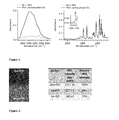
- Figure 1 shows ATR-FTIR spectra of a bare PES membrane (dashed line) and of a PES membrane after modification in a 1.0 mM solution of the aryldiazonium cation of compound 4 (continuous line).
- the spectrum of the bare PES membrane was found to be in good agreement with PES spectra found in the literature.
- the peak at 1236 cm -1 is characteristic of PES and is usually assigned to the asymmetric stretching of Ar-O-Ar ethers.
- Broad peaks at 3400 cm -1 and 1640 cm -1 can be attributed to stretching and bending modes of residual water held within the membrane, respectively.
- a summary of infrared peaks and their assignments is reported in Table I.
- ATR-FTIR confirmed that aryldiazonium cations can be used for the modification of PES membranes in a single step via immersion into solutions of cations prepared in situ.
- this methodology does not require extensive pre-treatment of surfaces, as direct functionalisation is accomplished.
- Carbohydrate-aryldiazonium derivatives were prepared from their corresponding amines according to reported literature procedures: D'Amour, M.; Belanger, D., Stability of Substituted Phenyl Groups Electrochemically Grafted at Carbon Electrode Surface Journal of Physical Chemistry B 2003, 107 (20), 4811-4817 ; and Hermans, A.; Seipel, A. T.; Miller, C. E.; Wightman, R. M., Carbon-Fiber Microelectrodes Modified with 4-Sulfobenzene Have Increased Sensitivity and Selectivity for Catecholamines. Langmuir 2006, 22 (5), 1964-1969 .
- the amine derivative of the desired compound (X M) was dissolved in tetrafluoroboric acid (2X M). Following cooling to -5 °C a 1X M solution of sodium nitrite in water was added dropwise over 30 min with stirring. If the tetrafluoroborate salt of the carbohydrate-aryldiazonium derivatives is to be isolated, the precipitate obtained is filtered by suction, washed with an ice cold ether/methanol mixture (4:1) and cold ethanol, and dried under high vacuum.
- 4-aminophenol- ⁇ -D-galactopyranose (1) and 4-aminophenol- ⁇ -D-mannopyranose precursors (2), shown above were synthesized using established methods.
- the disaccharide lactose derivative, 4-aminophenol- ⁇ -D-lactopyranose (3) was synthesised using a similar synthetic approach.
- Commercially available D-Lactose was per-acetylated on treatment with sodium acetate and acetic anhydride. The product was converted to the glycosyl bromide on treatment with hydrogen bromide in acetic acid.
- a solution of the carbohydrate-diazonium tetrafluoroborate of known concentration, generally in the mM range, is made up in a suitable solvent (water if the compound is water soluble; or, acetonitrile, tetrahydrofuran and alcohols).
- a suitable solvent water if the compound is water soluble; or, acetonitrile, tetrahydrofuran and alcohols.
- a clean substrate is immersed in the solution for a noted period of time (typically 5-60 min). Following immersion, the substrate is removed from the reaction vessel, rinsed a number of times in a suitable solvent, sonicated for 30 seconds to remove physisorption products and dried under Argon.
- Carbohydrate-diazonium cations are generated via in-situ diazotisation of carbohydrate-arylamine derivatives.
- the diazoniation procedure is carried out as described above (a) however in this protocol the isolation step is replaced with immediate functionalisation of carbon or metal surfaces.
- These substrates are immersed in the carbohydrate diazonium cation solution for a period of time (typically 5-60 min), removed and washed in a suitable solvent and finally dried under Argon.
- PES (0.45 ⁇ m, 25 mm) membranes were purchased from Sigma Aldrich (Part# Z269247, Mnfr. Pall Corporation). Prior to functionalization they were rinsed twice in deionised water and dried under vacuum and nitrogen flow. They were subsequently immersed for 1 h in the dark at room temperature in a 1.0 mM aqueous solution of the Lac-aryldiazonium cation which was prepared in situ. Samples were then twice washed in deionised water and dried under nitrogen prior to further use.
- FIG. 1 shows a fluorescence microscopy image of a PES coated membrane, where only the lower half of the area shown was modified with ⁇ -galactose using compound 1 as a precursor.
- a comparison of the emission intensity levels between the two sample regions clearly shows that the Gal-PES area of the sample displays much lower FITC emission than the unmodified area, thus indicating that modification with Gal layers significantly reduces BSA adsorption from solution.
- disaccharide functionalised surfaces proved significantly more effective at minimising protein adsorption than monosaccharide functionalised surfaces.
- LG represents a leaving group including halides. Any suitable leaving group can be utilised.
- OLG represents a leaving group bonded through an oxygen atom such as tosylate, mesylate, acetate, benzoate, or hydroxide. (It will be appreciated that where the leaving groups in various reaction schemes herein are depicted as OLG, the reaction schemes apply more generically to all suitable leaving groups including those not bonded through an oxygen atom and including for example halides.)
- immobilization can be achieved by the method comprising:
- a diazonium cation bonded to a carbon atom refers to a compound of the formula: wherein R represents the remainder of the linker moiety.
- the diazonium cation may have an associated anion.
- Suitable anions include organic anions, and inorganic anions. For example, halide anions or BF 4 - .
- the carbon atom in the linker moiety may be a component of an aromatic or aryl ring and the diazonium cation may be an aryl diazonium cation.
- the carbon atom in the linker moiety may be a component of an aryl ring, it will be understood that the carbon atom forms part of the aryl ring itself.
- suitable aryl diazonium cations include phenyl diazonium cations of the formula: wherein R represents the remainder of the linker moiety m can be 0 to 4; and each Z can be independently selected from hydroxy, Cl, Br, I, F, cyano, C 1 -C 5 alkoxy, and C 1 -C 5 thioalkoxy.
- the linking strategy employed is facile, can be achieved without requiring chemical pre-treatment of surfaces of beverage dispensing equipment, that the disaccharide remains bound to the surface via a robust linkage i.e. a covalent bond, and that the linker and/or linking strategy does not compromise the quality or taste of the beverage which will be dispensed through the beverage dispensing equipment.
- the anomeric position on the disaccharide is substituted with a leaving group, e.g. bromide.
- the leaving group is eliminated and replaced by an aromatic nitro compound, e.g. wherein a nitrophenyl ring is substituted with an aliphatic chain terminating with oxygen.
- the nitro functional group is subsequently reduced to the corresponding amine, whereupon it is subjected to a diazotisation procedure.
- the resulting carbohydrate diazonium material can be isolated (and stored for subsequent use at a later stage) or carried on to the next stage of the reaction process, i.e. reaction with the surface of the beverage dispensing equipment such that the carbon atom of the linker bonded to the diazonium cation now becomes bonded to the surface.
- Nylon tubing was obtained in the form of both new tubing (Mnfr. Valpar) or tubing removed from trade i.e. a commercial pub (nylon-11, ID 0.7-1.2 cm). Unless stated, all tubing for fouling experiments originated from trade. Prior to pre-treatment, tubing was either rinsed with water or soaked in caustic cleaning solution used for commercial beer line cleaning (consisting of caustic bleach and surfactants) for 20 min at room temperature and subsequently rinsed with water. Oxidative pre-treatment consisted of filling the tubing arranged in a coil with 37% formaldehyde: 50% hypophosphorous acid (HCHO:H 3 PO 2 ) in 100:1 v/v ratio at 30 °C overnight in a water bath.
- HCHO hypophosphorous acid
- tubing Prior to functionalization, the tubing was rinsed in deionised water and dried under nitrogen flow; then, it was filled with a 0.1 mM aqueous solution of Lac-aryldiazonium cations and left at room temperature in the dark for 1 h. Tubing was subsequently washed with water and installed in a beer dispensing system.
- Brass fittings were purchased from Radionics (Part# 369-1586). Prior to functionalization they were washed with soap and water, then sonicated in methanol, etched in a 0.1 M solution of HNO 3 for 5 min, and finally rinsed in water. They were subsequently immersed for 1 h in the dark at room temperature in a 0.5 mM aqueous solution of the aryldiazonium cation which prepared in situ. Samples were then washed in deionised water and dried under nitrogen prior to further use and assembly.
- Stainless steel is commonly used in beverage dispensing equipment-such as in beer faucets (taps), shanks, and restrictor disks.
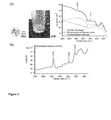
- Figure 3a demonstrates how stainless steel (SS) restrictor disk, used in beer dispensing taps, were modified with carbohydrates employing the same linking strategy as described above.
- the stainless steel restrictor disks were soaked in 10% bleach and subsequently immersed in Man-aryldiazonium salt solution.
- IRRAS spectra show a SS disk treated with bleach alone (dashed line - ratioed against another disk), a SS disk modified with 1.0 mM peracetylated Man-aryldiazonium cation kept in the dark (solid line - ratioed against a disk treated in bleach), a SS disk modified with 1.0 mM peracetylated Man-aryldiazonium cation (dotted line - ratioed against a disk treated in bleach).
- These results indicate that functionalization happens whether the aryldiazonium salt solution is exposed to light or not.
- the fact that functionalization happens in the same way under both dark and illuminated conditions means it can be used to functionalise piping and other surfaces that are kept in the dark (e.g. cooling coils, valves, and pipes in insulated beer pipelines).
- the stainless steel plate was also functionalised with carbohydrates.
- Valpar® tubing taken from a single beer line removed from trade, pre-cleaning them with cleaning-in-place (CIP) solution (e.g. bleach, base, oxidants, surfactants and combinations thereof) and modifying them with Lac-aryldiazonium as described above. They were then immersed into commercially available canned draught beer inside culture bottles. Segments were kept at room temperature and removed at time intervals to be analysed for:
- CIP cleaning-in-place
- Figure 4 shows the timeline of these experiments: six 15 cm long tubing samples were removed at each time point, 3 of these were uncoated, control samples, and 3 of these were Lactose-coated segments.
- Figure 5 shows an example of ATP content data for triplicate samples of Lactose-coated and uncoated segments after 5 and 10 days of immersion in draught beer.
- the data shows that the ATP content in solution is much lower in the case of Lactose-coated tubing than of bare nylon tubing.
- Figure 6 shows the time evolution of the ATP content measured for nylon tubing: these results show that contamination inside the tube segments builds up much more slowly in Lactose-modified tubing than in bare tubing. This trend was mirrored by microscopy analysis using He-ion microscopy - see Figure 7 .
- Figure 7 shows the progression of deposits on the internal surface of the tubing as a function of immersion time in beer.
- the amount of deposits builds more rapidly on uncoated tubing than on Lactose-coated tubing, thus indicating that the disaccharide coating inhibits the formation of a biofilm.
- Tests under flow were carried out in a beer dispensing system installed in our laboratory.
- the system consisted of one keg shared among three pairs of taps; each pair was connected to a cooler and two nylon segments, approximately 1 m long, were connected to each tap: one control bare nylon segment and one Lactose-modified nylon segment.
- Figure 8 shows the installation in our laboratory; this is a considered a "worst-case scenario" setup for beer dispensing because of the lack of cooling over the length of the tubing, the necessity to frequently disconnect the keg from the tap head and the consequent exposure to air of the inside surface of the tubing.
- a pint of beer was drawn every day from each tap over 10 working days; the lines remained empty after each beer dispensing due to the shared keg arrangements.
- both control and coated tubing segments must be cleaned at time zero using the CIP solution (20 min soak, followed by rinsing in deionised water), and both segments must originate from the same line from trade in order to be comparable. After CIP cleaning and Lactose-modification of the test nylon segments, these were installed in the system and left at room temperature for 10 working days, while drawing pints daily.
- Figure 9 shows the result of ATP content measurements obtained after each one of the consecutive four water rinses for both the control, bare nylon, tubing and the Lactose coated nylon tubing. The results indicate that the contamination inside the tubing, as indicated by the ATP concentration, is smaller for lactose coated segments than for uncoated segments. Tests showed an average 65% reduction in ATP for Lactose coated lines vs. uncoated lines.
- Figure 10 shows two typical regions of control and test tubing (lactose functionalised nylon) that clearly illustrate the observed difference. Regions closer to the fittings used to connect the tubing segments were found to display greater amounts of deposits.
- disaccharide coated surfaces and in particular lactose functionalised surfaces proved effective biofouling resistant surfaces.
- Beer dispensing equipment having a disaccharide immobilised thereon demonstrated significant resistance to biofouling versus non-functionalised beer dispensing equipment. Lactose functionalised beer dispensing equipment showed an average 65% reduction in ATP content than uncoated beer dispensing equipment.
Landscapes
- Chemical & Material Sciences (AREA)
- Organic Chemistry (AREA)
- Health & Medical Sciences (AREA)
- Chemical Kinetics & Catalysis (AREA)
- Medicinal Chemistry (AREA)
- Polymers & Plastics (AREA)
- General Chemical & Material Sciences (AREA)
- Life Sciences & Earth Sciences (AREA)
- Engineering & Computer Science (AREA)
- Biochemistry (AREA)
- Biotechnology (AREA)
- General Health & Medical Sciences (AREA)
- Genetics & Genomics (AREA)
- Molecular Biology (AREA)
- Saccharide Compounds (AREA)
Abstract
Description
- The present invention relates to drinking liquid, for example, beverage dispensing equipment.
- Drinking liquids including beverages which are non-alcoholic such as soft drinks (for example carbonated drinks) and hard or alcohol-containing drinks are often conveyed from a reservoir through dispensing lines to a dispenser for example a dispensing tap. Such an arrangement is often present in premises with a bar.
- For example beer and related beverages such a draft (also spelled draught) beverages are often conveyed through dispensing lines such as ducts or pipes from a reservoir such as a keg to an outlet such as a tap for dispensing purposes. Contamination of drink, for example beverage, such as beer, dispensing equipment, including pipes, ducting, valves, taps and restrictor disks through biofouling is presently combatted in industry by regular cleaning. This process generally involves disassembly of dispensing equipment such as pipelines and taps and flushing a cleaning fluid therethrough. This process can be tedious and costly, in terms of loss of product for example beer, down time, and the expense of cleaning products.
- Pipelines conveying both alcoholic and non-alcoholic beverages are subject to biofouling. In addition to, for example, beer dispensing lines, pipelines conveying cider, soft drinks, juices, water and dairy products such as milk can be similarly affected.
- Several approaches have been developed to combat biofouling in beer dispensing equipment.
-
US5645697 describes a method for preventing contaminant build-up in beer supply line by locating electromagnetic field generating means adjacent a section of a beer dispensing line, applying a frequency modulated square wave voltage signal to said electromagnetic field generating means to generate a varying frequency electromagnetic field in that section of the dispensing line. The authors present several explanations for the reduction in contaminants including that the applied electromagnetic field created in the pipe or duct carrying the beer interferes with electron transport within bacterial cells, leading to cell stasis or death; and/or that the electromagnetic field may block uptake of key nutrients thereby inhibiting bacterial cell growth. -
GB236106 -
WO2008035051 describes a fluid conveying conduit comprising a coil for producing a magnetic field within the body of the conduit. The authors describe disadvantages associated with wrapping coils for electromagnetic generation about beer lines, for example that said coils are prone to damage, particularly when lines are being moved. The system ofWO2008035051 has the magnetic coil in-built in the conduit thereby reducing the likelihood of damage to the coil. - Biofouling in beverage dispensing equipment which carry milk containing products is particularly problematic, for example, milk spoiling in coffee machines will compromise the quality, flavour and taste of coffee produced thereby. Saint-Gobain® have developed a platinum-cured silicon tubing under the trade name Tygon® SPT-50 LF to address this issue.
- Notwithstanding the various methods and apparatus that are available to combat biofouling in beverage dispensing equipment, it is desirable to provide an alternative construction of beverage dispensing equipment, and an alternative approach for combatting biofouling.
- In one aspect, the present invention provides beverage dispensing equipment having a surface; said surface having a disaccharide immobilised thereon; wherein the disaccharide has a linker moiety covalently bound thereto; the linker moiety is disposed between the surface and the disaccharide, and the linker moiety comprises a carbon atom that forms a covalent bond with an atom on the surface.
- Also provided for is the use of an article, in beverage dispensing equipment; said article having a surface; said surface having a disaccharide immobilised thereon; wherein the disaccharide has a linker moiety covalently bound thereto; the linker moiety is disposed between the surface and the disaccharide, and the linker moiety comprises a carbon atom that forms a covalent bond with an atom on the surface.
- In particular the present invention provides for use of an article, in beverage dispensing equipment such as beverage dispensing lines, beverage dispensing taps and restrictor disks used in beverage dispensing taps.
- Advantageously, surfaces having a disaccharide immobilised thereon as described above are resistant to biofouling. A reduction of biofouling in beverage dispensing equipment, for example in beer dispensing equipment, is particularly desirable. To combat biofouling, traditional beer dispensing equipment needs to be cleaned regularly. Advantageously the surfaces of the present invention, significantly decrease biofouling in beer dispensing equipment, thereby reducing the frequency of which said equipment requires cleaning, thus potentially leading to reduced costs and improved efficiencies.
- As used herein the term "beverage" shall be construed as relating to alcoholic and non-alcoholic drinks including but not limited to beer, cider, soft drinks, drinks comprising dairy products, coffee, tea, juices, and water. The beverage may be carbonated or non-carbonated.
- As used herein the term "beer" shall be construed as relating to at least to beers prepared from mashes prepared from malted cereals as well as mashes prepared from unmalted cereals, and mashes prepared from a mixture of malted and unmalted cereals. The term "beer" also refers to beers prepared with adjuncts and beers with all possible alcohol contents; the term "beer" for example can be construed as relating to beer, lager, ale, porter, stout, and like such liquids.
- The term "disaccharide" shall be construed as relating to natural and synthetic carbohydrates that are composed of two monosaccharide residues which are joined by a glycosidic bond, including all stereoisomeric and enantiomeric forms thereof. Representative examples of disaccharides include maltose, sucrose, lactose, lactulose, trehalose, cellobiose, isomaltose, gentiobiose, laminarabiose, chitobiose, xylobiose, inulobiose, mannobiose, hyalobiouronic acid, chondrosine, and cellobiouronic acid.
- It will be understood that the term disaccharides are composed of monosaccharides which include molecules that have a 5 and 6 membered saturated ring having the substituents on the ring such as the groups as defined herein and each ring contains one heteroatom, which forms part of the ring structure. Suitably, the heteroatom may be O, S or N. Accordingly, disaccharides comprising thiosugars and iminosugars also fall within the scope of the invention. A natural disaccharide shall be considered as an organic compound (synthesised de novo or isolated from a natural source), which is capable of being biosynthesised by living organisms, and which has the empirical formula Cm(H2O)n where m and n can be the same or different.
- Disaccharides suitable for use in the present invention can be represented by the general formula:
M1-X-M2
wherein M1 and M2 are each independently C4 or C5 monosaccharide sugars, which can be cyclic or acyclic, and are optionally substituted with OH, H, NH2, F, SH, C2-C30 carbon esters, C2-C30 amides, C2-C30 phosphate esters, C1-C10 amino alkyl, C2-C20 bisalkyl amino, C1-C10 alkoxy, C1-C10 thioalkoxy, C5-C20 aryloxy, C5-C20 thioaryloxy, C5-C20 heteroaryloxy, C5-C20 thioheteroaryloxy;
wherein at least one of M1 or M2 is a heterocyclic sugar ring, comprising O, S or NR in the ring; and wherein X is O, S or NR;
wherein each R is independently selected from the group consisting of H, a C1-C10 aliphatic chain and wherein X is bonded in the anomeric position of either M1 or M2. - For example, disaccharides of the present invention may have the following formula:

wherein Y is O, S or NR;
X is O, S or NR;
each n can independently be 0 or 1;
A1 is -CH2-;
wherein each of R1, R2, R3, and R4 can be the same or different and may be selected from the group consisting of OH, H, NH2, F, SH, C2-C30 carbon esters, C2-C30 amides, C2-C30 phosphate esters, C1-C10 amino alkyl, C2-C20 bisalkyl amino, C1-C10 alkoxy, C1-C10 thioalkoxy, C5-C20 aryloxy, C5-C20 thioaryloxy, C5-C20 heteroaryloxy, C5-C20 thioheteroaryloxy,
and wherein each R is independently selected from the group consisting of H, a C1-C10 aliphatic chain. - Preferably, Y is O and X is O.
- Other suitable disaccharides for use in the present invention can be represented by the formula:

wherein each Y is independently selected from the group consisting of O, S or NR;
X is O, S or NR;
each n may independently be 0 or 1;
and wherein each R is independently selected from the group consisting of H, a C1-C10 aliphatic chain. - Suitably each Y and X are O.
- For example, compounds having the following formula may be used:

- Preferably, Y is O.
- Such as:

- Specifically:

- Disaccharides having any combination of R1, R2, R3, R4, R5, R6, R7 and R8 substituents are suitable and encompassed by the present invention.
- A further representative formula for disaccharides suitable for use in the present invention is shown below:

- Y is O is preferred. Similarly Y is O and X is O is preferred.
- Specifically:

- Another representative formula for disaccharides suitable for use in the present invention is shown below:

wherein each Y is independently selected from the group consisting of O, S or NR;
X is O, S or NR;
n may independently be 0 or 1;
and wherein each R is independently selected from the group consisting of H, a C1-C10 aliphatic chain. - Y is O is preferred. Similarly Y is O and X is O is preferred.
- Specific examples include:

- Disaccharides according to the above-mentioned formulae, having any combination of R1, R2, R3, R4, R5, R6, R7 and R8 substituents are suitable for use in, and encompassed by, the present invention.
- In one embodiment the disaccharide and linker immobilised on the surface of the beverage dispensing equipment may have the following general formula:

wherein at least one of M1 or M2 is a heterocyclic sugar ring, comprising O, S or NR in the ring; and wherein X is O, S or NR;
wherein each R is independently selected from the group consisting of H, a C1-C10 aliphatic chain and wherein X is bonded in the anomeric position of either M1 or M2; wherein X2 is O, S, NH or CH2;
m can be 0 to 4;
each Z can be independently selected from hydroxy, Cl, Br, I, F, cyano, C1-C5 alkoxy, and C1-C5 thioalkoxy;
B can be C5-C20 aryl, or C3-C20 heteroaryl;
A can be C1-C20 aliphatic, or C1-C20 heteroaliphatic; and p can be 0 or 1;
and whereby B comprises a carbon atom that forms a covalent bond with an atom on the surface. - For example, in one embodiment the disaccharide and linker immobilised on the surface may have the following formula:

wherein Y is O, S or NR; X is O, S or NR;
each n can independently be 0 or 1;
A1 is -CH2-;
wherein each of R1, R2, R3, and R4 can be the same or different and may be selected from the group consisting of OH, H, NH2, F, SH, C2-C30 carbon esters, C2-C30 amides, C2-C30 phosphate esters, C1-C10 amino alkyl, C2-C20 bisalkyl amino, C1-C10 alkoxy, C1-C10 thioalkoxy, C5-C20 aryloxy, C5-C20 thioaryloxy, C5-C20 heteroaryloxy, C5-C20 thioheteroaryloxy;
wherein each R is independently selected from the group consisting of H, a C1-C10 aliphatic chain;
X2 is O, S, NH or CH2;
m can be 0 to 4;
each Z can be independently selected from hydroxy, Cl, Br, I, F, cyano, C1-C5 alkoxy, and C1-C5 thioalkoxy;
B can be C5-C20 aryl, or C3-C20 heteroaryl;
A can be C1-C20 aliphatic, or C1-C20 heteroaliphatic; and
p can be 0 or 1;
and whereby B comprises a carbon atom that forms a covalent bond with an atom on the surface. - In another embodiment, the disaccharide and linker immobilised on the surface may have the following formula:

wherein each Y is independently selected from the group consisting of O, S or NR; X is O, S or NR;
each n may independently be 0 or 1;
and wherein each R is independently selected from the group consisting of H, a C1-C10 aliphatic chain; and
X2 is O, S, NH or CH2;
m can be 0 to 4;
each Z can be independently selected from hydroxy, Cl, Br, I, F, cyano, C1-C5 alkoxy, and C1-C5 thioalkoxy;
B can be C5-C20 aryl, or C3-C20 heteroaryl;
A can be C1-C20 aliphatic, or C1-C20 heteroaliphatic; and
p can be 0 or 1;
and whereby B comprises a carbon atom that forms a covalent bond with an atom on the surface. - For example, the disaccharide and linker immobilised on the surface may have the following formula:

wherein each Y is independently selected from the group consisting of O, S or NR;
X is O, S or NR;
each n may independently be 0 or 1;
and wherein each R is independently selected from the group consisting of H, a C1-C10 aliphatic chain; and
X2 is O, S, NH or CH2;
m can be 0 to 4;
each Z can be independently selected from hydroxy, Cl, Br, I, F, cyano, C1-C5 alkoxy, and C1-C5 thioalkoxy;
B can be C5-C20 aryl, or C3-C20 heteroaryl;
A can be C1-C20 aliphatic, or C1-C20 heteroaliphatic; and
p can be 0 or 1;
and whereby B comprises a carbon atom that forms a covalent bond with an atom on the surface. - Suitably, R1, R2, R3, R4, R5, R6, and R8 may be OH, X and Y may be O.
- In one embodiment R1, R2, R3, R4, R5, R6, and R8 are OH, and R7 is H; X and Y are O and X2 is O.
- Suitably, when Y is N or S, it is preferred that at least two of R1, R2, R3, and R4- are -OH, and that at least two of R5, R6, R7 and R8 are -OH. More preferably still, at least at least three of R1, R2, R3, and R4 are -OH. More preferably still, all four of R1, R2, R3, and R4 are -OH. In some embodiment, it is preferred that R4 is -OH.
- B can be can be selected from the group consisting of phenyl, pyridyl, thienyl, pyrollyl, pyrazyl, pyrimidyl, imidazolyl, indolyl, quinolyl, and isoquinolyl. For example, B may be phenyl.
- In one embodiment the disaccharide and linker immobilised on the surface have the following formula:

- Preferably, R7 is H, R8 is -CH2OH and at least 4 of R1, R2, R3, R4, R5, and R6 are OH. More preferably X2 is additionally O.
- In one embodiment, R7 is H, R8 is -CH2OH and at least 4 of R1, R2, R3, R4, R5, and R6 are OH, X2 is O, p is 0, and B is phenyl.
- For example, the disaccharide and linker immobilised on the surface may be selected from the group consisting of:


- In another embodiment, the disaccharide and linker immobilised on the surface may have the following formula:

wherein each Y is independently selected from the group consisting of O, S or NR; X is O, S or NR;
n may independently be 0 or 1;
and wherein each R is independently selected from the group consisting of H, a C1-C10 aliphatic chain; and
X2 is O, S, NH or CH2;
m can be 0 to 4;
each Z can be independently selected from hydroxy, Cl, Br, I, F, cyano, C1-C5 alkoxy, and C1-C5 thioalkoxy;
B can be C5-C20 aryl, or C3-C20 heteroaryl;
A can be C1-C20 aliphatic, or C1-C20 heteroaliphatic; and
p can be 0 or 1;
and whereby B comprises a carbon atom that forms a covalent bond with an atom on the surface. - Suitably, n is 1, R1, R2, R3, R4, R5, and R8 may be OH, and X and Y may be O.
- In one embodiment R1, R2, R3, R4, R5, and R8 are OH, and R7 is H; R8 is-CH2OH; X and Y are O and X2 is O.
- Suitably, when Y is N or S, it is preferred that at least two of R1, R2, R3, and R4- are -OH, and that at least two of R5, R6, R7 and R8 are -OH. More preferably still, at least at least three of R1, R2, R3, and R4 are -OH. More preferably still, all four of R1, R2, R3, and R4 are -OH. In some embodiment, it is preferred that R4 is -OH.
- B can be can be selected from the group consisting of phenyl, pyridyl, thienyl, pyrollyl, pyrazyl, pyrimidyl, imidazolyl, indolyl, quinolyl, and isoquinolyl. For example, B may be phenyl.
- In one embodiment, the disaccharide and linker immobilised on the surface has the formula:

- In one embodiment the disaccharide and linker immobilised on the surface has the formula:

- For example, in one embodiment the disaccharide and linker immobilised on the surface has the formula:


- In yet a further embodiment the disaccharide and linker immobilised on the surface has the formula:


wherein each Y is independently selected from the group consisting of O, S or NR;
X is O, S or NR;
n may independently be 0 or 1;
and wherein each R is independently selected from the group consisting of H, a C1-C10 aliphatic chain;
X2 is O, S, NH or CH2;
m can be 0 to 4;
each Z can be independently selected from hydroxy, Cl, Br, I, F, cyano, C1-C5 alkoxy, and C1-C5 thioalkoxy;
B can be C5-C20 aryl, or C3-C20 heteroaryl;
A can be C1-C20 aliphatic, or C1-C20 heteroaliphatic; and
p can be 0 or 1; - and whereby B comprises a carbon atom that forms a covalent bond with an atom on the surface. The surface of the present invention will preferably be a reducing surface relative to the diazonium cation, i.e. the surface will provide electrons to reduce the diazonium cation. For example, electron donation from a surface state to the molecular state, i.e. the diazonium cation, should be thermodynamically favoured.
- For surfaces where the standard reduction potential is measurable, the diazonium cation utilised in the method of the present invention should have a standard reduction potential greater than the particular surface to which the carbohydrate is to be bound. References to standard reduction potentials in this specification indicate the tendency of a species to acquire electrons and thereby be reduced. Standard reduction potentials are measured under standard conditions: 25 °C, 1 M concentration, a pressure of 1.01325 × 10⁵ Pa (1 atm) and elements in their pure state.
- Alternatively, the reduction of the diazonium cation can be driven electrochemically. Where the reduction of the diazonium cation is driven electrochemically the surface should be conducting. In this case the surface will be selected from the group consisting of metals and semiconductors.
- Suitable surfaces for use in the method of the present invention may be selected from the group consisting of metals including Ti, Fe, Cr, Cu, Zn, Al, and alloys thereof containing at least one of said metals, such as stainless steels, brasses, bronzes; tin oxide, SiO2, titanium oxide, iron oxides, zinc oxides, polymers or plastics such as, polystyrene, polythene, nylon, polytetrafluoroethylene (PTFE), polyestersulfone, polyethylene terephthalate (PET), polyethersulfone (PES), polyvinyl chlorides (PVC), polystyrenes (PS), polyesters, polyepoxides, polyacetates (e.g. polyvinylacetate), polyethylene oxide, polymethylene oxide, polyphenyl oxide, silicones, polybutadiene, polyacrilonitrile, polypropylene (PP), polyethylene (PE), polyvinylidenefluoride (PVDF), polybutylene (PB), perfluoroalkoxy alkanes (PFA), fluorinated ethylene propylene (FEP), ethylene trifluoroethylene (ETFE), polycarbonates (PC), polyestersulfone (PES), polysulfones, Polyetherimide (PEI), polyamides (e.g. Nylon, Aramids), polyimides (e.g. Vespel), poly(vinyl alcohol) (PVA), polyacrylics (e.g. PMMA, PAA), polyoxymethylenes (POM), polyurethanes, polyethylene terephthalate (PET), polytrimethylene terephthalate (PTT), polybutyrate, melamine and combinations thereof.
- Particularly preferred metal and alloys are Cu, Fe, Ti, Zn and alloys thereof containing at least one of said metals, such as stainless steel; SiO2, titanium oxide, iron oxides, zinc oxides.
- Suitable surfaces include those substantially made from polystyrene, polythene, polyamides (e.g. nylon), polytetrafluoroethylene (PTFE), polyestersulfone, polyethylene terephthalate (PET), and combinations thereof.
- Preferred surfaces for immobilisation of a disaccharide thereto include those made substantially from, a stainless steel material, a polymethylmethacrylate material, a polyamide material, a polyethylene material, a polyacetal material such as polyoxymethylene, or copolymers thereof, an acrylonitrile material and/or a polyvinyl material such as polyvinyl alcohol or polyvinyl chloride.
- Particularly preferred surfaces include those made substantially of a polyamide material, such as nylon, for example nylon-4,6, nylon-6,6, nylon-6, nylon-11, nylon-12.
- It will be appreciated that the nature of the atom on the surface to which the carbon of the linker moiety is covalently bound, depends on the surface itself. For example, in carbon based surfaces this atom is C, whereby a C-C covalent bond is formed. For metal or metal oxide surfaces this atom is typically an O, whereby a C-O covalent bond is formed.
- In a preferred embodiment, the surface comprises carbon such that the linker moiety is bonded to the surface by means of a C-C bond. Advantageously, this results in particularly strong bonding of the carbohydrate to the surface by means of a C-C bond, which is resistant to hydrolysis.
- Suitably the surface is made substantially from a polyamide material, a vinyl material, a thermoplastic vinyl material, a polyethylene material, a stainless steel material, or a polyoxymethylene material.
- The linker moiety may be covalently bound to the carbohydrate by means of a glycosidic bond. The glycosidic bond may be selected from the group consisting of an O-glycosidic bond, an S-glycosidic bond, an N-glycosidic bond and a C-glycosidic bond. The glycosidic bond may be an anomeric glycosidic bond.
- The linker moiety may be selected from the group consisting of C5-C20 aryl, C3-C20 heteroaryl, C5-C20 aryloxy, C3-C20 heteroaryloxy, C5-C20 aryl substituted with C1-C20 aliphatic, C5-C20 aryl substituted with C3-C20 cycloaliphatic, C3-C20 heteroaryl substituted with C1-C20 aliphatic, C3-C20 heteroaryl substituted with C3-C20 cycloaliphatic, C3-C20 heteroaryl substituted with C1-C20 heteroaliphatic, and C3-C20 heteroaryl substituted with C3-C20 cycloheteroaliphatic, wherein each of the above moieties can be optionally substituted one or more times with at least one of hydroxy, Cl, Br, I, F, cyano, C1-C5 alkoxy, and C1-C5 thioalkoxy.
- As used herein, the term Cx-Cy aliphatic refers to linear, branched, saturated and unsaturated hydrocarbon chains comprising Cx-Cy carbon atoms (and includes Cx-Cy alkyl, Cx-Cy alkenyl and Cx-Cy alkynyl). Cx-Cy heteroaliphatic refers to linear, branched, saturated and unsaturated hydrocarbon chains comprising Cx-Cy carbon atoms, wherein the carbon atoms are interspaced with heteroatoms such as O, N, and S in no regular order or sequence. Cx-Cy heteroaliphatic shall be construed as covering polyethers and polythioethers.
- Similarly, references to Cx-Cy alkyl, Cx-Cy alkenyl and Cx-Cy alkynyl include linear and branched Cx-Cy alkyl, Cx-Cy alkenyl and CX-Cy alkynyl.
- As used herein, the term "Cx-Cy cycloaliphatic" refers to unfused, fused, spirocyclic, polycyclic, saturated and unsaturated hydrocarbon rings comprising Cx-Cy carbon atoms (and includes Cx-Cy cycloalkyl, Cx-Cy cycloalkenyl and Cx-Cy cycloalkynyl).
- As used herein, the term aryl/aromatic refers to an aromatic carbocyclic structure which is monocyclic or polycyclic and is unfused or fused. As used herein, the term heterocycle refers to cyclic compounds having as ring members, atoms of at least two different elements. The cyclic compounds may be monocyclic or polycyclic, and unfused or fused.
- As used herein, the term heteroaromatic/heteroaryl refers to an aromatic heterocyclic structure having as ring members, atoms of at least two different elements. The heterocycle may be monocyclic or polycyclic, and unfused or fused.
- The compounds of the present invention may be found or isolated in the form of esters, salts, hydrates or solvates - all of which are embraced by the present invention.
- Where suitable, it will be appreciated that all optional and/or preferred features of one embodiment of the invention may be combined with optional and/or preferred features of another/other embodiment(s) of the invention.
- Embodiments of the invention will be described, by way of example only, with reference to the accompanying drawings in which:
-
Figure 1 shows attenuated total reflectance-Fourier transform infrared spectroscopy spectra of PES membranes unmodified (dashed line) and modified with the aryldiazonium cation of compound 4 (continuous line). The inset shows the difference between the two spectra in the carbonyl stretching region, where a C=O stretching peak is visible in the case of membranes modified with per-acylated glucoside groups. -
Figure 2 shows fluorescence images of PES membranes modified with the aryldiazonium cation of galactose compound 1 (Gal-PES) over selected regions, after incubation in Fluorescein isothiocyanate labelled bovine serum albumin (FITC-BSA) solutions (image width = 550 µm). The region that was not functionalised with galactose appears brighter in the image, thus indicating greater BSA adsorption. -
Figure 2 also shows a table with a comparison of average intensity measured at membranes modified with the aryldiazonium cation of galactose compound 1 (Gal-PES) and with the aryldiazonium cation of lactose compound 3 (Lac-PES) compared to that observed on bare (unmodified) PES membranes. Lactose functionalised PES proved significantly more resistant to BSA adsorption than either Galactose functionalised PES or unmodified PES. -
Figure 3a : Modification of stainless steel (SS) restrictor disk, used in beer dispensing taps, with Man-aryldiazonium salt via 10% bleach oxidation followed by immersion in diazonium salt (the aryldiazonium cation of mannopyranose compound 2) solution. Infrared reflection absorption spectroscopy (IRRAS) spectra show a SS disk treated with bleach alone (dot-dashed - ratioed against another disk), a SS disk modified with 1.0 mM peracetylated Man-aryldiazonium cation kept in the dark (continuous - ratioed against a disk treated in bleach), a SS disk modified with 1.0 mM peracetylated Man-aryldiazonium cation (dotted - ratioed against a disk treated in bleach). -
Figure 3b : Modification of an SS316 stainless steel plate, after soaking in 10% bleach, with 1.0 mM peracetylated lactose-aryldiazonium cations generated in situ; Infrared reflection absorption spectroscopy (IRRAS) spectra obtained using an unmodified SS316 plate as background clearly show the signature of C=O and C-O stretching modes (1753 and 1225 cm-1), and of CH3 deformation modes (1369 cm-1) characteristic of the acetyl protecting group. -
Figure 4 : Timeline of immersion experiments using canned beer. Six 15 cm long tubing samples were removed at each time point, 3 of these were uncoated, control samples and 3 of these were Lactose-coated segments. -
Figure 5 : ATP content data for triplicate samples of Lactose-coated and uncoated segments after 5 and 10 days of immersion in draught beer. Lactose-coated nylon tubing was formed by immersing nylon tubing in a solution of the aryldiazonium cation ofcompound 3. -
Figure 6 : ATP content, measured in relative luminescence units (RLU), as a function of immersion time in beer for both control and Lactose-coated nylon tubing segments. -
Figure 7 : He-ion images of the tubing surface as a function of immersion time in beer for both control and Lactose-coated nylon tubing segments. Deposits increase more rapidly on the uncoated surface than on the coated one. -
Figure 8 : Test beer dispensing system installed in our laboratory for carrying out 10-day tests. A schematic of the connections is also shown. -
Figure 9 : ATP content data for triplicate pairs of Lactose-coated and uncoated segments after 10 days of testing in a beer dispensing system (1 pint/day drawn). The amount of ATP accumulated in the tubing decreases after every water rinse, however, on average ATP concentration is lower inside coated tubing. -
Figure 10 : He-ion microscopy images of lactose modified and uncoated nylon tubing exposed to beer for 10 days (image width = 100 µm); images show negligible bacterial accumulation on lactose modified nylon tubing compared to bare nylon tubing under the same exposure conditions. - It should be readily apparent to one of ordinary skill in the art that the examples disclosed herein represent generalised examples only, and that other arrangements and methods capable of reproducing the invention are possible and are embraced by the present invention.
- In order to initially develop a biofouling resistant surface, several surfaces were functionalised with different classes of carbohydrate and proof of concept studies were carried out to determine which class of carbohydrate proved most effective.
- In order to successfully develop biofouling resistant beverage dispensing equipment, by functionalising the surfaces of equipment/materials currently employed in beverage dispensing equipment, it would be desirable not to have to pre-treat said surfaces to modify the functionality thereon. Notwithstanding the foregoing, if modification of surface functionality is required in advance of tethering carbohydrates thereto, desirably, such modification will not have a deleterious impact on the quality or taste of beverage which comes into contact with said surface.
- For example, functionalization of articles having surfaces, by pre-treating the surface to modify the surface functionality, for example, by introducing reactive sulfur groups onto the surface, and then subsequently carrying out a coupling reaction between a functionalised carbohydrate and said surface was not considered a desirable approach for developing biofouling resistant beverage dispensing equipment.
- Preferably, surfaces are directly functionalised, without the necessity of pre-treatment.
- More, preferably, the carbohydrate is linked to the surface via a linker moiety comprising a carbon atom that forms a covalent bond with an atom on the surface.
- It is imperative that the surface thus formed has biofouling resistant properties and that said surface does not comprise potential contaminants which would adversely affect the quality or taste of the beverage which is dispensed through the beverage dispensing equipment. Accordingly, pre-functionalization of surfaces with for example sulfur or the like is not suitable, as such surfaces would inevitably have a deleterious effect on the quality of the beverage dispensed through the equipment and in particular on the taste and fragrance of the beverage.
- Cognisant of the above requirements, the linking strategy described below was employed to functionalise a variety of surfaces with varying types of carbohydrates and the biofouling resistant properties of said surfaces was subsequently determined.
- The following mono and di-saccharide 4-aminophenyl glycosides were prepared:

- Mono- and di-saccharide 4-aminophenyl glycosides were prepared through the general synthetic pathway outlined in
Scheme 1 below:
- The mono- and di-saccharide 4-aminophenyl glycosides were then used for the modification of PES membranes surfaces via immersion into their corresponding aryldiazonium cation solutions as shown in
Scheme 2 below:
- Attenuated Total Internal Reflectance Infrared Spectroscopy (ATR-FTIR) and binding experiments in combination with fluorescence imaging were employed in order to investigate the modification of surfaces.
-
Figure 1 shows ATR-FTIR spectra of a bare PES membrane (dashed line) and of a PES membrane after modification in a 1.0 mM solution of the aryldiazonium cation of compound 4 (continuous line). The spectrum of the bare PES membrane was found to be in good agreement with PES spectra found in the literature. Two peaks at 3096 cm-1 and 3070 cm-1 are due to aromatic C-H stretching modes, whereas peaks at 1578, 1485 and 1408 cm-1 are attributed to aromatic C=C stretching modes. - Peaks at 1321 and 1297 cm-1 arise from S=O asymmetric stretches in -SO2-, while the 1146 cm-1 peak is attributed to the symmetric stretching mode. The peak at 1236 cm-1 is characteristic of PES and is usually assigned to the asymmetric stretching of Ar-O-Ar ethers. Broad peaks at 3400 cm-1 and 1640 cm-1 can be attributed to stretching and bending modes of residual water held within the membrane, respectively. A summary of infrared peaks and their assignments is reported in Table I. The spectrum of the PES membrane modified with per-acetylated glucopyranoside (4) displays a similar spectral profile to that of bare PES with the exception of two additional peaks at 1739 cm-1 (inset of
Figure 1 ) and 1370 cm-1 characteristic of C=O stretching modes of esters and of -CH3 bending modes, respectively, which can be attributed to surface-bound acetyl groups.
- The presence of these peaks indicates that, after immersion of PES membranes in the aryldiazonium cation solution, their surface is modified with per-acetylated glucopyranoside moieties. ATR-FTIR spectra of PES membranes modified with de-acetylated 4-aminophenyl glycosides 1-3 did not reveal significant differences compared to that of a bare PES membrane due to spectral overlap in the mid-infrared between PES and phenyl glycosides.
- ATR-FTIR confirmed that aryldiazonium cations can be used for the modification of PES membranes in a single step via immersion into solutions of cations prepared in situ.
- As outlined above, desirably this methodology does not require extensive pre-treatment of surfaces, as direct functionalisation is accomplished.
- In order to investigate the potential of carbohydrate functionalised surfaces as biofouling resistant surfaces, we carried out proof of concept studies.
- Protein adsorption experiments using Bovine Serum Albumin (BSA) solutions were carried out, to determine:
- (i) that the following type of carbohydrate functionalised surfaces are biofouling resistant surfaces - namely: surfaces having a carbohydrate immobilised thereon, wherein the carbohydrate has a linker moiety covalently bound thereto, the linker moiety is disposed between the surface and the carbohydrate, and the linker moiety comprises a carbon atom that forms a covalent bond with an atom on the surface; and
- (ii) what class of carbohydrate immobilised on such surfaces proved the most effective biofouling resistant surface.
- Preparation of carbohydrate functionalised surfaces
- Preparation of the carbohydrate-aryldiazonium derivatives Carbohydrate-aryldiazonium derivatives were prepared from their corresponding amines according to reported literature procedures: D'Amour, M.; Belanger, D., Stability of Substituted Phenyl Groups Electrochemically Grafted at Carbon Electrode Surface Journal of Physical Chemistry B 2003, 107 (20), 4811-4817; and Hermans, A.; Seipel, A. T.; Miller, C. E.; Wightman, R. M., Carbon-Fiber Microelectrodes Modified with 4-Sulfobenzene Have Increased Sensitivity and Selectivity for Catecholamines. Langmuir 2006, 22 (5), 1964-1969.
- In short, the amine derivative of the desired compound (X M) was dissolved in tetrafluoroboric acid (2X M). Following cooling to -5 °C a 1X M solution of sodium nitrite in water was added dropwise over 30 min with stirring. If the tetrafluoroborate salt of the carbohydrate-aryldiazonium derivatives is to be isolated, the precipitate obtained is filtered by suction, washed with an ice cold ether/methanol mixture (4:1) and cold ethanol, and dried under high vacuum.
- 4-aminophenol-β-D-galactopyranose (1) and 4-aminophenol-α-D-mannopyranose precursors (2), shown above were synthesized using established methods. The disaccharide lactose derivative, 4-aminophenol-β-D-lactopyranose (3) was synthesised using a similar synthetic approach. Commercially available D-Lactose was per-acetylated on treatment with sodium acetate and acetic anhydride. The product was converted to the glycosyl bromide on treatment with hydrogen bromide in acetic acid. Silver ion promoted glycosylation of the anomeric bromide, furnished the 4-nitrophenol lactose derivative which was subsequently deprotected under basic conditions, and the nitro group reduced to give the desired 4-
aminophenol product 3. Per-acetylated 4-aminophenol-β-D-glucopyranose (4) was synthesized using established methods. - A solution of the carbohydrate-diazonium tetrafluoroborate of known concentration, generally in the mM range, is made up in a suitable solvent (water if the compound is water soluble; or, acetonitrile, tetrahydrofuran and alcohols). A clean substrate is immersed in the solution for a noted period of time (typically 5-60 min). Following immersion, the substrate is removed from the reaction vessel, rinsed a number of times in a suitable solvent, sonicated for 30 seconds to remove physisorption products and dried under Argon.
- Carbohydrate-diazonium cations are generated via in-situ diazotisation of carbohydrate-arylamine derivatives. The diazoniation procedure is carried out as described above (a) however in this protocol the isolation step is replaced with immediate functionalisation of carbon or metal surfaces. These substrates are immersed in the carbohydrate diazonium cation solution for a period of time (typically 5-60 min), removed and washed in a suitable solvent and finally dried under Argon.
- PES (0.45 µm, 25 mm) membranes were purchased from Sigma Aldrich (Part# Z269247, Mnfr. Pall Corporation). Prior to functionalization they were rinsed twice in deionised water and dried under vacuum and nitrogen flow. They were subsequently immersed for 1 h in the dark at room temperature in a 1.0 mM aqueous solution of the Lac-aryldiazonium cation which was prepared in situ. Samples were then twice washed in deionised water and dried under nitrogen prior to further use.
- Modified and unmodified PES membranes were incubated for 2 h in a 0.2 mg mL-1 solution of FITC-BSA in PBS at pH 7.4; the membranes were then washed with the PBS solution in order to remove unbound protein prior to imaging.
Figure 2 shows a fluorescence microscopy image of a PES coated membrane, where only the lower half of the area shown was modified with β-galactose using compound 1 as a precursor. A comparison of the emission intensity levels between the two sample regions clearly shows that the Gal-PES area of the sample displays much lower FITC emission than the unmodified area, thus indicating that modification with Gal layers significantly reduces BSA adsorption from solution. - In order to compare the effectiveness at minimizing BSA adsorption of a mono- and a di-saccharide, we carried out fluorescence imaging of Gal-PES, Lac-PES and bare PES membranes. Modified and unmodified PES membranes were incubated for 2 h in 0.5 mg mL-1 solutions of FITC-BSA in PBS at pH 7.4, rinsed in PBS buffer and then imaged via fluorescence microscopy under identical conditions.
Figure 2 also shows a table summarising the FITC emission intensity measured at bare PES, Gal-PES and Lac-PES membranes, after incubation in FITC-BSA. The emission is the highest for bare membranes and is reduced by 16% for Gal-PES surfaces and by 48% for Lac-PES under the experimental conditions. - Thus disaccharide functionalised surfaces proved significantly more effective at minimising protein adsorption than monosaccharide functionalised surfaces.
- Our proof of concept study thus determined that carbohydrate functionalised surfaces, linked as described above do have biofouling resistant properties and also said study identified that disaccharides and lactose functionalised surfaces in particular were significantly more resistant to protein adsorption than monosaccharide functionalised surfaces.
- The ability to functionalise beverage dispensing equipment with disaccharides was then investigated.
- A general schematic for the synthesis of beverage dispensing equipment having surfaces with disaccharides immobilized thereon is given in
Scheme 3 below.
- One particularly desirable method for functionalizing the surface of beverage dispensing equipment is to immobilize the disaccharide on said surface via a linker moiety covalently bound to the disaccharide, wherein the linker is disposed between the surface and the disaccharide and the linker moiety comprises a carbon atom that forms a covalent bond with an atom on the surface, wherein the carbon atom of the linker moiety that forms a covalent bond with an atom on the surface is not substituted with =O, =N or =S and wherein the carbon atom in the linker moiety that forms a covalent bond with an atom on the surface is a component of an aromatic or aryl ring. Optionally such immobilization can be achieved by the method comprising:
- (i) providing a disaccharide having a linker moiety covalently bound thereto, wherein the linker moiety comprises a carbon atom bonded to a diazonium cation, and wherein the carbon atom in the linker moiety that is bonded to the diazonium cation is a component of an aromatic or aryl ring such that the diazonium cation is an aryl diazonium cation; and
- (ii) reacting the diazonium cation with the surface, such that reduction of the diazonium cation results in the carbon atom of the linker moiety forming a covalent bond with an atom on the surface.
- As used herein, a diazonium cation bonded to a carbon atom refers to a compound of the formula:

- The carbon atom in the linker moiety may be a component of an aromatic or aryl ring and the diazonium cation may be an aryl diazonium cation. As will be understood by the skilled person when reading that the carbon atom in the linker moiety may be a component of an aryl ring, it will be understood that the carbon atom forms part of the aryl ring itself. For example, suitable aryl diazonium cations include phenyl diazonium cations of the formula:

m can be 0 to 4; and
each Z can be independently selected from hydroxy, Cl, Br, I, F,
cyano, C1-C5 alkoxy, and C1-C5 thioalkoxy. - As outlined above, it is imperative that the linking strategy employed, is facile, can be achieved without requiring chemical pre-treatment of surfaces of beverage dispensing equipment, that the disaccharide remains bound to the surface via a robust linkage i.e. a covalent bond, and that the linker and/or linking strategy does not compromise the quality or taste of the beverage which will be dispensed through the beverage dispensing equipment.
- A general schematic for the synthesis of the amino precursors to diazonium substituted disaccharides is given in
Scheme 4 below, wherein 4-nitro benzyl alcohol is employed as a representative linker. -

- In particular, the anomeric position on the disaccharide is substituted with a leaving group, e.g. bromide. The leaving group is eliminated and replaced by an aromatic nitro compound, e.g. wherein a nitrophenyl ring is substituted with an aliphatic chain terminating with oxygen. The nitro functional group is subsequently reduced to the corresponding amine, whereupon it is subjected to a diazotisation procedure.
- The resulting carbohydrate diazonium material can be isolated (and stored for subsequent use at a later stage) or carried on to the next stage of the reaction process, i.e. reaction with the surface of the beverage dispensing equipment such that the carbon atom of the linker bonded to the diazonium cation now becomes bonded to the surface.
- The immobilization strategy outlined in
Scheme 4 above was employed to functionalize beverage dispensing surfaces with disaccharides and surfaces suitable for use in beverage dispensing equipment with disaccharides. - Commercially available D-Lactose was acetylated using sodium acetate and acetic anhydride. The product was converted to the lactosyl bromide using Hydrogen bromide in acetic acid. Silver ion mediated glycosylation of the bromide produced the 4- Nitrophenyl lactose derivative which was deprotected and reduced to give the final product (Scheme 5).
-

-

-

pH 10. The solid slowly dissolved and the mixture was stirred at room temperature for 16 h. The reaction mixture was adjusted topH 7 with dropwise addition of 6M HCl. The solid product was filtered, washed with MeOH and dried. White solid (6.5 g, 97 %). [α]D20 (deg cm3 g-1 dm-1) = -70.0° (c = 2.0 x 10⁻³ g cm-1 in MeOH/H2O 1:1); 1H-NMR (600 MHz, d6-DMSO), δ 8.22 (2H, d, J= 9.0 Hz, Ar-H2, H3), 7.25 (2H, d, J= 9.0 Hz, Ar-H1, H4), 5.60 (1H, d, J = 5.2 Hz, OH) 5.20 (1H, d, J = 7.8 Hz, H1-Glc), 4.84 (1H, s, OH), 4.80 (1H, d, J = 5.0 Hz, OH) 4.67 (1H, d, J = 5.0 Hz, OH), 4.63 (1H, d, J = 5.4 Hz, OH), 4.53 (1H, d, J = 4.4 Hz, OH), 4.26 (1H, d, J = 7.6 Hz, H1-Gal), 3.76 (1H, m, H6a, H6-Glc), 3.65 (1H, m, H6b, H6-Glc), 3.64 (1H, m, H5-Glc), 3.63 (1H, m, H4-Gal), 3.54 (2H, m, H6a, H6b, H6-Gal), 3.50 (1H, m, H3- Glc), 3.45 (1H, m, H5-Gal), 3.44 (1H, m, H4-Glc), 3.34 (1H, m, H2-Gal), 3.35 (1H, m, H2- Glc), 3.32 (1H, m, H3-Gal); 13C-NMR (125 MHz, d6DMSO); 162.9 (Ar-C1), 141.9 (q-C, Ar-C4), 125.7 (q-C, Ar-C3, C5), 116.5 (Ar-C2, C6), 103.8 (C1-Gal), 99.3 (C1-Glc), 79.9 (C4-Glc), 75.5 (C5-Gal), 75.1 (C5-Glc), 74.6 (C3-Glc), 73.2 (C3-Gal), 72.8 (C2-Glc), 70.5 (C2-Gal), 68.1 (C4-Gal), 60.4 (C6-Gal), 59.9 (C6-Glc); HRMS (ESI, m/z): [M+Na]+ calculated for C18H25NO13Na = 486.1218. Found 486.1485. IR (Thin film) ν max (L) 3311 (OH), 1597, 1214 (C-O), 1034 (C-O) cm-1. - Compound (3b) (1.0 g, 2.16 mmol) was dissolved in a 1:1 mixture of EtOH/H2O (20 ml) and the solution was degassed with N2 for 15 min. Pd(OH)2 on carbon (50 mg) as added and the mixture was further degassed for 10 min. The flask was evacuated and subsequently saturated with H2 over a period of 2 h after which time TLC indicated complete consumption of starting material. The mixture was filtered through a 0.4 micron filter and the solvent removed to give a solid product. Cream solid (880 mg, 94%). [α]D20 (deg cm3 g-1 dm-1) = - 46.2° (c = 2.1 x 10⁻³ g cm-1 in MeOH:H2O); 1H-NMR (600 MHz, d6-DMSO), δ 1H-NMR (600 MHz, d6-DMSO), δ 6.77 (2H, d, J = 8.3 Hz, Ar-H2, H3), 6.50 (2H, d, J = 8.3 Hz, Ar- H1, H4), 5.34 (1H, d, J= 5.3 Hz, OH), 5.10 (1H, d, J= 4.2 Hz, OH), 4.78 (1H, d, J = 4.4 Hz, OH), 4.74 (1H, s, OH), 4.68 (1H, s, OH), 4.67 (1H, d, J = 8.0 Hz, H1-Gln), 4.58 (1H, t, J = 6.0 Hz, OH), 4.52 (1H, d, J = 4.4 Hz, OH), 4.24 (1H, d, J = 7.7 Hz, H1-Gal), 3.55-3.52 (2H, m, H6a, H6b-Glc), 3.63 (1H, m, H5-Glc), 3.63 (1H, m, H4-Gal), 3.76-3.64 (2H, m, H6a, H6b, Gal), 3.41 (1H, m, H3-Glc), 3.38 (1H, m, H5-Gal), 3.48 (1H, m, H4-Gln), 3.34 (1H, m, H2- Gal), 3.23 (1H, m, H2-Glc), 3.33 (1H, m, H3-Gal); 13C-NMR (125 MHz, d6DMSO); 148.0 (q-C, Ar-C1), 143.5 (q-C, Ar-C4), 117.8 (Ar-C3, C5), 114.6 (ArC2, C6), 104.0 (C1-Gal), 102.0 (C1-Glc), 80.4 (C5-Gal), 75.8 (C4-Glc), 65.2 (C5-Glc), 74.9 (C3-Glc), 73.3 (C3-Gal), 73.0 (C2-Glc), 70.5 (C2-Gal), 68.1 (C4-Gal), 60.3 (C6-Gal), 60.4 (C6-Glc); HRMS (ESI, m/z): [M+Na]+ calculated for C18H27NO11Na = 456.1476. Found 456.1455. IR (Thin film) ν max (L) 3294 (OH), 1226 (C-O), 1090 (C-O) cm-1.
- Surfaces suitable for use in beer dispensing equipment were functionalised employing the functionalization strategy outlined above.
- Nylon tubing was obtained in the form of both new tubing (Mnfr. Valpar) or tubing removed from trade i.e. a commercial pub (nylon-11, ID 0.7-1.2 cm). Unless stated, all tubing for fouling experiments originated from trade. Prior to pre-treatment, tubing was either rinsed with water or soaked in caustic cleaning solution used for commercial beer line cleaning (consisting of caustic bleach and surfactants) for 20 min at room temperature and subsequently rinsed with water. Oxidative pre-treatment consisted of filling the tubing arranged in a coil with 37% formaldehyde: 50% hypophosphorous acid (HCHO:H3PO2) in 100:1 v/v ratio at 30 °C overnight in a water bath. Prior to functionalization, the tubing was rinsed in deionised water and dried under nitrogen flow; then, it was filled with a 0.1 mM aqueous solution of Lac-aryldiazonium cations and left at room temperature in the dark for 1 h. Tubing was subsequently washed with water and installed in a beer dispensing system.
- Brass fittings were purchased from Radionics (Part# 369-1586). Prior to functionalization they were washed with soap and water, then sonicated in methanol, etched in a 0.1 M solution of HNO3 for 5 min, and finally rinsed in water. They were subsequently immersed for 1 h in the dark at room temperature in a 0.5 mM aqueous solution of the aryldiazonium cation which prepared in situ. Samples were then washed in deionised water and dried under nitrogen prior to further use and assembly.
- Stainless steel is commonly used in beverage dispensing equipment-such as in beer faucets (taps), shanks, and restrictor disks.
-
Figure 3a demonstrates how stainless steel (SS) restrictor disk, used in beer dispensing taps, were modified with carbohydrates employing the same linking strategy as described above. The stainless steel restrictor disks were soaked in 10% bleach and subsequently immersed in Man-aryldiazonium salt solution. IRRAS spectra show a SS disk treated with bleach alone (dashed line - ratioed against another disk), a SS disk modified with 1.0 mM peracetylated Man-aryldiazonium cation kept in the dark (solid line - ratioed against a disk treated in bleach), a SS disk modified with 1.0 mM peracetylated Man-aryldiazonium cation (dotted line - ratioed against a disk treated in bleach). These results indicate that functionalization happens whether the aryldiazonium salt solution is exposed to light or not. Advantageously, the fact that functionalization happens in the same way under both dark and illuminated conditions means it can be used to functionalise piping and other surfaces that are kept in the dark (e.g. cooling coils, valves, and pipes in insulated beer pipelines). - The stainless steel plate was also functionalised with carbohydrates. The stainless steel plate was soaked with 10% bleach, and treated with 1.0 mM peracetylated Lactose-aryldiazonium cations generated in situ; Infrared reflection absorption spectroscopy (IRRAS) spectra obtained using an unmodified SS316 plate as background clearly show the signature of C=O and C-O stretching modes (1753 and 1225 cm-1), and of CH3 deformation modes (1369 cm-1) characteristic of the acetyl protecting group.
- The performance of articles having disaccharide coatings in antifouling applications in beer dispensing was assessed following two different approaches. First, immersion tests under static conditions; second, tests under flow using a test beer dispensing system.
- Immersion tests were carried out under aerobic conditions, by using thirty 15 cm long segments of Valpar® tubing taken from a single beer line removed from trade, pre-cleaning them with cleaning-in-place (CIP) solution (e.g. bleach, base, oxidants, surfactants and combinations thereof) and modifying them with Lac-aryldiazonium as described above. They were then immersed into commercially available canned draught beer inside culture bottles. Segments were kept at room temperature and removed at time intervals to be analysed for:
- ATP content, by using Aquasnap Total test kits and the EnSURE luminometer (Hygiena). Tubes were rinsed once with deionised water, then filled with 15 mL of water and the ATP content of the water was analysed with the kit. Three tube segments were used to generate each time point.
- Bacterial accumulation at the tube surface, by using He-Ion microscopy. Regions of both control and Lactose-coated tubing were cut open and imaged using He-Ion microscopy in order to qualitatively assess the amount of bacteria remaining on the surface.
-
Figure 4 shows the timeline of these experiments: six 15 cm long tubing samples were removed at each time point, 3 of these were uncoated, control samples, and 3 of these were Lactose-coated segments. -
Figure 5 shows an example of ATP content data for triplicate samples of Lactose-coated and uncoated segments after 5 and 10 days of immersion in draught beer. The data shows that the ATP content in solution is much lower in the case of Lactose-coated tubing than of bare nylon tubing. -
Figure 6 shows the time evolution of the ATP content measured for nylon tubing: these results show that contamination inside the tube segments builds up much more slowly in Lactose-modified tubing than in bare tubing. This trend was mirrored by microscopy analysis using He-ion microscopy - seeFigure 7 . -
Figure 7 shows the progression of deposits on the internal surface of the tubing as a function of immersion time in beer. The amount of deposits builds more rapidly on uncoated tubing than on Lactose-coated tubing, thus indicating that the disaccharide coating inhibits the formation of a biofilm. - Tests under flow were carried out in a beer dispensing system installed in our laboratory. The system consisted of one keg shared among three pairs of taps; each pair was connected to a cooler and two nylon segments, approximately 1 m long, were connected to each tap: one control bare nylon segment and one Lactose-modified nylon segment.
-
Figure 8 shows the installation in our laboratory; this is a considered a "worst-case scenario" setup for beer dispensing because of the lack of cooling over the length of the tubing, the necessity to frequently disconnect the keg from the tap head and the consequent exposure to air of the inside surface of the tubing. A pint of beer was drawn every day from each tap over 10 working days; the lines remained empty after each beer dispensing due to the shared keg arrangements. - After a first 10-working day test we concluded that important requirements in order to obtain consistent results are: both control and coated tubing segments must be cleaned at time zero using the CIP solution (20 min soak, followed by rinsing in deionised water), and both segments must originate from the same line from trade in order to be comparable. After CIP cleaning and Lactose-modification of the test nylon segments, these were installed in the system and left at room temperature for 10 working days, while drawing pints daily.
- After 10 days the tubing was disconnected from the system and tested in order to determine:
- ATP content, by using Aquasnap Total test kits and the EnSURE luminometer (Hygiena). Tubes were rinsed once with deionised water and this water was discarded in order to remove any excess beer. Tubing was then filled with water and the ATP content of the water was analysed with the kit; this process was repeated 3 times.
- Assessment of bacterial accumulation at the tube surface, using He-Ion microscopy. Regions of both control and Lactose-coated tubing were cut open and imaged using He-Ion microscopy in order to qualitatively assess the amount of bacteria remaining on the surface.
-
Figure 9 shows the result of ATP content measurements obtained after each one of the consecutive four water rinses for both the control, bare nylon, tubing and the Lactose coated nylon tubing. The results indicate that the contamination inside the tubing, as indicated by the ATP concentration, is smaller for lactose coated segments than for uncoated segments. Tests showed an average 65% reduction in ATP for Lactose coated lines vs. uncoated lines. - This result was also consistent with results from He-ion microscopy that show a lower amount of deposits, including bacteria, on coated nylon compared to bare nylon surfaces.
-
Figure 10 shows two typical regions of control and test tubing (lactose functionalised nylon) that clearly illustrate the observed difference. Regions closer to the fittings used to connect the tubing segments were found to display greater amounts of deposits. - Overall, disaccharide coated surfaces, and in particular lactose functionalised surfaces proved effective biofouling resistant surfaces.
- Beer dispensing equipment having a disaccharide immobilised thereon demonstrated significant resistance to biofouling versus non-functionalised beer dispensing equipment. Lactose functionalised beer dispensing equipment showed an average 65% reduction in ATP content than uncoated beer dispensing equipment.
- Advantageously, increasing the biofouling resistance of beer dispensing equipment reduces the frequency at which such equipment requires cleaning. Such improved efficiencies have associated cost benefits.
- Significantly, functionalization of beer dispensing equipment with disaccharides as outlined herein, does not negatively impact the quality or taste of the beer which is dispensed through said equipment.
- The words "comprises/comprising" and the words "having/including" when used herein with reference to the present invention are used to specify the presence of stated features, integers, steps or components but do not preclude the presence or addition of one or more other features, integers, steps, components or groups thereof.
- It is appreciated that certain features of the invention, which are, for clarity, described in the context of separate embodiments, may also be provided in combination in a single embodiment. Conversely, various features of the invention which are, for brevity, described in the context of a single embodiment, may also be provided separately or in any suitable sub-combination.
Claims (15)
- Use of:an article, in beverage dispensing equipment;said article having a surface;said surface having a disaccharide immobilised thereon,the disaccharide having a linker moiety covalently bound thereto, the linker moiety disposed between the surface and the disaccharide, andthe linker moiety comprising a carbon atom that forms a covalent bond with an atom on the surface.
- Use of an article according to claim 1, in beverage dispensing lines and/or beverage dispensing taps.
- Use of an article according to claim 1, wherein the surface is made substantially from a stainless steel material, a polymethylmethacrylate, a polyamide material, a polyethylene material, a polyacetal material, an acrylonitrile material, and/or a polyvinyl material, optionally wherein the surface is made substantially from nylon.
- Use of an article according to any preceding claim, wherein the disaccharide is selected from the group consisting of lactose, cellobiose, lactulose, trehalose, laminaribiose and xylobiose.
- Use of an article according to any preceding claim, wherein the linker moiety comprises a carbon atom that forms a covalent bond with an atom on the surface, wherein the carbon atom of the linker moiety that forms a covalent bond with an atom on the surface is not substituted with a =O, =N or a =S moiety,
wherein the carbon atom in the linker moiety that forms a covalent bond with an atom on the surface is a component of an aromatic or aryl ring,
optionally wherein the linker moiety is: a C5-C10 aryl group for example a C6 aryl group. - Use of an article according to any preceding claim wherein the beverage dispensing equipment is beer dispensing equipment; or cider dispensing equipment; or soft drink dispensing equipment; or dairy dispensing equipment.
- A surface having a disaccharide immobilised thereon,
the disaccharide having a linker moiety covalently bound thereto, the linker moiety disposed between the surface and the disaccharide, and the linker moiety comprising a carbon atom that forms a covalent bond with an atom on the surface, wherein the carbon atom of the linker moiety that forms a covalent bond with an atom on the surface is not substituted with a =O, =N or a =S moiety,
wherein the carbon atom in the linker moiety that forms a covalent bond with an atom on the surface is a component of an aromatic or aryl ring,
wherein the disaccharide is selected from the group consisting of:lactose, cellobiose, lactulose, trehalose, laminaribiose and xylobiose; andthe linker moiety is a C5-C10 aryl group. - A surface according to claim 7, wherein the surface is made substantially from a stainless steel material, a polymethylmethacrylate, a polyamide material, a polyethylene material, a polyacrylic material, an acrylonitrile material, and/or a polyvinyl material.
- A surface according to claim 8, wherein the surface is made substantially from a polyamide material, for example nylon.
- A surface according to any one of claims 7 to 9, wherein the disaccharide is lactose.
- Use of a surface according to any one of claims 7 to 10 in beer dispensing equipment.
- Beverage dispensing equipment having a surface; said surface having a disaccharide immobilised thereon; wherein the disaccharide has a linker moiety covalently bound thereto; the linker moiety is disposed between the surface and the disaccharide, and the linker moiety comprises a carbon atom that forms a covalent bond with an atom on the surface.
- Beverage dispensing equipment according to claim 12, wherein the surface is made substantially from a stainless steel material, a polymethylmethacrylate, a polyamide material, a polyethylene material, a polyacetal material, an acrylonitrile material, and/or a polyvinyl material; and/ or
wherein the surface is made substantially from nylon, for example, nylon-4,6, nylon-6,6, nylon-6, nylon-11, or nylon-12; and/or
wherein the disaccharide is selected from the group consisting of lactose, cellobiose, lactulose, trehalose, laminaribiose and xylobiose, for example lactose, and/or
wherein the linker is a C5-C10 aryl group; and/or
wherein the disaccharide is lactose and the linker is a C5-C10 aryl group; and/or wherein the surface is made substantially from a stainless steel material, a polyamide material, a polyethylene material, a polyacetal material, and/or a polyvinyl material. - Beer dispensing equipment having a surface; said surface having a disaccharide immobilised thereon; wherein the disaccharide has a linker moiety covalently bound thereto; the linker moiety is disposed between the surface and the disaccharide, and the linker moiety comprises a carbon atom that forms a covalent bond with an atom on the surface.
- Beer dispensing equipment according to claim 14, wherein the surface is made substantially from a stainless steel material, a polymethylmethacrylate, a polyamide material, a polyethylene material, a polyacetal material, an acrylonitrile material, and/or a polyvinyl material; and/or
wherein the surface is made substantially from nylon, for example, nylon-4,6, nylon-6,6, nylon-6, nylon-11, or nylon-12; and/or
wherein the disaccharide is selected from the group consisting of lactose, cellobiose, lactulose, trehalose, laminaribiose and xylobiose, for example lactose; and/or
wherein the linker is a C5-C10 aryl group; and/or
wherein the disaccharide is lactose and the linker is a C5-C10 aryl group; and/or
wherein the surface is made substantially from a stainless steel material, a polyamide material, a polyethylene material, a polyacetal material, and/or a polyvinyl material.
Priority Applications (2)
| Application Number | Priority Date | Filing Date | Title |
|---|---|---|---|
| EP15167037.9A EP3091025A1 (en) | 2015-05-08 | 2015-05-08 | Beverage dispensing equipment |
| PCT/EP2016/060193 WO2016180729A1 (en) | 2015-05-08 | 2016-05-06 | Beverage dispensing equipment |
Applications Claiming Priority (1)
| Application Number | Priority Date | Filing Date | Title |
|---|---|---|---|
| EP15167037.9A EP3091025A1 (en) | 2015-05-08 | 2015-05-08 | Beverage dispensing equipment |
Publications (1)
| Publication Number | Publication Date |
|---|---|
| EP3091025A1 true EP3091025A1 (en) | 2016-11-09 |
Family
ID=53054978
Family Applications (1)
| Application Number | Title | Priority Date | Filing Date |
|---|---|---|---|
| EP15167037.9A Withdrawn EP3091025A1 (en) | 2015-05-08 | 2015-05-08 | Beverage dispensing equipment |
Country Status (2)
| Country | Link |
|---|---|
| EP (1) | EP3091025A1 (en) |
| WO (1) | WO2016180729A1 (en) |
Cited By (1)
| Publication number | Priority date | Publication date | Assignee | Title |
|---|---|---|---|---|
| GB2566294A (en) * | 2017-09-07 | 2019-03-13 | Provost Fellows Found Scholars & Other Members Board College Holy & Und | Beverage dispensing equipment |
Citations (4)
| Publication number | Priority date | Publication date | Assignee | Title |
|---|---|---|---|---|
| GB236106A (en) | 1924-10-29 | 1925-07-02 | Royal Typewriter Co Inc | Improvements in automatic ink-ribbon reversal mechanism |
| US5645697A (en) | 1992-09-25 | 1997-07-08 | Middleton; David Leslie Phillip | Preventing contaminant build-up in beer lines |
| WO2008035051A2 (en) | 2006-09-20 | 2008-03-27 | Cambridge Scientific Solutions Limited | Fluid conveying conduit |
| WO2013050554A1 (en) * | 2011-10-05 | 2013-04-11 | The Provost, Fellows, Foundation Scholars, And The Other Members Of Board, Of The College Of The Holy And Undivided Trinity Of Queen Elizabeth, Near Dublin | Carbohydrate functionalised surfaces |
-
2015
- 2015-05-08 EP EP15167037.9A patent/EP3091025A1/en not_active Withdrawn
-
2016
- 2016-05-06 WO PCT/EP2016/060193 patent/WO2016180729A1/en not_active Ceased
Patent Citations (4)
| Publication number | Priority date | Publication date | Assignee | Title |
|---|---|---|---|---|
| GB236106A (en) | 1924-10-29 | 1925-07-02 | Royal Typewriter Co Inc | Improvements in automatic ink-ribbon reversal mechanism |
| US5645697A (en) | 1992-09-25 | 1997-07-08 | Middleton; David Leslie Phillip | Preventing contaminant build-up in beer lines |
| WO2008035051A2 (en) | 2006-09-20 | 2008-03-27 | Cambridge Scientific Solutions Limited | Fluid conveying conduit |
| WO2013050554A1 (en) * | 2011-10-05 | 2013-04-11 | The Provost, Fellows, Foundation Scholars, And The Other Members Of Board, Of The College Of The Holy And Undivided Trinity Of Queen Elizabeth, Near Dublin | Carbohydrate functionalised surfaces |
Non-Patent Citations (2)
| Title |
|---|
| D'AMOUR, M.; BELANGER, D.: "Stability of Substituted Phenyl Groups Electrochemically Grafted at Carbon Electrode Surface", JOURNAL OF PHYSICAL CHEMISTRY B, vol. 107, no. 20, 2003, pages 4811 - 4817 |
| HERMANS, A.; SEIPEL, A. T.; MILLER, C. E.; WIGHTMAN, R. M.: "Carbon-Fiber Microelectrodes Modified with 4-Sulfobenzene Have Increased Sensitivity and Selectivity for Catecholamines", LANGMUIR, vol. 22, no. 5, 2006, pages 1964 - 1969 |
Cited By (3)
| Publication number | Priority date | Publication date | Assignee | Title |
|---|---|---|---|---|
| GB2566294A (en) * | 2017-09-07 | 2019-03-13 | Provost Fellows Found Scholars & Other Members Board College Holy & Und | Beverage dispensing equipment |
| WO2019048212A1 (en) * | 2017-09-07 | 2019-03-14 | The Provost, Fellows, Foundation Scholars, And The Other Members Of Board, Of The College Of The Holy And Undivided Trinity Of Queen Elizabeth, Near Dublin | Beverage dispensing equipment |
| GB2566294B (en) * | 2017-09-07 | 2021-01-27 | Provost Fellows Found Scholars & Other Members Board College Holy & Und | Beverage dispensing equipment comprising a polyhydroxylated functionalised polyamide surface and methods for manufacturing same |
Also Published As
| Publication number | Publication date |
|---|---|
| WO2016180729A1 (en) | 2016-11-17 |
Similar Documents
| Publication | Publication Date | Title |
|---|---|---|
| JP4846574B2 (en) | Apparatus and method for cleaning pipelines, tubes and membranes using a two-phase flow | |
| US20140256924A1 (en) | Carbohydrate functionalised surfaces | |
| EP2717926B1 (en) | Compositions and methods to prevent and treat biofilms | |
| Murata et al. | Facile enzymatic conversion of lactose into lacto-N-tetraose and lacto-N-neotetraose | |
| US7972859B2 (en) | Authentication of ingestible products using saccharides as markers | |
| Dondoni | Heterocycles in organic synthesis: thiazoles and triazoles as exemplar cases of synthetic auxiliaries | |
| ES3025759T3 (en) | A method for labeling specifically living microorganisms comprising the use of modified monosaccharide compounds | |
| WO2016180729A1 (en) | Beverage dispensing equipment | |
| Chigurupati et al. | Synthesis and antibacterial profile of novel azomethine derivatives of β-phenylacrolein moiety | |
| Coxon et al. | A versatile approach towards multivalent saccharide displays on magnetic nanoparticles and phospholipid vesicles | |
| Huisman et al. | Improved cleaning performance of membrane modules using feed spacers modified with cold-plasma treatment and polydopamine and silver-nanoparticle coatings | |
| Jackson et al. | New family of surfactants from biobased materials | |
| JP6875292B2 (en) | Methods for specifically labeling live bacteria, including the use of modified non-endogenous monosaccharide compounds | |
| EP3681937B1 (en) | Beverage dispensing equipment | |
| Lim et al. | Role of eptC in biofilm formation by Campylobacter jejuni NCTC11168 on polystyrene and glass surfaces | |
| Ueda et al. | Synthesis of 4-fluorinated UDP-MurNAc pentapeptide as an inhibitor of bacterial growth | |
| Myles et al. | Bio-Inspired Aryldiazonium Carbohydrate Coatings; Synthesis, Surface Modification and Applications in Biofilm Control | |
| Guilbert et al. | A short chemo-enzymic route to glycosphingolipids using soluble glycosyl transferases | |
| Chupakhina et al. | Synthesis and investigation of antimicrobial activity of 8-Hydroxyquinoline glucosaminides | |
| JP4504607B2 (en) | Method for producing glycoside | |
| FR3031988A1 (en) | SELECTIVE DETECTION OF LACTIC AND / OR ACETIC BACTERIA OR FUNGI | |
| Kennedy | Carbohydrate Chemistry: Volume 14 Part II | |
| Kuenstner et al. | Synthesis of isobemisiose, neosartose, and fischerose: three α-1, 6-linked trehalose-based oligosaccharides identified from Neosartorya fischeri | |
| Charles et al. | β-glucosidase catalyzed syntheses of pyridoxine glycosides | |
| Fard | Production and purification of biosurfactants and study of their influence on surface properties of stainless steel and Teflon |
Legal Events
| Date | Code | Title | Description |
|---|---|---|---|
| PUAI | Public reference made under article 153(3) epc to a published international application that has entered the european phase |
Free format text: ORIGINAL CODE: 0009012 |
|
| AK | Designated contracting states |
Kind code of ref document: A1 Designated state(s): AL AT BE BG CH CY CZ DE DK EE ES FI FR GB GR HR HU IE IS IT LI LT LU LV MC MK MT NL NO PL PT RO RS SE SI SK SM TR |
|
| AX | Request for extension of the european patent |
Extension state: BA ME |
|
| 17P | Request for examination filed |
Effective date: 20170505 |
|
| RBV | Designated contracting states (corrected) |
Designated state(s): AL AT BE BG CH CY CZ DE DK EE ES FI FR GB GR HR HU IE IS IT LI LT LU LV MC MK MT NL NO PL PT RO RS SE SI SK SM TR |
|
| STAA | Information on the status of an ep patent application or granted ep patent |
Free format text: STATUS: THE APPLICATION IS DEEMED TO BE WITHDRAWN |
|
| 18D | Application deemed to be withdrawn |
Effective date: 20181201 |