EP3089063A1 - Biometric authentication of pre-staged self-service terminal transactions - Google Patents
Biometric authentication of pre-staged self-service terminal transactions Download PDFInfo
- Publication number
- EP3089063A1 EP3089063A1 EP15201720.8A EP15201720A EP3089063A1 EP 3089063 A1 EP3089063 A1 EP 3089063A1 EP 15201720 A EP15201720 A EP 15201720A EP 3089063 A1 EP3089063 A1 EP 3089063A1
- Authority
- EP
- European Patent Office
- Prior art keywords
- data
- mobile device
- biometric
- biometric data
- terminal
- Prior art date
- Legal status (The legal status is an assumption and is not a legal conclusion. Google has not performed a legal analysis and makes no representation as to the accuracy of the status listed.)
- Granted
Links
Images



Classifications
-
- G—PHYSICS
- G06—COMPUTING OR CALCULATING; COUNTING
- G06Q—INFORMATION AND COMMUNICATION TECHNOLOGY [ICT] SPECIALLY ADAPTED FOR ADMINISTRATIVE, COMMERCIAL, FINANCIAL, MANAGERIAL OR SUPERVISORY PURPOSES; SYSTEMS OR METHODS SPECIALLY ADAPTED FOR ADMINISTRATIVE, COMMERCIAL, FINANCIAL, MANAGERIAL OR SUPERVISORY PURPOSES, NOT OTHERWISE PROVIDED FOR
- G06Q20/00—Payment architectures, schemes or protocols
- G06Q20/08—Payment architectures
- G06Q20/10—Payment architectures specially adapted for electronic funds transfer [EFT] systems; specially adapted for home banking systems
- G06Q20/108—Remote banking, e.g. home banking
- G06Q20/1085—Remote banking, e.g. home banking involving automatic teller machines [ATMs]
-
- G—PHYSICS
- G06—COMPUTING OR CALCULATING; COUNTING
- G06F—ELECTRIC DIGITAL DATA PROCESSING
- G06F21/00—Security arrangements for protecting computers, components thereof, programs or data against unauthorised activity
- G06F21/30—Authentication, i.e. establishing the identity or authorisation of security principals
- G06F21/31—User authentication
- G06F21/32—User authentication using biometric data, e.g. fingerprints, iris scans or voiceprints
-
- G—PHYSICS
- G06—COMPUTING OR CALCULATING; COUNTING
- G06F—ELECTRIC DIGITAL DATA PROCESSING
- G06F21/00—Security arrangements for protecting computers, components thereof, programs or data against unauthorised activity
- G06F21/30—Authentication, i.e. establishing the identity or authorisation of security principals
- G06F21/31—User authentication
- G06F21/34—User authentication involving the use of external additional devices, e.g. dongles or smart cards
- G06F21/35—User authentication involving the use of external additional devices, e.g. dongles or smart cards communicating wirelessly
-
- G—PHYSICS
- G06—COMPUTING OR CALCULATING; COUNTING
- G06F—ELECTRIC DIGITAL DATA PROCESSING
- G06F21/00—Security arrangements for protecting computers, components thereof, programs or data against unauthorised activity
- G06F21/30—Authentication, i.e. establishing the identity or authorisation of security principals
- G06F21/31—User authentication
- G06F21/42—User authentication using separate channels for security data
- G06F21/43—User authentication using separate channels for security data wireless channels
-
- G—PHYSICS
- G06—COMPUTING OR CALCULATING; COUNTING
- G06Q—INFORMATION AND COMMUNICATION TECHNOLOGY [ICT] SPECIALLY ADAPTED FOR ADMINISTRATIVE, COMMERCIAL, FINANCIAL, MANAGERIAL OR SUPERVISORY PURPOSES; SYSTEMS OR METHODS SPECIALLY ADAPTED FOR ADMINISTRATIVE, COMMERCIAL, FINANCIAL, MANAGERIAL OR SUPERVISORY PURPOSES, NOT OTHERWISE PROVIDED FOR
- G06Q20/00—Payment architectures, schemes or protocols
- G06Q20/08—Payment architectures
- G06Q20/18—Payment architectures involving self-service terminals [SST], vending machines, kiosks or multimedia terminals
-
- G—PHYSICS
- G06—COMPUTING OR CALCULATING; COUNTING
- G06Q—INFORMATION AND COMMUNICATION TECHNOLOGY [ICT] SPECIALLY ADAPTED FOR ADMINISTRATIVE, COMMERCIAL, FINANCIAL, MANAGERIAL OR SUPERVISORY PURPOSES; SYSTEMS OR METHODS SPECIALLY ADAPTED FOR ADMINISTRATIVE, COMMERCIAL, FINANCIAL, MANAGERIAL OR SUPERVISORY PURPOSES, NOT OTHERWISE PROVIDED FOR
- G06Q20/00—Payment architectures, schemes or protocols
- G06Q20/30—Payment architectures, schemes or protocols characterised by the use of specific devices or networks
- G06Q20/32—Payment architectures, schemes or protocols characterised by the use of specific devices or networks using wireless devices
- G06Q20/325—Payment architectures, schemes or protocols characterised by the use of specific devices or networks using wireless devices using wireless networks
-
- G—PHYSICS
- G06—COMPUTING OR CALCULATING; COUNTING
- G06Q—INFORMATION AND COMMUNICATION TECHNOLOGY [ICT] SPECIALLY ADAPTED FOR ADMINISTRATIVE, COMMERCIAL, FINANCIAL, MANAGERIAL OR SUPERVISORY PURPOSES; SYSTEMS OR METHODS SPECIALLY ADAPTED FOR ADMINISTRATIVE, COMMERCIAL, FINANCIAL, MANAGERIAL OR SUPERVISORY PURPOSES, NOT OTHERWISE PROVIDED FOR
- G06Q20/00—Payment architectures, schemes or protocols
- G06Q20/30—Payment architectures, schemes or protocols characterised by the use of specific devices or networks
- G06Q20/32—Payment architectures, schemes or protocols characterised by the use of specific devices or networks using wireless devices
- G06Q20/327—Short range or proximity payments by means of M-devices
- G06Q20/3278—RFID or NFC payments by means of M-devices
-
- G—PHYSICS
- G06—COMPUTING OR CALCULATING; COUNTING
- G06Q—INFORMATION AND COMMUNICATION TECHNOLOGY [ICT] SPECIALLY ADAPTED FOR ADMINISTRATIVE, COMMERCIAL, FINANCIAL, MANAGERIAL OR SUPERVISORY PURPOSES; SYSTEMS OR METHODS SPECIALLY ADAPTED FOR ADMINISTRATIVE, COMMERCIAL, FINANCIAL, MANAGERIAL OR SUPERVISORY PURPOSES, NOT OTHERWISE PROVIDED FOR
- G06Q20/00—Payment architectures, schemes or protocols
- G06Q20/38—Payment protocols; Details thereof
- G06Q20/40—Authorisation, e.g. identification of payer or payee, verification of customer or shop credentials; Review and approval of payers, e.g. check credit lines or negative lists
- G06Q20/401—Transaction verification
- G06Q20/4014—Identity check for transactions
- G06Q20/40145—Biometric identity checks
-
- G—PHYSICS
- G07—CHECKING-DEVICES
- G07F—COIN-FREED OR LIKE APPARATUS
- G07F19/00—Complete banking systems; Coded card-freed arrangements adapted for dispensing or receiving monies or the like and posting such transactions to existing accounts, e.g. automatic teller machines
- G07F19/20—Automatic teller machines [ATMs]
-
- G—PHYSICS
- G07—CHECKING-DEVICES
- G07F—COIN-FREED OR LIKE APPARATUS
- G07F9/00—Details other than those peculiar to special kinds or types of apparatus
- G07F9/001—Interfacing with vending machines using mobile or wearable devices
-
- H—ELECTRICITY
- H04—ELECTRIC COMMUNICATION TECHNIQUE
- H04L—TRANSMISSION OF DIGITAL INFORMATION, e.g. TELEGRAPHIC COMMUNICATION
- H04L63/00—Network architectures or network communication protocols for network security
- H04L63/08—Network architectures or network communication protocols for network security for authentication of entities
- H04L63/0861—Network architectures or network communication protocols for network security for authentication of entities using biometrical features, e.g. fingerprint, retina-scan
-
- H—ELECTRICITY
- H04—ELECTRIC COMMUNICATION TECHNIQUE
- H04W—WIRELESS COMMUNICATION NETWORKS
- H04W12/00—Security arrangements; Authentication; Protecting privacy or anonymity
- H04W12/06—Authentication
- H04W12/069—Authentication using certificates or pre-shared keys
-
- G—PHYSICS
- G06—COMPUTING OR CALCULATING; COUNTING
- G06F—ELECTRIC DIGITAL DATA PROCESSING
- G06F2221/00—Indexing scheme relating to security arrangements for protecting computers, components thereof, programs or data against unauthorised activity
- G06F2221/21—Indexing scheme relating to G06F21/00 and subgroups addressing additional information or applications relating to security arrangements for protecting computers, components thereof, programs or data against unauthorised activity
- G06F2221/2117—User registration
-
- H—ELECTRICITY
- H04—ELECTRIC COMMUNICATION TECHNIQUE
- H04W—WIRELESS COMMUNICATION NETWORKS
- H04W88/00—Devices specially adapted for wireless communication networks, e.g. terminals, base stations or access point devices
- H04W88/02—Terminal devices
Definitions
- SSTs Self-Service Terminals
- ATMs Automated Teller Machines
- customers are now able to generate a transaction within a mobile device app that is to be completed by or performed at an SST. While these advances have been quite rapid, validating customers at SSTs has lagged as customers typically utilize a magnetic strip of a card along with a Personal Identification Number (PIN) to identify themselves. Doing this may provide abilities to withdraw funds and purchase goods and services with funds coming from a bank or credit account.
- PIN Personal Identification Number
- biometric validation of customers has become more common in recent years, but the solutions to date require the customer to provide a biometric sample to an entity, such as a fingerprint scan, which is then stored by the entity for later use in validation.
- entity such as a fingerprint scan
- security of biometric solutions may be permanently compromised as people can change their passwords, but not their fingerprints.
- Various embodiments herein each include at least one of systems, methods, and software for biometric authentication of pre-staged self-service terminal transactions.
- a mobile device such as a smartphone, tablet, smartwatch, and the like, includes receiving input, within a mobile device app, defining a transaction to be completed on an SST against an account. This method further includes transmitting data via a first wireless communication device of a mobile device on which the mobile device app executes to pre-stage the transaction on a server for download by the SST upon authentication of an account holder of the account.
- the method includes connecting, wirelessly via a second wireless communication device of the mobile device app, to the SST and receiving, via the second wireless communication device from the SST, biometric data to authenticate the account holder.
- the mobile device app compares the received biometric data with biometric data of the account holder.
- the method includes transmitting an authentication message via the second wireless communication device to the SST.
- Another method includes connecting, wirelessly via a wireless communication device of a mobile device, to an SST.
- the mobile device receives, via the wireless communication device from the SST, biometric authentication data to authenticate an account holder.
- the received biometric data is then compared on the mobile device with biometric data stored on or read by a biometric reader of the mobile device.
- the method transmits an authentication message via the wireless communication device to the SST indicating the match.
- a further embodiment is in the form of an SST.
- the SST of such embodiments includes a biometric reading device, a first data communication interface device, a second data communication interface device, the second data communication device including wireless data communication capabilities, at least one computer processor, and at least one memory device.
- the at least one memory device stores instructions executable by the at least one processor to cause the SST to perform data processing activities.
- the data processing activities include receiving biometric data from the biometric reading device and transmitting a representation of the biometric data, via the second data communication interface device to a mobile device to obtain an authentication of the biometric data.
- the data processing activities may further include receiving, via the second data communication interface device, authentication of the biometric data and retrieving, via the first data communication interface device, data defining a pre-staged transaction to be completed on the SST.
- a method comprising: receiving, via a wireless communication device from a Self-Service Terminal (SST), biometric authentication data to authenticate an account holder; comparing, on the mobile device, the received biometric data with biometric data present on the mobile device; and when the comparing identifies a match between the received biometric data and the biometric data on the mobile device, transmitting an authentication message via the wireless communication device to the SST indicating the match.
- SST Self-Service Terminal
- the step of comparing the received biometric data with the biometric data on the mobile device optionally includes: retrieving biometric data stored on the mobile device; and comparing the received biometric data and the retrieved biometric data to identify whether there is a match and when there is a match, determining a confidence level of the match; and the transmitting of the authentication message to the SST includes transmitting the confidence level.
- the biometric data stored on the mobile device is optionally stored securely on the mobile device app and is not accessible nor shared by the mobile device.
- the SST is optionally an Automated Teller Machine (ATM).
- ATM Automated Teller Machine
- the authentication message optionally includes an account identifier of a customer account, the account identifier instructing the SST to retrieve a pre-staged transaction associated with the account to be completed on the SST.
- the authentication message optionally further includes security data indicating validity of the authentication message to the SST.
- a Self-Service Terminal comprising: a biometric reading device; a first data communication interface device; a second data communication interface device, the second data communication device including wireless data communication capabilities; at least one computer processor; at least one memory device; and instructions stored on the at least one memory device that are executable by the at least one processor to cause the SST to perform data processing activities, the data processing activities comprising: receiving biometric data from the biometric reading device; transmitting a representation of the biometric data, via the second data communication interface device to a mobile device to obtain an authentication of the biometric data; receiving, via the second data communication interface device, authentication of the biometric data; and retrieving, via the first data communication interface device, data defining a pre-staged transaction to be completed on the SST.
- SST Self-Service Terminal
- the received authentication message includes an account identifier; and the retrieving of the data defining the pre-staged transaction is performed based at least in part on the account identifier.
- the received authentication message includes data identifying a confidence level of a match between the representation of the biometric data transmitted to the mobile device and biometric data on the mobile device; and the retrieving of the data defining the pre-staged transaction is performed only when the confidence level at least meets a threshold confidence level.
- the received authentication message includes security data
- the data processing activities further comprise: validating the security data; and retrieving the data defining the pre-staged transaction only when the security data is valid.
- the SST is optionally an Automated Teller Machine (ATM).
- ATM Automated Teller Machine
- a method comprising: receiving input, within a mobile device app, defining a transaction to be completed on a Self-Service Terminal (SST) against an account; transmitting data via a first wireless communication device of a mobile device on which the mobile device app executes to pre-stage the transaction on a server for download by the SST upon authentication of an account holder of the account; connecting, wirelessly via a second wireless communication device of the mobile device app, to the SST; receiving, via the second wireless communication device from the SST, biometric data to authenticate the account holder; comparing, on the mobile device, the received biometric data with biometric data of the account holder; and when the comparing identifies a match between the received biometric data and the biometric data of the account holder, transmitting an authentication message via the second wireless communication device to the SST.
- SST Self-Service Terminal
- the step of comparing the received biometric data with biometric data of the account holder includes: retrieving biometric data stored on the mobile device; and comparing the received biometric data and the retrieved biometric data to identify whether there is a match and when there is a match, determining a confidence level of the match.
- Transmitting the authentication message to the SST optionally includes transmitting the confidence level.
- the biometric data stored on the mobile device is optionally stored securely by the mobile device app and is not accessible and never shared by the mobile device.
- the SST is optionally an Automated Teller Machine (ATM).
- ATM Automated Teller Machine
- the authentication message includes an account identifier of the account, the account identifier instructing the SST to retrieve the pre-staged transaction associated with the account.
- the authentication message further includes security data indicating validity of the authentication message to the SST.
- the security data is encryption of at least a portion of the authentication message according to an encryption key stored on the mobile device.
- the first wireless communication device is one of a mobile wireless radio data communication device and a Wi-Fi data communication device of a mobile device; and the second wireless communication device is one of the Wi-Fi data communication device, a BLUETOOTH® communication device, and a Near Field Communication (NFC) device of the mobile device.
- NFC Near Field Communication
- a customer may utilize a mobile device app to generate a transaction to be completed or performed on an SST, such as by identifying an item to purchase or an ATM withdraw. Data of the transaction to be performed may then be transmitted by the mobile device app to a server where the transaction will be pre-staged.
- a wireless communication protocol such as BLUETOOTH®, a Near-Field Communication (NFC) protocol, Wi-Fi, and the like.
- this wireless connection is a peer-to-peer connection.
- the connection may be established automatically under the direction of a particular mobile device app, such as the mobile device app utilized to pre-stage the transaction.
- the customer will then initiate the transaction on the SST by providing a biometric sample, such as a fingerprint scan or retina scan on the SST.
- the SST may then transmit a data form of the biometric sample, also referred to as a biometric scan and biometric data, to the mobile device via the previously established connection.
- the customer will have already been authenticated with regard to a customer account, such as a bank account, customer shopping account, digital wallet account, and the like, or will be upon receipt of customer account credentials.
- the mobile device app will then receive the data of the biometric sample received by the mobile device and attempt to authenticate the biometric sample based upon biometric data previously stored on the mobile device by the customer or upon receipt of a biometric scan by a biometric reading device of the mobile device.
- an error code may be transmitted back to the SST.
- the mobile device app may transmit back to the SST via the previously established wireless connection, data identifying the match and an account identifier that enables the SST to retrieve the pre-staged transaction from the server where it is stored.
- the data transmitted from the mobile device to the SST may further include security data in some embodiments, or the data may be encrypted.
- customer biometric data may be retained by the customer for validation purposes. Further, the biometric data present on the SST may be maintained in a secure memory or memory that is flushed upon completion of the authentication to ensure customer biometric data is not stored or compromised.
- the functions or algorithms described herein are implemented in hardware, software or a combination of software and hardware in one embodiment.
- the software comprises computer executable instructions stored on computer readable media such as memory or other type of storage devices. Further, described functions may correspond to modules, which may be software, hardware, firmware, or any combination thereof. Multiple functions are performed in one or more modules as desired, and the embodiments described are merely examples.
- the software is executed on a digital signal processor, ASIC, microprocessor, or other type of processor operating on a system, such as a personal computer, server, a router, or other device capable of processing data including network interconnection devices.
- Some embodiments implement the functions in two or more specific interconnected hardware modules or devices with related control and data signals communicated between and through the modules, or as portions of an application-specific integrated circuit.
- the exemplary process flow is applicable to software, firmware, and hardware implementations.
- FIG. 1 is a logical block diagram of a system 100, according to an example embodiment.
- the system 100 includes a mobile device 102, an SST 104, a network 106, and a banking systems 108.
- the mobile device 102 may be a smartphone, smartwatch, tablet, personal computer, and other mobile device types.
- the SST 106 may be an ATM, and self-service checkout terminal, a hybrid customer assisted/self-service terminal, and the like.
- the network may be or include one or more of a secured ATM network, the Internet, a virtual private network, a local area network, a wide area network, and other secured and unsecured networks.
- the banking systems 108 are generally backend systems that support execution of transactions performed or completed on an SST 104.
- the banking systems 108 may instead be backend systems of a retail outlet or other entity on which transactions may be pre-staged and executed, at least in part.
- the mobile device 102 is not illustrated as connected to the network 106, such a connection does exist in typical embodiments as a transaction may be initiated on the mobile device 102 and pre-staged to the banking systems 108 for retrieval by the SST 104 upon biometric authentication of an individual on the mobile device 102 and as provided by the mobile device 102 to the SST 104.
- the mobile device 102 includes a stored data representation of a biometric scan, such as that of a customer fingerprint, retina scan, image facial recognition features, and other possible biometric data.
- the mobile 102 device further includes an app that executes thereon that provides transaction pre-staging functionality.
- the transaction pre-staging functionality allows a customer to define a transaction to be performed or completed at the SST 104, such as a bank account withdrawal when the SST is an ATM or a purchase of an item or service at a checkout terminal.
- the mobile device 102 app transmits data defining the transaction to a backend system, such as the banking systems 108, to pre-stage the transaction.
- the customer then arrives at the SST 104 and provides a biometric input of the type stored on the mobile device 102.
- the SST 104 therefore includes a biometric reading device, such as a fingerprint scanner, retinal scanner, or camera capable of capturing images and facial recognition software that identifies facial recognition features.
- the biometric data is then transmitted to the mobile device 102 via an ad hoc and on demand wireless peer-to-peer connection, such as may be established via Wi-Fi, BLUETOOTH®, NFC, and the like.
- the mobile device 102 app receives the biometric data and performs and authentication in view of the stored biometric data. The authentication may also or alternatively be performed with regard to a newly captured biometric scan on the mobile device 102 in some embodiments.
- the mobile device 102 app When authenticated, the mobile device 102 app generates a message including an authentication, which may include a security code or certificate, one or both of an account identifier and a pre-staged transaction identifier to enable retrieval of the pre-staged transaction, and other data, depending on the embodiment.
- the message is then transmitted from the mobile device 102 to the SST 104 via the previously established wireless connection.
- the SST 104 upon receipt of the authentication from the mobile device 102, retrieves data defining the pre-staged transaction from the banking systems 108 via the network 106.
- the banking systems 108 then provide the pre-staged transaction data, via the network 106, to the SST 104.
- the SST 104 may then complete the transaction.
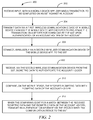
- FIG. 2 is a block flow diagram of a method 200, according to an example embodiment.
- the method 200 is an example of a method that may be performed on a mobile device according to instructions stored thereon as part of a mobile device app.
- the method 200 includes receiving 202 input, within the mobile device app, defining a transaction to be completed on an SST against an account, such as a bank, credit, or other customer account-type.
- the method 200 further includes transmitting 204 data via a first wireless communication device of the mobile to pre-stage the transaction on a server for download by the SST upon authentication of an account holder of the account.
- the first wireless communication device may be a Wi-Fi enabled device, a radio transceiver device enabling the mobile device to communicate on a wireless service network, and the like.
- the method 200 continues by connecting 206, wirelessly via a second wireless communication device of the mobile device app, to the SST.
- the second wireless communication device may be a BLUETOOTH® data communication device, an NFC communication device, the same Wi-Fi enabled device of the first wireless communication device, and the like.
- the method 200 includes receiving 208, via the second wireless communication device from the SST, biometric data to authenticate the account holder and comparing 210, on the mobile device, the received biometric data with biometric data of the account holder.
- the method 200 includes transmitting 210 an authentication message via the second wireless communication device to the SST.
- the comparing 210 of the received 208 biometric data with biometric data of the account holder includes retrieving biometric data stored on the mobile device. Such embodiments may then compare the received 208 biometric data and the retrieved biometric data to identify whether there is a match and when there is a match, determine a confidence level of the match. In some such embodiments, transmitting 212 the authentication message to the SST includes transmitting the confidence level.
- the biometric data stored on the mobile device may be stored securely by the mobile device app and is not accessible and never shared by the mobile device with other mobile device apps or otherwise within our outside the bounds of the mobile device.
- the authentication message includes an account identifier of the account.
- the account identifier in such embodiments identifies the pre-staged transaction associated with the account to be retrieved.
- the authentication message may further include security data indicating validity of the authentication message to the SST. This security data may be in the form of encryption of at least a portion of the authentication message according to an encryption key stored on the mobile device, obtained by the mobile device app when pre-staging the transaction, or otherwise possessed or obtained by the mobile device app.
- FIG. 3 is a block flow diagram of a method 300, according to an example embodiment.
- the method 300 is another example of a method that may be performed on a mobile device according to instructions stored thereon as part of a mobile device app.
- the method 300 includes connecting 302, wirelessly via a wireless communication device of a mobile device app, to an SST.
- the method 300 further includes receiving 304, via the wireless communication device from the SST, biometric authentication data to authenticate an account holder and comparing 306 on the mobile device, the received biometric data with biometric data stored on or read by a biometric reader of the mobile device.
- the method 300 upon identifying a match between the received 304 biometric data and the biometric data read by or stored on the mobile device, may then transmit 308 an authentication message via the wireless communication device to the SST indicating the match.
- the comparing of the received 304 biometric data with biometric data read by or stored on the mobile device includes retrieving biometric data stored on the mobile device.
- the comparing 306 may then be performed between received 304 biometric data and the retrieved biometric data to identify whether there is a match.
- the method 300 may then determine a confidence level of the match.
- the transmitting 308 of the authentication message to the SST in such embodiments includes transmitting 308 the confidence level.
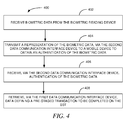
- FIG. 4 is a block flow diagram of a method 400, according to an example embodiment.
- the method 400 is an example of a method that may be performed by a computer controlling operation of an SST, such as an ATM or a checkout terminal.
- the method 400 includes receiving 402 biometric data from the biometric reading device of the SST and transmitting 404 a representation of the biometric data, via a short-range data communication interface device to a mobile device to obtain an authentication of the biometric data.
- the short-range data communication interface device may be a BLUETOOTH® device, an NFC enabled device, or other similar device. Note however that in some embodiments the short-range data communication interface device may instead be a Wi-Fi enabled device.
- the method 400 further includes receiving 406, via the short-range data communication interface device, authentication of the biometric data from the mobile device and retrieving 408 via wireless network data communication interface device, such as a Wi-Fi enabled device, data defining a pre-staged transaction to be completed on the SST. Once the pre-staged transaction data is retrieved, the SST may complete the transaction.
- wireless network data communication interface device such as a Wi-Fi enabled device
- the received 406 authentication message includes an account identifier and the retrieving 408 of the data defining the pre-staged transaction is performed based at least in part on the account identifier.
- the received 406 authentication message includes data identifying a confidence level of a match between the representation of the biometric data transmitted 404 to the mobile device and biometric data on the mobile device.
- the retrieving 408 of the data defining the pre-staged transaction is performed only when the confidence level at least meets a threshold confidence level.
- the received 406 authentication message may include security data.
- the method 400 may further include validating the security data, such as by decrypting data or validating a certificate, and retrieving 408 the data defining the pre-staged transaction only when the security data is valid.
- FIG. 5 is a block diagram of a computing device, according to an example embodiment.
- multiple such computer systems are utilized in a distributed network to implement multiple components in a transaction-based environment.
- An object-oriented, service-oriented, or other architecture may be used to implement such functions and communicate between the multiple systems and components.
- One example computing device in the form of a computer 510 may include a processing unit 502, memory 504, removable storage 512, and non-removable storage 514.
- the example computing device is illustrated and described as computer 510, the computing device may be in different forms in different embodiments.
- the computing device may instead be a smartphone, a tablet, smartwatch, or other computing device including the same or similar elements as illustrated and described with regard to FIG. 5 .
- the computing device may be a computer that controls operation of an SST or a computer deployed as a server, such as a host of one or more banking software systems.
- the various data storage elements are illustrated as part of the computer 510, the storage may also or alternatively include cloud-based storage accessible via a network, such as the Internet.
- memory 504 may include volatile memory 506 and non-volatile memory 508.
- Computer 510 may include - or have access to a computing environment that includes a variety of computer-readable media, such as volatile memory 506 and non-volatile memory 508, removable storage 512 and non-removable storage 514.
- Computer storage includes random access memory (RAM), read only memory (ROM), erasable programmable read-only memory (EPROM) and electrically erasable programmable read-only memory (EEPROM), flash memory or other memory technologies, compact disc read-only memory (CD ROM), Digital Versatile Disks (DVD) or other optical disk storage, magnetic cassettes, magnetic tape, magnetic disk storage or other magnetic storage devices, or any other medium capable of storing computer-readable instructions.
- RAM random access memory
- ROM read only memory
- EPROM erasable programmable read-only memory
- EEPROM electrically erasable programmable read-only memory
- flash memory or other memory technologies
- compact disc read-only memory (CD ROM) compact disc read-only memory
- DVD Digital Versatile Disks
- magnetic cassettes magnetic tape
- magnetic disk storage or other magnetic storage devices, or any other medium capable of storing computer-readable instructions.
- Computer 510 may include or have access to a computing environment that includes input 516, output 518, and a communication connection 520.
- the input 516 may include one or more of a touchscreen, touchpad, mouse, keyboard, camera, one or more device-specific buttons, one or more sensors integrated within or coupled via wired or wireless data connections to the computer 510, and other input devices.
- the computer 510 may operate in a networked environment using a communication connection 520 to connect to one or more remote computers, such as database servers, web servers, and other computing device.
- An example remote computer may include a personal computer (PC), server, router, network PC, a peer device or other common network node, or the like.
- the communication connection 520 may be a network interface device such as one or both of an Ethernet card and a wireless card or circuit that may be connected to a network.
- the network may include one or more of a Local Area Network (LAN), a Wide Area Network (WAN), the Internet, and other networks.
- the communication connection 520 may also or alternatively include a transceiver device, such as a BLUETOOTH® device that enables the computer 510 to wirelessly receive data from and transmit data to other BLUETOOTH® devices.
- the computer 510 also includes a biometric reading device 522.
- the biometric reading device 522 may be a fingerprint reading device.
- the biometric reading device 522 may be an iris scanner.
- the biometric reading device 522 may instead be a firmware or software element that executes upon images captured by an imaging device to perform facial recognition.
- the biometric reading device 522 may take different forms and be of these and other types in various embodiments.
- Computer-readable instructions stored on a computer-readable medium are executable by the processing unit 502 of the computer 510.
- a hard drive magnetic disk or solid state
- CD-ROM compact disc or solid state
- RAM random access memory
- various computer programs 525 or apps such as one or more applications and modules implementing one or more of the methods illustrated and described herein or an app or application that executes on a mobile device or is accessible via a web browser, may be stored on a non-transitory computer-readable medium.
Landscapes
- Engineering & Computer Science (AREA)
- Business, Economics & Management (AREA)
- Accounting & Taxation (AREA)
- Theoretical Computer Science (AREA)
- Computer Security & Cryptography (AREA)
- General Physics & Mathematics (AREA)
- Physics & Mathematics (AREA)
- Finance (AREA)
- Computer Networks & Wireless Communication (AREA)
- General Business, Economics & Management (AREA)
- Strategic Management (AREA)
- Computer Hardware Design (AREA)
- General Engineering & Computer Science (AREA)
- Software Systems (AREA)
- Signal Processing (AREA)
- Economics (AREA)
- Development Economics (AREA)
- Health & Medical Sciences (AREA)
- Biomedical Technology (AREA)
- General Health & Medical Sciences (AREA)
- Computing Systems (AREA)
- Financial Or Insurance-Related Operations Such As Payment And Settlement (AREA)
- Mobile Radio Communication Systems (AREA)
Abstract
Description
- Retailers and banks have been moving rapidly to use of Self-Service Terminals (SSTs), such as self-service checkout terminals and Automated Teller Machines (ATMs), for several years. With the increasing prevalence of customer mobile device usage, these same entities have been working toward a marriage between mobile devices and SSTs to provide enhanced customer experiences. For example, customers are now able to generate a transaction within a mobile device app that is to be completed by or performed at an SST. While these advances have been quite rapid, validating customers at SSTs has lagged as customers typically utilize a magnetic strip of a card along with a Personal Identification Number (PIN) to identify themselves. Doing this may provide abilities to withdraw funds and purchase goods and services with funds coming from a bank or credit account. However, such cards and PINs are frequently compromised. Biometric validation of customers has become more common in recent years, but the solutions to date require the customer to provide a biometric sample to an entity, such as a fingerprint scan, which is then stored by the entity for later use in validation. However, should a stored biometric data item be compromised similar to recent, large-scale credit card data thefts, security of biometric solutions may be permanently compromised as people can change their passwords, but not their fingerprints.
- Various embodiments herein each include at least one of systems, methods, and software for biometric authentication of pre-staged self-service terminal transactions. One embodiment, in the form of a method that may be performed on a mobile device, such as a smartphone, tablet, smartwatch, and the like, includes receiving input, within a mobile device app, defining a transaction to be completed on an SST against an account. This method further includes transmitting data via a first wireless communication device of a mobile device on which the mobile device app executes to pre-stage the transaction on a server for download by the SST upon authentication of an account holder of the account. Next, the method includes connecting, wirelessly via a second wireless communication device of the mobile device app, to the SST and receiving, via the second wireless communication device from the SST, biometric data to authenticate the account holder. The mobile device app then compares the received biometric data with biometric data of the account holder. When the comparing identifies a match between the received biometric data and the biometric data of the account holder, the method includes transmitting an authentication message via the second wireless communication device to the SST.
- Another method according to some embodiments includes connecting, wirelessly via a wireless communication device of a mobile device, to an SST. The mobile device then receives, via the wireless communication device from the SST, biometric authentication data to authenticate an account holder. The received biometric data is then compared on the mobile device with biometric data stored on or read by a biometric reader of the mobile device. When the comparing identifies a match between the received biometric data and the biometric data read by or stored on the mobile device, the method then transmits an authentication message via the wireless communication device to the SST indicating the match.
- A further embodiment is in the form of an SST. The SST of such embodiments includes a biometric reading device, a first data communication interface device, a second data communication interface device, the second data communication device including wireless data communication capabilities, at least one computer processor, and at least one memory device. The at least one memory device stores instructions executable by the at least one processor to cause the SST to perform data processing activities. The data processing activities, in some embodiments, include receiving biometric data from the biometric reading device and transmitting a representation of the biometric data, via the second data communication interface device to a mobile device to obtain an authentication of the biometric data. The data processing activities may further include receiving, via the second data communication interface device, authentication of the biometric data and retrieving, via the first data communication interface device, data defining a pre-staged transaction to be completed on the SST.
- According to a first aspect of the present invention there is provided a method comprising: receiving, via a wireless communication device from a Self-Service Terminal (SST), biometric authentication data to authenticate an account holder; comparing, on the mobile device, the received biometric data with biometric data present on the mobile device; and when the comparing identifies a match between the received biometric data and the biometric data on the mobile device, transmitting an authentication message via the wireless communication device to the SST indicating the match.
- The step of comparing the received biometric data with the biometric data on the mobile device optionally includes: retrieving biometric data stored on the mobile device; and comparing the received biometric data and the retrieved biometric data to identify whether there is a match and when there is a match, determining a confidence level of the match; and the transmitting of the authentication message to the SST includes transmitting the confidence level.
- The biometric data stored on the mobile device is optionally stored securely on the mobile device app and is not accessible nor shared by the mobile device.
- The SST is optionally an Automated Teller Machine (ATM).
- The authentication message optionally includes an account identifier of a customer account, the account identifier instructing the SST to retrieve a pre-staged transaction associated with the account to be completed on the SST.
- The authentication message optionally further includes security data indicating validity of the authentication message to the SST.
- According to a second aspect of the present invention there is provided a Self-Service Terminal (SST) comprising: a biometric reading device; a first data communication interface device; a second data communication interface device, the second data communication device including wireless data communication capabilities; at least one computer processor; at least one memory device; and instructions stored on the at least one memory device that are executable by the at least one processor to cause the SST to perform data processing activities, the data processing activities comprising: receiving biometric data from the biometric reading device; transmitting a representation of the biometric data, via the second data communication interface device to a mobile device to obtain an authentication of the biometric data; receiving, via the second data communication interface device, authentication of the biometric data; and retrieving, via the first data communication interface device, data defining a pre-staged transaction to be completed on the SST.
- Optionally, the received authentication message includes an account identifier; and the retrieving of the data defining the pre-staged transaction is performed based at least in part on the account identifier.
- Optionally, the received authentication message includes data identifying a confidence level of a match between the representation of the biometric data transmitted to the mobile device and biometric data on the mobile device; and the retrieving of the data defining the pre-staged transaction is performed only when the confidence level at least meets a threshold confidence level.
- Optionally, the received authentication message includes security data, the data processing activities further comprise: validating the security data; and retrieving the data defining the pre-staged transaction only when the security data is valid.
- The SST is optionally an Automated Teller Machine (ATM).
- According to a third aspect of the present invention there is provided a method comprising: receiving input, within a mobile device app, defining a transaction to be completed on a Self-Service Terminal (SST) against an account; transmitting data via a first wireless communication device of a mobile device on which the mobile device app executes to pre-stage the transaction on a server for download by the SST upon authentication of an account holder of the account; connecting, wirelessly via a second wireless communication device of the mobile device app, to the SST; receiving, via the second wireless communication device from the SST, biometric data to authenticate the account holder; comparing, on the mobile device, the received biometric data with biometric data of the account holder; and when the comparing identifies a match between the received biometric data and the biometric data of the account holder, transmitting an authentication message via the second wireless communication device to the SST.
- Optionally, the step of comparing the received biometric data with biometric data of the account holder includes: retrieving biometric data stored on the mobile device; and comparing the received biometric data and the retrieved biometric data to identify whether there is a match and when there is a match, determining a confidence level of the match.
- Transmitting the authentication message to the SST optionally includes transmitting the confidence level.
- The biometric data stored on the mobile device is optionally stored securely by the mobile device app and is not accessible and never shared by the mobile device.
- The SST is optionally an Automated Teller Machine (ATM).
- Optionally, the authentication message includes an account identifier of the account, the account identifier instructing the SST to retrieve the pre-staged transaction associated with the account.
- Optionally, the authentication message further includes security data indicating validity of the authentication message to the SST.
- Optionally, the security data is encryption of at least a portion of the authentication message according to an encryption key stored on the mobile device.
- Optionally, the first wireless communication device is one of a mobile wireless radio data communication device and a Wi-Fi data communication device of a mobile device; and the second wireless communication device is one of the Wi-Fi data communication device, a BLUETOOTH® communication device, and a Near Field Communication (NFC) device of the mobile device.
- These and other aspects of the present invention will be apparent from the following specific description, given by way of example, with reference to the accompanying drawings, in which:
-
FIG. 1 is a logical block diagram of a system, according to an example embodiment; -
FIG. 2 is a block flow diagram of a method, according to an example embodiment; -
FIG. 3 is a block flow diagram of a method, according to an example embodiment; -
FIG. 4 is a block flow diagram of a method, according to an example embodiment; and -
FIG. 5 is a block diagram of a computing device, according to an example embodiment. - Various embodiments herein each include at least one of systems, methods, and software for biometric authentication of pre-staged self-service terminal transactions. In some embodiments, a customer may utilize a mobile device app to generate a transaction to be completed or performed on an SST, such as by identifying an item to purchase or an ATM withdraw. Data of the transaction to be performed may then be transmitted by the mobile device app to a server where the transaction will be pre-staged. When ready, the customer will approach an SST and the mobile device will connect to the SST via a wireless communication protocol, such as BLUETOOTH®, a Near-Field Communication (NFC) protocol, Wi-Fi, and the like. In some embodiments, this wireless connection is a peer-to-peer connection. The connection may be established automatically under the direction of a particular mobile device app, such as the mobile device app utilized to pre-stage the transaction. The customer will then initiate the transaction on the SST by providing a biometric sample, such as a fingerprint scan or retina scan on the SST. The SST may then transmit a data form of the biometric sample, also referred to as a biometric scan and biometric data, to the mobile device via the previously established connection. The customer will have already been authenticated with regard to a customer account, such as a bank account, customer shopping account, digital wallet account, and the like, or will be upon receipt of customer account credentials. The mobile device app will then receive the data of the biometric sample received by the mobile device and attempt to authenticate the biometric sample based upon biometric data previously stored on the mobile device by the customer or upon receipt of a biometric scan by a biometric reading device of the mobile device. When a match is not made, an error code may be transmitted back to the SST. However, when a match is made, the mobile device app may transmit back to the SST via the previously established wireless connection, data identifying the match and an account identifier that enables the SST to retrieve the pre-staged transaction from the server where it is stored. The data transmitted from the mobile device to the SST may further include security data in some embodiments, or the data may be encrypted. Through such methods, customer biometric data may be retained by the customer for validation purposes. Further, the biometric data present on the SST may be maintained in a secure memory or memory that is flushed upon completion of the authentication to ensure customer biometric data is not stored or compromised.
- These and other embodiments are described herein with reference to the figures.
- In the following detailed description, reference is made to the accompanying drawings that form a part hereof, and in which is shown by way of illustration specific embodiments in which the inventive subject matter may be practiced. These embodiments are described in sufficient detail to enable those skilled in the art to practice them, and it is to be understood that other embodiments may be utilized and that structural, logical, and electrical changes may be made without departing from the scope of the inventive subject matter. Such embodiments of the inventive subject matter may be referred to, individually and/or collectively, herein by the term "invention" merely for convenience and without intending to voluntarily limit the scope of this application to any single invention or inventive concept if more than one is in fact disclosed.
- The following description is, therefore, not to be taken in a limited sense, and the scope of the inventive subject matter is defined by the appended claims.
- The functions or algorithms described herein are implemented in hardware, software or a combination of software and hardware in one embodiment. The software comprises computer executable instructions stored on computer readable media such as memory or other type of storage devices. Further, described functions may correspond to modules, which may be software, hardware, firmware, or any combination thereof. Multiple functions are performed in one or more modules as desired, and the embodiments described are merely examples. The software is executed on a digital signal processor, ASIC, microprocessor, or other type of processor operating on a system, such as a personal computer, server, a router, or other device capable of processing data including network interconnection devices.
- Some embodiments implement the functions in two or more specific interconnected hardware modules or devices with related control and data signals communicated between and through the modules, or as portions of an application-specific integrated circuit. Thus, the exemplary process flow is applicable to software, firmware, and hardware implementations.
-
FIG. 1 is a logical block diagram of asystem 100, according to an example embodiment. Thesystem 100 includes amobile device 102, anSST 104, anetwork 106, and abanking systems 108. Themobile device 102 may be a smartphone, smartwatch, tablet, personal computer, and other mobile device types. TheSST 106 may be an ATM, and self-service checkout terminal, a hybrid customer assisted/self-service terminal, and the like. The network may be or include one or more of a secured ATM network, the Internet, a virtual private network, a local area network, a wide area network, and other secured and unsecured networks. Thebanking systems 108 are generally backend systems that support execution of transactions performed or completed on anSST 104. While thesystem 100 includes thebanking systems 108, thebanking systems 108 may instead be backend systems of a retail outlet or other entity on which transactions may be pre-staged and executed, at least in part. Note that although themobile device 102 is not illustrated as connected to thenetwork 106, such a connection does exist in typical embodiments as a transaction may be initiated on themobile device 102 and pre-staged to thebanking systems 108 for retrieval by theSST 104 upon biometric authentication of an individual on themobile device 102 and as provided by themobile device 102 to theSST 104. - In some embodiments, the
mobile device 102 includes a stored data representation of a biometric scan, such as that of a customer fingerprint, retina scan, image facial recognition features, and other possible biometric data. The mobile 102 device further includes an app that executes thereon that provides transaction pre-staging functionality. The transaction pre-staging functionality allows a customer to define a transaction to be performed or completed at theSST 104, such as a bank account withdrawal when the SST is an ATM or a purchase of an item or service at a checkout terminal. Once the transaction is defined within themobile device 102 app, themobile device 102 app transmits data defining the transaction to a backend system, such as thebanking systems 108, to pre-stage the transaction. - The customer then arrives at the
SST 104 and provides a biometric input of the type stored on themobile device 102. TheSST 104 therefore includes a biometric reading device, such as a fingerprint scanner, retinal scanner, or camera capable of capturing images and facial recognition software that identifies facial recognition features. The biometric data is then transmitted to themobile device 102 via an ad hoc and on demand wireless peer-to-peer connection, such as may be established via Wi-Fi, BLUETOOTH®, NFC, and the like. Themobile device 102 app receives the biometric data and performs and authentication in view of the stored biometric data. The authentication may also or alternatively be performed with regard to a newly captured biometric scan on themobile device 102 in some embodiments. When authenticated, themobile device 102 app generates a message including an authentication, which may include a security code or certificate, one or both of an account identifier and a pre-staged transaction identifier to enable retrieval of the pre-staged transaction, and other data, depending on the embodiment. The message is then transmitted from themobile device 102 to theSST 104 via the previously established wireless connection. - The
SST 104, upon receipt of the authentication from themobile device 102, retrieves data defining the pre-staged transaction from thebanking systems 108 via thenetwork 106. Thebanking systems 108 then provide the pre-staged transaction data, via thenetwork 106, to theSST 104. TheSST 104 may then complete the transaction. -
FIG. 2 is a block flow diagram of amethod 200, according to an example embodiment. Themethod 200 is an example of a method that may be performed on a mobile device according to instructions stored thereon as part of a mobile device app. Themethod 200 includes receiving 202 input, within the mobile device app, defining a transaction to be completed on an SST against an account, such as a bank, credit, or other customer account-type. Themethod 200 further includes transmitting 204 data via a first wireless communication device of the mobile to pre-stage the transaction on a server for download by the SST upon authentication of an account holder of the account. The first wireless communication device may be a Wi-Fi enabled device, a radio transceiver device enabling the mobile device to communicate on a wireless service network, and the like. - The
method 200 continues by connecting 206, wirelessly via a second wireless communication device of the mobile device app, to the SST. The second wireless communication device may be a BLUETOOTH® data communication device, an NFC communication device, the same Wi-Fi enabled device of the first wireless communication device, and the like. - Next, the
method 200 includes receiving 208, via the second wireless communication device from the SST, biometric data to authenticate the account holder and comparing 210, on the mobile device, the received biometric data with biometric data of the account holder. In some such embodiments, when the comparing 210 identifies a match between the received biometric data and the biometric data of the account holder, themethod 200 includes transmitting 210 an authentication message via the second wireless communication device to the SST. - In some embodiments of the
method 200, the comparing 210 of the received 208 biometric data with biometric data of the account holder includes retrieving biometric data stored on the mobile device. Such embodiments may then compare the received 208 biometric data and the retrieved biometric data to identify whether there is a match and when there is a match, determine a confidence level of the match. In some such embodiments, transmitting 212 the authentication message to the SST includes transmitting the confidence level. In some embodiments, the biometric data stored on the mobile device may be stored securely by the mobile device app and is not accessible and never shared by the mobile device with other mobile device apps or otherwise within our outside the bounds of the mobile device. - In some embodiments, the authentication message includes an account identifier of the account. The account identifier in such embodiments identifies the pre-staged transaction associated with the account to be retrieved. The authentication message may further include security data indicating validity of the authentication message to the SST. This security data may be in the form of encryption of at least a portion of the authentication message according to an encryption key stored on the mobile device, obtained by the mobile device app when pre-staging the transaction, or otherwise possessed or obtained by the mobile device app.
-
FIG. 3 is a block flow diagram of amethod 300, according to an example embodiment. Themethod 300 is another example of a method that may be performed on a mobile device according to instructions stored thereon as part of a mobile device app. Themethod 300 includes connecting 302, wirelessly via a wireless communication device of a mobile device app, to an SST. Themethod 300 further includes receiving 304, via the wireless communication device from the SST, biometric authentication data to authenticate an account holder and comparing 306 on the mobile device, the received biometric data with biometric data stored on or read by a biometric reader of the mobile device. Themethod 300, upon identifying a match between the received 304 biometric data and the biometric data read by or stored on the mobile device, may then transmit 308 an authentication message via the wireless communication device to the SST indicating the match. - In some embodiments, the comparing of the received 304 biometric data with biometric data read by or stored on the mobile device includes retrieving biometric data stored on the mobile device. The comparing 306 may then be performed between received 304 biometric data and the retrieved biometric data to identify whether there is a match. When there is a match, the
method 300 may then determine a confidence level of the match. The transmitting 308 of the authentication message to the SST in such embodiments includes transmitting 308 the confidence level. -
FIG. 4 is a block flow diagram of amethod 400, according to an example embodiment. Themethod 400 is an example of a method that may be performed by a computer controlling operation of an SST, such as an ATM or a checkout terminal. Themethod 400 includes receiving 402 biometric data from the biometric reading device of the SST and transmitting 404 a representation of the biometric data, via a short-range data communication interface device to a mobile device to obtain an authentication of the biometric data. The short-range data communication interface device may be a BLUETOOTH® device, an NFC enabled device, or other similar device. Note however that in some embodiments the short-range data communication interface device may instead be a Wi-Fi enabled device. - The
method 400 further includes receiving 406, via the short-range data communication interface device, authentication of the biometric data from the mobile device and retrieving 408 via wireless network data communication interface device, such as a Wi-Fi enabled device, data defining a pre-staged transaction to be completed on the SST. Once the pre-staged transaction data is retrieved, the SST may complete the transaction. - In some embodiments, the received 406 authentication message includes an account identifier and the retrieving 408 of the data defining the pre-staged transaction is performed based at least in part on the account identifier.
- In another embodiment, the received 406 authentication message includes data identifying a confidence level of a match between the representation of the biometric data transmitted 404 to the mobile device and biometric data on the mobile device. In such an embodiment, the retrieving 408 of the data defining the pre-staged transaction is performed only when the confidence level at least meets a threshold confidence level. In this and some other embodiments, the received 406 authentication message may include security data. In such embodiments, the
method 400 may further include validating the security data, such as by decrypting data or validating a certificate, and retrieving 408 the data defining the pre-staged transaction only when the security data is valid. -
FIG. 5 is a block diagram of a computing device, according to an example embodiment. In one embodiment, multiple such computer systems are utilized in a distributed network to implement multiple components in a transaction-based environment. An object-oriented, service-oriented, or other architecture may be used to implement such functions and communicate between the multiple systems and components. One example computing device in the form of acomputer 510, may include aprocessing unit 502,memory 504,removable storage 512, andnon-removable storage 514. Although the example computing device is illustrated and described ascomputer 510, the computing device may be in different forms in different embodiments. For example, the computing device may instead be a smartphone, a tablet, smartwatch, or other computing device including the same or similar elements as illustrated and described with regard toFIG. 5 . Devices such as smartphones, tablets, and smartwatches are generally collectively referred to as mobile devices. In other embodiments, the computing device may be a computer that controls operation of an SST or a computer deployed as a server, such as a host of one or more banking software systems. Further, although the various data storage elements are illustrated as part of thecomputer 510, the storage may also or alternatively include cloud-based storage accessible via a network, such as the Internet. - Returning to the
computer 510,memory 504 may includevolatile memory 506 andnon-volatile memory 508.Computer 510 may include - or have access to a computing environment that includes a variety of computer-readable media, such asvolatile memory 506 andnon-volatile memory 508,removable storage 512 andnon-removable storage 514. Computer storage includes random access memory (RAM), read only memory (ROM), erasable programmable read-only memory (EPROM) and electrically erasable programmable read-only memory (EEPROM), flash memory or other memory technologies, compact disc read-only memory (CD ROM), Digital Versatile Disks (DVD) or other optical disk storage, magnetic cassettes, magnetic tape, magnetic disk storage or other magnetic storage devices, or any other medium capable of storing computer-readable instructions. -
Computer 510 may include or have access to a computing environment that includesinput 516,output 518, and acommunication connection 520. Theinput 516 may include one or more of a touchscreen, touchpad, mouse, keyboard, camera, one or more device-specific buttons, one or more sensors integrated within or coupled via wired or wireless data connections to thecomputer 510, and other input devices. Thecomputer 510 may operate in a networked environment using acommunication connection 520 to connect to one or more remote computers, such as database servers, web servers, and other computing device. An example remote computer may include a personal computer (PC), server, router, network PC, a peer device or other common network node, or the like. Thecommunication connection 520 may be a network interface device such as one or both of an Ethernet card and a wireless card or circuit that may be connected to a network. The network may include one or more of a Local Area Network (LAN), a Wide Area Network (WAN), the Internet, and other networks. In some embodiments, thecommunication connection 520 may also or alternatively include a transceiver device, such as a BLUETOOTH® device that enables thecomputer 510 to wirelessly receive data from and transmit data to other BLUETOOTH® devices. - In some embodiments, the
computer 510 also includes abiometric reading device 522. Thebiometric reading device 522 may be a fingerprint reading device. In other embodiments, thebiometric reading device 522 may be an iris scanner. In further embodiments, thebiometric reading device 522 may instead be a firmware or software element that executes upon images captured by an imaging device to perform facial recognition. Thebiometric reading device 522 may take different forms and be of these and other types in various embodiments. - Computer-readable instructions stored on a computer-readable medium are executable by the
processing unit 502 of thecomputer 510. A hard drive (magnetic disk or solid state), CD-ROM, and RAM are some examples of articles including a non-transitory computer-readable medium. For example,various computer programs 525 or apps, such as one or more applications and modules implementing one or more of the methods illustrated and described herein or an app or application that executes on a mobile device or is accessible via a web browser, may be stored on a non-transitory computer-readable medium. - It will be readily understood to those skilled in the art that various other changes in the details, material, and arrangements of the parts and method stages which have been described and illustrated in order to explain the nature of the inventive subject matter may be made without departing from the principles and scope of the inventive subject matter as expressed in the subjoined claims.
Claims (11)
- A method (300) of operating a wireless communication device (102), the method comprising:receiving, from a self-service terminal (104), biometric authentication data to authenticate an account holder (step 304);comparing the received biometric data with biometric data present on the mobile device (102) (step 306); andwhen the comparison identifies a match between the received biometric data and the biometric data on the mobile device, transmitting an authentication message from the wireless communication device to the terminal (104) indicating the match (step 308).
- The method of claim 1, wherein the step of comparing the received biometric data with the biometric data on the mobile device (102) includes:retrieving biometric data stored on the mobile device (102); andcomparing the received biometric data and the retrieved biometric data to identify whether there is a match and when there is a match, determining a confidence level of the match; andthe step of transmitting the authentication message to the terminal includes transmitting the confidence level.
- The method of claim 1 or 2, wherein the biometric data stored on the mobile device (102) is stored securely on the mobile device app and is not accessible nor shared by the mobile device (102).
- The method of any preceding claim, wherein the terminal (104) is an Automated Teller Machine.
- The method of any preceding claim, wherein the authentication message includes an account identifier of a customer account, the account identifier instructing the terminal (104) to retrieve a pre-staged transaction associated with the account to be completed on the terminal (104).
- The method of claim 5, wherein the authentication message further includes security data indicating validity of the authentication message to the terminal (104).
- A self-service terminal (104) comprising:a biometric reading device (522);a first data communication interface device (520);a second data communication interface device, the second data communication device including wireless data communication capabilities; anda computer processor (502) operable for:receiving biometric data from the biometric reading device (522) (step 402);transmitting a representation of the biometric data, via the second data communication interface device to a mobile device (102) to obtain an authentication of the biometric data (step 404);receiving, via the second data communication interface device, authentication of the biometric data (step 406); andretrieving, via the first data communication interface device, data defining a pre-staged transaction to be completed on the terminal (104) (step 408).
- The terminal of claim 7, wherein:the received authentication message includes an account identifier; andthe retrieving of the data defining the pre-staged transaction is performed based at least in part on the account identifier.
- The terminal of claim 7 or 8, wherein:the received authentication message includes data identifying a confidence level of a match between the representation of the biometric data transmitted to the mobile device (102) and biometric data on the mobile device (102); andthe retrieving of the data defining the pre-staged transaction is performed only when the confidence level at least meets a threshold confidence level.
- The terminal of any of claims 7 to 9, wherein the received authentication message includes security data, the data processing activities further comprising:validating the security data; andretrieving the data defining the pre-staged transaction only when the security data is valid.
- The terminal of any of claims 7 to 10, wherein the terminal is an automated teller machine (104).
Applications Claiming Priority (1)
| Application Number | Priority Date | Filing Date | Title |
|---|---|---|---|
| US14/699,492 US12217229B2 (en) | 2015-04-29 | 2015-04-29 | Biometric authentication of pre-staged self-service terminal transactions |
Publications (2)
| Publication Number | Publication Date |
|---|---|
| EP3089063A1 true EP3089063A1 (en) | 2016-11-02 |
| EP3089063B1 EP3089063B1 (en) | 2017-11-22 |
Family
ID=55024887
Family Applications (1)
| Application Number | Title | Priority Date | Filing Date |
|---|---|---|---|
| EP15201720.8A Active EP3089063B1 (en) | 2015-04-29 | 2015-12-21 | Biometric authentification of pre-staged self-service terminal transactions |
Country Status (3)
| Country | Link |
|---|---|
| US (2) | US12217229B2 (en) |
| EP (1) | EP3089063B1 (en) |
| CN (1) | CN106096935B (en) |
Cited By (1)
| Publication number | Priority date | Publication date | Assignee | Title |
|---|---|---|---|---|
| WO2020161395A1 (en) * | 2019-02-08 | 2020-08-13 | Fira Group Oy | Method for controlling an access device and an access system |
Families Citing this family (22)
| Publication number | Priority date | Publication date | Assignee | Title |
|---|---|---|---|---|
| US10154372B1 (en) | 2014-11-07 | 2018-12-11 | Wells Fargo Bank, N.A. | Real-time custom interfaces through multi-channel geo-fencing |
| US9380421B1 (en) | 2014-11-07 | 2016-06-28 | Wells Fargo Bank, N.A. | Multi-channel geo-fencing systems and methods |
| US10901597B1 (en) | 2015-12-30 | 2021-01-26 | Wells Fargo Bank, N.A. | ATM screen personalization |
| US11354631B1 (en) * | 2016-04-01 | 2022-06-07 | Wells Fargo Bank, N.A. | Systems and methods for remote atm access |
| US10484369B2 (en) * | 2016-10-31 | 2019-11-19 | Ncr Corporation | Voice authentication via secondary device |
| KR101758575B1 (en) * | 2016-11-14 | 2017-07-26 | 이선관 | Method and system for financial payment using mobile devices |
| US10692062B2 (en) * | 2017-04-28 | 2020-06-23 | Ncr Corporation | Auto lookup for a self-service terminal (SST) network |
| WO2019074568A1 (en) * | 2017-10-13 | 2019-04-18 | Visa International Service Association | Mitigating risk for hands-free interactions |
| US10339508B1 (en) * | 2018-02-12 | 2019-07-02 | Capital One Services, Llc | Methods for determining user experience (UX) effectiveness of ATMs |
| US11037114B2 (en) * | 2018-03-22 | 2021-06-15 | Diebold Nixdorf, Incorporated | System and method for financial transactions |
| US10965662B2 (en) | 2018-06-27 | 2021-03-30 | Bank Of America Corporation | Method and system for data communication and frictionless authentication |
| US11057377B2 (en) * | 2018-08-26 | 2021-07-06 | Ncr Corporation | Transaction authentication |
| CN109960918A (en) * | 2019-03-14 | 2019-07-02 | 中国银行股份有限公司 | A kind of method for processing business, device and equipment |
| US11195387B1 (en) | 2020-05-29 | 2021-12-07 | Bank Of America Corporation | Dynamic automatic teller machine (ATM) refilling and pre-staging ATM transactions |
| US11468416B2 (en) * | 2020-05-29 | 2022-10-11 | Bank Of America Corporation | Dynamic automatic teller machine (ATM) refilling and pre-staging ATM transactions |
| US11769127B2 (en) * | 2020-06-08 | 2023-09-26 | Bank Of America Corporation | Intelligent processing of broken or failed ATM transactions |
| US11094174B1 (en) | 2020-06-08 | 2021-08-17 | Bank Of America Corporation | Intelligent processing of broken or failed ATM transactions |
| CN111640266A (en) * | 2020-06-11 | 2020-09-08 | 中国银行股份有限公司 | Method for depositing and withdrawing money on ATM and intelligent terminal |
| CN112184243A (en) * | 2020-09-28 | 2021-01-05 | 中国建设银行股份有限公司 | A transaction method, device, device and storage medium based on biometric identification |
| US11978296B2 (en) | 2020-12-09 | 2024-05-07 | Bank Of America Corporation | Intelligent cash handling |
| CN112863080A (en) * | 2020-12-31 | 2021-05-28 | 沈阳中钞信达金融设备有限公司 | Internet of things expansion module of A-type cash register and expansion implementation method |
| US20240070670A1 (en) * | 2022-08-24 | 2024-02-29 | Truist Bank | Hybrid transaction operations |
Citations (2)
| Publication number | Priority date | Publication date | Assignee | Title |
|---|---|---|---|---|
| WO2008074342A1 (en) * | 2006-12-19 | 2008-06-26 | Telecom Italia S.P.A. | Method and arrangement for secure user authentication based on a biometric data detection device |
| EP2391967A1 (en) * | 2009-01-30 | 2011-12-07 | Precise Biometrics AB | Password protected secure device |
Family Cites Families (7)
| Publication number | Priority date | Publication date | Assignee | Title |
|---|---|---|---|---|
| GB2391681B (en) * | 2002-08-01 | 2005-09-21 | Ncr Int Inc | Self-service terminal |
| US8458465B1 (en) * | 2005-11-16 | 2013-06-04 | AT&T Intellectual Property II, L. P. | Biometric authentication |
| US8245052B2 (en) * | 2006-02-22 | 2012-08-14 | Digitalpersona, Inc. | Method and apparatus for a token |
| CN106936587B (en) * | 2006-06-19 | 2020-05-12 | 维萨美国股份有限公司 | Consumer authentication system and method |
| US8260707B2 (en) * | 2008-07-15 | 2012-09-04 | Bank Of America Corporation | Automated teller machine transaction queue |
| US8458096B2 (en) * | 2011-09-30 | 2013-06-04 | Ncr Corporation | System and method of cashing a check |
| US11354637B2 (en) * | 2012-03-08 | 2022-06-07 | Citicorp Credit Services, Inc. (Usa) | Methods and systems for performing a financial transaction using a mobile communication device |
-
2015
- 2015-04-29 US US14/699,492 patent/US12217229B2/en active Active
- 2015-12-21 EP EP15201720.8A patent/EP3089063B1/en active Active
-
2016
- 2016-04-26 CN CN201610264401.7A patent/CN106096935B/en active Active
-
2024
- 2024-11-05 US US18/937,836 patent/US20250061436A1/en active Pending
Patent Citations (2)
| Publication number | Priority date | Publication date | Assignee | Title |
|---|---|---|---|---|
| WO2008074342A1 (en) * | 2006-12-19 | 2008-06-26 | Telecom Italia S.P.A. | Method and arrangement for secure user authentication based on a biometric data detection device |
| EP2391967A1 (en) * | 2009-01-30 | 2011-12-07 | Precise Biometrics AB | Password protected secure device |
Cited By (1)
| Publication number | Priority date | Publication date | Assignee | Title |
|---|---|---|---|---|
| WO2020161395A1 (en) * | 2019-02-08 | 2020-08-13 | Fira Group Oy | Method for controlling an access device and an access system |
Also Published As
| Publication number | Publication date |
|---|---|
| EP3089063B1 (en) | 2017-11-22 |
| US12217229B2 (en) | 2025-02-04 |
| CN106096935B (en) | 2019-07-19 |
| CN106096935A (en) | 2016-11-09 |
| US20250061436A1 (en) | 2025-02-20 |
| US20160321627A1 (en) | 2016-11-03 |
Similar Documents
| Publication | Publication Date | Title |
|---|---|---|
| US20250061436A1 (en) | Biometric authentication of pre-staged self-service terminal transactions | |
| US10229408B2 (en) | System and method for selectively initiating biometric authentication for enhanced security of access control transactions | |
| EP3693878B1 (en) | Wireless biometric authentication system and method | |
| US10922674B2 (en) | Dongle device for automatic pairing of payment terminal to mobile computing device | |
| US20150348044A1 (en) | Secure credit card transactions based on a mobile device | |
| CN107851259B (en) | System and method for conducting transactions using biometric verification | |
| US11824642B2 (en) | Systems and methods for provisioning biometric image templates to devices for use in user authentication | |
| US20140289116A1 (en) | System and method for performing authentication for a local transaction | |
| US12505429B2 (en) | Authentication using non-fungible token as proof of account ownership | |
| US9413534B2 (en) | Mobile device-based keypad for enhanced security | |
| WO2016023467A1 (en) | All-purpose card apparatus and system, and card information loading method | |
| CN116233836B (en) | Method and system for relay attack detection | |
| US20160203478A1 (en) | System and method for comparing electronic transaction records for enhanced security | |
| WO2018061008A1 (en) | Method and system for securing transactions in a point of sale | |
| US20170202040A1 (en) | Dongle device for automatic pairing to a local device | |
| EP3642761B1 (en) | System, method, and computer program product for mobile device transactions | |
| US20160092876A1 (en) | On-device shared cardholder verification | |
| JP2017167875A (en) | System, cash dispensing method, and program | |
| CN105580046B (en) | System and method for providing banking interaction with a remote banking device | |
| US20180150839A1 (en) | Identity verification systems and methods | |
| CN114207578A (en) | Mobile application integration | |
| US10395227B2 (en) | System and method for reconciling electronic transaction records for enhanced security | |
| US20160203492A1 (en) | System and method for requesting reconciliation of electronic transaction records for enhanced security | |
| JP2024502438A (en) | Techniques for processing contactless card transactions based on one or more configurations of the contactless card | |
| CA3186186A1 (en) | Authentication using non-fungible token as proof of account ownership |
Legal Events
| Date | Code | Title | Description |
|---|---|---|---|
| PUAI | Public reference made under article 153(3) epc to a published international application that has entered the european phase |
Free format text: ORIGINAL CODE: 0009012 |
|
| AK | Designated contracting states |
Kind code of ref document: A1 Designated state(s): AL AT BE BG CH CY CZ DE DK EE ES FI FR GB GR HR HU IE IS IT LI LT LU LV MC MK MT NL NO PL PT RO RS SE SI SK SM TR |
|
| AX | Request for extension of the european patent |
Extension state: BA ME |
|
| 17P | Request for examination filed |
Effective date: 20170502 |
|
| RBV | Designated contracting states (corrected) |
Designated state(s): AL AT BE BG CH CY CZ DE DK EE ES FI FR GB GR HR HU IE IS IT LI LT LU LV MC MK MT NL NO PL PT RO RS SE SI SK SM TR |
|
| GRAP | Despatch of communication of intention to grant a patent |
Free format text: ORIGINAL CODE: EPIDOSNIGR1 |
|
| INTG | Intention to grant announced |
Effective date: 20170801 |
|
| GRAS | Grant fee paid |
Free format text: ORIGINAL CODE: EPIDOSNIGR3 |
|
| GRAA | (expected) grant |
Free format text: ORIGINAL CODE: 0009210 |
|
| AK | Designated contracting states |
Kind code of ref document: B1 Designated state(s): AL AT BE BG CH CY CZ DE DK EE ES FI FR GB GR HR HU IE IS IT LI LT LU LV MC MK MT NL NO PL PT RO RS SE SI SK SM TR |
|
| REG | Reference to a national code |
Ref country code: GB Ref legal event code: FG4D |
|
| REG | Reference to a national code |
Ref country code: CH Ref legal event code: EP |
|
| REG | Reference to a national code |
Ref country code: DE Ref legal event code: R084 Ref document number: 602015006171 Country of ref document: DE Ref country code: IE Ref legal event code: FG4D |
|
| REG | Reference to a national code |
Ref country code: AT Ref legal event code: REF Ref document number: 949043 Country of ref document: AT Kind code of ref document: T Effective date: 20171215 |
|
| REG | Reference to a national code |
Ref country code: GB Ref legal event code: 746 Effective date: 20171130 Ref country code: FR Ref legal event code: PLFP Year of fee payment: 3 |
|
| REG | Reference to a national code |
Ref country code: DE Ref legal event code: R096 Ref document number: 602015006171 Country of ref document: DE |
|
| REG | Reference to a national code |
Ref country code: NL Ref legal event code: MP Effective date: 20171122 |
|
| REG | Reference to a national code |
Ref country code: LT Ref legal event code: MG4D |
|
| REG | Reference to a national code |
Ref country code: AT Ref legal event code: MK05 Ref document number: 949043 Country of ref document: AT Kind code of ref document: T Effective date: 20171122 |
|
| PG25 | Lapsed in a contracting state [announced via postgrant information from national office to epo] |
Ref country code: FI Free format text: LAPSE BECAUSE OF FAILURE TO SUBMIT A TRANSLATION OF THE DESCRIPTION OR TO PAY THE FEE WITHIN THE PRESCRIBED TIME-LIMIT Effective date: 20171122 Ref country code: SE Free format text: LAPSE BECAUSE OF FAILURE TO SUBMIT A TRANSLATION OF THE DESCRIPTION OR TO PAY THE FEE WITHIN THE PRESCRIBED TIME-LIMIT Effective date: 20171122 Ref country code: LT Free format text: LAPSE BECAUSE OF FAILURE TO SUBMIT A TRANSLATION OF THE DESCRIPTION OR TO PAY THE FEE WITHIN THE PRESCRIBED TIME-LIMIT Effective date: 20171122 Ref country code: NL Free format text: LAPSE BECAUSE OF FAILURE TO SUBMIT A TRANSLATION OF THE DESCRIPTION OR TO PAY THE FEE WITHIN THE PRESCRIBED TIME-LIMIT Effective date: 20171122 Ref country code: NO Free format text: LAPSE BECAUSE OF FAILURE TO SUBMIT A TRANSLATION OF THE DESCRIPTION OR TO PAY THE FEE WITHIN THE PRESCRIBED TIME-LIMIT Effective date: 20180222 Ref country code: ES Free format text: LAPSE BECAUSE OF FAILURE TO SUBMIT A TRANSLATION OF THE DESCRIPTION OR TO PAY THE FEE WITHIN THE PRESCRIBED TIME-LIMIT Effective date: 20171122 |
|
| PG25 | Lapsed in a contracting state [announced via postgrant information from national office to epo] |
Ref country code: HR Free format text: LAPSE BECAUSE OF FAILURE TO SUBMIT A TRANSLATION OF THE DESCRIPTION OR TO PAY THE FEE WITHIN THE PRESCRIBED TIME-LIMIT Effective date: 20171122 Ref country code: AT Free format text: LAPSE BECAUSE OF FAILURE TO SUBMIT A TRANSLATION OF THE DESCRIPTION OR TO PAY THE FEE WITHIN THE PRESCRIBED TIME-LIMIT Effective date: 20171122 Ref country code: BG Free format text: LAPSE BECAUSE OF FAILURE TO SUBMIT A TRANSLATION OF THE DESCRIPTION OR TO PAY THE FEE WITHIN THE PRESCRIBED TIME-LIMIT Effective date: 20180222 Ref country code: GR Free format text: LAPSE BECAUSE OF FAILURE TO SUBMIT A TRANSLATION OF THE DESCRIPTION OR TO PAY THE FEE WITHIN THE PRESCRIBED TIME-LIMIT Effective date: 20180223 Ref country code: RS Free format text: LAPSE BECAUSE OF FAILURE TO SUBMIT A TRANSLATION OF THE DESCRIPTION OR TO PAY THE FEE WITHIN THE PRESCRIBED TIME-LIMIT Effective date: 20171122 Ref country code: LV Free format text: LAPSE BECAUSE OF FAILURE TO SUBMIT A TRANSLATION OF THE DESCRIPTION OR TO PAY THE FEE WITHIN THE PRESCRIBED TIME-LIMIT Effective date: 20171122 |
|
| PG25 | Lapsed in a contracting state [announced via postgrant information from national office to epo] |
Ref country code: CZ Free format text: LAPSE BECAUSE OF FAILURE TO SUBMIT A TRANSLATION OF THE DESCRIPTION OR TO PAY THE FEE WITHIN THE PRESCRIBED TIME-LIMIT Effective date: 20171122 Ref country code: SK Free format text: LAPSE BECAUSE OF FAILURE TO SUBMIT A TRANSLATION OF THE DESCRIPTION OR TO PAY THE FEE WITHIN THE PRESCRIBED TIME-LIMIT Effective date: 20171122 Ref country code: EE Free format text: LAPSE BECAUSE OF FAILURE TO SUBMIT A TRANSLATION OF THE DESCRIPTION OR TO PAY THE FEE WITHIN THE PRESCRIBED TIME-LIMIT Effective date: 20171122 Ref country code: CY Free format text: LAPSE BECAUSE OF FAILURE TO SUBMIT A TRANSLATION OF THE DESCRIPTION OR TO PAY THE FEE WITHIN THE PRESCRIBED TIME-LIMIT Effective date: 20171122 Ref country code: DK Free format text: LAPSE BECAUSE OF FAILURE TO SUBMIT A TRANSLATION OF THE DESCRIPTION OR TO PAY THE FEE WITHIN THE PRESCRIBED TIME-LIMIT Effective date: 20171122 |
|
| REG | Reference to a national code |
Ref country code: DE Ref legal event code: R097 Ref document number: 602015006171 Country of ref document: DE |
|
| PG25 | Lapsed in a contracting state [announced via postgrant information from national office to epo] |
Ref country code: RO Free format text: LAPSE BECAUSE OF FAILURE TO SUBMIT A TRANSLATION OF THE DESCRIPTION OR TO PAY THE FEE WITHIN THE PRESCRIBED TIME-LIMIT Effective date: 20171122 Ref country code: SM Free format text: LAPSE BECAUSE OF FAILURE TO SUBMIT A TRANSLATION OF THE DESCRIPTION OR TO PAY THE FEE WITHIN THE PRESCRIBED TIME-LIMIT Effective date: 20171122 Ref country code: PL Free format text: LAPSE BECAUSE OF FAILURE TO SUBMIT A TRANSLATION OF THE DESCRIPTION OR TO PAY THE FEE WITHIN THE PRESCRIBED TIME-LIMIT Effective date: 20171122 Ref country code: IT Free format text: LAPSE BECAUSE OF FAILURE TO SUBMIT A TRANSLATION OF THE DESCRIPTION OR TO PAY THE FEE WITHIN THE PRESCRIBED TIME-LIMIT Effective date: 20171122 |
|
| REG | Reference to a national code |
Ref country code: IE Ref legal event code: MM4A |
|
| PG25 | Lapsed in a contracting state [announced via postgrant information from national office to epo] |
Ref country code: LU Free format text: LAPSE BECAUSE OF NON-PAYMENT OF DUE FEES Effective date: 20171221 Ref country code: MT Free format text: LAPSE BECAUSE OF NON-PAYMENT OF DUE FEES Effective date: 20171221 |
|
| PLBE | No opposition filed within time limit |
Free format text: ORIGINAL CODE: 0009261 |
|
| STAA | Information on the status of an ep patent application or granted ep patent |
Free format text: STATUS: NO OPPOSITION FILED WITHIN TIME LIMIT |
|
| REG | Reference to a national code |
Ref country code: BE Ref legal event code: MM Effective date: 20171231 |
|
| 26N | No opposition filed |
Effective date: 20180823 |
|
| PG25 | Lapsed in a contracting state [announced via postgrant information from national office to epo] |
Ref country code: IE Free format text: LAPSE BECAUSE OF NON-PAYMENT OF DUE FEES Effective date: 20171221 |
|
| PG25 | Lapsed in a contracting state [announced via postgrant information from national office to epo] |
Ref country code: BE Free format text: LAPSE BECAUSE OF NON-PAYMENT OF DUE FEES Effective date: 20171231 Ref country code: SI Free format text: LAPSE BECAUSE OF FAILURE TO SUBMIT A TRANSLATION OF THE DESCRIPTION OR TO PAY THE FEE WITHIN THE PRESCRIBED TIME-LIMIT Effective date: 20171122 |
|
| PG25 | Lapsed in a contracting state [announced via postgrant information from national office to epo] |
Ref country code: MC Free format text: LAPSE BECAUSE OF FAILURE TO SUBMIT A TRANSLATION OF THE DESCRIPTION OR TO PAY THE FEE WITHIN THE PRESCRIBED TIME-LIMIT Effective date: 20171122 Ref country code: HU Free format text: LAPSE BECAUSE OF FAILURE TO SUBMIT A TRANSLATION OF THE DESCRIPTION OR TO PAY THE FEE WITHIN THE PRESCRIBED TIME-LIMIT; INVALID AB INITIO Effective date: 20151221 |
|
| REG | Reference to a national code |
Ref country code: CH Ref legal event code: PL |
|
| PG25 | Lapsed in a contracting state [announced via postgrant information from national office to epo] |
Ref country code: MK Free format text: LAPSE BECAUSE OF FAILURE TO SUBMIT A TRANSLATION OF THE DESCRIPTION OR TO PAY THE FEE WITHIN THE PRESCRIBED TIME-LIMIT Effective date: 20171122 |
|
| PG25 | Lapsed in a contracting state [announced via postgrant information from national office to epo] |
Ref country code: CH Free format text: LAPSE BECAUSE OF NON-PAYMENT OF DUE FEES Effective date: 20181231 Ref country code: LI Free format text: LAPSE BECAUSE OF NON-PAYMENT OF DUE FEES Effective date: 20181231 |
|
| REG | Reference to a national code |
Ref country code: DE Ref legal event code: R081 Ref document number: 602015006171 Country of ref document: DE Owner name: CARDTRONICS USA, INC. (GESELLSCHAFT NACH DEN G, US Free format text: FORMER OWNER: NCR CORPORATION, DULUTH, GA., US Ref country code: DE Ref legal event code: R082 Ref document number: 602015006171 Country of ref document: DE Representative=s name: V. BEZOLD & PARTNER PATENTANWAELTE - PARTG MBB, DE Ref country code: DE Ref legal event code: R081 Ref document number: 602015006171 Country of ref document: DE Owner name: NCR CORPORATION, ATLANTA, US Free format text: FORMER OWNER: NCR CORPORATION, DULUTH, GA., US |
|
| PG25 | Lapsed in a contracting state [announced via postgrant information from national office to epo] |
Ref country code: TR Free format text: LAPSE BECAUSE OF FAILURE TO SUBMIT A TRANSLATION OF THE DESCRIPTION OR TO PAY THE FEE WITHIN THE PRESCRIBED TIME-LIMIT Effective date: 20171122 |
|
| PG25 | Lapsed in a contracting state [announced via postgrant information from national office to epo] |
Ref country code: PT Free format text: LAPSE BECAUSE OF FAILURE TO SUBMIT A TRANSLATION OF THE DESCRIPTION OR TO PAY THE FEE WITHIN THE PRESCRIBED TIME-LIMIT Effective date: 20171122 |
|
| PG25 | Lapsed in a contracting state [announced via postgrant information from national office to epo] |
Ref country code: AL Free format text: LAPSE BECAUSE OF FAILURE TO SUBMIT A TRANSLATION OF THE DESCRIPTION OR TO PAY THE FEE WITHIN THE PRESCRIBED TIME-LIMIT Effective date: 20171122 Ref country code: IS Free format text: LAPSE BECAUSE OF FAILURE TO SUBMIT A TRANSLATION OF THE DESCRIPTION OR TO PAY THE FEE WITHIN THE PRESCRIBED TIME-LIMIT Effective date: 20180322 |
|
| P01 | Opt-out of the competence of the unified patent court (upc) registered |
Effective date: 20230506 |
|
| REG | Reference to a national code |
Ref country code: DE Ref legal event code: R081 Ref document number: 602015006171 Country of ref document: DE Owner name: CARDTRONICS USA, INC. (GESELLSCHAFT NACH DEN G, US Free format text: FORMER OWNER: NCR CORPORATION, ATLANTA, GA, US |
|
| PGFP | Annual fee paid to national office [announced via postgrant information from national office to epo] |
Ref country code: GB Payment date: 20251229 Year of fee payment: 11 |
|
| PGFP | Annual fee paid to national office [announced via postgrant information from national office to epo] |
Ref country code: FR Payment date: 20251226 Year of fee payment: 11 |
|
| PGFP | Annual fee paid to national office [announced via postgrant information from national office to epo] |
Ref country code: DE Payment date: 20251229 Year of fee payment: 11 |