EP3088554A1 - Steel having excellent weldability and impact toughness of welding zone - Google Patents
Steel having excellent weldability and impact toughness of welding zone Download PDFInfo
- Publication number
- EP3088554A1 EP3088554A1 EP13900236.4A EP13900236A EP3088554A1 EP 3088554 A1 EP3088554 A1 EP 3088554A1 EP 13900236 A EP13900236 A EP 13900236A EP 3088554 A1 EP3088554 A1 EP 3088554A1
- Authority
- EP
- European Patent Office
- Prior art keywords
- martensite
- steel
- impact toughness
- zone
- epsilon
- Prior art date
- Legal status (The legal status is an assumption and is not a legal conclusion. Google has not performed a legal analysis and makes no representation as to the accuracy of the status listed.)
- Granted
Links
Images

Classifications
-
- C—CHEMISTRY; METALLURGY
- C22—METALLURGY; FERROUS OR NON-FERROUS ALLOYS; TREATMENT OF ALLOYS OR NON-FERROUS METALS
- C22C—ALLOYS
- C22C38/00—Ferrous alloys, e.g. steel alloys
- C22C38/04—Ferrous alloys, e.g. steel alloys containing manganese
Definitions
- the present disclosure relates to steel having excellent weldability and impact toughness in a welding zone.
- the microstructure in a weld heat-affected zone includes low-temperature transformation phase having high strength
- the weld HAZ properties, in detail, toughness is significantly reduced.
- it is significant to secure the toughness in a welding zone in terms of characteristics of a structural material but it may be technologically very difficult to simultaneously secure the properties of a base material and a welding zone in the case of ultra-high strength steel having a tensile strength of 800 MPa or greater.
- the microstructure in a weld HAZ is fine using a TiN precipitate to secure the welding zone properties (Patent Document 1), or the generation of intergranula ferrite suppressing the generation of upper bainite in the weld HAZ is promoted using an oxide metallurgy technology to improve the toughness in the weld HAZ (Patent Document 2).
- the weld HAZ generally consists of a structure such as martensite having significantly low toughness, rather than an acicular ferrite structure or a bainite structure.
- the effect of grain fining caused by the creation of TiN precipitates has a limitation in securing the toughness of the weld HAZ.
- oxide metallurgy technology the possibility of the application thereof is relatively low, due to questions about the effectiveness thereof.
- Patent Document 1 Korean Patent Laid-Open Publication No. 2009-0069818
- Patent Document 2 Korean Patent Laid-Open Publication No. 2002-0091844
- steel having excellent weldability and impact toughness in a welding zone may be provided to improve weldability and properties and impact toughness in a welding zone of steel by controlling an alloy composition and a microstructure thereof.
- a steel having excellent weldability and impact toughness in a welding zone may include, by weight (wt.) %, carbon (C) : 0.1% to 0.3%, manganese (Mn) : 11% to 13%, iron (Fe)as a residual component thereof, and other inevitable impurities, and may comprise positive and negative segregation zones in a layered form.
- the positive segregation zone may comprise austenite and epsilon martensite
- the negative segregation zone may comprise, by area fraction, epsilon martensite of less than 5% and alpha martensite.
- the occurrence of cracking in a welding zone may be prevented and impact toughness of steel therein may be improved, by controlling an alloy composition and a microstructure of steel. Additionally, steel in the present disclosure may be applied to an ultra-thick steel sheet.
- the inventors of the present disclosure conducted research in order to resolve an existing problem and to secure improved impact toughness as compared to the related art, simultaneously, resulting in devising a method of improving impact toughness and weldability by controlling an alloy design and an area fraction of a microstructure.
- the inventors of the present disclosure came up with the present disclosure to resolve a problem in which high manganese steel having alpha martensite and epsilon martensite structures of the related art (the same structures as illustrated in FIG. 1 ) with excellent impact toughness causes non-uniform distribution of the structures when used in an actual production process.
- a Fe-12Mn binary alloy of the related art may secure significantly excellent strength and impact toughness by having a microstructure formed as a lattice.
- Mn manganese
- C carbon
- the binary alloy is produced, a degree of Mn segregation is significantly high, and impact toughness is reduced due to a generation of a large amount of epsilon martensite in the positive segregation zone and an addition of a small amount of C, and thus, the binary alloy could not be commercialized as a Fe-12Mn heterogeneous composition system.
- the inventors of the present disclosure conducted research in order to solve a situation in which C may not be completely excluded in the same manner as in an actual production process and a problem in which the non-uniform alpha martensite and epsilon martensite structures are formed due to a presence of a segregation zone, resulting in the devising of the present disclosure.
- steel having excellent weldability and impact toughness in a welding zone may include, by weight (wt.)%, C: 0.1% to 0.3%, Mn: 11% to 13%, iron (Fe) as a residual component thereof, and other inevitable impurities, and may comprise the positive and negative segregation zones in a layered form.
- the positive segregation zone may comprise, by area fraction, austenite of 50% or more and the epsilon martensite as a remainder
- the negative segregation zone may comprise, by area fraction, the alpha martensite as a matrix and epsilon martensite of less than 5% (excluding 0%).
- Carbon (C) is an effective component improving stability of the austenite in the positive segregation zone.
- an upper limit thereof may be set to be 0.3 wt.%.
- a significantly small amount of C is included, a large amount of the epsilon martensite is generated in the positive segregation zone. Therefore, since there is a problem in which impact toughness is reduced, a lower limit thereof may be set to be 0.1 wt.%.
- Manganese (Mn) is the most significant constituent element in the present disclosure. According to an exemplary embodiment, in order to form a microstructure, Mn of 11 wt.% or more may be included. Meanwhile, in the case that a content of Mn is significantly high, there is a problem in which a large amount of the epsilon martensite is formed in the negative segregation zone, thus making a structure thereof coarse and reducing impact toughness due to epsilon. Therefore, an upper limit thereof may be set to be 13 wt.%.
- a remaining component of the present disclosure is iron (Fe) .
- Fe iron
- the impurities may not be excluded.
- an entirety of contents thereof is not described in specifications.
- a structure formed through the alloy composition may be present to include the positive and negative segregation zones in a layered form, and may be a structure allowing the epsilon martensite and the alpha martensite to have a lattice structure in the negative segregation zone.
- the negative segregation zone may include, by area fraction, the alpha martensite as a matrix and the epsilon martensite of less than 5%.
- the epsilon martensite of less than 5% (excluding 0%) is generated first during cooling, the microstructure is cut finely, and the alpha martensite is generated from remaining austenite not transformed into the epsilon martensite, thus securing a microstructure having excellent strength and impact toughness.
- the negative segregation zone may have high strength by securing the alpha martensite as a matrix.
- coarse alpha martensite may be prevented from being generated by securing the epsilon martensite of less than 5%.
- an area fraction of the epsilon martensite may be controlled to be less than 5%.
- the epsilon martensite is not generated, there is a problem in which a prior austenite structure is not divided by the epsilon martensite, causing the alpha martensite structure to be coarse, thus reducing impact toughness. Therefore, the epsilon martensite may be included. Furthermore, the alpha martensite has a size of 3 ⁇ m or less. In the case that an effective grain size of the alpha martensite is greater than 3 ⁇ m, there may be a problem in which impact toughness may be reduced.
- the positive segregation zone may include, by area fraction, the austenite of 50% or more and the epsilon martensite as a remainder.
- the epsilon martensite is more than 50%, there is a problem in which when external stress is concentrated, the epsilon martensite is easily transformed into the alpha martensite, thus reducing an elongation percentage and impact toughness. Therefore, the area fraction of the epsilon martensite may be limited to less than 50%.
- Impact toughness in a welding zone of the steel may be 64J or greater at a temperature of -60 °C.
- Impact toughness in the welding zone may secure 64J or greater at a temperature of -60 °C because in the case of carbon steel, a large amount of low-temperature transformation phase is generated by a high cooling speed of the weld HAZ, thus reducing impact toughness thereof, while steel in the present disclosure may not be affected by cooling speed due to microstructural characteristics thereof, and may secure the same microstructure as the base material in the weld HAZ.
- the steel proposed in the present disclosure may secure a structure including the austenite having excellent physical properties such as strength and the like, as a matrix, in the positive segregation zone and a complex structure in which the alpha martensite structure having excellent strength and impact toughness and the epsilon martensite structure are finely generated in the negative segregation zone, and thus secure high strength and toughness.
- the same microstructure is generated at a cooling speed from a significantly slow cooling speed to fast cooling speed. Therefore, steel proposed in the present disclosure may be applied to a production of an ultra-thick steel sheet.
- steel proposed in the present disclosure may always have the same structure at cooling speed of 0.1°C/sec to 100°C/sec regardless of rolling conditions, and a microstructure of the weld HAZ may also always have the same structure regardless of an effect of heat, weld HAZ properties thereof are excellent.
- the carbon steel including the martensite structure there are many cases in which a large amount of low-temperature cracks are generated in the weld HAZ by stress after welding.
- a method for manufacturing steel in the present disclosure may not be limited, but may employ a general method.
- ingot steel satisfying the composition is manufactured to be cast in slab form.
- the slab is reheated at temperatures of 1,100°C to 1,300°C, and steel is manufactured through processes of hot rolling and cooling.
- Inventive Examples 1 to 3 may secure high strength and excellent impact toughness.
- alpha martensite has a lattice structure.
- epsilon martensite is not represented in FIG. 1
- the epsilon martensite is present in a thin plate shape in a grain boundary of an alpha martensite structure. The epsilon martensite was generated beforehand by dividing an interior of a prior austenite grain into the lattice structure before the alpha martensite was generated.
- FIG. 2 is a photograph of a positive segregation zone of Inventive Example 3.
- the epsilon martensite corresponding to a dark area has been generated in a thin plate shape within austenite corresponding to a bright area.
- component ranges of carbon (C) and manganese (Mn) in Comparative Example 1 are lower than those of C and Mn, proposed in the present disclosure. Due to components C and Mn, the epsilon martensite was not generated in the negative segregation zone, and an entirety of microstructures was transformed into the alpha martensite, and thus a structure thereof became significantly coarse. Furthermore, in the case of the positive segregation zone, a large amount of the epsilon martensite is generated, and thus impact toughness in a weld heat-affected zone (HAZ) is significantly relatively low. In addition, it can be confirmed that as a large amount of coarse martensite is generated in the negative segregation zone, a low-temperature crack occurred during welding.
- HZ weld heat-affected zone
Landscapes
- Chemical & Material Sciences (AREA)
- Engineering & Computer Science (AREA)
- Materials Engineering (AREA)
- Mechanical Engineering (AREA)
- Metallurgy (AREA)
- Organic Chemistry (AREA)
- Heat Treatment Of Steel (AREA)
- Heat Treatment Of Articles (AREA)
Abstract
Description
- The present disclosure relates to steel having excellent weldability and impact toughness in a welding zone.
- Recently, there has been demand for the development of an ultra-thick steel sheet having high strength properties in consideration of the design requirements of structures to be used in the shipping, maritime, architectural, and civil engineering fields domestically and internationally. In a case in which high-strength steel is included in the design of a structure, economic benefits may be obtained due to reductions in the weight of structures while processing and welding operations may be easily undertaken using a steel sheet having a relatively reduced thickness.
- However, as in the case of ultra-high strength steel, during welding operations, the microstructure in a weld heat-affected zone (HAZ) includes low-temperature transformation phase having high strength, there is a limitation in which the weld HAZ properties, in detail, toughness, is significantly reduced. For this reason, it is significant to secure the toughness in a welding zone in terms of characteristics of a structural material, but it may be technologically very difficult to simultaneously secure the properties of a base material and a welding zone in the case of ultra-high strength steel having a tensile strength of 800 MPa or greater.
- In the meantime, in the case of the related art high-strength steel having a tensile strength of 600 MPa or greater, the microstructure in a weld HAZ is fine using a TiN precipitate to secure the welding zone properties (Patent Document 1), or the generation of intergranula ferrite suppressing the generation of upper bainite in the weld HAZ is promoted using an oxide metallurgy technology to improve the toughness in the weld HAZ (Patent Document 2).
- However, in the case that ultra-high strength steel having a tensile strength of 800 MPa or greater is welded, the weld HAZ generally consists of a structure such as martensite having significantly low toughness, rather than an acicular ferrite structure or a bainite structure. In addition, in the case that the martensite structure is formed, the effect of grain fining caused by the creation of TiN precipitates has a limitation in securing the toughness of the weld HAZ. Furthermore, in the case of oxide metallurgy technology, the possibility of the application thereof is relatively low, due to questions about the effectiveness thereof.
- Patent Document 1: Korean Patent Laid-Open Publication No.
2009-0069818 - Patent Document 2: Korean Patent Laid-Open Publication No.
2002-0091844 - According to an aspect of the present disclosure, steel having excellent weldability and impact toughness in a welding zone may be provided to improve weldability and properties and impact toughness in a welding zone of steel by controlling an alloy composition and a microstructure thereof.
- According to an aspect of the present disclosure, a steel having excellent weldability and impact toughness in a welding zone may include, by weight (wt.) %, carbon (C) : 0.1% to 0.3%, manganese (Mn) : 11% to 13%, iron (Fe)as a residual component thereof, and other inevitable impurities, and may comprise positive and negative segregation zones in a layered form. In addition, the positive segregation zone may comprise austenite and epsilon martensite, and the negative segregation zone may comprise, by area fraction, epsilon martensite of less than 5% and alpha martensite.
- In addition, the foregoing technical solution does not list an entirety of characteristics of the present disclosure. Various characteristics of the present disclosure and consequent advantages and effects will be understood in more detail with reference to specific exemplary embodiments below.
- In steel having excellent weldability and impact toughness in a welding zone according to an exemplary embodiment in the present disclosure, the occurrence of cracking in a welding zone may be prevented and impact toughness of steel therein may be improved, by controlling an alloy composition and a microstructure of steel. Additionally, steel in the present disclosure may be applied to an ultra-thick steel sheet.
-
-
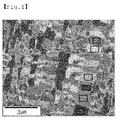
FIG. 1 is an electron back scattered diffraction (EBSD) photograph of a negative segregation zone of Inventive Example 1. -
FIG. 2 is an EBSD photograph of a positive segregation zone of Inventive Example 3. - The inventors of the present disclosure conducted research in order to resolve an existing problem and to secure improved impact toughness as compared to the related art, simultaneously, resulting in devising a method of improving impact toughness and weldability by controlling an alloy design and an area fraction of a microstructure. In more detail, the inventors of the present disclosure came up with the present disclosure to resolve a problem in which high manganese steel having alpha martensite and epsilon martensite structures of the related art (the same structures as illustrated in
FIG. 1 ) with excellent impact toughness causes non-uniform distribution of the structures when used in an actual production process. - A Fe-12Mn binary alloy of the related art may secure significantly excellent strength and impact toughness by having a microstructure formed as a lattice. However, as positive and negative segregation zones were developed by adding a large amount of manganese (Mn), there was a problem in which carbon (C) could not be excluded in the actual production process. Furthermore, in a case in which the binary alloy is produced, a degree of Mn segregation is significantly high, and impact toughness is reduced due to a generation of a large amount of epsilon martensite in the positive segregation zone and an addition of a small amount of C, and thus, the binary alloy could not be commercialized as a Fe-12Mn heterogeneous composition system.
- The inventors of the present disclosure conducted research in order to solve a situation in which C may not be completely excluded in the same manner as in an actual production process and a problem in which the non-uniform alpha martensite and epsilon martensite structures are formed due to a presence of a segregation zone, resulting in the devising of the present disclosure.
- In other words, fine epsilon martensite and alpha martensite structures were secured in the negative segregation zone by adding a large amount of C, while austenite and a portion of the epsilon martensite structure were generated by enriching C and Mn in the positive segregation zone, thus securing a structure having three phases. Consequently, the same structure as that of a base material, formed in a weld heat-affected zone (HAZ), led to steel having excellent welding zone properties being to be able to be provided, thus devising the present disclosure.
- Hereinafter, according to an aspect of the present disclosure, steel having excellent weldability and impact toughness in a welding zone will be described in detail.
- According to an exemplary embodiment in the present disclosure, steel having excellent weldability and impact toughness in a welding zone may include, by weight (wt.)%, C: 0.1% to 0.3%, Mn: 11% to 13%, iron (Fe) as a residual component thereof, and other inevitable impurities, and may comprise the positive and negative segregation zones in a layered form. In addition, the positive segregation zone may comprise, by area fraction, austenite of 50% or more and the epsilon martensite as a remainder, and the negative segregation zone may comprise, by area fraction, the alpha martensite as a matrix and epsilon martensite of less than 5% (excluding 0%).
- Carbon (C) is an effective component improving stability of the austenite in the positive segregation zone. In a case in which a large amount of C is included, there is a problem in which the epsilon martensite and the alpha martensite are inhibited from being generated in the negative segregation zone. Therefore, an upper limit thereof may be set to be 0.3 wt.%. On the other hand, in a case in which a significantly small amount of C is included, a large amount of the epsilon martensite is generated in the positive segregation zone. Therefore, since there is a problem in which impact toughness is reduced, a lower limit thereof may be set to be 0.1 wt.%.
- Manganese (Mn) is the most significant constituent element in the present disclosure. According to an exemplary embodiment, in order to form a microstructure, Mn of 11 wt.% or more may be included. Meanwhile, in the case that a content of Mn is significantly high, there is a problem in which a large amount of the epsilon martensite is formed in the negative segregation zone, thus making a structure thereof coarse and reducing impact toughness due to epsilon. Therefore, an upper limit thereof may be set to be 13 wt.%.
- A remaining component of the present disclosure is iron (Fe) . However, since unintended impurities may inevitably enter a typical production process from a material or the surrounding environment, the impurities may not be excluded. As those having skill in the art will be aware, in the case of impurities, an entirety of contents thereof is not described in specifications.
- A structure formed through the alloy composition may be present to include the positive and negative segregation zones in a layered form, and may be a structure allowing the epsilon martensite and the alpha martensite to have a lattice structure in the negative segregation zone.
- The negative segregation zone may include, by area fraction, the alpha martensite as a matrix and the epsilon martensite of less than 5%. In the case of a structure of the present disclosure, the epsilon martensite of less than 5% (excluding 0%) is generated first during cooling, the microstructure is cut finely, and the alpha martensite is generated from remaining austenite not transformed into the epsilon martensite, thus securing a microstructure having excellent strength and impact toughness.
- The negative segregation zone may have high strength by securing the alpha martensite as a matrix. In addition, coarse alpha martensite may be prevented from being generated by securing the epsilon martensite of less than 5%. Furthermore, in the case that a large amount of the epsilon martensite is generated, there is a problem in which the epsilon martensite having a low level of ductility is modified to be rapidly transformed into the alpha martensite and produce stress, thus resulting in cracking. Therefore, an area fraction of the epsilon martensite may be controlled to be less than 5%. In the case that the epsilon martensite is not generated, there is a problem in which a prior austenite structure is not divided by the epsilon martensite, causing the alpha martensite structure to be coarse, thus reducing impact toughness. Therefore, the epsilon martensite may be included. Furthermore, the alpha martensite has a size of 3 µm or less. In the case that an effective grain size of the alpha martensite is greater than 3 µm, there may be a problem in which impact toughness may be reduced.
- The positive segregation zone may include, by area fraction, the austenite of 50% or more and the epsilon martensite as a remainder. In the case that the epsilon martensite is more than 50%, there is a problem in which when external stress is concentrated, the epsilon martensite is easily transformed into the alpha martensite, thus reducing an elongation percentage and impact toughness. Therefore, the area fraction of the epsilon martensite may be limited to less than 50%.
- Impact toughness in a welding zone of the steel may be 64J or greater at a temperature of -60 °C. Impact toughness in the welding zone may secure 64J or greater at a temperature of -60 °C because in the case of carbon steel, a large amount of low-temperature transformation phase is generated by a high cooling speed of the weld HAZ, thus reducing impact toughness thereof, while steel in the present disclosure may not be affected by cooling speed due to microstructural characteristics thereof, and may secure the same microstructure as the base material in the weld HAZ.
- The steel proposed in the present disclosure may secure a structure including the austenite having excellent physical properties such as strength and the like, as a matrix, in the positive segregation zone and a complex structure in which the alpha martensite structure having excellent strength and impact toughness and the epsilon martensite structure are finely generated in the negative segregation zone, and thus secure high strength and toughness. In addition, due to the microstructural characteristics of steel, the same microstructure is generated at a cooling speed from a significantly slow cooling speed to fast cooling speed. Therefore, steel proposed in the present disclosure may be applied to a production of an ultra-thick steel sheet.
- Since steel proposed in the present disclosure may always have the same structure at cooling speed of 0.1°C/sec to 100°C/sec regardless of rolling conditions, and a microstructure of the weld HAZ may also always have the same structure regardless of an effect of heat, weld HAZ properties thereof are excellent. In general, in the case of the carbon steel including the martensite structure, there are many cases in which a large amount of low-temperature cracks are generated in the weld HAZ by stress after welding. However, in the case of steel proposed in the present disclosure, since a large amount of the austenite is present in the positive segregation zone, and the austenite having excellent ductility absorbs stress caused by martensite transformation at a relatively low temperature, weldability and resistance thereof to the low-temperature cracks are excellent.
- A method for manufacturing steel in the present disclosure may not be limited, but may employ a general method. According to an exemplary embodiment, ingot steel satisfying the composition is manufactured to be cast in slab form. The slab is reheated at temperatures of 1,100°C to 1,300°C, and steel is manufactured through processes of hot rolling and cooling.
- Hereinafter, the present disclosure will be described in more detail through an exemplary embodiment. However, the exemplary embodiment below is intended to describe the present disclosure in more detail through illustration thereof, but not limit the scope of rights of the present disclosure, because the scope of rights thereof is determined by the contents of the appended claims and reasonably inferred therefrom.
- Steel was manufactured in such a manner that a slab having a composition detailed in Table 1 below was heated at a temperature of 1,150 °C for two hours to be hot-rolled at a temperature of 1,000 °C in a finishing process and be cooled at cooling speed of 1 °C/sec, 15 °C/sec, and 70 °C/sec. Next, an area fraction of microstructure phases was measured by observing a microstructure of each steel through electron back scattered diffraction (EBSD) and a scanning electron microscope (SEM) and using image analysis, and results thereof are represented in Table 1. In addition, welding was carried out, and impact toughness and a presence of cracking in a welding zone were observed as represented in Table 1.
[Table 1] Classification C (wt.% ) Mn (wt.% ) Negative Segregation Zone Positive Segregation Zone Welding Zone Microstructure (Area%) Grain Size (µm) Microstructure (Area%) Impact Toughness (J) at -60 C Presence of Crack Alpha Martensite Epsilon Martensite Epsilon Martensite Austenite Inventive Example 1 0.15 12.2 95.3 3.5 2.2 41 59 105 None Inventive Example 2 0.21 11.7 96.2 4.1 2.1 36 64 98 None Inventive Example 3 0.26 12.5 96.9 4.9 2.4 28 72 86 None Comparative Example 1 0.08 10.7 100 0 23.5 67 33 12 Present Comparative Example 2 0.35 12.3 88 12 11.5 25 75 18 None Comparative Example 3 0.22 13.8 92 15 13.5 12 88 23 None - Since Inventive Examples 1 to 3 satisfying an entirety of ranges proposed in the present disclosure secure a microstructure proposed therein, Inventive Examples 1 to 3 may secure high strength and excellent impact toughness. As illustrated in
FIG. 1 , as a result of imaging a negative segregation zone in Inventive Example 1 using the EBSD, it could be confirmed that alpha martensite has a lattice structure. Furthermore, although epsilon martensite is not represented inFIG. 1 , the epsilon martensite is present in a thin plate shape in a grain boundary of an alpha martensite structure. The epsilon martensite was generated beforehand by dividing an interior of a prior austenite grain into the lattice structure before the alpha martensite was generated. -
FIG. 2 is a photograph of a positive segregation zone of Inventive Example 3. In addition, as illustrated inFIG. 2 , it can be confirmed that the epsilon martensite corresponding to a dark area has been generated in a thin plate shape within austenite corresponding to a bright area. - In the meantime, component ranges of carbon (C) and manganese (Mn) in Comparative Example 1 are lower than those of C and Mn, proposed in the present disclosure. Due to components C and Mn, the epsilon martensite was not generated in the negative segregation zone, and an entirety of microstructures was transformed into the alpha martensite, and thus a structure thereof became significantly coarse. Furthermore, in the case of the positive segregation zone, a large amount of the epsilon martensite is generated, and thus impact toughness in a weld heat-affected zone (HAZ) is significantly relatively low. In addition, it can be confirmed that as a large amount of coarse martensite is generated in the negative segregation zone, a low-temperature crack occurred during welding.
- In addition, component ranges of C and Mn in Comparative Examples 2 and 3 were higher than those of C and Mn, proposed in the present disclosure. Additionally, a large amount of the epsilon martensite was generated in the negative segregation zone, so that the microstructure became coarse, and impact toughness thereof was reduced. Thus, it can be confirmed that impact toughness of the weld HAZ was reduced, although a large amount of the austenite was generated in the positive segregation zone.
- While exemplary embodiments have been shown and described above, it will be apparent to those skilled in the art that modifications and variations could be made without departing from the scope of the present invention as defined by the appended claims.
Claims (5)
- A steel having excellent weldability and impact toughness in a welding zone, comprising:by weight (wt.)%, carbon (C) : 0.1%to 0.3%, manganese (Mn) : 11% to 13%, iron (Fe) as a residual component thereof, and other inevitable impurities, and positive and negative segregation zones in a layered form,wherein the positive segregation zone comprises austenite and epsilon martensite, and the negative segregation zone comprises, by area fraction, epsilon martensite of less than 5% and alpha martensite.
- The steel having excellent weldability and impact toughness in a welding zone of claim 1, wherein the epsilon martensite and the alpha martensite have a lattice structure in the negative segregation zone.
- The steel having excellent weldability and impact toughness in a welding zone of claim 1, wherein the positive segregation zone comprises the austenite of 50% or more and the epsilon martensite as a remainder.
- The steel having excellent weldability and impact toughness in a welding zone of claim 1, wherein an effective grain size of the alpha martensite is 3 µm or less.
- The steel having excellent weldability and impact toughness in a welding zone of claim 1, wherein impact toughness in the welding zone of the steel is 64J or greater at a temperature of -60 °C.
Applications Claiming Priority (2)
| Application Number | Priority Date | Filing Date | Title |
|---|---|---|---|
| KR1020130163226A KR101543898B1 (en) | 2013-12-24 | 2013-12-24 | Steel having excellent impact toughness of welding zone and welding property |
| PCT/KR2013/012181 WO2015099226A1 (en) | 2013-12-24 | 2013-12-26 | Steel material having excellent weldability and welded part impact toughness |
Publications (3)
| Publication Number | Publication Date |
|---|---|
| EP3088554A1 true EP3088554A1 (en) | 2016-11-02 |
| EP3088554A4 EP3088554A4 (en) | 2016-12-14 |
| EP3088554B1 EP3088554B1 (en) | 2020-04-22 |
Family
ID=53479057
Family Applications (1)
| Application Number | Title | Priority Date | Filing Date |
|---|---|---|---|
| EP13900236.4A Active EP3088554B1 (en) | 2013-12-24 | 2013-12-26 | Steel having excellent weldability and impact toughness of welding zone |
Country Status (7)
| Country | Link |
|---|---|
| US (1) | US10301707B2 (en) |
| EP (1) | EP3088554B1 (en) |
| JP (1) | JP6408011B2 (en) |
| KR (1) | KR101543898B1 (en) |
| CN (1) | CN105849301B (en) |
| CA (1) | CA2933585C (en) |
| WO (1) | WO2015099226A1 (en) |
Family Cites Families (24)
| Publication number | Priority date | Publication date | Assignee | Title |
|---|---|---|---|---|
| JPS5481118A (en) | 1977-12-12 | 1979-06-28 | Sumitomo Metal Ind Ltd | Nonmagnetic steel excellent in mechanical properties |
| JPS5481119A (en) | 1977-12-12 | 1979-06-28 | Sumitomo Metal Ind Ltd | Nonmagnetic steel excellent in machinability |
| JP2930772B2 (en) | 1991-05-21 | 1999-08-03 | 新日本製鐵株式会社 | High manganese ultra-high strength steel with excellent toughness of weld heat affected zone |
| JPH05195156A (en) | 1991-11-15 | 1993-08-03 | Nippon Steel Corp | High-manganese ultrahigh tensile strength steel excellent in toughness in heat affected zone and its production |
| JPH05255813A (en) | 1991-12-24 | 1993-10-05 | Nippon Steel Corp | High strength alloy with excellent workability and vibration damping performance |
| JPH06322440A (en) * | 1993-05-12 | 1994-11-22 | Nippon Steel Corp | Rolling method for high manganese non-magnetic steel billet |
| US5634990A (en) | 1993-10-22 | 1997-06-03 | Woojin Osk Corporation | Fe-Mn vibration damping alloy steel and a method for making the same |
| KR960006453B1 (en) * | 1993-10-22 | 1996-05-16 | 최종술 | Fe-Mn vibration damping alloy steel and its manufacturing method |
| JPH07316738A (en) * | 1994-05-31 | 1995-12-05 | Kawasaki Steel Corp | Welded structural steel with excellent vibration damping characteristics |
| JPH1030153A (en) * | 1996-07-17 | 1998-02-03 | Sumitomo Metal Ind Ltd | Steel with excellent solubility in water and inhibitor concentration control method using this steel |
| US5891388A (en) * | 1997-11-13 | 1999-04-06 | Woojin Inc. | Fe-Mn vibration damping alloy steel having superior tensile strength and good corrosion resistance |
| KR100380750B1 (en) | 2000-10-24 | 2003-05-09 | 주식회사 포스코 | Method for high strength steel plate having superior toughness in weld heat-affected zone |
| JP2005325388A (en) * | 2004-05-13 | 2005-11-24 | Kiyohito Ishida | Low specific gravity iron alloy |
| KR100954042B1 (en) * | 2007-04-09 | 2010-04-20 | 가부시키가이샤 고베 세이코쇼 | Thick steel plate with good HAZ toughness |
| JP5079419B2 (en) | 2007-08-09 | 2012-11-21 | 新日本製鐵株式会社 | Steel for welded structure with excellent toughness of weld heat affected zone, method for producing the same, and method for producing welded structure |
| KR100957961B1 (en) | 2007-12-26 | 2010-05-17 | 주식회사 포스코 | High strength line pipe steel with excellent weld toughness and manufacturing method |
| JP4547041B2 (en) | 2008-10-27 | 2010-09-22 | 新日本製鐵株式会社 | Refractory steel material excellent in reheat embrittlement resistance and low temperature toughness of weld heat affected zone and method for producing the same |
| US8403390B2 (en) * | 2011-03-10 | 2013-03-26 | Shiloh Industries, Inc. | Vehicle panel assembly and method of attaching the same |
| KR101351267B1 (en) * | 2011-10-21 | 2014-02-13 | 한양대학교 산학협력단 | 1GPa HIGH STRENGTH WELDING JOINT HAVING EXCELLENT LOW TEMPERATURE TOUGHNESS |
| KR20130074687A (en) | 2011-12-26 | 2013-07-04 | 주식회사 포스코 | High manganese steel sheet having high strength and high formability and method for manufacturing the same |
| EP2617839A1 (en) | 2012-01-18 | 2013-07-24 | MeKo Laserstrahl-Materialbearbeitungen e.K. | Nickel-free iron alloy for stents |
| HK1203572A1 (en) * | 2012-01-25 | 2015-10-30 | 塔塔钢铁英国有限公司 | Steel for producing parts for railway, railway crossings and switches and method for producing said parts |
| KR101403215B1 (en) | 2012-04-06 | 2014-06-02 | 주식회사 포스코 | Ultra high strength high manganese steel sheet with excellent ductility and method of manufacturing the same |
| KR101322092B1 (en) * | 2013-08-01 | 2013-10-28 | 주식회사 포스코 | Wear Resistant Steel Plate Having Excellent Low-Temperature Toughness And Weldability, And Method For Manufacturing The Same |
-
2013
- 2013-12-24 KR KR1020130163226A patent/KR101543898B1/en active Active
- 2013-12-26 EP EP13900236.4A patent/EP3088554B1/en active Active
- 2013-12-26 CN CN201380081810.8A patent/CN105849301B/en active Active
- 2013-12-26 JP JP2016541524A patent/JP6408011B2/en active Active
- 2013-12-26 US US15/102,646 patent/US10301707B2/en active Active
- 2013-12-26 CA CA2933585A patent/CA2933585C/en active Active
- 2013-12-26 WO PCT/KR2013/012181 patent/WO2015099226A1/en not_active Ceased
Also Published As
| Publication number | Publication date |
|---|---|
| WO2015099226A1 (en) | 2015-07-02 |
| CN105849301A (en) | 2016-08-10 |
| CA2933585C (en) | 2020-04-28 |
| US20160312344A1 (en) | 2016-10-27 |
| WO2015099226A8 (en) | 2015-09-17 |
| EP3088554B1 (en) | 2020-04-22 |
| US10301707B2 (en) | 2019-05-28 |
| KR20150074958A (en) | 2015-07-02 |
| EP3088554A4 (en) | 2016-12-14 |
| JP6408011B2 (en) | 2018-10-17 |
| CN105849301B (en) | 2017-08-29 |
| CA2933585A1 (en) | 2015-07-02 |
| KR101543898B1 (en) | 2015-08-11 |
| JP2017504719A (en) | 2017-02-09 |
Similar Documents
| Publication | Publication Date | Title |
|---|---|---|
| EP3235924B1 (en) | Quenched-tempered high-strength steel with yield strength of 900 mpa to 1080 mpa grade, and manufacturing method therefor | |
| TWI525201B (en) | Hot rolled steel sheet | |
| EP3728679B1 (en) | Cold rolled and heat treated steel sheet and a method of manufacturing thereof | |
| EP2940173B1 (en) | High strength austenitic-based steel with remarkable toughness of welding heat-affected zone and preparation method therefor | |
| CN106636961B (en) | One kind mutually strengthens easily welding steel and preparation method containing Cu nanometers | |
| KR101787287B1 (en) | High strength steel deformed bar and method of manufacturing the same | |
| EP2949773B1 (en) | High strength steel sheet and manufacturing method therefor | |
| EP3239331A1 (en) | High-strength steel having superior brittle crack arrestability, and production method therefor | |
| JP6222040B2 (en) | High formability and high strength cold-rolled steel sheet excellent in chemical conversion treatment and production method thereof | |
| JP6056745B2 (en) | High formability and high strength cold-rolled steel sheet excellent in chemical conversion treatment and production method thereof | |
| KR101598499B1 (en) | Steel having high strength and large ductility and method for manufacturing the same | |
| KR101482343B1 (en) | High strength austenitic steel having excellent toughness of heat affected zone and method for manufacturing the same | |
| EP2527481B1 (en) | Quenched steel sheet having excellent hot press formability, and method for manufacturing same | |
| KR101461727B1 (en) | Low gravity steel material having excellent ductility and method for manufacturing the same | |
| KR20170075034A (en) | Lean duplex stainless steel and method of manufacturing the same | |
| KR102198924B1 (en) | High entropy alloy and manufacturing method of the same | |
| KR101518588B1 (en) | Precipitation hardening steel sheet having excellent yield strength and yield ratio and method for manufacturing the same | |
| EP3088554B1 (en) | Steel having excellent weldability and impact toughness of welding zone | |
| EP2708614B1 (en) | Wire rod having good superior surface properties, high strength, and high toughness | |
| KR101609242B1 (en) | Method for manufacturing twin induced plasticity steel | |
| KR101657791B1 (en) | High manganese steel sheet having high-yield-ratio and high-strength and manufacturing method for the same | |
| KR101141015B1 (en) | Steel sheet having excellent hydrogen delayed fracture resistance quality, and method for producing the same | |
| KR102237486B1 (en) | High strength ultra thick steel plate having excellent very low temperature strain aging impact toughness at the center of thickness and method of manufacturing the same | |
| KR101445726B1 (en) | High tensile steel and preparing method thereof | |
| KR20140080036A (en) | Low gravity steel material having excellent ductility and method for manufacturing the same |
Legal Events
| Date | Code | Title | Description |
|---|---|---|---|
| PUAI | Public reference made under article 153(3) epc to a published international application that has entered the european phase |
Free format text: ORIGINAL CODE: 0009012 |
|
| 17P | Request for examination filed |
Effective date: 20160613 |
|
| AK | Designated contracting states |
Kind code of ref document: A1 Designated state(s): AL AT BE BG CH CY CZ DE DK EE ES FI FR GB GR HR HU IE IS IT LI LT LU LV MC MK MT NL NO PL PT RO RS SE SI SK SM TR |
|
| AX | Request for extension of the european patent |
Extension state: BA ME |
|
| A4 | Supplementary search report drawn up and despatched |
Effective date: 20161111 |
|
| RIC1 | Information provided on ipc code assigned before grant |
Ipc: C22C 38/04 20060101AFI20161107BHEP |
|
| DAX | Request for extension of the european patent (deleted) | ||
| STAA | Information on the status of an ep patent application or granted ep patent |
Free format text: STATUS: EXAMINATION IS IN PROGRESS |
|
| 17Q | First examination report despatched |
Effective date: 20171017 |
|
| GRAP | Despatch of communication of intention to grant a patent |
Free format text: ORIGINAL CODE: EPIDOSNIGR1 |
|
| STAA | Information on the status of an ep patent application or granted ep patent |
Free format text: STATUS: GRANT OF PATENT IS INTENDED |
|
| INTG | Intention to grant announced |
Effective date: 20191112 |
|
| RIN1 | Information on inventor provided before grant (corrected) |
Inventor name: KIM, YONG-JIN Inventor name: SUH, IN-SHIK Inventor name: PARK, IN-GYU Inventor name: LEE, HAK-CHEOL |
|
| GRAS | Grant fee paid |
Free format text: ORIGINAL CODE: EPIDOSNIGR3 |
|
| GRAA | (expected) grant |
Free format text: ORIGINAL CODE: 0009210 |
|
| STAA | Information on the status of an ep patent application or granted ep patent |
Free format text: STATUS: THE PATENT HAS BEEN GRANTED |
|
| AK | Designated contracting states |
Kind code of ref document: B1 Designated state(s): AL AT BE BG CH CY CZ DE DK EE ES FI FR GB GR HR HU IE IS IT LI LT LU LV MC MK MT NL NO PL PT RO RS SE SI SK SM TR |
|
| REG | Reference to a national code |
Ref country code: GB Ref legal event code: FG4D |
|
| REG | Reference to a national code |
Ref country code: CH Ref legal event code: EP |
|
| REG | Reference to a national code |
Ref country code: DE Ref legal event code: R096 Ref document number: 602013068312 Country of ref document: DE |
|
| REG | Reference to a national code |
Ref country code: IE Ref legal event code: FG4D |
|
| REG | Reference to a national code |
Ref country code: AT Ref legal event code: REF Ref document number: 1260151 Country of ref document: AT Kind code of ref document: T Effective date: 20200515 |
|
| REG | Reference to a national code |
Ref country code: LT Ref legal event code: MG4D |
|
| REG | Reference to a national code |
Ref country code: NL Ref legal event code: MP Effective date: 20200422 |
|
| PG25 | Lapsed in a contracting state [announced via postgrant information from national office to epo] |
Ref country code: PT Free format text: LAPSE BECAUSE OF FAILURE TO SUBMIT A TRANSLATION OF THE DESCRIPTION OR TO PAY THE FEE WITHIN THE PRESCRIBED TIME-LIMIT Effective date: 20200824 Ref country code: LT Free format text: LAPSE BECAUSE OF FAILURE TO SUBMIT A TRANSLATION OF THE DESCRIPTION OR TO PAY THE FEE WITHIN THE PRESCRIBED TIME-LIMIT Effective date: 20200422 Ref country code: NL Free format text: LAPSE BECAUSE OF FAILURE TO SUBMIT A TRANSLATION OF THE DESCRIPTION OR TO PAY THE FEE WITHIN THE PRESCRIBED TIME-LIMIT Effective date: 20200422 Ref country code: SE Free format text: LAPSE BECAUSE OF FAILURE TO SUBMIT A TRANSLATION OF THE DESCRIPTION OR TO PAY THE FEE WITHIN THE PRESCRIBED TIME-LIMIT Effective date: 20200422 Ref country code: GR Free format text: LAPSE BECAUSE OF FAILURE TO SUBMIT A TRANSLATION OF THE DESCRIPTION OR TO PAY THE FEE WITHIN THE PRESCRIBED TIME-LIMIT Effective date: 20200723 Ref country code: NO Free format text: LAPSE BECAUSE OF FAILURE TO SUBMIT A TRANSLATION OF THE DESCRIPTION OR TO PAY THE FEE WITHIN THE PRESCRIBED TIME-LIMIT Effective date: 20200722 Ref country code: FI Free format text: LAPSE BECAUSE OF FAILURE TO SUBMIT A TRANSLATION OF THE DESCRIPTION OR TO PAY THE FEE WITHIN THE PRESCRIBED TIME-LIMIT Effective date: 20200422 Ref country code: IS Free format text: LAPSE BECAUSE OF FAILURE TO SUBMIT A TRANSLATION OF THE DESCRIPTION OR TO PAY THE FEE WITHIN THE PRESCRIBED TIME-LIMIT Effective date: 20200822 |
|
| REG | Reference to a national code |
Ref country code: AT Ref legal event code: MK05 Ref document number: 1260151 Country of ref document: AT Kind code of ref document: T Effective date: 20200422 |
|
| PG25 | Lapsed in a contracting state [announced via postgrant information from national office to epo] |
Ref country code: RS Free format text: LAPSE BECAUSE OF FAILURE TO SUBMIT A TRANSLATION OF THE DESCRIPTION OR TO PAY THE FEE WITHIN THE PRESCRIBED TIME-LIMIT Effective date: 20200422 Ref country code: LV Free format text: LAPSE BECAUSE OF FAILURE TO SUBMIT A TRANSLATION OF THE DESCRIPTION OR TO PAY THE FEE WITHIN THE PRESCRIBED TIME-LIMIT Effective date: 20200422 Ref country code: HR Free format text: LAPSE BECAUSE OF FAILURE TO SUBMIT A TRANSLATION OF THE DESCRIPTION OR TO PAY THE FEE WITHIN THE PRESCRIBED TIME-LIMIT Effective date: 20200422 Ref country code: BG Free format text: LAPSE BECAUSE OF FAILURE TO SUBMIT A TRANSLATION OF THE DESCRIPTION OR TO PAY THE FEE WITHIN THE PRESCRIBED TIME-LIMIT Effective date: 20200722 |
|
| PG25 | Lapsed in a contracting state [announced via postgrant information from national office to epo] |
Ref country code: AL Free format text: LAPSE BECAUSE OF FAILURE TO SUBMIT A TRANSLATION OF THE DESCRIPTION OR TO PAY THE FEE WITHIN THE PRESCRIBED TIME-LIMIT Effective date: 20200422 |
|
| REG | Reference to a national code |
Ref country code: DE Ref legal event code: R097 Ref document number: 602013068312 Country of ref document: DE |
|
| PG25 | Lapsed in a contracting state [announced via postgrant information from national office to epo] |
Ref country code: CZ Free format text: LAPSE BECAUSE OF FAILURE TO SUBMIT A TRANSLATION OF THE DESCRIPTION OR TO PAY THE FEE WITHIN THE PRESCRIBED TIME-LIMIT Effective date: 20200422 Ref country code: EE Free format text: LAPSE BECAUSE OF FAILURE TO SUBMIT A TRANSLATION OF THE DESCRIPTION OR TO PAY THE FEE WITHIN THE PRESCRIBED TIME-LIMIT Effective date: 20200422 Ref country code: SM Free format text: LAPSE BECAUSE OF FAILURE TO SUBMIT A TRANSLATION OF THE DESCRIPTION OR TO PAY THE FEE WITHIN THE PRESCRIBED TIME-LIMIT Effective date: 20200422 Ref country code: RO Free format text: LAPSE BECAUSE OF FAILURE TO SUBMIT A TRANSLATION OF THE DESCRIPTION OR TO PAY THE FEE WITHIN THE PRESCRIBED TIME-LIMIT Effective date: 20200422 Ref country code: DK Free format text: LAPSE BECAUSE OF FAILURE TO SUBMIT A TRANSLATION OF THE DESCRIPTION OR TO PAY THE FEE WITHIN THE PRESCRIBED TIME-LIMIT Effective date: 20200422 Ref country code: ES Free format text: LAPSE BECAUSE OF FAILURE TO SUBMIT A TRANSLATION OF THE DESCRIPTION OR TO PAY THE FEE WITHIN THE PRESCRIBED TIME-LIMIT Effective date: 20200422 Ref country code: AT Free format text: LAPSE BECAUSE OF FAILURE TO SUBMIT A TRANSLATION OF THE DESCRIPTION OR TO PAY THE FEE WITHIN THE PRESCRIBED TIME-LIMIT Effective date: 20200422 |
|
| PG25 | Lapsed in a contracting state [announced via postgrant information from national office to epo] |
Ref country code: SK Free format text: LAPSE BECAUSE OF FAILURE TO SUBMIT A TRANSLATION OF THE DESCRIPTION OR TO PAY THE FEE WITHIN THE PRESCRIBED TIME-LIMIT Effective date: 20200422 Ref country code: PL Free format text: LAPSE BECAUSE OF FAILURE TO SUBMIT A TRANSLATION OF THE DESCRIPTION OR TO PAY THE FEE WITHIN THE PRESCRIBED TIME-LIMIT Effective date: 20200422 |
|
| PLBE | No opposition filed within time limit |
Free format text: ORIGINAL CODE: 0009261 |
|
| STAA | Information on the status of an ep patent application or granted ep patent |
Free format text: STATUS: NO OPPOSITION FILED WITHIN TIME LIMIT |
|
| 26N | No opposition filed |
Effective date: 20210125 |
|
| PG25 | Lapsed in a contracting state [announced via postgrant information from national office to epo] |
Ref country code: SI Free format text: LAPSE BECAUSE OF FAILURE TO SUBMIT A TRANSLATION OF THE DESCRIPTION OR TO PAY THE FEE WITHIN THE PRESCRIBED TIME-LIMIT Effective date: 20200422 |
|
| REG | Reference to a national code |
Ref country code: CH Ref legal event code: PL |
|
| PG25 | Lapsed in a contracting state [announced via postgrant information from national office to epo] |
Ref country code: MC Free format text: LAPSE BECAUSE OF FAILURE TO SUBMIT A TRANSLATION OF THE DESCRIPTION OR TO PAY THE FEE WITHIN THE PRESCRIBED TIME-LIMIT Effective date: 20200422 |
|
| REG | Reference to a national code |
Ref country code: BE Ref legal event code: MM Effective date: 20201231 |
|
| PG25 | Lapsed in a contracting state [announced via postgrant information from national office to epo] |
Ref country code: LU Free format text: LAPSE BECAUSE OF NON-PAYMENT OF DUE FEES Effective date: 20201226 Ref country code: IE Free format text: LAPSE BECAUSE OF NON-PAYMENT OF DUE FEES Effective date: 20201226 |
|
| PG25 | Lapsed in a contracting state [announced via postgrant information from national office to epo] |
Ref country code: LI Free format text: LAPSE BECAUSE OF NON-PAYMENT OF DUE FEES Effective date: 20201231 Ref country code: CH Free format text: LAPSE BECAUSE OF NON-PAYMENT OF DUE FEES Effective date: 20201231 |
|
| PG25 | Lapsed in a contracting state [announced via postgrant information from national office to epo] |
Ref country code: TR Free format text: LAPSE BECAUSE OF FAILURE TO SUBMIT A TRANSLATION OF THE DESCRIPTION OR TO PAY THE FEE WITHIN THE PRESCRIBED TIME-LIMIT Effective date: 20200422 Ref country code: MT Free format text: LAPSE BECAUSE OF FAILURE TO SUBMIT A TRANSLATION OF THE DESCRIPTION OR TO PAY THE FEE WITHIN THE PRESCRIBED TIME-LIMIT Effective date: 20200422 Ref country code: CY Free format text: LAPSE BECAUSE OF FAILURE TO SUBMIT A TRANSLATION OF THE DESCRIPTION OR TO PAY THE FEE WITHIN THE PRESCRIBED TIME-LIMIT Effective date: 20200422 |
|
| PG25 | Lapsed in a contracting state [announced via postgrant information from national office to epo] |
Ref country code: MK Free format text: LAPSE BECAUSE OF FAILURE TO SUBMIT A TRANSLATION OF THE DESCRIPTION OR TO PAY THE FEE WITHIN THE PRESCRIBED TIME-LIMIT Effective date: 20200422 |
|
| PG25 | Lapsed in a contracting state [announced via postgrant information from national office to epo] |
Ref country code: BE Free format text: LAPSE BECAUSE OF NON-PAYMENT OF DUE FEES Effective date: 20201231 |
|
| REG | Reference to a national code |
Ref country code: DE Ref legal event code: R081 Ref document number: 602013068312 Country of ref document: DE Owner name: POSCO CO., LTD, POHANG-SI, KR Free format text: FORMER OWNER: POSCO, POHANG-SI, GYEONGSANGBUK-DO, KR Ref country code: DE Ref legal event code: R081 Ref document number: 602013068312 Country of ref document: DE Owner name: POSCO CO., LTD, POHANG- SI, KR Free format text: FORMER OWNER: POSCO, POHANG-SI, GYEONGSANGBUK-DO, KR Ref country code: DE Ref legal event code: R081 Ref document number: 602013068312 Country of ref document: DE Owner name: POSCO HOLDINGS INC., KR Free format text: FORMER OWNER: POSCO, POHANG-SI, GYEONGSANGBUK-DO, KR |
|
| REG | Reference to a national code |
Ref country code: GB Ref legal event code: 732E Free format text: REGISTERED BETWEEN 20221027 AND 20221102 |
|
| REG | Reference to a national code |
Ref country code: DE Ref legal event code: R081 Ref document number: 602013068312 Country of ref document: DE Owner name: POSCO CO., LTD, POHANG-SI, KR Free format text: FORMER OWNER: POSCO HOLDINGS INC., SEOUL, KR Ref country code: DE Ref legal event code: R081 Ref document number: 602013068312 Country of ref document: DE Owner name: POSCO CO., LTD, POHANG- SI, KR Free format text: FORMER OWNER: POSCO HOLDINGS INC., SEOUL, KR |
|
| PGFP | Annual fee paid to national office [announced via postgrant information from national office to epo] |
Ref country code: DE Payment date: 20251105 Year of fee payment: 13 |
|
| PGFP | Annual fee paid to national office [announced via postgrant information from national office to epo] |
Ref country code: GB Payment date: 20251105 Year of fee payment: 13 |
|
| PGFP | Annual fee paid to national office [announced via postgrant information from national office to epo] |
Ref country code: IT Payment date: 20251106 Year of fee payment: 13 |
|
| PGFP | Annual fee paid to national office [announced via postgrant information from national office to epo] |
Ref country code: FR Payment date: 20251111 Year of fee payment: 13 |