EP3086806B1 - Peptide combinations and uses thereof in treating dust mite allergy - Google Patents
Peptide combinations and uses thereof in treating dust mite allergy Download PDFInfo
- Publication number
- EP3086806B1 EP3086806B1 EP14824746.3A EP14824746A EP3086806B1 EP 3086806 B1 EP3086806 B1 EP 3086806B1 EP 14824746 A EP14824746 A EP 14824746A EP 3086806 B1 EP3086806 B1 EP 3086806B1
- Authority
- EP
- European Patent Office
- Prior art keywords
- peptide
- pep
- peptides
- amino acid
- prt
- Prior art date
- Legal status (The legal status is an assumption and is not a legal conclusion. Google has not performed a legal analysis and makes no representation as to the accuracy of the status listed.)
- Active
Links
Images





Classifications
-
- C—CHEMISTRY; METALLURGY
- C07—ORGANIC CHEMISTRY
- C07K—PEPTIDES
- C07K14/00—Peptides having more than 20 amino acids; Gastrins; Somatostatins; Melanotropins; Derivatives thereof
- C07K14/435—Peptides having more than 20 amino acids; Gastrins; Somatostatins; Melanotropins; Derivatives thereof from animals; from humans
- C07K14/43504—Peptides having more than 20 amino acids; Gastrins; Somatostatins; Melanotropins; Derivatives thereof from animals; from humans from invertebrates
- C07K14/43513—Peptides having more than 20 amino acids; Gastrins; Somatostatins; Melanotropins; Derivatives thereof from animals; from humans from invertebrates from arachnidae
- C07K14/43531—Peptides having more than 20 amino acids; Gastrins; Somatostatins; Melanotropins; Derivatives thereof from animals; from humans from invertebrates from arachnidae from mites
-
- A—HUMAN NECESSITIES
- A61—MEDICAL OR VETERINARY SCIENCE; HYGIENE
- A61K—PREPARATIONS FOR MEDICAL, DENTAL OR TOILETRY PURPOSES
- A61K39/00—Medicinal preparations containing antigens or antibodies
- A61K39/35—Allergens
-
- A—HUMAN NECESSITIES
- A61—MEDICAL OR VETERINARY SCIENCE; HYGIENE
- A61P—SPECIFIC THERAPEUTIC ACTIVITY OF CHEMICAL COMPOUNDS OR MEDICINAL PREPARATIONS
- A61P37/00—Drugs for immunological or allergic disorders
- A61P37/08—Antiallergic agents
-
- A—HUMAN NECESSITIES
- A61—MEDICAL OR VETERINARY SCIENCE; HYGIENE
- A61K—PREPARATIONS FOR MEDICAL, DENTAL OR TOILETRY PURPOSES
- A61K39/00—Medicinal preparations containing antigens or antibodies
- A61K2039/555—Medicinal preparations containing antigens or antibodies characterised by a specific combination antigen/adjuvant
Definitions
- the present invention relates to compositions of peptides derived from a house dust mite allergen and methods of using such compositions modulating an immune response, for treating a subject for an allergic response and/or for inducing or promoting immunological tolerance in a subject, and in diagnostic methods and kits.
- Allergy to dust mites affects populations in most parts of the world.
- the most common dust mites are the European house dust mite (Dermatophagoides pteronyssinus) and the American house dust mite (Dermatophagoides farinae), which contain the major allergens Der p 1 /Der p 2 and Der f 1/Der f 2, respectively.
- Other common dust mites are found in subtropical/tropical regions around the world, for example Blomia tropicalis containing the major allergens Blo t 1 and Blo t 2 and Euroglyphus maynei containing the major allergens Eur m 1 and Eur m 2.
- allergen-specific immunotherapy products based on whole, intact or modified allergens typically administered as a complex extract made from dust mites.
- allergen-specific immunotherapy products are administered by subcutaneous injection or by the sublingual route to a subject over an extended period of time, frequently months or years and are now appreciated to induce a state of "tolerance" in the subject.
- the mechanism of action is thought to involve induction of IgG inhibitory antibodies, suppression of mast cell/basophil reactivity, suppression of T-cell responses, the promotion of T-cell anergy, and/or clonal deletion, and in the long term, decrease in the levels of allergen specific IgE.
- allergen-specific immunotherapy bears the risk of IgE-mediated adverse events including serious anaphylactic responses. Therefore, this therapy is not as widely offered to allergic subjects as its beneficial effect actually justifies.
- allergens e.g. of the major allergens
- This concept has been termed peptide immunotherapy (PIT), in which, repeated doses of the peptide is administered, typically by intradermal injection, to a subject (Moldaver and Larche 2011).
- HLA Human Leucocyte Antigen
- APC Antigen Presenting Cells
- PIT Peptide-based immunotherapy
- PIT represents a potentially attractive alternative to allergen extracts, with a more favorable safety/tolerability profile and a significantly shorter treatment regimen than existing therapies.
- PIT solely addresses the T-cell compartment of the immune system without engaging existing antibody responses because of the lack of antibody epitopes due to the smaller size of peptides compared to allergens. Consequently, no IgE-mediated adverse events are expected although they are often seen when treating allergy with traditional allergen-based immunotherapy products.
- Peptide immunotherapy is today in clinical development and does seem to have a favorable safety profile over the whole-allergen based vaccines.
- a shortcoming of using the T cell epitope-containing peptides is, however, associated with the restriction of each peptide to only bind a subset of the naturally occurring HLA Class II molecules within the human population.
- a mix of several peptides covering different HLA Class II alleles is therefore mandatory to generate a broadly acting immunotherapy allergy treatment.
- this repertoire of HLA Class II alleles varies from one person to another and from one ethnic population to another, it is challenging to provide peptide-based immunotherapies that can be offered to allergic subjects of any geographic region in the world unless numerous peptides are included in the vaccine.
- peptide vaccines containing as few peptides as possible, but at the same time to be able to treat the majority of dust mite allergic subjects in a worldwide population with the same immunotherapy product.
- Such a product should comprise a combination of peptides that in combination are able to bind the worldwide HLA Class II allele repertoire, and the resulting peptide-HLA complexes should be recognized as T cell epitopes in the subject so as to induce tolerogenic immunological reactions.
- the invention is set out in the appended set of claims.
- the embodiments and/or examples of the following description which are not covered by the appended claims are not considered to be part of the present invention.
- the present inventors have found it possible to assemble peptide combinations consisting of few peptides, such as three, four, five or six peptides, which have HLA Class II allele repertoire covering a significantly high fraction of a worldwide population and which also produce a T cell response in a significantly high fraction of a donor population allergic to a house dust mite.
- compositions comprising peptide combinations having high worldwide HLA Class II allele coverage.
- such peptide combinations may be assembled by first providing a set of T cell epitope containing peptides (for example as disclosed in Example 3), then estimating the HLA Class II allele coverage of individual T cell epitope containing-peptides (for example as disclosed in Examples 10), then combining peptides with different HLA alleles to cover the HLA Class II allele repertoire of a worldwide population (for example as disclosed in Example 6) and then verifying in a qualified donor population (for example as disclosed in Example 2) that the suggested peptide combinations are able to produce a T cell response in a high fraction of the population (For example as described in Example 7).
- peptide combination for use as an "allergy vaccine” in the treatment of allergy to a house dust mite allergen, which is eligible for the majority of the world population.
- the peptides selected for the herein disclosed peptide combinations derive from one or more of the house dust mite allergens Der p 1, Der p 2, Der f 1 and Der f 2, and optionally Der p 4, and are shown to produce a T cell response in many donors and to have a satisfactorily high worldwide HLA Class II coverage.
- peptides of a peptide combination as disclosed herein primarily are distinct peptides derived from different regions of the house dust mite allergens, optionally wherein the amino acid residues of one distinct peptide overlap with few amino acid residues of another distinct peptide such as overlapping with less than 13, such as less than 12, 11, 10 or 9 amino acid residues.
- Tables 9 and 10 report peptides shown to produce a T cell response in a high fraction of the donor population ("high responder peptides" - derived from Figures 1 to 8 ) and wherein peptides are collected in groups of distinct peptides.
- the disclosure relates in a first aspect to a composition comprising at least three peptides, wherein the composition comprises peptides selected from at least three of the following peptide groups:
- composition comprising a composition as defined herein.
- the disclosure provides in a third aspect to a method for relieving or reducing (e.g. treating) an immune response triggered by an allergen of a dust mite (e.g. house dust mite) in a subject in need thereof, comprising administering to the subject a therapeutically effective amount of a composition described herein.
- a dust mite e.g. house dust mite
- the disclosure provides in a further aspect, a method for relieving one or more symptoms of an immune response triggered by an allergen of a dust mite in a subject in need thereof, comprising administering to the subject a therapeutically effective amount of a composition described herein.
- the disclosure provides in a further aspect, a method for inducing immunological tolerance against an allergen of a dust mite, comprising administering to the subject a therapeutically effective amount of a composition described herein.
- the disclosure relates to a composition as defined herein for use in a method defined herein, e.g. a composition as defined herein for use in relieving an immune response triggered by an allergen of a dust mite in a subject in need thereof; for use in relieving one or more symptoms of an immune response triggered by an allergen of a dust mite in a subject in need thereof; and/or for inducing immunological tolerance against an allergen of a dust mite in a subject in need thereof.
- the disclosure relates to the use of a composition as defined herein for the preparation of a medicament for use in a method defined herein, e.g. the use of a composition as defined herein for the preparation of a medicament for use in relieving an immune response triggered by an allergen of a dust mite in a subject in need thereof; for use in relieving one or more symptoms of an immune response triggered by an allergen of a dust mite in a subject in need thereof; and/or for inducing immunological tolerance against an allergen of a dust mite in a subject in need thereof.
- the disclosure relates to a kit comprising a compartment and instructions, wherein the compartment comprises a composition described herein and wherein the instructions are for use in treating allergy to dust mites, such as house dust mites.
- the disclosure relates to a method of determining whether T cells of a subject in need of treatment recognize a composition as defined herein, comprising contacting T cells obtained from the subject with said composition or a single peptide thereof and detecting whether the T cells are stimulated by said composition or single peptide.
- the disclosure relates to a diagnostic kit comprising a composition defined herein.
- peptide denotes an individual (e.g. isolated) amino acid molecule having a sequence length of about 12 to 30 amino acid residues.
- a peptide as referred to herein may be a linear peptide, which does not comprise a secondary helix structure.
- a peptide as used herein may be a parent peptide or a variant thereof.
- parent peptide denotes an individual peptide that represents a region of the allergen it originates from, which region contains at least one T cell epitope that herein is reported to produce an in vitro T cell response in a high fraction of the donor population and to have broad HLA Class II coverage.
- an individual peptide derived from the same region of the allergen as the parent peptide and which overlaps with at least 15 contiguous amino acid residues of the parent peptide also produces a T cell response in a high fraction of the donor population.
- Such individual peptides are thus said to belong to the same peptide group of individual peptides as the parent peptide.
- a group of peptides or "peptide group” is meant to denote a collection of individual peptides derived from the same region of an allergen and which have at least about 14 to 15 contiguous amino acids overlapping with the amino acid sequence of a parent peptide defined herein, optionally with 1, 2, or 3 modifications (e.g. substitutions or deletions of amino acid residues within the 14 to 15 contiguous amino acids).
- a group of peptides therefore contains one or more parent peptides defined herein and variants of said parent peptides.
- Tables 9 and 10 provide examples of parent peptides and variants thereof.
- an “epitope” refers to a region or part of an antigen, such as a peptide disclosed herein, that elicits an immune response when administered to a subject.
- An epitope may be a T cell epitope, i.e., an epitope that elicits, stimulates, induces, promotes, increases or enhances a T cell activity, function or response. For example a Th2 cell epitope.
- Any peptide or combination of peptides of interest can be analyzed to determine whether they include at least one T cell epitope using any number of assays (e.g. T cell proliferation assays, lymphokine secretion assays, T cell non-responsiveness studies, etc.).
- allergen refers to an antigen which elicits, induces, stimulates, or enhances an immune response by a cell of the immune system of an exposed animal (e.g., human).
- An antigen is an allergen when the specific immune response is the development of enhanced sensitivity or a hypersensitivity to the antigen, but the antigen itself is not typically innately harmful.
- An allergen is therefore a particular type of antigen that can cause development of enhanced or increased sensitivity or hypersensitivity in a subject. For example, an allergen can elicit production of IgE antibodies in predisposed subjects.
- HLA alleles as disclosed herein uses a simpler notation, such as DRB1_0101 or DPA10102-DPB10101, respectively instead of the official HLA nomenclature, as presented at the web site "HLA Nomenclature” ⁇ url:http://hla.alleles.org/>.
- the amino acid sequence of an expressed HLA allele can be identified as HLA-X*YY:ZZ where X denotes a specific locus, e.g. the DRB1 locus.
- YY is a two digit number referring to the allele group, formerly defined by the serotype.
- ZZ is a two or three digit number (herein always two digits) defining the specific HLA protein.
- a specific beta chain may be referred to as e.g., HLA-DRB1*01:01, and a specific alpha-beta chain pair be denoted as HLA-DPA1*02:01-HLA-DPB1*01:01.
- compositions comprise at least three peptides selected from at least three of peptide groups 1 to 26 disclosed herein.
- the composition comprises at least four peptides, wherein the composition comprises peptides selected from at least 3 or 4 of the peptide groups 1 to 26.
- the composition comprises at least five peptides, wherein the composition comprises peptides selected from at least 3, 4 or 5 of the peptide groups 1 to 26. Additional peptides in the compositions as disclosed herein is preferably selected from one or more peptide groups from which there is no other peptide in the composition.
- the peptides in the herein disclosed compositions are all from different peptide groups.
- a composition as disclosed herein comprises a maximum of three peptides selected from each of three different peptide groups, a maximum of four peptides selected from each of four different peptide groups, a maximum of five peptides selected from each of five different peptide groups, a maximum of six peptides selected from each of six different peptide groups, or a maximum of seven peptides selected from each of seven different peptide groups.
- a composition of the invention may comprise a maximum of three, four, five, six or seven peptides.
- the peptide combinations are assembled using a collection of peptides from peptide groups 3, 4, 5, 6, 7, 9, 10, 12, 13, 14, 15, 16, 17, 18, 19, 20, 21, 24, 25 and 26. Therefore, in some embodiments, the at least three peptides are selected from at least three of the following peptide groups 3, 4, 5, 6, 7, 9, 10, 12, 13, 14, 15, 16, 17, 18, 19, 20, 21, 24, 25 and 26.
- compositions may, but not necessarily, comprise peptides from an allergen of both the house dust mite species Dermatophagoides farinae and Dermatophagoides pteronyssinus.
- the peptide combinations may, but not necessarily, comprise individual peptides derived from both a house dust mite (HDM) group 1 allergen (e.g. Der p 1 and/or Der f 1) and a house dust mite (HDM) group 2 allergen (e.g. Der p 2 and/or Der f 2).
- the composition comprises at least three peptides, wherein one of the peptides derives from Der p 1 or Der f 1 and another peptide derives from Der p 2 or Der f 2.
- At least one peptide is selected from any one of the peptide groups 1-17, these groups representing peptides derived from Der p 1 and/or Der f 1, for example a peptide consisting of an amino acid sequence selected from any one of SEQ ID NOs: 251 (pep-010), 252 (pep-011), 253 (pep- 012), 254 (pep-022), 255 (pep-025), 9 (pep-041), 10 (pep-042), 11 (pep-043), 12 (pep- 044), 17 (pep-049), 18 (pep-050), 20 (pep-052), 21 (pep-053), 22 (pep-054), 23 (pep- 055), 26 (pep-058), 29 (pep-061), 42 (pep-072), 46 (pep-075), 49 (pep-078), 52 (pep- 081), 58 (pep-087), 258 (pep-
- At least one peptide is selected from any one of the peptide groups 18-26, these groups representing peptides derived from Der p 2 and/or Der f 2, for example a peptide consisting of an amino acid sequence selected from any one of SEQ ID NOs: 249 (pep-002), 253 (pep-012), 256 (pep-031), 238 (pep-066), 60 (pep-089), 61 (pep-090), 62 (pep-091), 63 (pep-092), 67 (pep-096), 70 (pep-099), 71 (pep-100) 72 (pep-101), 73 (pep-102), 77 (pep-106), 79 (pep-108), 81 (pep-109), 82 (pep-110), 269 (pep-125), 270 (pep-126), 271 (pep-131), 264 (pep-26B), 226, 275, 227,
- compositions provide high HLA Class II coverage to a worldwide population. Therefore, in certain embodiments, the peptides of the peptide combination bind collectively to the majority of the alleles disclosed in Table 8 or Table 17.
- a peptide combination of the invention may collectively bind to at least 20 of the 28 HLA alleles in the group consisting of DPA10201-DPB10101, DPA10103-DPB10201, DPA10103-DPB10301, DPA10103-DPB10401, DPA10103-DPB10402, DPA10202-DPB10501, DPA10201-DPB11401, DQA10501-DQB10201, DQA10501-DQB10301, DQA10301-DQB10302, DQA10401-DQB10402, DQA10101-DQB10501, DQA10102-DQB10602, DRB1_0101, DRB1_0301, DRB1_0401, DRB1_0405
- the peptides of a peptide combination may collectively bind to at least 21, 22, 23, 24, 25, 26, 27 or 28 of the 28 alleles.
- a peptide combination of the invention may collectively bind to at least 70%, such as at least 75%, 80%, 85%, 88%, 90%, 92%, 94%, 95%, 96%, 97% or 98% of the HLA alleles consisting of the group of DPA10201-DPB10101, DPA10103-DPB10201, DPA10103-DPB10301, DPA10103-DPB10401, DPA10103-DPB10402, DPA10202-DPB10501, DPA10201-DPB11401, DQA10501-DQB10201, DQA10501-DQB10301, DQA10301-DQB10302, DQA10401-DQB10402, DQA10101-DQB10501, DQA10102-DQB10602, DRB1
- the HLA Class II coverage may be determined using numerous alleles.
- the peptide combination may collectively bind to at least 70% of the 83 HLA alleles disclosed in Table 17, such as at least 75%, 80%, 85%, 88%, 90%, 92%, 94%, 95%, 96%, 97% or 98% of the HLA alleles consisting of the group of DRB1_0101, DRB1_0102, DRB1_0103, DRB1_0301, DRB1_0302, DRB1_0307, DRB1_0401, DRB1_0402, DRB1_0403, DRB1_0404, DRB1_0405, DRB1_0406, DRB1_0407, DRB1_0408, DRB1_0410, DRB1_0411, DRB1_0417, DRB1_0701, DRB1_0801, DRB1_0802, DRB1_0803, DRB1_0804, DRB1_0806, D
- peptide combinations with high HLA Class II coverage one may consider combining at least three peptides independently selected from peptides having high worldwide HLA class II coverage, for example peptides with the rating "A” shown in Table 12. Those peptides are regarded as "high T cell responders” and also possess high HLA class II coverage.
- the at least three peptides are selected from at least three of the peptide groups 4, 5, 6, 9, 10, 13, 14, 15, 16, 17, 20, 21, 24, 25 and 26.
- Exemplary peptide combinations of such embodiments are shown in Table 14 (peptide combinations 3, 4, 5, 6, 7, 9, 10, 11, 12, 13, 14, 15, 16, 18, 19, 20, 23, 24, 25, 17, 17a, 17b, 17c, 17d, 17f, 17p, 171, 17q, 17s, 17t, 17u, 17v and 17x).
- these peptide combinations have T cell responders in more than 65% of the donor population.
- the peptide combinations number 21 and 22 which do not comprise individual peptides from at least three of the peptide groups selected from 4, 5, 6, 9, 10, 13, 14, 15, 16, 17, 20, 21, 24, 25 and 26 produce T cell responses in considerable fewer donors.
- Peptide combination number 22 comprises an individual peptide from each of the peptide groups 7, 20 and 17.
- the composition does not comprise a peptide from peptide group 7, a peptide from peptide group 20 or a peptide from peptide group 17.
- the composition does not comprise as two of the peptides, a peptide from peptide group 7 and a peptide from peptide group 20.
- the composition does not comprise as three of the peptides, a peptide from peptide group 7, a peptide from peptide group 20 and a peptide from peptide group 17.
- some peptides are poorly soluble in aqueous solution, for example in solutions having a target pH in the range of pH 4 to 8 or are difficult to synthesize.
- a composition may comprise at least three peptides selected from any of the "first choice peptides" as set out in Table 15. Therefore, in some embodiments, the at least three peptides are selected from at least three of the peptide groups 9, 10, 13, 14, 16, 17, 20, 21, 24, 25 and 26.
- compositions may comprise at least four, five, six or seven peptides selected from at least four, five, six or seven of the peptide groups 1 to 26.
- a composition comprising the at least three peptides may comprise an additional peptide (e.g. one, two, three or more peptides) selected from any of the peptide groups 1-26, preferably from which group there is no other peptide in the composition.
- an additional peptide may be selected from any one of the group of peptides 1-26 that are not represented in the composition.
- a composition may comprise at least four peptides, wherein the composition comprises peptides selected from at least three or four of the peptide groups 1 to 26, for example selected from at least three or four of the peptide groups 4, 5, 6, 9, 10, 13, 14, 15, 16, 17, 20, 21, 24, 25 and 26, for example selected from at least three or four of the peptide groups 9, 10, 13, 14, 16, 17, 20, 21, 24, 25 and 26.
- a composition may comprise at least five peptides, wherein the composition comprises peptides selected from at least three, four or five of the peptide groups 1 to 26, for example selected from at least three, four or five of the peptide groups 4, 5, 6, 9, 10, 13, 14, 15, 16, 17, 20, 21, 24, 25 and 26, for example selected from at least three, four or five of the peptide groups 9, 10, 13, 14, 16, 17, 20, 21, 24, 25 and 26.
- the peptide combinations may be assembled by selecting a first, second or third peptide from any of the peptides disclosed in Table 15.
- the composition comprises as one of the peptides a peptide from peptide group 26 (e.g. parent peptide pep-110 or a variant thereof).
- Exemplary peptide combinations are combination numbers 3, 4, 5, 9, 10, 13, 16, 18, 19, 20, 23, 25, 17, 17a, 17b, 17c, 17d, 17f, 17p, 17l, 17q, 17s, 17t, 17v and 17x shown in Table 14.
- Such compositions may additionally comprise as one of the peptides a peptide derived from a HDM group 1 allergen, e.g. a peptide selected from any one of the peptide groups 1-17.
- the composition comprises as one of the peptides a peptide from peptide group 26 (e.g. parent peptide pep-110 or a variant thereof) and comprises as one of the peptides a peptide selected from any one of the peptide groups 24, 17, 9 and 16.
- Exemplary peptide combinations are combination numbers 3, 4, 5, 9, 10, 16, 18, 19, 20, 23, 25, 17, 17a, 17b, 17c, 17d, 17f, 17p, 17l, 17q, 17s, 17t, 17v and 17x shown in Table 14.
- the composition may comprise one or more additional peptides independently selected from any of the peptide groups 1-26 from which there is no other peptide in the composition, for example from peptide groups 3, 4, 6, 9, 10, 16, 17 and 21.
- the composition comprises as two of the peptides, a peptide from peptide group 26 (e.g. parent peptide pep-110 or a variant thereof) and a peptide from peptide group 24 (e.g. parent peptide pep-131 or a variant thereof).
- exemplary peptide combinations are combination numbers 3, 5, 9, 17f, 17p, 17l, 17q, 17s, 17v, and 17x shown in Table 14.
- the composition comprises a third peptide selected from any one of the peptide groups 1-17, for example selected from any one of the peptide groups 4, 5, 6, 9, 10, 13, 14, 15, 16 and 17.
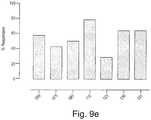
- a composition comprising three peptides may produce a T cell response in a high fraction of donors ( Figure 9e ). Therefore, in some embodiments, the third peptide is from peptide group 14 (e.g. parent peptide pep-130 or pep-054; or a variant thereof). Exemplary peptide combinations are combination numbers 17f, 17p, 17q, 17s and 17v shown in Table 14.
- compositions may in addition to the three peptides from each of the peptide groups 26, 24 and 14 comprise an additional peptide selected from any one of the peptide groups 1-13, 15-23 and 25, such as selected from any one of the peptide groups 9, 16 and 21.
- a composition comprises three, four, five, six or seven peptides, wherein the composition comprises peptides from each of the three peptide groups 26, 24 and 14 and in addition comprises a peptide selected from any one of the peptide groups 9, 16 and 21.
- compositions comprise five peptides, wherein the composition comprises peptides from each of the five peptide groups 26, 24, 14, 9 and 16.
- peptide combination 17q shown in Table 14 that comprises:
- peptide combination 17f (shown in Table 14) that comprises:
- the composition comprises five peptides, wherein the composition comprises peptides selected from each of the five peptide groups 26, 24, 14, 9 and 21.
- the peptide combination 17p (shown in Table 14) that comprises:
- peptide combination 17s (shown in Table 14) that comprises
- the composition comprises five peptides, wherein the composition comprises peptides from each of the five peptide groups 26, 24, 14, 16 and 21.
- peptide combination 17v shown in Table 14 that comprises
- a composition comprises as two of the peptides, a peptide from peptide group 26 and a peptide from peptide group 24.
- a third peptide is from peptide group 9 or from peptide group 21.
- Exemplary peptide combinations are combination numbers 17f, 17p, 171, 17q, 17s, 17v and 17x (shown in Table 14).
- the composition comprises five peptides, wherein the composition comprises peptides from each of the five peptide groups 26, 24, 21, 9 and 13.
- peptide combination number 17x shown in Table 14 that comprises:
- a composition may comprise as two of the peptides, a peptide from peptide group 26 and a peptide from peptide group 24 and a third peptide from peptide group 17 (e.g. pep-010 or pep-011; or a variant thereof).
- Exemplary compositions are peptide combinations numbers 3, 5 and 9 (shown in Table 14).
- a composition may comprise at least three peptides, wherein the composition comprises a peptide from each of the three peptide groups 3, 5 and 9.
- an additional peptide is selected from any one of the peptide groups 1-16, 18-23 and 25, such as peptide groups 3, 4, 6, 9, 10, 14, 16 and 21.
- a composition may comprise three, four, five, six or seven peptides, wherein the composition comprises peptides from three of the peptide groups 26, 24 and 17 and wherein an additional peptide is selected from any of the peptide groups 7 and 10.
- the composition comprises five peptides, wherein the composition comprises a peptide from each of the five peptide groups 26, 24, 17, 7 and 10.
- Exemplary compositions are peptide combinations number 5 (shown in Table 14) and 9 (shown in Table 14). For example peptide combination number 5 (shown in Table 14) that comprises:
- peptide combination number 9 (shown in Table 14) that comprises:
- the composition comprises five peptides, wherein the composition comprises peptides from each of the four peptide groups 26, 24, 17 and 10; and a peptide with the amino acid sequence SEQ ID NO: 117 (pep-p4) or a variant thereof.
- peptide combination number 3 shown in Table 14 that comprises:
- the composition comprises three peptides, wherein the composition comprises peptides from each of the three peptide groups 26, 17 and 6.
- peptide combination number 16 shown in Table 14 that comprises:
- the composition comprises as two of the peptides, a peptide from peptide group 26 (e.g. parent peptide pep-110 or a variant thereof) and a peptide from peptide group 9 (e.g. a parent peptide selected from any of pep-123, pep-025, pep-075 or pep-049; or a variant thereof).
- Exemplary peptide combinations are combination numbers 10, 18, 23, 25, 17, 17c, 17f, 17p, 17l, 17q, 17s 17t and 17x shown in Table 14.
- the composition comprises five peptides, wherein the composition comprises peptides from each of the five peptide groups 26, 9, 6, 16 and 19.
- the composition of peptide combination number 10 shown in Table 14 that comprises:
- the composition comprises five peptides, wherein the composition comprises peptides from each of the five peptide groups 26, 9, 6, 18 and 20.
- the composition of peptide combination number 23 (shown in Table 14) that comprises:
- the composition comprises five peptides, wherein the composition comprises peptides from each of the five peptide groups 26, 9, 6, 12 and 21.
- the composition of peptide combination number 25 (shown in Table 14) that comprises:
- the composition comprises five peptides, wherein the composition comprises peptides from each of the five peptide groups 26, 9, 16, 3 and 25.
- the composition of peptide combination number 17 (shown in Table 14) that comprises:
- the composition comprises five peptides, wherein the composition comprises peptides from each of the five peptide groups 26, 9, 16, 14 and 25.
- the composition of peptide combination number 17a (shown in Table 14) that comprises:
- the composition comprises five peptides, wherein the composition comprises peptides from each of the five peptide groups 26, 9, 16, 3 and 21.
- the composition of peptide combination number 17c (shown in Table 14) that comprises:
- the composition comprises five peptides, wherein the composition comprises peptides from each of the five peptide groups 26, 9, 16, 14 and 21.
- the composition of peptide combination number 17t (shown in Table 14) that comprises:
- the composition comprises as two of the peptides, a peptide from peptide group 26 (e.g. parent peptide pep-110 or a variant thereof) and a peptide from peptide group 16 (e.g. a parent peptide pep-058 or a variant thereof).
- Exemplary peptide combinations are combination numbers 10, 17a, 17b, 17c, 17d, 17f, 17l, 17q and 17t shown in Table 14.
- the composition comprises five peptides, wherein the composition comprises peptides from each of the five peptide groups 26, 16, 3, 15 and 25.
- the composition of peptide combination number 17b (shown in Table 14) that comprises:
- the composition comprises five peptides, wherein the composition comprises peptides from each of the five peptide groups 26, 16, 14, 15 and 21.
- the composition of peptide combination number 17d (shown in Table 14) that comprises:
- compositions preferably comprise only one peptide from a peptide group defined herein.
- the composition may comprise two peptides of the same peptide group, wherein one of the peptides derives from Der p and the other peptide of the same peptide group derives from Der f.
- Examples of such compositions are peptide combinations 13, 18, 19 and 20 of Table 14 that comprise two peptides from peptide group 26.
- the composition comprises three peptides, wherein the composition comprises two peptides from peptide group 26 and one peptide from peptide group 6.
- the composition of peptide combination number 18 shown in Table 14 that comprises:
- the composition comprises five peptides, wherein the composition comprises two peptides from peptide group 26 and one peptide from each of the three peptide groups 9, 6 and 3.
- the composition of peptide combination number 18 shown in Table 14 that comprises:
- the composition comprises five peptides, wherein the composition comprises two peptides from peptide group 26 and one peptide from each of the three peptide groups 17, 10 and 3.
- the composition of peptide combination number 19 (shown in Table 14) that comprises:
- the composition comprises four peptides, wherein the composition comprises two peptides from peptide group 26 and one peptide from each of the two peptide groups 17 and 10.
- the composition of peptide combination number 20 shown in Table 14 that comprises:
- the composition comprises as one of the peptides a peptide of peptide group 26, the composition does not comprise a peptide of any of the peptide groups 24, 17, 9 and 16, but may still achieve high T cell responder rate and worldwide HLA Class II coverage.
- a composition of the peptide combination number 4 of Table 14. Therefore, in some embodiments, the composition comprises four peptides, wherein the composition comprises peptides from each of the four peptide groups 26, 7, 10 and 20.
- a composition of the peptide combination number 4 (shown in Table 14) comprises:
- the composition comprises as one of the peptides a peptide of peptide group 26, but the composition does not comprise a peptide of any of the peptide groups 24, 17, 9 and 16. As shown in Figure 9a for peptide combination number 24 (shown in Table 14), such a composition may still achieve high T cell responder rate and worldwide HLA Class II coverage. Therefore, in certain embodiments, the composition comprises five peptides, wherein the composition comprises peptides from each of the five peptide groups 10, 6, 12, 18 and 20. For example peptide combination number 24 (shown in Table 14) that comprises:
- compositions comprising three peptides, such as four peptides, such as five peptides may comprise an additional peptide selected from any one of the peptide groups 1 to 26, wherein optionally the additional peptide(s) is from a peptide group from which there is no other peptide in the composition, thus the additional peptide is of any of the peptide groups 1 to 26 that is not represented in the peptide combination, for example from peptide groups 3, 4, 6, 10, 16, and 21.
- the additional peptide is from the same peptide group as another peptide of the composition, wherein the additional peptide is derived from another allergen species selected from Der p and Der f.
- the composition may comprise one, two, three four or more additional peptides.
- the compositions may comprise up to four peptides, up to five peptides, up to six peptides, up to seven peptides.
- the present disclosure has been exemplified with numerous peptide combinations shown in Table 14, but several other peptide combinations may be provided by substituting one of the peptides of the peptide combinations shown in Table 14 with another peptide from the same peptide group, i.e. a variant of the parent peptide or one of the other parent peptides or variants thereof also included in the same peptide group. Furthermore, one peptide from one peptide group may be substituted with a peptide from another group.
- a peptide from a peptide group may be substituted with a peptide from another peptide group that has the same functionality, for example the functionality that the substitute peptide binds to the same or substantially the same group of HLA Class II alleles that the original peptide binds to.
- the ability of a peptide to bind HLA Class II alleles may be determined by a competitive MHC class II binding assay (For example as disclosed in Example 9) that determines the ability of a peptide to displace a known control binder from a human MHC class II allotype, for example the allotypes shown in Tables 8 or 17 herein.
- a substitute peptide binds to the same, substantially the same or at least 70%, 75%, 80%, such as at least 85%, 88%, 90%, 92%, 94%, 95%, 96%, 97% or 98%, or more of the alleles binding to the peptide to be substituted, for example where the binding is determined by in-vitro binding assay or predicted binding to the alleles consisting of the group of DPA10201-DPB10101, DPA10103-DPB10201, DPA10103-DPB10301, DPA10103-DPB10401, DPA10103-DPB10402, DPA10202-DPB10501, DPA10201-DPB11401, DQA10501-DQB10201, DQA10501-DQB10301, DQA10301-DQB10302, DQA10401-DQB10402, DQA10101-DQB10501, DQA10102-DQB10602, DRB1_0101,
- peptide 041 (SEQ ID NO: 9) is able to bind the alleles DRB1_1302, DRB3_0101, DRB3_0202, DQA10501-DQB10201 and DQA10401-DQB10402 and may be replaced by any of the peptides 011, 010 and 075 (SEQ ID NOs: 252, 251 and 46, respectively) that binds to at least the same alleles as peptide 041 as shown in Table 16a.
- parent peptide pep-075 (SEQ ID NO: 46) of peptide group 9 may be substituted with parent peptide pep-123 (SEQ ID NO: 266) or a variant thereof
- parent peptide pep-054 (SEQ ID NO: 22) may be substituted with parent peptide pep-091 SEQ ID NO: 62) or a variant thereof.
- a parent peptide described herein may contain one or more modifications, which optionally may result in greater or less activity or function, for example in the ability to elicit, stimulate or induce an in vitro immune response (e.g. T cell proliferation or T cell cytokine production); in the ability to bind HLA Class II alleles; in the ability to induce or enhance immunological tolerance to a relevant antigen, e.g. a house dust mite allergen, such as Der p 1, Der f1, Der p 2 and/or Der f 2; or in the ability to dissolve in solvents e.g. in an aqueous solution.
- an in vitro immune response e.g. T cell proliferation or T cell cytokine production
- a relevant antigen e.g. a house dust mite allergen, such as Der p 1, Der f1, Der p 2 and/or Der f 2
- solvents e.g. in an aqueous solution.
- a modification may include one or more deletions of amino acid residues from the N- and/or C- terminal end of the parent peptide, one or more additions of amino acid residues to the N- and/or C- terminal of the parent peptide and/or one or more amino acid substitutions, additions or deletions within the amino acid sequence of the parent peptide.
- a longer variant of the parent peptide may be up to 60 amino acids in length, for example up to 55, 50, 45, 40, 35, 30, 28, 25, 24, or 22 amino acids in length. More typically, a longer variant peptide is up to about 30 amino acids in length, such as up to 25 amino acids in length.
- the longer variant may comprise the amino acid sequence of a parent peptide disclosed herein, or an amino acid sequence having at least 65% identity or similarity over the length of the amino acid sequence of the parent peptide or a fragment thereof, such as over at least 12 contiguous amino acids, for example over at least 13, 14, 15, 16, 17, 18, 19, 20 contiguous amino acids of the parent peptide or over the length of the parent peptide.
- the longer variant comprises an amino acid sequence having at least 70%, 75%, 80%, 85%, 90% or 95% identity or similarity over the length of the amino acid sequence of the parent peptide or over at least 12 contiguous amino acids, for example over at least 13, 14, 15, 16, 17, 18, 19 or 20 contiguous amino acids of the parent peptide. Therefore, in some embodiments, a variant of the parent peptide is a longer peptide up to 30 amino acid residues in length that comprises one or more additional amino acid residues at the N- and/or C- terminal end than the parent peptide or comprises an amino acid sequence having at least 80% identity over at least 14 contiguous amino acids of the parent peptide, such as over at least 15, 16, 17, 18 contiguous amino acids of the parent peptide.
- a variant of the parent peptide may also include a fragment of a parent peptide disclosed herein.
- a fragment of the parent peptide can have one or more amino acids less than the parent peptide, either comprising deletions from within the amino acid sequence of the parent peptide and/or amino acid deletions from the N- and/or C- terminus of the parent peptide.
- a fragment will have a length of at least 12 amino acids, for example at least 13, 14, 15, 16 or 17 amino acids, and will have at least 65% identity or similarity over the length of the fragment, or over the length of at least 12 contiguous amino acids of the parent peptide, when aligned with the parent peptide.
- the percentage identity or similarity is at least 70%, 75%, 80%, 85%, 90% or 95% over the length of the fragment, or over at least 12, 13, 14 or 15 contiguous amino acids of the parent peptide. Therefore, in some embodiments, a variant thereof may be a shorter peptide comprising an amino acid sequence having at least 80% identity over at least 14 contiguous amino acids of the parent peptide, such as over at least 15, 16, 17, 18 contiguous amino acids of the parent peptide.
- fragments of parent peptides disclosed herein may be selected from SEQ ID NOs: 90, 102, 161, 103, 105, 106, 111, 114, 115, 173, 174, 117, 176, 120, 121, 180, 128, 187, 188, 191, 133, 192, 199, 226, 227, 205, 229, 206, 230, 208, 233, 210, 234, 242, 243, 221, 245, 246, 283, 166, 223, 247, 224 and 248.
- a variant of a parent peptide may comprise additional amino acids or may consist of a fragment of the parent peptide.
- a variant of a parent peptide may consist of 12-30 amino acids, for example 13-30, 14-30, 15-30, 16-30, 12-28, 13-28, 14-28, 15-28, 16-28, 13-26, 14-26, 15-26, 16-26, 13-25, 14-25, 15-25, 15-25, 13-24, 14-24, 15-24, 16-24, 3-22, 14-22, 15-22, 16-22, 13-20, 14-20, 15-20, 16-20 amino acids, such as particularly 12, 13, 14, 15, 16, 17, 18, 19, 20, 21, 22, 23, 24, 25, 26, 27, 28, 29 or 30 amino acids.
- a variant of a parent peptide may comprise an amino acid sequence having at least 65% sequence identity or similarity over at least 14 contiguous amino acids of the parent peptide sequence, optionally wherein the percent sequence identity or similarity is at least 70% 80%, 85%, 90% or 95% over at least 15 contiguous amino acids of the parent peptide sequence, such as over at least 16, 17, 18 or 20 contiguous amino acids of the parent peptide sequence.
- the variant of the parent peptides consists of 14-30 amino acids residues and comprises an amino acid sequence having at least 80% sequence identity or similarity over at least 14 contiguous amino acids of the parent peptide.
- the variant consists of 15-30 amino acids residues and comprises an amino acid sequence having at least 80% sequence identity or similarity over at least 15 contiguous amino acids of the parent peptide.
- the percent identity or similarity may be at least 85%, such as at least 90% or 95% over at least 14 contiguous amino acids, for example over at least 15, 16, 17, or 18 contiguous amino acids of the parent sequence.
- the variant consists of 14-30 amino acid residues, such as 15-30 amino acid residues, wherein one, two or three amino acid residues within at least 14, such as at least 15, 16, 17 or 18 contiguous amino acids of the parent peptide are substituted.
- the variant is a peptide consisting of 17-30 amino acids and comprises an amino acid sequence having at least 80%, such as at least 85%, 90% or 95% identity or similarity over at least 14 or 15 contiguous amino acids of the parent sequence.
- the variant is a peptide consisting of 15-25 amino acids and comprises an amino acid sequence having at least 80% identity or similarity over at least 14 or 15 contiguous amino acids of the parent sequence.
- the variant is a peptide consisting of 16-25 amino acids and comprises an amino acid sequence having at least 80% identity or similarity over at least 14 or 15 contiguous amino acids of the parent sequence.
- the at least 80% identity or similarity is over at least 16, 17, 18 or 19 contiguous amino acids of the parent peptide sequence and the percent identity or similarity may be at least is 85%, such as at least 90% or 95% over at least 16, 17, 18 or 19 contiguous amino acids of the parent peptide sequence.
- identity and “identical” and grammatical variations thereof, as used herein, mean that two or more referenced entities are the same (e.g., amino acid sequences). Thus, where two peptides are identical, they have the same amino acid sequence. The identity can be over a defined area, e.g. over at least 12, 13, 14, 15 or 16 contiguous amino acids of the parent peptide sequence, optionally wherein the alignment is the best fit with gaps permitted.
- the variant peptide may be aligned with the parent peptide and the percent identity calculated with respect to the identical amino acid residues found within the amino acid sequence of the variant peptide that overlaps with the 15 contiguous amino acids of the parent peptide sequence.
- Identity can be determined by comparing each position in aligned sequences.
- a degree of identity between amino acid sequences is a function of the number of identical or matching amino acids at positions shared by the sequences, i.e. over a specified region.
- Optimal alignment of sequences for comparisons of identity may be conducted using a variety of algorithms, as are known in the art, including the Clustal Omega program available at the URL: http://www.ebi.ac.uk/Tools/msa/clustalo/, the local homology algorithm of Smith and Waterman, 1981, Adv. Appl. Math 2: 482 , the homology alignment algorithm of Needleman and Wunsch, 1970, J. Mol. Biol.
- Such algorithms that calculate percent sequence identity (homology) generally account for sequence gaps and mismatches over the comparison region or area.
- a BLAST e.g ., BLAST 2.0
- search algorithm has exemplary search parameters as follows: Mismatch -2; gap open 5; gap extension 2.
- a BLASTP algorithm is typically used in combination with a scoring matrix, such as PAM100, PAM 250, BLOSUM 62 or BLOSUM 50.
- FASTA e.g., FASTA2 and FASTA3
- SSEARCH sequence comparison programs are also used to quantitate the extent of identity ( Pearson et al., Proc. Natl. Acad. Sci. USA 85:2444 (1988 ); Pearson, Methods Mol Biol. 132:185 (2000 ); and Smith et al., J. Mol. Biol. 147:195 (1981 ).
- Programs for quantitating protein structural similarity using Delaunay-based topological mapping have also been developed ( Bostick et al., Biochem Biophys Res Commun. 304:320 (2003 )).
- similarity and “similar” and grammatical variations thereof, as used herein, mean that an amino acid sequence contains a limited number of conservative amino acid substitutions compared to a peptide reference sequence, e.g. the variant peptide versus the parent peptide.
- a variety of criteria can be used to indicate whether amino acids at a particular position in a peptide are similar.
- substitutions of like amino acid residues can be made on the basis of relative similarity of side-chain substituents, for example, their size, charge, hydrophobicity, hydrophilicity, and the like, and such substitutions may be assayed for their effect on the function of the peptide by routine testing.
- substitutions may be conservative or non-conservative amino acid substitutions.
- a "conservative substitution” is the replacement of one amino acid by a biologically, chemically or structurally similar residue.
- Biological similarity means that the substitution does not destroy a biological activity, e.g. T cell reactivity or HLA coverage.
- Structural similarity means that the amino acids have side chains with similar length, such as alanine, glycine and serine, or a similar size.
- Chemical similarity means that the residues have the same charge, or are both either hydrophilic or hydrophobic.
- a conservative amino acid substitution is one in which an amino acid residue is replaced with an amino acid residue having a similar side chain, for example amino acids with basic side chains (e.g., lysine, arginine, histidine); acidic side chains (e.g., aspartic acid, glutamic acid); uncharged polar side chains (e.g., glycine, asparagine, glutamine, serine, threonine, tyrosine, cysteine, histidine); nonpolar side chains (e.g., alanine, valine, leucine, isoleucine, proline, phenylalanine, methionine, tryptophan); beta-branched side chains (e.g., threonine, valine, isoleucine), and aromatic side chains (e.g., tyrosine, phenylalanine, tryptophan).
- basic side chains e.g., lysine, arginine, histidine
- Particular examples include the substitution of one hydrophobic residue, such as isoleucine, valine, leucine or methionine, for another, or the substitution of one polar residue for another, such as the substitution of arginine for lysine, glutamic acid for aspartic acid, or glutamine for asparagine, serine for threonine, and the like.
- Proline which is considered more difficult to classify, shares properties with amino acids that have aliphatic side chains (e.g., Leu, Val, Ile, and Ala).
- substitution of glutamine for glutamic acid or asparagine for aspartic acid may be considered a similar substitution in that glutamine and asparagine are amide derivatives of glutamic acid and aspartic acid, respectively.
- a parent peptide disclosed herein is derived from the allergen isoforms Der p 1.0105, Der f 1.0101, Der p 2.0101 or Der f 2.0103, whereas a typical variant peptide may be derived from the same stretch found in another isoform of the same allergen shown in Table 1.
- the amino acid sequence of a parent peptide derived from one isoform of an allergen e.g. isoform Der p 1.0105
- a variant of a parent peptide disclosed herein may comprise one or more additional amino acid residues at the N- and/or C- terminal end than the parent peptide.
- Such amino acid residues may be naturally occurring amino acids or non-naturally occurring amino acids.
- the one or more additional amino acids are the same amino acid or amino acid sequence flanking the N- and/or C- terminal ends of the parent peptide when aligned with the amino acid sequence of the allergen isoform it is present in, based upon or derived from or is aligned with another isoform of the same allergen.
- additional amino acids may be the amino acids flanking the N- and/or C-terminal ends of the parent peptide when aligned to Der p 1, Der f 1, Der p 2 or Der f 2.
- the additional amino acids may be the amino acids flanking the N- and/or C-terminal ends of the peptide when aligned to Derp1.0105 or another isoform thereof set out in Table 1.
- peptides derived from Derf1.0101, Derp2.0101 or Derf2.0103 may comprise additional amino acids flanking the N- and/or C-terminal ends of the peptide when aligned to Derf1.0101 or an isoform thereof, Derp2.0101 or an isoform thereof, Derf2.0103 or an isoform thereof, respectively.
- Various isoforms are shown in Table 1.
- an isoform of Der p 1 may be selected from any of the isoforms with amino acid sequence with SEQ ID Nos: 287-311
- an isoform of Der f 1 may be selected from any of the isoforms with amino acid sequence with SEQ ID Nos: 312-322
- an isoform of Der p 2 may be selected from any of the isoforms with amino acid sequence with SEQ ID Nos: 323-337
- an isoform of Der f 2 may be selected from any of the isoforms with amino acid sequence with SEQ ID Nos: 338-354.
- a variant peptide may include a number of modifications compared to the parent peptide, for example to increase or decrease physical or chemical properties of the parent peptide, for example to decrease its ability to resist oxidation, to improve or increase solubility in aqueous solution, to decrease aggregation, to decrease synthesis problems, etc.
- a variant of a parent peptide comprises:
- a variant of a parent peptide may comprise one, two, three or more lysine or arginine amino acid residue(s) added to the N- and/or C-terminus of the parent peptide that have been extended with one or more, e.g. 1, 2, 3, 4, or 5 amino acid residues, optionally of the wild type sequence the peptide is based upon or another wild type isoform.
- Tables 11a, 11b and 11c Typical examples of variants of parent peptides are shown in Tables 11a, 11b and 11c.
- Table 11a shows examples of the addition of one or more amino acid residues from the wild type allergen isoform to a parent peptide.
- Table 11b shows examples of parent peptides pep-058, pep-075, pep-123 with one or more Arginine residues added to the N- and/or C-terminus, e.g. variants with SEQ ID NOs: 274-278, 279-282 and 283-286, respectively.
- Table 11c shows examples of amidation of the C-terminal end of parent peptides pep-058, pep-075, pep-110, pep-130, pep-091 and pep-123.
- a parent peptide or a variant peptide thereof may be derivatized.
- a derivative of a peptide refers to a modified form of a peptide disclosed herein, including a modified form of a variant thereof.
- a derivative is formed by reacting a functional side group of an amino acid (e.g. amino, sulfhydryl or carboxy-group) with another molecule to form a covalent or non-covalent attachment of any type of molecule (naturally occurring or designed), such as a sugar moiety.
- an amino acid e.g. amino, sulfhydryl or carboxy-group
- Specific examples of derivatives of a peptide include glycosylation, acylation (e.g.
- acetylation phosphorylation
- amidation formylation
- ubiquitination phosphorylation
- derivatization by protecting/blocking groups and any of numerous chemical modifications.
- Additional specific non-limiting examples are tagged peptides, fusion peptides, chimeric peptides including peptides having one or more non-amino acyl groups (q.v., sugar, lipid, etc.) covalently linked to the peptide.
- a derivative comprises one or more modifications, for example selected from any of: (a) N-terminal acylation (e.g. acetylation or formylation); (b) C-terminal amidation (e.g.
- reaction with ammonia or an amine (c) one or more hydrogens on the side chain amines of arginine and/or lysine replaced with a methylene group; (d) glycosylation and/or (e) phosphorylation.
- the peptides are amidated at the C-terminal end, for example peptide pept-130 may be amidated.
- a derivative comprises a fusion (chimeric) sequence of peptides, which optionally may contain an amino acid sequence having one or more molecules not normally present in a reference (wild type) sequence covalently attached to the peptide amino acid sequence.
- chimeric and grammatical variations thereof, when used in reference to a sequence, means that the sequence contains one or more portions that are derived from, obtained or isolated from, or based upon other physical or chemical entities.
- a derivative is one in which a second heterologous sequence, i.e. a heterologous functional domain, is attached to a peptide disclosed herein, (covalent or non-covalent binding) that may confer a distinct or complementary function to a peptide disclosed herein.
- Heterologous functional domains are not restricted to amino acid residues.
- a heterologous functional domain can consist of any of a variety of different types of small or large functional moieties.
- moieties include nucleic acid, peptide, carbohydrate, lipid or small organic compounds, such as a drug (e.g., an antiviral), a metal (gold, silver), or a radioisotope.
- Linkers such as amino acid or peptidomimetic sequences, may be inserted between the peptide sequence and the addition (e.g., heterologous functional domain) so that the two entities maintain, at least in part, a distinct function or activity.
- Linkers may have one or more properties that may include a flexible conformation, an inability to form an ordered secondary structure or a hydrophobic or charged character, which could promote or interact with either domain.
- Amino acids typically found in flexible protein regions include Gly, Asn and Ser. Other near neutral amino acids, such as Thr and Ala, may also be used in the linker sequence.
- the peptides of the peptide combination are not provided as individual peptides, but the peptides may be fused together or to a carrier molecule to form an isolated molecule.
- the peptides may be fused to the N- and C-terminus of a surface polypeptide of a virus, e.g. a virus of the hepadnaviridae family as disclosed in international patent application WO12168487 A1 .
- a variant peptide or a derivative of a parent peptide may share the same functionality or activity as the parent peptide or may have improved functionality or activity.
- a variant of a parent peptide may bind to at least 70% of the group of Class HLA II alleles that the parent peptide binds to.
- the variant peptide binds to the same, substantially the same or at least 75%, 80%, such as at least 82%, 85%, 88%, 90%, 92%, 95%, 98% or more, of the group of HLA Class II alleles that binds to the parent peptide, optionally wherein this is determined under same test conditions, either using prediction tools or in-vitro binding assay.
- the Class HLA II binding is determined with respect to a particular group of Class HLA II alleles, for example one or more or all of the following alleles: DPA1*02:01-DPB1*01:01, DPA1*01:03-DPB1*02:01, DPA1*01:03-DPB1*03:01, DPA1*01:03-DPB1*04:01, DPA1*01:03-DPB1*04:02, DPA1*02:02-DPB1*05:01, DPA1*02:01-DPB1*14:01, DQA1*05:01-DQB1*02:01, DQA1*05:01-DQB1*03:01, DQA1*03:01-DQB1*03:02, DQA1*04:01-DQB1*04:02, DQA1*01:01-DQB1*05:01, DQA1*01:02-DQB1*06:02,
- a variant peptide may have one or more of the same T cell epitopes as the parent peptide. This may be determined by the ability to induce or stimulate in vitro T cell proliferation using cultured PBMCs (peripheral blood monocytes) in response to the variant peptide compared to the parent peptide, optionally using same test conditions, or by the ability to induce or stimulate production of cytokines, (e.g. cytokines, IL-5, IL-13 and/or IL-10) from T cells (obtained from cultured PBMC's) in response to the variant peptide compared to the parent peptide, as described herein in Example 3.
- cytokines e.g. cytokines, IL-5, IL-13 and/or IL-10
- a variant of a parent peptide may include an overlap of at least 9 amino acid residues, preferably identical residues, when aligned with a parent peptide of the invention.
- the overlap is preferably more than 9 amino acid residues, e.g. 10, 11 or 12 amino acid residues or more, such as 13, 14 or 15 amino acid residues.
- the core binding sequence of MHC II molecules is known to be approximately 9 amino acids long, although MHC II molecules can accommodate longer peptides of 10-30 residues (Murugan and Dai, 2005). Therefore, in certain embodiments, an overlap of 9 amino acids or more with a parent sequence is sufficient for a variant to be able to share a T cell epitope with the parent peptide.
- Peptides are typically provided in the form of a salt, for example as a pharmaceutically acceptable and/or a physiologically acceptable salt.
- the salt may be an acid addition salt with an inorganic acid, an acid addition salt with an organic acid, a salt with a basic inorganic acid, a salt with a basic organic acid, a salt with an acidic or basic amino acid or a mixture thereof.
- an acid addition salts with an inorganic acid are selected from any of the salts with hydrochloric acid, hydrobromic acid, nitric acid, sulfuric acid, phosphoric acid, or the like.
- An acid salt with an organic acid may be selected from any of the salts with formic acid, acetic acid, trifluoroacetic acid, fumaric acid, oxalic acid, tartaric acid, maleic acid, succinic acid, malic acid, methanesulfonic acid, benzenesulfonic acid, p-toluenesulfonic acid, or the like.
- Salts with an inorganic base may be selected from a salt of an alkali metal salts such as sodium salts and potassium salts; alkali earth metal salts such as calcium salts and magnesium salts; and aluminum salts and ammonium salts.
- Salts with a basic organic base may be selected from any salt with trimethylamine, triethylamine, pyridine, picoline, ethanolamine, diethanolamine, triethanolamine, dicyclohexylamine, N,N-dibenzylethylenediamine, caffeine, piperidine, and pyridine.
- Salts with a basic amino acid may be selected from any salt with arginine, lysine, ornithine, or the like.
- Salts with an acidic amino acid may be selected from any salt with aspartic acid, glutamic acid, or the like.
- a salt such as a pharmaceutically acceptable salt, is an acetate salt.
- any parent peptide or a variant thereof may be amidated. Therefore, in some embodiments, a variant of a parent peptide is amidated at the C-terminus.
- Peptides disclosed herein and variants, derivatives or salts thereof are typically manufactured synthetically. Thus, in certain embodiments, peptides, variants, derivatives and salts thereof are synthetic. The peptides, variants, derivatives and salts may be isolated and/or purified, e.g. made by the hand of man, such as by peptide synthesis. Typically, the peptides may be combined after synthesis and freeze-dried or dissolved in aqueous solutions, DMSO, glycerol or the like or mixtures thereof.
- each peptide of a peptide combination is present in equimolar concentrations or substantially equimolar ranges.
- the peptides are freeze-dried (lyophilized), such as to provide them in a storage-stable form and in a form ready to be re-dissolved.
- the concentration of each of the re-dissolved peptides may be in a molar concentration in the range of 1 to 1000 ⁇ M, for example in the range of 10 to 800 ⁇ M, for example in the range of 20 to 500 ⁇ M, for example in the range of 20 to 300 ⁇ M.
- the disclosure also features a pharmaceutical composition comprising a composition, e.g. a peptide combination, defined herein.
- the pharmaceutical composition may be a vaccine, e.g. a product for use in conducting immunotherapy, including but not limited to a vaccine for treating an allergic immune response to a house dust mite allergen.
- a pharmaceutical composition comprises in addition to the peptide combination, therapeutically inactive ingredients, such as a pharmaceutically acceptable or physiologically acceptable excipient, carrier and/or adjuvants, which are well-known to the person skilled in the art and may include, but are not limited to, solvents, emulsifiers, wetting agents, plasticizers, solubilizers (e.g. solubility enhancing agents) coloring substances, fillers, preservatives, anti-oxidants, anti-microbial agents, viscosity adjusting agents, buffering agents, pH adjusting agents, isotonicity adjusting agents, mucoadhesive substances, and the like. Examples of formulation strategies are well-known to the person skilled in the art.
- the peptide may be formulated (e.g. mixed together) with immune-modifying agents like adjuvants.
- the adjuvant may be any conventional adjuvant, including but not limited to oxygen-containing metal salts, e.g. aluminium hydroxide, chitosan, heat-labile enterotoxin (LT), cholera toxin (CT), cholera toxin B subunit (CTB), polymerized liposomes, mutant toxins, e.g. LTK63 and LTR72, microcapsules, interleukins (e.g.
- IL-1 BETA, IL-2, IL-7, IL-12, INFGAMMA GM-CSF
- MDF derivatives CpG oligonucleotides
- LPS LPS
- MPL MPL-derivatives
- phosphophazenes Adju-Phos(R)
- glucan antigen formulation
- liposomes DDE, DHEA, DMPC, DMPG, DOC/Alum Complex
- Freund's incomplete adjuvant ISCOMs(R), LT Oral Adjuvant, muramyl dipeptide, monophosphoryl lipid A, muramyl peptide, and phospatidylethanolamine.
- the pharmaceutical composition may be formulated for parenteral administration, such as formulated for injection, e.g. subcutaneous and/or intradermal injection. Therefore, in some embodiments, the pharmaceutical composition may be a liquid (i.e. formulated as a liquid), including a solution, a suspension, a dispersion, and a gelled liquid.
- a liquid pharmaceutical composition may be formed by dissolving a powder, granulate or lyophilizate of a peptide combination described herein in a suitable solvent and then administering to a subject.
- Suitable solvents may be any solvent having physiologically acceptable properties and able to dissolve the peptide combination in desired concentrations. A desired concentration may depend on the aliquot to be administered (i.e.
- a liquid composition comprises each of the peptides of the combination in a concentration of 10 to 800 ⁇ M, for example 20 to 500 ⁇ M or20 to 300 ⁇ M.
- the concentration of each peptide is the same, such as in an equimolar concentration, but each peptide of the composition may be present in different concentrations.
- the solvent is an aqueous solution, optionally mixed with other solvents.
- a solvent may comprise at least 60% w/w of water, e.g. at least 65% w/w, 70% w/w, 75% w/w, 80% w/w , 85% w/w, 90% w/w or 95% w/w , 99% w/w of water, such as distilled water, such as sterile water.
- the solvent is sterile distilled water, e.g. water for injection.
- An aqueous solution may comprise other solvents than water, for example DMSO (dimethylsulfoxide), glycerol, ethanol, acetonitrile, vegetable or synthetic oils.
- the pH of the aqueous phase of the solvent may be in a physiological acceptable range, typically in the range of 3 to 9, such as in the range of pH 3 to 8, such as in the range of pH 4 to 8, such as in the range of 5 to 8, such as in the range of 6 to 8.
- the liquid formulation may comprise a pH controlling agent or buffering agent (e.g. citrate buffer, phosphate buffer, acetate buffer), optionally the pH may be adjusted with dilutions of strong base (e.g. sodium hydroxide or the like) and/or dilutions of strong acids (e.g. hydrochloric acid).
- the liquid formulation is isotonic, and optionally sterile. Therefore, in some embodiments, the formulation comprises saline, such as isotonic saline.
- the liquid may contain additional excipients, such as another solvent, a solubilizing enhancing agent (e.g. polyoxyethylene (20) sorbitan monolaurate (Tween® 20), ionic and non-ionic emulsifiers (e.g. poloxamers (Kolliphor®)), a dispersant, a thickener, a preservative, an anti-microbial agent, and/or an antioxidant.
- a solubilizing enhancing agent e.g. polyoxyethylene (20) sorbitan monolaurate (Tween® 20
- ionic and non-ionic emulsifiers e.g. poloxamers (Kolliphor®)
- solvents include water, saline, DMSO, glycerol, ethanol, acetonitrile, vegetable or
- a pharmaceutical composition may be formulated to contain only a limited amount of water or aqueous solution, e.g. containing less than 10% w/w of water or aqueous solution, such as less than 9, 8, 7, 6, 5, 4, 3, 2, 1, 0.5% w/w of water or aqueous solution.
- aqueous solution e.g. containing less than 10% w/w of water or aqueous solution, such as less than 9, 8, 7, 6, 5, 4, 3, 2, 1, 0.5% w/w of water or aqueous solution.
- Examples of pharmaceutical compositions with limited levels of water may include granulates, powders, for example lyophilizates, i.e. freeze-dried powders.
- the freeze-dried composition may be dissolved before use, for example dissolved in an aqueous, optionally sterile, solution, for example a solution having a pH in the range of 3-9, such as pH in the range of 3 to 8, such as pH in the range of 4 to 8.
- a lyophilizate may contain additional ingredients, e.g. bulking agents and lyoprotectants (e.g. sucrose, lactose, trehalose, mannose, mannitol, sorbitol, glucose, raffinose, glycine, histidine or mixtures thereof), buffering agents (e.g.
- solubilizers e.g. polyoxyethylene (20) sorbitan monolaurate (Tween® 20)
- a freeze-dried composition may also be formulated into a solid dosage form that is administered for example by the oral route such as by oral mucosa.
- the pharmaceutical composition may be formulated for oral administration, for example for sublingual administration. Therefore, the pharmaceutical composition may be a solid dosage form, such as a freeze-dried solid dosage form, typically a tablet, a capsule or sachet, which optionally may be formulated for fast disintegration.
- compositions can be formulated to be compatible with a particular route of administration, such as by intradermal or by sublingual administration.
- pharmaceutical compositions may include carriers, diluents, or excipients suitable for administration by various routes.
- routes of administration for contact or in vivo delivery for which a composition can optionally be formulated include inhalation, intranasal, oral, buccal, sublingual, subcutaneous, intradermal, epicutaneous, rectal, transdermal, or intralymphatic.
- a composition may take the form of, for example, tablets or capsules, optionally formulated as fast-integrating tablets/capsules or slow-release tablets/capsules.
- the tablet is freeze-dried, optionally a fast-disintegrating tablet or capsule suitable for being administered under the tongue.
- the pharmaceutical composition may also be formulated into a "unit dosage form", which used herein refers to physically discrete units, wherein each unit contains a predetermined quantity of a peptide or peptide combination, optionally in association with a pharmaceutical carrier (excipient, diluent, vehicle or filling agent) which, when administered in one or more doses, may produce a desired effect.
- Unit dosage forms also include, for example, ampules and vials, which may include a composition in a freeze-dried or lyophilized state (a lyophilizate) or a sterile liquid carrier, for example that can be added prior to administration or delivery in vivo.
- Unit dosage forms additionally include, for example, ampules and vials with liquid compositions disposed therein.
- the pharmaceutical composition comprises an inert gas, e.g. argon or nitrogen.
- kits comprising a compartment and instructions, wherein the compartment comprises a pharmaceutical composition as described herein and wherein the instructions are for use in treating allergy to dust mites, such as house dust mites.
- a kit may further comprise packaging material comprising corrugated fiber, glass, plastic, foil, ampules, vials, blister pack, preloaded syringes or tubes, optionally that maintain sterility of the components.
- a kit may further comprise labels or inserts comprising printed matter or computer readable medium optionally including identifying components, dose amounts, clinical pharmacology and instructions for the clinician or for a subject using one or more of the kit components, prophylactic or therapeutic benefits, adverse side effects or manufacturer information.
- the kit additionally comprises a container comprising a solvent for dissolving the composition before use. Examples of suitable solvents are described supra.
- the kit may also comprise a device for use in parenteral injection, e.g. for injecting the composition (e.g. dissolved composition) to a subcutaneous or intradermal tissue.
- a device may be any suitable device for that purpose, such as a needle or microneedle adapted for intradermal or subcutaneous delivery of the composition.
- the device may be a microneedle or a device comprising a plurality of microneedles designed for intradermal delivery of liquids, e.g. as described in international patent applications WO14064543 A1 , WO05049107 A2 , WO06054280 A2 , WO07066341 A3 and WO14188429 A1 .
- compositions e.g. peptide combinations described herein may be used for the treatment of an immune response or allergy to a dust mite, such as a house dust mite, in a subject in need thereof.
- a dust mite such as a house dust mite
- Allergy to a dust mite may be clinically presented in the subject as atopic dermatitis, urticaria, contact dermatitis, allergic conjunctivitis, allergic rhinitis, allergic asthma, anaphylaxis, and/or hay fever.
- the method comprises decreasing, reducing, suppressing or inhibiting atopic dermatitis, urticaria, contact dermatitis, allergic conjunctivitis, allergic rhinitis, allergic asthma, anaphylaxis, and/or hay fever.
- treatment of an immune response may encompass preventing, relieving, alleviating, reducing, inhibiting, decreasing, or suppressing an immune response, for example an allergic immune response, such as an immune response against a mite allergen (e.g. house dust mite allergen).
- the treatment of an immune response may also include the decrease, inhibition, suppression or reduction of a T cell response, which may include but is not limited to a Th2 cell response or a memory T cell response.
- the treatment of an immune response described herein may also comprise inducing, promoting, increasing or enhancing proliferation of regulatory T cells while optionally decreasing, reducing, inhibiting, suppressing or reducing production of pro-inflammatory lymphokines/cytokines.
- the disclosure relates to a method for relieving an immune response to an allergen of a dust mite (e.g. a house dust mite) in a subject in need thereof, comprising administering to said subject a therapeutically effective amount of a composition described herein (e.g. a peptide combination described herein).
- a dust mite e.g. a house dust mite
- a composition described herein e.g. a peptide combination described herein
- composition described herein may induce immunological tolerance against the allergen(s) of said dust mite.
- compositions disclosed herein may produce a therapeutic or beneficial effect, which optionally may be objectively or subjectively measurable.
- a therapeutic or beneficial effect can but need not be complete ablation of all or any immune response, or one or more symptoms caused by or associated with an allergen.
- a satisfactory clinical result is achieved when there is an incremental improvement or a partial reduction in an immune response or one or more symptoms caused by or associated with an allergen, or there is an inhibition, decrease, reduction, suppression, prevention, limit or control of worsening or progression of an immune response or one or more symptoms caused by or associated with an allergen over a short or long duration (hours, days, weeks, months, etc.).
- the subject's administration of a therapeutically effective amount of a composition described herein may relieve one or more symptoms of the immune response.
- the method may comprise relieving one or more symptoms associated with allergic rhinitis, allergic conjunctivitis, allergic asthma and/or allergic eczema (e.g. atopic dermatitis).
- the one or more symptoms may be associated with allergic rhinitis.
- the method may comprise reducing one or more of the following symptoms: intensity of itchy nose; number of sneezes within a given period (e.g. daily, weekly, monthly); intensity of blocked nose (e.g. congestion); amount of nasal secretions; eosinophilic count in nasal secretions; specific IgE antibody level (titer) in nasal secretions or in serum; and basophil histamine release of blood.
- the one or more symptoms may be associated with allergic conjunctivitis.
- the method may comprise reducing one or more of the following symptoms: intensity of itchy eyes, redness in the white of the eyes and/or watery eyes; eosinophilic count in conjunctival tissue scrapings; specific IgE antibody level (titer) in conjunctival tissue scrapings or in serum; and basophil histamine release in blood.
- the one or more symptoms may be associated with allergic asthma.
- the method may comprise reducing one or more of the following symptoms: number of or frequency of asthma exacerbations (optionally that require hospitalization), intensity and/or number of coughs within a given period (e.g. daily, weekly, monthly); intensity of wheezes; intensity of shortness of breath or congestion (e.g. improvement of being short of breath); reducing Forced Expiratory Volume (FEV1); reducing specific IgE antibody level (titer) in lung fluid or in serum and basophil histamine release in blood; or the method may comprise improving lung function.
- FEV1 Forced Expiratory Volume
- titer specific IgE antibody level (titer) in lung fluid or in serum and basophil histamine release in blood
- the method may comprise improving lung function.
- the one or more symptoms may be symptoms associated with atopic dermatitis.
- the method may comprise reducing one or more of the following symptoms: itch intensity of the skin; eczema score, and number of (peripheral) blood eosinophils.
- a therapeutic or beneficial effect also includes reducing or eliminating the need, dosage frequency or amount of a second therapeutic method or therapeutically active drug (e.g. anti-inflammatory, decongestants or anti-allergic agent) used for treating a subject having an immune response or one or more symptoms caused by or associated with an allergen.
- a second therapeutic method or therapeutically active drug e.g. anti-inflammatory, decongestants or anti-allergic agent
- administration of a peptide combination described herein may reduce the amount of an adjunct therapy administered to a subject, such as reducing the subject's need for concomitant treatment with fast or long-acting ⁇ 2-agonists, leukotriene modifiers, theophylline corticosteroids or H1 antihistamines (e.g. inhaled or oral) to reduce, relieve, or suppress one or more symptoms of the immune response.
- the term “immune response” includes T cell (cellular) mediated and/or B cell (humoral) mediated immune responses, or both cellular and humoral responses.
- the term “immune response” may include an IgE-mediated immune response (i.e. an allergic immune response).
- Exemplary immune responses include T cell responses, such as Th2 responses resulting in cytokine production and/or cellular cytotoxicity.
- the term “immune response” includes responses that are indirectly affected by T cell activation, e.g., antibody production (humoral responses) and activation of cytokine responsive cells, e.g., eosinophils, macrophages.
- Immune cells involved in the immune response include lymphocytes, such as T cells (CD4+, CD8+, Th1 and Th2 cells, memory T cells) and B cells; antigen presenting cells (e.g., professional antigen presenting cells such as dendritic cells, macrophages, B lymphocytes, Langerhans cells, and non-professional antigen presenting cells such as keratinocytes, endothelial cells, astrocytes, fibroblasts, oligodendrocytes); natural killer (NK) cells; and myeloid cells, such as macrophages, eosinophils, mast cells, basophils, and granulocytes.
- a particular immune response is production of immunoglobulin (Ig) isotypes antibodies or decreasing IgE antibodies.
- the method comprises inducing or increasing an IgG antibody (e.g. specific IgG) response in a subject to an allergen of a dust mite.
- the method comprises decreasing an IgE antibody (e.g. specific IgE) response in a subject to an allergen of a dust mite.
- the method comprises decreasing a T cell response in a subject to an allergen of a dust mite, for example decreasing the production of Th-2 associated cytokines, like IL-5, IL-4, IL-13 in response to said allergen.
- modulating an immune response may include to stimulate, induce, promote, increase or enhance an immune response, e.g. a T cell regulatory response, or may include inhibiting, decreasing, suppressing or reducing a T cell response, which may include, but is not limited to a Th2 cell response.
- a peptide combination may modulate, such as suppress a T cell or an antibody response.
- a T cell response and/or antibody response triggered by a dust mite allergen e.g. house dust mite allergen
- a dust mite allergen e.g. house dust mite allergen
- a T cell response is associated with a cytokine response, e.g. IL-2, IL-3, IL-4, IL-5, IL-6, IL-9, IL-10, IL-12, IL-13, IL-17, IL-22, IL-31 or IFN-g response.
- the T cell response against a dust mite allergen may result in decreased production in a subset of the cytokines, for example cytokines associated with a Th2-mediated response (e.g. IL-4, IL-5 and/or IL-13), and may optionally also result in increased production of cytokines associated with a Tregs (e.g. IL-10).
- cytokines associated with a Th2-mediated response e.g. IL-4, IL-5 and/or IL-13
- Tregs e.g. IL-10
- peptide combinations described herein may provide a beneficial effect on an immune response against a dust mite allergen.
- Exemplary dust mites are the house dust mites of the genus Dermatophagoides that include, but are not limited to, the species Dermatophagoides farinae (American house dust mite) and Dermatophagoides pteronyssinus (European house dust mite); the house dust mites of the genus Euroglyphus that include, but are not limited to, the species Euroglyphus maynei; and the house dust mites of the genus Blomia that include, but are not limited to, the species Blomia tropicalis.
- the two latter house dust mite species are mainly found in subtropical/tropical regions around the world and both species are known to comprise allergens that cross-react with antibodies produced in response to allergens of Dermatophagoides mites.
- a dust mite allergen may be any allergen detected in a house dust mite (e.g. of the genus Dermatophagoides, Euroglyphus and/or Blomia).
- Exemplary dust mite allergens of Dermatophagoides farinae are: Der f 1, Der f 2, Der f 3, Der f 6, Der f 7, Der f 10, Der f 11, Der f 13, Der f 14, Der f 15, Der f 16, Der f 17, Der f 18 and Der f 22;
- exemplary dust mite allergens of Dermatophagoides pteronyssinus are: Der p 1, Der p 2, Der p 3, Der p 4, Der p 5, Der p 6, Der p 7, Der p 8, Der p 9, Der p 10, Der p 11, Der p 14, Der p 20, Der p 21 and Der p 23;
- exemplary dust mite allergens of Blomia tropicalis are: Blo t 1, Blo t 2, Blo t 3, Blo t 4, Blo t 5, Blo
- the dust mite allergen is a major dust mite allergen, for example a house dust mite Group 1 allergen, like Der p 1 and Der f 1, optionally Blo t 1 and Eur m 1, or a house dust mite Group 2 allergen like Der p 2 and Der f 2, optionally Blo t 2 and Eur m 2.
- a house dust mite Group 1 allergen like Der p 1 and Der f 1
- a house dust mite Group 2 allergen like Der p 2 and Der f 2
- Blo t 2 and Eur m 2 optionally Blo t 2 and Eur m 2.
- the treatment comprises repeated administration of the composition with weekly, bi-weekly, monthly or quarterly intervals.
- the treatment comprises immunotherapy with single doses repeatedly administered until a persistent effect is achieved. Immunotherapy is thought to produce immunological tolerance in the subject undergoing therapy.
- the compositions such as peptide combinations, may be used to induce immunological tolerance in a subject in need thereof.
- immunological tolerance refers to a) a decreased or reduced level of a specific immunological response (thought to be mediated at least in part by antigen-specific effector T lymphocytes, B lymphocytes, antibodies, or a combination thereof); b) a delay in the onset or progression of a specific immunological response; or c) a reduced risk of the onset or progression of a specific immunological response (e.g. to a house dust mite allergen).
- an increase, improvement, enhancement or induction of "tolerance” may refer to a decrease, reduction, inhibition, suppression, or limiting or controlling or clearing of specific immunological reactivity to an allergen as compared to reactivity to the allergen in a previous exposure to the same allergen.
- the method comprises inducing immunological tolerance in a subject to an allergen (e.g. house dust mite allergen) to suppress an allergic immune response to the allergen.
- Immunological tolerance in a subject to an allergen can also be reflected by reducing the occurrence, frequency, severity, progression, or duration of an allergic response of the subject to the allergen.
- induction of immune tolerance can be measured by methods disclosed herein or known to the skilled artisan.
- induction of immune tolerance can be measured by the modulated lymphokine and/or cytokine level in a subject or animal before versus after administering a peptide combination described herein for the first time.
- a modulated cytokine level can be an increase of a cytokine level, for instance an increase of a lymphokine and/or cytokine level of at least 1.5, 2, 3, 4, 5, 6, 7, 8, 10, 20, 50 times or more relative to before administering the peptide combination for the first time.
- modulation can be a decrease of the level of a particular cytokine level, for instance a decrease of the lymphokine and/or cytokine level of at least 1.5, 2, 3, 4, 5, 6, 7, 8, 10, 20, 50 times or more relative to before administering the peptide combination for the first time.
- the lymphokines/cytokines chosen to measure can be from any relevant lymphokines/cytokines, such as IL-2, IL-5, IL-4, IL-6, IL-10, IL-12, IL-13, IL-17, TNF-alfa, IFN-gamma, TGF-beta, MCP-1, RANK-L and Flt3L.
- the term "inducing immunological tolerance” may include eliciting, stimulating, promoting, increasing or enhancing immunological tolerance.
- Immunological tolerance may involve modulation of T cell activity, including but not limited to CD4+ T cells, CD8+ T cells, Th1 cells, Th2 cells and regulatory T cells (Tregs), and memory T cells, including inflammatory lymphokines/cytokines produced by T cells.
- a peptide combination is typically administered by injection, such as by subcutaneous or intradermal administration, but may also include other routes of administration, such as epicutaneous, rectal, sublingual, oral, buccal, intranasal, respiratory and intralymphatic route of administration.
- the peptide combination may be administered to any subject in need thereof, for example a human, a pet such as a dog or a cat, a domestic animal such as a horse, or a laboratory animal like a mouse, a guinea pig or a rabbit.
- the subject may be sensitized to an allergen of a dust mite (e.g. having specific IgE antibodies against an allergen of a dust mite and/or having a T cell response against an allergen of a dust mite).
- a subject in need thereof may produce specific IgE antibodies or a T cell response against house dust mite allergens Der p 1, Der p 2, Der f 1 and/or Der f 2, and optionally other dust mite allergens as described supra including an aqueous extract of a house dust mite or a house dust mite faeces.
- the peptide combination may be administered in clinically relevant doses, such as therapeutically sufficient doses.
- a single dose of each peptide of the composition may be in the range of 1 to 1000 nanomole, for example 1 to 500 nanomole, for example 1 to 250 nanomole, for example 5 to 250 nanomole, which single dose may be repeated once daily, weekly, biweekly or monthly or quarterly.
- the peptide combination is a liquid administered in a volume of about 50 to 150 microliter, such as by intradermal administration.
- compositions described herein may be dosed in a dosage regimen usually applied in the field of allergy immunotherapy, such peptide allergy immunotherapy.
- compositions may be administered as a single dose (e.g. one injection) with daily, weekly, bi-weekly, monthly or quarterly intervals over a period of at least 2-6 months or even longer until a more persistent effect is achieved.
- the term "persistent effect" means that one or more clinically relevant symptoms of the immune response is reduced in the subject when exposed to an allergen of a house dust mite compared to before the subject is administered the first dose.
- a persistent effect may be evaluated at least two months after the subject has stopped treatment, such as after at least three, four, five, six, nine or twelve months. It is also envisaged that the treatment is initiated by an up-dosing phase with the peptide combination being administered in increasing doses within one day or with daily, weekly or bi-weekly intervals until the target maintenance dose is achieved.
- the subject administered a peptide combination described herein may optionally also be administered another therapeutic agent used for treating an immune response against a dust mite allergen.
- the subject is not co-administered the peptide combination of another immunogen, e.g. an allergen extract or allergen, e.g. allergen extract or allergen of a house dust mite.
- a composition described herein may not comprise an allergen extract.
- the invention is further exemplified by way of the following non-limited examples.
- a still other aspect of the disclosure relates to an in vitro method of determining whether T cells of a subject in need of treatment recognize a composition as described herein, comprising contacting T cells obtained from the subject with said composition or a single peptide thereof and detecting whether the T cells are stimulated by said composition or single peptide.
- the in vitro method may be used to determine whether the subject has, or is at risk of developing, an allergy to a dust mite allergen.
- This example includes a description of the peptide library used to map T-cell epitopes of major house dust mite allergens.
- a complete set of overlapping 20mer peptides deriving from the full length amino acid sequences of allergens proDer p 1, proDer f 1, Der p 2 and Der f 2, were purchased from Thermo Scientific Custom Biopolymers, Germany having a purity of >95%.
- the following isoforms of the allergens were used for peptide design: Der p 1.0105 (variant of UniProt number P08176), Der f 1.0101 (UniProt number Q58A71), Der p 2.0101 (UniProt number P49278) and Der f 2.0103 (variant of UniProt number Q00855).
- isoforms were confirmed to be abundant isoforms in house dust mite extracts by mass spectrometry (LC-MS/MS), but alternatively other isoforms of these allergens could have been used (see www.allergen.org for a complete and updated list of isoforms).
- Examples of isoforms of Der p 1, Der f 1, Der p 2 and Der f 2 are shown in Table 1. To avoid dimerization and polymerization of peptides by intra- and intermolecular disulfide bond formation between cysteine residues, this amino acid was consistently substituted by a serine residue in the set of overlapping 20mer peptides. The set of 20mer peptides is shown in Tables 2 and 3.
- Additional peptides were added to the peptide library by selecting house dust mite allergen group 1 or group 2 peptides previously shown in the art to induce T cell activation in house dust mite allergic donor population. The additional peptides were selected based on their broad HLA Class II allele coverage. Table 6 shows ten additional peptides (SEQ ID NOs: 249-258) together with 7 peptides (SEQ ID NOs: 259-265) previously suggested for a peptide combination for treating house dust mite allergy (International patent application WO2009 022156 ). Table 1- Sequences of isoforms of house dust mite allergens Der p 1, Der f 1, Der p 2 and Der f 2.
- Table 2 shows overlapping 20mers peptides of allergen Der p 1 (isoform 1.0105) and allergen Der f 1 (isoform 1.0101). Underlined amino acid S indicates that a cysteine residue is replaced with serine)
- Table 2 SEQ ID NO: Pep No Start pos Sequence derived from Der p 1 SEQ ID NO: Pep No Start pos Sequence derived from Der f 1 Pro-protein Pro-protein 1 33 1 RPSSIKTFEEYKKAFNKSYA 30 62 1 RPASIKTFEEFKKAFNKNYA 2 34 11 YKKAFNKSYATFEDEEAARK 31 63 11 FKKAFNKNYATVEEEEVARK 3 35 21 TFEDEEAARKNFLESVKYVQ 32 64 21 TVEEEEVARKNFLESLKYVE 4 36 31 NFLESVKYVQSNGGAINHLS 33 65 31 NFLESLKYVEANKGAINHLS 5 37 41 SNGGAINHLSDLSLDEFKNR 34 66 41 ANKGAINHLSDLS
- Table 3 shows overlapping 20mers peptides of Der p 2 (isoform 2.0101) and Der f 2 (isoform 2.0103) Table 3 SEQ ID NO: Pep No Start pos Sequence derived from Der p 2 SEQ ID NO: Pep No Start pos Sequence derived from Der f 2 59 88 1 DQVDVKD S ANHEIKKVLVP 71 100 1 DQVDVKD S ANNEIKKVMVD 60 89 10 NHEIKKVMVD 60 89 10 NHEIKKVLVPG S HGSEP S II 72 101 10 NNEIKKVMVDG S HGSDP S II 61 90 20 G S HGSEP S IIHRGKPFQLEA 73 102 20 G S HGSDP S IIHRGKPFTLEA 62 91 30 HRGKPFQLEAVFEANQNTKT 74 103 30 HRGKPFTLEALFDANQNTK 63 92 40 VFEANQNTKTAKIEIKASID 75 104 40 LFD
- Table 4 shows overlapping 15mers peptides of Der p 1 (isoform 1.0105) and Der f 1 (isoform 1.0101) Table 4 SEQ NO: ID Start pos Sequence derived from Der p 1 SEQ ID NO: Start pos Sequence derived from Der f 1 83 1 RPSSIKTFEEYKKAF 142 1 RPASIKTFEEFKKAF SEQ ID NO: Start pos Sequence derived from Der p 1 SEQ ID NO: Start pos Sequence derived from Der f 1 84 6 KTFEEYKKAFNKSYA 143 6 KTFEEFKKAFNKNYA 85 11 YKKAFNKSYATFEDE 144 11 FKKAFNKNYATVEEE 86 16 NKSYATFEDEEAARK 145 16 NKNYATVEEEEVARK 87 21 TFEDEEAARKNFLES 146 21 TVEEEEVARKNFLES 88 26 EAARKNFLESVKYVQ 147 26 EVARKNFLESLKYVE 89 31 NFLESVKY
- Table 5 shows overlapping 15mers peptides of Der p 2 (isoform 2.0101) and Der f 2 (isoform 2.0103) Table 5 SEQ ID NO: Start pos Sequence derived from Der p 2 SEQ ID NO: Start pos Sequence derived from Der f 2 201 1 DQVDVKDCANHEIKK 225 1 DQVDVKDCANNEIKK 202 6 KDCANHEIKKVLVPG 226 6 KDCANNEIKKVMVDG 203 11 HEIKKVLVPGCHGSE 227 11 NEIKKVMVDGCHGSD 204 16 VLVPGCHGSEPCIIH 228 16 VMVDGCHGSDPCIIH 205 21 CHGSEPCIIHRGKPF 229 21 CHGSDPCIIHRGKPF 206 26 PCIIHRGKPFQLEAV 230 26 PCIIHRGKPFTLEAL 207 31 RGKPFQLEAVFEANQ 231 31 RGKPFTLEALFDANQ 208 36 QLEAVF
- Table 6 shows additional peptides suggested for peptide combinations of the invention.
- Table 6 SEQ ID NO: Peptide ID No Species Position Start Sequence 249 002 Der p 2 26 SIIHRGKPFQLEA 250 009 Der p 1 24 ESAYLAYRNQSLDLAE 251 010 Der p 1 277 DNGYGYFAANIDLMMIEE 252 011 Der p 1 278 NGYGYFAANIDLMM 253 012 Der p 2 115 VLASAIATHAKIRD 254 022 Der f 1 122 ATESAYLAYRNTSLD 255 025 Der p 1 159 RGIEYIQHNGVVQES 256 031 Der p 2 83 QQYDIKYTWNVPKIA 257 117 Der p 4 383 EIYNMVKFRMIAGQE 258 122 Der p 1 169 QESYYRYVAREQSSRR 259 HDM203B Der p 1 DLRQMRTVTPIRMQGG
- Example 2 Assembling a donor population
- This example includes a description of how to compose a donor population of house dust mite allergic individuals that represent a worldwide population with respect to HLA Class II allele repertoire.
- PCR-SSOP PCR-sequence specific oligonucleotides
- Table 8 shows the worldwide HLA allele frequencies (calculated) of the limited set of 28 alleles (Table 8). The frequencies represent an average frequency across several world-wide populations. In detail: Average haplotype and phenotype frequencies for individual HLA-DRB1 alleles are based on MHC data available at The Allele Frequency Net Database (AFND) ⁇ URL:http://www.allelefrequencies.net.
- AFND Allele Frequency Net Database
- frequencies from the four major ethnical groups Hispanics, Caucasians, African Americans, and Asians.
- the frequencies are calculated as the simple mean of the frequencies from population IDs, 1514, 1513, 2419, and 2420, respectively.
- Each ethnical group consists of data from more than 1000 individuals.
- Average haplotype and phenotype frequencies for other alleles are based on MHC data available at dbMHC (available at the internet site ⁇ URL:http://www.ncbi.nlm.nih.gov/projects/gv/mhc/).
- dbMHC data considers prevalence in Europe, North Africa, North-East Asia, the South Pacific (Australia and Oceania), Hispanic North, South America, American Indian, South-East Asia, South-West Asia, and Sub-Saharan Africa populations.
- DP and DRB3/4/5 frequencies consider only the beta chain frequency, given that the DRA chain is largely monomorphic, and that differences in DPA are not hypothesized to significantly influence binding. Frequency data are not available for DRB3/4/5 alleles.
- DRB3 with DR3, DR11, DR12, DR13 and DR14
- DRB4 with DR4, DR7 and DR9
- DRB5 with DR15 and DR16.
- Specific allele frequencies at each B3/B4/B5 locus are based on published associations with various DRB1 alleles, and assume only limited variation at the indicated locus.
- HLA allele frequencies shown in Table 8 were used to calculate the fraction of a worldwide population that would be covered by this subset of alleles. As shown in Figure 21 the selected allele subset from each single locus individually represents between 15 and 97% of a worldwide population, and the cumulated population coverage amounts to about 100%.
- Table 7 HLA alleles DRB DPA DQA DRB1_0101 DPA10103-DPB10101 DQA10101-DQB10201 DRB1_0103 DPA10103-DPB10201 DQA10101-DQB10202 DRB1_0301 DPA10103-DPB10301 DQA10101-DQB10301 DRB1_0401 DPA10103-DPB10401 DQA10101-DQB10302 DRB1_0404 DPA10103-DPB10402 DQA10101-DQB10501 DRB1_0405 DPA10103-DPB10501 DQA10101-DQB10503 DRB1_0406 DPA10103-DPB10601 DQA10101-DQB10603 DRB1_0407 DPA10103-DPB11001 DQA10102-DQB10201 DRB1_0701 DPA10103-DPB110401 DQA10102-DQB10202
- Table 8 shows the HLA allele frequencies in a worldwide population for a fraction (28 HLA alleles) of the alleles found in the initial donor population. These allele frequencies were used in the prediction of donor HLA worldwide coverage shown in Figure 18 .
- This example includes a description of how peptides (singly or in combination) were screened for T cell reactivity in the donor population.
- the T cell reactivity to peptides disclosed herein was determined either by measuring T cell proliferation of T cell lines specific to the allergens investigated or by measuring the cytokine production of allergen-specific T cells obtained from cultured PBMCs.
- TCL T-cell lines
- PBMCs peripheral blood mononuclear cells
- CD8-depleted PBMC (2 x 10⁶/ml) were stimulated in 1 ml bulk cultures in AB medium in 24 well plates (Nunc, Denmark) with a mixture of recombinant allergens: rDer p1, rDer f1, r Derp2, rDerf2, rDerp4, rDerp7, 1 ⁇ g/ml of each, for 14 days.
- T-cells were isolated, washed and one aliquot was used for determination of the cytokine production, e.g. IL-5, by ELISpot assay (Enzyme-Linked ImmunoSpot) as described below.
- the remaining T-cells were re-stimulated in AB-medium with autologous PBMCs (106/well, irradiated 2500 Rad), allergens as above (1 ⁇ g/ml), and PHA-P (0.5 ⁇ g/ml, Difco, Detroit, MI, USA).
- rIL-2 was added at day 3, 4 and 5. 10 days after re-stimulation T-cells are isolated, washed and used for T cell proliferation assay as described below.
- Remaining cells are frozen for later thawing and re-stimulation.
- the lines are kept in culture with re-stimulation every 10 days with allogeneic EBV B-cells (10 5 /well, irradiated 3500 Rad), allogeneic PBMCs (10 6 /well, irradiated 2500 Rad), and 0.5 ⁇ g/ml PHA-P and addition of rIL-2 at days 3-5.
- the cell line cultures are terminated after a period of 5 weeks, so all ELISpot data are obtained after 14 days of culture whereas proliferative responses are obtained after 24 or 34 days in culture
- allergen-specific T cells were obtained in the following manner; PBMCs were thawed and cultured in RPMI 1640 ( ⁇ Scientific, Tarzana, CA) supplemented with 5% human AB serum (Cellgro, Herndon, VA) at a density of 2 x 10 6 cells/ml in 24-well plates (BD Biosciences, San Jose, CA) and stimulated with a mixture of recombinant allergens: rDer p1, rDer f1, r Derp2, rDerf2, rDerp4, rDerp7, 1 ⁇ g/ml of each.
- IL-2 10U/ml, eBioscience, San Diego, CA
- cells were harvested and screened for reactivity against either selected peptides from Der p1, Der f1, Der p2, Der f2, Der p4 or Der p7 or peptide pools consisting on average of 20 peptides.
- peptides from positive pools were tested individually to identify the reactive epitopes.
- ELISpot assays The production of IL-5 and IFN- ⁇ from the cultured PBMCs described above in response to stimulation with a peptide described herein was measured by ELISpot as described in Oseroff C et al, 2010. Briefly, flat-bottom 96-well nitrocellulose plates (Millipore, Bedford, MA) were prepared according to the manufacturer's instructions and coated with 10 ⁇ g/ml anti-human IL-5 and anti-human IFN- ⁇ .
- T cell proliferation assay The capacity of the different peptides to stimulate allergen specific T cells is analyzed in a standard 72 h T cell proliferation assay, as described in Henmar H et al., Clin Exp Immunol 2008; 153(3):316-23 .
- Cytokine measurements Alternative to the ELISpot assay, the cytokine production of T cells can be measured in cell culture supernatants harvested at day 1 of the procedure for ELISpot assays or at day 2 of the procedure use for proliferation assays by analyzing the supernatants by MesoScale or MagPix analysis.
- the design of both assays resemble ELISA assays with the capture antibodies of several different specificities spotted in each well of a 96 well plate (Mesoscale, #144259) or the individual catching antibodies attached to beads that can be mixed to the final assay reagent (MagPix #230608) and both assays are developed to analyze various different cytokines or cellular mediators in a single sample.
- the cytokines IL-2, IL-4, IL-5, IL-10, IL-12, IL-13, and IFN-g can be measured by Mesoscale, whereas IL-4, IL-5, IL-9, IL-10, IL-12, IL-13, IL-17, IL-22, IL-31 can be measured by MagPix.
- the cytokine production was evaluated with respect to cytokine IL-5, which is predominantly produced by Th2 cells, but the evaluation could have been performed for other Th2-cytokines as well, e.g. IL-4, IL-13 or others. Finally, the cytokine production could have been evaluated with IL-10, which may be an indication of generation of regulatory T cells. This can be performed with FluoroSpot technique as replacement of ELISpot.
- cytokine production from Peptide Mixes may be performed by Ex-Vivo FluoroSpot or EliSpot analysis of cytokines induced following peptide stimulation of PBMCs without any previous allergen stimulation.
- Figures 1 to 4 show the percentage of donors that respond in the T-cell proliferation assay when T cells in vitro are exposed to the 20mers peptides of Tables 2 and 3.
- Figures 5 to 8 show the percentage of donors that responds in the T-cell proliferation assay when T cells in vitro are exposed to the 15mers peptides of Tables 4 and 5.
- Peptides to which a higher fraction of the donor population respond to can be extracted from the figures and are listed in Tables 9 and 10 shown below. Those peptides are herein named "high responder peptides”.
- peptides screened from Der p 1 and Der f 1 were considered "parent peptides”: peptides having an amino acid sequence of SEQ ID NOs: 9 (pep-041), 10 (pep-042), 11 (pep-043), 12 (pep-044), 42 (pep-072), 254 (pep-022), 15 (pep-047), 266 (pep-123), 255 (pep-025), 17 (pep-049), 46 (pep-075), 18 (pep-050), 258 (pep-122), 267 (pep-124), 20 (pep-052), 49 (pep-078), 21 (pep-053), 268 (pep-130), 22 (pep-054), 23 (pep-055), 52 (pep-081), 26 (pep-058), 29 (pep-061), 58 (pep-087), 251 (pep-010), 252 (pep-011) and
- peptides screened from Der p 2 and Der f 2 the following peptides were considered "parent peptides": Peptides with SEQ ID NOs: 71 (pep-100), 72 (pep-101), 60 (pep-089), 61 (pep-090), 73 (pep-102), 249 (pep-002), 62 (pep-091), 63 (pep-092), 77 (pep-106), 67 (pep-096), 271 (pep-131), 79 (pep-108), 256 (pep-031), 270 (pep-126), 81 (pep-109), 269 (pep-125), 70 (pep-099) and 82 (pep-110).
- SEQ ID NOs 71 (pep-100), 72 (pep-101), 60 (pep-089), 61 (pep-090), 73 (pep-102), 249 (pep-002), 62 (pep-09
- Table 9 - Peptides from Der p 1 and Der f 1 with "high" responder frequency in T cell assays Table 9 SEQ ID NO: Pep ID: Species: aa length: Peptide group: Peptide sequence from Der p 1 or Der f 1 or both (pf1) 1 36 (position number) 90 p1 15 VKYVQSNGGAINHLS 2 76 280 p1 20 DLNAETNACSINGNAPAEI 98 p1 15 DLNAETNACSINGNA 9 041 p1 20 3 TNASSINGNAPAEIDLRQM 99 p1 15 TNACSINGNAPAEI 10 042 p1 20 4 APAEIDLRQMRTVTPIRMQG 259 203B p1 19 DLRQMRTVTPIRMQGGSG 102 p1 15 DLRQMRTVTPIRMQG 161 f1 15 DLRSLRTVTPIRMQG 281 p1 20 DLRQMRTVTPIRMQGGCGSC 282
- This example describes modifications of parent peptides to improve the aqueous solubility, in particular to increase the solubility in an aqueous solution having pH in a physiologically acceptable range, e.g. from 6 to 8.
- Solubility is closely related to the ratio between hydrophilic and hydrophobic amino acid residues and the net charge state of the peptide.
- Table 11b demonstrates that the pI (theoretically estimated) increases along with the net charge by adding one or more arginine residues to the parent peptides pep-058, pep-075 and pep-130 and that it is possible to increase the pI to above 8.
- Table 11b also shows that the solubility at pH 7 (evaluated by visual inspection) is increased for some of the modified peptides by adding one or more arginine residues to the N-and/or C-terminus.
- the solubility of these peptides was increased at pH values outside the physiological range (data not shown).
- Table 11a shows other examples on how to modify the pI and the net charge by adding one or more amino acid residues from the wild type allergen to the N- and/or C-terminus of the peptides pep-049, pep-054, pep-031, pep-096, pep-075 and pep-130.
- the pI and net charge were estimated using known tools in the art.
- Table 11a also shows modifications made with the purpose of avoiding an N-terminal "Q" amino acid residue in pep-050 and to avoid the two adjacent amino acids "DG" in the sequence of pep-099.
- Table 11c shows examples on C-terminus amidation of peptides pep-058, pep-075 (along with addition of the RG amino acid residues at the N-terminus), pep-110, pep-130, pep-091 and pep-123, which demonstrate that the pI and net charge increase.
- Peptides were tested for their ability to dissolve in aqueous solutions at different pH values.
- each of the peptides were dissolved in water (pH about 5-6), hydrochloride solution at pH 2 (10 mM HCl), acetate buffer with pH 5 (20 mM acetate and 140 mM sodium chloride), phosphate buffer with pH 7 (20 mM phosphate and 140 mM sodium chloride) or bistrispropate buffer with pH 9 (20 mM bitrispropane and 140 mM sodium chloride, respectively, to produce a final molar concentration of the peptide of about 0.25 mM or 1mM.
- about 20% DMSO may be part of the solution.
- peptides were also dissolved in acetonitrile or DMSO.
- the solutions were inspected visually before and after centrifugation for turbidity, presence of particles/aggregates.
- presence of turbidity/ particles/aggregates were detected by optical density (OD), but might also be detected by size-exclusion chromatography.
- Sub-visual particles may also be detected by dynamic light scattering (DLS) analysis.
- HPLC e.g. RP-HPLC.
- each of the solutions were injected onto the HPLC and the peak height or peak area of each of the peptides were compared to the corresponding peptide of a chromatogram of peptides dissolved in acetonitrile or DMSO - as peptides were assumed to be fully dissolved and stable in these solvents.
- Table 11a to 11c Examples of peptides with changes in solubility Table 11a - Addition of amino acid residue(s) from wild type isoform SEQ ID NO Pep ID No Sequence Modified from Peptide: Change in pI Change in charge at pH 7 Solubility at pH 7 266 123 RG IEYIQHNGVVQESYYRYVAR 049 7.6 to 9.3 0.1 to 1.1 Slight turbid 267 124 V QESYYRYVAREQSSRRPNAQ 050 268 130 RE ALAQTHSAIAVIIGIKDLDA 054 5.1 to 5.3 Unchanged Slight turbid 269 125 V MGDNGVLASAIATHAKIRD 099 270 126 KG QQYDIKYTWNVPKIA 031 9.5 to 9.9 1 to 2 Clear 271 131 LVKGQYDIKYTWNVPKIAP K 096 9.9 to 10.1 2 to 3 Clear 272 134 RG IEYIQQNGVVE
- This example includes a description of how to assemble peptide combinations (pep-mixes), which with high likelihood would cover the worldwide (WW) HLA Class II allele repertoire and which will explore satisfactorily high frequency of T cell recognition in a worldwide population.
- Such peptide combinations would be eligible for peptide vaccines offered to a subject of any geographic region in the world with the expectation that the immune system will recognize at least one of the peptides in the peptide combination.
- a peptide may be eligible for peptide combinations of the invention if it meets a first criterion of having high WW HLA coverage, preferably of above 0.4 (40% of WW population).
- the potential WW population coverage afforded by a peptide was determined on the basis of predicted capacity to bind a panel of 83 different HLA DR, DQ and DP molecules (Table 17). The coverage was calculated essentially as previously described in the literature (Bui et al. 2006; Sidney et al. 1996; Sidney et al. 2010a; Sidney et al.
- HLA-peptide binding predictions were conducted using the tool NetMHCIIpan-3.0 (Karosiene, Edita, Michael Rasmussen, Thomas Bö, Ole Lund, S ⁇ ren Buus, and Morten Nielsen. "NetMHCIIpan-3.0, a Common Pan-specific MHC Class II Prediction Method Including All Three Human MHC Class II Isotypes, HLA-DR, HLA-DP and HLA-DQ.” Immunogenetics ) available at the internet site ⁇ URL: http://www.cbs.dtu.dk/services/NetMHCIIpan-3.0 >.
- the peptides were considered positive to a given allele if the affinity was predicted to be lower than 300 nM and have a fractile score lower than 30% as reported by the prediction tool. For each peptide the frequency of each predicted positive allele was summed for each of the loci and the final predicted population coverage was calculated.
- a peptide eligible for a peptide combination of the invention may have high frequency of T cell recognition in the donor population, which may be found among the parent peptides shown in Tables 9 and 10 or a variant thereof.
- Table 12 lists examples of parent peptides initially selected for assembling peptide combinations in accordance with the first and second criterion described above together with their predicted worldwide HLA Class II coverage.
- Each peptide is also rated as A, B, C or D.
- the rating A denotes that the peptide has predicted WW HLA coverage above 0.4 (40% of WW population) and is recognized by T cells with a high frequency in the donor population.
- the rating B means that despite predicted low HLA WW coverage, the peptide gave a high frequency in T cell responses in the donor population investigated.
- the rating C means a peptide having high HLA prediction, but seems to give a low frequency in T cell recognition.
- the rating D means that the peptide had a borderline satisfactorily WW HLA coverage and T cell recognition frequency.
- Table 13 shows the predicted WW HLA coverage of each of seven peptides of a peptide combination suggested for treating house dust mite allergy (International patent application WO2009 022156 ).
- Table 12 Example Candidate Peptides SEQ ID No Parent peptide Peptide group Sequence Predicted WW HLA coverage Rating 9 041 3 TNASSINGNAPAEIDLRQM 0,8309 C 10 042 4 APAEIDLRQMRTVTPIRMQG 0.8684 A 11 043 5 RTVTPIRMQGGSGSSWAFSG 0.6903 A 12 044 6 GSGSSWAFSGVAATESAYLA 0.9639 A 42 072 7 VAATESAYLAYRNTSLDLSE 249 022 7 ATESAYLAYRNTSLD 0.6262 C 15 047 8 QELVDSASQHGSHGDTIPRG 0 D 255 025 9 RGIEYIQHNGVVQES ND B 17 049 9 IEYIQHNGVVQESYYRYVAR 0.9434 A 46 075 9 IEY
- Table 14 shows examples of peptide combinations ("X" indicates that the peptide is present in the peptide combination) with predicted broad WW HLA class II coverage.
- Peptide combination number 8 contains the seven peptides of Table 13.
- Peptide combinations number 3, 4, 5, 8, 9, 10, 13, 16-25 of Table 14 were initially tested for in vitro T cell responses as described above for single peptides. As shown in Figure 9a the majority of the peptide combinations produce T cell responses in a high fraction of the donor population, such as more than about 60% to 70% of the donor population. Two peptide combinations, combination number 17 (5-peptide mix) and combination number 23 (5-peptide mix) produce T cell responses in a higher fraction of the donor population (such as above 80% of the donor population) than other peptide combinations. Also of note is that two of the peptide combinations only contain 3 peptides (peptide combination number 13 and 16), but still produce a T cell response in a high fraction of the population (more than 70% of the donor population). Such peptide combinations could be improved to produce a T cell response in an even higher fraction of the donor population, for example by adding a peptide listed in Table 12.
- FIG. 9b shows that peptide combination number 17f produces a T cell response in about 100% of the donor population tested in comparison to the 85% donor response to peptide combination number 17 ( Figure 9c ).
- T cell responses for single peptides of combination 17f are also shown in Figure 9b and indicates that peptide numbers 110 (a peptide group 26 peptide), 131 (a peptide group 24 peptide) and 054 (a peptide group 14 peptide) resulted in a higher percentage donor response than the other peptides of peptide combination 17f ( Figure 9c ).
- the individual data of each peptide can be used to calculate the percentage of donors responding to the peptide combinations 17 and 17f in that there is a positive donor response if there is a response to at least one peptide in the combination.
- the calculated fraction of donors responding to peptide combinations 17 and 17f based on individual peptide data correlates with the fraction of donors responding to the same peptide combinations tested in T cell assays.
- the percentage of responders recognizing a peptide combination can be calculated using information about the individual peptides that produce an in vitro T cell response in each of the donors tested.
- Figure 9d shows the percentage donor response as calculated for peptide combinations 171, 17p, 17q, 17s, 17t, 17u and 17v (compositions shown in Table 14) and shows that these will produce a T cell response in about 80% to 90% of the donor population.
- Figure 9g shows the calculated percentage of responders based on the individual peptide data to peptide combinations 17p, 17s, 17f, 3-pep-mix of 110+130+131 and 2-pep-mix of 110 and 131, which data indicate that all the peptide combinations suggested in Figure 9g will produce a T cell response in about the same fraction of the donor population, such as between 80 to 90% of the donor population.
- the number of peptides that a donor of the donor population in average responds to may also be calculated using the information about how many of the peptides in the peptide combination a donor is able to respond to.
- Figure 9h shows the average number of peptides in peptide combinations 17p, 17s, 17f, 3-pep-mix 110+130-131 and the 2-pep-mix 110+131 that a donor of the test population is able to respond to.
- the data indicates that the average number of peptides in mixes 17p, 17s and 17f is between 2.5 to 3, while the average number of peptides decreases with fewer peptides in the combination.
- Figure 9k shows the calculated percentage donors responding to the further peptide combinations were evaluated using a subset of peptides (pep-058, pep-075, pep-091, pep-110, pep-123, pep-130 and pep-131) and a subset of 22 donors having about 78% worldwide HLA Class II coverage.
- Figure 9l shows the percentage of responding donors shown to respond to peptide combinations 17p, 17s, 17f, and 8 and a peptide combination consisting of only peptides pep-110, pep-130 and pep-131, when analyzed in a T cell assay using a subset of 31 donors having about 88% worldwide HLA Class II coverage.
- first choice peptides that may be used for assembling peptide combinations producing a T cell response in a high fraction of donors. These peptides have been shown to possess medium to high HLA Class II coverage and/or medium to high percentage responders in T cell assays, but also appear to possess suitable pharmaceutical properties, such as satisfactorily solubility in aqueous solution in the pH range of 4 to 9 and to be manufacturable.
- This example describes how to determine the HLA class II binding of peptides of the invention.
- the assay employed is a competitive MHC class II binding assay, wherein each peptide is analyzed for its ability to displace a known control binder from each of the human MHC class II allotypes shown in Table 8. Due to the nature of the competitive assay, the data for each peptide is determined as a ratio of its own IC50 to that of the control peptide. Thus, a peptide that has an IC50 value that is parity to the control peptide has an identical binding affinity, while peptides with a ratio less than one have a higher affinity and those with a ratio greater than one have a lower affinity.
- the ratio of IC50 may be determined at different cutoff concentrations, for example at 300 or 1000 nM.
- Assays to quantitatively measure peptide binding to purified class II MHC molecules are based on the inhibition of binding of a high affinity radiolabeled peptide to purified MHC molecules, and were performed essentially as detailed elsewhere (Sidney et al. 2008; Sidney et al. 2010b, a; Greenbaum et al. 2011; Sidney et al. 2001, Sidney et al 2013, McKinney et al 2013). Briefly, 0.1-1 nM of radiolabeled peptide was co-incubated at room temperature or 37°C with purified MHC in the presence of a cocktail of protease inhibitors.
- MHC bound radioactivity was determined by capturing MHC/peptide complexes on monoclonal Ab coated Lumitrac 600 plates (Greiner Bio-one, Frickenhausen, Germany), and measuring bound cpm using the TopCount (Packard Instrument Co., Meriden, CT) microscintillation counter. In the case of competitive assays, the concentration of peptide yielding 50% inhibition of the binding of the radiolabeled peptide was calculated. Under the conditions utilized, where [label] ⁇ [MHC] and IC50 ⁇ [MHC], the measured IC50 values are reasonable approximations of the true Kd values (Cheng and Prusoff 1973; Gulukota et al. 1997). Each peptide was tested at six different concentrations covering a 100,000-fold dose range in three or more independent experiments. As a positive control, the unlabeled version of the radiolabeled probe was also tested in each experiment.
- Table 16a shows the HLA Class II alleles for which the HLA binding affinity of a selection of peptides has been measured. A positive binding is indicated in the Table with an "x”, which refers to a binding affinity IC50 ⁇ 1000 nM.
- Table 16b shows the minimal number of alleles bound by each of the peptides and the Class II HLA phenotypic coverage in a worldwide population based on the alleles found to bind each peptide. These alleles can be used to calculate the HLA phenotypic coverage of a peptide or a peptide combination.
- Table 16b - HLA Class II phenotypic coverage of some peptides Table 16b Cutoff 1000 nM Cutoff: 300 nM Peptide ID Number of alleles Population Coverage Number of alleles Population Coverage 010 20 99.5% 16 96.8% 130 16 97.7% 11 91.3% 011 15 97.6% 9 74.1% 044 17 97.5% 12 87.5% 123 16 97.3% 12 94.3% 049 16 97.0% 9 77.2% 058 15 94.3% 12 86.7% 009 13 92.0% 10 76.7% 031 14 91.9% 7 69.9% 117 14 91.7% 10 77.5% HDM26B 12 91.7% 9 84.1% 110 12 91.5% 8 77.7% HDM203B 15 89.9% 11 79.5% 025 12 86.1% 6 37.3% 091 10 84.0% 5 71.0% 090 8 81.7% 6 76.5% 053
- HLA Class II allele coverage can be determined for individual peptides and peptide combination disclosed herein.
- a given peptide In order to elicit a T-cell response a given peptide must be able to bind to at least one HLA class II molecule in a given individual.
- Each individual express several HLA molecules, and globally, thousands of different alleles exist.
- Each HLA molecule can bind a limited number of different peptides and not all HLAs bind the same peptides.
- the frequency of the different HLA class II molecules present in the population, and the binding affinity of peptide towards each of these molecules In order to estimate the potential coverage of a peptide in a given population, the frequency of the different HLA class II molecules present in the population, and the binding affinity of peptide towards each of these molecules must be available.
- the peptide binding to a specific HLA molecule can be measured, for example as described in Example 9, or predicted using in silico algorithms as e.g. NetMHCII and NetMHCIIpan (as disclosed in Example 2 or as described in Nielsen et al 2010 or Nielsen et al 2009).
- This example also describes how peptide combinations can be compared with respect to the average fraction of donors (% of patients) having HLA Class II alleles potentially able to bind a given number of peptides (0, 1, 2, 3, 4, or 5 peptides) in a peptide combination disclosed herein (herein named valency of a peptide combination).
- the HLA coverage and valency may be estimated using HLA Class II alleles represented in a worldwide population or in a subset thereof, for example the subset of alleles shown in Table 16a.
- VP virtual patients
- Each VP was generated using the 83 allele frequencies from Table 17 as probabilities at each locus to have this particular allele. As not all alleles in the world are considered, some of the generated VPs will lack one or more HLAs.
- 1000 VPs were generated. Using the prediction method and HLA binding affinity thresholds (300 nM and 30% fractile) earlier described herein, the number of peptides that an average VP would react against was predicted.
- the overall fraction of how many VPs would react against 0, 1, 2, 3, 4 and 5 peptides, respectively, were calculated based on predicted HLA binding compared to the measured HLA binding affinities.
- Figures 10a , 11a , 12a show the estimated valency of peptide combinations 5, 17f and 8 based on the peptides predicted HLA allele coverage to the HLA alleles shown in Table 16a
- Figures 10b , 11b and 12b show the estimated valency of the same peptide combinations based on the peptides measured HLA allele coverage to the same alleles.
- the data indicates high correlation between the valency data based on predicted HLA allele coverage and measured HLA allele coverage.
- Figures 13 to 19 show the estimated valency of peptide combinations 9 17d, 17f, 17p, 17s, 17x and 23 that patients in a virtual patient population may respond to, wherein the estimation is based on predicted binding to the 83 HLA alleles shown in Table 17.
- the estimation may include the following: for each peptide or peptide combination the alleles found to be binding the given peptide, or at least one peptide in the peptide combination, is considered for the coverage calculation. Assuming that alleles at different loci are independently distributed, which is not entirely true, but is a reasonably approximation, the phenotypic coverage of the binding alleles can now be calculated using standard methods known in the art.
- the HLA allele frequencies of all the alleles from the given locus found to bind the given peptide is summed (f sum,locus ).
- the total phenotypic coverage for each locus, n ( C n ) is calculated as (2 x f sum,locus )-(f sum,locus ) 2 .
- Valency data are shown both with respect to peptides only derived from the HDM group 1 allergens Der p 1 or Der f 1 (indicated at the x-axis as Grp 1); peptides only derived from the HDM group 2 allergens Der p 2 or Der f 2 (indicated at the x-axis as Grp 2); peptides derived only from Der p (i.e. allergens Der p 1 or Der p 2 (indicated at the x-axis as Der p) and peptides derived only from Der f (i.e. allergens Der f 1 or Der f 2 (indicated at the x-axis as Der f).
- the measured valency data of the 5-peptide combination 17f shows that 20% of the patients potentially are able to respond to 5 peptides, 40% of the population potentially are able to respond to 4 peptides (data indicated with bars), that 60% of the population potentially are able to bind to at least 4 peptides (data point from curve) and that about 95% of the patients potentially are able to bind at least 2 of the 5 peptides in the combination.
- the measured valency data of the 7-peptide combination 8 shows that about 10% of the patients potentially are able to respond to 5 peptides, 25% of the population potentially are able to respond to 4 peptides (data indicated with bars), that 35% of the population potentially are able to bind to at least 4 peptides (data point from curve) and that about 82% of the patients potentially are able to bind at least 2 of the 6 peptides in the combination that derives from Der p 1, Der p1, Der f1 or Der f2.
- Peptide combination 8 contains a peptide derived from Der p 7 (HDM35A), which has poor HLA allele coverage (Table 16a).
Landscapes
- Health & Medical Sciences (AREA)
- Life Sciences & Earth Sciences (AREA)
- Chemical & Material Sciences (AREA)
- Medicinal Chemistry (AREA)
- General Health & Medical Sciences (AREA)
- Organic Chemistry (AREA)
- Insects & Arthropods (AREA)
- Veterinary Medicine (AREA)
- Public Health (AREA)
- Pharmacology & Pharmacy (AREA)
- Immunology (AREA)
- Animal Behavior & Ethology (AREA)
- Epidemiology (AREA)
- Mycology (AREA)
- Microbiology (AREA)
- Proteomics, Peptides & Aminoacids (AREA)
- Genetics & Genomics (AREA)
- Molecular Biology (AREA)
- Tropical Medicine & Parasitology (AREA)
- Toxicology (AREA)
- Zoology (AREA)
- Gastroenterology & Hepatology (AREA)
- Biochemistry (AREA)
- Biophysics (AREA)
- Engineering & Computer Science (AREA)
- Pulmonology (AREA)
- General Chemical & Material Sciences (AREA)
- Bioinformatics & Cheminformatics (AREA)
- Chemical Kinetics & Catalysis (AREA)
- Nuclear Medicine, Radiotherapy & Molecular Imaging (AREA)
- Peptides Or Proteins (AREA)
- Medicines Containing Antibodies Or Antigens For Use As Internal Diagnostic Agents (AREA)
- Medicines That Contain Protein Lipid Enzymes And Other Medicines (AREA)
Description
- The present invention relates to compositions of peptides derived from a house dust mite allergen and methods of using such compositions modulating an immune response, for treating a subject for an allergic response and/or for inducing or promoting immunological tolerance in a subject, and in diagnostic methods and kits.
- Allergy to dust mites affects populations in most parts of the world. The most common dust mites are the European house dust mite (Dermatophagoides pteronyssinus) and the American house dust mite (Dermatophagoides farinae), which contain the major allergens Der
p 1 /Derp 2 and Derf 1/Derf 2, respectively. Other common dust mites are found in subtropical/tropical regions around the world, for example Blomia tropicalis containing the majorallergens Blo t 1 andBlo t 2 and Euroglyphus maynei containing the major allergens Eurm 1 and Eurm 2. - Today, the treatment of dust mite allergy is performed with allergen-specific immunotherapy products based on whole, intact or modified allergens typically administered as a complex extract made from dust mites. Typically, such products are administered by subcutaneous injection or by the sublingual route to a subject over an extended period of time, frequently months or years and are now appreciated to induce a state of "tolerance" in the subject. The mechanism of action is thought to involve induction of IgG inhibitory antibodies, suppression of mast cell/basophil reactivity, suppression of T-cell responses, the promotion of T-cell anergy, and/or clonal deletion, and in the long term, decrease in the levels of allergen specific IgE.
- Unfortunately, allergen-specific immunotherapy bears the risk of IgE-mediated adverse events including serious anaphylactic responses. Therefore, this therapy is not as widely offered to allergic subjects as its beneficial effect actually justifies. In the recent years, it has been suggested to treat allergy using smaller fragments (peptides) of the primary amino acid sequence of allergens (e.g. of the major allergens), that contain one or more epitope(s) recognized by T cells regulating the allergic reaction. This concept has been termed peptide immunotherapy (PIT), in which, repeated doses of the peptide is administered, typically by intradermal injection, to a subject (Moldaver and Larche 2011).
- More specifically on the molecular level, peptides are bound by Human Leucocyte Antigen (HLA) class II on the surface of Antigen Presenting Cells (APC). This peptide-HLA complex is then recognized by specific T-cell receptors on the cell surface of T-cells that upon interaction with the APCs becomes activated. A major difference of peptide-based immunotherapy and therapies based on full-length allergens is that this interaction is thought to occur without a concomitant antibody mediated "danger signal" being elicited. This is thought to drive the T-cell response in a more tolerogenic direction.
- Peptide-based immunotherapy (PIT) represents a potentially attractive alternative to allergen extracts, with a more favorable safety/tolerability profile and a significantly shorter treatment regimen than existing therapies. In contrast to therapies based on intact allergens, PIT solely addresses the T-cell compartment of the immune system without engaging existing antibody responses because of the lack of antibody epitopes due to the smaller size of peptides compared to allergens. Consequently, no IgE-mediated adverse events are expected although they are often seen when treating allergy with traditional allergen-based immunotherapy products. Peptide immunotherapy is today in clinical development and does seem to have a favorable safety profile over the whole-allergen based vaccines.
- A shortcoming of using the T cell epitope-containing peptides is, however, associated with the restriction of each peptide to only bind a subset of the naturally occurring HLA Class II molecules within the human population. A mix of several peptides covering different HLA Class II alleles is therefore mandatory to generate a broadly acting immunotherapy allergy treatment. As this repertoire of HLA Class II alleles varies from one person to another and from one ethnic population to another, it is challenging to provide peptide-based immunotherapies that can be offered to allergic subjects of any geographic region in the world unless numerous peptides are included in the vaccine. Taken into consideration the enormous costs and risks in the clinical development of new vaccines and the increasing demands from regulatory bodies to meet high standards for toxicity testing, dose justification, safety and efficacy trials, it is desirable to provide peptide vaccines containing as few peptides as possible, but at the same time to be able to treat the majority of dust mite allergic subjects in a worldwide population with the same immunotherapy product. Such a product should comprise a combination of peptides that in combination are able to bind the worldwide HLA Class II allele repertoire, and the resulting peptide-HLA complexes should be recognized as T cell epitopes in the subject so as to induce tolerogenic immunological reactions. Recent studies in mice have indicated that peptide immunotherapy using one peptide alone did not reduce the severity of allergic airway inflammation, but that it is at least required that the mice are treated with two peptides that match the MHC molecules of the mice being treated (Mackenzie KJ et al 2013). International patent applications
WO93/08280 WO94/24281 WO95/28424 WO2009/022156 ,WO95/28424 WO2010/018384 , respectively, and US applicationUS20130302338 relate to peptides of house dust mite allergens and their use in treating house dust mite allergy. - The invention is set out in the appended set of claims. The embodiments and/or examples of the following description which are not covered by the appended claims are not considered to be part of the present invention. The present inventors have found it possible to assemble peptide combinations consisting of few peptides, such as three, four, five or six peptides, which have HLA Class II allele repertoire covering a significantly high fraction of a worldwide population and which also produce a T cell response in a significantly high fraction of a donor population allergic to a house dust mite.
- The disclosure provides a number of compositions comprising peptide combinations having high worldwide HLA Class II allele coverage. As disclosed herein, such peptide combinations may be assembled by first providing a set of T cell epitope containing peptides (for example as disclosed in Example 3), then estimating the HLA Class II allele coverage of individual T cell epitope containing-peptides (for example as disclosed in Examples 10), then combining peptides with different HLA alleles to cover the HLA Class II allele repertoire of a worldwide population (for example as disclosed in Example 6) and then verifying in a qualified donor population (for example as disclosed in Example 2) that the suggested peptide combinations are able to produce a T cell response in a high fraction of the population (For example as described in Example 7).
- Thus, there is herein provided a combination of peptides (in the following also named "peptide combination" or "peptide mix") for use as an "allergy vaccine" in the treatment of allergy to a house dust mite allergen, which is eligible for the majority of the world population. The peptides selected for the herein disclosed peptide combinations derive from one or more of the house dust mite allergens Der
p 1, Derp 2, Derf 1 and Derf 2, and optionally Derp 4, and are shown to produce a T cell response in many donors and to have a satisfactorily high worldwide HLA Class II coverage. It should be understood that peptides of a peptide combination as disclosed herein primarily are distinct peptides derived from different regions of the house dust mite allergens, optionally wherein the amino acid residues of one distinct peptide overlap with few amino acid residues of another distinct peptide such as overlapping with less than 13, such as less than 12, 11, 10 or 9 amino acid residues. Tables 9 and 10 report peptides shown to produce a T cell response in a high fraction of the donor population ("high responder peptides" - derived fromFigures 1 to 8 ) and wherein peptides are collected in groups of distinct peptides. - Therefore, the disclosure relates in a first aspect to a composition comprising at least three peptides, wherein the composition comprises peptides selected from at least three of the following peptide groups:
- group 26.: a parent peptide with the amino acid sequence SEQ ID NOs: 82 (pep-110), 269 (pep-125), 70 (pep-099) or 253 (pep-012); or a variant thereof (e.g. SEQ ID NOs: 223, 247, 224, 248);
- group 24.: a parent peptide with the amino acid sequence SEQ ID NOs: 271 (pep-131), 67 (pep-096), 79 (pep-108), 256 (pep-031) or 270 (pep-126); or a variant thereof (e.g. SEQ ID NOs: 279, 241);
- group 14.: a parent peptide with the amino acid sequence SEQ ID NOs: 268 (pep-130) or 22 (pep-054); or a variant thereof;
- group 1.: a parent peptide with the amino acid sequence SEQ ID NO: 90 or a variant thereof;
- group 2.: a parent peptide with the amino acid sequence SEQ ID NO: 280 or a variant thereof (e.g. SEQ ID NO: 98);
- group 3.: a parent peptide with the amino acid sequence SEQ ID NO: 9 (pep-041) or a variant thereof (e.g. SEQ ID NO: 99);
- group 4.: a parent peptide with the amino acid sequence SEQ ID NO: 10 (pep-042) or a variant thereof (e.g. SEQ ID Nos: 259, 102, 161, 281, 282);
- group 5.: a parent peptide with the amino acid sequence SEQ ID NO: 11 (pep-043) or a variant thereof (e.g. SEQ ID NO: 103, 281, 282);
- group 6.: a parent peptide with the amino acid sequence SEQ ID NO: 12 (pep-044) or a variant thereof (e.g. SEQ ID NOs: 105, 283, 106);
- group 7.: a parent peptide with the amino acid sequence SEQ ID NOs: 42 (pep-072) or 249 (pep-022); or a variant thereof (e.g. SEQ ID NOs: 166);
- group 8.: a parent peptide with the amino acid sequence SEQ ID NO: 15 (pep-047) or a variant thereof (e.g. SEQ ID NOs: 111, 270, 112);
- group 9.: a parent peptide with the amino acid sequence SEQ ID NOs: 266 (pep-123), 255 (pep-025), 46 (pep-075) or 17 (pep-049); or a variant thereof (e.g. SEQ ID NOs: 271, 114, 173, 115, 174);
- group 10.: a parent peptide with the amino acid sequence SEQ ID NOs: 18 (pep-050), 258 (pep-122) or 267 (pep-124); or a variant thereof (e.g. SEQ ID NOs: 117, 176);
- group 11.: a parent peptide with the amino acid sequence SEQ ID NO: 120; or a variant thereof;
- group 12.: a parent peptide with the amino acid sequence SEQ ID NOs: 20 (pep-052) or 49 (pep-078); or a variant thereof (e.g. SEQ ID NOs: 121, 180);
- group 13.: a parent peptide with the amino acid sequence SEQ ID NO: 21 (pep-053) or a variant thereof;
- group 15.: a parent peptide with the amino acid sequence SEQ ID NOs: 52 (pep-081) or 23 (pep-055, 272); or a variant thereof (e.g. SEQ ID Nos: 273, 128, 187, 129, 188);
- group 16.: a parent peptide with the amino acid sequence SEQ ID NO: 26 (pep-058) or a variant thereof (e.g. SEQ ID NOs: 133, 192, 274, 191);
- group 17.: a parent peptide with the amino acid sequence SEQ ID NOs: 29 (pep-061), 58 (pep-087), 251 (pep-10) or 252 (pep-011); or a variant thereof (e.g. SEQ ID NOs: 140, 199);
- group 18.: a parent peptide with the amino acid sequence SEQ ID NO: 71 (pep-100) or a variant thereof;
- group 19.: a parent peptide with the amino acid sequence SEQ ID NO: 72 (pep-101) or a variant thereof (e.g. SEQ ID NOs: 60 (pep-089), 227);
- group 20.: a parent peptide with the amino acid sequence SEQ ID NOs: 61 (pep-090), 73 (pep-102) or 276; or a variant thereof (e.g. SEQ ID NOs: 277, 205, 229, 206, 230);
- group 21.: a parent peptide with the amino acid sequence SEQ ID NO: 62 (pep-091) or a variant thereof (e.g. SEQ ID NO: 208);
- group 22.: a parent peptide with the amino acid sequence SEQ ID NOs: 63 (pep-092) or 278; or a variant thereof (e.g. SEQ ID NO: 222, 210);
- group 23.: a parent peptide with the amino acid sequence SEQ ID NO: 77 (pep-106) or a variant thereof (e.g. SEQ ID NO: 238); and
- group 25.: a parent peptide with the amino acid sequence SEQ ID NO: 81 (pep-109) or a variant thereof (e.g. SEQ ID NOs: 221, 245, 246).
- The disclosure provides in a second aspect a pharmaceutical composition comprising a composition as defined herein.
- The disclosure provides in a third aspect to a method for relieving or reducing (e.g. treating) an immune response triggered by an allergen of a dust mite (e.g. house dust mite) in a subject in need thereof, comprising administering to the subject a therapeutically effective amount of a composition described herein.
- The disclosure provides in a further aspect, a method for relieving one or more symptoms of an immune response triggered by an allergen of a dust mite in a subject in need thereof, comprising administering to the subject a therapeutically effective amount of a composition described herein.
- The disclosure provides in a further aspect, a method for inducing immunological tolerance against an allergen of a dust mite, comprising administering to the subject a therapeutically effective amount of a composition described herein.
- In further aspects, the disclosure relates to a composition as defined herein for use in a method defined herein, e.g. a composition as defined herein for use in relieving an immune response triggered by an allergen of a dust mite in a subject in need thereof; for use in relieving one or more symptoms of an immune response triggered by an allergen of a dust mite in a subject in need thereof; and/or for inducing immunological tolerance against an allergen of a dust mite in a subject in need thereof.
- In further aspects, the disclosure relates to the use of a composition as defined herein for the preparation of a medicament for use in a method defined herein, e.g. the use of a composition as defined herein for the preparation of a medicament for use in relieving an immune response triggered by an allergen of a dust mite in a subject in need thereof; for use in relieving one or more symptoms of an immune response triggered by an allergen of a dust mite in a subject in need thereof; and/or for inducing immunological tolerance against an allergen of a dust mite in a subject in need thereof.
- In still further aspects, the disclosure relates to a kit comprising a compartment and instructions, wherein the compartment comprises a composition described herein and wherein the instructions are for use in treating allergy to dust mites, such as house dust mites.
- In still further aspects, the disclosure relates to a method of determining whether T cells of a subject in need of treatment recognize a composition as defined herein, comprising contacting T cells obtained from the subject with said composition or a single peptide thereof and detecting whether the T cells are stimulated by said composition or single peptide.
- In still another aspect, the disclosure relates to a diagnostic kit comprising a composition defined herein.
-
-
Figure 1 : This figure shows T-cell recognition of overlapping 20mers derived fromDer p 1.Figure 1 shows the fraction of donors (y-axis = % responders) responding to a given peptide (x-axis shows peptide ID numbers found in Table 2). -
Figure 2 : This figure shows T-cell recognition of overlapping 20mers derived fromDer f 1.Figure 2 shows the fraction of donors (y-axis = % responders) responding to a given peptide (x-axis shows peptide ID numbers found in Table 2). -
Figure 3 : This figure shows T-cell recognition of overlapping 20mers derived fromDer p 2.Figure 3 shows the fraction of donors (y-axis = % responders) responding to a given peptide (x-axis shows peptide ID numbers found in Table 3). -
Figure 4 : This figure shows T-cell recognition of overlapping 20mers derived fromDer f 2.Figure 4 shows the fraction of donors (y-axis = % responders) responding to a given peptide (x-axis shows peptide ID numbers found in Table 3). -
Figure 5 : This figure shows T-cell recognition of overlapping 15mers derived fromDer p 1.Figure 5 shows the fraction of donors (y-axis = % responders) responding to a given peptide (x-axis shows peptide ID numbers found in Tables 4 and 6). -
Figure 6 : This figure shows T-cell recognition of overlapping 15mers derived fromDer f 1.Figure 6 shows the fraction of donors (y-axis = % responders) responding to a given peptide (x-axis shows peptide ID numbers found in Tables 4 and 6). -
Figure 7 : This figure shows T-cell recognition of overlapping 15mers derived fromDer p 2.Figure 7 shows the fraction of donors (y-axis = % responders) responding to a given peptide (x-axis shows peptide ID numbers found in Tables 5 and 6). -
Figure 8 : This figure shows T-cell recognition of overlapping 15mers derived fromDer f 2.Figure 8 shows the fraction of donors (y-axis = % responders) responding to a given peptide (x-axis shows peptide ID numbers found in Tables 5 and 6). -
Figure 9a : This figure shows the fraction of donors (% responders) responding to a peptide combination (shown in Table 14) in an in vitro T cell proliferation assay as described in Example 3. -
Figures 9b and 9c : The figures show the fraction of donors (% responders) responding topeptide combination 17f in comparison topeptide combination 17 in a T cell assay as described in Example 3. The T cell responses of individual peptides are also shown and their calculated cumulated responses add up to the responses measured for the peptide combination. -
Figure 9d : This figure shows the calculated percentage responders responding in an T cell assay topeptide combinations numbers -
Figure 9e : This figure shows % responders (as measured) in a T cell assay to a subset of individual peptides (pep-058, pep-075, pep-091, pep-110, pep-123, pep-130 and pep-131) using a subset of 31 donors having a worldwide HLA Class II coverage of about 88%. -
Figure 9f : This figure shows % responders in a T cell assay topeptide combinations -
Figure 9g : This figure shows % responders (as calculated based on individual peptides) topeptide combinations -
Figure 9h : This Figure shows the average number of peptides inpeptide combinations mix 110+130-131 and the 2-pep-mix 110+131 that a donor of the test population is able to respond to. -
Figure 9i : This figure shows % responders ofindividual peptides -
Figure 9j : This figure shows the % responders in a T cell assay topeptide combinations -
Figure 9k : This figure shows % responders (as calculated based on % responders to individual peptides topeptide combinations -
Figure 9l : This figure shows % responders shown to respond topeptide combinations -
Figures 10 to 19 : These figures refer to the estimation of valency of various peptide combinations according to the description of valency disclosed in Example 10. The figures show the fraction of a virtual population of patients (Y-axis= % patients) that have HLA Class II alleles potentially able to bind (i.e. able to respond to) 0, 1, 2, 3, 4 and 5 peptides, respectively, in the combination (Data indicated with bars). Valency data are shown both with respect to peptides only derived from theHDM group 1allergens Der p 1 or Der f 1 (indicated at the x-axis as Grp 1); peptides only derived from theHDM group 2allergens Der p 2 or Der f 2 (indicated at the x-axis as Grp 2); peptides derived only from Der p (i.e.allergens Der p 1 or Der p 2 (indicated at the x-axis as Der p) and peptides derived only from Der f (i.e.allergens Der f 1 or Der f 2 (indicated at the x-axis as Der f). Finally, valency is also estimated with respect to all peptides in the combination (indicated at the X-axis as "all"). The Figures also shows the predicted fraction of patients (% patients) that will have HLA alleles potentially able to bind a given number of peptides or more in the peptide combination (data points shown as X) -
Figure 10a shows valency forpeptide combination 5, wherein the estimation is based on predicted HLA allele coverage of alleles shown in Table 8. -
Figure 10b shows valency forpeptide combination 5, wherein the estimation is based on measured HLA allele coverage of alleles shown in Table 8. -
Figure 11a shows valency forpeptide combination 17f, wherein the estimation is based on predicted HLA allele coverage of alleles shown in Table 8. -
Figure 11b shows valency forpeptide combination 17f, wherein the estimation is based on measured HLA allele coverage of alleles shown in Table 8. -
Figure 12a shows valency forpeptide combination 8, wherein the estimation is based on predicted HLA allele coverage of alleles shown in Table 8. -
Figure 12b shows valency forpeptide combination 8, wherein the estimation is based on measured HLA allele coverage of alleles shown in Table 8. -
Figure 13 shows valency forpeptide combination 9, wherein the estimation is based on predicted HLA allele coverage of alleles shown in Table 17. -
Figure 14 shows valency forpeptide combination 17d, wherein the estimation is based on predicted HLA allele coverage of alleles shown in Table 17. -
Figure 15 shows valency forpeptide combination 17f, wherein the estimation is based on predicted HLA allele coverage of alleles shown in Table 17. -
Figure 16 shows valency forpeptide combination 17p, wherein the estimation is based on predicted HLA allele coverage of alleles shown in Table 17. -
Figure 17 shows valency forpeptide combination 17s, wherein the estimation is based on predicted HLA allele coverage of alleles shown in Table 17. -
Figure 18 shows valency forpeptide combination 17x, wherein the estimation is based on predicted HLA allele coverage of alleles shown in Table 17. -
Figure 19 shows valency forpeptide combination 23, wherein the estimation is based on predicted HLA allele coverage of alleles shown in Table 17. -
Figure 20 shows the predicted average number of peptides that a patient of the virtual patient population described in Example 10 potentially can respond to in the peptide combinations shown (i.e. have HLA Class II alleles potentially able to bind to peptides in the combination, wherein the estimation is based on predicted HLA allele coverage of alleles shown in Table 17.Figure 20 shows that the patient population in average may be able to respond to 1.8 peptides of the peptide combination named "core 2" (peptides pep-110 + pep-131). The patient population may in average be able to respond to 2.8 peptides of the peptide combination named Core 3 (peptides pep-110, pep-131 and pep-130), whereas the patient population may respond to 2.4 peptides of the three-peptide combination named Core 3_53 (peptides pep-110, pep-131 and pep-053). The peptides ofCore 3 are present in the peptide combinations numbered 17f, 17p and 17s (contain 5 peptides), all comprising a high average number of peptides (3.5, 4.6, and 3.8, respectively) that the patient population can respond to. For comparison purposes, thepeptide combination number 8 will on have 3 peptides that the patient population can respond to. -
Figure 21 : This figure shows the selected subset of HLA alleles from single loci (Table 8) that would individually be present in between 15% and 97% of a worldwide population and together the alleles would be present in 99% of the worldwide population. -
Figure 22 : This figure refers to the cumulated T cell responses of various peptide combinations. The figure shows T cell response frequencies of peptide combinations calculated from the actual single peptide T cell responses and compared to the actual T cell responses determined on peptide combinations. There is found a high correlation between cumulated single T cell responses of each peptide in the peptide combination and the actual T cell response of the peptide combination, thereby indicating that the T cell response of additional suggested peptide combinations can be estimated with high probability using the single peptide responses. - The following definitions and terminology are used herein:
The term "peptide" as used herein denotes an individual (e.g. isolated) amino acid molecule having a sequence length of about 12 to 30 amino acid residues. A peptide as referred to herein may be a linear peptide, which does not comprise a secondary helix structure. A peptide as used herein may be a parent peptide or a variant thereof. - The term "parent peptide" as used herein denotes an individual peptide that represents a region of the allergen it originates from, which region contains at least one T cell epitope that herein is reported to produce an in vitro T cell response in a high fraction of the donor population and to have broad HLA Class II coverage. In the present context, the individual peptides having an amino acid sequence of SEQ ID NOs: 9 (pep-041), 10 (pep-042), 11 (pep-043), 12 (pep-044), 42 (pep-072), 254 (pep-022), 15 (pep-047), 266 (pep-123), 255 (pep-025), 17 (pep-049), 46 (pep-075), 18 (pep-050), 258 (pep-122), 267 (pep-124), 20 (pep-052), 49 (pep-078), 21 (pep-053), 268 (pep-130), 22 (pep-054), 23 (pep-055), 52 (pep-081), 26 (pep-058), 29 (pep-061), 58 (pep-087), 251 (pep-010), 252 (pep-011), 272, 71 (pep-100), 72 (pep-101), 60 (pep-089), 61 (pep-090), 73 (pep-102), 249 (pep-002), 62 (pep-091), 63 (pep-092), 77 (pep-106), 67 (pep-096), 271 (pep-131), 79 (pep-108), 256 (pep-031), 270 (pep-126), 81 (pep-109), 269 (pep-125), 70 (pep-099) and 82 (pep-110), are considered parent peptides. As shown herein, an individual peptide derived from the same region of the allergen as the parent peptide and which overlaps with at least 15 contiguous amino acid residues of the parent peptide also produces a T cell response in a high fraction of the donor population. Such individual peptides are thus said to belong to the same peptide group of individual peptides as the parent peptide.
- Thus, the term "a group of peptides" or "peptide group" is meant to denote a collection of individual peptides derived from the same region of an allergen and which have at least about 14 to 15 contiguous amino acids overlapping with the amino acid sequence of a parent peptide defined herein, optionally with 1, 2, or 3 modifications (e.g. substitutions or deletions of amino acid residues within the 14 to 15 contiguous amino acids). A group of peptides therefore contains one or more parent peptides defined herein and variants of said parent peptides. Tables 9 and 10 provide examples of parent peptides and variants thereof.
- As used herein an "epitope" refers to a region or part of an antigen, such as a peptide disclosed herein, that elicits an immune response when administered to a subject. An epitope may be a T cell epitope, i.e., an epitope that elicits, stimulates, induces, promotes, increases or enhances a T cell activity, function or response. For example a Th2 cell epitope. Any peptide or combination of peptides of interest can be analyzed to determine whether they include at least one T cell epitope using any number of assays (e.g. T cell proliferation assays, lymphokine secretion assays, T cell non-responsiveness studies, etc.).
- The term "allergen" refers to an antigen which elicits, induces, stimulates, or enhances an immune response by a cell of the immune system of an exposed animal (e.g., human). An antigen is an allergen when the specific immune response is the development of enhanced sensitivity or a hypersensitivity to the antigen, but the antigen itself is not typically innately harmful. An allergen is therefore a particular type of antigen that can cause development of enhanced or increased sensitivity or hypersensitivity in a subject. For example, an allergen can elicit production of IgE antibodies in predisposed subjects.
- HLA alleles as disclosed herein uses a simpler notation, such as DRB1_0101 or DPA10102-DPB10101, respectively instead of the official HLA nomenclature, as presented at the web site "HLA Nomenclature" <url:http://hla.alleles.org/>. The amino acid sequence of an expressed HLA allele can be identified as HLA-X*YY:ZZ where X denotes a specific locus, e.g. the DRB1 locus. YY is a two digit number referring to the allele group, formerly defined by the serotype. ZZ is a two or three digit number (herein always two digits) defining the specific HLA protein. Thus a specific beta chain may be referred to as e.g., HLA-DRB1*01:01, and a specific alpha-beta chain pair be denoted as HLA-DPA1*02:01-HLA-DPB1*01:01.
- As disclosed herein, compositions (e.g. peptide combinations) comprise at least three peptides selected from at least three of
peptide groups 1 to 26 disclosed herein. In other embodiments, the composition comprises at least four peptides, wherein the composition comprises peptides selected from at least 3 or 4 of thepeptide groups 1 to 26. In still other embodiments, the composition comprises at least five peptides, wherein the composition comprises peptides selected from at least 3, 4 or 5 of thepeptide groups 1 to 26. Additional peptides in the compositions as disclosed herein is preferably selected from one or more peptide groups from which there is no other peptide in the composition. In some preferred embodiments, the peptides in the herein disclosed compositions are all from different peptide groups. In still other embodiments, a composition as disclosed herein comprises a maximum of three peptides selected from each of three different peptide groups, a maximum of four peptides selected from each of four different peptide groups, a maximum of five peptides selected from each of five different peptide groups, a maximum of six peptides selected from each of six different peptide groups, or a maximum of seven peptides selected from each of seven different peptide groups. Thus, a composition of the invention may comprise a maximum of three, four, five, six or seven peptides. - There are provided several peptide combinations able to produce an in vitro T cell response in a high fraction of the donor population (see e.g.
Figure 9a , Table 14). In certain embodiments, the peptide combinations are assembled using a collection of peptides frompeptide groups peptide groups - Compositions may, but not necessarily, comprise peptides from an allergen of both the house dust mite species Dermatophagoides farinae and Dermatophagoides pteronyssinus. Also, the peptide combinations may, but not necessarily, comprise individual peptides derived from both a house dust mite (HDM)
group 1 allergen (e.g.Der p 1 and/or Der f 1) and a house dust mite (HDM)group 2 allergen (e.g.Der p 2 and/or Der f 2). In some embodiments, the composition comprises at least three peptides, wherein one of the peptides derives fromDer p 1 orDer f 1 and another peptide derives fromDer p 2 orDer f 2. - Hence in some embodiments, at least one peptide is selected from any one of the peptide groups 1-17, these groups representing peptides derived from Der p 1 and/or Der f 1, for example a peptide consisting of an amino acid sequence selected from any one of SEQ ID NOs: 251 (pep-010), 252 (pep-011), 253 (pep- 012), 254 (pep-022), 255 (pep-025), 9 (pep-041), 10 (pep-042), 11 (pep-043), 12 (pep- 044), 17 (pep-049), 18 (pep-050), 20 (pep-052), 21 (pep-053), 22 (pep-054), 23 (pep- 055), 26 (pep-058), 29 (pep-061), 42 (pep-072), 46 (pep-075), 49 (pep-078), 52 (pep- 081), 58 (pep-087), 258 (pep-122), 266 (pep-123), 267 (pep-124), 268 (pep-130), 259 (pep-203B), 90, 98, 99, 280, 102, 161, 281, 282, 103, 105, 106, 283, 111, 112, 284, 114, 115, 173, 174, 285, 117, 176, 120, 121, 180, 128, 129, 272, 187, 188, 273, 191, 133, 274, 140 and 199, or a variant thereof.
- In some embodiments, at least one peptide is selected from any one of the peptide groups 18-26, these groups representing peptides derived from Der p 2 and/or Der f 2, for example a peptide consisting of an amino acid sequence selected from any one of SEQ ID NOs: 249 (pep-002), 253 (pep-012), 256 (pep-031), 238 (pep-066), 60 (pep-089), 61 (pep-090), 62 (pep-091), 63 (pep-092), 67 (pep-096), 70 (pep-099), 71 (pep-100) 72 (pep-101), 73 (pep-102), 77 (pep-106), 79 (pep-108), 81 (pep-109), 82 (pep-110), 269 (pep-125), 270 (pep-126), 271 (pep-131), 264 (pep-26B), 226, 275, 227, 205, 206, 229, 230, 192, 276, 277, 208, 233, 278, 210, 234, 242, 243, 279, 221, 245, 246, 283, 223, 247, 224 and 248, or a variant thereof. In some embodiments at least one peptide is selected from any one of the peptide groups 1-17 and at least one peptide is selected from any one of the peptide groups 18-26.
- As disclosed herein, compositions provide high HLA Class II coverage to a worldwide population. Therefore, in certain embodiments, the peptides of the peptide combination bind collectively to the majority of the alleles disclosed in Table 8 or Table 17. For example, a peptide combination of the invention may collectively bind to at least 20 of the 28 HLA alleles in the group consisting of DPA10201-DPB10101, DPA10103-DPB10201, DPA10103-DPB10301, DPA10103-DPB10401, DPA10103-DPB10402, DPA10202-DPB10501, DPA10201-DPB11401, DQA10501-DQB10201, DQA10501-DQB10301, DQA10301-DQB10302, DQA10401-DQB10402, DQA10101-DQB10501, DQA10102-DQB10602, DRB1_0101, DRB1_0301, DRB1_0401, DRB1_0405, DRB1_0701, DRB1_0901, DRB1_1101, DRB1_1201, DRB1_1302, DRB1_1501, DRB3_0101, DRB3_0202, DRB4_0101 and DRB5_0101. To increase the HLA Class II coverage, the peptides of a peptide combination may collectively bind to at least 21, 22, 23, 24, 25, 26, 27 or 28 of the 28 alleles. In other terms, a peptide combination of the invention may collectively bind to at least 70%, such as at least 75%, 80%, 85%, 88%, 90%, 92%, 94%, 95%, 96%, 97% or 98% of the HLA alleles consisting of the group of DPA10201-DPB10101, DPA10103-DPB10201, DPA10103-DPB10301, DPA10103-DPB10401, DPA10103-DPB10402, DPA10202-DPB10501, DPA10201-DPB11401, DQA10501-DQB10201, DQA10501-DQB10301, DQA10301-DQB10302, DQA10401-DQB10402, DQA10101-DQB10501, DQA10102-DQB10602, DRB1_0101, DRB1_0301, DRB1_0401, DRB1_0405, DRB1_0701, DRB1_0901, DRB1_1101, DRB1_1201, DRB1_1302, DRB1_1501, DRB3_0101, DRB3_0202, DRB4_0101 and DRB5_0101.
- The HLA Class II coverage may be determined using numerous alleles. For example, the peptide combination may collectively bind to at least 70% of the 83 HLA alleles disclosed in Table 17, such as at least 75%, 80%, 85%, 88%, 90%, 92%, 94%, 95%, 96%, 97% or 98% of the HLA alleles consisting of the group of DRB1_0101, DRB1_0102, DRB1_0103, DRB1_0301, DRB1_0302, DRB1_0307, DRB1_0401, DRB1_0402, DRB1_0403, DRB1_0404, DRB1_0405, DRB1_0406, DRB1_0407, DRB1_0408, DRB1_0410, DRB1_0411, DRB1_0417, DRB1_0701, DRB1_0801, DRB1_0802, DRB1_0803, DRB1_0804, DRB1_0806, DRB1_0809, DRB1_0811, DRB1_0901, DRB1_1001, DRB1_1101, DRB1_1102, DRB1_1103, DRB1_1104, DRB1_1106, DRB1_1110, DRB1_1111, DRB1_1128, DRB1_1201, DRB1_1202, DRB1_1301, DRB1_1302, DRB1_1303, DRB1_1304, DRB1_1305, DRB1_1307, DRB1_1311, DRB1_1312, DRB1_1323, DRB1_1331, DRB1_1401, DRB1_1402, DRB1_1403, DRB1_1404, DRB1_1405, DRB1_1406, DRB1_1407, DRB1_1418, DRB1_1419, DRB1_1424, DRB1_1501, DRB1_1502, DRB1_1503, DRB1_1504, DRB1_1506, DRB1_1519, DRB1_1601 DRB1_1602, DRB1_1607, DRB3_0101, DRB3_0202, DRB4_0101, DRB5_0101 DPA10103-DPB10201, DPA10103-DPB10301, DPA10103-DPB10401, DPA10103-DPB1040, DPA10201-DPB10101, DPA10201-DPB11401, DPA10202-DPB10501, DQA10101-DQB10501, DQA10102-DQB10602, DQA10301-DQB10302, DQA10401-DQB10402, DQA10501-DQB10201 and DQA10501-DQB10301.
- To assemble peptide combinations with high HLA Class II coverage, one may consider combining at least three peptides independently selected from peptides having high worldwide HLA class II coverage, for example peptides with the rating "A" shown in Table 12. Those peptides are regarded as "high T cell responders" and also possess high HLA class II coverage.
- Thus, in some embodiments, the at least three peptides are selected from at least three of the
peptide groups peptide combinations Figures 9a ,9b ,9f and9j ), these peptide combinations have T cell responders in more than 65% of the donor population. Notably, thepeptide combinations number Peptide combination number 22 comprises an individual peptide from each of thepeptide groups - Therefore, in some embodiments the composition does not comprise a peptide from peptide group 7, a peptide from
peptide group 20 or a peptide frompeptide group 17. In particularly, the composition does not comprise as two of the peptides, a peptide from peptide group 7 and a peptide frompeptide group 20. Furthermore in some embodiments, the composition does not comprise as three of the peptides, a peptide from peptide group 7, a peptide frompeptide group 20 and a peptide frompeptide group 17. Furthermore, some peptides are poorly soluble in aqueous solution, for example in solutions having a target pH in the range ofpH 4 to 8 or are difficult to synthesize. Therefore, to assemble peptide combinations not having particular constraints with respect to solubility and manufacturability, a composition may comprise at least three peptides selected from any of the "first choice peptides" as set out in Table 15. Therefore, in some embodiments, the at least three peptides are selected from at least three of thepeptide groups - Compositions may comprise at least four, five, six or seven peptides selected from at least four, five, six or seven of the
peptide groups 1 to 26. Thus, a composition comprising the at least three peptides may comprise an additional peptide (e.g. one, two, three or more peptides) selected from any of the peptide groups 1-26, preferably from which group there is no other peptide in the composition. Thus, an additional peptide may be selected from any one of the group of peptides 1-26 that are not represented in the composition. For example, in some embodiments, a composition may comprise at least four peptides, wherein the composition comprises peptides selected from at least three or four of thepeptide groups 1 to 26, for example selected from at least three or four of thepeptide groups peptide groups peptide groups 1 to 26, for example selected from at least three, four or five of thepeptide groups peptide groups - In some embodiments, the composition comprises as one of the peptides a peptide from peptide group 26 (e.g. parent peptide pep-110 or a variant thereof). Exemplary peptide combinations are
combination numbers HDM group 1 allergen, e.g. a peptide selected from any one of the peptide groups 1-17. - In some embodiments, the composition comprises as one of the peptides a peptide from peptide group 26 (e.g. parent peptide pep-110 or a variant thereof) and comprises as one of the peptides a peptide selected from any one of the
peptide groups combination numbers peptide groups - In some embodiments, the composition comprises as two of the peptides, a peptide from peptide group 26 (e.g. parent peptide pep-110 or a variant thereof) and a peptide from peptide group 24 (e.g. parent peptide pep-131 or a variant thereof). Exemplary peptide combinations are
combination numbers - In some embodiments, the composition comprises a third peptide selected from any one of the peptide groups 1-17, for example selected from any one of the
peptide groups - As shown herein, a composition comprising three peptides may produce a T cell response in a high fraction of donors (
Figure 9e ). Therefore, in some embodiments, the third peptide is from peptide group 14 (e.g. parent peptide pep-130 or pep-054; or a variant thereof). Exemplary peptide combinations arecombination numbers - The composition may in addition to the three peptides from each of the
peptide groups peptide groups peptide groups peptide groups - In more specific embodiments, such compositions comprise five peptides, wherein the composition comprises peptides from each of the five
peptide groups peptide combination 17q (shown in Table 14) that comprises: - a) a parent peptide with the amino acid sequence SEQ ID NO: 82 (pep-110) or a variant thereof;
- b) a parent peptide with the amino acid sequence SEQ ID NO: 271 (pep-131) or a variant thereof;
- c) a parent peptide with the amino acid sequence SEQ ID NO: 268 (pep-130) or a variant thereof;
- d) a parent peptide with the amino acid sequence SEQ ID NO: 266 (pep-123) or a variant thereof; and
- e) a parent peptide with the amino acid sequence SEQ ID NO: 26 (pep-058) or a variant thereof.
- Another example is
peptide combination 17f (shown in Table 14) that comprises: - a) a parent peptide with the amino acid sequence SEQ ID NO: 82 (pep-110) or a variant thereof;
- b) a parent peptide with the amino acid sequence SEQ ID NO: 271 (pep-131) or a variant thereof;
- c) a parent peptide with the amino acid sequence SEQ ID NO: 268 (pep-130) or a variant thereof;
- d) a parent peptide with the amino acid sequence SEQ ID NO: 266 (pep-123) or a variant thereof; and
- e) a parent peptide with the amino acid sequence SEQ ID NO: 26 (pep-058) or a variant thereof.
- In still some specific embodiments, the composition comprises five peptides, wherein the composition comprises peptides selected from each of the five
peptide groups peptide combination 17p (shown in Table 14) that comprises: - a) a parent peptide with the amino acid sequence SEQ ID NO: 82 (pep-110) or a variant thereof;
- b) a parent peptide with the amino acid sequence SEQ ID NO: 271 (pep-131) or a variant thereof;
- c) a parent peptide with the amino acid sequence SEQ ID NO: 268 (pep-130) or a variant thereof;
- d) a parent peptide with the amino acid sequence SEQ ID NO: 266 (pep-123) or a variant thereof; and
- e) a parent peptide with the amino acid sequence SEQ ID NO: SEQ ID NO: 62 (pep-091) or a variant thereof.
- Another examples is
peptide combination 17s (shown in Table 14) that comprises - a) a parent peptide with the amino acid sequence SEQ ID NO: 82 (pep-110) or a variant thereof;
- b) a parent peptide with the amino acid sequence SEQ ID NO: 271 (pep-131) or a variant thereof;
- c) a parent peptide with the amino acid sequence SEQ ID NO: 268 (pep-130) or a variant thereof;
- d) a parent peptide with the amino acid sequence SEQ ID NO: 46 (pep-075) or a variant thereof; and
- e) a parent peptide with the amino acid sequence SEQ ID NO: 62 (pep-091) or a variant thereof.
- In still other specific embodiments, the composition comprises five peptides, wherein the composition comprises peptides from each of the five
peptide groups peptide combination 17v (shown in Table 14) that comprises - a) a parent peptide with the amino acid sequence SEQ ID NO: 82 (pep-110) or a variant thereof;
- b) a parent peptide with the amino acid sequence SEQ ID NO: 271 (pep-131) or a variant thereof;
- c) a parent peptide with the amino acid sequence SEQ ID NO: 268 (pep-130) or a variant thereof;
- d) a parent peptide with the amino acid sequence SEQ ID NO: 26 (pep-058) or a variant thereof; and
- e) a parent peptide with the amino acid sequence SEQ ID NO: 62 (pep-091) or a variant thereof.
- As mentioned, in some embodiments of the invention a composition comprises as two of the peptides, a peptide from
peptide group 26 and a peptide frompeptide group 24. In some embodiments thereof, a third peptide is frompeptide group 9 or frompeptide group 21. Exemplary peptide combinations arecombination numbers - In some specific embodiments thereof, the composition comprises five peptides, wherein the composition comprises peptides from each of the five
peptide groups peptide combination number 17x (shown in Table 14) that comprises: - a) a parent peptide with the amino acid sequence SEQ ID NO: 82 (pep-110) or a variant thereof;
- b) a parent peptide with the amino acid sequence SEQ ID NO: 271 (pep-131) or a variant thereof;
- c) a parent peptide with the amino acid sequence SEQ ID NO: 62 (pep-091) or a variant thereof;
- d) a parent peptide with the amino acid sequence SEQ ID NO: 266 (pep-123) or a variant thereof; and
- e) a parent peptide with the amino acid sequence SEQ ID NO: 21 (pep-053) or a variant thereof.
- In still other embodiments, a composition may comprise as two of the peptides, a peptide from
peptide group 26 and a peptide frompeptide group 24 and a third peptide from peptide group 17 (e.g. pep-010 or pep-011; or a variant thereof). Exemplary compositions arepeptide combinations numbers peptide groups peptide groups peptide groups 7 and 10. Thus, a composition may comprise three, four, five, six or seven peptides, wherein the composition comprises peptides from three of thepeptide groups peptide groups 7 and 10. In specific embodiments thereof, the composition comprises five peptides, wherein the composition comprises a peptide from each of the fivepeptide groups - a) a parent peptide with the amino acid sequence SEQ ID NO: 253 (pep-012) or a variant thereof;
- b) a parent peptide with the amino acid sequence SEQ ID NO: 256 (pep-031) or a variant thereof;
- c) a parent peptide with the amino acid sequence SEQ ID NO: 252 (pep-011) or a variant thereof;
- d) a parent peptide with the amino acid sequence SEQ ID NO: 254 (pep-022) or a variant thereof; and
- e) a parent peptide with the amino acid sequence SEQ ID NO: 258 (pep-122) or a variant thereof.
- Another example is peptide combination number 9 (shown in Table 14) that comprises:
- a) a parent peptide with the amino acid sequence SEQ ID NO: 253 (pep-012) or a variant thereof;
- b) a parent peptide with the amino acid sequence SEQ ID NO: 256 (pep-031) or a variant thereof;
- c) a parent peptide with the amino acid sequence SEQ ID NO: 251 (pep-010) or a variant thereof
- d) a parent peptide with the amino acid sequence SEQ ID NO: 254 (pep-022) or a variant thereof; and
- e) a parent peptide with the amino acid sequence SEQ ID NO: 258 (pep-122) or a variant thereof.
- In still some embodiments, the composition comprises five peptides, wherein the composition comprises peptides from each of the four
peptide groups - a) a parent peptide with the amino acid sequence SEQ ID NO: 253 (pep-012) or a variant thereof;
- b) a parent peptide with the amino acid sequence SEQ ID NO: 256 (pep-031) or a variant thereof;
- c) a parent peptide with the amino acid sequence SEQ ID NO: 252 (pep-011) or a variant thereof;
- d) a parent peptide with the amino acid sequence SEQ ID NO: 258 (pep-122) or a variant thereof; and
- e) a parent peptide with the amino acid sequence SEQ ID NO: 117 or a variant thereof. In some embodiments, the composition comprises as two of the peptides, a peptide from peptide group 26 (e.g. parent peptide pep-110 or a variant thereof) and a peptide from peptide group 17 (e.g. a parent peptide selected from any of pep-087, pep-010, pep-011, pep-061; or a variant thereof). Exemplary peptide combinations are
combination numbers - In some embodiments, the composition comprises three peptides, wherein the composition comprises peptides from each of the three
peptide groups - a) a parent peptide with the amino acid sequence SEQ ID NO: 70 (pep-099) or a variant thereof;
- b) a parent peptide with the amino acid sequence SEQ ID NO: 251 (pep-010) or a variant thereof; and
- c) a parent peptide with the amino acid sequence SEQ ID NO: 12 (pep-044) or a variant thereof.
- In some embodiments, the composition comprises as two of the peptides, a peptide from peptide group 26 (e.g. parent peptide pep-110 or a variant thereof) and a peptide from peptide group 9 (e.g. a parent peptide selected from any of pep-123, pep-025, pep-075 or pep-049; or a variant thereof). Exemplary peptide combinations are
combination numbers 17s peptide groups - a) a parent peptide with the amino acid sequence SEQ ID NO: 70 (pep-099) or a variant thereof;
- b) a parent peptide with the amino acid sequence SEQ ID NO: 46 (pep-075) or a variant thereof;
- c) a parent peptide with the amino acid sequence SEQ ID NO: 12 (pep-044) or a variant thereof;
- d) a parent peptide with the amino acid sequence SEQ ID NO: 26 (pep-058) or a variant thereof; and
- e) a parent peptide with the amino acid sequence SEQ ID NO: 60 (pep-089) or a variant thereof.
- In some embodiments thereof, the composition comprises five peptides, wherein the composition comprises peptides from each of the five
peptide groups - a) a parent peptide with the amino acid sequence SEQ ID NO: 82 (pep-110) or a variant thereof;
- b) a parent peptide with the amino acid sequence SEQ ID NO: 46 (pep-075) or a variant thereof;
- c) a parent peptide with the amino acid sequence SEQ ID NO: 12 (pep-044) or a variant thereof;
- d) a parent peptide with the amino acid sequence SEQ ID NO: 71 (pep-100) or a variant thereof; and
- e) a parent peptide with the amino acid sequence SEQ ID NO: 73 (pep-102) or a variant thereof.
- In still some embodiments thereof, the composition comprises five peptides, wherein the composition comprises peptides from each of the five
peptide groups - a) a parent peptide with the amino acid sequence SEQ ID NO: 82 (pep-110) or a variant thereof;
- b) a parent peptide with the amino acid sequence SEQ ID NO: 17 (pep-049)) or a variant thereof;
- c) a parent peptide with the amino acid sequence SEQ ID NO: 12 (pep-044) or a variant thereof;
- d) a parent peptide with the amino acid sequence SEQ ID NO: 20 (pep-052), or a variant thereof; and
- e) a parent peptide with the amino acid sequence SEQ ID NO: 62 (pep-091) or a variant thereof.
- In still some embodiments thereof, the composition comprises five peptides, wherein the composition comprises peptides from each of the five
peptide groups - a) a parent peptide with the amino acid sequence SEQ ID NO: 82 (pep-110) or a variant thereof;
- b) a parent peptide with the amino acid sequence SEQ ID NO: 46 (pep-075) or a variant thereof;
- c) a parent peptide with the amino acid sequence SEQ ID NO: 26 (pep-058) or a variant thereof;
- d) a parent peptide with the amino acid sequence SEQ ID NO: 9 (pep-041) or a variant thereof; and
- e) a parent peptide with the amino acid sequence SEQ ID NO: 81 (pep-109) or a variant thereof.
- In still some embodiments thereof, the composition comprises five peptides, wherein the composition comprises peptides from each of the five
peptide groups - a) a parent peptide with the amino acid sequence SEQ ID NO: 82 (pep-110) or a variant thereof;
- b) a parent peptide with the amino acid sequence SEQ ID NO: 46 (pep-075) or a variant thereof;
- c) a parent peptide with the amino acid sequence SEQ ID NO: 26 (pep-058) or a variant thereof;
- d) a parent peptide with the amino acid sequence SEQ ID NO: 22 (pep-054) or a variant thereof; and
- e) a parent peptide with the amino acid sequence SEQ ID NO: 81 (pep-109) or a variant thereof.
- In still some embodiments thereof, the composition comprises five peptides, wherein the composition comprises peptides from each of the five
peptide groups - a) a parent peptide with the amino acid sequence SEQ ID NO: 82 (pep-110) or a variant thereof;
- b) a parent peptide with the amino acid sequence SEQ ID NO: 46 (pep-075) or a variant thereof;
- c) a parent peptide with the amino acid sequence SEQ ID NO: 26 (pep-058) or a variant thereof;
- d) a parent peptide with the amino acid sequence SEQ ID NO: 9 (pep-041) or a variant thereof; and
- e) a parent peptide with the amino acid sequence SEQ ID NO: 62 (pep-091) or a variant thereof.
- In still some embodiments thereof, the composition comprises five peptides, wherein the composition comprises peptides from each of the five
peptide groups peptide combination number 17t (shown in Table 14) that comprises: - a) a parent peptide with the amino acid sequence SEQ ID NO: 82 (pep-110) or a variant thereof;
- b) a parent peptide with the amino acid sequence SEQ ID NO: 46 (pep-075) or a variant thereof;
- c) a parent peptide with the amino acid sequence SEQ ID NO: 26 (pep-058) or a variant thereof;
- d) a parent peptide with the amino acid sequence SEQ ID NO: 268 (pep-130) or a variant thereof; and
- e) a parent peptide with the amino acid sequence SEQ ID NO: 62 (pep-091) or a variant thereof.
- In some embodiments, the composition comprises as two of the peptides, a peptide from peptide group 26 (e.g. parent peptide pep-110 or a variant thereof) and a peptide from peptide group 16 (e.g. a parent peptide pep-058 or a variant thereof). Exemplary peptide combinations are
combination numbers peptide groups - a) a parent peptide with the amino acid sequence SEQ ID NO: 82 (pep-110) or a variant thereof;
- b) a parent peptide with the amino acid sequence SEQ ID NO: 26 (pep-058) or a variant thereof;
- c) a parent peptide with the amino acid sequence SEQ ID NO: 9 (pep-041) or a variant thereof;
- d) a parent peptide with the amino acid sequence SEQ ID NO: 52 (pep-081) or a variant thereof; and
- e) a parent peptide with the amino acid sequence SEQ ID NO: 81 (pep-109) or a variant thereof.
- In some embodiments thereof, the composition comprises five peptides, wherein the composition comprises peptides from each of the five
peptide groups peptide combination number 17d (shown in Table 14) that comprises: - a) a parent peptide with the amino acid sequence SEQ ID NO: 82 (pep-110) or a variant thereof;
- b) a parent peptide with the amino acid sequence SEQ ID NO: 26 (pep-058) or a variant thereof;
- c) a parent peptide with the amino acid sequence SEQ ID NO: 22 (pep-054) or a variant thereof;
- d) a parent peptide with the amino acid sequence SEQ ID NO: 52 (pep-081) or a variant thereof; and
- e) a parent peptide with the amino acid sequence SEQ ID NO: 62 (pep-091) or a variant thereof.
- As should be understood, compositions preferably comprise only one peptide from a peptide group defined herein. However, in certain embodiments, the composition may comprise two peptides of the same peptide group, wherein one of the peptides derives from Der p and the other peptide of the same peptide group derives from Der f. Examples of such compositions are
peptide combinations peptide group 26. - Therefore, in some embodiments, the composition comprises three peptides, wherein the composition comprises two peptides from
peptide group 26 and one peptide frompeptide group 6. For example the composition of peptide combination number 18 (shown in Table 14) that comprises: - a) a parent peptide with the amino acid sequence SEQ ID NO: 82 (pep-110) or a variant thereof;
- b) a parent peptide with the amino acid sequence SEQ ID NO: 70 (pep-099) or a variant thereof; and
- c) a parent peptide with the amino acid sequence SEQ ID NO: 12 (pep-044) or a variant thereof.
- Still, in some embodiments, the composition comprises five peptides, wherein the composition comprises two peptides from
peptide group 26 and one peptide from each of the threepeptide groups - a) a parent peptide with the amino acid sequence SEQ ID NO: 82 (pep-110) or a variant thereof;
- b) a parent peptide with the amino acid sequence SEQ ID NO: 70 (pep-099) or a variant thereof;
- c) a parent peptide with the amino acid sequence SEQ ID NO: 17 (pep-049) or a variant thereof;
- d) a parent peptide with the amino acid sequence SEQ ID NO: 12 (pep-044) or a variant thereof; and
- e) a parent peptide with the amino acid sequence SEQ ID NO: 9 (pep-041) or a variant thereof.
- In still some embodiments, the composition comprises five peptides, wherein the composition comprises two peptides from
peptide group 26 and one peptide from each of the threepeptide groups - a) a parent peptide with the amino acid sequence SEQ ID NO: 82 (pep-110) or a variant thereof;
- b) a parent peptide with the amino acid sequence SEQ ID NO: 70 (pep-099) or a variant thereof;
- c) a parent peptide with the amino acid sequence SEQ ID NO: 251 (pep-010) or a variant thereof;
- d) a parent peptide with the amino acid sequence SEQ ID NO: 18 (pep-050) or a variant thereof; and
- e) a parent peptide with the amino acid sequence SEQ ID NO: 9 (pep-041) or a variant thereof.
- In still some embodiments, the composition comprises four peptides, wherein the composition comprises two peptides from
peptide group 26 and one peptide from each of the twopeptide groups - a) a parent peptide with the amino acid sequence SEQ ID NO: 82 (pep-110) or a variant thereof;
- b) a parent peptide with the amino acid sequence SEQ ID NO: 70 (pep-099) or a variant thereof;
- c) a parent peptide with the amino acid sequence SEQ ID NO: 251 (pep-010) or a variant thereof; and
- d) a parent peptide with the amino acid sequence SEQ ID NO: 18 (pep-050) or a variant thereof.
- In certain embodiments, the composition comprises as one of the peptides a peptide of
peptide group 26, the composition does not comprise a peptide of any of thepeptide groups peptide combination number 4 of Table 14. Therefore, in some embodiments, the composition comprises four peptides, wherein the composition comprises peptides from each of the fourpeptide groups - a) a parent peptide with the amino acid sequence SEQ ID NO: 253 (pep-012) or a variant thereof;
- b) a parent peptide with the amino acid sequence SEQ ID NO: 254 (pep-022) or a variant thereof;
- c) a parent peptide with the amino acid sequence SEQ ID NO: 258 (pep-122) or a variant thereof;
- d) a parent peptide with the amino acid sequence SEQ ID NO: 249 (pep-002) or a variant thereof; and optionally
- e) a parent peptide with the amino acid sequence SEQ ID NO: 257 (pep-117) or a variant thereof.
- In certain embodiments, the composition comprises as one of the peptides a peptide of
peptide group 26, but the composition does not comprise a peptide of any of thepeptide groups Figure 9a for peptide combination number 24 (shown in Table 14), such a composition may still achieve high T cell responder rate and worldwide HLA Class II coverage. Therefore, in certain embodiments, the composition comprises five peptides, wherein the composition comprises peptides from each of the fivepeptide groups - a) a parent peptide with the amino acid sequence SEQ ID NO: 18 (pep-050) or a variant thereof;
- b) a parent peptide with the amino acid sequence SEQ ID NO: 12 (pep-044) or a variant thereof;
- c) a parent peptide with the amino acid sequence SEQ ID NO: 49 (pep-078) or a variant thereof;
- d) a parent peptide with the amino acid sequence SEQ ID NO: 71 (pep-100) or a variant thereof; and
- e) a parent peptide with the amino acid sequence SEQ ID NO: 73 (pep-102) or a variant thereof.
- It should be understood that compositions comprising three peptides, such as four peptides, such as five peptides, may comprise an additional peptide selected from any one of the
peptide groups 1 to 26, wherein optionally the additional peptide(s) is from a peptide group from which there is no other peptide in the composition, thus the additional peptide is of any of thepeptide groups 1 to 26 that is not represented in the peptide combination, for example frompeptide groups - The present disclosure has been exemplified with numerous peptide combinations shown in Table 14, but several other peptide combinations may be provided by substituting one of the peptides of the peptide combinations shown in Table 14 with another peptide from the same peptide group, i.e. a variant of the parent peptide or one of the other parent peptides or variants thereof also included in the same peptide group. Furthermore, one peptide from one peptide group may be substituted with a peptide from another group. For example, a peptide from a peptide group may be substituted with a peptide from another peptide group that has the same functionality, for example the functionality that the substitute peptide binds to the same or substantially the same group of HLA Class II alleles that the original peptide binds to. The ability of a peptide to bind HLA Class II alleles may be determined by a competitive MHC class II binding assay (For example as disclosed in Example 9) that determines the ability of a peptide to displace a known control binder from a human MHC class II allotype, for example the allotypes shown in Tables 8 or 17 herein. Thus, in some embodiments, a substitute peptide binds to the same, substantially the same or at least 70%, 75%, 80%, such as at least 85%, 88%, 90%, 92%, 94%, 95%, 96%, 97% or 98%, or more of the alleles binding to the peptide to be substituted, for example where the binding is determined by in-vitro binding assay or predicted binding to the alleles consisting of the group of DPA10201-DPB10101, DPA10103-DPB10201, DPA10103-DPB10301, DPA10103-DPB10401, DPA10103-DPB10402, DPA10202-DPB10501, DPA10201-DPB11401, DQA10501-DQB10201, DQA10501-DQB10301, DQA10301-DQB10302, DQA10401-DQB10402, DQA10101-DQB10501, DQA10102-DQB10602, DRB1_0101, DRB1_0301, DRB1_0401, DRB1_0405, DRB1_0701, DRB1_0901, DRB1_1101, DRB1_1201, DRB1_1302, DRB1_1501, DRB3_0101, DRB3_0202, DRB4_0101 and DRB5_0101 or optionally those listed in Table 17.
- For example peptide 041 (SEQ ID NO: 9) is able to bind the alleles DRB1_1302, DRB3_0101, DRB3_0202, DQA10501-DQB10201 and DQA10401-DQB10402 and may be replaced by any of the
peptides peptide 041 as shown in Table 16a. - In the same way, it may be that a:
- parent peptide with an amino acid sequence of SEQ ID NO: 17 (pep-058) may be substituted with parent peptide with an amino acid sequence of SEQ ID NOs: 22 (pep-054), 255 (pep-025) or 49 (pep-078);
- parent peptide with an amino acid sequence of SEQ ID NO: 46 (pep-075) may be substituted with parent peptide with amino acid sequence SEQ ID NOs: 255 (pep-025), 285, 17 (pep-049), 20 (pep-052), 22 (pep-054), 21 (pep- 053), 49 (pep-078) or 266 (pep-123);
- parent peptide with an amino acid sequence of SEQ ID NO: 82 (pep-110) may be substituted with parent peptide with an amino acid sequence of SEQ ID NOs: 253 (pep-012), 70 (pep-099), 264 (pep-HDM26B), 269 (pep-125), 224 or 248;
- parent peptide with an amino acid sequence of SEQ ID NO: 268 (pep-130) may be substituted with a parent peptide with an amino acid sequence of SEQ ID NOs: 255 (pep- 025), 12 (pep-044), 22 (pep-054) or 21 (pep-053);
- parent peptide with an amino acid sequence of SEQ ID NO: 271 (pep-131) may be substituted with a parent peptide with an amino acid sequence of SEQ ID NOs: 256 (pep-031), 81 (pep-109) or 67 (pep-096);
- parent peptide with an amino acid sequence of SEQ ID NO: 81 (pep-109) may be substituted with a parent peptide with an amino acid sequence of SEQ ID NOs: 256 (pep-031), 67 (pep-096) or 271 (pep-131);
- parent peptide with an amino acid sequence of SEQ ID NO: 17 (pep-049) may be substituted with a parent peptide with an amino acid sequence of SEQ ID NOs: 46 (pep-075) or 266 (pep-123);
- parent peptide with an amino acid sequence of SEQ ID NO: 22 (pep-054) may be substituted with a parent peptide with an amino acid sequence of SEQ ID NO: 255 (pep-025), 12 (pep-044), 21 (pep-053), 26 (pep-058), 46 (pep-075) or 268 (pep-130);
- parent peptide with an amino acid sequence of SEQ ID NO: 67 (pep-096) may be substituted with parent peptide with an amino acid sequence of SEQ ID NO: 256 (pep-031), 81 (pep-109) or 271 (pep-131);
- parent peptide with an amino acid sequence of SEQ ID NO: 12 (pep-tide 044) may be substituted with a parent peptide with an amino acid sequence of SEQ ID NOs: 22 (pep-054), 268 (pep-130) or 283;
- parent peptide with an amino acid sequence of SEQ ID NO: 15 (pep-050) may be substituted with a parent peptide with an amino acid sequence of SEQ ID NOs: 254 (pep-022), 26 (pep-058), 274, 52 (pep-081), 258 (pep-122) or 267 (pep-124) ;
- parent peptide with an amino acid sequence of SEQ ID NO: 256 (pep-031) may be substituted with a parent peptide with an amino acid sequence of SEQ ID NOs: 81 (pep-109), 271 (pep-131), 67 (pep-096) or 270 (pep-126);
- parent peptide with an amino acid sequence of SEQ ID NO: 251 (pep-010) may be substituted with a parent peptide with an amino acid sequence of SEQ ID NOs: 252 (pep-011), 58 (pep-087) or 29 (pep-061);
- parent peptide with an amino acid sequence of SEQ ID NO; 258 (pep-122) may be substituted with a parent peptide with an amino acid sequence of SEQ ID NOs: 18 (pep-050), 52 (pep-081) or 267 (pep-124);
- parent peptide with an amino acid sequence of SEQ ID NO: 253 (pep-012) may be substituted with a parent peptide with an amino acid sequence of SEQ ID NOs: 256 (pep-031), 70 (pep-099), 81 (pep-109), 82 (pep-110), 269 (pep-125);
- parent peptide with an amino acid sequence of SEQ ID NO: 73 (pep-102) may be substituted with a parent peptide with an amino acid sequence of SEQ ID NOs: 249 (pep-002), 60 (pep-089), 61 (pep-090), 276, 277 or 82 (pep-110);
- parent peptide with an amino acid sequence of SEQ ID NO: 70 (pep-099) may be substituted with a parent peptide with an amino acid sequence of SEQ ID NOs: 253 (pep-012), 264 (pep-26B), 82 (pep-110) or 269 (pep-125);
- parent peptide with an amino acid sequence of SEQ ID NO: 52 (pep-081) may be substituted with a parent peptide with an amino acid sequence of SEQ ID NOs: 250 (pep-009), 254 (pep-022), 10 (pep-042), 18 (pep-050), 258 (pep-122) or 23 (pep-055).
- In specific embodiments, parent peptide pep-075 (SEQ ID NO: 46) of
peptide group 9 may be substituted with parent peptide pep-123 (SEQ ID NO: 266) or a variant thereof, and parent peptide pep-054 (SEQ ID NO: 22) may be substituted with parent peptide pep-091 SEQ ID NO: 62) or a variant thereof. - A parent peptide described herein may contain one or more modifications, which optionally may result in greater or less activity or function, for example in the ability to elicit, stimulate or induce an in vitro immune response (e.g. T cell proliferation or T cell cytokine production); in the ability to bind HLA Class II alleles; in the ability to induce or enhance immunological tolerance to a relevant antigen, e.g. a house dust mite allergen, such as
Der p 1, Der f1,Der p 2 and/orDer f 2; or in the ability to dissolve in solvents e.g. in an aqueous solution. - A modification may include one or more deletions of amino acid residues from the N- and/or C- terminal end of the parent peptide, one or more additions of amino acid residues to the N- and/or C- terminal of the parent peptide and/or one or more amino acid substitutions, additions or deletions within the amino acid sequence of the parent peptide.
- Typically, a longer variant of the parent peptide may be up to 60 amino acids in length, for example up to 55, 50, 45, 40, 35, 30, 28, 25, 24, or 22 amino acids in length. More typically, a longer variant peptide is up to about 30 amino acids in length, such as up to 25 amino acids in length. The longer variant may comprise the amino acid sequence of a parent peptide disclosed herein, or an amino acid sequence having at least 65% identity or similarity over the length of the amino acid sequence of the parent peptide or a fragment thereof, such as over at least 12 contiguous amino acids, for example over at least 13, 14, 15, 16, 17, 18, 19, 20 contiguous amino acids of the parent peptide or over the length of the parent peptide. Typically, the longer variant comprises an amino acid sequence having at least 70%, 75%, 80%, 85%, 90% or 95% identity or similarity over the length of the amino acid sequence of the parent peptide or over at least 12 contiguous amino acids, for example over at least 13, 14, 15, 16, 17, 18, 19 or 20 contiguous amino acids of the parent peptide. Therefore, in some embodiments, a variant of the parent peptide is a longer peptide up to 30 amino acid residues in length that comprises one or more additional amino acid residues at the N- and/or C- terminal end than the parent peptide or comprises an amino acid sequence having at least 80% identity over at least 14 contiguous amino acids of the parent peptide, such as over at least 15, 16, 17, 18 contiguous amino acids of the parent peptide.
- A variant of the parent peptide may also include a fragment of a parent peptide disclosed herein. A fragment of the parent peptide can have one or more amino acids less than the parent peptide, either comprising deletions from within the amino acid sequence of the parent peptide and/or amino acid deletions from the N- and/or C- terminus of the parent peptide. Typically, a fragment will have a length of at least 12 amino acids, for example at least 13, 14, 15, 16 or 17 amino acids, and will have at least 65% identity or similarity over the length of the fragment, or over the length of at least 12 contiguous amino acids of the parent peptide, when aligned with the parent peptide. In some embodiments, the percentage identity or similarity is at least 70%, 75%, 80%, 85%, 90% or 95% over the length of the fragment, or over at least 12, 13, 14 or 15 contiguous amino acids of the parent peptide. Therefore, in some embodiments, a variant thereof may be a shorter peptide comprising an amino acid sequence having at least 80% identity over at least 14 contiguous amino acids of the parent peptide, such as over at least 15, 16, 17, 18 contiguous amino acids of the parent peptide. Examples of fragments of parent peptides disclosed herein may be selected from SEQ ID NOs: 90, 102, 161, 103, 105, 106, 111, 114, 115, 173, 174, 117, 176, 120, 121, 180, 128, 187, 188, 191, 133, 192, 199, 226, 227, 205, 229, 206, 230, 208, 233, 210, 234, 242, 243, 221, 245, 246, 283, 166, 223, 247, 224 and 248.
- As mentioned, a variant of a parent peptide may comprise additional amino acids or may consist of a fragment of the parent peptide. Thus, a variant of a parent peptide may consist of 12-30 amino acids, for example 13-30, 14-30, 15-30, 16-30, 12-28, 13-28, 14-28, 15-28, 16-28, 13-26, 14-26, 15-26, 16-26, 13-25, 14-25, 15-25, 15-25, 13-24, 14-24, 15-24, 16-24, 3-22, 14-22, 15-22, 16-22, 13-20, 14-20, 15-20, 16-20 amino acids, such as particularly 12, 13, 14, 15, 16, 17, 18, 19, 20, 21, 22, 23, 24, 25, 26, 27, 28, 29 or 30 amino acids.
- Moreover, a variant of a parent peptide may comprise an amino acid sequence having at least 65% sequence identity or similarity over at least 14 contiguous amino acids of the parent peptide sequence, optionally wherein the percent sequence identity or similarity is at least 70% 80%, 85%, 90% or 95% over at least 15 contiguous amino acids of the parent peptide sequence, such as over at least 16, 17, 18 or 20 contiguous amino acids of the parent peptide sequence.
- In some embodiments, the variant of the parent peptides consists of 14-30 amino acids residues and comprises an amino acid sequence having at least 80% sequence identity or similarity over at least 14 contiguous amino acids of the parent peptide. In other embodiments, the variant consists of 15-30 amino acids residues and comprises an amino acid sequence having at least 80% sequence identity or similarity over at least 15 contiguous amino acids of the parent peptide. For example, the percent identity or similarity may be at least 85%, such as at least 90% or 95% over at least 14 contiguous amino acids, for example over at least 15, 16, 17, or 18 contiguous amino acids of the parent sequence. Thus, in such embodiments, the variant consists of 14-30 amino acid residues, such as 15-30 amino acid residues, wherein one, two or three amino acid residues within at least 14, such as at least 15, 16, 17 or 18 contiguous amino acids of the parent peptide are substituted.
- In particular embodiments, the variant is a peptide consisting of 17-30 amino acids and comprises an amino acid sequence having at least 80%, such as at least 85%, 90% or 95% identity or similarity over at least 14 or 15 contiguous amino acids of the parent sequence.
- In still other particular embodiments, the variant is a peptide consisting of 15-25 amino acids and comprises an amino acid sequence having at least 80% identity or similarity over at least 14 or 15 contiguous amino acids of the parent sequence.
- In still other particular embodiments, the variant is a peptide consisting of 16-25 amino acids and comprises an amino acid sequence having at least 80% identity or similarity over at least 14 or 15 contiguous amino acids of the parent sequence.
- In further embodiments, the at least 80% identity or similarity is over at least 16, 17, 18 or 19 contiguous amino acids of the parent peptide sequence and the percent identity or similarity may be at least is 85%, such as at least 90% or 95% over at least 16, 17, 18 or 19 contiguous amino acids of the parent peptide sequence.
- The term "identity" and "identical" and grammatical variations thereof, as used herein, mean that two or more referenced entities are the same (e.g., amino acid sequences). Thus, where two peptides are identical, they have the same amino acid sequence. The identity can be over a defined area, e.g. over at least 12, 13, 14, 15 or 16 contiguous amino acids of the parent peptide sequence, optionally wherein the alignment is the best fit with gaps permitted.
- For example, to determine whether a variant peptide has at least 80% similarity or identity over at least 15 contiguous amino acid residues of the parent peptide sequence, the variant peptide may be aligned with the parent peptide and the percent identity calculated with respect to the identical amino acid residues found within the amino acid sequence of the variant peptide that overlaps with the 15 contiguous amino acids of the parent peptide sequence.
- Identity can be determined by comparing each position in aligned sequences. A degree of identity between amino acid sequences is a function of the number of identical or matching amino acids at positions shared by the sequences, i.e. over a specified region. Optimal alignment of sequences for comparisons of identity may be conducted using a variety of algorithms, as are known in the art, including the Clustal Omega program available at the URL: http://www.ebi.ac.uk/Tools/msa/clustalo/, the local homology algorithm of Smith and Waterman, 1981, Adv. Appl. Math 2: 482, the homology alignment algorithm of Needleman and Wunsch, 1970, J. Mol. Biol. 48:443, the search for similarity method of Pearson and Lipman, 1988, Proc. Natl. Acad. Sci. USA 85: 2444, and the computerized implementations of these algorithms (such as GAP, BESTFIT, FASTA and TFASTA in the Wisconsin Genetics Software Package, Genetics Computer Group, Madison, WI, U.S.A.). Sequence identity may also be determined using the BLAST algorithm, described in Altschul et al., 1990, J. Mol. Biol. 215:403-10 (using the published default settings). Software for performing BLAST analysis may be available through the National Center for Biotechnology Information (through the internet at the URL, http://www.ncbi.nlm.nih.gov/). Such algorithms that calculate percent sequence identity (homology) generally account for sequence gaps and mismatches over the comparison region or area. For example, a BLAST (e.g., BLAST 2.0) search algorithm (see, e.g., Altschul et al., J. Mol. Biol. 215:403 (1990), publicly available through NCBI) has exemplary search parameters as follows: Mismatch -2; gap open 5;
gap extension 2. For polypeptide sequence comparisons, a BLASTP algorithm is typically used in combination with a scoring matrix, such as PAM100, PAM 250, BLOSUM 62 orBLOSUM 50. FASTA (e.g., FASTA2 and FASTA3) and SSEARCH sequence comparison programs are also used to quantitate the extent of identity (Pearson et al., Proc. Natl. Acad. Sci. USA 85:2444 (1988); Pearson, Methods Mol Biol. 132:185 (2000); and Smith et al., J. Mol. Biol. 147:195 (1981). Programs for quantitating protein structural similarity using Delaunay-based topological mapping have also been developed (Bostick et al., Biochem Biophys Res Commun. 304:320 (2003)). - The term "similarity" and "similar" and grammatical variations thereof, as used herein, mean that an amino acid sequence contains a limited number of conservative amino acid substitutions compared to a peptide reference sequence, e.g. the variant peptide versus the parent peptide. A variety of criteria can be used to indicate whether amino acids at a particular position in a peptide are similar. In making changes, substitutions of like amino acid residues can be made on the basis of relative similarity of side-chain substituents, for example, their size, charge, hydrophobicity, hydrophilicity, and the like, and such substitutions may be assayed for their effect on the function of the peptide by routine testing.
- Substitutions may be conservative or non-conservative amino acid substitutions. A "conservative substitution" is the replacement of one amino acid by a biologically, chemically or structurally similar residue. Biological similarity means that the substitution does not destroy a biological activity, e.g. T cell reactivity or HLA coverage. Structural similarity means that the amino acids have side chains with similar length, such as alanine, glycine and serine, or a similar size. Chemical similarity means that the residues have the same charge, or are both either hydrophilic or hydrophobic. For example, a conservative amino acid substitution is one in which an amino acid residue is replaced with an amino acid residue having a similar side chain, for example amino acids with basic side chains (e.g., lysine, arginine, histidine); acidic side chains (e.g., aspartic acid, glutamic acid); uncharged polar side chains (e.g., glycine, asparagine, glutamine, serine, threonine, tyrosine, cysteine, histidine); nonpolar side chains (e.g., alanine, valine, leucine, isoleucine, proline, phenylalanine, methionine, tryptophan); beta-branched side chains (e.g., threonine, valine, isoleucine), and aromatic side chains (e.g., tyrosine, phenylalanine, tryptophan). Particular examples include the substitution of one hydrophobic residue, such as isoleucine, valine, leucine or methionine, for another, or the substitution of one polar residue for another, such as the substitution of arginine for lysine, glutamic acid for aspartic acid, or glutamine for asparagine, serine for threonine, and the like. Proline, which is considered more difficult to classify, shares properties with amino acids that have aliphatic side chains (e.g., Leu, Val, Ile, and Ala). In certain circumstances, substitution of glutamine for glutamic acid or asparagine for aspartic acid may be considered a similar substitution in that glutamine and asparagine are amide derivatives of glutamic acid and aspartic acid, respectively.
- A parent peptide disclosed herein is derived from the allergen isoforms Der p 1.0105, Der f 1.0101, Der p 2.0101 or Der f 2.0103, whereas a typical variant peptide may be derived from the same stretch found in another isoform of the same allergen shown in Table 1. Thus, the amino acid sequence of a parent peptide derived from one isoform of an allergen (e.g. isoform Der p 1.0105) may be substituted with one, two, three or four amino acid residues derived from another isoform of the same allergen (e.g. isoform Derp1.0101), where the amino acid residues have the same position number in the two isoforms.
- As mentioned, a variant of a parent peptide disclosed herein may comprise one or more additional amino acid residues at the N- and/or C- terminal end than the parent peptide. Such amino acid residues may be naturally occurring amino acids or non-naturally occurring amino acids. In some embodiments, the one or more additional amino acids are the same amino acid or amino acid sequence flanking the N- and/or C- terminal ends of the parent peptide when aligned with the amino acid sequence of the allergen isoform it is present in, based upon or derived from or is aligned with another isoform of the same allergen. Thus, additional amino acids may be the amino acids flanking the N- and/or C-terminal ends of the parent peptide when aligned to
Der p 1,Der f 1,Der p 2 orDer f 2. For example, wherein a peptide derives from Derp1.0105, the additional amino acids may be the amino acids flanking the N- and/or C-terminal ends of the peptide when aligned to Derp1.0105 or another isoform thereof set out in Table 1. Likewise, peptides derived from Derf1.0101, Derp2.0101 or Derf2.0103 may comprise additional amino acids flanking the N- and/or C-terminal ends of the peptide when aligned to Derf1.0101 or an isoform thereof, Derp2.0101 or an isoform thereof, Derf2.0103 or an isoform thereof, respectively. Various isoforms are shown in Table 1. For example, an isoform ofDer p 1 may be selected from any of the isoforms with amino acid sequence with SEQ ID Nos: 287-311, an isoform ofDer f 1 may be selected from any of the isoforms with amino acid sequence with SEQ ID Nos: 312-322, an isoform ofDer p 2 may be selected from any of the isoforms with amino acid sequence with SEQ ID Nos: 323-337 and an isoform ofDer f 2 may be selected from any of the isoforms with amino acid sequence with SEQ ID Nos: 338-354. - A variant peptide may include a number of modifications compared to the parent peptide, for example to increase or decrease physical or chemical properties of the parent peptide, for example to decrease its ability to resist oxidation, to improve or increase solubility in aqueous solution, to decrease aggregation, to decrease synthesis problems, etc.
- Accordingly, in some embodiments, a variant of a parent peptide comprises:
- a) one or more (e.g. 1, 2, or 3) amino acid substitutions in the parent peptide sequence, for example a glutamate residue at the N-terminus of the parent peptide may be replaced with pyroglutamate and/or one or more cysteine residues in the parent peptide may be replaced with serine or 2-aminobutyric acid; and/or
- b) one or more amino acid additions (e.g. 1, 2, 3, 5, 4, 6, 7, 8) to the parent peptide sequence, for example wherein the variant comprises one or more (e.g. 1, 2, 3, or 4) lysine residue(s) and/or one or more (e.g. 1, 2, 3, or 4) arginine residue(s) and/or one or more positively charged residues added at the N- and/or C-terminus of the parent peptide or to a fragment of the parent peptide consisting of at least 14 contiguous amino acids of the parent peptide (such as at least 15 contiguous amino acids); and/or
- c) one or more amino acid deletions from the parent peptide, for example wherein a hydrophobic residue the up to three amino acids from the N- or C- terminus of the parent peptide are deleted; and/or any two consecutive amino acids comprising the sequence Asp-Gly up to four amino acids from the N- or C- terminus of the parent peptide are deleted.
- Furthermore, in some embodiments, a variant of a parent peptide may comprise one, two, three or more lysine or arginine amino acid residue(s) added to the N- and/or C-terminus of the parent peptide that have been extended with one or more, e.g. 1, 2, 3, 4, or 5 amino acid residues, optionally of the wild type sequence the peptide is based upon or another wild type isoform.
- Typical examples of variants of parent peptides are shown in Tables 11a, 11b and 11c. Table 11a shows examples of the addition of one or more amino acid residues from the wild type allergen isoform to a parent peptide. Table 11b shows examples of parent peptides pep-058, pep-075, pep-123 with one or more Arginine residues added to the N- and/or C-terminus, e.g. variants with SEQ ID NOs: 274-278, 279-282 and 283-286, respectively. Table 11c shows examples of amidation of the C-terminal end of parent peptides pep-058, pep-075, pep-110, pep-130, pep-091 and pep-123.
- A parent peptide or a variant peptide thereof may be derivatized. A derivative of a peptide (also named "derivatized peptide" herein) refers to a modified form of a peptide disclosed herein, including a modified form of a variant thereof. Typically, a derivative is formed by reacting a functional side group of an amino acid (e.g. amino, sulfhydryl or carboxy-group) with another molecule to form a covalent or non-covalent attachment of any type of molecule (naturally occurring or designed), such as a sugar moiety. Specific examples of derivatives of a peptide include glycosylation, acylation (e.g. acetylation), phosphorylation, amidation, formylation, ubiquitination and derivatization by protecting/blocking groups and any of numerous chemical modifications. Additional specific non-limiting examples are tagged peptides, fusion peptides, chimeric peptides including peptides having one or more non-amino acyl groups (q.v., sugar, lipid, etc.) covalently linked to the peptide. Typically, a derivative comprises one or more modifications, for example selected from any of: (a) N-terminal acylation (e.g. acetylation or formylation); (b) C-terminal amidation (e.g. reaction with ammonia or an amine); (c) one or more hydrogens on the side chain amines of arginine and/or lysine replaced with a methylene group; (d) glycosylation and/or (e) phosphorylation.
- In a particular embodiment, the peptides are amidated at the C-terminal end, for example peptide pept-130 may be amidated.
- In particular embodiments, a derivative comprises a fusion (chimeric) sequence of peptides, which optionally may contain an amino acid sequence having one or more molecules not normally present in a reference (wild type) sequence covalently attached to the peptide amino acid sequence. The term "chimeric" and grammatical variations thereof, when used in reference to a sequence, means that the sequence contains one or more portions that are derived from, obtained or isolated from, or based upon other physical or chemical entities.
- Another particular example of a derivative is one in which a second heterologous sequence, i.e. a heterologous functional domain, is attached to a peptide disclosed herein, (covalent or non-covalent binding) that may confer a distinct or complementary function to a peptide disclosed herein. Heterologous functional domains are not restricted to amino acid residues. Thus, a heterologous functional domain can consist of any of a variety of different types of small or large functional moieties. Such moieties include nucleic acid, peptide, carbohydrate, lipid or small organic compounds, such as a drug (e.g., an antiviral), a metal (gold, silver), or a radioisotope.
- Linkers, such as amino acid or peptidomimetic sequences, may be inserted between the peptide sequence and the addition (e.g., heterologous functional domain) so that the two entities maintain, at least in part, a distinct function or activity. Linkers may have one or more properties that may include a flexible conformation, an inability to form an ordered secondary structure or a hydrophobic or charged character, which could promote or interact with either domain. Amino acids typically found in flexible protein regions include Gly, Asn and Ser. Other near neutral amino acids, such as Thr and Ala, may also be used in the linker sequence.
- In a particular aspect of the disclosure, the peptides of the peptide combination are not provided as individual peptides, but the peptides may be fused together or to a carrier molecule to form an isolated molecule. For example, the peptides may be fused to the N- and C-terminus of a surface polypeptide of a virus, e.g. a virus of the hepadnaviridae family as disclosed in international patent application
WO12168487 A1 - A variant peptide or a derivative of a parent peptide may share the same functionality or activity as the parent peptide or may have improved functionality or activity. For example, a variant of a parent peptide may bind to at least 70% of the group of Class HLA II alleles that the parent peptide binds to. Thus, in some embodiments, the variant peptide binds to the same, substantially the same or at least 75%, 80%, such as at least 82%, 85%, 88%, 90%, 92%, 95%, 98% or more, of the group of HLA Class II alleles that binds to the parent peptide, optionally wherein this is determined under same test conditions, either using prediction tools or in-vitro binding assay. Optionally, the Class HLA II binding is determined with respect to a particular group of Class HLA II alleles, for example one or more or all of the following alleles: DPA1*02:01-DPB1*01:01, DPA1*01:03-DPB1*02:01, DPA1*01:03-DPB1*03:01, DPA1*01:03-DPB1*04:01, DPA1*01:03-DPB1*04:02, DPA1*02:02-DPB1*05:01, DPA1*02:01-DPB1*14:01, DQA1*05:01-DQB1*02:01, DQA1*05:01-DQB1*03:01, DQA1*03:01-DQB1*03:02, DQA1*04:01-DQB1*04:02, DQA1*01:01-DQB1*05:01, DQA1*01:02-DQB1*06:02, DRB1*01:01, DRB1*03:01, DRB1*04:01, DRB1*04:05, DRB1*07:01, DRB1*09:01, DRB1*11:01, DRB1*12:01, DRB1*13:02, DRB1*15:01, DRB3*01:01, DRB3*02:02, DRB4*01:01 and DRB5*01:01, or the alleles disclosed in Table 8 or in Table 17. Assays for measuring Class HLA II binding in vitro is well known in the art and some are described herein in Example 9.
- Furthermore, a variant peptide may have one or more of the same T cell epitopes as the parent peptide. This may be determined by the ability to induce or stimulate in vitro T cell proliferation using cultured PBMCs (peripheral blood monocytes) in response to the variant peptide compared to the parent peptide, optionally using same test conditions, or by the ability to induce or stimulate production of cytokines, (e.g. cytokines, IL-5, IL-13 and/or IL-10) from T cells (obtained from cultured PBMC's) in response to the variant peptide compared to the parent peptide, as described herein in Example 3.
- Therefore, in one particular embodiment, a variant of a parent peptide may include an overlap of at least 9 amino acid residues, preferably identical residues, when aligned with a parent peptide of the invention. The overlap is preferably more than 9 amino acid residues, e.g. 10, 11 or 12 amino acid residues or more, such as 13, 14 or 15 amino acid residues. The core binding sequence of MHC II molecules is known to be approximately 9 amino acids long, although MHC II molecules can accommodate longer peptides of 10-30 residues (Murugan and Dai, 2005). Therefore, in certain embodiments, an overlap of 9 amino acids or more with a parent sequence is sufficient for a variant to be able to share a T cell epitope with the parent peptide.
- Peptides are typically provided in the form of a salt, for example as a pharmaceutically acceptable and/or a physiologically acceptable salt. For example, the salt may be an acid addition salt with an inorganic acid, an acid addition salt with an organic acid, a salt with a basic inorganic acid, a salt with a basic organic acid, a salt with an acidic or basic amino acid or a mixture thereof. Typical examples of an acid addition salts with an inorganic acid are selected from any of the salts with hydrochloric acid, hydrobromic acid, nitric acid, sulfuric acid, phosphoric acid, or the like. An acid salt with an organic acid may be selected from any of the salts with formic acid, acetic acid, trifluoroacetic acid, fumaric acid, oxalic acid, tartaric acid, maleic acid, succinic acid, malic acid, methanesulfonic acid, benzenesulfonic acid, p-toluenesulfonic acid, or the like. Salts with an inorganic base may be selected from a salt of an alkali metal salts such as sodium salts and potassium salts; alkali earth metal salts such as calcium salts and magnesium salts; and aluminum salts and ammonium salts. Salts with a basic organic base may be selected from any salt with trimethylamine, triethylamine, pyridine, picoline, ethanolamine, diethanolamine, triethanolamine, dicyclohexylamine, N,N-dibenzylethylenediamine, caffeine, piperidine, and pyridine. Salts with a basic amino acid may be selected from any salt with arginine, lysine, ornithine, or the like. Salts with an acidic amino acid may be selected from any salt with aspartic acid, glutamic acid, or the like.
- In particular embodiments a salt, such as a pharmaceutically acceptable salt, is an acetate salt.
- Typical examples of variants of parent peptides are listed in the following:
- a variant of a parent peptide of
peptide group 26, e.g. a variant of any of the parent peptides with the amino acid sequence of SEQ ID NOs: 82 (pep-110), 269 (pep-125), 70 (pep-099) and 253 (pep-012) may be a peptide with the amino acid sequence of SEQ ID NOs: 223, 247, 224 or 248; - a variant of a parent peptide of
peptide group 24, e.g. a variant of any of the parent peptides with the amino acid sequence of SEQ ID NOs: 271 (pep-131), 67 (pep-096), 79 (pep-108), 256 (pep-031) and 270 (pep-126) may be a peptide with the amino acid sequence of SEQ ID NOs: 279 or 241; - a variant of a parent peptide of
peptide group 2, e.g. a variant of the parent peptide with the amino acid sequence of SEQ ID NO: 280 may be a peptide with the amino acid sequence of SEQ ID NO: 98; - a variant of a parent peptide of
peptide group 3, e.g. a variant of the parent peptide with the amino acid sequence of SEQ ID NO: 9 (pep-041) may be a peptide with the amino acid sequence of SEQ ID NO: 99; - a variant of a parent peptide of
peptide group 4, e.g. a variant of the parent peptide with the amino acid sequence of SEQ ID NO: 10 (pep-042) may be a peptide with the amino acid sequence of SEQ ID NOs: 259, 102, 161, 281 or 282; - a variant of a parent peptide of
peptide group 5, e.g. a variant of the parent peptide with the amino acid sequence of SEQ ID NO: 11 (pep-043) may be a peptide with the amino acid sequence of SEQ ID NOs: 103, 281 or 282; - a variant of a parent peptide of
peptide group 6, e.g. a variant of the parent peptide with the amino acid sequence of SEQ ID NO: 12 (pep-044) may be a peptide with the amino acid sequence of SEQ ID NOs: 105, 283 or 106; - a variant of a parent peptide of peptide group 7, e.g. a variant of the parent peptide with the amino acid sequence of SEQ ID NOs: 42 (pep-072) or 249 (pep-022); may be a peptide with the amino acid sequence of SEQ ID NO: 166;
- a variant of a parent peptide of
peptide group 8, e.g. a variant of the parent peptide with the amino acid sequence of SEQ ID NO: 15 (pep-047) may be a peptide with the amino acid sequence of SEQ ID NO: 111, 270 or 112; - a variant of a parent peptide of
peptide group 9, e.g. a variant of the parent peptide with the amino acid sequence of SEQ ID NOs: 266 (pep-123), 255 (pep-025), 46 (pep-075) and 17 (pep-049) may be a peptide with the amino acid sequence of SEQ ID NO: 271, 114, 173, 115 or 174; - a variant of a parent peptide of
peptide group 10, e.g. a variant of the parent peptide with the amino acid sequence of SEQ ID NOs: 18 (pep-050), 258 (pep-122) and 267 (pep-124) may be a peptide with the amino acid sequence of SEQ ID NO: 117 or 176; - a variant of a parent peptide of peptide group 12, e.g. a variant of the parent peptide with the amino acid sequence of SEQ ID NOs: 20 (pep-052) or 49 (pep-078) may be a peptide with the amino acid sequence of SEQ ID NO: 121 or 180;
- a variant of a parent peptide of peptide group 15, e.g. a variant of the parent peptide with the amino acid sequence of SEQ ID NO: 26 (pep-058) may be a peptide with the amino acid sequence of SEQ ID NO: 133, 192, 274 or 191;
- a variant of a parent peptide of
peptide group 16, e.g. a variant of the parent peptide with the amino acid sequence of SEQ ID NOs: 52 (pep-081), 23 (pep-055) and 272) may be a peptide with the amino acid sequence of SEQ ID NO: 273, 128, 187, 129 or 188; - a variant of a parent peptide of
peptide group 17, e.g. a variant of the parent peptide with the amino acid sequence of SEQ ID NOs: 29 (pep-061), 58 (pep-087), 251 (pep-10) or 252 (pep-011) may be a peptide with the amino acid sequence of SEQ ID NO: 140 or 199; - a variant of a parent peptide of
peptide group 19, e.g. a variant of the parent peptide with the amino acid sequence of SEQ ID NO: 72 (pep-101) and 60 (pep-089) may be a peptide with the amino acid sequence of SEQ ID NO: 227; - a variant of a parent peptide of
peptide group 20, e.g. a variant of the parent peptide with the amino acid sequence of SEQ ID NOs: 61 (pep-090), 73 (pep-102) and 276 may be a peptide with the amino acid sequence of SEQ ID NO: 277, 205, 229, 206 or 230; - a variant of a parent peptide of
peptide group 21, e.g. a variant of the parent peptide with the amino acid sequence of SEQ ID NOs: SEQ ID NO: 62 (pep-091) may be a peptide with the amino acid sequence of SEQ ID NO: 208; - a variant of a parent peptide of
peptide group 22, e.g. a variant of the parent peptide with the amino acid sequence of SEQ ID NOs: 63 (pep-092) and 278 may be a peptide with the amino acid sequence of SEQ ID NO: 222 or 210; - a variant of a parent peptide of
peptide group 23, e.g. a variant of the parent peptide with the amino acid sequence of SEQ ID NOs: 77 (pep-106) may be a peptide with the amino acid sequence of SEQ ID NO: 238; - a variant of a parent peptide of
peptide group 25, e.g. a variant of the parent peptide with the amino acid sequence of SEQ ID NOs: SEQ ID NO: 81 (pep-109) may be a peptide with the amino acid sequence of SEQ ID NO: 221, 245 or 246. - As mentioned any parent peptide or a variant thereof may be amidated. Therefore, in some embodiments, a variant of a parent peptide is amidated at the C-terminus. Peptides disclosed herein and variants, derivatives or salts thereof are typically manufactured synthetically. Thus, in certain embodiments, peptides, variants, derivatives and salts thereof are synthetic. The peptides, variants, derivatives and salts may be isolated and/or purified, e.g. made by the hand of man, such as by peptide synthesis. Typically, the peptides may be combined after synthesis and freeze-dried or dissolved in aqueous solutions, DMSO, glycerol or the like or mixtures thereof. Typically, each peptide of a peptide combination is present in equimolar concentrations or substantially equimolar ranges. Typically, the peptides are freeze-dried (lyophilized), such as to provide them in a storage-stable form and in a form ready to be re-dissolved. The concentration of each of the re-dissolved peptides may be in a molar concentration in the range of 1 to 1000 µM, for example in the range of 10 to 800 µM, for example in the range of 20 to 500 µM, for example in the range of 20 to 300 µM.
- The disclosure also features a pharmaceutical composition comprising a composition, e.g. a peptide combination, defined herein. The pharmaceutical composition may be a vaccine, e.g. a product for use in conducting immunotherapy, including but not limited to a vaccine for treating an allergic immune response to a house dust mite allergen.
- A pharmaceutical composition comprises in addition to the peptide combination, therapeutically inactive ingredients, such as a pharmaceutically acceptable or physiologically acceptable excipient, carrier and/or adjuvants, which are well-known to the person skilled in the art and may include, but are not limited to, solvents, emulsifiers, wetting agents, plasticizers, solubilizers (e.g. solubility enhancing agents) coloring substances, fillers, preservatives, anti-oxidants, anti-microbial agents, viscosity adjusting agents, buffering agents, pH adjusting agents, isotonicity adjusting agents, mucoadhesive substances, and the like. Examples of formulation strategies are well-known to the person skilled in the art.
- In some embodiments, the peptide may be formulated (e.g. mixed together) with immune-modifying agents like adjuvants. The adjuvant may be any conventional adjuvant, including but not limited to oxygen-containing metal salts, e.g. aluminium hydroxide, chitosan, heat-labile enterotoxin (LT), cholera toxin (CT), cholera toxin B subunit (CTB), polymerized liposomes, mutant toxins, e.g. LTK63 and LTR72, microcapsules, interleukins (e.g. IL-1 BETA, IL-2, IL-7, IL-12, INFGAMMA), GM-CSF, MDF derivatives, CpG oligonucleotides, LPS, MPL, MPL-derivatives, phosphophazenes, Adju-Phos(R), glucan, antigen formulation, liposomes, DDE, DHEA, DMPC, DMPG, DOC/Alum Complex, Freund's incomplete adjuvant, ISCOMs(R), LT Oral Adjuvant, muramyl dipeptide, monophosphoryl lipid A, muramyl peptide, and phospatidylethanolamine. Additional examples of adjuvants are described, for example, in "Vaccine Design--the subunit and adjuvant approach" (Edited by Powell, M. F. and Newman, M. J.; 1995, Pharmaceutical Biotechnology (Plenum Press, New York and London, ISBN 0-306-44867-X) entitled "Compendium of vaccine adjuvants and excipients" by Powell, M. F. and Newman M.
- In some embodiments, the pharmaceutical composition may be formulated for parenteral administration, such as formulated for injection, e.g. subcutaneous and/or intradermal injection. Therefore, in some embodiments, the pharmaceutical composition may be a liquid (i.e. formulated as a liquid), including a solution, a suspension, a dispersion, and a gelled liquid. For example, a liquid pharmaceutical composition may be formed by dissolving a powder, granulate or lyophilizate of a peptide combination described herein in a suitable solvent and then administering to a subject. Suitable solvents may be any solvent having physiologically acceptable properties and able to dissolve the peptide combination in desired concentrations. A desired concentration may depend on the aliquot to be administered (i.e. to be injected) and the desired single dose. It is emphasized that for the purposes of injection the aliquot is in the range of about 10 to 500 microliters, e.g. 50 to 300 microliters or less and a desired single dose is within range of 1 to 1000 nanomole. Therefore, a suitable solvent should be able to dissolve any peptide of the combination to achieve a final concentration of about 1 to 1000 µM for each of the peptides. Thus, in one embodiment, a liquid composition comprises each of the peptides of the combination in a concentration of 10 to 800 µM, for example 20 to 500 µM or20 to 300 µM. Typically, the concentration of each peptide is the same, such as in an equimolar concentration, but each peptide of the composition may be present in different concentrations. Typically, the solvent is an aqueous solution, optionally mixed with other solvents. Thus, a solvent may comprise at least 60% w/w of water, e.g. at least 65% w/w, 70% w/w, 75% w/w, 80% w/w , 85% w/w, 90% w/w or 95% w/w , 99% w/w of water, such as distilled water, such as sterile water. In some embodiments, the solvent is sterile distilled water, e.g. water for injection. An aqueous solution may comprise other solvents than water, for example DMSO (dimethylsulfoxide), glycerol, ethanol, acetonitrile, vegetable or synthetic oils. The pH of the aqueous phase of the solvent may be in a physiological acceptable range, typically in the range of 3 to 9, such as in the range of
pH 3 to 8, such as in the range ofpH 4 to 8, such as in the range of 5 to 8, such as in the range of 6 to 8. Thus, the liquid formulation may comprise a pH controlling agent or buffering agent (e.g. citrate buffer, phosphate buffer, acetate buffer), optionally the pH may be adjusted with dilutions of strong base (e.g. sodium hydroxide or the like) and/or dilutions of strong acids (e.g. hydrochloric acid). - Typically, the liquid formulation is isotonic, and optionally sterile. Therefore, in some embodiments, the formulation comprises saline, such as isotonic saline. The liquid may contain additional excipients, such as another solvent, a solubilizing enhancing agent (e.g. polyoxyethylene (20) sorbitan monolaurate (Tween® 20), ionic and non-ionic emulsifiers (e.g. poloxamers (Kolliphor®)), a dispersant, a thickener, a preservative, an anti-microbial agent, and/or an antioxidant. Non-limiting illustrative examples of solvents include water, saline, DMSO, glycerol, ethanol, acetonitrile, vegetable or synthetic oils.
- Some peptides are known to be prone to oxidation or being unstable when exposed to water for a long period. Therefore, to achieve storage stable compositions, a pharmaceutical composition may be formulated to contain only a limited amount of water or aqueous solution, e.g. containing less than 10% w/w of water or aqueous solution, such as less than 9, 8, 7, 6, 5, 4, 3, 2, 1, 0.5% w/w of water or aqueous solution. Examples of pharmaceutical compositions with limited levels of water may include granulates, powders, for example lyophilizates, i.e. freeze-dried powders. Typically, the freeze-dried composition may be dissolved before use, for example dissolved in an aqueous, optionally sterile, solution, for example a solution having a pH in the range of 3-9, such as pH in the range of 3 to 8, such as pH in the range of 4 to 8. A lyophilizate may contain additional ingredients, e.g. bulking agents and lyoprotectants (e.g. sucrose, lactose, trehalose, mannose, mannitol, sorbitol, glucose, raffinose, glycine, histidine or mixtures thereof), buffering agents (e.g. sodium citrate, sodium phosphate, disodium phosphate, sodium hydroxide, Tris base, Tris acetate, Tris HCl or mixtures thereof), antioxidants, antimicrobial agents, solubilizers (e.g. polyoxyethylene (20) sorbitan monolaurate (Tween® 20)).
- A freeze-dried composition may also be formulated into a solid dosage form that is administered for example by the oral route such as by oral mucosa. Thus, in some embodiments, the pharmaceutical composition may be formulated for oral administration, for example for sublingual administration. Therefore, the pharmaceutical composition may be a solid dosage form, such as a freeze-dried solid dosage form, typically a tablet, a capsule or sachet, which optionally may be formulated for fast disintegration. Pharmaceutical formulations and delivery systems appropriate for the compositions, methods and uses of the invention are known in the art (see, e.g., Remington: The Science and Practice of Pharmacy (2003) 20th ed., Mack Publishing Co., Easton, PA; Remington's Pharmaceutical Sciences (1990) 18th ed., Mack Publishing Co., Easton, PA; The Merck Index (1996) 12th ed., Merck Publishing Group, Whitehouse, NJ; Pharmaceutical Principles of Solid Dosage Forms (1993), Technonic Publishing Co., Inc., Lancaster, Pa.; Ansel ad Soklosa, Pharmaceutical Calculations (2001) 11th ed., Lippincott Williams & Wilkins, Baltimore, MD; and Poznansky et al., Drug Delivery Systems (1980), R. L. Juliano, ed., Oxford, N.Y., pp. 253-315).
- As mentioned, pharmaceutical compositions can be formulated to be compatible with a particular route of administration, such as by intradermal or by sublingual administration. Thus, pharmaceutical compositions may include carriers, diluents, or excipients suitable for administration by various routes. Exemplary routes of administration for contact or in vivo delivery for which a composition can optionally be formulated include inhalation, intranasal, oral, buccal, sublingual, subcutaneous, intradermal, epicutaneous, rectal, transdermal, or intralymphatic.
- For oral, buccal or sublingual administration, a composition may take the form of, for example, tablets or capsules, optionally formulated as fast-integrating tablets/capsules or slow-release tablets/capsules. In some embodiments, the tablet is freeze-dried, optionally a fast-disintegrating tablet or capsule suitable for being administered under the tongue. The pharmaceutical composition may also be formulated into a "unit dosage form", which used herein refers to physically discrete units, wherein each unit contains a predetermined quantity of a peptide or peptide combination, optionally in association with a pharmaceutical carrier (excipient, diluent, vehicle or filling agent) which, when administered in one or more doses, may produce a desired effect. Unit dosage forms also include, for example, ampules and vials, which may include a composition in a freeze-dried or lyophilized state (a lyophilizate) or a sterile liquid carrier, for example that can be added prior to administration or delivery in vivo. Unit dosage forms additionally include, for example, ampules and vials with liquid compositions disposed therein.
- Peptides may be prone to degradation when exposed to oxygen, for example when exposed to air or solvents containing air. Therefore, in some embodiments, the pharmaceutical composition comprises an inert gas, e.g. argon or nitrogen.
- Another aspect of the disclosure relates to a kit comprising a compartment and instructions, wherein the compartment comprises a pharmaceutical composition as described herein and wherein the instructions are for use in treating allergy to dust mites, such as house dust mites. A kit may further comprise packaging material comprising corrugated fiber, glass, plastic, foil, ampules, vials, blister pack, preloaded syringes or tubes, optionally that maintain sterility of the components. A kit may further comprise labels or inserts comprising printed matter or computer readable medium optionally including identifying components, dose amounts, clinical pharmacology and instructions for the clinician or for a subject using one or more of the kit components, prophylactic or therapeutic benefits, adverse side effects or manufacturer information.
- In one embodiment, the kit additionally comprises a container comprising a solvent for dissolving the composition before use. Examples of suitable solvents are described supra. Optionally, the kit may also comprise a device for use in parenteral injection, e.g. for injecting the composition (e.g. dissolved composition) to a subcutaneous or intradermal tissue. A device may be any suitable device for that purpose, such as a needle or microneedle adapted for intradermal or subcutaneous delivery of the composition. For example, the device may be a microneedle or a device comprising a plurality of microneedles designed for intradermal delivery of liquids, e.g. as described in international patent applications
WO14064543 A1 WO05049107 A2 WO06054280 A2 WO07066341 A3 WO14188429 A1 - Compositions (e.g. peptide combinations) described herein may be used for the treatment of an immune response or allergy to a dust mite, such as a house dust mite, in a subject in need thereof. Allergy to a dust mite may be clinically presented in the subject as atopic dermatitis, urticaria, contact dermatitis, allergic conjunctivitis, allergic rhinitis, allergic asthma, anaphylaxis, and/or hay fever. Therefore, in some aspects of the present disclosure, the method comprises decreasing, reducing, suppressing or inhibiting atopic dermatitis, urticaria, contact dermatitis, allergic conjunctivitis, allergic rhinitis, allergic asthma, anaphylaxis, and/or hay fever.
- The phrase "treatment of an immune response" or "treating an immune response" may encompass preventing, relieving, alleviating, reducing, inhibiting, decreasing, or suppressing an immune response, for example an allergic immune response, such as an immune response against a mite allergen (e.g. house dust mite allergen). The treatment of an immune response may also include the decrease, inhibition, suppression or reduction of a T cell response, which may include but is not limited to a Th2 cell response or a memory T cell response. Furthermore, the treatment of an immune response described herein may also comprise inducing, promoting, increasing or enhancing proliferation of regulatory T cells while optionally decreasing, reducing, inhibiting, suppressing or reducing production of pro-inflammatory lymphokines/cytokines.
- Therefore, in some aspects, the disclosure relates to a method for relieving an immune response to an allergen of a dust mite (e.g. a house dust mite) in a subject in need thereof, comprising administering to said subject a therapeutically effective amount of a composition described herein (e.g. a peptide combination described herein).
- In other aspects, the administration of a composition described herein may induce immunological tolerance against the allergen(s) of said dust mite.
- Thus, compositions disclosed herein may produce a therapeutic or beneficial effect, which optionally may be objectively or subjectively measurable. A therapeutic or beneficial effect can but need not be complete ablation of all or any immune response, or one or more symptoms caused by or associated with an allergen. Thus, a satisfactory clinical result is achieved when there is an incremental improvement or a partial reduction in an immune response or one or more symptoms caused by or associated with an allergen, or there is an inhibition, decrease, reduction, suppression, prevention, limit or control of worsening or progression of an immune response or one or more symptoms caused by or associated with an allergen over a short or long duration (hours, days, weeks, months, etc.). Therefore, in still other aspects, the subject's administration of a therapeutically effective amount of a composition described herein may relieve one or more symptoms of the immune response. For example, the method may comprise relieving one or more symptoms associated with allergic rhinitis, allergic conjunctivitis, allergic asthma and/or allergic eczema (e.g. atopic dermatitis).
- In some embodiments, the one or more symptoms may be associated with allergic rhinitis. For example, the method may comprise reducing one or more of the following symptoms: intensity of itchy nose; number of sneezes within a given period (e.g. daily, weekly, monthly); intensity of blocked nose (e.g. congestion); amount of nasal secretions; eosinophilic count in nasal secretions; specific IgE antibody level (titer) in nasal secretions or in serum; and basophil histamine release of blood.
- In other embodiments, the one or more symptoms may be associated with allergic conjunctivitis. For example, the method may comprise reducing one or more of the following symptoms: intensity of itchy eyes, redness in the white of the eyes and/or watery eyes; eosinophilic count in conjunctival tissue scrapings; specific IgE antibody level (titer) in conjunctival tissue scrapings or in serum; and basophil histamine release in blood.
- In some embodiments, the one or more symptoms may be associated with allergic asthma. For example, the method may comprise reducing one or more of the following symptoms: number of or frequency of asthma exacerbations (optionally that require hospitalization), intensity and/or number of coughs within a given period (e.g. daily, weekly, monthly); intensity of wheezes; intensity of shortness of breath or congestion (e.g. improvement of being short of breath); reducing Forced Expiratory Volume (FEV1); reducing specific IgE antibody level (titer) in lung fluid or in serum and basophil histamine release in blood; or the method may comprise improving lung function.
- In some embodiments, the one or more symptoms may be symptoms associated with atopic dermatitis. For example, the method may comprise reducing one or more of the following symptoms: itch intensity of the skin; eczema score, and number of (peripheral) blood eosinophils.
- A therapeutic or beneficial effect also includes reducing or eliminating the need, dosage frequency or amount of a second therapeutic method or therapeutically active drug (e.g. anti-inflammatory, decongestants or anti-allergic agent) used for treating a subject having an immune response or one or more symptoms caused by or associated with an allergen. For example, administration of a peptide combination described herein may reduce the amount of an adjunct therapy administered to a subject, such as reducing the subject's need for concomitant treatment with fast or long-acting β2-agonists, leukotriene modifiers, theophylline corticosteroids or H1 antihistamines (e.g. inhaled or oral) to reduce, relieve, or suppress one or more symptoms of the immune response.
- As used herein, the term "immune response" includes T cell (cellular) mediated and/or B cell (humoral) mediated immune responses, or both cellular and humoral responses. In particular, the term "immune response" may include an IgE-mediated immune response (i.e. an allergic immune response). Exemplary immune responses include T cell responses, such as Th2 responses resulting in cytokine production and/or cellular cytotoxicity. In addition, the term "immune response" includes responses that are indirectly affected by T cell activation, e.g., antibody production (humoral responses) and activation of cytokine responsive cells, e.g., eosinophils, macrophages. Immune cells involved in the immune response include lymphocytes, such as T cells (CD4+, CD8+, Th1 and Th2 cells, memory T cells) and B cells; antigen presenting cells (e.g., professional antigen presenting cells such as dendritic cells, macrophages, B lymphocytes, Langerhans cells, and non-professional antigen presenting cells such as keratinocytes, endothelial cells, astrocytes, fibroblasts, oligodendrocytes); natural killer (NK) cells; and myeloid cells, such as macrophages, eosinophils, mast cells, basophils, and granulocytes. A particular immune response is production of immunoglobulin (Ig) isotypes antibodies or decreasing IgE antibodies.
- Therefore, in some embodiments, the method comprises inducing or increasing an IgG antibody (e.g. specific IgG) response in a subject to an allergen of a dust mite. In still some embodiments, the method comprises decreasing an IgE antibody (e.g. specific IgE) response in a subject to an allergen of a dust mite. In still some embodiments, the method comprises decreasing a T cell response in a subject to an allergen of a dust mite, for example decreasing the production of Th-2 associated cytokines, like IL-5, IL-4, IL-13 in response to said allergen.
- The term "modulating an immune response" or "modulate an immune response" may include to stimulate, induce, promote, increase or enhance an immune response, e.g. a T cell regulatory response, or may include inhibiting, decreasing, suppressing or reducing a T cell response, which may include, but is not limited to a Th2 cell response.
- Without being limited to a particular mechanism of action, a peptide combination may modulate, such as suppress a T cell or an antibody response. For example, a T cell response and/or antibody response triggered by a dust mite allergen (e.g. house dust mite allergen) may be suppressed or inhibited by a peptide combination described herein. Typically, a T cell response is associated with a cytokine response, e.g. IL-2, IL-3, IL-4, IL-5, IL-6, IL-9, IL-10, IL-12, IL-13, IL-17, IL-22, IL-31 or IFN-g response. In particular embodiments, the T cell response against a dust mite allergen may result in decreased production in a subset of the cytokines, for example cytokines associated with a Th2-mediated response (e.g. IL-4, IL-5 and/or IL-13), and may optionally also result in increased production of cytokines associated with a Tregs (e.g. IL-10).
- As mentioned, peptide combinations described herein may provide a beneficial effect on an immune response against a dust mite allergen. Exemplary dust mites are the house dust mites of the genus Dermatophagoides that include, but are not limited to, the species Dermatophagoides farinae (American house dust mite) and Dermatophagoides pteronyssinus (European house dust mite); the house dust mites of the genus Euroglyphus that include, but are not limited to, the species Euroglyphus maynei; and the house dust mites of the genus Blomia that include, but are not limited to, the species Blomia tropicalis. The two latter house dust mite species are mainly found in subtropical/tropical regions around the world and both species are known to comprise allergens that cross-react with antibodies produced in response to allergens of Dermatophagoides mites.
- A dust mite allergen may be any allergen detected in a house dust mite (e.g. of the genus Dermatophagoides, Euroglyphus and/or Blomia). Exemplary dust mite allergens of Dermatophagoides farinae are:
Der f 1,Der f 2,Der f 3,Der f 6, Der f 7,Der f 10,Der f 11,Der f 13, Der f 14, Der f 15,Der f 16,Der f 17,Der f 18 andDer f 22; exemplary dust mite allergens of Dermatophagoides pteronyssinus are:Der p 1,Der p 2,Der p 3,Der p 4,Der p 5,Der p 6, Der p 7,Der p 8,Der p 9,Der p 10,Der p 11, Der p 14,Der p 20,Der p 21 andDer p 23; exemplary dust mite allergens of Blomia tropicalis are:Blo t 1,Blo t 2,Blo t 3,Blo t 4,Blo t 5,Blo t 6,Blo t 10,Blo t 11, Blo t 12,Blo t 13,Blo t 19 andBlo t 21; exemplary dust mite allergens of Euroglyphus maynei are:Eur m 1,Eur m 2,Eur m 3,Eur m 4 and Eur m 14. - Typically, the dust mite allergen is a major dust mite allergen, for example a house
dust mite Group 1 allergen, likeDer p 1 andDer f 1, optionallyBlo t 1 andEur m 1, or a housedust mite Group 2 allergen likeDer p 2 andDer f 2, optionallyBlo t 2 andEur m 2. - Typically, the treatment comprises repeated administration of the composition with weekly, bi-weekly, monthly or quarterly intervals. Thus, in a particular embodiment, the treatment comprises immunotherapy with single doses repeatedly administered until a persistent effect is achieved. Immunotherapy is thought to produce immunological tolerance in the subject undergoing therapy. Thus, in still other embodiments, the compositions, such as peptide combinations, may be used to induce immunological tolerance in a subject in need thereof.
- As used herein, the term "immunological tolerance" refers to a) a decreased or reduced level of a specific immunological response (thought to be mediated at least in part by antigen-specific effector T lymphocytes, B lymphocytes, antibodies, or a combination thereof); b) a delay in the onset or progression of a specific immunological response; or c) a reduced risk of the onset or progression of a specific immunological response (e.g. to a house dust mite allergen). An increase, improvement, enhancement or induction of "tolerance" may refer to a decrease, reduction, inhibition, suppression, or limiting or controlling or clearing of specific immunological reactivity to an allergen as compared to reactivity to the allergen in a previous exposure to the same allergen. Thus, in certain embodiments, the method comprises inducing immunological tolerance in a subject to an allergen (e.g. house dust mite allergen) to suppress an allergic immune response to the allergen. Immunological tolerance in a subject to an allergen can also be reflected by reducing the occurrence, frequency, severity, progression, or duration of an allergic response of the subject to the allergen. Induction of immune tolerance (also referred to as desensitization), and the relative amount of immune tolerance, can be measured by methods disclosed herein or known to the skilled artisan. For example, induction of immune tolerance can be measured by the modulated lymphokine and/or cytokine level in a subject or animal before versus after administering a peptide combination described herein for the first time. A modulated cytokine level can be an increase of a cytokine level, for instance an increase of a lymphokine and/or cytokine level of at least 1.5, 2, 3, 4, 5, 6, 7, 8, 10, 20, 50 times or more relative to before administering the peptide combination for the first time. Alternatively, modulation can be a decrease of the level of a particular cytokine level, for instance a decrease of the lymphokine and/or cytokine level of at least 1.5, 2, 3, 4, 5, 6, 7, 8, 10, 20, 50 times or more relative to before administering the peptide combination for the first time. The lymphokines/cytokines chosen to measure can be from any relevant lymphokines/cytokines, such as IL-2, IL-5, IL-4, IL-6, IL-10, IL-12, IL-13, IL-17, TNF-alfa, IFN-gamma, TGF-beta, MCP-1, RANK-L and Flt3L. Accordingly, the term "inducing immunological tolerance" may include eliciting, stimulating, promoting, increasing or enhancing immunological tolerance. Immunological tolerance may involve modulation of T cell activity, including but not limited to CD4+ T cells, CD8+ T cells, Th1 cells, Th2 cells and regulatory T cells (Tregs), and memory T cells, including inflammatory lymphokines/cytokines produced by T cells.
- A peptide combination is typically administered by injection, such as by subcutaneous or intradermal administration, but may also include other routes of administration, such as epicutaneous, rectal, sublingual, oral, buccal, intranasal, respiratory and intralymphatic route of administration.
- The peptide combination may be administered to any subject in need thereof, for example a human, a pet such as a dog or a cat, a domestic animal such as a horse, or a laboratory animal like a mouse, a guinea pig or a rabbit. The subject may be sensitized to an allergen of a dust mite (e.g. having specific IgE antibodies against an allergen of a dust mite and/or having a T cell response against an allergen of a dust mite). Therefore, a subject in need thereof may produce specific IgE antibodies or a T cell response against house dust mite
allergens Der p 1,Der p 2,Der f 1 and/orDer f 2, and optionally other dust mite allergens as described supra including an aqueous extract of a house dust mite or a house dust mite faeces. - The peptide combination may be administered in clinically relevant doses, such as therapeutically sufficient doses. For example, a single dose of each peptide of the composition may be in the range of 1 to 1000 nanomole, for example 1 to 500 nanomole, for example 1 to 250 nanomole, for example 5 to 250 nanomole, which single dose may be repeated once daily, weekly, biweekly or monthly or quarterly. Typically, the peptide combination is a liquid administered in a volume of about 50 to 150 microliter, such as by intradermal administration.
- The compositions described herein may be dosed in a dosage regimen usually applied in the field of allergy immunotherapy, such peptide allergy immunotherapy. For example, compositions may be administered as a single dose (e.g. one injection) with daily, weekly, bi-weekly, monthly or quarterly intervals over a period of at least 2-6 months or even longer until a more persistent effect is achieved. The term "persistent effect" means that one or more clinically relevant symptoms of the immune response is reduced in the subject when exposed to an allergen of a house dust mite compared to before the subject is administered the first dose. A persistent effect may be evaluated at least two months after the subject has stopped treatment, such as after at least three, four, five, six, nine or twelve months. It is also envisaged that the treatment is initiated by an up-dosing phase with the peptide combination being administered in increasing doses within one day or with daily, weekly or bi-weekly intervals until the target maintenance dose is achieved.
- The subject administered a peptide combination described herein may optionally also be administered another therapeutic agent used for treating an immune response against a dust mite allergen. However, in some embodiments, the subject is not co-administered the peptide combination of another immunogen, e.g. an allergen extract or allergen, e.g. allergen extract or allergen of a house dust mite. Thus, in certain embodiments, a composition described herein may not comprise an allergen extract.
- Unless otherwise defined, all technical and scientific terms used herein have the same meaning as commonly understood by one of ordinary skill in the art to which this invention belongs. Although methods and materials similar or equivalent to those described herein can be used in the practice or testing of the present invention, suitable methods and materials are described herein. The invention is set out in the appended set of claims. The embodiments, aspects and/or examples of the following description which are not covered by the appended claims are not considered to be part of the present invention.
- The invention is further exemplified by way of the following non-limited examples.
- A still other aspect of the disclosure relates to an in vitro method of determining whether T cells of a subject in need of treatment recognize a composition as described herein, comprising contacting T cells obtained from the subject with said composition or a single peptide thereof and detecting whether the T cells are stimulated by said composition or single peptide. The in vitro method may be used to determine whether the subject has, or is at risk of developing, an allergy to a dust mite allergen.
-
- Altschul, S.F., Gish, W., Miller, W., Myers, E.W. & Lipman D.J. Basic local alignment search tool, J. Mol. Biol. 215, 403-410, 1990
- Bostick D, Vaisman II. A new topological method to measure protein structure similarity. Biochem Biophys Res Commun. 304, 320-325, 2003.
- Bui HH, Sidney J, Dinh K, Southwood S, Newman MJ, Sette A (2006) Predicting population coverage of T-cell epitope-based diagnostics and vaccines. BMC Bioinformatics 7:153
- Greenbaum J, Sidney J, Chung J, Brander C, Peters B, Sette A. Functional classification of class II human leukocyte antigen (HLA) molecules reveals seven different supertypes and a surprising degree of repertoire sharing across supertypes. Immunogenetics, 63, 325-335, 2011.
- Henmar H et al, 2008: Henmar H, Lund G, Lund L, Petersen A, Würtzen PA. Allergenicity, immunogenicity and dose-relationship of three intact allergen vaccines and four allergoid vaccines for subcutaneous grass pollen immunotherapy. Clin Exp Immunol. 153(3):316-23, 2008
- Mackenzie KJ, Fitch PM, Leech MD, Ilchmann A, Wilson C, McFarlane AJ, Howie SE, Anderton SM, Schwarze J. Combination peptide immunotherapy based on T-cell epitope mapping reduces allergen-specific IgE and eosinophilia in allergic airway inflammation. Immunology, 138(3), 258-268, 2013.
- McKinney DM, Southwood S, Hinz D, Oseroff C, Arlehamn CS, Schulten V, et al. A strategy to determine HLA class II restriction broadly covering the DR, DP, and DQ allelic variants most commonly expressed in the general population. Immunogenetics; 65:357-70, 2013.
- Middleton D, Menchaca L, Rood H, Komerofsky R. New allele frequency database: http://www.allelefrequencies.net. Tissue antigens 2003; 61:403-7.
- Meyer D, Singe R, Mack S, Lancaster A, Nelson M, Erlich H, Frenandez-Vina M, Thomson G. Single Locus Polymorphism of Classical HLA Genes. Immunobiology of the Human MHC: Proceedings of the 13th International Histocompatibility Workshop and Conference; Seattle, WA. pp. 653-704, 2007.
- Moldaver and Larche. Immunotherapy with peptides. Allergy 66(6), 784-791, 2011.
- Murugan and Dai. Prediction of MHC class II binding peptides based on an iterative learning model. Immunome Research 1:6, 2005.
- Karosiene, Edita, Michael Rasmussen, Thomas Blicher, Ole Lund, Søren Buus, and Morten Nielsen. "NetMHCIIpan-3.0, a Common Pan-specific MHC Class II Prediction Method Including All Three Human MHC Class II Isotypes, HLA-DR, HLA-DP and HLA-DQ." Immunogenetics
- Needleman SB, Wunsch CD. A general method applicable to the search for similarities in the amino acid sequence of two proteins, J. Mol. Biol. 48:443, 1970.
- Nielsen, Morten, Sune Justesen, Ole Lund, Claus Lundegaard, and Soren Buus. "NetMHCIIpan-2.0 - Improved Pan-specific HLA-DR Predictions Using a Novel Concurrent Alignment and Weight Optimization Training Procedure." ,
- Nielsen, Morten, and Ole Lund. "NN-align. An Artificial Neural Network-based Alignment Algorithm for MHC Class II Peptide Binding Prediction." .
- Pearson and Lipman, 1988: Pearson WR, Lipman DJ. Improved tools for biological sequence comparison, Proc. Natl. Acad. Sci. USA 85(8): 2444-2448,1988.
- Pearson WR1, Flexible sequence similarity searching with the FASTA3 program package, Methods Mol Biol. 132, 185-219, 2000.
- Sidney J, Southwood S, Oseroff C, del Guercio MF, Sette A, Grey HM. Measurement of MHC/peptide interactions by gel filtration. Curr Protoc Immunol. Chapter 18(Unit 18):13. doi: 10.1002/0471142735.im1803s31, 2001
- Sidney J, Assarsson E, Moore C, Ngo S, Pinilla C, Sette A, Peters B. Quantitative peptide binding motifs for 19 human and mouse MHC class I molecules derived using positional scanning combinatorial peptide libraries. Immunome Res. 4:2, doi: 10.1186/1745-7580-4-2, 2008
- Sidney J, Steen A, Moore C, Ngo S, Chung J, Peters B, Sette A. Divergent motifs but overlapping binding repertoires of six HLA-DQ molecules frequently expressed in the worldwide human population. J Immunol, 185(7), 4189-4198, 2010a.
- Sidney J, Steen A, Moore C, Ngo S, Chung J, Peters B, Sette A. Five HLA-DP molecules frequently expressed in the worldwide human population share a common HLA supertypic binding specificity. J Immunol, 184(5), 2492-2503, 2010b.
- Sidney J, Southwood S, Grey HM, Moore C, Oseroff C, Pinilla C, Sette A. Measurement of MHC/peptide interactions by gel filtration or monoclonal antibody capture.Current protocols in immunology / edited by John E. Coligan et al, Chapter 18():Unit 18.3, 2013.
- Smith and Waterman 1981: Smith and Waterman. Comparison of biosequences, Adv. Appl. Math 2: 482, 1981.
- Smith et al. J. Mol. Biol. 147:195, 1981.
- This example includes a description of the peptide library used to map T-cell epitopes of major house dust mite allergens.
- A complete set of overlapping 20mer peptides deriving from the full length amino acid sequences of
allergens proDer p 1,proDer f 1,Der p 2 andDer f 2, were purchased from Thermo Scientific Custom Biopolymers, Germany having a purity of >95%. For the present study the following isoforms of the allergens were used for peptide design: Der p 1.0105 (variant of UniProt number P08176), Der f 1.0101 (UniProt number Q58A71), Der p 2.0101 (UniProt number P49278) and Der f 2.0103 (variant of UniProt number Q00855). These isoforms were confirmed to be abundant isoforms in house dust mite extracts by mass spectrometry (LC-MS/MS), but alternatively other isoforms of these allergens could have been used (see www.allergen.org for a complete and updated list of isoforms). Examples of isoforms ofDer p 1,Der f 1,Der p 2 andDer f 2 are shown in Table 1. To avoid dimerization and polymerization of peptides by intra- and intermolecular disulfide bond formation between cysteine residues, this amino acid was consistently substituted by a serine residue in the set of overlapping 20mer peptides. The set of 20mer peptides is shown in Tables 2 and 3. - A complete set of overlapping 15mer peptides deriving from the same isoforms of
proDer p 1,proDer f 1,Der p 2 andDer f 2 was purchased from A and A (San Diego, CA) as crude material on a small (1 mg) scale. Cysteine residues were not substituted by a serine in the set of 15mers peptide library. The set of 15mer peptides is shown in Tables 4 and 5. - Additional peptides were added to the peptide library by selecting house dust
mite allergen group 1 orgroup 2 peptides previously shown in the art to induce T cell activation in house dust mite allergic donor population. The additional peptides were selected based on their broad HLA Class II allele coverage. Table 6 shows ten additional peptides (SEQ ID NOs: 249-258) together with 7 peptides (SEQ ID NOs: 259-265) previously suggested for a peptide combination for treating house dust mite allergy (International patent applicationWO2009 022156 ).Table 1- Sequences of isoforms of house dust mite allergens Der p 1,Der f 1,Der p 2 andDer f 2.SEQ ID NO: Table 1 287 >Derp1.0101 
288 >Derp1.0102 
289 >Derp1.0103 

290 >Derp1.0104 
291 >Derp1.0105 
292 >Derp1.0106 
293 >Derp1.0107 
294 >Derp1.0108 
295 >Derp1.0109 
296 >Derp1.0110 
297 >Derp1.0111 
298 >Derp1.0112 
299 >Derp1.0113 
300 >Derp1.0114 
301 >Derp1.0115 
302 >Derp1.0116 

303 >Derp1.0117 
304 >Derp1.0118 
305 >Derp1.0119 
306 >Derp1.0120 
307 >Derp1.0121 
308 >Derp1.0122 
309 >Derp1.0123 

310 >Derp1.0124 
311 >Derp1.0105r 
312 >Derf1.0101 
313 >Derf1.0102 
314 >Derf1.0103 
315 >Derf1.0104 
316 >Derf1.0105 
317 >Derf1.0106 
318 >Derf1.0107 
319 >Derf1.0108 
320 >Derf1.0109 
321 >Derf1.0110 
322 >Derf1.0107r 

323 >Derp2.0101 
324 >Derp2.0102 
325 >Derp2.0103 
326 >Derp2.0104 
327 >Derp2.0105 
328 >Derp2.0106 
329 >Derp2.0107 
330 >Derp2.0108 
331 >Derp2.0109 
332 >Derp2.0110 
333 >Derp2.0111 
334 >Derp2.0112 
335 >Derp2.0113 
336 >Derp2.0114 
337 >Derp2.0115 
338 >Derf2.0101 
339 >Derf2.0102 
340 >Derf2.0103 
341 >Derf2.0104 
342 >Derf2.0105 
343 >Derf2.0106 

344 >Derf2.0107 
345 >Derf2.0108 
346 >Derf2.0109 
347 >Derf2.0110 
348 >Derf2.0111 
349 >Derf2.0112 
350 >Derf2.0113 
351 >Derf2.0114 
352 >Derf2.0115 
353 >Derf2.0116 
354 >Derf2.0117 
- Table 2 shows overlapping 20mers peptides of allergen Der p 1 (isoform 1.0105) and allergen Der f 1 (isoform 1.0101). Underlined amino acid S indicates that a cysteine residue is replaced with serine)
Table 2 SEQ ID NO: Pep No Start pos Sequence derived from Der p 1 SEQ ID NO: Pep No Start pos Sequence derived from Der f 1 Pro-protein Pro-protein 1 33 1 RPSSIKTFEEYKKAFNKSYA 30 62 1 RPASIKTFEEFKKAFNKNYA 2 34 11 YKKAFNKSYATFEDEEAARK 31 63 11 FKKAFNKNYATVEEEEVARK 3 35 21 TFEDEEAARKNFLESVKYVQ 32 64 21 TVEEEEVARKNFLESLKYVE 4 36 31 NFLESVKYVQSNGGAINHLS 33 65 31 NFLESLKYVEANKGAINHLS 5 37 41 SNGGAINHLSDLSLDEFKNR 34 66 41 ANKGAINHLSDLSLDEFKNR 6 38 51 DLSLDEFKNRFLMSAEAFEH 35 67 51 DLSLDEFKNRYLMSAEAFEQ 7 39 61 FLMSAEAFEHLKTQFDLNAE 36 68 61 YLMSAEAFEQLKTQFDLNAE 8 40 71 LKTQFDLNAETNASSINGN 37 69 71 LKTQFDLNAETSASRINSVN Mature protein Mature protein 9 41 81 TNASSINGNAPAEIDLRQM 38 70 81 TSASRINSVNVPSELDLRSL 10 42 90 APAEIDLRQMRTVTPIRMQG 39 71 91 VPSELDLRSLRTVTPIRMQG 11 43 100 RTVTPIRMQGGSGSSWAFSG 40 43 101 RTVTPIRMQGGSGSSWAFSG 12 44 110 GSGSSWAFSGVAATESAYLA 41 44 111 GSGSSWAFSGVAATESAYLA 13 45 120 VAATESAYLAYRNQSLDLAE 42 72 121 VAATESAYLAYRNTSLDLSE 14 46 130 YRNQSLDLAEQELVDSASQH 43 73 131 YRNTSLDLSEQELVDSASQH 15 47 140 QELVDSASQHGSHGDTIPRG 44 47 141 QELVDSASQHGSHGDTIPRG 16 48 150 GSHGDTIPRGIEYIQHNGVV 45 74 151 GSHGDTIPRGIEYIQQNGVV 17 49 160 IEYIQHNGVVQESYYRYVAR 46 75 161 IEYIQQNGVVEERSYPYVAR 18 50 170 QESYYRYVAREQSSRRPNAQ 47 76 171 EERSYPYVAREQQSRRPNSQ 19 51 180 EQSSRRPNAQRFGISNYSQI 48 77 181 EQQSRRPNSQHYGISNYSQI 20 52 190 RFGISNYSQIYPPNANKIRE 49 78 191 HYGISNYSQIYPPDVKQIRE 21 53 200 YPPNANKIREALAQTHSAIA 50 79 201 YPPDVKQIREALTQTHTAIA 22 54 210 ALAQTHSAIAVIIGIKDLDA 51 80 211 ALTQTHTAIAVIIGIKDLRA 23 55 220 VIIGIKDLDAFRHYDGRTII 52 81 221 VIIGIKDLRAFQHYDGRTII 24 56 230 FRHYDGRTIIQRDNGYQPNY 53 82 231 FQHYDGRTIIQHDNGYQPNY 25 57 240 QRDNGYQPNYHAVNIVGYSN 54 83 241 QHDNGYQPNYHAVNIVGYGS 26 58 250 HAVNIVGYSNAQGVDYWIVR 55 84 251 HAVNIVGYGSTQGVDYWIVR 27 59 260 AQGVDYWIVRNSWDTNWGDN 56 85 261 TQGVDYWIVRNSWDTTWGDS 28 60 270 NSWDTNWGDNGYGYFAANID 57 86 271 NSWDTTWGDSGYGYFQAGNN 29 61 280 GYGYFAANIDLMMIEEYPYVVIL 58 87 281 GYGYFQAGNNLMMIEQYPYVVIM - Table 3 shows overlapping 20mers peptides of Der p 2 (isoform 2.0101) and Der f 2 (isoform 2.0103)
Table 3 SEQ ID NO: Pep No Start pos Sequence derived from Der p 2SEQ ID NO: Pep No Start pos Sequence derived from Der f 259 88 1 DQVDVKDSANHEIKKVLVP 71 100 1 DQVDVKDSANNEIKKVMVD 60 89 10 NHEIKKVLVPGSHGSEPSII 72 101 10 NNEIKKVMVDGSHGSDPSII 61 90 20 GSHGSEPSIIHRGKPFQLEA 73 102 20 GSHGSDPSIIHRGKPFTLEA 62 91 30 HRGKPFQLEAVFEANQNTKT 74 103 30 HRGKPFTLEALFDANQNTK 63 92 40 VFEANQNTKTAKIEIKASID 75 104 40 LFDANQNTKTAKIEIKASLD 64 93 50 AKIEIKASIDGLEVDVPGID 76 105 50 AKIEIKASLDGLEIDVPGID 65 94 60 GLEVDVPGIDPNASHYMKSP 77 106 60 GLEIDVPGIDTNASHFMKSP 66 95 70 PNASHYMKSPLVKGQQYDIK 78 107 70 TNASHFMKSPLVKGQQYDAK 67 96 80 LVKGQQYDIKYTWNVPKIAP 79 108 80 LVKGQQYDAKYTWNVPKIAP 68 97 90 YTWNVPKIAPKSENVVVTVK 80 97 90 YTWNVPKIAPKSENVVVTVK 69 98 100 KSENVVVTVKVMGDDGVLAS 81 109 100 KSENVVVTVKLVGDNGVLAS 70 99 110 VMGDDGVLASAIATHAKIRD 82 110 110 LVGDNGVLASAIATHAKIRD - Table 4 shows overlapping 15mers peptides of Der p 1 (isoform 1.0105) and Der f 1 (isoform 1.0101)
Table 4 SEQ NO: ID Start pos Sequence derived from Der p 1 SEQ ID NO: Start pos Sequence derived from Der f 1 83 1 RPSSIKTFEEYKKAF 142 1 RPASIKTFEEFKKAF SEQ ID NO: Start pos Sequence derived from Der p 1 SEQ ID NO: Start pos Sequence derived from Der f 1 84 6 KTFEEYKKAFNKSYA 143 6 KTFEEFKKAFNKNYA 85 11 YKKAFNKSYATFEDE 144 11 FKKAFNKNYATVEEE 86 16 NKSYATFEDEEAARK 145 16 NKNYATVEEEEVARK 87 21 TFEDEEAARKNFLES 146 21 TVEEEEVARKNFLES 88 26 EAARKNFLESVKYVQ 147 26 EVARKNFLESLKYVE 89 31 NFLESVKYVQSNGGA 148 31 NFLESLKYVEANKGA 90 36 VKYVQSNGGAINHLS 149 36 LKYVEANKGAINHLS 91 41 SNGGAINHLSDLSLD 150 41 ANKGAINHLSDLSLD 92 46 INHLSDLSLDEFKNR 151 46 INHLSDLSLDEFKNR 93 51 DLSLDEFKNRFLMSA 152 51 DLSLDEFKNRYLMSA 94 56 EFKNRFLMSAEAFEH 153 56 EFKNRYLMSAEAFEQ 95 61 FLMSAEAFEHLKTQF 154 61 YLMSAEAFEQLKTQF 96 66 EAFEHLKTQFDLNAE 155 66 EAFEQLKTQFDLNAE 97 71 LKTQFDLNAETNACS 156 71 LKTQFDLNAETSACR 98 76 DLNAETNACSINGNA 157 76 DLNAETSACRINSVN 99 81 TNACSINGNAPAEI 158 81 TSACRINSVNVPSEL 100 86 INGNAPAEIDLRQM 159 86 INSVNVPSELDLRSL 101 91 PAEIDLRQMRTVTP 160 91 VPSELDLRSLRTVTP 102 96 DLRQMRTVTPIRMQG 161 96 DLRSLRTVTPIRMQG 103 101 RTVTPIRMQGGCGSC 162 101 RTVTPIRMQGGCGSC 104 106 IRMQGGCGSCWAFSG 163 106 IRMQGGCGSCWAFSG 105 111 GCGSCWAFSGVAATE 164 111 GCGSCWAFSGVAATE 106 116 WAFSGVAATESAYLA 165 116 WAFSGVAATESAYLA 107 121 VAATESAYLAYRNQS 166 121 VAATESAYLAYRNTS 108 126 SAYLAYRNQSLDLAE 167 126 SAYLAYRNTSLDLSE 109 131 YRNQSLDLAEQELVD 168 131 YRNTSLDLSEQELVD 110 136 LDLAEQELVDCASQH 169 136 LDLSEQELVDCASQH 111 141 QELVDCASQHGCHGD 170 141 QELVDCASQHGCHGD 112 146 CASQHGCHGDTIPRG 171 146 CASQHGCHGDTIPRG 113 151 GCHGDTIPRGIEYIQ 172 151 GCHGDTIPRGIEYIQ 114 156 TIPRGIEYIQHNGVV 173 156 TIPRGIEYIQQNGVV 115 161 IEYIQHNGVVQESYY 174 161 EYIQQNGVVEERSY 116 166 HNGVVQESYYRYVAR 175 166 QNGVVEERSYPYVAR 117 171 QESYYRYVAREQSCR 176 171 EERSYPYVAREQQCR 118 176 RYVAREQSCRRPNAQ 177 176 PYVAREQQCRRPNSQ 119 181 EQSCRRPNAQRFGIS 178 181 EQQCRRPNSQHYGIS 120 186 RPNAQRFGISNYCQI 179 186 RPNSQHYGISNYCQI 121 191 RFGISNYCQIYPPNA 180 191 HYGISNYCQIYPPDV 122 196 NYCQIYPPNANKIRE 181 196 NYCQIYPPDVKQIRE 123 201 YPPNANKIREALAQT 182 201 YPPDVKQIREALTQT 124 206 NKIREALAQTHSAIA 183 206 KQIREALTQTHTAIA 125 211 ALAQTHSAIAVIIGI 184 211 ALTQTHTAIAVIIGI 126 216 HSAIAVIIGIKDLDA 185 216 HTAIAVIIGIKDLRA 127 221 VIIGIKDLDAFRHYD 186 221 VIIGIKDLRAFQHYD 128 226 KDLDAFRHYDGRTII 187 226 KDLRAFQHYDGRTII 129 231 FRHYDGRTIIQRDNG 188 231 FQHYDGRTIIQHDNG 130 236 GRTIIQRDNGYQPNY 189 236 GRTIIQHDNGYQPNY 131 241 QRDNGYQPNYHAVNI 190 241 QHDNGYQPNYHAVNI 132 246 YQPNYHAVNIVGYSN 191 246 YQPNYHAVNIVGYGS 133 251 HAVNIVGYSNAQGVD 192 251 HAVNIVGYGSTQGVD 134 256 VGYSNAQGVDYWIVR 193 256 VGYGSTQGVDYWIVR 135 261 AQGVDYWIVRNSWDT 194 261 TQGVDYWIVRNSWDT 136 266 YWIVRNSWDTNWGDN 195 266 YWIVRNSWDTTWGDS 137 271 NSWDTNWGDNGYGYF 196 271 NSWDTTWGDSGYGYF 138 276 NWGDNGYGYFAANID 197 276 TWGDSGYGYFQAGNN 139 281 GYGYFAANIDLMMIE 198 281 GYGYFQAGNNLMMIE 140 286 AANIDLMMIEEYPYV 199 286 QAGNNLMMIEQYPYV 141 289 IDLMMIEEYPYVVIL 200 289 NNLMMIEQYPYVVIM - Table 5 shows overlapping 15mers peptides of Der p 2 (isoform 2.0101) and Der f 2 (isoform 2.0103)
Table 5 SEQ ID NO: Start pos Sequence derived from Der p 2SEQ ID NO: Start pos Sequence derived from Der f 2201 1 DQVDVKDCANHEIKK 225 1 DQVDVKDCANNEIKK 202 6 KDCANHEIKKVLVPG 226 6 KDCANNEIKKVMVDG 203 11 HEIKKVLVPGCHGSE 227 11 NEIKKVMVDGCHGSD 204 16 VLVPGCHGSEPCIIH 228 16 VMVDGCHGSDPCIIH 205 21 CHGSEPCIIHRGKPF 229 21 CHGSDPCIIHRGKPF 206 26 PCIIHRGKPFQLEAV 230 26 PCIIHRGKPFTLEAL 207 31 RGKPFQLEAVFEANQ 231 31 RGKPFTLEALFDANQ 208 36 QLEAVFEANQNTKTA 232 36 TLEALFDANQNTKTA 209 41 FEANQNTKTAKIEIK 233 41 FDANQNTKTAKIEIK 210 46 NTKTAKIEIKASIDG 234 46 NTKTAKIEIKASLDG 211 51 KIEIKASIDGLEVDV 235 51 KIEIKASLDGLEIDV 212 56 ASIDGLEVDVPGIDP 236 56 ASLDGLEIDVPGIDT 213 61 LEVDVPGIDPNACHY 237 61 LEIDVPGIDTNACHF 214 66 PGIDPNACHYMKCPL 238 66 PGIDTNACHFMKCPL 215 71 NACHYMKCPLVKGQQ 239 71 NACHFMKCPLVKGQQ 216 76 MKCPLVKGQQYDIKY 240 76 MKCPLVKGQQYDAKY 217 81 VKGQQYDIKYTWNVP 241 81 VKGQQYDAKYTWNVP 218 86 YDIKYTWNVPKIAPK 242 86 YDAKYTWNVPKIAPK 219 91 TWNVPKIAPKSENVV 243 91 TWNVPKIAPKSENVV 220 96 KIAPKSENVVVTVKV 244 96 KIAPKSENVVVTVKL 221 101 SENVVVTVKVMGDDG 245 101 SENVVVTVKLVGDNG 222 106 VTVKVMGDDGVLACA 246 106 VTVKLVGDNGVLACA 223 111 MGDDGVLACAIATHA 247 111 VGDNGVLACAIATHA 224 115 GVLACAIATHAKIRD 248 115 GVLACAIATHAKIRD - Table 6 shows additional peptides suggested for peptide combinations of the invention.
Table 6 SEQ ID NO: Peptide ID No Species Position Start Sequence 249 002 Der p 226 SIIHRGKPFQLEA 250 009 Der p 124 ESAYLAYRNQSLDLAE 251 010 Der p 1277 DNGYGYFAANIDLMMIEE 252 011 Der p 1278 NGYGYFAANIDLMM 253 012 Der p 2115 VLASAIATHAKIRD 254 022 Der f 1122 ATESAYLAYRNTSLD 255 025 Der p 1159 RGIEYIQHNGVVQES 256 031 Der p 283 QQYDIKYTWNVPKIA 257 117 Der p 4383 EIYNMVKFRMIAGQE 258 122 Der p 1169 QESYYRYVAREQSSRR 259 HDM203B Der p 1 DLRQMRTVTPIRMQGGSGS 260 HDM03W Der p 1 ELVDSASQHG 261 HDM101A Der p 1 NYSQIYPPNVNKIREA 262 HDM201 Der p 1 ESVKYVQSNGGAI 263 HDM205 Der p 1 SYYRYVAREQS 264 HDM26B Der p 2 GVLASAIATHAKIR 265 HDM35A Der p 7 RGLKQMKRVGDANV - This example includes a description of how to compose a donor population of house dust mite allergic individuals that represent a worldwide population with respect to HLA Class II allele repertoire.
- Donors (n=59) from the Copenhagen area were recruited by determining immunological reactivity to house dust mite allergen extract and by confirming clinical history consistent with house dust mite allergy. Donors with detectable specific IgE levels towards Der p (extract) or Der f (extract) were included.
- Each donor was genotyped with respect to their HLA loci DRB1, DRB3, DRB4, DRB5, DP, and DQ by the vendor Proimmune using PCR amplification by the
Tier 1 method. In short, the PCR-sequence specific oligonucleotides (PCR-SSOP) were used to resolve major allele groups to 4 digits, with a certain degree of degeneracy between highly related alleles. PCR-SSOP: The genomic DNA was amplified using PCR and then incubated with a panel of different oligo-nucleotide probes, which have distinctive reactivity with different HLA-types. Table 7 shows the HLA class II allele repertoire of the initial donor population and that this donor population represent 23 different HLA-DRB1 alleles. - For the purpose of calculating worldwide HLA coverage of the donor population, there were selected a fraction (28 alleles) of the originally detected alleles of Table 7, because this fraction of alleles were available for determining which HLA alleles the peptides are able to bind to. Table 8 shows the worldwide HLA allele frequencies (calculated) of the limited set of 28 alleles (Table 8). The frequencies represent an average frequency across several world-wide populations. In detail: Average haplotype and phenotype frequencies for individual HLA-DRB1 alleles are based on MHC data available at The Allele Frequency Net Database (AFND) <URL:http://www.allelefrequencies.net. As an estimated world wide allele distribution is used frequencies from the four major ethnical groups, Hispanics, Caucasians, African Americans, and Asians. The frequencies are calculated as the simple mean of the frequencies from population IDs, 1514, 1513, 2419, and 2420, respectively. Each ethnical group consists of data from more than 1000 individuals. Average haplotype and phenotype frequencies for other alleles are based on MHC data available at dbMHC (available at the internet site <URL:http://www.ncbi.nlm.nih.gov/projects/gv/mhc/). dbMHC data considers prevalence in Europe, North Africa, North-East Asia, the South Pacific (Australia and Oceania), Hispanic North, South America, American Indian, South-East Asia, South-West Asia, and Sub-Saharan Africa populations. DP and DRB3/4/5 frequencies consider only the beta chain frequency, given that the DRA chain is largely monomorphic, and that differences in DPA are not hypothesized to significantly influence binding. Frequency data are not available for DRB3/4/5 alleles. However, because of linkage with DRB1 alleles, coverage for these specificities may be assumed as follows: DRB3 with DR3, DR11, DR12, DR13 and DR14; DRB4 with DR4, DR7 and DR9; DRB5 with DR15 and DR16. Specific allele frequencies at each B3/B4/B5 locus are based on published associations with various DRB1 alleles, and assume only limited variation at the indicated locus.
- HLA allele frequencies shown in Table 8 were used to calculate the fraction of a worldwide population that would be covered by this subset of alleles. As shown in
Figure 21 the selected allele subset from each single locus individually represents between 15 and 97% of a worldwide population, and the cumulated population coverage amounts to about 100%. - 21 different HLA-DRB1 alleles were found in the donor population and are shown in Table 7. These alleles will be present in 89% of a worldwide population according to the frequencies of Table 8. A final donor population of 47 individuals was then assembled, and the HLA-DRB1 alleles from this group are found in 85% instead of 89% of a worldwide population. The final donor population (n=47) has 25 of the 28 alleles shown in Table 8 and a global population HLA coverage of about 100% could be estimated. Thus, the donor population may represent a global donor population with respect to the most frequent HLA Class II alleles.
- This table shows the HLA Class II allele repertoire of the initial donor population.
Table 7 HLA alleles DRB DPA DQA DRB1_0101 DPA10103-DPB10101 DQA10101-DQB10201 DRB1_0103 DPA10103-DPB10201 DQA10101-DQB10202 DRB1_0301 DPA10103-DPB10301 DQA10101-DQB10301 DRB1_0401 DPA10103-DPB10401 DQA10101-DQB10302 DRB1_0404 DPA10103-DPB10402 DQA10101-DQB10501 DRB1_0405 DPA10103-DPB10501 DQA10101-DQB10503 DRB1_0406 DPA10103-DPB10601 DQA10101-DQB10603 DRB1_0407 DPA10103-DPB11001 DQA10102-DQB10201 DRB1_0701 DPA10103-DPB110401 DQA10102-DQB10202 DRB1_0801 DPA10103-DPB110501 DQA10102-DQB10301 DRB1_0803 DPA10103-DPB11101 DQA10102-DQB10302 DRB1_0901 DPA10103-DPB111101 DQA10102-DQB10303 DRB1_1101 DPA10103-DPB11301 DQA10102-DQB10402 DRB1_1103 DPA10103-DPB11501 DQA10102-DQB10502 DRB1_1104 DPA10103-DPB11601 DQA10102-DQB10602 DRB1_1109 DPA10103-DPB11701 DQA10102-DQB10603 DRB1_1201 DPA10103-DPB12301 DQA10102-DQB10604 DRB1_1301 DPA10103-DPB15901 DQA10102-DQB10609 DRB1_1302 DPA10201-DPB10101 DQA10103-DQB10201 DRB1_1303 DPA10201-DPB10201 DQA10103-DQB10202 DRB1_1401 DPA10201-DPB10301 DQA10103-DQB10301 DRB1_1501 DPA10201-DPB10401 DQA10103-DQB10302 DRB1_1601 DPA10201-DPB10402 DQA10103-DQB10501 DRB3_0101 DPA10201-DPB10501 DQA10103-DQB10601 DRB3_0201 DPA10201-DPB10901 DQA10103-DQB10603 DRB3_0202 DPA10201-DPB11001 DQA10201-DQB10201 DRB3_0301 DPA10201-DPB11101 DQA10201-DQB10202 DRB4_0101 DPA10201-DPB11301 DQA10201-DQB10301 DRB4_0103 DPA10201-DPB11401 DQA10201-DQB10302 DRB5_0101 DPA10201-DPB11701 DQA10201-DQB10303 DRB5_0202 DPA10201-DPB12301 DQA10201-DQB10501 DPA10202-DPB10101 DQA10201-DQB10602 DPA10202-DPB10201 DQA10201-DQB10603 DPA10202-DPB10401 DQA10201-DQB10604 DPA10202-DPB10402 DQA10201-DQB10609 DPA10202-DPB10501 DQA10301-DQB10201 DQA DQA DQA DQA10301-DQB10202 DQA10301-DQB10301 DQA10301-DQB10302 DQA10301-DQB10303 DQA10301-DQB10402 DQA10301-DQB10501 DQA10301-DQB10502 DQA10301-DQB10603 DQA10301-DQB10604 DQA10401-DQB10301 DQA10401-DQB10302 DQA10401-DQB10402 DQA10401-DQB10602 DQA10501-DQB10201 DQA10501-DQB10303 DQA10501-DQB10402 DQA10501-DQB10501 DQA10501-DQB10602 DQA10501-DQB10603 DQA10505-DQB10202 DQA10505-DQB10301 DQA10301-DQB10503 DQA10501-DQB10202 DQA10505-DQB10302 DQA10301-DQB10601 DQA10501-DQB10301 DQA10505-DQB10501 DQA10301-DQB10602 DQA10501-DQB10302 DQA10510-DQB10301 DQA10510-DQB10604 - Table 8 shows the HLA allele frequencies in a worldwide population for a fraction (28 HLA alleles) of the alleles found in the initial donor population. These allele frequencies were used in the prediction of donor HLA worldwide coverage shown in
Figure 18 .Table 8 HLA alleles selected for prediction of HLA worldwide coverage Alleles (n=13) Frequency Alleles (n=15) Frequency DPA10201-DPB10101 0.084 DRB1_0101 0.043 DPA10103-DPB10201 0.092 DRB1_0301 0.077 DPA10103-DPB10301 0.07 DRB1_0401 0.034 DPA10103-DPB10401 0.201 DRB1_0405 0.023 DPA10103-DPB10402 0.236 DRB1_0701 0.102 DPA10202-DPB10501 0.115 DRB1_0802 0.027 DPA10201-DPB11401 0.038 DRB1_0901 0.040 DQA10501-DQB10201 0.058 DRB1_1101 0.057 DQA10501-DQB10301 0.195 DRB1_1201 0.023 DQA10301-DQB10302 0.1 DRB1_1302 0.045 DQA10401-DQB10402 0.066 DRB1_1501 0.074 DQA10101-DQB10501 0.076 DRB3_0101 0.14 DQA10102-DQB10602 0.076 DRB3_0202 0.189 DRB4_0101 0.237 DRB5_0101 0.083 - This example includes a description of how peptides (singly or in combination) were screened for T cell reactivity in the donor population.
- The T cell reactivity to peptides disclosed herein was determined either by measuring T cell proliferation of T cell lines specific to the allergens investigated or by measuring the cytokine production of allergen-specific T cells obtained from cultured PBMCs.
- Establishing cultured PBMCs and T-cell lines (TCL): TCL specific to the six
allergens rproDer p 1,rproDer f 1,rDer p 2,rDer f 2,Der p 4 and Der p 7, respectively or specific to the combination of all six allergens were established from peripheral blood mononuclear cells (PBMCs) of each donor. - PBMCs were isolated from freshly drawn heparinized blood by gradient centrifugation on lymphoprep (Nycomed, Norway), washed twice and re-suspended in RPMI 1640 medium with HEPES and ultraglutamine (Cambrex, Belgium) supplemented with 5% v/v AB-serum (Cambrex, Belgium), 100 units/ml penicillin, and 0.1 mg/ml streptomycin (Sigma, St Louis, USA) (referred to as AB-medium). Isolated PBMCs were CD8 depleted by Macs magnetic depletion according to the manufacturer's instructions (Miltenyi Biotec, Bergisch Gladbach, Germany). CD8-depleted PBMC (2 x 10⁶/ml) were stimulated in 1 ml bulk cultures in AB medium in 24 well plates (Nunc, Denmark) with a mixture of recombinant allergens: rDer p1, rDer f1, r Derp2, rDerf2, rDerp4, rDerp7, 1µg/ml of each, for 14 days. An amount of 65U, 30U, and 30U recombinant IL-2 (Chiron, USA) were added per well at
days - After 14 days, T-cells were isolated, washed and one aliquot was used for determination of the cytokine production, e.g. IL-5, by ELISpot assay (Enzyme-Linked ImmunoSpot) as described below. The remaining T-cells were re-stimulated in AB-medium with autologous PBMCs (106/well, irradiated 2500 Rad), allergens as above (1 µg/ml), and PHA-P (0.5 µg/ml, Difco, Detroit, MI, USA). rIL-2 was added at
day - Alternatively, allergen-specific T cells were obtained in the following manner; PBMCs were thawed and cultured in RPMI 1640 (Ω Scientific, Tarzana, CA) supplemented with 5% human AB serum (Cellgro, Herndon, VA) at a density of 2 x 10⁶ cells/ml in 24-well plates (BD Biosciences, San Jose, CA) and stimulated with a mixture of recombinant allergens: rDer p1, rDer f1, r Derp2, rDerf2, rDerp4, rDerp7, 1µg/ml of each. Cells were kept at 37°C, 5% CO2 and additional IL-2 (10U/ml, eBioscience, San Diego, CA) was added every 3 days after initial antigenic stimulation. On day 14, cells were harvested and screened for reactivity against either selected peptides from Der p1, Der f1, Der p2, Der f2, Der p4 or Der p7 or peptide pools consisting on average of 20 peptides. On
day 17, peptides from positive pools were tested individually to identify the reactive epitopes. - ELISpot assays. The production of IL-5 and IFN-γ from the cultured PBMCs described above in response to stimulation with a peptide described herein was measured by ELISpot as described in Oseroff C et al, 2010. Briefly, flat-bottom 96-well nitrocellulose plates (Millipore, Bedford, MA) were prepared according to the manufacturer's instructions and coated with 10 µg/ml anti-human IL-5 and anti-human IFN-γ. The next day, plates were washed, blocked and cells (1 x 10⁵ cells/well) were plated and incubated with single peptide, peptide pool or a mixture of Der p and Der f (10 µg/ml, 5 µg/ml and 5 µg/ml, respectively). After 24 hours, cells were removed and plates were incubated with 2 µg/ml biotinylated anti-human IL-5 Ab (clone 5A10; Mabtech) and anti-human IFN-γ -HRP (clone 7-B6-1-HRP; Mabtech) at 37 °C. After 2 hours, plates were washed and avidin-alkaline phosphatase-complex was added (Vector Laboratories, Burlingame, CA) for 1h at RT. Alkaline phosphatase-conjugated spots were developed with Vector Blue Substrate Kit (Vector Labs, Burlingame, CA). Horseradish Peroxidase-conjugated spots were developed with 3-amino-9-ethylcarvazole solution (Sigma-Aldrich, St. Louis, MO). Criteria for peptide positivity were 20 SFCs/106 PBMCs, p≤ 0.05 stimulated cells compared to background, and a stimulation index (SI) ≥ 2.
- T cell proliferation assay: The capacity of the different peptides to stimulate allergen specific T cells is analyzed in a standard 72 h T cell proliferation assay, as described in Henmar H et al., Clin Exp Immunol 2008; 153(3):316-23.
- Cytokine measurements: Alternative to the ELISpot assay, the cytokine production of T cells can be measured in cell culture supernatants harvested at
day 1 of the procedure for ELISpot assays or atday 2 of the procedure use for proliferation assays by analyzing the supernatants by MesoScale or MagPix analysis. The design of both assays resemble ELISA assays with the capture antibodies of several different specificities spotted in each well of a 96 well plate (Mesoscale, #144259) or the individual catching antibodies attached to beads that can be mixed to the final assay reagent (MagPix #230608) and both assays are developed to analyze various different cytokines or cellular mediators in a single sample. The cytokines IL-2, IL-4, IL-5, IL-10, IL-12, IL-13, and IFN-g can be measured by Mesoscale, whereas IL-4, IL-5, IL-9, IL-10, IL-12, IL-13, IL-17, IL-22, IL-31 can be measured by MagPix. - In the present set-up, the cytokine production was evaluated with respect to cytokine IL-5, which is predominantly produced by Th2 cells, but the evaluation could have been performed for other Th2-cytokines as well, e.g. IL-4, IL-13 or others. Finally, the cytokine production could have been evaluated with IL-10, which may be an indication of generation of regulatory T cells. This can be performed with FluoroSpot technique as replacement of ELISpot.
- In addition, future evaluation of cytokine production from Peptide Mixes may be performed by Ex-Vivo FluoroSpot or EliSpot analysis of cytokines induced following peptide stimulation of PBMCs without any previous allergen stimulation.
-
Figures 1 to 4 show the percentage of donors that respond in the T-cell proliferation assay when T cells in vitro are exposed to the 20mers peptides of Tables 2 and 3.Figures 5 to 8 show the percentage of donors that responds in the T-cell proliferation assay when T cells in vitro are exposed to the 15mers peptides of Tables 4 and 5. Peptides to which a higher fraction of the donor population respond to (e.g. more than 20%, 25%, 30%, 40%, 50% of the donor population responds to) can be extracted from the figures and are listed in Tables 9 and 10 shown below. Those peptides are herein named "high responder peptides". Where two overlapping 15mers peptides both are considered high responder peptides, the redundant amino acid sequence having a length of 20 amino acids was assembled and is also shown in Tables 9 and 10 (SEQ ID NOS: 272-285). The two tables also indicate peptides that were selected for initial screening of peptide combinations in order to assemble peptide combinations with high coverage. These are herein named "parent peptides" (parent peptides are indicated with their Pep ID or SEQ ID in bold in Tables 9 and 10). Among peptides screened fromDer p 1 andDer f 1, the following peptides were considered "parent peptides": peptides having an amino acid sequence of SEQ ID NOs: 9 (pep-041), 10 (pep-042), 11 (pep-043), 12 (pep-044), 42 (pep-072), 254 (pep-022), 15 (pep-047), 266 (pep-123), 255 (pep-025), 17 (pep-049), 46 (pep-075), 18 (pep-050), 258 (pep-122), 267 (pep-124), 20 (pep-052), 49 (pep-078), 21 (pep-053), 268 (pep-130), 22 (pep-054), 23 (pep-055), 52 (pep-081), 26 (pep-058), 29 (pep-061), 58 (pep-087), 251 (pep-010), 252 (pep-011) and 272. - Among peptides screened from
Der p 2 andDer f 2, the following peptides were considered "parent peptides": Peptides with SEQ ID NOs: 71 (pep-100), 72 (pep-101), 60 (pep-089), 61 (pep-090), 73 (pep-102), 249 (pep-002), 62 (pep-091), 63 (pep-092), 77 (pep-106), 67 (pep-096), 271 (pep-131), 79 (pep-108), 256 (pep-031), 270 (pep-126), 81 (pep-109), 269 (pep-125), 70 (pep-099) and 82 (pep-110).Table 9 - Peptides from Der p 1 and Der f 1 with "high" responder frequency in T cell assays Table 9 SEQ ID NO: Pep ID: Species: aa length: Peptide group: Peptide sequence from Der p 1 or Der f 1 or both (pf1) 1 36 (position number) 90 p1 15 VKYVQSNGGAINHLS 2 76 280 p1 20 DLNAETNACSINGNAPAEI 98 p1 15 DLNAETNACSINGNA 9 041 p1 20 3 TNASSINGNAPAEIDLRQM 99 p1 15 TNACSINGNAPAEI 10 042 p1 20 4 APAEIDLRQMRTVTPIRMQG 259 203B p1 19 DLRQMRTVTPIRMQGGSG 102 p1 15 DLRQMRTVTPIRMQG 161 f1 15 DLRSLRTVTPIRMQG 281 p1 20 DLRQMRTVTPIRMQGGCGSC 282 f1 20 DLRSLRTVTPIRMQGGCGSC 11 043 pf1 20 5 RTVTPIRMQGGSGSSWAFSG 103 pf1 15 RTVTPIRMQGGCGSC 281 p1 20 DLRQMRTVTPIRMQGGCGSC 282 f1 20 DLRSLRTVTPIRMQGGCGSC 6 110 12 044 pf1 20 GSGSSWAFSGVAATESAYLA 105 pf1 15 GCGSCWAFSGVAATE 283 pf1 20 GCGSCWAFSGVAATESAYLA 106 pf1 15 WAFSGVAATESAYLA 42 072 f1 20 7 VAATESAYLAYRNTSLDLSE 166 f1 15 VAATESAYLAYRNTS 254 022 f1 15 AATESAYLAYRNTSLD 8 140 15 047 pf1 20 QELVDSASQHGSHGDTIPRG 111 pf1 15 QELVDCASQHGCHGD 270 pf1 20 QELVDCASQHGCHGDTIPRG 112 pf1 15 CASQHGCHGDTIPRG 9 158 266 123 p1 22 RGIEYIQHNGVVQESYYRYVAR 255 025 p1 15 RGIEYIQHNGVVQES 17 049 p1 20 IEYIQHNGVVQESYYRYVAR 46 075 f1 20 IEYIQQNGVVEERSYPYVAR 271 f1 20 TIPRGIEYIQQNGVVEERSY 114 p1 15 TIPRGIEYIQHNGVV 173 f1 15 TIPRGIEYIQQNGVV 115 p1 15 IEYIQHNGVVQESYY 174 f1 15 IEYIQQNGVVEERSY 18 050 p1 20 10 QESYYRYVAREQSSRRPNAQ 258 122 p 1 16 QESYYRYVAREQSSRR 267 124 p1 21 VQESYYRYVAREQSSRRPNAQ 117 p1 15 QESYYRYVAREQSCR 176 f1 15 EERSYPYVAREQQCR 11 185 120 p1 15 RPNAQRFGISNYCQI 20 052 p1 20 12 RFGISNYSQIYPPNANKIRE 49 078 f1 20 HYGISNYSQIYPPDVKQIRE 121 p1 15 RFGISNYCQIYPPNA 180 f1 15 HYGISNYCQIYPPDV 21 053 p1 20 13 YPPNANKIREALAQTHSAIA 208 268 130 p1 22 14 REALAQTHSAIAVIIGIKDLDA 22 054 p1 20 ALAQTHSAIAVIIGIKDLDA 23 055 p1 20 15 VIIGIKDLDAFRHYDGRTII 52 081 f1 20 VIIGIKDLRAFQHYDGRTII 272 p1 20 KDLDAFRHYDGRTIIQRDNG 273 f1 20 KDLRAFQHYDGRTIIQHDNG 128 p1 15 KDLDAFRHYDGRTII 187 f1 15 KDLRAFQHYDGRTII 129 p1 15 FRHYDGRTIIQRDNG 188 f1 15 FQHYDGRTIIQHDNG 16 250 26 058 p1 20 HAVNIVGYSNAQGVDYWIVR 133 p1 15 HAVNIVGYSNAQGVD 192 f1 15 HAVNIVGYGSTQGVD 274 p1 20 YQPNYHAVNIVGYGSTQGVD 191 f1 15 YQPNYHAVNIVGYGS 17 280 29 061 p1 22 GYGYFAANIDLMMIEEYPYVVI 58 087 f1 23 GYGYFQAGNNLMMIEQYPYVVIM 251 010 18 DNGYGYFAANIDLMMIEE 252 011 p1 14 NGYGYFAANIDLMM 140 p1 15 AANIDLMMIEEYPYV 199 f1 15 QAGNNLMMIEQYPYV Table 10 - Peptides from Der p 2 and f 2 showing high responder frequency in T cell assays. Table 10 SEQ ID NO: Pep ID: Species: aa length: Peptide group: Peptide sequence from Der p 2 orDer f 2 both (pf2)1 71 100 f2 18 DQVDVKDSANNEIKKVMVD 72 101 f2 20 19 NNEIKKVMVDGSHGSDPSII 227 f2 15 NEIKKVMVDGCHGSD 60 089 p2 NHEIKKVLVPGSHGSEPSII 275 f2 20 KDCANNEIKKVMVDGCHGSD 226 f2 KDCANNEIKKVMVDG 61 090 p2 20 20 GSHGSEPSIIHRGKPFQLEA 73 102 f2 20 GSHGSDPSIIHRGKPFTLEA 276 p2 20 CHGSEPCIIHRGKPFQLEAV 277 f2 20 CHGSDPCIIHRGKPFTLEAL 205 p2 15 CHGSEPCIIHRGKPF 229 f2 15 CHGSDPCIIHRGKPF 249 002 p2 13 SIIHRGKPFQLEA* 206 p2 15 PCIIHRGKPFQLEAV 230 f2 15 PCIIHRGKPFTLEAL 21 30 62 091 p2 20 HRGKPFQLEAVFEANQNTKT 208 p2 15 QLEAVFEANQNTKTA 63 092 p2 20 22 VFEANQNTKTAKIEIKASID 278 f2 20 FDANQNTKTAKIEIKASLDG 233 f2 15 FDANQNTKTAKIEIK 210 p2 15 NTKTAKIEIKASIDG 234 f2 15 NTKTAKIEIKASLDG 23 60 77 106 f2 20 GLEIDVPGIDTNASHFMKSP 238 f2 15 PGIDTNACHFMKCPL 24 80 67 096 p2 20 LVKGQQYDIKYTWNVPKIAP 271 131 p2 21 LVKGQQYDIKYTWNVPKIAPK 79 108 f2 20 LVKGQQYDAKYTWNVPKIAP 256 031 p2 15 QQYDIKYTWNVPKIA 270 126 p2 15 KGQQYDIKYTWNVPKIA 279 f2 20 YDAKYTWNVPKIAPKSENVV 242 f2 15 YDAKYTWNVPKIAPK 243 f2 15 TWNVPKIAPKSENVV 100 81 109 f2 25 KSENVVVTVKLVGDNGVLAS 221 p2 15 SENVVVTVKVMGDDG 245 f2 15 SENVVVTVKLVGDNG 246 f2 15 VTVKLVGDNGVLACA 269 125 p2 20 26 VMGDNGVLASAIATHAKIRD 70 099 p2 20 VMGDDGVLASAIATHAKIRD 82 110 f2 20 LVGDNGVLASAIATHAKIRD 223 p2 15 MGDDGVLACAIATHA 247 f2 15 VGDNGVLACAIATHA 264 26B p2 14 GVLASAIATHAKIR* 224 p2 15 GVLACAIATHAKIRD 248 f2 15 GVLACAIATHAKIRD 253 012 p2 14 VLASAIATHAKIRD* - This example describes modifications of parent peptides to improve the aqueous solubility, in particular to increase the solubility in an aqueous solution having pH in a physiologically acceptable range, e.g. from 6 to 8. Solubility is closely related to the ratio between hydrophilic and hydrophobic amino acid residues and the net charge state of the peptide. Peptides have zero net charge at pH = pI, and would be expected to show the lowest solubility at this pH. Table 11b demonstrates that the pI (theoretically estimated) increases along with the net charge by adding one or more arginine residues to the parent peptides pep-058, pep-075 and pep-130 and that it is possible to increase the pI to above 8. Table 11b also shows that the solubility at pH 7 (evaluated by visual inspection) is increased for some of the modified peptides by adding one or more arginine residues to the N-and/or C-terminus. The solubility of these peptides was increased at pH values outside the physiological range (data not shown).
- Table 11a shows other examples on how to modify the pI and the net charge by adding one or more amino acid residues from the wild type allergen to the N- and/or C-terminus of the peptides pep-049, pep-054, pep-031, pep-096, pep-075 and pep-130. The pI and net charge were estimated using known tools in the art. Table 11a also shows modifications made with the purpose of avoiding an N-terminal "Q" amino acid residue in pep-050 and to avoid the two adjacent amino acids "DG" in the sequence of pep-099.
- The net charge of a peptide may be changed by acetylation of the N-terminal amino acid residue, which removes one positive charge (= net charge decreased by 1) or by the amidation of the C-terminal amino acid residue, which removes one negative charge (= net charge increased by 1). Table 11c shows examples on C-terminus amidation of peptides pep-058, pep-075 (along with addition of the RG amino acid residues at the N-terminus), pep-110, pep-130, pep-091 and pep-123, which demonstrate that the pI and net charge increase.
- Peptides were tested for their ability to dissolve in aqueous solutions at different pH values. In short, each of the peptides were dissolved in water (pH about 5-6), hydrochloride solution at pH 2 (10 mM HCl), acetate buffer with pH 5 (20 mM acetate and 140 mM sodium chloride), phosphate buffer with pH 7 (20 mM phosphate and 140 mM sodium chloride) or bistrispropate buffer with pH 9 (20 mM bitrispropane and 140 mM sodium chloride, respectively, to produce a final molar concentration of the peptide of about 0.25 mM or 1mM. Optionally, about 20% DMSO may be part of the solution. For comparison reasons, peptides were also dissolved in acetonitrile or DMSO. The solutions were inspected visually before and after centrifugation for turbidity, presence of particles/aggregates. In addition, presence of turbidity/ particles/aggregates were detected by optical density (OD), but might also be detected by size-exclusion chromatography. Sub-visual particles may also be detected by dynamic light scattering (DLS) analysis. The solubility and stability of each peptide were also investigated using HPLC, e.g. RP-HPLC. For example, each of the solutions were injected onto the HPLC and the peak height or peak area of each of the peptides were compared to the corresponding peptide of a chromatogram of peptides dissolved in acetonitrile or DMSO - as peptides were assumed to be fully dissolved and stable in these solvents.
Table 11a to 11c - Examples of peptides with changes in solubility Table 11a - Addition of amino acid residue(s) from wild type isoform SEQ ID NO Pep ID No Sequence Modified from Peptide: Change in pI Change in charge at pH 7 Solubility at pH 7 266 123 RGIEYIQHNGVVQESYYRYVAR 049 7.6 to 9.3 0.1 to 1.1 Slight turbid 267 124 VQESYYRYVAREQSSRRPNAQ 050 268 130 REALAQTHSAIAVIIGIKDLDA 054 5.1 to 5.3 Unchanged Slight turbid 269 125 VMGDNGVLASAIATHAKIRD 099 270 126 KGQQYDIKYTWNVPKIA 031 9.5 to 9.9 1 to 2 Clear 271 131 LVKGQQYDIKYTWNVPKIAPK 096 9.9 to 10.1 2 to 3 Clear 272 134 RGIEYIQQNGVVEERSYPYVAR 075 4.6 to 7.0 -1 to 0 Clear 273 135 KIREALAQTHSAIAVIIGIKDLDA 130 5.3 to 7.8 -0.9 to 0.1 Slight turbid Table 11b - Addition of Arginine(s) SEQ ID NO Peptide ID Sequence pI Net charge at pH 7 Solubility at pH 7 (visual inspection)^ 058 HAVNIVGYSNAQGVDYWIVR 7.7 0.1 Slight turbid 276 136 RHAVNIVGYSNAQGVDYWIVR 9.6 1.1 Slight turbid 277 137 RHAVNIVGYSNAQGVDYWIVRR 10.2 2.1 Clear 278 138 RRHAVNIVGYSNAQGVDYWIVRR 11.1 3.1 Slight turbid 274 132 RRRRHAVNIVGYSNAQGVDYWIVR 11.8 4.1 Slight turbid 275 133 RRHAVNIVGYSNAQGVDYWIVRRR 11.8 4.1 Clear 075 IEYIQQNGVVEERSYPYVAR 4.6 -1 Turbid 279 139 RIEYIQQNGVVEERSYPYVAR 7 0 Clear 280 140 RIEYIQQNGVVEERSYPYVARR 9.4 1 Clear 281 141 RRIEYIQQNGVVEERSYPYVARR 9.9 2 Clear 282 142 RRIEYIQQNGVVEERSYPYVARRR 10.4 3 Clear 268 130 REALAQTHSAIAVIIGIKDLDA 5.3 -0.9 Slight turbid 283 143 RREALAQTHSAIAVIIGIKDLDA 7.8 0.1 Slight turbid 284 144 RREALAQTHSAIAVIIGIKDLDAR 10.1 1.1 Clear 285 145 RRREALAQTHSAIAVIIGIKDLDAR 11.2 2.1 Clear 286 146 RRREALAQTHSAIAVIIGIKDLDARR 11.8 3.1 Clear Table 11c - Amidation (-NH2) Pep ID No Sequence From Peptide: Change in pI* Change in charge at pH 7* Solubility at pH 7 147 HAVNIVGYSNAQGVDYWIVR-NH2 058 7.7 to 9.6 0.1 to 1.1 ND 148 RGIEYIQQNGVVEERSYPYVAR-NH2 075 4.6 to 9.4 -1 to 1 Slight turbid 149 LVGDNGVLASAIATHAKIRD-NH2 110 7.8 to 10.1 0.1 to 1.1 Clear 150 KIREALAQTHSAIAVIIGIKDLDA-NH2 130 5.3 to 9.9 -0.9 to 1.1 Clear 151 HRGKPFQLEAVFEANQNTKT-NH2 091 9.9 to 10.6 1.1 to 2.1 Clear 152 RGIEYIQHNGVVQESYYRYVAR-NH2 123 9.3 to 9.8 1.1 to 2.1 ND - This example includes a description of how to assemble peptide combinations (pep-mixes), which with high likelihood would cover the worldwide (WW) HLA Class II allele repertoire and which will explore satisfactorily high frequency of T cell recognition in a worldwide population. Such peptide combinations would be eligible for peptide vaccines offered to a subject of any geographic region in the world with the expectation that the immune system will recognize at least one of the peptides in the peptide combination.
- A peptide may be eligible for peptide combinations of the invention if it meets a first criterion of having high WW HLA coverage, preferably of above 0.4 (40% of WW population). The potential WW population coverage afforded by a peptide was determined on the basis of predicted capacity to bind a panel of 83 different HLA DR, DQ and DP molecules (Table 17). The coverage was calculated essentially as previously described in the literature (Bui et al. 2006; Sidney et al. 1996; Sidney et al. 2010a; Sidney et al. 2010b) based on MHC data available at dbMHC (available at the internet site <URL:http://www.ncbi.nlm.nih.gov/projects/gv/mhc/).) (Meyer et al. 2007) and http://www.allelefrequencies.net/ (Middleton et al. 2003). These databases consider prevalence in Australia, Europe, North Africa, North America, North-East Asia, Oceania, Other, South America, South-East Asia, South-West Asia, and Sub-Saharan Africa. These populations are additionally inclusive of several sub-populations. The predictions and coverage calculations were performed with respect to the 30 most prevalent alleles/haplotypes within the HLA loci, HLA-DRB1, HLA-DQ, and HLA-DP. For HLA-DQ and HLA-DP based MHC molecules both the alpha and the beta chains are in principle polymorphic, and the peptide specificity of the complete molecule thus determined by both alleles. As accurate haplotype data are not available concerning the coupling between the genetically linked alpha and beta chains for HLA-DQ and HLA-DP loci, respectively, it was assumed that they are genetically unlinked in the frequency calculation of the final haplotypes. The 83 considered alleles and the corresponding frequency data are displayed in Table 17. HLA-peptide binding predictions were conducted using the tool NetMHCIIpan-3.0 (Karosiene, Edita, Michael Rasmussen, Thomas Blicher, Ole Lund, Søren Buus, and Morten Nielsen. "NetMHCIIpan-3.0, a Common Pan-specific MHC Class II Prediction Method Including All Three Human MHC Class II Isotypes, HLA-DR, HLA-DP and HLA-DQ." Immunogenetics) available at the internet site <URL: http://www.cbs.dtu.dk/services/NetMHCIIpan-3.0>. The peptides were considered positive to a given allele if the affinity was predicted to be lower than 300 nM and have a fractile score lower than 30% as reported by the prediction tool. For each peptide the frequency of each predicted positive allele was summed for each of the loci and the final predicted population coverage was calculated.
- According to a second criterion, a peptide eligible for a peptide combination of the invention may have high frequency of T cell recognition in the donor population, which may be found among the parent peptides shown in Tables 9 and 10 or a variant thereof.
- Table 12 lists examples of parent peptides initially selected for assembling peptide combinations in accordance with the first and second criterion described above together with their predicted worldwide HLA Class II coverage. Each peptide is also rated as A, B, C or D. The rating A denotes that the peptide has predicted WW HLA coverage above 0.4 (40% of WW population) and is recognized by T cells with a high frequency in the donor population. The rating B means that despite predicted low HLA WW coverage, the peptide gave a high frequency in T cell responses in the donor population investigated. The rating C means a peptide having high HLA prediction, but seems to give a low frequency in T cell recognition. The rating D means that the peptide had a borderline satisfactorily WW HLA coverage and T cell recognition frequency.
- Table 13 shows the predicted WW HLA coverage of each of seven peptides of a peptide combination suggested for treating house dust mite allergy (International patent application
WO2009 022156 ).Table 12 - Example Candidate Peptides SEQ ID No Parent peptide Peptide group Sequence Predicted WW HLA coverage Rating 9 041 3 TNASSINGNAPAEIDLRQM 0,8309 C 10 042 4 APAEIDLRQMRTVTPIRMQG 0.8684 A 11 043 5 RTVTPIRMQGGSGSSWAFSG 0.6903 A 12 044 6 GSGSSWAFSGVAATESAYLA 0.9639 A 42 072 7 VAATESAYLAYRNTSLDLSE 249 022 7 ATESAYLAYRNTSLD 0.6262 C 15 047 8 QELVDSASQHGSHGDTIPRG 0 D 255 025 9 RGIEYIQHNGVVQES ND B 17 049 9 IEYIQHNGVVQESYYRYVAR 0.9434 A 46 075 9 IEYIQQNGVVEERSYPYVAR 0.0924 B 266 123 9 RGIEYIQHNGVVQESYYRYVAR A 258 122 10 QESYYRYVAREQSSRR 0.5776 A 18 050 10 QESYYRYVAREQSSRRPNAQ 0.5776 A 20 052 12 RFGISNYSQIYPPNANKIRE 0.3248 B 49 078 12 HYGISNYSQIYPPDVKQIRE 0.1907 B 21 053 13 YPPNANKIREALAQTHSAIA 0.785 A 22 054 14 ALAQTHSAIAVIIGIKDLDA 0.9148 A 268 130 14 REALAQTHSAIAVIIGIKDLDA A 23 055 15 VIIGIKDLDAFRHYDGRTII 0.287 B 52 081 15 VIIGIKDLRAFQHYDGRTII 0.8372 A 26 058 16 HAVNIVGYSNAQGVDYWIVR 0.7899 A 251 010 17 DNGYGYFAANIDLMMIEE 1 A 252 011 17 NGYGYFAANIDLMM 0.9996 A 58 087 17 GYGYFQAGNNLMMIEQYPYVVIM 0.9996 A 29 061 17 GYGYFAANIDLMMIEEYPYVVIL 1 A 71 100 18 DQVDVKDSANNEIKKVMVD 72 101 19 NNEIKKVMVDGSHGSDPSII B 60 089 19 NHEIKKVLVPGSHGSEPSII 0.2855 D 61 090 20 GSHGSEPSIIHRGKPFQLEA 0.8368 A 73 102 20 GSHGSDPSIIHRGKPFTLEA 0.7825 A 249 002 20 SIIHRGKPFQLEA 0.8497 A 62 091 21 HRGKPFQLEAVFEANQNTKT 0.9851 A 63 092 22 VFEANQNTKTAKIEIKASID 77 106 23 GLEIDVPGIDTNASHFMKSP B 67 096 24 LVKGQQYDIKYTWNVPKIAP 0.8233 A 271 131 24 LVKGQQYDIKYTWNVPKIAPK A 79 108 24 LVKGQQYDAKYTWNVPKIAP B 256 031 24 QQYDIKYTWNVPKIA 0.8233 A 270 126 24 KGQQYDIKYTWNVPKIA A 81 109 25 KSENVVVTVKLVGDNGVLAS 0.4565 A 70 099 26 VMGDDGVLASAIATHAKIRD 0.9688 A 269 125 26 VMGDNGVLASAIATHAKIRD A 82 110 26 LVGDNGVLASAIATHAKIRD 0.9864 A 253 012 26 VLASAIATHAKIRD 0.9154 A 257 117 p4 EIYNMVKFRMIAGQE 0.9921 C Table 13 - List of peptides of known peptide combination Table 13 ID No Species Sequence Belong to Peptide group No: Predicted WW HLA coverage Rating HDM03W p1 ELVDSASQHG (8)* 0 HDM101A p1 NYSQIYPPNVNKIREA 12 0.1604 HDM201 p1 ESVKYVQSNGGAI None 0.3357 HDM203B p1 DLRQMRTVTPIRMQGGSGS 4 0.8626 A HDM205 p1 SYYRYVAREQS 10 0.3441 HDM26B p2 GVLASAIATHAKIR 26 0.9588 A HDM35A p7 RGLKQMKRVGDANV None 0 * Peptide HDM03W has less than 15 amino acid residues in overlap with a parent peptide of peptide group 8, and thus not a variant peptide of a parent peptide of peptide group 8. - Several peptide combinations (Table 14) with predicted high WW HLA Class II coverage were assembled from the peptides selected in Table 12. Similar peptide combinations can be assembled using another peptide (substitute peptide) from the same peptide group, i.e. another peptide from the same peptide group shown in Tables 9 and 10.
- Table 14 shows examples of peptide combinations ("X" indicates that the peptide is present in the peptide combination) with predicted broad WW HLA class II coverage.
Peptide combination number 8 contains the seven peptides of Table 13.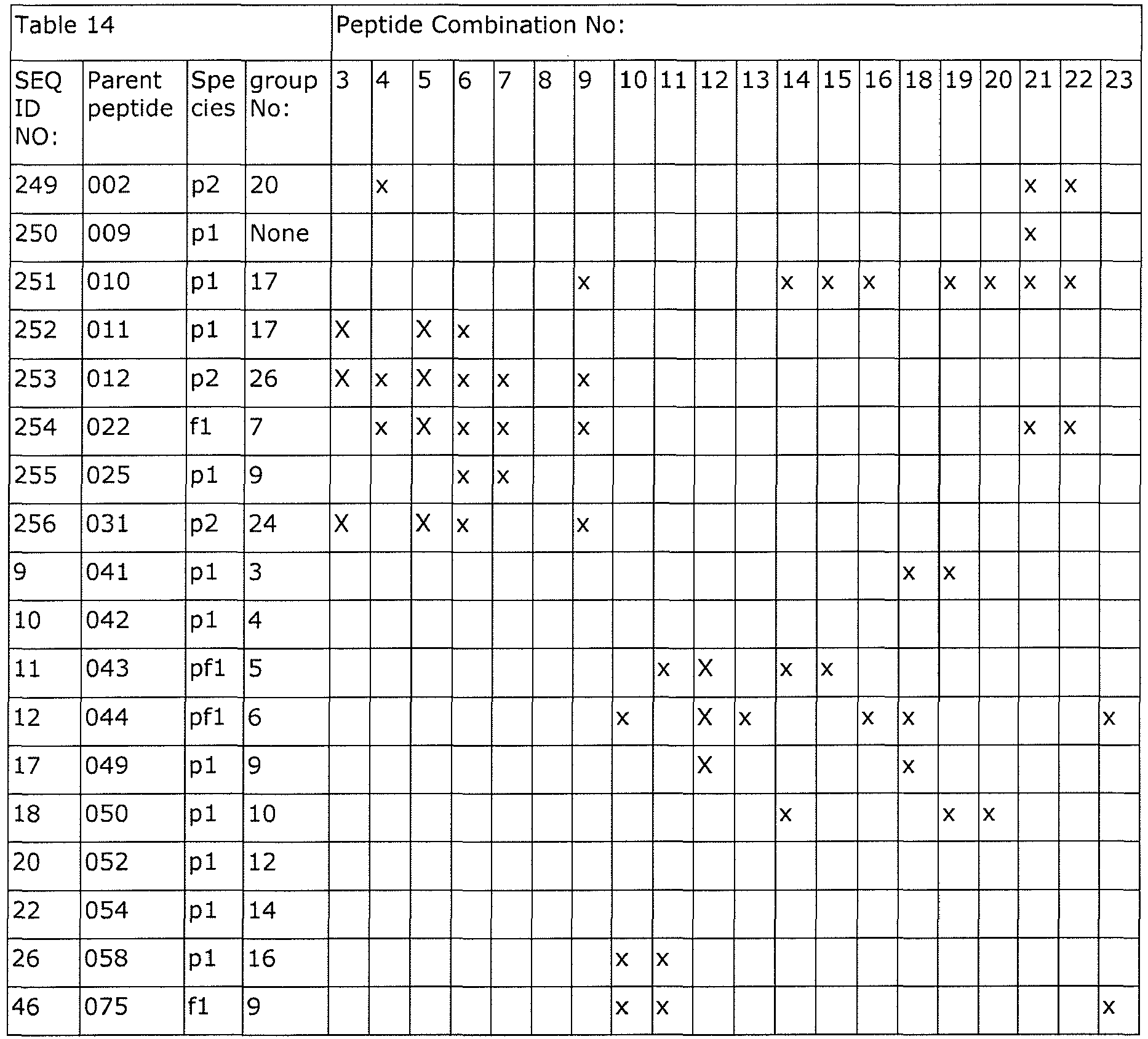


-
Peptide combinations number Figure 9a the majority of the peptide combinations produce T cell responses in a high fraction of the donor population, such as more than about 60% to 70% of the donor population. Two peptide combinations, combination number 17 (5-peptide mix) and combination number 23 (5-peptide mix) produce T cell responses in a higher fraction of the donor population (such as above 80% of the donor population) than other peptide combinations. Also of note is that two of the peptide combinations only contain 3 peptides (peptide combination number 13 and 16), but still produce a T cell response in a high fraction of the population (more than 70% of the donor population). Such peptide combinations could be improved to produce a T cell response in an even higher fraction of the donor population, for example by adding a peptide listed in Table 12. - Additional peptide combinations were tested in T cell response assays together with
peptide combination number 17 using a subset of 22 donors having about 88% worldwide HLA Class II coverage.Figure 9b shows thatpeptide combination number 17f produces a T cell response in about 100% of the donor population tested in comparison to the 85% donor response to peptide combination number 17 (Figure 9c ). T cell responses for single peptides ofcombination 17f are also shown inFigure 9b and indicates that peptide numbers 110 (apeptide group 26 peptide), 131 (apeptide group 24 peptide) and 054 (a peptide group 14 peptide) resulted in a higher percentage donor response than the other peptides ofpeptide combination 17f (Figure 9c ). The individual data of each peptide can be used to calculate the percentage of donors responding to thepeptide combinations peptide combinations - This allows for calculating the percentage responders to other peptide combinations comprising peptides of
peptide combination Figure 9d shows the percentage donor response as calculated forpeptide combinations - Further peptide combinations were evaluated using a subset of peptides (pep-058, pep-075, pep-091, pep-110, pep-123, pep-130 and pep-131) and a subset of 31 donors having a worldwide HLA Class II coverage of about 88%.
Figure 9f shows the percentage of responding donors shown to respond topeptide combinations Figure 9g shows the calculated percentage of responders based on the individual peptide data topeptide combinations Figure 9g will produce a T cell response in about the same fraction of the donor population, such as between 80 to 90% of the donor population. - The number of peptides that a donor of the donor population in average responds to may also be calculated using the information about how many of the peptides in the peptide combination a donor is able to respond to.
Figure 9h shows the average number of peptides inpeptide combinations mix 110+130-131 and the 2-pep-mix 110+131 that a donor of the test population is able to respond to. The data indicates that the average number of peptides inmixes - In still another experiment, the
individual peptides Figure 9i shows the percentage of donors responding to each of the peptides tested. In the same T cell assay thepeptide combination Figure 9j ).Figure 9k shows the calculated percentage donors responding to the further peptide combinations were evaluated using a subset of peptides (pep-058, pep-075, pep-091, pep-110, pep-123, pep-130 and pep-131) and a subset of 22 donors having about 78% worldwide HLA Class II coverage.Figure 9l shows the percentage of responding donors shown to respond topeptide combinations - This example lists "first choice" peptides that may be used for assembling peptide combinations producing a T cell response in a high fraction of donors. These peptides have been shown to possess medium to high HLA Class II coverage and/or medium to high percentage responders in T cell assays, but also appear to possess suitable pharmaceutical properties, such as satisfactorily solubility in aqueous solution in the pH range of 4 to 9 and to be manufacturable.
Table 15 - List of first choice peptides SEQ ID NO Peptide No Peptide group pI Sequence shown in Tables: SEQ ID NO Peptide No Peptide group pI Sequence shown in Table(s): 17 049 9 9,12 26 058* 16 7.7 9, 12 266 123 9 9.3 9,12 276 136 16 9.6 11b 46 075* 9 4.6 9, 12 277 137 16 10.2 11b 279 139 9 7.0 11b 278 138 16 11.1 11b 280 140 9 9.4 11b 274 132 16 11b 281 141 9 9.9 11b 275 133 16 11.8 11b 282 142 9 10.4 11b 147 16 9.6 11a 272 134 9 11b 61 090 20 8.0 10, 12 148 9 9.4 11c 73 102 20 8.0 10, 12 152 9 9.8 11c 62 091 21 9.9 10, 12 18 050 10 9, 12 151 21 10.6 11c 267 124 10 9.9 11a 256 031 24 10, 12 21 053 13 9.7 9, 12 67 096 24 10, 12 22 054 14 9, 12 270 126 24 9.9 11a 268 130* 14 5.3 9, 12 271 131 24 10, 12, 11a 283 143 14 7.8 11b 81 109 25 7.0 10, 12 284 144 14 10.1 11b 253 012 26 10, 12 285 145 14 11.2 11b 70 099 26 10, 12 286 146 14 11.8 11b 82 110 26 10, 12 150 14 9.9 11c 269 125 26 7.8 11a 273 135 14 11a 149 26 10.1 11c *peptides marked with an asterisk may cause some solubility problems in which case a variant of the peptide may be used instead, e.g. a modification comprising one or more lysine or arginine residues at the N- and/or C-terminal end or amidation. - This example describes how to determine the HLA class II binding of peptides of the invention. The assay employed is a competitive MHC class II binding assay, wherein each peptide is analyzed for its ability to displace a known control binder from each of the human MHC class II allotypes shown in Table 8. Due to the nature of the competitive assay, the data for each peptide is determined as a ratio of its own IC50 to that of the control peptide. Thus, a peptide that has an IC50 value that is parity to the control peptide has an identical binding affinity, while peptides with a ratio less than one have a higher affinity and those with a ratio greater than one have a lower affinity. The ratio of IC50 may be determined at different cutoff concentrations, for example at 300 or 1000 nM.
- Assays to quantitatively measure peptide binding to purified class II MHC molecules are based on the inhibition of binding of a high affinity radiolabeled peptide to purified MHC molecules, and were performed essentially as detailed elsewhere (Sidney et al. 2008; Sidney et al. 2010b, a; Greenbaum et al. 2011; Sidney et al. 2001, Sidney et al 2013, McKinney et al 2013). Briefly, 0.1-1 nM of radiolabeled peptide was co-incubated at room temperature or 37°C with purified MHC in the presence of a cocktail of protease inhibitors. Following a two- to four-day incubation, MHC bound radioactivity was determined by capturing MHC/peptide complexes on monoclonal Ab coated Lumitrac 600 plates (Greiner Bio-one, Frickenhausen, Germany), and measuring bound cpm using the TopCount (Packard Instrument Co., Meriden, CT) microscintillation counter. In the case of competitive assays, the concentration of peptide yielding 50% inhibition of the binding of the radiolabeled peptide was calculated. Under the conditions utilized, where [label] < [MHC] and IC50 ≥ [MHC], the measured IC50 values are reasonable approximations of the true Kd values (Cheng and Prusoff 1973; Gulukota et al. 1997). Each peptide was tested at six different concentrations covering a 100,000-fold dose range in three or more independent experiments. As a positive control, the unlabeled version of the radiolabeled probe was also tested in each experiment.
- Table 16a shows the HLA Class II alleles for which the HLA binding affinity of a selection of peptides has been measured. A positive binding is indicated in the Table with an "x", which refers to a binding affinity IC50 < 1000 nM.
- Table 16b shows the minimal number of alleles bound by each of the peptides and the Class II HLA phenotypic coverage in a worldwide population based on the alleles found to bind each peptide. These alleles can be used to calculate the HLA phenotypic coverage of a peptide or a peptide combination.


Table 16b - HLA Class II phenotypic coverage of some peptides Table 16b Cutoff 1000 nM Cutoff: 300 nM Peptide ID Number of alleles Population Coverage Number of alleles Population Coverage 010 20 99.5% 16 96.8% 130 16 97.7% 11 91.3% 011 15 97.6% 9 74.1% 044 17 97.5% 12 87.5% 123 16 97.3% 12 94.3% 049 16 97.0% 9 77.2% 058 15 94.3% 12 86.7% 009 13 92.0% 10 76.7% 031 14 91.9% 7 69.9% 117 14 91.7% 10 77.5% HDM26B 12 91.7% 9 84.1% 110 12 91.5% 8 77.7% HDM203B 15 89.9% 11 79.5% 025 12 86.1% 6 37.3% 091 10 84.0% 5 71.0% 090 8 81.7% 6 76.5% 053 6 81.3% 5 67.9% 075 10 81.0% 5 33.6% 102 8 80.9% 7 76.5% 020 10 80.8% 4 37.5% 131 9 79.6% 6 66.8% HDM201 10 79.5% 7 48.9% 002 7 77.7% 7 77.7% HDM101A 6 75.4% 3 25.5% HDM205 9 74.9% 3 51.4% 099 8 74.5% 5 56.5% 125 6 73.9% 4 64.0% 109 7 73.7% 6 54.9% 126 8 73.4% 4 44.8% 012 6 71.5% 4 55.1% 122 10 71.2% 6 45.6% 041 5 68.1% 2 18.1% 124 5 60.2% 3 39.2% 022 8 54.6% 6 43.5% 050 4 48.1% 2 35.9% 089 2 44.7% 2 44.7% HDM35A 3 21.5% 0 0.0% HDM03W 0 0.0% 0 0.0% - This example describes how HLA Class II allele coverage can be determined for individual peptides and peptide combination disclosed herein,
In order to elicit a T-cell response a given peptide must be able to bind to at least one HLA class II molecule in a given individual. Each individual express several HLA molecules, and globally, thousands of different alleles exist. Each HLA molecule can bind a limited number of different peptides and not all HLAs bind the same peptides. In order to estimate the potential coverage of a peptide in a given population, the frequency of the different HLA class II molecules present in the population, and the binding affinity of peptide towards each of these molecules must be available. The peptide binding to a specific HLA molecule can be measured, for example as described in Example 9, or predicted using in silico algorithms as e.g. NetMHCII and NetMHCIIpan (as disclosed in Example 2 or as described in Nielsen et al 2010 or Nielsen et al 2009). - The exact affinity necessary for an immune response is not known, but is generally assumed to be in the range of 300nM-1000nM. The calculated phenotypic coverage of alleles determined to bind to each peptide is presented using either 300nM or 1000nM are presented in Table16a. For predicted affinities is used a binding threshold of 300 nM together with a percentile rank score reported by the prediction algorithm, of at least 30.
- This example also describes how peptide combinations can be compared with respect to the average fraction of donors (% of patients) having HLA Class II alleles potentially able to bind a given number of peptides (0, 1, 2, 3, 4, or 5 peptides) in a peptide combination disclosed herein (herein named valency of a peptide combination).
- The HLA coverage and valency may be estimated using HLA Class II alleles represented in a worldwide population or in a subset thereof, for example the subset of alleles shown in Table 16a.
- To estimate the valency, a system was created that generates virtual patients (VP). Each VP was generated using the 83 allele frequencies from Table 17 as probabilities at each locus to have this particular allele. As not all alleles in the world are considered, some of the generated VPs will lack one or more HLAs. To estimate the average fraction of patients reacting against a certain number of peptides, 1000 VPs were generated. Using the prediction method and HLA binding affinity thresholds (300 nM and 30% fractile) earlier described herein, the number of peptides that an average VP would react against was predicted. In addition, the overall fraction of how many VPs would react against 0, 1, 2, 3, 4 and 5 peptides, respectively, were calculated based on predicted HLA binding compared to the measured HLA binding affinities.
-
Figures 10a ,11a ,12a show the estimated valency ofpeptide combinations Figures 10b ,11b and12b show the estimated valency of the same peptide combinations based on the peptides measured HLA allele coverage to the same alleles. The data indicates high correlation between the valency data based on predicted HLA allele coverage and measured HLA allele coverage. -
Figures 13 to 19 show the estimated valency ofpeptide combinations 9 17d, 17f, 17p, 17s, 17x and 23 that patients in a virtual patient population may respond to, wherein the estimation is based on predicted binding to the 83 HLA alleles shown in Table 17. The estimation may include the following: for each peptide or peptide combination the alleles found to be binding the given peptide, or at least one peptide in the peptide combination, is considered for the coverage calculation. Assuming that alleles at different loci are independently distributed, which is not entirely true, but is a reasonably approximation, the phenotypic coverage of the binding alleles can now be calculated using standard methods known in the art. For example, For each HLA locus (DRB1, DRB3, DRB4, DRB5) or locus combination (DQA1-DQB1, DPA1-DPB1), the HLA allele frequencies of all the alleles from the given locus found to bind the given peptide is summed (fsum,locus). The total phenotypic coverage for each locus, n (Cn ) is calculated as (2 x fsum,locus)-(fsum,locus)2. - The total phenotypic coverage of all binding alleles from n loci can be calculated as

TheFigures 10a to 19 show the fraction of the virtual patients (Y-axis= % patients) that have HLA Class II alleles potentially able to bind (i.e. able to respond to) 0, 1, 2, 3, 4 and 5 peptides, respectively, in the combination (Data indicated with bars). Valency data are shown both with respect to peptides only derived from theHDM group 1allergens Der p 1 or Der f 1 (indicated at the x-axis as Grp 1); peptides only derived from theHDM group 2allergens Der p 2 or Der f 2 (indicated at the x-axis as Grp 2); peptides derived only from Der p (i.e.allergens Der p 1 or Der p 2 (indicated at the x-axis as Der p) and peptides derived only from Der f (i.e.allergens Der f 1 or Der f 2 (indicated at the x-axis as Der f). Finally, the valency is also shown for the all peptides in the combination (indicated at the X-axis as "all"). The Figures also show the predicted fraction of patients (% patients) that will have HLA alleles potentially able to bind a given number of peptides or more in the peptide combination (data points shown as X) - For example, the measured valency data of the 5-
peptide combination 17f (Figure 11b ) shows that 20% of the patients potentially are able to respond to 5 peptides, 40% of the population potentially are able to respond to 4 peptides (data indicated with bars), that 60% of the population potentially are able to bind to at least 4 peptides (data point from curve) and that about 95% of the patients potentially are able to bind at least 2 of the 5 peptides in the combination. - The measured valency data of the 7-peptide combination 8 (
Figure 12b ) shows that about 10% of the patients potentially are able to respond to 5 peptides, 25% of the population potentially are able to respond to 4 peptides (data indicated with bars), that 35% of the population potentially are able to bind to at least 4 peptides (data point from curve) and that about 82% of the patients potentially are able to bind at least 2 of the 6 peptides in the combination that derives fromDer p 1, Der p1, Der f1 or Der f2.Peptide combination 8 contains a peptide derived from Der p 7 (HDM35A), which has poor HLA allele coverage (Table 16a).Table 17 - 83 HLA Class II alleles and their frequencies for use in HLA coverage predictions Table 17 HLA Alleles Frequency HLA Alleles Frequency HLA Alleles Frequency DRB1_0101 0.0428 DRB1_1201 0.0233 DRB3_0101 0.1400 DRB1_0102 0.0233 DRB1_1202 0.0195 DRB3_0202 0.1890 DRB1_0103 0.0048 DRB1_1301 0.0458 DRB4_0101 0.2370 DRB1_0301 0.0773 DRB1_1302 0.0445 DRB5_0101 0.0830 DRB1_0302 0.0175 DRB1_1303 0.0153 DPA10103-DPB10201 0.0920 DRB1_0307 0.0003 DRB1_1304 0.0040 DPA10103-DPB10301 0.0700 DRB1_0401 0.0338 DRB1_1305 0.0020 DPA10103-DPB10401 0.2010 DRB1_0402 0.0078 DRB1_1307 0.0000 DPA10103-DPB1040 0.2360 DRB1_0403 0.0158 DRB1_1311 0.0003 DPA10201-DPB10101 0.0840 DRB1_0404 0.0275 DRB1_1312 0.0010 DPA10201-DPB11401 0.0380 DRB1_0405 0.0233 DRB1_1323 0.0003 DPA10202-DPB10501 0.1150 DRB1_0406 0.0063 DRB1_1331 0.0003 DQA10101-DQB10501 0.0760 DRB1_0407 0.0245 DRB1_1401 0.0228 DQA10102-DQB10602 0.0760 DRB1_0408 0.0025 DRB1_1402 0.0093 DQA10301-DQB10302 0.1000 DRB1_0410 0.0025 DRB1_1403 0.0013 DQA10401-DQB10402 0.0660 DRB1_0411 0.0035 DRB1_1404 0.0053 DQA10501-DQB10201 0.0580 DRB1_0417 0.0003 DRB1_1405 0.0045 DQA10501-DQB10301 0.1950 DRB1_0701 0.1015 DRB1_1406 0.0100 DRB1_0801 0.0113 DRB1_1407 0.0010 DRB1_0802 0.0273 DRB1_1418 0.0003 DRB1_0803 0.0140 DRB1_1419 0.0003 DRB1_0804 0.0163 DRB1_1424 0.0003 DRB1_0806 0.0015 DRB1_1501 0.0740 DRB1_0809 0.0005 DRB1_1502 0.0258 DRB1_0811 0.0005 DRB1_1503 0.0313 DRB1_0901 0.0395 DRB1_1504 0.0003 DRB1_1001 0.0170 DRB1_1506 0.0010 DRB1_1101 0.0570 DRB1_1519 0.0000 DRB1_1102 0.0133 DRB1_1601 0.0043 DRB1_1103 0.0028 DRB1_1602 0.0173 DRB1_1104 0.0185 DRB1_1607 0.0003 DRB1_1106 0.0008 DRB1_1110 0.0008 DRB1_1111 0.0003 DRB1_1128 0.0000 -
- <110> La Jolla Institute for Allergy and Immunology ALK-Abello A/S
- <120> PEPTIDE COMBINATIONS AND USES THEREOF IN TREATING DUST MITE ALLERGY
- <130> 19903PCT00
- <160> 354
- <170> PatentIn version 3.5
- <210> 1
<211> 20
<212> PRT
<213> Dermatophagoides pteronyssinus - <400> 1

- <210> 2
<211> 20
<212> PRT
<213> Dermatophagoides pteronyssinus - <400> 2

- <210> 3
<211> 20
<212> PRT
<213> Dermatophagoides pteronyssinus - <400> 3

- <210> 4
<211> 20
<212> PRT
<213> Dermatophagoides pteronyssinus - <400> 4

- <210> 5
<211> 20
<212> PRT
<213> Dermatophagoides pteronyssinus - <400> 5

- <210> 6
<211> 20
<212> PRT
<213> Dermatophagoides pteronyssinus - <400> 6

- <210> 7
<211> 20
<212> PRT
<213> Dermatophagoides pteronyssinus - <400> 7

- <210> 8
<211> 19
<212> PRT
<213> Dermatophagoides pteronyssinus - <400> 8

- <210> 9
<211> 19
<212> PRT
<213> Dermatophagoides pteronyssinus - <400> 9

- <210> 10
<211> 20
<212> PRT
<213> Dermatophagoides pteronyssinus - <400> 10

- <210> 11
<211> 20
<212> PRT
<213> Dermatophagoides pteronyssinus - <400> 11

- <210> 12
<211> 20
<212> PRT
<213> Dermatophagoides pteronyssinus - <400> 12


- <210> 13
<211> 20
<212> PRT
<213> Dermatophagoides pteronyssinus - <400> 13

- <210> 14
<211> 20
<212> PRT
<213> Dermatophagoides pteronyssinus - <400> 14

- <210> 15
<211> 20
<212> PRT
<213> Dermatophagoides pteronyssinus - <400> 15

- <210> 16
<211> 20
<212> PRT
<213> Dermatophagoides pteronyssinus - <400> 16

- <210> 17
<211> 20
<212> PRT
<213> Dermatophagoides pteronyssinus - <400> 17

- <210> 18
<211> 20
<212> PRT
<213> Dermatophagoides pteronyssinus - <400> 18

- <210> 19
<211> 20
<212> PRT
<213> Dermatophagoides pteronyssinus - <400> 19

- <210> 20
<211> 20
<212> PRT
<213> Dermatophagoides pteronyssinus - <400> 20

- <210> 21
<211> 20
<212> PRT
<213> Dermatophagoides pteronyssinus - <400> 21

- <210> 22
<211> 20
<212> PRT
<213> Dermatophagoides pteronyssinus - <400> 22

- <210> 23
<211> 20
<212> PRT
<213> Dermatophagoides pteronyssinus - <400> 23

- <210> 24
<211> 20
<212> PRT
<213> Dermatophagoides pteronyssinus - <400> 24

- <210> 25
<211> 20
<212> PRT
<213> Dermatophagoides pteronyssinus - <400> 25

- <210> 26
<211> 20
<212> PRT
<213> Dermatophagoides pteronyssinus - <400> 26

- <210> 27
<211> 20
<212> PRT
<213> Dermatophagoides pteronyssinus - <400> 27

- <210> 28
<211> 20
<212> PRT
<213> Dermatophagoides pteronyssinus - <400> 28

- <210> 29
<211> 23
<212> PRT
<213> Dermatophagoides pteronyssinus - <400> 29

- <210> 30
<211> 20
<212> PRT
<213> Dermatophagoides farinae - <400> 30

- <210> 31
<211> 20
<212> PRT
<213> Dermatophagoides farinae - <400> 31

- <210> 32
<211> 20
<212> PRT
<213> Dermatophagoides farinae - <400> 32

- <210> 33
<211> 20
<212> PRT
<213> Dermatophagoides farinae - <400> 33


- <210> 34
<211> 20
<212> PRT
<213> Dermatophagoides farinae - <400> 34

- <210> 35
<211> 20
<212> PRT
<213> Dermatophagoides farinae - <400> 35

- <210> 36
<211> 20
<212> PRT
<213> Dermatophagoides farinae - <400> 36

- <210> 37
<211> 20
<212> PRT
<213> Dermatophagoides farinae - <400> 37

- <210> 38
<211> 20
<212> PRT
<213> Dermatophagoides farinae - <400> 38

- <210> 39
<211> 20
<212> PRT
<213> Dermatophagoides farinae - <400> 39

- <210> 40
<211> 20
<212> PRT
<213> Dermatophagoides farinae - <400> 40

- <210> 41
<211> 20
<212> PRT
<213> Dermatophagoides farinae - <400> 41

- <210> 42
<211> 20
<212> PRT
<213> Dermatophagoides farinae - <400> 42

- <210> 43
<211> 20
<212> PRT
<213> Dermatophagoides farinae - <400> 43

- <210> 44
<211> 20
<212> PRT
<213> Dermatophagoides farinae - <400> 44

- <210> 45
<211> 20
<212> PRT
<213> Dermatophagoides farinae - <400> 45

- <210> 46
<211> 20
<212> PRT
<213> Dermatophagoides farinae - <400> 46

- <210> 47
<211> 20
<212> PRT
<213> Dermatophagoides farinae - <400> 47

- <210> 48
<211> 20
<212> PRT
<213> Dermatophagoides farinae - <400> 48

- <210> 49
<211> 20
<212> PRT
<213> Dermatophagoides farinae - <400> 49

- <210> 50
<211> 20
<212> PRT
<213> Dermatophagoides farinae - <400> 50

- <210> 51
<211> 20
<212> PRT
<213> Dermatophagoides farinae - <400> 51

- <210> 52
<211> 20
<212> PRT
<213> Dermatophagoides farinae - <400> 52

- <210> 53
<211> 20
<212> PRT
<213> Dermatophagoides farinae - <400> 53

- <210> 54
<211> 20
<212> PRT
<213> Dermatophagoides farinae - <400> 54


- <210> 55
<211> 20
<212> PRT
<213> Dermatophagoides farinae - <400> 55

- <210> 56
<211> 20
<212> PRT
<213> Dermatophagoides farinae - <400> 56

- <210> 57
<211> 20
<212> PRT
<213> Dermatophagoides farinae - <400> 57

- <210> 58
<211> 23
<212> PRT
<213> Dermatophagoides farinae - <400> 58

- <210> 59
<211> 19
<212> PRT
<213> Dermatophagoides pteronyssinus - <400> 59

- <210> 60
<211> 20
<212> PRT
<213> Dermatophagoides pteronyssinus - <400> 60

- <210> 61
<211> 20
<212> PRT
<213> Dermatophagoides pteronyssinus - <400> 61

- <210> 62
<211> 20
<212> PRT
<213> Dermatophagoides pteronyssinus - <400> 62

- <210> 63
<211> 20
<212> PRT
<213> Dermatophagoides pteronyssinus - <400> 63

- <210> 64
<211> 20
<212> PRT
<213> Dermatophagoides pteronyssinus - <400> 64

- <210> 65
<211> 20
<212> PRT
<213> Dermatophagoides pteronyssinus - <400> 65

- <210> 66
<211> 20
<212> PRT
<213> Dermatophagoides pteronyssinus - <400> 66

- <210> 67
<211> 20
<212> PRT
<213> Dermatophagoides pteronyssinus - <400> 67

- <210> 68
<211> 20
<212> PRT
<213> Dermatophagoides pteronyssinus - <400> 68

- <210> 69
<211> 20
<212> PRT
<213> Dermatophagoides pteronyssinus - <400> 69

- <210> 70
<211> 20
<212> PRT
<213> Dermatophagoides pteronyssinus - <400> 70

- <210> 71
<211> 19
<212> PRT
<213> Dermatophagoides farinae - <400> 71

- <210> 72
<211> 20
<212> PRT
<213> Dermatophagoides farinae - <400> 72

- <210> 73
<211> 20
<212> PRT
<213> Dermatophagoides farinae - <400> 73

- <210> 74
<211> 19
<212> PRT
<213> Dermatophagoides farinae - <400> 74

- <210> 75
<211> 20
<212> PRT
<213> Dermatophagoides farinae - <400> 75


- <210> 76
<211> 20
<212> PRT
<213> Dermatophagoides farinae - <400> 76

- <210> 77
<211> 20
<212> PRT
<213> Dermatophagoides farinae - <400> 77

- <210> 78
<211> 20
<212> PRT
<213> Dermatophagoides farinae - <400> 78

- <210> 79
<211> 20
<212> PRT
<213> Dermatophagoides farinae - <400> 79

- <210> 80
<211> 20
<212> PRT
<213> Dermatophagoides farinae - <400> 80

- <210> 81
<211> 20
<212> PRT
<213> Dermatophagoides farinae - <400> 81

- <210> 82
<211> 20
<212> PRT
<213> Dermatophagoides farinae - <400> 82

- <210> 83
<211> 15
<212> PRT
<213> Dermatophagoides pteronyssinus - <400> 83

- <210> 84
<211> 15
<212> PRT
<213> Dermatophagoides pteronyssinus - <400> 84

- <210> 85
<211> 15
<212> PRT
<213> Dermatophagoides pteronyssinus - <400> 85

- <210> 86
<211> 15
<212> PRT
<213> Dermatophagoides pteronyssinus - <400> 86

- <210> 87
<211> 15
<212> PRT
<213> Dermatophagoides pteronyssinus - <400> 87

- <210> 88
<211> 15
<212> PRT
<213> Dermatophagoides pteronyssinus - <400> 88

- <210> 89
<211> 15
<212> PRT
<213> Dermatophagoides pteronyssinus - <400> 89

- <210> 90
<211> 15
<212> PRT
<213> Dermatophagoides pteronyssinus - <400> 90

- <210> 91
<211> 15
<212> PRT
<213> Dermatophagoides pteronyssinus - <400> 91

- <210> 92
<211> 15
<212> PRT
<213> Dermatophagoides pteronyssinus - <400> 92

- <210> 93
<211> 15
<212> PRT
<213> Dermatophagoides pteronyssinus - <400> 93

- <210> 94
<211> 15
<212> PRT
<213> Dermatophagoides pteronyssinus - <400> 94

- <210> 95
<211> 15
<212> PRT
<213> Dermatophagoides pteronyssinus - <400> 95

- <210> 96
<211> 15
<212> PRT
<213> Dermatophagoides pteronyssinus - <400> 96

- <210> 97
<211> 15
<212> PRT
<213> Dermatophagoides pteronyssinus - <400> 97

- <210> 98
<211> 15
<212> PRT
<213> Dermatophagoides pteronyssinus - <400> 98

- <210> 99
<211> 14
<212> PRT
<213> Dermatophagoides pteronyssinus - <400> 99

- <210> 100
<211> 14
<212> PRT
<213> Dermatophagoides pteronyssinus - <400> 100

- <210> 101
<211> 14
<212> PRT
<213> Dermatophagoides pteronyssinus - <400> 101

- <210> 102
<211> 15
<212> PRT
<213> Dermatophagoides pteronyssinus - <400> 102

- <210> 103
<211> 15
<212> PRT
<213> Dermatophagoides pteronyssinus - <400> 103

- <210> 104
<211> 15
<212> PRT
<213> Dermatophagoides pteronyssinus - <400> 104

- <210> 105
<211> 15
<212> PRT
<213> Dermatophagoides pteronyssinus - <400> 105

- <210> 106
<211> 15
<212> PRT
<213> Dermatophagoides pteronyssinus - <400> 106

- <210> 107
<211> 15
<212> PRT
<213> Dermatophagoides pteronyssinus - <400> 107

- <210> 108
<211> 15
<212> PRT
<213> Dermatophagoides pteronyssinus - <400> 108

- <210> 109
<211> 15
<212> PRT
<213> Dermatophagoides pteronyssinus - <400> 109

- <210> 110
<211> 15
<212> PRT
<213> Dermatophagoides pteronyssinus - <400> 110

- <210> 111
<211> 15
<212> PRT
<213> Dermatophagoides pteronyssinus - <400> 111

- <210> 112
<211> 15
<212> PRT
<213> Dermatophagoides pteronyssinus - <400> 112

- <210> 113
<211> 15
<212> PRT
<213> Dermatophagoides pteronyssinus - <400> 113

- <210> 114
<211> 15
<212> PRT
<213> Dermatophagoides pteronyssinus - <400> 114

- <210> 115
<211> 15
<212> PRT
<213> Dermatophagoides pteronyssinus - <400> 115

- <210> 116
<211> 15
<212> PRT
<213> Dermatophagoides pteronyssinus - <400> 116

- <210> 117
<211> 15
<212> PRT
<213> Dermatophagoides pteronyssinus - <400> 117

- <210> 118
<211> 15
<212> PRT
<213> Dermatophagoides pteronyssinus - <400> 118

- <210> 119
<211> 15
<212> PRT
<213> Dermatophagoides pteronyssinus - <400> 119

- <210> 120
<211> 15
<212> PRT
<213> Dermatophagoides pteronyssinus - <400> 120

- <210> 121
<211> 15
<212> PRT
<213> Dermatophagoides pteronyssinus - <400> 121

- <210> 122
<211> 15
<212> PRT
<213> Dermatophagoides pteronyssinus - <400> 122

- <210> 123
<211> 15
<212> PRT
<213> Dermatophagoides pteronyssinus - <400> 123

- <210> 124
<211> 15
<212> PRT
<213> Dermatophagoides pteronyssinus - <400> 124

- <210> 125
<211> 15
<212> PRT
<213> Dermatophagoides pteronyssinus - <400> 125

- <210> 126
<211> 15
<212> PRT
<213> Dermatophagoides pteronyssinus - <400> 126

- <210> 127
<211> 15
<212> PRT
<213> Dermatophagoides pteronyssinus - <400> 127

- <210> 128
<211> 15
<212> PRT
<213> Dermatophagoides pteronyssinus - <400> 128

- <210> 129
<211> 15
<212> PRT
<213> Dermatophagoides pteronyssinus - <400> 129

- <210> 130
<211> 15
<212> PRT
<213> Dermatophagoides pteronyssinus - <400> 130

- <210> 131
<211> 15
<212> PRT
<213> Dermatophagoides pteronyssinus - <400> 131

- <210> 132
<211> 15
<212> PRT
<213> Dermatophagoides pteronyssinus - <400> 132

- <210> 133
<211> 15
<212> PRT
<213> Dermatophagoides pteronyssinus - <400> 133

- <210> 134
<211> 15
<212> PRT
<213> Dermatophagoides pteronyssinus - <400> 134

- <210> 135
<211> 15
<212> PRT
<213> Dermatophagoides pteronyssinus - <400> 135

- <210> 136
<211> 15
<212> PRT
<213> Dermatophagoides pteronyssinus - <400> 136

- <210> 137
<211> 15
<212> PRT
<213> Dermatophagoides pteronyssinus - <400> 137

- <210> 138
<211> 15
<212> PRT
<213> Dermatophagoides pteronyssinus - <400> 138

- <210> 139
<211> 15
<212> PRT
<213> Dermatophagoides pteronyssinus - <400> 139

- <210> 140
<211> 15
<212> PRT
<213> Dermatophagoides pteronyssinus - <400> 140

- <210> 141
<211> 15
<212> PRT
<213> Dermatophagoides pteronyssinus - <400> 141


- <210> 142
<211> 15
<212> PRT
<213> Dermatophagoides farinae - <400> 142

- <210> 143
<211> 15
<212> PRT
<213> Dermatophagoides farinae - <400> 143

- <210> 144
<211> 15
<212> PRT
<213> Dermatophagoides farinae - <400> 144

- <210> 145
<211> 15
<212> PRT
<213> Dermatophagoides farinae - <400> 145

- <210> 146
<211> 15
<212> PRT
<213> Dermatophagoides farinae - <400> 146

- <210> 147
<211> 15
<212> PRT
<213> Dermatophagoides farinae - <400> 147

- <210> 148
<211> 15
<212> PRT
<213> Dermatophagoides farinae - <400> 148

- <210> 149
<211> 15
<212> PRT
<213> Dermatophagoides farinae - <400> 149

- <210> 150
<211> 15
<212> PRT
<213> Dermatophagoides farinae - <400> 150

- <210> 151
<211> 15
<212> PRT
<213> Dermatophagoides farinae - <400> 151

- <210> 152
<211> 15
<212> PRT
<213> Dermatophagoides farinae - <400> 152

- <210> 153
<211> 15
<212> PRT
<213> Dermatophagoides farinae - <400> 153

- <210> 154
<211> 15
<212> PRT
<213> Dermatophagoides farinae - <400> 154

- <210> 155
<211> 15
<212> PRT
<213> Dermatophagoides farinae - <400> 155

- <210> 156
<211> 15
<212> PRT
<213> Dermatophagoides farinae - <400> 156

- <210> 157
<211> 15
<212> PRT
<213> Dermatophagoides farinae - <400> 157

- <210> 158
<211> 15
<212> PRT
<213> Dermatophagoides farinae - <400> 158

- <210> 159
<211> 15
<212> PRT
<213> Dermatophagoides farinae - <400> 159

- <210> 160
<211> 15
<212> PRT
<213> Dermatophagoides farinae - <400> 160

- <210> 161
<211> 15
<212> PRT
<213> Dermatophagoides farinae - <400> 161

- <210> 162
<211> 15
<212> PRT
<213> Dermatophagoides farinae - <400> 162

- <210> 163
<211> 15
<212> PRT
<213> Dermatophagoides farinae - <400> 163

- <210> 164
<211> 15
<212> PRT
<213> Dermatophagoides farinae - <400> 164

- <210> 165
<211> 15
<212> PRT
<213> Dermatophagoides farinae - <400> 165

- <210> 166
<211> 15
<212> PRT
<213> Dermatophagoides farinae - <400> 166

- <210> 167
<211> 15
<212> PRT
<213> Dermatophagoides farinae - <400> 167

- <210> 168
<211> 15
<212> PRT
<213> Dermatophagoides farinae - <400> 168

- <210> 169
<211> 15
<212> PRT
<213> Dermatophagoides farinae - <400> 169

- <210> 170
<211> 15
<212> PRT
<213> Dermatophagoides farinae - <400> 170

- <210> 171
<211> 15
<212> PRT
<213> Dermatophagoides farinae - <400> 171

- <210> 172
<211> 15
<212> PRT
<213> Dermatophagoides farinae - <400> 172

- <210> 173
<211> 15
<212> PRT
<213> Dermatophagoides farinae - <400> 173

- <210> 174
<211> 15
<212> PRT
<213> Dermatophagoides farinae - <400> 174

- <210> 175
<211> 15
<212> PRT
<213> Dermatophagoides farinae - <400> 175

- <210> 176
<211> 15
<212> PRT
<213> Dermatophagoides farinae - <400> 176

- <210> 177
<211> 15
<212> PRT
<213> Dermatophagoides farinae - <400> 177

- <210> 178
<211> 15
<212> PRT
<213> Dermatophagoides farinae - <400> 178

- <210> 179
<211> 15
<212> PRT
<213> Dermatophagoides farinae - <400> 179

- <210> 180
<211> 15
<212> PRT
<213> Dermatophagoides farinae - <400> 180

- <210> 181
<211> 15
<212> PRT
<213> Dermatophagoides farinae - <400> 181

- <210> 182
<211> 15
<212> PRT
<213> Dermatophagoides farinae - <400> 182

- <210> 183
<211> 15
<212> PRT
<213> Dermatophagoides farinae - <400> 183

- <210> 184
<211> 15
<212> PRT
<213> Dermatophagoides farinae - <400> 184

- <210> 185
<211> 15
<212> PRT
<213> Dermatophagoides farinae - <400> 185

- <210> 186
<211> 15
<212> PRT
<213> Dermatophagoides farinae - <400> 186

- <210> 187
<211> 15
<212> PRT
<213> Dermatophagoides farinae - <400> 187

- <210> 188
<211> 15
<212> PRT
<213> Dermatophagoides farinae - <400> 188

- <210> 189
<211> 15
<212> PRT
<213> Dermatophagoides farinae - <400> 189

- <210> 190
<211> 15
<212> PRT
<213> Dermatophagoides farinae - <400> 190

- <210> 191
<211> 15
<212> PRT
<213> Dermatophagoides farinae - <400> 191

- <210> 192
<211> 15
<212> PRT
<213> Dermatophagoides farinae - <400> 192

- <210> 193
<211> 15
<212> PRT
<213> Dermatophagoides farinae - <400> 193

- <210> 194
<211> 15
<212> PRT
<213> Dermatophagoides farinae - <400> 194

- <210> 195
<211> 15
<212> PRT
<213> Dermatophagoides farinae - <400> 195

- <210> 196
<211> 15
<212> PRT
<213> Dermatophagoides farinae - <400> 196

- <210> 197
<211> 15
<212> PRT
<213> Dermatophagoides farinae - <400> 197

- <210> 198
<211> 15
<212> PRT
<213> Dermatophagoides farinae - <400> 198

- <210> 199
<211> 15
<212> PRT
<213> Dermatophagoides farinae - <400> 199

- <210> 200
<211> 15
<212> PRT
<213> Dermatophagoides farinae - <400> 200

- <210> 201
<211> 15
<212> PRT
<213> Dermatophagoides pteronyssinus - <400> 201

- <210> 202
<211> 15
<212> PRT
<213> Dermatophagoides pteronyssinus - <400> 202

- <210> 203
<211> 15
<212> PRT
<213> Dermatophagoides pteronyssinus - <400> 203

- <210> 204
<211> 15
<212> PRT
<213> Dermatophagoides pteronyssinus - <400> 204


- <210> 205
<211> 15
<212> PRT
<213> Dermatophagoides pteronyssinus - <400> 205

- <210> 206
<211> 15
<212> PRT
<213> Dermatophagoides pteronyssinus - <400> 206

- <210> 207
<211> 15
<212> PRT
<213> Dermatophagoides pteronyssinus - <400> 207

- <210> 208
<211> 15
<212> PRT
<213> Dermatophagoides pteronyssinus - <400> 208

- <210> 209
<211> 15
<212> PRT
<213> Dermatophagoides pteronyssinus - <400> 209

- <210> 210
<211> 15
<212> PRT
<213> Dermatophagoides pteronyssinus - <400> 210

- <210> 211
<211> 15
<212> PRT
<213> Dermatophagoides pteronyssinus - <400> 211

- <210> 212
<211> 15
<212> PRT
<213> Dermatophagoides pteronyssinus - <400> 212

- <210> 213
<211> 15
<212> PRT
<213> Dermatophagoides pteronyssinus - <400> 213

- <210> 214
<211> 15
<212> PRT
<213> Dermatophagoides pteronyssinus - <400> 214

- <210> 215
<211> 15
<212> PRT
<213> Dermatophagoides pteronyssinus - <400> 215

- <210> 216
<211> 15
<212> PRT
<213> Dermatophagoides pteronyssinus - <400> 216

- <210> 217
<211> 15
<212> PRT
<213> Dermatophagoides pteronyssinus - <400> 217

- <210> 218
<211> 15
<212> PRT
<213> Dermatophagoides pteronyssinus - <400> 218

- <210> 219
<211> 15
<212> PRT
<213> Dermatophagoides pteronyssinus - <400> 219

- <210> 220
<211> 15
<212> PRT
<213> Dermatophagoides pteronyssinus - <400> 220

- <210> 221
<211> 15
<212> PRT
<213> Dermatophagoides pteronyssinus - <400> 221

- <210> 222
<211> 15
<212> PRT
<213> Dermatophagoides pteronyssinus - <400> 222

- <210> 223
<211> 15
<212> PRT
<213> Dermatophagoides pteronyssinus - <400> 223

- <210> 224
<211> 15
<212> PRT
<213> Dermatophagoides pteronyssinus - <400> 224

- <210> 225
<211> 15
<212> PRT
<213> Dermatophagoides farinae - <400> 225

- <210> 226
<211> 15
<212> PRT
<213> Dermatophagoides farinae - <400> 226

- <210> 227
<211> 15
<212> PRT
<213> Dermatophagoides farinae - <400> 227

- <210> 228
<211> 15
<212> PRT
<213> Dermatophagoides farinae - <400> 228

- <210> 229
<211> 15
<212> PRT
<213> Dermatophagoides farinae - <400> 229

- <210> 230
<211> 15
<212> PRT
<213> Dermatophagoides farinae - <400> 230

- <210> 231
<211> 15
<212> PRT
<213> Dermatophagoides farinae - <400> 231

- <210> 232
<211> 15
<212> PRT
<213> Dermatophagoides farinae - <400> 232

- <210> 233
<211> 15
<212> PRT
<213> Dermatophagoides farinae - <400> 233

- <210> 234
<211> 15
<212> PRT
<213> Dermatophagoides farinae - <400> 234

- <210> 235
<211> 15
<212> PRT
<213> Dermatophagoides farinae - <400> 235

- <210> 236
<211> 15
<212> PRT
<213> Dermatophagoides farinae - <400> 236

- <210> 237
<211> 15
<212> PRT
<213> Dermatophagoides farinae - <400> 237

- <210> 238
<211> 15
<212> PRT
<213> Dermatophagoides farinae - <400> 238

- <210> 239
<211> 15
<212> PRT
<213> Dermatophagoides farinae - <400> 239

- <210> 240
<211> 15
<212> PRT
<213> Dermatophagoides farinae - <400> 240

- <210> 241
<211> 15
<212> PRT
<213> Dermatophagoides farinae - <400> 241

- <210> 242
<211> 15
<212> PRT
<213> Dermatophagoides farinae - <400> 242

- <210> 243
<211> 15
<212> PRT
<213> Dermatophagoides farinae - <400> 243

- <210> 244
<211> 15
<212> PRT
<213> Dermatophagoides farinae - <400> 244

- <210> 245
<211> 15
<212> PRT
<213> Dermatophagoides farinae - <400> 245

- <210> 246
<211> 15
<212> PRT
<213> Dermatophagoides farinae - <400> 246

- <210> 247
<211> 15
<212> PRT
<213> Dermatophagoides farinae - <400> 247

- <210> 248
<211> 15
<212> PRT
<213> Dermatophagoides farinae - <400> 248

- <210> 249
<211> 13
<212> PRT
<213> Dermatophagoides pteronyssinus - <400> 249

- <210> 250
<211> 16
<212> PRT
<213> Dermatophagoides pteronyssinus - <400> 250

- <210> 251
<211> 18
<212> PRT
<213> Dermatophagoides pteronyssinus - <400> 251

- <210> 252
<211> 14
<212> PRT
<213> Dermatophagoides pteronyssinus - <400> 252

- <210> 253
<211> 14
<212> PRT
<213> Dermatophagoides pteronyssinus - <400> 253

- <210> 254
<211> 15
<212> PRT
<213> Dermatophagoides farinae - <400> 254

- <210> 255
<211> 15
<212> PRT
<213> Dermatophagoides pteronyssinus - <400> 255

- <210> 256
<211> 15
<212> PRT
<213> Dermatophagoides pteronyssinus - <400> 256

- <210> 257
<211> 15
<212> PRT
<213> Dermatophagoides pteronyssinus - <400> 257

- <210> 258
<211> 16
<212> PRT
<213> Dermatophagoides pteronyssinus - <400> 258

- <210> 259
<211> 19
<212> PRT
<213> Dermatophagoides pteronyssinus - <400> 259

- <210> 260
<211> 10
<212> PRT
<213> Dermatophagoides pteronyssinus - <400> 260

- <210> 261
<211> 16
<212> PRT
<213> Dermatophagoides pteronyssinus - <400> 261

- <210> 262
<211> 13
<212> PRT
<213> Dermatophagoides pteronyssinus - <400> 262

- <210> 263
<211> 11
<212> PRT
<213> Dermatophagoides pteronyssinus - <400> 263

- <210> 264
<211> 14
<212> PRT
<213> Dermatophagoides pteronyssinus - <400> 264

- <210> 265
<211> 14
<212> PRT
<213> Dermatophagoides pteronyssinus - <400> 265

- <210> 266
<211> 22
<212> PRT
<213> Dermatophagoides pteronyssinus - <400> 266


- <210> 267
<211> 21
<212> PRT
<213> Dermatophagoides pteronyssinus - <400> 267

- <210> 268
<211> 22
<212> PRT
<213> Dermatophagoides pteronyssinus - <400> 268

- <210> 269
<211> 20
<212> PRT
<213> Dermatophagoides pteronyssinus - <400> 269

- <210> 270
<211> 17
<212> PRT
<213> Dermatophagoides pteronyssinus - <400> 270

- <210> 271
<211> 21
<212> PRT
<213> Dermatophagoides pteronyssinus - <400> 271

- <210> 272
<211> 22
<212> PRT
<213> Artificial Sequence - <220>
<223> Synthetic peptide - <400> 272

- <210> 273
<211> 24
<212> PRT
<213> Artificial Sequence - <220>
<223> Synthetic peptide - <400> 273

- <210> 274
<211> 24
<212> PRT
<213> Artificial Sequence - <220>
<223> Synthetic peptide - <400> 274


- <210> 275
<211> 24
<212> PRT
<213> Artificial Sequence - <220>
<223> Synthetic peptide - <400> 275

- <210> 276
<211> 21
<212> PRT
<213> Artificial Sequence - <220>
<223> Synthetic peptide - <400> 276

- <210> 277
<211> 22
<212> PRT
<213> Artificial Sequence - <220>
<223> Synthetic peptide - <400> 277

- <210> 278
<211> 23
<212> PRT
<213> Artificial Sequence - <220>
<223> Synthetic peptide - <400> 278

- <210> 279
<211> 21
<212> PRT
<213> Artificial Sequence - <220>
<223> Synthetic peptide - <400> 279

- <210> 280
<211> 22
<212> PRT
<213> Artificial Sequence - <220>
<223> Synthetic peptide - <400> 280

- <210> 281
<211> 23
<212> PRT
<213> Artificial Sequence - <220>
<223> Synthetic peptide - <400> 281


- <210> 282
<211> 24
<212> PRT
<213> Artificial Sequence - <220>
<223> Synthetic peptide - <400> 282

- <210> 283
<211> 23
<212> PRT
<213> Artificial Sequence - <220>
<223> Synthetic peptide - <400> 283

- <210> 284
<211> 24
<212> PRT
<213> Artificial Sequence - <220>
<223> Synthetic peptide - <400> 284

- <210> 285
<211> 25
<212> PRT
<213> Artificial Sequence - <220>
<223> Synthetic peptide - <400> 285

- <210> 286
<211> 26
<212> PRT
<213> Artificial Sequence - <220>
<223> Synthetic peptide - <400> 286

- <210> 287
<211> 302
<212> PRT
<213> Dermatophagoides pteronyssinus - <400> 287


- <210> 288
<211> 302
<212> PRT
<213> Dermatophagoides pteronyssinus - <400> 288


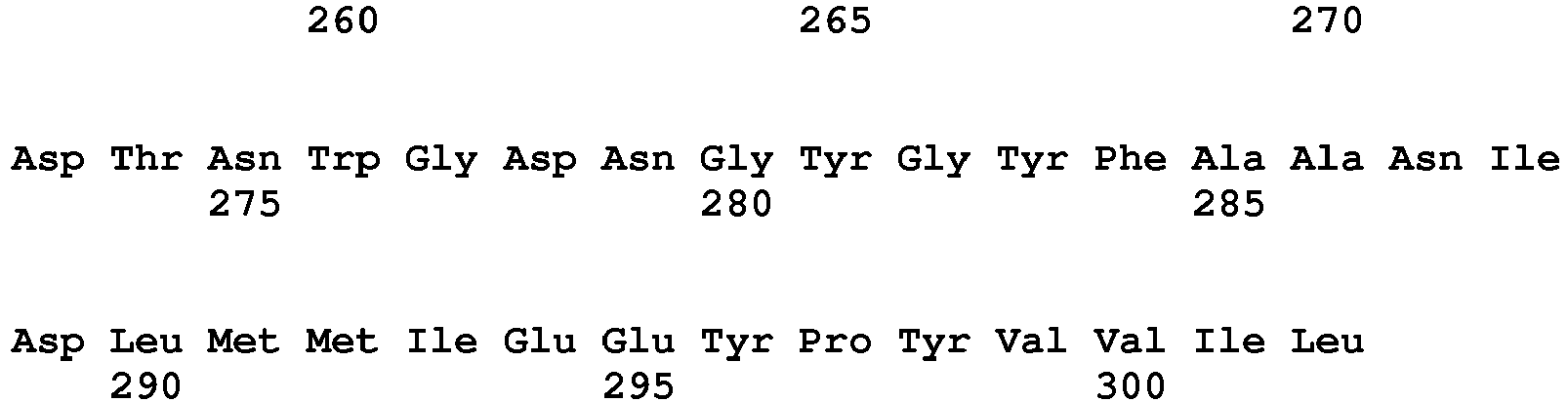
- <210> 289
<211> 302
<212> PRT
<213> Dermatophagoides pteronyssinus - <400> 289


- <210> 290
<211> 302
<212> PRT
<213> Dermatophagoides pteronyssinus - <400> 290


- <210> 291
<211> 302
<212> PRT
<213> Dermatophagoides pteronyssinus - <400> 291


- <210> 292
<211> 302
<212> PRT
<213> Dermatophagoides pteronyssinus - <400> 292


- <210> 293
<211> 302
<212> PRT
<213> Dermatophagoides pteronyssinus - <400> 293


- <210> 294
<211> 302
<212> PRT
<213> Dermatophagoides pteronyssinus - <400> 294


- <210> 295
<211> 302
<212> PRT
<213> Dermatophagoides pteronyssinus - <400> 295


- <210> 296
<211> 302
<212> PRT
<213> Dermatophagoides pteronyssinus - <400> 296


- <210> 297
<211> 302
<212> PRT
<213> Dermatophagoides pteronyssinus - <400> 297


- <210> 298
<211> 302
<212> PRT
<213> Dermatophagoides pteronyssinus - <400> 298


- <210> 299
<211> 302
<212> PRT
<213> Dermatophagoides pteronyssinus - <400> 299


- <210> 300
<211> 302
<212> PRT
<213> Dermatophagoides pteronyssinus - <400> 300


- <210> 301
<211> 302
<212> PRT
<213> Dermatophagoides pteronyssinus - <400> 301


- <210> 302
<211> 302
<212> PRT
<213> Dermatophagoides pteronyssinus - <400> 302


- <210> 303
<211> 302
<212> PRT
<213> Dermatophagoides pteronyssinus - <400> 303


- <210> 304
<211> 302
<212> PRT
<213> Dermatophagoides pteronyssinus - <400> 304


- <210> 305
<211> 302
<212> PRT
<213> Dermatophagoides pteronyssinus - <400> 305


- <210> 306
<211> 302
<212> PRT
<213> Dermatophagoides pteronyssinus - <400> 306


- <210> 307
<211> 302
<212> PRT
<213> Dermatophagoides pteronyssinus - <400> 307


- <210> 308
<211> 302
<212> PRT
<213> Dermatophagoides pteronyssinus - <400> 308
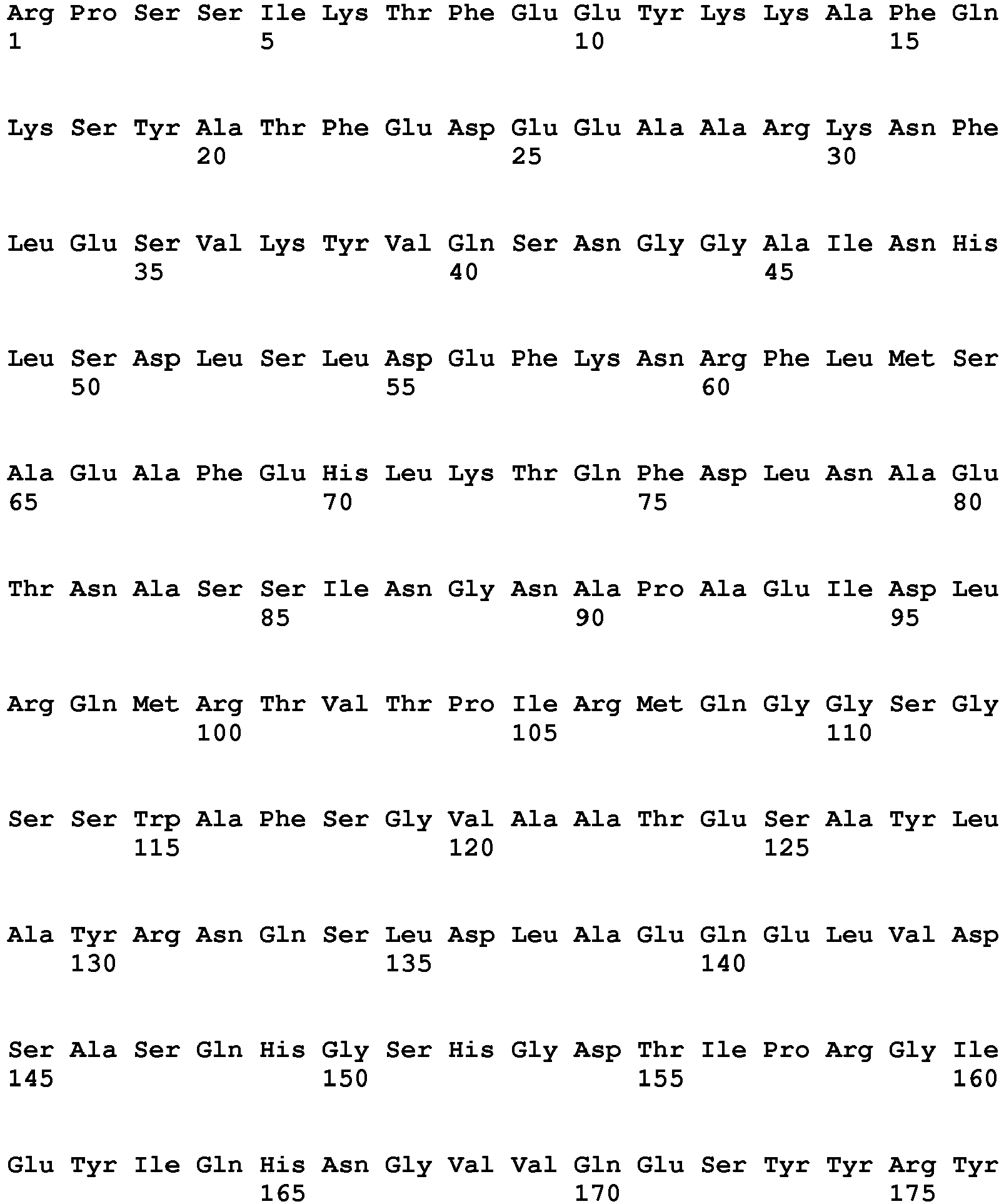

- <210> 309
<211> 302
<212> PRT
<213> Dermatophagoides pteronyssinus - <400> 309


- <210> 310
<211> 302
<212> PRT
<213> Dermatophagoides pteronyssinus - <400> 310


- <210> 311
<211> 302
<212> PRT
<213> Dermatophagoides pteronyssinus - <400> 311


- <210> 312
<211> 303
<212> PRT
<213> Dermatophagoides farinae - <400> 312


- <210> 313
<211> 303
<212> PRT
<213> Dermatophagoides farinae - <400> 313


- <210> 314
<211> 303
<212> PRT
<213> Dermatophagoides farinae - <400> 314

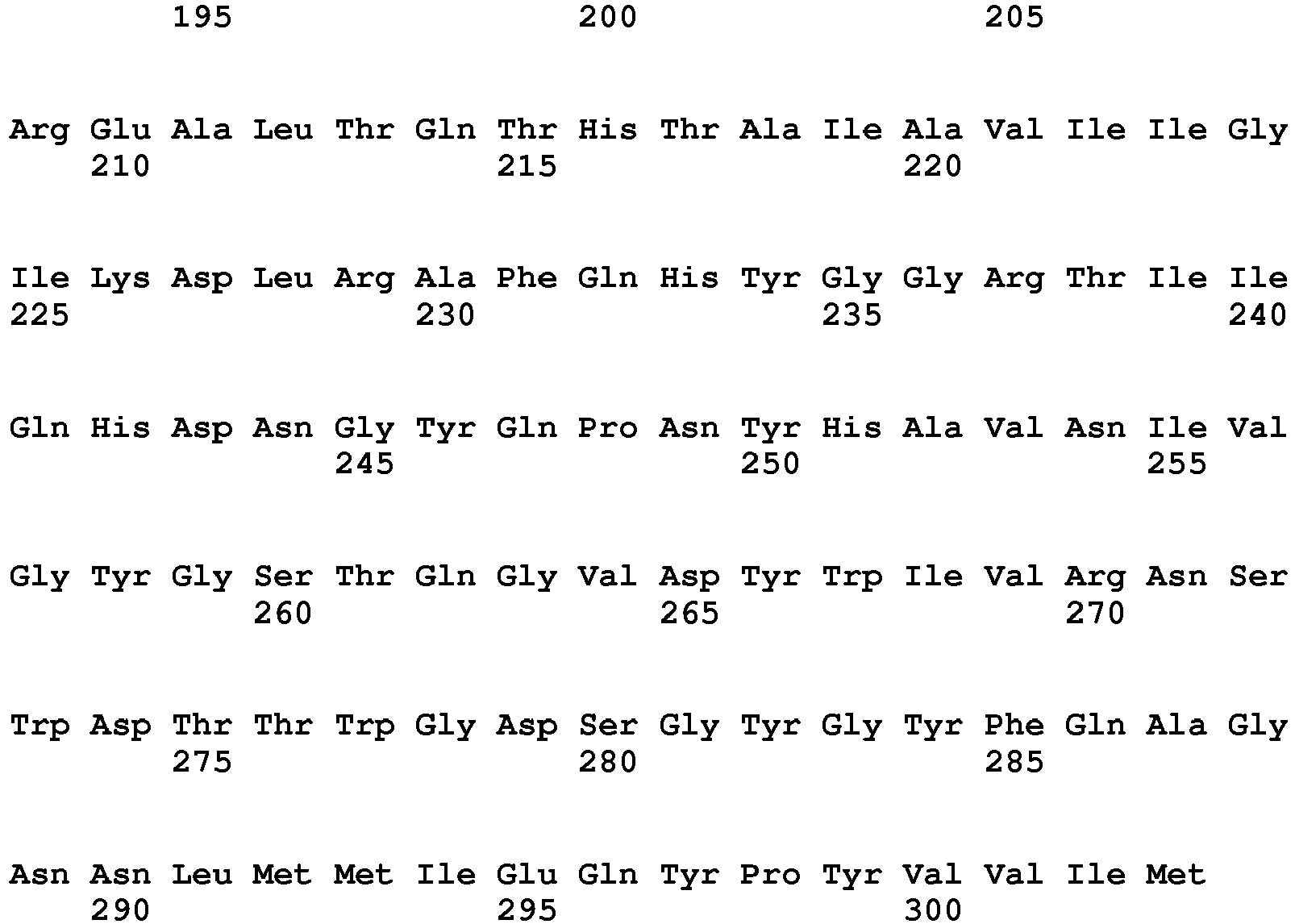
- <210> 315
<211> 303
<212> PRT
<213> Dermatophagoides farinae - <400> 315


- <210> 316
<211> 303
<212> PRT
<213> Dermatophagoides farinae - <400> 316


- <210> 317
<211> 303
<212> PRT
<213> Dermatophagoides farinae - <400> 317


- <210> 318
<211> 303
<212> PRT
<213> Dermatophagoides farinae - <400> 318


- <210> 319
<211> 303
<212> PRT
<213> Dermatophagoides farinae - <400> 319


- <210> 320
<211> 303
<212> PRT
<213> Dermatophagoides farinae - <400> 320


- <210> 321
<211> 303
<212> PRT
<213> Dermatophagoides farinae - <400> 321


- <210> 322
<211> 303
<212> PRT
<213> Dermatophagoides farinae - <400> 322


- <210> 323
<211> 129
<212> PRT
<213> Dermatophagoides pteronyssinus - <400> 323

- <210> 324
<211> 129
<212> PRT
<213> Dermatophagoides pteronyssinus - <400> 324


- <210> 325
<211> 129
<212> PRT
<213> Dermatophagoides pteronyssinus - <400> 325

- <210> 326
<211> 129
<212> PRT
<213> Dermatophagoides pteronyssinus - <400> 326

- <210> 327
<211> 129
<212> PRT
<213> Dermatophagoides pteronyssinus - <400> 327


- <210> 328
<211> 129
<212> PRT
<213> Dermatophagoides pteronyssinus - <400> 328


- <210> 329
<211> 129
<212> PRT
<213> Dermatophagoides pteronyssinus - <400> 329

- <210> 330
<211> 129
<212> PRT
<213> Dermatophagoides pteronyssinus - <400> 330

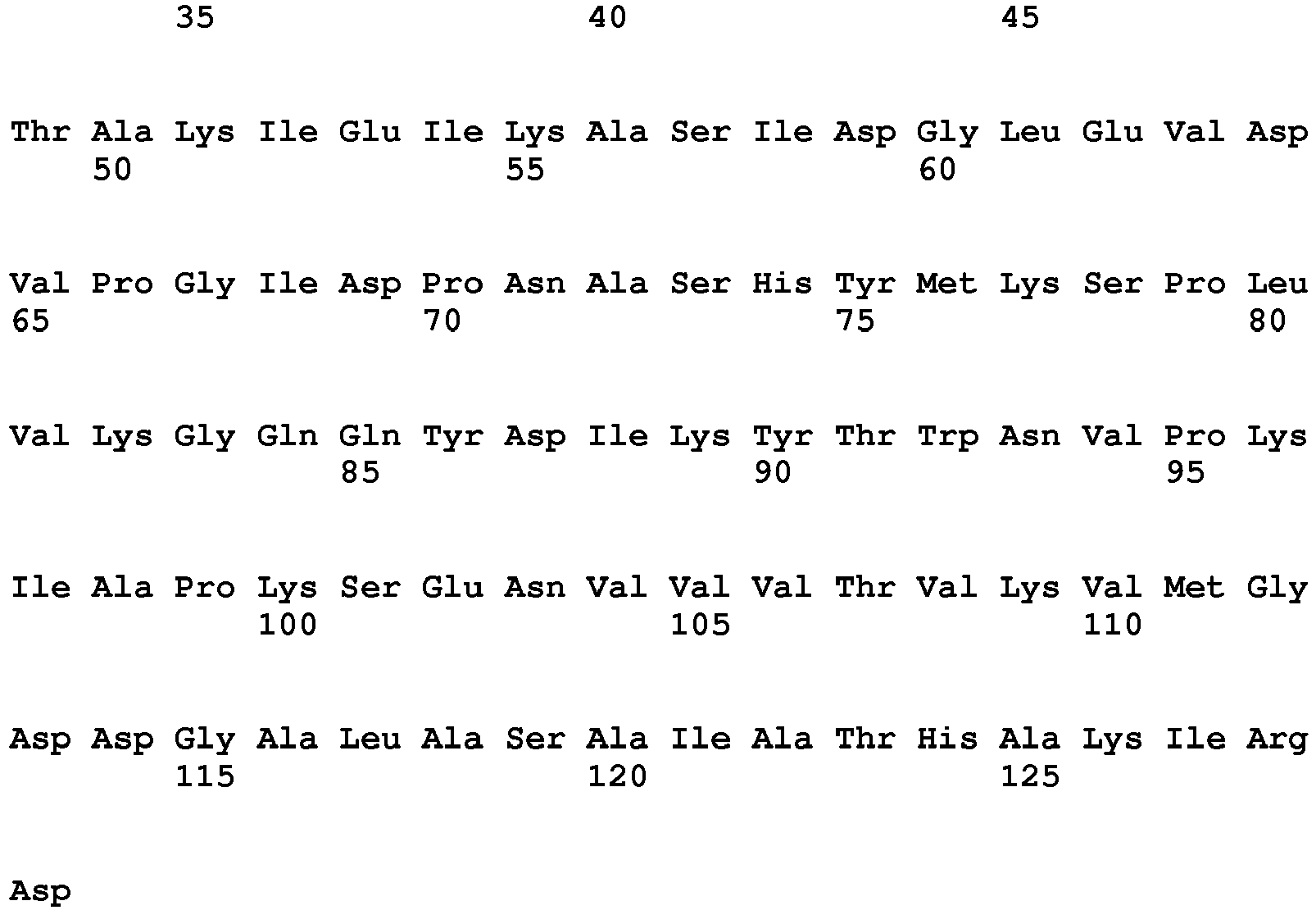
- <210> 331
<211> 129
<212> PRT
<213> Dermatophagoides pteronyssinus - <400> 331


- <210> 332
<211> 129
<212> PRT
<213> Dermatophagoides pteronyssinus - <400> 332

- <210> 333
<211> 129
<212> PRT
<213> Dermatophagoides pteronyssinus - <400> 333


- <210> 334
<211> 129
<212> PRT
<213> Dermatophagoides pteronyssinus - <400> 334


- <210> 335
<211> 129
<212> PRT
<213> Dermatophagoides pteronyssinus - <400> 335
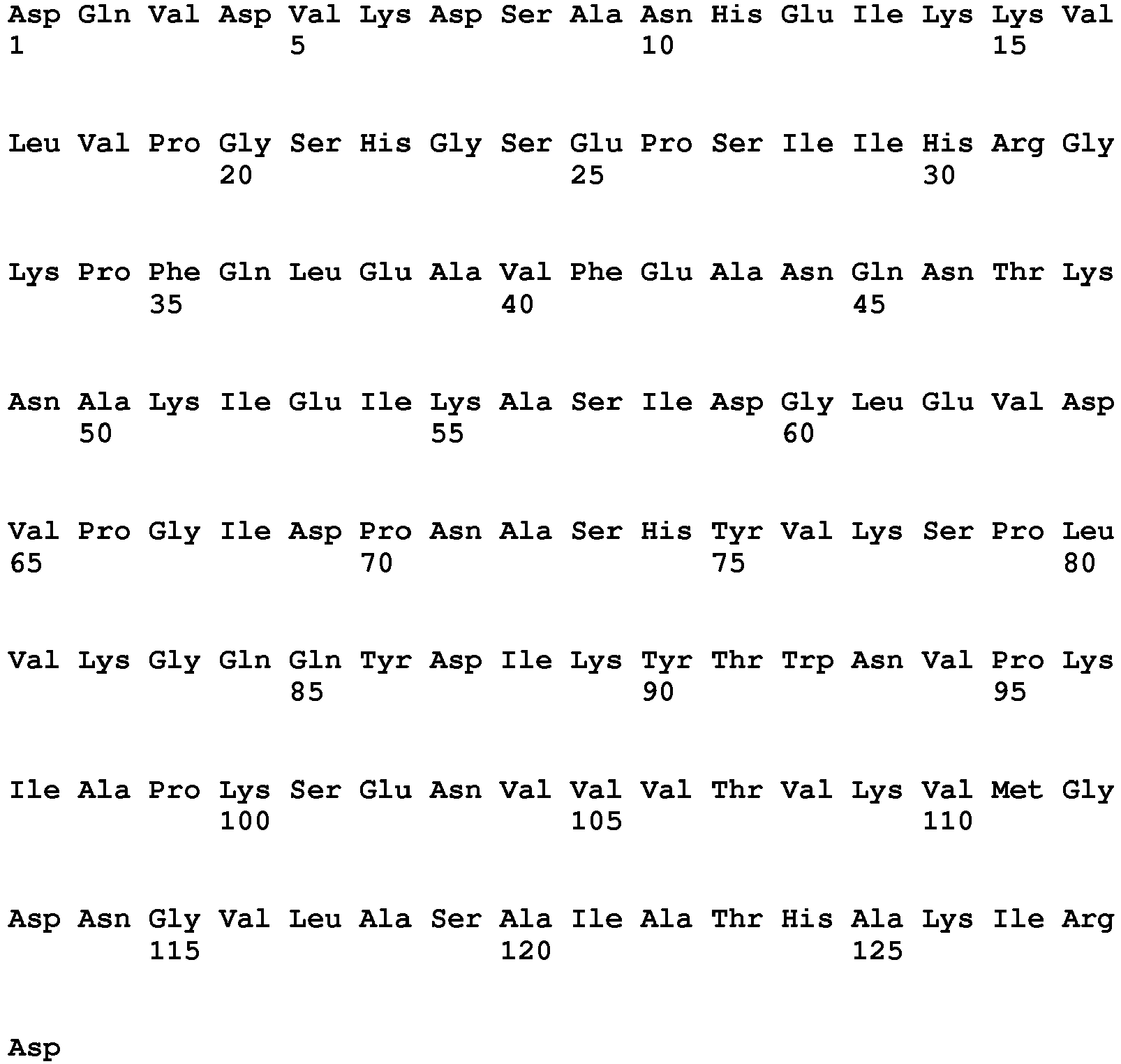
- <210> 336
<211> 129
<212> PRT
<213> Dermatophagoides pteronyssinus - <400> 336


- <210> 337
<211> 129
<212> PRT
<213> Dermatophagoides pteronyssinus - <400> 337


- <210> 338
<211> 129
<212> PRT
<213> Dermatophagoides farinae - <400> 338

- <210> 339
<211> 129
<212> PRT
<213> Dermatophagoides farinae - <400> 339

- <210> 340
<211> 129
<212> PRT
<213> Dermatophagoides farinae - <400> 340


- <210> 341
<211> 129
<212> PRT
<213> Dermatophagoides farinae - <400> 341

- <210> 342
<211> 129
<212> PRT
<213> Dermatophagoides farinae - <400> 342

- <210> 343
<211> 129
<212> PRT
<213> Dermatophagoides farinae - <400> 343


- <210> 344
<211> 129
<212> PRT
<213> Dermatophagoides farinae - <400> 344
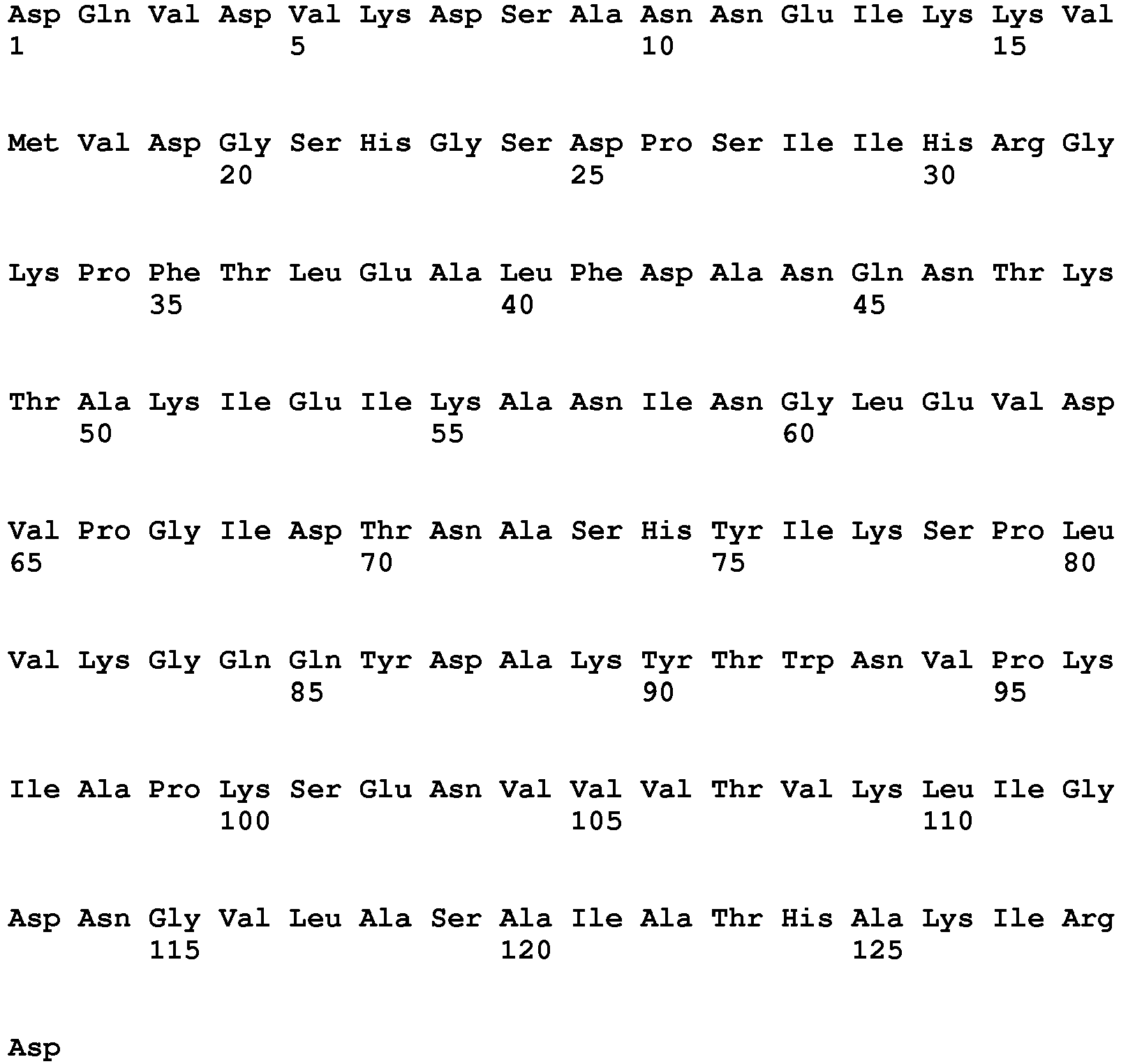
- <210> 345
<211> 129
<212> PRT
<213> Dermatophagoides farinae - <400> 345

- <210> 346
<211> 129
<212> PRT
<213> Dermatophagoides farinae - <400> 346


- <210> 347
<211> 129
<212> PRT
<213> Dermatophagoides farinae - <400> 347
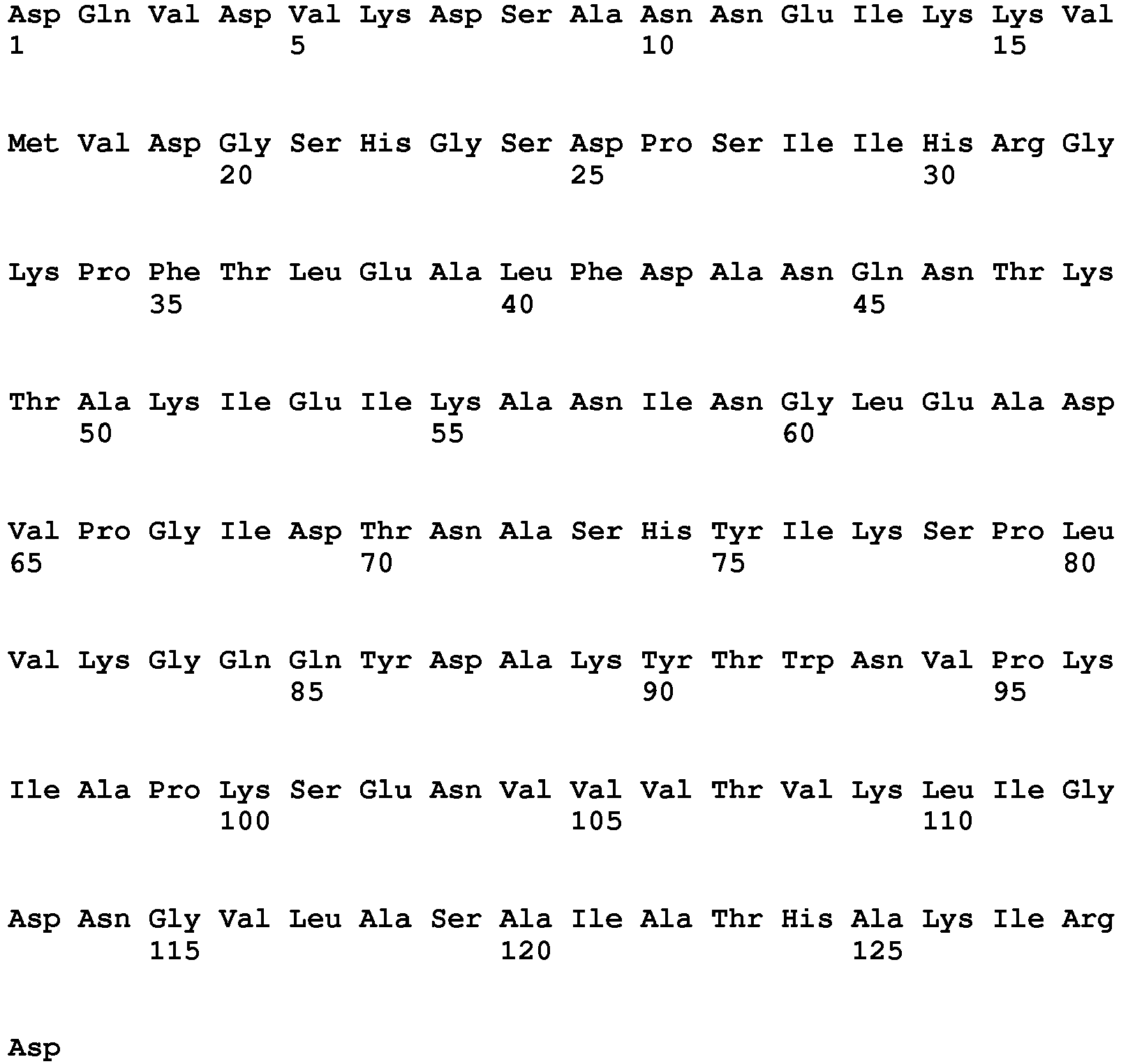
- <210> 348
<211> 129
<212> PRT
<213> Dermatophagoides farinae - <400> 348

- <210> 349
<211> 129
<212> PRT
<213> Dermatophagoides farinae - <400> 349


- <210> 350
<211> 129
<212> PRT
<213> Dermatophagoides farinae - <400> 350


- <210> 351
<211> 129
<212> PRT
<213> Dermatophagoides farinae - <400> 351

- <210> 352
<211> 129
<212> PRT
<213> Dermatophagoides farinae - <400> 352


- <210> 353
<211> 129
<212> PRT
<213> Dermatophagoides farinae - <400> 353


- <210> 354
<211> 129
<212> PRT
<213> Dermatophagoides farinae - <400> 354

Claims (12)
- A composition comprisinga) a peptide with the amino acid sequence SEQ ID NO: 82;b) a peptide with the amino acid sequence SEQ ID NO: 271;c) a peptide with the amino acid sequence SEQ ID NO: 268;d) a peptide with the amino acid sequence SEQ ID NO: 266; ande) a peptide with the amino acid sequence SEQ ID NO: 62.
- The composition according to claim 1, wherein the composition comprises a maximum of five peptides.
- The composition according to any one of the preceding claims, wherein the peptide(s) of a) to e) independently is/are amidated at the C-terminal end.
- The composition according to any one of the preceding claims, wherein one or more arginine residue(s) (R) or one or more lysine residue(s) is/are independently added to the N- or C- terminus of the peptide of a) to e).
- The composition according to any one of the preceding claims, wherein the peptide(s) of a) to e) independently is/are (a) salts.
- The composition according to any one of the preceding claims, wherein the composition is a pharmaceutical composition, which comprises a pharmaceutically acceptable carrier, excipient and/or adjuvant.
- The composition according to claim 6, which is a powder.
- The composition according to claim 7, which is a lyophilizate.
- A composition for use in relieving or reducing an immune response triggered by an allergen of a dust mite in a subject in need thereof , wherein the composition is defined by any one of claims 1-8.
- The composition for use according to claim 9, wherein the dust mite is of the genus Dermatophagoides.
- The composition for use according to any one of claims 9 or 10, wherein relieving or reducing an immune response comprises relieving one or more symptom(s) associated with allergic rhinitis, allergic conjunctivitis, allergic asthma and/or allergic eczema.
- The composition for use according to any one of claims 9 to 11, wherein the composition is administered by intradermal or by sublingual administration.
Applications Claiming Priority (3)
| Application Number | Priority Date | Filing Date | Title |
|---|---|---|---|
| US201361919925P | 2013-12-23 | 2013-12-23 | |
| US201462012690P | 2014-06-16 | 2014-06-16 | |
| PCT/US2014/072228 WO2015100360A1 (en) | 2013-12-23 | 2014-12-23 | Peptide combinations and uses thereof in treating dust mite allergy |
Publications (2)
| Publication Number | Publication Date |
|---|---|
| EP3086806A1 EP3086806A1 (en) | 2016-11-02 |
| EP3086806B1 true EP3086806B1 (en) | 2019-12-11 |
Family
ID=52293308
Family Applications (1)
| Application Number | Title | Priority Date | Filing Date |
|---|---|---|---|
| EP14824746.3A Active EP3086806B1 (en) | 2013-12-23 | 2014-12-23 | Peptide combinations and uses thereof in treating dust mite allergy |
Country Status (12)
| Country | Link |
|---|---|
| US (1) | US10059751B2 (en) |
| EP (1) | EP3086806B1 (en) |
| JP (1) | JP2017507906A (en) |
| KR (1) | KR20160096206A (en) |
| CN (1) | CN105848677B (en) |
| AU (1) | AU2014369866A1 (en) |
| BR (1) | BR112016011930A2 (en) |
| CA (1) | CA2933552A1 (en) |
| EA (1) | EA201691306A1 (en) |
| MX (1) | MX2016008305A (en) |
| SG (1) | SG11201604892YA (en) |
| WO (1) | WO2015100360A1 (en) |
Families Citing this family (11)
| Publication number | Priority date | Publication date | Assignee | Title |
|---|---|---|---|---|
| CN103327988B (en) * | 2010-06-03 | 2016-06-08 | 阿尔卡贝洛股份公司 | Medicament containing mite allergen extract and preparation method thereof |
| US11013781B2 (en) | 2015-07-01 | 2021-05-25 | Alk-Abelló As | Peptide combinations and uses thereof for treating grass allergy |
| WO2017096247A1 (en) | 2015-12-04 | 2017-06-08 | Mayo Foundation For Medical Education And Research | Methods and vaccines for inducing immune responses to multiple different mhc molecules |
| US10556936B2 (en) | 2016-05-27 | 2020-02-11 | Alk Abelló | Immunogenic proteins and fragments thereof from allergenic mites |
| CN108265059B (en) | 2016-12-31 | 2021-01-05 | 江苏众红生物工程创药研究院有限公司 | Recombinant dust mite 2-class allergen protein and preparation method and application thereof |
| CN107338261B (en) * | 2017-07-17 | 2023-04-07 | 海南大学 | Tropical red mite recombinant allergen Blot5-21, preparation method thereof and establishment of allergic mouse model |
| PH12021552216A1 (en) * | 2019-03-14 | 2022-06-13 | Engene Inc | Chitosan polyplex-based localized expression of il-12 alone or in combination with type-i ifn inducers for treatment of mucosal cancers |
| CN113125753B (en) * | 2021-04-16 | 2022-07-26 | 杭州浙大迪迅生物基因工程有限公司 | Kit for detecting specific antibody of dust mite component |
| KR102927988B1 (en) | 2023-03-17 | 2026-02-23 | 가톨릭대학교 산학협력단 | A composition for immune treatment of allergic diseases comprising house dust mite antigens and hyaluronic acid hydrogels as active ingredients |
| GB202409214D0 (en) * | 2024-06-26 | 2024-08-07 | Univ Birmingham | tolerogenic peptides |
| CN120559260A (en) * | 2025-07-30 | 2025-08-29 | 无锡市人民医院 | Application of Allergen Blot 24 in the Detection of House Dust Mite Allergen Components |
Family Cites Families (20)
| Publication number | Priority date | Publication date | Assignee | Title |
|---|---|---|---|---|
| US5194596A (en) * | 1989-07-27 | 1993-03-16 | California Biotechnology Inc. | Production of vascular endothelial cell growth factor |
| US5350836A (en) * | 1989-10-12 | 1994-09-27 | Ohio University | Growth hormone antagonists |
| JP4246794B2 (en) | 1991-10-16 | 2009-04-02 | メルク パテント ゲーエムベーハー | Recombitope peptide |
| WO1994024281A1 (en) | 1993-04-14 | 1994-10-27 | Immulogic Pharmaceutical Corporation | T cell epitopes of the major allergens from dermatophagoides (house dust mite) |
| US7288256B1 (en) * | 1991-10-16 | 2007-10-30 | Merck Patent Gmbh | T cell epitopes of the major allergens from dermatophagoides (house dust mite) |
| JPH09512014A (en) | 1994-04-14 | 1997-12-02 | イミユロジク・フアーマシユーチカル・コーポレーシヨン | Pharmaceutical peptide composition for treating mite allergy |
| US5820862A (en) * | 1994-04-14 | 1998-10-13 | Immulogic Pharmaceutical Corporation | T cell epitopes of the major allergens from dermatophagoides (house dust mite) |
| JP2001231563A (en) * | 2000-02-18 | 2001-08-28 | Asahi Breweries Ltd | Modified mite allergen (cysteine mutant) and method for producing the same |
| WO2005049107A2 (en) | 2003-11-18 | 2005-06-02 | Nanapass Technologies Ltd. | Enhanced penetration system and method for sliding microneedles |
| WO2006054280A2 (en) | 2004-11-18 | 2006-05-26 | Nanopass Technologies Ltd. | System and method for delivering fluid into flexible biological barrier |
| EP1957132A4 (en) | 2005-12-08 | 2010-04-21 | Nanopass Technologies Ltd | MICRO NEEDLE ADAPTER FOR DRUG DELIVERY DEVICES |
| ES2709176T3 (en) * | 2006-08-11 | 2019-04-15 | Life Sciences Res Partners Vzw | Immunogenic peptides and their use in immune disorders |
| EA023303B1 (en) | 2007-08-15 | 2016-05-31 | Сиркейшиа Лимитед | Peptide composition for tolerization to house dust mites and use thereof |
| EP2331124A1 (en) * | 2008-08-15 | 2011-06-15 | Circassia Limited | T-cell antigen peptide from allergen for stimulation of il-10 production |
| WO2012168487A1 (en) | 2011-06-09 | 2012-12-13 | Biomay Ag | Peptide carrier fusion proteins as allergy vaccines |
| WO2013061290A1 (en) | 2011-10-26 | 2013-05-02 | Nanopass Technologies Ltd. | Microneedle intradermal drug delivery device with auto-disable functionality |
| CA2863861A1 (en) * | 2012-02-07 | 2013-08-15 | La Jolla Institute For Allergy And Immunology | Epitopes from allergen proteins and methods and uses for immune response modulation |
| CN104203277A (en) | 2012-02-07 | 2014-12-10 | 拉霍拉敏感及免疫学研究所 | Timothy grass allergens and methods and uses for modulating an immune response |
| US20130302338A1 (en) | 2012-05-14 | 2013-11-14 | Promd Biotech. Co., Ltd. | Dermatophagoid pteronyssinus (der p1) antigen epitope and anti-der p1 antibody |
| US20140350514A1 (en) | 2013-05-22 | 2014-11-27 | Nanopass Technologies Ltd. | Systems and methods for intradermal delivery of therapeutics using microneedles |
-
2014
- 2014-12-23 CA CA2933552A patent/CA2933552A1/en not_active Abandoned
- 2014-12-23 US US15/021,775 patent/US10059751B2/en active Active
- 2014-12-23 WO PCT/US2014/072228 patent/WO2015100360A1/en not_active Ceased
- 2014-12-23 EP EP14824746.3A patent/EP3086806B1/en active Active
- 2014-12-23 CN CN201480070484.5A patent/CN105848677B/en active Active
- 2014-12-23 JP JP2016543009A patent/JP2017507906A/en active Pending
- 2014-12-23 AU AU2014369866A patent/AU2014369866A1/en not_active Abandoned
- 2014-12-23 EA EA201691306A patent/EA201691306A1/en unknown
- 2014-12-23 KR KR1020167020337A patent/KR20160096206A/en not_active Withdrawn
- 2014-12-23 MX MX2016008305A patent/MX2016008305A/en unknown
- 2014-12-23 BR BR112016011930A patent/BR112016011930A2/en not_active Application Discontinuation
- 2014-12-23 SG SG11201604892YA patent/SG11201604892YA/en unknown
Non-Patent Citations (1)
| Title |
|---|
| None * |
Also Published As
| Publication number | Publication date |
|---|---|
| CA2933552A1 (en) | 2015-07-02 |
| KR20160096206A (en) | 2016-08-12 |
| AU2014369866A1 (en) | 2016-06-30 |
| MX2016008305A (en) | 2017-01-11 |
| US20160251403A1 (en) | 2016-09-01 |
| BR112016011930A2 (en) | 2017-09-26 |
| JP2017507906A (en) | 2017-03-23 |
| US10059751B2 (en) | 2018-08-28 |
| CN105848677B (en) | 2020-01-31 |
| SG11201604892YA (en) | 2016-07-28 |
| EP3086806A1 (en) | 2016-11-02 |
| EA201691306A1 (en) | 2016-10-31 |
| WO2015100360A1 (en) | 2015-07-02 |
| CN105848677A (en) | 2016-08-10 |
Similar Documents
| Publication | Publication Date | Title |
|---|---|---|
| US10059751B2 (en) | Peptide combinations and uses thereof in treating dust mite allergy | |
| ES2402956T3 (en) | Peptide with reduced dimer formation | |
| DK2079481T4 (en) | Vaccine peptide combinations against cat allergy | |
| Huang et al. | A hypoallergenic peptide mix containing T cell epitopes of the clinically relevant house dust mite allergens | |
| DK2536429T3 (en) | Peptides for vaccines birch allergy | |
| EA020792B1 (en) | Grass peptides for vaccine | |
| US11013781B2 (en) | Peptide combinations and uses thereof for treating grass allergy | |
| US20130004528A1 (en) | Direct analysis of antigen-specific immune response | |
| CN105120894A (en) | Novel immunotherapeutic molecules and uses thereof | |
| JP2016533341A (en) | Novel immunotherapy compositions and uses thereof | |
| WO2015131053A1 (en) | Polypeptides derived from phl p and methods and uses thereof for immune response modulation | |
| WO2017179025A1 (en) | Epitope polypeptides of ragweed pollen allergens | |
| WO2016209959A2 (en) | Peptide combinations and use thereof in treating cedar pollen allergy | |
| US20160287696A1 (en) | Pan pollen immunogens and methods and uses for immune response modulation | |
| ES2353362T3 (en) | PEPTIDES FOR INSENSITIZATION AGAINST ALLERGENS. | |
| AU2013202871B2 (en) | Vaccine peptide combinations against cat allergy | |
| HK1197363A (en) | Vaccine peptide combinations against cat allergy |
Legal Events
| Date | Code | Title | Description |
|---|---|---|---|
| PUAI | Public reference made under article 153(3) epc to a published international application that has entered the european phase |
Free format text: ORIGINAL CODE: 0009012 |
|
| 17P | Request for examination filed |
Effective date: 20160725 |
|
| AK | Designated contracting states |
Kind code of ref document: A1 Designated state(s): AL AT BE BG CH CY CZ DE DK EE ES FI FR GB GR HR HU IE IS IT LI LT LU LV MC MK MT NL NO PL PT RO RS SE SI SK SM TR |
|
| AX | Request for extension of the european patent |
Extension state: BA ME |
|
| REG | Reference to a national code |
Ref country code: HK Ref legal event code: DE Ref document number: 1229699 Country of ref document: HK |
|
| RIN1 | Information on inventor provided before grant (corrected) |
Inventor name: LUNDEGAARD, CLAUS Inventor name: CHRISTENSEN, LARS HARDER Inventor name: LUND, GITTE Inventor name: ANDERSEN, PETER SEJER Inventor name: SIDNEY, JOHN Inventor name: SETTE, ALESSANDRO Inventor name: WUERTZEN, PETER ADLER |
|
| STAA | Information on the status of an ep patent application or granted ep patent |
Free format text: STATUS: EXAMINATION IS IN PROGRESS |
|
| 17Q | First examination report despatched |
Effective date: 20181022 |
|
| GRAP | Despatch of communication of intention to grant a patent |
Free format text: ORIGINAL CODE: EPIDOSNIGR1 |
|
| STAA | Information on the status of an ep patent application or granted ep patent |
Free format text: STATUS: GRANT OF PATENT IS INTENDED |
|
| INTG | Intention to grant announced |
Effective date: 20190627 |
|
| GRAS | Grant fee paid |
Free format text: ORIGINAL CODE: EPIDOSNIGR3 |
|
| GRAA | (expected) grant |
Free format text: ORIGINAL CODE: 0009210 |
|
| STAA | Information on the status of an ep patent application or granted ep patent |
Free format text: STATUS: THE PATENT HAS BEEN GRANTED |
|
| AK | Designated contracting states |
Kind code of ref document: B1 Designated state(s): AL AT BE BG CH CY CZ DE DK EE ES FI FR GB GR HR HU IE IS IT LI LT LU LV MC MK MT NL NO PL PT RO RS SE SI SK SM TR |
|
| AX | Request for extension of the european patent |
Extension state: BA ME |
|
| REG | Reference to a national code |
Ref country code: GB Ref legal event code: FG4D |
|
| REG | Reference to a national code |
Ref country code: CH Ref legal event code: EP |
|
| REG | Reference to a national code |
Ref country code: AT Ref legal event code: REF Ref document number: 1211509 Country of ref document: AT Kind code of ref document: T Effective date: 20191215 |
|
| REG | Reference to a national code |
Ref country code: DE Ref legal event code: R096 Ref document number: 602014058345 Country of ref document: DE |
|
| REG | Reference to a national code |
Ref country code: IE Ref legal event code: FG4D |
|
| REG | Reference to a national code |
Ref country code: NL Ref legal event code: MP Effective date: 20191211 |
|
| REG | Reference to a national code |
Ref country code: LT Ref legal event code: MG4D |
|
| PG25 | Lapsed in a contracting state [announced via postgrant information from national office to epo] |
Ref country code: LV Free format text: LAPSE BECAUSE OF FAILURE TO SUBMIT A TRANSLATION OF THE DESCRIPTION OR TO PAY THE FEE WITHIN THE PRESCRIBED TIME-LIMIT Effective date: 20191211 Ref country code: SE Free format text: LAPSE BECAUSE OF FAILURE TO SUBMIT A TRANSLATION OF THE DESCRIPTION OR TO PAY THE FEE WITHIN THE PRESCRIBED TIME-LIMIT Effective date: 20191211 Ref country code: BG Free format text: LAPSE BECAUSE OF FAILURE TO SUBMIT A TRANSLATION OF THE DESCRIPTION OR TO PAY THE FEE WITHIN THE PRESCRIBED TIME-LIMIT Effective date: 20200311 Ref country code: NO Free format text: LAPSE BECAUSE OF FAILURE TO SUBMIT A TRANSLATION OF THE DESCRIPTION OR TO PAY THE FEE WITHIN THE PRESCRIBED TIME-LIMIT Effective date: 20200311 Ref country code: FI Free format text: LAPSE BECAUSE OF FAILURE TO SUBMIT A TRANSLATION OF THE DESCRIPTION OR TO PAY THE FEE WITHIN THE PRESCRIBED TIME-LIMIT Effective date: 20191211 Ref country code: GR Free format text: LAPSE BECAUSE OF FAILURE TO SUBMIT A TRANSLATION OF THE DESCRIPTION OR TO PAY THE FEE WITHIN THE PRESCRIBED TIME-LIMIT Effective date: 20200312 Ref country code: LT Free format text: LAPSE BECAUSE OF FAILURE TO SUBMIT A TRANSLATION OF THE DESCRIPTION OR TO PAY THE FEE WITHIN THE PRESCRIBED TIME-LIMIT Effective date: 20191211 |
|
| PG25 | Lapsed in a contracting state [announced via postgrant information from national office to epo] |
Ref country code: HR Free format text: LAPSE BECAUSE OF FAILURE TO SUBMIT A TRANSLATION OF THE DESCRIPTION OR TO PAY THE FEE WITHIN THE PRESCRIBED TIME-LIMIT Effective date: 20191211 Ref country code: RS Free format text: LAPSE BECAUSE OF FAILURE TO SUBMIT A TRANSLATION OF THE DESCRIPTION OR TO PAY THE FEE WITHIN THE PRESCRIBED TIME-LIMIT Effective date: 20191211 |
|
| PG25 | Lapsed in a contracting state [announced via postgrant information from national office to epo] |
Ref country code: AL Free format text: LAPSE BECAUSE OF FAILURE TO SUBMIT A TRANSLATION OF THE DESCRIPTION OR TO PAY THE FEE WITHIN THE PRESCRIBED TIME-LIMIT Effective date: 20191211 |
|
| PG25 | Lapsed in a contracting state [announced via postgrant information from national office to epo] |
Ref country code: RO Free format text: LAPSE BECAUSE OF FAILURE TO SUBMIT A TRANSLATION OF THE DESCRIPTION OR TO PAY THE FEE WITHIN THE PRESCRIBED TIME-LIMIT Effective date: 20191211 Ref country code: PT Free format text: LAPSE BECAUSE OF FAILURE TO SUBMIT A TRANSLATION OF THE DESCRIPTION OR TO PAY THE FEE WITHIN THE PRESCRIBED TIME-LIMIT Effective date: 20200506 Ref country code: EE Free format text: LAPSE BECAUSE OF FAILURE TO SUBMIT A TRANSLATION OF THE DESCRIPTION OR TO PAY THE FEE WITHIN THE PRESCRIBED TIME-LIMIT Effective date: 20191211 Ref country code: CZ Free format text: LAPSE BECAUSE OF FAILURE TO SUBMIT A TRANSLATION OF THE DESCRIPTION OR TO PAY THE FEE WITHIN THE PRESCRIBED TIME-LIMIT Effective date: 20191211 Ref country code: NL Free format text: LAPSE BECAUSE OF FAILURE TO SUBMIT A TRANSLATION OF THE DESCRIPTION OR TO PAY THE FEE WITHIN THE PRESCRIBED TIME-LIMIT Effective date: 20191211 Ref country code: ES Free format text: LAPSE BECAUSE OF FAILURE TO SUBMIT A TRANSLATION OF THE DESCRIPTION OR TO PAY THE FEE WITHIN THE PRESCRIBED TIME-LIMIT Effective date: 20191211 |
|
| REG | Reference to a national code |
Ref country code: CH Ref legal event code: PL |
|
| REG | Reference to a national code |
Ref country code: BE Ref legal event code: MM Effective date: 20191231 |
|
| PG25 | Lapsed in a contracting state [announced via postgrant information from national office to epo] |
Ref country code: SM Free format text: LAPSE BECAUSE OF FAILURE TO SUBMIT A TRANSLATION OF THE DESCRIPTION OR TO PAY THE FEE WITHIN THE PRESCRIBED TIME-LIMIT Effective date: 20191211 Ref country code: SK Free format text: LAPSE BECAUSE OF FAILURE TO SUBMIT A TRANSLATION OF THE DESCRIPTION OR TO PAY THE FEE WITHIN THE PRESCRIBED TIME-LIMIT Effective date: 20191211 Ref country code: IS Free format text: LAPSE BECAUSE OF FAILURE TO SUBMIT A TRANSLATION OF THE DESCRIPTION OR TO PAY THE FEE WITHIN THE PRESCRIBED TIME-LIMIT Effective date: 20200411 |
|
| REG | Reference to a national code |
Ref country code: DE Ref legal event code: R097 Ref document number: 602014058345 Country of ref document: DE |
|
| PG25 | Lapsed in a contracting state [announced via postgrant information from national office to epo] |
Ref country code: MC Free format text: LAPSE BECAUSE OF FAILURE TO SUBMIT A TRANSLATION OF THE DESCRIPTION OR TO PAY THE FEE WITHIN THE PRESCRIBED TIME-LIMIT Effective date: 20191211 |
|
| REG | Reference to a national code |
Ref country code: AT Ref legal event code: MK05 Ref document number: 1211509 Country of ref document: AT Kind code of ref document: T Effective date: 20191211 |
|
| PLBE | No opposition filed within time limit |
Free format text: ORIGINAL CODE: 0009261 |
|
| STAA | Information on the status of an ep patent application or granted ep patent |
Free format text: STATUS: NO OPPOSITION FILED WITHIN TIME LIMIT |
|
| PG25 | Lapsed in a contracting state [announced via postgrant information from national office to epo] |
Ref country code: LU Free format text: LAPSE BECAUSE OF NON-PAYMENT OF DUE FEES Effective date: 20191223 Ref country code: DK Free format text: LAPSE BECAUSE OF FAILURE TO SUBMIT A TRANSLATION OF THE DESCRIPTION OR TO PAY THE FEE WITHIN THE PRESCRIBED TIME-LIMIT Effective date: 20191211 Ref country code: IE Free format text: LAPSE BECAUSE OF NON-PAYMENT OF DUE FEES Effective date: 20191223 |
|
| 26N | No opposition filed |
Effective date: 20200914 |
|
| PG25 | Lapsed in a contracting state [announced via postgrant information from national office to epo] |
Ref country code: SI Free format text: LAPSE BECAUSE OF FAILURE TO SUBMIT A TRANSLATION OF THE DESCRIPTION OR TO PAY THE FEE WITHIN THE PRESCRIBED TIME-LIMIT Effective date: 20191211 Ref country code: BE Free format text: LAPSE BECAUSE OF NON-PAYMENT OF DUE FEES Effective date: 20191231 Ref country code: LI Free format text: LAPSE BECAUSE OF NON-PAYMENT OF DUE FEES Effective date: 20191231 Ref country code: AT Free format text: LAPSE BECAUSE OF FAILURE TO SUBMIT A TRANSLATION OF THE DESCRIPTION OR TO PAY THE FEE WITHIN THE PRESCRIBED TIME-LIMIT Effective date: 20191211 Ref country code: CH Free format text: LAPSE BECAUSE OF NON-PAYMENT OF DUE FEES Effective date: 20191231 |
|
| PG25 | Lapsed in a contracting state [announced via postgrant information from national office to epo] |
Ref country code: IT Free format text: LAPSE BECAUSE OF FAILURE TO SUBMIT A TRANSLATION OF THE DESCRIPTION OR TO PAY THE FEE WITHIN THE PRESCRIBED TIME-LIMIT Effective date: 20191211 |
|
| PG25 | Lapsed in a contracting state [announced via postgrant information from national office to epo] |
Ref country code: PL Free format text: LAPSE BECAUSE OF FAILURE TO SUBMIT A TRANSLATION OF THE DESCRIPTION OR TO PAY THE FEE WITHIN THE PRESCRIBED TIME-LIMIT Effective date: 20191211 |
|
| PG25 | Lapsed in a contracting state [announced via postgrant information from national office to epo] |
Ref country code: CY Free format text: LAPSE BECAUSE OF FAILURE TO SUBMIT A TRANSLATION OF THE DESCRIPTION OR TO PAY THE FEE WITHIN THE PRESCRIBED TIME-LIMIT Effective date: 20191211 |
|
| PG25 | Lapsed in a contracting state [announced via postgrant information from national office to epo] |
Ref country code: MT Free format text: LAPSE BECAUSE OF FAILURE TO SUBMIT A TRANSLATION OF THE DESCRIPTION OR TO PAY THE FEE WITHIN THE PRESCRIBED TIME-LIMIT Effective date: 20191211 Ref country code: HU Free format text: LAPSE BECAUSE OF FAILURE TO SUBMIT A TRANSLATION OF THE DESCRIPTION OR TO PAY THE FEE WITHIN THE PRESCRIBED TIME-LIMIT; INVALID AB INITIO Effective date: 20141223 |
|
| PG25 | Lapsed in a contracting state [announced via postgrant information from national office to epo] |
Ref country code: TR Free format text: LAPSE BECAUSE OF FAILURE TO SUBMIT A TRANSLATION OF THE DESCRIPTION OR TO PAY THE FEE WITHIN THE PRESCRIBED TIME-LIMIT Effective date: 20191211 |
|
| PG25 | Lapsed in a contracting state [announced via postgrant information from national office to epo] |
Ref country code: MK Free format text: LAPSE BECAUSE OF FAILURE TO SUBMIT A TRANSLATION OF THE DESCRIPTION OR TO PAY THE FEE WITHIN THE PRESCRIBED TIME-LIMIT Effective date: 20191211 |
|
| REG | Reference to a national code |
Ref country code: HK Ref legal event code: WD Ref document number: 1229699 Country of ref document: HK |
|
| PGFP | Annual fee paid to national office [announced via postgrant information from national office to epo] |
Ref country code: DE Payment date: 20251104 Year of fee payment: 12 |
|
| PGFP | Annual fee paid to national office [announced via postgrant information from national office to epo] |
Ref country code: GB Payment date: 20251114 Year of fee payment: 12 |
|
| PGFP | Annual fee paid to national office [announced via postgrant information from national office to epo] |
Ref country code: FR Payment date: 20251124 Year of fee payment: 12 |